Introduction: Care, Love, and the Quiet Work of Boundaries
Caregiving is one of the most profound acts of love many people will ever perform. It often begins quietly—helping with appointments, checking in more often, managing medications, or stepping in when something feels “off.” Over time, caregiving can grow into a central role that reshapes daily life, relationships, and even identity.
February has a way of putting hearts everywhere—on candy, in shop windows, and occasionally on our sleeves. It’s the month of Valentine’s Day, Heart Health Month, and a good excuse to check in with the people we love (including ourselves). Whether you’re sharing chocolate, skipping it entirely, or quietly rolling your eyes at the pink overload, February invites a little reflection on connection, care, and what it means to look after one another.
This month’s issue highlights caregiving, a role many of our readers step into gradually and often without preparation. Whether you are caring for a spouse, a parent, or another loved one, caregiving can be deeply meaningful—and deeply demanding. One of the most common challenges caregivers face is knowing where they end and another begins. How much help is too much? How do you stay supportive without becoming depleted? Our feature explores the importance of caregiver boundaries, offering guidance and insight on boundaries, love and quality of life for everyone.
In Ask the Expert, Amy Natt addresses a question many people quietly struggle with as we age: How do I ask for help while still maintaining my independence? This month’s Q&A focuses on collaborative problem-solving, respectful communication, and ways to structure support that protects dignity and autonomy.
Our Mental Health Matters column looks at a concept we don’t often hear discussed: mental longevity. We talk frequently about physical longevity—heart health,
OCTOBER 2022 - 2
LETTER FROM THE EDITOR
inflammation, balance, and mobility—but mental longevity is just as vital. Amy Phariss, LCMHC, explores how cultivating mental flexibility and neuroplasticity supports not just emotional well-being, but quality of life as we age. You’ll also find a lighter moment in this issue with our Caregiver Appreciation word search, created in honor of National Caregiver’s Day. Caregivers give so much, often without recognition. We hope this small activity serves as a reminder to pause, breathe, and feel appreciated—whether you are a caregiver yourself or someone who loves one.
Well, it’s official: fall is here. I had my first pumpkin-spiced ture dipped low enough to merit a fleece.
Don’t worry. It was decaf.
October is a gentle month. There are constant reminders of we are lucky, toward each other. We have lingering conversations the flames flicker. Smoke dances around us in a circle. We
Finally, in On the Menu, we share three heart-healthy recipes designed to be simple and nourishing. Caring for your heart doesn’t have to be complicated, and food can be one of the most accessible ways to support both physical and emotional health.
In this month’s feature, we’re starting an important conversation: care community for ourselves or a loved one? Fox Hollow Robin Hutchings offers inside perspective for making this
In Ask the Expert, Amy Natt answers a reader’s question regarding away without any estate planning. Without a will or access
As always, thank you for being part of the AOS community. Our hope is that this issue offers not just information, but reassurance—that needing help does not mean losing yourself, that boundaries can be an act of care, and that tending to your mental and emotional well-being is an investment in a longer, richer life. Add some chocolatecovered almonds to that, and the month shapes up nicely. In celebration of President’s Day, I’m focusing on Teddy Roosevelt’s words this month:
Physical therapist Dr. Sara Morrison of Total Body Therapy potential diagnostic tools used in physical therapy to help these tools differ from what other doctor’s offices may offer.
I’m going to agree with Nathaniel Hawthorne this month,
I cannot endure to waste anything so precious as autumnal spent almost all the daylight hours in the open air.
Here’s to enjoying the October sunshine, falling leaves and
“If you could kick the person in the pants responsible for most of your trouble, you wouldn’t sit for a month.”
Formerly Fox Hollow Senior Living, our name has changed, but our commitment to area families has not. The same caring team, intimate setting and trusted Assisted Living and Memory Care you know is now backed by the strength and experience of Charter Senior Living.
Q: I’ve realized over the past year or so that I need some help from my family. I’m not as mobile anymore, and I think I need help managing all of my finances and bills. I want my family to help me, but I also need my independence. How do we find a balance?
A: Many people think asking for help is a sign of weakness, but quite the opposite, it is a sign of wisdom and strength. One of the keys to maintaining independence is knowing what areas of life require extra support. Utilizing this support and the resources available to you will help you maintain your independence for a longer period of time. It is often those who wait too long and end up in a crisis who experience a true loss of ability to care for themselves.
You mentioned a few different areas of life, but I think it helps to break it down into two categories.
Activities of Daily Living (ADL): Dressing, bathing, feeding, mobility, toileting and transfers.
Instrumental Activities of Daily Living (IADL): Managing finances, meal preparation, shopping, household maintenance, transportation, communication and medication management.
Knowing which areas you require help will help determine the appropriate resources to put the support in place. The trick is getting enough support to stabilize your situation, while still continuing to do the things for yourself that you are able to safely do.
Family is certainly one resource to help with these needs. It helps to determine what you would like assistance with and then determine the family member who is best equipped to provide this. It may be a skill set they have, their availability or proximity to you that can help determine the best fit. Getting help doesn’t mean giving up control. For example, you mention that
mobility is a challenge. You could certainly arrange to have family help you get to and from appointments, with more physical tasks around the house and even to go on walks or other forms of support to encourage mobility safely. You might also talk to your primary care physician about a referral to physical therapy, consider a personal trainer or a caregiver to help with tasks and appointments.
Finances is the other area you mentioned. Between the mail and what is on the internet, it can be confusing to tell what is legitimate and what is a scam. New technology is available to help manage finances, pay bills and access accounts, but this can also cause frustration when things are not working as they should. You can ask a trusted family member, ideally one who you would later assign as your Durable Power of Attorney, to help you organize you finances, have monthly meetings, help with budgets, bill pay, tax prep and other tasks. In addition to this, there are also services that financial advisors, elder care advocates and care managers can offer to assist. When it comes to finances, be very careful who you give access. Make sure it is a trusted person and if it is a professional, that they have the appropriate credentials and liability insurance.
As more support is needed, it’s typically a combination of informal support (family and friends) and formal support (paid providers) who can give you the help and peace of mind that you need to successfully navigate these tasks while maintaining as much independence as possible.
continued from page 1
CAREGIVING & BALANCE: Boundaries
by Amy Phariss
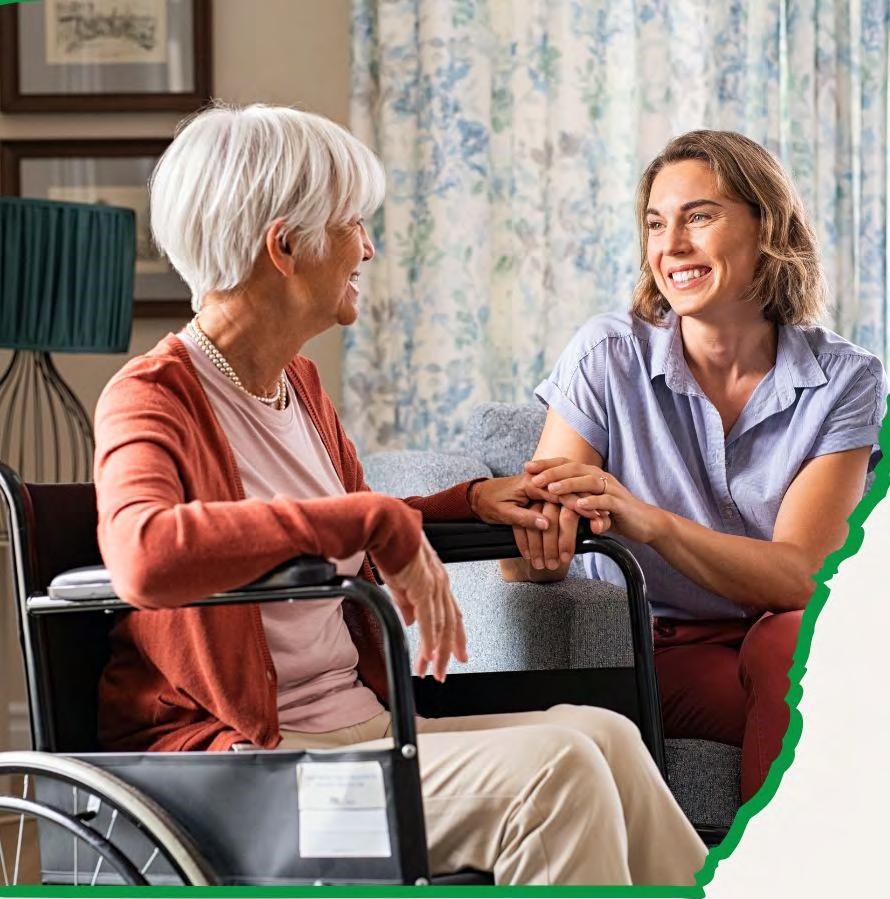
At its core, care is the act of attending to another person’s needs with concern, responsibility, and presence. Love is the emotional bond that motivates care—an attachment rooted in affection, commitment, loyalty, and meaning. Caregiving sits at the intersection of the two: love translated into action, especially during vulnerability, illness, or decline.
Boundaries, however, are often misunderstood within caregiving relationships. Many caregivers fear that setting boundaries is selfish, unkind, or even harmful. In reality, boundaries are not walls that block love; they are structures that protect it. A boundary is a clear, respectful limit that defines where one person ends and another begins—emotionally, physically, mentally, and practically.
When caregiving is sustained over months or years, boundaries become essential. They allow love to remain compassionate rather than resentful, supportive rather than depleting. Without boundaries, even the most devoted caregiver can become exhausted, overwhelmed, or quietly angry—feelings that often lead to guilt and shame rather than relief.
Seen through a wider lens, boundaries are not a withdrawal of care. They are a way of ensuring that care remains humane, mutual, and sustainable—for both the caregiver and the person receiving care.
How Boundaries (and the Lack of Them) Show Up in Caregiving
In caregiving relationships, boundary challenges rarely appear all at once. They emerge gradually, often disguised as responsibility or devotion.
Common signs of blurred or missing boundaries include:
THE POWER OF
• Feeling responsible for another adult’s emotions, choices, or happiness
• Providing care at the expense of one’s own health, work, or relationships
• Difficulty saying no—even when exhausted or overwhelmed
• Resentment followed by guilt (“I shouldn’t feel this way”)
• A sense of being trapped or invisible
• Family conflict about roles, expectations, or fairness
For the care recipient, boundary confusion can show up as:
• Increasing dependence beyond actual need
• Difficulty tolerating frustration, disappointment, or autonomy
• Expecting immediate availability or emotional regulation from the caregiver
• Resistance to outside help or shared responsibility
Often, these dynamics are not intentional. They arise from fear—fear of loss, decline, abandonment, or change. Love becomes tangled with anxiety, and care becomes fused with control or over-functioning.
WITHOUT BOUNDARIES, CAREGIVERS MAY UNCONSCIOUSLY STEP INTO ROLES THAT ARE UNSUSTAINABLE: SOLE DECISIONMAKER, EMOTIONAL REGULATOR, MEDICAL COORDINATOR, FINANCIAL MANAGER, AND CONSTANT COMPANION.
Over time, this erodes not only the caregiver’s wellbeing, but the dignity and autonomy of the loved one as well.
Boundaries Matter—for Everyone
Boundaries matter because caregiving is not meant to erase the caregiver. Love does not require selfabandonment.
For caregivers, boundaries:
• Prevent burnout and compassion fatigue
• Protect physical and emotional health
• Preserve personal identity outside the caregiving role
• Allow for rest, choice, and agency
• Reduce resentment and guilt over time
For care recipients, boundaries:
• Support autonomy and dignity
• Encourage realistic independence where possible
• Reduce anxiety caused by enmeshment
• Clarify expectations and roles
• Preserve the relational bond beyond “patient” and “caretaker”
HEALTHY BOUNDARIES CREATE A RELATIONSHIP WHERE CARE IS OFFERED WITH SOMEONE, NOT OVER THEM OR INSTEAD OF THEM. THEY ALLOW CAREGIVING TO BE AN EXPRESSION OF PARTNERSHIP RATHER THAN SACRIFICE.
Perhaps most important is the realization that boundaries also model respect. When caregivers honor their own limits, they demonstrate that every person— even in illness or decline—exists in connection to others and with mutual needs, not one-sided obligation. No matter the relationship or how it’s structured, we all have needs within in, even if we provide care – sometimes especially when we provide care.
Creating Boundaries in a Loving, Healthy Way
Setting boundaries does not require confrontation or emotional distance. In fact, the most effective boundaries are often quiet, consistent, and grounded in clarity rather than explanation.
Key principles for creating healthy caregiving boundaries include:
1. Separate love from responsibility. You can deeply love someone without being responsible for every outcome. Care is about support—not control or perfection.
2. Be honest about capacity, not ideals. Boundaries should reflect what you can actually sustain, not what you wish you could do. Overpromising often leads to resentment later.
3. Use “I” statements grounded in reality.
“I’m not able to do that every day.”
“I need uninterrupted sleep.”
“I can help with appointments, but not financial decisions.”
These statements are not rejections—they are clarifications.
4. Normalize help from others. Accepting outside assistance is not abandonment. It is an expansion of care. Medical professionals, aides, community resources, and other family members reduce strain and protect the relationship.
5. Expect emotional reactions—and stay steady. Discomfort, sadness, or frustration may arise when boundaries change. This does not mean the boundary is wrong. Staying calm and consistent allows emotions to settle over time.
Maintaining
Boundaries: The Hardest (and Most Important) Part
Setting boundaries is often easier than maintaining them. We’ve learned in this lesson in many relationships: with children, at work, with neighbors and friends. We have constant opportunities to create boundaries inside our family lives and within the community. But caregiving relationships are often challenging when it comes to boundaries because of the care dynamic, the daily nature of the relationship and the consequences of conflict (which can happen when we set and enforce boundaries). Often, we’re comfortable setting a boundary (I won’t ride with you in the car if you continue to text and drive) but struggle to maintain the boundary (finding another ride or getting out of the car when you’ve got some place to be). Like all habits and behaviors, the hardest part is often the maintenance phase.
Also, caregiving relationships are dynamic. They’re like a living organism. Needs change. Health fluctuates. Emotional pressure increases during crises. Boundaries that once worked may need adjustment—but not abandonment.
To maintain boundaries:
• Revisit limits regularly and adjust as-needed.
• Notice early signs of resentment or exhaustion; don’t ignore that nagging feeling that something is wrong or feels unmanageable.
• Resist the urge to “just this once” when it becomes a pattern.
• Remember that consistency builds trust, not distance; when you keep your “word” with boundaries, other people know what to expect.
• Allow boundaries to evolve without self-judgment. It’s especially important to recognize that guilt often surfaces after a healthy boundary is set. Guilt doesn’t mean you are doing something wrong—it often means you are breaking a pattern of self-neglect or even patterns of enabling behavior. These patterns have been around for a while and take time (and compassion) to rethink and rework.
Boundaries and habits are similar because they’re gentle ways of taking care of ourselves—small, steady choices we repeat over time so life runs a little smoother, and we don’t wear ourselves out.
The best caregiving is the caregiving we can continue to do, sustainably and as long as possible. Sustainable caregiving is not about doing more. It’s about doing what can be done with integrity over time. Boundaries help us prevent burnout because we’re not stretched thin, trying to white-knuckle it through another day.
Simple Steps for Healthy Caregiving Boundaries
• Clarify what you can realistically offer—and what you cannot
• Schedule protected time for rest, work, and personal relationships
• Share caregiving responsibilities whenever possible
• Say no without over-explaining
• Watch for resentment as an early warning sign
• Reframe boundaries as care-preserving, not carewithholding
• Seek support—from professionals, peers, or community resources
• Practice compassion toward yourself, not just others
Conclusion: Love Lives in the Limits We Honor
Caregiving is a profound act of love—but love is not measured by exhaustion, martyrdom, or self-erasure. It is measured by presence, respect, and sustainability.
Boundaries allow caregivers to remain human. They protect the relationship from becoming defined solely by need or obligation. They preserve dignity for both people involved.
When we set boundaries rooted in care rather than fear, we create space for connection to remain alive—not strained, resentful, or fragile. In this way, boundaries are not the opposite of love. They are one of its most enduring expressions.
To love someone well is not to give endlessly. It is to give wisely, honestly, and in a way that allows both people to continue being whole.
National Caregivers Day
FEBRUARY 21
February’s third Friday marks National Caregivers Day. We take time to recognize the millions of people who quietly care for spouses, parents, partners, friends, and neighbors. Caregiving often happens behind the scenes and without fanfare, and it requires patience, resilience, and deep emotional presence.
Whether you are a caregiver yourself or know someone who is, this day is a day to pause and acknowledge the invaluable role caregivers play in supporting health, dignity, and connection for all of us.
As a bit of fun and reflection, we’ve included a simple word search below, focusing on the strengths of caregiving and the benefits to each person and community.
Words may appear horizontally, vertically, diagonally, forward, or backward.
As a counselor, I often sit with clients who are going through change. They might be facing big life transitions (divorce, retirement, empty nest syndrome, a career shift) or simply noticing that their values and lives have changed over time. They want to make sense of a new future. A large part of these changes involves physical changes. Clients notice their bodies feel different, and they start to think about how they want to age. They want to be healthy, active and engaged. They often fear becoming a burden to adult children or being limited in activities because of chronic pain. There is a large focus on the idea of longevity and how we can keep ourselves physically fit.
When we think about longevity, we usually picture the body. We focus on cardiovascular health, strength and balance, reducing inflammation, eating well, and staying physically active. These things really do matter — and they deserve the attention they receive. But there is another side of longevity that is just as important and often overlooked: mental longevity.
MENTAL LONGEVITY REFERS TO OUR CAPACITY TO REMAIN PSYCHOLOGICALLY FLEXIBLE, EMOTIONALLY REGULATED, CURIOUS,
AND ENGAGED AS WE AGE.
It’s not just the absence of cognitive decline or dementia, although brain health is part of the picture. Mental longevity is about how we think, adapt, relate, and make meaning over time. It’s about staying mentally active and alive.
At the heart of mental longevity is a concept called neuroplasticity—the brain’s ability to change, adapt, and form new connections throughout life. For many years, scientists believed the brain was largely fixed after early adulthood. We now know that this isn’t true. The brain continues to remodel itself in response to experience, learning, emotional patterns, and environment well into older age. It turns out the adage is wrong: you actually can teach an old dog new tricks.
This matters because the patterns we repeat—how we think, what we attend to, how we respond to stress, how we engage with others—literally shape the structure and functioning of the brain. Over time, rigid patterns can narrow our emotional and cognitive world. Flexible patterns can expand it.
Rigid Patterns vs. Flexible Patterns
Rigid patterns are fixed ways of thinking, feeling, or responding that once helped us cope but no longer adapt well to change. They’re often what we mean when we say “black-and-white thinking.” Flexible patterns allow for adjustment, learning, and emotional regulation over time. Flexible patterns focus on growth and expansion.
Here are some examples:
Rigid Thinking Patterns:
• “This is how I’ve always done it, so there’s no point trying something new.”
• “If I can’t do it well, I shouldn’t do it at all.”
• “People don’t change.”
Flexible Thinking Patterns:
• “I can learn at my own pace.”
• “Trying something new is worthwhile, even if I’m not good at it yet.”
• “People can grow, including me.”
Mental longevity is not about staying “young” in the superficial sense; it’s is about staying adaptable.
Life inevitably brings change: retirement, health shifts, losses, new roles, altered identities. A mind that can adjust, reframe, and grow is better equipped to navigate these transitions without becoming overwhelmed, stuck, or withdrawn.
Why does mental longevity matter? Because psychological rigidity is closely linked to suffering. When we lose flexibility, we are more likely to experience chronic anxiety, depression, hopelessness, and social isolation. We may rely on the same coping strategies that once worked but no longer serve us. We may avoid novelty, emotional risk, or learning—not because we can’t do these things, but because they feel uncomfortable.
In contrast, people with strong mental longevity tend to remain emotionally responsive rather than reactive. They can hold complexity. They recover more readily from stress. They stay connected to others and to a sense of purpose. They are better able to integrate past experiences without being defined by them.
The good news is that mental longevity can be supported and strengthened—at any age.
One of the most powerful ways we can strengthen mental growth is intentional learning. Learning something new—whether a language, a musical instrument, a craft, or a technology skill—stimulates neural growth and encourages the brain to form new pathways. The key is not mastery, but engagement. Mild challenge is beneficial; frustration is often a sign that the brain is stretching.
Another essential element is emotional processing.
SUPPRESSED OR UNPROCESSED EMOTIONS DO NOT DISAPPEAR; THEY OFTEN BECOME EMBEDDED STRESS PATTERNS.
Practices that allow for reflection—such as journaling, therapy, contemplative reading, or meaningful conversation—help the brain integrate experience rather than avoid it. Integration supports resilience and reduces overall stress. When clients are able to process emotions and experiences, they have more capacity for the things they love and the plans they’ve made.
Social connection also plays a vital role. The brain is inherently relational. Meaningful relationships challenge us, regulate us, and remind us that we are not alone. Loneliness, on the other hand, is associated with increased cognitive and emotional decline.
Connection does not require a large social circle; it requires depth, consistency, and authenticity. In fact, some clients report feeling the loneliest in a crowd or large group of people. This happens when we’re not connected. Finding people and community that resonates with us really does light up our whole being: the brain, the body, the heart.
Equally important is novelty and curiosity. Routine is comforting, but too much sameness can quietly shrink our inner world. Small acts—taking a different route, trying a new recipe, reading outside our usual interests—signal the brain to stay alert and responsive. Finally, mental longevity depends on how we relate to ourselves.
SELF-CRITICISM AND FEAR-BASED THINKING REINFORCE STRESS PATHWAYS. SELF-COMPASSION AND REALISTIC OPTIMISM SUPPORT NEURAL BALANCE.
The way we speak to ourselves matters, especially as we age.
Mental longevity is not about avoiding aging. It is about meeting it with openness rather than fear, flexibility rather than rigidity, and engagement rather than retreat. Just as we care for the heart and body to support a long life, we can care for the mind to support a welllived one.
The brain is always listening to how we live. And it is never too late to teach it something new.
ON THE MENU: Recipes That Love You Back
February is National Heart Month, a natural reminder that caring for our hearts doesn’t have to mean sacrificing comfort or flavor. The most heart-supportive meals are often simple ones—built around whole ingredients, healthy fats, and familiar flavors that feel satisfying and sustaining.
This month’s recipe focuses on nourishment that supports cardiovascular health while still feeling warm, enjoyable, and realistic for everyday life.
OLIVE OIL–BRAISED CHICKEN THIGHS WITH GARLIC & WINTER VEGETABLES
This one-pot dish is deeply satisfying without being heavy. Braising chicken gently in olive oil, garlic, and seasonal vegetables creates a meal rich in flavor and heart-healthy fats, while keeping preparation simple.
How it supports heart health:
Olive oil provides monounsaturated fats linked to improved cholesterol levels, while garlic and vegetables support vascular and overall cardiovascular health.
Ingredients - Serves 4
4 bone-in, skin-on chicken thighs
3 tablespoons extra-virgin olive oil
6 cloves garlic, lightly smashed
1 small onion, sliced
2 carrots, peeled and cut into chunks
1 fennel bulb or 2 cups winter greens (kale or chard), chopped
½ cup low-sodium chicken broth
1 teaspoon dried thyme or rosemary
Salt and black pepper, to taste
Optional: lemon wedges for serving
Instructions
1. Preheat oven to 325°F.
2. Season chicken generously with salt and pepper.
3. Heat olive oil in a large oven-safe skillet or Dutch oven over medium heat. Brown chicken skin-side down until golden, about 5–6 minutes. Turn and brown briefly on the other side. Remove and set aside.
DARK CHOCOLATE–DIPPED ALMONDS
Heart-healthy eating should always leave room for small pleasures. Dark chocolate–dipped almonds offer a satisfying, portion-friendly treat that feels indulgent without excess.
How it supports heart health: Almonds provide healthy fats and magnesium, while dark chocolate contains beneficial antioxidants when enjoyed in moderation.
A few go a long way—perfect with afternoon tea or after dinner.
Ingredients - Makes about 1½ cups
4. Add garlic, onion, and vegetables to the pan. Cook for 3–4 minutes until fragrant and slightly softened.
5. Stir in broth and herbs. Nestle chicken back into the pan, skin-side up.
6. Cover and transfer to the oven. Braise for 45–55 minutes, until chicken is tender and cooked through.
7. Serve with lemon wedges if desired. Pair with a simple green salad or a small portion of whole grains.
1½ cups raw or dry-roasted almonds
4 ounces dark chocolate (70% cocoa or higher)
Instructions
1. Line a baking sheet with parchment paper.
2. Melt chocolate gently using a double boiler or microwave in short intervals, stirring often.
3. Dip almonds halfway into the chocolate, allowing excess to drip off.
4. Place on parchment and let set at room temperature or refrigerate briefly.
5. Store in an airtight container.
Farro adds a pleasant chew and nutty flavor to this versatile, fiber-rich bowl. Roasted vegetables bring natural sweetness, while a bright lemon vinaigrette ties everything together.
How it supports heart health:
Whole grains like farro are associated with better heart health and digestion, and the combination of fiber, vegetables, and olive oil helps support balanced blood sugar and cholesterol.
This recipe also works well warm or at room temperature and adapts easily to what you have on hand.