MONDAY, FEB. 2, 2026
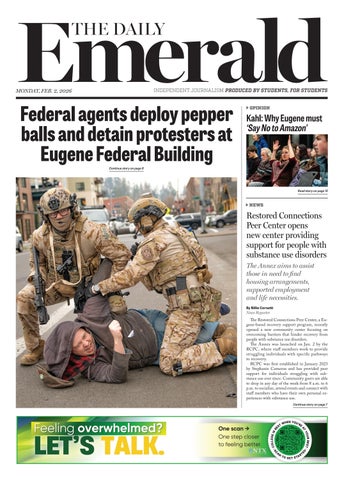
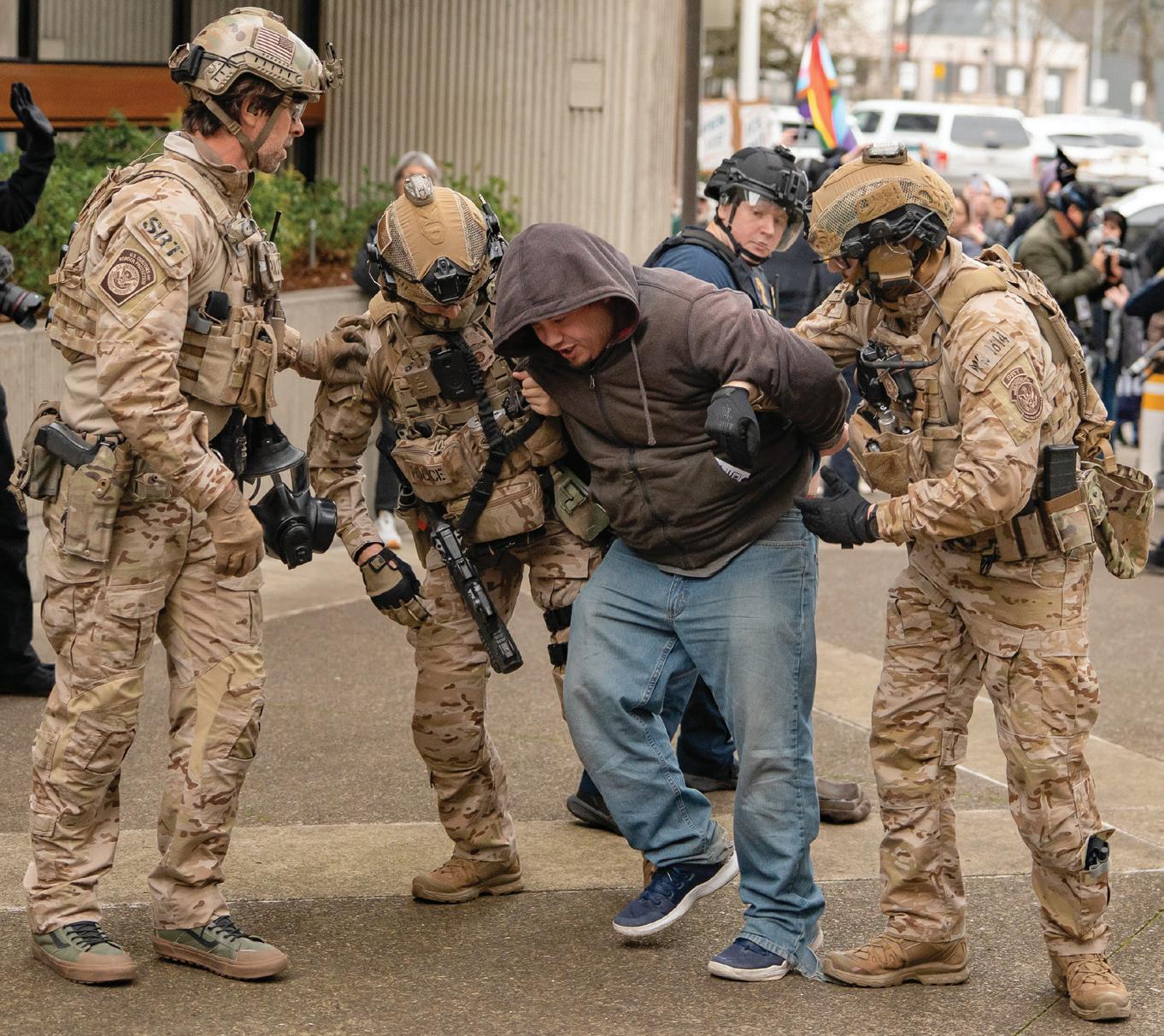
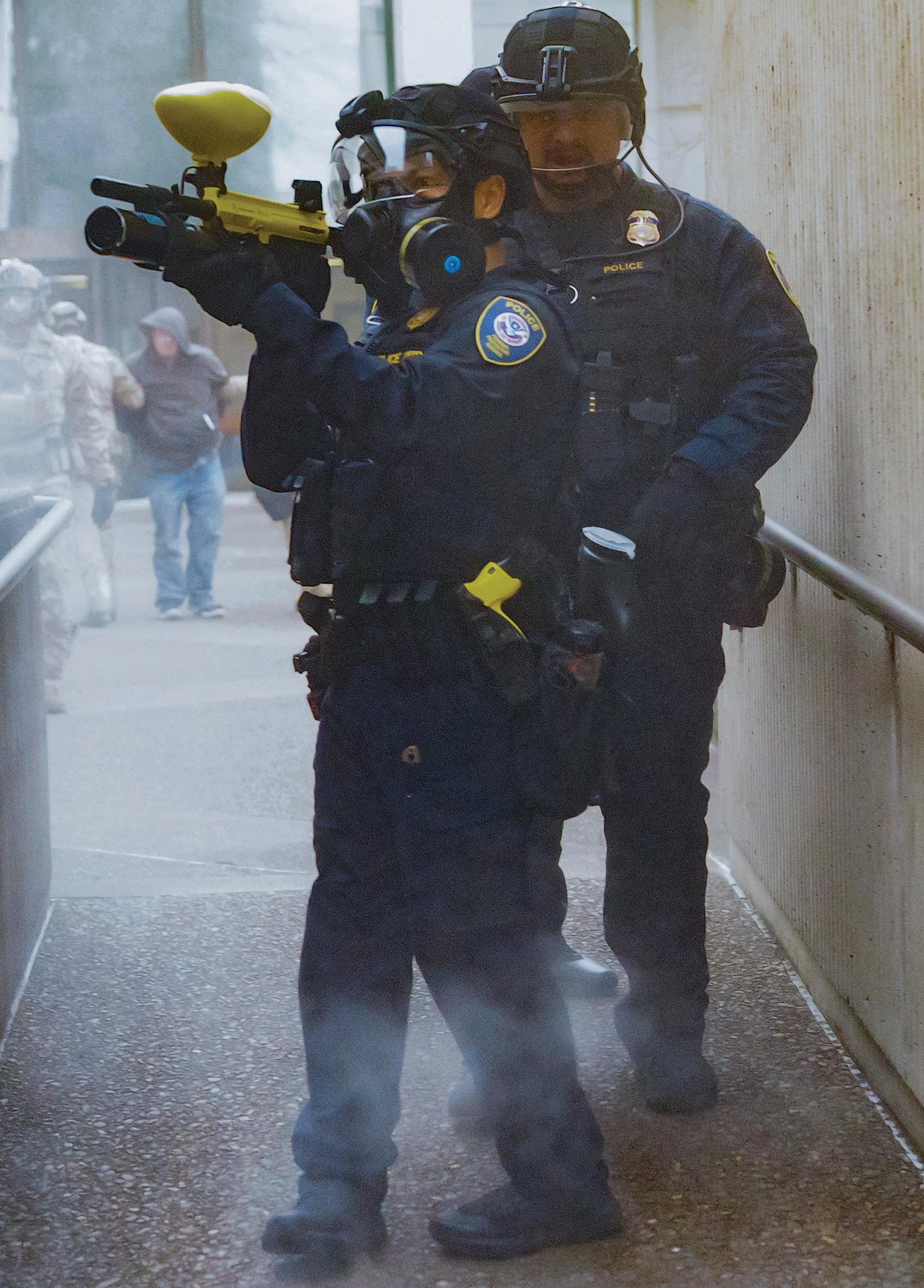
Federal agents deploy pepper balls and detain protesters at Eugene Federal Building
Restored Connections
Peer Center opens new center providing support for people with substance use disorders
The Annex aims to assist those in need to find housing arrangements, supported employment and life necessities.
By Billie Corsetti News Reporter
The Restored Connections Peer Center, a Eugene-based recovery support program, recently opened a new community center focusing on overcoming barriers that hinder recovery from people with substance use disorders.
The Annex was launched on Jan. 2 by the RCPC, where staff members work to provide struggling individuals with specific pathways to recovery.
RCPC was first established in January 2023 by Stephanie Cameron and has provided peer support for individuals struggling with substance use ever since. Community goers are able to drop in any day of the week from 8 a.m. to 6 p.m. to socialize, attend events and connect with staff members who have their own personal experiences with substance use.



EDITOR IN CHIEF
Tarek Anthony
PRINT MANAGING EDITOR
Ryan Ehrhart
DIGITAL MANAGING EDITOR
Ysabella Sosa
NEWS EDITOR
Reilly Norgren
INVESTIGATIONS EDITOR
Ana Narayan
A&C EDITOR
Claire Coit
SPORTS EDITOR
Jack Lazarus
OPINION EDITOR
Gracie Cox
PHOTO MANAGING EDITOR
Corey Hoffman
COPY CHIEF
Olivia Ellerbruch
VIDEO EDITOR
Jake Nolan
PODCAST EDITOR
Stephanie Hensley
SOCIALS EDITOR
Ysabella Sosa
VISUALS EDITOR
Noa Schwartz
DESIGN EDITOR
Adaleah Carman
DESIGNERS
Asha Mohan
Ellery Burton-Tillson
Eva Andrews
Maya Gooneratne
Nina Rose
BUSINESS
PUBLISHER AND PRESIDENT
Eric Henry (X317) ehenry@dailyemerald.com
VP OPERATIONS
Kathy Carbone (X302) kcarbone@dailyemerald.com
DIRECTOR OF SALES & DIGITAL MARKETING
Shelly Rondestvedt (X303) srondestvedt@dailyemerald. com
CREATIVE & TECHNICAL
DIRECTOR
Anna Smith (X327) creative@dailyemerald.com
ACCOUNT EXECUTIVES
Torin Chevalier
Camcole Pereira
Ava Stephanian
Elliot Byrne
THE DAILY EMERALD
The Daily Emerald is published by Emerald Media Group, Inc., the independent nonprofit media company at the University of Oregon. Formerly the Oregon Daily Emerald, the news organization was founded in 1900.
Emerald Media Group
1395 University St.,#302 Eugene, Or 97403 (541)-346-5511

FIND MORE STORIES ONLINE AT DAILYEMERALD.COM
Portland’s iconic Sports Bra welcomes the Cherry Bombs
Under Armour and Sports Bra come together to welcome Portland’s newest team.
By Maria Weyne PDX Bureau Chief
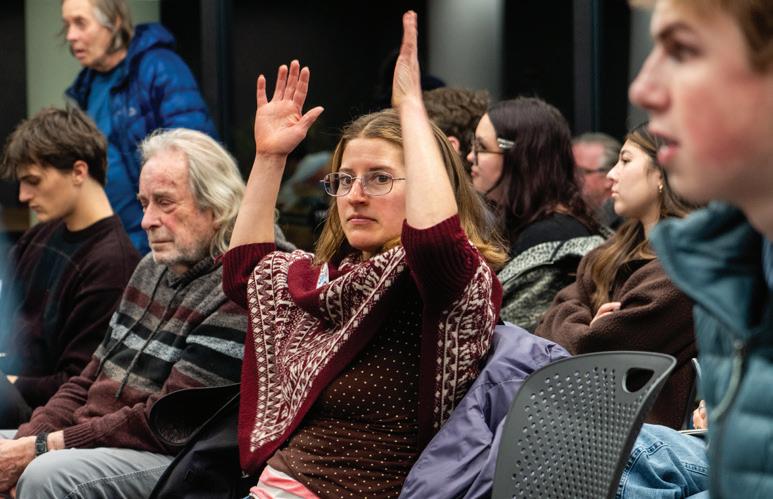
PORTLAND, Ore. — On Jan. 25, Portland’s iconic Sports Bra hosted a welcome party for the Cherry Bombs. The Cherry Bombs are a new USLW team gearing up to start their first-ever season in May 2026.
While crowds filled the bar, future Bombs sat together by the entrance alongside Under Armour sports bras. The team hosted games throughout the night, asking guests how many cherries they could fit in their bra cups and trivia questions.
Continue story online
Alder street businesses experience revenue loss amid construction
Small business owners near UO campus come forward about the effects of long-time construction on their businesses.
By Katarina Ilic News Reporter
Several small businesses off the edge of campus are experiencing fewer customers due to construction projects concentrating around Alder Street. and East 13th Ave..
Construction for the new student apartment building Chapter Alder began in September 2025 and resulted in the partial closure and pedestrian rerouting at Alder Street and East 13th Ave.. In January, construction also began on an additional student apartment building at the former site of Espresso Roma and Maple Garden Restaurant at 13th Ave. and Alder Street. Construction on Chapter Alder is expected to be completed in time for the building to open for the 2027–28 school year.
According to several business owners, they received little to no notice about the construction. Any notice they did receive came through the mail in the form of what Sy’s New York Pizza owner Josh Zweifler described as “small postcards.”
“Those postcards have very little information, and basically they just say, ‘Hey, something is happening; if you have a problem with it, come to the meeting on this date,’ which is usually a week or less away from
when you receive the notice,” Zweifler said.
Sai Pituk, owner of Cluckin’ Dog, said her restaurant and several other Asian restaurants on the block did not receive notices about the construction at all.
“None of us got notice. All of us knew construction was coming just because of hearsay, but in terms of an official notice, we didn’t get anything,” Pituk said.
Pituk said that after construction began, Cluckin’ Dog has seen a 79% decrease in sales compared with the previous year. If sales do not change in the next three months, Pituk said she will have to close the shop.
“My parents immigrated, so I’m a first-generation American. They’re seeing their hard work come to fruition,” Pituk said. “My daughter is a freshman at UO, and I don’t know if I could pay her bill much longer. I might have to pull her out, which is really sad, and quite frankly, I don’t want my dad to see that happen.”
With construction just beginning, business owners said they were told the expected timeline is about 20 months. However, several owners said they believe it may take longer.
“It’s supposed to take 20 months, but we can already see that delays are happening.
There hasn’t been a single person working back here for about seven days now,” Zweifler said. “It’s very rare to see construction projects finish on time or ahead of schedule, so 20 months could easily turn into two, two-and-a-half years.”
With construction taking over street parking, parking has also become an issue, with all parking on East 13th Ave. between Alder and Kincaid streets and most parking on Alder Street removed.
Zweifler said the now-closed PeaceHealth hospital across the street previously offered public parking spots that business owners could use, but due to demolition, they must now pay significantly more for parking.
“I used to pay $140 for two parking spots where Cafe Roma was,” Pituk said. “Now, if I can find it, I pay roughly $450 a month for one parking spot. I feel like, as a small business, we’re just getting hit from left and right.”
Although construction has led to a decrease in business, some owners said they are not entirely opposed to development on their street.
“We’re not here trying to stop progress, because we understand that it could be good for us,” Pituk said. “What we’re trying to do is find partnerships that allow us to survive the 20 months.”
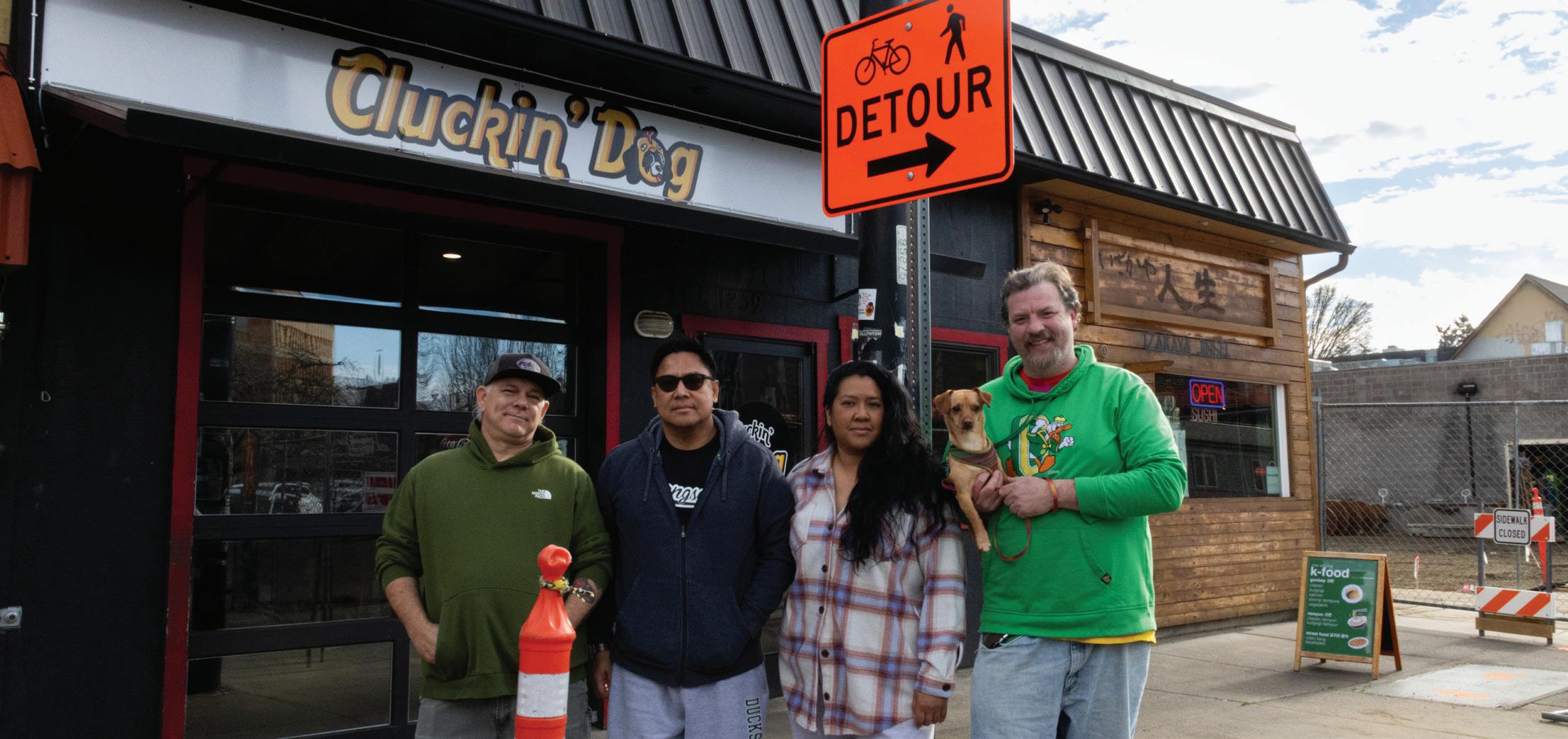
Cluckin’ Dog, Dudley’s Kampus Barber Shop and Sy’s New York Pizza are among the businesses impacted by ongoing construction. George Dudley, A. Sueb, Sai Pituk and Josh Zweifler pose for a photo near the construction on Alder Street in Eugene, Ore., on Jan. 26, 2026. (Julia Massa/Emerald)
FSL introduces safety measure amid drugging, hazing allegations at fraternities
University of Oregon Police Chief
Jason Wade warned students against attending disaffiliated parties as the Office of Fraternity and Sorority Life considers safety measures moving forward.
By Elle Kubiaczyk News Reporter
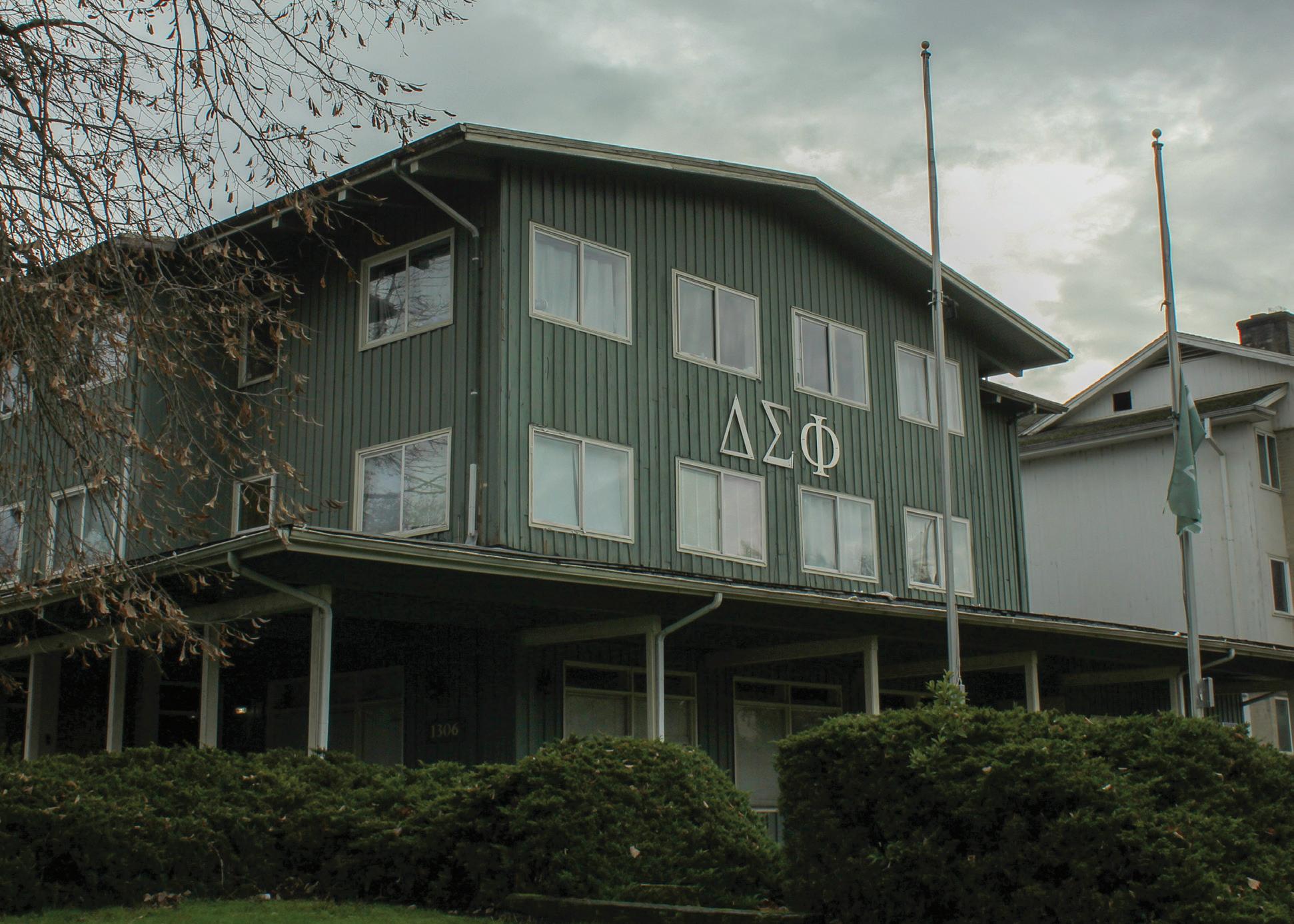
Four affiliated Greek organizations are currently on temporary suspension of new member activities, including Alpha Tau Omega, Sigma Chi, Kappa Kappa Gamma and Delta Sigma Phi.
On Dec. 4, 2025, both ATO and Sig Chi were issued a suspension for “reported conduct that may violate the Student Conduct Code and raised immediate health or safety concerns,” Kristina Cammarano, University of Oregon associate vice president for experiential learning said.
According to Cammarano, hazing investigations at Kappa and D Sig will come to a conclusion in the next few weeks.
Following a series of hazing, drink and drug tampering reports and organizational violations, Fraternity and Sorority Life devised a winter plan which included a three week hiatus, from Jan. 3-24, putting a pause on all social events with alcohol.
During the break, the Interfraternity Council and the UO Panhellenic Council members were assigned online training modules. The required curriculum addresses sober monitoring, safe partying, hazing and sexual assault prevention.
Both IFC and PHC answer to their respective national organizations: the National Panhellenic Conference and the North American Interfraternity Conference. Currently, IFC houses 16 fraternity chapters, and PHC has 11 sorority chapters. In the event of a breach in student conduct, the national organizations are notified.
Along with a hiatus, the “FSL Community Care & Safety Response Winter 2026” plan outlines new initiatives to create safer environments. The more notable changes are as follows: improved prevention curriculum, more accountability structures, enhanced transparency on the hazing website, new safe partying guidelines and increased FSL support.
“We have a really strong relationship that we’ve built with our students and our student leaders. There are so many great positive things that come from affiliation. We want to continue to support and uplift that interest in maintaining affiliation,” Cammarano said.
Affiliation recognition
As defined by FSL, a recognized organization is one that is “in good standing with the university.” Additionally, an affiliated fraternity has associated privileges which include “using university facilities and equipment, holding meetings and programs on campus, recruiting new members that will be recognized by the university and participating in university-sponsored activities.”
Recruiting at a high level is crucial to effectively fund the sorority or fraternity chapter. Delta Gamma Treasurer Beatrice Gilroy said that the support from FSL and PHC during formal and informal recruitment is the biggest privilege to affiliation.
Despite no direct funding from the university, all members pay new or active member dues each quarter. New member dues vary at each Greek organization, ranging
$125-$1300 for new members and $2500-$3200 for active members (room and board), according to the FSL website.
Jimmy Howard, associate vice president of student life and dean of students, underscores the recruitment risk at unaffiliated organizations: “The livelihood of those organizations just continue to go down because they’re not able to recruit at the same level of other organizations that are a part of the official university process.”
Cammarano attributes the lack of recognition as the biggest risk at disaffiliated fraternities.
Disaffiliation pitfalls
Disaffiliation, as defined by Cammarano, occurs when “a national organization decides that their local chapter will operate independently of the university.” Unrecognized organizations are unable to engage in FSL community support, services or activities. It is increasingly rare for recognized organizations to willingly opt for the disaffiliated model. More often than not, disaffiliation begins with a refusal to comply with the parameters of a suspension.
Howard specifies, “those sanctions are intended to pause and get things in order. And so a lot of times, those groups don’t want to serve that time of being suspended and not recruiting.”
Another key distinction between affiliated and disaffiliated organizations is police jurisdiction.
According to the non-finalized “UOPD Patrol District” memorandum of understanding with the City of Eugene, UOPD will be “the primary police response for all fraternity and sorority houses,” UOPD Chief Jason Wade said. Conversely, reports at unaffiliated houses are referred to the Eugene Police Department. “We (UOPD) would handle it just like an apartment building or some other structure outside of our jurisdiction,” Wade said.
When asked about whether or not students should attend parties at disaffiliated fraternities, Wade simply said “Don’t.”
“If I’m going to a bar, for example, I’m not going to go to someone who’s selling alcohol out of the back of a van. I’d
take the registered license location,” Wade said.
For UO Alerts, if an incident happened at an unaffiliated location, or a live-out, for example, only the address would be noted, “because we don’t have an official designation for them,” Angela Seydel, UO spokesperson said.
Following a report at an unaffiliated fraternity, the subsequent university investigation varies from one at a recognized chapter. In a disaffiliated model, investigations focus on the individuals connected to the alleged incident. For instance, police may find leaseholders or unaffiliated leaders accountable, but the fraternity itself is not subject to investigation.
“If it’s a disaffiliated group and something happens, we’re still going to take it very seriously. It’s just a matter of who is responsible,” Howard said. Due to the inherent lack of a relationship between unrecognized fraternities and the university, Howard added that there may be fewer points of contact for disaffiliated organizations. Affiliated organizations are not necessarily more protected, but they do have a greater support system.
Both Howard and Cammarano see great risk in the disaffiliated model found at the University of Southern California and University of Michigan. Due to the increased liability, pressure on student leaders and lessened membership, the model is rarely actualized.
“By and large, the unaffiliated tends to not be very successful because you have to set up a whole new infrastructure for it to work. You’re hiring all new staffing. You’re setting up a 501(c)(3), a whole new banking structure, insurance (and) recruitment to make it work.” Cammarano said.
Cammarano pointed to a recent example, in which previously unaffiliated organizations Alpha Sigma Phi and Sigma Alpha Epsilon agreed to comply with the terms of their suspensions, paving a path back toward campus recognition.
( ABOVE) Exterior of Delta Sigma Phi on East 18th Ave. Eugene Ore..
(Adaleah Carman/Emerald)











SPORTS
Peer Center’s Annex
site opens, providing support for people with substance use disorders
In the program’s 2025 impact report, they reported 4,132 drop-in encounters, 1,792 street outreach encounters and 3,316 direct service encounters.
If service recipients ask for specific aid, they are encouraged to fill out a “request for service” form. Unlike the RCPC, which is a daily drop-in service, the Annex operates through scheduled appointments helped by the forms.
“If it’s identified that one of our staff that works down at the Annex is an appropriate fit for that individual, then they’ll do all of their direct service from (there),” Chrissy Barnard, program manager at RCPC, said. “They’ll be managing their caseload over here, and then maybe they’ll be hosting a community event here. It’s kind of got a dual purpose.”
Staff at the Annex help visitors with a variety of barriers that prevent their road to recovery, including employment support.
“Maybe they never filled out a resume or haven’t had a job due to substance use, so we can build a skills resume using their transferable skills, which could be survival,” Barnard said. “Then mock interviews, taking them to interviews and sometimes we’ll help them with clothing.”
Visitors can also receive assistance in medical support, such as applying for the Oregon Health Plan, or finding resources that can provide medically assisted treatment.
Housing navigation is also a vital service at RCPC. Although the program doesn’t directly house peo -
ple, it maintains connections with multiple housing hosts in the community and helps individuals navigate the interview process.
“We (also) have detox and treatment coordination. So people walk in the door, and they’re like, ‘I’m at my rock bottom, I can’t take it anymore,’ and we help them walk through the screening to get them into detox, help them find transportation,’’ Barnard said. “We really focus on everything that supports the recovery from substance use and falls under that umbrella.”
RCPC is part of Lane County’s Behavioral Health Resource Network that receives funding from the Oregon Health Authority’s Oversight and Accountability Council.
Last year, the OAC drastically cut funding for all BHRNs, resulting in a 60% reduction in RCPC’s funding.
“The cuts have not been kind to us,” Stephanie Cameron, founder and executive director of RCPC, said.
Despite the hard hit, RCPC used previously acquired one-time funding from the OHA’s Office of Recovery and Resiliency and the Lane Community Health Council, as well as other grants, to lease out a second location for the Annex until May 2027.
“We’re just really piecing it all together as we go,” Cameron said. “(We’re) in good faith that our community is going to show up for us and that we will continue to not only get grant funding but that we will successfully obtain some of our other sustainability plans.”
More
than managers: How the Prickel brothers found purpose with Oregon women’s basketball
Drew and Dawson Prickel have grown closer through behind-the-scenes work with the Ducks.
By Rachel McConaghie Sports Writer
For brothers Drew and Dawson Prickel, basketball has always been more than a game; it’s been a shared language.
“We were always close,” Drew said. “But working together definitely brought us even closer.”
Both grew up playing the sport, spending countless hours in gyms and driveways. When their playing days ended, that connection didn’t. Instead, it evolved into behind-the-scenes roles with the University of Oregon women’s basketball program, where the Eugene-born siblings work as student managers, with Dawson later serving as a graduate assistant.
“I played basketball all my life,” Dawson said. “I knew when I got to college I wanted to work in sports, and basketball was the one thing I really wanted to stay connected to.”
Drew followed a similar path, finding himself drawn to the same environment.
“I always really looked up to Dawson growing up,” Drew said. “We’ve always had similar interests, and he’s definitely been a big role model for me.”
Both brothers chose to attend the UO due to the opportunities to stay close to home and to work in athletics. Being just three years apart, Dawson joined the women’s basketball program first, reaching out through connections he had growing up in Eugene. Drew later followed, interviewing for the same student manager role and eventually working alongside his brother for two seasons.
Drew currently specializes in apparel presentation, dressing the mannequin for the team that displays uniform combinations to ensure players know exactly what to wear on game days. The responsibilities have been extensive: handling laundry, food orders, equipment and steaming game-day gear, along with assisting during practices, games and team travel.
“On a normal practice day, it’s probably four to five hours,” Drew said. “On game days, it can be anywhere from eight to 12.”
Balancing that workload with academics requires discipline. Drew, an advertising major with a minor in sports business, says the role forced him to learn time management quickly. Classes missed due to game travel leads to constant communication with professors, attending office hours and frequent makeup work.
“It’s pretty brutal,” Drew said. “But it taught me how to be proactive and communicate effectively.”
Kate Hostetler-McLaughlin, a fellow women’s basketball manager joining the same year as Drew, said his dependability set the tone.
“Drew and I have been locked in since freshman year,” Hostetler-McLaughlin said. “We work like a well-oiled machine.”
Dawson, who completed his undergraduate degree in business administration before earning a master’s degree in advertising, transitioned into a graduate assistant role during his fifth and final season. While on top of day-to-day manager tasks, he also helped oversee student managers, attended marketing meetings and assisted with practice operations.
“It was comfortable because I already knew everyone,” Dawson said. “I wasn’t their boss, but I was kind of an extension of the operations staff.”
That consistency of showing up does not go unnoticed by the team. Former Oregon women’s basketball guard and current coordinator of player engagement and operations, Peyton Scott, said Drew’s reliability is key to the team’s success both on and off the court.
“We love Drew; he’s a workhorse,” Scott said. “He always just knows what to do, and I never have to worry. He keeps everything running and upholds the expectations.”
Head coach Kelly Graves said Drew and Dawson are “Mount Rushmore type guys.”
Despite the long hours, both brothers emphasized the culture within Oregon women’s basketball as the reason they continued to return year after year.
“It’s a very family-oriented environment,” Dawson said. “The staff and players are genuinely close, and everyone is treated with respect.”
That sense of family extends beyond the team itself and into the stands, where loved ones are welcomed as part of the program’s community.
“Our grandma comes to pretty much every game,” Drew said. “Sometimes she even makes cookies for the team. All the players know her by name, basically.”
Travel opportunities became some of Dawson’s most memorable experiences, including a tour of Athens and London, and traveling with the team on every road trip during his final season.
“Being in airports together, being on the road, those are the moments you remember,” Dawson said.
Since graduating, Dawson has started work for an ad agency in Eugene. In the future, the Prickel brothers hope to continue to work in sports both expressing passion for women’s basketball and all things sports management.
“Athletics will always be an option,” Dawson said. “I want to do something where every day is different.”
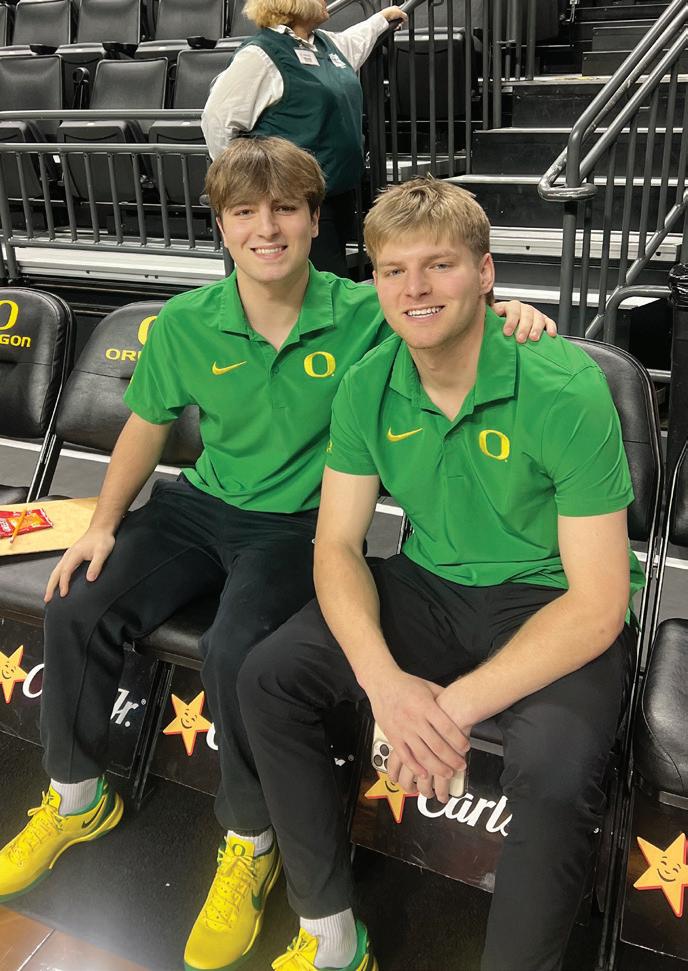
( ABOVE) Drew Prickel (left) Dawson (right) (Courtesy of Drew Prickel)
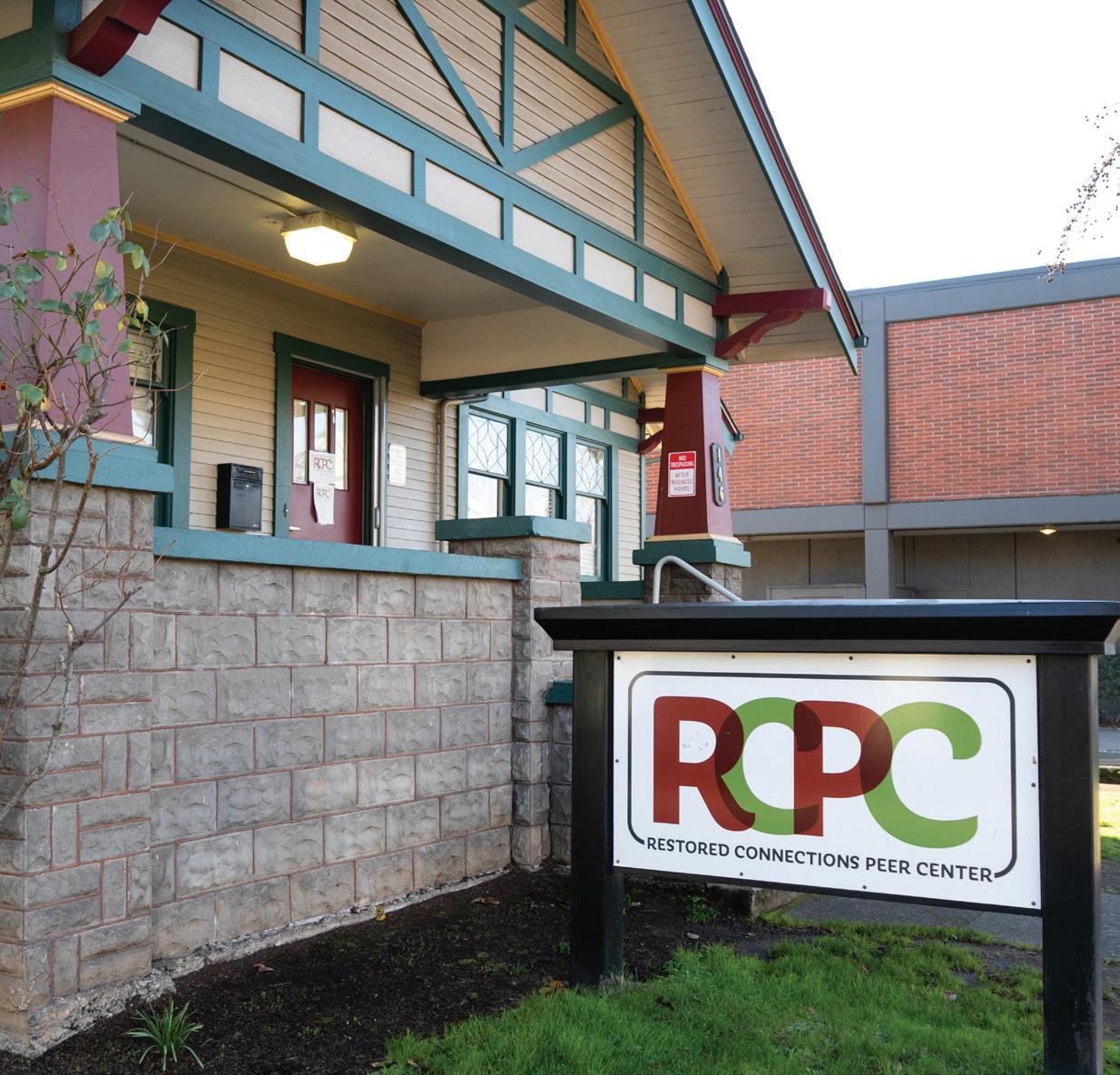
The Restored Connections Peer Center is a local recovery center at which residents in recovery can come together to support each other through therapy services and activities. The Center, which in 2026 opened an Annex location, has operated since 2023 at 12th Ave. in Eugene, Ore. (Katie Poluyansky/Emerald)
Federal agents deploy pepper balls and detain protesters at Eugene Federal Building
Department of Homeland Security agents exited the Eugene Federal Building Tuesday afternoon and deployed pepper balls at protesters gathered outside the building, detaining multiple people as federal agents moved into the street on Jan. 27.


Several
Photos by Saj Sundaram

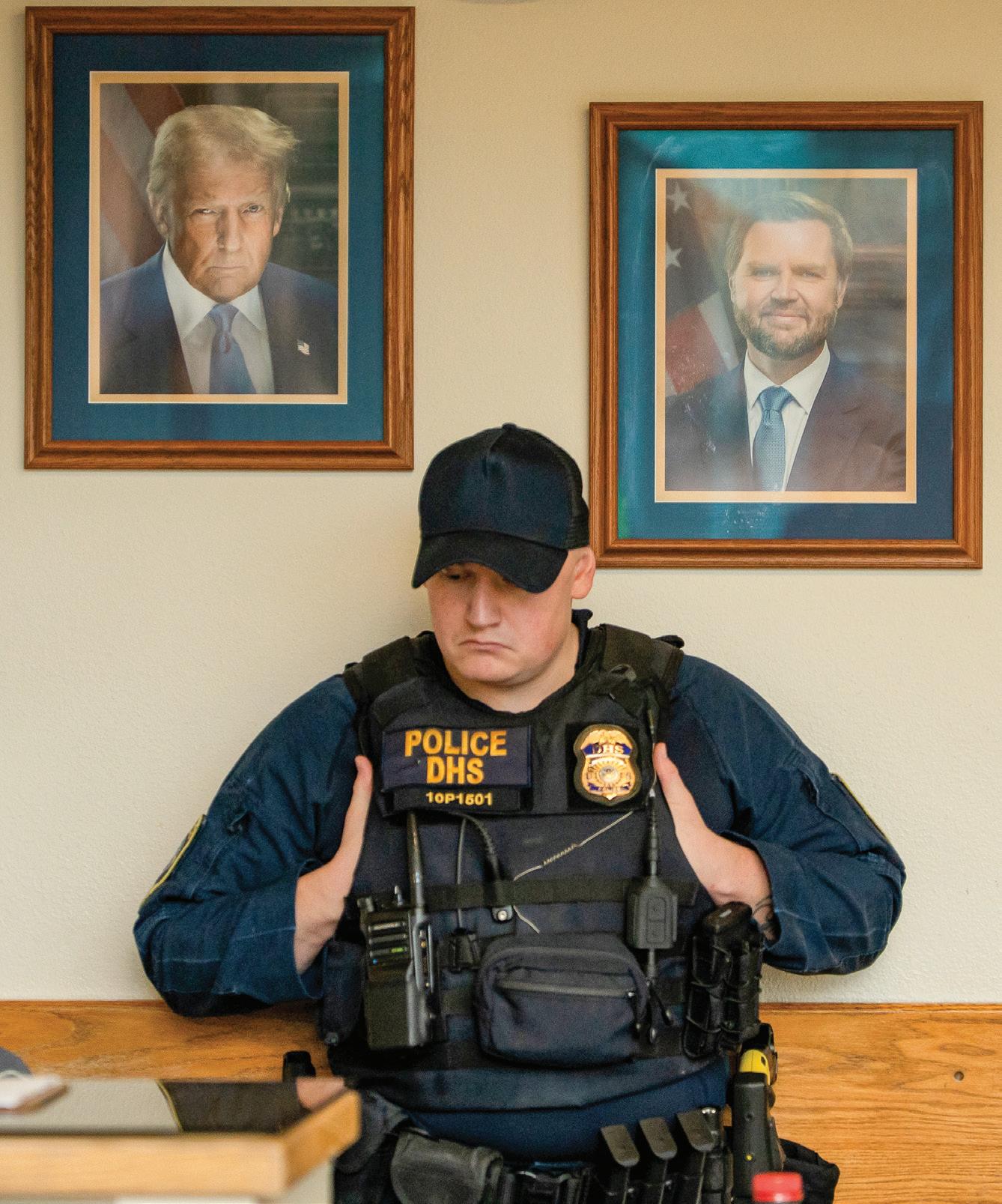
A DHS agent stands with the portraits of President Donald Trump and Vice President J.D Vance.
A Department of Homeland Security agent fires a chemical weapon outside the Eugene Federal Building.
Federal agents attempt to detain a protester outside the Eugene Federal Building.
ARTS & CULTURE
Stryker Rods innovates with a coast-to-coast cast
Blanks — the backbone of every setup
Determines how much a rod will bend and how much strength can be exerted upon it
Rod action is a hallmark of blank variation, referring to the distribution of flexibility across the blank itself
Slow action bends throughout, whereas fast has a more limited range of motion in only the upper area of the blank
To complete a blank into a traditional fishing rod, guides are glued onto its length and a handle is attached at the base
The Eugene-based manufacturer serves American anglers with craftsmanship and innovation.
By Gigi Roddick Arts & Culture Writer
Stryker Rods have been manufacturing fishing rods and blanks in Eugene since 2019. Their American-made products serve fishing fanatics across the country.
Stryker’s location capitalizes on the area’s diverse and proximate fishing opportunities. In Eugene, valley rivers host salmon, steelhead and trout. An hour drive to the coastal rivers and ocean supplies fishers with pacific halibut, ocean salmon and surfperch.
“Oregon is a great state — we have everything here. Pretty much every species,” Matt Zlatek, production manager at Stryker, said.
Stryker CEO and owner Duane Leavitt saw an opportunity to begin local production after Rogue Rods, a manufacturer based out of White City, Ore., shut down. Stryker purchased the former company’s equipment and established their own factory in West Eugene’s industrial district.
In 2024, Stryker joined the Composite Ventures family, a leader in fishing gear manufacturing. Today, Stryker’s team of 11 provides customizable equipment to every niche of the sport.
“Being a rod company in the Northwest that makes their own blanks is pretty rare nowadays,” Nate Langlo, Stryker sales manager, said. “There’s not many people who are making the blanks and
the rods in the same facility anymore. That’s a pretty rare thing to see. So keeping it here in the states is always a great thing.”
Stryker makes rods and blanks for everything from the heaviest saltwater setups to tiny ice rods. Their in-house design and manufacturing process encourages constant innovation to keep up with an industry in motion.
“Every day they’re coming out with something new which requires a new rod, a new blank, designed specifically to handle that lure or that setup. And so that’s the fun part for me — designing that,” Zlatek said. “I go home and I think about it. I literally have a gaff and a harpoon in my kitchen.”
Langlo said that when it comes to fishing, “there’s no off switch.”
“You start out when you’re young, fishing a bobber or nightcrawler for a bluegill. And then you get to these crazy salmon steelhead saltwater fish, where you’ve got 15-20 rods for a species. It turns into a whole addiction,” Max Wagner, a Stryker rod salesman, said.
“Fishing really becomes a science at that point. It’s not just throwing a worm out there and sitting,” Zlatek said.
Oregon’s rich fishing culture and diverse waterways are supported by homegrown manufacturing. For community members, a local angling resource offers increased accessibility and confidence — regardless of the severity of one’s fishing affliction.
‘ReEnvisioning’ Oregon’s Black history through the beauty of art
The newest exhibit at the Museum of Natural and Cultural History, “ReEnvisioned,” uses a combination of painted art by Jeremy Okai Davis and historical knowledge to share Black history in Oregon.
By Gray Vanderpoel Arts & Culture Writer
The Museum of Natural and Cultural History’s new “ReEnvisioned” exhibit shines a light on the reality of Black history in Oregon for students on campus. With the help of the Salem Art Association, Bush House Museum and artist Jeremy Okai Davis, the museum successfully created an exhibit showcasing the beauty of how art and history overlap, running until June 21, 2026.
During the exhibits’ opening weekend, MNCH displayed 10 portraits of different Black pioneers who each had a strong historical mark in Oregon. Ranging in time and accomplishments, these colorful portraits are meant to honor and educate people about the significance of these pioneers in shaping our state. Black Oregonian pioneers were long overlooked, which is something that was stressed by the museum.
The artist was commissioned by the Salem Art Association to paint said portraits. Davis made an art career based around figure and portrait painting. He has a unique and fascinating personal style of almost pixelated color blending, creating a realistic and eye-catching portrait from afar, and an almost abstract style up close.
Davis also had an interest in painting African American individuals who weren’t spotlighted in history, leading him toward this project. The goal of Davis’s work was for the 10 paintings to migrate around the Northwest, but now at the MNCH, all 10 are displayed together for the first time.
The art was only one aspect of this collection. Gwen Carr, director of the Bush House Museum in Salem, worked alongside Davis to gather research and stories of the people depicted in the paintings. In the museum, every painting is paired with a small clip of information about the individual and their contribution to Oregon history.
“It’s the combination of art and history, and that’s why I was attracted to it. Frankly, in today’s environment, a lot of organizations and museums are kind of running away from that,” Carr said. “What I liked about this organization and
why I agreed to be a part of it was because I felt this organization was running toward it.”
Carr was connected to Davis because of their shared historical knowledge on the subject, and helped gather information and photographs for Davis to use for his paintings. Both Davis and Carr described it as the hardest part of the process, due to the lack of photographs of African Americans in Oregon; they were able to collect nine out of the 10 photographs of the Black pioneers.
One of the pioneers, Letitia Carson, however, didn’t have a picture reference. Davis used pictures of Carson’s daughter and, with the help of his background in graphic art, he was able to create a rendition of what she would have looked like.
The process was difficult, but prosperous, as Davis and Carr said. The painting of Carson is their personal favorite.
With all the information on display in the “ReEnvisoned” exhibit, Carr and Davis hope students walk away with questions about African Americans’ history in shaping Oregon, inspiring them to dig deeper into why there aren’t more Black people in Oregon.
“Forefathers and foremothers of people who lived here were Black and had lives and prospered,” Davis said. “And I think it’s important for people to see that from the jump when they get to campus or when they get to Oregon. Just to know that the narrative that’s been painted a lot of the time isn’t as whitewashed as many people lead you to believe.”
Oregon has a history of forcing Black people out of the state’s narrative, with the Oregon black exclusion laws vin place between 1844 and 1926. But even in spite of those, African Americans were still here. “Largely, the stories in the exhibit aren’t told, and a lot of people don’t realize there is Black history in Oregon,” Carr said. “It is significant because they were community members who lived in the cities and rural areas in spite of Oregon’s famous Black exclusion laws.”
Davis also expressed his appreciation for the MNCH giving this source of information to its students, which is something he didn’t have when he attended university. “We are not newcomers here, and we shouldn’t be treated as newcomers,” Carr said. “Come to learn something I bet you didn’t know anything about.”
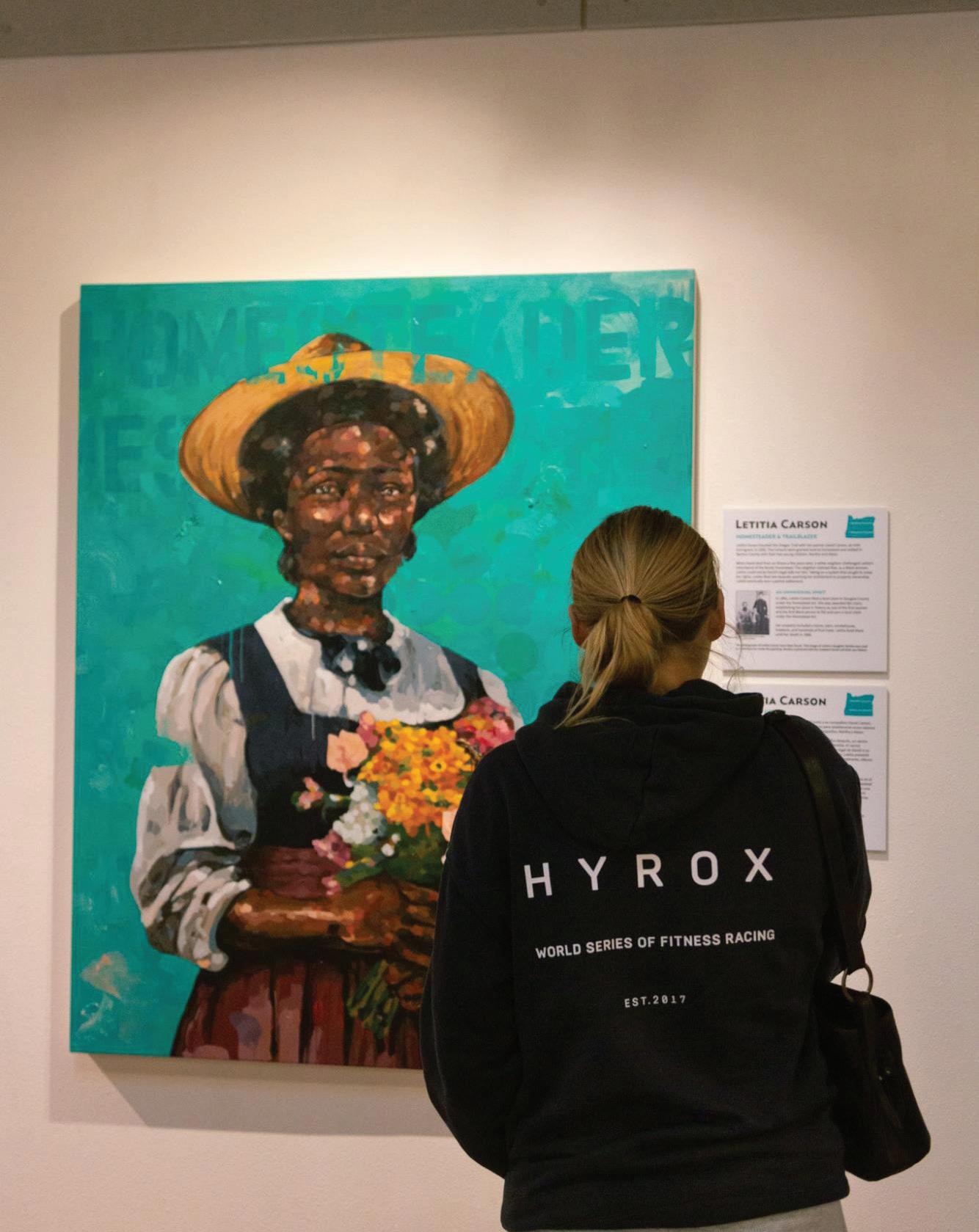
Letitia Carson, a Black Oregonian pioneer, is depicted in a painting by Jeremy Okai Davis. The Museum of Natural and Cultural History’s newest exhibit “ReEnvisioned: Contemporary Portraits of Our Black Ancestors,” runs until June 21, 2026. (Roshni Ram/Emerald)













OPINION
Nag: 120 days in the hole (part two)
Opinion: Prolonged solitary confinement is deeply problematic, and Oregon is not an exception in regard to the human rights abuses associated with the practice.
By Aishiki Nag
Opnion Columnist
Floro’s story through the system is not unprecedented — those who have documented and undocumented mental health struggles are prone to solitary confinement due to disciplinary infractions. Floro was deemed Mental Health-3 due to his schizophrenia, which was considered for individuals with serious mental health conditions, and was sent to the Behavioral Health Unit.
Disability Rights Oregon published an investigative report looking into the solitary confinement of individuals with mental illness in the Oregon State Penitentiary’s Behavioral Health Unit. They recorded that most BHU prisoners were let out of their cells for one hour a day, and the average cell was six feet wide and 10 feet deep. Interviews confirmed that BHU prisoners were unable to receive timely mental health services and that the BHU was ruled by a culture where the correctional facility would “override or ignore the advice of the mental health professionals.”
“They would throw them into a new cell and then just repeat the process (of solitary confinement),” Floro said. “It was sick how they treated mental health.”
The original intent of the BHU was to create a humane and safe environment to house prisoners who had the most extreme forms of self-harm,
suicide attempts and staff assaults. But the BHU had a long history of using extreme isolation and sensory deprivation, often worsening suicide attempts and threats.
“When I went into prison with my solitary confinement time, I knew my disability with schizophrenia (had worsened),” Floro said. “All they did was worsen my anxiety and worsen my disability with schizophrenia.”
Dave Boyer, an attorney with DRO, and Melissa Roy-Hart, the communications director of DRO, elaborated on the current uses of solitary confinement and its intersection with mental illness in an interview. DRO has been a part of the protection and advocacy system and continues to serve as an ongoing presence within prisons and jails to ensure the rights of disabled people.
“Mental health treatment (in prisons) tends to be mental health treatment targeted toward compliance with prison rules,” Boyer said. “So they’re not treating your mood or your anxiety. It’s not true mental healthcare; it’s really behavioral control treatment.”
Since mental health is a leading cause of disciplinary infractions, those in the BHU are often treated with solitary confinement, because the individual couldn’t conform to the prison’s behavioral standards.
“We’re continuing to do the same thing that’s always been done, treating people like criminals
and like animals and locking them up, and if they do something against the rules, then putting them in solitary confinement,” Boyer said. “There’s no rehabilitation point on; it’s all punitive.”
DRO continues to monitor conditions within BHUs, although the last official report was released in 2021. They remain active in holding the Oregon prison system accountable for documented abuses.
“I would like the main reforms to (solitary confinement) to be more socialization, giving them more opportunities to socialize with counselors and people outside of the institutions,” Floro said, when asked about potential reforms to the current solitary confinement system.
The Mandela rules called for meaningful human contact within prisons, including interaction without physical barriers, empathetic dialogue about personal lives and genuine and sustained conversations.
Floro ends with, “You have people doing longterm BHU for 10, 15 years, and anybody doing so long in a steel box, with such limited communication with the world, their mind is going to go on an institutionalized cycle… nobody should do longer than a 30-day stance.”
This column is the second part of a story originally published in the Jan. 7, 2026 edition of The Daily Emerald.
Aishiki Nag is a senior studying political science and global studies. She likes to cover state and national politics, and international peace-building efforts. When she’s not writing for The Emerald, she likes to read, hike and travel to new places.
Kahl: Why Eugene must ‘Say No to Amazon’
Emma Kahl is an opinion columnist for The Daily Emerald. She is currently a senior, majoring in written journalism and minoring in global studies. Her writing focuses on social commentary, culture and politics.
Opinion: The Amazon megawarehouse will threaten Eugene’s values, environment and community.
By Emma Kahl Opnion Columnist
I stopped using Amazon Prime over a year ago, despite its often-celebrated convenience. My choice to boycott the company was rooted in its ethical and environmental issues. This is why Eugene’s planned Amazon mega-warehouse is deeply concerning to me.
Amazon initially denied its intent to build the e-commerce center in Eugene in early 2025, but the company paid $2 million on Dec. 26, 2025, for a lot on Highway 99. Locals have voiced a range of concerns about the facility.
Stan Taylor is a co-leader of the advocacy group Indivisible Eugene Springfield and a former instructor of political science at Lane Community College. Taylor pointed out the flawed argument that the warehouse would bring in money to solve Eugene’s financial crisis. “It’s not enough to solve the city’s problems, and it’s certainly not enough to sell your soul for,” he said.
While some argue that the warehouse has the potential to create openings in Eugene’s job market, Amazon has also shared its plan to replace the majority of its workers with robots and AI technology. The New York Times wrote, “documents show that Amazon’s robotics team has an ultimate goal to automate 75% of its operations.”
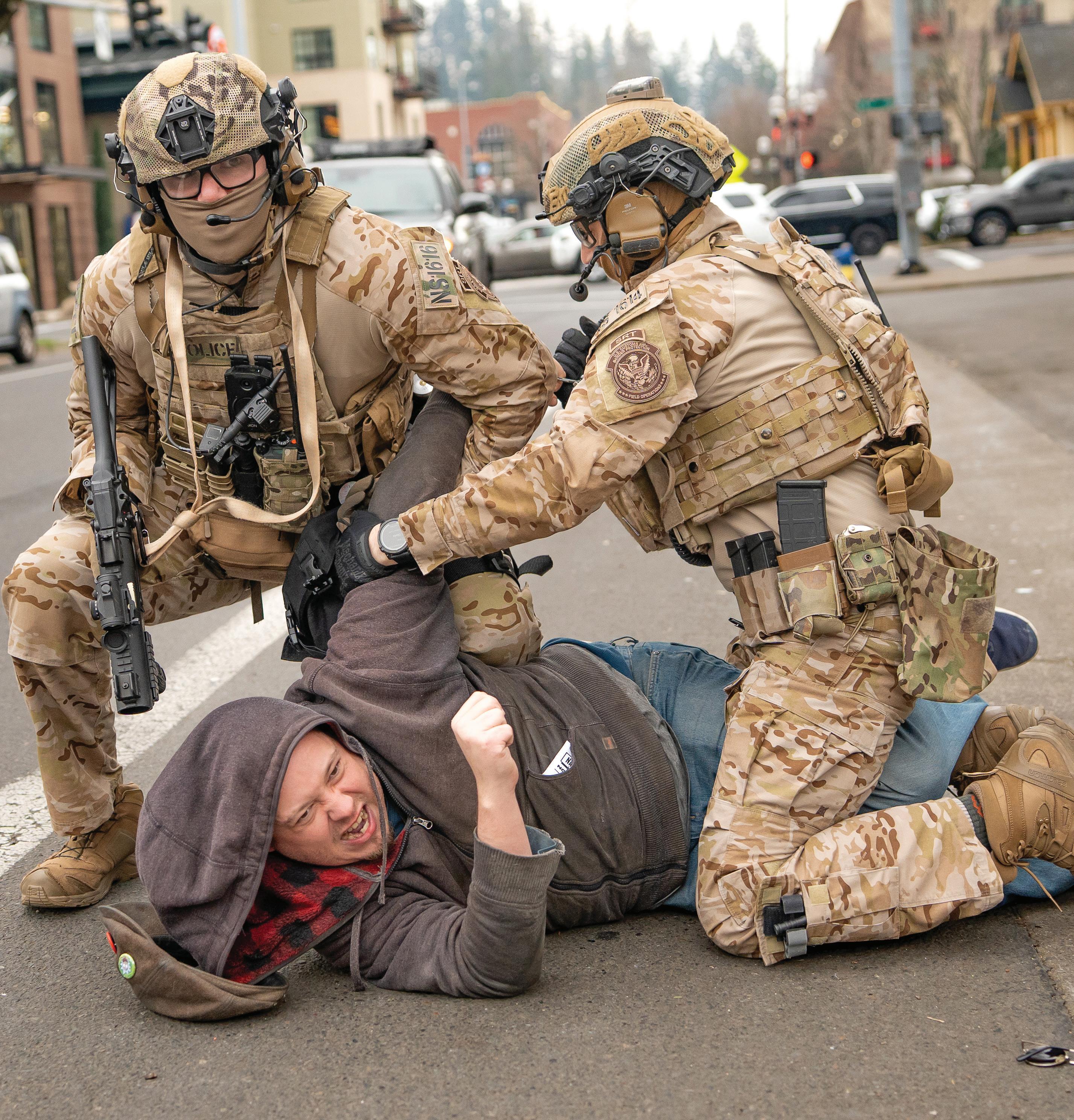
The advocacy group also formed “Say No to Amazon,” a collective looking to stop the implementation of the warehouse. At the Eugene City Council
meeting on Jan. 26, members showed up wearing matching shirts and pins, with speeches in hand for the public comment portion of the meeting.
The group handed out a six-page packet filled with sources detailing Amazon’s connection with ICE and aiding deportations, the company’s historical anti-union stance, its poor working conditions, its poor climate record and history of tax evasion.
Taylor also shared his deep concern for members of the Bethel and Santa Clara community who neighbor the purchased land. He said that no one from the city had informed them of Amazon’s intent and purchase.
“How hard would it have been for the city to reach out to the two closest neighborhood associations and let them know so that you could actually get real feedback?” Taylor said.
While economics and labor practices both raise serious questions, the environmental impacts remain one of the most critical reasons residents oppose the warehouse.
Victoria Acosta, an 18-year-old Eugene local, also spoke at the Jan. 26 Eugene City Council meeting to share her desire to see action taken by the city.
Acosta cited her concerns for Eugene’s wetlands, which will face the brunt of the damage with the implementation of the mega-warehouse.
The facility will be located on what was protected farmland until 2017 and will impact 9 acres of wetland, which the Willamette Valley has already lost 57% of. The project will permanently alter the wetlands, removing soil and infill.
“The wetlands are also flood protection, so if we get rid of this, what happens when we have heavy rain? We’re on the border of a climate disaster, and they’re not doing enough about it,” Acosta said.
Acosta also shared her view on the display of hy-
pocrisy from the Eugene City Council for starting its meetings with a land acknowledgement while simultaneously harming the local land by allowing this project to take place.
The facility requires a pollution permit as “2,592 daily vehicle trips (are) projected to move in and out of the facility,” according to LookOut Eugene-Springfield. It’s clear that the environmental impacts will be wide-reaching.
It seems that city officials are unwilling to reconsider the facility despite the vast and deeply profound public concerns. As the project moves forward, it’s important that locals continue to voice their concern and find alternative retailers.
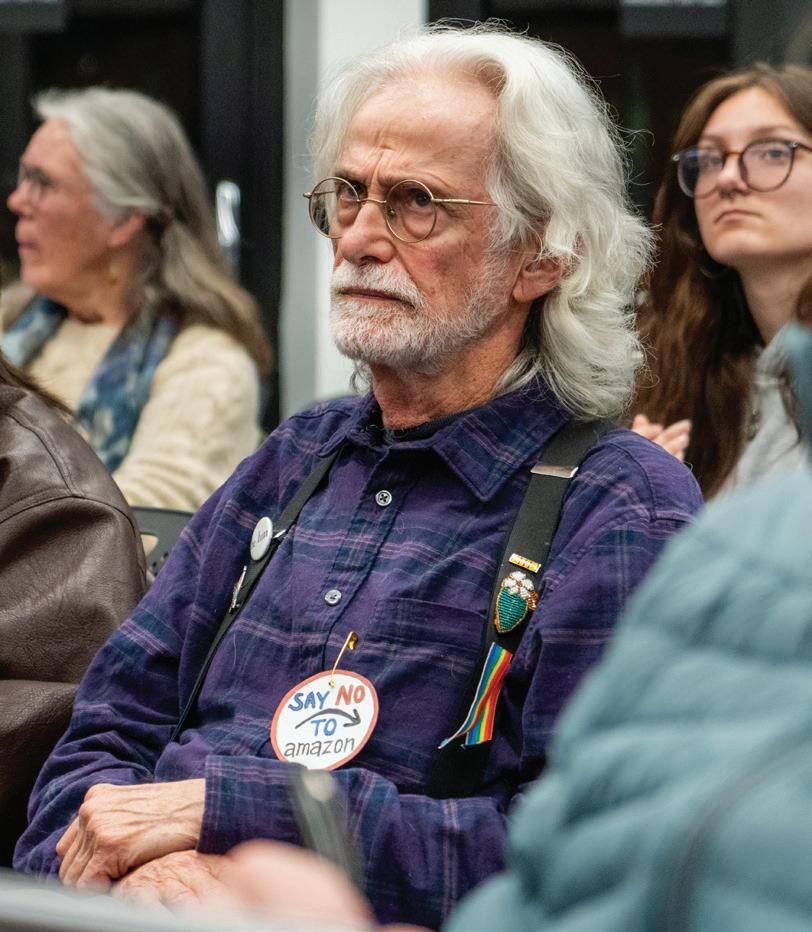
Eugene residents listen as the council discusses. City Council met to discuss Amazon’s plans to open a megadistribution center in Eugene, Ore., on Jan. 26, 2026.

New faces: offense
A breakdown of Oregon's latest transfer portal additions.
With the football season coming to an end, it’s time for the Ducks to hit the transfer portal to fill in some much-needed positions following the departures of multiple star players to the NFL and transfer portal. The Daily Emerald breaks down all of Oregon’s latest
– Quarterback
One of the Big Ten’s best quarterbacks this past season, Raiola will look to enter the Ducks’ quarterback room as a backup to returning star quarterback Dante Moore. Moore himself took a similar route last season after joining Oregon as a backup for Dillon Gabriel. Raiola threw for 2000 yards, 18 touchdowns and six interceptions through nine games this season before he suffered a broken fibula during a week 10
Raiola will look to rehab his injury and develop his game next season and will likely be the starting quarterback in 2027, when Dante Moore inevitably
– Wide Receiver
University of Alabama at Birmingham
This season saw Oregon’s receiver room riddled with injuries and off-field issues, and it’s been clear they’ve needed some help. Head coach Dan Lanning and the Ducks looked to one of the American Conference’s best receivers, Iverson Hooks.
Hooks is coming off a strong sophomore season with the Blazers after racking up 927 receiving yards (No. 33 in the nation) on 72 receptions (tied for No. 12 in the nation) and seven touchdowns (tied for No. 8 in the nation). With star receivers Evan rien Moore returning next season, Hooks is unlikely to be a lead receiver. He could look to have more of a reserved role with a ceiling of a
– Kicker
University of Nevada, Reno

With Atticus Sappington graduating this offseason, the Ducks looked to Oregon-born Nevada kicker Keaton Emmett to bolster their special teams unit. Emmett did not attempt any field goals or extra points during his time with Nevada this past season, but did kick 48 kickoffs for the Wolfpack.
Bailey Ettridge – Punter University of Nevada, Reno
Another former member of the Nevada special teams unit is heading to Eugene in punter Bailey Etteridge. Ettridge was the starting punter for Nevada this past season, averaging 44.7 yards on 47 punts, with 18 inside the 20-yard line.
Ettridge is originally from Geelong, Australia, the hometown of departing Oregon punter James Ferguson-Reynolds. Etteridge has three more years of eligibility and could look to be the Ducks’ punter for the foreseeable future.
Andrew Olesh – Tight End Penn State
Andrew Olesh is a bit of an unknown coming into the Ducks’ tight end room after redshirting his freshman year with Penn State. He was a four-star recruit and the number one recruit in Pennsylvania coming out of Southern Lehigh High School. As a senior, he put up 1105 receiving yards on 75 receptions and scored 10 touchdowns.
With the departure of tight ends Kenyon Sadiq, Roger Saleapaga, Vander Ploog and Zach Grace, Olesh could see the field next season behind likely starter Jamari Johnson.
Michael Bennett – Offensive Tackle Yale University
Following the departure of Isaiah World to the NFL draft, the Ducks needed to bring in a strong replacement at offensive tackle. Michael Bennett was the clear choice. He has been a leader on the Yale Bulldogs team and was awarded the Jerry Nason award, All-Ivy League First Team selection, an AP FCS All-American honorable mention and the FCS Football Central All-American Second Team.
Bennett and the Bulldogs finished first in the Ivy League this year and made it to the FCS playoffs, where they lost in the second round to Montana State, which went on to win the National Championship.
Markus Dixon – Tight/Defensive End Clemson University
A late addition to the Ducks transfer class, Markus Dixon brings a lot of size and versatility to Eugene. Playing both tight and defensive end for Clemson over three seasons, Dixon redshirted his freshman year and played limited snaps during his time with the Tigers. Dixon played the majority of his 47 snaps at tight end, but played 13 snaps at defensive end in 2025. The Ducks announced his transfer as a tight end, so that’s likely where he’ll be developing his skills over the next year.
Simeon Price – Running Back
University of Colorado at Boulder
Another late addition, Simeon Price, comes to Eugene after missing most of the season following an undisclosed injury. Price appeared in the first four games and ran for 143 yards on 21 carries with two touchdowns. Price played two seasons at Mississippi State before transferring to Coastal Carolina for one season. He was able to secure a medical redshirt after only four starts for the Buffaloes, granting him one more year of eligibility. As a senior, he brings a lot of experience to a young runningback room led by two sophomores, Dierre Hill Jr. and Jordan Davison. Price had a lot of success on inside runs last season and could look to break through in the running back room as a third choice back.
Dec 28, 2024; Bronx, NY, USA; Nebraska Cornhuskers quarterback Dylan Raiola (15) slides during the second half against the Boston College Eagles at Yankee Stadium. (Vincent Carchietta/Imagn Images)
ACROSS
1 Brain and spinal cord: Abbr.
4 Texter’s “no clue”
7 Caviar, essentially
8 Free stuff in a goodie bag
9 Suffix on the periodic table
10 Egg-frying tool
11 Pot roasting relative
14 Sought after role for many students
15 Latvian’s or Russian’s neighbor
17 Yellowfin tuna
18 Sugar amounts: Abbr.
20 ___ center (hub across from the EMU)
21 Religious offshoot
22 Snake’s sound
23 Snake’s shape DOWN
1 Bed with bars
2 Satiates
3 Linguistic study
4 “Lemme have a look!”
5 “Phooey!”
6 Alternative to lbs
8 Targets of a seance
12 Skater Midori
13 DC VIP
15 Large bunny features
16 Bland personalities, in slang
19 City roads: Abbr.