


As we reflect on 25 years of Oak Farm Montessori School, this milestone stands as a true testament to our community, our enduring values, and Lorene’s founding vision. It is especially meaningful that the contributors to this quarterly edition of Illuminations have been part of our journey from the very beginning.
We are deeply grateful to each of you for sharing your stories, for continuing your journey with Oak Farm Montessori, and for helping to shape who we are today and who we continue to become.
With sincere appreciation, Oak Farm Montessori School
Contributors
Kim Green
Nefy Hathaway
Nancy Bradtmiller
Jordan Fiedler
Ben Axel
Elijah Shanton
Flor Ortega
Lauren Moyer
Kim Davidson
Special thanks to Jennifer Stevenson for capturing the beauty of our campus and our students engaged in their learning environments.
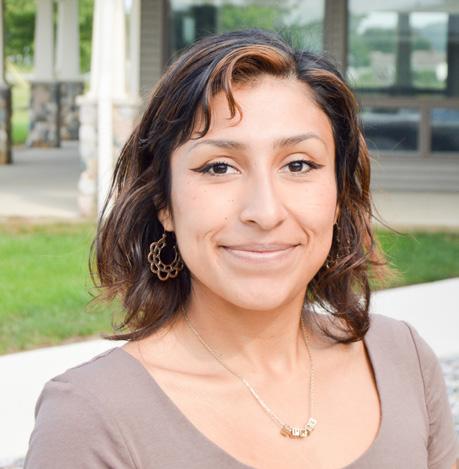
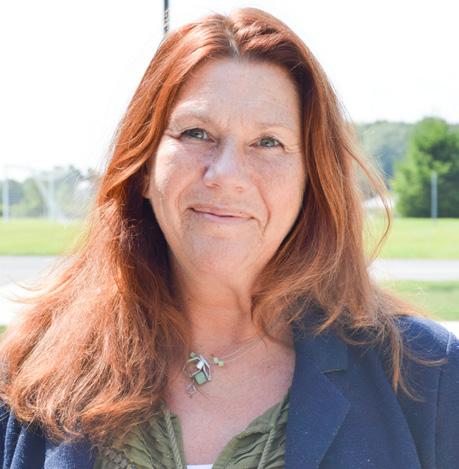
Honn Communications Director Bridget York Director of Curriculum and Student Services

Gena Grobarek Ecoliteracy Coordinator
OAK FARM MONTESSORI SCHOOL MISSION STATEMENT “PROVIDING A MONTESSORI ENVIRONMENT THAT INSPIRES STUDENTS TO REACH THEIR POTENTIAL THROUGH MEANIINGFUL WORK.”
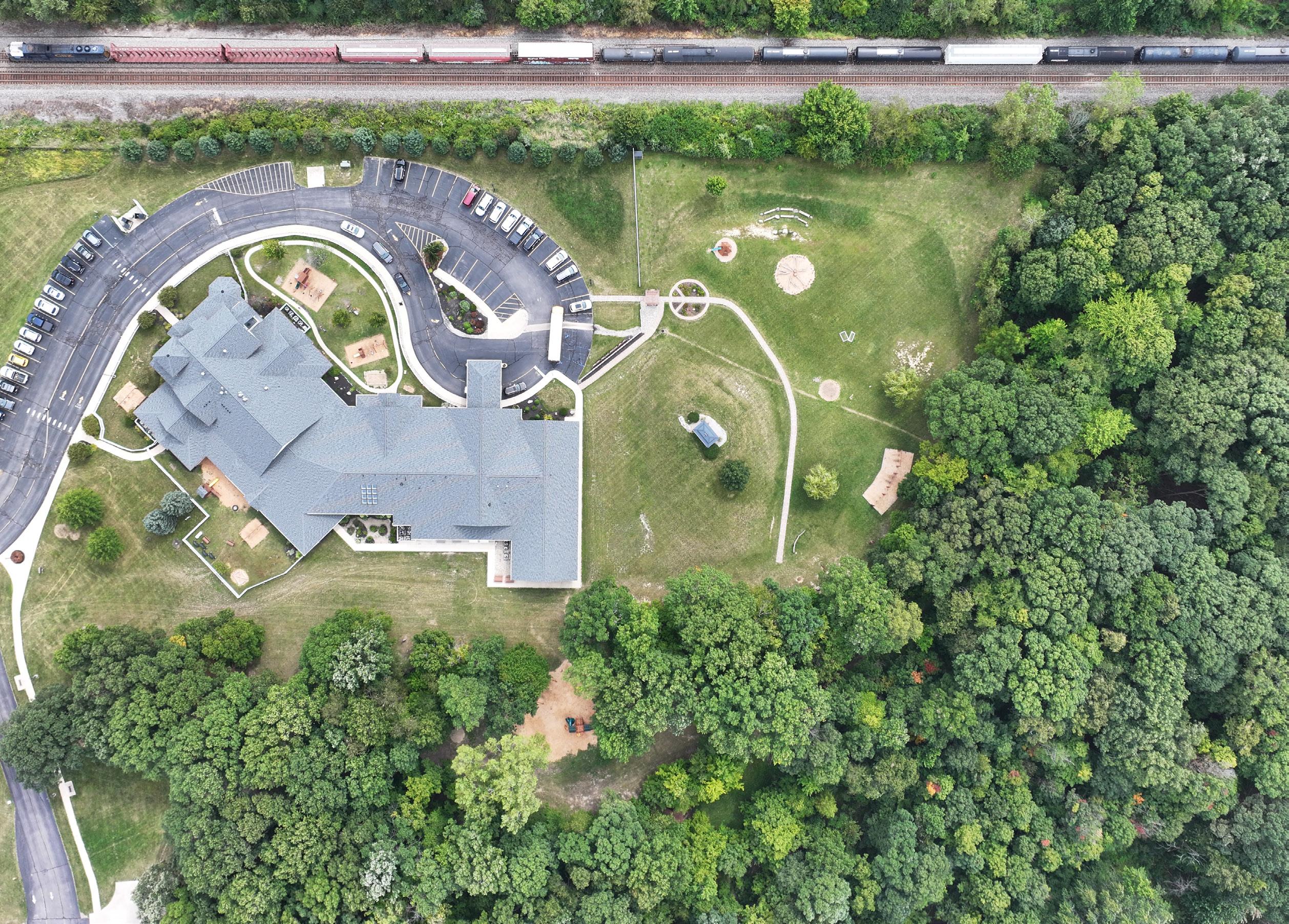


As we conclude Oak Farm Montessori School’s 25th anniversary year, we find ourselves reflecting on both our roots and our future. What began as a small seed of vision has grown into a thriving community of learners, spread across 150 acres with 89 dedicated faculty members and 450 students.
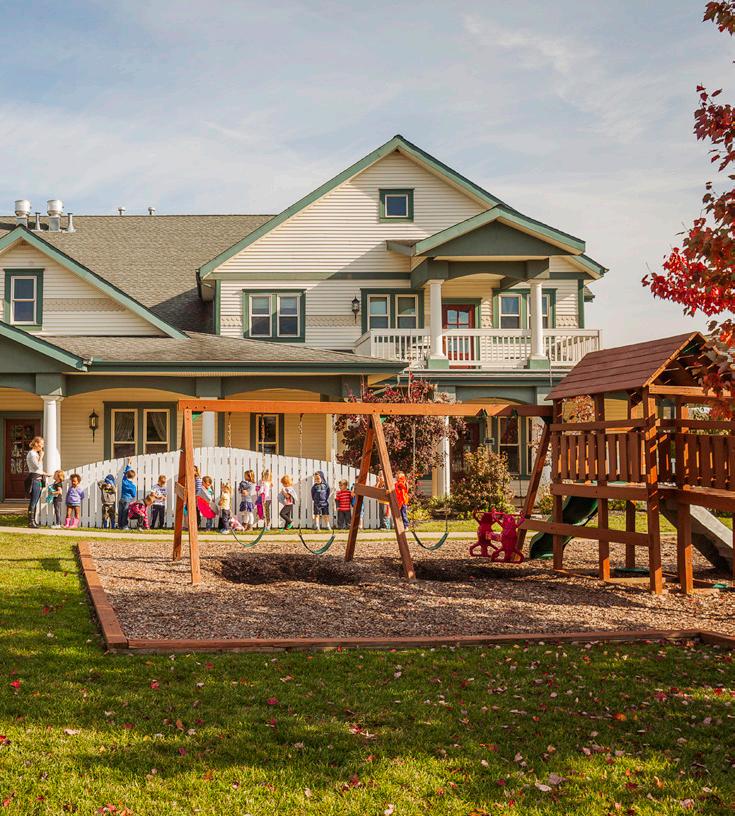
Since those early days, our campus as continued to expand steadily to meet the evolving needs of the students we serve. We have added environments for every stage of learning, including the Victorian Farmhouse, Elementary buildings, Middle School, High School, and the Eleentary Arts Building. We have created spaces to support the whole child such as, the Wellness Center and Sports Complex, home of 12 coed teams; designed to nurture both body and mind. Our barn is an opportunity for students to have a true Montessori ErdKinder experience, while our outdoor learning spaces speak to our deep commitment to connecting children with the natural world. And still, we continue to grow.
This expansion is both a gift and a responsibility; to remain true to the vision and values of our founder, Lorene Dekko Salsbery, her mission, “Providing a Montessori environment that inspires students to reach their potential through meaningful work,” has been our guiding light from the beginning. It is what allows us to stand today as the only Montessori school in the nation to offer a dual-accredited program serving infant through high school.
We are also deeply honored to celebrate faculty members who have been with us since the very beginning, living out the Montessori philosophy Lorene envisioned for this rural community in Northeast Indiana. Their devotion reminds us that while our campus has expanded and our programs have multiplied, our heart remains rooted in the same spirit of community with which Oak Farm Montessori began.
This issue of Illuminations is not simply a celebration of all we have built; it is a reflection on our origins and legacy. It is a moment to honor where we came from, and to remember that the same vision that lit our path 25 years ago continues to guide us toward the future, the next 25 years, and beyond.

Head of School
BY GEMSSY HONN, COMMUNICATIONS DIRECTOR
Although, the title of this chapter is “A Biography,” it is impossible to capture the resilient, kind, caring, and philanthropic person Lorene Dekko Salsbery was in one page. What follows is a brief portrait of her character, her vision, and the determination it took to create the microcosm that is Oak Farm Montessori School.
To those who knew her, one word often came to mind: trailblazer. From her determined foot stomp to her warm smile, Lorene was a woman who knew what she wanted Oak Farm Montessori to be, a place that provided authentic Montessori education in a corner of Indiana where she recognized the need for a strong sense of community and a lifelong love of learning.
Even as she battled cancer, Lorene worked tirelessly to set in place her vision and values for the school.
She encouraged faculty collaboration by asking teachers to write their own mission statements on sticky notes, then blending their words into the school’s first shared mission: “To provide a Montessori environment that inspires children to reach their potential through meaningful work.”
Lorene believed deeply that teachers should be trusted to lead, and she frequently reminded them not to “reinvent the wheel.” If something worked, it should be nurtured and sustained. Lorene was generous in ensuring her teachers had what they needed. She personally invested in training, materials, housing, and even food and transportation so that every staff member could pursue Montessori certification. She modeled the principles she believed in, setting the
tone for teachers and students alike: kindness, independence, and a love of learning.
She also had a vision for the school’s growth. Lorene created a strategic plan, envisioning a community of 250 students, and guided the school toward becoming one of the few Montessori institutions to serve children from infancy through high school. Dueal-accreditation came swiftly in 2011, a testament to her careful planning and leadership.
Beyond logistics, Lorene wove community into the fabric of Oak Farm Montessori. She brought traditions such as Fall Festival, where baked goods, artwork, and the joy of gathering together raised both funds and spirits. She believed in connecting with nature and encouraged ecoliteracy, agriculture, and outdoor education. Even her parting gifts to colleagues, thoughtful items from her travels, a book on trees for a dear friend, reflected her love of people and the earth.
Though her time was cut short, Lorene’s big heart and steadfast vision ensured her legacy continues to grow. She did not believe in an education system that taught from the perspective of adults; she believed in child-centered learning, and she gave Oak Farm Montessori School its enduring identity.
BY BRIDGET YORK, DIRECTOR OF CURRICULUM & STUDENT SERVICES
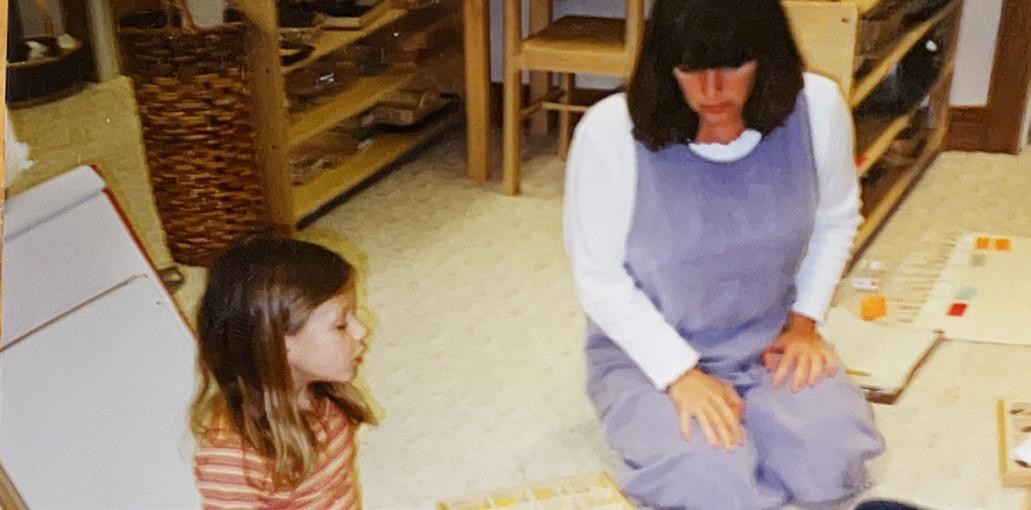
The summer of 1996 was a pivotal time in my life: I discovered my love for Montessori education and met Lorene, who was then a Montessori parent of two young girls. Her passion for providing choice and child-centered education inspired me to become a Montessorian, which has impacted every aspect of my life. I found a philosophy that matched my personal beliefs: showing respect to all living things, restoring my environment, and meeting people where they are with the hope of positive progress. These core principles of Montessori education started at OFMS in January 2000 and continue on our now 150+ acre campus every day.
In the Fall of 1999, I met Lorene again. She planned to open a new Montessori school in Avilla, IN, the following January. We collaborated to organize local Montessori schools and connected with other Northeast Indiana Montessori programs to celebrate Montessori Education Week, a time dedicated to highlighting Montessori philosophy and raising awareness of its unique learning benefits. I was impressed by Lorene’s innovative leadership as we planned urban and rural Montessori celebrations for February 2000 at FWCS Montessori and Oak Farm Montessori, along with funding Montessori education awareness billboards. It was with great delight that I brought 36 FWCS Montessori middle school students to OFMS in February 2000 to interact with the 9 students in what is now the Red Barns section of campus. Bundled against the prairie wind, we lit candles and sang together– a moment I treasure that ties me deeply to these 25 years of OFMS history.
From the first day of OFMS, Lorene celebrated the Montessori core principles that still live
on our campus. The foundation of her legacy, and the guiding principle in all we do each day, is the simple yet profound act of respecting the child. Every student on our campus is viewed through the lens of being capable and independent learners. OFMS believes in the education of the whole child, which focuses not only on academics but also on social, emotional, physical, and moral development.
We see this demonstrated through the peace corners with calming tools and breathing strategies, or the lessons on conflict resolution from the Peace Rose in Primary to the Awareness Wheel in middle school.
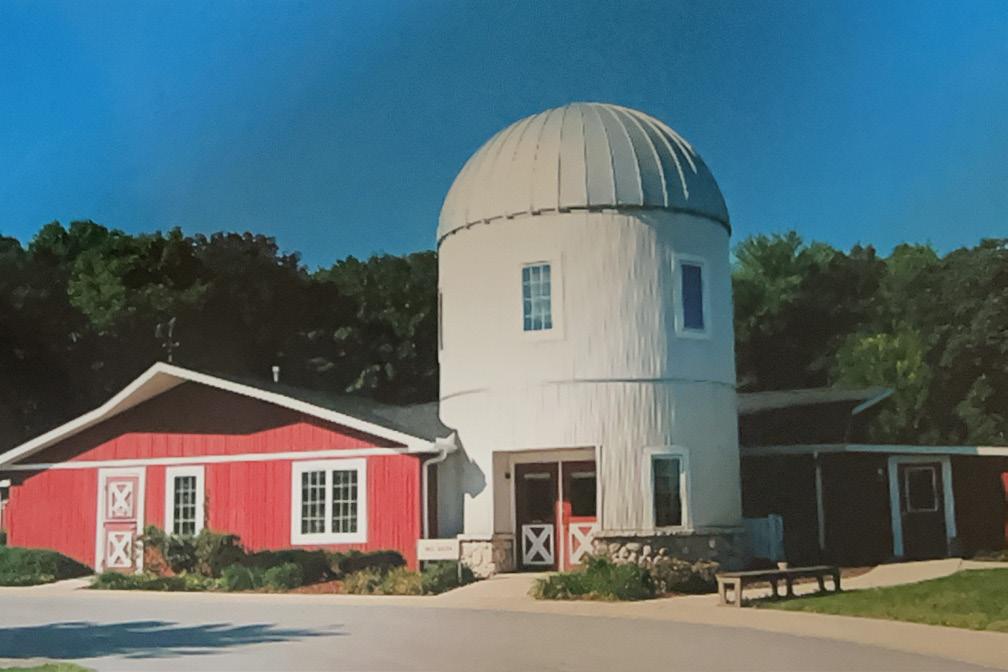
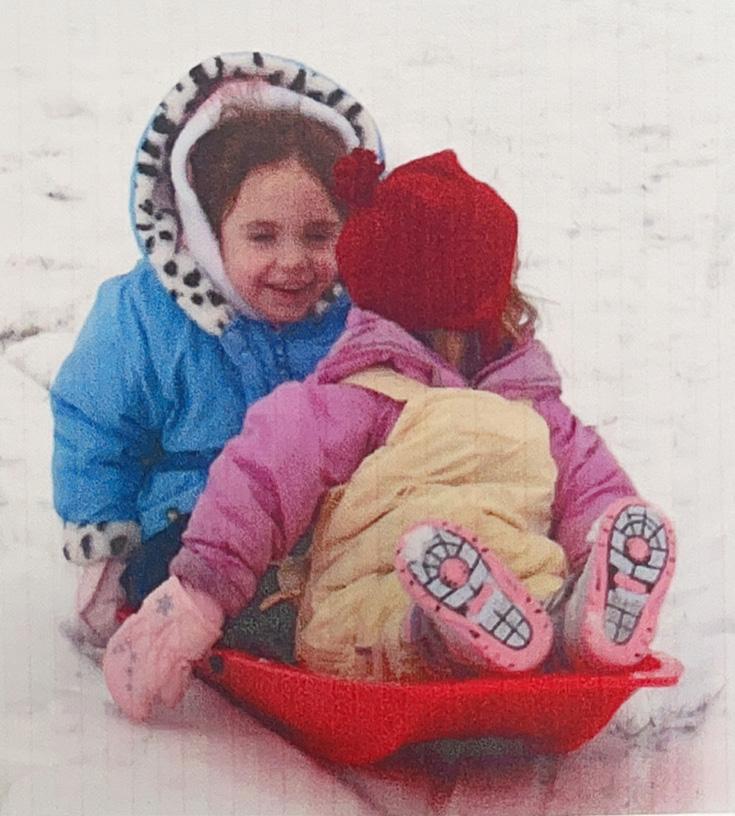
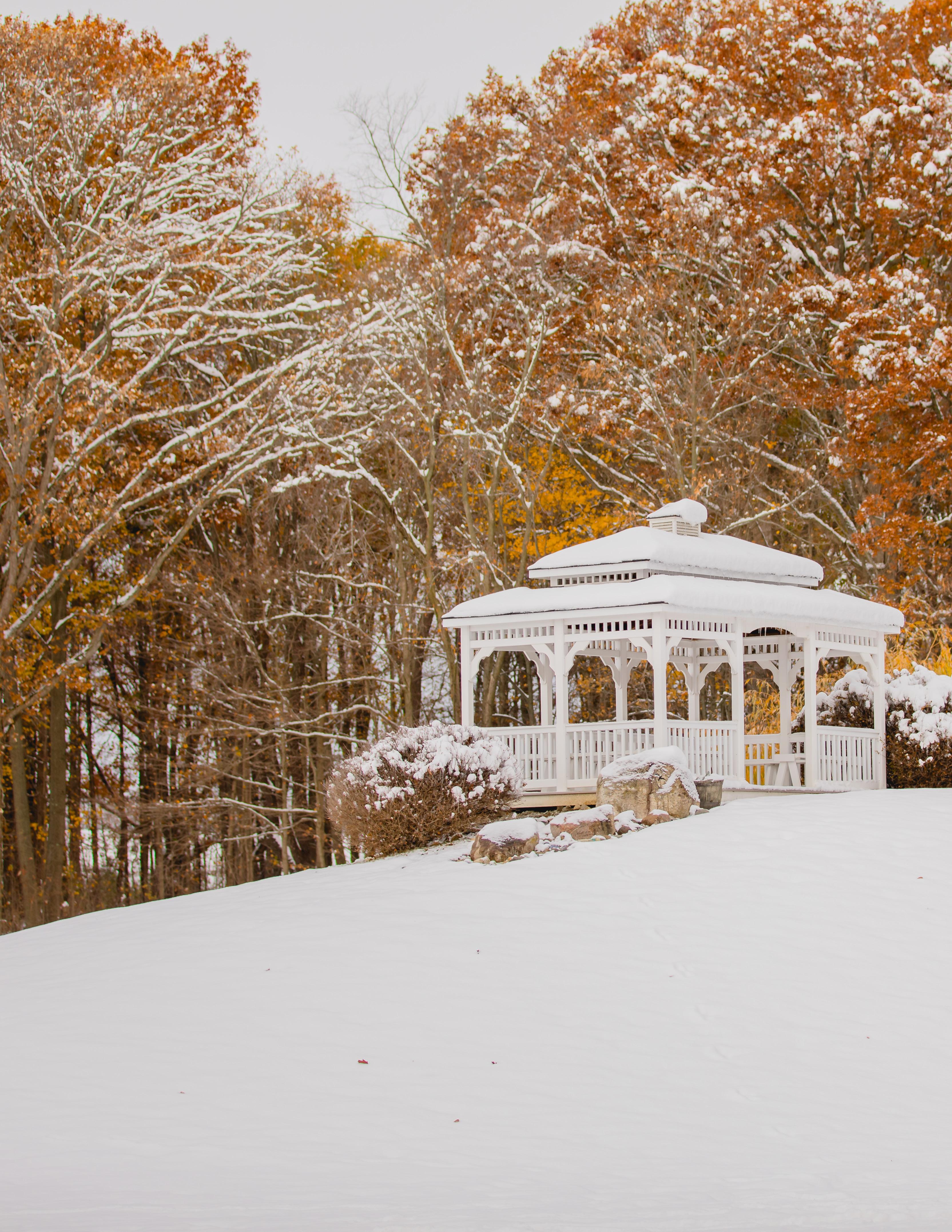
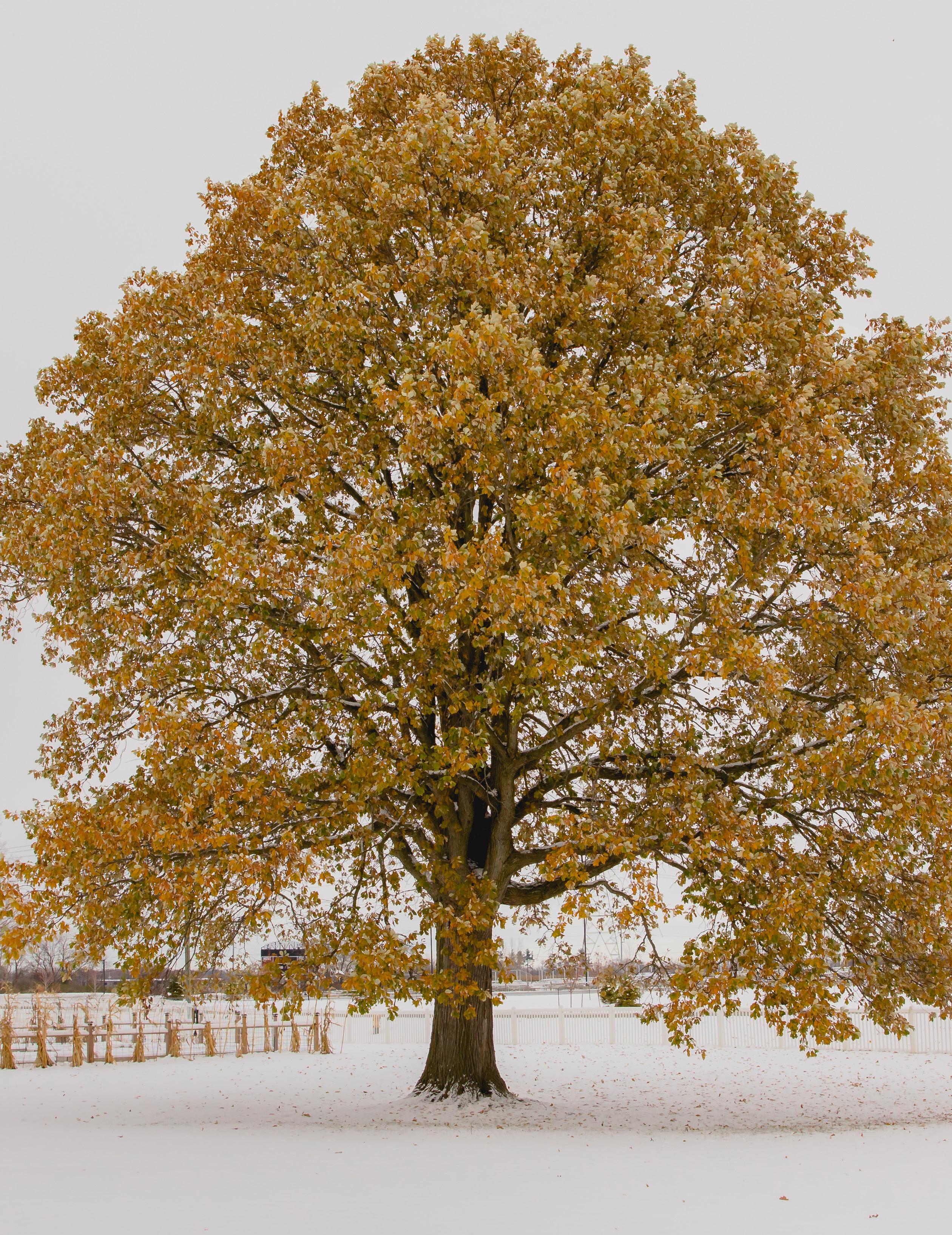
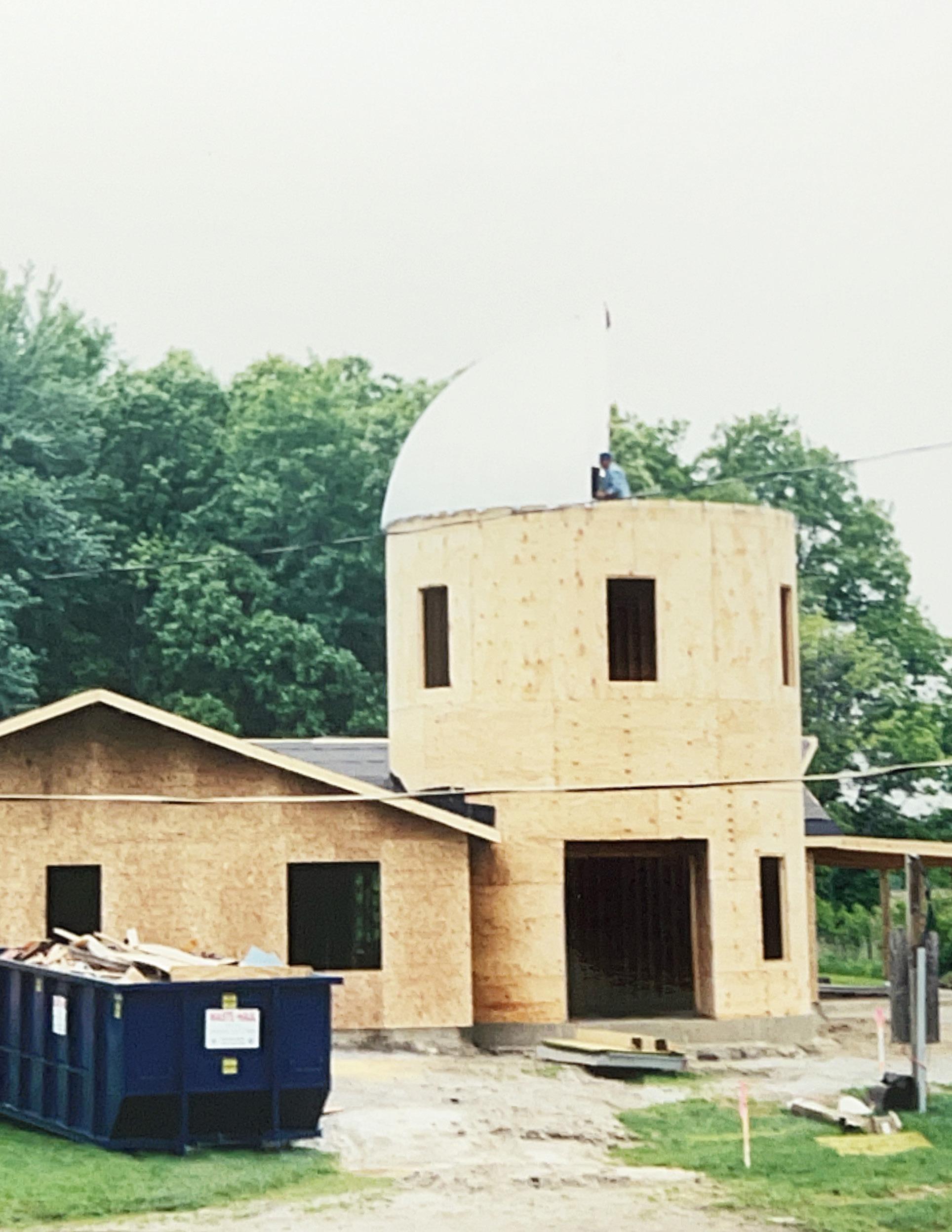
{Background Image} Oak Farm Montessori’s first snow fall of Winter 2025 in the middle of fall {Above Image} Red Barn South in 2002, shortly after finishing construction
“It is interesting to see that where life is simple and natural and where children participate in the adult’s life, they are calm and happy.”
Maria Montessori
The 1946 London Lectures, p.153
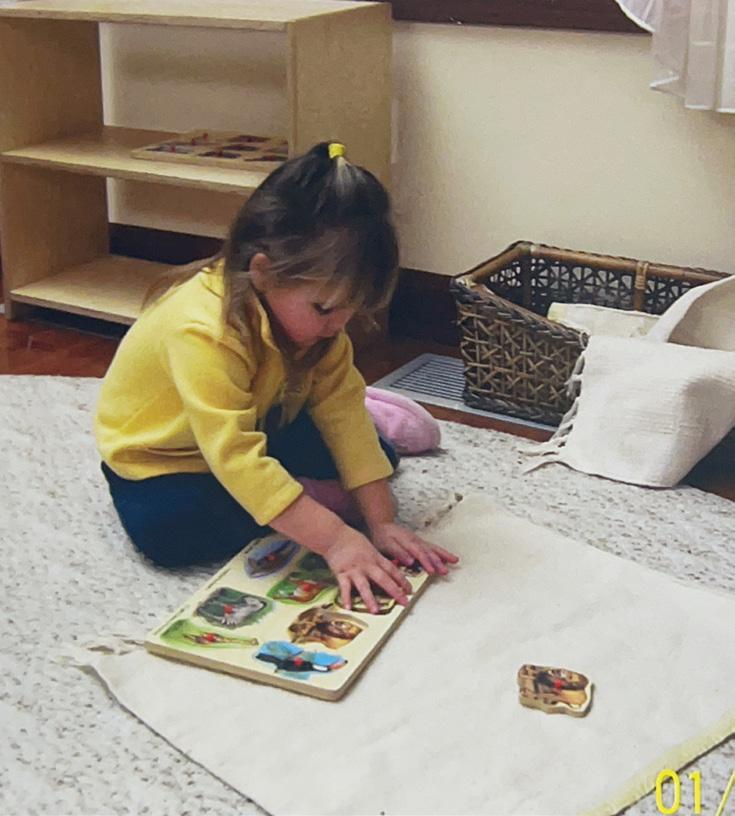
Since the early years, we have respected that children naturally absorb knowledge from their environment. Each of our environments is intentionally designed to support the unique needs of every developmental place and the sensitive periods within them. Each building on our campus has a unique progressive design that follows the history of American architecture from the Victorian House to the Mid-Century Modern Bike Shop. Our classrooms are intentionally designed to be beautiful, orderly, accessible, and scaled to the students’ size. Whether it is a bathroom or a table, it is intended to allow students to say, “I can do it myself!”
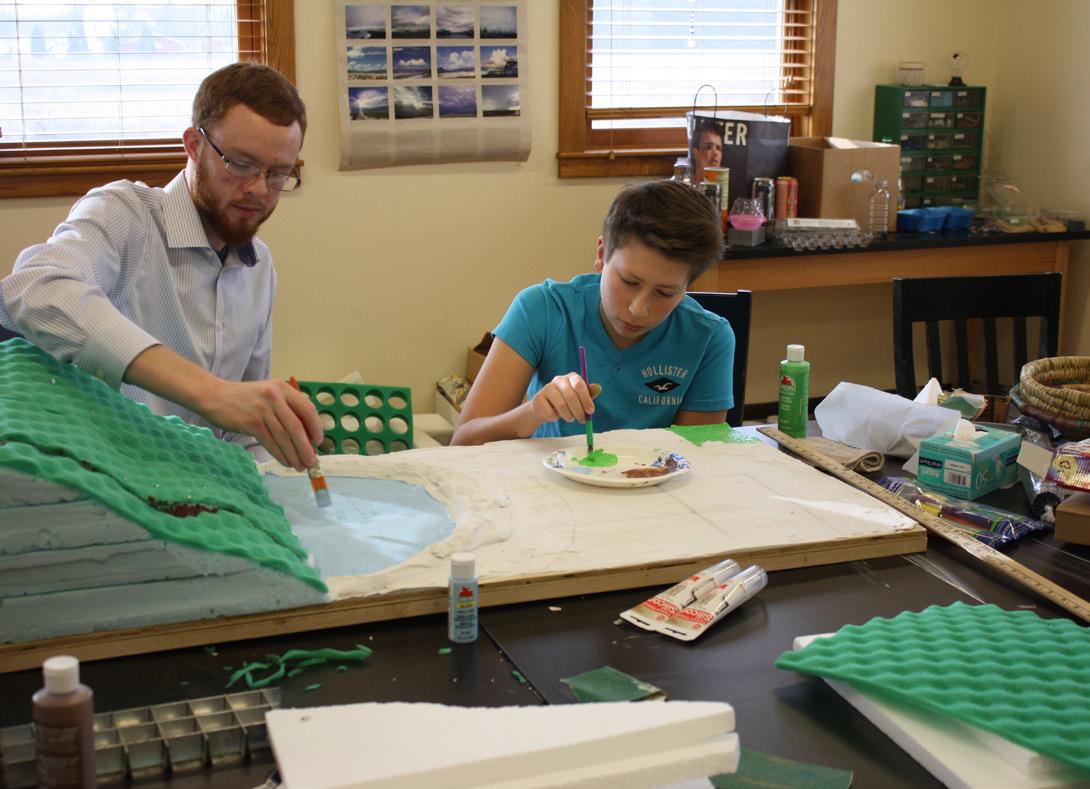
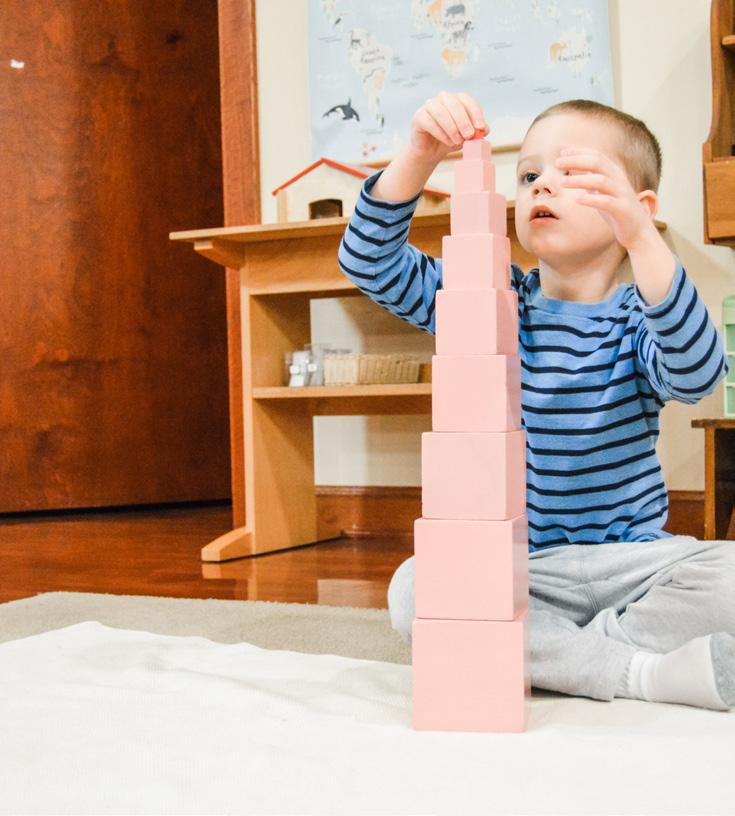
Our students from infancy through Upper Elementary use hands-on Montessori materials, self-correcting, and sequenced to build independence and mastery. As we have progressed to add the Middle School in 2005 and the High School in 2017, these concepts remain focused on the bridge of concrete to abstract thinking, including shelf work that students complete to gain mastery of concepts. At every level, the work engages all the senses: early childhood students explore the pink tower and brown stair, elementary students observe with all their senses in the woods at their sit spots, Middle School students use brains and brawn to make sure the cows are out of the pens to clean up the manure, and high school, Oak Leaf Cafe, students learn all the skills to pour the perfect latte.
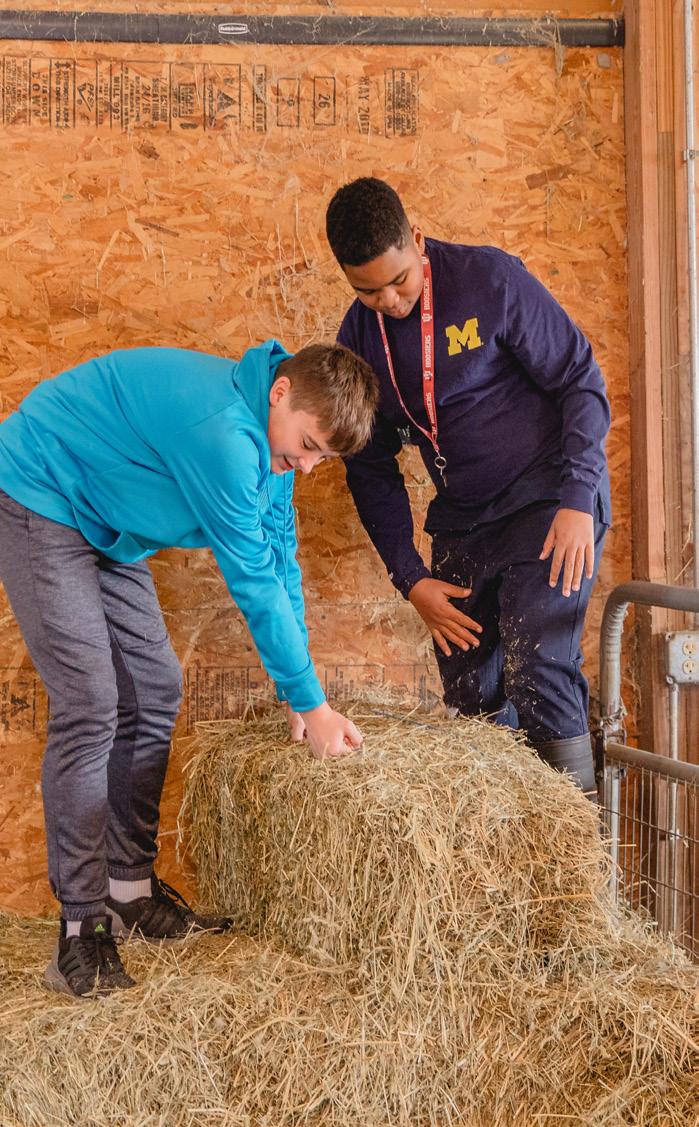
Our teachers are guides who observe, prepare the environment, and gently direct students to lessons and work. At OFMS, our teachers are masters of trust–recognizing each child’s individuality, supporting them at their own
pace, and respecting the choices that shape their learning. As I witnessed in a classroom this week, children needed to finish eating a snack and cleaning up some work as others came to the community meeting. The teachers respected the students’ choice in what needed to be done, and the next thing I saw was that they joined the group after finishing their independent tasks. This is an example of “Freedom within Limits” that illustrates how our teachers foster self-discipline, responsibility, and intrinsic motivation. But, it is not just the teachers that share knowledge— younger students learn from older peers who give lessons and serve as models. Multi-age classrooms promote collaboration, leadership, and empathy. It is so beautiful to hear a thirdyear student tell a second-year: “Yes—I had to master checkerboard multiplication before I could do test tube division too!”
From the first time I stepped onto the OFMS campus in 2000 to this very day, the commitment to Montessori principles is evident in how our community is living our mission statement. As we reflect on OFMS’s journey, sharing the philosophy of Montessori and the core principles that remain at the heart of our work, we celebrate the legacy and leadership of Lorene’s vision for our school community. Montessori sees education as preparation for life, not just school, and this foundational belief continues to guide us as we nurture each student’s potential and foster a lifelong love of learning that extends beyond our campus.
BRADTMILLER, NEFY HATHAWAY,
In the beginning, Oak Farm Montessori didn’t look like a school at all. The toddler room was tucked into the living room of the Green Farmhouse, naps were in the bedroom, and the primary classroom took shape in the Red Barn. “It was a gorgeous home turned into a Montessori school,” Nefy Hathaway remembers. “It felt homelike, intimate, and that set the tone for everything that came after.”
The staff was small, just ten of them, but the energy was enormous. “We talked Montessori all the time. During the day, after school, on the weekends… we couldn’t help ourselves. Everything was new, everything was exciting.” Lorene was everywhere in those days. “She had her hands in everything, but she wasn’t overbearing. She trusted us. If she asked, ‘Can you do this?’ and you said, ‘I don’t know,’ she didn’t flinch. She just said, ‘Okay!’ and helped you figure it out. She made you feel capable.”
Joanne Stutz remembers Lorene’s determination vividly: “Joanne, you MUST understand how important it is that this school (it didn’t even have a name yet) be established under the strictest guidelines of Maria Montessori’s philosophy,” Lorene told her. “It must grow into a PREMIERE Montessori school. We must find good people who believe the philosophy, and we must retain those people. If we do this right from the beginning, one day it could even be a training ground.”
Those words stayed with Joanne every day she worked at Oak Farm Montessori. She also recalls the joy of watching the children. “It was so gratifying to see infants and toddlers begin their learning experiences and grow in aware-
ness day by day. Preschoolers would come in nervous, unsure, and then blossom, making new discoveries about themselves and their environment. And oh, the pride when those preschoolers prepared to move up to elementary and become ‘the big kids.’ Those memories, I can still feel today.”
The name “Oak Farm” came from the huge oak tree that stood by the original farmhouse. “It was a no-brainer,” Joanne says. “It had to be Oak Farm.” For the first few years, the word “Montessori” wasn’t included in the name. “There were so many questions from people in the community about what Montessori was. It was suggested we leave it out until the school was established. Later, of course, Montessori was added.”
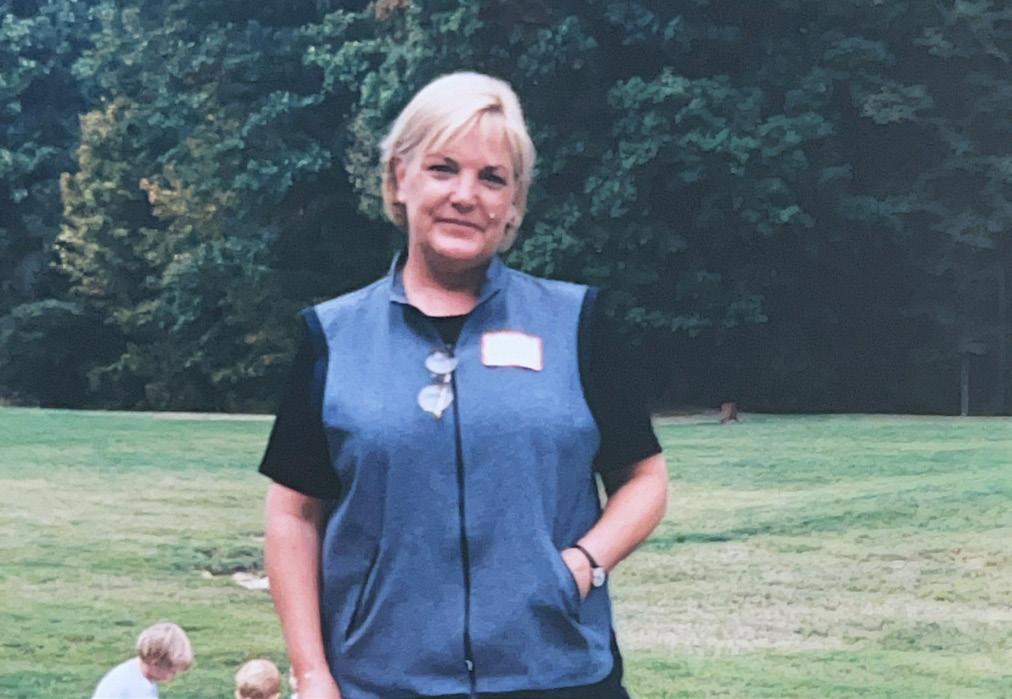

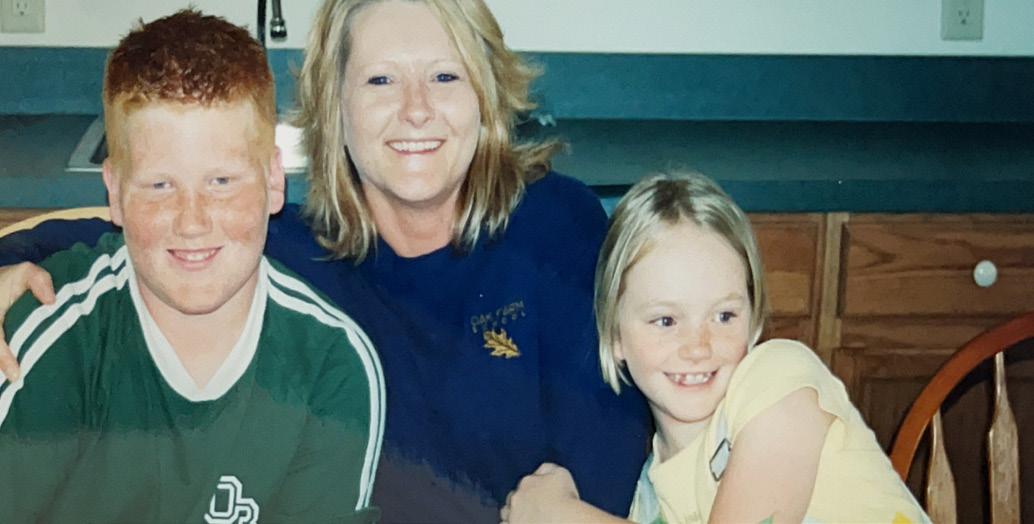
Stories from those early years capture the excitement and laughter that defined the work. One favorite is about the Great Lesson: The Long Black Line, representing the preparation of humans. As Lorene and Kim Green unrolled it to show the timeline of human history, the students were so eager that they chased it nearly to the train tracks. “Lorene and I ran after them,” Kim recalls. “She looked just like one of the kids; she was so short, running with that big smile on her face.”
There were goats and chickens near the barn, too. Kim laughs when she tells it: “I was terrified of those goats. Lorene would send me in there anyway and say, ‘Stand your ground!’ That little pen was the seed of our farm program. It was messy and hilarious and very Oak Farm.”
Lorene didn’t just Montessori the students, she Montessori’d everyone. “One time I left tools out by the garden,” Kim admits. “Lorene got on the walkie and asked, ‘Who left the tools out?’ I said it was me, and she didn’t scold me, she just said, ‘What you get out, you put back. That’s the rule.’ It was the same expectation we gave the kids. Restore your environment. She lived it right alongside us.”
“Her pink sticky notes became legendary. They were everywhere, bright little reminders and tasks from Lorene. They were her trademark. You’d never get through a day without one showing up.”
Kim Green, Primary P.E. Teacher
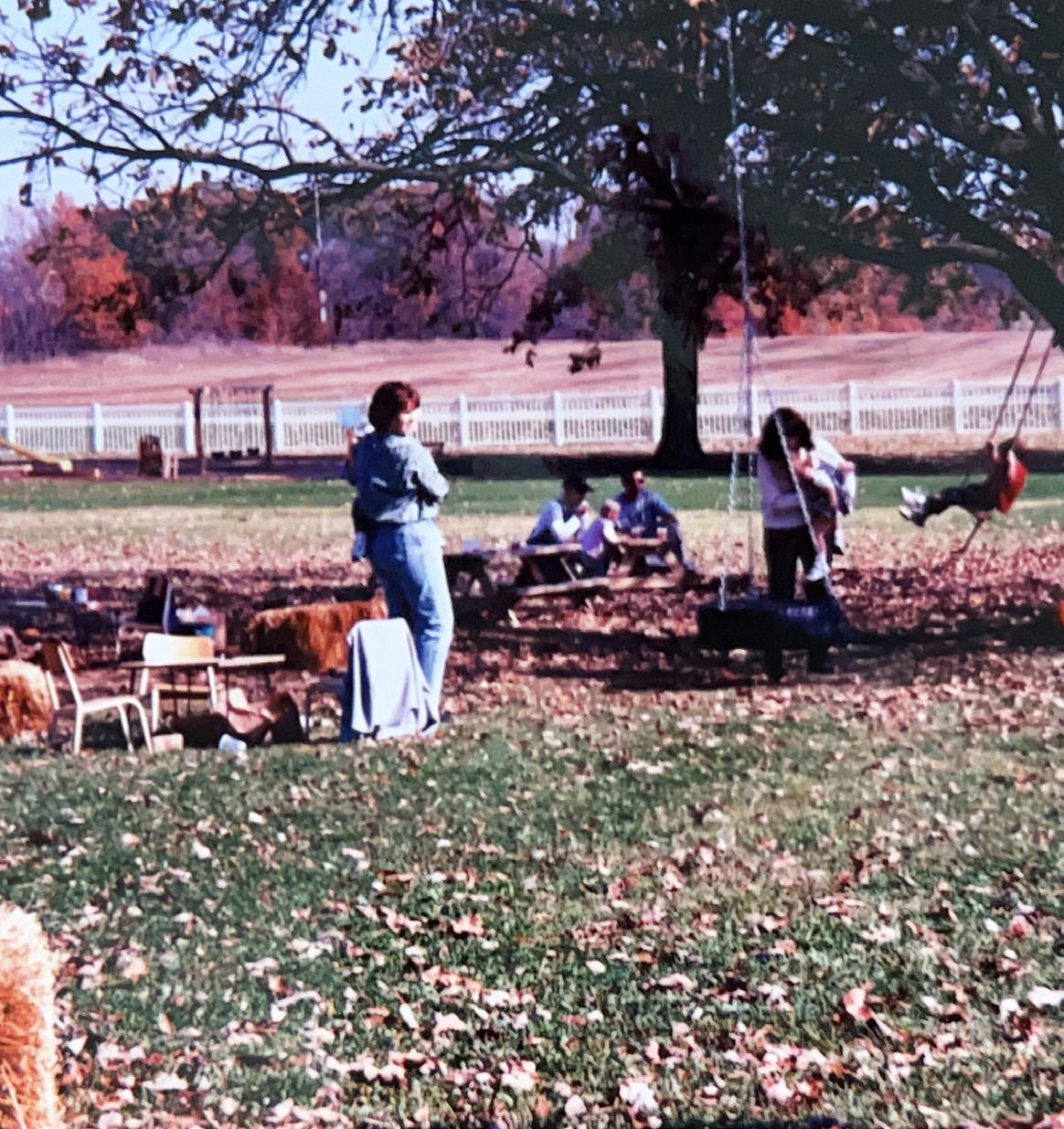
Fall Festival was another hallmark. In those days, it was baked goods, student art, and tables from local nonprofits. “It was the big party in the woods,” Nancy Bradtmiller recalls. “The kids played, parents gathered, and the money
went right back into classrooms. It was simple, but it was pure community.”
There was laughter, too, at the way Lorene handled parents. “She told us once, ‘If you let parents hold your hand, they’ll never let go. Tell them: you need to do it on your own.’ She set the tone. Respect for the child, respect for the family, but also independence. That was Lorene.”
And always, there was generosity. “She covered everything: training, food, housing, transportation. She wanted us Montessori-certified, and she made it happen. She even brought back gifts from her travels for each of us before she passed.”
The teachers who were there at the start remember the exhaustion of those long days, school open from six to six, every detail needing attention, but they remember more vividly the joy. “We were a knit community. Everyone helped everyone. Lorene was right there with us, working, laughing, setting the vision. She modeled Montessori in everything she did.”
BY GEMSSY HONN, COMMUNICATIONS DIRECTOR
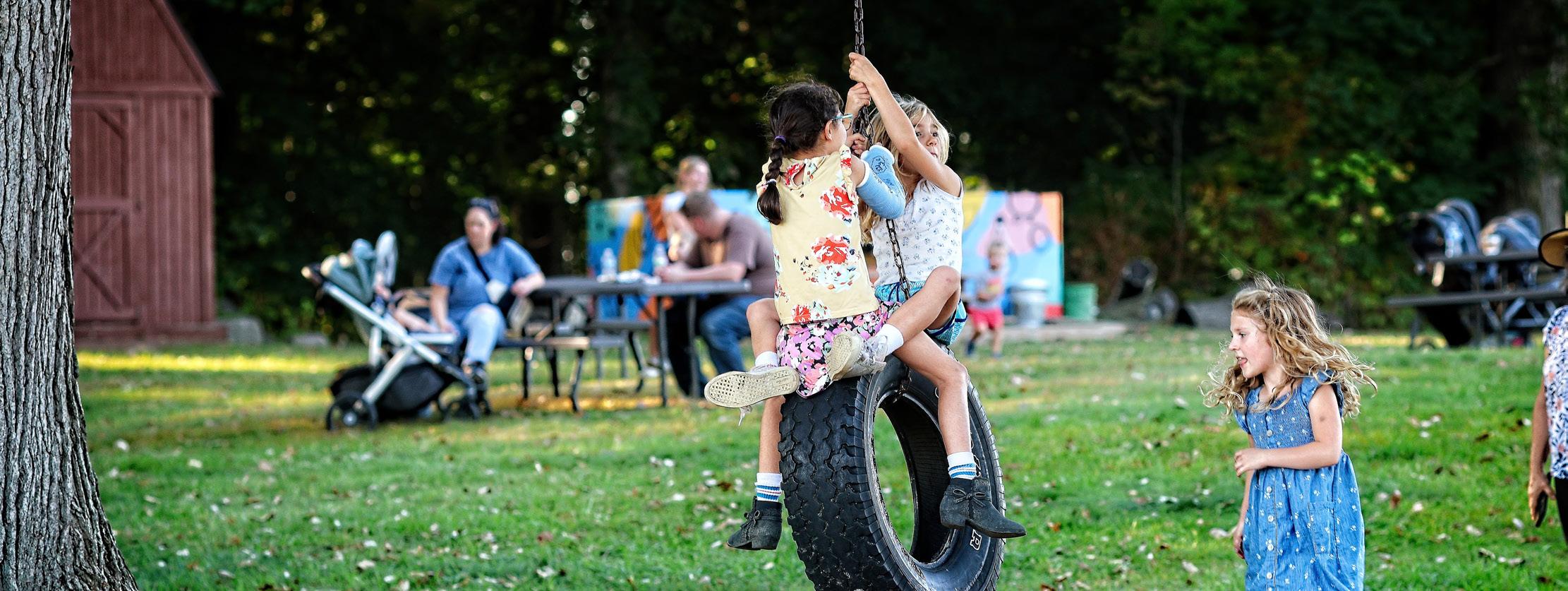
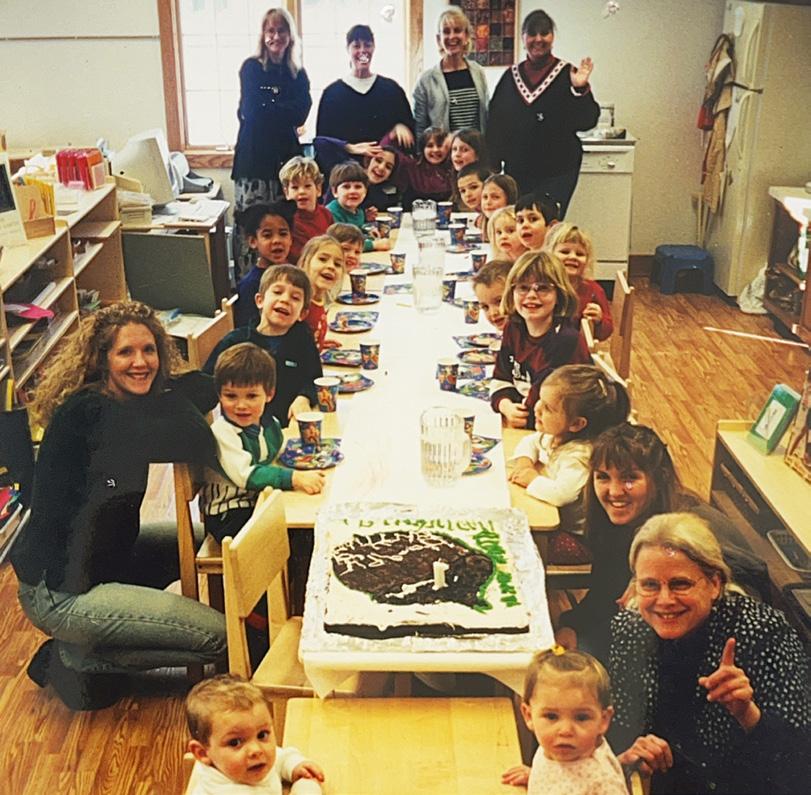
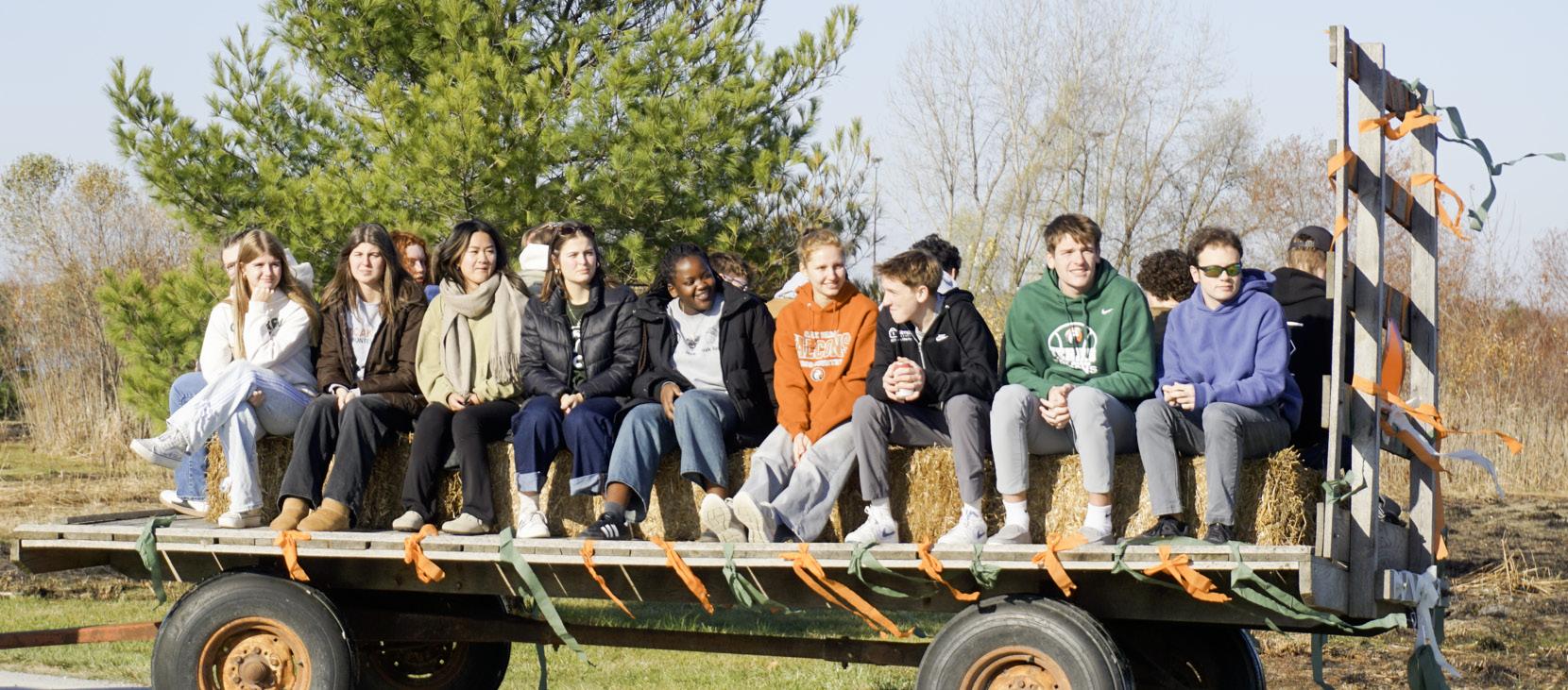
This year’s Fall Festival marked a milestone in Oak Farm Montessori’s history, the 25th celebration of a tradition rooted in Lorene’s original vision of community building and bringing our mission to life beyond the classroom. What began as a small gathering has grown into one of our most cherished annual events, and this year carried special significance with the opening of a time capsule first buried in 2010.
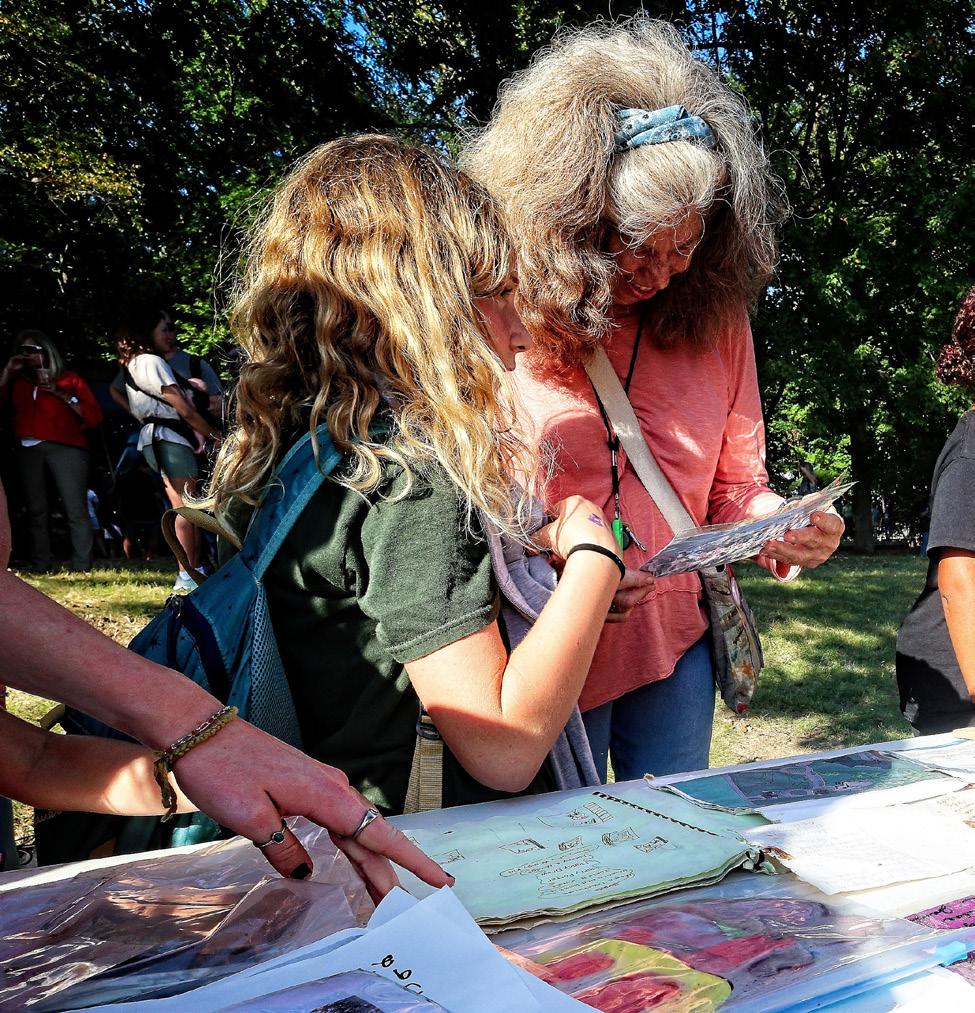
Each fall, Oak Farm Montessori comes alive as families, students, and staff gather to celebrate the season and one another. The Fall Festival is more than an event; it’s a joyful expression of our shared values, creativity, and Montessori spirit. From face painting and pumpkin bowling to seed planting and nature scavenger hunts, every program level contributes meaningful, hands-on experiences that reflect learning in action. The Fall Festival also marks the beginning of our Gala season, including the beloved “Wish Table,” which gives families a fun and meaningful way to support classrooms across campus directly.
Our Middle School farm program sold wool-wrapped soaps, pies, and created a hay bale maze with a petting zoo, featuring our Nubian Dwarf goats. Meanwhile, High School students proudly showcased innovative work from the bike shop and InnoLab. The Oak Leaf Cafe served desserts and hot beverages, while AG Pathway sold hot dogs, pork burgers, and cookies. Everywhere you looked, there was energy, pride, and a deep sense of connection, hallmarks of the OFMS community.
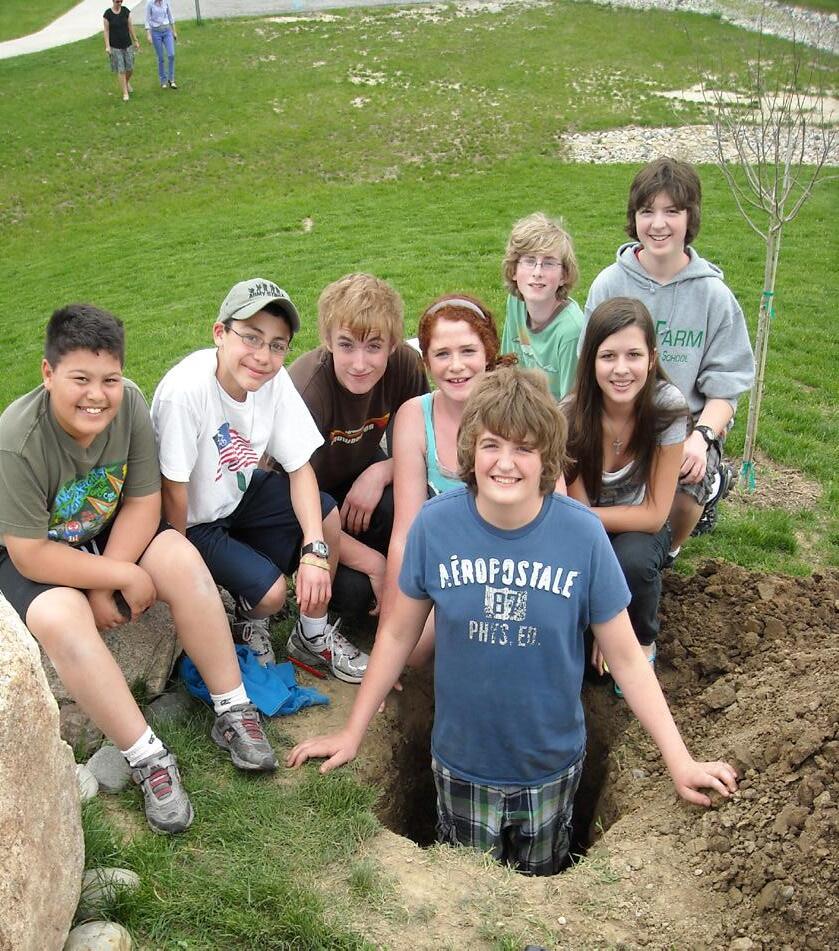
This year’s festival held even greater meaning as we celebrated 25 years of Oak Farm Montessori. A highlight of the day was the opening of the 2010 time capsule, a powerful moment that connected our past to our present while inspiring our future. It was a time for reflection wrapped in celebration, honoring how far we’ve come and the journey still ahead. A special group of students played a key role in the time capsule ceremony, from unearthing the original capsule to presenting a new one at the 2025 Fall Festival. They were joined by alumni who were enrolled at the time of the original burial, bridging generations of the Oak Farm Montessori community. Current students shared reflections during the ceremony:
Claire Brittenhouse reflected, “I’ve been here since I was three. Oak Farm Montessori began in 2000, which was also the year of the first Fall Festival. In 2010, there were just 165 students, from infants through 8th grade. The time capsule was planted with help from Oak Farm’s founding family, Erica Dekko, Lorene’s mom, Erlene, and Lorene’s daughters, Olivia and Sophia, connecting our beginnings to our future.”
Cooper Lowe shared, “Back in 2010, when Oak Farm had only 165 students and Judith Cunningham was Head of School, our community planted a time capsule. Earlier this week, the 8th years who have been at Oak Farm since Primary dug it up. Today, we get to open it together and see what was left behind for us.”

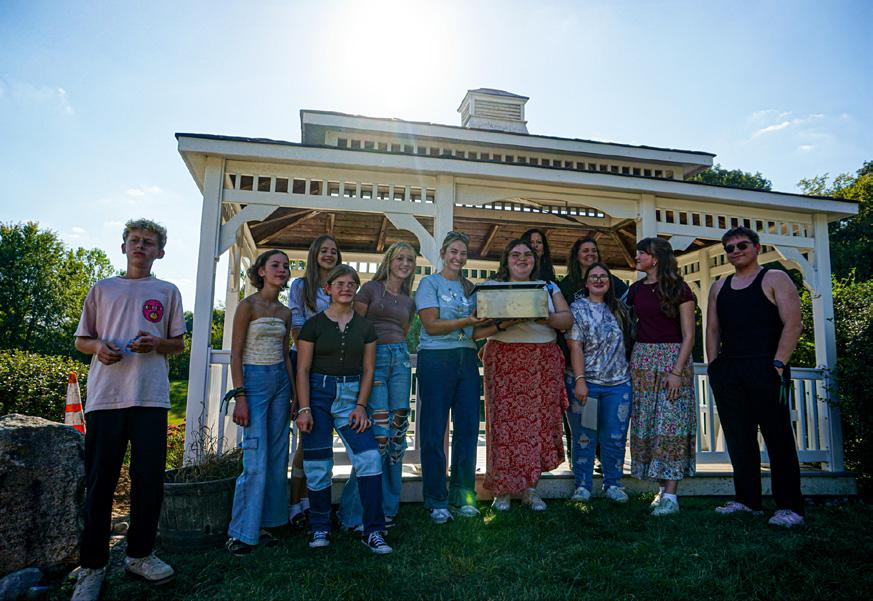
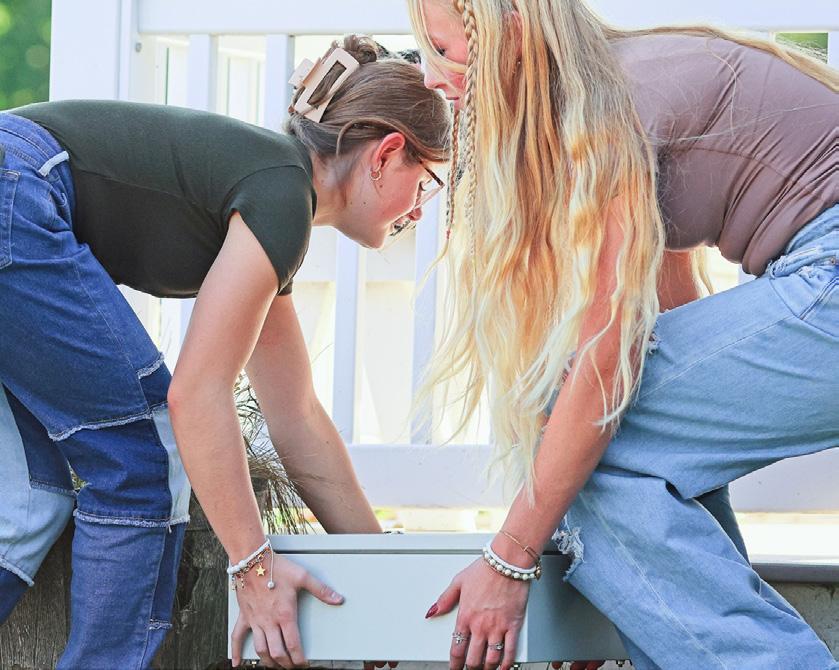
Prestley Matney added, “Oak Farm has grown so much since 2010. Today, we have 450 students, a high school, a sports complex, micro-economies, pathways, and a theater department, along with more student services and support than ever before.”
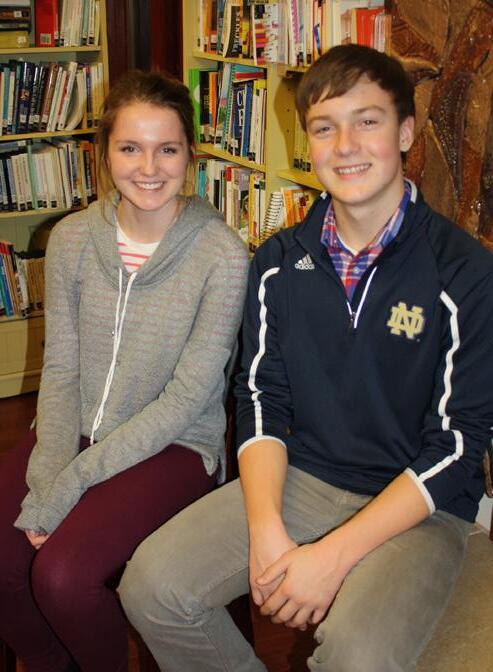
BY JORDAN AXEL-FIEDLER (‘13), BEN AXEL (‘15), AND ELIJAH SHANTON (‘13)
AXEL-FIEDLER (‘23) I started at Oak Farm in September of 2000 when I was 18 months old, and I attended through 8th grade. At the time, there wasn’t a high school, so after graduation, I went on to East Noble High School and later to the University of Alabama.
Of course, I don’t remember much from 2000–2003 because I was so young. But I do remember the original gray animal barn (now the parking lot and compost area) and feeding the goats, Hillary and Hannah. The treehouse in the woods was another memorable addition to campus. Beyond the physical landmarks, what really stuck with me was the warm, inviting environment — no matter which building we were in. In Lower Elementary, one of the office administrators had her office in the silo of the Red Barn, and I loved visiting her just to chat. I also loved stopping in the kitchen to see Jill.
If I could, I’d ask my 6-year-old self to describe Oak Farm. The older I get, the more I appreciate the experience. Because I started so young, it wasn’t until Upper Elementary that I realized my school was “different.” I’d love to hear how little Jordan would have put it into words!
The early days were special; smaller numbers meant more room for spontaneity. As the school grew, it felt exciting to be part of so many firsts. For those who are newer and hear stories about the “old days,” know this: what made those times
meaningful is still here, and we’re adding new layers to it every day. The best days aren’t behind us; they’re unfolding right now, together. That’s the gift of being part of this community.

One of the things that made our community unique was the strong sense of connection between students and faculty. Sure, there were smaller friend groups at recess, but when it mattered, we came together. That bond showed up the most on our school trips.

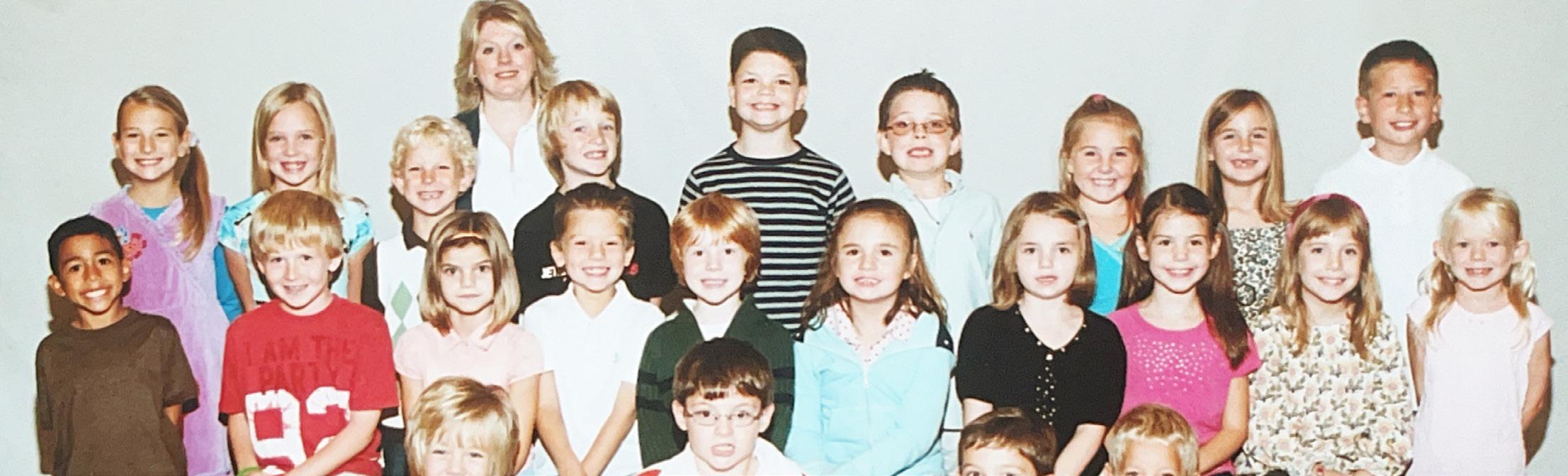
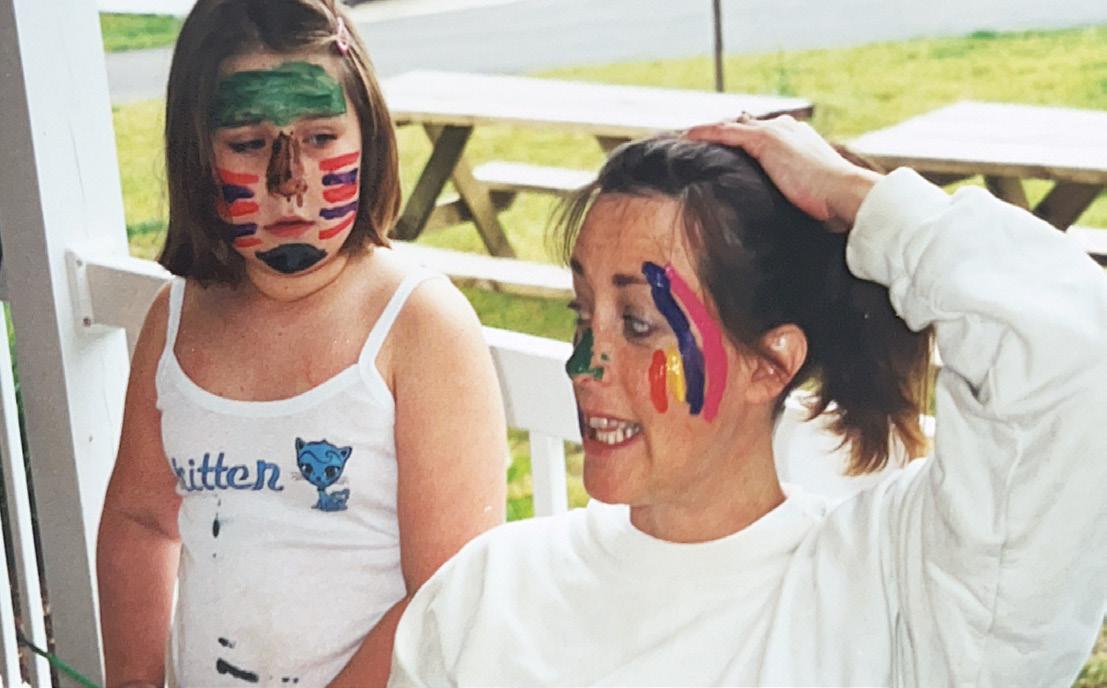
I’ll never forget performing skits on the middle school trip and laughing until my cheeks hurt. In a season of life when insecurity and judgment can weigh heavily, I felt free to be real. Looking back at those pictures, I see a group of adolescents who were silly, wholehearted, and completely at ease with one another.
It feels full circle to be back here as a faculty member. I joked that some current faculty were still listed as my emergency contacts in FACTS, because they used to babysit me! Just the other day, I stepped into Kim Green’s office and was reminded of my guitar lessons with Nefy. Every room on this campus holds beautiful memories.
I can still picture myself singing Skidamarink A Dink A Dink with Nancy Hathaway and Beth Hagar in Primary. Participating in the messy games, fishing marbles out of spaghetti with our feet, the “restaurants,” and the drumming circle. On the first day of school this year, I overheard Nancy’s daughter, Nefy, singing that same song to the toddlers. It brought tears to my eyes, such a vivid reminder of continuity.
I don’t have many clear memories of Lorene since I was so young, but I do remember her giving lessons in Lower Elementary and sharing about her travels to Australia. That stuck with me because my Uncle Denny lived there too. Having Lorene as a role model shaped me; she was a big-picture thinker and a dreamer, just like I try to be.
Her words in the Vision and Values book inspire me to this day: “Most importantly, I think I have served God and may He continue to bless this school.”
Montessori lessons still stick with me. Sentence Analysis work, I can still name the shapes and colors that build a sentence. To this day, I picture a big red circle whenever I think about verbs. Oak Farm gave me two lifelong gifts: confidence in problem-solving and critical thinking, and a habit of turning off the lights whenever I leave a room, thanks to Pat Cole’s sustainability class.
When I think of Oak Farm’s early years, the feeling that comes to mind is gratitude. One of the things I’m proudest of is contributing to the time capsule in 2010 as a student, and then, during my first year back as a staff member, being there to open it. That moment tied everything together.
“Clearly, we have a social duty towards this future man, this man who exists as a silhouette around the child, a duty towards this man of tomorrow. Perhaps a great future leader or a great genius is with us and his power will come from the power of the child he is today. This is the vision which we must have.”
Maria Montessori
The 1946 London Lectures, p.140
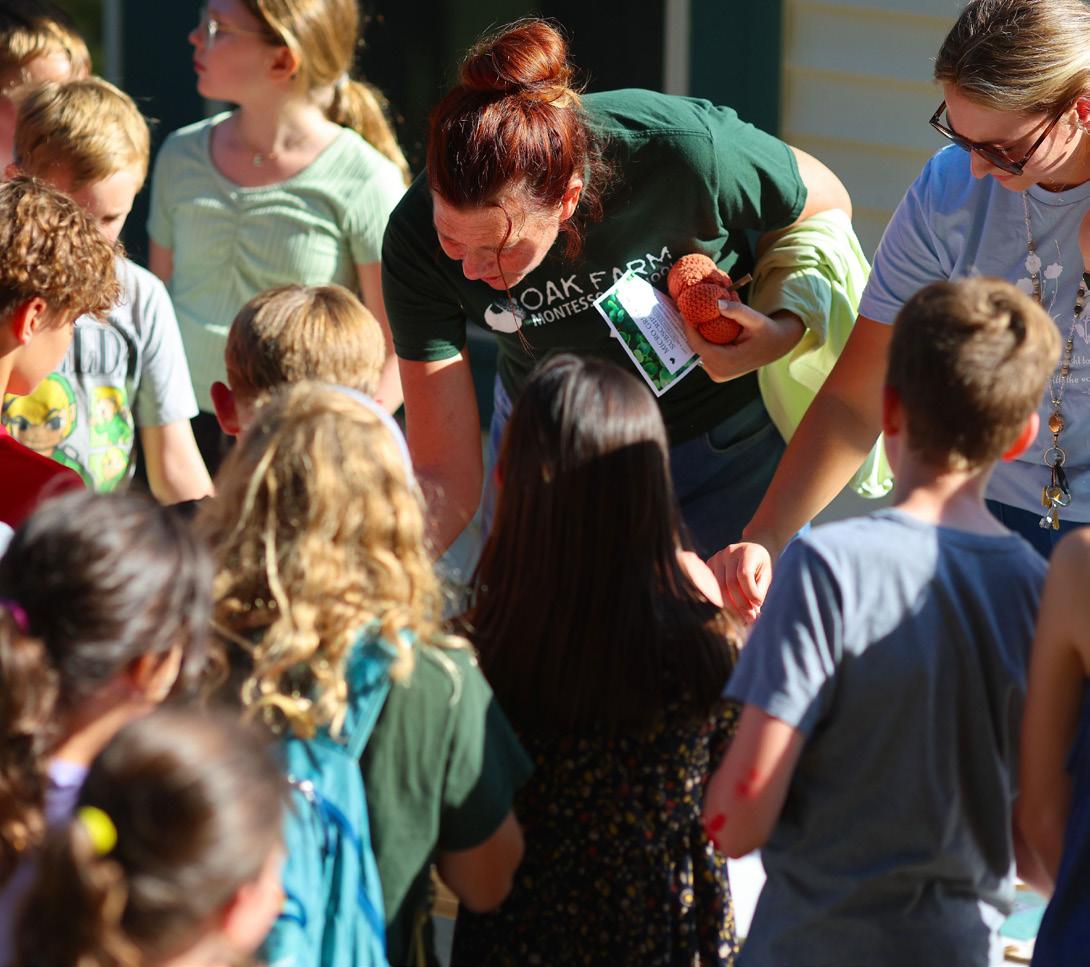
Bridget York and Jordan Axel-Fiedler presenting the time capsule items at Fall Festival (2025)
AXEL (‘15) I attended Oak Farm from 2001 through 2015, beginning in Infant/Toddler and graduating from 8th grade. One of the things that stands out to me most when I look back is the independence we were entrusted with at such a young age. In the Victorian Farmhouse, I have fond memories of walking to the gym with a small group of friends during the school day. Later, in the Red Barn, a math project had me design a soccer field, and after planning the dimensions on paper, I actually got to spend an afternoon outside painting the lines. At the time, it all felt normal, but now I see how rare and special those kinds of opportunities really were.
I started at Oak Farm near its beginning, and many of my classmates stayed with me all the way through 8th grade. As we grew, so did the school. It felt like there was always a new building being built or renovated, and each time we looked forward to being part of what was coming next. Even when a new classroom or program didn’t directly affect us, it was exciting to know we were part of something that was always
evolving. New art classes, extracurriculars, clubs, teams, and trips gave us new ways to learn and connect, and it felt like the school’s growth was intertwined with our own.
What stands out most is how much everyone cared about Oak Farm. Teachers, administrators, bus drivers, land managers, and parents all played a role in shaping our experience. I learned from each of them, built unique relationships, and saw the commitment they had to creating an inspiring environment for students. That sense of care and community made Oak Farm feel whole from the very beginning.
went beyond academics.
Projects like that instilled in me a love for learning for its own sake. Even now, after high school, a liberal arts degree, and graduate school, I still feel a deep desire to explore new ideas and share them with others.
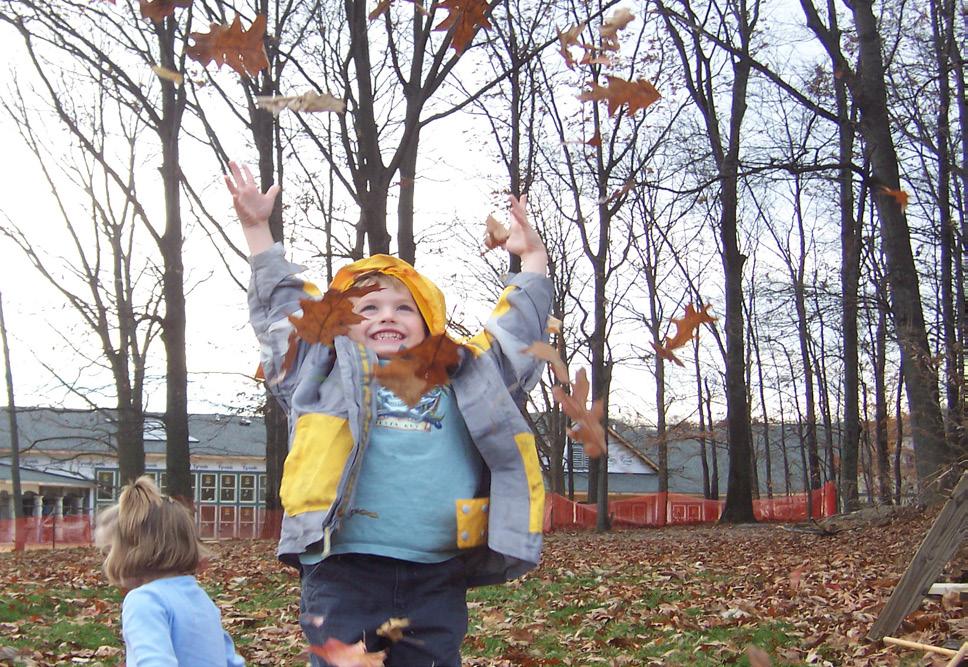
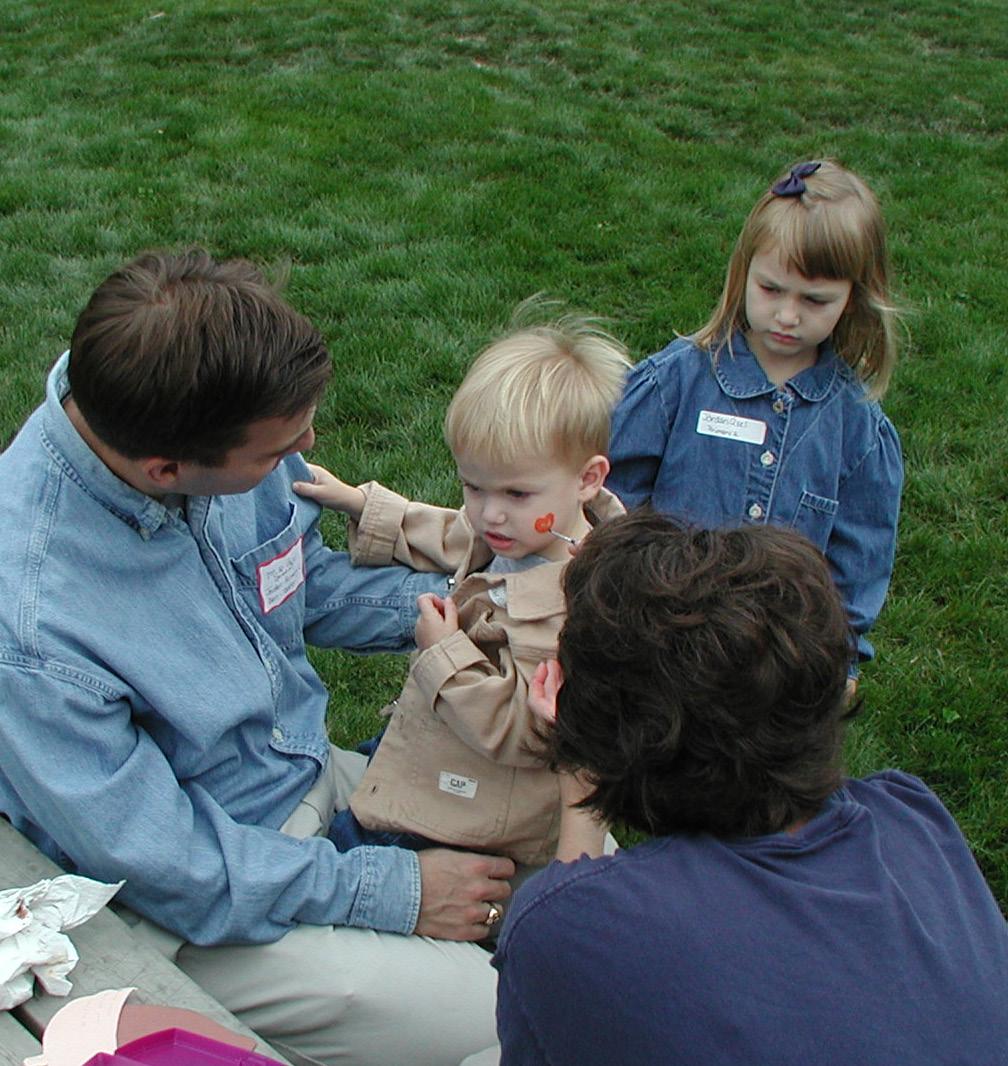
Some of my fondest memories come from traditions that grew alongside the school. The early Fall Festivals, for instance, captured the essence of what Oak Farm was all about. The entire community came together to celebrate, and it never felt like something extra, just another day at Oak Farm, but bigger and brighter. Running in the woods with friends, playing football with our dads, and engaging with older students made the entire campus feel like one big playground. I also loved the “Big Bang” story in Lower Elementary, the annual Earth Day celebrations, and the chance to help Jill cook lunches for the whole community. Each of these moments reinforced a sense of belonging and connection that
What I carry with me most is a sense of exploration. Every day on campus felt new, walking between buildings, tending to animals, playing in the pond, working in the garden, and wandering the woods with friends. Doing all of this alongside classmates I remain close to today made the experience even more meaningful. In the early days, there was no reputation or guarantee of success. Everyone who was
there, teachers, staff, parents, and students, was choosing to build something new together, believing in what Oak Farm could become.
And of course, I can’t forget my 5th-grade talent show performance of Smooth Criminal. If
“Learning itself felt collaborative and alive. I can still remember Angela’s anthropology project in the Green Farmhouse, where we created a timeline of human evolution on a long roll of paper. It was as much an art project as it was a history lesson, and it sparked my interest in anthropology that continues to this day.”
Ben Axel
SHANTON (‘13) Growing up at Oak Farm Montessori School was truly a one-of-a-kind experience. When describing Oak Farm to others, I always mention the farm, people are usually surprised to hear that we spent part of our school days outdoors, tending to animals, working in gardens, and learning through hands-on experiences. It wasn’t just about academics; it was about building independence, respect, and a deep connection to the world around us.
The school community was incredibly closeknit. Everyone knew each other, and because the classes were small and multi-age, we often looked up to older students, or became role models ourselves. That sense of community made school feel more like a family.
One of my favorite memories from those early years was Field and Creative Days in middle school. Every Wednesday, we rotated through woodshop, creative projects, and P.E. It broke up the week and allowed us to explore new interests. I even took djembe (African drum) lessons, that creative exposure definitely influenced my passion for design today.
Of course, I’ll never forget Fall Festival. It was such a special event, the fall colors, pumpkin decorating contests, and all the laughter shared with friends (and sometimes even parents joining in!). It captured the fun and beauty of Oak Farm perfectly.
I still remember meeting Lorene Dekko Salsbery, our Head of School at the time. Even as a young student, I could tell she was a kind and genuine person, someone who cared deeply for the school and its mission.

My time at Oak Farm truly shaped who I am today. It taught me to think independently, stay curious, and express myself freely through creativity. Those lessons stayed with me through high school, college, and now into my career.
Today, I’m living in New York City, working across multiple design projects and pursuing my passion for DJing on the side, an adventure that continues to challenge and inspire me every day.
Oak Farm was, and still is, a special place, one that encourages students to learn, grow, and become their authentic selves. I’m proud to be part of its story.

BY GENA GROBAREK
When I first began working at OFMS, the community garden was largely overgrown and unusable. My predecessor had stopped working at the end of the previous school year, and I did not begin until several weeks into the new one. Over the summer, the growing season took over the space without maintenance, leaving the garden overtaken by weeds. I spent many days pulling thistles as tall as me, first and foremost because they are a noxious invasive species. As I worked, I also removed old rugs, cardboard, and degraded plastic that had clearly been used in past attempts to suppress weeds. It was immediately clear that this garden needed a great deal of care, along with a thoughtful plan to make it more sustainable and less maintenance-heavy in the long term.
I developed a plan that would involve as many students as possible and transform the garden into a space that was truly student-led and student-owned. Each Upper class was tasked with designing a garden layout using what they had
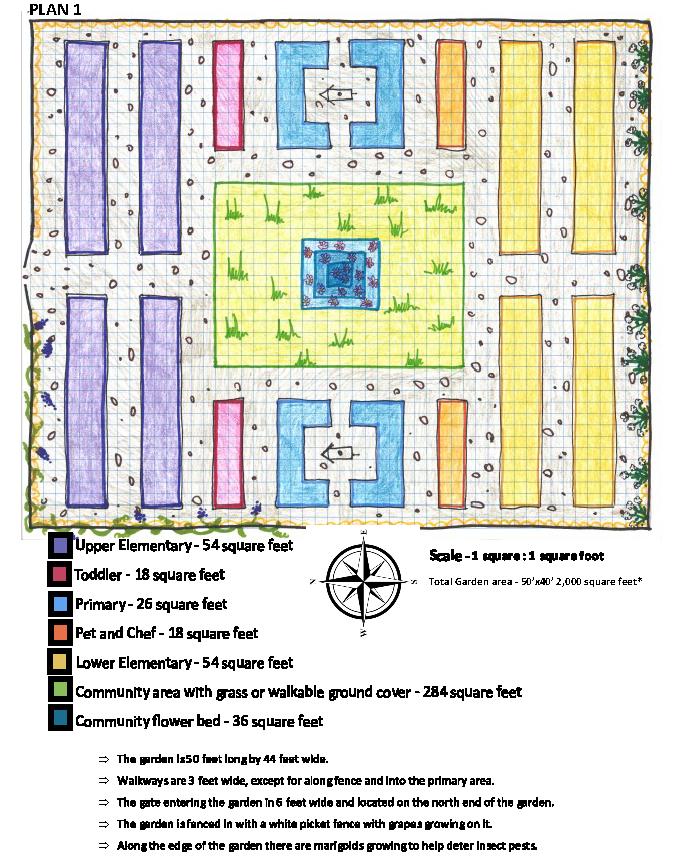
learned about area, perimeter, and scale. Students worked on grid paper to create designs to scale, and each class chose its own process. One class formed a garden committee to collaborate on a single design, while others invited all interested students to submit designs and then voted as a group. The shared goal was that each class would present one final design to a panel of representatives.
That panel included teachers from Toddler, Primary, Lower, and Upper levels, along with Candice. A few students from each class presented their design and explained their thought process. One class even measured the “reach” of one of their Primary siblings to help determine appropriate bed widths for younger students, which is currently reflected in our garden. The panel asked questions, shared concerns, and highlighted elements they appreciated in each design. Because every class brought such strong and thoughtful ideas, I ultimately combined at least one element from each proposal into three final designs. Those designs were then shared back with the levels, who voted on the final plan.
Once established, the vision was that the garden would provide wide-ranging life lessons, including contributing to students’ understanding of how to maintain a healthy lifestyle and how living and non-living components of nature interact as a web that provides us with food. Through purposeful work in the garden, students would learn seasonally about plant cultivation and how food is grown, harvested, and prepared.
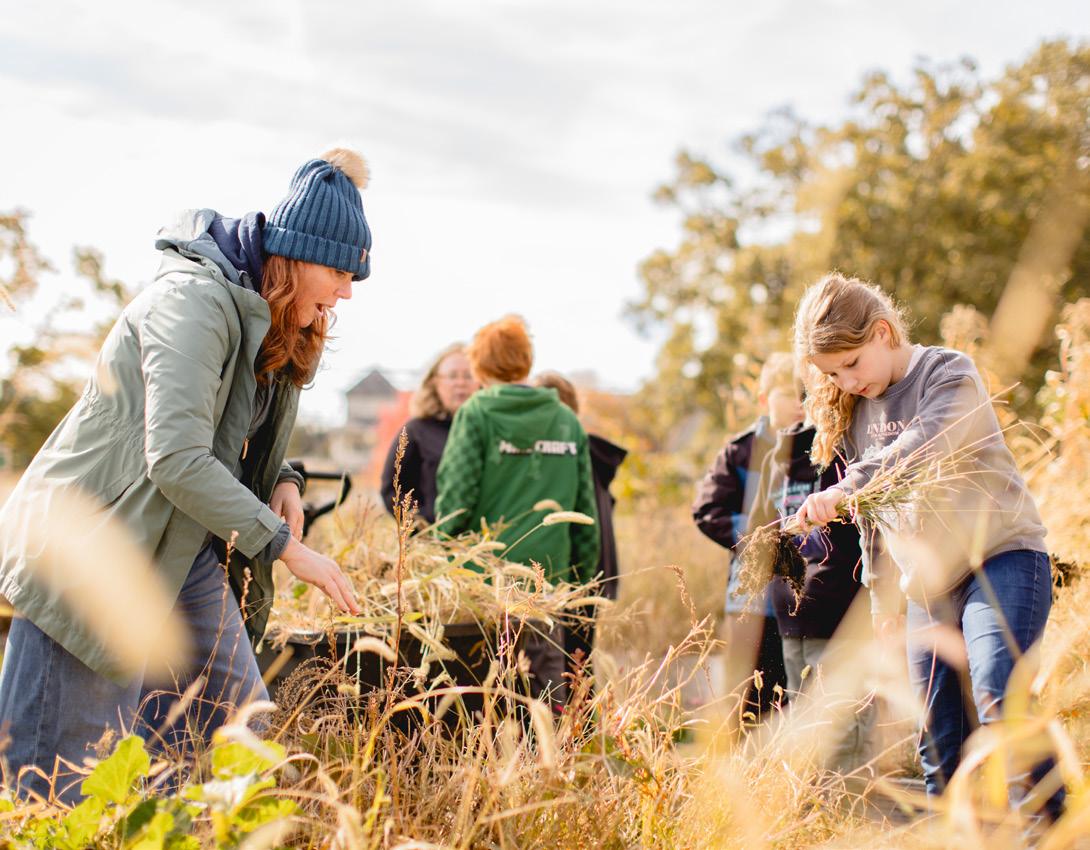
They would have opportunities to try a variety of vegetables they might not otherwise experience. Students would also develop important skills related to communication, teamwork, and responsible caretaking.
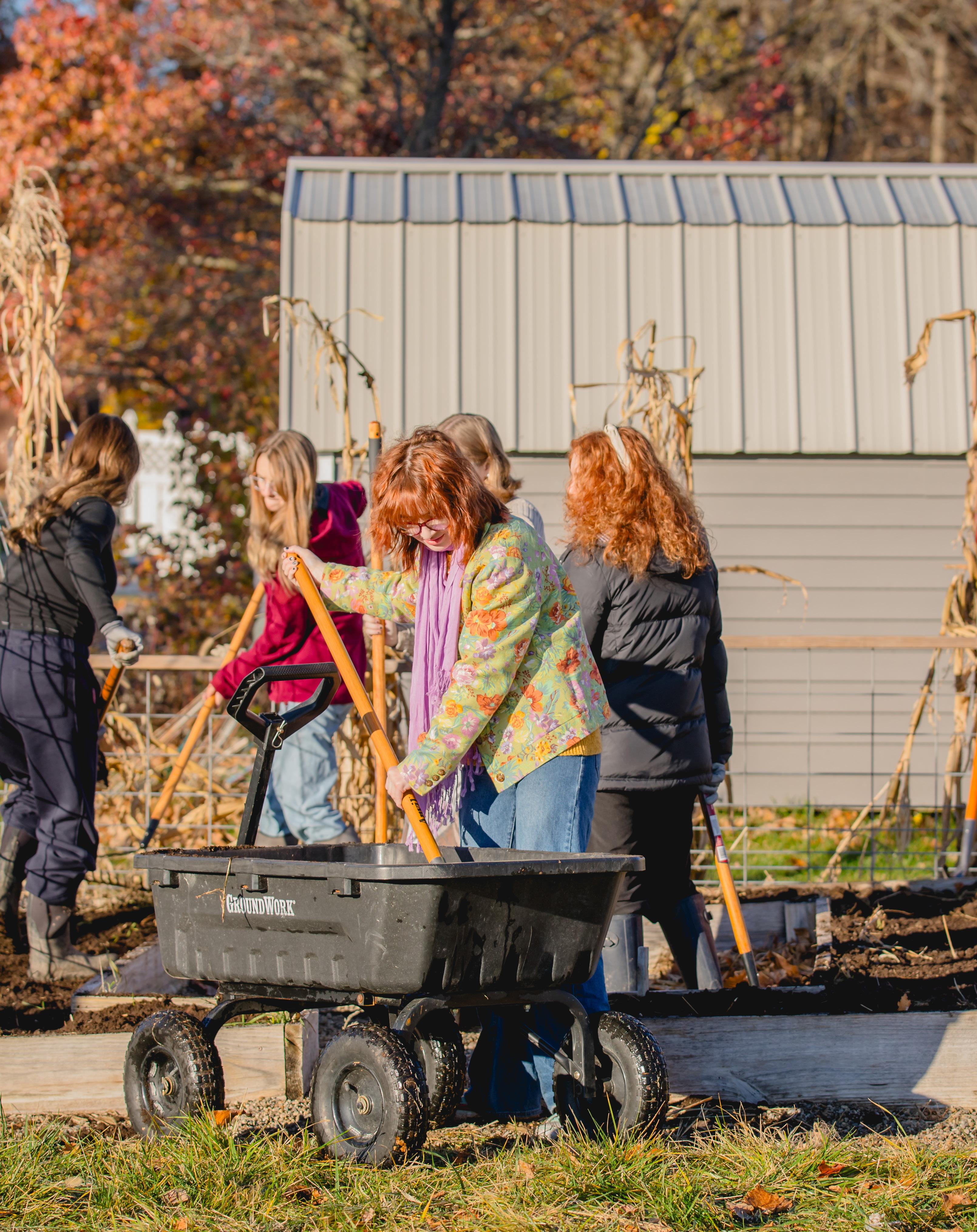
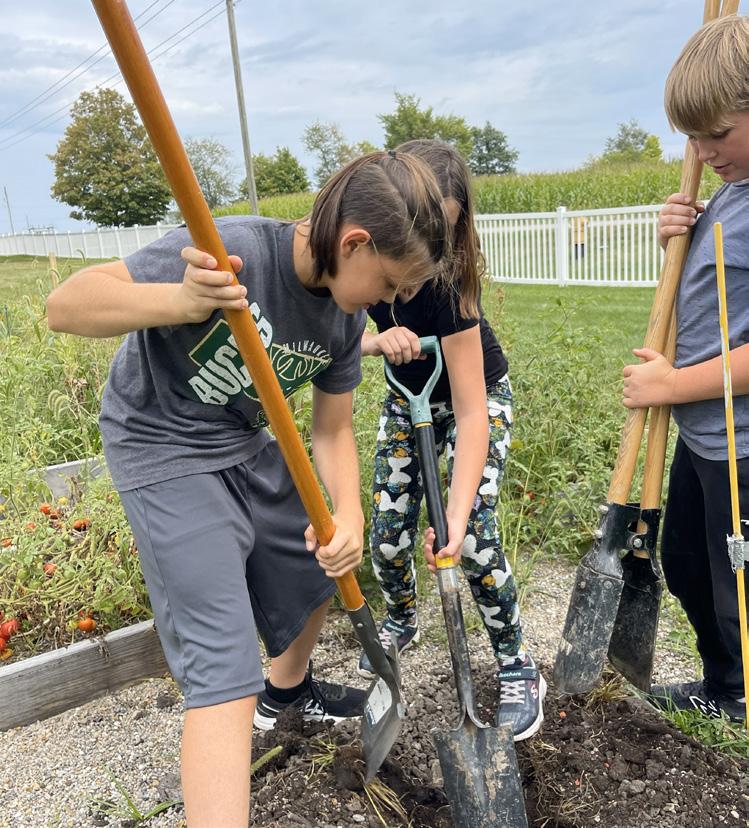
We were awarded the grant, and the work began. Students helped clear the land of remaining weeds and plastic debris (a special shout-out to UE1 because they came out many times on their own time to help with this task). A group of Upper students marked out the garden footprint, using the Pythagorean theorem to ensure the space was square. Landscaping fabric rated to last 20 years was installed, and all students from Primary through Upper Elementary worked directly with me to help build the wooden garden beds. With a great deal of teamwork, the boxes were placed, pea gravel was moved into the pathways, and students helped mix a growing soil blend using peat moss and compost from the Middle School. Students filled the beds and planted the first crops. The project took most of the school year, fall and spring, and every student contributed.
That summer, we discovered that local wildlife viewed the garden as an open salad bar, which led me to apply for a second grant to build a fence. The James Foundation approved funding, and together with the maintenance department and Upper and High School students, we built the fence. Some areas of soil were too compacted for a tractor auger, so students dug post
holes by hand. They helped measure, place posts, and pour concrete. Porter Lowe and Derek Hale built the fence panels in the wood shop with assistance from Bob Leu, and Upper students installed the panels once the posts were set. It was another large undertaking, but with maintenance support, it remained largely student-driven. The students involved gained countless practical skills and meaningful life lessons.
Today, the garden is maintained and used by Toddler, Primary, Lower, and Upper classrooms. I currently work with Upper students to plan what to grow each year, considering crop rotation, pests, companion planting, and the interests of each classroom. Lower and Upper students save seeds in the fall, start them in the spring, and plant young seedlings once temperatures allow. We continue to problem-solve around weeds and wildlife, as the fence does not make the garden entirely animal-proof. These challenges create rich opportunities for collaboration, creativity, and critical thinking.
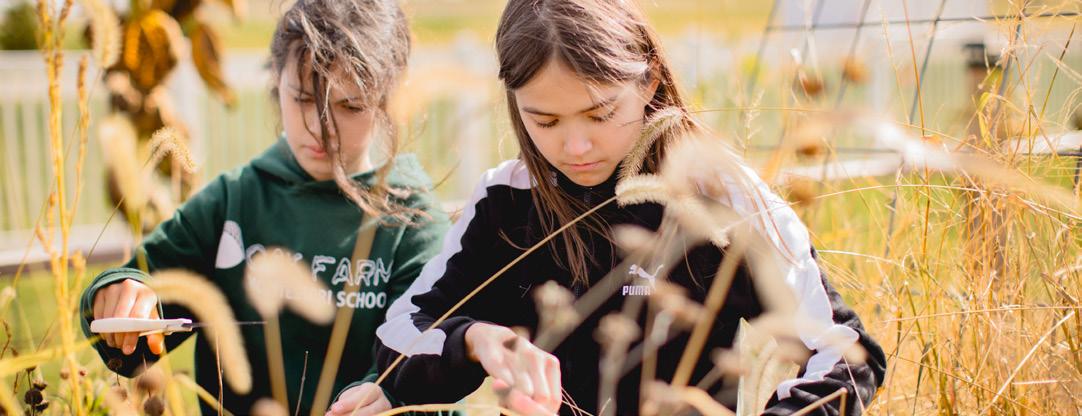
This space has also been generously supported by parent volunteers who have given their time and care to the garden. Several mothers, in particular, have shown up seasonally week after week to help keep the garden weeded and thriving. Their willingness to work quietly behind the scenes, often in the heat, often without recognition, has made a lasting difference in maintaining the space for students. Their steady presence and commitment have not only supported the physical health of the garden, but have also modeled community involvement, stewardship, and care for shared spaces. I am deeply grateful for the time, energy, and heart they have poured into this project.
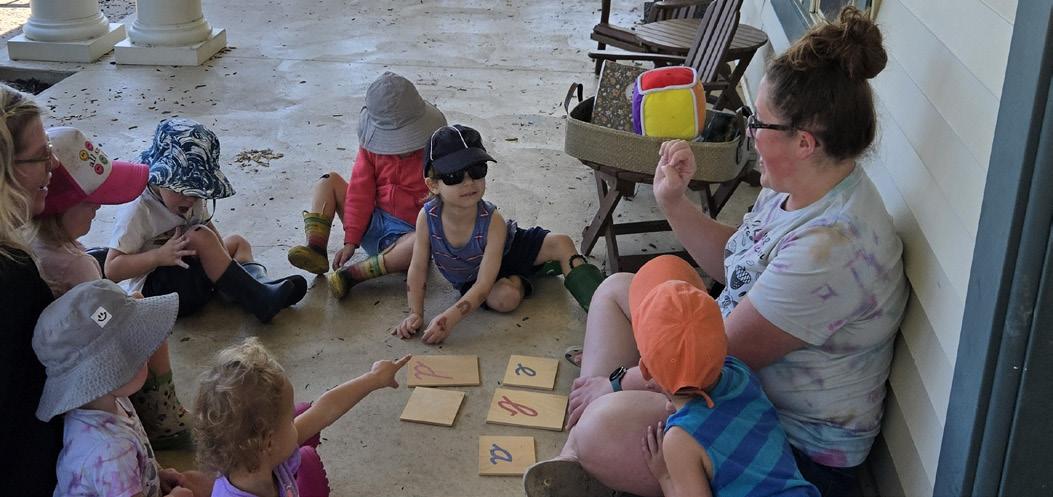
Nefy Hathaway continues her work as a Toddler teacher alongside April Adams and Nina Hutcherson, carrying forward the traditions of Oak Farm Montessori and the Montessori curriculum. We also see Sarah Bosworth engaging toddler students by playing her ukulele as they sing the months of the year and explore the seasons together.
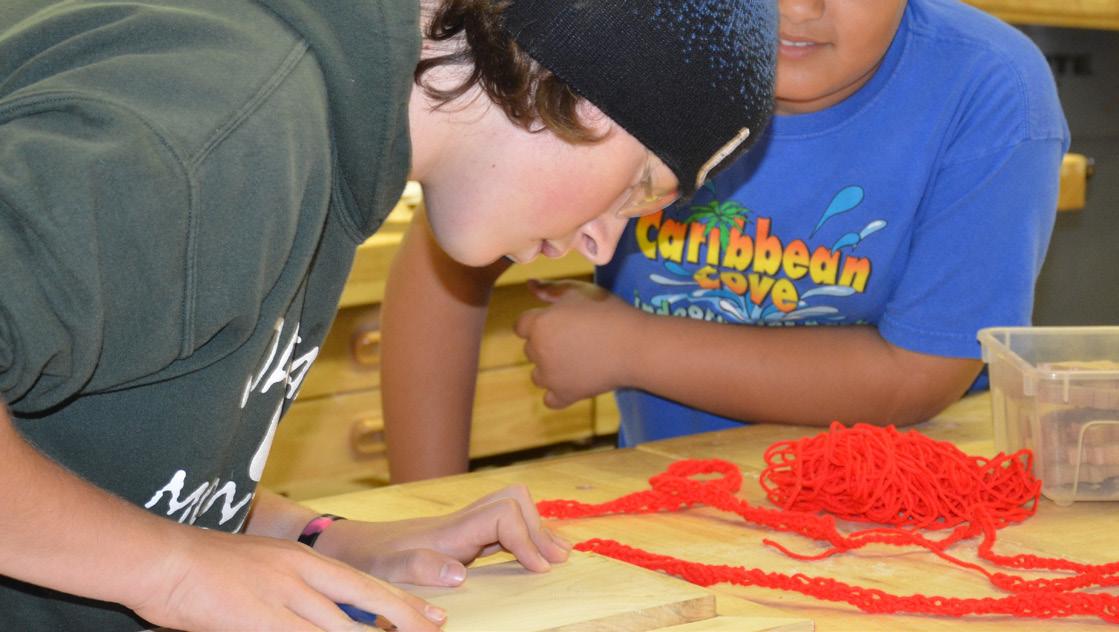
Creative Expressions remain an integral part of the Middle School curriculum, with students engaging in music, physical education, and art. Middle School and High School students walk to the Secondary Arts Building and Wellness Center, where they participate in choir, music composition, 2D and 3D art, woodshop, and physical education that supports both strength and overall well-being.
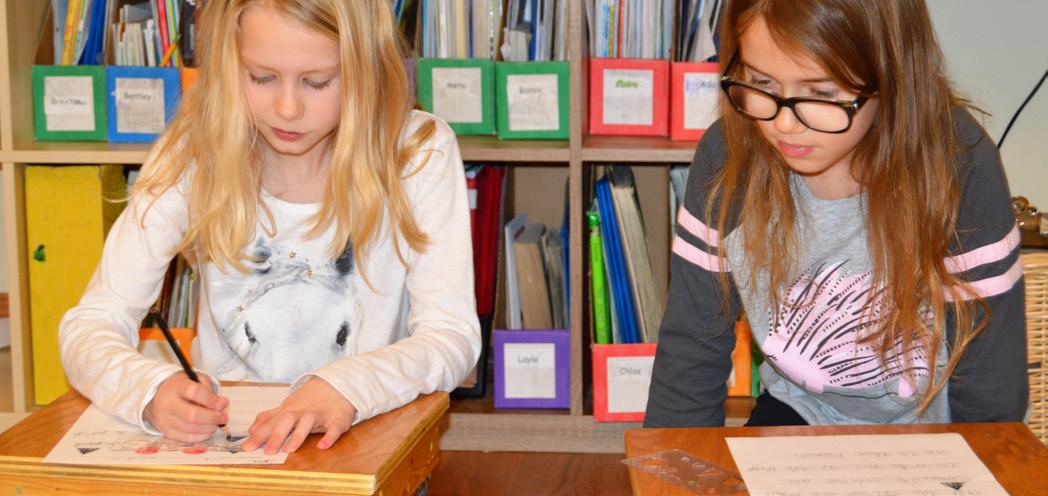
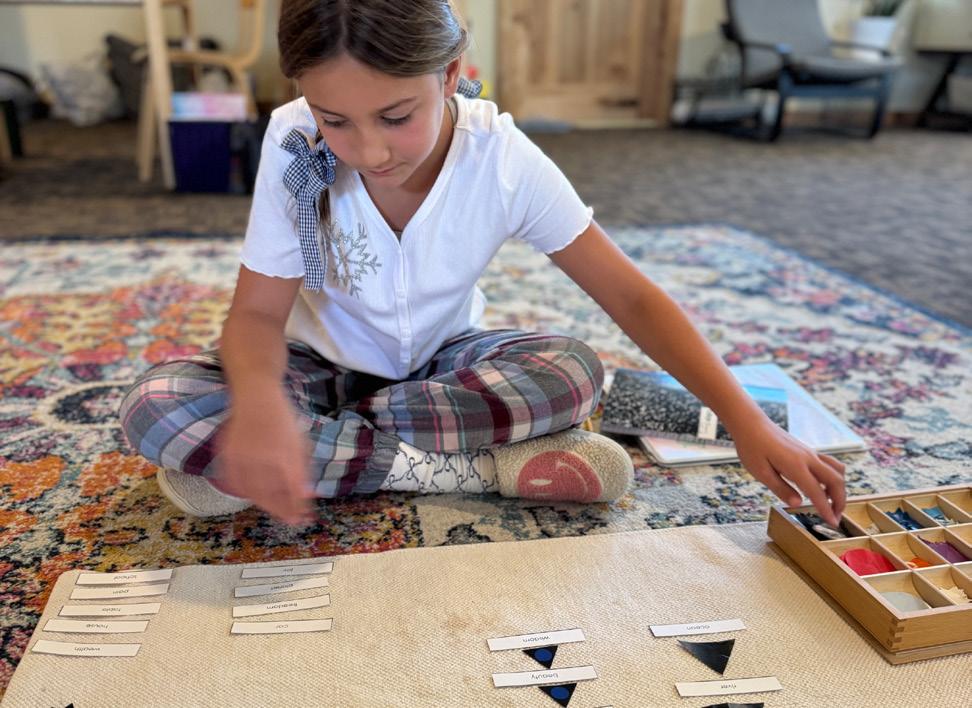
In Lower Elementary, students engage in sentence analysis work, exploring sentence structure in greater depth. They learn to identify elements such as the subject, predicate, direct object, indirect object, and attributives.
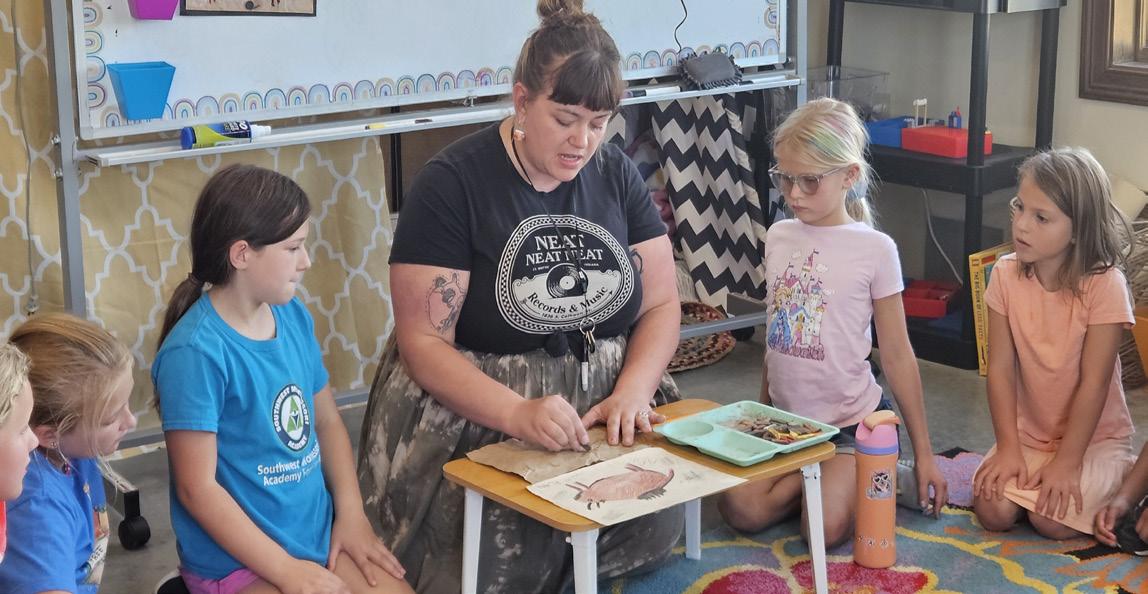
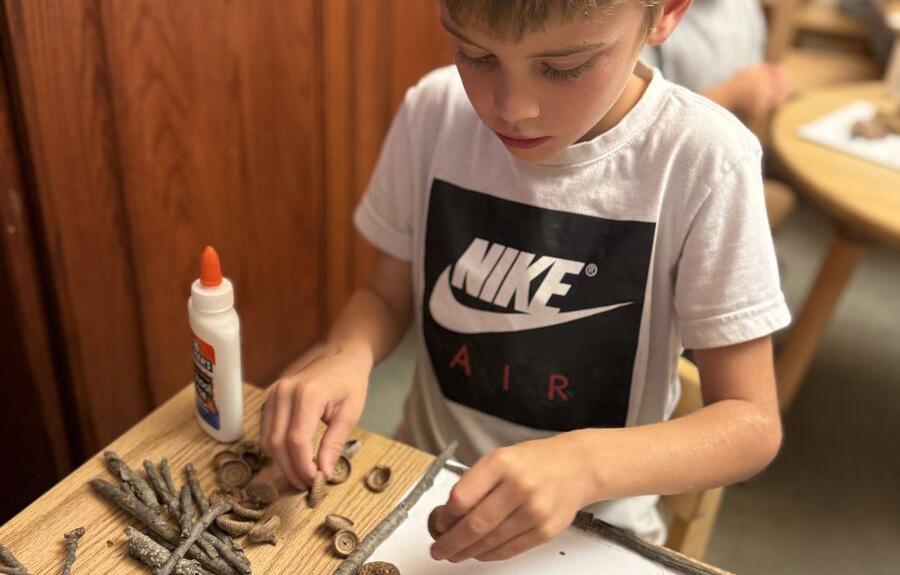
Clubs are in full swing at OFMS! Students from Primary through High School have opportunities to participate in a wide range of clubs, from athletics like Primary Soccer Shots to secondary offerings such as Photography Club. These extracurricular activities support student interests beyond the school day while fostering collaboration, creativity, and community building across all levels.
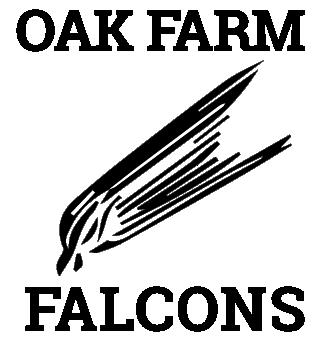
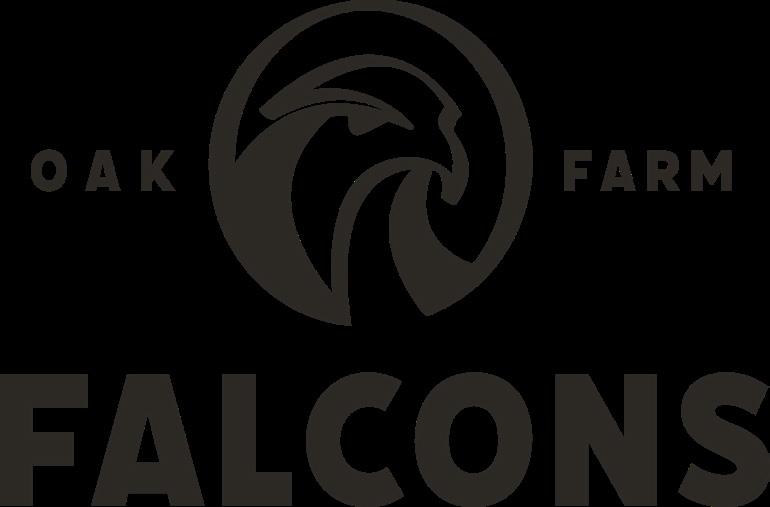
In the early years, athletics were not part of the Oak Farm Montessori program. Soccer was the first sport introduced in 2005, students were the first to name OFMS Athletics the “Falcons”, and student Matt Pounds designed the first logo to the right. Later inspiring our current Falcon logo (see below).

Today, students benefit from dedicated athletic spaces, including the Wellness Center, built in 2021, and the Sports Complex, which celebrated its ribbon-cutting ceremony in August 2025. These facilities allow student-athletes to participate in extracurricular athletics while also engaging in meaningful service to the wider community.
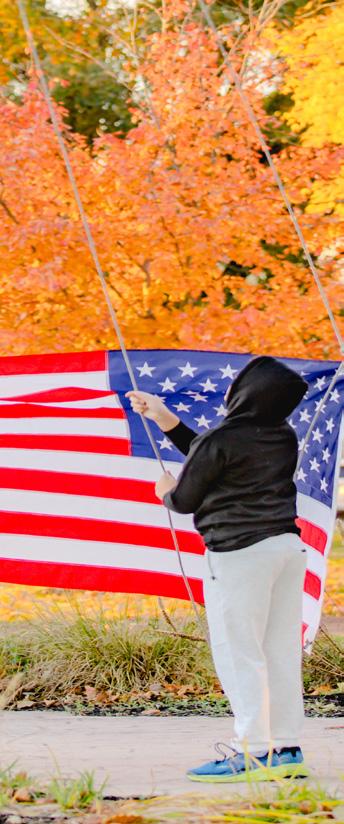
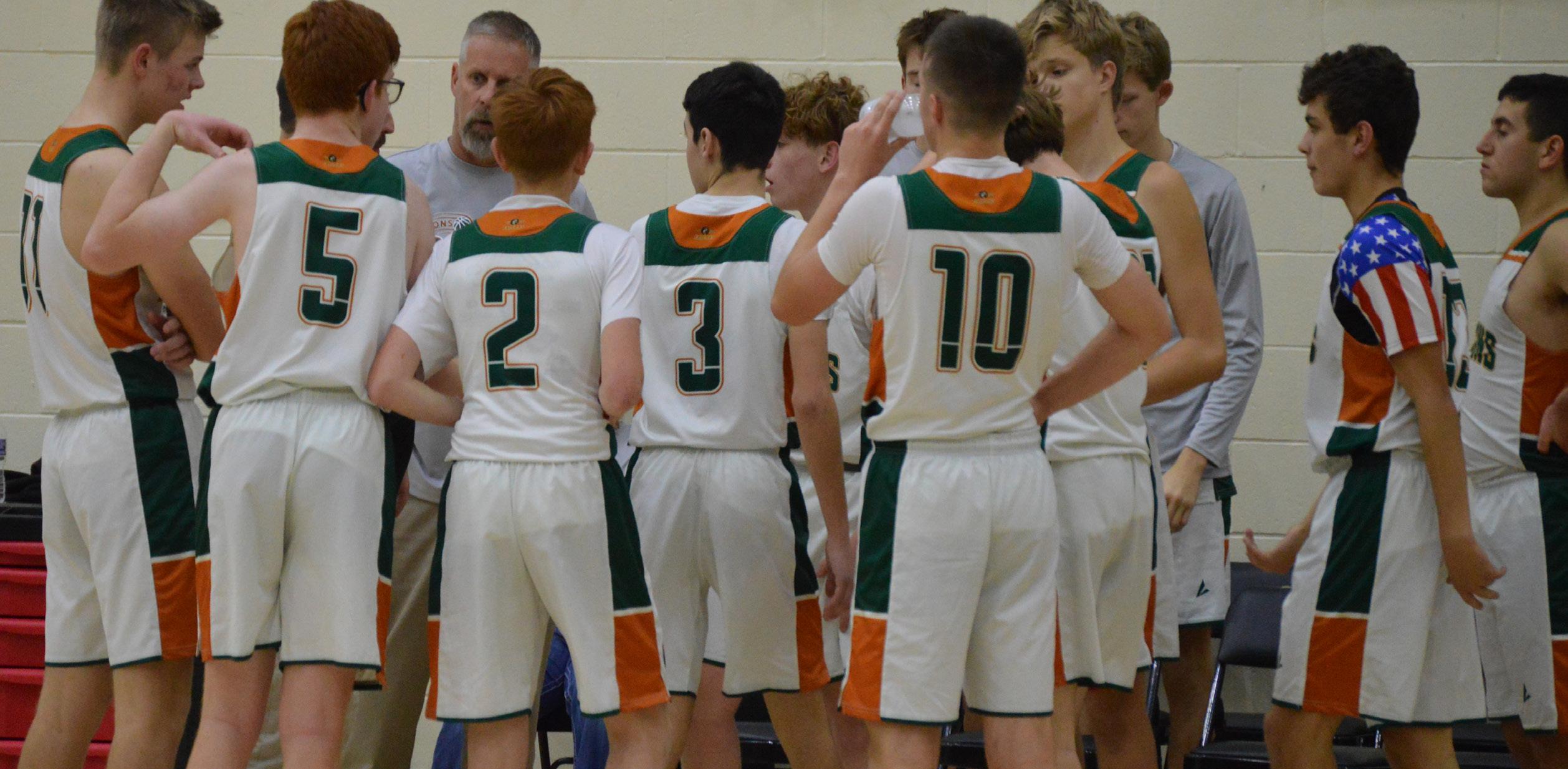
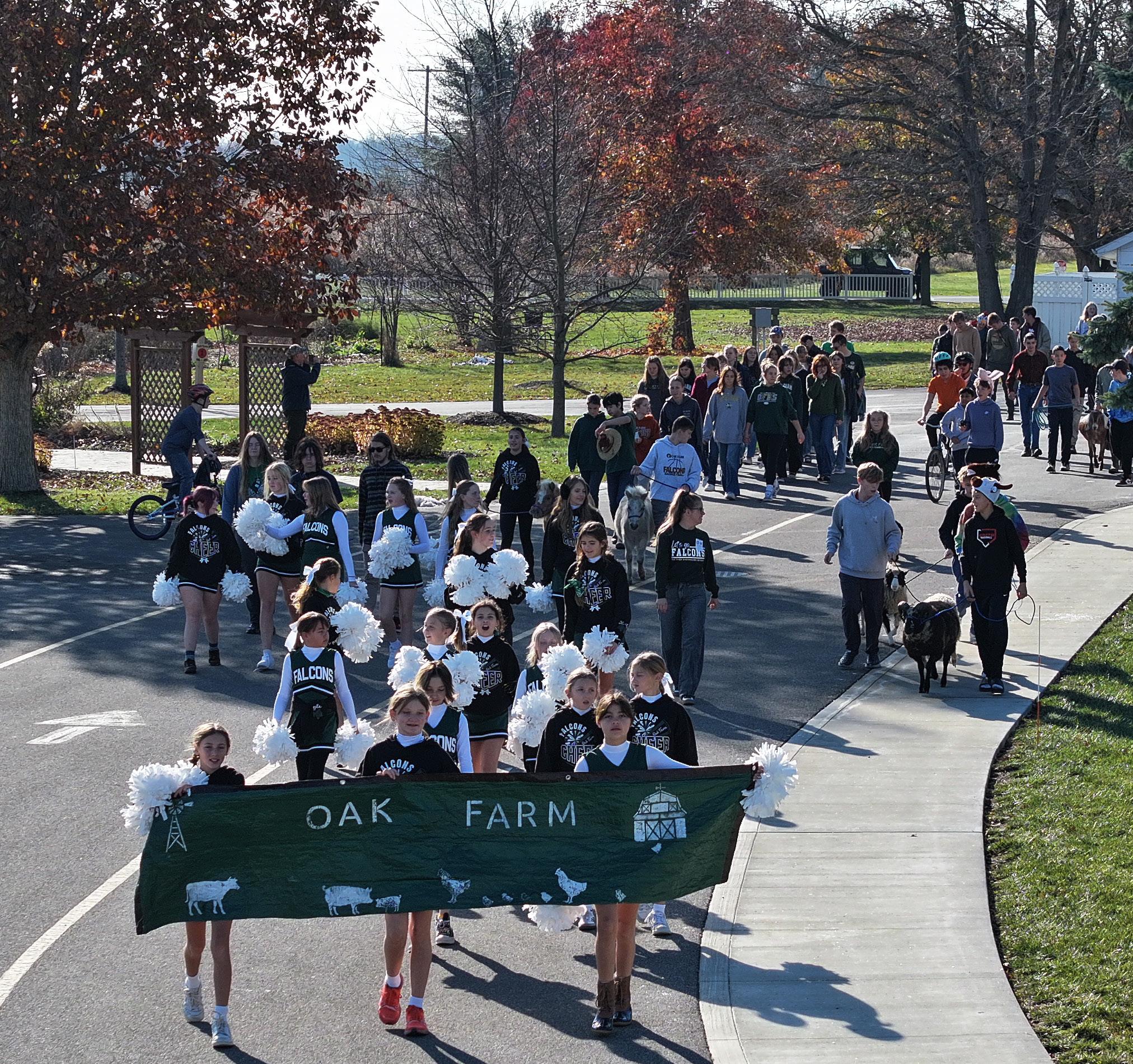
This year, our Junior Varsity and Varsity Basketball teams and cheerleaders hosted a Veteran’s Recognition Night game, with proceeds from ticket sales and concessions donated to the Honor Flight Program of Indiana. Students raised $800 in support of this cause. In addition, the basketball teams and cheerleaders hosted a Teddy Bear Toss, collecting new stuffed animals that were donated to Parkview Regional Medical Hospital in Fort Wayne, IN. Through Athletics, Oak Farm Montessori athletes develop teamwork, leadership, and a strong sese of commuity, oth on and off the court.
Fundraising: $0
Gross: $655,865
Lorene donated $2.01m 2007
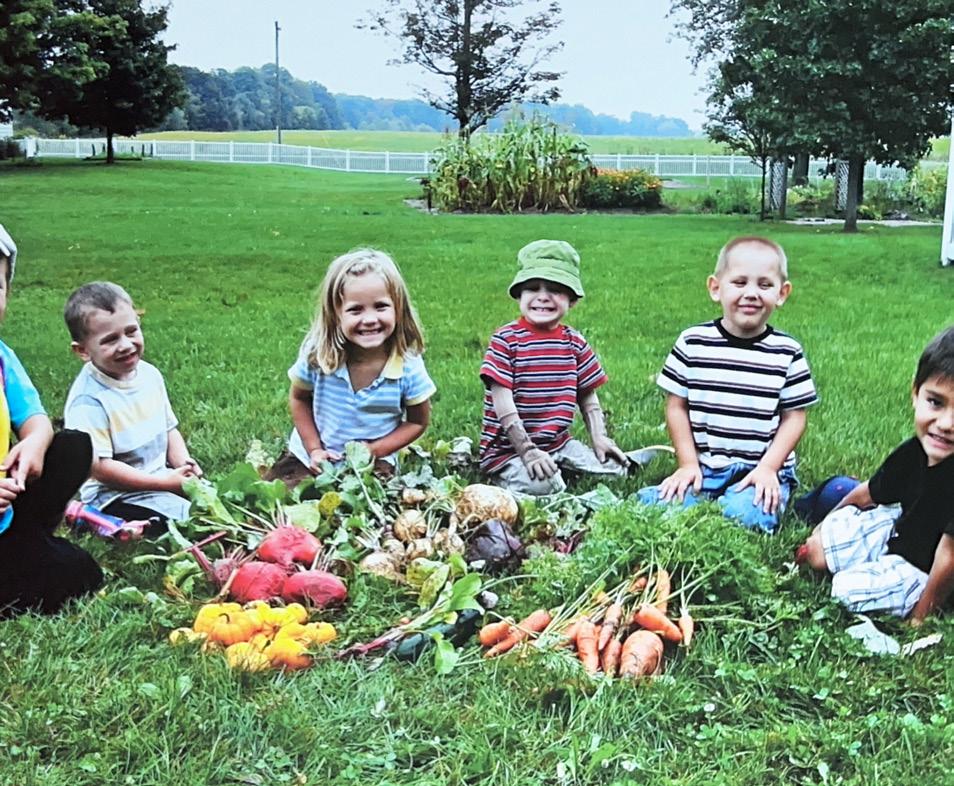
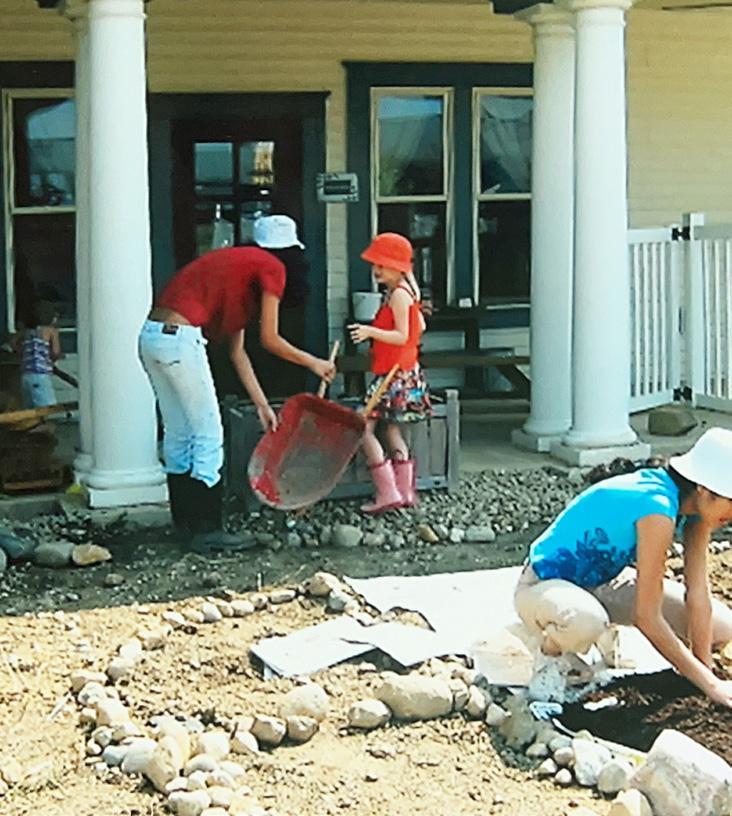
Students in the garden (2008)
Fundraising: $4,361
Gross: $5,484,289
Thank you, Blue Flame Management, for investing in Oak Farm Montessori!

Gross:The total income from the Tall Oak Fund before expenses. The Tall Oak Fund includes the Tall Oak Gala, Day of Giving, and Annual Fund.
Fundraising: $104,053
Gross: $3,391,660
Fundraising: $228,675
Gross: $5,149,756
Fundraising: $419,567
Gross: To Be Reported

Not long after purchasing the original 26 acres, Lorene invited architect Rod Collier to campus to envision the long-term future of Oak Farm Montessori School. At the time, Rod was a young architect with MSKTD and Associates. Lorene and Al Sheldon were also serving on the board at Three Rivers Montessori, and when Lorene began the process of creating Oak Farm Montessori School, she invited both Rod and Al to be part of that journey.
That early collaboration is still reflected across campus today. Sheldon Pass, for example, is named in memory of Al, who passed away just one year after Lorene. At Rod’s request, the path was created as a way to honor Al’s contributions and now stands as a quiet reminder of his lasting role in shaping Oak Farm.
As the school grew, so did its architectural needs. The master plan evolved through several iterations to accommodate new programs, new buildings, and a growing student body. After Al’s passing, Rod remained with MSKTD for some time before partnering with Todd Rottmann to form Rottmann Collier, the architectural firm that continues to serve Oak Farm Montessori today. As Rod often says, “I was part of the school before the school was even here.” His early visits to Oak Farm took place when the campus consisted of a one-story ranch home, a detached two-car garage, and a dirt-floored pole barn.
The vision was never just about buildings. Lorene believed deeply in involving the people who would live and learn within those spaces. When the Upper Elementary building was designed, it was intentionally created as a warm, comfortable environment that echoed the character of the Red Barn while offering a more mature space for students to grow into. During the early stages of construction for any of the buildings, students were invited to leave their mark by signing their names, leaving positive inspirations, and good thoughts on the building’s framework beams, an enduring symbol of belonging.
This spirit of involvement continued with the construction of the High School addition. Porter Lowe, now a senior, interned with S&T Contractors during the project, gaining hands-on experience while helping to build the very school he attends.
This collaborative spirit, encouraged by Lorene and embraced by Rod and Al, shaped more than architecture. It fostered a lasting sense of ownership and belonging, ensuring the campus grew not merely as a collection of buildings, but as a community thoughtfully created together.
{Background image} The development of the Red Barn in 2002
Thank you to our 2025-2026 Community Sponsors for sustaining the future of Oak Farm Montessori.
Angola Wire Products
Atz Law Office, LLC
A Lauren Design
AMI Investment Management, Inc.
Bailey & Wood Mortgage Lender
Barrett McNagny, LLC
B&J International
B&J Medical
B&J Specialty
Blue Flame Management
Butler CPA
Casey’s General Store
Campbell & Fetter Bank
Carpenter Creations
Combustion Mechanical
Community State Bank
Dekko Investment Services
Drs. Roush & Will Optometrists
Eshelman Excavating
FORVIS LLP Foundation
Fort Wayne Orthopedics
Fort Wayne Rolfing
Gassafy Wholesale
Hosler Realty
J.O. Mory Inc
James Electric, Inc.
JC Enterprises
Kendallville Iron & Metal
Masters Heating & Cooling
Northern Exteriors
One Fine Day Bridal & Gown
Planet Fitness
Pro Resources Staffing Services
Rich Specialty Trailers
Rosema Corporation
Rottmann Collier Architects
S&T Contractors
SDTEK
Scheumann Dental Associates
Shepherd’s Family Auto Group
Simplx Security, LLC
Snyder Food Service
T & T Plumbing & Heating Inc
Therma-Tru Doors
The Aberdeen Group
Three Rivers Barricade, Inc.
Wayne Asphalt Construction
Welch Packaging
The DeHayes Group
Auto Owners Insurance
Weichert Realtors
Hoosier Heartland Team
Tim & Anita Hess
WIRCO

Thank you, Welch Packaging, for investinig in Oak Farm Montessori!
Celebrate Lorene’s Legacy with us on November 13, 2026, during our annual Day of Giving.



At Oak Farm Montessori School, we believe every child deserves access to an education that nurtures curiosity, independence, and a lifelong love of learning, regardless of financial circumstance. Thanks to the generosity of our community, OFMS continues to serve families across Northeast Indiana through meaningful, student-centered education.
The Indiana School Scholarship Tax Credit Program was created to encourage charitable giving that directly supports families seeking a non-public school education. When you make a contribution to OFMS’s qualified Scholarship Granting Organization (SGO), you are investing in students while also receiving a 50% Indiana state tax credit (for Indiana residents).
Your support helps:
- Expand access to an Oak Farm Montessori education through scholarships.
- Sustain and strengthen our school’s programs and daily operations.
- Ensure Oak Farm Montessori remains accessible to families throughout Northeast Indiana.

Please consider making a gift that helps open doors for our students today and in the future. To learn more or to donate, visit oakfarm.org/support-us.