(eBook PDF) Living Theatre: A History of Theatre (Seventh Edition) 7th Edition download
https://ebookluna.com/product/ebook-pdf-living-theatre-a-historyof-theatre-seventh-edition-7th-edition/
PART
Chapter 9 The Theatre of the English Restoration 273
Chapter 10 Theatres in the Eighteenth Century 303
Chapter 11 Theatres from 1800 to 1875 343
Chapter 12 Theatres from 1875 to 1915 393
Chapter 13 Theatres from 1915 to 1950 437
Chapter 14 Theatres after 1950: Traditional and Experimental 479
Chapter 15 Theatres after 1950: Multicultural and Global 537
CHAPTER 5
Medieval Theatres in Europe
Background: The Middle Ages 125
Byzantium: Popular Arts and Theatrical Preservation 128
The Middle Ages in Western Europe 128
Liturgical Drama 132
Development of Medieval Liturgical Drama 132
■ Debates in Theatre History: Why Was Hrosvitha Ignored for So Long? 133
Producing Liturgical Drama 134
■ Debates in Theatre History: The Origins of Medieval Theatre and the Role of Quem quaeritis 136
Early Medieval Theatre in France 136
The Development of Religious Vernacular Drama 137
Mystery or Cycle Plays 138
English Cycle Dramas and The Second Shepherds’ Play 140
The Emergence of Episodic Form 140
Producing the Cycle Plays 142
■ Past and Present: Passion Plays 143
■ Past and Present: Street Theatre 150
Morality Plays 150
Everyman 151
Producing the Morality Plays 152
Secular Theatre in the Middle Ages: Popular Forms 152
The Decline of Religious Theatre 154
Summary 155
PART 2 Theatres of the Renaissance 157
CHAPTER 6
The Theatre of the Italian Renaissance
Background: The Renaissance in Italy 159
Italian Theatre 162
Drama 162
■ Debates in Theatre History: Adaptations as Sources of Drama 164
Opera 166
Commedia dell’Arte: A Popular Theatrical Form 167
■ Past and Present: Improvisation 171
■ Debates in Theatre History: Women Performers in Commedia dell’Arte 172
Italian Theatre Architecture 173
Theatre Buildings 173
■ Past and Present: Teatro Olimpico 174
Audience Seating 177
Scene Design and Early Theatre Technology 178
■ Debates in Theatre History: What Is the Exact Origin of the Proscenium Arch? 179
Italian Dramatic Criticism 184
The Neoclassical Ideals 184
The Neoclassicists’ Influence 187
Issues of Dramatic Criticism 187
The Legacy of the Italian Renaissance 189
Summary 189
CHAPTER 7
The Theatre of the English Renaissance
Background: The Renaissance in England 193
The Early Drama of the English Renaissance 193
Elizabethan Drama 195
Elizabethan Playwrights 196
Marlowe and the Mighty Line 196
Shakespeare’s Skill and Diversity 200
■ Past and Present: Shakespeare Four Centuries Later 202
Elizabethan Theatres 203
Theatres and Production Practices: Problems of Research 203
■ Debates in Theatre History: Who Wrote Shakespeare’s Plays? 204
Public or Outdoor Theatres 207
Private Theatres 213
■ Debates in Theatre History: The Campaign to Save the Rose and Its Impact 214
Scenery and Costumes 216
Elizabethan Acting Companies 217
The Lord Chamberlain’s Men 217
The Admiral’s Men 218
Organization of Acting Companies 218
Acting Practices 219
Representation of Female Characters in Elizabethan Theatre 220
■ Debates in Theatre History: Elizabethan Acting Style 221
Jacobean and Caroline Drama 222
Court Entertainment: The Masque 226
Summary 229
CHAPTER 8
The Spanish Golden Age and French Neoclassical Theatres
Background: The Spanish Golden Age 233
Religious Theatre in Spain 234
Religious Dramas: Autos Sacramentales 234
Producing the Autos Sacramentales 234
Secular Theatre in Spain 235
Comedias 236
Spanish Dramatists 238
Female Playwrights 242
Producing the Comedias 242
The Corrales 242
■ Debates in Theatre History: What Was the Appearance of the Corral del Principe? 244
Scenery, the Stage, and Costumes 245
■ Debates in Theatre History: A Lost Spanish Popular Entertainment? 246
Acting Companies 247
The Status of Actresses 247
Background: France in the Sixteenth and Seventeenth Centuries 248
Early Departures from Realism 414
Symbolism 414
Wedekind, Ibsen, and Strindberg 415
Producing Departures from Realism 417
Eclectics 424
Popular and Commercial Theatres 425
■ Debates in Theatre History: Why Are Women’s Contributions to Theatre History Overlooked? 427
Multicultural Theatre:
African American Theatre 428
African American Stock Companies: The Lafayette Players 429
African Americans in Popular Theatre 430
Global Theatres, 1875–1915 430
Asian Theatres 431
Early-Twentieth-Century Chinese Theatre 431
Theatre in India 432
Theatre in Japan 433
Theatre in Southeast Asia 434
Theatre in the Middle East and Africa 434
Summary 435
CHAPTER 13
Theatres
from
Background: A Time of Unrest—The World Wars 437
Theatre of Unrest: Dramatic Innovations 440
Expressionism 441
Futurism and Dada 443
Surrealism 443
The Bauhaus 444
Theatre of Cruelty 445
Epic Theatre 446
European Theatres during the War Years: Additional Innovations 451
France 451
Spain 452
Italy 454
Great Britain 455
Theatres under Totalitarianism 457
■ Debates in Theatre History: Evaluating Totalitarian Art 458
American Theatre: Popular, Noncommercial, and Multicultural 459
Commercial versus Noncommercial Theatre 459
Playwrights in the United States 462
The “Little Theatre” Movement 465
The Group Theatre 466
The Federal Theatre Project 468
College and University Theatres 469
Multicultural Theatre: African American Theatre 469
Global Theatres 474
Theatre in China 474
Kathakali in India from the Seventeenth to Twentieth Century 476
Theatre in Japan 477
Summary 477
CHAPTER 14
Theatres after 1950: Traditional and Experimental
Background: Post World War II—A Time of Social Upheaval 479
Trends in Theatre since 1950 483
Traditional Drama: 1950 to the Present 483
Selective Realism 484
Variations on Traditional Realism 490
Non-Commercial U.S. Theatres 493
Regional Theatre 493
Off-Broadway, Off-Off-Broadway, and Alternative Regional Theatres 495
British Realism: Angry Young Playwrights and Their Influence 498
Documentary Drama: Fact-Based Realism 499
Popular Traditional U.S. Theatre 501
Contemporary American Musical Theatre 501
Innovation and Experimentation 507
Existentialism 508
Theatre of the Absurd 509
Happenings and Multimedia 515
Environmental Theatre 516
New Technology 518
Postwar Eclectic Directors 520
Off-Off-Broadway: Haven for Experimental Theatre 521
Postmodernism 525
The Performance Group and Richard Schechner 526
The Wooster Group 526
Mabou Mines 526
Other Alternative Ensembles 527
Alternative American Directors 528
Performance Art 530
Summary 535
CHAPTER 15
Theatres after 1950: Multicultural and Global ......537
Background: Multicultural Theatre 537
African American Theatre 538
African American Theatre after World War II 538
Civil Rights and African American Militancy and Theatre: 1960–1980 540
African American Producing Organizations: 1970s to the Present 542
Contemporary African American Directors: 1980 to the Present 543
■ Debates in Theatre History: Color-Blind and Nontraditional Casting 547
Contemporary African American Playwrights 547
Latino/a American Theatre 548
Chicano Theatre 549
Cuban American Theatre 550
Nuyorican Theatre 552
Other Latino/a Theatre Companies and Performers 552
years after its construction. In Chapter 11, we discuss melodrama and how its tropes and character archetypes continue to be evident in the drama of today, notably in soap opera, crime television shows, and even Hitchcock films. We also discuss how these archetypes are often subverted in modern drama to create more complex and interesting characters. These features are often accompanied by contemporary photos depicting the way a given historical practice or theatre looks today. Other Past and Present features include:
• Theatre Festivals Today
• The Colosseum
• Kabuki
• Puppetry
• Passion Plays
• Street Theatre
• Improvisation
• Teatro Olimpico
• Shakespeare Four Centuries Later
• The Comédie-Française
• The Drury Lane Theatre
• Drottningholm Theatre
• Actor-Directors
• The Bayreuth Festspielhaus and Festival
Debates in Theatre History
Our most popular feature from previous editions will return in the new seventh edition. These features serve to illustrate that the history of theatre is far from settled, and that just as theatre itself is alive and evolving, so is theatre history. We have updated all the Debates to include recent scholarship and historical finds—for example, the revelation of Shakespeare’s family arms. As discussed in the Chapter 7 Debate, “Who Wrote Shakespeare’s Plays?,” this discovery provides further evidence that William Shakespeare, as a gentleman-writer, is indeed the author of the plays attributed to his name. We have also included a new Debate in our final chapter concerning nontraditional casting. This practice has become increasingly common, as the recent Broadway hits Hamilton and Natasha, Pierre & the Great Comet of 1812 demonstrate; but prominent theatrical persons have spoken against it, notably the late August Wilson.
Newly Designed Visual Program Photos
Our bold new design features 241 photos of both historical and contemporary productions. These include small avant-garde productions and commercial hits, modern dress adaptations of ancient plays, and more traditional set historical productions—all carefully chosen to demonstrate how the history of theatre often bleeds into contemporary productions.
Theatrical Diagrams
These newly designed diagrams aid students in conceptualizing complicated stage mechanics as well as theatre architecture. They include:
• ground plans for Greek, Roman, traditional Chinese, n¯o, and kabuki theatres, as well as more modern configurations such as the arena and thrust stages;
• stage techniques such as the Greek mechane and ekkyklema, and the Italian poleand-chariot system;
• depictions of an Elizabethan playhouse and a medieval pageant wagon.
Updated Maps
Maps throughout the book have been updated. Special attention is given to those from ancient Greece and Rome, which now include more of the important theatres of the era, such as the Theatre of Epidaurus and the Theatre of Orange.
Timelines
The seventh edition features fifteen updated timelines that chronicle theatrical as well as cultural and political events. These timelines enable students to place the major events of theatre history in a broader context of world history.
Revised Final Chapters
Organization
In an attempt to make the seventh edition even more readable than previous editions, we have reorganized the final chapters. Instead of dividing recent theatre according to date and location, we now approach theatre made after 1950 thematically. As their titles indicate, Chapter 14 explores “Theatres after 1950: Traditional and Experimental,” while Chapter 15 focuses on “Theatres after 1950: Multicultural and Global.” Through this approach, we avoid encyclopedic lists of newer plays and artists, and we highlight the driving forces behind contemporary theatre—namely, the development and interaction between traditional and experimental theatre as well as the many viewpoints and backgrounds from which modern theatre springs.
Emphasis on Multicultural Theatre
Throughout the text, we strive to emphasize the contributions of minority groups and women in theatre. For example, the Debates in Theatre History features include such topics as “Was Terence the First Black Playwright?” and “Are Women’s Contributions to Theatre History Overlooked?” We have also included new sections on underrepresented female and African American artists in Chapter 13. Most dramatically, we have organized our final chapter around multicultural and global theatre, including extensive coverage of:
• African American Theatre
• Latino/a American Theatre
About the Authors
Edwin (Ed) Wilson attended Vanderbilt University, the University of Edinburgh, and Yale University, where he received an M.F.A. and the first Doctor of Fine Arts degree awarded by Yale. He has taught theatre at Vanderbilt, Yale, and, for over thirty years, at Hunter College and the Graduate Center of the City University of New York (CUNY). He is the author of several original plays as well as author of the book and lyrics for a musical version of Great Expectations, which was given a fully mounted production at the Mill Mountain Theatre in Roanoke, Virginia.
Wilson has produced plays on and off Broadway and served one season as resident director of the Barter Theatre in Abingdon, Virginia. He was assistant to the producer on the Broadway play Big Fish, Little Fish directed by John Gielgud and starring Jason Robards, and of the film Lord of the Flie s directed by Peter Brook. On Broadway, he coproduced Agatha Sue, I Love You directed by George Abbott. He also produced a feature film, The Nashville Sound. He was the moderator of Spotlight, a television interview series on CUNY-TV and PBS, from 1989 to 1993; during that time ninety-one halfhour interviews with outstanding actors, actresses, playwrights, directors, and producers were broadcast on 200 PBS stations in the United States.
For twenty-two years Wilson was the theater critic of the Wall Street Journal. A long-time member of the New York Drama Critics’ Circle, he was president of the Circle for several years. He is on the board of the John Golden Fund and served a term as president of the Theatre Development Fund (TDF), whose board he was on for twenty-three years. He has served a number of times on the Tony Awards Nominating Committee and the Pulitzer Prize Drama Jury.
He is the author or coauthor of the three most widely used college theater textbooks in the United States. The thirteenth edition of his pioneer book,
The Theater Experience, was recently published, and the ninth edition of Theatre: The Lively Art (coauthored with Alvin Goldfarb) will be published in 2016. Wilson is also the editor of Shaw on Shakespeare and author of the murder mystery The Patron Murders
Alvin (Al) Goldfarb is president emeritus and professor emeritus of theatre at Western Illinois University. He also served as provost, dean, department chair, and professor of theatre during his twenty-five-year tenure at Illinois State University, as well as managing director of the Illinois Shakespeare Festival. He holds a Ph.D. in theatre history from the City University of New York (CUNY), a master’s degree from Hunter College of CUNY, and a bachelor’s degree from Queens College of CUNY, graduating Phi Beta Kappa.
He is coauthor of Living Theatre and Theatre: The Lively Art, as well as coeditor (with Edwin Wilson) of The Anthology of Living Theatre. Goldfarb is also coeditor (with Rebecca Rovit) of Theatrical Performance during the Holocaust: Texts, Documents, Memoirs; the book was a finalist for the National Jewish Book Award. He has published numerous articles and reviews in scholarly journals and anthologies.
Goldfarb served as a member of the Illinois Arts Council and the Illinois Alliance for Arts Education. He has received service awards from the latter organization as well as from the American College Theater Festival. He also received an Alumni Achievement Award from the City University of New York Graduate Center’s Alumni Association, and another Alumni Award from Hunter College of CUNY. He currently serves on the board of the Arts Alliance of Illinois and as a judge, treasurer, and executive committee member for the Joseph Jefferson Awards Committee, which honors the best of Chicago’s theatre.
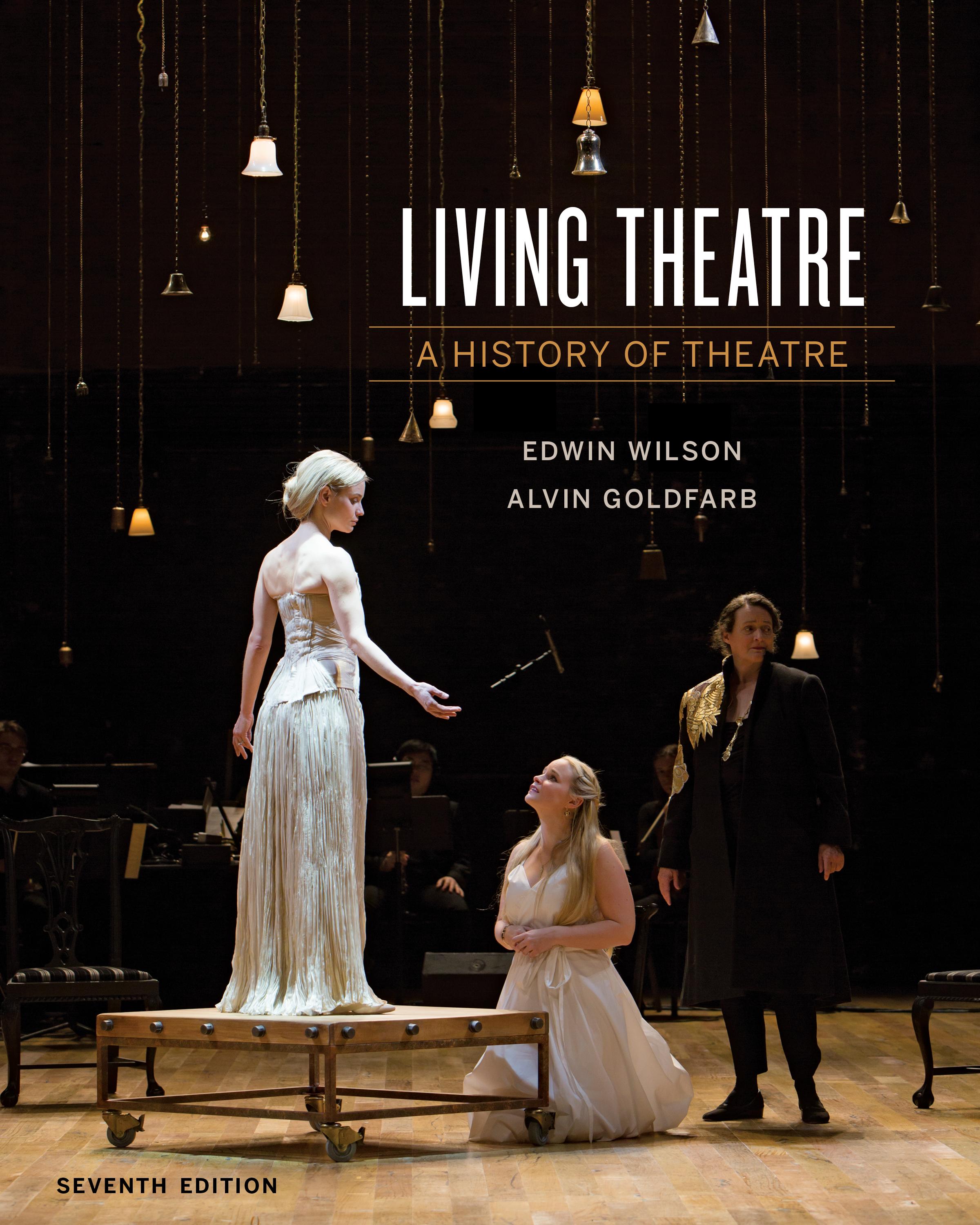
Living Theatre
A HISTORY OF THEATRE
SEVENTH EDITION
which the spread of revolutionary ideas was made easy. Before 1888 there were scarcely two dozen Filipinos who were Masons, and these were residents of Paris or other European Capitals, but from that year the spread of the Society was rapid. In 1892 there were many lodges all over the Archipelago, and women were admitted as members. Its mysteries and symbols appealed to the barbaric, halfcivilized natives, and these they retained, while their meetings were centres of discussions of the abstract and theoretical principles of freedom and independence with which the Malay brain is always pregnant. Discussions soon led to plotting against the Spanish authorities and the preliminary steps toward revolution, and what was Masonry only in name soon gave way to the Filipino League, of which Rizal was the leader. This league was an association with a basic form of Masonry, but whose true designs were political and anti-Spanish.
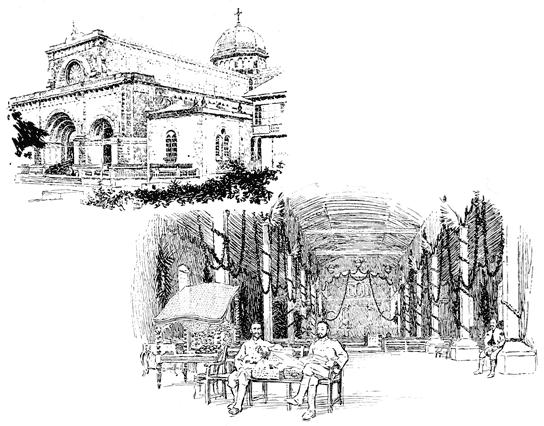
Exterior and Interior of the Insurgent Capitol in Malolos while Occupied as Head-quarters of the Utah Light Battery.
In this old church the Filipino Revolutionary Congress formulated the Constitution which was proclaimed on January 21, 1899.
The methods of the league were soon found to be not radical enough by a majority of the members, and the league, in 1894, was dissolved and the formidable and bloody Katipunan formed under the leadership of Marcelo Hilarío del Pilar. Its object was to secure the freedom of the Philippines by putting to the sword all the Spaniards in the Archipelago. Manila, of course, was the seat of the supreme council of the Katipunan, and its branches or chapters were established in all the provinces and principal towns of the Islands.
Every member on being initiated into the Society received a name by which he was always thereafter known to the other members, and all were masked. In this way no one knew the
While the Insurgent Capital still remained at Cavité, Aguinaldo, on June 18th and 23d, respectively, issued the proclamations which gave his government a representative form. In the proclamation of the 18th he invites attention to the Providential circumstances that had placed him in the position in which he then found himself, and signifies his intention not to shrink from his responsibilities, but to make the redemption of his people, "from slavery and tyranny, regaining our liberty and entrance into the concert of civilized nations," the aspiration of his whole life, and the "final object of all my efforts and strength." In the same proclamation the methods were given by which the chiefs of towns and provinces and the representatives to the Revolutionary Congress were to be elected.
In the proclamation of the 23d it was directed that the Dictatorial Government should thereafter be styled the Revolutionary Government and that the Dictator should thenceforth be known as the President of the Revolutionary Government. The executive, legislative, and judicial powers were defined and the manner of administering them was prescribed, and on the 27th of June the rules concerning the details of installing the government were published.
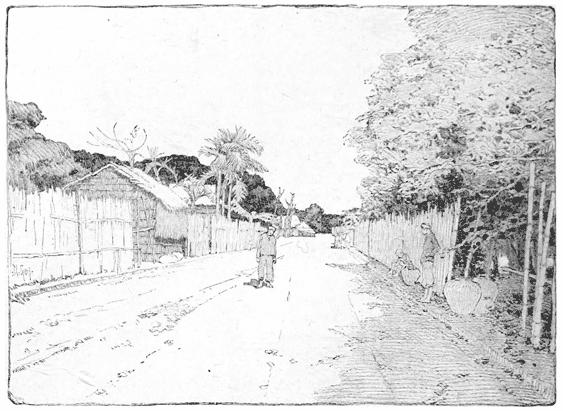
Street Scene in Malolos, Philippine Islands.
From Bacoor, on the 6th of August, was sent the letter to foreign governments, in which the "President of the Revolutionary Government of the Philippines, and in the name and representation of the Philippine people, asks the support of all the powers of the civilized world, and earnestly entreats them to proceed to the formal recognition of the belligerency of the revolution and the independence of the Philippines, since they are the means designated by Providence to maintain the equilibrium between peoples, sustaining the weak and restraining the strong, to the end that by these means shall shine forth and be realized the most complete justice in the indefinite progress of humanity."
The Augustinians had been assigned to the parish of Malolos, and in fact this body of friars held all the livings in the Province of