







A more affordable market sets the stage for recovery 42
The smart way to buy new
zero-cost habits
a stronger body, sharper mind and happier life 50
Lepro TB1 Smart Table
– where fun and tech
Goldman, President, Stafford Homes
Wellings Communities offers modern option for vibrant adults
Central Park – nature-inspired community rising in Bayview Village
Creating a mini-spa at home
What’s on trend for 2026
Designing with intention: Colour, calm and confidence in 2026
Why your body knows when a space feels right










An award-winning interior designer, Mariam Aboutaam is Director, Sales and Marketing, Interior Design at Kylemore, Markham, Ont., a builder known for master-planned communities and luxury homes. kylemoreliving.com.
Jesse Abrams is Co-Founder at Homewise, a mortgage advisory and brokerage firm based in Toronto. thinkhomewise.com
Daniel Steinfeld is President of the Toronto Regional Real Estate Board (TRREB). A Chartered Accountant, he previously served as Vice-President and Chief Financial Officer with the Toronto Argonauts and is a Broker and coowner On The Block Realty.
Mike Collins-Williams, RPP, MCIP, is CEO West End Home Builders’ Association. westendhba.ca.
Debbie Cosic is CEO and founder of In2ition Realty. She has overseen the sale of more than $15 billion worth of real estate. With Debbie at its helm, In2ition has become one of the fastest-growing and most innovative new home and condo sales companies. in2ition.ca
Dr. James Fung is a Chiropractor and Principal at Complete Balance Health Centre, Toronto. completebalancehealth.com
Barbara Lawlor is CEO of Baker Real Estate Inc. A member of the Baker team since 1993, she oversees the marketing and sales of new home and condominium developments in the GTA, Vancouver, Calgary and Montreal, and internationally in Shanghai. baker-re.com
Ben Myers is the President of Bullpen Consulting, a boutique residential real estate advisory firm specializing in condominium and rental apartment market studies, forecasts and valuations for developers, lenders and land owners. Contact him at bullpenconsulting.ca and @benmyers29 on Twitter.
Dave Wilkes is president and CEO of the Building Industry and Land Development Association (BILD), the voice of the home building, land development and professional renovation industry in the GTA. For the latest industry news and new home data, follow BILD on Twitter at @bildgta or visit bildgta.ca
SENIOR VICE-PRESIDENT, SALES, NEXTHOME Hope McLarnon 416.708.7987
hope.mclarnon@nexthome.ca
SENIOR MEDIA CONSULTANT Amanda Bell 416.830.2911 amanda.bell@nexthome.ca
EDITORIAL DIRECTOR Amanda Pereira
EDITOR-IN-CHIEF – GREATER TORONTO AREA Wayne Karl wayne.karl@nexthome.ca
CONTRIBUTORS
Mariam Aboutaam, Jesse Abrams, Mike Collins-Williams, Debbie Cosic, Dr. James Fung Barbara Lawlor, Linda Mazur, Ben Myers, Daniel Steinfeld, Dave Wilkes
EXECUTIVE MEDIA CONSULTANT Michael Rosset
VICE-PRESIDENT, MARKETING – GTA Leanne Speers
MANAGER CUSTOMER SALES/SERVICE
Marilyn Watling
SALES & MARKETING CO-ORDINATOR Gary Chilvers
BUSINESS DEVELOPMENT MANAGER Josh Rosset
DISTRIBUTION distributionteam@nexthome.ca
ACCOUNTING INQUIRIES accountingteam@nexthome.ca
DIRECTOR OF PRINT MEDIA Lauren Reid–Sachs
VICE-PRESIDENT, PRODUCTION – GTA Lisa Kelly
PRODUCTION MANAGER – GTA Yvonne Poon
GRAPHIC DESIGNER & PRE-PRESS COORDINATOR Hannah Yarkony
Published by nexthome.ca
Advertising Call 1.888.761.3313 for rates and information. Fax: 1.888.861.5038
Circulation Highly targeted, free distribution network focused on real estate buyers, using street-level boxes and select Canada Post distribution channels across the Greater Toronto Area and surrounding municipalities. Canadian subscriptions 1 year = 13 issues – $70 (inc. HST). Canada Post – Canadian Publications Mail Sales Product Agreement 40065416.
Copyright 2026 All rights reserved. All copyright and other intellectual property rights in the contents hereof are the property of NextHome, and not that of the individual client. The customer has purchased the right of reproduction in NextHome and does not have the right to reproduce the ad or photo in any other place or publication without the previous written consent of NextHome.
Editorial Submissions from interested parties will be considered. Please submit to the editor at editorial@nexthome.ca.
Terms and Indemnification
Advertisers and contributors: NextHome is not responsible for typographical errors, mistakes, or misprints. By approving your content and/ or submitting content for circulation, advertisers and contributors agree to indemnify and hold harmless NextHome and its parent company from any claims, liabilities, losses, and expenses (including legal fees) arising out of or in connection with the content provided, including but not limited to any claims of copyright infringement, unauthorized reproduction, or inaccuracies in the content. Advertisers acknowledge that they have the necessary rights, permissions, and licenses to provide the content for circulation, and they bear full responsibility for the content’s accuracy, legality, and compliance with applicable laws upon approval. Contributors acknowledge NextHome reserves the right to omit and modify their submissions at the publisher’s discretion.

WAYNE KARL
EDITOR-IN-CHIEF
New Home + Condo Guide
EMAIL: wayne.karl@nexthome.ca
TWITTER: @WayneKarl
You may notice a new look and feel to this publication to start 2026. Introducing – New Home+Condo Guide, GTA Edition – combining our former titles, HOMES Magazine, Condo Life and Active Life
Atypical times such as these called for a change.
Buying a new home is a major undertaking – quite likely one of the most important decisions you’ll make in your life. Doing so cannot and should not be taken lightly. Especially these days, with so many important questions, challenges and choices.
That’s where NextHome and New Home+Condo Guide comes in.
In combining our trusted publications – HOMES Magazine, Condo Life and Active Life – New Home+Condo Guide provides the ‘best of the best’ coverage in the new home, new condo and adult lifestyle categories, representing a great opportunity to learn about these three important sectors – no matter which homebuying demographic you might be in.
Our team of award-winning editors and expert columnists – with a roster of new contributors – helps demystify the need-to-know topics, to inform and educate you about industry developments, builders and developers, finance and other essential real estate related content.
Whether you’re looking to buy your first condo, upsize, downsize or otherwise learn about all things “home,” we’ve got everything here under one roof, so to speak.
Along with the important questions and choices you’ll face in your homebuying journey, there are also opportunities.
As veteran industry expert Debbie Cosic explains in her column on page 34, what we’re experiencing now is a healthy reset. Recent market conditions have warranted that “we re-sharpen skills that got rusty during the fast-paced years: Marketing better, building better, selling better and ultimately delivering a stronger product and experience for the consumer. When conditions aren’t easy, you don’t get to rely on momentum, you have to rely on skill, strategy and trust.”
On page 32, consultant Ben Myers uses his vast years of industry experience to offer six valuable “need-to-knows” about buying a home during challenging times. And on page 26, mortgage expert Jesse Abrams boils it all down to why 2026 is quietly becoming a potentially strong year for homebuyers.
You just need to know where to look – and read.
Like the homebuilding industry, New Home+Condo Guide is responding to change, and we’re here to help you learn from it.


Annual Greater Toronto Area (GTA) home sales declined in 2025 compared to 2024, as economic uncertainty weighed on consumer confidence. Over the same period, listing inventory remained elevated, allowing for selling prices to be negotiated downward, helping improve affordability, according to the Toronto Regional Real Estate Board (TRREB).
“The GTA housing market became more affordable in 2025 as selling prices and mortgage rates trended lower,” says said TRREB President Daniel Steinfeld. “Improved affordability has set the market up for recovery. Once households are convinced that the economy and labour market are on a solid footing, sales will increase as pent-up demand is satisfied.”
For calendar year 2025, GTA realtors reported 62,433 home sales through TRREB’s MLS System –down by 11.2 per cent compared to 2024. New listings amounted to 186,753 – up by 10.1 per cent year-over-year. The annual average selling price in 2025 was $1.06 million – down by 4.7 per cent compared to $1.12 million in 2024.
There were 3,697 home sales reported in December 2025 –down by 8.9 per cent compared to December 2024. New listings

entered into the MLS System amounted to 5,299 – up by 1.8 per cent year-over-year.
The MLS Home Price Index (MLS HPI) Composite benchmark was down by 6.3 per cent year-overyear in December 2025. The average selling price, at $1.01 million, was down 5.1 per cent compared to December 2024.
On a seasonally adjusted basis, December home sales were down slightly month-over-month compared to November 2025, while new listings were up. The MLS HPI composite trended slightly lower compared to November while the average selling price edged higher.
“Reaffirmed trade relationships and large-scale domestic economic development projects will be key for improved home sales moving forward. GTA households must
be confident in their employment situation before committing to long-term monthly mortgage payments, even in this more affordable market,” says TRREB Chief Information Officer Jason Mercer.
“We urge governments at all levels to take action now to provide tax relief for consumers and help ease the rising cost of living,” adds TRREB CEO John DiMichele. “Families and individuals need financial breathing room so they can afford a home or apartment and meet their basic needs. Fair and responsible tax policies can put more money back into people’s pockets, restore consumer confidence, and rebuild trust in the economy. These actions are essential to support stable households and create an economy that works for everyone.”
Despite affordability challenges and lingering economic uncertainty, Canada’s largest generation of potential buyers isn’t backing down from the housing market.
According to a recent survey by Wahi, a digital real estate platform and brokerage, Canadian millennials are maintaining strong intentions to purchase a home in the coming year, even as broader economic concerns persist. Wahi’s thirdannual Homebuyer Intentions Survey of Angus Reid Forum members indicates that overall homebuying interest remains steady year-overyear, with millennials leading all age groups.
“When you consider how concerns over tariffs, job security, and affordability have kept some homebuyers on the sidelines over the past year, it’s somewhat surprising to see unwavering homebuying interest from millennials,” says Wahi Economist Ryan McLaughlin. “It’s also encouraging to see that even against a more challenging economic backdrop, overall homebuying intentions don’t seem to have eroded.”
KEY FINDINGS INCLUDE:
• Millennials lead demand: 25 per cent of millennials say they will probably purchase a home in 2026 (23 per cent last year).
• Overall homebuying intentions hold steady: 17 per cent of Canadians aged 18 and up say they are likely to buy a home this year, unchanged from 2025.
• Gen Z pulls back: Gen Zs were less enthusiastic about buying a home. Only 15 per cent expressed interest compared to 20 per cent in 2025.
• Older buyers remain active: Gen X intentions were unchanged at 18 per cent, while baby boomer intentions rose to 10 per cent, compared to eight per cent in 2025.

Compared to younger cohorts, millennials appear better positioned to weather economic uncertainty. “Millennials are further along in their careers and typically have more financial stability than Gen Z buyers, which likely explains their continued confidence,” McLaughlin says.
The survey also found that homebuying intentions remained relatively strong in provinces with the highest cost of living. British Columbia recorded the highest share of prospective buyers, with 20 per cent saying they are planning a purchase this year, followed by Alberta (17 per cent), Manitoba (19 per cent) and Ontario (16 per cent). Homebuying intentions in Alberta matched those in Atlantic Canada, a region known for relative affordability.
While interest remains resilient, affordability continues to pose challenges. Among Canadians planning to purchase a home this year, 52 per cent say uncertainty around home prices could delay
their plans, consistent with last year’s findings. Financial uncertainty was also cited as a potential barrier by 29 per cent of would-be buyers. At the same time, improved borrowing conditions appear to be easing some concerns. Only 12 per cent of respondents say they are unsure whether they can secure a workable mortgage this year, compared to 19 per cent in 2025. Additionally, 30 per cent of prospective buyers say they may wait to see how interest rates evolve, compared to 38 per cent last year.


Mattamy Homes, North America’s largest family-owned homebuilder, reinforced its commitment to firsttime homebuyers in the Greater Toronto Area (GTA) through its firstever First-Time Homebuyer’s Expo, an educational and sales-focused event designed to help new buyers navigate an increasingly complex housing market.
Held in December at Universal Event Space in Vaughan, the Expo welcomed more than 450 attendees, to build on the momentum of recently announced federal and provincial first-time homebuyer GST and HST rebate programs while giving prospective buyers practical tools, expert guidance and a clearer understanding of how homeownership can become a reality.
“We know how overwhelming the process can feel for first-time homebuyers, especially with new programs and policies still taking shape,” says Jeremy Sage, general manager of GTA Homebuilding at Mattamy Homes. “This Expo was about sharing what we know, listening and helping people feel more informed and more confident about their next steps. If we can remove some of the uncertainty and replace it with clarity and trust, that is a meaningful step forward.”
The Expo featured a trade show-style format with 12 booths representing Mattamy’s homebuilding

52pick-up.com

and multi-storey portfolio, along with dedicated booths from the Design Studio, Customer Care and Warranty teams. Attendees were also able to connect with additional partners and vendors including RBC, CIBC, Leon’s, AMJ Moving and Rogers.
Guests had access to site maps, floorplan brochures and postcards highlighting model home locations across the GTA, Simcoe and Kitchener and Guelph areas. QR codes at each booth linked directly to the Mattamy website, allowing attendees to book in-person or virtual appointments with sales consultants on the spot.
A central presentation was delivered to attendees and provided a step-by-step roadmap to homeownership. Topics included the proposed first-time homebuyer GST and HST rebate, financing options such as Canada Mortgage and Housing Corp. (CMHC) programs and 35-year amortizations, the advantages of purchasing new construction over resale, and an overview of Mattamy’s broad product types and communities.
The Expo was designed to empower first-time buyers by building trust with Mattamy’s front-line teams and generate meaningful, informed conversations. It also addressed
buyers who remain hesitant to move forward until royal assent is received on the proposed rebate, ensuring they are prepared when the time comes.
Attendee interest in GTA homeownership was strong, with many reviewing pricing and being guided toward communities that best aligned with their desired product type and budget. At the same time, affordability remained a primary concern, alongside widespread questions about how the rebate would be applied, when it would be paid and how it might affect mortgage qualification.
Insights gathered from the Expo will help inform future educational initiatives, Mattamy says, including community launch events and sales centre learning sessions, all part of a longer-term strategy to support homebuyers from interest to purchase.
By bringing education, transparency and expert insight together under one roof, Mattamy Homes says it continues to play an active role in supporting first-time homebuyers as they take their first steps toward homeownership in the GTA.
mattamyhomes.com
Proptech Collective, Canada’s largest proptech and contech industry association, has released its annual Proptech in Canada Report (2025 in Review & 2026 Trends). Now in its fifth year, the report provides a comprehensive view of Canada’s evolving proptech landscape –tracking more than 590 active Canadian proptech companies, up from 535 last year.
Despite continued challenges in the fundraising market, Canadian proptech companies raised approximately $450 million in 2025. The report signals an important shift: Canadian proptech has entered a more stable and mature era. Founders have spent the last two years navigating a tighter funding environment, sharpening product focus, and building stronger fundamentals – positioning the sector for the next phase of scalable growth.
“At the peak of the market in 2021 and 2022, we were seeing close to 50 proptech funding rounds a year,” says Stephanie Wood, vice-president, Alate Partners and Report Lead. “Over the last three years, that’s come down to around 30 – and while fundraising has been tougher, it’s also been a forcing function that’s made the ecosystem stronger. People are still finding real problems in real estate, construction and housing – and building solutions for them.”
A central message of this year’s report is that there has rarely been a more important time to invest in Canada’s built-world innovation. Real estate and construction together represent more than 20 per cent of Canada’s GDP, and housing supply and affordability remain defining national priorities. At the same time, Canada continues to strengthen its reputation as a global hub for AI, supported by national investment and a growing commitment to digital innovation.
In 2025, these forces increasingly converged – with both public and
private sectors accelerating their focus on productivity, modernization and scalable housing outcomes. The report highlights growing momentum from government initiatives, including the launch of Build Canada Homes (BCH), backed by $13 billion in federal funding and aimed at increasing housing supply while supporting modern construction approaches.
Just as importantly, Proptech Collective’s findings show increased engagement from industry leaders across construction and real estate. More organizations are moving beyond one-off pilots and instead investing in innovation programs, accelerators and partnerships designed to bring emerging technologies into real operational environments – bridging the gap between experimentation and scalable adoption.
The report features six Canadian case studies that demonstrate “proptech in action,” showing how startups and operators are working together to modernize the built world:
1.
realtor.ca’s partnership with Pinch Financial integrates mortgage qualification directly into the home search experience – meeting buyers at key decision points and enabling faster, more informed action.
myAbode’s platform rollout helps brokerages streamline operations by offloading back-office workflows such as compliance and transaction processing – creating operational leverage and enabling scale.
3.
Fitzrovia’s partnership with Chexy enables residents to earn rewards
on rent payments, reflecting a broader push toward hospitality-level experiences in rental housing and turning rent into a smarter financial transaction.
4.
The report also showcases how Adaptis is working with Forum to support building performance strategy and decarbonization planning – demonstrating how sustainability, ROI and asset-level decision-making are increasingly converging through technology.
5. AUTOMATION AND INDUSTRIALIZED CONSTRUCTION
Mattamy’s partnership with Promise Robotics reflects growing momentum in automation and industrialized construction – exploring new ways to improve consistency, speed and productivity in homebuilding.
6. AI AT SCALE
The report highlights how Pomerleau is deploying AI to improve execution, including the development of its internal platform Almanac, using historical bid and project data to produce faster, more accurate estimates and free teams to focus on higher-value work.
The report identifies the most defining trend shaping the next era of proptech: AI is now being applied in real workflows across the built world. In 2025, AI shifted from an emerging concept into a practical enabler across the real estate and construction value chain – accelerating productivity, reshaping go-to-market strategies and being embedded directly into products that touch leasing, operations, development, asset management and construction execution.
proptechcollective.com
The Niagara Home Builders’ Association (NHBA) recently hosted its annual Christmas Celebration & Elimination Draw, paying recognition to the individuals and companies that are responsible for the association’s presence and viability, by awarding both a Member of the Year Award and Nick Basciano Company of the Year Award.

Paul Savoia, past NHBA Chair, current NHBA Board Member and Vice-President of Niagara Pines Developments, took home the Member of the Year Award.
NHBA CEO Chuck McShane says that over his two terms as Chair, Savoia navigated the association through challenging issues including housing affordability, development charge increases and played a pivotal role in securing Skills Development Funding, which has to date trained more than 320 individuals for a career path into the skilled trades.
With an association of more than 160 member companies, the Nick Basciano Company of the Year Award recipient was Mountainview Building Group.
As a contributing member to both the NHBA and the Niagara Community as a whole, Mountainview continues to build the region, while playing a pivotal role in shaping the future of the association and building
industry. Its partnerships with several local charitable groups have resulted in record breaking campaigns, benefiting FACS Niagara, The Niagara Children’s Centre, Hospice Niagara, Pathstone Children’s Mental Health, and the Ronald McDonald House, among others.
An innovative leader in shaping building practices, Mountainview has made key contributions to Tarion and Building Knowledge Canada, prioritizing clarity, quality and accountability.

This year, the NHBA also paid homage to Antony Candeloro, NHBA board member and co-owner of Centennial Homes Niagara, who was presented with a Special Recognition award for his contributions to both the building industry and the community.

In related news, NHBA also conferred its annual Wall of Fame Award to Chuck McShane, CEO of NHBA.
“This award honours an individual who has made outstanding and lasting contributions to the Niagara Home Builders Association, strengthened our relationships and been a community supporter,” says NHBA Vice-Chair, John Musso. “Chuck’s involvement with this association spans 30-plus years, and an impressive 45 years within the building industry.”

Also in December at its annual Christmas Celebration and Elimination Draw, NHBA collected toys and funds for Big Brothers Big Sisters of Niagara, to raise donations for the youth they provide support services to on a daily basis. A record number of donations from NHBA members included new, unwrapped gifts for youth ages eight to 18.
“We are honoured to continue to assist Big Brothers, Big Sisters year after year through the generosity of our member companies,” says NHBA Chair, Kelly Anderson. “This agency is a staple of our community, and we applaud the impact they make for children and families throughout the Niagara Region.”
Thinking of selling your existing home to buy new, and looking to update the exterior but concerned about budget? Take it one step at a time by dividing the task into annual projects.
This is the advice of leading roofing and building material company BP Canada in response to national consumer feedback nationally.
“In today’s challenging housing market, we’re seeing a trend towards homeowners investing in renovations, and exterior upgrades are at the top of their list to both enhance and add value to their homes,” says Nathalie Lambert, marketing director of BP Canada. She points to a report by the National Association of Realtors (NAR) showing that when the time comes to sell a house, 75 per cent of real estate agents say curb appeal is very important to attract buyers.
“Still, the effort and expense of tackling an exterior makeover can seem daunting,” Lambert says. That’s why BP Canada has come up with plan that breaks down an exterior facelift into affordable phases, all with a final project in mind.
A roof makes up one third of a home’s exterior and is a long-term investment, so it’s wise to choose shingles that have a lasting aesthetic in addition to strong protection.
She recommends using multitoned shingles for maximum beauty and to allow for flexibility to colour coordinate with other elements of a home’s facade over the course of the makeover. For example, a brown roof with hints of copper and beige, or a black roof with grey and tan nuances, may blend well with an existing exterior and will provide more options when it comes time to decide on hues for new siding, doors and trim.
Altering a home’s siding is a proven way to give a property a fresh new
look. Unlike a new coat of paint, siding is meant to last decades, so colour selection is key, says Lambert, explaining that coordinating the colour of siding with a home’s roof and trim can dramatically and cost-effectively transform a home’s exterior.
According to Diana Sousa, marketing director of Montrealbased Kaycan – one of the world’s top producers of vinyl and aluminum siding – replacing a home’s siding offers a high return on investment for home renovation projects, similar to installing a new roof.
When choosing siding, Sousa recommends considering timeless colours – such as white, beige, light or mid-tone grey, blue, green, dark grey and black – that blend best with a home’s other exterior elements as well as its landscaping. Since siding colours may appear differently depending on the time of day, it’s wise to hold up colour swatches throughout the day to ensure you will be content with your choice before buying, she says.
To achieve a contrasting effect, BP Canada suggests pairing white vertical siding and dark accents with shingles in shades of black, brown and grey. For a more uniform look, consider merging shades from the same colour family, such as light grey siding with dark trim and grey shingles.
Updating the front door and garage door, especially if they’re showing wear and tear, will take any home exterior up a notch and is a great way to add pops of colour – a popular growing trend, Lambert says.
If you’re eager to update your doors but aren’t ready to replace them, consider painting them in the interim.
With accent colours all the rage for the year ahead, she says bright hues such as green, blue and orange,
or warm tones such as terra cotta, copper and brick red, can be used on the front door to add wow factor to a home, ensuring they coordinate with the roof and siding.
Like choosing siding, once you’ve selected a colour, Lambert recommends checking your choice in daylight – both sunlight and shade – as it may look differently than it did on the paint chip.
To complete the home renovation process, it’s worth considering changing your windows, Lambert says. In addition to increased curb appeal, new windows boost property value, provide better energy efficiency and address issues such as drafts, damage or poor security. Replacing old windows with new, energyefficient models can also lower energy bills and improve comfort.

A 20-year-old home with black shingles and beige siding, in need of a new roof

The original siding has been replaced with new grey siding, and doors, front facade and trim accented with brown tones, completely transforming the home with a striking, updated look

by WAYNE KARL
Today’s homebuyers are evermore discerning and demanding – no matter what or where they’re buying. Those who are established and downsizing in a prime Toronto location? Even more so.
Enter Stafford Homes, a diversified private property development and asset management group which has been carrying out land development, construction and property management in Canada for more than 50 years.
Stafford has earned a reputation for construction quality, beautiful designs and thoughtful living spaces.
Its latest? A signature project in prestigious Forest Hill Village – 429 Walmer – an exclusive collection of 48 residences with suites starting at more than 2,000 sq. ft. in two- and three-bedroom layouts.
To learn more about 429 Walmer and other goings on at Stafford, we sat down with President Jonathan Goldman.
How was 2025 for Stafford Homes? What were the highlights?
Last year was a strong and productive year for Stafford. On the construction front, we reached several key milestones, including the successful closing of our 181 East project in North York, and continued steady progress at Linea in Scarborough and The Georgian in Cabbagetown. We also expanded our pipeline by originating new future opportunities and marked an exciting launch with 429 Walmer in Forest Hill. Overall, the year reflected disciplined growth, momentum across our portfolio and a continued focus on delivering well-designed
communities in established neighbourhoods.
And what’s your outlook for 2026?
Our outlook for 2026 is very positive. We remain highly active on the construction side, with the upcoming closing of Linea in Scarborough representing a major milestone for the year. Sales momentum at 429 Walmer has been strong, and we’re also preparing for a significant closing on one of our newer opportunities this May. As we look ahead, we’re optimistic that market sentiment will continue to improve, and that confidence will return as the year progresses. Adding to this momentum, we’re preparing to break ground on our purpose-built rental project in the heart of Toronto’s Annex, reinforcing our long-term commitment to
building resilient, well-located communities.
There’s been a lot of movement among governments at all levels to address the issues facing the housing industry. What more do you think can be done?
The government has taken steps to address housing supply, and it’s important to maintain that momentum. To truly move the needle, there needs to be a balanced approach that supports rental, affordable and ownership housing alike, particularly for middle-income Canadians who are increasingly priced out of the market.
Lowering government-imposed costs on new housing, improving approval timelines, and reducing regulatory friction would go a long way in restoring feasibility and affordability. These changes would allow the private sector to deliver housing more efficiently and at scale.
Housing is one of the largest drivers of Canada’s economy and employment. Supporting its long-term health is not only about construction, but it’s also about ensuring stable communities and economic resilience. Continued collaboration and practical policy solutions will be essential moving forward.
How are things coming along at 429 Walmer?
Momentum at 429 Walmer has been very strong. We’ve surpassed the 20-per-cent sales mark, construction milestones are tracking as planned and the project remains on schedule across all key targets. Interest continues to be encouraging, reflecting the project’s appeal and its location in one of Toronto’s most established neighbourhoods. Overall, we’re pleased with the progress and confident in the trajectory toward occupancy.
What is the typical buyer demographic? What sets this project apart from others in the area?
The typical buyer at 429 Walmer is an established Torontonian, often downsizing, who is looking to simplify without compromising on space, quality or lifestyle. These buyers are seeking thoughtfully designed homes that offer both comfort and longterm value, in a neighbourhood they already know and trust.
What truly sets the project apart is its deliberate focus on generously sized suites paired with a highly curated level of amenities and service. 429 Walmer is a boutique, largesuite residential offering that stands apart in the local market, delivering a level of refinement, privacy and attention to detail that is rarely seen in new condominium developments in Toronto.
What or who is your most influential inspiration for what you do?

What do you look forward to most in 2026?
Continuing the work we’re committed to: Advancing projects, delivering homes and seeing long-term plans come to life. It’s about steady progress, disciplined execution and maintaining the focus that allows us to build thoughtfully and responsibly year after year.
What’s next for Stafford Homes? We’re focused on continued, disciplined growth through a more diversified portfolio. That means advancing new projects, expanding our purpose-built rental platform and maintaining a balanced mix of housing types that allows us to respond to evolving market needs while staying true to our long-term vision.
stafford.ca
Much of my inspiration comes from watching my father, Gary, over the years. Seeing the way he committed himself to his family, his work and his community has had a lasting impact on me and continues to influence how I approach what I do today.
Away from the office on your downtime, you’re happiest when you…?
Spending time recharging – both physically and mentally. That means staying active through athletics, slowing down with reading and meditation, and maintaining balance. We put a lot of energy into our work, so that time to reset is essential.
What’s on your TV binge watched, book reading or podcast list these days?
I don’t watch much television, but I read daily. The Daily Stoic by Ryan Holiday has become a regular part of my mornings, and I’m currently revisiting Catch-22, which remains just as sharp and relevant with each read.
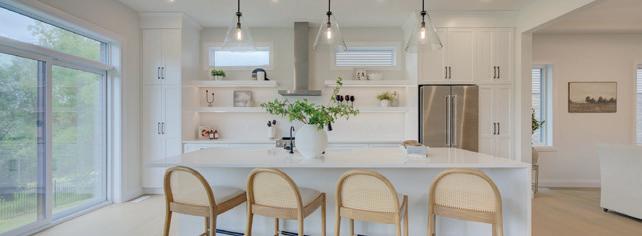
Your dream home in Guelph and Cambridge with Terra View Homes
For more than 30 years, Terra View Custom Homes has been building awardwinning homes in Guelph and surrounding areas, garnering industry recognition for its dedication to Green building practices and energy efficiency. Terra View specializes in new, custom and Net Zero homes to help bring Guelph and surrounding areas’ most sustainable communities to life.
How will you prepare for the 2026 housing market?
A new year is a natural time to take stock – of what 2025 was like and what might lie ahead. When it comes to housing, and more specifically your plans to buy a new home, there’s no denying that 2025 was a challenging year. So, 2026 can only be better, right?


Motivated buyers signal renewed confidence heading into 2026
The Canadian housing market could be on the upswing looking ahead to 2026, with more buyers preparing to enter the market and home sales expected to increase by 3.4 per cent next year, according to ReMax Canada’s 2026 Housing Market Outlook. This follows signs of renewed buyer intent from the fall, compared to the first half of the year.

Canada’s housing market poised for reset in 2026, with modest price growth
After a challenging 2025 marked by economic and political shifts, 2026 is to emerge as a crucial reset year for Canada’s housing market, according to the Royal LePage Market Survey Forecast. Canada’s residential real estate market is expected to post modest price gains next year and an increase in sales activity, as buyers continue to move off the sidelines.
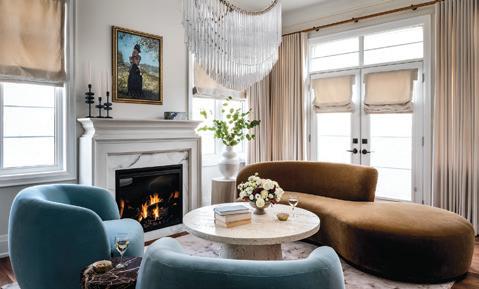
Fireside elegance the beauty and benefits of a fireplace
When designing a new floorplan or model home, one element consistently brings comfort, character and timeless appeal: The fireplace. Beyond providing warmth, fireplaces create a focal point that adds both elegance and cosiness to any room.

There comes a moment – not marked by age, but by clarity – when you begin to ask a different kind of question about home. Not “how big is it?” or “how long will we stay?” but “does this still support the way we want to live?”
As Brené Brown reminds us, “Courage starts with showing up and letting ourselves be seen.” For many, that courage shows up as a willingness to imagine something different – and to take the next step toward a life that feels more aligned with the way we want to live.
At Wellings Communities, the company believes your next move should never mean slowing down. In fact, it should do the opposite. That belief is that your next move should be started with a question: “What our lifestyle could stay as vibrant as we are?”
For many active adults, the answer begins with rightsizing – a thoughtful shift that focuses less on square footage and more on quality of life. Rightsizing isn’t about giving something up; it’s about gaining back time, energy, and freedom. It’s about choosing a home that works with you, not one that constantly asks for more.
The reality is that traditional homeownership often comes with hidden costs – weekends and social opportunities lost to maintenance, rising property and school taxes, unexpected repairs, condo fees and the mental load of managing it all. Many members say these responsibilities can quietly compete with the things that truly matter: Travel plans, fitness goals, social connections, hobbies and simply living life at your own pace, on your own schedule.

A Wellings Community offers a next-move option designed for people who want to keep saying “yes” to life. Here, you’re free to live on your own terms – without property taxes or condo fees, lawns to mow, roofs to replace or endless to-do lists waiting at home. Instead, your time is yours again.
Imagine waking up knowing your day belongs to you. Maybe it starts with a workout, a walk or a coffee with friends. Maybe it’s spontaneous travel, creative pursuits or quiet moments that feel anything but boring. A vibrant lifestyle looks different for everyone – but it always begins with choice.
Our communities are built around that idea. Thoughtfully designed villas or premium apartment suites, welcoming shared spaces and a culture that encourages connection without obligation. You choose how
involved you want to be. You choose the pace. You choose the life.
Rightsizing your life doesn’t mean compromising comfort or independence. It means aligning your home with who you are now – and who you’re still becoming. It’s about removing the friction that gets in the way of living well, so you can focus on what brings you energy, purpose and joy.
So, what if your next move wasn’t about less, but about more? More freedom. More flexibility. More convenience and more time to do what you love.
Wellings Communities believes your home should support a lifestyle that’s just as vibrant as you are – today, tomorrow and well into what’s next.
Explore your options at Wellings Communities in Ontario and Alberta by visiting mywellings.com today.
Each January, social impact organizations like Big Brothers Big Sisters of Canada (BBBS) celebrate the work of volunteer mentors who show up and give their time so that a young person can feel seen, included and supported.
At its core, BBBS and its programs ensure that a young person who faces adversity and needs an additional consistent and supportive developmental relationship, can access one. Over time, the young person (“Little”) and the mentor (“Big”) navigate life’s highs and lows, together. The mentor teaches the mentee to express care and challenges their young mentee’s growth. The mentor provides support, shares power and expands possibilities for their mentee. The mutual benefits of such an intentional relationship are profound and can grow to last a lifetime. When a young person graduates a Big Brothers Big Sisters mentoring program, it is not unusual for them to be connected as adults, years after their first connection.
In Canada, more than 18,000 trained adult volunteers mentored more than 33,000 young people. Their stories are as unique as each person. Frank and Peter’s story spanned more than four decades. That’s the power of mentorship.
Frank met his Big Brother, Peter, in 1979. He was 10 years old. Scared, displaced and living in constant chaos. Peter didn’t just change Frank’s life. He saved it.

When Frank was abandoned in a basement apartment and forced to work in a mushroom factory at age 12, Peter showed up. When Frank was sent to a group home, Peter found him. When Frank had no place to call home, Peter gave him one. When Frank had no hope, Peter reminded him of what it felt like to be human again.
Over the years, Peter became more than a mentor. He became a lifeline. Through every loss, every restart, every rite of passage, Peter stayed.
He wasn’t a father. He wasn’t blood. But he was the consistent presence that helped Frank build a life: A marriage, child, business and sense of self. And now, after 45 years of showing up, Peter is gone. The
pair got to express gratitude and say their goodbyes.
Frank reflects on Peter’s memory because he wants people to understand that Big Brothers Big Sisters isn’t just a program. It’s not just about volunteering. It’s about being the difference between despair and possibility. Between being lost and finding a future.
And sometimes, it’s the only thing that keeps a kid alive.
If you’ve ever doubted how much one person can change a life, just think about Frank and Peter’s story.
And if you’re ready to be that person, connect with your local Big Brothers Big Sisters agency today at bigbrothersbigsisters.ca.


DAVE WILKES

Every November, BILD hosts its annual Outlook Breakfast, where the industry gathers to hear from prominent economists, housing experts, political strategists and
pollsters. It is an opportunity for builders, renovators and the many companies that support them to look ahead, assess the landscape and gain insights into what the next year may hold for new housing supply, commercial development and renovation activity.
This year’s event featured insights from Sean Simpson, senior vicepresident of public affairs at Ipsos Canada, whose research captured a
very clear picture of public sentiment heading into 2026. The message was unmistakable: Canadians are worried, and their concerns have direct implications for the housing sector, underscoring the need for immediate and meaningful government action.
Simpson’s presentation showed that the optimism surrounding the arrival of the Carney government is already beginning to fade. Canadians sense that a recession, or at the
very least a significant economic slowdown, is approaching. They are adjusting their behaviour, such as delaying large purchases. For the new home market, where buyers were already cautious, they are continuing to stay on the sidelines – and this represents a serious issue. When people retreat from major purchases such as homes, the impacts ripple across the entire construction ecosystem. Fewer sales mean fewer starts in the years ahead. Fewer starts mean fewer jobs – and less supply. This, in turn, ripples through the broader economy, with fewer appliances and home furnishings getting sold, less demand for garage doors and windows, less sod, fewer decks and fewer new fences, and on and on. Canada cannot afford a prolonged pause in housing activity at a time when supply is already dangerously behind, and the economy is already weak from a global trade war.
Simpson’s presentation also showed that affordability pressures are continuing to shape how Canadians live, and many households are being forced to accept a new normal that offers fewer choices and less stability. For many young families, homeownership is slipping even further out of reach. Many wonder if Toronto will soon be a city only the wealthy can access, with everyone else pushed farther and farther away to the edge of the region, driving long distances just to qualify for a mortgage. These are not the markers of a healthy housing market. They are indicators of a system under severe strain, and the consequences for quality of life are becoming impossible to ignore. What happens to the GTA when those of working age and young families leave en masse?
Simpson noted that the generational divide continues to deepen. Younger Canadians are dealing with realities that their parents and grandparents never
faced: Record prices for everything from groceries to homes, stagnant wage growth relative to inflation, and the perception that they are working harder for less. This gap in lived experience is shaping attitudes toward public policy, and unless governments reflect this reality in their decisions, frustration will only grow.
Housing has become not just a priority, but the priority. It ranks first in Toronto and sits among the top national concerns. Canadians want solutions at a scale that matches the urgency they feel every day when facing high rents or home prices that are out of reach. Public sentiment has been clear: Governments must act with the seriousness this crisis demands. That means aligning policy decisions with the lived experience of Canadians, rather than relying on optimistic projections, outdated assumptions about how quickly the market will correct itself or that the government itself can deliver housing faster and cheaper than industry.
One of the most striking parts of Simpson’s research is the level of public support for decisive action. Canadians believe that governments should “build, baby, build.” They are even willing to accept deficits if it means building more homes quickly. They want to see cranes in the sky, shovels in the ground and policies that remove financial barriers to new construction.
From the industry’s perspective, the most effective role for government is not to step into the business of building homes, but to lift the vast sea of red tape that delays projects and reduce the mountains of fees, taxes and charges that add hundreds of thousands of dollars to the cost of every new home – and allow the industry to do what it does best: Build.
If there has ever been a moment to spur new housing supply by cutting the HST on all new homes for all buyers (not just first-time buyers), it is now. The public understands
“
” Canada cannot afford a prolonged pause in housing activity at a time when supply is already dangerously behind, and the economy is already weak from a global trade war.
that without bold action, the supply shortfall will only deepen and affordability will continue to erode.
BILD’s Outlook Breakfast made one point crystal clear: Canadians want a housing system that works, and they are prepared to support governments that take real steps to get more homes built. The time for small adjustments and broad, vague promises has passed. It is time for large-scale action that recognizes the magnitude of the challenge and responds accordingly – and quickly.
Dave Wilkes is President and CEO of the Building Industry and Land Development Association (BILD), the voice of the homebuilding, land development and professional renovation industry in the GTA. For the latest industry news and new home data, follow BILD on Twitter, @bildgta or visit bildgta.ca.

A POTENTIALLY STRONG YEAR FOR BUYERS IN CANADA
JESSE ABRAMS

After several years of uncertainty, 2026 is shaping up to be a meaningful reset for Canadian homebuyers. Not because prices are collapsing or rates are heading back to record lows, but because the
market is becoming more balanced and easier to read.
For buyers who stepped back over the last few years, that change is important.
A MORE PREDICTABLE RATE ENVIRONMENT
From 2022 through much of 2024, interest rates were the single biggest source of stress for buyers. Rapid increases made planning difficult,
and many people simply could not trust the math long enough to feel comfortable moving forward.
As we move into 2026, that dynamic has changed. Rates are no longer swinging wildly. While they remain higher than what buyers were used to in the late 2010s, they are far more stable.
Stability matters. When buyers can reasonably estimate their payments and understand how future renewals
“ ” Rates are no longer swinging wildly. While they remain higher than what buyers were used to in the late 2010s, they are far more stable.
Across many Canadian markets, inventory levels are climbing. Not at a pace that overwhelms demand, but enough to shift the balance.
Buyers are no longer forced to choose between overpaying or missing out. They have time to compare properties, look at layouts, assess locations and push back on pricing that does not line up with reality.
This change also affects seller behavior. Pricing is becoming more grounded, and conditions such as financing and inspections are returning. These may seem like small details, but they have a real impact on buyer outcomes.
For several years, negotiation was largely off the table in many markets. Buyers were expected to act quickly and accept terms as presented.
In 2026, that has changed. Buyers are negotiating not just on price, but on closing dates, conditions and sometimes even post-closing arrangements.
This does not mean buyers automatically have leverage, but it does mean conversations are happening again. That alone can lead to better overall value.
One upside of a challenging market is education. Buyers today are more informed than they were five or 10 years ago.
They ask thoughtful questions about fixed versus variable rates, shorter terms, amortization strategies and renewal risk. They understand that the lowest rate is not always the best option and that flexibility can matter just as much as cost.
In a market like 2026, knowledge becomes a real advantage.
out drives decisions, and long-term thinking takes a back seat.
What we are seeing now is different. With fewer bidding wars and more time to decide, purchases are being made with logic instead of pressure. Buyers are walking away from homes that do not fit their needs or budgets.
That restraint often leads to better outcomes, even if prices remain relatively stable.
A strong buyer market is not just about conditions, it is about readiness.
Buyers who take the time to review their finances early, understand their options, and define clear priorities have flexibility. They can move quickly when the right opportunity appears, without feeling rushed into a bad decision.
This is where early conversations with professionals can be helpful. Not to push a purchase, but to remove uncertainty.
At Homewise, we see this pattern consistently. The buyers who benefit most are rarely reacting to headlines. They are planning ahead and staying patient.
This will not be a loud year for housing. There are no dramatic shifts or sweeping narratives.
But for buyers who value stability, choice and thoughtful decisionmaking, that quiet is exactly what makes it appealing.
might look, confidence improves. Fewer surprises lead to better decisions, even if borrowing costs are not perfect.
Hot markets often push buyers to act emotionally. Fear of missing
Jesse Abrams is Co-Founder at Homewise, a mortgage advisory and brokerage firm. thinkhomewise.com
+MORE CONTENT ONLINE nexthome.ca


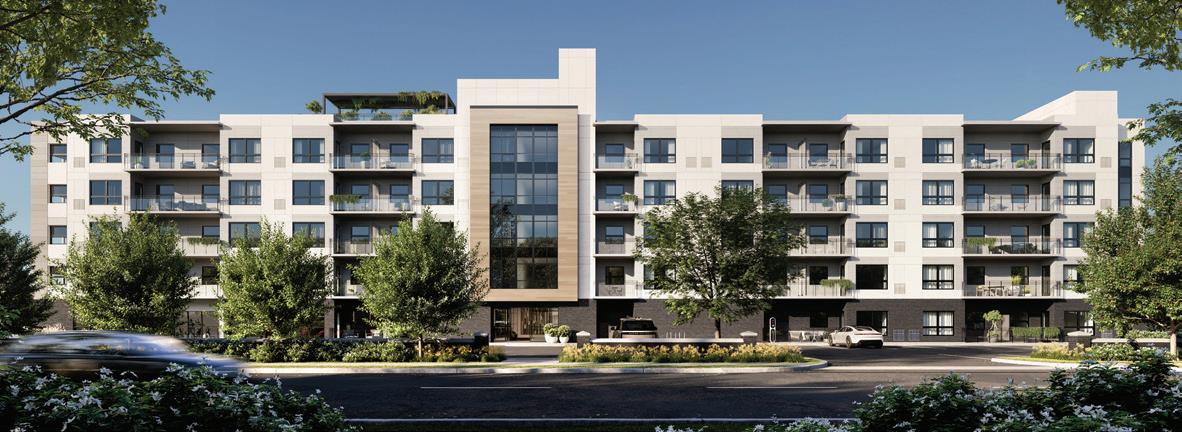



Construction of Amexon’s The Residences at Central Park is well underway on Sheppard Avenue in the east end of the prestigious Bayview Village neighbourhood.
Phase 1 sold out ahead of schedule, and construction has already taken this first tower to its full height of 31 storeys.
The development is one of the largest residential projects currently under construction in Toronto. Designed by Core Architects for Amexon Development Corp., this 12-acre master-planned community will reshape York’s Bayview Village area, with five towers ranging from 12 to 31 storeys.
Central Park is a vibrant, mixeduse condominium community where urban life meets and marries with the natural world. Residents enjoy proximity to a range of urban conveniences and also have direct access to the East Don Parkland’s sprawling, forested ravine that embraces the property in lush nature.
At the heart of the community is the award-winning Central Park Common – a landscaped, threeacre urban park that will feature pedestrian-friendly streets, bike paths, casual dining venues, fountains, reflecting pools and year-round programming featuring a farmers’ market and ice-skating rink. Other highlights include retail space, restaurants and services including onsite daycare facilities. All Central Park residents will have the use of 55,000 sq. ft. of fitness, wellness, leisure and social amenity space – and they’ll find getting around the GTA incredibly convenient, with subway and GO transit right at their door.
Central Park was recently the winner of the coveted IPAX Americas Property Award for Best Sustainable
Residential Development in Canada. Additionally, the Ontario Home Builders’ Association (OHBA) has awarded Central Park with the Project of the Year Award – People’s Choice. This highly sought-after award recognizes project excellence and is given to a company that exemplifies outstanding professionalism and integrity with their business, their community and the industry at large.
The entire community will incorporate a range of industryleading Green features, and Central Park has been recognized by the Building Industry and Land Development Association (BILD) as a finalist for the Green Builder of the Year award. Setting a new standard in the sustainability arena, Central Park is the first large-scale project of its kind in Canada to include EV charging stations in all parking areas for residents, visitors, office tenants and retail patrons. In all, there will be more than 1,500 charging stations installed.
The community will eventually encompass more than 1,500 suites
in one- to three-bedroom plus den layouts, in sizes from 439 to 1,200 sq. ft. Suite and amenity interiors by II BY IV DESIGN are warm and sophisticated, and the living spaces incorporate flow-through layouts that make the most of spectacular views from the floor-to-ceiling windows and generous outdoor balconies. Prices begin from the $700,000s. Amexon’s award-winning, 10,000-sq.-ft. Central Park Presentation Centre is located at 1200 Sheppard Ave. E., Toronto. Flooded with natural light through floor-toceiling glass walls, the centre was built to be a permanent fixture, with plans for it to ultimately serve as a community event venue. Visitors can indulge in gallery-like surroundings that include kitchen, bathroom and walk-in closet vignettes, and explore a curated selection of premium interior finishes and high-end appointments that come standard here.
For more information, call 416.252.3000 or visit centralparktoronto.com.

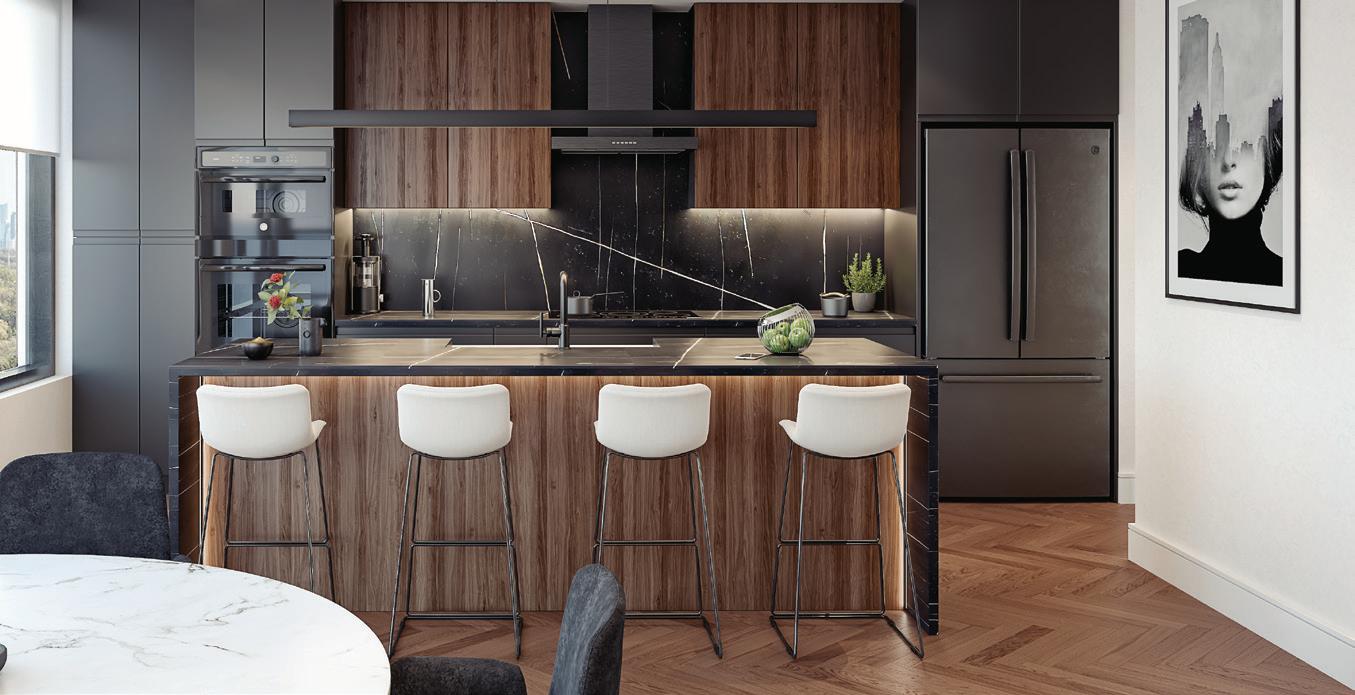
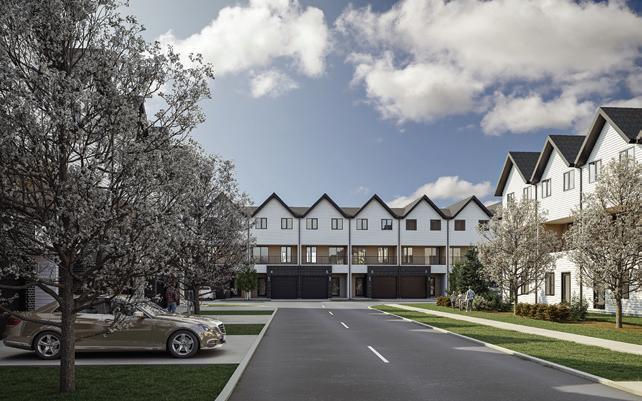


For the last two years, many prospective new-home buyers have been stuck in limbo: End-users waiting for better affordability, and investors wondering whether rental demand has peaked. At the same time, developers hold back new launches and struggle with what to do with unsold inventory. This uncertainty is exactly what made Toronto Under Construction Episode 97 useful listening. I hosted an all-female panel featuring Sarah Segal (simplydbs), Jasmine Young
(Zonda Urban) and Jane Renwick (RenwickCorp), and the discussion landed on a message that new-home purchasers and rental investors need to hear clearly: Today’s market isn’t “broken,” it’s resetting. The right move is not to predict a perfect bottom, but to buy with a strategy that survives multiple outcomes.
1. DEMAND HASN’T DISAPPEARED, BUT THE MARKET IS DIGESTING SUPPLY
The episode opened with a blunt framing: The region’s long-term need for rental housing remains large, even if near-term conditions feel softer. The panel discussed how recent increases in completed rental inventory, combined with more cautious immigration targets, has temporarily
eased pressure in parts of the market. For buyers and investors, the takeaway is straightforward: Short-term softness can coexist with long-run undersupply. That matters because “soft” does not automatically mean “cheap,” and “tight” does not automatically mean “a great investment.” The panel’s point was more nuanced: A market can feel uncomfortable during lease-up surges and still be structurally undersupplied. If you’re buying new today, you should underwrite for realism in the first 12 to 24 months, but expect notable price growth in the final years of this decade.
2. THE REAL RISK IS NOT PRICING, IT’S TIMING AND ABSORPTION
One of the most practical themes in the conversation was absorption capacity. Even strong rental apartment
buildings lease only so many units per month, and that becomes a constraint as projects scale up. Segal and Renwick emphasized that very large buildings may bring construction efficiencies, but they also create a lease-up reality where the building competes against itself for longer than most buyers appreciate.
For investors, this is a key underwriting adjustment: There will be condominium buildings that convert to rental tenure, but those buildings will be smaller than many of the large condo buildings we have seen in the past. The competition for an investor’s rental unit will be much lower in the future as fewer condo projects get built, and purposebuilt rental projects are more conservatively sized for the reasons outlined above.
I referenced the Sud Group’s “Sud Living” approach to midrise rentals, and the panel leaned into why that scale has become more attractive. Midrise projects often sit in the sweet spot: Large enough to support professional operations, but not so large that lease-up becomes a multi-
year grind. You can build efficiently, maintain a coherent resident experience, and still stabilise within a timeframe that lenders can tolerate.
For new-home buyers, the implication is subtle but important. The market is gradually rewarding “right-sized” buildings and suites. Buyers should pay attention to the fundamentals that survive a reset: Functional layouts, durable finishes, livable storage and buildings that feel manageable rather than overextended. There will always be demand for highrise units with tremendous views, but an investor should also consider the stability of owning and renting out a larger unit with a tenant that intends to stay long term, avoiding turnover and releasing costs.
“
” The right move is not to predict a perfect bottom, but to buy with a strategy that survives multiple outcomes.
I highlighted lease-up incentives appearing across the market, and the panel discussed why inducements can distort what rents really are. One month free, gift cards, free internet, furnished suites… it all blurs the true number. Young’s market lens (from Zonda Urban) reinforces the discipline needed here: Incentives should be translated into effective rent and compared against real alternatives.
For prospective investors in the new condo market, it is critical to examine not just the headline rents at competitive rental buildings, but the rent net of incentives. If you’re
looking for a cash-flow positive condo rental unit, comparing to the most expensive rental apartments must be done with the consideration of incentives, the greater security of tenure than a tenant receives, plus the on-site professional property management. The two final considerations come with a premium.
The episode’s subtext was disciplined decision-making. If you’re a newhome buyer looking to move into a new condominium yourself, prioritize: A layout you can live in for longer than expected (because plans change and the market might not cooperate), a building with operational credibility and a high-quality developer, not just a glossy brochure, a location that holds demand through cycles (transit access, employment proximity, daily convenience).
If you’re an investor keen on renting the suite out, prioritise: Tenant-retention features (storage, parking optionality, predictable utilities), product that competes on livability, not just finish quality and buildings with realistic forecasted condo fees.
Episode 97 of the Toronto Under Construction podcast didn’t pretend the next 12 months will be smooth, but there are always opportunities and great deals in down markets.
Do your own research, surround yourself with an experienced team, and good luck.
Ben Myers is the President of Bullpen Consulting, a boutique residential real estate advisory firm specializing in condominium and rental apartment market studies, forecasts and valuations for developers, lenders and land owners. Contact him at bullpenconsulting.ca and @benmyers29 on Twitter.
+MORE CONTENT ONLINE nexthome.ca

DEBBIE COSIC

Every January, the real estate world fills up with forecasts. Rates will do this. Prices will do that. Buyers will return. Sellers will panic. And while those conversations can be interesting, I’m skipping predictions this year. Not because I don’t care what happens next, but because I’m more focused on what should happen and what we should be pushing for as an industry, and what Canadians truly need to see change.
Before we talk about 2026, here’s what real estate actually learned in 2025.
For many of us, 2025 was a humbling year. It forced the industry to get leaner, sharper and more disciplined. We learned that in some cases, less really is more. Quality over quantity became more than a saying – it became survival. The businesses and professionals who stayed consistent, stayed professional, and stayed focused on service were the ones who kept moving forward. It was also a “back to basics” rollback. The market demanded that we re-sharpen skills that got rusty during the fast-paced years: Marketing better, building better, selling better and ultimately delivering a stronger product and experience for the consumer. When conditions aren’t easy, you don’t get to rely on momentum, you have to rely on skill,
strategy and trust. In many ways, that’s a healthy reset.
“ ” When conditions aren’t easy, you don’t get to rely on momentum, you have to rely on skill, strategy and trust.
Now, looking ahead, I don’t believe real estate needs more trends in 2026. It needs better values.

That starts with affordability, not as a buzzword, but as a real, measurable goal. If we want a stable market and a strong economy, we need to make homeownership realistic again for families, for young Canadians trying to start their lives, and for seniors who deserve security and dignity. Housing is not just a financial asset. It’s the foundation of stability; it impacts jobs, education, mental health and the ability to grow in Canada economically. So, here’s what I’m hoping changes.
First, interest rates should continue to come down, but responsibly. We don’t need to return to pandemic-era like 1.7-per-cent rates. That kind of cheap money isn’t sustainable, and it causes long-term damage. What we need is a healthy, balanced rate environment, something around 3.5 per cent that supports both buyers and economic stability.
Second, we need better amortization options. If we pair lower rates with 50-year amortization spreads, carrying costs drop dramatically, in some cases by
nearly a third. That creates instant affordability without artificially inflating prices overnight. Some markets overseas are experimenting with ultra-long mortgage terms. In places such as the UK and parts of Europe, lenders offer 40- to 50-year amortization schedules, and reports note exceptionally long mortgage horizons in select countries. While not yet widespread practice across all of Europe, these products illustrate alternative approaches to increasing affordability that Canada could study.
Third, we need the removal of the stress test. The financial qualification rules are simply too restrictive. Banks need to loosen the purse strings. We have never seen so many mortgage refusals in the history of our company as we’ve seen in the last year – and that tells you something is broken in the system.
Fourth, we need a true first-time buyer product – a real five-per-cent down payment option that isn’t limited by income caps or home price restrictions. And we need a true 10-per-cent down CMHC-approved program for everyone else. Canadians should not be locked out of housing because the available programs don’t reflect actual market conditions.
Fifth, government programs such as PST and HST rebates must be approved, fast-tracked, put into legislation and extended to all buyers, not only first-time buyers. If affordability is truly the priority,
the benefits need to be broad and accessible.
Finally, we need a governmentbacked bond to secure deposits for pre-construction. This would allow a purchaser to buy a condo unit as a home with five or 10 per cent down, while the remaining 15- or 20-percent deposit requirement is provided as a bond to the developer. That helps developers satisfy their banking obligations and access construction financing, which ultimately supports supply, stability and housing growth. At the end of the day, this isn’t about hype. It’s about values. Fighting for affordability for the average Canadian. Creating security, from food to jobs to homes. Taking pride in our country and making Canada great again for Canadians.
That’s what I hope changes. And that’s what I believe real estate should stand for in 2026.
Debbie Cosic is CEO and founder of In2ition Realty. She has overseen the sale of more than $15 billion worth of real estate. With Debbie at its helm, In2ition has become one of the fastest-growing and most innovative new home and condo sales companies. in2ition.ca
+MORE CONTENT ONLINE nexthome.ca

MIKE COLLINS-WILLIAMS

The start of a new year naturally encourages reflection and planning. For many homeowners, it is an ideal moment to reassess how well their living spaces support day-to-day life. Digital platforms and social feeds are increasingly filled with renovation inspiration and before-and-after transformations, prompting renewed conversations about how homes can better serve evolving needs. If home renovations are included in these changes, this is a very smart time to move forward.
For many households, renovating is not just about aesthetics but about creating spaces that better support daily life. Starting fresh in the new year offers the chance to make deliberate improvements that will be enjoyed for years to come.
If you’ve been thinking about tackling a renovation project, whether it’s refreshing an aging kitchen, adding much-needed space or finally finishing that basement there’s good news. Today’s market is far more inviting for homeowners than it was just a few years ago. During the pandemic era, renovation demand surged to record highs. Trades were booked months in advance, prices climbed rapidly and homeowners often faced long waitlists just to get a
quote. But the landscape has shifted, presenting an opportune moment for those ready to reinvest in their homes.
During the renovation boom of the early 2020s, homeowners often waited six months or more for reputable contractors to even begin work. Today, with demand normalized homeowners benefit from greater access to skilled professionals.
Renovators, subcontractors and specialty trades now have more room in their calendars, allowing projects to get underway sooner and progress more efficiently. For homeowners, this means fewer delays, more flexibility in planning and a smoother overall experience.
While construction costs remain elevated compared to pre-pandemic

levels, many material costs have stabilized (and some have even come down a bit), and the intense price competition of the boom has eased. When demand was at its peak, contractors and suppliers struggled to keep up, pushing costs upward and making it difficult for homeowners to secure competitive bids. Today’s market is more balanced. With less pressure on supply chains and more predictable material availability, homeowners are seeing more dependable quotes and, in many cases, more competitive pricing.
Three to five years ago, homeowners often faced monthslong delays for cabinetry, appliances, windows and other key materials. Supply chain disruptions meant many renovation timelines stretched far beyond initial expectations. Now, with supply channels largely recovered, product lines are easier to source, and selection is far more robust.
Beyond favourable market conditions, renovating today remains one of the most reliable ways to
enhance your home’s long-term value. As homeowners stay in their properties longer, renovating for evolving life changes is a good investment. Whether you’re looking to improve energy efficiency, adapt spaces for multigenerational living, or simply refresh outdated finishes, today’s more stable renovation market means you can focus on thoughtful, quality improvements.
There is also an “elbows-up” benefit to taking on a renovation project. Renovating your home supports the local economy when you utilize professional certified renovators. Every project creates work for local contractors, tradespeople, designers and suppliers, helping to keep skilled workers employed and contributing to local prosperity. Many Ontario suppliers now offer a wide range of high-quality, locally produced options for everything from lumber and cabinetry to tiles, flooring and fixtures. Choosing local materials not only reduces shipping delays and lead times but also ensures
your investment benefits nearby businesses and keeps money circulating within the province. By renovating now, homeowners can enjoy a beautiful, updated space while directly supporting local jobs and strengthening the economic fabric of their community.
If the past few years left you hesitant to start a renovation due to sky-high demand, long waitlists or unpredictable costs, the current landscape tells a different story. With steadier pricing, better contractor availability and improved product supply, now is a genuinely strategic moment to bring your renovation vision to life.
Mike Collins-Williams, RPP, MCIP, is CEO West End Home Builders’ Association. westendhba.ca.
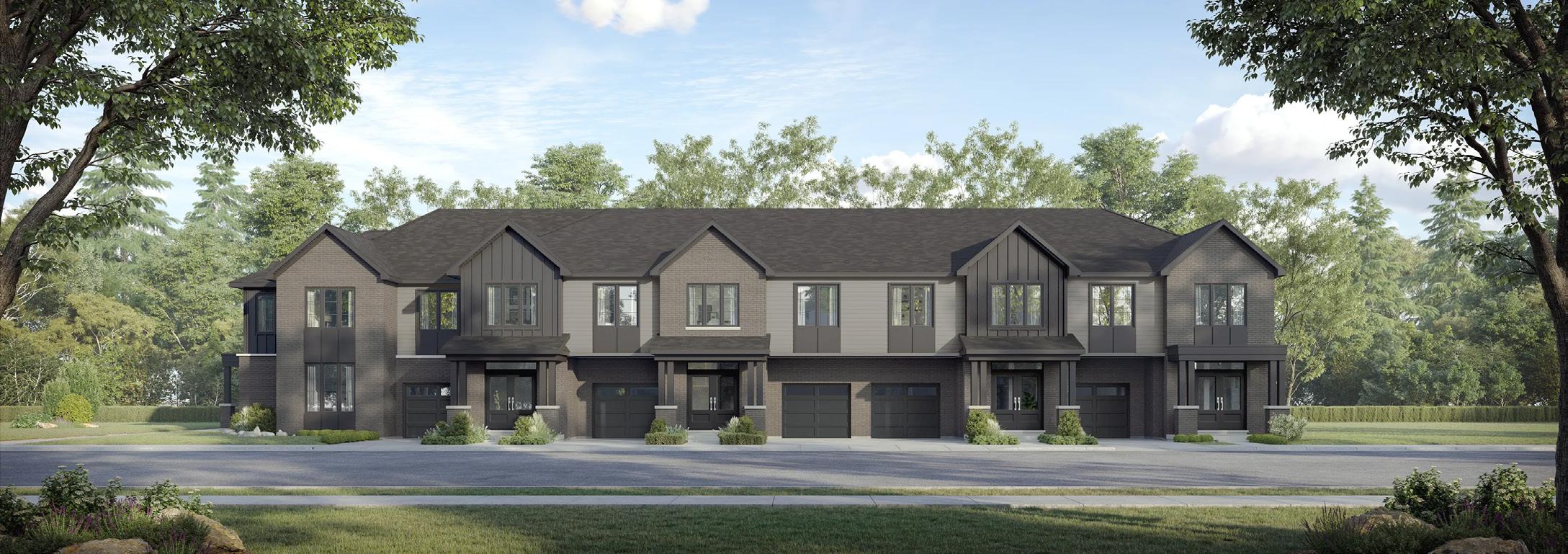

The housing situation in Ontario is slowly showing signs of recovery. For all the doom and gloom in the media, there are many industry professionals who are still in the race. We plan on a slow and steady win, with perseverance giving us a head start on the competition. Those of us who put our heads down and came up with strategies to deal with the current market will find redemption
in the end. I have often commented on the amazing resilience of our new house and condominium market. We are starting this new year with a new attitude.
That attitude includes doing what we can to reinstill consumer confidence in our industry. In that aspect, we need more action from our governments in the various programs they have proposed. It could start with the Bank of Canada holding steady on rates or even cutting them once more. What a boost that would be this year.
And let’s talk taxes. New house and condominium purchasers shoulder a major tax burden, which contributes
greatly to the lack of affordability. For years, those of us in the industry have been asking for reductions in this area. A major step forward would be for both our federal and provincial governments to provide full HST relief for all new home purchasers. The Building Industry and Land Development Association (BILD), which advocates for housing and development policy, has called on our governments to do just that.
Timing is of the utmost importance. It takes approximately a decade to complete a housing project in the Greater Toronto Area. Consider everything from buying a piece of land and connecting with municipal
planning to create a timeframe for approvals. Then there are aspects, such as architectural design, marketing, sales, construction, labour and supplier issues. This means we need to get additional new house and condominium communities started soon to have supply in ten years. And remember the effect lack of supply has on prices.
There is, however, a bright side to all of this. You’ve heard of “a buyers’ market”? We are in one, largely because of inventory. During Q4 2025 and the beginning of Q1 2026, the GTA housing market has showed increasing inventory levels, especially for condos. At the end of October, the combined inventory level in the GTA sat at around 22 months, as very little inventory had been added during 2025. This was the highest inventory level seen to that date.
Now is the time to buy new if you are thinking of taking that step. With inventory the way it is, buyers (especially of new condos) will find outstanding prices and more negotiating power than ever before.
Keep in mind that when you buy new, you enjoy the benefits of the Tarion warranty, plus you eliminate the need to repair or renovate a resale home. There are innumerable stories about resale homes needing far more than anticipated to make them livable. Your new digs are move-in ready.
I do applaud our governments’ efforts so far in areas such as improving and expanding infrastructure to handle increased populations. But we need more government intervention soon to ensure we have enough houses and condominiums to accommodate more people. In addition, the housing sector in Ontario traditionally supports 225,000 jobs and generates $30 billion in economic activity. Boosting our industry is good for the economy and everyone concerned. Looking ahead with optimism, I see 2026 as a year of gradual transition to a better industry and homes market altogether. Remember, too, that the resale homes industry is also expecting a gradual stabilization and recovery
this year. Typically, new home markets follow resale in that respect. Why wait to buy? When the housing market comes back full force, pent-up demand will take over, and it may well become a race again to find the perfect new home. You don’t want to stall until the market offers standing room only. With perseverance, we can all win this race together. I have said it before, and I am proud to say it again: But new and buy now.
Lawlor is CEO of Baker
Inc. A member of the Baker team since 1993, she oversees the marketing and sales of new home and condominium developments in the GTA, Vancouver, Calgary and Montreal, and internationally in Shanghai. baker-re.com
DANIEL STEINFELD

If you’ve been watching the housing market closely, the past year offered something many buyers and renters
have been waiting for: relief. After several years of rising costs and uncertainty, affordability improved in 2025, giving households across the Greater Toronto Area (GTA) more room to make decisions about their next move.
According to the TRREB’s yearend Market Watch report, economic uncertainty continued to influence
housing decisions last year. Many households remained cautious, delaying buying plans as borrowing costs stayed elevated and concerns about job security persisted, even as market conditions began to ease. At the same time, higher listing inventory gave buyers more choice and greater negotiating power, easing price pressures across the region.
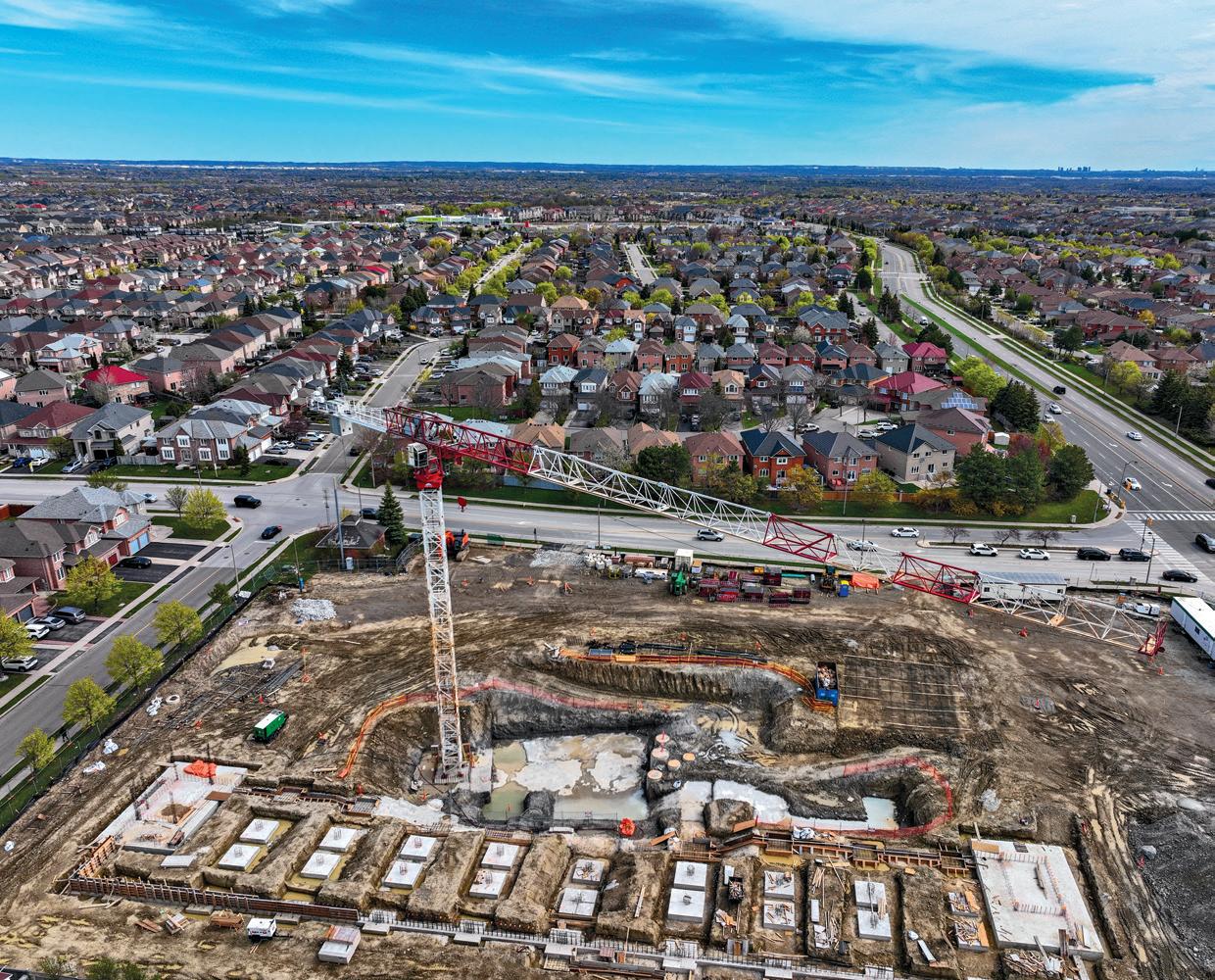
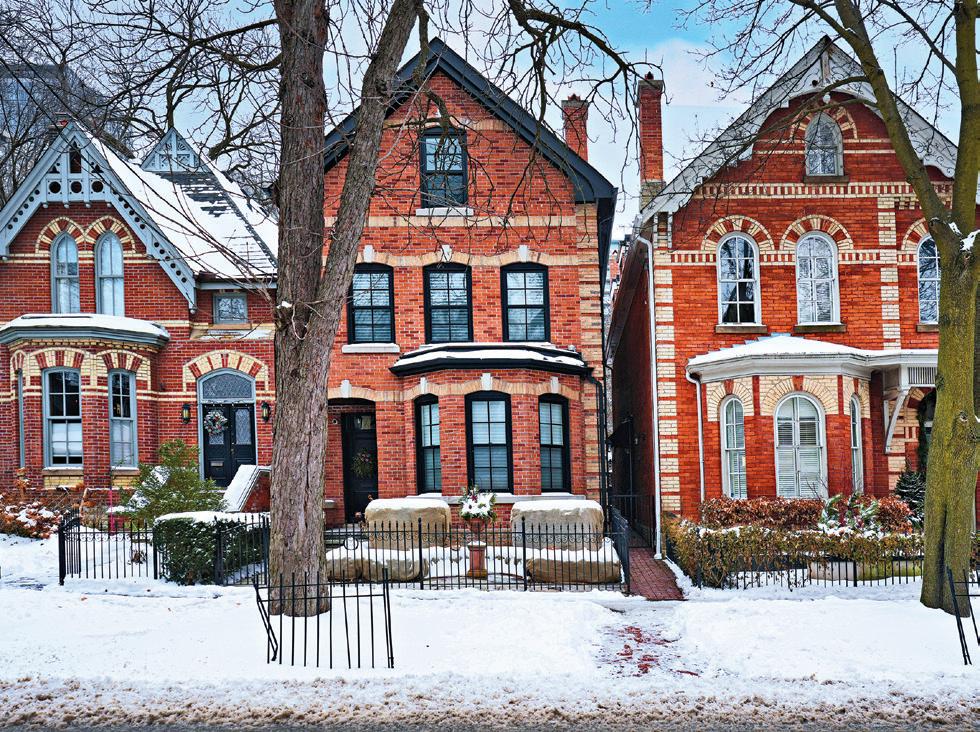
Home sales declined in 2025 compared to 2024, while new listings increased year-over-year. This combination helped move the market toward better balance. Average selling prices trended lower over the year, creating more favourable pricing conditions for buyers and renters alike.
These trends matter because they signal a market that is more closely aligned with household purchasing power. When inventory rises and prices moderate, buyers have more options, sellers operate in a more stable environment, and renters considering ownership see a clearer path forward.
Improved affordability alone does not drive housing activity. Confidence does. Households need to feel secure in their employment and income prospects before committing to longterm mortgage payments.
With pricing conditions now more supportive, confidence will determine when and how quickly pent-up demand translates into market activity, particularly as economic conditions stabilize and borrowing
“
” With supportive economic conditions and sound policy decisions, 2026 can mark a return to healthier levels of market activity.
costs ease. Many buyers who stepped back over the past two years represent pent-up demand. They are now better positioned to act when confidence strengthens, and that shift will drive noticeable change in sales and pricing trends going forward.
Public policy will play an important role as the market moves toward recovery. Tax relief and cost-of-living measures can help restore consumer confidence and support household stability. Fair and responsible tax policies can put more money back into people’s pockets and help ensure housing remains within reach.
Housing affordability is not just a market issue. It directly affects families, newcomers, and communities across the GTA.
The housing market does not turn overnight. However, the progress reflected in 2025 is meaningful Stronger market fundamentals have set the foundation for recovery, but confidence will ultimately determine its pace. With supportive economic conditions and sound policy decisions, 2026 can mark a return to healthier levels of market activity.
To learn more about the latest market trends and access TRREB’s Market Watch reports, visit trreb.ca.
Daniel Steinfeld is President of the Toronto Regional Real Estate Board (TRREB). A Chartered Accountant, he previously served as Vice-President and Chief Financial Officer with the Toronto Argonauts and is a Broker and co-owner On The Block Realty.
+MORE CONTENT ONLINE nexthome.ca

PETER BALASUBRAMANIAN

The excitement of buying a newly built home often centres on the finished space – the layout, the light, the idea of being the first to live there. Less visible, but just as important, are the rules, protections and responsibilities that shape the experience from the day you put down your deposit.
At Tarion, we spend a lot of time speaking with first-time buyers of newly built homes. As the administrator of Ontario’s
new-home warranty program, homeowners reach out to us about what is covered in purchase and what comes next. Many are excited, but they’re also trying to make sense of an unfamiliar process. Questions can surface at the many points in the journey, and Tarion is here to help.
We always advise buyers to follow these six tips early to feel more prepared, avoid surprises, and move forward with confidence as they make one of the biggest purchases of their lives.
New-home contracts are often lengthy and can include clauses
about deposits, closing adjustments, construction timelines and changes to the home. A lawyer with experience in new home construction can walk you through what those terms mean and flag anything that may need clarification before you commit.
In Ontario, new homes can only be sold by builders and vendors licensed by the Home Construction Regulatory Authority (HCRA). You should always check the licence status and warranty history, which are publicly available through the HCRA’s Ontario Builder Directory, of any builder that you are considering purchasing a home from.
Beyond this, look at online reviews or talk with past purchasers – a few realworld perspectives can help round out the picture and give you an idea of the customer service your builder could provide.
3. UNDERSTAND WHAT’S INCLUDED AND WHAT COSTS EXTRA
Floorplans, renderings and other promotional materials may show features or finishes that are optional or available at additional cost. When finalizing your agreement, ask for floorplans, specifications and materials lists in writing, and clarify what’s standard versus optional. It’s also smart to understand completion timelines in the Addendum to your purchase agreement, and how delays are communicated, especially if your move-in schedule is tied to a lease or a sale.
4. REGISTER YOUR PURCHASE AGREEMENT WITH TARION
Once the agreement is signed, registering it with Tarion is a simple
step that can make a difference later. It helps ensure your deposit is protected, notifies Tarion of the sale, and gives homeowners access to warranty information and tools early – at a point when it’s easy to familiarize yourself with the coverage, rather than trying to catch up after you move-in.
5. PREPARE FOR YOUR PREDELIVERY INSPECTION
Before you move in, you’ll complete a pre-delivery inspection (PDI). This is a walkthrough of the home with the builder that also involves learning how things work. You can take a checklist (there’s a handy one available on Tarion’s website), take photos and note any unfinished or damaged items. You don’t need construction experience – just attention to detail.
6. UNDERSTAND YOUR WARRANTY
All new homes in Ontario come with warranty coverage across multiple years: one year for workmanship and materials, two years for your home’s systems, and seven years for major
structural defects. Knowing what’s covered – and when – makes it easier to act if issues arise. In most cases, warranty timelines begin when you get your keys. For some homes, this can occur before construction is fully complete. Through Tarion’s MyHome portal, homeowners can register their warranty, submit or manage your warranty claims, and track these important timelines.
A newly built home brings a lot of excitement, along with plenty to take in. From the paperwork to the final walk-through, knowing how the process works can take some of the guesswork out of buying new. And if you have questions along the way –or after possession – Tarion is here to help.
Peter Balasubramanian is President and CEO of Tarion. tarion.com.















DR. JAMES FUNG

As 2026 begins, many people are looking for more than resolutions. They’re looking for habits that support strength, clarity, connection and long-term wellness. And the most powerful longevity tools aren’t expensive supplements or extreme routines. They are small, daily actions that you can start right now.
Here’s your research-informed blueprint for a healthier, more energized and connected year, built on simple, accessible habits that improve physical, mental, nutritional and social wellbeing. These habits are easy to adopt, don’t require membership fees and deliver an outsized impact on health and wellness.
Most people assume longevity is predicted by the heart or lungs – but research suggests it may actually be our legs. Strong lower-
body muscles are linked to lower mortality, better mobility, healthier blood sugar regulation and even slower cognitive decline. Leg strength reflects how well multiple systems work together, including balance, circulation, metabolism and brain health. In that sense, it’s not just about fitness – it’s a key marker of resilience, independence and healthy aging. Whether at the gym or at home, prioritize lower-body strength. Squats, chair squats, wall sits, heel raises and walking all help keep you mobile, balanced and independent.
This isn’t really about brushing your teeth – it’s about neuroplasticity, the brain’s ability to adapt and form new connections throughout life. Simple changes such as using your non-dominant hand or standing on one leg while brushing challenge the brain in new ways. These small disruptions improve coordination, balance and brainbody communication, supporting memory, resilience and fall prevention as we age.
The Harvard Study of Adult Development shows that good relationships – not wealth, fame or IQ – are the strongest predictor of long-term health and happiness. It’s not about how many relationships you have, but the quality of your closest ones. Feeling secure, supported and understood matters most. Prioritize meaningful connections, listen well, express appreciation and repair conflict when it arises. Deep connection protects health over decades.
4. THE ‘TWO COLOURS PLUS ONE PROTEIN’ MEAL RULE
Most of us grew up hearing “eat your greens,” but real health needs more than one colour on your plate. Different coloured fruits and vegetables provide unique vitamins, minerals and antioxidants, and choosing at least two colours at a meal helps your body access a broader range of nutrients. These colours support different systems, reducing inflammation while supporting brain and immune health. Adding one quality protein helps stabilize blood sugar and energy, supports muscle repair and keeps you feeling full longer. Two colours plus one protein is a simple, practical rule for balance, energy and long-term health – without counting calories or following complicated diets.
Starting your day with a brief coldwater splash – or a 10 to 30 second cold shower – can help reset your nervous system. Cold exposure activates the diving reflex, stimulating the vagus nerve, which helps slow the heart rate, support digestion and shift the body out of “fight-or-flight.” Many people notice clearer thinking, improved emotional regulation and calm alertness. Brief cold exposure may also increase noradrenaline, boosting focus without caffeine. Keep it simple and safe: Start with cold face splashes, keep exposure short, and gradually build tolerance up to about two to three minutes. Avoid cold exposure if you have cold sensitivity or heart concerns unless cleared by a clinician.
6.
Negative thought loops at night keep stress hormones elevated and interfere with deep sleep. Taking just two or three minutes before bed to reflect on a few specific things you’re grateful for helps interrupt those loops and signals safety to the nervous system. With practice, the brain becomes better at noticing positive experiences, supporting deeper sleep and better emotional balance.
7. SOCIAL BATTERY CHECK
Once in a while, check in with your social energy. Notice which relationships leave you feeling supported, and which consistently drain you. This isn’t about cutting people off – it’s about being intentional. Investing more in nourishing relationships and setting boundaries where needed protects your nervous system, mood and resilience.
8.
For more than 10 years, I chose not to have a TV or cable – not to avoid being informed, but to avoid the constant stream of negativity that often comes with the news. Toxic inputs aren’t only about
what we breathe or what’s in our environment; they also include what we consume mentally and physically each day. Excess sugar, constant negative media, endless scrolling and unnecessary drama can all quietly keep the nervous system in a lowgrade stress state. Small, intentional choices – such as reducing added sugar, limiting negative news and protecting your attention – help support emotional balance, steadier energy and a calmer, more resilient nervous system.
9. LEARN SOMETHING NEW IN 2026
Learning something new – whether a skill, hobby, class or recipe – feeds neuroplasticity and keeps the brain adaptable. New challenges support memory, focus and problem-solving while also creating a sense of progress and enjoyment. Learning isn’t just good for the brain – it’s good for motivation, mood and long-term mental health.
Longevity isn’t built on one habit, but on how habits reinforce each other. Stronger legs support mobility and connection, connection lowers stress and clearer thinking leads to better choices around movement, nourishment and rest. Each habit strengthens the next, creating a positive cycle where everything works together. As you look toward 2026, the goal isn’t big change – it’s small, sustainable habits that build momentum. Start where it feels easiest, let habits stack, celebrate progress and build from there. Here’s to a healthier, more energized 2026 – one simple habit at a time.
Dr. James Fung is a Chirpractor and Principal at Complete Balance Health Centre, Toronto. completebalancehealth.com
+MORE CONTENT ONLINE nexthome.ca

GREG GAZIN

Unless you are a student of interior design, office setup or an HGTV fanatic, you might not get too excited about a lamp. For me, they are functional or, at most, stylish. You turn it on, turn it off and think, “Oh, it looks nice.” But you would never call a lamp an experience – until I discovered the Lepro TB1 Smart Table Lamp, an AI-enabled, art-meets-tech ambience creator.
It ships almost flat, reminiscent of a stove burner element, but when assembled, it looks like a planet prop from Stargate, Sliders, or Interstellar, and would fit right on the desk of Star Trek’s Captain Jean-Luc Picard.
Made from high-grade aluminum alloy, it features a triple-ring design: A fixed 12-in. outer ring with middle and inner rings that rotate independently up to 300 degrees. The rings rest on a 4.3-in. polycarbonate base with a single button for power on/off and reset/pairing.
It boasts nearly 200 LEDs – 88, 62 and 46 per ring – grouped in threes, displaying 16 million colours with seamless fades and bold, true-to-life tones. Brightness can be adjusted to match any space, activity or mood. Despite its striking look, the TB1 weighs only 830 grams and has a small footprint, making it easy to place on nightstands, desks or side tables.
What makes this lamp shine is the myriad ways to customize lighting. It’s easy to use via voice with Alexa or Google Assistant, or through the Lepro App – where it truly excels. You can even describe the kind of lighting you want, either by voice or text.
• DIY Mode: Customize colours, brightness, sequences and
animations. The app works like a paint program – draw, fill or erase using fingers, adjust brightness or transition speed, and watch your imagination come to life.
• Music Sync: LightBeats reacts to music in real time using the builtin mic or your phone’s playlist. Choose from nine different flash, wave and laser modes, adjusting brightness and speed to match your vibe.
• AI Mode: Lepro’s LightGPM 2.0, trained on colour psychology and lighting design, makes you an instant lighting expert. Describe a mood or activity – “I am playing a cool action game,” or “I feel a little tired” – and the AI suggests a configuration. You can also upload a photo for automated suggestions.



All modes are accessible from the app’s bottom menu. Save Favourites, create shortcuts, set schedules or trigger actions – such as turning off the lamp when music stops.
The TB1 isn’t just for colour play – it has practical uses:
• Reading or desk work: Soft, eyefriendly lighting reduces strain.
• Relaxation: AI mode creates calm, warm lighting for unwinding.
• Entertaining guests: Sync lights to music for dinners or game nights.
• Holiday decor: Instantly switch to festive modes for Christmas, Halloween or other celebrations.
• Gifting: Perfect for kids, grandkids, dorms, home offices or rec rooms.
The TB1 remembers your last setting and can automate responses, react to devices and integrate with Alexa or Google Assistant.
Lepro provides a Community Forum for guidance, inspiration and sharing creations. In the “Show and Share” section, you can post designs and explore what others have made – from festive holiday displays to galaxy-inspired themes. Popular AI commands include “Set Christmas lights,” “Create Halloween lights,” or “I feel relaxed, create calm lighting.” For a cosmic twist, try “Show me Mars lighting” or “Show me the Milky Way lights.”
The lamp connects via Wi-Fi (2.4GHz) or Bluetooth. Bluetooth offers basic control, but full app features require Wi-Fi.
It would have been nice if the TB1 included a separate remote, a dimmer switch or programmable favourites button and a USB port. However, what it does offer – voice control, AI-assisted lighting, music sync and endless colour options – is still

spectacular. With so many features, it takes time to explore them all, and even then, there’s always more to discover.
The Lepro Smart Table Lamp TB1 blends creative design, intelligent customization and immersive lighting. This isn’t just another light – it’s part decor, part tech and part mood-setter. Whether you want to boost your mood, enhance a gathering, or add flair to your workspace, this lamp delivers. Manually customized, automated or AI-generated – the choice is yours.
The TB1 retails in Canada for $109 and is available at amazon.ca ($89 at time of writing,) or directly from lepro.ca.
If you thought a lamp could never be an experience, the Lepro TB1 Smart Table Lamp might just change your mind – and make an unforgettable gift for someone you love.
Greg Gazin is a syndicated tech columnist, blogger, podcaster, and contributes to canoe.com, Troy Media and Active Life magazine. gadgetguy.ca
+MORE CONTENT ONLINE nexthome.ca

Given the pace and complexity of modern life, it’s no surprise that homeowners are looking to create a restorative oasis at home. With thoughtful planning and inspired design, an upscale bathroom can truly feel like a private spa. Imagine greeting the morning with an energizing self-care ritual or unwinding with hydrotherapy at day’s end in your own sanctuary of calm. When designing an at-home spa, aesthetics and function must go hand in hand. A feeling of tranquility is best achieved through visual simplicity. Clean lines and uncluttered space allow the mind to rest. Good design anticipates storage needs and amenities to minimize visual noise, while beautifully curated open displays introduce a sense of luxury and indulgence.
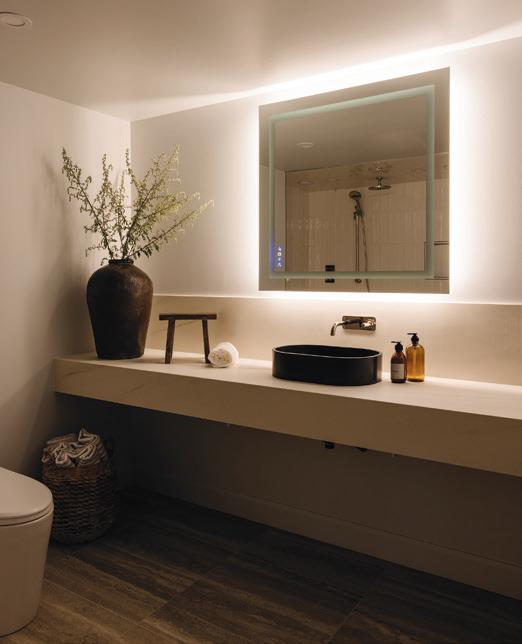
by MIMI PINEAU
Plumbing fixtures naturally take centre stage in any spa-inspired bathroom. Today’s residential market offers an exceptional range of statement fixtures, allowing homeowners to customize both style and experience. A sculptural, freestanding soaker bathtub can act as a show-stopping focal point, defining the room’s overall aesthetic. Sizing is key, but bigger is not necessarily better. A bathtub that is too large can be surprisingly awkward for lounging. Whenever possible, testing models in person at a showroom is a worthwhile step. Luxury shower spaces remain in high demand. Rain showerheads, body jets, refined thermostatic controls and integrated benches continue to top homeowners’ wish
lists. Steam showers are also rising in popularity, valued for muscle relaxation, improved circulation and respiratory relief, with added benefits for skin health and better sleep. Because these features require precise specification and positioning, early planning is crucial to a successful installation. Where space and conditions permit, a sauna or cold-plunge pool can further elevate the at-home spa experience.
When selecting finishes, organic and refined materials work best in creating a calming atmosphere. Natural stone and marble introduce depth, variation and visual interest. Tile with clean lines and subtle texture offers an excellent alternative when ease of maintenance is a consideration.
To balance the harder surfaces typical of bathing areas, introduce softness through clean-lined window coverings and textural floor mats. Soft, soothing colours and matte finishes on walls and cabinetry evoke comfort and serenity.
If space allows, consider incorporating a separate room or open area dedicated to rest and therapy. This space may accommodate a chaise longue, massage table, yoga mat or meditation cushion – supporting wellness rituals beyond bathing alone. Furnishings should remain minimal, preserving the visual simplicity needed for rest, reflection and renewal.
Haven’t we all reveled in the luxury of a decadent bathrobe when visiting an upscale hotel or spa? Investing in high-quality bath linens is a worthwhile indulgence. Paired with a wall-mounted towel warmer, it’s true bliss. Neatly stacked towels and robes can be left on display, adding texture and softness to


the space. Capture an elevated spa aesthetic with eco-friendly, natural linen toweling and bathrobes, which dry quickly and feel divine.
Lighting also plays a principal role in setting the mood of a spa bathroom. Indirect light sources – such as dimmer-controlled wall sconces, cove lighting and concealed accent lighting – help create a serene atmosphere. Some overall ambient lighting is still necessary for practical tasks like cleaning, but it should remain unobtrusive. When thoughtfully layered, lighting enhances both functionality and calm.
Scent and sound complete the sensory experience. A sprig of eucalyptus or a subtle essentialoil diffuser can instantly shift the atmosphere, while a personalized music playlist adds another layer of relaxation. Built-in speakers should be carefully coordinated with other ceiling elements, and waterproof units specified for wet or damp areas. Planning ahead for control panels or phone docks ensures everything is conveniently within reach.
Easily keep up with your hydration goals in a delightfully practical way by adding a compact beverage station. A stylish bar cart stocked with mineral water, herbal teas, or your favourite natural soda is a simple solution. For those inclined to go further, a built-in beverage fridge or smoothie station can quietly reinforce healthy daily habits.
The luxury of a spa experience lies in the ease and flow of its amenities, as well as subtle self-care details. A no-stress experience can begin in the earliest planning stages – working with an experienced interior designer can provide clarity and confidence throughout the process, resulting in a seamless and timeless outcome.
Ultimately, an at-home spa is about creating inner calm and a reconnection to self. Choose the features that bring most benefit to mind and body. The towels are warm, the lights are dimmed, the playlist is queued – no appointment required.
by LINDA MAZUR
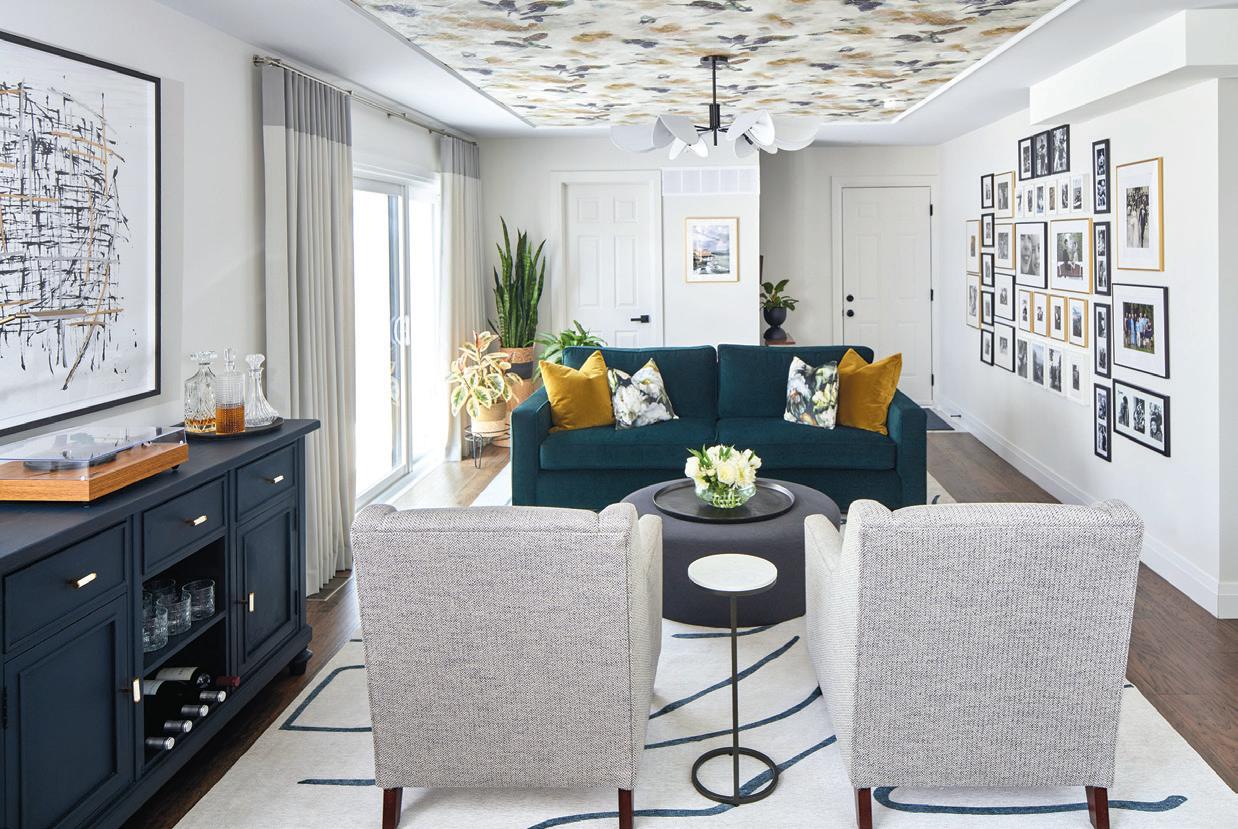
With the start of every new year comes new trends. Of course, we can’t just reinvent our entire homes every time a new trend emerges. However, you can garner inspiration if you’re looking to update a room in your home or renovate this year.
The trends for 2026 have a renewed focus on how we live and what we value in our homes, with the common theme of warmth, earthiness and coziness throughout. The look of “lived-in” interiors has never been more on-trend than it is this year. As our homes reflect our lives and our families, it’s no surprise that we are being drawn to a more comfortable, perhaps even more genuine aesthetic that resonates with daily living. Whether you have well-curated antiques, or some of grandma’s collectables, the juxtaposition of layering the old and new in a space creates a wonderful and unexpectedly personalized style for 2026.
Earthy paint colours are all the rage this year. Though Pantone has officially released its Colour of the
Year as Cloud Dancer, a soft and airy shade of white, I think you’ll find most paint companies have moved towards far warmer and more muted hues, such as Benjamin Moore’s Silhouette (AF-655) or Sherwin Williams Universal Khaki (SW 6150). These are grounding tones that are deep, rich and inviting, embodying a sense of comfort, sophistication and a timeless elegance. Whether you use these particular colours or select some of your own, this year, the use of colour is definitely at the forefront of creating spaces that are chic and cosy while still maintaining a strong sense of relaxation and comfort. Be on-trend for 2026 by using a few different colours in your space, paint your trim a darker tone, or introduce a different colour for your ceiling, or perhaps consider colour-drenching your space… don’t be afraid to experiment with colour, as it’s everywhere this year, and one weekend of work will create a highly stylized and personalize space for you.

The “fifth wall” of your room is garnering more attention this year and shouldn’t be forgotten. Simple white ceilings are being given new life with colour, texture, wallpaper
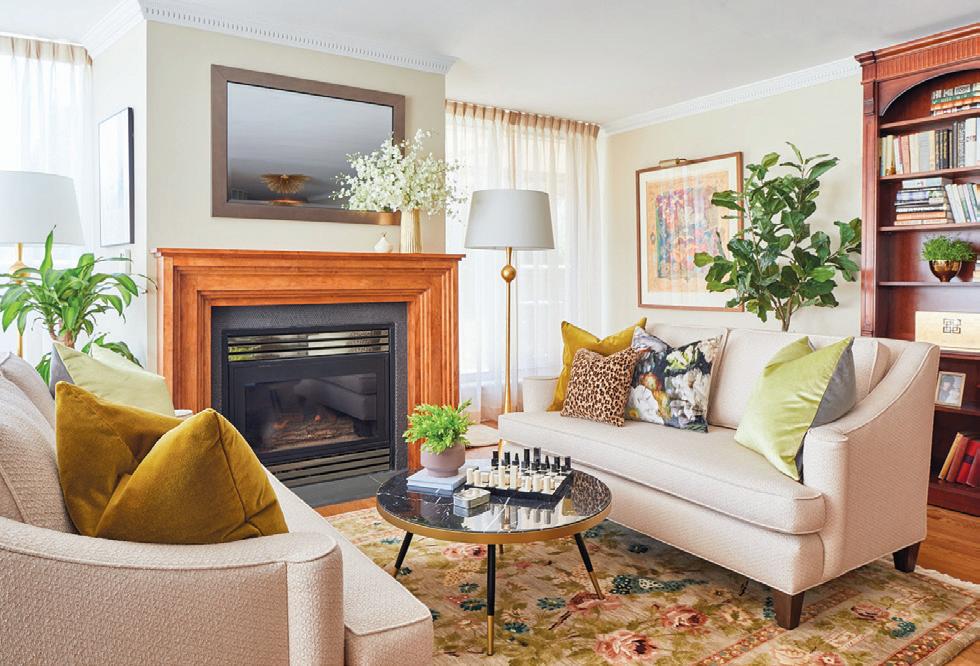
or decorative mouldings. So, when you’re planning your room makeover remember to include your ceilings to complete your space.
The perfect, shiny and new are being replaced with tactile textures and finishes that embrace their imperfections and textures. Roughhewn wood (actually, any type of wood), worn distressed metals, soft fabrics… these textures all play to our senses and promote comfort and relaxation. This is not about creating the old distressed, faux peeling paint look of years ago; it’s about layering visibly tactile textures within your space to create a vibe that is welcoming, curated, high-end and most of all natural.
Warmth, cosiness and family life are key to the aesthetic of 2026, helping to offset some of the unknowns and day-to-day stresses we have. Spaces this year are highly stylized to look relaxed, luxurious and lived-in, not contrived. Over the last several

years, we’ve been moving towards designing spaces that are meant to be approachable and purposeful for everyday living, as well as entertaining. We are creating spaces that are used daily, are intimate, inviting and not just a page out of a magazine – spaces that reflect our individuality and resonate with the way we live.

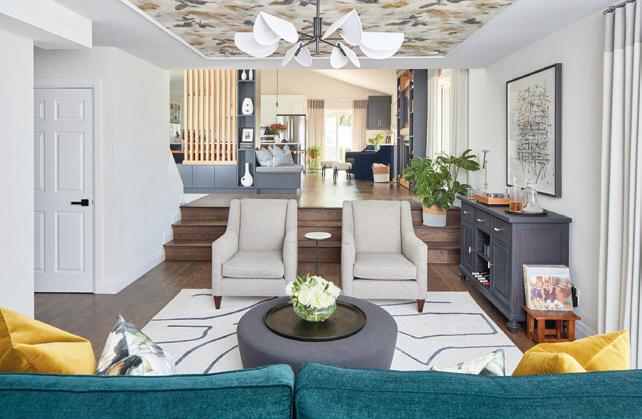
Linda Mazur is an award-winning, nationally publicized designer and Principal of Linda Mazur Design Group. With almost two decades of experience this in demand multidisciplinary design firm is known for creating relaxed, stylish spaces and full-scale design builds within Toronto, the GTA and throughout Canada. lindamazurdesign.com @LindaMazurGroup

by MARIAM ABOUTAAM
January always brings a sense of possibility. It’s a quieter moment in the calendar, yet one filled with intention. It’s an opportunity to pause and consider how we want to live in the year ahead. In design, that pause is essential. It’s where clarity is found and where meaningful spaces begin.
In pre-construction, design decisions are made long before a homeowner ever turns a key, and yet those early choices carry significant weight. They shape how a space feels, how it functions and how it supports everyday life. Lately, I’m seeing a noticeable shift away from novelty and more toward purpose, restraint and emotional comfort. Colour is playing a central role in that evolution.
Buyers today are no longer chasing bold statements for the sake of impact. Instead, they’re gravitating toward palettes that feel grounded, calming and enduring. Colour has become less about trend and more about atmosphere.
At Kylemore, we approach colour the same way we approach architecture and materiality, with intention and purpose. A successful palette doesn’t compete with a space, it supports it. And now more than ever, that means leaning into nature-inspired hues that bring warmth and depth without overwhelming the home.
Luxury paint houses are clearly reflecting this shift. Benjamin Moore’s 2026 Colour of the Year, Silhouette is a deep, espresso-toned brown that introduces richness and restraint in equal measure. It grounds interiors with quiet confidence and pairs effortlessly with stone, wood and aged metals.
Complementing this direction, Sherwin-Williams’ 2026 palette highlights warm, earthy neutrals such as Universal Khaki; a refined, adaptable tone that enhances architectural detail without demanding attention. Behr’s Hidden Gem brings a smoky blue-green richness that bridges calmness with personality, ideal for feature walls or cabinetry.
Farrow & Ball’s 2026 colour direction continues its signature approach: timeless pigments rooted in history, nature and craftsmanship. Shades such as Red Earth bring a softened terracotta warmth, Vardo a teal shade that offers elegance and sophistication through its jewel-toned feel, and Setting Plaster introduces a gentle blush-neutral that feels warm rather than decorative. These colours are particularly effective when used on walls, millwork or transitional spaces, where nuance matters most.
At the same time, lighter tones are becoming more nuanced and emotionally driven. Pantone’s 2026 Colour of the Year, Cloud Dancer is a soft, warm off-white that signals a broader shift toward calm, reflective interiors. Rather than acting as a blank backdrop, these new light tones carry subtle warmth and depth. Paired with natural materials and layered textures, they create spaces that feel open and serene without feeling stark or unfinished.
What’s most compelling about this year’s colour direction is how closely it aligns with how people actually live. Homes are expected to do more than ever; host, comfort, energize and restore. Colour helps define those moments. A warm, enveloping living space invites connection, while a lighter, quieter bedroom encourages rest. When colour is chosen with intention, it enhances both function and feeling.
Model homes play a critical role in translating this vision. They are not just about showcasing everything that’s possible; they’re about showing what’s essential. A well-balanced palette helps buyers emotionally


connect, allowing them to imagine their lives unfolding naturally within the space.
As we begin this new year, I’m reminded that great design is rarely loud. It’s confident, measured and deeply personal. When colour, form and material come together thoughtfully, design becomes more than an aesthetic choice; it becomes a foundation for living well, and that is the most meaningful way to begin a new year.
• Start with a warm, luxury neutral such as Benjamin Moore’s Silhouette or Sherwin-Williams’ Universal Khaki and layer depth through accents rather than contrast.
• Use richer tones, such as Farrow & Ball’s Vardo or Red Earth, strategically on millwork, islands or architectural details.
• Let materials guide your palette; natural finishes pair best with grounded, muted colours.
• Think about how each space should feel, not just how it should look.
An award-winning in-house designer, Mariam Aboutaam is Director, Sales and Marketing, Interior Design at Kylemore, Markham, Ont., a builder known for master-planned communities and luxury homes. kylemoreliving.com.
by LINDA KAFKA

Many of us have experienced that feeling we get when we walk into a space, especially for the first time. You know that feeling; it might be an immediate sense of ease, or subtle tension you can’t quite explain. Nothing is obviously right or wrong with the space. The room itself may be attractive, or even familiar, yet our body is telling us something different. What is happening is that our body responds before our thoughts catch up. You feel calm, unsettled, welcomed or on edge, often without knowing why.
This response is not random. It’s not even a matter of taste. It’s our nervous system doing exactly what it is designed to do. Long before we consciously evaluate a space, our non-conscious mind and body are scanning the environment for signals of safety, comfort and support. It’s our genetic programming, developed over millions of years to ensure
survival of our species in a volatile, dangerous evolutionary time. Fast forward to modern day, we find that our non-conscious mind still operates in the same way. Whether we realize it or not, elements such as lighting, sound, visual clarity, even how easily we move through a room all send messages to the body. It’s these messages that shape how we feel in our homes.
Our nervous system is designed to always ask the question: Am I safe here? When the answer is yes, the body relaxes. Breathing slows, muscles relax and attention settles. When the answer is no, our body remains in what we know as a fight, flight, freeze response, often keeping the body in a state of alertness. This state shows up as restlessness, fatigue, difficulty sleeping or mild agitation. Often it can be hard to pinpoint or even put our feelings into words. We just know something is off.
As we age, our body-based awareness becomes more important. We are more sensitive to our environments and have difficulty adapting to glare, noise, clutter and physical strain. What we once felt manageable may now feel overwhelming. Some may think this is a sign of weakness, but it’s actually a natural shift in how the body processes information and conserves brain energy. A home that works well with the nervous system supports homeostasis, our bodies natural system for keeping us internally stable. It also supports our confidence and independence. A home that constantly challenges us drains us both physically and mentally. Feeling at home, then, is not just about how a space looks. It’s about how it makes us feel and how it supports our daily life. For instance, clear pathways reduce the hesitation and risk of falls. Good lighting,

especially in stairways, helps the eyes and the brain work together more easily. Predictable layouts reduce mental effort. Comfortable and appropriate seating supports rest and recovery. Even small details such as lowering light switches or raising electrical outlets ease our efforts. Reducing or eliminating sound from appliances can make a meaningful difference in how relaxed we feel in our own spaces.
Many people think of aging as a checklist of safety features. While those are important, they are only part of what we need to do within our homes. Emotional comfort is often overlooked, yet it matters just as much as physical safety.A home should feel emotional supportive, encourage movement, social connection and offer a sense of control. It allows us to conserve energy for the things that matter, rather than navigating unnecessary stress.
This explains why two homes with similar layouts can feel completely different. Once feels calming and intuitive, while the other can feel tiring, even if they are both beautifully designed. The difference lies in how well the space aligns with the body’s needs. When a home respects how the nervous system works, activities of daily living feel easier. When it doesn’t, then even the simplest of tasks can feel exhausting.


The good news is that creating a home that feels right does not require a major renovation or dramatic changes. Often it starts with paying attention to how you feel within your space. Notice where you feel most relaxed or where you feel rushed, strained or distracted. These sensations are design information. It’s your body

already telling you what is working and what is not.
Feeling home is not about perfection, rather more about alignment. When your home supports what you see, how you move and recover, it becomes a place that quietly cares for you. It helps you feel grounded, capable and at ease. And, as we age, that sense of ease is not a luxury, it’s the foundation for living well.
Linda
Kafka, Wellness
and
Aging
in
Place Educator, writes
about wellness, aging in place and how our homes support well-being at every stage of life. livablecanada.com.
by JESSICA CINNAMON
A well-designed home is about more than appearance – it’s about experience. The most successful spaces respond to the realities of daily life, making room for connection, comfort and moments of quiet restoration. As homeowners move away from overly styled interiors toward spaces that feel personal and livable, beauty increasingly comes from thoughtful planning rather than decoration alone. When design decisions are rooted in how a home is actually used, the result feels natural rather than imposed, subtly shaping the way you move through your space, gather with others and recharge.
When I take on a new project, I never start with finishes or furniture. I start with people. Understanding how my clients live day to day is the foundation of every successful design. I want to know where shoes land, which chair everyone claims after dinner, and whether mornings unfold slowly or in a hurry. Is the kitchen a brief coffee stop, or the place where conversations linger long after dinner? As interiors become increasingly lifestyle-driven, the most enduring homes are those that reflect life as it’s truly lived – not rooms styled for a single photograph, but spaces designed to evolve and age well.
Balance begins with proportion and flow. Today’s interiors favour softness over rigidity – fewer hard lines, more intuitive movement. A home should guide you naturally from one space to the next without feeling forced or overly deliberate. This doesn’t mean every room must match, but there should be a clear visual dialogue across spaces. Materials, colours and textures should feel connected, even when they contrast. Repeating subtle elements – warm wood tones, gentle curves, matte metal finishes – create continuity while keeping spaces layered and current.
When styling your space, aim for equilibrium rather than perfection. Pair structured pieces with something organic – a linen slipcovered chair beside a modern metal table, or a tailored sofa softened by a textured wool throw. Layer textures instead of patterns, and allow negative space to give the eye a place to rest. Editing is just as important as decorating; restraint is what gives a space longevity.
Good design is as much about emotion as it is about aesthetics. Before selecting furniture or finishes, I often ask clients how they want a space to feel rather than how they want it to look. Calm and restorative?
Energizing and social? Warm and

grounding? As homes continue to serve multiple roles – workspace, retreat, gathering place – this emotional clarity becomes essential.
Flow is also about scale, and this is where many otherwise beautiful spaces fall short. Oversized furniture, once a hallmark of luxury, is being reconsidered in favour of pieces that allow rooms to breathe. Furniture that’s too large can overwhelm a space, while pieces that are too small leave it feeling unresolved. Thoughtful proportion creates comfort and ease. Often, it’s the negative space that elevates a design, allowing architectural details and carefully chosen pieces to stand on their own.
Lighting has become one of the most defining elements of contemporary interiors. While natural light remains a priority, a welldesigned home relies on layered lighting to create flexibility and mood. Pendants bring structure, sconces add warmth and architectural interest, and table or floor lamps introduce softness and intimacy. This approach allows a home to transition easily from morning to night, supporting

everything from focused tasks to relaxed evenings.
One of the most common mistakes I see is treating lighting as an afterthought. In reality, it’s one of the most powerful design tools at our disposal. I’ve seen thoughtfully designed rooms fall flat simply because the lighting was too harsh or misplaced. Conversely, well-considered lighting can make even a basic space feel elevated. A balanced lighting plan ensures each room feels comfortable, intentional and adaptable. When decorating, decide how you want a room to feel before focusing on how it should look. Choose pieces that support everyday use as well as the atmosphere you want to create.
A well-designed home doesn’t demand attention. It reveals its value over time, supporting daily life in quiet, meaningful ways. When beauty and livability are thoughtfully balanced, a home becomes more than a collection of rooms – it becomes a space that truly works for the people who live there. And that, to me, is the enduring direction of interior design.
Jessica Cinnamon is award-winning Principal Designer and founder of Toronto-based Jessica Cinnamon Design Inc., specializing in multidisciplinary design services throughout the GTA, cottage country, Chicago and Los Angeles. jessicacinnamondesign.com.
1. Allegro 36 Klees Cres. geranium.com
2. Shinning Hill 24 St John’s Sideroad countrywide.ca
BRAMPTON
3. Bodhi Towns Fogal Road & Nexus Ave. countrywide.ca
4. DUO Condos 245 Steeles Ave. W. duocondos.ca
5. Union Mississauga Rd. & Bovaird Dr. mattamyhomes.com
CALEDON
6. Ellis Lane Chinguacousy Rd. & Mayfield Rd, mattamyhome.com
7. Mayfield Collection 22 Stratford Dr. rosehaven.com
COURTICE
8. The Vale 57 Glen Eagles Dr. nationalhomes.com
9. North Shore Towns & Condo 484 Plains Road E. nationalhomes.com
10. Blvd Q 3300 Bloor Street W. mattamyhomes.com
11. Westbend Residences Bloor & High Park mattamyhomes.com
12. The Clove 240 The East Mall Cres. mattmayhomes.com
13. Everwood 6578 Ninth Line, Mississauga mattamyhomes.com
KING CITY
14. Triple Crown Estates Dufferin St.t & 15th Sideroad remingtonhomes.ca
15. Kleinburg Hills Appleyard Ave. countrywidehomes.ca
16. Spring Water 3217 Elgins Mills Rd. mattamyhomes.com
17. Angus Glen South Village 9980 Kennedy Rd., #200 kylemorecommunities.com
18. Kennedy Manors 4500 Major Mackenzie Dr. E. kylemorecommunities.com
19. Gallery Towers 162 Enterprise Boulevard downtownmarkham.ca
20. Whitehorn Woods 5934 Saigon St nationalhomes.com

21. 28 Hunslow Yonge and Finch mattamyhomes.com
22. Yonge City Square 4050 Yonge St. yongecitysquare.ca
23. The Residences at Central Park Sheppard Ave E & Leslie St centralparktoronto.com
24. Mackenzie Park 65 Athabasca St. brightstone.ca
25. Schoolhaus 555 Rossland Rd. W. brightstone.ca
26. Seaton Whitevale 1535 Whitevale Rd. mattamyhomes.com
27. Seaton Mulberry 1075 Taunton Rd. mattamyhomes.com
BUILDERS IF YOU WOULD LIKE TO INCLUDE YOUR PREVIEW REGISTRATION, NEW RELEASE OR SITE OPENING IN THIS FEATURE, JUST EMAIL THE DETAILS TO EDITORIAL@NEXTHOME.CA
28. Courts of King’s Bay Near Port Perry geranium.com
29. Jefferson Reserve 363 Jefferson Side Rd. countrywide.ca
30. Westbend Residences Bloor & High Park mattamyhomes.com
31. The Briar 386 Briar Hill Ave. brightstone.ca
32. Allure Condominiums 250 King St. East emblemdevcorp.com
33. Forent Hill Village 429 Walmer 429walmer.ca
34. Missoni Sky Condo 229 Jarvis
missonisky.com
35. The Elms Thornhill Wood Dr. & Elmway Court brightstone.ca
36. Country Lane Taunton Rd. & Country Lane countrylanewhitby.com
37. Wellings of Whitby 372 Taunton Rd. E. wellingsofwhitby.com
38. Woodend Place Major MacKenzie & Pine Valley Dr. woodendtowns.ca
1. Northshore Condo 484-490 Plains Rd. E. nationalhomes.com
2. Tyandaga Heights Burlington nationalhomes.com
3. Northshore Towns 490 Plains Rd. E. nationalhomes.com
4. Martha James Condominiums Martha and James St mattamyhomes.com
5. Affinity Condos Plains Rd. E & Filmandale Rd. Rosehavenhomes.com CAMBRIDGE
6. Moffat Creek 3 Ritchie Court terra-view.ca
7. Modal at Main 840 Main St reidsheritagehomes.com ELORA
8. South River 133 South River Rd. granitehomes.ca
9. The Village Farm 23 Totten Street sinclairhomes.ca FERGUS
10. Bellwood Estates Fergus geranium.com GEORGETOWN
11. Juniper Gate 10130 10 Line, Norval remingtonhomes.com GUELPH
12. Heart Village 62 Lovett Lane terra-view.ca
13. Argyle Village Lowes Rd E & Gordon Street argylevillage.ca
14. Northside Guelph Woolrich St & 7 granitehomes.ca
15. The Block on Clair 331 Clair Rd E. reidsheritagehomes.ca
16. Clairmont 25 Poppy Street mattmyhomes.com
17. Nima 2 Nicholas Way terra-view.com
18. Rebecca Condos 212 King William St. rosehaven.com
20. The Design District 41 Wilson Street emblemdevcorp.com
KITCHENER/
20. Wildflowers Huron Rd & Trussler Rd mattamyhomes.com
21. Lackner Ridge Lackner Blvd & Ottawa St N lacknerridgetowns.ca
MILTON
22. Mile & Creek
760 Whitlock Ave. mattamyhomes.com
23. Hawthrone East Village Louis & Lavert Ave mattamyhomes.com
24. The Laurels Brittania Rd & Hwy 25 mattamyhomes.com

25. Whitehorn Woods 1240 Britannia Rd. W. nationalhomes.com
26. OG Urban Towns 2532 Argyle Rd brigtstone.ca
27. The Nine 6578 Ninth Line mattamyhomes.com
28. Everwood 6578 Ninth Line, Mississauga mattamyhomes.com
29. Luna 205 St. Davids Rd, Thorold silvergatehomes.com
30. Harbourtown Village 574 Seneca Drive, Fort Erie silvergatehomes.com
31. Upper Joshua Creek 1254 Burnamthorpe Rd. mattamyhomes.com
32. Carding House 292 Ironside Drive mattamyhomes.com
33. Clock Works at Upper Joshua Creek 1388 Dundas Street W. Oakville mattmyhomes.com
34. Kerr Village 109 Garden Drive brightsone.ca
35. Ivy Rouge 310 Randal Street rosehaven.com

36. Nestings Rob Blake Way sinclairhomes.ca
ST. CATHARINES
37. Merritton Mills St. Catharines silvergatehomes.com
38. Harvest Run Centennial Parkway & Elm Street dougtarryhomes.com
39. Prudhomme’s Landing 1051 Old Thorold Stone Road silvergatehomes.com
40. Poet & Perth Quinlan Rd & O’Loane Ave, Stratford. poetperth.ca
41. On The Ridge Lormont Blvd.& Chaumont Drive liveontheridge.ca
42. The Bridge Estates Greenhill Dr. thebridgeestates.ca
43. WaterCrest at Hunters Pointe 6 Alvira Trail lucchettahomes.com
1. Vicinity & Vicinity West Essa Rd & McKay Rd W mattamyhomes.com
2. Midhurst Valley 1296 Carson Rd. geranium.com
BELLVILLE
3. Riverstone Just off Farnham Road geertsma.ca
4. Mountain House at Windfall Mountain Rd. & Crosswinds Blvd. georgianinternational.com
5. Collingwood Maple & Sixth St. georgianinternational.ca
6. 77 McQueen 77 McQueen Blvd reidsheritagehomes.com
GODRICH
7. Harbour Hills 104 Suncoast Dr. E harbourhillsuites.com
HASTINGS
8. Hastings Estates 16 Old Trafford Drive myhastingsestates.ca
9. Craighurst Horseshoe Valley Rd. & Hwy. 93 georgianinternational.com
10. Braestone Horseshoe Valley 3246 Line 9 North georgianinternational.com
HUNTSVILLE
11. Muskoka Forest 174 Earls Rd. mymuskokaforest.ca
12. Lakehaven 25th Side Road & 10th Line mattamyhomes.com
13. Simcoe Woods 2153 Donnelly Cres. rosehaven.com
MEAFORD
14. Baybounds 39 Nelson St. W sinclairhomes.ca
15. Sunshine Harbour Orillia sunshineharbour.com
OWEN SOUND
16. The Grove Cobble Beach reidsheritagehomes.com