The McGill Daily is located on unceded Kanien’kehá:ka territory.
coordinating editor
Andrei Li managing editor
Sena Ho news editors
Adair Nelson
Justin Friedberg
Mara Gibea commentary + compendium! editors
Ingara Maidou
Sonia Berman culture editors
Isabelle Lim
Youmna El Halabi features editor
Elaine Yang
visuals editors
Eva Marriott-Fabre Nikhila Shanker
copy editor
Charley Tamagno design + production editor
Cassandra Cohen
multimedia editors
Golnar Saegh
Parker Russell
social media editor
Lara Arab Makansi cover designs
Golnar Saegh, Justin Friedberg staff contributors
Lisa Banti, Jane Goodman contributors
Scarlett El Refaie, Sarah Toman, Emilie Behrens, Lucy Fradin, Sophia Pinzari, Luke Pindera, Max Kabijan
Feeling Sick?
It
’s Monday night, and you’ve just made it home from your lecture in Leacock 132. You go to your kitchen and decide to make yourself a cup of tea before starting an assignment due next week. For the first time, you’re ahead of all your work, and you ’ll finally be able to go out this weekend without worrying aboutthestackofreadingswaitingforyouathome.Thewateris finallyreadyandyoupouryourcupoftea.Whentakingyourfirst sipafewminuteslater,younoticeanitchinyourthroat.Youmake nothing of it and continue working until you fall asleep at your desk mid-study. Yet once you wake up a few hours later, you’ re sweating, your head is throbbing, and your muscles are awfully sore.Alas,you'vefallenvictimtothewinterflu.
In Montreal, influenza cases reach an annual high during the winterseason.AtMcGill,thiswaveofillnesscomesasnoshockto students,wherecoughs,sneezes,andsnifflescanbeheardalmost everywhereoncampus.Naturally,theannualfluseasonshouldbe enough to encourage McGill’s administration and faculties to accommodate students who cannot attend class, especially considering that its Charter of Student Rights states that, “The University shall take adequate measures to protect the personal securityandhealthofstudents.”
Nonetheless,thissentimentdoesn’talwaystranslateintoMcGill procedure. The Faculty of Arts’ 2025 version of the Policy on DistanceTeachingandLearningstates “Distancedeliveryshould not be used to encourage instructors teaching or students attendingclasswhensick.” Theoriginalpolicywasestablishedin 2021 to provide guidelines for “hybrid, blended and alternative delivery of courses” in the Faculty of Arts. However, while successfullymakingin-personlearningthenormafteraperiodof remote delivery during the pandemic, its provisions now hinder the ability of professors to guarantee that students with the flu have remote learning alternatives. For instance, the Faculty of Arts,McGill’slargestfaculty,onlyallowsinstructorstoreplacea maximum of 15 per cent of contact hours with remote delivery alternatives. Yet, as classes conducted through applications like Zoomareconsideredremotedelivery,itisunclearifprovidingsick studentswithanonlineclasslinkthroughoutthesemesterviolates the policy. Hence, in lecture halls with the recording option disabled on myCourses, instructors may be hesitant to provide Zoomlinkstosickstudentswhocannotattendclass aproblem thatforcesmanyundergraduatestogotolectureswhileunwell.
learning. McGill’s Charter of Student Rights claims that “The University makes every reasonable effort to provide an appropriate environment for learning and assessment activities forthestudentbody,includingtheprovisionofsafeandsuitable conditions for learning and study.” Yet, if sickness is not a valid justification for distance learning alternatives, what qualifies as “safeandsuitableconditions?” Afailuretounderstandillnessasan impediment to student safety prioritizes academic achievement overthewell-beingofourpeers.Thisalsoleavesstudentswhoare immunocompromised more vulnerable to other health consequences,includingpneumonia.
Variouspost-secondaryinstitutionsacrossCanadaacknowledge the flu to be an extenuating circumstance that warrants accommodations. Concordia’s short-term absence form protects all undergraduate students from being penalized for missed attendance and coursework. The same procedure has also been implementedbyuniversitiesoutsideoftheprovince,suchasYork University in Toronto, and the University of Waterloo. Here at McGill, the School of Communication Sciences and Disorders (SCSD) utilizes such a form: one not yet implemented in many otherfaculties.Ifmeasureshavebeenputinplacetoensurethat students in the SCSD and other Canadian universities are not penalized due to circumstances out of their control, they could easilybeputinplaceinotherMcGillfaculties.
Published by the Daily Publications Society, a student society of McGill University. The views and opinions expressed in the Daily are those of the authors and do not reflect the official policy or position of McGill University. The McGill Daily is 3480 McTavish St, Room 107 Montreal, QC H3A 0E7 phone 514.398.690 fax 514.398.8318
advertising & general manager
Letty Matteo ad layout & design
Alice Postovskiy
Thelackofaccommodationprovidedtosickstudentscanalsobe observed on an individual level. Many instructors choose to disablelecturerecordingsinclassroomstoincentivizestudentsto attend class. In addition, instructors who include mandatory attendance in their syllabi often require students to provide a medical justification for their absences, even though Quebec no longer requires students to present a doctor’s note when sick. While these practices encourage attendance and active engagement in lectures, they also heighten anxiety among students,asmissingalecturecouldleadtoareducedgrade.Asa result,theyattendclasseswhilesick,notonlyslowingtheirown recoverybutalsothreateningthehealthofthosearoundthem. Thisproblemrevealsagapintheuniversity’sdefinitionofsafe
Whilethefluissometimesunavoidable,therearestillwayswe can strengthen preventative measures on campus. Students can reach out to various stakeholders in campus life to advocate for academic considerations when sick. Instructors and teaching assistantsareperhapstheeasiestpointofcontact.Youcansimply sendthemanemailinformingthemyouaresickanddiscusswhat actions you can take to keep up with course materials. It is also importanttonotethatoftentimes,instructorsmayhaveaccessto lecture recordings from previous times they taught a class. Therefore,youcansimplyaskiftheserecordingscanbeshared. Whenprofessorsareunwillingtohearyourconcerns,youcan still get your demands across at various levels. Mercury course evaluations are viewed by instructors and the McGill administration to improve their teaching methods. While articulating the difficulties you faced will not change the lack of considerationyoureceivedduringthesemester,thefeedbackyou leaveinformshowyourfacultywillapproachaccommodationsfor sickstudentsinthefuture.
TheVicePresident(VP)Academicofyourfacultyorprogram’ s student association acts as the liaison between students and faculty, and they are responsible for hearing your concerns. The samegoesfortheVPofUniversityAffairsofSSMU.Emailthese VPsandgototheirofficehours.Talktothemabouthowtoaddress and advocate for changes to McGill’s policies related to sick student absences, the demand for medical notes, and remote learningoptions.
Choosing between taking time off to recover from illness and staying up to date with schoolwork is a difficult choice to make. Yet,consideringthecommunicationtechnologiesatourdisposal today, this choice should no longer cause stress to students. We mustrememberthattheabilitytoreceiveanadequateeducation evenwhenunwellisnotaprivilege,itisaright.
Martinez Ferrada tables first Montreal budget
Montreal’s proposed 2026 operating budget totals $7.67 billion and is paired with a $25.9-billion, ten-year capital plan
Lisa Banti Staff Writer
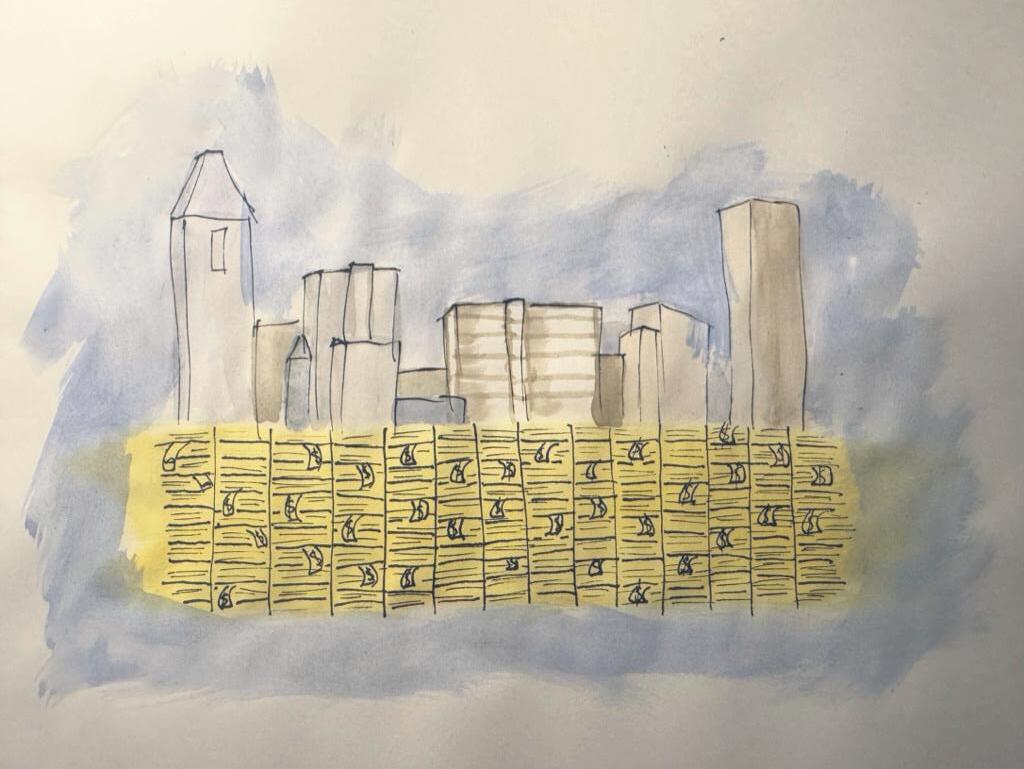
Montreal Mayor Soraya Martinez Ferrada tabled her administration’s first municipal budget on January 12, presenting a balanced $7.67 billion operating plan for 2026 alongside a $25.9 billion capital program running from 2026 to 2035. The proposal would raise overall spending by roughly 5.3–5.4 per cent compared to the previous year.
City officials framed the budget as both “rigorous and responsible,” arguing that it was prepared in an “uncertain economic situation” and amid concern about a “possible recession.” Martinez Ferrada has said the administration is aiming to keep tax increases in line with inflation while also emphasizing debt management as a central objective. Under the plan, the city administration says it intends to bring its net-debt-torevenue ratio back to 100 per cent by the end of 2026, an objective it is tying to the cost of servicing debt and the need to finance long-term infrastructure work laid out in the city’s tenyear capital plan.
Municipal documents also stress that council is limiting the tax burdenincrease “underitscontrol” to 3.4 per cent for both residential and non-residential properties, a distinctionthecityusestoseparate the central administration’ s decisions from borough-level components affecting the final bill. The budget’s capital plan is presented as heavily maintenanceoriented. According to the city’ s summary, 67.7 per cent of planned investments over 2026 to 2035 are directedtowardprotectingexisting assets, while 32.3 per cent is allocatedtowarddevelopment.The largest investment envelopes by 2035 are projected to be environment and underground infrastructure, at $8.0 billion, and road infrastructure, at $6.7 billion; figures the administration cites to justify the scale of upkeep and renewalrequiredforagingsystems.
Homelessness and housing emerge as the most prominent social commitments in the budget’searlyreception,withthe administration repeatedly signalling their high priority status. The plan sets aside $29.9 million in 2026 to support community organizations working with people experiencing homelessness and initiatives meant to manage “cohabitation” inpublicspaces.It also includes a longer-term
objective of investing $100 million by 2035 to acquire and renovate buildings intended for emergency shelter spaces.
Reported comparisons to previous budgets have framed the2026homelessnessallocation with a marked increase from earlieryears,underscoringashift toward higher recurring spending in this area.
Housingpolicyistiedcloselyto that homelessness strategy. Over the ten-year horizon, the city is committing $578.7 million to acquire buildings for social and affordable housing, including $100 million linked directly to homelessness-related housing needs. The administration is also signalling a change in how it intends to push new housing supply. Rather than maintaining the existing ‘20-20-20’ framework for large developments, requiring equal shares of social, affordable, and family housing or a fine, the city has indicated it wants to move toward ‘financial incentives’ and closer partnerships with developers, non-profits, and private builders. Alongside those broader shifts, the budget
includes smaller, targeted measures connected to the rental market, including multi-year funding for tenant-rights organizations and an expansion of preventive building inspections that the city says will reach 1,600 buildings in 2026.
Public safety and emergency services are also highlighted as major budget areas, both because of their size in the operating budget and because of the policy debates they tend to provoke. Public safety is presented as the largest share of expenses at 17.9 per cent. The plan includes funding for police body cameras, expanded use of public-space cameras, and increased spending framedasprevention,particularly youth violence prevention and safety measures around school zones.Thebudgetearmarks$15.8 millionin2026forreducingyouth violence and $17.4 million for securing routes around schools. Furthermore, it sets out a longerterm $40-million, ten-year plan connectedtobodycameras. Alongside new spending, the administration has emphasized restraint measures and tradeoffs. The city has pointed to $79
Parker Russell | Multimedia Editor
million in identified savings, largely framed as the result of reviewing municipal programs, and has indicated that hiring will be frozen in parts of the public service. At the same time, the budget is presented against a background of significant debt servicingcosts,with16.6percent of the 2026 budget, about $1.27 billion, allocated toward it. Reported examples of the budget’s constraints include some delayed or reduced projects, such as infrastructure work pushed to later years and a reduction in funding for certain mobility-related services. The budget has drawn conflicting interpretations among political opponents and stakeholders. The official opposition has criticized the proposal as lacking long-term vision and argued that it “smells like austerity,” disputing the administration’s narrative that it represents a fresh start for the city. Other institutional voices have welcomed the emphasis on “rigour,” particularlytheeffortto document recurring savings and manage limited fiscal room. In statements responding to the
tabling, business groups have also pointed to structural pressures, such as a municipal wage bill nearing $3 billion and upcoming collective bargaining, as ongoing drivers of costs that will shape the city’s ability to expand services without further tax increases.
For residents, including students who largely rent and depend on public transit, the immediate effectsofthemunicipalbudgetwill notnecessarilybedirect.However, the broader pressures it reflects will be closely connected to everyday affordability. The proposed budget underscores a central tension for Montreal’ s finances:largeportionsofthecity’ s fiscal capacity are absorbed by maintaining and renewing aging infrastructure, even as the operatingplancommitsnewmoney to urgent social needs such as homelessnessandhousing.
Scarlett El Refaie Culture Contributor
CoffeeforOne
“I have already lived theAmerican Dream,” I told her over coffee and cigarettes. “I’ve bought and sold three homes in midland Texas, spent summers sifting out gold from the Colorado river, and wasted a year’s salary on a month’s rent in Manhattan.”
She told me she missed her mother. I started thinking about mine.
I told her that I had long since been retired, that there was no longer anything new I could bring to the table; that green was my favourite colour, the same shade as her eyes and mine; that I was planning to move to Europe by May.
She told me she missed her father. I could tell she wasn’t listening.
I confessed to her that my time was fleeting, that my years of solitude had turned me bitter like a sour grape, or malt vinegar. I asked her what she did on Friday nights to keep busy. She told me she missed herself.
I was confused. She was staring right at her.
I sat there alone at the café, wondering where the time went. Wondering who I had become. I was a mirror which reflected a figure close to a person I once knew, but it was clouded with age and dissonance and the frame had begun to tarnish a muted red. In the distance, children sang playground songs, lovers held hands, and the lilac trees were in full bloom.
With a breathing body and a beating heart, I sat there, lucky to have lived.
WakeUpDeadMan’s Failure at Bringing Its Characters to Life
What happens when murder suspects are as lifeless as the victim?
Sarah Toman Culture Contributor
Spoilersahead!
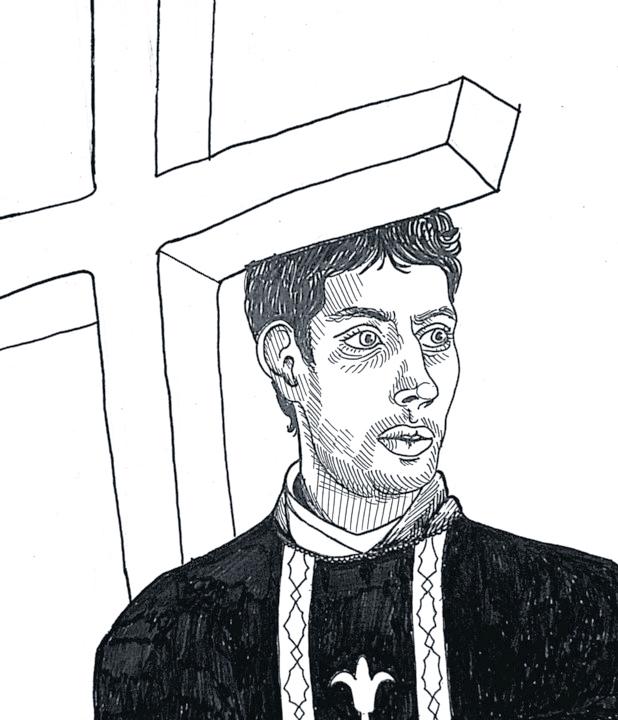
The most recent addition to Rian Johnson’ s Knives Out franchise, Wake Up Dead Man, shows Daniel Craig reprising his roleasdetectiveBenoitBlanc,who visits a neo-Gothic church where this film’s victim, Monsignor Wicks (Josh Brolin), was murdered. Like the two previous films, we are presented with an ensemble of characters who were close to the victim and were
The film spent so much time and energy on the protagonists that it cast aside many of its side characters, despite the fact that they too were suspects in the crime at hand.
present at the time of his death. The ensemble consists of Father Jud (Josh O’Connor) as well as a small group of Wicks’ devoted supporters who remain by his side despite his extremist behaviour andoff-puttingnature.
Let’s begin with the positives. Films especially murder mysteries are only as strong as their characters. I believe that this film created two characters who were wellrounded; namely, Father Jud and Benoit Blanc.
Father Jud especially is a convincing suspect the entire duration of the film: a boxer turned priest who turned to religion after accidentally killing a man. He comes to the church to revitalize it, yet he immediately distrusts Wicks. The two men don’t get along, as Wicks leads aggressive church services that effectively scare away new parishioners. Father Jud recognizes Wicks’ flaws, as wellasthechurch’sflaws,andis
dedicated to changing how things are run, even if it means making an enemy of Wicks. When Jud is accused of murdering Wicks, he still does everything he can to help those around him. In one scene, he puts the investigation on hold to talk to a distressed woman, Louise (Bridget Everett), whose mother is dying. Rather than focus on clearing his name, Jud instead spends hours talking to Louise and praying for her mother. Despite his own troubles, Jud remains a caring mandedicatedtobeingtherefor the people around him. He represents the ideal hospitality of the church, accepting everyone who walks through its doors and doing his best to remain patient despite the obstacles being thrown at him.
Similarly, Benoit Blanc was also given room to thrive, as shown through his relationship with religion that develops over the courseofthefilm.Atfirst,hecannot understandthebenefitsofareligion that has a history of exclusionary practices.Asthefilmmovesforward and Benoit works alongside Jud, he begins to understand why people turntofaithindifficulttimes.Heis present for Jud’s conversation with Louise and becomes aware of how benevolent the members of the church can be to those in need. By the end of the film he is a believer: notinGod,butinFatherJudandhis caringnature.
Despite the film’s success in its development of characters suchasFatherJudandBenoit,it is not as successful in its characterization of the rest of theensemble.Potentialsuspects arenotfullyfleshedout,namely Vera (Kerry Washington) and Lee (Andrew Scott). The film spends so much time and energy on the protagonists that it cast aside many of its side characters, despite the fact that they too were suspects in the crime at hand and played by various famous actors.
Namely, Vera’s storyline is never properly handled or developed, even though she was one of the few who ended up speaking out against Wicks, condemning his harmful treatment of others. Despite the gravity of this, her rebellion does not go any further, and she is never convincingly portrayed as a possible subject. Instead, after her brief moment of defiance, she retreats into herself and is shown alone in a
dark room, smoking a cigarette. Vera sitting practically motionless in this scene seems indicative of how the writers seemed to give up on her character. Rather than playing an active role in the remainder of the story, she is left in the dark, with no other purpose but to stare off into the distance. She should have been given a more meaningful conclusion, or at least a more potent contribution to the events of the narrative. While she does receive fifteen minutes of relevance when condemning Wicks, her fall from the spotlight lasts the entire second half of the film. Lee is another character whose story was ill-conceived from the start, with his role somehow even less significant than
Vera’s. Viewers are told he is a failing author who is writing his comeback novel, which is basically the only thing we learn about him throughout the entire film. Every othertimeheisonscreen,heeither contributes very little to the plot or is doing unhinged and inexplicable things, like building a moat around hishouse.HeisnotclosetoWicks, nor is he given any motive that would lead him to commit the murder. In short, he does not advance the narrative in any way andisnotnecessarytothestory. It seems like this film created more characters than needed and did not spend enough time developing equally significant character arcs for all of them. They simply threw together an ensembleforthesakeoftheplot withoutfleshingoutmanyofthe characters into the story. The
murder mystery aspect of the film was not very compelling, since half of the suspects seemed to have no clear motive and their potential guilt was seemingly disregarded by the screenwriters themselves. As much as I adored this film, it could have either spent more time developing the characters or gotten rid of some of them altogether, therefore providing the audience with more convincing suspects and a balanced story.
Jane Goodman | Staff Illustrator
Emilie Behrens Culture Contributor
This coming June, the world’ s most viewed sports competition will begin: the FIFA World Cup 2026. After Argentina's win in 2022, fans from all around the world are excited to get another chance at watchingtheirhomecountrywinthe ultimate football cup. For the first time,thechampionshipwillhost104 games and 48 teams, marking its biggesteditionyet.Furthermore,the FIFAWorldCup2026willtakeplace across three countries: the United States, Mexico, and Canada. Hosting suchaneventisamajorhonourfora country, offering global visibility while fostering a shared sense of pride amongst its host population. Beyond symbolism, it also delivers substantialeconomicbenefits.Sowhy does this excitement seem largely absent in Canada as the country preparestohostthecompetition?
A poll conducted in December showed that only 57 per cent of CanadianswereawarethatCanada would be hosting the FIFA World Cup. This is very low, especially when compared to their Mexican counterparts, of whom 86 per cent were aware of the competition’ s presenceinNorthAmerica.
Additionally, Canadians mostly felt concerned about hosting the
February 2, 2026
Where’s the Team Spirit?
Why Canadians should be more interested in hosting the FIFA
World Cup, rather than showing active engagement and excitement towards it. Indeed, the men’ s Canadian Football team has only qualifiedtwicefortheFIFAWorld Cup (1986 and 2022), contributing to Canadians’ disinterest. That being said, there are other reasons why Canadians should still be eager about the global competition beinghostedontheirhometurf.
More Than A Game: Canada’ s Moment on the World Stage
As a French national, I noticed that in Paris, public enthusiasm was largely absent during the preparation phase for the 2024 Olympic Games. Instead, political tensions,securityconcerns,andthe overwhelming scale of the organization dominated public discourse. However once the Games began, excitement grew, andeventuallybecameregardedas one of France’s greatest sources of nationalprideofthe21stcentury.
Similarly, Canada is currently faced with geopolitical tensions, particularly with one of its fellow host countries, the US. Compared tothelowfootball-relatedstatistics previously mentioned, today, 40 per cent of Canadians hold very unfavourable views of the US according to The Guardian, in
contrast to 15 per cent feeling that way last year. Thus, hosting this event is an opportunity for Canada toprojectitssoftpower,definedby politicalscientistJosephNyeJr.as a country’s ability to influence through attraction rather than force. The extension of soft power leads to several benefits such as increased trade, improved global standingandnationalpride.
This is especially pertinent considering that international spectatorsareincreasinglyinclined to attend football matches in Canada rather than the US, citing concerns of political instability. Survey data indicates that Canada has emerged as the top destination among sports fans from countries including the United Kingdom, Denmark,andSingapore.Thisshift places Canada in a position of opportunity: the country now has thechancetodemonstrate,bothto the United States and to the wider international community, that it is a serious and capable host. As a result, Canadians should approach hosting the Games with a stronger sense of national pride. It would showcase Canada’s strengths, stability, and appeal on the global stage, especially when such traits are contrasted against their southernneighbour.
ii.FTG: A Tour de Force
Investing in the Long Game
Amid other concerns of political instabilityandrisingcostsofliving, Canadians are also apprehensive abouttheuseoftheirtaxdollarsto organise the football competition. Indeed, Canada has been using the power of the purse extensively. Vancouverhasdoubledtheirinitial cost estimates, investing almost $624 million into the 2026 World Cup instead of the initially projected $260 million. This is because they will now be hosting seven games instead of the initially planned five. The overall costs for the competition in Canada are estimatedatalmostoveronebillion dollars, compared to the initially planned $600 million. Notably, no newstadiumsarebeingbuiltforthe competition. Rather, the budget, largely provided for by Vancouver and Toronto’s provincial governments, is being invested in stadium renovations, as well as securityandlogisticalconcerns.
Yes, these costs appear exceedingly high for what is, ultimately, a football tournament. However, large-scale competitions such as the World Cup tend to grantheftyeconomicbenefitstoits hostcountry.TheFIFAWorldCup alone promises to generate 3.8 billiondollarsofpositiveeconomic
Mara Dupas’ newest performance celebrates the multiplicities of art
Lucy Fradin Culture Contributor
OnasnowyWednesdayevening, I entered the comforting warmth of MAI (Montréal, arts interculturels) for the world premiere of ii.FTG, a dance experience created by Mara Dupas,AthenaLucieAssamba,and Aurélie Ann Figaro. I had the pleasure of speaking to Dupas, Assamba, and Figaro before their first performance to learn more aboutwhat ii.FTGmeantforandto them. Allthreearemultidisciplinary artists, celebrating art’s unbound, multiple forms. Dupas is the choreographerandartisticdirectorof ii.FTG,whileFigaroandAssambaare thedynamicdanceduooftheshow.
ii.FTG is certainly a labour of love. The process of creating the show, Figaro told me, started “about two years ago,” with all threeoftheperformersinvolvedin it “sincedayone.” “Theworkstartedoutofthestudio,” Figaro said, “with a process of building playlists, listening to playlists, [and] paying attention to music videos.” With Djeff Jean-
Philippe (stage name: DJ Chef Jeff) seamlessly mixing live during the danceperformance,musicistheheart andsoulof ii.FTG.Figaromentioned a “writing workshop” that the three artistspartookinbeforethecreation process, with “discussions about lineage, heritage, and also how male artists rap about women.” From this, ii.FTGstartedtotakeshape.
Key inspirations for the show, Dupas stated, are “Francophone rap” and “Afrobeats”.Theinfluenceofboth genres shines through both visually, in the piece’s costumes and lighting, andinthedancers’ movements.
When I arrived at the performancespace,MAIexudeda friendly, welcoming atmosphere. As people took off their snow bootsandenteredthespace,there was a collective sense of the outside world slipping away. What followed was certainly an immersive experience. Assamba sat on a stool by the entrance, completelystill,whileFigaro,clad in an iridescent hoodie with her face covered, moved around the stage, at times coming up close to the audience. With seating on both sides of the room, the
audience encircled and became submerged in the movements of theduointhecenter.
The show opened dramatically, with Assamba entering and giving the audience an arresting stare. The music started slowly, with Assamba and Figaro’s natural, intimate movements exuding a palpable connection between them. The dancers, Dupas described,work “withinsystemsof improvisation” – each night is different, but the performers always work from the ideas they builttogetherinthestudio.
The costumes were inspired by musicvideos,withlinksto “Aurélie and Athena’s personal styles,” Dupas tells me – a testament to “club settings where you’re not wearing ‘dance clothing,’ but just clothingthatmakesyoufeelgood.” With two costume changes in an hour-long performance, the space became metamorphic. After Figaro’s chrysalis-like removal of her hoodie revealed her mouth to be taped shut, her next costume includedareflectivemeshoverher face, portraying thematic “opacity” that Dupas worked with to
Over the course of the experience, the lighting moved fromdarkness,withlong,dramatic shadows and silhouettes, to spotlights, to strobe effects, melding smoothly with the range of reverb, echo, and looping in the show’s auditory landscape. At times, DJ Chef Jeff was illuminated at his decks, blurring thelinesbetweenmusicanddance throughouttheperformance.
Theshowendedwithaclub-like finale and salsa-esque moves between Figaro and Assamba. As thelightscameon,therewasagrin on every audience member’s face, myselfincluded.
ii.FTG is more than a dance show. To Dupas, there is always a “dialogue” between music and dance –“therearemomentswhere some of the gestures will inspire the music, the glitching, and some other times where it’s really the music taking over.” With DJ Chef Jeff’s dance background, the two formsmeldednaturallytogether.
For Assamba, ii.FTG shows how “songcanbecomeaworldinitself,”
output and over 24 thousand jobs for Canada. It is also a great opportunity for local businesses to gain visibility, and therefore economic inflow. Surrounding towns and destinations near the tournaments also stand to benefit from the influx of foreign visitors, offering key opportunities to highlighttheirlocalattractionsand culturalheritage.
A Game that Unites
Ultimately, even for those indifferent to football, large-scale sportingevents providearareand unifying sense of joy. These events are opportunities to gather with friends, family, and even strangers andcollectivelyrootforone’shome team. So many different cultures andcountriesgettogethertoenjoy a game of football and fun. It’ s a temporary escape from the humdrum of international politics andeconomicaffairs,andbecomes a reason for people to socialize. Whether in packed stadiums, crowdedfanzones,orlivingrooms at home, these games foster a shared sense of community something increasingly rare, yet somethingweallneed.
with each number telling its own personal story through the duo’ s physicality. For Figaro, it was like “inviting people to my personal listening party.” In fact, DJ Chef Jeff’smixwasinspiredbyaplaylist created by Dupas and Figaro, transforming ii.FTG into a uniquelypersonalspace.
‘FTG’ has an open meaning: ‘For The Girls,’ ‘For The Gays,’ and ‘FermeTaGueule’ (trad. ‘shutup’), are some of the many interpretations of the title, reflecting the fluidity of meaning that ii.FTG offers.
I asked what advice the artists would give to anyone in Montreal hoping to pursue a creative career. For Assamba, it’s important to be your “authenticself.” ForFigaro,it’ s about “connectingwithcommunity, but also staying humble and curious.” For Dupas, it’s to “trust whatyoulovegeekingabout.” ii.FTG truly felt like a work of passion and collaboration. I was privileged to have been able to share time and space with such original artists who truly enjoyed and believed in what they were puttingoutintotheworld.
An Electrifying Journey of Young Love and Self-Discovery
Sophia Pinzari Culture Contributor
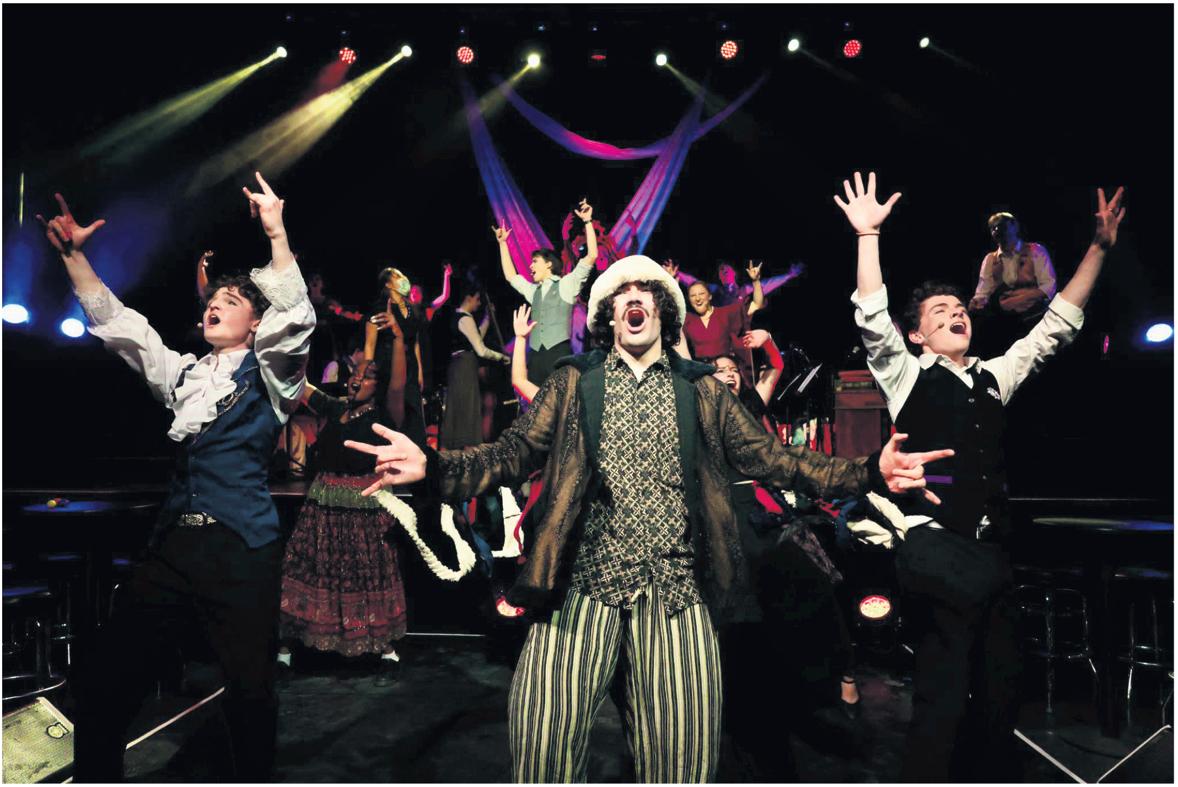
On the coldest weekend of the year, in what felt like32℃, I had the pleasure of going to see this year's Arts Undergraduate Theatre’ s Society’s (AUTS) musical, Natasha, Pierre and the Great Comet of 1812. The musical was written by American playwright Dave Malloy, who adapted a 70pagesegmentfromTolstoy’ s War & Peace (1867) into a thrilling, vibrant electro-pop opera. Opening on Broadway in 2016, the show was nominated for 12 Tony Awards that year, winning two.
The play follows the young and newly-engaged Natasha (Claire Latella, U1 ) and her cousin Sonya (Miranda De Luca, U3) as they arrive in Moscow while Natasha awaits the return of her fiancé from the war. In the meantime, Natasha is seduced by the charming but married Anatole (Frank Willer, U1), and is subsequently carried into a world of scandal and societal ruin. Her last hope lies with Pierre (Sam Snyder,U4),alonelyoutsiderwho finds love and compassion for the lost Natasha. Natasha’s search for love and finding her way in the worldisreminiscentoftheperiod of self-discovery of many university students. This makes it possible to recognize yourself in Natasha,eventhoughsheisliving inadifferentmomentinhistory.
Theshow'simmersivequalities are what really made it special, especially for the select audience members who were chosen to experience dance sequences on stage with the cast.
Even those sitting in the balcony were included in the performance, with the actors running and dancing up the stairs. The musical made use of everypossiblepartofthetheatre, and seeing actors singing and dancing just a few seats away in theaislesofthebalconymadethe experience feel immersive. This also ensured that every single audience member was in on the fun.
Whiletheshowisfullofexciting and celebratory moments, there are also beautiful, somber passages. Natasha’s solo, “No One Else," was made especially captivating because of Claire’ s remarkable vocal performance. The cast’s all-around professionalism drew you in from start to finish. Not to be ignored, the incredibly talented band
played centre stage for the entire showwithalmostnobreak.
For audience members familiar with Tolstoy’ s War and Peace, they will recognize that the passage adapted for this musical takes place in a privileged society abouttobebrutallyinterruptedby theNapoleonicinvasionofRussia. There is an underlying sense of tension and impending change.
AUTS’s interpretation of Natasha, Pierre and the Great Comet of 1812 was not only a ray of warm sunlight during a cold winter day, but also a piece of art that prompted audience members to reflect on their own lives as well astheworldaroundthem.
The Daily sat down with some members of the cast and creative team to discuss the production further. I had the pleasure of interviewing Milan MivillDechene (MMD), the musical’ s directorandchoreographer;Leila Khelouiati (LK), the props designer; Sam Snyder (SS), who played Pierre; and Claire Latella (CL), who played Natasha. The following interview has been shortened and edited for clarity andconciseness.
Sophia Pinzari for The McGillDaily (MD): How was it adapting a recently-made Broadway show? What did you change or keep the same from the original production?
MMD: There are really cool elements that have come to be associated with the show, like the immersive qualities and actors that are running around the entire space. It was exciting to think about different ways we could challenge staging conventions and embody the experience that Dave Malloy had when he was at a club in Russia, and there were people running and dancing around him, eating pierogi. What was exciting for me was getting to do the show with a group of younger people. Natasha and Sonya are arriving inhighsocietyMoscow,likehow we arrive at university with all these high aspirations. Throughout it, we drink and party; but we can also lose ourselves, find ourselves, and grow in different ways.
MD: As one of the production members,arethepropsandsettrue to the era, or a more modernized vision? How did you go about findingthepropsthatyouneed?
LK: Milan’s vision was a blend of modern and period, so it was
hardtofindstuffthatmashedthe two together. One aspect is the envelopes. Obviously, paper is very white. For older times, you need more aged-looking paper, soit’sallbeentea-dyedtomakeit look vintage. I mostly source my props from Amazon because it's quick, but I did go to different McGill theatre groups and the Seagull Center for Performing Arts, which had this amazing warehouse of props where I got tohangoutandfindsomethings.
MD: What was your process in finding your characters?
CL: [Natasha has been] a bit of a dream role of mine, so getting to come up with my own take on [hercharacter]hasbeenexciting. It’s also been fun working with the other actors, seeing their interpretations, and working out our ideas of the characters and their relationships with each other together. We get to make our own version of the show, which is really fun.
SS: I have to agree, the cool thing about Comet is it really does feel like an ensemble piece because everybody is singing all the time and is constantly on stage helping create the story so it's been interesting to find where your interpretation of your character fits within the ensemble. It can be easy to gravitatetowardssimpleanswers for why characters are doing things, so looking at it from a wider angle has been interesting.
MD: Howhasdoingthemusical here at school added to your experienceatMcGill?Andhowis it managing to prepare for performances while also being full-timeuniversitystudents?
CL: Specifically, this year, I can ’t imagine not having done this show. It’s obviously been a big-time commitment, but one that I had zero regrets about. It’ s a process that makes the year for me, and I don’t know what I’ m going to do in February [when themusicalisover].WhenIhave a day full of classes and then rehearsal, that’s what I look forward to. I can’t imagine McGill without it.
SS: This is my third year with AUTS,andit’smademyuniversity career for sure. It’s unique. I’ ve had the immense privilege of doingothershowsoncampus,but with something like AUTS, the processissolongfromSeptember through to February, so it’s been really fulfilling to be able to stick with the character and show and to be able to refine and refine. In termsoftimeandpressure what afunproblemtohave.
MD: Even though the show is set in 1812 Russia, what message do you think the show has for today's world, especially for the studentswhowillbewatchingit?
MMD: There are a lot of parallels between the present
moment we’re living in and back then, especially in terms of political unrest. Right after the show ends, the book keeps going, and Napoleon's invasion happens, everything crumbles, and the city is burned. So we have this tension between this really lavish lifestyle that these characters are living and everything that's about to crumble. It begs the question of how we are spending our time and living our days. I think the way we approached this is the image of the broken time machine we have these two time periods happening simultaneously, but the more modern elements allow us to jump into these moments with the characters easily.
SS: The source material has major themes of young love and finding purpose, and I think everyone watching will have some sort of point of connection to what they’re seeing on stage. I think most university students can lament about a failed situationship or a terrible breakup, or a confusing time in their lives where they weren’t sure what they wanted to be.
AUTS ran six sold-out showings of their production of Natasha, Pierre&TheGreatCometof1812 from January 26-31 2026.
Courtesy of Mai DaSilva
A Sinister Friendship Between Big Tech and Europe’s Far-Right
As the EU leads the way in tech regulation, Silicon Valley’s billionaire class has courted the ascending European far-right and its Eurosceptic rhetoric
Luke Pindera
Commentary Contributor
Have you ever wondered why you ’re asked to “Accept Cookies” upon accessing a website? It may seem like a meaningless, routine click of a button before performing your online shopping or checking the scoreoflastnight’sfootballmatch, butbyacceptingthisoffer,youare essentially giving the website consent to collect and use your personaldata.
A website’s obligation to gain users ’ consent is a product of the European Union’s General Data Protection Regulation (GDPR): a lawwhichcameintoeffectinMay 2018 and became the global model for protecting citizens’ data privacy and security. In 2022, Brussels continued to display its leadershipindatasecuritythrough the Digital Markets Act (DMA), which ensures a fair and competitivedigitalmarket,andthe Digital Services Act (DSA), which strengthens citizens’ fundamental rightsonline.TheEUhasemerged as the global leader in tech regulation, consistently prioritizing its citizens’ privacy, enforcing platform transparency, and protecting its democracies fromcyberattacks.
However, for Silicon Valley and the Big Tech industry, the EU’ s extensive regulations are frustratingobstaclesintheirefforts to consolidate an unfettered oligopoly over the digital space. In other words, an antagonistic relationship has developed between the EU and Big Tech, exemplified in December 2025 by the European Commission’ s decision to issue a €120 million fine to Elon Musk’s X for violating the DSA, the first non-compliance decisionunderthetechregulation. Musk responded to this fine on X, writing that “The EU should be abolishedandsovereigntyreturned to individual countries, so that governments can better represent their people.” Musk has certainly built a reputation for outlandish social media outbursts, but his comments on the EU highlight the reality of the situation: the Big Tech elite have an unwavering interest in weakening Brussels and itsdigitalregulation.
ThetensionbetweentheEUand Big Tech is nothing new. Palantir Technologies chairman and political svengali Peter Thiel stated in 2018 that Europe was punishing Silicon Valley out of jealousy. However, the American
tech lobby has been markedly emboldened by Donald Trump’ s return to the Oval Office in January 2025, as Washington has since championed domestic tech deregulationandattackedtheEU’ s digital rules. In December 2025, Washington issued a visa ban on 5 Europeans, including the man behind the GDPR, Thierry Breton, for supposed censorship and coercion of U.S. tech companies.
Subsequently,theU.S.Secretaryof State, Marco Rubio, wrote on X that “for far too long ideologues in Europe have led organized efforts to coerce American platforms to punish [the] American viewpoints they oppose. The Trump Administration will no longer tolerate these egregious acts of extraterritorialcensorship.” While Trump and his administration lambast the EU from across the Atlantic,BigTechhasidentifiedits ally on the continent–the Europeanfar-right.
Right-wing populists began to establish themselves in mainstream European politics afterthe2015refugeecrisis,which provokedwidespreadsocialunrest and demonstrated the inability of EU member-states to collectively respond to the crisis. Since then, support for anti-immigration policieshaveonlyrisen,alongwith the popularity of the far-right. While the interests and beliefs of European far-right parties vary according to national contexts, thereisageneralagreementacross thisnetworkofpoliticalactorsthat the EU is led by a network of globalist and technocratic elites whoweakennationalgovernments and promote immigration from countries that are culturally incompatible with EuropeanChristian values. These ultranationalist parties including France’s National Rally (RN) and Germany’s Alternative fürDeutschland(AfD) typically emphasize nativism, illiberalism, and the preservation of “traditional” values.Whilepopulist ultranationalists already hold positions of power in East-Central European countries such as Hungary and Czechia, the unsettlingascentofthefar-rightin Western Europe serves as a serious threat to the existence of theEU.
America’s Big Tech elites have cunningly thrown their support behind the European far-right, as the populist parties’ ambitions to reinvigorate the nation-state would inevitably weaken the EU’ s jurisdictiontoregulatetech.Musk
has been very public about his political allegiances, making speeches at far-right rallies, such as one held by the AfD and its leader Alice Weidel in January 2025,andarousinganti-immigrant sentiment on X, a platform, which he uses for personal propaganda. Others, such as Thiel, are more subtle about their efforts; the cofounder of PayPal seemingly acts through U.S. Vice President JD Vance by grooming and financing Vance’s political career. In his infamous speech at the 2025 Munich Security Conference, the vice president declared that his paramount concern for Europe was “the threat from within” and critiqued the German “firewall,” which describes the refusal of all major political parties to work with the AfD. With the far-right gaining increasing popularity in Europe, the Big Tech network is seizing on the opportunity to hop on the anti-immigration bandwagon as a way to achieve its dream of a deregulated Europe. This may seem ideologically and morally void for an industry that used to be regarded as rather liberal and that’s because it is. Promoting inclusivity and diversity is no longer in style. However, political opportunism is not the only explanation for SiliconValley’sideologicalshift.
Mostly limited to fringe blogs and online forums, various radical far-right political philosophies
started circulating around Silicon Valley during the mid-2000s. One of these doctrines came to be known as the “Dark Enlightenment,” which is most commonly associated with Curtis Yarvin, a software developer who envisioned an anti-democratic future where political power resided in dictatorial CEOs who would run states like for-profit corporations. Yarvin’s aspirations to dismantle liberal democracies resonated with the technolibertariancirclesofSilicon Valley, who contend that untethered technological innovation will inherently lead to the most efficient and profitable form of governance. Back in 2010, Thiel gave a speech during which he said, “maybe you could actually unilaterally change the world without having to constantly convince people through technological means, and this is where I think technology is this incrediblealternativetopolitics.”
As the global liberal order is at a breaking point, Yarvin and his ideas are no longer on the fringe.
The Dark Enlightenment and other techno-utopian streams of thoughthavecapturedthepsyches of some of the most influential figures within the tech industry and beyond. In some corners of Silicon Valley, it is not mere business interests that motivate the support for the rising European far-right, but an
ideological goal to eliminate the EU and everything it stands for.
The prospects of Yarvin-style corporate monarchies popping up in Europe may be low, but the threat of tech companies completely subverting governmentsisarealconcern.
The alliance between Big Tech and the far-right exists because theyshareacommonenemy.They arebothinterestedinundermining the EU for different reasons, but these differences illustrate a critical weakness in their alliance.
On the one hand,far-right politicians frame their legitimacy around the notion that they are protectors of national sovereignty, striving to return political power to the people. On the other hand, Silicon Valley is interested in removing EU regulations for the sake of increasing people’ s dependency on their services. A system without digital rules will lead to an inescapable situation where people will unknowingly generatewealthandpowerforthe tech oligarchy with their every digital action. Collaborating with Big Tech to bring down the EU could culminate in the far-right’ s nationalist dreams, but it would simply replace Brussels’ so-called technocrats with the biggest technocrats of them all, creating a much more sinister arrangement thantheonethatprecededit.
Elon Musk at a Space X press conference
Carney’s WEF Speech and Canada’s Recalibration Toward the US
In the wake of Carney’s Davos address and Trump’s rebuttal, questions of dependency, leverage, and North American cooperation have moved to the foreground
Lisa Banti Staff Writer
When Prime Minister Mark Carney addressed the World Economic Forum (WEF) in Davos, SwitzerlandonJanuary20,2026, thesignificanceofthespeechwas shaped as much by the venue as by the message. The WEF describes itself as the “International Organization for Public-Private Cooperation,” saying it convenes political, business, and other leaders to shape global and regional agendas. Its Annual Meeting is framedasan “impartialplatform” for dialogue on shared challenges. In his speech, Carney frames the present moment as “ a rupture” rather than a “transition,” describing an international environment that hearguesisalreadytakingshape; and warning it will likely continuetoshapestatebehaviour intheyearsahead.
In the same address, Carney references the end of what he calls a “pleasant fiction”: the belief that the world’s most powerful states, particularly major military and economic powers such as the US and China, would reliably submit to limits. He also argues that “middle powers," including countries like Canada and other mid-sized economies, can still increasetheirinfluencebyacting collectively rather than seeking individual accommodation.
focus on economic coercion and vulnerability through trade and supply chains, with The Independent and Global News both presenting it as a major, unusuallybluntinterventionfora CanadianleaderatWEF.
The remarks landed amid heightened tension in Canada–USrelationsduringUSPresident Donald Trump’s second term, which began on January 20, 2025, and has been widely covered as a period in which the Trump administration has applied more pressure on allies through both security and economic tools. In Europe, coverage focused on Washington pressuring NATO partners to assume greater defence burdens and openly questioned longstanding assumptions about US commitments. In North America, reporting has emphasized the use of tariff threats and trade leverage, including tensions tied to the USMCA review process, as instruments of pressure on close partners such as Canada. While Carney did not name Trump in the Davos speech, TheGuardian described the address as a thinly veiledcritiqueofUSconductand thebroadererosionofthe “rulesbasedorder.”
The political escalation that followed made the subtext explicit. In remarks reported by Canadian and international outlets, Trump asserted that “Canada lives because of the United States,” a line that
andsovereigntyissues.
Thedomesticandinternational political response added to the speech’s impact. In Quebec, the CBC reported the reactions of Premier François Legault as well as other provincial political and business figures reacting mostly favourably to the speech, despite Legault’shistoryofdisagreement
In the same address, Carney references the end of what he calls a “pleasant fiction”: the belief that the world’s most powerful states, particularly major military and economic powers such as the US and China, would reliably submit to limits.
Coverageofthespeechdescribed it as unusually direct for a Canadian PM speaking in Davos: the Financial Times highlighted Carney’s framing of “weaponized interdependence” and a world order in “rupture,” while The Guardian characterized the address as a forceful challenge to the “rules-based” framework and a call to action for middle-power coordination. Reporting on the fulltextandimmediatereception also emphasized the speech’ s
circulatedwidelyasareprimand. Carneylaterrejectedthisframing in public comments, and emphasized Canadian sovereignty and national capacity. The exchange was framed less as a personal dispute thanasevidenceofamoreopenly contested bilateral relationship: the Associated Press linked the rhetoric to looming USMCA review dynamics and tariff threats, while Time situated it withinwiderdisputesovertariffs
with Carney on other issues. Internationally, Mexican President Claudia Sheinbaum publicly praised Carney’ s remarks during her morning press conference, calling the speech “in tune with the current times,” according to multiple reports. The approval from Quebec and Mexico was widely read as politically notable by political commentators and foreign-policyanalystsbecauseit signaled support from actors
positioned differently within North American diplomacy, at a time when Canada and Mexico both face uncertainty over the future tone and terms of their engagementwithWashington.
The economic backdrop is central to why the “rupture” framing resonated. Canada remains deeply integrated in tradewiththeUnitedStates.The trilateral North American trade pact, USMCA, is approaching a majorinflectionpointbecauseits joint review on July 1, 2026 is a built-in decision point that can shape whether the agreement is reaffirmedorbecomesarenewed target for renegotiation. This has significant implications given Canada’s heavy trade dependence on the US. The Center for Strategic and International Studies similarly emphasized that the review mechanism can become a political battleground because it creates a scheduled moment for thepartiestodebaterenewaland concessions.Inthatcontext,CBS News reported that Carney’ s message amounted to a call for middle powers to build a new order “less reliant on the United States,” while Policy Magazine explicitly framed the speech as Canada declaring “strategic
autonomy” and warned that autonomy without leverage invites pressure. Both readings situate the address not as a diagnosis of global disorder, but asanargumentfordiversification andreducedvulnerability.
Taken together, the Davos address and the ensuing exchangewithTrumppositioned a long-running Canadian debate, towhatextentshouldthecountry rely on the United States, as a more immediate policy question rather than an abstract geopolitical thought experiment. Carney’s argument, as presented inhisWEFaddressandechoedin subsequent coverage, is that a middle power’s security and prosperity cannot rest on the assumption that the dominant partner will remain predictable, rule-bound, or non-coercive. With the USMCA review scheduled for July 2026, and public rhetoric hardening on both sides, the underlying question raised by the speech is increasingly practical: whether Canada’s approach should aim for a return to a familiar equilibrium or policy should be built around the expectation that therelationshipwillremainmore volatile and openly transactional fortheforeseeablefuture.
Parker Russell | Multimedia Editor
Autocracy Now
America’s Democratic Decline
Max Kabjian Commentary Contributor
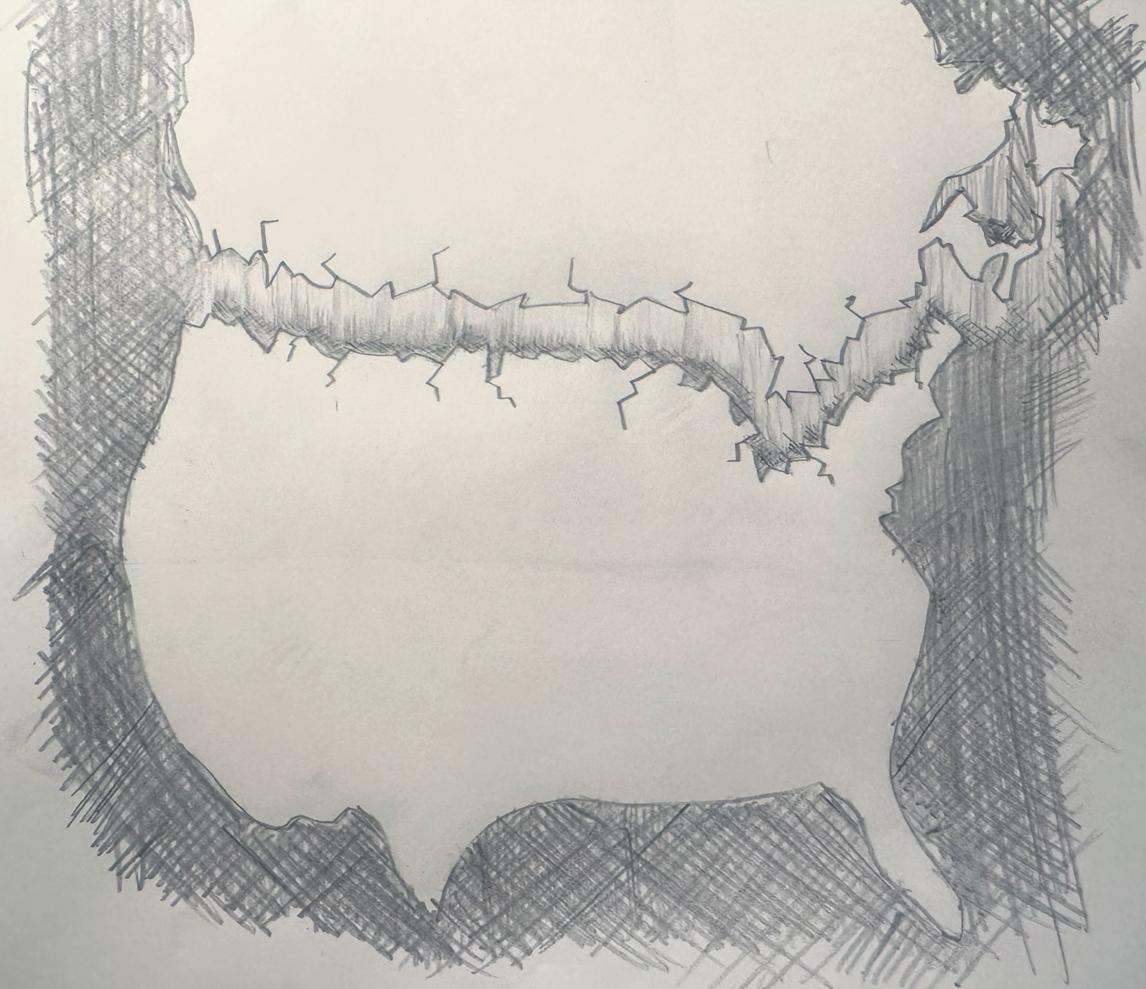
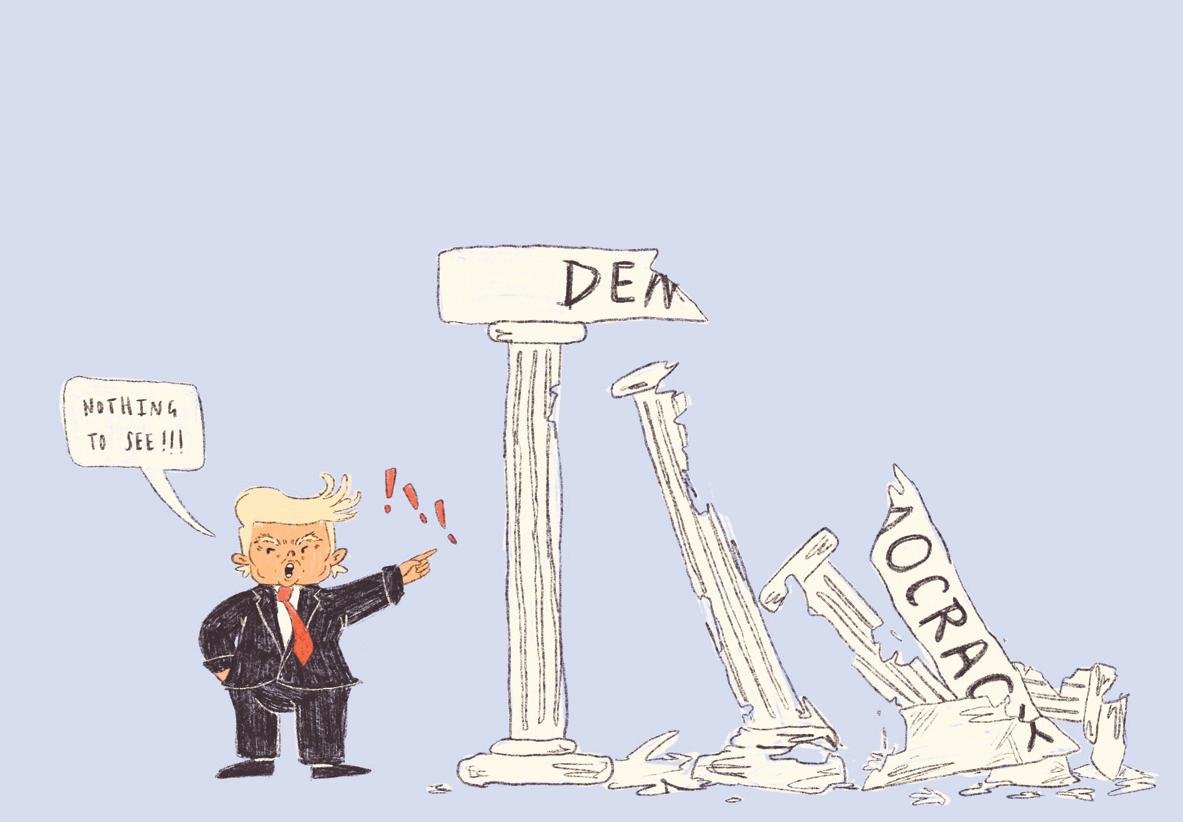
Inthepasttwodecades,theworld has witnessed an unprecedented wave of democratic backsliding. Scholar Nancy Bermeo defines democraticbackslidingas “thestateleddebilitationoreliminationofany of the political institutions that sustain an existing democracy.” Democratic nations are frequently distorted by populist leaders; elections are manipulated, heads of state engage in media censorship, protest repression, and state propaganda. Across the globe, electoral democracies like Türkiye, India, Poland, Hungary, and El Salvador have experienced democratic erosion. The political system in the United States, the former paragon of the democratic ideal, is exhibiting similar signs of strain in its democratic protections. While many scholars have recognizedthechangesinAmerican politics, these patterns are seldom directly compared with those of other backsliding democracies. America’s potent democratic rhetoric has often allowed it to escape comparisons with nations like Türkiye, Tunisia, and El Salvador. However, during US President Donald Trump’s second term, the country has experienced patterns of opposition narrative suppression, militarized attacks against civil society, and a systemic weakeningofjudicialandlegislative checks; all of which is consistent with democratic erosion and autocraticgovernance.
The United States has long relied on its democratic primacy as the
sourceofitsinternationallegitimacy. IntheSecondWorldWar,itwasthe US commitment to a moraldemocraticframingofforeignpolicy and its vehement opposition to fascism and autocracy that laid the groundwork for its future claims to liberal supremacy and its role as an internationalmoralpolice.TheCold War additionally led to an increasingly bipolar balance that placed America at the helm of democraticideals.WhiletheUShas consistently ranked lower on democracy indices than states like Australia, Canada, and the Nordic countries, its place of economic and cultural prominence made it the democratic archetype in the global politicalimagination.
The repression of civil society is one of the hallmarks of democratic backsliding.Asnationalleadersseek to expand their domestic authority, they must first squash opposing movements, creating fertile ground for expansions in executive power and removing threats to their authority.Trump’srecentresponses to anti-ICE protests in both Los Angeles and Minnesota reflect this brandoftargetedrepression.InJune 2025,TrumpdeployedbothNational Guard and Marine Corps troops to Los Angeles and the surrounding area to combat the supposed “lawlessness” and “violence” demonstrated in protests. Similarly, the ongoing ICE involvement in Minnesota targeting undocumented US immigrants, involves swathes of heavily armed and masked federal officialswhousecrowdsuppression techniques(liketeargasandpepper spray) and frequent arrests in their campaign. ICE’s presence in
Minnesota has also resulted in the deathsoftwoAmericancitizensthis January: Renee Nicole Good and AlexPretti.Thetimelinesandpublic documentation of both killings call the administration’s claims of selfdefense on behalf of ICE into question, failing to demonstrate a substantivethreattothelivesofthe agents.Thisuseofanoverwhelming militarized force to suppress protesters is typical of nations experiencingdemocraticbacksliding and executive aggrandizement, the expansion of executive authority through a weakening of checks and balances. In Türkiye, a key example of democratic backsliding, the 2013 protestsoverthedestructionofGezi Park in Istanbul resulted in the brutal state repression of protesters where armed forces beat and tear gassed civil society, while also burning the tents of peaceful environmental protesters. This incidentspurredevenmoreprotests throughoutthenation’s81provinces, which only led to the continued state-sanctioned suppression. ExamplesofthisintheUnitedStates and Türkiye bear eerie similarities. These instances involve an armed and violent militant response to a group of relatively peaceful protesters. Both anti-ICE and Gezi Park protests involved mass arrests, the deployment of riot police, and the use of tear gas. Despite these restrictions,bothTürkiyeandtheUS also have constitutional protections for civilian protest and assembly. Thus, the restrictions on protests in the two nations not only reflect a suppressionofthepopularwillbuta divergence from constitutional principles, another marker of
Eva Marriott-Fabre | Visuals Editor
democraticbacksliding.Whileitcan be assumed that executive authoritiesinboththeUnitedStates and Türkiye would dispute the peaceful nature of the protests, human rights organizations such as Amnesty International and newspapers such as the New York Times assert the peaceful nature of each respective protest and the often-preemptive violent response byheavilyarmedauthorities.
The infringement on constitutional and legal frameworks is another key step bringing a state down the road to democratic backsliding. As the judicial and legislative measures meant to protect citizens are undermined, the practice of democracywillalsonaturallyfade. InElSalvador,akeyallyoftheUS in the fight against immigration, thepresidencyofNayibBukelehas been marred with concerns of increasingautocracy,includingthe suspension of habeas corpus within the Central American nation. In 2022, Bukele enacted a “stateofexception” tocombatgang violence in El Salvador. The campaign involved arbitrary detentions and due process violations, as well as torture allegations. Notably, Bukele allowedSalvadoranforcestoenter and search properties without judicial warrants. This removal of democratic legal procedures is a keycheckonpowerasitallowsfor third-party review of coercive state behavior. The removal of checks and balances is a crucial characteristic of executive aggrandizementandisalsocentral to autocratic regimes like Putinist Russia or theocratic Iran. A recent ICE memo, leaked from an anonymous Congress official, reveals a similar federal directive for agents in Minnesota. The memo authorizes ICE agents to search homes with an administrative warrant. These warrants do not have judicial approval and have a lesser probable cause requirement. While the distinction between a judicial and an administrative warrant may seem semantical, it is directly contrary to the US Constitution, America’s founding document, which protects against “unlawful search and seizure” and expressly requires, “no Warrants shall issue, but upon probable cause. ” Thus, similarly to the suspension of civil liberties and judicial review in Bukele’s El Salvador, ICE’s new warrant policy is directly contrary to the corelegalframeworkoftheUnited States, again demeaning its democraticmerit.
Narrative suppression and control
are another key mechanism exhibitedbyleadersofunstableand backsliding democracies. This practice involves the state suppression of media that reports viewsthatopposethestateaswellas the proliferation of manipulative information through statecontrolled journalism, films, and rhetoric. Hungary, a nation that, according to the V-Dem democracy index, has experienced severe backsliding since 2010, provides a pertinent example of narrative suppression. In January 2020, Hungarian Prime Minister Viktor Orbán proposed reform to the nation's educational curriculum, which aimed to encourage nationalism and erase Hungarian military defeats from textbooks. Furthermore,thenewNationalCore Curriculum would remove authors like Hungary's only Nobel Laureate and Holocaust survivor, Imre Kertész, from required readings, instead replacing him with antisemites and charged war criminals like Jozsef Nyiro and Albert Wass. Orbán’s policy is reflective of Hungary’s growing authoritarianbentasitencouragesa selective remembrance of the nation’s history and government intervention into the propagation of nationalist ideals in the media. Trump’s recent directive to the National Park Service reflects the same type of ideological gerrymandering that typifies Hungary’s unstable democracy. In early 2026, the Trump administration ordered the removal of a number of cultural sites that reflect America’s history of subjugation toward Indigenous peoples and slaves, as well as feminist and queer imagery. The targeted removals included exhibits memorializing the slaves of George Washington, forced removals of Native Americans, and women and immigrantsinMassachusettstextile mills. The Trump administration claims the removals are targeted at removing “corrosiveideology,” butin practice, they reflect the same confounding ideals that Hungary uses to hide its losses and disparage itsmostdeservingculturalicons. AstheparallelsbetweenAmerican domestic and international politics andnationslikeTürkiye,ElSalvador, and Hungary, the role of the US amongtheparagonsofdemocracyis anincreasinglydubiousproposition. Wemustconsiderthattheimpactsof the “democraticrecession” ofthe21st century may expand beyond the bounds of destabilized minor powers, former Soviet republics, or frontline nations, but to the core of Westerndemocraticthought.
Iran’s Unrest and the Blackout that Makes it Harder to Know What’s True
As protests spread, Iran has isolated the country digitally, leading to contested casualty counts
Lisa Banti Staff Writer
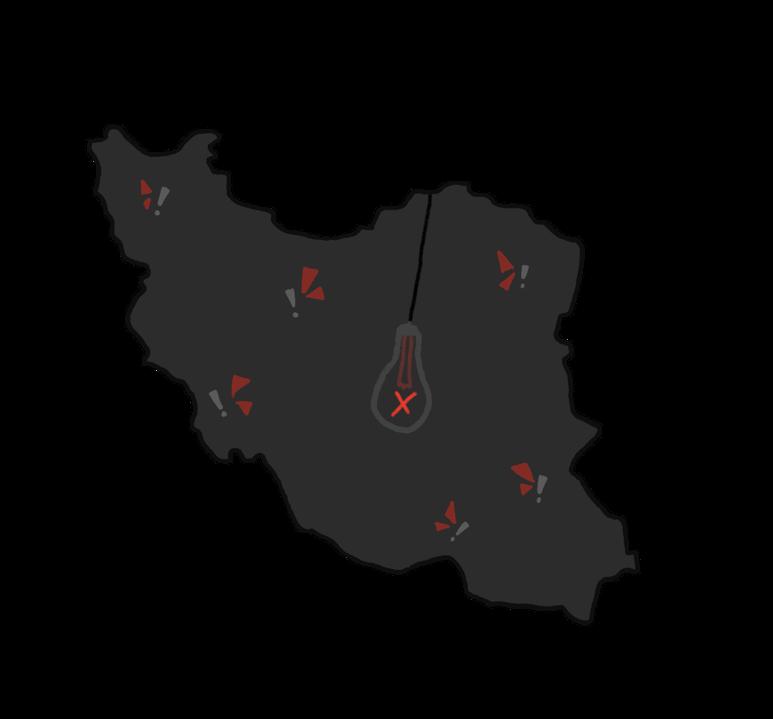
On January 8, Iran went dark. Internet monitors recorded a near-total nationwide shutdown, an abrupt collapse in connectivitythathascontinuedintoits thirdweek,withonlyminorflickersof traffic and tunneled VPN use. The blackouthasbecomeoneofthestate’ s centraltoolsforcontrollingwhatthe worldcansee.
This matters because when visibilityisrestrictedatthisscale,the storyofacrisisgetswrittendifferently. Factstravelslower,casualtyclaimsget harder to verify, and the state gains timeandspacetoshapethenarrative beforeevidencecancirculate.
Theinternetshutdownbeganasthe proteststhateruptedinlateDecember swelled into one of the most serious uprisingsagainst Iran’sleadershipin years.WhatstartedonDecember28as a movement where Iranians proclaimed their anger over soaring prices and the plunging currency quickly turned political. Since then, the country’s unrest has largely been communicatedtotheworld through foreign media reporting and human rightsorganizations.Footageisrarely shared, and official statements often contradict independent accounts. In thegapsbetweenthosefragmentslies the central question: what can we actually confirm about what’ s happeninginIranrightnow?
From economic spark to political rupture
Multiple news outlets trace the protests’ spark to economic collapse.Thedevaluationoftherial and the rising prices of everyday goods has made daily life unsustainable for many
closures and street protests in Tehran’s Grand Bazaar, then spreadbeyondthecapital.
Following the 1979 Revolution, major protests have often risen initially as a frustration over a specificissue,beforeescalatinginto a nationwide movement. For example, the disputed 2009 presidentialelectionandallegations of vote-rigging, rising fuel prices andeconomichardshipin2019,and the death of Mahsa Amini in 2022 all eventually developed into broader social demands over changesin governance,rights,and the legitimacy of the state. Human rights organizations, including Amnesty International, have describedthescaleofthisunrestas thelargestnationwideprotestwave since 2022, emphasizing that the ongoing blackout makes independent verification of events andcasualtyfiguresfarharderthan inanormalreportingenvironment. On January 8, as demonstrations intensified, Iran imposed the nationwide communications blackout, limiting external reportingeversince.
What’s happening on the ground, and why numbers are contested
Three things can be said with confidencebasedontheconvergence of reporting by major news outlets and human rights organizations. Protestsoccurredacrossthecountry, thestaterespondedwithrepression, andthescaleofdeathsanddetention remains deeply disputed, partly because the blackout makes verificationextremelydifficult.
Reports describe mass arrests, limits on large gatherings, efforts by authoritiestorestrictdocumentation and shape what information can be
aboutdetainedrelatives.TheCenterfor Human Rights in Iran has reported forced confessions, limits on legal representation,andconcernsaboutan escalating risk of executions for detainedprotesters.
HRANA (Human Rights Activists in Iran) has also published rolling tallies of casualties. In its January 25 update (day 29 of protests), HRANA reported5,848confirmeddeathsand 17,091 deaths “under investigation," alongside 41,283 arrests*. Still, even these figures, and other independent counts,remaindifficulttoverifyfully while the internet blackout limits documentationandoutsidereporting. Thisisexactlywhythenumbersare being contested: in a shutdown, the usual pathways for confirming casualties such as local journalists, hospitals, public records, open communication,andvideoverification either disappear or become dangeroustouse.Whenevidencecan’t move freely, the state gains an advantage not only in policing the streets, but in controlling what becomesprovable.Theresultisacrisis where uncertainty isn’t just a byproductofchaos;itbecomespartof the landscape of power, because contested numbers delay accountability and leave room for officialnarrativestodominate.
Iranian officials, meanwhile, have framed the unrest as foreign-backed destabilization and have referred to demonstrators as “rioters,” alongside warningsaboutpunishmentandasset seizures. On January 21, Iranian state televisionissuedthefirstofficialdeath toll from the protests, reporting that 3,117 people were killed., a figure widelydescribedas “lowerthanactivist and rights group counts.” In spite of independent estimates varying dramatically, UN-linked statements emphasizethatthetruetollcouldbefar higher than what Iran’s authorities have publicly acknowledged. In an interviewpublishedonJanuary26,the UN Special Rapporteur on Iran, Mai Sato, described the discrepancy between governmental and independentfiguresandwarnedthere couldbetensofthousandsofvictims, notingtheblackout’sroleinobscuring evidenceandenablingcoercionaround casualtynarratives.TheUN’sbroader human rights apparatus has also characterized the crackdown as potentiallythedeadliestsincethe1979 Revolution and has stressed evidence collectionforaccountability.
Theblackoutasstrategy, notsymptom
Internet data strongly suggests the shutdownwasdeliberate:connectivity droppedsharplyonJanuary8andhas remainedseverelyrestricted.Buteven
a near-total blackout isn’t absolute. Starlink terminals, along with other smuggled satellite devices have offeredathin,unevenworkaroundfor asmallnumberofpeople,andrecent reporting says SpaceX waived subscription fees for users in Iran while authorities attempted to jam signals and identity devices. This patchwork connection matters because it highlights what the blackout is designed to do: make communication scarce, risky, and unequal, so the flow of evidence becomes harder to sustain at scale. Thus,Starlinkhasbecomeoneofthe main ways footage and testimony escapetheblackoutforthosewhocan accessit.Atthesametime,thesatellite remainsillegalinsideIran,andreports have described serious risks for anyonecaughtusingit.
Thepracticaleffectsareimmediate. Protestcoordinationbecomesharder. Independent journalism becomes closetoimpossible.Evidenceofabuses becomes harder to share. Families struggle to locate detained relatives. And international pressure, often fueledbyimagesanddocumentation, becomeseasierforthestatetodismiss asmisinformation.
How we know what we know in a blackout
In a normal “breaking-news” environment, a reporter might determinecasualtiesthroughhospital access, local journalists, mobile footage, official records, and on-thegroundobservation.InIranrightnow, theblackoutcollapsesthatsystem.
Asaresult,thestrongestverification tendstocomefromthreeoverlapping streams. The first is internet and network monitoring, which can confirmtheblackoutitselfandshiftsin connectivity. The second is human rights documentation, such as Amnesty International, UN bodies, and human rights organizations, whichtracksarrests,patternsofabuse, and testimonies, often with careful caveats. The third is major international reporting that can corroborate events across multiple independent channels and, sometimes,verifyfootagethroughfthe orensicmethods.
Social media also matters here. TikTok,Instagram,X,andTelegram channelsbecomeimportant,asthese spaces showcase on-the-ground evidence firsthand. However, in a blackout,socialmedia alsobecomes a space where misinformation spreads the fastest. Old videos recirculate,locationsaremislabeled, and timelines blur. Therefore, the responsible approach when engaging with the movement digitally is to tentatively treat most
viralpostsasleads,untilverifiedby multiple outlets or corroborated by humanrightsmonitors.
Whathappensnext
Making predictions about the future of Iran can be risky in a situationthisvolatile,butafewshortterm scenarios appear plausible. Sustained repression and tighter surveillance could push dissent into quieter forms, including work stoppagesandstrikes,short-livedflash gatherings, nighttime rooftop chanting,orsymbolicactslikepublic memorials and slogans, which are harder to police at scale. Renewed protest surges are also possible if economicshocksintensify,especiallyif thepublicfeelsthestateresponsehas notaddressedunderlyinggrievances. Anescalationofpressurefromthe international arena is another potential risk. Tariff threats, sanction enforcement, and military posturing could harden Iran’s stance and reinforcethestate’sclaimsthatunrest isforeign-driven,whilealsoworsening economic pressure on ordinary people.Atthesametime,international accountability mechanisms may expand. The UN Human Rights Council’s renewed fact-finding mandate signals a growing effort to preserveevidence,evenifimmediate enforcementremainslimited. International accountability often begins with documentation. Factfinding mandates can preserve testimony and evidence and map patternsofabuse,whichcanlaterfeed into targeted sanctions, domestic prosecutions under universal jurisdiction in some countries, or broader transnational justice processes if political conditions change.Immediateenforcementmay belimited,buttherecordmatters.
Thecentraltruthatthismoment
Iran’sprotestsandcrackdownisnot justapoliticalcrisis,itis alsoacrisisof visibility.Whenacountryofover80 million people can be pushed into near-total digital isolation for weeks, the struggle becomes not only over streetsandprisons,butoverwhatcan be proven, what can be denied, and whocontrolsthestory.
Thatiswhytheblackoutmattersas much as the protests themselves. It shapeswhattheworldknows,whenit finds out and how easily footage of abuse can be erased if it can be documentedatall.
*AccordingtonewsoutletIran International, deaths have surpassed36,500 makingthis thedeadliestwavesofprotestsin Iran’smodernhistory.