KANSAS
New Books for Spring & Summer 2026


since 1946, the University Press of Kansas has championed rigorous scholarship, elevated the voices of Kansas and the Great Plains, and preserved untold histories that help us better understand our world. As we celebrate our 80th anniversary in 2026, we look forward to honoring our past while continuing to build a dynamic future for the Press.
Our Spring 2026 season is filled with compelling new titles across history, politics, regional studies, and more. These books reflect the research, lived experiences, and expertise of our authors and the depth, diversity, and ambition of our publishing program.
UPK 8 YEARS
As UPK celebrates eight decades of publishing excellence, we’re pleased to officially debut our new imprint, Plainspoken Books. Plainspoken Books endeavors to publish authentic Midwest stories for readers everywhere, bringing the politics, cultures, and voices of from the middle of the country into national conversations. Author Chris Arnone speaks to a journey of identity and perception in My Name Was Baby (see page 2). Arnone writes a candid memoir about growing up different and an inspiring story of self-discovery and self-acceptance. The Midwest is a dynamic place that is vital to understanding who and what America is and where we are going, and we’re eager to share these stories with you.
Our mission thrives because of readers like you who are curious, engaged, and dedicated to the power of ideas. We thank you for your support.
Recent Awards

Las Madres: Gold Medal, Dolores Huerta Best Cultural & Community Themed Book, International Latino Book Awards
Las Madres: Gold Medal, Mimi Lozano Best Family History Award, International Latino Book Awards
Las Madres: Bronze Medal, Most Inspirational Nonficition Book, International Latino Book Awards
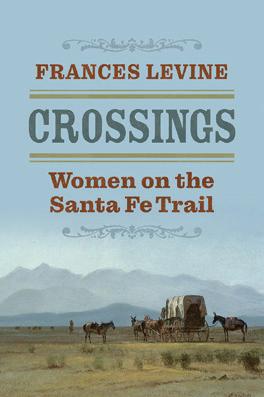
Crossings: New Mexico Book Awards, History Category
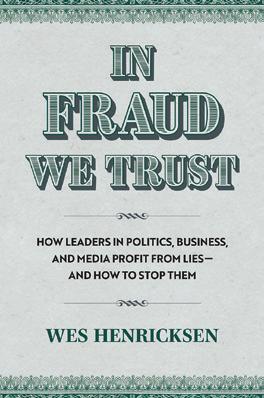
In Fraud We Trust: Scribes Award, American Society of Legal Writers
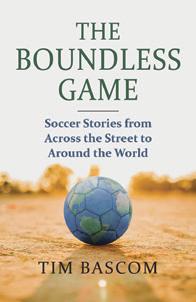
The Boundless Game
Soccer Stories from Across the Street to Around the World
Tim Bascom
Tim Bascom spent half his childhood in Kansas and the other half in East Africa. Living and traveling around the world, the game of soccer proved a constant truth. Through storytelling that effortlessly flows between poignant and funny, sobering and charming, Bascom explores why soccer matters so much in our common, everyday lives, and how this ordinary yet extraordinary game can bring us all a little closer together.
His passionate vision for this most global game leads Bascom to describe how soccer brought him sanity in the middle of a brutal revolution in Ethiopia and how bridging divisions of race and culture was key to success for teams he joined in Chicago and Kansas. From watching Arsenal’s energetic rise in the Premier League to the bravery of a besieged Afghanistan Women’s National Team, and from pickup games in the Midwest and the Middle East, Bascom finds universal truths and deeply human meaning in the beautiful game of soccer.
Tim Bascom, who learned to play soccer as a youth in Ethiopia, is the author of two prize-winning memoirs, Chameleon Days and Running to the Fire; two essay collections, The Comfort Trap and Climbing Lessons; a collection of short stories, Continental Drift; and the novel Squatters’ Rites.
FEBRUARY
168 pages, 5½ x 8½
Paperback ISBN 978-0-7006-4102-4, $24.99 (t) Ebook ISBN 978-0-7006-4103-1, $14.99

“Through a life spent playing soccer, Tim Bascom captures the global and personal nature of the game. He shares experiences from around the world, taking readers from dusty African streets to sweltering Kansas fields. His passion for the game will resonate with anyone who loves sport.”
Paul Carr, ESPN & FOX World Cup researcher
“Equal parts touching memoir and fascinating history, The Boundless Game reminds readers of the power of sport to provide connection in an increasingly fragmented world. Through poignant personal vignettes and watershed moments, soccer is presented as a passport that allows even the casual participant the opportunity to fit the globe into the length of a pitch, if only for a short game.”
Peter Jasso, director of From Football to Futbol
“A lovely complement, or perhaps even alternative, to the cynical business of modern commercial sport.”
Andrew M. Guest, author of Soccer in Mind: A Thinking Fan’s Guide to the Global Game
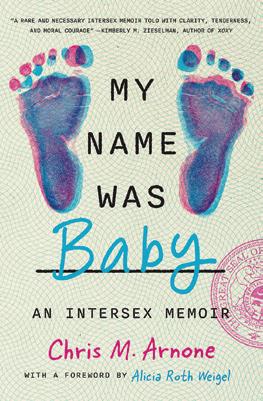
“My Name Was Baby is a brave and intimate exploration of the search for identity, belonging, and the meaning of manhood beyond the narrow rules of masculinity. It’s a reflection on what it means to live truthfully—to let go of shame, to question what we’ve been taught, and to find freedom in being fully ourselves. It is an intersex story filled with honesty and heart that you won’t forget.”
Georgiann Davis, author of Five Star
White Trash: A Memoir of Fraud and Family
My Name Was Baby An Intersex Memoir
Chris M. Arnone
Foreword by Alicia Roth Weigel
When Chris Arnone was born in Independence, Missouri, nobody could tell what sex he was. For the first few days of his life, until a chromosome test confirmed he was a boy, his parents called him Baby. From this first, literal “coming out,” it was clear he was different. His life was punctuated by a string of surgeries and trips to the ER, unrecognizable and confusing diagrams in sex ed class, and the need to preface every intimate encounter by explaining his medical history. But it wasn’t until he was thirtyseven that he discovered he didn’t have “birth defects”—he was intersex.
In this fresh and affirming memoir, Chris’s struggles with anxiety, confusion, and a painful journey toward self-acceptance will be familiar to LGBTQIA+ people everywhere. But he also offers a perspective that is largely untold: that of an intersex man, existing in the toxic masculine culture of the heartland; parents who were open and accepting of his differences; and doctors who (mostly) did no harm.
It is a deep and wide exploration of religion and politics, gender and sexuality, frat parties, burlesque shows, and Magic: The Gathering. Arnone boldly shows how the lives of intersex folks can be so different and yet so familiar to everyone, helping us all take one step closer to understanding and acceptance.
With raw vulnerability, emotional range, and a quick wit, My Name Was Baby offers something inspiring for everyone, from self-assured manly men to confused genderqueer kids. It is the story of someone who came to love who he is and hopes everyone else can love themselves, too.
Chris M. Arnone (he/him) was weaned on comic books and Hardy Boys novels, finding his first literary love in the X-Men, though his longest lasting is a love for Ray Bradbury. He mostly writes science fiction and fantasy, though he’s known to dabble in poetry, playwriting, and literary fiction. As an intersex man, he is particularly interested in gender and sexuality in his writing.
An imprint of the University Press of Kansas
Plainspoken Books publishes authentic Midwest stories for readers everywhere, bringing the politics, cultures, and voices of our region into national conversations.
Arnone is author of the cyberpunk heist series, The Jayu City Chronicles. He is a senior contributor for Book Riot and a board member of Whispering Prairie Press. He has an MFA in Creative Writing from the University of Missouri – Kansas City. He also performs on many stages in Kansas City, where he lives with his wife Christy and their cats.
JUNE
200 pages, 5¼ x 8
Hardcover ISBN 978-0-7006-4352-3, $29.99 (t)
Ebook ISBN 978-0-7006-4225-0, $14.99
Audiobook ISBN 978-0-7006-4227-4, $24.99
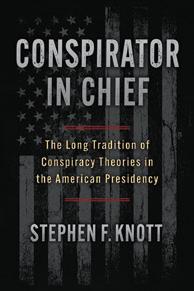
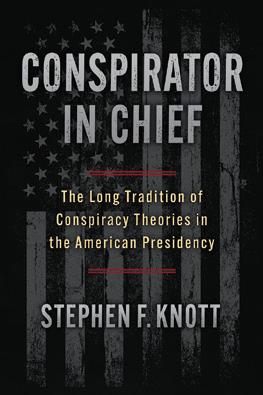
Conspirator in Chief
The Long Tradition of Conspiracy Theories in the American Presidency
Stephen F. Knott
Today we are inundated with conspiracy theories—QAnon, the “Big Lie,” Pizzagate, the Epstein Files, and innumerable false claims about vaccines and other medicines. But the widespread proliferation of lies and misinformation can make it easy to forget that conspiracy theories have been part of American life from the beginning. As political historian Stephen F. Knott recounts in painful detail, the Commander in Chief of the United States has often acted as Conspirator in Chief.
Part presidential history and part descent into a political Dante’s Inferno, Conspirator in Chief is a tour through the Hall of Shame in American politics. Thomas Jefferson used surrogates to spread false claims about Alexander Hamilton in order to destroy his political influence and used conspiracy theories about the Federalists to tarnish them in the eyes of the American people. This brand of demagoguery reached an apex in the presidency of Andrew Jackson, who publicly defamed abolitionists, manipulated newspapers to publish his conspiracies, and spread his own “Big Lie” about the 1824 election being stolen from him in a “corrupt bargain.”
In addition to our most infamous presidents, Knott uncovers the surprising conspiratorial inclinations of our more esteemed leaders, including Franklin Delano Roosevelt and Harry S Truman. Knott shows how both presidents painted their opponents in an extreme light, casting aspersions on political rivals by calling them “betrayers of America” and comparing them to Nazis, fascists, and communists. Less surprising are the presidencies of Richard Nixon and Donald J. Trump, both known for their propagation of racist and paranoid beliefs and their denigration of political opponents.
In this follow-up to The Lost Soul of the American Presidency, Knott does more than show how low American presidents have gone. He also illuminates an alternative track record in which presidents took the high road and embraced the “better angels of our nature.” Conspirator in Chief is a sobering reminder of the power of a president’s words and the damage they can do when that power is wielded in self-serving ways, but it is also a reminder that words can heal and repair as well. Knott calls the nation to a more humane and dignified future.
Stephen F. Knott is Thomas & Mabel Guy Professor of American History and Government at Ashland University and Emeritus Professor of National Security Affairs at the United States Naval War College in Newport, Rhode Island. He is the author of many books, including The Lost Soul of the American Presidency: The Decline into Demagoguery and the Prospects for Renewal and Coming to Terms with John F. Kennedy, both from Kansas.
MAY
260 pages, 6 x 9
Hardcover ISBN 978-0-7006-4128-4, $32.99 (t)
Ebook ISBN 978-0-7006-4129-1, $14.99
“Timely and balanced, Knott’s analysis calls out the serious dangers to our Republic of presidents using conspiracy theories as tactics to distract and divide Americans. As his engaging review through presidential history shows, it did not start with President Trump but has now reached a critical point with potentially lasting effects on the stability of our democratic institutions and processes. I cannot recommend this highly enough to students and teachers of US government and politics.”
Mark J. Rozell, coauthor of Executive Privilege: Presidential Power, Secrecy and Accountability
“Conspiratorial thinking has shadowed the American presidency from the early republic until the present. Knott vividly reveals how America’s presidents, from Jefferson to Jackson, from Truman to Trump, have practiced politics through conspiracy. This is essential reading for anyone seeking the deep roots of today’s poisonous political climate.”
Jordan Taylor, author of Misinformation Nation: Foreign News and the Politics of Truth in Revolutionary America
“Tom Mowle has given us a vivid, compelling addition to the first-hand literature of warfare. His book reads like fiction but is an important insight into the history of our times, with vital implications for the future.”
James Fallows, author of Blind Into Baghdad: America’s War in Iraq
“Chaos in the Green Zone is an engaging first-hand account of why US policy in the Middle East has failed. Tom Mowle has the dark humor of M*A*S*H (the film and show), combined with a keen and critical eye and ear. This book should be required reading for cadets at West Point, and anyone running for Congress.”
Dale Maharidge, author of Pulitzer Prize–winning And Their Children After Them: The Legacy of Let Us Now Praise Famous Men: James Agee, Walker Evans, and the Rise and Fall of Cotton in the South
“Essential for understanding this decisive episode in US military and diplomatic history.”
Juan Cole, Richard P. Mitchell Collegiate Professor of History, University of Michigan and author of The Rubáiyát of Omar Khayyam: A New Translation from the Persian
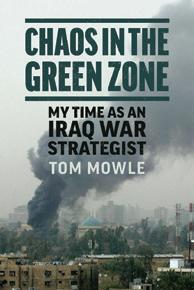
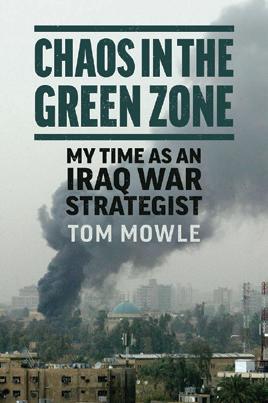
Chaos in the Green Zone
My Time as an Iraq War Strategist
Tom Mowle
When Tom Mowle volunteered to go to Iraq in 2004 to help shape American strategy, he left behind a comfortable life as a noncombat junior officer and a professor at the US Air Force Academy. In Chaos in the Green Zone, he relives the chaos and absurdity of war in a way that recalls Joseph Heller’s classic novel Catch-22.
Mowle vividly depicts the frenetic cycle of activity at a wartime forward headquarters, where the enemy often dictated the schedule of events, fifteen hours a day, seven days a week. Important tasks were set aside for urgent distractions; hard deadlines constrained critical thinking and well-balanced decisions. Frequent indirect fire attacks, the deaths of colleagues, heat-induced illnesses, and personality conflicts thickened the fog of war.
Amid this chaos in an unfamiliar land, Tom wrestled with deeply human issues, including his troubled marriage, his daughter’s health, and his own career prospects. Through it all, he sought to find meaning through service despite creeping skepticism about the mission at hand.
Chaos in the Green Zone provides keen insights about Iraqi political dynamics and shows how collective ignorance, toxic optimism, and partisan considerations affected coalition decision making. The result was twenty years of dysfunctional Iraqi politics, increased Iranian influence in the Middle East, and many unnecessary Iraqi and American deaths.
This honest memoir, drawn from his original wartime diaries and other materials, is as thrilling as it is insightful. It is a must-read for anyone wanting to see what it was like to serve as a high-level strategist in Iraq and for anyone wondering how we wound up where we are today.
Tom Mowle is the author of Allies at Odds? The United States and the European Union, the editor of Hope is Not a Plan: The War in Iraq from Inside the Green Zone, and the coauthor of The Unipolar World: An Unbalanced Future. He is the owner of Rampart Professional Solutions, a manuscript coaching and editing service in Colorado.
APRIL
256 pages, 19 photographs, 1 figure, 6 x 9 Paperback ISBN 978-0-7006-4131-4, $24.99 (t) Ebook 978-0-7006-4132-1, $14.99
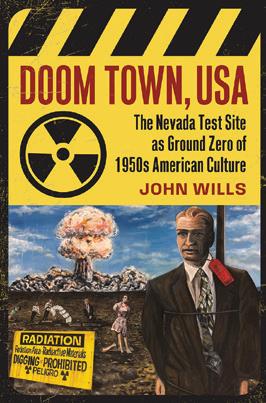
Doom Town, USA
The Nevada Test Site as Ground Zero of 1950s American Culture
John Wills
In March 1953 and May 1955, government officials—including the Federal Civil Defense Administration (FCDA), the US Department of Defense, and the Atomic Energy Commission—released nuclear bombs on two model towns at Nevada Test Site, the continental nuclear test facility during the Cold War. These so-called “Doom Towns” were designed to illustrate in the most vivid way possible what might happen to a “typical American home” caught in a Soviet atomic blast. Instead of training troops for war overseas, the Doom Towns literally brought the Cold War home.
Drawing on newspaper articles, FCDA reports, and corporate documents, John Wills brings readers into Doom Town, USA—a place where life-size mannequins of the archetypal Mr. and Mrs. America walked the streets in JCPenney clothes, drove Chrysler cars, and lived in the latest trailer homes, tailor-made to escape in the event of nuclear war. The two Doom Towns of Operation Doorstep (1953) and Operation Cue (1955) were far more than just an exercise in developing a new civilian home front. They were a media spectacle and a cultural flashpoint, attracting corporate sponsors, drawing in atomic tourists, and generating new consumer products. The atom bomb may have been bad for world peace, but it was good for business.
Doom Town became an unusual but effective banner for corporate and consumer life in the 1950s. Doom Town was an effective simulacrum of white middle-class America, right down to the racially segregated social spaces and the hierarchical gender roles of the dummies living in their classic suburban homes. But these homegrown Hiroshimas also contributed to a broader culture of catastrophe and fear in the late 1950s. Concerns over Communist invasion, Soviet spies, and ICBM missiles coalesced in the Nevada desert, framing a national culture of anxiety. The sudden explosion of the model towns revealed the shocking fragility of postwar living, calling into question the 1950s American Dream and the survivability of American ideals. The cultural crater left by these nuclear test sites exists even today in the many movies, television shows, and video games that dwell on the existential crisis of impending apocalypse. Doom Town, USA is an eye-opening tour guide of one of the most bizarre and uniquely American places in history.
John Wills is professor of American Media and Culture at the University of Kent. He is the author of several books, including Conservation Fallout: Nuclear Protest At Diablo Canyon and Gamer Nation: Video Games and American Culture.
APRIL
304 pages, 19 photographs, 6 x 9
Paperback ISBN 978-0-7006-4135-2, $29.99 (s)
Ebook ISBN 978-0-7006-4136-9, $14.99
“This journey to America’s ground zero will not disappoint. Beautifully written and filled with deep reflections about the atomic age, Doom Town, USA reveals the ways in which the smoldering ruins of Nevada have haunted popular culture from the mid-1950s until the present day.”
Ian Klinke, coauthor of Human Geography: A Very Short Introduction
“Doom Town, USA offers a fascinating picture of the Doom Town atomic tests of 1953 and 1955, describing the efforts of the Federal Civilian Defense Administration as it sought to motivate an unenthusiastic population to prepare for potential nuclear attack. Wills explains everything from the FDCA’s initial conceptions of the Doom Town projects, to the corporate cooperation elicited by the FDCA, and the project’s relation to 1950s consumerism. He paints a fascinating picture of Doom Town as a simulacra of American life and shows how that then became the basis for so many other simulacra in the form of movies, television shows, and video games that gave us Doom Towns’ afterlife.”
Elyssa Faison, coeditor of Resisting the Nuclear: Art and Activism across the Pacific
“Allan Millett concludes his history of the Korean War with another masterful volume informed by decades of researching and thinking about the war. Once again, he examines the war from clean conference rooms to squalid trenches with vivid prose and deft portraits of civilian and military leaders. Millett’s careful attention to all the participants, and especially to the two Koreas, make this book and its companion volumes the definitive history of the Korean War.”
William Donnelly, author of Under Army Orders: The Army National Guard during the Korean War
“Millett’s coverage of Korea’s modern state building, military reforms, and security dynamics in Northeast Asia is provocative not only for historians and veterans but also for Asian Studies specialists, policy makers, and military personnel, both for those who would seek to avoid war with North Korea and China, and those whose task it is to prepare for it.”
Xiao-Bing Li, editor and translator of Mao’s Generals Remember Korea
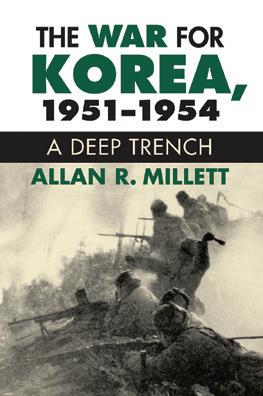
The War for Korea, 1951–1954
A Deep Trench
Allan R. Millett
By July of 1951, the war on the Korean peninsula had been raging for a year and the capital of Seoul had changed hands four times. Armistice talks had begun. The stakes remained high, not just for the Koreans but for the Russians, Chinese, and Americans as well. The future of the Asia-Pacific world and the fight for the global order hung in the balance.
In this third and final volume in his celebrated history of the Korean War, eminent historian Allan Millett leads readers through the complicated and interconnected series of military operations and diplomatic events that occurred from the summer of 1951 through May 1954, the end of the Geneva Conference on Korea. Drawing extensively on recently available archival sources, Millett brings new voices to the history of the war, including Russian, Chinese, and North Korean perspectives and adds new insights to the conventional wisdom of the American and South Korean views of the war.
Proud of their long history of resistance to invaders, both Koreas asserted they sought self-determination. One year after the armistice, with foreign armies still on their soil and scant evidence of recovery, Syngman Rhee and Kim Il-sung had taken political paths they believed were the pre-conditions for rebuilding their Koreas for the conflict they saw in the years ahead. For the two Koreas the war raised barriers to unification that have not yet been breached.
A leading authority on the history of the Korean War, Allan R. Millett is Ambrose Professor of History and director of the Eisenhower Center for American Studies at the University of New Orleans. He is also the recipient of the Pritzker Military Library Literature Award for Lifetime Achievement in Military Writing. Millett is the author of The War for Korea, 1945–1950: A House Burning and The War for Korea, 1950–1951: They Came from the North, both published by Kansas.
Modern War Studies
JUNE
800 pages, 26 photographs, 15 maps, 2 figures, 7 tables, 6 x 9 Hardcover ISBN 978-0-7006-4112-3, $69.99 (x) Ebook ISBN 978-0-7006-4113-0, $69.99
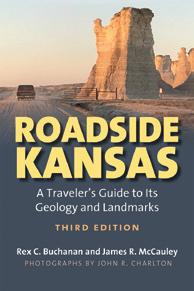
Roadside Kansas
A Traveler’s Guide to Its Geology and Landmarks
Third Edition
Rex C. Buchanan and James R. McCauley
Photographs
by
John R. Charlton
Almost forty years after its first publication, Roadside Kansas remains the premier guide to the landscapes and landmarks along more than 2,600 miles of Kansas highway. Conveniently organized by highway and milepost markers and filled with over 100 photos, illustrations, and maps, this book is ready for modern-day explorers to follow along, learning about the land as they travel through the state.
Rex Buchanan and James McCauley have shown that Kansas highways provide much more than passage to another state—they are destinations in their own right. Whether you’re planning an adventurous road trip or just need a glovebox guidebook, Roadside Kansas is a must-have for every traveler.
Rex Buchanan is director emeritus of the Kansas Geological Survey and editor of Kansas Geology: An Introduction to Landscapes, Rocks, Minerals, and Fossils
James R. McCauley was a geologist for the Kansas Geological Survey and the author of some two dozen scientific articles.
John R. Charlton is the staff photographer at the Kansas Geological Survey.
MAY
400 pages, 70 photographs, 13 maps, 8 figures, 6 x 9
Paperback ISBN 978-0-7006-4143-7, $32.99 (s) Ebook ISBN 978-0-7006-4144-4, $14.99
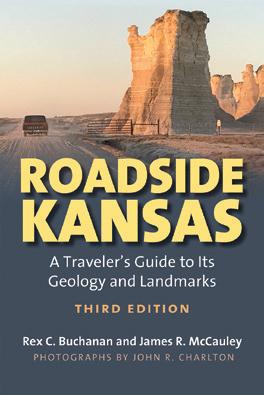
“Travel the highways and see the terrain formed by elemental forces—limestone cliffs layered by ancient seas, boulders left by glaciers from the ice age, mysterious sink-holes, everlasting wells—all in this fascinating kaleidoscope of geology, history, pioneer tales, amusing anecdotes, and incidental information about the state.”
Zula Bennington Greene, columnist “Peggy of the Flint Hills”
“Valuable information . . . well organized . . . and well written.”
H. L. James, author of Scenic Trips to the Geologic Past
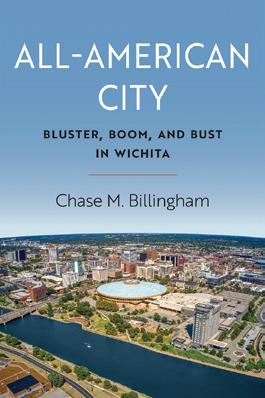
“There should be more books like AllAmerican City. Billingham masterfully demonstrates the value of looking beyond our largest metropolises to understand how and why cities change. Any comprehensive understanding of contemporary urbanism should rest on carefully researched, comprehensive, and engaging books about mid-sized cities like this one.”
Japonica Brown-Saracino, author of The Death and Life of Gentrification: A New Map of a Persistent Idea
“Urban sociology tends to focus on large cities and the problems that come from either rapid economic growth or decline. In this refreshing and engaging book, Billingham examines how Wichita, a mid-sized Great Plains city, has warded off severe decline but repeatedly struggled to compete with its peer cities and realize its dreams of growth. I hope this book inspires scholars to tell the story of other cities like Wichita that have too often escaped our attention.”
Richard E. Ocejo, author of Sixty Miles Upriver: Gentrification and Race in a Small American City
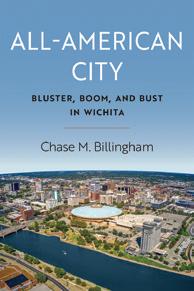
All-American City
Bluster, Boom, and Bust in Wichita
Chase M. Billingham
Distinctive. Unique. Authentic.
These were the watchwords in the 2020 campaign to revitalize Wichita, Kansas, and to set it apart in the perpetual competition among American urban centers for jobs, investment, population growth, and stature. The master plan to overhaul the riverfront was one of many efforts in which business leaders, elected officials, local boosters, and the general public frequently conflated seemingly contradictory impulses: the aspiration, on the one hand, to make the city stand out as a unique, authentic destination, and the obligation, on the other, to offer a suite of amenities to visitors, residents, and businesses similar or identical to those that could be found in other places believed to be competitors in a zero-sum contest for lucrative, but elusive, urban prizes.
In All-American City, sociologist Chase M. Billingham recounts the recent history of Wichita as a case study of a broader phenomenon across the American urban landscape in which the leaders of midsized cities embrace similarity, even while touting distinctiveness. Many cities appeal simultaneously to both authenticity and mimicry, with the result that cities across the country—and even across the world—that had previously enjoyed their own local flavors, regional cuisines, unique accents, and quirky customs increasingly look and feel the same. Wichita’s story serves as a window through which to examine the delicate balance between sameness and distinction that characterizes many cities’ economic development strategies.
With a journalist’s eye for detail, Billingham chronicles the city’s effort to attract a new Minor League baseball team, the closure of an underutilized park and the removal of unhoused people in an effort to revitalize downtown Wichita, local leaders’ repeated efforts to cultivate civic pride in order to drive economic growth, and the increasingly vexed relationship between Wichita and its key economic base, the aviation manufacturing industry—compounded by a series of economic crises and exacerbated by the COVID-19 pandemic. All-American City reveals the challenges and perils that cities face when trying to stand out from the crowd.
Chase M. Billingham is associate professor of sociology at Wichita State University.
MARCH
312 pages, 20 photographs, 3 figures, 6 x 9 Paperback 978-0-7006-4092-8, $29.99 (x) Ebook ISBN 978-0-7006-4093-5, $29.99
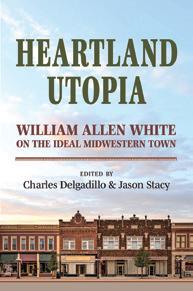
Heartland Utopia
William Allen White on the Ideal Midwestern Town
Charles Delgadillo and Jason Stacy
William Allen White, the editor of the Emporia, Kansas Gazette, was an American institution. When he died in 1944, President Franklin Delano Roosevelt commented that America had lost one of its “wisest and most beloved editors.” White understood the value of his unique brand as “The Voice of Main Street,” and would often preach his vision of the kind of nation the United States ought to be. From his view in Emporia, White’s imagined Midwestern town was a dream for the nation to strive toward. He saw himself as a pioneer sowing the seeds of a great harvest to come, and he believed that the small-town civilization he venerated exemplified what was best in America.
In Heartland Utopia, Charles Delgadillo and Jason Stacy have gathered nearly twenty-five years of White’s fiction and nonfiction, focused on his idealized Midwestern community and how this utopian vision changed over time.
Charles Delgadillo is a lecturer in history at California State Polytechnic University, Pomona, and the author of Crusader for Democracy: The Political Life of William Allen White, published by Kansas.
Jason Stacy is Distinguished Research Professor of history and social science pedagogy at Southern Illinois University, Edwardsville. His books include Spoon River America: Edgar Lee Masters and the Myth of the American Small Town and Walt Whitman’s Selected Journalism.
MARCH
262 pages, 6 x 9
Hardcover ISBN 978-0-7006-4028-7, $39.99 (s)
Ebook ISBN 978-0-7006-4029-4, $14.99
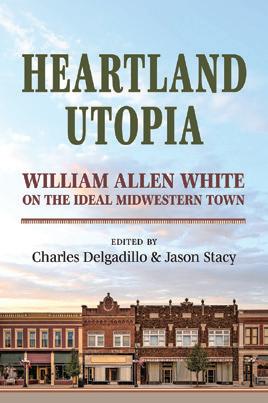
“A timeless (and increasingly timely) collection of writings about this country’s middle part, a small town with national implications, reflecting White’s own import and involvement with the political landscape of this country during the birth of our modern era. In turns pastoral story craft and scourging moral and political clarity, this is essential reading for anyone who wishes a clearer view of the small places in the United States from within, a perspective missing almost entirely from mainstream discussions about the political and economic landscape of the American countryside.”
Ben Aguilar, Director of Operations at The Berry Center
“This selection of famed Kansas journalist William Allen White’s writings brings to life a small-town, heartland vision of democratic life in a modernizing America, one that had great purchase in the early twentieth century and that still has useful lessons for us early in the twenty-first. Delgadillo and Stacy ably introduce the collection, exploring the enduring value of White’s ideals and probing their limitations.”
James J. Connolly, coauthor of What Middletown Read: Print Culture and Cosmopolitanism in an American City
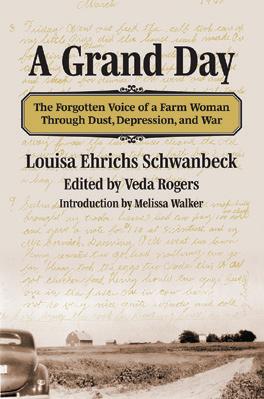
“It is hard not to get swept up in the diaries of Kansas farm woman Lulu Ehrichs Schwanbeck! Spanning the Dust Bowl era to the mid-1950s, the entries show that Lulu was everywhere on the farm while also contending with challenges, changes, setbacks, and personal disappointments. Lulu’s memorable perspective on enduring a hard life offers fresh insight into the experiences of twentieth-century Midwestern farm families.”
Ginette Aley, coeditor of Union Heartland: The Midwestern Home Front during the Civil War
“The details of day-to-day life on a western Kansas farm from 1935–1955 illuminate how the price for eggs was more relevant than Pearl Harbor and rural electrification more meaningful than the atom bomb. Combining diary and commentary, A Grand Day paints a rare and dignified portrait of a rural farm woman. Veda Rogers has done compelling work in organizing and annotating the diaries of Lulu Schwanbeck.”
Tom Mitchell, editor of Early Stories by Tennessee Williams
A Grand Day The Forgotten Voice of a Farm Woman Through Dust, Depression, and War
Louisa Ehrichs Schwanbeck
Edited by Veda Rogers
These published diaries of Louisa “Lulu” Ehrichs Schwanbeck chronicle her life and work on her farm in western Kansas spanning the Great Depression, the Dust Bowl, and World War II. Between 1935, when she began her first diary, and 1938, Lulu not only toiled against the stress of the Great Depression and the threats of the Dust Bowl but also suffered debilitating burns, a cancer diagnosis, and the loss of her husband. By 1940, she a single woman in her early sixties overseeing the business and operations of a large, fully mortgaged family farm. As a farmer and a true Kansan, she faced these challenges head on with a powerful work ethic, strong determination, high spirits, and a strong community of support. Lulu had a verve for life and understood the importance of balancing work and play. Despite hard times and hard work, many of her entries ended with a simple note. “A grand day.”
This rare collection of diaries tells the individual story of one woman while also giving voice to the lives and experiences of countless women in twentieth-century rural America that have often been forgotten to history.
Veda Rogers enjoyed a varied career as housewife, mother, singer, voice instructor, actress, and bank officer. She and her late husband, Bruce, owned the summer theater, Vassar Playhouse, near Topeka, Kansas. Now retired, she lives in Highlands Ranch, Colorado.
APRIL
340 pages, 23 photographs, 1 map, 6 x 9 Hardcover ISBN 978-0-7006-4115-4, $39.99 (x) Ebook ISBN 978-0-7006-4116-1, $39.99
Lyda Conley and the Fight to Preserve Huron Indian Cemetery
With Sources and Oral Histories
Edited by Stephanie Bennett, Samantha Gill, and Tai S. Edwards
For fifty years, Eliza (“Lyda”) Conley and her two older sisters, Helena and Ida, protected the Huron Indian Cemetery in Kansas City, Kansas, now known as the Wyandot National Burying Ground. A member of the Wyandot Nation of Kansas, Lyda Conley is the first Indigenous woman to argue a case before the United States Supreme Court, where she established legal precedents used to protect Indigenous sovereignty today.
In conjunction with her legal fight, Conley and her sisters spent years physically defending their ancestors’ burials by building a shack in the cemetery they called “Fort Conley.” While they occupied the grounds, they also tended to cemetery upkeep, maintaining it in pristine condition between 1907 and 1922. Finally, under the leadership of Kansas Senator— and future vice president under Herbert Hoover—Charles Curtis, a member of the Kaw Nation, Congress passed legislation to prevent sale or development of the cemetery’s land in 1913.
Using primary sources, including images, oral histories, and art, as well as scholarly analysis, Stephanie Bennett, Samantha Gill, and Tai S. Edwards tell the story of Lyda Conley, her sisters, and their perseverance. This book stands as a testament to the Conley sisters, who demonstrated the resilience and courage of Indigenous women who resisted colonialism and protected Indigenous sovereignty, blazing a trail for future generations.
Stephanie Bennett is a citizen of the Wyandot Nation of Kansas and the niece of Chief Emeritus Janith English.
Samantha Gill is the Adult Services Manager at Hays Public Library in Hays, Kansas, and earned a master’s degree in history from Fort Hays State University in 2016, where she began her research on Lyda Conley’s life and work.
Tai S. Edwards is a Professor of History and Director of the Kansas Studies Institute at Johnson County Community College in Overland Park, Kansas. She is the author of Osage Women and Empire: Gender and Power, also from the University Press of Kansas.
Lyda Conley Series on Trailblazing Indigenous Futures
APRIL
248 pages, 45 photographs, 6 x 9
Paperback ISBN 978-0-7006-4121-5, $27.99 (x)
Ebook ISBN 978-0-7006-4122-2, $27.99
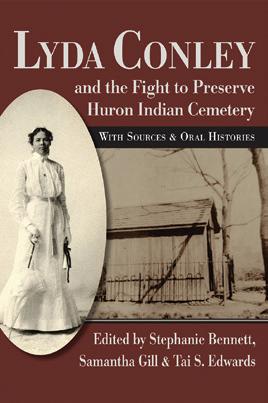
“This book provides a unique window into not only the important life of Lyda Conley, but the wider historical context of the Wyandot Nation of Kansas as well. Generational resilience and the legacy of Conley’s actions to preserve Wyandot culture and traditions is highlighted in a way that has never been done before. Tižamęh (thank you) for this incredible collection!”
Kathryn Magee Labelle, author of Daughters of Aataentsic: Life Stories from Seven Generations
“A fascinating and rich introduction to an important woman whose story is far too unfamiliar to most Americans. This gem of a book should start to make Lyda Conley a household name.”
Kathleen DuVal, Pulitzer Prize–winning author of Native Nations: A Millennium in North America
“Lyda Conley’s courageous and trailblazing fight to protect the Huron Indian Cemetery is brought to life with clarity and reverence. Her legacy as a passionate advocate for Native sovereignty and sacred spaces shines throughout these pages.”
Sarah Deer, author of The Beginning and End of Rape: Confronting Sexual Violence in Native America
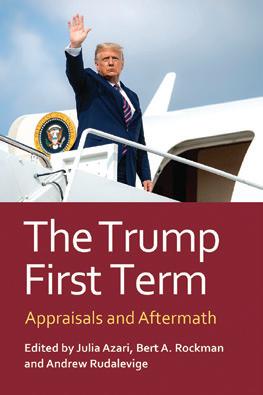
“Donald Trump opened his second term by testing the guardrails of American constitutional government. This book looks back at his first term, and with each chapter, written by leading scholars of American politics, shows how its conflicts and choices continue to shape today’s political battles. Accessible, insightful, and extremely interesting, this book will find a home in classrooms and on the shelves of scholars who will be trying to understand this presidency for years to come.”
Daniel E. Ponder, author of Presidential Leverage: Presidents, Approval, and the American State
“The first comprehensive assessment of Donald Trump’s first-term presidency. . . . Confronts many of the traditional aspects of presidential performance while also zeroing in on Trump’s norm-breaking behavior. For anyone looking for a thoughtful and comprehensive assessment of presidential politics in the age of Trump this book is an essential read.”
Mitch Sollenberger, coauthor of The Unitary Executive: A Danger to Constitutional Government
The Trump First Term Appraisals and Aftermath
Edited by Julia Azari, Bert A. Rockman, and Andrew Rudalevige
It was the election result that shocked the world.
In November 2016, Donald Trump defeated Hillary Clinton to become the forty-fifth president of the United States, thereby bringing an end to the political power of one family and, in retrospect, beginning the era of his own family’s dominance. At times, Trump’s presidency posed new, sometimes unprecedented, challenges to the constitutional order, while in other respects he continued the trajectory toward greater executive power that had been decades in the making.
In this latest installment in a series that began with the George H. W. Bush years, the nation’s leading scholars of the American presidency assess Donald J. Trump’s first term—what many assumed would be his only term, following his loss to Joe Biden in 2020. Divided into five parts, the authors examine Trump’s first four years in terms of electoral politics, public politics, national institutions, and policy outcomes, with a final section placing Trump in the context of the larger story of American politics.
In addition to the volume editors, the book includes chapters by Kelly Dittmar, John D. Graham, David Patrick Houghton, Nicole Mellow, Molly Reynolds, Brandon Rottinghaus, Theda Skocpol, Candis Watts Smith, Sharece Thrower, Alvin B. Tillery, Jr., and David Yalof.
Ideal for use in the classroom, this volume will be the definitive scholarly resource on Trump’s first term for years to come.
Julia Azari is professor of political science at Marquette University. She is the author of Backlash Presidents: From Transformative to Reactionary Leaders in American History.
Bert Rockman is professor emeritus of political science at Purdue University. He is the author and coauthor of several books, including In the Web of Politics: Three Decades of the U.S. Federal Executive.
Andrew Rudalevige is Thomas Brackett Reed Professor of Government at Bowdoin College. He is the author of several books, most recently By Executive Order: Bureaucratic Management and the Limits of Presidential Power.
Presidential Appraisals and Legacies
APRIL
362 pages, 17 figures, 8 tables, 6 x 9
Paperback ISBN 978-0-7006-4118-5, $39.99 (x)
Ebook ISBN 978-0-7006-4119-2, $39.99
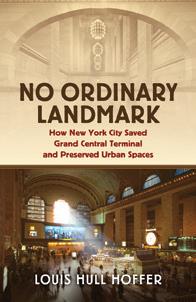
No Ordinary Landmark
How New York City Saved Grand Central Terminal and Preserved Urban Spaces
Louis Hull Hoffer
No Ordinary Landmark tells the legal story of how Grand Central Terminal became a landmark. This is the fascinating, little-known history of the railroad company that owned Grand Central, the architects and engineers who built it, the city that supported it, and the lawsuit that saved it. The cast of characters is immense: some familiar, like Mayor Robert Wagner and Jacqueline Kennedy Onassis, and some now obscure, like Albert Bard, father of the New York Landmarks Law. Railroad moguls, real estate barons, politicians, arts experts, and above all lawyers and judges all played vital roles.
Opened in 1913, Grand Central Terminal (GCT) became a costly luxury for the New York Central Railroad in the postwar years, as the rise of automobile culture and interstate highway systems led to a precipitous decline in railroad use. In the 1950s, proposals were put forward to replace GCT with more lucrative buildings, including the massive Pei Tower. This led Bard in 1954 to draft an act for New York State to recognize landmarks, the Historic Preservation Enabling Act. It was passed by the legislature and signed into law in 1956, though it was not used to create the New York City Landmarks Law until 1965—by which time Pennsylvania Station had been demolished to make way for the fourth, and current, iteration of Madison Square Garden. Immediately after the landmark designation for GCT became official in 1967, New York Central Railroad merged with Pennsylvania Railroad to form Penn Central, and the new company proposed to demolish GCT the way it had Pennsylvania Station. When New York refused to consider the plans, Penn Central sued the city, thus paving way for the legal battle that the Supreme Court finally decided in 1978.
Louis Hull Hoffer sheds new light on the suit between the Pennsylvania Railroad and the City of New York, showing how this iconic legal battle pit two core values of American jurisprudence against one another: the absolute right of property owners over their property and the public’s interest in shared urban spaces. While the tension between these values persists today, Penn Central v. New York City created a new legal framework for a generation of jurists, planners, preservationists, and legal scholars.
Louis Hull Hoffer is an independent scholar. He has worked in community development in New Jersey and New York.
Landmark Law Cases and American Society
MARCH
272 pages, 14 photographs, 5½ x 8½
Hardcover ISBN 978-0-7006-4098-0, $99.99
Paperback ISBN 978-0-7006-4099-7 $34.99
Ebook ISBN 978-0-7006-4100-0, $34.99
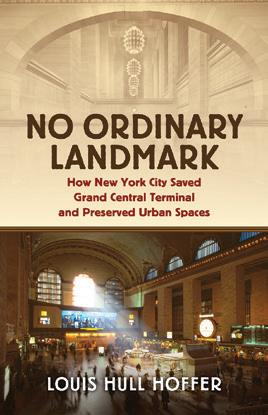
“A deeply researched yet engagingly written history not only of Grand Central Terminal and the fight for its preservation, but of the railroads and their connection and contribution to the rise of Manhattan, as well as the brilliant innovations that made the Terminal such a magnificent landmark in its day. . . . A fascinating account of a landmark in danger and its amazing survival as a national model and monument to the human ability to solve technological challenges in a most enduringly beautiful way.”
Suzanne Hinman, author of The Grandest Madison Square Garden: Art, Scandal, and Architecture in Gilded Age New York
“Thriving cities are always reinventing themselves, but their continued prosperity depends on balancing public goods with private interests. Louis Hull Hoffer’s fascinating account of the battle over Grand Central Terminal illustrates how New York City—the same city that permitted the old Penn Station to be destroyed—can also get it right.”
Salo Coslovsky, associate professor at NYU-Wagner
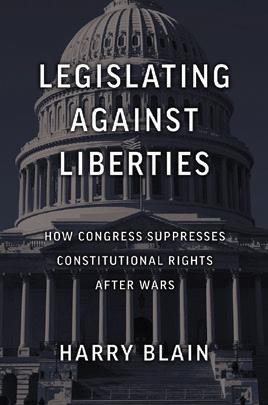
“Wars are often marked by executive overreach, congressional acquiescence, and sweeping violations of civil liberties. But rest assured, we are told, for once peace returns, Congress steps in to restore the constitutional order and roll back the damage. Not so fast, cautions Harry Blain in this exhaustive and sobering book. While postwar congresses reassert their authority, they do not always serve as agents of repair. On the contrary, Blain persuasively argues, they often deepen the very harms wars leave behind.”
William Howell, coauthor of Trajectory of Power: The Rise of the Strongman Presidency
“Blain’s emphasis on repressive legislatures calls for a rethinking of contemporary wisdom that places much of the blame for democratic decline in the United States and elsewhere on overreaching executives. Law professors, political scientists, and historians will need to read and take into consideration the thesis of Legislating Against Liberties.”
Mark A. Graber, author of Punish Treason, Reward Loyalty: The Forgotten Goals of Constitutional Reform after the Civil War
Legislating Against Liberties
How Congress Suppresses Constitutional Rights After Wars
Harry Blain
Why do wartime restrictions on civil liberties outlive their original justifications? Scholars have long argued that the blame lies with the executive branch of government. Their logic is straightforward: during war, lawmakers require (in Alexander Hamilton’s words) “decision, activity, secrecy, and dispatch,” so they choose to enable executive leadership. Executives promise to wield extraordinary powers temporarily, only to entrench them indefinitely. This book tests how these claims hold up in four pivotal moments in US history: the Civil War, World War I, World War II, and Vietnam. Ultimately, it finds them wanting.
Harry Blain argues that national legislators are decisive in sustaining postwar restrictions on civil liberties. These elected officials have formidable tools at their disposal, including powers over the rules and membership of their own institution, the funding and personnel of the executive branch, the jurisdiction of federal courts, and the priorities of state and local governments. These tools make Congress, not the executive, the primary institutional threat to civil liberties in the aftermath of war. For example, the House used its exclusion power to refuse to seat the socialist Victor Berger, disenfranchising voters in the process; Congress used its power to compel testimony during the Red Scares in an effort to discredit and humiliate their political enemies; and legislators have removed, or threatened to remove, Supreme Court jurisdiction over habeas corpus petitions throughout US history.
In a time where the president and the Supreme Court are seen as the most dangerous branches of government, Legislating Against Liberties is a sober reminder that Congress has historically been at the vanguard of undermining democracy and liberty.
Harry Blain is assistant professor of political science at California State University, Sacramento.
APRIL
282 pages, 6 x 9
Hardcover ISBN 978-0-7006-4105-5, $54.99 (x)
Ebook ISBN 978-0-7006-4106-2, $54.99
Education in Democracy
The Importance of Free Speech in American Public Schools
Ronald C. Den Otter
In recent years, the debate over student speech has roiled college campuses and elicited a wave of books and articles, from both the Right and the Left, over what speech is permissible and who should receive a platform to speak. What has largely been overlooked in this debate is the freedom of speech—or lack thereof—enjoyed by junior high and high school students in American public schools.
Education in Democracy makes a powerful case for why free speech is just as important, if not even more so, for secondary education students as it is for those in higher education. As Ronald C. Den Otter shows, US Supreme Court jurisprudence on this topic lacks consistency and clarity, tending to restrict freedom for these students while giving school officials almost complete control, as in Justice Clarence Thomas’s concurrence in Morse v. Frederick. Den Otter argues instead for a stricter version of the Tinker v. Des Moines Independent Community School District substantial disruption test, proposing that public junior high and high school students should be treated the same as students at public universities. Without ignoring the challenges of hate speech, Den Otter makes a bold and impassioned argument for respecting the autonomy of all students and developing their autonomous capacities. Paternalistic treatment of students in the form of censorship by school authorities is morally and constitutionally unacceptable, according to Den Otter. Instead, American society should see public schools as laboratories in pluralism and democracy, places where students cultivate the civic virtue of tolerance and learn how to disagree in a responsible way. Doing so requires the bedrock foundation of free speech.
Ronald C. Den Otter is professor of political science at California Polytechnic State University. He is the author of Judicial Review in an Age of Moral Pluralism and In Defense of Plural Marriage.
MAY
314 pages, 6 x 9
Hardcover ISBN 978-0-7006-4146-8, $99.99 (x)
Paperback ISBN 978-0-7006-4147-5 $34.99 (x)
Ebook ISBN 978-0-7006-4148-2, $34.99
“Ronald Den Otter makes a powerful and persuasive case for greater protection for student speech in high schools and even junior high schools. He disputes the conventional wisdom and approach of the courts in giving great deference to school officials. The clarity and force of Professor Otter’s analysis make this an essential book for educators, lawyers, judges, and all interested in issues of freedom of speech.”
Erwin Chemerinsky, coauthor of Campus Speech and Academic Freedom: A Guide for Difficult Times
“A comprehensive, illuminating, and rousing defense of free expression’s significance in public schools. Drawing on an astonishingly wide array of disciplines and sources, Den Otter embraces a bold position—one that would endow students with much greater free speech rights than courts now recognize. Even scholars who dispute Den Otter’s contentions will need to engage the provocative arguments contained in this important book.”
Justin Driver, author of The Schoolhouse Gate: Public Education, the Supreme Court, and the Battle for the American Mind
“In a stunning new interpretation of early American politics, Jay Dow explores the relationship between the growth of American democracy and the development of the first political parties. Drawing on a rich trove of newly available historical evidence, Dow shows how voter participation shaped the nature of party conflict in the first elections for Congress. Anyone interested in politics—past or present—will learn much from this book.”
Rosemarie Zagarri author of Revolutionary Backlash: Women and Politics in the Early American Republic
“Combing the historical archives for intriguing vignettes and getting the most out of newly discovered electoral data, Jay K. Dow portrays an exciting and novel picture of pre-Jacksonian party development and involvement in US House elections. A must-read for those interested not only in how and why parties formed but when they formed. Dow clearly illuminates an electoral era heretofore misunderstood by most.”
Marty Cohen, author of Moral Victories in the Battle for Congress
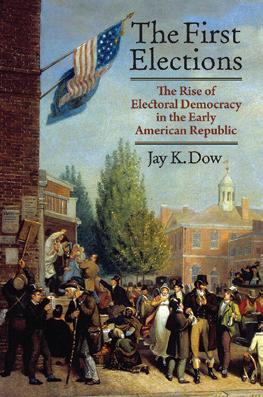
The First Elections The Rise of Electoral Democracy in the Early American Republic
Jay K. Dow
When did the United States become a recognizably modern republic? The traditional understanding is that elections in the Age of Jackson introduced institutionalized political parties, campaigning, partisanship, position-taking, stump speeches, high elector turnout, and other familiar features of electoral democracy. Before that, so the story goes, elections were less organized along party lines, often uncompetitive, and frequently dominated by elites rather than average citizens. The First Elections offers a compelling alternative to this interpretation of the early American republic.
Through systematic analysis of an impressive new collection of early American election returns known as A New Nation Votes, Jay K. Dow has discovered what these results tell us about the development of Congressional elections between 1796 and 1825. The so-called first party era marks the transition from a “deferential” politics in which local elites exercised great influence over elections to a more recognizably democratic politics. But the extent of this transition has been largely opaque before these new data became available. Focusing on House of Representatives as the foundational institution in national republican government, Dow uses these election returns to provide a more fine-grained picture of US electoral development than ever seen before. In doing so, he reveals more party-centric, competitive, and developed elections than scholars have generally recognized.
The First Elections begins with the election to the Fifth Congress in 1796, the year that elections first became truly contested following the Federalist and Anti-Federalist period. It concludes with the elections to the Nineteenth Congress, which marked the start of the Jacksonian Second American Party System. Because American politics is territorial politics—in general, but especially in this era—Dow’s work is organized geographically, giving due attention to how electoral democracy developed unevenly across each region of the early United States. Since the states used different methods to elect their representatives, The First Elections pays special attention to the variety of electoral systems that characterized the political mosaic of early America.
The First Elections is a groundbreaking look at what elections were like in the dawn of the new American nation.
Jay K. Dow is professor of political science and constitutional democracy at the University of Missouri. He is the author of Electing the House: The Adoption and Performance of the U.S. Single-Member District Electoral System, also from Kansas.
JUNE
260 pages, 6 x 9
Hardcover ISBN 978-0-7006-4150-5, $49.99 (x) Ebook ISBN 978-0-7006-4151-2, $49.99
Crafting Dignity
How Immigrant Dairy Workers Transform Rural Communities
Alisa Garni
Immigrants in the United States are overrepresented among essential workers in agri-food production. In the dairy industry alone, immigrants constitute 51 percent of the labor force and produce 80 percent of the country’s milk. Whereas most food production in the United States today is controlled by large corporations, at least 97 percent of US dairy farms are family owned and operated. Based on four years of ethnographic research in “Dairy City,” Kansas, Alisa Garni tells the story of people who traded suits and office jobs abroad for dangerous work on US dairy farms, the white dairy farmers who rely on them to keep their family-owned operations afloat, and the rural communities that were dying before recent immigrants arrived.
Crafting Dignity follows immigrant employees from three competing family dairy farms in rural Kansas and examines how labor relations on each farm affect people’s settlement experiences in Dairy City, as well as their impact on the local community. In detailing how people’s work lives are woven into the broader social fabric of rural America, Crafting Dignity sheds fresh light on how managers’ labor practices interact with social, political, and historical forces to impact the viability of farms and communities.
In an era of increased political anxiety about immigration and migrant labor, Crafting Dignity shows what life is really like for these workers and how more just labor practices foster a better life—not only for the laborers but for the community as a whole.
Alisa Garni is associate professor of sociology at Kansas State University.
FEBRUARY
222 pages, 1 photograph, 5½ x 8½
Hardcover ISBN 978-0-7006-4088-1, $99.99 (x)
Paperback ISBN 978-0-7006-4089-8 34.99 (x)
Ebook ISBN 978-0-7006-4090-4, $34.99
“This compelling and beautifully written ethnography challenges prevailing understandings of immigrant labor and exploitative managerial practices. Based on five years of ethnographic fieldwork, Crafting Dignity reveals how immigrant workers can be treated ethically, with dignity and respect at work, which in turn ripples outward to the broader community. It offers a powerful vision of what a just world for immigrant workers might look like while making essential contributions to labor and immigration studies, rural sociology, and the art and value of ethnographic research. It is timely and necessary for today’s times and will be read widely.”
Cecilia Menjívar, coauthor of Immigrant Families
“In this meticulous and moving ethnography, Alisa Garni expertly weaves the experiences of vulnerable workers together with powerful insights about contemporary capitalism, labor, and culture. . . . Most importantly, Crafting Dignity delivers an eloquent argument for putting people above profits, showing how managers’ decisions can make all the difference for families and communities.”
Erynn Masi de Casanova, author of Dust and Dignity: Domestic Employment in Contemporary Ecuador
“In Bankrupting Democracy, Nathan Katz skillfully combines a sophisticated analysis of debates over campaign finance laws and a nuanced approach to political communication with a comprehensive sociological account of the ‘campaign finance community’— the set of organizations and funders behind most political advertising in the United States. The book takes seriously the motivations and choices of the wealthy people who fund Democratic and Republican campaigns and should interest anyone concerned with the state of US democracy.”
Daniel Laurison, author of Producing Politics: Inside the Exclusive Campaign World Where the Privileged Few Shape Politics for All of Us
“Explaining the role of money in US politics has traditionally been regulated to political scientists and lawyers. Bankrupting Democracy approaches the subject from a sociological perspective, offering unique insights into how some major US Supreme Court opinions on campaign finance have altered the trajectory of American politics and who has a voice in its campaigns and elections. Nathan Katz’s voice adds clarity to an important topic.”
David Schultz, coeditor of Generational Politics in the United States: From the Silents to Gen Z and Beyond
Bankrupting Democracy Campaign Spending in a Marketplace of Ideas
Nathan Katz
In the 2010 Citizens United decision, Supreme Court Justice Anthony Kennedy stated that the precedent they were overturning “interferes with the ‘open marketplace’ of ideas protected by the First Amendment.” For the majority who ruled in this case, money was in some sense the equivalent of speech, meaning that spending should be allowed under the guise of a marketplace of ideas. But what does this actually mean? And what are the consequences?
Both critics and advocates of this marketplace of ideas often treat it as an abstract principle; one that focuses on competition among different voices that allows for the most popular, and therefore best, ideas to gain prominence. But the marketplace of ideas is not a single tool. There are multiple mechanisms at play, all of which influence the rules and regulations behind this competition. Therefore, the marketplace of ideas should be understood not as a single idea but as a collection of smaller norms that build a regulatory, market-like system.
Bankrupting Democracy traces the development of this system, which Nathan Katz calls the “money-speech paradigm.” Through a historical analysis of campaign finance reform discourses that have occurred within the legislative record and the Supreme Court, Katz demonstrates how these ideologies have caused radical changes to political speech. He pairs these data with an analysis of the changing patterns of political advertisers—the PACs, super PACs, interest groups, candidates, and parties that all spend a large portion, often the majority, of their money on television advertisements. By combining these components, Katz shows how changes to the money-speech paradigm have shifted from a focus on political candidates and their right to public exposure to a system that focuses on supporting interest groups’ pursuit of social and economic dominance.
At each stage in the development of the current system, proponents of the reforms assumed the security of democratic institutions, leaving them unprotected against the consolidation of corporate power. Bankrupting Democracy illuminates this market system that threatens to unravel the very fabric of American society.
Nathan Katz is assistant professor of sociology at Louisiana Tech University.
MAY
200 pages, 5½ x 8½
Hardcover ISBN 978-0-7006-4124-6, $99.99 (x)
Paperback ISBN 978-0-7006-4125-3 $29.99 (x)
Ebook ISBN 978-0-7006-4126-0, $29.99
Patchwork Pandemic
State Politics and the Fractured US Response to HIV/AIDS
Stephen Colbrook
Public health in the United States has long been rife with inequity due to a federalist system that relies on state and local governments to bear the bulk of the responsibility for addressing crises, as seen in the 1918 outbreak of influenza and, most recently, in the COVID-19 pandemic. The HIV/AIDS crisis is a classic example of this enduring problem, though the variation in state responses to HIV has not received the attention it deserves.
Patchwork Pandemic provides the first state-level history of the AIDS crisis in the United States. It is well-known that the federal government’s response to HIV was painstakingly slow, partly because the disease disproportionately affected stigmatized minorities—especially gay men and IV drug users. Rebuffed at the national level, AIDS activists and policy elites turned to state legislatures to address a host of concerns stemming from the pandemic, including the high cost of drug therapies, the rampant discrimination experienced by those suspected of infection, and the housing and healthcare needs of people living with HIV.
Anchored in case studies of California, Illinois, and Texas, Patchwork Pandemic argues that the states—not the federal government—were at the vanguard of the political and policy response to the epidemic in the 1980s and early 1990s. But this fractured and decentralized system produced a dangerous lack of coordination between different tiers of the United States government, leading to vast geographic inequities in morbidity and mortality rates. As both HIV/AIDS and COVID-19 have starkly exposed, pandemics are not merely a function of individual microbes and pathogens; they also reflect how states and governments wield power.
Stephen Colbrook completed his PhD in policy history at University College London in 2023. His work has appeared in a range of venues, including Modern American History, the Journal of Policy History, Modern British History, and the Washington Post.
Studies in Government and Public Policy
MARCH
288 pages, 6 figures, 6 x 9
Hardcover ISBN 978-0-7006-4108-6, $99.99 (x)
Paperback ISBN 978-0-7006-4109-3, $34.99
Ebook ISBN 978-0-7006-4110-9, $34.99

“This book is a landmark in our understanding of how states respond to pandemics. Stephen Colbrook shows how the structures of federalism, combined with the varying efficacy of local activism, led to dramatic differences in US states’ funding for AIDS care. In its skillful integration of state-centered analysis and study of grassroots social movements, Patchwork Pandemic is a model of how policy history should be written.”
Beatrix Hoffman, author of Borders of Care: Immigrants, Migrants, and the Fight for Health Care in the United States
“In this painstakingly researched, immaculately crafted book, Stephen Colbrook does far more than provide a comprehensive account of contrasting worlds of policymaking around HIV-AIDS in three US states during the 1980s and 1990s. He uses state-level responses to a public health crisis to shed new light on the workings of American federalism, the politics of pandemic response across the twentieth and twenty-first centuries, and how sexual politics became integrated into state politics in often surprising ways”
Jonathan Bell, author of California Crucible: The Forging of Modern American Liberalism
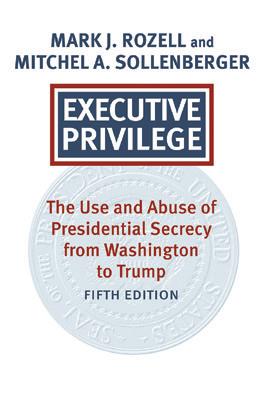
Praise for previous editions:
“Lucid, balanced, and tightly reasoned, Rozell’s excellent book provides needed guidance on a topic that bedevils every administration.”
Political Science Quarterly
“Ought to be mandatory reading not only for every member of Congress but also for national security lawyers in both the legislative and executive branches.”
ABA National Security Law Report
“For an American people who (apparently) must be their president’s keeper, this book is essential reading.”
Rhetoric & Public Affairs
Executive Privilege Presidential Power, Secrecy, and Accountability
Fifth Edition, Revised and Updated
Mark J. Rozell and Mitchel A. Sollenberger
Executive Privilege—called “the definitive contemporary work on the subject” by the Journal of Politics—is widely considered the best in-depth history and analysis of executive privilege and its relation to the proper scope and limits of presidential power.
The expanded fifth edition picks up where the fourth edition left off in 2019, with President Donald Trump’s bold assertion of a “protective executive privilege” that recognizes no balancing powers against the executive branch. In addition to an expanded analysis of the battle over the Mueller Report, the controversy surrounding the citizenship question on the 2020 census, and the White House security clearances dispute, new sections examine the conflict over the report on steel and aluminum tariffs and the investigation into missing presidential records stored at Trump’s Mar-a-Lago residence, some of which were marked as classified.
Mark J. Rozell and Mitchel A. Sollenberger have also added a new chapter on President Joe Biden, whom the authors regard as taking a measured approach to questions of secrecy and privilege. This chapter recounts how Biden handled former President Trump’s executive privilege claims during the January 6th investigation, while also managing the controversy surrounding his own classified documents dispute and the investigations into his son, Hunter Biden.
With its thorough and authoritative analysis of the many controversies regarding presidential privilege and accountability from the founding of the nation to Trump and beyond, Executive Privilege remains an essential resource.
Mark J. Rozell is the Founding Dean of the Schar School of Policy and Government at George Mason University, where he holds the Ruth D. and John T. Hazel Faculty Chair in Public Policy. He is the coauthor with Jeffrey Crouch and Mitchel A. Sollenberger of The Unitary Executive Theory: A Danger to Constitutional Government, also from Kansas.
Mitchel A. Sollenberger is professor of political science at the University of Michigan-Dearborn. He is the author of The President Shall Nominate: How Congress Trumps Executive Power and coauthor with Mark J. Rozell of The President’s Czars: Undermining Congress and the Constitution both from Kansas.
Studies in Government and Public Policy
APRIL
352 pages, 6 x 9
Paperback ISBN 978-0-7006-4157-4, $29.99 (x)
Ebook ISBN 978-0-7006-4158-1, $29.99
Not for Sale
Kelo v. New London and the Modern Debate over Eminent Domain
Francine Sanders Romero
In 2000, Susette Kelo and other residents of the Fort Trumbull neighborhood sued the city of New London, Connecticut. Two years earlier, the pharmaceutical giant Pfizer had built a facility adjacent to this area. Shortly thereafter, the city empowered the privately owned New London Development Corporation to use the power of eminent domain to implement a “comprehensive redevelopment plan” for the neighborhood. While the plaintiffs argued that economic development did not qualify as a valid “public use” under the Takings Clause of the Fifth Amendment, the Supreme Court decided in a controversial 2005 decision that the potential economic benefits of the plan justified the condemnation of private property as long as appropriate compensation was paid.
The Kelo decision implied that any town could transfer property to private developers on the grounds of possible future tax revenue and job creation, so long as that action was included in an economic development plan. The outrage over the decision unleashed a near-unanimous backlash, even resulting in an executive order from President George W. Bush instructing the federal government to limit the use of eminent domain. Numerous states passed ballot initiatives and legislation restricting eminent domain in the wake of the Kelo case. Despite this outcry, urban planners and others defended it as a necessary application of existing precedent that allowed cities flexibility to combat economic downturns. Lead plaintiff Susette Kelo and her pink house became a symbol of a growing national property rights movement and a deepening conflict between public officials and property owners, between large corporations and local communities. Perhaps most disastrously, after bulldozing the neighborhood the developer was unable to secure the necessary financing and abandoned the project, leaving empty lots where the plaintiffs’ properties once stood.
Not for Sale recounts this iconic episode in recent legal history, giving full attention to both the human and legal elements of the story and offering a balanced consideration of each. The story remains as relevant as ever, especially since the Supreme Court has repeatedly refused to reconsider its decision, most recently in Bowers Development, LLC v. Oneida County Industrial Development Agency (2025).
Francine S. Romero is professor of public administration at the University of Texas at San Antonio.
Landmark Law Cases and American Society
MAY
176 pages, 6 photographs, 5½ x 8½
Hardcover ISBN 978-0-7006-4153-6, $99.99 (x)
Paperback ISBN 978-0-7006-4154-3 $29.99 (s)
Ebook ISBN 978-0-7006-4155-0, $14.99

“Twenty years after the Supreme Court’s Kelo decision, localities’ use of eminent domain in urban redevelopment remains highly controversial. Francine Romero’s deeply researched and well-balanced review of the background of this case, the arguments of each side, and the reasoning of the courts, is essential reading for those who care about cities and want a better understanding of the challenges they face when trying to reinvent themselves.”
Stephen J. K. Walters, author of Boom Towns: Restoring the Urban American Dream
“An engaging account of one indomitable small city’s tumultuous turn on the national stage, with a welcome focus on the local. The book deftly weaves legal scholarship with historical narrative to present events and issues in their full ‘no easy lessons’ complexity.”
Anna Vallye, editor of Urban Renewal and Highway Construction in New London, 1941–1975

“Sovereignty on Trial provides a deep, yet accessible, analysis of the Supreme Court’s so-called Marshall Trilogy of cases, which established the very shaky foundation upon which Indigenous property and political rights have been based for two centuries. Garrison offers a straightforward discussion and analysis of the importance of each opinion within historical contexts, along with competing views of legal scholars, historians, and philosophers. This is not the usual run-of-the mill, dry legal analysis. He is to be commended for a unique and worthy contribution that broadens the conversation and audience on this long-studied subject.”
David E. Wilkins, coeditor of Native Voices: American Indian Identity and Resistance
“Tim Garrison revisits the Marshall cases and how their legal ambiguity simultaneously advanced and undermined Indigenous sovereignty. More than a study of the past, this book shows how the same legal contradictions define Native Americans’ present struggles against an ongoing settler colonial encroachment.”
Matthias Voigt, author of Reinventing the Warrior: Masculinity in the American Indian Movement, 1968–1973
Sovereignty on Trial
The Cherokee Nation and the Fight for Native Rights
Tim Alan Garrison
Sovereignty on Trial tells the story of a trio of landmark United States Supreme Court cases—Johnson v. M’Intosh (1823), Cherokee Nation v. Georgia (1831), and Worcester v. Georgia (1832)—that considered the legal status of Native nations in the early nineteenth century.
Known as the Marshall Trilogy—majority opinions all written by Chief Justice John Marshall—the decisions are inconsistent in their holdings and reasoning, leaving American Indian law and interpretations of Native sovereignty confusing and ambiguous. In M’Intosh, Marshall used the imperial doctrine of discovery to diminish the property rights and autonomy of the Native nations. Subsequent interpretations of Marshall’s opinion in Cherokee Nation ultimately placed Native people in a dependent status with the United States. At the end of his judicial career, however, Marshall came to view Native rights in a different light, and his opinion in Worcester was a powerful acclamation of Native political sovereignty and territorial rights. Courts have tried with little success to find a coherent line through the three rulings.
The two Georgia cases resulted from the state’s efforts to extend its jurisdiction over the Cherokee Nation and annihilate its government. These cases were decided against the backdrop of the Indian Removal Act of 1830. When President Andrew Jackson and Congress failed to enforce Worcester, Georgia interned and forcibly removed the Cherokee in the now infamous tragedy known as the Trail of Tears.
Tim Alan Garrison places this trio of cases in their broader legal and historical context. The Cherokee resistance against Georgia was a remarkable example of national courage for the Indigenous peoples of the world, and their determination to fight oppression through the judicial system of the United States left a lasting impact on American Indian law. Sovereignty on Trial tells an important, if disturbing, story whose reverberations are felt to the present day.
Tim Alan Garrison is Professor Emeritus of History at Portland State University. He is the author of The Legal Ideology of Removal: The Southern Judiciary and the Sovereignty of Native American Nations, and editor of The Encyclopedia of United States Indian Policy and Law; “Our Cause Will Ultimately Triumph”: Profiles in American Indian Sovereignty; and The Native South: New Histories and Enduring Legacies
Landmark Law Cases and American Society
MAY
296 pages, 5½ x 8½
Hardcover ISBN 978-0-7006-4138-3, $94.99 (x)
Paperback ISBN 978-0-7006-4139-0 $32.99 (x) Ebook ISBN 978-0-7006-4140-6, $32.99
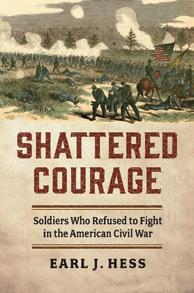
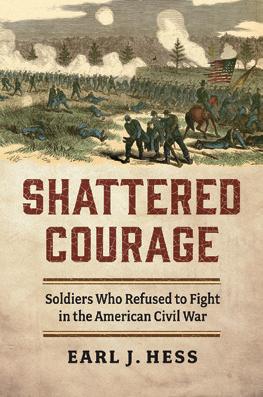
Shattered Courage
Soldiers Who Refused to Fight in the American Civil War
Earl J. Hess
From renowned Civil War historian Earl J. Hess comes a study of Union and Confederate soldiers as never seen before. Shattered Courage examines the experience of the men who refused to fight on the day of battle.
When Abraham Lincoln took the oath of presidential office on March 4, 1865, he urged the country to care for those “who shall have borne the battle”—a reference to the Union soldiers who successfully met the challenges of combat. But while honoring and helping the good soldier, Americans have forgotten those men who tried but failed to meet the test of battle in the Civil War. Shattered Courage tells the stories of those previously obscure soldiers and explores the other side of combat courage.
In this unique and groundbreaking volume, based on decades of research, Earl J. Hess provides the first comprehensive account of soldiers who refused to fight in the midst of combat. Hess charts the limits on combat morale, which affected veterans as well as green troops, officers in addition to enlisted men, and Union along with Confederate armies. Hess is the first historian to identify combat defaulters from personal accounts and official reports and to then examine their service records to discover what happened to them in the military system. He is also the first to compile statistics on defaulters and to reveal that their comrades sometimes reacted with anger, but more often accepted their failure as an unavoidable aspect of engaging in battle. Hess also discovered that the army tried unsuccessfully to stop combat defaulting but managed to contain its effects by efforts to encourage battle spirit. Far from heroes but not deserters, most of these men returned to duty and continued trying to deal with the experience of battle as lived during the Civil War.
One of the nation’s premier historians of the American Civil War, Earl J. Hess is professor emeritus of history at Lincoln Memorial University. He is the author of 31 books on the Civil War, including July 22: The Civil War Battle of Atlanta, The Union Soldier in Battle: Enduring the Ordeal of Combat, and The Rifle Musket in Civil War Combat: Reality and Myth, all published with Kansas.
MARCH
266 pages, 7 photographs, 6 x 9
Hardcover ISBN 978-0-7006-4095-9, $39.99 (s)
Ebook ISBN 978-0-7006-4096-6, $14.99
“Earl J. Hess has done it again. In shedding light on an understudied aspect of the Civil War soldiering experience, Hess reminds us that the volunteers who marched in the conflict were first and always human. Their fears, anxieties, and horrors wrought from battle derived from the most inhuman of experiences.”
Andrew F. Lang, author of In the Wake of War: Military Occupation, Emancipation, and Civil War America
“Although many scholars have discussed Civil War soldiers who failed the test of combat, Earl Hess provides the first comprehensive treatment of the topic. He draws on a vast familiarity with the sources and deftly uses case studies to illuminate a critical dimension of military service. This book is essential for anyone interested in men who broke under fire or pursued stratagems to avoid battle.”
Gary W. Gallagher, author of The Enduring Civil War: Reflections on the Great American Crisis
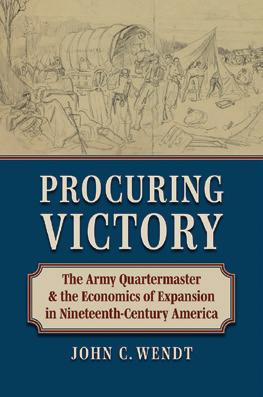
“Wendt uses impressive original research to illuminate the long career of one of the most important acquisition and logistics officers in the nineteenth-century US Army. Taking the reader from the swamps of Florida to the deserts of Mexico to the streets of Philadelphia during the Civil War, Wendt shows how George Hampton Crosman and other military professionals grappled with the near-impossible task of outfitting and sustaining armies in an era when cash was scarce and corruption abundant. This is a valuable new contribution to our understanding of American military history, with timely implications for the present day.”
Mark R. Wilson, author of The Business of Civil War: Military Mobilization and the State, 1861–1865
“Procuring Victory connects military, business, labor, and borderlands history, demonstrating both the power and perils of nineteenth-century military procurement. . . . Constantly critical and insightful, well-informed from both army and business history perspectives, this book is essential for understanding the US military and its impact in the nineteenth-century borderlands.”
Samuel J. Watson, author of Peacekeepers and Conquerors: The Army Officer Corps on the American Frontier, 1821–1846
Procuring Victory
The Army Quartermaster and the Economics of Expansion in Nineteenth-Century America
John Wendt
The United States Army of the nineteenth century has been called many things—“conquerors,” “constabularies,” “peacekeepers,” and “professionals,” among others. Yet, despite spending hundreds of millions of dollars throughout the rapidly growing United States, rarely has the nineteenth-century Army ever been seen as a business. The Army’s quartermasters were almost entirely reliant on local banks, merchants, and markets to supply campaigns across North America, including the Second Seminole War, the Mexican–American War, and the Civil War. From this novel vantage point, John Wendt stitches together seemingly disparate military and economic events into a coherent narrative of military spending across the mid-nineteenth century.
The US Army Quartermaster Department served as the army’s chief military logistics agency, responsible for procuring transportation, clothing, and food. One quartermaster in particular, George Hampton Crosman, served in the department for nearly four decades of military campaigns, territorial expansion, and institutional transformation. Wendt allows readers to see through Crosman’s eyes how North American regions on the fringe of warfronts navigated the economic realities of financial crisis, western expansion, and industrialization. Significantly, he uncovers new insights into the numerous written and unwritten rules that governed the financial, logistical, and moral terms of civil-military relationships and sheds light on the individuals who quietly shaped the arc of American history.
John C. Wendt is Executive Director of the Pueblo County Historical Society in Pueblo, Colorado. He holds a PhD in history from Texas A&M University.
Studies in Civil-Military Relations
JANUARY
250 pages, 1 map, 6 x 9 Hardcover ISBN 978-0-7006-4085-0, $49.99 (x) Ebook ISBN 978-0-7006-4086-7, $49.99
MILITARY HISTORY | CIVIL WAR
The Inland Campaign for Vicksburg
Five Battles in Seventeen Days, May 1–17, 1863
Timothy B. Smith
Winner of The Daniel M. & Marilyn W. Laney Prize, Austin Civil War Roundtable
Finalist, American Battlefield Trust Prize for History
“Essential reading for anyone interested in the Civil War, and a fine finish to Smith’s multivolume treatment of the struggle for Vicksburg.”
New York Military Affairs Symposium Review
“The Inland Campaign for Vicksburg wraps up a truly epic campaign history series project, an instant classic that will undoubtedly stand the test of time.”—Civil War Books and Authors
Modern War Studies
MAY
560 pages, 22 photographs, 22 maps, 6⅛ x 9¼
Paperback ISBN 978-0-7006-4185-7, $39.99 (x)
Ebook ISBN 978-0-7006-3656-3, $14.99
PRESIDENTIAL STUDIES | POLITICAL SCIENCE | US HISTORY
A Nation So Conceived
Abraham Lincoln and the Paradox of Democratic Sovereignty
Michael P. Zuckert
“Zuckert has written an impressive book on Lincoln.”—Perspectives on Politics
“Zuckert presents a powerful analysis of the political thought of Abraham Lincoln. Highly recommended.”—Choice
“It is not often that one comes across a book that is profound and well-written. This is such a book. It deserves recognition as a significant contribution to Lincoln studies and the study of American political thought.”—Law & Liberty
Constitutional Thinking
JUNE
416 pages, 1 map, 1 table, 6 x 9
Paperback ISBN 978-0-7006-4186-4, $34.99 (x)
Ebook ISBN 978-0-7006-3393-7, $34.99
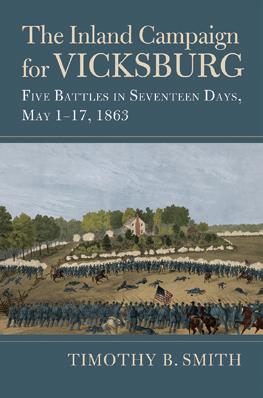
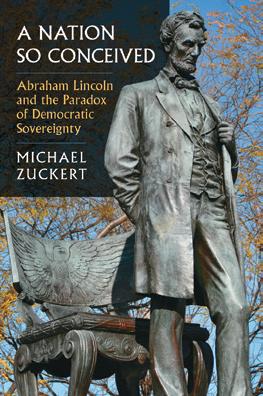
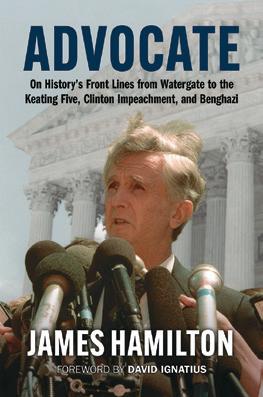
LAW | MEMOIR | US HISTORY
Advocate
On History’s Front Lines from Watergate to the Keating Five, Clinton Impeachment, and Benghazi
James Hamilton
“Hamilton’s wit along with his accessible prose will engage general readers, and his firsthand accounts of major events where law connected with politics will enlighten historians and legal scholars.”—H-Net Reviews
“Advocate is a treasure trove of unforgettable yarns about colorful public figures, each tale with political insights for both Washington insiders and curious citizens as well as practical lessons for veteran and newly minted lawyers alike. With his unvarnished, small-town Southern style, keen Yale-Law smarts, and firsthand sagas from historic arenas, Jim Hamilton brings to life the Senate Watergate hearings, vetting of Cabinet and US Supreme Court nominees, a presidential impeachment trial, civil rights courtroom strategies, mock trials and grand juries, lions of Congress, and even the British Royal Family.”—Phil Lader, former US ambassador to the Court of St James’s
JUNE
264 pages, 31 photographs, 6 x 9 Paperback ISBN 978-0-7006-4181-9, $27.99 (s) Ebook ISBN 978-0-7006-3352-4, $14.99
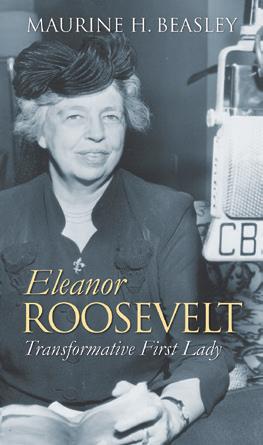
PRESIDENTIAL STUDIES | BIOGRAPHY | WOMEN’S STUDIES
Eleanor Roosevelt
Transformative First Lady
Maurine H. Beasley
“Thoroughly researched, not too loaded with fanciful speculation, and notable for offering a fresh view of Eleanor’s unorthodox world and the women and men she loved.”—New York Review of Books
“A thorough examination of a woman who pursued her own agenda and whose life still inspires.”—Journalism History
“Beasley excels at capturing the complex, dynamic partnership the Roosevelts forged, often at a high personal cost to both. . . . The best biography of Eleanor Roosevelt this reviewer has read to date. Highly recommended.”—Choice
Modern First Ladies
JANUARY
320 pages, 25 photographs, 6 x 9 Paperback ISBN 978-0-7006-4177-2, $29.99 (x) Ebook ISBN 978-0-7006-3925-0, $14.99
PRESIDENTIAL STUDIES | BIOGRAPHY | WOMEN’S STUDIES
Lady Bird Johnson
Our Environmental First Lady
Lewis L. Gould
“A very good introduction to the accomplishments of a woman whose modest demeanor and tenure during turbulent times has eclipsed her contributions to the role of first lady and to the American environment.”—Journal of Southern History
“Effectively chronicles the evolution of the environmental movement under the tutelage of Mrs. Johnson.”—Southwestern Historical Quarterly
“A pleasure to read, this engaging book persuasively establishes the significance of Lady Bird Johnson in two areas: her contributions in terms of staff, procedures, and tactics to the evolving role of the President’s wife and her contributions to environmental policy and practice.”
Susan M. Hartmann, author of Other Feminists: Activists in the Liberal Establishment
Modern First Ladies
FEBRUARY
176 pages, 17 photographs, 6 x 9
Paperback ISBN 978-0-7006-4179-6, $29.99 (x)
Ebook ISBN 978-0-7006-2864-3, $14.99
PRESIDENTIAL STUDIES | BIOGRAPHY | WOMEN’S STUDIES
First Lady Florence Harding Behind
the Tragedy and Controversy
Katherine A. S. Sibley
“A first-rate biography. . . . For those interested in the complex politics of the 1920s or the changing nature of the status of the first lady, Sibley’s biography offers insight into a complicated and interesting life.” Presidential Studies Quarterly
“Harding’s life, as tragic and controversial as it may have been, has finally received the serious attention that it deserves thanks to Katherine Sibley.”—Michigan Historical Review
Modern First Ladies
JANUARY
384 pages, 30 photographs, 6 x 9
Paperback ISBN 978-0-7006-4184-0, $29.99 (x)
Ebook ISBN 978-0-7006-3576-4, $14.99
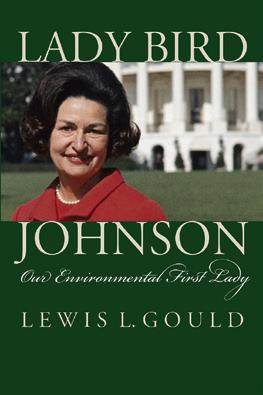
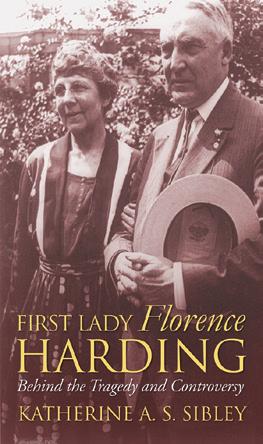
PRESIDENTIAL STUDIES | US HISTORY | POLITICAL SCIENCE
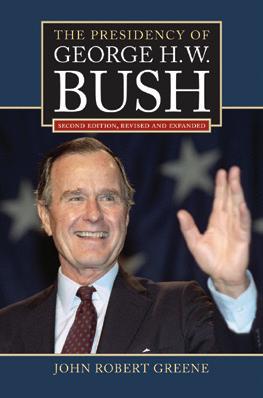
The Presidency of George H. W. Bush
Second Edition, Revised
John Robert Greene
“This important book provides scholars of the American presidency and general readers with a solid, comprehensive account of the political career of George H. W. Bush.”—Choice
“In this masterful account of George H. W. Bush, Greene captures the essence of both the man and his presidency. The Presidency of George H. W. Bush offers the fullest and fairest assessment of this president. Greene’s insightful and rigorous analysis is essential reading for anyone interested in George H. W. Bush and his presidency.”—Michael F. Cairo, author of The Gulf: The Bush Presidencies and the Middle East
American Presidency Series
FEBRUARY
392 pages, 16 photographs, 6 x 9
Paperback ISBN 978-0-7006-4180-2, $34.99 (x)
Ebook ISBN 978-0-7006-2080-7, $34.99
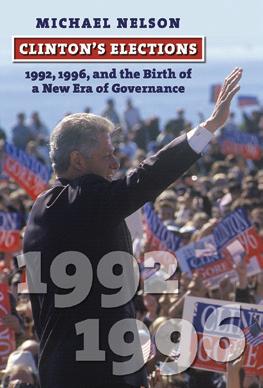
PRESIDENTIAL STUDIES | US HISTORY | POLITICAL SCIENCE
Clinton’s Elections
1992, 1996, and the Birth of a New Era of Governance
Michael Nelson
“Nelson’s book stands as an excellent account of how, beginning with the Clinton elections, American governance reached this troubling state.” Journal of Southern History
“A nuanced look at party politics, congressional elections, campaigns, the impact of divided government, and the personalities involved in a new era of politics.”—American Political Science Quarterly
“A detailed and compelling account of the presidential period in the political career of Bill Clinton. Highly recommended.”—Choice
American Presidential Elections
MARCH
342 pages, 16 photographs, 5 tables, 6 x 9
Paperback ISBN 978-0-7006-4183-3, $29.99 (x)
Ebook ISBN 978-0-7006-2918-3, $39.99
Land Is Kin
Sovereignty, Religious Freedom, and Indigenous Sacred Sites
Dana Lloyd
Honorable Mention, Best First Book in the History of Religions, American Academy of Religion
“Land is Kin challenges us with some welcomed, insightful, and, at times, creative analytical work. Scholars of Indigenous religious freedom will recognize the important contributions this book makes to our field.” Journal of Church and State
“Despite all the setbacks, the story Lloyd tells in this important book is not one of unremitting gloom. It radiates with the hope of the Indigenous nations who have never stopped fighting for the High Country as both home and kin.”—Journal for the Study of Religion, Nature, and Culture Studies in US Religion, Politics, and Law
MAY
224 pages, 6 x 9
Paperback ISBN 978-0-7006-4182-6, $29.99 (x)
Ebook ISBN 978-0-7006-3590-0, $29.99
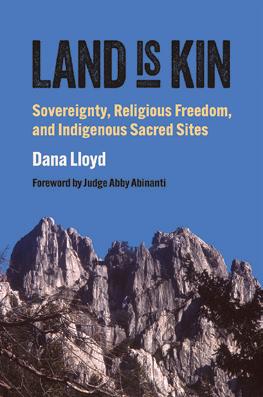
SALES INFORMATION
University Press of Kansas 2502 Westbrooke Circle
Lawrence KS 66045-4444
Phone: 785-864-4154
Email: upress@ku.edu www.kansaspress.ku.edu
Orders: 800-848-6224
Email orders: orders@longleafservices.org
General Information
Prices of forthcoming books are tentative and are subject to change without notice. Unless otherwise noted in the description, all bindings are in cloth. A (t) following a price indicates trade discount to booksellers. Trade discount is extended to retailers on all prepaid orders. A complete list of titles in print is available on our website. Any claims for shipping discrepancies, shortages, or damages must be made within thirty (30) days of invoice date.
Individuals can order through our secure shopping cart: www.kansaspress.ku.edu. Direct orders from individuals must be prepaid in US funds or charged through VISA, Mastercard, Discover, or American Express and must include postage and handling (see order form).
Returns Policy
Returns from booksellers and wholesalers will be accepted without written permission from the Press. Full credit will be given only if 1) the invoice number are date of order are supplied, 2) the books being returned are in print, and 3) the books returned are in fully salable condition.
Please send University Press of Kansas returns as of their respective dates along with your usual Longleaf Services’ returns to: Longleaf Services, Inc. c/o IPS Distribution Solutions Returns 1550 Heil Quaker Blvd Ste 200 LaVergne, TN 37086
Examination Copies
Complimentary digital examination copies for text consideration are available to faculty members through Vital Source. Physical copies may be ordered for a prepaid fee of $10.00 to cover processing and shipping. Limit of three physical copies per semester. Contact sgalle@ku.edu for more information.
Foreign Rights Inquiries
For all UPK foreign and translation rights queries, please contact Jennifer Schaper
International Rights Manager Duke University Press & Longleaf Services
jennifer.schaper@duke.edu
Sales Representatives
MID-ATLANTIC AND NEW ENGLAND
New York, New Jersey, Pennsylvania, Maryland, Delaware, Washington, DC, West Virginia, Connecticut, Maine, Massachusetts, New Hampshire, Rhode Island, Vermont:
Parson Weems Publisher Services
Christopher R. Kerr
11 Penhallow St. Boston, MA 02124-2307
Phone/Fax: 914-329-4961
ChrisKerr@parsonweems.com
Eileen Bertelli
48 Wawayanda Road
Warwick, NY 10990
Phone: 845-987-7233
Fax: 866-861-0337
eileenbertelli@parsonweems.com
Causten Stehle
310 N. Front Street, Ste. 4–10 Wilmington, NC 28401
Phone: 914-948-4259
Fax: 866-861-0337 office@parsonweems.com
Jason Kincade 19 Bushwick Avenue, 3R Brooklyn, NY 11211 Phone: 347-244-2165 jasonkincade@parsonweems.com
MIDWEST
Illinois, Indiana, Iowa, Kentucky, Michigan, Missouri, Minnesota, Nebraska, North Dakota, South Dakota, Ohio, Wisconsin:
Zach Zeigler University Press of Kansas 2502 Westbrooke Circle Lawrence KS 66045
Phone: 785-864-1385 zzeigler@ku.edu
WEST
Oregon, Washington, Idaho, Montana, Colorado, New Mexico, Utah, Wyoming:
Jim Sena Wilcher Associates 2838 Shadowglen Drive Colorado Springs, CO 80918
Phone: 719-210-5222
Fax: 719-434-9941 sena.wilcher@gmail.com
California, Arizona, Nevada: Tom McCorkell 26652 Merienda #7 Laguna Hills, CA 92656
Phone: 949-362-0597 Fax: 949-643-2330 tmccork@sbcglobal.net
Kansas, metropolitan Kansas City, and international territories not listed below:
Zach Zeigler University Press of Kansas 2502 Westbrooke Circle Lawrence KS 66045 Phone: 785-864-1385 zzeigler@ku.edu
INTERNATIONAL
UK, Europe, Central Asia, Middle East, & Africa:
Mare Nostrum Group 39 East Parade
Harrogate North Yorkshire HG1 5LQ
United Kingdom
Trade Orders & Enquiries
Email: trade@wiley.com Tel: +44 (0)1243 843291
Individual Orders & Enquiries: Orders should be placed through your local bookstore, an online retailer, or via email: info@eurospan.co.uk.
Japan:
MHM Limited 1-1-13 Kanda Jimbocho
Chiyoda-ku Tokyo 101-0051 sales@mhmlimited.co.jp www.mhmlimited.co.jp
University Press of Kansas
2502 Westbrooke Circle
Lawrence, Kansas 66045-4444
The University Press of Kansas publishes books that expand the impact of sound scholarship and amplify the voices of America’s Heartland.
Founded in 1946, we represent the six state universities: Emporia State University, Fort Hays State University, Kansas State University, Pittsburg State University, the University of Kansas, and Wichita State University.
The press is a member of the Association of University Presses.