McGill-Queen’s University Press acknowledges the financial support of the Canada Council for the Arts for our publishing program.
Contents
Anthropology | 60
Architecture | 26, 27
McGill-Queen’s University Press acknowledges the financial support of the Government of Canada for our publishing activities.
McGill-Queen’s University Press also acknowledges with gratitude the assistance of AMS Healthcare, the Azrieli Institute of Israel Studies, the Brian Mulroney Institute of Government Studies in Leadership, Public Policy, and Governance, the Canadian Corporation for Studies in Religion, Carleton University, the Donald J. Savoie Institute, the Humanities and Social Sciences Federation of Canada, Livres Canada Books, the McGill Institute for the Study of Canada, the Montreal History Group, the Royal Military College of Canada, the Smallman Fund of the University of Western Ontario, the Social Sciences and Humanities Research Council of Canada, and the Wellcome Trust for their support of its publishing program. Above all, the Press is indebted to its two parent institutions, McGill and Queen’s universities, for generous, continuing support for the Press as an integral part of the universities’ research and teaching activities.
Montreal
McGill-Queen’s University Press 1010 Sherbrooke Street West, Suite 1720 Montreal, QC H 3A 2R 7 Canada
Kingston
McGill-Queen’s University Press Douglas Library Building 93 University Avenue Kingston, ON K 7L 5C 4 Canada
COVER DESIGN salamanderhill.com
ORIGINAL INTERIOR DESIGN
oneonone@videotron.ca
MODIFIED & TYPESET BY garet markvoort, zijn digital
Confronting Atrocity: Human Rights and Restorative Justice Series | 36, 40
Democracy, Diversity, and Citizen Engagement Series | 19
Études d’histoire du Québec / Studies on the History of Quebec | 63, 64
Footprints Series | 45, 53
Hugh MacLennan Poetry Series, The | 30, 31, 32, 33
McGill-Queen’s Azrieli Institute of Israel Studies Series | 1
McGill-Queen’s / Beaverbrook Canadian Foundation Studies in Art History | 26, 27
McGill-Queen’s Indigenous and Northern Studies | 39
McGill-Queen’s Refugee and Forced Migration Studies | 48, 49, 50
McGill-Queen’s Rural, Wildland, and Resource Studies Series | 4, 61
McGill-Queen’s Studies in Early Canada / Avant le Canada | 34
McGill-Queen’s Studies in Ethnic History | 55
McGill-Queen’s Studies in Modern Islamic Thought | 59
McGill-Queen’s Studies in Protest, Power, and Resistance | 20
McGill-Queen’s Studies in the History of Ideas | 3, 50
McGill-Queen’s Studies in Urban Governance | 46
Outspoken | 2, 5
Queer Film Classics | 13
Rethinking Canada in the World | 51, 56
State of the Federation, The | 44
States, People, and the History of Social Change | 15
Check us out online mqup.ca
Follow us:
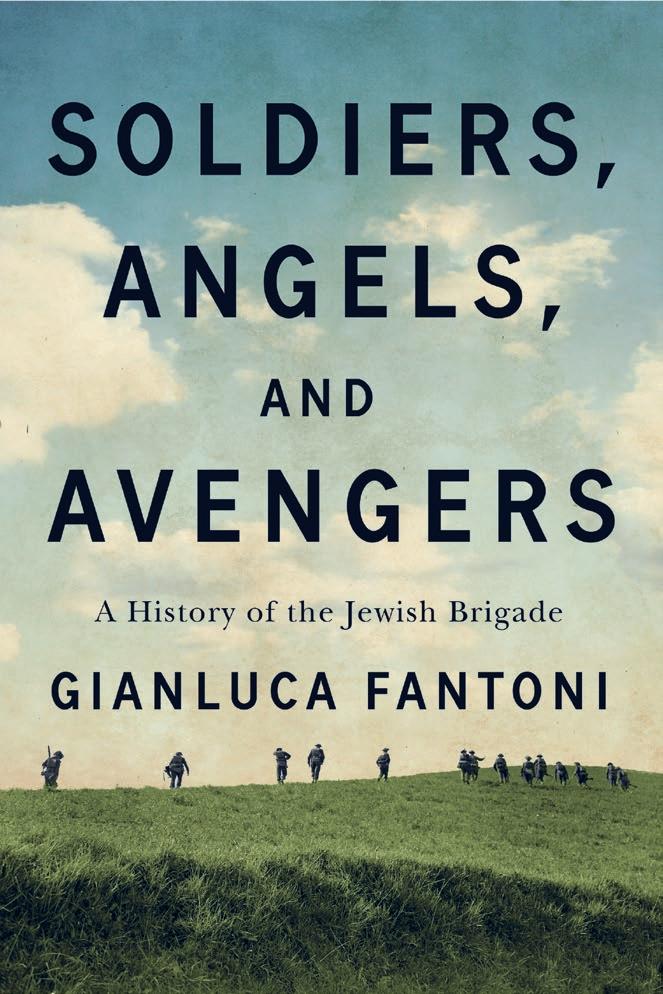
Soldiers, Angels, and Avengers A History of the Jewish Brigade
Gi ANL u CA F AN t ON i
A powerful exploration of the Jewish Brigade and the intersections of war, memory, and politics in twentieth-century Europe.
Soldiers, Angels, and Avengers tells the compelling story of the Jewish Brigade Infantry Group (JBG ), a five-thousand-strong military unit, recruited primarily from the Jewish population of Palestine, and the only exclusively Jewish military unit to fight under the British flag during the Second World War. Gianluca Fantoni reconstructs the military and human experience of the brigade in Italy and investigates its enduring and controversial place in memory and public debate.
Formed in 1944, the JBG saw combat in the final stages of the Italian campaign, where its soldiers fought with distinction against German forces. After the war many of its members –who often had little or no military training and included artists, scientists, and farmers – engaged in clandestine efforts to smuggle Holocaust survivors and weapons into Palestine, laying the groundwork for the future Israeli state. Others sought retribution against Nazis and collaborators in acts that revealed both the trauma of genocide and the desire for justice.
Far more than a conventional military history, Soldiers, Angels, and Avengers is both a critical study of the political uses of history and a vivid, passionate narrative that brings to life the men and women of the brigade. Accessible and engaging, this book offers readers a rare lens through which to understand the intersections of war, memory, and politics in twentieth-century Europe.
Gianluca Fantoni is senior lecturer in modern history at Nottingham Trent University.
SPECIFICATIONS
McGill-Queen’s Azrieli Institute of Israel Studies Series May 2026
978-0-2280-2787-4 cloth
$34.95T US, $42.95T CDN, £27.99 UK
6 x 9 282pp 20 photos eBook available
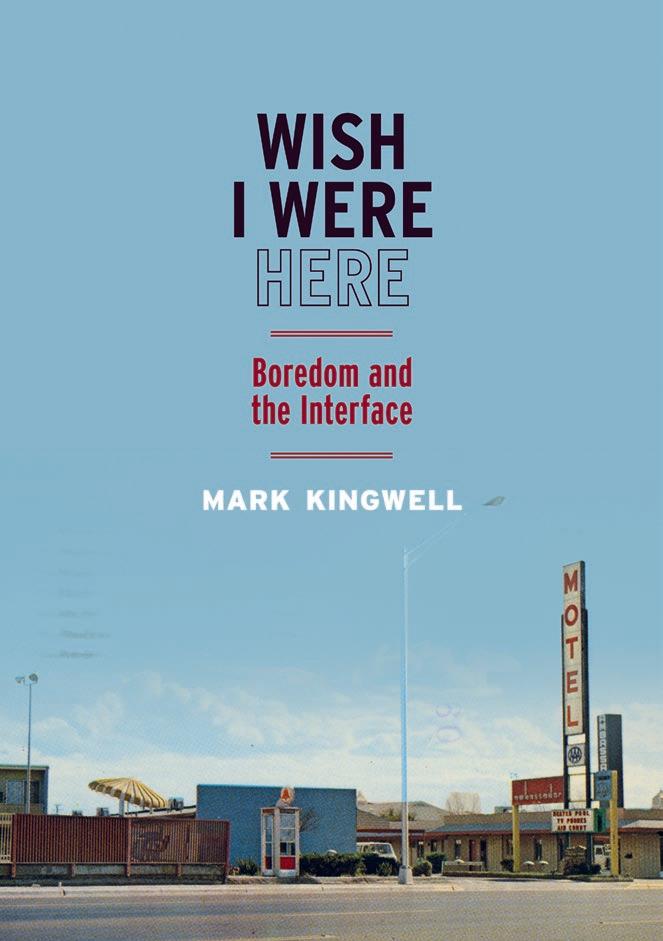
Wish I Were Here
Boredom and the Interface
M ARK Ki NG we LL
An urgent, timely, and political analysis of the boredom that dominates our everyday immersion in distracting technologies.
Are you bored of the endless scroll of your social media feed? Do you swipe left before considering the human being whose face you just summarily rejected? Do you skim articles on your screen in search of intellectual stimulation that never arrives? If so, this book is the philosophical lifeline you have been waiting for.
Offering a timely meditation on the profound effects of constant immersion in technology, also known as the Interface, Wish I Were Here draws on philosophical analysis of boredom and happiness to examine the pressing issues of screen addiction and the lure of online outrage. Without moralizing, Mark Kingwell takes seriously the possibility that current conditions of life and connection are creating hollowed-out human selves, divorced from their own external world. While scrolling, swiping, and clicking suggest purposeful action, such as choosing and connecting with others, Kingwell argues that repeated flicks of the finger provide merely the shadow of meaning, by reducing us to scattered data fragments, Twitter feeds, Instagram posts, shopping preferences, and text trends captured by algorithms.
Written in accessible language that references both classical philosophers and contemporary
critics, Wish I Were Here turns to philosophy for a cure to the widespread unease that something is amiss in modern waking life.
Mark Kingwell is professor of philosophy at the University of Toronto and the author of Singular Creatures: Robots, Rights, and the Politics of Posthumanism
“Wish I Were Here showcases Kingwell’s renowned wit and style, and the book serves as an excellent read for anyone interested in philosophy, communication, or politics.”
Ryan J. Phillips, Canadian Journal of Communication
“Kingwell constructs a vibrant argument with deep stakes. If we do not address our neoliberal boredom, including through regulating the Interface, we risk forfeiting selfhood and our sense of purpose. ‘We can truly find ourselves again in boredom,’ Kingwell writes. ‘We can discover what we temporarily lost, that is, knowing what to do with ourselves.’”
Zach Davidson, The Brooklyn Rail
SPECIFICATIONS
Outspoken May 2026
978-0-2280-2800-0 paper
$24.95T US, $29.95T CDN, £18.99 UK
6 x 9 208pp 23 photos eBook available
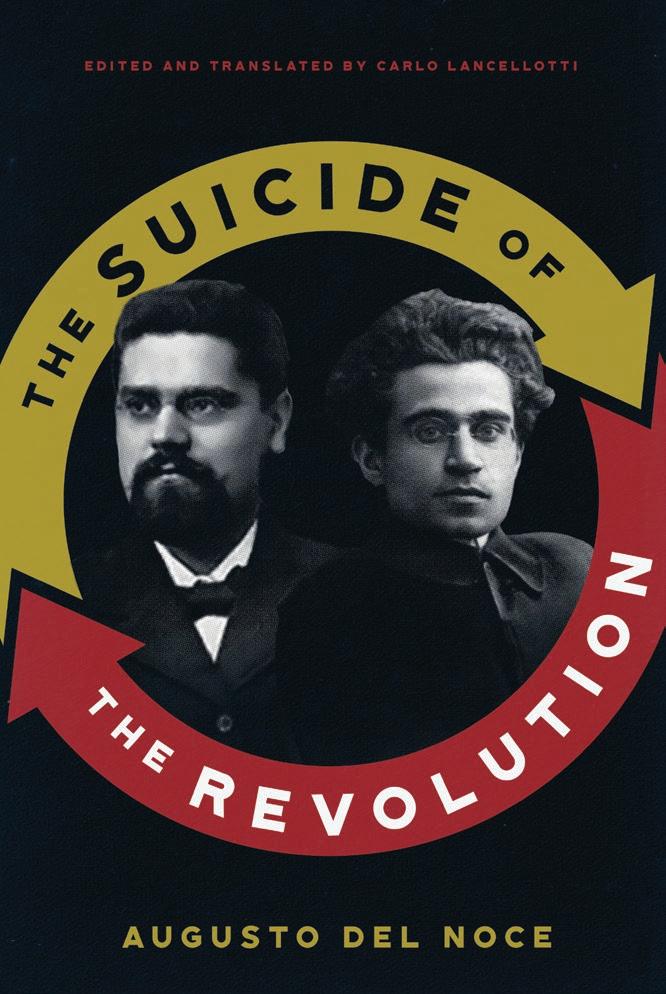
The Suicide of the Revolution
Au G u S t O De L N OC e
Edited and translated by Carlo Lancellotti
An exploration of Italian cultural-political history from the reception of Marxism and the rise of fascism to the cultural hegemony of Gramscian communism.
Philosopher Augusto Del Noce, one of Italy’s foremost cultural critics and political thinkers, examined the relationship between fascism and Gramscian Marxism in four influential essays. First published in Italian in 1978, The Suicide of the Revolution contends that Giovanni Gentile’s late-nineteenth-century critique of Marxism had a foundational influence on Antonio Gramsci and, ultimately, shaped not only fascism but also the thinking of many anti-fascists. Deeply controversial at the time of publication, Del Noce’s interpretation remains vibrant and relevant.
In twentieth-century Italy, the process of modernization and secularization unfolded in a very transparent and consequential way due to a strong parallelism between philosophy and politics. Del Noce argued that Gramsci’s attempt to reform Marxism had the unintended consequence of lending ideological support to a radical form of neoliberalism that ironically nullified Gramsci’s own revolutionary hopes. By the 1970s the Communist Party in Italy had become the party of the progressive bourgeoisie, supported by academics, journalists, artists, and intellectuals, all of whom were deeply invested in the status quo. This inversion of the left, which Del Noce saw
happening throughout the Western world, marked “the suicide of the revolution” that he regarded as the most important political development of the twentieth century.
Translated into English for the first time, this collection is essential reading for those seeking to understand the deep intellectual currents that shape contemporary politics.
Augusto Del Noce (1910–1989) was professor at La Sapienza University of Rome and a distinguished philosopher, political thinker, and public intellectual.
Carlo Lancellotti is professor of mathematics at the College of Staten Island, a member of the physics faculty at the Graduate Center of the City University of New York, and the editor and translator of Augusto Del Noce’s The Age of Secularization
SPECIFICATIONS
McGill-Queen’s Studies in the History of Ideas April 2026
978-0-2280-2679-2 cloth
$125.00S US/CDN, £100.00 UK
978-0-2280-2680-8 paper
$34.95A US, $39.95A CDN, £26.99 UK
6 x 9 372pp eBook available
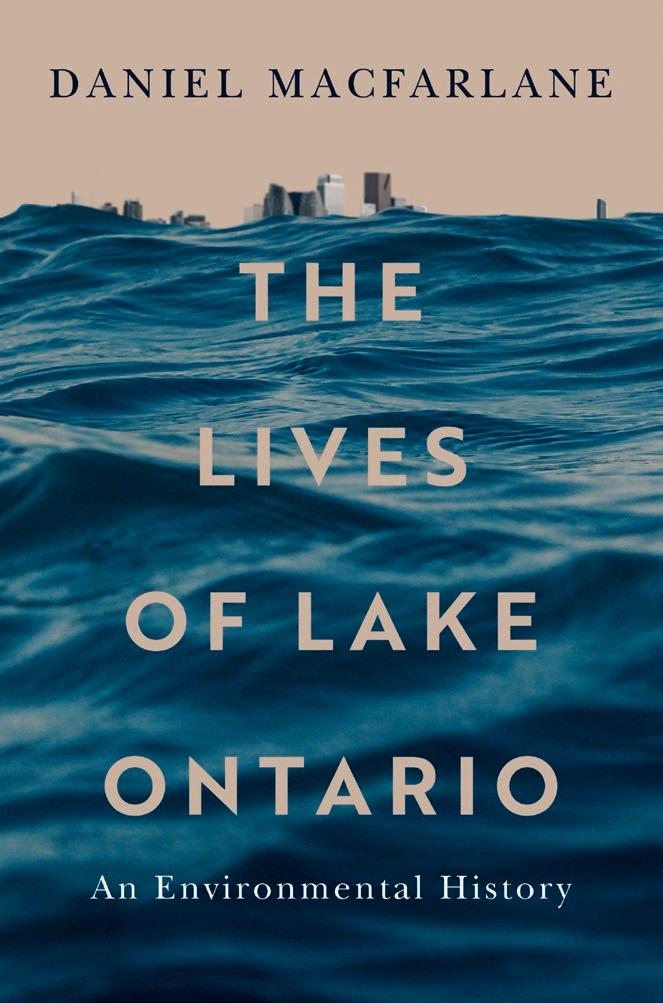
The Lives of Lake Ontario An Environmental History
D AN ie L M ACFARLAN e
A history of using and abusing Lake Ontario.
Lake Ontario has profoundly influenced the historical evolution of North America. For centuries it has enabled and enriched the societies that crowded its edges, from fertile agricultural landscapes to energy production systems to sprawling cities.
In The Lives of Lake Ontario Daniel Macfarlane details the lake’s relationship with the Indigenous nations, settler cultures, and modern countries that have occupied its shores. He examines the myriad ways Canada and the United States have used and abused this resource: through dams and canals, drinking water and sewage, trash and pollution, fish and foreign species, industry and manufacturing, urbanization and infrastructure, population growth and biodiversity loss. Serving as both bridge and buffer between the two countries, Lake Ontario came to host Canada’s largest megalopolis. Yet its transborder exploitation exacted a tremendous ecological cost, leading people to abandon the lake. Innovative regulations in the later twentieth century, such as the Great Lakes Water Quality Agreements, have partially improved Lake Ontario’s health.
Despite signs that communities are re-engaging with Lake Ontario, it remains the most degraded of the Great Lakes, with new and old problems alike exacerbated by climate change. The Lives of Lake Ontario demonstrates that this lake is both remarkably resilient and uniquely vulnerable.
Daniel Macfarlane is associate professor in the School of Environment, Geography, and Sustainability at Western Michigan University and the author of Natural Allies: Environment, Energy, and the History of US-Canada Relations.
“A deeply researched, authoritative account of the physical phenomena that formed and continue to shape the fourteenth-largest lake in the world … Beyond his ability to distill an abundance of complex scientific detail into crisp, digestible prose, [Macfarlane] truly shines in elucidating the reciprocal relationship between the lake and the people surrounding it.”
Dan Rubinstein, Literary Review of Canada
SPECIFICATIONS
McGill-Queen’s Rural, Wildland, and Resource Studies Series February 2026
978-0-2280-2654-9 paper
$24.95T US, $29.95T CDN, £18.99 UK 6 x 9 282pp 41 photos eBook available
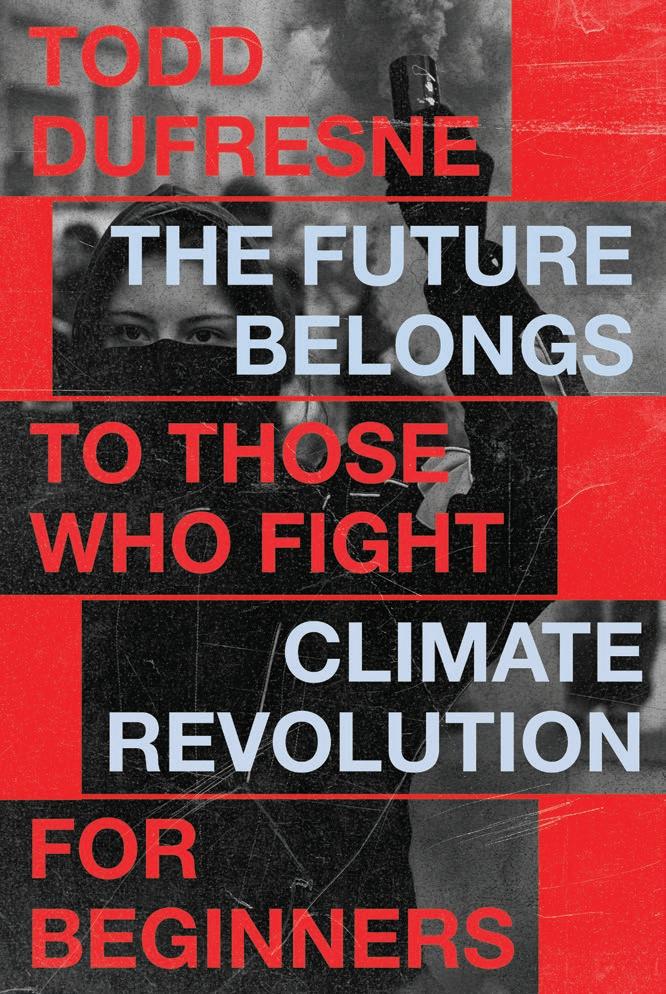
The Future Belongs to Those Who Fight Climate Revolution for Beginners
tODD Du FR e SN e
A manifesto against well-mannered nihilism that dares to imagine a new world built on empathy, justice, and reason.
We are living through the sixth mass extinction. Capitalism, the essential driver of carbon emissions, is reaching its inevitably brutal endgame: techno-feudalism. Not only are we facing a climate emergency – we need to prepare for climate revolution.
In a series of reports from the front lines, philosopher-journalist Todd Dufresne provides an urgent analysis of the knowledge and morals that are fuelling this revolution. His manifesto outlines the links between Western values, capitalism, and climate change, rejecting the “pathology of politeness” afflicting mainstream climate activism and warning that the systemic violence of post-capitalist society will be met with violence. Dufresne champions the radical critics of capitalism whose ideas, courage, and exuberant energy have the power to forestall the social murder of humanity in service of short-term profits for a tiny, irredeemable elite.
A fearless – and fearsome – account of the world-historical social and material conditions confronting us, The Future Belongs to Those Who Fight is a call to support utopic realism: a vision that embraces empathy, freedom, community, and universal human rights. It lays out what may be the only path to a world worth living in: left populism.
Todd Dufresne is a Canadian philosopher and the author or editor of a dozen books, including The Democracy of Suffering: Life on the Edge of Catastrophe, Philosophy in the Anthropocene
SPECIFICATIONS
Outspoken April 2026
978-0-2280-2683-9 paper
$24.95T US/CDN, £18.99 UK 5.5 x 8.5 186pp eBook available
A Logician’s Code of Conduct
P A t R i CK Gi RARD
How you can use logic to make the world more just.
The logic we rely on every day to help us communicate and make decisions can also reinforce injustice. Logic is often treated as a neutral arena for reasoning, but that supposed neutrality can fail to include everyone on fair terms. When certain ways of thinking are dismissed as incoherent reasoning, logic itself can become a tool of exclusion, supporting patterns of oppression, silencing voices, and erasing people.
Drawing on lessons from feminist, queer, and post-colonial theory, A Logician’s Code of Conduct challenges us to listen more carefully to those who have been pushed to the margins of social and intellectual life – not just public voices, but people in our workplaces, communities, and families. Instead of demanding that people continually defend their deeply held beliefs, logic can be a flexible and revisable framework that adapts to multiple perspectives. Patrick Girard outlines a code of conduct to make logic more just: be transparent about assumptions, negotiate standards suited to each context, and recognize others as coherent reasoners. Logic, Girard argues, can both liberate and connect us, creating spaces of inquiry that are not only neutral but also equitable.
In clear, accessible prose and free of formal symbolism, A Logician’s Code of Conduct is a bold and original contribution to logic and social philosophy. Girard demonstrates that logic is not an abstract discipline reserved for philosophers but a practical resource we all use every day – and one we can learn to apply more fairly and effectively.
Patrick Girard is associate professor at the University of Auckland and the author of Logic in the Wild.
SPECIFICATIONS
June 2026
978-0-2280-2789-8 paper
$27.95A US, $32.95A CDN, £20.99 UK
6 x 9 264pp eBook available
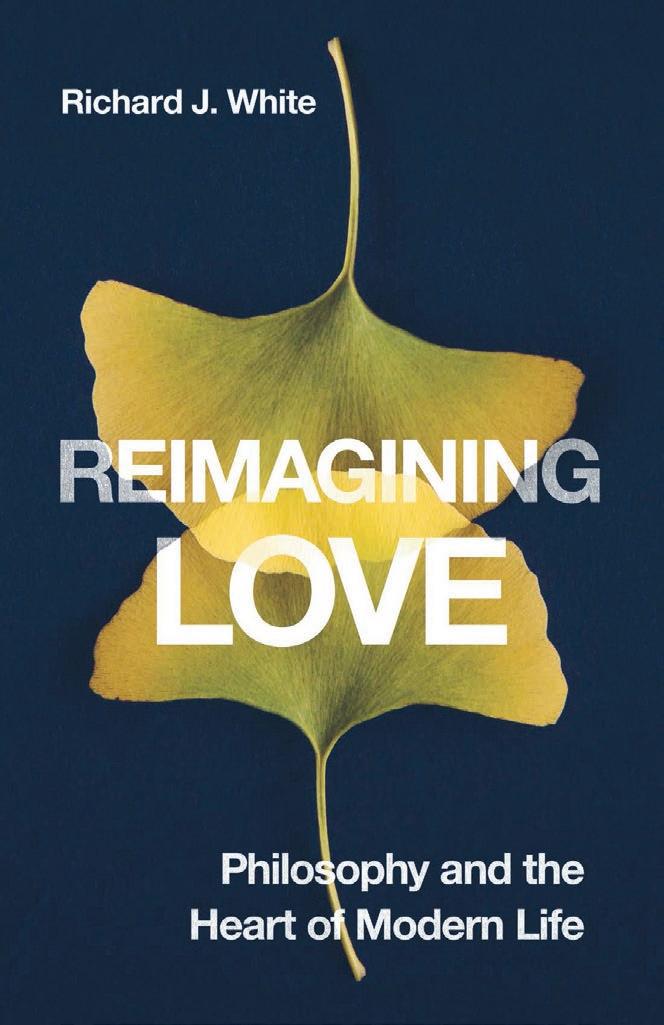
Reimagining Love Philosophy and the Heart of Modern Life
Ri CHARD J. wH ite
From Plato to contemporary philosophy, cultivating love’s wisdom in the modern age.
An emotion or an action, a kind of madness or a state of well-being, a measurable brain activity or a spiritual phenomenon: What is the truth about love? Richard White explores this elusive concept as a profound path of self-overcoming – a turning away from narcissism, fear, and isolation toward greater openness, receptivity, and compassion. Reimagining Love unfolds in four movements, through the fear of love as expressed in Stoicism and the modern achievement-oriented self; the awakening of love described by Plato, J.W. von Goethe, Rainer Maria Rilke, and others; the work of love and the cultivation of its virtues; and love as active compassion, a way of engaging with the world attentively, courageously, and non-possessively. White unites theory and practice, arguing that personal love can open outward into universal compassion, echoing the Buddhist ideal of karu – the selfless embrace of another’s suffering. Central to this vision is love’s spiritual dimension. It is not religious as such, but a source of meaning grounded in our sense of connection to something greater: nature, truth, justice, or the sacred itself.
Written with clarity and quiet authority, Reimagining Love offers a meditation on the ethical and existential significance of love for denizens of a disenchanted world.
Richard J. White is professor of philosophy at Creighton University.
SPECIFICATIONS
May 2026
978-0-2280-2790-4 paper
$24.95T US, $29.95T CDN, £18.99 UK
5.5 x 8.5 204pp eBook available
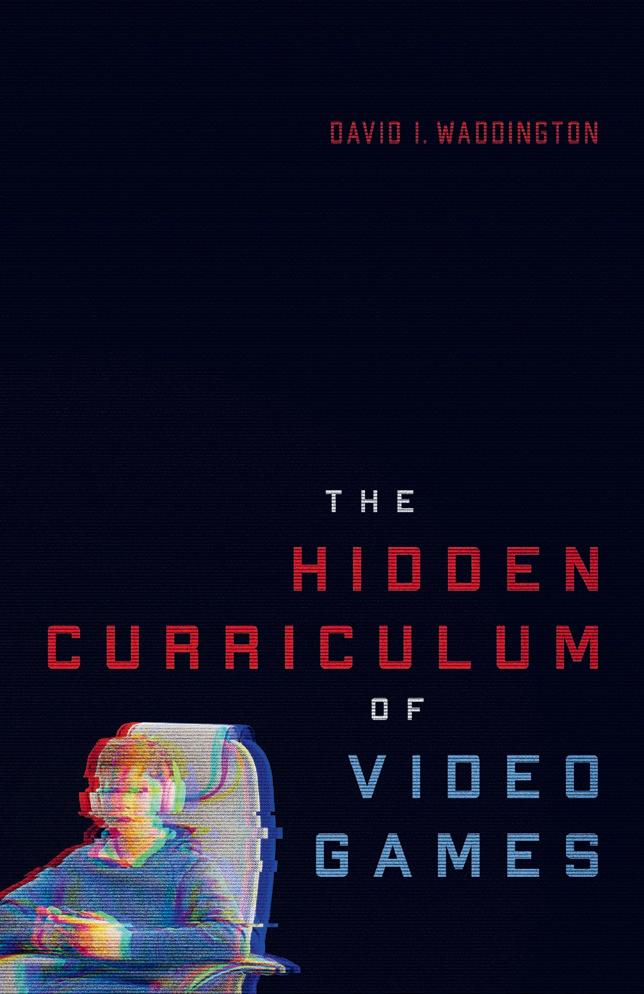
The Hidden Curriculum of Video Games
D A vi D i . wADD i NG t ON
We are right to worry about video games … but we are worrying about the wrong thing.
Despite decades of inflammatory rhetoric, the real risk of video games lies not in their violent imagery but in the ethical and political sensibilities they normalize. Video games reward speed, efficiency, control, and meritocratic mastery, training players to align with a technolibertarian worldview – one that celebrates individual will, technological power, and skepticism toward collective forms of governance. Rather than asking whether games produce violent individuals, we might more productively ask how they contribute to a commitment to radical capitalism and a belief in highly individualistic worldviews.
In this unsettling work David Waddington traces the philosophical roots of technolibertarianism, founded on faith in technological progress and personal freedom. He identifies a darker turn in this thinking, animated by the ideals of Ayn Rand and her archetype of the tech hero of capitalism. Many games, Waddington argues, invite players to inhabit this archetype, treating mastery, control, and relentless striving as moral virtues. While educational research often praises games for motivating students and fostering problem-solving, Waddington asks a deeper question: What kinds of people do
games help us become? Drawing on the ideas of Martin Heidegger and other thinkers, he explores whether gameplay expands human possibility or narrows it by habituating players to efficient yet restrictive systems.
The Hidden Curriculum of Video Games critiques mainstream game design and educational technology, offering hopeful alternatives and examining reflective games that resist dominant gameplay logics. Written with clarity, passion, and philosophical depth, this thought-provoking work opens new horizons on technology, education, and the moral imagination of play.
David I. Waddington is professor of education at Concordia University.
SPECIFICATIONS
July 2026
978-0-2280-2788-1 paper
$34.95A US/CDN, £26.99 UK
6 x 9 296pp 21 illustrations eBook available
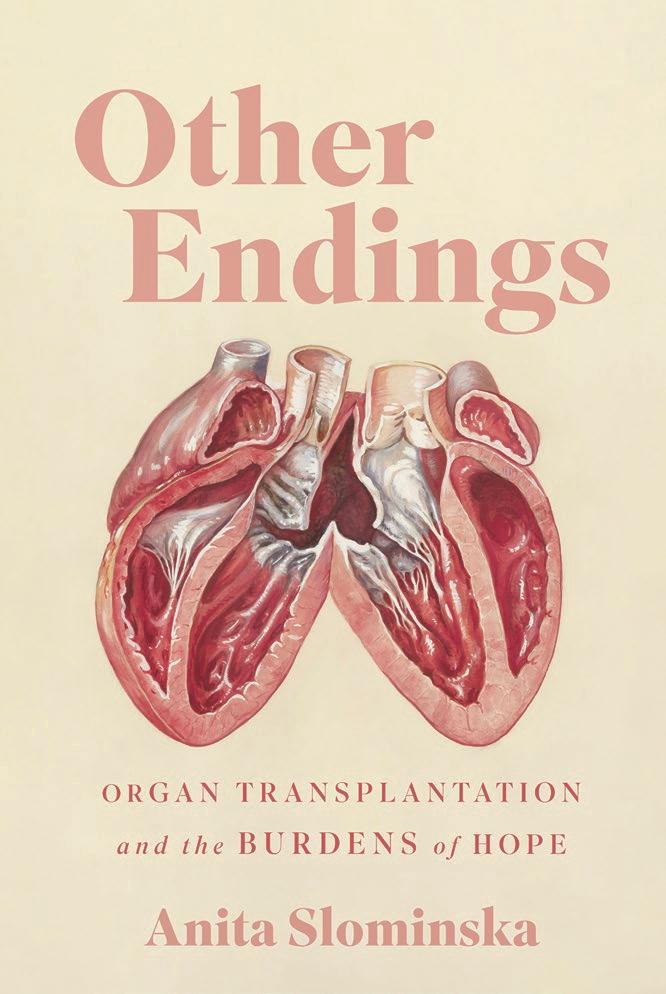
Other Endings Organ Transplantation and the Burdens of Hope
A N it A S LOM i NSKA
A journey through grief, loss, and coming to terms with the tragic ending of a transplant story.
In this raw and intimate memoir Anita Slominska recounts her sister Shauna’s eighteen-month wait for a liver transplant that failed to take place in time to save her life. Shauna’s death, at age twenty-nine, defied the usual redemptive promise of a life-saving transplant and forced Slominska to confront difficult questions: Why was she so unprepared for the devastating loss of her sister? Why do so many chronicles of organ transplantation celebrate survival, while few acknowledge failure and loss? Who are the people who die waiting, and why are their stories untold?
Weaving together personal memoir with in-depth research, Other Endings explores the triumphalist narrative of transplantation as medical progress and happy ending. This narrative, Slominska argues, does not capture the complicated, messy, and imperfect reality, nor does it make room for the experiences of hope and anguish involved with waitlist deaths, which are more common than we realize. Incorporating excerpts from Shauna’s online journal as well as reflections on her own role as her sister’s caregiver, Slominska challenges readers to imagine what it is like for patients and families to experience a wait for a transplant that ends in death.
A profound contribution to narrative medicine, Other Endings excavates societal beliefs that shape our expectations of science and medicine, raising critical questions about why and how we tell illness stories. Throughout, Shauna remains central: the indelibly human face of one person who died waiting.
Anita Slominska is a postdoctoral fellow at the Research Institute of the McGill University Health Centre and the Institute of Health Sciences Education at McGill University.
SPECIFICATIONS
February 2026
978-0-2280-2719-5 paper
$24.95T US/CDN, £18.99 UK
5.5 x 8.5 180pp 3 photos eBook available
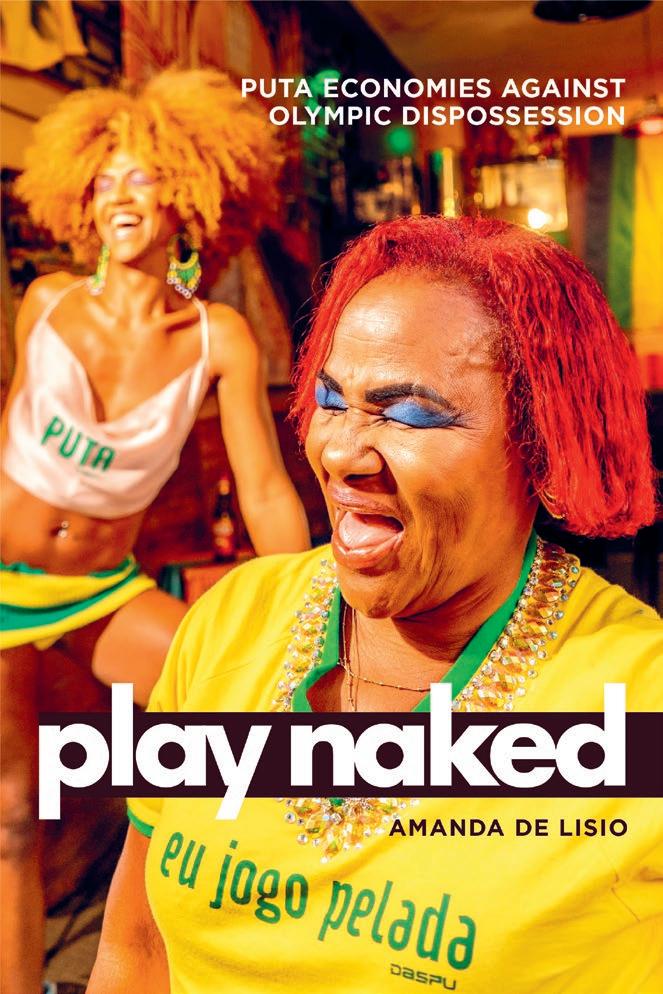
Play Naked Puta Economies Against Olympic Dispossession
A MANDA De Li S i O
Reclaiming sex work as a path to economic and political resistance in cities that exploit women’s bodies while denying their rights.
At Rio de Janeiro’s 2014 World Cup and 2016 Olympic Games, where athletes were celebrated as symbols of national achievement, sex workers – reclaiming the term puta – mobilized their own bodily labour within neoliberal regimes of visibility and control, leaving behind embodied and unexpected legacies of resistance.
Play Naked reclaims sex work as a site of puta economic agency and political resistance, where femme and trans bodies can assert value and visibility within state systems designed to exploit or erase them. Moving beyond spectacle and protest, Amanda De Lisio draws on extensive interviews with sex workers in Rio de Janeiro, whose stories are often ignored, infantilized, or co-opted to foment moral panic about human trafficking at major sporting events. Their narratives reveal the persistence of state violence and the complex strategies of defiance used by workers to navigate – and sometimes turn to their advantage – the rapid urban transformations driven by mega-events.
Rejecting familiar narratives of displacement, De Lisio illuminates everyday acts of endurance and defiance where land reform, urban renewal, and capitalist expansion collide with gendered and racialized bodies.
Amanda De Lisio is assistant professor of physical culture, policy, and sustainable development in the School of Kinesiology and Health Science at York University.
SPECIFICATIONS
May 2026
978-0-2280-2794-2 paper
$29.95T US, $34.95T CDN, £22.99 UK
6 x 9 240pp 18 photos eBook available
Open-access edition available
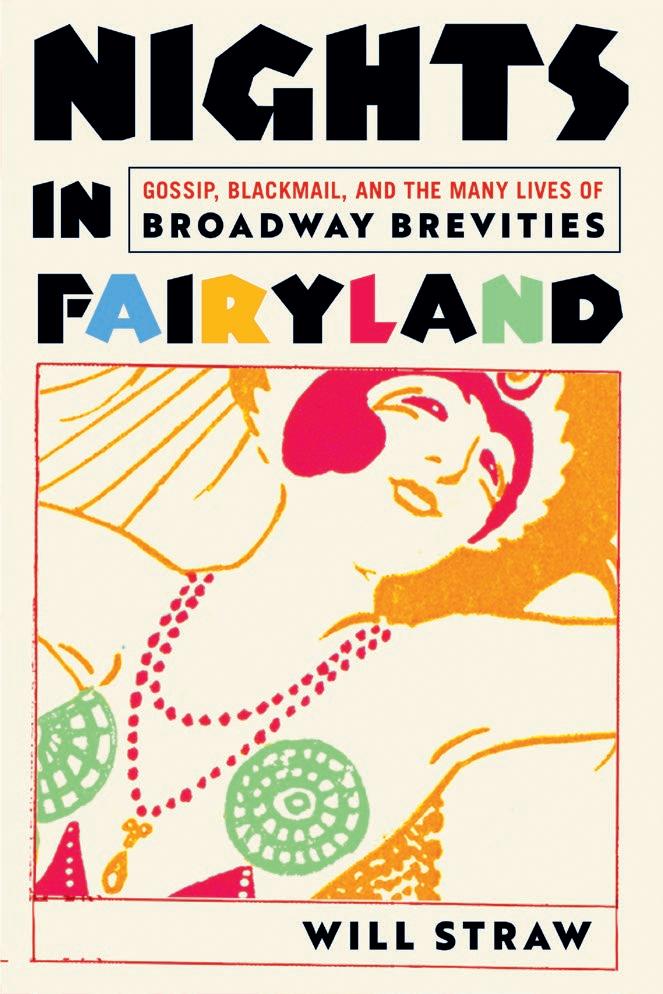
Nights in Fairyland
Gossip, Blackmail, and the Many Lives of Broadway Brevities
w i LL St RA w
The story of a New York City magazine whose obsessive interest in non-conforming sexualities left in its wake an abundance of detail about alternative ways of living and loving.
In 1925 the publishers of Broadway Brevities were tried for running an extortion operation targeting New York’s social and cultural elites. While the first version of the magazine whispered gossip in columnists’ suggestive innuendo, later incarnations shouted bold accusations in graphic tabloid headlines. On the pages of Broadway Brevities gossip was instrumentalized and urbanized, taking its place among the noisy, sensational features of city life.
The life of the magazine’s long-time editor, Canadian-born Stephen G. Clow, runs through this story, connecting the different incarnations of the magazine and the circles in which they were published (in New York, 1917–34, and later in Toronto). Clow’s career took him from Manhattan’s literary world, in his role as a critic and book publisher, to notoriety as a scandalmongering editor. Beginning in the 1920s Clow gathered – or fabricated – allegations about highprofile people in theatre, cinema, and enterprise, then threatened to publish unless they paid up. Clow would brag to Time magazine that he was “the most famous and wicked blackmailer in world history.” Broadway Brevities became infamous for sensational, vicious, and lurid coverage of gay life. Despite its mocking homophobia, Will Straw shows, the magazine can today help reconstitute the spaces and places of historical queer life in New York.
Drawing on a singular collection of Brevities issues discovered over decades of research, Nights in Fairyland is a rich account of an overlooked form of periodical publishing and of urban nightlife, queer sociability, and the commodification of gossip in the 1920s and 1930s.
Will Straw is James McGill Professor Emeritus of Urban Media Studies at McGill University.
“Nights in Fairyland is the exciting tale of an archetypal gossipmonger with nine lives and the many magazines he published. Will Straw sinks his hooks with gusto into ephemera, trivia, and trifles, extrapolating significance out of cultural cast-offs. Stephen G. Clow’s Broadway Brevities is Straw’s ultimate flea-market find: a largely forgotten magazine that shows how the cocktail of entertainment journalism got its punch mixing stardom and fandom with rumours and gossip, exposing the often-implied link between showbiz and queer life. Nights in Fairyland fizzes with cultural histories that tickle your tongue as you sip the main story with unusual anticipation.”
Paul Moore, co-author of The Sunday Paper: A Media History
SPECIFICATIONS
January 2026
978-0-2280-2659-4 paper
$24.95T US, $29.95T CDN, £18.99 UK
6 x 9 296pp 39 photos eBook available
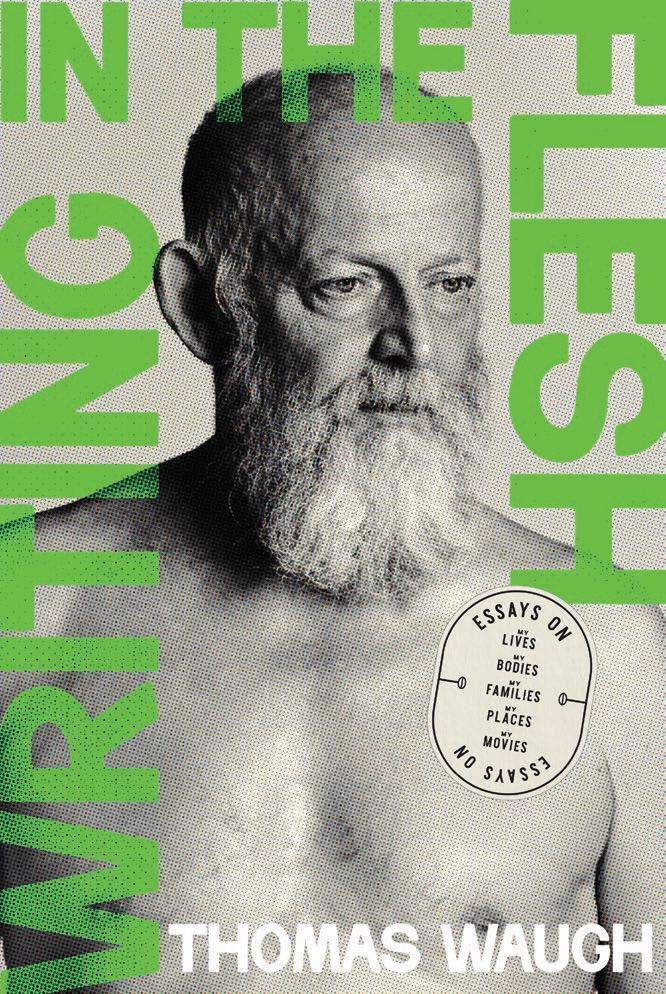
Writing in the Flesh
Essays on My Lives, My Bodies, My Families, My Places, My Movies
tHOMAS wA u GH
A vivacious vita full of queer relations: the erotic, the pedagogical, the familial, the romantic, the platonic, and, of course, the cinematic.
A confessional of the unrepentant, Writing in the Flesh caresses taboos, confronts sentimentality, and recasts memory. Thomas Waugh writes the body back into the intellectual autobiography, revealing the unsettling arguments and politics born from the tastes and desires of his own carnal vessel.
Shaped by the arc of a life still in full flight – a preacher’s kid who grows up to be a porn teacher and, along the way, a New Left activist and expert in documentary, queer, and Canadian film – Writing in the Flesh confronts the struggle of writing the self. Against the backdrop of Montreal’s Plateau-Mont-Royal, New York City, and the Punjab, Waugh brings places and people to life in profound and unexpected ways. This is also a memoir about history, the archive, and ephemera: Waugh mines his personal annals for photographs, film stills, testimony, and correspondence to reconstitute the voices of blood and chosen families, to hedge against erratic memory, and to give sense to life. Indebted to the tradition of queer first-person rabble rousers, Waugh takes us on a journey through seven decades of queer relations: the erotic, the pedagogical, the
familial, the romantic, the platonic, and, of course, the filmic.
Sexy, cinematic, encyclopedic: this vivacious vita celebrates a life filled with family and chosen family, movies, and beefcake. At the same time these pages are, as the title declares, a writing in the flesh: the unveiling of the fraught, vulnerable, declining yet still robust and pleasured body at the very centre of it all.
Thomas Waugh is a writer, programmer, and activist who taught film studies, queer studies, and sexuality at Concordia University from 1976 to 2017 and the author of The Romance of Transgression in Canada: Queering Sexualities, Nations, Cinemas. He lives in Montreal.
“Waugh reclaims the written memoir – in all of its messiness and hoary complexity – as the locus for long-form representation of the intellectual and sexual self in the post-Internet age. Writing in the Flesh is a brutally honest, hilarious, and super sexy celebration of queer kinship and friendship.”
Peter Dickinson, Simon Fraser University
SPECIFICATIONS
December 2025
978-0-2280-2734-8 paper
$39.95T US/CDN, £31.00 UK
6.25 x 9.25 388pp 127 photos eBook available
The Adventures of Priscilla: Queen of the Desert
Re N ée Mi DDL e MOS t
Priscilla’s journey from cult film vehicle to global queer icon.
FILM QUEER FILM CLASSICS
Written in less than ten days in 1994, The Adventures of Priscilla: Queen of the Desert became a cultural phenomenon that fundamentally altered mainstream ideas about queer identity worldwide. The iconic imagery of Priscilla still resonates as a symbol of global queer pride and liberation in spite of a critical reception that has varied since its release. Renée Middlemost provides valuable insight into the key debates surrounding the film through an overview of its production, initial reception, and legacy – adaptation into a stage musical, theme for an Olympic float, and inspiration for reality television programs. The evolution of Priscilla’s reputation also offers insight into ever-changing cultural attitudes: wild praise upon release, academic and critical backlash, and finally a nuanced but warm welcome into the history of Australian cinema. Equal parts road movie, musical, and comedy, Priscilla moved between genres, pulling off a radical centring of queer lives for mainstream consumption in the mid-1990s.
Passing its thirtieth anniversary, The Adventures of Priscilla: Queen of the Desert endures as cult object and cultural touchstone, adored by devoted audiences while serving as a reminder of progress made and the work still needed for acceptance. As Middlemost says of her first viewing in a suburban Sydney multiplex in 1994: “It was rude, it was sparkly, it shocked the family members who had begrudgingly taken me; I loved it.”
Renée Middlemost is senior lecturer in communication and media at the University of Wollongong.
THE ADVENTURES OF PRISCILLA: QUEEN OF THE DESERT
Renée Middlemost
SPECIFICATIONS
Queer Film Classics May 2026
978-0-2280-2780-5 paper
$19.95T US/CDN, £14.99 UK
6 x 8 152pp 50 photos eBook available
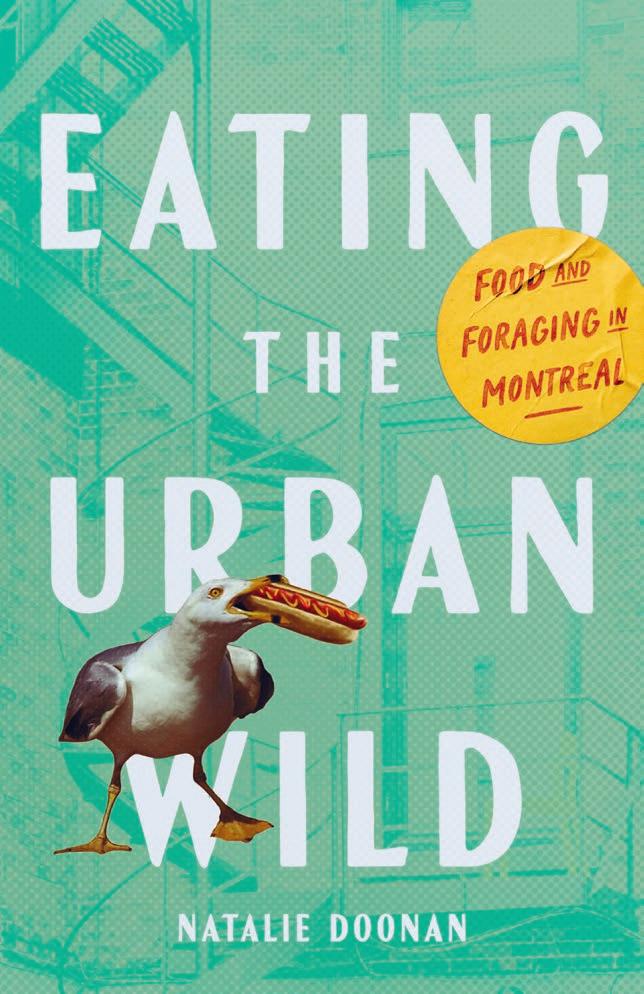
Eating the Urban Wild Food and Foraging in Montreal
N A t AL ie D OONAN
An unconventional and fascinating food tour of the borough of Verdun, inviting us to think differently about eating and consumption.
Food is one of the most intimate ways we come to know a place. If our understanding of Canadian food is shaped by regional variation and local ingredients, its fullest expression comes at the scale of the neighbourhood.
Eating the Urban Wild leads readers on an unconventional food tour through the wild corners and everyday streets of Montreal. Natalie Doonan reimagines what it means to eat locally, inviting us to experience food not as the consumption of a single dish but as part of a vibrant, entangled ecosystem. From waterfowl hunting on the Lachine Rapids and sturgeon fishing in Lake Saint-Louis to Verdun’s cooperative gardens and aquaponics initiative, beekeeping, community cooking classes, independent grocers, and even fast-food restaurants, this work brims with sensory detail. We hear the voices of hunters, fishers, foragers, biologists, and the author’s own family and friends – all of whom reveal unexpected ways of relating to food. From these neighbourhood practices emerges a broader political and ecological resonance.
Against the backdrop of colonial capitalism, ecological degradation, and accelerating extinction, Eating the Urban Wild highlights communal efforts to cultivate biodiversity and imagines systems beyond extractive and industrial models, positioning food not as commodity but as relation. Poetic and intellectually rigorous, this work frames eating as communication across boundaries: between humans, animals, landscapes, and even the divine.
Natalie Doonan is associate professor in the Department of Communication at l’Université de Montréal.
SPECIFICATIONS
July 2026
978-0-2280-2796-6 paper
$29.95T US/CDN, £22.99 UK
5.5 x 8.5 304pp 33 illustrations eBook available
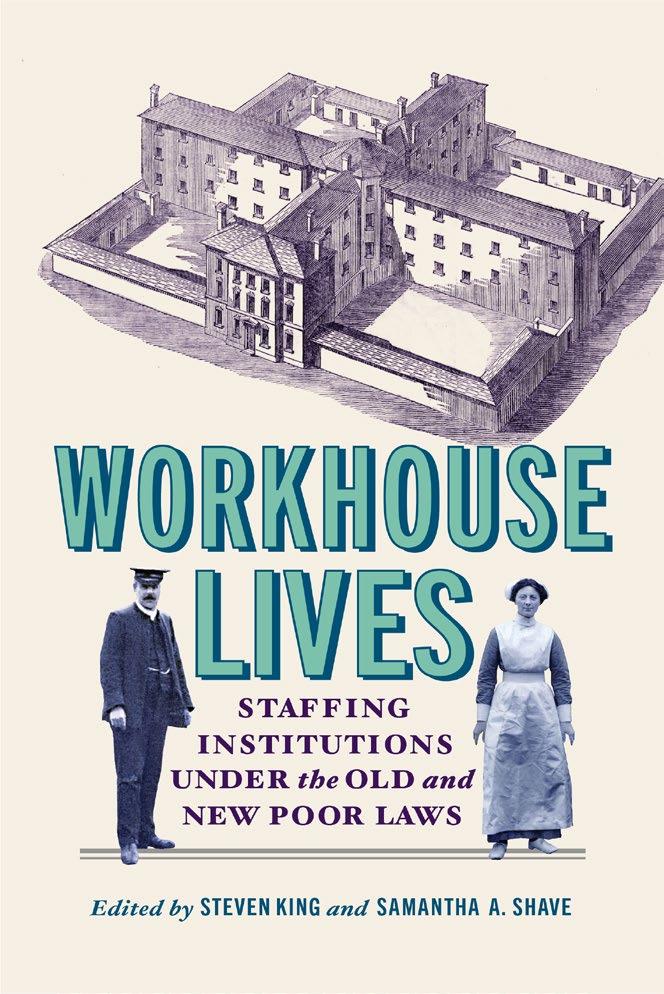
Workhouse Lives
Staffing Institutions Under the Old and New Poor Laws
e D ite D B y Steve N Ki NG AND S AMAN t HA A. S HA ve
Reconstructing the hidden lives of staff whose authority and character defined the British workhouse.
Following the passage of the 1834 New Poor Law, parishes in England and Wales were organized into unions, each of which had at least one workhouse, a public institution where impoverished individuals and families were housed, fed, and put to work. Beyond bricks and regulations, the workhouse was shaped and animated by those who ran it. Workhouse Lives reconstructs the careers and experiences of workhouse staff: masters and matrons, nurses, schoolmasters, porters, chaplains, taskmasters, relieving officers, and inspectors.
In the workhouse, roles overlapped, lines of responsibility blurred, and power was constantly negotiated. As the functions of the welfare state expanded, staff were expected to manage dormitories and medical wards, teach children and offer spiritual guidance, resolve disputes, keep records, administer vaccinations, arrange foster placements, and conduct sanitary inspections. Violence was a regular feature of workhouse life, arising from clashes between staff and inmates, conflicts among inmates (including domestic violence), and staff disputes. Officers might abuse their authority, sometimes brutally, while others acted with care and compassion. What moulded the
lives of everyone within the workhouse was less the administrative structure than the character of the person appointed to each role. This dynamic continues to resonate in modern welfare systems, which, however bureaucratized, are embodied by the people working on the front lines.
Touching on histories of welfare, labour, poverty, literacy, material culture, and state formation, Workhouse Lives illuminates the personalities, motivations, and community connections of staff whose lives have long been hidden.
Steven King is distinguished professor of economic and social history at Nottingham Trent University and the author of Fraudulent Lives: Imagining Welfare Cheats from the Poor Law to the Present.
Samantha A. Shave is a research associate at the School of Social Work and Social Policy at the University of Strathclyde.
SPECIFICATIONS
States, People, and the History of Social Change
June 2026
978-0-2280-2781-2 paper
$39.95A US/CDN, £31.00 UK
6 x 9 390pp 19 illustrations, 8 tables eBook available
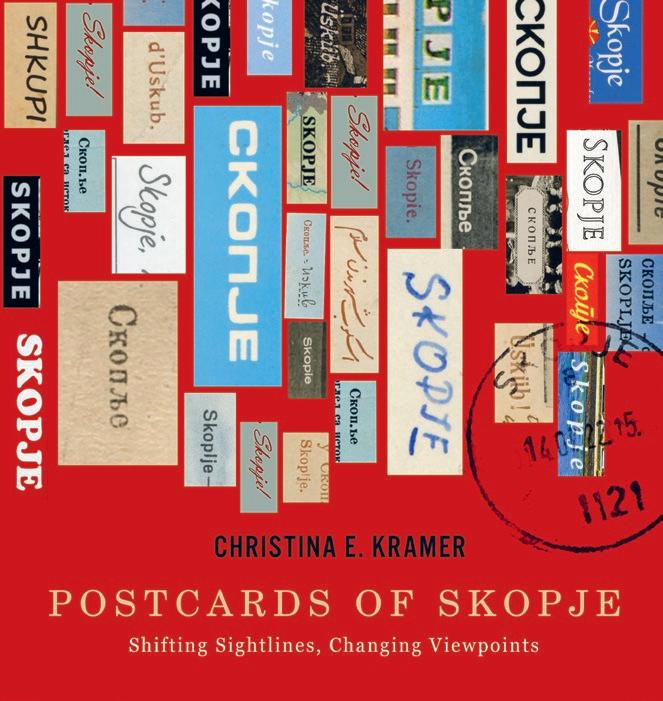
Postcards of Skopje
Shifting Sightlines, Changing Viewpoints
C HR i S ti NA e . K RAM e R
How postcards offer a window into the development of contemporary Macedonian identity.
Over the course of the twentieth century the Macedonian city of Skopje was contested and continuously changing. Picture postcards sent and received by Skopje’s people and its visitors document turbulent periods of partition, wars, natural disasters, and independence.
In Postcards of Skopje Christina Kramer argues that postcards provide an extraordinary archive from which to read and make visible political history. Fragmentary, ephemeral, and transitory in nature, postcards frame the shifting history of the capital city of what is now called the Republic of North Macedonia. Individually the postcards serve as snapshots of Skopje and the people who lived there. Taken chronologically, they capture incremental transformations in the landscape, the languages that describe and define it, and the changing flow of people through the city. Kramer analyzes more than eight hundred postcards both from her personal collection, amassed over the course of almost fifty years of visiting Skopje, and from archives in Macedonia. She demonstrates that postcards do not merely depict a single moment in time but rather represent multi-temporal montages.
Postcards of Skopje reveals the many ways in which the creators, writers, and recipients of postcards experienced, understood, and presented the Macedonian city.
Christina E. Kramer is professor emerita of Slavic languages and linguistics at the University of Toronto and a literary translator of Macedonian fiction.
SPECIFICATIONS
August 2026
978-0-2280-2797-3 paper
$44.95A US/CDN, £35.00 UK
8.5 x 9 304pp 137 illustrations, colour throughout eBook available
The Mobile Ruin
The
eD
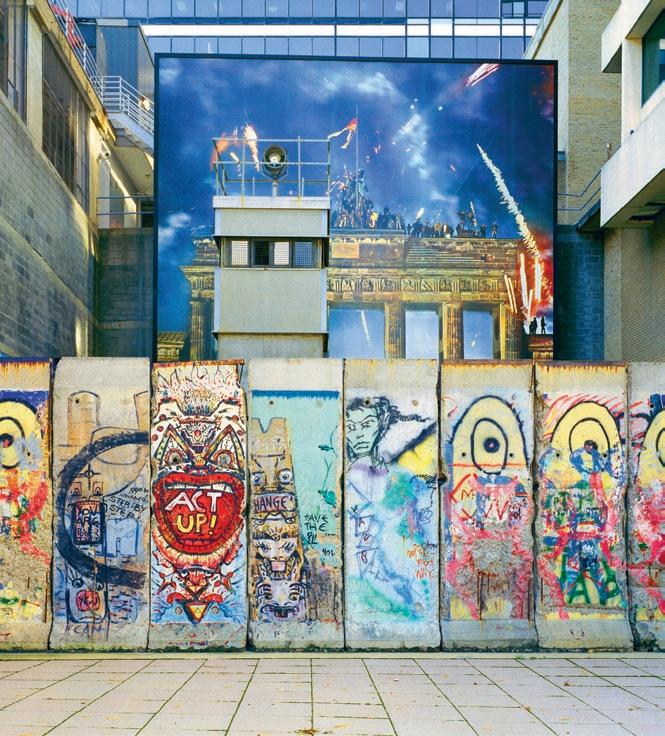
Everyday Life of the Berlin Wall
ite D B y B LAK e Fitz PA t R i CK AND v i D iNG e L evi CS
How do we understand the afterlife of a historical icon – that once impenetrable border now in motion, gifted and sold around the world?
RUIN MOBILE THE
The Berlin Wall divided the city for almost three decades before it fell on 9 November 1989. But this symbol of the Cold War has been travelling longer than it stood still. An object that once seemed immovable now wanders around the world in every format from two-tonne slabs to pocket-sized souvenirs.
This collection envisions the atomized and displaced remnants of the Berlin Wall as a mobile ruin with an evolving history. Blake Fitzpatrick and Vid Ingelevics’s photographic investigation of the geographical dispersement of its fragments is a form of witness to the history of the wall after it fell. Featuring over one hundred photographs, intercut with powerful contextual writings by artists, scholars, and curators (including people involved in souvenir production and sale), this unique work raises compelling questions about the shifting meaning of Berlin Wall artifacts –essentially banal pieces of concrete – in light of their physical relocation and shifts in geopolitical power.
Contributing to our understanding of material history, public commemoration, border politics, and documentary studies, The Mobile Ruin explores the ongoing resonance of the wall and the new life it takes on in a series of unexpected international locations.
Blake Fitzpatrick is professor in the School of Image Arts, Toronto Metropolitan University, and co-editor of Place Matters: Critical Topographies in Word and Image.
Vid Ingelevics is professor emeritus, School of Image Arts, Toronto Metropolitan University, and a visual artist, writer, and independent curator.
SPECIFICATIONS
April 2026
978-0-2280-2686-0 paper
$37.95T US, $39.95T CDN, £28.99 UK
9 x 10 224pp 139 photos, colour throughout eBook available
THE EVERYDAY LIFE OF THE BERLIN WALL
EDITED BY Blake Fitzpatrick and Vid Ingelevics
At the Origin of the Christian Claim
New Revised Edition
Lui G i Giu SSAN i
A fresh look at Giussani’s foundational work on Christ’s Incarnation.
In At the Origin of the Christian Claim Luigi Giussani examines Christ’s claim to identify himself with the mystery that is the ultimate answer to our search for the meaning of existence.
If we accept the hypothesis that the mystery entered the realm of human existence and spoke in human terms, Giussani argues, the relationship between the individual and God is no longer based on a moral, imaginative, or aesthetic human effort but instead on coming upon an event in one’s life. Thus the religious method is overturned by Christ: in Christianity it is no longer the person who seeks to know the mystery but the mystery that makes himself known by entering history.
At the Origin of the Christian Claim, newly revised by John Zucchi, presents an intriguing argument supported with ample documentation from the gospels and other theological writings.
Monsignor Luigi Giussani (1922–2005) was the founder of the Catholic lay movement Communion and Liberation in Italy. He is the author of more than twenty books, including The Religious Sense.
LUIGI GIUSSANI AT THE ORIGIN OF THE CHRISTIAN CLAIM
January 2026
978-0-2280-2743-0 paper
$22.95T US, $28.95T CDN, £16.99 UK 6 x 9 132pp eBook available
Fragile Nations
The Promise and Perils of Multinational Democracies
Fé L ix M A t H ieu
How autonomy’s demand for constant collective effort within unequal constitutional frameworks makes non-sovereign nations precarious.
Non-sovereign nations are fragile: not because they lack identity but because their futures depend on sustained collective efforts to preserve institutions, cultures, and political autonomy while they remain unequal partners within constitutional frameworks.
In a brilliant sociopolitical analysis of five non-sovereign nations – Catalonia, Northern Ireland, Wallonia, South Tyrol, and Quebec –Félix Mathieu offers new empirical evidence that a state’s constitutional character shapes the management of national diversity and advances novel ideas for creating authentic multinational democracies. Beginning with each state’s formative rupture and unfolding through the twists of political modernity, Fragile Nations shows how political, social, and economic forces interact with constitutional structures. It examines how unitary or federal states enable or constrain minority nations in building institutions and shaping their destinies. Mathieu brings empirical depth to theoretical debates and takes a compelling look at the democratic principles of pluralism and equity, which can sustain fairer, more inclusive multinational states.
Fragile Nations engages in questions about nationalism, federalism, minority nations, and the challenges of governance, enriching wider conversations about identity, sovereignty, and coexistence in diverse societies.
Félix Mathieu is professor in the Department of Law at the Université du Québec en Outaouais and the author of Taking Pluralism Seriously: Complex Societies under Scrutiny.
FRAGILE NATIONS
The Promise and Perils of Multinational Democracies
FÉLIX MATHIEU
SPECIFICATIONS
Democracy, Diversity, and Citizen Engagement Series May 2026
978-0-2280-2767-6 paper
$39.95A US/CDN, £31.00 UK 6 x 9 302pp 8 diagrams, 4 tables eBook available
Maidan
Ukraine’s Democratic Revolution
S OPH i A w i LSON
How the grassroots victory of the Revolution of Dignity renegotiated the social contract and reaffirmed democracy.
The 2013–14 Maidan Revolution, or Revolution of Dignity, was far more than a series of protests: the coalescence of complex social networks formed a powerful grassroots movement that restored democracy to a country slipping into authoritarianism. Maidan gives a carefully researched account of the underbelly of the resistance process, investigating how participants self-organized to create the resistance, why the peaceful movement eventually turned to violence, and how the revolutionary process changed those who came to change the country.
Democratic revolution is a state–society dialogue about rights, and the regime that results depends on the ideas negotiated during revolutionary socialization. Offering an unparalleled opportunity to see that negotiation in action, Maidan draws on more than one hundred personal interviews, oral histories, legal documents, and court hearings. The Ukrainian state used violence and violations of due process to suppress the resistance, thereby declaring new boundaries in rights relations. In turn, the people pushed back in multiple arenas – the protest square, courtrooms, hospitals, churches, and media – to successfully challenge the constitutionality of the state’s actions.
Western media accounts tend to oversimplify the Revolution of Dignity as backlash against President Viktor Yanukovych’s decision not to
sign a European Union agreement. The reality had far deeper implications for the geopolitics of the region. Sophia Wilson’s account of the revolution, and the Kremlin propaganda about it, underscores why it is impossible to understand Russia’s invasion of Ukraine without first understanding what fuelled the Maidan: the affirmation of democracy and the rooting out of Russian puppet authoritarianism.
Sophia Wilson is associate professor of political science at Southern Illinois University Edwardsville.
“Ukraine’s democratic protests of 2013–14 freed the country from the kleptocratic rule of the post-communist elites and set it on the road to European integration, while provoking military aggression from Putin’s Russia. Maidan explains what Ukraine has been fighting for and what is at stake for the rest of the world.”
Serhii Plokhy, author of The Russo-Ukrainian War
“Wilson expertly contextualizes Ukraine’s pivotal Revolution of Dignity in protest, power, and resistance studies. An important read for those seeking a better understanding of Russia’s ongoing aggression and Moscow’s false narratives about Ukraine and Ukrainians.”
Gene Fishel, George Mason University
sophia wilson ukraine’s MAIDAN
democratic revolution
SPECIFICATIONS
McGill-Queen’s Studies in Protest, Power, and Resistance
March 2026
978-0-2280-2737-9 paper
$44.95A US/CDN, £35.00 UK
6 x 9 366pp 5 tables, 7 diagrams, 1 map, 17 photos eBook available
Cold War Defectors
e D ite D B y K R i S ty iRONS i D e AND L OR e N z M. Lüt H i
A riveting and complex portrait of defection and what it meant to switch sides in a Cold War world.
Cold War defections were highly public spectacles, often dominating headlines for weeks and fuelling propaganda about the irresistible allure of freedom. Yet only a minority of defectors were political dissidents before leaving; despite how they may have publicly represented their actions, most defectors crossed borders for reasons ranging from economic opportunity to a spur-of-themoment decision.
Cold War Defectors redefines the political and personal stakes of defection, a complex and historically specific Cold War phenomenon that largely came to an end with the collapse of the Soviet Union in 1991. The first part of the book traces citizens from the communist East who fled to the United States, Canada, and the United Kingdom, often at great personal risk and from unexpected locations across the globe. The second part turns to other key waypoints of defection – Berlin, Hong Kong, and Vietnam – where movement occurred in both directions and on a striking scale. Together the chapters reveal a wide range of individual experiences and government responses, showing how states struggled to distinguish refugees, migrants, and defectors. They also highlight the role of non-state actors, the framing
power of the media, and the agency of defectors themselves, whether they were elite insiders trading political or cultural capital for asylum or ordinary individuals navigating familiar tropes of Cold War escape.
Spanning multiple continents and linking defection to espionage, intelligence, and media culture, Cold War Defectors presents a riveting portrait of what it meant to switch sides in a divided world.
Kristy Ironside is associate professor of modern Russian history in the Department of History and Classical Studies at McGill University.
Lorenz M. Lüthi is professor of history of international relations in the Department of History and Classical Studies at McGill University.
SPECIFICATIONS
June 2026
978-0-2280-2801-7 paper
$24.95A US, $29.95A CDN, £18.99 UK
6 x 9 232pp 8 illustrations eBook available
EDITED BY KRISTY IRONSIDE AND LORENZ M. LÜTHI
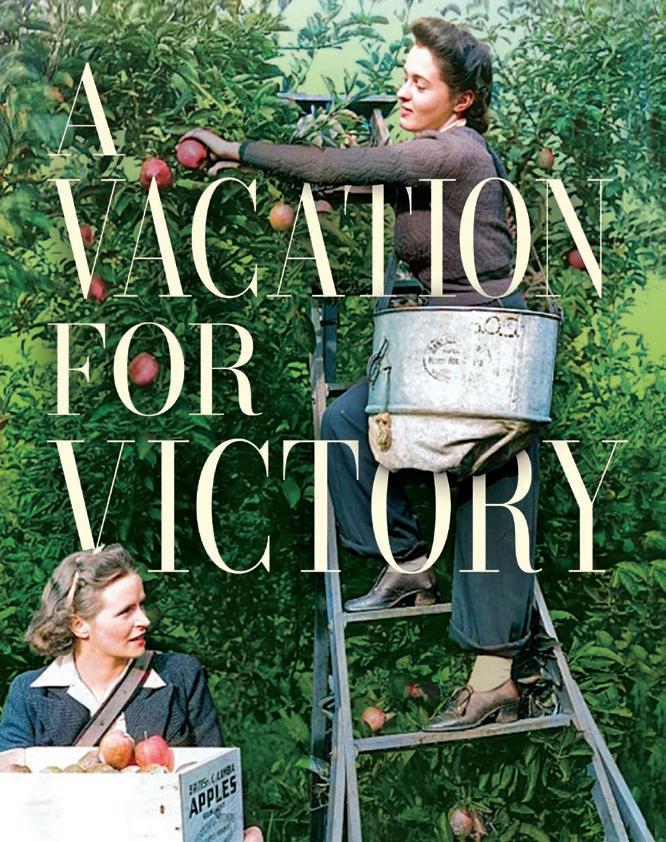
A Vacation for Victory
An Illustrated History of the Women’s Land Army in Canada
Ke LS ey M. L ON ie
A richly illustrated history of the women and girls who nourished a nation at war.
Serving not in uniforms or factories but in orchards, fields, and farms, the women and girls of Canada’s Women’s Land Army – the youngest of whom were known as “farmerettes” – planted, picked, and packed food that sustained the nation while men fought overseas.
A Vacation for Victory brings this fascinating Second World War history to life. Blending creative nonfiction with archival letters, newspaper clippings, interviews, and her own grandmother’s recollections, Kelsey Lonie portrays the working lives of women who formed Canada’s farm front. Their stories and photographs reveal how they understood both their labour and their changing place in society. Unlike other Allied countries, Canada did not create a national land army; instead, provinces took the lead. Ontario recruited thousands of women, while British Columbia’s program faltered until prairie women, eager for new experiences elsewhere, signed up. Patriotic duty, however, is only part of Lonie’s narrative: wealthy landowners expanded orchards, leaving the hardest, dirtiest jobs to marginalized workers, thus exposing how racism and capitalism shaped wartime farming industries.
Richly illustrated with photographs, postcards, and cultural ephemera, A Vacation for Victory offers powerful accounts of grit, inequity, and resilience, restoring women to the centre of Canada’s wartime effort.
Kelsey M. Lonie is executive director and chief historian of the Royal United Services Institute of Regina.
SPECIFICATIONS
May 2026
978-0-2280-2761-4 paper
$42.95T US/CDN, £33.00 UK
7.5 x 9.5 312pp 110 illustrations, colour throughout eBook available
KELSEY M. LONIE
AN ILLUSTRATED HISTORY OF THE WOMEN’S LAND ARMY IN CANADA
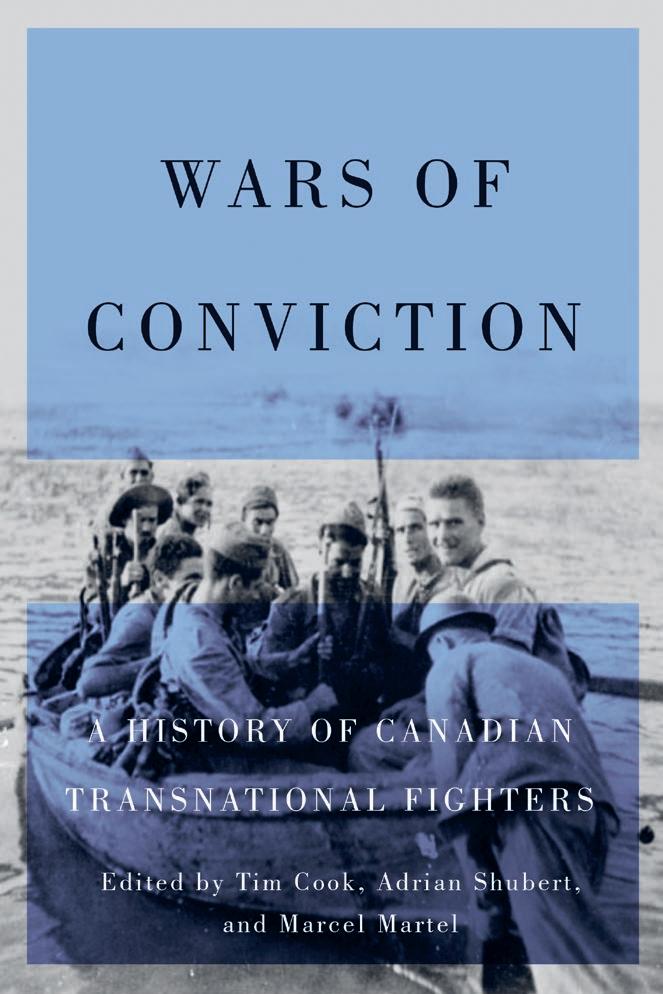
Wars of Conviction A History of Canadian Transnational Fighters
e D ite D B y t i M C OOK , A DR i AN S H u B e R t, AND M ARC e L M AR te L
Exploring the motivations and experiences of Canadians who fought in others’ wars and the controversy surrounding their commemoration.
In 1867 Alfred LaRocque, a young Quebecker, left home to defend the papacy in Rome. In 1937 journalist and communist Jean Watts travelled to Spain to cover the civil war. In 2023 former corporal Kyle Porter took up arms in Ukraine. Separated by time and cause, the three share a bond with tens of thousands of Canadians who fought, assisted, or died defending other nations or oppressed peoples.
The stories of transnational fighters complicate Canada’s familiar war narrative, illuminating the motivations and passions that drove people to fight abroad and the legal and political legacies that followed them home. Spanning 150 years, Wars of Conviction explores who fought, why they did so, and what they experienced during and after battle. Canadians’ decisions to take up arms in the Papal Zouaves, the Spanish Civil War, the Sino-Japanese War, Vietnam, Syria, and Ukraine provoked both admiration and outrage, invited state scrutiny, and sparked enduring debate over how such fighters should be commemorated.
A deftly sketched portrait of the fighters that committed to making foreign wars their own, this volume unsettles military history to better understand an uncertain present.
Tim Cook (1971–2025) was chief historian and director of research at the Canadian War Museum.
Adrian Shubert is professor emeritus of history at York University.
Marcel Martel is professor of history at York University.
SPECIFICATIONS
June 2026
978-0-2280-2782-9 cloth
$34.95T US/CDN, £27.99 UK
6 x 9 304pp 15 photos, 2 diagrams eBook available
Collapse of a Country A Diplomat’s Memoir of South Sudan
Ni CHOLAS C OGHLAN
A rare first-hand account of the violent implosion and ongoing humanitarian tragedy of the world’s youngest state.
COLLAPSE OF A COUNTRY
The first Canadian diplomat to be posted to war-torn Sudan, Nicholas Coghlan was a natural choice to lead Canada’s representation in the new Republic of South Sudan soon after the country was founded in 2011. In late 2013 Coghlan and his wife Jenny were in the capital, Juba, when it erupted in gunfire and civil war pitted one half of the army against the other, Vice-President Machar against President Kiir, and the Nuer tribe against the Dinka.
This action-focused narrative, grounded by accounts of meetings with key leaders and travels throughout the dangerous, impoverished hinterland of South Sudan, explains what happened in December 2013 and why. In harrowing terms, Collapse of a Country describes the ebb and flow of the war and the humanitarian tragedy that followed, the Coghlans’ scramble to evacuate South Sudanese Canadians from Juba, and the well-meant but often ill-conceived attempts of the international community to mitigate the misery and bring peace back to a land that has rarely known it. Coghlan’s stark narrative serves as a lesson to politicians, diplomats, aid workers, and practitioners on the breakdown of governance and relationships between ethnic groups, and the often decisive role of international development representatives.
Fast-paced and poignant, Collapse of a Country gives an insider’s glimpse into the chaos, violence, and ethnic conflicts that emerged out of a civil war that has been largely ignored by the West.
Nicholas Coghlan, author of Far in the Waste Sudan and The Saddest Country, served in five Canadian embassies overseas before he was appointed Canada’s first resident ambassador to South Sudan. He lives on Salt Spring Island, BC .
“Full of … head-shaking examples of bureaucratic practices gone afoul. [Coghlan’s] insistence that more could be done with practices and processes that respond to the needs of Canada’s various embassies overseas provides some of the most stirring content of the book … [Collapse of a Country] is a useful and often-engaging account of South Sudan’s first traumatic years. The work of Canada’s diplomats in places like South Sudan deserves more attention, and hopefully books like this will continue to shed light on the good, bad, and ugly sides of this world.”
Colin McCullough, International Journal
SPECIFICATIONS
February 2026
978-0-2280-2678-5 paper
$34.95A US/CDN, £27.99 UK
6 x 9 304pp 32 photos, 3 maps eBook available
A Diplomat’s Memoir of South Sudan
Foreword by Roméo Dallaire and Shelly Whitman NICHOLAS COGHLAN
“A book that must be read by anyone who wishes to understand the complexity of the birth of this new nation.” ROMÉO DALLAIRE AND SHELLY WHITMAN
For Blood and Soil
Far-Right Extremism in Canada
A MARNA t H A MARAS i NGAM AND Ste PHAN ie C AR vi N
How Canada’s far right moved from the margins to the mainstream – and why it threatens our politics, culture, and safety.
Canada is no stranger to hate. From Ku Klux Klan rallies in the 1920s and fascist sympathizers of the 1930s to the so-called Freedom Convoy’s occupation of Ottawa a century later, far-right extremism is a homegrown phenomenon, deeply woven into the nation’s political and cultural fabric. Through firsthand interviews with former extremists, policymakers, and experts, alongside historical context, For Blood and Soil shows how hate movements – far from an imported problem – have evolved and rebranded, with extremist ideas moving seamlessly between virtual spaces and real-world violence. Over the past decade, online far-right activity in Canada has surged, connecting with networks of incels, QA non followers, anti-government groups, and other conspiracy-driven communities. Public attention has often focused on religiously motivated violence, overlooking the threat from adherents to secular ideologies, even as violent attacks have risen. Moving beyond frameworks that focus on the United States and Europe, Amarnath Amarasingam and Stephanie Carvin offer targeted recommendations to address this serious threat to Canada’s institutions and social cohesion.
By tracing the experiences of individuals who have joined and left extremist groups, this accessible and authoritative work uncovers how extremist ideologies are financed and facilitated and how personal and political forces sustain hate across generations.
Amarnath Amarasingam is associate professor in the School of Religion, cross-appointed to the Department of Political Studies, at Queen’s University.
Stephanie Carvin is associate professor of international relations at the Norman Paterson School of International Affairs.
SPECIFICATIONS
Canadian Essentials
May 2026
978-0-2280-2791-1 paper
$24.95T US/CDN, £18.99 UK 6 x 9 216pp
eBook available
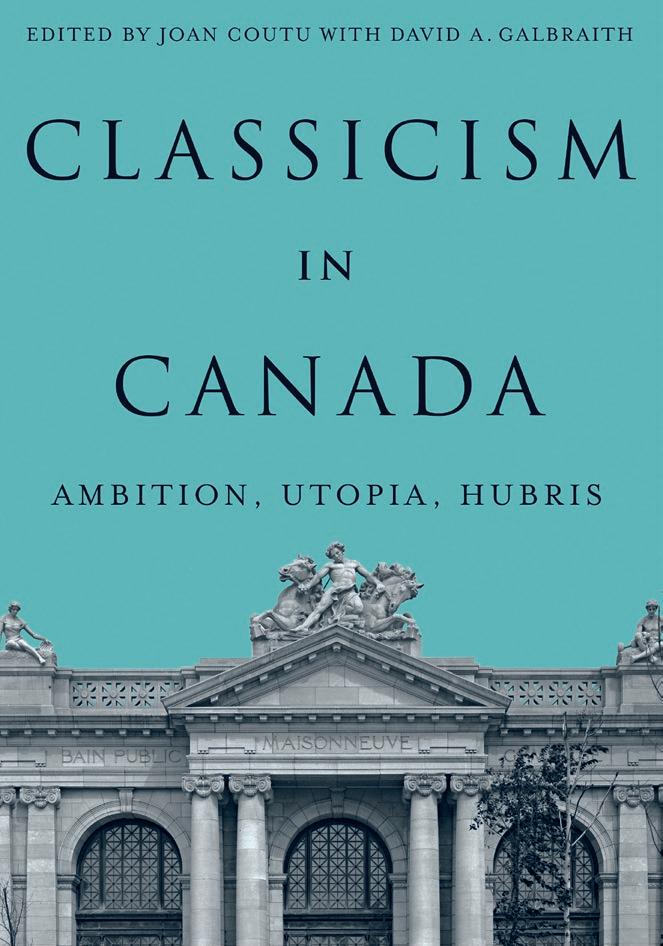
Classicism in Canada
Ambition, Utopia, Hubris
e D ite D B y J OAN C O utu wit H D A vi D A . G ALBRA it H
On the design and implications of Anglo-settler-built classical environments in Canada.
The classical architectural and planning schemes conceived by Canada’s Anglo-settler elite in the early twentieth century embodied a prescriptive vision of power and grandeur for the country and its people on a scale almost unimaginable today. This provocative collection of essays examines the classical design precepts that shaped much of Canada’s built environment – leaving an imprint for how we continue to experience place today.
Classicism in Canada brings together essays by planning, architectural, art, political, and social historians. Drawing on primary sources and the physical sites themselves, the contributors probe the meaning of a style that melded the École des Beaux-Arts with the sensibilities of the City Beautiful movement and that was rooted in assumptions about order and historical continuity. The transformation of built space and land was motivated by pragmatism, aesthetics, and an ideological infrastructure that reverberated with utopian zeal as much as it was driven by racial discrimination and Indigenous erasure. The book analyzes cities, towns, banks, parks, and tourist sites while also offering a microhistory of Hamilton, Ontario, a case study par excellence where municipal officials, planners, and architects pursued so-called improvements to the expanding industrial city.
Richly illustrated with many previously unpublished images and framed through spatial, social, and decolonial perspectives, Classicism in Canada shows how building and planning aimed to shape a place for Canada within the British imperial fold.
Joan Coutu is professor of visual culture at the University of Waterloo and author of Then and Now: Collecting and Classicism in Eighteenth-Century England.
David A. Galbraith is director of science at Royal Botanical Gardens, Burlington, ON
SPECIFICATIONS
McGill-Queen’s/Beaverbrook Canadian Foundation Studies in Art History August 2026
978-0-2280-2802-4 cloth
$75.00A US/CDN, £60.00 UK
7 x 10 360pp 164 illustrations, 1 table, colour insert eBook available
Toronto Edwardian
Frank Darling, Architect of Canada’s Imperial Age
D A vi D e. w i N te R t ON
Foreword by Michael McClelland
Navigating the architectural history of the Edwardian era and its most accomplished Canadian protagonist.
EDWARDIAN
Beginning his career as an independent architect in the mid-1870s, Frank Darling came to prominence as the principal of Darling & Pearson Architects, designing a plethora of delightful bank buildings in the early twentieth century. Darling’s work aligned with the national ambitions of his clients and gave shape to Britain’s global imperial project on Canadian soil.
In Toronto Edwardian David Winterton positions Darling as a leading architectural figure of the era. He demonstrates that the Canadian Edwardian Grand Manner was not merely an architectural interlude: it was pivotal to the development of Canada’s cultural identity and of the possibility of a national architecture in the early twentieth century. Darling was the first Canadian architect with a truly national presence, with built projects in every province – over 360 known buildings – ranging from elaborate urban designs to prefabricated banks that rose up in many towns and villages west of Lake Superior. Winterton has drawn from institutional archives and consulted with local historians, heritage professionals, and scholars to meticulously reconstruct the story of Frank Darling and his work. First exploring biographical, cultural, and patronage contexts,
then focusing on the design and construction of fine houses, academic buildings, banks, and even the country’s first skyscrapers, Toronto Edwardian features new and previously unpublished photographs that illuminate the firm’s considerable influence and provide a visual record of Darling’s approach to style.
Toronto Edwardian richly illustrates the breadth of Darling’s architectural creation and compellingly articulates the Edwardian period’s importance to Canadian architecture.
David E. Winterton is a Toronto-based architect and architectural historian.
“Toronto Edwardian is a field-defining book. Bringing to light a vast amount of new information on Frank Darling and the firm of Darling & Pearson, Winterton offers a penetrating account of Canadian architecture in its international context, raising its study to a new level of elegance and sophistication.”
Matthew M. Reeve, co-editor of Casa Loma: Millionaires, Medievalism, and Modernity in Toronto’s Gilded Age
SPECIFICATIONS
McGill-Queen’s/Beaverbrook Canadian Foundation Studies in Art History February 2026
978-0-2280-2655-6 cloth
$80.00T US/CDN, £64.00 UK
9 x 11 368pp 301 photos, colour throughout eBook available
Frank Darling, Architect of Canada’s Imperial Age
DAVID E. WINTERTON TORONTO
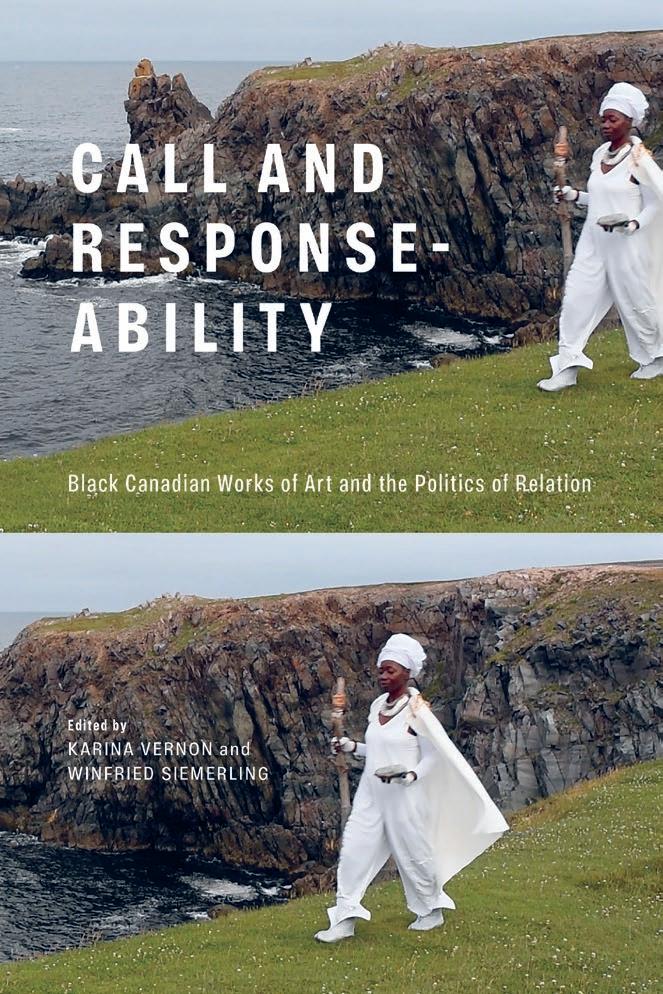
Call and Response-ability
Black Canadian Works of Art and the Politics of Relation
e D ite D B y K AR i NA v e RNON AND w i NFR ie D Sie M e RL i NG
A groundbreaking approach to artistic practices, audiences, and pedagogy in relation to Black Canadian literature, music, performance, and visual art.
“Sound demands a listener, text requires a reader, and performance necessitates that others be present for the experience. Without those presences, the circuit isn’t complete, the charge will not travel through, the work will not become active in the world.” These words by Kaie Kellough articulate the central idea explored in Call and Responseability: that Black Canadian works of art cannot be understood apart from the foundational concerns of audience and reception.
A richly collaborative assemblage of artist statements, scholarly essays, critical analyses, and reflections, these writings explore what happens when Black Canadian cultural productions and interventions enter the realms of public, institutional, and pedagogical reception. Part 1 foregrounds the voices of word, sound, and visual artists, who reflect on audience during and after the creative process. Part 2, anchored by M. NourbeSe Philip’s signature essay “Who’s Listening? Artists, Audience & Language,” gathers fourteen critical inquiries into writing, theatre, visual art, and sonic practice. Part 3 turns to pedagogy, with reflections on the field and narrated syllabi that can inspire readers, discussion groups, and practitioners alike. A coda considers the ethics of relation, the practice of communal research, and the limits of the archive.
This book is an indispensable resource for anyone working with Black Canadian literature, music, visual art, and theatre. Its blend of personal reflection, critical insight, and pedagogical practice also makes it valuable to general readers and community-based audiences seeking to understand how Black Canadian art speaks – and how we might learn to listen.
Karina Vernon is associate professor of English at the University of Toronto, Scarborough.
Winfried Siemerling is professor of English at the University of Waterloo, an associate of the W.E.B. Du Bois Research Institute at Harvard University, and author of The Black Atlantic Reconsidered: Black Canadian Writing, Cultural History, and the Presence of the Past.
SPECIFICATIONS
June 2026
978-0-2280-2778-2 paper
$44.95A US/CDN, £35.00 UK
6 x 9 496pp 19 illustrations eBook available
Northern Blood Period Politics and Activism in Canada
e D ite D B y Li SA S M it H AND F RANC e SCA S CALA
How power, culture, and social norms shape the way we talk about menstruation and what this means.
Menstruation is an everyday reality for many Canadians, yet it has long been a site of inequity and at the margins of political and academic inquiry. This is changing. Over the past two decades the global menstrual equity movement has pursued a spectrum of efforts to resist the mandate of shame, secrecy, and silence and to heighten awareness of menstruation as a social and political issue.
Groundbreaking in its exploration of period politics from a uniquely Canadian perspective, Northern Blood brings together lived experiences, stories, and teachings from the broader menstruation justice movement and sets them within the context of decolonization, multiculturalism, and gender equity. This powerful collection sheds light on the diversity of sites where period politics and activism take place – from universities to prisons to social and geographical communities. Individual chapters discuss how online spaces are used to challenge menstruation stigma; the role of student-led advocacy in menstrual activism; how menstruation activists mobilized for the removal of the GS t from menstrual products in 2015; structural injustices in menstrual experiences and activism among Black people, Indigenous people, people of colour, transgender men, and nonbinary people; and the barriers that may prevent menstruators from choosing reusable products.
The first book of its kind to explore menstrual activism in Canada, Northern Blood brings together key voices to reflect the diversity of the menstrual equity movement in Canada, highlighting emerging and established scholars, grassroots activists, and political advocates.
Lisa Smith is a sociologist and researcher in the Department of Sociology at Douglas College.
Francesca Scala is professor of public policy in the Department of Political Science at Concordia University and the co-author of Fertile Ground: Exploring Reproduction in Canada
“A bold and necessary reckoning with the politics of menstruation in Canada – Northern Blood exposes systemic silences, challenges stigma, and celebrates the groundbreaking work of period poverty activists whose efforts have reshaped policy and public discourse. This book is both a tribute and a roadmap, offering insight and inspiration for those ready to carry the movement forward.”
Nikki Hill, Period Promise
NORTHERN BLOOD
Period Politics and Activism in Canada
Edited by LISA SMITH and FRANCESCA SCALA
SPECIFICATIONS
January 2026
978-0-2280-2722-5 paper
$39.95A US/CDN, £31.00 UK
6.25 x 9.25 408pp 39 photos, 9 tables, colour throughout eBook available
Small Theatres
M ARK tR u SCO tt
Poems of attention so close that the everyday becomes strange and newly meaningful.
The world’s / face like a / picture plane. / Its space / offered to the / eye as a / colour might be.
In these poems, everyday occurrences – an imprint in grass, crumbs in a wrapper, the sound of a thermostat engaging – are opportunities for thinking through close attention. Small Theatres is the latest instalment in Mark Truscott’s exploration of our perceptions and feelings of separation from the world around us.
Truscott has mobilized the materiality of language, pushing it into territories of its own failure. These poems find a haunting, opaque song as they shift theme and method toward time-based disciplines such as music and drama. Small Theatres looks for meaning in an increasingly meaningless world where simultaneous scarcity and excessive availability are products of mechanisms seemingly beyond our grasp. Marshalling minimalist and objectivist techniques and a relentless attention to the fissures running through each thought and every moment of our lives, these poems give shape to a reality constantly on the verge of collapse.
Composed at home in the quiet of early morning, Small Theatres evokes practices of solitude, domesticity, and sober attentiveness to the seemingly insignificant.
Mark Truscott is the author of three other books of poetry. His most recent collection, Branches, won the inaugural Nelson Ball Prize for “poetry of observation.” He lives in Toronto.
SMALL
THEATRES
SPECIFICATIONS
The Hugh MacLennan Poetry Series June 2026
978-0-2280-2792-8 paper
$19.95T US/CDN, £14.99 UK 5 x 7.5 104pp eBook available
MARK TRUSCOTT
The Electrocutionist
D AN ie LL e Hu BBARD
The electric drive to run, run, run through a wrecking-ball affair, a marriage’s end, and a mother’s death.
Once upon a time, you folded / around me like an envelope.
Confronting the contradictions, pains, and passions of infidelity, Danielle Hubbard’s new poetry collection jaggedly depicts a mother’s death against the backdrop of a shattering extramarital affair.
Following a strong narrative arc, The Electrocutionist shocks life into a full cast of characters – narrator, husband, lover, mother, father, sisters – each of whom is treated to their own portrait poem. The twin settings of rural Manitoba and Vancouver Island come to life as characters themselves. An electric physicality welds the collection together: What to do in the face of a mother’s terminal diagnosis? When a secret affair crashes into the open? When a marriage ties itself in knots? When a husband leaves? Run, run, run. Both concrete and surreal, flailingly emotional and tongue-in-cheek, The Electrocutionist bridges the age-old tradition of romance and the modern desire to explode the strictures of monogamy.
Hubbard is chief executive officer of the Okanagan Regional Library. Her poetry has appeared in The New Quarterly, EVENT , Grain, and The Malahat Review, among other places.
SPECIFICATIONS
The Hugh MacLennan Poetry Series June 2026
978-0-2280-2793-5 paper
$19.95T US/CDN, £14.99 UK 5 x 7.5 136pp eBook available
Danielle
Rush of Wingspan
eL e ONOR e S CH ö NMA ie R
Outwards from a northern wilderness childhood these poems thrum musically with intuitive environmentalism in urban, coastal, and boreal forests.
He’s an organist / and she’s a northern // nurse: she mends / the broken / bones of gold // miners / when their sky / falls in.
Eleonore Schönmaier explores three great forests of her life through the lens of experiential environmentalism. Along woodland trails and on the shores of essential bodies of water, she reveals beauty and loss in equal measure in these poems. Wildlife appears at regular intervals, never when expected. In Schönmaier’s boreal forest childhood, she witnesses human and environmental exploitation and lives a life of labour. In a moment of joy, a canoe transforms into a sled. As she moves into adulthood, music creates a pulse to her life and her poems. In a heatwave, two pianists perform Wasserklavier in a botanical garden. A singer works in the Dutch resistance. A Greek composer creates love songs. An organist rides the rear carrier of a bicycle. Turkish composer Fazıl Say performs his Black Earth. Goldfinches, blue-winged teals, waterthrushes, blue herons, and flickers inhabit the pages of Rush of Wingspan. The soundscape of these poems is intimate in scale – about nature, art, animals, cycling – chamber music more than opera. Love is the blue-river thread in the warp and weft of the collection. Schönmaier’s focus on planetary and human rights is the red-blood contrast.
Eleonore Schönmaier is the internationally translated, award-winning author of Field Guide to the Lost Flower of Crete, Dust Blown Side of the Journey, and Wavelengths of Your Song. She divides her time between Nova Scotia and coastal Europe.
“With a purity that stuns, these poems unfurl a consciousness that is exquisitely alert – to sensory and interior worlds, to the textures of human love and its deprivations. Each poem its own concentrated morsel, each poem leaving you needing the next.”
Julie Sedivy, author of Linguaphile: A Life of Language Love
“Eleonore Schönmaier’s Rush of Wingspan is a sanctuary of stillness, offering a space for clarity and reflection. Her prismatic poems navigate silence, perception, and memory with a painterly delicacy, encouraging the reader to forge a deeper connection with oneself and the natural world.”
J. Mae Barizo, author of Tender Machines
ElEoNoRe ScHÖNmAiEr
SPECIFICATIONS
The Hugh MacLennan Poetry Series March 2026
978-0-2280-2716-4 paper
$19.95T US/CDN, £14.99 UK 5 x 7.5 180pp eBook available
Empties
Nei L Su RKAN
Varied meanings of empties coalesce in vivid poems that find much in the world “to cherish / as it brinks.”
Yes it is both river and sea / yes they mingle together here / yes one empties for the other / yes it tastes like tears
In a powerful interplay of striking descriptions with tender intimations, Empties, Neil Surkan’s third poetry collection, reckons with fatherhood in a depleted and collapsing environment: Is it possible to nurture new shoots while the fires close in?
Feelings of emptiness, acts of emptying, and physical empties coalesce in these vivid and timely poems. Through a queer lens, Surkan’s speaker scrutinizes masculinity and fatherhood as he confronts the necessary emptiness that comes with becoming someone’s ancestor. Arrays of drained and discarded entities – empty bottles, broken pots and cups – summon a world, husked and untenably extracted, that teeters toward collapse, but even those empty spaces are receptacles for fleeting moments of vulnerability and tenderness. At its core Empties explores the conditions of life on the verge of hopelessness. It finds, among shadows of doom and despair, unlikely but nonetheless inevitable reasons to hope.
These are poems that teach endurance “in the face of all that won’t / be saved” while still finding much in the world “to cherish / as it
brinks.” In direness, there is also awe: one mustn’t forget, Surkan reminds us, that only empty bottles can sing.
Neil Surkan is the author of two other books of poetry, Unbecoming and On High, as well as the chapbooks Die Workbook, Ruin, Their Queer Tenderness, and Super, Natural. He is the poet laureate of Nanaimo, BC
“Empties explores vessels from all forms of holding and breakage to the poem itself as a vessel, which ‘firms / the gap between the world and all / that sings, creeps, or dies.’ Elemental and philosophical, this book traces brackish waters to raspberry patch mishaps and smouldering ashes, each poem brimming with Surkan’s inquisitive and empathetic mind, where ‘each question / chisels open the vessel / I’ve kept sealed / inside myself.’ From beautifully crafted lyric poems to the playfully experimental ‘Die Workbook,’ Surkan offers expansive meditations on climate grief, repairing fractured relationships, and worries over what we leave behind. These poems sing for a world on the brink of extinction, ‘first / in dapples then fervent / collage.’”
Cassidy McFadzean,
author of Crying Dress
SPECIFICATIONS
The Hugh MacLennan Poetry Series March 2026
978-0-2280-2731-7 paper
$19.95T US/CDN, £14.99 UK 5 x 7.5 104pp eBook available
Empties
Canada in the Age of Rum
A LLAN G R ee R
A new history revealing early Canada as a place where people drank rum – and a lot of it.
Awash in a sea of rum describes the years between the 1670s and the 1830s in the colonies that would later become Canada. Millions of litres of the sugar-based liquor were imported every year to supply a comparatively small population of colonists and Indigenous people. Why rum, and why so much?
Rum was cheap and plentiful. Intimately connected to the West Indian slave plantation complex, rum shipped to early Canada and around the Atlantic World was part of the early modern expansion of intercontinental trade known as the first globalization. Canada in the Age of Rum shows what happened to the vast quantities that came to Canadian shores. Rum was especially important to workers in the early Canadian staples industries. Fishermen and fur-trade voyageurs drank rum in massive quantities, supplied on credit and at grossly inflated prices by their employers, an arrangement that served to claw back wages and ensure the profitability of enterprises that would not have been viable otherwise. Traders deliberately sought to get hunting peoples hooked on rum in order to ensure a steady supply of pelts – alcohol was not so much a commodity for sale as
it was a gift used to induce hunters to conform to the ways of the capitalist economy. However, Indigenous people drank rum in their own ways and for their own reasons; and when drinking became a serious social problem, they organized to resist it. The story ends in the 1830s when the combined effects of the temperance movement and the rise of whisky led to a sharp decline in rum consumption.
This brilliant history follows the thread of a single commodity from West Indian plantations to Newfoundland, Quebec, and the west, revealing rum as a critical lubricant of the social life of early Canada and its particular version of early capitalism.
Allan Greer is professor emeritus of history at McGill University and the editor of Before Canada: Northern North America in a Connected World
SPECIFICATIONS
McGill-Queen’s Studies in Early Canada / Avant le Canada March 2026
978-0-2280-2689-1 cloth
$28.95T US/CDN, £24.99 UK
5.5 x 8.5 228pp 25 illustrations, 5 tables, colour insert eBook available
ALLAN GREER
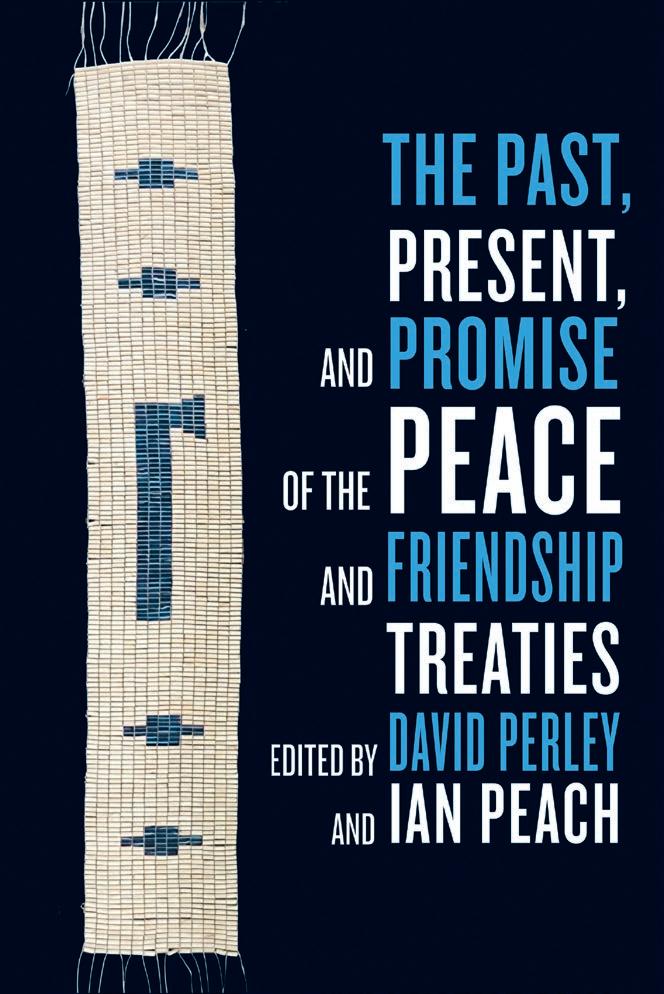
The Past, Present, and Promise of the Peace and Friendship Treaties
e D ite D B y D A vi D Pe RL ey AND iAN Pe ACH
A powerful argument for the importance of understanding and upholding Indigenous Peoples’ treaty rights through nation-to-nation relationships.
The eighteenth-century Peace and Friendship Treaties between the Wabanaki Confederacy and the British Crown were nation-to-nation agreements grounded in respect, reciprocity, peace, and friendship – not subjugation. Yet the British violated their treaty commitments, as they did others across Turtle Island. Successive Canadian governments entrenched policies that further eroded Indigenous sovereignty and self-determination.
Unequivocal and forceful, this collection confronts this legacy, arguing that the treaties remain living agreements and are foundational to any just relationship between Indigenous and settler peoples. Formed around 1680, the Wabanaki Confederacy united five northeastern nations – the Mi'kmaq, Wolastoqey (Maliseet), Peskotomuhkati (Passamaquoddy), Abenaki, and Penobscot. The British sought, through the treaties, to make these nations allies in wars against the French, shaping the early balance of power in North America. This deep history frames contemporary struggles over law, land, and reconciliation. The Past, Present, and Promise of the Peace and Friendship Treaties begins by tracing the history of Crown-Indigenous relations in the Maritimes and examines the inherent and
treaty rights of the Wabanaki nations, including Mi'kmaq and Wolastoqey land rights, which form a legal basis for Indigenous title in the Maritimes today. Finally, the book explores what reconciliation requires, challenging educational institutions in particular to confront their role in marginalizing Indigenous Peoples while proposing to foster relational justice.
Bringing together established and emerging scholars as well as respected practitioners of Aboriginal law and Crown-Indigenous relations, both Indigenous and ally, this collection charts a path toward genuine reconciliation, beginning with the recognition that we are all treaty people.
David Perley is interim director of the Mi'kmaq-Wolastoqey Centre at the University of New Brunswick.
Ian Peach is consultation manager for the Wolastoqey Nation in New Brunswick and director of research and projects for the Wolastoqey Language and Culture Centre.
SPECIFICATIONS
June 2026
978-0-2280-2774-4 paper
$32.95A US/CDN, £24.99 UK
6 x 9 208pp eBook available
Illegitimate Justice
How Locals Talk About International Criminal Courts
i z AB e LA Ste FLJA
Challenging the view that international criminal courts are fulfilling their purpose by uncovering their lack of accountability to local communities.
ILLEGITIMATE JUSTICE
International criminal courts exist to help countries and communities move forward after atrocities and to bring those accused of war crimes to justice. Yet local residents and witnesses often perceive them to lack political legitimacy.
Drawn from extensive primary research in Rwanda, Bosnia-Herzegovina, Serbia, and Kenya, Illegitimate Justice challenges the view that as long as international courts are striving for the concept of justice, establishing legal precedents, and prosecuting war criminals, they are fulfilling their purpose. Through interviews with individuals in the fields of education, law, religion, politics, the media, and civil society, Izabela Steflja listens to the people affected by conflict and by the justice processes meant to repair harm. She reveals how international courts have failed local communities through lack of accountability – even, at times, active disregard. The stories local people tell about international courts differ radically from those the international community tells itself about justice and reconciliation.
Combining field research with an original comparative narrative model, Illegitimate Justice
will be invaluable reading for people active in post-conflict communities and work, as well as for legal, political, and human rights students and scholars.
Izabela Steflja is associate professor of political science at Wilfrid Laurier University.
“Steflja’s excellent analysis, grounded in deep ethnographic and cross-nationally comparative work, identifies policy-related challenges for those studying reconciliation and justice in post-conflict communities.”
Mila Dragojević, The University of the South
“The international criminal justice system, Steflja argues, has been downplaying local-level processes and dynamics, despite the fact that the system is facing a legitimacy crisis in the very societies it is supposedly helping to overcome past injustices. This book is an outstanding contribution to our understanding of transitional justice.”
Chip Gagnon, Ithaca College
SPECIFICATIONS
Confronting Atrocity: Human Rights and Restorative Justice Series March 2026
978-0-2280-2728-7 paper
$34.95A US, $39.95A CDN, £26.99 UK
6 x 9 318pp
eBook available
HOW LOCALS TALK ABOUT
INTERNATIONAL CRIMINAL COURTS
Izabela Steflja
The Audacity of His Enterprise
Louis Riel and the Métis Nation That Canada Never Was, 1840–1875
M. M A x H AMON
Shining a spotlight on the life, vision, and cultivation of one of Canada’s most influential historical figures.
Louis Riel (1844–1885) was an iconic figure in Canadian history best known for his roles in the Red River Resistance of 1869 and the Northwest Resistance of 1885. A political leader of the Métis people of the Canadian Prairies, Riel is often portrayed as a rebel. Reconstructing his experiences in the Northwest, Quebec, and the worlds in between, Max Hamon revisits Riel’s life through his own eyes, illuminating how he and the Métis were much more involved in state-making than historians have previously acknowledged.
Questioning the drama of resistance, The Audacity of His Enterprise highlights Riel’s part in the negotiations, petition claims, and legal battles that led to the formation of the state from the bottom up. Hamon examines Riel’s early successes and his participation in the crafting of a new political environment in the Northwest and Canada. Arguing that Riel viewed the Métis as a distinct people, not caught between worlds, the book demonstrates Riel’s attempts to integrate multiple perspectives – Indigenous, FrenchCanadian, American, and British – into a new political environment. Choosing to end the book in 1875, at the pinnacle of Riel’s successful career
as a political leader, rather than at his death in 1885, Hamon sets out to recover Riel’s agency, intentions, and imagination, all of which have until now been displaced by colonial narratives and the shadow of his execution.
Revisiting the Red River Resistance on its 150th anniversary, The Audacity of His Enterprise offers a new view of Riel’s life and a rethinking of the history of colonialism.
M. Max Hamon is assistant professor in the Department of History at the University of Northern British Columbia.
“In a much-needed intervention in the scholarship on Métis leader Louis Riel, M. Max Hamon successfully brings Riel’s agency to the forefront in this work … Hamon challenges the tragic narrative of previous biographies on Riel while bringing significant information to the broader knowledge regarding Red River’s political and cultural structures.”
Krystl Raven, Ethnohistory
SPECIFICATIONS
May 2026
978-0-2280-2799-7 paper
$34.95A US/CDN, £26.99 UK
6 x 9 432pp 9 illustrations, 1 table, 1 map eBook available
BACK IN PRINT
A History and Ethnography of the Beothuk
iNG e BORG M ARSHALL
The story of a heroic people who valued their independence and traditions above all and were prepared to face hostilities rather than be subjugated.
The story of the Beothuk is a tragic one. The Indigenous inhabitants of Newfoundland were hunters, gatherers, and fishers who moved seasonally between the coast and the interior. With the influx of European settlements and fisheries in the 1700s the Beothuk found their territory increasingly reduced, and conflict between the two groups escalated. The Beothuk population steadily declined and by the early 1800s the Beothuk had ceased to exist as a viable cultural group. Shanawdithit, the last known Beothuk, died in 1829.
The Beothuk came to be viewed as a people whose origins, history, and fate were shrouded in mystery. On a quest to sort fact from fiction, Ingeborg Marshall, the leading expert on the Beothuk, has produced an elegant, comprehensive, and scholarly review of the history and culture of the Beothuk that incorporates an unmatched amount of archival material with archaeological data. The book is beautifully and extensively illustrated with maps; portraits; photographs of Beothuk artifacts, burial sites, and camps; and a set of drawings by Shanawdithit.
A History and Ethnography of the Beothuk is a compelling story and an indispensable reference tool for anyone interested in the Beothuk or Indigenous Peoples of North America.
Ingeborg Marshall is an independent scholar and the leading expert on the Beothuk. She holds the Order of Newfoundland and Labrador and lives in St John’s, Newfoundland.
“The essential and standard reference on the Beothuk.”
Tony Hall, The Globe and Mail
“A fascinating book ... It is an excellent example of the craft of the historian in bringing together information from diverse sources to construct a highly readable and plausible story.”
David Newhouse, Quill & Quire
“A masterful and definitive epic written with both engaging empathy and rigorous scholarship.”
R.A. Bucko, Choice
SPECIFICATIONS
June 2026
978-0-7735-1774-5 paper
$44.95A US/CDN, £29.99 UK
6 x 9 664pp 79 illustrations eBook available
Always a Part of the Land
The Federal Commemoration of Indigenous Histories
C OD y G ROA t
How the cultivation of a nationalist narrative has shaped Canada’s federal relationship with Indigenous Peoples.
ALWAYS A PART OF THE LAND
The commemoration of a nation’s past is a highly contested process, fraught with identity politics and competing interests. For over a century –even as the government of Canada denied them the rights to recognize or practise their cultures –Indigenous Peoples have challenged the often narrow and one-sided interpretations found in museums, at historic sites, or alongside statues or monuments.
Cody Groat demonstrates how the federal government actively shapes complex national narratives that are mediated through the perspectives of historians, elected officials, and leading civil servants. From the commemoration of the earliest human habitations in North America to the recognition of the Indian residential school system, the state has constructed a past imbued with patriotism and national pride. But Indigenous interests diverge from those of the state. From small acts of defiance, such as the refusal to share sacred knowledge, to open acts of resistance, such as the citizen’s arrest of an archaeologist, Indigenous people have long fought for the opportunity to share their stories as they know them.
Always a Part of the Land calls for a critical reinterpretation not only of the nation’s history but also of how we think about the past and how this shapes ongoing relationships between Indigenous Peoples and the state.
Cody Groat is assistant professor in the Department of History and the Indigenous Studies Program at the University of Western Ontario. He is a Kanyen'kehaka (Mohawk) citizen of Six Nations of the Grand River.
SPECIFICATIONS
McGill-Queen’s Indigenous and Northern Studies
June 2026
978-0-2280-2777-5 paper
$29.95T US/CDN, £22.95 UK
6 x 9 384pp 14 illustrations eBook available
The Federal Commemoration of Indigenous Histories
CODY GROAT
Shallow River of Tears
Canada’s Stalled Paths to Reconciliation
A NDR ew R. B ASSO AND A NDR e A M.L. Pe RR e LLA
Foreword by Elder Malcolm Saulis
Modelling Settler attitudes toward Reconciliation to assess new ways to move forward.
SHALLOW RIVER TEARS
The Truth and Reconciliation Commission of Canada’s final report marked a new moment in national consciousness: a recognition of Indigenous histories, an awareness of the injustices committed by Settlers and their governments, and an understanding of the need for redress and the restoration of rights. At the time, Settler populations largely voiced support for these recommendations and committed to a more just future; in the years since, words have eclipsed actions.
In Shallow River of Tears Andrew Basso and Andrea Perrella mobilize four years of survey research to understand why Reconciliation has stalled. They draw from one of the largest databases of Settler attitudes to explain support for – and resistance to – what they term “ReconciliAC ti ON ”: real change that fosters individual and community success while remedying past and ongoing harms. The authors identify and analyze key stages preceding action on the part of Settlers: denial, recognition, sympathy, and empathy. These variables are measured against public opinion to offer a solid empirical foundation for effecting sociopolitical change and moving Reconciliation forward.
Thoughtful and provocative, this book provides guidance for students, scholars, practitioners – indeed, all systemically empowered Settlers – so they may choose to act in support of Reconciliation and the second chance it provides.
Andrew R. Basso teaches in the Department of Political Science at Wilfrid Laurier University.
Andrea M.L. Perrella is associate professor of political science at Wilfrid Laurier University.
“As the T r C moves past its tenth anniversary, this exemplary book develops a model for reconciliation using a judicious blend of theory and public opinion research. An important and timely intervention in the work of transitional justice.”
Rosemary Nagy, Nipissing University
“Shallow River of Tears offers great insight for the settler population, helping people understand why post-T r C actionable change has been slow in coming. Basso and Perrella usefully reveal where feelings and attitudes are.”
Rebecca Major, Yukon University
CANADA’S STALLED PATHS TO RECONCILIATION
R.
and
SPECIFICATIONS
Confronting Atrocity: Human Rights and Restorative Justice Series
March 2026
978-0-2280-2669-3 paper
$42.95A US/CDN, £33.00
6 x 9 408pp 22 tables, 1 diagram eBook available
Andrew
Basso
Andrea M.L. Perrella of foreword by Elder Malcolm Saulis
Mirrors of a Generation
The Company of Young Canadians, Youth Activism, and Community Development, 1965–1976
Kevi N B R u SH ett
A rich portrait of the youth program tasked with alleviating poverty and disenfranchisement across Canada.
MIRRORS OF A GENERATION
The Company of Young Canadians, Youth Activism, and Community Development, 1965–1976
The 1960s saw Lester B. Pearson launch a war on poverty and Pierre Trudeau promise a just society. Central to both visions was the Company of Young Canadians (C yC ), a community development program sponsored by the federal government that attempted to mobilize the restless energy of Canadian youth. From 1965 until its closure in 1976, C yC volunteers marched into neighbourhoods across the nation to help locals develop community-based solutions to poverty and disenfranchisement.
Reflecting the perspectives of these young volunteers and the communities who embraced their assistance, Mirrors of a Generation tells the story of the C yC as a unique quasi-state institution dedicated to promoting grassroots social justice initiatives. It seeks to better understand why governments and social activists of the period believed that decentralized community development delivered by inexperienced young people could end poverty, promote democracy, and foster more equitable economic development. What emerges is a nuanced account of the relationship between the state and civil society organizations that tracks how government funding dispersed through the C yC contributed to a broad swath
of anti-poverty, Indigenous self-government, and anti-racism advocacy organizations; second-wave feminist, environmentalist, and Québécois and Acadian nationalist groups; and the counterculture and labour organizing more generally.
Katimavik, founded in the C yC ’s wake, continues to organize Canadian youth participation in community service. Mirrors of a Generation reveals that despite the monumental tasks the C yC faced and the numerous mistakes it made along the way, it produced a generation of committed social movement leaders, leaving behind a rich legacy of community organizations that influence social justice politics in Canada to this day.
Kevin Brushett is associate professor of history at the Royal Military College of Canada.
SPECIFICATIONS
February 2026
978-0-2280-2675-4 paper
$44.95A US/CDN, £35.00 UK
6 x 9 540pp 26 photos, 4 maps, 1 table eBook available
Kevin Brushett
By Authority of Parliament
The Constitutional Boundaries of Legislative Power in Canada
Ry AN A LFORD
On the constitutional limitations that prevent Canadian legislators from abolishing fundamental rights.
The Supreme Court of Canada has affirmed that legislatures, including Parliament, are bound by the Constitution – even beyond the explicit text of the Charter and the British North America Act. Yet legislatures are increasingly asserting authority through rights-limiting laws and the use of the notwithstanding clause. This tension between parliamentary sovereignty and constitutional rights exposes a dangerous misconception: that Canadian legislators can abolish all of our fundamental rights with ordinary law.
By Authority of Parliament demonstrates that legislators do not have this power, and more importantly, they never did. Drawing on rich historical analysis, Ryan Alford traces the transformation of parliamentary sovereignty into an exaggerated parliamentary supremacy and uses habeas corpus to illustrate constitutional limits that governed in England, the United Kingdom, and Canada. Absolute rights and sovereignty appear to conflict only when sovereignty is redefined as supremacy, a shift justified by the influential constitutional theorist A.V. Dicey. As u K courts have recently turned away from this paradigm, Alford argues that Canadian courts
should be equally forthright in recognizing that the Diceyan model has never described the Canadian constitutional order.
Essential reading for students, lawyers, and judges, this timely book will interest all those engaged in Canadian legal history and constitutional law.
Ryan Alford is associate professor at the Bora Laskin Faculty of Law at Lakehead University, a bencher of the Law Society of Ontario, and author of Seven Absolute Rights: Recovering the Historical Foundations of Canada’s Rule of Law
SPECIFICATIONS
May 2026
978-0-2280-2785-0 cloth
$44.95S US/CDN, £35.00 UK
6 x 9 276pp eBook available
Rethinking Homicide
The Constitutional Case for Reform
C OL t ON Fe HR
A compelling and rigorously argued case for constitutionally restructuring the law of homicide.
Critics describe homicide law in Canada as outdated and unprincipled in application. While early jurisprudence compelled limited reform, constitutional challenges subsided near the turn of the twentieth century, and legislative amendments have been rare and piecemeal.
Rethinking Homicide makes a compelling case for constitutionally restructuring homicide law and considers how Parliament might respond.
Colton Fehr contends that the distinctions between first- and second-degree murder and manslaughter unfairly label some offenders, challenges the infanticide provision, and explains why the provocation defence has no constitutional status and should be repealed. He also argues that murder’s exclusion from the duress defence is inconsistent with the principle prohibiting conviction for morally involuntary conduct. From that principle, Fehr develops a broader constitutional structure for substantive defences implicated by homicide offences. He further contends that the minimum sentences applicable to homicide constitute cruel and unusual punishment. In response, Parliament will have to choose between a sentencing safety valve
and a diminished responsibility defence, with the former option being the preferable policy.
The arguments offered in Rethinking Homicide provide a timely and important contribution to criminal law. Scholars, judges, and lawyers alike will appreciate its much-needed contemplation of the Charter within this core area of criminal law.
Colton Fehr is assistant professor at the University of Saskatchewan’s College of Law.
SPECIFICATIONS
June 2026
978-0-2280-2775-1 cloth
$39.95A US/CDN, £32.00 UK
6 x 9 274pp eBook available
Lasting Disruption
Economic and Social Impacts of COvi D -19 on Canada
e D ite D B y C HR i S t OPH e R C O tt ON
Assessing COVi D -19’s enduring imprint on Canadian society and drawing lessons for future resilience.
The immediate and devastating health effects of COvi D -19 have eased in recent years, but the pandemic’s enduring influence continues to redefine nearly every facet of life in Canada. This first comprehensive analysis of the virus’s impact examines its effects across Canadian society and draws a blueprint for how multidisciplinary research networks can enable stronger responses to crises in the future.
Lasting Disruption brings together leading experts to explore how COvi D -19 reshaped the economy, healthcare, education, and public transportation. The collection addresses core issues such as economic disruptions, labour shortages, public healthcare impacts, and the pandemic’s disproportionate effects on Indigenous communities. Particularly revealing is the analysis of economic data: Canada suffered losses of approximately $242 billion over the first two years, with small businesses hit hard as corporations grew more profitable. The volume also examines post-pandemic struggles in educational attainment, fiscal impacts on public transit, and the Canadian Armed Forces’ role in pandemic response. It evaluates environmental outcomes, considers the complexities of policy coordination
within a decentralized federation, and reviews changes, including constitutional ones, that would build a more resilient economy.
Offering an original perspective on the breadth of COvi D -19’s repercussions and practical recommendations for evidence-based policy in health, education, labour, governance, and equity, Lasting Disruption is essential reading for researchers, policymakers, think tanks, advocacy groups, and those interested in crisis preparedness and resilience planning.
Christopher Cotton is professor of economics and Jarislowsky-Deutsch Chair in Economic and Financial Policy at Queen’s University.
Edited by CHRISTOPHER COTTON
SPECIFICATIONS
The State of the Federation
December 2025
978-0-2280-2754-6 paper
$39.95A US/CDN, £31.00 UK 6 x 9 426pp 56 illustrations, 23 tables eBook available
ECONOMIC AND SOCIAL IMPACTS OF COVID-19 ON CANADA
Louis J. Robichaud A Man for the Moment
D ONALD J. S A v O ie
An incisive account of the political accomplishments and enduring legacy of the first elected Acadian premier of New Brunswick.
Louis J. Robichaud, the first elected Acadian premier of New Brunswick, transformed an inwardlooking province with an ingrained aversion to change into a vibrant modern society now home to strong political, administrative, and educational institutions. Donald Savoie draws a portrait of adroit political leadership and of a man who, recognizing his province’s need for modernization, rose unwaveringly to the demands of office and ushered in profound and enduring change for Acadians and for all New Brunswickers.
In a timely biography informed by a long friendship between fellow Acadians, Savoie contrasts the challenges of governing New Brunswick in the 1960s with those faced by governments and political leaders today to better understand the magnitude of Robichaud’s accomplishments over a ten-year span. Leading a province with a long history of intolerance towards minority groups, notably Acadians, Robichaud’s Liberal government confronted the dominant AngloProtestant political class and introduced reforms
that included the Official Languages Act, broader access to education for francophones, the establishment of the Université de Moncton, and initiatives in regional and natural resource development, health care, and equitable public services across the province’s disparately funded urban and rural counties. Seismic changes at the time, these reforms are now woven into the social fabric of New Brunswick.
Informative and lively, Louis J. Robichaud argues convincingly that while the premier’s achievements can be viewed as specific to his era, his political fortitude and vision are a model for politicians, legislators, and civil servants today.
Donald J. Savoie holds the Clément-Cormier Research Chair in Economic Development at the Donald J. Savoie Institute. He is the author of numerous books including Speaking Truth to Canadians About Their Public Service
A Man for the Moment
SPECIFICATIONS
Footprints Series February 2026
978-0-2280-2710-2 cloth
$34.95S US/CDN, £27.99 UK
6 x 9 258pp 9 photos
eBook available
ALSO AVAILABLE IN FRENCH Le moment était venu pour quelqu’un comme lui
Louis J. Robichaud
D ONALD J. S A v O ie
SPECIFICATIONS
Footprints Series February 2026
978-0-2280-2713-3 cloth
$34.95S US/CDN, £27.99 UK
6 x 9 288pp 9 photos
eBook available
Inside Public-Sector Innovation
How Local Governments Put Ideas into Action
e
D ite
D B y zACHAR y S P i C e R , J OS e PH Ly ONS , AND t y L e R R OM u ALD i
A practitioner-oriented guide for elected municipal officials and public servants looking to adopt innovative solutions in their organizations.
Faced with increasing demands from residents, and amidst growing legal and resource constraints, municipalities are experimenting to find new ways of making things work. Inside Public-Sector Innovation profiles the expertise and experience of local administrators in Canada who have successfully moved innovation from conception to reality.
A practitioner-oriented guide, this volume features multiple innovations from rural, urban, and suburban governments of various sizes. Exploring organizational, process, and service innovations, public administrators directly involved in their implementation highlight lessons for other practitioners considering similar strategies. Chapters cover challenges across policy domains including diversity and inclusion, public health, environmental sustainability, and service delivery inefficiencies. All together, these case studies enhance our understanding of what local publicsector innovation entails and how enterprising public servants can put it to immediate use. Recognizing local governments in Canada as drivers of experimentation, Inside PublicSector Innovation advances research through its rich descriptions and analysis of municipal strategies, drawing attention to the unique complications and opportunities associated with innovation at scale.
Zachary Spicer is associate professor in the School of Public Policy and Administration, the head of New College at York University, and the author of The Boundary Bargain: Growth, Development, and the Future of CityCounty Separation.
Joseph Lyons is assistant professor of political science and director of the Local Government Program at the University of Western Ontario.
Tyler Romualdi is a PhD candidate in the Department of Political Science at the University of Western Ontario.
“Public administration must be as much about practice as it is about theory to have legitimacy –and this volume provides both. Inside PublicSector Innovation offers ways to both learn from innovation and encourage it.”
Marcia Wallace, Planning, Development, and Building Services, City of Ottawa
“Every Canadian municipal leader should have a copy of this work. The case studies provide excellent frameworks, as they move from ideation to implementation through the innovation journey.”
Jason Reynar, Lerners LL p
SPECIFICATIONS
McGill-Queen’s Studies in Urban Governance April 2026
978-0-2280-2725-6 paper
$39.95T US/CDN, £31.00 UK
6 x 9 360pp 5 diagrams, 6 tables eBook available
How Local Governments Put Ideas into Action
Edited by Zachary Spicer, Joseph Lyons, and Tyler Romualdi
Ecological Nation Toward Peace, Order, and Good Government
By RON w i LL i S t ON
Safeguarding Canada’s environmental and political sovereignty as the country engages in a new nation-building project.
At the quarter mark of the twenty-first century Canada faces two existential threats: runaway climate change and the rising global tide of right-authoritarian imperialism. The inextricable relationship between the two threats requires clear vision and bold policy as Canada reconceives its future.
Arguing that peace, order, and good government form the cornerstone of Canada’s national identity, Byron Williston revives the vision of philosopher George Grant to explore how these values can guide Canada in reimagining its identity across its own regions, within the North American context, and in the global political order. In a work that lays out a positive vision for Canada rooted in the ideal of an ecological nation, Williston argues that this country faces a stark choice between this ideal and absorption into the American empire. The key is a refined governance model addressing the failed history of Canadian climate policy and overcoming the false belief that Canada is essentially a land of inexhaustible resources. The nation-building project described here will both benefit all Canadians and avoid capture by the forces of social and political regression. It will help secure a sovereign and flourishing future for this country.
The challenges Canada faces are profound. To meet them the country must engage fully with the eco-national project. While daunting, this moment provides a unique opportunity for Canada to link its national well-being to that of planetary health and to create a singularly Canadian political ethic informed by Indigenous knowledge and developed in step with the ongoing project of reconciliation.
Byron Williston has published extensively on environmental ethics, the climate crisis, and Canadian environmental and climate policy. He teaches at Wilfrid Laurier University and lives in Kitchener, ON
“An outstanding response to the existential crisis of climate change and Trumpism. Strongly recommend.”
James Tully, University of Victoria
“Timely and intriguing, Ecological Nation proposes a compelling argument about the need for fundamental transformation in Canada and the means to achieve it.”
Kyla Tienhaara, Queen’s University
SPECIFICATIONS
January 2026
978-0-2280-2666-2 paper
$34.95A US/CDN, £26.99 UK
6 x 9 318pp eBook available
Toward Peace, Order, and Good Government
Canada in the Global Refugee Regime
e D ite D B y N A t HAN Be NSON , J AM e S Mi LN e R , AND De LPH i N e N AKACH e
Forewords by the Hon. Bob Rae and John Jonaid
A timely, critical exploration of Canada’s complex and consequential role in global refugee protection.
With global cooperation on refugee protection under mounting strain, understanding the role of individual states has never been more urgent. Canada in the Global Refugee Regime offers the first comprehensive look at Canada’s involvement with the institutions and norms of this regime and the politics that shape refugee protection worldwide.
Bringing together leading experts from multiple disciplines, this volume explores how Canada has influenced global refugee responses and where its impact has been more muted. Chapters examine the country’s actions in international forums; its resettlement and sponsorship initiatives; its engagement in key regional contexts such as Latin America, Southeast Asia, and the Middle East; and the links between refugee policy and foreign policy. Contributors reflect on the relationship between Canada’s international leadership and its domestic practices, offering a nuanced account that moves beyond simplistic narratives of benevolence.
Canada in the Global Refugee Regime invites readers to rethink the regime itself – not as a fixed system but as a contested space shaped by the interests and actions of states and other
participants. It is an essential resource for scholars, students, and policy actors seeking to understand how a single state navigates, contributes to, and is shaped by the global politics of refugee protection.
Nathan Benson is director of strategy at Pathways International and the University of Ottawa Refugee Hub.
James Milner is professor of political science at Carleton University and project director of the Local Engagement Refugee Research Network.
Delphine Nakache is professor in the Faculty of Law and University Research Chair on Migrant Protection and International Law at the University of Ottawa.
SPECIFICATIONS
McGill-Queen’s Refugee and Forced Migration Studies
April 2026
978-0-2280-2672-3 paper
$39.95A US/CDN, £31.00 UK
6 x 9 416pp 13 photos, 3 tables eBook available
A Renewed Canadian Welcome
Eleven Visions from Migrants and Advocates
e D ite D B y eM i L i O R ODR í G uez
Reimagining Canada’s immigration policies through the lens of lived experience.
Canada is a nation forged by immigration, but for many its promise is eclipsed by exclusion and precarity. A Renewed Canadian Welcome brings together the voices of those who experience the system firsthand to ask a question fundamental to public justice: What would our immigration policies look like if they were reimagined from a human rights perspective, informed by lived experience?
Blending personal narrative with sharp policy critique, this book unpacks topics such as refugee resettlement, immigration detention, labour exploitation, and family separation. It centres the perspectives of migrants, refugees, and advocates, describing the many barriers they face and detailing how, working together and with allied organizations, they have overcome bureaucratic hurdles, developed strategies, and mobilized policy goals. Contributors offer practical policy proposals that will transform Canada’s immigration program: develop a human rights–based approach that responds to the precarity of all migrants; draw from the expertise of migrants and refugees to design effective policies; and strengthen civil society’s role in immigration policymaking.
Born of the work of Citizens for Public Justice, a national research and advocacy organization, A Renewed Canadian Welcome is a must-read for those advocating for human rights in immigration policy. It is a compelling call to reimagine Canada’s approach to immigration as one that affirms dignity, equity, and justice for all.
Emilio Rodríguez is a Salvadoran-Canadian policy leader with expertise in Canadian immigration and foreign affairs. He lives in Ottawa.
Edited by Emilio Rodríguez
SPECIFICATIONS
McGill-Queen’s Refugee and Forced Migration Studies
March 2026
978-0-2280-2707-2 paper
$32.95T US/CDN, £24.99 UK
6 x 9 198pp 1 table eBook available
A Hardening Hierarchy
The Japanese in the Global Formation of Racial Ideologies, 1735–1854
R O te M K O w N e R
A provocative analysis of the intertwined formation of Western and Japanese racial ideologies.
The evolving racial perceptions of the Japanese between 1735 and 1854 were shaped by both Western observers and emerging Japanese voices. Framed by Carl Linnaeus’s Systema Naturae and the forced opening of Japan’s ports, this long century coincided with the global ascent of racial thought amid growing technological, commercial, and geopolitical disparities. While Western nations rapidly industrialized, expanded their empires, and formulated racial ideologies to justify their dominance, Japan remained a populous and militarily formidable nation – one poorly understood by Western cultures enthralled by the stirrings of racist scientific classification. This disconnect generated a unique tension in global racial discourse.
In this definitive work, Rotem Kowner explores three central themes: the emergence of modern racial theory – defined by belief in immutable racial hierarchies – and its role in shaping Western views of the Japanese; the centrality of visual representation in constructing and reinforcing racial categories; and the concurrent development of a Japanese proto-racial discourse that often portrayed the Japanese as superior – directly opposing Western portrayals. This ideological clash would later fuel the racial conflicts of the twentieth century.
Through a compelling analysis of textual and visual materials, A Hardening Hierarchy offers groundbreaking insights into the intertwined formation of Western and Japanese racial ideologies. Kowner establishes a vital historical link between early representations of the Japanese and the more virulent racial discourses that emerged in the modern era, providing an essential foundation for understanding racial conflict in East Asia.
Rotem Kowner is professor in the Department of Asian Studies at the University of Haifa and the author of From White to Yellow: The Japanese in European Racial Thought, 1300–1735.
SPECIFICATIONS
McGill-Queen’s Studies in the History of Ideas July 2026
978-0-2280-2804-8 cloth $125.00S US/CDN, £95.00 UK
978-0-2280-2803-1 paper $49.95A US/CDN, £38.00 UK 6 x 9 664pp 117 illustrations, 2 tables eBook available
Refugee-Led Organizations in Uganda
Agency, Gender, and Politics of Self-Organizing in Exile
uLR i K e K RA u S e, G A t O N DABARAM iye J OSH u A , AND H ANNAH S CHM i D t
Highlighting the vital roles of self-organizing in humanitarian response and the everyday lives of refugees.
Self-organization plays an essential yet often overlooked role in the everyday lives of refugees in exile. By self-organizing, they challenge restrictions, claim political representation, foster social relations and belonging, and create ongoing economic opportunities.
While government authorities and aid organizations are supposed to provide protection and assistance, refugees often continue to face adversities, restrictions, and risks, prompting them to establish and maintain their own support systems. Refugee-Led Organizations in Uganda offers nuanced insight into the problems arising from the aid system and especially the significance of the spectrum of informal and formalized self-organizations. Ulrike Krause, Gato Ndabaramiye Joshua, and Hannah Schmidt draw on a gender-sensitive understanding of relational agency and situated knowledge and use empirical research in Uganda’s camp Kyaka II and the capital, Kampala, to reveal how individuals collectively contribute to their own support in times of emergency and in everyday life.
Interwoven with reflections written by refugees in Uganda – Bengekya Mugay Gédéon, Noella Kabale, Paul, Janvier Hafasha, and Isreal Katembo, as well as the director of an LGB t Q + refugee-led organization – the book centres on individuals’ lived experiences of self-organization in exile.
Ulrike Krause is professor of political science and director of the Center for International Gender Studies at the Institute for Political Science, University of Münster.
Gato Ndabaramiye Joshua is a counselling psychologist in Uganda and affiliated research associate with the Center for International Gender Studies at the University of Münster.
Hannah Schmidt is a researcher in the Migration Policy Research Group at the Institute of Social Sciences, University of Hildesheim.
SPECIFICATIONS
McGill-Queen’s Refugee and Forced Migration Studies April 2026
978-0-2280-2695-2 paper $39.95A US/CDN, £28.99 UK
6 x 9 348pp eBook available Open-access edition available
Ulrike Krause, Gato Ndabaramiye Joshua, and Hannah Schmidt REFUGEE-LED ORGANIZATIONS IN UGANDA Agency, Gender, and Politics of Self-Organizing in Exile
Books for Development Canada in the Late Twentieth-Century World
J OD y M ASON
How the book came to function as a key representative of Canadian settler exceptionalism.
Canadian book culture has served, in both domestic and international contexts, to underpin a moralizing rhetoric of enlightened liberal tolerance for difference. Between 1945 and the end of the 1970s the book – as object, as symbol, as idea – was used within the context of the development paradigm to express solidarity with newly decolonized nations, to argue for the importance of Canadian leadership in the new international order, and to secure settler liberal rule at home. The confluence of books and a national brand was shaped during the postwar decades by a liberal internationalism that privileged the book, and the associated skill of literacy, as a tool of development. Jody Mason analyzes how governmental and non-governmental actors deployed books as instruments of development in various parts of the Third World, how African decolonization movements shaped the nationalisms of Canadian writers who travelled to Africa as part of the burgeoning NGO movement, how late twentieth-century developmentalist ideologies shaped book-centric initiatives aimed at Indigenous communities in Canada, and how Indigenous activists and writers responded to, reframed, and sometimes rejected outright the premises of book development.
This rich interdisciplinary study brings the work of Canadian historians into conversation with book history, literary studies, and settlercolonial studies to encourage a critical assessment of the values that supported developmentalist thinking, and the goals of development itself, at home and abroad.
Jody Mason is professor of English, Carleton University, and the author of Home Feelings: Liberal Citizenship and the Canadian Reading Camp Movement.
For Development Books
SPECIFICATIONS
Rethinking Canada in the World
February 2026
978-0-2280-2701-0 paper
$39.95A US/CDN, £31.00 UK 6 x 9 366pp 15 photos, 3 tables eBook available
Canada in the Late Twentieth-Century World Jody Mason
Evasive Manoeuvres
Canadian Women’s Confessional Writing
My RA B LOOM
A bold feminist analysis exploring confession as a balance between peril and power in contemporary Canadian women’s writing.
Confession is everywhere in our culture. It drives banal social media posts, sensational reality television shows, revolutionary social justice movements, and popular fiction. It has also been central to feminist movements throughout the twentieth and twenty-first centuries. But acts of self-disclosure carry significant risks for women and nonbinary writers, who may be disbelieved or retraumatized, dismissed as narcissistic or unliterary, or stereotyped in ways that constrain professional opportunities.
Naming this tension the “confessional impasse,” Myra Bloom explores how four contemporary Canadian writers navigate both the possibilities and the perils of confession. Focusing on the work of Tanya Tagaq, Nelly Arcan, Sheila Heti, and Sina Queyras, Bloom offers a dynamic exploration of confessional writing in poetry and autofiction, a hybrid form of life writing that blends autobiography with invention. She situates the forces increasingly shaping women’s lives – social media, digital culture, beauty culture, and the relentless pressure to optimize the body – within a broader ecosystem that demands self-display for public consumption. Using the confessional impasse as a theoretical framework,
Bloom shows that although writers deploy evasive manoeuvres to avoid rendering themselves vulnerable, they are often misread through the very autobiographical discourses they are escaping.
As Canadian literature becomes increasingly confessional in its texts, institutions, and discourse, Evasive Manoeuvres provides an exciting in-depth study of an overlooked force driving literary innovation in Canada.
Myra Bloom is associate professor of English at Glendon College, York University.
SPECIFICATIONS
May 2026
978-0-2280-2764-5 paper
$36.95A US/CDN, £27.99 UK
5.5 x 8.5 186pp eBook available
Ground to Stand On A Canadian Literary Life
S ANDRA D J w A
A vivid memoir of scholarship, biography, and belonging at the heart of Canada’s cultural history and literature.
“Now, don’t you ever leave Newfoundland,” Premier Joey Smallwood told seventeen-year-old Sandra Djwa in 1956. But leave she did – only to return decades later as a pathbreaking literary scholar and one of Canada’s most influential female academics, carrying with her a remarkable legacy of intellectual nation-building.
Part memoir and part literary history, Ground to Stand On traces a life in letters that was often ahead of its time. In a voice by turns quizzical, amused, and indignant, Djwa offers an immersive account of the struggles and achievements of the first generations of women professors in a male-dominated academy while charting the emergence of Canadian literature as a respected field of study. Along the way, she sketches incisive portraits of Margaret Atwood, Leonard Cohen, Michael Crummey, Northrop Frye, and Pierre Trudeau. Revisiting her acclaimed biographies of F.R. Scott, Roy Daniells, and P.K. Page, Djwa enriches them with fresh reflections on the art and challenges of literary biography.
Scholarship on Canadian poetry and criticism does more than record: it shapes cultural belonging. Ground to Stand On is a meditation on selfhood, memory, and place, culminating in Djwa’s reckoning with her ancestry and her Newfoundland sense of belonging.
Sandra Djwa is professor emeritus of English at Simon Fraser University and the prize-winning author of Journey with No Maps: A Life of P.K. Page.
SPECIFICATIONS
Footprints Series May 2026
978-0-2280-2770-6 cloth
$34.95T US/CDN, £27.99 UK 5.5 x 8.5 272pp 18 photos eBook available
Fissured Ground
National History in Angolan Fiction, Origins to Independence
Ste PH e N He N i GHAN
A compelling history of literature’s role in Angolan nation-building up to its independence in 1975.
Angola, a nation formed by the transatlantic slave trade, has a unique identity in Africa, enshrined in its hybridized, outward-looking, Portuguesespeaking culture and expressed by its rich literature. The development of a distinctive national prose tradition can be found throughout colonial Angola’s fascinating history, shaped by the slave trade’s impact on the formation of Angolan society and the creation of a nascent mixed-race national bourgeoisie strongly connected to Brazil. Creolized Angolans imagined the future nation in their literature – a vision brought to fruition through nationalist activism.
The emergence of anticolonial writers in the 1940s consolidated the fissures found in Angola in the buildup to its War of Independence (1961–75). Drawing from rich historical records, Stephen Henighan traces the race debates among proindependence groups and examines work by exiles writing in 1960s Paris and Algiers, guerrilla memoirs by women, fiction written in concentration camps, and Brazilian and Cuban influences on Angolan prose. Prominent Angolan intellectuals such as Agostinho Neto, José Luandino Vieira, and Pepetela play parts in this panorama, as do international figures such as Che Guevara, Frantz
Fanon, and Henry Kissinger, who are seen from fresh, unexpected angles. The story culminates in Angola’s 1975 independence and the country’s resolve to found national literary institutions.
The product of nearly two decades of research, and only the first part of what will be a foundational work, Fissured Ground illustrates how Angolan literature contributes to a unified national identity and connects to the global struggle for independence.
Stephen Henighan is professor of Spanish and Hispanic studies at the University of Guelph and the author of Sandino’s Nation: Ernesto Cardenal and Sergio Ramírez Writing Nicaragua, 1940–2012.
SPECIFICATIONS
April 2026
978-0-2280-2692-1 cloth
$110.00S US/CDN, £88.00 UK
6 x 9 616pp 17 photos, 1 map eBook available
National History in Angolan Fiction, Origins to Independence
STEPHEN HENIGHAN
Transnational Italians and the Culture of Everyday Life
A BR i L Li B e RA t OR i
Exploring the boundaries of ethnic identity and the effects of migration on people and families.
Departing from conventional community-based histories, this innovative work examines how immigrant identities are transformed into transnational ones. Focusing on families from the Campania region of Italy who settled in Toronto, Ontario, and Buenos Aires, Argentina, after 1945, Transnational Italians and the Culture of Everyday Life demonstrates why ethnic identity is best understood as a transnational construct – shaped by migrants’ mobility and the global dispersal of extended families and kin networks.
Drawing from more than two dozen oral histories, Abril Liberatori places migrants’ narratives at the centre of her book. Alongside a range of archival materials – including song lyrics, recipes, and advertisements – these stories show how transnationalism is articulated through everyday cultural practices around food, music, gender, and language. Imported goods from Campania mixed with local foods and traditional cooking methods; Neapolitan song culture, canzone napoletan, indisputably fostered a common group identity across borders; and a private network of bonds between Campani women eased the hardship of migration. Sites of everyday life became rich arenas of cultural entanglements that brought together families and strangers from across Europe, the Americas, and beyond.
Transnational Italians and the Culture of Everyday Life will engage not only historians but also those interested in local community histories and the connection to Italian diasporas across the globe.
Abril Liberatori is associate professor of history and holds the Mariano A. Elia Chair in ItalianCanadian Studies at York University.
SPECIFICATIONS
McGill-Queen’s Studies in Ethnic History May 2026
978-0-2280-2783-6 paper
$39.95A US/CDN, £31.00 UK 6 x 9 204pp 12 illustrations, 3 tables eBook available
INCO in Paradise
The International Nickel Company in New Caledonia, 1959–1990
R OB i N S. Ge NDRON
A Canadian mining company’s interests in French-controlled and nickel-rich New Caledonia reveal a history of global capital and local resistance.
Between 1960 and 1990 the Canadian mining giant International Nickel (i NCO ) sought to establish operations in New Caledonia, a Frenchcontrolled Pacific archipelago that holds some of the world’s richest nickel reserves. What might have seemed a straightforward mining venture quickly became a flashpoint: New Caledonians pressed for control over their political and economic future, while France regarded i NCO ’s presence as a challenge to its sovereignty.
The ultimate frustration of i NCO ’s Pacific ambitions is a case study in the entangled forces of colonial power, global capital, and local resistance that marked the late twentieth century. INCO in Paradise offers fundamental insights into the actions of a Canadian corporate behemoth and its place within broader colonial and decolonial currents. Drawing on archival research conducted in four countries, the book ties together the history of New Caledonia; i NCO ’s role in debates over New Caledonian autonomy and their impact on Canada-France relations; the failure of the Compagnie française industrielle et minière du Pacifique (COF i MPAC ), an experimental joint venture; and i NCO ’s interest in the Tiébaghi project. New Caledonian sources, which foreground
the voices and urgent concerns of the country’s people, contribute a particularly valuable element.
Set against the turbulence of the global nickel market, i NCO ’s experiences in New Caledonia reveal a transnational history whose effects are still felt today in the independence referendums of 2018–21 and the political upheaval of 2024. INCO in Paradise is a vital account of the history of New Caledonia, the global mining industry, and the transnational dimensions of Canadian business history.
Robin S. Gendron is professor of history at Nipissing University and the author of Towards a Francophone Community: Canada’s Relations with France and French Africa, 1945–1968.
SPECIFICATIONS
Rethinking Canada in the World July 2026
978-0-2280-2773-7 paper
$39.95T US/CDN, £31.00 UK 6 x 9 320pp 6 illustrations eBook available
Forget Not A Thomson Family Memoir
Pete R A. tHOMSON AND C OLL ee N G RA y
A reckoning with a family’s past and a business empire’s future.
Forget Not is a fascinating memoir of three Peters who share not only a name but a legacy. The youngest of the three, Peter Alfred Wolvin Thomson, reflects on his grandfather, Peter Alfred Thomson, and, more centrally, the life and business career of his father, Peter Nesbitt Thomson. Set against the changing landscape of Montreal, Quebec, and Canada from the late nineteenth century to the 1970s, this book is a history of enterprise and family and a vision of energy and power that helped shape a nation.
The story begins with Peter Alfred Thomson, a Heinz salesman from Hamilton, Ontario, who co-founded the stock brokerage firm Nesbitt Thomson in 1912 and Power Corporation of Canada in 1925. His son, Peter Nesbitt Thomson, inherited a substantial fortune in hydroelectric and petroleum concerns, which he took into bold, creative directions across Canada and into the Caribbean throughout the turbulent 1960s. Rising nationalism in Quebec and resource nationalization would result in the sale of Thomson holdings to BC Hydro and the Quebec government under Jean Lesage during the Quiet Revolution. By the end of the 1960s, Peter Nesbitt had sold Power Corporation of Canada to Paul Desmarais.
Betrayed by a provincial Liberal Party that he had long supported, Peter Nesbitt would leave Montreal for good after the Parti Québécois was elected in 1976. Peter Alfred Wolvin Thomson recounts his own path in investment banking and real estate development, culminating in the Cayman Islands and controlling interests in West Indies Power Corporation/Caribbean Utilities Company, the first company based in the Cayman Islands to be traded on the Toronto Stock Exchange.
Both a personal reckoning with a family’s past and a chronicle of social, political, and business history, Forget Not examines the forces that drove business enterprises and families from Quebec during a turbulent era that transformed Canadian history.
Peter A. Thomson is a retired businessman engaged in philanthropic activity for the Peter N. Thomson Family Foundation.
Colleen Gray is a freelance writer and part-time faculty in the Department of History, Concordia University, and the author of No Ordinary School: The Study, 1915–2015
SPECIFICATIONS
July 2026
978-0-2280-2776-8 cloth
$35.95T US, $34.95T CDN, £26.99 UK 6 x 9 320pp 38 illustrations eBook available
Postal Censorship, Surveillance, Resistance
Twentieth-Century Ukraine and Letter Writing
e D ite D B y A L ex Ave RB u CH , N A t AL i A K HAN e NKO -F R ie S e N , AND Je L e NA P OGOSJAN
How personal correspondence became a terrain of both control and counter-expression.
Throughout twentieth-century Ukraine, letters were lifelines. Under two of history’s most repressive regimes – the Soviet Union and Nazi Germany – Ukrainians wrote to sustain family ties, affirm identity, and resist erasure, even as every word passed through the machinery of surveillance and censorship.
Drawing on newly uncovered archival materials, including documents from the Ukrainian Archives of the former KGB , this groundbreaking work is the first comprehensive study of censorship and epistolary culture in Ukraine under totalitarian rule. Postal Censorship, Surveillance, Resistance reveals how correspondence functioned as an emotional artifact, a political instrument, and a historical document, showing how the act of writing could be both deeply personal and profoundly political. The volume adopts an interdisciplinary framework to examine how systems of control shaped the practices of letter-writers –from Ostarbeiters and Gulag prisoners to diaspora families, Jews, former communists, émigrés, and Mennonites – who devised strategies of resilience through metaphor, folklore, and coded language. Ten key instructional documents of the Soviet secret services, spanning 1940 to 1990,
are presented in an appendix, giving readers direct insight into the rules and mechanisms of surveillance.
Bridging history, anthropology, literary studies, and memory studies, and grounded in rich primary sources, Postal Censorship, Surveillance, Resistance positions Ukraine as a crucial site of postal repression and subversive ingenuity, highlighting the persistence of human creativity in the face of silencing..
Alex Averbuch is assistant professor of Ukrainian literature and culture at the University of Michigan.
Natalia Khanenko-Friesen is director of the Canadian Institute for Ukrainian Studies and professor of modern languages and cultural studies at the University of Alberta.
Jelena Pogosjan is professor of modern languages and cultural studies at the University of Alberta.
SPECIFICATIONS
August 2026
978-0-2280-2795-9 cloth
$110.00S US/CDN, £84.00 UK
6 x 9 488pp 216 illustrations eBook available
Rethinking Islamic Modernism
Religious Identity and Community in Colonial North India
M AR i A -M AGDAL e NA P R u SS
A social and intellectual history of Islamic modernism in colonial North India.
RETHINKING ISLAMIC MODERNISM
Over the course of the late nineteenth and early twentieth centuries, Muslim modernist thinkers and writers in South Asia demanded a reconciliation between Islam and European thought in response to a perceived crisis of Islam. In the ensuing modernist movements, newly founded voluntary associations and their lay members played a crucial role in popularizing and disseminating modernist ideas on the ground, transforming definitions of both religious identity and community in the process.
Through an in-depth and multifaceted historical analysis of one of the foremost Muslim associations of colonial North India, the Society for the Defence of Islam (Anjuman-i Himayat-i Islam, established 1884 in Lahore), Maria-Magdalena Pruss proposes a nuanced understanding of Islamic modernism as a mode of thought, highlighting its internal diversity and complex development over a period of more than sixty years. The evolution of this influential association reveals the role and work of lay people, who are shown to be a highly active force in defining and redefining Muslim religious identity through social and educational reform, community welfare initiatives, polemical and apologetic publications, and debates – both within and outside the Muslim community – as well as anti-colonial and nationalist activism.
Turning the spotlight away from religious scholars and drawing from extensive, previously untapped local archives and vernacular source materials, Rethinking Islamic Modernism uncovers alternative and localized genealogies of Islamic modernism and makes a compelling argument for taking modernism seriously as a religious tradition in its own right.
Maria-Magdalena Pruss is a postdoctoral fellow at the Freie Universität Berlin.
“A wholly original account of the making of a modernist public in colonial Punjab, one that foregrounds its surprising diversity as well as its inner contradictions to reveal a complex reality.”
Faisal Devji, University of Oxford
“A stellar achievement. Pruss’s careful and groundbreaking work opens new perspectives to understand early-twentieth-century religious world-making and worldly reform of Islam in Lahore.”
Manan Ahmed Asif, Columbia University
SPECIFICATIONS
McGill-Queen’s Studies in Modern Islamic Thought January 2026
978-0-2280-2704-1 paper
$44.95A US/CDN, £35.00 UK
6 x 9 312pp 13 photos
eBook available
Open-access edition available
Religious Identity and Community in Colonial North India
MARIA-MAGDALENA PRUSS
Crossing Communities Muslims and Christians in Contemporary Egypt
iSAAC F R ie S e N
A view on history, politics, and interfaith life in modern Egypt.
ISAAC FRIESEN
CROSSING Communities
War, sectarianism, and imperialism have eroded diversity in the Middle East. While Egypt has been spared the scale of violence devastating Syria, Palestine, Lebanon, and Iraq, religious nationalism, economic turmoil, and state repression have deepened tensions between Egyptian Muslims and Coptic Christians – the region’s largest Christian community. Within this context, religious difference in contemporary Egypt is often framed through narratives of separation, violence, and decline.
Yet beneath the surface of this tumult, most Egyptian Muslims and Christians live together in community and peace. Drawing on years of participant observation, extensive interviews, and the institutional archives of both Muslim and Christian communities in the provincial city of Beni Suef, this compelling work examines overlapping traditions, practices, and histories at Coptic Christian sites frequented by local Muslims to reveal patterns of confident and casual interfaith crossing. Egyptians remain acutely aware of the history of interfaith distrust, separation, and violence but nonetheless sustain flexible, tolerant, and communal relationships. Isaac Friesen offers a significant glimpse into how provincial
Egyptians have experienced revolution, empire, neoliberalism, religious revival, globalization, and the state in their everyday lives.
With its vivid settings and engaging portraits of communities and individuals, Crossing Communities tells a story not of lost diversity but of a diversity that is dynamic and enduring.
Isaac Friesen is assistant professor at Saint Paul University.
Muslims and Christians in Contemporary Egypt
SPECIFICATIONS
Advancing Studies in Religion May 2026
978-0-2280-2758-4 paper
$34.95A US/CDN, £26.99 UK 6 x 9 234pp 2 maps eBook available
Not a Simpler Time Essays in Canadian Rural and Economic History
D O u GLAS M c C ALLA
Bringing the influence of the rural majority into focus to rethink long-entrenched understandings of Canadian economic history.
Although the great majority of Canadians lived in rural communities until the early 1900s, rural life has often been dismissed as marginal to the country’s economic development. Not a Simpler Time challenges this view, arguing that the strategies, skills, and work of rural families were the backbone of the economy. In making this case, Douglas McCalla illustrates how established narratives can constrain new approaches to the past.
The book highlights the complexities of rural economies in early Canada, showing that the growth of the colonies that joined Confederation in 1867 relied far more on agriculture than on natural resources – a reality overlooked by proponents of the enduring staples thesis. Building on this argument, McCalla revises old stories: neither the timing nor the character of Ontario’s economic growth stemmed from natural resources; the emergence of a new economic core in the colonies contradicts the perception that they were essentially an imperial periphery; and the First World War did not, in fact, transform the economy as often imagined.
That a focus on natural resources still dominates accounts of economic growth in Canada underscores the book’s broader theme: recognizing the limits of older evidence and embracing new approaches will deepen historical understanding. Bringing together two decades of McCalla’s scholarship, Not a Simpler Time will spark debate while offering an indispensable resource for Canadian historians.
Douglas McCalla is university professor emeritus in the Department of History at the University of Guelph and the author of Consumers in the Bush: Shopping in Rural Upper Canada
SPECIFICATIONS
McGill-Queen’s Rural, Wildland, and Resource Studies Series
June 2026
978-0-2280-2784-3 paper
$39.95A US/CDN, £31.00 UK
6 x 9 296pp 6 illustrations, 16 tables eBook available
Histoire de la médecine
Une introduction scandaleusement courte
J ACAL y N M. Du FF i N
Traduit par Anne-Gaëlle Weber
Une introduction vivante et accessible au passé de la médecine, de l’Antiquité à nos jours, s’appuyant sur le meilleur de la recherche contemporaine.
Histoire de la médecine de Jacalyn Duffin est un ouvrage phare pour comprendre l’histoire de la maladie, de la guérison, et des professions de la santé qui y sont impliquées.
Privilégiant les concepts généraux plutôt que les noms et les dates, cet ouvrage intègre des exemples concis tirés de diverses périodes et de divers lieux, sur fond d’esprit et d’humour.
L’œuvre est fondée sur une solide érudition et sur des recherches méticuleuses : elle met en évidence les nouvelles recherches sur le passé et intègre les événements médicaux importants de la dernière décennie – notamment les nouvelles technologies, les pénuries de médicaments, l’aide médicale à mourir et les récentes épidémies de maladies infectieuses, telles que l’Ebola, le Zika et la COvi D -19. L’ouvrage s’articule autour de thèmes d’intérêts scientifiques et cliniques, tels que l’anatomie, la physiologie, la pharmacologie, la chirurgie, l’obstétrique, la formation médicale, la prestation des soins et la santé publique. Les besoins de groupes particuliers de patients –femmes, enfants, personnes en situation de handicap, Autochtones et personnes racialisées –sont abordés. Le dernier chapitre du livre aborde la recherche en histoire de la médecine, mis à jour avec de nouvelles ressources.
Véritable tournée éclair de son sujet, Histoire de la médecine est sensible au pouvoir de la recherche historique pour éclairer les pratiques de santé actuelles et améliorer la compréhension culturelle de la médecine parmi un grand public.
Jacalyn M. Duffin est hématologue, historienne et professeure émérite, Queen’s University, et l’autrice de COVID -19: A History
SPECIFICATIONS
July 2026
978-0-2280-2786-7 paper
$49.95S US/CDN, £38.00 UK
6.5 x 9.25 592pp 79 illustrations, 24 tables eBook available
La ville énergivore
Une histoire des transitions énergétiques à Montréal au 20e siècle
C LAR e NC e H A tt ON -P RO u L x
Comment les transitions énergétiques façonnent les villes et leurs habitants.
Les villes ne peuvent fonctionner sans énergie, mais cette dette est souvent oubliée. Tous les jours, la pression d’un bouton permet de convoquer la puissance d’un barrage hydroélectrique ou d’un gisement pétrolier. Cette dépendance entraîne des répercussions profondes sur les rapports sociaux ainsi que sur l’environnement, autant à l’échelle locale que mondiale.
La ville énergivore retrace l’histoire de la dépendance urbaine moderne envers des sources d’énergie extraites loin des villes et transportées par des infrastructures technologiques sophistiquées. À travers le cas de Montréal au 20e siècle, métropole énergivore d’un pays énergivore, ce livre raconte le déclin du bois et du charbon, autrefois manipulés physiquement pour le chauffage et la cuisson. Ils sont remplacés par l’hydroélectricité, le gaz naturel et le pétrole, distribués par des réseaux invisibles qui ont alimenté la consommation débridée d’énergie typique de l’après-guerre. Clarence Hatton-Proulx porte notre regard sur les espaces concrets où l’énergie en ville est entreposée, transformée et consommée : les cours à bois et à charbon, les
stations-services, les raffineries de pétrole, les appartements et les bungalows de l’île de Montréal. Il analyse les tensions entourant la transition à travers une étude fine de différents acteurs historiques, des locataires aux professions de l’urbain. Résonnant fortement avec l’actualité, ce livre montre comment l’invisibilisation de l’énergie en ville a participé à façonner une culture énergétique de l’abondance. Bien que synonyme de confort et de justice sociale, l’ébriété énergétique a entraîné des changements climatiques planétaires.
Clarence Hatton-Proulx est docteur en histoire et en études urbaines de l’Institut national de la recherche scientifique et de Sorbonne Université.
SPECIFICATIONS
Études d’histoire du Québec / Studies on the History of Quebec July 2026
978-0-2280-2798-0 paper
$39.95A US/CDN, £31.00 UK
6.5 x 9.25 304pp 61 illustrations, 4 tables eBook available
L’heure des pétitions est passée
Les luttes des sans-travail au Québec, 1919-1939
Be
NO it M ARSAN
Comment les sans-travail se sont-ils mobilisés face au chômage au Québec durant l’entre-deux-guerres.
L’HeUrE DeS PÉTiTiOnS EsT PaSsÉE
Les luttes des sans-travail au Québec, 1919-1939
Au cours de l’entre-deux-guerres au Québec, les luttes des sans-travail jouent un rôle déterminant dans la politisation du problème du chômage. Ce sujet devient alors un enjeu à la fois collectif, social et politique remettant en question la relation entre la démocratie et le capitalisme en plus de participer au processus de formation de l’État.
Ces mobilisations, jumelées à celles qui se déroulent ailleurs au Canada, expliquent pourquoi le chômage devient une question d’importance qui est soudainement débattue largement dans la sphère publique. Après la Première Guerre mondiale, les manifestations prennent racine à Montréal pour ensuite s’étendre à d’autres villes québécoises au cours de la Grande Dépression. En attirant l’attention des autorités, elles contribuent à poser un regard différent sur le chômage et la pauvreté en plus de forcer une intervention étatique accrue. L’heure des pétitions est passée explore le répertoire d’action collective et l’économie morale des sans-travail afin de mieux comprendre leur rôle dans l’histoire du chômage.
Considérant que leur incapacité à trouver un travail est indépendante de leur volonté, les protestataires formulent des revendications annonçant une redéfinition de la citoyenneté comprenant de nouvelles attentes envers l’État. De ce fait, ils considèrent avoir droit à une protection sociale leur permettant de satisfaire leurs besoins fondamentaux.
S’inscrivant dans une démarche d’histoire vue d’en bas, L’heure des pétitions est passée démontre le pouvoir de l’agentivité collective des gens ordinaires, ainsi que leur rôle dans les processus de transformations sociales.
Benoit Marsan est historien du travail, chargé de cours à l’Université du Québec à Montréal et à l’Université du Québec en Ouatouais ainsi que chercheur affilié au Centre d’histoire des régulations sociales de l’u QAM
SPECIFICATIONS
Études d’histoire du Québec / Studies on the History of Quebec April 2026
978-0-2280-2698-3 paper
$44.95A US/CDN, £35.00 UK
6 x 9 328pp 3 maps eBook available
sales representatives and ordering information
terms of sale
ISBN Prefixes
978-0-2280
978-0-7735
978-0-88629
978-0-88911
978-0-88645
978-1-55339
978-2-89448
978-0-9829155
Distributor for School of Policy Studies at Queen’s University, Institute of Intergovernmental Relations at Queen’s University, John Deutsch Institute for the Study of Economic Policy, Institute for Research on Public Policy, Les Éditions du Septentrion, Fontanus Monograph Series, IPI Press
Trade Returns Policy
Returns accepted after 3 months up to 12 months in resalable condition.
Payment Terms Net 30 Days
Discount Policies
Contact the distributor in your area for current discount schedules.
T indicates Trade; A indicates Academic; and S indicates Scholarly.
Co-op Advertising Policy
Contact Sales Manager
Roy Ward roy.ward@mcgill.ca
Review Copy Requests
Contact bookreviews.mqup@mcgill.ca
Desk or Exam Copy Requests
Contact Sales Manager
Roy Ward roy.ward@mcgill.ca
canada
Orders and Customer Service
McGill-Queen’s University Press
c/o University of Toronto Press
5201 Dufferin Street, Toronto, ON Canada, M3H 5T8
Tel: 416-667-7791
Fax: 416-667-7832
Toll Free Tel: 1-800-565-9523
Toll Free Fax: 1-800-221-9985
E-mail: utpbooks@utpress.utoronto.ca
Business hours: 8:30am–6:00pm ET
Address for Returns:
McGill-Queen’s University Press c/o University of Toronto Press 5201 Dufferin Street, Toronto, ON Canada, M3H 5T8
Freight Policy: Free freight for all combined orders over $300 net value (after discount). Freight charged at 3.5% for all combined orders with a net value of $300 or less.
Trade Representatives
British Columbia/Alberta/ Saskatchewan/Manitoba/ Yukon/ Nunavut/NWT Ampersand Inc.
Pavan Ranu, Kim Herter, Dayle Sutherland, Dani Farmer, Colin Rier
Chicago Distribution Center 11030 South Langley Avenue Chicago, IL 60628
SAN: 2025280
Tel: (800) 621-2736
(773) 702-7000
Fax: (800) 621-8476 (773) 702-7212
Email: orders@press.uchicago.edu
Trade Representatives
Columbia Consortium
Sales Consortium Manager
Catherine Hobbs
Tel: (804) 690-8529
Email: ch2714@columbia.edu
Mid-Atlantic
Samuel Jaffe Goldstein Tel: (347) 645-3949
Email: sj3176@columbia.edu
Northeast Conor Broughan Tel: (917) 826-7676
Email: cb2476@columbia.edu
Midwest Kevin Kurtz Tel: (773) 316-1116
Email: kk2841@columbia.edu
South
Catherine Hobbs Tel: (804) 690-8529
Email: ch2714@columbia.edu
West
William Gawronski Tel: (310) 488-9059
Email: wg2289@columbia.edu
MQUP’s eBooks are distributed through Ingram-Coresource. Our audiobooks are distributed through ECW Press. Below is the current list of retailers and aggregators that carry our titles in digital format. Each vendor has its own pricing and delivery policies. As we regularly add new vendors, please check directly with your preferred vendor if it does not appear below.
eBooks for Individuals iBooks
Barnes & Noble Nook Blio Google eBooks Kobo Amazon eBooks for Institutions ebrary EBSCO Myilibrary JStor CEL Overdrive Bibliotheca
Audiobooks
Audible
Audiobooks.com BookBeat Downpour Findaway Apple iTunes Hoopla KoboLibro FM Mackin Midwest Tapes Overdrive
Recorded Spotify Storytel
author/editor index
Alford, Ryan | 42
Amarasingam, Amarnath | 25
Averbuch, Alex | 58
Basso, Andrew R. | 40
Benson, Nathan | 48
Bloom, Myra | 52
Brushett, Kevin | 41
Carvin, Stephanie | 25
Coghlan, Nicholas | 24
Cook, Tim | 23
Cotton, Christopher | 44
Coutu, Joan | 26
De Lisio, Amanda | 10
Del Noce, Augusto | 3
Djwa, Sandra | 53
Doonan, Natalie | 14
Duffin, Jacalyn M. | 62
Dufresne, Todd | 5
Fantoni, Gianluca | 1
t itle index
Adventures of Priscilla: Queen of the Desert, The | 13
Always a Part of the Land | 39
Fehr, Colton | 43
Fitzpatrick, Blake | 17
Friesen, Isaac | 60
Galbraith, David A. | 26
Gato Ndabaramiye Joshua | 50
Gendron, Robin S. | 56
Girard, Patrick | 6
Giussani, Luigi | 18
Gray, Colleen | 57
Greer, Allan | 34
Groat, Cody | 39
Hamon, M. Max | 37
Hatton-Proulx, Clarence | 63
Henighan, Stephen | 54
Hubbard, Danielle | 31
Ingelevics, Vid | 17
Ironside, Kristy | 21
Khanenko-Friesen, Natalia | 58
King, Steven | 15
At the Origin of the Christian Claim / 18
Audacity of His Enterprise, The | 37
Books for Development | 51
By Authority of Parliament | 42
Call and Response-ability | 28
Canada in the Age of Rum | 34
Canada in the Global Refugee Regime | 48
Classicism in Canada | 26
Cold War Defectors | 21
Collapse of a Country | 24
Crossing Communities | 60
Eating the Urban Wild | 14
Ecological Nation | 47
Electrocutionist, The | 31
Empties | 33
Evasive Manoeuvres | 52
Fissured Ground | 54
Kingwell, Mark | 2
Kowner, Rotem | 50
Kramer, Christina E. | 16
Krause, Ulrike | 50
Lancellotti, Carlo | 3
Liberatori, Abril | 55
Lonie, Kelsey M. | 22
Lüthi, Lorenz M. | 21
Lyons, Joseph | 46
Macfarlane, Daniel | 4
Marsan, Benoit | 64
Marshall, Ingeborg | 38
Martel, Marcel | 23
Mason, Jody | 51
Mathieu, Félix | 19
McCalla, Douglas | 61
Middlemost, Renée | 13
Milner, James | 48
Nakache, Delphine | 48
Peach, Ian | 35
Perley, David | 35
Perrella, Andrea M.L. | 40
Pogosjan, Jelena | 58
Pruss, Maria-Magdalena | 59
Rodríguez, Emilio | 49
Romualdi, Tyler | 46
Savoie, Donald J. | 45
Scala, Francesca | 29
Schmidt, Hannah | 50
Schönmaier, Eleonore | 32
Shave, Samantha A. | 15
Shubert, Adrian | 23
Siemerling, Winfried | 28
Slominska, Anita | 9
Smith, Lisa | 29
Spicer, Zachary | 46
Steflja, Izabela | 36
Straw, Will | 11
For Blood and Soil | 25
Forget Not | 57
Fragile Nations | 19
Future Belongs to Those Who Fight, The | 5 Ground to Stand On | 53
Hardening Hierarchy, A | 50
Heure des pétitions est passée, L’ | 64
Hidden Curriculum of Video Games, The | 8
Histoire de la médecine | 62
History and Ethnography of the Beothuk, A | 38
Illegitimate Justice | 36
INCO in Paradise | 56
Inside Public-Sector Innovation | 46
Lasting Disruption | 44
Lives of Lake Ontario, The | 4
Logician’s Code of Conduct, A | 6
Louis J. Robichaud | 45
Maidan | 20
Mirrors of a Generation | 41
Mobile Ruin, The | 17 Moment était venu pour quelqu’un comme lui, Le | 45
Nights in Fairyland | 11
Northern Blood | 29
Not a Simpler Time | 61
Other Endings | 9
Past, Present, and Promise of the Peace and Friendship Treaties, The | 35 Play Naked | 10
Postal Censorship, Surveillance, Resistance | 58
Postcards of Skopje | 16
Refugee-Led Organizations in Uganda | 50
Reimagining Love | 7
Renewed Canadian Welcome, A | 49
Rethinking Homicide | 43
Surkan, Neil | 33
Thomson, Peter A. | 57
Truscott, Mark | 30
Vernon, Karina | 28
Waddington, David I. | 8
Waugh, Thomas | 12
Weber, Anne-Gaëlle | 62
White, Richard J. | 7
Williston, Byron | 47
Wilson, Sophia | 20
Winterton, David E. | 27
Rethinking Islamic Modernism | 59
Rush of Wingspan | 32
Shallow River of Tears | 40
Small Theatres | 30
Soldiers, Angels, and Avengers | 1
Suicide of the Revolution, The | 3
Toronto Edwardian | 27
Transnational Italians and the Culture of Everyday Life | 55