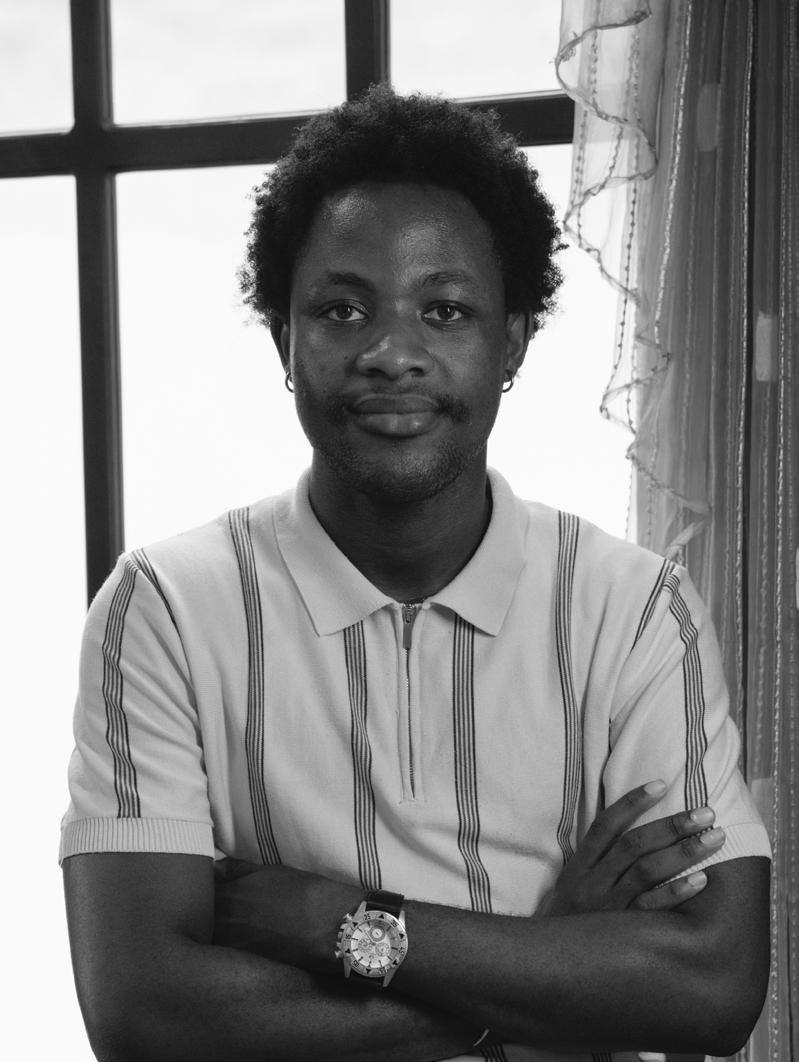
Editor-in-Chief, Lost in Lagos Plus Magazine IG: @edo.wtf
EDITOR’S NOTE
A Life You Love…
I am no magician, but I can tell you for free right now that at the back of your head, is a lingering thought of “how can I be my most spectacularly best self this year?” Am I correct? If you say no, then it’s not necessarily because I’m wrong, but because yours is worded a little differently. Probably along the lines of “how can I make the most ridiculous amount of money this year. Right? Gotcha!
See, the bottom line is we’re all thinking it. “A fresh new page, what to do with it?” Tell new stories? Adapt old ones? Go completely off script? Or just burn the studio down? And while I don’t recommend burning anything meaningful, I do recommend making a decision, whatever it is, now, fast, and sticking to it.
‘The Year Of You’ is for you—corny but pertinent—deciding what you want. It’s an invitation to make 2026 yours. Whatever ‘yours’ looks like. And as that takes shape, we want you to live a healthy, active life this season; whatever ‘healthy’ and ‘active’ means to you. There’s no one-size-fits-all, and it’s genuinely about what YOU want. For example, this year, I’m experimenting with being a pescatarian—at least for the first quarter of the year because I don’t know what I’ll do without goat meat (TMI, I’m sorry).
Nonetheless, this year, we have decided to curate/create our magazine to be your lifestyle partner, integrating our publications perfectly into your life. Whatever kind of life that may be. A handbook if you will. And as you choose that life,
LOST IN LAGOS Volume 10.4 January 2026
In this issue, Adeoluwa Lebimoyo champions a holistic approach centered on balanced strength and mind-body coordination, while Psychologist Sandra Anyahaebi advocates for slowness, presence, and regulation over rush. Dr. Maymunah Yusuf Kadiri preaches alignment, clarity, and emotional honesty, and Babajide Ajijola promotes escape, relaxation, and joy through nature-infused design and open spaces. Desmond Majekodunmi focuses on the reduction of stress hormones and boosted immune function, with Chime Asonye reinforcing mood regulation through green exercise. Uju Maryanne Onuorah emphasizes balance, support, and long-term energy through food, which aligns with EyiyemiOlivia Rogbinyin’s counsel on linking healthy eating to a higher life purpose. Dr. Adenike Akinsemolu highlights how nature provides peace, space, and relief as Dr. Chinonso Egemba drives the overall goal of achieving a presence of vitality through community and prevention.
Don’t forget to check out Top 10 Places for High-Energy/Impact Activities in Lagos, and our list of the top 5 events happening in Nigeria.
Happy new year, everyone!
#DiscoverNigeria
#ExperienceNigeria
#LostinLagosPlus #LostinLagosPlusMagazine
Title: The Year Of You FOUNDER Tannaz Bahnam PUBLISHED BY Knock Knock Lifestyle Solutions Ltd PRINTER Tee Digital Press
EDITOR-IN-CHIEF Elvis Osifo EDITOR Leon Izegbu DESIGN Ernest Igbes CONTRIBUTORS Elvis Osifo, Mona Zutshi Opubor, Leon Izegbu, Ernest Igbes, Enemona Udile, Matildah, Adeoluwa Lebimoyo, Sandra Anyahaebi, Dr. Maymunah Yusuf Kadiri, Babajide Ajijola, Desmond Majekodunmi, Chime Asonye, Uju Maryanne Onuorah, EyiyemiOlivia Rogbinyin, Dr. Adenike Akinsemolu, Dr. Chinonso Egemba. Timothy Kunat, Chef High Spirit, Caleb Lazarus, Chukwukere Nwovike. COVERS Lazham Gaina
#GOTTAHAVEIT
A bit about the Products of the Month
Every month, three products are selected from businesses in Nigeria and shared with you to appeal to your senses. They range from cool, functional items that become indispensable and intimate items that make for thoughtful gifts, to artefacts you can splurge on and everything in between. This January is the month for wellness, rejuvenation and wholesome treatment. We have curated the best guide to products you can use on this journey
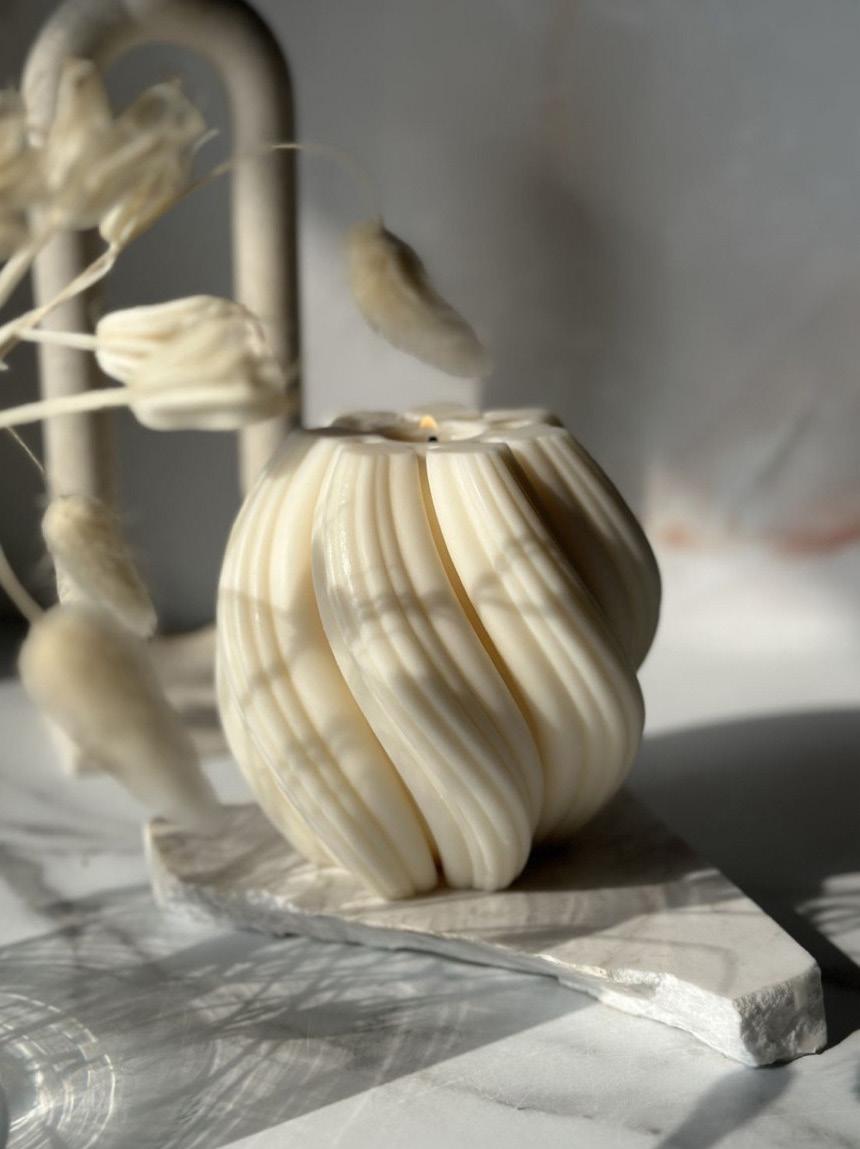
Scented Candles
From The Aura Lifestyle Indulge in self-care without feeling selfish
There is the perfect thing for every moment. The scented candles from Aura Lifestyle are crafted with the finest ingredients. A blend of various spices like cinnamon, peppermint, and pine fills your home with a sweet, restorative scent. It is the ideal way to cleanse your space, refresh your energy, and begin the new year on a calm, clear note and the best part, they come in various shapes, sizes and themes. Get yourself a pair and thank us after your third buy.
Courtney Dress From Get Bodied Fit
The Sexiest fitness companion
Step outdoors in a dress that lets you feel confident and powerful. The Courtney Dress is your one-way ticket to looking good and feeling even better. It’s short, sculpting silhouette features a hidden inner layer and a discreet pocket that keeps your essentials secure and your movement free. No wind worries. No awkward moments. Just ease, breathability, and the freedom to enjoy fresh air without distraction. This is the dress that makes you feel sexy, strong, and fully present in your body. Perfect for light outdoor activities, strolls, or those quiet leisure moments when you want a reset and a soft boost of energy.
Moroccan Tea From Friska Life Wellness in a cup
There’s a gentle breeze that follows when you’re moving in the right direction, a nod, a smile, a quiet acknowledgement from a stranger. With a soothing blend of green tea, ginger, rooibos, and ginseng, your energy flows in tune with the day. Green tea helps boost focus and metabolism, ginger supports digestion and warms the body, rooibos is rich in antioxidants for overall wellness, and ginseng promotes vitality and mental clarity.
I’m a 20-something-year-old living in Nigeria. I probably spend way too much time obsessing over self-care, food, tech, and anything else that makes my life easier. Like most people, I find randomly shopping online at odd hours therapeutic. For example, the fact that you picked up a copy of this magazine makes me like you. *Proceeds to add reader to cart!*
A BIT ABOUT ME:
HIGH ON LIFE
For me, 2026 is a special year. In a few months, my son will graduate from secondary school and head to university.
My husband and I will stay in Lagos, and he will be off — somewhere in the world — pursuing his academic passions. We have had a child at home since 2003. Now, suddenly, it will be just me and my husband in a quiet house.
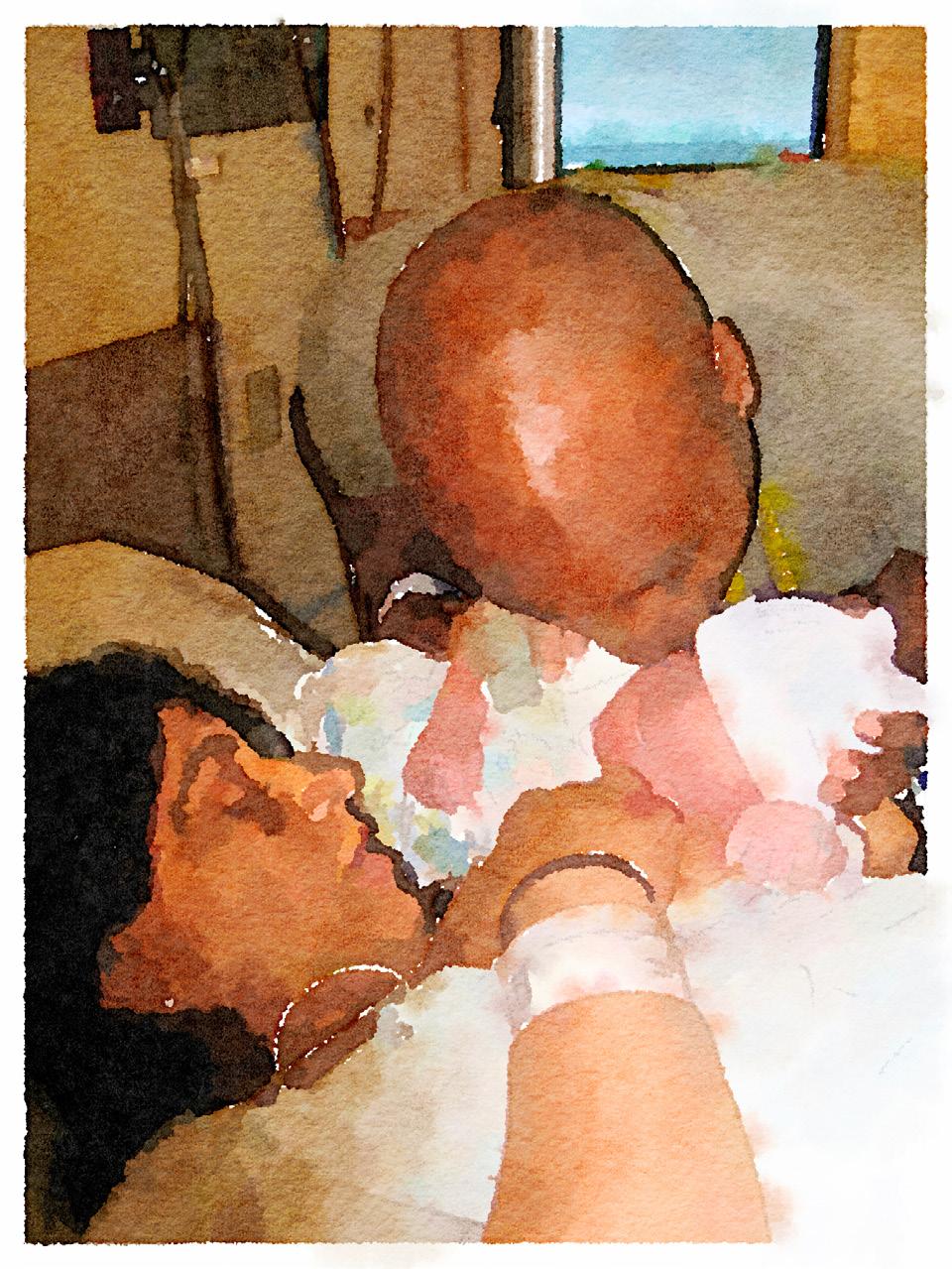
We have two daughters and a son. Our daughters were born in a straightforward way. Eventually, they popped out, as nature intended. When our son was born, my body didn’t cooperate. His shoulders got stuck somewhere, and he didn’t drop into my pelvis. I never felt the urge to push. The pain of labour was indescribable, and to make matters worse, nothing progressed. I asked for an epidural, but the anaesthesiologist refused.
“Let me give you a test,” the doctor said. He whipped out a scalpel and sliced my hand open. The test was to check clotting: if the bleeding stopped within a few minutes, he’d give me the epidural. It didn’t. “Oh, well,” he said. “I can’t put anything in your spine.”
As I screamed and writhed while contractions tore through me, my husband advocated. “What can you give her for the pain?”
The doctor considered this. “I can give her Dilaudid. It’s like
morphine, only stronger.”
As my husband weighed the options — slowly, ponderously — I screamed, “Yes. I’ll take it. Give it to me now.”
Oh, it was wonderful. As soon as the medication hit my bloodstream, my eyes rolled back in my head. I fulfilled my lifelong dream of riding on a magic carpet. The pain was still there, but it felt far away. I was blissful.
At some point, I managed to peel my eyes open and saw my husband frowning. He has puritanical notions about drug use, and he was judging me. I was high as a kite, so I didn’t care.
I’ve led a dull life. I don’t have gritty chapters or colourful experiences. A friend from secondary school dealt blackjack in a Las Vegas casino, served in the navy and has been married three times. A university classmate was convicted of fraud and sentenced to ten years in a federal penitentiary. One of my closest friends is a big-shot Hollywood writer who writes and acts in films. Where are my notable moments?
I’m as dull as dishwater, as boring as watching paint dry. I can’t imagine engaging in risky behaviour. While others blow off steam
Featured Columnist Mona Zutshi Opubor
with booze, loud music and random hook-ups, I unwind by watching baking shows, eating chocolate and petting my dogs. I am lame — but for a few brief hours, while in labour with my son, I was a junkie. It was magical.
Eventually, my son’s heart rate became distressed. I was rushed to the operating theatre for a C-section, and while they stapled my stomach back together, my husband wandered off with our son to supervise whatever it is that newborns do.
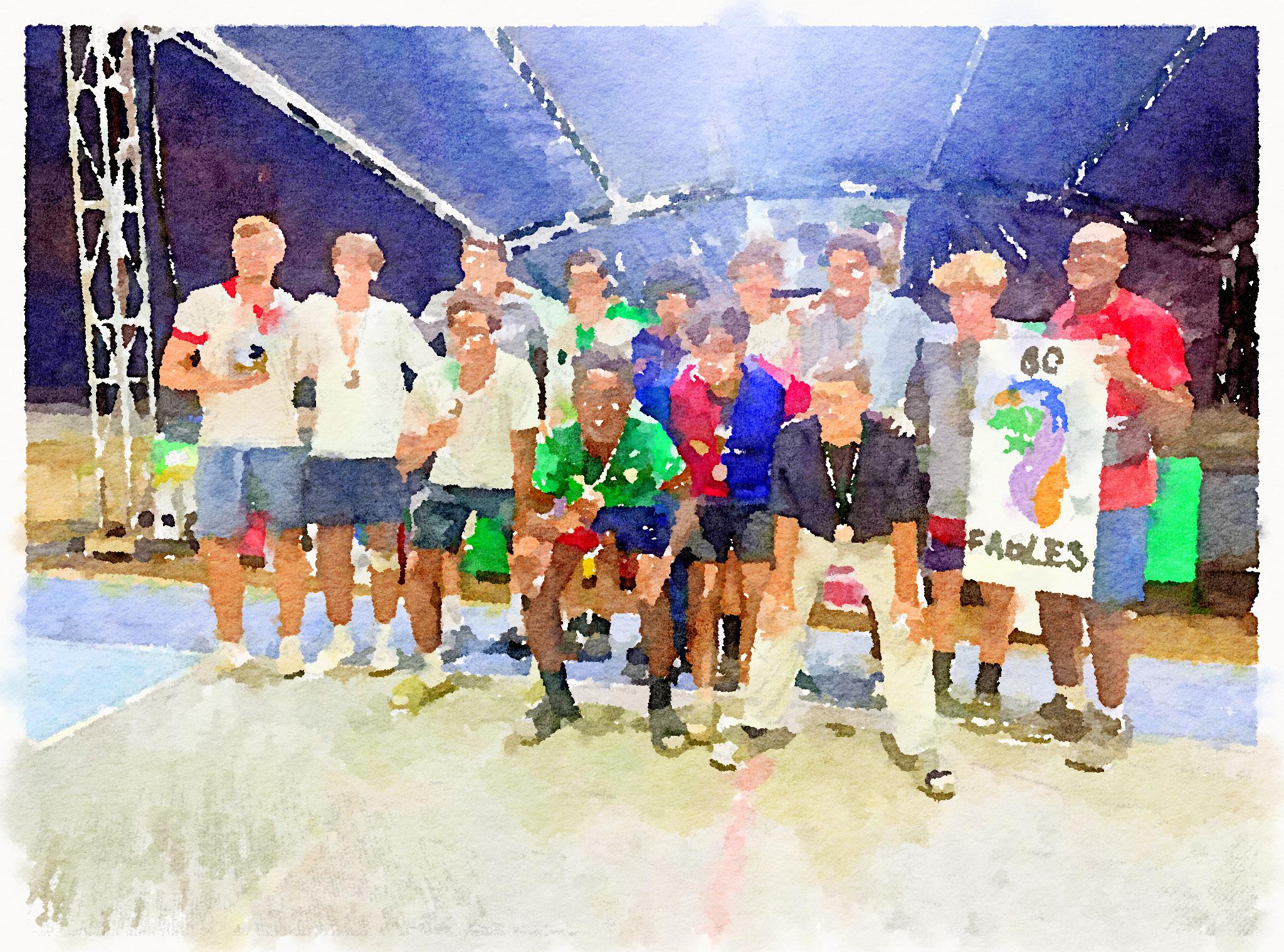
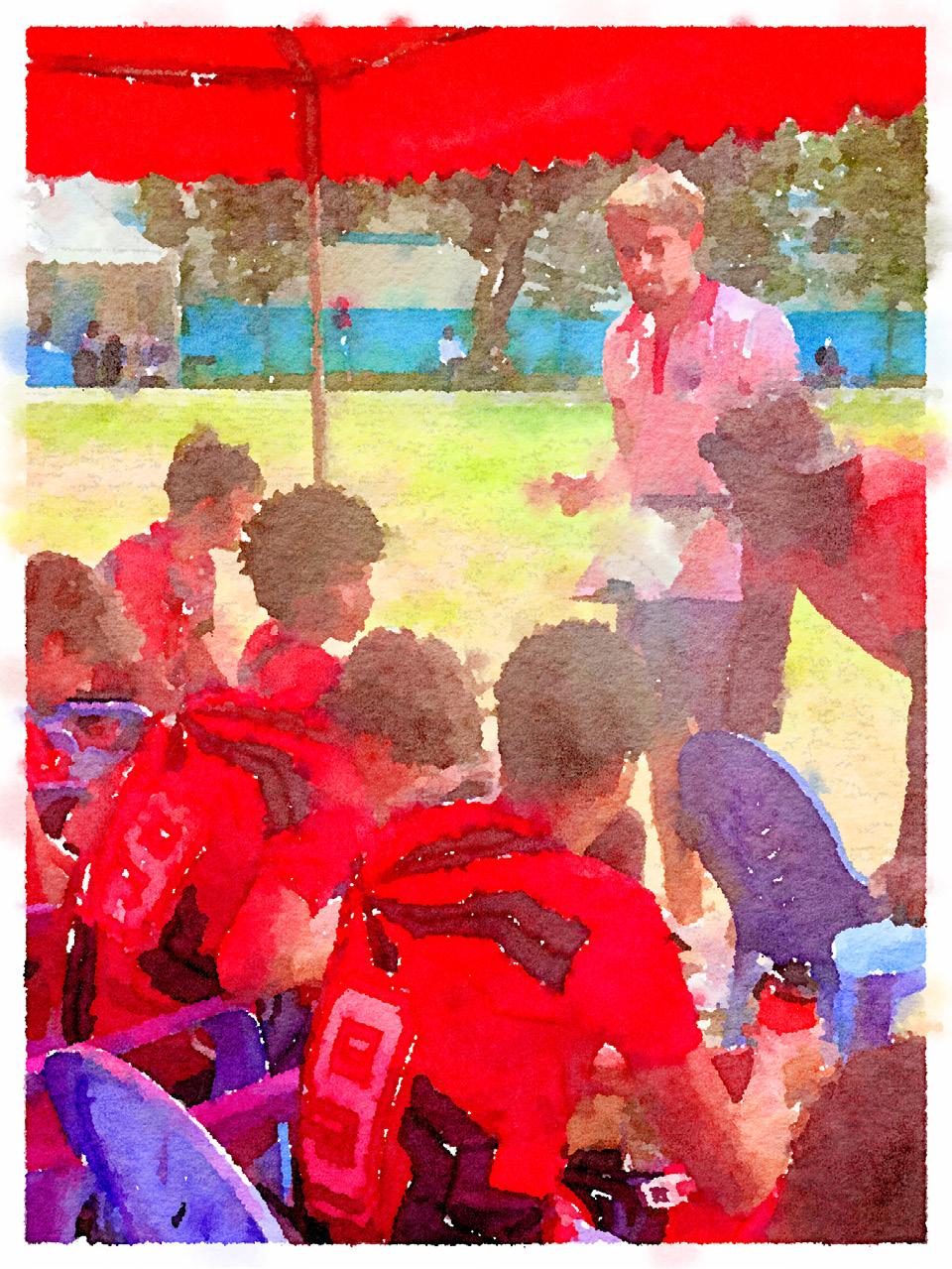
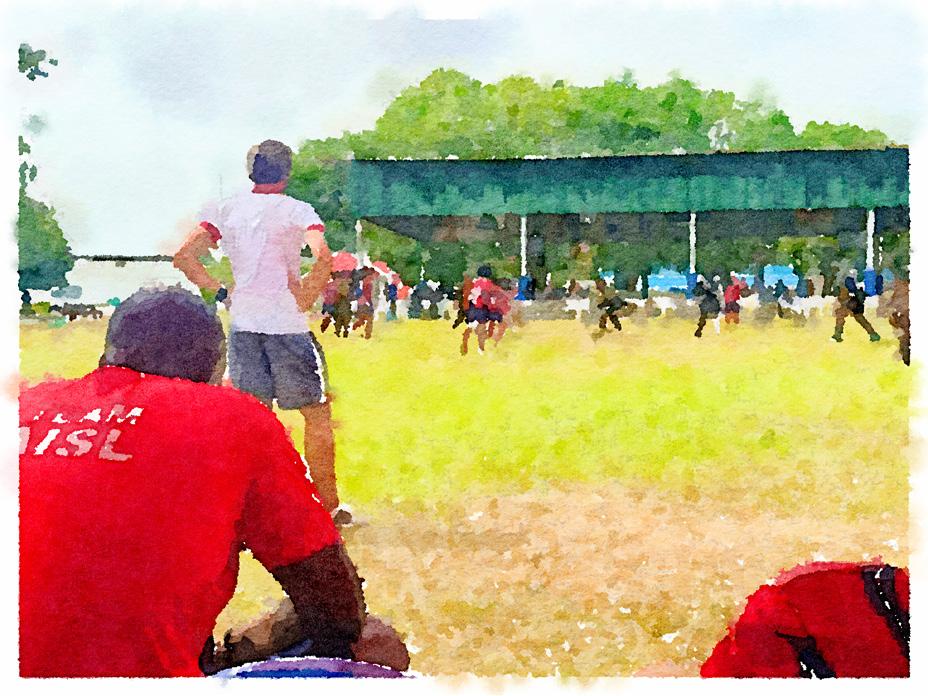
Now our baby is grown. He studies at the school where I teach. I stay late after the workday ends and watch him play football with the senior boys’ team. He and his teammates are graceful, strapping young men, quick, clever and athletic. I sit outside
in a chair by the library that swings back and forth and admire them. I let my legs dangle off the ground so it feels as though I am levitating.
Watching them run, I think about how bodies fail us and then, astonishingly, go on to create something strong. I watch my beautiful son play football, thinking of the moments before he was born, when I was full of narcotics and floating above my body. The truth is that no high compares to the pleasure of a warm Lagos afternoon: the chair creaking beneath me, the grass worn thin by decades of boots, the thud of the ball, the sharp calls of boys who believe in what they are doing. My brief dalliance with drugs can’t compete with the fulfilment and joy of real life.
is an IndianAmerican and Nigerian writer. She holds an MSt in Literature and Arts from the University of Oxford, an MA in Creative Writing from Boston University and a BA in English Literature from Columbia University.
Read more at www.monazutshiopubor. com
Mona Zutshi Opubor
Interview
Uju Maryanne Onuorah Dietitian-Nutritionist
This Year, I’d encourage people to focus less on dramatic changes and more on small, consistent habits that support balance over time. Health is often built in the everyday moments, not in extreme resets.
Uju Maryanne Onuorah
Meet Uju Maryanne Onuorah, a Registered Dietitian-Nutritionist who operates at the vital intersection of food, lifestyle, and public health policy. With a strong background in public health nutrition, a Master’s in Global Health, and clinical expertise in chronic disease prevention and management, Uju focuses on translating rigorous nutrition science into tangible community impact. Her work particularly addresses maternal and child health, food systems, and policy advocacy to support vulnerable populations. Uju is committed to evidencebased practice, contributing research to peer-reviewed journals and serving as a WHO Fides Health Influencer to counter nutrition misinformation. Through her belief that “food should feel supportive, not stressful,” she empowers individuals and communities to make practical, culturally relevant choices that promote long-term energy, mental well-being, and an improved quality of life.
Many people think healthy eating is strict or limiting. How do you help people build a healthier relationship with food while still enjoying life?
A lot of people associate healthy eating with restrictions, rules, or constantly saying no, and that mindset alone can make food feel stressful. I try to help people shift from thinking of food as something to control to seeing it as something that supports their life, energy, and joy.
One of the first things I emphasise is permission. Enjoyment is not the opposite of health. When people feel allowed to eat the foods they love without guilt, they’re more likely to listen to their bodies and make balanced choices naturally. I encourage focusing on what to add rather than what to remove, such as more colourful vegetables,
fibre-rich staples, protein, and nourishing traditional foods, instead of obsessing over what must be cut out. I also remind people that food is deeply cultural and social, especially for Nigerians. Healthy eating should still allow room for family meals, celebrations, and favourite dishes. It’s about portion awareness, frequency, and balance, not perfection. You can enjoy jollof rice, swallows, or snacks and still support your health when the rest of your habits are intentional. Ultimately, a healthy relationship with food comes from flexibility, curiosity, and self-compassion. When people learn to eat in a way that respects both their health goals and their enjoyment of life, healthy eating stops feeling like a punishment and starts feeling sustainable.
For someone who wants to explore outdoor activities or exercise this year,
what food or nutrition habits can support stamina, energy and recovery?
When people decide to be more active or spend more time outdoors, food becomes an important support system, not an afterthought. The goal isn’t complicated meal plans, but consistent habits that fuel energy and help the body recover well.
First, regular, balanced meals matter. Skipping meals or under-eating can quickly affect stamina. I encourage people to eat meals that combine carbohydrates for energy, protein for muscle support, and healthy fats for satiety. Pairing whole grains or starchy foods with protein and vegetables helps sustain energy during walks, hikes, workouts, or other outdoor activities. Hydration is also key, especially in a climate like Nigeria’s. Drinking enough water throughout the day supports
endurance, concentration, and recovery. For longer or more intense activities, including fluids before and after movement can make a noticeable difference.
For recovery, adequate protein intake is important, but it doesn’t have to be complicated or expensive. Foods like eggs, beans, yoghurt, fish, and lean meats help repair muscles and reduce fatigue. Adding fruits and vegetables supports recovery as well, as they provide antioxidants and nutrients that help the body manage physical stress. Finally, timing matters, but it doesn’t need to be rigid. Eating a light meal or snack before activity and nourishing yourself afterwards helps prevent burnout and keeps movement enjoyable. And while general nutrition principles are helpful, for more personalised guidance and guaranteed results, it is always best to consult a qualified nutritionist or dietitian who can tailor recommendations to individual needs and goals.
In 2026, what small, simple food or lifestyle habits would you encourage people to adopt to feel healthier and more balanced?
In 2026, I’d encourage people to focus less on dramatic changes and more on small, consistent habits that support balance over time. Health is often built in the everyday moments, not in extreme resets.
In a city like Lagos, where life moves fast and the days are often packed, one of the most helpful habits is eating regularly and intentionally. Skipping meals or eating only when exhaustion sets in can affect energy, mood, and focus. Creating space for simple, balanced meals, even on busy days, helps the body stay grounded amid the constant movement. Another habit is staying connected to movement and the outdoors, even in small ways. This might
look like walking parts of your commute, stretching in the morning, spending time outside on weekends, or choosing activities that feel enjoyable rather than forced. These moments of movement can act as a reset in the middle of the city’s pace.
I also encourage people to prioritise hydration and sleep, which are often sacrificed in the hustle and bustle. Drinking enough water and getting rest can significantly improve how we feel, think, and function. Most importantly, adopting a healthier lifestyle in Lagos requires self-compassion. There will be busy days, traffic-filled evenings, and imperfect meals, and that’s okay. Letting go of perfection and choosing flexibility makes healthy living more realistic and sustainable. Over time, these small, intentional habits can help people feel more balanced, energised, and well, even in a fast-paced city.
What’s the best advice for those who
face eating disorders, diagnosed or not, either caused by depression, anxiety or other conditions they may face, how can they try to get the best they can from the things they consume?
For anyone struggling with disordered eating, whether formally diagnosed or not, the most important thing to know is that you are not weak, broken, or failing. Eating disorders and difficult relationships with food are often deeply connected to mental health, life stress, trauma, and how safe or unsafe someone feels in their body and environment.
One of the first steps is shifting the focus from eating “perfectly” to eating consistently and with kindness. On difficult days, nourishment may look like small, simple, familiar foods rather than balanced plates, and that is okay. The goal is to support the body gently, not to force control. Even small amounts of food, eaten regularly, can help stabilise energy, mood, and concentration. It’s also important to remove guilt from the conversation around food. No food is a moral failure. When someone is dealing with anxiety or depression, eating something is always better than eating nothing. Choosing foods that feel safe, comforting, and easy to digest can be a meaningful starting point. That said, healing does not have to be done alone. Professional support is essential. Working with a qualified dietitian, therapist, or mental health professional can help address both the emotional and physical aspects of eating disorders. A multidisciplinary approach that combines mental health care with nutrition support offers the best chance for recovery and long-term well-being.
Above all, recovery is not linear. Progress can be slow, and setbacks can happen, but nourishment, support, and self-compassion are powerful tools. Everyone deserves care, dignity, and access to help, especially during seasons when eating feels hard.
Interview Dr Chinonso Egemba Doctor, And Public Health Advocate
Dr Chinonso Egemba, widely known as Aproko Doctor, is a medical doctor, public health advocate, and digital innovator working at the powerful intersection of Medicine, Media, and Technology. With the ambitious goal of “keeping Africans alive,” he transforms complex health information into relatable, engaging content through Aproko Doctor Global. Beyond media, he combats healthcare poverty via The Aproko Doctor Foundation and pioneers digital health access through AwaDoc, his AI platform on WhatsApp. Aproko Doctor is the leader, ensuring that health is embraced as an accessible and engaging lifestyle.
Dr. Chinonso Egemba
Doctor, And Public Health Advocate
After everything you’ve been through, what does wellness mean to you now, physically, mentally and emotionally? In 2026, what do you think Nigerians should adopt as their new definition of living well?
For a long time, Nigerians defined wellness as “I am not in the hospital.” But wellness is not just the absence of disease; it is the presence of vitality. To me, wellness now means autonomy; having the physical strength, mental clarity, and emotional stability to live life on my own terms. For 2026, I want Nigerians to adopt a definition of wellness that includes Community and Prevention.
Living well means knowing your numbers (blood pressure, sugar level) before you crash. It means having a circle of friends who encourage healthy habits, not just drinking habits. It means understanding that looking after your mind is just as important as feeding your stomach.
You often emphasise hydration, clean eating and small lifestyle choices. What simple daily habits can improve how Nigerians feel, and how can people realistically build them into their 2026 routines?
The biggest mistake people make is trying to overhaul their life
overnight. That never lasts.
For 2026, I suggest the strategy of Stacking.
Stack Movement: Don’t say “I will go to the gym for 2 hours.” Say “I will walk for 15 minutes immediately after lunch.”
Stack Hydration: Don’t just say “drink water.” Put a bottle of water next to your bed so you can drink it immediately you wake up.
Stack Sleep: Set an alarm for when you go to sleep, not just when you wake up.
These are small, boring actions. But if you do them consistently, they compound into massive health benefits. Consistency > Intensity.
We believe the Nigerian outdoors can be a healing tool. From your medical and personal perspective, how powerful can outdoor living be for reducing stress, improving mental health and helping young people manage anxiety or burnout?
Medically, the outdoors is a prescription we don’t use enough. When you step outside, two major things happen. First, Vitamin D. Many of us are actually deficient because we move from air-conditioned cars
to air-conditioned offices. Vitamin D is crucial for mood regulation and immunity. Second, nature lowers Cortisol (the stress hormone). We live in a high-anxiety society. Staring at screens all day keeps your brain in a “fight or flight” mode. Stepping outdoors, seeing greenery, and breathing fresh air forces your parasympathetic nervous system (the “rest and digest” mode) to kick in. For young people managing burnout, the outdoors isn’t just scenery; it is a biological reset button.
You recently held the Gen Z Y2K Rave (AprokoNation Fiesta), and you’ve spoken about clean fun, hydration and safe spaces. In your vision, what does a healthy social life look like for young Nigerians in 2026, both indoors and outdoors?
The AprokoNation Fiesta was proof of concept. We gathered thousands of young people in Lagos for the 2nd Edition of the AprokoNation Fiesta. And guess what? It was the wildest, most energetic energy I have ever seen. My vision for 2026 is that we stop associating fun with toxicity. A healthy social life looks like spaces where you can dance, connect, and rave without needing to be intoxicated to enjoy it. It looks like outdoor festivals where wellness is the vibe, not just a side attraction. We proved that young Nigerians crave safe spaces. In 2026, I want to see more entertainment that doesn’t compromise our liver or lungs.
What personal wellness intentions did
you carry into 2026, and what shifts do you hope Nigerians make in how we socialise and how we care for ourselves?
Personally, my intention is Sustainable Pace. I want to run far, not just fast. That means prioritising my sleep and my family above the noise of social media. For Nigerians, I hope we shift from Reactive to Proactive socialising. Instead of only meeting up to eat heavy food and drink, let’s meet up to play football, hike, or walk. Let’s make “Exercise With AprokoNation” (our fitness movement) the standard way we hang out. Let’s normalise asking our friends, “Have you done your checkup this year?” as casually as we ask, “Have you watched that new movie?” That is how we build a generation that lasts.
In 2026, I want to see more entertainment that doesn’t compromise our liver or lungs.
Interview
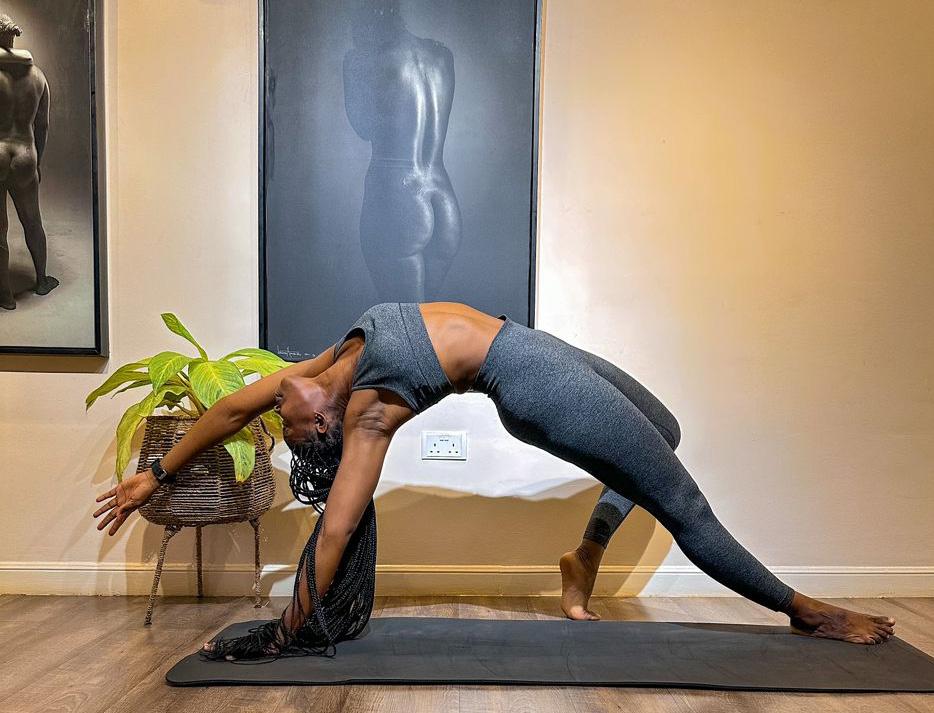
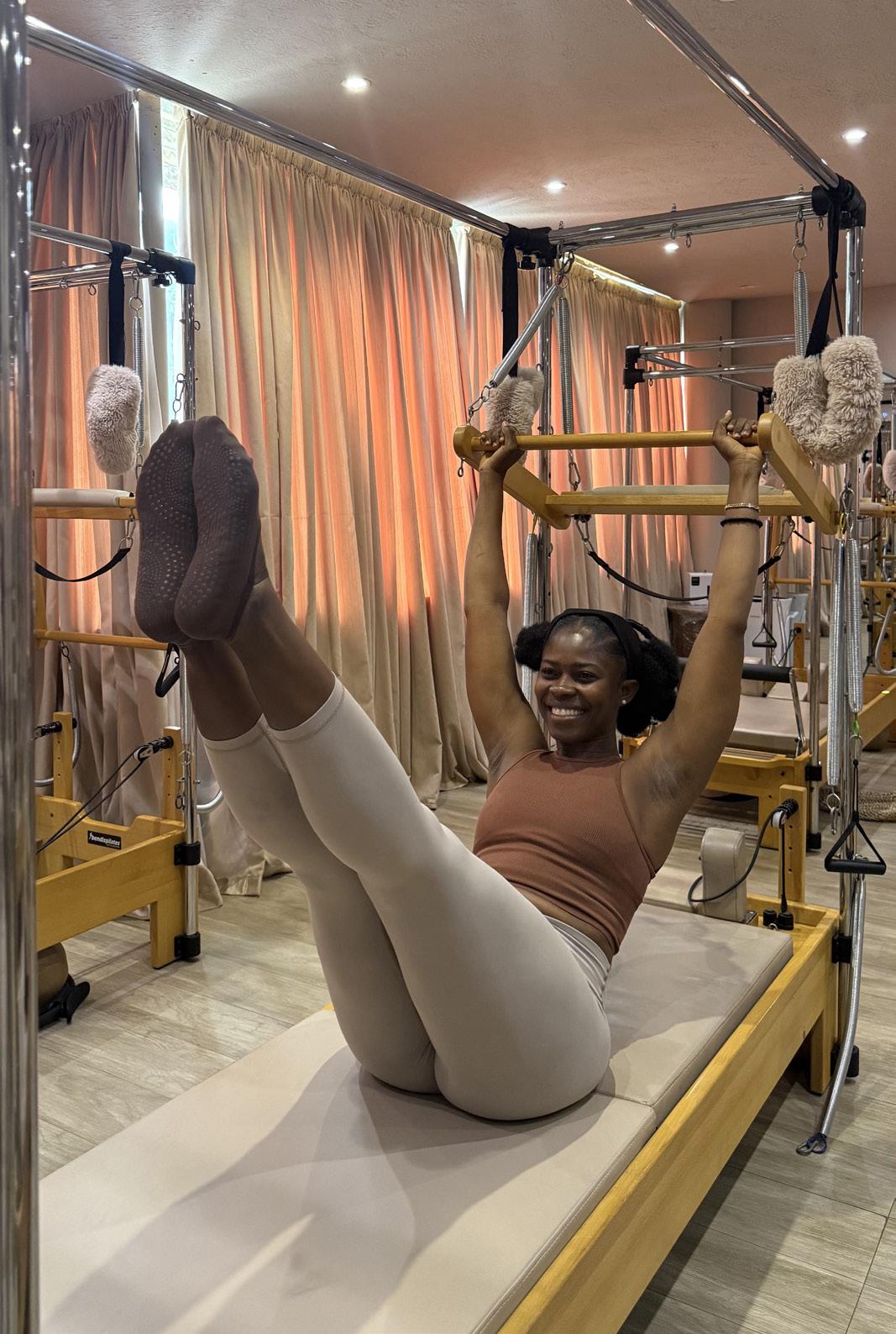
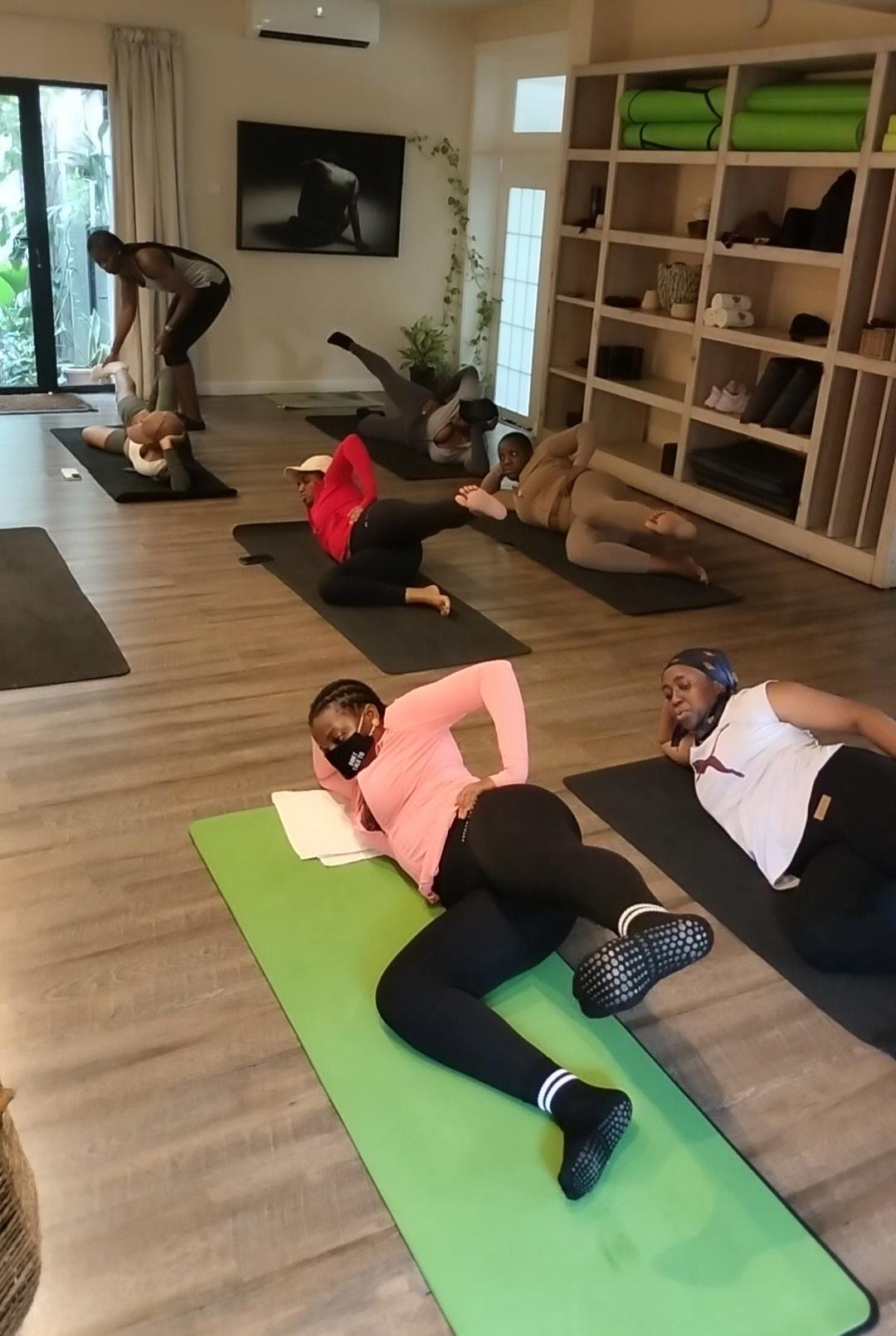
Meet Adeoluwa Lebimoyo, a dedicated Wellness Coach and expert Pilates and Yoga Instructor with over a decade of experience transforming lives through movement. Known for her technical mastery across pilates machines, aerial yoga, and strength training, Adeoluwa utilises fitness as a strategic tool for lifestyle change, therapy, and rehabilitation. A key driver in Nigeria’s fitness evolution, she consults for Iwosan Wellness and serves as the lead instructor at OMA Pilates. Her passion lies in promoting mental wellness and helping every client, especially women, become the healthiest and happiest version of themselves.
Adeoluwa Lebimoyo
People who have never been to a Pilates class see pictures and videos online and instantly think, “Oh, it’s so easy. They’re just gliding through it. It looks just like stretching.” Disclaimer: it is work. Nothing is ever easy, not even stretching, because stretching comes with its discomfort.
As a Pilates instructor, how do you see pilates helping people escape mental-health imbalance or emotional stress?
Pilates, originally called “Contrology”, was created by Joseph Pilates to achieve balanced strength, mental wellness, and complete mind-body coordination. He used it to overcome his personal weaknesses caused by childhood illnesses and, as far back as the 1920s, to help injured soldiers from World War I regain strength and mobility. When you start to feel better physically, everything changes within you, including your emotional state. Today, the effect is no different.
Pilates uses a holistic approach that combines movement, breathing, and mindfulness to alleviate emotional stress and physical/mental imbalances. Mental stress is fundamentally linked to the nervous system. The sympathetic nervous system is the part of the body that senses stressors and initiates your body’s “fight or flight” response. It is the one affected by prolonged and severe stress. The parasympathetic nervous system, however, is a network of nerves that relaxes your body after periods of stress or danger. It is the “rest and digest” system, and Pilates primarily activates the parasympathetic nervous system.
When you understand this, you start to see how vital Pilates is for escaping imbalances and emotional stress.
Beyond the fact that Pilates works both the large muscle groups and the smaller, deeper stabilising muscles that support the
spine and joints, we must note its neurological and psychological benefits. It works to naturally release the tension and stress the body has held onto and begins to initiate sleep and rest. It is also beneficial for women with PCOS, for example, helping them reduce stress and aid weight management because it is a lowintensity interval exercise.
Every week, women in my community tell me, “Ade, I feel so good in my body; I regret not finding Pilates sooner. I sleep better, I work better, I let go of things that don’t serve me more easily these days because I breathe through situations that would previously have stressed me out. I climb the stairs better, and the list goes on and on.” Many physical limitations are natural stressors, so you can imagine that resolving them significantly reduces overall stress.
When you start to be able to do things better within your body, which goes on to change how you feel and navigate your everyday life, there is a huge shift from suffering to non-suffering. You begin to be more joyful because positive changes keep happening within, outside, and around you. It’s just like Joseph Pilates said: “In 10 sessions you will feel the difference, in 20 sessions you will see the difference, and in 30 sessions you will have a whole new body.” This is so true of Pilates. I hope you make the move to experience it for yourself if you haven’t already.
What are some outdoor activities, besides Pilates, that you believe pair well with wellness and restoration? Which do
Adeoluwa Lebimoyo Wellness Coach
you personally recommend to clients wanting a reset or calm?
To reset and calm, I would advise yoga, swimming, dancing, walking, hiking, cycling, meditation practice, and my new favourite addition, gardening. They are great for resetting and calming your body and mind, bringing you to a very good place, no matter what you are going through.
For clarity, reset or calm is an after-effect, a result you get from the right action or activity you engaged in, not always the immediate feeling you get while doing it. Even a massage feels painful and pleasant at the same time when having it, but the true release comes after.
A lot of people come to my Pilates reformer, Cadillac, or Mat class and go, “Oh boy, this is work!” I find that most become more excited, while a few are taken aback. People who have never been to a Pilates class see pictures and videos online and instantly think, “Oh, it’s so easy. They’re just gliding through it. It looks just like stretching.” Disclaimer: it is work. Nothing is ever easy, not even stretching, because stretching comes with its discomfort.
Something that improves core strength, muscle tone, posture, balance, flexibility, and promotes mind-body connection will definitely call for good effort. Get moving!
For someone who has never tried Pilates but wants to begin tending to wellness in 2026, how would you advise them to start? What’s a good first step or mindset to have?
I would advise you to take that bold step of putting your excuses
aside and just do it. Once you start, you break that mental block. Don’t listen to what anyone else has to say. Go experience it for yourself.
Book a session with any of the credible studios around you. If you can’t attend group classes, hire a credible private Pilates instructor or a knowledgeable instructor of any of the activities I mentioned earlier, who can help guide you and start you off on your fitness journey.
Wellness is inclusive of food and other habits, too. Drop the draining/unhealthy habits you know you ought to drop, and start eating whole foods, vegetables, fruits, seeds, herbs, and spices. There will be a significant change.
Remember, wellness is a lifestyle, something you continue to stay true to, not a quick fix. You know yourself, so you know what works for you. Start with whatever you can at first. Even if it is walking, and even if that is only for 10 minutes initially, start. Bit by bit, it grows. If you prefer to do things alone, do it alone or get a personal coach. If you are the type that thrives around good support, go where your friends go, with a friend or two. You might even try going alone regardless, because fitness spaces are one of the best places to meet great people and make amazing friends.
Find someone in your life who can keep you accountable; it helps.
Even if you are scared and confused, start! Even if you fall off the wagon sometimes, don’t stay down; get up and keep moving. Do it afraid. That is how you get better and eventually stay grounded. It will work out just fine. I’m rooting for you.
Interview Chime Asonye Founder, Nigerian Mental Health
Chime Asonye
Founder, Nigerian Mental Health
C
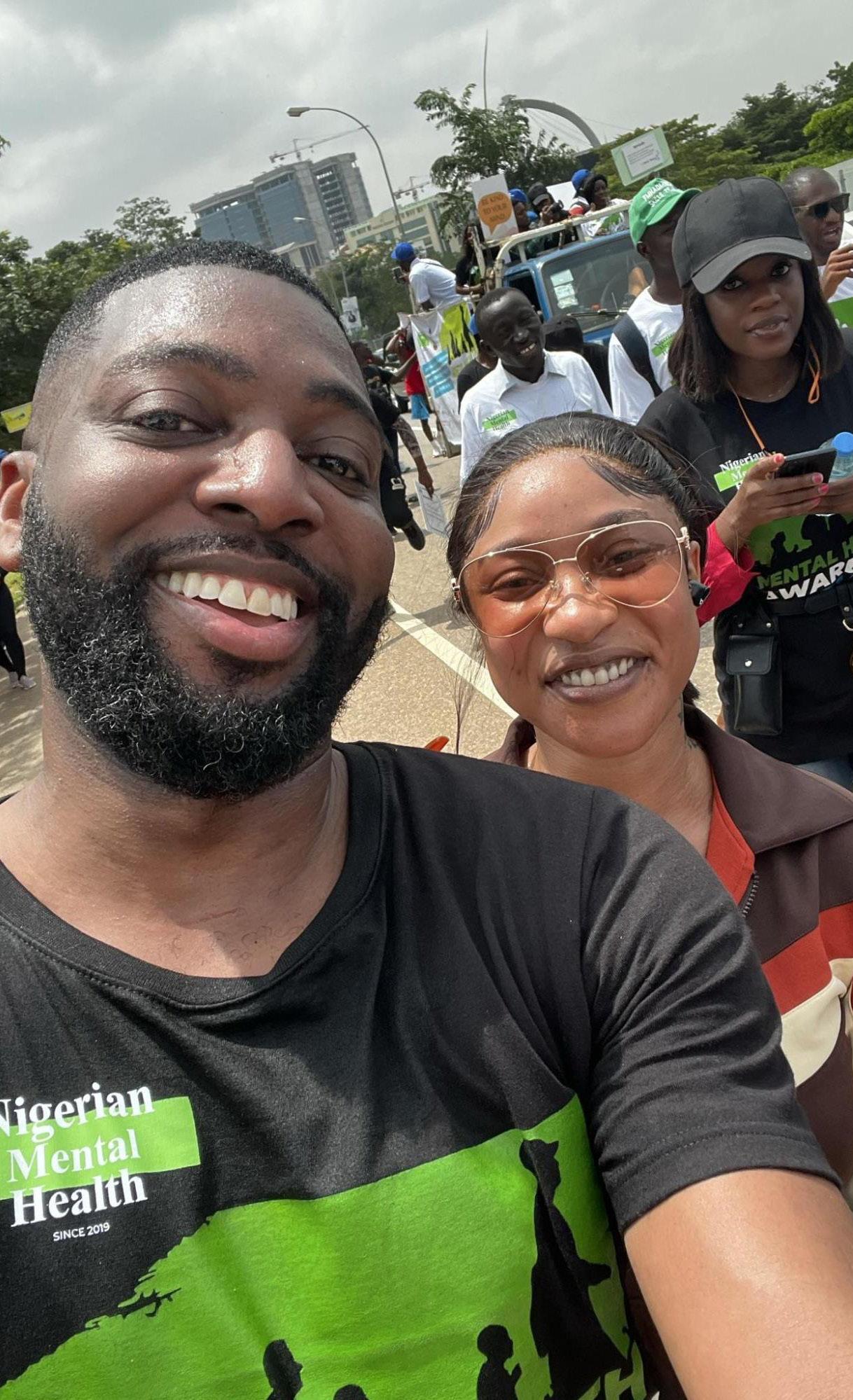
hime Asonye is a distinguished public policy advisor and mental health advocate dedicated to advancing human rights and well-being. He is the Founder of Nigerian Mental Health, a leading network that mobilizes over 50 organizations and practitioners to enhance the mental and emotional well-being of Nigerians, immigrants, and the Black community through policy, research, and infrastructure development. Chime’s thought leadership in this critical field has been featured in the Harvard Africa Policy Review, CNBC Africa, and the World Economic Forum. Previously, he served at both the federal and sub-national levels in Nigeria, driving policy initiatives for the United Nations Global Goals (MDGs/SDGs). He holds a Juris Doctor from Northwestern University Pritzker School of Law.
For most people, a therapist is a distant luxury. But taking a walk in a local park, doing some gardening, or even finding a quieter spot outside for a jog is zerocost stress relief.
To begin, can you share the current realities of mental health in Nigeria? What does the landscape look like in terms of awareness, treatment, and public perception?
The mental health landscape in Nigeria is characterised by a significant gap between the widespread need and the available resources and support.
1. Awareness and Stigma
Low Mental Health Literacy: There is a general lack of understanding about the causes, symptoms, and treatability of common mental health conditions. Many Nigerians, especially in older and rural communities, still attribute mental illnesses to supernatural causes (like witchcraft, evil spirits, or divine punishment) or substance misuse, rather than viewing them as medical conditions.
Pervasive Stigma: A major barrier is feelings of shame and disgrace. Mental health conditions are often associated with the belief that a person is “going mad” and are only perceived when there is a display of disruptive behaviour. This leads to social distancing, discrimination, and a strong unwillingness to engage in relationships or employ people with a known history of mental illness. This stigma is a primary reason why an estimated 85–90% of people with severe
mental health needs are unable to obtain care, according to the Association of Psychiatrists in Nigeria (APN).
2. Treatment and Accessibility
Inadequate Resources: The country faces a severe deficit of mental health professionals (psychiatrists, psychologists, and nurses), highlighted by the fact that approximately 300 psychiatrists attend to a population of over 200 million people. A vast majority of the staff are centralised in urban areas, which leaves rural and peri-urban populations largely underserved, contributing to a massive treatment gap.
Limited Integration: Until recently, mental health services were primarily restricted to tertiary institutions (specialist psychiatric hospitals), making them difficult and expensive to access. While the National Mental Health Act legally mandates integrating mental health services into primary and secondary healthcare, its full implementation is still in its early stages.
Alternative Care: Due to poor access and cultural preference, many individuals first seek help from traditional or indigenous healers and religious bodies. While culturally accepted, these approaches are sometimes associated with human rights abuses, can perpetuate
stigmatisation, and often do not address the root medical causes.
Thinking long-term, what systemic reforms do you believe would most significantly improve mental health outcomes across the country?
Legal Execution: Full implementation of the National Mental Health Act, 2021, ensuring the Act is not just a law, but that provisions for budgetary allocations, clear implementation guidelines, and the establishment of the Department of Mental Health to coordinate execution at the Federal, State, and Local Government levels are put in place. This provides the mandate and funding for change.
Decentralisation of Care: Scale up mental health integration into Primary Healthcare (PHC) by utilising the task-sharing model, which trains non-specialist PHC workers (nurses, community health extension workers) to identify, diagnose, and manage priority mental, neurological, and substance use (MNS) disorders. This drastically improves accessibility in rural and underserved areas.
Workforce Development: Massively increase and disperse the mental health workforce by increasing funding for and intake into psychiatry, psychology, and psychiatric nursing training programmes. Implement incentives for professionals to work in rural and remote regions. Also, integrate mental health training and psychoeducation across all health cadre curricula.
Affordability: Mental health services must be established as a core covered mandate within the National Health Insurance Scheme (NHIS). Ensuring their affordability and inclusion directly removes the financial barrier, especially for the large segment of the population living on low incomes.
Stigma Reduction: Addressing the deeprooted cultural and spiritual interpretations of mental illness is fundamental. This requires partnering with religious and community leaders, media, and the entertainment industry to run culturally sensitive campaigns. The ultimate goal is to shift the perception of mental illness from a spiritual or moral failing to a treatable medical condition, thereby encouraging help-seeking behaviour. This strategy includes high-priority advocacy campaigns like our #SuicideNotCrimeNG campaign, which aims to ensure the passage of the National Suicide Prevention Bill 2024. This bill, in turn, seeks to decriminalise attempted suicide by repealing Section 327
of the Criminal Code Act and Section 231 of the Penal Code, providing rehabilitation and aftercare, and protecting the rights of persons with suicidal behaviour from discrimination and victimisation.
In places like Nigeria, where the environment most times is stress-filled, what role does “green exercise” play as an accessible and non-pharmacological coping mechanism?
That’s a brilliant question, especially given the sheer, constant stress of living in many Nigerian environments. We’re talking about a landscape where daily life is often a hustle: the traffic, the noise, the economic pressure, it all adds up.
In this context, “green exercise,” just getting active outside in nature, isn’t just a nice-tohave; it’s a vital, accessible escape route.
It’s “Free Therapy”: Specialised mental health care is expensive and scarce. For most people, a therapist is a distant luxury. But taking a walk in a local park, doing some gardening, or even finding a quieter spot outside for a jog is zero-cost stress relief. It democratises wellness, making crucial stress relief available to everyone, regardless of their bank account.
Mute Button for Urban Chaos: Our cities are overwhelming. The constant barrage of noise and demands leads to “attention fatigue.” When you step into a green space, even a small, well-maintained one, it’s like hitting a mute button. It instantly lowers your stress hormone (cortisol) levels. Your brain gets a chance to rest and restore its focus, which is essential for surviving the Nigerian daily grind.
Stigma-Free Way to Get Help: Since mental health still carries a heavy stigma here, people often won’t say, “I’m going to a therapist.” But they will proudly say, “I’m meeting my hiking group this weekend,” or “I’m joining the neighbourhood walking club.” Green exercise offers a socially acceptable camouflage for those who desperately need that connection and mood regulation, to get it without the fear of being judged. It harnesses our community spirit for collective wellness.
Simply put, green exercise provides an immediate, local, and culturally fluent way to manage the massive stress load that many Nigerians carry every day.
Looking forward 5 to 10 years, how do
you see the role of physical activity and green spaces evolving within the overall Nigerian mental health strategy?
Looking ahead, I see this role going from a spontaneous hobby to a deliberate part of national strategy. In the next five to ten years, we should see four major shifts that transform it into a genuine tool for public health.
Planning Mandate: Right now, green spaces are often the first casualty of urbanisation. But soon, we must start viewing them as non-negotiable health infrastructure, just like roads and hospitals. We should expect city governments, especially in places like Lagos or Abuja, to implement strict zoning laws that mandate protecting existing parks and require the creation of small, safe green spaces in new developments. They won’t just be pretty; they’ll be secured assets for public sanity.
Social Prescribing: As the new Mental Health Act pushes integration into Primary Healthcare Centres (PHCs), our understaffed health workers won’t just say, “Try to relax.” They will be trained to formally “socially prescribe” green exercise. For a patient with mild anxiety, the doctor or nurse might literally refer them to a local, structured “community fitness group” that meets in a nearby park, tracking their progress as a legitimate part of their treatment plan. This takes the burden off the few psychiatrists we have.
Homegrown Solutions: We will move away from just copying Western ideas. Nigerian researchers and practitioners will be developing local, targeted programmes. Think specialised, trauma-informed nature retreats for specific communities or highintensity green exercise programmes explicitly designed to combat the unique symptoms of burnout experienced by our highly pressurised urban workforce.
Prevention Mindset: Ultimately, physical activity and green spaces will become a core pillar of preventative mental health campaigns. We will be teaching young Nigerians early on that moving your body outside is your first line of defence against the stresses of life, building resilience before problems even start.
In essence, we are moving towards a future where your local park is officially recognised as a vital, active contributor to your mental well-being.
Interview Sandra Anyahaebi Psychologist
In a fast city like Lagos, what does wellness truly mean to you right now, in your own body, your own mind, your own practice?
Wellness, for me, means slowness and presence. Lagos demands speed, performance, and constant alertness, so wellness is an intentional, deliberate pause I give myself. It’s choosing regulation over rush, choosing rest without guilt, and choosing practices that keep my nervous system grounded. I encourage and teach this as well in therapy with clients. It can be quiet mornings, movement, or mindful boundaries around my time. In my practice, I encourage people to see wellness not as perfection, but as tuning into what their mind and body need right now, without judgment.
You work with various issues like anxiety and trauma. How can simple outdoor activities be used as an immediate, lowcost intervention for a client experiencing an anxiety attack?
A popular lingo now is “Go outside and touch grass”, which is simply
Sandra Anyahaebi
Psychologist
anxious or panicking, their nervous system is in overdrive. Stepping outside interrupts that cycle. Something as simple as feeling your feet on the ground, naming five things you can see, or focusing on the rhythm of a walk can help the brain return to the present moment. Fresh air, natural light, and movement calm the body and give the mind something neutral to anchor onto. These activities don’t replace therapy, but they are powerful tools for immediate relief and selfregulation.
Nature, movement, and intentional outdoor living are becoming part of a new wellness culture. What role do you think the Nigerian outdoors, beaches, parks, long walks, and water activities can play in our mental health?
As I mentioned earlier, nature plays a significant role in our well-being, and Nigeria has incredibly therapeutic outdoor environments, and I don’t think we talk about them enough. Although the way Lagos is set up at this time, it can be challenging to find and use nature in its purest, cleanest, available form. Yet, we must find something that works for us. The Beach provides sensory regulation; the sound of waves alone lowers stress hormones. Parks offer safe spaces to slow down, reflect, and connect with others without the pressure of Lagos’ noise. Long walks in your neighbourhood or a safe environment build mind-body awareness, helping us process emotions gently. Water activities like kayaking or swimming build a sense of competence and embodiment. If we intentionally integrate these into our routines, our outdoors can become a powerful, accessible mental-health resource.
You often speak about capacity building and preventive care. What are the early signs that Someone’s lifestyle needs a “soft reset,” and how can they begin that gently?
Some early signs include emotional numbness, irritability, constant fatigue, losing interest in activities you normally enjoy, or feeling like you’re always operating on autopilot. A “soft reset” begins with awareness, naming what feels off without shame or quickly brushing it away. Then comes gentle restructuring: simplifying your daily routine, reducing unnecessary commitments, prioritising sleep, eating healthier and reintroducing small habits that nourish you. Sometimes the reset is as simple as pausing, breathing deeply, taking a walk, drinking water, or reconnecting with someone you trust. Soft resets are about tiny, compassionate shifts, not drastic overhauls.
What do you think self-compassion should look like for Nigerians navigating transitions in 2026: new jobs, new cities, heartbreak, resolutions, or simply the pressure to “do more”?
Self-compassion in 2026 for Nigerians should look like giving ourselves permission to be human. We’re living in a climate of pressure, comparison, and high expectations. Compassion means acknowledging that transitions are hard, even when they’re exciting. It’s allowing yourself to learn at your own pace, to ask for help, to rest without feeling lazy, and to choose what aligns with your capacity rather than what aligns with societal pressure. Ultimately, self-compassion is treating yourself with the same grace you would offer a friend going through the same thing.
‘‘ We’re living in a climate of pressure, comparison, and high expectations. Compassion means acknowledging that transitions are hard, even when they’re exciting.
M
eet Sandra Anyahaebi, a leading Mental Health Speaker and Psychologist who runs Insight Wellness Therapy. Sandra is an expert in guiding individuals and groups through challenges like anxiety, trauma, and burnout. Sandra’s work emphasizes creating safe, accessible spaces for emotional support within both personal and corporate environments.
Interview Desmond Majekodunmi Chairman, LUFASI
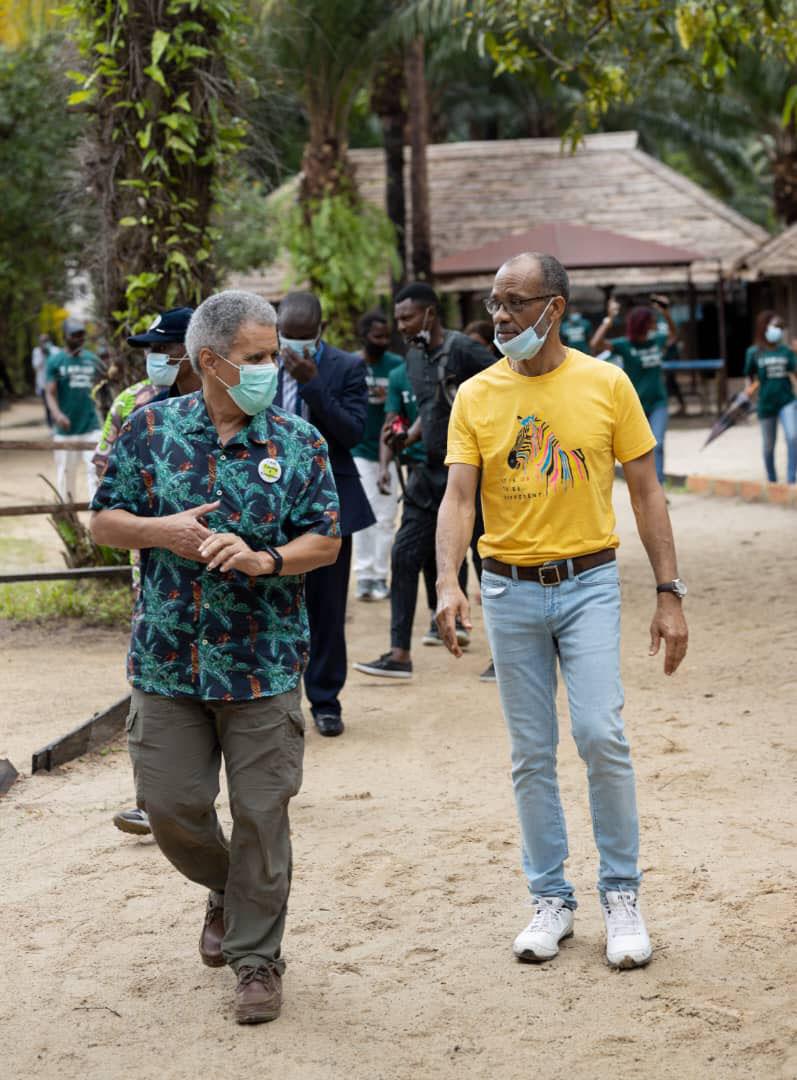
Meet Desmond Majekodunmi, a multi-talented professional recognised for his significant contributions across diverse fields, including electro-acoustic engineering, music production, and documentary filmmaking. Crucially, he is also acknowledged as the first agro-forestry farmer in the Lekki Lagos area. This farm, established over 35 years ago, was a unique success in preserving its original mangrove ecosystem. Through a collaboration with the Lagos State Government, Desmond facilitated the transformation of this site into the vital Lekki Urban Forest Animal Sanctuary Initiative (LUFASI Park), cementing his role as an environmental pioneer and dedicated steward of nature.
Desmond Majekodunmi
Chairman, LUFASI
In your experience, what are some threats to Nigeria’s remaining natural habitats and wildlife populations that you’ve come across?
The major threats to Nigeria’s natural habitats are the burgeoning population, which is resulting in massive urbanisation of many areas and is also putting more pressure on non-developed areas for food production. Unfortunately, in many cases, this is not done in a particularly sustainable manner. In addition, there are economic gains and benefits from deforestation and from capturing and slaughtering animal species such as the pangolin, the elephant, and the buffalo, not to mention the good old vulture, nature’s clean-up agent. Recently, we have been seeing some signs that this situation is being addressed with more seriousness, with the customs agency cracking down on smugglers and more empowerment of the National Parks Authority. We urge the government to deploy even more effort.
What role do urban green spaces (like LUFASI and other city forests) play in national conservation goals, and how should they be expanded or better integrated into planning?
Basically, apart from being just a refreshing green space in the heart of a very rapidly urbanizing part of Lagos State, we also use the park as an advocacy point to sensitize people about the utmost necessity for us as Lagosians, Nigerians, Africans, and human beings in general, to urgently adopt practices that are far more harmonious and much less destructive to nature, our eco life support system.
How does spending time in nature tangibly benefit wellness, based on your experience or observations in Nigeria?
We try to gently sensitise visitors that everything we need for our survival comes from nature, which itself operates in an extremely harmonious and efficient way, with us humans being the only species that finds it difficult to abide by this fundamental necessity.
We try to gently sensitise visitors that everything we need for our survival comes from nature, which itself operates in an extremely harmonious and efficient way, with us humans being the only species that finds it difficult to abide by this fundamental necessity. The consequences of which are now being expressed by nature through the more rapid occurrences of bigger storms, more voracious hurricanes, expanding desert areas, increasing disease outbreaks, unprecedented species extinction and the general deterioration of nature’s life support system. So basically, the park connects people with nature and gives us a great opportunity to promote fundamental conservation principles for creation care advocacy.
It is also encouraging to observe that in Lagos and a few other states like Akwa Ibom and Cross River, the development and preservation of urban green spaces is being given higher priority in their urban planning, with some very wellmaintained parks and gardens adding their aesthetic and health benefits to these locations. In Lagos this is quite apparent as part of the THEMES agenda with the Commissioner for health Dr Abayomi emphasizing in some of his lectures about the multiple health benefits of immersing ones self in the green space atmosphere, especially ones that contain trees, like the LCC and LUFASI where we actively promote the Japanese practice of Shin Rin Yoku (forest bathing), one of the reasons why the Japanese are amongst the longest living people globally, as the scientifically proven benefits include;
Reduced stress: It can help decrease levels of the stress hormone cortisol and alleviate feelings of tension, depression, anger, and fatigue.
Improved mood: The practice is associated with improved mood and increased feelings of vitality. Boosts immune function: Studies suggest that inhaling phytoncides released by trees can increase the number of natural killer (NK) cells, which are important for a healthy immune system.
Interview
Dr Adenike Akinsemolu Founder, The Green Institute
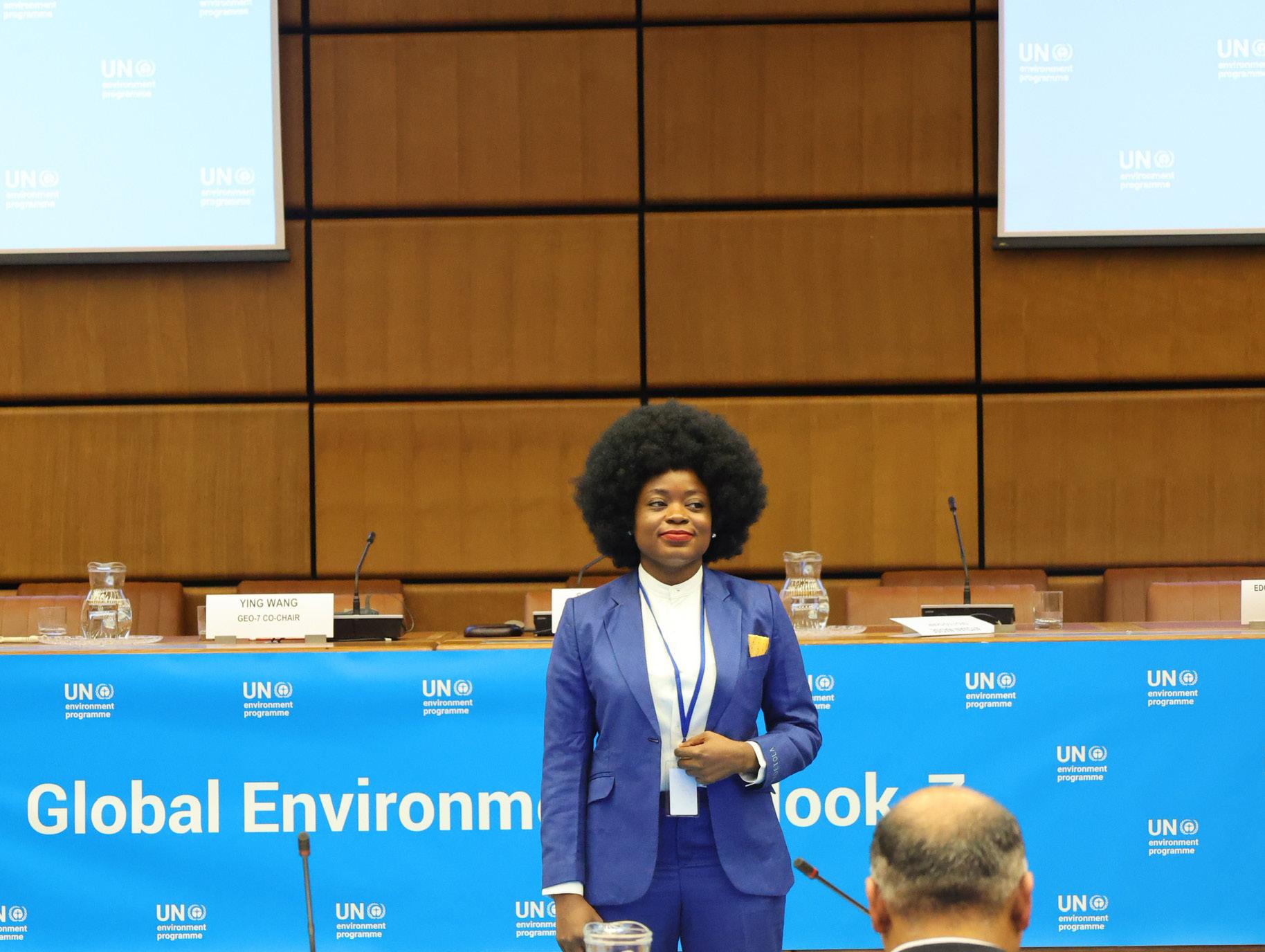
Meet Dr Adenike Akinsemolu, a leading voice in sustainability whose work focuses on the vital relationship between people and their environment. She is the Founder of The Green Institute, a UNEP-accredited organisation dedicated to translating large climate and environmental ideas into practical actions relevant to Nigeria. A National Geographic Educator and a Lead Author for the UNEP Global Environment Outlook 7 (GEO-7) report, Adenike is also a pioneer in the emerging field of green microbiology. Her passion is showing people that sustainability is not an abstract concept, but a pathway to better, healthier, and more intentional lives.
Dr Adenike Akinsemolu
Founder, The Green Institute
How would you describe the current state of the green economy in Nigeria, and What progress excites you the most right now?
I’d say Nigeria’s green economy is still emerging, but it’s definitely waking up. For a long time, sustainability felt like something happening elsewhere, but now it’s becoming part of everyday conversations, especially among young people. More Nigerians are asking questions about energy, food, waste, and how our cities affect our health and quality of life. What excites me most is the creativity I see on the ground. From solar startups and climate-tech solutions to recycling initiatives and sustainable agriculture projects, people are finding local answers to local problems. There’s a growing understanding that the green economy isn’t just about protecting the environment; it’s also about jobs, innovation, and living better. That shift in mindset is powerful, and it’s where real change begins.
Which sectors in Nigeria (energy, agriculture, waste, transportation, etc.) hold the greatest untapped potential for green-economy growth?
For me, it really starts with education.
Before we talk about energy, waste, or agriculture, we need to look at how people learn to relate to the environment in the first place. At The Green Institute, we’re already working with selected primary and secondary schools, using a green education curriculum that introduces sustainability in simple, practical ways. Children are learning early that the environment is something they belong to, not something separate from them.
Our hope is to see this approach integrated into Nigeria’s national education curriculum, so environmental awareness becomes a shared foundation rather than a niche interest. When you start from the ground up, you don’t just raise awareness, you shape mindsets. We’re already seeing how this mindset translates into real sectors. Some of our ambassadors are now innovating in renewable energy, waste management, sustainable agriculture, and green entrepreneurship. Education plants the seed, and from that seed, entire green sectors can grow. Beyond education, waste is a major opportunity in Nigeria. We generate millions of tonnes each year, with cities like Lagos producing tens of thousands of tonnes daily. Much of it ends up in landfills or waterways, but with the right systems, waste can drive job creation, cleaner cities, and circular businesses.
Energy is another untapped area. Despite abundant sunlight, millions of Nigerians still lack reliable power. Renewable energy, especially solar, can power homes, schools, and businesses while creating green jobs. When people are educated early to think sustainably, they don’t just look for work; they create solutions. That’s how the green economy grows.
Nigeria has rich natural landscapes. How can these spaces be better utilised to Promote eco-tourism, outdoor wellness, and green-job creation?
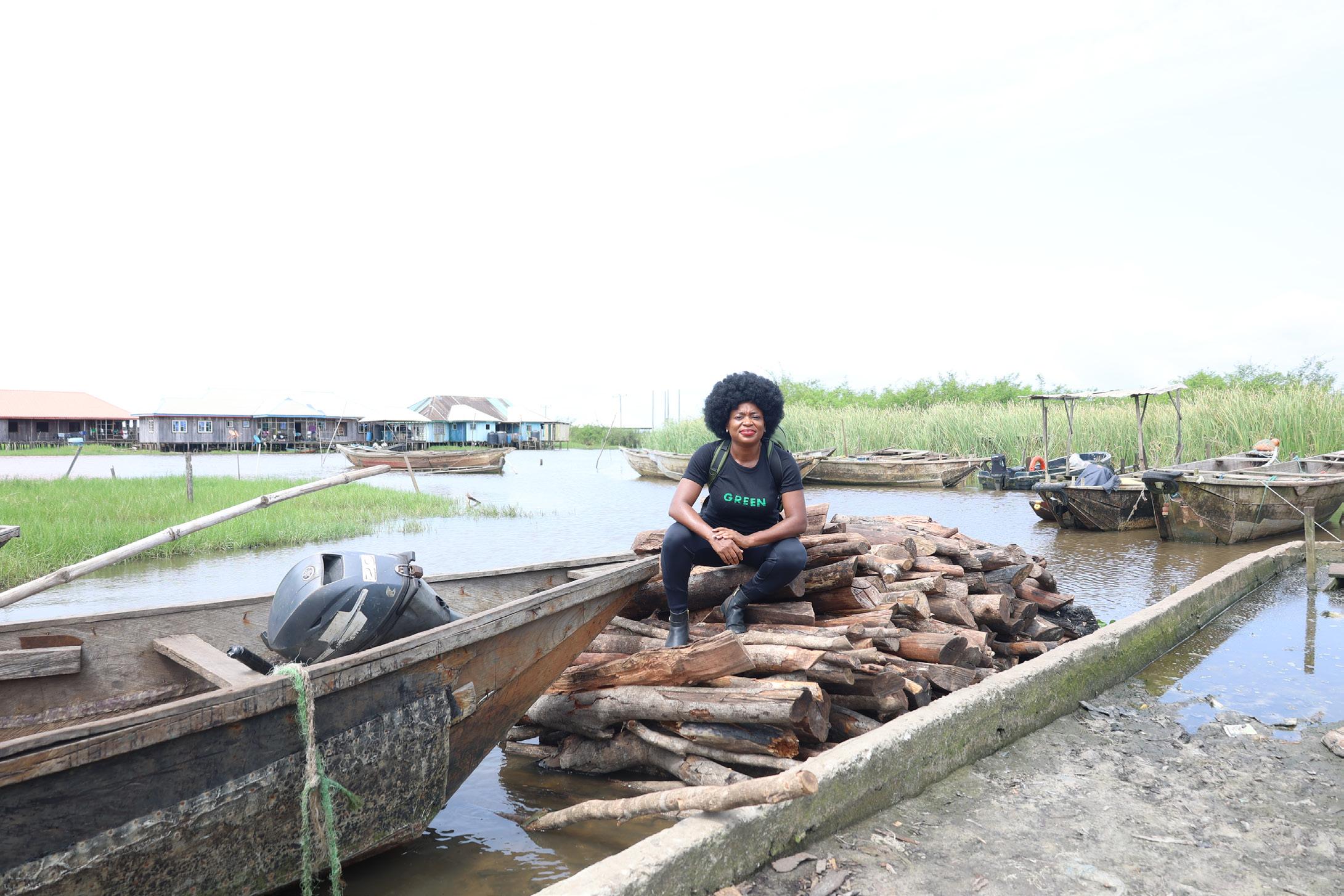
Nigeria’s natural landscapes hold incredible possibilities, especially when we choose to see them as spaces for care, connection, and opportunity. Take Ayetoro, the historic coastal community in Ondo State. While it faces serious challenges from coastal erosion, it also represents what is possible when nature, culture, and community come together. With the right support, places like Ayetoro could become centres for eco-tourism, coastal learning, and community-led conservation, preserving heritage while creating livelihoods. In Lagos, we already see how access to nature changes how people feel and live. Spaces like the Lekki Conservation Centre, beachfront walks,
and emerging urban green areas show how nature can be woven into city life, encouraging movement, reflection, and wellbeing. Expanding and protecting these spaces opens up opportunities for eco-tourism, outdoor wellness, and green jobs. When people feel what nature gives them: peace, space, relief, they begin to care about protecting it. With the right attention, these spaces can support healthier communities, real jobs, and a future that works for both people and the environment.
Do you believe integrating outdoor activities into school programs could influence Young Nigerians’ attitudes toward environmental stewardship?
Absolutely. When children spend time outdoors, their relationship with the environment becomes personal. That’s why we started the #OfficiallyGreen pledge, a simple commitment that encourages everyday care for the environment. What began as a local idea has grown into something with global reach, showing young people that small
actions matter. Outdoor experiences also support children’s well-being. Spending time outside helps with focus, emotional balance, and mental health, something that’s especially important for children growing up in busy, highpressure environments today. Many of us remember a time when being outside was part of everyday life. For me, riding my bicycle through the lush streets of Ondo town as a child shaped my love for nature long before I understood sustainability. When children have those experiences, protecting the environment comes naturally; it becomes something they care about, not something they’re told to do.
What practical strategies can be used to encourage Nigerians, especially youth, to Choose outdoor, eco-friendly activities over indoor or sedentary lifestyles?
The key is to make outdoor activities feel social, fun, and accessible, not like another responsibility. People are more likely to move when it feels joyful and shared. Community-led activities; cycling groups,
walking clubs, outdoor fitness meetups, and weekend hikes, create a sense of belonging as much as movement.
I’ve experienced this personally. When I joined a cycling group in Lagos, it wasn’t just about exercise. We rode together with music playing, met new people, laughed, and afterwards shared moments, sometimes ending the day with suya at places like Glover Court. Those simple experiences made being outdoors something to look forward to.
The same goes for quieter moments. In Ondo town, hiking activities and earlymorning Meditation at Nibanola Resorts reminds me how restorative nature can be. These spaces offer calm, clarity, and connection, things many young people are searching for. When outdoor activities are tied to friendship, culture, music, food, and wellbeing, they stop feeling like “exercise” and start feeling like life. Create safe spaces, support local outdoor communities, and celebrate these moments, and people will naturally choose to step outside more often.
When people feel what nature gives them: peace, space, relief, they begin to care about protecting it. With the right attention, these spaces can support healthier communities, real jobs, and a future that works for both people and the environment.
Interview Babajide Ajijola Serial Entrepreneur
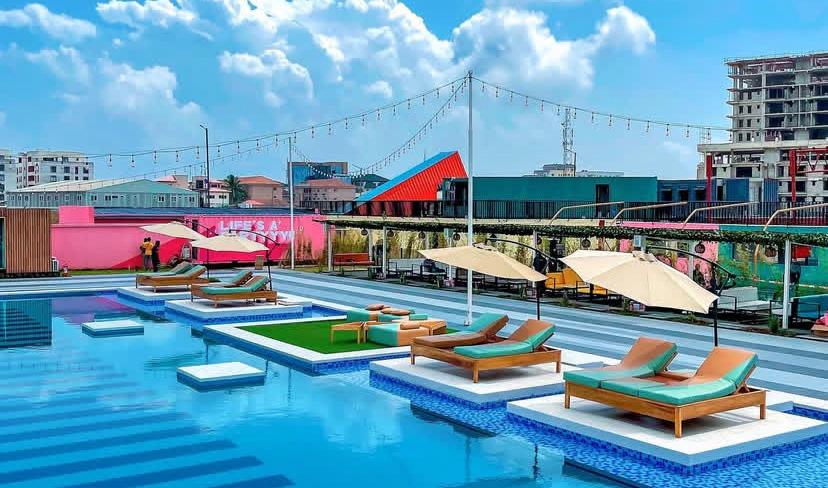
What inspired the creation of Varuna by The Good Beach, and what does the name “Varuna” mean to you in the context of this space?
Varuna by The Good Beach was inspired by a desire to recreate the magic, energy, and sense of community that our guests associated with The Good Beach in Lagos, especially after its unexpected closure. We saw how much people valued that space, not just as a leisure destination but as a place of connection, culture, and escape. When the opportunity came to build something new in Abuja, we wanted to bring that same spirit to the nation’s capital, but with a more refined, intimate, and elevated approach.
The name “Varuna” actually has a personal history for us. It was first suggested during our Lagos operations by one of my partners on The Good Beach project, Tunji Dania. The name resonated because of its symbolic depth. Varuna, often associated with water, balance, and harmony, captures the essence of what we aim to create - an environment where serenity meets vibrancy. Ultimately, Varuna by The Good Beach is our way of bringing a coastal state of mind inlandcombining nature, hospitality, and design to create a destination that
Babajide Ajijola
Serial Entrepreneur
Meet Babajide Ajijola, a visionary leader operating at the intersection of architecture, project development, and hospitality experience design. With over 15 years of expertise in architecture and construction, his focus has shifted to developing and managing hospitality concepts that deliver exceptional guest experiences. As a Partner at Skyview Hospitality Partners Limited, he drives the creation of vibrant leisure and lifestyle destinations, including notable projects like The Good Beach and Varuna by The Good Beach. Babajide’s approach blends architectural insight with operational execution to transform ideas into commercially sustainable, memorable hospitality venues across Nigeria.
Outdoor experiences, whether it’s a beach, an open-air lounge, a pool, or simply being near water, play an incredibly powerful role in supporting mental health and overall wellness, especially for people living in fast-paced, high-pressure cities.
feels both grounding and inspiring.
When did the idea of Varuna first form, and why did you feel it was important to bring this kind of outdoor, restorative experience to Nigerians?
The idea of Varuna actually began to take shape while we were still operating The Good Beach in Lagos. At the time, our large pool area was called Varuna Lagos, and it quickly became one of the most loved and distinctive parts of the entire beach experience. People connected deeply with the atmosphere there: the openness, the water element, the feeling of calm in the midst of a very vibrant environment. That energy made us realise that Varuna had the potential to evolve into something much bigger. When The Good Beach Lagos was shut down due to the coastal road project, it became clear just how important that kind of outdoor, restorative space was for people. Nigerians deal with intense work schedules, urban stress, and limited access to quality leisure environments where they can truly unwind. We saw firsthand how much guests valued having a place that offered escape, relaxation, and connection.
The
So bringing Varuna to Abuja felt like a natural next step, an opportunity to reintroduce that same spirit, but in a more intimate, elevated, and intentionally designed form. For us, Varuna represents an oasis where people can breathe, reset, and enjoy nature-infused hospitality in a way that is still quite rare across the country.
How do the natural surroundings, design, and ambience at Varuna contribute to mental, emotional, or physical restoration for visitors?
At Varuna, we were very intentional about creating an environment that supports mental, emotional, and even physical restoration. The entire space was designed around the idea of allowing people to breathe, slow down, and reconnect with themselves in a way that everyday city life rarely allows.
First, the natural surroundings play a huge role. The open-air layout, greenery, and water elements create an immediate sense of calm. Nature has a grounding effect; it reduces stress levels, improves mood, and helps people feel more present. Even something as simple as sitting by the water or feeling the breeze can have a profound restorative impact.
Second, the design philosophy at Varuna emphasises flow, openness, and comfort. We avoid harsh transitions or overly busy structures. Instead, we use soft textures, warm tones, and natural materials to create a soothing visual and tactile experience. Every seating area, pathway, and viewpoint is curated to feel effortless and welcoming, encouraging guests to unwind without feeling rushed or overstimulated.
Music also plays a key role in shaping the ambience. Our music is carefully curated,
ranging from chill house to Afrobeats, to blend seamlessly with the natural environment. The music helps guests relax mentally and emotionally, creating a steady rhythm that enhances the restorative feel of the space.
And beyond calm and relaxation, Varuna is also designed to uplift and energise. Our space transforms beautifully for parties and events, offering guests the opportunity to celebrate, connect, and create memories in a vibrant yet refined outdoor setting. Whether it’s an intimate gathering, a lively social event, or a curated nightlife experience, Varuna strikes the perfect balance, allowing people to enjoy high-energy moments while still feeling grounded by the openness and natural charm of the environment.
Ultimately, the ambience ties everything together. From lighting to music to service style, every detail is crafted to create a place where guests can reset, reconnect, and experience joy in different forms, quiet relaxation, social bonding, or celebratory moments.
In essence, Varuna is designed as a sanctuary and a destination. It offers a break from urban stress, promotes emotional balance, and gives people an opportunity to recharge or celebrate - through nature, design, curated music, meaningful gatherings, and intentional hospitality.
In the spirit of our magazine’s theme “The Year of You”, what advice would you give to someone who’s never visited a place like Varuna but feels curious: how should they approach it to get the full benefit (reset, healing, restoration)?
I would say the best way to approach Varuna, especially if you’ve never experienced a space like it, is to come with an open mind
and give yourself permission to slow down. We live in a world that constantly demands our attention, our energy, and our time, so the first step to getting the full benefit of a place like Varuna is simply allowing yourself to pause.
Start by arriving without expectations. Don’t think about the next meeting, the traffic, or your to-do list. Let the environment guide you. Walk around. Take in the water, the breeze, the greenery. Your body naturally starts to release tension when you’re surrounded by elements that feel safe, open, and calming. Find a spot that resonates with you. Some people prefer to sit by the water, some enjoy the shaded lounges, our newly opened restaurant space and others feel restored just by listening to the music and watching the space come alive. Varuna is designed with different “moods” in mind, so choose the one that speaks to how you feel in the moment.
Let yourself be present. Order a drink you genuinely enjoy. Listen to the curated music. Put your phone down for a bit. Give your mind the freedom to wander or to be still, whichever it chooses. If you crave connection, lean into it. Come with a friend or meet new people. Varuna also offers social and energetic experiences, especially during our events and parties, that can be incredibly uplifting. Sometimes restoration comes from joy, laughter, or celebrating life with others. Most importantly, treat it as your time. Whether you’re seeking healing, clarity, rest, or just a beautiful change of scenery, Varuna gives you the space to experience whatever “reset” looks like for you. Create moments that feed your spirit, not just your schedule. At the end of the day, the full benefit of Varuna comes when you allow yourself to just be - unrushed, unpressured, and fully connected to the moment. That’s where restoration truly begins.
Interview
Dr. Maymunah Yusuf Kadiri
Neuropsychiatrist
M
eet Dr. Maymunah Yusuf Kadiri, the “Celebrity Shrink” redefining mental healthcare across Africa. As the Medical Director of Pinnacle Medical Services, she is a Consultant Neuropsychiatrist and Addiction Expert with nearly 20 years of experience.
From founding Africa’s first health radio to producing award-winning films on depression and drug abuse, she blends science with storytelling to save lives. A global Fellow of Aspen and Vital Voices, Dr. May is a powerful force in mental health advocacy and digital health innovation.
Dr.YusufMaymunah Kadiri
Neuropsychiatrist
As a leading mental health advocate and psychiatrist in Nigeria, what does “wellness” mean to you now, physically, mentally, and emotionally, given the work you do in advocacy and therapy?
Wellness, to me now, is no longer perfection or balance. It is alignment. After years of clinical work, advocacy, and sitting with people in their most vulnerable moments, wellness has become quieter, deeper, and more honest for me. Physically, wellness means listening to my body before it starts screaming. It’s rest without guilt. Movement for strength, not punishment. It is saying no to schedules that glorify exhaustion. I’ve learned that a tired healer helps no one. My body is not just a vehicle for work; it is part of the work. Mentally, wellness means mental clarity over mental noise. It’s choosing focus over frenzy, depth over constant visibility, and boundaries over overcommitment. It’s knowing that I don’t have to carry every story I hear home with me. I can care deeply without being consumed. Emotionally, wellness is emotional honesty with myself. Naming when I’m tired. Acknowledging when something hurts. Allowing myself to feel joy without waiting for permission or productivity. It’s staying soft in a world that often demands hardness, without becoming fragile.
At this stage of my life, wellness is:
• Being present, not just productive.
• Being impactful, not everywhere.
• Being grounded, not constantly proving.
• Being whole, not heroic. Advocacy taught me urgency. Therapy taught me compassion. Life
taught me sustainability. So today, wellness is this: living in a way that allows me to keep showing up for others and for myself without losing who I am in the process. That, to me, is true wellness now.
We are exploring the idea that being outdoors, on beaches, in open spaces, in fresh air, and movement can support mental health. From your professional and personal view, how powerful can stepping outdoors be in helping Nigerians find balance and healing?
From both my professional experience as a psychiatrist and my personal journey as a Nigerian woman living and working in a highpressure environment, I can say this with conviction: stepping outdoors is one of the most underrated, accessible, and powerful mental health interventions we have in Nigeria. Professionally and clinically, we know that the brain responds to light, movement, space, and rhythm. When people step outdoors, even briefly, several things happen at once:
• Stress hormones begin to reduce.
• Breathing deepens naturally.
• The nervous system shifts from survival mode to regulation.
• The mind gets a break from constant stimulation and noise. For many Nigerians who may not yet access therapy, medication, For many Nigerians who may not yet access therapy, medication, or structured mental health care, nature becomes the first line of healing. A walk, fresh air, sunlight, or simply sitting under an open sky can interrupt cycles of rumination, anxiety, and emotional overwhelm.
Personally, outdoor spaces remind me to slow down and return to myself. In a country where life is fast, loud, and often demanding, stepping outside by the beach, in an open park, or simply walking without urgency creates mental spaciousness. It’s where I breathe differently, think differently, and feel human again. Sometimes healing doesn’t come from doing more. Sometimes it comes from stepping out. In the Nigerian context, this is especially powerful because:
• Our lives are highly communal and energetic, but also mentally exhausting.
• Many people live with chronic stress, financial pressure, and uncertainty.
• Movement outdoors reconnects people to joy, play, and presence, things stress steals quietly.
You don’t need a diagnosis to benefit from fresh air. You don’t need permission to step outside. You don’t need “therapy language” to feel better after movement and sunlight. What stepping outdoors really does is remind the body that it is safe, remind the mind that there is space, and remind the heart that healing doesn’t always have to be heavy.
My honest belief is that for Nigerians, especially, the outdoors can be “therapy before therapy.” It is not a replacement for professional care, but it is a powerful companion to it. Sometimes balance begins with something very simple: step outside, breathe, and move. Let your nervous system remember that life is bigger than the stress you’re carrying. That small step can be the beginning of healing.
What kinds of outdoor or lifestyle activities would you recommend for someone wanting to improve or maintain mental balance, reduce stress, or avoid burnout?
As a psychiatrist who has worked for years with high-performing, exhausted, yet resilient people, this is something I say often:
“Mental balance is not restored only in therapy rooms. Very often, it is restored in how you live.”
Here are outdoor and lifestyle activities I consistently recommend, not as trends, but as protective mental health habits::
• Intentional Walking (Not “Exercise” Walking): Slow, unhurried walks without calls, scrolling, or pressure to hit step targets. This regulates the nervous system, lowers
cortisol, and allows the mind to settle naturally. It is one of the simplest ways to exit “fight or flight.”
• Time Near Water: Sitting by the beach, watching waves, or even watching running water. Water has a grounding effect on the brain. It slows racing thoughts and restores emotional rhythm. This is neurobiology at work.
• Gentle Movement Outdoors: Yoga, stretching, cycling, swimming, or light jogging in open spaces. This combines physical release with sensory regulation.
• Gardening or Plant Care: Even if it’s just a small balcony plant or backyard soil. Caring for something living restores patience, presence, and purpose. It’s deeply therapeutic for those who feel emotionally depleted.
• Sunlight Exposure: Spending 10–30 minutes in natural light daily (ideally morning or late afternoon). Sunlight regulates sleep cycles, mood, and energy. Many mood issues worsen simply because people rarely see daylight.
• Social Outdoor Connection: Picnics, group walks, or outdoor conversations. Connection heals best when it feels light and pressure-free.
• Digital Detox Time: Leaving phones behind while outdoors. Constant alerts keep the brain in a heightened state; silence allows for emotional processing.
• Creative Outdoor Expression: Writing, sketching, or photography outdoors. Nature provides psychological permission to express and release without overthinking.
• Breathing & Stillness Practices: Sitting quietly or practising mindfulness under open skies. The nervous system calms faster in open spaces than in forced silence indoors.
• Rest Without Guilt: Doing nothing outside lying down, sitting, or watching the sky. Burnout often comes from never stopping. Rest is not laziness; it is maintenance.
My Professional Truth: You don’t need to be “unwell” to need these practices. They are preventive mental health care. If life feels heavy, don’t immediately ask, “What’s wrong with me?”
First ask: “When was the last time I breathed fresh air, moved my body gently, and allowed my mind to rest?”
What are some common habits or mindsets in Nigeria, especially among youth, that you believe are harmful to mental wellness and should be reconsidered, especially when we think of self-care and intentional living in 2026?
There are a few patterns I see often:
• Stigma around vulnerability: Many still view emotional struggle as weakness, which discourages honest conversation and helpseeking. We must stop the stigmatisation; speaking out is a sign of power.
• Social comparison culture: Especially among youth, constant comparison on social media regarding education and careers can fuel anxiety, self-doubt, and burnout.
• Neglect of rest: There’s a misplaced pride in constant busyness, but productivity without rest leads to exhaustion and lowered creativity. We must find time to recharge.
• Suppression of emotions: Instead of processing emotions, many push feelings down or distract themselves, which deepens distress over time.
Reconsidering these mindsets is essential. Selfcare is not selfish; it’s survival. It is intentional living with awareness, boundaries, and kindness towards our inner world.
For someone who is curious but maybe intimidated to begin taking care of their mental health or adopt wellness habits, what small first steps would you recommend that could start shifting their mindset or lifestyle?
The beginning can feel scary, but tiny steps create momentum. Start with these simple practices:
• Start with your breath: Take three deep breaths before getting out of bed. This anchors you in the present moment.
• Check in with yourself daily: Ask, “How am I feeling right now?” and permit whatever answer comes.
• Move your body for 10 minutes a day: A walk, stretch, or dance session, whatever feels joyful.
• Talk to someone safe: A friend, family member, or counsellor. Just saying how you feel out loud matters.
• Create small routines: A pause before meals, a short gratitude list, or stepping outside for air. Consistency matters more than intensity.
Caring for your mental health is not a single event; it’s a series of kindnesses you give yourself. The fact that you’re here, taking a moment to think about it, is already a beautiful first step.
You don’t need a diagnosis to benefit from fresh air. You don’t need permission to step outside. You don’t need “therapy language” to feel better after movement and sunlight
By: Matildah
TOP 10 PLACES FOR HIGH-ENERGY/ IMPACT ACTIVITIES IN LAGOS
Lagos is full of energy, and its fitness culture reflects that. From group workouts to high-speed sports, the city offers endless ways to break a sweat while having fun. Whether you’re a beginner exploring something new or a fitness lover ready to level up, these spots will get your heart racing. Here are the top 10 places to experience high-impact activities in Lagos.
PureFitness Africa (Lekki)
1
PureFitness Africa delivers high-energy, community-driven workouts that feel like a party. From upbeat Zumba sessions and HYROX-inspired conditioning to Body Pump strength classes and exciting outdoor trampoline training, every session guarantees intensity and sweat. Motivating coaches, dynamic music, and a supportive atmosphere make it perfect for both beginners and seasoned athletes looking for a stimulating full-body routine.
The Padel Club Lagos (Ikoyi)
A fast-growing racquet sport that blends tennis and squash, padel is a social, competitive, and easier-to-pick-up alternative to traditional tennis. The Padel Club Lagos offers top-quality courts in a lively setting where you can rally, smash, and score with friends. Regular matches, group sessions, and events make the club a buzzing fitness hotspot for all skill levels.
2
Lagos Lawn Tennis Club (Onikan)
3
With a rich heritage and professional-standard courts, Lagos Lawn Tennis Club remains a standout destination for tennis lovers. Players can sharpen their agility, speed, and coordination while enjoying competitive rallies and club tournaments. The atmosphere is both social and athletic, making it ideal for anyone looking to elevate their skills and soak in the tradition of Lagos tennis culture.
Lagos Motor Boat Club (Ikoyi)
For a thrilling twist on fitness, Lagos Motor Boat Club delivers high-speed water adventures. Powerboating challenges balance, endurance, and quick reaction timing as you race across the lagoon. Whether you’re learning technical handling or engaging in fast-paced water sport experiences, this is where adrenaline meets elegance with waterfront views adding to the excitement.
4
Golf X at Lakowe Lakes (Ibeju-Lekki)
Golf X combines sport and entertainment with high-tech golf simulation experiences. Players swing against virtual targets, compete with friends and practice powerful drives in an interactive arena. It’s a fun way to build endurance and precision while enjoying upbeat vibes. Whether you’re new to golf or returning to the sport, it’s an engaging and energetic outing.
Lagos Polo Club (Ikoyi)
Polo brings an unmatched level of athletic intensity, commanding strength, focus, and teamwork while riding at speed. Lagos Polo Club offers thrilling chukkas, fast-paced manoeuvres, and spectacular horsemanship. Spectators enjoy the lively social scene, while participants develop agility and coordination in a truly elite sporting environment.
Leisure Sports Paintball (Lekki)
If you love strategy and speed, paintball is the ultimate high-adrenaline challenge. At Leisure Sports Paintball, groups dive into thrilling combat-style games filled with rapid sprints, tactical teamwork, and fast reactions. It’s intense, competitive, and perfect for building teamwork. Expect lots of laughter, close calls, and a serious full-body workout.
Showtime Arena Flag Football (Lekki)
6
Flag football brings intense speed, quick direction changes, and coordinated plays without the heavy contact. Showtime Arena provides athletes with the ideal setting to sprint, dive, defend, and catch passes under the lights. The enthusiastic crowd and team rivalry turn every match into a high-energy experience that pushes agility and cardio to the limit.
Lekki Volleyball Club
Lekki Volleyball Club brings high-energy action to the outdoors with structured training and friendly matches on its open-air courts. Welcoming all skill levels, the club’s sessions blend drills, teamwork, and competitive gameplay. It’s a great way to stay active, build stamina, and meet new people. With a lively community and exciting tournaments, this club turns volleyball into a fun lifestyle experience.
Herel Play (Victoria Island)
8
Herel Play is a dedicated five-a-side football arena where intensity never drops. Quick passes, tight footwork, and continuous attacks keep players constantly moving. With friendly matches, competitive tournaments, and an energised crowd vibe, it’s the perfect outlet for those who love fast-paced sport and a strong team atmosphere.
Step out of your comfort zone and dive into the lively and energetic. Your next adrenaline rush is waiting!
By Chef Highspirit (Aliu Azeez)
Chef and Founder, Guts Smoke & Fire
IG: @high_spirit001
EDO BLACK SOUP
Edo Black Soup is a rich, herb-forward dish made from a blend of scent leaf, pumpkin leaf, uziza, and parboiled bitterleaf. These greens are combined with palm oil, optional palmnut extract, and locust beans to create a smooth, aromatic soup with natural depth.
It also offers notable health benefits: scent leaf supports digestion, pumpkin leaf helps improve blood health, uziza aids metabolism, and bitterleaf promotes detoxification.
Ingredients
Fresh Leaves
Scent Leaf
Pumpkin Leafs
Uziza (Hot Leaf)
Bunch Bitterleaf (parboiled before use)
Base & Oils
Palmnut Extract (optional)
2 Cooking Spoon Palm Oil
Seasoning
Cube Seasoning
Locust Beans
Proteins
Dry Fish, Tilapia
Goat Head, pieced (or other meats of choice)
Blends
Crayfish, blended with the leaves
Blended Fresh Peppers
Instructions
Select three leaves from the listed options. Wash thoroughly, then blend them together with the crayfish and fresh pepper into a smooth paste using a little water.
If using bitterleaf, boil it briefly with potash, rinse thoroughly to remove bitterness, and blend before use.
Cook the protein (Tilapia) or any protein of your choice in water to create a flavorful stock, then add the blended leaf mixture directly into the meat stock.
CHEF HIGHSPIRIT
Incorporate the remaining ingredients: add palm oil, seasoning or salt, the bony fish, and seasoning cubes. Adjust seasoning to taste and allow the flavours to combine.
Adjust the consistency of the soup so it is slightly light and not too thick.
For the most authentic flavour, select your leaves from Scent Leaf, Uziza, and Bitterleaf.
Biography
Chef Highspirit (Aliu Azeez) is a Nigerian grill master, culinary artist, and founder of Guts Smoke & Fire. Trained at Dee Culinary Institute, he’s known for bold, fire-driven flavours and fine-dining technique. Winner of Delicious or Disaster Season 1, Episode 2, he has been featured on major platforms and spoke at the Nigeria Food Summit 2025. A brand ambassador for Grill Makers Nigeria and Nuden Poundo, he continues to elevate Nigerian grilling with creativity, precision, and viral fire-cooked dishes.
By Chef Highspirit (Aliu Azeez)
Chef and Founder, Guts Smoke & Fire
IG: @high_spirit001
SQUID INK PRAWN BISQUE
Ingredients
For the Stock (Prawn Shell Base)
1 kg fresh prawns (heads & shells reserved)
2 tbsp vegetable oil
1 onion, chopped
2 sticks of celery, chopped
2 carrots, chopped
4 cloves garlic, smashed
1 tbsp tomato paste
1 small bay leaf
1 tsp black peppercorns
A splash of brandy (optional but recommended)
1 litre of water or seafood stock
For the Bisque
3 tbsp butter
2 tbsp flour (for roux)
1 small leek (white part only), sliced
1 cup heavy cream
1–2 tbsp squid ink (adjust for colour & depth)
½ tsp smoked paprika
Salt, to taste
A pinch of cayenne pepper Lemon juice, to finish
For Garnish
4–6 prawns (kept whole, sautéed or grilled) Drizzle of cream
Chives or micro herbs
Croutons (optional)
Instructions
Prepare the Prawns
Peel the prawns and set aside the flesh. Keep shells and heads for stock, that’s where the flavour is.
Make the Prawn Stock
• Heat oil in a pot.
The Squid Ink Prawn Bisque is a bold twist on classic seafood flavours. Rich, umami-packed, and deeply satisfying, it combines the succulent texture of prawns with the earthy depth of squid ink. Every spoonful is indulgent, surprising, rich, velvety, and ocean-deep in flavour.
Build the Bisque Base
• In a clean pot, melt butter.
• Add leek and sauté gently until soft and fragrant.
• Stir in flour to form a light roux.
• Slowly whisk in your strained prawn stock, keep whisking to avoid lumps.
• Add smoked paprika, cayenne, and salt.
• Simmer gently for 10–15 mins until slightly thickened.
Add Squid Ink + Cream
• Stir in squid ink until you get that deep black-blue ocean colour.
• Add cream and reduce the heat to low.
• Add prawn shells/heads and roast until they turn bright red and aromatic.
• Add onion, celery, carrots, and garlic. Sauté for 5 mins.
• Add tomato paste and roast for 1 minute.
• Deglaze with a splash of brandy.
• Add water or seafood stock, bay leaf, and peppercorns.
• Bring to a boil, lower the heat, and simmer for 35–40 mins.
• Strain and keep the liquid.
• Discard shells and vegetables.
CHEF HIGHSPIRIT
• Add your peeled prawns (the flesh) and simmer for 3–4 minutes until just cooked.
• Blend the entire mixture (optional for ultra-smooth finish).
• Taste and balance with a splash of lemon juice.
Final Touch
• Grill or pan-sear the whole prawns for garnish.
• Ladle bisque into a warm bowl.
• Garnish with whole prawns, a swirl of cream, micro herbs, croutons, or edible gold if you’re going fine-dining.
Chef Highspirit (Aliu Azeez) is a Nigerian grill master, culinary artist, and founder of Guts Smoke & Fire. Trained at Dee Culinary Institute, he’s known for bold, fire-driven flavours and fine-dining technique. Winner of Delicious or Disaster Season 1, Episode 2, he has been featured on major platforms and spoke at the Nigeria Food Summit 2025. A brand ambassador for Grill Makers Nigeria and Nuden Poundo, he continues to elevate Nigerian grilling with creativity, precision, and viral fire-cooked dishes.
Photo of The Month
Compelling Images from Nigeria
PEACE AT THE PEAK
Nature has a way of grounding you without asking for permission. Nothing about this moment was planned: it was simply me, on a lonely ridge, letting the mountains wash the noise off my mind. This image freezes that exact breath, the one where the world feels impossibly huge, yet unexpectedly gentle.
ABOUT THE PHOTOGRAPHER
Caleb Lazarus is an outdoor adventurer and storyteller from Nigeria, known for capturing reflective moments found in nature. He camps, hikes, and travels, documenting sunrise, misty mornings, wildlife, and the beauty of nature that many people overlook. His photography is minimal, honest, and deeply personal, rooted in the belief that nature is both a sanctuary and a teacher. His work blends solitude, faith, and wild landscapes, focusing on the emotional connection between humans and the outdoor space.
IG: @caleblaz TikTok: @caleblaz
Volume 10.4 January 2026
Jos: The outdoor Lovers Haven
Returning to Self
The Lagos That Heals You
By Chukwukere Nwovike Writer and Trainer
IG: @chukwukere_n
IThe Lagos That Heals You
didn’t expect to find healing in this city. There are plenty of synonyms for Lagos, but Peace? Healing? Definitely not one. Rich Lagosians escape to their soft-life locations, return refreshed, and call it balance. But how does the average Lagosian heal?
The hospital? Hold on, let me Google if the doctors are still on strike… right, they are. Okay, maybe a small private hospital then. Oh, found one! Now I just need to get there alive. Let’s assume the cab isn’t one chance and I’m not murdered. Then there’s sixhour traffic, clutching my phone as my life depends on it, while the noise batters my ears like a generator fighting for its last breath. But don’t worry, I’m used to that.
It’s the policemen I may meet, or the agbero, that still spikes my anxiety. One of them. Or both. I’m always on edge. Almost like… Never mind. But here’s the twist: I didn’t need the hospital after all. The healing I eventually found had nothing to do with medication, and I want to help you find yours, too, especially since many of us go searching for it in places it doesn’t live.
It’s sad, honestly, that Lagosians go through life believing this constant fight-or-flight mode is normal. We don’t notice how quietly our bodies have changed. Like how your breathing shortens on Third Mainland Bridge even when you’re not afraid.
Our nervous system is permanently half-alert. A Lagosian learns to function in noise the same way a child learns to crawl, instinctively. You internalise stress as a personality. You forget what your body feels like when it isn’t bracing for something.
A while ago, I went through a phase I can’t completely describe - I felt suffocated and drained. I thought I was ill. I ran tests. Everything came back normal. So what was wrong?
It turns out I just needed to go… outside. Simple things like opening my windows and letting natural light in made my chest feel lighter. Then I started walking my dog every evening, and that’s when the healing quietly began. Who knew that strolling down my own street, music in my ears and my dog trotting beside me, could feel so therapeutic? Then I added early-morning runs, when the city was still asleep. It felt like discovering healthy cocaine. The morning breeze was… freeing. I just wanted to keep going. For a moment, I saw a Lagos I had never known. A healer.
But cycling was the real breakthrough. The first time I pedalled down Lekki-Epe Expressway, the feeling was euphoric. For a moment, I forgot everything that was weighing me down. I escaped. I didn’t know it at the time, but it was healing. It’s like your phone going off and pushing you into real life again. Walk, run, ride, whatever brings you back. There’s life beyond the hustle. Find your rhythm. Lagos may never sleep, but, ogbeni… You can.
LOST IN NIGERIA
Lost in Nigeria? No worries, as we’ve got you covered. Explore the diverse and captivating points of interest scattered across the country, curated just for you. Whether you’re seeking cultural immersion, outdoor escapades or culinary delights, we handpick a selection of upcoming experiences for you to discover and indulge in every month.
ART X Lagos
This November, Lagos lights up with stories told in colours and texture, as Art X returns. It’s a living gallery where artists, collectors, and dreamers meet. There’s art to see, people to meet, and moments to feel. Come discover new voices and the creative pulse shaping the continent. Lagos is calling, and the canvas is open.
6th–9th November, 2025 | Lagos
Entertainment Week Africa (EWA)
All the rhythm, creativity, and energy of Africa’s entertainment scene comes alive at EWA. For one week, Lagos turns into a playground for music, film, fashion, and ideas that move culture forward. It’s where imagination meets opportunity, and everyone with a story or a sound finds a stage. If you live for art, rhythm, or inspiration, this is your moment.
18th–23rd November, 2025 | Lagos
Frame First
In Abuja this November, Frame First brings together artists, illustrators, writers, and creators who build new worlds through imagination. There will be panels, showcases, and conversations that remind you why you fell in love with creating in the first place. If storytelling moves you, this is your space to listen, learn, and belong.
22nd November, 2025 | Abuja
Ake Arts and Book Festival
There’s a quiet magic that fills the air at Ake Festival as a reminder of how powerful stories can be. It’s a gathering of writers, poets, and thinkers who come together to explore identity, creativity, and truth. Come for the books and ideas, stay for the warmth and connection. Every page opens a door.
20th-22nd November 2025 | Lagos
NAFEST (National Festival of Arts and Culture)
Nigeria’s heartbeat takes centre stage at NAFEST. Each state brings its colours, rhythms, and crafts to create one grand celebration of who we are. From performances to traditional food and fashion, it’s a week of rediscovery and pride. If you want to feel the soul of Nigeria, this is where it happens.
22nd-29th November | Enugu
By Maryam Ayooluwa Agoro Freelance writer. IG: @baby_lawyerrr
TReturning to Self
he beginning of the year always arrives dressed in the brightest colours; full of smiles, glittering with hope, and the promise that this might finally be the year you encounter a breakthrough. January is that friend who believes in you more than you believe in yourself. She makes an appearance in motivation, warm hugs, soft kisses planted on your forehead, and a map with your dreams marked out, ready to be set into motion.
More than signifying a new beginning, the first day of the year has a peculiar festive tone in Nigeria. The gift of family is cherished as families come together to reunite and bask in the joyful atmosphere. Laughter fills the compound, the women bond over the task of filling everyone’s belly, fathers are up, and about trying to set everything in order with their pockets bleeding heavily, then the cousins fill each other in on what a year it has been while running errands at intervals.
Cut out from the festive period, you are seated at the study table in your apartment, back rested on an armrest, shades fitted firmly at the bridge of your nose. To your right lies a book you abandoned mid-chapter to doomscroll, its spine folded open waiting for your return. You are encapsulated in the season of gratitude through the Thanksgiving service across your social media feeds. People are counting their blessings, cherishing the gift of life and the privilege of being able to witness another year.
You let out a puff of air you didn’t know you’ve been holding as your mind drifts to 2025, a year you hope not to encounter again. The year you confined yourself to a cave, isolated from family, distant from friends, forgetting what joy tastes like. You flip open your confidant; its blue, smooth cover is familiar beneath your hands as you brush through your name etched neatly at the bottom-left corner. You skim through the pages that held the aching words, rants, schedules, wishes, depths of your frustration and little drops of salty water that formed the core of your 2025.
You turn a new leaf. This page feels different. It is no longer a dumping ground for survival but a page that would bear the resolutions and actionable steps of your transformation. As you write with urgency into your journal, you hope to etch into it your very being, to serve as a reminder of the things that brighten your world.
Morning jogs flood your veins with adrenaline needed to kickstart your day. How hanging out or going places with your friends lifts your spirit, making you feel valued and seen. How immersing yourself in art, books and poetry makes you calm and vibrant. There and then, you decide; 2026 is for reigniting your spark and reclaiming the activities that make you, you.
More than transformation, 2026 is for touching grass, and you hope to touch it often.
By Timothy Kunat Founder, Discover Jos IG and TikTok: @discover_jos
Jos: The outdoor Lovers Haven
The first thing you notice in Jos is the air. As soon as you step out of the plane or as you begin to ascend the highlands of the plateau during your drive, you feel it, that cool, clean air fills your lungs, and you know you’ve arrived at one of the most amazing places in Nigeria.
If you’re a sucker for the great outdoors, Jos offers some of the most exciting experiences that leave you feeling calm and in awe. Providing a much-needed break from the constant life of excessive screen time, fostering a deeper connection with nature, enhancing creativity and focus and keeping you grounded in the moment.
Here are some of my favourite outdoor activities that always feel like I’m hitting the jackpot:
Hiking: long walks and climbs up the rocky Jos plateau terrain, especially in the company of friends or other hikers. The altitude works gently on your lungs, the cool air clears your mind, and before long, the movement becomes meditation. Shere hills, Gwash and Mazah hills are a crowd favourite, and the view from the top, absolutely breathtaking.
Bird Watching: Jos is home to over 300 species of Nigeria’s 900 bird species, making it the perfect location for bird watching. Spending time with the local birding group turns the outdoors into a classroom of wonder. Equipped with a pair of binoculars, you learn to observe closely, listen carefully, and appreciate the beauty of small, fleeting moments.
Chasing Waterfalls: There’s something deeply soothing and satisfying about the sound of water charging through the hills, and it’s even more exhilarating when you can get into the water and be refreshed by the cold streams pouring over your head. Few things are as therapeutic as this experience.
Strawberry picking and Gardening: Sunny afternoons on the farms picking strawberries or other fruits, washing and tossing them into your mouth, trimming the roses, planting Chrysanthemums and Hydrangeas or just connecting with the soil can really feel like a stress reliever, especially when I have creative block.
Watching Sunrise and Sunset: Jos has some of the most beautiful sunrises and sunsets I’ve ever seen, especially during the dry season, and you’ll often catch me around the lakes in the evenings watching the range of colours in the sky go from beautiful golden to a mix of colours in the evening sky.
There are still picnics, cycling through calm neighbourhoods, camping under star-filled skies, and long walks through open fields. But what makes Jos special isn’t just the range of outdoor activities; it’s how naturally they fit into everyday life. Here, nature doesn’t feel curated or distant. It’s accessible, generous, and deeply restorative.
So when next you’re thinking about time in the Outdoors, Jos definitely has to be top on your list.
AAwari Restaurant Week Awards 2025
wari recently hosted an unforgettable evening, bringing together the finest voices in the lifestyle and hospitality industry for a night of laughter, exceptional cuisine, camaraderie and celebration. After hours of the festivities, the visionary chefs, dedicated service, mouth watering menus and iconic establishments that pushed the boundaries of what it meant to dine in Lagos and Abuja for 3 weeks was recognised. This was more than just an awards ceremony; it was a toast to the innovation, passion, and flavor that defined the most successful Restaurant Week yet in Awari’s history, setting new benchmarks for gastronomic brilliance and community spirit in the industry.
Restaurant Week was presented by Awari, the lifestyle app that connects people to the best restaurants, experiences, and events across Nigeria, offering diners the opportunity to discover new flavours, revisit favourite spots, and enjoy exceptional dining experiences at great value. Awari Restaurant Week was proudly refreshed by Pepsi, Aquafina, and Heineken, with Providus Bank as the official banking partner, La Fiole and Escudo Rojo as category sponsors, and Reisty as the booking partner. The event was also endorsed by the Lagos State Ministry of Tourism, Arts & Culture, reinforcing its significance within Nigeria’s culinary and tourism landscape.
The awards dinner took place on 3rd of December 2025 at Rococo Restaurant, Lounge & Music Hall, Victoria Island, Lagos. Award categories included Top Performing Restaurant, Best Menu, Best in Service and the People’s Choice Award.
Best Menu - Z Kitchen
Best in Service - Mr. Panther
People’s Choice - Mr. Panther
Customer service is a vital part of the restaurant experience, and so every year 10 carefully selected waiters are given cash rewards for their exceptional service during restaurant week. The top 10 waiters in Lagos & Abuja who were awarded with N70,000 each are:
Ememuo Kingsley YinYang Ogudu
Ushie Faith Onyashi Danfo Bistro
Osuagwu Glory Mr. Panther
Vivian Oguejiofor Ifeoma Lala’s Bistro
Isaac Ebuka
The Afrobeat
Emmanuel Ifiok Asukwo Shiro Lagos
Nwankwo Ogadinma Peace Farfallino
Magaret Atange Jolly Petra Cafe (Abuja)
Suleiman Rukayat Cove (Abuja)
Nchu Fidelis Harison
Amethyst (Abuja)
Every year, top 3 performing restaurants are awarded for the role they play in making the Awari Restaurant Week a success. The Top Performing Restaurants for ARW 2025 are: