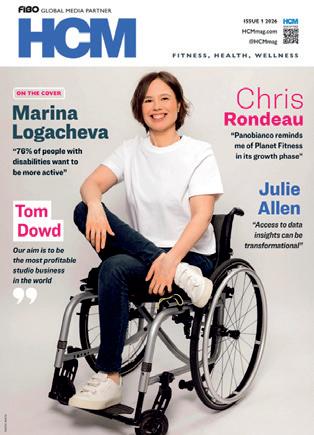
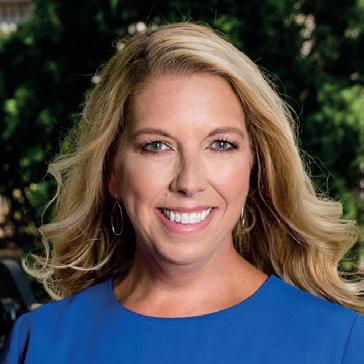
Marina Logacheva
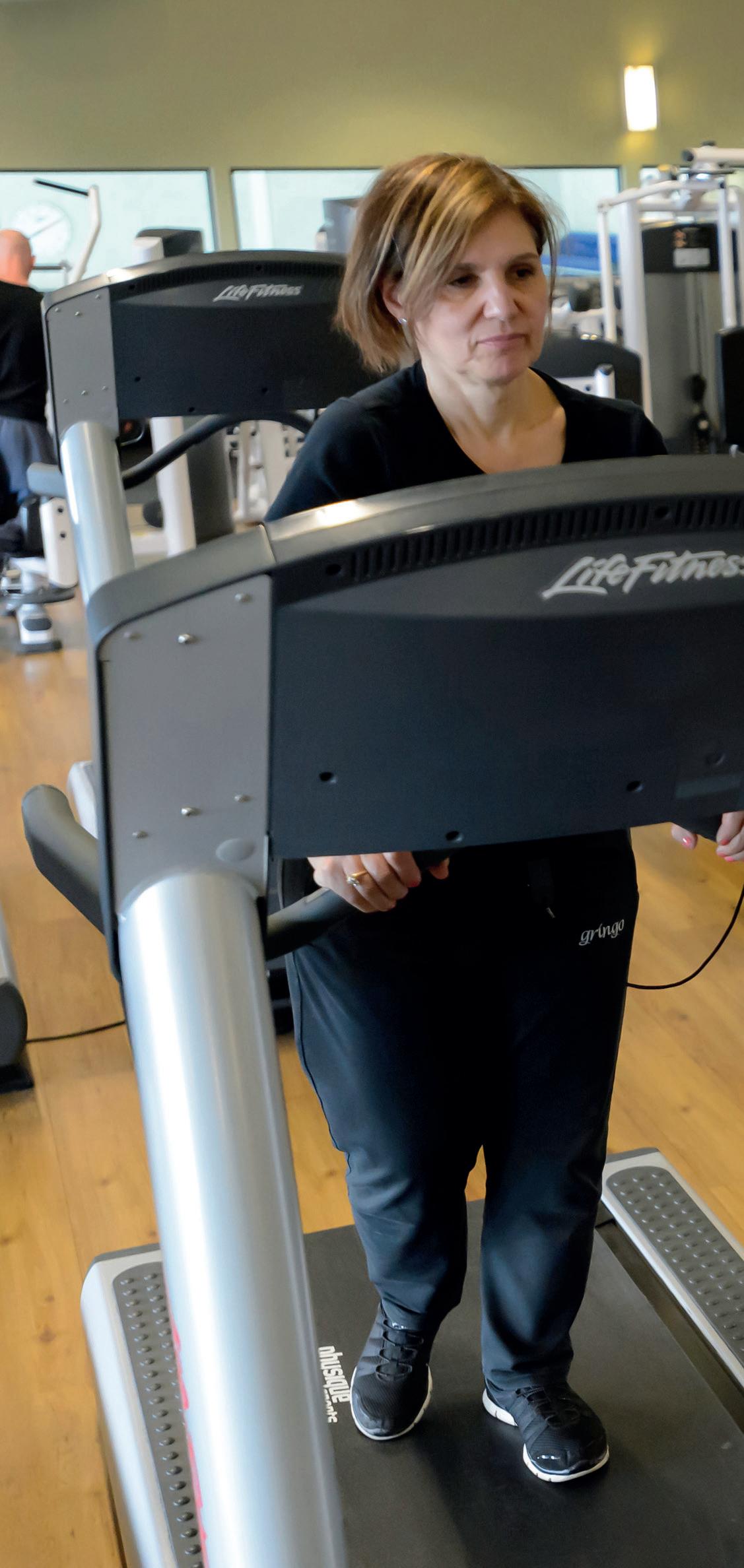
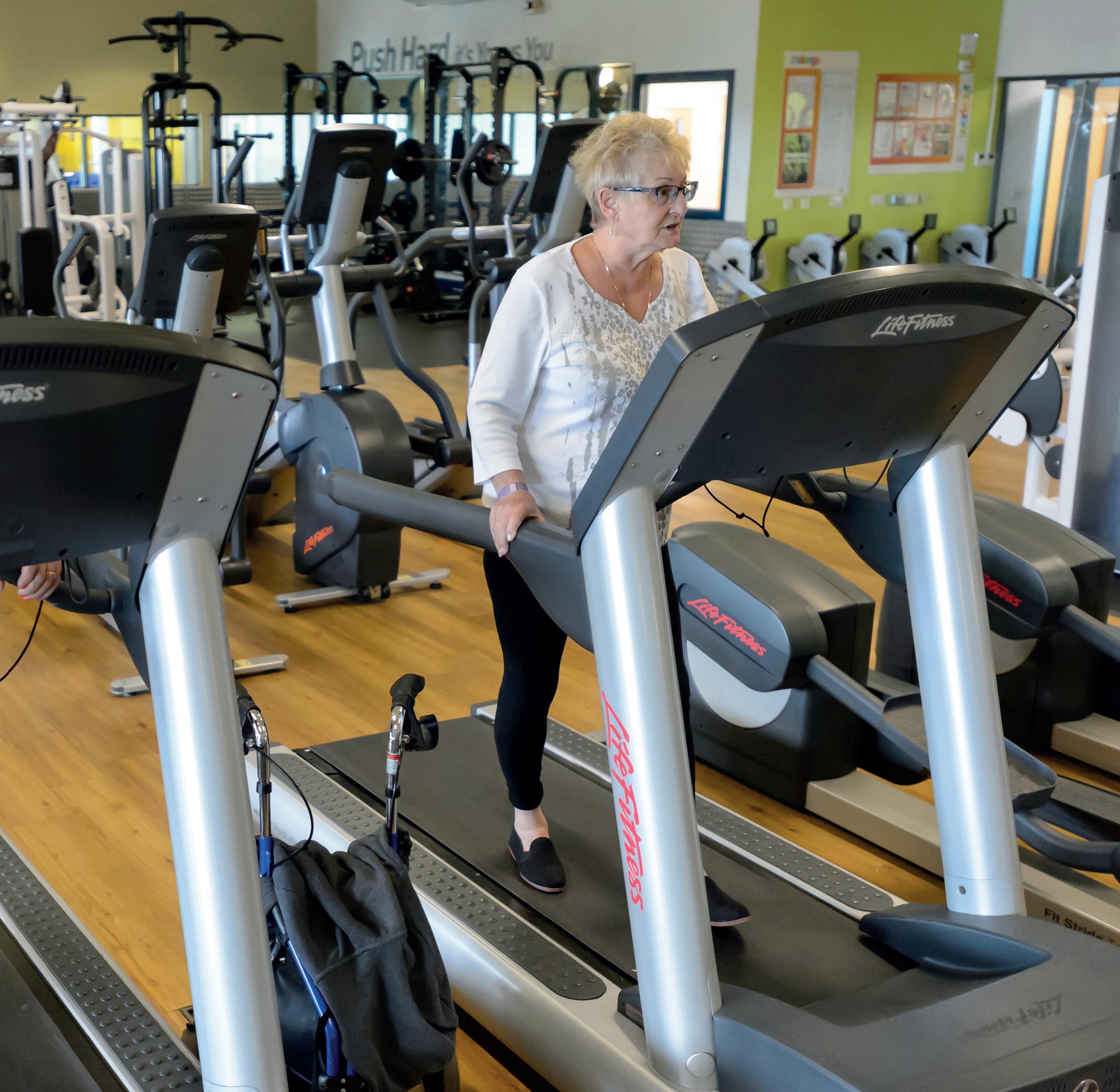
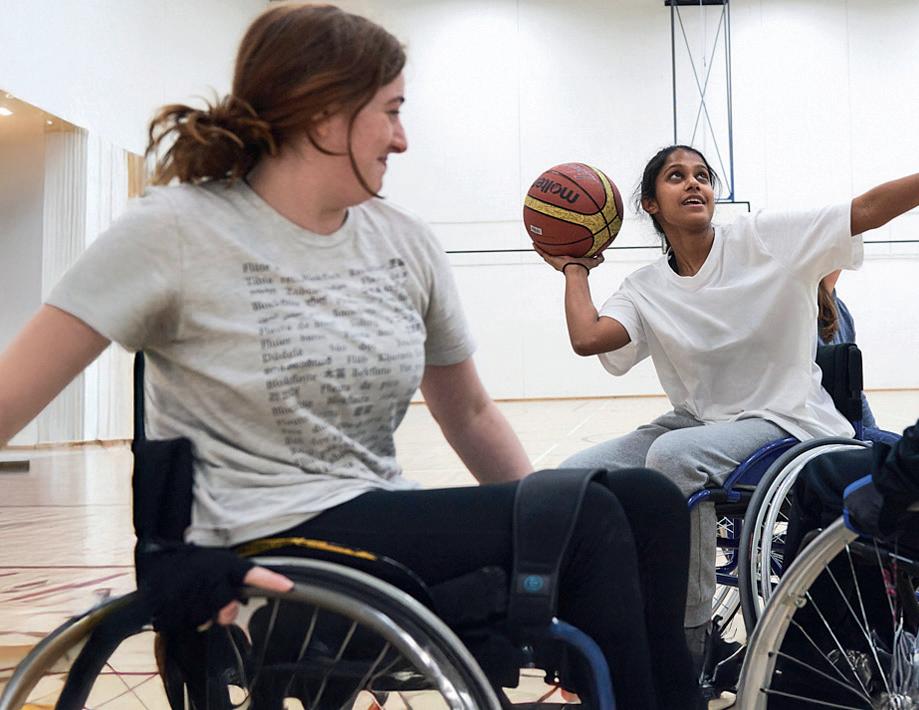
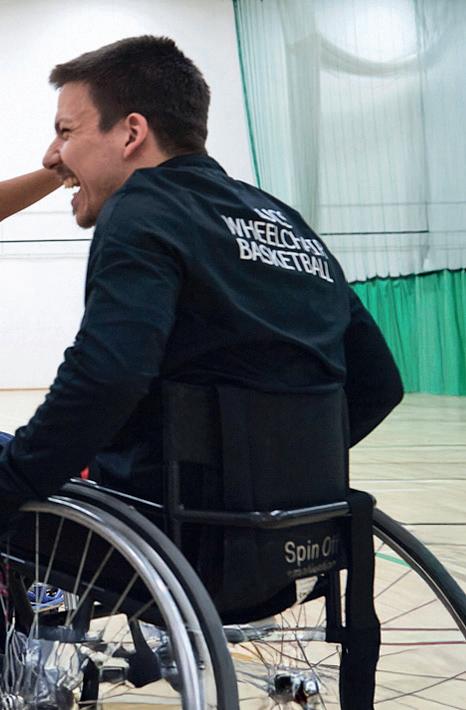
“76% of people with disabilities want to be more active”
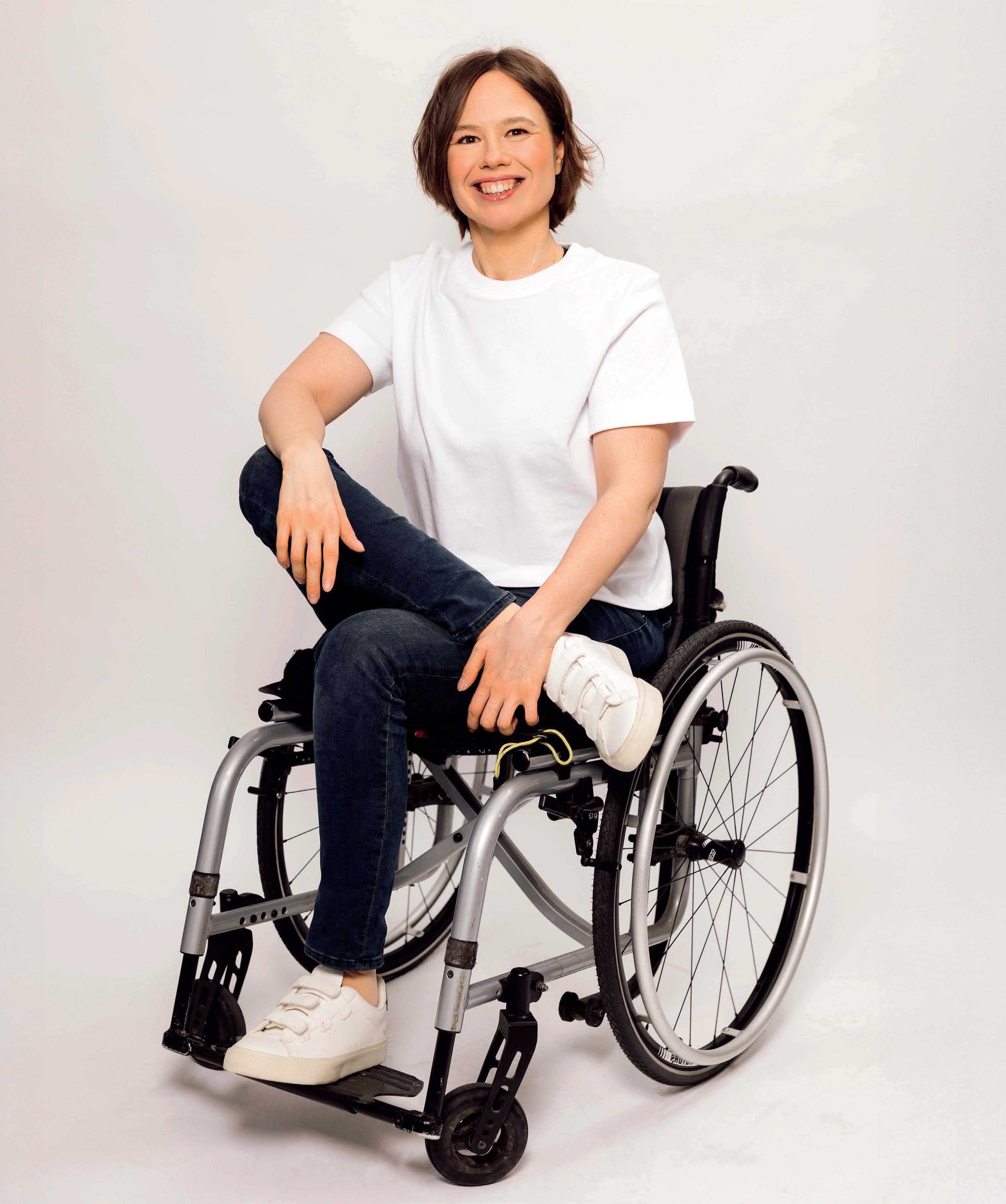
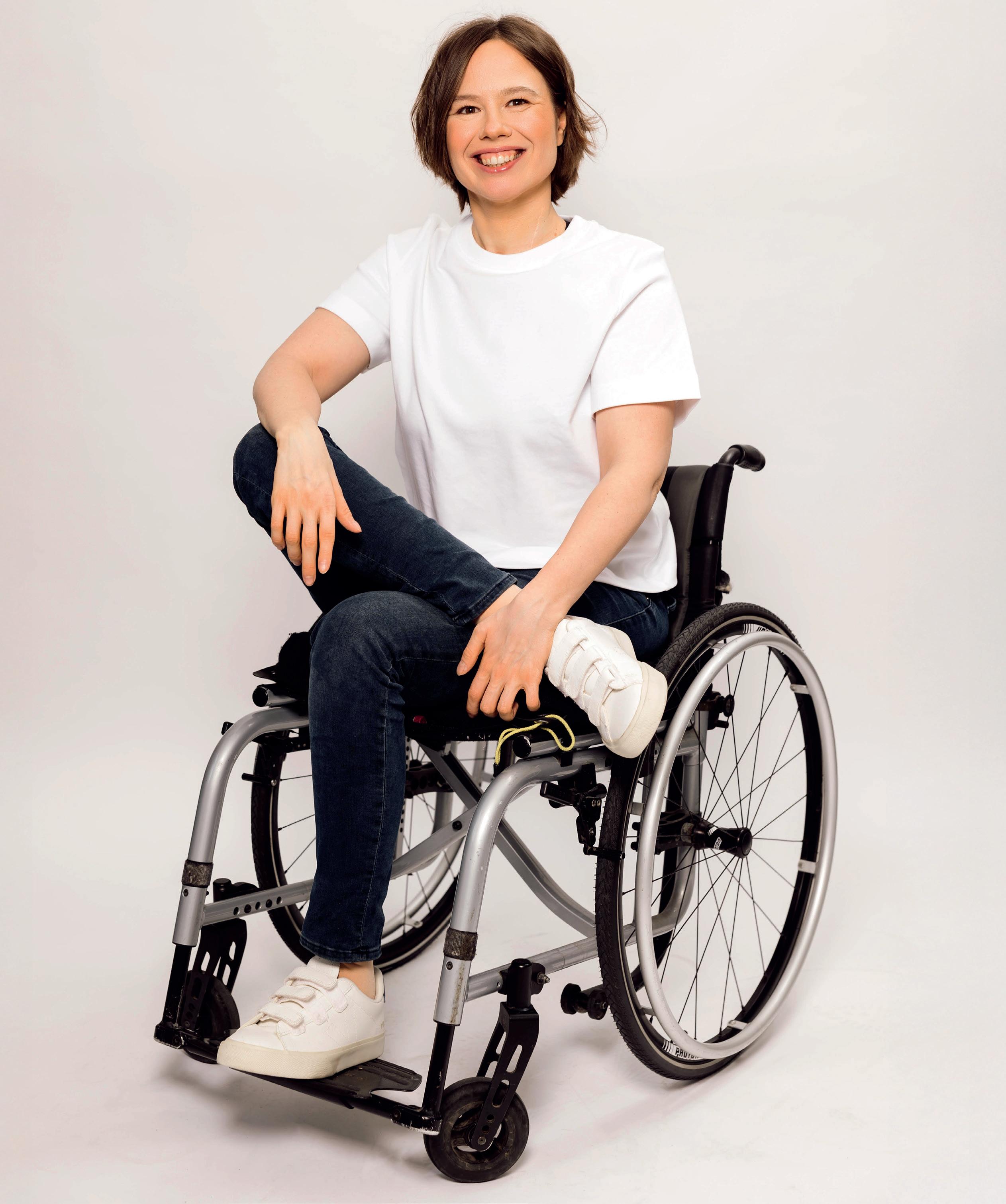



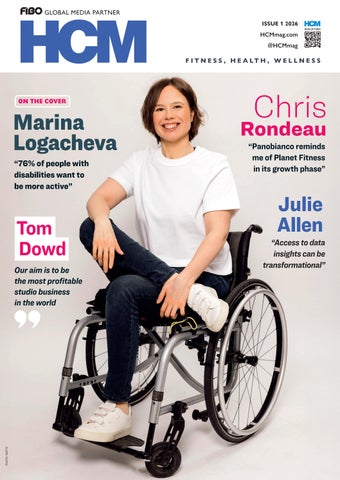
“76% of people with disabilities want to be more active”


Unlock your gym’s potential with powerful, data-driven solutions that drive results, boost performance and elevate the customer experience.







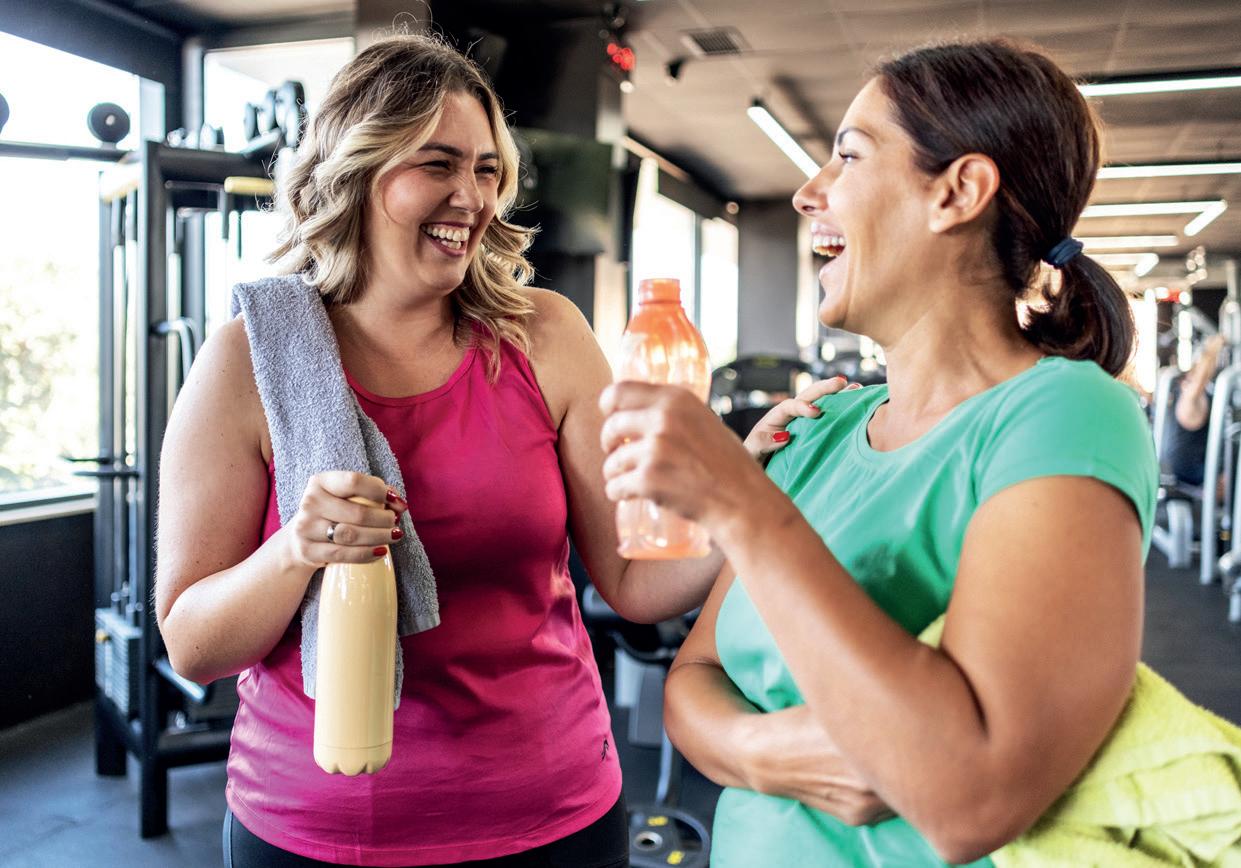
Humans are hard-wired to respond positively to pleasure, joy and enjoyment and the industry is waking up to the importance of weaving these into the exercise and membership experience
new wind is blowing through the sector, bringing with it joy, fun and reward, as operators embrace the power of experience to engage with consumers like never before.
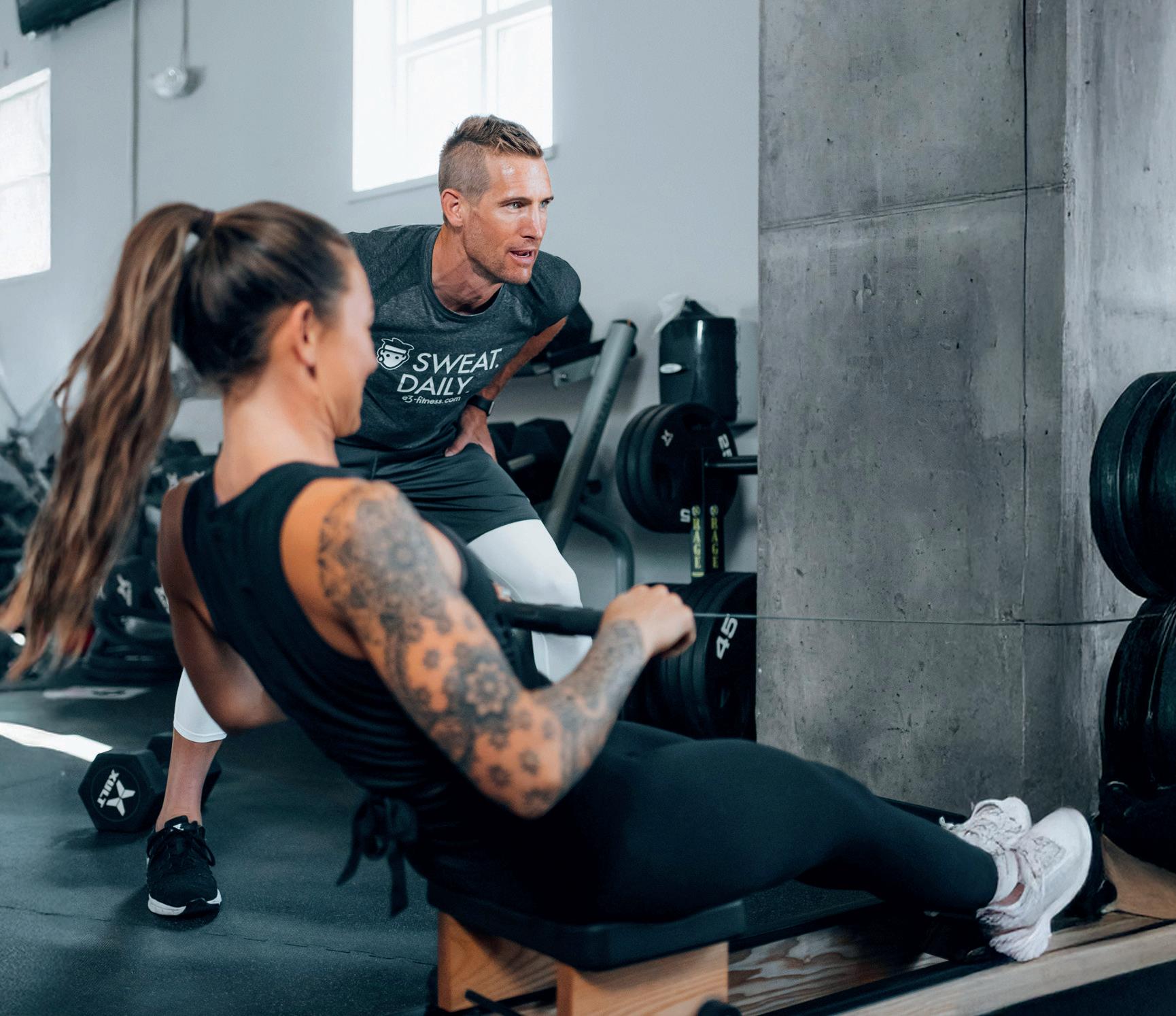
Speaking in this issue of HCM (p24), behaviour change expert Heather McKee makes a case for this new approach: “Enjoyment predicts habit formation and having positive feelings after exercise matters more than how hard it was,” she says. “Enjoyment isn’t a nice-to-have, it’s a behavioural signal.”
A study of 273 exercisers across nine health clubs found enjoyment predicted three key outcomes that matter for long-term engagement, says McKee – habit formation, the intention to continue and frequency.
“Frame workouts as feel-good experiences, not punishments,” she says. “Coach people to appreciate small wins, such as progress or mastery.
“The job of fitness professionals is to design for pleasure, not punishment. Punishing yourself at the gym is not how you build a loving, sustainable relationship with movement. What actually helps is doing activities you enjoy; leaving sessions feeling capable and wanting to do it again.”
Her views are reinforced by new research – the 2026 Global Fitness Report, commissioned by Les Mills – which examined the exercise habits of 10,000 consumers globally, finding that joy is a major motivator in making a fitness habit stick (p68).
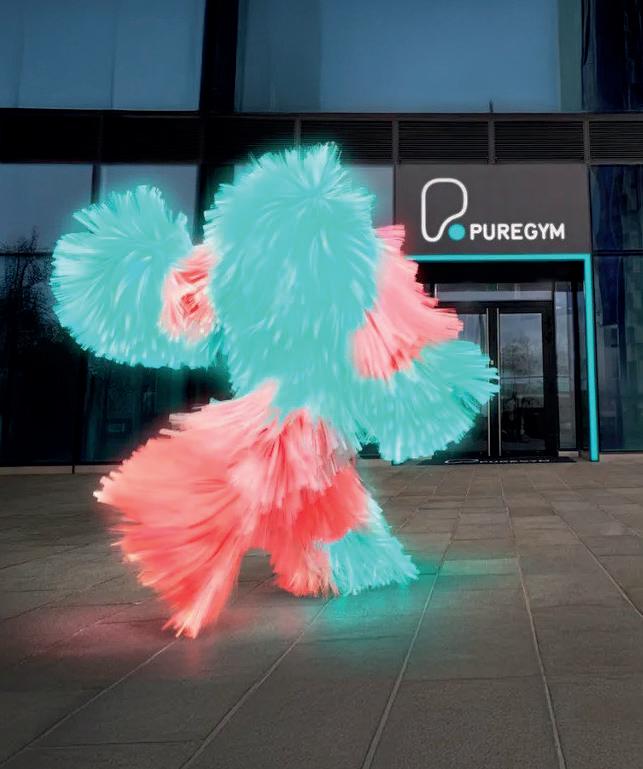
The trend to joy is surfacing more widely across the sector too. Budget operator PureGym unveiled a new TV advertising campaign recently, in collaboration with ad agency McCann (p15), which taps the theme by introducing a character called Glow – a visual representation of that post-workout feeling.
Strutting out of the gym to a funky soundtrack, Glow is a fluffy, luminescent, blue and pink being who radiates positivity – petting dogs, fistbumping baristas and dancing with kids.
Frame
workouts as feel-good experiences, not punishments.
The
job of fitness professionals is to design for pleasure
PureGym says the campaign is part of a new approach and a move away from value-led marketing and the usual fitness motifs, instead representing the buzz people feel after a great workout.
The 2026 Global Fitness Report found regular exercisers now make up 61 per cent of the addressable market – up from 44 per cent in 2018. The share of those not interested in exercise has fallen from 25 per cent to 10 per cent – stunning numbers that highlight the opportunity that lies ahead if we can hold on to members by making health clubs pleasurable places to be. ●
Liz Terry, editor lizterry@leisuremedia.com
03 Editor’s Letter
It’s time to get emotional in inspiring members to find joy and pleasure in their workouts, says Liz Terry
10 HCM Forum
Innovation is sweeping through the swimming sector, improving career prospects and operational efficiency
14 HCM Zeitgeist
David Lloyd introduces ‘kidulting’ and PureGym launches new ‘emotion-based’ TV ad campaign
18 HCM news
RSG franchises McFit and Trainmore gets set to launch in London
22 Fit Tech news
GLL reveals enhanced digital platform and Amazfit announces new smartwatch
24 HCM buzz
Places Leisure and GLL open state-of-the-art leisure centres
30 HCM Collabs
EGYM Hussle signs a partnership with Edinburgh Leisure and ACE collaborates with the Online Sleep Coach
32 HCM people
Chris Rondeau
The former CEO of Planet Fitness talks about his investment in Brazilian fitness franchise, Panobianco Academia

38 HCM people
Julie Allen
The MD of Active Insight says the sector can use data to deliver more powerful member experiences and outcomes
46 Interview
Tom Dowd
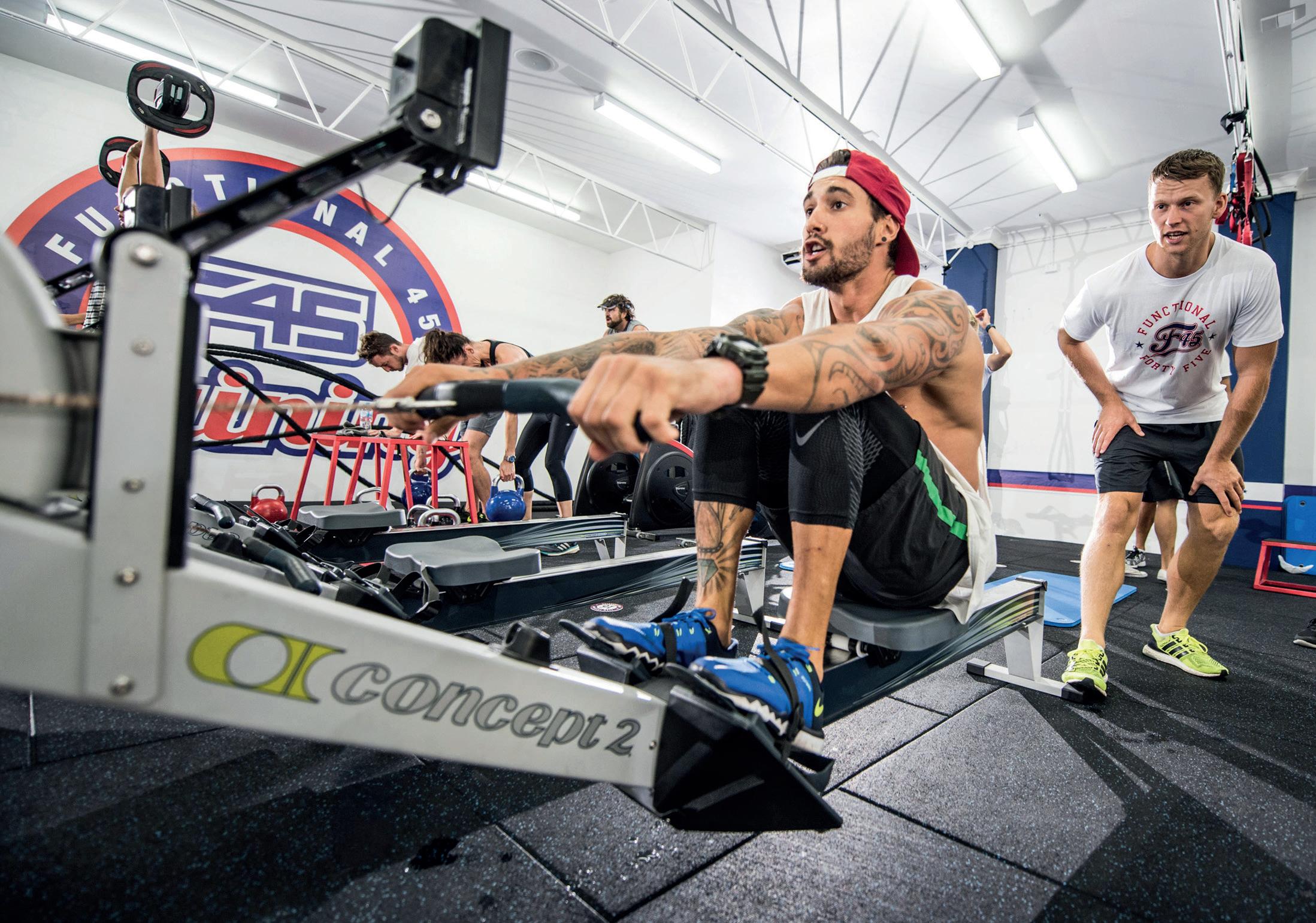
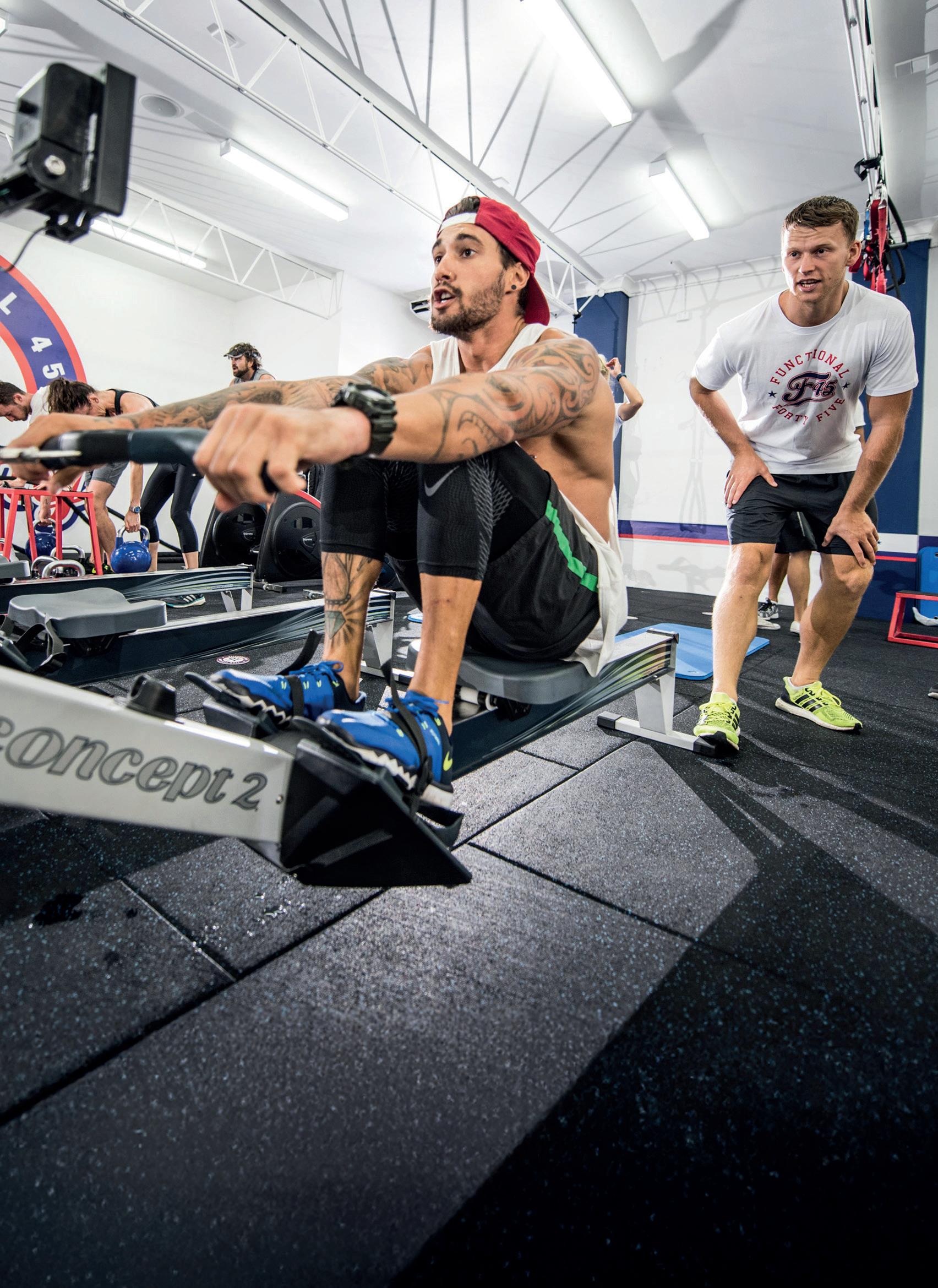
The CEO of Fit House of Brands has been busy rescuing and reimagining the company’s flagship brand, F45. He talks to Liz Terry
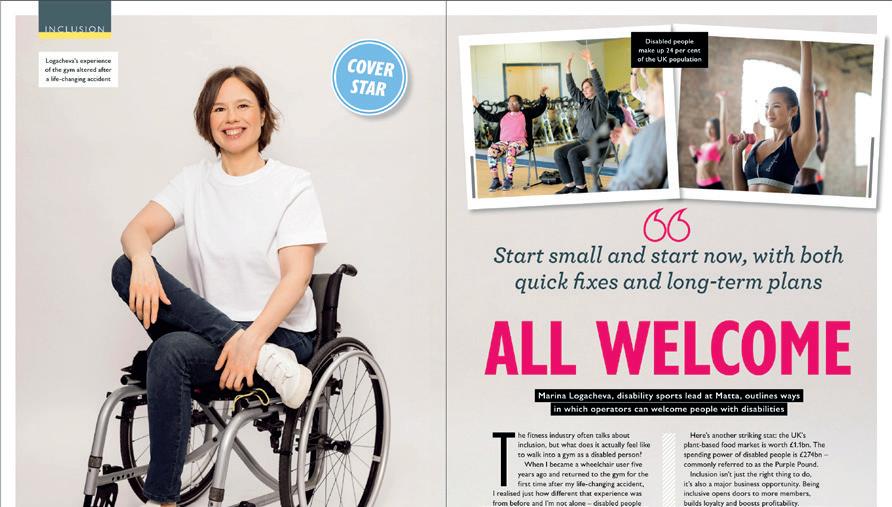
58 All welcome
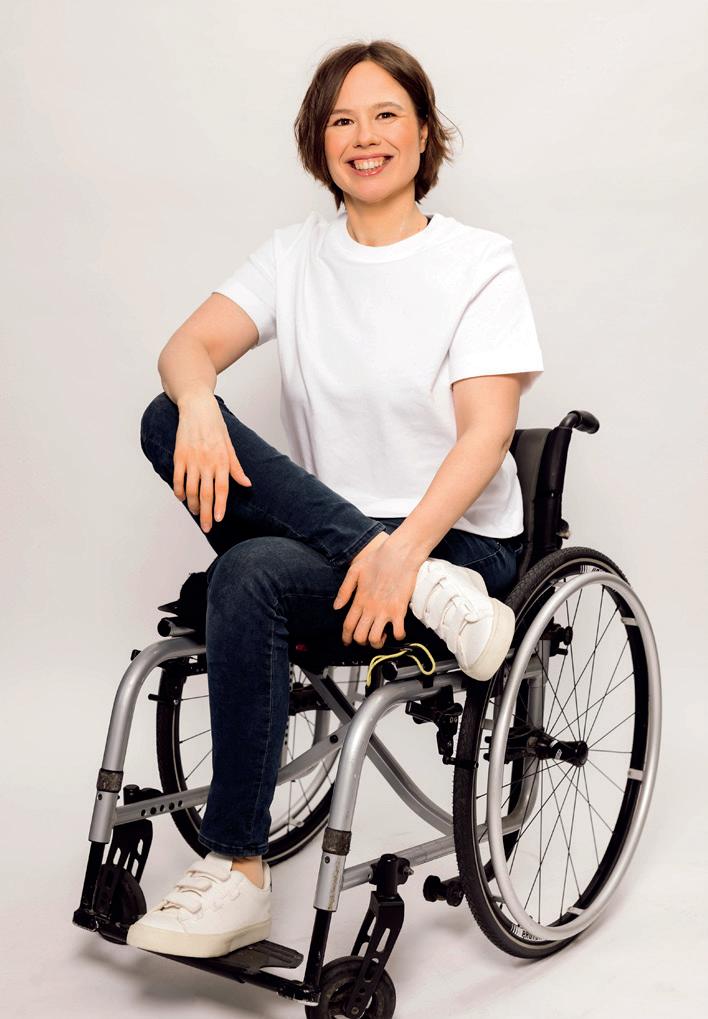
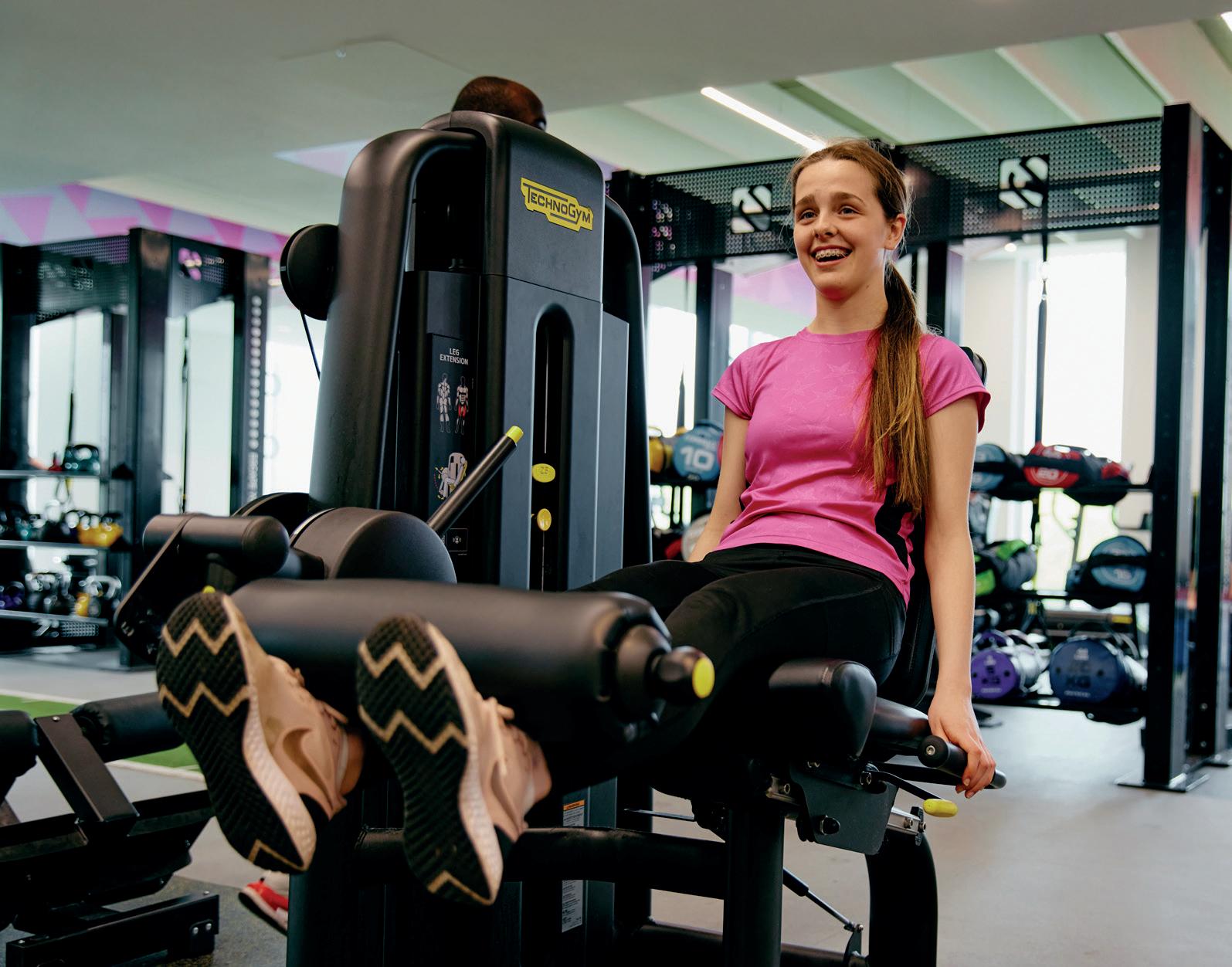
Disability sports lead at Matta, Marina Logacheva, outlines ways in which health club operators can better welcome people with disabilities


62 Legally exposed
Operators risk a fine if they don’t comply with new laws on membership payments
68 Health and humanity
New global consumer insight commissioned by Les Mills has identified what motivates consumers to exercise
72 Everyone’s talking about Generation Alpha
How can the sector best attract and engage with the tech-savvy Gen Alpha?
78 More Active Lives
Sport England releases the latest Active Lives Children and Young People Report for 24-25, as Kath Hudson reports

84 Smooth operators
Creating fitness spaces users love and keeping them running smoothly takes savvy use of tech, as Julie Cramer reports
94 Product innovations
We take a look at the latest fitness, health and wellness equipment
96 HCM Directory
The HCM Directory is part of a network of resources that includes www.HCMmag.com/CompanyProfiles
98 Research Small change
A research initiative has found small lifestyle changes impact longevity



theteam@leisuremedia.com

Editor Liz Terry
+44 (0)1462 431385

Managing editor
Julie Cramer
+44 (0)1462 431385

Editor-at-large
Magali Robathan
+44 (0)1462 431385
Publisher Jan Williams
+44 (0)1462 471909

Head of news
Kath Hudson
+44 (0)1462 431385

Assistant editor Helen Andrews
+44 (0)1462 431385
Email us:
Customer service
+44 (0)1462 471901
Advertising
+44 (0)1462 431385
Subscriptions
+44 (0)1462 471910
Circulation
+44 (0)1462 471932
Finance
+44 (0)1462 471930
Credit control
+44 (0)1462 733477
Choose how you read
HCM digital
Read free online and enjoy extra links and searchability www.HCMmag.com/digital
HCM magazine is available in print from www.leisuresubs.com
A PDF edition is available to read offline at: www.HCMmag.com/pdf
Other resources from
Fit Tech magazine www.fittechglobal.com www.fittechglobal.com/archive
HCM Handbook www.HCMhandbook.com www.HCMhandbook.com/pdf
HCM Online library www.HCMmag.com/archive
HCM newsletter & Instant news www.leisuremedia.com/signup
Leisure Opportunities news www.leisureopportunities.co.uk
Buyer Search Engine www.fitness-kit.net





To subscribe to HCM in print (Health Club Management): log on to www.leisuresubs.com , email subs@leisuremedia.com or call +44 (0)1462 471930.
Annual subscriptions: UK £45, Europe £57, rest of world £80, students (UK) £22.
Style: HCM follows an editorial house style which precludes the use of marketing devices in body text and headlines when it comes to company names and registered trademarks. CamelCase and logical capitals are allowed. Contact the editor for more details – lizterry@leisuremedia.com.
Copyright details: HCM (Health Club Management) is published 12 times a year by Leisure Media, PO Box 424, Hitchin, SG5 9GF, UK. The views expressed in this publication are those of the authors and do not necessarily represent those of the publisher. All rights reserved. No part of this publication may be reproduced, stored in a retrieval system or transmitted in any form or by means, electronic, mechanical, photocopying, recorded or otherwise, without the prior permission of the copyright holder, Cybertrek Ltd 2026. Print and distribution Printed by The Manson Group Ltd. Distributed by Royal Mail Group Ltd and Whistl Ltd in the UK and Total Mail Ltd globally. ©Cybertrek Ltd 2026 ISSN 1361-3510 (print) / 2397-2351 (online)



























































Introducing BODYPUMP HEAVY™ by Les Mills: tempo-based weightlifting with traditional lifting techniques, slow moves and long recoveries. Backed by the science of BODYPUMP™ – the world’s most loved strength class for over 30 years – BODYPUMP HEAVY makes serious lifting, seriously fun, so members keep coming back for more.

Bring it to your studio today. Scan to learn more.
Fuel the debate about issues and opportunities across the industry. We’d love to hear from you.
Write to forum@leisuremedia.com
A remarkable 99 per cent of swimming teachers surveyed report that their job makes them happy
Rebecca Cox, MD, Institute of Swimming
New data from a survey conducted by the Institute of Swimming has found swimming teaching is an exceptionally fulfilling career, delivering high levels of job satisfaction.
A remarkable 99 per cent of swimming teachers report their job makes them happy, with 90 per cent making friends with colleagues and 81 per cent reporting their job helped with their overall wellbeing.
We’re so pleased their roles bring them genuine joy and these findings tell us that swimming teaching might be among the happiest jobs in England.
Job satisfaction is across the board, reported consistently by teachers all over the UK and spanning every age group, from 16 to retirement and beyond and equally among men and women.

The survey also discovered that a sense of wellbeing is particularly high among younger age groups, with 87 per cent of 16- to 18-year-olds and 90 per cent of 19- to 25-year-olds reporting teaching has helped with their overall wellbeing, including their self-esteem, mental health and confidence, highlighting the role of swimming teaching as an ideal first-career opportunity.

Being a swimming teacher as a young person also provides transferable skills that are vital for future success. According to the survey, 87 per cent of 16- to 18-year-olds and 82 per cent of 19- to 25-year-olds felt teaching swimming had helped them feel more confident when applying for other jobs or further education.
For younger generations who lack work experience or self-confidence, becoming a swimming teacher is a stepping stone that prepares them for future career paths.
Institute of Swimming’s training, such as our new SEQ Level 2 in
Swimming teaching can be rewarding work and a gateway to wider careers

Teaching Swimming qualification – which launched in January 2026 – has been designed to ensure the path into this happy career is as accessible and inclusive as possible, ensuring the talent pipeline remains strong and consistent for the sector (www.HCMmag.com/SEQlevel2).
Training takes 50 hours to complete and translates directly into job readiness and rapid employment; 98 per cent of respondents surveyed said they were ready to immediately start teaching upon qualifying and 76 per cent said they found work immediately after completing their qualifications.
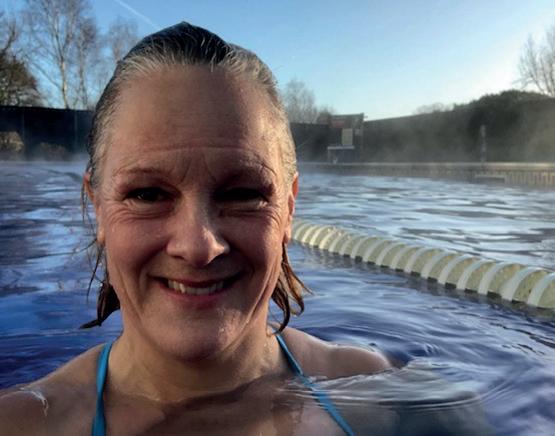
I want my students to remember I taught them to become their best selves
Swimming teacher, Laura Whyte, who was diagnosed with incurable blood cancer in 2025, says: “When I’m at the pool, I forget everything. Being a swimming teacher makes me so happy. I’d do it for free!
“I want my students to remember I taught them to become their best selves. To flourish despite fear. To live fully, just as I do with my diagnosis.
“Life isn’t meant to be survived. It’s meant to be lived. I’ve worked in lots of different sectors, I’ve earned a lot of money and had status, but I can see now that none of that actually matters. My role of teaching children and adults to swim with confidence means infinitely more. Swimming has given me both purpose and community. More: www.hcmmag.com/laurawhyte
Zest Healthy Living Centre climbed 118 places in the ranking
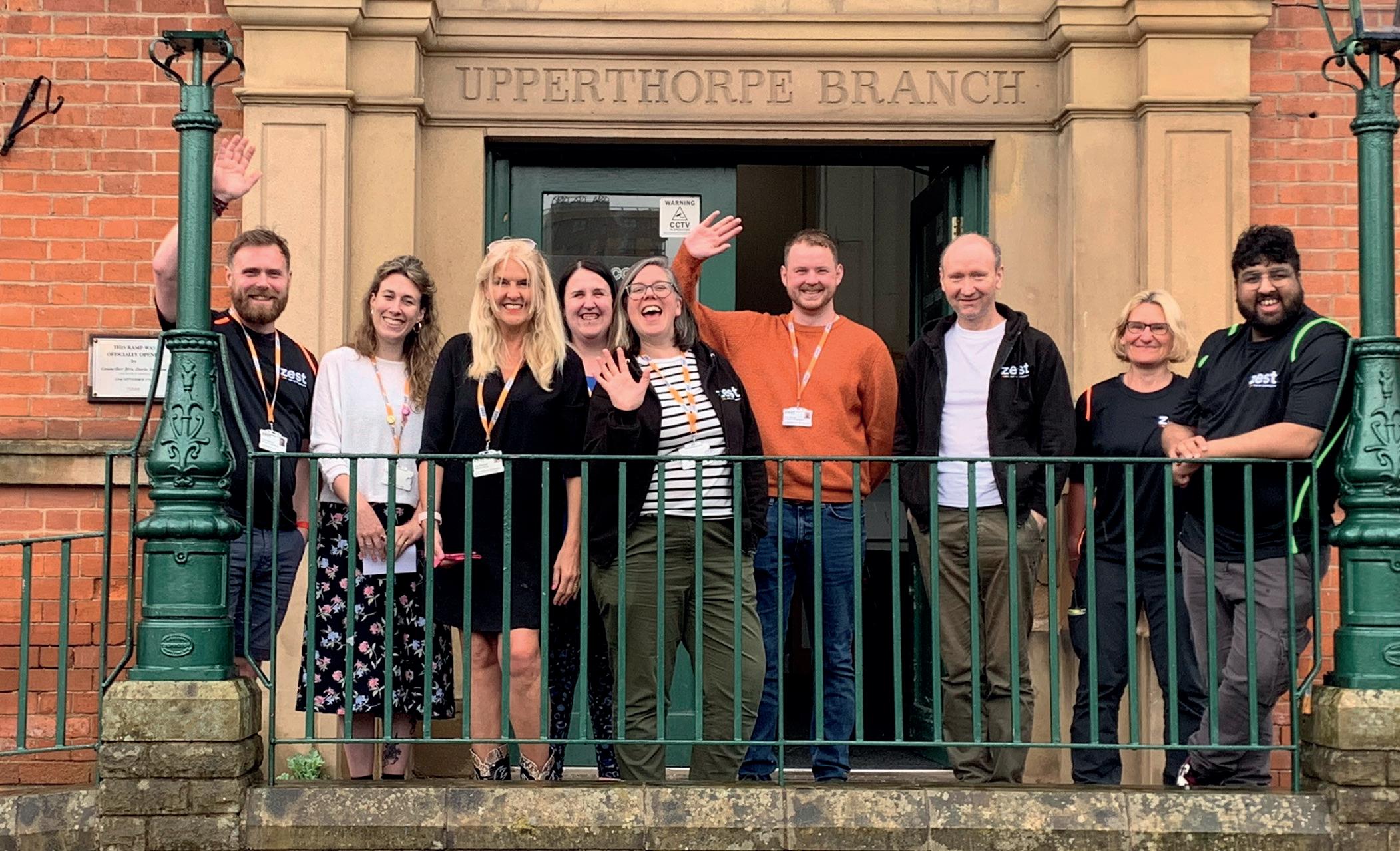
Sheffield’s community pools have made a massively positive shift in their environmental approach
Small changes make a huge impact when operators and experts collaborate
Kathryn Mudge, service manager, Sheffield City Council
I read your feature in HCM about Swim England’s Swimming Pool Support Fund audits with interest (www.hcmmag.com/ecoswim).
Funds were awarded to our three community-led swimming facilities as part of this initiative and since undertaking the audit with Right Directions in July 2024, they’ve made a massively positive shift in their environmental approach.
Zest Healthy Living Centre created a new environmental improvement plan and waste management policy and trained its staff, boosting its score 35 per cent to 88 per cent.
Zest Healthy Living Centre was 136 out of 222 leisure centres after the first assessment. It’s now ranked 18, climbing 118 places.
For King Edwards Swimming Pool Trust’s small team, actions included formally documenting policies and procedures with set review dates, improving communication
to customers through designating an Environmental Champion and additional staff training.
Working through the action plan resulted in a 34 per cent improvement in its review to 74 per cent, taking the trust from 184 out of 222 to 94 – a climb of 90 places.
The 4SLC Trust management team took over operations of Stocksbridge Community Leisure Centre 12 years ago, following a community-led campaign to save it after it was closed in May 2013.
The team raised the centre’s initial score from 56 per cent to 70 per cent by improving communication with customers, providing environmental ‘commitment and purpose’ statements, and trustees reviewing environmental practices at monthly meetings.
The centre is also working with Leisure Loop to recycle broken or damaged equipment and improved waste management means it’s achieved 100 per cent non land fill.

As the scores demonstrate, the review process highlighted areas for improvement and creating short-, medium- and long-term actions to help us achieve them.
All three facilities have challenges due to their age, but despite this, the Swimming Pool Support Fund projects have provided immediate savings, while the process will have a positive longterm environmental impact. l
l In Sheffield we have a mixed operator model, with pools connecting via the Sheffield Swimming Development Group, formed in 2024 to support collaborative working across the city.



Kath Hudson distills the essence of the latest HCM news to tap the trends driving the direction of the sector
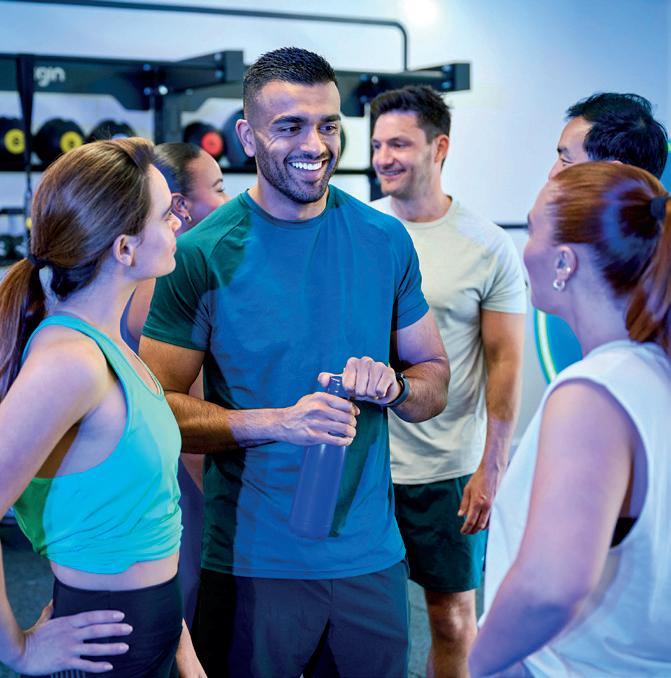
The high value, low cost operator has extended the partnership with corporate wellness platform, Wellhub, which first launched in August. Wellhub now has access to 244 of The Gym Group’s 260 sites. Demand is particularly strong among younger workers. Tina Koehler, chief commercial officer for The Gym Group, said: “We’re encouraged by the results of the first phase of this pilot with Wellhub, as we test this exciting new channel to deliver on our growth plans.”
http://lei.sr/E9S6u_H
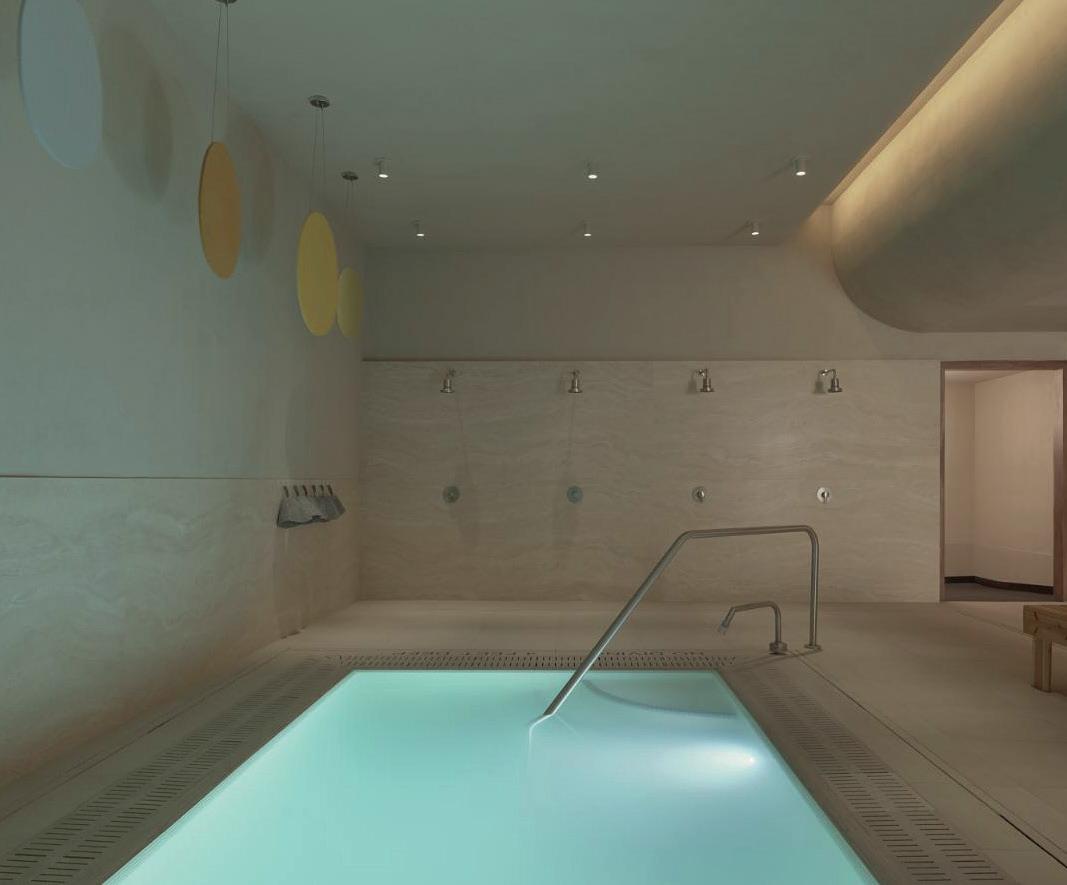
A two-floor social wellness club based around contrast therapy has opened in the NoHO neighbourhood of New York. Lore Bathing Club offers a 75-person dry sauna, an infrared lounge and cold plunge, it is described by the company as being a healthier alternative to coffee shops, bars and boutique fitness offerings. A monthly membership costs US$225 (€207, £178).
http://lei.sr/v8p6z_H


Responding to research showing people want memorable fitness experiences, Gymnation is offering workouts in a hot air balloon above Riyadh this month. CMO, Rory McEntee, says: “This is a first-of-its-kind fitness experience for a region that is becoming a global benchmark for setting records.”
http://lei.sr/A5N7A_H
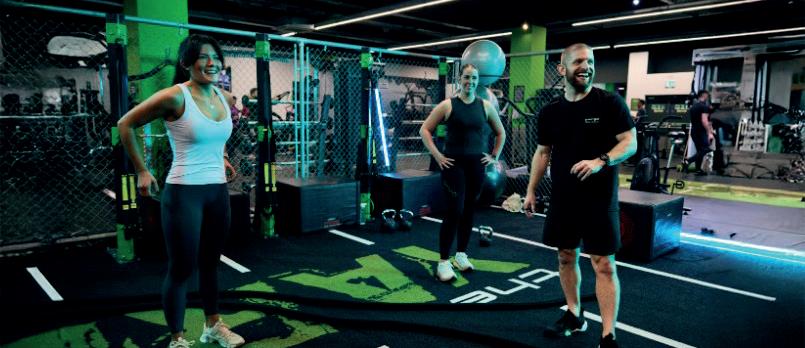

Energie CEO, Jon Cottam, says: “We’re evolving as a brand, investing in people, product, digital and wellbeing, while staying true to what has always mattered to us: creating compelling, community-centric environments where everyone feels they belong.”
Since joining last year, Cottam has also installed a new management team.
http://lei.sr/E9S6u_H

PureGym has built an advertising campaign around a character – Glow – which is a visual representation of the pumped up feeling you get after a workout. Group brand director, Jodie Maguire, at PureGym, says: “This is our first step beyond value-led messaging, tapping into a universal truth about the emotional lift people feel when they move their bodies. By focusing on feeling rather than fitness tropes, the work deliberately sits outside the category and helps redefine it.”
“Gyms will use AI to reduce labour costs, predict member churn and automate daily operations,” says ACE senior advisor on fitness technologies, Ted Vickey. “For health coaches AI can be used as a tool to enhance, not replace, human connection and coaching expertise.” Other trends are better integration from wearables, recovery methods, inclusive fitness and obesity medications.
Strength training and longevity are the two top trends for 2026 identified by a survey carried out by US country club operator, Life Time. Getting physically stronger was the top choice for 42.3 per cent, while 33.2 per cent said longevity was a key motivator to exercise. Sleep was also cited as a priority.

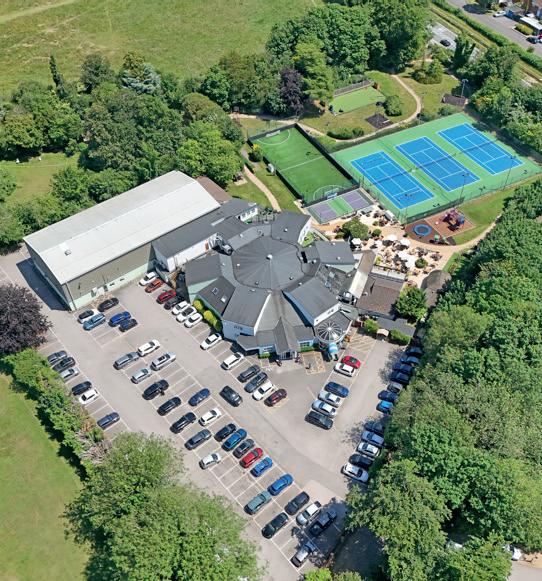
The Bannatyne Group has bought its first club in Hampshire UK. The Beechdown Leisure Club offers a gym, pool, spa and racquet courts, a brasserie and childcare. Bannatyne will be capitalising on the padel trend by introducing courts in the first half of this year. CEO and founder, Duncan Bannatyne, says this is an important acquisition.

Planning permission has been given for a new open water swimming pool in London’s Canary Wharf. Sea Lanes is described as a stepping stone from a swimming pool to open water swimming and the natural water is rated as excellent by EU bathing standards. There will also be two saunas powered by renewable energy and social facilities.
“We can’t wait for our members to experience the energy, challenge and community that the workout brings to our gyms”
Lee Matthews, COO, JD Gyms

A survey by confused.com, shows that 59 per cent of respondents use AI to diagnose health issues and 38 per cent use it for lifestyle and wellbeing advice. With average waiting times for a GP appointment taking 19 days, half of 25 to 44-year-olds say they don’t like to take risks with timings.
Capitalising on the interest in hybrid training and group exercise, JD Gyms has launched a new group exercise class for 2026.
JD Engine is a coach-led, results-driven conditioning class accessible for all abilities.

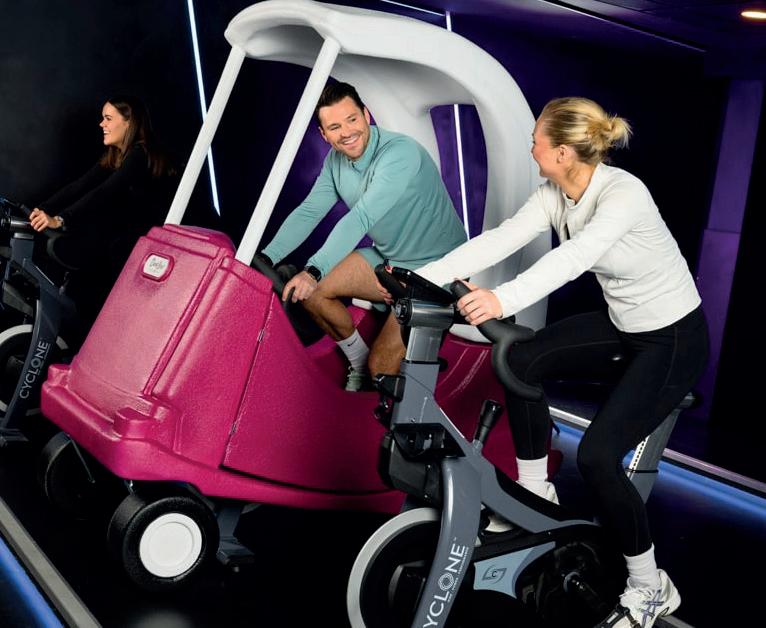
David Lloyd Clubs is trialing a programme based around playground games to bring more fun into workouts. Head of product and programming, Michelle Dand, says “consistency grows when exercise feels supportive and fun.”


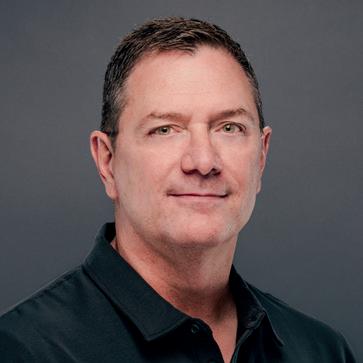
The original founder of 24 Hour Fitness, Mark Mastrov, is returning as owner and executive chair.
Mastrov has partnered with private equity firm, LongRange Capital, to acquire the US chain and support the company’s executive leadership team, led by president and CEO, Karl Sanft. Industry veteran, Mastrov grew the chain to 420 clubs and 4.5 million members, before selling it for $US1.6 billion in 2005.
In 2009, he led the purchase of Crunch Fitness with Jim Rowley
“The organisation is inspired and energised by Mark Mastrov’s return”
Karl Sanft

LongRange Capital has backed the deal for 24 Hour Fitness
and expanded it to 550 owned and franchised clubs before Leonard Green took a majority stake in 2025. He also founded UFC Gym.
“Mark founded and built 24 Hour Fitness into the powerhouse brand it is today, and the organisation is inspired and energised by his return,” said Sanft. “With the business stronger than ever and
our investments aligned with what members value most, this is the perfect time to welcome him back, we’re ready to accelerate growth.”
Over the past two years, an extensive remodel programme has been rolled out with a suite of offerings introduced, including recovery.
Research by the Health and Fitness Association suggests that 2026 will be another good year for the fitness industry, with more people recognising the importance of exercise for maintaining good health.
Americans are planning to spend US$60 billion on health and fitness this year according to the study, making it the most popular New Year resolution.
The study was carried out by Kantar using a nationally representative sample of 2,000 adult Americans.
Of the 56 per cent of US adults who plan to set personal goals for 2026, 54 per cent – around 82 million – say they intend to focus on health, fitness and exercise.
Building muscle is the most popular aim at 50 per cent, while 48 per cent want to improve their mobility, flexibility and posture.
Only 23 per cent said they would reduce fitness spending if they needed to save money compared to 44 per cent for dining out.
“Americans are not just setting fitness goals, they’re also budgeting for them”
Liz Clark
“Americans are not just setting fitness goals, they’re now also budgeting for them,” says HFA president and CEO, Liz Clark. “This research shows that people increasingly see exercise as an essential investment in their long-term health.”
RSG Group has announced plans to franchise its hero brand, McFit, in order to tap into new markets internationally.
Formed in 1997 as the first budget gym concept by the late Rainer Schaller, the 230 McFit clubs in Germany, Austria and Italy are all company owned.
RSG Group has experience of franchising with Gold’s Gym, which was acquired in 2020, with 507 franchised clubs.
“Over the past years, we’ve proven that we not only understand franchise systems, but can successfully scale brands worldwide,” says Jörg Fockenberg, VP strategy, expansion and franchise at the RSG Group.
“With the internationalisation of McFit as a franchise concept, we’re
taking the next step and opening our strongest European brand to new markets around the world.”
The company, which is known as a top end operator, has developed a comprehensive package of professional franchise tools designed to adapt flexibly to local conditions, ensure strong brand management, a consistent brand appearance and provide partners with all necessary tools for smooth studio setup and daily operations.
“Our goal is to create a franchise system that offers partners maximum guidance, security and efficiency, while fully leveraging McFit’s unique brand strength,” says Dr Jobst MüllerTrimbusch, co-CEO of the RSG Group.
http://lei.sr/r6d5a_H
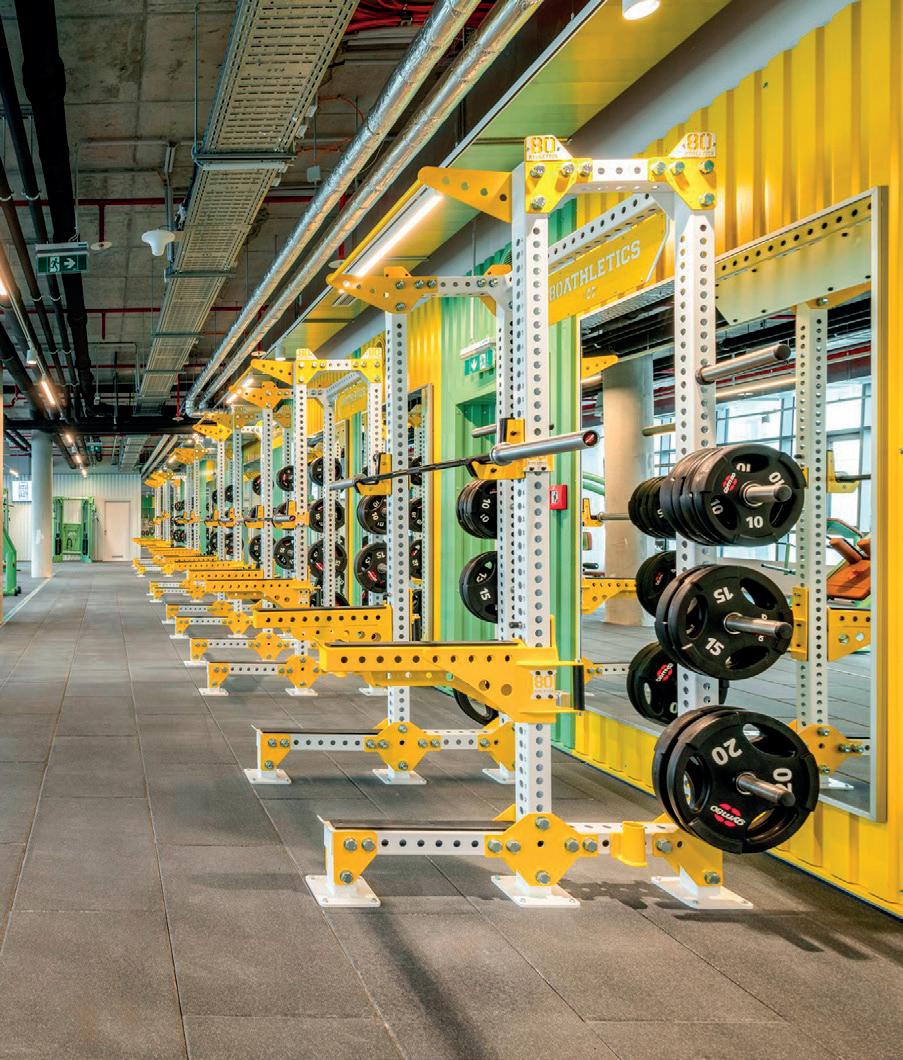
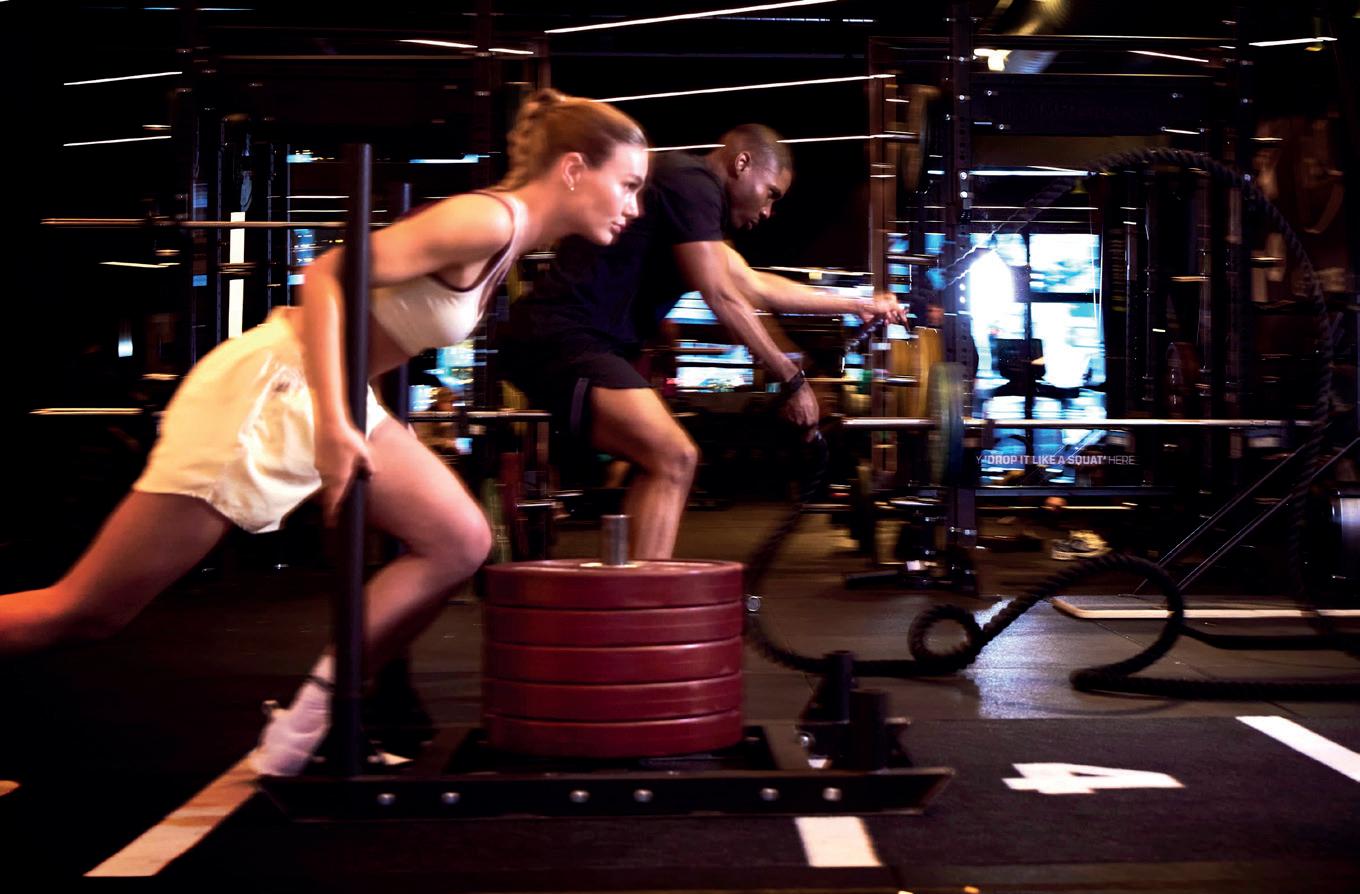
Urban Gym Group is gearing up to launch its Trainmore brand into the UK market in 2026, with a first location in Central London.
The brand is known for allowing members to earn €1 per workout to incentivise their training. Features include complimentary protein shakes, sports water, coffee, tea and a suite of wellness and recovery services.
Speaking at the HCM Summit in London on 23 October 2025, CEO of Urban Gym Group, Neil Randall hinted at the launch, which will see
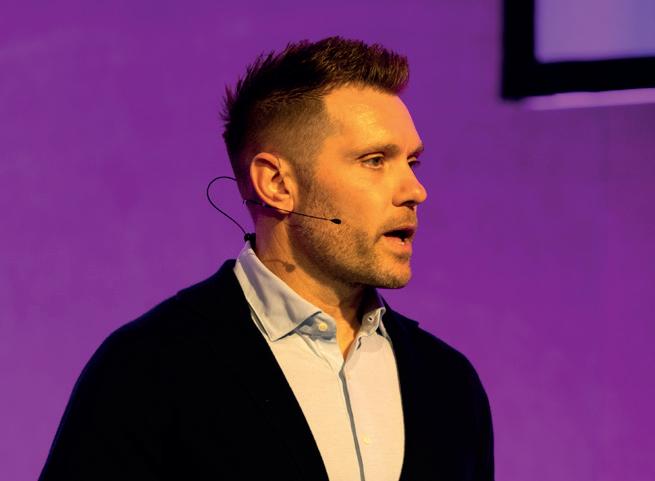
Urban Gym Group is eyeing locations in London for the Trainmore brand
Urban Gym Group with two brands rolling out in the capital, since its acquisition of Gymbox in October 2024, as it builds its cluster model.
Urban Gym Group is also scouting locations for its various brands, which include Trainmore, Clubsportive,
BTY CLUB, My Local Gym Group, Gymbox, Gym Warehouse, PILAT3, TRIB3 and urban spa and recovery concept, Renessence which was developed during the pandemic.
The Gym Group has said it will accelerate the rollout of its clubs to 75 over the next three years, all of them funded by cashflow. Previous targets had been 50 new sites, so this is a confident jump for the high value, low cost operator.
Last year The Gym Group opened 16 new health clubs, which was at the top end of its projections, taking the total estate to 260. 20 more clubs are planned for this year, with a strong pipeline already in place beyond this.

“ The industry is in a golden age, it’s a very positive picture” Will Orr
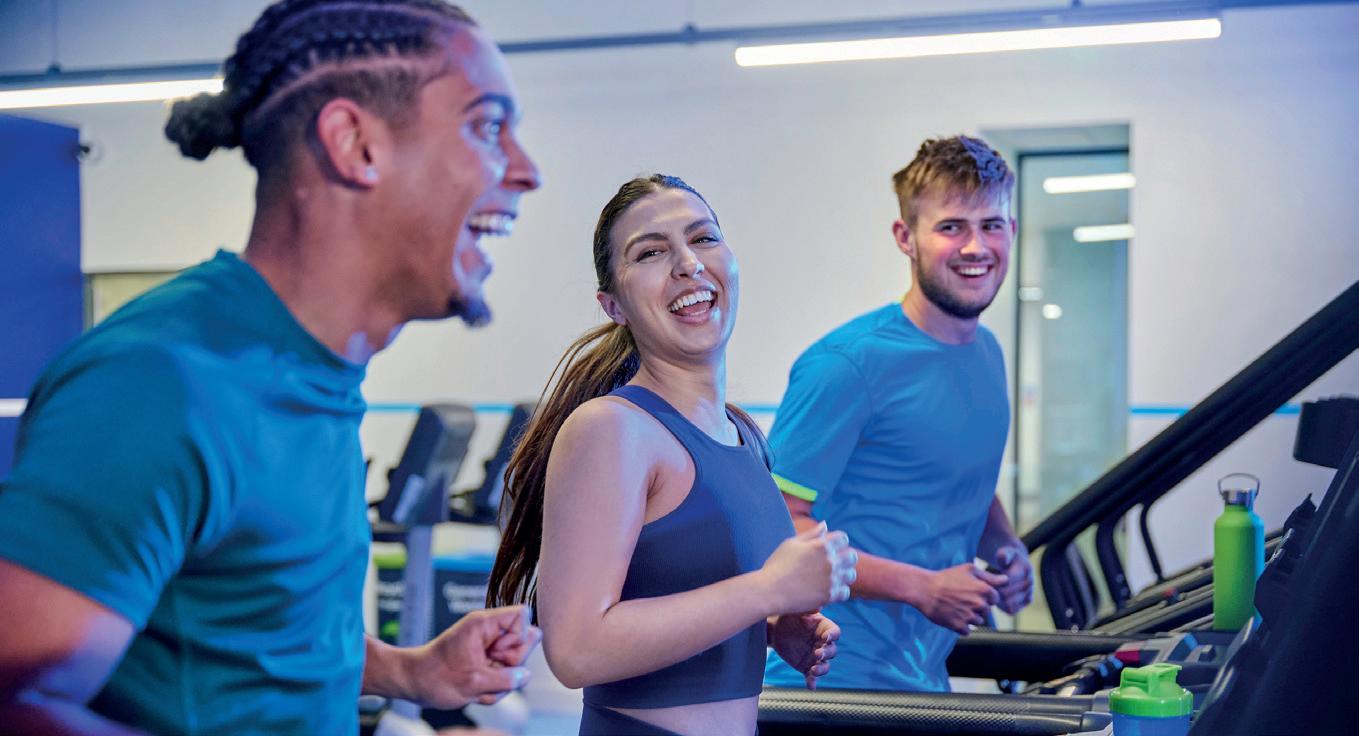
The revised ambitions have been driven by the impact of the company’s Next Chapter strategy and positive trading momentum. Revenue for the year ended 31 December 2025 increased by 8 per cent to £244.9 million (2024: £226.3m) and like-forlike revenue grew by 3 per cent.
“The industry is in a golden age, it’s a very positive picture,” The Gym
Group CEO, Will Orr, told HCM. “I think the white space will continue to open up as more people become engaged, gym penetration increases and towns and cities develop.”
A £10 million share buyback programme has also been announced which will take place over the course of this year.
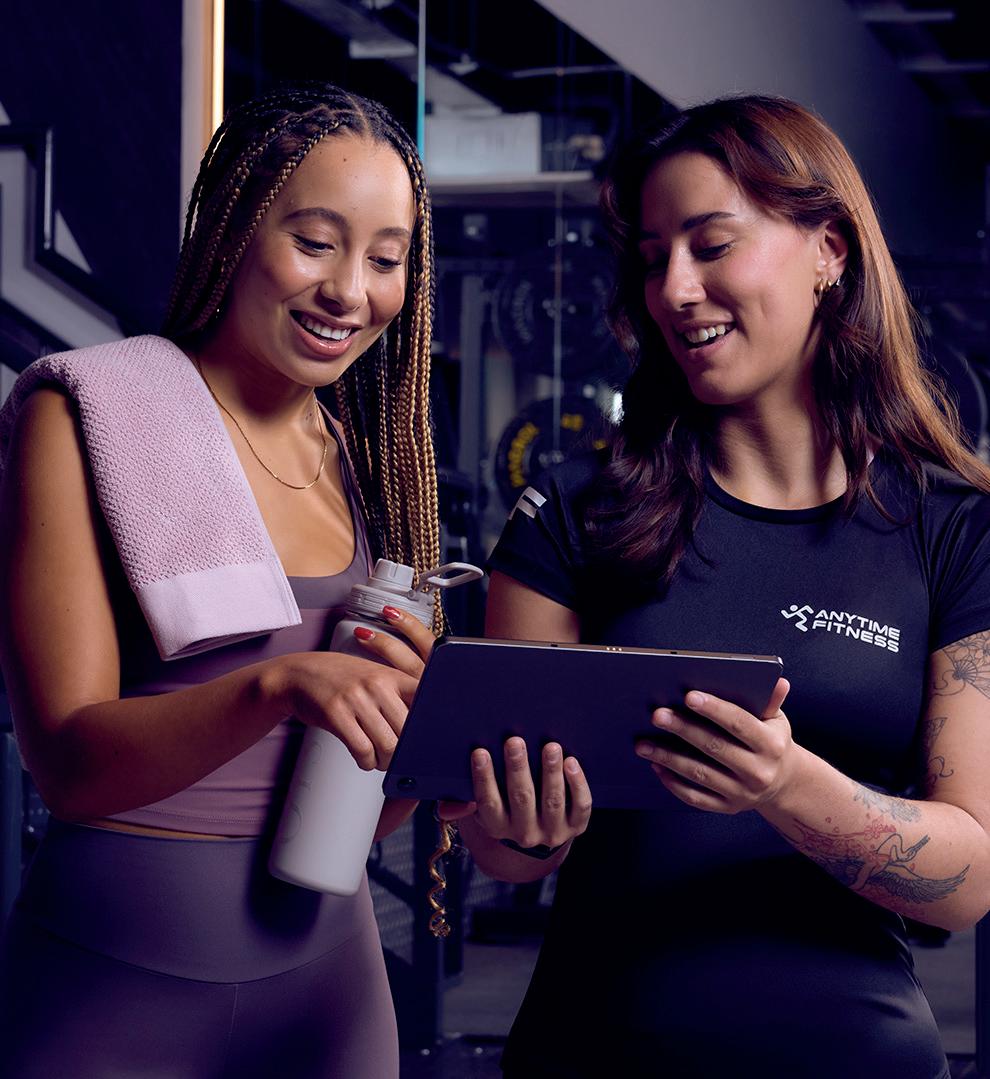
Anytime Fitness is tackling gymtimidation with a new advertising campaign and in-club initiative, designed for people who have been “searching, not starting.”
The advertising campaign – Stop Searching. Start Anytime – is inspired by the questions thousands of people type into Google, such as ‘am I too unfit for the gym?’ ‘What should I wear?’ ‘Will everyone stare at me?’
Anytime Fitness worked with a partner agency to conduct in-depth analysis of the top 100 search terms used by people considering joining a gym, which provided valuable insights into the real worries, questions and barriers potential members face. In response to these insights, Anytime Fitness has used inclusive images in the January
advertising campaign to reassure people that they are not alone in experiencing these common fears.
Tackling gymtimidation is more than just an advertising campaign, Anytime Fitness is embedding inclusivity as part of an ongoing strategy to make all newcomers feel welcome.
Small, coach-led sessions are being introduced – The Search Party – which teach the basics, allow participants to ask anything and reassure them that they’re not alone in how they feel.
All clubs are introducing a Suggestion Search Box to invite members to submit questions to be answered by coaches, so they can ask any question privately and anonymously.
Playlist, the parent company of Mindbody, Booker and ClassPass, is merging with EGYM, supplier of AI-enabled workout programmes and corporate wellness solutions, to create a US$7.5 billion enterprise..
The two organisations will combine their expertise to form an integrated wellness technology platform that aims to advance in-person wellness on a global scale.
EGYM will expand its fitness technology and corporate wellness offerings into Playlist’s core geographies, including North America and Asia. Playlist will be able to further grow its presence in Europe.
The transaction includes US$785 million in new equity investments – which will support increased investment in artificial
intelligence to help fitness studios, gyms, and wellness operators run more efficiently and deepen member engagement.
The new investment is led by Affinity Partners, with participation from a consortium of existing investors including Vista Equity Partners, Temasek,and L Catterton.
Philipp Roesch-Schlanderer, CEO of EGYM, said: “Bringing EGYM together with the newly-created Playlist under one roof represents a profound opportunity to impact lives through preventative health.
“Together we can reduce chronic disease, lower healthcare costs, and make people healthier and happier by shifting the world from repair to prevention.”
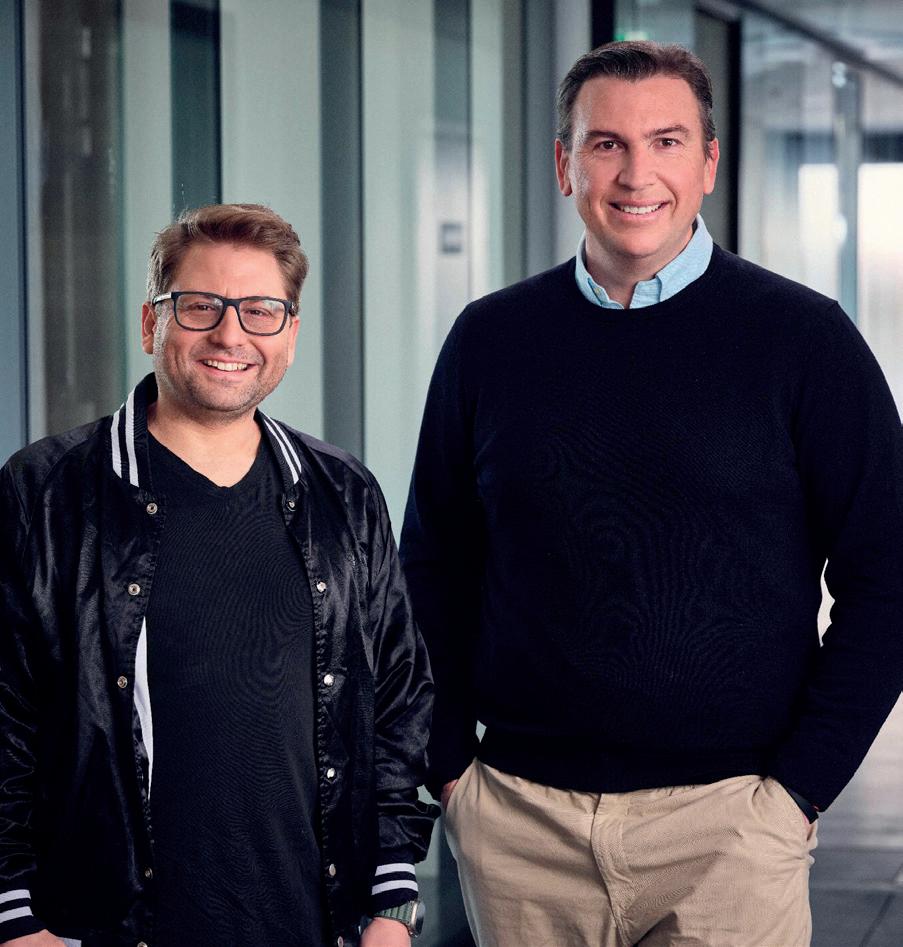
Philipp Roesch-Schlanderer and Fritz Lanman are new co-founders
Following protests from the hospitality industry UK chancellor, Rachel Reeves, is looking set to make a U-turn on proposed changes to business rates for pubs, however, this change has not yet been extended to health clubs, which are still facing higher bills from April.
In the November 2025 budget, Reeves scaled back the business rate discounts that have been in force since the pandemic from 75 per cent to 40 per cent and said there would be no discount at all from April.
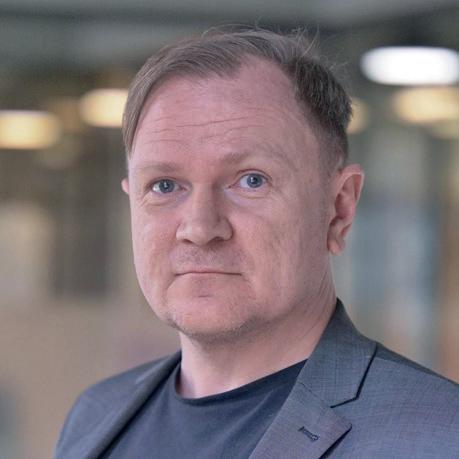
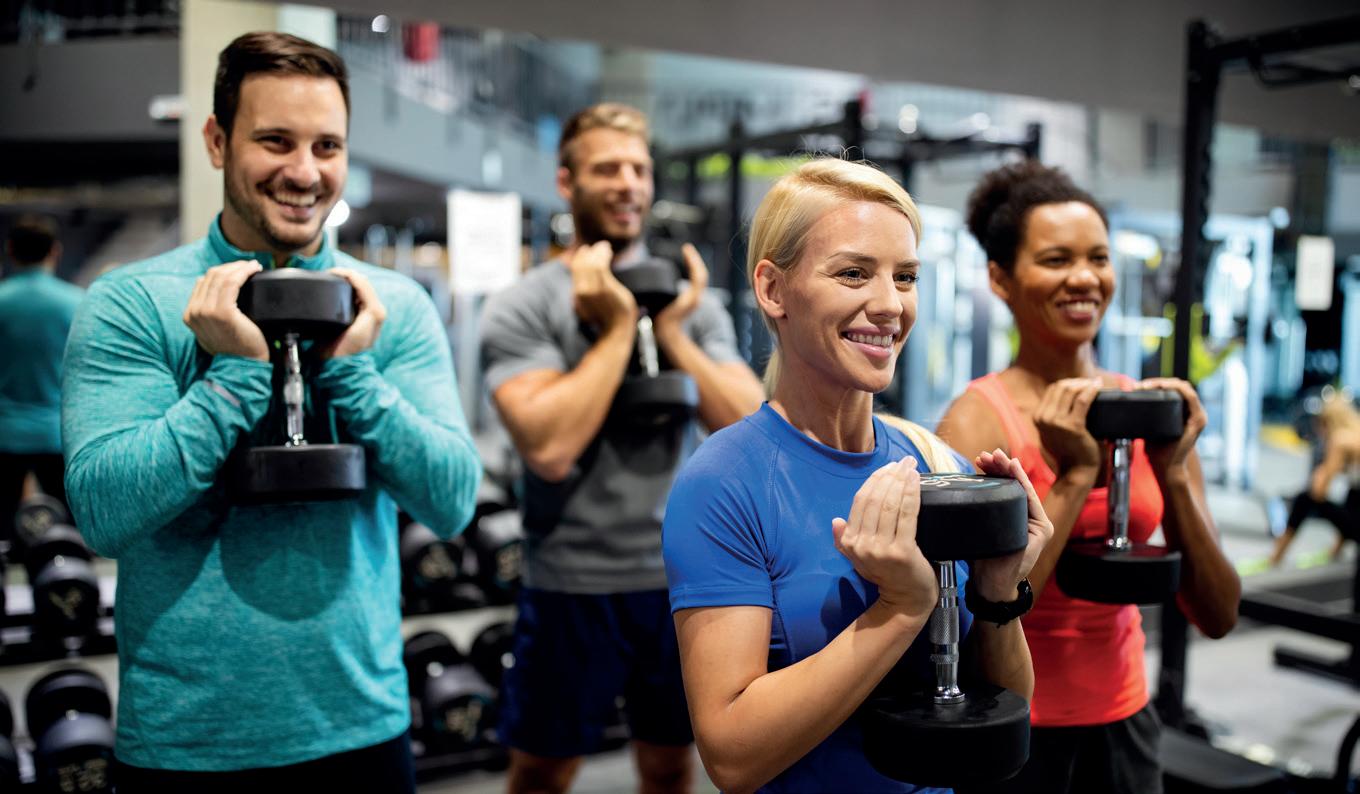
CEO of UK Active, Huw Edwards, says that failure to help the fitness industry will lead to higher prices, job losses and reduced services: “Instead of supporting this industry success story, the government has done the opposite and made these essential community facilities absorb two regressive budgets which have piled
http://lei.sr/Z8V3Y_H http://lei.sr/3Q8Z6_H
on operational costs and suffocated employment opportunities.
“Operators are telling us that without protection their rates will rise by as much as 60 per cent, forcing many to increase prices at a time of growing health inequalities.”
Charitable social enterprise, GLL has launched an enhanced digital health and wellbeing platform on its Better UK App, called Live Better. The app will be offered free to its 362,000 existing members and in an effort to get a broader reach will be available to nonmembers for £9.50 per month.
GLL plans to use the new platform to reinforce its social enterprise values, reach and engage new audiences and customers and add value to all membership types while improving health outcomes.
We can now support users who may not be able to access leisure facilities
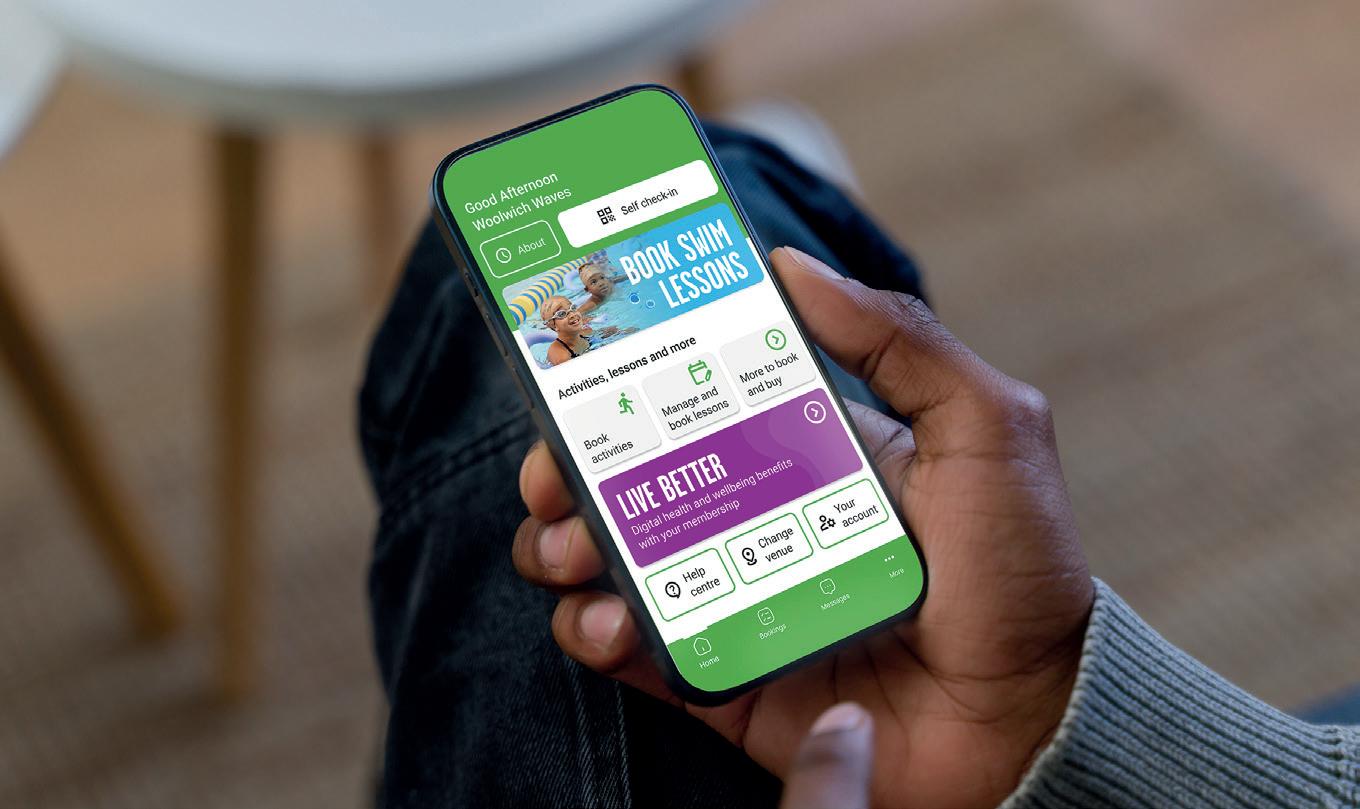
GLL’s new digital wellbeing platform, Live Better, offers services to non-members
Services include on-demand fitness classes and content from Les Mills and Wexer via the My Fit App. Habit tracking, behaviour change support around nutrition, movement, sleep and mental wellbeing.
Virtual health, GP consultation and private prescription services for some membership groups.
Tom Popsys, GLL product lead for Live Better says: “This digital platform helps us to widen and deepen the impact of our services across demographics and regions and allows us to support users who may not typically be able to access leisure facilities.”
http://lei.sr/9L5c9
Wearables brand, Amazfit, has launched the Active Max smartwatch, which tracks more than 160 sports and activities, offering AI-powered training plans and analytics to help wearers track progress.
Features include automatically setting heart rate zones when maximum HR is detected and warning if the heart is beating too fast. It also creates running and hiking routes and starts or pauses exercises automatically.

Detailed workout summaries, including post-workout and recovery data, are available on the watch and in the Zepp app, which shows workout results, accumulated training load and recovery progress. Active Max tracks a variety of parameters, including sleep quality and heart rate variability and includes a biocharge indicator to reflect the current energy level.
The device supports thousands of offline maps – including topographic maps, ski resort maps, and contour maps – as well as navigation features. People who start exercising regularly can also share their progress on external platforms such as Strava, Adidas Running, Google Fit, Health Connect, Komoot and Relive.
http://lei.sr/h5v8M_H



How exercise makes you feel is one of the strongest predictors of whether people will stick with it long term, according to behaviour change expert, Heather McKee.
“A 2022 study reinforces something we often forget at this time of year,” says McKee. “Enjoyment predicts habit formation and having positive feelings after exercise matters more than how hard it was. Enjoyment isn’t a nice-to-have, it’s a behavioural signal.”
The study of 273 exercisers across nine health clubs found that enjoyment predicted three key outcomes that matter for long-term engagement – habit formation; the intention to continue and frequency.
A lot of the enjoyment factor comes down to how well the intensity of the exercise matches the person’s preferences.
McKee has suggestions for how to implement this theory so that new year resolutions stick:
■ Give options and listen to members to align workouts with what they enjoy, as well as what’s optimal.
■ Ask them what kind of movement they enjoy, used to enjoy, or are curious about. After the workout ask for feedback and adjust the intensity accordingly.
■ Encourage members to notice what feels good in terms of their energy or mood – there’s a wealth of evidence that how someone feels during and right after exercise predicts whether they’ll return.
■ Frame workouts as feel-good experiences, not punishments. Coach people to appreciate small wins, such as progress or mastery. This brings the energy back to intrinsic motivation, rather than extrinsic rewards or outcomes.
■ Habit formation is easier when behaviours happen in consistent contexts, so encourage consistent patterns – such as gym after work on set days – rather than sporadic effort.
■ Reinforce early repetition while enjoyment is high. Self-Determination Theory shows that when people feel autonomous in their choices, their enjoyment and intrinsic motivation go up.

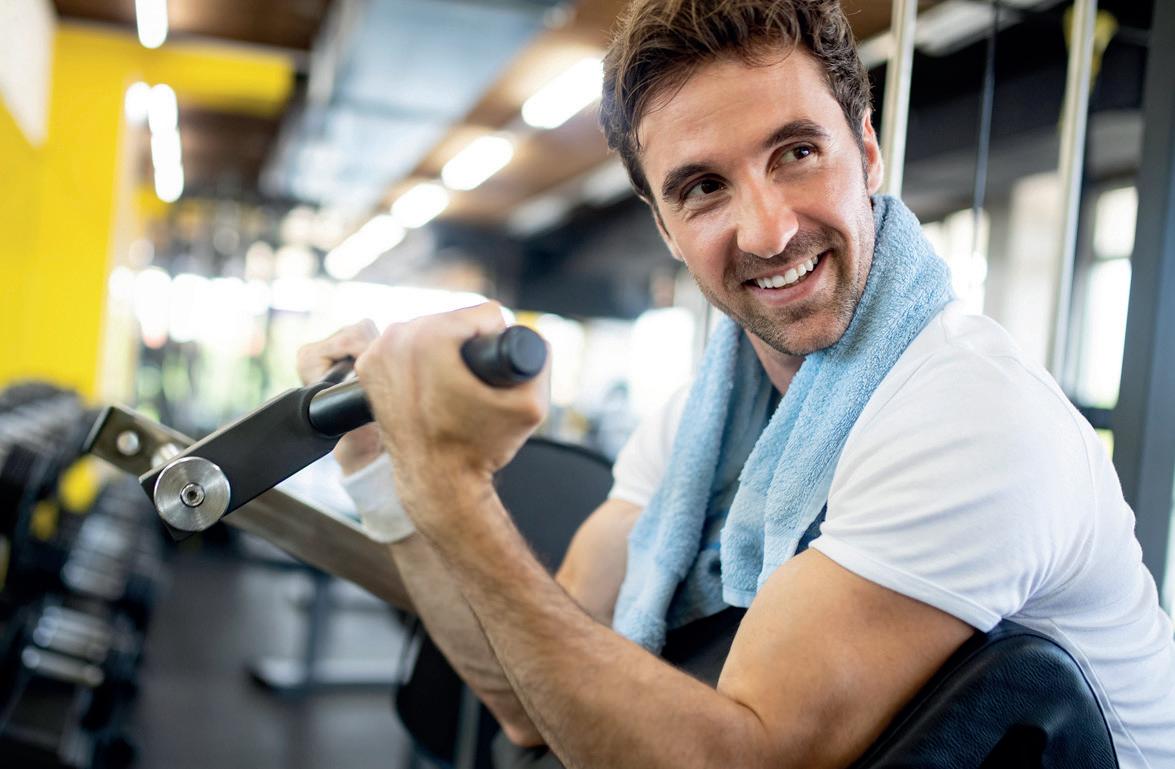
With this in mind, let members choose elements of their workout, such as music, format or pace.
n Offer progressions rather than prescriptions. Recognise progress publicly and compassionately and avoid overly prescriptive, one-size-fits-all statements.
n Positive social connections make workouts more enjoyable and help turn exercise into something people want to do, so encourage peer encouragement and accountability and facilitate small group or partner workouts.
“The job of fitness professionals is to design for pleasure, not punishment. This is particularly pertinent to new movers,” says McKee. “Punishing yourself at the gym is not how you build a loving, sustainable relationship with movement. What actually helps is doing activities you enjoy; leaving sessions feeling capable and wanting to do it again. It’s about resetting, refocusing, and recalibrating toward what will actually last.”
McKee has more than a decade of experience applying behavioural science to health, fitness and wellbeing.

“Enjoyment isn’t a nice-to-have, it’s a behavioural signal”
Heather McKee
She works with gym operators, fitness brands and digital health companies to help people build enjoyable, sustainable exercise habits that improve long-term engagement and retention, including Myzone.
McKee has worked globally with more than 100 companies and organisations, including Lululemon, Decathlon, Unilever, and HSBC, and also advises on behaviour change across apps, wearables and longevity products.
Her research has been published in academic journals and also featured in a range of international media, including publications such as Time magazine, Vogue and The Times

The development is part of a wider regeneration scheme
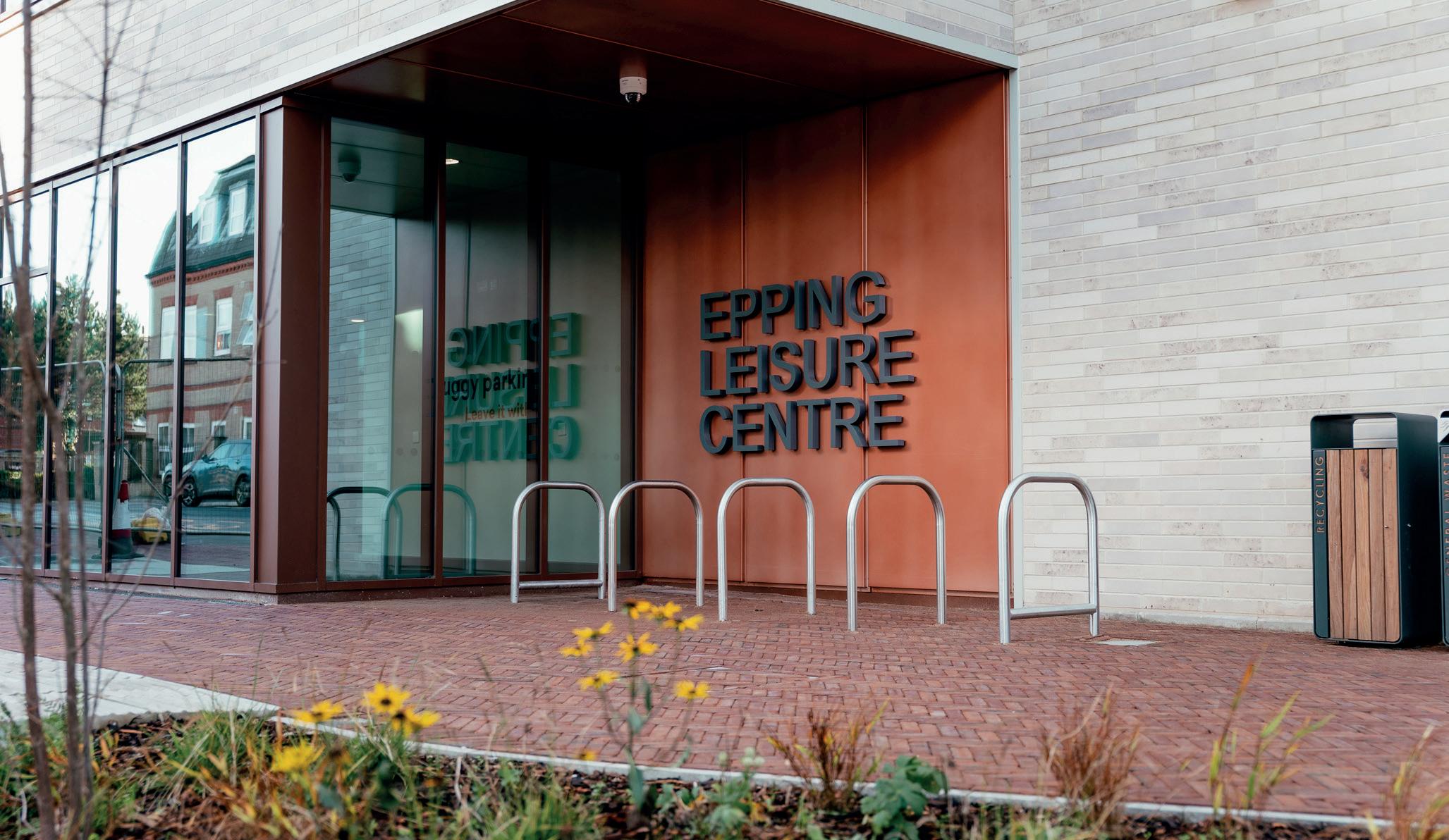
Places Leisure has opened Epping Leisure Centre in the UK in partnership with Epping Forest District Council and Pellikaan Construction. The building is part of a wider regeneration of the town and replaces the now closed Epping Sports Centre.
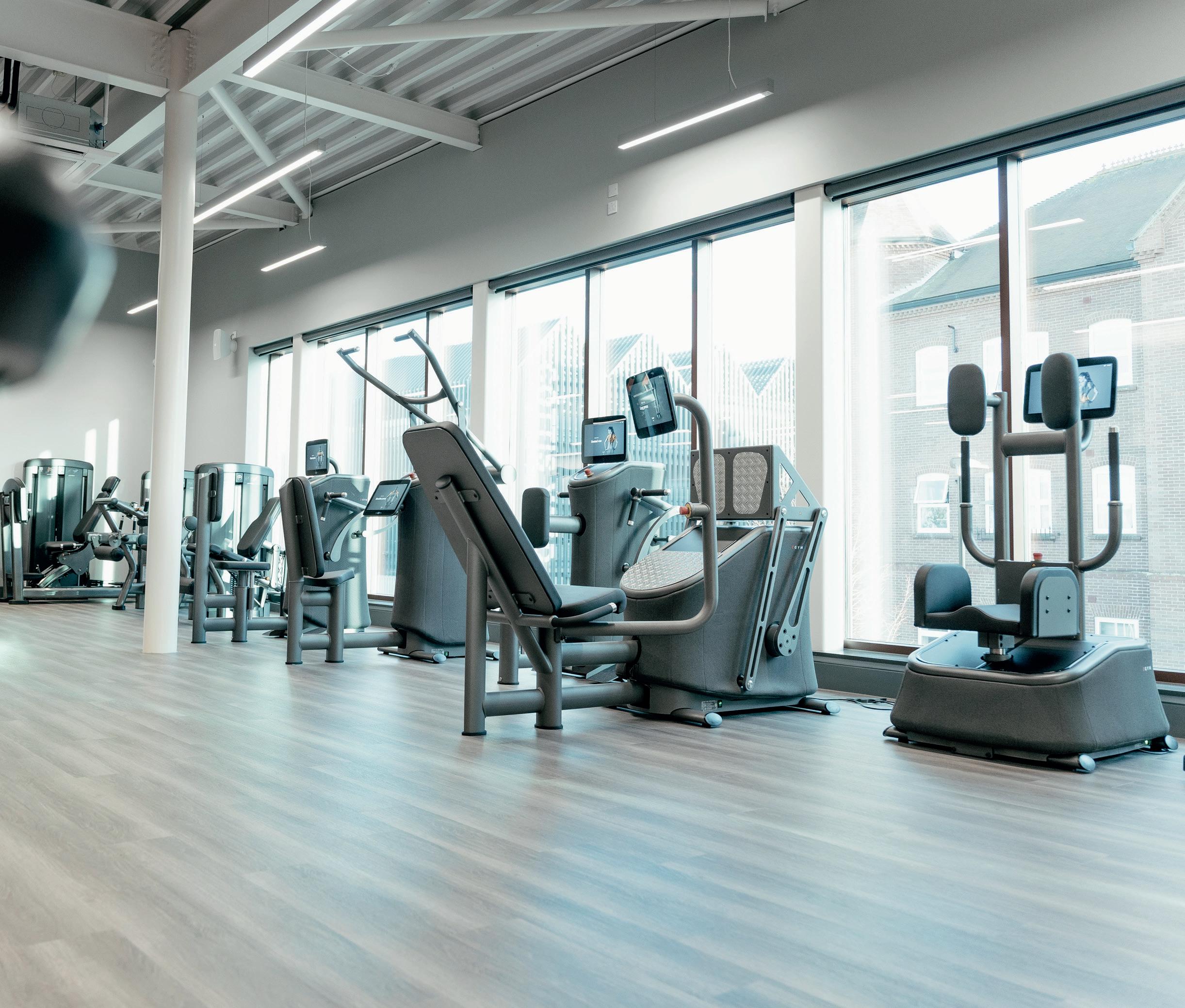
Facilities include a 120-station gym equipped by Life Fitness, with cardio kit, a large weights area, multi-use lifting platforms and racks. Also on offer are an EGYM Fitness Hub and Tanita Body Composition scales.
The mix is rounded out by group exercise studios, a cycling studio and a 25-metre swimming pool. There’s also a learner pool, a four-court sports hall and two courts for interactive squash.
“ With its sustainable design, this centre will be a vibrant hub for wellbeing, social connections, and enjoyment across the whole community ”
Dan Walker
The regeneration also involves the development of more than 250 new homes, a new primary school, a large area of public parkland and a three-screen cinema with a bar. Better pedestrian and cycling connections will also be made throughout the town.
Epping Forest District Councillor, Ray Balcombe, says this is an exciting milestone in Epping’s redevelopment: “This state-of-the-art, energy-efficient centre represents a significant investment in our community’s health and wellbeing and the district’s future,” he explained. “I’m particularly excited for Epping’s first municipal swimming pool to open.”
Dan Walker, business development director at Places Leisure, said: “We’re delighted to have designed and built the new leisure facility with our valued partners, at this exciting milestone we look forward to welcoming local residents and supporting local people of all ages and abilities to lead a healthier, happier and more active lifestyle.
“Our commitment is to create an inclusive environment where everyone feels welcome and supported – whether they’re
Supervised gym sessions will run daily for 11- to 15-year-olds
taking their first steps into fitness, looking to develop their skills, or aiming to maintain a lifelong active lifestyle,” said Walker. “With its sustainable design and wide-ranging facilities, this centre will be a vibrant hub for wellbeing, social connections, and enjoyment across the whole community.”
A key milestone in Epping Forest District Council’s commitment to achieving carbon neutrality by 2030, the centre features air-source heat pumps, advanced digital technologies and the highest levels of insulation.
A range of membership options are available. Premium includes gym, swim and classes from £60 a month, while a concessionary rate for the same membership is £51 a month.
Swim memberships start at £32 a month and pay-as-you-go classes cost £10 and £5.50 for seniors. There are also supervised gym sessions each day for 11- to 15-year-olds to support younger generations.
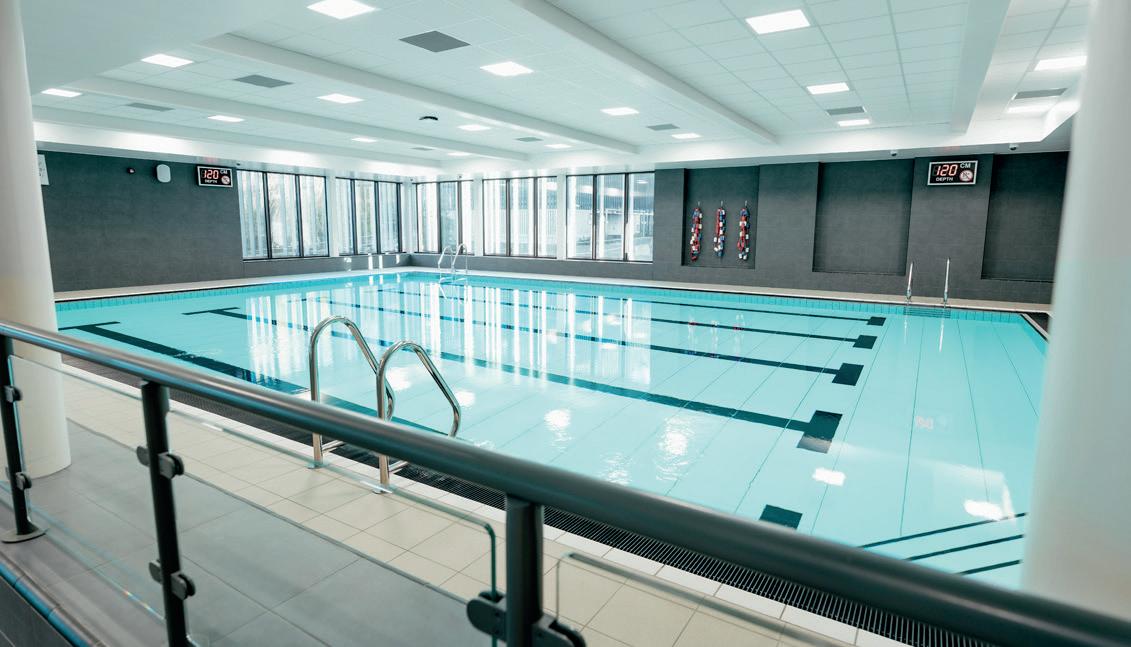
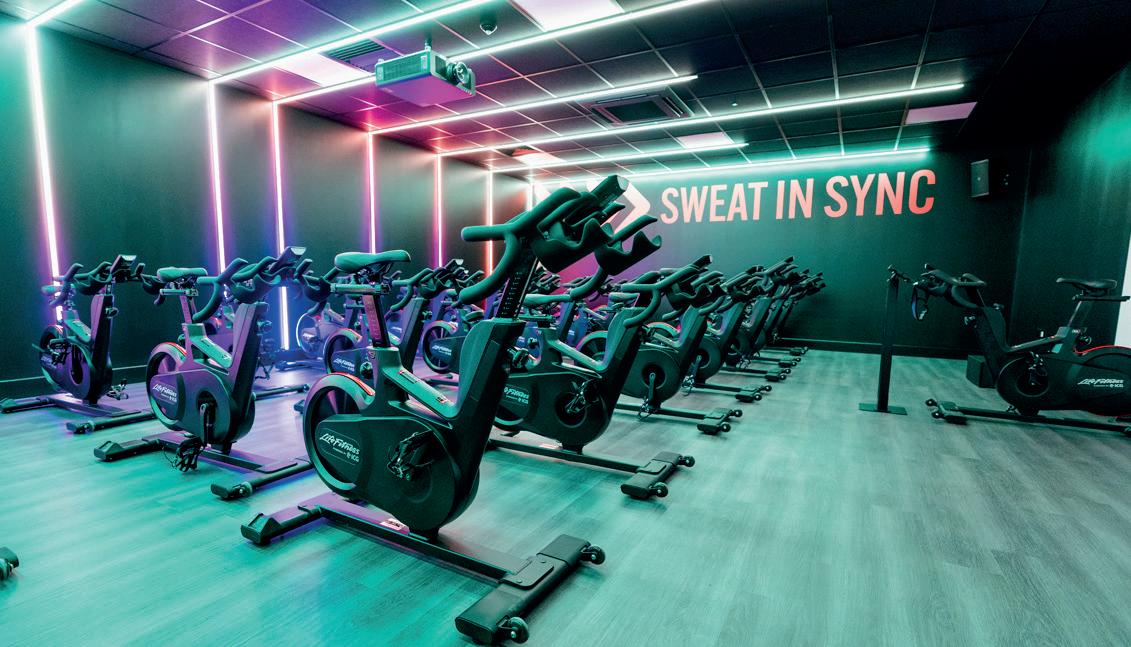
Woolwich Waves leisure centre has opened its doors, replacing the former Waterfront Leisure Centre in Woolwich, London.
Charitable social enterprise GLL will operate the flagship facility under its Better brand, in partnership with the Royal Borough of Greenwich.
Workout facilities include a two-storey gym, two dance studios, a 30-bike spinning studio and a bootcamp HIT studio. There’s also an eight-lane, 25-metre swimming pool, training pool and leisure pool with two waterslides and a toddler splash zone.
A 3G, five-a-side football pitch, six-court sports hall and two squash courts complete the mix, supported by a creche, two soft play areas, a party space and a cafe.
Additionally, Woolwich Waves has a health suite with spa, sauna and therapy rooms.
Rooftop solar panels are expected to generate 250,000 KWh per year, providing heat to the building.
Peter Bundey, CEO of GLL, says the new building is iconic: “The new leisure centre is truly state-ofthe-art and is already creating significant community interest. As a charitable social enterprise and
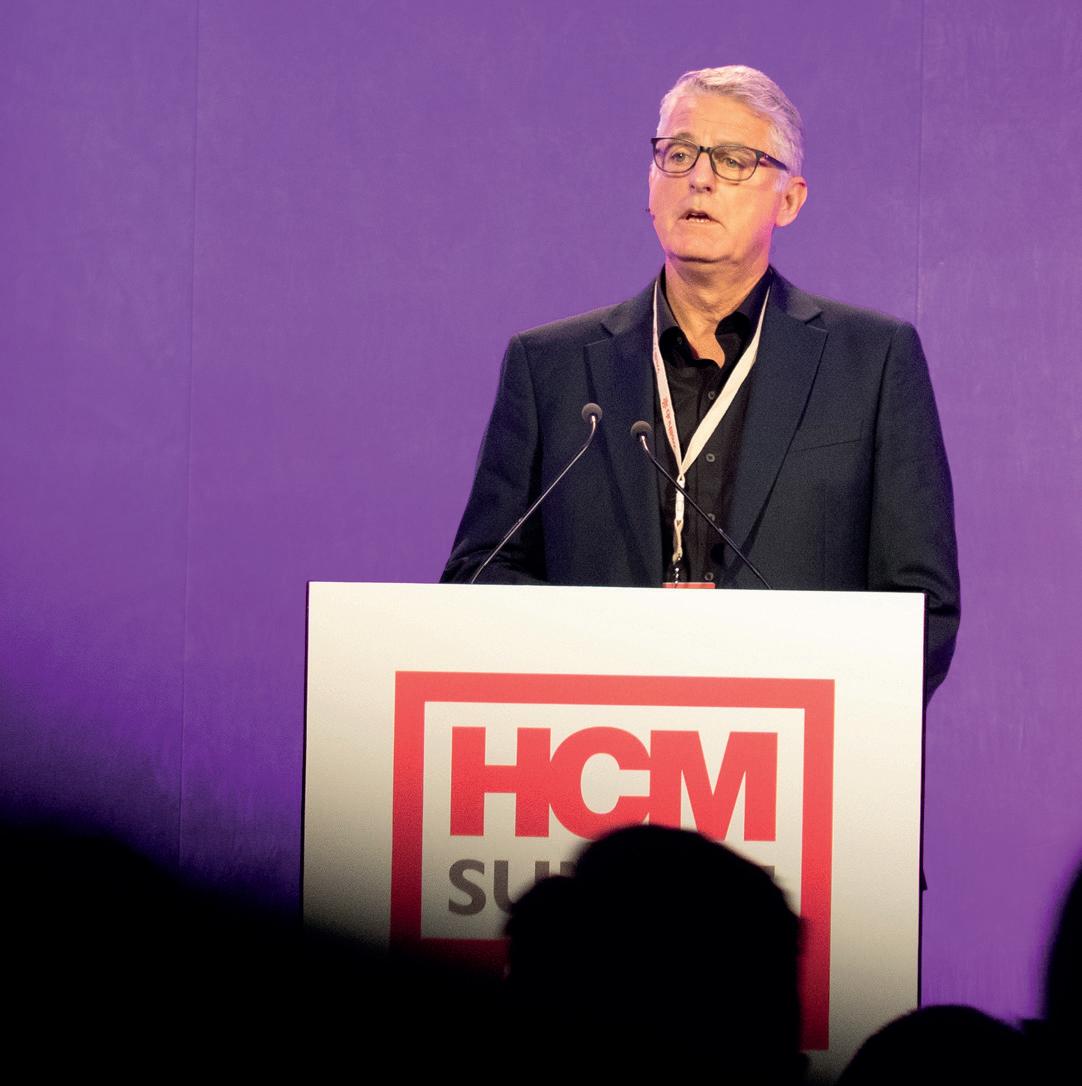

The two-storey gym complements the four group-ex studios
worker-owned co-operative, we welcome the chance to also use Woolwich Waves to widen and deepen employment and social opportunity for local people.”
Richard Gallagher, GLL partnership manager for Greenwich said: “Woolwich Waves is the first-class replacement for the much-loved Waterfront Leisure Centre which had served Woolwich residents proudly for 36 years.
“GLL is over the moon to have been entrusted by the Royal Borough of Greenwich to operate its brand-new facility with a remit to get more people active. It has got off to a great start this new year with visitor numbers up 300 per cent compared to the same period last year at the old centre.
“New memberships and sign-ups for the swimming lessons are also flying, which is testament to the high quality of the facilities – some of the best seen in the capital – and the wide range of dry and wet side activities offered.”
● Peter Bundey spoke at the HCM Summit in October 2025 about GLL being a values-led model and the impact this has on the organisation. Click on the QR code (left) to watch his presentation in full.
http://lei.sr/9x3R7_H
“As a charitable social enterprise and worker-owned co-op we welcome the chance to also use Woolwich Waves to widen and deepen employment and social opportunity for local people”
Peter Bundey, CEO, GLL
Wet facilities include a leisure pool with two waterslides and a toddler splash zone for family fun

The American Council on Exercise (ACE) and Nick Lambe, The Online Sleep Coach, have collaborated to launch the Sleep and Recovery Coach Course.
“As recovery becomes a leading differentiator in the coaching industry, clients are increasingly seeking professionals who understand both the science of recovery and the principles of behaviour change,” says Lambe.
According to recent global data, nearly half of adults report regular sleep difficulties, and 80 per cent say they struggle to sleep at least once per week.
The programme is designed to equip health and exercise professionals to improve client outcomes by integrating sleep and recovery science into their coaching practices.
The course offers a behavioural, evidence-based approach to improving recovery, performance,

Exercise professionals can now offer sleep advice after training by ACE and overall wellbeing by targeting the habits and environmental factors that influence sleep quality.
“Recovery is a foundational component of sustaining an active lifestyle and supporting overall wellbeing,” said ACE CEO, Cedric Bryant. “The Sleep and Recovery Coach Course bridges the gap between
sleep optimisation and behaviourchange coaching and advances our shared mission to help people move more and live healthier lives.”
The curriculum covers key areas including behaviour-change coaching strategies to support sleep.
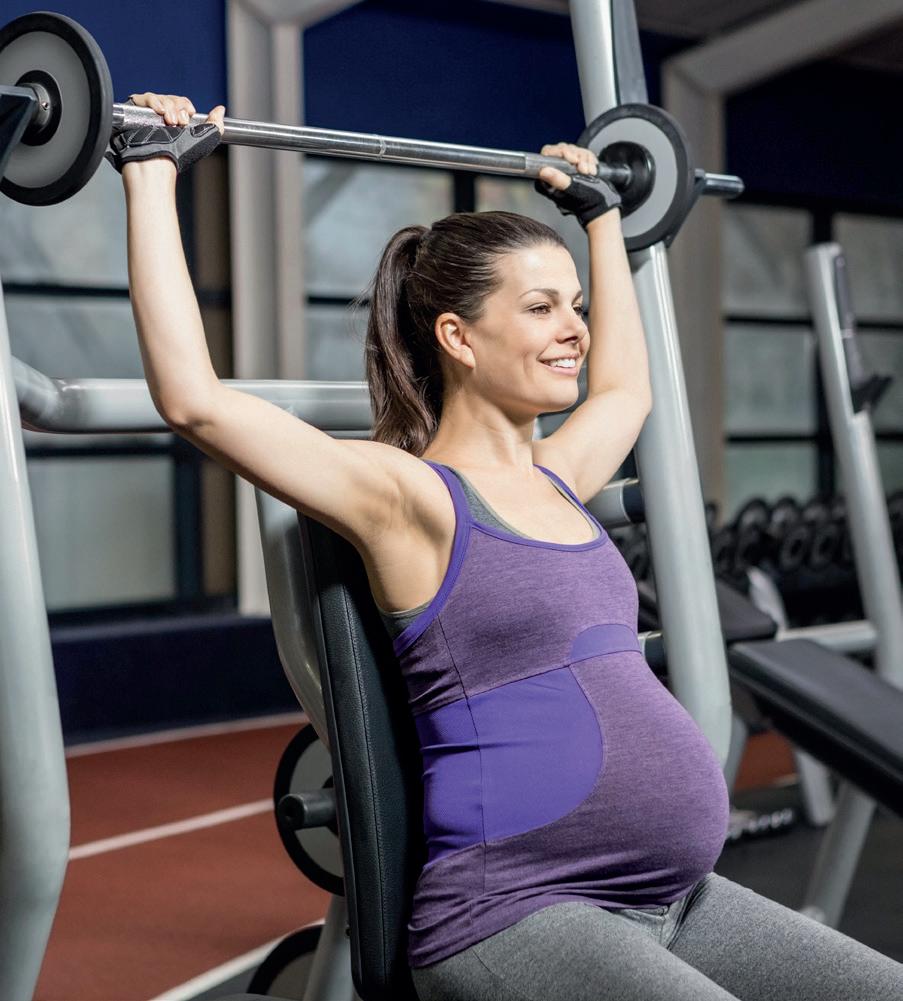
PureGym has announced a partnership with Hatch Athletic to upskill 3,000 PTs across its international portfolio to better support pre- and post-natal women.
Concerns about how hard to train, how long for and how much to safely lift are all barriers to pre- and post-natal women staying active. Studies in the UK have found that as few as 8 per cent of pregnant women and 10 per cent of post-natal women felt supported by coaches or fitness professionals to be active.
Hatch Athletic has created a training programme and certification for PureGym, called Hatch Coach, which provides evidence-based practical skills to train women safely through pregnancy and post-partum. Modules include anatomy and
“We’re on a mission to support our female members through pregnancy and beyond”
Hugh Hanley
physiology; pregnancy and postpartum fundamentals and nutrition.
Hugh Hanley, group director of PT at PureGym, says: “We’re on a mission to support our female members to continue on their fitness journeys throughout pregnancy and beyond.”
One of the UK’s fastest-growing wellness companies, Healf, is collaborating with household names from the worlds of fashion, dance music and sport to front its Wellbeing Made Personal campaign.
Supermodel, Claudia Schiffer; British DJ, producer and songwriter, Calvin Harris, and three-time Olympic fencer, Miles ChamleyWatson, are collaborating with the wellbeing brand.
In a promotional video, Schiffer can be seen sipping on a colostrum shake pre-catwalk and using a red light therapy device.
Harris practises breathwork and gratitude journaling in his recording studio. All three are set to play an active role in product curation, with Harris’ role as
chief wellbeing officer described as working to help shape Healf’s wellbeing philosophy and cultural presence. He says: “This campaign invites a different conversation, one that empowers wellbeing by reminding us how different it looks from one person to another.”
Taking an equity stake in Healf, Schiffer’s investment follows a multimillion-dollar funding round in June last year, led by growth equity firm Iris Ventures.
Schiffer said: “Healf is one of the world’s leading brands for longevity, health and beauty tech and I’ve been a fan since the beginning. Becoming both an ambassador and an investor felt like a natural fit for me.”

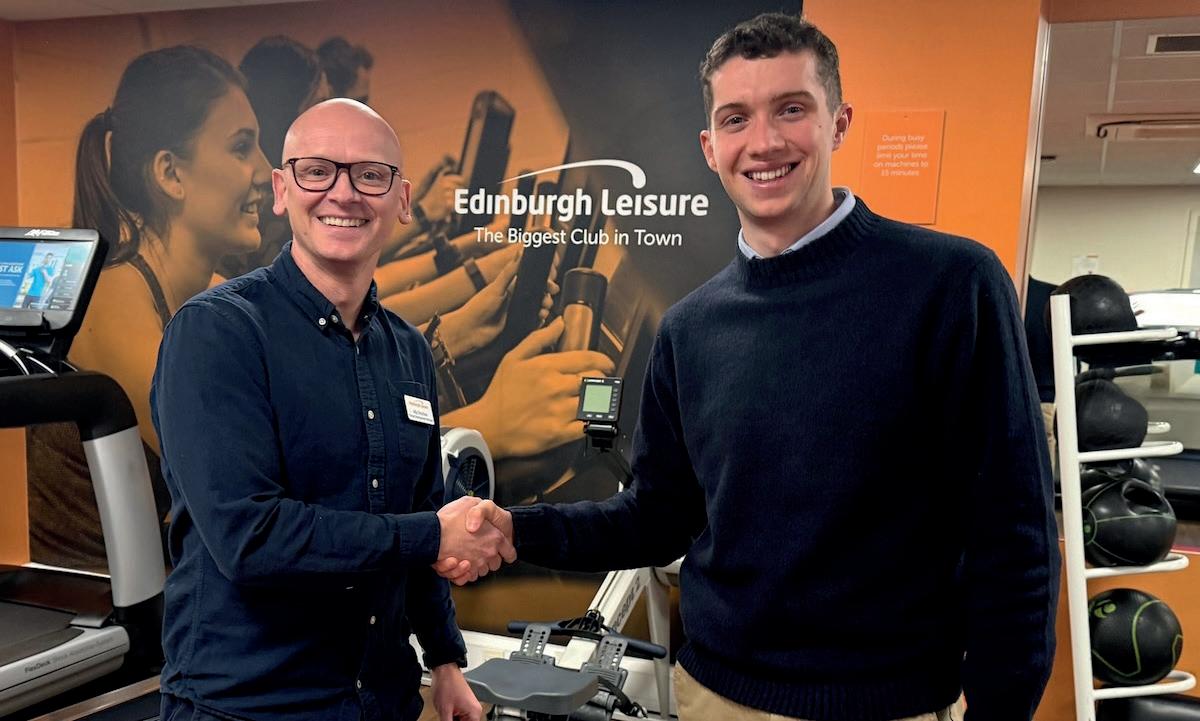
EGYM Hussle and Edinburgh
Leisure have entered a longterm partnership arrangement designed to boost corporate fitness in the Scottish city.
Seventeen Edinburgh Leisure venues, including the redeveloped Meadowbank Sports Centre, will become available to book on EGYM Hussle’s B2B corporate member base.
Ally Strachan, fitness development manager at Edinburgh Leisure, says this will enable the trust to extend its reach into the corporate sector and grow its user base, as well as creating the opportunity to introduce EGYM equipment.
The collaboration aims to drive increased participation in fitness, as part of EGYM Hussle’s overarching mission to deliver in the preventative healthcare space.
The aggregator focuses on business-to-business partnerships, providing the clubs on Hussle’s network with incremental
revenue, unlocking access to additional members outside their existing networks.
James Crossland, director of operations at EGYM Hussle, says: “As a charitable trust with a strong focus on community health, inclusion and accessibility, Edinburgh Leisure is a fantastic partner. This
collaboration helps extend access to high-quality fitness facilities for more people, while supporting Edinburgh Leisure’s mission to keep Edinburgh active and well.”
All EGYM Hussle partner venues benefit from free marketing via the dedicated website.
We’re forming a ‘team of stars’ designed to make history in the Brazilian fitness market
Chris Rondeau
Panobianco Academia: strategic advisor, board member and investor
How does it feel to be back in the industry?
It feels great to be back in the fitness space – something I’m deeply passionate about, both personally and professionally.
I’m especially excited that Panobianco is a franchise company, much like Planet Fitness. I genuinely enjoy partnering with entrepreneurs and working as a team to grow a strong, scalable brand.
Panobianco delivers a low-cost, high-quality fitness experience. The clubs offer a great atmosphere – high energy, welcoming and accessible to people at all fitness levels, from beginners to experienced athletes.
Locations feature both strength and cardio equipment, along with group exercise classes, and while some older locations require minor housekeeping updates, the majority of clubs are relatively new, due to the company’s accelerated growth over the past few years.
Each location is franchised by local entrepreneurs who build and operate clubs in their own communities, providing strong service and maintaining a hands-on, thoughtful approach to their locations. The royalty rate is 10 per cent and the marketing fund investment is 2 per cent.
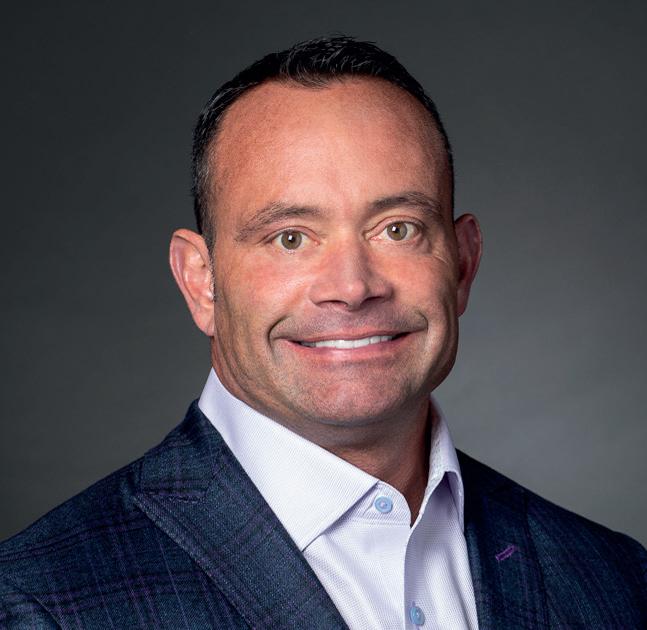
The company’s strength lies in its solid foundation and a strong base of franchisees who are ready to grow. What may appear as weaknesses are truly opportunities. There are several key franchisor initiatives that, once implemented, will better support franchisees, drive unit-level profitability and ultimately fuel faster system-wide expansion.
Brand standards are monitored by our field team, who conduct site visits to evaluate service quality, cleanliness and operational consistency. They work with franchisees to identify gaps and develop action plans to bring locations back to brand standards.
CEO, Felipe Barth de Castro is a well-rounded executive who holds an MBA from MIT Sloan and brings a powerful combination of experience as both an entrepreneur and a corporate executive across Latin America.
Under his guidance, we’re forming a 'team of stars' designed to make history in the Brazilian fitness market. This leadership team has been recently assembled and includes a new COO and head of expansion, Guilherme Rocha; head of legal and compliance, Cassio Alcantara and head of marketing, Celia Mizukosi. We’re

currently recruiting an experienced CFO to complete the line-up early next year.
What’s the opportunity in Latin America?
It’s an exceptional market. People are passionate about fitness and exercise, yet there’s a clear lack of the right club at the right price point. The opportunity is fundamentally about accessibility. In the US roughly 23 per cent of the population belongs to a gym, while in Latin America that figure is closer to 5 per cent or less, creating tremendous upside for Panobianco in the years ahead.
Tell us about the expansion into Mexico
Strategically, we treat our international operations as independent units. For example, we manage Brazil and Mexico separately. In Mexico, we’ve teamed up with a proven, experienced local entrepreneur, Gerardo Hernandez, who owns relevant equity. He’s building his own team locally with minimal reliance on Brazil, which offers the agility and local insight needed to succeed.
What’s your role?
I’m a board member and an investor in the business. While my role includes traditional
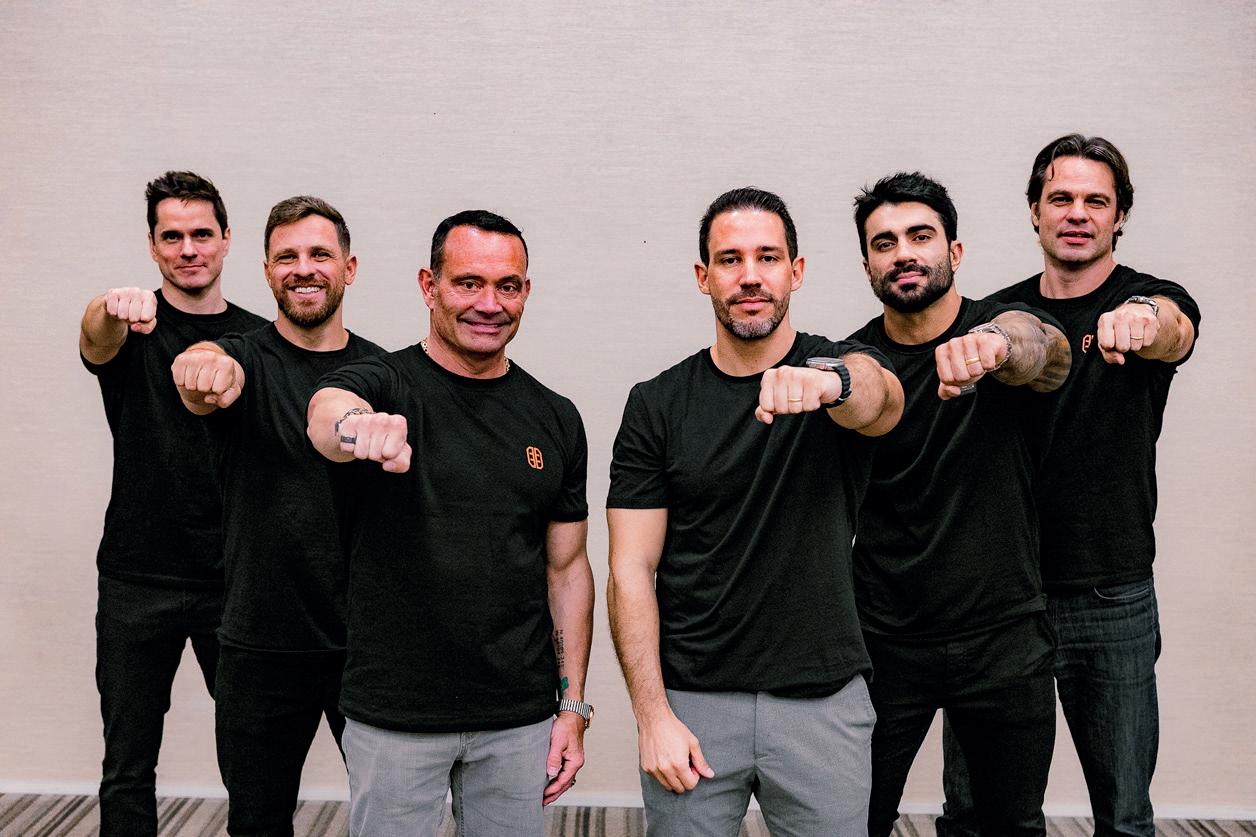



Panobianco reminds me of Planet Fitness in 2010, when it was at the beginning of its most significant growth phase


The plans are to end 2026 with around
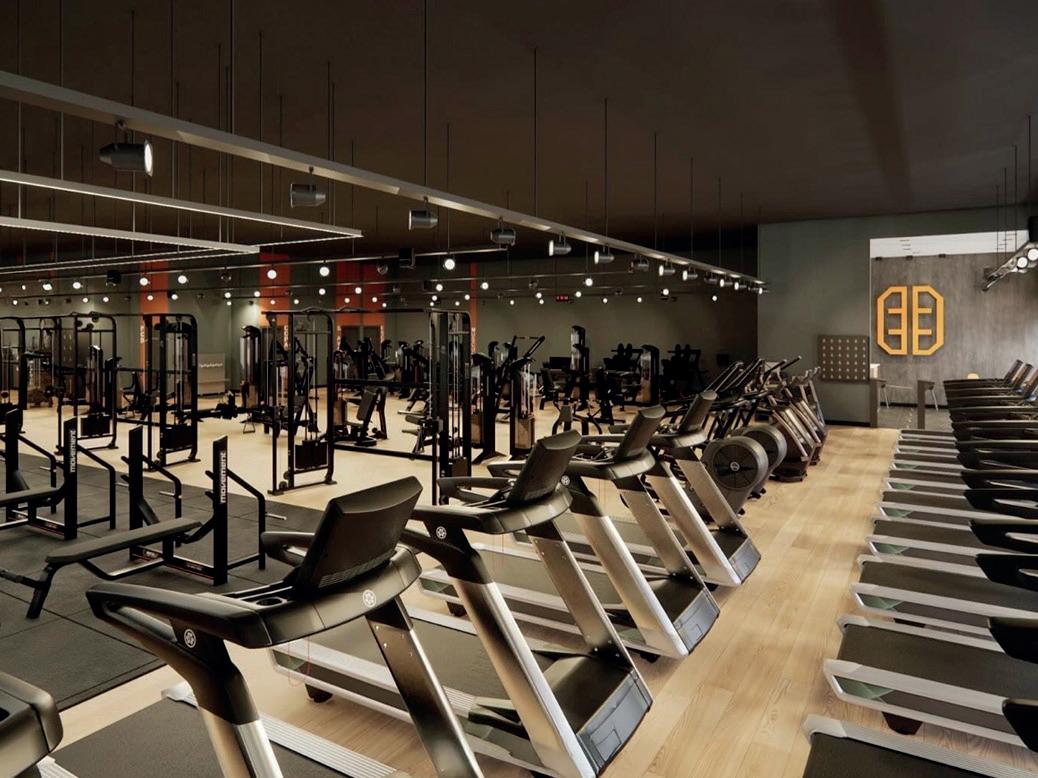
The majority of clubs are relatively new, due to the company’s accelerated growth over the past few years
board responsibilities, given the early stage of my involvement, I’m also deeply engaged in strategy and refining the franchisor’s operating model to help accelerate growth. In addition, I hold weekly mentoring calls with Felipe, Panobianco’s CEO, focused on leadership development and setting him up for long-term success.
Why is this an exciting opportunity?
I was introduced to the founding family and CEO by Cesar and Pietro at Wellhub. I have a longstanding relationship with Cesar and through his experience with Panobianco, he felt this would be a strong opportunity for me to help support and scale a compelling brand.
Panobianco today reminds me very much of Planet Fitness in 2010. At that time, Planet Fitness had approximately 400 locations – similar to where Panobianco is today – and that marked the beginning of its most significant growth phase. With the right strategic levers in place, I strongly believe I can help influence Panobianco’s trajectory in club development and membership growth.
We plan to end 2026 with approximately 600 locations and exceed 1,000 locations by

the end of 2028. We’ve already opened our first location in Mexico, with additional Latin American markets under evaluation, as well as the US – a market I know extremely well.
What changes will you introduce?
Many of the most impactful changes are low-hanging opportunities, particularly around enhanced franchisee support in development, real estate, financing and marketing. Stronger support leads to higher franchisee satisfaction and profitability, which in turn drives continued expansion and faster scaling. At this time, we’re fully focused on the existing Panobianco model. There’s significant opportunity within the current concept, and we’re intentionally avoiding distractions to ensure disciplined, effective scaling of the brand.

Digitalisation is one of the main challenges we face and we’ve identified it as a critical success factor for our strategy. To be transparent, this has historically been a weak point for Panobianco – the company previously sold only 2 per cent of its memberships through digital channels.
We’re actively working to change this by making key improvements to our website and e-commerce capabilities (such as three-click-purchase), along with revamping our digital marketing and conversion strategy. This is already working, and during our recent Black Friday promotion we saw digital membership sales rise to 22 per cent.
Now we’re examining both the digital customer journey and the in-store experience to identify future investment opportunities. Our goal is to turn this area from a weakness into a core strength of the company.
Digitalisation is one of the main challenges we face and we’ve identified it as a critical success factor. Our goal is to turn this area from a weakness into a core strength
Franchisees
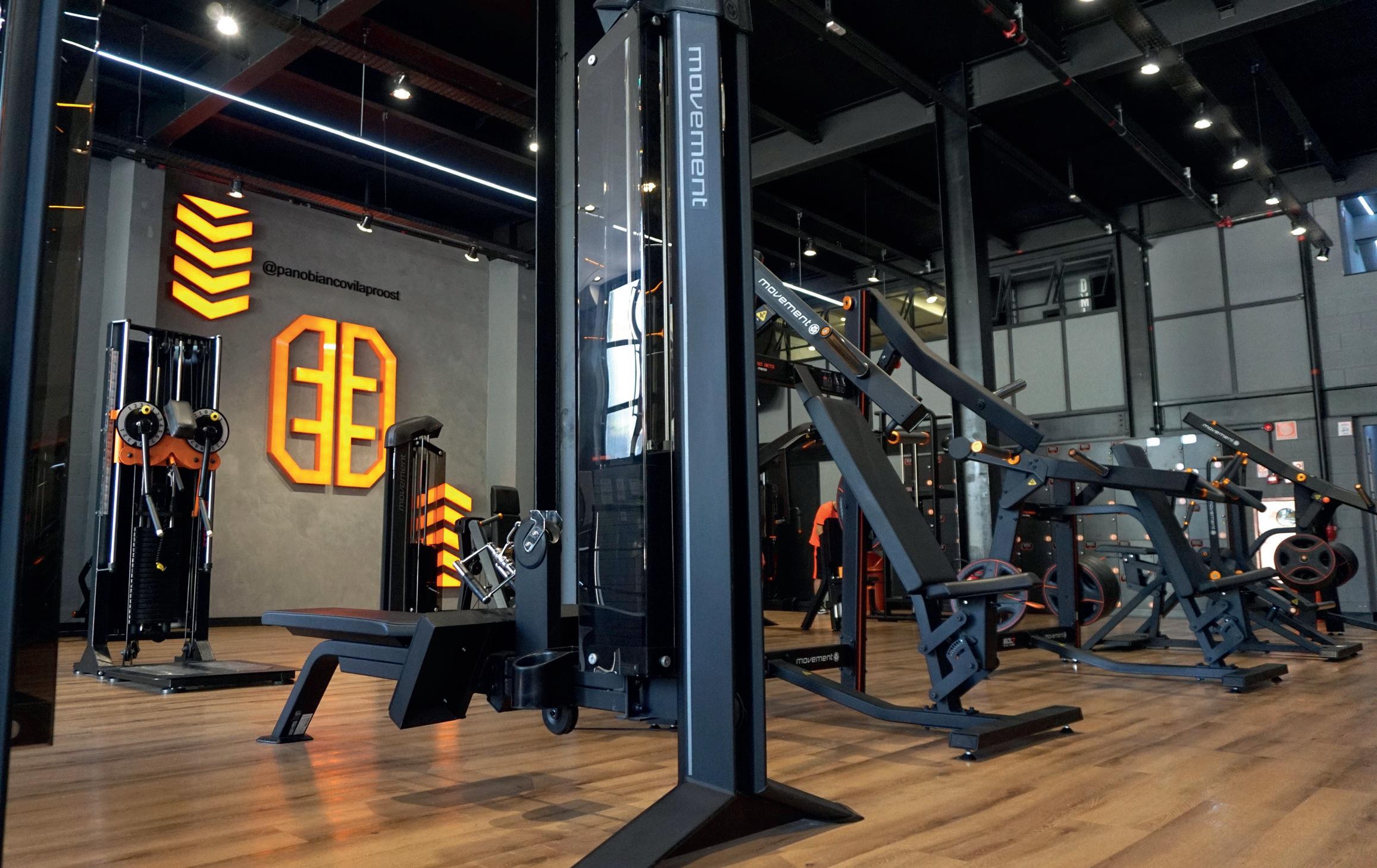
What is the thinking behind the strategy of multi-unit franchises?
Committing franchisees to defined territories rather than single, one-off locations allows them to focus on building density within a market. This creates operational efficiencies, reduces cannibalisation and – most importantly – aligns annual unit growth. Franchisees are required to develop their territories with mandated yearly openings, giving the company clearer visibility into future growth.
What is the nature of your partnership with Wellhub?
It is a classic example of mutualism – a symbiosis where two entities work together and become significantly stronger for it. Wellhub helps us unlock a corporate client base we wouldn't otherwise reach by enabling companies to offer fitness benefits, which ultimately lowers the cost barrier for the end consumer.
Moreover, aggregators have become an intrinsic part of the Brazilian fitness ecosystem. Our vision is for Panobianco to be the primary anchor gym for Wellhub’s 'Basic' level – its most massive volume tier. Finally, Wellhub is powerfully positioned to attract Gen Z, a generation that prefers the flexibility of being able to 'hop around' different fitness experiences. This makes the partnership a key channel for us to reach that demographic.

Gen Z will soon be the number one generation at Pano
We’re seeing steady growth in this segment and if current trends continue, Gen Z will soon surpass Millennials to become the number one generation at Panobianco.
Looking back, how do you feel now about your experience at Planet Fitness?
I’m proud of my experience at Planet Fitness. The chain began with a single location in 1992, where I worked the front desk. Over time, I worked every role in the business.
We transitioned to a franchise model in 2003 and spent nearly a decade refining it. By 2013, the system had grown to 600 locations, partnered with private equity, and went public less than three years later with over 1,000 locations in 2015.
I’ve lived the full lifecycle of scaling a franchise business, particularly in the fitness industry, which I’ve worked in for more than half my life. l








Understanding people through their own voice is incredibly powerful
MD, Active Insight
You’re taking over as MD of Active Insight – how are you feeling? It comes at such a dynamic moment in time for us. Active Insight has spent 26 years helping 500 organisations across the leisure, culture, health and education sectors use data to make better decisions. Our work has always been about helping them understand people more deeply so they can deliver better experiences and outcomes. The fact I now get to lead that mission is both an honour and a huge responsibility.
Understanding people through their own voice is incredibly powerful. Our consumer insight platforms exist to help organisations see the world through the eyes of the customer, to understand their motivations and barriers to participation in physical activity.
How is your senior team changing?
Active Insight’s founder, Mike Hill and director, David Monkhouse, are moving into strategically-focused positions. Mike will lead the development and delivery of our partnership with Sport England’s Moving Communities, while David will dedicate more time to the growth of our events.
What are your personal priorities?
To stay true to why Mike Hill started the business – measuring and managing customer experience. We’re proud of our history, but also excited about what comes next.
We’re moving into a period of significant investment, particularly within our consumer insight and customer experience platforms – Enquire,
We’re extending our reach beyond facilities and into places, so we can meet people where they are
Onboard, Engage and Retain. These products are already transforming how our clients understand and respond to customer behaviour, but the next 12 months will see us increasing real-time feedback touchpoints. As part of this, we’re also extending our reach beyond facilities and into places, so we can meet people where they are.
Data insight is no longer a ‘nice to have’, it’s an essential part of business intelligence for decision-making and strategy development.
I believe personalisation will become increasingly important and we’ll also see the shift from periodic to continuous insight to
Personalisation and continuous insight will be increasingly valued
better reflect the experiences of customers and not just rely on isolated snapshots in time.
Social connection underpins participation and community-building, so if we can also understand that deeply and respond to it intelligently, we’ll bring more people into activity and keep them longer.
We’ve been providing data the sector can use to counter inequalities and ensure all communities have access to opportunities to be physically active.
We partner with organisations such as UK Active, supporting them with insight – for example, the Mental Health In Motion report (www.hcmmag.com/MHIM).
All feedback – both positive and negative – gives a chance for organisations to learn and improve.
How will you future-proof the business?
We’re not only thinking about today’s customers, but also tomorrow’s, including Gen Alpha, who engage with brands very differently.
WhatsApp, Snapchat, frictionless interfaces and personalisation will all shape how the next generation communicates. Our digital evolution will support that shift.
We’ll also be exploring new markets and developing global relationships. Growth matters, but it must be grounded in purpose, collaboration and value.
What’s your overarching vision?
Our vision is to connect people through insight to enable the creation of memorable experiences.
We believe the relationship between operators and suppliers is intrinsically linked and through insight-sharing, collaboration and conversation, we can grow stronger as a sector.
Expect to see more actionable takeaways and opportunities to learn from one another, whether through our events or direct partnership work. More: www.active-insight.org

The research identified a link between frequency of use and secondary spend
“Gen Z-ers showed the strongest appetite for additional product purchases”
We explored consumer attitudes and behaviours in relation to secondary spend in health clubs and leisure centres to understand the scale of opportunity for upselling beyond membership fees.
The study utilised a national consumer insight panel capturing trends across age, gender and exercise frequency in public and private sectors.
Findings indicated a significant untapped market, with 42 per cent of respondents stating they were ‘likely’ or ‘very likely’ to purchase additional products or services.
Health snacks and meal kits landed with 24 per cent on the product side, followed by vitamins and supplements with 23 per cent and protein shakes with 21 per cent.
Gen Zers showed the strongest appetite for product purchases, particularly in supplements and gym accessories.
Looking at services, family or guest passes ranked highest at 29 per cent, followed closely by massage and recovery treatments at 27 per cent and health checks/MOTs at 26 per cent.
Interest in personal training remained strong across both ‘regular’ and ‘less frequent’ gym-goers. The research also identified a link between frequency of use and secondary spend, with frequent members more likely to buy additional products and services.
Overall, the research highlighted opportunities for operators who prioritise customer experience, personalisation and the integration of upsell offerings into the member journey.
l Operators should focus on delivering experiences that lead to return visits.
l When conversations are organic around upselling they’re more effective.
Younger adults are the most responsive to PT support and promotional offers
“Cancellations are not ‘final’ in the minds of consumers, particularly within the first six months”
Active Insight, M elvyn Hillsdon and Fitronics collaborated to understand what drives people to join or rejoin health clubs.
With 2,000 respondents in the UK, the study, The TRP Baseline Report , examined current and former members and people who have never held a membership.
Its purpose was to give operators insights into motivation, barriers and the commercial opportunity presented by those who are lapsed and inactive.
A key finding was that cancellations are not ‘final’ in the minds of consumers – particularly within the first six months, when people are most likely to rejoin when compared with those who cancelled longer ago or who had never been a member.
The strongest motivators for rejoining were ‘confidence in achieving results’ and ‘a good variety of equipment’, while ‘affordability’ and ‘lack of time’ emerged as the stated primary barriers.
l Segment by life stage to overcome barriers of cost and time. CASE STUDY
The study found 13.7 per cent had a ‘strong intent’ to join a club ‘soon’ and a further 35.2 per cent were ‘somewhat likely’ to do so.
Younger adults were most responsive to PT support and promotional offers and over 45s more impacted by value, price and choice of group activity.
The research demonstrated the potential of ‘re-activation’, particularly among recently cancelled members and outlined strategies for converting ‘consideration’ into membership return. l
l View cancellations as a high-value engagement opportunity rather than churn.
l Focus onboarding and retention around outcomes with clear pathways to progress.













































































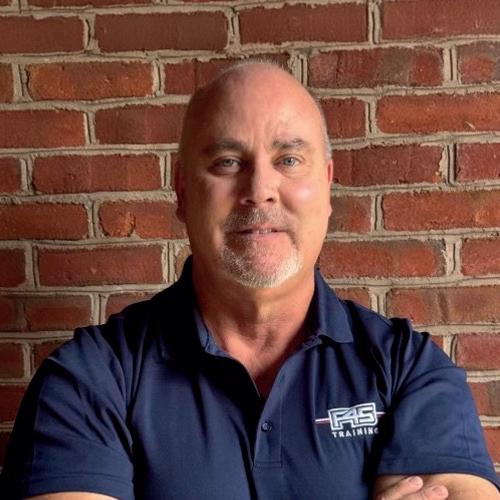
How did you originally get involved with F45? I started a supplement company with Mark Wahlberg called Performance Inspired Nutrition. We’ve always been in tune with the sector because we sell to gyms.
I heard about F45 coming to the US and it piqued my interest – I thought we should sell them supplements or pursue a partnership. I’m big on partnerships.
I did due diligence and found I loved the concept. I described it as being similar to Disney, where people take photos in front of the sign – that's magic in a bottle and is hard to create. F45 had something special and I recognised that.
Through connections, Mark and I got a meeting in the back room of the Ellen DeGeneres show with the CFO of F45 and afterwards, Mark said, "We’ve got to make this happen. Let's figure out how to get involved".
We met with Adam Gilchrist and although there were other investment groups interested, they liked our ability to showcase Wahlberg and take them to the next level with our connections, so we raised US$110 million and won the investment.
Tell us about your relationship
In addition to Performance Inspired Nutrition, Mark and I are business partners in ventures from tequila to Wahlburgers restaurants. I was his CEO for everything outside TV and movies, so every pitch came to me.
The aim was not just to be passive investors; Mark likes to be involved and F45 fitted perfectly because he’s known for being in shape.
Frankly, however, he was too busy to be as valuable an asset as we’d hoped and so he stepped away as a shareholder about two years ago, as it just wasn’t working out.
What impact has it had to lose him?
I was surprised most people didn’t care. We hadn’t had franchisees flying in to sign up or people running into our studios as a result of his involvement.
Going forward, we need to focus on what truly resonates with the brand – such as the needs of our members – and not be star-struck and chasing people who don't move the needle.

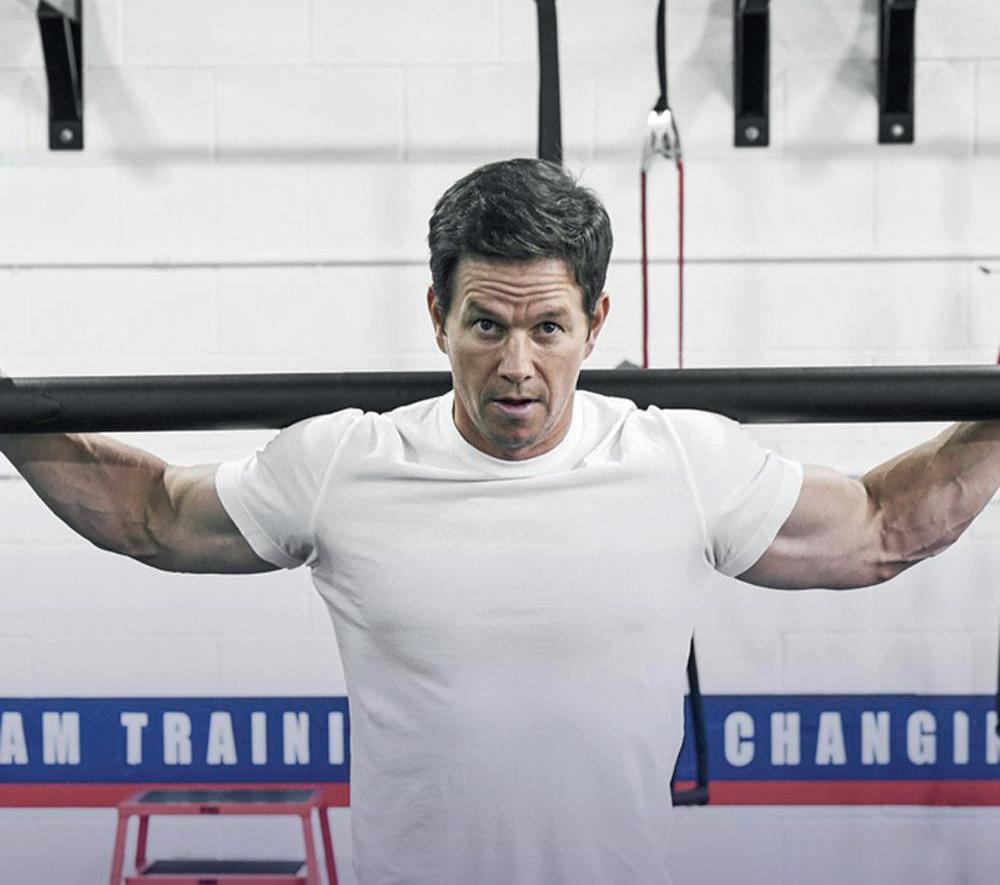
Mark Wahlberg and I got a meeting with F45 in the back room of the Ellen DeGeneres show and afterwards, Mark said, “We’ve got to make this happen”


It had been very frustrating to be on the sidelines as an investor, watching it all unravel and not being able to do anything about it
Who’s replaced Mark Wahlberg and other celebrities in your marketing?
We're now focused on telling our members' stories. We find that’s more powerful.
We showcase those who are post-partum or have lost weight, for example. We're also focused on the mental health benefits of exercise – something I believe will separate us from the pack. We want to move from being just a studio, to offering a full assortment of health, wellness, education, content and video.
How did the pandemic impact the business?
Prior to 2020, we were riding a great wave of positivity and awareness and were celebrated by the members, the franchisees and the media. We could almost do no wrong.
The decision to go public in July 2021 was made because as lockdown eased, studios were ramping up faster than expected and we knew we had such a strong community we’d rebound faster than most.
How did you end up as CEO?
As you know, bad management created some issues – a lack of guardrails around spending and a lack of sophistication in managing the business as a public company. That led to temporary CEOs stepping in.
As an investor, I worked with the Kennedy Lewis Group – who had also put money in – to find a CEO. Frankly, I didn't want to do the job, but when we couldn't find anyone, I was convinced – to my delight now – to take over.
By that stage I was very close to the business and becoming CEO fitted with my background.
Tell us more about that background
Being in private equity and venture capital for 13 years, I was involved in buying brands, fixing them and selling them, so taking on F45 was a challenge I was used to.
It's a little different from consumer goods, but still the same playbook: make sure you have the right people, the right strategy and the right culture and then focus on continued strategic, but sound, growth.
When you walked in and F45 was falling apart, how much runway did you have?
That's a great question, because I didn’t have any runway at all.
We had strong financial backers in Kennedy Lewis. But they were at a critical stage where they were very concerned about their investment and about things continuing to get worse.
We’d always had a great product and there were some franchisees doing well who didn't care what was going on in the stock market, but we were losing money and the management team was getting distracted and downtrodden.
We had no real focus and there was instability and that's never good.
To their credit, Kennedy Lewis recognised the cracks were showing and it was time to move fast, because the bleeding had to stop. Everybody needed to get back on track.
What solution was chosen?
In my first speech, I said to the team, we have a great product and a great brand, so we just need to fix the business stuff.
I knew I could fix it because I've been making money fixing things for a long time now.
For some of the team that hadn’t been through this kind of challenge, it was more difficult, but I instilled confidence in them by telling them, ‘I'm not an interim. We're going to work hard. I'm going to be right there with you, shoulder to shoulder and we're going to do whatever it takes to fix it, because it's fixable’.
What did you see as CEO that you hadn't as an investor?
It had been very frustrating to be on the sidelines as an investor, watching it all happen and not being able to do anything about it, including the de-listing.
I was really surprised at the lack of respect there had been for capital structure and also frustrated, because I'm an operator and a marketer and I saw a lot of opportunities not being responded to that we’d originally wanted to pursue when we invested.

F45 floated and then de-listed, as it sought to reboot with a new management team
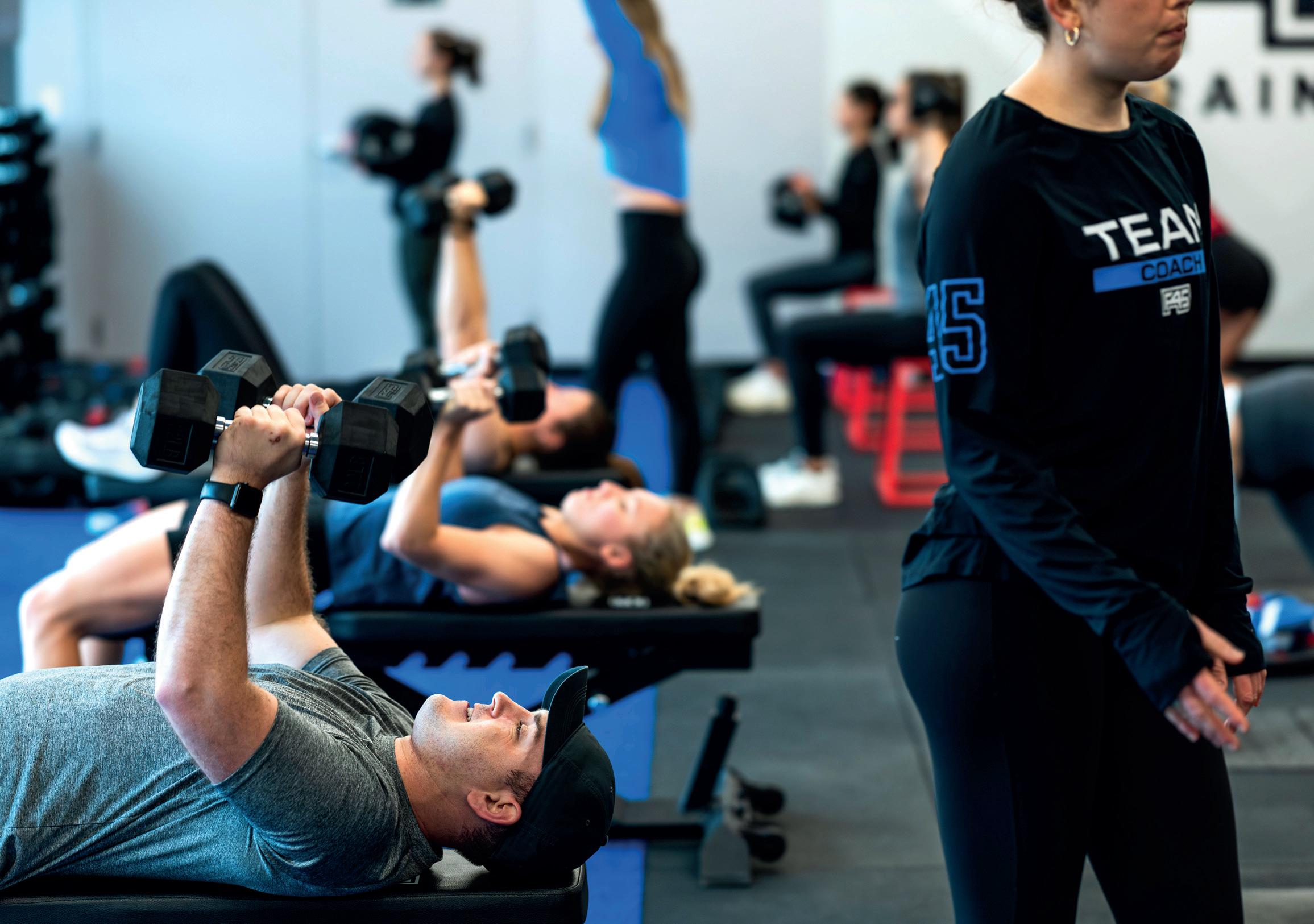

I was really surprised at the lack of respect there had been for capital structures
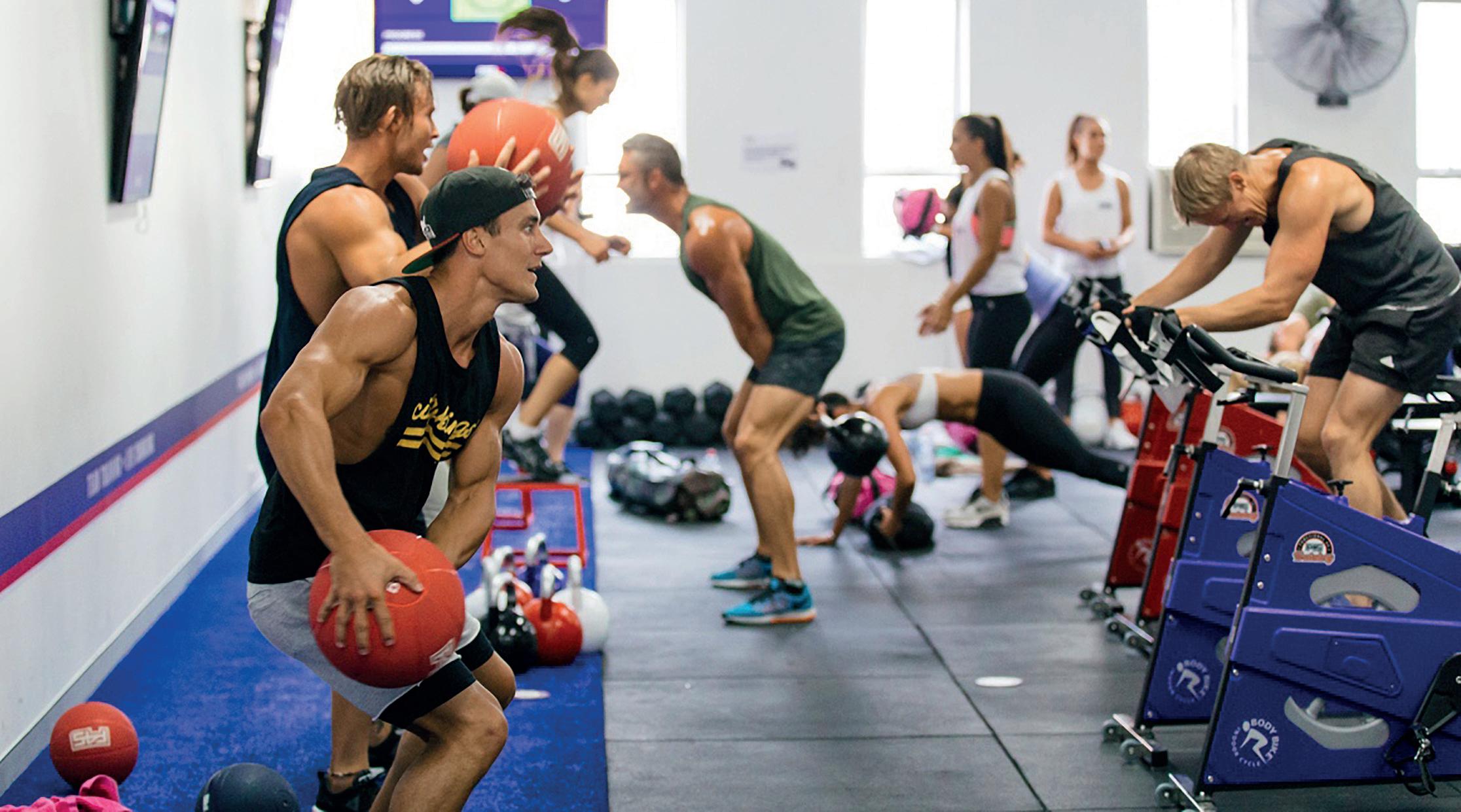
What were the initial challenges?
I kept hitting a brick wall with some of the ideas we wanted to pursue.
For example, I was advised not to focus on Pilates by a multitude of people, because F45 was bread and butter and everybody was nervous I'd be distracted or that I couldn't pull it off.
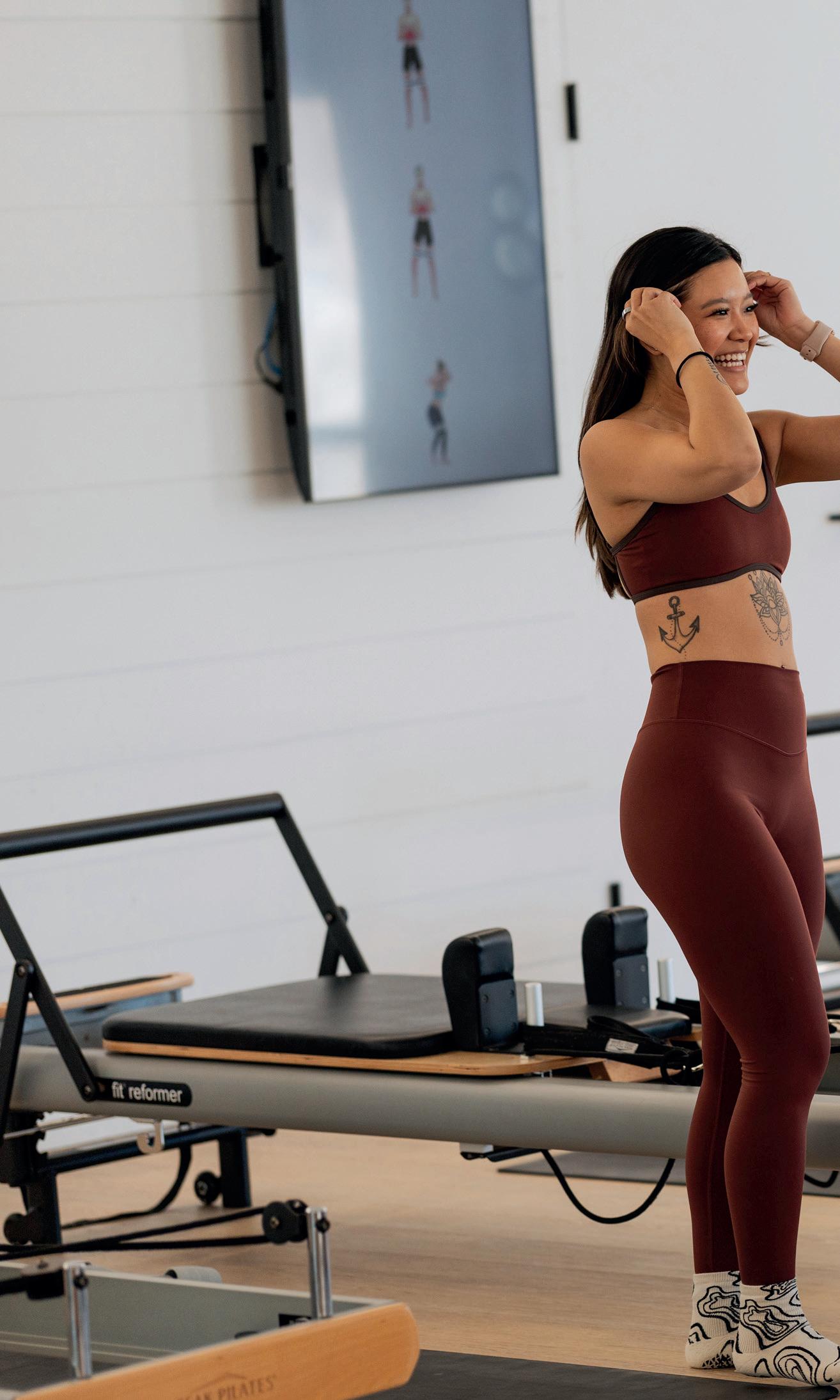
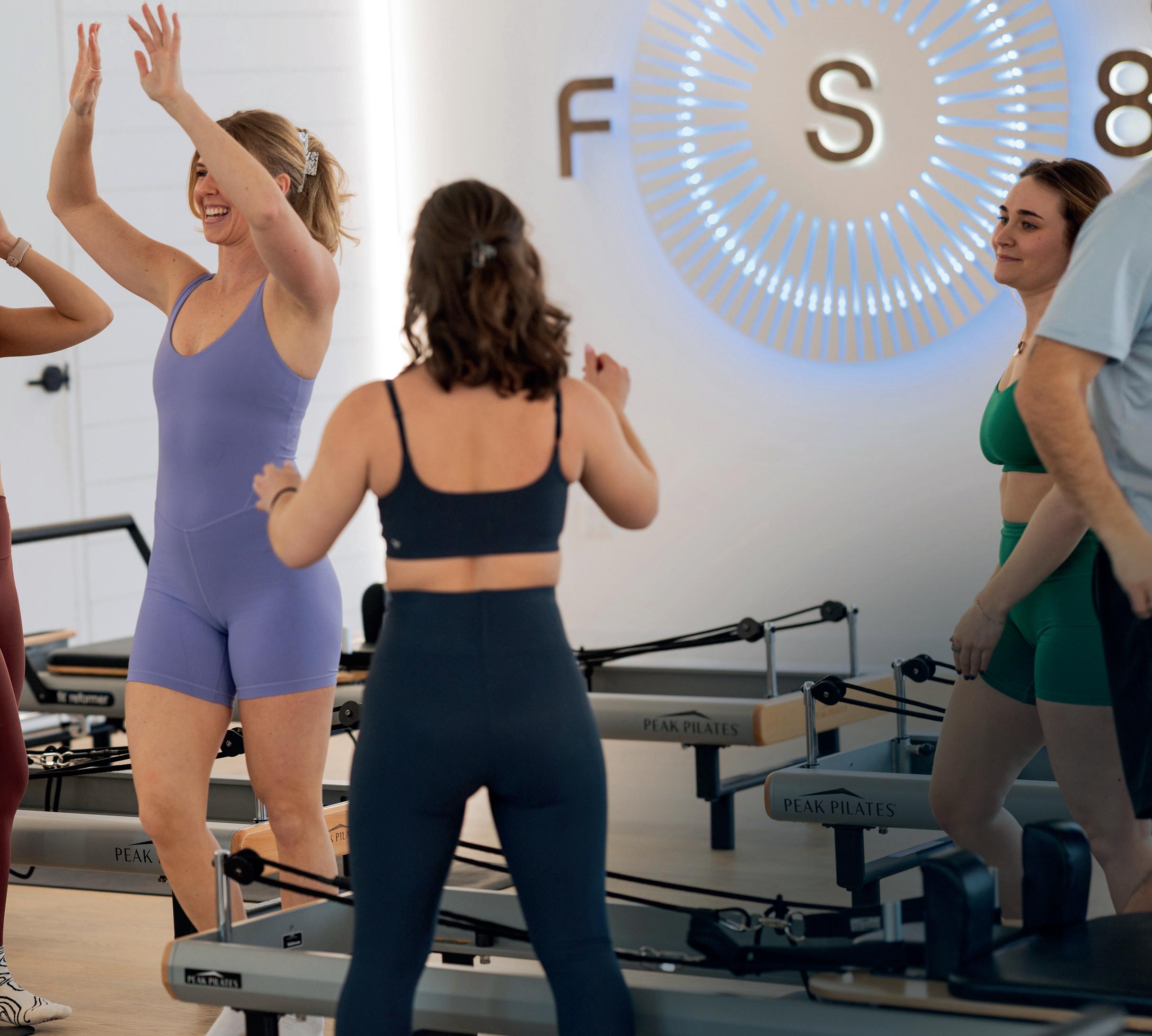
But I knew I could and quite frankly, I knew we needed to have more levers to pull for the franchisees and for growth and we needed a better story, so we launched FS8 and Vaura, which are both Pilates brands.
I believe in fate, and timing is everything. We’d been ignoring trends such as Pilates at the time I took over and the people who were telling me not to do it, didn't understand the potential and the demand, or the trends and how trends build.
With my background in supplements, I'm used to seeing trends and chasing them and being prepared for them, so I've been trained in this for a long time.
What immediate changes did you make?
I got into the weeds very fast. I signed up as a customer. Signed up as a potential franchisee. Went through the website, page by page. Went to all of our social media feeds page by page and wasn't bashful about tweaking literally everything and demanding that everybody in the senior team did the same. It moved us down the road pretty fast.
We weren’t communicating with our members or taking an authoritative position with them and trying to create more engagement, so we fixed our app, we fixed the website. We started doing newsletters and emailing our members, we did
polls – we pushed ourselves into their lives by giving information, asking for their opinions.
Then we evaluated the team to understand who was in the right position and who wasn’t.
How did the team review pan out?
The really big surprise was that we had a lot of really talented, dedicated people already in the business and that illustrated that they hadn’t had the strong leadership and support in the vision to take the company or their careers to the next level.
So we focused on introducing more creative thought processes throughout the organisation and empowering everybody to be a part of the growth and success.
People were very responsive, almost straight out of the gate, which was great. They saw I was there to help fix everything.
To their credit, a lot of them hung on in there. It was a rough period. Now we have people in the right positions and they’re extremely enthusiastic.
What was the impact?
Our results speak for themselves. We had the best average unit of volume in the history of the company last year and we’re growing month-on-month.
We continue to add Pilates businesses to help franchisees who are keen to expand, but don't want to have to drive three hours down the road to open another F45.
We've given them another great solution with FS8 and now they can have these two modalities side by side, which amplify each other and are on-trend.
The optimum setup for franchisees is 5,000sq ft with F45 and FS8 plus ancillary services
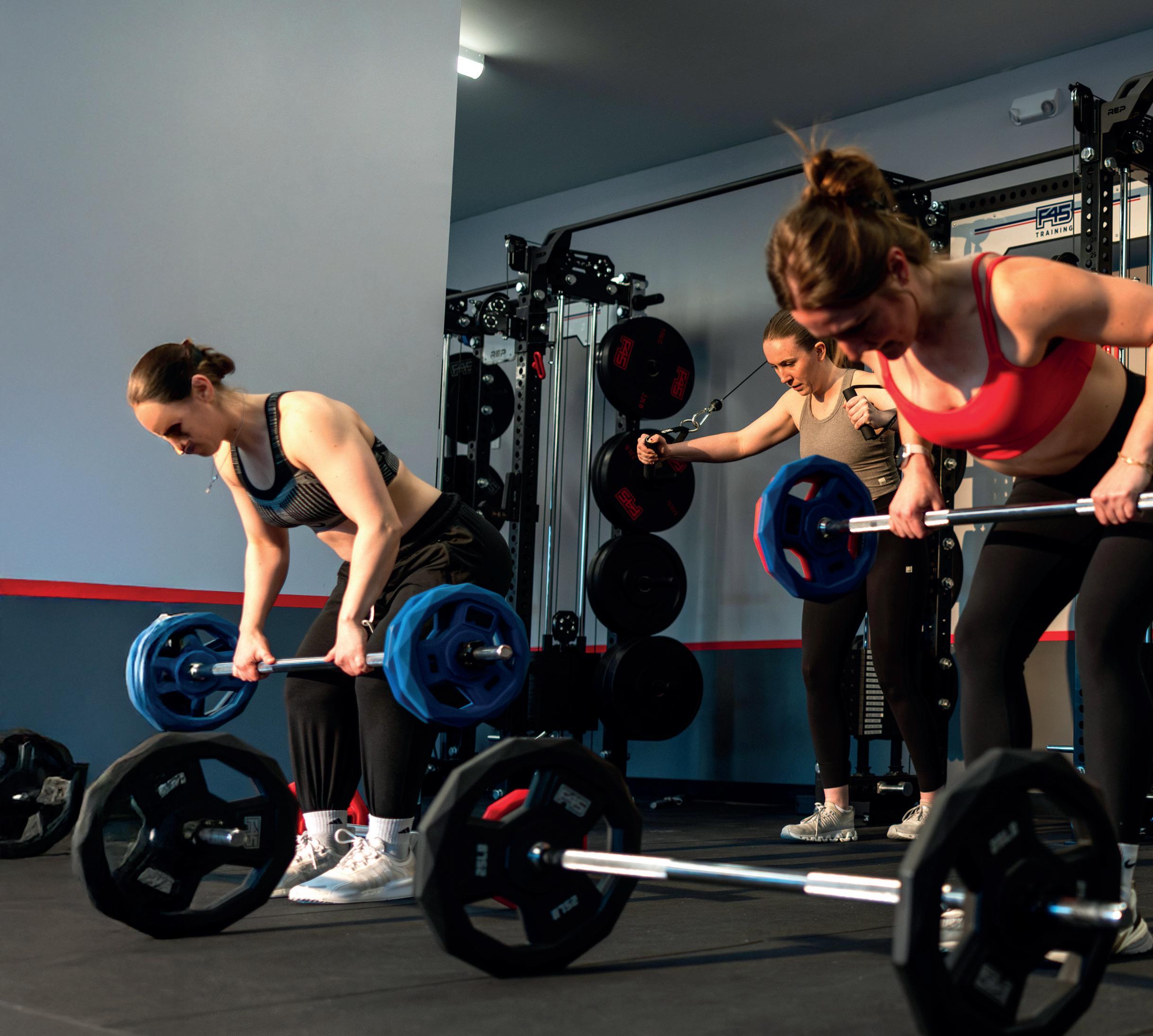
Where are you now on the journey?
We have the first floor built. Now we're in what I call the ‘go! go! years’.
This industry is thriving, but we have to manage growth much better than we did before.
Part of F45's past problem was rapid expansion, which led to over-saturation.
Our hardest job now is making sure we can get the right people to support the system, because we've moved away from “sell, sell, sell” to “support, support, support”.
We're putting Standard Operation Procedures in place, modernising the management team and ensuring everything we do has an ROI tied to it.
You’ve rebranded the parent company…
We renamed our parent group, Fit House of Brands, so all modalities – F45, FS8 and Vaura and our recovery concept – sit underneath that brand.
There’ll be more concepts launching, so we needed a parent group name that covers everything.
What trends do you see?
Other parts of our portfolio are in the booze business and we see that declining. Dry January had the largest participation ever in the US last year and everybody says it's because of health and wellness, which is great for our brands.
People are turning towards our markets like never before. Some are thinking about taking GLP-1s, which cause muscle mass loss and want to offset that, while others just understand the importance of building muscle and flexibility and focusing on their health.
We’re positioning to be the go-to solution when they think about making that step to start working out.
How are trends guiding the development of your portfolio?
When you sit Pilates with the high-intensity F45 workouts, the combination strengthens franchise economics. We’re also adding in recovery, with infrared sauna, breathwork and stretching, to create a whole ecosystem.
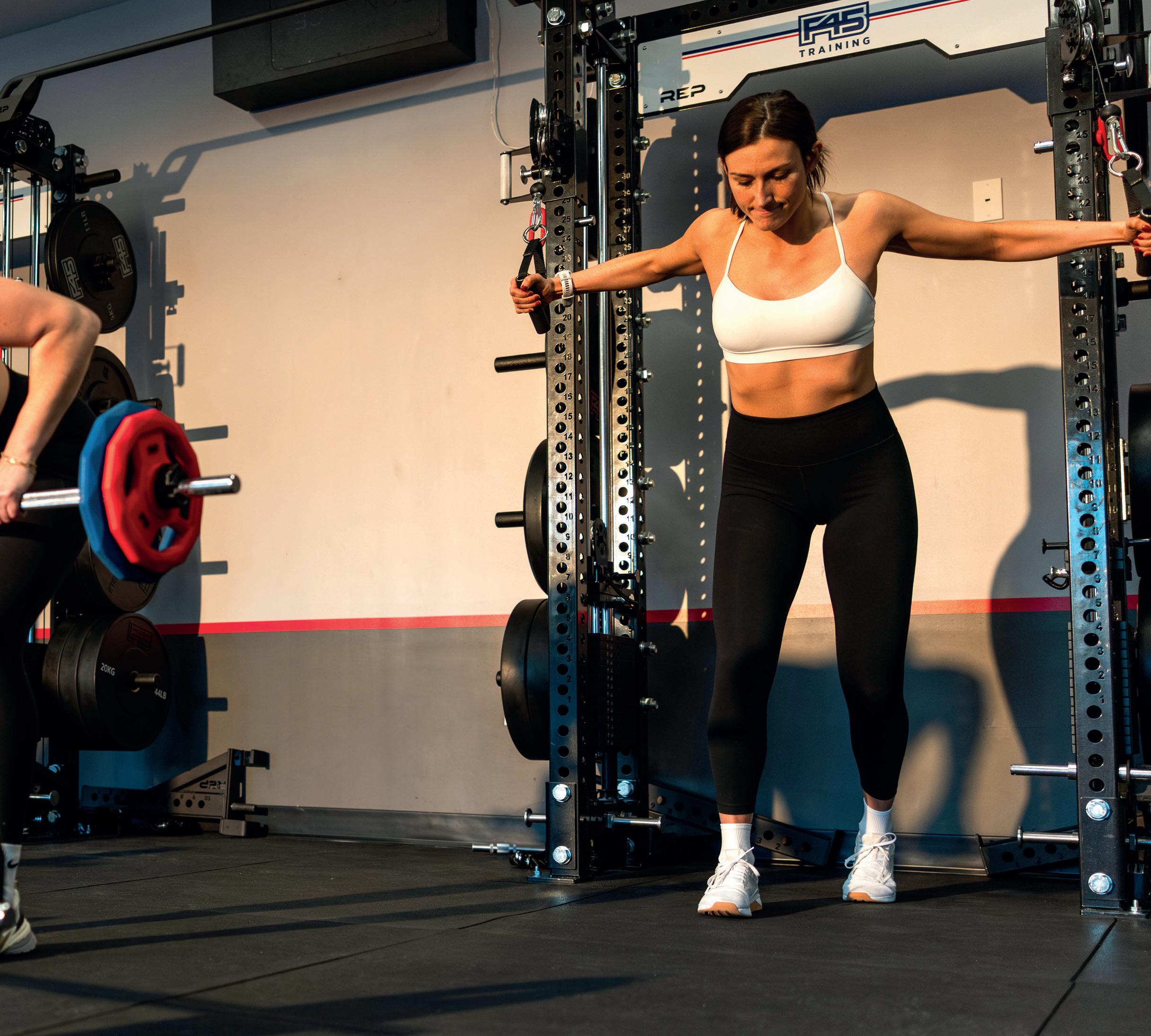

We’re pressure-testing every concept we roll out and challenging every pound and dollar we spend
We’re making a push into nutrition and retail so franchisees can enable members to find products that support their lifestyle while also enjoying more revenue streams.
Whatever stage in the journey people are at, we want to have a solution.
Will you create new brands for these elements?
Not necessarily – a lot of the new initiatives will permeate through the brands we have.
We may take F45 – because it's such a versatile brand – and add in a stretch class three times a week or invite members to come in and do breathwork, but everything's going to be focused on quality of life improvement, education and utilising our network of studios to add value for members.
We're not going to start chasing every shiny object. We know when things are meaningful.
We’re pressure-testing every concept we roll out and challenging every pound and dollar we spend.
Will members pay more for these extras?
No, the plan is to add value. That’s going to be a big win because the more touchpoints we have with members, the more valuable we are to them.
We want them to see the value of becoming a part of our universe, because we’re giving them more than they expected. We’re a premium business, we owe it to ourselves and to them to push ourselves to provide more.
How does this approach fit with the bigger picture?
The goal is for studios to move from a smaller to a larger footprint with the addition of new modalities.
We love the combination of F45 and FS8 sitting together, because there can be cross-pollination of membership. It also gives us more operational horsepower, with lower cost per square foot, better efficiencies for marketing and staffing.
Landlords like a bigger story, because franchisees are eating up more real estate, so we're more important.
A partnership with Reebok has been announced that includes access for members to the Reebok Smart Ring
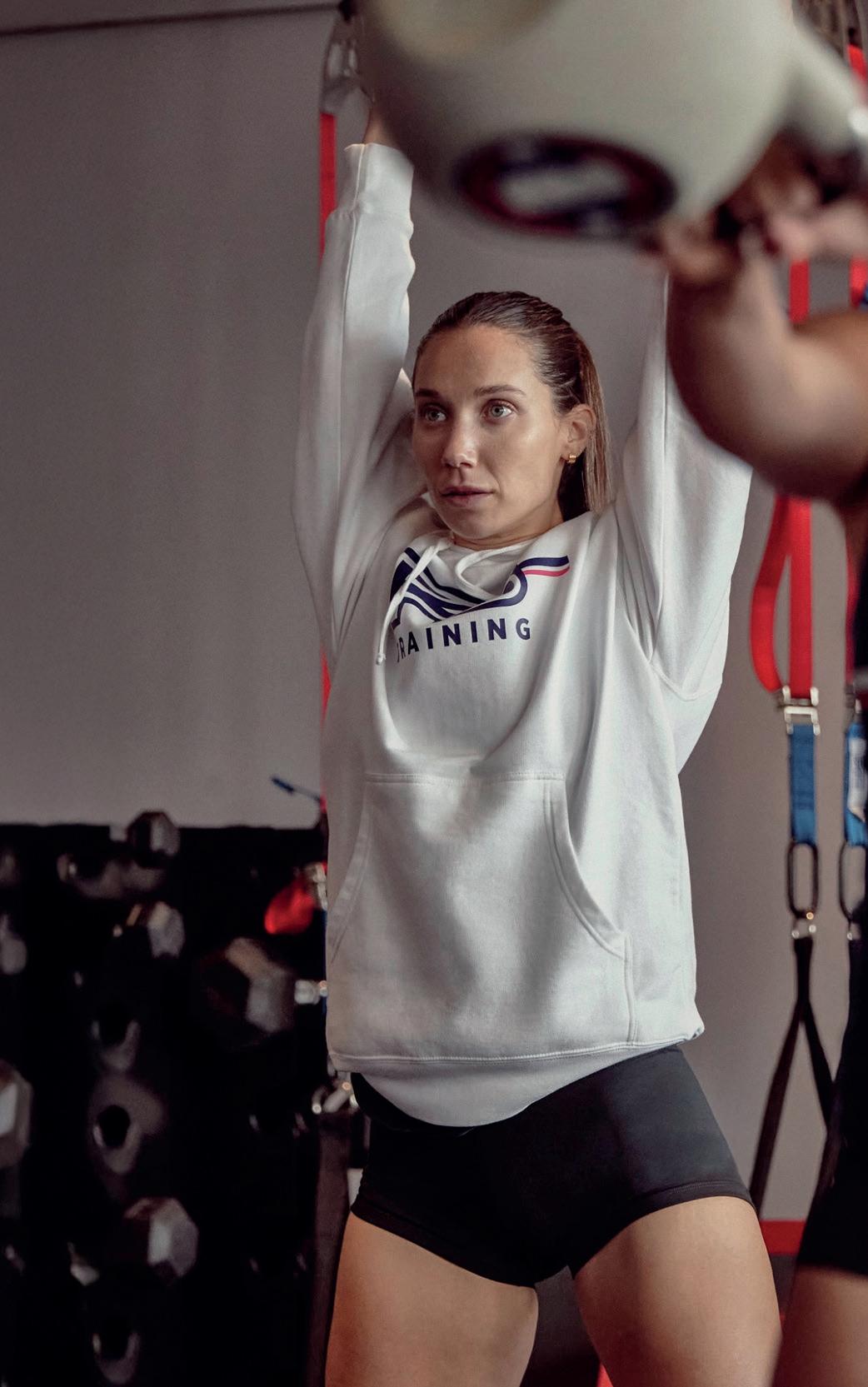
What's the sweet spot in terms of size?
If we can get 5,000sq ft within a location, with the two main modalities combined with the recovery, nutrition and retail, that gives better value – say, 2,000sq ft per main modality, with 1,000sq ft for ancillary services.
What else will you add to the mix?
We've announced a multi-year partnership with Reebok, which has become the official supplier of performance footwear, apparel and wearables.
The collaboration includes access for members to the Reebok Smart Ring (www.reeboksmartring.com), which tracks training, recovery and lifestyle metrics and works in addition to F45's existing LionHeart system (www.f45training.com/f45-lionheart).
There are also custom F45 uniforms for staff and a co-branded apparel and footwear line for members, with more launching this year.
We’ll also collaborate with Reebok on co-branded workouts and events as part of the partnership.
We're going to have drop-ins of the type of apparel our members like to wear and we’ll stay in stock this time, unlike our previous retailing forays.
There’s a great commitment to apparel within F45, because it's one of the things we've missed.
What else are you planning?
By the middle of 2026 we’ll be launching another modality in the hot training market, which we think will be a good complement to the rest of the portfolio.
The concept will be tied to our recovery story and will be more of a community or third space.
We also think sauna has potential – I'm a little uncertain about the cold plunge business and don't know how sustainable that will be. Saunas feel good to go into, but it's tough to get into a cold plunge, although it's a good story for us when it comes to the science of recovery, so we will continue to offer it.
We’ll also be dropping in different elements that make sense – sleep interventions, for example – and we’ll have a space for a ‘vendor of the month’.
We want to tie members’ in-studio experience back to their at-home experience. So, between our new app and website, we’re looking at how we encourage them, give discounts and offer at-home products. That’s going to be a part of our push going forward – engaging with them outside the studios.

We’re giving our members the opportunity to buy GLP-1s from us through our deal with an outside vendor called Dr B’s
How is growth going across the globe?
Europe is a little bit slower than the US, which is ramping up faster than anywhere else. This applies to all parts of the business – even the supplements. Creatine is crazy popular right now in the US, for example, while in the UK and Europe, sales are just starting to pick up.
Europeans aren’t so medicated...
It’s true – GLP-1s are a good example. Around 12 per cent of the US population is on them and that's predicted to go to 15 per cent in the next year, while in Europe enthusiasm has been more muted.
If Europe follows suit – as it does with most things – it will be big here too at some point and we want them to come to us, which is why we’re giving our members the opportunity to buy GLP-1s through our deal with an outside vendor called Dr B's (www.hcmmag.com/DrBs).
Our view is that if they’re interested in going on a journey with GLP-1s, why not hand this to
our franchisees as a revenue stream? It's the same drug wherever they source it and we can support their journey with exercise interventions.
What proportion of your turnover is retail?
I think we can get 10 per cent of our revenue from retail. That would be an easy three-year target.
We also plan to create a multi-level marketing programme for trainers to make money when they sell product. We know almost 75 per cent of our members are taking supplements, for example.
We don't have that much space for retail, so we’ll find ways to navigate that, such as having samples of sportswear in-club and then boxshipping orders to members at home. We could also have a set-up with a QR code to buy in-club – shoes would be a great example
I grew up in an industry where I learned pretty fast that when you respond to what people want, have it in stock and deliver a good product, it's much easier than trying to create a story from scratch.
Average customer spend US$170/month
Member lifetime value 14 - 16 months
Franchise cost*
From circa US$350,000
Sample of franchise cost breakdown*
Circa US$150,000 cash
Circa US$200k financed
Franchise fees 9%, made up of 7% royalty, plus 2% brand fund
* F45 franchises are typically funded through a mix of owner equity and third-party financing

What are your growth goals?
We’ve currently got 1,500 locations in around 55 countries. In terms of growth, we're not a public company any more, so we don't have to report numbers. But I can share that we're aiming for close to 200 new studios a year globally. That's robust growth and we're just getting started. You're going to see half the studios in the US and the rest split globally – growth areas will be Canada, New Zealand and Australia. Europe's going to be a harder nut to crack without having master franchises.
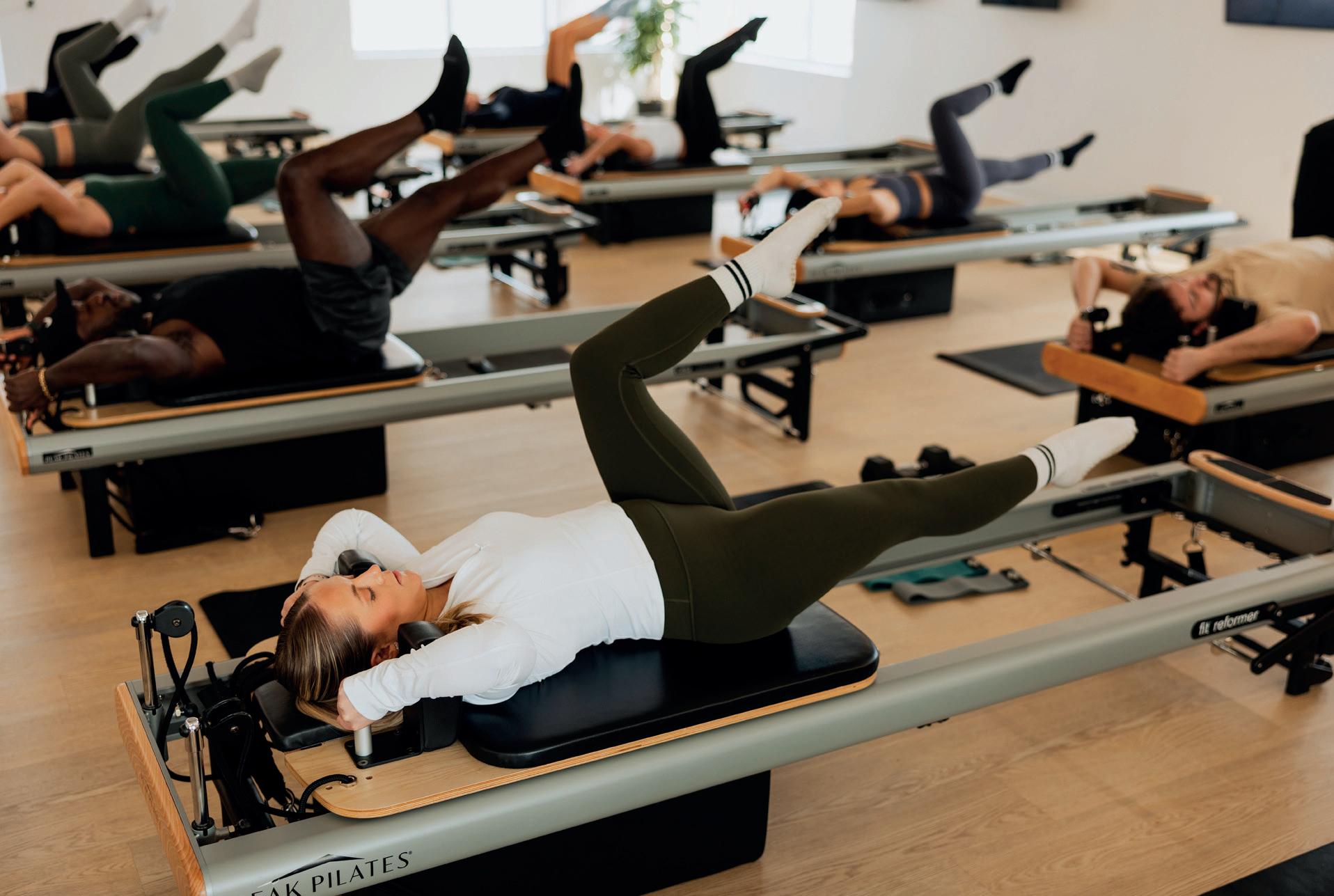
Tell us about your master franchises
Post-lockdown we realised we couldn't be everything to all our partners around the world. There was too much going on and we withdrew from some markets.
Now we're being more particular about who we bring into the system and when we go into a country, we have to make sure we can support our teams. If we commit to do something, we're going to do it right. We’re putting a lot of structure around those we bring in and we’ve also got people on the ground to go in and support master franchisees.
How are you building the network?
Just because someone has run a successful group of studios, that doesn't necessarily mean they’ve got the capability to be a master franchisor. So it's a search process that can take time.
There are some important markets, such as China, where we haven't found that partner, so we’re on the hunt for capable master franchisees.
In the UK, we made the decision to bring in partners who were already proven, to basically be a de facto head office – so a master franchise.
We wouldn't appoint just anybody. We need to be sure they really understand the business and also have the franchising know-how.
When you respond to what people want and deliver a good product, it’s easier than creating a story from scratch
How about the franchisees?
We’re very structured and focused on finding the people who have the skills and capital to grow with us.
We're also working to reduce the time from opening to franchisees getting a return.
We’ll continue to push that timeline down because the more profitable franchisees are, the more they'll want to come back for future sales.
What's your number one aim?
To be the most profitable studio business in the world by EBITDA. We’re working very hard at this and will be reporting results this year.
We’re one of the fastest growing franchise operations in the world from a unit perspective and when you look at our network metrics, they’re off the charts. We're very focused. ●
Logacheva’s experience of the gym altered after a life-changing accident
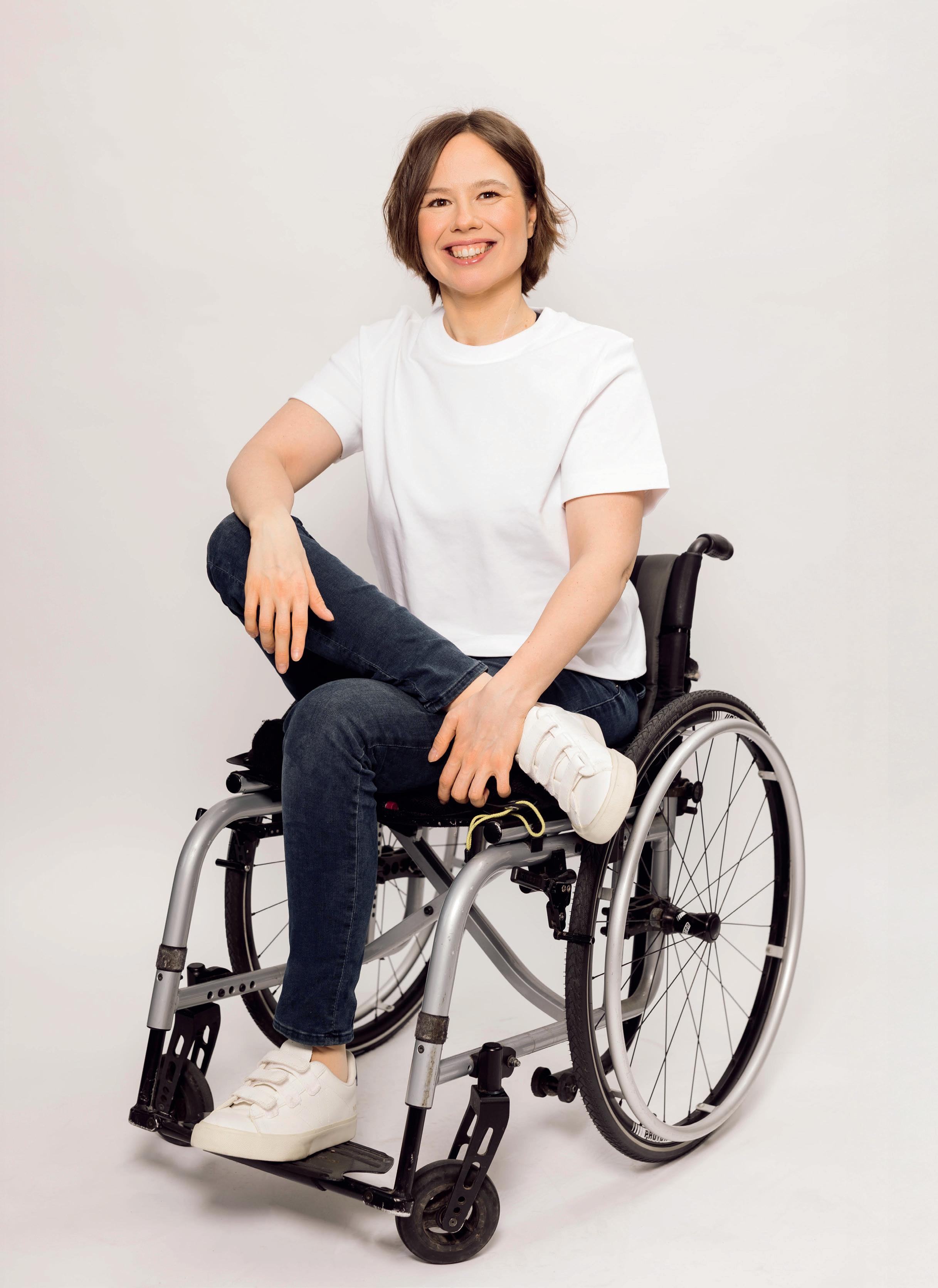





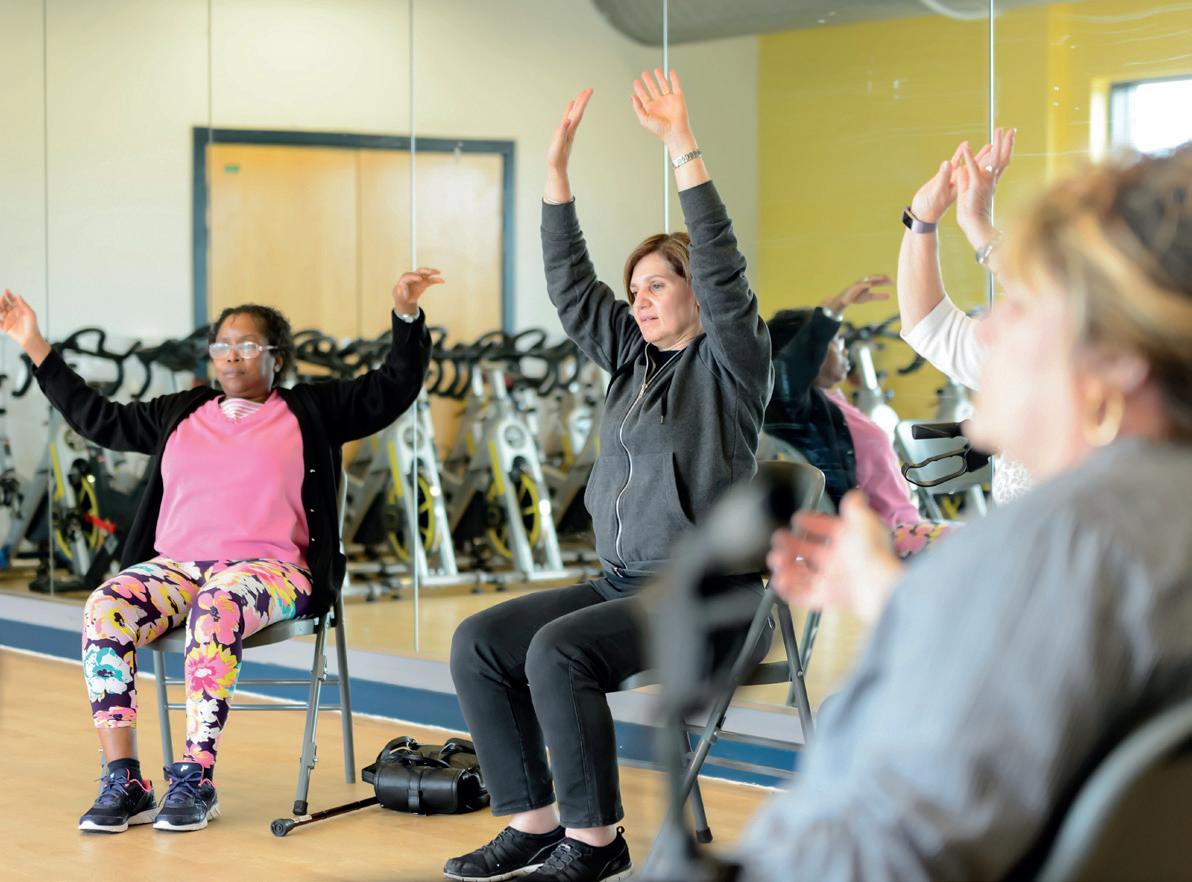










Marina Logacheva, disability sports lead at Matta, outlines ways in which operators can welcome people with disabilities
The fitness industry often talks about inclusion, but what does it actually feel like to walk into a gym as a disabled person? When I became a wheelchair user five years ago and returned to the gym for the first time after my life-changing accident, I realised just how different that experience was from before and I’m not alone – disabled people make up 24 per cent of the UK population.
That’s five times more than the number of vegans or plant-based eaters. But walk into any supermarket and staff will know exactly where the plant-based aisle is. There’s signage, shelf space and plenty of options. In contrast, most gym staff haven’t received any disability awareness training, and accessibility is often an afterthought.
Here’s another striking stat: the UK’s plant-based food market is worth £1.1bn. The spending power of disabled people is £274bn –commonly referred to as the Purple Pound.
Inclusion isn’t just the right thing to do, it’s also a major business opportunity. Being inclusive opens doors to more members, builds loyalty and boosts profitability.
My advice? Start small — but start now. Assign someone in your team to take responsibility for inclusion. Review your customer journey. Make one change this month.
Inclusion is the future of fitness. And yes, it’s profitable too. Let’s build an industry that works (and works out) for everyone. Turn the page for more guidance
Even small changes can help make health clubs more accessible




Fix the language, this is the simplest starting point and can have the biggest impact. Inclusive, respectful language – in staff conversations, induction forms, social media posts – helps people feel welcome. Train your managers, customer service and PT teams in disability inclusion. Lived experience training is far more powerful than just sending a PDF. But if training isn’t an option yet, start with getting a few books for the team, such as Demystifying Disability: What to know, what to say, and how to be an ally by Emily Ladau. Better still, encourage your team to take Level 3 CPD training in disability inclusion. Future Fit offers a course called Exercise Programme Design for Disabled Clients.




Seeing disabled people, and a realistic cross-section of society, in marketing, on the gym floor, and among staff sends a clear message: you belong here.

We created a campaign for Wattbike featuring “everyday athletes” which resonated widely because it built trust and fostered belonging.
As a quick solution, audit your website and social media. Feature real disabled members and ambassadors in your visual communications. And for the longer term, invest your time in creating a clear inclusion strategy, hire and train people with disabilities and staff.




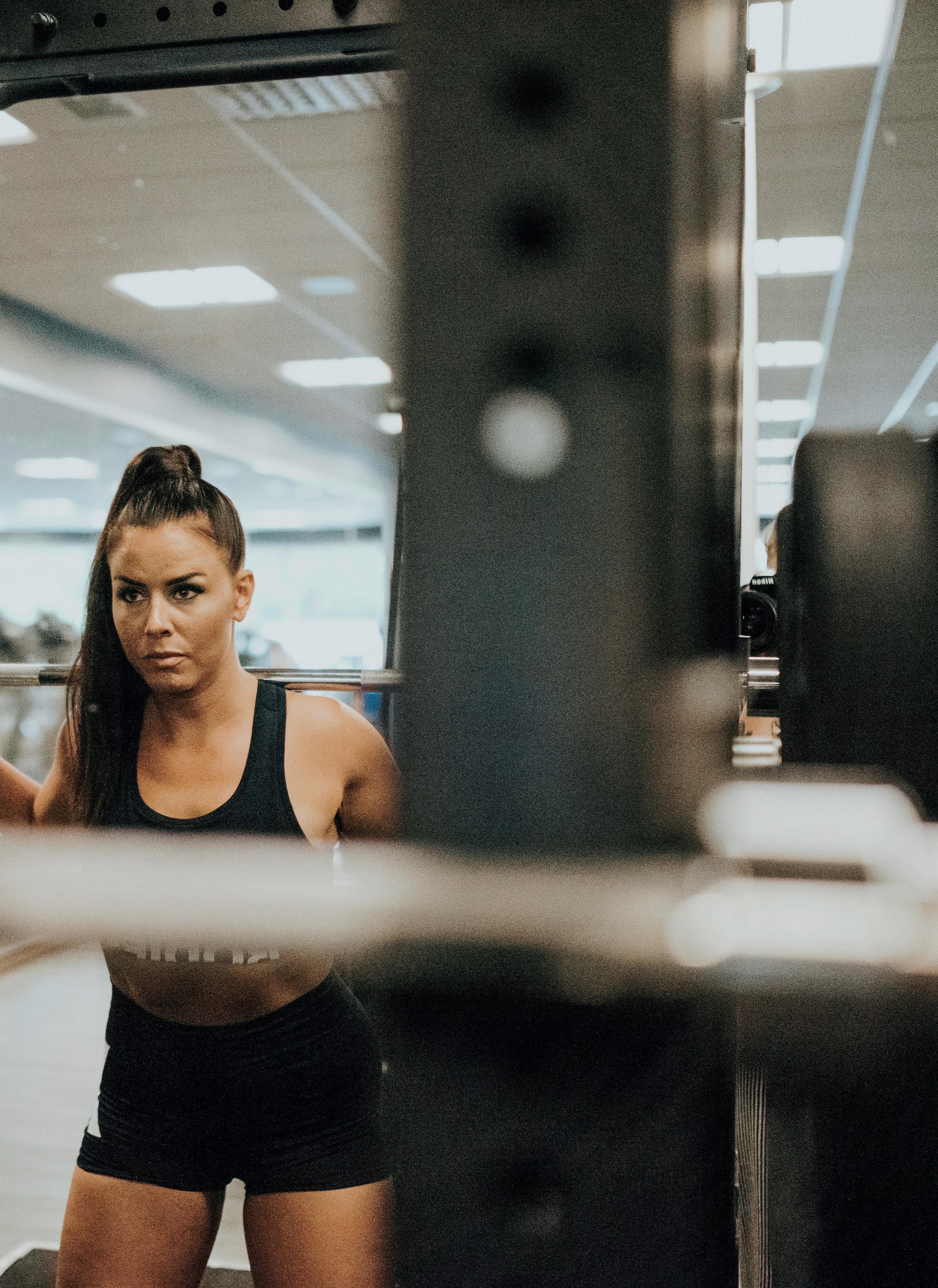




76 per cent of disabled people say they want to be more active, but can’t, because of inaccessible equipment or environments. Start with the basics: is there a ramp if there’s a step? Do you have a range of equipment such as arm bikes, ski-ergs, rowing machines, or Speedflex Blades to accommodate different needs? Inclusive design – such as wider doors, and new equipment – does require investment (sometimes minimal), but it transforms your space for hundreds of prospective members who are currently excluded.




4 Consider your full customer journey

Inclusion doesn’t start at your front desk, it starts when someone Googles your gym from their sofa. Are your photos and gym campaigns inclusive? Did you update your Google listing and your website with accessible features with clear descriptions and photos? Can users book a tour or speak to someone easily? Too often, accessible showers have no grab rails, or lifts are out of order. Audit your whole customer journey – from website to workout – and bring in disabled people to walk through it with you and share honest feedback.





Operators could be fined if they don’t comply with changes to the law surrounding membership payments, says Katrina Anderson


New regulations ending ‘subscription traps’ are due to come into force in the UK in 2026 as part of the Digital Markets, Competition and Consumers Act 2024 and operators who don’t adapt their membership practices accordingly will risk legal penalties, fines and lasting reputational damage
The fitness and physical activities sector is firmly in the crosshairs of the Competition and Markets Authority (CMA) which is responsible for oversight – in fact, the CMA has already announced it’s investigating a number of businesses, including Gold’s Gym UK, and has said the health and fitness sector is one of its main areas of focus as part of its wider work on unlawful online pricing practices.
The DMCC Act is a substantial piece of legislation covering various areas, including the regulation of digital markets, competition law and merger control. It also impacts UK consumer protection law in several important ways and gives the CMA
significant new powers. Notably, the CMA now has ‘judge and jury’ enforcement powers that allow it to both investigate and impose fines directly, rather than going through the courts.
As this is such a far-reaching piece of legislation, it isn’t all being implemented at once, however, one part of the act soon to come into force is that relating to subscriptions. This has been designed to avoid ‘subscription traps’ – situations where consumers find it difficult to extricate themselves from contracts, including those they may have involuntarily or accidentally entered into after a free or discounted price period.
Initially expected in April 2026, the new regime is now likely to be brought into force in Q3, however, regardless of this, the best time to act is now.
The CMA is targeting subscription traps to protect consumers from what it sees as unfair business practices that cost them an estimated £1.6 billion annually.

The CMA can impose fines for breaches of up to 10 per cent of global turnover

The government has stated that unwanted subscriptions can cost families a significant amount, with many paying for services they’ve forgotten about or were accidentally rolled into after a free trial. It also wants to clamp down on perceived deceptive practices such as ‘dark patterns’ and ‘sludge’ (intentional friction) that mislead consumers into signing up or make it difficult to cancel contracts.
The regulations will require operators to provide additional clear information to consumers online, ensuring that all key data and options are transparent and understandable prior to online sign-up and right across the lifespan of a subscription.
It’s likely that many current online signups for subscription models employed in the health and fitness sector would fail to meet the thresholds set by the new rules, which stipulate a number of requirements:
■ Pre-contract information
Certain key information must be provided before the consumer enters into any online subscription for a health club membership – particularly contract length, costs, and frequency of payment. This information must be provided directly and transparently by the operator, with no hiding away in the small print to ensure transparency for the consumer.
■ Renewal reminders
These must be sent to the member at the end of any free or discounted period and prior to the auto-renewal of a membership subscription. There are further requirements to send out additional notices as well, the exact details of which depend on the structure of the contract.
■ Cancellation methods
Subscribers must be given a ‘straightforward’ way of cancelling their subscription online. It’s broadly understood that this will mean having an on-platform cancellation button. Subscribers will also be entitled to cancel using any other method they choose, provided they make a ‘clear statement’ to this effect. This forces businesses to set up processes to collect and implement cancellations resulting from these statements.
■ Cooling-off periods
In addition to any contractual rights, subscribers will have a general right to cancel their subscription within an initial 14-day period after their contract commences. They can also cancel within the same timeframe following the end of any free or reduced-price period and upon any auto-renewal which commits the subscriber to a further period of 12 months or more.
Sector-specific challenges
The use of subscriptions in the health and physical activities market mean operators may face some additional specific challenges and considerations. The business model of many clubs assumes that more people have subscriptions than regularly use them and so regular reminders and easier routes to cancellation will threaten this model.
Members can still cancel up to 14 days after signing up under new legislation
Decision-makers in the sector will also need to be keenly aware of other linked aspects of the DMCC Act that the CMA is currently focusing on, such as its recent investigations into online pricing practices such as drip pricing, use of consumer reviews and pressure selling.
■ Drip pricing concerns
In particular, organisations in the sector will need to be very careful about how they present fees related to subscription-based memberships and at what stage these fees are declared.

Take, for example, a scenario in which a membership is advertised for £29.99 per month but, when the consumer clicks through to join, there’s a mandatory joining fee they weren’t made aware of before. The CMA has made it clear in recently published guidance that additional fees such as this must be included in the price upfront – raising it later in the journey is likely to be deemed a non-compliant ‘drip pricing’ practice.
This is the issue currently under investigation by the CMA in relation to Gold’s Gym UK.
Customers must be given a ‘straightforward’ way of cancelling their subscription online – broadly understood to mean having an on-platform
■ Advertising for discounts and special offers
The recent CMA price transparency guidance draws on examples of membership pricing, such as gym memberships, several times. One interesting point concerns scenarios where a discount is offered –for example, on a three-month fixed-term gym membership – but the consumer must pay the full amount up-front, including a joining fee.
In such cases, any promotion of this discount should clearly state the total price up-front.
This is something that could catch out those in the sector offering discounts on memberships but wanting to highlight their reduced monthly price, despite the whole amount being required at the outset.
The potential penalties for non-compliance are significant. The CMA can impose fines for breaches of up to 10 per cent of global turnover (or £300,000, if higher). There are also very real reputational threats of being named and shamed as a brand that’s trying to apply unfair practices and ‘traps’.
The increased exposure, as well as financial and reputational risk, mean it’s never been more important for decision-makers in the sector to be aware of and understand their obligations in this area.
With the provisions around subscription traps now looking as though they won’t become effective before Q3 2026, operators have additional time to prepare for these changes and consider how they might impact their consumer journey, however, the rules on pricing are in full effect now, so operators should take action to ensure ads and any information about online prices are compliant as a priority.
Katrina Anderson is principal associate at law firm, Mills and Reeve
Turn the page for guidance notes

Katrina Anderson outlines checklists to enable you to prepare for the DMCC Act























Check that all advertised prices include all mandatory charges, such as booking or admin fees and joining fees If people can sign up online, review the sign-up journey to remove misleading prices or examples where full pricing information has been omitted




















Make sure optional extra charges are always presented clearly and separately from mandatory charges. Care should be taken not to represent these as mandatory Where using ‘from...’ or indicative pricing, only use these when they’re available for a significant proportion of people and be upfront about any conditions, such as discounted student membership






Be aware of autorenewal terms in contracts. Consumers should be informed about how these will work and they should ideally be provided as part of the offer details on the ‘product’ page






1. Create a summary of the additional pre-contract information required for each subscription offer. This will include key details such as charges, duration, termination, and cancellation rights
2. Consider how you’re going to show the new pre-contract information to consumers, bearing in mind there are specific presentation requirements that will depend on how the subscription contract is entered into (eg, online, in-person, or over the phone)
3. Establish a process for sending the information needed for renewals, mid-year reminders and at the end of any discounted period. This is most likely to be an automated email system

4. Train staff in how to deal with the new cooling-off rights that allow members to cancel on the expiry of an initial free or discounted period, or when a contract renews
5. Build an online system to allow an easy process for consumers to terminate or cancel

Members have new powers following the implementation of the Act





6. Create a process to acknowledge termination and deliver refunds. An end of contract notice should be sent within 24 hours for online cancellations or three working days for other methods. Any overpayments should be refunded promptly ●




























These findings show we remain social animals when it comes to working out

With the majority of consumers now regular exercisers, insight commissioned by Les Mills highlights what inspires and motivates
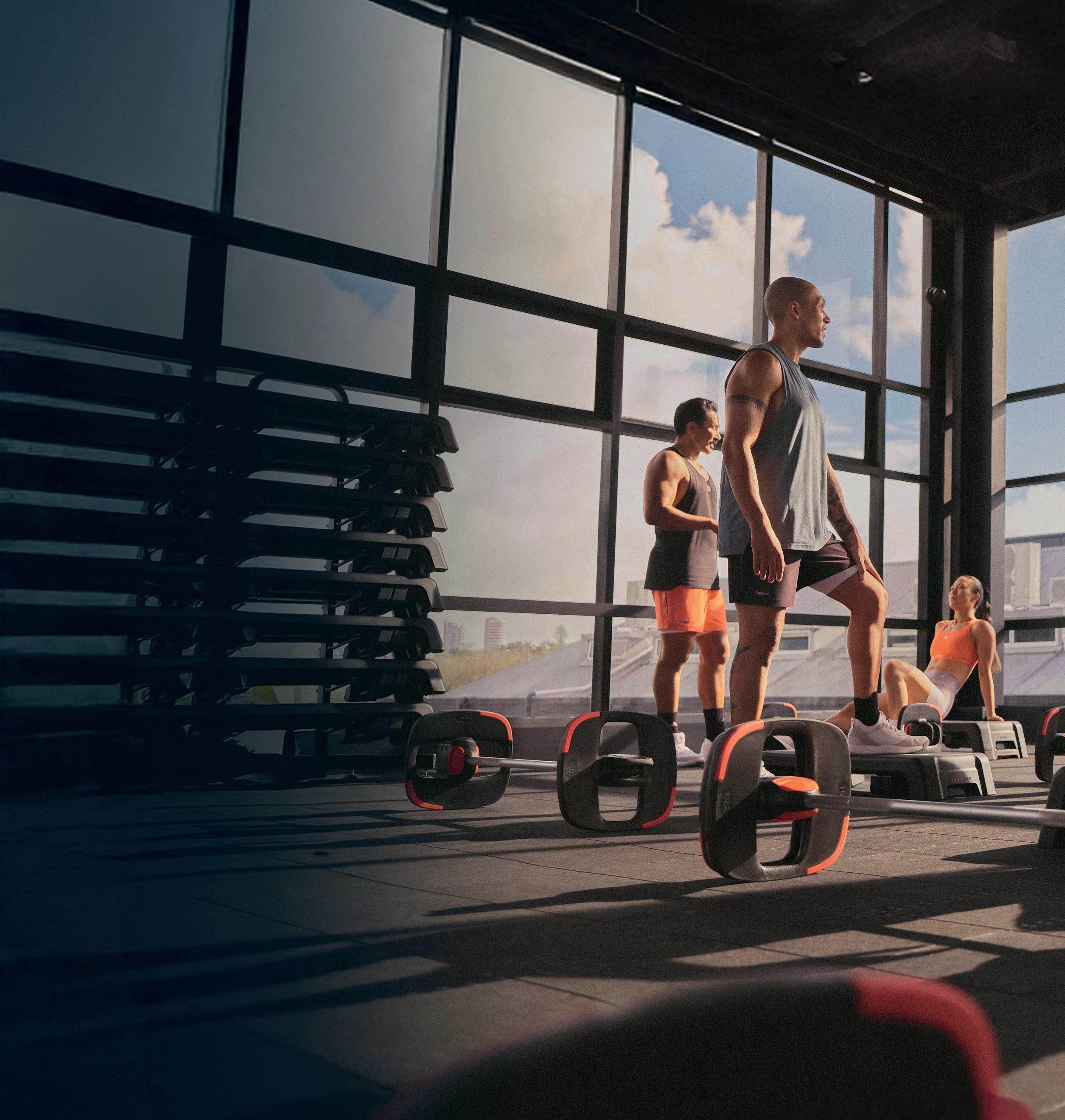
Some 10,000 consumers across five continents have been questioned about their fitness habits for the 2026 Global Fitness Report commissioned by Les Mills, revealing deep insights about consumer behaviour.
Regular exercisers now make up 61 per cent of the addressable market – up from 44 per cent in 2018 – a real milestone for the sector.
During this time the share of those not interested in exercise has fallen from 25 per cent to 10 per cent, confirming the relentless rise of the sector.
While ‘being healthy’ is the most popular motivator for exercising (57 per cent), achieving better mental health continues to be an
important motivator, with the report finding a sharp rise in people training to ‘manage their thoughts and feelings’ (45 per cent).
The vibe of a facility is now also an important decision-driver, with 64 per cent saying this is important to them and 20 per cent say they find their gym too crowded. Interestingly, 76 per cent aren’t interested in GLP-1 medications for weight loss.
One of the key findings was that despite the buzz around AI, only 10 per cent of respondents said they would prefer an AI workout over a human-led experience, because of a strong desire for human connection and feeling part of a community.
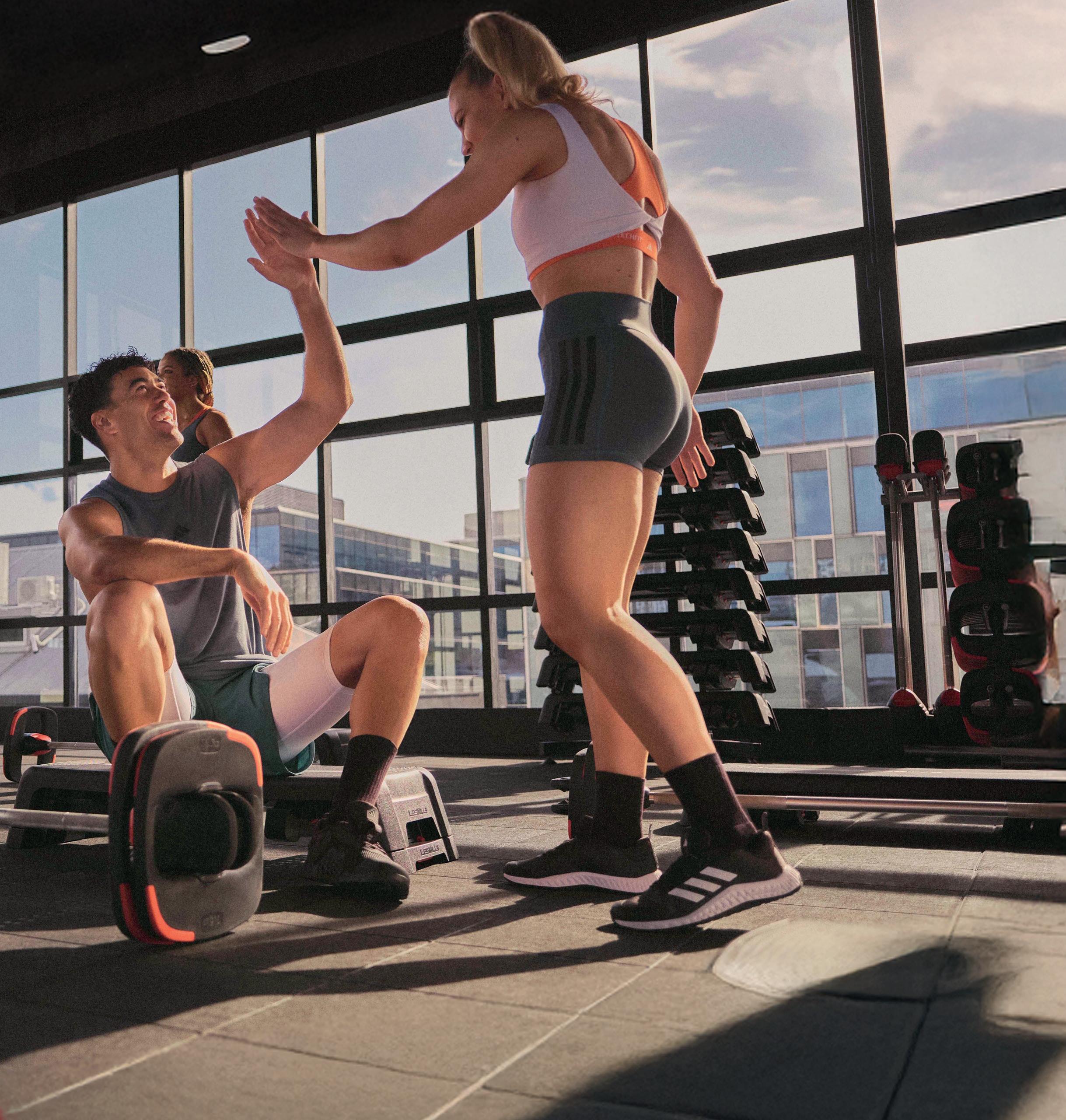
“Technology is shaping fitness in countless ways, but nothing beats the buzz of a live class and these findings show we remain social animals when it comes to working out,” says Les Mills’ head of research, Bryce Hastings.
“Exercising with others maximises the ‘group effect’, which our research has shown leads to increases in enjoyment, satisfaction and exertion.
“The instructor is a vital part of this equation, as they’re armed with the knowledge, skills and experience to connect with the individuals in the group and create a sense of ‘we’ in a class that produces a very positive overall experience,” continues Hastings. “They take what we know from science and bring it to life for participants.”
The instructor is a vital part of this equation, as they’re armed with the knowledge, skills and experience to connect with the individuals in the group
By expanding mind/ body offerings, health clubs can position themselves as one-stop shops for wellness
While the use of wearables and tracking data is undoubtedly on the rise – with 78 per cent of gym-goers using devices to track progress – the report revealed some consumers feel that this can detract from the fun of a workout by making it all about hitting targets.
This is a potential challenge, as the report revealed that 41 per cent of people see fitness as a chore and the share of younger consumers who view working out this way has risen by 10 per cent over the past three years. Only 31 per cent said they ‘simply enjoy’ exercising and 24 per cent consider it ‘fun’.
With other research showing that joy is a major motivator in making a fitness habit stick, the report says “this presents operators with an opportunity to capture a new generation of members by dialling up the social aspect of their clubs.”
Seeking a community at the gym is a strong trend, especially as many young people are now regarding health clubs as alternative places to socialise. There’s also an uptick in interest in joining other types of exercise clubs, such as running and walking clubs and dance is making a comeback for its feelgood nature.
There are still too many barriers to joining a gym and keeping up memberships according to consumer feedback: 50 per cent are intimidated by the weights areas and 37 per cent say they’re not confident working out. Prospects say they’re put off by busy gym floors and not knowing how to use equipment.
The report suggests putting the teams at the front and centre of marketing, especially on social, to demonstrate that help is at hand and doing intentional marketing that addresses the fact that health clubs can nurture nervous prospects.
While strength training is definitely having a moment, more people need help doing it. Of those already training, 58 per cent say they’re confused by conflicting advice and 30 per cent have hit plateaus causing them to lose motivation. In addition, 54 per cent of aspiring lifters don’t know where to start and 23 per cent have injury concerns, indicating a need for more support.
Consumers say they want more wellness programming as part of a holistic approach to health
Fifty four per cent of people are keen to try new ways to get fit and the report says this suggests there’s latent demand for greater variety. More workout options being offered creates more ways for people to connect with a mode of exercise that works for them and also with like-minded people.
Once members find a workout that clicks, 51 per cent encourage their friends to take part and the report also finds that people prefer to work out with a buddy.
As people take a holistic approach to their health, the report also revealed a strong desire for more wellness – 59 per cent said they’d like to see more yoga, meditation and breathwork programming.
By expanding mind/body offerings and adding wellness-themed digital content, gyms can engage members more on their rest days, as well as positioning themselves as a one-stop shop for all their members’ wellness needs. ●
● The Les Mills Global Fitness Report 2026 is available to download free from the Les Mills website. www.HCMmag.com/LesMills2026
Les Mills’ Global Fitness Report 2022 . www.HCMmag.com/LesMills2022
https://issuu.com/leisuremedia/docs/hcm_issue9_2021/68
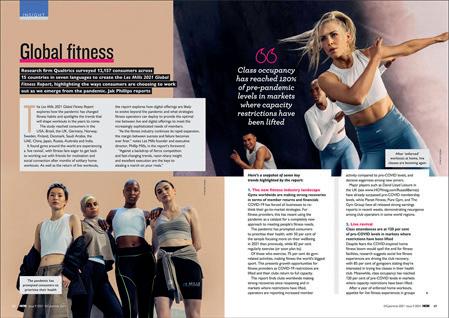


The fitness industry has Gen Z pinned as a sobercurious, wellness-seeking, gym-loving bunch, but now there are ba ing new kids on the block. How do we engage with Gen Alpha? asks Kath Hudson
There’s always the tendency for older generations to be confused by youngsters and this is certainly the case with Generation Alpha. Born between 2010 and 2024 (we are now on to Generation Beta), Gen Alpha – nicknamed Generation Glass –are an intimidatingly tech-savvy bunch. They were the first cohort to grow up with phones in their hands and not to know the world without the internet.
One narrative is that technology is a massive danger to their health, leading to low activity levels, messed up dopamine levels and being continually switched-on. But according to researchers, GWI, which has spoken to 20,000 young people from 18 countries, this generation is mastering online self-preservation and is much better at tuning out negative internet content than us older generations might assume – or do ourselves as we doomscroll news.
The research also showed they’re looking for real-world experiences – there’s been a spike in cinema attendances because of the social buzz this offers. This represents a massive opportunity for the industry to provide a home for a generation of young people who are looking for exciting, real-world experiences in places where they feel welcome.
At 15, the eldest Gen Alpha’s are now old enough to join many gyms. How flexible is the industry prepared to be in letting them in? It would be wonderful if gyms and leisure centres could be the place to welcome in friendship groups on a Saturday afternoon, or after school, at the point when this cohort is getting its independence, rather than lose them to places such as McDonald’s, which is expert at engaging young people. We ask experts who are successfully working with Gen Alpha for their insights…



Gen Alpha want real world experiences, such as the gym and cinema
Jessica Christensen Founder Mavericks Academy
The teenage years can be a fragile time of life and teenagers’ experience in your health club might influence how they’re going to exercise for the rest of their lives.
Helping Gen Alpha to move more means addressing a whole new generational culture. This cohort often travels in packs and their sense of self is closely connected to their friends. They need social support and activities which involve their friends.
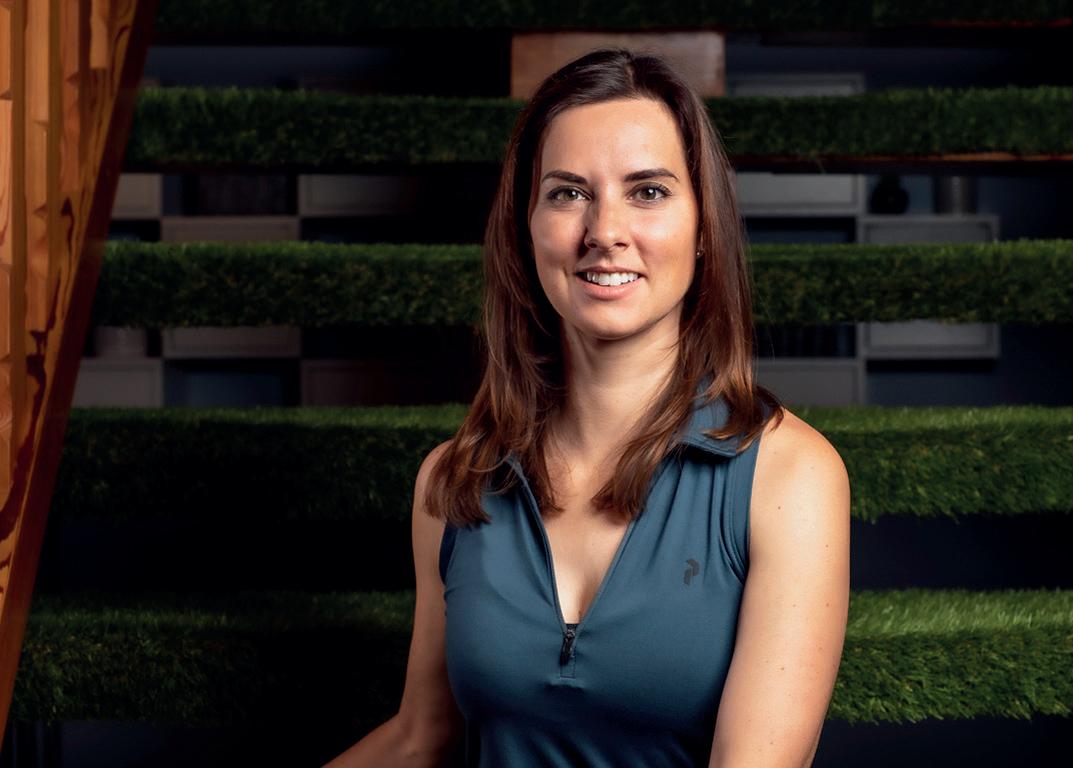
Teenagers already receive toxic messages from social media that link exercise to appearance, so the health and fitness narrative should avoid putting across appearance-focused messages. Instead, we can provide positive messaging about how exercise makes you feel, how it improves your skills, body image and also the social aspects.
Gen Z and Gen Alpha can be very different in their energy. Members of Gen Z seem to be more cautious and more health-focused. They grew up around a lot of serious social movements such as Black Lives Matter and Me Too, as well as the climate crisis, plastic pollution, COVID and the social media explosion of “the world’s screwed and you’ve got to fix it” messages.
This is slowly making way for more solution-driven messaging, which can be more effective and reduce anxiety in Gen Alpha who are showing signs of being more rebellious and brave.
Even though Gen Alpha have grown up with their phones, exercise can help influence growth and development as they’re still physiologically plastic enough to change after a few years of activity.
To engage with this cohort the activities need to be fun, social and designed with them in mind. Involve one or more instructors who specialise in youth and can coordinate a specialised programme to be even more effective.
Most importantly, get to know your local young people. Find out their interests, local trends, listen to them and implement their suggestions. Your gym could be the positive space where they feel supported and interact with adults who hear them – as opposed to telling them off. It could become the place where they can be themselves and feel safe, happy and confident.

Even though Gen Alpha have grown up with their phones, they’re still physiologically plastic enough to change
GLL’s split for youth gym usage is 64 per cent male to 36 per cent female
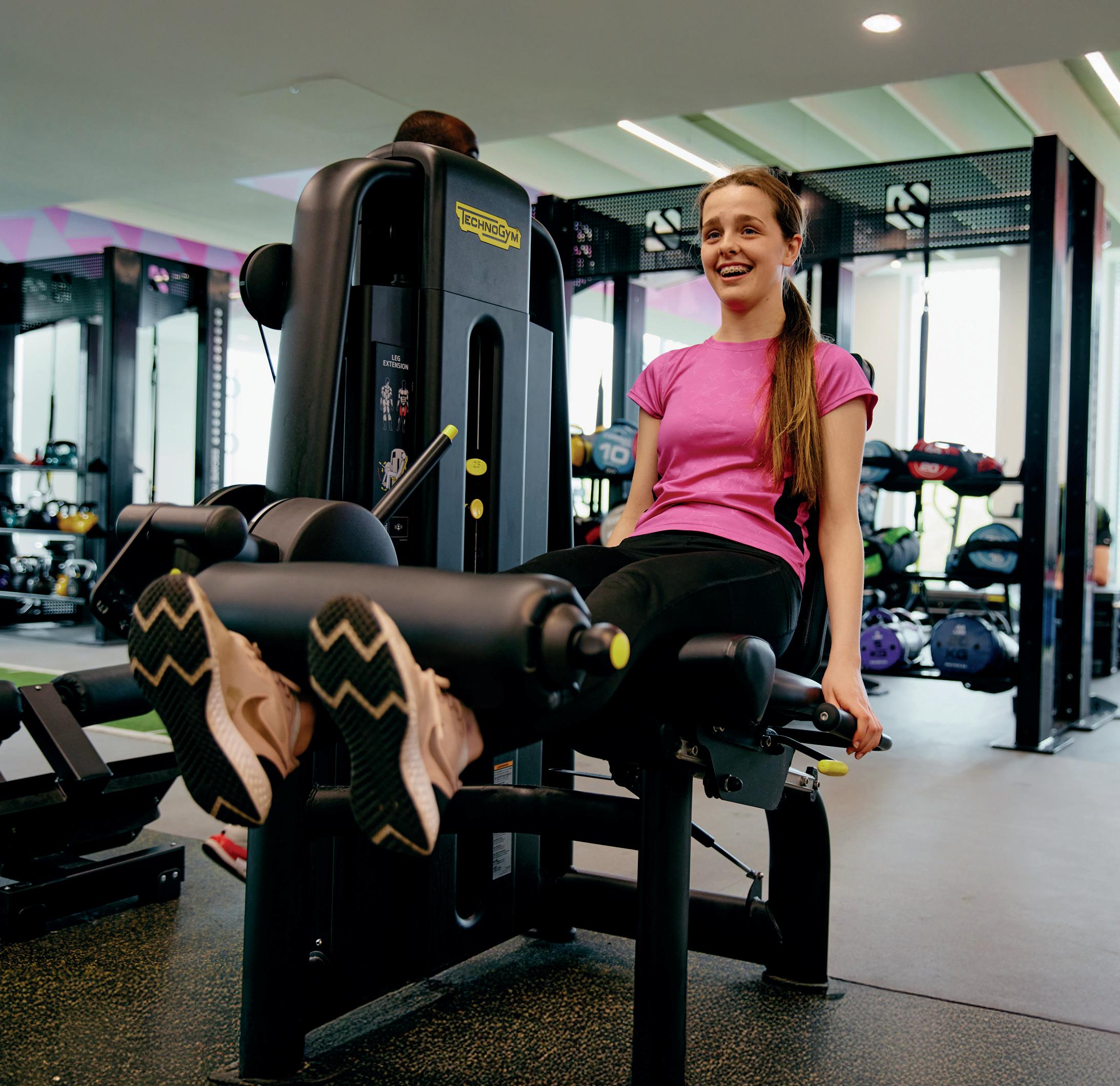
Group health and fitness manager
GLL
Leisure centres provide a vibrant and dynamic space to socialise and exercise and have the capacity to become the youth clubs of tomorrow if programmed correctly.
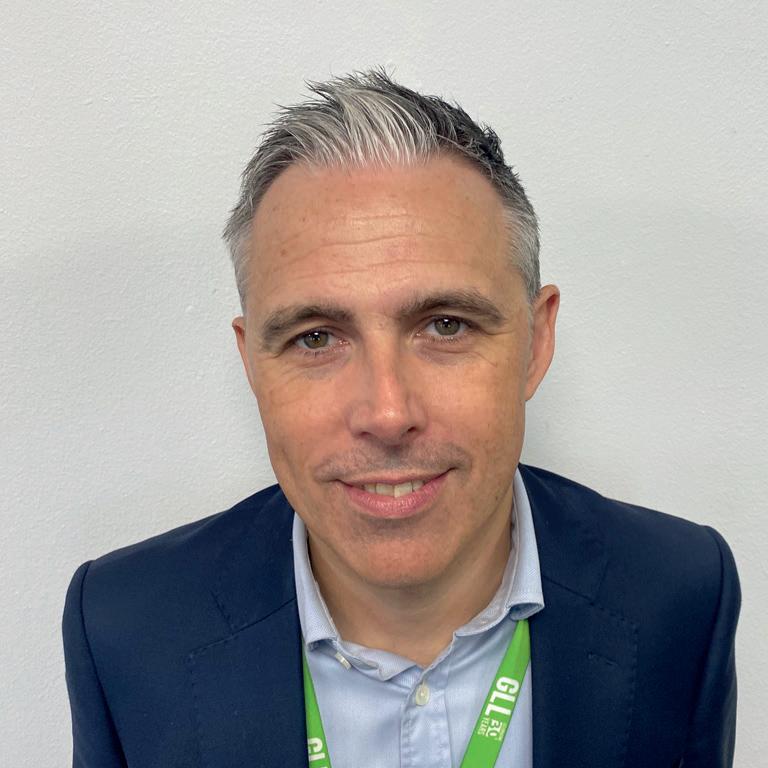
Junior memberships is the fastest growing part of the GLL memberships – we have more than 80,000 junior members and we value them greatly. Working out in the gym is their preferred activity, with more than 15,000 visits being recorded each week, followed by swimming and sports. We’re seeing a
GLL has more than 80,000 junior members and we value them greatly
male to female split of 64 per cent to 36 per cent so we’re planning to introduce group exercise classes with a view to increasing female usage.
The majority of engagement is via word of mouth and attending the leisure centres with their peers – the experience is as much social as physical and our leisure centres provide a safe place for them to meet with friends while staying healthy.
In 2026 GLL is introducing adult and junior gym sessions which will allow 8- to 10-year-olds to use the gym with their caregivers. We’ll also be introducing junior-specific fitness classes; Les Mills Born to Move online and soft play access to keep younger children active.
Head of health and wellbeing
Oldham Active
Members of Generation Alpha have grown up with technology at their fingertips and they expect the same level of personalisation and engagement from their leisure activities. They respond well to gamified experiences, digital integration and opportunities to track their progress. However, they also crave authentic social connections and collaborative activities with their peers. Our facilities aim to balance technology with genuine community-building, offering everything from app-based challenges to targeted group activities and social spaces where young people can come together.
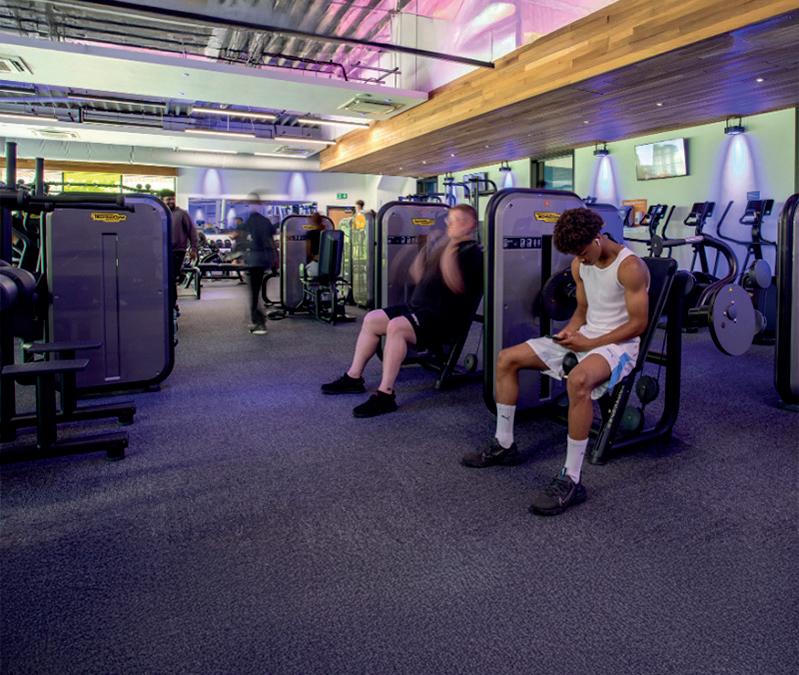
Tech-savvy Gen Alpha respond well to gamifi ed experiences
Oldham Active launched a young person’s membership in October 2021 and we’ve continually
evolved the offer. Now 20 per cent of our members are aged between 11 and 18 and this continues to grow. We partnered with Oldham College to upskill 30 of our fitness staff in the Level 2 Qualification in Leading Physical Activity for Adolescents. This gives them the key skills to adapt physical training for young people and prepare programmes that take into consideration rapid physical changes, developing nervous systems, social challenges and young people’s different motivational drivers.
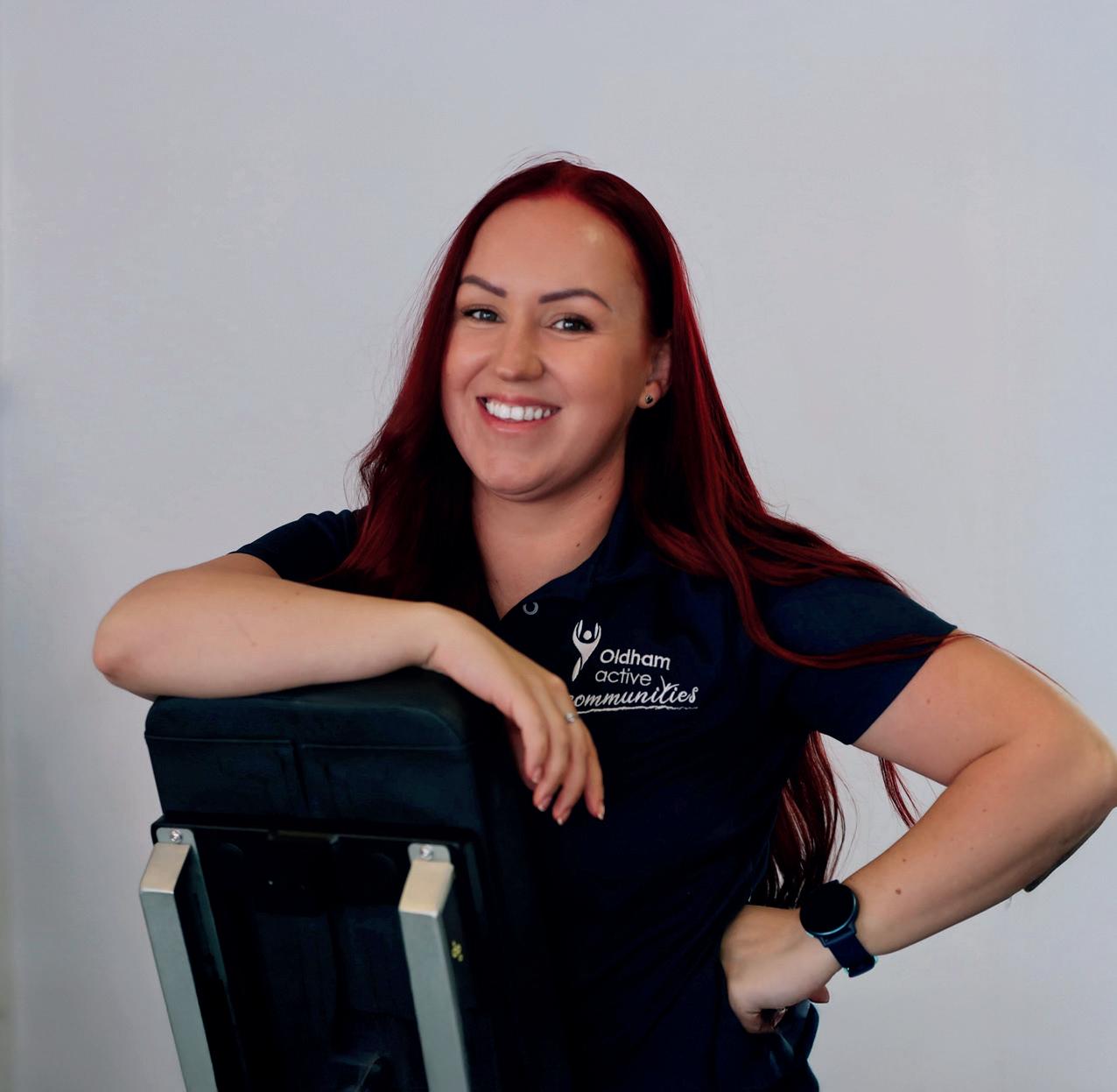
Mindful that young people may prefer not to participate in group exercise or work out alongside older adults, we recently created Blast – a fun, inclusive and engaging group fitness concept, using Technogym Skillmills, as well as SkiErgs, rowers, free-weights and other functional training kit. The Blast areas transform into functional training zones when the classes aren’t running and we’ve arranged the pin-loaded strength equipment so friends can work out side-by-side. By dedicating specific spaces and timetabling around the typical school day, we make young people feel genuinely welcome. This approach also protects our other classes and timetables, ensuring our adult members feel comfortable too. Gamification has been introduced to the Oldham Active app for those over the age of 14. They can complete challenges and receive badges for attending workouts and classes and unlock achievements for reaching milestones, like attending their 10th class or 50th gym visit. We’re looking to expand this with more age-appropriate rewards. ●
The programme aims to build friendships and boost confidence by allowing young people to connect with their wellbeing in a relaxed, informal environment
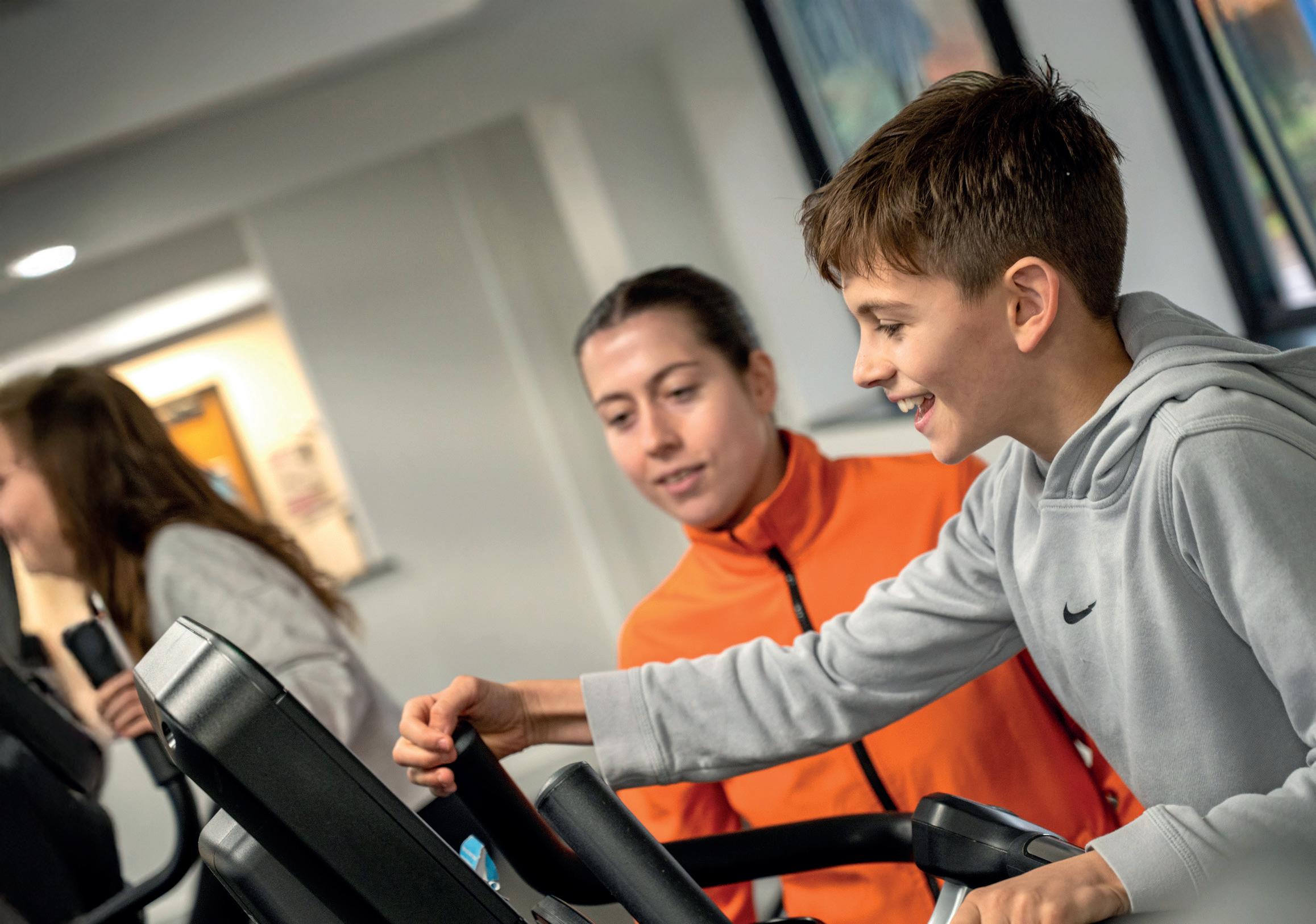
Horizon Leisure
Horizon Leisure launched its after school activities programme – Thrive –in 2024. It’s designed to support young people up to the age of 15 with their physical and emotional development through a diverse range of activities and clubs.
As not all young people enjoy competitive sport, the programme aims to build friendships, enhance communication skills and boost confidence by allowing them to connect with their wellbeing in a more relaxed, informal environment. Activities and clubs include Junior Gym, Teen Hangout, Scooter Club and dodge ball, as well as boccia, family racket sports, non-contact boxing, pre-school gymnastics and more. During the summer holidays we introduced a special six-week ‘holiday Thrive’, where all swimming and clubs were just £2 per child per session from Monday to Friday.
All coaches receive in-house training specifically designed to support our sessions, with lead coaches required to hold a Multi Skills Level 2 qualification.
We also provide ongoing professional development in areas of interest, ensuring our training evolves alongside the regularly updated timetable and Thrive programme.
Home schooling of Generation Alpha is on the rise, with an estimated 111,700 children in England alone being home educated at Autumn 2024 – a 20 per cent increase from the previous year. Leisure centres and health clubs are in a unique position to help home-schooling families meet PE requirements and provide social opportunities for home-schooled children.
We’ve worked hard to gain the trust of home education families who told us they wanted small, age-appropriate inclusive groups and guaranteed acceptance for all abilities. Over the last 18 months, Thrive’s home education programme has experienced remarkable growth, expanding to 13 specialist classes each week, with more than 100 young people. Activities include swimming, trampolining, gymnastics, junior gym and PE lessons delivered in partnership with Activ8Minds.
Sport England has released the latest Active Lives Children and Young People Report for 2024-25, as Kath Hudson reports
Physical activity among children and young people is at the highest level since Sport England started the Active Lives Survey in 2017-18.
The survey recorded a 5.8 per cent increase, representing 580,000 more active children since 2017-18, as well as being a 1.3 per cent improvement on last year’s results.
The number of less active children has also decreased by 4.4 per cent to 28.4 per cent when compared with the years 2017-18.
“We’re not just bouncing back, we’re seeing real progress,” said Sport England’s chief strategy officer, Nick Pontefract, in announcing the findings.
Other highlights include a small increase in activity levels among both boys and girls in the last year and a narrowing of the gender gap due to more girls being active.
Boys are still more active than girls, at 52 per cent active, compared to 46 per cent, however, in the last year this gap has narrowed from 6.4 per cent to 5.9 per cent.
The data shows that significant inequalities still remain, however, with not quite half of children – 49.1 per cent – meeting the CMO guidelines of an average of 60+ minutes of sport and physical activity per day across the week.
Children and young people from white and mixed backgrounds are the most likely to be active. Those with two or more characteristics of inequality are least likely to be active, at 40 per cent. Forty nine per cent of those with one characteristic of inequality are active and 54 per cent with no characteristics.

Children who come from White Other (53 per cent active), White British (51 per cent) and Mixed (52 per cent) backgrounds are more likely to be active than those from Asian (43 per cent), Black (41 per cent), or Other ethnic (42 per cent) backgrounds.
There’s little difference in activity levels between children and young people with and without a disability or long-term health condition and 50 per cent of disabled children or those with a long-term health condition are active, compared to 49 per cent of children without these challenges. Children from the least affluent families are the least likely to be active (45 per cent active) compared to children from mid-affluence (49 per cent) – a four per cent difference – and the most affluent families (58 per cent).



There’s been a gradual upward trend in gym and fitness since 2020-21, with an increase of 12.7 per cent or 976,000 more children taking part. When looking at ‘activities undertaken in the last week’, the survey found that in those aged 5-7 years, 42 per cent took part in
Children’s activity levels are now the highest since the Active Lives survey began
gymnastics, trampolining or cheerleading. This went to 36 per cent in those aged 7-11, when activity levels generally drop. In the age group 11-16-years-of-age, 33 per cent then report having taken part in ‘gym or fitness’ in the last week. Sport England does not report on gymnastics, trampolining or cheerleading for this age range (see page 48 of the survey results).
The most popular activities highlighted are active play (64 per cent); active travel (61 per cent) and team sports (58 per cent).
Going for a walk, dancing and swimming are popular for younger children but as they get older, team sports, active travel and informal activity become more of a priority.
Sport England says its Place Partnerships are also working for children and young people who go to school in the places supported –all areas of inequality – with them recorded
as being as active as those in other areas (www.hcmmag.com/PlacePartnerships).
Sport England chief executive, Simon Hayes said: “The fact that children’s activity levels are the highest since the Active Lives Survey began, reflecting the positive impact that clubs, community organisations operators, schools and many others are having across the country.
“More than half a million additional children are now meeting the Chief Medical Officers’ guidelines,” he said. “That’s real progress and something the sport and physical activity sector can be proud of, especially after the huge disruption of the pandemic.
“But the report also makes clear how much more we must do. It cannot be right that fewer than half of children are moving as much as recommended and that stark inequalities mean too many among the poorest in our society miss out. We need a renewed national effort to change this.”
Huw Edwards, CEO of UK Active, welcomed the results, saying: “These figures are a reminder of the essential role gyms, pools and leisure centres are playing in driving children’s activity levels, with UK Active’s Next Generation strategy setting an ambition to reach one million more children through our members’ facilities by 2030 (www.hcmmag.com/UKAnextgen).
Stark inequalities mean too many amongst the poorest in our society miss out. We need a national effort to change this



“But we cannot ignore the fact that almost a third of children and young people are doing less than 30 minutes of physical activity a day,” he continued. “This survey also shows a decline in swimming participation, which should be an alarm bell for the government.
“Our sector has been working tirelessly to improve children’s activity levels and the government must work with our sector to leverage the popularity of these services to reach every child and young person in the UK.
“Our Opening School Facilities programme helped more than quarter of a million pupils to be active outside school hours within schools and local community facilities such as gyms, pools and leisure centres over a three-year period,” said Edwards.
“Despite the success of this programme, funding for it was not renewed by the government, representing a lost opportunity to improve the health and happiness of our children and young people,” he said. “We need to see bolder ambition to tackle inactivity levels and our


The UK government has announced a National Youth Strategy, called Youth Matters, backed by £500m, to rebuild youth services, train youth workers and other professionals to support them. Youth Matters has been co-produced with more than 14,000 young people across England through a landmark State of the Nation survey.
The survey revealed the reality of young people, whose childhoods were shaped by the pandemic, the cost of living crisis, an always-on digital world and ongoing global uncertainty. They voiced stark concerns about a lack of mental health support, growing social isolation and an absence of youth services in their communities. Find out more at www.HCMmag.com/youthstrategy


Despite the success, government funding was not renewed
sector is ready to work with the government to co-create a clear strategy and implement a plan to get more children and young people active.”
Ali Oliver MBE, Youth Sport Trust CEO said: “It’s hugely significant that this latest Active Lives Children and Young People data shows an increase in physical activity levels. It gives us hope that progress is being made and the work of charities and organisations such as
33 per cent of those aged 11-16 had taken part in gym or fitness in the last week
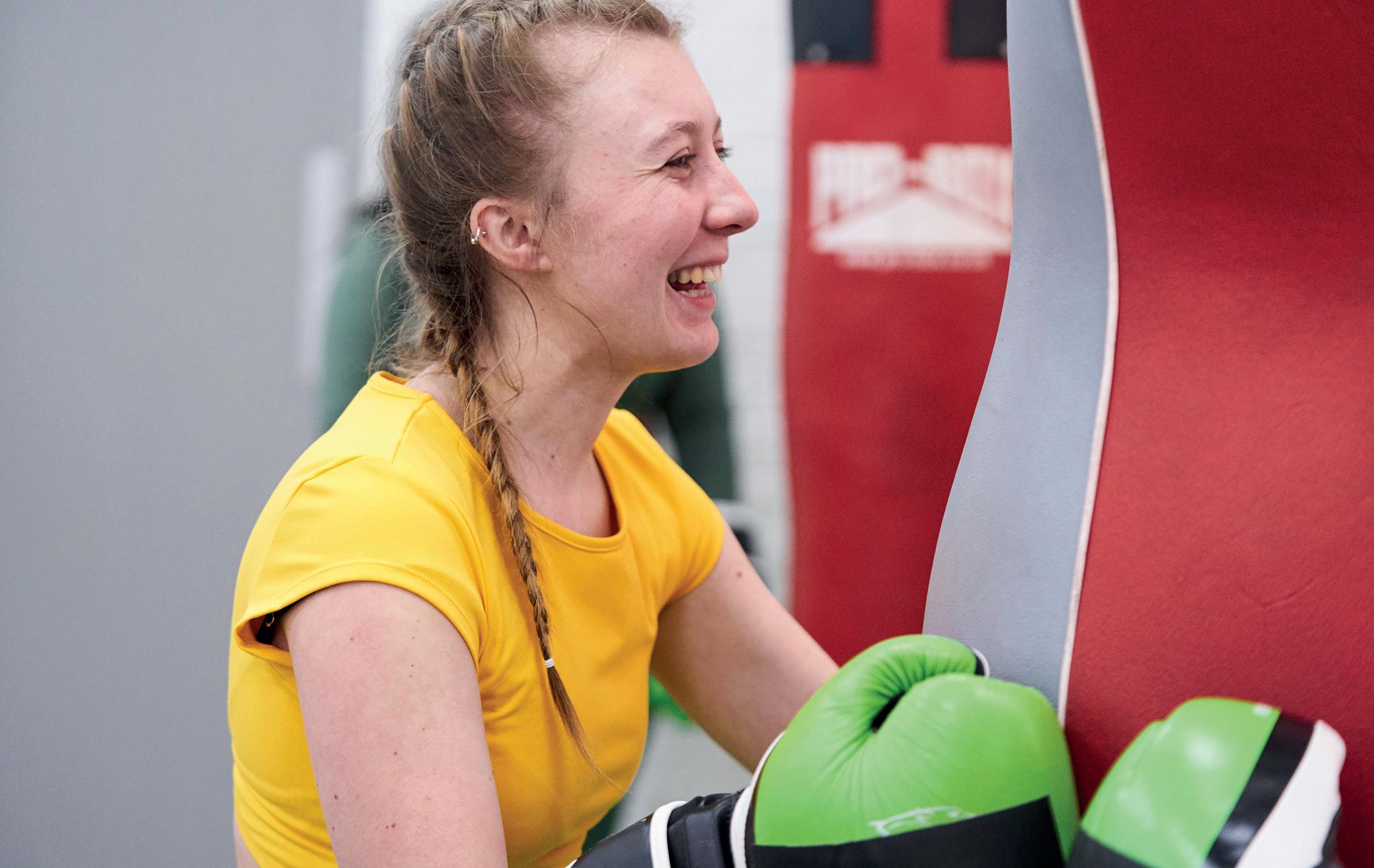
ours are helping increase opportunity, improve experience and foster changing attitudes about the importance of movement, play and sport in children’s education and development.
“However, there is still work to be done. Our recent Class of 2035 report (See issue 2 HCM 2026) contains a warning about the impact of increasingly sedentary lifestyles leading to developmental delays, rising rates of obesity, mental health issues and chronic disease among young people. Despite the increase reported by Active Lives , far too many children still remain inactive and are suffering as a consequence.
“Inactive children need more than encouragement; they need support and opportunities to make movement part of their everyday lives, safe environments to play in, healthy and active schools which prioritise PE, sport and play and communities empowering them to live active lifestyles,” he said.
“Positive experiences are key to getting more children engaged with being active and setting them up with healthy lifelong habits. Every day we delay action, the economic and social costs increase” he continued.
“With government plans for a refreshed curriculum, enrichment framework and a national network of PE and School Sport Partnerships, we have an opportunity to deliver change, giving every child access to the

life-changing benefits of play and sport. It is imperative this opportunity is not missed.”
Mental wellbeing scores are higher for those who are ‘active’ than those who are ‘fairly active’ which – in turn – are higher than for those who are ‘less active’. These have also improved over the last 12 months, averaging 6.9 out of 10, although they still remain 0.18 points down when compared to academic year 2017-18, before the impact of the pandemic. Levels of social trust are also higher among ‘active’ children, with 26 per cent reporting the top score, against 24 per cent for ‘fairly active’ and 23 per cent for ‘less active’. l
More: www.hcmmag.com/ActiveLives24/25














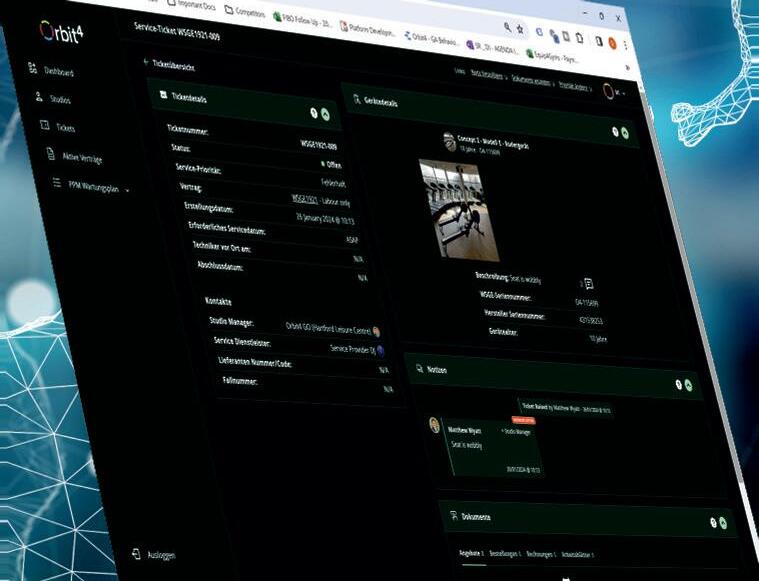















Creating fitness spaces customers love and keeping them running smoothly takes savvy use of tech at every stage of the journey, as Julie Cramer discovers
Rob Clarke
As a full service design, fit out and management contracting business, our operational experience gives us knowledge of usage trends and patterns that help us to drive effective operational design.


At the concept and design stage of any project, we offer in-house CAD and 3D services for visualisations, along with the ability to plan with multiple brands of equipment.
Once the build and fit-out are complete and the equipment installed, our in-house service team can track things such as cardio equipment use to predict wear and tear. We also monitor usage through our white label booking platforms.
We use BigChange project management software to manage our service schedules and planned preventative maintenance visits
across the 450 gyms and pools we manage under contract (www.bigchange.com).
This software gives the operators we work with automated updates on when planned preventative maintenance and service visits are due, along with detailed worksheets following each attendance.
Our in-house team are able to service all major brands of health club and gym equipment, as well as wellness equipment, to keep things running smoothly.

We work extensively in the residential and corporate markets, providing customer service and additional benefits, such as operational support and compliance checks.
For our in- and out-of-contract services, there’s no cost difference when it comes to billing; the difference is simply the priority status given to those who are in-contract when it comes to call-outs and breakdowns. More: www.m8group.co.uk


We use BigChange software to manage our service visit schedules and planned preventative maintenance visits

An example of Motive8’s full-service offering is Upper Riverside in Greenwich. This apartment development has three fitness spaces, a pool and steamroom and Motive8 has a permanent on-site presence providing management of the facility, ensuring our client remains compliant at all times, along with serving the needs of the 1,800 residents. The maintenance team provides weekly pool and spa servicing alongside the regular planned preventative maintenance visits required on the filters, UV and chemical controllers, while Motive8’s gym service team carries out quarterly preventative maintenance, ensuring the equipment is operationally sound and to keep any down-time to an absolute minimum.







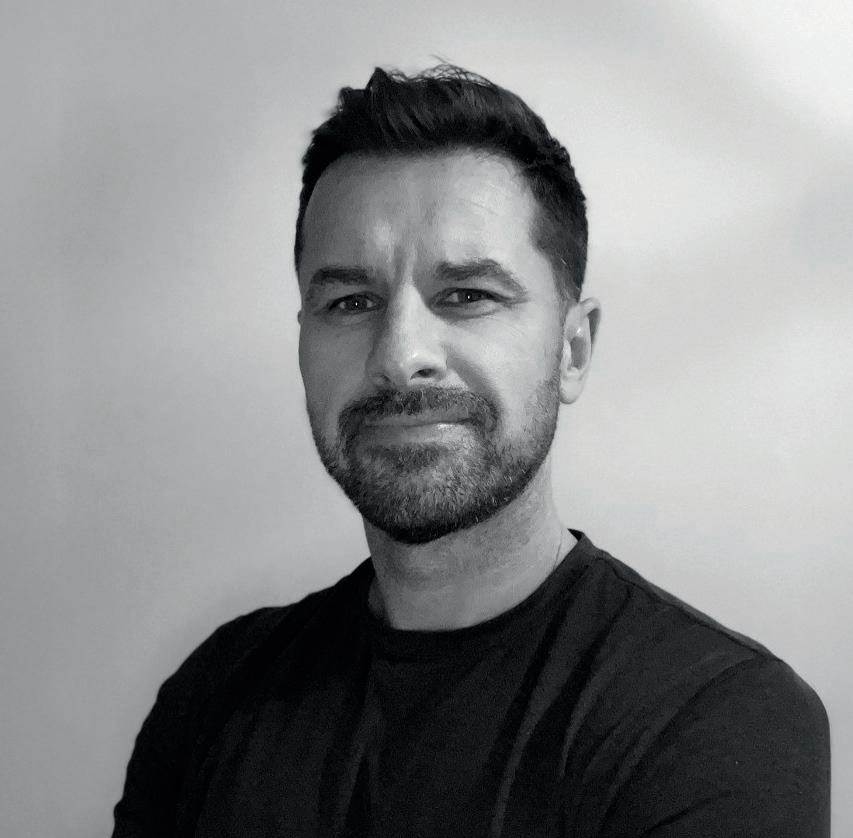
Orbit4 provides independent, data-driven insight to support gym space planning. Our platform also aggregates asset data such as equipment age, residual value, failure rates, repair costs and –through trusted partners – usage trends.
This gives operators an impartial view of their gym floor, enabling investment and layout decisions based on asset performance, lifecycle and commercial reality, rather than supplier influence or feedback alone.
We use continuous remote analytics to guide decisions relating to changes in layout and by combining usage insight with reliability, cost and asset value data, operators can objectively determine which equipment should be retained, relocated or replaced, removing bias and avoiding decisions driven purely by anecdotal feedback or changing training trends.
Orbit4 operates a neutral, independent platform and mobile app that tracks all service and maintenance activity across multiple providers. This includes tickets, communications, costs, failure rates and SLA adherence.
By creating transparency between operators and suppliers, Orbit4 improves accountability, raises first-time fix rates, shortens downtime and increases equipment availability, helping reduce member complaints and improve retention.
We don’t provide service or maintenance contracts. Our role is to independently monitor and benchmark contract performance for operators and service providers, ensuring transparency, suitability and accountability. More: https://orbit4.org
Our role is to independently monitor and benchmark contract performance for operators and service providers
Data-led monitoring improves DLL’s service
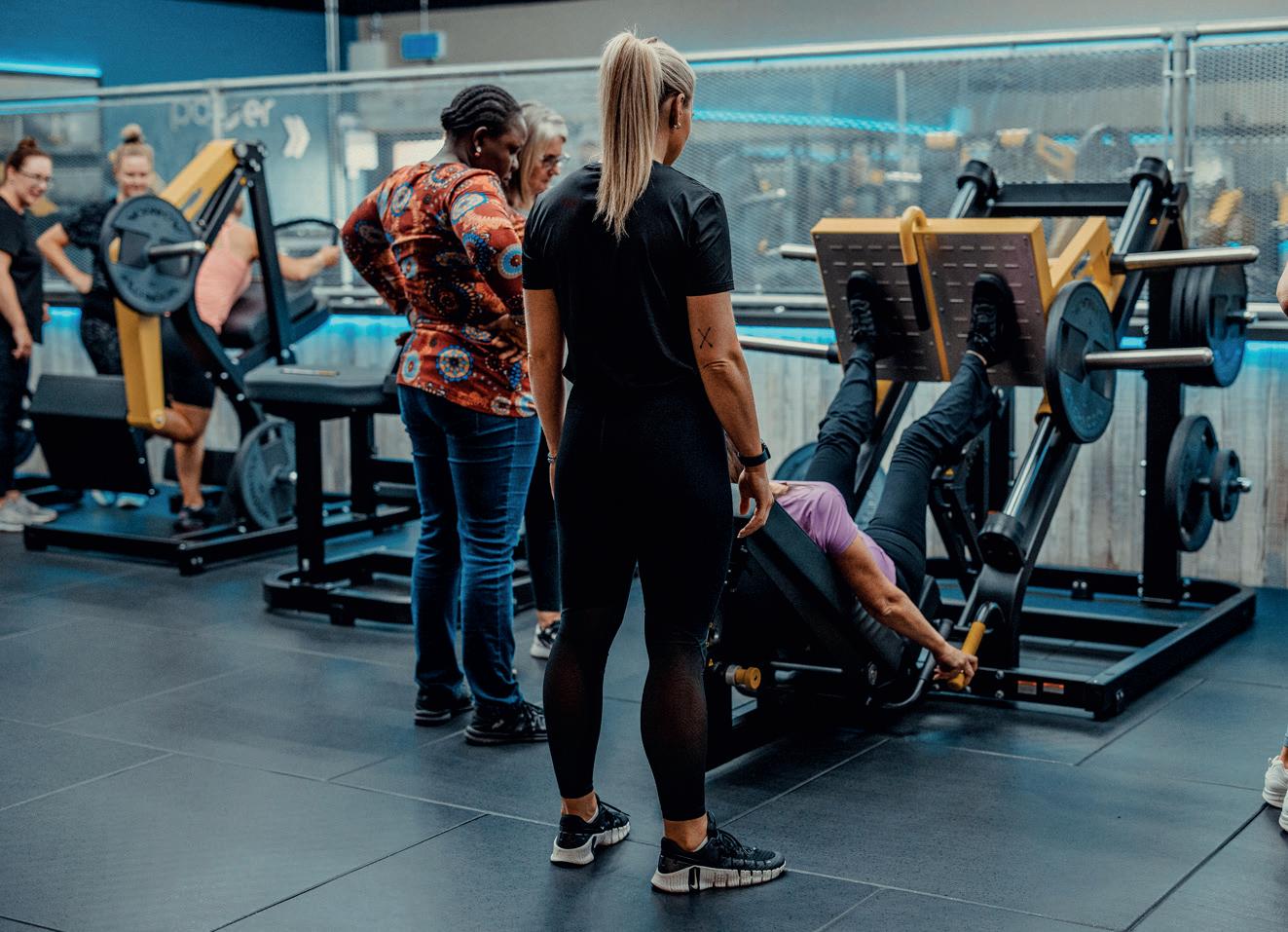
Denbighshire Leisure (DLL) uses Orbit4 alongside its equipment supplier’s warranty and extended service contracts.
We independently monitor whether contractual commitments are being delivered. At contract end, the Orbit4 platform supports data-led replacement planning, determining whether assets are retained, relocated or sold.
If a new service provider is appointed for out-of-contract equipment, they’re connected to Orbit4 and monitored in the same impartial way.
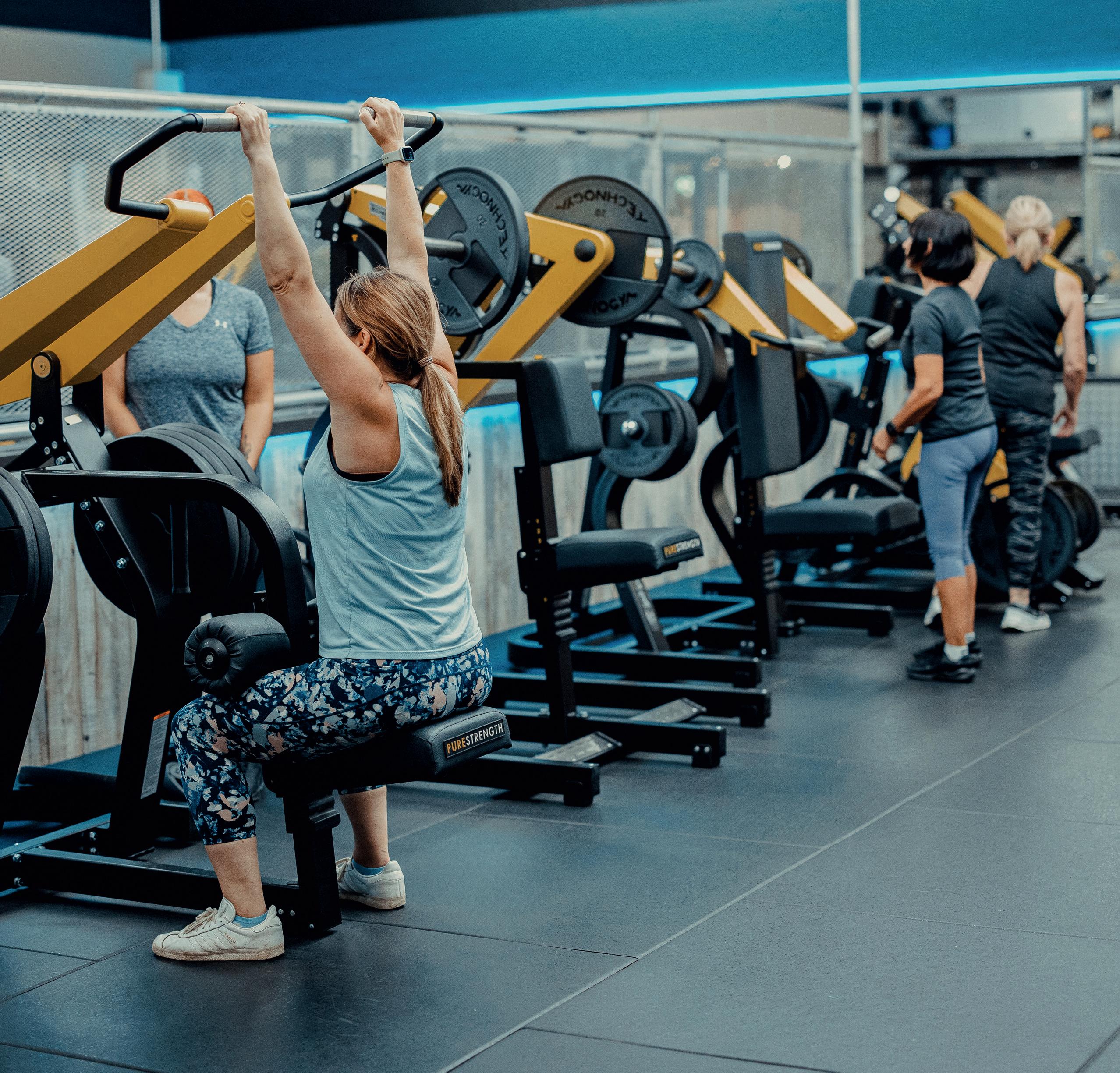
Through Orbit4, clubs can evaluate costs, performance and value
Nerio Alessandri Technogym
The design packages we offer enable clients to not only ensure the best use of space, but also to visualise how the facility can look in both 2D and 3D. We know flow, optimisation and an inspirational environment are key.
With a portfolio of designs to inspire our clients and in-house interior designers, we tailor space to their needs, leveraging connected equipment, IoT sensors and cloud-based analytics to monitor real-time usage and traffic patterns.
Data helps identify peak times, underutilised zones and workout flows, with these insights guiding things such as layout adjustments, the redistribution of machines and the creation of functional areas.
These data insights can also improve accessibility, while predictive modelling and continuous monitoring ensure optimal space utilisation and member experience.
When it comes to maintenance we have three levels of contract cover which allows customers to choose exactly the right provision for their needs and budget. These all include preventative maintenance checks.
All our contracts also provide key service-level agreements with a 48-hour response for safety and primary fixes and a 95 per cent first time fix rate.
The cost of our care cover will depend on many things – the level of cover requested and the age and usage levels of the equipment.
More: www.technogym.com
Our planning services include 2D floor plans to optimise equipment selection, quantity and layout and these insights guide installation, removal and rearrangement of equipment.

We also create 3D designs to visualise layouts, branding and styling, which can be used for sales and marketing purposes.
Our Asset Management platform monitors equipment usage through remote analytics, providing real-time insights on performance and wear. This data helps optimise gym layouts by rotating high- and low-use machines, extending product lifespan, improving equipment placement and maximising overall facility efficiency.
The platform uses clear colour coding to show machine status, from operating correctly to errors or offline alerts. Customised reports provide easy access to equipment data, helping identify the ideal product mix.
Assets are managed in our CRM and linked to Microsoft’s PowerBI visualisation tool, delivering live data and detailed reporting to enable data-driven decisions on servicing, equipment placement and member retention.
All our products have a fully-inclusive two-year warranty, which includes upholstery and cosmetic items. Extended warranty and preventative maintenance contracts include parts, labour, callouts and 24/7 portal access, ensuring reduced downtime. Service costs are tailored to each operator, ranging from preventative maintenance and labour-only options, to fully-inclusive contracts or pay-as-you-go callouts. More: www.uk.matrixfitness.com/eng 2D
The University of Hertfordshire completed a major refurbishment of the Sports Village gym on its de Havilland Campus, creating a 110+ station facility alongside studios, a pool, climbing wall and specialist labs. Matrix advised on equipment designed to specifically benefit members. A GymMetrix study, partly supported by Matrix, identified rising demand for strength training, leading to a redesigned layout with expanded free-weight and functional areas.
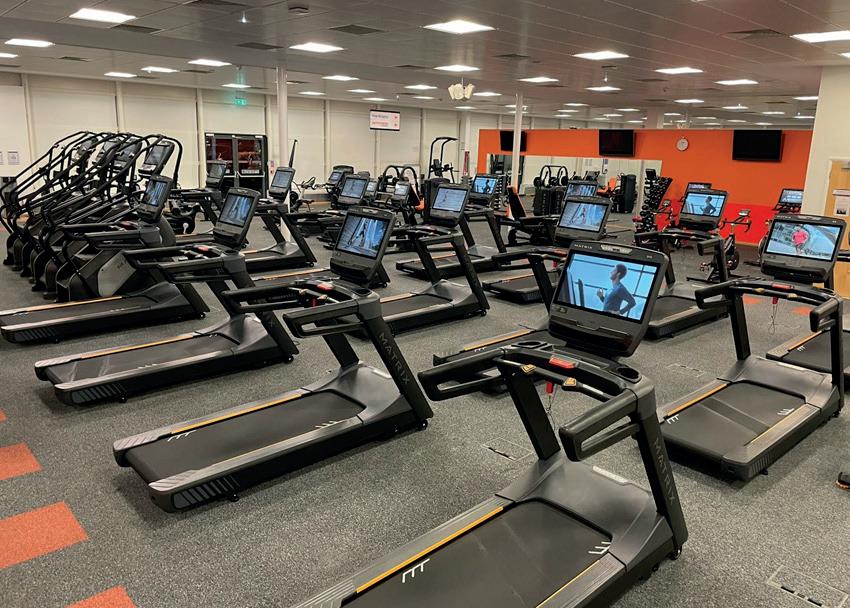
Our digital solution allows us to understand equipment usage, high footfall zones and exerciser behaviour
We involve partners in the design process to ensure we create spaces that resonate with their customers. We start with 2D renders to optimise equipment layout and the user journey before bringing it to life with 3D images and a 360° VR tour. This gives the opportunity to walk through the gym before a single piece of equipment is installed.
Our digital solutions, especially our Facility Connect platform, allow us to understand equipment usage, high footfall zones and exerciser behaviour, while also giving real-time data on equipment status.
In addition to underpinning our service and maintenance work, Facility Connect enables
us to continuously optimise the gym floor and suggest equipment that will delight members, while enabling our partners to evolve with their users’ needs and industry trends.
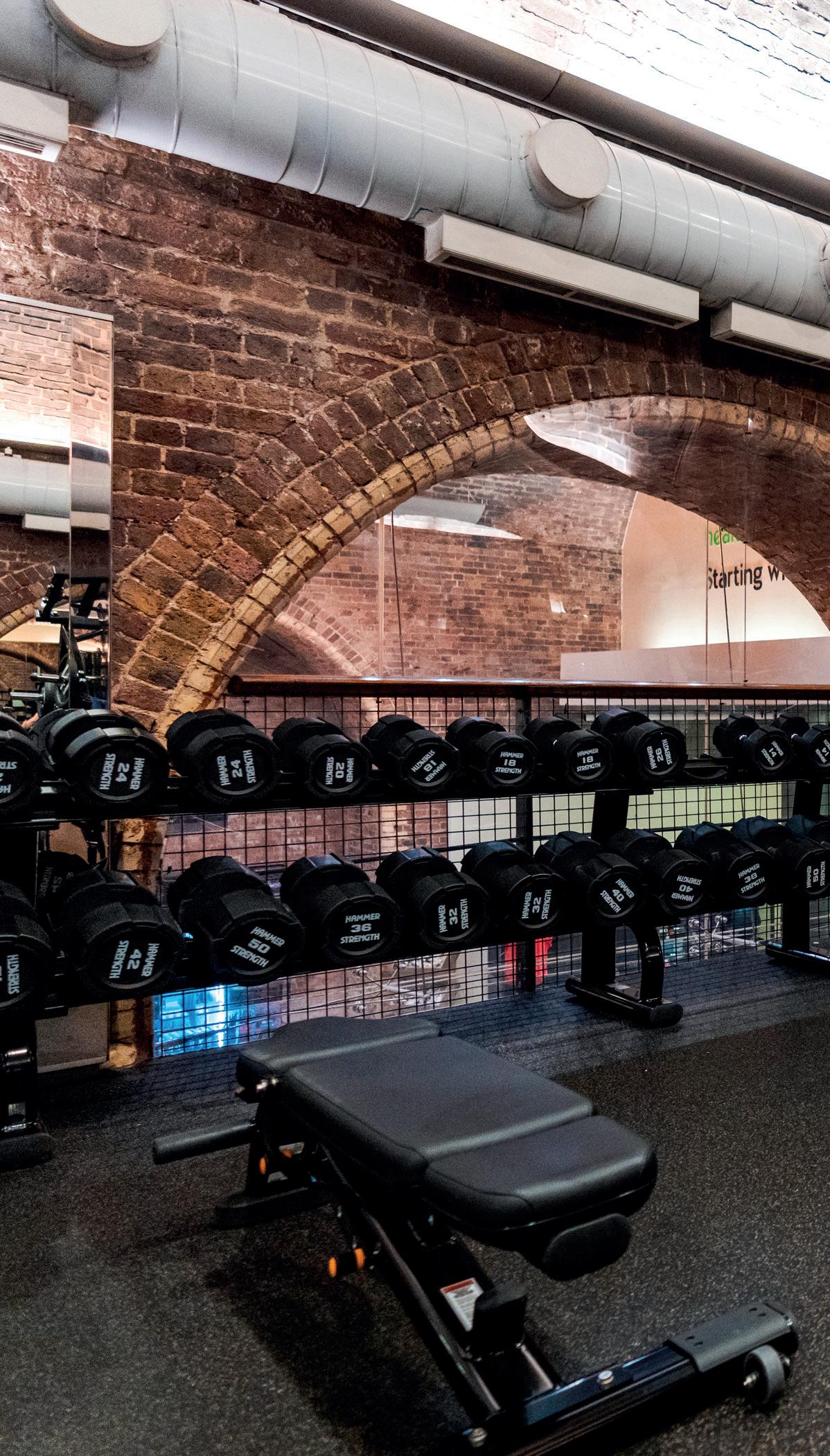
By logging faults across an estate we’re able to minimise equipment downtime and enhance the user experience.
Through Facility Connect we can monitor remotely to also push through software updates, ultimately maximising equipment uptime without any user disruption.
We’re an open platform provider, meaning our equipment can integrate into existing systems, ensuring flexibility.
When it comes to service contracts, we offer flexible packages to cater for operators’ needs. From annual equipment servicing to all-inclusive, multi-year provision, contracts can include preventative maintenance, unlimited call-outs and labour and quick response times.
Out of contract, our agreements are bespoke to our partners, based on the equipment within the facility. We give costs for each piece of equipment that are aligned with the expected maintenance across the agreed time period.
More: www.lifefitness.com/en-gb

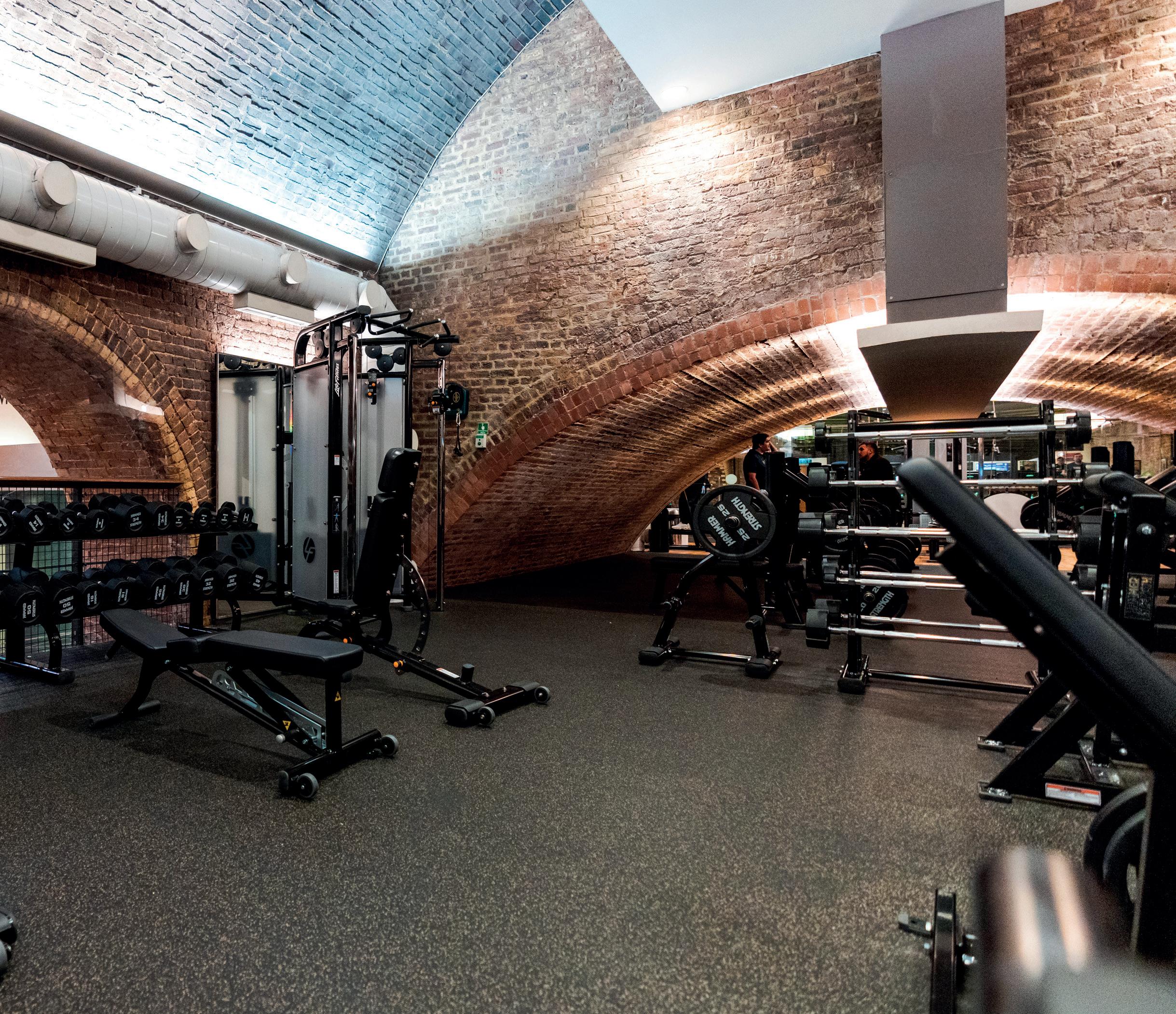
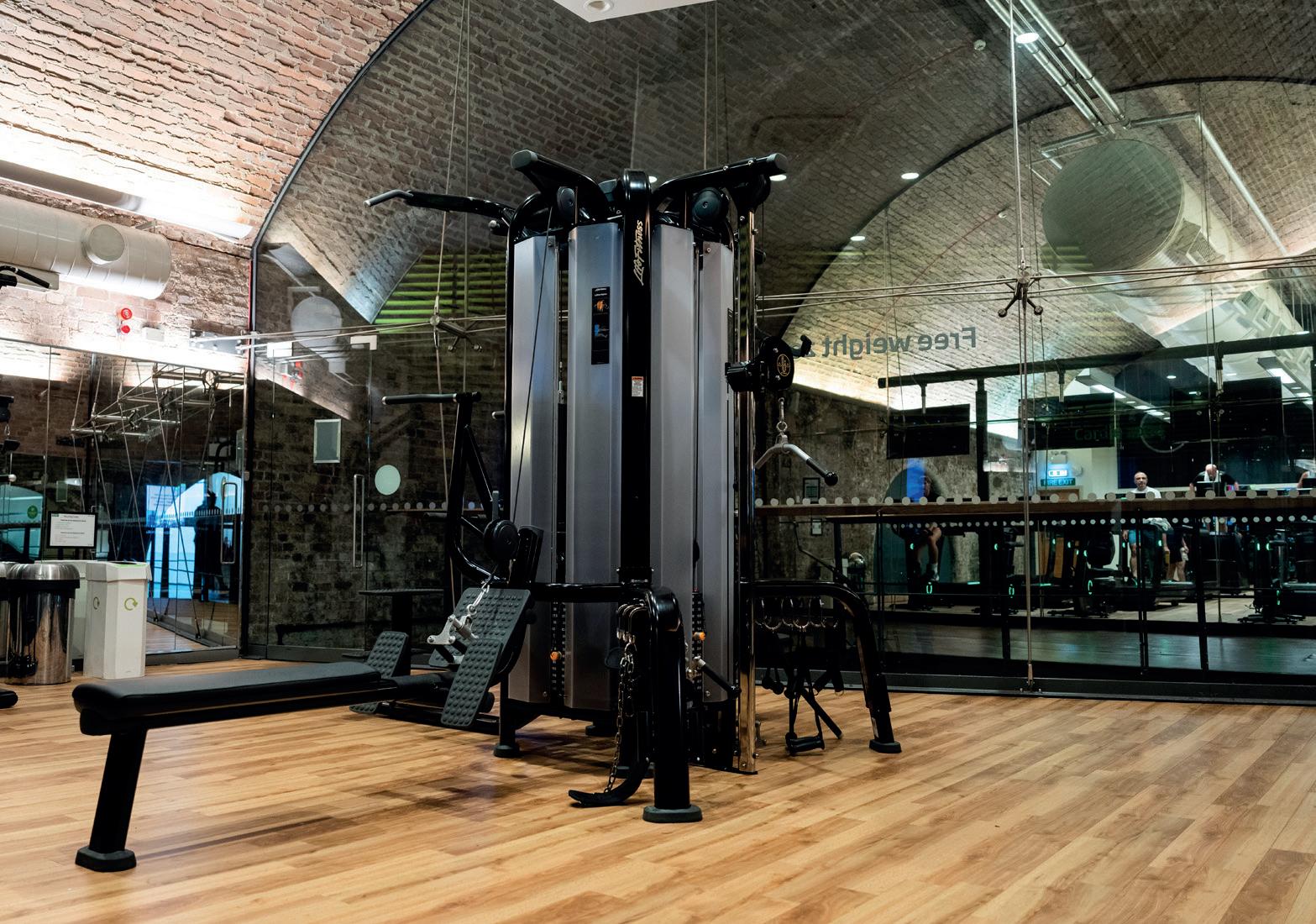
The club and its data capture is now a blueprint for Nuffield
In 2024, Life Fitness / Hammer Strength renewed Nuffield’s flagship Health City club in London.
The mix of product solutions was tailored to evolving member habits using a data-led approach, with data collected from the existing suite of equipment and coupled with membership insights, feedback from the Nuffield Health proposition team and general industry data – including emerging trends.
During the refresh process, new equipment was installed zone by zone, minimising member disruption and ensuring the club remained operational.
The club is now the blueprint for Nuffield, with data being captured via the Facility Connect platform to be utilised in the decision-making process across the 2026 investment framework.
Stuart Martin
We offer a full consultation option for planning using CAD design and an open conversation on needs and requirements.
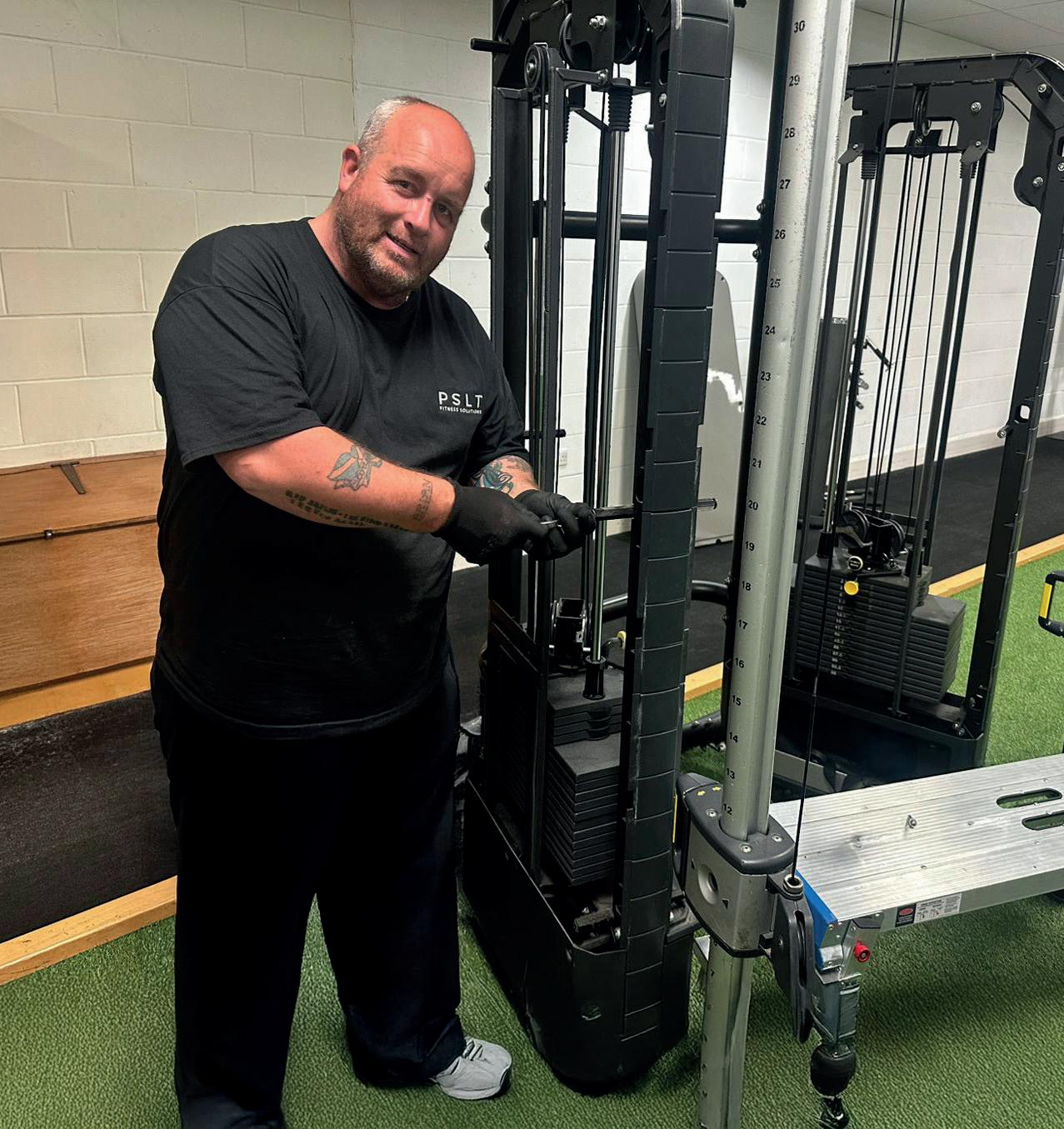

Working directly with operators we look at the space and also the volume of users, busy times, key areas that are causing bottlenecks or are an area of business growth.
Our online portal enables customers to manage their assets and the portal is always evolving to ensure KPIs for the operator are achieved and easy to manage.
PSLT’s full-turnkey services – including new and refurbished equipment supply, nationwide maintenance and emergency call-outs, as well as bespoke logistics and trade-in solutions –differentiate us in the market. This customercentric, end-to-end approach is our core USP. Service and maintenance contract costs vary depending on the level of cover selected. We offer labour-only contracts covering callouts and labour, but excluding parts and allinclusive contracts covering call-outs, labour and most parts. Pricing is tailored to equipment type, usage and operator requirements. More: https://pslt.co.uk
Places for People uses PSLT’s planned maintenance and reactive support service to maintain consistent equipment performance across its facilities. Equipment downtime is significantly reduced through preventative servicing and rapid response to breakdowns, ensuring gyms remain fully operational. This has led to improved equipment up-time, fewer user complaints, enhanced member satisfaction and retention and lower long-term repair costs. Overall, the service supports smoother day-to-day operations, protects revenue and delivers a more reliable fitness experience.
We offer a gym floor design service informed by knowledge of equipment performance and failure rates. This allows us to optimise layouts and plan strategic equipment rotation, ensuring usage is evenly distributed across assets.

By reducing excessive wear on individual machines, we extend equipment lifespan, minimise downtime and reduce maintenance costs.
We use a customer service portal called MyHub – customers log their service and repair requests online, after which they’re reviewed by our in-house technical team to diagnose issues before dispatching an engineer. This reduces unnecessary call-outs, speeds up resolution, improves first-time fix rates, tracks full machine history and maximises machine up-time.
Our all-inclusive service contracts cover all parts, call-outs, labour, upholstery and associated costs with no exceptions, providing fixed pricing and eliminating unexpected or unbudgeted maintenance expenses. Customers also receive free access to MyHub for efficiency in equipment management and ease in making maintenance requests. ● More: www.servicesport.com
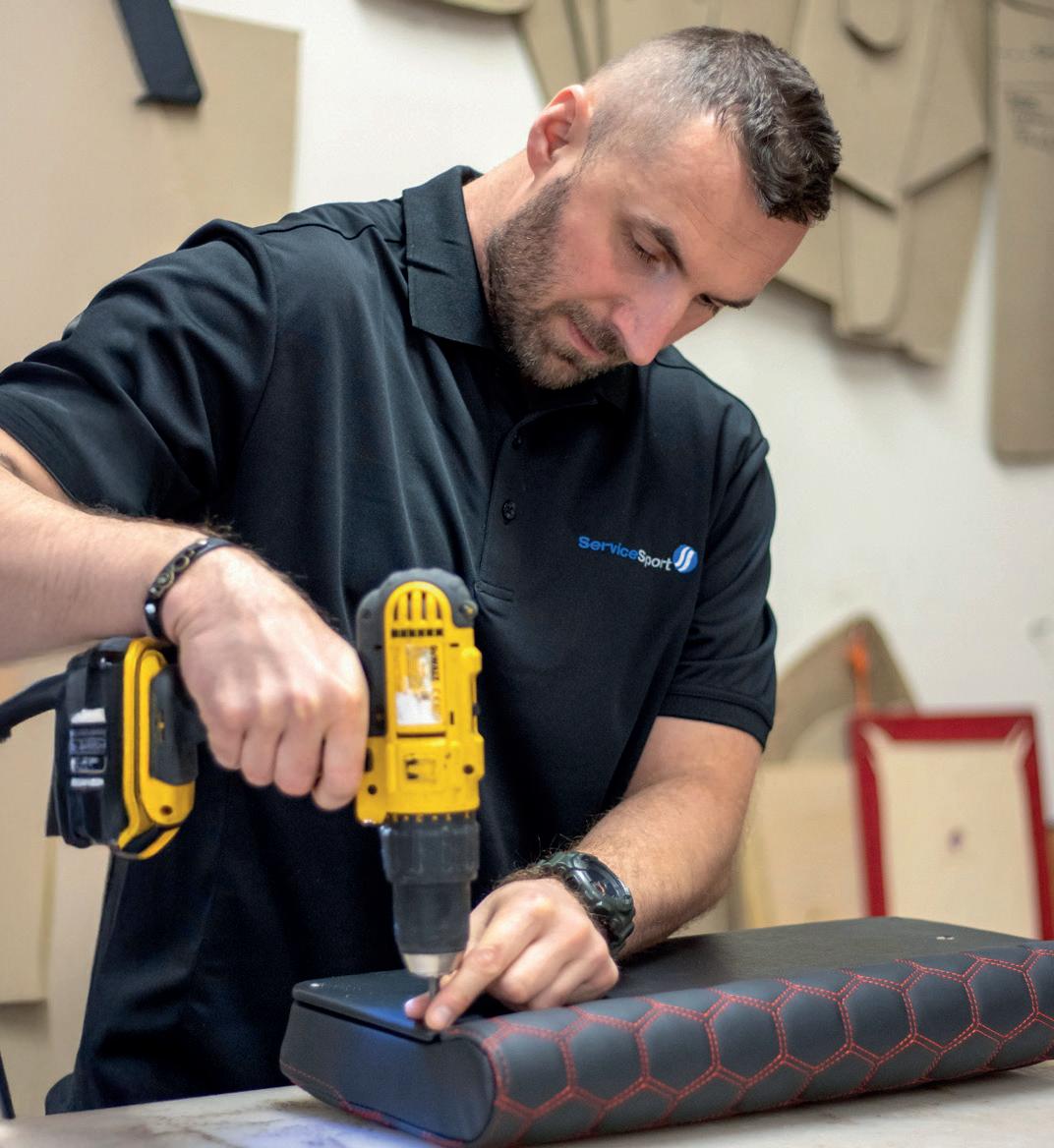
For more insight, or to get in touch with the companies featured, visit www.fitness-kit.net and type in their keyword
design is informed by athlete and operator feedback, says Matthew Pengelly
Matrix Fitness has launched its Magnum Plate-Loaded Range, a collection of 10 strength machines engineered to deliver performance, durability and versatility.
With design features informed by athlete and operator feedback, the range offers functionality and

“This strength solution gives our partners a serious point of differentiation”
Matthew Pengelly
adaptability to meet the evolving expectations of fi tness facilities.
Machines are purpose-built to perform under heavy use, delivering biomechanical precision, intuitive adjustments and training variety.
“Strength training is one of the fastest-growing priorities for gym members, with over two-thirds strength training regularly and more than a third identifying muscle growth as their primary goal,” said Matthew Pengelly, MD at Matrix Fitness UK.
“The Magnum Plate-Loaded Range is our answer to this demand – a no-compromise strength solution that gives our partners a serious point of differentiation while helping their members train harder, smarter and safer.”
Core is the foundation of an ecosystem to help instructors run smarter, says Jake Shand
Fibodo has launched Core, a business platform for people who make their living by delivering client experiences – including
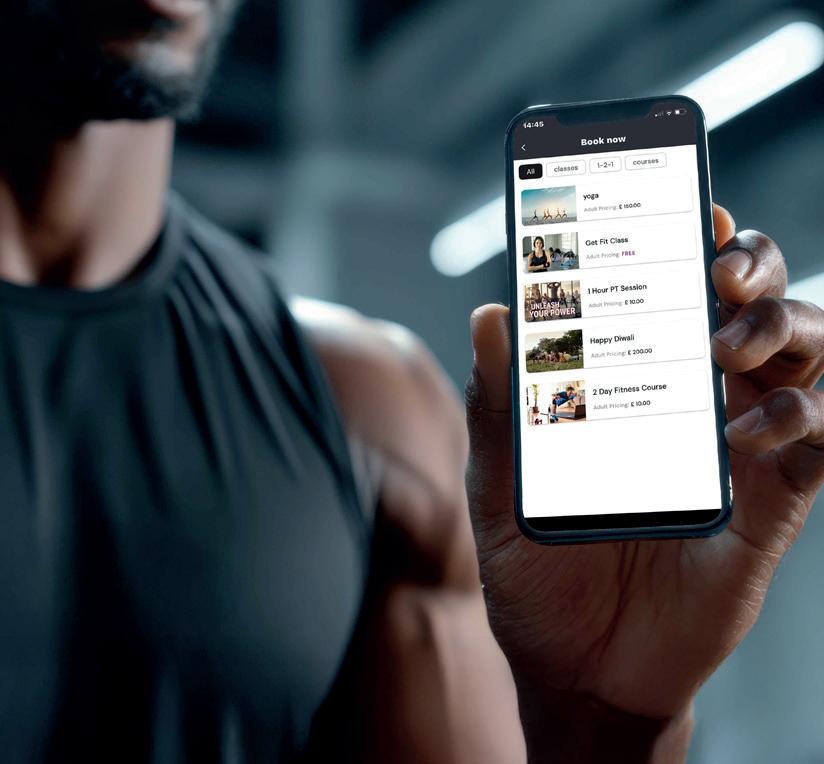

fi tness professionals, wellness experts, coaches and creators.
Core brings together scheduling, client management, payments, lead generation and bookings in one product, without the need for a tech team or steep learning curve.
A built-in CRM keeps client details in one place, while integrated lead generation connects providers to new customers via Fibodo’s partner network. Users can sell memberships, vouchers and


“A built-in CRM keeps every client detail in one place”
Jake Shand
live sessions, launch their own website and manage everything through their own branded app.
“Core is a complete ecosystem that will power the experience economy, helping instructors, coaches and creators earn more and run smarter,” said Jake Shand, executive director at Fibodo.
fitness-kit.net
Fibodo
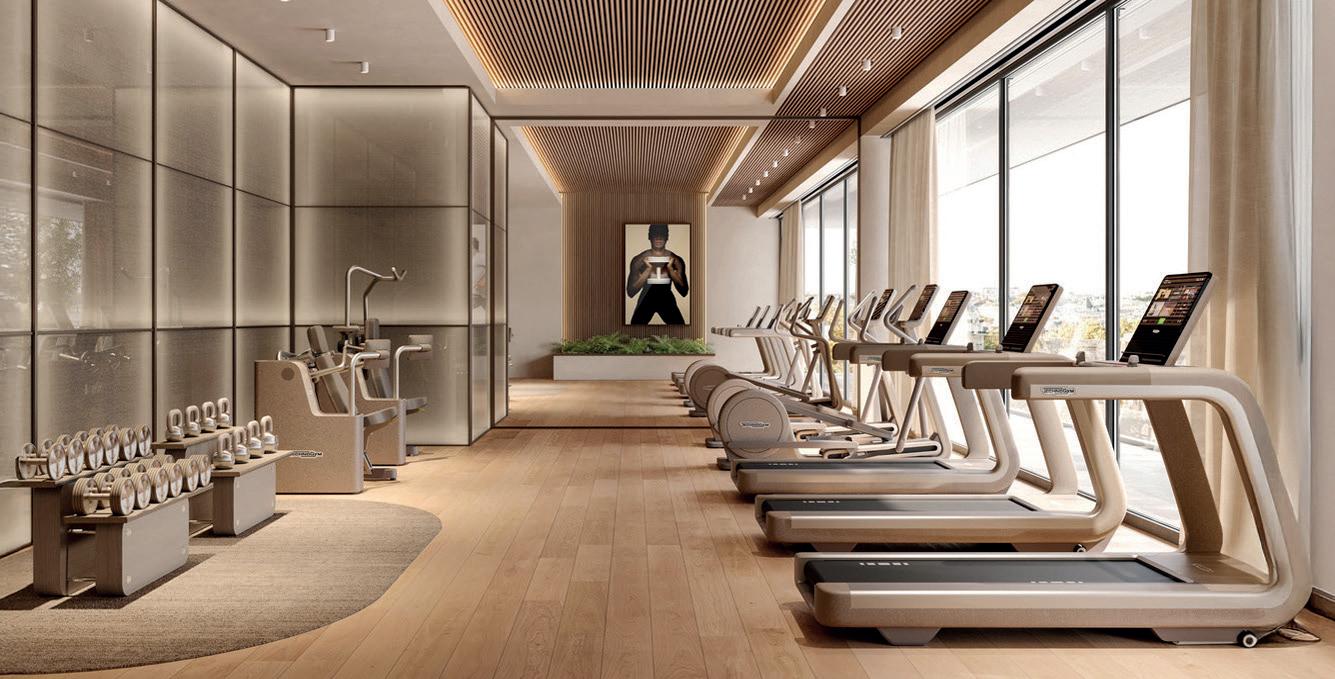
The Sand Stone range includes cardio, strength and functional pieces
The Sand Stone collection by Technogym offers an aesthetic inspired by nature, using materials that differentiate wellness space design.
The neutral tones and finishes allow the range to blend with wood, stone and other materials, creating authentic and immersive spaces. Tactile surfaces that come into direct contact with
the user, such as handles and seats, are in vegan leather.
“These elements create a holistic and exclusive design language made up of warm and welcoming tones that invite everyone to train without intimidation,” says Technogym president and founder, Nerio Alessandri.
Technogym fitness-kit.net keyword
Reformer Pilates brand Fold and Create PT have announced the launch of Fold Academy, a new partnership for Pilates education. The partnership launches with an accredited reformer Pilates

“This certification programme will carry genuine weight ”
course delivered in a blended format, combining e-learning with four in-person workshop days and an in-person assessment day.
The programme runs over a 12-week period and provides a complete, certified training pathway, from foundational mat Pilates through to advanced reformer Pilates, recognised at Level 3.
The first course will launch in London in Q1, 2026, with other UK cities to follow.
“The fitness range blends perfectly with natural interior design elements” Nerio Alessandri
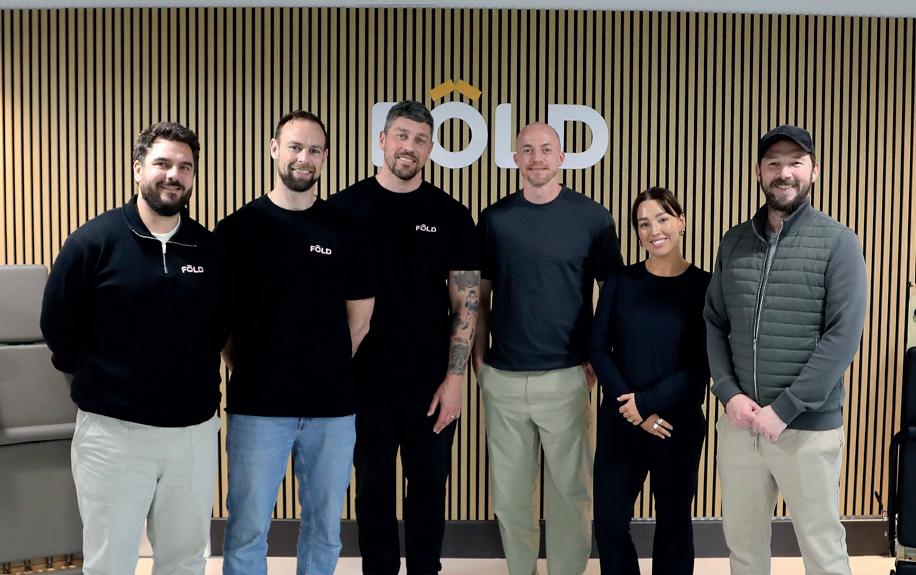
The Pilate certification will run over 12 weeks
Adam Rhodes, founder of Create, adds that the new academy “allows people to qualify to industry-recognised standards, with the support and tools they need to build a career”.
fitness-kit.net keywords
Matt Harras Fold
“We see an opportunity to build a certification programme that carries weight in the industry,” says Matt Harras, co-founder of Fold.


Tap into HCM ’s comprehensive supplier directory and profiles to get in touch with the industry’s leading suppliers of products and services to power your business

CLICK HERE to search for a supplier on HCM’s Company Profiles Hub










CLICK HERE to visit the HCM Handbook Company Profiles





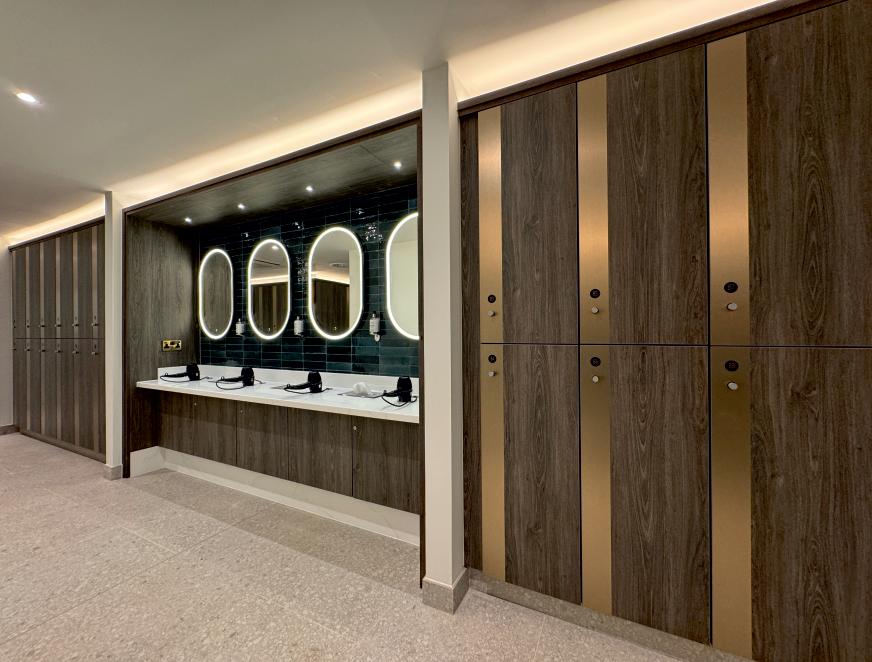












Small adjustments to activity levels deliver big longevity gains
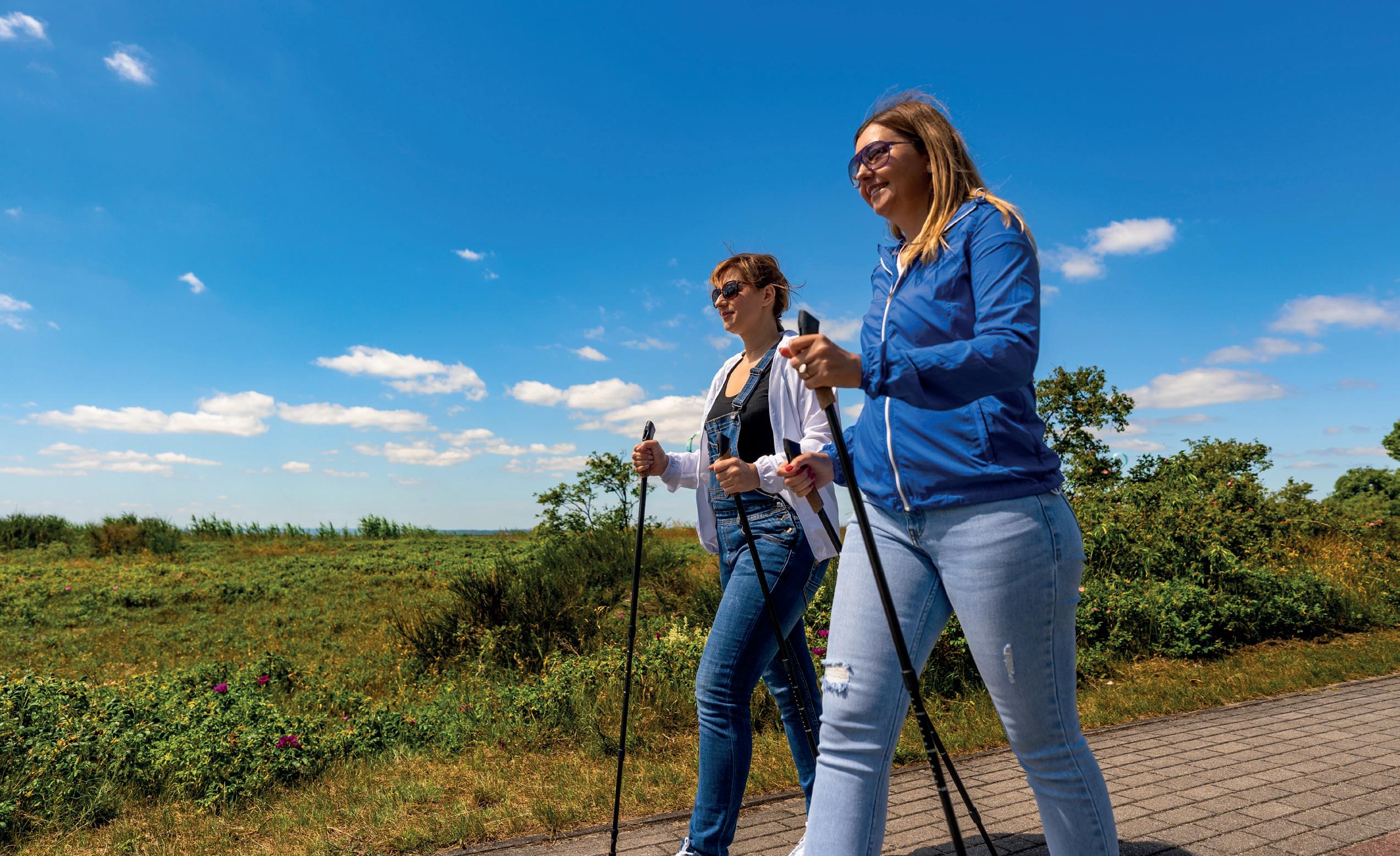
A global study by researchers in four countries has found that very small lifestyle changes can significantly impact longevity
Five minutes more exercise and half an hour less sitting time each day could help millions live longer, according to an study published in The Lancet , which shows the compound benefits of tiny lifestyle changes.
Researchers analysed data from more than 135,000 adults in Norway, Sweden, the USA and the UK to understand how small, realistic changes in daily habits could impact mortality.
For the least active, adding just five minutes of moderate to vigorous physical activity a day could prevent about 6 per cent of premature deaths and when applied across the population this figure rises to 10 per cent.
Sitting for 30 minutes less each day could prevent around 3 per cent of premature deaths among the least active 7 per cent across the population.
Focus on realistic change
“These results show that small steps can have a large impact,” says Maria Hagströmer, coauthor of the study. “You don’t need to run marathons – just a few extra minutes of brisk walking each day can make a difference.”
For many people, reducing sitting time time or adding short bouts of activity is more achievable than making large lifestyle modifi cations
Co-author, Ing-Mari Dohrn, says: “Our study focuses on realistic changes. For many people, reducing sitting time or adding short bouts of activity is more achievable than large lifestyle modifications.”
While the researchers emphasise these changes are not a substitute for regular exercise, they highlight how small adjustments can contribute to better health at population level.
The study, Deaths potentially averted by small changes in physical activity and sedentary time: an individual participant meta-analysis of prospective cohort studies, was a collaboration between researchers at a range of academic institutions in Sweden, Norway, Spain, Australia and the USA, including the Karolinska Institutet, The University of Sydney and Harvard Medical School. ●
More: www.hcmmag.com/smallchange


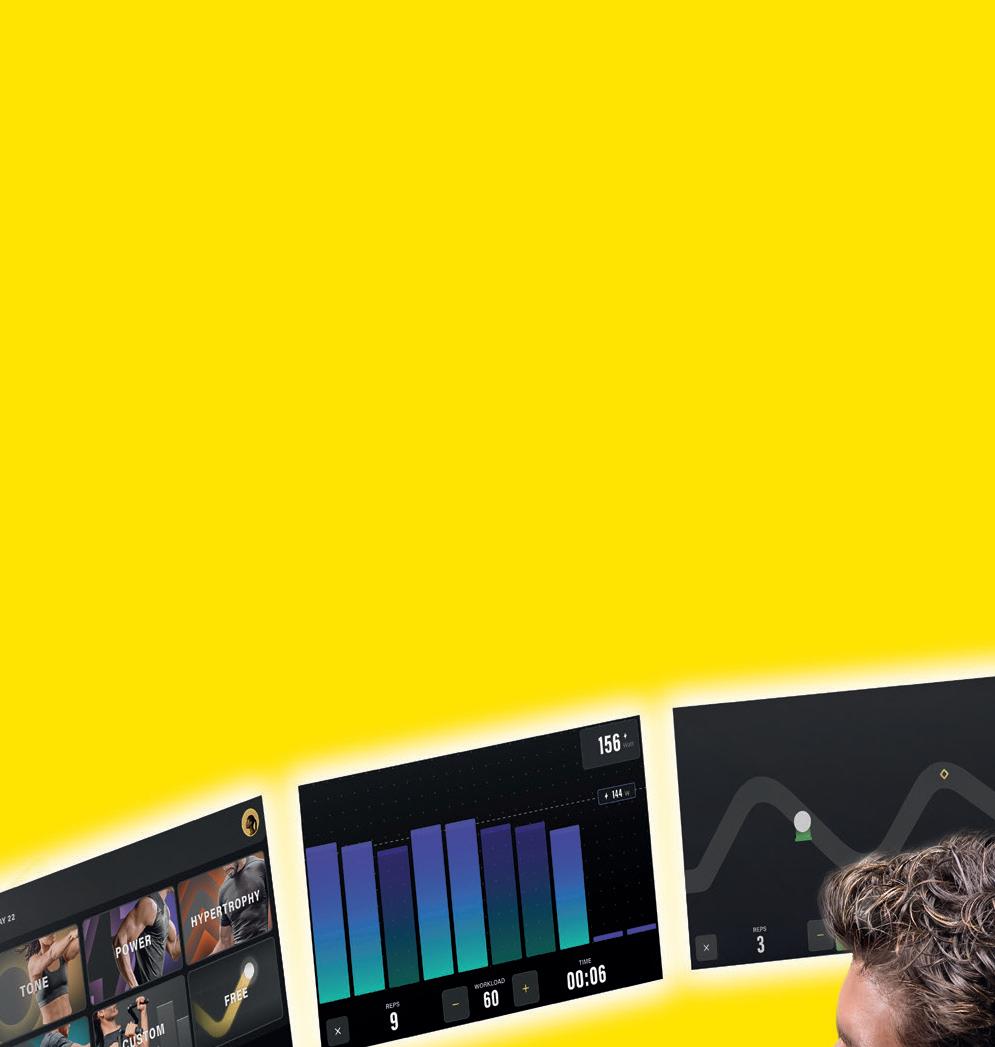

BIOSTRENGTH™. SUPERIOR RESULTS, FASTER.
Avoid the most common strength training mistakes and supercharge your workouts. Thanks to the patented Biodrive system, select your goal and automatically receive the optimal resistance and biofeedback for it, along with the correct workload, range of motion, tempo, and rest time. Biostrength adapts to you for +30% results in the same time.