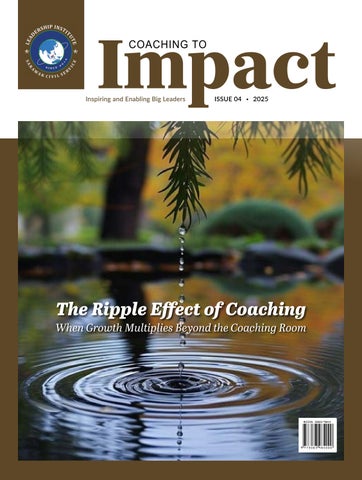
Coaching to Impact is a twice yearly publication by the Leadership Institute of Sarawak Civil Service, dedicated to advancing civil service leadership and to inspire our Sarawak Civil Service (SCS) leaders with contemporary leadership principles. It features a range of content contributed by our strategic partners and panel of advisors from renowned global institutions as well as established corporations that we are affiliated with. Occasionally, we have guest contributions from subject matter experts as well as from our employees. The views expressed in the articles published are not necessarily those of Leadership Institute of Sarawak Civil Service Sdn. Bhd. (292980-T).
No part of this publication may be reproduced in any form without the publisher’s permission in writing.
Published by
Leadership Institute of Sarawak Civil Service
KM20, Jalan Kuching-Serian, Semenggok, 93250 Kuching, Sarawak, Malaysia.
Editor-in-Chief
Datu Dr. Haji Azhar Bin Haji Ahmad
Editor
Diana Marie Capel
Content Contributors
Helena Ului
Certified Master Performance Coach (CMPC)
Masteries Practitioner (IAC)
Niresha Nirnala
Certified Enterprise Coach (CEC)
Maureen Jono
Certified Professional Coach (MIM)
Masteries Practitioner (IAC)
Graphic Designer
Awang Ismail Bin Awang Hambali
Abdul Rani Bin Haji Adenan
Read this issue online at https://www.leadinstitute.com.my/coaching-to-impact/ or Scan the QR code.
From the
Editorial Desk
Building Growth Mindedness and Elevating Responsibility in the Sarawak Civil Service Through Coaching
“A high-performing civil service relies not only on technical expertise, but also on mindset, accountability, and the capacity to adapt to change.”
In Sarawak, ongoing efforts to strengthen the Civil Service increasingly recognise the importance of fostering growth-mindedness, the belief that capabilities can be developed through continuous learning, while elevating a strong sense of responsibility among officers at all levels. One of the most effective ways to achieve these goals is through structured coaching activities.
Coaching provides a supportive environment in which officers can reflect on their goals, identify gaps, and explore new approaches to their work. Through guided conversations, civil servants are encouraged to challenge assumptions, embrace feedback, and take ownership of their professional development. This process builds resilience, adaptability, and a positive attitude towards learning traits essential in an administrative landscape that continues to evolve rapidly.
At the same time, coaching strengthens personal responsibility. When officers are empowered to set clear objectives and monitor their own progress, they naturally become more accountable for their performance. Coaches act as facilitators, helping individuals clarify expectations, understand the significance of their roles, and commit to delivering high-quality public service.
For Sarawak, embedding coaching into leadership development programmes and workplace culture can nurture a more dynamic, motivated, and forward-thinking Civil Service. This aligns strongly with Sarawak’s 3R approach to enhancing economic prosperity, social inclusivity, and environmental sustainability by 2030. By cultivating growthmindedness and reinforcing personal responsibility, coaching supports the State’s aspiration to build a world-class public service capable of driving sustainable progress and serving the people with excellence.
Datu Dr. Haji Azhar Bin Haji Ahmad Chief Executive Officer
This is a case study of a Sales Director at a small-to-medium-sized enterprise (SME) who introduced in-house team coaching in 2021. He is also a coach with a PCC certification and decided to implement team coaching internally to share the vision for goal achievement throughout the company.
In the initial stage, he struggled with whether he should intentionally avoid using the word “coaching.” He felt reluctant about the anticipated rejection of the word “coaching,” which the Organisation had no prior experience with, and the burden of having to explain what coaching is to everyone.
Through a session with his own coach, he had an insight: “The reluctance and resistance that is happening within me is also happening within the team. If I, personally, want to share the vision with us (the in-house team) and can firmly convey that feeling, our relationship (as an inhouse team) will surely improve.”
Therefore, he decided to begin the team coaching session by saying the following:
“Instead of being passive about the sales targets set by the company, let’s create a clear vision of what achieving them will bring us and what we will gain, and let’s work toward the goals while sharing that vision together. For this purpose, I want all of you to actively speak up. Your input will be a contribution to all of us.”
Furthermore, he believed that the coach’s presence (being) was extremely important in team coaching, just as it is in one-on-one coaching, and he focused on the following points:
1. Focus on connecting with himself, connecting with the team, and connecting with the space to maintain neutrality at all times.
When conducting team coaching as an internal coach, due to the familiar relationships, it was common for various emotions to surface and for him to be swayed by his interpretations and preconceived notions about his subordinates, superiors, and colleagues, such as:
• “He is talking about minor details again”
• “She always takes too long to speak” or
• “The president should be the one taking the lead first.”
2. Focus on the following five points to make his voice easily received by everyone on the team:
a. Eye contact
b. Attention to clothing and posture
c. Energetic movement
d. Speaking with a smile
e. Speaking loudly and clearly
3. The Coach Being Open-Minded
He made an effort to speak openly about things he didn’t know and things that were currently happening, without being overly conscious of the reactions of superiors, subordinates, or colleagues. He felt that when conducting team coaching as an internal coach, an open-minded team is formed precisely because the coach himself has an open attitude.
As a result, the word “coaching” was accepted by everyone without any resistance. Everyone, including the president, employees who were often skeptical and negative, and contract workers, actively voiced their opinions and contributed to us (the in-house team). The entire team was proactively involved, and constructive, two-way discussions were made possible. This can be cited as a case where his own reflection and self-growth, gained through receiving coaching, significantly contributed to the state of being (way of operating) of the Organisation’s members. He has since continued to implement team coaching and one-on-one sessions utilizing coaching skills to further permeate a coaching culture within the company.
Takashi Yamamoto
Mr. Takashi Yamamoto is the Representative of Minato Kobe Coaching Office and a Professional Certified Coach (PCC) accredited by the International Coaching Federation (ICF). He is also a Certified DiSC® Trainer with Wiley (USA), leveraging his expertise in DiSC® to enhance coaching effectiveness. Drawing for his corporate experience as a Department Manager, he focuses on improving Organisational performance and management through coaching. Since beginning his coaching journey in 2009, Mr. Yamamoto has conducted seminars for over 1,000 participants. In 2016, his “Core Competency Study Group” was officially approved by the ICF as a Continuing Coach Education (CCE) programme and continues to be held monthly. He also served as an operating committee member of ICF Japan until February 2023, contributing significantly to the promotion and advancement of coaching in Japan.
Evolving a Coaching Training Programme
Lesions from Three Years of Practice and Reflection
This is an experience of how we evolved a coaching training programme after it was introduced by a public organisation. We were required to make the programme highly practical, so the initial content was customised for the industry and subsequently underwent continuous refinement over a three-year period.
Yukiyo Yamamoto
ACC, ICF, DiSC® Certified Trainer (Wiley, USA), APAC Country Ambassador, Japan
Year1
Learning from Density and Hierarchy
In the first year, mid-career employees and managers attended together, with fewer than 20 participants. To encourage open communication, the seating was arranged in a horseshoe shape without desks. The programme combined basic coaching skills with team coaching within one day, six hour format.
However, this one day programme design did not lead to a positive synergistic effect.
Active discussion was hampered due to the mixed hierarchy of participants limited open discussion. This is because the junior staff, lower position staff, and those less assertive, did not push back against the opinions of senior staff or more dominant colleagues despite establishing ground rules. Although participants intellectually understood the need for a flat, team-based exchange of opinions, implementing it in practice was challenging. The coaches also found insufficient time for effective intervention.
Year2
Simplifying for Depth
In the second year, adjustments were made; the team coaching content was cut, and participation was limited to mid-career generation employees only (under 15 participants), maintaining the horseshoe seating style. The content was focused only on basic coaching skills (listening, asking questions, feedback). Participants reported that they were proficient at “listening” but found questioning and communicating difficult. However, their “listening” was actually “Level 1: Internal Listening,” not the “Level 3: Global Listening” (listening for “the who”) that we emphasize.
Year3
Reaching the Core of Listening
In the third year, the number of participants remained under 15, and the horseshoe seating style was used. We dedicated more time to explaining and practicing “listening,” refining the practical exercises.
Participants began to realize:
“We thought we knew how to listen, but we realized we weren’t doing it sufficiently.”
Participants were able to grasp the difference between “listening for the facts/what” and “listening for the person/who,” discovering the depth of true listening. It is likely that the two-year period since the first year also allowed the coaches themselves to deepen their listening skills, which contributed to this outcome.
We tend to focus on “what we achieved”, but, by remaining open-minded about “what we failed to do,” we gain the ability to step back and observe the whole picture carefully. This experience allowed us to naturally delve closer to the core essence of our training.
Yukiyo Yamamoto
Ms. Yukiyo Yamamoto, raised in Japan with Japanese and Hong Kong heritage, majored in Psychology. She built her corporate career in human resources and international business, contributing to Corporate Identity (CI) projects that involved defining the enduring principles and adaptable elements of an Organisation’s identity. This experience continues to shape her focus on understanding and aligning both individual and corporate “identity”. As a coach, she values the transformative effect of ease and relaxation, encouraging clients to move away from excessive effort and instead grow authentically, comfortable and without strain-staying true to themselves throughout their journey.
Silent Ripples, Lasting Change
Hajar Dahlan PCC, ICF
“When one person grows, they unconsciously give permission for others to do the same.”
When people think of coaching, they often picture a quiet conversation between a coach and a client — a reflective space where questions are asked, insights are found, and perspectives shift. What is less visible, yet far more powerful, is what happens after those sessions — when clients carry their new awareness into their teams, families, and communities. This is the true ripple effect of coaching.
Over the years, I’ve had the privilege of witnessing how coaching transforms individuals not just within the coaching room but far beyond it. Coaching, at its core, is not about fixing people; it is about awakening their capacity to lead themselves. And when someone begins to lead themselves better — with clarity, compassion, and confidence — the impact naturally extends outward.
From Struggle to Self-Awareness
One of my clients, a mid-level manager, came to coaching feeling frustrated with her team. She believed her team lacked initiative, and she often found herself micromanaging. Through our conversations, she began to see that her need for control came from her own fear of being seen as a weak leader.
As she reflected on her struggle, she discovered her strength — empathy. She started to listen more, ask questions rather than give directions, and acknowledge her team’s small wins. Within months, her team meetings transformed from one-way instructions to open discussions.
She told me later, “I didn’t just change how I lead; I changed how I see people.” That awareness didn’t end in the office — it shaped how she communicated with her teenage children, turning arguments into understanding.
Courage to Lead with Authenticity
Another client, a senior executive, came into coaching at a crossroads. He was successful by every metric but deeply unfulfilled. Coaching became a mirror — one that reflected what was wrong, and he realized it was not was wrong but what was missing.
Through deep reflection, he realized that his success had been built on external validation. He began to ask himself what truly mattered. The courage to act from authenticity grew over time. He began creating safe spaces for his leadership team to express vulnerability — something unheard of in his Organisation’s culture. He believes he needs to show vulnerability first before inviting his team to feel and show the same.
Soon after, one of his managers started a peer-support circle for colleagues struggling with burnout. That simple act of honesty — seeded in one coaching conversation — grew into a company-wide well-being initiative.
From Self-Leadership to Community Impact
Coaching often begins with personal reflection but matures into something communal. I’ve seen clients use their insights to uplift others. One client, after recognizing her own struggle with self-worth, initiated a mentorship program for young women in her department. She said, “I want others to see what I couldn’t see in myself for so long.”
The ripple did not stop there. Her mentees began leading projects with newfound confidence, bringing fresh ideas to the Organisation. That’s the beauty of coaching: when one person grows, they unconsciously give permission for others to do the same.
This definitely does not come overnight or even months; it was years of trying and believing that things will happen when we have the strength within us to move things forward.
The Power of Reflection
At the heart of all these transformations is reflection — the quiet yet profound act of pausing to understand oneself. Many of my clients share that reflection felt uncomfortable at first. They were used to solving problems quickly, but coaching invited them to stay with their questions.
In doing so, they found depth — realizing that struggles often hold the seeds of their greatest strengths. When individuals learn to reflect rather than react, their leadership becomes more intentional. They stop operating from fear or ego and begin to operate from awareness and choice.
This shift is what sustains Organisational and cultural change — not because of policies, but because people start leading differently.
A Culture that Listens
One of the greatest joys as a coach is witnessing how coaching mindsets spread within teams. Clients who once came seeking answers begin modeling presence, deep listening, and empathy. They bring these qualities into meetings, into conversations, into the way they make decisions.
When a leader listens — truly listens — others feel seen. And when people feel seen, they engage more deeply, trust more freely, and collaborate more openly. This is the kind of culture coaching helps cultivate: one rooted in human connection and shared growth.
Beyond the Coaching Room
The ripple effect of coaching is both personal and systemic. It begins with one person daring to look inward, and it expands outward in waves — influencing how teams communicate, how Organisations lead, and how communities support one another.
As coaches, we may never fully see how far the ripples travel. But every time a client finds clarity in their struggle, extends empathy in their leadership, or empowers another to grow — the circle widens.
Coaching, ultimately, is not about changing people. It’s about helping them return to who they already are — whole, capable, and deeply connected to others. And when that happens, the impact truly goes beyond the coaching room.
Hajar Dahlan
Siti Hajar Mohd Dahlan is a leadership coach who partners with CEOs, managers and executives to strengthen self-leadership, influence, and collaboration. A Resident Coach to a Financial Organisation and Associate Coach to CoachHub, an online platform based coaching Organisation in Berlin, Hajar sees coaching as one of the best development tool to elevate others to reach their best potential. She believes every human being deserves to be acknowledged, accepted, and validated — and that leaders grow best when they lead from awareness and authenticity. Hajar led the Human Resources Division when she was in the corporate setup for 30 years and decided to join forces with other coaches to practice what she loves more – coaching. A Director at Protégé Advisory Sdn Bhd with the other two founders, they have trained and certified Coaches through the gold standards approach of International Coach Federation (ICF) competencies.
Small Shifts Big Impact
Helena Ului CMPC, IAC
The Ripple Effect of Coaching: My Two-Year Journey in Mastering Counselling
When I first decided to pursue a Master’s in Science in Counselling, I didn’t fully realise the profound transformation that would await me. At the time, it seemed like a natural next step in personal development, but what I didn’t anticipate was how the ripple effect of coaching would unfold, not just in my own life, but in the lives of those around me. Over the past two years, I’ve come to understand the power of personal growth, resilience, and emotional intelligence through coaching—principles that have shaped my journey both personally and academically.
From Student to Self-Coach
Initially, I entered my program with a mix of excitement and uncertainty. I was driven by the desire to help others, but I quickly realised that before I could be effective as a counsellor, I needed to apply coaching principles to myself. The first lesson in coaching wasn’t something I learned from textbooks—it was a profound, personal realisation that change begins with the individual.
I learned to look inward. Coaching helped me confront my own self-doubt and limiting beliefs. It taught me how to approach my challenges with curiosity rather than judgement, and it slowly changed the way I saw the world. I had always considered myself a “problem solver,” but coaching pushed me to become a better listener, a more patient presence, and someone who asked the right questions—not just to others, but to myself.
One of the most powerful tools I gained was resilience—the ability to bounce back when things didn’t go as planned. Through coaching, I learned how to build emotional strength, how to face failure without internalising it, and how to embrace the discomfort that often accompanies personal growth. It wasn’t just about pushing through; it was about learning to adapt and grow with each challenge.
Transforming Communication and Trust
As I continued my studies, the ripple effect of coaching began to spread into my relationships with my classmates, lecturers, and friends. In group assignments, I found myself using the skills I was learning in real-time. Instead of rushing to offer solutions, I learned to slow down, to actively listen, and to ask guiding questions that helped my peers arrive at their own conclusions.
I remember a particularly challenging moment during my internship and I have a session with my client, where emotions ran high and tensions flared. At that moment, I realised that I had an opportunity to apply what I had learned about emotional intelligence and active listening. I stepped back, and instead of contributing to the chaos, I asked, “What do you need in this moment to feel heard and understood?” It was a simple question for my client, but it shifted the energy of the session. It calmed everyone down, allowing the individual to feel validated and creating a space where we could refocus on the core issues and move forward more effectively.
It wasn’t just a one-time thing. This shift in how I communicated with my clients had a lasting impact. I began to have more open, honest, and reflective conversations. People started coming to me for advice, and I realised that the coaching tools I was using were creating a space of trust and vulnerability. I wasn’t just a student anymore—I was becoming someone who could help others navigate their own struggles, even in informal settings.
Resilience in Action
Of course, the journey wasn’t always smooth. The academic pressure of the program, coupled with personal challenges, often felt overwhelming. There were moments when I questioned if I was cut out for this, especially when faced with complex assignments or during times when my own emotions felt out of control.
It was during these challenging moments that coaching truly demonstrated its power. Instead of giving in to feelings of overwhelm, I began using resilience-building techniques, such as reframing my thoughts, practising mindfulness, and focusing on what I could control. One particular turning point came during an intense week of exams and project deadlines.
Over time, these small shifts added up. I began to view setbacks as opportunities for growth, rather than signs of failure. This mindset didn’t just help me persevere through the program—it helped me build a resilience that I could share with others, becoming a more empathetic and supportive peer.
Coaching Beyond the Classroom
As I approach the end of my master’s programme, I find myself reflecting on how the ripple effect of coaching will influence my future as a counsellor. In the classroom, I’ve already seen how these tools can help others unlock their potential. But I also realise that coaching is more than a technique—it’s a way of being. The ability to listen deeply, to ask the right questions, and to empower others to find their own answers is something I want to carry forward into my professional practice.
I envision a future where I not only counsel individuals but also help foster a coaching culture in the spaces I work. Whether in individual sessions or group settings, I want to help others develop the same resilience I’ve learned over the past two years. I want my clients to know that change is possible, even in the most challenging circumstances, and that they have the tools to make that change happen. I want to teach them that their growth doesn’t just impact them—it has a ripple effect that can extend to their families, their communities, and beyond.
Embracing the Ripple Effect
Reflecting on the past two years, I see how much I’ve grown—not just academically, but personally. Coaching has reshaped the way I interact with the world, and I want to share this gift with others. I’ve learned that the ripple effect of coaching isn’t just about the individual transformation; it’s about creating a space where that transformation spreads outward, creating waves of positive change.
As I prepare to move forward in my career, I’m more committed than ever to being part of that ripple effect. As a counsellor and coach, my role is to empower others to unlock their potential and pass on the tools of resilience and self-awareness. Through coaching, I’ve learned that we all can make a difference—not just in our own lives, but in the lives of others as well. And that’s a ripple worth creating. If there’s one thing I’ve learned over the past two years, it’s that personal transformation is not a solitary endeavour. It’s a collective journey. Every step I’ve taken toward resilience, growth, and self-awareness has rippled outward, influencing not just my own life but the lives of those I interact with. If you’re reading this, I challenge you to think about how you can create your own ripple effect. Whether in your personal life, your work, or in the relationships you cultivate, coaching offers us a powerful way to help others—and ourselves—thrive.
Helena Ului is a Certified Master Performance Coach, Certified Train-the-Trainer, and Certified Training and Development Professional. She holds a Degree in Business Administration (Marketing) and recently graduated with a Master’s degree in Counselling. Helena now leads the Department of Coaching with a vision of empowering individuals to unlock their full potential. Driven by her belief in the transformative power of coaching, Helena is dedicated to fostering growth and resilience to create a supportive and empowering environment where individuals feel heard, valued, and inspired to grow.
Helena Ului
The Ripple Effect of Coaching
How One Conversation Can Transform a Culture
Aleena Che Ramli CPC (IAC Masteries Practitioner)
When we talk about coaching, most people picture a one-on-one conversation—two people in a quiet space, exploring goals, challenges, and self-discovery. But what if I told you that the real magic of coaching begins after that conversation ends?
That’s the essence of “The Ripple Effect of Coaching.”
The true impact of coaching extends far beyond a single session. It moves like waves—starting within an individual, then flowing outward to influence teams, organisations, and eventually, entire communities. In the context of Sarawak’s Civil Service (SCS) and our state’s ambitious Post-COVID Development Strategy (PCDS 2030), this ripple effect is not just inspiring— it’s essential. Because transformation in public service doesn’t begin with systems. It begins with people.
FROM SELF-AWARENESS TO SYSTEM AWARENESS
My own journey into coaching began when I met Captain Shan Moorthi PhD, the CEO of TeamCoach International, during the Malaysian Association of Professional Speakers [MAPS] Convention in 2023. As I read through the 9 IAC Masteries (International Association of Coaching), I realised something profound—coaching isn’t about giving advice. It’s about awakening awareness. Self-awareness is the first ripple.
When individuals gain clarity about who they are, what drives them, and what limits them, they begin to show up differently. They become more intentional, more reflective, and more emotionally intelligent. And that inner change radiates outward. A self-aware leader creates safer spaces for others to think, contribute, and grow.
Research supports this. A 2018 study by Valerie Manusov et al., “Conditions and Consequences of Listening Well for Interpersonal Relationships,” found that active listening significantly increases trust and relational satisfaction, particularly in leadership and mentoring roles. When leaders truly listen, people feel valued—and that emotional connection fuels motivation and collaboration.
In our civil service ecosystem, where collaboration across ministries and agencies is key, that single skill— listening well—can change how teams function.
EMPATHY AS A LEADERSHIP MULTIPLIER
One of the most common misconceptions about leadership is that it’s about authority. Coaching flips that belief on its head. Leadership, at its best, is about empathy.
When leaders coach rather than command, they nurture ownership instead of obedience. They replace fear with trust. And trust is contagious. In a 2022 study by Karcher et al., “The Comparative Roles of Mentor Self-Efficacy and Empathy in Fostering Relationship Quality with Youth”, researchers found that empathy plays a direct role in improving relationship quality and self-belief among mentees. This mirrors what happens in an organisational setting—when leaders express empathy, they don’t just connect emotionally; they ignite growth and confidence in others. Empathy, therefore, is not a soft skill—it’s a strategic one.
In my coaching practice with both corporate and government teams, I’ve seen this transformation first-hand. A senior officer once told me, “I used to think being empathetic made me weak. But now I realise it makes me trustworthy.” That’s the ripple— one conversation shifting not just perspective, but leadership culture.
BUILDING TRUST, STRENGTHENING CULTURE
Trust is the foundation that holds every relationship, team, and organisation together. But trust doesn’t just happen. It’s built—one conversation at a time.
In a study by Arthur Aron et al. (1997), “The Experimental Generation of Interpersonal Closeness: A Procedure and Some Preliminary Findings,” researchers found that structured, vulnerable conversations can rapidly build intimacy and trust between strangers. Imagine what that means for a workplace when leaders foster that same openness within their teams.
In the Sarawak Civil Service, where collaboration, innovation, and service delivery are critical, trust-based leadership accelerates everything—from teamwork to decision-making.
And it begins with simple shifts in communication: Asking rather than instructing. Listening rather than judging. Reflecting rather than reacting.
When leaders start adopting this coaching mindset, the ripple doesn’t stop at the team level—it transforms the entire organisational culture.
PRACTICAL TOOLS: TURNING COACHING INTO EVERYDAY PRACTICE
So how can individuals in civil service and GLCs carry this growth into their daily work?
Here are three simple yet powerful tools:
1. The 3A Framework – Ask, Acknowledge, Act
• Ask thoughtful questions that invite reflection rather than compliance.
• Acknowledge ideas and efforts—people repeat what gets recognised.
• Act on insights gained from conversations to model accountability.
2.
Before meetings, take five minutes to ask your team:
• What’s one thing you’re proud of this week?
• What’s one thing you need help with?
• These micro-conversations build openness, psychological safety, and team cohesion.
3. Practice Reflective Listening
• Instead of responding immediately, paraphrase what you heard.
• This not only clarifies understanding but communicates respect and validation—two pillars of trust.
The “5-Minute Check-In”
THE RIPPLE BEYOND THE OFFICE
The ripple effect of coaching doesn’t stop in the workplace—it continues into families and communities.In a 2023 study by Li Chen-Bouck et al., “Evaluation of the Effectiveness of an Empathy Training on Empathy Skills, Life Satisfaction, and Relationship Quality for Chinese Adolescents and Their Mothers,” empathy training improved not just relationships but overall life satisfaction for both groups.
When leaders bring coaching home—listening more, asking better questions, and practicing empathy—they model emotional intelligence for their children. And that changes everything. Because children don’t spell love as L-O-V-E—they spell it T-I-M-E. Coaching reminds us to be present, whether in a boardroom or at the dinner table.
THE FUTURE OF LEADERSHIP IN SARAWAK
Sarawak’s civil service is already moving boldly toward a coaching and mentoring culture under its leadership transformation agenda. This is not just about improving performance—it’s about cultivating human potential.
When officers feel empowered to think critically, communicate openly, and innovate fearlessly, they become the architects of change that Sarawak needs to realise its PCDS 2030 vision. The ripple begins with one leader, one conversation, one shift in mindset.
And if each of us—civil servants, corporate leaders, educators, parents—takes responsibility for how we listen, empathise, and build trust, we can collectively transform our state into a model of growth, unity, and humancentered leadership.
Because coaching doesn’t just change people. It changes how people change the world.
Aleena Che Ramli is a Certified Professional Coach, trainer, and speaker who developed a Resilience and Agility Framework blending science-based strategies and coaching principles to build mental toughness and adaptability. Having lost her sight at the age of 28, she draws on her transformative journey to empower leaders across public and corporate sectors, delivering impactful training to organisations such as PETROS, Accenture, MATRADE, PNB, Quarters and the Leadership Institute of Sarawak Civil Service.
Aleena Che Ramli
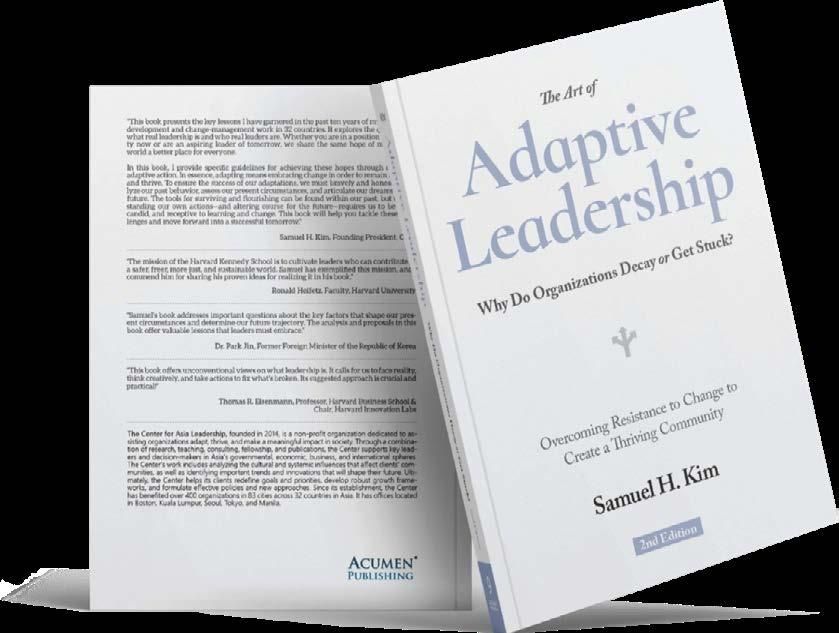
The Art of Adaptive Leadership
by Samuel H. Kim
Diana Marie
Samuel H. Kim’s The Art of Adaptive Leadership: Why Do Organisations Decay or Get Stuck? is a thoughtprovoking guide for leaders navigating complex organisational challenges in an era of rapid change. Drawing on over a decade of leadership development and change-management experience across 32 countries, Kim offers practical insights into why organisations stagnate and how leaders can overcome resistance to change. The book’s central premise is that thriving in today’s volatile environment requires adaptive leadership, a mindset and practice that embraces uncertainty, fosters learning. It mobilises people to tackle tough challenges collaboratively. Unlike technical fixes, adaptive leadership demands shifts in values, behaviours, and organisational culture. Kim’s writing is clear and pragmatic, blending theory with actionable strategies. He challenges conventional notions of leadership, urging readers to face reality, think creatively, and act courageously. Endorsements from thought leaders like Ronald Heifetz (Harvard Kennedy School) and Thomas Eisenmann (Harvard Business School) underscore its credibility and relevance for both emerging and seasoned leaders.
Key Points and Insights
1. Adaptive Leadership Defined
• Leadership is not about authority or position; it’s about mobilising people to tackle tough challenges and thrive amidst change.
• Adaptive challenges differ from technical problems—they require new learning and behavioural shifts rather than pre-existing solutions.
• Organisations often stagnate because they cling to past successes and resist uncomfortable change.
• Systems are rarely “broken”; they operate as they do because stakeholders benefit from the status quo.
2. Core Principles of Adaptation
• Diagnose the System: Understand cultural norms, incentives, and structures that shape behaviour.
• Distinguish Technical vs Adaptive Problems: Technical issues have known solutions; adaptive challenges require experimentation and learning.
• Manage Loss and Resistance: Change involves loss, which triggers resistance—leaders must help people navigate this discomfort.
3. Leadership as a Learning Process
• Adaptive leadership is iterative: observe, interpret, intervene, and adjust.
• Leaders must cultivate openness, candour, and resilience to guide organisations through uncertainty.
4. Practical Tools and Strategies
• Create safe spaces for difficult conversations.
• Encourage distributed leadership to engage people at all levels to co-create solutions.
• Foster a culture of flexibility and innovation to remain relevant and thrive.
5. Personal Dimension of Leadership
• Effective leadership begins with self-awareness: understanding your values, biases, and adaptive capacity.
• Leaders must balance authority with vulnerability to inspire trust and collaboration.
Diana Marie is a team member at the Leadership Institute of Sarawak Civil Service attached with Corporate Affairs who found love in reading and writing whilst discovering inspiration in Leadership that Makes a Difference.
Diana Marie
COACHING ACTIVITIES
June - December 2025
Coaching for Leaders Cohort 1 3-4 September 2025
Impactful Coaching-Mentoring Masterclass 22-23 September 2025
Impactful Coaching-Mentoring Masterclass 22-23 October 2025
Impactful Coaching-Mentoring Masterclass Cohort 2 28-29 October 2025
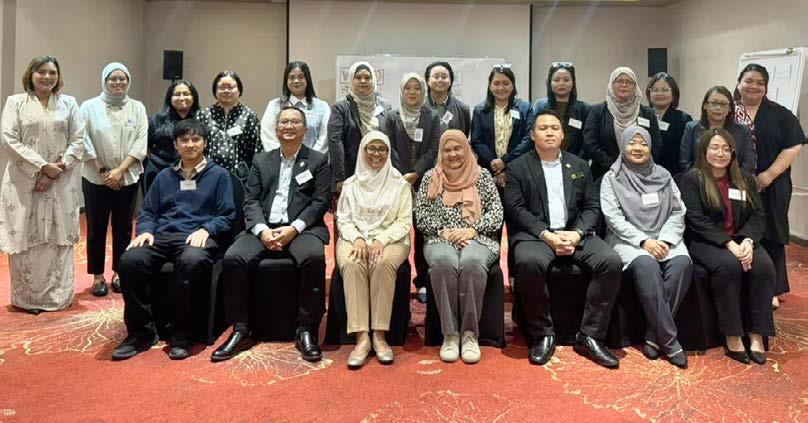
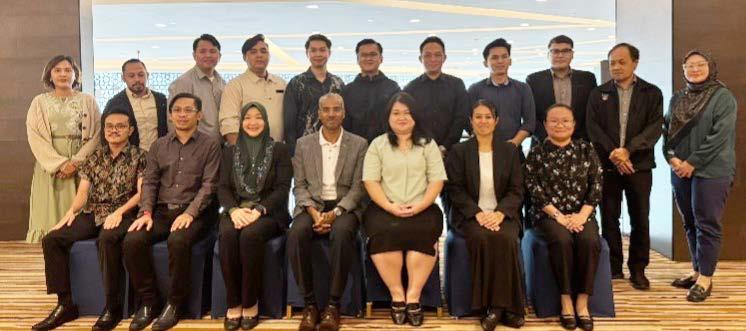
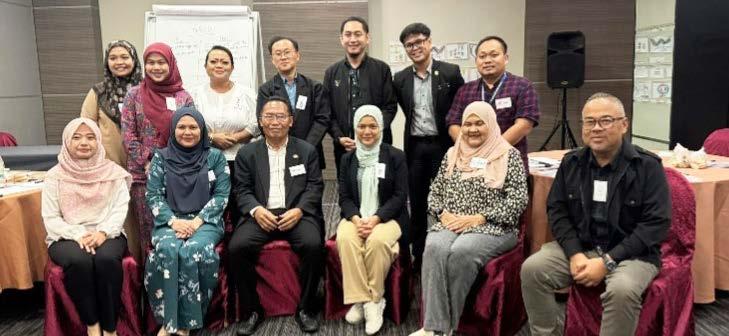
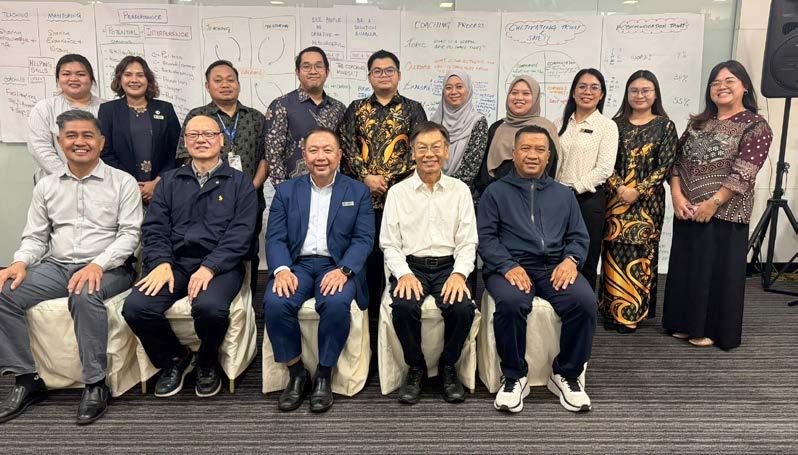
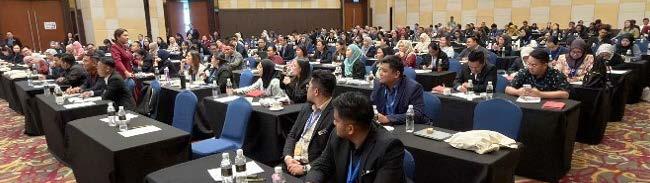
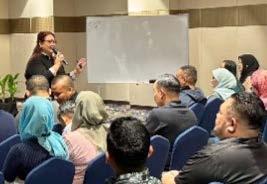
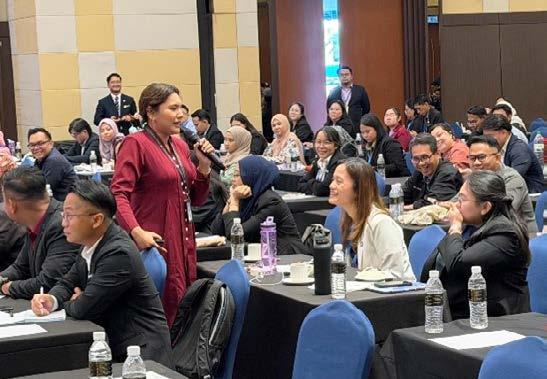
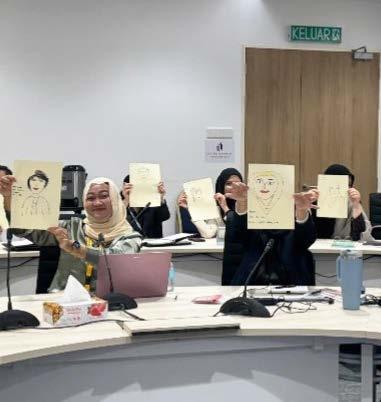
From June to December 2025, the Institute, through its Department of Coaching and in collaboration with key stakeholders, delivered a series of foundational coaching programmes for the Sarawak Civil Service. These programmes were designed to cultivate essential skills, including active listening, reflective questioning, and supportive dialogue, that are critical for effective leadership and service. Guided by experienced coaches from across Malaysia, the initiative strengthened communication, enhanced collaborative practices, and fostered leadership capacity at multiple levels. Beyond skill development, the programmes contributed to embedding a sustainable coaching culture across the organisation, empowering civil servants to engage more meaningfully, lead with empathy, and drive collective excellence.
to Coaching
on 10 September 2025
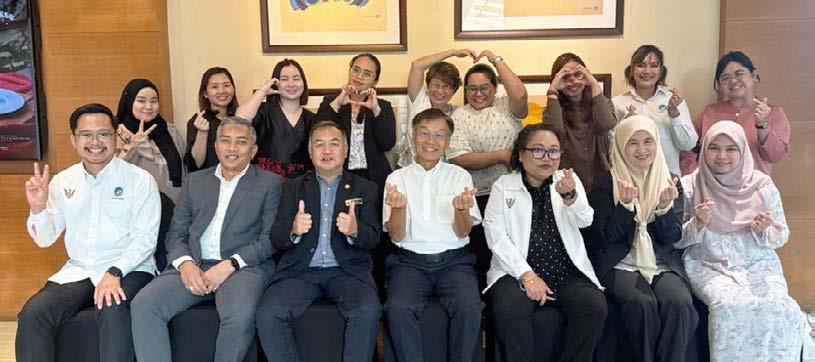
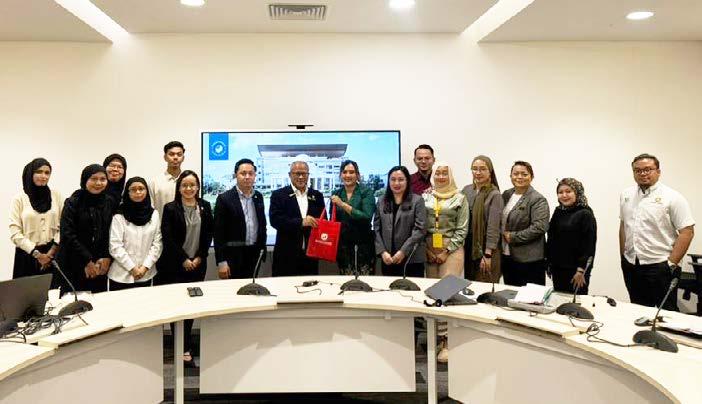
Coaching Engagement Session at Unit Komunikasi Awam Sarawak (UKAS)
Introduction
for Kursus Induksi Perkhidmatan Awam Sarawak (KIPAS) from June until November 2025. This initiative was to introduce coaching to SCS and to promote our coaching service.
“
Just as ripples spread out when a single pebble is dropped into water, the actions of individuals can have far-reaching effects