

Grace Chan
Partner | San Francisco
Jordan Carman
Associate | San Francisco
Hannah Dodge
Associate | San Francisco
Christopher Fallon
Partner | Los Angeles
Stephanie Lowe
Senior Counsel | San Diego
Madison Tanner
Associate | San Diego
Sandra I. Herrera
Senior Counsel | Los Angeles

For California’s private schools, 2026 is shaping up to be a year of both opportunity and complexity. New laws, evolving expectations from families and employees, and shifting social and political dynamics are influencing how schools govern, manage risk, and care for their communities. Schools that plan ahead and respond strategically will be best positioned to lead with confidence.
Many of the issues below are not new, but the attention surrounding them is increasing. Addressing these topics early helps schools stay focused on their mission while protecting their people, programs, and reputations.
1. Senate Bill 848: Expanded Child Safety and Compliance Obligations.
SB 848 broadens private schools’ child-safety requirements, extending many obligations that once applied only to public schools. As of January 1, 2026, board members and most volunteers are mandated reporters. Schools are also now required to collect and share specific information during hiring. Additional mandates follow, including annual training, updated professional-boundaries and safety policies by July 2026, and enhanced hiring, disclosure, and participation in a statewide misconduct database by 2027. Early planning and board engagement are essential.
LCW will host an implementation workshop on January 27, 2026, addressing training, hiring, and reporting obligations under the new law.
2. DEI Under Increased Legal Scrutiny.
Diversity, equity, and inclusion remain priorities for many private schools, but schools should be aware of the current legal landscape as they consider DEI efforts. Schools should review DEI-related initiatives, policies, and communications to ensure they reflect institutional values while promoting fairness and inclusion within legally sound parameters. Additionally, with new state regulations on automated decision-making in hiring that prohibit its use in a discriminatory manner, schools should identify where AI tools are being used and establish policies that ensure fairness, transparency, and alignment with their educational mission.
3. Wage and Hour Compliance.
California’s wage and hour rules continue to evolve. Rising minimum wages, updated exemption thresholds, and ongoing scrutiny of independent contractor classifications create potential risk. Proactive audits of pay practices, job descriptions, and timekeeping systems can help schools ensure compliance and avoid costly claims.
4. Politics, Speech, and Controversial Topics.
In an election year and amid ongoing global conflict, schools are navigating complex conversations on campus. Clear expectations for employee and student speech, guidelines for classroom discussions, and policies that align institutional values with legal obligations can help maintain trust and consistency.
5. Enrollment Agreements and Arbitration Provisions.
Recent court decisions have changed how liquidated damages and arbitration clauses are evaluated in tuition and enrollment contracts. Schools should review these agreements to confirm that language remains enforceable, transparent, and aligned with their goals and current practices.
California’s private schools have long balanced independence with accountability. In 2026, that balance will matter more than ever. Staying informed, proactive, and intentional allows schools to maintain their autonomy while fostering safe, inclusive, and legally compliant environments. With thoughtful planning and the right guidance, schools can meet new challenges with confidence and continue to thrive in the year ahead.
Earlier this month, the U.S. Department of Labor’s Wage and Hour Division (WHD) issued several new opinion letters, including three that are relevant to private schools, interpreting the Family and Medical Leave Act (FMLA) and the Fair Labor Standards Act (FLSA). While opinion letters are fact-specific, they provide useful insight into how WHD currently interprets and enforces federal wage-and-hour laws, particularly in situations that commonly arise in school settings.
FMLA2026-2: Travel Time to Medical Appointments Counts as FMLA Leave.
In this opinion letter, WHD clarified that employees may use FMLA leave not only for the time spent attending medical appointments for a serious health condition, but also for reasonable travel time to and from those appointments. WHD further explained that a medical certification does not need to specify travel time for the leave to be valid, because travel time is considered a necessary part of obtaining treatment. However, WHD emphasized that FMLA protection does not extend to unrelated activities or errands before or after an appointment.
FMLA2026-1: How Partial-Week School Closures Affect FMLA Leave Usage.
This letter addresses how FMLA leave should be calculated when a school closes for less than a full week, such as for inclement weather. WHD explained that if an employee is using FMLA leave on an intermittent or reduced schedule, days the school is closed and the employee is not expected to work do not count against the employee’s FMLA entitlement. For example, if an eligible employee needs FMLA leave each Tuesday afternoon for physical therapy, but the school is closed all day on Tuesday due to inclement weather and the
employee is not required to report for duty, the school should not deduct time for that day from the employee’s FMLA entitlement. By contrast, if an employee is on continuous FMLA leave for a full workweek, the entire week counts as FMLA leave even if the school is closed for one or more days during that week.
FLSA2026-1: Reclassification of Learned Professionals and Employer Discretion.
In this FLSA opinion letter, WHD considered whether a licensed clinical social worker could remain exempt as a “learned professional” after losing supervisory duties. WHD concluded that removal of supervisory responsibilities alone does not defeat the learned professional exemption if the employee’s primary duties still require advanced knowledge acquired through specialized education. However, WHD emphasized that changing an employee’s pay from salary to hourly will generally defeat the exemption, regardless of duties. WHD also reiterated that employers are not required to classify employees as exempt even if they meet the exemption criteria, so long as minimum wage and overtime requirements are satisfied.
Note:
LCW is available to help assess how these opinion letters may affect a school’s operations.
Justin Spilman and two other plaintiffs participated in the Salvation Army’s six-month residential drug and alcohol rehabilitation program, which operates in facilities that include living quarters, warehouses, and retail thrift stores. Participants voluntarily entered the program, some in lieu of incarceration, and received housing, meals, clothing, limited gratuities, and rehabilitation services such as counseling, group meetings, and religious programming. As a required component of the program, participants performed full-time “work therapy” in Salvation Army warehouses and thrift
stores, completing tasks such as sorting and processing donations, unloading trucks, stocking shelves, assisting customers, and operating equipment. The Salvation Army controlled participants’ work schedules, assignments, and conditions, prohibited them from obtaining outside employment, and required make-up work if shifts were missed.
After leaving the program, Spilman and the other plaintiffs filed a class and representative action alleging that they were misclassified as volunteers and should have been treated as employees under California law. They claimed the work they performed was indistinguishable from that of paid employees, that the Salvation Army used unpaid program participants to operate its commercial thrift store business, and that the room, board, and gratuities functioned as compensation tied to work performance. The Salvation Army denied these allegations, emphasizing that participants signed acknowledgments stating they were not employees, that the work therapy was designed to support rehabilitation and personal growth, and that any benefits provided were intended to meet participants’ basic needs during recovery rather than to compensate them for labor.
The trial court granted summary adjudication for the Salvation Army, concluding that the plaintiffs were volunteers rather than employees. The trial court reasoned that an express or implied agreement for compensation was a threshold requirement for employee status under California wage law, and that because the plaintiffs voluntarily participated in the rehabilitation program without an expectation of wages, they were not employees. Based on that conclusion, the trial court declined to resolve many factual disputes about the nature of the work, the degree of control exercised by the Salvation Army, or whether the unpaid labor displaced paid employees.
The California Court of Appeal reversed and remanded. While agreeing that genuine nonprofit volunteers may fall outside California’s wage laws, the Court of Appeal held that the trial court applied an overly narrow legal test. The appellate court explained that California wage orders define “employ” broadly to include work an entity “suffers or permits,” and that wage protections may apply even in the absence of a traditional contractual employment relationship. Relying on California Supreme Court precedent and federal cases involving rehabilitation and nonprofit programs, the Court emphasized that the purpose of the wage laws is to prevent exploitation and circumvention, particularly where unpaid labor could place downward pressure on wages or replace paid workers.
To clarify the analysis, the Court adopted a two-part framework for determining whether a nonprofit has properly classified a worker as a volunteer. Under this approach, the nonprofit must show that the individual freely agreed to perform the work primarily for a personal or charitable benefit rather than compensation, and that the overall use of unpaid labor is not a subterfuge to evade wage-and-hour laws. Relevant factors include whether in-kind benefits function as wages, whether benefits are contingent on work performance, the duration and intensity of the work, whether participants perform the same tasks as paid employees, and whether the work primarily advances rehabilitation goals or instead serves the nonprofit’s commercial operations.
Because the trial court treated the absence of an agreement for compensation as dispositive and did not evaluate these broader considerations, the Court of Appeal vacated the judgment and remanded the case for further proceedings. On remand, the trial court must apply the correct legal standard and determine whether disputed facts preclude summary judgment.
Spilman v. Salvation Army, No. A169279 (Cal. Ct. App. Jan. 6, 2026).
Note:
This decision provides important guidance for nonprofits, including independent schools, that rely on volunteers or program participants who perform work connected to the organization’s operations. Courts will look beyond labels and written acknowledgments to examine the reality of the working relationship, including whether unpaid labor displaces paid positions or functions as compensation in another form.
Union Gospel Mission of Yakima, Washington, is a nonprofit Christian ministry that operates homeless shelters, recovery programs, meal services, and other outreach efforts. The organization views its religious mission as inseparable from its daily operations and requires all employees, ministerial and nonministerial alike, to share and live according to its Christian beliefs, including adherence to its teachings on marriage and sexuality. Union Gospel maintains that employees in all roles help model those beliefs and foster a faithbased community essential to its evangelical mission.
Washington’s Law Against Discrimination (WLAD) prohibits employment discrimination on several protected grounds, including sexual orientation. Although WLAD historically exempted nonprofit religious organizations, the Washington Supreme Court narrowed that exemption in 2021, limiting it to apply only to ministers and clergy. As a result, WLAD could be enforced against religious organizations when hiring for non-ministerial positions. In response, Union Gospel brought a preenforcement lawsuit against the Washington Attorney General and the Washington State Human Rights Commission, alleging that applying WLAD to its hiring policy would violate the First Amendment. Union Gospel sought a preliminary injunction to bar enforcement of the law against its hiring practices.
The trial court initially dismissed the case for lack of standing, but the Ninth Circuit reversed, holding that Union Gospel faced a credible threat that the law may be enforced against them. On remand, the trial court granted a preliminary injunction. In doing so, the trial court applied the traditional fourfactor test, which requires a plaintiff to show (1) a likelihood of success on the merits, (2) a likelihood of irreparable harm absent an injunction, (3) that the balance of equities tips in its favor, and (4) that an injunction is in the
public interest. Because the defendants were state actors, the final two factors were analyzed together.
The Ninth Circuit affirmed the injunction. On the first factor, the likelihood of success on the merits, the Court held that Union Gospel was likely to prevail under the church autonomy doctrine, which is a doctrine rooted in the First Amendment that protects religious institutions from government interference in internal decisions that affect faith and mission. The Court emphasized that this doctrine extends beyond the ministerial exception and may apply to non-ministerial employment decisions when those decisions are rooted in sincerely held religious beliefs.
In applying the church autonomy doctrine, the Ninth Circuit relied on undisputed facts showing that Union Gospel’s religious mission permeates all aspects of its operations and that employees in non-ministerial roles are expected to actively support that mission. The Court noted that Union Gospel requires all employees to affirm and live according to its statement of faith, participate in religious practices such as prayer and chapel, and model Christian conduct for both coworkers and program participants. The record also showed that Union Gospel views non-ministerial employees as essential to creating an internal faith community that supports its outwardfacing ministry, and that hiring individuals who reject its religious beliefs would, in the organization’s view, undermine its religious message, fellowship, and identity. Based on those facts, the Court concluded that the co-religionist hiring policy was an internal management decision central to Union Gospel’s religious mission and therefore protected from state interference.
The Court was careful to stress the narrow scope of its holding. The church autonomy doctrine does not permit discrimination on grounds unrelated to religion, nor does it provide blanket immunity from generally applicable employment laws. The Court also declined to address whether similar protections would apply to commercial businesses or other entities affiliated with religious organizations. On the remaining factors, the Court concluded
that Union Gospel satisfied the irreparable-harm requirement because the loss of First Amendment freedoms, even temporarily, constitutes irreparable injury. The Court also found that the balance of equities and the public interest favored an injunction, explaining that preventing the enforcement of a law in a manner that violates constitutional protections serves the public interest. In conclusion, the Court held that the Union Gospel may decline to hire as non-ministerial employees those who do not share its religious beliefs about marriage and sexuality.
Accordingly, the Ninth Circuit affirmed the preliminary injunction while the case proceeds.
Union Gospel Mission of Yakima v. Brown, No. 24-7246 (9th Cir. Jan. 6, 2026).
Note:
Although this case arose under Washington’s antidiscrimination statute, it was decided by the Ninth Circuit, whose constitutional rulings are binding on federal courts in California. The court’s analysis of the church autonomy doctrine, particularly its conclusion that the doctrine can protect faith-based hiring requirements for non-ministerial roles when rooted in sincerely held religious beliefs, is therefore relevant to California religious schools. While California law already contains statutory exemptions for religious employers, this decision reinforces that constitutional protections may apply even where state law is narrowed or challenged.
Edward Dane Brassette worked for Tulane University for more than fifteen years, rising from a carpenter and painter to the role of Paint Supervisor in Tulane’s Campus Services and Facilities Department. In that role, Brassette supervised a team of painters and had authority to issue disciplinary “Staff Counseling Reports” for violations of workplace rules. Starting in 2018, Brassette disciplined four Black painters on his team, including issuing write-ups and engaging in heated verbal interactions.
In December 2022, one of these painters, Leroy Clanton, filed a complaint with Tulane’s Office of Institutional Equity (OIE), alleging that Brassette subjected him and other Black painters to race discrimination by yelling at them, excessively monitoring their work, and disciplining them more harshly than non-Black employees. Three days later, Brassette filed his own complaint with OIE, asserting that his disciplinary actions were not being taken seriously because he was White and older, and that this constituted race and age discrimination against him.
Tulane initiated an internal investigation into Clanton’s complaint. The OIE investigator interviewed Brassette,
Clanton, other Black painters, and non-Black employees who worked on the crew. Several witnesses reported that Brassette routinely yelled at Black painters, argued with them openly, and treated them more harshly than Hispanic painters. A Hispanic painter told the investigator that Brassette frequently clashed with Black painters but did not have similar issues with Hispanic employees. The investigator also noted that Brassette became hostile and yelled during her interview of him. Based on the interviews and credibility assessments, the investigator concluded that it was more likely than not that Brassette treated African-American employees differently and that race was a contributing factor in his conduct, in violation of Tulane’s Equal Opportunity and Anti-Discrimination policies.
Tulane terminated Brassette’s employment in April 2023, citing the findings of the OIE investigation. Brassette subsequently filed suit, alleging that Tulane terminated him because of his race (White), his age (59), and in retaliation for his internal complaint of discrimination. He brought claims under Title VII of the Civil Rights Act, the Age Discrimination in Employment Act (ADEA), and Title VII’s anti-retaliation provisions. Tulane moved for summary judgment on all claims.
The Court granted Tulane’s motion in full. Applying the McDonnell Douglas burden-shifting framework, the Court first found that Brassette could establish a prima facie case of race and age discrimination—he was a member of a protected class, qualified for the job,
suffered an adverse employment act when his employment was terminated, and was replaced by someone outside of his protected class. Therefore, the burden then shifted to Tulane to articulate a legitimate, non-discriminatory reason for termination. Tulane met that burden by pointing to the OIE investigation, which concluded that Brassette engaged in race-based differential treatment and violated university policy.
The Court then examined whether Brassette had produced evidence of pretext. It concluded he had not. Although Brassette disagreed with the investigator’s conclusions and offered alternative explanations for his disciplinary actions, the Court explained that the issue was not whether Tulane’s decision was correct, but whether Tulane reasonably believed the findings of its investigation and acted on that belief. The record showed that Tulane relied on interviews with multiple witnesses, credibility assessments, and documented findings. Brassette presented no evidence that Tulane did not genuinely rely on the investigation or that race motivated the termination decision. Disagreement with the outcome of an investigation, the Court held, does not establish pretext.
The Court likewise rejected Brassette’s age discrimination claim. Brassette pointed to comments by coworkers referring to him as “old school” and to the fact that a younger employee eventually replaced him. The Court found these allegations insufficient because the comments were not tied to the decision-makers and were not shown to have influenced the termination decision. There was no evidence that age played any role in Tulane’s reliance on the OIE investigation.
Finally, the Court dismissed Brassette’s retaliation claim. Although the Court acknowledged that Brassette’s internal complaint qualified as protected activity under Title VII, it found no causal connection between that complaint and his termination. Nearly four months passed between Brassette’s complaint and his termination, which the Court held was too long, standing alone, to establish causation. Brassette also failed to produce evidence that the ultimate decision-maker knew of his complaint or that anyone with retaliatory animus influenced the decision. Because Tulane terminated Brassette based on the OIE investigation rather than his complaint, the retaliation claim failed as a matter of law.
Accordingly, the Court granted summary judgment for Tulane on all claims.
Brassette v. Adm'rs of the Tulane Educ. Fund (E.D.La. Dec. 1, 2025) 2025 LX 540694.
Note:
For schools, this case highlights the importance of prompt, impartial investigations and clear documentation linking disciplinary decisions to investigative conclusions rather than to protected characteristics or complaints.
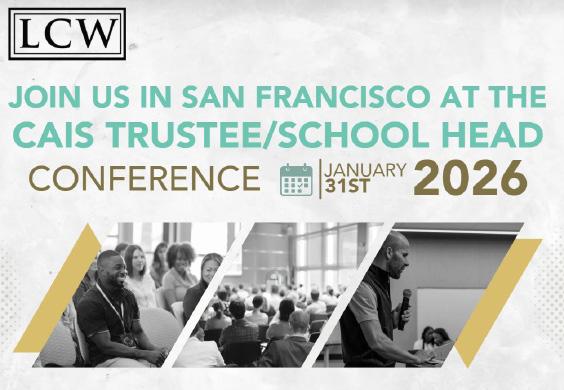
Annual Legal Update 10:45am - 11:45am
When Vaule Guide The Way: Leadership in Times of Crisis 1:15pm - 2:15pm
DEI and The Law: What Trustees and Heads Need to Know Now 2:45pm - 3:45pm
Kanye Clary, a former student-athlete and captain of the Pennsylvania State University men’s basketball team, sued Penn State and head coach Michael Rhoades alleging that defamatory statements made during and after his removal from the team damaged his reputation and derailed his basketball career. According to the amended complaint, tensions arose after Clary declined to sign a proposed Name, Image, and Likeness (NIL) contract that he believed undervalued him. Clary alleged that after refusing the NIL agreement, he was subjected to retaliation by the coaching staff. In early 2024, Clary also suffered a concussion that caused him to miss classes and assignments with medical approval.
Clary alleged that after he was suspended and later dismissed from the basketball team, Rhoades made a series of false statements to staff, media members, recruiters, and others. These statements allegedly included claims that Clary and his father were motivated by money, that Clary improperly missed classes, that he was failing academically, and that Clary voluntarily chose to leave Penn State. Clary contended that these statements created a false stigma that he was a problem student-athlete, negatively impacted his ability to transfer, reduced his NIL value, and forced him to continue his basketball career at a less prestigious institution, causing financial and reputational harm.
Penn State and Rhoades moved to dismiss the defamation claim, arguing that Clary failed to plead the required elements with sufficient specificity. The Court explained that, under Pennsylvania law, a defamation claim must allege the substance of the defamatory statement, who made it, when it was made, to whom it was published, and how it caused harm. Applying that standard, the Court concluded that many of Clary’s allegations were too vague to proceed. General assertions that “derogatory statements” were made, or that false narratives were “spread,” without identifying the audience, timing, or specific content, were insufficient to state a claim.
However, the Court found that Clary plausibly alleged defamation as to two specific categories of statements allegedly made by Rhoades. First, the Court held that statements asserting that Clary’s father was seeking more money and that this was the reason Clary did not return to Penn State could reasonably be understood as defamatory statements about Clary himself, portraying him as greedy or disloyal. Second, the Court concluded that allegations that Rhoades told media outlets that Clary decided on his own to leave Penn State were sufficiently specific and plausibly defamatory at the pleading stage, given the alleged reputational and financial consequences.
The Court dismissed the remaining defamation allegations without prejudice, explaining that Clary might be able to cure the deficiencies by pleading additional facts. The Court also dismissed all defamation claims against Penn State itself, finding that Clary failed to adequately allege vicarious liability. Although Clary asserted that Rhoades was acting as an employee and agent of the University, the amended complaint did not allege facts showing that the statements were made within the scope of Rhoades’ employment or for the purpose of serving Penn State’s interests, both of which are required to impose vicarious liability under Pennsylvania law. The Court granted Clary leave to file a second amended complaint but cautioned that further amendments would be unlikely if the deficiencies were not cured.
Clary v. Pa. State Univ. (M.D.Pa. Dec. 2, 2025) 2025 LX 550701.
Note:
This case emphasizes the importance of schools exercising caution in making public or third-party communications about student performance, discipline, or departures. In California, such conduct may lead to claims of defamation and invasion of privacy.
Christopher Basken, on behalf of his minor son E.B., sued Greenfields Academy, a private school in Chicago, after E.B. was struck by a car while crossing Elston Avenue during the school’s after-school program. Greenfields Academy operated across the street from Brands Park, a public park used regularly for student recreation, requiring children to cross a busy roadway at a marked crosswalk. On the day of the accident in November 2019, E.B., who was five years old, was part of a small group of children escorted by a single after-school guide. The guide entered the crosswalk carrying a handheld stop sign and began the process of stopping traffic when E.B. ran into the roadway before being signaled to cross and was hit by a passing vehicle, suffering serious injuries including a fractured ankle and a traumatic brain injury.
Basken alleged that Greenfields was negligent and engaged in willful and wanton misconduct by allowing only one adult to supervise children crossing a heavily traveled street, failing to adopt a written street-crossing safety policy, and failing to provide additional safety equipment such as reflective vests or other visibility tools. Greenfields moved to dismiss the negligence claims, arguing that Illinois law grants schools immunity from ordinary negligence claims arising out of student supervision. The trial court agreed and dismissed the negligence counts, concluding that the claims arose from discretionary supervision decisions protected by statutory immunity.
The parties then proceeded with discovery on the willful and wanton misconduct claims. After discovery, the trial court granted summary judgment in Greenfields’ favor, finding that the evidence did not support a conclusion that the School acted with utter indifference or conscious disregard for student safety. The trial court determined that, at most, the record supported a negligence claim, which was barred under the immunity law. Basken appealed both rulings.
The Illinois Appellate Court affirmed. It held that Illinois law extends immunity to both public and private schools for ordinary negligence claims tied to the supervision and control of students, and that decisions about staffing levels, crossing procedures, and safety equipment fall squarely within that protected supervisory function. Although Basken characterized the claims as independent negligence by the School, the appellate court concluded they fundamentally challenged how students were supervised during a school-related activity, not unsafe premises or defective equipment provided to students.
The appellate court also agreed that the willful and wanton misconduct claims failed as a matter of law. It explained that willful and wanton conduct requires evidence of a conscious disregard of a known, serious danger, not merely the possibility that additional precautions could have been taken. The record showed that Greenfields selected the crossing location after observing traffic conditions, trained staff on a crossing procedure, and provided a handheld stop sign to enhance visibility. There was no evidence of prior accidents, complaints, or warnings suggesting the crossing posed a known heightened risk. While expert testimony suggested that best practices might have included additional staff or equipment, the Court emphasized that hindsight disagreement over safety measures does not establish reckless indifference.
Because the evidence demonstrated that Greenfields exercised considered supervisory judgment rather than ignoring a known danger, the appellate court affirmed dismissal of the negligence claims and summary judgment on the willful and wanton misconduct claims.
Basken v. Cordero-Dennis, 2025 ILApp (1st) 231708-U.
Note:
This decision illustrates the strong protection Illinois law affords public and private schools for claims arising from student supervision. California does not have a similar law to protect private schools, and so the outcome of the case may have been different had this occurred in California.
Andrew Corzo and other former undergraduate students brought a putative class action against Brown University and a group of other elite private universities, alleging that the schools violated federal antitrust law by conspiring to suppress competition on financial aid. The plaintiffs alleged that, participation in the so-called “568 Presidents’ Group,” through which the universities agreed to adopt and follow common standards for determining students’ financial need, had inflated the net price students paid to attend.
The challenged conduct traces back to the late 1990s and early 2000s, when a group of private universities collaborated to develop a “Consensus Approach” for calculating expected family contributions for financial aid. Although Congress temporarily exempted certain need-blind financial aid agreements from antitrust scrutiny through Section 568 of the Improving America’s Schools Act, that exemption required that all participating institutions admit students on a need-blind basis. The plaintiffs alleged that several universities in the 568 Presidents’ Group did not the need blind requirement and that, even after the exemption expired, the schools continued coordinating their financial aid practices in ways that restrained competition.
The universities moved for summary judgment, arguing that the plaintiffs could not prove the elements of an antitrust violation, which requires a showing for (1) an unlawful agreement, (2) an unreasonable restraint of trade, and (3) an antitrust injury. The universities also argued that many claims were time-barred or protected by the statutory exemption under Section 568.
The trial court denied the motion. On the question of whether an agreement existed, the Court held that a reasonable jury could find concerted action based on evidence that the universities jointly developed common financial aid principles, expected member schools to implement them, and monitored adherence. In reaching that conclusion, the Court pointed to evidence such as internal university communications, meeting records and guidance circulated within the group, and expert analysis showing uniformity in how need was calculated across institutions. The Court emphasized that Section 1 of the Sherman Act does not require proof of an explicit price-fixing contract; collective standard-setting and coordinated practices among competitors may suffice.
The Court also concluded that summary judgment was inappropriate on the question of whether the alleged agreement unreasonably restrained trade. The Court found that the plaintiffs had produced sufficient evidence through expert economic analysis, internal university communications, and historical documents to allow a jury to find anticompetitive effects, including inflated effective tuition prices. In particular, the Court noted evidence comparing aid outcomes at participating and nonparticipating schools, expert testimony modeling how coordinated need calculations reduced price variation, and records suggesting the Consensus Approach was intended to limit competition for students.
The Court also rejected the universities’ statute-oflimitations and statutory-exemption defenses at the summary-judgment stage. It held that factual disputes existed as to when students reasonably could have discovered their alleged injury and whether the Section 568 exemption applied, given evidence that not all participating schools admitted students on a need-blind basis.
Accordingly, the Court denied summary judgment on the merits and allowed the case to proceed toward trial.
Corzo v. Brown Univ. (N.D.Ill. Jan. 12, 2026) 2026 LX 61323.
Note:
Although this case involves higher education, similar antitrust challenges are simultaneously emerging at the K-12 level in California. The same day this decision came out, a federal court issued a decision Calhoun v. California Interscholastic Federation, allowing an antitrust challenge to proceed against CIF’s rules limiting high school athletes’ ability to monetize their name, image, and likeness in connection with school-affiliated activities, while dismissing other claims. Together, these cases reflect growing scrutiny of collaborative rules that affect student compensation, mobility, and pricing.
Melissa Luong was a doctoral student in Vanderbilt University’s Community Research & Action (CRA) Ph.D. Program. Prior to the 2024-25 academic year, Luong maintained a 4.0 GPA, received positive annual evaluations, and performed well in her teaching assistant responsibilities. During the 2024-25 academic year, however, Luong began experiencing significant mentalhealth and medical conditions that affected her ability to concentrate, sleep, and meet academic expectations. She informed her faculty advisor after canceling several meetings due to health concerns and later received diagnoses of major depression, anxiety disorder, and post-traumatic stress disorder.
In early 2025, Luong sought accommodations through Vanderbilt’s Student Access Office (SAO). While the SAO recognized that Luong had qualifying disabilities, it declined to provide accommodations related to advisor expectations or research deadlines, determining that such matters were academic in nature and should be addressed through the department. The SAO approved only notetaking support. Luong then contacted department leadership and graduate support offices, requesting assistance with modifying deadlines, resolving her advising relationship, and ultimately switching advisors. Despite these efforts, Luong did not receive approval for her requested accommodations or assistance in identifying a new advisor.
During the spring of 2025, Luong’s academic progress continued to lag. Vanderbilt faculty documented that she had not met several program benchmarks, including timely submission of required written work and completion of coursework listed in her program of study. In July 2025, Vanderbilt dismissed Luong from the CRA Program, citing inadequate progress toward her Ph.D. degree and her failure to establish a new advising relationship.
Luong appealed the dismissal through Vanderbilt’s internal appeals process. While her first two appeals were denied, a third appeal was partially granted after the University acknowledged that the CRA Program failed to provide proper notice of deadlines and did not fully follow published procedures. Vanderbilt conditionally reinstated Luong, but only if she independently secured a new faculty advisor by a specified deadline. The University declined to assign an advisor on her behalf, explaining that advising relationships require mutual agreement and cannot be imposed administratively. When Luong was unable to secure a new advisor, her dismissal effectively stood.
Luong then filed suit in federal court alleging disability discrimination and failure to accommodate under Section 504 of the Rehabilitation Act and the Americans with Disabilities Act (ADA), retaliation for requesting accommodations and pursuing appeals, and breach of contract based on alleged violations of Vanderbilt’s student handbook and academic policies. She moved for a temporary restraining order and preliminary injunction seeking reinstatement to the Ph.D. program, assignment of a new advisor, restoration of funding and benefits, and access to her educational records.
The trial court denied the motion in full. Applying the traditional four-factor standard for injunctive relief, the Court concluded that Luong failed at the threshold requirement of demonstrating a likelihood of success on any of her claims. With respect to her failure-to-accommodate claim, the Court held that Luong did not establish that her requested accommodations were objectively reasonable. The Court emphasized that universities are entitled to deference in academic matters and are not required to lower academic standards or substantially alter core components of doctoral programs, including faculty-advisor relationships and research expectations.
The Court also rejected Luong’s claim that her dismissal was discriminatory. The record showed that Vanderbilt dismissed her for lack of academic progress and failure to meet program requirements, not because of her disability. Although Luong argued that any lack of progress resulted from Vanderbilt’s refusal to accommodate her, the Court found this argument unpersuasive given her failure to show that the requested accommodations were reasonable in the first place.
Luong’s retaliation claim similarly failed. The Court found that the timing of events did not support an inference of retaliatory motive and that Luong relied almost entirely on temporal proximity without additional evidence of retaliatory conduct. Finally, the Court rejected Luong’s breach-of-contract claim, concluding that even if the student handbook created contractual obligations, Luong’s failure to meet essential academic requirements likely constituted a material breach excusing further performance by the University. Because Luong failed to demonstrate a likelihood of success on the merits, the Court declined to grant emergency injunctive relief and denied her motion in its entirety.
Luong v. Vanderbilt Univ. (M.D.Tenn. Dec. 3, 2025) 2025 LX 522883.
Note:
This case underscores the importance of clearly documenting academic expectations, accommodation decisions, and adherence to published procedures, especially when academic dismissal decisions intersect with disability accommodation requests.

10:00 a.m - 11:00a.m
Beginning January 1, 2026, the Secure 2.0 Act adds a new mandatory Roth requirement for catch-up contributions to employer-sponsored retirement plans that permit salary-deferral catch-up contributions. This includes 401(k), 403(b), and non-governmental 457(b) plans. Catch-up contributions are an option for allowing participants to contribute more than the typical annual limit in the years leading up to normal retirement age.
If an employer’s plan allows catch-up contributions, employees age 50 or older who earned more than $145,000 in Social Security wages in the prior year (referred to as “high earners”) must make any catch-up contributions on a Roth (after-tax) basis, and not as pretax contributions. The FICA wage threshold will be indexed annually. Payroll systems will need to be able to identify which employees are high earners and route their catch-up contributions to Roth. Employers should communicate with employees to explain why their catch-up contributions are now treated as Roth.
High earners can elect a regular deferred amount that remains pretax and then their catch-up contributions will be treated as Roth. For 401(k) and 403(b) plans, the IRS regulations provide an option allowing employers to use “deemed elections.” Deemed elections automatically treat the catch-up contributions as Roth once the high earner reaches the annual elective deferral limit. This provision in the IRS regulations, however, does not extend to 457(b) plans.
Please note that the requirement does not force employer-sponsored retirement plans to offer Roth contributions for regular deferrals. It only requires Roth treatment for catch-up contributions for employees who are high earners.

For more information on some of our upcoming events and trainings, click on the icons:



• Several California families participating in homeschool charter-school programs have asked the full U.S. Court of Appeals for the Ninth Circuit to rehear Woolard v. Thurmond, a case challenging the state’s prohibition on using public charter funds for religious curriculum. The families allege that California’s enforcement of nonsectarian requirements, resulting in denied reimbursements and, in one instance, removal from a charter program, violates the First Amendment in light of recent U.S. Supreme Court decisions addressing religious participation in public benefit programs. A three-judge panel previously ruled against the families, and they are now seeking en banc review, a rare procedure reserved for cases involving questions of exceptional importance or potential conflicts with precedent.
• The U.S. Supreme Court has directed the U.S. Court of Appeals for the Second Circuit to reconsider its decision upholding New York’s elimination of religious exemptions from school vaccination requirements, in light of the Court’s recent ruling in Mahmoud v. Taylor, which held that parents have a free exercise of religion right to challenge certain aspects of public school curriculum. The case, brought by Amish schools and parents, challenges New York’s 2019 law that removed religious exemptions following a measles outbreak and imposed financial penalties on noncompliant schools.
• Five Stanford University students are standing trial in Santa Clara County on felony conspiracy and vandalism charges stemming from a June 2024 protest in which a group occupied and barricaded themselves inside the University president’s office. The University suspended the students following their arrest and later completed its internal disciplinary process, while the county district attorney filed criminal charges nearly a year later, citing alleged property damage during the incident. The case is notable because felony charges are rare in connection with campus protests nationwide, where most criminal cases have been dismissed or otherwise resolved. If convicted, the students could face prison time and substantial restitution claims related to damage to University facilities.
• The U.S. Department of Justice has filed a Title VII lawsuit against Minneapolis Public Schools, alleging that provisions in the district’s collective bargaining agreement with its teachers’ union unlawfully discriminate based on race. The DOJ challenges contract provisions that prioritize teachers from “underrepresented groups” in layoffs or reassignments and that establish districtwide initiatives focused on recruiting, retaining, and supporting educators of color. According to the complaint, these measures confer employment benefits based on race or national origin in violation of federal law.
Review and revise/update annual employment contracts.
Conduct audits of current and vacant positions to determine whether positions are correctly designated as exempt/non-exempt under federal and state laws.
Inform those who are newly deemed mandated reporters under SB 848 (Board members, certain volunteers) of their obligations and collect signed acknowledgement forms from them.
Issue enrollment/tuition agreements for the following school year.
Review field trip forms and agreements for any spring/ summer field trips.
Tax documents must be filed if School conducts raffles:
Schools must require winners of prizes to complete a Form W-9 for all prizes $600 and above. The School must also complete Form W-2G and provide it to the recipient at the event. The School should provide the recipient of the prize copies B, C, and 2 of Form W-2G; the School retains the rest of the copies. The School must then submit Copy A of Form W2-G and Form 1096 to the IRS by February 28th of the year after the raffle prize is awarded.
Planning for Spring Fundraising Event
Summer Program
Consider whether summer program will be offered by the School and if so, identify the nature of the program and anticipated staffing and other requirements.
Review, revise, and update summer program enrollment agreements based on changes to the law and best practice recommendations.
Each Month, LCW presents a monthly timeline of best practices for private and independent schools. The timeline runs from the fall semester through the end of summer break. LCW encourages schools to use the timeline as a guideline throughout the school year.
The budget for the next school year should be approved by the Board.
Issue contracts to existing staff for the next school year.
Issue letters to current staff who the School is not inviting to come back the following year.
Assess vacancies in relation to enrollment.
• Post job announcements and conduct recruiting. Resumes should be carefully screened to ensure that the applicant has necessary core skills and criminal, background and credit checks should be done, along with multiple reference checks.
Summer Program.
• Advise staff of summer program and opportunity to apply to work in the summer, and that hiring decisions will be made after final enrollment numbers are determined at the end of May.
• Distribute information on summer program to parents and set deadline for registration by end of April.
• Enter into Facilities Use Agreement for Summer Program, if not operating summer program.
Transportation Agreements.
• Assess transportation needs for summer/next year.
• Update/renew relevant contracts.
• The National Labor Relations Board has regained a quorum after the U.S. Senate confirmed two new board members and a new General Counsel, allowing the agency to resume issuing final decisions in unfair labor practice cases and representation disputes. While the Board lacked a quorum, its field offices and administrative law judges continued investigating cases and holding elections, but matters could not be finalized without Board action. With the new appointments in place, the Board is expected to begin addressing its backlog of cases, and the General Counsel will oversee the agency’s enforcement priorities going forward.
• The U.S. Department of Justice has concluded that several Department of Education programs supporting minority-serving institutions (MSIs), which are colleges and universities eligible for federal funding based on enrolling a threshold percentage of students from designated racial or ethnic groups, are unconstitutional under the Supreme Court’s Students for Fair Admissions decision. In a report from DOJ’s Office of Legal Counsel, the agency determined that programs awarding funds based on an institution’s racial composition operate as impermissible racial quotas and should no longer receive federal funding, and that race-specific scholarship organizations should not have access to FAFSA data. While the Office of Legal Counsel found that certain programs may continue, the Education Department is evaluating the broader impact of the opinion and has already moved to terminate most MSI grants for FY2025.
• The EEOC has filed a subpoena enforcement action seeking court approval to compel Northwestern Mutual to produce information about its diversity, equity, and inclusion (DEI) policies and promotion practices. The action stems from a discrimination charge filed by a compliance officer alleging that the company’s DEI-focused advancement metrics resulted in discrimination and retaliation in violation of Title VII. According to the EEOC, the requested information is necessary to evaluate whether Northwestern Mutual’s DEI initiatives unlawfully influenced promotion decisions, after the company declined to fully comply with the agency’s investigative requests. The case is the first known instance of the EEOC issuing a subpoena in an investigation of a charge alleging illegal DEI practices.
LCW has four private education consortiums across the State! Consortium members enjoy access to quality training throughout the year, discounts on other LCW products and events, and unlimited, complimentary telephone and email consultation with an LCW private education attorney on matters related to employment and education law questions (including business & facilities questions and student issues!) We’ve outlined a recent consortium call and the provided answer below. Client confidentiality is paramount to us; we change and omit details in the Consortium Call of the Month.
A human resources professional at a private school contacted LCW with a question about the employment history check requirements under SB 848. He asked whether, under the new law, the school would be required to check the prior employment history for all applicants to the school, including administrators and part-time employees, or only for teachers or those with a teaching certificate. He also asked whether the school had to contact all prior employers about misconduct, or only educational employers.
Answer:
The LCW attorney advised that, as of January 1, 2026, schools are required to ask all private school employee applicants to list every former educational employer, and the school is required to contact each educational employer to ask if the employee was the subject of any credible complaints of, substantiated investigations into, or discipline for “egregious misconduct” as defined under the new law. This requirement applies to any position at a private school, including administrators and regardless of whether the employee is part-time, or certificated or non-certificated. The LCW attorney advised that SBS 848 provides that the former employers that schools are now legally required to contact are restricted to educational employers such as school districts, county offices of education, charter schools, state special schools and diagnostics centers, and private schools where the employee has been employed. However, the school should follow its background check procedures and contact other non-educational employers as appropriate.
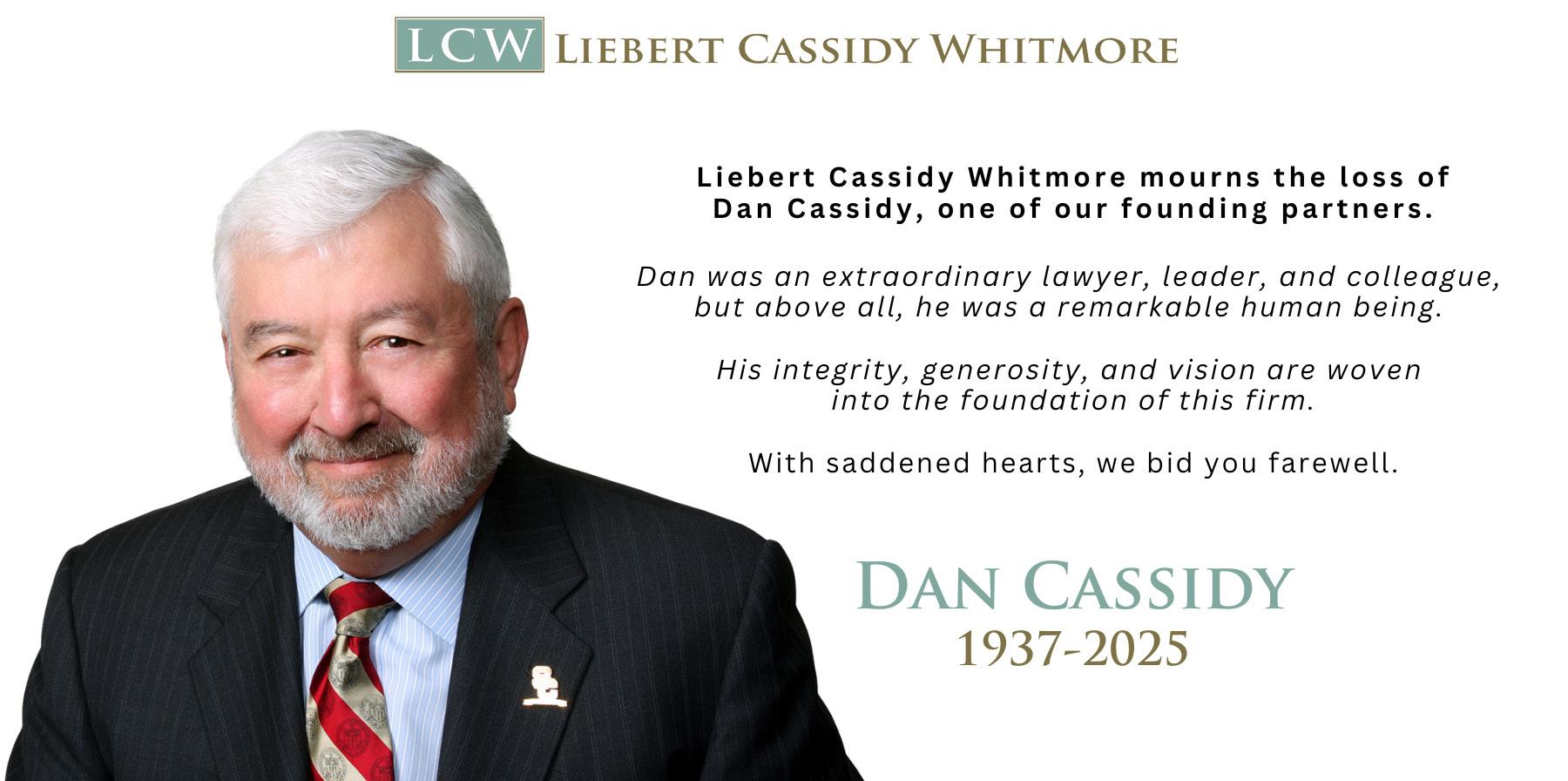
Dan Cassidy, pre-eminent public sector labor relations attorney and founding member of Liebert Cassidy Whitmore passed away on December 19, 2025. He was 88 years old.
Dan Cassidy was among the most experienced and accomplished practitioners in the fields of public sector labor relations and employment law. Over the course of his career, Dan effectively advocated on behalf of counties, cities, special districts, community colleges and school districts in negotiations, arbitrations and civil service commission and other administrative hearings. Dan negotiated hundreds of labor agreements for public agency clients, including various public safety, general, professional, and supervisory units. He also represented public agencies as a presenter and panel member in numerous interest arbitrations and fact-finding proceedings.
During his career, Dan became a well-established and widely respected authority on labor relations. He lectured and trained on labor relations – at the National College of District Attorneys at the University of Houston School of Law, University of Southern California School of Public Administration, California State University at Long Beach and before numerous other professional and educational organizations.
Dan began his legal career at Los Angeles County, eventually serving as Chief of the Labor Relations Division of the Los Angeles County Counsel’s office. He left the County to join Patterson & Taggert, where he met John Liebert. Together the pair, along with 4 other attorneys, formed our firm in 1980 and grew the firm’s practice to become California’s leading public sector, education and nonprofit management law firm which now has more than 120 attorneys in five offices.
Dan was a USC Trojan through and through. He was a longtime university volunteer and served on the Half Century Trojans Board of Directors (including as President) and was honored with the Alumni Service Award in 2017.
Dan also remained active in the firm, providing mentoring to our attorneys as well as serving as a faculty member of our Leadership Academy.
Dan is survived by his beloved wife Terri, sons Tim (Chris), Stephen (Janelle) and Danny (Denise); daughters Kathy (Mike) and Jeanine (Joe), along with 14 grandchildren and 14 great grandchildren (with number 15 on the way).
He is also survived by hundreds of colleagues, friends and mentees whose lives have been changed due to his vision, leadership and presence. Regardless of school affiliation, in his memory we collectively strive to honor his legacy and FIGHT ON.