Tips to help men, women over 50 avoid injury, setbacks
'Walk Against The Flow' at Muskogee's Lazy River
Bowling can become a life-long activity
Fishing, trails offer ways for seniors to go enjoy nature
Discover ways to ward off losing vision
Active
Some suggestions to help seniors get up and enjoy all that Mother Nature has to offer
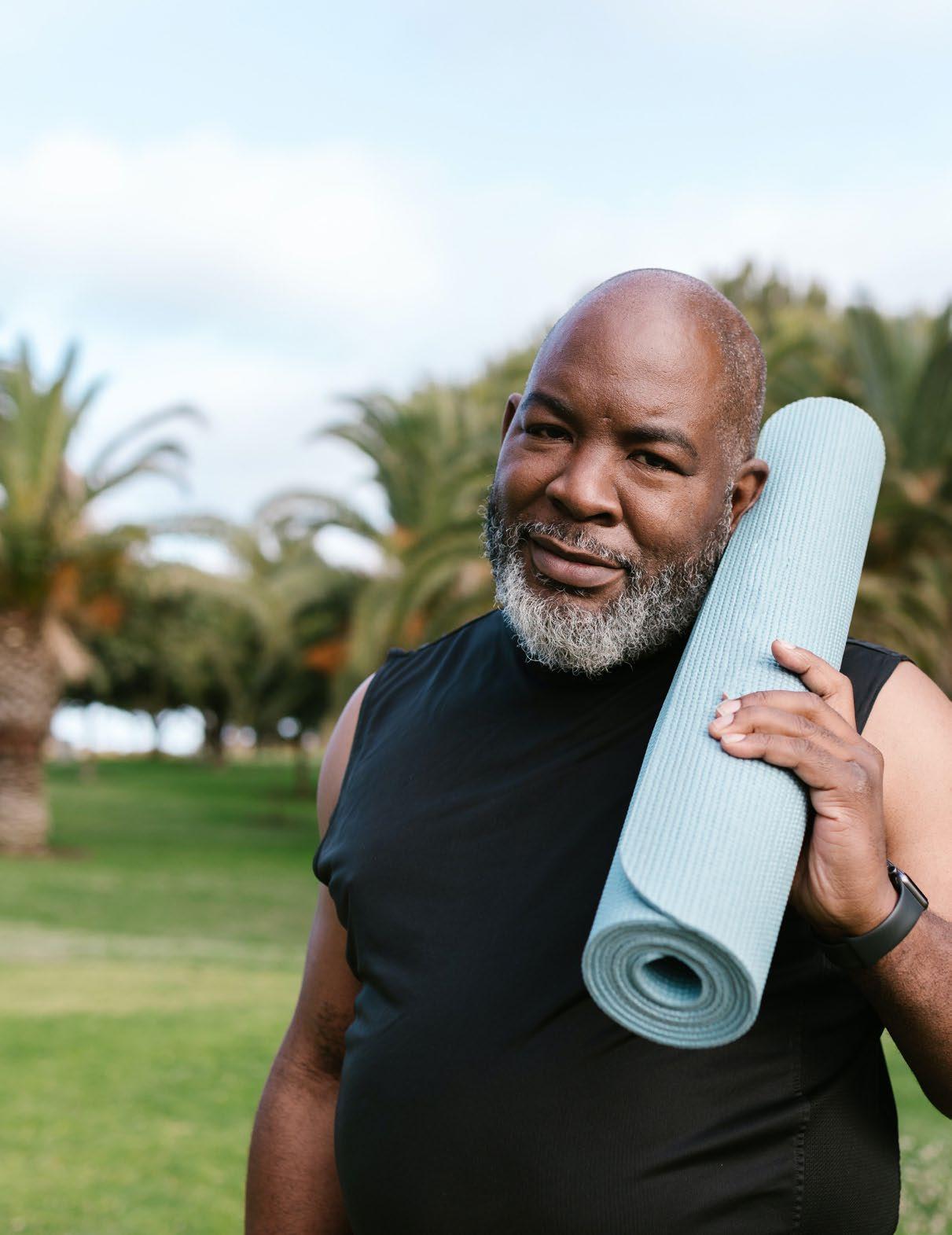
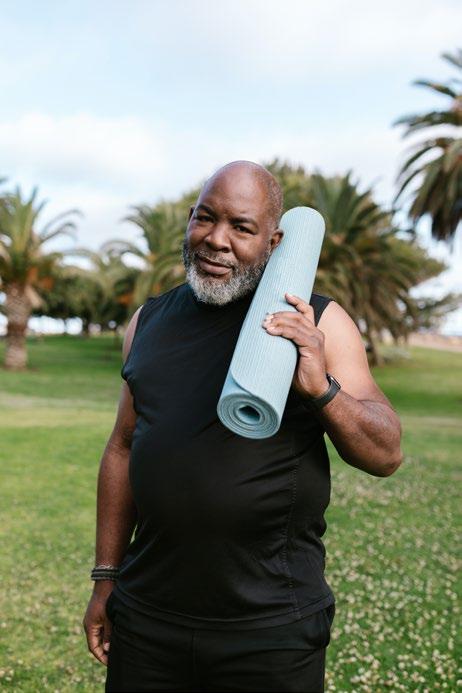
Physical activity can help overcome some of the obstacles associated with aging.
Photo: rodnAe ProductionS from Pexels
Every second cou nts when it com es to strokec are.
STROKE SYMP TOMS? B.E. F.A.S.T. AND CA LL 9-1-1.
Balance suddenly lost
Eyes suddenly blurred
Saint Francis Hospital
Muskogee is nowacertified
Primary StrokeCenter
Astroke is amedical emergency that can affect anyone at any age. Getting help from trained medical professionals as soon as possible is critical.
The certified Primary Stroke Center at Saint Francis Hospital Muskogee provides afull spectrum of stroke care—from diagnosis and treatment to rehabilitation, education and support—all right here, close to home.
For more information,pleasevisit saintfrancis.com/stroke.
Speech slurred, confused
Facedroopsonone side Arms suddenly weak T
&Terrible headache
SAINT FRANCIS HOSPITAL MUSKOGEE 300 Rockefeller Drive Muskogee, Oklahoma 74401
Bowling lifelong sport
can be a
Story by Mike Kays Photos by John Hasler
Bill Fillman says he got hooked on bowling as a kid, crediting his parents for planting that seed.
Now 75, he’s been doing it non-stop 65 years.
“I played all the different sports in school — football, basketball, baseball,” he said. “But as a kid you did what your dad did or what your folks did. If they bowled, you bowled. If they went fishing, you went fishing. If they played golf, you played golf. Those school sports are only for a time, but those others are sports you can continue to play the rest of your life.”
And that Fillman has done, continuing it past his retirement as area VA director.
From that young age, he said, there was never a year he didn’t bowl in a league. That’s long enough to throw 21 perfect games and accomplish enough to be in four different halls of fame — Muskogee Bowling Association, Oklahoma United States Bowling Congress Hall of Fame, Tulsa Bowling Hall of Fame and Southwest Bowling Association.
Today, he bowls in five leagues— a couple each of senior mixed leagues and men’s leagues at Muskogee’s Green Country Lanes and a fifth league in Tulsa. He’s been at it long enough he knows there was once a bowling alley downtown, Muskogee Lanes at Broadway and Fifth Street, that utilized pin boys as pin setters.
“It keeps you flexible and active. Bowling’s more exercise than people think,” he said. “But of equal benefit is making friends. It’s just a great way to spend your time.”
Local, area bowling
Green Country Lanes
811 S. York St., Muskogee (918) 687-1285
Fast Lanes 107 Paul Carr Drive, Checotah (918) 473-3278.
sC ha LL io L ’s Lanes 121 N. Main St., Wagoner (918) 710-6045
t hunder Bow L
833 W. Choctaw St., Tahlequah (918) 456-4663
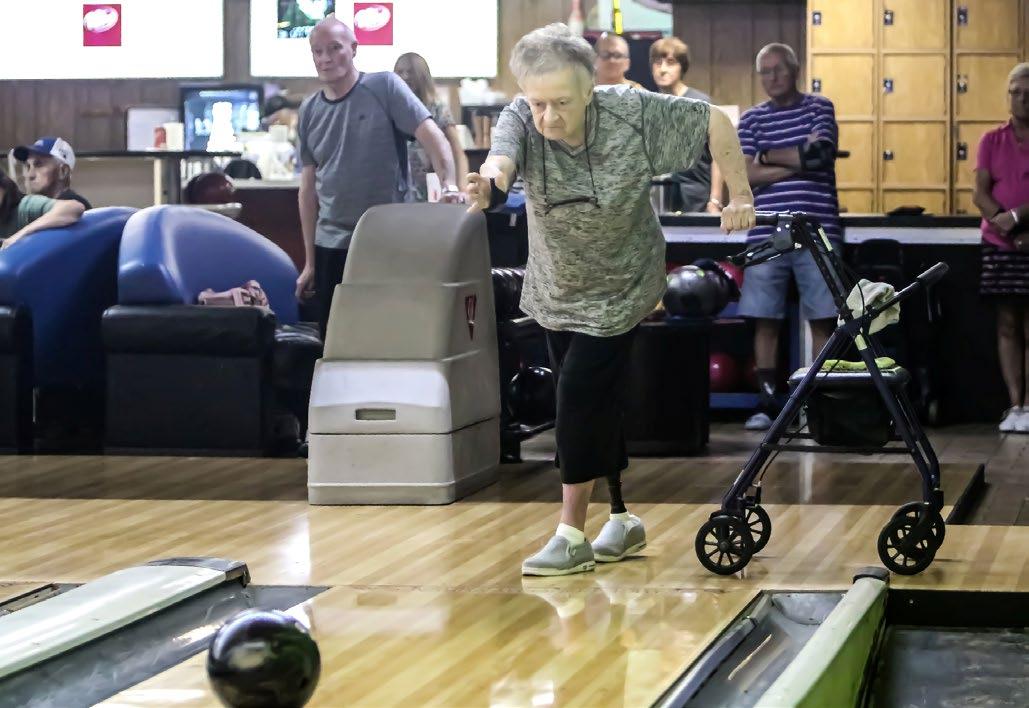
Aloha mcdaniel, a 71-year-old, started bowling along with her husband J.W. in her mid-50s before, as she says, “37 years of smoking” caused her to lose a leg due to artery disease.
Fillman may be a pro at it, but being good is hardly a requirement for starting it.
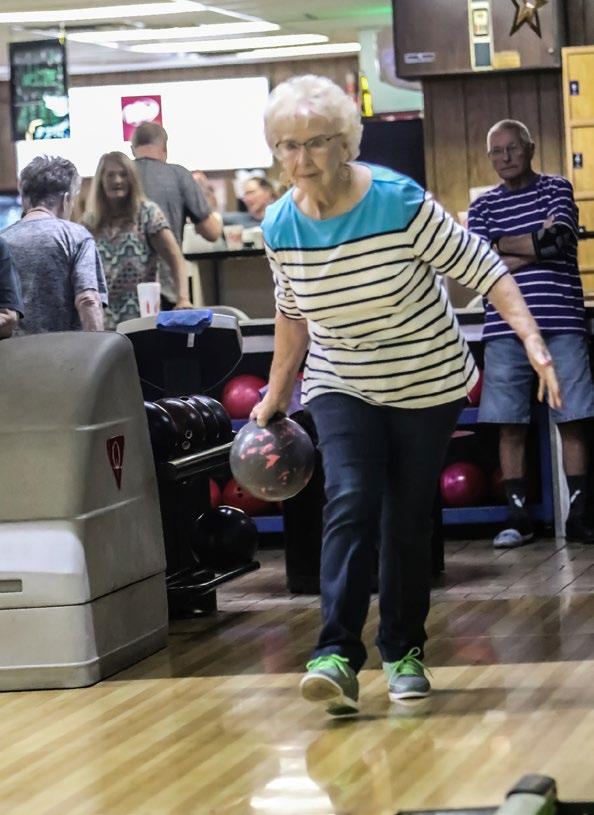
Gigi Pierce can’t remember the specific year she began bowling. Born and raised in Braggs, she just turned 90 on Mother’s Day, and bowls a couple leagues weekly at Green Country.
“I was in my 20s and took my children bowling when they were 7 or 8,” she said. “My husband bowled before I met him. It’s been a lot of years.”
The two of them bowled up to his death five years ago at 91. She hasn’t stopped.
“Sometimes my ball doesn’t go where I tell it to. It doesn’t mind me any better than my kids,” she said, laughing.
Her ball used to behave better — she recalls carrying an average of 165 at one point. It’s 122 now.
But it’s the connection with people that keeps her doing it.
“It’s exercise and it gets me out of the house, but the association with other people is the biggest benefit for me,” she said. “You listen to people, you hear about their problems or what’s going in their life. I keep a positive attitude and do that every day. I wake up, say my prayers, tell God I’m thankful he let me make it through the night, then I try to go do things that are pleasing in his sight.”
It’s that outlook that keeps her active in various volunteer groups.
“I like to stay busy and active and bowling helps me do that,” she said. “I’m 90 and I still take great pride in cleaning my house myself. I’m a perfectionist in that respect. I’ll put my house up against anyone’s in Muskogee in terms of being clean. The only thing I don’t do is mow my yard, and I’ve got someone I know from bowling that does that for me.”
Gigi Pierce of Braggs, just turned 90 on mother’s day, and bowls a couple leagues weekly at Green Country.
mike dickerson rolls a bowling ball with his left arm.
The sport is really a community within a community.
Tommy Mann started a couple years after Fillman and continues today, bowling and also working at Green Country Lanes while also serving as secretary for several leagues. A Hall of Famer like Fillman in all but the Tulsa chapter, Mann remembers the old downtown Muskogee Bowl and two other establishments — Sooner Bowl which was located on 32nd Street and Bowl-A-Rama off York Street and Chandler Road.
“I worked at Sooner Bowl in 1971 and been here (at Green Country Lanes) since 1977,” he said. “When Sooner opened up with automatic pinsetters, that first one downtown shut down. My parents bowled there when I was a baby.”
Area bowlers moved with each facility, and today as seniors, comprise the vast majority of league bowlers.
“They’re our lifeblood,” he said. “I don’t know where we’d be without them.”
No matter the skill level, no matter the age, or even the limitation.
Aloha McDaniel is an example of the latter.
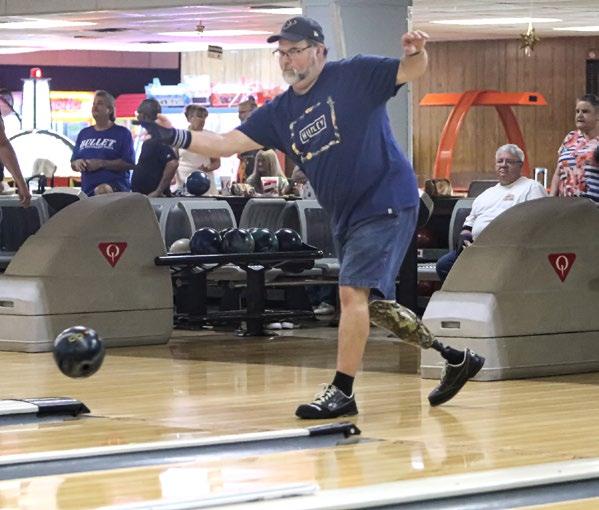
The 71-year-old started bowling along with her husband J.W. in her mid-50s before, as she says, “37 years of smoking” caused her to lose a leg due to artery disease.
She wears a prosthesis and went from using a scooter to a walker and then a cane while bowling before experiencing a fall that caused her to require new screws for her artificial limb. Still, she hasn’t thrown in the towel on the sport, going back to using a scooter with a pad to place her ball while on the approach to the foul line.
She and her husband bowled in four fall leagues, three at Green Country and one at Checotah’s Fast Lanes, and continue to bowl this summer.
“Some folks have lost legs and some arms and think all they can do is sit around, and that’s not an excuse,” she said. “You can try anything if you want to bad enough.”
Summer leagues are in session. Fall leagues begin in August.
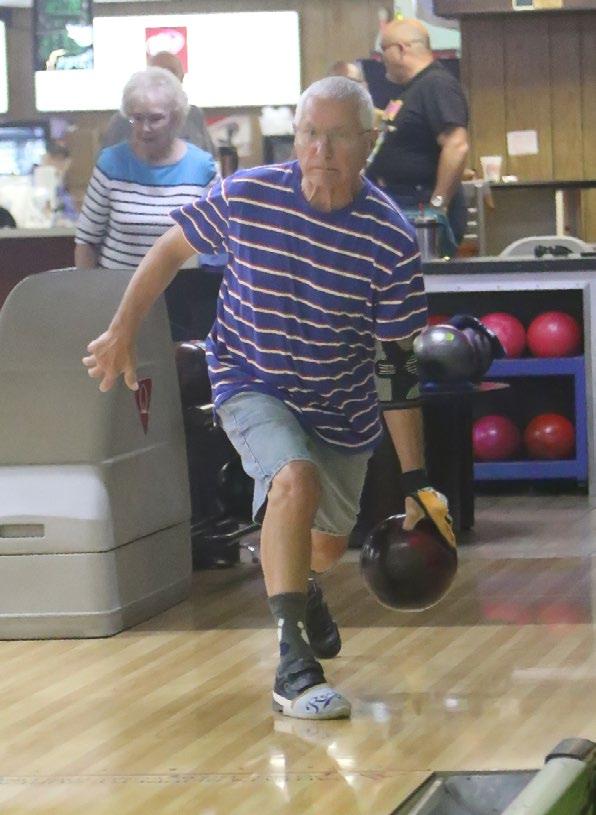
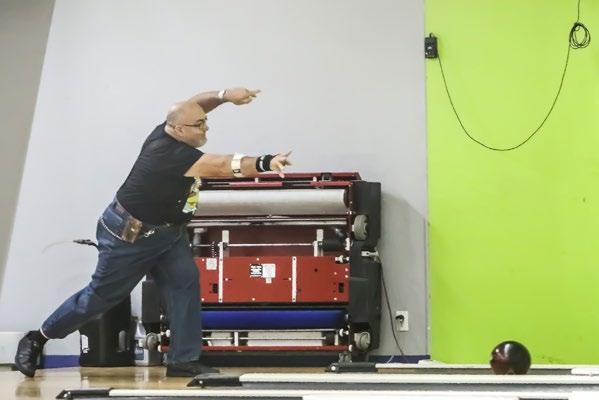
ABoVe: Gary Spencer bowls at Green Country Lanes in muskogee.
BeLoW: Kyle Puffer wears an artifical limb while bowling.
ABoVe: david merrell throws bowling ball at Green Country Lanes.
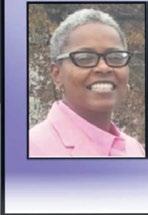
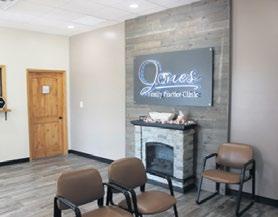
Ms.Garza received her degreeasaFamily Nurse Practitioner from the Universityof Ok lahoma in 2015 and is certified by the American AcademyofNurse Practitioners with afocus in women’s health.
Ms.Garza specializes in family practiceand has experienceinurology and gynecology She has practiced in both the private and public sectors in Muskogee and the surrounding communities
Ms.Garza has atrue passion forwellness and centers her patientcareonhealth promotion and disease prevention.
Azzam Almounajjed, M.D. Internal Medicine
Caysie N. Garza
Lazy River becomes exercise path
Jean Lewis was looking forward to a new year of it.
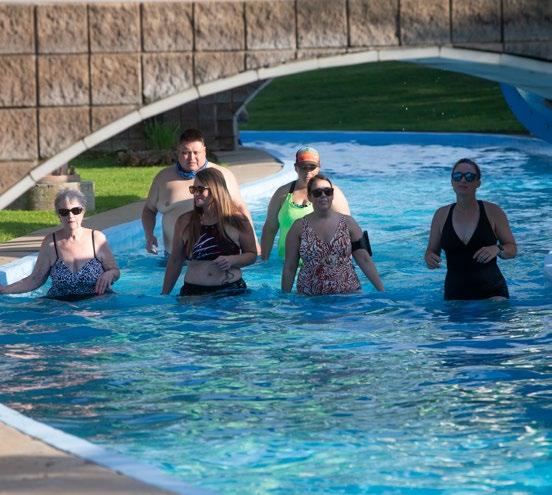
And there she was, among 68 in the second week of a summer program held every Tuesday at River Country Family Water Park, as the Lazy River becomes a resistance walk against its flowing current. Lewis, 79, of Muskogee and some friends were looking at different things that were fun to do for exercise when they came upon this.
“It’s not hard. Anyone can do it,” she said of what is labeled “Walk Against The Flow” by Muskogee Parks and Recreation.
“But you really feel it the next day in your muscles, so you do feel like you accomplished something.”
She measures her workout in time — in 30 minutes, she estimates she covers a half-mile. Eight times around the river is a mile.
Story by Mike Kays Photos by Von Castor
“When I walk, I do a 22-minute mile, but you’re talking walking against more resistance here,” she said. “But it’s especially nice when it gets up to 100 degrees and that water feels so good.”
She then laughed. “And you don’t have to look good in a swimsuit to go.”
It’s for any one ages 16 and older. The park closes to other activity at 5:30 on Tuesdays and remains open for
exercise until 8 p.m.
Some said they use it for fun, stay cool, and to be around people. One lady who did not give her name said she uses it for low-impact workouts — which are definitely at the other end of the spectrum from the marathons she runs.
The vast majority were women on this day.
These two traveled from Wagoner.
“It’s a lot of resistance and when you get to be my age, it’s hard to do some of those bouncy exercises,” said Charleyene Popp, 70.
She does, however use a recumbent bike and what’s called a rebounder — a foot-high mini-trampoline with a handle bar.
Tracie Cloud said her daughter saw it on Facebook and invited her.
“I work out on a treadmill every other day and that is not as much fun,” she said. “I like water. The current is probably the easiest way to lose weight and be healthy. It’s not hard on your joints. It’s fun. You can be with a bunch of people and realize, hey, this is exercising.”
Cost is $3. For more information, contact the park at (918) 684-6399. It is located in the Love-Hatbox Sports Complex at 3600 Arline Ave.
ALL: Visitors walk against the current as part of "Walk Against the Flow" at the river Country Family Water Park's Lazy river.
Working out safely after 50
Story by Phoenix Content Services
In an ideal world, people young and old exercise each day. But as men and women age, finding time to work out is not so easy.
Commitments to work and family often take precedence over daily exercise. As a result, many people 50 and over might not have exercised regularly or at all in many years. But as children grow up or even move out, people facing down their golden years are often compelled to get back in the gym. That’s a wise decision that can increase a person’s chances of being healthy and happy in retirement. But before beginning a new exercise regimen, men and women over 50 should take heed of the following safety tips to ensure their efforts are not derailed by accident or injury.
Speak with your physician
The National Institute on Aging notes that even people with chronic conditions such as heart disease, diabetes or arthritis can be physically active. However, anyone with such a condition and even those who don’t fall into those categories should con sult with their physicians and receive a full physical before exercising. Such a consultation and checkup can shed light on any unknown issues, and physicians can offer advice on how to safely manage any problems that may arise.
Begin with low-intensity exercises
Even if you feel great and have maintained a healthy weight, don’t push yourself too hard at the start. Your body needs time to adjust to physical activity, so choose low-intensity exercises like walking and light strength training so your muscles, tendons and ligaments can adjust. Initially, exercise every other day so your body has ample time to recover between workouts.
Choose the right places to exercise outdoors
Exercising outside provides the best of both worlds for many people, providing a chance to get healthy all while enjoying the great outdoors. When exercising outdoors, choose areas that are not remote and where others can see you and offer help if you suffer an injury or have an accident. Boardwalks, public parks and outdoor gyms are safer places to work out than wooded areas or other places well off the beaten path.
Stay hydrated
The NIA notes that many people lose their sense of thirst as they age. But just because you aren’t thirsty does not mean you don’t need water, especially while exercising. Water regulates body temperature and lubricates the joints, thereby decreasing your risk of injury during exercise.
Protect your
Story by Phoenix Content Services
Retirement may be seen as a time to slow down and enjoy some well-earned rest and relaxation, but today’s seniors clearly did not get the memo. Modern seniors look and act a lot different than traditional depictions of retirees.
The shift in attitudes regarding aging is noticeable in the growth of active retirement communities, which are designed for aging men and women who want to
engage in activities where no chairs are required. Active seniors may not fit outdated stereotypes of cardigan-clad grandparents shuffling about dusty retirement homes, but even the most energetic retirees may still be vulnerable to age-related health complications. For example, the American Optometric Association notes that men and women over the age of 60 may be vulnerable to age-related vision problems. A certain degree of vision loss is natural as men and women age, but that doesn’t mean active seniors have to sit idly by. In fact, there are many ways for active seniors to protect their vision so they can continue to get up and go without having to worry about losing their eyesight.
Make your diet work for you
The AOA notes that a number of eye diseases
can develop after an individual turns 60, and some of these conditions can be minimized with wise lifestyle choices. For example, a healthy, nutrientrich diet can protect vision over the long haul. The National Council On Aging notes that studies have found that omega-3 fatty acids, which can be found in foods like spinach, kale and salmon, can reduce individuals’ risk for age-related eye diseases. Seniors can speak with their physicians about other ways to utilize diet to combat agerelated vision problems.
Protect your eyes and look cool at the same time
Active seniors spend lots of time outdoors, and that may have an adverse effect on their vision. The
NCOA notes that lengthy exposure to the sun’s ultraviolet rays can cause both short- and longterm eye damage. Thankfully, such issues are easily avoided if seniors wear sunglasses with UV protection when going outside. Brimmed hats also can protect the eyes from harmful UV rays.
Be mindful of screen time
Much has been made of how much screen time is healthy for young people. But seniors also are not immune to the potentially harmful effects of spending too much time staring at their phones and other devices. The NCOA recommends seniors employ the 20-20-20 rule in regard to screen usage. Every 20 minutes, look about 20 feet away for 20 seconds. This quick exercise can reduce eye strain.
Outdoor activities perfect for seniors
Story by Phoenix Content Services
The great outdoors beckons people of all ages. Fresh air can be hard to resist and the benefits of spending time outdoors are so numerous that it behooves anyone, including seniors, to answer the call of nature.
According to researchers with the U.S. Department of Agriculture’s Forest Service, human beings benefit both physically and psychologically from spending time in nature. Such experiences can reduce stress and help lower heart rates, potentially decreasing individuals’ risk for cardiovascular disease. In addition, the Forest Service notes that spending time outside in green spaces has been linked to a lower risk of depression.
Seniors who are retired or even aging empty nesters who are still in the workforce can make great use of their free time by venturing into the great outdoors. The following are a handful of senior-friendly outdoor activities that provide a great reason to get off the couch and take in all that Mother Nature has to offer.
Hiking
Hiking provides a great workout and an ideal opportunity to spend time in an idyllic setting. The U.S. National Park Service notes that hiking helps individuals build stronger muscles and bones, improves their sense of balance, has a positive effect on heart health, and can decrease the risk of certain respiratory problems. Hiking is an especially attractive outdoor activity for seniors, as many parks feature trails with varying degrees of difficulty, ensuring there’s a trail for seniors whether they’re seasoned or novice hikers.
Water aerobics
The Centers for Disease Control and Prevention
notes that water-based exercises can be especially helpful individuals with chronic diseases, a category many seniors fall into. The CDC notes that one study published in the journal Arthritis & Rheumatology found that improves the use of joints affected by arthritis without worsening symptoms. The U.S. Department of Health and Human Services also notes that swimming can lead to improved health for people with diabetes and heart disease. Seniors can reap these benefits by going for a dip in their own backyard pools or a local body of water, such as a lake or ocean. Many swim clubs also offer discounted memberships to seniors, making these another great and affordable way to reap the benefits of swimming.
Fishing
Of course not all outdoor activities need to make seniors huff and puff. Fishing provides a great reason to get outdoors, and many individuals devoted to fish-
ing report feeling less stressed after a day spent casting for their favorite fish. Individuals who consume what they catch also can benefit by improving their diets, as the American Heart Association notes that consuming certain types of fish has been linked to a lower risk for heart disease and obesity.
Volunteering
Local environmental groups often sponsor cleanups at parks and waterfront attractions like beaches and lakes. Volunteering with such organizations is a great way to get outside and give back, and working with like-minded individuals can be a great way for seniors to meet new people. In addition, a national study sponsored by the Corporation for National and Community Service in 2019 found that 88 percent of Senior Corps volunteers who initially reported a lack of companionship reported a decrease in feelings of isolation after volunteering.
How active seniors can lower risk of injury
Physical activity is one of the key components of a healthy lifestyle. Though physical activity benefits people of all ages, it can be especially helpful for seniors by making it easier for them to overcome some of the obstacles associated with aging.
According to the Centers for Disease Control and Prevention, physical activity supports daily living activities and independence. That’s a significant benefit for seniors who are worried that age-related physical and mental decline might one day compromise their ability
to live independently. The CDC also notes that physical activity lowers the risk for early death, heart disease, type 2 diabetes, and certain cancers.
The CDC reports that physical activity is generally safe for fit individuals who are 65 and older and have no existing conditions. Despite that, it’s best for any senior to consult his or her physician prior to beginning a new exercise regimen. Once doctors give seniors the go-ahead to begin a new workout routine, seniors can take the following steps to reduce their risk for injury.
Warm up before working out
Seniors may think they don’t need to warm up before exercising because their workouts are not as high-intensity as they might have been when they were younger. But Harvard Medical School notes that warming up pumps nutrient-rich, oxygenated blood to the muscles and helps increase heart rate. The American Council on Exercise reports that warming up helps reduce workout-
Story by Phoenix Content Services
related injury risk by improving tissue elasticity. So prior to beginning a workout, regardless of how moderate- or low-intensity that regimen will be, seniors should warm up for five to 10 minutes.
Start with a routine that’s commensurate with your abilities
Seniors excited by the prospect of working out must temper that excitement if they’re not accustomed to physical activity. Such individuals should consider working with a personal trainer. Personal trainers design exercise regimens based on each individual client’s fitness levels and goals. As clients make progress and their bodies become acclimated to routine physical activity, personal trainers can then tweak regimens to make them more challenging. Seniors can take on these responsibilities themselves, but are urged to begin slowly and gradually build up their exercise tolerance.
Don’t skip strength training
Seniors may think lifting weights is for young people who want to look buff, but the AARP® notes that muscle-strengthening activities protect the joints, reducing seniors’ risk for injury as a result. The Department of Health & Human Services recommends seniors who have been cleared to exercise engage in strength training at least twice per week.
Stretch after your workout
Harvard Medical School reports that efforts to cool down after a workout, including stretching, can prevent muscle cramps and dizziness a nd lengthen muscles throughout the body, which improves range of motion. Harvard Medical School recommends holding each stretch for 10 to 30 seconds, as the longer a stretch can be held the more flexible individuals’ muscles will be.