



































































Brigit Grant





52







62

98 26

Editor Brigit Grant
brigit@jewishnews.co.uk
Art director Diane Spender
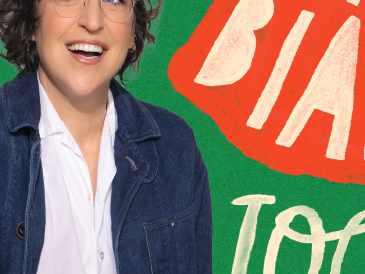
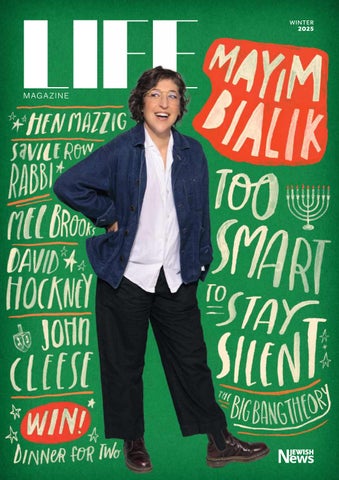
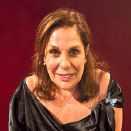
I don’t think we could have squeezed much more into this December issue. It’s packed with talent, substance and stories worth settling into on a chilly night. We’ve got first dibs on Simon Sebag Montefi ore’s upcoming Middle East tome, refl ections at 99 from the incomparable Mel Brooks, Hen Mazzig’s deeply personal account of his wedding and post-October 7 reality, and a thoughtful conversation with our cover star Mayim Bialik, who fl exes her acting muscles in Father, Brother, Mother, Daughter, directed by Jim Jarmusch. It's hard to believe she was once little Bette Midler in Beaches
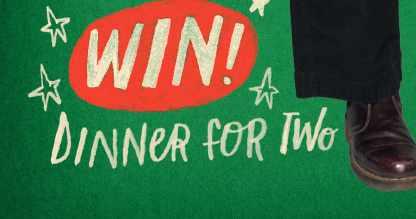
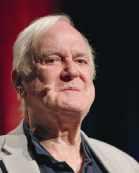
There are smaller gems inside that deserve your time, and an exclusive with John Cleese who remains one of the very few – possibly the only –celebrities to pause, rethink his posts on X and apologise. That matters. Nothing, however, prepares you for the final page. Our Last Word comes from former hostage Eli Sharabi. Speaking with him was a privilege, and his book Hostage is one that I hope finds its way into your Chanukah gifts. As ever, the aim of LIFE is to refl ect who we are and bring a little light where we can. Do enter 'win a dinner for two at Claro or Bracha on page 88 . Happy Chanukah – enjoy the festive season, and here’s to peace in 2026.
Jewish News co-publishers
Richard Ferrer & Justin Cohen
Features editor
Louisa Walters
Sub-editor Alex Galbinski
Creative consultant
Dermot Rushe
Contributors Jenni Frazer, Etan Smallman, Charlotte Henry, Candice Krieger, Daniel Sugarman, Hannah Litman, Hadley Freeman, Anthea Gerrie
Advertising sales
Brandon Cowan
Beverley Sanford 020 8148 9709
sales@jewishnews.co.uk
Front cover illustration by Peter Strain
The word sufganiyot can be traced back to the Greek word sufan, meaning “spongy” or “fried,” like the Arabic word for a smaller, deep-fried doughnut named sfenj
Similar fried balls of dough have been eaten to commemorate Chanukah for centuries by Jews in North Africa. However, these Moroccan and Algerian treats didn’t have the modern sufganiyot’s characteristic jam filling, which is where migrants from central Europe came in.

The first known recipe for a jam doughnut appeared in 1532 in the German cookbook Kuchenmeisterei. Sadly not a kosher option, as it was made by packing jam between two round slices of bread and then deep-frying it in lard.
Credit for making the sufganiyot the powerful symbol of the Israeli Chanukah it is today goes to the Histadrut –the equivalent of the Trades Union Congress.
The latke, the classic fried potato pancake that was already associated with the festival’s celebrations, is something that can easily be made in the home. A perfectly filled and fried sufganiyot though is a daunting task for even the most confident home cook. Here was the miracle for the Histadrut: a Chanukah treat that needed professionals.
By establishing the sufganiyot as a symbol of the festival, as opposed to the low-skilled latke, the Histadrut could encourage the creation of more jobs. And in Israel today, over 30 million of these treats are consumed around Chanukah.
This holiday season and throughout the year, celebrate the heritage of Jewish cuisine with us. Please call 020 7624 2013 to discuss all your Chanukah party needs. Scan the QR code below to see our fabulous menu of sufganiyot and latke canapés.
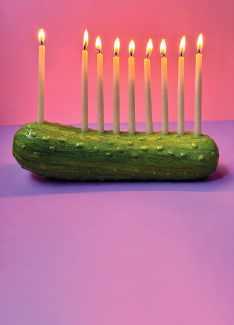
A bit of sweet and sour as a menorah by artist Amy Kritzer Becker, who hopes you pick her pickled pepper. moderntribe.com £75.00
Cable Street reopens at the Marylebone Theatre from 16 January to 28 February 2026. Written by composer-lyricist Tim Gilvin with book by Alex Kanefsky, and directed by Adam Lenson, the show first debuted in 2024 to strong reviews. Set against the backdrop of the 1936 Battle of Cable Street, the musical follows three young East Enders caught up in the community resistance to Mosley’s fascist march. If you tell those who don’t know their history to see it, it will be a sellout.
Amy Sachon knows a thing or two about Christmas campaigns. Busy since July, her agency Beau Blue Modelling, which she opened last September with partner Emma Russell, casts the adorable children who front festive adverts. The ones pulling crackers and dancing in fake snow across print and online. With a book bursting with young talent, Beau Blue has become the first port of call for brands searching for the holy trinity of child models: cute, compelling and camera confident.
Based in north-west London, the agency has proved popular with Jewish parents eager to launch their children’s modelling careers. “We have amazing
kids on our books, many of whom have


something missing. “Chanukah
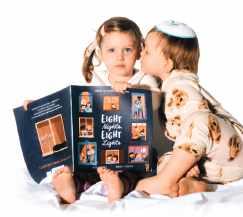
dual heritage,” says Amy. But as much as she and Emma thrive on the festive buzz, they have long been aware of something missing. “Chanukah never features in these campaigns – not publicly, not at all,” she says. “That’s upsetting, because it’s a wonderful, visual celebration full of warmth and light.”


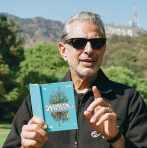

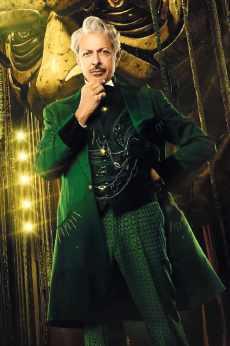
If you’re going to trust anyone’s a rmations, surely it has to be the Wizard of Oz himself – or at least the closest mortal equivalent: Jeff Goldblum. Now starring again as the all-powerful wizard in Wicked: Part II, Goldblum has released The Little Book of Je rmations, a compact collection of life lessons delivered in his signature purr of cosmic charm. It’s part parody, part comfort blanket – a tiny dose of wizard-level wisdom in hardback form.


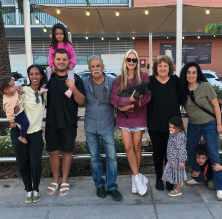
Determined to change that, Amy decided to stage a Chanukah shoot of her own, bringing together Sonny and Mily in M&S PJs, twins Andi and Colbie in H&M and Daisy in leopard print (George) in a set of joyful images to celebrate the chag with style and spread a little community cheer in the process. “It is essential at this time, when all we see are stories about antisemitism, to offer something hopeful,” she insists – and a glance at the pics proves her right.





Of the more than 28,000 heroes recognised by Yad Vashem for saving Jews during the Holocaust, fewer than 70 are still alive. That reality inspired Jewish News co-publisher Justin Cohen to conceive The Righteous Roadtrip, a short film following British-Israeli humanitarian Jonny Daniels as he travels through Poland, the Czech Republic and Hungary, delivering Christmas trees, gifts and seasonal cheer to some of the remaining rescuers. With his dog

Tyson in tow and wearing an array of festive jumpers, the From the Depths founder braves sub-zero temperatures and heavy snow to hear their stories – in some cases capturing testimony for the first time – and to meet their families.
The film is led by Oscar-winning American documentary-maker Vanessa Roth, who has worked with Israeli Wonder Woman Gal Gadot.
The wider team includes Stephen Smith, co-founder of Nottingham’s National Holocaust Centre and former head of Steven Spielberg’s Shoah Foundation, with executive producers Eitan Neishlos, Elliott Joseph, Jonathan Zlotolow and Elizabeth Heyman Winter. Shot in December 2022, the 40-minute documentary – due for release next year – is especially poignant: most

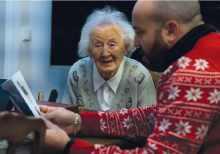
of the heroes featured have since passed away, underscoring how little time remains to capture the first-hand testimony of these extraordinary individuals.

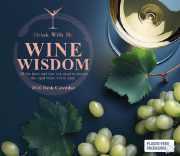
Ever found yourself nervously scanning a restaurant wine list or second-guessing which bottle to grab at the supermarket? Designed to make wine feel more approachable, Drink With Me Wine Wisdom 2026 Desk Calendar is packed with facts, practical tips and confidence-boosting hints. From how to hold your glass to pronouncing tricky wine words (yes, even Gewürztraminer and Chablis), it serves up daily, digestible tips. “Wine should be enjoyable, not intimidating,” says wine-fluencer and creator Amanda Selby. Waterstones, £11.99

A new range of ‘Jam Doughnut’ candles for Chanukah have been launched by Jewish mum and creative Natasha Hersham, aka ‘The Basic Balaboosta’ (@thebasicbalaboosta).
A playful twist on the beloved classic, these jam doughnut-scented candles are the perfect gift for one of the eight nights or a treat for you.




Natasha says: “I hope these candles bring sweet, jammy goodness, warmth and hopeful light to your homes for the holidays. I want people to feel joyful and excited to celebrate Jewish culture. Right now, sharing that pride feels more important than ever.”
The candles from £35 are available at thebasicbalaboosta.com and at festive fairs across London
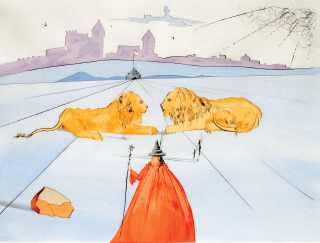
Salvador Dalí’s The Twelve Tribes of Israel goes on display in London next week as part of a new exhibition at Shapero Modern on Bond Street. Created in 1973 to mark Israel’s 25th anniversary, the etchings blend biblical symbolism with Dalí’s trademark surrealism, drawing on Jacob’s blessings in Genesis and Moses’ words in Deuteronomy. The show features the original hand-painted proof set, double-signed by Dalí, the copper plates used for the edition, and a full set of cancelled proofs. Runs until 1 February 2026.
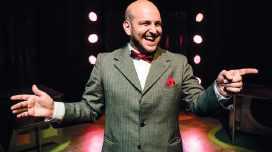
Panto is now a fixture of the Jewish calendar. (Oh no it isn’t… oh yes it is!) And playwright-performer Nick Cassenbaum is a big part of why. JW3’s Jewish panto, now in its third year, is Cinderella and the Matzo Ball and is written by Cassenbaum, who scripted the previous two. “It’s been really fun writing something that feels really British and really Jewish at the same time,” he tells Life. And he doesn’t pretend it’s for everyone: “The show is the local pantomime for Jewish people within the M25. ”Aged 37, Cassenbaum’s star is unmistakably rising, but his affection for the playful, mischievous side of theatre goes way back. As a student, he grew “disillusioned” with traditional theatre and instead threw himself into street performance. “I went off after uni and was a street performer for a year,” he recalls. Outdoor theatre, clowning, physical comedy – “the democracy of

Searching for a countryside wedding venue close to London?
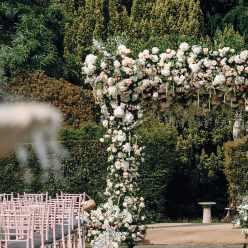
Award-winning South Farm is a standout choice. Set within 20 acres on the Cambridgeshire–Hertfordshire border, its sustainable secluded grounds and idyllic gardens suit weddings of any size. Ceremonies can happen in the garden summerhouse or one of four indoor spaces, surrounded by meadows, courtyards, orchards and beautifully-converted historic barns, with a Grade II-listed farmhouse at
it” hooked him. It’s not hard to see how that road leads straight to panto. He’s no one-trick performer though. His latest work, the two-hander Revenge: After the Levoyah, has been touring across south-east England and is now at Soho Theatre until January. Set in the world of Jewish Essex – the community in which he grew up, in Woodford Green – it blends sharp observational comedy with increasingly madcap turns. “A lot of my work explores the kind of people you get there,” he says. “There hasn’t been much of that within Jewish representation in media.” And next? A brilliantly titled follow-up: Rebellion after the B’nai Mitzvahs Judaism and Jewish culture sit at the centre of all Cassenbaum’s work. “The one thing I really enjoy is affectionately poking fun at that world while also bringing people in,” he says. While Jews have Purim spiels, we’ve never quite claimed the British ritual of panto as our own – until now. “For me, panto is almost like a stress relief at the end of the year. It’s a ritual where you go with your whole family, shout, laugh and scream, and know what’s going to come.” And who needs that more than Jews right now?
by Charlotte Henry


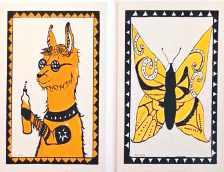
When artist Noam Yehudai paints, her brush carries grief and gratitude. Her latest work, in memory of her brother Ron, who was murdered on October 7, is a vivid act of remembrance. Yellow and black – his beloved Beitar Jerusalem colours – run through each piece, while the illustrations draw on the objects he left behind and the tattoos that told his story, now inked on his family’s skin. Noam, 32, works in the intricate Madhubani style she discovered while travelling in India, a tribute to the journey she and Ron dreamed of taking together. “He was the perfect brother,” she says, “someone who always wanted peace and a pleasant atmosphere around him.” Through her art, Noam carries forward that spirit in colour.
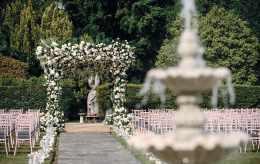
the centre. With home-grown food from in-house chefs and even farm animals to charm guests, it’s a picturesque setting for a dream day. If you want a destination feel without going far from north London, Easthampstead Park in Berkshire blends heritage with modern
comfort. The team specialises in Jewish weddings, offering tailored ceremony set-ups, flexible kosher catering and memorable celebration options. With grand architecture, elegant interiors and versatile spaces, you can shape your day with easy access from London for guests.
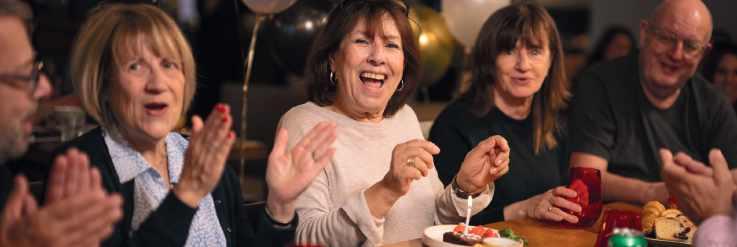
Every milestone deserves great food and drink surrounded by your favourite people. Celebrate your special occasion at Head Room, the vibrant NW London café and function venue. Every visit supports Jami’s mental health services in the community.
To view the menu, book a table, or hire the space, visit headroomcafe.org or call 020 3301 0274.
87-89 Golders Green Road, London NW11 8EN Follow us on

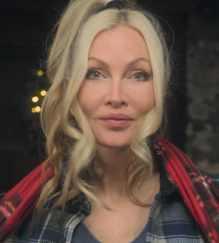
Back in July, Caprice Bourret announced she no longer felt safe in London because of antisemitism and was then trolled by the usual suspects. But the model-turnedactress and producer has always stood with Israel and, since the October 7 attacks, has supported the family of Aviv Baram, one of the first victims killed on Kibbutz Kfar Aza. Aviv, 33 was part of the emergency rapid-response team and his final act was warning neighbours that the terrorists were disguised as soldiers – a message that helped save lives.
“I want to inspire others to take action,” says Caprice, who took nine of the Baram family on holiday to Ibiza, “whether it’s through charity or simply standing up for what’s right.”
Alongside her activism, Caprice continues to grow her career in film with A Scottish Christmas Secret –her second festive feature after last year’s debut. The mother-of-two plays a publisher chasing down her bestselling author, only to discover he’s the heir to a castle. Could it be love, actually?
Presenting the faith mums who entertained us this year
BINA ROKLOV –
at Purim, which they blithely
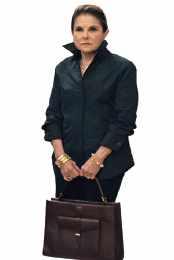
Nobody Wants This No one bites their tongue quite like Bina (Tovah Feldshuh) – and who can blame her? Her better-looking son, a rabbi, has fallen for a petulant podcaster who whips out her phone at the Shabbat table, and Bina then has to face the would-be machatanim Purim, which they blithely call “Jewish Halloween”. Still, Bina keeps up her style for shul, even though her boy is no longer on the bimah. As Netflix stretches Joanne’s conversion saga into a third season, all we can do is pray for Bina.

The under-25s are now impersonating Meredith, who’s launched a DJ career and cemented her status as a gay icon. One of the few to have a batmitzvah in Mormon HQ, she can walk in heels through snow and her Season 6 RHSLC tagline – “While you drop lies, I’m dropping the beat” – is embarrassing, but her son Brooks thinks she’s the biz.
1997 – and so
the Edinburgh Festival
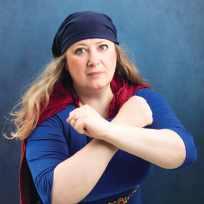
The Ultimate Jewish Mother “I get knocked down, but I get up again,” sang Chumbawamba in 1997 – and so did Rachel Creeger in 2025. When her show was pulled weeks before opening at the Edinburgh Festival after staff claimed they “felt unsafe”, she turned the drama into a ticket-selling boost elsewhere and proved no one cancels a Jewish mother. Armed with a chicken-soup pot of confessions, she showed she didn't need a stage to hold court and has a head built for hecklers. Winning the Spirit of the Fringe Award 2025 was simply the icing on the strudel.
elsewhere and proved no one
NAOMI SCHWOOPER –
Long Story Short
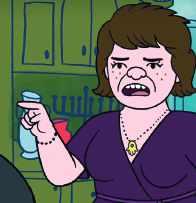
Created by wit-wonder animator Raphael Bob-Waksberg, mum Naomi (voiced by Lisa Edelstein) time-travels through decades with her guilt trips perfectly preserved. Ever ready with a side-eye when anything strays from “her rules” she greets her son’s new girlfriend’s gift – a vase – with: “Now I’ll have to find something to put in it.” No one is as vase-half-full as Naomi, who is a lot of Jewish mothers – “I love you, I love you, I love you – now say it back.”
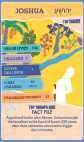
Jacob competing with Esau while Moses squares up against Pharaoh – these Biblical match-ups could soon be finding their way to your game collection, thanks to JoJo Sugarman, who has teamed up with Top Trumps to create a special Torah version of the classic card game.
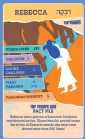
The sets, to be launched in early December, will initially be available at select stores in London (Kosher Kingdom and Sulam's in Golders Green, Aisenthals in Temple Fortune and Kosher Edge in Edgware).





WKeep the classics in their lives and bring in some new ones, writes Hannah Litman
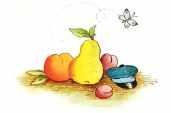
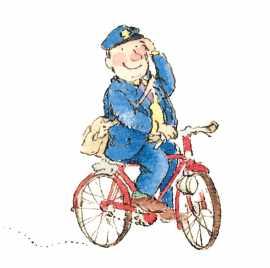
hen children’s author Allan Ahlberg passed away this summer at the age of 87, tributes poured in celebrating his unmistakable voice in British childhoods. From Each Peach Pear Plum to The Jolly Postman , Ahlberg’s words shaped a kind of gentle mischief we still reach for when handing a book to a small child.
A hlberg’s Each Peach and Peepo! were staples of my own early childhood – so much so that, when I became a mother, I couldn’t wait to read them to my children. And the fi rst time I sat down to do so with my then-newborn son, I was surprised (but not really) that I remembered them off by heart. The rhythms, the rhymes, the pacing of the page turns – it was all still there.
IA nd when I told my children – now 19 and 17 – that Ahlberg had died, we instinctively began prompting one another, line by line, reciting Each Peach from memory around the table. These books aren’t just part of our childhoods – they’re etched into our

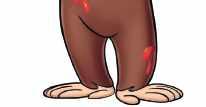
ABOVE: Curious George gets mischievous with a paintbrush BELOW: A page from Each Peach Pear Plum by Allan and Janet Ahlberg
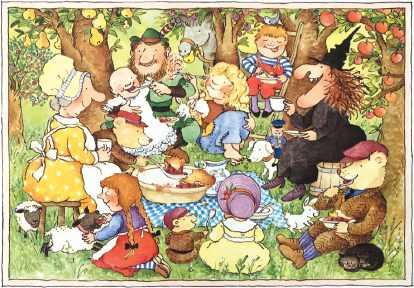

cadences, our shared memory, our family’s way of speaking. And I know that, in time, those rhymes will be passed down again, so ingrained have they become in our sense of home.
It also reminded me how many of the books we love – books we quote without realising, books that shaped how we see the world – were born from Jewish imaginations. From curious monkeys to mischievous Maxes, Jewish storytellers have long written the worlds we enter fi rst. Here’s a look at the legacy they’ve left on our nurseries’ shelves.
I from the nurseries’
by H.A. and Margret Rey
T he creators of Curious George fled Paris by bicycle in 1940 with little more than a manuscript. Hans and Margret Rey, both German Jews, escaped just ahead of the Nazi invasion, carrying with them the cheeky monkey who would become a global icon. That George’s creators escaped fascism to publish in freedom is more than backstory – it’s the quiet subtext of survival baked into a picture book we never stopped reading.
by
Judith Kerr
Judith Kerr’s tiger “drank all the water in the tap”, “ate all the sandwiches”, and “drank all Daddy’s beer”. For generations, The Tiger Who Came to Tea has enchanted readers with its mix of the surreal and the domestic. Kerr, who fled Nazi Germany with her family at the age of nine, always insisted the tiger wasn’t symbolic, but its sudden arrival and calm disruption of normal life still resonates with readers who know how quickly the ordinary can vanish.



by Ezra Jack Keats
With the crunch of Peter’s boots in fresh snow, The Snowy Day captures the quiet magic of discovery. Ezra Jack Keats, born Jacob Ezra Katz to Polish-Jewish immigrants, was the fi rst to put a black child at the heart of an American picture book – not as a statement, but as a reflection of everyday life. His empathy made Peter’s simple joy revolutionary.

by Crockett Johnson


by Maurice Sendak
Max and Mickey share one spirit: bold, joyful and unapologetic.

Maurice Sendak, the Bronx-born son of Polish Jews, knew darkness but fi lled his worlds with defiance and light. His wild things gave children permission to be unruly and brave – to stand in their own imagination and roar back.

“Then he made a moon, so he’d have light to walk by.” Harold doesn’t fight dragons, he draws doors. Crockett Johnson, who converted to Judaism when he married writer Ruth Krauss, gave us a story about invention, creation and trust in one’s own hand. It’s imagination as survival – something deeply resonant and timeless.
timeless.
by Shel Silverstein
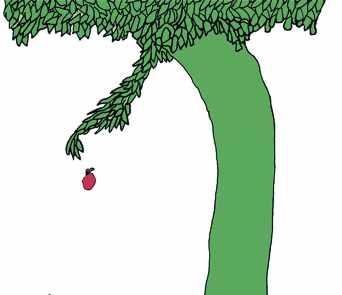
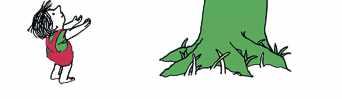
“And the tree was happy.” Shel Silverstein’s spare prose and sly humour made The Giving Tree one of the most argued-over books in children’s literature. Whether read as selfless love or painful sacrifice, it remains unmistakably his – wry, searching and full of contradictions that feel very human, very Jewish and endlessly moving.

Children’s literature has always been a battleground for belonging: who gets to be seen, what gets remembered, and how imagination shapes identity. For many Jewish writers, books were both escape and assertion.
As we remember Allan Ahlberg and his distinctly English stories, it’s worth pausing to acknowledge those Jewish authors and illustrators who helped to raise the very bookshelves we grew up reaching for. They didn’t just write stories, they built worlds. They drew doors. And we walked through them, carrying their creations into our imaginations and our lives.




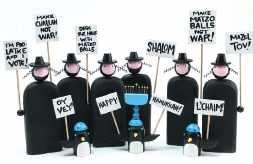
IT’S NOT JUST SENTIMENTAL FANS OF Toy Story who struggle to clear out toy boxes. The teddy with one eye, the plastic dinosaur missing a tail? Before you get all verklempt about farkrimpt toys, rejoice at the news they are being reborn this Chanukah. Obviously the teddy now speaks 30 phrases and knows your child’s name and the dinosaur roars as the Jurassic World Distortus Rex, but Chanukah 2025 toys are a mix of nostalgia and innovation. That’s because retailers say children still reach for the same things their parents did: dolls, cars, forts and puzzles. Only now they connect to Wi-Fi.
2

Hasbro, founded by PolishJewish Hassenfeld brothers, present Furby Aurora Furbealis (Freemans.com £57) that moves, sings and responds to speech.




1

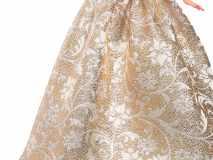
With Barbie Signature 2025 Holiday comes ambition. Ruth Mosko Handler founded Mattel and created the 11.5-inch legend.
(£42)


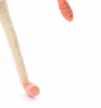

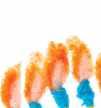
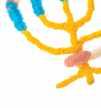
For a fully Jewish toy sewfeltheart.co.uk presents Hanukah Mouse (£19.99) crafted from needle-felt and teeny loose wool fibres.

4
Now in the hands of Mattel, Thomas the Tank Engine, created by Reverend Wilbert Awdry, is available as a wooden classic (thomas2u.co.uk £25).
7

5





3





Theforgottentoyshop.co.uk is for parents keen to pass on the past – and what could be better for latkes than Mrs Potato Head (£9.99)?
Our Generation Serenity Slumber Party Doll (smythstoys. com £26.99) is a substitute sibling for an only child –or a friend who regularly sleeps over.
6 8
Remember dogs are not just for Chanukah, so if your child keeps asking for a pet have a trial run with MINTiD DOG-E Interactive Robot Dog (£39.99) or maybe a pet latke (etsy.com £11.99) with an adoption certificate.



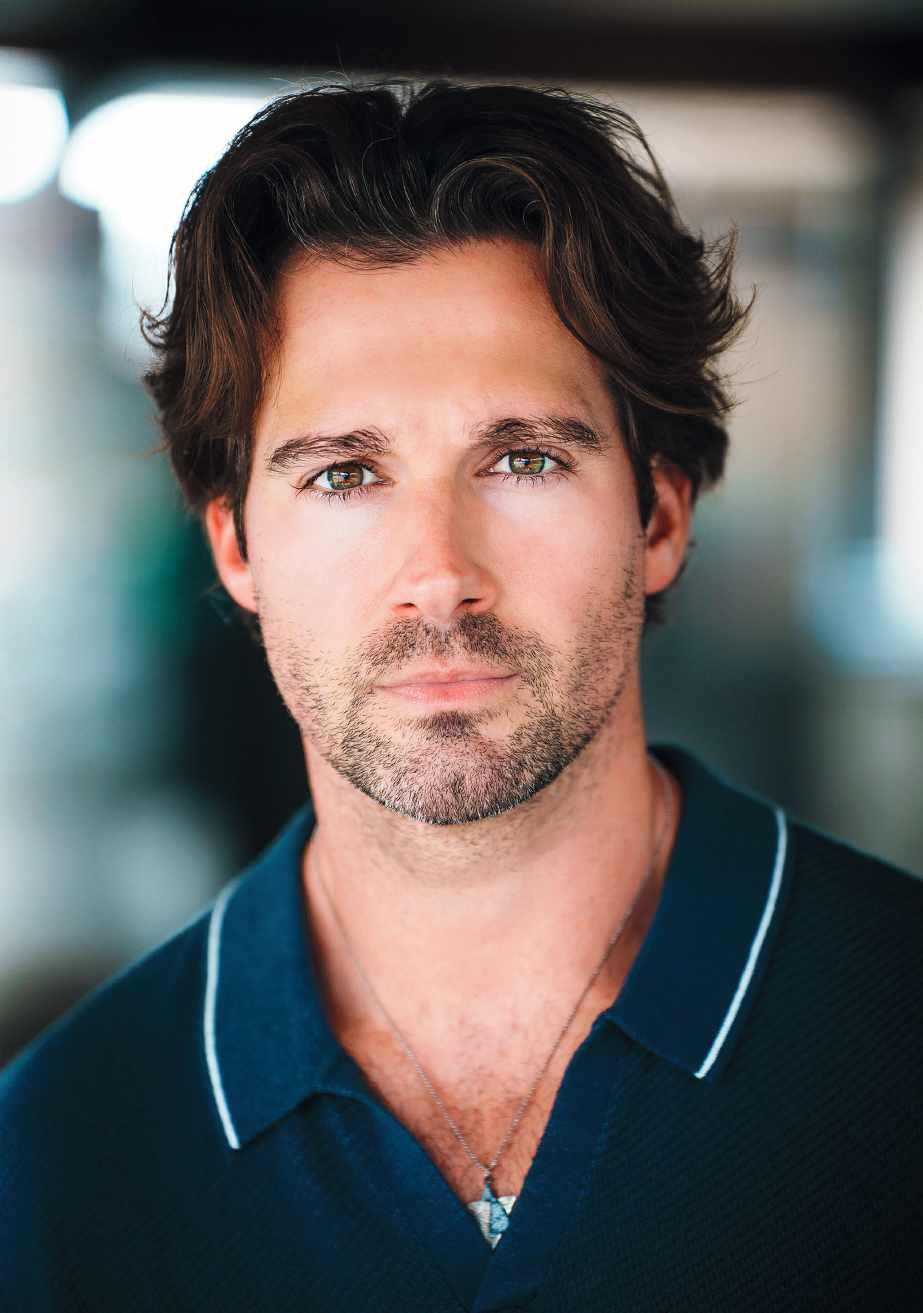
Pop idol James Maslow grew up in front of the camera, but now he’s using his platform to change minds, not just sell records. By Brigit Grant
It’s hard not to hang on his every word, partly because you can’t take your eyes off him. As superficial as that sounds, it’s also useful. Over the past two years, everything the Big Time Rush frontman has said has been in support of Israel and, with a fan base mostly under 25, that’s important.
Once known to Nickelodeon fans, James, born and raised in San Diego, is now recognised for his outspoken activism on social media, where his posts reach millions. In a climate in which silence is safer, he’s chosen to speak.
“I’m on a world tour right now,” he says from Los Angeles. “I’m home today, but about to be in a different time zone almost every day for months.”
Wherever he is, Maslow follows news about Israel. When we speak, he’s frustrated by the people who once shouted for a ceasefire. “Funny how they’re silent now there actually is one,” he says. “It just proves what I believed from the start – most didn’t know what they were talking about. They were simply echoing the popular narrative.”
He pauses, then explains why he’s invested. “I’ve been to Israel multiple times and studied Judaica history since Hebrew school. From history, from the Bible, and from experience, I could see the lies spreading online and thought, ‘This just isn’t true.’ I was in a unique position to be a voice of reason. And, yes, it was scary. Yes, I got backlash. But it’s a lot scarier not to stand up.”
In the past year, Maslow has found himself drawn into the political sphere. He’s met with lawmakers on Capitol Hill, attended vigils at the White House, and spoken at college campuses across America.
“I never imagined being involved in politics,” he admits. “But if my voice can reach people –especially young people – then maybe I have a responsibility to use it. I’m not trying to be a politician, but I do want to be part of the conversation.”
If 20 is in your rearview mirror then it’s unlikely you’ll know about Big Time Rush – Nickelodeon’s answer to Beatlemania. They are the boyband born from a hit TV show that ran for four seasons with a breakout single – Boyfriend, featuring Snoop Dogg – that went platinum. And, as with Westlife, every fan had her favourite.
“Those fans followed us into adulthood and, to my surprise, through my activism,” says James. “We’ve played maybe a hundred shows since October 7, all sold out. Even if some disagree or don’t understand what’s happening, they’ve still come. I like to think it’s because we create unity.”
Big Time Rush are about to headline Wembley Arena this month – a huge moment for the band and a telling one for James, who has watched the city’s wave of protests from afar. Does it worry him?
“Of course, I think about it,” he admits. “London’s had a lot of unrest. But we’ve had no trouble so far
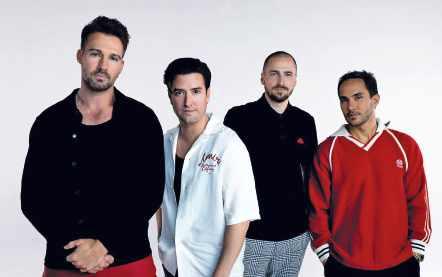
LEFT: James and his Big Time Rush band members
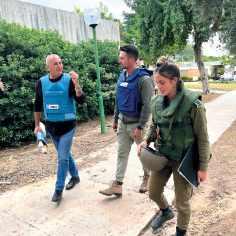
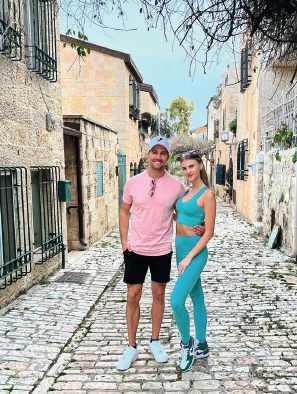
ABOVE: James and his fiancée Kate in Israel
RIGHT: James and Kate on holiday
‘ I don’t think anyone would have imagined the world would turn its back so fast on the Jews ’
in other places we’ve played and my message is about finding a path forward. People are tired of the shouting. They’re starting to say, enough of this –let’s focus on peace, not noise. Hopefully this has reached London.”
In November 2023, James flew to Israel. “I didn’t go to make a documentary,” he says. “I went to see what the hell was actually going on. I didn’t want to fight this battle without seeing it with my own eyes.”
He ended up filming Bearing Witness, a 45-minute documentary capturing encounters with survivors and soldiers. “I went to Jenin and to the Nova site – before it became a monument. The cars were still there. The smells were still there. We filmed everything we could in five days, barely slept, and turned it into something that really matters. For those who watch it on YouTube, it’s been eye-opening.”
What shocked him most wasn’t what he saw but how quickly the world forgot. “I don’t think anyone could have imagined that, after the atrocities, the world would turn its back so fast on Israel and Jews. The only way I can make sense of it is: tell a lie enough times, and it becomes the truth. Social media made that possible.”
Aged 35, James straddles two eras. “I went to high school without social media,” he laughs. “But by the time Big Time Rush hit, Instagram and Twitter were everywhere. I resisted it at first, but now I post every day. It’s a marketing tool and a community builder.”
He has seen its darker side. “TikTok has been one of the most antisemitic platforms. What I didn’t expect was how ready Hamas and Iran were with their misinformation campaign. It was sophisticated, well-planned and the world has devoured it.”
Being so prominent online has made him the apple of many Jewish mothers’ eyes – at least those hoping for a keeper for their daughters. Sadly for
them, he’s already spoken for, and fiancée Kate isn’t Jewish, but she’s been to Israel and seen what he’s fighting for. “I took her three years ago. We went from the north to the border of Gaza with Grisha Yakubovich, a former IDF officer who oversaw civilian coordination. We spoke to Palestinians who said, ‘We love Israel. We make 20 times more here than in Gaza. They treat us with respect.’ It was humbling.”
James admits his bandmates would prefer he stayed quiet. “They’d rather I didn’t say anything,” he says softly. “It breaks my heart, because I wish there was more effort to understand. But I can’t fault them for being scared. This topic shouldn’t even be political, yet it’s become the most politicised issue in the world.”
He knows fame amplifies his voice but also his risks. “It’s a double-edged sword. Without fame, I could speak freely with little backlash. But with fame, I can reach millions, so I try to use that responsibly. I’ve had death threats, sure, but they’re from a tiny, loud minority. The upside is that a lot of new people now know me – not just as the guy from Big Time Rush, but as someone who stands up for what’s right.”
He smiles. “Do I want to be political? Not really. But if my voice can make people think – or just talk – that’s worth something. Because yelling doesn’t help anyone. Conversation might.”
Around Rosh Hashanah, James released On My Mind, a heartfelt track about his support for Israel, his stand against antisemitism and his love for the Jewish community with the lyrics “I face the changes knowing one thing will stay the same – you’re always on my mind”.
Hopefully his followers spread his words.
Big Time Rush play at Wembley Arena on 11 December. ovoarena.co.uk
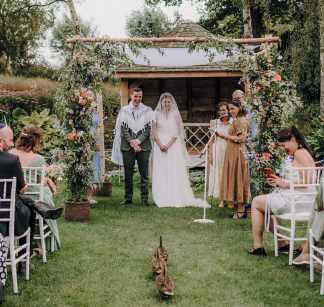
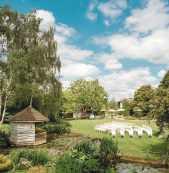

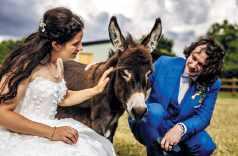
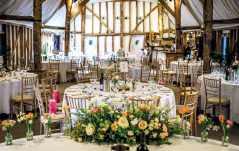

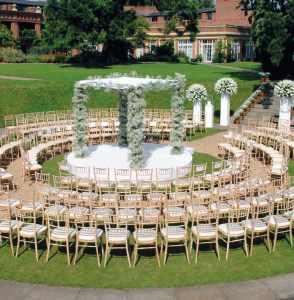
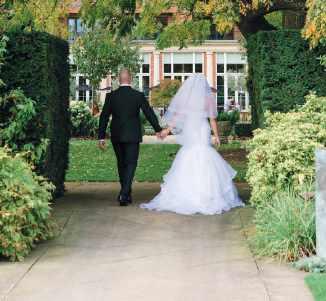
Stunning gardens encircle a host of enchanting indoor and outdoor ceremony and reception spaces
A countryside setting empowered by sustainability with seasonal home-grown food
Wildower meadows and orchards create the perfect wedding backdrop and a haven for wildlife
Impeccable service from our friendly, professional and experienced team
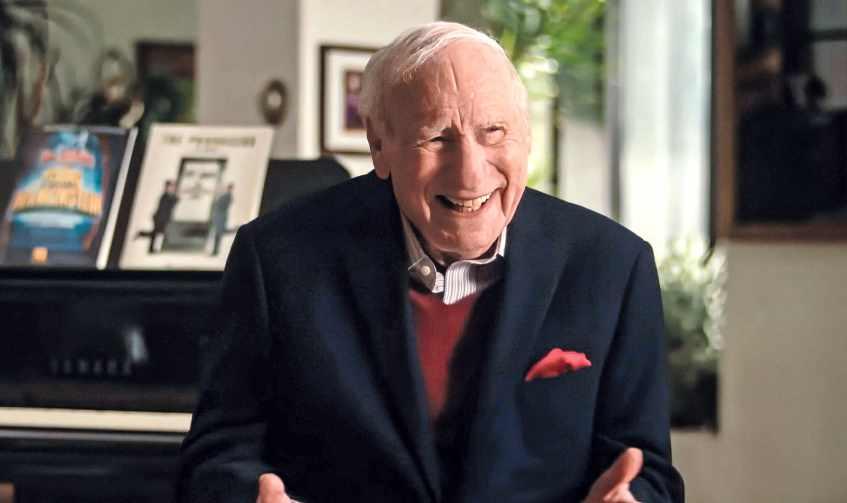
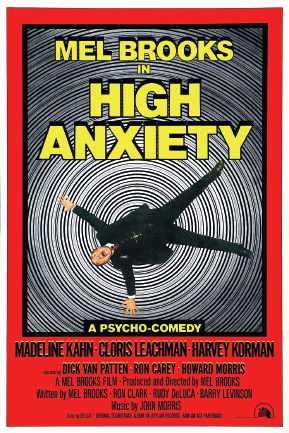
When Mel Brooks was working at Universal Studios in the late 60s, so was Alfred Hitchcock. Years later, Brooks honoured the director with High Anxiety – his spoof of the master’s thrillers. The two men had got to know each other gradually, but well enough that Brooks was allowed to call him “Hitch”.
“One day we were walking to lunch and he got stuck in the doorway, so with my thigh I banged him right in the ass, knocking him into the dining room. I said, ‘Come on, Hitch, we’re hungry!’
Ha!” Brooks cackles. What did Hitch do? “He went red and I thought, ‘Oh no, what have I done?’ But then he turned, laughing, and said, ‘Oh, you naughty boy!’”
From Hitchcock and Hitler to Spaceballs 2, the 99-year-old comic genius proves comedy and chutzpah never
By Hadley Freeman
Brooks still looks like a naughty boy, though he’s 99 — and if you can’t believe it, neither can he. “Some days I’m not feeling as great as I want to. But other days I don’t even notice that I’m not 37 anymore.” He keeps “showbiz hours”, staying up late, sleeping late, starting his day in the afternoon with a breakfast omelette. “Then I take a walk in front of the house, up and down the steps to stay limber. I talk on the phone and I write – every day. Always writing, always correcting, always questioning.”
This is the third time I’ve questioned Brooks, and he appears to be ageing backwards. The first was in February 2020, at the home of his best
‘The
friend Carl Reiner, with whom he’d had dinner every night since 2005 – the year his wife, actress Anne Bancroft, died. Brooks, who with Reiner created the legendary 2000 Year Old Man , was worried about Reiner’s health that night, and with reason: four months later Reiner was gone. When Brooks speaks of those he’s lost – Bancroft especially – he looks his age. Otherwise, his stories buoy him back up, and no one has more of them.
“Lemme tell you about Dustin [Hoffman],” he grins. “He was my neighbour in Greenwich Village and one day asked what I was working on. I said, ‘The Producers’. He read for Liebkind, the Nazi playwright, and was great. Then he says, ‘I gotta bow out. They want me for The Graduate.’ I said, ‘You’ll be back – you’re not exactly Cary Grant.’” Hoffman didn’t return – he got the part of Benjamin, opposite Mrs Robinson, played by Bancroft. “I told him, ‘You’ll be acting opposite my wife, so don’t fool around,’” Brooks laughs. “She never complained about the age thing. Not a word.”

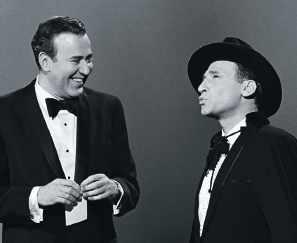
Brooks won the Oscar for The Producers screenplay and, in 2001, turned the film into a Broadway musical – still the most Tony-winning show in history, with 12 awards. Sixty years on, it continues to provoke hysteria with its audacity; no one has made a funnier – or more Jewish – show about Nazism. “It turned out to be my task to bring Hitler down,” he says cheerfully. It also gave him something close to starlit immortality. “I don’t care about immortality,” he adds, “I just try to live. The secret is not letting anything get under your skin. You gotta find the humour in it.”




see Anything Goes about it? “I remember thinking there’s but very
Born Melvin Kaminsky in a Brooklyn tenement in 1926, the youngest of four boys, Brooks lost his father to tuberculosis at two, leaving what he calls “a brushstroke of depression”. The next year brought the Great Depression itself. His life changed at nine when his uncle took him to . Watching Ethel Merman sing, he realised he wasn’t destined for a factory Jewish-American life then was close-knit – families lived, worked and holidayed together, often in the Catskills’ Borscht Belt resorts, where Jewish comedians perfected jokes about ma-in-laws and matzo ball soup. Brooks was performing there by the age of 14, until the Second World War interrupted his fun. Enlisting at 18, he fought in France and Germany as a combat engineer. What does he remember about it? “I remember thinking there’s nothing better than a ham and cheese baguette on the Champs-Élysées. Delicious, treif.” His three older brothers also served; one, Lenny, a B-17 engineer gunner,
was shot down. “He ripped off his dog tags before the Nazis arrested him – they said ‘H’ for Hebrew. If they’d known he was Jewish, they’d have sent him to a camp. Not that we even knew about those then.” Brooks pauses. “I never use concentration camp humour. It’s just too devastating.”
Returning to America, he found antisemitism alive and well – universities with Jewish quotas, clubs and corporations barring Jews and Hollywood blacklists. By the early 1950s, he was writing for Sid Caesar’s Your Show of Shows alongside Carl Reiner, Neil Simon and a teenage Woody Allen. “Then McCarthy’s people came to question us,” he recalls. “Carl said, ‘Come in! Have a coffee!’ They asked if we knew any communists. Carl said, ‘Many – but I didn’t know they were communists, they were just in showbusiness.’ He was brilliant. I thought, ‘Might as well make them laugh – it’s our best defence.’”
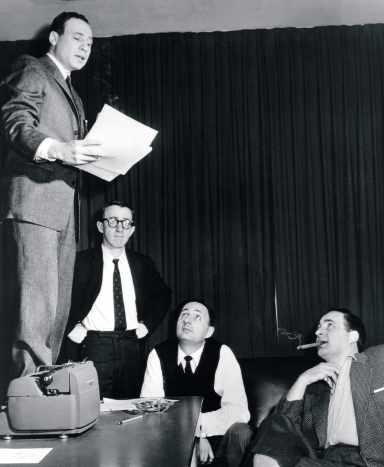

Brooks has made people laugh for six decades. His films, along with Allen’s, reshaped the image of American Jews – clever, urbane, funny – while writers like Roth and Bellow did the same in literature. “Ah, but we didn’t know it then! And that’s kind of gone away,” he says softly.
And the rise in nationalism and antisemitism now? “I worry about authoritarian governments, and there are so many now. But I’m too old to go to rallies,” he sighs, waving a weary “oy vey ” hand. Any concern that The Producers revival would be hit by antisemitism? “No,” he shrugs. “The Producers was never tagged a Jewish play – which is funny.” And the nature of antisemitism? “We’re attacked for being billionaires and attacked for being communists. If you need a scapegoat, you can’t do better than the Jews. But you know, Jews will survive.”
The other writers on Sid Caesar’s shows became Brooks’ friends for life, though only Allen, who has just turned 90, survives and they’re still close.

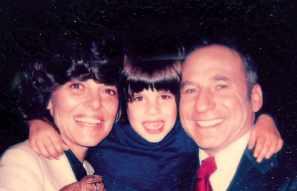
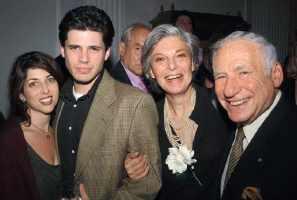
“The wonderful thing about Woody,” Brooks says, “was that after working on Caesar’s show, he’d always walk me home, all the way uptown, just walking and talking. It’s a pity he’s being crucified now for no reason,” he adds, referring to the false allegations that surfaced in 1992 after Allen left his long-term partner, Mia Farrow, for her adopted daughter, Soon-Yi Previn.
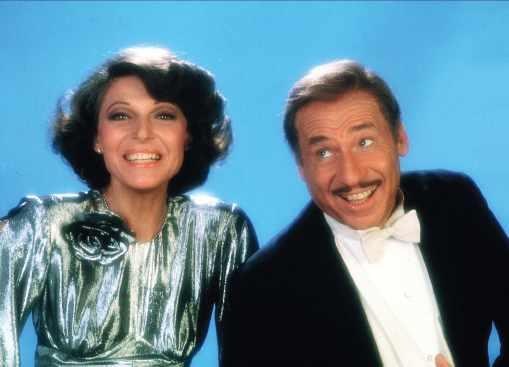
Brooks’ first marriage, which produced three children, ended in divorce. In 1961 he tagged along with a friend to see Anne Bancroft rehearse for a concert – and fell instantly in love. They married in 1964 and had one son, Max, an author. “The minute I met Anne, I knew!” he shouts. “She had such joie de vivre, she was the best actress that ever
‘It's a pity [Woody Allen]’s being crucified now for no reason’
lived, and she whirled me round the dance floor like I was a feather. Plus she made great pasta fazool.”
ABOVE:
LEFT:
It was Bancroft who urged him to direct, leading to The Producers and a run of classics – Blazing Saddles, Young Frankenstein, High Anxiety, Spaceballs and Robin Hood: Men in Tights . In 1980, he founded Brooksfilms to make dramas such as The Elephant Man and The Fly, but also to produce Bancroft’s passion projects, such as 84 Charing Cross Road (1987). “Anne got the Bafta. We had such adventures,” he says wistfully. Asked if he watches her films late at night, he trails off. “I…” Some memories are still too painful.
Yet he keeps writing. Brooks is overseeing a TV version of Young Frankenstein – Very Young Frankenstein – and a sequel to Spaceballs, with Rick Moranis returning, Josh Gad as a co-writer and Brooks once again playing wise old Yogurt, the Yiddish Yoda. Elon Musk is a big fan of the original. His Teslas have a ‘ludicrous’ and ‘plaid’ mode, the spaceship’s fastest speeds in Spaceballs.
“Yeah, he invited me to SpaceX, but I said no,” Brooks says. Why? “Well, he’s a little nuts. And he’s a billionaire. That’s too big a jump for me.”
It would be like going to warp speed without a seatbelt – and at 99, Brooks is keeping his funny bones firmly on the ground.
The Producers runs until September 2026 thegarricktheatre.co.uk
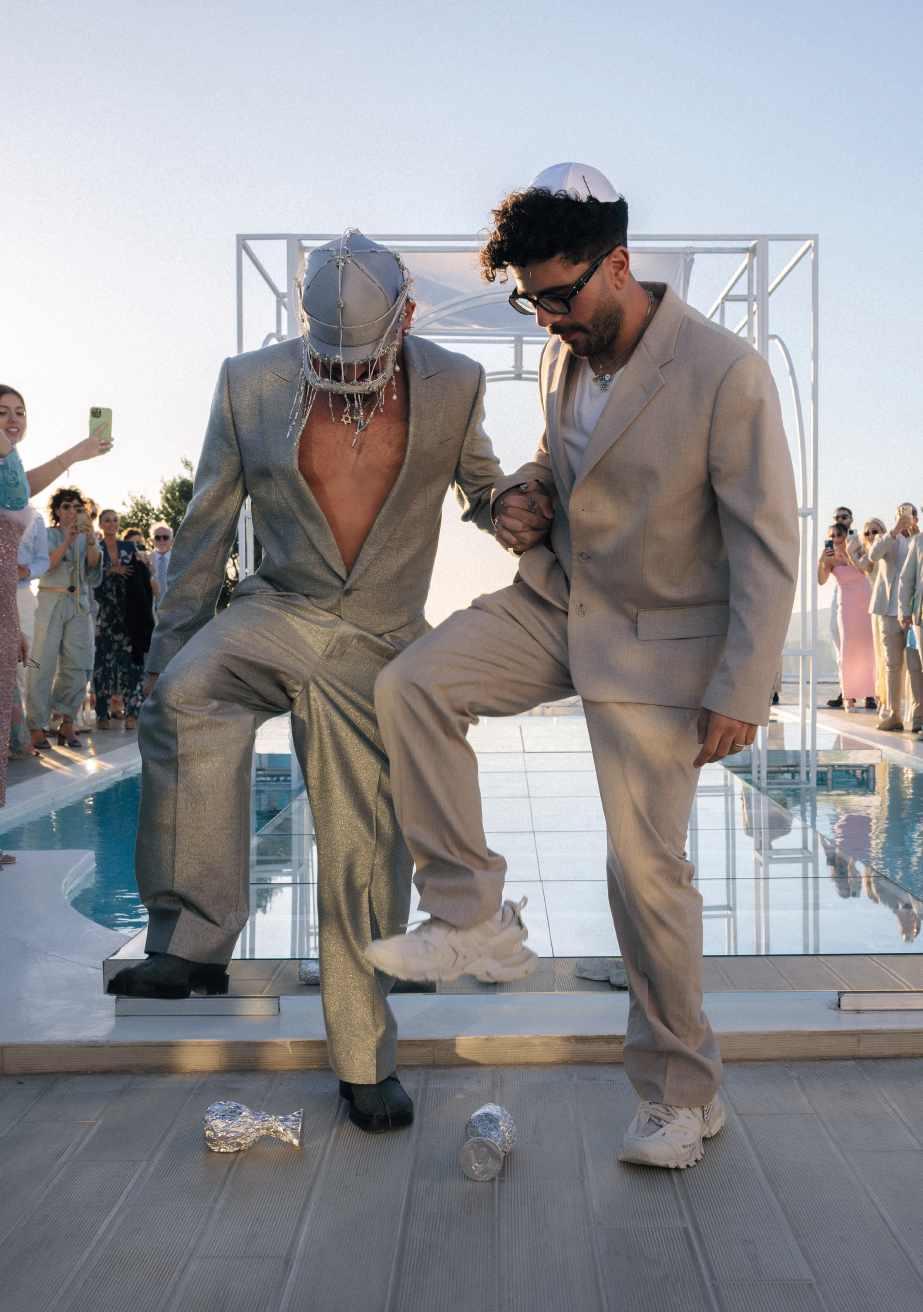
October 7 split Hen Mazzig’s life in two. What followed – from raw grief to a Greek wedding – was a lesson in rebuilding
PHOTOGRAPHS BY YOTAM SCHWARTZ
Some years can split a life apart. Mine split on October 7, 2023. The fracture wasn’t only from the brutality of the massacre; it was the aftermath, when the public response revealed how thin the world’s empathy for Jews had become. Facts were treated as inconveniences. Grief was interrogated. The dead were discussed with a conditional grammar. I spent weeks talking on television, briefing officials, speaking to families and carrying a private collapse that I didn’t have the luxury of slowing down to name.
During that same period, I was preparing for my wedding. The contrast bordered on absurd. I would leave meetings with hostage families and walk straight into conversations about seating charts. I’d record commentary on mass violence and then answer questions about linen colors. Something in me couldn’t reconcile those worlds. I wasn’t supposed to. Life after an atrocity is never coherent. It is assembled.
T he assembling began long before the wedding day. For months, I watched families of hostages show a clarity of purpose the rest of us struggled to imitate. They didn’t fall into despair. They held their fear with discipline. They demanded the return of their loved ones with a steadiness that cut through every political performance around them. Their determination forced me to examine my own. If they could remain clear while living through the worst hours of their lives, I had no
excuse to become smaller than the moment.
T his year saw all the living hostages returned home, gaunt with hunger but eyes bright as they hugged their loved ones for the first time in a very long time. This year also saw burial after burial, as family members finally got the chance to give a final goodbye. The endless videos and stories shared online made visible a truth the world keeps trying to forget: Jews fight for life. Jews return their dead. Jews take responsibility for one another across impossible distances. That ethic is what held me upright this year. It’s also what formed the spine of my wedding.
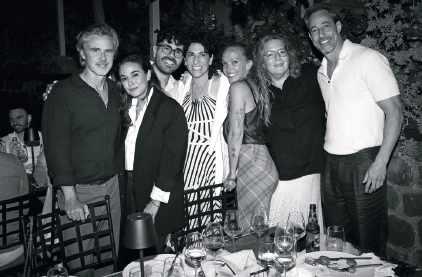
My friend, New York Times bestselling cookbook author and chef Adeena Sussman said something to me the night of the wedding that exposed a
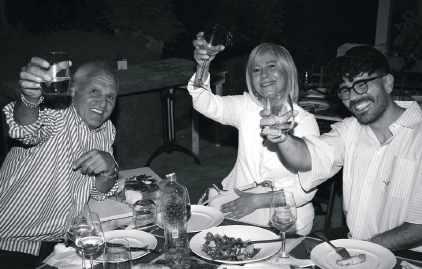
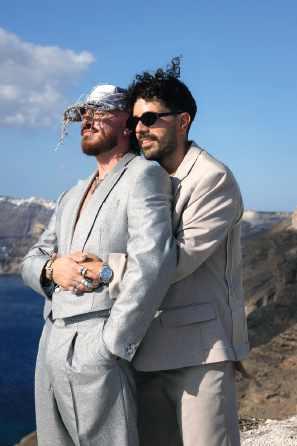
dimension I hadn’t fully understood. She told me that the weekend felt like “group therapy disguised as simcha”, that people didn’t only celebrate us, they needed the celebration for themselves.
After a year defined by grief, shock, and moral disorientation, the wedding became a corrective. A recalibration. A reminder of what unbroken life looks like.
We chose Greece for reasons that were both practical and symbolic. It sits between Israel and the United Kingdom, between where our families live and where our lives have stretched. It is a literal midpoint, but it also functions as a metaphor for the life we are building, suspended between cultures, histories and expectations. Greece isn’t neutral. It’s layered. Ancient. Weathered. A place shaped by fractures and still standing. That felt appropriate for a Jewish wedding.
Greece isn’t neutral. It carries the memory of the Greek empire that once tried to crush Jewish practice, erase Jewish particularity and force Jews into a cultural mould that was not theirs. The empire that banned brit milah . The empire that outlawed Torah study. The empire that tried to overwrite a people. The old struggle between assimilation and identity was born on that soil.
Standing there to build a Jewish wedding felt like a quiet corrective. The same place that once tried to extinguish Jewish difference became the place where a Jewish wedding had a simcha with full visibility and without apology. History bends strangely. Sometimes you return to the site of attempted erasure to assert continuity. Sometimes the most powerful act is simply being there and living.
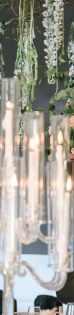
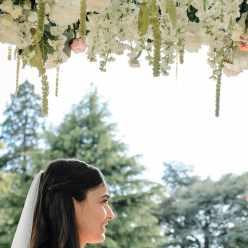
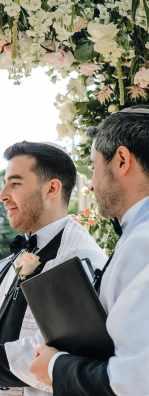
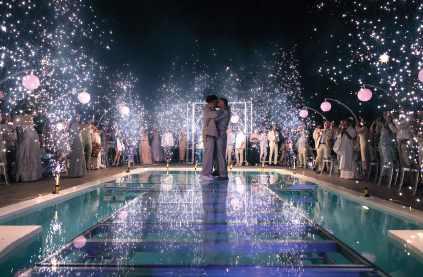
T he wedding began with a Friday night Shabbat dinner. The vinery where we hosted it was full of people who had lived their own version of the past two years, carrying different forms of exhaustion. Marc, my husband, had chosen almost every element of the weekend: the poolside ceremony on Saturday, the colours our mothers wore, and the
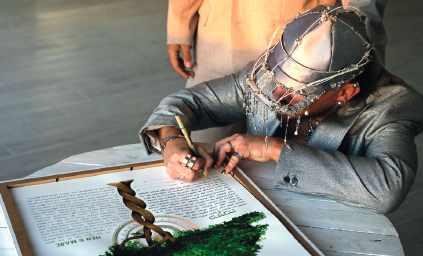
palette for the guests. He wanted the aisle to feel like a catwalk, not as a spectacle but as an intention. Each person who came forward to give one of the seven blessings walked that path like they were stepping into a story larger than themselves. A female rabbi led the ceremony. It mattered to us that the ritual acknowledged the world as it is, not the world as tradition once insisted it must be.
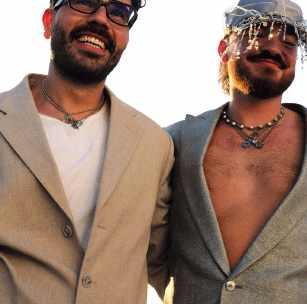
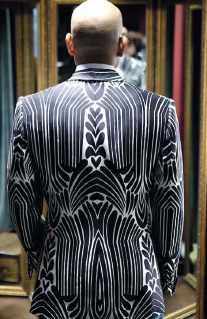
Marc designed his suit with a tailor in London and kept a second look secret from me. It was a dress created by the artist and designer Nicole Zisman, with a hand-tan mark traced across the chest and back, a deliberate play on his fashion instincts and on the idea of what a groom is allowed to be. My own suit was Maison Margiela, seams exposed and inside-out, because Judaism at its best has always been an inside-out tradition. It asks you to examine the internal first and let the external follow.
We both smashed glasses. We both meant it. The shattering felt like an honest acknowledgment of the year we had survived, and a reminder that we will never forget Jerusalem. Then the lead singer of the Yemenite sisters trio A-WA, Tair Haim, performed live, pulling the entire wedding into a different emotional register. The food was Middle Eastern with a Greek flair. Instead of a cake, we served a baklava tower. Fireworks closed the night. None of it was designed to distract from the world. It was designed to show that life without joy is not life.
T he next morning, 80 of our closest friends joined us for an island-hopping cruise around Santorini. It wasn’t extravagance. It was continuity. People needed a space where the past two years
‘I want to be the person who protects him in the ways the world will not ’
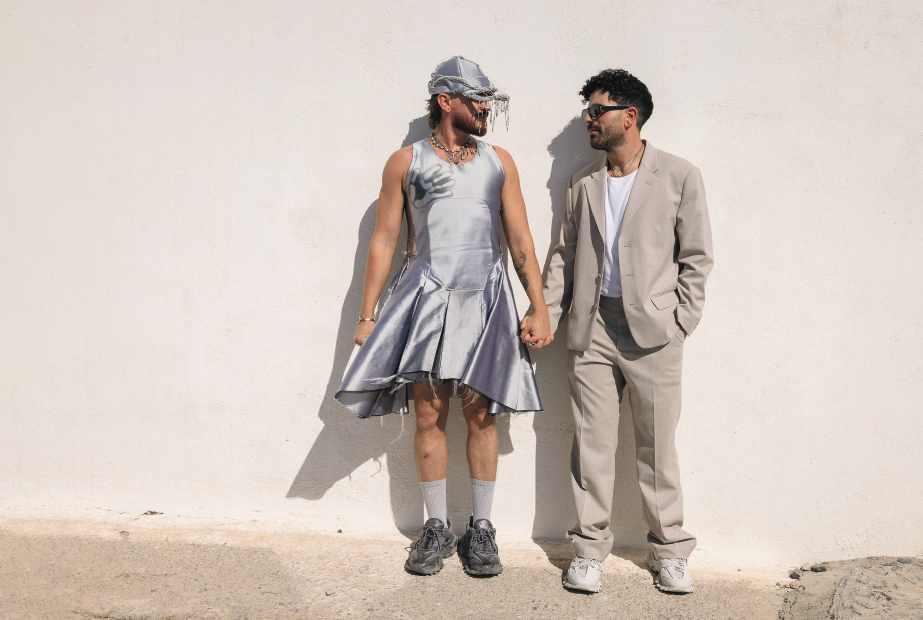
weren’t the entire story.
T his week, at the Tel Aviv Institute lab, I met Raz and Ohad Ben Ami, both survivors of Hamas captivity. They were kidnapped together. While they were held, Ohad protected Raz. When she returned to Israel without him, she refused to let the country forget his name. She went on every stage, spoke from every rooftop, fought until the day he came home. Their story isn’t sentimental. It is structural. It explains how people survive what isn’t survivable. Someone holds the line for you until you can stand again.
T hat is the kind of marriage I want to build. The past two years have changed all of us. They have changed me. I’ve watched what the stress, fear and public scrutiny have done to Marc. I’ve watched what it has done to our lives. I don’t want a marriage that performs resilience. I want one that practices it. I want to be the person who protects him in the ways the world will not. I want to be the
husband who holds the line when he can’t.
T he world keeps trying to shrink Jewish life to the dimensions of our trauma. This year taught me that Jewish life is built in the aftermath of trauma, not in submission to it. My wedding wasn’t an escape from October 7. It was the reconstruction project that followed. It was the decision to build something deliberate inside the wreckage.
T he hostages came home. Three still need to be returned. The rest of us now have the task of choosing what we build next. I am committed to building a Jewish home filled with love and acceptance. I am committed to joy that no one can take away.








It's time for a hug! Prima Hotels Israel are waiting for you with open arms Enjoy the distinctive hospitality, design, atmosphere, flavors and style of each of our hotels across Israel.
We’re brimming with talent across arts, culture, business and more. Look out for those who – regardless of age - will be emerging in 2026 and beyond. By Charlotte Henry and Brigit Grant
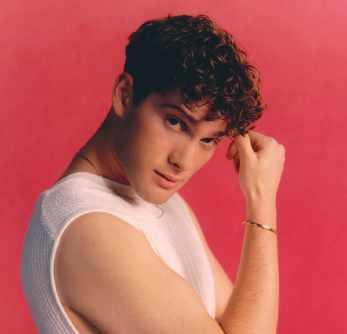
Leo, 26, is one of the most talked-about voices in British comedy. Following his acclaimed solo stand-up Literally Who Cares?! he landed a role written for him by Lena Dunham and starred in her Netflix series Too Much in May. His latest project, the six-part comedy series It Gets Worse is for Channel 4 and in it he plays Ethan, one of three university friends navigating life in London in their mid-20s. Moving beyond the microphone and into full-blown show-runner mode, watch him fly in 2026.
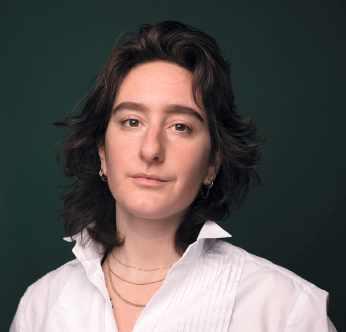
Yael van der Wouden has pulled off one of the decade’s standout literary breakthroughs. Her debut, The Safekeep, swept the 2024 Booker Prize and the 2025 Women’s Prize for Fiction, cementing her as a major new voice. Born in Tel Aviv and raised in the Netherlands, she tackles post-war guilt and fractured families with striking clarity, attracting both critics and committed fans. She’s now completed the first draft of her second novel, set in a 1930s fishing village and following a woman fighting for a divorce.
‘ I hope to work at the intersection between Jewish studies, critical antisemitism studies and literature ’
The Israeli scientist was one of 2025’s standout young researchers, honoured with a Blavatnik Award for his pioneering work in biomineralisation — examining how organic crystals form and interact with light, opening doors to new sustainable optical materials and bio-inspired technologies. Palmer is part of the new wave of Israeli scientists gaining global attention for research that blends biology, physics and engineering.
The daughters of Ewan McGregor and Jewish French-Greek production designer Eve Mavrakis are carving out their own creative paths. Both have spoken about growing up Jewish and had bat mitzvahs. Clara, 29, can currently be seen in the A24 road-movie Bleeding Love and soon in the thriller Noon and satire The Philosophy of Dress She is also developing female-led projects through her company, Deux Dames Entertainment. Esther, 24, is in We Were Liars on Prime Video and is in A Place in Hell with Michelle Williams and Daisy Edgar-Jones. Together, the McGregor sisters are making the most of their cultural lineage.
Harpist Sigal Nachshen has achieved what many young musicians spend years chasing: a coveted place in the National Youth Orchestra. A Hasmonean alum now at Henrietta Barnett, she has long been performing with a harp almost taller than she was. Now she wants to bring orchestral music directly to teens through workshops and school outreach. She is firmly on track towards the country’s top orchestras.

An academic specialising in literary representations of antisemitism, Chloe is currently examining “what happens when anti-Jewish and misogynistic prejudice collide”— a painfully timely subject given how reports of abuse against Israeli women by Hamas terrorists have been ignored, even by feminist groups.
Named an emerging writer by the Genesis Foundation and Jewish Literary Foundation, her creative work centres on “a reimagining of the biblical story of Joseph, the one that we all know, the one that we're all singing along to.”
Alongside her writing, Pinto plans to remain in academia: “I hope to work at the intersection between Jewish studies, critical antisemitism studies and literature.” Her determination to understand — and push back against — the hatred faced by Jews, especially Jewish women, feels urgently needed.
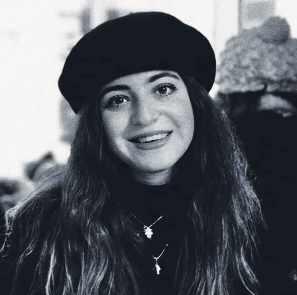
Singer-songwriter Bertie Newman, 23, is one of the younger UK artists gaining attention this year, thanks to a growing Instagram presence and a run of warm, lo-fi demos. His candid lyrics and understated indie-pop sound began circulating more widely after a February post spiked in views, and tracks like Weekend Lovers, Skin and I’m Only Gonna Break Your Heart have helped build his following. Raised Jewish in Hackney — he once sang in a synagogue choir — Bertie’s standout voice promises success with more new music expected in 2026.
At 23, actor and writer Kit Rakusen is emerging as one of the most interesting young performers of the year. The surname rightly rings a bell as his greatgreat-grandfather was Abraham Rakusen, founder of the Leeds matzo company, though Kit only discovered this recently, he told the audience at the UKJFF screening of short Beshert. Starring opposite Anton Lesser, it’s his most intimate role yet,
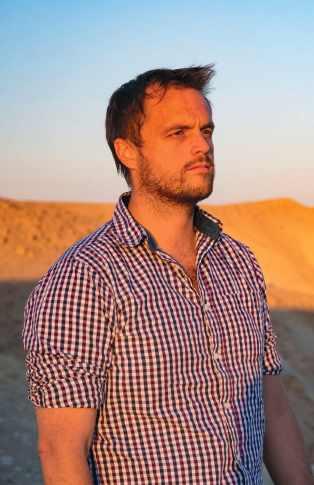
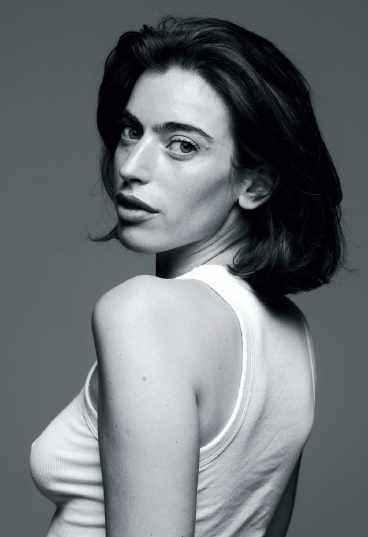
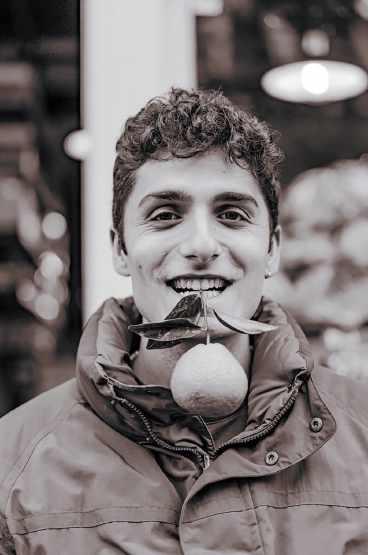

building on an already impressive CV that includes BBC’s The Famous Five, Belfast, Golda and Wes Anderson’s The Phoenician Scheme. Lesser praised him as “a rare young performer who listens with his whole face — it makes you lean in”. With more screen work on the way, Rakusen appears to have cracked it.
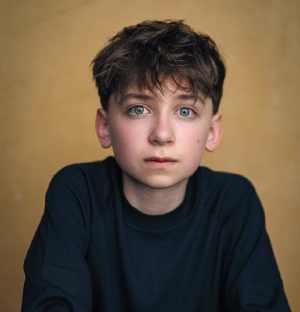
The singer-songwriter and cantor has gained serious traction following the release of his album In Search of Silence in October — a blend of classical, rock and Jewish spiritual influences. Born in Baku and raised in the US, Agar has spoken about how his grandfather’s funeral redirected his artistic compass toward liturgy and memory. A shul cantor since 2020, he’s carving out a space where contemporary songwriting and sacred music meet.
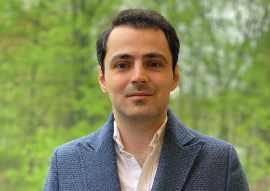
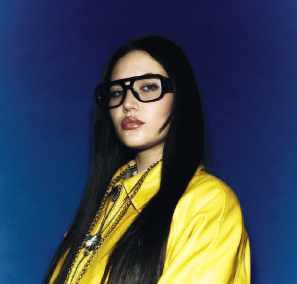
The London-based singer-songwriter has been rising steadily since releasing her debut EP Sink Now, Swim Later in February, a moody, intimate mix of alt-pop with real emotional sharpness. Building momentum on TikTok and Instagram, where several clips have passed the million-view mark. Still in her early 20s, she’s widely tipped for a breakthrough
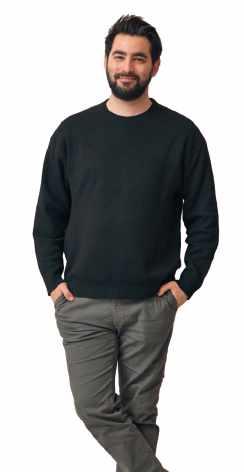
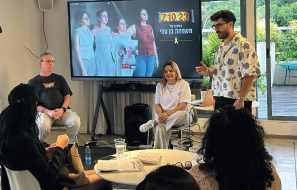
He might not present them, but Josh Adley is the man behind some of the most popular podcasts around. His firm, Platform Media, is a video-first podcast company and having received briefs from Audible and the BBC it became clear to him that podcasting was “the direction things were going quite quickly”. After navigating various sales and mergers, Adley’s company is now behind hit shows like Traitors Uncloaked and has worked with England’s Women’s Rugby Team. Adley says he’s “never been that forthcoming about my faith,” although this has changed as he has become more senior. The CEO also says that “it's noticeable that in podcasting there are very few Jewish people,” making him, perhaps unwittingly, something of a pioneer.

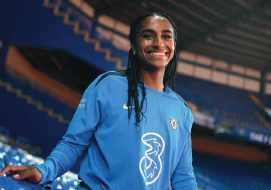
The California-born defender of Ethiopian Jewish heritage made global sports headlines this year with her January transfer to Chelsea FC Women — a landmark $1.1 million deal, the first million-dollar transfer in women’s football. After dominating the NWSL and captaining Stanford, she’s now shaping up to be one of Europe’s defining football talents. in 2026. were quickly”. sales and says has few making the ago, impressed
Adley has now worked with some big names, but his favourite collaborators? “Ramesh Ranganathan is one of my favourite comedians and we launched the show with him a couple of months ago, which was a really proud moment. The person I’ve been most impressed with over the years of working closely together is Olivia Attwood,” he says of the former Love Islander. And the dream collaboration for the future? “Larry David.”
SAVE THE DATE: MARCH 2ND – 6TH 2026

TEL AVIV – JERUSALEM – HAIFA
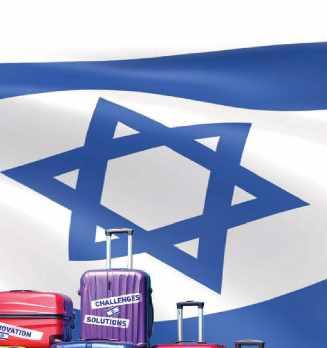
Join us as we look to the future with renewed hope and pride on our next Technion UK mission to Israel. We will explore how Israel continues to thrive – advancing science, technology, and innovation while honouring its heritage and humanity.
This unique journey will offer an inspiring overview of Israel’s academic, industrial, and social achievements, with visits to world-leading institutions, insightful briefings, and moments of reflection and connection with the people shaping the country’s future.


For more information please call or message Ida on WhatsApp +44 7879 494 078 or call 020 7495 6824 or email IDA@TECHNIONUK.ORG Securing Israel’s Future Through Science and Innovation
“The Technion has helped visualize, plan, and implement Israel’s growth. It has aided in transforming a tiny country into a great center of science and research, sharing its advances with others.”
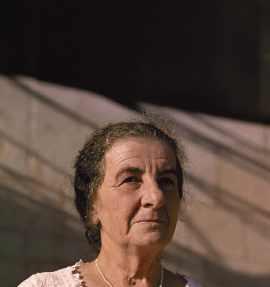
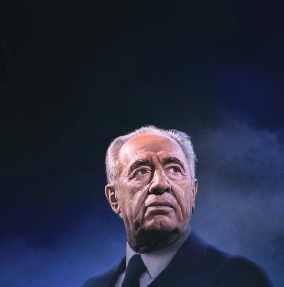
“It is fortunate that the Technion was built before the State of Israel. Had it been the other way around, who knows what would have happened. The Technion built the State of Israel and deserves the credit for this.”
Prime Minister and President Shimon Peres, 2014
Please support the Technion, secure Israel’s future and help shape the world.
If you are writing or changing your will, we can arrange a suitable legal advisor for you.
Contact the CEO Alan Aziz in strict confidence: CEO@technionuk.org 020 7495 6824
“The golden age for
is over – but PANIC is not the answer”
By Daniel Sugarman
The period since 7 October 2023 has exposed many difficult societal truths. While access to information has never been more open, ignorance flourishes. This is an era in which scholarship sometimes appears vanquished by slogans; where arguments are won by the loudest, and not by the most erudite.
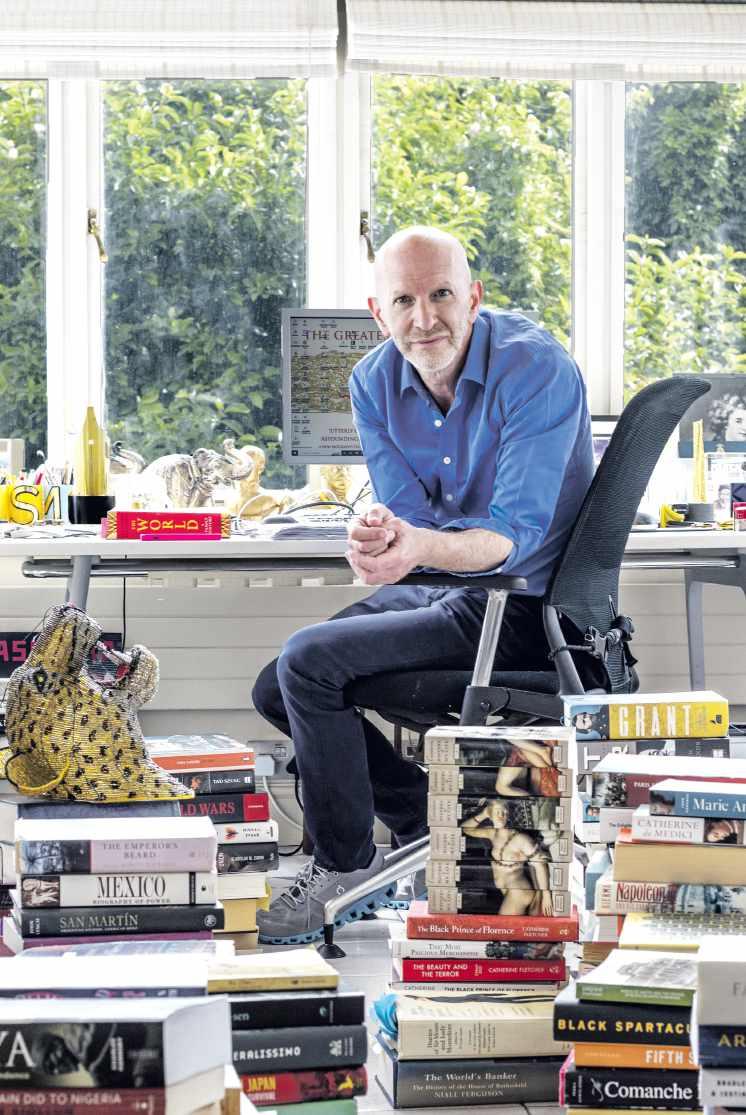
The need to fight back is evident; few are more capable of doing so than Simon Sebag Montefiore. He is one of the UK’s pre-eminent historians, bestselling author of works on Stalin, the Romanovs – and of course, Jerusalem itself – and his latest work, The Cauldron: The Making of the Modern Middle East, will be published next summer. Covering the period from 1900 until the present, its sweep is intercontinental – from the Bosphorus to the Gulf of Aden, Tehran to Tangier.
W hen I sit down with him, it is clear the book’s ambitious scope is designed to fill people in on the fuller picture.
“There are so many books on IsraelPalestine; it must be the most overcovered subject on earth,” he says.
“None put together the whole region, with Iran and Turkey. There are lots of histories of the Arabs, but this is a history of all of it together, showing the interconnectivity.”
Modern academic discussion of the Middle East is obsessed with external
impositions upon the region. The Cauldron moves beyond that. “I also show it’s not all about outside powers doing things to people in the Middle East. It's also about the agency of the peoples of the Middle East: Arab, Jewish, Turkish, Iranian. It’s very liberating writing about that and not just repeating clichés about colonialism and imperialism.”
Jerusalem, his other work on the region, showed how he prioritises informing his audience, rather than lecturing them.
“When it came to the modern period, I took real trouble to really research all the big Palestinian Arab families, the so-called ‘notable families’. I met someone from every family and all their family historians,” he says.
“So that book has their histories in a way that you don’t find in any of the others. So much anti-Israel literature is so concentrated on blackening Israel that they have no interest in the Palestinian Arab families. If you look at most of these books, they know nothing about these people, and they’ve never bothered to find out.”
With The Cauldron, “The world which I bring out is multi-ethnic, multi-sectarian and cosmopolitan. The Khalidi mayor of Jerusalem, when asked in the 1860s what his nationality was, said, ‘Well, I’m first of all a Jerusalemite, I’m Islamic, I’m an Ottoman and I’m an Arab’. We should all have multiple identities.”
Sebag himself certainly does; he’s part
of the Jewish community, certainly – his ancestor, Sir Moses Montefiore, remains one of the most famous of all British Jews. But he is also part of the literary world, as well as the aristocratic set –the King himself is a longstanding friend. I ask what his impression has been regarding people’s responses since 7 October 2023.
“I found massive support from all over society, both high and low… almost unanimity in sympathy for Jews and much more understanding of what’s really at stake here,” he tells me.
That lies in sharp contrast to “those in the most privileged higher echelons of media and academia, where the taboo against anti-Jewish racism has truly vanished”. He adds: “Many news anchors and reporters have become ideological activists, who arrogantly disdain facts in place of a simplistic unrealistic Manichaean world pantomime in which Israel and Jews have dark sinister roles.”
He goes further. “This kind of darkness is really at its most intense in these news organisations and so-called humanitarian organisations, and in academia too… bias leads them to make repeated mistakes that they resist correcting.
“When you look at these big TV presenters, they’re also enormous sheep. As soon as there’s a slight change, they desperately change too. We are not dealing, in most cases, with people of great integrity.”
Author
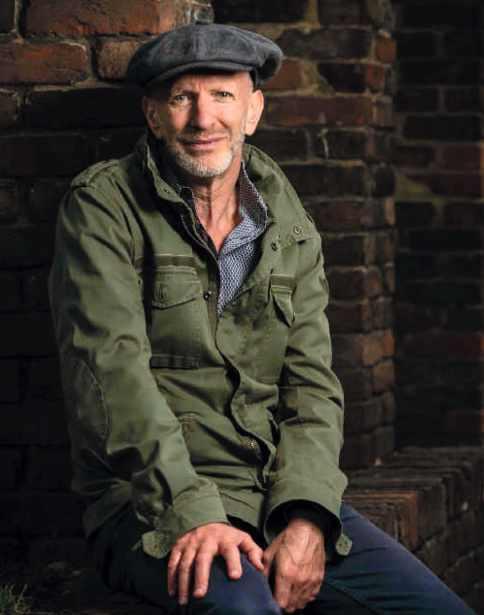
Despite some support, he is clear that for Jews, “the golden age is over”, describing how “a latent racism against Jews and Israel was growing… indulged in our civic institutions, academia and civil service… our politicians and our leaders indulged it. But October the eighth, the day after, showed us this is a struggle we now have to fight”.
He warns against sensationalising the situation, however.
“We Jews always have our metaphorical bags packed, but we must also avoid a tendency to panic, be oversensitive and overreact to every tiny slight… I don’t think we really need to panic, not yet. But I also believe we shouldn’t be quiet… we have to fearlessly stand up for ourselves and appeal to people who are sympathetic to us.”
As we talk, 200 miles northwards King Charles is visiting the Manchester Jewish community after the terror attack on Heaton Park synagogue. Sebag describes
His Majesty as “a wonderful person and a great friend”, adding: “It’s so touching to see him there. I think that sort of visit is so important.”
Returning to politics, it’s clear that Israel itself has not been immune from the same anti-liberal and populist trends that have swept much of the world. Sebag stresses the need for moral clarity and self-awareness within the diaspora and beyond: “We just have to be clear about our own values, stick to them and say what we think.”
As we converse, the living hostages have finally returned from captivity and a shaky ceasefire is holding. He believes that “in the West nothing so exposes the malignant humbug of those elite British saviour activists as their opposition to the ceasefire and their
‘I don’ t think we need to panic, not yet... But I also believe we shouldn’ t be quiet’
presumption to know better than the Palestinians themselves”.
Although predicting the future of the Middle East is folly, I ask if anything in his research for The Cauldron suggests potential pitfalls to avoid.
He describes how, as pre-1948, “Israeli statesmen would be unwise to alienate friendly Arab powers all around. Israel has a tendency to display unwise arrogance at times; it’s got to restrain that. It’s actually won astonishing victories since the disaster of 7 October but, equally, has made colossal errors.”
He recommends Israel shows “real respect” to countries such as Egypt and Jordan, while “also showing new sensitivity towards countries like Syria and Lebanon, where the jury’s out, but in both there is a possibility of building relationships that would have been unthinkable since 1949”.
By ‘sensitivity’, I ask, does he mean ‘not bombing them every two minutes’? He concurs, although he points out that the strikes on Hezbollah “have actually given Lebanon a chance to remake itself. But the bombing of Qatar alarmed everybody… Israel has won huge geo-strategic space. But it has to turn that credit into gains; that will take some generosity of spirit, which has often been lacking.”
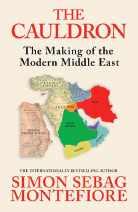
His ultimate viewpoint is cautious – very cautious – optimism.
“Let’s hold our breath. This is a moment of hope and opportunity. Out of the abyss of death and despair, something new and exciting could emerge.”
The Cauldron: The Making of the Modern Middle East will be published in August 2026 by W&N

DEVELOPED BY ISRAMICH
A boutique building with seven floors and only 20 apartments, perfectly located between Rabin Square and Kikar HaMedina, in the heart of Tel Aviv — a vibrant area combining culture, leisure, and lifestyle.
Offering two- and three-bedroom apartments, as well as a luxurious penthouse.
2 Ben Gurion Street, Ramat Gan, BSR Towers 1, 11th Floor
Sari Turjeman | Mobile: +972 549 404030
Penthouse Highlight
155sqm penthouse with private pool with a 30 sqm terrace in the heart of Tel Aviv.
Prices starting from only ILS 4,000,000
Projected completion in 36 months
Attractive financing terms for buyers
David Juda shares a first name with Britain’s most famous living artist — and soon, a major moment in his story. By
Anthea Gerrie
Sixty years ago, David Juda made his living pouring Champagne for first-class travellers, imagining a life spent serving the world’s elite. Today he still serves them – only now, the vintage is cultural. As CEO of Annely Juda Fine Art, Juda sips Champagne with clients as he unveils world-class art before it’s even a glimmer in a curator’s eye.
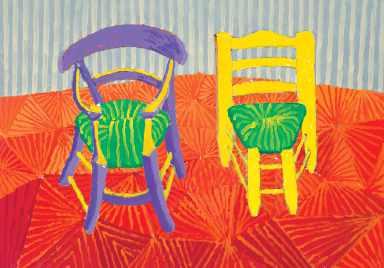
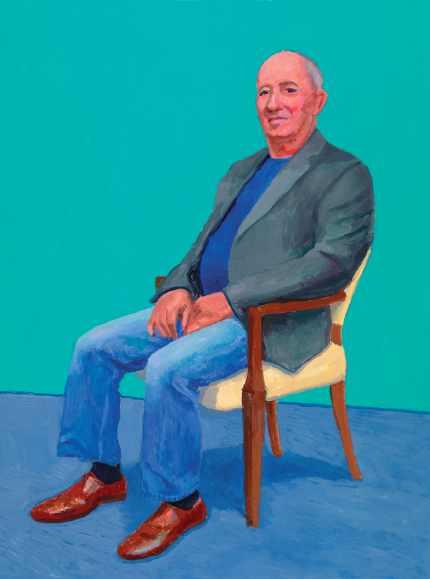
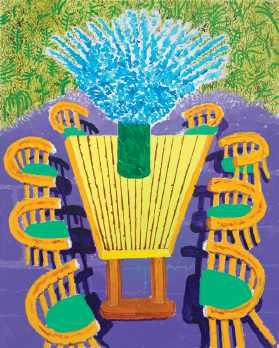
“We are going to be mobbed,” he laughs, ahead of the global premiere of 13 new David Hockney paintings –alongside portraits, self-portraits and moonlit landscapes. Those same works drew nearly a million visitors in Paris earlier this year, but London will host something extra: several images never shown in France, giving the capital’s art lovers their first look.
The timing couldn’t be better. This winter’s Hockney opening coincides with the unveiling of Annely Juda’s elegant new Mayfair gallery – its first ever street-level space. Founded in 1968 in a single Fitzrovia warehouse room, the

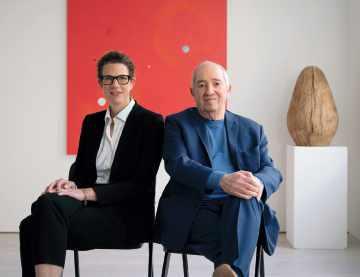
gallery has long been a powerhouse of British and international modern art, championing painters and sculptors well before institutions caught up. Now, at 16 Hanover Square, it finally has a home worthy of its legacy.
That legacy began with David’s late mother, Annely Juda, who persuaded her only art-minded child to leave the Merchant Navy and join her in what would become one of the most acclaimed galleries in Britain. Annely, who was still working at 90, had built her career from nothing after arriving in Britain in the 1930s, fleeing Nazi Germany.
The daughter of a Leipzig textile manufacturer briefly imprisoned after Hitler came to power, Annely and her family first sought refuge in Palestine –“it was the one place you could go quickly,” she later said – before she settled in London. There, she studied fashion design, married fellow German refugee Paul Juda, and raised three children.
“Unhappy in Germany after five years, she was discouraged from coming back to Britain by the Home Office, who even suggested putting us in an orphanage,” recalls David, just a couple of months shy of his 80th birthday. “She did get residency, but never had a British passport – though she did get a CBE in 1998.”
While Annely was learning the art business, her children were adjusting to changed circumstances after their parents’ separation. “I went from a Quaker boarding school to a rough secondary modern,” Juda remembers of his Willesden Lane days. “I stood out in my short trousers because my mother said I couldn’t wear long ones until after my barmitzvah.”
He was, however, already steeped in the gallery world. “I’d go after school to do the mailing and serve drinks at openings,” he smiles. “By 12, I was meeting artists.”
When Annely closed her Hamilton Gallery in 1967, he helped her move out
‘I’d go after school to serve drinks at openings. By 12, I was meeting artists’
and decided to stay. “I only joined the Merchant Navy to prove I could look after myself – I had no idea what I wanted to do. But helping my mother made sense.”
Together, they secured a small space in Tottenham Mews for £400 a year and launched Annely Juda Fine Art. Their success came quickly, but the real coup was in the 1990s, when Hockney’s London gallerist Kasmin closed his doors. Annely Juda became his new home.
“By then we’d known him for 30 years,” says David. “We used to go round to his
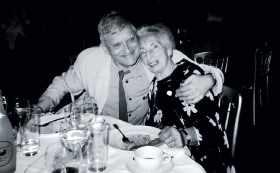
house for tea on Saturdays, and he started to draw me in 1972.” Juda has two of those portraits. “My mother looked disappointed when he gave one to me,” he recalls. “But Hockney said, ‘One day you may not be here, and David will have you.’ I thought that was very nice.”
That warmth – both familial and creative – still defines the gallery’s approach. Juda’s roster has included giants such as Sir Anthony Caro, Leon Kossoff and Christo, whose monumental wrappings once transformed bridges and islands. The new Mayfair townhouse now matches their scale. “From one upstairs room in a warehouse to this – three floors for us, four we rent out – it’s quite a journey,” Juda says proudly.
He credits his long-time co-director, Nina Fellmann, with shaping the gallery’s next chapter. “Nina started here over 20 years ago as a volunteer,” he says. “She’ll carry the gallery forward when I step back.”
Their new location couldn’t be more strategic. “People used to say Tottenham
Mews was too far if they were just passing through London,” Juda says. “Now we’re opposite the Bond Street Elizabeth Line – 35 minutes from Heathrow. And, for the first time, it will be obvious from the outside that we’re a gallery people can walk into.”
With Hockney’s unseen works on the walls and crowds expected to queue around the block, Juda’s combination of modesty and excitement feels earned. “We’ve always believed art should be accessible,” he says. “But, this time, we might actually have to hold them back at the door.”
The Moon Room and Some Very, Very, Very New Paintings Not Yet Shown in Paris will be at Annely Juda, 16 Hanover Square until 28 February 2026



























AS WE APPROACH the end of 2025, it is impossible not to reflect on the fact that the past two years have been among the most challenging since the establishment of the state of Israel. This has been true not only for those living in Israel, but also for Jewish communities across the diaspora.
Although the challenges have been different, many would argue that the dramatic rise in antisemitism worldwide has left diaspora Jewry feeling more uncomfortable about their situation – in some cases even more so than Israelis.
In response, we have seen a significant increase in interest from abroad in the Israeli property market. Broadly speaking, those making enquiries fall into three groups: those seeking to make aliyah, those looking for a holiday home that could eventually
become a permanent residence and those searching for an investment that could serve as a bolthole – a place they know will always welcome them.
As Robert Frost famously wrote: “Home is the place where, when you have to go there, they have to take you in.” For many, Israel embodies exactly that.
The property market in Israel has faced considerable challenges over this period: war, high interest rates, disruptions to travel and –before the conflict – social unrest, among other factors. Yet despite these pressures, demand remains strong across a range of price points.
We are seeing particular interest in large family homes and spacious apartments, flats for children studying in Israel and investment properties that could serve as long-term residences.
At GRE-Israel, our team brings
many years of experience in the Israeli property market. We are closely connected with reputable developers, offer a wide selection of high quality listings both on and off market, and maintain strong relationships with trusted lawyers, tax specialists, aliyah advisors and mortgage brokers.
We operate nationwide and provide a unique international service, guiding clients through what can be a challenging and complex market. At a time when many are seeking clarity and security, our mission remains to offer reliable, expert support to all who are considering making Israel their home – whether now or in the future.
If you have any questions please be in touch.
Daniel@gre-israel.com
WhatsApp 00972 545976272 gre-israel.com
Jenni Frazer speaks to the rabbi who moves between sermons and Savile Row stitching
PHOTOGRAPHS BY LOUIS AGUIRRE
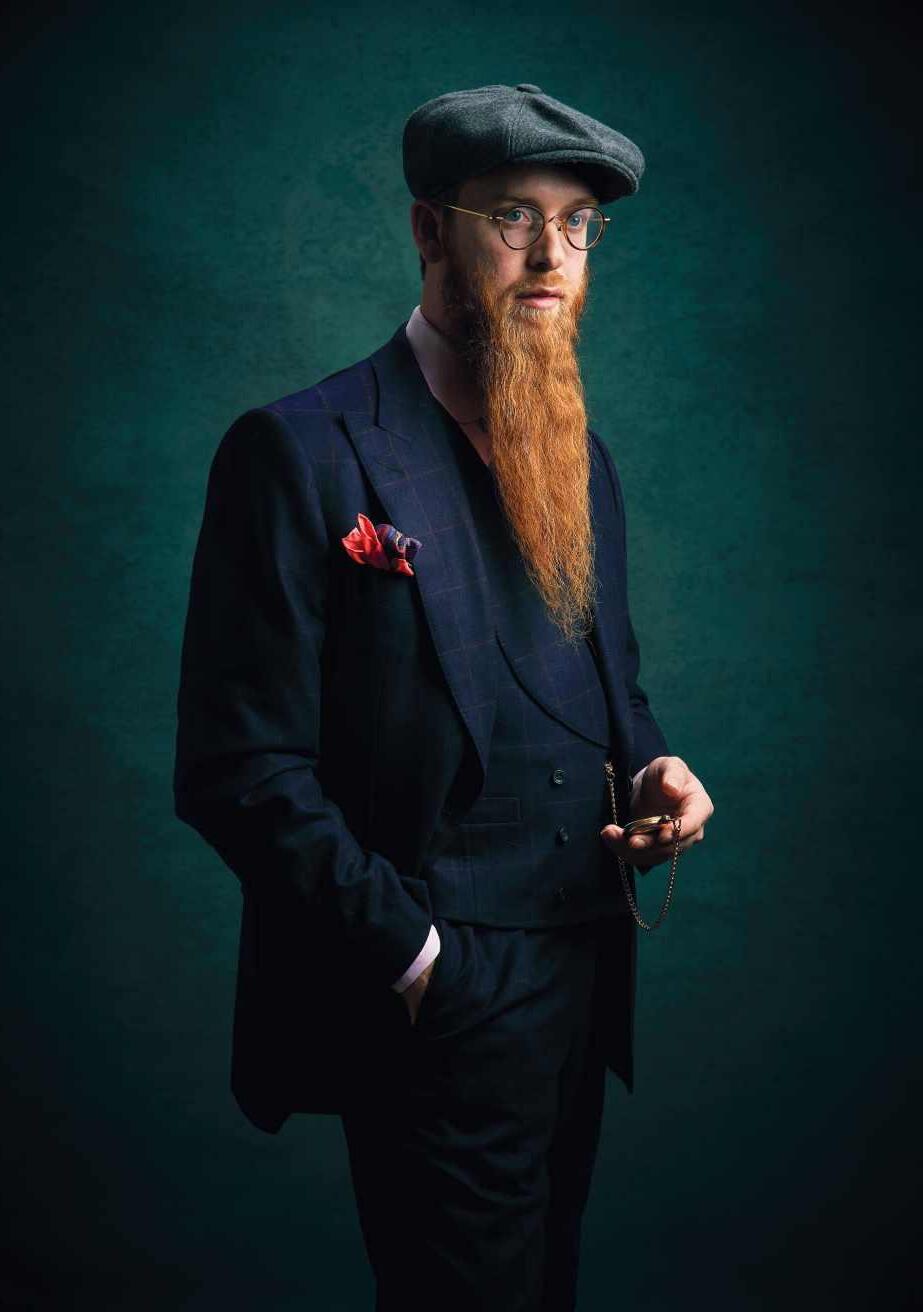
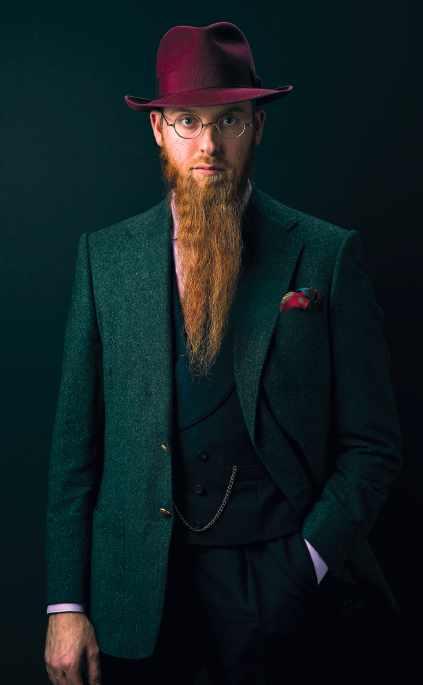
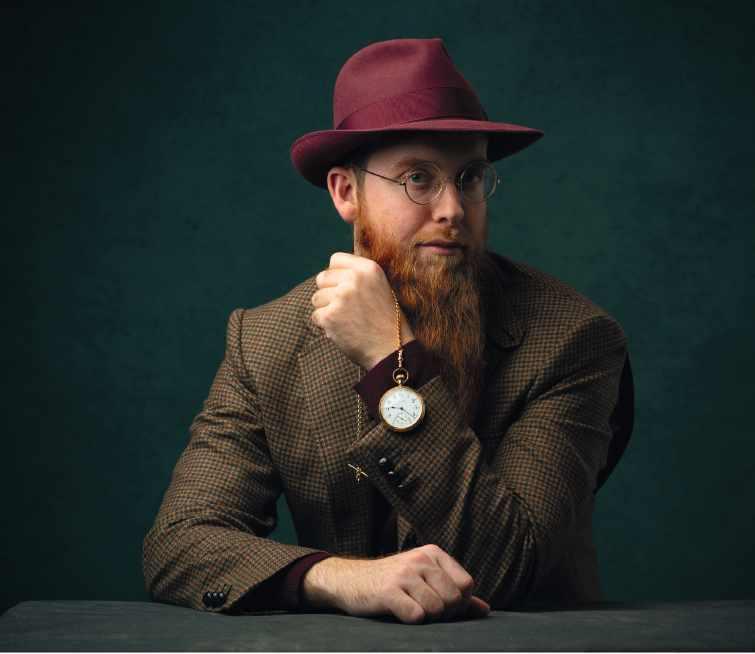
Yosel Tiefenbrun is hands down the most unusual rabbi you will ever encounter. To begin with, he doesn’t dress in the typical black and white associated with the strictly Orthodox. Colour is his thing — from occasional denim on his rare days off, to his striking, almost waist-length red beard, a look that is part Rembrandt portrait, part Jewish ZZ Top.
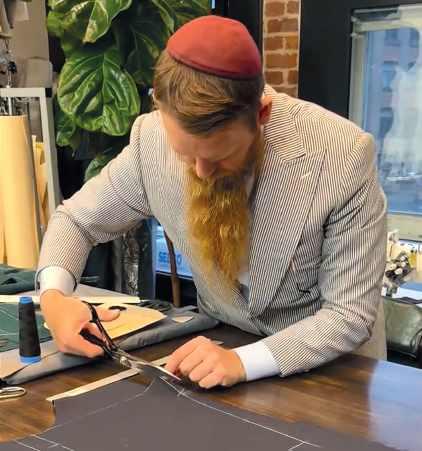
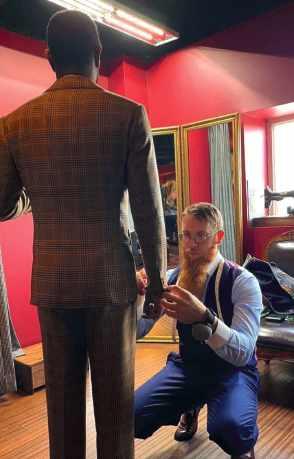
Yosel Tiefenbrun, 36, is a master tailor, based in New York’s Tribeca district. His path to his showroom (he has another, where he started, in Brooklyn) is a riotous journey that takes in a batmitzvah in Singapore, an artist grandfather and his own beginnings as the eldest of a family of 10, raised in the Chabad tradition.
But overshadowing all of this is Yosel’s training — which took place in London’s Savile Row. He jokes that “being a Lubavitch kid running around Golders Green and asking people if they were Jewish” had given him a perfect grounding for knocking on doors in Savile Row and being turned away — until he wasn’t.
T he near-nomadic life of Chabad families — charged by the late Lubavitcher Rebbe, Menachem Schneerson, with bringing the love of Judaism to all parts of the world — applied equally in Yosel’s case. He was born in New York but raised in London, where his father served as a chazan.
Creativity runs in the family, he thinks. His grandfather was indeed an artist — one of his portraits of the Rebbe is on display in Yosel’s tailoring studio — but it was his grandmother who was the inspiration. “She was really artistic — she made beautiful pieces of art with dried leaves, she knitted and crocheted… she brought home paint and told him, ‘Why don’t you give a try?’”
Not that the Tiefenbrun children were able to watch their grandfather painting. “It was a very
private pursuit and he would be totally absorbed in the work – usually portraits of famous rabbis.”
From the age of about nine or 10, the future tailor “really started paying attention to what I was wearing”. He took care of his clothes and admits that he was “fussy” about ensuring things matched, and that he “pushed the boundaries” when it came to which shoes or coloured socks (not regulation white) to wear to yeshiva.
But, says Yosel with a smile, “I played it well. I knew where the limits were and I didn’t get into trouble.” The opposition came not so much from
his parents – although he concedes they were anxious about the example he was setting for his younger siblings – but more from his school or yeshiva.
A ged 18, he was at summer camp in California and, knowing he wanted to work in fashion and design, was questioning whether to go back to yeshiva in New York. “But my parents persuaded me to return, and I did. But at the same time I was also sketching….” The sketches, incidentally, were for women’s fashion.
T hat year was “very important”, recalls Yosel, as the Chabad shlichut — emissary — element took hold. He and several other young men were sent to Singapore to work for the movement, although he had no intention of becoming a rabbi.
“Singapore shaped my future — the two years I spent there were among the greatest in my life,” he says. He qualified as a rabbi there and also studied interior design, but a fortuitous meeting with the fashion editor of Harper’s Bazaar at a batmitzvah got him an internship at the magazine.
Somewhat to his surprise, Yosel discovered that he rather liked being a rabbi — “I liked talking to people, helping them, learning with them.” So he faced a dilemma: “How do I make this work?”
He considered applying to Central Saint Martins in London, but lacked the qualifications. Having avidly watched fashion shows in Singapore, he decided instead to follow Alexander McQueen’s path — bringing Savile Row tailoring into the design of womenswear.
Yosel’s determination to bestride both the world of the rabbinate and the world of fashion
eventually led him to knocking on doors in Savile Row. Everyone turned him away, so he tried studying tailoring at Newham College. But it was frustrating: “You can’t learn tailoring in a group of 25 students.” So it was back to knocking on Savile Row doors.
T his time he caught the attention of Trinidadian-born Andrew Ramroop, head of the Maurice Sedwell Academy, who had faced similar struggles breaking into Savile Row. Recognising Yosel’s drive, Ramroop took him on as an apprentice to master every aspect of world-class tailoring.
I n London, Yosel spent hours in vintage shops, buying old suits and jackets to dismantle back at Savile Row — studying how great tailors achieved perfect balance and drape. (He even deconstructed a vintage Brioni suit he later wore to his engagement party.)
He also encountered the age-old dilemma for observant Jewish tailors — shatnes , the ban on mixing wool and linen. Its reason is unknown, but the rule must be obeyed. Rabbis told Yosel it was permissible to make shatnes -containing garments for non-Jews. Yet while he once created shatnes -free suits only for Jewish clients in New York, today none of his tailoring includes
‘ I pushed the boundaries [at yeshiva]. I knew the limits ’
the forbidden blend.
B efore New York, he and his wife Chaya spent two more years in Singapore working with the Jewish community. True to form, Yosel split his time between rabbinical duties and interning with top tailor Kevin Seah — and although he’d considered women’s fashion, he soon fell in love with men’s tailoring.
He enjoys the challenge — a very Yosel word — of making a suit that drapes and flatters even the most imperfect figure. He now employs four tailors and Chaya runs the accounting and management side of the business. The couple have three children.
“I’m a full-time tailor who happens to be a rabbi,” Yosel says now, but adds with a grin that the rabbi part is so ingrained that it comes out when he deals with clients.
C ertainly you are unlikely to find any other tailor who has both a bar in his studio and a set of tefillin , should a client suddenly feel compelled to take part in this mitzvah
“I had a pair of tefillin made specially for the
shop — and they are used pretty often.” Yosel admits to sometimes being taken aback at the willingness of even secular Jews to agree to lay tefillin
“Look, they know who I am. They’re not walking into a synagogue here, but I am openly religious and I always try to talk to the man and get to know him. It’s in my blood, and I am proud of it and I want to share.
“I was making a wedding suit for one gentleman; I never had the guts to ask him if he would like to lay tefillin . The wedding was in Berlin. The Uber was outside the studio and he had a suit bag in his hand and was ready to leave. He had his hand on the door and I asked him, would you like to put on tefillin ? And he said, ‘Absolutely, I would love to.’ That taught me I shouldn’t wait till the last moment.”
Now thriving after six years in New York, Yosel finds his early ambition to design for women returning. It began when he replicated a client’s wife’s coat pattern; next may come exquisitely-tailored women’s suits — or even evening wear.
Meanwhile, as he forges an international reputation, people fly in from around the world for a unique experience — a bespoke suit, made to measure by a rabbi, thus ensuring the hechsher (certificate of approval), and tefillin if desired.


29/09/2025
Dear
Mr John Smith
Choosingtherightkitchencanbeverystressfulfor mostpeople,whichiswhyweprideourselvesonour excellentcustomerservice.Allyouhavetodoissit back, relax and let us take the stress away.
SIAKitchensarespecialistUKsuppliersofLuxury GermankitchensandBespokeIn-FrameBritish Kitchens.Weprideourselvesinofferingonlythevery bestkitchendesign,quality,serviceandvaluefor money.Ourhighlyexperiencedstaffareexpertsinour field,soyouwillreceiveonlytheverybest‘one-toone’service,fromtheinitialdesign&consultation process right the way through to completion.

Wehaveanonlinekitchenpriceestimator,pleaseuse theQRcodeonthislettertogetanestimateonyour dreamkitchenorpopdowntoourlocalshowroomin Elstreeforafreshlybrewedteaorcoffeesowecan discuss your requirements.
Welookforwardtowelcomingyouintoourshowroom so we can explore your plans together.
SIA KITCHENS are specialist UK suppliers of Luxury German kitchens and Bespoke In-Frame British Kitchens. We pride ourselves in offering only the very best kitchen design, quality, service and value for money. Our highly experienced staff are experts in our field, so you will receive only the very best ‘one-to-one’ service, from the initial design & consultation

process right the way through to completion.
We have an online kitchen price estimator, please use the QR code below to get an estimate on your dream kitchen or pop down to our local showroom in Elstree. We look forward to welcoming you into our showroom so we can explore your plans together.

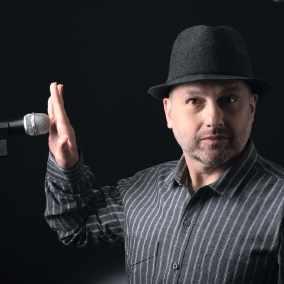
Jewish Welsh comedian Bennett Arron’s year on the edge
n 2002 I started writing a daily diary. I’d done this once before –aged 13—when a rather stingy relative gave me one as a bar m itzvah present. I wrote every day for four years and stopped the moment I was about to ask a girl out. Spoiler: she said no. I didn’t start another until years later, when it looked as though a sitcom I’d written – and was due to star in –was going to be made. Spoiler two: the commissioner also said no (the same one who first rejected The Office, which I guess helps).
Still, I kept going. And I’m pleased I did. It’s become a record of everything from my son’s birth (my daughter had already arrived) to being arrested in a dawn raid by Scotland Yard for a Channel 4 documentary and co-starring in all four series of Radio 4’s ALONE So, as we approach the end of 2025, I thought I would read back over this year and highlight things that happened….
JANUARY
Stayed with family in Spain for the New Year – my wife’s family, not a random one. I started a podcast with the actress Tanya Franks called Remember to Listen – a fresh and entertaining chat around both the sad and more light-hearted side of living with someone with dementia.
There is so much antisemitism on the comedy circuit it’s really upsetting. Two of my oldest comedian friends have unfollowed me on social media because I’m writing about it a lot. I just can’t imagine them doing this to any other person in a minority group. Many clubs have suddenly stopped booking me, and I’m pretty sure it’s not because I’m Welsh.
I have written a children’s book and am trying to find an agent and/or publisher. I also started writing a new
Edinburgh show, provisionally titled Under his Hat
I met with an acting agent whom, I had hoped, would take me on. Sadly there’s apparently not much interest in a middle-aged, short, stocky, balding Jewish Welsh character actor. I changed the title of the Edinburgh show to I REGRET THIS ALREADY
Hosted the Jewish Community Awards in Manchester. A lot of fun and I got to meet Andy Burnham – who was part of the reason I was arrested! I forgave him. Having difficulty sleeping so decided to count the number of times that Jewish comedians have appeared on TV panel shows and comedy specials. Still awake after finishing 10 seconds later.
Did a first preview of my Edinburgh show. It went better than I had expected. People really related to the ‘hilarious’ subject matter of dementia, depression and death. Finished writing another children’s book, this time with Ivor Baddiel.
R achel Creeger and Philip Simon have had their Edinburgh shows cancelled! I’m wondering if my venue will also cancel or whether I will have problems. Or, more worryingly, if there will be any laughs.
The Edinburgh show went really well. Four-star reviews and packed houses. And no problems. In fact, in one show there was an Orthodox Jewish guy sitting next to a guy wearing a Free Palestine
T-shirt. They enjoyed it, but I’m not sure if they went for a drink together after.
G ot my first booking to give a talk next month on the subject of depression, anxiety and mental health. Ironically I’m quite nervous about doing it. Must remember to omit jokes.
Gave the talk on depression and mental health. I’ve spoken around the world about fraud, cyber security and identity theft and people have always been polite. But nothing matched the response to this talk – strong enough to make me wonder if I’d picked the wrong career and should have been a therapist instead of a comic. Contemplate what that would’ve done for my bank balance.
I’m thinking about what I’ll be writing in 2026. Ben Stiller recently said comedy has become more challenging – and he’s just made a fi lm (Focker In-Law) with Robert De Niro! Try Sheffield City Hall! But Ben is right in a way. Some audience members look to take offence while some comedians look to be offensive. Especially against Jews. But I’m happy to give more talks about mental health, to see more scripts and books I’ve written get produced. And I’m hoping for world peace. In no particular order. A nd if I can’t fi x the world, I’ll settle for lighting the menorah without burning the house down. Happy Chanukah.

My show I REGRET
THIS ALREADY is touring the UK, including at The Radlett Centre on 15 April. bennettarron.com


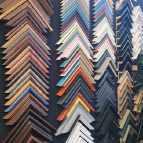
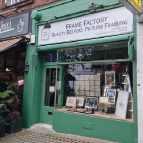

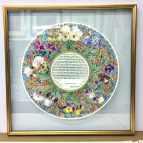
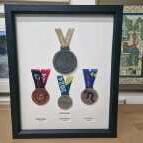
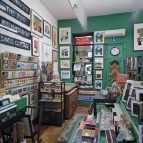
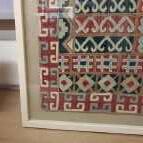
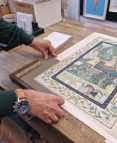
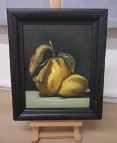




















As her Jim Jarmusch film opens, the Big Bang Theory star tells Etan Smallman why her Jewish identity and activism are non-negotiable


Mayim Bialik
speaks about her outspoken advocacy for the global Jewish community – quite literally against a backdrop of her ancestors. Behind her on our video call is what she calls the “Wall of Trauma”, the backdrop of her Los Angeles studio, where she records Mayim Bialik’s Breakdown
“We put those photos up when we started the podcast, since we were going to talk so much about mental health,” she says. “We’re all a product of where we come from. Behind me is my grandmother as a little girl in her Hungarian village and my Ukrainian grandmother – it’s all there on the wall.”
You might know the five-time Emmy nominee as the precocious 11-year-old version of Bette Midler in Beaches (1988) – Midler last year credited her young double’s “star quality” for the film’s success. Mayim also appeared in Michael Jackson’s Liberian Girl video and starred as the cartwheeling heroine of 1990s sitcom Blossom . Or perhaps you know her from her second phase.
After leaving Hollywood aged 19 to earn a doctorate in neuroscience – searching, she says, for a world that “valued me more for what was inside my brain than what was inside my bra” – she returned as neurobiologist Amy Farrah Fowler in The Big Bang Theory. Since then she’s starred in Call Me Kat (the US Miranda) and, in 2021, became the first female host of game show Jeopardy! in its almost 60-year-history.
But if you are one of her nearly five million followers on Instagram, it is just as likely that you know Mayim Chaya Bialik for her unashamed Jewish content – from her Yiddish Word of the Day to her signing of open letters, including calling out the Toronto International Film Festival for pulling its only Israeli documentary (after asking its makers for copyright approval from Hamas).
Although Mayim – who turns 50 on December 12 – has long been known for declining to take the path of cautious celebrity discretion, it is tempting to assume there was a moment after October 7 when she resolved to become even more outspoken, not less.
“You know, the answer to that is no,” she says. “Because I had been actively posting my support for Israel on social media, since the Big Bang days,” and aeons before what she calls the “global technological assault on conversations about Jews”.
She says she had become accustomed to being “accused of being a Zionist long before October 7,
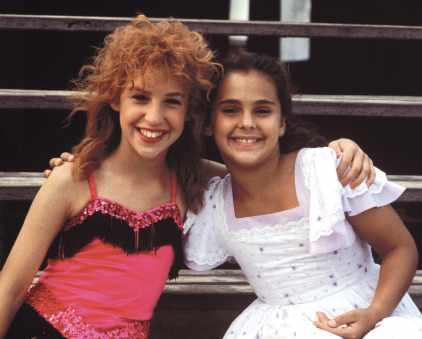
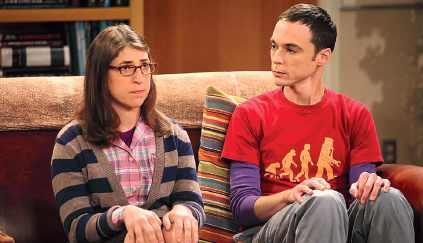
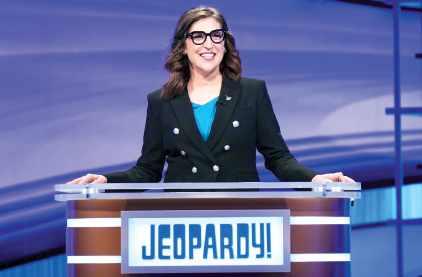
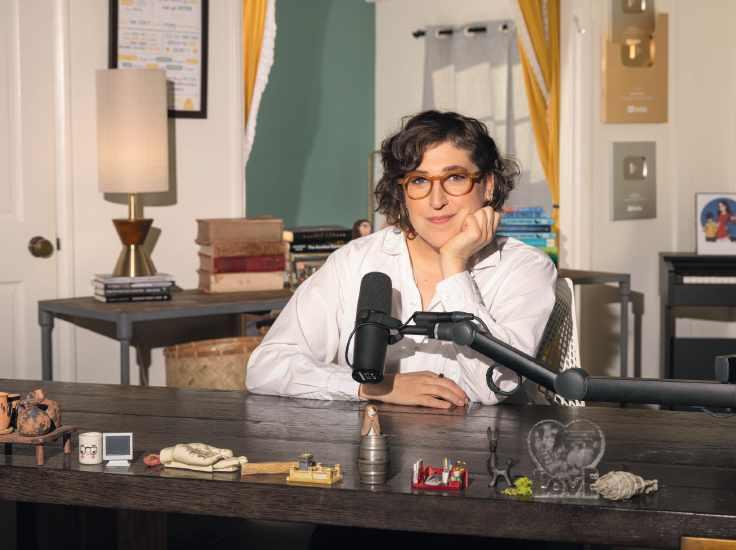
as if that were an accusation”. Of putting her head above the digital parapet, she concludes: “I guess it didn't really feel like there was an option.”
But Mayim’s motive for agreeing to be Life ’s cover star – without even the customary demand to plug a project – is closer to this magazine’s home.
“I mean, honestly, the reason I wanted to talk to you was because of what's been going on, in particular in the UK,” she volunteers. “Living in this golden age of post-Holocaust Jewish life, many of us have felt very safe in the diaspora. But I’ve been following the happenings over the past two years, and it’s exceptionally alarming for those of us who are in North America, because we think of the UK as that other English-speaking place across the sea, and there’s so much we have in common.
“So to see such horrendous hatred against the Jewish community, against Israel, has been particularly disturbing.”
She hesitates, calling it “a tremendous holiday season” for the community, before adding softly: “I’m just an ordinary Jewish citizen – I don’t have any proprietary ownership over how we should collectively feel.” Yet many of her co-religionists have long regarded Mayim as a kind of spokeswoman, for there has always been something irrepressibly out-and-proud about her flavour of Jewishness.
The great-great-great niece of Israel’s national poet Hayim Nahman Bialik refused to change either her nose – mocked on Saturday Night Live by an actress in a prosthetic – or her name, which means “water” in Hebrew and honours her grandmother Maryam, her “Bubbe Mayim.”
‘ It’d be naive to think speaking out doesn’t affect your career
Illustrating how small and connected the Jewish world is, she mentions the terror attack on the Crumpsall synagogue. “I was, sadly, not surprised,” Mayim says. “It’s a terrible camaraderie – hearing Manchester voices saying, ‘We told everyone. We kept tugging at the coat: listen to us, we’re drowning in antisemitism.’” When we talk, it is only three days after the Trump-initiated ceasefire deal delivered all 20 living hostages back to Israel, and I ask how she has felt, processing the relief and trauma over Simchat Torah.
Yet joy in Yiddishkeit doesn’t soften the blows. Last year, when Mayim hosted the PEN America launch of comedian Moshe Kasher’s memoir, protesters called for cancellation, with two authors quitting the organisation (that exists to protect free expression) calling her “a hugely influential racist who has incited ongoing slaughter”. Others turned up to disrupt.
’
Has she ever been personally lobbied either by critics or by those worried for the consequences to her own career? “Yeah. Mostly my mother is worrying,” the daughter of teachers quips without missing a beat.
“I mean, there are a lot of conversations we just don’t share,” she admits. “But it’d be naive to
ABOVE: The actress, author and neuroscientist prepares for her podcast show Mayim Bialik’s Breakdown
think speaking out doesn’t affect your career or endorsements. I’ve felt that and it’s painful.”
What stings most is being branded with a political stripe with which she has never identified. “I’m a bleeding-heart liberal – kind of a hippie,” Mayim proclaims. To be grouped with people who don’t support, for example, the rights of Palestinians, that’s especially disturbing. I’ve always advocated for peace and for honest discussion about Palestinian treatment within Israel and the Middle East.
“The cynic in me is pretty certain what that kind of campaign is about – it’s about Jews, not politics. Because while I have total respect for people who are politically conservative or voted for Trump, you can’t group us all together simply because we’re Jewish.”
After our interview, Mayim says she’ll record her podcast with partner Jonathan Cohen, then spend “too much time on social media, monitoring everything that’s going on”. She adds that her mammoth online profile has insulated her from the friendship fallouts many have suffered since 2023.
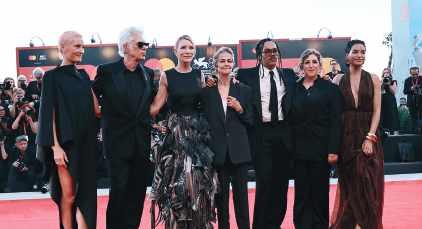
teenager,” she wrote in Variety.
‘
“I think I have the potential to lose friendships if we were to engage. Because I’m so clear in my social media presence, friends who are not part of that world honestly don’t really engage– which is its own kind of sadness, especially friendships I’ve had for 20, 30 years.”
The Venice Film Festival in August should have been a professional pinnacle. Her new fi lm, the Jim Jarmusch-directed Father Mother Sister Brother –which she plays Tom Waits’ daughter and Adam Driver’s sister – won the Golden Lion. Yet the moment was bittersweet: the festival opened amid pro-Palestinian protests and calls to withdraw invitations from actors branded pro-Israel.
ABOVE: Vicky Krieps, Jim Jarmusch, Cate Blanchett, Charlotte Rampling, Luka Sabbat, Mayim Bialik and Indya Moore on the Father Mother Sister Brother red carpet during the 82nd Venice International Film Festival
Aside from the lashings of misogyny, how much of the commentary was based on perceptions of Jews? Mayim smiles.
“That’s a great question – and one I’m not sure I’ve been asked. We’re a collection of backgrounds. I’m Polish, Ukrainian, Hungarian, Russian. Also, Jews can look like everything and anything, and they do. It used to be very common for people to say, ‘Well, I love Jewish women. Like, I love Natalie Portman and Gal Gadot.’ And those are obviously beautiful women, but there’s a tremendous variety of ways that Jews look.”



“It does feel very hostile to be in Europe right now,” she says. “I was in Venice 25 years ago, and while it doesn’t change very much, there’s now very graphic graffiti throughout the city. A swastika spray-painted on a church felt like a particularly eerie kind of image.”


This was counterbalanced by visiting the synagogues of the Venice Ghetto with her son. “I wanted some grounding, knowing it would be a complicated time. Celebrating this incredible fi lm, but also touching base with the community that is mine, kind of eternally, right? As a citizen of the Jewish world.”


For Mayim, it was about compartmentalising. “Which I think, unfortunately and fortunately, Jews have been able to do for thousands of years.”
Father Mother Sister Brother – in a complicated time. Celebrating this incredible others’ preconceptions about her identity. She has features did not seem to match one another. I was

Mayim’s longevity – she has worked since she was 11 – has meant four decades of grappling with others’ preconceptions about her identity. She has written about the pain she felt reading printed dissections of her face aged 14. One critic “said my features did not seem to match one another. I was essentially being described as a Frankenstein of a







the shofar at her rabbi’s invitation after he saw her breath. “I don’t know why that makes me many are still in hospital and many of the
Also multifarious are the ways Jews practise. Raised in a Reform community in LA, she has since identified as “aspiring modern Orthodox”. It is not just (the non-Jewish) Amy Farrah Fowler who is known for her modest dressing; Mayim once described her attempt to find a tznius Emmy ceremony dress as “Operation Hot and Holy”. I know she has lit Chanukah candles in her dressing room, studies weekly Torah texts, once blew at her rabbi’s invitation after he saw her play trumpet on TV, and sings the Shema to her sons – Frederick, 17, and Miles, 20 – before bed. But I ask if a particular ritual has brought her solace during these torturous times. There is a deep exhale of breath. “I don’t know why that makes me emotional,” says a near-tearful Mayim on a day when many of the released hostages are still in hospital and many of the deceased are yet to be returned home.

“I have trouble sleeping – some of it’s age, hormones… But often, lying awake, I’d think about the hostages. And then I’d remember the Hashkiveinu .”

The blessing during the Maariv service


“when we’re grateful for the night and the rest we can get” – took on new resonance in the wake of testimony from men and women buried in airless tunnels for months on end. “It is a prayer basically asking God to protect us, to spread over us a shelter of peace,” she says.
“when we’re grateful for the night and the rest we can get” – took on new resonance in buried in airless tunnels for months on protect us, to spread over us a shelter of she

Mayim may have “no proprietary should feel”, but I think we can all say amen to that.
Mayim may have “no proprietary ownership over how we should collectively feel”, but I think we can all say amen to that.

Father Mother Sister Brother is released on 24 December
Father Mother Sister Brother is released on 24 December


A new generation of activists are raising awareness of Islamist threats in African nations. By Brigit Grant
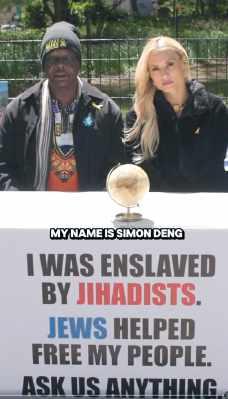
YInto his orbit came Simon Deng, who was born in war-torn South Sudan, kidnapped aged six, and forced into life as a child soldier. After years of violence, hunger and loss, he escaped at 14 to a refugee camp in Kenya, later reaching Australia – where he taught himself English using old newspapers.
Together, these two formidable men founded the African Jewish Alliance (AJA) in 2024 – with a clear, urgent goal: to unite Africans, Jews and African Jews in confronting Islamist extremism and giving a voice to those silenced by it.
“We cannot allow Africa’s suffering to remain invisible,” Dr Jacobs said at the launch. “If we believe in ‘never again’, then that promise must apply everywhere.”
ou can’t have missed the videos. Even if your feed is full of slimming ads and parent–child dances, at some point your phone will flash raw, unfiltered scenes from a continent in crisis. From Nigeria, where young men cry for help as Boko Haram militants torch their villages. From Sudan, where families film the aftermath of a raid. Or perhaps from eastern Congo, where terrified women record the bodies of their neighbours left in the streets by Islamist militias.
These desperate pleas, largely ignored by the world, moved Dr Charles Jacobs – a veteran Jewish human-rights activist based in Boston – to act. For decades, he has exposed modern-day slavery in Sudan and in 2002 he founded The David Project to strengthen pro-Israel education in schools and universities, followed in 2008 by Americans for Peace and Tolerance, created in response to radical Islamist threats.
The AJA’s mission statement echoes that conviction: “To educate the public, governments and community leaders about Islamist terrorism and jihadist violence in Africa – and to support those who stand against it.”
Through awareness campaigns, university partnerships and public events, the Alliance is working to draw attention to the crises in Sudan, Nigeria and Congo.
Among its most active young organisers is Ellie Raymond, a British-born Jewish social media manager who made aliyah last year. She was recruited by AJA because of her work in the Jewish advocacy space since October 7.
“They’d seen I wasn’t afraid to speak up,” she explains from her flat in Tel Aviv. “After Covid, a lot of young people went looking for a cause – something that gave them community again,” Ellie says, acknowledging she felt the same way.
“BLM [Black Lives Matter] had shown them how powerful collective activism could feel online, and when that faded, many shifted to the next movement that offered the same sense of belonging: the pro-Palestinian cause. It filled that space and has given them identity, language and friends. The tragedy is, it’s built around a story that has fuelled antisemitism and turned Israel – which was the victim of a massacre – into the villain. It’s heartbreaking to watch young people channel compassion into a movement that spreads hate and shuts out others, especially Africans who are suffering right now.”
Ellie finds and mentors new creators who will talk about Africa’s humanitarian disasters in language that resonates online. Among the
‘ I came back from shul one evening and someone had written “murderer” across my door in blood ’
growing list of digital advocates are some already familiar, such as Tal Oran, a Mizrahi Jew known to his 80,000 followers as The Traveling Clatt, along with Londoner Sammy Yahood, who made aliyah after being attacked in Camden for carrying an Israeli flag,
“What we’re trying to do,” she says, “is use the same tools that built the misinformation bubble but for truth. People need to see what’s really happening.” Also brought into the fold is Kefira Cohen-Rothschild, a softly-spoken politics and philosophy student at Cardiff Metropolitan University. When we speak, she’s lying on her bed, with books in the background. But what begins as a girlie chat about music and family soon turns darker. Kefira’s father lived in Israel; her mother is of Nigerian and Sephardic descent. Religion has always been part of Kefira’s life.
“So when I moved into halls, putting a mezuzah on the door was second nature,” she says. “I wanted my room to feel like home.”
It quickly made her a target.
“I came back from shul one evening and someone had written ‘murderer’ across my door in period blood,” she recalls. “A few days later there was a star of David with ‘Juda die’ written underneath and, because I was not at home at the time, my flatmates took a photo but cleaned the door before I returned. Then red paint started appearing in the kitchen – and eventually someone threw paint at me. After that came the death threats. Some by email, some handwritten and left in classrooms.”
The police have opened an investigation but, months later, there’s been no resolution. Cardiff University has offered her security escorts on campus, but the trauma lingers. “I was told by other Jews to take down my mezuzah and stop wearing my Magen David,” she says. “I refused. I wasn’t going to hide who I am.”
Kefira was living in Israel on October 7 and, were it not for poor health, she would have been at the Nova festival. But she lost good friends on the darkest day and was still grieving for them, while


being bullied in Wales. But instead of transferring universities, Kefira stayed and found a new purpose through the AJA working with CAMERA (Committee for Accuracy in the Middle East, Reporting and Analysis). She also held a pro-Israel event, for which she controlled entry and kept security tight.
“I want people to understand that what’s happening in Africa isn’t so separate from what’s happening here,” she says. “Hate grows in silence, whether it’s in a village in Sudan or a student corridor in Cardiff.”
Ellie describes Kefira as one of the AJA’s most powerful new voices. “She’s the embodiment of what we’re trying to do,” Ellie says. “[She is] connecting identities – African and Jewish – that the world treats as separate and she refuses to disappear. That courage is what we need.”
Ellie is fi xed on the future. “We need ambassadors,” she says. “Artists, athletes, creators – people who can really promote the AJA’s work because it isn’t theoretical. It’s about lives on the line and young people need to be reminded about what solidarity really means. When you see those videos, you have to realise what’s at stake and what every one of us should stand up for.”
ABOVE: The burial of people killed by the Allied Democratic Forces armed group at a church in Komanda, Ituri province, the Democratic Republic of Congo in July; Kefira Cohen-Rothschild.
BELOW: Formation of the AJA in Chicago
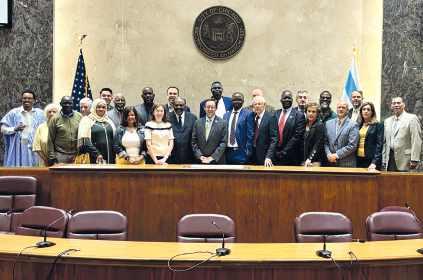


Experienced


John Cleese talks to Brigit Grant about his mistaken reposts, cancelled Israel shows and rebuilding trust with the Jewish community
John Cleese begins with an apology. Firmly and sincerely, with the urgency of a man who wants to make amends.
“I want to say I’m extremely sorry that I retweeted some things that I didn’t check properly,” he says as he sits down. “I couldn’t believe that some of them had been just completely invented. It was a mistake.”
Some will say the Monty Python and Fawlty Towers star is making excuses. That a man as intelligent and worldly would have the discernment to spot a smear, lie or trope and know not to circulate it.
But the fact that he turned up in person to explain himself speaks to the authenticity of the apology. Offered the same opportunity, Gary Lineker declined, as did others who offended and insulted but chose not to clarify or nuance their comments.
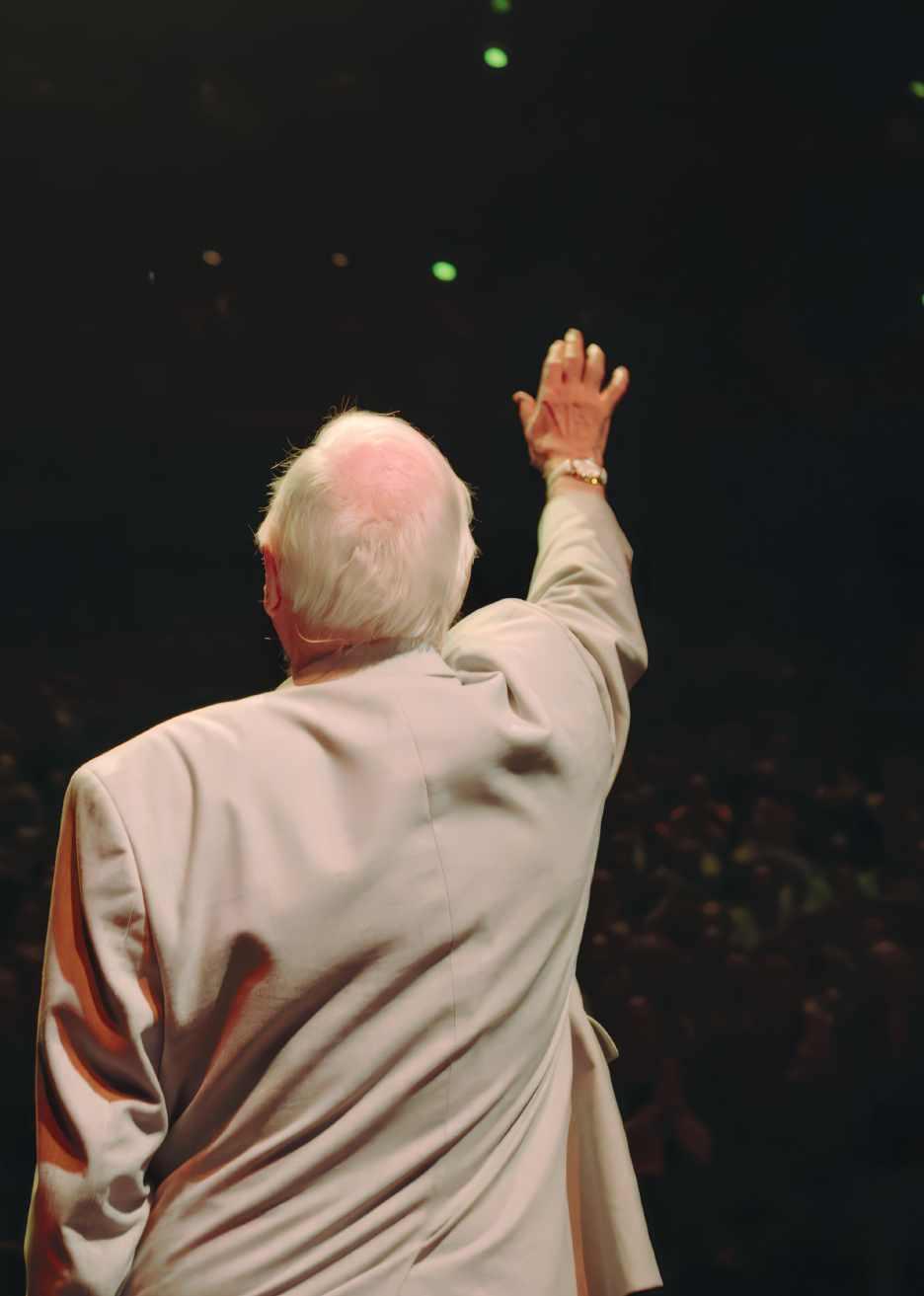
That’s not John. He wants to address all of it and the question that hangs over everything: why he didn’t go to Israel.
His An Evening with John Cleese was scheduled for three nights in Tel Aviv and Jerusalem between 26 November and 1 December. After cancelling last month, a statement from the promoter referenced “security concerns”, then another on socials claimed he was afraid of the Boycott, Divestment and Sanctions movement and then came suggestions that John had been warming up excuses for weeks. That was because of a cluster of retweets on his X feed – sarcastic, political or entirely fabricated – that ignited confusion and anger among Israelis and British Jews.
He now understands his mistake.
“I was told for the first time that if you retweet something you’re saying, ‘This is true,’” he explains. “It never occurred to me… When I retweet a post or comment it’s an instant response, not because I can say ‘this is true.’”
He shakes his head.
“I’m 86 and don’t understand the internet. It seems to be almost incomprehensible.”
But the false and libellous quote attributed to former ambassador Tzipi Hotovely and another implying that Israel “controls global finance ?
Those posts were removed at his request before we met, but the impact lingered. John insists he
hadn’t understood what he was amplifying. “People create this sh**t. They create whatever they want. I think what I’ve learned in the past two weeks is that there is naked cheating… I always think that you shouldn’t lie if it’s going to be found out, and now... nobody seems to care.”
It’s understandable that a man of his vintage might not realise how easily he could be manipulated online. But why cancel the Israel shows?
“I was beginning to dread it weeks before the posts,” he says. “I thought, ‘Somebody is going to ask me something political at some point and if I don’t say the right thing, it’s going to be very unpleasant for the rest of the tour.’ I had concerns.”
Could anyone argue that an octogenarian with health issues isn’t entitled to be concerned, but I ask him plainly if he really was fearful for his safety?
“I think there was always a security element,” he acknowledges. “I’m sorry to say that. I may be exaggerating this… but I didn’t know.”
I explain Israeli security protocols, and he listens. “All right,” he sighs. “I accept what you’re telling me. But I certainly didn’t know that three weeks ago. It wasn’t like that when I was last there.”
That was in 2019, but his relationship with Israel goes back decades.
“I first visited a long time ago… probably about
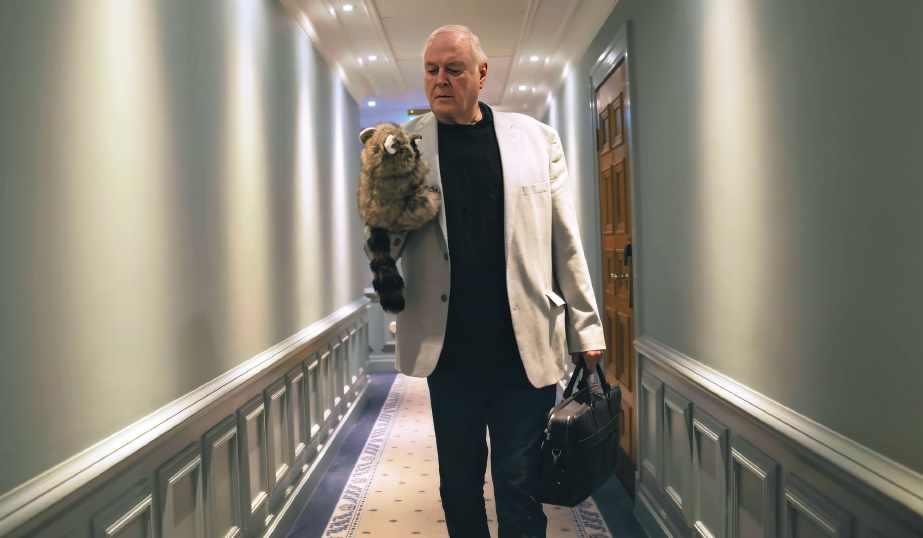
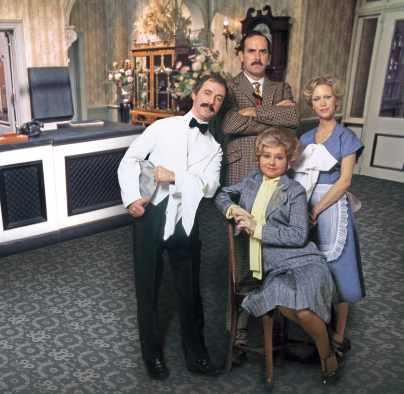
1980,” he says. “I wanted some sun. Thought deserts are hot and went to Eilat. But when I arrived there, it was so cold.”
He remembers fleeing to Jerusalem with his then-girlfriend. “But when I woke up in Jerusalem that morning… snow!” For doubters, meteorological records confirm that two cm of snow fell in Jerusalem on 10 December 1980.
“I still can’t believe it,” he chuckles.
In 2019, he returned for a run of shows – a sell-out, like those planned for last month.
“The audiences in Israel… they’re very smart and laugh quickly,” he smiles. “I also like the sense of relaxed friendliness everywhere. And the food…”
But affection alone doesn’t override the principle that guides his decisions about where he performs.
“I’ve always avoided places where there’s no rule of law,” he reveals. I move to point out that Israel, a democracy with an independent judiciary, has that rule, but he’s pushing ahead.
“I’ve never been to China and was only briefly in St Petersburg. I also turned down £200,000 recently to appear in Saudi Arabia. Because I don’t think you’re safe in Saudi. If MBS doesn’t like you, almost anything could happen.”
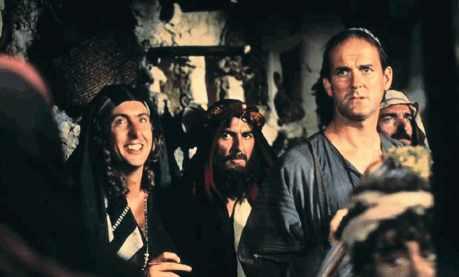
Jewish friends, think that Netanyahu has extended the conflict in order to avoid what will happen when things settle down.”
Then John asks: “I’ve been trying to figure out how popular Netanyahu is in Israel. If you had to say the percentage of division, is it 50/50?”
I tell him about the protests before October 7, the deep divisions inside Israel, and how the massacre has forged a different, grief-driven divide. “I never thought of that,” he says. “It helps to know.”
When the conversation turns to October 7, there is no ambiguity.
‘ When I woke up in Jerusalem that morning ...snow! ’
He’s referring to Mohammed bin Salman, Crown Prince and Prime Minister of Saudi. Whatever the view of the ruler, John’s own views have clearly been shaped by online headlines and posts. “I don’t do research,” he concedes.
If being adrift in the digital swamp explains his reposts from malicious, antisemitic accounts, and the frame through which he views Benjamin Netanyahu, some won’t buy it. But his unfiltered honesty makes it hard to dismiss.
“A lot of people I know and respect, including
“Hamas… the nastiest of all terrorist organisations,” he says. “Completely contemptible.”
I ask whether Israel has the right to defend itself. He answers – yes – immediately.
John also makes no secret of being troubled by Palestinian suffering – olive farms taken, fundamentalist settlers – but, for him, the new horror is what Hamas has done to its own people.
“What happened after the ceasefire?” he tuts. “Hamas shot a lot of Arabs.”
John has opinions but not the hard certainties that online activists insist are ‘the truth’ and he won’t be posting about Israel going forward.
“I’m so distressed about the state of the world at the moment,” he says. “Sometimes I start thinking the world might have been happier if we hadn’t had computers.”
He also wants his criticism of Israel’s leadership to be seen as separate from his liking of the country and its people – a distinction he knows
many Israelis and British Jews also make.
Bob Vylan is on his radar and ‘Death to the IDF’ chants, but he says: “I didn’t have all the facts.”
When I tell him the BBC aired it and antisemitic incidents spiked, he shakes his head.
“I thought the trouble at the BBC in recent years was that it has become much too influenced by government. But the middle of the BBC is very, very woke, so you’ve got two contemporary biases.”
On antisemitism itself, John is openly bewildered. He recalls a line from the fi lm Ship of Fools (1965), where a character says Jews and cyclists are being rounded up, and another asks: “Why the cyclists?” “Why the Jews?” comes the reply.
“It’s always stuck in my mind,” he continues.
“Because I don’t understand antisemitism. I can understand being antiNetanyahu, but I don’t see the point of antisemitism. It’s like – why?”
He tells me that, as a pupil at Clifton College in Bristol, 1952, he had friends in Polack’s, the Jewish house.
“Mike Filer, my friend in the cricket team, was from Polack’s – he’s now mayor of Portsmouth I believe.”
‘
upset. “It seems to me… I don’t know people who are antisemitic,” he says. “When you discover they’re there – what? What’s it all about?”
His direct experience of Judaism in the family came when daughter Cynthia – his child with Fawlty Towers ’ Polly, played by Connie Booth — married Jewish screenwriter-producer Ed Solomon.
“She was going to convert, but it was too much for her,” says John. Cynthia is now divorced, but the connection remains important.
“My grandchildren are half-Jewish. People say it has to come through the mother, and I say: ‘No, that’s a Jewish rule. If my daughter married an Italian, the children are half-Italian.’”
Is my question about Jewish comedians too obvious? “You mean all the great ones I grew up with… like the Marx Brothers – wonderful –
Danny Kaye, Jack Benny, George Burns?”
He suggests a self-penned piece about them to be delivered in a month’s time, then scatters names of Jewish colleagues and friends, raising film producer Steve Abbott and wife Nicola, who had opposing views on John going to Israel. His former accountant confided recently, that, for the first time, he felt physically afraid as a Jew. John was
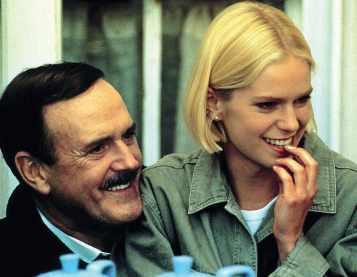
The week we meet, John should be celebrating. He is promoting his new book Fawlty Towers: Fawlts and All and documentary John Cleese Packs It In. At his publisher Hachette, 1,200 copies of the book are stacked in front of him for signing.
His new documentary –spanning five countries, 16 cities, 23 shows – will screen in more than 350 UK cinemas. But what mattered to him was what Jewish people now think of him – that’s why he agreed to the interview.
And will he go back to Israel ? “Yes,” he says. “When I really feel it’s safe. And I will perform for free.”
As our conversation ends, John circles back to where he started.
“I realise I’ve been very naïve. I don’t understand how people make things up and don’t care that it can be disproved. They will think I’m trying to eke my way out of this. I’m not.”
John didn’t ask to see the questions before we met nor request that his apology lead the story. He just wants us to know he is sorry. Who knows, he may start a trend.
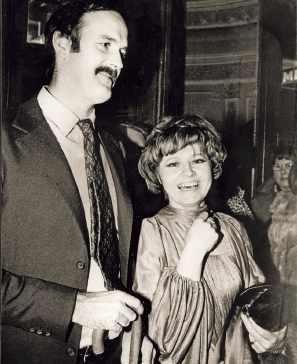












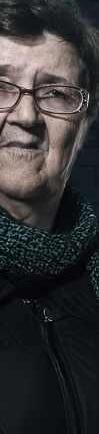





















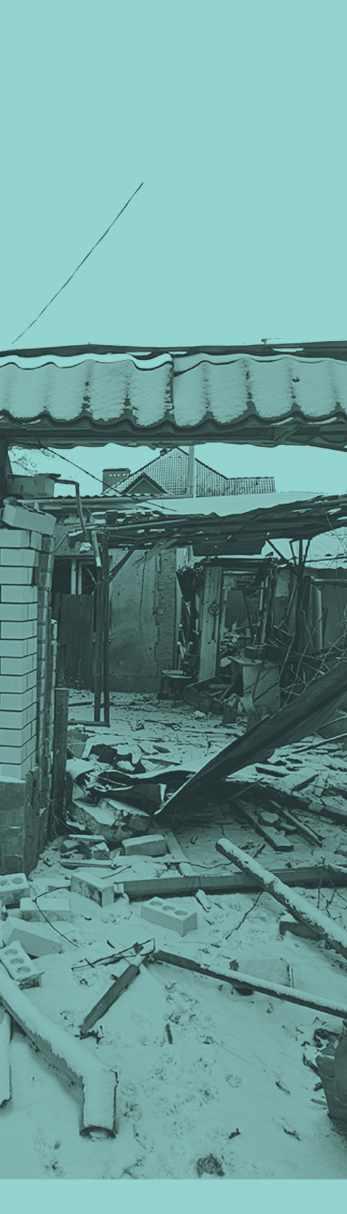







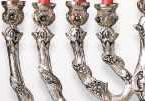




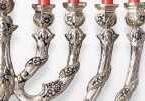





























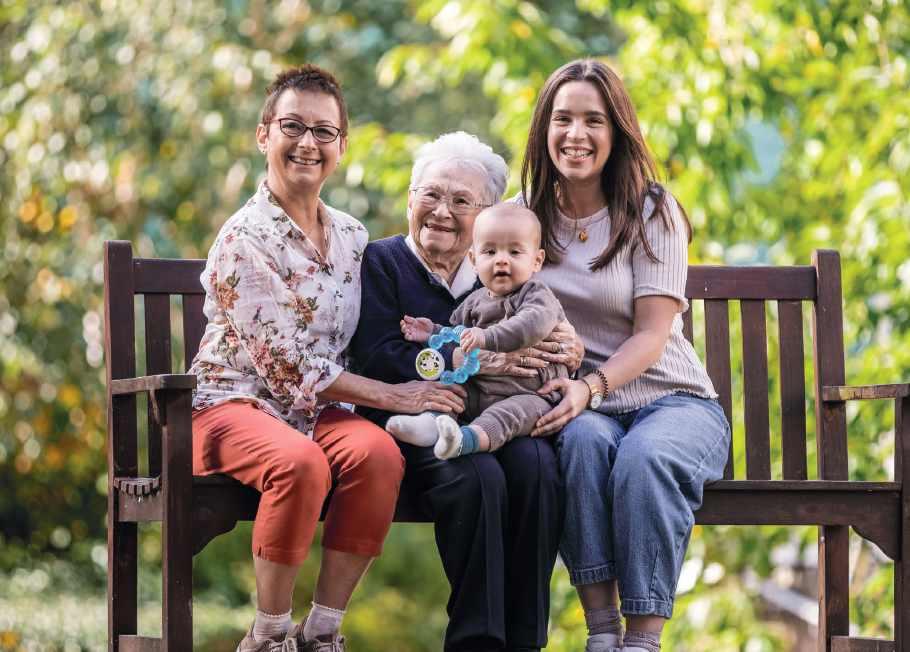































As the year draws to a close, we reflect on the many achievements of our community charities in 2025. By Louisa Walters
From acts of courage and compassion to life-changing innovation and community care, 2025 has been a year that truly demonstrates what can be achieved when we support the incredible work of our charities. Across the UK and beyond, organisations have come together to uplift lives and turn challenge into hope.
BELOW: An artist’s impression
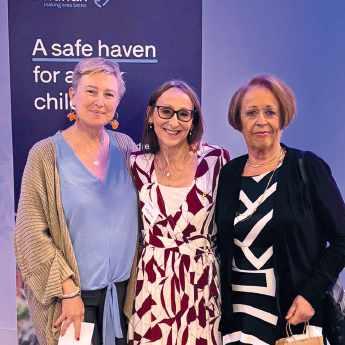
■ At the start of 2025, Jewish Blind & Disabled (JBD) received planning permission to transform Fairacres, its oldest building, into a modern haven of accessibility and independence. The redevelopment will replace 29 smaller flats built in the 1980s with 40 contemporary one- and two-bedroom apartments designed for people living with physical disabilities or vision impairment. With 70 percent of the £14 million funding already secured, construction begins in spring 2026 — marking a bold step toward JBD’s vision of inclusive, dignified living for all.
■ No one who attended British Emunah’s remarkable evening with Iris Haim will ever forget it. In conversation with historian Trudy Gold, Iris – the mother of Yotam Haim, taken hostage on October 7 and tragically killed while escaping captivity – spoke with extraordinary courage about her grief and her unbreakable connection to Jewish identity. She reminded us: “Each one of us has a lot of trauma but, more than that, we have a lot of power.” Her words encapsulate Emunah’s mission –helping children and families heal from trauma, and rediscover strength, hope and resilience.



■ In Manchester, Melanie Williams, a non-Jewish hair stylist, found a creative way to give back to her loyal Jewish clients – by cutting her own hair to raise more than £1,300 for Beit Halochem UK , supporting the rehabilitation of wounded IDF veterans. With the help of her friend Angeline from Lupatom
Hairdressing Salon, Melanie donated her hair to Zichron Menachem, helping children and young adults with cancer, while the funds raised will provide essential support to over 15,000 veterans injured since October 7. She said: “It means so much to know my hair, and money raised, will help to rebuild lives.”
■ The Jewish values of joy, connection and belonging have guided every moment of Kisharon Langdon’s work this year. The year began with its first fundraising dinner, where the people it supported took centre stage, from running behind-the-scenes to serving as toastmaster. The energy rolled on to the annual Velo cycle ride, a lively Speed Monopoly event and the first Young Kisharon Langdon Padel fundraiser. A highlight was when Channi, supported by Kisharon Langdon, quite literally took a leap of faith, skydiving alongside her support worker and friend Georgia (pictured)

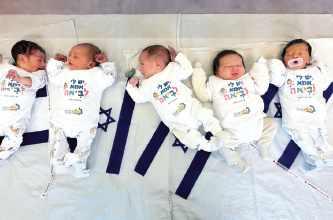
■ When the Iran War broke out, Shaare Zedek Medical Center demonstrated unparalleled readiness and resilience. Within moments, the hospital shifted into emergency mode – moving patients to safety, fortifying secure areas, and maintaining full operation even as bombs fell. Babies were born, lives were saved and compassion never wavered. Jerusalem’s Mayor Moshe Lion says: “Jerusalem remains strong and secure thanks to these exceptional individuals.”
■ Demand for Paperweight’s support has never been greater. In 2025, the charity delivered more than 45,000 hours of advice, supported 2,500 clients and answered 6,400 helpline calls –each one handled with dignity and care. As the cost-of-living crisis deepens, Paperweight continues to expand nationwide, opening new hubs in Leeds and soon Manchester, ensuring help is always within reach for anyone in crisis.

There are many different types of abuse:
Psychological
Verbal
Sexual
Emotional
Financial
Spiritual
Practical and emotional support, counselling, children’s therapy, helpline, web chat, access to emergency housing, legal and welfare support. ARE YOU
Stalking and harassment
Physical
Social isolation
Coercive control
Post-separation
Tech
We offer a range of services to Jewish women and girls aged 14+, including:
Jewish Women’s Aid is here for you: 0808 801 0500 advice@jwa.org.uk jwa.org.uk/webchat jwa.org.uk
Follow us:
When a seriously ill child needs round-the-clock medical care, parents can never switch off. Exhaustion builds day after day, night after sleepless night and families often struggle to keep going.
Camp Simcha’s respite care changes everything.
THIS CHANUKAH, YOUR SUPPORT CAN HELP US BRING SOME CRITICAL RELIEF TO FAMILIES COPING WITH UNTHINKABLE DAILY CHALLENGES.

Donate by scanning the QR code or visit campsimcha.org.uk/donate
Thank you for your support.
Please get in touch: Head office - 020 8202 9297 Manchester office - 0161 341 0589 help@campsimcha.org.uk WWW.CAMPSIMCHA.ORG.UK

Much





■ Jewish Care’s dream of The Sugar & Ronson Campus came true this year and it is on track for completion in June 2026. This state-of-the-art hub will bring together all local services under one roof – including the Sugar Family Care Home, The Ronson Community Centre with the only licensed kosher restaurant in the area, The Dennis Centre for Dementia, Jami’s mental health services, social work and family carers support, Meals on Wheels and more. “This campus will strengthen our community in Essex and north-east London for generations,” says CEO Daniel Carmel-Brown. “This modern, inclusive and welcoming space will transform the way we care for, connect and reach out to the local Jewish community.”
■ Work Avenue significantly expanded to help more people in more places earn a living in increasingly difficult times. At the Work Avenue New Year, New Career event attendance doubled, with more than 90 job-seekers gaining vital skills, confidence boosts and hands-on advice for their job hunt. The opening of WE Hub @TheBelmont gave the community its first shared business co-working space in Manchester, offering affordable desks and free business support. Work Avenue also launched The Freelance Agency, the community’s first initiative connecting businesses and charities needing support with skilled freelancers for immediate short-term projects.

■ With 55 percent of under-25s in the Jewish community reporting experiences of mental distress, Jami made it a priority to expand support for young people. This year, Jami’s Dangoor Children and Young Person’s Service expanded, and Talking Therapies were extended to include secondary school students as well as adults. These services offer safe spaces for young people to open up about stress, anxiety, relationships and self-esteem – helping them find balance, confidence and hope for the future.
■ Nightingale Hammerson was named Palliative Residential Care Provider of the Year, with judges praising its person-centred approach and outstanding compassion. An incredible 90 percent of residents pass away in their preferred place – a profound testament to the dedication of the team. Daisy Pillora, palliative care lead, reflects: “We are emotionally attached to our residents and ensure they receive the highest quality of care – even after death.”
■ A defining milestone for Chai Cancer Care came through its partnership with Jnetics and the NHS Jewish BRCA Testing Programme – a pioneering three-year pilot enabling at-home genetic testing. Thanks to Chai’s tireless awareness campaign, nearly 44,000 people registered for this simple saliva test – a breakthrough with the power to save countless lives and transform genetic health within the community.
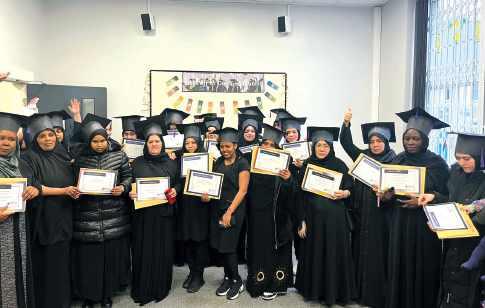
■ Founded in the 1930s to help Jewish refugees fleeing Nazi persecution, World Jewish Relief continues to embody that same spirit of compassion today. Now the UK’s largest provider of employment support for resettled refugees, the charity secured a major new government contract this year to assist 4,000 refugees from Ukraine and Hong Kong, helping them to gain skills, settle in the UK and rebuild their lives. World Jewish Relief has touched nearly 180,000 lives across 19 countries in 2025 – a year of lifesaving, life-changing impact.
■ At Camp Simcha this year, 361 family members joined staff and volunteers on four incredible residential retreats – giving seriously ill children, their siblings and parents three days of amazing activities, community and respite, with medical support on site. On top of the day-to-day practical and therapeutic services Camp Simcha provides, retreats are a highlight of the year. Among those who attended Summer
Retreat was six-year-old Saul, who has been receiving treatment for leukemia and came straight from his hospital bed. His mum Michaela said: “The moment Saul stepped into the [retreat] hotel, something shifted. The energy, the joy, the spirit that Camp Simcha creates – it was as though it breathed life into him. Within minutes he was smiling, laughing, exploring, playing… he was filled with a kind of energy we hadn’t seen in months.”
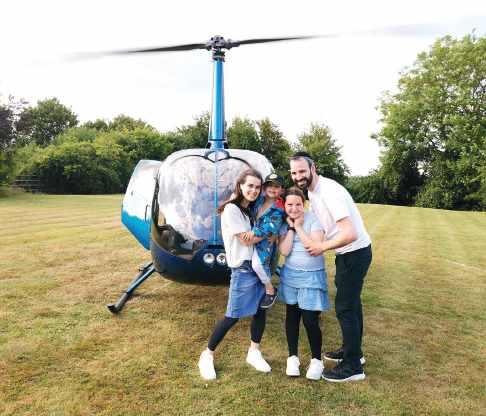
■ For Resource, 2025 was the year of championing experience. With generous new funding, the organisation launched Experience That Works – a free, empowering career programme for job-seekers aged 55 and over. The initiative proves that career ambition has no age limit, offering workshops, one-to-one coaching and practical support to help older job-seekers challenge stereotypes, demonstrate the value of their experience and skills, rediscover confidence and re-enter the workforce stronger than ever.
■ In Israel, WIZO expanded its Transformative Education Program – a visionary partnership with the Levinsky-Wingate Academic Center addressing Israel’s shortage of qualified early-years educators. It enables WIZO daycare workers, many from disadvantaged backgrounds, to earn a Bachelor of Education while continuing their work. Graduates emerge as skilled teachers, economically independent and ready to nurture Israel’s youngest generation.






This Chanukah, your donation will help brighten the lives of individuals with learning disabilities and autistic people within the Jewish community. At Kisharon Langdon we empower those we support to live fulfilling, independent lives and to shine in their own unique way. Through education employment, supported living and social opportunities, we support people to feel a sense of belonging, to feel valued and to thrive.


Please call 020 3209 1187 to make a donation, visit our website at kisharonlangdon.org.uk/donate or scan the QR code: kisharonlangdon.org.uk • info@kisharonlangdon.org.uk
SCAN to donate & watch our appeal
Jewish Blind & Disabled provides housing and support for adults with physical disabilities or vision impairments. Our services help individuals live independently, whether in one of our developments or in the community. With increasing demand, your support is vital to ensure we can help everyone who needs our support.

Donate now at jbd.org/donate or by calling on 020 8371 6611
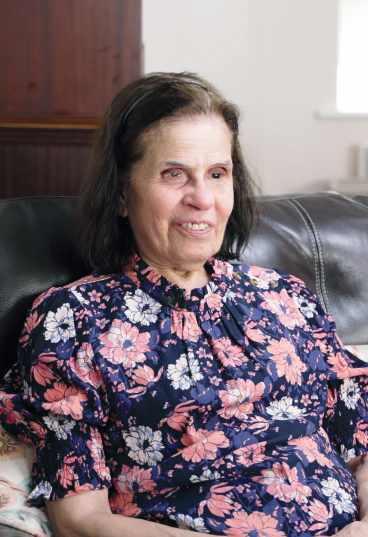

Collect, preser ve, share
The Wiener Holocaust Library is one of the world’s leading archives on the Holocaust and Nazi era

We play a vital role combatting antisemitism and prejudice by ensuring the information within our archive is accessible to the public through research, education and outreach
We can only continue with your support.
From 2 - 9 December, your donation will be match-funded, meaning double the impact on our crucial work
Scan here to donate to our Big Give fundraising campaign.
www wienerholocaustlibrar y org



Since 1902 Shaare Zedek has provided Hope for Us, Hope for Israel, and Hope for the World.
We rely on donations and gifts in wills to enable our lifesaving work to continue.
To find out more about leaving a Legacy to Shaare Zedek UK please contact us on 020 8201 8933 or at info@shaarezedek.org.uk
We are delighted to invite you to our
With Guest Speaker
Author Amanda Weinberg
Sharing stories that shine with the light of courage and kindness
Featuring entertainment from the Nancy Reuben Primary School Choir
On Tuesday 16th December 12.30-2.30pm
Venue: North-West London

Price £20 per person
RSVP: 020 8732 6101 or email kklevents@kkl.org.uk





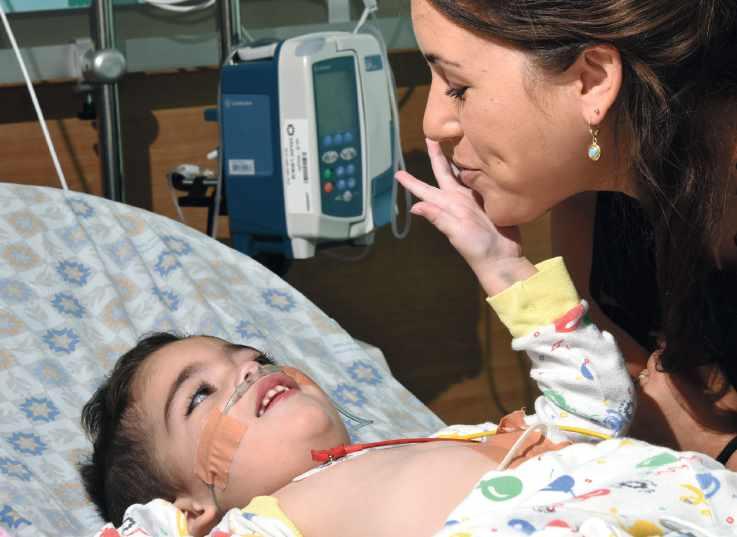
Beit Halochem’s four centres deliver life-changing rehabilitation for Israel’s 67,500 disabled veterans and victims of terror — from physiotherapy, hydrotherapy and PTSD care to specialised sports, social support, education and creative programmes.

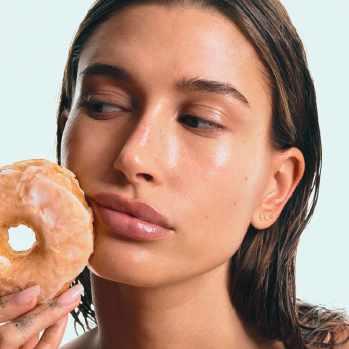
Esther Fieldgrass had just got back from Jersey. A new MediSpa might be on the horizon and, if it happens, the island will discover what London already knows: Esther is the woman you go to when you want to look better, feel better and stay that way. She has a reputation for knowing what works long before the rest of the industry catches up.

Her empire began with a simple instinct. “I wanted something for me,” she says. “If I want this, other women want this.” That impulse became the seed for the clinics she now has in Kensington, Chelsea and, more recently (11 years), St John’s Wood. What sets her clinics apart is that they offer some of the best surgical and non-surgical cosmetic treatments in the UK, delivered by skin experts and medical specialists – but they also honour the art of a truly good facial. So at St John’s Wood, after a trial on the LPG, which jumpstarts collagen, supports regularity and calms the nervous system for better sleep, I also had a bespoke facial with a neck-and-shoulder massage. Fantastic!


To understand how Esther built all this, you need to go back to the 1970s when she owned hair salons before studying beauty “when everything was done with your hands”. Moving to Hong Kong took her into fashion, creating uniforms for hotels and banks, but her parallel education was in natural healing. In the US, Vogue listed her among the top 100 healers, but it came with complications. “The ego gets involved,” she admits. “You want people to get better and you get too emotionally connected.” Esther’s next move was to open what became London’s first medi-spa – before the term existed – with Kensington offering advanced aesthetics, complementary therapies and a surgical suite. It’s no surprise “people come up to me at shows asking, ‘What are you doing next?’” Today her clinics are filled with machines costing more than £100,000, the latest of which does brain stimulation for stress and anxiety. Five years ago, Esther – who is focused on repair and longevity – moved into stem cell science. Exosomes (cell repair messengers) became her focus, with research in Korea and work in an FDA lab in the US, leading to the creation of XO Supreme, her at-home high-strength exosomes system to boost collagen and repair skin. Esther isn’t selling beauty for its own sake. Jersey, if it’s next, has no idea what’s coming.





repair messengers) in
collagen and repair skin. Esther isn’t own

efmedispa.com 020 7361 1000
The summer of ’22 was the start of the ‘glazed donut craze’ – skin that looks juicy, glassy, luminous and super-healthy. Likes for the look has not faded, so what better time to tap into a doughnut trend than Chanukah?
Start with a deeply moisturising layer
Embryolisse Lait-Crème Concentré ( £8 Amazon), which feeds the skin with water and nutrients to look plumped, soothed and satin
NYX Professional Makeup Buttermelt Glaze Soft Glow Skin Tint = dewy coverage + glow + 30 SPF (£11.19 nastygal.co.uk)


Glossier’s Futuredew Solid (£20 glossier.com) melts into skin giving instant glaze – it’s about layering the doughnut



Glow Hub Hy Glaze Face Frosting Serum Drops = hydrating serum drops to add instant sheen ( £16 lookfantastic.com)
NYX Away We Glow Liquid Booster = liquid highlighter + glossy reflective light (£15 cultbeauty.co.uk

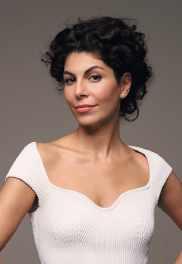
When someone tells you they’ve safeguarded a leather-bound book of beauty secrets for more than 200 years, you have to meet them. Recognise Dr Inna Szalontay? You met her last Life but, since then, there’s been a visit to her Charlotte Street salon – the Deco jewel box that is Libi & Daughters HQ. In person, Dr Inna shared her Israel connection: “my family – cousins, uncles, aunts – all in Jerusalem”, and her mother, endocrinologist Dr Libi Hershkovich, ran a clinic in Tel Aviv. Because of that legacy, Libi & Daughters is the benchmark of luxury skincare, signposted by the bespoke Red Box – for each client, built entirely around your physiology. The boxes stacked in the chic lobby recall the wand cases at Ollivanders in Harry Potter. The magic is in the products, all in glass bottles because, as Dr Inna says, “it keeps formulas completely stable and plastic reacts with the product inside”. Nothing but pure, fresh and exactly as intended from the doctor who introduced the three formulas used in sequence at the heart of her method. For a 10% discount, use code JN10 at libi.com/discount

Lanolips 101 Ointment – Glazed Donut Edition = lips with high shine to tie the look together (£8.99 Superdrug) kit. Spotted for
Purifect’s The Glazed Donut Skin Set is a USA complete multi-step glow kit. Spotted for £24 on ebay








Chase Lodge Hospital in Mill Hill has relaunched with a promise to “reimagine what local private healthcare should feel like – fast, patient-led and on your doorstep”.
The newly-refreshed facility now offers walk-in urgent care, same-day GP appointments, on-site MRI and X-ray, dental services and a full range of specialist clinics so patients can be assessed, diagnosed and treated without delay. chaselodgehospital.com



By Lara Benjamin @lara.thestylist
The first frost always brings two things: a craving for hot chocolate and an overwhelming urge to dive headfirst into knitwear. And not just any knitwear –this season’s knits are bold, joyful and begging to be shown off.







a bright, metallic jumper that looks suspiciously like it had
There’s something poetic about wrapping yourself in a sweater just as the Jewish holidays wrap us in ritual. On Rosh Hashanah, I carried a neutral cardigan, ready for chilly Autumn mornings. By Chanukah, I’ll be layering a bright, metallic jumper that looks suspiciously like it had been inspired by gelt foil. Who says winter wardrobes need to be black and grey?
Enter the Jewish, London-based designers making knitwear feel less necessity more celebration. Cara & The Sky is rewriting the knitwear story with oversized stitches, playful patterns and colourways that could rival stained glass windows. Then there’s Olivia Rubin, who built her name with dreamy rainbow dresses but has turned knitwear into a cult obsession. Of course, neutral as in black, grey and ecru will always be staples, but even Zara has necklace knitwear and Free People is bringing out your inner bohemian. Note that it’s not only grown-ups getting the colourful treatment – little ones can do knits just as stylishly. It’s soft meets playful in bright shades and honestly, is there anything cuter than a cutie in a cardie clutching a chocolate coin?
Match with your mini in chunky Cara & The Sky sweaters, it’s nostalgia – the sartorial equivalent of chicken soup with
Match with your mini in chunky Cara & The Sky sweaters, or throw a Rubin knit over sequins for dancing and doughnuts. Because truth is : knitwear is never just knitwear. It’s comfort, it’s nostalgia – the sartorial equivalent of chicken soup with matzah balls to see you through the winter.




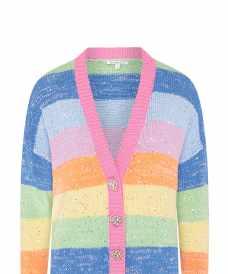



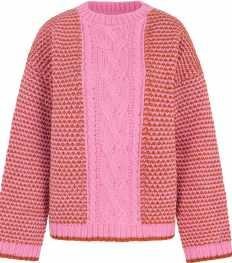




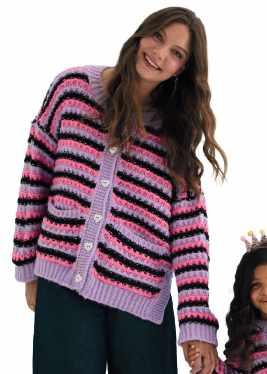



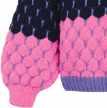






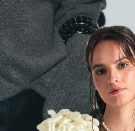






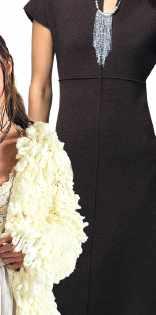










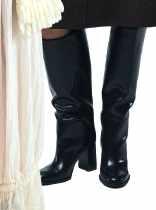

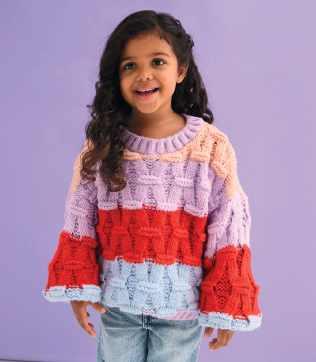



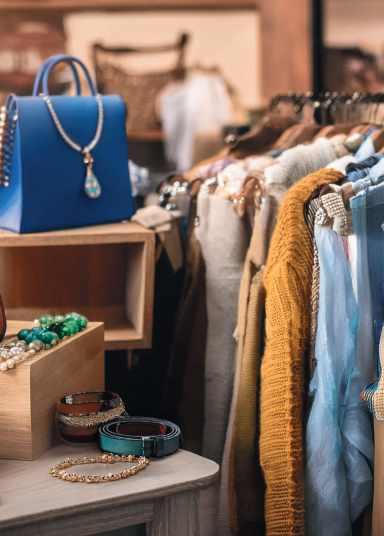



Our commitment to patient-first care starts with being accessible. We’re known for cutting-edge treatments, but fast access and flexible payment options have also made us one of London’s premier healthcare providers, with all major insurers accepted and financing available for self-funding patients. Now we’ve expanded our care into North London, so the same world-class digestive, heart and neurological expertise is available to you at the 999 Medical Centre, Finchley Road, NW11 7HB. To book an appointment at our North London clinic, call +44 20 3423 7500.
For Every Care in the World
Vegetables add depth and soul to your festive dishes.
By Louisa Walters
Originally from Siberia, Alissa Timoshkina comes from a family with a Ukrainian-Jewish lineage, whose history forms an important part of her culinary writing. Earlier this year, Alissa published her second book, Kapusta, in which she champions the humble yet mighty vegetables that form the backbone of Eastern European
cooking. Filled with glorious, veg-forward and seasonal recipes, Kapusta celebrates the top five most popular vegetables from the region – cabbage, beetroot, potato, carrot and mushrooms. We’ve selected some of Alissa’s recipes that are perfect for Chanukah – spin the dreidel to decide what to make!
SERVES 8 TO 10
This recipe is pure invention, born out of the golden rule: as long as you have carrots and prunes, you can make a delicious dish and feature tzimmes in its name. So here you have it – a carrot cake with prunes, apricots, ginger and cinnamon. Grab a tub of sour cream and tuck in!
• 225g (8oz) plain flour
• 125g (41/2oz) golden caster sugar
• 135g (5oz) dark brown sugar
• 1 teaspoon baking powder
• 1 teaspoon bicarbonate of soda
• 1/2 teaspoon ground allspice
• ½ teaspoon ground ginger
• ½ teaspoon ground cinnamon
• ½ teaspoon flaky sea salt
• 90g (3oz) walnuts, roughly chopped
• 90g (3oz) pitted prunes, roughly chopped
• 90g (3oz) dried apricots, roughly chopped
• 120g (41/2oz) unsalted butter, melted
• 200g (7oz) grated carrot (about two medium carrots)
• zest of 1 large orange
• 3 eggs
• sour cream, to serve
METHOD
1. Preheat the oven to 160°C (320°F) and grease and line a 25cm (9in) round cake tin.
2. Combine the flour, sugars, baking powder, bicarbonate of soda, spices, salt and walnuts in a large bowl.
3. In a separate bowl, mix the dried fruit, melted butter, grated carrot, orange zest and eggs. Add the wet mix to the dry mix and stir gently to combine.
4. Pour the mixture into a tin and bake for 40 to 50 minutes or until a skewer inserted into the centre of the cake comes out almost clean.
5. Let the cake cool slightly before serving. Enjoy with a big dollop of sour cream.
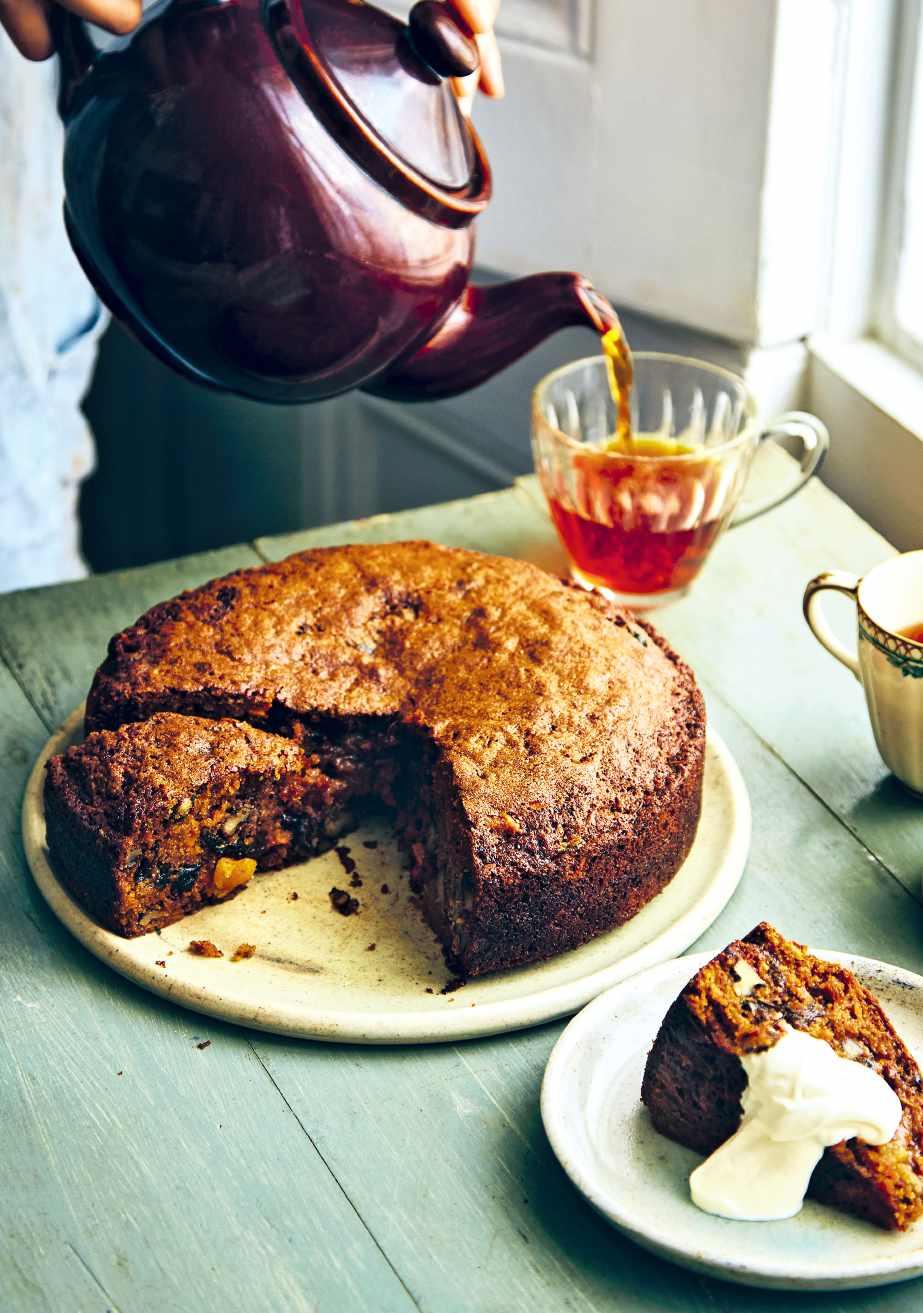
MAKES 10 TO 12
Cooking with sweet cottage cheese is one of the best traditions of Eastern European cuisine. These little sweet cottage cheese patties, known as syrniki, from the Slavic word syr for (cottage) cheese, make up the bulk of happy childhood memories for so many. You will find twarog at eastern European shops, or replace it with ricotta.
• 50g (1¾oz) unsalted butter
• 2 medium carrots, peeled and grated
• 2−3 tablespoons honey, or to taste
• 200g (7oz) twarog (or ricotta)
• 2 eggs, beaten
• 1 tablespoon sugar
• 1 scant teaspoon baking powder
• a pinch of salt
• 6 tablespoons plain flour
• 2 tablespoons raisins, pre-soaked in 20ml (1½ tablespoons) rum (optional)
• grated zest of ½ lemon
• vegetable oil, for shallow-frying
• icing sugar, for dusting
• crème fraîche, to serve
1. Melt the butter in a frying pan over medium-low heat and add the carrots and honey.
2. Cook, stirring, for 10 minutes.
3. Mix the twarog (or ricotta), eggs, sugar, baking powder, salt, flour, raisins and lemon zest in a large bowl.
4. When the carrots are soft, remove from the heat and allow to cool. Add the carrots to the flour mixture, stirring to combine.
5. Heat enough oil for shallow-frying (about 4−6 tablespoons) in a large frying pan. Scoop two heaped tablespoons of the mixture directly into the hot oil and pat it down with the back of a spoon to form a fritter. There is no need to strive for perfection in shape – the more rustic they look, the better. Fry on each side on a medium high heat for four minutes.
6. Remove with a slotted spoon and let rest on a paper towel to absorb excess oil. Dust with a little icing sugar and serve with some crème fraîche.
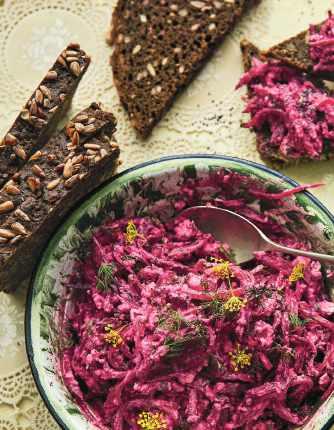

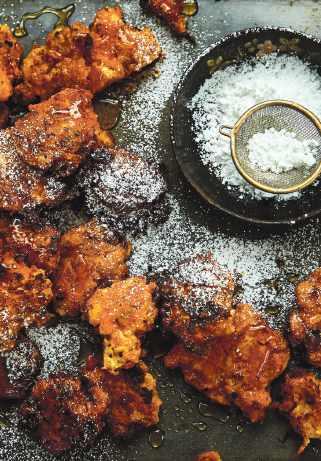
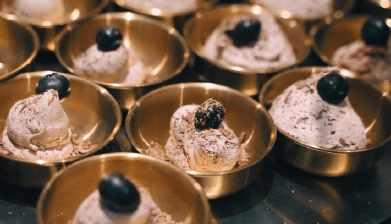
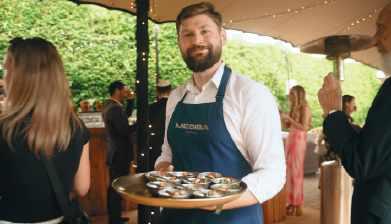
SERVES 4
The addition of just a few extra ingredients can create a whole new culinary experience out of this beautiful root vegetable.
• 1 large raw beetroot, peeled and grated, or cut into julienne strips
• 2 plums, slightly under-ripe
• 2 tablespoon cider apple vinegar
• 1 tablespoon honey
• 250g (9oz) Polish twarog (or ricotta)
• zest of ½ lemon
• 1 small bunch of dill, roughly chopped
• salt and black pepper to taste
• 1 teaspoon poppy seeds, for sprinkling
1. Mix the beetroot in a bowl with the vinegar and honey.
2. Slice the plums into thin strips or matchsticks. Mix with the beetroot. Add the twarog (or ricotta), salt, pepper, lemon zest and dill.
3. Sprinkle with poppy seeds and serve with some rye bread or sourdough toast.
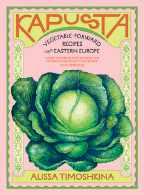
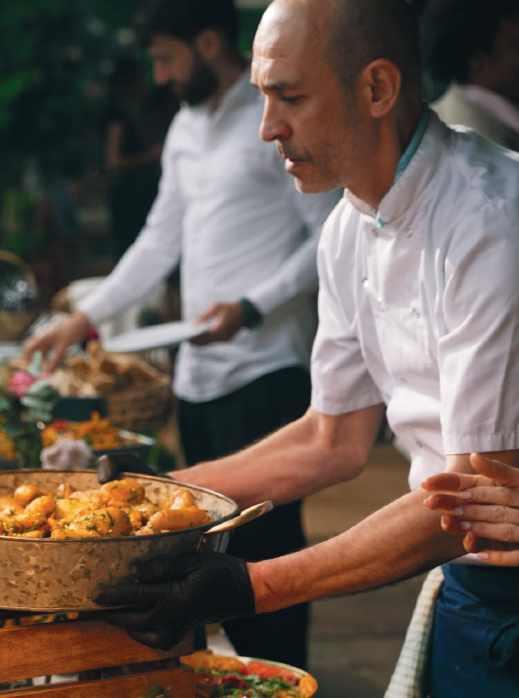
Winter is the best time of year to indulge when eating out, says Louisa Walters
Afternoon tea at the Montcalm Mayfair brings the playfulness of a Georgian garden into a London hotel. With a botanical influence, it draws inspiration from Constance Spry, the pioneering florist, author and culinary innovator who invented the recipe for Coronation Chicken. It appears as a filling in one of the delicious finger sandwiches, as does smoked salmon and also lime-compressed cucumber, so prettily displayed and decorated. Then it's time for exceptionally good scones with strawberry jam, clotted cream and lemon curd. Among the plentiful miniature cakes are a matcha opera cake, a vanilla millefeuille and a superb glazed pear tartelette. There’s a ‘chocolate’ tea that tastes like a non-indulgent hot chocolate! The botanical theme pervades the newly-refurbished hotel, making it a little haven in the West End's heart.
Everyone is talking about HUŎ in Belsize Park for its good food, great service, gorgeous fit-out and not being silly money. The menu being pan Asian, it brings back fond memories of XO, which used to be on the site. Standout dishes are Daikon cakes, dim sum and an absolutely superb chicken pad Thai. There are delicious salads too, including duck and watermelon. It has that ‘out out’ feeling without travelling as far as the West End and there’s a lovely private room for 20 people. From the team behind the well-established Uli in Notting Hill, who clearly know their edamame.
Claro, Ran Shmueli’s highly successful London outpost of his Tel Aviv original, has made it into this year’s Michelin Guide. The innovative chef’s USPs are sourcing the best of British ingredients and keeping menus seasonal, so expect beetroot, apples and cabbage with a twist in coming weeks, with Israeli essentials tahini, labneh and zhoug laced liberally throughout. Star dishes on the menu include a bruschetta of trout with roasted pear and trout roe,

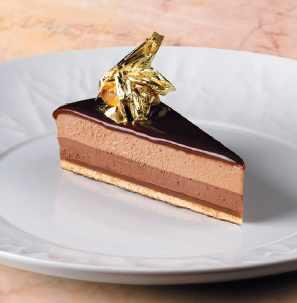
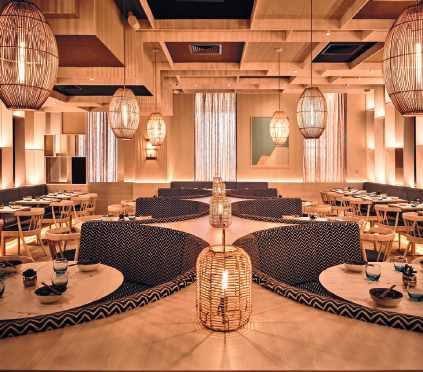

a sweet-pickled and charred wedge of hispi on a bed of skordalia with almond gremolata, and a to-die-for date and whiskey caramel pudding. Bread here is pricey but special – don’t miss the kubaneh, with its croissant-like crispy crust. By Anthea Gerrie
ROSI
It’s back! The create-your-own-sundae much loved by fans of the Colony Grill at The Beaumont has reappeared on the menu at Rosi, the gorgeous new restaurant on the site. Warm and whimsical in shades of pink with artistic murals on the walls and one of the UK’s few female Michelin-starred chefs (Lisa Goodwin-Allen) at the helm, it’s the place you really want to be with a menu of things you really want to eat, from cauliflower cheese bites with truffle mayo and hash browns with walnut ketchup to starters including beef tartare and Jerusalem artichoke soup poured into the bowl in front of you. Main courses are a twist on classics – John Dory fish fingers and chicken Diane plus chicken Kyiv, Dover sole and a classic steak with onion rings. I built my own salted caramel and pistachio sundae but next time, I will have the Mayfair Millionaire Tart – a glamorous indulgence reflecting the location.
EREV
Erev is the day before a notable day, new Notting Hill restaurant Erev is very much the notable occasion itself – and it’s even dog friendly. The menu is broken up into Earth, Sea, Land and Matok (dessert) and we had all three of those (Basque cheesecake, chocolate mousse and baklava). But before that we had creamy hummus, tangy matbucha and outstanding falafel that came with
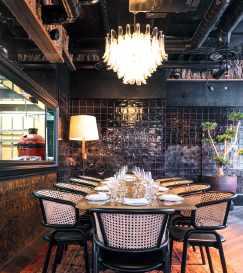

fat, fluffy pita. The rest of the menu is a love letter to the Ottolenghi store cupboard – smoked aubergine with pomegranate molasses and pistachio, kale salad with squash and goats cheese, melting soft braised ‘tropea’ onion and slow-cooked short rib listed as ‘Dinosaur Bone’. There are two fish options and loads of veggie ones and the cocktails and the staff are wonderful.
Bracha in Golders Green is the new kosher street food sensation from the team behind Mazal in Camden. Order from the terminal as you walk in and, within minutes, your table will be laden with falafel, loaded hummus, arayes, schnitzel, chicken wings, chopped salad, cauliflower bites, asado beef pita, chicken thigh shawarma and the signature blooming onion and every single dish will be delicious. Finish off with apple or chocolate deep-fried pastry ‘cigars’ with ice cream.
Food writer Joanna Nissim has been running kosher cooking workshops for several years and has now branched into running Spanish-influenced fine dining kosher pop-ups at Arros QD restaurant in Fitzrovia in the belief that there is scope for much more variety in kosher restaurants. The next one is on 18 January 2026. Email joannanissim@hotmail. com for more info and follow @joanna_nissim on Instagram to see her fast, simple but effective demos of the type of dishes we all want to eat.
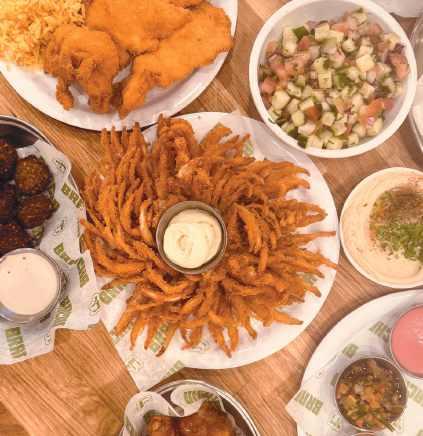

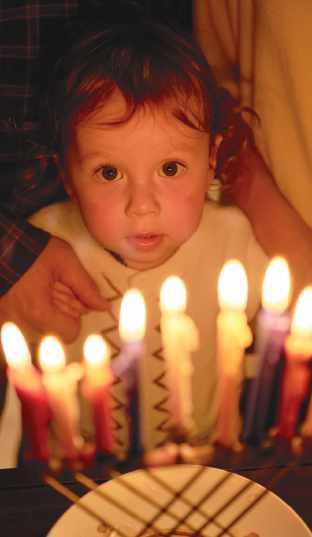








This is a space for pets of all kinds, regardless of their level of observance.
So send stories and pics to pets@jewishnews.co.uk
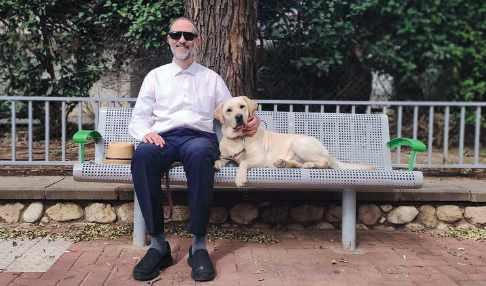
The annual Israel Guide Dog Centre (IGDC) reception brought its usual mix of warm-hearted generosity and notable guests. Literary agent Neil Blair, a long-standing supporter of Israel focused charities, spoke alongside IGDC co-founder Noach Braun, who underlined the charity’s growing need for more guide dogs for IDF soldiers who have lost their sight and emotional support dogs for post-trauma victims.
The absence of the late executive director Martin Segal was felt as his energy and love of dogs shaped the charity’s UK presence. Teddy, the dog named in his memory, featured on last year’s Sponsor a Puppy membership given to Rob Rinder, and many hope he will make a guest appearance.
EREZ'S FRESH START
This year the honour went to Venus, who arrived in London with her owner, Erez Barkai, his wife Orna, and their daughters. Erez researches every new city before a visit. As he told Life: “If I
have information about the new place – what it looks like, where the obstacles are – it’s easier.”
The preparation helps as he can’t see the sights but, more important than layout, he says, is knowing the temperament: “It doesn’t matter to me how people look. What matters is how the person behaves, what he says, how he shakes my hand.”
Erez began losing his sight at 17. It took 15 years before he could admit “now I need help”. A white cane was never suitable – “you’re constantly bumping into things just to know where you are” – and when he discovered guide dogs were provided at no cost, his relationship with the Centre began.
Before joining IGDC, he spent 23 years in education,
performed as a musician on TV, and later trained for the rabbinate. Three years ago, Noach invited him to become director of community relations and accessibility coordinator, a role that uses every strand of his experience: communication, empathy, religious grounding and a clear understanding of restored independence.
The job became urgent after October 7. “For people with disabilities, the crisis was devastating… they didn’t have the ability to take care of themselves or evacuate their homes alone.”
The Centre contacted every guide dog and service dog partner, ensuring safety, food, medicine and support. From that came Purple Home Front, the emergency accessibility initiative Erez helps to lead. Its global recognition matters less to him than its purpose: “to ensure every client has what they need and no one is left behind”. Erez has had three guide dogs. Lady, his first, retired with his brother -in-law; Jay, his second, lives with his original foster family. “We still see each other. Sometimes I have two dogs at home when they go on holiday – even three, if my sister visits with her foster puppy.” Each dog has been different: “Same shape, different energy.”
This year’s annual reception was led by new executive director Karen Brosh, who has big plans for 2026. But her real success was the smile on Rebecca Segal’s face. When Erez, with Venus at his side, said: “We don’t just raise dogs. We raise standards,” it felt as if her late husband Martin was in the room.
israelguidedog.org.uk
“Never work with children or animals,” the old acting rule goes, yet Georgina Morelle has chosen to do both by bringing her own animal to work. Her mini labradoodle, Princess Winnie Judy Morelle, is now the o cial emotional-support dog for her film company.
It’s a first for them both: Georgina, an accomplished actress, has stepped behind the camera as co-producer and casting director on Rooted Out, and Winnie is debuting as the calm presence keeping cast and crew-centred. Filmed across London, the two-part drama explores tensions simmering tensions beneath suburban life sparked by a dispute over a tree.

For Georgina, who also runs a casting agency in Sidcup, bringing Winnie to set wasn’t planned but became essential.


“Working in film can be very stressful and, when I took Princess Winnie Judy Morelle, along I realised the important role she played as a support for actors under pressure. It made me realise this is the way forward and I’m going to recommend her for future productions.” And with a name like hers, it’s only a matter of time before she co-stars with Collie Farrell, Bark Wahlberg or Mutt Damon.
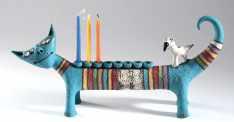
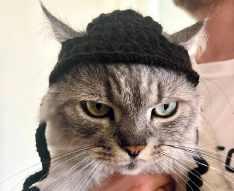
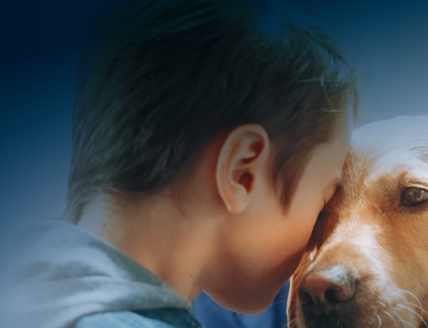




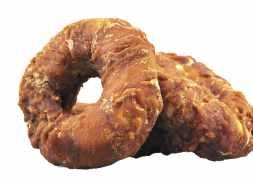



It’s all about whales, glaciers and Jewish history on my Alaskan cruise.
By Beatrix Clark
When our son, who lives in British Colombia, suggests a family cruise to Alaska I’m sceptical. I’ve never fancied cruising and I don’t like the cold, but the scenery and wildlife, much of it accessible only by sea, sound spectacular. I’m also keen to visit Skagway, the place to which fortuneseekers came in their tens of thousands at the end of the 19th century to travel to the newly-discovered Klondike goldfields. Among them were early Jewish settlers – prospectors, merchants, doctors and lawyers, most of whom relocated to the state’s largest city, Anchorage, which today is home to the majority of the state’s 6,000 or so “frozen chosen”, as Alaska’s Jewish community likes to call itself.
After extensive research, I book two balcony staterooms on Holland America’s award-winning MS Koningsdam and, waving goodbye to Vancouver’s impressive skyline as we pass under the Lionsgate Bridge with a glass of bubbly in hand, I feel like an excited child embarking on a new adventure.

Our first full day at sea is spent cruising gently through the Inside Passage, a 360-degree panorama of islands, waterways and densely wooded mountains that make up British Colombia’s Pacific Coast. Hard as it is to tear ourselves away from the viewing decks, today is also the day to familiarise ourselves with our floating hotel. My husband and I are keen to try the thermal spa and BB King’s Blues Club (music is a key theme on the Koningsdam), while our son makes a beeline for ping-pong and pickleball, and our daughter gravitates to the speciality coffees and fresh apple pie in the Grand Dutch Café.
The first stop on the cruise is Juneau, which, despite being Alaska’s capital city, is accessible only by sea and air. It’s a prime spot for whale-watching owing to its nutrient-rich waters and, binoculars at the ready, we eagerly disembark for a visit to the Mendenhall Glacier, which rises majestically from the Mendenhall Lake – formed as a result of the glacier retreating.



Once aboard our whale-watching boat we’re greeted by captain Crichelle and her naturalist colleague. While learning about the humpbacks’ individual names, tail markings and close family ties, we keep our eyes peeled and suddenly spot the tell-tale sign of spray followed by a tail emerging from the water. Over the next half-hour or so there are more, one of which we’re reliably informed belongs to Flame, a celebrity among scientists for her distinctive markings and the regularity with which she has brought new calves to the area.
Back in downtown Juneau, there’s just time for a drink at the Red Dog Saloon, where the legendary character Wyatt Earp apparently left his gun, now displayed in pride of place behind the bar. This is Wild West frontier land, and it’s easy to imagine the shenanigans that occurred behind these revolving doors when unruly pioneers descended during the gold rush.
Juneau has whetted our appetites, not only for whales and glaciers, but also for a deeper dive into the area’s colourful past. Our afternoon in Skagway is spent aboard an original steam train on the White Pass Summit Railroad – a steep, winding track that was constructed between 1898 and 1900 by the inimitable railroad builder Michael J Heney. The two-hour round trip through the mountains, past peaks and canyons, lakes and cascading waterfalls, is the most scenic train ride I have ever experienced. That workers completed the project in under three years in the most treacherous of conditions is mind-blowing – it’s a shame “Big” Mike Heney isn’t around to sort out HS2.
We’ve been wowed by the scenery thus far, but nothing prepares me for the awesome spectacle that is Glacier Bay National Park. We’re blessed with clear, sunny skies and park ourselves on deck to observe the massive, dazzling mountains of ice, and listen out for the booming sound of a block of ice breaking loose and crashing into the water, a process known as calving.
Presentations on the ship’s World Stage by a park ranger and the ship’s cultural ambassador, the latter a member of the indigenous Tlingit tribe, are engaging and informative.
Our final stop is Ketchikan, known for its abundance of salmon and extensive collection of

‘The trip through the mountains is the most scenic train ride I have ever experienced’
totem poles. We stroll along historic Creek Street –formerly an infamous red-light district – charmed by the profusion of salmon below us and the quaint old buildings that once belonged to women plying their trade.
After lunch, as the weather is still fine (a rare occurrence in what is apparently Alaska’s rainiest city), I’ve booked a guided sea kayak tour, during which we see bald-headed eagles and learn about Tongass National Park – the world’s second-largest rainforest after the Amazon, covering 17 million acres, including the natural wonders that we’ve witnessed in the past week.
Our last day is spent at sea en-route back to Vancouver and, feasting our eyes on the view for the last time, we catch sight of humpbacks and orcas –groups of them just yards from the ship – a final memory to cherish from an unforgettable trip.
Beatrix travelled on the Koningsdam, 7 Day Alaska Inside. hollandamerica.com

At WBII, we stand for an informed, fair and positive conversation about Israel — one that reflects its multicultural society and its remarkable spirit of innovation. We strive to strengthen understanding, promote constructive engagement, and champion a vision of peace, coexistence, and recognition for Israel across the UK and beyond.






As Hanukkah approaches and we celebrate light, resilience, and renewal — we invite you to support WBII's mission. Your contribution helps us continue building a brighter, more truthful narrative and empowering people across the UK to engage with Israel in an informed, meaningful way.
Be the light with us.



us on 020 8381 1717 collections@allaboardshops.com




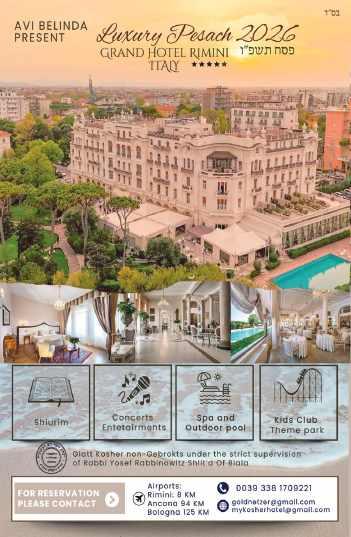


By Michael Gold

Hundreds of Japanese people stand at Shibuya Crossing, one of the busiest intersections on Earth, waving Israeli flags and singing Oseh Shalom
The crowd is orderly and gentle, almost reverent. I’d never seen anything like it. I received the viral video from my mum as my wife and I were en route to Japan. “You have to find out what that’s about,” she said. So between sashimi and sake, we set out to learn more.
Our first stop was the electric city of Osaka – the country’s unofficial capital of joy. There’s a saying that in Tokyo you’ll be greeted with a bow, but in Osaka you’ll be greeted with a joke… and it’s true. The locals bubble with laughter, the streets blaze with neon, and sizzling yakitori stalls crowd every corner. Japan has a reputation for restraint; Osaka didn’t get that memo.
Mimaru Shinsaibashi North became our base, just a 15-minute stroll from Dotonbori’s famous lights and Namba’s buzzing food markets. Part of a group of 27 apartment hotels across Japan, it’s designed for travellers who want space and simplicity. The rooms come with full kitchens and generous living areas –ideal for families, group trips or anyone keeping kosher. For us, it meant lazy breakfasts at home before heading out to explore, and the joy of returning each day to a freshly-serviced apartment. The “Ninja Room” was a highlight: walls adorned with ninja weapons and a hidden door revealing a secret bedroom. It was playful without being childish – and perfectly located.
If you’re travelling with children, Universal Studios Japan is a must. Actually, scrap that – we


went as fully-grown adults and had the best time. If you grew up with Harry Potter, nothing beats wandering the streets of Hogsmeade, lunching at the Hog’s Head, and flying through Hogwarts Castle. Just do it.
A fter a few playful days, we tried to be grown-ups again with cocktails at the Adee Lounge & Bar on the 20th floor of the Intercontinental Hotel. For a moment, seeing my wife in that glamorous bar with the city lights behind her reminded me of Scarlett Johansson in Lost in Translation – until our Halloween-themed cocktails arrived, complete with jelly eyeballs.
Turns out, we’re just big kids at heart.
W hile we explored Osaka, a solidarity march took place in downtown Tokyo – co-organised by Japanese and Israeli residents and joined by supporters worldwide. It was a reminder of our aim: to discover Jewish Japan.
That search led us to Kobe, a port city just outside Osaka that once sheltered Jewish refugees during the Second World War and now hosts one of Japan’s few active synagogues. Rabbi Shmulik Sudakevich greeted us with easy warmth. Before we began

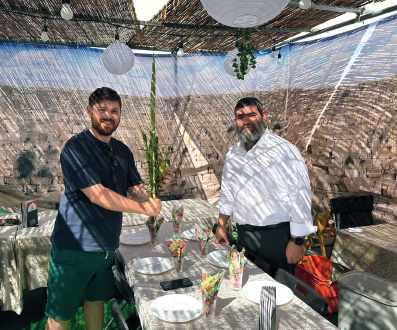


talking, he placed a kippah embroidered with Kobe on my head and told me to keep it.
He spoke about building the community from almost nothing. “We came here, my wife and I, and we start. We did Shabbat. My wife made challah. Step by step.” Those steps have grown into a network across the country. “It’s not only Tokyo and Kobe,” he explained.
“There are people in Osaka, Sendai, Fukuoka –small places. We try to help everyone.”
Before Passover, he sends matzah. Before Succot, the four species. Even with tiny numbers, Jewish life in Japan quietly persists.
Security, he said, is constant but comforting. “Japan has no antisemitism. The police know us; they help us.” He compared Japan’s approach with the UK’s. “In Manchester, they send police after something happens. Here, they do it before.”
W hen I asked about life since October 7, his tone stayed calm. “People here were shocked, like everywhere. But they reached out. They wanted to



CLOCKWISE FROM TOP: Mimaru Japanese-style beds; Michael Gold and Rabbi Shmulik Sudakevich; a kippah featuring Kobe, Osaka
BOTTOM FROM LEFT: Universal Studios in Tokyo; Kyoto; Kobe




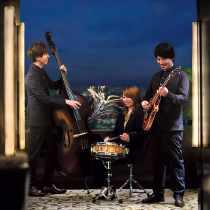
understand.” He spoke about the people in the Shibuya video – mostly members of Makuya, a Japanese Christian movement k nown for its admiration of Israel and public shows of solidarity with the Jewish people.
“They are good friends,” he said.
Kyoto Calm
A fter Kobe came Kyoto and, finally, the calm. We’d heard stories of crowds, but Roku Kyoto proved otherwise. Hidden in the north of the city on the Takagamine mountainside, it carries the stillness of its past as an artisan enclave. Everything – the wide windows, cedar-wood furniture and careful geometry of the rooms – feels designed not just to impress, but to quiet you.
Roku’s glass-walled restaurant Tenjin sits above the river that shares its name, framed by maple-covered hills. We arrived in October, just before the leaves turned crimson, but could imagine how striking it becomes in full colour – enjoying a beautiful breakfast by the window. Kyoto draws travellers for its temples, tea houses and sense of living history; a city where centuries of craft, ceremony and art still feel alive. After visiting the nearby Golden Pavilion and Ryoan-ji Temple, we loved retreating to Roku’s quiet each evening: soaking our feet in the thermal pool, wandering through the Japanese garden, and quietly sipping tea in the Tea House.
For those of you hoping to experience Kyoto’s spring blossoms, you needn’t miss Passover –Chabad Kyoto offers Shabbat dinners, kosher meals and holiday celebrations, a reminder that even in Japan’s most traditional city, a small Jewish community keeps the light burning.
The height of hospitality
We ended our trip in Tokyo, 53 floors above the skyline at the Ritz-Carlton Tokyo.
The hotel has that timeless Ritz-Carlton charm
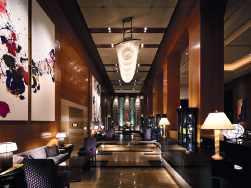
– classic, elegant, and quietly confident – but here it meets a distinctly Japanese sense of grace. The staff operate with a kind of gentle foresight; you don’t so much ask for things as realise they’ve already been done.
A s guests with Club Lounge access, we grazed our way through the day – breakfast, lunch, afternoon tea, hors d’oeuvres and evening cordials – each one as beautifully-presented as the last. It feels less like a lounge and more like a calm, private dining room suspended above the city, where the skyline shifts colour by the hour and, on clear mornings, Mount Fuji appears quietly in the distance.
Breakfast on the 46th floor was just as memorable: Japanese and Western dishes served like art, with views that make you pause mid-bite. The staff are eager to adapt to dietary preferences, even if strict kosher rules are a stretch – what you get instead is consideration and clarity.
The spa’s thermal rooms are equally special – hot and cold baths, saunas and vast w indows overlooking the Imperial Palace gardens. You could lose track of time completely.
It’s tempting to stay cocooned up there, especially with seven fabulous restaurants under one roof, but being based in Roppongi, the Ritz-Carlton is the only hotel of its calibre set in a neighbourhood that actually hums with life. Step outside and you’re surrounded by cafés, boutiques and late-night energy. When you finally descend from the clouds, you’re right in the middle of midtown Tokyo – and, somehow, it all still feels serene.
W hat we discovered across Japan wasn’t distance, but warmth. The country’s famous hospitality runs deeper than service; it’s a genuine willingness to understand, to adapt and to meet difference with care. Between the history of Kyoto, the playfulness of Osaka and the buzz of Tokyo, we found a Japan defined by quiet connection – where curiosity and kindness meet in everyday gestures.
As Margate transitions from summer energy to winter calm, Unico Hotel continues to define itself as a year-round destination for kosher hospitality, comfort, and community. Following one of its most successful summers, the hotel welcomed guests from the UK and abroad, praised for its boutique standards and unwavering kosher commitment. This success carried into Tishrei with a joyful Succot programme of festive meals, inspiring atmosphere, and meaningful connection, leaving many guests eager to return.
OPEN ALL YEAR AND DESIGNED FOR ALL SEASONS
Unico’s dedication to serving the Jewish community all year is reflected in its welcoming environment for Shabbat getaways, family breaks, and quiet escapes, enhanced by cosy interiors and tranquil surroundings.
KOSHER CUISINE
Kosher dining is central to the Unico experience,


with carefully prepared meals that balance creativity, quality, and comforting seasonal flavours.
Shabbat at Unico is warm and thoughtfully designed, creating an uplifting, stress-free space where tradition and relaxation meet.
LOOKING AHEAD
Unico Hotel looks forward to a new season of continued excellence and heartfelt hospitality. For more information, please visit www.unicohotels.co.uk











































That’s what Tel Aviv does best, says Brie Bailey
Known by reputation, Tel Aviv’s hotels are connected to the pace of the city –the morning runners, the late-night cafés and the shoreline that never slips out of view. Not that you could forget the properties rooted in Tel Aviv – and if you’re thinking, “I’ve got to visit”, here are some prompts for where to stay and we’ve even dropped in one up the coast in Herzliya.

A fixture on the seafront, the hotel has had a major £14 million refresh. The location has always been prime, but the lobby now frames the city through wide windows and the revamped café feels more like an extension of Tel Aviv’s pavement-table culture than a hotel add-on. The 217 rooms were rebuilt with the focus on practical – good storage, workspaces and balconies that draw in the light with a nice addition of artwork from the Gordon Gallery anchor. The pool deck now looks straight onto the sea, and SABRA, the new dining room, has an open kitchen and three terraces so you can have breakfast and dinner outside. danhotels.com
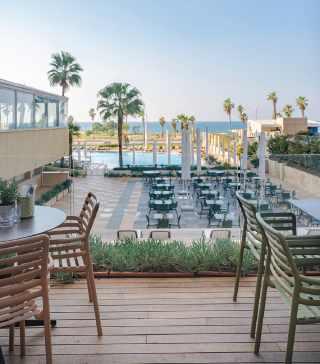

The rooftop pool may be the headline at The Carlton, but regular guests will tell there’s more to talk about. Like the sunrise walks led by in-house trainers or the long breakfasts served at the water’s edge. If you haven’t tried Flame, you don’t know about the restaurant with an open kitchen where food is cooked with the natural heat of fire and sizzling coals. The speciality is locally-grown veg and meat from select Holstein cows and aged to perfection. The menu is seasonal, but the hotel, with its spacious rooms, stays the same – low-key and entitled to rest on its reputation. carlton.co.il
A few blocks north, Prima offers an easy-going base for travellers who want the beach at the end of the street and the city behind them. An early swim, then a reliable Israeli breakfast at the Prima, you pick up the neighbourhood’s rhythm. The rooms are straightforward, some with balconies, and the location near Gordon

Beach and Dizengoff means most outings can be done on foot. prima-hotels-israel.com
The Daniel is part of the Tamares Hotels group and their properties prioritise the Israeli shoreline. So travellers who like the Tel Aviv energy but prefer sleeping somewhere calmer will enjoy The Daniel, which sits on the sand in Herzliya. The atmosphere is relaxed, with wide sea-facing terraces, a dependable beach café and a pool area that sits close to the water. Rooms are spacious, many with balconies, and are an easy fit for families. The marina is a short walk, filled with restaurants, sailing schools and quiet corners for reading or people-watching. tamareshotels.com

The year 2025 proved that wonders aren’t always divine – sometimes they’re simply human. By Brigit Grant
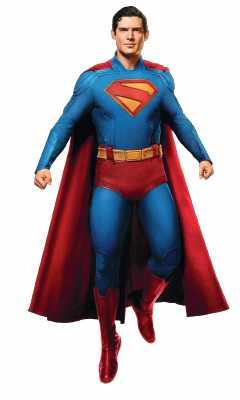

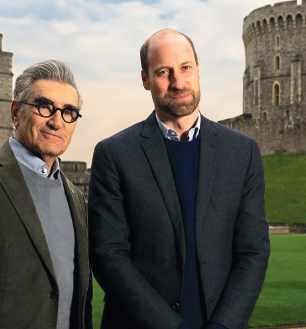
The ‘official’ definition of a miracle is an extraordinary event that defies the laws of nature and logic. But when those kinds of miracles are thin on the ground, a broader interpretation is required.
A fter all, doesn’t the Talmud remind us not to rely on miracles and don’t Chasidic masters teach that the ordinary itself is miraculous? The clearest redefinition, then, should be what we have accomplished. And that’s a lot in 2025. It may not feel that way in a year clouded by sorrow and loss. But what could be more miraculous than the survival and return of the hostages after months of captivity, brutality and fear? menorah glow should provide enough light to find miracles we’re shedding some of it on the folk who have entertained, inspired or simply came home in 2025. It isn’t definitive that we apologise wanted to recall the moments when…


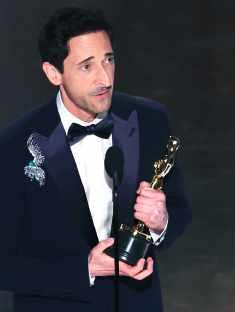

Yoel Levy, aka the Jewish Fitness Coach, ran marathons in memory of Ariel and Kfir Bibas and their mother Shiri. In a bespoke Batman costume – the superhero the Bibas children adored – he recently ran marathons in Panama and Mexico and will keep running to honour their memory.
David Corenswet became the first Jewish actor to play Superman in the 2025 reboot of the DC legend that was originally created in 1938 by Jewish teens Jerry Siegel and Joe Shuster.
E ight nights of miracles, and – and for – but we and to

Prince William made a surprise appearance alongside Eugene Levy in The Reluctant Traveler on Apple TV+. Sharing a pint with Levy, William joked: “Was getting drunk with Prince William on your bucket list?” “That’s the bucket,” Levy replied.
Adrien Brody won Best Actor for The Brutalist, Mikey Madison took Best Actress for Anora Harrison Ford, 83, received his first-ever Emmy nomination for Shrinking, and Jason Isaacs earned his first for White Lotus season 3. The Emmy for Outstanding Current Affairs Documentary went
Yariv Mozer ’s We Will Dance Again, produced with others by the BBC’s Lucie Kon and Fulwell’s Leo Pearlman
Rob Rinder
Rob Rinder and Rylan Clark took home the BAFTA for Best Factual Entertainment for Rob & Rylan’s Grand Tour



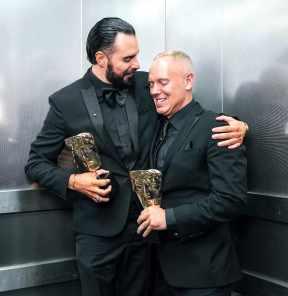



Gal Gadot received her Hollywood Walk of Fame star and the Genesis Prize for outspoken support of Israel.
Community Security Trust director of policy Dave Rich, Claudia Winkleman, and Tracy-Ann Oberman each received MBEs, as did Holocaust survivor and educator Manfred Goldberg MBE , who sadly passed away last month.
Yuval Raphael defied protests to represent Israel at Eurovision with New Day Will Rise by Keren Peles. Placing first in the semi-final and finishing second overall, Israel also won the audience televote.
Ellie Goldstein appeared on Strictly Come Dancing and every step of her Halloweenweek Tango was a statement of joy and inclusion.
Israeli wheelchair tennis star Guy Sasson won the French Open quad singles and doubles titles with partner Niels Vink, then the doubles crown at Wimbledon and the US Open.
Rugby star Sacha Feinberg-Mngomezulu, 23, shattered records with 37 points against Argentina in September, then led South Africa’s Springboks to victory over France in November.
And, of course, there was the return of the living hostages. Noa Argamani was finally reunited with her partner Avinatan Or, freed after 737 days and

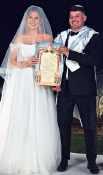

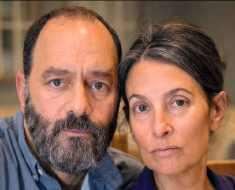





Israel Defense Forces soldier Boris Shtonda, who lost a leg in battle walked down the aisle on his prosthetic to marry Anna.
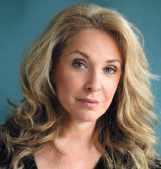


If searching for miracles has a face, it surely belongs to Rachel and Jon Goldberg-Polin, parents of murdered hostage Hersh. Speaking around the world with astonishing grace in their grief, they came to London in November to help launch the new Koren Sacks Humash – an event to mark the fifth yahrzeit of Rabbi Lord Jonathan Sacks Rachel has said his quote, “It is not too much to say that Jews kept hope alive, and hope kept the Jewish people alive” resonates deeply.
As a mantra for finding miracles, it’s one to carry us into 2026.






By former hostage
Eli Sharabi
When people talk about being a celebrity, I reply that I don’t feel like that at all. I’m not a celebrity. I’m just a familiar person now, and not for good reasons. My life has changed 180 degrees, and I didn’t expect that. I didn’t want it. But this is what happened, and I’m doing my best.
For the past nine months since my release I’ve tried to help the remaining hostages. Every lecture, every interview, the book I wrote – it was all part of that. And it helped me too. It was like therapy. It is important to me to talk about my family and share my testimony. Everything is happening very fast, but I never say it’s happening to me. I choose to do it. Maybe in a few months it will all calm down – when the book tours and the talks slow down, then I can start to build a new life. A good life, I hope.
Since my release in February I’ve met many people – presidents, prime ministers, ministers; but they are all just human beings. I just tried to do my best in each situation and bring my logic, experiences and opinion. If I think about who made the most significant impression on me it is Steve Witkoff (US Special Envoy to the Middle East under Donald Trump). Witkoff was very emotional and, after sitting together for two hours, it was absolutely clear how much he really cared about the hostages and their families. He even gave me his personal number, saying I could call him any time. You don’t see that often. That warmth from him is what touched me. Of course, I will always thank President Trump for helping to secure my release and for what he did to help the other hostages and stop the war.
People cry when they meet me, but they don’t need to. I’m fine. I really am. I know how lucky I am to be alive and I am grateful for that every day.
I know Chanukah will bring up a lot of memories. My wife
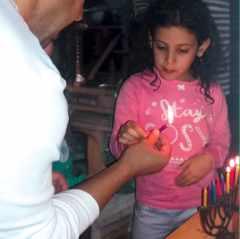
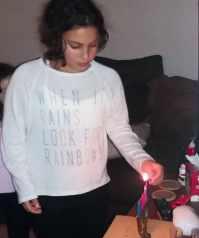
Lianne wasn’t Jewish, but our daughters, Noiya and Yahel, grew up knowing both worlds. Lianne wasn’t religious – she was an atheist – but she loved Chanukah. We would light the candles, sing songs, and sometimes fly to England to spend Christmas with her parents. It was not about presents. It’s about being with family and when the holidays coincided, we would light Chanukah candles in her parents’ home . I will really miss that. Miss them.
This year, I plan to be in Israel for Chanukah with my family and then fly to England to spend Christmas with Lianne’s parents and brothers. It will be special.
Chanukah is the Festival of Lights, and for me the word ‘light’ now means something different. Light is special in life when there is loads of it. Being held underground – 50 metres deep for 16 months in total darkness – there were times I thought I would never see light again. Rather than get depressed, I began to understand that it doesn’t really matter where you are; even if it’s very dark in a very tough time, the point of light is that it’s inside you and you realise how precious life is. That helped me survive. I found faith again. I grew up in a traditional home – synagogue on Fridays, Kiddush but, on October 7, when the terrorists pushed me into the car to kidnap me, I started to say the Shema . Every morning in captivity I prayed. And the four of us hostages waited for Friday and kept a quarter of pita bread to do the blessing on the food. It was a special moment that gave us strength. To survive in captivity, you try to find any source that gives you strength. I’m not a religious man, but I have faith now and I’ll keep it.
W hen all this slows down, I want my life to mean something again. I want to help children who can’t afford it to have extra lessons in mathematics and teach them myself. As I said, I'm trying to find new meaning in my life.
Going into 2026, my message for the Jewish community is: don’t take fear with you. Don’t be afraid to be Jewish or hide who you are. Walk proudly. It’s 2025, not the 1940s. Jews should feel safe in their own countries. I say this to the prime ministers, foreign secretaries and presidents I meet, because they need to take responsibility and speak out strongly against antisemitism. I’m not diplomatic; I don’t have to be. I just tell them the truth.
My wish is that Jews all over the world will feel secure again –that this time of hate will end.
A nd as this is the ‘Last word’, the single word I choose to take into 2026 is ‘appreciation’. It is the most powerful for me. I learnt the hard way to appreciate basic things and to appreciate freedom. And ‘freedom’ will also be my word – because it's priceless. You don't understand that until the day it’s taken from you.
Hostage by Eli Sharabi is published by Swift Press and is available now