
International Research Journal of Engineering and Technology (IRJET) e-ISSN:2395-0056
Volume: 12 Issue: 03 | Mar 2025 www.irjet.net p-ISSN:2395-0072
International Research Journal of Engineering and Technology (IRJET) e-ISSN:2395-0056
Volume: 12 Issue: 03 | Mar 2025 www.irjet.net p-ISSN:2395-0072
Renjith Ramachandran1
1Independent Researcher and Solutions Architect, Hudson, MA, USA ***
Abstract - Monolithic applications have been a part of software development since its inception and gained prominence with the rise of web applications. As applications grew more complex, companies began adopting microservices architecture for greater agility, scalability, and faster release cycles. Over the last decade, microservices architecture saw widespread adoption. With the advent of containerization and orchestration tools like Kubernetes, many organizations transitioned from monolithic applications to microservices. However, some companies eventually found themselves dealing with an unmanageablenumberofmicroservices,promptingthemto consider returning to monolithic systems or opting for a middleground,knownasModulitharchitecture.
Migrating a legacy application from an outdated architecture to a modern one requires a significant investment. Without proper planning and execution, such migrations can often result in failure. The purpose of the paper is to present a strategy for building an architecture andmigrationstrategyforModulithapplication,addressing keyaspectssuch asunitandintegrationtestingofmodules, common logging patterns, exception handling, persistence isolation, domain modularization, inter-module communication, module security, deployment strategies, configurationmanagement,DevOps,andcodemaintenance. Thegoalofthepaperistocreatearobustframeworkthatis extensible, maintainable, detachable, and secure. This approach ensures the avoidance of the common pitfalls oftenassociatedwithmonolithicarchitectures.
Key Words: Modulith Architecture, Microservices Architecture, Monolithic Architecture, Modernization, Legacy Systems
A legacy system is a software system that, over time, has become critical to business operations but has reached a point where maintenance is difficult, and it resists modifications [4]. Due to its original design, the system continues to operate and support business functionsbutlackstheflexibilitytoaccommodatechanges. Debugging issues can take hours, and upgrading the systemwouldbehighlycostly.
Companies take the path of software modernization to make the systems current from a technical stack perspective. Software modernization is the process of rearchitectingorreplacingexisting softwaresystemswith an architecture which is more flexible and cost effective [5]. Certain modernizations take years and it takes many more years to reap the benefits of the modernization initiative.
Monolithic applications have been a fundamental part of software development since its early days. With the widespread adoption of web applications, monolithic architectures gained significant popularity. They were typically built using technologies like JEE, .NET, or PHP. However, scaling and managing monolithic applications are challenging due to their large size and the single codebasesharedamongall developers[1]. Overtheyears lot of functionalities and unstructured code gets added to Monolith applications that they became resistant to modifications or costly to maintain because of licensing issues.Asa result,manycompaniesbegintransitioningto moreflexiblearchitectureslikeMicroservicesArchitecture (MSA).
Theperiodfrom2010to2020witnessedasignificantrise in the prevalence of Information Technology, with Digital and Digital Transformation emerging as hot topics by the middle of the decade. Digital transformation involves the integration of new Digital technologies like social, mobile, analytics and cloud [2][3]. One of the key advancements brought by Digital Transformation was the enhancement of scalability and agility in application delivery. With growth as a priority, businesses seek faster feature deploymentandhighlyscalableapplications.
Microservices Architecture (MSA) can effectively meet these requirements. A study by Taibi et al. highlights that key motivations for migrating to MSA include maintainability, scalability, delegation of team responsibilities, and DevOps support [6]. These factors, together, enhance the development process. Companies started developing microservices for specific functionalities, enabling different teams to work on servicesconcurrently,thusacceleratingtime-to-market.
International Research Journal of Engineering and Technology (IRJET) e-ISSN:2395-0056
Volume: 12 Issue: 03 | Mar 2025 www.irjet.net p-ISSN:2395-0072
Asthenumberofmicroservicesincreased,managingthem became increasingly difficult. Some services even evolved into new monoliths due to their growing complexity. Companies started thinking about a common ground betweenmonolithsandmicroservices.
Overtime,a legacysystemlosesitsappeal dueto thecharacteristicslistedbelow:
CharacteristicsofaLegacyApplication
Asystemcanbeclassifiedaslegacybasedonthefollowing attributes.
BusinessValue: Business value expresses the extent to which system is essential to the business of an Organization.
Decomposability: Decomposability measures how easily main components of the software system are identifiableandindependentfromeachother
Obsolescence: Obsolescence refers to the aging of a software system because of the failure to meet the changingneeds
Deterioration: Deterioration refers to the aging of a software system because of the continuous changes that aremade.[7]
3.1 Advantages of a Monolithic Architecture
Monolithic applications consist of a single codebase, making them simpler to build and deploy. Local setup is easier since there is only one codebase to configure. Monolithicsystemsenablefastercommunicationbetween internal components, as all components are part of the same application, reducing overhead and simplifying cross-component testing. This architecture is well-suited forsmallerapplications[8].
3.2 Disadvantages of Monolithic Architecture
Monolithic applications are often challenging to scale. While vertical scaling is possible, horizontal scaling presentssignificantdifficulties.Thetightcouplingwithina complex monolithic application makes it hard to implementchanges.Astheapplicationgrows,testingnew changes becomes more cumbersome, and deployment times increase due to the application's size. Additionally, adopting new technologies within a monolithic structure canbeproblematic[8]
4.1 Advantages of a Microservices Architecture
Microservices architecture is highly flexible, reliable, and enhances developer productivity. It allows for both horizontal and vertical scaling and enables faster time to market.Additionally,itofferstheflexibilitytousedifferent technologiesacrossvariousservices[8].
4.2 Disadvantages of Microservices Architecture
Daniel et al. studied and collected disadvantages ofmicroservicesfromdifferentsourcesandcameup with thefollowingtop5disadvantages[9].
Operational complexity-multiplicity of autonomous services requires intensive management and co-ordination
InitialCostofAdoption-initial setup wouldrequire specifictechnicalskills,toolsandprocesses.
Data Consistency-As each service maintains its own data, data consistency between service becomes an issue.
NetworkOverhead- As services will be constantly communicating, there can be degradation in network performance.
Increasing Complexity of DevOps-managing build and deployment of multiple services increases the complexityofthewholeecosystem.
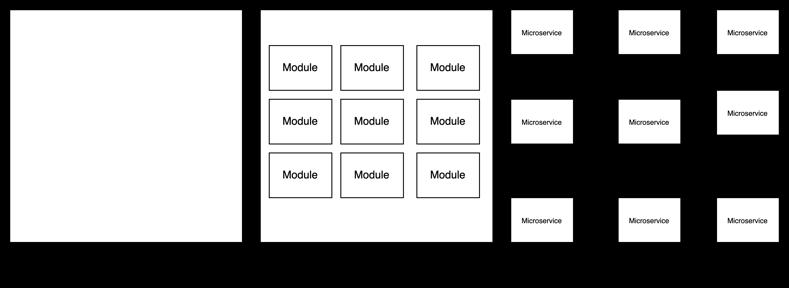
AModulithapplicationservesasamiddleground between a monolithic application and a microservices application. In the Figure 1 below, Modulith Application sits between Monolith and Microservices applications. Monolith represents a single application and microservices represent each individual application represented as Microservice. In Modulith application, a single application is split in to individual modules. When designing a Modulith application, care should be taken to avoid it becoming another monolith. At the same time, it should be structured in a way that allows individual modules to be easily detached and transitioned into microservicesifneeded
International Research Journal of Engineering and Technology (IRJET) e-ISSN:2395-0056
Volume: 12 Issue: 03 | Mar 2025 www.irjet.net p-ISSN:2395-0072
5.1 Advantages of Modulith Application
Modulith architecture offers several advantages over both microservices and monolithic architectures, provided it is designed and maintained correctly. These benefits include the absence of distributed system complexities, clear separation of concerns between modules, simplified testing, reduced operational and DevOpscomplexity,andgreaterdevelopmentconsistency.
5.2 Disadvantages of Modulith Application
AModulithapplicationcanhavefollowingdisadvantages
Defining and maintaining modular boundary willbechallenging
Managingdependencies between modulescan bechallenging
It will be challenging to decide when to transition from Modulith to microservices architecture
The whole Modulith application will have to be scaled if oneofthemodulesisoftenormorefrequentlyused
The first step in architecting Modulith Architecture is defining the modules and purpose of the module. Modules should have a defined purpose and should be linked to a domain the overall application handle. Modules should be designed such that it can be usedbymultipleapplications.
ModuleDefinition
Module1 Purpose of module Module Inputs& Outputs Module Functions Module entities
When defining modules, it is crucial to outline the functionsthemodulewillperform,alongwithahigh-level
description of the inputs, outputs, and associated entities. This model should be created in collaboration with a broader team and maintained as a living document, updated whenever new functionality is added to the module. This approach helps to clearly define and establish the module's boundaries, while also preventing theimplementationofduplicatefunctionalities.
Inputs and outputs define, at a high level, the list of fields that a module can accept as input or generate as output. Functionsoutlinethelistoffunctionalitiesprovidedbythe module, while entities represent all the data models managed by the module. In cases where a module shares entitywithothermodules,thoseentitiesshouldbeplaced in a common module. A module may be maintained by a single team or multiple teams. Changes to the module, depending on its owner, should be properly documented andversionedtoensureconsistencyandtrackability.
Module Name
Module Ownership Owner Version Changes Review Sign-Off
Module1 First Name Last Name V1.1 Impleme nted X function ality Module entities
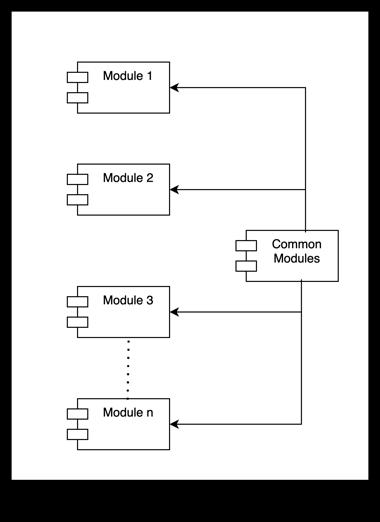
Fig.2.ModulithApplication
6.1 Common Modules of a Modulith Architecture
Figure 2 shows the high-level structure of a Modulithapplication.AModulithapplicationcancomprise multiple modules. As previously mentioned, each module should have a clear purpose and defined boundaries, establishedthroughtheoutlinedprocess.
Some functionalities, such as exception handling, logging, auditing, and configuration management, are common across modules. These reusable functionalities should be bundled into a common module and shared across all
International Research Journal of Engineering and Technology (IRJET) e-ISSN:2395-0056
Volume: 12 Issue: 03 | Mar 2025 www.irjet.net
modules to ensure consistency and a unified pattern in theirusage.
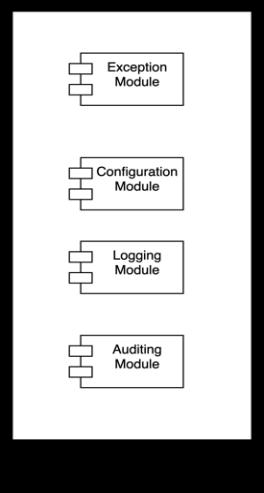
Fig.3.CommonModules
Figure 3 shows a sample Commons module. This module should be packaged and hosted as a separate component, allowing other Modulith applications to utilize it as well. Figure4showsmodulesreusingcommonmodules.
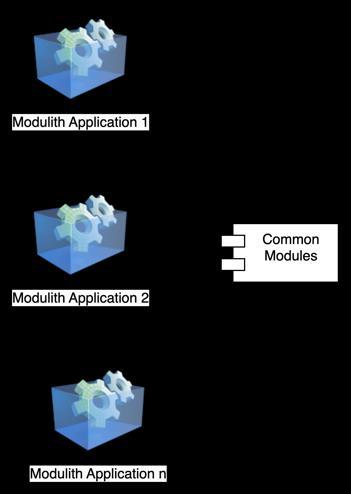
Fig.4.ReusingCommonModules
Exception Module: All exceptions or errors thrown by the modules should follow a standardized format, allowing the invoking modules to handle errors or exceptions in a consistent manner. This ensures easier error management and promotes uniformity across the system.Figure5belowshowsahigh-levelhierarchyofthe Exceptions
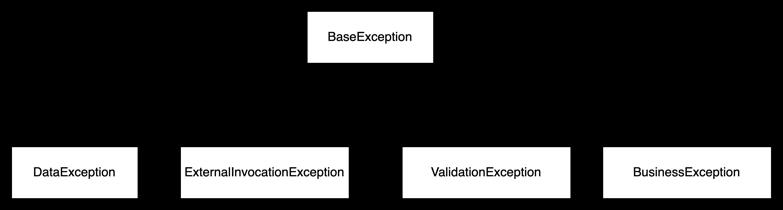
Fig.5.ExceptionHierarchy
Exception/Errordefinitions
Exception Definition
#
p-ISSN:2395-0072
Exception Name Description
1 BaseException
2 ExternalInvocationExcep tion
3 ValidationException
4 BusinessException
All Exception extend base Exception
All errors/exceptions while invokingexternalsystemsusing anyprotocolisencapsulatedin this exception. This can be extendedforeachsystem
Errors/exceptions thrown when validations fail on the inputfields
Errors/exceptions thrown whenBusinessRulevalidations fail
TABLE III shows definition of high level exceptions. It’s a basiclistbutcanbeextendedbasedontheusecase.
Configuration Module: The module stores all the configurationinformationnecessaryforitsoperation.This configuration data can be loaded from an external configuration system, a database, or a configuration file within the application. There should be a provision to refresh theconfigurationsinrealtime.Theconfigurations will be segregated by module to ensure proper organizationandmanagement.
Logging Module: The module ensures that all logging statements adhere to a defined format, making it easier to trace issues. The module should follow the followingpattern:
<DateTime>:<TraceId>:<Module-Name>:<Class Name>:<MethodName><LogStatement>
AuditingModule: Themoduleensuresthatauditing isperformedinaconsistentformatacrosstheapplication. Uniform auditing simplifies the process of grouping recordsandtracingissues,makingiteasiertoidentifyand resolveproblems.
Modules frequently communicate to utilize the specific functionalities they expose. Each module has a defined set of functionalities and interfaces that are available for other modules to consume. In a modulith framework, it is crucial that modules remain loosely coupled, allowing a module to be transitioned into an independent service without affecting the modules it
International Research Journal of Engineering and Technology (IRJET) e-ISSN:2395-0056
Volume: 12 Issue: 03 | Mar 2025 www.irjet.net p-ISSN:2395-0072
interfaces with. Communication between modules can occur either synchronously or asynchronously. In synchronous communication, the invoking module waits foraresponsefromtheinvokedmodulebeforecontinuing execution.
To achieve loose coupling, the approach illustrated in Figure 6 involves using a mediator or connector to transform requests and responses into the format required by the module. This allows for flexibility and ensures that modules can communicate without being tightlyboundtooneanother'sspecificformats.
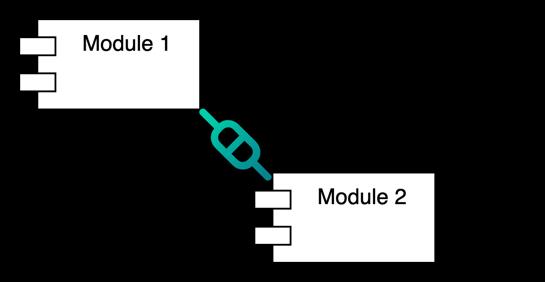
Fig.6.SynchronusIntermoduleCommunication
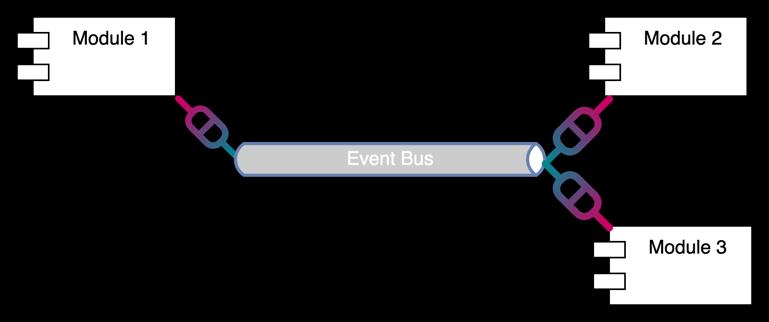
Fig.7.AsynchronusIntermoduleCommunication
As illustrated in Figure 7, in the case of asynchronous communication between modules, the source module will sendamessagetransformedbyatransformertoanevent bus. The destination module(s) will then consume the message after performing another transformation. The sourcemoduledoesnotwaitforaconfirmation.However, it may receive confirmation asynchronously through the sameevent-drivenpattern.
Eachmoduleshouldhaveitsownindependentunittest cases, which are directly linked to the module and can be executed with little to no dependency on other modules. As shown in Figure 8, these unit test cases are embedded within each module, allowing for independent testing. To achieve this, unit tests may need to mock external interfaces, database calls, and invocations of other modules.
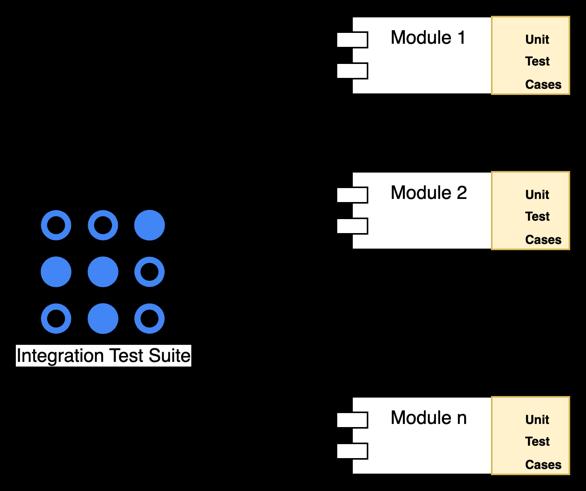
Fig.8.TestingModules
As illustrated in Figure 8, it would be advantageous to have an Integration Test Suite to test scenarios involving multiple modules. This suite could be an extension of the existing Application Test Suite. Such a framework would allow for testing interactions between different modules. However, further details on the Integration Test Suite are beyondthescopeofthisdocument.
Modulesmust besecuredto ensure thattheir exposed functionalities are not compromised. The application may already have a security framework in place that modules can inherit. As illustrated in Figure 9, in addition to the overall security provided by the application, each module canimplement its own security measures asan extension oftheapplication'ssecurityframework.
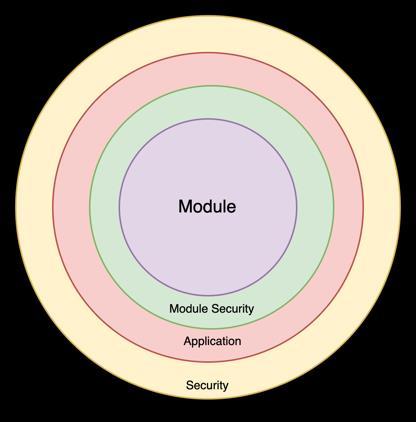
Fig.9.ModuleSecurity
Modulelevelsecurity:Anapproachtoacceptrequestsonly fromregisteredmodulescanbeimplementedbyrequiring anymodulethatwishestointeractwithanothermoduleto register and obtain a token or credential. This credential must be passed along with the base security tokens when interacting with the module. This method promotes loose coupling between modules and simplifies the process of
International Research Journal of Engineering and Technology (IRJET) e-ISSN:2395-0056
Volume: 12 Issue: 03 | Mar 2025 www.irjet.net
detachingamoduletoconvertitintoamicroservicewhen necessary.
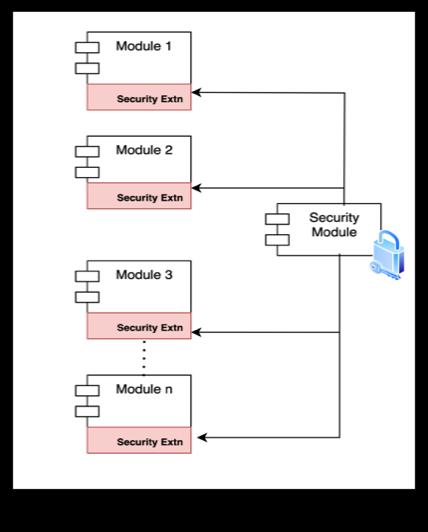
Theapplicationwillutilizeacommonsecuritymechanism such as OAuth 2.0 [12]. When one module invokes another, the tokens provided by the base application are passed to the invoked module to authorize the incoming request.AsillustratedinFigure8,eachmodulewillhavea SecurityExtensionthatinteractswiththeSecurityModule to validate these tokens. Like common modules, the security module will also be reused throughout the system. Following the separation of concerns design model[11],thesecuritymodulewillmanagetaskssuchas validating and authorizing tokens. While each module focuses on its core functionality, the security module handlesall security-related aspects.This ensures thatany updatestothesecuritymechanismdonotaffectindividual modules.
Modulith architecture can have different database resiliency methods depending upon the criticality of the application.
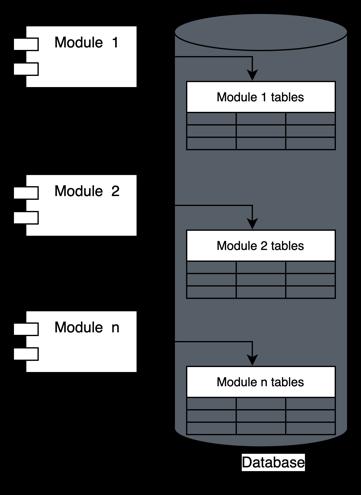
One Database with set of tables for each module: All modules share the same database, with each module havingitsownsetoftables.Whilethispatternworkswell for simpler applications, it presents challenges as the modules begin to share tables, eventually leading to a monolithic structure. Additionally, any issues with the database can affect the entire application. Figure 11 illustrates how modules are organized with separate sets oftables.
p-ISSN:2395-0072
One Database with different schemas for modules: All modulesusethesamedatabase,buteachmoduleoperates within its own schema, ensuring no sharing of tables betweenmodules.Theprimarydrawbackofthispatternis that any issue with the database can affect the entire application. Figure 12 illustrates how modules are organizedwithdifferentschemas.
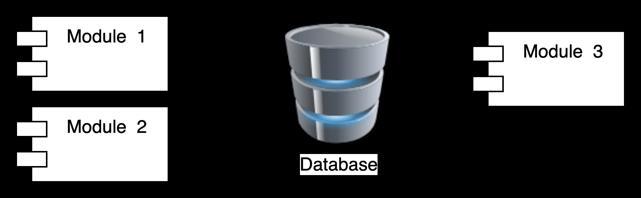
Fig.12.
Each module with different databases: Each module in the modulith application can utilize a different database, with the choice of database being determined by the functionality that the module supports. Figure 13 shows sample modules with various databases. However, a key disadvantage of this approach is the potential for data consistencyissuesbetweenthesystems.
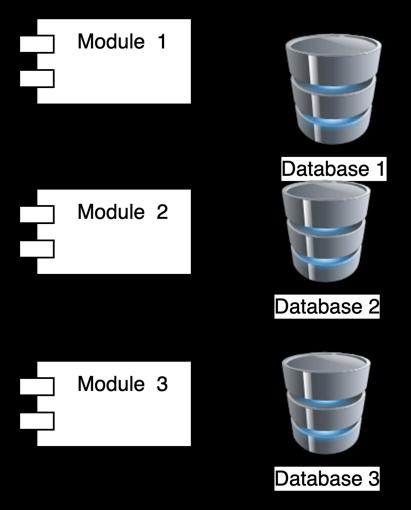
Fig.13. Moduleshavingdifferentdatabase’s
Volume: 12 Issue: 03 | Mar 2025 www.irjet.net p-ISSN:2395-0072
Each module should include detailed documentation outlining the functionalities it provides and how those functionalities can be consumed. Tools can be utilized to automatically generate this documentation. This would assist developers from other modules or applications in easily integrating the module. Additionally, documenting the internal workings of the modules would also be beneficialforfuturemaintenanceanddevelopment.
Modulecodecanbemaintainedbyeitherasingleteam or a group of teams. It is essential to establish an agreedupon structure and reach a consensus on how the module's code will be organized. Each module should be maintained as a separate project within the code repository, allowing any application that requires it to import and use the module. Initially, a module may be integrated into the main application, but as demand for the module grows, it can eventually be separated into its own service. After the build process, modules should functionasindependentunitsthatcanbeaggregatedwith othermodulesanddeployedtogetherasasingleunit. For instance, in the Java ecosystem, each module should be builtasaJavaArchive(JAR)fileandembeddedintoaWeb Archive(WAR)file,whichcanthenbedeployedandscaled asneeded.
Both the application code and its modules can be containerized, deployed, and scaled. However, not all modules in a Modulith application will experience the same traffic patterns. Despite this, the entire application must be scaled, even if only one module is experiencing themajorityofthetraffic.
As a Modulith application grows and becomes more complex, the number of modules will increase. Some modules will undergo significant changes, while others may remain largely unchanged or experience minimal modifications. One of the disadvantages of the Modulith architecture, as mentioned, is that the entire application mustbescaledwhenasinglemodule,oftenreferredtoas a “Hot Module,” is frequently or heavily used. When a module reaches this level of demand, it should be detachedandtransformedintoaseparateservice.Another scenario arises when multiple applications begin relying on a specific module, leading to frequent requests for updates. In this case, it would also be advantageous to move the module into a separate service to handle the growingdemandsmoreefficiently.
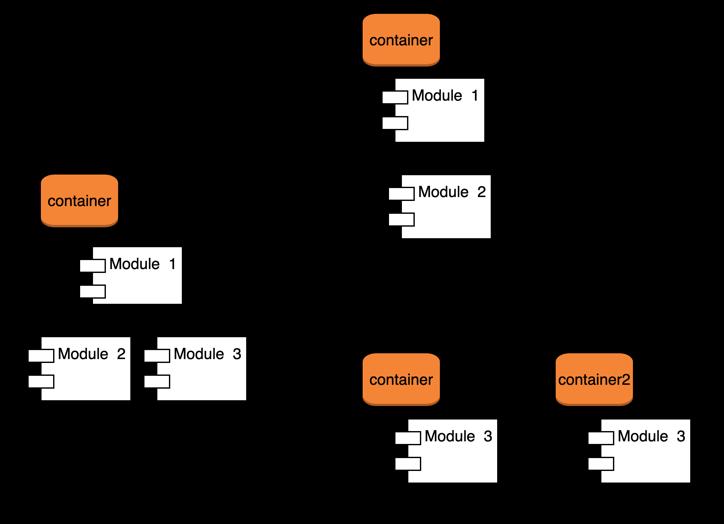
Fig.14. Moduledetachedasaseparatecontainerduring runtime
OneofthedrawbacksoftheModulitharchitecture is that the entire application must be scaled due to "hot modules" within the system. A module may consistently become a hot spot or experience high traffic on specific days of the year. This would necessitate extracting the module into a separate service and modifying the core application. The future goal is to enable the dynamic detachmentofmodulesasseparateservicesatruntime,as outlined in Google’s Service Weaver framework [10], allowingthemtoscalebasedontrafficpatterns.Figure14 illustratestheprocessofseparatingModule3intoitsown containerduringruntime,dependingontrafficdemand.
The concept of a Modulith emerged to address the challenges of both monolithic and microservices architectures. To preserve the integrity of a Modulith architecture, it is essential to establish a clear process before developing any new modules. Before making changestoamoduleorgroupofmoduleswithinaproject, theteammustobtainapprovalfromthemoduleowner.By adhering to defined processes and procedures, a strong Modulith architecture can be maintained, provided there iscollaborationandflexibilityamongallteamsinvolvedin thedevelopmentoftheModulithapplication.
[1] Villamizar, M., Garces, O., Castro, H., Verano, M., Salamanca, L., Casallas, R., & Gil, S. (2015). Evaluating the monolithic and the microservice architecture pattern to deploy web applications in the cloud. 2015 10th Computing Colombian Conference (10CCC)
International Research Journal of Engineering and Technology (IRJET) e-ISSN:2395-0056
Volume: 12 Issue: 03 | Mar 2025 www.irjet.net p-ISSN:2395-0072
https://doi.org/10.1109/columbiancc.2015.7333476 p.583-585
[2] Schwertner, K. (2017). Digital Transformation of Business. TrakiaJournalofScience, 15(Suppl.1), 388–393. https://doi.org/10.15547/tjs.2017.s.01.065
[3] Mydyti, H., Ajdari, J., & Zenuni, X. (2020, September). Cloud-based Services Approach as Accelerator in Empowering Digital Transformation. In 2020 43rd International Convention on Information, Communication andElectronicTechnology(MIPRO) (pp.1390-1396).IEEE.
[4] K.Bennett.Legacysystems:Copingwithsuccess.IEEE Software,12(1):19–23,1995.
[5] Khadka, R., Batlajery, B. V., Saeidi, A. M., Jansen, S., & Hage, J. (2014). How do professionals perceive legacy systems and software modernization? Proceedings of the 36th International Conference on Software Engineering. https://doi.org/10.1145/2568225.2568318
[6] Taibi, D., Lenarduzzi, V., & Pahl, C. (2017). Processes, motivations, and issues for migrating to microservices architectures: An empirical investigation. IEEE Cloud Computing, 4(5), 22–32. https://doi.org/10.1109/mcc.2017.4250931
[7] Cimitile, A., Fasolino, A. R., & Lanubile, F. (2001). Legacy systems assessment to support decision making. In IEEE Workshop on Empirical Studies of Software Maintenance (pp.145-150)
[8] ELGHERIANI, N. S., & AHMED, N. A. S. (2022). Microservices vs. Monolithic architectures [The differential structure between two architectures]. Minar International Journal of Applied Sciences and Technology, 3(6).
[9] dos Santos Krug, D., Chanin, R., & Sales, A. Exploring the Pros and Cons of Monolithic Applications versus Microservices.
[10] Johnson,J.,Kharel,S.,Mannamplackal,A.,Abdelfattah, A. S., & Cerny, T. (2024). Service Weaver: A Promising Direction for Cloud-native Systems?. arXiv preprint arXiv:2404.09357.
[11] DeWin,B.,Piessens,F.,Joosen,W.,&Verhanneman,T. (2002, November). On the importance of the separationof-concerns principle in secure software engineering. In Workshopon theApplicationofEngineering Principles to SystemSecurityDesign(pp.1-10).
[12] Jones, M., & Hardt, D. (2012).The oauth 2.0 authorization framework: Bearer token usage(No. rfc6750)

Renjith Ramachandran received his Bachelor's Degree in Electronics and Communications Technology from India and his Master's Degree in Computer Science from the US. He spent 12 years as a consultant, taking on various roles from Software Engineer to Architect, and workingwithclientsinindustries such as Telecom, Banking, and Insurance. He currently serves as a Solutions Architect, with research interests that focus on software architectures, emerging technologies, and the development of innovative tools andframeworks.
© 2025, IRJET | Impact Factor value: 8.315 | ISO 9001:2008
|