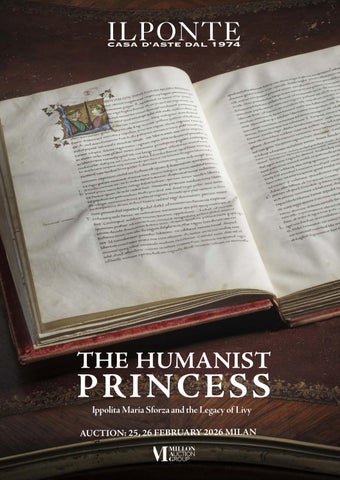
THE HUMANIST PRINCESS
Ippolita Maria Sforza and the Legacy of Livy
AUCTION: 25, 26 FEBRUARY 2026 MILAN
It is with a sense of genuine enthusiasm and admiration that Il Ponte Auction House, through its Books and Manuscripts Department, brings back to Milan, to Palazzo Crivelli—just a few steps from the Castello Sforzesco—a precious testament to the Lombard Renaissance: the illuminated codex that once belonged to Ippolita Maria Sforza. This return, in the very year in which the city celebrates its history and its drive towards the future, restores to the public the refined portrait of one of the most learned female figures of fifteenth-century Italy. The opportunity to leaf through and present this manuscript has inspired in our team of experts the same sense of wonder that accompanies every encounter with a fragment of history—our human history—shaped by captains, saints, heroes, explorers, scientists, kings and queens who left an indelible mark because they were able to look far beyond their own fleeting existence. Ippolita Sforza was one such figure.
After the Codice Santini, this marks a new rediscovery of extraordinary importance: a parchment manuscript, finely illuminated and preserved in its original binding, containing the first decade of Livy’s Ab Urbe Condita, chosen by the young Sforza as part of her dowry for her marriage to Alfonso II of Aragon, celebrated in Naples in 1465. This is a discovery of great significance, considering that the majority of the volumes the princess brought with her from Milan—almost a cultural trousseau for the young bride—have been dispersed. Today, only three are known with certainty. Beyond its historical and bibliographical value, this rediscovery also holds the fascination of allowing us to rediscover and recount the story of a learned woman, a patron and a bibliophile, in a sphere that for centuries was indisputably dominated by men. In commissioning this monumental work by Livy, Ippolita Sforza revealed her interest in the virtues, diplomacy and good governance that guided her actions in relations between Milan and Naples and in the events of the Pazzi Conspiracy.
A woman of culture and balance, she earned the esteem of Lorenzo de’ Medici and became a symbol of a distinctly female humanism, both intellectual and political. To present this manuscript today means to give voice once more to that legacy, allowing all those who love books, history and art to relive—through the pages of Livy—the vision and grace of a princess who made knowledge her highest form of power.
Stefania Pandakovic Head of Department Books and Manuscripts
Il Ponte Casa d’Aste
The presentation of the Livy formerly owned by Ippolita Maria Sforza, offered for sale in Milan at Il Ponte’s auction of 25–26 February 2026, undoubtedly constitutes an event of considerable importance for both the collecting world and scholarly research. The volume is a refined illuminated manuscript from the personal library of Ippolita Maria Sforza (1445–1488), one of the most learned and influential female figures of the Italian Renaissance.
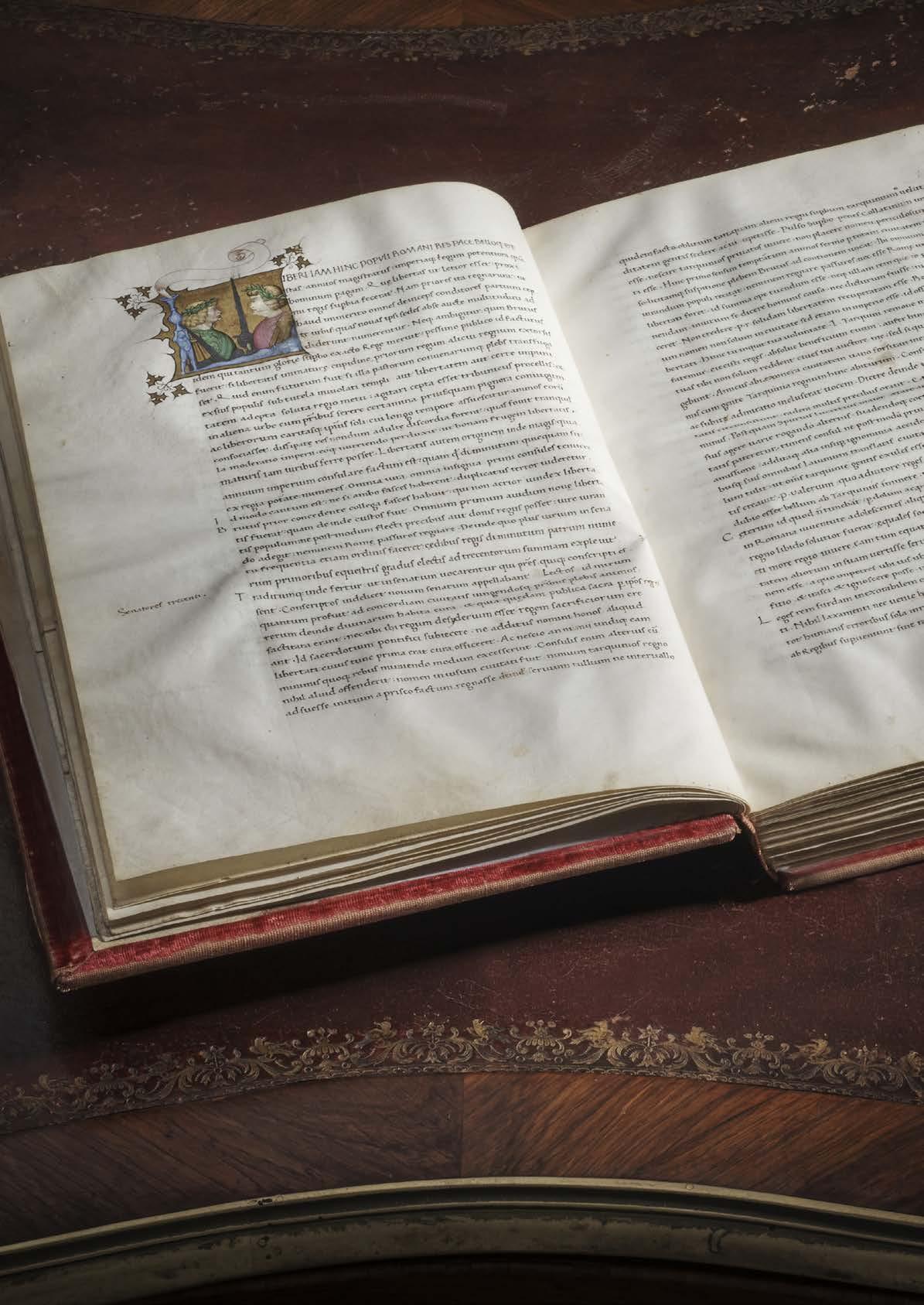
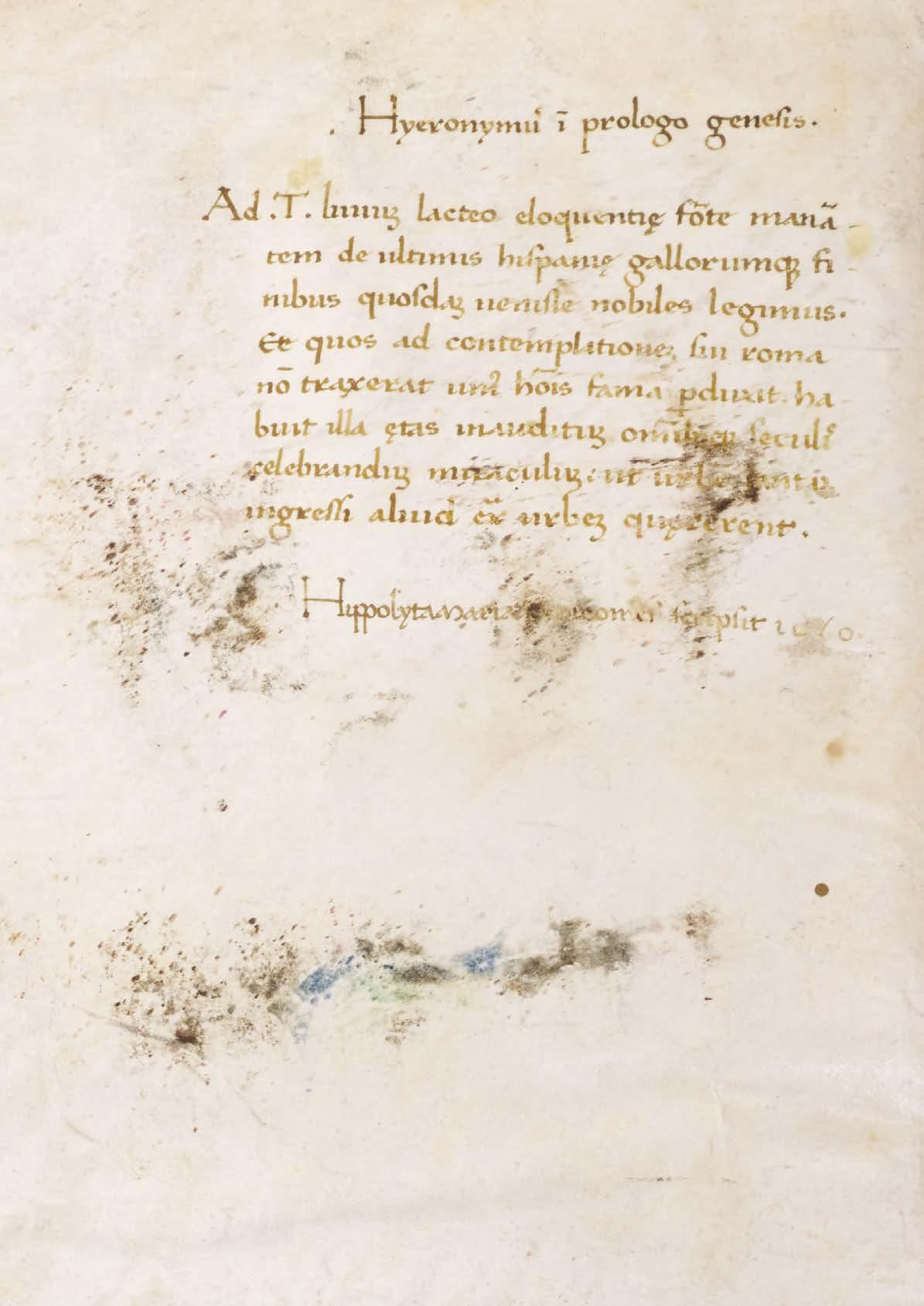
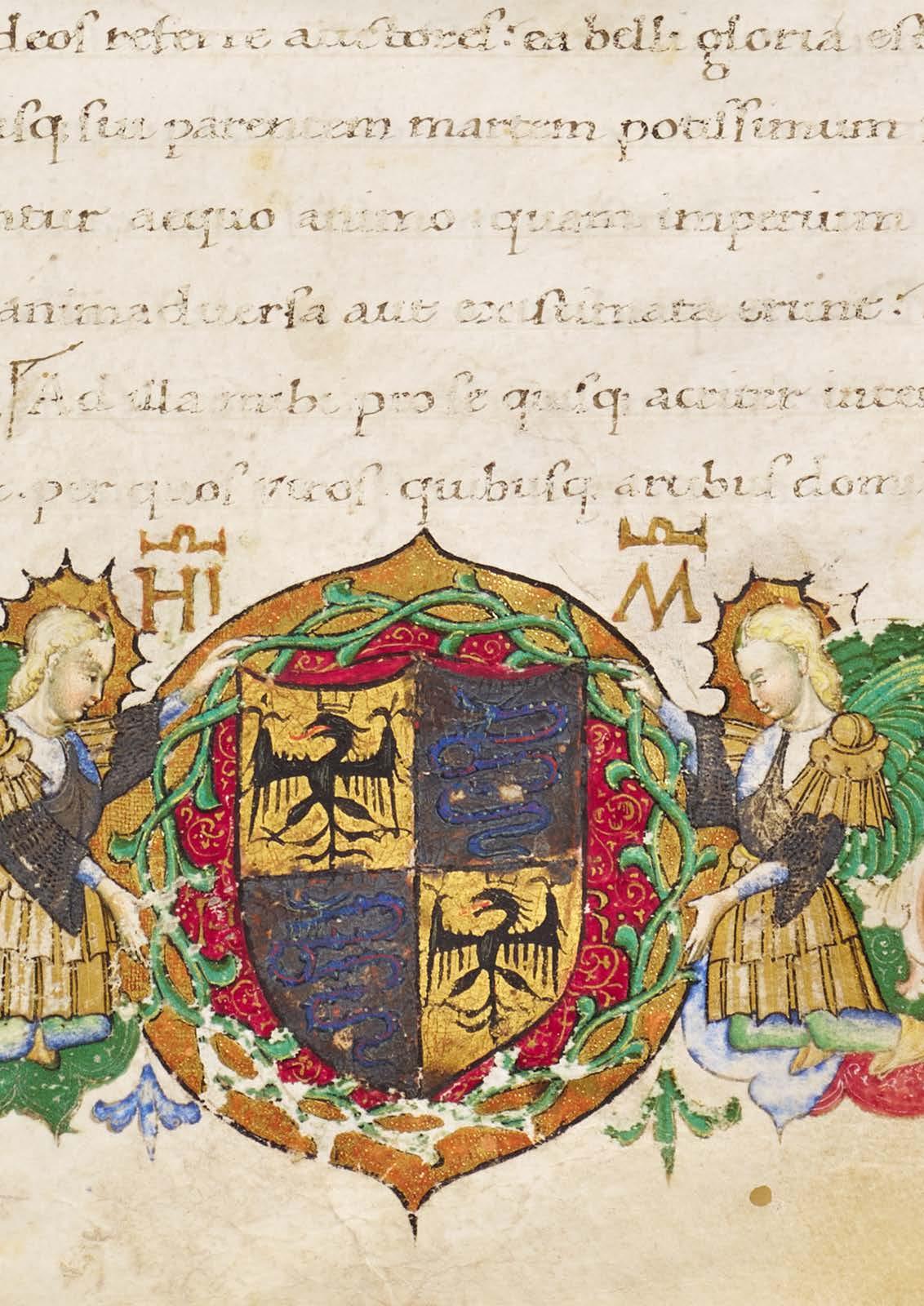
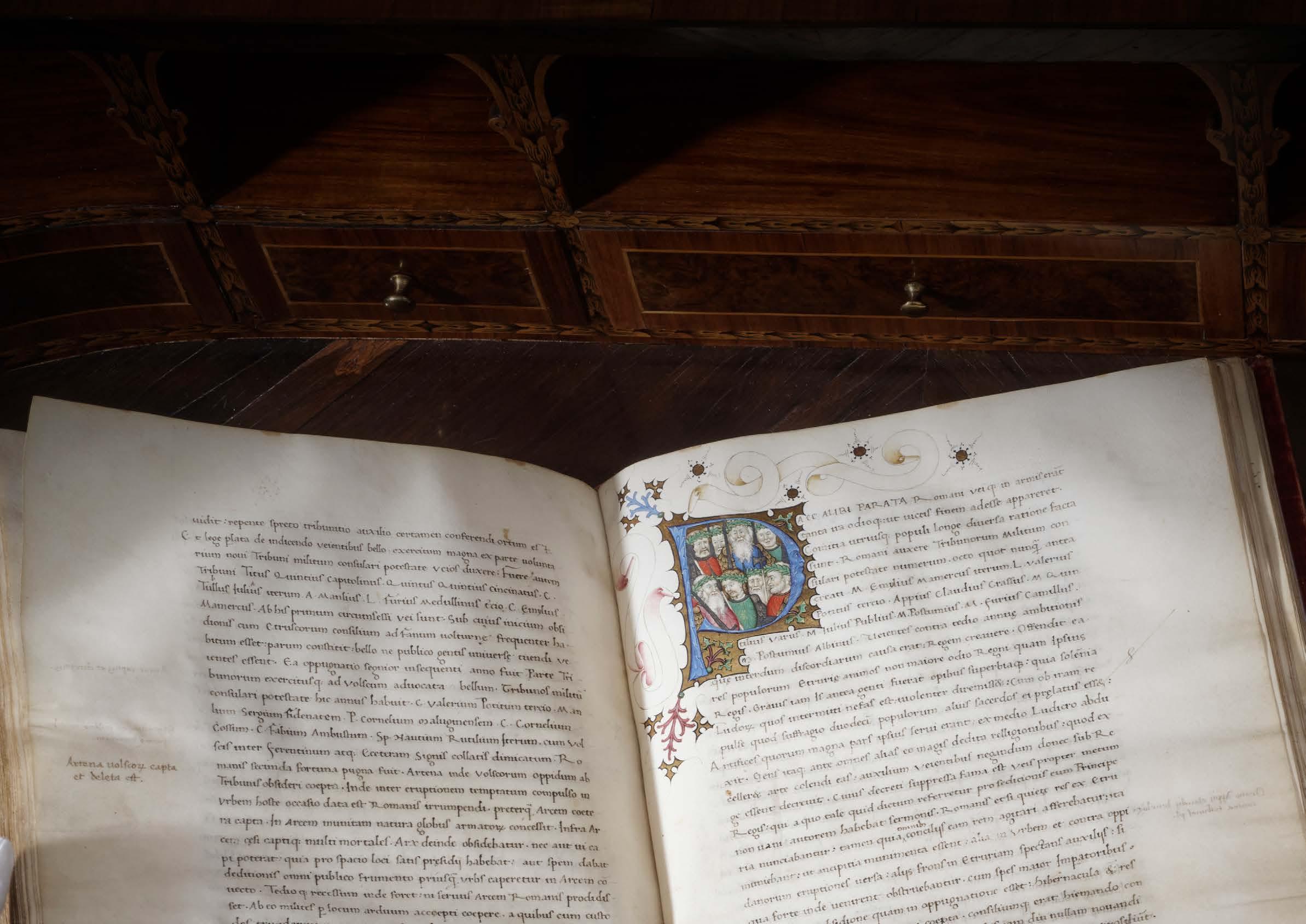
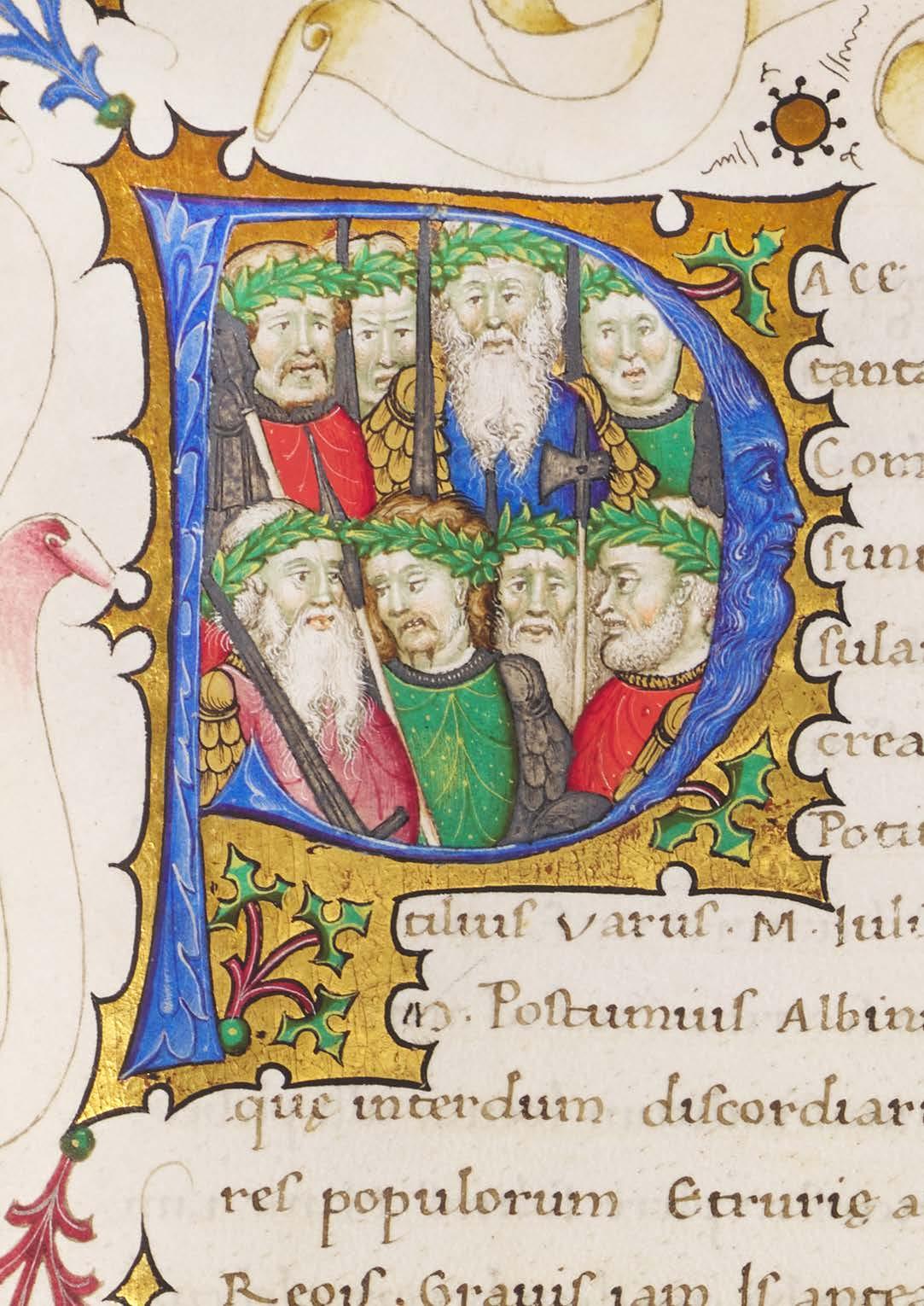
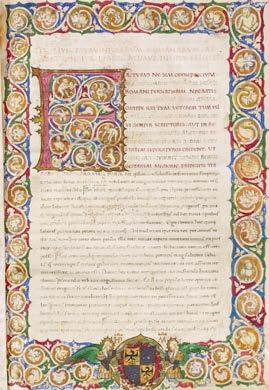
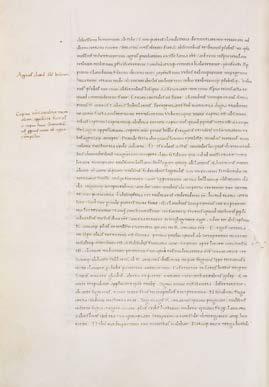
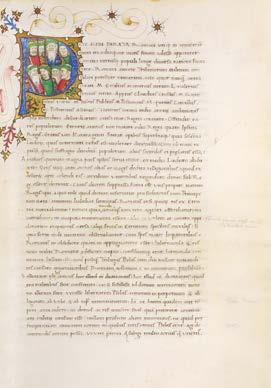
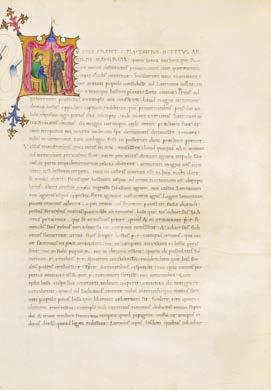
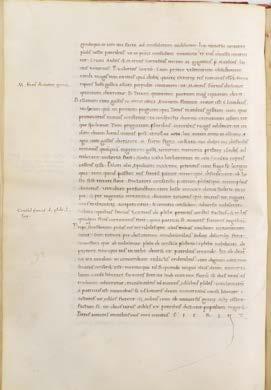
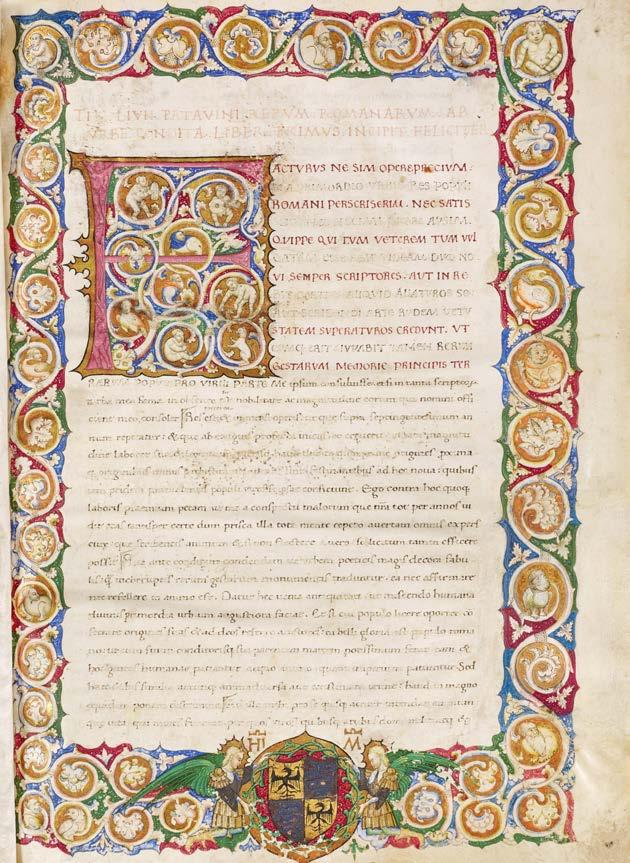
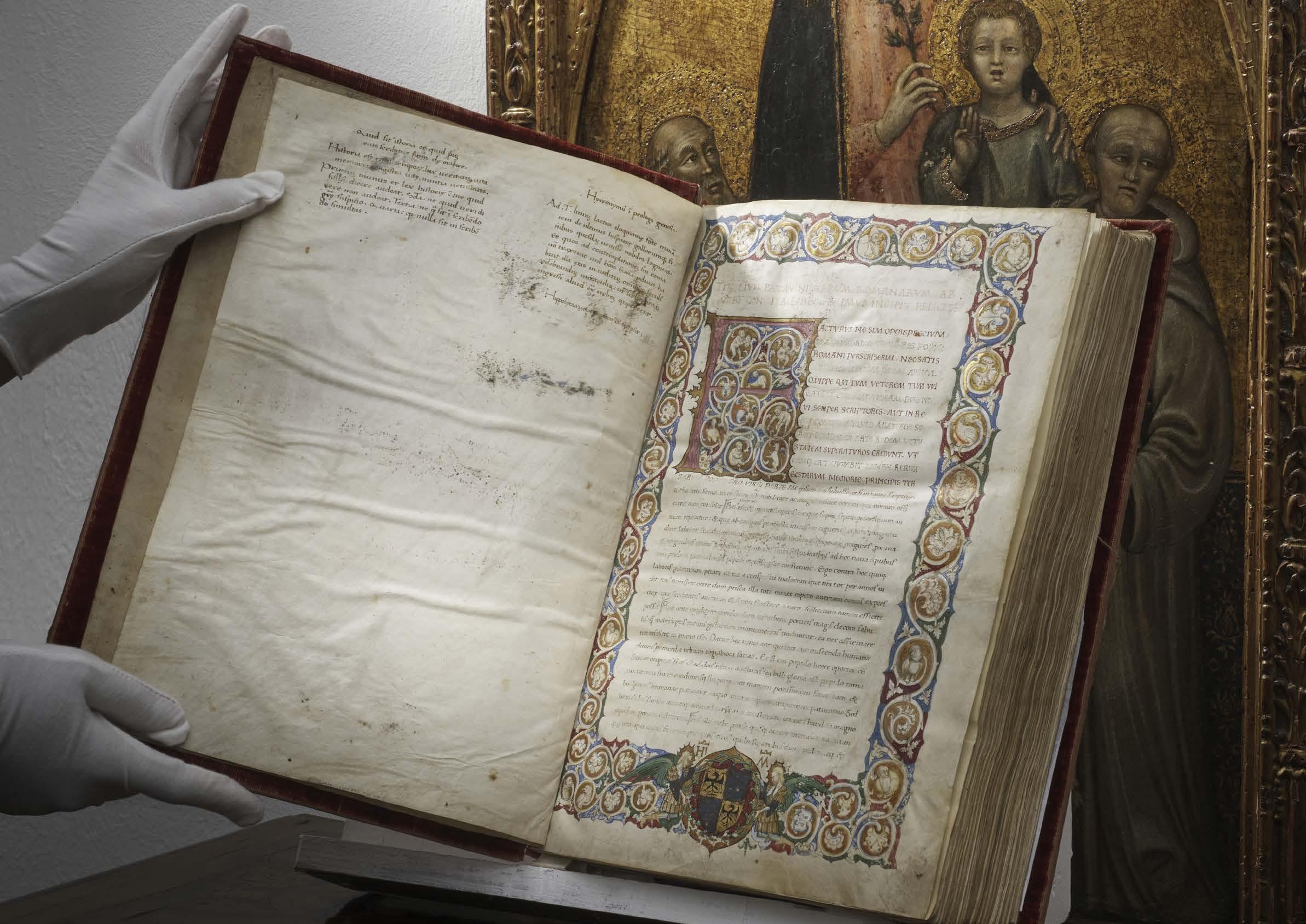
The manuscript, containing Decade I of Livy’s Ab Urbe Condita, was produced in Milan around the middle of the fifteenth century for a patron now unknown. It soon came into the possession of Ippolita Maria, as attested by the Sforza coat of arms and the initials “HI. M.” on the incipit page. She studied the volume attentively and added, in her own hand on the front flyleaf, passages drawn from Cicero and Saint Jerome, together with the subscription: “Hippolytamaria [Vice]comes scripsit 1460.” The book was subsequently included in the dowry she received on the occasion of her marriage in 1465 to Alfonso of Aragon, Duke of Calabria and heir to the throne of the Kingdom of Naples. It most probably corresponds to the “Deca de Tito Livio,” valued at “XXXVI ducats,” recorded in the inventory of her possessions.
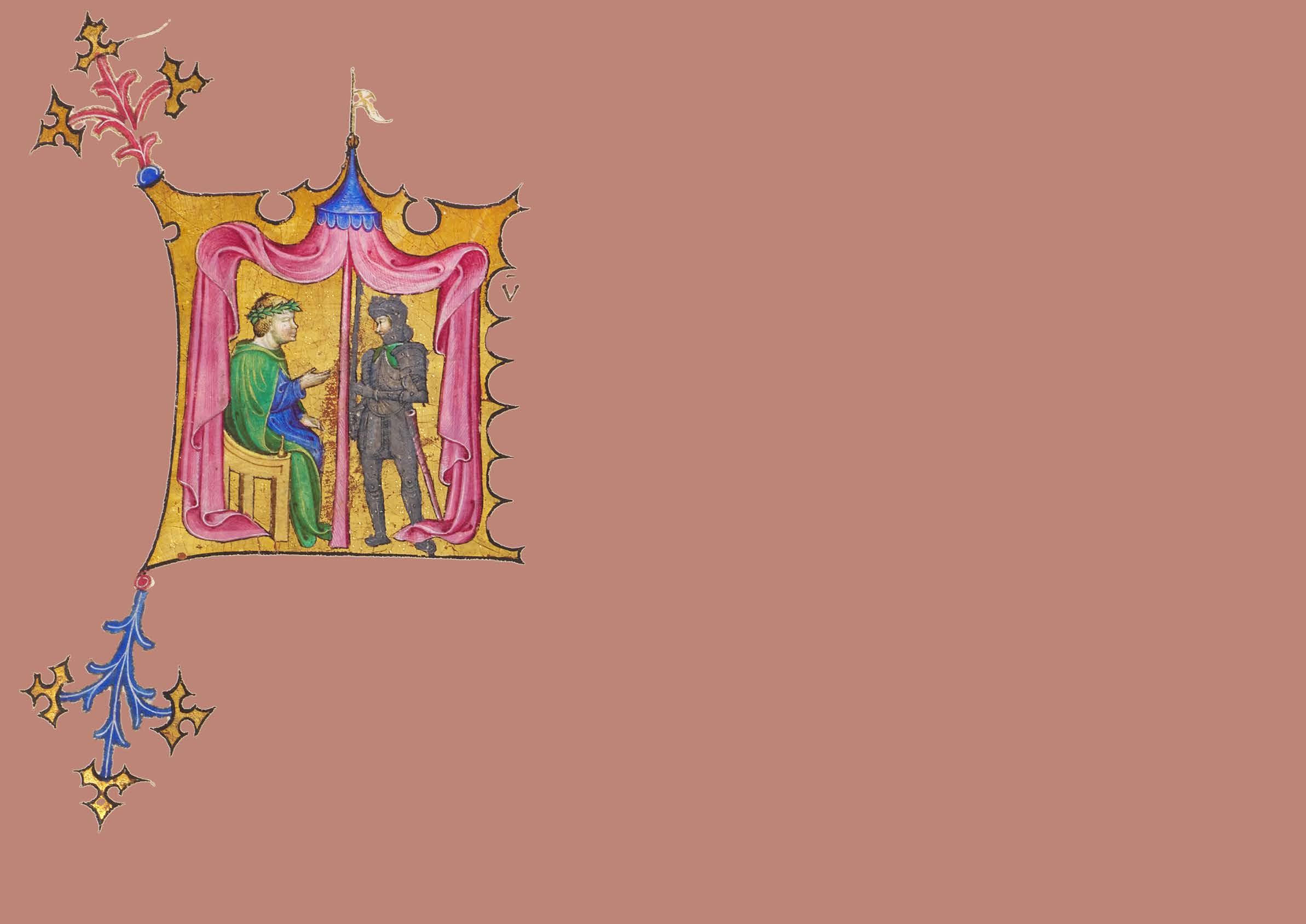
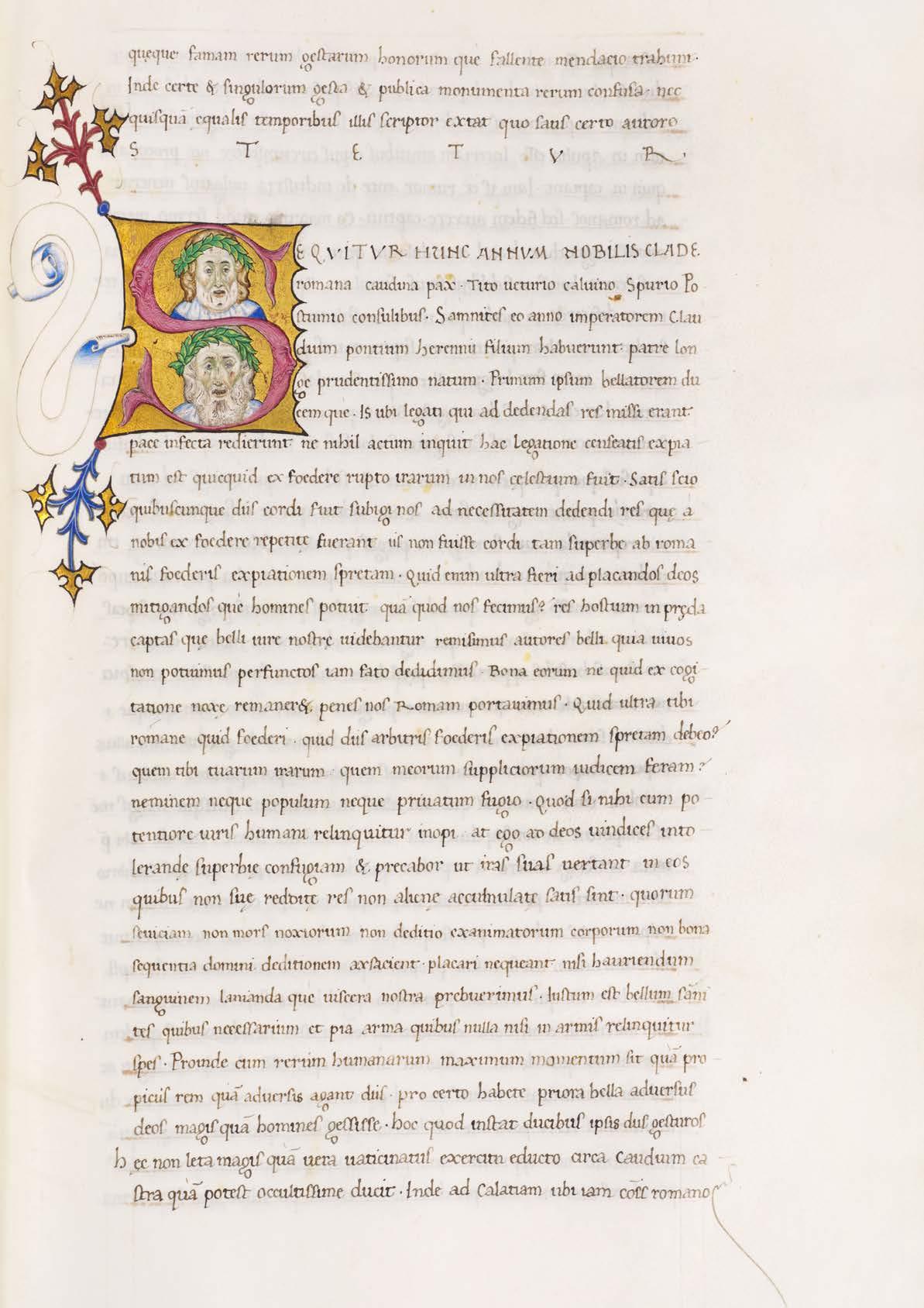
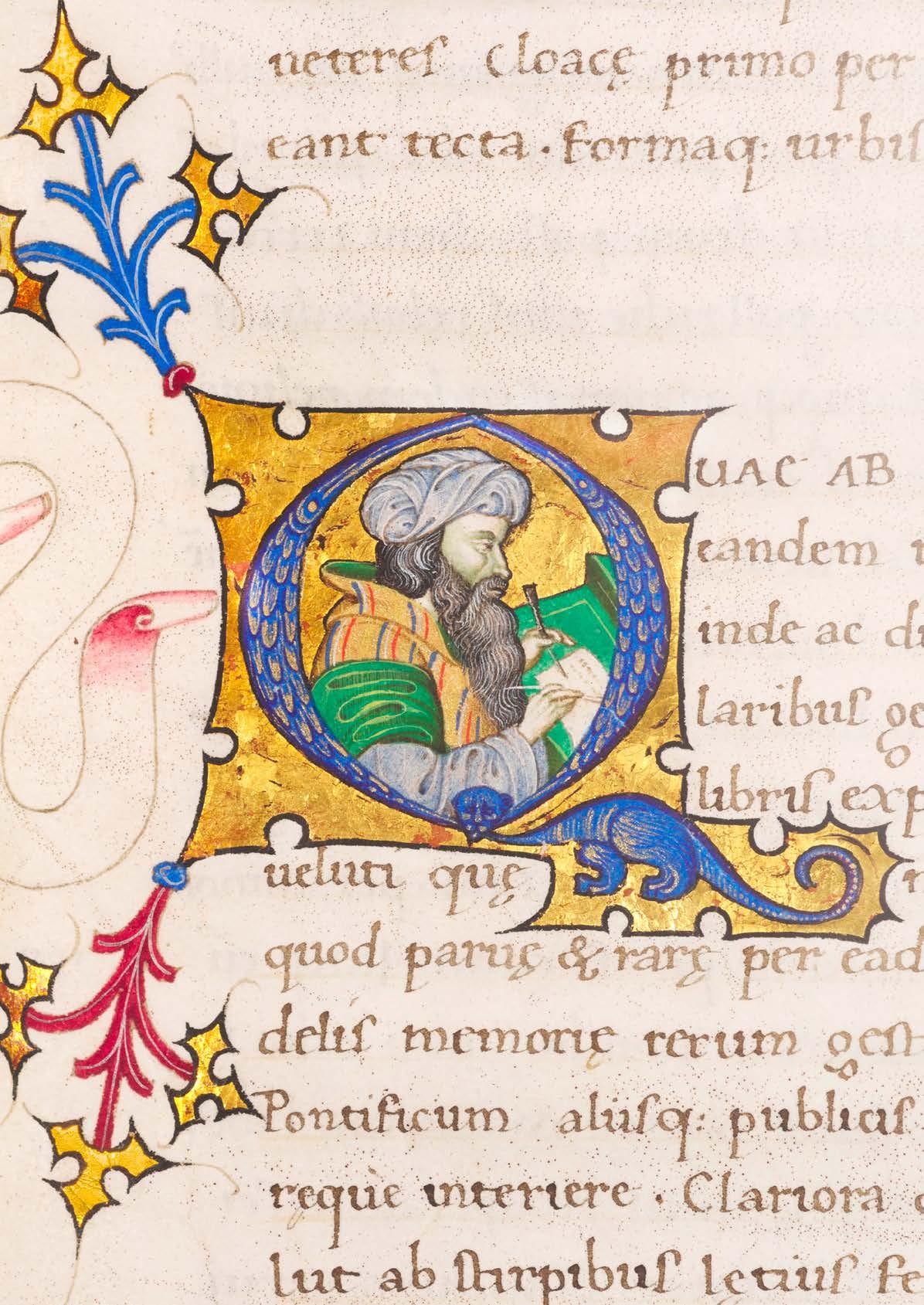
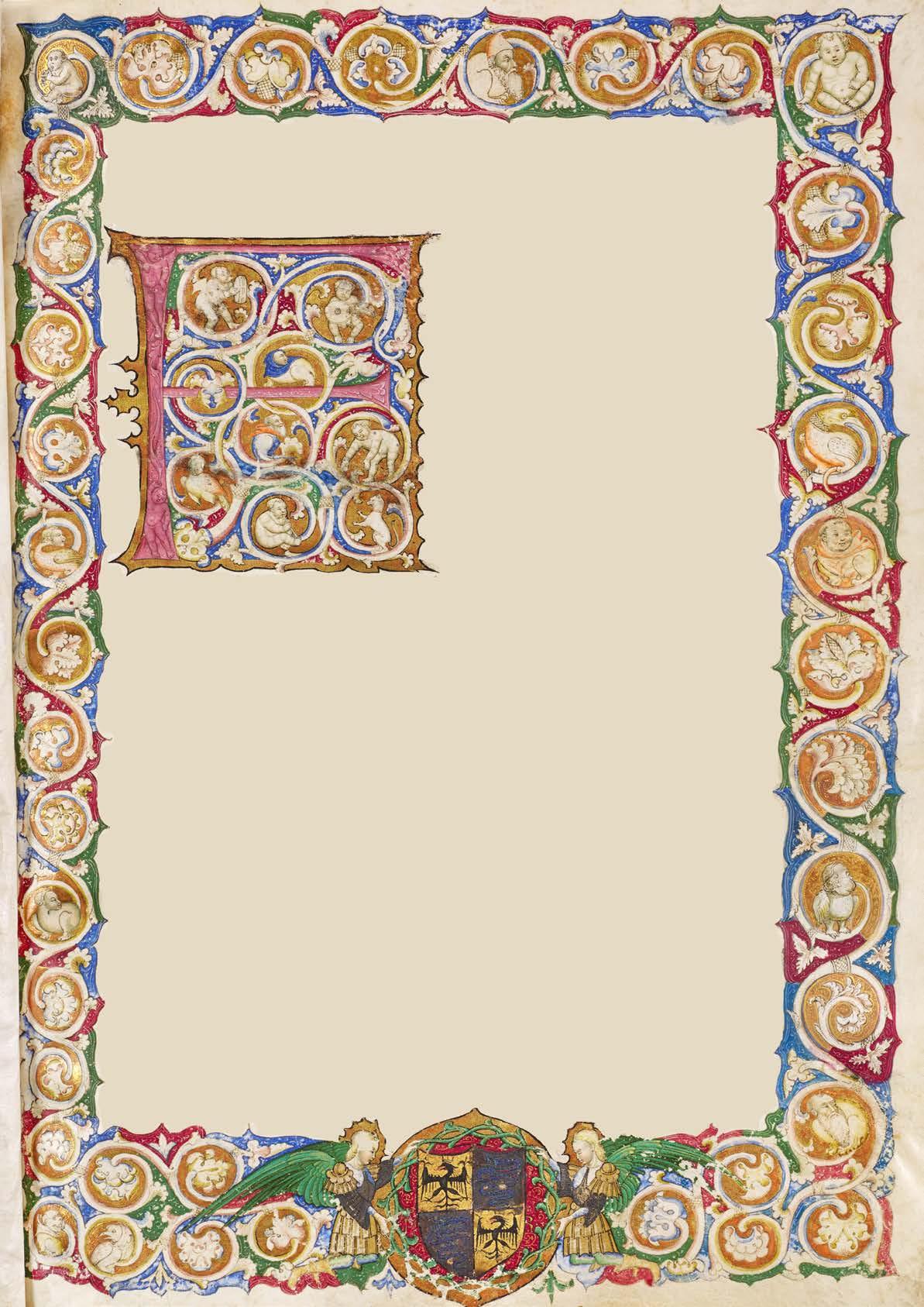
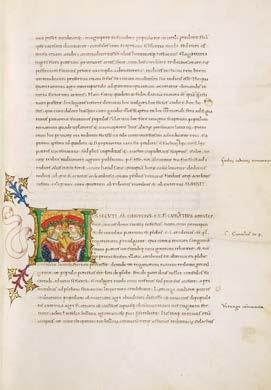
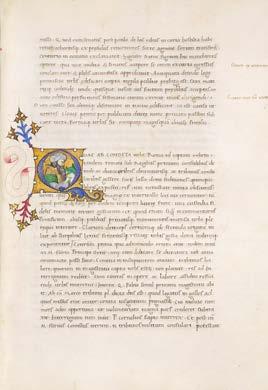
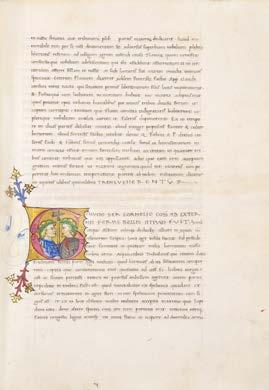
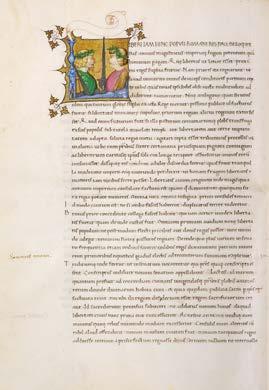
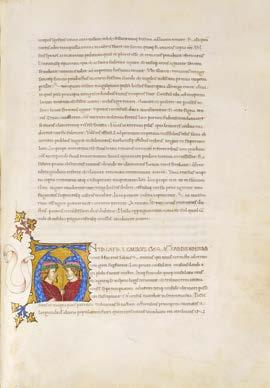
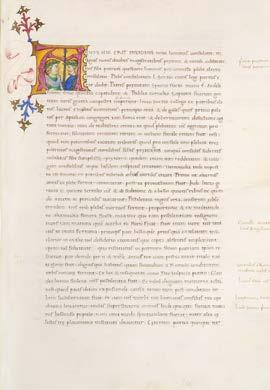
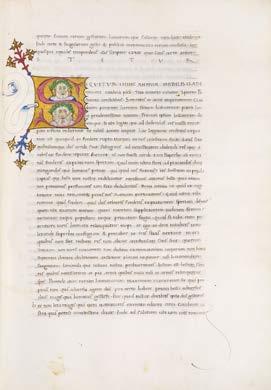
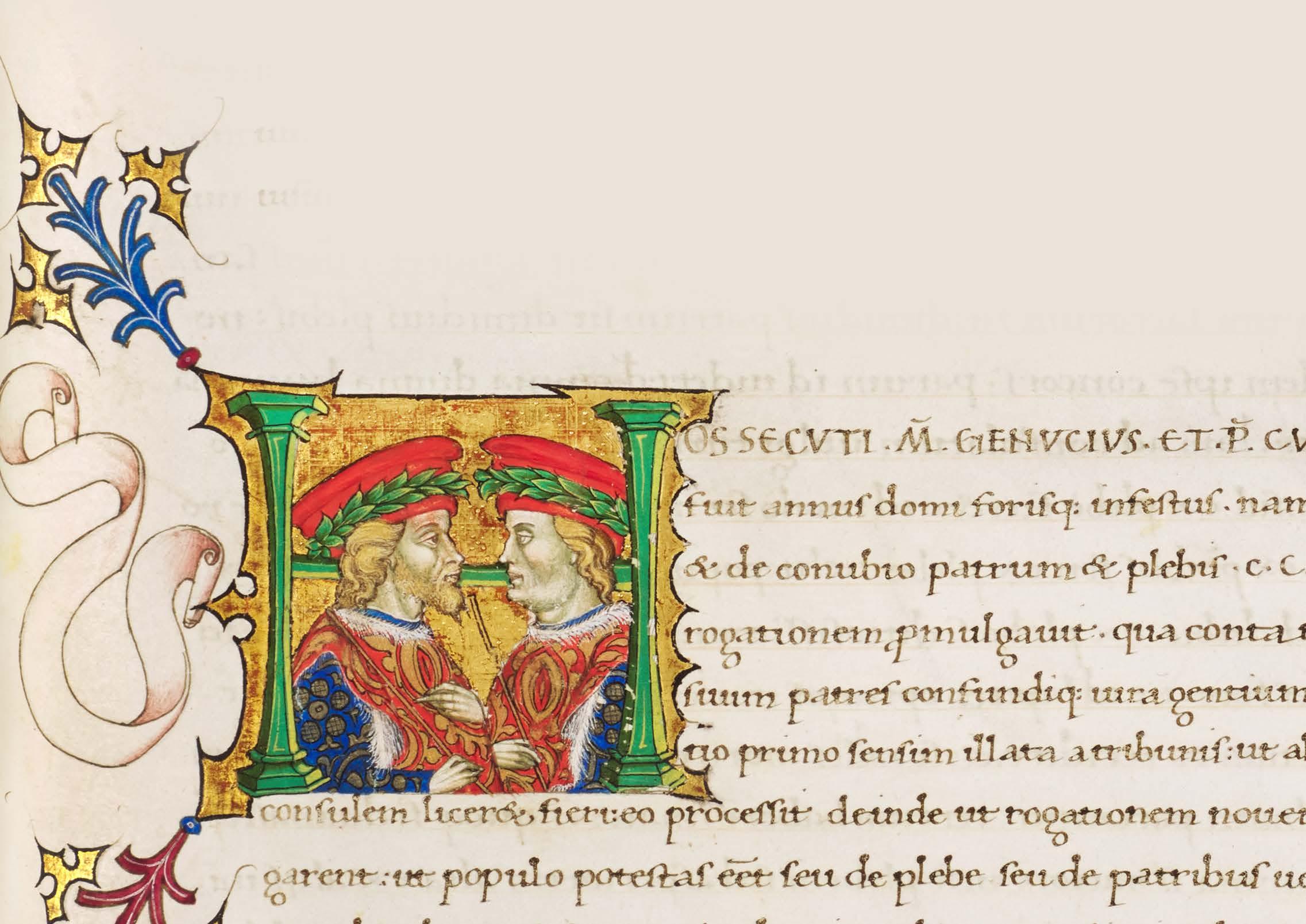
Of particular note is the exceptional state of preservation in which the manuscript has survived. This allows for a full appreciation of its outstanding craftsmanship, and especially of its illuminations, executed in the workshop of the Master of the Vitae imperatorum, one of the leading figures in book production in the Duchy of Milan during the years of Filippo Maria Visconti and the rise of the Sforza dynasty. Two distinct artists can be identified within the decoration, whose styles and visual vocabularies differ markedly: the first, responsible for the inhabited initial and the white-vine border on the incipit page, may be identified with the young Master of Ippolita Sforza; the second, author of the nine historiated initials marking the principal textual divisions throughout the remainder of the volume, is to be identified with the workshop master himself.
Lucio Oriani
Art Historian Essential Bibliography
F. Lollini, Master of the Vitae Imperatorum, in Biographical Dictionary of Italian Illuminators: 9th–16th Centuries, edited by M. Bollati, Milan, Sylvestre Bonnard, 2004, pp. 587–589.
G. Z. Zanichelli, Master of Ippolita Sforza in Biographical Dictionary of Italian Illuminators: 9th–16th Centuries, edited by M. Bollati, Milan, Sylvestre Bonnard, 2004, pp. 686–690.
M. N. Covini, Sforza, Ippolita, in Biographical Dictionary of the Italians, vol. 92, Rome, Istituto della Enciclopedia Italiana, 2018, pp. 444–447.
L. Oriani, The Library of Alfonso of Aragon and Ippolita Maria Sforza, Dukes of Calabria, Naples, FedOA Press, 2024.
CULTIVATING KNOWLEDGE, EXERCISING POWER: AN EDUCATION SHAPED BY HUMANISM
Ippolita Maria Sforza was undoubtedly an exceptionally learned woman for her time. From an early age in Milan she was guided by renowned teachers such as Baldo Martorelli (c. 1420–1475) and Constantine Lascaris (1434–1501), who provided her with an education equal to that of her brothers and found in her an attentive and brilliant pupil.
In addition to excelling in courtly pursuits such as singing, dancing and, above all, falconry—so much so that her father described her as “una bona maestra de oxellare”— she completed a full humanist education. She had a sound command of Latin and at least a basic knowledge of Greek and, under the guidance of her teachers, developed a close familiarity with the art of the book.
Several codices commissioned by the princess for her education are known, including the Latin Grammar by her teacher Martorelli, now preserved at the Biblioteca Trivulziana in Milan, and the Commentarium super Tractatus Petri Hispani I–V by the philosopher Simon of Faversham, today held at the Biblioteca Ambrosiana. A particularly telling testament to the seriousness of her studies is the exercise undertaken by the young Ippolita at Martorelli’s suggestion: the transcription of Cicero’s Cato Maior de Senectute. This was an extraordinary achievement for a girl of her age and time, completed with care and in a neat, orderly hand; the small manuscript is now preserved at the British Library.
Books thus accompanied Ippolita Maria Sforza throughout her Milanese youth, making a profound contribution to her refined and carefully cultivated humanist education.
FROM MILAN TO NAPLES:
A DOWRY OF TREASURES ON PARCHMENT
Themarriage between Ippolita Maria Sforza and Alfonso II of Aragon (1448–1495), Duke of Calabria, was celebrated in 1465. While the manuscripts that had accompanied the young princess during her studies remained in Milan, the inventory of her dowry records, alongside jewels and sumptuous garments, as many as fourteen manuscripts, most of which are now lost. The Aragonese library was in fact progressively dispersed following the abdication of Alfonso II. In addition to the Livy manuscript, only three codices have so far been identified: two currently preserved at the Biblioteca Històrica of the Universitat de València and one at the Bibliothèque nationale de France.
The dowry inventory lists beside each manuscript its respective value in ducats, a precious piece of information that allows the sumptuousness of these objects to be quantified. The Livy was
valued at 36 ducats, a considerable sum for the period and one that falls within the price range of most of the luxurious manuscripts included in the dowry. It was therefore a true treasure, considering that 36 ducats at the time were equivalent to a modest house in the city, to several months’ wages for an artisan, and even to years of earnings for a more common labourer.
A closer examination of the inventory reveals, alongside the customary devotional and prayer books indispensable for a young woman of the time, the presence of a Latin grammar and of classics of Latin literature, including the Livy and a collection of the principal works of Virgil. This bears witness to Ippolita’s rich education, which extended well beyond what was normally expected of women at court.
IN THE FOOTSTEPS OF THE CLASSICS: LIVY AND THE ART OF GOOD GOVERNMENT
Thepresence of Livy among Ippolita Maria’s readings is extraordinarily revealing of her openness to humanist culture, which shaped not only her youth but her entire life as a woman of power, learning and diplomacy. Livy’s text, like those of many other classical authors in her library such as Justin and Virgil, offered both a cultural and a moral point of reference, transmitting countless examples of diplomacy and good governance.
The same values were shared by her husband Alfonso, in whose library Livy was the most widely represented classical author. Particularly emblematic in this regard is the testimony of the contemporary historian Marin Sanudo (1466–1536), who, in describing the Ducal Library, recalls that in the first studiolo there were on display a Bible, a Livy and a Petrarch (with bindings “of silk, with silver bosses and corner-pieces”), ready to be shown to visitors.
Both Dukes of Calabria thus identified with the ideal of the humanist prince, able to unite the wisdom of the classics with the teachings of the faith, shaping upon them the virtues indispensable to good government.
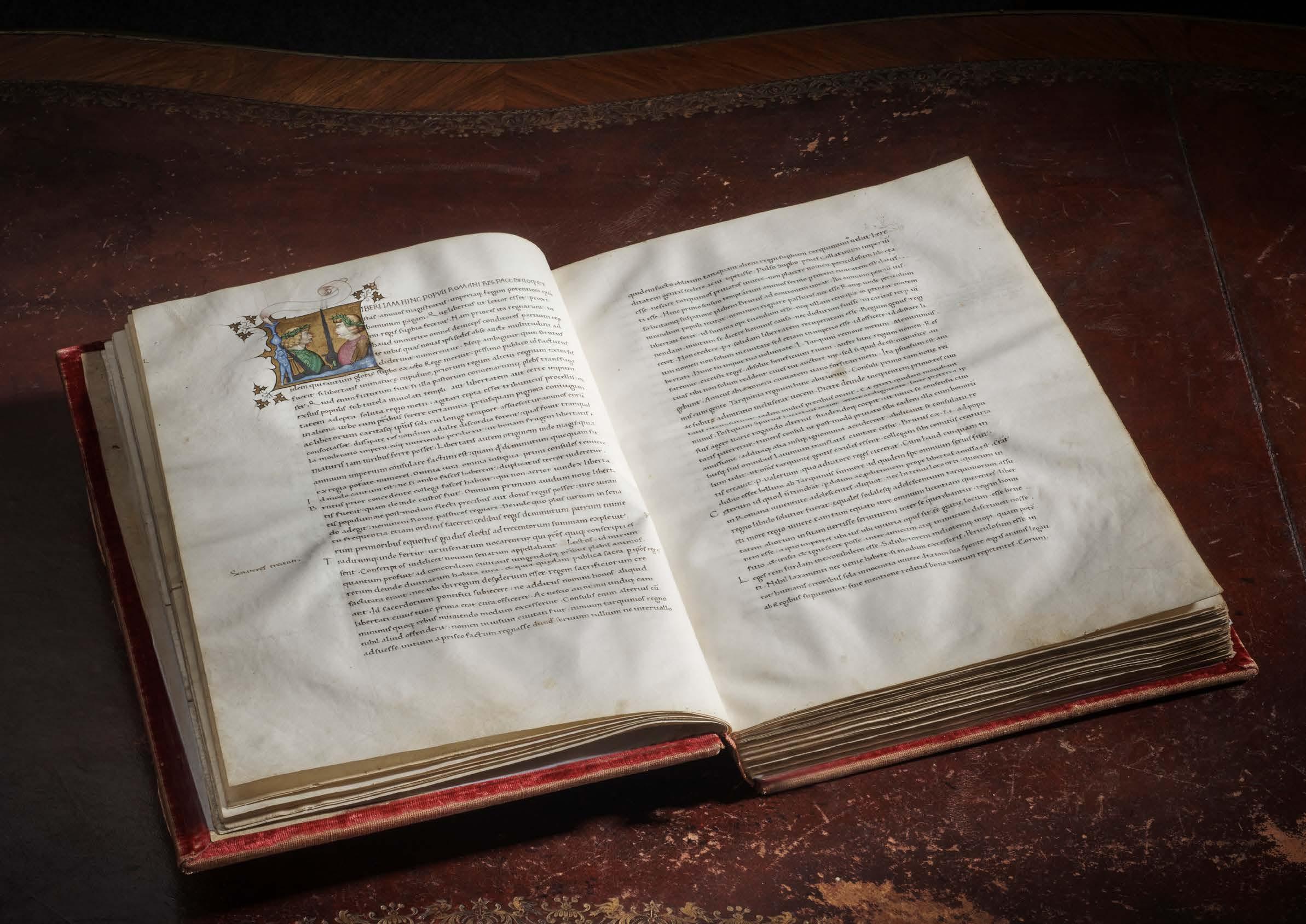
[MASTER OF THE VITAE IMPERATORUM – MASTER OF IPPOLITA SFORZA –LIVY ( 59 BC – AD 17 )]
AB URBE CONDITA. FIRST DECADE ILLUMINATED MANUSCRIPT ON PARCHMENT, MID 15 -TH CENTURY (253 × 359 mm).
Exceptional finely illuminated manuscript, formerly part of the dowry of Ippolita Maria Sforza
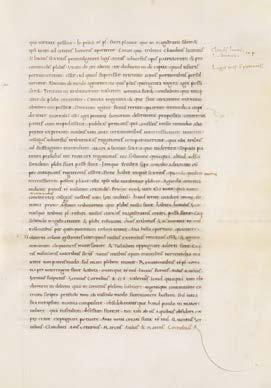
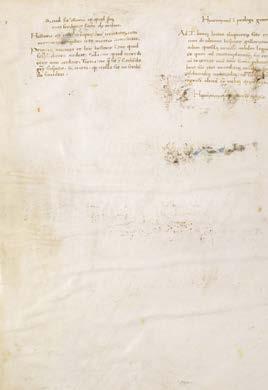
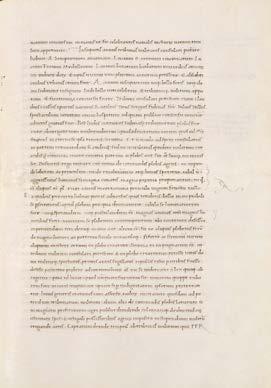
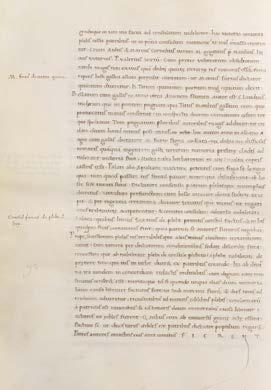
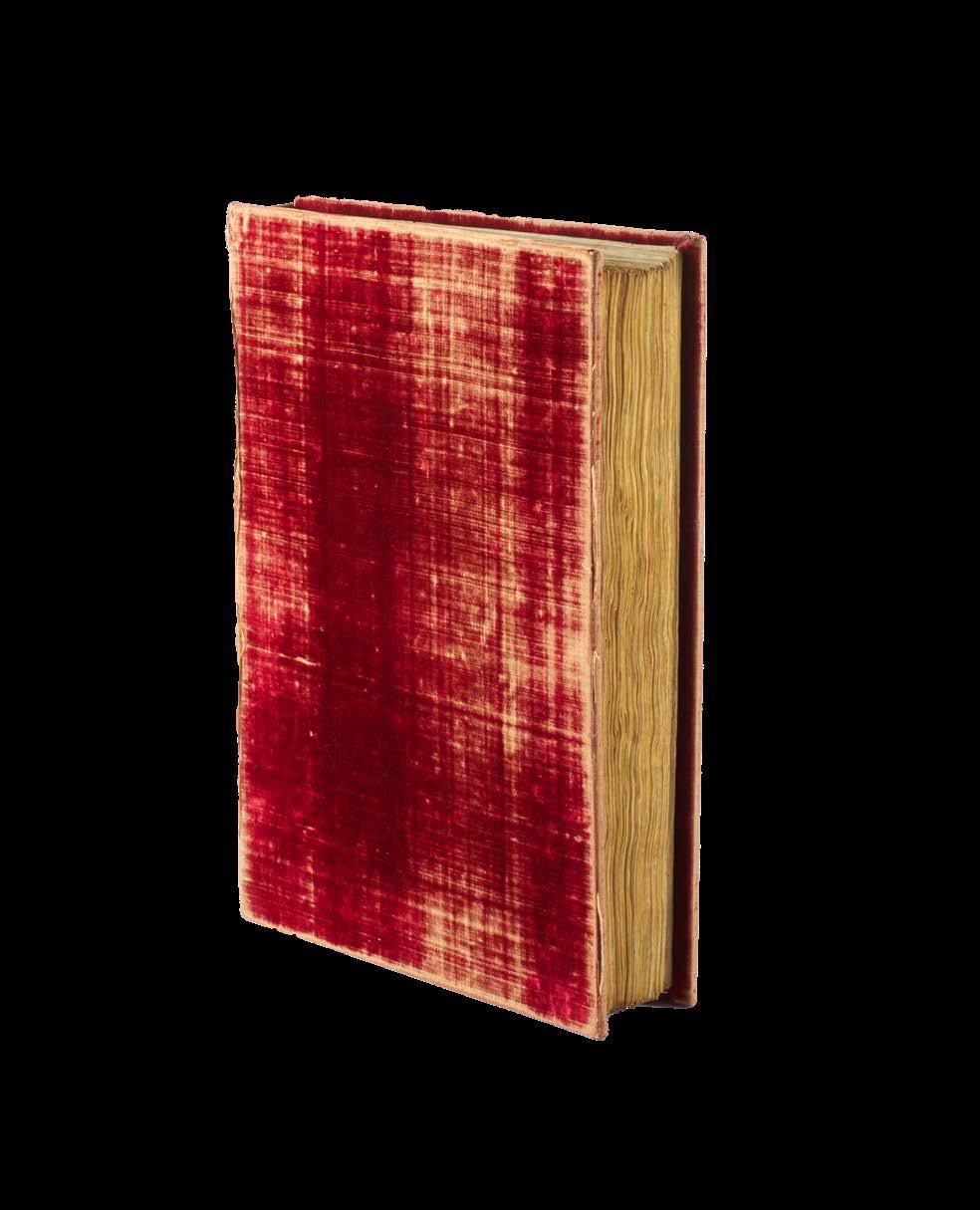
Parchment manuscript consisting of 208 leaves, written in an elegant humanistic script. Lacking foliation. Dry ruling throughout, with visible pricking. The first leaf is set within an elaborate white-vine border heightened with punched gold, incorporating putti and drolleries. At the lower centre, the Sforza coat of arms supported by two angels and surmounted by the initials “Hi M”. Nine finely illuminated initials on gold grounds, with phytomorphic and zoomorphic motifs and historical figures. Inscription on the front flyleaf, signed by Ippolita Maria and dated 1460, containing two quotations: Cicero, De Oratore, II, 9 ,36 and II, 15 ,62; Saint Jerome, Prologue to Genesis. Numerous marginal glosses in several hands, citing classical authors including Virgil and Ovid. A schematic depiction of the Caudine Forks. Red silk binding over wooden boards, restored. Gilt edges.
Internally in excellent condition, apart from a few minor defects, including a restoration to the outer margin of the first leaf with consequent reexecution of the decorative border, some further very minor losses, earlier restorations, and occasional small wormholes. The binding shows more pronounced wear; it has been carefully reassembled and the spine is detached.
On 21 May 2007 (protocol no. 5202), notification was received from the Italian Ministry of Cultural Heritage and Activities, through the Lombardy Directorate General for Culture, Identity and Autonomy, declaring the manuscript a work of cultural interest pursuant to Article 15, paragraph 1, of Legislative Decree 2004 /42.
Estimate € 280.000 - 350.000
CONTACTS
Stefania Pandakovic Head of Department
Elena Claudi
Cataloguer
Tel. +39 02 8631477
Elena Lo Castro
Cataloguer
Tel. +39 02 8631474
libri.manoscritti@ponteonline.com
HOW TO PARTICIPATE –AUCTION 25 & 26 FEBRUARY 2026


Register and participate online on the platform IlPonteLive Join the auction through phone and submit a bid

Submit a written bid by filling our bid form