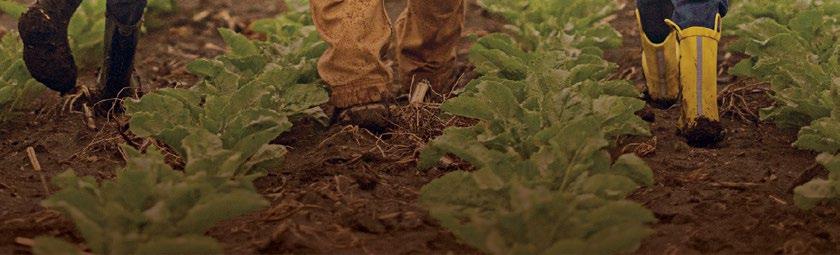
Innovation is transforming sugarbeet farming. At Betaseed, we’re using advances in science to optimize the potential of every seed you plant. Our state-of-the-art breeding and testing process takes up to ten years. It’s the only way to ensure the hybrid your Betaseed rep recommends has the best traits to manage disease and drive yields for this region, and your farm. It’s what we call next-gen breeding for next-gen confidence. Learn more at betaseed.com
www.betaseed.com
52 ISSUE 2 - FEBRUARY 2026
FEATURES
12 6 8 10
JOURNEY OF SUGARBEET SEED: FROM RAW TO SMOOTH
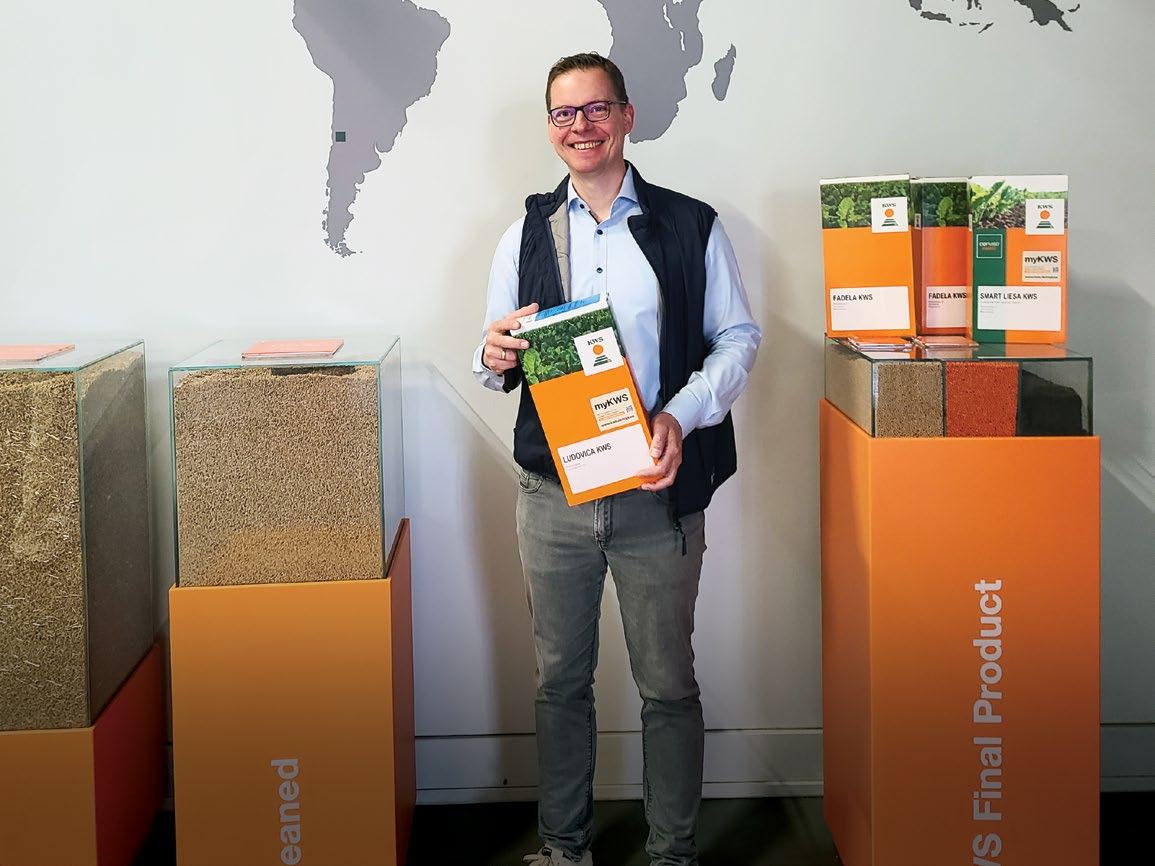
Bastian Schröder, head of sugarbeet beet seed processing at KWS, stands next to display cases showing sugarbeet seed at various stages of processing.
DEPARTMENTS
CALENDAR
NEW PRODUCTS
Latest and greatest
OFF THE TOP
News, people and updates
FROM THE ASGA
17
21
BUYER’S GUIDE
Irrigation Equipment
22 20
Muddy Waters Still Not Clearing Much
FROM THE SUGAR ASSOCIATION
U.S. Sugar Industry and Farmers Facing Immense Pressure
FROM THE AMERICAN SUGAR ALLIANCE
Beyond Sweetness: Sugar’s Many Roles In Food
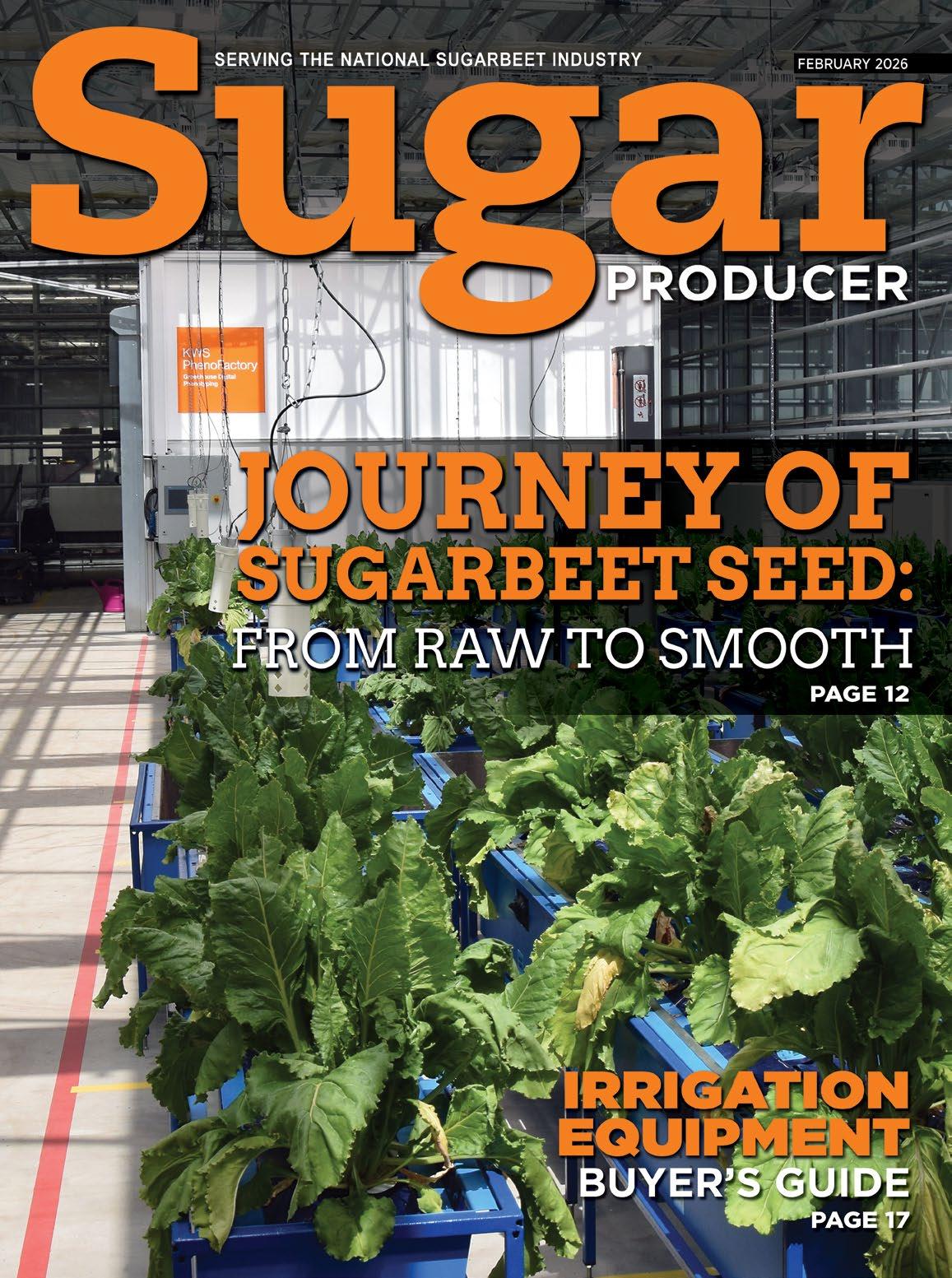
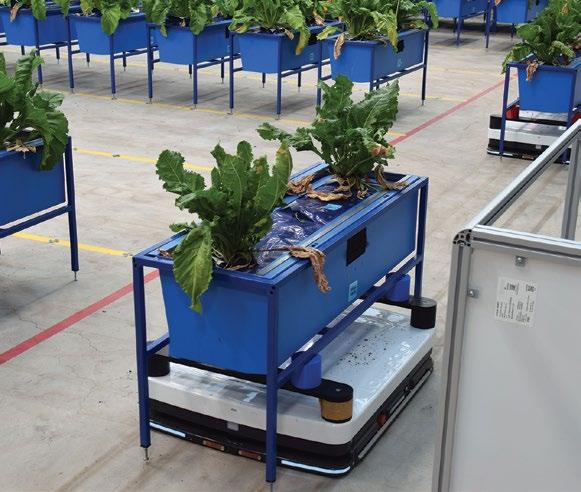
These sugarbeet plants are part of KWS’s PhenoFactory, which features a robot system developed by KWS to phenotype corn and sugarbeet plants. One of the purposes of the PhenoFactory is to measure drought stress on those two crops ON THE COVER
Field-proven
Field-proven Solutions™!
Amity Technology has the solution for you!
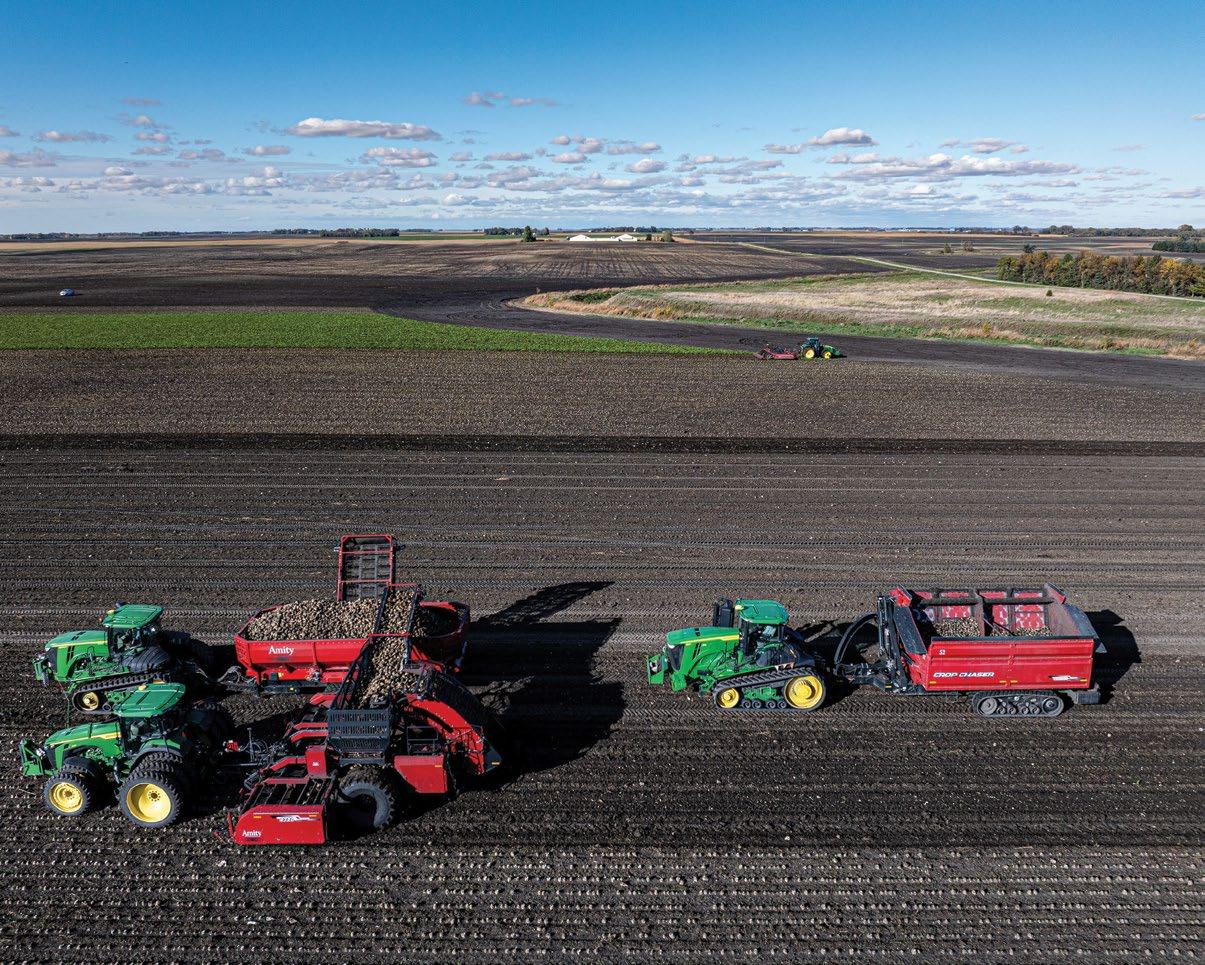
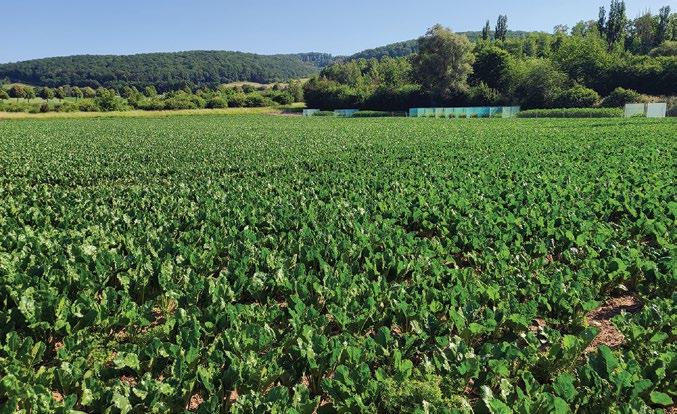
Amity Technology’s line-up is field-proven to deliver high-quality, properly defoliated sugar beets in any field condition.
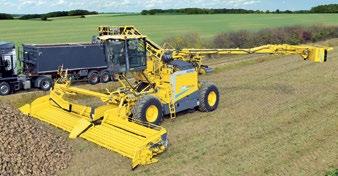
Amity’s 50 Series Defoliators are engineered to properly defoliate sugar beets while matching harvester speed.
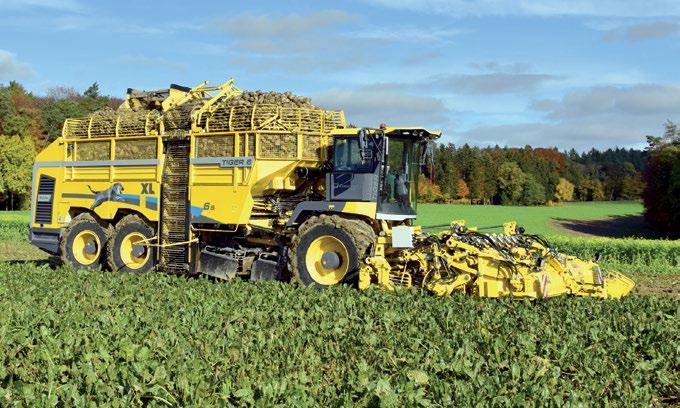
Amity harvesters are the gold standard in the industry. With features like Active Depth Control, High Profile Chain, Dynamic Chain Management, and an ultra-cleaning scrub tower, Amity harvesters can be configured to fit your operation. Plus, with Amity’s field-proven lifter wheels, you will harvest all the tap root and leave extra tare behind.
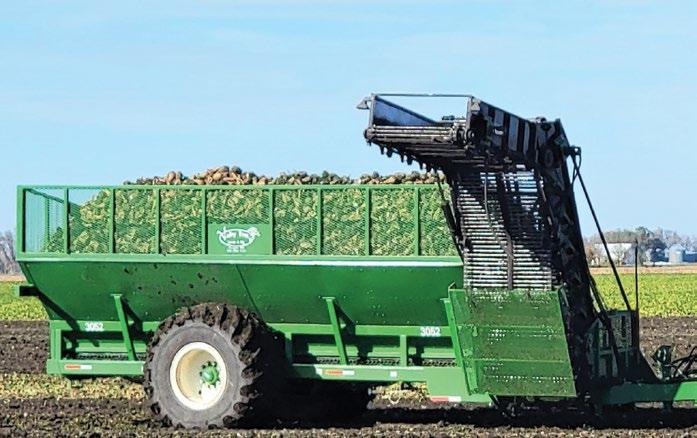
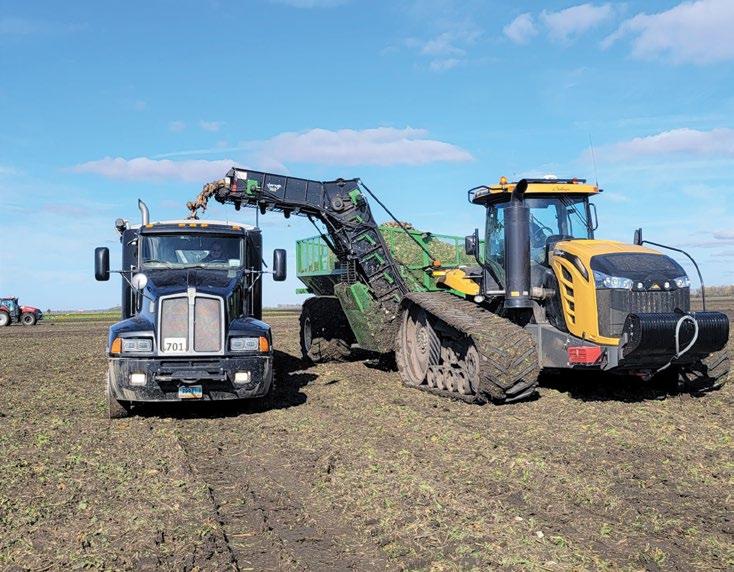
Amity’s Sugar Beet Cart and Crop Chaser™ provide efficient transport in all field conditions. These high-capacity tanks keep harvesters moving in the field.
CALENDAR
FEBRUARY 10-12
WORLD AG EXPO
International Agri-Center Tulare, CA www.worldagexpo.com
FEBRUARY 11-14
NATIONAL FARM MACHINERY SHOW
Kentucky Expo Center Louisville, KY farmmachineryshow.org
FEBRUARY 19-20
USDA AGRICULTURAL OUTLOOK FORUM
Crystal Gateway Marriott Arlington, VA www.usda.gov/oce/ag-outlook-forum
FEBRUARY 21-22
INTERNATIONAL SUGARBEET & DRY BEAN EXPO Alerus Center Grand Forks, ND www.sugarbeetinstitute.com
FEBRUARY 22-25
INTERNATIONAL SWEETENER COLLOQUIUM
Omni Orlando Resort ChampionsGate, FL www.idfa.org/events
FEBRUARY 25-27
COMMODITY CLASSIC
Henry B. Gonzalez Convention Center San Antonio, TX www.commodityclassic.com
MARCH 19-21
NORTH AMERICA FARM AND POWER SHOW
Four Seasons Centre Owatonna, MN www.tradexpos.com
JULY 31-AUGUST 5
INTERNATIONAL SWEETENER SYMPOSIUM
The Hythe Vail Vail, CO https://sugaralliance.org
PUBLISHER Jason Harris
EDITOR Lane Lindstrom lane@sugarproducer.com
ADVERTISING DIRECTOR Rob Erickson rob.erickson@sugarproducer.com
CIRCULATION DIRECTOR Chuck Harris
PRODUCTION STAFF Lavon Horne IT DIRECTOR Chuck Harris
CONTROLLER
Basic subscription rates are: U.S., 1 year-$20, nine issues; Canada/International 1 year, $90 U.S., nine issues. All subscriptions are U.S. funds only. Limited back issues available for $10 U.S. each.
Sugar Producer Magazine is published nine times yearly. 2026, Harris Publishing, Inc. All rights reserved. Reproduction in whole or in part without permission is strictly prohibited. Publisher not responsible for content of submitted materials.
Back copies or subscriptions: (208) 524-7000
AMERICAN SUGARBEET GROWERS ASSOCIATION (202) 833-2398 www.americansugarbeet.org
U.S. BEET SUGAR ASSOCIATION (202) 296-4820
AMERICAN SUGAR ALLIANCE (703) 351-5055 | www.sugaralliance.org
BEET SUGAR DEVELOPMENT FOUNDATION (303) 832-4460
SUGAR ASSOCIATION, INC. (202) 785-1122 | www.sugar.org
HARRIS PUBLISHING, INC. 190 1st Street Idaho Falls ID 83401 (208) 524-7000 FOUNDER Darryl W. Harris
in Idaho Falls, Idaho by Falls Printing rob.erickson@fallsprinting.com
DiverseFields.DefendedYields.
A BLUEPRINT FOR PROFIT
Hilleshög delivers the critical genetic contrast your elds need to steady your stands, sharpen disease defenses, and drive higher sugar content.
Don’t bet your bottom line on a narrow gene pool. Keep your operation Generations Strong with Hilleshög.
NEW PRODUCTS
AQUEUS, UNITED BEET SEEDS ANNOUNCE STRATEGIC PARTNERSHIP TO PROVIDE HYDROGEN-BASED SOIL AMENDMENT TO GROWERS NATIONWIDE
Aqueus LLC and United Beet Seeds (UBS) have announced a new strategic partnership that will incorporate Aqueus’ cutting-edge stabilized hydrogen chemistry into UBS’s robust catalog of products.
UBS, which operates under the brands in the U.S. of Hilleshog, SES VanderHave, Seedex and Maribo Seeds, will now offer Growthful to their customers, Aqueus’s flagship product that supercharges soil health by freeing up bound nutrients for plant uptake. This collaboration allows farmers across the U.S. to access Growthful through UBS’s 100 trusted dealers and take advantage of this comprehensive agronomic solution from planting through harvest.
Aqueus’s Growthful product line is built on patented stabilized hydronium technology — a breakthrough formulation that delivers 10x more hydrogen than rainwater, improving crop potential and unlocking bound nutrients in the soil, making them more bioavailable for plants. Growthful products are designed to work seamlessly with most chemistry, optimizing the effectiveness of UBS’s current offerings including but not limited to sugar beet and fodder beet seed.
UBS, a global sugarbeet breeder, has long been committed to helping growers maximize their crop performance. To offer their clients a streamlined approach from planting to harvest, UBS
is collaborating with Aqueus’s unique chemistry to expand their offerings by acting as a distributor of Growthful products throughout the major sugarbeet–growing regions of the United States, with plans to reach additional growers beyond beets in the near future.
Over the last five years, Aqueus has served growers of various crops on more than 1 million acres worldwide, delivering proven results such as:
Increased sugarbeet yields by as much as +800 lbs./acre (according to a 2021-2024 trial)
Improved overall soil and crop health
For more information, visit aqueus. com and www.unitedbeetseeds.com.
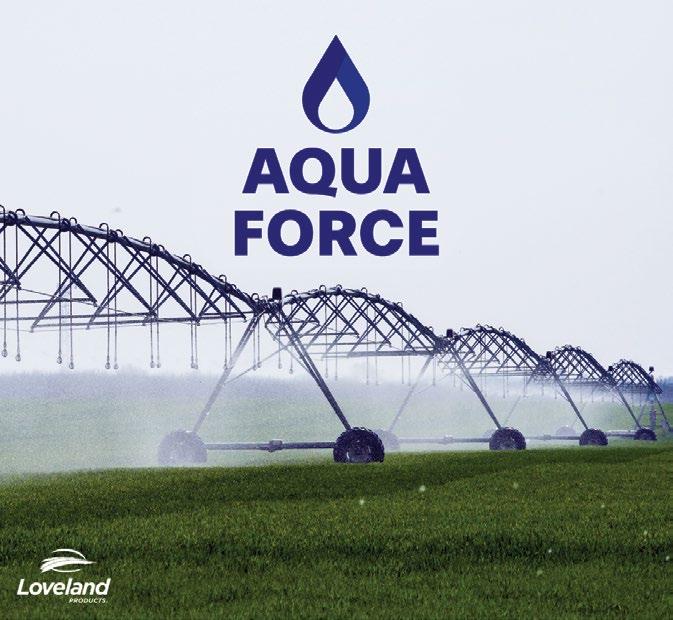
LOVELAND PRODUCTS INTRODUCES AQUA FORCE FOR MAXIMIZING SOIL WATER RETENTION IN CENTER PIVOT SYSTEMS
Loveland Products, Inc.® has announced the launch of AQUA FORCE, a new kind of water use efficiency product designed mainly for center pivot systems. Unlike traditional soil surfactants or wetting agents, AQUA FORCE helps water move more evenly through the soil, stay where plants need it, and work harder for every acre.
Built for modern irrigation challenges, AQUA FORCE improves water distribution, retention and infiltration in soil, so farmers can make every pivot pass count. The unique formulation helps soil hold more water in the root zone and reduces compaction, which is key to maximizing yield potential and protecting long-term soil health.
In 2024, the Irrigation Research Foundation (IRF) in Yuma, Colorado, tested AQUA FORCE on corn through center pivot applications. The result? An average yield increase of 9 bushels per acre across all production zones. Results are likely to vary based on site-specific conditions, hybrids planted, and any other factors that affect yield. At the Oklahoma site, AQUA FORCE also helped fields maintain higher soil moisture levels (0–6 in.) throughout the growing season. This means more water stays where crops can use it, and less loss to evaporation or runoff. For
farmers relying on the Ogallala Aquifer, that efficiency matters. Why AQUA FORCE Stands Out
• Improves water efficiency: Enhances soil’s ability to hold and distribute water evenly across the profile
• Supports better yields: Supports
ideal growing conditions for stronger roots and higher productivity
• Saves time and resources: Less wasted water, fewer irrigation adjustments, more efficient production.
For more information, visit www.lovelandproducts.com n
ROOTED IN COMMUNITY: ACH SEEDS ANNOUNCES 2025 HOMEGROWN GIVING AWARD RECIPIENTS
Barnesville Area Food Pantry board President Laura Anderson (l) and volunteers accept the Homegrown Giving donation from Andy Finkral, ACH Seeds sales leader (middle). Barnesville Area Food Pantry was one of six recipients of the 2025 Homegrown Giving award from ACH Seeds.
Rural communities form the backbone of American agriculture – and when they thrive, the entire industry grows stronger. This year, ACH Seeds’ Homegrown Giving program awarded $60,000 to organizations whose projects will strengthen the very communities where sugarbeet growers live and work.
Now in its fourth year, the Homegrown Giving program supports community-led initiatives that address the needs identified by local residents, from agricultural education and youth leadership to food access and rural infrastructure. In 2025, six organizations across ACH Seeds’ growing regions received $10,000 each to expand their reach and deepen their community impact.
This year’s award recipients are putting the funds to work in remarkable ways:
• Barnesville Area Food Pantry, Barnesville, Minnesota, is sustaining and expanding vital programs, including its summer lunch program, school backpack program and the food pantry to ensure local families have support when they need it most.
• Belgrade Brooten Elrosa FFA, Belgrade, Minnesota, is expanding agricultural education opportunities through classroom visits and farm safety events, while removing financial barriers for FFA
• Ithaca FFA Chapter, Ithaca, Michigan, is installing tile drainage across a 50-acre land lab to bolster students’ ability to successfully plant, grow and harvest crops while reinvesting harvest revenue into the program’s equipment, projects and student activities.
• Minidoka County Senior Center, Rupert, Idaho, is purchasing a new steam table to expand nutritious meal options, durable delivery bags for homebound residents and storage containers to keep fresh, healthy meals accessible for local seniors.
• Peg A Way 4-H, Hardin, Montana, is enhancing community safety and pride with projects that include stop sign flashers, emergency oxygen equipment, town beautification efforts and Chamber of Commerce initiatives. The chapter also is supporting the local
“Beef to School” program and upgrading local facilities to serve residents for years to come.
• Big Springs Community Foundation, Big Springs, Nebraska, is improving the town’s community park shelter with new electrical outlets and lighting for improved safety, accessibility and usability for all residents, while supporting local events like Art in the Park and Veterans Day celebrations that bring residents together.
Since its launch in 2022, Homegrown Giving has awarded $180,000 to local initiatives, supporting more than 18 community projects across U.S. sugarbeet-growing regions. ACH Seeds continues to invest in the people, projects and communities that sustain rural America – helping communities remain strong, resilient and prepared for the future.
For more information, visit achseeds.com
UNITED SUGAR PRODUCERS & REFINERS ANNOUNCES CEO TRANSITION
United Sugar Producers & Refiners (USPR) announced that CEO Matt Wineinger retired from the company, effective August 31, 2025. Wineinger has served as CEO for the past 10 years, leading USPR through a decade of growth, and strengthened industry partnerships.
To ensure a smooth transition and continued operational excellence, the executive committee has appointed Dirk Swart as interim CEO, effective imme-
diately. Swart is a seasoned leader with over 30 years of experience at USPR, including his tenure as executive vice president of Industrial Sales. His deep industry knowledge and long standing relationships with customers and partners position him well to lead the organization during this transition.
The following statement is from the USPR Executive Committee: “Matt’s leadership has left a lasting impact on
our organization and the industry. We are grateful for his service and confident in Dirk’s ability to guide USPR forward with clarity and continuity.”
USPR remains fully committed to delivering high-quality products, reliable service and long-term value to its customers and partners. The company’s focus on operational integrity, customer collaboration, and sustainable growth continues to drive its strategy and performance. n
members to attend leadership programs to help strengthen the chapter’s impact.
HARVEST YOUR AMBITION
JOURNEY OF SUGARBEET SEED: FROM RAW TO SMOOTH
KWS PRODUCES 2 MILLION UNITS EACH YEAR IN EINBECK
BY LANE LINDSTROM
Even though there were a lot of impressive processes and the sheer magnitude of the KWS sugarbeet seed processing facilities in Einbeck, Germany, were striking, there is one takeaway from our visit that really stands out: the attention to detail for such a small product.
That attention to detail is as extraordinary as is the sheer volume of sugarbeet seed produced for the sugarbeet growers in European countries. Then, when you consider that KWS produces around 300 sugarbeet varieties, it becomes all the more impressive.
When we toured the KWS facilities in Einbeck, located in northcentral Germany, last summer, we learned a lot of things about sugarbeet seed processing and all that goes into raising and harvesting seed before it ever gets to the grower.
The KWS Einbeck production facilities are the largest in the world for the processing of sugarbeet
seed, with around 2 million units of finished commercial seed processed and packaged here. The process at Einbeck includes processing (calibration and seed selection), pelleting, treatment and packaging.
All the seed processed and packaged in Einbeck stays in Europe with none of it being shipped across the ocean to the U.S. Production of KWS seed for sale in America is done in America. As Bastian Schröder, head of sugarbeet beet seed processing at KWS, explained, no GMO seed is allowed in Europe and variety types are different between the U.S. and European markets as those varieties are bred for the different environments found in those different locales.
Having said that, seed destined for the European market is processed in Europe but there is some seed processed in Turkey for that market. It’s a small portion of the overall seed production. In fact, seed processing in Turkey is about 10 percent of what takes place in Einbeck.
Bastian Schröder, head of sugarbeet beet seed processing at KWS, stands next to display cases showing sugarbeet seed at various stages of processing.
Some seed from the Einbeck facility is sold in accordance with international sanctions to Russia. Russia is not selfsufficient in producing high quality sugarbeet seed and KWS is one of multiple suppliers to Russian growers and the civilian population.
And to be clear, the overall process of sugarbeet seed production takes place in several countries in Europe, not just Germany. For instance, the cleaning of harvested seed is done in Italy and France with the cleaned seed shipped to the Einbeck facility.
SUGARBEET SEED 101
Many growers most likely are familiar with the journey of a sugarbeet seed from the time it’s harvested to when it
gets to their farm ready to plant. If you’re a little unfamiliar with that journey, here is a refresher course. This information comes from several displays at the KWS Einbeck facility.
MULTIPLICATION AND HARVEST
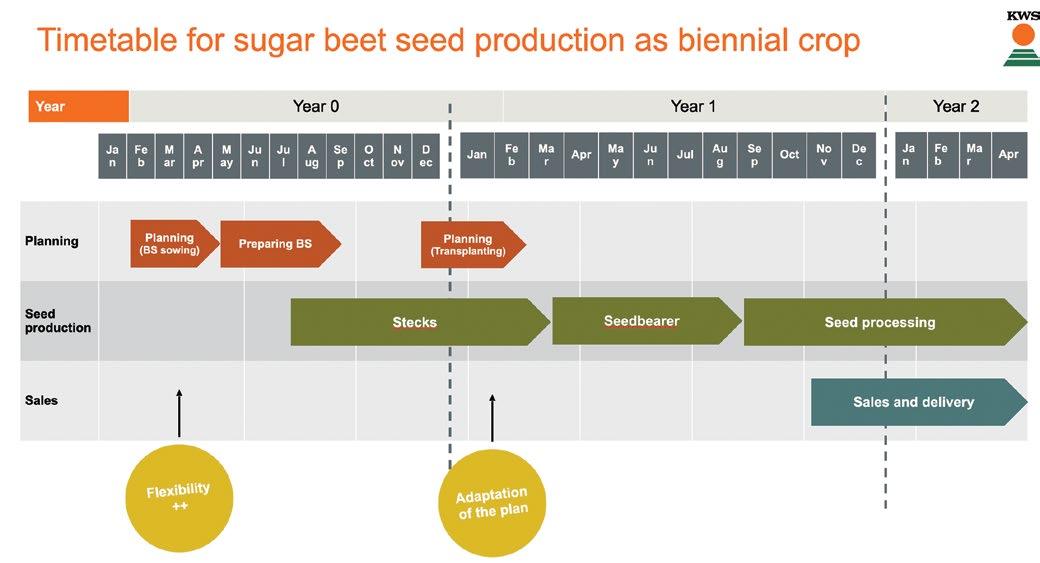
Two years of growth (Figure 1 shows the timetable for sugarbeet seed production)
Sugarbeets are biennial plants. In the first year the root, which is the actual sugarbeet, develops. For multiplication of seeds, the second year of growth is key. Only a prolonged period of cold weather, lasting several weeks, induces the plant to bolt, meaning it builds flowering shoots, and with that come the seeds. This is the aim of multiplication. The seeds are then harvested and further processed along the production chain.
The journey of seeds starts long before multiplication and harvest, however. It takes up to 10 years of intensive research and development work for a new sugarbeet variety to become available.
PRECLEANING AND CLEANING
The seed journey to Einbeck
Precleaning of the seed takes place directly after harvest in the KWS multiplication areas in southwestern France and northern Italy. Coarse impurities, like plant residues as well as under and oversized seeds, are separated
out. In the cleaning process that follows, the harvested lots are selected for wellformed and healthy seeds.
A representative sample of every batch is taken and checked in an extensive quality control process. Only about 60 percent of the harvested seeds are shipped to Einbeck for further processing. The cleaned seed has a technical purity of at least 99 percent and an up to 100 percent purity for individual product regulations.
SEED PROCESSING
100 percent quality
Upon arrival in Einbeck, the seed is sorted by size and then individually polished. Excess pericarp (the hardened surface of the seed which carries germination inhibitors) is removed, and the star-shaped seed is rounded. Empty seeds, and those with only incomplete germs, are sorted out supported by stateof-the-art X-ray and CT technology.
At the end of this stage, only around 20 percent of the harvested quantity is left, and exclusively consists of seed with well-developed germs. This means 100 percent quality and the best conditions for field emergence in the coming spring.
PELLETING AND TREATMENT
Layer by layer to the final product
In a complex pelleting process, the irregularly shaped flat seed is now
coated. This is where the seed takes on the form of a gray rounded pellet. The coating improves the sowing process needed for precision seeding and forms the basis for the next step: the application of seed treatments. These treatments contain fungicides and insecticides, among other things, and protect the vulnerable germ after sowing from infestation of pests and soil-borne fungi.
The last part of the coating is a layer of pigments. This stage prevents abrasion of the seed treatment during sowing and protects the farmer from direct contact with the treatments. This pigment layer also gives the recognizable orange color of KWS. Afterwards, the seed is packed and shipped.
One of the interesting points made during the explanation of the overall process of sugarbeet seed production at KWS was the use of X-ray and CT technology. As Schröder explained, “X-ray is used as an in-line quality check to secure that only well-developed seed/embryos are selected.”
It was also a bit surprising that only a small percentage of the seed originally harvested makes it to the final stages of production – remember only about 20 percent of the harvested quantity is left.
“… 60 percent makes it to Einbeck after seed pre-cleaning and cleaning in Italy and France,” Schröder said. “We
Figure 1
aim for almost 100 percent technical purity, i.e., no straw, sticks, soil, stones, weeds, seed of other crops, etc. We reject over- and under-sized seeds as they cannot be used in pelleting later.”
That seed uniformity is of utmost importance to KWS as it knows sugarbeet seed planters can only work with a certain caliber of seed, usually 3.5-4.754 mm.
It’s during the treatment portion of the process that KWS applies fungicides, biologicals, insecticides and nutrients. The pelleting process KWS uses was developed and constantly improved over the last years and decades and has proven to be a gamechanger in providing the best and most stout sugarbeet seed available.
QUALITY CONTROL
All during the process from harvest to the final packaging, KWS takes steps to ensure it is supplying the best possible product. “After every production step, samples are taken and analyzed for various characteristics,” Schröder explained. “Only with this high effort can we guarantee this high-quality standard of seeds.”
The “production season” (processing, pelleting, treating, packaging) runs from August to March so that seed is available by planting season. During the production season, the plant runs 24/7. It was also pointed out that KWS keeps plenty of seed on hand to balance weather extremes in the seed multiplication and to be able to react to changing market requirements. KWS
officials said about 80 percent of a seed harvest is always in stock as part of its risk mitigation strategy.
As you can well imagine, what a sugarbeet grower receives as the final product he or she plants in their field starts long before the multiplication and seed harvest part of the process, as pointed out in the Multiplication and Harvest section – up to 10 years of research and development.
One example of this research and development is KWS CONVISO SMART sugarbeet seed, giving the seed full tolerance to specific ALS herbicide(s) and the forthcoming Truvera trait for NA that will provide herbicide resistance to three modes of action (glyphosate, glufosinate and Dicamba). But, as Schröder pointed out, it’s not a one-sizefits-all approach by KWS to sugarbeet seed production as needs vary from region to region. “Seed treatments are fungicides, insecticides and biologicals,” he said. “Those can be applied to our seeds, depending on customer orders and the regulatory situation in the target markets.”
Another result of KWS research and development is CR+, which has been quite effective against Cercospora. CR+ received its first official approval in Italy in 2020 and has since expanded to multiple regions.
RESEARCH ADDRESSES\ MULTIPLE FACTORS
All varieties and innovations developed by KWS have significantly benefited growers all over the world in the past and still do so today. However,
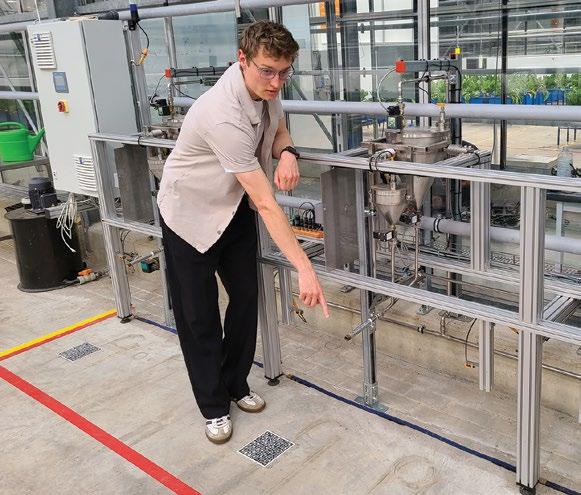
Dustin Ethgen explains how the robot system works in the KWS PhenoFactory in Einbeck, Germany. The robots move sugarbeet (and corn) plants around the greenhouse as research is conducted on, among other things, drought stress.
KWS, or any sugarbeet seed producer, can’t rest on its laurels long as the lifespan of any one variety of sugarbeet seed varies due to a number of factors such as disease and weed pressure, climate change and government regulations. That last factor alone can be quite cumbersome as one country could possibly have different regulations than, say, even a neighboring country.
“If we have a blockbuster variety that lasts 5-7 years in one country, that is great success,” Werner Beyer, group lead, sugarbeet resistance at KWS, said.
Beyer said at any one time, KWS researchers are working on more than 20 diseases and pests. “This number includes key fungal and viral diseases, as well as nematodes and insects,” he said.
Of course, weed control is “a very important project” at KWS, too, Beyer said. “Yes, weed control contributes to the ‘economy’ of production and, therefore, is quite relevant for keeping sugarbeet acreage stable.”
Because of the multitude of challenges (see Figure 2) in developing sugarbeet seed for growers worldwide, Beyer said KWS is “dedicated to long-term approaches.” He explained, “We work on it all the time with various intensities. We work on it to make it better; combine
resistance with other traits like sugar content and root yield, i.e., combining resistance and general sugar yield.”
Sometimes developing sugarbeet seed to attack this multitude of challenges means helping growers large and small and providing seed that is specific to certain areas and issues, even when that might be a seemingly small market.
Beyer explained, “We try to keep our niche products successful. KWS cares not only for the biggest worldwide challenges, but tries to serve all farmers, even when some traits are only considered as small added-value or niche products.”
TACKLING CLIMATE CHANGE FOR SEEDS’ SAKE
One of the more recent challenges –and opportunities, according to Beyer – is climate change. He said, “It is a challenge because all our yield trials and seed productions are affected by partly unpredictable heat and drought. It’s a challenge because sometimes drought happens in one year out of three and it is difficult to identify constant environments working with long-year breeding processes.
“The opportunity comes as we are contributing to developing varieties which can contribute to coping with climate challenges, such as drought tolerance to provide stable yields even under limited water availability.”
KWS utilizes growers across several regions to help propagate and raise sugarbeet seed for its customers, a process Beyer said has worked well for
years and years. He explained, “KWS works mainly with independent growers who raise the seed for KWS but who have experience over years and are familiar with the challenges to produce high-quality products.”
Staying abreast of so many changes and challenges requires KWS and others to adapt to the latest technology and methods to stay ahead of the curve. One such method is genome editing, Beyer said.
“New Breeding Methods, such as Genome Editing, represent significant advancement in modern plant breeding, as they enable a more efficient breeding process,” Beyer explained. “Within a short timeframe, plants can be improved in a very precise way to increase productivity while simultaneously requiring less crop input. Given the current challenges in agriculture, this is therefore an important tool for implementing breeding
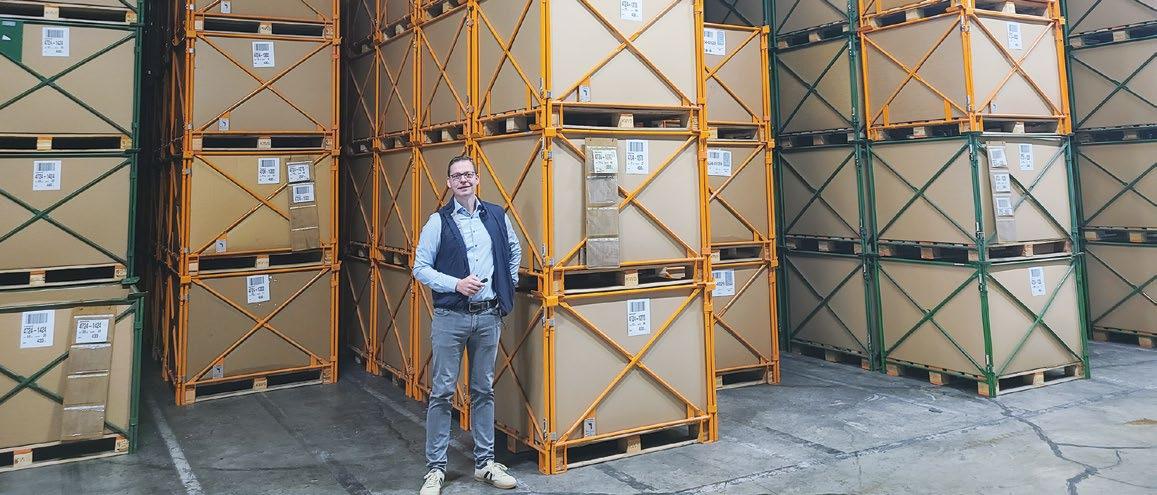
(top) Bastian Schröder stands next to several of hundreds of cartons holding sugarbeet seed as it moves through the KWS processing plant in Einbeck, Germany, with the final product destined for growers all across Europe. (above) The partitioned areas in the back of the sugarbeet field are part of the sugarbeet seed breeding process.
improvements more quickly. KWS is utilizing Genome Editing in sugarbeets when it gives an advantage over classical breeding methods.”
Still not convinced KWS is serious about its seed research, which includes corn, oilseeds, cereals and others in addition to sugarbeets? Consider this: the company spent 349 million Euros on research and development in just 2024/2025. In addition, the company has 1,944 employees in research and development.
Michigan Mike 1-810-705-0297
Idaho Kent 1-208-280-0079
Nebraska Johannes 1-810-837-2415
Minnesota Hunter 1-810-537-2416
Ontario, Canada John 519-339-6015
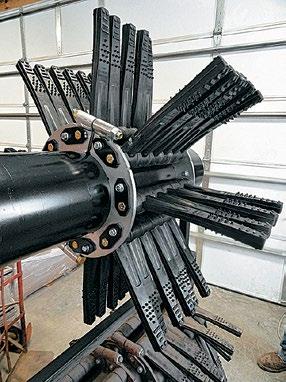
Highest Quality Defoliating Increased Productivity Per Hour
• Increased Ground Speed
• Decreased PTO RPM Speed
• Increase flexibility in difficult defoliatin conditions
• Minimal Damage To Beet
• Available for all defoliator models
• Available in 4, 6 and the new 8 bar unit
• Available in 12” (6 flail), 14” (7 flail), 16” (8 flail) depending on row width
• Balanced unit for minimized vibration
• 50% thicker flail mounting bracket
• Hardened 3/4” diameter flail rod for the best wearability in the industry
• Designed to eliminate side to side flail movement
• Eliminates the need for steel units allowing for increased adjustability of front & middle drum.
• Available in Standard Duty & Heavy Duty high quality flails.
• Units can be installed 1 drum at a time
• Easily shipped UPS or Freight in US &
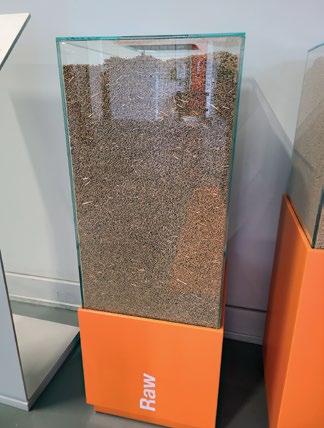
This display shows what raw sugarbeet seed looks like prior to being cleaned and processed into what sugarbeet growers are used to seeing when they open a box of seed, which is shown in this big carton.
PHENOFACTORY
Part of that research includes the PhenoFactory, probably one of the most interesting parts of our tour of KWS. The PhenoFactory has a robot system developed by KWS to phenotype corn and sugarbeet plants. In this part of the KWS complex in Einbeck, the company studies drought stress on those two crops. According to KWS, “The outer appearance of the plant is measured and analyzed precisely in order to capture the influence of environmental factors as well as genetic resources of the plant. Autonomous, mobile robots move around the individual plant benches 24/7, according to a defined system.” Through this process of movement, photography and scans, KWS can watch and measure how plants change during their development. All this KWS research, growing, harvesting, processing, quality control and monitoring for the tiny but mighty sugarbeet seed. n
IRRIGARTION BUYERS’ GUIDE
DROP SPAN DISCONNECT
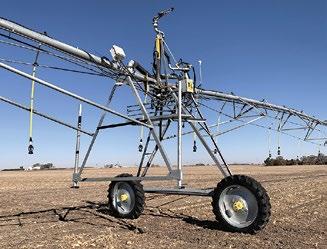
T-L Irrigation recently introduced a redesigned Drop Span Disconnect for linear systems and center pivots that utilizes two on-board hydraulic cylinders to raise and lower the span off the ball connect and to draw it in and out. Instead of a permanent structure in the field to park the stationary spans, this new design includes a leg set that is attached to the first span being disconnected.
T-L linear systems and center pivot irrigation are recognized for simplicity, safety and reliability. Featuring the latest technology for convenience and superior performance, the irrigation systems are designed to provide farmers with results and value that last, season after season. The redesigned Drop Span Disconnect is available for retrofitting on existing T-L irrigation systems and pivots and on new units. T-L Irrigation (402) 462-4128 www.tlirr.com
IRROCLOUD IC-10 SENSOR MONITOR
Transform your farm irrigation with the Irrocloud IC-10 Sensor Monitor, a game-changer in precision agriculture. This simple, affordable and reliable device collects data from up to 10 sensors and sends it directly to the cloud via LTE-M cellular, eliminating costly gateways or solar panels. With a simple setup requiring no configuration or sensor calibration and a 5 plus year battery life, the IC-10 works with all crops and soil types in any field. Access real-time data anytime and anywhere through the intuitive IRROcloud web platform, featuring a quick-view dashboard, detailed graphing suite, and optional frost alerts via text. Monitor soil moisture, irrigation, rainfall, soil/air temperatures, flow and more with sensor options like the rugged WATERMARK soil moisture sensor or the hyper accurate IRROMETER RSU-V. The platform supports API integration and data downloads for seamless analysis. Install anywhere with no height restrictions and gain actionable insights to optimize your operations. The IC-10 provides a simple and affordable option for farmers to confidently make smart precision irrigation decisions.
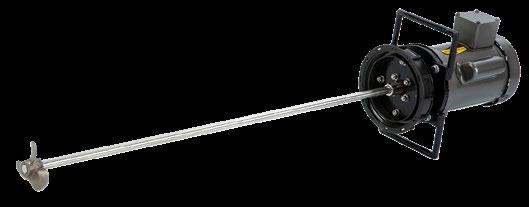
AGI-TOTE TANK MIXER
Inject-O-Meter, known for its simple, reliable injection pumps, has introduced the Agi-Tote Tank mixer. Agi-Tote is designed to easily mix a variety of heavy to light liquids or chemical blends that need to remain in suspension. We offer three different prop sizes: 3 inches for light mixing; 4.5 inches for medium mixing and 6 inches for heavy mixing.
Mfg. Co.
(800) 545-4440
FULL-LINE OF IRRIGATION
(951) 682-9505
www.irrometer.com
PRODUCTS
For 45 years, Double M has been a trusted irrigation partner for Idaho’s agricultural community, providing comprehensive solutions designed to protect and maximize one of the state’s most valuable resources: water. As a full-line irrigation dealer, Double M offers the experience, technology and service growers need to irrigate efficiently and sustainably.
Double M represents leading irrigation brands, including Zimmatic pivots, Wade Rain systems and Western Wheel Lines, giving producers flexible options to fit a wide range of crops, field layouts and water sources. To support smarter water management, Double M also prxovides advanced telemetry solutions that deliver real-time system monitoring and control, helping growers make informed decisions while reducing downtime and water waste.
Beyond equipment sales, Double M specializes in complete irrigation infrastructure. Their services include PVC and HDPE mainline installation, pump station design and construction, and variable frequency drive (VFD) systems to improve pump efficiency and manage variable flow demands.
With three locations across eastern Idaho and deep roots in Idaho agriculture, Double M understands that reliable irrigation is critical to farm productivity and long-term water stewardship. Their commitment to quality products, knowledgeable service, and responsible water use has made them a dependable partner for generations of Growers — today and for years to come.
(208) 226-2555
www.doublemsupply.com
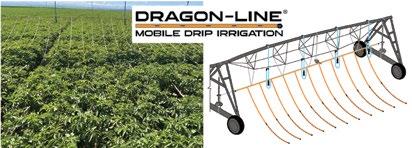
DRAGON-LINE
Dragon-Line Mobile Drip Irrigation combines the efficiency of surface drip irrigation with the flexibility and economics of mechanized irrigation systems. It converts any pivot or linear to drip irrigation. Dragon-Line is powered by the Rivulis D5000 pressure-compensating self-flushing emitter which is welded into the internal heavy wall of the drip-line. It is fully operational at 10 psi.
Dragon-Line’s orange drip-line tubing and flexible hose allows for precise water placement and reversing. Its unique, adjustable design eliminates wheel track issues and reduces evaporation, soil compaction and crusting. Save 20-50 percent on water, labor and energy when you convert your system to Dragon-Line. Apply water and fertilizer precisely where it’s needed for any type or size of crop. Keep your foliage dry, disease-free and thriving. With Dragon-Line, your water won’t run off. It makes every drop of water count, banking water into your soil and dollars into your account.
www.dragonline.net
VALLEY SCHEDULING
Experience unmatched accuracy, quality and dependability with John Blue irrigation injection pumps — trusted leaders in the chemigation and fertigation industry. Choose from our robust Full Range units or the lightweight and versatile E-Z Meter Injection Series, both designed with user-friendly features to meet your agricultural needs.
The Full Range models boast proven piston pump technology, offering exceptional durability and reliability for demanding applications. The E-Z Meter Series stands out for its portability and an easy-toread setting system, perfect for quick adjustments and movement between pivots. Available in simplex and duplex configurations, these fertilizer and chemical injection pumps are tailored for advanced fertigation and chemigation processes. Built with 316 stainless steel, chemically resistant polypropylene, and top-tier seals, these pumps ensure superior performance and longevity in the harshest conditions.
SOILPAM TRACKLOGS
SNF (912) 884-3366
Valley www.valleyirrigation.com
SOILPAM Tracklogs have several benefits, including increased soil moisture in the root zone, decreased soil crusting, and reduced wheel track ruts caused by center pivot irrigation systems. The Tracklog allows for longer periods of soil treatment and hangs from pivot irrigation systems, treating the soil below and reducing wheel track ruts.
ELECTRONIC SWING ARM
www.agriculture.snf.com
Reinke’s electronic swing arm corner (ESAC) technology is available for growers in the U.S. and Canada. The winner of both an AE50 award from the American Society of Agricultural and Biological Engineers and the Irrigation Association New Product People’s Choice Award for agriculture irrigation, ESAC provides highly efficient, uniform water application to increase yields under Swing Arm corners.
Dedicated to irrigation innovation, Reinke searches out ways to help growers get the most they can from their operations. With the electronic zone control of Reinke’s Swing Arm Corner (SAC), growers have been able to increase the number of irrigated acres in their fields. Combined with ESAC, they now have the technology to control sprinkler water application and virtually eliminate underand over-watering on corners.
In field research, ESAC improved water precision application, making it a major improvement for irregularly shaped fields and corner applications on rectangular fields. With electronic zone control based on GPS positioning, ESAC then optimizes water or chemical applications to individual field specifications by controlling sprinklers utilizing either six or 12 zones.
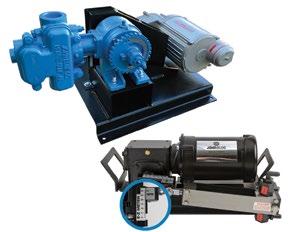
IRRIGATION INJECTION PUMPS
Experience unmatched accuracy, quality and dependability with John Blue irrigation injection pumps — trusted leaders in the chemigation and fertigation industry. Choose from our robust Full Range units or the lightweight and versatile E-Z Meter Injection Series, both designed with user-friendly features to meet your agricultural needs.
The Full Range models boast proven piston pump technology, offering exceptional durability and reliability for demanding applications. The E-Z Meter Series stands out for its portability and an easy-to-read setting system, perfect for quick adjustments and movement between pivots.
Available in simplex and duplex configurations, these fertilizer and chemical injection pumps are tailored for advanced fertigation and chemigation processes. Built with 316 stainless steel, chemically resistant polypropylene, and top-tier seals, these pumps ensure superior performance and longevity in the harshest conditions.
Reinke Manufacturing
www.reinke.com/swing-arm www.howirain.com
FIELDNET ADVISOR
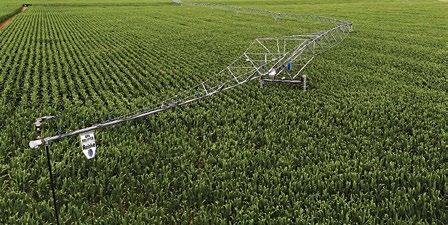
FieldNET Advisor is the smartest irrigation solution on the market for potato and sugarbeet producers who want to maximize yields as they grow healthier and more uniform crops, increasing their operation’s bottom line.
Recognized as the 2025 AE50 award winner from the American Society of Agricultural and Biological Engineers, FieldNET Advisor is a whole farm water management solution. Made to help simplify complex irrigation decisions, it’s an easy-to-use tool utilizing real-time agronomic data collected from on-farm Pessl weather stations.
By combining FieldNET Advisor’s recommendations with the advanced agronomics of FieldNET and Zimmatic pivots, growers are empowered to build more sustainable farming practices while reducing risk and operational downtime, significantly expanding the traditional capabilities of the pivots in their fields.
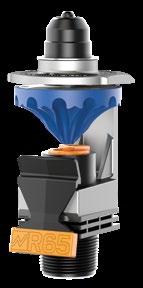
R65 END OF PIVOT SPRINKLERS
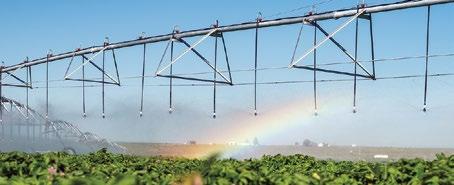
The new R65 and inverted R65i are further extending Nelson’s multi-stream, end-of-pivot sprinkler performance. With a narrower body and new nozzle system, the sprinklers reach farther and better fill in the water pattern. They use the same blue/green plates as the R55. Focused streams increase effective radius for increased coverage. A 270-degree water pattern brings water behind sprinkler for overlap with pivot sprinklers for increased uniformity at end of iron. The R65 nozzle is shaped to provide a distribution pattern that complements the sprinklers on the iron to maximize uniformity of the traveled profile. Save water, save energy and do a better job of irrigating with Nelson Irrigation Products.
The MacRoy Series G line of metering pumps from Agri-Inject are designed specifically to provide operating efficiency and economy for large-scale fluid injection projects. MacRoy Series G Pumps are ideal for precisely applying fertilizer, insecticides, herbicides, fungicides, soil amendments, acid products, wetting agents and more through an irrigation system. These high-quality pumps are engineered and constructed to handle highviscosity fluids and nonsoluble materials in slurry form with ease. n
Agri-Inject, Inc. (970) 848-5336 www.agri-inject.com
LUTHER MARKWART | EXECUTIVE VICE PRESIDENT
ASGA continues efforts to strengthen sugar industry Muddy Waters Still Not Clearing Much FROM THE ASGA
The economic outlook of the farm economy has changed little from January to February. One recent development, which you surely aware of is the release of payment rates for The Farmer Bridge Assistance Program. While the release of payment rates and the delivery timeline, expected by the end of February, is a very welcome development, no announcements have been made regarding sugar.
Please know that work continues to ensure the administration takes all steps possible to get our market back in balance and out from under the burden of an oversupplied market.
As you will recall, sugar will be one of the many eligible commodities in the $1 billion set aside, which has fewer details associated with it as USDA works to quantify losses across a range of specialty crops. Your grower leaders canvassed decision makers in Congress
and the administration in December for a significant piece of that set aside. Our advocacy, which takes many forms, continues in the new year to keep momentum on our side.
It is also helpful that key agriculture leaders in the House and Senate have been vocal that the totals associated with the Farmer Bridge Program are not sufficient and Congress will need to provide additional assistance to struggling growers. Policy makers and the administration understand the urgency of distributing funding to producers as they work to finance the 2026 crop. We will continue to press Congress as the plan for additional assistance comes into focus in the new year.
All the work on economic assistance must be accompanied by efforts to get the domestic sugar market back in balance. Without that, economic assistance can’t bridge the gap to better days. Please know that work continues to ensure the administration takes all steps possible to get our market back in balance and out from under the burden of an oversupplied market.
We also anxiously await a ruling by the Supreme Court on the President’s authority under the International Emergency Economic Powers Act (IEEPA) to impose most of the tariffs he put in place. This will be a monumental decision with implications for President Trump as well as future presidents. Depending on the outcome of the ruling there may be a tremendous amount of work that will need to be done. It could also impact framework agreements already finished and certainly impact tariffs already collected.
The 2026 election process is in
full swing. Fifty-seven members have already announced they are leaving or seeking an alternative office. Typically, midterms are a referendum on a president. But we seem to be living in a strange political reality, and a lot can happen between now and November. We are engaging candidates of both parties to educate them about our industry and our policy before they are elected. Your contributions to your sugarbeet cooperative’s Political Action Committee are key. We are deeply appreciative of that support.
We continue to strengthen our industry coordination of public- and privatesector research to tackle key production challenges, with a focus on Cercospora Leaf Spot and resistant weeds. Through these efforts, bringing together the top experts at the cooperatives, universities, crop protection companies, and USDAARS, the development of improved tactics, strategies and tools is being accelerated. Understanding that new pest management products take many years and hundreds of millions of R&D investment dollars, planning now in anticipation of insects, diseases and weeds during the coming growing season is key to getting ahead of the pressures.
ASGA staff wish to express deep gratitude to the board of directors for their hard work in 2025. They devote time and attention to the many issues that impact growers. A special thanks to outgoing (term-limited) ASGA President Neil Rockstad for his dedicated leadership over these past two years. He is a great leader, shepherding the board through the many challenges associated with the transition process for the next CEO. n
BY ROB JOHANSSON, DIRECTOR OF ECONOMICS & POLICY ANALYSIS
U.S. Sugar Industry and Farmers Facing Immense Pressure FROM THE ASA
Price predictions haven’t panned out
Two years ago, the respected experts at the Food and Agriculture Policy Research Institute (FAPRI) at the University of Missouri released its 2024 baseline outlook. FAPRI projected that the industry would remain strong, with U.S. sugar prices projected to average 40 cents per pound for raw cane sugar and 55 cents per pound for refined beet sugar.
At the time, the U.S. sugar industry had already been dealt the twin blows of the loss of production in Sidney, Montana, and Santa Rosa, Texas, but with strengthened sugar provisions on the way, the future appeared bright.
But as fourthgeneration farmer Tim Deal told the Senate Agriculture Committee last February, hard work and pride in a job well done does not pay the bills.”
In the years since, the horizon has been darkened by a glut of subsidized sugar on the world market and sinking world sugar prices that are dragging the U.S. raw and refined prices down with them.
At the same time, we’ve seen inflation hit everything from shovels to blue jeans, to harvesters, to health care, to beet seeds, to agricultural chemicals and to labor wages. And we’ve seen fewer workers available for driving harvested sugarcane, delivering sugarbeets,
running mills and processors, and delivering pallets of bagged sugar.
Adding to industry stress, the sugar demand forecast for this upcoming marketing year is down about 500,000 tons from two years ago.
In other words, it costs more to deliver less sugar and at lower prices than at any time in recent history. Farmers’ operating margins continue to shrink due to financial pressures. In just the past two years, labor costs are up 11 percent, interest expenses are up 16 percent and property taxes and fees are up 10 percent, straining farms and factories alike.
Where two years ago FAPRI was projecting U.S. raw cane prices at 40 cents a pound, today they’re averaging in the 33-34 cents per pound range. Similarly, FAPRI projected an average of 55 cents per pound for U.S. refined beet sugar, whereas today it’s in the 4647 cents per pound range.
Yes, the American sugar industry remains a critical part of the American food supply, underpinned by a diverse domestic supply chain and the dedication of generations of American farmers and workers. The sugar provisions passed by Congress last summer will provide our farmers with a muchimproved safety net. And America’s sugar producers put a new record year of U.S. production on the books, demonstrating the increasing efficiency and hard work of our producers.
But as fourth-generation farmer Tim Deal told the Senate Agriculture Committee last February, hard work and pride in a job well done “does not pay the bills.”
The Wall Street Journal took note of lowered global sugar prices in December while reporting on the
United Nations food price index: “Sugar prices tumbled 5.9 percent to their lowest level since December 2020, due to strong output from Brazil’s key growing regions, an encouraging early start to India’s harvest and favorable crop prospects in Thailand.”
As we explored in this column last month, subsidized sugar surpluses dumped on the market at bargain prices drive world sugar prices down below what it costs to produce that sugar in the first place and will further drag down U.S. prices.
The real-world impacts are sobering. Nearly one year ago, the last sugarbeet factory in California announced its closure, citing “the economic challenges and uncertainty facing the sugar industry that have been building for several years.” Many farmers across America are facing tough conversations with their families and bankers about how to sustain their operations. When acres leave, sugar factories close and they do not come back to that region, nor do the jobs, nor the financial activity that is often the economic heart of that community.
In just a few weeks, sugarbeet and sugarcane farmers from across the country will be bringing these conversations to the halls of Congress during our annual farmer fly-in. They will share with members of Congress and their staffs how stronger farm and trade policies defend the U.S. sugar industry and reinforce our national food security.
We are grateful for the work our farmers do both in the fields, and in sharing their stories to advocate for their friends and neighbors. n
By Courtney Gaine, R.D., Ph.D., President & CEO
Beyond Sweetness: Sugar’s Many Roles In Food FROM THE SUGAR ASSOCIATION
Sugar
is a key ingredient
Real sugar grown from sugarbeets and sugarcane has been part of recipes and food culture for centuries. It’s often thought of only as sweetness, but ask any baker or food scientist, and they’ll tell you sugar has roles in food that have nothing to do with your taste buds.
A FAMILIAR INGREDIENT WITH STAYING POWER
Why is it that despite the cyclical anti-sugar rhetoric that comes and goes in waves, sugar remains a staple in our kitchens? Because it’s one simple ingredient doing the essential work of many — helping foods stay fresh, balancing flavors and creating the textures we love, even in foods that don’t taste sweet.
While food science may not be the sexiest of topics, knowing why certain ingredients are in various foods is the foundation of meaningful conversations and policies about healthy and balanced diets.
THE WORKHORSE INGREDIENT FOOD MANUFACTURERS CAN’T SIMPLY REPLACE
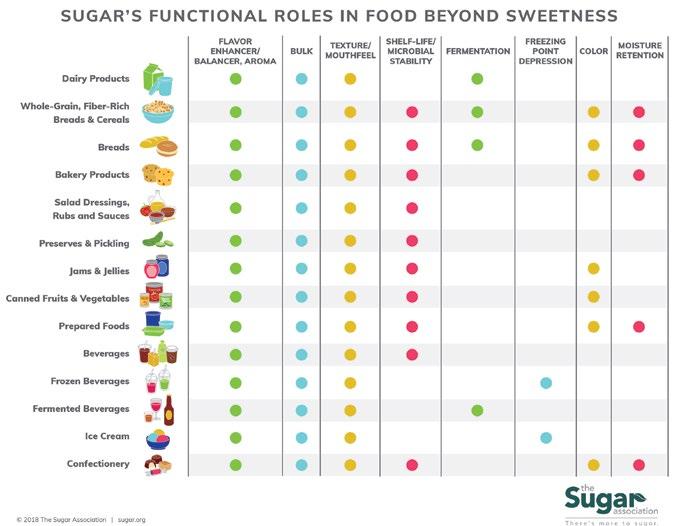
When sugar is added to food, it takes on a dozen different roles, each helping make a wide variety of foods enjoyable:
• The Flavor Balancer: Sugar balances bitter and acidic flavors to make nutritious foods more palatable. Think of sharp-tasting berries or high-
fiber cereals and breads.
• The Architect: Sugar creates soft, light structure in baked goods by trapping air bubbles and adding bulk.
• The Texture Magician: Sugar improves texture and mouth feel of everyday nutritious foods. It gives yogurt and salad dressing a creamy, consistent texture.
• The Natural Preservative: By binding water, sugar slows bacteria, yeast and mold growth, extending shelf life in home-canned fruits and pickles.
• The Riser: Sugar feeds yeast in bread-making, which makes the dough rise and gives bread its light, airy texture. A little sugar goes a long way in creating that perfect loaf.
• The Freezer Fix: Sugar helps keep occasional frozen treats, like ice cream, scoopable by lowering water’s freezing point. This ensures a smooth, creamy texture.
• The Artist: When heated, sugar
interacts with proteins to produce that appetizing golden-brown crust on baked goods and on roasted meat. At high heat, it can also caramelize on its own, forming the deep color and flavor found in caramels. These chemical reactions aren’t just about looks — they’re key to the taste and texture of many foods.
• The Moisture Guard: In your homemade banana bread, sugar plays an important role in keeping it soft and preventing it from drying out. By binding water, sugar retains moisture during baking and storage, which helps maintain a tender texture.
No other single ingredient can replicate sugar’s multiple roles. Remove it and manufacturers often need multiple ingredients to replicate these functions — emulsifiers for texture, humectants for moisture retention and preservatives. That simple sixingredient loaf of bread? It might need ten or more ingredients to achieve a
similar product.
Here’s the surprising part: “no sugar added” doesn’t mean fewer calories. Sugar provides bulk and structure, so reduced-sugar products often add other calorie-containing ingredients, resulting in similar or higher calorie counts. For example, some “no-sugar added” peanut butters increase fat content to restore the creamy texture lost without sugar, making the product more caloriedense despite the “lower sugar” claim.
HOW THESE ROLES MATTER IN EVERYDAY FOODS
Sugar plays an important role in nutrient-dense foods, from whole-grain breads and high-fiber cereals to proteinpacked yogurt and vitamin C–rich fruits. Let’s see how these functions work together in foods you eat every day.
• Whole-wheat and high-fiber breads are nutritious, but whole grains don’t rise as easily and can taste bitter. A small amount of sugar feeds the yeast, so the dough rises, binds water to keep the loaf soft and rounds out the flavor of the grain.
• Sugar doesn’t just make yogurt taste better. It balances sourness by interacting with acids, enhances fruit flavors through flavor-binding and controls moisture to create a smooth texture. Together, these functions make yogurt more enjoyable.
• Tomatoes are rich in vitamin C but also high in natural organic acids, which can make sauces taste sharp. A small amount of sugar interacts with these acids to create a balanced flavor and consistent texture. These functions improve the taste of many tomato-based dishes.
SUGAR IS A STAPLE FOR A REASON
Because sugar does the work of many ingredients, it keeps ingredient lists short and familiar. Low- and nocalorie sweeteners, including artificial sweeteners, often appear under unfamiliar chemical names, making labels harder for parents trying to identify them in children’s meals.
While food science may not be the sexiest of topics, knowing why certain ingredients are in various foods is the foundation of meaningful conversations and policies about healthy and balanced diets. Sugar is so much more than just a sweetener, and we make it a goal to spread that word. We hope you do, too. n
Summary
The President/CEO position leads the organization’s efforts to maximize financial return to shareholders, advancing the cooperatives mission, and positioning the organization for long-term success in the domestic sugar market. Accountable to the Board of Directors, this individual will provide collaborative and visionary leadership rooted in cooperative principles. The CEO will represent the cooperative in fostering strong relationships with employees, shareholder/growers, industry partners and the communities in which it operates.
Essential Job Duties
• In partnership with the Executive Leadership Team, architect and execute the cooperative’s strategic vision and annual plan to maximize shareholder/grower return and ensure a sustainable future for the cooperative
• Lead Operations, Finance, Safety, Engineering, HR, Supply Chain, and IT.
• Drive strong financial performance, capital planning and cost control.
• Build strong relationships with employees, shareholder/grower members, and the Board of Directors.
• Oversee major capital projects and continuous improvement initiatives.
• Cultivate a strong organizational culture that promotes visionary thinking, teamwork, accountability, and open communication to support a high level of productivity and morale.
• Represents the cooperative on sugar industry associations as a Director or Trustee of The Sugar Association and The United States Beet Sugar Association respectively
Qualifications
• BS Degree required; MBA or advanced degree preferred
• 10 + years senior leadership experience in agribusiness, food processing, or manufacturing
• Experience leading large, capital-intensive operations
• Board and cooperative experience strongly preferred
• Sugar beet, sugar, or agricultural processing experience a plus
Application Process
• All interested, qualified individuals are encouraged to provide a resume and cover letter to the physical address or email listed below. The Board will begin to review applications on February 15, 2026. All applications will be kept confidential unless authorized by the applicant.
CHOOSE THE SEED PARTNER WHO SHARES YOUR PRIORITIES.
CHOOSE THE SEED PARTNER WHO SHARES YOUR PRIORITIES.
Like you, we never settle. As a result, there’s more sugar in every seed we sell. For more than a century, we’ve put innovation to work in the service of growers who plant Crystal Brand Sugarbeet Seed. With unique hybrids and varieties developed for exactly where you grow, you can be confident your success is always our top priority, this season and for seasons to come.
Like you, we never settle. As a result, there’s more sugar in every seed we sell. For more than a century, we’ve put innovation to work in the service of growers who plant Crystal Brand Sugarbeet Seed. With unique hybrids and varieties developed for exactly where you grow, you can be confident your success is always our top priority, this season and for seasons to come.