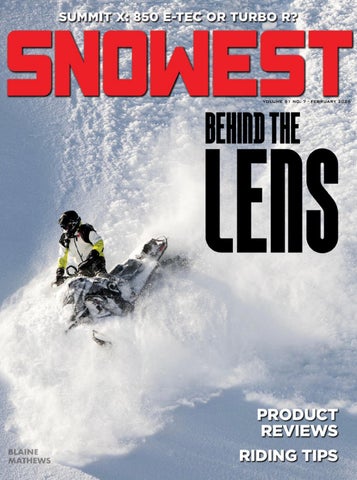
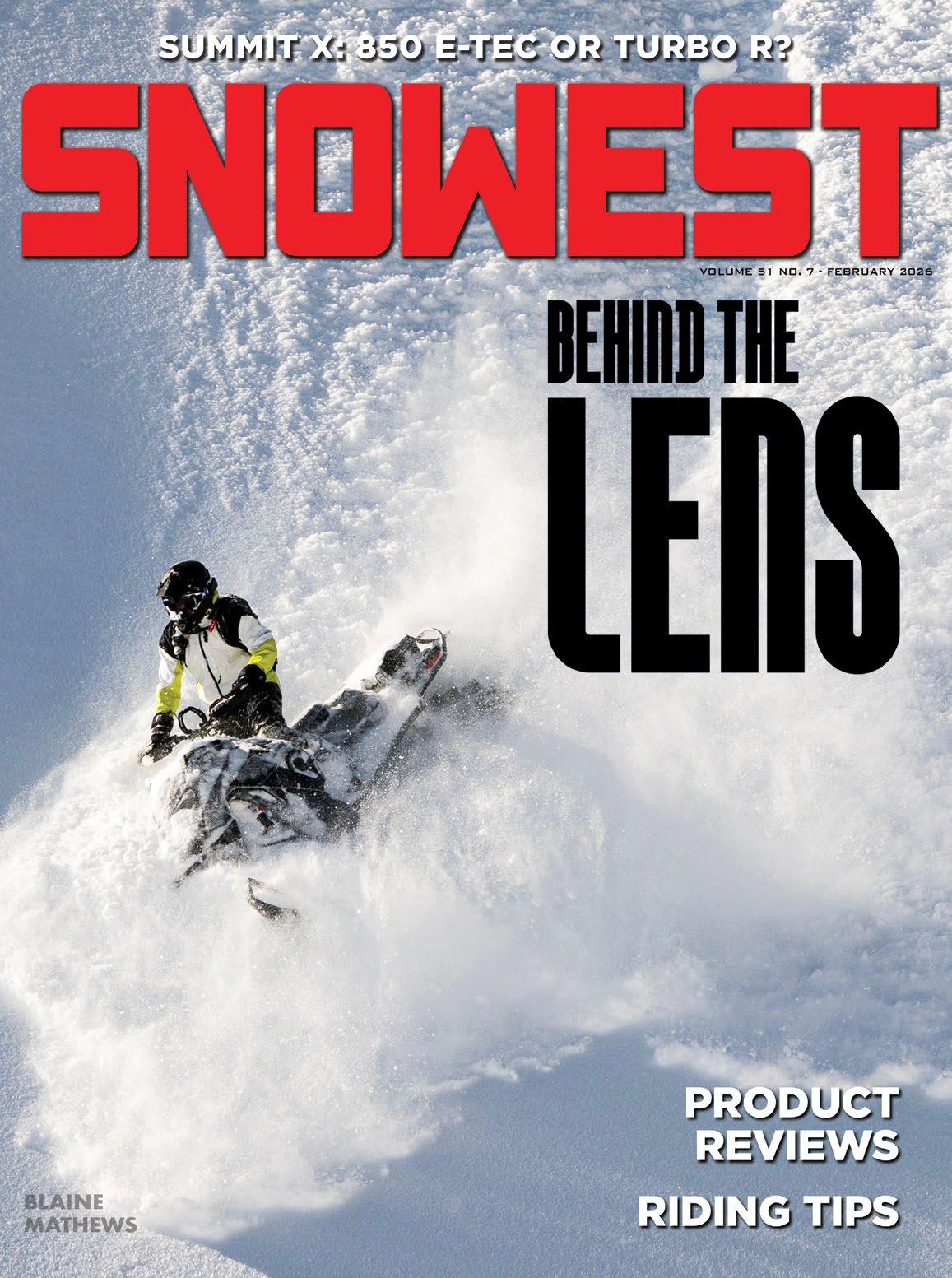
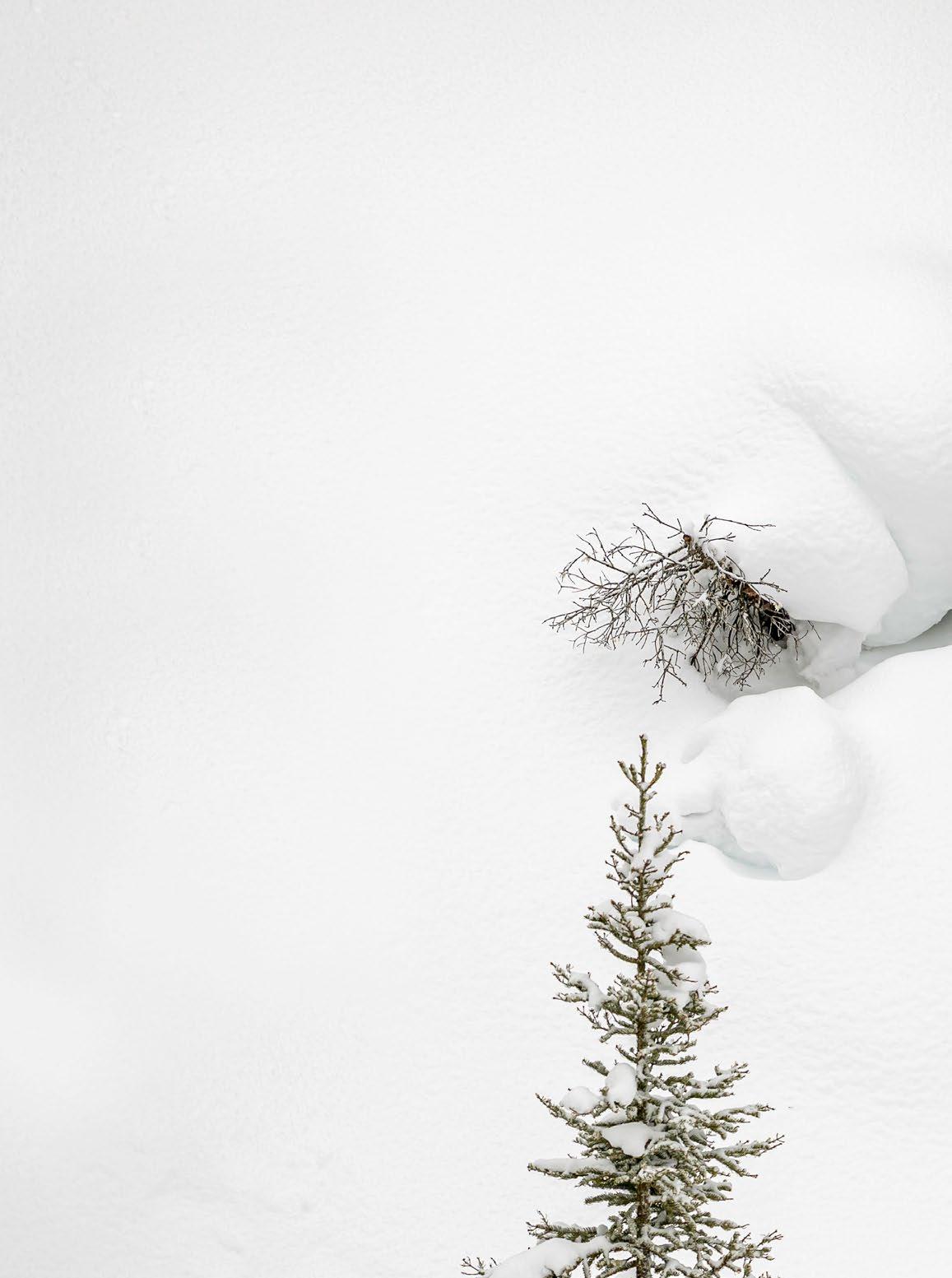
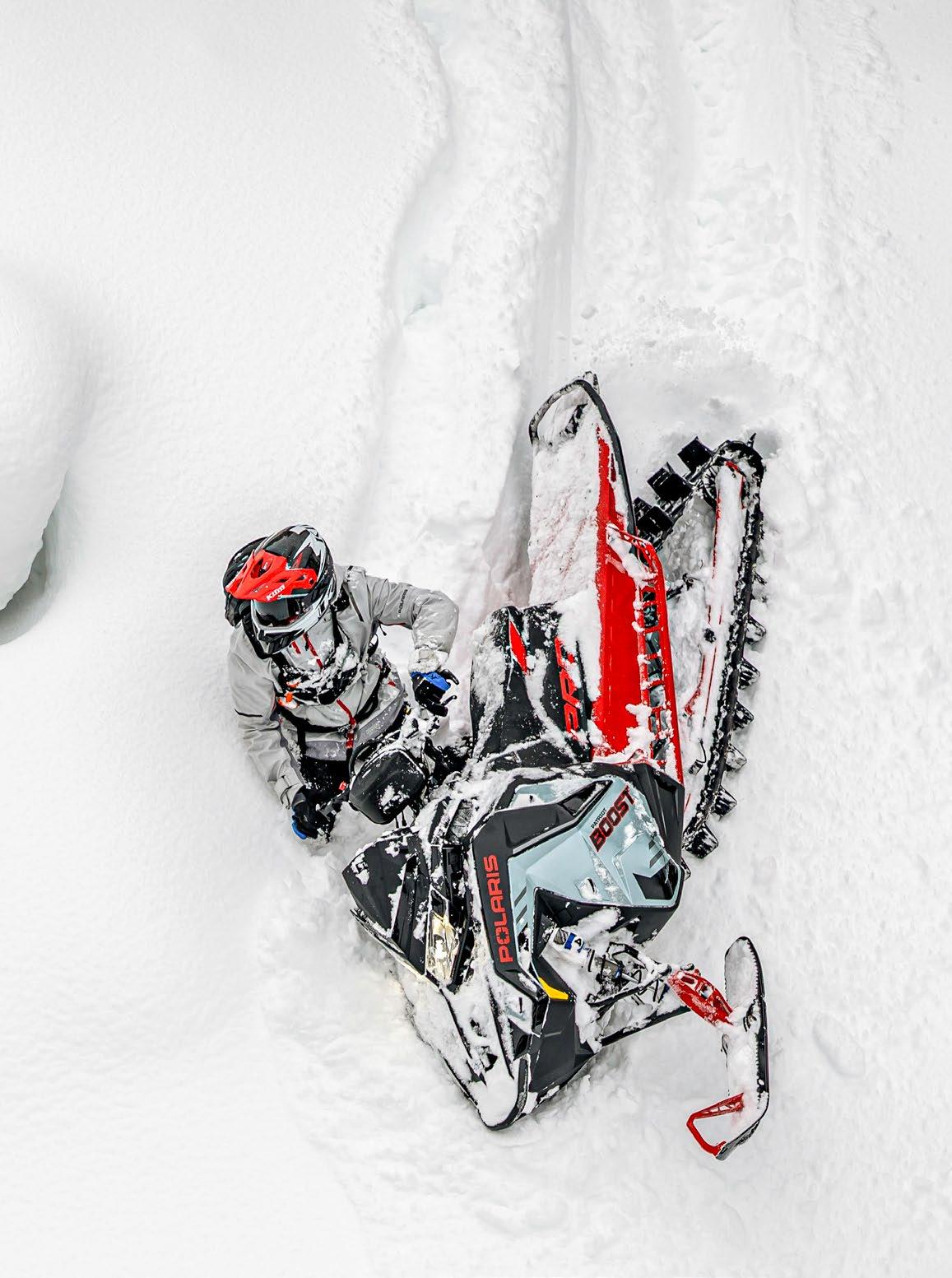
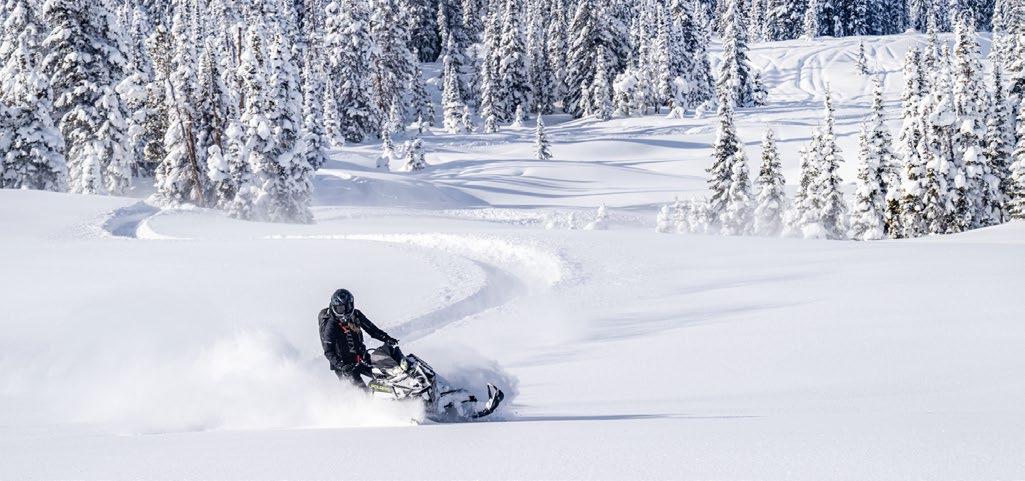
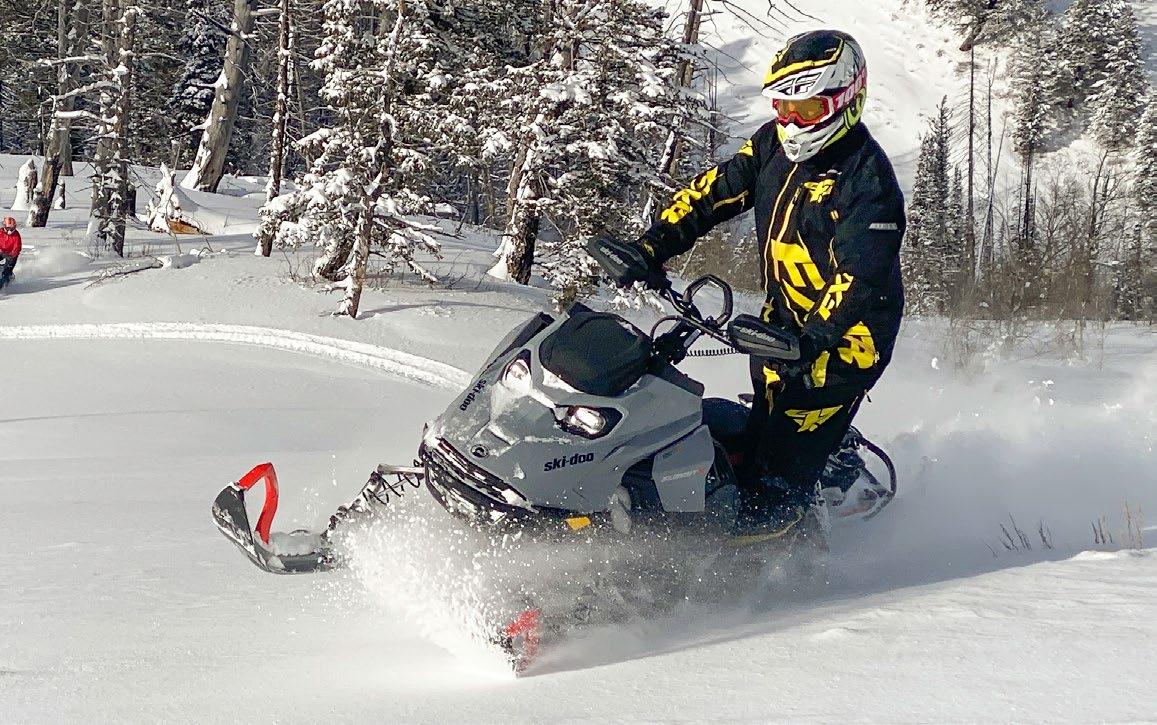
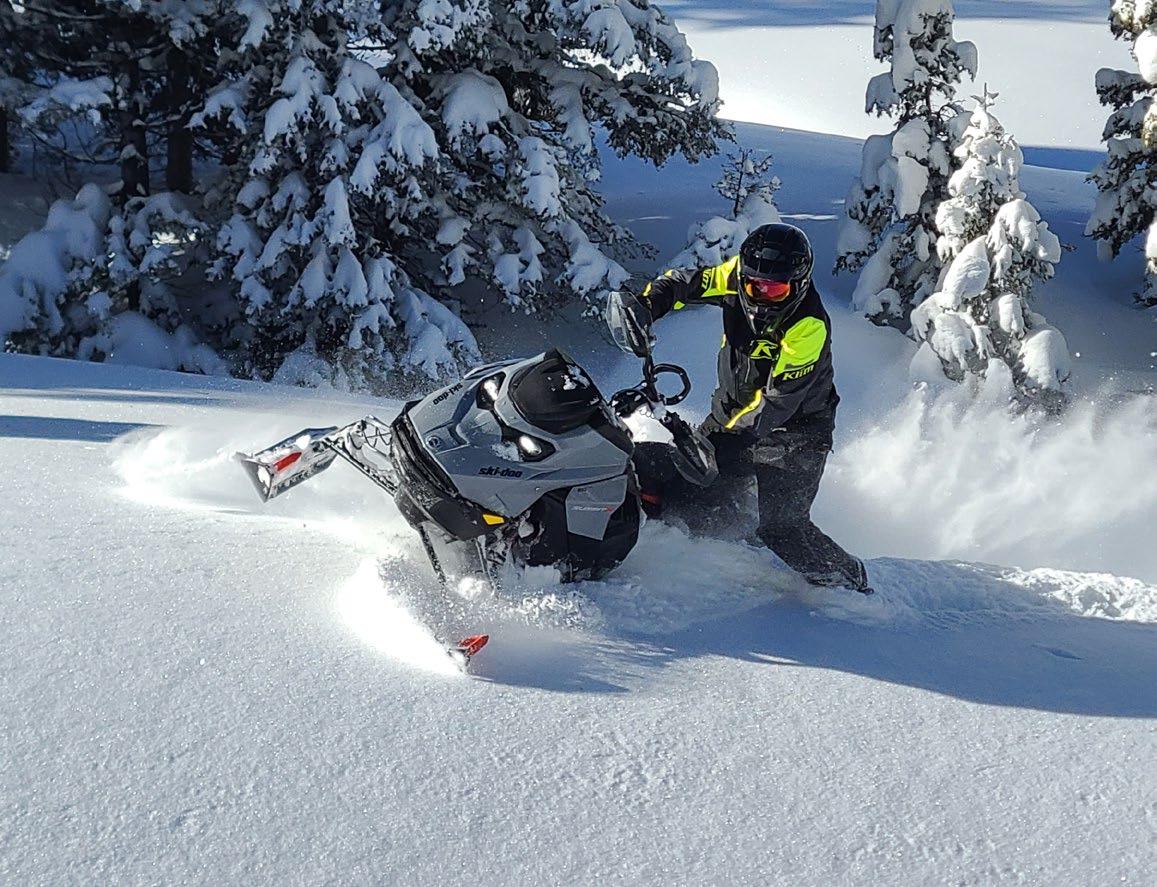
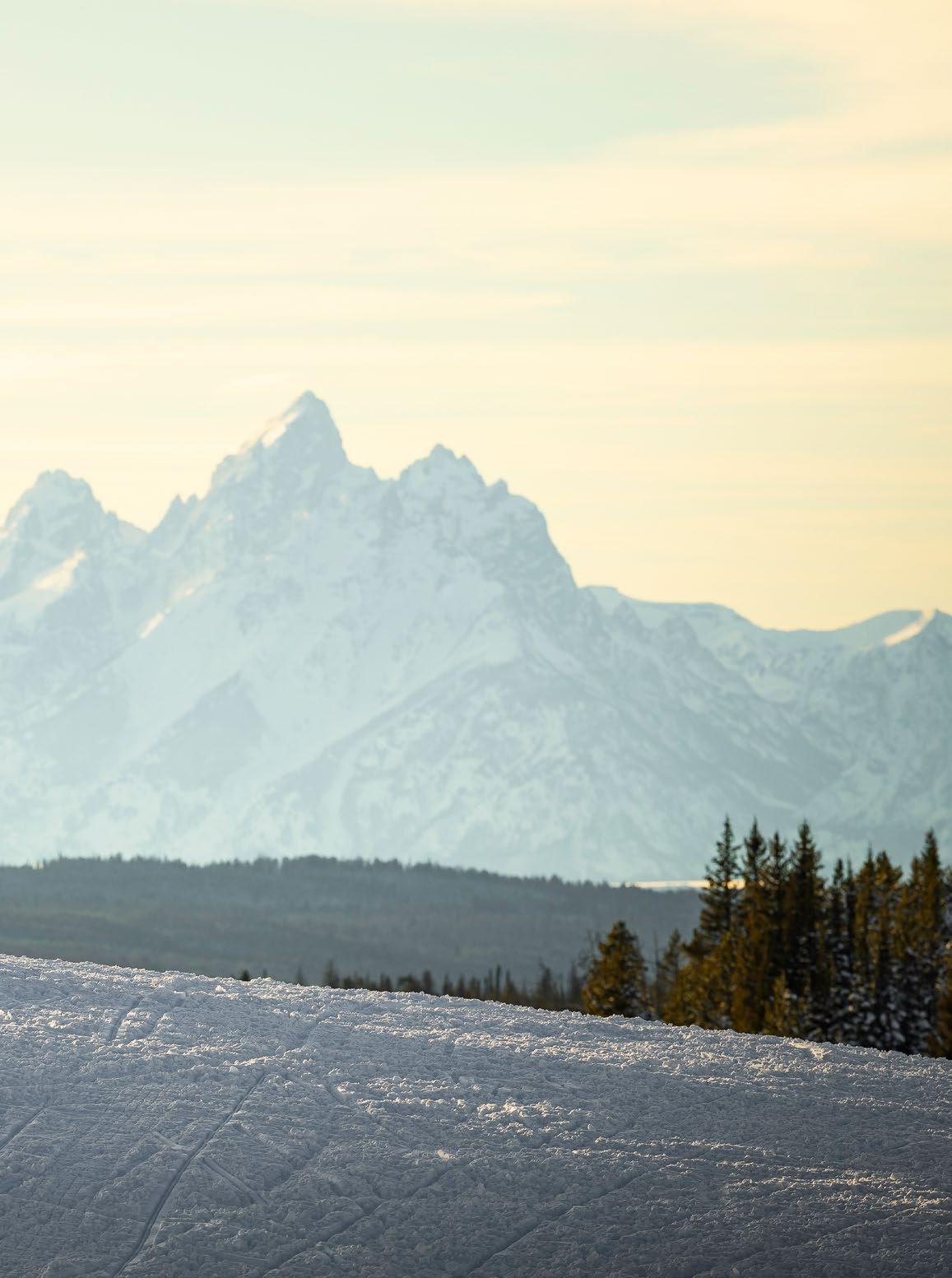
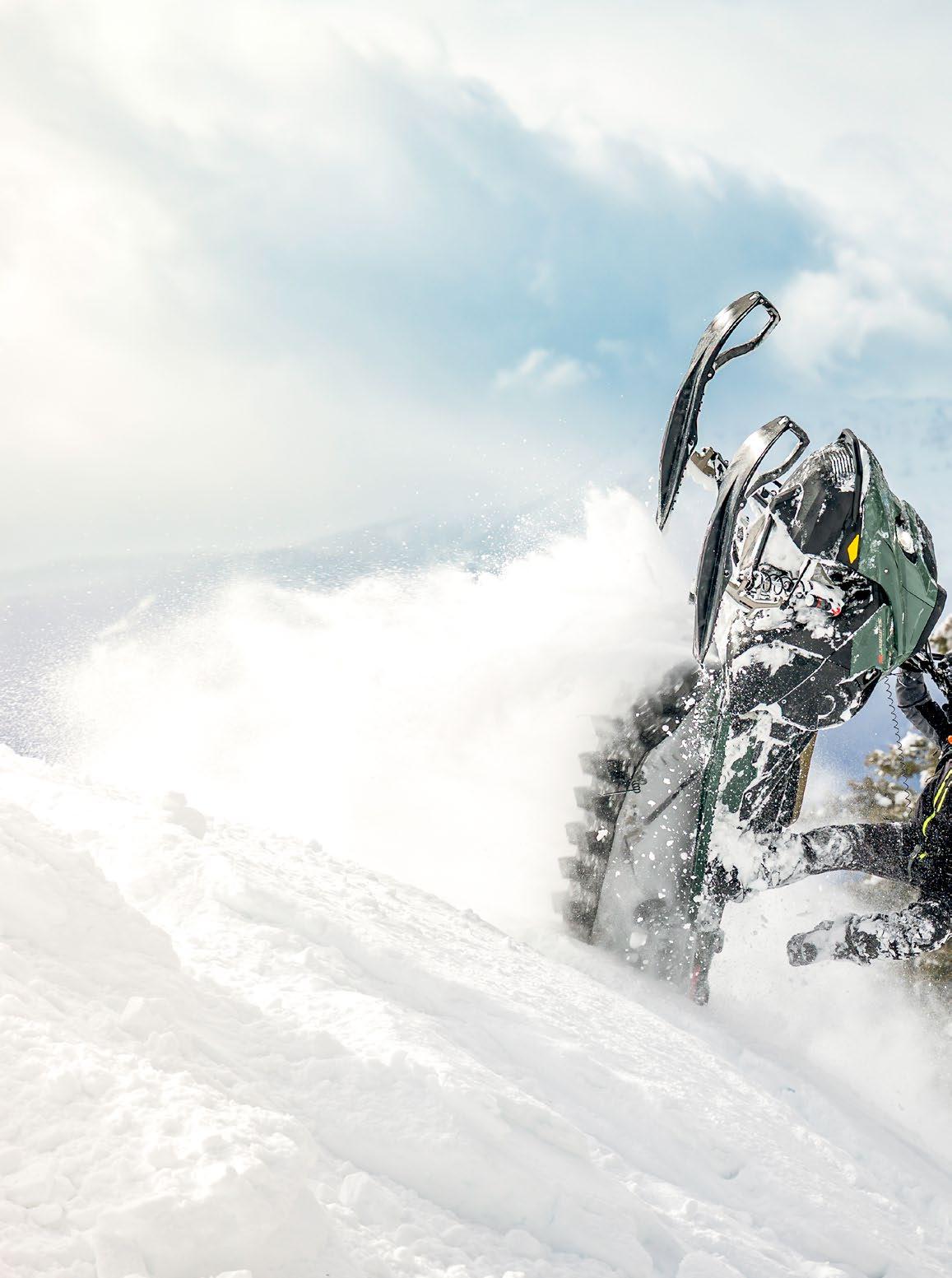
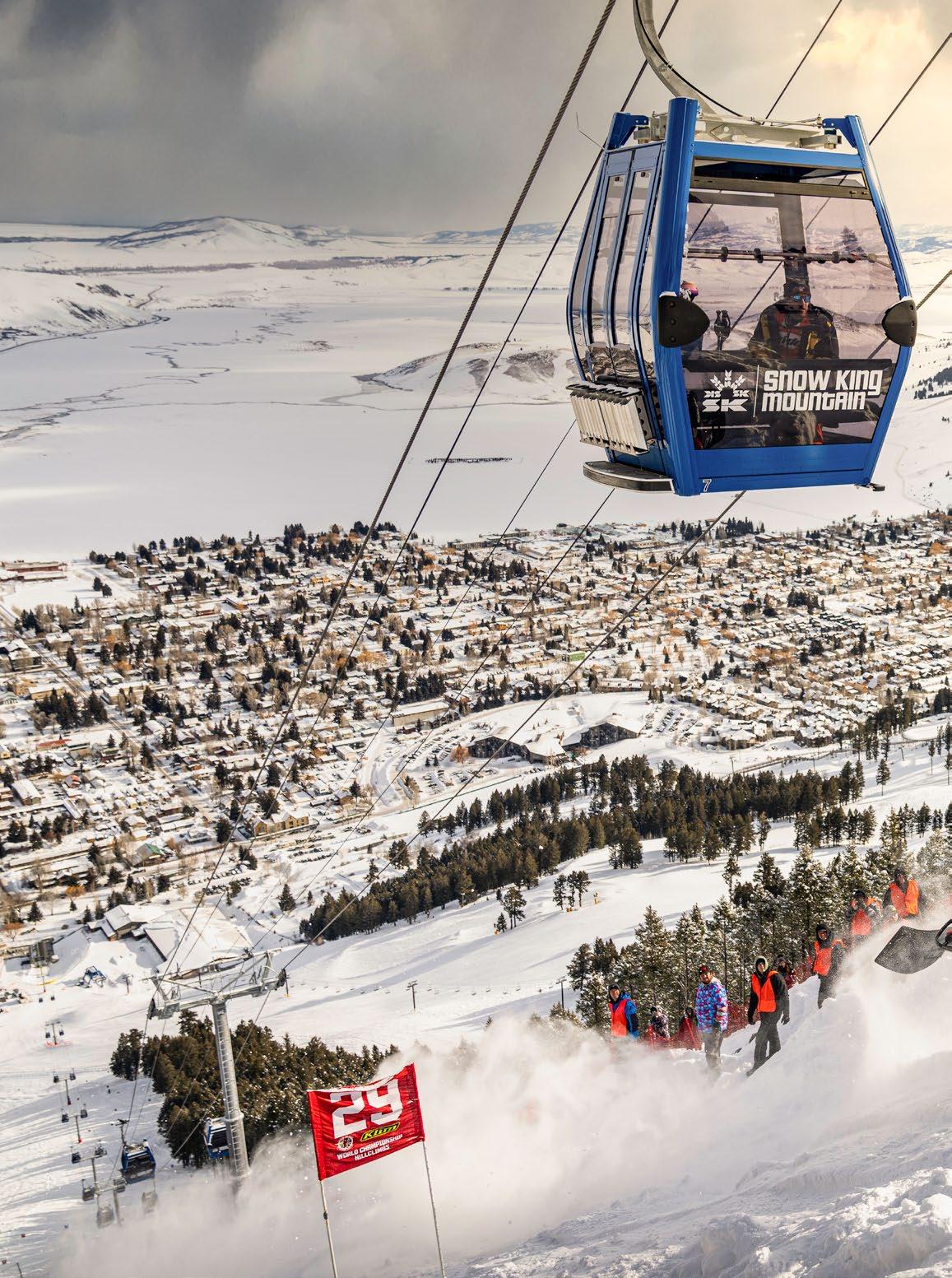
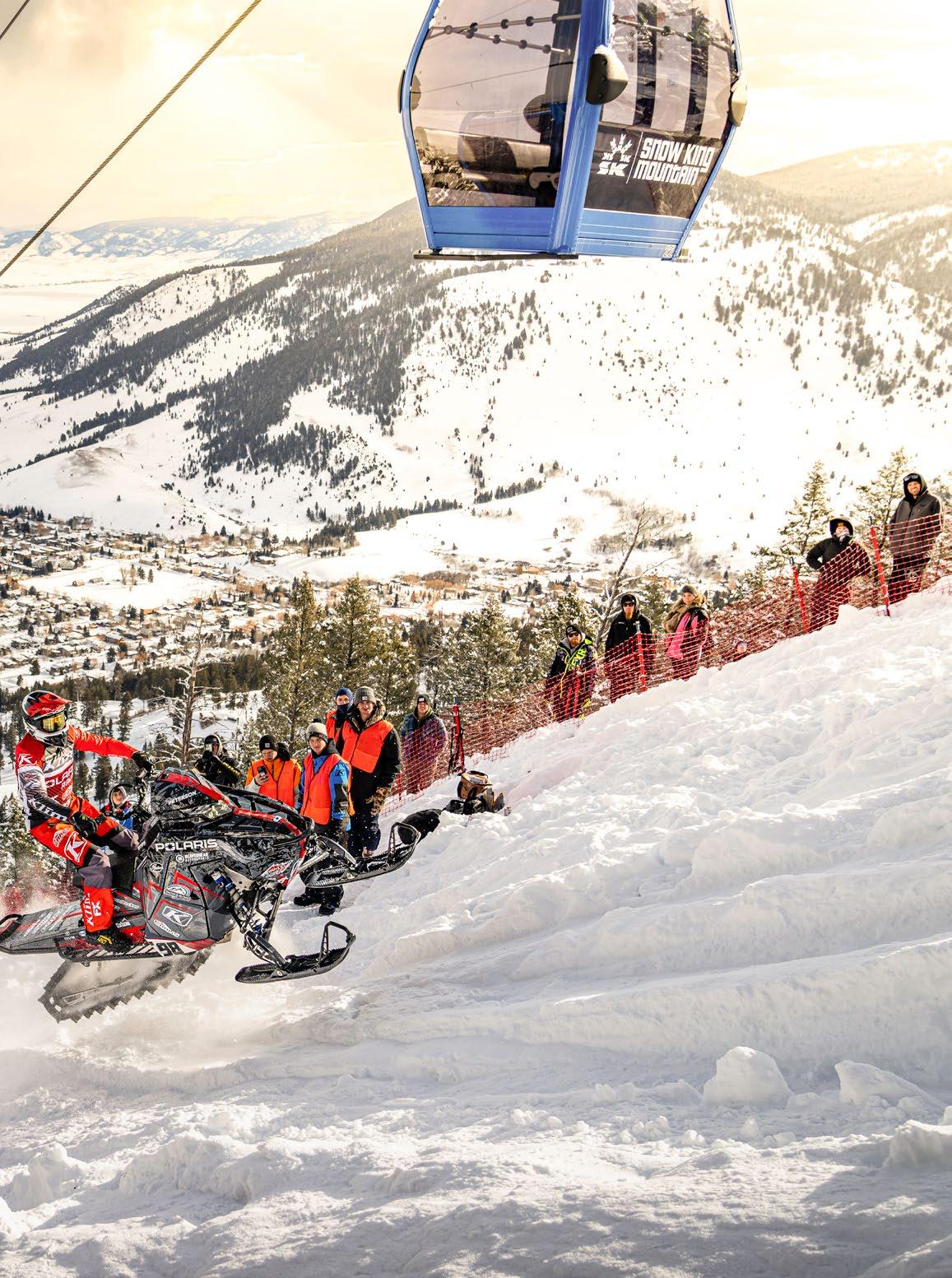
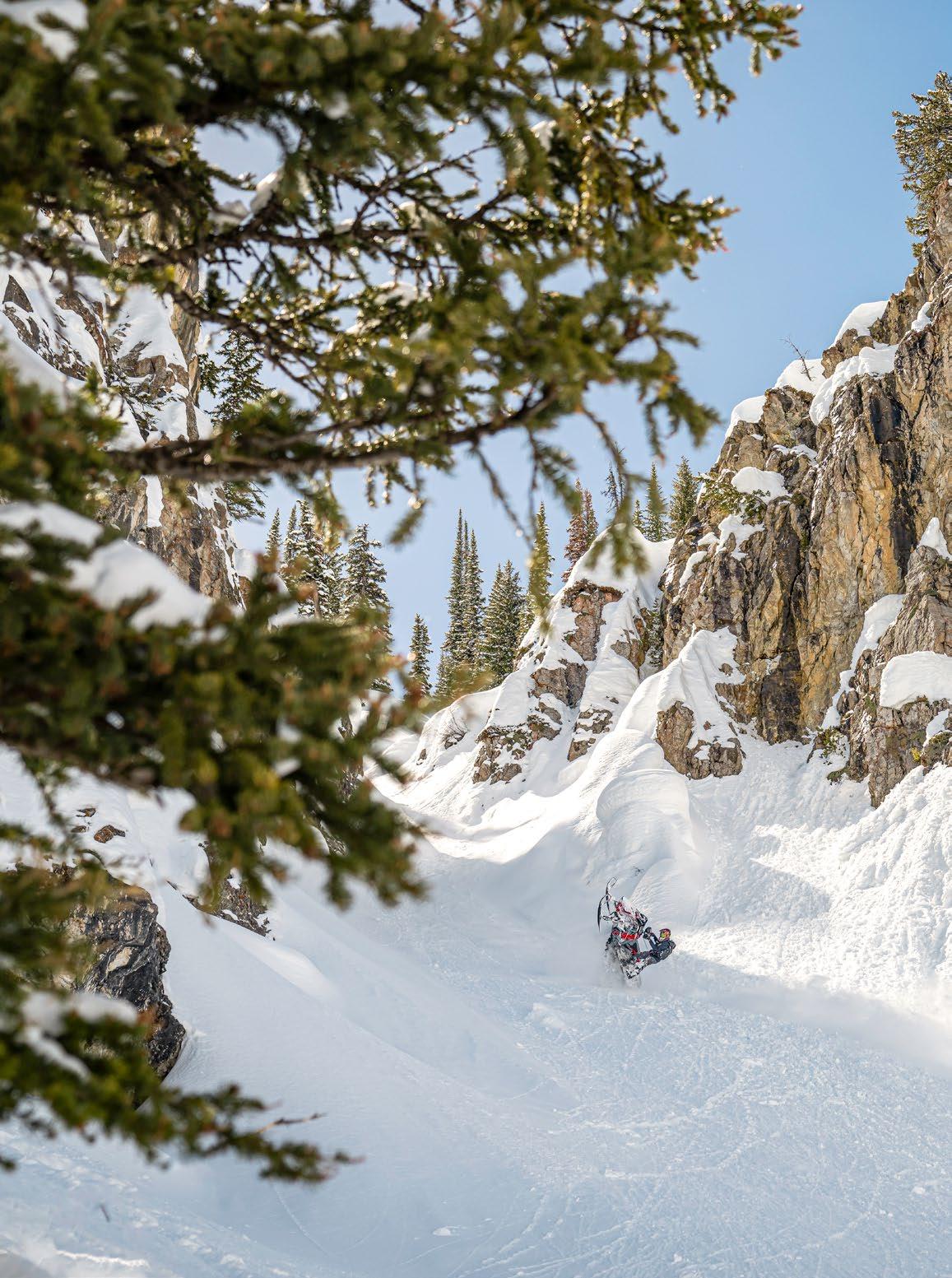
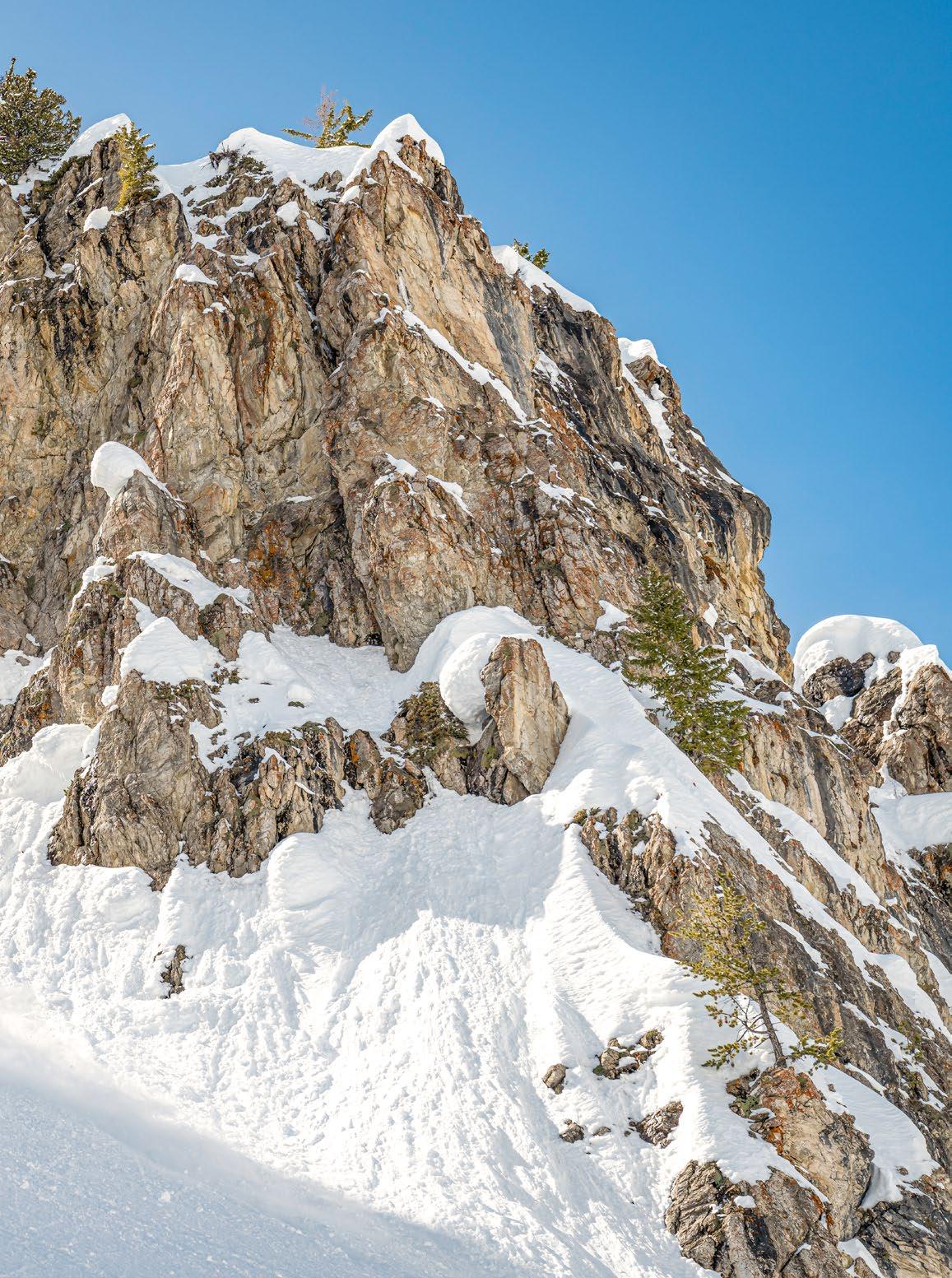
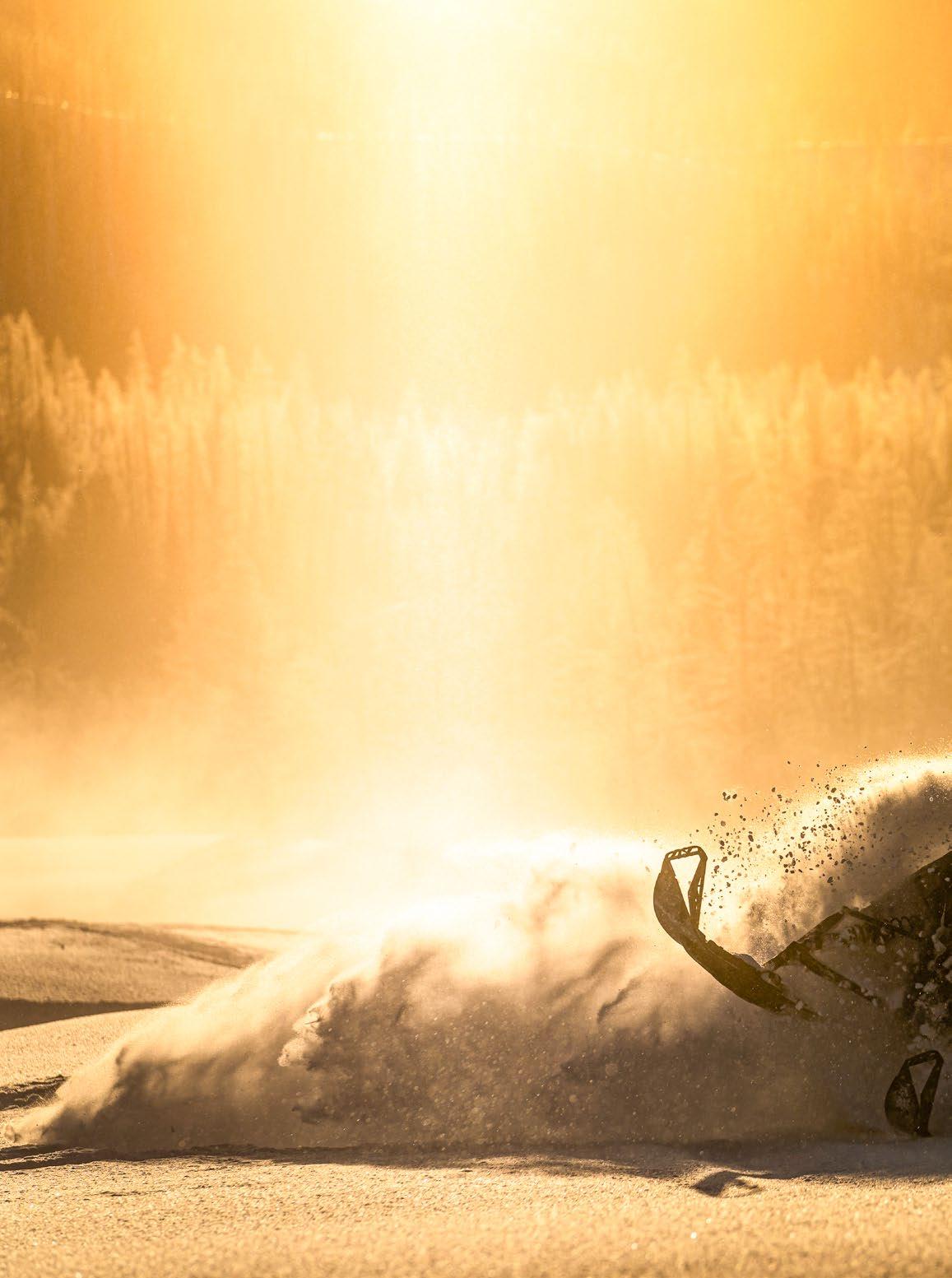
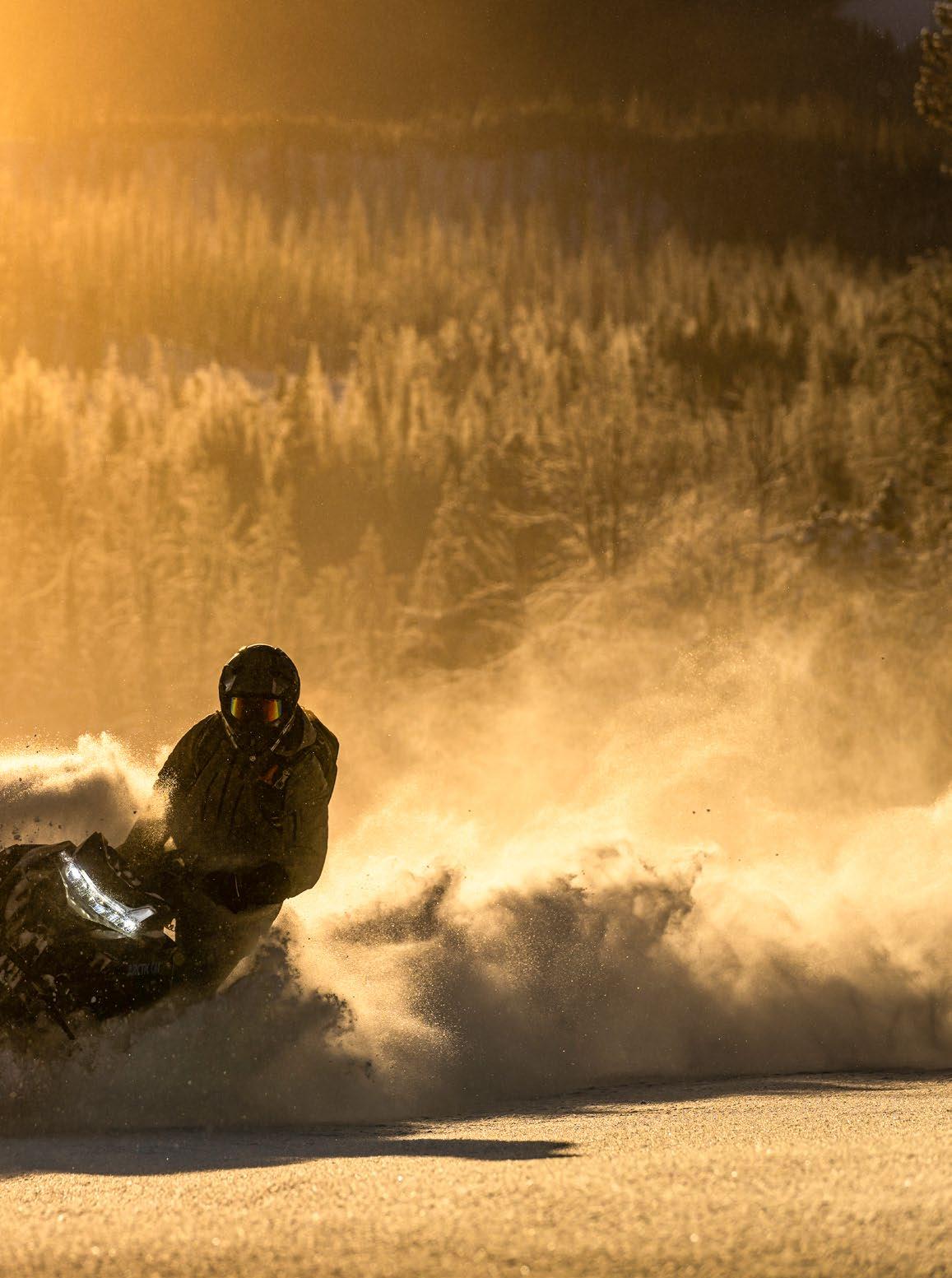
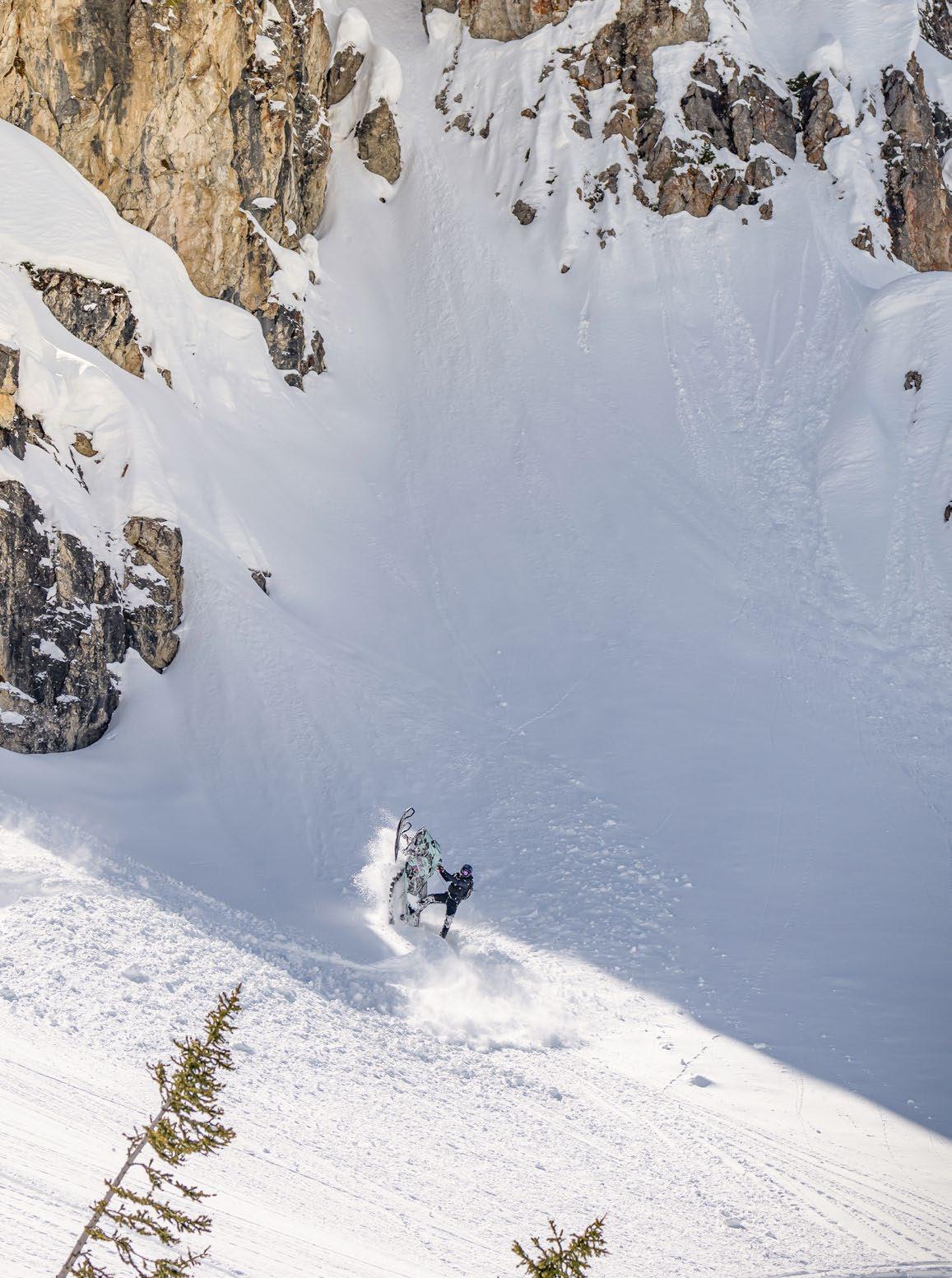
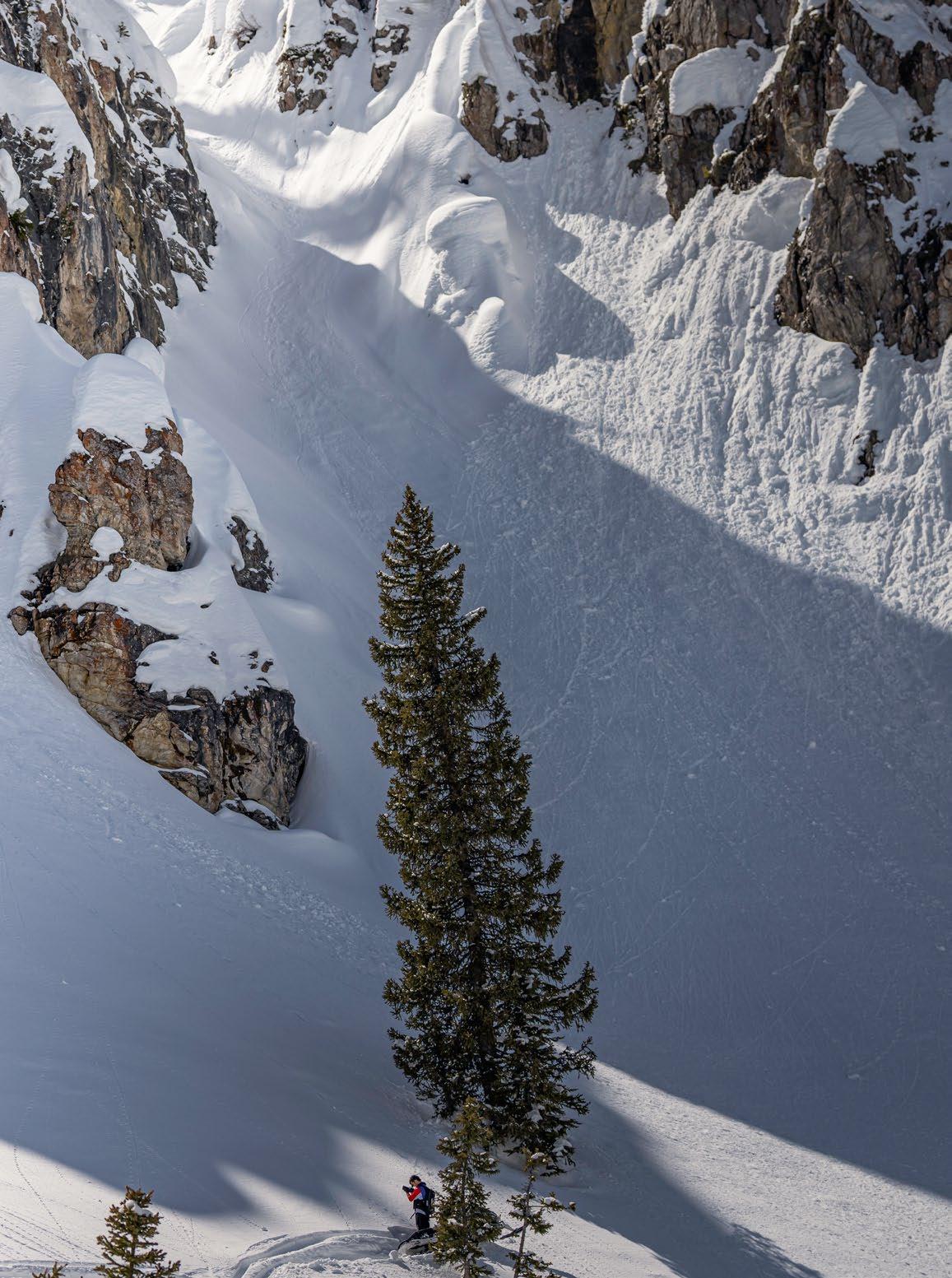
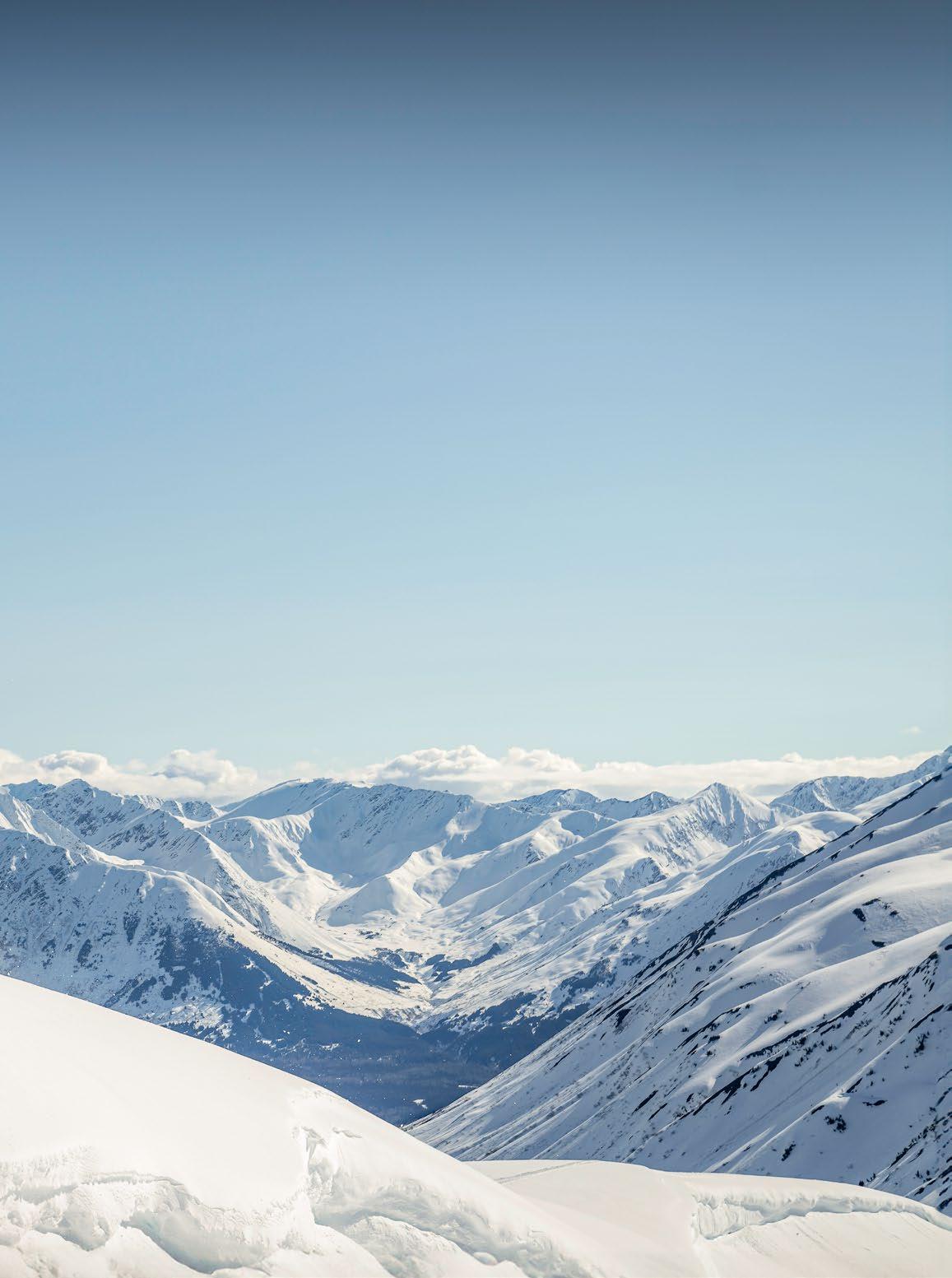
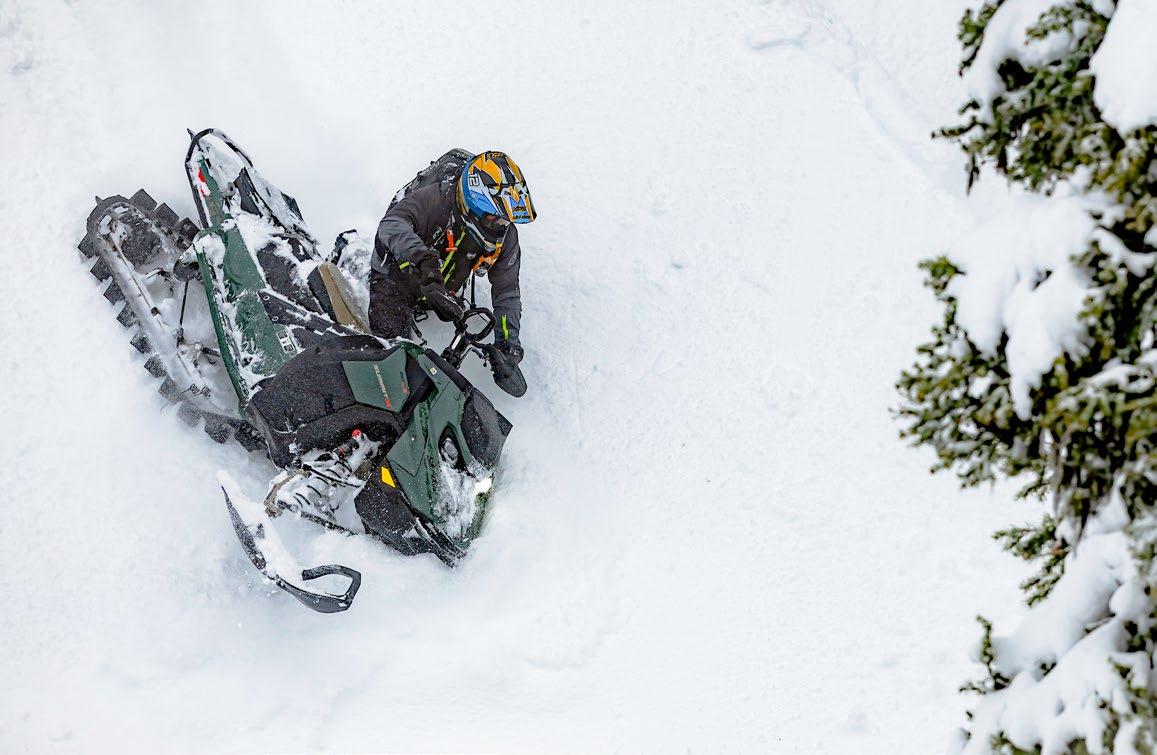
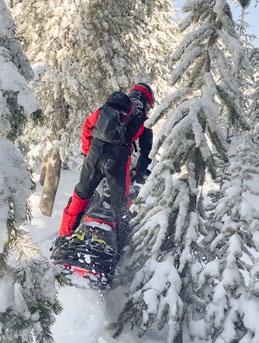
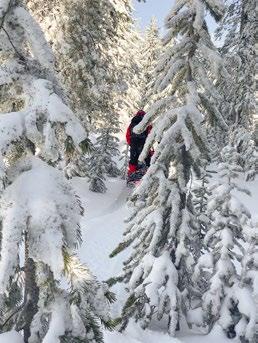
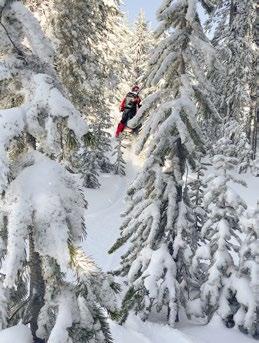
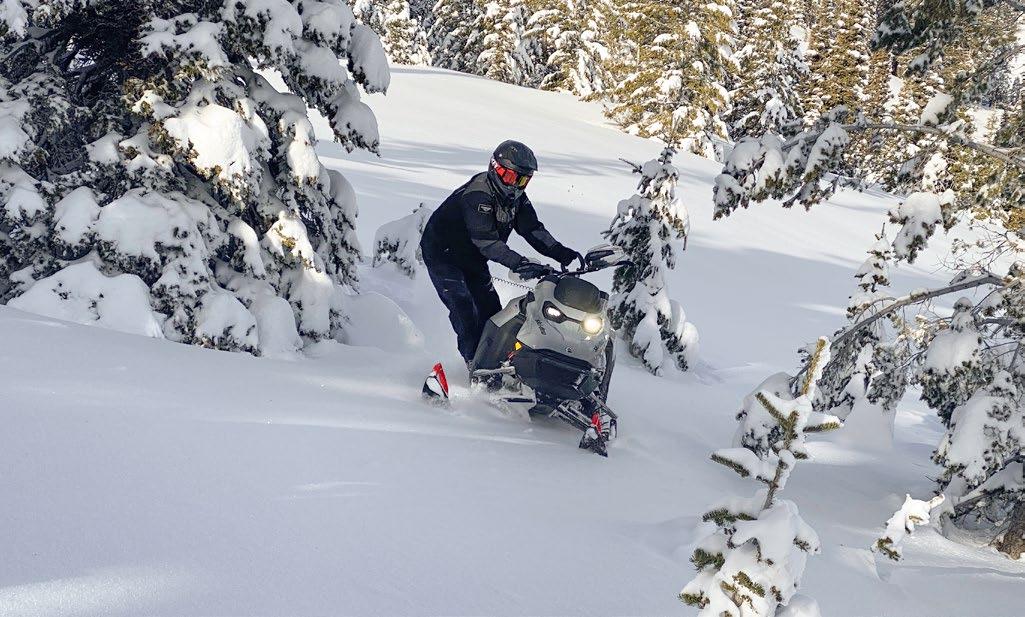
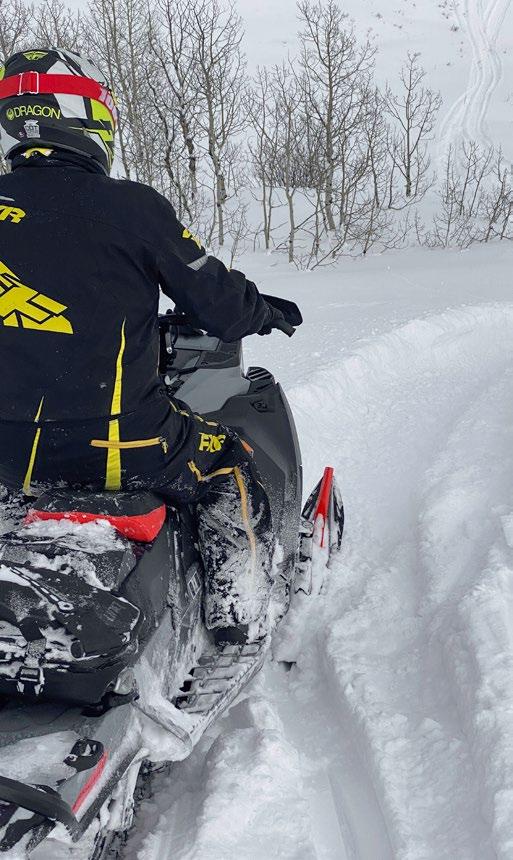
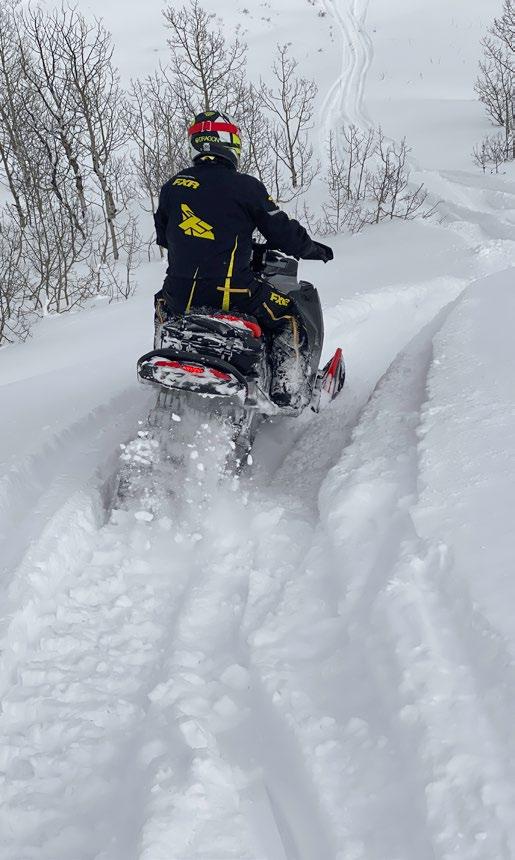
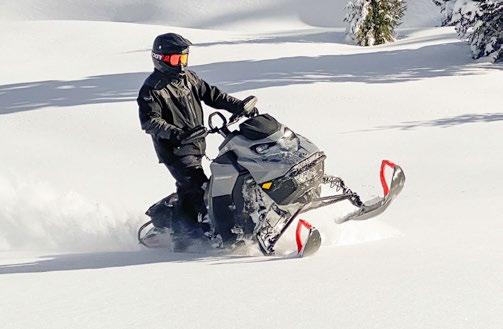
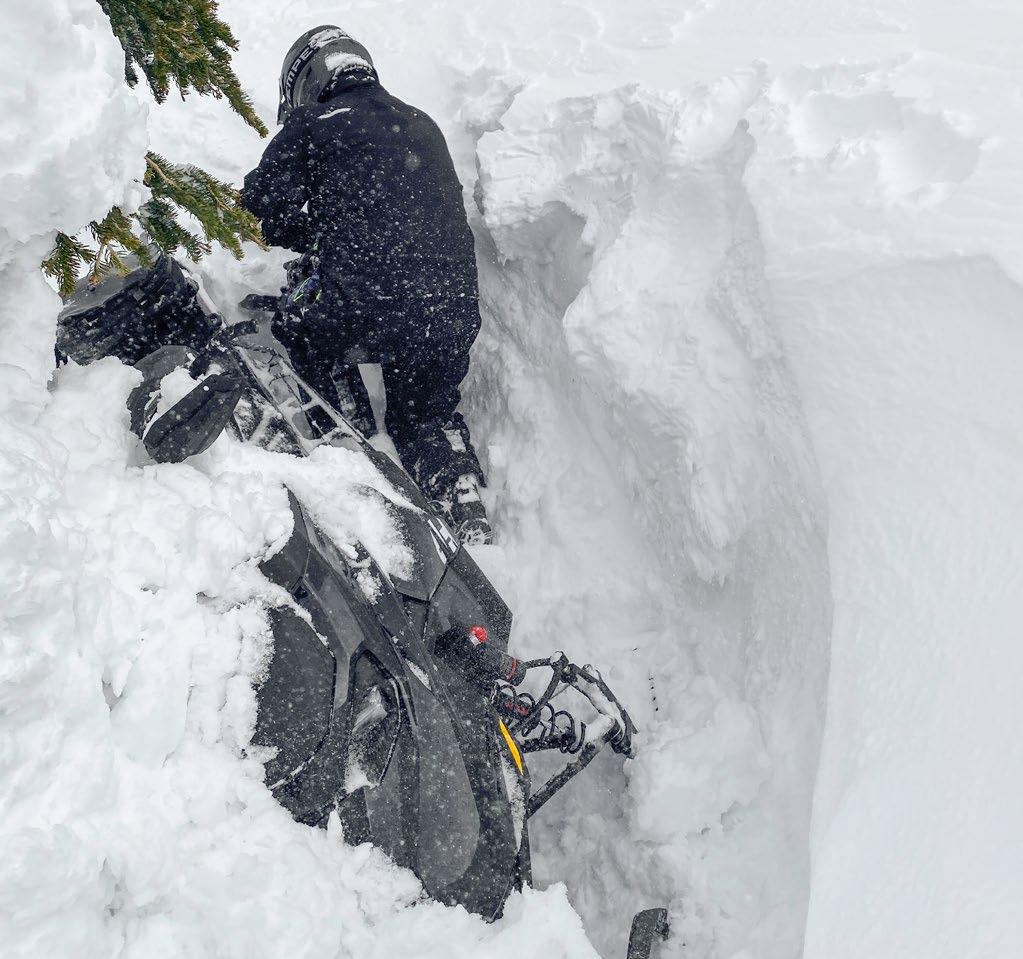
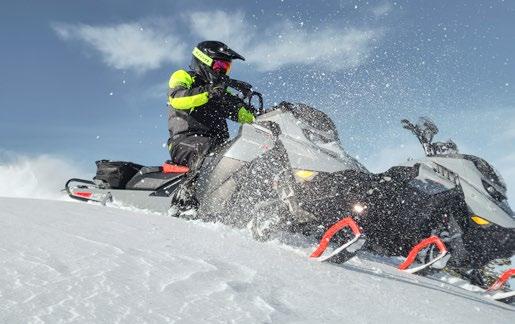
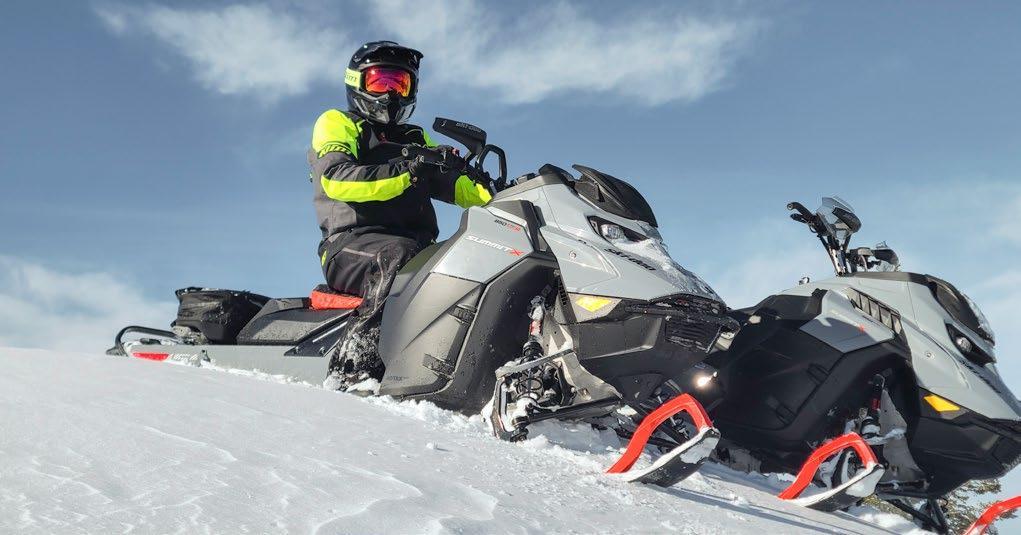
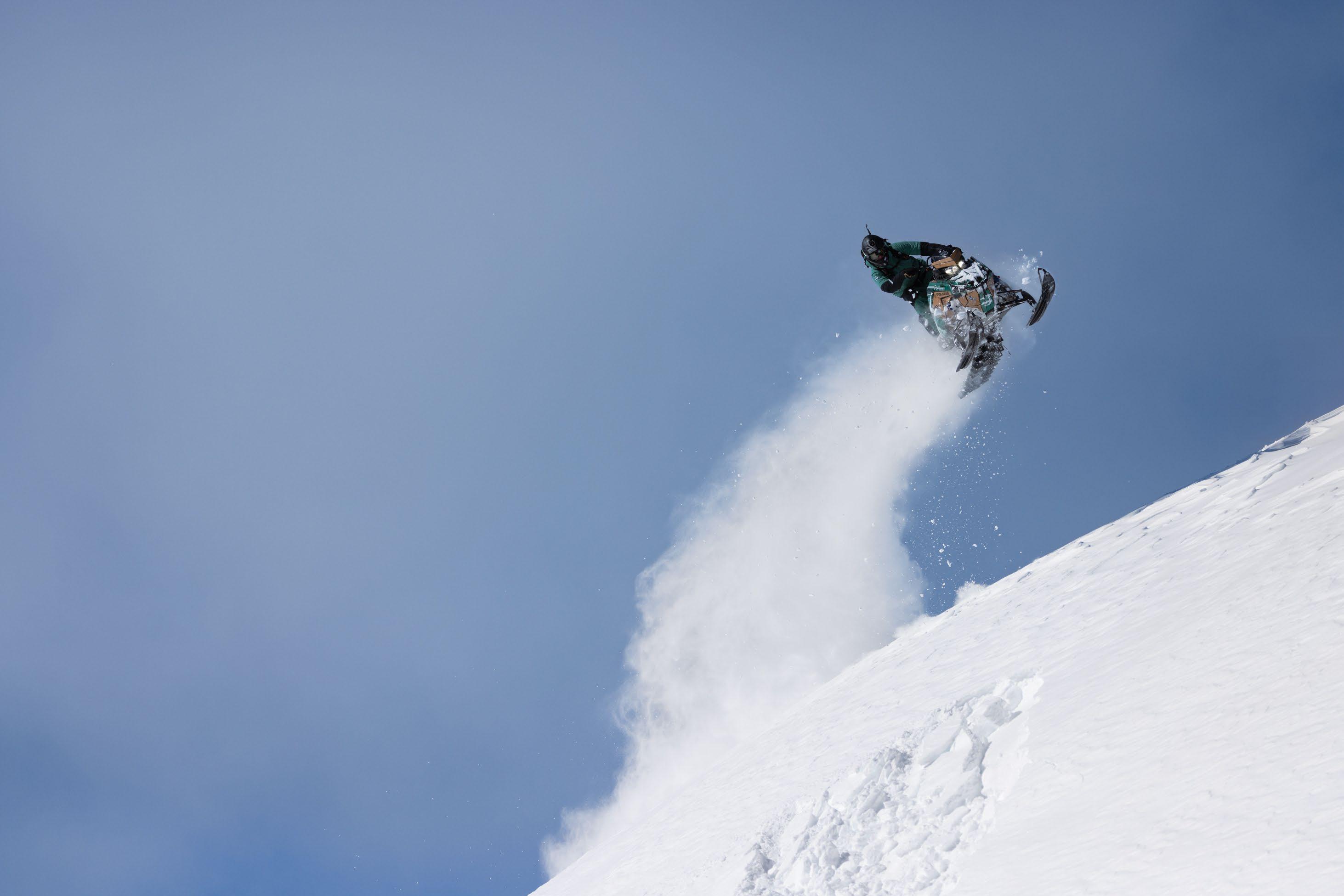
It’s been a rough start in the West for snow, but that doesn’t mean it’s not out there. You just had to find it. Blaine Mathews found the goods in Togwotee, Wyoming, early January.
Rider: Blaine Mathews
Photo: Tristin Ironi for SnoWest
FEATURES CONTENTS
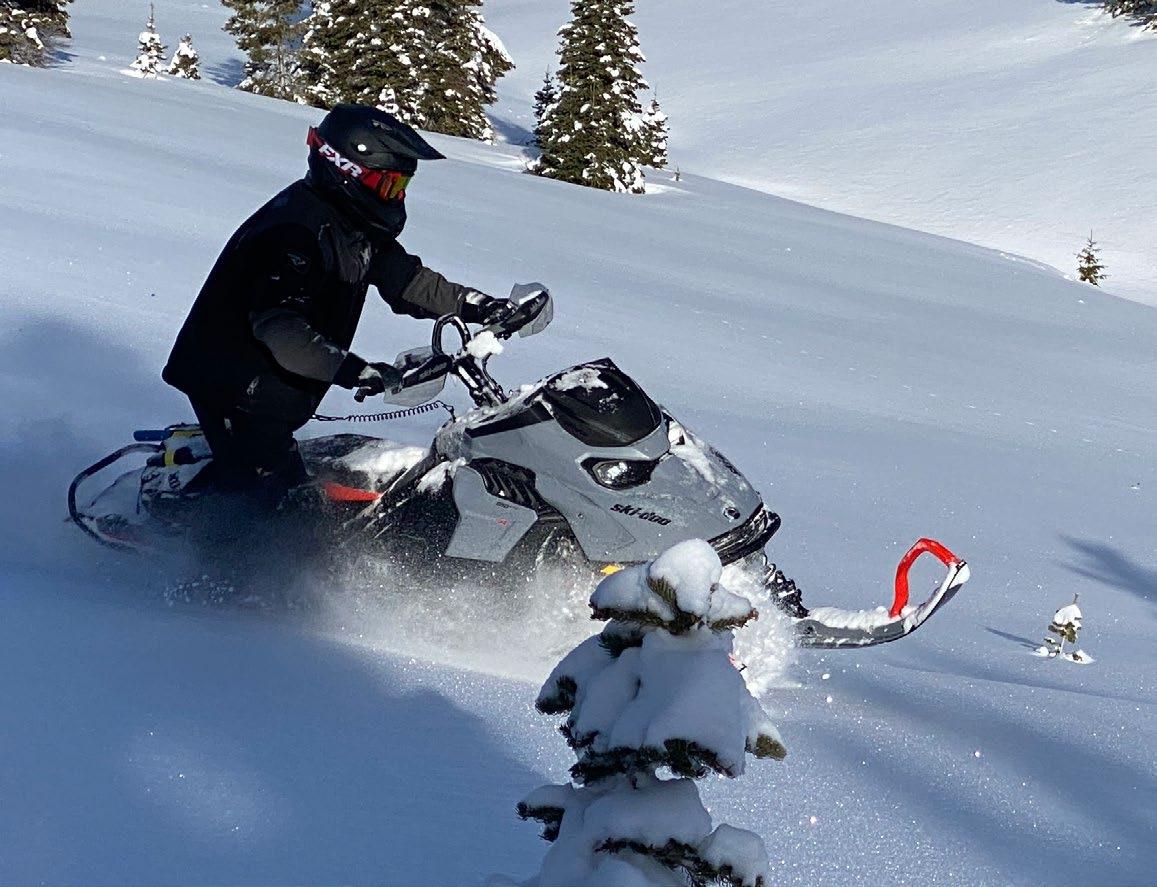
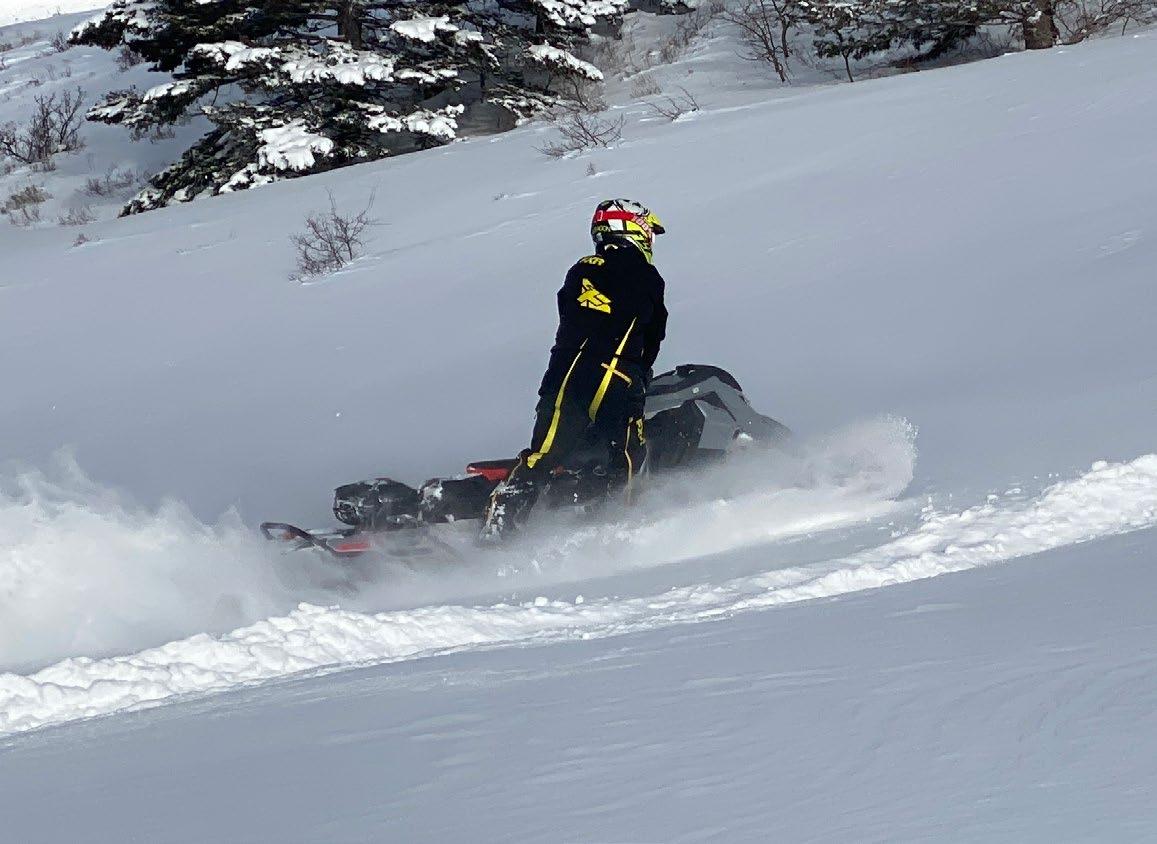
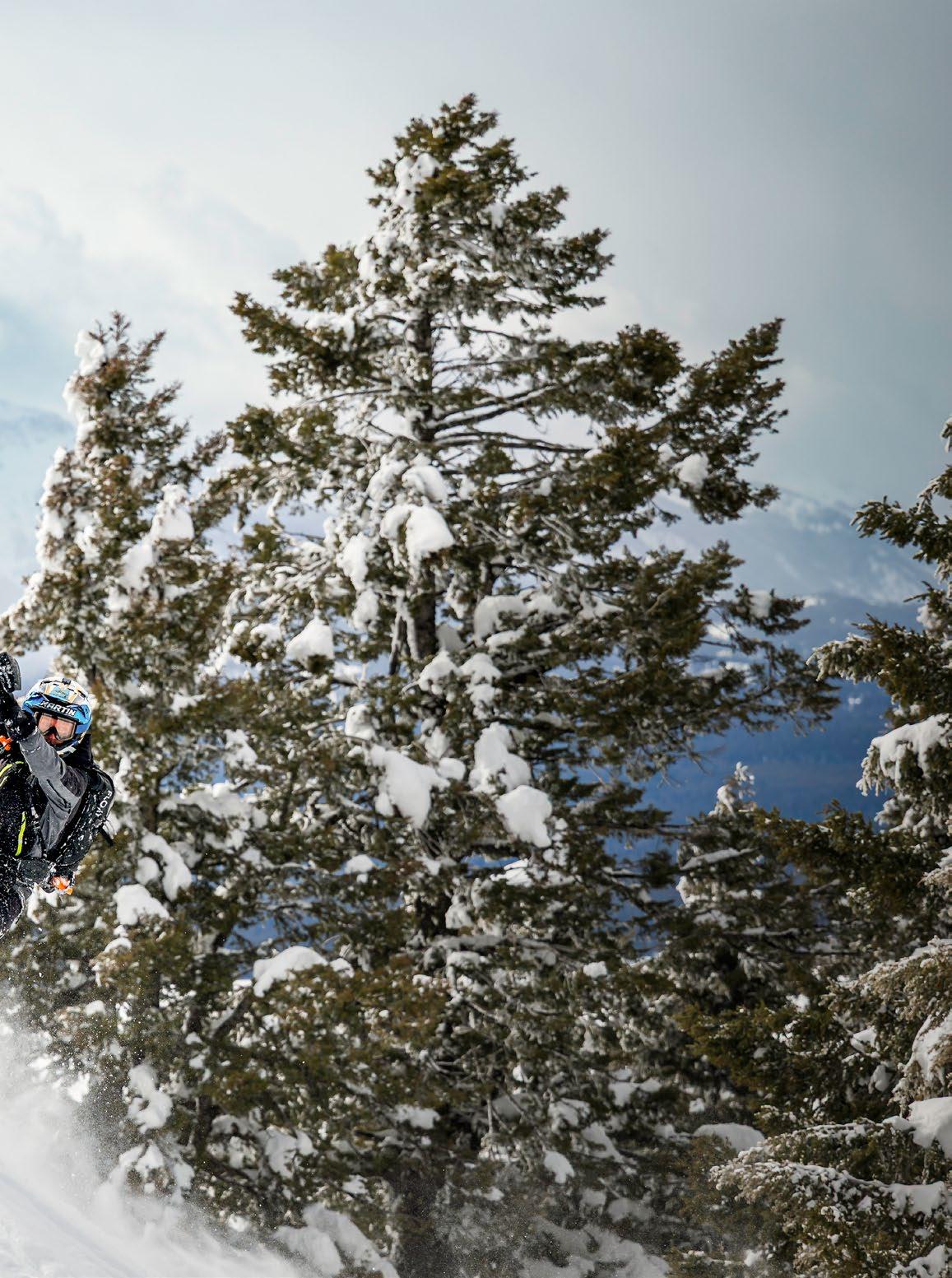
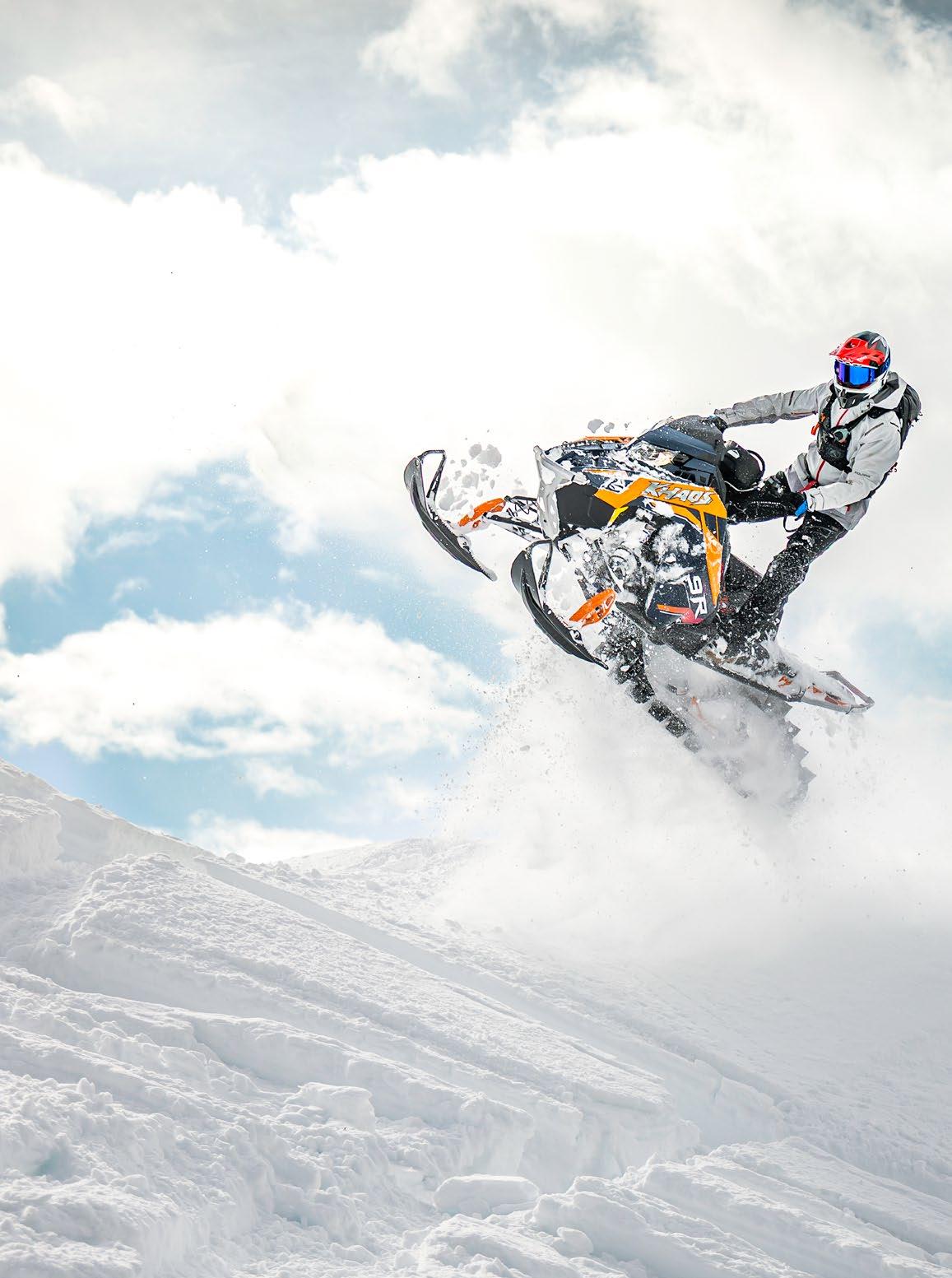
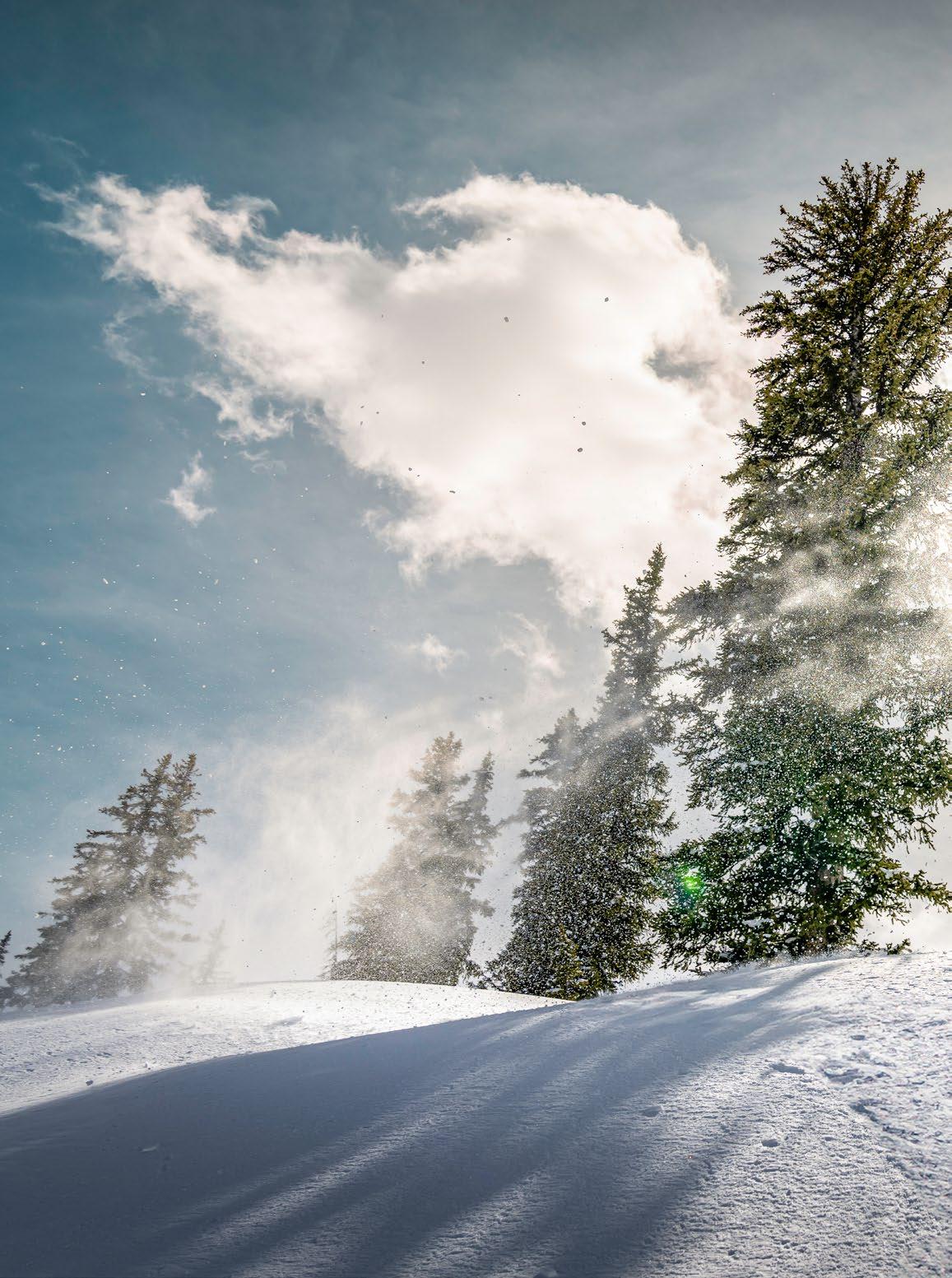
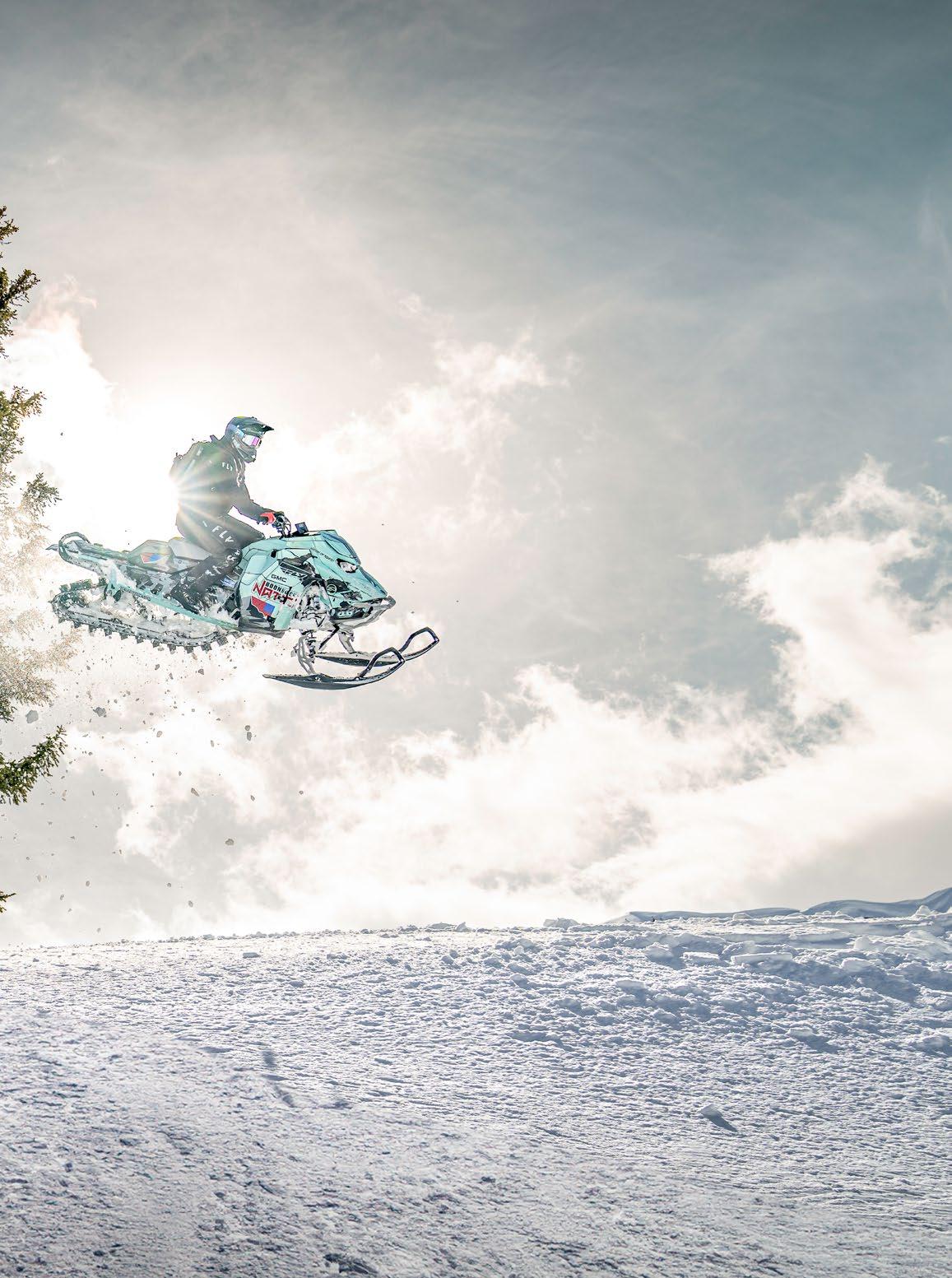
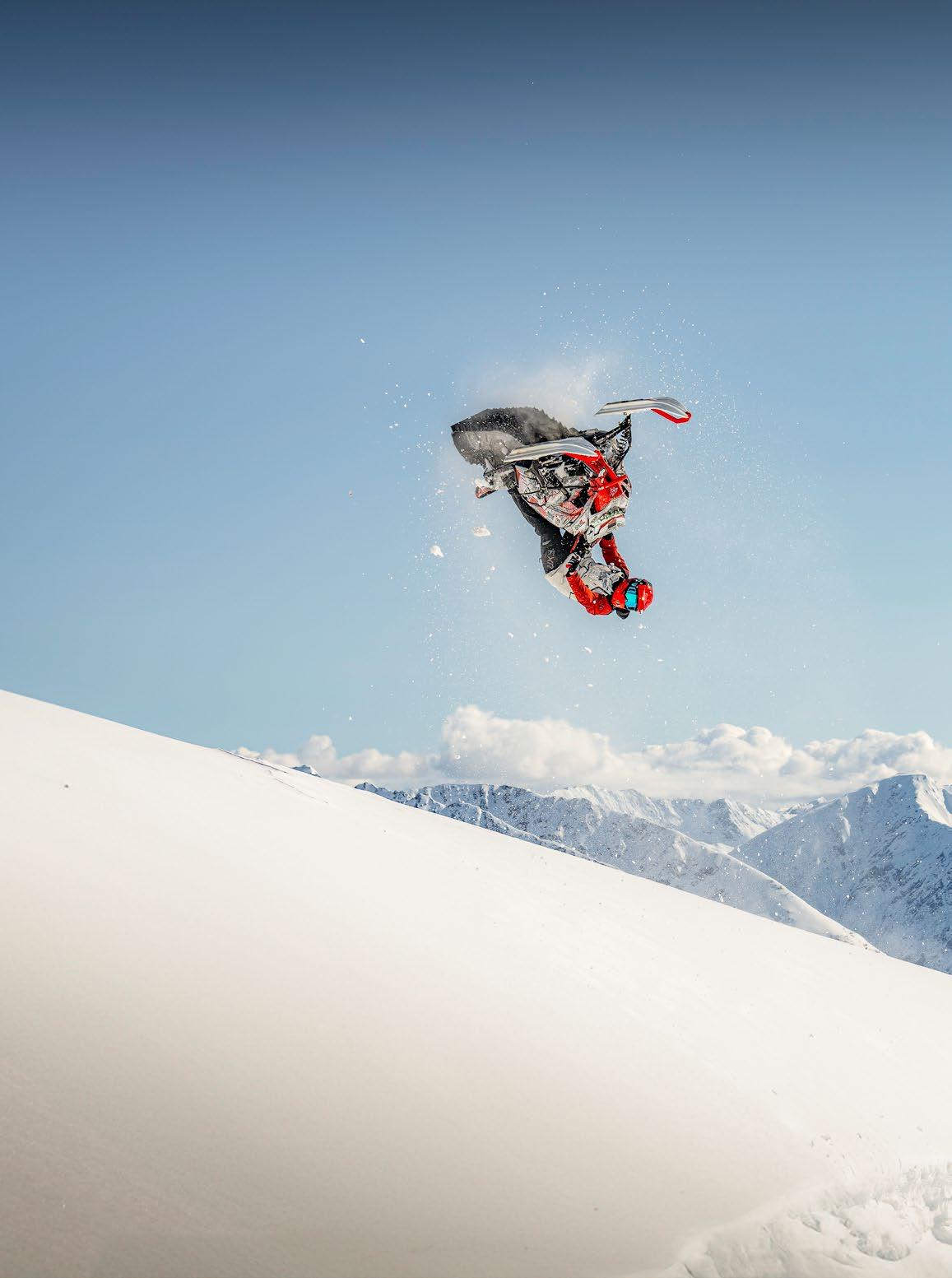
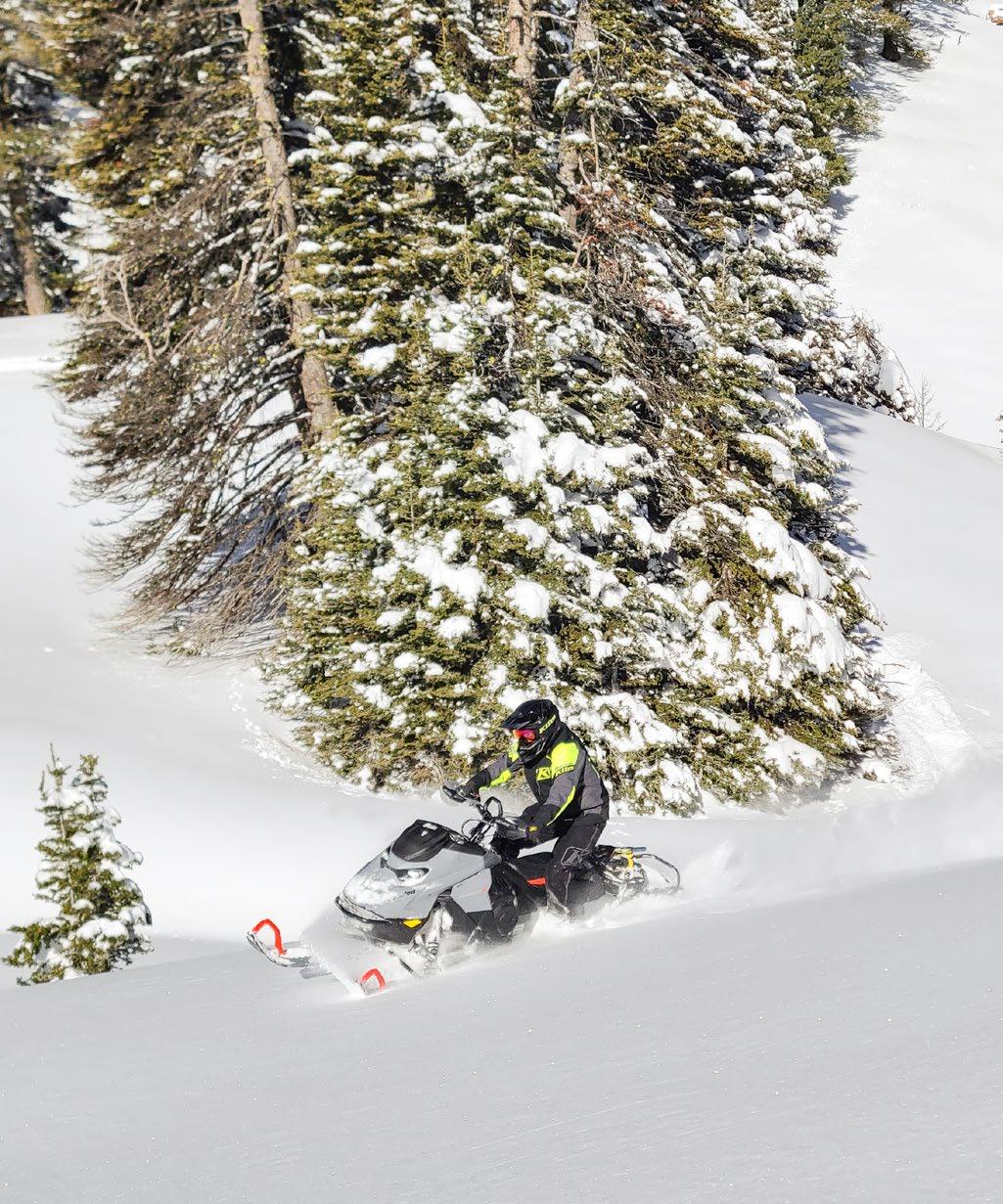
We dig into the selects folder to bring you some of the best shots we have on file for this year’s Behind the Lens photo section.
Riders: Scott Rhodes
Photo: Tristin Ironi for SnoWest
SNOWEST MAGAZINE is published 7 times per year by
Shows LLC. Copyright (c) 2026. Harris Snowmobile Shows LLC. All rights reserved. Reproduction in whole or in part, without written permission, is strictly prohibited.
ARCTIC CAT ACQUIRES WIDESCAPE
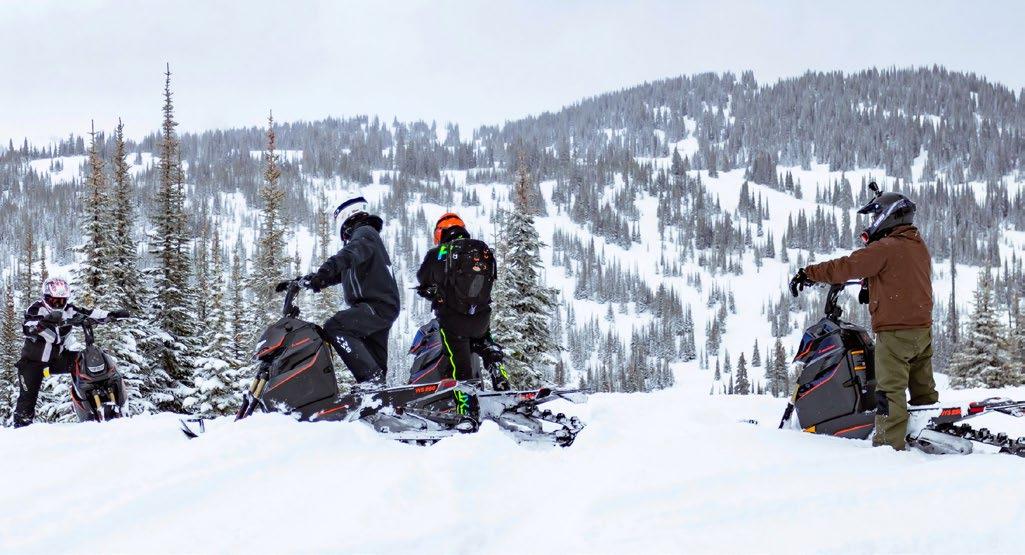
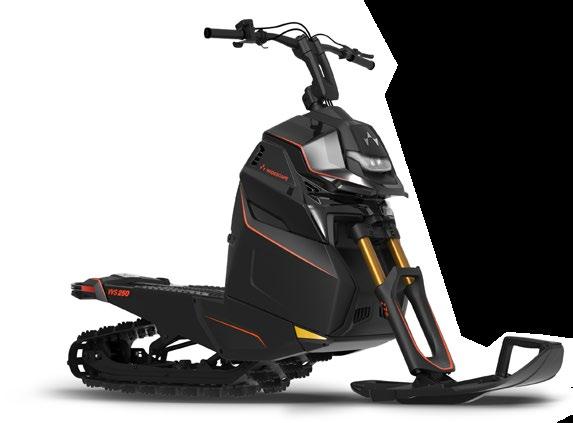
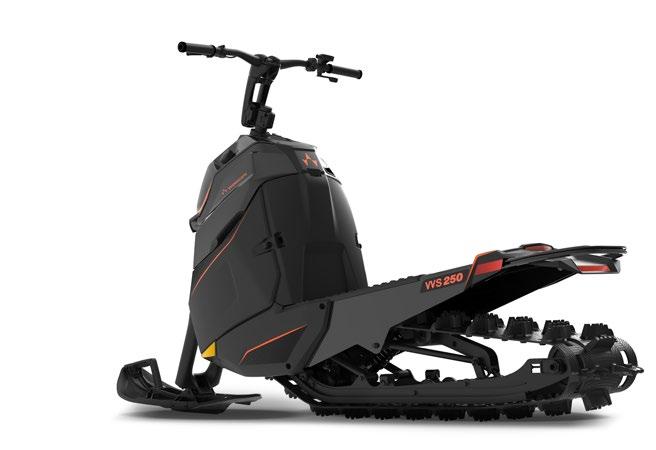
Demonstrating its dedication to outdoor winter motorized recreation, Arctic Cat today announces the asset acquisition of Widescape – known for the Widescape WS250 stand-up enduro snowmobiles.
As part of the purchase, Arctic Cat has acquired the Widescape names, intellectual property and existing product inventory from the previous Quebec-based company.
“The Widescape WS250 machine offers a very different winter recreational experience than traditional snowmobiles,” said Brad Darling, Arctic Cat President and CEO. “It provides riders with a playful experience and the ability to go places no other snowmobile can for $5,999 MSRP.”
First introduced in 2023, the Widescape WS250 is a narrow, single-passenger vehicle designed for over-snow fun. Its proprietary 242cc EFI liquid-cooled 4-stroke engine sends power through a traditional CVT clutching system to a 12- by 105-inch track featuring 1.5-inch lugs. The track wraps around a single-shock rear suspension with 4 inches of travel. Up front, a 12-inch-wide single ski is connected to a dual-strut suspension with 5.5 inches of travel.
Riders typically stand atop the tunnel on non-slip mate-
rial, and control the vehicle using traditional throttle and brake controls mounted on a raised handlebar. With its aluminum frame, tunnel and handlebar plus composite bodywork, the WS250 has a dry weight of just 200 pounds. This lightweight construction enhances maneuverability and makes the vehicles very responsive to rider inputs.
Additional standard features include electric start, a tether cord and a multi-function digital display screen/gauge.
This acquisition is just the latest milestone for Arctic Cat. In the nine months since the brand was acquired by its new ownership group, Arctic Cat has launched new products in the snowmobile, ATV and Side-by-Side markets; restarted production; introduced and expanded new technologies such as electric power steering (EPS) on two-stroke snowmobiles; re-entered racing in a significant way; and continued to grow its dealer base across North America and beyond.
“Arctic Cat is charging forward into a bold new future and the acquisition of the Widescape brand demonstrates our belief in the long-lasting future of on-snow motorized recreation.” Darling said
FREE SNOWMOBILE RIDES AT POLARIS ADVENTURES
Polaris is bringing back its popular Free Snowmobile Rides program for 2026. This February, Polaris is giving riders the ultimate reason to get outside—complimentary snowmobile rides at participating Polaris Adventures locations in top snow destinations.
“Our goal is to make winter adventure accessible and fun,” said Jenny Nack, vice president and general manager, Polaris Snow. “We are proud to bring this program back in 2026 because it’s all about helping people embrace the season, try something new, and create unforgettable memories on Polaris snowmobiles while exploring stunning snow-covered destinations.”
Building on Polaris’ passion for outdoor adventure, the Free Snowmobile Rides program offers a one-hour ride on the latest Polaris snowmobiles at prime destinations with on-trail access. Riders can sign up by visiting polaris.com/ snowdemos to request a promo code and book their ride.
What to Expect:
A ride designed for all types of riders—from first-timers
to snowmobile enthusiasts.
A safety overview and protective gear for a worry-free experience.
Guidance from experienced Outfitters and an unforgettable ride on Polaris’ newest snowmobiles.
For more than 70 years, Polaris has continuously redefined what winter adventure looks like. From breakthrough technologies and bold new models to programs that make riding more accessible, every snowmobile is built to deliver confidence, excitement, and unforgettable moments on the snow. With last year’s Free Snowmobile Rides program reaching capacity within weeks, Polaris is thrilled to bring it back in 2026—continuing to set the standard for performance and fun and making it easy for riders to enjoy winter like never before.
To learn more visit polaris.com/snowmobiles or adventures.polaris.com . Reserve your spot today at https://www.polaris.com/en-us/snowmobiles/snow-adventures-demo-ride /.
58TH ANNUAL INTERNATIONAL SNOWMOBILE CONGRESS
The global snowmobiling community will gather in the Midwest this summer as the 58th Annual International Snowmobile Congress (ISC) is set to take place June 3–6, 2026, in Omaha, Nebraska.
The International Snowmobile Congress is the premier annual forum for snowmobiling leaders from across North America and beyond. The ISC brings together organizations, policymakers, industry leaders, administrators, media, and tourism professionals to address the most important issues facing the sport and industry today, while shaping its future.
The ISC is composed of representatives from the American Council of Snowmobile Associations (ACSA), Canadian Council of Snowmobile Organizations (CCSO), International Snowmobile Manufacturers Association (ISMA), International Association of Snowmobile Administrators (IASA), Iron Dog Brigade (IDB), International Snowmobile Media Council (ISMC), and the International Snowmobile Tourism Council (ISTC). Together, these organizations collaborate on shared goals including trail development and maintenance, safety education, tour-
ism promotion, environmental stewardship, and the continued growth of snowmobiling worldwide.
Over the three-day event, delegates will participate in meetings, educational sessions, strategic planning discussions, networking opportunities and some fun events as well. Topics will include current legislative and regulatory issues, advancements in technology and safety, trail sustainability, economic impact, and strategies to strengthen the snowmobile community across borders.
There will also be a large display of the latest and greatest snowmobile trail groomers and trail grooming equipment featured onsite. There will be several manufacturers represented from the U.S. and Canada.
“Omaha provides a welcoming and centrally located setting for this important international gathering,” said organizers. “The 58th International Snowmobile Congress will continue the ISC tradition of collaboration, forward-thinking discussion, and unity among all sectors of snowmobiling.”
Additional details regarding registration, schedules, lodging, can be found at https://www.snowmobilers.org/isc/ d
DRAGAN POCKET WINCH
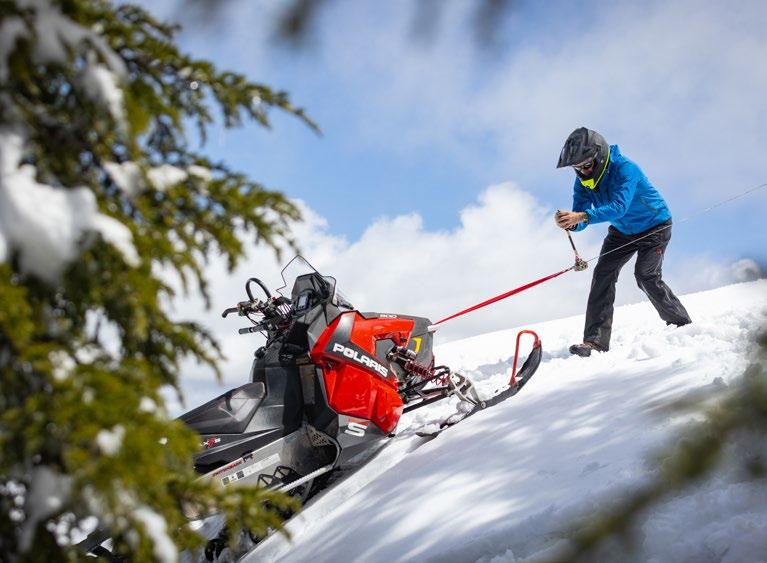
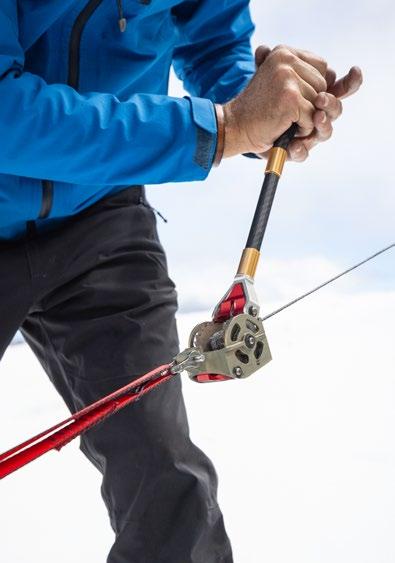
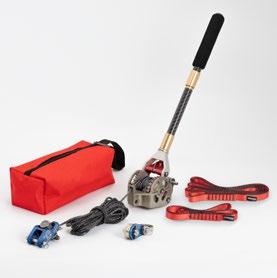
At Dragan Systems, we’re passionate about creating innovative tools that empower you to tackle any challenge, whether you’re deep in the backcountry or working around your property. Our flagship product, the Dragan Pocket Winch, embodies this passion by delivering unmatched power and portability in a revolutionary design. It is a lightweight, high-strength winch designed for real-world rescue and recovery in the toughest environments.
The idea for the Dragan Pocket Winch sparked from a personal experience of our co-founder, Jake Ruhl. While cutting wood with a chainsaw, Jake found himself in a frustrating situation – the chainsaw became deeply stuck in a log, with so much tension that it was impossible to remove by hand.
Reaching for his heavy and cumbersome come-along, Jake successfully freed the chainsaw. However, the sheer size and weight of the come-along in that moment ignited a thought: “Why can’t there be a powerful winch that’s actually portable?”
Drawing upon his extensive experience as a mechanical and electrical engineer, Jake envisioned a modern winch that could fit in your pocket, yet still deliver significant pulling power. This vision, combined with the engineering expertise of his co-founder at Gravitas Solutions, Ryan Neil, led to the birth of the Dragan Pocket Winch.
This device is a must-have for outdoor adventurers and wilderness enthusiasts who need to be self-reliant while out in the field. The ultra lightweight and portable profile of the Pocket Winch affords riders, hunters and pilots the piece of mind necessary for backcountry exploration while remaining small enough to pack and haul without compromising other tactical gear and essentials. Rescue and recovery efforts are a reality when you explore off-grid, which is why the Dragan Pocket Winch is constructed to meet the critical demands
TECHNICAL SPECIFICATIONS
of the job. The winch body is made of aerospace grade aluminium core for strength and durability. The winch handle is made with carbon fiber to keep the pull sturdy while only adding marginal weight to the kit. And the Dragan Line boasts performance that is stronger than steel line with a synthetic, high modulus UHMWPE fiber. These aspects of the Dragan Pocket Winch have been designed and tested to ensure the product will perform when you need it the most.
Dragan Systems was founded by Jake Ruhl and Ryan Neil, the same experienced engineering team behind Gravitas Solutions. Recognizing a need for professionally developed mechanical and electrical design solutions across various industries, Jake and Ryan bring over 50 years of combined engineering experience to Dragan Systems. Their proven strategies in design, prototyping, management, and execution are at the core of the Dragan Pocket Winch’s innovative and practical design.
See more at dragansystems.com d
ASPIRATED VS TURBO
WHEN IS TOO MUCH TOO MUCH?
BY STEVE JANES
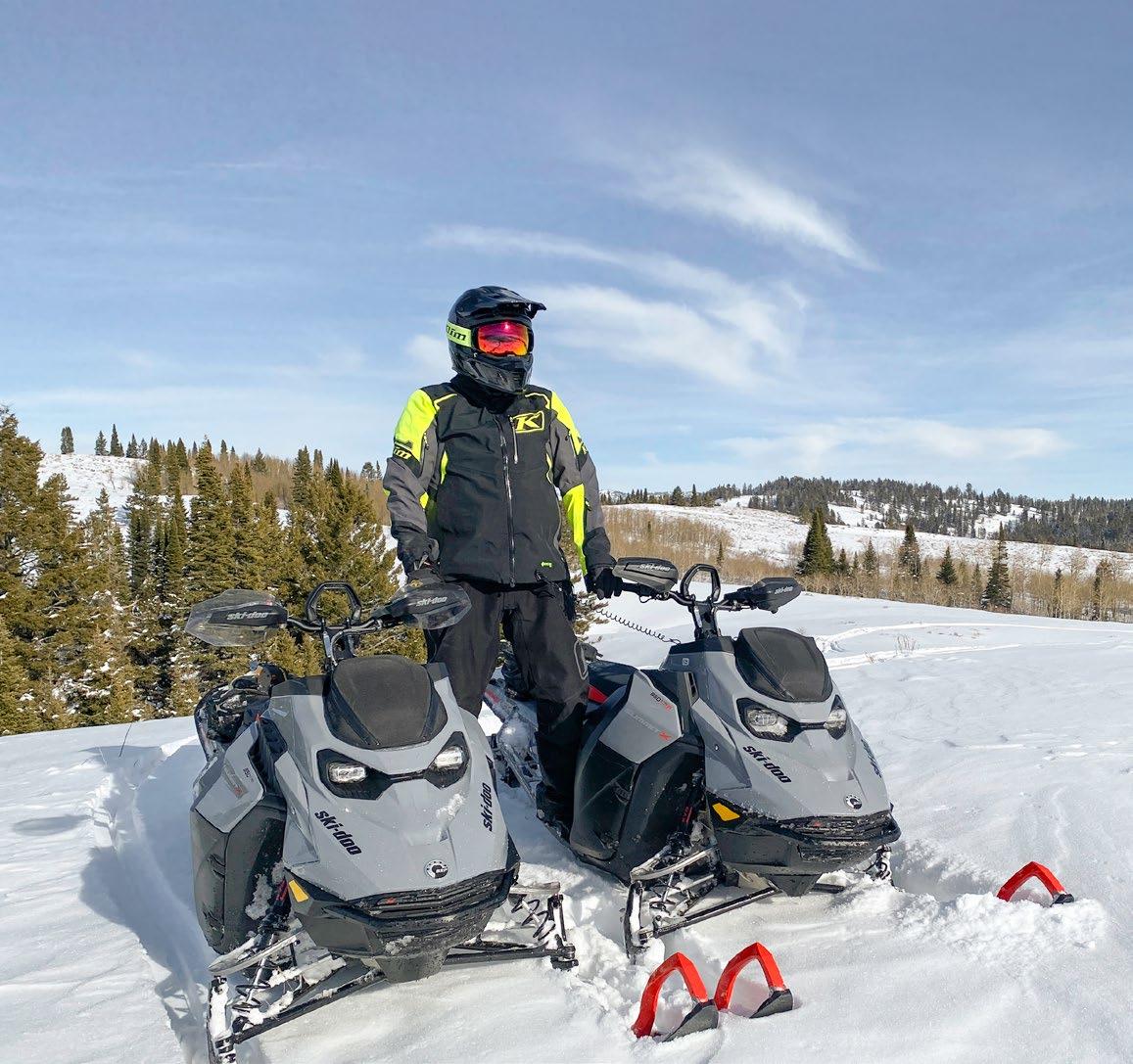
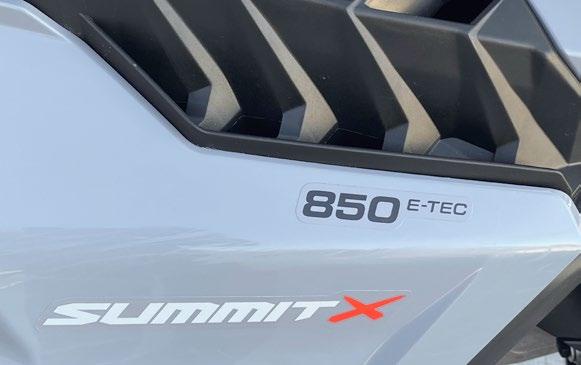
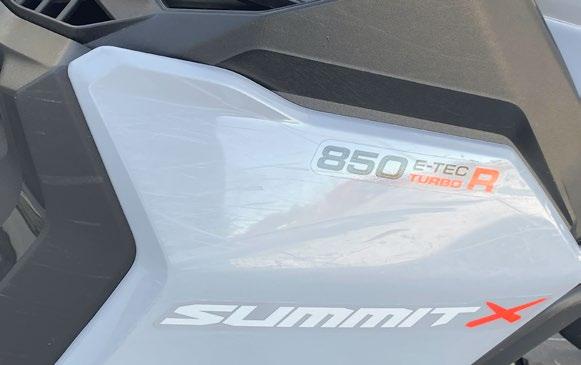
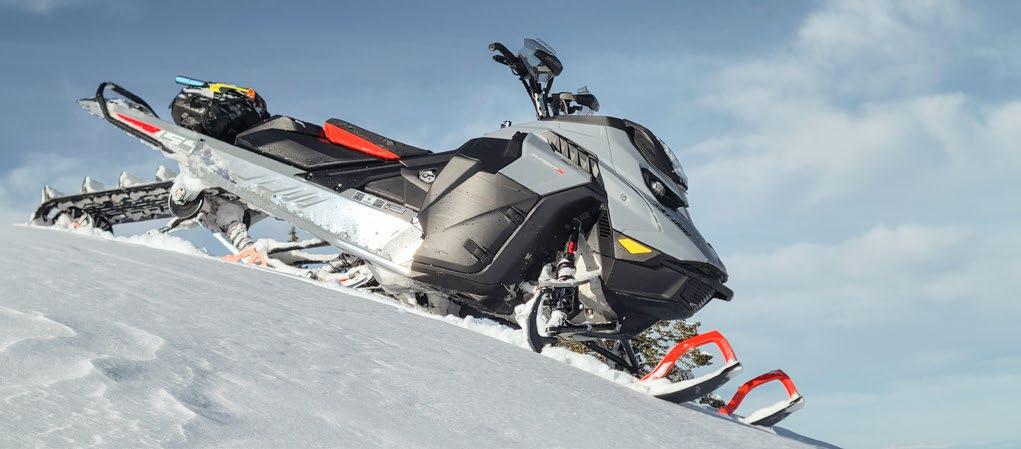
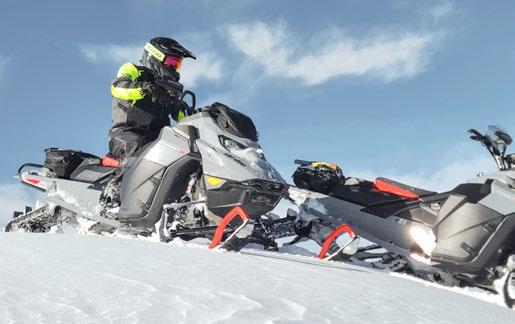
The season is just starting, and two snowmobiles are resting in the trailer anxious to get out on the snow—a 2026 Ski-Doo Summit X and a 2026 Ski-Doo Summit X Turbo R. Other than the turbo, both snowmobiles are identical with 154x3-inch tracks. Even the colors are the same. You have to look close at the decal to even see Turbo R on the hood.
WHICH SLED AM I GOING TO TAKE OUT?
Not everyone gets to spend a full day out on the snow hopping from one of these sleds to the other in order to figure out which would be the best for him to buy. So, we tried to do it for you.
Three riders—Lane Lindstrom, Clayton Ward and Steve Janes—have spent a lot of time over the past few years riding the various brands of snowmobiles. Perhaps not at the highest level of expert status, these three would be considered at least slightly more knowledgeable than the average rider. They are proficient riders, better than most but not your super-aggressive extreme rider who assaults the most technical terrain with passion and energy worthy of a social media video.
Each has spent several days out with both the Summit X and Turbo R in a relentless task of finding which one best suit their riding styles and is practical for their checkbook.
Although most would say “go turbo” it’s not always power that equates to pleasure (but power certainly doesn’t hurt). The difficulty of the decision can be based on the simple question: How much power is too much?
The Summit X cranks out 165 hp while the Turbo R produces 180 hp. But then, the naturally aspirated Summit X will start to lose a percentage of its power as it climbs in elevation, whereas the Turbo R will continue cranking out 180 hp up to 8,000 feet.
The Turbo R may have a 15 hp advantage, but it also weighs about 24 pounds heavier. But in the power-to-weight equation, the Turbo R still comes out on top.
Another interesting weight-related tidbit is that although the Turbo R is 24 pounds heavier, that weight is located on the pipe side, which tends to balance out the snowmobile a lot better.
When you are shifting from side-to-side, it is very easy to lean the Summit X to the left because you have more weight
STEVE JANES
*The front and side lifts were weighed with the sled lifted 6 inches off the ground
from the clutches on that side and less weight on the right to lift. However, when you go to tip the Summit X to the right, you have more weight on the left side and less weight on the right to counter-balance, requiring a little more effort on the rider’s part.
With the Turbo R, both sides weigh almost identical … which means it is equally as easy to lean the sled in either direction. This makes the Turbo R much more predictable when crossing back and forth between slopes.
The only advantage the Summit X has is that it’s still about 20 pounds lighter on the nose so it’s going to feel just a little quicker and nimbler in the trees.
Between these two sleds there are three noticeable differ-
ences—the power, the weight and the price. The Turbo R has the bigger numbers in all three categories. The big number in power is a good thing. The big number in weight isn’t such a good thing but has been off-set by the balance. And the big number in the price tag—Summit X at $18,200 and Turbo R at $21,750—comes down to whether your riding enjoyment hinges on spending $3,500 for more power. And keep in mind that you likely will never stay on full throttle for more the three seconds with the Turbo R, or eight seconds with the aspirated Summit X.
THREE RIDERS/THREE OPINIONS
The three riders all have connections to SnoWest Magazine and all have an extensive history in test riding new models.
However, they are also three of the older members on the staff and have become much more mellow in their riding habits. The days of flying over the handlebars are hopefully over (although Janes and Lindstrom did find their butts up in the air and feet dangling after hitting a series of wind drifts they weren’t expecting).
Their riding style is more conducive with your typical western backcountry rider … although they spend very little time on the trails and a lot of time exploring various mountain drainages while navigating through trees and across sidehills.
During the comparison rides between the two Summit X’s, the focus was on power and performance balanced with affordability and practicality.
LINDSTROM’S TAKES
“The Ski-Doo Summit X is just easy to ride—turbo or aspirated. It rides so smooth. You can tip it on its edge and point it where you want it to take you. The power is instant on both the Summit X and Turbo R. But there is a difference on where the power hits hard.
“Once you ride the turbo for a while, you figure out how much throttle you want to give it and how hard you want it to hit. If you want explosive power, just pin the throttle.
“While riding, we came to a creek with a fairly big gap. With the turbo, I just punched it and it just flew across the creek. On a sidehill, if I gave the Turbo R too much throttle, it would lift the front and would want to climb up the hill. I had to be careful on how much throttle I gave it if I wanted to sidehill rather than climb.
“With the Summit X, being naturally aspirated it was much
easier to judge the power and throttle response. I was never wanting for power on the 850. You could climb any of the hills and the power was always there. With the Turbo R, the first time I went up a long steep hill the sled started tail walking until I figured out I needed to back off the throttle and manage the power. It wasn’t like it was out of control, but I did want to be able to control the direction with the skis.
“Your gut instinct when you start to climb a long hill is ‘I want all the power I can get so I can make it to the top.’ But with the turbo, you don’t really need to worry about that because there is plenty of power available anytime you need it. It’s going to have power … and power to spare.”
PICKING LINES THROUGH TREES
“As I paid attention to the weight in the trees, I found the turbo an extremely balanced snowmobile. The weight of the turbo really balances out the weight of the clutches to make it predictable from one side to the other.
“Is the added 20-25 pounds more difficult to manage in the trees than the Summit X? Well, not really. There is a slight difference, but you really don’t notice it from the Turbo R to the Summit X.
“I had fun on the Turbo R, and I also had fun on the Summit X. They are both so easy to manage, so smooth in the trees and they both are quick to get up on top of the snow. They both have plenty of power to go anywhere you want.
“It might be different if we were riding in really deep snow. But today, and for most riding, they both go through the snow effortlessly. I would be happy on either one. And both handled the trails really well.” LANE LINDSTROM
THROTTLE MANAGEMENT
“On both snowmobiles, it comes down to power management. If I rode the Turbo R all the time, I would know exactly where the sweet spot is on the throttle where I could keep the power under control. The same is true with the Summit X. There wasn’t a time I held full throttle for more than two or three seconds on either snowmobile.
“When you mash the throttle, the Turbo R is like ‘boom—it’s there.’ In any situation, if you need the front to jump, it was instant with the Turbo R. In the old days, the turbos just slammed in and would about rip your arms off. With the Turbo R, it comes in smooth, especially in the midrange. Yet if you need the burst, just pin the throttle and hold on.
“The naturally aspirated Summit X wasn’t shy on power. It would also pull hard … but not like a turbo. But for the most part it would still hold its own going up the mountain.
“We know the Turbo R starts out with 15 more horsepower. But as we started climbing in elevation, we know we lost a percent of horsepower on the Summit X but not an ounce of horsepower up to 8,000 feet on the Turbo R.
“The other nice thing about the Turbo R is that if I was dropping down into something gnarly, I didn’t think I needed to set up for my exit move nearly as much. I could just point it in the direction I want to go and let the power take care of the rest. On the Summit X, sometimes I would need just a little more room and planning to set up my exit.
“The track on the Summit X is also pretty impressive. It works with either the naturally aspirated power or the turbo power.”
TOUGH CHOICE
“If I could only ride one for the entire season, I’d probably take the naturally aspirated Summit X. However, if my riding area had consistent deep snow and gnarly drainages which required constant bursts of power, I would then probably lean to the Turbo R. It would be worth paying the extra money. But with my riding style and general riding area—off trail and through the trees and covering terrain—the Summit X works great and is much more affordable.
“I could be happy riding the Turbo R all the time. But I could also be happy riding the Summit X all the time. Some guys just want to have the power. They have their throttle pinned all the time. They are the ones who would want the Turbo R.”
WARD’S THOUGHTS
“I started off on the Turbo R on the trail heading up to the higher elevation. Since I was just trying to get a feel for the sled, I really wasn’t trying to go fast, my attention was more on the gauges and handling. But then I realized I was falling a little bit behind and decided to punch the throttle to catch up. Wow.
“The gap between me and the other sled closed instantly. That’s when I realized that even though I had been on and off the turbo, when you do grab a handful of throttle the Turbo R goes to an entirely different level of performance.
“Once we got off the trails and into the better snow up high, again I found the Turbo R very easy to control. I could swerve from side to side and the snowmobile felt responsive and balanced.
“We came to a long, steep hill with some trees on the bottom before it opened up. I was able to pick my
line carefully until I got out of the trees and was pointed straight up the slope. Then I grabbed a handful of throttle and the front end came straight up, almost over backwards. It took me a few moments of ‘throttle, no throttle’ before I found the right balance on power.
“Since I didn’t have a lot of experience on turbos, the biggest challenge was learning how to adapt my riding position and throttle control to better match the Turbo R.
“Once I switched over to the naturally aspirated Summit X, I felt much more in control of the snowmobile. It still had more power than I needed … but it allowed me to squeeze the throttle harder. I was still climbing steep hills, but I was more comfortable operating at higher rpm without carrying as much track speed.”
TREES AND SIDEHILLS
“With both the Summit X and the Turbo R, I could pick my way through the trees, even if I had to hold a sidehill or make changes in direction. I thought the Turbo R seemed a little bit heavier, especially when I was drifting downhill and needed to make an uphill correction. The Turbo R just seemed to want me to pause and then hit the throttle to break the track free, or set it deeper in the snow, so I could pull the front end up and around.
“On the Summit X, it was much easier to make a left hand turn back up the hill. For a right-hand turn, I felt it was harder to get the leverage to bring the snowmobile around. Actually, though the Turbo R felt lighter going to my right.
“On sidehills, the Summit X seemed to want to climb when I was leaning into my left hand and wanted to dive when I was leaning into my right hand. I had to be a little more active with the throttle and sliding my weight forward and back while trying to hold a straight line. With the Turbo R, it did seem to hold
a sidehill a lot easier with a lot less work on my part. However, I had to be careful not to be too heavy on the throttle or it would start to climb because the skis would lift too much.”
PRICE FACTOR
“I look at the difference between the two snowmobiles and find it hard to justify paying that much more for a Turbo R when I really don’t see the need for all that extra power with my riding style. I mean, it’s always nice to have the ‘baddest’ sled on the snow, but I just think with the guys I ride with, the Summit X suits me better.
“The more time I spent on the Summit X, the more confident I felt with my riding abilities. On the Turbo R, I did feel like sometimes it was controlling me more than I was controlling it. I also felt that any mistakes I made with the Turbo R were going to be more costly in both the potential outcome and the potential cost of repairs. I actually became a bit timid at times rather than pushing the edge of my riding ability.
“I think I’ll just stick with the Summit X and take some of the pressure off of proving my riding abilities just because I have the extra power. And I can also spend the money I save to upgrade my riding gear … it’s starting to get dated.”
JANES OBSERVATIONS
“Ever since turbos started popping up on snowmobiles, I’ve had a love/hate relationship. I loved the incredible power that the turbo generates. But I hated the part of the mountain I had to ride to show my snowmobile was that much better than my buddies.
“Once the OEMs started putting turbos on stock sleds, I found the power was much more user-friendly and predict-
able. With the Turbo R, I always felt the powerband was more rideable and consistent. The turbo power would blend in with the sled performance rather than hitting hard and taking over.
“Now the challenge for me when comparing the two snowmobiles—Summit X and Turbo R—is that I’ve always been a huge fan of the Summit X. My own sled is a Summit X. I’m not a power freak, a speed freak or a hill banger. I just like to ride, explore and enjoy nature.
“I want a snowmobile that allows me the confidence of wandering into tight drainages and trying to find a way out to new areas that are often over-looked by other snowmobilers.
The Summit X give me the confidence to do such exploring, and it’s light enough for me to roll out of a hole if I get stuck.”
OPINIONS CHANGE
“After spending a lot more time on the Turbo R, I’ve come to the conclusion that even though it is heavier than the Summit X, its ability to generate instant track speed can actually get me out of bad situations that the Summit X might not be able to generate the instant track speed to do the job.
“I’ve also become much more aware of how balanced the Turbo R is. For years I’ve felt I just wasn’t as proficient holding a steep right sidehill when it wasn’t as difficult holding a steep left sidehill. But with the Turbo R, I really felt confident with either sidehill.
“I also noticed that when I would do curves through fresh snow across open meadows, on the Summit X I could get it up on the left edge much easier than the right edge. With the Turbo R I could go back and forth with equal effort.”
STAYING IN BUDGET
“I’ve been fortunate that my wife has allotted me a ‘rec-
reation budget’ that allows me to upgrade my snowmobile every couple of years and cover the other expenses like travel, parts and fuel. The Summit X fits nicely into this budget.
“If I wanted to purchase the Turbo R, I would likely have to go to a three-year rotation to cover the added costs. It comes down to whether my ego is greater affected by a three-yearold sled or an added 15 hp of awesome performance.
“I think it would be easy to justify spending the extra money for the Turbo R. After all, I’m getting significantly more power and a slightly more balanced ride. But I think it’s also easy to justify saving a little money because the Summit X delivers all the power I need for 95 percent of my riding experience, and I am a huge fan of lighter snowmobiles. When you are stuck, balance and power really don’t help you in getting the snowmobile rolled over or pointed downhill.
“I also believe it’s better for me to show some humility by riding the Summit X rather than finding myself in the situation where the Turbo R humbles me.”
RIDERS CONCLUSION
When the choice came between affordability or performance, this threesome seemed to put a little extra weight (no pun intended) in the dollar. If money wasn’t an obstacle, then perhaps ego may have prevailed.
When it came to the riding experience, the Summit X had the edge in the cross-country riding and the Turbo R seemed to prevail in the more technical terrain—there’s no replacement for displacement.
So, at the end of the day, when you decide to walk into the nearest Ski-Doo dealership and put your money down on a new 2027, which sled are you going to take? It’s a tough choice with no wrong answer. d
A LOOK THROUGH SOME OF PHOTOGRAPHER TRISTIN IRONI’S FAVORITE SHOTS.
RIDER: DAVID MCCLURE
PHOTO: TRISTIN IRONI
RIDER: STEVE MARTIN
PHOTO: TRISTIN IRONI
RIDER: SCOTT RHODES
PHOTO: TRISTIN IRONI
RIDER: SAM PETERSON
PHOTO: TRISTIN IRONI
RIDER: JARED SESSIONS
PHOTO: TRISTIN IRONI
RIDER: DAVID MCCLURE
PHOTO: TRISTIN IRONI
RIDER: JACK SARAMA
PHOTO: TRISTIN IRONI
RIDER: JACK SARAMA
PHOTO: TRISTIN IRONI
RIDER: MAVERICK WALKER
PHOTO: TRISTIN IRONI
BY STEVE JANES
RULE OF THUMB
8 TIPS FOR MOUNTAIN RIDING
Riding in the deep snow and high elevations of western mountains is perhaps the greatest thrill for snowmobilers. However, it is also the greatest challenge. The deeper and drier the snow, the more likely it is for a snowmobiler to find himself stuck or struggling to negotiate such challenging terrain.
Even though the modern snowmobile with its aggressive track, incredible power and sleek design is capable of floating through the steep and deep, sometimes the rider falls considerably short of the skills to ride his sled to its fullest potential.
Here are eight tips that might help make you more up to the challenge of mountain riding.
Several years ago, Matt Entz of Mountain Skillz offered some very sage advice to SnoWest readers. For aggressive and technical riding, you need to understand two things—full throttle or no throttle. Anywhere in between can cause your snowmobile to dive or trench as you try to build rpm and track speed.
Entz instructed that quick aggressive action from pin to off will maintain rpm while controlling speed. You may also stay full throttle and touch the brake to keep your speed in check.
The key to throttle control is to always maintain forward momentum. You don’t necessarily want high speeds, but you do want to carry enough speed to stay higher in the snow. You can sometimes lean back to change your track angle and allow your sled to start to trench if you want track speed without increasing ground speed. Then you can slide forward and allow the track to get up higher in the snow if you need to turn more uphill.
If you let off the throttle for a couple of seconds, your front end will naturally start to drop in the snow which actually gives you a little better control for turning or correcting your direction to pick your line. The more track speed you carry, the more your rear end will drop into the snow and the front end lift up.
PICKING LINES
Tree riding is all about lines … and your ability to see something that is beyond your sight. It is a situation where you should have an idea where you’re trying to go and be looking for lines that will allow you to wiggle your way through the trees.
You’re looking for openings (I like to call it white space). And you need to pick your battles. Obviously, you want to find a line that offers the least amount of resistance, especially if you have a group following you. Your vision should be as far out as possible when searching for white space or gaps through the forest.
Be aware of the terrain. You don’t want to drop down into
2 3
Just
anything that you may have to come back out of. Elevation changes affect your options. Often sudden drops in elevation indicate a drainage where there may be a creek at the bottom which can cause the terrain to really tighten up. Recognize where the larger trees are (more spacing between trees) and where the smaller trees are (more branches that can scrape you off and the trees are tighter together).
In forests that have been logged in the last 50 years, the smaller trees are perhaps your greater obstacles. Look for the edges of the area that have been logged, this transition from newer trees to older trees usually offer better spacing. But most importantly, have a good idea where you need to end up to reach your destination.
LOOK WHERE YOU WANT TO GO, NOT WHAT YOU’RE TRYING TO AVOID
for
If you’re staring at a tree, you’re likely to steer into the tree. The key is to not “look out for that tree” … but to look to the gap between the trees. Look to where you want to go, not to where you don’t want to go. This helps you to commit to a line and trust your snowmobile to do what you want it to do. 1 3 2 4
is, snowmobiles tend to go where the eyes are fixated.
like George of the Jungle, don’t look out
that tree. We all know the familiar jingle of the 1967 cartoon or 1997 movie where a spoof on a Tarzan character would swing from a vine and smack into a tree. Well, sometimes as snowmobilers we tend to claim “a tree just jumped right out in front of our sled” while we were minding our own business. The truth
4
ENTRENCHING COMMITMENT
Even with a good base, there are just times when you end up following someone who has dug a trench worthy of laying pipe. And due to the terrain, there will be times when your options are limited … you have to navigate your way through the trench.
First, you have to maintain as much momentum as you can but that momentum needs to match your track speed. Excessive track speed will spin out the limited snow available while decreasing the thrust.
FINGER ON THE BRAKE 5
It’s a good practice to learn to keep a finger or two on the brake at all times. First, it quickens your reaction time when you need to slow immediately. Second, it will help you to learn to use your brake while riding to check your speed without disengaging your clutch (using the throttle and the brake simultaneously).
Tapping the brake also creates weight transfer to the front of the sled … useful when topping a peaked ridge.
Tend to stay on the downhill edge of the trench, but keep your uphill ski edge into the uphill portion of the trench so you maintain a level approach. You want to keep the track as high as you can, grabbing as much snow as possible from the edges of the trench.
Look for the nearest exit point of the trench and hold that line. If you find that you’re likely not going to make it out of the trench, look to roll your sled toward the downhill slope to make your dig-out a little easier. If you are still obligated to going that direction, try to descend down the trench and use your snowmobile to widen it and open it up better for the next pass.
The greatest asset any snowmobiler has is the ability to think, act and react. Whatever you do, you need to be prepared to make sudden calculated adjustments. For example, when you are highmarking, before you put yourself in a compromising position on the slope, you should think through the “worst possible scenario” first. What if I can’t make it over the top … do I have a clean return run-out? What if I lose traction on wind-crusted snow? Will I have enough momentum to make my turn-out … and will
I have a clean run-out? Is there any element I have to beat (rock ledge, group of trees, etc.) that creates a point of no return? Do I have different options of turn-outs depending on how high I make it up the mountain? What do I do if the top portion of the mountain decides to become the bottom portion of the mountain (avalanche)?
If you have attractive alternatives, you’re likely not going to experience unattractive results. But most importantly, be committed to your plan. The difference between excitement and tragedy is only a split-second hesitation or indecision.
OFF YOUR BUTT
To most snowmobilers, if the manufacturers design a seat for the sled, then it seems to make sense that you’re expected to put your butt on that seat when you ride. Well, that doesn’t hold true in the mountains. There’s a time to sit. But there’s also a time to stand. And there are multiple times to get on your knees if you ride in extreme areas.
Perhaps the most important thing to note is that the more on top of the sled you are, the more control you have over it. That’s why all new mountain snowmobiles are designed with a taller riding platform.
Rule of thumb is that if you’re moving uphill or in technical terrain, you need to be in position to react quickly. You need to be standing, or at the very least, kneeling on your sled.
SMART STUCK 8
It’s not hard to get stuck. But it does take some basic understanding on how to get stuck smart. It’s been said that “stuck happens.” But the key is to know that it’s happening and not make the situation worse One way to help your situation is the “push off” once you realize you’re not going to be able to turn out or
power through, you merely grab a handful of throttle (creating track speed) and push yourself off the back of the sled in hopes that the momentum of the machine (without the extra 200 pounds) can lift itself a little higher in the snow and out of the trench.
You’ll still be stuck … but you eliminate a foot or two of vertical lifting when you start the process of digging yourself out
Using reverse doesn’t necessarily mean backing up. If you want to stop on a downhill slope but the degree of the slope forces you to set your brake (and sometimes that doesn’t even work to keep you where you want to stop), try putting your snowmobile in reverse and dig the back end down to level out your snowmobile.
This can also be done to slow a descent down a steep slope where your brake isn’t effective. The key is to grab your brake to stop the track from spinning, then put the snowmobile in reverse and engage the clutch before releasing the brake. You don’t want to slam into reverse while your track is still rolling forward. d
BY STEVE JANES
YOU NEED TO BREATHE
Just as high elevations can greatly diminish your lung capacity, powder snow clinging to your snowmobile’s air filters can diminish the available airflow for your engine.
For the rider, you can always stop, remove your helmet and catch your breath. But for the sled, sometimes the clinging snow just freezes to the filter on the snowmobile’s hood and it seems the best you can do is scrape away some of the access snow with your hand, still leaving some restricted airflow.
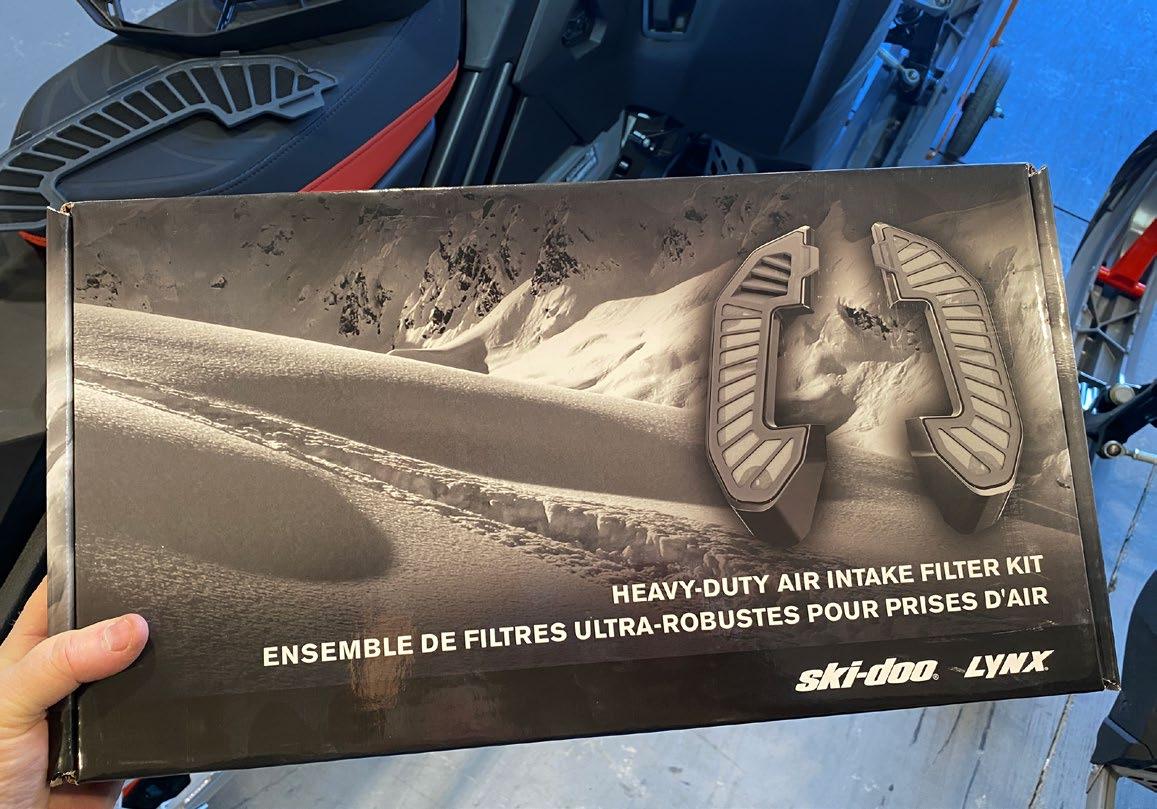
That’s why Ski-Doo offers a Heavyduty Air Intake Filter kit accessory that allows you to quickly remove the air filter and tap the ice mask off the screen. It was designed to keep snow from being sucked into the engine, yet allowing for easy cleaning for engine breathing.
QUICK INSTALL
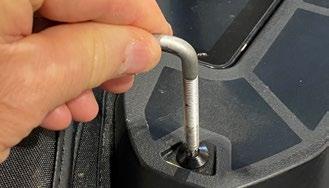
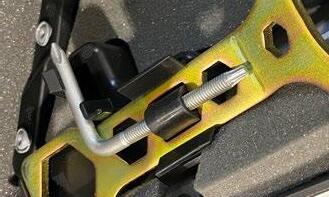
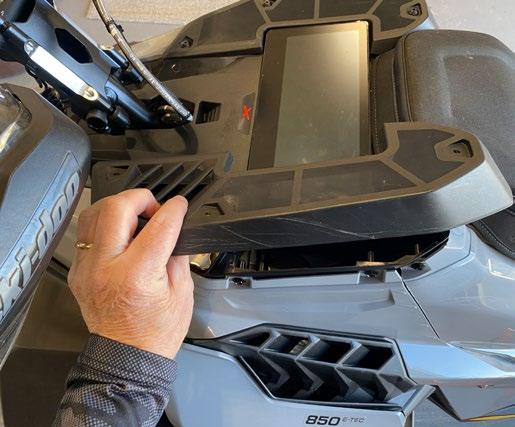
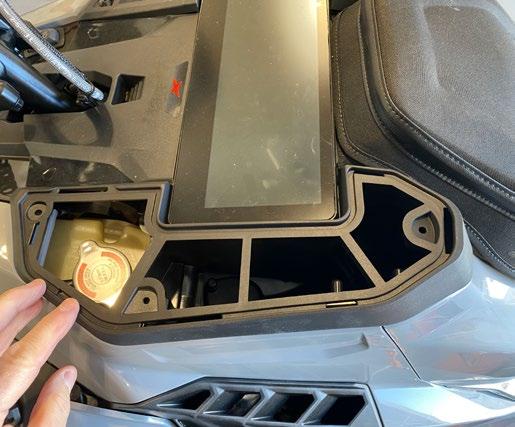
Basically, the kit consists of two base pieces and two snap-in/snap out filters. You simply remove the three screws that secure the stock filter to the hood,
then attach the base with the same three screws. Then repeat the process on the other filter.
It takes less than five minutes to install and only requires a hex screwdriver which already comes in your snowmobile. The kit can be purchased at any Ski-Doo dealership and costs about $144. The part number is 860202459 for any REV Gen5 deep snow sled.
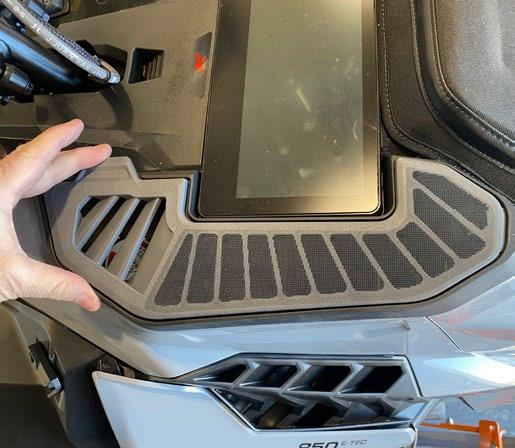
Once installed, the kit looks great.
The filter prevents snow and water being sucked into the engine while allowing easy cleaning on those powder days when snow tends to cake to the air intakes. The filter can be easily removed in seconds, without the need of tools, and as easily re-installed. In case you may have already damaged your stock air filters, it makes perfect sense to replace them with this deepsnow filter system.
So, take a deep breath, and allow your sled to also breathe freely. It just makes for better riding. d
COVERING UP WITHOUT BLOCKING OUT AIRFLOW
(top) This is a simple accessory that will make those deep powder days even more enjoyable. (above) Simply remove the three hex screws which hold each of the two hood filters found on your snowmobile. The hex tool can be found on your snowmobile.
Remove the stock air filter and replace it with the base of the Heavy-duty Air Intake filter.
Here’s a look of the Heavy-duty Air Intake filter out on the snow.
Then snap in place the second piece of the Heavy-duty Air Intake filter.
Here’s a look with the Heavy-duty Air Intake filter installed on the left side and the stock filter on the right side..
BC LINK MINI RADIO PERFECT FOR SNOWMOBILING TALK TO ME
BY STEVE JANES
We’re not sure there has ever been a ride in the history of snowmobiling when that one person who always tends to wander away from the group costs the entire group precious snowmobiling time either sitting around waiting or having to split up and search.
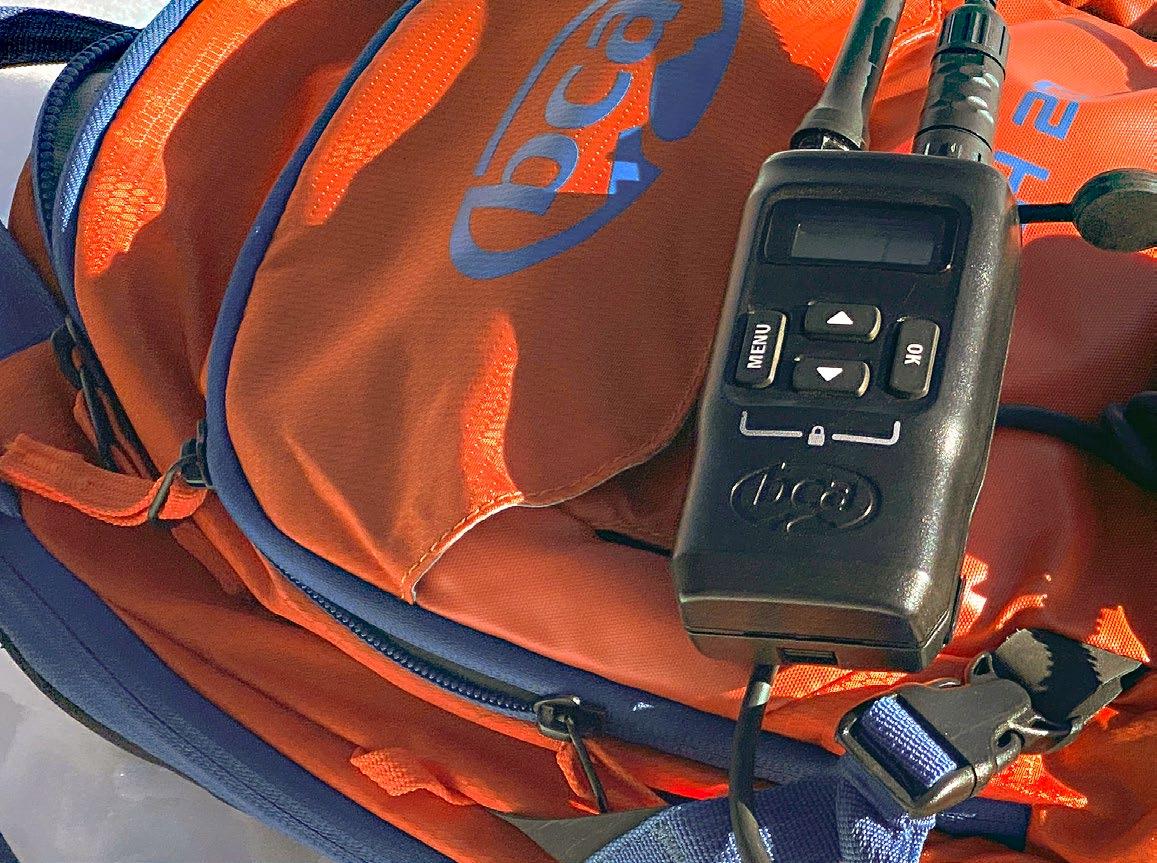
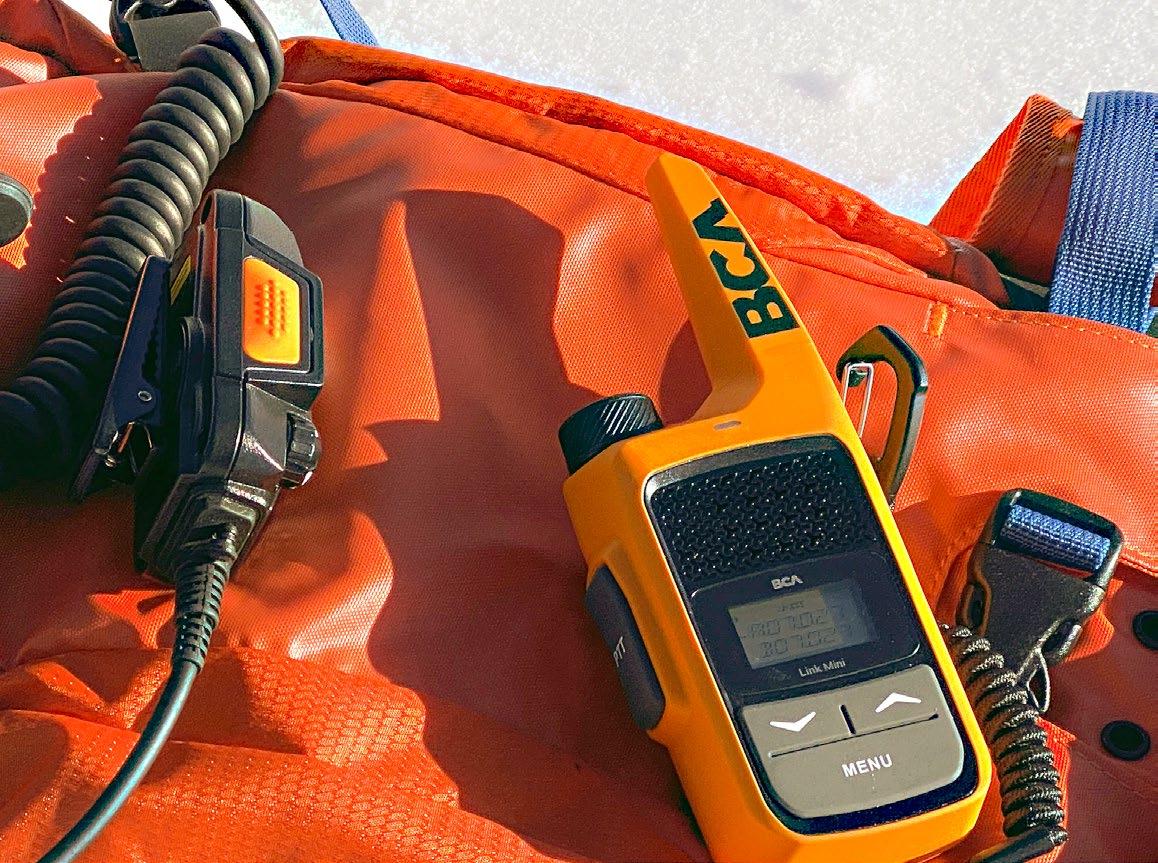
The BC Link Mini radio makes it quick and easy to communicate with each other out on the snow, giving locations, informing on status (I’m stuck … help!) and allowing the group to enjoy their day and eliminate time wasted by missing riders.
Although BCA radios have been around for quite some time, we decided to test the new BC Link Mini with our older model BCA radios to see if the improvements are worth the $120 it costs to upgrade.
QUICK ANSWER—DEFINITELY WORTH UPGRADING.
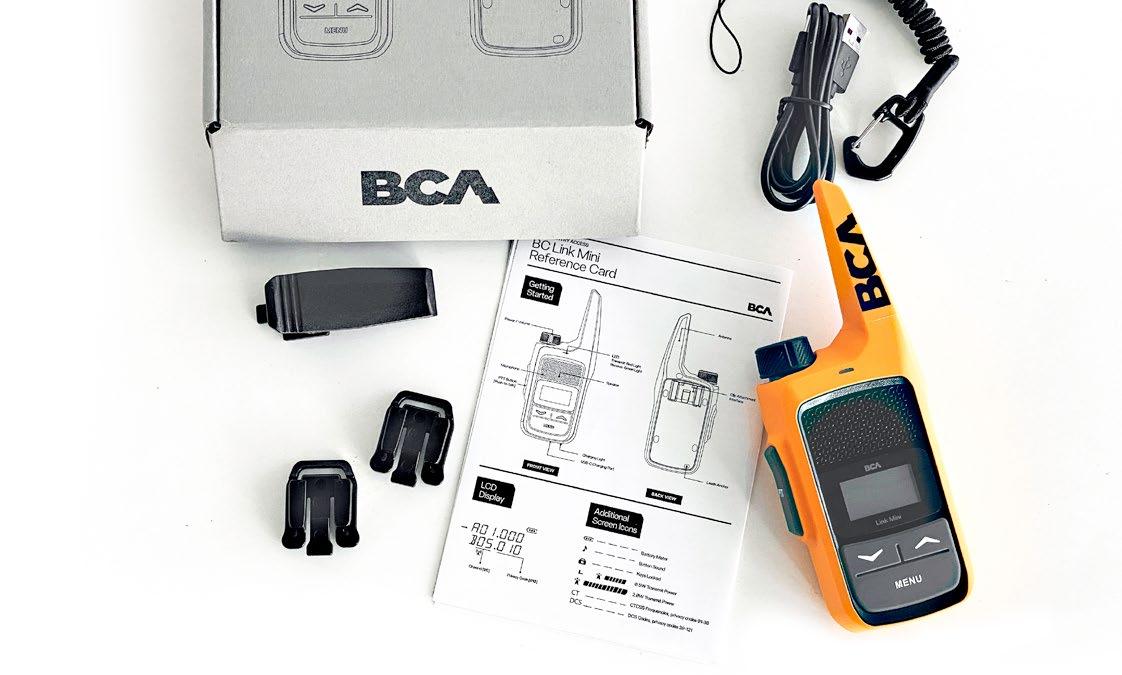
The new BC Link Mini radio is a durable single-unit radio designed for backcountry riding. This means you don’t have the radio base unit attached to the mic/speaker control with a twirly cord. It’s simple, easy and can either be attached to your backpack or tucked away in a coat pocket.
ON-THE-SNOW TESTING
To see if the cost of replacing our older radios would be a good investment, we took them with the new BC Link Mini radios out into the mountains with tight drainages and terrain obstructions.
Within a mile’s radius, both new and older radios did a solid job with clear sounds and strong transmission signals. With a ridgeline between, the Link Minis maintained a strong transmission while the older model displayed some signal static, but the words were still audible.
When we stretched the distance out to two miles, the transmission between the Link Minis was still clear. The transmission between the Link Mini and older radio was barely audible. The transmission between the two older radios inaudible.
Only when we went five miles down a twisty canyon did we find the Link Minis out of range. BCA doesn’t make any boastful claims about the Link Mini’s range of reception. It claims a modest half-mile up to six miles coverage in terrain. For flatlanders, the lineof-sight range is listed up to 32 miles in coverage… but out West we seldom get that kind of distance without a
mountain in between so we didn’t bother testing.
The waterproof Link Mini has a twowatt battery power and utilizes 22 FRS channels with 121 sub-channels to ensure minimal interference with dual channel presets. It is compatible with standard FRS radios and GMRS radios operating on shared FRS frequencies. The rechargeable battery is an 1800 mAh battery with a USB-C charging port. It has a battery life of up to 33 hours per charge.
The Link Mini is only 6.25x2.5x1.25inchs big and weighs 6 ounces. The best thing about it is that it doesn’t have the twisty cord connecting the radio body with the mic/speaker. This makes it extremely convenient to handle and to take inside for charging.
So, if you want a more convenient, clearer sound and stronger signal out on the snow, it’s a no-brainer to upgrade the older models, or introduce your riding group to the value of carrying Link Mini radios before you hit the backcountry.
Time is money … so don’t waste it looking for that one guy in your group who always tend to wander off on every ride. d