



















IMAGINE MAKING AN E XTR A $139/AC. NO SERIO USLY.
Compared to straight UAN, Yara’s calcium nitrate solutions deliver higher yields, increased nitrogen use efficiency and improved storability – all with a lower carbon footprint. If you can find a crop nutrition solution that adds more value to your potato acre than YaraLiva calcium nitrate, buy it.
CN-9 & C AN-17
Only available from leading
$24.00
PRESIDENT
PUBLISHER
Jason Harris
EDITOR
Lane Lindstrom lane@potatogrower.com
ADVERTISING DIRECTOR
Rob Erickson rob.erickson@potatogrower.com
PRODUCTION
Sandon Wixom
GRAPHIC ARTISTS
Laci Thompson
CIRCULATION
Chuck Harris
IT DEPARTMENT
Chuck Harris
ACCOUNTING
Clayton Ward
Mailed under a standard rate mailing permit at Idaho Falls, Idaho, and at additional mailing offices.
Also Publishers of SugarProducer
NATIONAL POTATO COUNCIL (202) 682-9456 www.nationalpotatocouncil.org
POTATOES USA (303) 369-7783 www.potatoesusa.com
FOUNDED BY Darryl Harris
CORPORATE OFFICES:
HARRIS PUBLISHING INC. 190 E 1st Street Idaho Falls, ID 83401 208-523-1500 www.potatogrower.com
FEBRUARY 3-5
WPVGA & UW Division of Extension Grower Education Conference & Industry Show
Holiday Inn Hotel & Convention Center Stevens Point, Wisconsin Wisconsinpotatoes.com/events
FEBRUARY 3-5
Southern Rocky Mountain Agriculture Conference
Ski Hi Regional Event Center Monte Vista, Colorado www.agconferencesrm.com
FEBRUARY 3-5
Spokane Ag Days
Spokane Convention Center Spokane, Washington agshow.org
FEBRUARY 10-12
World Ag Expo
International Agri-Center Tulare, California worldagexpo.com
FEBRUARY 11-14
National Farm Machinery Show Kentucky Expo Center Louisville, Kentucky farmmachineryshow.org
FEBRUARY 12-14
Montana Agri-Trade Exposition MetraPark Billings, Montana themateshow.com
FEBRUARY 17
UNITED POTATO GROWERS OF AMERICA (801) 266-5050 www.unitedpotatousa.com
ALLIANCE FOR POTATO RESEARCH & EDUCATION www.apre.org
POTATO ASSOCIATION OF AMERICA (734) 239-8022 www.potatoassociation.org
Printed in Idaho Falls, ID by Falls Printing rob.erickson@fallsprinting.com
INTERNATIONAL POTATO CENTER www.cipotato.org
Northland Potato Growers
Association Annual Meeting Alerus Center Grand Forks, North Dakota https://northlandpotatoes.com/
FEBRUARY 18-19
International Crop Expo Alerus Center
Grand Forks, North Dakota www.cropexpo.com
FEBRUARY 19-20
USDA Agricultural Outlook Forum
Crystal Gateway Marriott Arlington, Virginia www.usda.gov/oce/ag-outlook-forum
FEBRUARY 19-21
Western Farm Show
American Royal Complex
Kansas City, Missouri westernfarmshow.com
FEBRUARY 23-26
NPC Washington Summit Hilton Washington DC National Mall The Wharf Washington, DC www.nationalpotatocouncil.org
FEBRUARY 25-27
Commodity Classic
Henry B. Gonzalez Convention Center San Antonio, Texas www.commodityclassic.com
FEBRUARY 26-MARCH 1
Southern Exposure Orlando World Center Marriott Orlando, Florida www.seproducecouncil.com
MARCH 9-12
Potatoes USA Spring Meeting Denver, Colorado www.potatoesusa.com
MARCH 19-21
North America Farm and Power Show Four Seasons Centre Owatonna, Minnesota www.tradexpos.com
MARCH 24-26
64th WPS Farm Show
Experimental Aircraft Association Grounds Oshkosh, Wisconsin
Wisconsinpublicservice.com/partners/agriculture/farm-show/
APRIL 8-9
Idaho Grower Shippers
Association Spring Swing
South Pointe Hotel Las Vegas, Nevada www.idahoshippers.org
JULY 26-30
Potato Association Of America Annual Meeting New Orleans Marriott New Orleans, Louisiana potatoassociation.org

Lane Lindstrom, Editor
When it comes to my college football game prognistacting, it turns out I am not immune to the downturn in the potato industry this season, although I readily admit I don’t have anything at stake in my football picks compared to the hard-working potato growers who are suffering mightily this growing/ marketing season.
Just as it has been up and down for potato growers across the U.S., my football picks for the recently ended college football season were also up and down.
I branched out a little this year by including teams I don’t normally follow. That turned out okay as some of my successful picks in those games helped my winning percentage because some of the teams I follow more closely let me down this past season.
After a pretty darn impressive 6-1 (.857) record a year ago, I slipped some this past season, finishing with a 7-4 (.636) record. That’s not awful but it is disappointing.
If I were to very loosely compare my football prognosticating to this past potato season, I would say my season picks started out with a bang. Generally speaking, the planting season across the major potato-producing
states was favorable, hopes were high and there was a lot of optimism as the season began.
Across the country, the number of acres planted (901,000) was more than 30,000 acres fewer than in 2024, leaving many growers hopeful that that would be helpful when it came to prices after harvest.
Optimism remained good as the growing season progressed and the potato crop was looking good. But as fall approached, you could sense some anxiousness as growers were gearing up for the harvest.
That’s about when my season’s football picks unravelled. If I could have lopped off the last two or three weeks of the college football season, I would have fared better, but hindsight is 20/20, as they say.
When we have to make decisions prior to having all the details, it can be tough. Trying to pick a winner of each football game I chose was for sure challenging. Now if I could have chosen the winner of an upcoming game after a previous game was finished, I might have had a perfect record. But alas, that wasn’t the case. As the season grinds on, some teams end up being a flop while others shine when they weren’t expected to, players get hurt and either miss a few
games or the rest of the season and then any number of other things can happen that affect a season – and my picks.
Sure, I did my research prior to the start of the season, basing my predictions on that research, which includes past history and other experts’ predictions for the season. But I admit, against my better judgment, I picked a couple of teams to win and even got a little greedy on a couple of choices. And it showed in my final tally. Looking back, I can easily see that I made some poor choices.
From what I’ve been hearing this past fall and early winter, some notso-good choices were also made in the potato industry. One of the most telling things I heard during this year’s Potato Expo in Dallas came during the Potato Business Meeting. One of the speakers at that event said, “We don’t have a demand problem; we have a supply problem.”
I’m not here to point fingers but it was a little uncanny how my college football picks somewhat mirrored the potato industry these past few months. As much as I’d like to have had a better result from my football picks, I wish more that the potato industry could climb out of the hole we’re in.
So here’s to hoping for better days. n

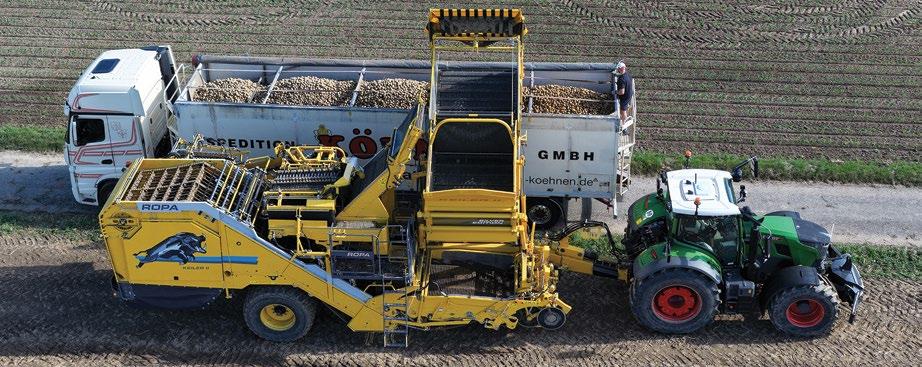
With e-LS connect, ROPA and Fendt present a groundbreaking advancement in hydraulic communication between tractor and implement. For the first time, the system enables fully electronic communication of the required oil pressure via ISOBUS – without a separate hydraulic load-sensing control line.
This marks a new level of precision, efficiency and system stability between tractor and implement.
For nearly 30 years, the communication of hydraulic oil pressure between tractor and implement has been based on a physical load-sensing line (LS).
With e-LS connect, this connection is now being fully digitalized: the required oil pressure is transmitted electronically from the implement to the tractor via ISOBUS, allowing the hydraulic pump to precisely regulate the pressure needed for the desired flow rate.
As a result, components such as pressure control valves, sensors and LS signal lines become obsolete – reducing potential failure points, increasing operational reliability and simplifying the coupling and uncoupling process.
In field operation, the ROPA Keiler 2 RK22 potato harvester demonstrates the full potential of e-LS connect. Functions within the working hydraulics, such as bunker unloading, respond even faster and with greater precision. At the same time, fuel consumption decreases because the hydraulic pump continuously operates with
Premium details and muscle meet in the CFMOTO UFORCE U10 Pro Highland. It’s got a sealed, climate-controlled cab that laughs at minus 10 degree F weather and shrugs off 110-degree F heat. Premium seats, power windows and a whisper-quiet headliner make it feel more SUV than UTV. Underneath, a 998cc triple-cylinder engine serves up smooth power and serious torque. The 8-inch RideSync display with Apple CarPlay keeps you informed and entertained.
the optimal control pressure differential. The outcome: greater efficiency, improved crop quality and increased overall profitability.
By eliminating hydraulic couplings, leak oil losses and dirt ingress are prevented – a clear contribution to environmental protection. Operator comfort is also enhanced: the driver no longer needs to manually adjust pressure differentials and workshop visits for calibration are no longer necessary.
Existing Fendt tractors of the 500 Vario Gen4, 600 Vario, 700 Vario Gen7/7.1, and 800 Vario Gen5 series can be prepared for e-LS connect via software update starting June 2026.
For existing ROPA Keiler 2 RK22 machines, e-LS connect will be available through a software update beginning in 2026.
With e-LS connect, Fendt and ROPA jointly set a milestone on the path toward cross-manufacturer, standardized hydraulic networking in modern agriculture. By fully digitalizing hydraulic communication, the efficiency gains are realized across the entire machine chain – from tractor to implement.
For operators, this means more precision, comfort, and sustainability in everyday use.
For more information, visit www.ropa-maschinenbau.de/


From high country job sites to remote hunting camps, the Highland brings first-class comfort and full-send capability — right from the factory.
Highlights And Feature - 998cc 3-Cylinder Engine
This 12-valve DOHC inline triple with VVT and EFI isn’t just strong — it’s smooth, responsive and built to pull. With 88 hp and torque that digs deep, the Highland tows over 2,500 lbs. without breaking a sweat.
Luxury Cabin. Work-Ready Toughness.
This is the high-end interior your gear deserves. Quiet. Roomy. Durable. With high-grade materials, precision stitching and a sound-dampening headliner, it’s the kind of space you won’t want to leave — except to get things done. All-Season HVAC, All-Weather Advantage
The factory-installed HVAC system delivers true four-season comfort. Integrated into a sealed, dustproof cab, it pumps consistent airflow where you need it — heat, AC or defrost. Oversized vents, intuitive controls and a 150-amp charging system keep everything running strong, no matter the weather.
1000-lb.
Built for real work. Haul gravel, logs or hunting gear — then dump it fast with the push of a button. With rugged build quality and a 1,000-lb. payload, this cargo bed earns its keep.
8-Inch
This user-friendly interface provides real-time information at your fingertips. Access maps, vehicle diagnostics and Apple CarPlay with just a tap, ensuring you stay informed and entertained on every adventure.
This high-output system ensures consistent operation of the factory-installed HVAC while leaving room for additional light kits, accessories and tech upgrades. Built into the cab are a 12V outlet, a USB-A port and a fast-charging USB-C port — giving you the ability to power devices, charge phones and run electronics without draining the system. Competitors often struggle to provide this level of charging capability, making the Highland the clear leader when it comes to powering both comfort and functionality.
Lightweight, tough and wrapped in traction-hungry CSTs, these 29-inch tires chew through anything you throw at them.
Push-button Shifting And Dual Drive Modes
Shift with a tap. Choose between WORK or NORMAL modes. Whether you’re crawling over rocks or cruising the fence line, this system makes the most of every horsepower.
A sound system standard? Believe it. Crisp, clear audio transforms every ride — from backwoods runs to fence-post duty — with the soundtrack of your choosing.
Colors Bordeaux Red, Nebula Black, True Timber Kanati MSRP $24,499/$24,949 Camo model (plus freight and setup) It comes with a 1-year factory warranty.
For more information, visit https://www.cfmotousa.com/.
Loveland Products, Inc. has announced the launch of WEATHER GARD ELITE, a next-generation all-inone adjuvant designed to make spray applications simpler, more effective and easier to manage.
Building on years of trusted performance from two of their high-performing adjuvants, this enhanced formulation combines multiple functions into one easy-to-use product, now available in totes for greater convenience and flexibility.

WEATHER GARD ELITE is a water conditioner integrating a drift reduction agent, deposition aid, antifoam/ defoamer and a penetrant, into a single, lower viscosity liquid. The lower viscosity makes it easier to handle, measure and mix, helping applicators spend less time at the tank and more time in the field. The new formulation is powered by LECI-TECH technology, which improves droplet deposition, spreading and overall spray performance for optimized results in every pass.
In a 2025 field trial in Renville, MN, WEATHER GARD ELITE achieved 45 percent spray coverage, outperforming its predecessor, WEATHER GARD COMPLETE, which achieved 42 percent spray coverage. The product’s low viscosity ensures improved handling, better mixability and smoother storage in bulk systems. It’s also optimized for glyphosate and 2,4-D formulations, including Enlist and other D-trait systems such as MAKAZE.
• All-in-one convenience with five adjuvant functions in a single liquid formulation
• Improved droplet deposition, spreading and penetration for better coverage
• Reduced foam and drift for more precise applications
• Enhanced water conditioning for consistent spray quality
• Easier handling, mixing and storage
Every Loveland Products innovation goes through rigorous evaluation by the Technical Development Team, ensuring consistent performance and reliability under real-world conditions. WEATHER GARD ELITE is the latest example of Loveland’s commitment to advancing spray technology and supporting growers with tools that improve efficiency, sustainability, and yield potential.
For more information, visit nutrienagsolutions com and lovelandproducts.com. n
NOT A BIOLOGICAL. NOT A BIOLOGICAL. NOT A SYNTHETIC. NOT A SYNTHETIC.

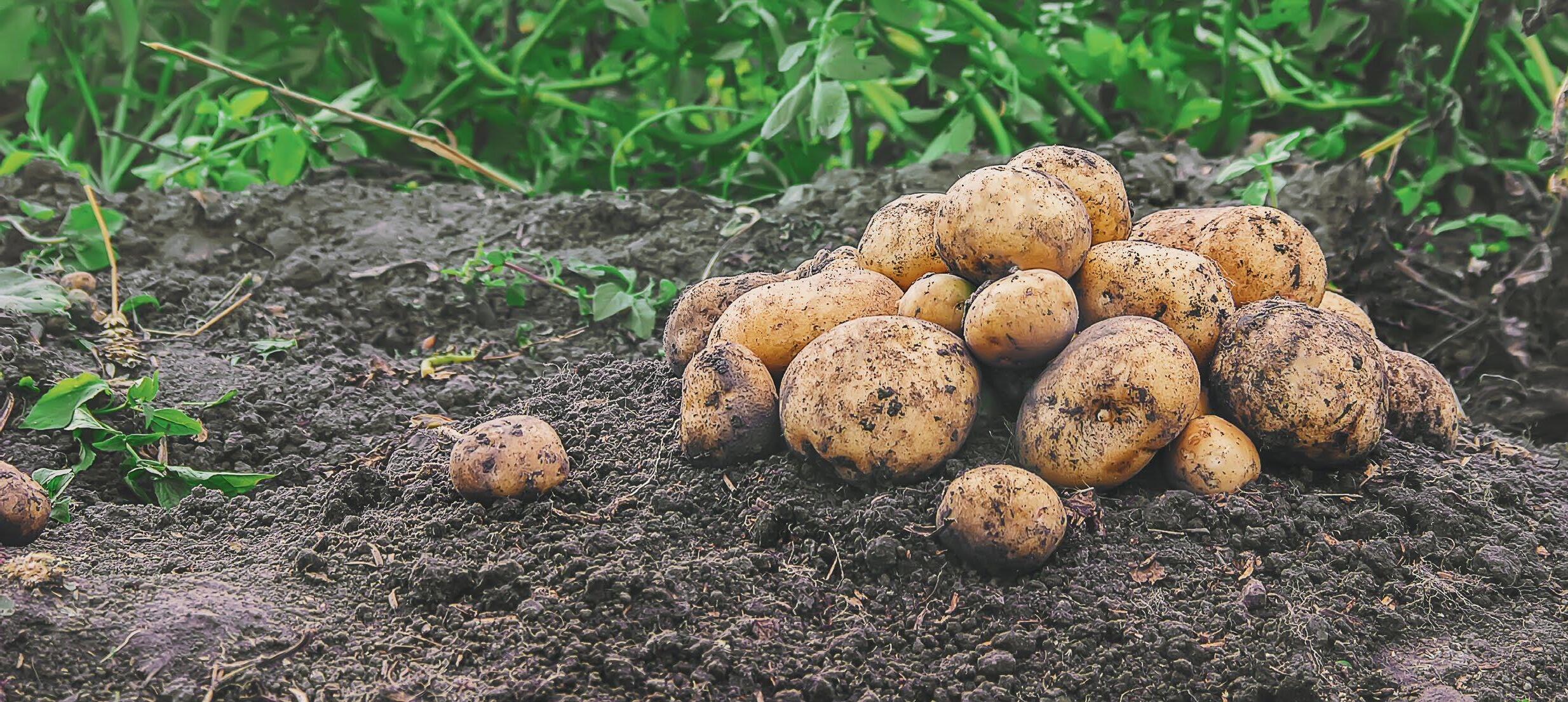
Add PhycoTerra to your potato operation to feed soil microbes and deliver up to an ® 11:1 ROI



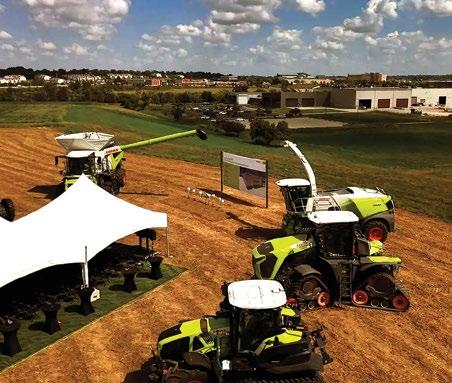
On August 29, 2025, Jan-Hendrik Mohr, CEO of CLAAS Group, returned to a familiar plot of land in Omaha, Nebraska, to break ground on a new 44,800-square-foot Research and Development Center that will add new jobs and support the local economy.
More than 25 years ago, Mohr had a different title and a different mission: to turn an empty field on the edge of the city into the future home of CLAAS in North America. Today, the campus looks much different with the sprawling corporate offices of CLAAS of America, an assembly plant that has produced 10,000 LEXION combines for American farmers, and the recently added CLAAS Training Academy.
It is home to more than 250 employees. The new CLAAS Research and Development Center will overlook the rest of the campus, sitting on the southwest corner of the property.
After returning to Germany from his multi-year assignment in Omaha, Mohr worked hard to ensure that his investment in the American market would continue to flourish. Now more than ever, the U.S. and Canadian markets are critical to the success of the family-owned, global ag equipment company.
CLAAS is fully dedicated to building ag equipment that enables North American farmers to be the best in their fields – and that includes the corn and soybean fields of the Midwestern U.S., the wheat and canola fields of the northern plains and western Canada, the rice fields in the Mississippi River Delta and beyond. As CLAAS develops next-generation technology for future machines, an advanced R&D Center in Omaha is needed to ensure its prototypes meet the demands of North American farmers and the fields they farm.
The new facility will have a 44,800 sq. ft. footprint, including approximately 12,000 sq. ft. under roof — creating a space that’s more than 25 percent larger than
the temporary off-site shop currently used for research and development. The plans feature two stories of office space, an expanded room for instrumentation, greater utilization of space for logistics, and an internal, heated wash bay. The facility will also provide greater physical and electronic security measures for protecting critical intellectual property.
The new CLAAS Research and Development Center will be the hub for all North American testing activities. While much of the testing will take place on farms throughout the country under various soil, weather, and crop conditions, the analysis of those tests will be interpreted by engineers working in the new facility.
The company’s commitment to the U.S. market, including the assembly of LEXION combines, where approximately 40 percent of the components are made in America, was established decades ago and will continue for many years to come, starting with this new Research and Development Center.
For more information, visit www.claas.com.
The Washington State Potato Commission has announced the approval of a new bioinformatician position funded through the recently enacted federal appropriations package — an important investment that will directly strengthen potato breeding efforts and deliver long-term benefits for Washington potato growers.
This new position comes at a pivotal moment for potato research. Advances in genomics have dramatically increased the volume and complexity of genetic data available to breeders, creating both opportunity and urgency. Dedicated bioinformatics expertise is now essential to translate that data into practical on-farm outcomes, including improved yields, disease resistance, storage quality, and adaptability to changing environmental conditions.
The bioinformatician will work directly with potato breeders to analyze genomic data, accelerate trait discovery, and streamline the development of new potato varieties. By strengthening this critical link in the breed-
ing pipeline, the position will help shorten the time it takes for research breakthroughs to reach growers’ fields and storages — supporting farm profitability and market competitiveness across Washington’s potato industry.
“Washington state farmers produce the best potatoes in the country, and I am glad to have championed this effort as we negotiated this bill to secure new funds for a potato bioinformatician who will lead crucial new genetic research efforts to help our potato farmers in the Columbia River Basin grow more resilient and productive crops,” said U.S. Senator Patty Murray.
The Washington State Potato Commission thanks Senator Murray for her leadership on the U.S. Senate Appropriations Committee and for her continued commitment to Washington agriculture. WSPC also appreciates the close coordination with the senator’s staff throughout the appropriations process to ensure this investment reflects the real needs of potato growers and strengthens long-term research capacity in the state.
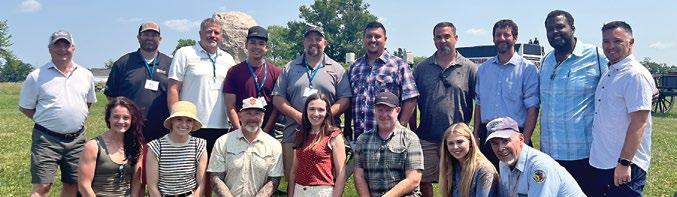
The Potato Leadership, Education, and Advancement Foundation (Potato LEAF) has announced that applications are now being accepted for the 2026 “Leadership in the Field: From Battlefield to Potato Field” program, held July 13-16, at the Gettysburg National Military Park in Gettysburg, Pa.
Throughout the program, in cooperation with the Gettysburg Foundation, participants learn about the elements of the battle as they visit various areas of the battlefield and how ordinary people were asked to do extraordinary things that impacted the war.
The Battle of Gettysburg offers a robust case for the study of leadership: the complexity of battle, the size of the opposing armies, and the wide spectrum of personalities represented by the military leadership and civilians offer a wide range of perspectives.
Character, communication, team building, humility, flexibility, resilience, strategic or visionary thinking, problem-solving under pressure, and accountability are just a few of the many lessons for which experiential learning at Gettysburg is effective.
What 2025 “Leadership in the Field” participants are saying:
Kali Bagley (Waterford, Mich.), Downey’s Potato Chips
“This was truly an unforgettable experience that changed who I will be as a leader for the rest of my career and life. Since finishing the program, I have considered or actively used knowledge and teachings that I learned from the program nearly every single day and my goal is to continue to do so that I may shape and improve my leadership style daily, thanks to the takeaways from this program. Without a second thought, I would recommend anyone aspiring to be the best leader that they possibly can be to complete this program.”
Tim Kunze (Indianapolis, Ind.), Black Gold Farms
“The program is by far one of the most engaging leadership programs I have attended. It’s surprising to see how a battle that took place over 160 years ago still resonates with the challenges we all face in our operations today.”
Applications are being accepted through March 6, 2026, and open to anyone in the U.S. potato industry. Participants will be selected with preference
given to individuals who have participated in leadership programs and are currently serving or have served in industry leadership roles.
The fee for selected participants is $2,100, which includes all programming
by Licensed Battlefield Guides, most meals and lodging at the Gettysburg Hotel in downtown Gettysburg. The cost of travel is not included in the program fees.
For more information, visit pleaf.org/leadership-in-the-field.


Potatoes USA’s international marketing efforts in Taiwan saw significant momentum this past marketing year, thanks to support from USDA’s Foreign Agricultural Service through the Market Access Program. From July 2024 through June 2025, U.S. potato exports to Taiwan continued to rise, despite intensifying competition from foreign suppliers.
During the year, exports grew 16 percent in value, from $99.1 million to $114.5 million, and 9 percent in volume, from 75,136 MT to 82,172 MT. Frozen potato products remained the engine of growth, accounting for 78 percent of all U.S. potato shipments. MAP-funded promotions, menu innovation and consumer marketing strengthened U.S. potatoes’ reputation for quality and versatility — leading to record sales and deeper engagement with key industry partners.
Work with major importers E-Star
and Good Land Foods helped introduce several new frozen potato products to Taiwan’s foodservice market, including Colossal Crisp fries, Tin Roof cuts, curly fries, and star-shaped tater drums. These efforts led to seven new U.S. potato SKUs being added by Taiwan’s top five importers — exceeding program goals.
The following promotions helped drive consumer demand:
• “Back to SVNTEEN” at Second Floor Café: Running July 15-August 20, 2024, the promotion increased U.S. potato usage by 1.3 MT (+11.3 percent) and generated more than 308,000 social media impressions.
• Lazy Pasta Uber Eats Campaign: From April 14-June 1, 2025, this activation increased sales by 42 percent and boosted U.S. potato usage by 48 percent, from 820 kg in May 2024 to 1,213 kg in May 2025. Lazy Pasta kept the new potato dishes on its menu due to continued customer demand.
• “Golden Bites, U.S. Quality” Campaign: Held June 14-29, 2025,
across 24 outlets and five chains, the promotion increased U.S. potato usage by 27 percent, launched eight new menu items, and delivered sales growth for 80 percent of participating brands.
Menu innovation played a major role in building excitement. The U.S. Potato Innovative Menu Development Campaign resulted in 15 new signature dishes across 14 restaurants, more than doubling initial targets and expanding the ways local chefs incorporate U.S. potatoes into Taiwanese and Western cuisine.
Retail promotions also delivered impressive outcomes. Costco Taiwan achieved record sales during promotional periods, with nearly 13 MT of U.S. fresh potatoes sold — a 100 percent + increase over pre-promotion sales.
Other key retailers reported strong demand as well. RT-Mart sold 66 MT of U.S. potatoes between October and December 2024, underscoring the growing preference for high-quality U.S. product among Taiwanese consumers.
These results highlight how Potatoes USA’s international marketing programs turn awareness into long-term market success. Through sustained trade outreach, menu innovation, and targeted retail and foodservice promotions, U.S. potatoes are securing a stronger foothold in one of Asia’s most competitive import markets. n







































BY LANE LINDSTROM
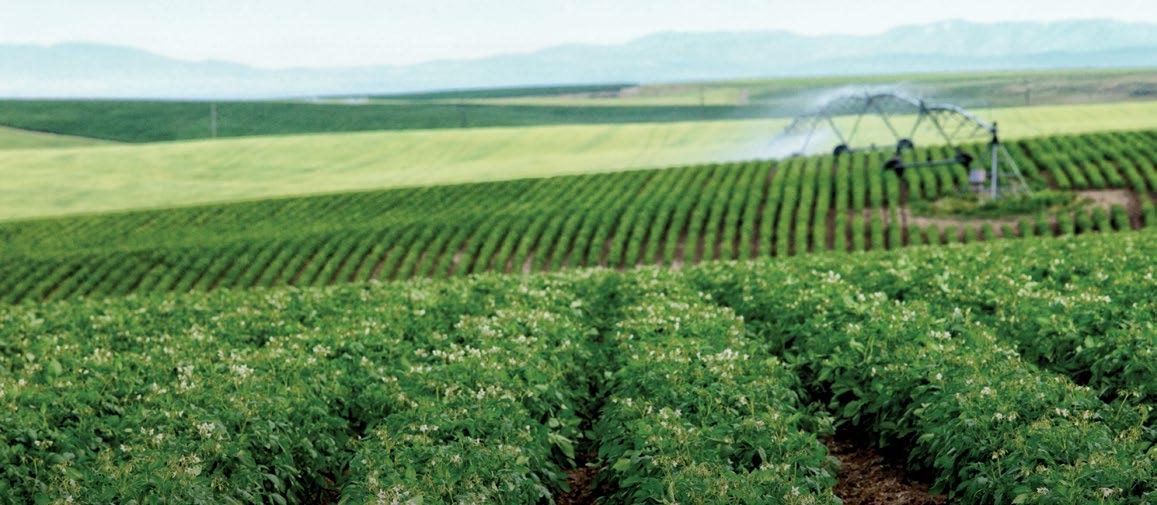
Seed potato growers gathered to hear Dr. Tim Waters speak at the 2025 Montana Seed Potato Seminar in Missoula, Montana, knew what direction his presentation was going early on just by reading his seminar title: “Evaluating Alternatives to Neonicotinoid Insecticides for the Control of Aphid Vectored Virus in Potato Seed.”
There might have been some trepidation among the growers at that seminar title as neonicotinoids, known also as neonics, are an essential tool for potato producers who are looking to control not only aphid issues but also the dreaded Colorado Potato Beetle.
Waters, a professor and regional vegetable specialist with Washington State University’s Extension program, assured those in attendance that he too is a fan of neonics because of their effectiveness and relatively inexpensive cost.
Early in his seminar, Waters extolled the virtues of neonics but then talked about the reality of this tool possibly being removed from potato growers’ toolbox in the future, maybe sooner than anyone would like. Waters also talked about research he’s involved in that is studying alternatives for the control of aphid vectored virus in potato seed should neonics were to go away.
Waters gave credit to Alan Schreiber and Dr. Andy Jensen for some of the informational slides in his presentation.
In talking about neonics and their being on the chopping block, Waters offered, “I’m pretty sure everybody in this room is familiar with what a neonicotinoid is. If we go outside of this room, and we go to people who are not involved in agriculture and say neonicotinoid, they don’t know what it means, really.
When you say pesticide, they start to think they know what it means and then they have a negative connotation with it. And honestly, if we boil down the neonicotinoid thing right now, that’s the problem we have; not everybody’s connected.
“Not many people are connected to agriculture anymore. They don’t really know where their food comes from, and they think that a pesticide is always a bad thing. We’re battling that a little bit.”
Inside the industry, neonics are a well-used tool. Waters then showed a pie chart outlining the results of a 2022 survey of growers in Washington’s Columbia Basin which revealed that the percentage of acreage treated with any number of neonics was 100 percent. “So, 100 percent of our conventional growers use a neonicotinoid either as a seed piece treatment, in-furrow or as a lay-by treatment,” Waters said. “That’s not a surprise. Neonics work well. That’s the reason we use them.”
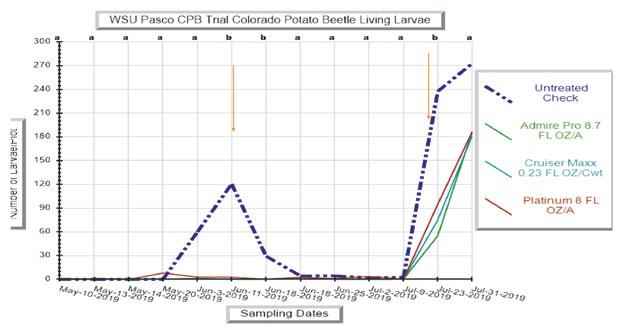
Neonics are important and work well, in part, Waters said, because of how long (residual) they work, which is sometimes up to 80 days, depending on certain conditions. But after that? Waters said he is sometimes asked if CPB are resistant against neonics after that time period. Explaining the results of the research in Figure 1 he said, “You see in the untreated check we get this big blip for the first generation. And then when the second generation comes on, our neonicotinoid is worn out. So, people ask me, ‘Are potato beetles resistant to neonicotinoids in Washington?’ No, they are not.”
He continued, “Sometimes people forget that because we have this comfort level when we put this neonicotinoid on and it lasts a long time. And then we get the second generation of potato beetles coming and they’re like, ‘These are resistant.’ It’s like, ‘No, you planted that 60 days ago’.”
He further explained what happens to a neonic’s effectiveness as the potato plant grows. “We can put [neonics] in furrow and they’re going to move up into the parts of the plant as that plant grows. The issue there, and we’ve done some work on this, is that as the plant grows, it dilutes the concentration of the neonicotinoid. So the more the foliar tissue that you have on the plant, the less concentrated the neonicotinoid is and the less effectiveness you’re going to have.
“When we get these early flushes of growth and the potatoes grow much faster than they normally do, people think that maybe there’s resistance there. It’s not resistance. It’s just that the plant has grown to such a level that the tighter level or that
concentration of the neonicotinoid has been diluted in the plant. So it’s dilution.”
Waters detailed, in his opinion, what the benefits of neonics are: inexpensive, effective, systemic, relatively broad spectrum, relatively long residual and safe for handlers. But, he said, there is no drop-in replacement for them, which is troublesome if neonics are phased out.
“The thing that’s frustrating is there’s really no drop-in replacement for these,” Waters said. “When companies are evaluating new insecticides, they’re looking for certain types of traits. And one of the traits the EPA doesn’t favor is long residual. They don’t want things to stick around in the soil for a long time. They don’t really want them to be in the plant longer than they need to be. So things that have a long residual and a broad spectrum are less likely to get registered now than they were 20 or 30 years ago.”
Waters said potato growers are fortunate in that they have several modes of action to help control potato pests and that will be an important thing going forward should neonics be taken out of the quiver. He said, “We have a bunch of different modes of action, and if we were to lose neonics, we could maintain our ability to control most of these pests with no loss in efficacy.”
However, there is a big but. “The problem is, it’s going to cost us more money and it’s probably going to take us more time to do that.” Additionally, Waters said, “What it’s going to do is force our growers to use more foliar insecticide programs, so more applications and some different modes of action. And when we use these foliar programs, there are some significant ramifications.”
Those ramifications include:
• The close-to-perfect aphid control/disruption of the aphid virus cycle in seed potatoes would be lost, which in turn increases a risk of the return of potato leaf roll virus (PLRV) and the specter of net necrosis.
• There is an entire generation in the potato industry that has not had to deal with PLRV and net necrosis.
• Growers would have to start scouting fields much earlier than is the current practice.
• There is a big concern that there would be missed aphid outbreaks, which would result in increased aphid and related disease outbreaks.
• An increase in costs.
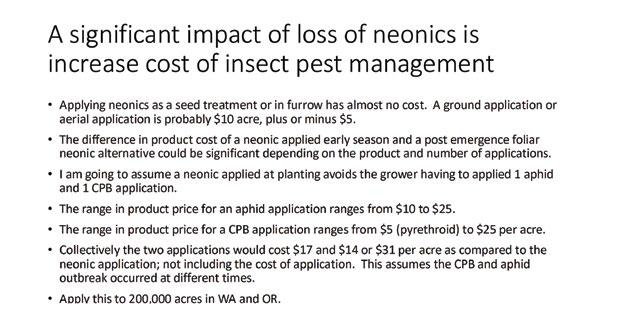
That final point is illustrated in Figure 2, which points that costs could more than double in some circumstances if neonics were off the table as a pesticide.
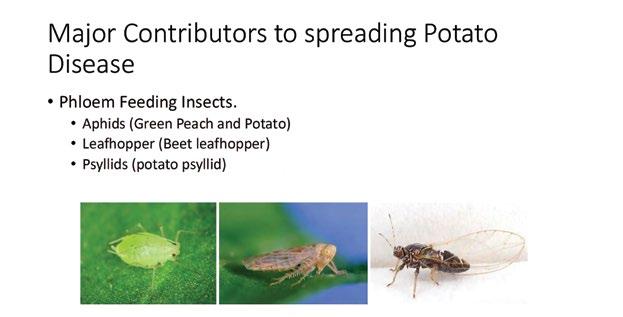
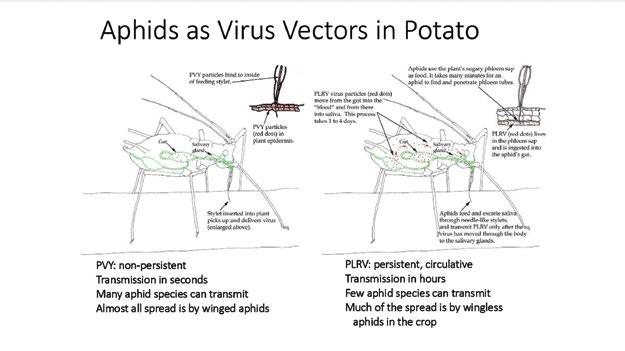
As every potato grower knows, the list of insect-vectored potato diseases is too long. Waters showed a slide of some of the most guilty of the insects that are real enemies of the potato industry (see Figure 3). He said, “There are a lot of different aphids that can feed on potato plants. But we really have two species that are of economic concern because they can colonize a potato plant. A lot of aphids come in, they feed and then they move on. When they colonize, that’s when they become a big problem because when they colonize, they have babies, they spread out and you get more juveniles and stuff moving around the plant.
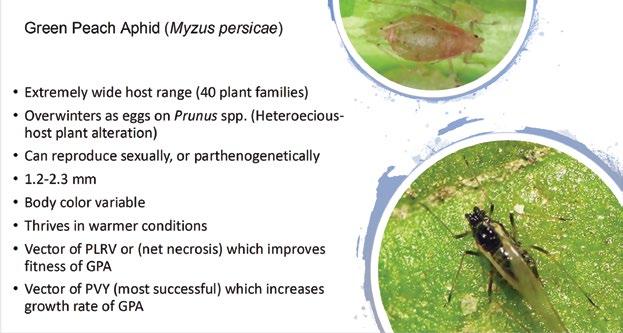
“We have the green peach aphid and the potato aphid, which are the major concern. The green peach aphid has an extremely wide host range. And this is why this is a big problem. If it just fed on potatoes, it wouldn’t be a big deal because we can control it in potatoes and it wouldn’t have another place to reproduce and survive. It feeds on 40 different plant families. That’s not species. When you look at species, it’s a ton of species.” (See Figure 4 and Figure 5)
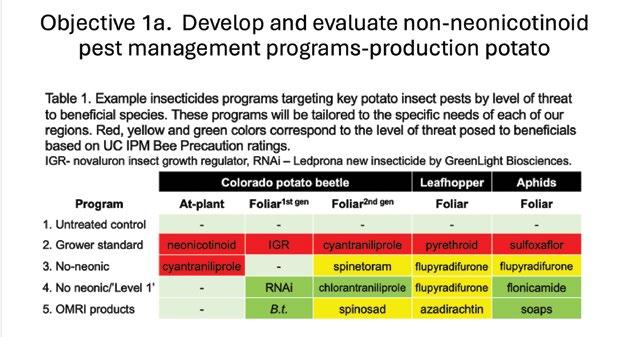
Now fast forward in Waters presentation to the part where he explained his part of a research team made up of entomologists from around the U.S. One of the team’s objectives and the one that Waters is involved in is developing and evaluating non-neonicotinoid pest management programs for seed potato growers and table stock growers.
As part of this objective, Figure 6 shows the five different programs. By way of explanation, yellow is less risky and green is relatively safe.
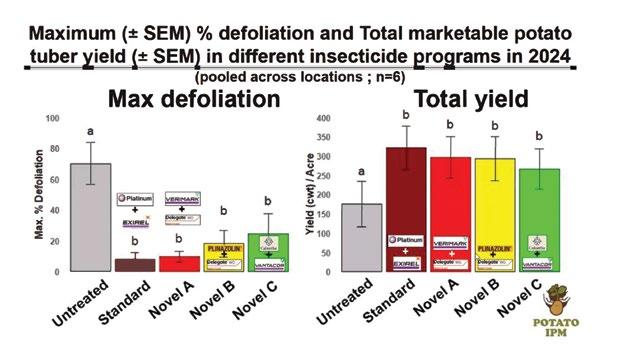
Waters explained (see Figure 7), “The neonic was a little bit better than those other programs, but that’s not surprising to me. So, boiling it down, this is first year data on this. We just talked about the second year a few days ago with the project group. We basically feel like we can preserve yield for the most part, but we’re going to have to increase applications.”
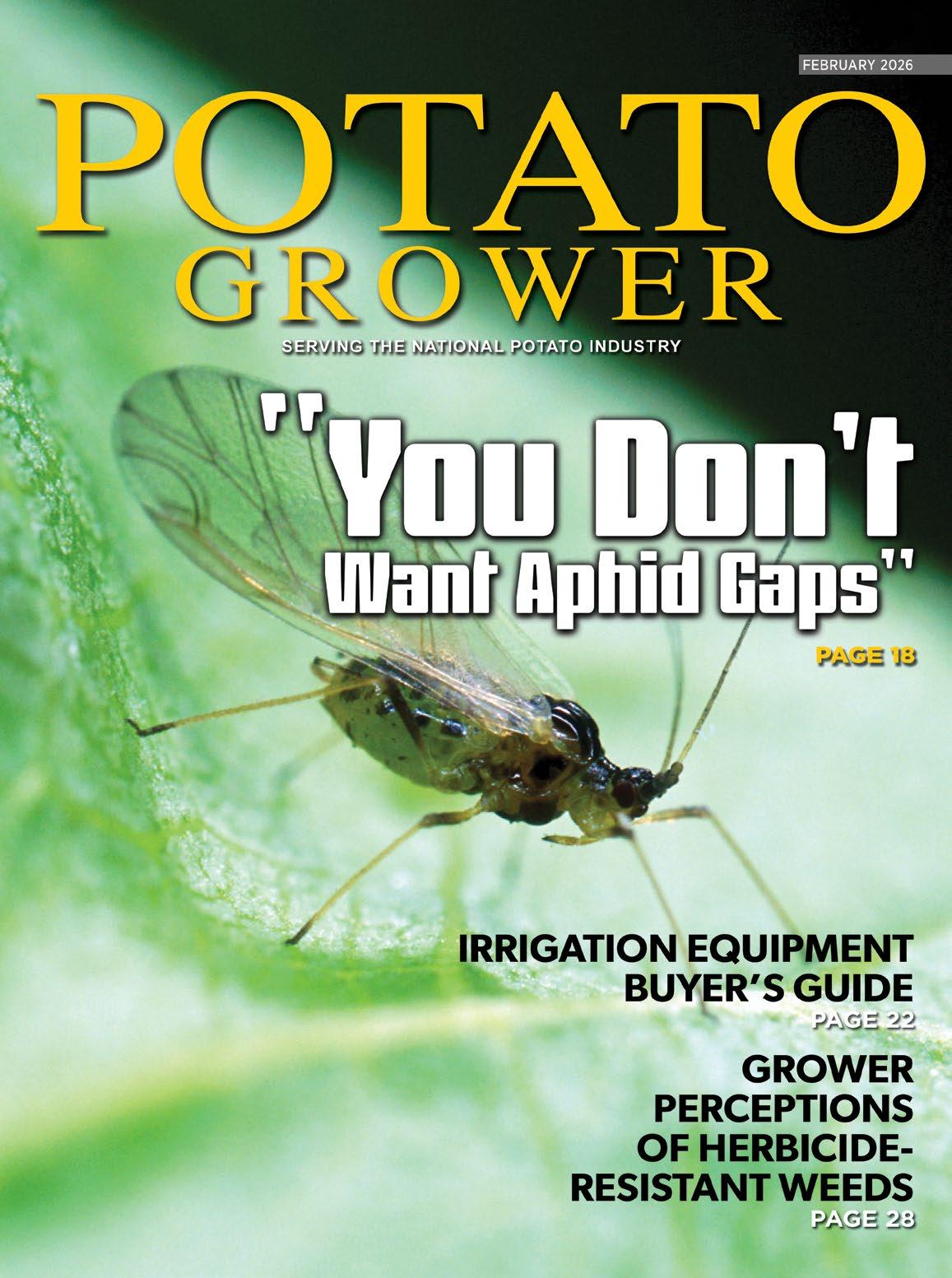
Of course, Waters presented a lot more data and survey results than we have room to share here, but he did make a point to say, “You don’t want aphid gaps. You just don’t want gaps in your aphid control program. You can’t afford that. You want to use the most effective insecticides possible and I still think even though we didn’t prove it in this trial, control without neonics is possible. It’s going to be more expensive and it’s going to be more difficult.”
He then ended his presentation with these suggestions:
• Do scout fields often and appropriately.
• Do use a neonicotinoid at planting or lay-by.
• Do know IRAC codes.
• Do monitor early and often for insect pests (nymphs and leaves).
• Do start controlling difficult pests early, not late.
• Do use good surfactants.
• Do buffer spray solution when recommended by label.
• Do remember factors that influence insect pressure (seasonality, temperature, previous chemical applications, nearby hosts – crop and non-crop).
• Don’t use foliar neonicotinoid if used at planting; this includes package mixes.
• Don’t use any mode of action more than two or three times during the growing season.
• Don’t use calendar-based spray programs.
• Don’t use pyrethroids mid- to late-season (most of the time).

• Don’t wait too long to start controlling difficult pests; you will not be satisfied with the results.
• Don’t spray everything you see in your fields. n
Dr. Tim Waters is a professor and regional vegetable specialist with Washington State University’s Extension program.
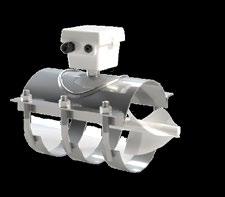


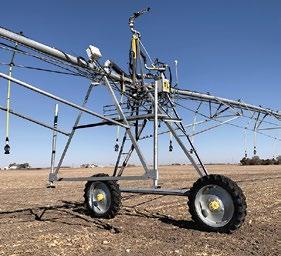
T-L Irrigation recently introduced a redesigned Drop Span Disconnect for linear systems and center pivots that utilizes two on-board hydraulic cylinders to raise and lower the span off the ball connect and to draw it in and out. Instead of a permanent structure in the field to park the stationary spans, this new design includes a leg set that is attached to the first span being disconnected.
T-L linear systems and center pivot irrigation are recognized for simplicity, safety and reliability. Featuring the latest technology for convenience and superior performance, the irrigation systems are designed to provide farmers with results and value that last, season after season. The redesigned Drop Span Disconnect is available for retrofitting on existing T-L irrigation systems and pivots and on new units.
T-L Irrigation (402) 462-4128 www.tlirr.com

Transform your farm irrigation with the Irrocloud IC-10 Sensor Monitor, a game-changer in precision agriculture. This simple, affordable and reliable device collects data from up to 10 sensors and sends it directly to the cloud via LTE-M cellular, eliminating costly gateways or solar panels.
With a simple setup requiring no configuration or sensor calibration and a 5 plus year battery life, the IC-10 works with all crops and soil types in any field. Access real-time data anytime and anywhere through the intuitive IRROcloud web platform, featuring a quick-view dashboard, detailed graphing suite, and optional frost alerts via text. Monitor soil moisture, irrigation, rainfall, soil/air temperatures, flow and more with sensor options like the rugged WATERMARK soil moisture sensor or the hyper accurate IRROMETER RSU-V. The platform supports API integration and data downloads for seamless analysis. Install anywhere with no height restrictions and gain actionable insights to optimize your operations. The IC-10 provides a simple and affordable option for farmers to confidently make smart precision irrigation decisions.
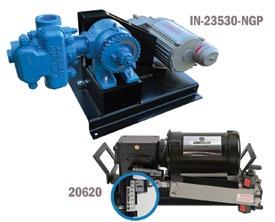
Experience unmatched accuracy, quality and dependability with John Blue irrigation injection pumps — trusted leaders in the chemigation and fertigation industry. Choose from our robust Full Range units or the lightweight and versatile E-Z Meter Injection Series, both designed with user-friendly features to meet your agricultural needs.
The Full Range models boast proven piston pump technology, offering exceptional durability and reliability for demanding applications. The E-Z Meter Series stands out for its portability and an easy-to-read setting system, perfect for quick adjustments and movement between pivots.
Available in simplex and duplex configurations, these fertilizer and chemical injection pumps are tailored for advanced fertigation and chemigation processes. Built with 316 stainless steel, chemically resistant polypropylene, and top-tier seals, these pumps ensure superior performance and longevity in the harshest conditions.
John Blue Company (800) 253-2583
johnblue.com
Irrometer Company (951) 682-9505 www.irrometer.com
FieldNET
Advisor is the smartest irrigation solution on the market for potato and sugarbeet producers who want to maximize yields as they grow healthier and more uniform crops, increasing their operation’s bottom line.

Recognized as the 2025 AE50 award winner from the American Society of Agricultural and Biological Engineers, FieldNET Advisor is a whole farm water management solution. Made to help simplify complex irrigation decisions, it’s an easy-to-use tool utilizing real-time agronomic data collected from on-farm Pessl weather stations. By combining FieldNET Advisor’s recommendations with the advanced agronomics of FieldNET and Zimmatic pivots, growers are empowered to build more sustainable farming practices while reducing risk and operational downtime, significantly expanding the traditional capabilities of the pivots in their fields.
Lindsay Corporation (866) 404-5049
www.lindsay.com/fieldnetnextgen
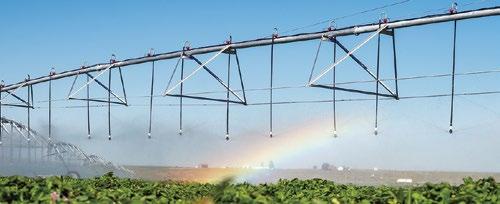
For 45 years, Double M has been a trusted irrigation partner for Idaho’s agricultural community, providing comprehensive solutions designed to protect and maximize one of the state’s most valuable resources: water. As a full-line irrigation dealer, Double M offers the experience, technology and service growers need to irrigate efficiently and sustainably.
Double M represents leading irrigation brands, including Zimmatic pivots, Wade Rain systems and Western Wheel Lines, giving producers flexible options to fit a wide range of crops, field layouts and water sources. To support smarter water management, Double M also prxovides advanced telemetry solutions that deliver real-time system monitoring and control, helping growers make informed decisions while reducing downtime and water waste.
Beyond equipment sales, Double M specializes in complete irrigation infrastructure. Their services include PVC and HDPE mainline installation, pump station design and construction, and variable frequency drive (VFD) systems to improve pump efficiency and manage variable flow demands.
With three locations across eastern Idaho and deep roots in Idaho agriculture, Double M understands that reliable irrigation is critical to farm productivity and long-term water stewardship. Their commitment to quality products, knowledgeable service, and responsible water use has made them a dependable partner for generations of Growers — today and for years to come.
Double M (208) 226-2555 www.doublemsupply.com
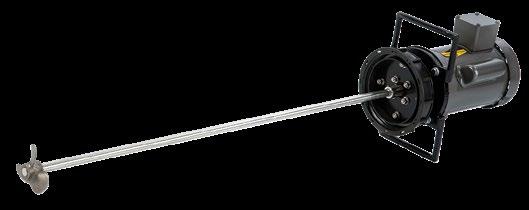
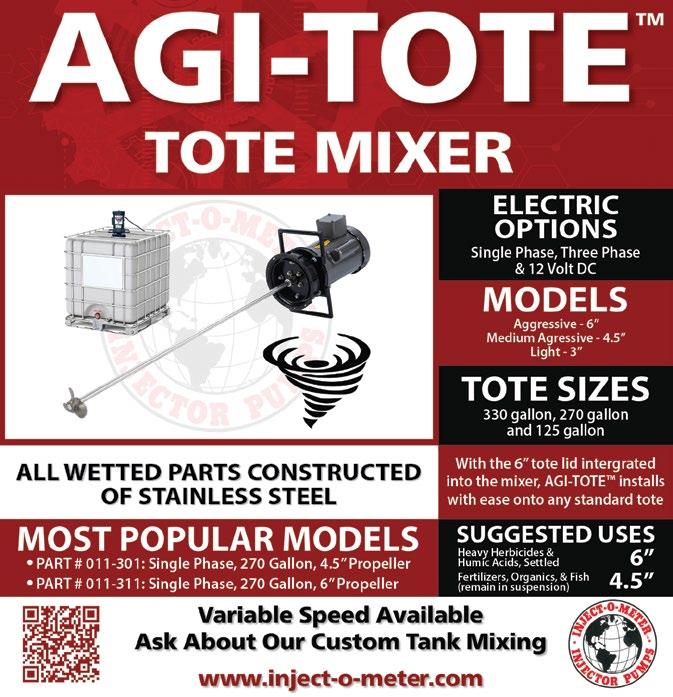
Inject-O-Meter, known for its simple, reliable injection pumps, has introduced the Agi-Tote Tank mixer. Agi-Tote is designed to easily mix a variety of heavy to light liquids or chemical blends that need to remain in suspension. We offer three different prop sizes: 3 inches for light mixing; 4.5 inches for medium mixing and 6 inches for heavy mixing.
Inject-O-Meter Mfg. Co. (800) 545-4440 www.inject-o-meter.com
Mobile Drip Irrigation combines the efficiency of surface drip irrigation with the flexibility and economics of mechanized irrigation systems. It converts any pivot or linear to drip irrigation. Dragon-Line is powered by the Rivulis D5000 pressure-compensating self-flushing emitter which is welded into the internal heavy wall of the drip-line. It is fully operational at 10 psi.
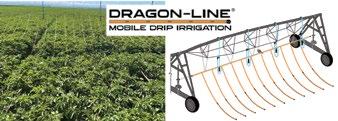
Dragon-Line’s orange drip-line tubing and flexible hose allows for precise water placement and reversing. Its unique, adjustable design eliminates wheel track issues and reduces evaporation, soil compaction and crusting. Save 20-50 percent on water, labor and energy when you convert your system to Dragon-Line. Apply water and fertilizer precisely where it’s needed for any type or size of crop. Keep your foliage dry, disease-free and thriving. With Dragon-Line, your water won’t run off. It makes every drop of water count, banking water into your soil and dollars into your account.
Dragon-Line Mobile Drip Irrigation (844) 424-3724 www.dragonline.net

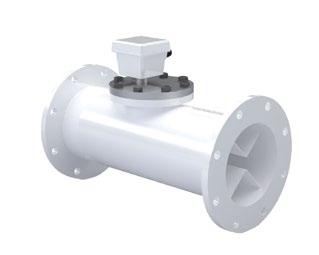
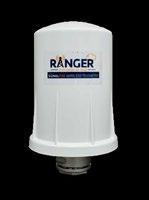
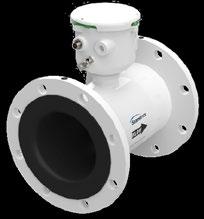
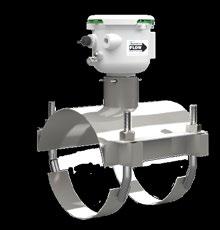
The Seametrics AG series magnetic flowmeters feature no moving parts to foul or wear out, offer long battery life and operate in the toughest of flow conditions. These meters can be installed near the well, on the pivot, or anywhere there’s a need to measure water use. They offer a long battery life and are backed by an industry leading 5-year warranty. Also available is the Ranger telemetry transmitter. The Ranger is a robust, cost-effective, reliable, easy way to deliver your flow meter and sensor data where you need it, when you need it. The Ranger comes complete mobile device ready with cloud interface to send meter information by text or email. Startup is simple-no external power needed. Install the Ranger in minutes and start managing your water resources … wirelessly..
Seametrics (800) 975-8153 www.seametrics.com
MacRoy Series G System
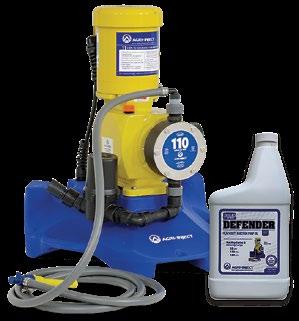
The MacRoy Series G line of metering pumps from Agri-Inject are designed specifically to provide operating efficiency and economy for large-scale fluid injection projects. MacRoy Series G Pumps are ideal for precisely applying fertilizer, insecticides, herbicides, fungicides, soil amendments, acid products, wetting agents and more through an irrigation system. These high-quality pumps are engineered and constructed to handle high-viscosity fluids and non-soluble materials in slurry form with ease. Agri-Inject, Inc. (970) 848-5336 www.agri-inject.com
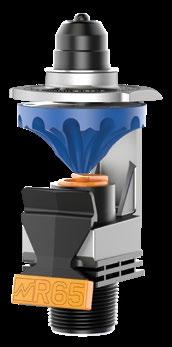
The new R65 and inverted R65i are further extending Nelson’s multi-stream, end-of-pivot sprinkler performance. With a narrower body and new nozzle system, the sprinklers reach farther and better fill in the water pattern. They use the same blue/green plates as the R55. Focused streams increase effective radius for increased coverage. A 270degree water pattern brings water behind sprinkler for overlap with pivot sprinklers for increased uniformity at end of iron. The R65 nozzle is shaped to provide a distribution pattern that complements the sprinklers on the iron to maximize uniformity of the traveled profile. Save water, save energy and do a better job of irrigating with Nelson Irrigation Products.
Nelson Irrigation Corporation (509) 525-7660
www.nelsonirrigation.com
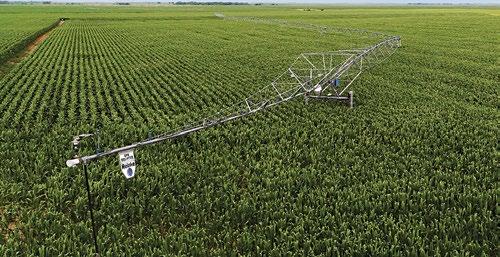
Reinke’s electronic swing arm corner (ESAC) technology is available for growers in the U.S. and Canada. The winner of both an AE50 award from the American Society of Agricultural and Biological Engineers and the Irrigation Association New Product People’s Choice Award for agriculture irrigation, ESAC provides highly efficient, uniform water application to increase yields under Swing Arm corners.
Dedicated to irrigation innovation, Reinke searches out ways to help growers get the most they can from their operations. With the electronic zone control of Reinke’s Swing Arm Corner (SAC), growers have been able to increase the number of irrigated acres in their fields. Combined with ESAC, they now have the technology to control sprinkler water application and virtually eliminate under- and over-watering on corners.
In field research, ESAC improved water precision application, making it a major improvement for irregularly shaped fields and corner applications on rectangular fields. With electronic zone control based on GPS positioning, ESAC then optimizes water or chemical applications to individual field specifications by controlling sprinklers utilizing either six or 12 zones.
Reinke Manufacturing www.reinke.com/swing-arm www.howirain.com
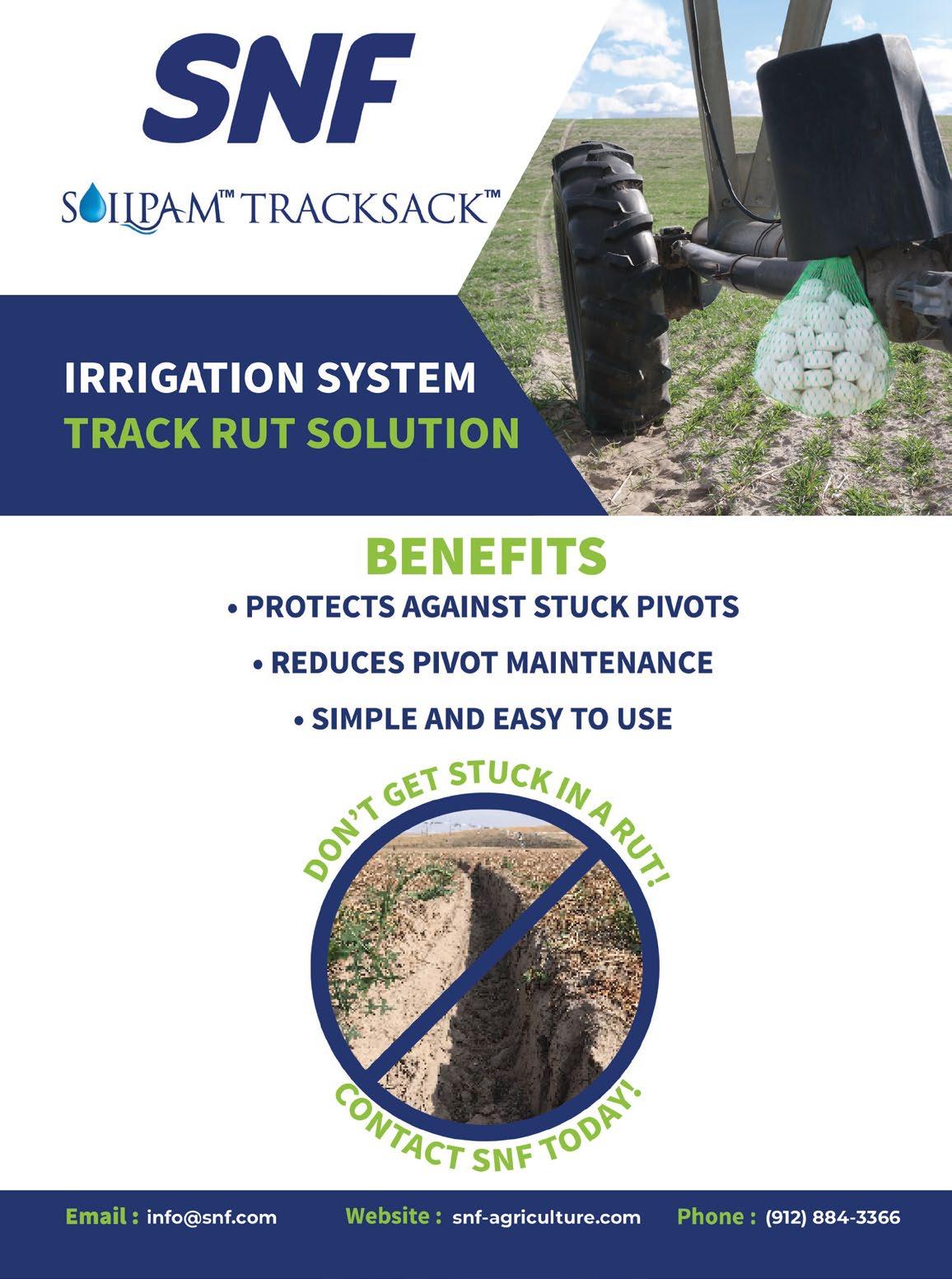
SOILPAM Tracklogs have several benefits, including increased soil moisture in the root zone, decreased soil crusting, and reduced wheel track ruts caused by center pivot irrigation systems. The Tracklog allows for longer periods of soil treatment and hangs from pivot irrigation systems, treating the soil below and reducing wheel track ruts.
SNF (912) 884-3366 www.agriculture.snf.com
Enhance yield potential and profitability with Valley Scheduling, optimizing resource usage through precise watering and fertigation. Say goodbye to guesswork and complex calculations as our advanced agriculture app simplifies irrigation decisions for you. By analyzing soil moisture, weather conditions, crop type, and growth stage, it provides clear recommendations on when and how much irrigation is needed. This data is then utilized to create a precise irrigation schedule, ensuring crops receive the optimal amount of water at the right time. Valley Scheduling is committed to averting over-irrigation, curbing water wastage and addressing potential environmental concerns, while also preventing under-irrigation to safeguard crop growth.
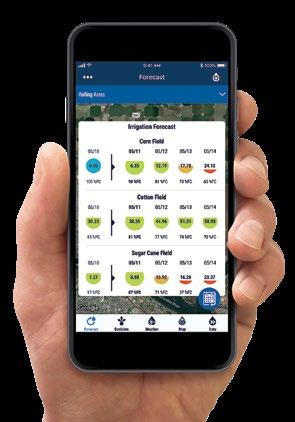
Valley www.valleyirrigation.com
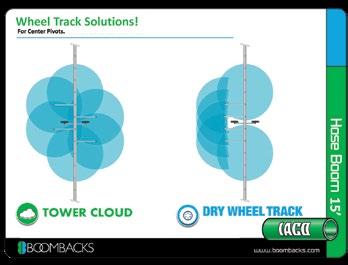
The Hose Boom is available in 10- or 15-foot lengths. Use the Double Hose Boom to create a 30-foot spread between sprinklers. The Hose Boom is the No. 1 selling Boomback in the world. It comes with hose preinstalled, so water never touches the steel, eliminating the possibility of rust flakes plugging the nozzle. The Hose Boom can be used with any full- or part-circle sprinkler on the market today. Hose Booms come with all the necessary parts to hang a piece of hose or to be pulled up close with IACO’s custom-designed Torque Clip and Side Force Control Fitting for use with part-circle sprinklers. Install four Hose Booms trailing the tower with part-circle sprinklers for dry wheel track or put them in opposing directions for the tower cloud to lower the Average Application Rate (AAR). You can download the free Boombacks APP and quickly calculate the difference in the AAR from drops to hose booms. Available for Apple or Android.
Irrigation Accessories Company (IACO) (360) 896-9440 www.boombacks.com
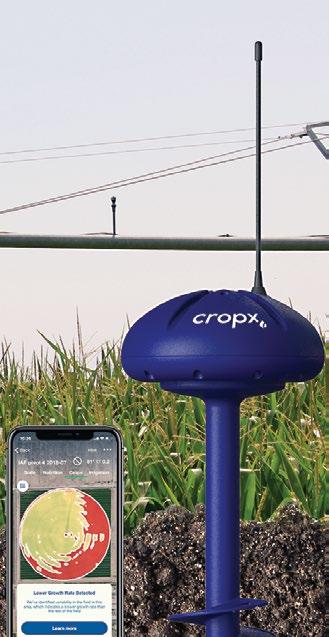
Maximize the performance of your Reinke irrigation system with CropX and ReinCloud. By integrating the technologies and support of two industry leaders, growers are able to access soil health information with the world’s finest irrigation scheduling tools.
Built by farmers for farmers, the CropX soil monitoring sensor is far more than a tool. Each sensor leverages thousands of data points above and below ground—including soil health, crop behavior, precise weather patterns, topography maps and more. CropX auto-optimizes Reinke irrigation scheduling by reading those data points in real time to maximize yield and minimize waste.
Whether controlling 400 acres or 4,000, CropX integration through Reinke’s ReinCloud software platform creates a complete solution for understanding crops and controlling irrigation with power and precision.
From high-level data to in-depth graphs, ReinCloud + CropX crunch the numbers so growers can make informed decisions on the go, staying connected on any of their devices—smart phone, tablet, laptop or desktop computer.
Reinke Manufacturing www.reinke.com/swing-arm www.howirain.com n

















Idaho Power’s Irrigation Efficiency Rewards Program offers incentives for replacing worn or damaged equipment. It’s an opportunity to receive a cash incentive and lower your energy use. Learn more at idahopower.com/irrigation.
Pat Hatzenbuehler, Albert Adjesiwor, Sabin Bhattarai and Pam Hutchinson
Weed management is a perennial task done by all crop growers. However, the response of different weed species and types to herbicide treatments or practices can change over time due to complex interactions between application method, herbicide chemical properties and weed biology and environmental factors.
Indeed, herbicide resistance (HR) can occur when a weed does not die after an herbicide is applied and then reproduces in a manner that the next generation of weeds maintains the resistance characteristic. While HR is not a new issue facing U.S. crop growers, the extent of it across the U.S. is not evenly distributed and appropriate responses can vary across farm types with varying crop rotations and characteristics.
This article provides updated insights regarding how HR is perceived among crop growers in the U.S. Pacific Northwest (PNW) potato producing states of Idaho, Oregon and Washington and describes short-term and long-term cost considerations for HR weed management for an example potato growing farm.
Members of the research team associated with the U.S. Department of Agriculture (USDA) funded PNW Herbicide Resistance Initiative (HRI; program website: https://pnwhri.org/) implemented a survey from fall 2024 through spring 2025 to obtain updated perspectives among PNW crop growers regarding weed management.
The survey had sections that focused on farm characteristics, weed prevalence, weed management tools and HR. In total, valid responses were obtained from 80 PNW growers, with most being from Idaho (38) and Washington (33). There are two main results from the survey that we discuss in this article.
First, for the question of “How many
Note: 72 total responses.
Figure. Producer survey results for the instruction to “Rank nine provided challenges from most to least threatening.”
species of problematic weeds are on your operation today compared to 10 years ago,” responses indicated that there are, on average, 1.16 more species of problematic weeds today (statistically significant difference at the 1 percent significance level).
Second, among the producers who responded to the instruction to “Rank nine provided challenges from most to least threatening,” HR was ranked 3rd out of 9, only behind high equipment costs (2nd) and low commodity prices (1st) (see full results in the figure). Thus, it is apparent that weed management is becoming an increasingly important issue and that HR weeds are among the top challenges faced by PNW crop growers.
Given the background that weed management and HR are of increasing importance, it is worthwhile for growers, crop consultants, landlords and other
interested parties to consider potential options for taking appropriate actions if an HR issue were to arise.
Suppose for example that you have a 2,400-acre crop farm located in southern Idaho on which an average of 400 acres of potatoes are planted each year, and grains and alfalfa hay are grown on the remaining acres. One day while out monitoring your fields during the growing season, you notice that many wild oat plants are growing in a field where spring barley was planted. You were taken by surprise since you had already sprayed Axial XL herbicide (common name pinoxaden) on the weeds after emergence.
Next, you do a sample of the wild oats and send them to the University of Idaho diagnostic lab for testing to determine if the wild oat plants have resistance to pinoxaden. The result suggests that they do. Given this new information, there are several short-term and long-term actions that you consider for managing the discovered HR issue as displayed in the Table along with

associated cost considerations.
Table. Potential short-term (within season) and long-term (next season) actions to take in response to finding HR weeds in a field with associated cost considerations.
Each of the several potential shortterm (within season) and long-term (next season) actions in the Table has a cost, and the long-term actions have implications for the subsequently planted crop, which may not fit ideally into plans for crop rotations.
Given the increased costs and disruptions to management plans, the scenario of discovering HR weeds in a field where there were none before is not a desirable one.
Research and activities being conducted under the PNW HRI (https://pnwhri.org/) are aimed toward helping growers prevent the emergence of HR weeds and to better determine effective actions for managing HR weed issues if they arise. n
Potential short-term (within season) actions
Hire labor to pick wild oat plants
Don’t harvest barley in the weedy area to prevent weed seed spreading
Custom hire a specialized harvesterr with an impact mill/weed seed destructor
Potential long-term (within season) actions
Tillage and application of a triallate herbicide
Plant potatoes or sugarbeets to allow for use of alternative herbicides
Plant “Clearfield” wheat to allow for use of alternative herbicides
(Hatzenbuehler is an associate professor and extension specialist at the University of Idaho in Twin Falls. He can be reached at phatzenbuehler@uidaho.edu.
Albert Adjesiwor is an associate professor and extension specialist at the University of Idaho in Kimberly. He can be reached at aadjesiwor@uidaho.edu.
Cost considerations
Labor is costly and may be difficult to find, especially on short notice; May require specialized training in addition to wages to control weed seeds and not damage other plants
Loss of revenue from unharvested barley; Uncertainty regarding whether weed seeds spread via other methods.
Such a custom operator may be unavailable at harvest time; More costly than general harvesting due to custom fee and more fuel use; Uncertainty regarding the efficacy of seed destruction or weed seeds remaining in the soil.
Cost considerations
Triallate herbicide must be incorporated into the soil and so adds more time and cost for application in addition to the chemicals
Potatoes and sugarbeets are more costly to grow than grains
Restricted from planting potatoes, sugarbeets, or barley the following crop year due to potential residual herbicide damage.
Pam Hutchinson is an associate professor at the University of Idaho in Aberdeen. She can be reached at phutch@uidaho.edu.
Sabin Bhattarai is a research assistant. He can be reached at sabinb@uidaho.edu.)
By Michael Miller, CCA
As potato growers, we all understand the importance of supplying the proper fertility and crop protection required to grow high quality, high yielding potatoes.
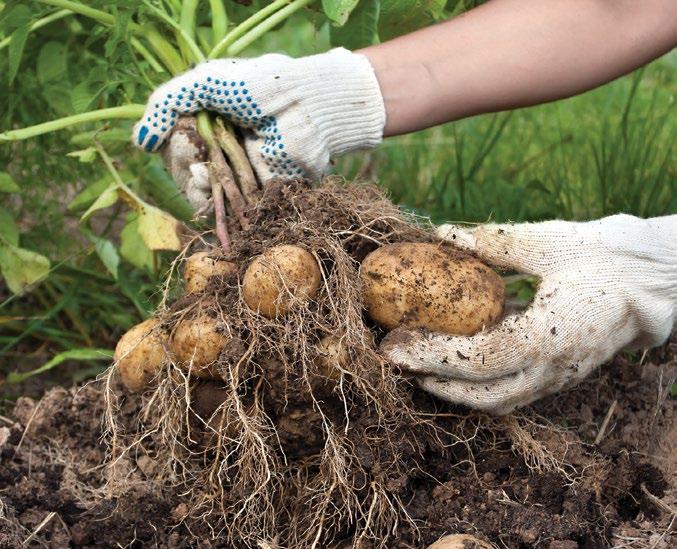
The added value that fostering greater abundance and diversity of existing native soil biology can provide is less understood and often overlooked. Few crops impact soil microbes in a harsher way than potatoes. Between fumigation, necessary soil disruptions of planting, hilling and harvest, high fertilizer requirements and crop protection applications, it’s a tough place for soil microbes to survive.
Providing a high-quality microbial food source mitigates the detrimental impacts of essential potato farming practices, improving the soil functionality required to achieve your best growing season yet.
Soil microbes are essential to make the most of these challenges. There are up to 1 million fungi and 1 billion bacteria in a teaspoon of soil, including beneficial fungi and bacteria. These microscopic organisms play an essential role in unlocking nutrient availability, improving soil health and structure, maximizing water productivity and creating disease-suppressive soil.
The choice of what to feed your native soil microbes is critical. Different microbes support varied and critical soil functions. Some of the many critical agronomic functions native soil microbes provide are nutrient mineralization, N-fixation, nutrient and water acquisition, improved soil structure, disease mitigation and organic matter break down.
For many years simple sugars and molasses have been used as a soil microbial food source. These provide simple carbohydrates that only briefly enhance a small subset of soil microbes. To unlock your soil’s full microbial potential, a more balanced food source containing combinations of lipids, proteins and carbohydrates is required. A well-balanced food source approach assures greater microbial diversity which enhances soil functionality and more lasting soil mi-
crobial enhancement. This approach results in more uniform potatoes of higher quality and higher marketable yields that add value to your bottom line.
Soil that is too compact can also impact tuber yield and quality, so improving soil aggregation and health throughout the year is essential for increasing potato yields. Beneficial native microbes create soil aggregates through fungal nets and microbial glues that create space for water and air to get to potato roots.
Given potatoes’ shallow root system, they’re especially susceptible to the impacts of soil microbiology, which is most heavily concentrated in the top 10cm of the soil. While they may have limited reach when it comes to their root systems, when they’re planted in soil with
an active microbiome, they’re able to access nutrients well beyond their reach. For example, mycorrhizal fungi enable greater transport of nutrients to plants from up to miles away.
When soil has good aggregates, pore space is available, allowing for ideal water infiltration and retention. By improving the soil’s overall water holding capacity, growers can make the most of their water throughout the season, regardless of weather conditions.
With improved soil structure and greater fungal populations, more water is held in the root zone, and it is more accessible during times of heat and drought stress.
Beneficial soil microbes don’t only support your plants; they also protect them. For example, a healthy and active microbiome can create more disease-suppressive soil to fight off pathogens that
grow in warm, moist environments.
All of the previous benefits, driven by improved soil biology, result in more uniform size, higher quality, higher marketable yields and higher potato grower profits.
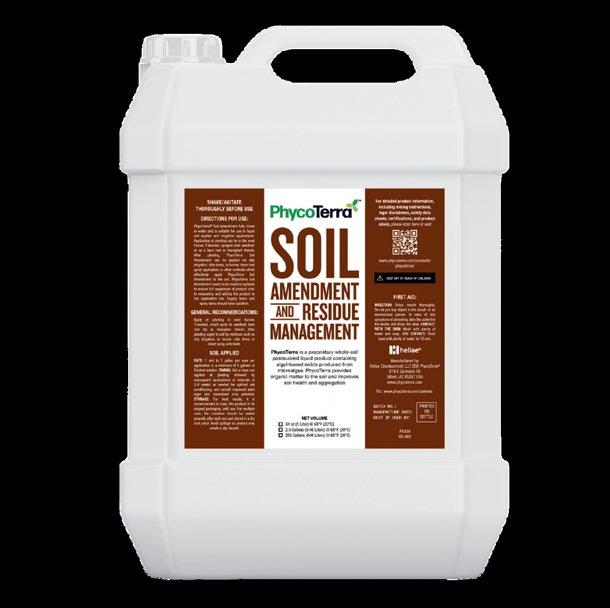
An example of a well-balanced food source is PhycoTerra. PhycoTerra is a non-living, shelf stable microalgae product that contains lipids, proteins and carbohydrates. In trials done on potato farms across the United States, Canada, Europe and Australia, a notable average marketable yield increase of plus 3,057 lbs./acre with an 11:1 return on investment was achieved. All thanks to a wellfed and active native soil microbiome.
Feed beneficial native microbes in your soil. This helps your potato crop reach its full yield potential by:
• Improving soil quality
• Increasing water holding capacity
• Optimizing NPK availability and acquisition
• Reducing abiotic stress
• Creating more disease-suppressive soil
• Boosting marketable yield and ROI

There are up to 1 million fungi and 1 billion bacteria in a teaspoon of soil, some of which are beneficial and some that are not. Taking care of the soil in which growers raise potatoes is key to producing a quality crop.
Available are soil amendment products that offer a well-balanced food source that feeds a broad diversity of microbes at each stage of the growing process to maximize potato quality and yields. When growers partner with
If you’d rather receive this magazine in your inbox in a digital version email, let us know and we will switch it over for FREE. All we need is your email address. Contact Rob at rob.erickson@harrispublishing.com
microbiology on their farm, they work with nature rather than against it.
For more information, visit https://phycoterra.com/. n
(Miller is a Specialty Crop – Senior Agronomy Manager at PhycoTerra.)
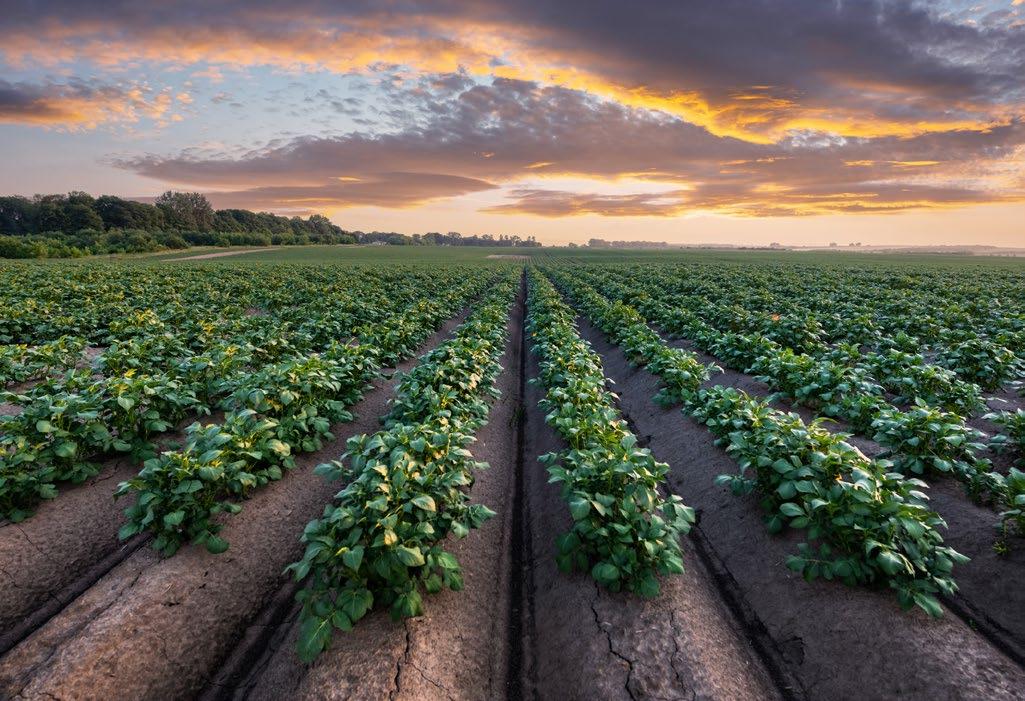

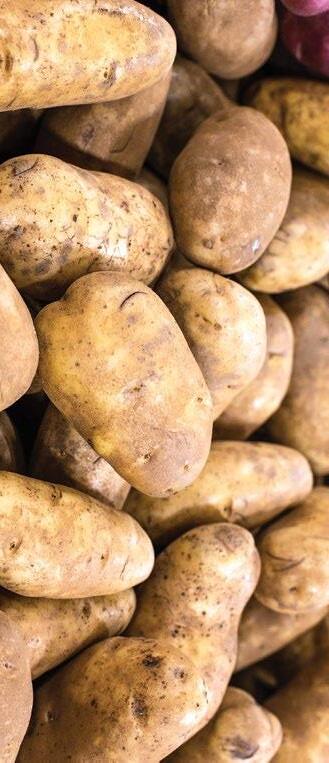
The Potato Grower Seed Lot is where you will find seed producers from Manitoba to Maine, from Montana to Michigan—all conveniently gathered in one place.
If you’re a seed grower interested in being a part of The Seed Lot, call Rob at (208) 521-1090.








Riley Peterson, Nutrition Director
Potatoes are America’s favorite vegetable, and consumers’ belief in the nutritional benefits of potatoes is at an all-time high. However, some confusion persists about the role spuds play in our health.
Potatoes are still sometimes inaccurately portrayed as causing weight gain, poor health outcomes or certain diseases instead of as a nutrient-dense vegetable and a critical source of potassium and fiber (two nutrients Americans don’t get enough of, according to the 2020-2025 Dietary Guidelines for Americans).
These misperceptions can be amplified through scientists’ misclassification of potatoes in their research, where potatoes are often grouped with non-vegetable foods like red meat, refined grains, sweets or sodas.
Countering these misperceptions requires high-quality scientific evidence to support the role of potatoes in healthy lifestyles. That’s why the Alliance for Potato Research and Education (APRE) is so important. A nonprofit organization funded by the potato industry and Potatoes USA, APRE is dedicated to advancing the scientific understanding of the role potatoes play in health and wellness and is committed to scientific integrity, publishing all research findings regardless of the outcomes, to ensure the facts are publicly available.
Since 2011, APRE has invested nearly $15 million in potato nutrition research, focusing on three primary areas of research: cardiometabolic health, healthy dietary patterns and healthy lifestyles.
To date, APRE’s investments have resulted in 48 published manuscripts and 22 studies are currently underway.
In 2025, APRE-supported research was published showing that total potato consumption isn’t associated with the risk of cardiovascular disease or hypertension, and white potatoes don’t negatively affect glycemic indices, vascular health, lipids or blood pressure compared to white rice.
Looking ahead, APRE members are particularly excited about two long-term feeding trials that have already begun at Penn State and Virginia Tech, exploring the relationship between consumption of various forms of potato products and blood glucose control.
The Penn State study will examine the glycemic effects of potatoes in a healthy Mediterranean-style dietary pattern
among pre-diabetic adults, while the Virginia Tech study will examine the cardiometabolic effects of a potato-rich diet in older adults with increased type 2 diabetes risk. These more robust, long-term studies can provide critical, foundational scientific understanding around potato nutrition that can help inform evidence-based dietary guidance.
Published, high-quality scientific evidence supporting the role of potatoes in healthy lifestyles remains essential to ensure potatoes are included in evidence-based dietary recommendations to consumers.
APRE research is frequently cited by health professionals who write for major consumer-facing media outlets. For example, last year, Today.com published an article by registered dietitian (RD) Natalie Rizzo on the nutritional benefits of potatoes that cited six APRE-supported studies.
The studies supported several nutritional benefits of potatoes, such as improving cardiovascular and metabolic health, aiding in weight management, and enhancing sports performance.
Today.com has an audience of millions, demonstrating how RDs are often powerful advocates for translating nutrition research to consumers. Even as Americans’ trust in online food content has fallen sharply in recent years, over 70 percent of Americans say they have “high trust” in RDs as a source of nutrition information, according to the International Food Information Council.
One reason RDs have earned such high trust from con-
sumers may be that they rely on published evidence before recommending foods, underscoring another way APRE-supported research translates to real-world impact.
For example, the Code of Ethics for the Nutrition and Dietetics Profession requires practitioners to use an “evidence-based approach” and “assess the validity and applicability of scientific evidence without personal bias.”
Quality nutrition research also has staying power and can be cited in media coverage even years after publication. An article published last year in Mindbodygreen cited 2021 APRE-supported research that found increased dietary potassium from potato consumption may help mitigate sodium retention, reducing risk of hypertension.
APRE strengthens potatoes’ position in healthy lifestyles by supporting high-quality, independently guided research that advances understanding among scientists, policymakers, health professionals and consumers. This scientific foundation allows the industry to communicate the nutritional benefits of potatoes with credibility and authority and to partner with trusted voices in the health profession who reach thought leaders and consumers where they’re already seeking nutrition guidance.
In an era of nutrition noise and misinformation, APRE’s commitment to rigorous science and publishing all studies regardless of the outcomes isn’t just about defending potatoes’ place in today’s diets. It’s about uncovering the truth about potatoes and how they can be part of healthy eating for generations to come. n


Kam Quarles, CEO
Writing this with the longest government shutdown in history in our rearview mirror, we are hopeful that Washington, D.C., will now turn itself toward important work and away from gridlock.
One of the most important near-term issues for the administration and Congress to address is productively responding to a growing economic crisis for American agriculture.
Nearly every commodity produced by our country’s talented farmers and ranchers is suffering from skyrocketing costs of production coupled with anticipated low market prices.
Potatoes are no different. In just the Russet variety alone, estimates are that grower losses will exceed $500 million. Extrapolate this across all the varieties that America’s family potato farms produce, and the scope of the crisis becomes clear.
The good news is that the administration and Congress can help this situation. The better news is that they also know exactly how to deliver relief. Why? Because we tried a program in the past that failed spectacularly, learned from it and created successor support programs that work.
“The great family farmers who make up this industry deserve a federal government that takes decisive action in times of crisis.”
In 2020, during the height of the COVID crisis, the government demanded that major parts of our economy cease operating. Overnight, hotels, schools, restaurants and many other potato customers were told to close their doors. All told, the potato industry immediately lost over 60 percent of their customers during those COVID shutdowns.
In response, the federal government created a relief program called the Coronavirus Food Assistance Program – or CFAP. This was a direct payment program intended to compensate growers for losses due to the shutdown. The trigger for receiving a payment was that each commodity (not each grower) had to prove to the government that prices had declined.
There was a flaw in this model that caused the program to fail on a grand scale. It assumed that the federal government had pricing data from every commodity. For many of the “program crops,” this was easy, because they have a futures market that provides price information on a second-by-second basis.
However, the vast majority of the fruit and vegetable industry lacks those futures markets and has no such data. This caused the federal government to state that the loss of 60 percent of the potato industry’s customers caused no impact and therefore potato growers didn’t qualify for relief.
After many months of front-page articles showing piles of potatoes going to waste, growers suffering tremendous economic peril and senators and representatives meeting personally with the Secretary of Agriculture, a new program, “CFAP 2,” was rolled out. It discarded the pricing trigger of the failed program and let every grower petition the government themselves. It provided immediate and significant relief to growers, while offering the government the same audit power they have with annual tax filings to ensure that the relief was necessary.
Fast forward to this year, and the federal government was again called upon to deliver relief to the specialty crop industry. The new mechanism was built upon the successful COVID program but was updated and called the Marketing Assistance for Specialty Crops (MASC) program. Though it was not easy to get this program released, once the administration finally made it available it was again a huge success.
Both CFAP 2 and MASC were released under the Trump Administration. Their delivery and execution were widely supported by family farms across the U.S. Given the scope of the current economic crisis, we are strongly urging the administration and Congress to double down on this prior success and execute on programs they know will work for growers.
The great family farmers who make up this industry deserve a federal government that takes decisive action in times of crisis. That kind of effective leadership can restore faltering confidence and propel us forward past this crisis. n










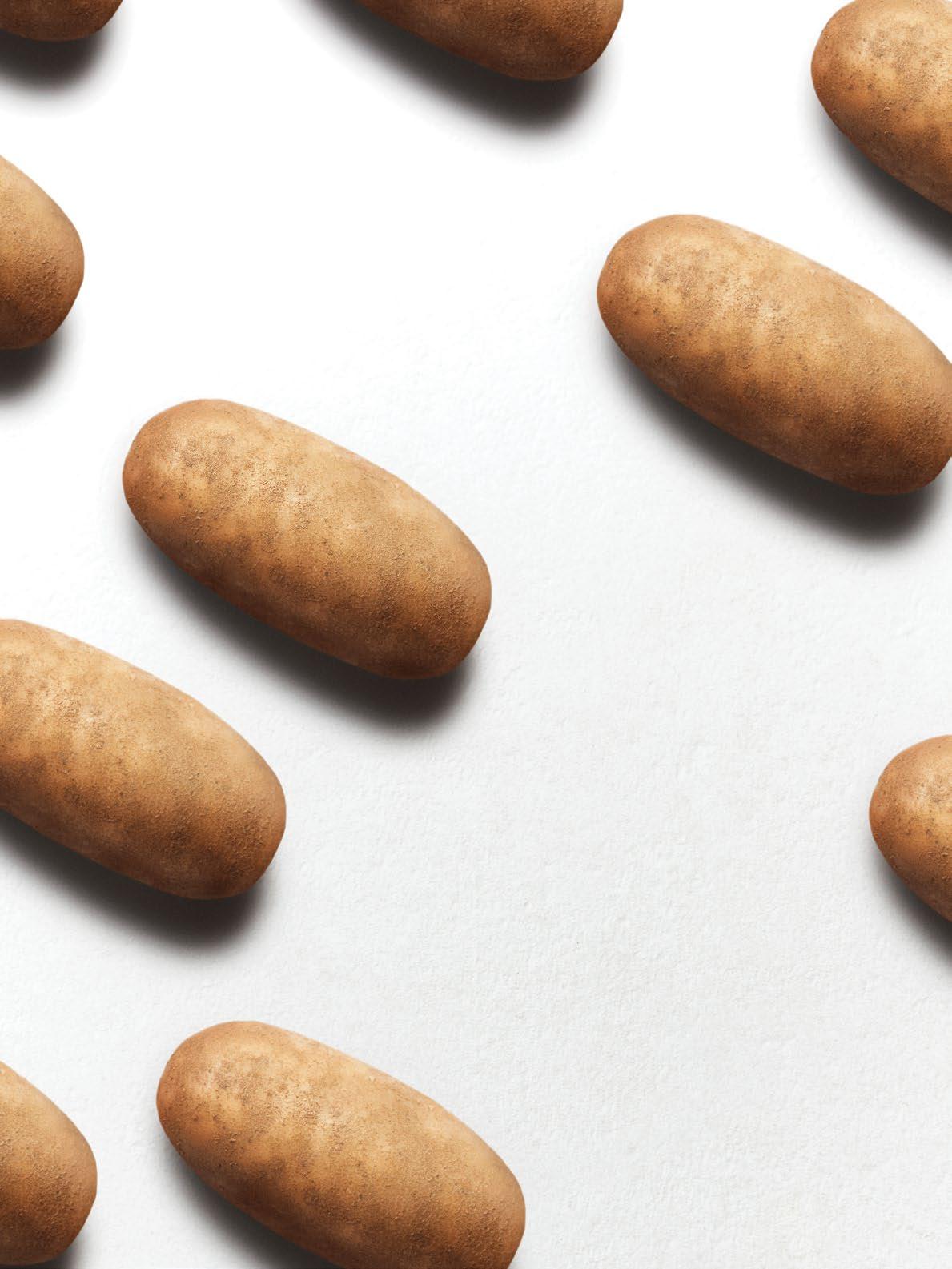
The Idaho Potato Commission (IPC) and the American Diabetes Association® (ADA) have teamed up to tackle some of the most common misconceptions about one of America’s favorite foods: the potato. Idaho® Potatoes are proud to be recognized by the ADA’s Better Choices for Life program, highlighting how preparation and pairing play an important role in enjoying potatoes as part of a balanced, diabetes-friendly eating plan.
The new Mashing the Myth campaign reframes how we think about potatoes by pairing science-backed facts with crave-worthy recipes that prove healthy can still taste amazing. To learn more, visit idahopotato.com/ada.