HOK Executive Suite Quals 2026

Page 1


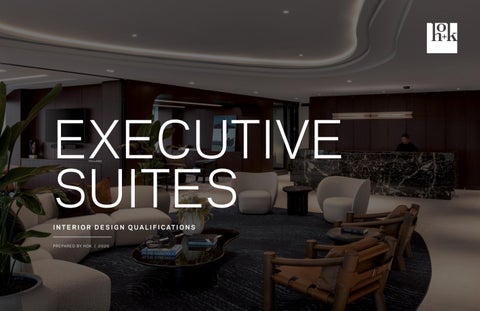
EXECUTIVE SUITES

INTERIOR DESIGN QUALIFICATIONS

PREPARED BY HOK | 2026

WHO WE ARE

HOK is a global design, architecture, engineering and planning firm. Founded in 1955, the firm has grown into one of the world’s most respected and diverse design practices, recognized for creating innovative, high-performance buildings and spaces that enrich communities, advance sustainability and respond to the needs of people and the planet.

70

years in the industry

#1

A/E Firm by Architectural Record Top 300 + Engineering NewsRecord Top 500 Design Firms

3x

Fast Company most innovative architecture firm honoree

55+

million sq. ft. of workplace designed annually

120

#3 design awards 2023-2024 Most Admired Firm, Interior Design Magazine

GLOBAL NETWORK

With 27 offices working as a single integrated practice, HOK’s global network brings local insight and worldwide resources. Our team of visionary, human-centered designers blends science and art to create innovative, high-performance environments— actively delivering world-class solutions in 50+ countries.

EUROPE

London

NORTH AMERICA

Canada

Calgary | Ottawa | Toronto

United States

Atlanta | Austin | Boston | Chicago | Dallas | Denver

Houston | Kansas City | Los Angeles | Miami | New York

Philadelphia | Salt Lake City | San Francisco | Seattle

St. Louis | Tampa | Washington D.C.

MIDDLE EAST

Dubai

ASIA

Beijing | Hong Kong |

Shanghai | Mumbai

OUR ETHOS

HOK is a collective of future-forward thinkers and designers who are driven to face the critical challenges of our time. We are dedicated to improving people’s lives, serving our clients and healing the planet. Together, we cultivate a culture of design excellence at the confluence of art and science, blending the power of creative expression with a clear sense of purpose.

CULTURE OF EXCELLENCE

We champion a culture of excellence by integrating design innovation, technical rigor, interdisciplinary collaboration and thought leadership. Our commitment to design excellence reflects our belief that great design improves lives, inspires communities and sets new standards for the built environment.

IMPROVING PEOPLE’S LIVES

We design with empathy and purpose— creating spaces that promote health, equity and well-being. Whether through inclusive design, community engagement or human-centered solutions, we strive to positively impact the lives of those who experience our work.

HEALING THE PLANET

We embrace our responsibility to heal the planet through sustainable design practices that reduce environmental impact, enhance resilience and regenerate ecosystems. Every project is an opportunity to advance climate-conscious design and environmental stewardship.

SERVING OUR CLIENTS

We serve our clients by listening deeply, thinking holistically and delivering solutions that align with their goals and values. Our integrity, responsiveness and design excellence ensure that we build lasting partnerships and create enduring value.

THOUGHT LEADERSHIP + RESEARCH

HOK’s thought leadership reflects a legacy of research and design innovation. Through our integrated, practitioner-led Research Program, architects and designers conduct in-house research alongside project work, allowing discoveries to be rapidly applied to real-world challenges. Current initiatives focus on neuroinclusive design, sustainable material tracking and future-casting design are informed by evidence-based research, publications and industry engagement. By sponsoring roundtables, speaking at conferences and publishing articles and white papers, HOK regularly shares knowledge widely, advancing sustainability, equity and innovation while driving creative, interdisciplinary design solutions for our clients.

A few examples of recent white papers can be found at the following links:

HOK Forward 2025: The Evolution of Neuroinclusive Workplaces

A Call for Purpose-Driven Design to Redefine the Workplace

HOK Forward 2024: New Ways of Working

How Coworking & Shared Spaces Are Impacting Work: Navigating PostPandemic Opportunities

HOK’s Sustainable Material Tracking: A Journey Toward Healthier Space

How HOK Is Designing Its Offices to Support Hybrid Work, Collaboration and Culture

Beyond the Meeting Room: Designing Gathering Spaces That Catalyze Collaboration

Celebrating Culture and Brand in the Post-COVID-19 Workplace

Receiving 20+ industry awards for research, HOK has completed 21 initiatives and have 8 active initiatives.

ELEVATING HUMAN EXPERIENCE

Part of what draws us to design is our deep desire to effect positive change. With equity and inclusion at the forefront of global conversations, HOK is taking decisive action to embed these values into the built environment. HOK’s commitment to equity and inclusive design is both structured and proactive. HOK has developed an internal Designing for Equity Toolkit, grounded in five guiding principles. This toolkit embeds equitable design into every project milestone and has already been tested across notable projects—like AstraZeneca’s R&D center in Cambridge and NYCFC’s future stadium in Queens.

5

18

guiding principles member advisory group

Partnering with communities

Planning for inclusion

Equity of experience

Promoting health and wellbeing for all

Championing environmental justice

Advisory group actively pilots and leads HOK's Firmwide Equity Platform

Works in tandem with Diversity Advisory Council (DAC) focusing on internal initiatives like mentoring programs, career and opportunity surveys and partnerships with organizations like NOMA.

Recognition for its DEI leadership in major markets like Los Angeles, HOK was named DEI Company of the Year by the Los Angeles Business Journal in 2023.

SUSTAINABILITY

HOK is a proven leader in sustainable design, combining deep technical expertise, data-driven innovation and firmwide commitment to reduce environmental impact and advance human well-being. Two decades ago, when we wrote The HOK Guidebook to Sustainable Design, green design was an emerging field. Today, we have embedded sustainability into our culture, workflows and technical rigor, tracking the projected energy performance of every project and are committed to achieving a carbonneutral design portfolio by 2030. With a wide range of sustainability practices, tools and strategies in-house, our work is backed by proven results. HOK has more than 500 projects certified under global standards, including LEED, WELL, EDGE, Estidama, GSAS, BREEAM, Green Mark and Green Globes and hundreds more actively pursuing certification. At the forefront of circular design, regenerative systems and inclusive sustainability research, our Sustainable Material Tracking initiative—which evaluates embodied carbon, green chemistry and sustainable sourcing on all interior projects— enables healthier, lower-impact material selections across our portfolio.

5

6 sustainability practices strategies + tools

Operational Carbon

Embodied Carbon

Materials and Product

Transparency

HOK Net Zero Carbon Commitment

Building Systems

Life Cycle Cost Analysis

Water Cycle Tool

Carbon Tracking Tool

Energy Modeling

Existing Building Survey and Gap Analyses Daylight

Analyses + Modeling

We have won 10 AIA COTE awards for sustainable design excellence and ENR’s recent survey ranked HOK as the No. 1 green building architecture/ engineering firm.

Named Metropolis Planet Positive Awards Firm of the Year in 2025 in part because of its materials tracking and sustainability leadership, HOK's Material Tracking Initiative tracked 7,500 distinct materials across 140 projects (a 308% increase).

SERVING OUR CLIENTS

HOK is built to support our clients wherever they work— consistently, efficiently and at scale. For decades we have managed hundreds of Master Service Agreement (MSA) client relationships, where we operate as an extension of our clients’ real estate teams, delivering the same high-quality service whether a project is 1,500 sq. ft. or a global headquarters.

Our centralized account model provides a single point of contact and a core team that maintains standards, ensures consistency and coordinates regional HOK teams for on-theground delivery. This structure accelerates project launch, strengthens quality and ensures every location reflects the same brand, experience and operational expectations.

Through long-term partnerships, we help clients manage their entire portfolio—supporting them across regions, time zones and project types with seamless communication, reliable delivery and deep knowledge of their processes and goals. Our approach improves efficiency, reduces costs and ensures a unified experience across every project, everywhere.

We maintain over 100 global MSA accounts for many fortune 500 clients like AbbVie, Amazon, Bank of America, Chevron and more.

MULTI-SECTORED + INTER-DISCIPLINED

HOK is a truly interdisciplinary design firm, integrating interior design, architecture, engineering, planning and consulting under one roof. This breadth allows us to address complex challenges from every angle, delivering innovative, resilient and future-forward interior environments tailored to each client’s unique needs.

market sectors service areas

Aviation + Transportation

Civic + Justice

Corporate + Commercial

Government

Healthcare

Higher Education

Lifestyle

Mixed-Use

Renovation + Refurbishment

Science + Technology

Sports + Rec + Entertainment

Architecture

Landscape Architecture

Lighting Design

Experience Design

Interiors

Planning + Urban Design

Sustainable Design

Engineering

Consulting

ENHANCED DESIGN SERVICES

Beyond our core architectural expertise, we provide in-house services in Engineering, Experience Design, Landscape Design, Lighting Design, Stylization, Workplace Consulting and Enhanced Visualization. This integrated model allows us to seamlessly align design intent with technical precision, human experience and organizational strategy. By embedding these enhanced services directly within our studio, HOK ensures cohesive, innovative and highly tailored environments that inspire, perform and endure. More information on these specialities can be found on the following pages.

expanded services

Engineering

Experience Design

Landscape Design

Lighting Design

Stylization

Workplace Consulting

ENGINEERING

Ranked as the #1 green building firm by Engineering News Record, HOK’s engineering teams bring deep experience in complex project types—from corporate workplaces and aviation terminals to science + technology facilities, stadiums and healthcare environments. Our solutions are rooted in technical excellence, data-driven analysis and a commitment to innovation, delivering systems that perform on day one and evolve with our clients’ needs. Our engineers collaborate closely with HOK’s planners, architects and consultants to create coordinated, efficient and resilient environments that elevate occupant comfort, reduce operational costs and meet ambitious sustainability goals.

SERVICES

structural engineering MEP engineering

Structural engineering design

Façade engineering

Foundation design

Seismic design

Long-span + special structures

Technical planning + conceptual studies

Existing building assessments

Renovation + retrofit design

Structural modeling + analysis

Blast + vibration analysis

Air distribution systems

Central utility plants

Heating, ventilation + air conditioning

Mission critical systems + clean rooms

Sanitary systems

Water retention + reuse

Fire alarm + smoke detection

Climate + micro-climate analysis

Energy modeling + analysis

Life cycle analysis

EXPERIENCE DESIGN

Our expertise goes beyond shaping physical spaces—we specialize in seamlessly integrating diverse media platforms that maximize user engagement, enhance spatial flow and leave a memorable impact. Our team of 20 designers create dynamic, immersive experiences that strengthen our clients’ brand identity and foster meaningful connections. The practice draws on proprietary tools, sustainability and wellness standards and a deep understanding of human behavior to deliver environments that inspire, delight and foster lasting connections between people and place.

SERVICES

Identity + logo design

Brand applications

Media integration

Change management

Naming and positioning

Visualization brand design digital experience

Interactive content

Immersive environment

Content design

VR and AR

placemaking wayfinding

Experiential graphics

Public art

Sponsorship

Donor recognition

Exhibits

Design + standards

Assessments

ADA + life safety

Master plan strategies

Identification + numbering

LANDSCAPE DESIGN

HOK’s landscape designers work hand-in-hand with architects, planners, engineers and environmental specialists to create resilient, high-performance outdoor environments that enrich communities, support ecological health and elevate the human experience. Our approach emphasizes regenerative design, long-term maintenance strategies and the creation of adaptable, future-ready landscapes that enrich both people and place. Working across scales—from urban districts and campus environments to workplace terraces, plazas and restorative landscapes— our designers blend design excellence, environmental stewardship and technical expertise. Our core capabilities include:

Master Planning & Urban Design

Large-scale frameworks that integrate mobility, open space, infrastructure and sustainability to shape vibrant, connected communities.

Sustainable & Resilient Design

Nature-based solutions, green infrastructure, stormwater management, climate adaptation strategies and biodiversity-driven design.

Campus & Workplace Environments

Outdoor spaces that elevate employee well-being, extend collaboration areas outdoors and reflect organizational culture.

Site Planning & Landscape Design

Context-driven landscapes that balance functionality, beauty and longterm performance, from corporate campuses to civic spaces.

Parks, Plazas & Public Realm

Inclusive, memorable destinations that enhance social connection, support recreation and strengthen community identity.

Health, Wellness & Therapeutic

Evidence-based environments that promote healing, mindfulness and mental well-being.

LIGHTING DESIGN

Light does more than illuminate—it has a significant impact on our health, our mood and our experience of a space. Whether bold or subtle, lighting is an integral part of design, capable of bringing greater clarity and resonance to the environments we inhabit.

HOK’s lighting group consists of six full-time dedicated lighting designers collaborate with project teams to create unified lighting solutions, reinforcing a project’s design aesthetic with reduced energy consumption and maintenance targets.

SERVICES

lighting expertise

Architectural Lighting Design

Circadian Lighting Consulting + Design

Custom Light Fixture Design

Daylight Consulting + Design

Lighting Master Planning

Site + Landscape Lighting Design

STYLIZATION

Stylization plays a crucial role in creating meaningful connections between people and the spaces they inhabit. It influences emotions, productivity, social connections and mental wellbeing. Design elements can evoke awe, spark curiosity, admiration and socialization. These captivate individuals, encouraging exploration and interaction. Design elements can also facilitate flow, help individuals slow down, focus and reflect. These promote a sense of calm, enhancing productivity and well-being.

Stylization involves curating elements such as artwork, plants, objects, textures and more, to breathe life into a space. At HOK, the aim is to infuse personality without overwhelming the sensory experience. Artwork reinforces the overall aesthetic and adds visual interest. Objects and artifacts connect to local culture and history, fostering a sense of place and identity. Natural elements like foliage, textiles and wood bring nature to the human environment with a sense of tranquility and biophilia. Experiential design creates a positive and engaging atmosphere. Visual harmony, symmetry and balance are essential for all categories

HOK published an article in Work Design Magazine titled “Stylization: The Overlooked Design Strategy That Complements Hybrid Work.” This article delves deeper into the subject and provides insights into the benefits and implementation of stylization in the context of the evolving work landscape.

OBJECTS + ARTIFACTS

WORKPLACE CONSULTING

Practicing across industries—from technology to professional services to healthcare— HOK’s workplace consultants bring innovative strategies for the ever-changing workplace environment. Our team of ten seasoned strategists delivers integrated consulting services that elevate performance, strengthen culture and align the built environment with business goals.

We specialize in three core areas. Workplace Strategy to help organizations use space as a strategic asset—supporting new ways of working, improving operational effectiveness, fostering cultural and behavioral shifts and enhancing the overall employee experience. Change Management to minimize disruption, accelerate adoption and maintain productivity throughout transitions, ensuring employees feel informed, supported and engaged. Facility Strategy to translate business drivers into clear, data-driven facility programs that optimize space, integrate amenities and create environments that empower people and reflect organizational values. Together, these services provide a holistic, futureready approach that enables clients to adapt with confidence and unlock the full potential of their people and workplaces.

SERVICES

workplace strategy change management

Workplace Strategy

Interactive Visioning Programming + Strategy

Workplace Experience Evaluation

Vision + Messaging Gap Analysis

Change Strategies

Change Program + Roadmap

facility strategy

Utilization + Occupancy Targets

Utilization Audit + Analysis

Workplace Metrics + Efficiencies

EXECUTIVE WORKPLACE DRIVERS

The executive environment is evolving, as organizations move beyond traditional suites to create strategic hubs for a new era of leadership. This shift prioritizes transparency, authentic connection and virtual-first technology to drive strategy and foster a more connected culture.

This section highlights the key design drivers that are redefining the executive suite as a strategic tool for leadership. We explore how today’s most effective leadership environments are purpose-built to cultivate culture, make leadership visible and accessible, and drive organizational alignment.

From spaces that support high-stakes confidential work to those designed for mentorship and team development, these principles guide the creation of a workplace ecosystem that empowers leaders to connect, communicate, and inspire—both in person and across the virtual window.

Drawing from benchmarking data, our own research and industry best practices on leadership environments, this section provides actionable insights into how forwardthinking design can deliver executive suites that balance leadership visibility, cultural impact and high performance.

KEY DESIGN DRIVERS

HIGH PERFORMANCE EXECUTIVE WORKPOINTS

TALENT, CULTURE + LEADERSHIP PRESENCE

OPERATIONAL

EXCELLENCE + EFFICIENCY

ENHANCED MEETING ENVIRONMENTS + EXECUTIVE GATHER SPACES

SUSTAINABILITY + ESG AS A STRATEGIC DRIVER

REVENUE GROWTH + FINANCIAL PERFORMANCE

INNOVATION, AGILITY + ORGANIZATIONAL TRANSFORMATION

CUSTOMER + STAKEHOLDER EXPERIENCE

ENTERPRISE STRATEGY + LONG TERM VISION RISK, GOVERNANCE + COMPLIANCE

HIGH PERFORMANCE EXECUTIVE WORKPOINTS

As executive work becomes increasingly hybrid and global, the private office is evolving into a high performance workspace centered on visibility, connection and leadership presence. The modern executive office serves as a critical broadcast environment for leaders like CEOs, CFOs and CMOs, redefining its traditional role as a status symbol.

With virtual meetings now a daily norm, the “virtual window” is a critical design driver. Every camera on moment becomes a representation of the organization’s values, culture and priorities. As a result, executive offices are being designed to feel authentic, brand aligned and visually intentional, balancing professionalism with genuine personal expression. The backdrop, lighting, acoustics and spatial composition all contribute to how leaders communicate credibility and connection across screens.

At the same time, these offices are becoming the epicenter of executive work—places for deep focus, strategic decisions and confidential collaboration. The shift toward transparency has reshaped their footprint and placement within the workplace. Instead of oversized corner suites that signal hierarchy, modern executive offices are more integrated and approachable, offering controlled visibility to staff and reinforcing leadership accessibility. Glass fronts, open door moments and adjacency to shared team spaces demonstrate a cultural shift: executives are still protected for high stakes work, but the design signals openness, humility and alignment with the rest of the workforce.

Across the industry, high performance executive environments are increasingly treated as micro broadcast studios and multifunctional hubs. They incorporate layered lighting, optimized camera angles, integrated acoustic treatments, dual purpose furniture and flexible layouts that can shift between virtual facilitation, in person meetings and individual focus work. There is also a greater emphasis on wellness—ergonomic workpoints, biophilic elements, personal climate control and technology that reduces friction. In many organizations, the executive office is becoming a prototype for the future workplace: a highly intentional, human-centered, tech forward environment that balances visibility, authenticity and leadership presence in a hybrid world.

Inclusion of plants and greenery helps to divide spaces and provide sight lines to natural materials.

A variety of room types to support various work behaviors and use cases that support teams need.

A variety of workspaces support different work behaviors and postures. Room type variety considers size, scale, quantity, level of openness.
Optimized for acoustical privacy with sound absorptive material.
Office suites that can be used for heads down work and 3-4 person meetings.
Work wall with ample storage, acoustic surfaces and dual monitors.
Optimized background view for frequent video conferencing within office suites.
Meeting rooms that support a variety of postures, infield and outfield.

TALENT, CULTURE + LEADERSHIP PRESENCE

For executive teams, cultivating the right culture and attracting top talent have become defining business priorities. Leaders recognize that the built environment plays a powerful role in shaping how people experience the brand—how they feel welcomed, valued, inspired and connected to purpose.

Since people and real estate are two of an organization’s most significant investments, executives are increasingly intentional about creating workplaces that reinforce a unified culture, communicate organizational values and elevate the employee experience. In this model, the executive suite serves not just as a leadership zone, but as a symbolic center of gravity—signaling transparency, approachability and a commitment to developing the next generation of talent.

A major focus is on learning—one-on-one mentorship, small-group coaching and team-based development. Modern workplaces allow learning to be “always on,” supported by spaces that encourage leaders to teach, listen and connect. Smaller, informal rooms near the executive suite give leaders opportunities for quick coaching moments; larger multipurpose rooms support team learning and strategic alignment; and open collaborative areas promote cultural visibility and shared experiences. These design choices help executives model the behaviors they expect from the organization: curiosity, collaboration and continuous improvement.

Industry-wide, the trend is toward executive environments that enable leaders to be present, accessible and culturally engaged. This means strategically positioning executives within the flow of the workplace, making them visible contributors to talent growth and organizational cohesion.

The result is an ecosystem where culture is actively shaped rather than passively observed. Every element—from material palette to spatial adjacency to branding—reinforces who the company is and who it aspires to be. Executives understand that culture is no longer a byproduct of the organization; it's a strategic asset, and the workplace is one of the most powerful tools they have to build it.

OPERATIONAL EXCELLENCE + EFFICIENCY

As organizations continue to refine their post pandemic workplace strategies, executive teams are placing a renewed emphasis on operational excellence and real estate efficiency. Leaders want workplaces that reflect the streamlined, agile, and disciplined operations they expect from their business units—spaces that support productivity without excess, and that demonstrate responsible stewardship of company resources. While many firms have reduced square footage in certain areas, this change is being paired with targeted investments that improve the quality, flexibility, and performance of the spaces employees and executives rely on most. The message is clear: efficiency has evolved beyond simple cutting to become about strategic optimization.

Executives are also rethinking how people come together—especially global and cross functional teams. Rather than returning to rows of workstations, organizations are shifting toward a more balanced workplace ecosystem that incorporates strategic meeting rooms, touchdown areas, agile team zones, and flexible environments that support both in person and hybrid work. This is particularly evident in financial and professional services firms, where many leadership teams advocate for a consistent in office rhythm but also recognize the need for multifunctional spaces that allow employees to work dynamically throughout the day. Modern workplace efficiency is defined by its impact on collaboration, focus, and enterprise-wide alignment, moving beyond outdated metrics like density.

Across industries, the most forward thinking organizations are using the workplace as a lever for operational excellence. They are standardizing room sizes, improving utilization through smarter scheduling, integrating shared amenities to reduce duplication, and ensuring that high-value spaces—including larger conference centers and multipurpose rooms—serve the entire building rather than just the executive team. This shift maximizes investment while reinforcing a culture of equity and shared access to premium environments.

Executives want workplaces that feel intentional, high-performing, and future-ready—spaces that can flex with business needs, support global workforce integration, and operate with the same efficiency and rigor that leaders expect throughout the organization.

ENHANCED MEETING ENVIRONMENTS

+ EXECUTIVE GATHER SPACES

As executive roles become increasingly visible and communication driven, organizations are elevating the quality and intentionality of their meeting environments. Executives need a range of “gather spaces”—rooms purpose built for different modes of interaction, from high stakes decision-making to rapid ideation.

Formal spaces support governance, board reporting and confidential strategic work, while more interactive rooms foster brainstorming, innovation sprints and agile collaboration. This spectrum allows leadership teams to select environments that match the purpose and energy of each meeting. The result is a more thoughtful ecosystem that supports clarity, creativity and alignment across the executive team.

The quality of the virtual window drives these enhanced meeting environments. Executives are now constantly on camera—meeting with global teams, investors, partners and clients—and the built environment must support this level of digital presence. High-quality lighting, calibrated acoustics, engineered backgrounds, integrated microphones and optimized camera positioning are becoming baseline expectations.

Many organizations are going further by incorporating sound studios, small broadcast rooms and video ready spaces near the executive suite. These allow leaders to record podcasts, deliver internal weekly updates and create on brand communications that feel polished yet authentic. The goal is to position executives as clear, confident communicators—both in-person and virtually.

To ensure the right sized portfolio of meeting environments, executive suites today typically include a series of smaller, high-performing rooms—war rooms, huddle rooms ideation pods— allowing leaders to collaborate quickly without occupying oversized spaces. Meanwhile, the larger boardroom, multipurpose meeting rooms and high-capacity innovation spaces are placed nearby and designed for broader organizational use. This adjacency strategy improves space utilization, supports flexible scheduling and reinforces the idea that executive-level tools and environments should benefit the entire organization.

Ultimately, enhanced meeting environments create an ecosystem where leadership can gather, communicate and innovate with greater impact— driving clarity, momentum and culture throughout the company.

Seating posture variety: a mixture of conference soft seating with perch/ standing settings to cater to creative and big picture thinking.

SUSTAINABILITY + ESG AS A STRATEGIC DRIVER

For today’s executive teams, sustainability and broader ESG commitments are no longer optional initiatives—they’re core business priorities shaping how organizations plan, operate and communicate their real estate strategies. Leaders are increasingly examining their portfolios through the lens of long term environmental impact, regulatory exposure and stakeholder expectations.

This shift reflects not only rising climate related risks but also the growing pressure from investors, clients and employees who expect companies to demonstrate measurable progress toward carbon reduction and responsible resource management. As a result, executives are evaluating how every facility, workplace model and capital investment advances the organization’s sustainability roadmap.

Within the physical workplace, this often translates into targeted investments that elevate building performance and reduce operational footprint. Many organizations are pursuing certifications such as LEED, WELL, Fitwel and ENERGY STAR as part of a broader strategy to standardize healthier, more energy efficient environments across their portfolio. These frameworks help guide decision making around materials, systems, indoor environmental quality and occupant experience— ensuring that real estate assets not only support environmental goals but also contribute to employee well being and operational efficiency. In many cases, executives are using these certifications as tools to benchmark progress and communicate impact transparently.

At the same time, sustainability has become a differentiator in attracting top talent, winning clients and positioning the brand as forwardthinking. Executives increasingly view real estate as a platform for demonstrating climate leadership—whether through electrification of buildings, renewable energy integration, waste reduction strategies or adaptive space planning that reduces overall square footage.

As portfolios evolve, sustainability and ESG commitments serve as both a compass and a catalyst, ensuring that real estate decisions reflect organizational values while balancing financial responsibility and long-term resilience.

REVENUE GROWTH + FINANCIAL PERFORMANCE

As organizations sharpen their focus on revenue growth and financial discipline, executive teams are rethinking how their real estate investments support business performance. The era of oversized, opulent executive suites has given way to environments that reflect transparency, authenticity and operational rigor. Leaders are now directing capital toward spaces that have measurable business impact— advanced AV systems, collaboration technology, flexible meeting environments and integrated conference centers—rather than investing heavily in private, underutilized square footage. This shift aligns the physical workplace with the financial values executives are modeling for the organization: responsible spending, high utility and clear return on investment.

Real estate efficiency has also become a strategic lever for strengthening financial performance. By right-sizing executive footprints and reallocating resources to innovation hubs, team-based work zones and multipurpose meeting rooms, companies can increase utilization while reducing long-term operational costs.

Many organizations are slimming down the spaces they don’t need, while amplifying the spaces that drive engagement, speed and connection. This balance allows executives to make real estate decisions that support both cultural goals and financial outcomes—optimizing space without compromising functionality. The result is an environment that signals discipline while still enabling leadership to collaborate effectively and move the business forward.

One of the most significant emerging trends is the rise of Customer Experience Centers and executive level convening spaces. As teams, clients and global partners travel to headquarters for summits, strategy sessions and relationship building events, organizations are investing in environments that showcase brand excellence and reinforce trust. These spaces are becoming powerful tools for revenue acceleration—allowing executives to demonstrate innovation, strengthen client relationships and create immersive experiences that differentiate the organization.

By designing headquarters that support high-value engagements, companies are using real estate to directly influence revenue growth, market perception and long-term financial performance. This transforms real estate from a cost center into a powerful engine for business development and brand elevation.

to

INNOVATION, AGILITY + ORGANIZATIONAL TRANSFORMATION

As organizations accelerate digital transformation and reinvent how they operate, executives are placing a stronger emphasis on innovation, speed and cross-functional alignment. Many leadership teams are navigating new territory—AI integration, emerging technologies, agile decision-making frameworks and faster product cycles. This shift has changed not only how executives lead but also the environments they need to support strategic thinking.

Executive suites are evolving from isolated, private domains into ecosystems that foster collaboration, experimentation and organizational agility. The physical workspace has become a lever in driving transformation: leaders want spaces that help them solve complex problems quickly, bring diverse viewpoints together and catalyze new ideas that move the organization forward.

In response, high-performing headquarters now incorporate innovation rooms, ideation studios and strategy labs directly adjacent to executive areas. These are not simply “meeting rooms”; they are purpose-built environments for co-creation— equipped with analog and digital tools, writable surfaces, immersive displays and flexible layouts that support design thinking, scenario planning and AI augmented decision support. Executives use these rooms to gather quickly, break down silos and collaborate on enterprise-wide initiatives. They have become the modern “war rooms,” but with an emphasis on creativity, alignment and rapid iteration rather than hierarchy.

As companies push for greater transparency and flatter decision-making models, the traditional boundaries of the executive suite have shifted.

While individual executive offices may be more modest in size, their strategic adjacency to larger innovation hubs, cross-functional conference centers and technology-enabled gathering spaces has become more important than ever. This allows leaders to move effortlessly between focused executive work, small-team strategic discussions and large-group innovation sessions.

Industry-wide, this adjacency strategy is emerging as a best practice: executives remain connected to their teams, embedded in the center of organizational transformation and physically tied to the spaces where creativity, technology and cultural evolution converge. Ultimately, these new environments reinforce a leadership model that is more agile, inclusive, forward-looking and primed for continuous reinvention.

The room and furniture shape and configuration can accommodate wider screen ratio for optimal camera angles
better view virtual participants and/of participants within the space.
Right-sized huddle rooms to accommodate team collaboration.
Standing height or height adjustable conference tables.
Writable surfaces for tactile, handson ideation.
Table size and shape to accommodate video conferencing.
Seating variety for overflow.

CUSTOMER + STAKEHOLDER EXPERIENCE

Customer and stakeholder experience has become one of the most powerful priorities shaping executive level real estate decisions. Leaders increasingly view their headquarters—and specifically their executive zones—as critical venues for building trust, deepening relationships and showcasing their organization’s capabilities.

As companies across industries compete not just on products, but on service, reputation and long-term value, executives want environments that immerse visitors in the brand narrative. These spaces must clearly express the organization’s purpose, expertise and personality, whether a client is physically present or joining remotely. For many leadership teams, these environments represent the new “front door” of the organization: the moment where confidence is established and long-term relationships begin.

This has fueled the rise of Customer Experience Centers, where clients, partners and even internal stakeholders can engage with offerings in an interactive, insightful way. Consumer goods companies naturally use these spaces to showcase products, but now financial institutions, consulting firms, advertising agencies and insurance companies are making similar investments. They’re creating environments that demystify complex services, reveal how solutions work and provide transparent insights into long-term value.

These centers often include immersive digital displays, co-creation rooms, mock studio spaces for virtual sessions and flexible environments where teams can prototype ideas or walk clients through strategic planning. The goal is to surround customers with a clear, confident demonstration of who the company is and why they should deepen their relationship.

Executives are also looking at how technology— especially AI—elevates these experiences. Intelligent personalization, predictive analytics and interactive content tools allow organizations to tailor every visit, whether virtual or physical. Combined with human-centered hospitality, this creates a service model that feels responsive, precise and world-class. Behind the scenes, experience centers help sales teams accelerate conversations, help delivery teams articulate complex processes and help leadership reinforce the company’s commitment to innovation and care.

Ultimately, these environments allow executives to strengthen loyalty, differentiate their brand and drive revenue. This elevates the customer and stakeholder experience from a hospitality feature into a powerful contributor to long-term business performance.

ENTERPRISE STRATEGY + LONG TERM VISION

Executives are responsible for steering their organizations 10–15 years into the future, making long-range decisions that anticipate market shifts, emerging technologies and competitive pressures. Leading at this level demands environments that foster deep strategic thinking, rapid scenario analysis and cross-functional alignment. The executive suite becomes a critical platform for this work—not just a location for daily meetings, but a strategic cockpit where leaders can synthesize information, explore future pathways and set the enterprise vision. Real estate must therefore reflect the strategic mindset: adaptable, future-ready and designed to help leaders stay ahead of the curve.

This long view leadership has fueled the rise of ideation rooms, strategy studios and private executive collaboration spaces—areas purposebuilt for exploration, experimentation and rapid pivoting. These rooms create the conditions for high-level problem solving: writable surfaces, immersive displays, intuitive digital tools and technology that allows executives to visualize data, test assumptions and co-create solutions.

Transparency and visibility across the leadership team are crucial, so adjacencies are shifting to ensure executives are close enough to gather quickly but equipped with the privacy needed for sensitive discussions. Within offices and shared rooms, dashboards, data analytics and real-time visualization tools support a more informed, datadriven approach to enterprise decision-making.

HOK directly answers this need with our proprietary frameworks. HOK Gather provides spaces purposebuilt for strategic convening, while HOK WorkPoints are designed for the focused, individual work that underpins executive decision-making. These environments allow leaders to toggle seamlessly between heads-down strategic analysis and highimpact collaboration, with technology, acoustics and spatial design working in unison.

Whether reviewing performance dashboards in a personal workpoint or modeling growth strategies in an ideation room, executives need precise access to information and the ability to shift direction quickly. By creating environments that support alignment, clarity and speed, organizations ensure that their executive teams can set bold strategies and mobilize the enterprise with confidence.

RISK, GOVERNANCE + COMPLIANCE

Risk, governance and compliance have become central to how executive teams evaluate and shape their real estate strategies. Today’s leaders must navigate an increasingly complex landscape— geopolitical volatility, regulatory uncertainty, cybersecurity threats and reputational risk—all while balancing growth ambitions with responsible stewardship. Because these decisions carry enterprise-wide implications, the executive suite must serve as a secure, controlled environment where leaders can assess risk, respond to emerging issues and coordinate across global markets. The built environment becomes part of the governance framework: secure, resilient, technology-enabled and capable of supporting confidential, high stakes decision-making.

As organizations expand globally, executive teams must also consider where to locate talent and operational centers to reduce risk exposure and ensure business continuity. This includes evaluating political stability, labor markets, cybersecurity protections and regional regulations—factors that directly influence where workplaces and executive hubs should exist. For many enterprises, this has resulted in a distributed executive model, with multiple leadership nodes across countries or continents.

Therefore, executive suites need consistent standards around security, acoustics, data privacy and technological interoperability to ensure leaders can collaborate seamlessly across time zones and regulatory environments. A global executive presence doesn’t just require more spaces—it requires more governed and coordinated spaces.

Within individual headquarters, governance expectations translate directly into the design of the executive environment. There is greater focus on secure collaboration rooms, protected digital infrastructure and controlled access zones where sensitive conversations and compliance-related activities can occur without risk. At the same time, leaders must remain visible, transparent and accessible to the broader organization—balancing openness with confidentiality.

HOK’s approach to executive workpoints and gather spaces fits naturally here: environments that are open enough to foster trust and collaboration, yet sophisticated enough to support regulated work, data-driven decision-making and crisis response. Ultimately, risk and governance considerations ensure that executive suites are not just centers of leadership—but centers of resilience, where organizations can adapt, protect their interests and confidently navigate an uncertain world.

TRADITIONAL EXECUTIVE SUITES

Gather

• Leadership interactions occur in private, enclosed, invitation-only settings

• Meeting rooms are isolated from general staff flow

• Spaces designed for formal, structured engagements

• High visible security presence at access points

Work Points

• Large, perimeter private offices with the best views

• Strong emphasis on hierarchy and spatial status

• Assigned, personalized environments with extensive storage

• Traditional desk + credenza

+ visitor seating layout

HOW FAR DO YOU LEAP?

Amenity

• Notably upgraded finishes and furniture

• Private lounges or formal sitting rooms within the suite

• High-touch materials signaling executive tier differentiation

• Dedicated, proximate administrative support

Technology

• Technology is present but not prominent

• Hardwired connections; traditional AV setups

• Security infrastructure is visible and procedural

• Limited remote-first tools

TRANSITIONAL EXECUTIVE SUITES

Gather

• Mix of private and semipublic meeting zones

• Controlled opportunities for staff engagement (huddle rooms, brief interactions)

• Meeting rooms located closer to workplace circulation paths

• Visible but less intrusive security

Work Points

• Mid-sized private offices with formal but flexible furniture arrangements

• Tiered and assigned work settings remain, but spatial hierarchy is softened

• Integration of shared project rooms and collaboration points

• Right-sized layouts to support hybrid leadership presence

Amenity

• Finishes and furniture receive a selective upgrade

• Amenity zones are adjacent, not fully embedded

• Hospitality touches appear but remain formal

• Admin support may be shared across several executives

Technology

• Wireless-first, but blended with traditional setups

• Rooms equipped for virtual collaboration

• Access control is streamlined but still visible

• Moderate personalization of executive tech tools

PROGRESSIVE EXECUTIVE SUITES

Gather

• Centralized location for staff visibility and client access

• Hospitality-driven lounges, open meeting zones, clublike environments

• Highly flexible settings for impromptu exchanges

• Invisible, integrated, advanced security systems

Work Points

• Smaller, efficient private offices or partially unassigned work points

• Blended co-working or club-style leadership environments

• Minimal hierarchy — workspace looks similar to team spaces

• Emphasis on touchdown, mobility, and choice rather than ownership

Amenity

• Minimal differentiation from general workspace finishes

• Amenities are shared and integrated, not exclusive

• Focus on experience, comfort, and openness — not prestige

• Concierge-style support replaces traditional admin desks

Technology

• Seamlessly embedded, invisible tech powering all interactions

• Fully wireless, remote-first collaboration capabilities

• Smart systems (sensors, adaptive lighting, digital concierge)

• Rooms and work points flex with AI-enabled environmental controls

OUR APPROACH

In the fast-paced world of workplace design, we believe great design starts with a thoughtful, disciplined process that is both rigorous and adaptable. Our methodology is organized into four integrated phases—Discover, Develop, Design and Deliver each building on the last to ensure every decision is purposeful, every space is functional and every detail is considered.

In the Discover phase, we immerse ourselves in your organization’s culture, operations and goals, engaging stakeholders, studying workflows and leveraging research and benchmarking to identify opportunities. Develop translates these insights into strategic concepts, exploring spatial layouts, adjacencies and design directions that balance functionality, flexibility and brand identity. During Design, ideas are refined into compelling, coordinated environments where aesthetics, performance and technology converge, guided by meticulous documentation and quality control. Finally, in Deliver, we bring the vision to life, managing construction, commissioning and move-in with precision while remaining responsive to emerging needs and opportunities.

Collaboration is central throughout—our process is structured yet flexible, allowing us to adapt to each client’s unique culture, objectives and evolving requirements. By combining stakeholder engagement, data-driven insights and forward-looking workplace strategies, we create environments that are operationally effective, visually compelling and futureready. Ultimately, HOK’s approach goes beyond designing space; it shapes workplaces that inspire, enhance performance and reflect the distinct identity of your organization, all delivered efficiently, collaboratively and with unwavering attention to detail.

“We are no longer designing the environments — we are designing the experience.”
— Kay Sargent, Director of Thought Leadership

HOW WE WORK TOGETHER

The whole process — Discover, Develop, Design, Deliver — is designed to be as collaborative as it is creative. It ensures that the finished workplace doesn’t just look beautiful, but functions as a catalyst for productivity, culture and innovation.

DISCOVER DEVELOP DESIGN DELIVER

We begin our engagement by uncovering the organization’s identity and what makes them unique.

We then ensure the guiding principles are integrated into the plan and program.

We analyze, test and ideate on the possibilities to make sure the client is comfortable before proceeding with design.

Our imaginative designers explore design possibilities to create something bespoke and amazing for each client.

From furniture to materials, we narrow in on a vision that is informed by our previous phases and made robust through our methods and tools.

Technical excellence combined with onsite observations and robust deliverables will ensure the design intent is reflected in the final outcome.

DISCOVER

Every successful project begins with listening. In this first phase, we work hand-in-hand with your team to uncover what makes your organization unique and how your workplace can bring that identity to life.

KICKOFF + ALIGNMENT

We begin with immersive conversations and workshops to ensure we understand your vision, culture and goals from day one.

UNCOVERING YOUR IDENTITY

By studying your company’s story, values and aspirations, we highlight the qualities that should shine through in your workplace. Over the past several years, HOK has refined its toolkit of research, processes and engagement methods that explore the human side of workplace strategy. Our Toolkit is a robust and highly organized framework that goes far beyond traditional visioning exercises. Designed to engage stakeholders at multiple levels, it offers a flexible menu of workshops and tools that can be tailored to each client’s goals. These interactive sessions help uncover insights that might otherwise remain hidden—ensuring that design solutions are inclusive, evidencebased and future-focused. Clients can select from 10 discovery workshops, including: Framing the Possible, Designing for Equity, Change Management, Personas, Gathering Spaces, Work Points, Amenities, Neurodiversity, Designing the Brand Experience and Programming.

PROGRAMMING + DATA ANALYSIS

Taking into account everything we have learned from visioning, we ground insights in data—reviewing metrics, utilization studies and employee feedback—then translate them into a clear, actionable program. Using HOK’s proprietary programming tools, we can quickly test different workplace scenarios, from mobility strategies and Activity-Based Working (ABW) to opportunities for rightsizing space. We build on your existing programming and test-fit, proposing targeted enhancements and refinements. This process ensures more informed design recommendations and leasing decisions, delivered with greater speed and accuracy.

DEFINING SUCCESS

Together, we establish guiding principles and measurable goals that will steer every design decision. Success is defined not only by how well the design embodies your organization’s values but also by our alignment on cost, schedule and scope HOK will prepare a detailed schedule with critical milestones to ensure timely delivery and a budget framework to keep the project on track.

This phase is about creating a strong foundation—a blueprint not just for space, but for possibility.

TOOLKIT

Change Management

Personas

Defining worker personas and identifying a mix of settings to support diverse individual needs.

Framing the Possible A comprehensive workplace and leadership alignment and gap analysis tool.

Gathering Spaces

Establishing characteristics for different meeting types and spaces that best support these activities.

Work Points

Helping determine the right type and variety of work points to support diverse workstyles.

Amenities

Elevating the employee experience by identifying services and amenities that align with your needs and create inviting destinations

Defining the change, achieving leadership buy-in and creating a roadmap for success with strategies that engage and inspire.

Neurodiversity

Tools for crafting spaces that support sensory processing, cognitive wellbeing and neuroinclusion.

Designing the Brand Experience

Exploring audience, brand and content to build a holistic experiential story that infuses your brand into every corner of the workplace

Designing for Equity

A guide to creating inclusive environments that are diverse, welcoming and supportive for all.

Programming Leveraging discoveries to create scenarios that optimize requirements within available space.

Designing for Sustainability

Guiding clients to make environmentally responsible choices for a healthier, more sustainable workplace.

DEVELOP

With a deep understanding of your organization, we move into shaping solutions that balance imagination with practicality. This is where ideas begin to take form.

SPACE PLANNING & BLOCKING/STACKING

We test how the approved program fits into a real floorplate— validating square footage requirements, exploring initial layout concepts and comparing multiple building options if needed. Blocking and stacking studies help visualize how departments, teams and amenities align vertically across floors and horizontally within floorplates. These tools optimize workflow, adjacencies and collaboration while also informing real estate and site selection decisions.

EXPLORING POSSIBILITIES

Through sketching, diagrams and scenario testing, we evaluate multiple approaches, ensuring you’re comfortable with the direction before moving forward.

CONCEPTUAL DIRECTION

We define the tone and vibe of the workplace, presenting moodboards and narratives that capture the spirit of the space.

This step is iterative, collaborative and forward-looking— building confidence that the design will work beautifully for today and flex seamlessly into the future.

MASSING STUDIES

SITE SELECTION

PROGRAM VALIDATION

AESTHETIC DIRECTION

CONCEPTUAL PLANNING

ADJACENCY STUDY

BLOCKING AND STACKING

TEST FITTING

DESIGN

Here is where strategy transforms into a vision you can see, touch and feel. Our designers take inspiration from your culture, brand and story to create a workplace that is both functional and extraordinary.

BESPOKE DESIGN SOLUTIONS + STORYTELLING

We craft spaces that reflect your unique identity—not a one-size-fits-all template, but a vision designed exclusively for your organization. From the big gestures to the smallest details, every choice contributes to a cohesive narrative that reinforces your values.

MATERIALITY & SUSTAINABILITY

Colors, textures and finishes are carefully selected to set the mood and express your brand, while HOK’s material tracking initiative, which is naturally ingrained in our design process, ensures products are responsibly sourced, healthier and aligned with ESG goals.

FURNITURE STRATEGY & DEVELOPMENT

We curate and customize furniture solutions that balance function, comfort and aesthetics. From ergonomic work points to collaborative hubs, furniture plays a critical role in creating adaptable, high-performing environments.

VISUALIZATION TOOLS

Clients can experience their future workplace through renderings, 360° walkthroughs, immersive VR and interactive scenario testing—providing clarity and confidence in decisionmaking.

TECHNICAL DEVELOPMENT

Behind the creativity is precision. We integrate performance-driven tools— such as resource mapping, lighting and power strategies and technology planning—while documenting every detail to ensure flawless delivery.

This phase blends artistry with expertise, narrowing in on a design that feels both inspired and achievable while preparing the foundation for seamless implementation.

3D Rendering: visualize the final design with realistic details, lighting and textures for informed decisions
material palettes: define the look, feel and mood of a space through coordinated finishes and textures
hand sketches: quickly explore ideas and communicate spatial concepts with creativity and flexibility

DELIVER

This is where the vision becomes a reality. Through technical excellence and meticulous execution, we ensure the final built environment perfectly reflects the design intent.

CONSTRUCTION DOCUMENTS & PERMITTING

Comprehensive, coordinated documentation provides a clear roadmap for builders and regulators alike.

CONSTRUCTION ADMINISTRATION

We remain by your side throughout construction—visiting the site, addressing questions, resolving issues and coordinating with vendors to ensure furniture, technology and specialty finishes are delivered and installed according to design intent. Our team monitors installations, materials and finishes to ensure accuracy down to the smallest detail.

PROJECT CLOSEOUT

From punch lists to as-built documentation, we provide a thorough handoff so your team can move in seamlessly.

LEVERAGING TECHNOLOGY

HOK’s suite of tools—including BIM 360, Revit, dRofus, Trimble Connect, ProjectSight, Bluebeam Studio, MS Teams, Smartsheet, ConceptBoard and Office 365—enables transparent, efficient and collaborative project delivery. Clients and external team members can access many of these platforms, enhancing communication, coordination and oversight throughout the project.

Deliver is where vision meets craftsmanship— bringing your new workplace to life with precision, care and the confidence that every detail has been considered.

SAMPLE DELIVERABLES

SPACE PLANNING

Our program and planning templates layer in our thought leadership, program data, space plans and graphic “dials” that represent how space is being utilized between collaborative and focused space. HOK is able to create scenarios quickly, so our clients can make informed decisions more quickly and with confidence.

SCHEMATIC DESIGN

Our Schematic Design presentation is a compilation of the information gathered in the aesthetic and technical workshops. We gather equipment information in schematic design, so that spaces are correctly sized and configured. The Schematic package captures the look and feel of the space.

DESIGN DEVELOPMENT

Our Design Development presentation is a compilation of the information gathered in the aesthetic and technical workshops. This package is a refinement of the schematic design presentation, with furniture forms, light fixtures and material locations and specifications identified.

EARLY RELEASE MATERIAL / EQUIPMENT RELEAS E

The Early Release Package is a set of contract drawings that are issued prior to the permit set. This allows the General Contractor on behalf of Origami Risk to order long lead items for an on-time delivery of the new workplace.

BUDGET PACKAGE

The Schematic Budget Pricing Package includes floor plans, reflected ceiling plans, renderings, schedules and a scope narrative.

FURNITURE TYPICALS + INSPIRATION

The furniture package for the RFP identifies the type, location, specifications and aesthetic direction of the furniture package. The furniture dealer is able to provide an accurate furniture bid

CLIENT STORIES

HOK’s integrated team collaborates with corporate occupiers and commercial developers to create high-performance environments that succeed across every measure, from workplace effectiveness to market positioning and investment returns. We genuinely understand the value and importance of a client’s expectations and core philosophies that has led us to develop successful, award-winning environments around the globe.

Our Corporate Markets

Finance

Technology

Insurance

Professional services

Consumer products

Legal

Transportation

Hospitality

CONFIDENTIAL CONSUMER PRODUCTS COMPANY

A confidential consumer products company’s Atlanta headquarters is designed as a highly branded, hospitality-driven workplace that reinforces the company’s identity and commitment to sustainability through every touchpoint.

The executive suite, located on the top (ninth) floor, is part of this immersive experience—positioned alongside the building’s hospitality zone to support frequent client engagement and personalized visits. Leadership is fully concentrated in Atlanta, with the C-suite co-located rather than dispersed throughout the office, reflecting a deliberate choice to maintain visibility, accessibility and a strong executive presence. The space is highly customizable to support client visits—for example, the lobby TV and bar coffee offerings can be tailored to the specific client arriving that day, creating a personalized welcome.

LOCATION

Atlanta, Georgia

SIZE

230,000 sq. ft.

SERVICES

Interiors, Experience Design, Workplace Strategy, Sustainable Design

STATUS

Completed in 2023

Within the executive suite, all C-suite offices are assigned and organized around a variety of alternative work and collaboration zones. The CEO works from a more informal, collaborative setting— centered on a round table with couches and a large TV—while dedicated seating and work areas support the CFO and other executives. The suite’s materials are rooted in the company’s core products and sustainability story, incorporating cardboard, paper, recycled packaging and warm woods and greens to reflect their brand. Lighting, environmental graphics and technology are consistent with the rest of the headquarters, ensuring a seamless, high-performance experience. Access to the top floor is controlled and escorted, reinforcing the executive area as a distinct destination while maintaining a welcoming, hospitality-oriented atmosphere.

"The team used tools like journey mapping to understand how different users would experience the space, identifying key moments to share [the client's] stories with various audiences"
— Bethany Foss, HOK Experiential Designer

assigned offices

CONFIDENTIAL TRANSPORTATION COMPANY

A confidential transportation company’s expansive, LEED-Gold HQ is designed to support a modern, flexible organization, while maintaining a traditional, centralized executive suite—a rare approach in today’s distributed leadership environments.

Unlike many contemporary headquarters, the company chose to bring its entire leadership team together in one dedicated C-suite location, reinforcing alignment, accessibility and a strong sense of organizational presence at the highest level.

The executive suite anchors the leadership experience, with almost all offices assigned and one flexible space to support evolving needs as the organization grows. Thoughtfully designed finishes like rich wood paneling and a curated art program—highlighted by some of the most valuable pieces in the boardroom—set the suite apart from the broader workplace, reinforcing a sense of place and prestige. Each executive office is equipped with virtual collaboration capability and

LOCATION

Atlanta, Georgia

SIZE

750,000 sq. ft.

SERVICES

Engineering, ESG Consulting, Experience Design, Health + Well-Being, Interiors, Structural Engineering, Sustainable Design

STATUS

Completed in 2021

SUSTAINABILITY

LEED Gold

RECOGNITION

USGBC Georgia – Chrysalis Award, Building + Construction, 2022

IIDA Georgia – Best Corporate Project Over 75,000-Sq.-Ft., 2022

standardized technology to align with the broader HQ’s infrastructure, while sit-stand desks and minimal, stylized storage—including slender bookcases—ensure comfort and clarity of space.

Security is robust yet discreet, with ballistic-protected areas, highperformance slam-shut doors and privacy films that obscures sensitive screen content without sacrificing daylight. A hospitality zone for coffee and water, a floor-wide breakroom and intentional collaboration spaces foster connection, while access to an outdoor terrace offers leaders space to recharge and gather. Together, the executive suite reflects the company’s broader workplace ethos—a balance of functional excellence, technological readiness and humancentered design that supports leadership cohesion and long-term growth.

"To

be a leader in today's rapidly evolving transportation and logistics market, the company needed to be more agile and work more collaboratively across organizational boundaries. Our new building brings us together in a central location, which was designed to boost collaboration and innovation."

CONFIDENTIAL HOSPITALITY COMPANY

Currently under construction and scheduled for completion in 2026, this confidential global hospitality company’s new state-of-the-art Miami headquarters uses the form of a ship to physically and culturally anchor its identity.

The ninth floor serves as the executive level, with senior leadership centralized together in the east wing and positioned for immediate access to the event center above on the top floor. While clearly defined, the executive floor follows the same organizing principle as the rest of the building, structured around a shared communal core that reinforces leadership’s intent to remain accessible rather than removed.

LOCATION

Miami, Florida

SIZE

350,000 sq. ft.

SERVICES

Services: Master Planning, Programming, Architecture, Interior Design, Lighting, Sustainability, Engineering

STATUS

Estimated completion 2026

A dedicated reception, executive offices with adjacent administrative support and three meeting rooms are located just off the elevator arrival, establishing a secure yet welcoming entry sequence. Finishes are elevated but restrained, aligned with the project’s understated elegance. Security was integrated into the design during construction through measures such as bullet-resistant glazing and a dedicated safety space, while technology throughout the executive areas matches the best-in-class standards used across the workplace.

Executive offices are fully assigned and larger in scale—averaging approximately 350 sq. ft.—with structured flexibility allowing leaders to personalize their spaces with meeting or informal collaboration areas. Executive-focused amenities, including a two-story, hightechnology auditorium overlooking the water, a top-floor event center, expansive communal cafés with catering capabilities, a large outdoor terrace connected to the executive floor and a wellness suite with showers and a cold plunge—support leadership presence that is centralized, secure and integrated into the daily life of the organization.

A highly collaborative environment designed for executive interaction.

BY THE NUMBERS

CONFIDENTIAL INSURANCE COMPANY

A confidential insurance company’s new 44-story downtown Omaha headquarters balances a bold commitment to flexible, human-centered work environments with a purposeful recalibration of traditional leadership spaces.

Anchored in an approximately 800,000-square-foot office tower designed for hybrid work, the scheme dissolves the old model of a geographically dispersed executive floor and shared executive suites, reflecting the company’s strategic choice to coalesce leadership fully within the headquarters and toward a flatter organizational culture where executives sit alongside their business units rather than behind exclusive doors. In this context, the executive suite has been distilled to its essentials—an internally oriented, fully enclosed CEO suite that emphasizes security and equity over opulence, with no one afforded a private window office and the CEO occupying the same modest ~120 sq. ft. footprint as other leaders.

LOCATION

Omaha, Nebraska

SIZE

800,000 sq. ft.

SERVICES

Interiors, Experience Design, Workplace Strategy

STATUS

Estimated completion 2026

The CEO executive suite includes an intimate welcoming waiting area, administrative support zone and a medium-sized conference room that enable meaningful interaction without segregating the office hierarchy. Executive office finishes are only slightly elevated relative to the rest of the building, and all amenities —from collaboration hubs to the expansive top-floor conference and boardroom spaces —are designed for inclusive use rather than executive privilege.

BY THE NUMBERS

Executive experience center for CEO

Distributed executive team throughout the building

CONFIDENTIAL PROFESSIONAL SERVICES COMPANY

A

high-performance hub designed for a new era of executive work, prioritizing flexibility and global connection over permanent space.

A confidential professional services company’s new 450,000-square-foot headquarters at Two Manhattan West includes an Executive Leadership Suite designed as a high-performance hub for the firm’s senior leaders, supporting global operations, frequent travel and a highly hybrid work model. Rather than dispersing executives across business units, the company chose to centralize its leadership team—strengthening cohesion, reinforcing a unified leadership presence and freeing operational floors to prioritize team-based work.

Acknowledging that most executives are on-site intermittently, the suite emphasizes flexibility over permanence. Only a small number of leaders have assigned offices, while more than 90% of the suite is composed of unassigned touchdown offices supported by centrally located touchdown zones and immediate access to meeting spaces.

LOCATION

New York, New York

SIZE

450,000 sq. ft.

SERVICES

Architecture, Experience Design, Interiors, Workplace Strategy, Sustainability Consulting

STATUS

Completed in 2025

Located on a dedicated conference floor and set apart from primary circulation, the suite offers a discreet, secure environment with layered security and a dedicated security office. Given that executives spend considerable time convening teams, hosting clients and communicating across global time zones, the suite incorporates a range of premium yet purpose-driven meeting and amenity spaces. These include collaboration rooms for quick huddles and pre-meeting alignment; conference and board rooms with state-ofthe-art technology; and a flexible dining area that accommodates hospitality events, breakfasts, receptions, breakout discussions and informal gatherings. Convenient food and beverage points—including a mini beverage hub and a larger hospitality station adjacent to the boardroom—support seamless movement throughout the day. All spaces are arranged to minimize transition time between meals, meetings and engagements, an essential consideration for executives operating on tightly structured schedules.

Broadcast-ready technology is integral to the suite, with specialized lighting, cameras, microphones and curated backdrops that support high-quality virtual communication across global time zones. Rather than relying on elevated or luxury finishes, the executive suite uses materials consistent with the broader workplace, reinforcing the company’s culture of accessibility, authenticity and shared experience—ensuring leadership operates within the same environment as its people.

“[The new space] makes you feel a different way. It makes you do things differently. The level of energy is different, and when the clients come in and their impression of the brand and of the organization—it's different.”
— Deputy Chair and Managing Principal

CONFIDENTIAL TECHNOLOGY COMPANY

Two distinct executive environments in New York and Washington, D.C., each tailored to support the unique strategic priorities of a global technology leader.

A confidential technology company’s New York Innovation Hub at One Manhattan West delivers a flexible, technology-rich workplace designed for collaboration, client engagement and executive leadership. Located on the 67th floor, the executive suite provides a focused, high-performing environment that emphasizes functionality and security over luxury finishes. In contrast to the unassigned seating model used throughout much of the building, the suite features fully assigned offices—an intentional shift that prioritizes privacy, continuity and operational efficiency for a nationally dispersed leadership team. Additional executives are located one level below, where assigned offices receive a subtle elevation in design while remaining integrated within their respective teams.

LOCATION

New York, New York + Washington, D.C.

SIZE

New York: 280,000 sq. ft.

Washington, D.C.: 35,000 sq. ft.

SERVICES

New York: Workplace Strategy, Programming, Interior Design

Washington, D.C.: Interior Design, Experience Design, Sustainable Design

STATUS

New York: Completed in 2021

Washington, D.C.: Completed in 2023

SUSTAINABILITY

New York: LEED Gold, WELL v2 Platinum Washington, D.C.: LEED ID+C Platinum, WELL Platinum, Net Zero Carbon (Anticipated)

RECOGNITION

Washington, D.C.: NAIOP MD|DC Awards for Excellence 2024; ASID DC Metro Chapter Design Excellence 2024; CoreNet Mid-Atlantic Awards of Excellence 2024; WBC Craftsmanship Awards 2024

Designed to feel light and elevated, the executive floors capture the experience of being above the city, with soft materials, open sightlines and skyline views creating an “in-the-sky” atmosphere. A curated art program reinforces the company’s identity and lends the suite a refined, distinctly New York character. The executive board room serves as the suite’s centerpiece. Adjacent amenities—including a coffee and pantry area, a visioning room, breakout space and a small “jewel-box” meeting room with a residential, hospitality-inspired character and views of the Empire State Building—create a highperformance ecosystem around the board room.

Security and technology were central to the design, incorporating bullet-resistant glazing, a secure entry sequence and enhanced acoustic and visual privacy. Advanced virtual meeting capabilities— supported by highly intentional desk layouts, lighting, state-of-theart technology equipment and backdrops—ensure seamless remote collaboration. Together, the executive suite balances security, performance and a hospitality-driven experience.

The technology company’s Washington, D.C. office is designed as a highly secure, executive-focused environment that supports the firm’s engagement with government agencies and high-profile stakeholder audiences. Unlike the company’s more open, flexible workplace models elsewhere, the D.C. space is entirely assigned, reflecting its primary purpose as a leadership and government-facing hub where executives can host, entertain and communicate at the highest level. Central to the office program is a large ballroom designed for executive entertaining, complemented by a suite of hospitalitydriven spaces that prioritize formal events, client engagement and leadership presence. A formal broadcast studio is integrated into the office to support both internal communications and public-facing leadership messaging, with customized lighting and technology to ensure high-quality production. The overall aesthetic is quiet and neutral—deliberate and sophisticated—rather than the bold branding seen in other locations like New York City. Together, these elements create a highly amenitized, executive-first workplace that supports the company’s leadership, government engagement and hospitality priorities in the nation’s capital.

"With this clear shift to a new post-pandemic standard of agility and flexibility in office design, the HOK-designed Innovation Hub demonstrates that [the firm] has aligned itself with observed changes in its employees' understanding of working culture."
— Kayla Dowling Frame Magazine

CONFIDENTIAL FINANCIAL COMPANY

A sophisticated redesign guided by a new vision for leadership—one that is warm, collaborative and centered on wellbeing.

Following the completion of the firm’s headquarters in 2023, HOK partnered with a global asset management firm on the redesign of its executive suites after a leadership transition prompted a new vision for the 25th-floor executive level. While maintaining the highsecurity standards essential to finance organizations, the redesigned suite reflects the new CEO’s desire for a warmer, more casual and highly flexible environment that supports growth, collaboration and wellbeing. The co-located C-suite is organized around consistent office layouts that prioritize meetings and global connectivity with teams in Ireland and London, complemented by clean, minimalist aesthetics and integrated storage to reduce visual clutter.

LOCATION

Atlanta, Georgia

SIZE

235,000 sq. ft.

SERVICES

Interior Design, Structural Engineering, Workplace Consulting, Experience Design, Sustainability Consulting

STATUS

Completed in 2023

SUSTAINABILITY

First LEED and WELL Platinum in the state of Georgia

Wellness-driven amenities—including ergonomic, adjustable furnishings, smart and personalized lighting, advanced acoustics with fabric-wrapped panels and a dedicated wellness room discreetly connected to a private lounge—support long workdays while ensuring privacy. Inviting shared spaces such as a farm-table dining area encourage collaborative working lunches, while an executive lounge offers a living-room–like setting for both communal gathering and focused, private work. Elevated finishes, curated accessories, local artwork selected by each executive, customizable digital backdrops for virtual meetings and biophilic elements throughout reinforce a hospitality-inspired experience. The result is an executive suite that seamlessly blends advanced technology, high-performance wellness features and sophisticated, functional design—reflecting the company’s broader mission to evolve its workplaces in support of both employees and clients.

This Financial Company's new headquarters is a remarkable blend of innovative design, advanced technology and sustainable practices—setting a new standard for workplace environments.

CONTACT

Gordon Wright, IIDA, MCR

Senior Principal | Firmwide Dir. of Operations, Interiors gordon.wright@hok.com 415.356.8769

Tom Polucci, AIA, FIIDA, LEED GA

Senior Principal | Firmwide Director of Interiors tom.polucci@hok.com 212.981.3803

Turn static files into dynamic content formats.

Create a flipbook
Issuu converts static files into: digital portfolios, online yearbooks, online catalogs, digital photo albums and more. Sign up and create your flipbook.