

Agricultural outlook much of the same for 2026
By Teresa Young SPECIAL TO
Area agricultural producers are heading into 2026 cautiously optimistic as prices stay low and threats loom from various angles. According to the expertsfromthelocalTexas A&M AgriLife extension office, there is good newsandbadnewsforthe industry.
“Thecottonharvestwas great. The yield was actually there, and it wasn’t a bumper crop year but it was good,” said Kristie Keys, extension agent in agronomy covering Hale, LambandCastrocounties.
“What really surprised people was the quality. It was better than previous years, and that was a surprise because our weather is so variable. So there’s been a lot of excitement.”
Keys focuses her work more on small grains such as wheat, barley, triticale and sorghum and she said thosearepickingupspeed due to the current water situation that doesn’t see the likelihood of much improvement in the near future.
We still have corn being planted, but that is very intensive for water. There are pockets of the area that have good water inbothqualityandquantity, and that’s where it’s being grown. We’re making sure we’re being wise with our water,” she noted. “In 2025itwasgrownalot,but I’m not sure it will hold truefor2026.CastroCounty has some pockets of good water, so they grow more corn there typically, and there is also some in Petersburg.”
Keys said the forecast across the state is looking like a repeat of 2025. She saidmoregrowerstookadvantage of the early planting rainfall in September and planted small grains. Buttheweathersincethen has been “exceptionally warm and dry, and that’s not good for that crop,” Keyssaid.Atthispoint,the harvest response on those cropsisunsure,buttheongoing lack of precipitation does pose a concern.
Keys said cover crops are becoming more and more prevalent to counter the pesky West Texas winds and dryness. She saidthenativegrassesalso are good to maintain soil health. Testing is ongoing, she said, about how these cover crops will hold the soil and replace essential nutrients, and all are vital to water conservation.
She said most growers do a cover crop between harvesting cotton, corn or sorghum and planting again to protect the soil during the windy season. Some do alternating crops and cover crops to conserve soil health.
One crop finding some tractionintheareaoflateis extra long staple cotton, whichbringsahigherpremium. Unfortunately, Keys said, not all varieties were approved for that class after planting had already occurred. Still, she believes it could be an option for more and more

growers this coming season. It’s so new so they are still in the process of adding new varieties,” she said. “It’s going to take some time, and there are somegrowingpainsinthat right now.”
Keys also said growers should lean more into water quality testing as water in the region declines, since salinity can become an issue. Test results will be critical to combatting thatchallengeforthecoming growing season, she said.
Pests on the horizon As growers prepare for thenextseason,integrated pest management special-
ist III Blayne Reed said keeping an eye on pests willbecrucialaswell.Last year’s nemesis, the corn leafhopper, was not as severe a threat as in 2024, thanksinlargeparttocontrol efforts in other cornproducing areas. Lateplantedcorn,however,did see some impact. Theyneedalivingcorn plant,soifitcomesbackin 2026 they’ll have to migrate up. If they do, it will impact corn at the critical stages, and the diseases could cause a 67 percent yieldloss,”saidReed,who covers Hale, Swisher and Floyd Counties primarily andtheentireregionnorth to Oklahomas. “The earli-
er we plant corn after the last freeze date, the less likely it is to impact that crop. Whether for commercialuseorprivate,that early date will be best. Do not plant late. If it shows up, that late-planted corn is a disaster.”
In the cotton fields, Reedsaidtheyarekeeping vigilant for a new invasive called the cotton jassid, a leafhopper with a distinctivewingpattern.Nativeof India, the jassid is not spreading disease per se but “sucking the life out of the plant,” said Reed.
“It came to Florida 5-6 years ago, and now is spreading across the U.S., mostly through cotton or
horticultural plants that were shipping out of big box stores,” he said. “Everywherethatwaspositive in the store, within a few weeks the late cotton was impacted.Theydonotover winter,anditwillonlytake two per leaf to be threshold. The plant will be dead within two weeks.”
Reed noted that treatment trials are ongoing in Georgia and Alabama, but productsareincrediblyexpensivecurrently.Thelower-pricedproducts,henoted, are ineffective.
To keep growers in the know, Reed said the High Plains IPM Audioupdates will air weekly during the summer growing season.
Varying by regions, the podcast covers disease, pests and more in an easy 8-12minutelisten.Signups for the audio updates can be found here online: https://www.texasinsects.org/agriculture-audio-updates-home.html. The office also offers an alert signup for both pests by texting the following number: 833-717-0325. Jassid updates are available bytextingCOTTONtothe number, while CORN will getupdatesontheleafhopper.
Onthefour-footedfront Extension agent Andy Hart said the biggest change in the coming year is a predicted growth in livestock for area operations. We are starting to see more livestock added to our farming and ranching operationsinHaleCounty. Seeing that cattle prices are very high, people are adding cattle, sheep and goats to add diversity,” Hartsaid.“Theyaretrying to keep things rolling with cotton prices being so low and the irrigation getting worse.”
Hart said while the cattle market is high and will likely begin to go back down, the current high is making it awfully appealing to many producers. The hesitation, he said, is thehighpriceofheifers,so some are leaning more to sheepandgoatsthatcanbe raised faster with less investment.
“It takes several calves to pay off a cow, but with sheep you can raise 2-3 heads per year and pay those off more quickly,” Hart said. “Most producers create a market for lambsandgoatsliketoSan Angelo or Muleshoe. Most around here are raising moretoweanandthensell off.”
Hart did note that another pest is causing concerninthelivestockarena. The new world screwwormthatbecameabigissue in the 1950s has been controlled in past decades. But it has been located more recently near the U.S./Mexico border so it is being monitored.
“Mexicancattlehavenot beensellingintheU.S.due to the screwworm. We’re educating producers on what to look for and eradicate it if you can see them. Asterileflyiswhatthey’re using to breed them as an attack plan,” Hart said. “I dothinktheMexicancattle border will be opened in the coming months, and that may affect the cattle market in the U.S.” Hart said the screwworm can impact cattle and other livestock as well as wildlife or even domesticated pets by attacking untreated wounds unnoticed until larvae appears. Right now we’re making sure producers are walking through the livestock more regularly and keeping a close eye on them,” he said. “We haven’t had a really hard freeze but that would stop them for now. It won’t be completely eliminated this winter, but it will slow it down.”
THE HERALD
Special to the Herald
Blayne Reed scouting for corn.
Dobbs Corporation proudly serving generations from family focused business
By Teresa Young SPECIAL TO THE HERALD
Withgenerationsofthe Dobbsfamilyrunningthe operation smoothly from Canyon, Texas, the company that started with a simplepumpinMuleshoe nowservesavarietyofindustries across the country.
Now in its 66th year, the Dobbs Corporation manufactures floating surface water pumps that serve customers from agriculture to other industries.
“We service many industries such as dairies, feedlots, landfills, municipalities, golf courses and more,” said Tiffany Green, sales and marketing director for the family-owned company. “Anyone that has surface water and needs to transfer it, irrigate with it or use it for production or geothermal applications can use our products.”
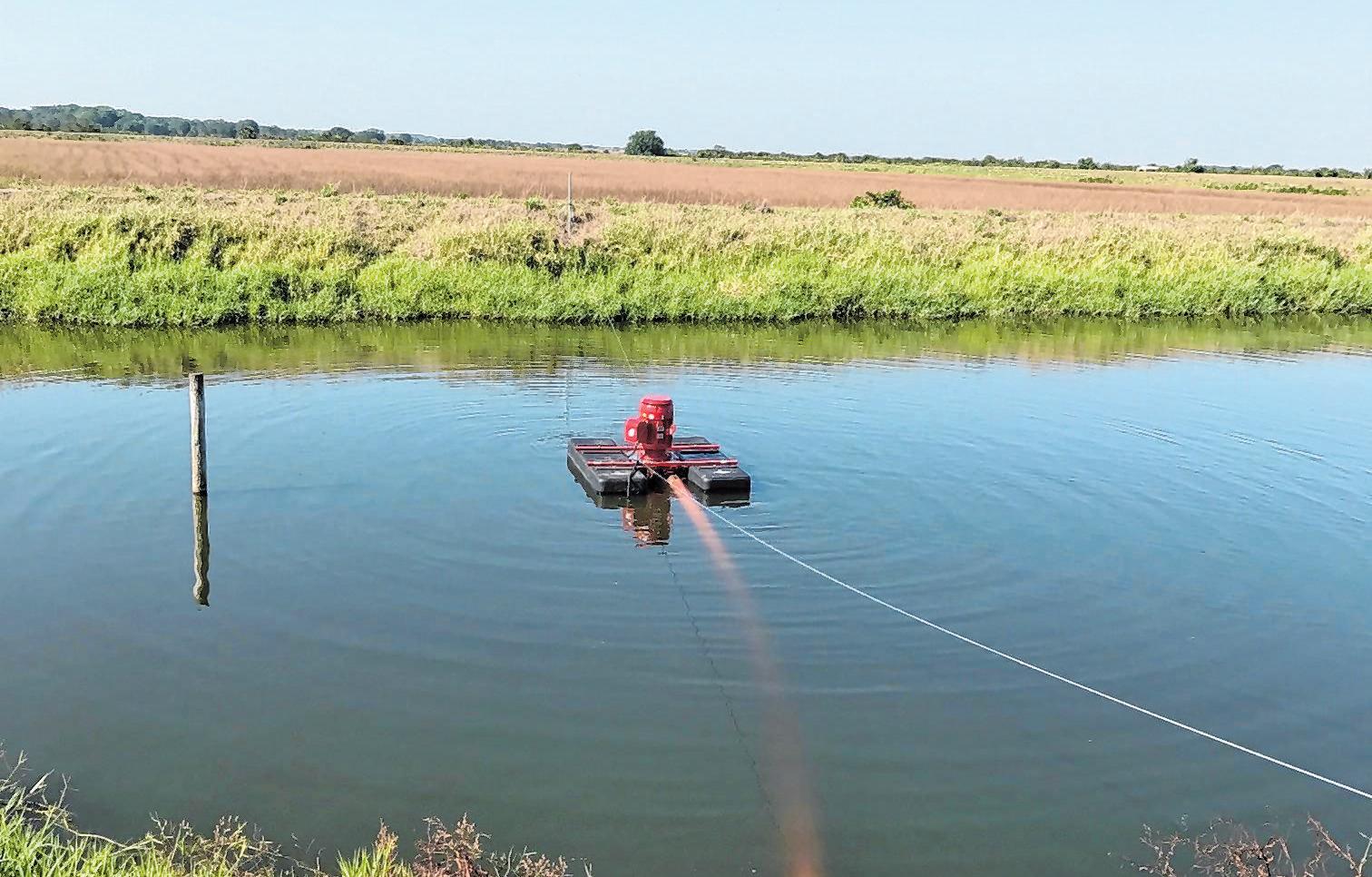
All this started when L.R. Dobbs created the floatingpumptocorrecta problem on his own farm near Muleshoe, then other growers wanted one as well. When the company was founded, wife Doris joined as bookkeeper and receptionist, and sales grew immediately. More pump models and employees were added over the years, along with an equipment and testing facility. Today, the Dobbs’ daughter Debbie Dobbs Green serves as president, but the family is quick to clarify that titles are not important to their work.
We all just do whatever we need to do and we wear a lot of hats,” laughs Debbie. “We just love to build these pumps my dad invented, get them out to our customers and keep them coming back. Keeping everyone happy is our main goal.” The camaraderie between the family members is evident. Besides Debbie, her daughter Tiffany Green is sales director for the operation, and son Lance is vice president of operations. The fourth generation is now onboardaswell,withTif-
fany’s son Canon Green serving as marketing director.
Since family is so vital to the Dobbs Corporation, Tiffany said that aspect and the care and treatment of customers sets them apart in the industry.Sincetheindustry has grown and Dobbs pumps are installed all overthecountry,thatpersonal relationship has been more challenging. But they make every effort to serve as needed, andeachpumpisindividually numbered to enable tracking of its history. Everything is made in
the USA and is handbuilt exactly for what the customer needs right here in Canyon. We treat every customer like family and that goes a long way,” said Tiffany. “We get so many neat stories about how our pumps are used.”
Some of the more unique uses of late have been in fish and oyster hatcheries, and other uses for the Dobbs products have been exciting to see. The family said landfills have been a huge area for growth, and they have had a Texas golf course use a Dobbs pump for
geothermal purposes to cool the clubhouse. They’ve also placed their products in solar plants and power plants as well.
A new development has increased the company’s impact as well, according to Tiffany.
“We do have a spray product for landlocked feedlots or for people that need to evaporate the water rather than move it,” she said. “We’ve invented a spray island that can be used for evaporation or aeration.”
But the original pump is their bread and butter. The industry really has
no limits, and the Dobbs family is excited to work with prospective new customerswhomaymake use of their pumps.
“A lot of innovation in our industry is finding ways to modify what we already have for new uses and working with customers to get the best results for them. We’re always looking for new industries to have our pumps working in,” said Canon. “There are many more industries than agriculture that use our products now, and they are all over the U.S.” Still, the area’s agricultural producers hold a special place in the hearts of Dobbs Corporation family members, especially since the intergenerational quality of their company is mirrored in the ag industry.
“We value our longstanding relationships with all our customers. Many of our growers are multigenerational, and we love to get to know each and every customer and hear their story and how the pumps help their irrigation needs. We keep in touch with them,” said Tiffany.
“Our roots are in agriculture, and that’s how we got started. We love meeting the friends and families and being there to help with whatever their needs are at the time. We are still able to repair pumps sold in the 1960sandwecansellused onestogrowersjuststarting out. They are really built to last.”









Special to the Herald
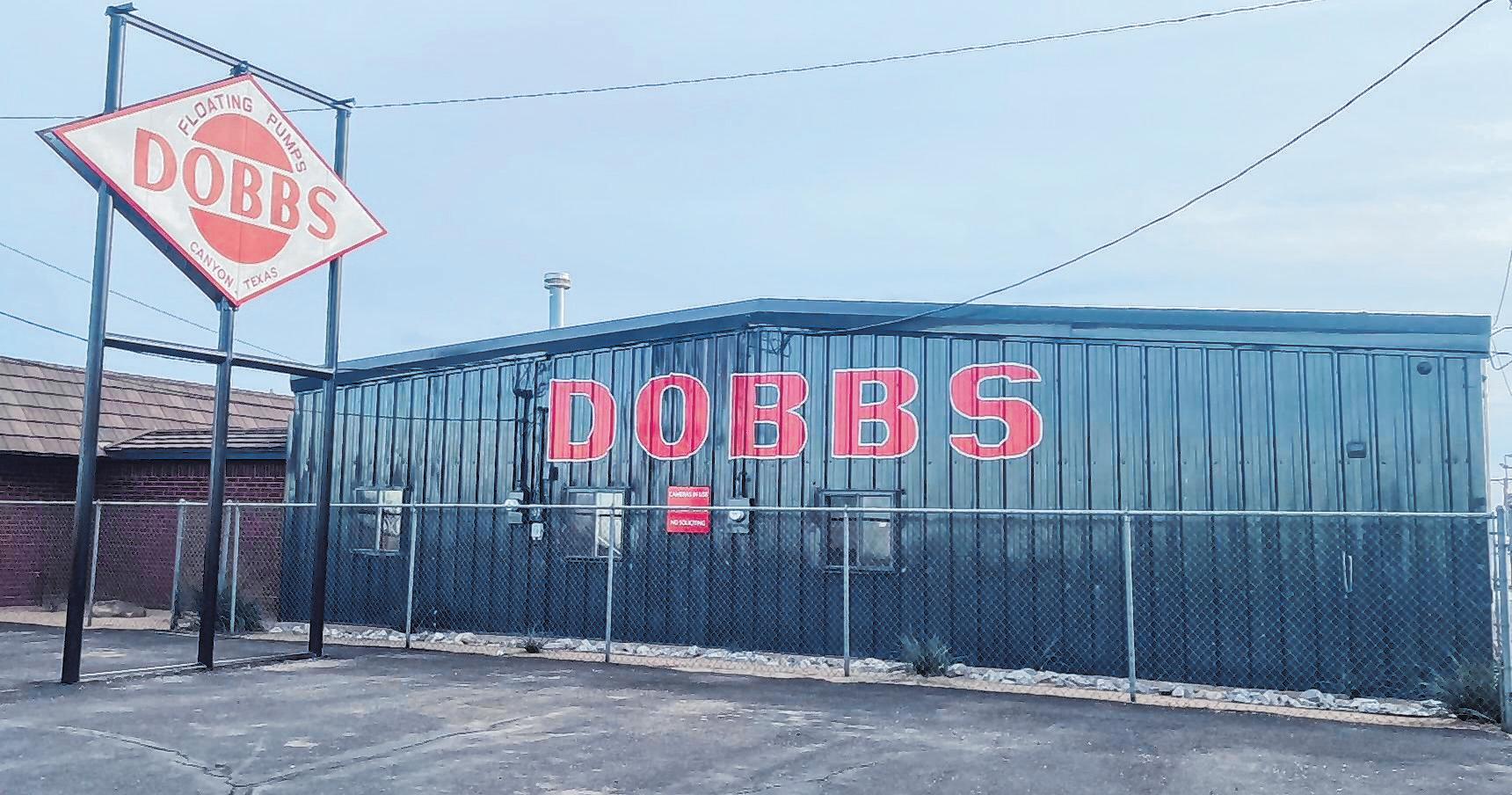
The Dobbs office is located at 100 Hwy. 60 West, in Canyon, Texas.
Special to the Herald
Dobbs pump in action.
Fast facts about the 4-H program
Young people often are encouraged to participate in activities that can strengthen their minds and bodies and benefit their communities. Variousorganizationsencourage children to become learners and leaders, including the youth developmentprogram4-H.
What is 4-H?
This is America's largestyouthdevelopmentorganizationwithafocuson essential life skills and leadership abilities. The four 'Hs' in the program's namerefertomissionsinvolving head, heart, hands,andhealth.
Who started 4-H?
The organization began in Iowa, where it was founded by school superintendent Oscar Benson. Benson was a leader in teaching demonstrations, and wanted to share this method of learning with young people as much as possible. In 1909, he was using a three-leaf clover pin to represent head, heart and hands as an achievement award for farm boys and girls. Benson later worked with the Office of Farm Management in the U.S. Department of Agriculture and broughthisclover.Benson ultimately engineered the first state college-federal agreement for the promotion of rural youth club work.
Is 4-H just for farming communities?

While4-Hwasoriginally conceived to introduce youth to agricultural work, it is not exclusively an agricultural organization. 4-H continues to offer animal and plant scienceprojects,butalsohas expanded to offer a wide rangeofprogramsinareas like arts and crafts, civic engagement, STEM, and healthy living. 4-H now reaches youth in urban, suburban and rural communities across the country. Through the website www.4-h.org, interested parties can find their own local 4-H offices to get
started. The program is delivered by Cooperative Extension, which is a community of more than 100 public universities acrossthenation.
Who is eligible for 4-H?
The program is geared to youth from kindergar-
tentooneyearoutofhigh school(K-13).Membersenroll in projects that match their ages and interests. Adult mentors provide guidance and support to youthalongtheway. What benefits come from 4-H participation?
The organization says their life-changing programshelpkidsandteens learnskillsandabilitiesto beresilient,adaptableand ready for work and life. Accordingtotheprogram, 4-Hers are more likely to feel competent, make healthy choices, contributepositivelytotheircommunities,andfeelpositive abouttheirwell-being. Inadditiontoparticipation in youth sports, scoutingandotherorganizations, children and teens can get involved with 4-H to learn handy skills that can benefit them throughout their lives.




























































Sageser leans on diversity to ensure farming success amid challenges
By Teresa Young SPECIAL TO THE HERALD
With four generations of farmers before him on thesameland,JayRaySageser’s fate behind the tractor wheel was pretty much sealed. And he’s just fine with that.
“I was born into it; it was my destiny, so to speak,” said Jay Ray, 36, a farmer in Cotton Center.
My family has been here since 1892 doing what we’re still doing, and it was my plan all along as long as I can remember.”
In fact, Jay Ray says, the family operation was designed for him to take the reins eventually. As fornow,heandhisfather, Chris Sageser, work side bysideinthefarmingoperation on the very same land the family settled all those decades ago.
“We make a pretty good team together,” Jay Ray says. “He has the wise sense about him, and I have some of the younger energy. We’re half operators on everything we do.”
The early years of the Sageser farm were heavy with livestock, noted Jay




Sageser continues on C3
Special to the Herald
Jay Ray Sageser and his wife Lauren and their children
JMS Equipment continuing to serve area agricultural community
By Teresa Young SPECIAL TO THE HERALD
Since 1972, area producers have counted on JMS Equipment to provide the products that help them get the job done on farms, ranches or even homesteads.
According to longtime general manager Leslie Gattis,JMSEquipmentbecame part of the family when his late father T.C. joined as partner in 1974. By the early 1980s, he was sole owner, and son Leslie has been involved for many years.
The company sells large farm equipment, handling about 12 different lines of products for sales, service and support.
“One of our major brands is Versatile Equipment, which makes large four-wheel drive tractors and row crop tractors,” notedGattis.“AnothermajorsupplierisGreatPlains, which makes grain drills.”
Those products are among the best-sellers for JMS,notedGattis.Theyalso offer tillage equipment from Sunflower and sell a good number of zero-turn riding lawn mowers under the Hustler Turff brand.
JMS has eight employees, including service and parts workers, and can
handle service of equipment either in-store on onsite if a farmer has need.
“What sets us apart is we are still a small-town business in a big pond. We are still a mom-and-pop shop, not corporate America but Plainview, America,” noted Gattis. “We want to take care of this area and not the whole world.”
Gattis takes pride in being the second generation operator of the company, carryingonthetraditionof hometown service.
My dad took great pride in helping people get started in farming, and we’re working with multiple generations of farming today,” he said. “It’s a pleasure to help this ag community and a privilege to serve them.”
Located on the east Interstate27serviceroadjust south of Southwest Third, JMS covers West Texas heavily but sells all over the United States. Available inventory can be found on their website at www.jmseq.com. Parts catalogs are also available through the website.
The business is open Monday through Friday from 8 a.m. to 5 p.m. and Saturdays from 8 a.m. to noon. They can be reached at (806) 293-4223.







Putting farm waste to good use
SPECIAL TO THE HERALD
Agricultural waste poses a challenge for farmers, even if the subject does not garner a lot of attention outside of rural areas. Farms generate enormous amounts of organic waste, including crop residues, fruit peels, sawdust, and livestock manure. Farmers must decide how to get rid of agricultural waste legally and economically. Ifnotdisposedofproperly, farm waste can pollute the environment, particularly the air and waterways like rivers and streams. It is best for everyone to mitigate agricultural waste to create further hazards. Farmers may not have considered recycling some agriculturalwaste,butitisaway to transform this potential hazard into something that can be used on the farm itself or sold
commercially. The fol-
lowing are some considerations for putting farm waste to good use.
Compost Animal waste, crop residues and additional organic material can be combined to create nutrient-rich compost. Compostisutilizedtoimprove soil structure, fertility and water retention. This helps reduce reliance on chemical fertilizers. By investing in large-scale composting tools, farmers can process hundreds or even thousands of tons of organic matter each year. While some can be used on the farm, the excess can be sold at a profit.
Biogas
Biogas production is carried out through a
process known as anaerobic digestion (AD). The U.S. Environmental Protection Agency says AD involves bacteria breaking down organic matter, such as animal manure, wastewater biosolids and food wastes in the absence of oxygen. As the bacteria digest the waste, they generate biogas, which is mostly comprised of methane. Capturing biogas can reduce greenhouse gas emissions on a farm, and the biogas can be turned into a renewable energy source to power electricity, heating or transportation, according to Prime Dumpster Incorporated.
Digestate
Anaerobic digestion does not only produce biogas. Digestate is the solid and liquid effluent
remaining after the process,saystheEPA.Digestate can be used in many applications, including animal bedding, fertilizers and a foundation material for creating bioplastics and other biobased products.
Recycling
Certain items used on farms cannot be turned into compost or fertilizer. However, recycling containers, tires, cardboard, rubber, and plastics offers the potential for theseproductstobemade into new items. Western Packagingsaysrecyclable items can be kept separate from other waste so they can have new life outside of landfills. Seeing farm waste as an asset and not a problemcanhelpfarmerssave money and resources.





Special to the Herald
Ray
The early years of the Sageser farm were heavy with livestock, noted Jay Ray. Then when his grandfather took over the operation, the added more row crops such as was the tradition in those years. It’s also when the Sageser farm began to grow, he said.
Today, the family farms their own land as wellasthatofothers,atotal of around 8,000 acres. And the entire operation is diverse, Jay Ray noted, mostly out of necessity given the area’s erratic weather, limited rainfall and lessening water resources. That diversity included varied crops, fertilizer programs and other variables. That’s been the key to sustenance amid these challengesaswellaslowcommodity prices and everincreasing costs to farm.
“The answers aren’t aways blackand white,so the end of the year can be very different from what youstartedwith.Wehave diversityintimingaswell since rains can come early or late. We stagger our cropcyclesarounddifferenttimelines,andusually we can find something that’s the right answer,” he said.
While Chris and Jay Ray tag team for their vast operation, they are not the only family members involved. Chris’ wife Raynie is head bookkeeper for the Sageser farm, and JayRay’s wifeLauren also helps with office work when not chasing down the couple’s four sons, who range in age from 3 months to six years. Three generations of Sageser men attended Texas Tech, with Jay Ray returning to the family farm after his graduation in 2012. JayRaysaysitwouldbe difficult to live in Cotton
Center and not grow the traditional white crop that is still considered king in West Texas. This past year, the cotton crop was great quality as it has usually been. But that is hard to balance when the prices still remain low. Still, it’s the family’s top crop.
In addition, though, the Sagesers have found great success in corn, milo, sesame, wheat and, in the past four to five years, in black-eyed peas.
“It’s a good rotation crop and doesn’t require fertilizing,” he noted. “It’s also a 75-day crop so we can time it well to capitalize on any expected rainfall.Thosegottoanelevator in Olton and are sorted and put in bags that go to either grocery stores or other places like the prisons.”
Finding profit in the farming world is no small feat, and the Sagesers have worked hard to add practices to their operation that would help save costs. The fact that many of these also help conservethenaturalresources is a double win.
“We do no-till farming, some plowing and minimum till if needed. We’re spending less money and not disturbing the soil, andyoucanusuallymake better crops if your soil is ingoodconditiontobegin with,” explained Jay Ray. For example, he said the pair plants wheat, then plants the peas in the tall wheatandthestubblecan create a fertile ground for cotton planting.
“You can plan ahead and then it not work out. We try to stage a threeyear cycle on things: a grain, a cotton and a wheat crop,” he added. Wheat goes well if we have some moisture and makesaphenomenalcovercropgoingintocotton.”
Jay Ray said crop science advances and research have played into their operation over the years in terms of intro-

ducing new seed technol-
ogy and spraying technology that images a weed and sprays only the plant affected.
We have exact apply on our sprayer that puts a fine molecule spray pattern that is science-driven, and we use three differenttechnologiesonthe cotton. There has been a lot of emphasis on changes in irrigation and herbicidesfrommygranddad’s time until now.”
Still, Jay Ray said the challenge in irrigation is simply to use it the most efficient way with little waste. In a landscape with plenty of wind, drip irrigation has helped minimize the evaporation. Beyond that, he said innovationinfarmingisa gamblethatmostgrowers simply are not able to make.
“Innovation right now is a topic that I’ve not talked about much. It
means spending a little more money to make a lot more product. But our hands have been tied behindourbackstobeasinnovative as we’d like to be because of inputs and costs over the last few years,” said Jay Ray. “For us to produce more would be to flood the market right now. The most innovation today is figuring out how to lay out our ground and giving the land some rest, saving our natural resources, and producing less product so it doesn’t drive the market price down.”
He said the layout program of previous decades no longer exists, and production is not really an option since most farms have large payments to make on the high-priced equipment needed to do their work.
“Our problem is we have a long-established
farm with lots of equipment, new equipment with the computers and a high price tag, so to make that payment I have to produce more. That means pumping more water and producing morecroptosaturatethat market,” he explained.
The government comes in with some program and pays us on the back end. If they’d pay us on the front end to conserve this finite natural resource, it would be beneficial.
Farmers as a whole are not being innovative unless its pinching pennies and finding out how to make more with less. We are all asking how do we cut back expenses and maximize volumes?”
JayRaysaidinnovation has really looked like financial management, such us using a combine with different crops more than a cotton stripper.
The Sageser work with BASFtoruntrialsonnew products, such as ZiduaSC, made for in-furrow application once the crop is up and established. Jay Ray and Chris adapted their sprayer to get between the rows to the weeds and are hopeful that the product will help improve yields.
“Thestoryofmyfamily since 1892 is that each generation has had to figure out how to adapt and change based on the cards dealt to them. There will be different days and better days, and I know ultimately this is the best place to raise a family and this lifestyle on a farm,” he said. There is so much to learn. In this small community with our church and school, you don’t find that much anymore in today’s world. Just the lifestyle is worth hanging on and figuring out a little longer.”
And while Jay Ray admits every generation has had challenges to overcome, he said ironically
OFCOURSE! WEHAVE THAT,TOO.
theSageserfarmisseeing the operation begin to look more and more like the early days.
“Cattlehasalwaysbeen part of the operation, and we originally were ranchers primarily but were growing for the cattle. We’re trying to figure out how to move more in that direction, grow more forage crops for our cattle and grow that side of the operation,”hesaid.“Here we are 130 years later or something, and we’re getting back down to where we started with more cattle on the farm and figuringouthowtogrowthose crops for them.”
Jay Ray said the operation has a few hundred head of cattle currently, some for graze and some feeding for other customers. That diversity – especially given the more favorable beef prices – has helped offset the basement-dwelling cotton pricesandhassavedinirrigation costs.
Amid all these challenges, Jay Ray said the rewards of farming still outweigh the down sides as an overall career choice.
“There is still nothing like farming… to be able to plant something, grow something, nurture it all yearlongandharvestitto market. It is ever-changing with seasons and always new hurdles to jump, new challenges so you can’t get bored with it. It’s very fulfilling to grow something yourself and get something out of it,” he said. “We’re here for long-term success not short-term.You’renotgoing to get rich quick. If we keep pushing forward, we’ll come out of this cycle and will be farming unlimited.”
Besides his farming work, Jay Ray serves as president of the Cotton Center Consolidated CoOp Gin, so he also sees the challenges in cotton farming from the gin side of the equation.


Special to the Herald
Chris and Raynie Sageser.





Silverton Oil providing hometown service, delivery for ag industry
By Teresa Young SPECIAL TO THE HERALD
offerspropaneandasmall
business




bookkeeper for the business.SisterBrendaMcDonough helps part-time in bookkeeping as well. The Estes’ son Braden returned to Silverton after college to help with the businessinmanydifferent


capacities including computer work, deliveries and other tasks. He noted the business has evolved over the decades.
“Whenitwasstartedwe had gas, a tire shop with a
Silverton continues on D2




The Estes grandchildren accompany Jim Estes on a delivery around the Silverton area.
Inflationhasbeenahot topic for several years running. Many businesses have been forced to raise their prices in an effort to combat a host of variables, including materials costs, labor shortages and political uncertainty across the globe. That's been hard on consumers' and business owner's pocketbooks, and precisely when inflation will simmer down remains a mystery.
Though the cost of many goods and services has skyrocketed in recent years, discussions about inflation often focus on the rising cost of groceries. According to USDA Economic Research, food prices in the United States rose 23.6 percent between 2020 and 2024. That's led many people to cut back on luxuries like dining out. As people dine out less, they may be looking to expand their culinary horizons at home, and that goal is best achieved when the agricultural sector is put in position to meet consumer demands. Indeed, that link is just one of the many ways that a thriving agricultural sector benefits everyone.
¥ A strong agricultural sectorgreatlybenefitsthe economy. Job creation is

widely cited as a pathway to economic recovery, and a well-supported agricultural sector can create millions of jobs. The agricultural tech firm Sabanto estimates 2025 began with around 2.4 million unfilled jobs within the agricultural sector. A 2022 report from Maryville University indicated the agricultural sector contributes $7 trillion to the U.S. economy, employing as much as 10.3 percent of the nation's workers. The link between a thriving agricultural sector and a strong economy is undeniable, making it a worthy endeavortosupportpolicies that prioritize agriculture.
¥ A thriving farm is a productive farm. Modern
grocery stores offer an abundance of healthy foods, and many of those foods are grown on farms. The Farm Bureau reports that a single acre of land can grow various crops, producing as much as 50,000 strawberries or just under 2,800 bushels of wheat. Consumers who enjoy visiting grocery stores that offer an array of fresh, nutritious foods, includingfruitsandvegetables, should know that those options are only available when a thriving agricultural sector is prioritized.
¥ Farms are vital to productionofotherproducts as well. Maryville University notes a thriving agricultural sector is involved in more than
just food production. IFP Energies notes that biobasedchemistryusesraw materials derived from biomass, such as plants likewheat,cornandpotatoes, to produce an array of products, including inks, dyes and detergents. So it’s not just the foods people eat that can be traced to a thriving agricultural sector. Biobased chemistry also is consideredgreenbecause itpromotesareductionof the environmental impactofindustrialproduction. There's no shortage of reasons to support a thriving agricultural sector. Indeed, consumers from all walks of life benefit in myriad ways when thesuccessoftheagricultural sector is prioritized.
“The
farmers are
From page D1
mechanic and oil changes. We didn’t offer propane back then,” said Braden. “Now we lease part of the shop and another vendor does the oil changes.”
A unique aspect of the Silverton Oil operation is their delivery service of bothfuel–gasanddiesel–as well as propane to about a 60-mile radius. Their heaviest customer base for this is agricultural, and the Silverton area is plentiful with growers and ranchers. Propane is offered for delivery to many households as well.
“Our delivery is helpful for the farmers, and that sets us apart. The farmers are the livelihood of our communities around here,sowetrytotakecare of them the best we can,” Braden said.
the
livelihood


of our
communities
around here, so we try to take care of them the best we can.”
Braden Estes
Braden noted that Silverton Oil has expanded its footprint over the years aswelltoservetheheavily rural area around their main location.
“Over the years, we have added locations for gas pumps that are unmannedinQuitaque,Turkey, Childress and McLean, and they accept credit cards and our cards,” he said. “We also haveafewkeyedlocations in Flomot, Vigo Park and CV.”

Silverton Oil employs seven people, and their main location is 1253
County Road 13 in Silverton. They can be reached at (806) 823-2451. /
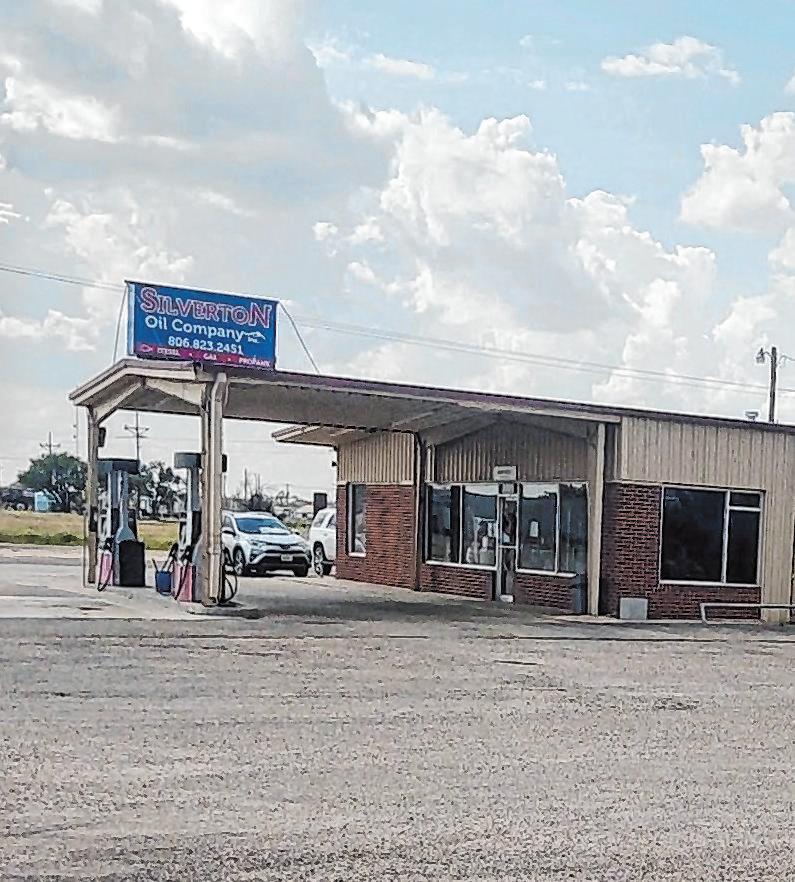
The Silverton Oil main location in the city offers fuel and a small store with supplies.
SILVERTON
Brush Auto helps keep Plainview agriculture industry rolling
By Reece Nations FOR THE HERALD
As a regional hub of agricultural activity, Plainview is home to many businesses that cater to thespecificneedsofgrowers and producers.
But when a piece of equipment needs repair, it can be hard to know who to call for reliable help, no matter what needs fixing. For about 20 years, Brush Auto and Truck Service has been Plainview’s go-to garage for a wide range of ag-related automotive and mechanical repairs.
Brush Auto has outfitted itself specifically to
serve customers from a varietyofagriculturalspecialties. Jeff Brush, owner of Brush Auto, said the business offers services such as front-end repairs, alignments, brakes, oil changes, engine and transmission repairs and replacements, and driveline repairs for everything from personal vehicles to farmpickupsandtractors.
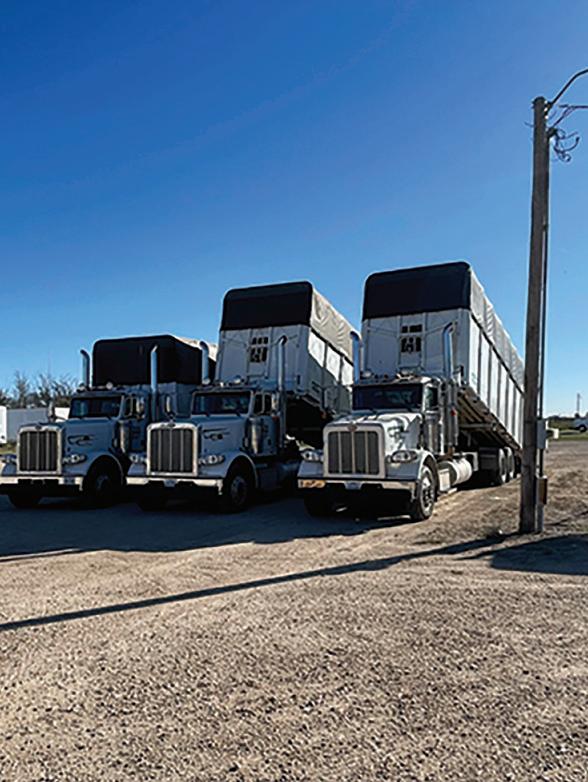
In particular, those in need of new tires for pivot irrigation systems, implements, tractors and other farm or dirt equipment frequently turn to Brush for assistance. “I know it sounds cliché,butwe’reprettymuch
a one-stop shop,” Brush said. “We pride ourselves on being able to take care ofanythingour surrounding farmers, cotton gins and feedlots may need.”
Brush said the business was founded in August 2005 by his father, Berry Brush, who initially opened it as a certified Ford diesel shop. Jeff, who hasbeenrunningthebusiness for about six years, began working alongside his father when he was just 12 years old and has continued doing so ever since.
“We used to work on a lot of tractors back when I wasakid,andthenwejust




kind of slowly started evolving,” Brush said. “We put in a tire shop probably eight years ago, and now we pretty much work on anything—gas, diesel, it doesn’t really matter.”
Like many of Plainview’s local businesses, Brush Auto is a family affair. Jeff’s brother, Jeremy, servesasthepartsmanager and a tire technician, while his mother, Angie, helps manage the business’slogisticsinherfront office role.
Though the business has grown from having justasinglebaytoa10-bay garage, Jeff said he still
spends a significant amount of time in the field with customers performing repairs.
We’ve always done infield service work, whether it be automotive, truck or tractor repair,” Brush said. “It’s not as big a part of the business as it used tobe,butI’dstillsayprobably 40% of our automotive and diesel tire repair work is done in the field. It’s a major portion—our service truck probably runs every day.” Brush estimated that roughly 80% to 85% of the business’s customer base is in some way ag-related.
From routine mainte-
nance to major jobs, agricultural producers from across the Plainview area know to call on Brush when an issue becomes too much for them to manage on their own.
Thoseinterestedincontacting Brush Auto and TruckServiceforautomotive repairs or maintenance,ag-relatedorotherwise, may call 806-8954630or806-895-4629,oremail brushautoandtruck@gmail.com. The business can also be found on Facebook and online at jeremybrush94.wixsite.com/ brushauto



Special to the Herald
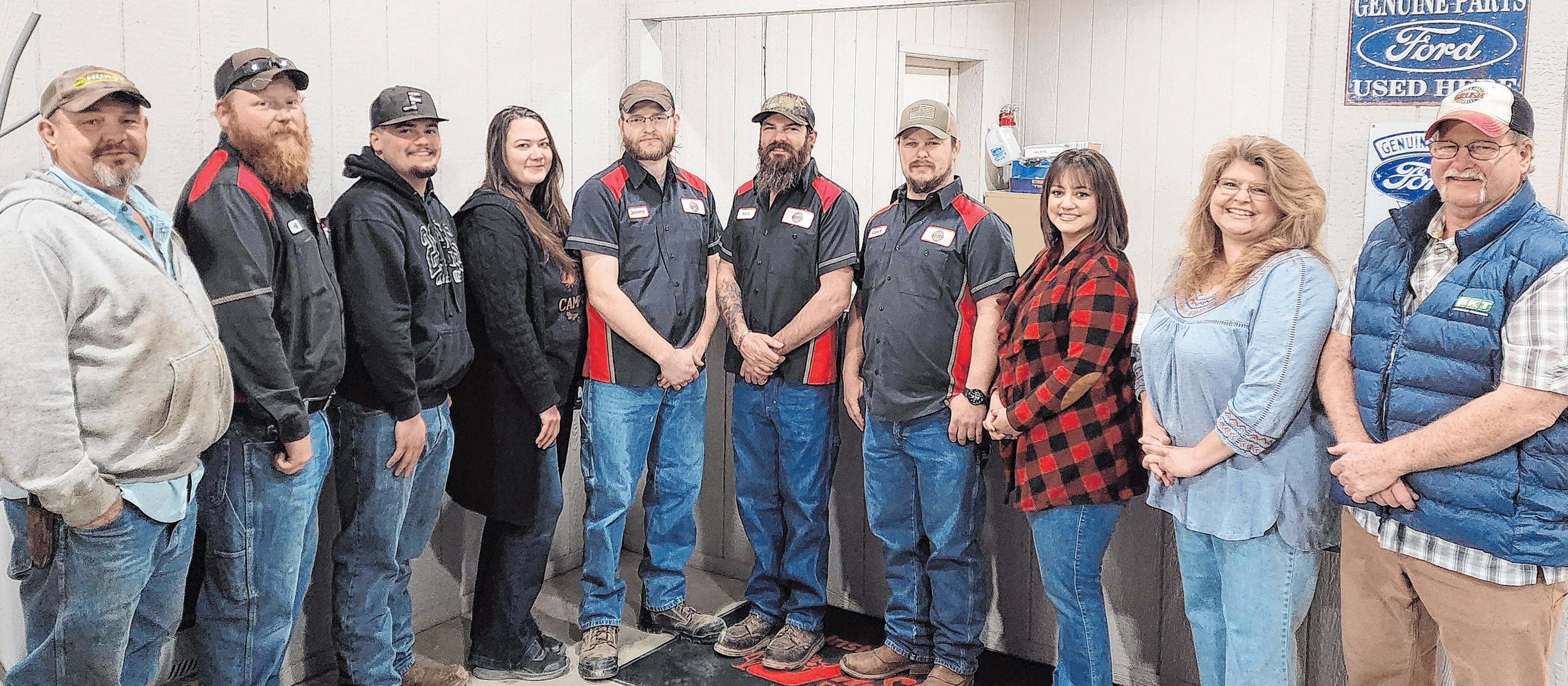
Randy Martin, Jeff Brush, Haygen Lefevre, Caylee Brush, Jeremy Brush, Tracy Hughes, Randy Webb, Lissa Orozco, Angie Brush and Berry Brush are pictured in
this photo of the staff at Brush Auto.









City moving ahead with airport plans, studies on parks, sports complex
By Teresa Young SPECIAL TO
Since arriving in Plainviewaboutsixmonthsago, Ted Chancellor hit the groundrunningasthenew city manager. With a passion for projects that impactmanyresidents,Chancellor hit the jackpot in Plainview with several key initiatives that are coming together.
Probably the biggest is a new airport project, expected to begin soon since the $1.5 million needed funding was approved by the city council in late December. That means the Federal Aviation Administration can move ahead sincetheprojectnowqualifiesasturnkey,Chancellor explained.
“One of the first things presented to me, before I even started here, was that the city was interested in building an airport. Of course, that’s right up my alley where I was coming from, so I think that’s why they mentioned it,” Chancellorexplained,notinghis background in management at the Charlotte Douglas International Airport in North Carolina. “The funding was mostly
secured, and we had appliedforanEDAgrant,but it was denied just before I came on board. We reapplied and moved some things around, which lowered the funds needed and madethegrantalittlemore appealing. We also got a few more letters of recommendation.”
Chancellor said when theFAAapproachedabout the project, the city felt the need to advance the fund-
ing to move it forward and notrisklosingotherfederal and state funding that had been secured but had an expiration date.
“Ourcouncil,theairport board, the county and all agreed that we’d go ahead and fund the missing $1.5 million with the expectationthatwebelieveinitand it will be a good thing for the city,” he said.
New face in aviation
The project will include
an all-new terminal buildingwithaspacetoleaseout forarestaurant,newparkinglotsandarenovationof thecurrentofficetoareputable fixed base operation where pilots can enjoy rest andrefuelwhileinthecity.
The airport will also include improvements to the ramp and relocation of the fuel station to be more efficient for customers.
Chancellorsaidtheproject is partially in response
to growth in air traffic to Plainview as well as a “if youbuildittheywillcome” mindset to drive increased traffic. In 2025, the city received an upgraded classification to regional airport based off daily operation numbers. That means increased state funding and solidified the need to move ahead with a new airport.
Arelatedpiecetothisexpected growth in the aviation and aerospace indus-
tryisthetechnicaltraining aspect,Chancellorsaid.As aerospaceoptionsarecoming closer to home, spearheaded by Elon Musk and Jeff Bezos, Plainview awaitstheresultsofastudy bytheSouthPlainsAssociation of Governments (SPAG) into feasibility of the industry across the region. The late-January release should bring some possibilities into options like horizontal rocket launches, recovery missions, drone operations and ground-based satellite operations.Theoptionsare plentiful.
He said the training aspect would go hand-inhandnicelywithareatechnical schools like South Plains College and the PTech program being created through the Plainview Independent School District.
“We saw a opportunity where SPAG got the study funding, and we hit a unique stride where they are studying for us in the region, we happen to be building a new airport at the same time and the PTech program is kicking off,” Chancellor said. “There are a lot of things
City continues on E3

A plane lands at the Hale County Airport in Plainview, TX
THE HERALD
Special to the Herald
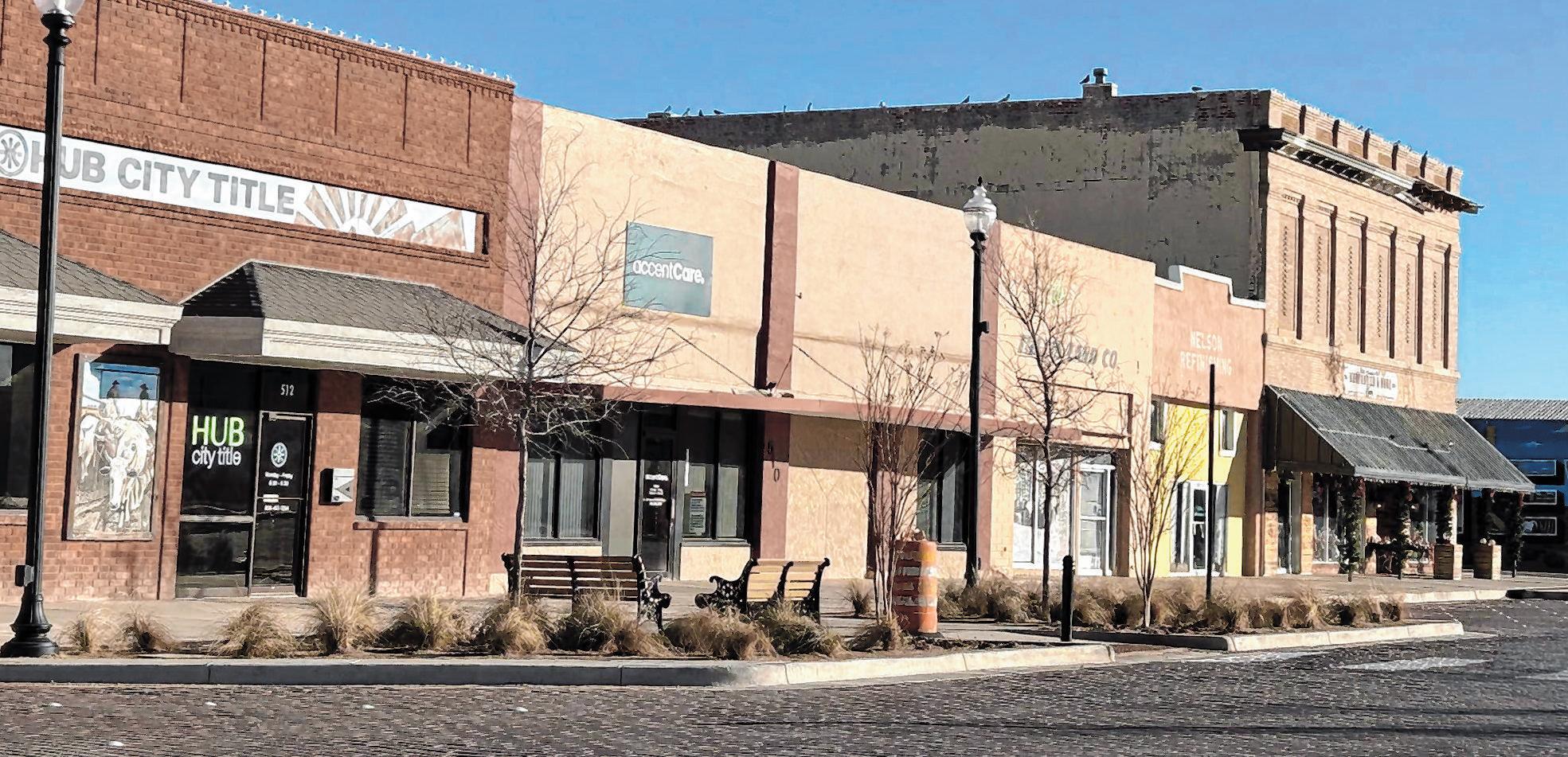
Downtown Plainview/Broadway Street updates continue in 2026.
Faith in Sharing House feeding needy residents from donations
By Teresa Young SPECIAL TO THE HERALD
From a tiny hut on Joliet Street,volunteersworklike Santa’s elves, assembling bags,sortingdonationsand organizing their space in preparation for the next day of service. But they’re not preparing for Christmasday;theyareministering to the hungry across Hale County.
Faith in Sharing House, known as FISH, started in 1985 as a joint venture of Plainview churches, wanting to form a cooperative ministry rather than each congregation hosting its own food bank. Today, the independent nonprofit organization does much the same work it has for decades: providing emergency food bags.
While the organization hasmovedafewtime,their current home at 504 Joliet has been a constant since 1993. Soon thereafter, a grant from the James and Eva Mayer Foundation helped FISH add a storage shedbehindthehuttokeep donations stored and safe.
Funded only through churches and individual donations as well as food collected by schools, businesses and other entities, FISHreliesonthecommunity support that in turn helps friends and neighborsinneed.Wallsaidlocal
businesses also help with food items.
“UnitedSupermarketsis so good to us, donating food and bread. That is really nice, because we used to have to buy bread,” noted Wall. “Tasty Donuts also gives us things they don’tselleveryday,andwe bag and freeze those and can add them to the boxes as a treat.”
Wall said food bags contain canned vegetables and soups and common items with which clients can cook, like flour, sugar, beans, eggs and shelf staples like macaroni and cheese.Meatsarelimitedto canned tuna or other canned meals since the organizationhasnofreezerto store meat. Special bags with cereals and Pop Tarts are available for those with children.
The FISH operation has evolved over time – most recentlyduringtheCOVID pandemic – and that has changed how both volunteers and clientele interact, Wall noted. Post-COVID, the organization is only open one hour each day MondaythroughFriday,1-2 p.m. Another change is that clientele need only drive up and a volunteer comesouttotheirvehicleto collect information and thenbringtheirfoodbagto the curb.
One thing that has not
changed is the growth in clientele numbers over time.In2025,forinstance,a total of 3,844 families were served over the 12-month period, 118 of which were new clients. A total of 7,678 individuals were served, with 1,537 of those being children (includes repeat visitors). Families served were up 148 from 2024, or four percent. And those served in 2024 was up 181 from 2023, or 5.1 percent. That trend is expected to continueasfoodpricesrise across the nation.
Those in need can visit FISHforfoodevery30days ifneeded,andWallsaidrepeat clients are more common with older residents. She said in past years the number of children has gonedownbutthenumber of elderly has grown, as those on fixed incomes often struggle to make their money last all month. Services are open to those throughout Hale County, and clients are required to provide ID, social security numberandaproofofresidence such as a utility bill.
The organization relies heavily on volunteers as there are no paid staff members. And that, Wall says, spotlights another beautiful part of the Plainview community.
“Thevolunteerswehave had are tremendous. They work and don’t complain, and they are hard workers that are there to serve the Lord,” she said. “The 18plus class from the high school comes over regularly, and we couldn’t do this without them.”
They also couldn’t oper-
ate without donations of both food and money, which is used to purchase needed food items from theirstandardinventoryas well as supplies like plastic storage bags and paying utilities and insurance.
FISH has a “wish list” of the most desired items, includingcannedcorn,green beans, sweet peas, fruit, soup and tuna; boxed macaroni and cheese; onepound bags of rice; gallonsize tea bags; saltine crackers; individual packets of oatmeal; ramen noodles in individual packages (not the Styrofoam cup style); bottledwater;children’scereal;PopTarts;peanutbutter; and eggs by the dozen.
The organization also appreciated donations of plastic or paper shopping bags, empty egg cartons and nonwoven bags that can all be used in serving clients. Gift cards from UnitedorWalmartarealso appreciated.
Wall noted that her many years of work with FISHhavemadeherappreciate her own blessings, which includes the opportunity to bless the less fortunate through this community organization.
I think that FISH bringsthechurchestogether, because there are nine boardmembersandeachof us are from a different church,”saysBeverlyWall, a longtime volunteer who joined the board as secretary in 2008. “As a Christian,ithasalwaysmademe feel like we’re doing what we’resupposedtobedoing; we are Jesus’ hands and feet.”
EDC working to grow Plainview business from within, without
By Teresa Young SPECIAL TO THE HERALD
As2026opens,thework of the Plainview Hale County Economic Development Corporation continues in earnest to grow thebusinesscommunityin the area. But they also are working to grow their own influence and impact.
Tothatend,executivedirector Kristi Aday says the EDC recently adopted a new logo mark and tagline to use in website and branding of its work both inside the city and beyond to prospective companies looking at Plainview and the area.
“It’s time to refresh, and we wanted something more modern for our logo, our image and to bring in an outside view to provide their ideas and words,” explainedAdayoftheproject, whichwasbidusingawide net. “It’s easy for us to sit around and talk about Plainview and Hale County, but for someone else to bring their viewpoint provides so much great information for marketing and website use. We liked this vendor because of their specialization in city and economic development work.
The project includes new branding for the EDC and the Convention and Visitors Bureau also housedwithinthecity.The tagline “Rooted in Resilience, Growing Through Innovation” reflects much about what makes Plainview special, Aday noted.
Mostrecentprojectsfeaturing the innovation and technologyoftomorrowinclude the boost happening withtheSamsungpartnership at Martin Industries.
The chip manufacturing is going strong, and they have plans for additional phases,” she said. That brought jobs and a newindustryandopportunities for people to be upskilled.”
While not an EDC project per se, the expansion and updates at the PlainviewWalmartDistribution Center are exciting for Aday and the city because of the innovation it brings to the community. Construction is underway on expansion of the DC footprint, but it also means replacing much of the operation with robotics.
“It’s a three-phase projectcurrentlyinphasetwo,” noted Aday. “It’s exciting for a few reasons: It gives an opportunity for those employeestoimprovetheir skills and marketability, and these are tomorrow skills. It also keeps Walmarthereanother30years. They are making a $450 million investment, which is incredible.”
Another new development within the EDC are
two new brochures aimed at helping area residents whomayhaveanentrepreneurial bent. Aday wrote two new publications that will be available to download or read via the city’s website as well as the EDC website, www.plainviewedc.org,andviathePlainview Chamber of Commerce.
Start a Business in Plainview” includes helpful tips on preparing to start a business, including everythingfrommarketresearch to marketing plans for the long term. Aday noted that many people mayhaveanideaforabusiness in the area, but most havenoideawheretobegin that process and can be intimidatedbyallthedetails. We include how to write a business plan, so thatmaximizesyourability to get funding. It also mentions other avenues of funding, like the small business administration, as well as permitting through the state and city,” said Aday. “We explain howtodomarketresearch, obtainingfinancing,aswell as utilities, workers comp insurance, business insurance and basic marketing. Some people may need to know about zoning, especially if they will be building.”
The second publication, “ASmallBusinessGuideto Social Media and Marketing,” is one Aday said is critical in today’s market where word of mouth advertising is a necessity for survivalinanycommunity.
“You really have to do thingsregionally,andthere are so many that have a storefrontaswellasanonline presence. You need to know how to market to both of those groups since thosearetwoverydifferent markets,” she noted. “So manypeoplestillthinkonly of traditional ways of marketing,soifyouarenot into digital marketing this will help them be more comfortable with it. You have to be creative, and it’s a necessary thing these days. It’s not a maybe.”
On the new business front, Aday said conversations are common but the process for a new business coming into the city from outside often takes years. The hot topic is data centers, and Aday said those businesses are constantly looking for large spaces around the panhandle/ plainsareasincethelandis soplentifulandreasonably affordable.
Wetalktopeopleallthe time, but there is nothing solid yet. Until we see signatures on paper, nothing isadonedeal.We’rehaving lots of conversations and lotsofpeoplearelookingat Plainview, so we are certainly busy,” said Aday.
Special to the Herald
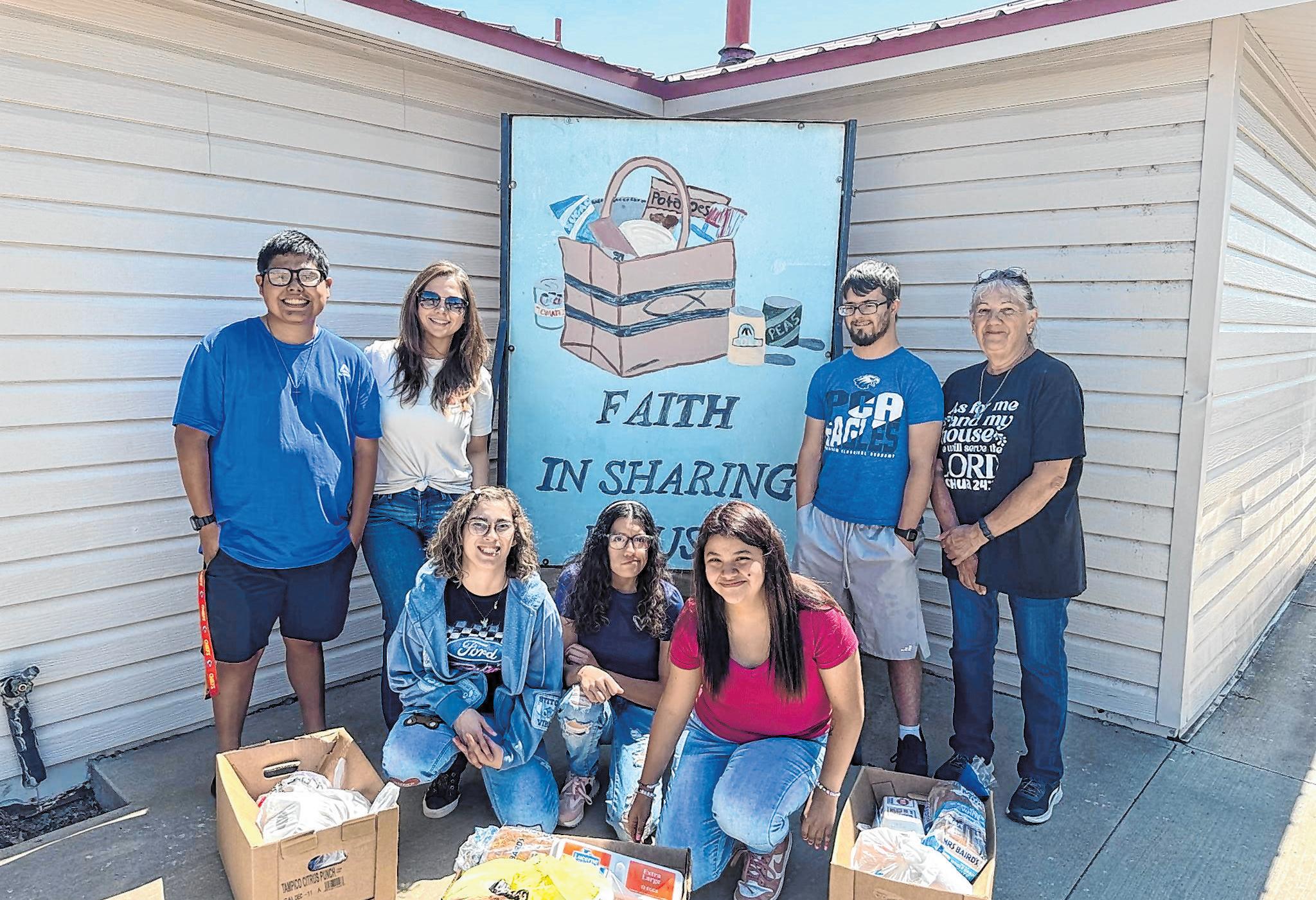
High school volunteers pack boxes for clients to FISH during an afternoon of service.
lining up to make the aerospace industry take off in Plainview.”
The path to Plainview
All those things – combined with Chancellor’s naturalaffinityandexperienceinaviationindustryin a previous life – created a perfect storm in the very best sense.
That’s just one aspect of Chancellor’s back story that helped him jump into Plainview with both feet and move several key projectsforward.Withrootsin small-town Nebraska, ChancellorjoinedtheNavy at age 17, served with the Honor Guard at Arlington Cemetery in Washington, D.C.,assistinginthefuneralofPresidentGeraldFord and former first lady Lady Bird Johnson. He then was transferred to Jacksonville, Fla., as an aviation electrician and learned the maintenance side of the industry.
Chancellor left the Navy for the reserves, then earnedabusinessmanagement degree with aviation management specializationatJacksonvilleUniversity. From there, he began working at the Charlotte airport and worked up to management there.
“I had a private license for flying, instrument rated, and was really moving down the aviation route, until I realized how much the city management side of things impacted the airport,” he recalled. “I got a master’s degree in project management and then a PhD in public administration because I wanted to keep using my education toward what I do daily.”
When he and his wife began to explore opportunitiestoadvancehiscareer and move, they wanted a place where they could raise their four children

withthesmall-townvalues they knew and loved. The South Plains/Panhandle area of Texas was high on the list when he saw the Plainview city manager openingandplannedavisit together.
“We both just loved it, and it felt a lot like home. But it still had places like Lubbock or Amarillo close by if we wanted to go to a bigger city,” he said. “For raising a family, this is exactly where we wanted to be.”
Improving Plainview life
Since arriving, he’s jumped into several other projects that would improve the quality of life for residents. One is the renovation of Kidsville in Running Water Draw Park, built originally in 1991. While plans had been discussed to replace the aging structure, Chancellor said he posed an important question: should the replacement be one-for-one in the exact same location, orwasthisagreatopportunity to move it to a more strategic location for cohesiveness and connectivity
with the greater parks system.
The parks advisory board completed a study and learned that lots of opportunities existed, and residents had many different opinions. The plan for now is for the board to explore some of the possibilities and formulate a plan using available Running Water Draw space and accounting for existing facilities that would not move, such as the softball fields.
On the positive side, the $1.5millionfundingneeded is already in place, half from a Texas Parks and Wildlife Grant and half from the city’s match. The grant has a five-year timeline so there is flexibility to study it well.
Another “big rock” on Chancellor’s plate is the housing issue in the city, and Chancellor said the city is pursuing some larger developments for additionalhousing,aimingfora wide including everything from senior and workforce housing to higher-end homes.
“One of the things slowing growth in Plainview is
the availability of housing. We know because we are building here too,” he explained. “Just like getting a new industry in town, housing is very important. Industries will not come to townifhousingisnotavailable, and that means the entire spectrum of housing.
“I think a key to watching Plainview boom is building more housing. The idea would be to get some developers to move into our business park and starting growth there. Housing is probably number one on my list right now.”
Wrapping up work
Othermajorprojectsare nearing completion, including phase two of the downtown revitalization project on Ash Street and the final paperwork required for the city to be named a Tree City USA to signify care for and addition of vital trees.
The new animal shelter is also slated to begin constructionthisyear,withthe design nearly complete. Chancellorsaidthenewfacilitywillhelpcontinuethe
momentum of the improvementsbeingmadeby stafftocurtailthestraydog problem in the city.
“It looks really nice, and that will be good for the community. I’m really proud of our animal shelter,andtheyaredoingsuch a great job out there. It’s really a shining gem in Plainviewandthey’vebeen abletoreallyturnacorner,” he said.
Talksonapublic/private partnership sports complex continue, with several open city council meetings on the topic already taking place. To be located on the interstate land owned by the city, the $45 million complex would be constructed by Synergy out of North Carolina.
“The partnership allows the city to construct the complex on donated city landwealreadyhaveoutby the interstate. Then we’d lease the facility out through a 30-year lease to Synergy,” he said. “At the endofthe30years,thecity owns it again. It saves a bond election process or raisingtaxestobringsomething like that to town.”
Completewitheightbasketball courts – equal to 16 volleyball courts or 32 indoor pickleball courts – as well as a restaurant, locker room and team meeting spaces, retail space and more, the complex would benefit the city by welcoming tournaments and drawing travel teams from Oklahoma and the Dallas area. Partnerships with local schools, Wayland Baptist University, the YMCA and others are important to the project. And it’s one more area Chancellor said the city is enhancing its partnership with Wayland and their new president, Dr. DonnaHedgepath.Thecity will be putting up WBU flags regularly to promote the hometown university, and a billboard campaign will celebrate the longtime presenceofWaylandinthe city.
Finally, Chancellor said thecityjustreleasedasetof new core values, called our views.” The five will be spotlighted through social media for external focus and include visibility, innovation,efficiency,tobe welcoming and to be a service to our community.
All of this work is rewarding for Chancellor, who admitted he enjoys both the routine aspects of city management like council meetings and the uniqueness of ever-changingissuesandprojectsthat keep things exciting.
“I’ve always enjoyed leadership roles and the feelingofmakingapositive impact to the community and to a group of people. Fromthe189employeeswe have here and the 20,000pluscitizensofPlainview,I truly enjoy working for them,” he said. “Whether it’s through Kidsville renovation,housingorairports, every step forward is something I can feel in my heart,andit’sveryrewarding.”
Special to the Herald
Runningwater Park, also known as Kidsville.


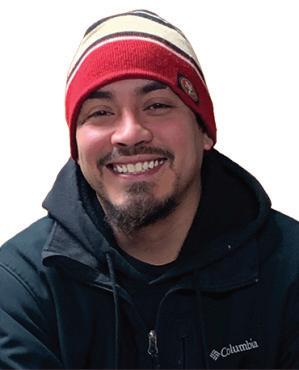
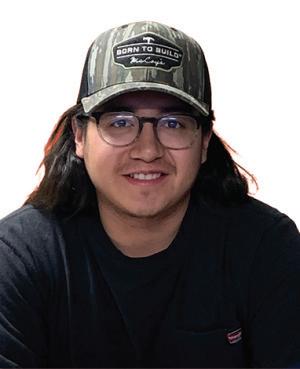
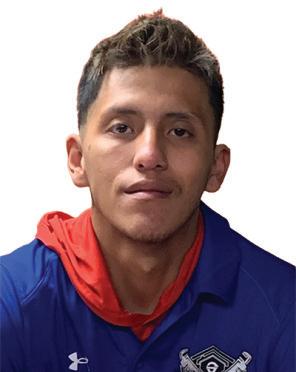
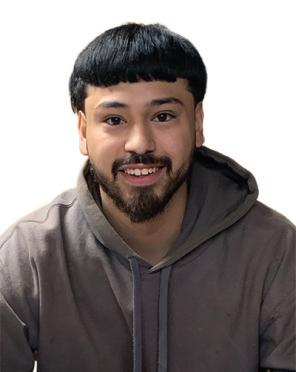
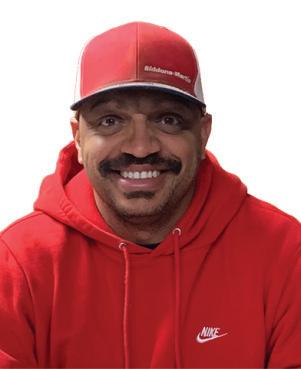
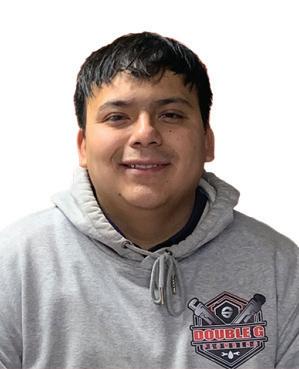
SebastianGarcia
TobyRodriguez
GilbertGarcia-

Senior Center provides meal, activities for over-50 crowd
By Teresa Young SPECIAL TO THE HERALD
Forresidentsover50,the
ings.
Norma Casanova serves as executive director and the only paid employee of the center, which is governed by a five-person Board of Directors and receives funding from Hale Countyandprivatedonors.
A nonprofit organization, the Senior Center has been in its current location since its establishment in 1977.
One of the draws of the center is the lunchtime mealfrom11:30a.m.to12:30 p.m., with service varying fromweektoweekbuttypicallyoffered2-3weekdays. The meals cost $6 for dinein and $6.50 for carryout andareopentoguestsofall ages,notjustseniors.
Costis$3perpersonforthe crowdfavoriteevent.
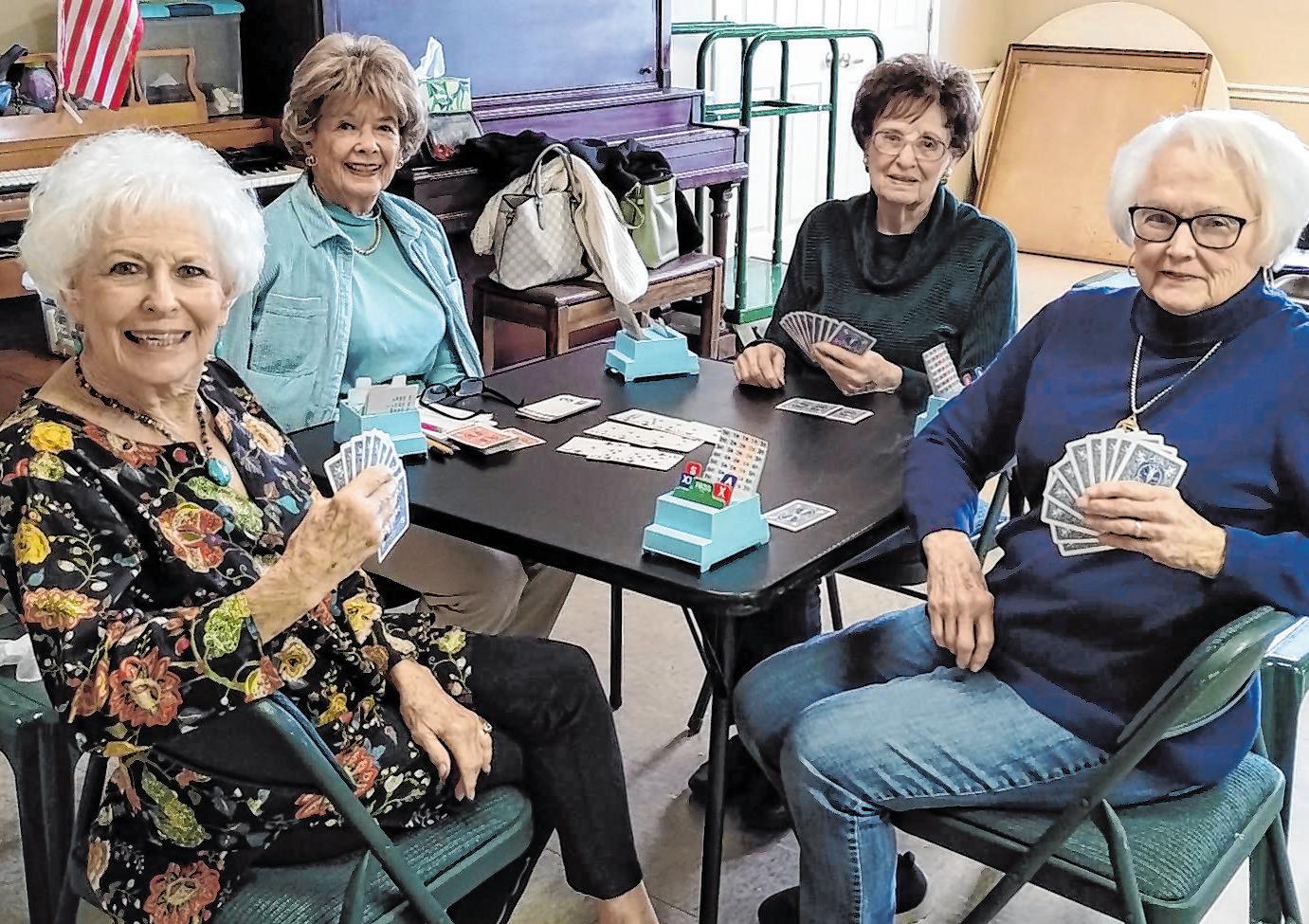
Shealsonotedthatregular dominoes is offered on Wednesdays from 1-4 p.m., alsoata$3perpersoncost. Party bridge is played the second and fourth Fridays of each month, with a different hostess each session that covers the cost of the gameplayfrom1-4p.m.
The Center also has a pool table and snooker tablethatisavailablefrom1-4 p.m. weekdays at no charge. And the center has a smaller space and its main dining area that can both be rented on weekendsforprivateevents.Casanova can be reached for availability and cost of spacerentals.
“The seniors can come out and get a nutritious, well-rounded meal at an economical price, and it’s good fellowship. It keeps them from becoming a couch potato,” noted Casanova. “I have said often, comedownforthethreeFs: food,funandfellowship.”
courtesy Norma
The Senior Center hosts several groups for lunch at
“We usually post our menu and days on Sunday evening on the Facebook page under Plainview AdultActivityCenter,”noted Casanova. “The amount of people eating just varies depending on groups that maybecomingin.”
the spacious dining room, including Retired Teachers of America (second Mondayofthemonth),theGood Sams Club (third Tuesday
ofthemonth)andasupport grouponWednesdays. The Center also welcomesseniors50andolder forahostofafternoonactiv-
ities throughout the weekdays.Casanovasaidgroups gather for 42 dominoes on thefirstandthirdMondays ofeachmonthfrom1-4p.m.
Party bridge players enjoy a festive Friday afternoon at the Senior Center with fellowship provided twiceeachmonth.
Photo
Casanova:
Special to the Herald
Senior Citizen Center Bridge Group
City working to help citizens conserve resources, facilitate cleanup
By Teresa Young SPECIAL TO THE HERALD
While local residents may not even realize it, the City of Plainview has fingerprints all over their daily lives in a variety of ways. Services such as water, trash, library, police, fire, health, parks and streets are part of most citizens’ everyday activities, and the city overseesthesevitaloperations.
Most of these run smoothly without residents even noticing, and the city is constantly working to improve operations and quality of life for citizens. Growing efficiency and protecting resources is among the current focus, according to newcommunicationsand community engagement manager Christine Lockridge.
“The big service that is pretty new for us is WaterSmart. It’s a free app resource for the public to help with water management,” said Lockridge. “The app has several features that are beneficial, such as detecting a leak before the water bill comes in.”
Lockridge explained that city water bills are prorated, and if a water leak occurs it may not be reflected in the bill increaseforafewweeks.At that point, the damage is done both in water cost and repair possibilities. For those signed up for WaterSmart, an alert to a mobile phone would provide a quick notice to allow for quick response.
The app can also help households track their water usage from toilets to tubs to washing machines.
The app divides usage into categories. If you notice a lot of water consumption is coming from showers,forexample,you can cut your shower time down and see if that affectsyourbill,”saidLockridge,notingthatforfamilies concerned with cutting expenses this could make an impact. “I’ve been using it in my house and noticing that we need to reduce our shower time.”
Lockridge added that theappcanalsohelpresidents while traveling by setting a lower expected usage of water while away. Then if the app detects higher usage, it will send an alert as to the location and possibly head off a disaster while gone from home.
Other benefits include tips for water conservation and reducing usage in various places around thehome,lawncarewhile reducing water use and the like. And residents

can pay their water bill via the app as well.
“As we are an El Nino weatherpattern,it’sgoing to be hot and dry this year,” Lockridge noted. Waterconservationisalways important, but this year it will really be more important.”
ThelinktoWaterSmart can be found on the city’s website both on the home page (www.plainviewtx.org) and on the utilities page. The link will also be marketed through the city’s social media sites, or residents can get more information from the utilities clerks at City Hall.
The new app availability is part of the City of Plainview’s overall water wise plan to conserve the limited water resources commonacrosstheSouth Plains over the next 30 years. While limited water is a common concern for the agricultural community, that trend impacts households in the area as well.
Lockridgealsoremindedresidentstosignupfor the emergency alert system through the City of Plainview website to receive updates on severe weather conditions, freeze warnings or other citywidedisasters.Preparation and early warning canbeessentialtosurvival and loss of property.
Another valuable key to preserving resources andkeepingthecitybeautifulrelatestoanessential city service: trash and recycling. Lockridge reminds residents that the city’s recycling center can be a valuable resource in this area, and they accept all the boxes left after the holiday shopping season. They also accept plastics, paper, glass, aluminum cans and common items in household trash. They canalsoshredpaperfrom areahomesandbusinessesatnochargeprovidedit is dropped off at the recy-
cling building.
A unique aspect of Plainview’s center is the acceptance of electronic waste,suchasbatteriesor anything with a battery, computers, electric scooters or bikes, virtual reality systems, small appliances and the like.
The reason you want to recycle these items instead of just throwing them away is because ewasteseepsintothewater supply through the groundatthelandfillover time and contaminates it,” Lockridge noted. “We often don’t think about things like that, but it adds up over time.”
Lockridge also noted that residential trash pickupcanoftenbehalted byweather,andthatoften causes confusion for citizens. Particularly windy conditions or rain can mean halted pickup that day, and she said it all boils down to regulations with which the city must comply. The landfill also accepts tree limbs at no charge and shreds them into mulch for city use to conserve resources.
The final program Lockridge wanted to promote is the Loan-A-Tub program, in which residents can get a large yellowdumpsterdeliveredto their home for collecting any kinds of waste, especially during moving or do-it-yourself remodeling projects. The city will then pick up the tub once the resident is done, and the entire service is free for residences. The same service is available for businesses for a fee.
Those with interest should visit city hall and work with the receptionist to schedule the loan-atub during available dates.
Finally, Lockridge reminds those on city utilities that those can be paid through an easy drivethroughkioskonthewest side of City Hall.


Central Plains Center spreading awareness, tools to overcome opioid overdoses
By Teresa Young SPECIAL TO THE HERALD
For decades, Central Plains Center has served Plainview and the area with a variety of services, and nothing has changed in recent years about that mission.Butrecentlythey have added an emphasis to combat the growing trend of opioid overdose deathsacrossthecountry.
“Opioid overdose prevention is a big one, and it’s our newest things we addedthispastyear,”said Kate Gandy, CPC’s director of outreach and development. “We have several ads around town and billboards, and there was some funding provided due to the opioid crisis. Wewereabletohireafew specialized employees about a year and a half ago, and they offer Naloxone to people.”
Gandy explained that the Naloxone is a Narcan product that can temporarily halt a drug overdose until the person can getmedicalattention.The distribution of the naloxone is open to anyone in regiononeortwoofTexas along with training for its use.
“It makes people uncomfortable sometimes to talkaboutthisbecausewe just know it’s never going to happen to us, but we wanteveryonetohavethe opportunitytosavealife,” she said. “It’s very easy to administer to life-saving Narcan, so we want to get awareness out there and educateasmanypeopleas we can.
Central Plains Center hastwoemployeesspecificallyforthispurpose.Alberto Soto-Gonzales is the Region One Hub Coordinator and Naloxone Trainer, and Rhonda Uptergrove is the Region Two Hub Coordinator and Naloxone Trainer. Both have been visiting
civic clubs and other groupstospreadtheword of the availability of both the product and training on its use.
Gandy said the agency has already trained some schools, businesses and law enforcement entities since they deal with a multitude of people in high-risk situations. She emphasizedthatCPCwill train the staff of any business who wants to be prepared to administer the Naloxone. A grant covers the cost of the program and was renewed for another year. Since Gandy said the future of the grant is never certain, the agency wants to saturate the area with outreach while they can.
“It’s a difficult issue, because a lot of people don’t want to accept that the problem is here, that we have people overdose even in this area. It’s hitting young people as well,” she said. “A lot of times it comes in the form of a pill that someone buys off the street; they think it’s one drug but it ends up being fentanyl in thesepillsandit’sanaccidental overdose that law enforcement is dealing with.
We want every household to have Narcan, and for everyone to have it in their vehicle. We want every kid to have it in their backpack, just in case they encounter someone. You just never know,” she
added. Central Plains Center employs150 people across avarietyofprogramsthat provide mental health services, early childhood intervention, services for individuals with intellectual developmental disabilities (IDD), substance abuse disorder services, veteranservicesandmental health first aid training on top of the overdose prevention program. The IDD program is Central Plains’ only inhouse facility as most of their services are outpatient. The program now has four group homes, each with 4-5 residents per home. A new home was added this past year. Awareness of the program was one of the key goals in 2025, and Gandy said a new event helped with that.
The IDD program hosted its first Color Run this last year to bring awareness, and we hope to continue that as an annual tradition. That programisallaboutthoseclients, and they are such happypeople;theyloveto beseenoutinthecommunity and participate in events,” she said. “They have great social lives, they attend a lot of outings and parties, so we wanted to do the Color Run to exhibit their happiness and joy and how theyjustlovebeingpartof the community. That was abigdealforusthisyear.”
Special to the Herald
Participants in the first IDD program Color Run put on by Central Plains Center gather at the finish line to celebrate a great inaugural event and the residents of the CPC’s four group homes.
Special to the Herald
Crisis Center of the Plains delivers vital services to abuse, assault survivors
By Reece Nations FOR THE HERALD
Content warning: This article mentions sexual assault, violence and domestic abuse.
Whenitcomestohelping the most vulnerable, Plainview has the means to deliver on all fronts.
Crisis Center of the Plains puts those in need of domestic violence and sexual assault support in directcontactwithawide range of resources. Crucially,theorganizationalso provides those resources to its clients free of charge.
One of the clearest examples of the center’s steadfast dedication is its 24-hourhotlineforsurvivors at 806-296-7273, extending a safeguarding beacon for anyone needing urgent help, whenever they may need it.
But the center’s support does not stop there. Stephanie Godino, the center’s executive director, said clients receive end-to-end support from a devoted team of professionals with a variety of backgrounds.
“We have an emergency shelter, individual advocacy,individualizedreferrals, legal advocacy, law enforcement accompaniment, court accompaniment,” Godino said. “Wehaveasupportgroup that also meets regularly.”
These group counseling sessions connect survivors with others who have had similar experiences. Additionally, the center’s website notes it also provides resources and assistance with food, clothing, transportation and individual counseling, as well as advocacy, support and follow-up servicesforbothstranger and nonstranger sexual assault.
“Most of the people hereattheofficehavedegrees and have been with the agency for some time,” Godino said. “They’re working within the scope of their expertise with domestic violenceandsexualassault.”
A fiftieth birthday is often viewed as a milestone moment in an individual's personal and professional life.Uponturning50,some adults might have felt as though they could see the lightattheendoftheirprofessional tunnel, but that that's not necessarily so in the modern era.
working for decades to come. Notwoprofessionalsare the same, so what makes for an ideal second act for some might not do the same for others. Everyone must identify their own professional priorities, but the following are a handful of qualities to look for in your second act.
transition easier on you, as you'relesslikelytofeellike you're starting at square one if you can utilize your existing reservoir of skills in your new job.
Flexibility
Transferability
Our sister agencies are farther out—they’re located in Lubbock and Amarillo,” she said. “So we’re the only ones that serve the smaller counties in between them.”
The team Godino leads is a small but mighty force, composed of six full-time staff members and seven part-time employees.
Throughout the region, the crisis center is well known for helping survivors and their children access whatever support they need. Godinosaidschoolcounselors periodically reach out whentheybelieveasituation requires the center’s expertise.
Whether through school assembly presentations or individual outreach, Godino said the center is sometimes askedtoeducatestudents on what constitutes assault and what steps to takeifithappenstothem.
Insomecases,learning about the center and its work piques a deep-seatedinterestinhelpingothers among students. Godino said a similar drive onceinspiredmanyofthe center’s staff members to devote themselves to its mission.
“We do volunteer training yearly, and we also partner with South Plains College and Wayland from time to time when they have students interested in this field of study or social work,” Godino said. “They’re even able to complete their internships here.”
Readers can look out for the center’s annual Walk-a-Mile in Her Shoes” event, a solidarity initiative aimed at promoting community support for survivors of domestic abuse and sexual assault. Supporters may alsovisitBroadwayTreasures, located at 513 Broadway, where proceeds from sales benefit the center or they can make a donation.
More information about the center’s activities and ways to get involved is available on its official social media pages on Facebook, Instagram, Snapchat and TikTok.
Godino emphasized the center’s services are not gender-specific and are available to men, women and children of all ages. As its name implies, the center serves individuals across Hale, Floyd, Motley, Castro, Swisher,BriscoeandHall counties.
According to the Pew Research Center, the number of adults 65 and older who are still working has nearly doubled since the late 1980s. The researchers at Pew also note the rate of workers 75 and older who are still working has quadrupled since 1964. So while 50 might once have been viewed as an age when it's time to start thinking about a professional exit strategy, modern adults 50 and over may now be looking for a second act so they can keep
Professionalschangecareers for a wide range of reasons, including a desire to do something wholly different from their current job. But even if a chance to do something new is your primary motivation, it can be beneficial to find a second act where skills from your existing careertransferover.Transferability can help bridge the experience gap, making it easier to land a first jobinanewfield.Transferability also can make the
Flexibility also can be useful when changing careers. Teaching is a flexible field that many established professionals look to when pondering a second act. If youprefertotrybeforeyou buy, then look for a flexible teaching position like an adjunct professor's role at a local college or consider substitute teaching. Flexibility also can pertain to where you work. Pew reports that one in four workers 55 and older teleworkedin2024,soifyou're switching careers to spend more time at home and with your family, then a second act that offers the flexibility of remote working might be just what you need.
Opportunity If you aren't decided on what you'd like your second act to be, then researching growth fields thatfiguretoofferplentyof opportunities can be a great place to start. Read up on burgeoning new fields or established professionsexperiencingstaffing shortages. If you aspire to relocate to a locale that's more retiree-friendly, then look into places you're interested in and see which types of professional opportunities are available so you can continue to work aslongasyou'dlikeinyour new home. A second act that allows professionals to utilize their existing skills and offersplentyofflexibilityand opportunity can be just what professionals need to make a successful transition to a new line of work.

Local library resources that might surprise you
SPECIAL TO THE HERALD
Local libraries have a lot tooffer.Whilethechanceto borrow a great book free of charge is reason enough to visitalocallibrary,libraries alsoofferahostofadditionalresources,someofwhich might surprise you.
Museum passes: Some libraries allow residents with library cards to borrow passes for complimentary admission to popular museumsandothercultural attractions. Museum entrance fees can be costly, so this benefit can provide ample cost savings, particularly for families with children who might otherwiseneedtopurchasemultiple passes for a single visit.
Park passes: Library cardholders also might be eligible to borrow passes to state or national parks. Parks provide a unique waytoexperiencelocalculture and the beauty of nature, so this is a benefit worth looking into for those who can't get enough of the great outdoors.
Helpwithformsorregistration: Many local libraries offer assistance to local
residents looking for help with certain government forms or registrations, including passport applications or renewals. These programs can help residents navigate application processes that can be more complex and confusing than residents may realize.
Book clubs: Books are arguably the most wellknown offering available at local libraries, so it makes perfect sense that some facilities organize book clubs for local readers. Many host clubs for readers of all ages, and some may even host genre-specific clubs, meaning there might be a club for anyone, whether they're avid fantasy fans, mystery devotees or students of sci-fi.
Streaming content: Print books might be a specialty at local libraries, but many also offer cardholders access to movies or television shows via a streaming service like Kanopy. Audiobooks and e-books also may be available to borrow free of charge.
Professional resources: Volunteersatlocallibraries may offer their professional services free of charge.
Volunteers may be local residentswithextensiveexperience in business who can help young professionals identify opportunities and how to make the most of them or assist established professionals brush up on their resume-writing skills.
Board games: If game night is a popular pastime in your household, then you might want to see if your local library allows cardholders to borrow games. Many provide such services, which can help ensure no two game nights are the same.




Health department keeping Plainview area citizens safe through varied services
By Teresa Young SPECIAL TO THE HERALD
For residents of Hale Countywithouthealthinsurance, the programs of thePlainview-HaleCounty Health Department exist to ensure health and well-being. The city operates a walk-in clinic at its lower-level office in City Hall for some services, and others are available by appointment.
I believe the health dept is a great benefit for the city and county because it allows us to provide the services to people who are uninsured and have no other way to receive these services,” said Odilia Alvarado, an LVNwhoservesasDirec-
tor of Nursing.
Among the services offered are pregnancy tests, tests for blood pressure, blood glucose and cholesterol, tuberculosis testing and preventative treatment and vaccines. The clinic also offers education, testing and treatment of sexually transmitted infections to reduce risk and spread. This includes HIV and syphilistestingandcounseling. All STI services require an appointment inadvance,Alvaradonoted.
Regular immunizations, offered through the Texas Vaccines for Childrenprogram,areinvaluable to keeping area children protected from pre-
ventable diseases. The program is open to children 18 or younger who are uninsured, enrolled in Medicaid or are Medicaid-eligible, or are American Indian or Alaskan natives.
The state also keeps records for immunizations inacentralelectronicsystem, making it easy for residents to track their coverage over the years.
The ImmTrac service is accessible to authorized health-care providers and is confidential, secure and free for users.
The Adult Safety Net program provides vaccinationsforthose19orolder with no health insurance. Some administrative fees may be assessed
per vaccine. The health department also offers many of the above for the Hale County Jail.
In an effort to aid prevention and education, the health department bothhostsandparticipatesincommunityoutreach clinics that offer testing services and other resources.
“We provide the paperwork for residents to apply for Medicaid, for example,” Alvarado said. Wealsoprovidevaccines our children need to get them into schools and daycare,andthathelpsus protect our city from treatable diseases.”
Vaccinations are a majorpieceoftheHealthDepartment’sworkload,and
it covers even some special needs like the meningitis vaccine now required for college studentswhowillliveinresidence halls.
In May, we offer an Off to College’ clinic to provide vaccines for students heading off to college or university,” added Alvarado.
In a wider reach, the Health Department also provides environmental healthservicessuchasinspections of restaurants, daycare centers, swimming pools, foster homes and schools. Jack McCasland has served as longtime health inspector for the city.
Related to this, the health department can be
calledupontoperforminvestigations of reportable diseases and outbreaks, such as the most recent COVID-19 pandemic, West Nile Virus, salmonella and others. Dr. Sergio Lara serves as the medical authority for the health department, which also has four other employees. A full list of vaccinations and tests are available through the City of Plainview website or the health department’s Facebook page posts. Immunizations are $10 per dose for children under TVFC and $20 for adults under the Safety Net program. and can be covered by cash, check or Medicaid.
Plainview YMCA begins new year with familiar face at the helm
By Reece Nation FOR THE HERALD
When residents first learned Rob Wilkinson would be returning to PlainviewasCEOofthelocal YMCA, it didn’t take long for excitement to begin building.
The Herald broke the news late last year that Wilkinson was back in the position he held for a decade from 2008 to 2018 following the departure of formerYchiefexecutiveJeri Strange. It was Strange who had replaced Wilkinson in June 2019 when he lefttotakeonthesamerole in Los Alamos, New Mexico.
Uponhisreturntotown, Wilkinson discovered much had physically changed since the passage andcompletionofthemost recentsetofcityandschool bond projects. Even so, he found the same old town full of friendly, smiling faceseagertowelcomehim back.
“When we came back in
October of 2025, the community once again welcomed my family and me back with open arms,” Wilkinson said. “I always tell my friends that Plainview is an amazing community and it is the people here that make it such a special place to live, work, and raise a family.”
Indeed, Wilkinson’s connections to Plainview run deep. He said his two oldestkidsareproudgraduates of Plainview High School and it is essentially the hometown of his three younger children.
With fresh perspective and newfound experience followingstintsinLosAlamos, Baker City, Oregon, and as CEO of the YMCA oftheGreaterTri-Citieslocated in Richland, Washington, Wilkinson said he is raring to develop Plainview’sYintoanevengreater beacon of community beneficence.
“What I have learned in my26-yearcareeristhatno matter where I have been, the Y is such an important
part of the community,” he said.“TheYsmaylookalittle different and offer different programs, but they all have the same mission, are open to all, and are the hub of the community. Throughout my career, I havelearneditisimportant to identify what the community needs are and how we, as the Y, help address them.”
Thoughhe’sonlybeenin his role since December 2025, Wilkinson said YMCASeniorProgramDirector Mike Finely has already focused on the need for a program for children ages three to six. Consequently, one of the newest programsresidentscanexpect this year is a co-ed indoor youth soccer league.
In addition, Wilkinson said Finely hit the ground running in his new role by making a few minor adjustmentstoprogramsthat ensure “consistency and continuity moving forward.”
“We have also been working on building rela-
tionshipswithourcommunity partners, such as the Plainview Independent School District, Wayland Baptist University, the City of Plainview, and others,” he said. “These partnerships are important to the success of YMCA programs.”
Soon, the Y will begin reaching out to even more businesses and organizations as part of its corporatemembershipprogram. Wilkinson said he wholeheartedly believes 2026 will be a tremendous year of growth for both the Y and the community of Plainview.
Already, numerous community members and local leaders have reached out to Wilkinson since his return to lend support and offer warm welcomes for his return. Though outfitted with a smaller team of staff members, Wilkinson saidheisdeeplyimpressed by their dedication and determination to carry out the Y’s mission.
Though the Y’s current full-timestaffconsistssolelyofhimselfasCEO,Finely as program director, and Becky Borron as finance director, Wilkinson noted its four part-time staff members also facilitate crucial roles in the organization. Facilities coordinator Jose Hernandez, aquatics coordinator Kim Burnett, sports coordinator Aubrey Enriquez, and marketing coordinator Brandi Barnett also contribute mightily to the Y’s cause. We also have twentyfivetothirtypart-timestaff that are instrumental in what we do. They are the ones on the front lines takingcalls,signingpeopleup forprogramsandmembership, teaching classes, and so forth,” Wilkinson said. Inaddition,werelyheavily on hundreds of volunteerstocoachyouthsports, serve on committees, and assist with the great work thatwedo.Ittrulytakesus alltomaketheYsuccessful andagainweareblessedto
have such a supportive team.”
Inadditiontoitsrangeof fitness, aquatics, and spin classes,Wilkinsonsaidthe Y also offers senior strength classes, swim lessons, competitive and noncompetitive youth sports, and personal training. He alsolaidoutwhatresidents canexpectinthenearterm from the Y.
This spring, we will be offering girls volleyball for girls3rdthrough6thgrade, co-ed t-ball for ages three through eight, Cal Ripken Baseball for ages five through twelve, girls little dribblers basketball for 1st through 6th grade, girls softball for ages six through eleven, and Babe RuthBaseballforagesthirteen through fifteen,” Wilkinson said. “We will also be kicking off our annual strong kid’s fundraising campaigntoensurethatno one is turned away from Y services. Follow us on Facebook for program and facility updates and announcements.”
Nutritious snacks kids will love
Medical professionals note the important role parents can play in helpingchildrenbuildhealthy relationships with food. That assistance can begin at an early age so kids get the nutrients they need andlearntoenjoyhealthy, whole foods. Offering children two or three items at snack time helps them feel in charge of their food decisions, and could set them on a path to lifelong health.
Snack time can be particularly tough for parents, as children may resistanythingthatisn'tpotato chips or other foods that do not boast a strong nutritional profile. But many snack foods are both flavorful and nutritious, and parents can offer such items when kids get between-meal hunger pangs.
Fun snacks
Pairing creative presentation with healthy foods often encourages children to try new things.Considertheseoptions for snacks that elevate the fun factor.
• 'Ants on a log': Parents may have come across these tasty snacks as requests from teachers or at preschool snack time. They're essentially celery sticks filled with creamcheese,peanutbutter or seed butter, and topped with raisins.
• Fruit kabobs: Foods on sticks are easy for younghandstograsp.Using blunt wooden skewers, adults can thread grapes, melon chunks, strawberries, granola bar pieces,andmaybemarshmallows. The kabobs can be served with a yogurt
dip.
•Smoothies:Smoothies are a great option that blend fruits and vegetables into something that may be more palatable to youngsters. Parents can take this snack one step further by freezing the smoothie batter into popsicle molds to create a refreshing dessert.
Quick snacks
Having quick snacks at the ready is essential when hungry kids are around. Children may be more inclined to eat a few smaller meals and snacks than three big meals as they go about their days.
• Cheese sticks: Prepackaged, low-fat cheese sticks or cheese slices are a protein-rich snack that kids can help themselves to when they get hungry betweenmeals.Cheesealso can be paired with apple slices or whole wheat crackers.
• Parfaits: Let children create their own yogurt 'sundaes' with their favorite ingredients. Have plenty of toppings on handthatcanbeaddedto plain or vanilla flavored yogurt, such as berries, bananas,chiaseeds,nuts, and granola.
• Hummus: Blended chickpeas can be seasonedwithanarrayofflavors to create hummus varieties kids love. Mixing cocoa powder and honey into hummus also can create a 'dessert' hummus that goes well with graham cracker dippers.
Kids might demand less healthy fare at snack time. However, parents can stay a nutritious course and offer many healthy and flavorful alternativestopotatochips.

Special to
Plainview Country Club offers entertainment, gathering opportunities
By Teresa Young SPECIAL TO THE HERALD
Whether you are in the mood to swing a golf club or swig a cocktail before a nice dinner, the Plainview Municipal Country Club offersanopportunitytodo both.
Located at 2902 W. Fourth Street, the Country Clubisownedbythecityof Plainview but managed by a board of members and a paid staff. Monica Rodriquez serves as general manager for the club, which was established in 1943 but has undergone several renovations.
“Our country club is unique in that it is a public golfcoursethatanyonecan play, but the clubhouse is limited to members,” said Rodriquez.
The full facility includes a large ballroom used for many community events, two small conference-style meeting rooms, and a medium-sized event room as well. All are available for rental for private events.
TheCountryClubisalso home to an outdoor swimming pool open during summer hours, typically June 1 through early August. The pool currently
features a diving board as well as a shallow area, and it is on the docket to be remodeled in the coming years, Rodriquez noted. The pool is open to members only and they can bring guests.
Many have enjoyed dining at the Country Club over the years, and those opportunities still exist. The club has a larger grill area that includes a salad bar and regular menu. There is also a family dining room as well as a lounge area that includes a fireplace and is great location for group meetings, noted Rodriguez. The 19th hole is also available for drinks and dining after golf,opentomembersonly with a more relaxed setting.
The same menu of favorites is available in each of the club’s venues, and it is updated from season to season. The country club also offers catering for privateeventsacrossthefacility.
Specials offered are a favorite for members, remarked Rodriquez. A buffet is offered during lunch on Tuesdays, with Thursday lunch featuring a soup and salad offering. The
dining room also offers primeribthefirstFridayof every month during dinner only.
Meals are available TuesdaythroughSaturday from11a.m. to 2 p.m. and 5 p.m. to closing. On Sundays, meals are served from 11 a.m. to 2 p.m. only. Theclubhouseisclosedon Mondays.
Country Club membershipsrangefromfullfamily (including husband, wife and children) to singles, which include discounted rates for golf (no greenfee).Theclubalsooffers social memberships that only include clubhouse benefits. Corporate memberships are also offered for businesses that include a discounted rate for employees that wish to dineorplaygolfattheclub.
The18-holegolfcourseis an area favorite due to its publicnature,andtheclub hosts tournaments often for private organizations and school groups. Rodriquez noted a new fleet of golfcartsavailableforrent, and a pro shop includes merchandise, club fitting and other options. Jimmy Saenz, director of golf operations since May 2025, offers golfing lessons and
isrecognizedforhisexpertise.
The J. D. Dickerson Memorial Golf tournament, held the second weekend in July, is the biggest tournamentheldatthecountry clubandisafundraiserfor the club itself. The par 3 tournament includes several sponsorship levels, a practice round and about three days of tournament rounds based on team enrollment.
Rodriquez said the club values diversity of membership and is welcoming of anyone who would like tojoin.Sheseesgreatvalue intheCountryClubforthe community.
“I think with our civic center, Plainview needs a placetohaveeventsforthe public but also has the amenities with a Country Club atmosphere. We can handle anything from small meetings to a large gala here in our facility,” shesaid.“It’seasyforusto go above and beyond with our staff and their background in events.”
More information can be found on the website at www.plainviewcc.com. The country club may also be reached by phone at (806) 293-2445.
Special to the Herlad

The threat a sedentary lifestyle poses to kids
Physical activity is an importantcomponentofa healthy lifestyle for people of all ages. Too often children aren't spending enough time being physically active, and they couldpayaheftypricefor that as kids and adults.
The digital age has altered childhood for millions of youngsters. Whereas kids once spent much of their free time engaging in unstructured play, typically doing so
outdoors, modern kids now live more sedentary lives indoors. Low energy sitting or reclining while looking at a phone or playing video games means children are spending more time than ever in inactive states, which can lead to longterm,negativehealthconsequences. According to the Centers for Disease Control and Prevention, only about 24 percent of childrenbetweentheages of six and17 participate in 60minutesofphysicalac-
tivityeachday.TheWorld Health Organization reports that more than 80 percent of the world's school-aged adolescent population is insufficiently physically active. Here's a look at how this lack of exercise is affecting children.
¥ Increased childhood obesity: Inactivity is directly tied to the global rise in childhood obesity, as sedentary behavior reducesmetabolicratesand alters how the body processes fats and sugars,
says the WHO.
¥ Reduction in cardiovascular fitness: Without regular exertion, the lungs and heart will not developthesameefficiency as they would if kids were physically active. According to data published in the Journal of the American Heart Association, sedentary childhood habits can contribute to arterial stiffness,whichisaprecursor to heart disease.
¥ Potential for weaker bone structures: Bone
density is built through weight-bearing exercises like jumping and running. Sedentary children run the risk of entering adulthood with weaker bones,potentiallyleading to orthopedic issues and higher rates of fractures.
¥ Adverse psychological effects: Physical activity releases feel-good chemicalsinthebodylike endorphins and dopamine. Highly sedentary children may be at an elevated risk for anxiety and depression because they
are not reaping the benefit of these natural mood boosters.
¥ Decreased cognitive function: Cognitive function could be impacted by low physical movement, which decreases blood flow to the brain, says the National Institutes of Health.
Children can benefit from being active, as it offers protective benefits against various health ailments that can manifestduringchildhoodand even later in life.


How to plan fun game nights for adults
Game night may seem like child'splay,butspendingtimein the company of others engaging in some light-hearted competition can be an entertaining way foradultstopassthetimeaswell.
Board games have been experiencing a resurgence in popularity in recent years, with many people wanting to reconnect with one another in a way that televisionortheinternetcan'toffer, notes Gordon Lugauer, chief executive manager of the Board Game Barrister. According to a report by OnMilwaukee, a dining and entertainment guide in Wisconsin, board games are finding favor among young adults, with twenty-somethings gathering to hash out strategies for game play on Friday nights. But it's not only board games that adults are enjoying with some regularity. According to a new Entertainment Software Association Essential Facts annual report on the U.S. Video Game Industry for 2025, 60 percentofadultsages18andupplay video games every week. The average age of modern gamers is now 36. Nearly half of Boomers (ages 51 to 79) also play video games.
Hosting a regular game night for fellow adults can add to the social opportunities that can keep people connected. The following are some tips to make game nights successful.
¥ Invite an array of people. Bringing together a good number of people can ensure a fun night with lively conversation. Just keep player numbers in mind when choosing board games. An even number of players works best. It may be neces-
sary to split up players among various games as many games are capped at a maximum number of players, or to have everyone team up.
¥Choosethegameinadvance.
Rather than discussing what to play once everyone arrives, which can take time away from game play, select the game prior to game night. Perhaps rotate so that the person hosting gets to choosethegame?Chooseagame as a backup in case the first doesn't work out.
¥ Ease into game play. Don't rush game night along. Let everyone arrive and encourage conversation before everyone starts playing. This enables late arrivalstogetthereandnotcome in mid-game.
¥ Create a relaxed vibe. Instead of setting the game up around a formal dining table, keepthediningtableforaspread of refreshments and move game play over to a coffee table or a smaller table in the living area. This makes the gathering more relaxed and intimate.
¥ Keep finger foods on hand. Ito's much easier to snack while playinggameswhenfingerfoods are served. Chips, dips, pizza, miniature tacos, and frozen appetizers are great options for game nights.
¥ Alcoholic beverages are not a must. Party hosts can use their discretion regarding alcohol. While a drink or two can reduce inhibitions and help players relax and get more into game play, it's not mandatory to have cocktails, wine or beer available. The people who are regularly invited will help hosts make the call on whether or not to serve alcohol.
Adults can start planning their game nights now.
Overbooked kids may be overly stressed, too
SPECIAL TO THE HERALD
Parents often want to give their children every opportunityforsuccessinthepresentday andthefuture.Inahighlycompetitive world, some parents may be taking their children's involvement in clubs, sports and academic pursuits a little too far, which could be contributing to a growing problem.
Dubbed 'tiger parenting' and concerted cultivation,' these parenting models have been trending, typically among middle-classfamilies.Withtheend goal to secure their children's future, parents and other caregivers may be filling all available hours with tutoring, sports, music lessons, volunteer work, and much more. Yet a growing body of research suggests that if all of these active pursuits come at the expense of some free time, children may face developmental and psychological ramifications.
According to an analysis fromtheAmericanAcademyof
Pediatrics, free play time has decreased by approximately 25 percent since the early 1980s. Conversely,timespentinstructured sports and academic enrichment has steadily surged.
Children who participate in too much may develop' 'hurried child syndrome,' a term coined by developmental psychologist David Elkind. Elkind suggests kids are being pushed to grow up too fast by maintaining these jam-packed schedules.
Children who have too much on their plates may increasingly develop psychological concerns. A study published in Frontiers in Psychology found children who spend more time in less-structured activities are better positioned to set and reach goals independently. Those who are highly scheduled and structured often have difficulty managing their own time and solving problems without adult assistance.
The pressure to perform and get good grades is the leading causeofstressamongteens,according to the Pew Research
Center. Sixty-one percent of students report feeling pressure to perform at school. When identity is tied solely to theirparticipationinorganized activities, it can be challenging to develop resilience and handle failure.
Solution Health reports that a 2024 data analysis found a relationship between the number of enrichment activities a child participated in and their mental health. Researchers found that kids who spend more time in extracurricular activities are more likely to struggle with anger, depression and anxiety than their peers with fewer such commitments. Having to run from one activity to the next, and sacrificing meals and sleep to fit it all in, takes its toll. Health experts suggest prioritizing quality over quantity when it comes to the activities that children participate in, and leaving time for free moments. The threshold of overscheduling varies by child, and parents should watch for signs of burnout.





Fair Theater
By Reece Nations FOR THE HERALD
Each year, Plainview’s historic Fair Theatre hostssomeofthecommunity’s most exuberant seasonaleventsandmov-
ie showings. Openedasasilentmoviehousemorethanacentury ago, the Fair has been in the possession of the City of Plainview since the mid-1990s. Today, the Fair operates as
one of the city’s preeminenthubsforcommunity gatherings and familyfriendly public events. From its annual spring break movie days to events such as the Hale County Literacy Coun-
cil’s “Christmas at the Fair” reading program, the theater gets more thanits“fair”shareofopportunities for memorable outings. Indeed, just about anyone from Plainview holds fond memo-

ries of time well spent within the building’s tan brick outer walls at 717 Broadway. In addition to boasting a silver screen for film projection, the theater alsohousesawoodenstage for live productions. Beyond its seasonal offerings, the Fair serves as a venue for civic engagement and educational seminars. For example, the the-
Theater continues on H2


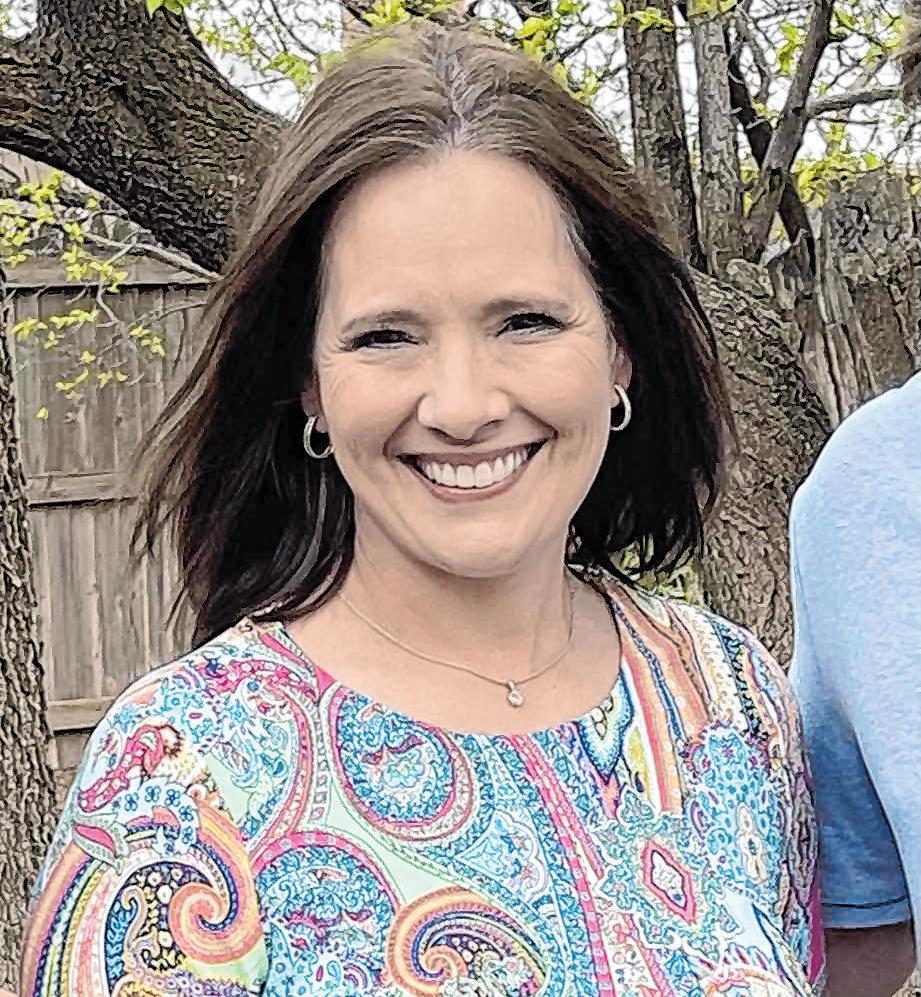
Hale County Meals on Wheels feeds meaningful connections
By Reece Nations FOR THE HERALD
As the sun rises above town each morning, commuters bustle along the city streets on their respective journeys to start the day.
Whether on their way to work or school, Plainview’s early dawn hours are marked by a flurry of activity across its interconnecting grid of roadways. But what many may not know is that others rise well before the rooster’s crow to reach the dietary department at Plainview’s Covenant Hospital, where they preparemealsforsomeofthe community’s most foodinsecure residents.
These individuals, often nameless and faceless to many, are among the most vital in supporting one of the region’s most esteemed nonprofits.
Composed almost entirely of volunteers, Hale County Meals on Wheels has provided well-balanced meals to friends and neighbors throughout the community for years. Volunteers set out around noon each weekday to deliver nearly 200 meals to recipients across Plainview and Seth Ward. Ashley Mayberry, executive director of Hale County Meals on Wheels, said many of the people they see each day are U.S. military veterans, their spouses, or individuals supported by a grant from the Texas Health and Human Services Commission due to age or disability.
As executive director, Mayberry described herself as the organization’s “paperwork person.” Each grant they receive comeswithapacket ofinformation she fills out monthly.
“I have 13 volunteers a day that deliver. We have 13 routes, but I do all the grants and all of that stuff,” Mayberry said. We also have about eight to 10 people who self-pay, so I send those bills out and handle that kind of thing.” Mayberry also works with a board of directors, whom she said are tremendously helpful with administrative needs. However, they too are mainly volunteers who eagerly work to make a meaningful difference for thoseinneedofnutritional support.
While volunteers primarily serve as food couriers, they also form relationships with those they visit. Mayberry said this

aspect of the job is as important as the organization’s underlying mission: meeting people where they are and having a conversation with them.
In this way, volunteers offer more than just a well-prepared meal.
That is a huge part of what we do—we just put eyes on everybody once a day,” Mayberry said. “We have a handful [of clients] who we may be the only onescheckingonregularly, so it’s very important thatwehavesomebodygo by to make sure they haven’t fallen and that they’re okay.”
Mayberry said those interested in volunteering can visit mealsonwheelsplainview.org to learn about qualifications for becoming a driver. Volunteers can serve as regulars, substitutes or emergency fill-ins if they have a valid driver’s license, vehicle and car insurance.
Veterans may also find information there on the Texas Veterans Commission Fund for Veterans’ Assistance, which allows eligiblebeneficiariestobe added to the Meals on Wheels delivery route. Those 65 or older, or with disabilities,canfindmore information on the website or by calling the Texas Health and Human Services Commission at1877-723-9049toseeifthey qualify for its services.
“It is a good way to spend one hour each week making a ton of difference in a lot of people’s lives,” Mayberry said.
aterhostedauthorsLarry Williams and Katherine McLamore-Lowrance last May for a public discussion of their book, Texas South Plains War Stories: Interviews with VeteransfromWorldWar II to Afghanistan. The event was free to attend, though guests could purchase books on-site to help raise funds for the Texas South Plains Honor Flight program, which coverstravelcostsforveterans visiting military memorials in the nation’s capital.
More often than not, theFairoffersavarietyof free, all-ages events for local residents to enjoy. It also serves as the city’s premierconcertvenuefor traveling musicians.
Inthepast,theFairhas presented concerts by musicalactssuchasMartyHaggard,CarvinJones, Steve Burrus and the High Plains Drifters, Kin Faux, Rattlesnake Milk
and others. It has also been Plainview’s go-to setting for stand-up comedy performances, including shows by ventriloquist Todd Oliver, Texas stand-up William Lee Martin, and Lubbock comedian Gary Dorsey.
The downtown entertainment venue also regularly showcases Plainview’shomegrowntalent, including performances by some of the city’s youngest residents.
One of the theater’s most successful events last year was Plainview Classical Academy’s Fine Arts Night in April, which featured student displays of creativity and artistic skill from every grade level, from kindergarten through 12th grade.
In years past, the Fair has hosted one-act plays
by the Kress High School theater arts department, as well as full-scale musicals such as “Fiddler on theRoof”and“Spamalot” performed by local high school students. Given its long history of celebrating the arts, it comes as little surprise that the city’slocal“walkoffame” is located on the sidewalk just outside the Fair The-
atre’s doors. City officials have not yet scheduled events at the Fair for 2026, but readersareencouragedto look out for announcements on the theater’s official Facebook page. Publiceventsarealsolisted on the City of Plainview’s online events calendar at plainviewtx.org. Those interested in rentingtheFairforevents orscreeningsmaycontact the City of Plainview at 806-293-4000. The venue is available for full-day rentalsorshortertimeintervals, according to the city’s website.
Special to the Herald
Ashley Mayberry, executive director of Hale County Meals on Wheels, is pictured.
Hobbies to get seniors out and about
The threat posed by social isolation has been known to medical researchers and health care professionals for years, but the issue gained wider attention during the pandemic. Restrictions on social gatherings during the pandemic opened millions ofpeople'seyestotheilleffects of social isolation, and while that threat proved temporary for the majority of people across the globe, many seniors continuetolivelargelyisolated lives.
According to the Mayo
Clinic,depression,anxiety, increased risk of suicide, andvariouschronichealth problems are some of the outcomes associated with loneliness. That's a troubling assessment that becomes even more disconcerting when considering a general decline in socializationasevidencedbythe 2021 American Perspectives Survey. Survey participants indicated they have fewer close friendships than they once did, speak with their friends less often and rely less on friends for personal support. That's challenging for adults of all ages, but it
can be especially difficult for aging adults, who may be dealing with the loss of a spouse or other close confidantes they would otherwise rely on when confronting personal problems. Hobbies that promote socialization can help aging adults reestablish friendships and build new ones, paying dividends that can have a profound impact on their overallhealth.Withthatin mind, adults who feel as though their social circles areshrinkinginmid-lifeor in retirement can look to theseactivitiesasmeansto rebuilding their social
lives.
¥ Book club: A book club offers multiple benefits to adults. Book clubs are inherently social and tend to bring like-minded individuals together, which can help build new and lasting friendships thatextendbeyondweekly discussions. A 2021 study published in the journal Neurology also linked regularreadingtoalowerrisk of developing dementia.
¥Sports:Sportsprovide anotheravenuetosocialize with like-minded individuals. Golf is not a team sport, but it is typically played in groups of two or
four, making it an ideal activity for adults with free time on their hands to get out and about and meet other people. Leagues for softball,bowlingandpickleball also provide opportunities to socialize, and many adults are participating in such leagues for that very reason. A CivicScience study released in 2025 found that 49 percent of adults who planned to participate in adult recreational sports leagues weredoingsoforsocialinteractionandthechanceto make friends.
¥Travel:Travelcanprovideanothermeansforag-
ing adults to make friends. Group tours to foreign countries,daytripstolocal attractions arranged by township recreational officesorevenoverseastrips with friends you've fallen out of touch with can be a great means to build new friendships and reinvigorate old ones, all the while getting you out of the house.
These are just some ways for men and women to get out of the house and socialize with others their age, a worthy endeavor that can be highly beneficial to adults' overall health.

Thegreensdreamsaremadeof!


OpenTuesday-Sunday


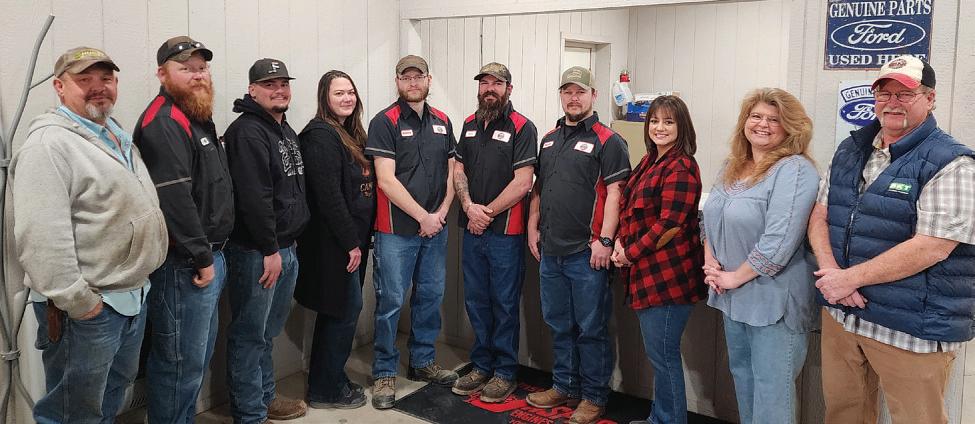



WaterSmartisaFREEtoolavailabletoCityofPlainviewresidentsusingCityutilities.Itisdesignedtoimprovewatere ciencybyo ering toolsforbillpayment,usagetracking,andimmediatenoti cationon water-relatedissues.
roughWaterSmart,alertscanbesetforissuessuchasbustedpipes orhigher-than-normalwaterusagetohelppreventunexpectedlyhigh waterbills. eplatformalsoprovidestoolstomonitorwaterconsumption,includingtheamountusedforshowers,toilet ushes,washingmachines,andyardcare.
Tolowerwatercosts,customerscanreviewdetailedusagereportsand identifyareaswherewatercanbeconserved.Duringtimesawayfrom home,expectedwaterusagecanberecorded,andWaterSmartwill sendanoti cationifconsumptionexceedsthesetlimit.
Ascoldernightsapproach,theriskoffrozenorburstpipesincreases. WaterSmartdetectstheseproblemsimmediatelyandsendsanalert, allowingpromptactiontoresolvetheissuebeforeitimpactsthewater bill.
Check out WaterSmart today: CheckoutWaterSmarttoday: