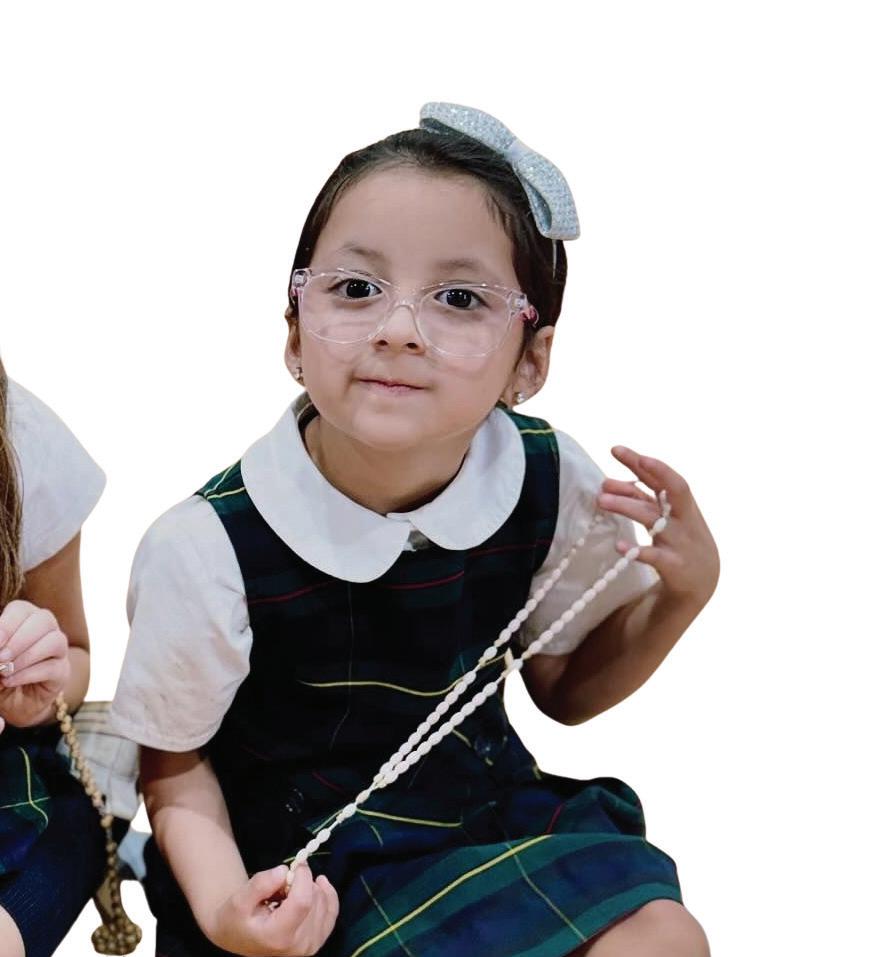
Notre Dame High School commemorates 150 years of educating students
By Dan McWilliams
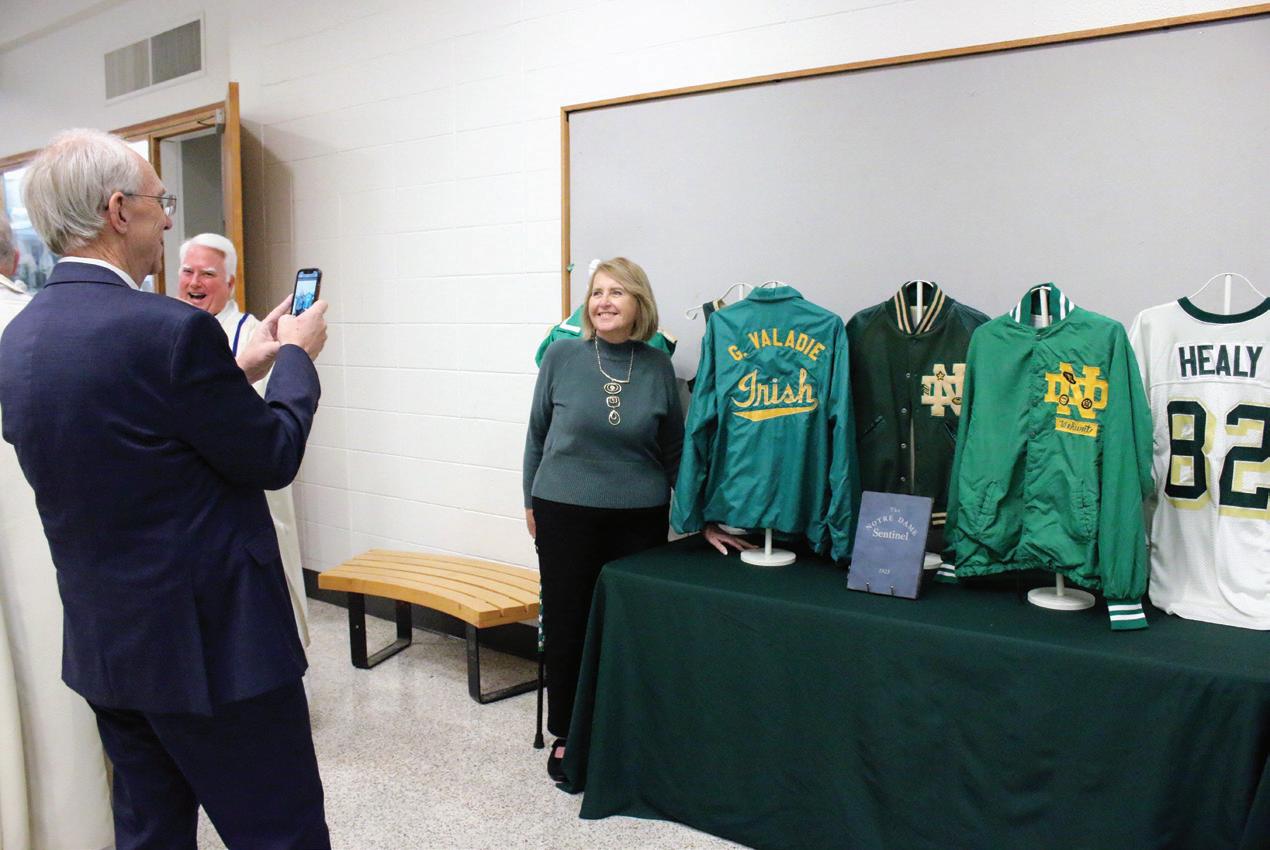
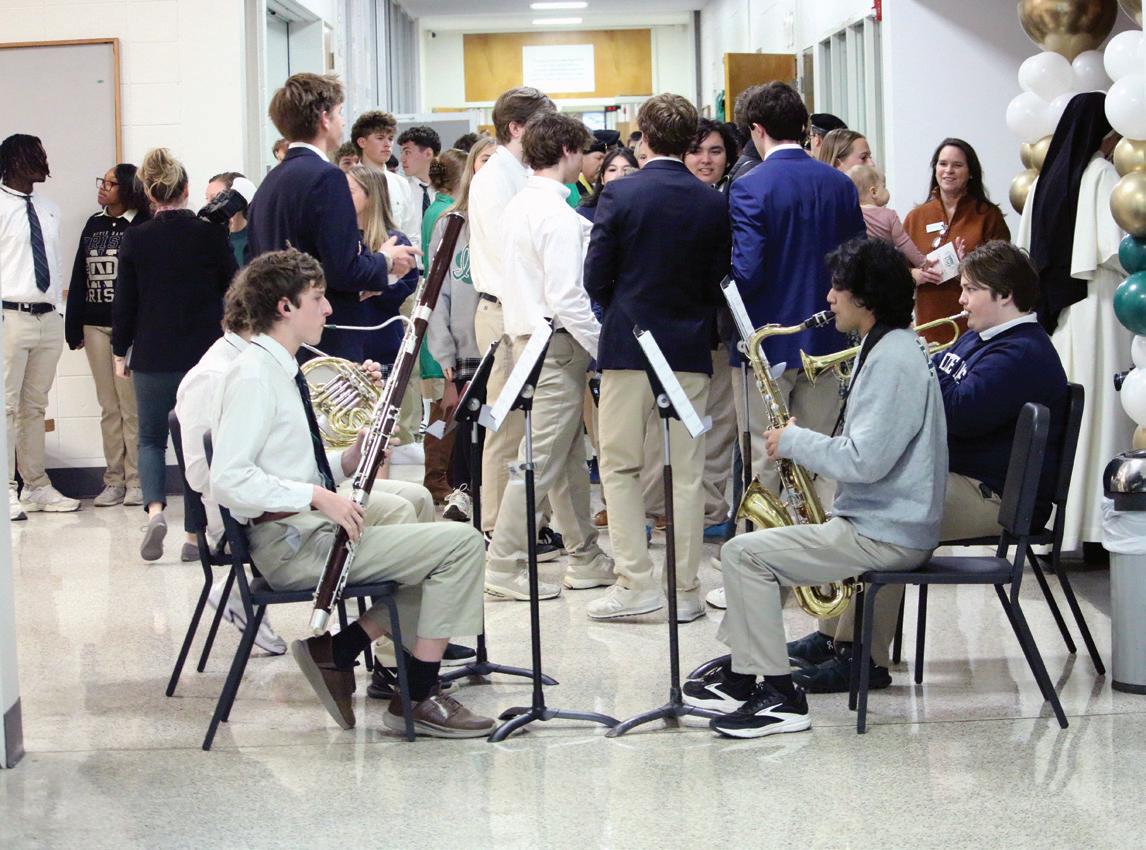
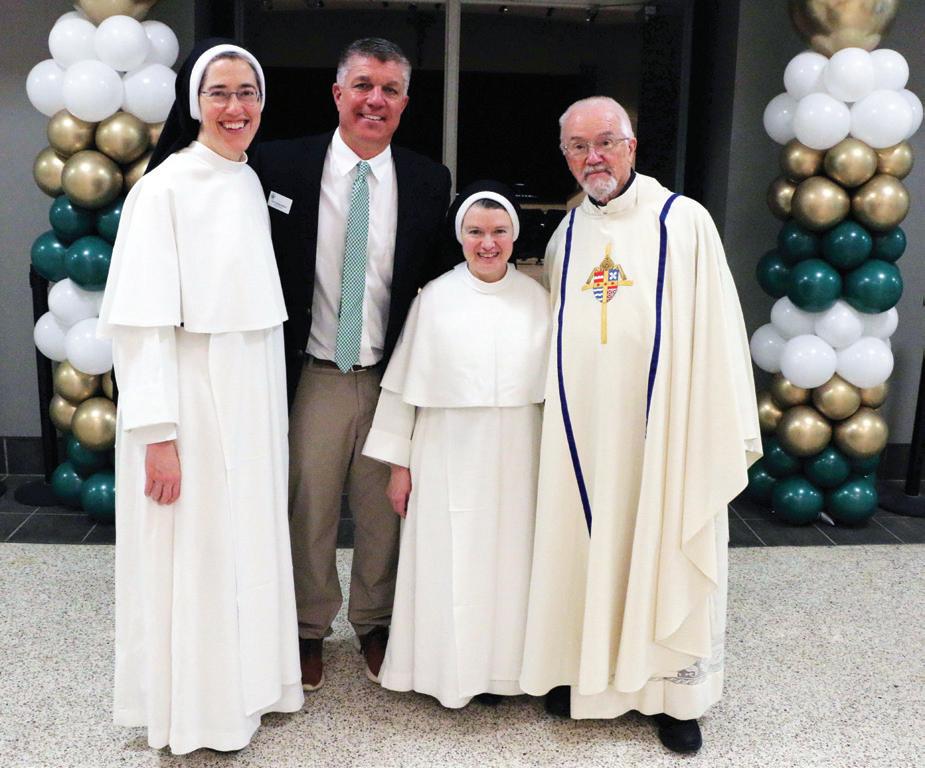
Notre Dame High School in Chattanooga couldn’t have picked a better day than Jan. 6 to kick off its 150th-anniversary celebration.
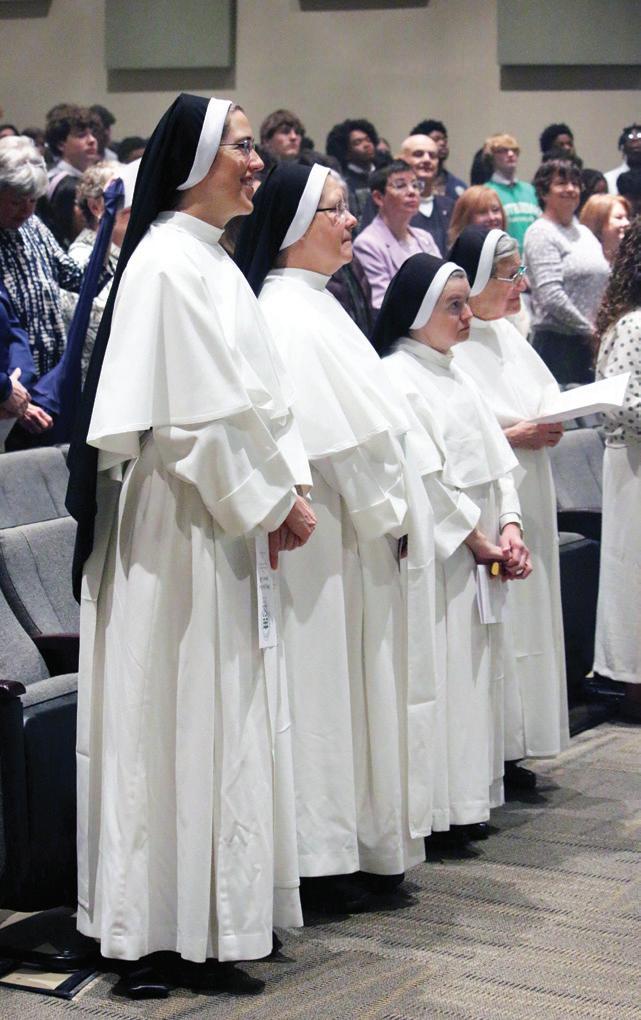
That was the day in 1876 when four Dominican Sisters of St. Cecilia Congregation in Nashville arrived—at the invitation of nowServant of God Father Patrick Ryan, pastor of Sts. Peter and Paul Parish downtown—to begin Notre Dame de Lourdes Academy for girls, the city’s first private school. The Sisters within a couple of years had to close the school because of a yellow-fever epidemic that claimed the life of Father Ryan and thousands of other Chattanoogans, but the school reopened and has remained so now for a century and a half, overcoming challenges that resulted in the
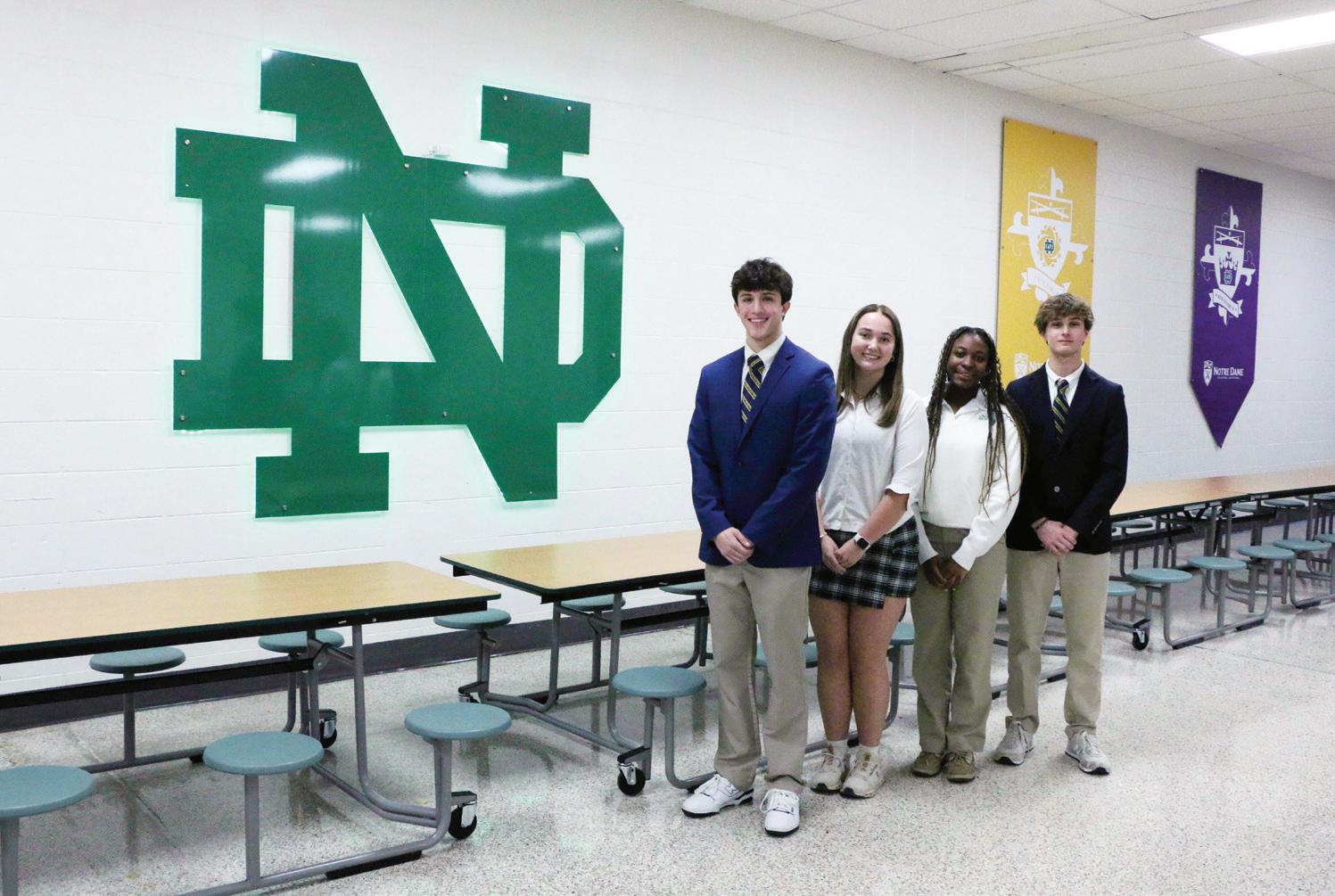
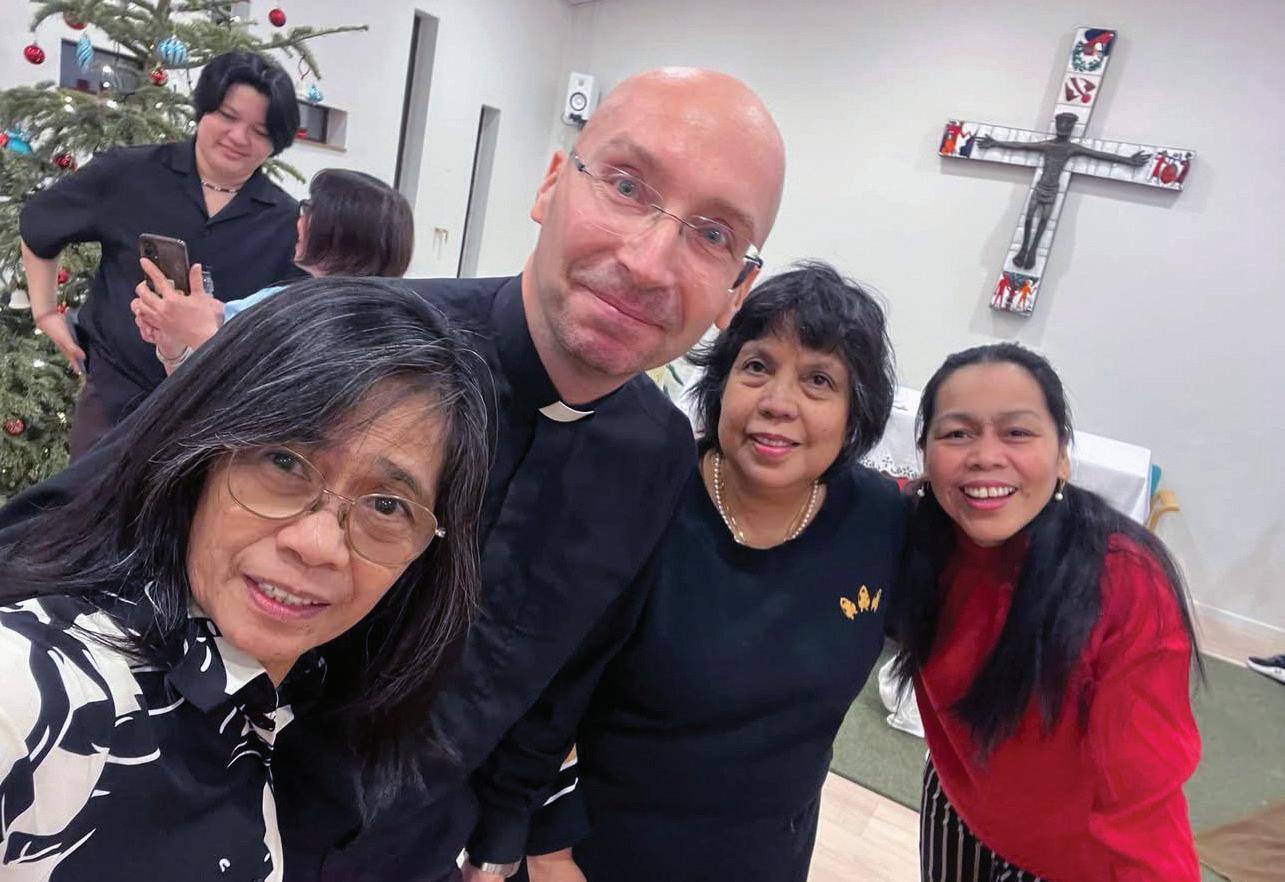
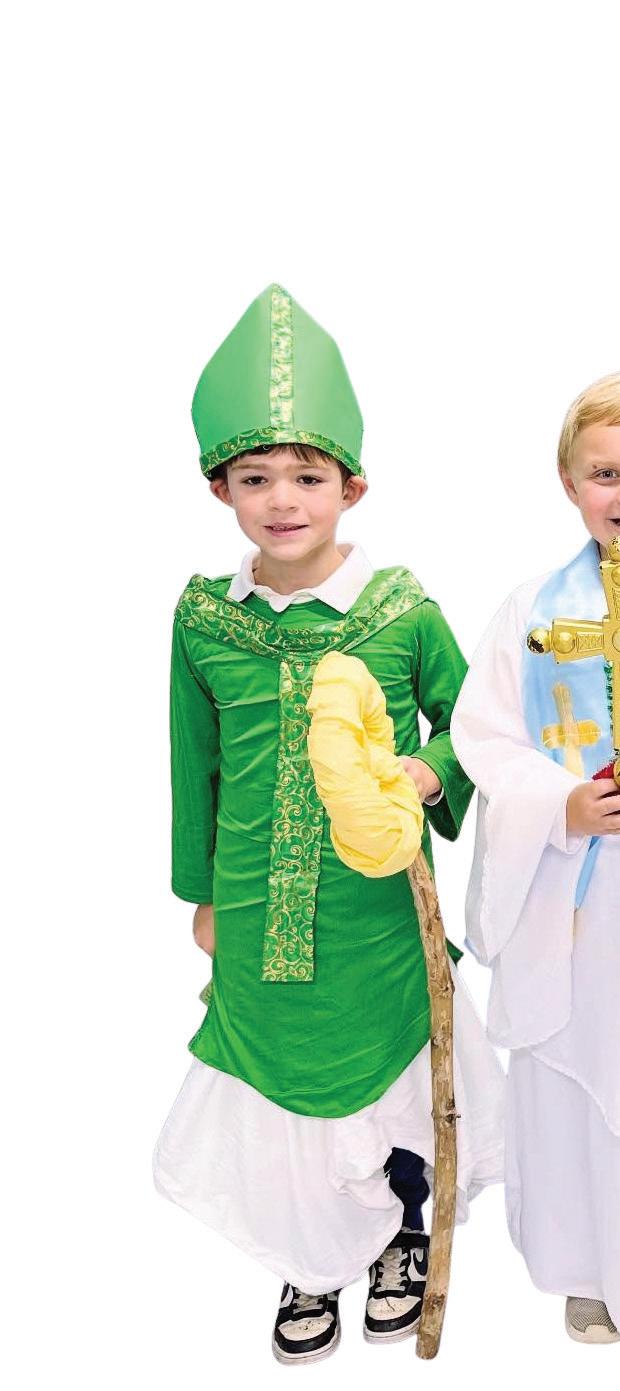
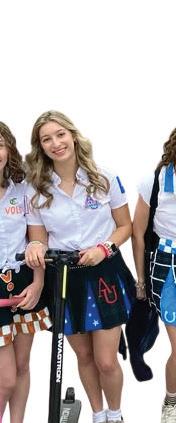
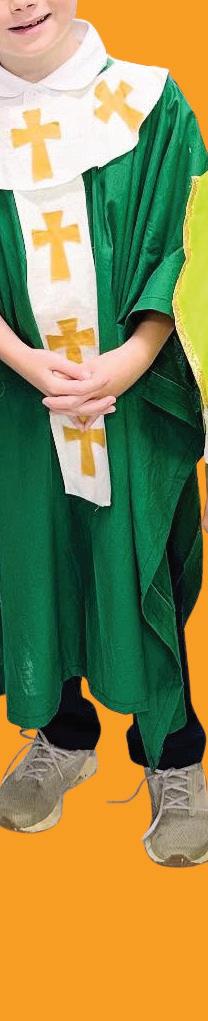
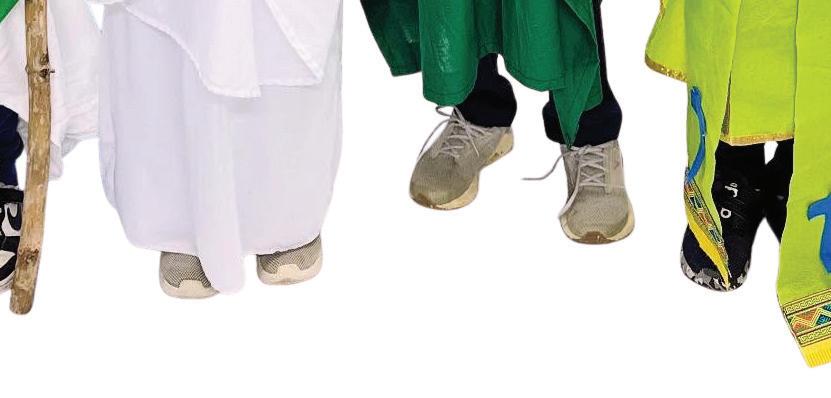
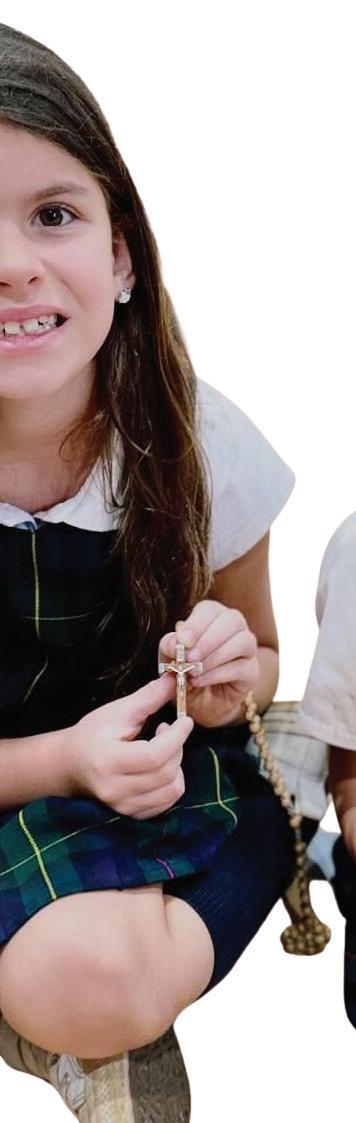
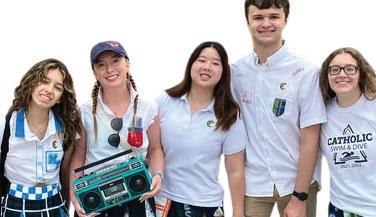
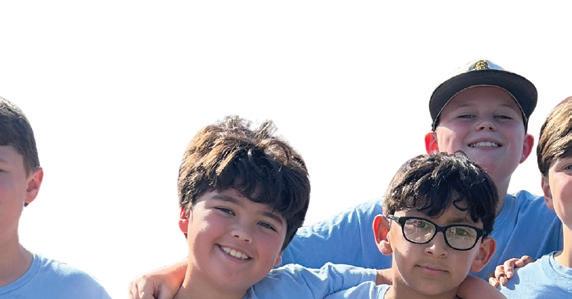
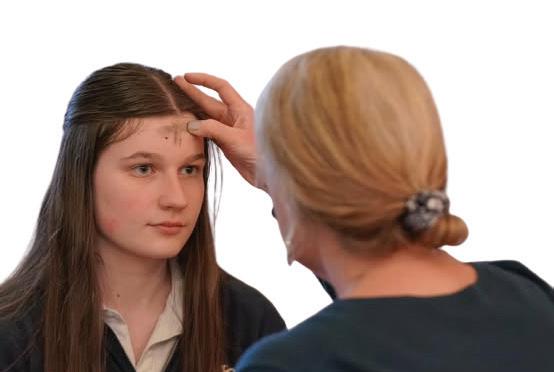
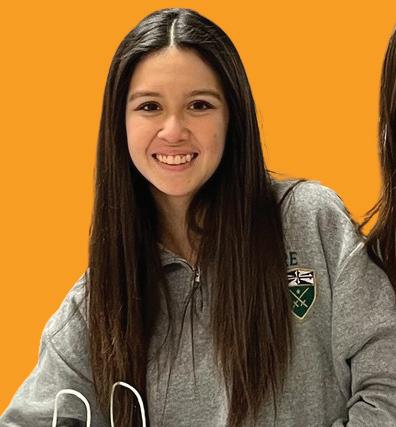
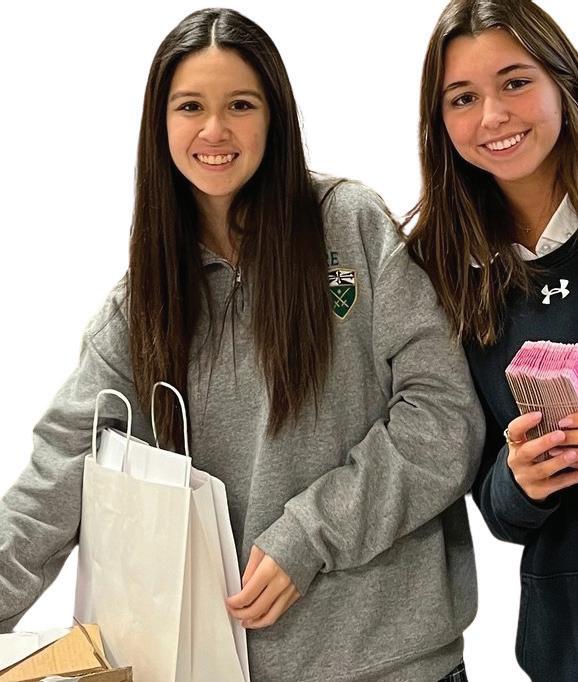
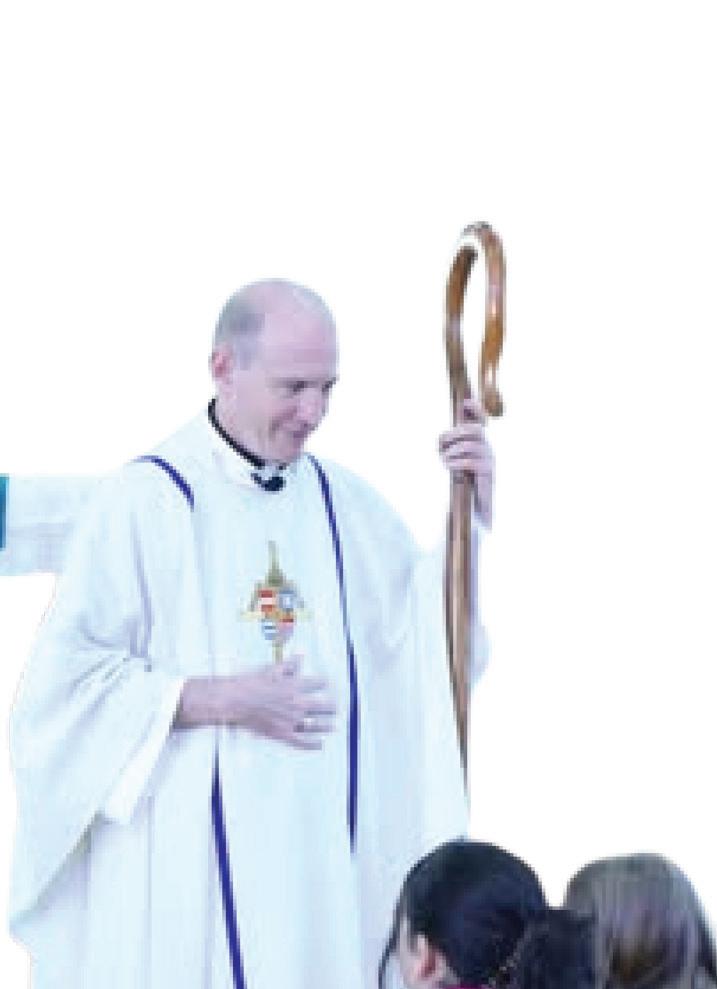
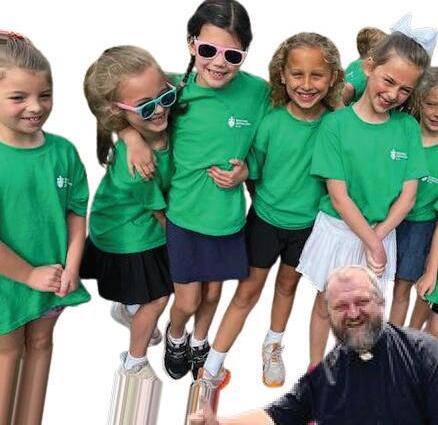
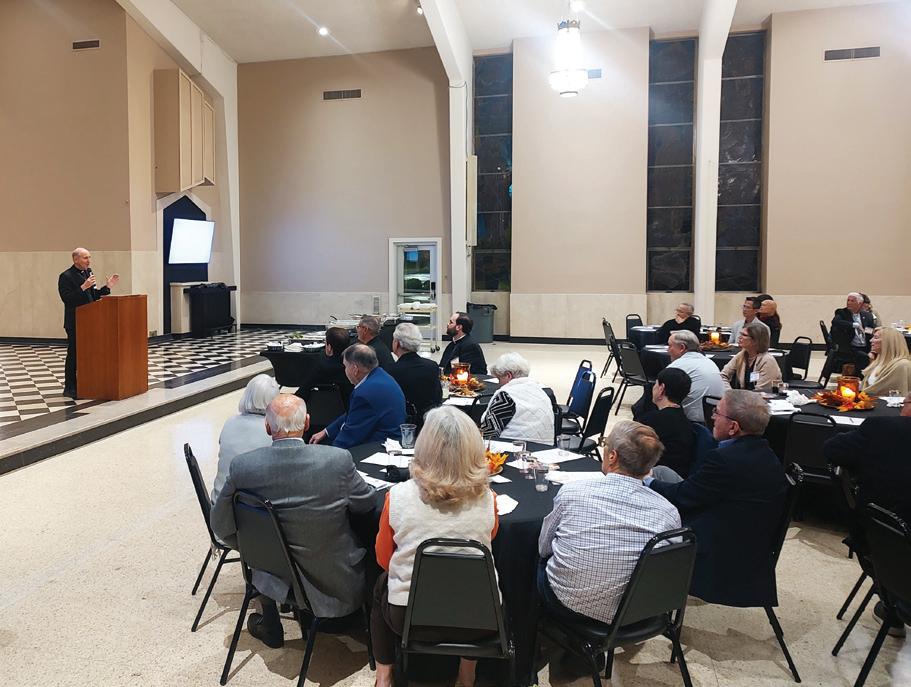
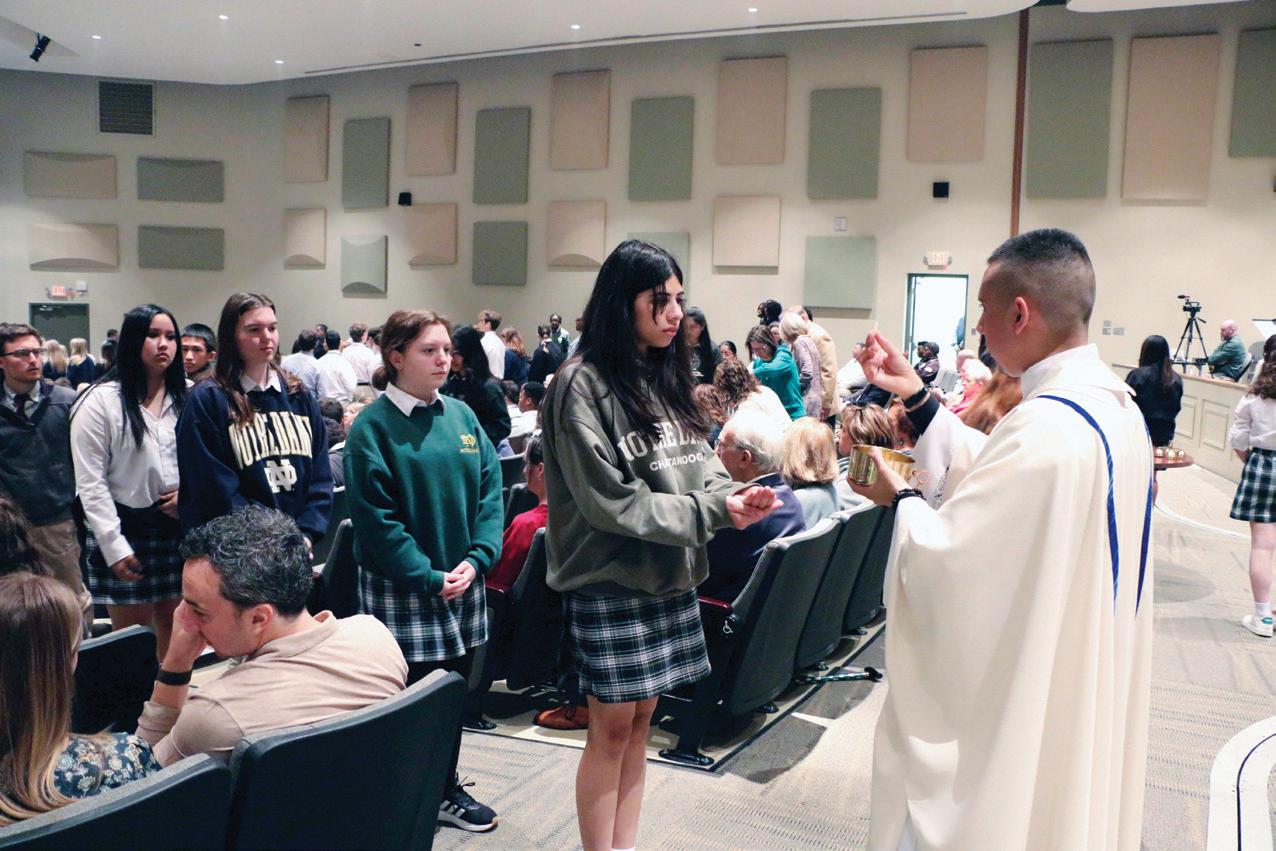
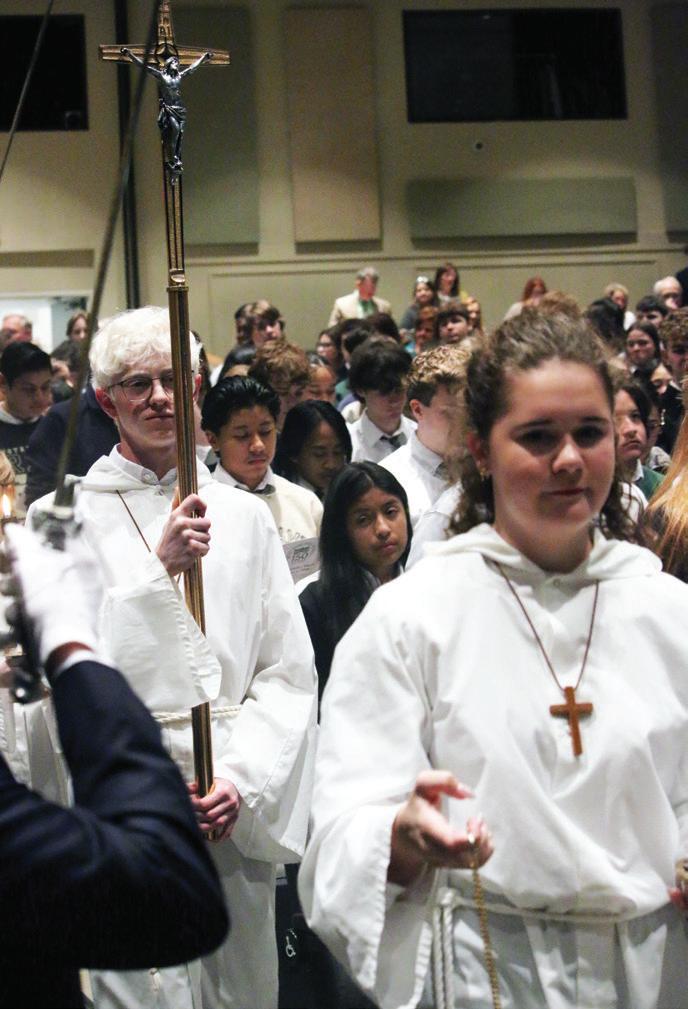
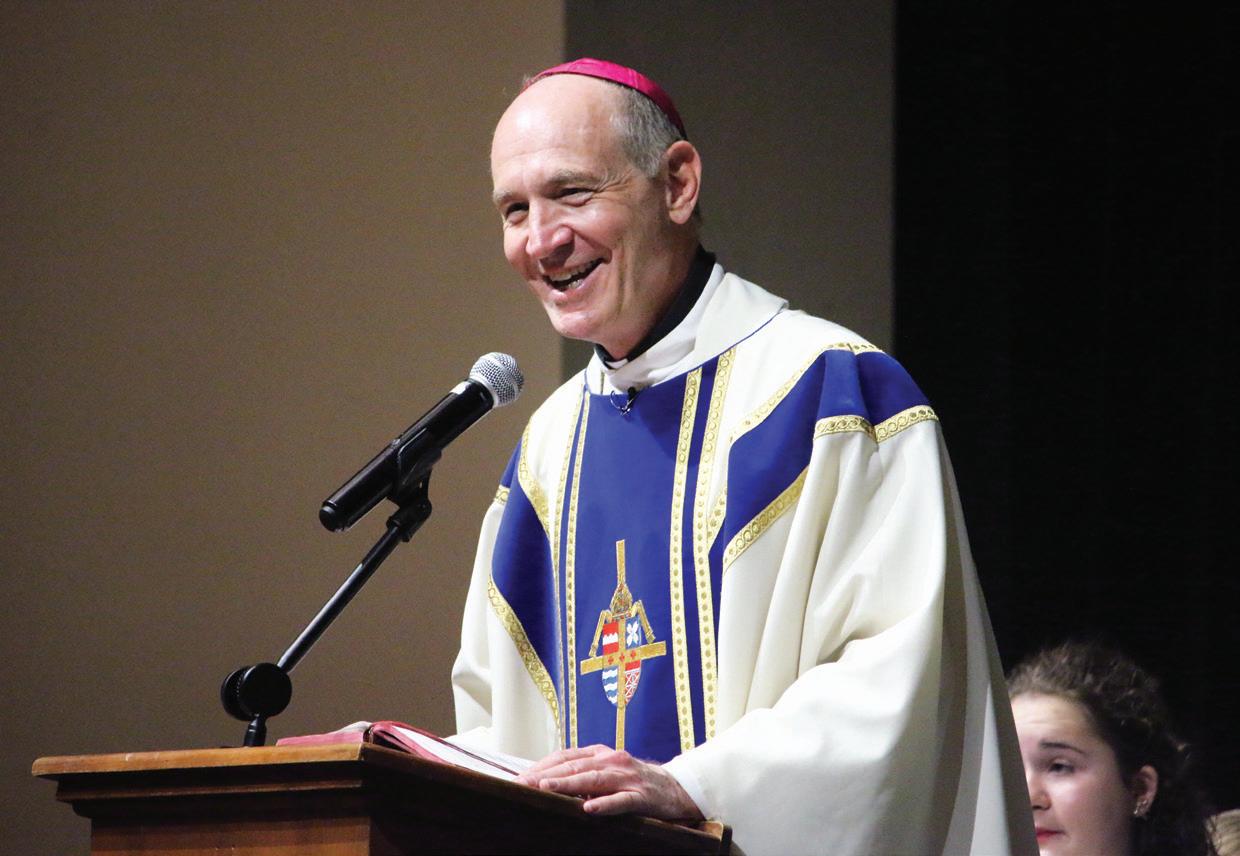
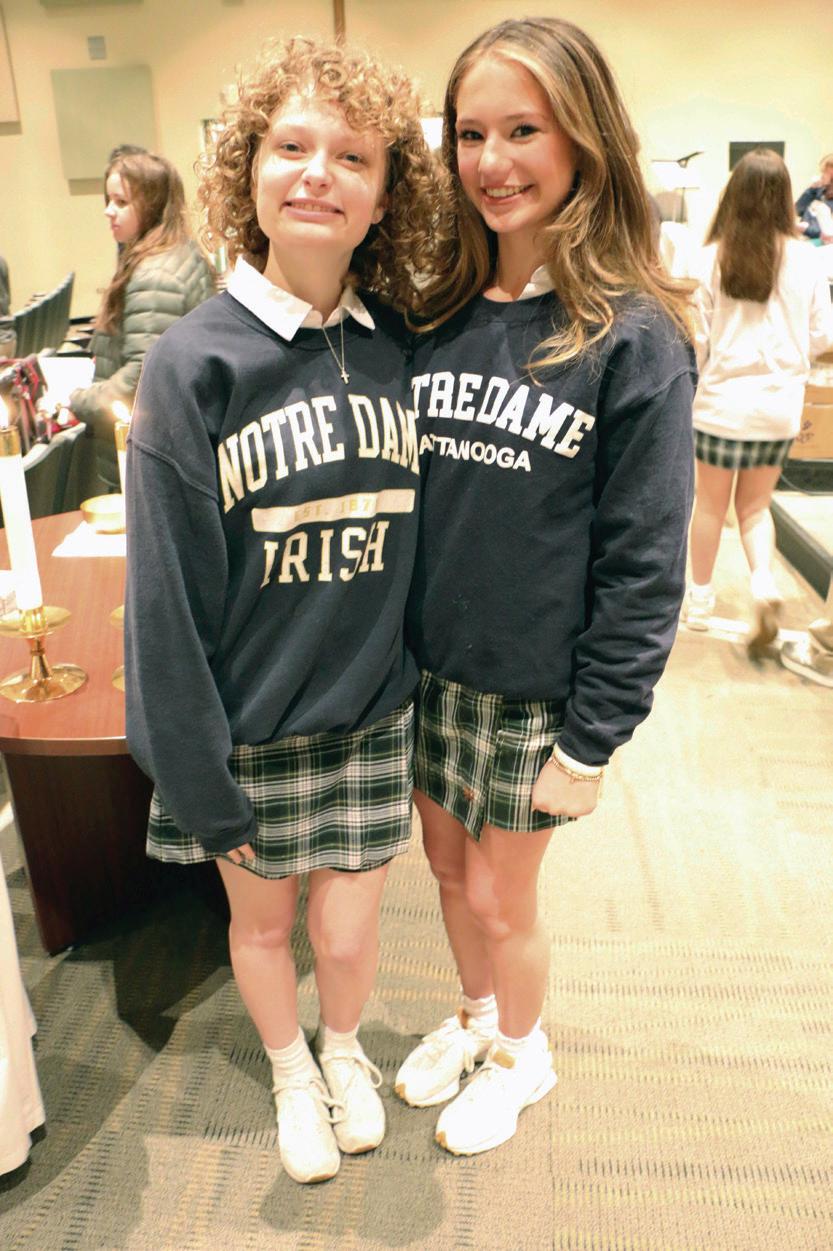
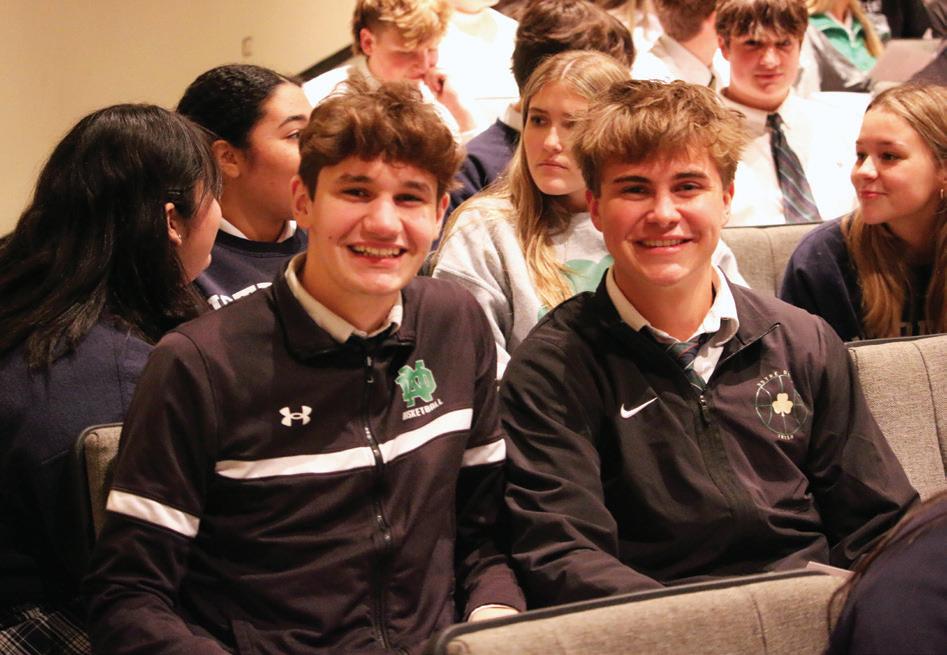
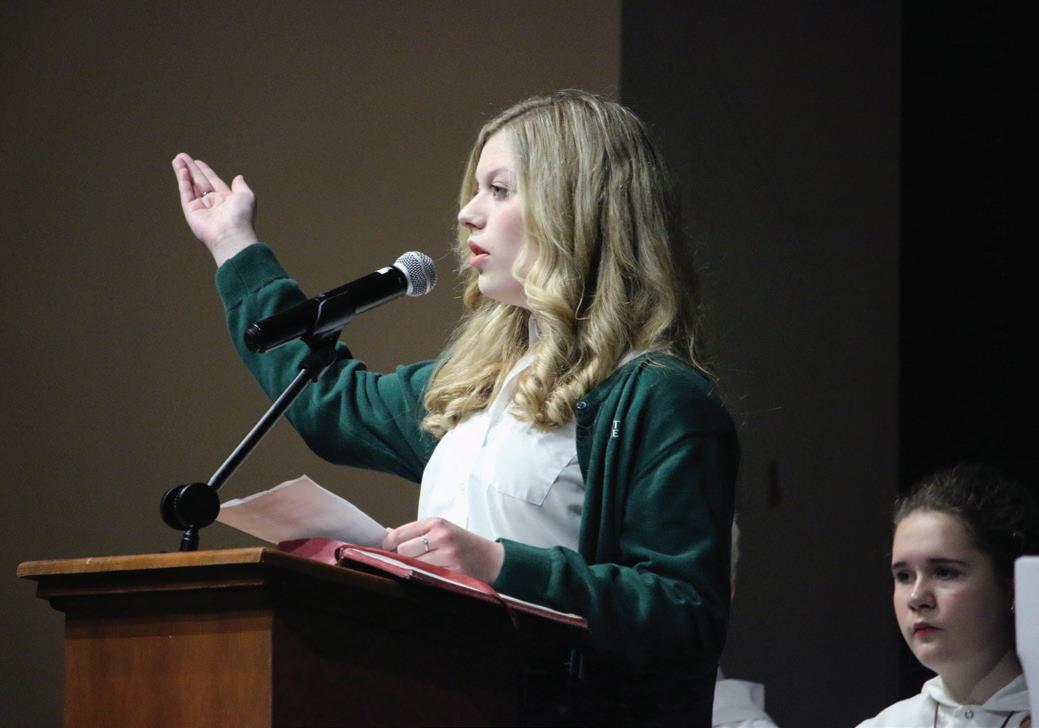
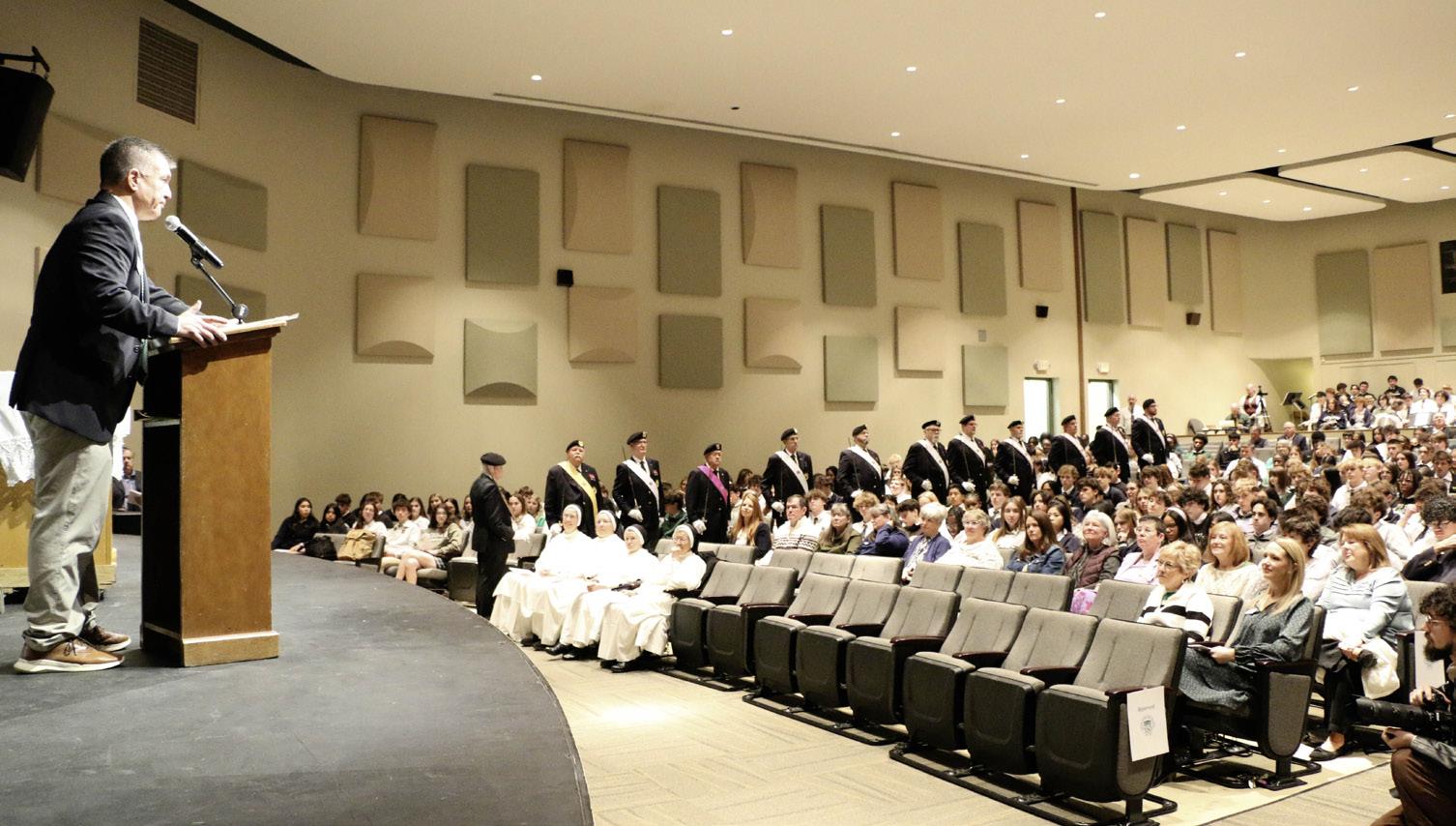
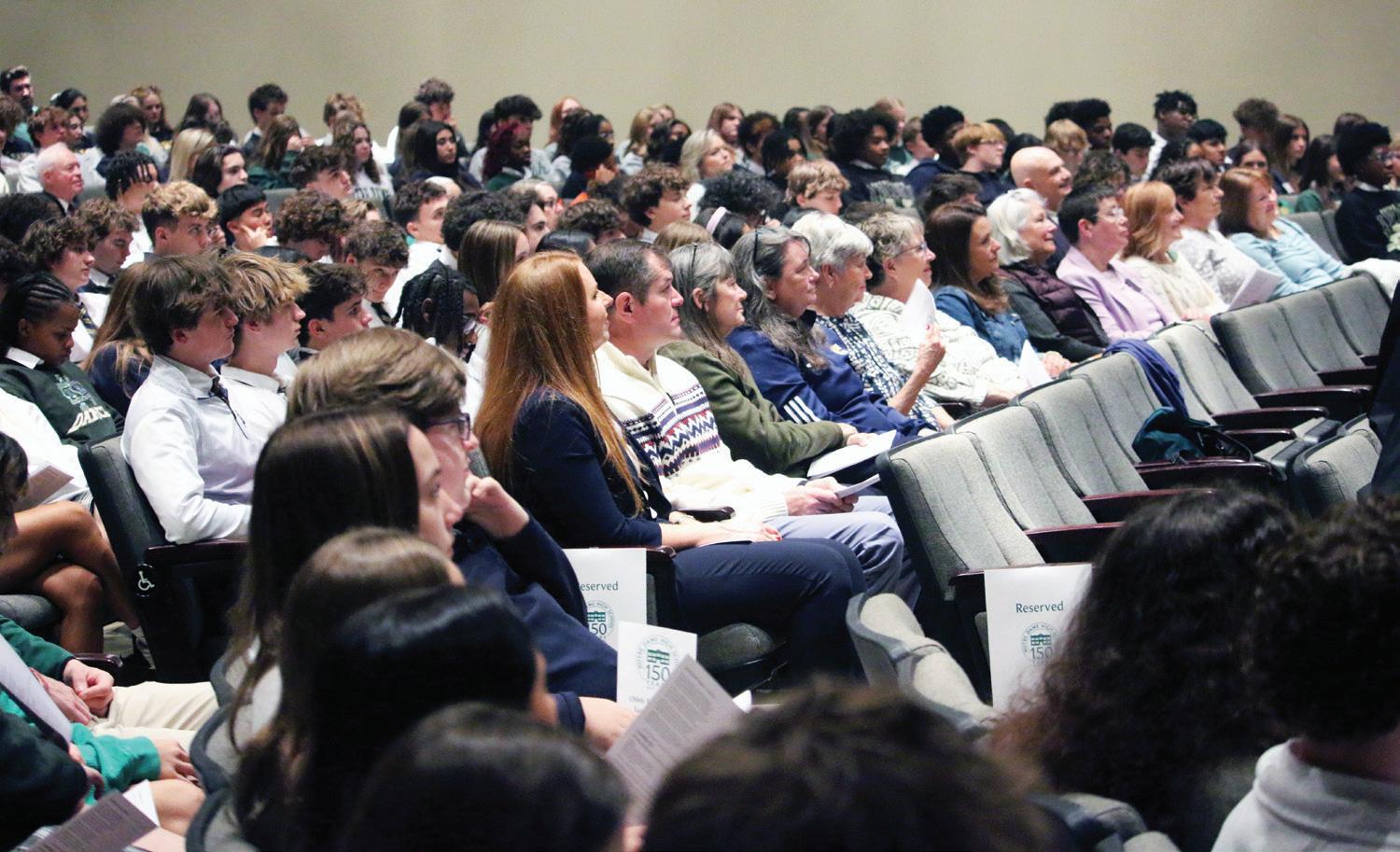
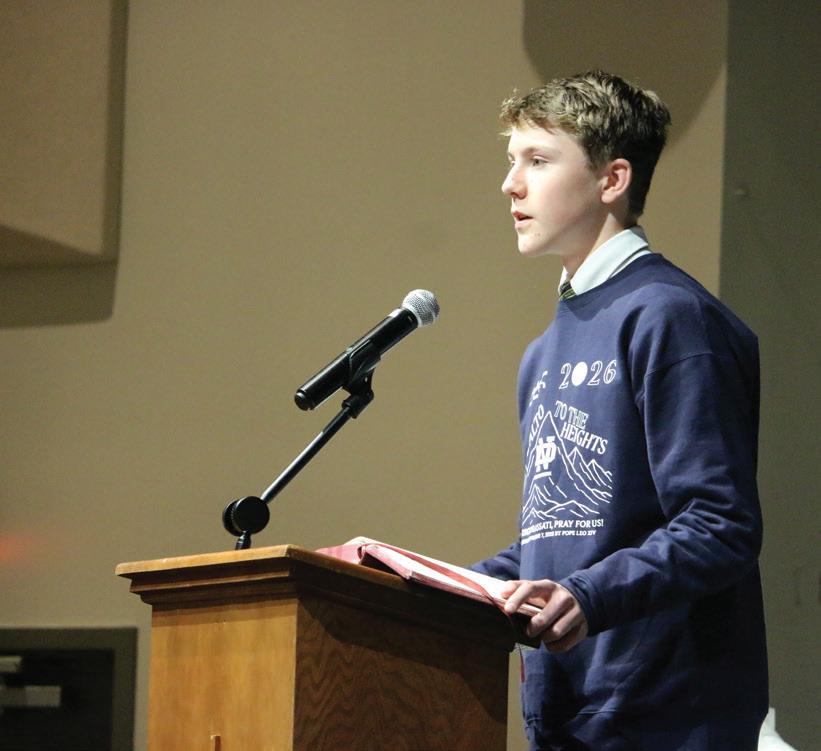
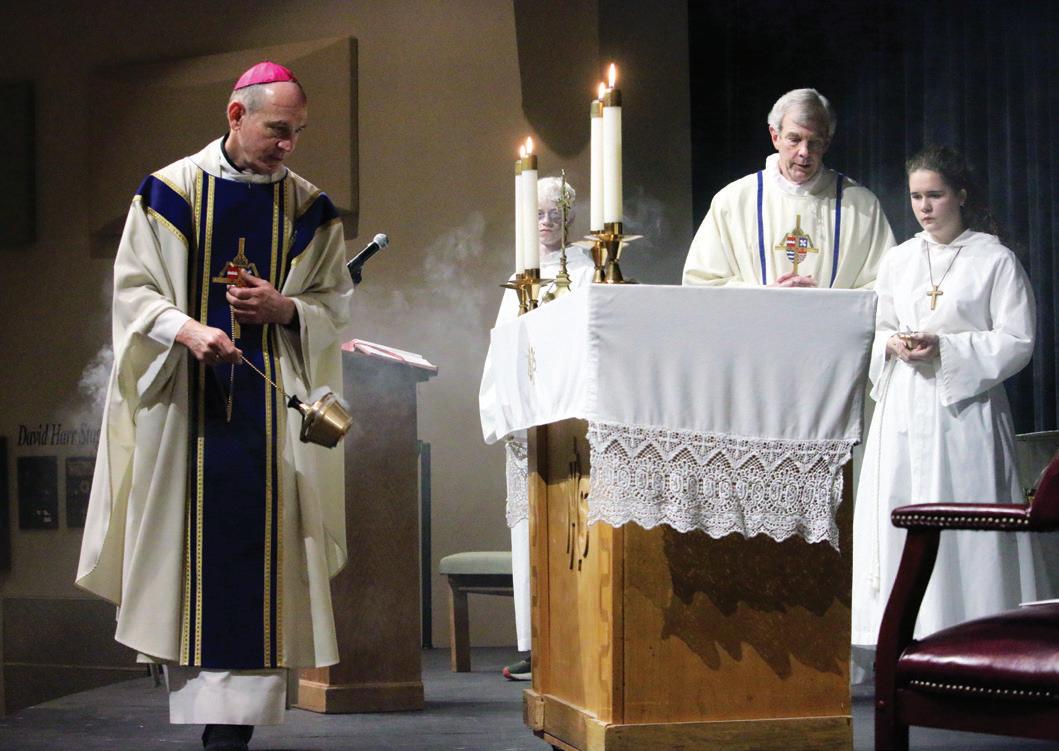
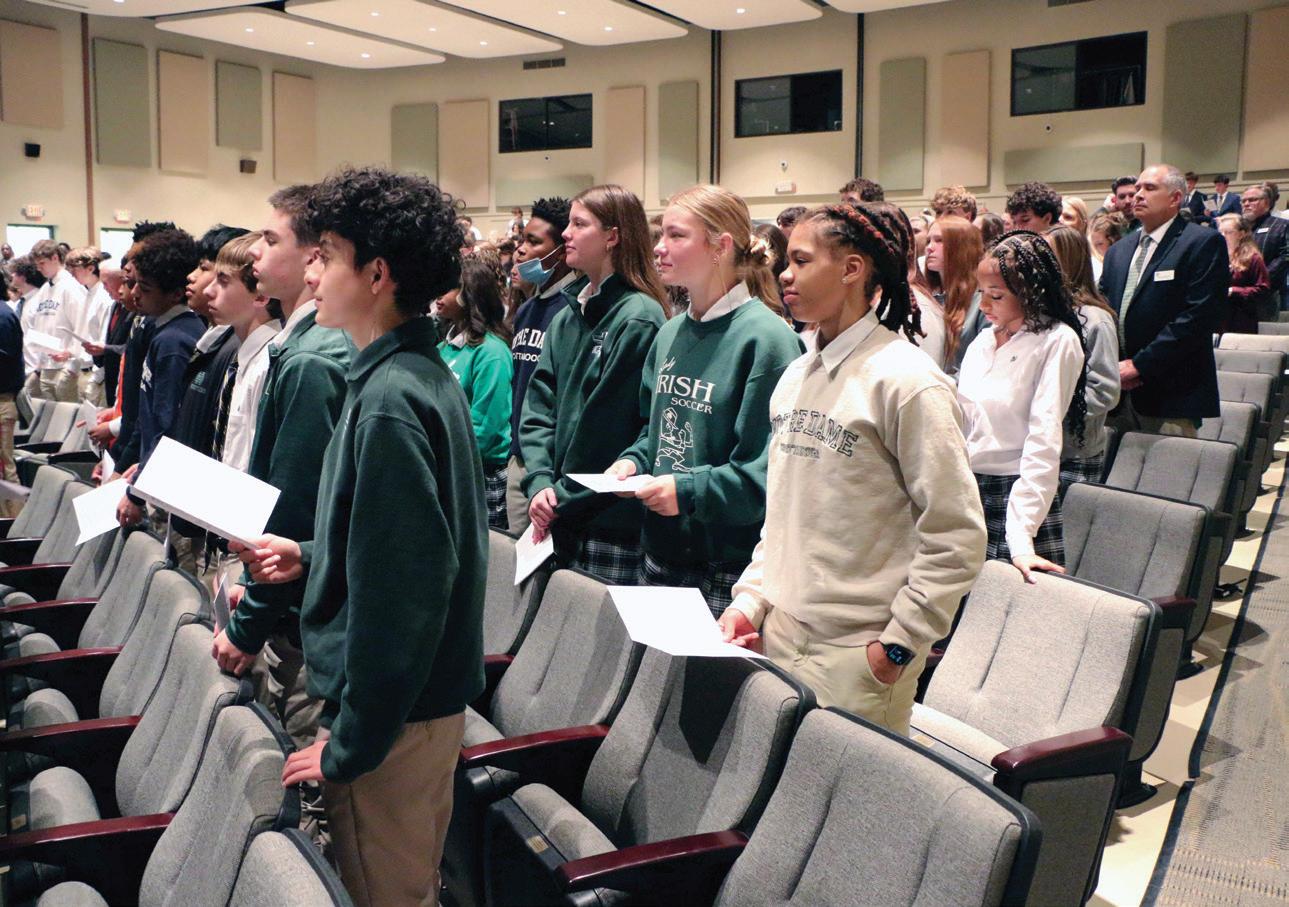
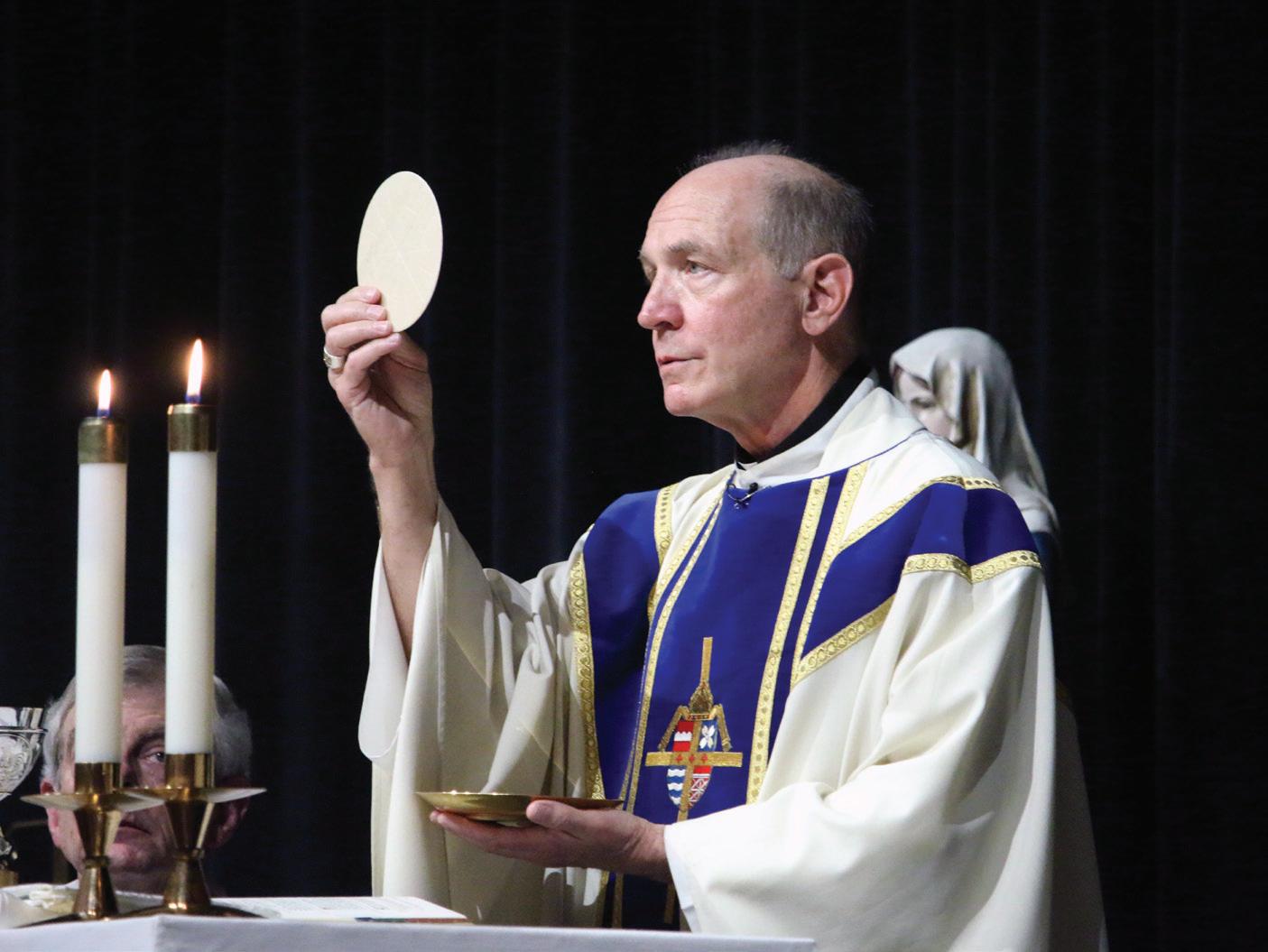
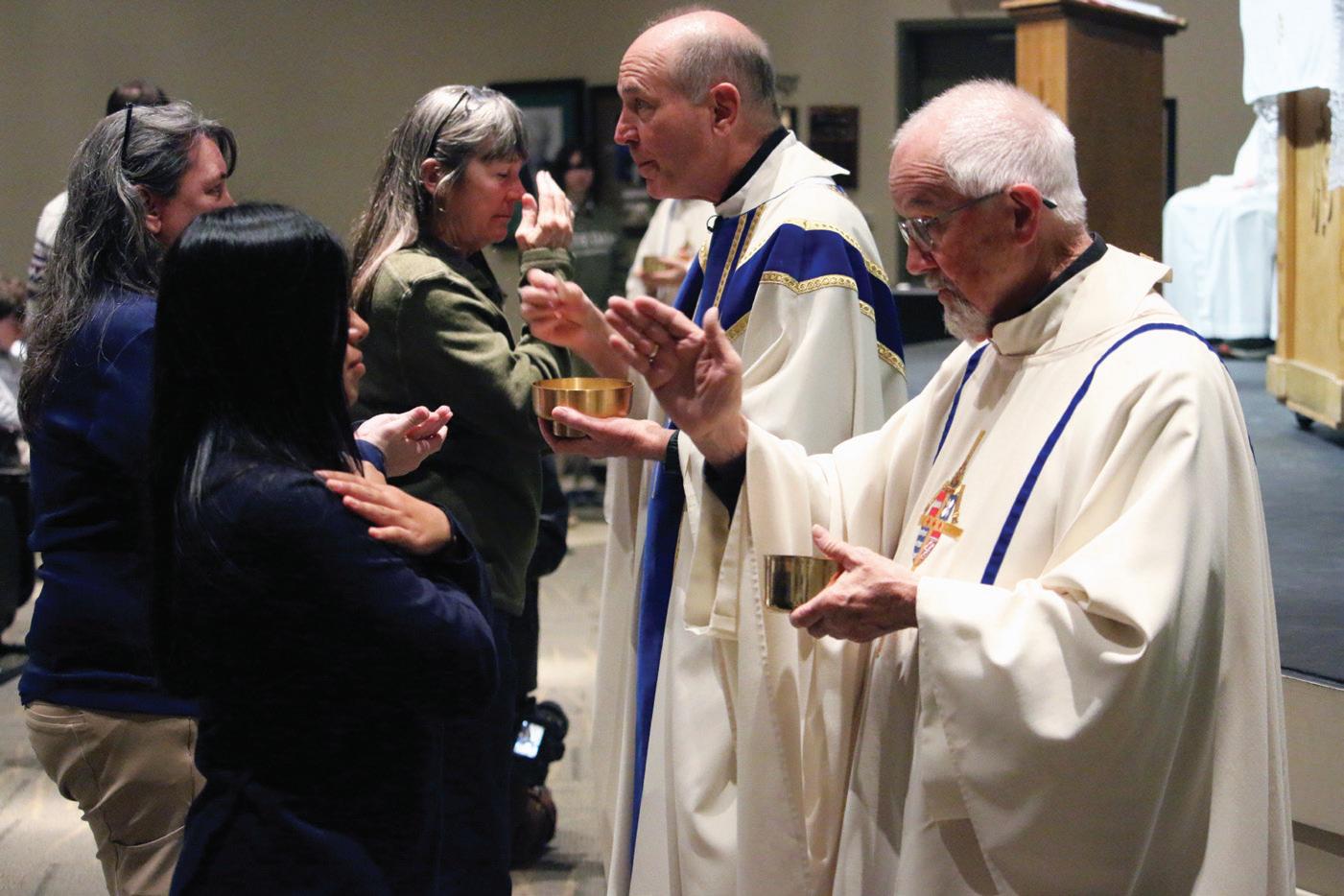
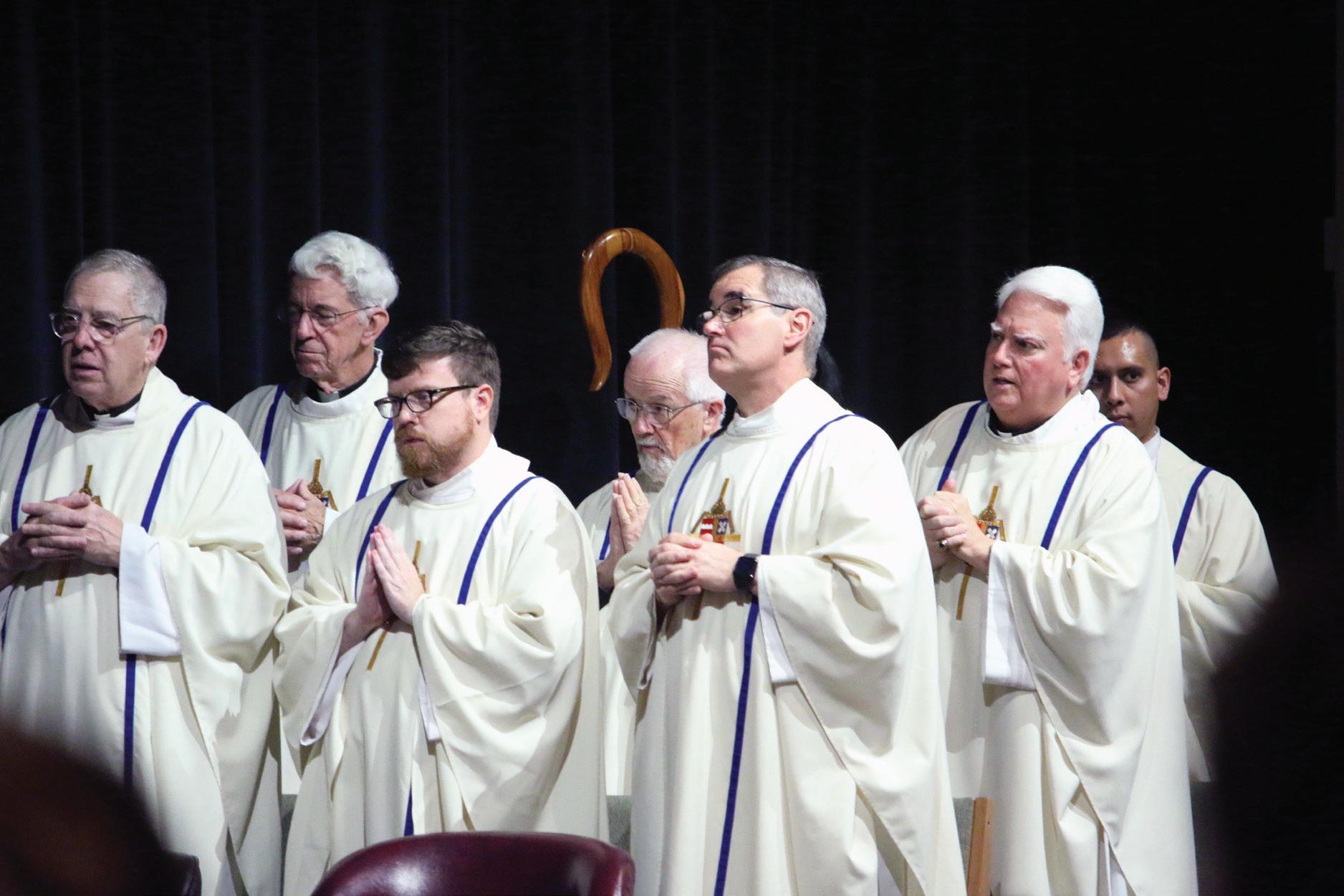
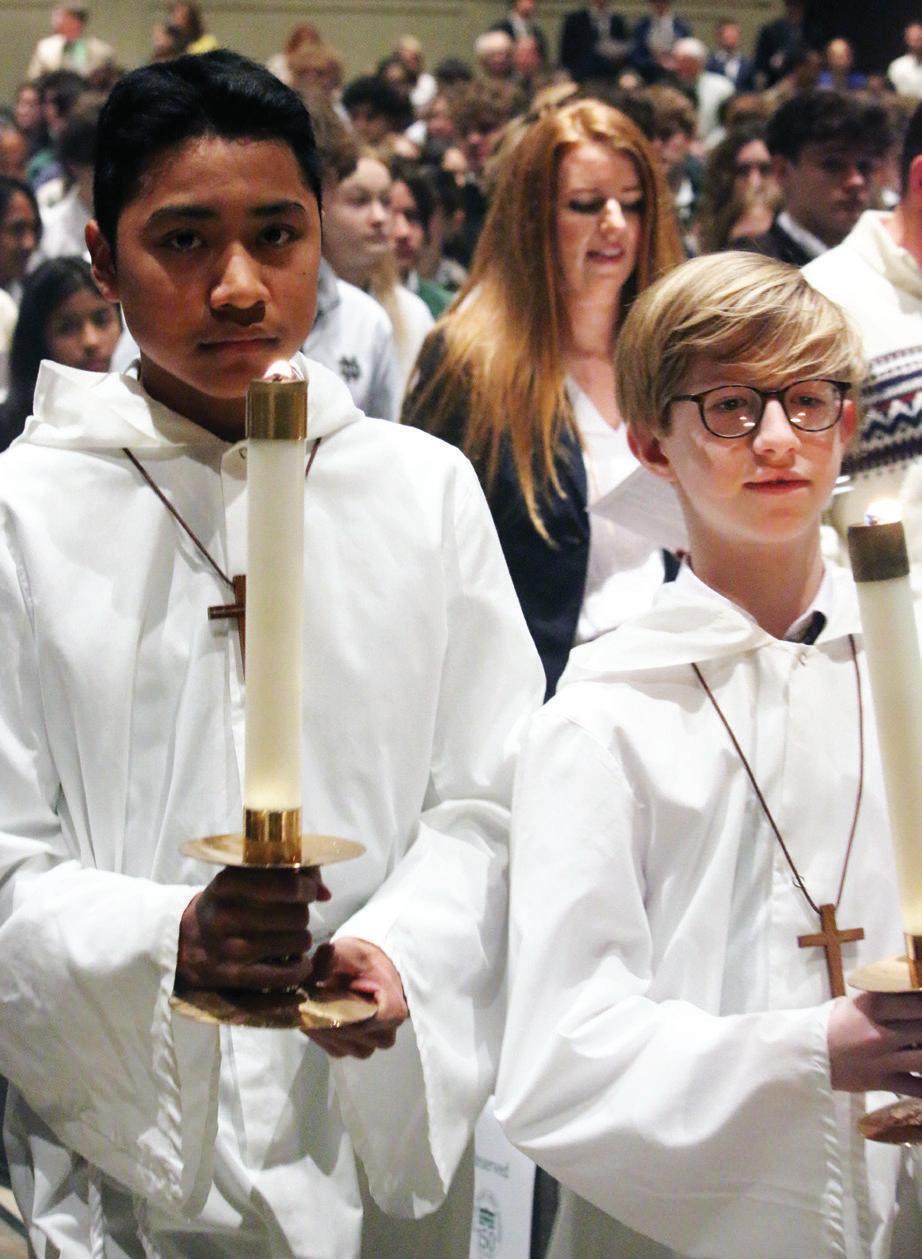
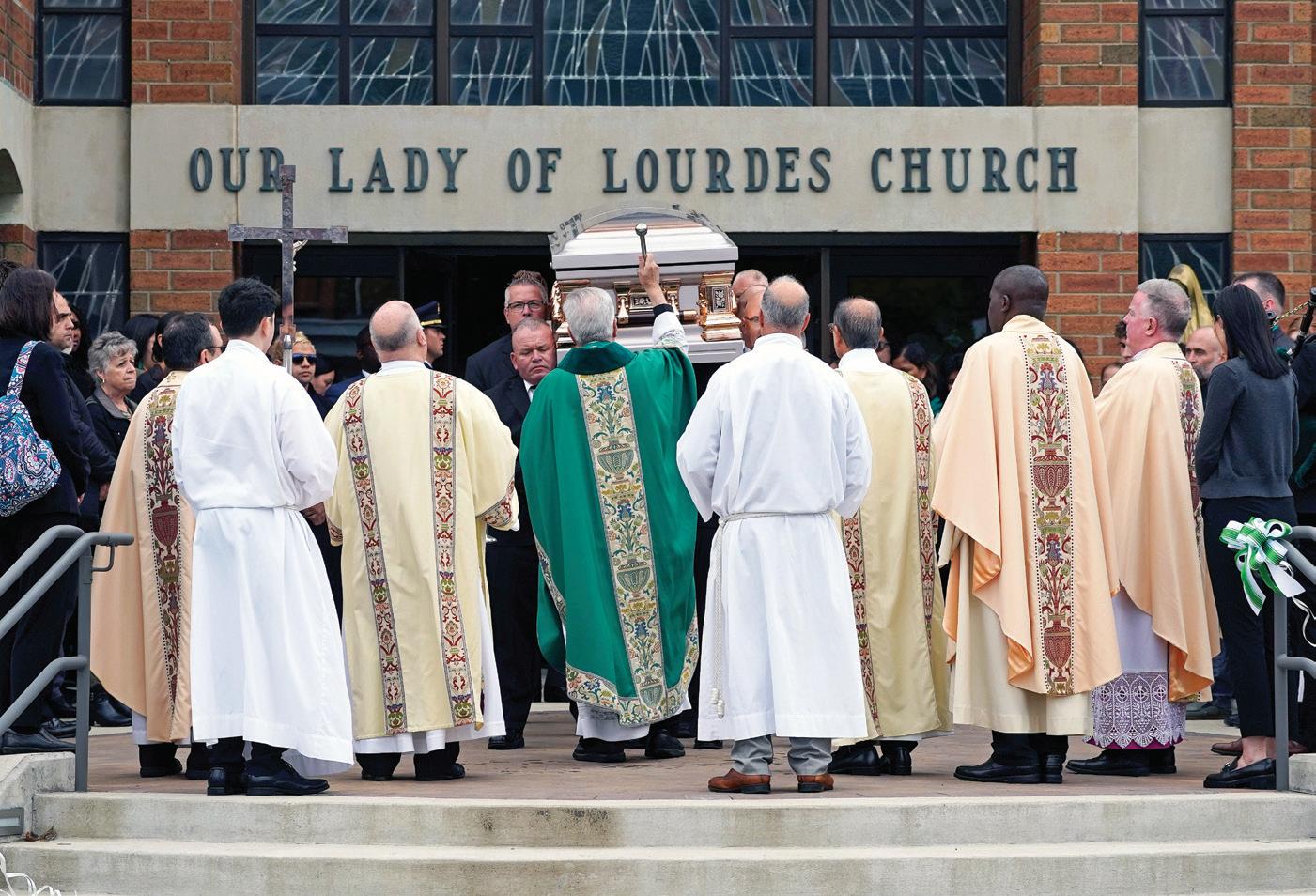
Preparing for the next 150 Notre Dame High School students, from left, Maximo Santiesteban, Lilly Sanchez, Dalana Brown, and Ryan Fillauer were among hundreds of students, faculty, alumni, priests, Sisters, and religious who gathered on Jan. 6 to usher in the historic Chattanooga school's 150th year. NDHS continued on page A16
Bishop consecrates new cemetery
Opening of Holy Cross gives Diocese of Knoxville third sacred site
By Dan McWilliams
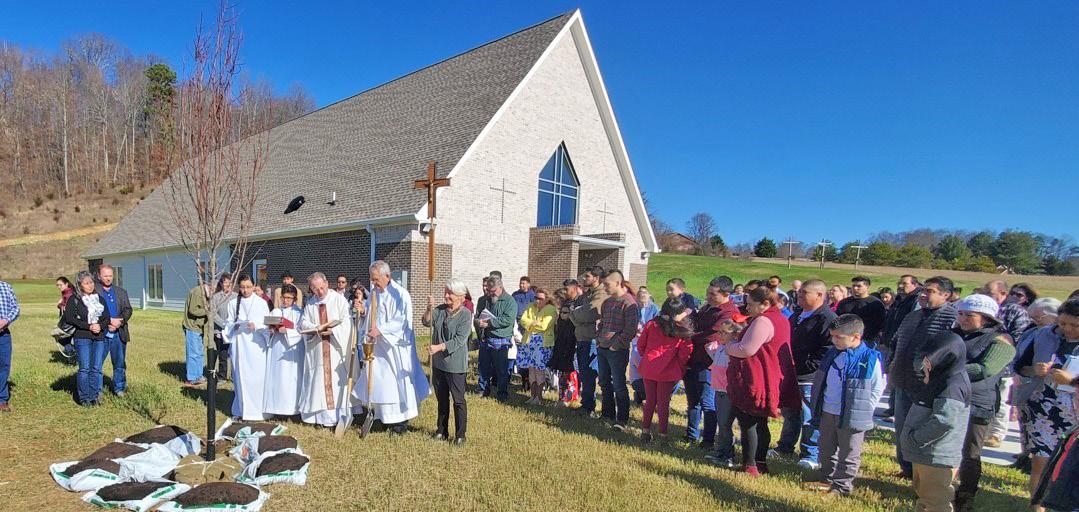
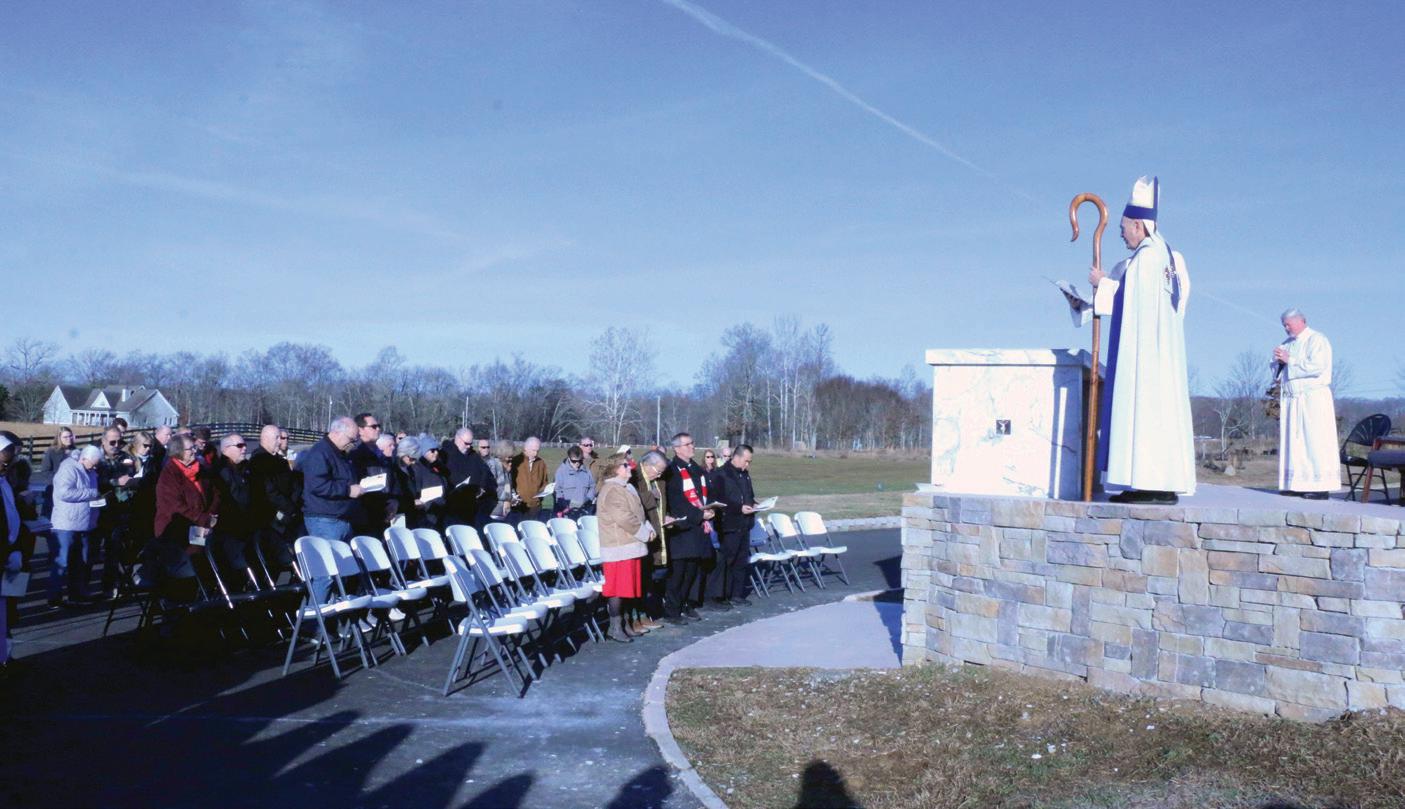
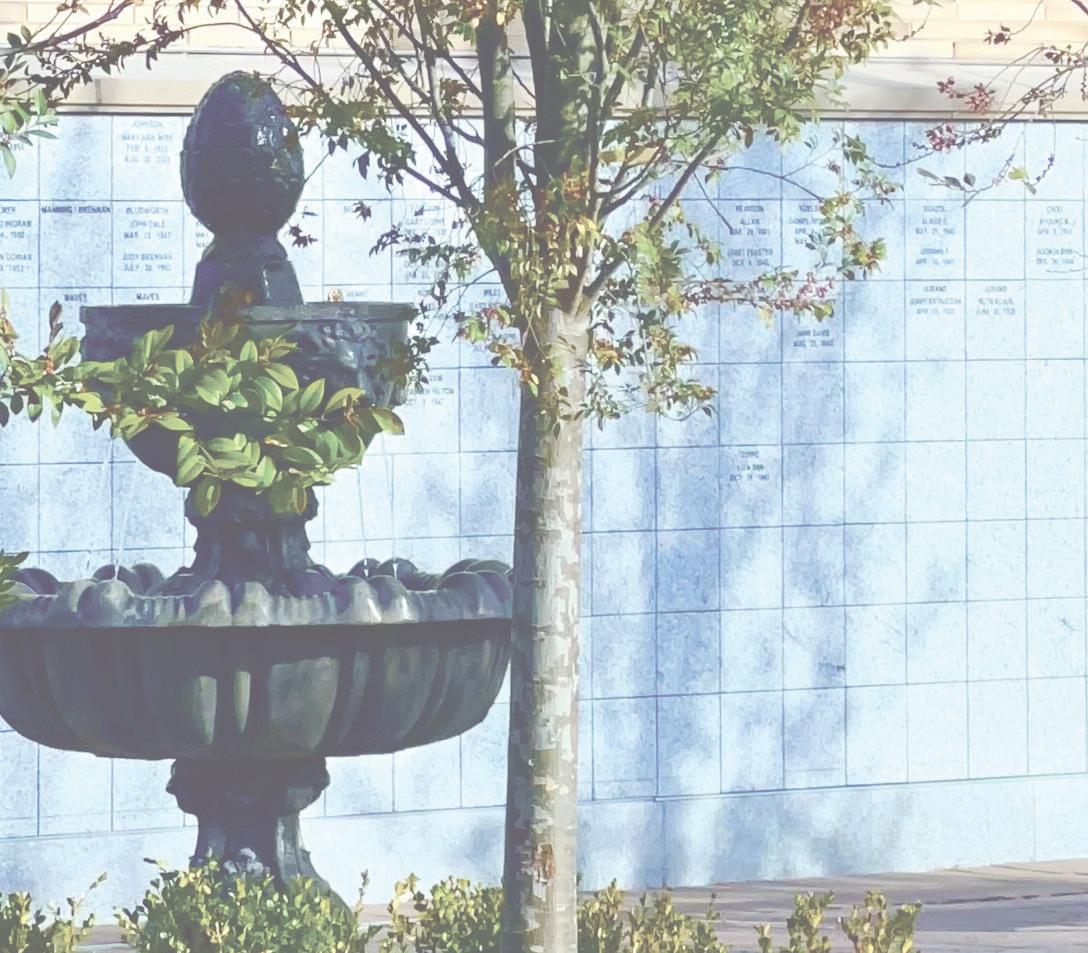
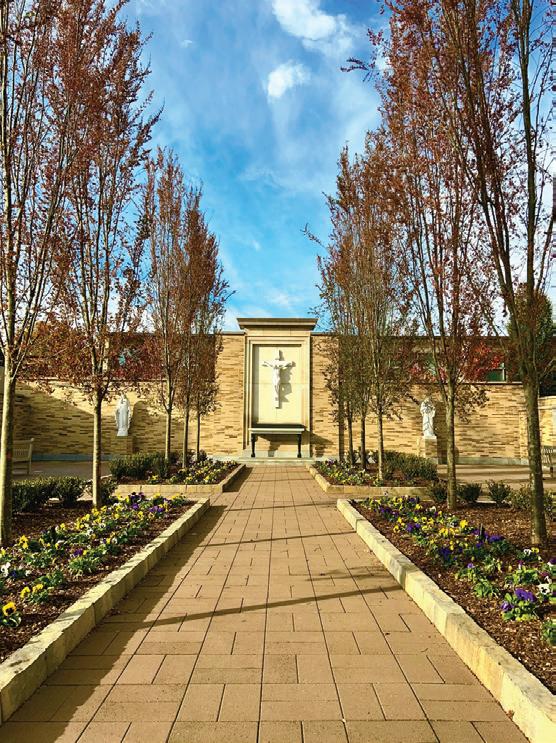
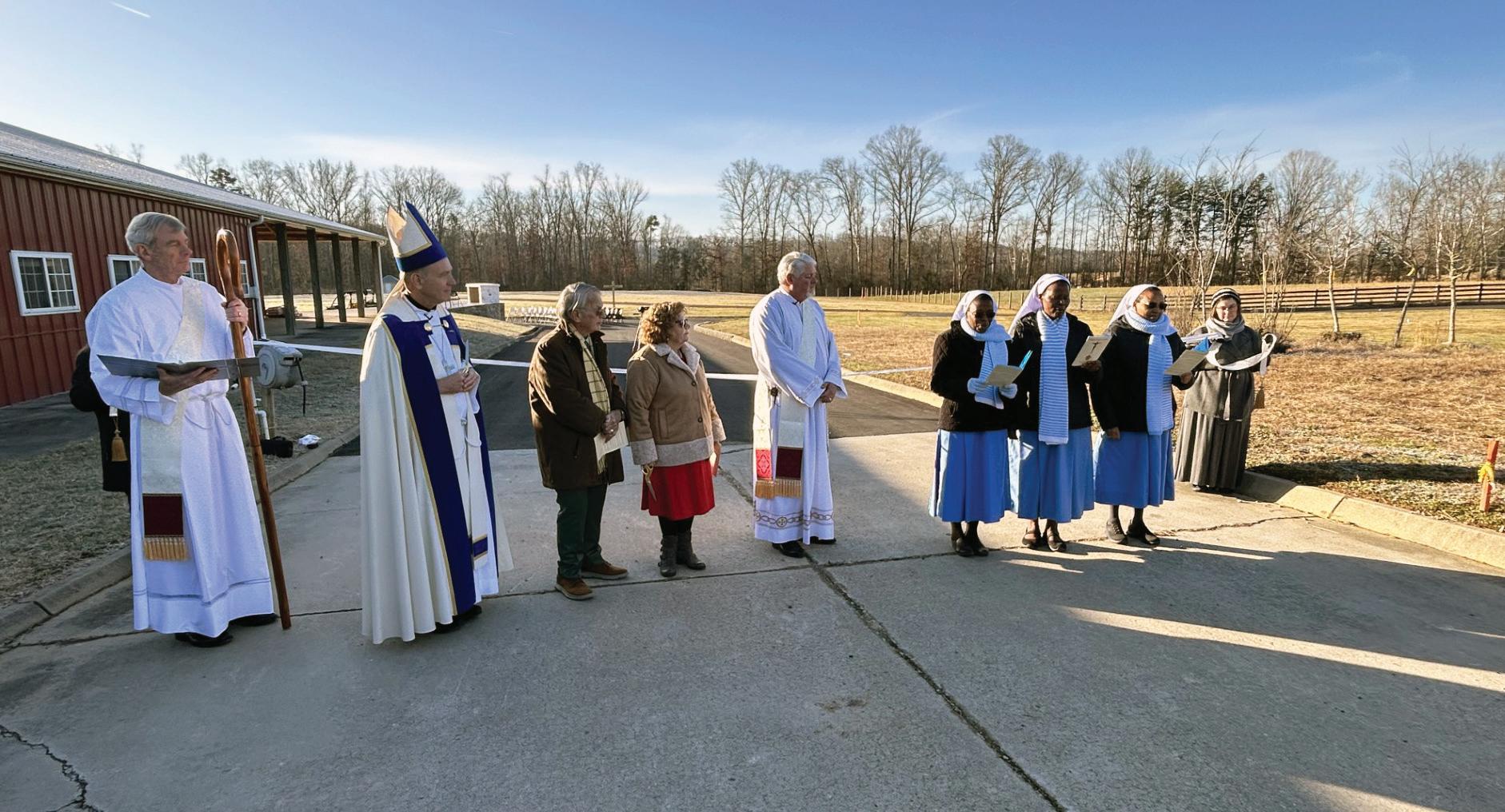
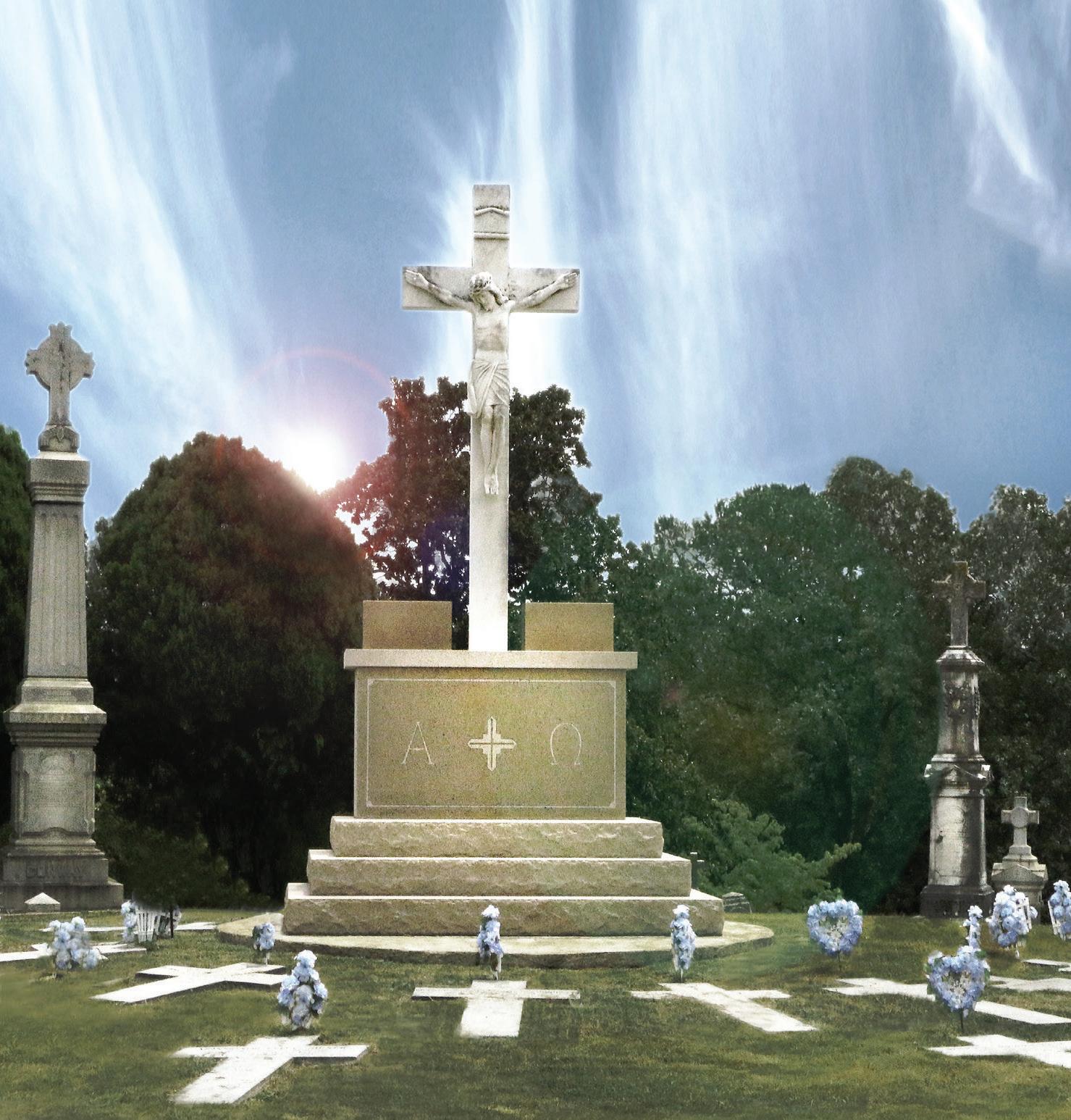
The diocese’s new Holy Cross Cemetery went from a construction site to holy ground on Dec. 20 as Bishop Mark Beckman consecrated the 10.9-acre site on Northshore Drive near the KnoxLoudon county line.
The property, formerly the site of a tree nursery, was donated in fall 2024 by diocesan benefactors Alan and Sally Sefton and is now the third cemetery for the Church in East Tennessee. The cemetery in the FarragutConcord-Lenoir City area has a potential capacity of 3,500 graves in its four burial gardens. The Seftons additionally contributed $1 million to establish a perpetual-care fund for the land.
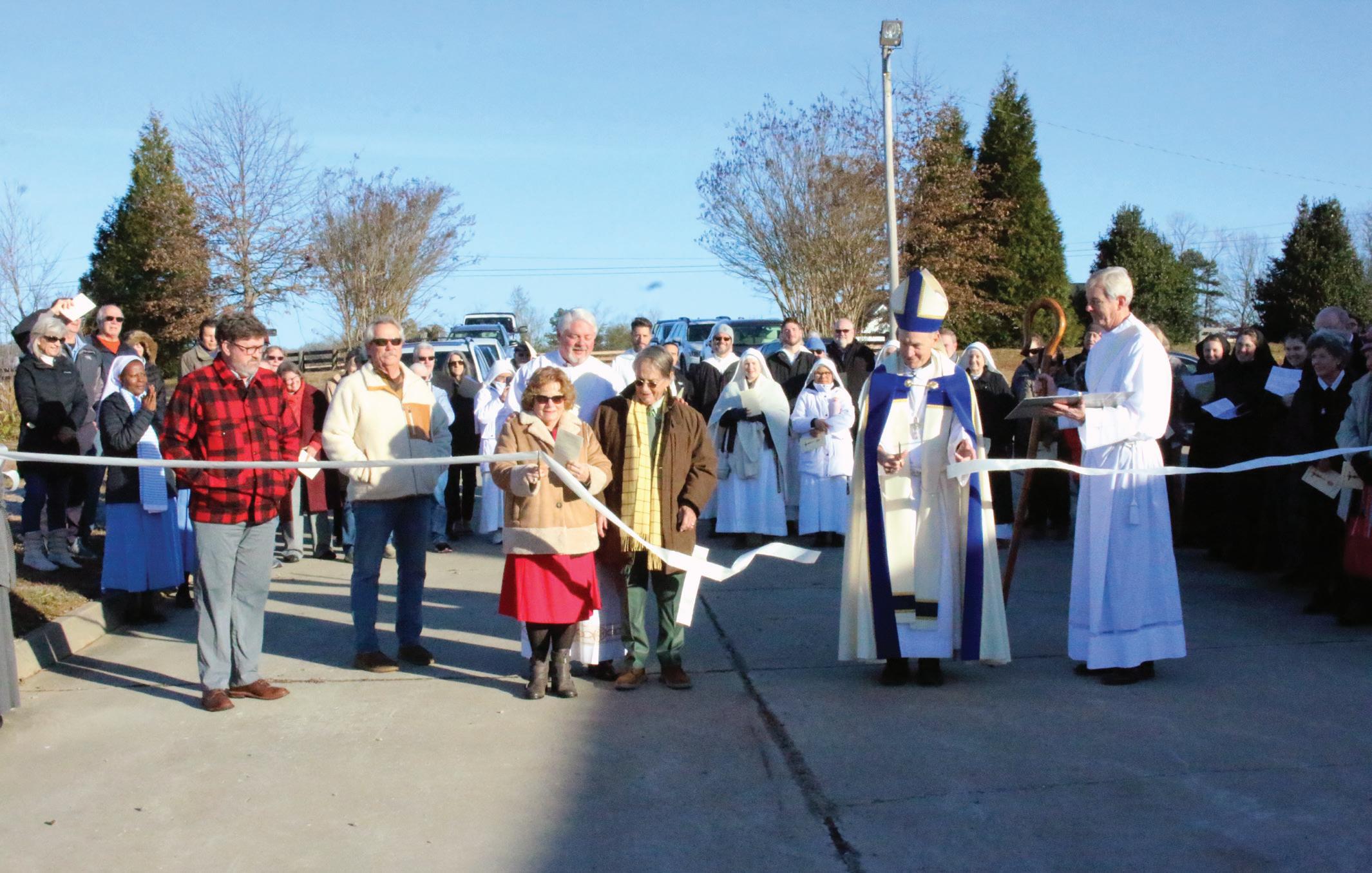
Mr. and Mrs. Sefton attended the consecration—which began with a ribbon-cutting—along with diocesan chancellor and cemetery superintendent Deacon Sean Smith, priests, a number of the faithful, others who helped with the cemetery project, and men and women religious.
“It is such a blessed and beautiful day to be able to bless this new cemetery and to consecrate it for the people of God who will someday have their bodies buried here. It is such a beautiful place,” Bishop Beckman said. “When I first saw this location—it is hard for me to imagine what places will look like in the future—but it is truly a perfect, beautiful location for a cemetery. It is not a long journey from our cathedral, which I am delighted about. It only took about 22 minutes to get here. Also, it’s not far from the interstate, so people can come from all over.”
Bishop Beckman noted that the other Catholic cemetery in the Knoxville area, Calvary Cemetery in East Knoxville, which is more than 150 years old, is nearly at capacity.
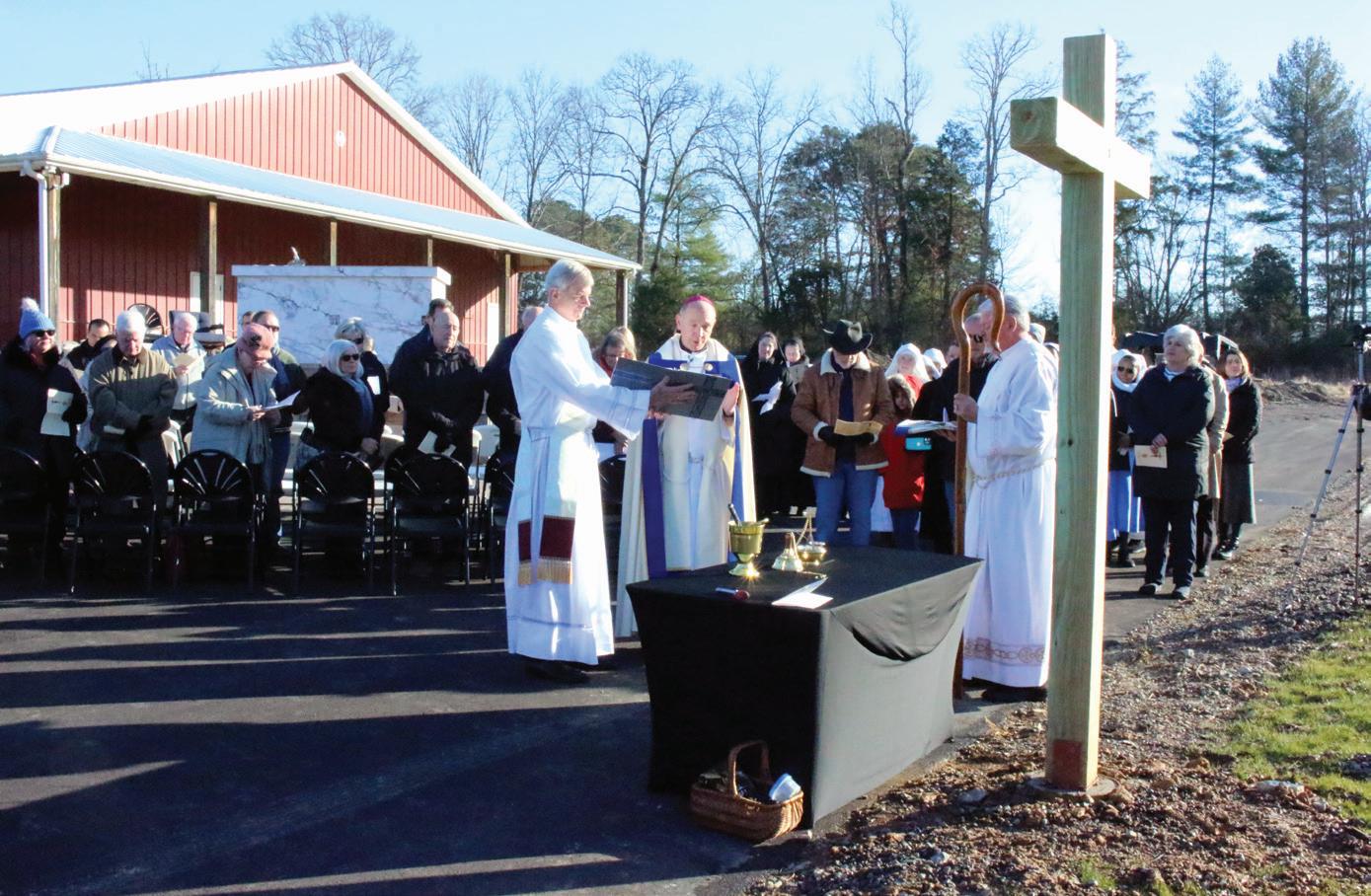
'A sign of hope that promises resurrection' Above: Bishop Mark Beckman is joined by Sally and Alan
and Deacon Sean Smith in officially cutting the ribbon to open the Diocese of Knoxville's new Holy Cross Cemetery, which is located near the Knox County-Loudon County line at 14301 Northshore Drive. Below: Bishop Beckman prepares to bless a new cross placed at the cemetery and also bless the burial grounds of the 10.9-acre site
“It’s good that we have a brandnew cemetery, which will have many, many, many burials for decades to come,” he said.
The bishop also said that interest in Holy Cross by parishioners has been high since the cemetery was announced last year.
“A large number of people have already requested to reserve places in the cemetery,” he said. “We are so grateful to the Seftons for this gift.”
Deacon Smith and Deacon Hicks Armor assisted the bishop at the consecration. Bishop Beckman recognized Deacon Smith at the event for his efforts of more than a year
Cemetery continued on page A22
Sefton
‘A quiet strength’
Church must stand for peace, human rights, says Greenland priest, as U.S.
By Gina Christian OSV News
The Trump administration’s stated plans to acquire Greenland for the United States either through purchase from Denmark or by military means are being met with concern, sometimes fear, and “a quiet strength” by residents, the Arctic island’s only Catholic parish priest told OSV News.
“People talk about it in shops, at work, and even after Mass,” said Father Tomaž Majcen, a Conventual Franciscan and pastor of Christ the King Church in Greenland’s capital, Nuuk.
The Slovenian-born Father Majcen and two other Franciscan friars make up the Conventual Franciscan Mission in Denmark, part of the order’s Province of St. Jerome in Croatia.
In 2023, the three Franciscans took over pastoral care in Greenland home to some 500 Catholics at the request of Bishop Czeslaw Kozon of Copenhagen, where the mission
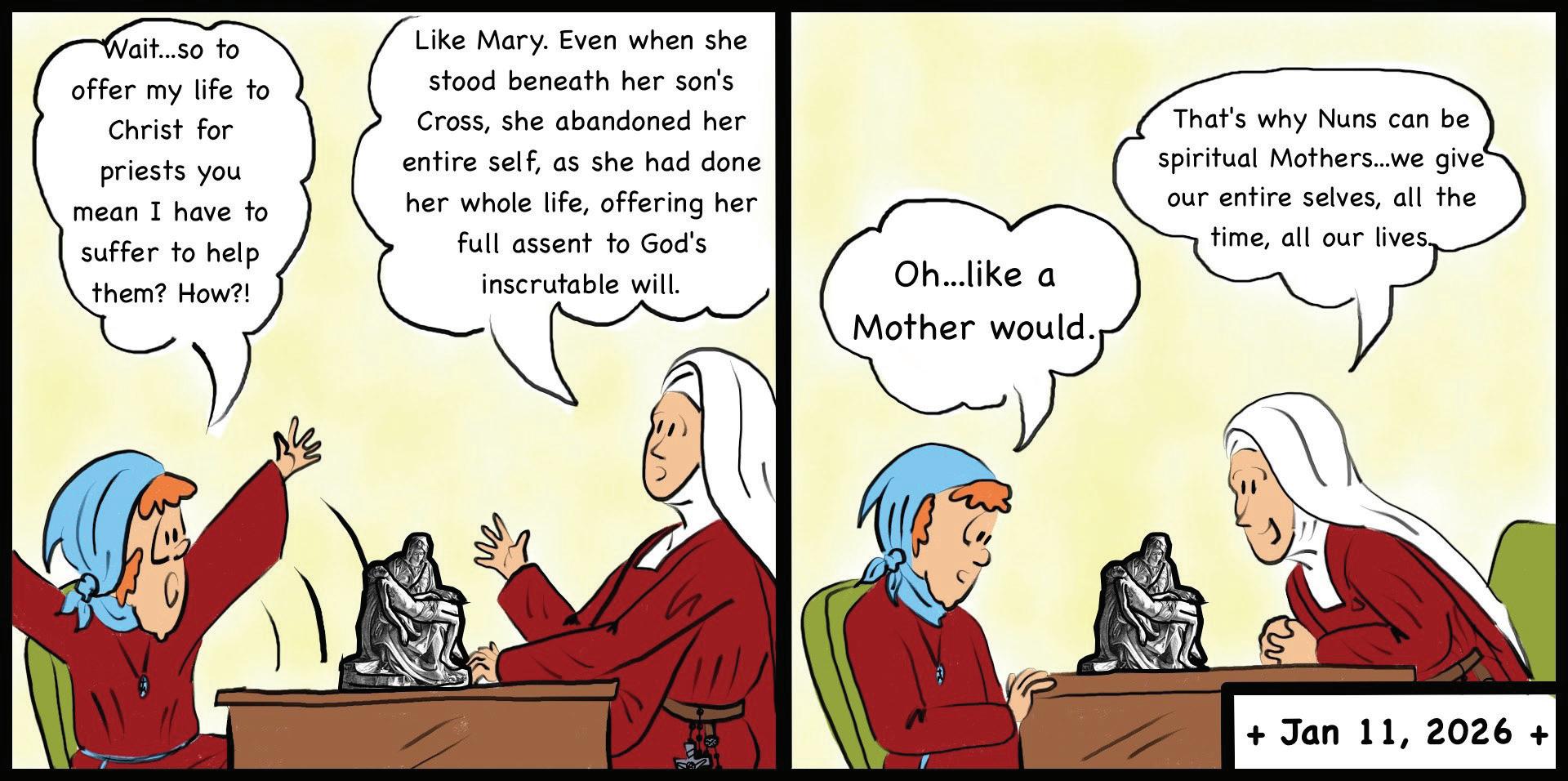
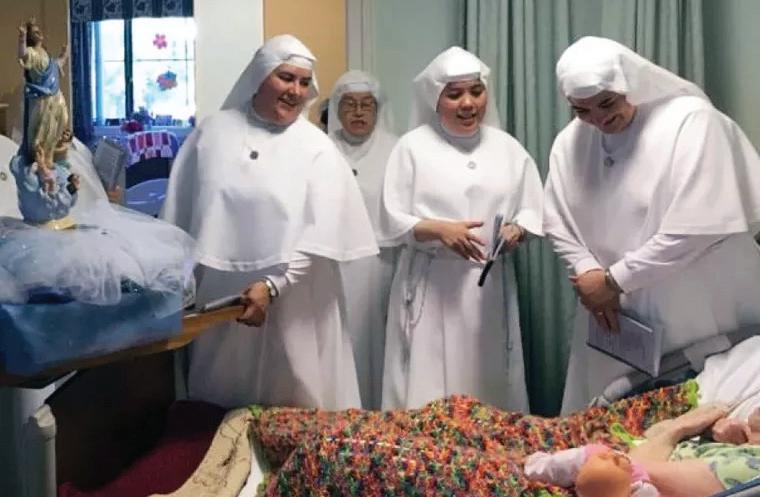
The Handmaids of the Precious Blood this year celebrate the 79th year since their founding in 1947; more than three-quarters of a century of prayer and sacrifice for priests. To receive weekly cartoons and short reflections and news from the Handmaids of the Precious Blood, visit their website, nunsforpriests.org, and sign up for the FIAT newsletter.
A
January intention
for prayer with the Word of God
“Let us pray that praying with the Word of God be nourishment for our lives and a source of hope in our communities, helping us to build a more fraternal and missionary Church.”
also serves two parishes. In a Jan. 6 e-mail to OSV News,
Father Majcen said, “Most Greenlanders feel strongly about who they are and about their right to decide their own future.”
He added, “The fact that such a large majority does not want to become part of the United States says a lot.”
President Trump’s long-signaled interest in acquiring Greenland as a “national security priority” was formally confirmed by White House press secretary Karoline Leavitt in a Jan. 6 statement. It also said, “The president and his team are discussing a range of options to pursue this important foreign policy goal, and of course, utilizing the U.S. military is always an option at the Commander in Chief’s disposal.”
The White House statement came after Denmark, France, Italy, Poland, Spain, and the United Kingdom issued a joint statement on Greenland declaring that “security in the Arctic must be achieved col-
How to sign up and qualify for Diocese of Knoxville’s safe-environment program
The Diocese of Knoxville has implemented the CMG Connect platform to administer the Safe Environment Program, which replaces the former Safe Environment Program (VIRTUS “Protecting God’s Children”).
CMG Connect is a web-based platform that will assist in ensuring that all employees and volunteers who are in a position of trust with children and vulnerable adults within Diocese of Knoxville schools and parishes are trained to recognize behavior patterns of potential abusers and provide pro-active measures for preventing abuse in any context.
“Safe Haven-It’s Up to You” is a three-part video that provides vignettes of real-life situations to educate the viewer about methods of grooming, desensitization, bullying, and neglect, all of which can lead to abuse.
Each part of the video is immediately followed by a brief questionnaire to further develop understanding.
Education is a key
element of the Safe Environment Program
All clergy, employees, contracted school personnel, volunteers, members of groups and organizations over the age of 18 who work, volunteer, or participate in any capacity are required to complete the diocesan Safe Environment training and a criminal-background check before they can begin employment, volunteer, or participate with ministries, groups, and organizations affiliated with the Diocese of Knoxville.
In addition, the mandatory renewal training must be completed every five years and a new background check submitted before the five-year expiration of prior training.
The Diocese of Knoxville Safe Environment compliance training and renewal training is a condition of employment and for volunteer ministry in the Diocese of Knoxville.
The CMG Connect
platform contains all three elements of the Diocese of Knoxville’s Safe Environment Program: n Annual review of the Diocese of Knoxville’s Policy and Procedures Relating to Sexual Misconduct; n CMG Connect Safe Haven training program to be completed every five years; n Criminal background check to be completed every five years.
In compliance with the Diocese of Knoxville’s Safe Environment Program, all affiliates require that volunteers and employees complete the requirements prior to working and/or volunteering in a parish, school, or through Catholic Charities of East Tennessee and/ or St. Mary’s Legacy Clinic Go to https:// dioknox.org/safeenvironment on the Diocese of Knoxville website for more information ■
Pope Leo XIV
ANew beginnings
Take time to reflect on Jesus' words: You are the light of the world!
s we enter 2026 in this time of a new year, my mind goes back to the humble beginnings of Jesus’ own ministry in Galilee. I will never forget the first time I arrived there and saw it with my own eyes.
The Mount of Beatitudes in particular struck me. It is a humble mountain (more like a hill for those of us in East Tennessee!) that overlooks the entire Sea of Galilee. It slopes gently down to the water’s edge. One can well imagine Jesus sitting at the top of that hill, gathering disciples around Him as He gives His first major sermon in the Gospel of Matthew. The multitudes sloping down the hill would have heard His words well. (Interestingly, Luke situates the sermon on a level stretch, and one can well imagine Jesus at the bottom of the hill speaking from the water’s edge to the crowd above.)
The Sermon on the Mount (Matthew 5-7) has been called a “handbook in Christian living,” and it is said that Gandhi read it twice each day.
I remember celebrating Mass with a small group of pilgrims as I read the Beatitudes (blessed are the poor in spirit, the sorrowing, the lowly, those who hunger and
thirst for righteousness, who show mercy, are pure of heart, peacemakers, persecuted for the sake of righteousness) as I gazed at the Sea of Galilee below.
Should these not be the qualities that shape our individual lives in this new year, and should these not be the qualities that shape our culture and world today?
We live in a time when the opposing qualities seem to dominate public life. Warmaking, divided hearts, pride, gloating, lack of mercy toward the most vulnerable, hunger, and thirst for more earthly stuff seem to be the currency of our day.
I see the loving face of Jesus
speaking these words not only to His original disciples but to each of us: “Love your enemies, pray for your persecutors…turn and offer the other cheek…do not lay up for yourselves earthly treasures… stop worrying about tomorrow… treat others the way you would have them treat you…be perfect as your heavenly Father is perfect…”
The words of Jesus are a map that heals the human heart from the darkness that cripples human dignity.
I invite us as a People of the Lord in this new year to make the Sermon on the Mount our touchstone for personal and communal reflection. It is so clear to me that
Jesus deeply desires that we bring this Gospel to the world. After beginning His public ministry with the Beatitudes, He looks at His disciples and speaks these words: “You are the salt of the earth…You are the light of the world. A city set on a hill cannot be hidden. People do not light a lamp and put it under a bushel basket. They set it on a stand where it gives light to all in the house. In the same way, your light must shine before all that they may see the goodness in your acts and give praise to your heavenly Father…”
Dear sisters and brothers, you are light for the world! Take time in this new year, day by day, to ponder and reflect on these words of Jesus. Allow His presence and light to heal the darkness in your own hearts, to transform the desires that are not humble and pure, so that His light may radiate in you more clearly this year. May this light shine forth from all of our communities and bring the healing rays of the Lord’s own light to all people everywhere, especially to those most in need. May God bless you as disciples and bearers of His light in this new year. ■
Faith meets finance in new crypto offering
Advocates predict bright opportunities for Catholic cryptocurrency
By Stephen Beale National Catholic Register
In the world of cryptocurrency, Catholic USD a recently developed fiat-backed stablecoin immediately stands out, and not just because of its name.
Cryptocurrencies like bitcoin became popular after the 2008 financial crisis as an alternative to government-backed currencies and traditional financial institutions. Cryptocurrency bypasses the need for brick-and-mortar banks by verifying transactions through a cryptographic process in which “blocks” of digital records are chained together, known as a “blockchain.”
For many, cryptocurrency has become a lucrative investment opportunity. Eddie Cullen, the businessman who is helping to spearhead the launch of Catholic USD, wants to bring the benefits of the new technology to the poor.
“We have to make sure the poor and human suffering is the thing we’re focused on at all times first,” Mr. Cullen told the Register. “Treating the poor like Jesus Christ would that has to be the first priority.
Catholic USD, which was scheduled to launch in December, is a type of cryptocurrency that is pegged to a national currency or asset like gold that is known as a stablecoin. In this case, one Catholic USD is equivalent to one U.S. dollar.
Mr. Cullen envisions Catholic USD as a means of sending donations to parishes, Catholic universities, hospitals, and nonprofits working with the poor and others in need. It is especially useful for international transactions because of its speed and ability to verify the funds are being used for their intended purpose, thanks to the blockchain technology underpinning it.
Matthew Pinto, the founder of Ascension Press and organizer of the first-ever Catholic cryptocurrency conference in 2022, said the Church should approach new technologies with hopeful openness.
“Catholics need to understand most every new technology to understand its ramifications on the human person and how we live in, and engage, the world,” Mr. Pinto said in an interview with the Register
“As Catholics, I think our first
response should be one of hopeful expectation that God is doing something unique, in this new technology, and within His plan of salvation. To be sure, we should exhibit prudence in these discernments, but our posture should be one of hope first,” Mr. Pinto added.
While cryptocurrency use and ownership tends to be dominated by younger men, a group of Catholic nuns has been among the earliest to adopt it in the Church. Members of the Benedictines of Mary, Queen of Apostles, learned how to set up digital wallets in order to receive bitcoin donations for their new chapel in southern Missouri, according to a report in Bitcoin Magazine
“Currently, bitcoin and other cryptocurrencies are not extensively used in the Catholic Church today. A relatively small, but growing, number of Catholic organizations are now accepting bitcoin for donations, which is a good first step to greater and more varied adoption,” said Devin Rose, a Catholic bitcoiner and author of a cryptocurrency-themed fiction thriller series. “Every parish, diocese, and Catholic organization should set themselves up to receive bitcoin for donations.”
Mr. Rose told the Register that Catholics who have invested in bitcoin want to tithe their profits to the Church, but when donors have to first convert their bitcoin into dollars, it reduces the amount that can be donated. Parishes, schools, and other organizations that are set up to
receive bitcoin, however, can receive the full value of the contribution, Mr. Rose noted.
But cryptocurrency advocates say that transmitting money for donations only scratches the surface of the new technology’s potential for the Church.
For example, all Catholic USD stablecoins that aren’t being used for transactions will be held in a yieldgenerating account on BitGo, an asset management platform. Unlike a bank, Mr. Cullen plans to donate 100 percent of the yield to the Catholic Global Mercy Trust, which would disburse the funds to global poverty relief efforts, Catholic schools, hospitals, and other causes.
If Catholic USD reaches $1 billion in circulation, that would mean $40 million in annual charitable giving, according to a slideshow presentation provided by Mr. Cullen.
Like Mr. Cullen and Mr. Pinto, Brantly Millegan, who has been active in the Ethereum cryptocurrency community, is optimistic about the new technology and the promise it holds for the Church.
“The Catholic tradition sees invention and the development of technology as an expression of divine spark in humanity, and so I’m fundamentally optimistic about new technology,” Mr. Millegan told the Register “Further, helping the poor is, of course, a key tenet of Catholic social thought, and I already see crypto opening opportunities for the disenfranchised and unbanked globally to
more financial services that we take for granted in the U.S.”
Behind bitcoin and cryptocurrency is a broader philosophical stance on what form of money is best for society.
Eric Sammons, editor of Crisis Magazine and author of a book on bitcoin, argues that bitcoin is “the most moral money ever created.”
All currency, according to Mr. Sammons, has seven properties, three of which impact its morality: verifiability, scarcity, and independence.
According to his book, Moral Money: The Case for Bitcoin, currency must be verifiable so people can trust it; scarcity secures its value and guards against inflation; and there must be independence to prevent control by a small group or single institution, which creates the risk of corruption.
“Modern fiat money”—a type of government-issued currency—“fails tremendously in at least scarcity and independence, whereas gold and silver are far better at those characteristics, although they are not as good at verifiability,” Mr. Sammons said. “However, bitcoin exceeds fiat, gold, and silver in its verifiability (a transaction can be fully verified in seconds), scarcity (there is a hard limit of 21 million bitcoin ever created), and independence (bitcoin runs on a decentralized network controlled by no individual or organization).”
For Mr. Cullen, Catholic USD ensures the emerging, digitally decentralized financial system adheres to a paramount moral imperative: putting humanity first. “Because if we don’t, then we’re going to lose who we are,” he said.
While many new technologies, from bioengineering to the new AI programs, have prompted concerns over potential risks to the dignity of the human person, Mr. Cullen sees cryptocurrency and blockchain technology as an opportunity to improve upon existing financial systems that can be dehumanizing at times.
“I don’t need another bank that s going to take all the profits from the poor,” Mr. Cullen said. “I need something that is going to alleviate human suffering people that need shelter, that need water, that need food.” ■
Current currency While cryptocurrency use and ownership tends to be dominated by younger men, a group of Catholic nuns has been among the earliest to adopt it in the Church.
East Tennessee pilgrims recall taking part in the Jubilee of Hope ‘Moments of grace and unity’
The East Tennessee Catholic
On Jan. 6, the feast of the Epiphany, Pope Leo XIV closed the Holy Door at St. Peter’s Basilica, officially marking the end of the Holy Year and the Jubilee of Hope. Pope Francis had opened the Holy Door on Christmas Eve 2024, inviting Catholics all over the world to be “pilgrims of hope.”
“The whole world came to Rome [for the Holy Year],” said Archbishop Rino Fisichella, proprefect of the Dicastery for Evangelization and the Holy See’s official point man for the jubilee. Indeed, almost 33.5 million pilgrims from 185 countries traveled to Rome during the Jubilee Year. And some of those pilgrims were from East Tennessee.
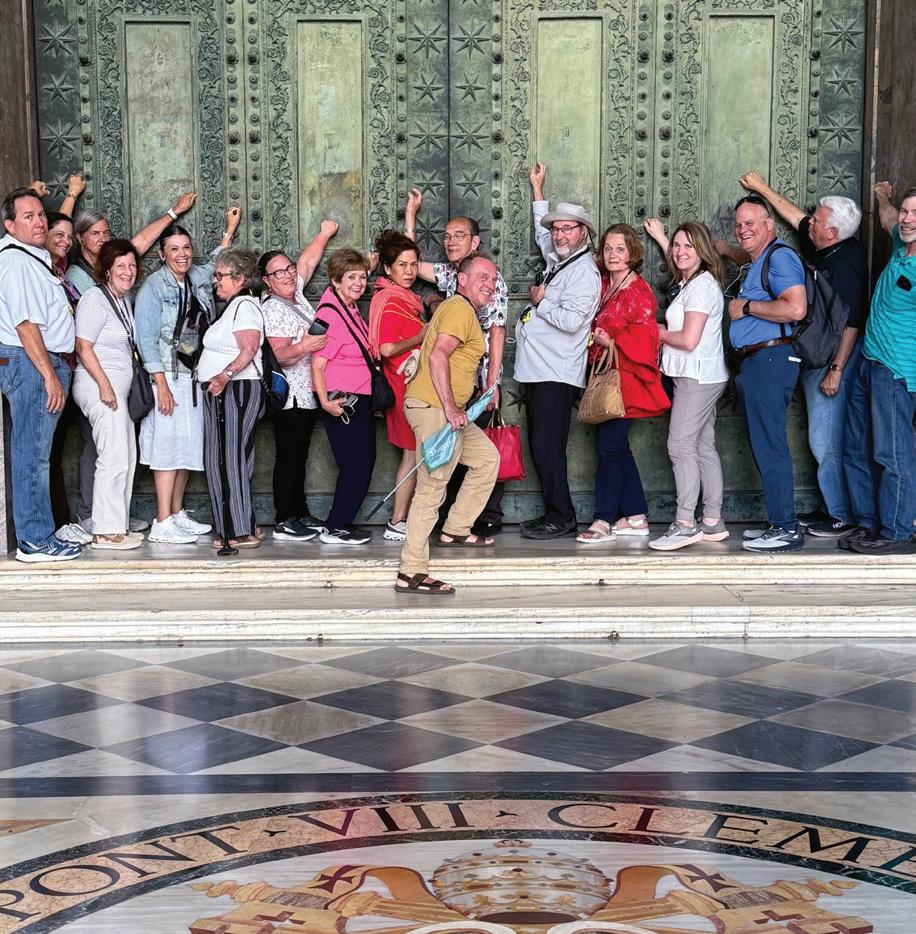
In May, a group of 20 people from the Diocese of Knoxville went on a pilgrimage in the footsteps of St. Paul to Malta and Sicily, ending in Rome. Father Mike Nolan, pastor of St. Thérèse of Lisieux Parish in Cleveland, was the spiritual leader.
“There were certainly lots of moments of grace and unity,” Father Nolan said.
He recalled a volunteer—one of several thousand who helped guide pilgrims around Rome during the jubilee—who welcomed the group at St. Peter’s Basilica. Later, the same volunteer recognized them at a different church. Though a language barrier prevented them from speaking, the welcoming smile, wave, and small recognition made an impact.
“That’s a reminder, frankly, of how as Church we are supposed to treat each other, even amidst great crowds,” Father Nolan said. “Regardless of language, through a face, a smile, a gesture, we can open doors for others.”
“This was the pilgrimage of hope, Jubilee of Hope. That is not done in isolation but in community, and in community we have to deal with each other, pilgrims or tourists, and walk through open doors that are open wide for us, willing to share our faith and our need for community as we accompany one another throughout the pilgrimage of life,” he added.
Open doors are a major symbol of the jubilee, as Rome’s Holy Doors are only opened on jubilee years as a visual sign of God’s mercy. Pilgrims walk through the Holy Doors and receive a plenary indulgence.
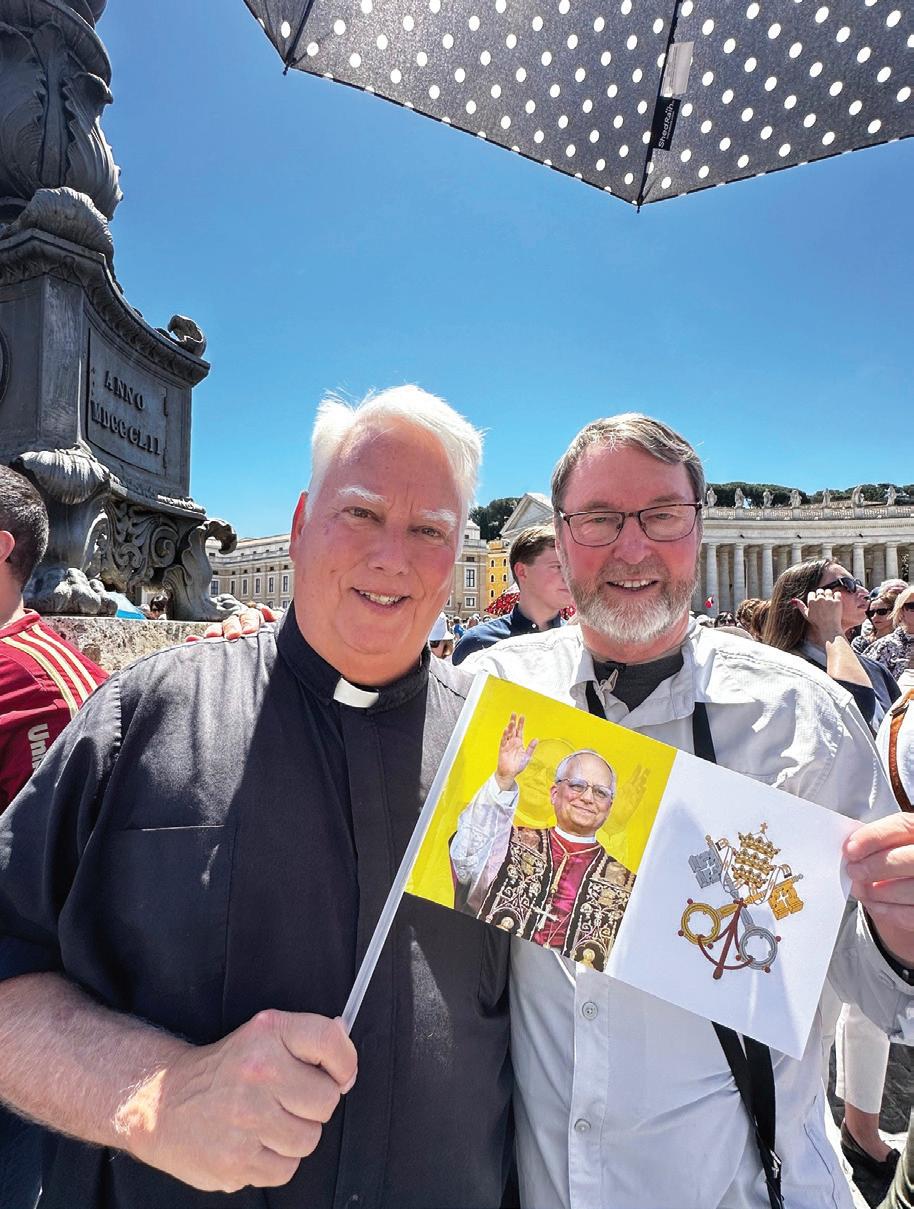
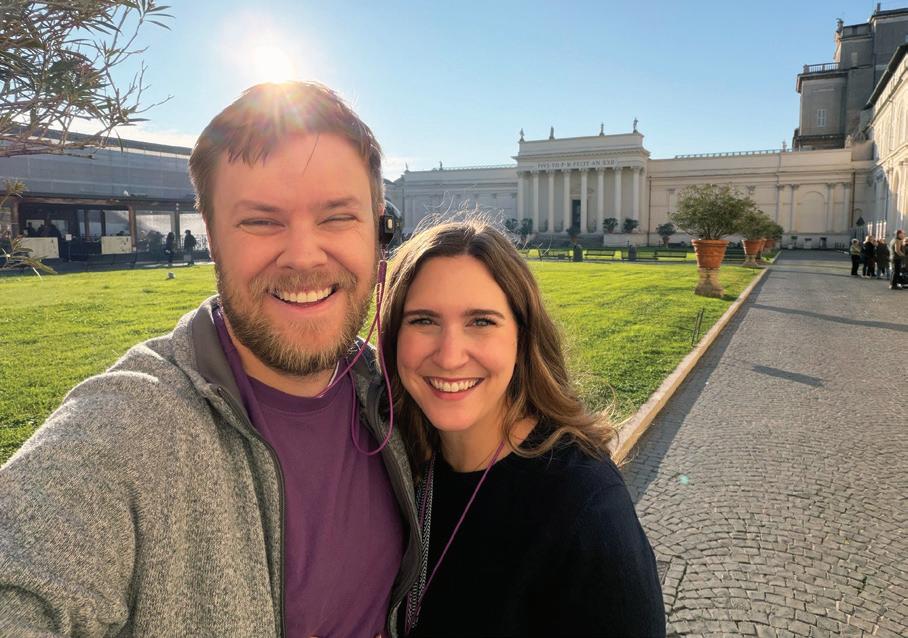
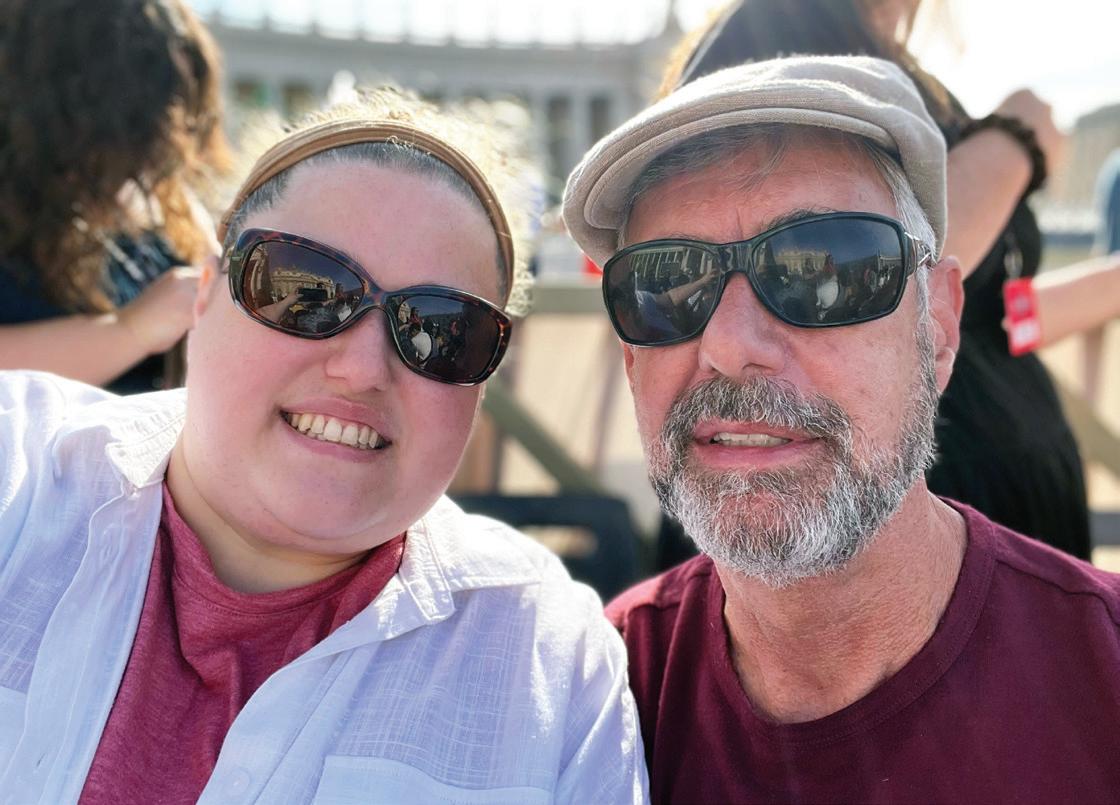
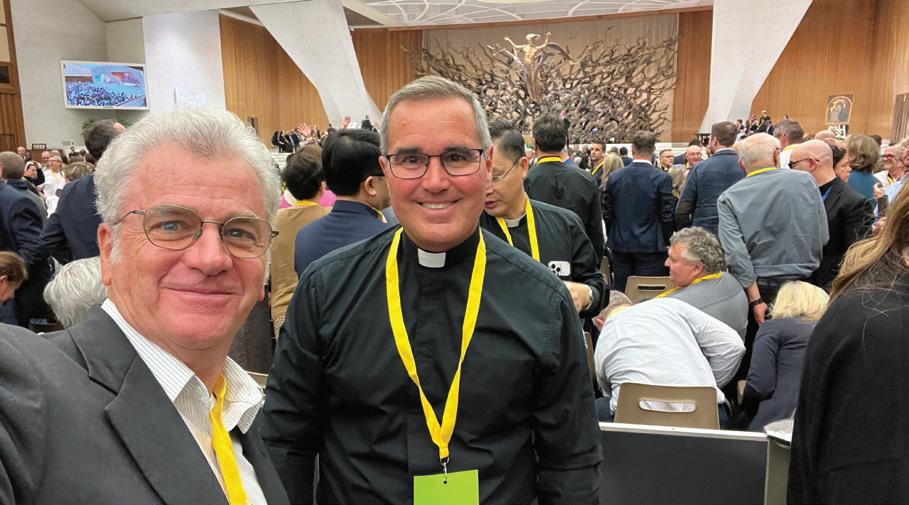
Pilgrims of hope Above: Father Mike Nolan, pastor of St. Thérèse of Lisieux Parish in Cleveland, is joined by Terry Duffy as they were taking part in a Jubilee Year pilgrimage to Rome in May. Below: Taylor and Caitlyn Crosby, Sacred Heart Cathedral parishioners, made their pilgrimage to Rome in October.
“Doors, if they are open, invite us in, to a deeper relationship with Christ or with one another, and so when we go to church, whether daily or on Sundays or on Christmas, we expect to find open doors. But at every Mass, at the end of Mass, we are sent forth back through those
Eucharistic Pilgrimage is returning in 2026
U.S. spiritual event will have a patriotic twist with a special East Coast route
By Maria Wiering OSV News
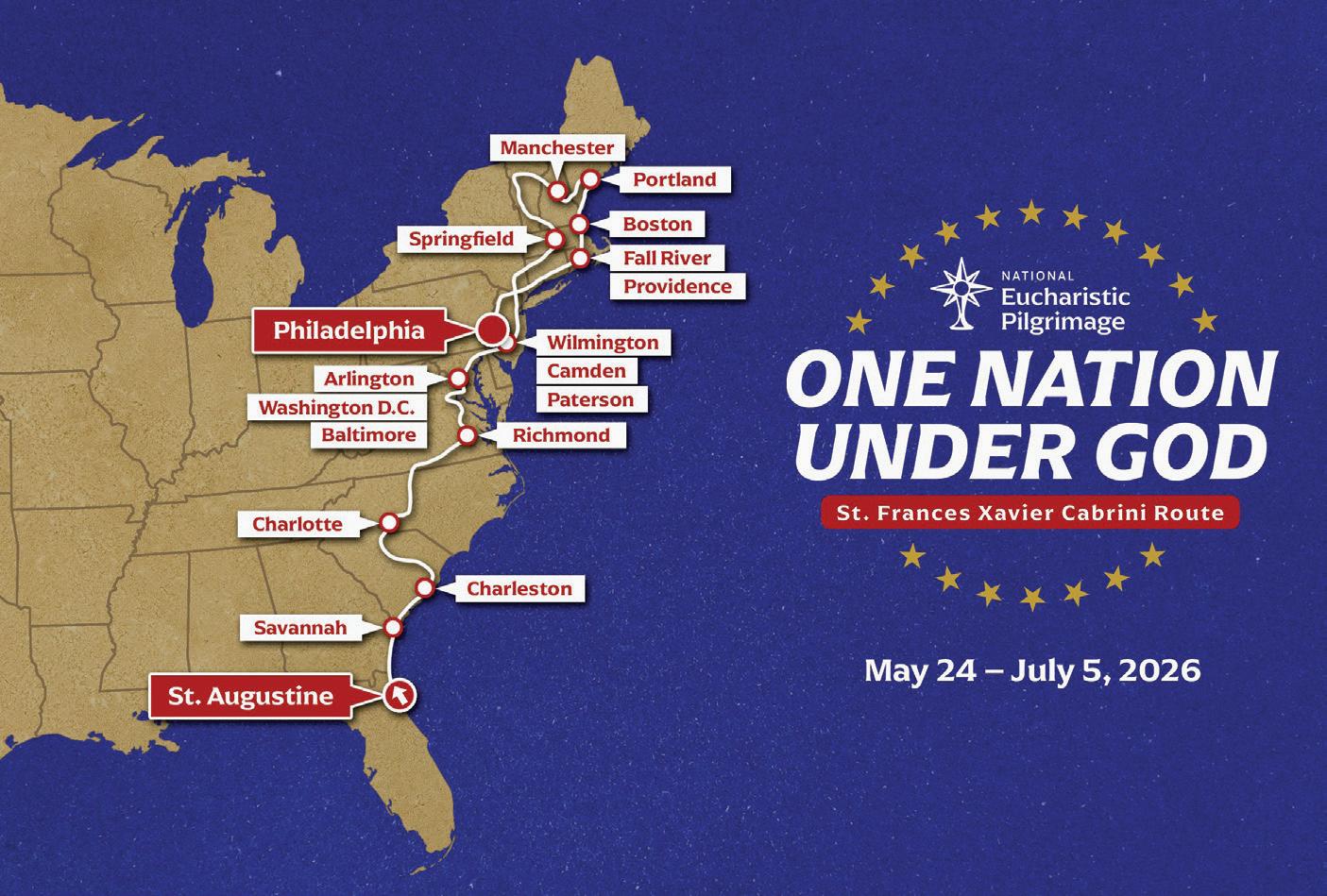
The National Eucharistic Pilgrimage is back for 2026 with a special route that will travel the East Coast from St. Augustine, Fla., to Portland, Maine, ending in Philadelphia, organizers announced Jan. 8.
The pilgrimage—the third of its kind—will begin in May on Memorial Day weekend and end July 5. This year’s pilgrimage celebrates America’s 250th anniversary with the theme “One Nation Under God,” and its route incorporates key sites in the history of the country and its Catholics.
Organizers described the pilgrimage as “a nationwide call to renewal, unity, and mission rooted in the Eucharist.”
In a Jan. 8 media release announcing the route, organizers noted that 2026 marked the 75th anniversary of the lobbying campaign, led by the Knights of Columbus, to add the phrase “One nation under God” to the nation’s Pledge of Allegiance.
“One nation under God is not a borrowed slogan; rather, it is an invitation to realign our lives, our communities, and our country under the sovereignty of Jesus Christ,” said Jason Shanks, president of the National Eucharistic Congress, in the media release.
Under the patronage of St. Frances Xavier Cabrini
The National Eucharistic Congress nonprofit organizes the pilgrimage, which first took place as
four routes in 2024 ahead of the 10th National Eucharistic Congress in Indianapolis as part of the National Eucharistic Revival, and which returned last summer with a route from Indianapolis to Los Angeles.
“Our hope is that Catholics will come together on this significant anniversary to give thanks for our country and to pray for our future,” said Bishop Andrew H. Cozzens of Crookston, Minn., who serves as chairman of the National Eucharistic Congress, in the statement. “We want all Catholics to be inspired with missionary zeal to bring revival through the light and love of Jesus Christ.”
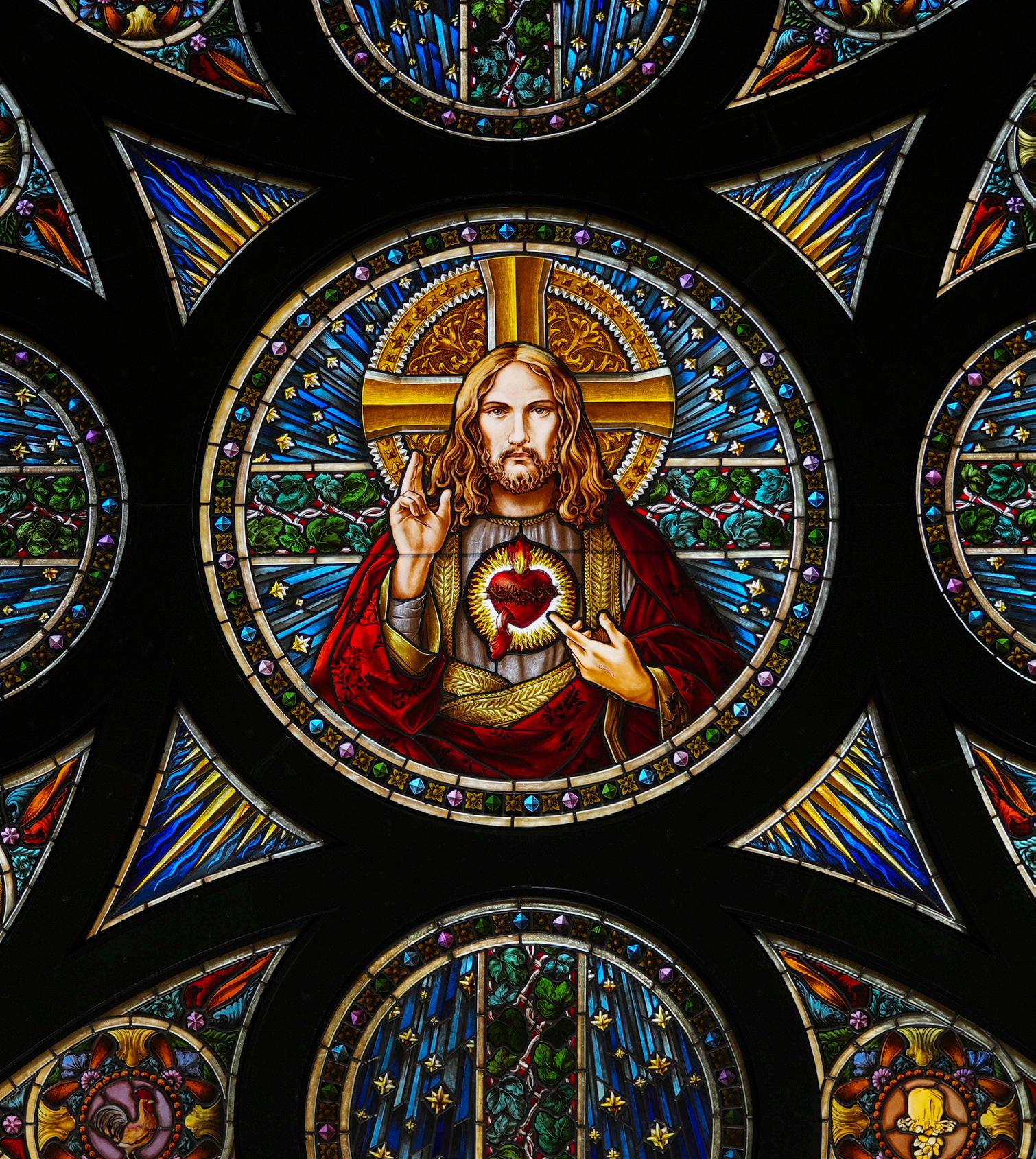
The pilgrimage has been placed under the patronage of St. Frances Xavier Cabrini, an Italian-American immigrant and the first U.S. citizen to be canonized a saint. It will also take place in solidarity with the U.S. bishops’ call to consecrate the United States to the Sacred Heart of Jesus.
Like previous National Eucharistic Pilgrimages, the route will be traveled by “perpetual pilgrims,” eight young adults selected among a group of applicants (plus a “media missionary”) who will attend Mass, eucharistic adoration, other devotions, and community-building events along the way.
Pilgrimage launches in Florida
The pilgrimage will launch Memorial Day weekend with Mass at Our Lady of La Leche Shrine in St. Augustine, the site of the first Mass celebrated on American soil in 1565.
Eucharistic continued on page A11
doors on our ongoing mission, transformed by the Scriptures, transformed by the sacraments, challenged and equipped on our ongoing pilgrimage,” Father Nolan said.
The pilgrimage group went through the Holy Doors at each of the major basilicas in Rome.
“After passing through the Holy Doors of the basilicas of St. Paul Outside the Walls, St. Mary Major, and St. John Lateran, our final Holy Door was St. Peter’s Basilica,” said Lisa Morris, who organized the pilgrimage through pilgrimage tour operator Select International.
“We followed the cross down the Via della Conciliazione, passing through the final Holy Door of St. Peter’s with hearts full of joy, and gratitude. Truly a pilgrimage of so many blessings and graces to last and cherish for a lifetime,” Mrs. Morris noted.
The group also attended a Sunday Angelus given by Pope Leo.
“It was only the second Sunday Angelus by the newly elected pope, and the excitement from the thousands of pilgrims in the square was tangible and electric,” Ms. Morris said.
In June, Emily Booker, digital media producer for the Diocese of Knoxville, made the pilgrimage to Rome with her father, Alan Booker.
“It was my first time to Rome, and I felt so blessed for the opportunity to be a part of the Jubilee and go through the Holy Doors. It was also incredible seeing the shrines of so many saints and walking in the footsteps of the many holy men and women who have worshiped in Rome for centuries,” Ms. Booker said.
The Bookers also attended a General Audience with Pope Leo.
“It was amazing being so close to the new American pope,” she said. “And being with all the people in the square from so many countries—it really made me feel part of a truly universal Church.”
Deacon Joe Herman, who serves at St. Anthony of Padua Parish in Mountain City, journeyed to Rome in November with his wife, Lucia, and others on a pilgrimage led by Monsignor Al Humbrecht, pastor of Holy Spirit Parish in Soddy-Daisy.
The 10-day pilgrimage from Nov. 3-13 that the Hermans were on included trips to Assisi and San Giovani in Italy.
Jubilee continued on page A24
Chattanooga panel votes in favor of basilica
Planning Commission denies request for high-rise adjacent to historic church
The East Tennessee Catholic
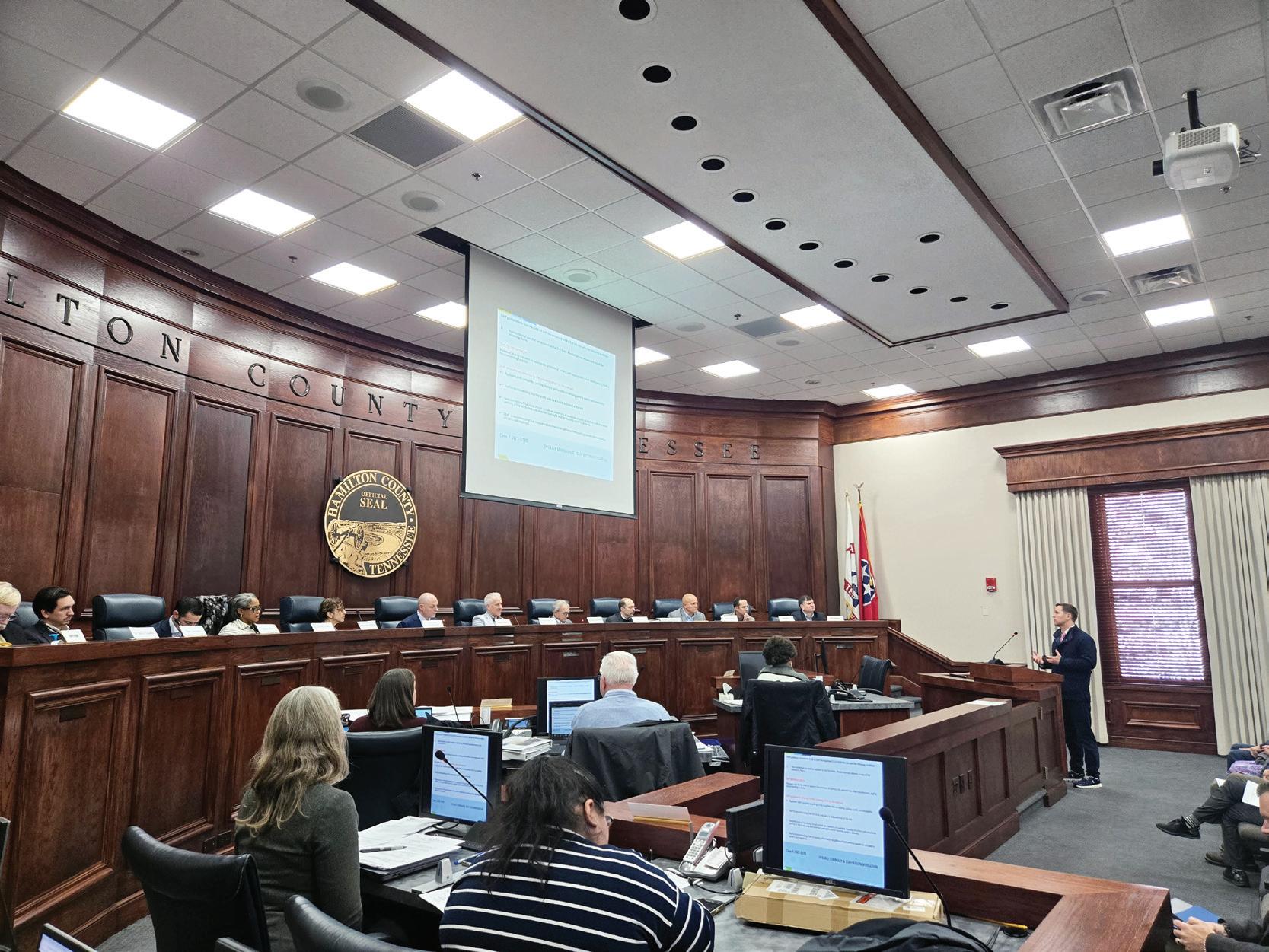
Aproposed high-rise development that would be built immediately behind the Basilica of Sts. Peter and Paul was denied by the Chattanooga-Hamilton County Regional Planning Commission on Jan. 12 amid strong opposition by the basilica community and others concerned about the project’s negative impact on the historic church.
Among those taking a strong stance in support of the basilica was Hamilton County Mayor Weston Wamp, who voted against the development as a member of the Planning Commission.
Commissioners voted 8-4 to recommend denial of rezoning for the 12-story apartment building on Patten Parkway from a six-story structure, with Mayor Wamp contending the basilica and its history are too important to Chattanooga to risk being adversely affected by the project.
The church is on the National Historic Register.
Mayor Wamp moved for the Planning Commission to deny the rezoning request. The commission then voted to recommend that Chattanooga City Council deny rezoning. The rezoning petition could go to Chattanooga City Council for consideration.
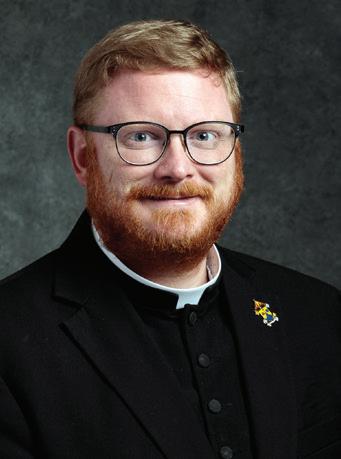
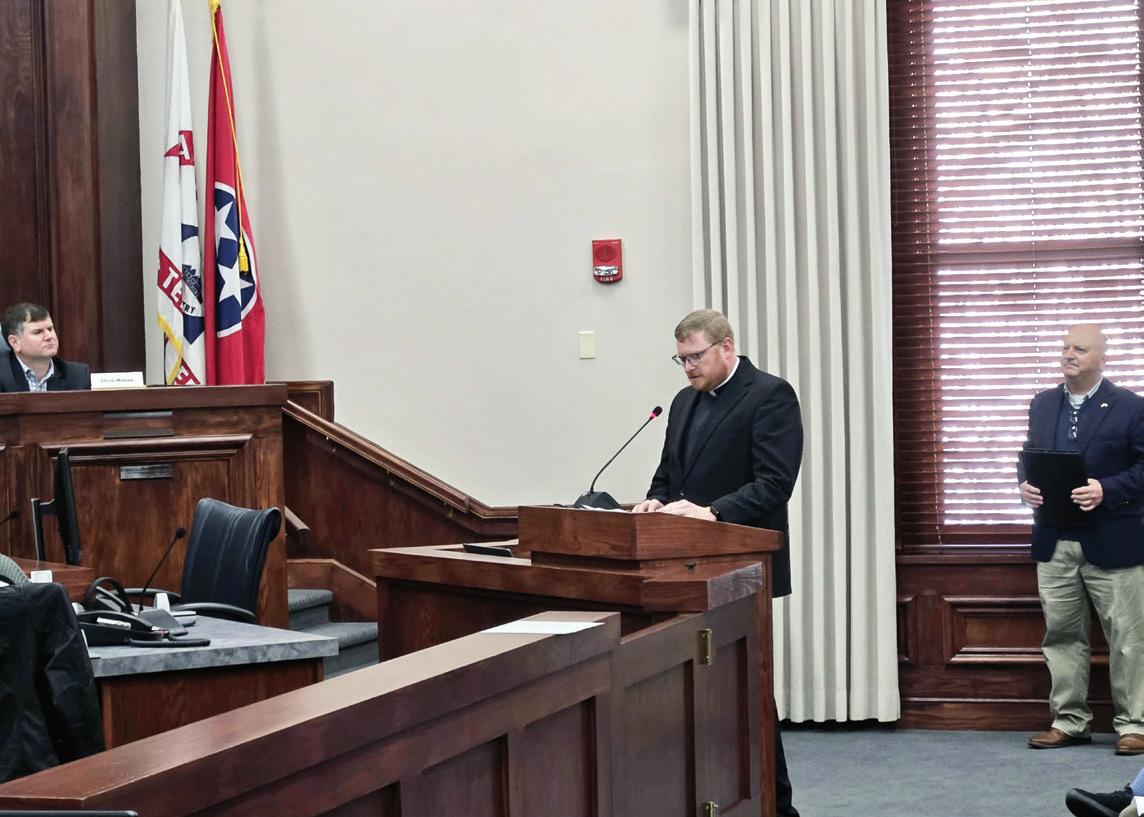
The basilica’s rector, Father David Carter, attended the commission meeting and spoke in opposition to the project, saying the apartment building would completely overshadow the basilica campus and block the light coming in through the church’s Tiffany stained-glass windows.
Father Carter further said the deep underground foundation work that would be required to support the high-rise would present a “grave risk of permanent damage and settling of our historic brick church building.” He noted that the basilica’s Facilities Committee has reviewed the development proposal in depth.
“Mayor Wamp, commissioners, this proposal faces broad and grow-
And in the right photo, the arches of the basilica interior can be seen
"T he public does not support a project that would overshadow the basilica, threaten its structural integrity, and put an irreplaceable historic and sacred site at risk. Ours is not a vacant or abandoned property. The basilica campus is active every day, serving thousands of worshipers, visitors, and concertgoers each week. Any damage to the building would be catastrophic—financially and culturally."
Father David Carter, Basilica of Sts. Peter and Paul rector
ing public opposition. More than 2,300 citizens—parishioners, neighbors, and residents across Chattanooga—have signed a petition opposing the rezoning of 19 Patten Parkway to allow a 12-story, zeroparking building. The public does not support a project that would overshadow the basilica, threaten its structural integrity, and put an irreplaceable historic and sacred site at risk,” Father Carter said at the hearing.
Ours is not a vacant or abandoned property. The basilica campus is active every day, serving thousands of worshipers, visitors, and concertgoers each week. Four priests reside on site, and the basilica is a designated worldwide pilgrimage destination. Any dam-
Minn. Archbishop Hebda issues plea for all to pray
Urgent request follows shooting death of woman by ICE agent
By Rebecca Omastiak
The Catholic Spirit/OSV News
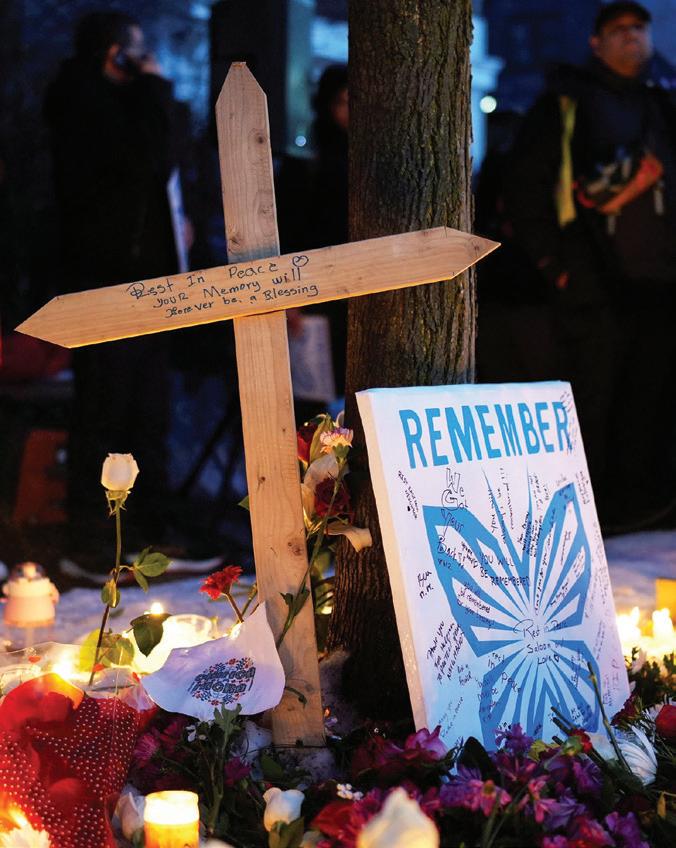
Archbishop Bernard A. Hebda is continuing his call for prayers after police said a woman was pronounced dead following a shooting involving a federal agent in Minneapolis on Jan. 7.
“Following this morning’s deadly shooting in Minneapolis, I reiterate my plea for all people of good will to join me in prayer for the person who was killed, for their loved ones, and for our community,” Archbishop Hebda, head of the Archdiocese of St. Paul and Minneapolis, said in a statement following the incident, referring back to his request for prayers on Dec. 23 as immigration enforcement efforts in the Twin Cities drew concerns from some about attending Christmas Masses.
The Jan. 7 incident occurred in the area of 34th Street and Portland Avenue, according to Minneapolis Police Chief Brian O’Hara.
The woman shot by an officer with Immigration and Customs Enforcement has been identified by Minnesota media as Renee Nicole Good, a 37-year-old mother and poet who was originally from Colorado.
During a news conference, Chief O’Hara said police responded to the area after receiving a report of a federal law enforcement officer being involved in a deadly force incident, “meaning shots had been fired.”
The U.S. Department of Homeland Security indicated on social media that “ICE officers in Minneapolis were conducting targeted operations” on Jan. 7.
Upon arrival, Chief O’Hara said officers found
age to the building would be catastrophic—financially and culturally.
The Tiffany windows, the oldest pipe organ in Chattanooga, and the sacred art and architecture cannot be replaced. And if the basilica were compromised, we would lose its designation and identity forever,” the basilica rector continued.
“This is not an either-or debate between preservation and progress. It is about responsible development and whether the sacred still has a place in our city’s vision. This neighborhood has already lost its historic Baptist and Methodist churches. The basilica is the last historic mother church standing on what was once Irish Hill,” he said. “We are not speculating about risk. Similar construction caused mil-
lions of dollars in damage to the cathedral in Birmingham. We have commissioned detailed engineering studies that show a 12-story building presents severe and foreseeable dangers—far beyond what a building within the existing six-story zoning would pose. These concerns are fact-based, documented, and supported by case studies here in Chattanooga and around the world.
“Commissioners, you are entrusted with the public’s confidence. Today, you can choose to make a positive impact with your agency, to uphold the values that make this city thrive—or allow unchecked development to overshadow them. We suggest you not take the recommendation of the Regional Planning Agency to defer, or to allow a 10-story building rather than a 12-story building, or to eliminate the parking requirements for a new residential building—but instead listen to the clear voice of the people and deny this rezoning request.”
Specifically, Father Carter and the basilica committee members said they were concerned: n The proposed building would
AT THE BEGINNING OF MASS, INVITE COUPLES TO STAND & RECEIVE A LITURGICAL BLESSING
CREATE MARRIAGE FORMATION PROGRAMS FOR
THE EAST
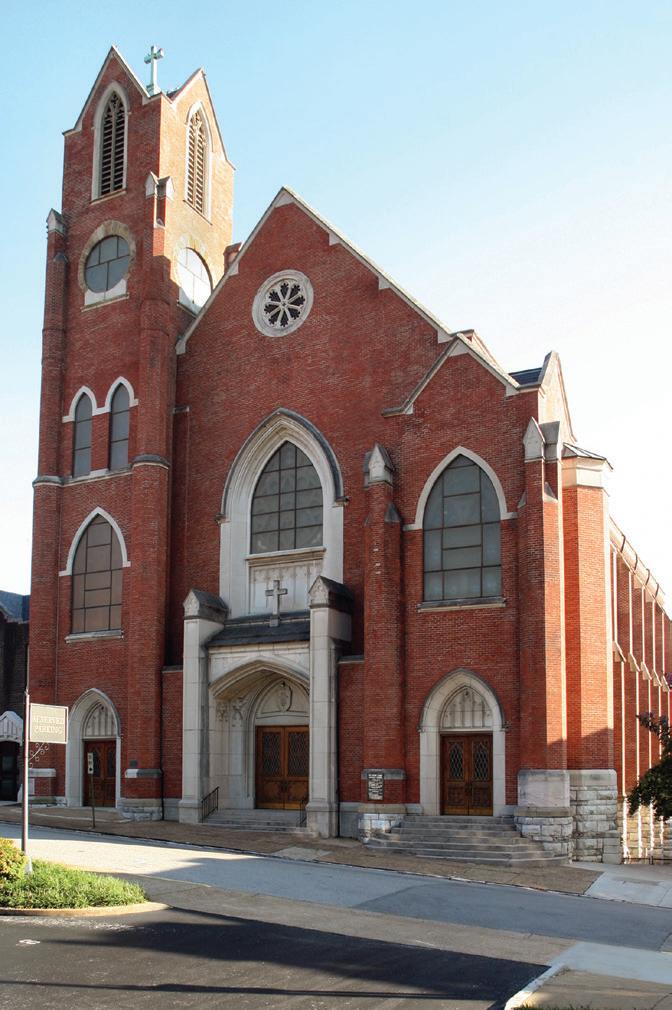
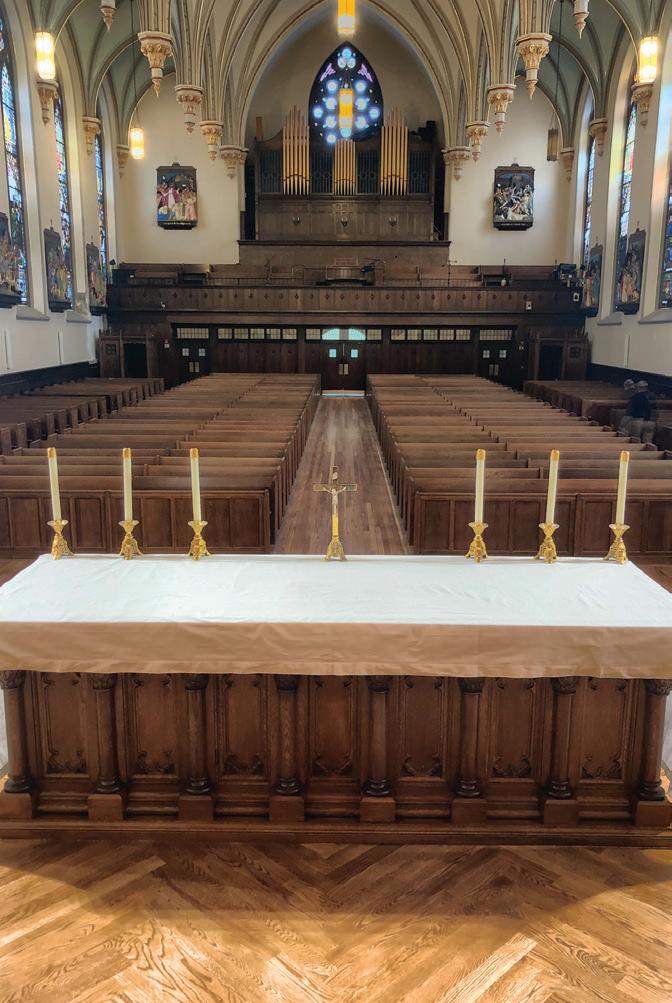
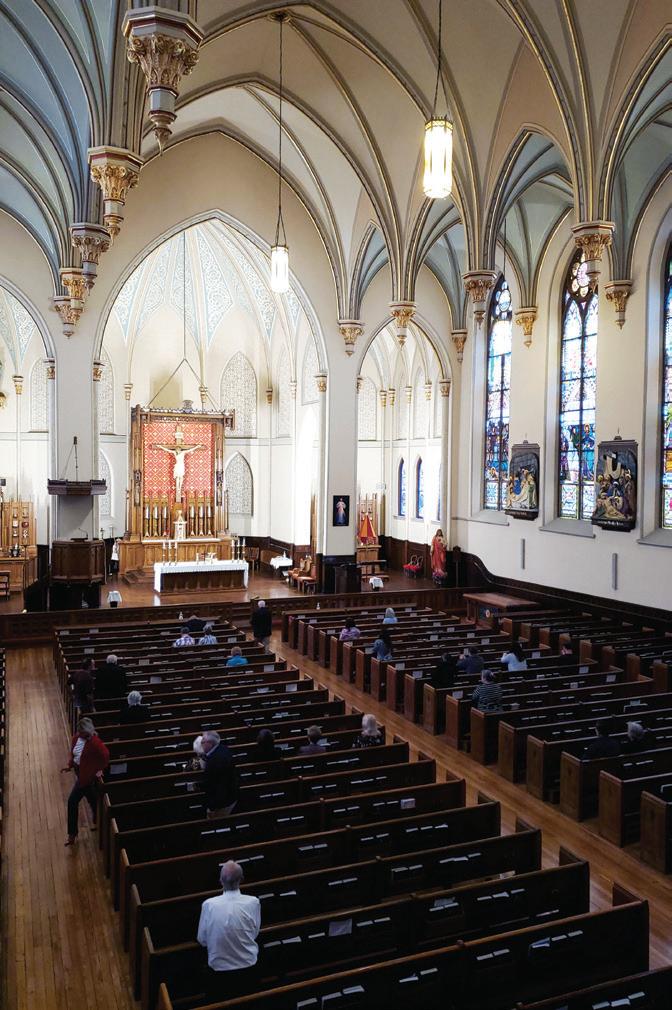
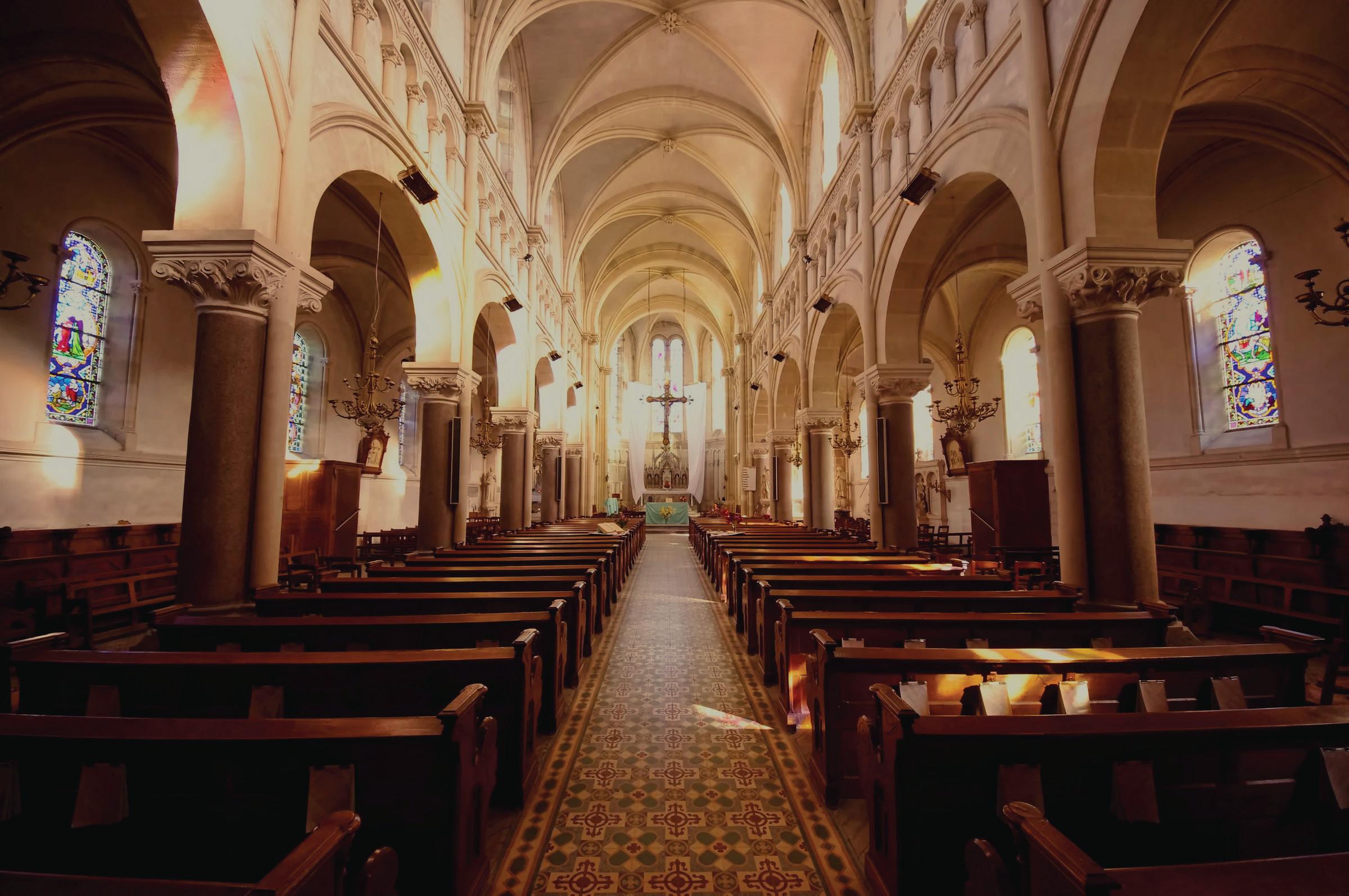
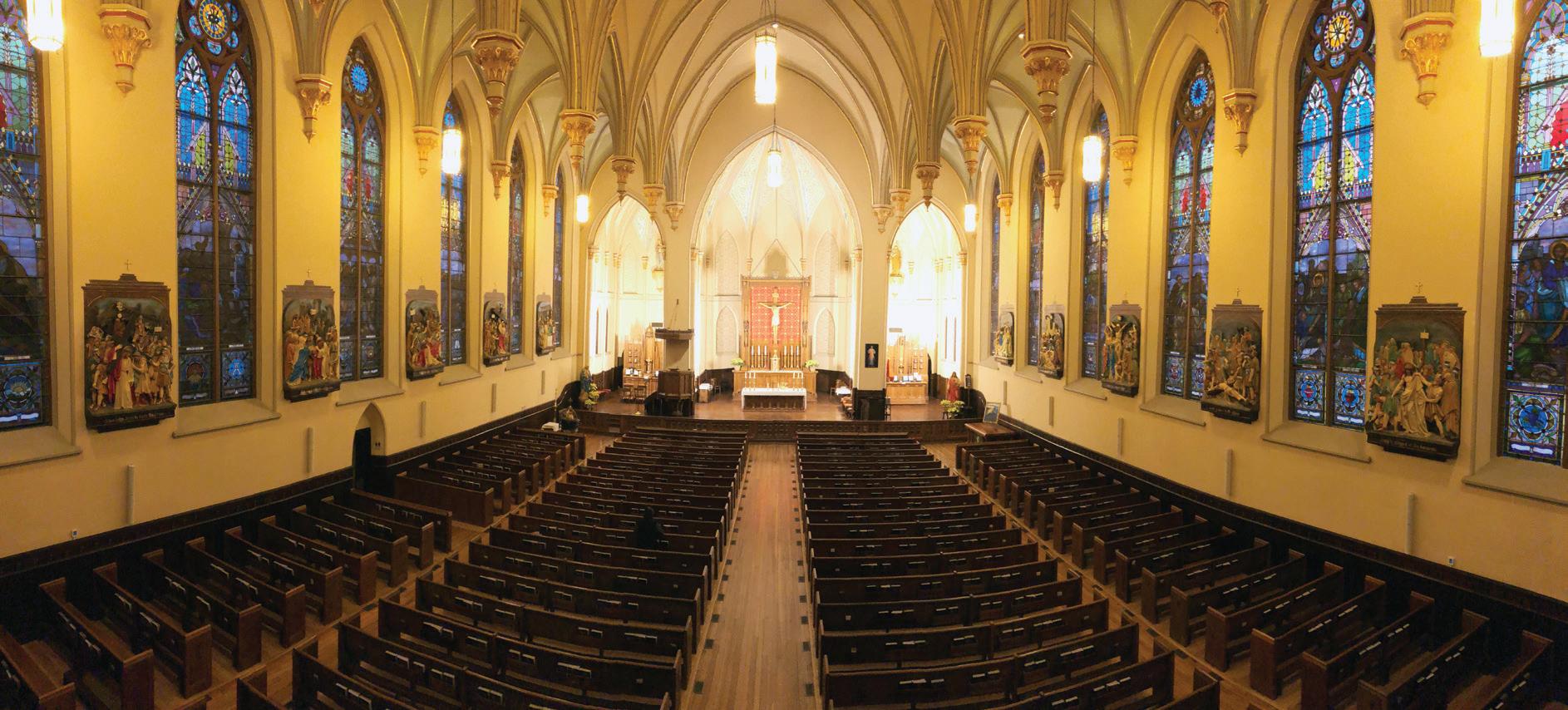
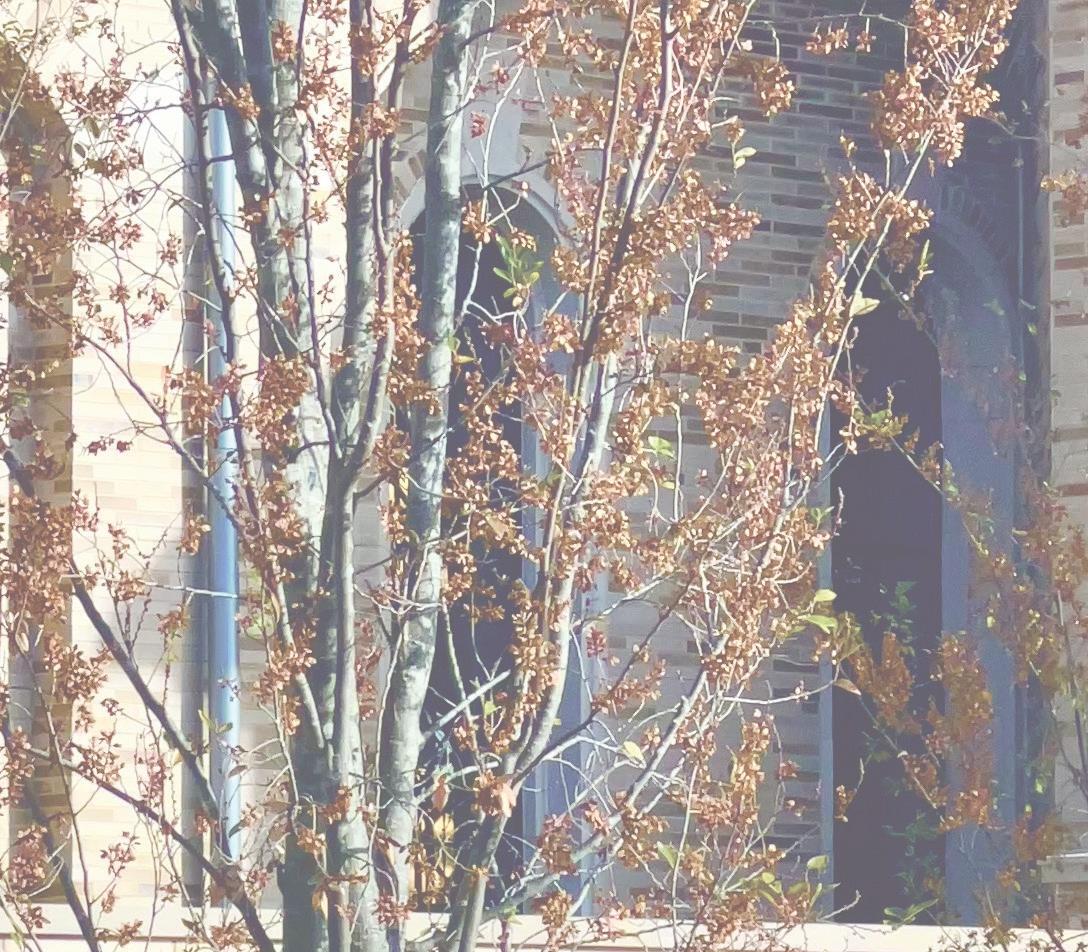
The basilica, inside and out The Basilica of Sts. Peter and Paul in Chattanooga has and continues to play an important role in the history of Chattanooga. The brick exterior of the basilica, with its arches, stained-glass windows, and bell tower is seen in the left photo. In the center photo, the recently renovated sanctuary, nave, and choir loft of the basilica are on display.
Basilica continued on page A14
Celebrating The Diocese
of Knoxville
Believing in God — and themselves
Hoosier stars credit Catholic schools and faith for their success
By Gary Lambrecht and John Shaughnessy OSV News
Well before he was a University of Maryland transfer who used his final year of college football eligibility to become a major success story as a running back at Indiana University, Roman Hemby said he owed much credit to John Carroll School for instilling vital Catholic values that guide him today.
Mr. Hemby, a Maryland graduate who grew up in Edgewood, is one of numerous transfers who have turned the 2025 Indiana Hoosiers—once known as the losingest program in toplevel, Division I history—into a No. 1-ranked, unbeaten (15-0) powerhouse.
The Hoosiers, in part behind Mr. Hemby’s more than 1,000 yards rushing, which is a team high, entered the College Football Playoff as its No. 1 seed. Indiana trounced No. 9 Alabama 38-3 in the CFP quarterfinal Rose Bowl game in Pasadena, Calif., on Jan. 1.
The Hoosiers remain undefeated at 15-0 and now advance to the national championship on Jan. 19 against the Miami Hurricanes after defeating Oregon 56-22 in the Peach Bowl in Atlanta on Jan. 9.
Before joining Indiana, Mr. Hemby was part of four up-anddown seasons at Maryland, where he played in 42 games over four seasons and ran for a total of 2,347 yards and scored 22 touchdowns. He also caught 112 passes for 921 yards and five scores. But the Terps never contended in the Big Ten Conference and managed a combined overall record of 27-24.
“I would not be (at Indiana)
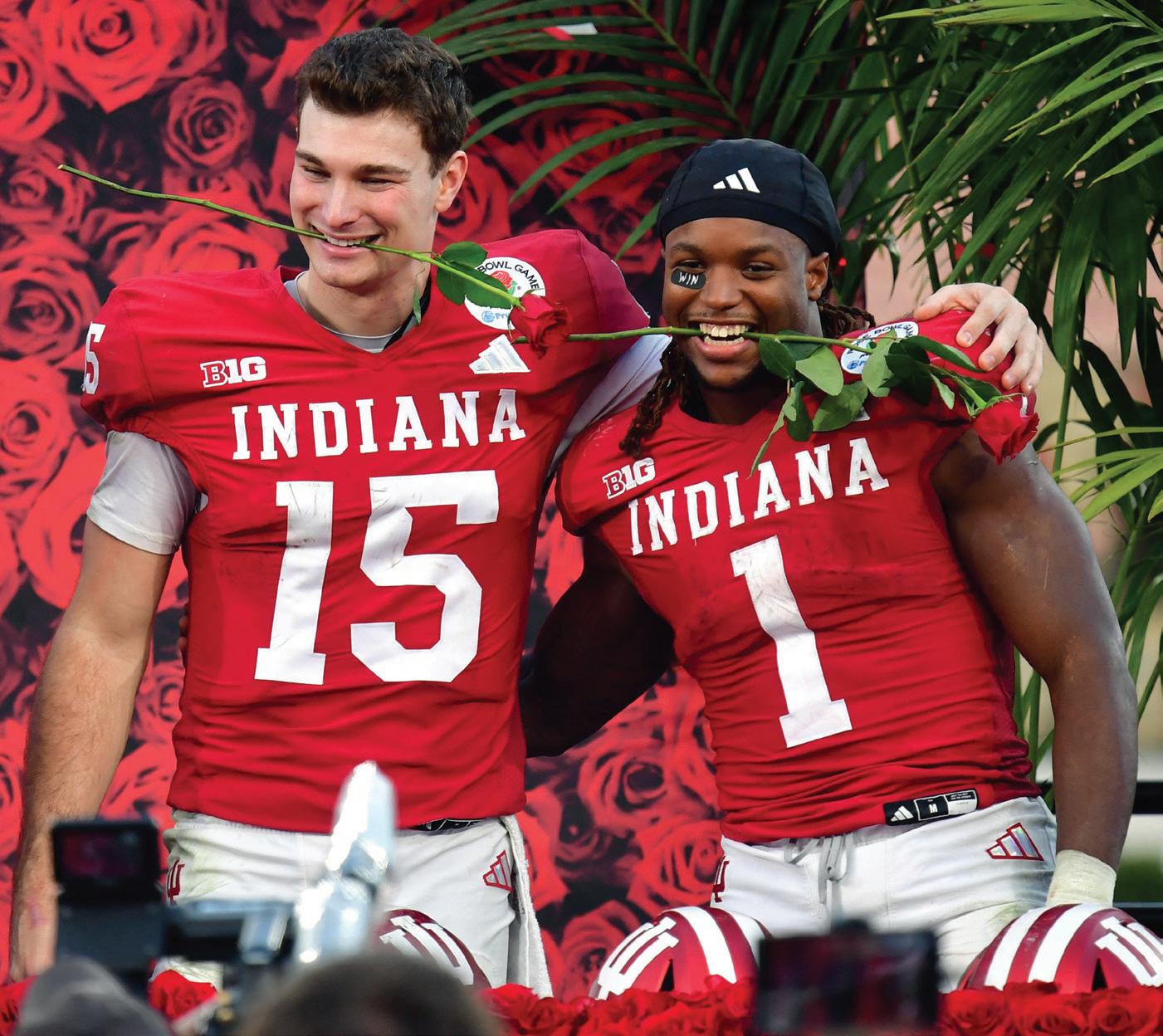
Everything's coming up roses Indiana Hoosiers quarterback and Heisman Trophy winner Fernando Mendoza (15) and running back Roman Hemby (1) celebrate on the podium after defeating the Alabama Crimson Tide in the 2026 Rose Bowl and quarterfinal game of the College Football Playoff on New Year's Day at Rose Bowl Stadium in Pasadena, Calif. The Hoosiers defeated Alabama 38-3 to advance to the CFP semifinal game versus Oregon.
without Maryland. I definitely would not be here without John Carroll. My high school helped me to see the kind of heights I could reach,” said Mr. Hemby, who drew interest from big-time football schools such as Georgia, Texas Tech, and Tennessee after he entered the NCAA’s transfer portal in late December 2024. The portal is a digital database where college athletes declare their intent to transfer, allowing other schools to recruit them.
Indiana was the only school he visited. He earned a bachelor’s degree in communications from Maryland before his final college football season at Indiana.
Catholic Schools Week 2026!!!
Under first-year Indiana head coach Curt Cignetti in 2024, the Hoosiers produced a record of 11-2 and made their first-ever appearance in the CFP. Coach Cignetti has been honored following the last two regular seasons as The Associated Press Coach of the Year.
“Roman’s agent said there were six teams waiting for him to hit the portal. Thankfully, Cignetti came calling,” Charleena Hemby, Mr. Hemby’s mother, told the Catholic Review , the news outlet of the Archdiocese of Baltimore.
Based in Bel Air, Md., where John Carroll has existed for 61 years, the independent Catholic
The week of Jan 25 will begin “Catholic Schools Week2026 ” If you’ve been out of the Catholic-schools loop for a few years, this will actually be the 52nd anniversary of that first such celebration – national in its scope This year’s theme will be “Catholic Schools: United in Faith and Community ”
school has played a transformational role in Mr. Hemby’s life.
Since its establishment in 1964 by the Archdiocese of Baltimore, John Carroll has provided an educational experience rooted in the Catholic tradition. The school is committed to inspiring students to realize their full potential with its vibrant athletic program, academic rigor, and dedication to community service.
“(At John Carroll), it started with the faith piece—in the classrooms and conversations and relationships that helped me be the kind of person who would keep Christ at the center of my life,” Mr. Hemby said.
“I had the utmost faith that things would work out. The atmosphere at John Carroll let me know that God had a plan for me,” he added. “When you’re part of a family like John Carroll, you have people who really look out for your best interests. You see the love of God, and you want to help others.”
While he was attending Maryland, Mr. Hemby put his givingback thoughts into action. He started a youth football camp several years ago. The John Carroll administration offered its facility for use at the summer camp, which has grown in popularity.
“I don’t think anybody (at John Carroll) has ever said anything about Roman that wasn’t glowing,” said Seth Goldberg, the former athletics director at John Carroll who coached Mr. Hemby as a sophomore on John Carroll’s varsity basketball team that he still coaches.
Mr. Hemby gave up basketball to focus solely on football after that sophomore season. But the impression he made nearly a decade ago has stuck with Mr. Goldberg.
Faith continued on page A11
But all of that began to change And the marketing we’d chosen not to do was no longer an option Half of those 13,000 schools are now gone And those 5 5 million students are down to 2 million
That doesn’t seem like much to celebrate, does it?
The goal of the week is to celebrate a little, brag a little, let the world know who we are and what we’re doing while reminding those of us here how fortunate we are to get to be a part
Prior to that initial celebration in 1974, Catholic schools weren’t all that good at “tooting our own horn ” In fact, we have stunk at it We had never done it because we’d never seen the need
But only if the glass is half empty Or, while we lament those who are gone, we can definitely celebrate those who still thrive Our diocese has 10 such schools, 10 such success stories
While part of the week’s celebration will include an opportunity to brag about our successes, it also allows us to give thanks to the many whose kindness and generosity have made – and continue to make – our schools possible
After all, our nation’s Catholic schools, all 13,000 of them then, had been overflowing, serving some 5 5 million kids of all faiths, colors, incomes Schools were inexpensive to our families because costs were minimal There is such a thing as a “ living endowment,” and ours had been provided by the service of so many priests, Sisters, and religious
Parent or grandparent, alumnus or friend, no matter your role, every single person has a serious and passionate interest – wanting our schools to be as good as they can be And wanting our young people who attend to be the best students they can be, or more importantly, the best human beings they can be Given the eternity that awaits them, that might be most critical of all
We are better because you challenge us to be We appreciate the trust parents show us when you enroll your children in our schools, an honor above all others We also appreciate the sacrifices so many make Sometimes it’s your money, your vacations, maybe your retirement, certainly your family time, and sometimes it’s the hours you spend waiting – while practices finish and rehearsals wrap up
As amazing as it is to have a long history, it is far better to have a long future All 10 of our schools are blessed with alumni and friends who have understood what their Catholic school means To their students To their city To the God for whom we labor
Thank you for all you give, all you do, all you pray!
Catholic Foundation of East Tennessee highlights key growth Investing in the diocese
The East Tennessee Catholic
Good works occurring in the Diocese of Knoxville were on display last fall as members and special guests were invited to join Bishop Mark Beckman for an evening in celebration of the Catholic Foundation of East Tennessee (CFET).
Catholic Foundation receptions were held to offer an update on the status of the foundation and the formation of diocesan seminarians.
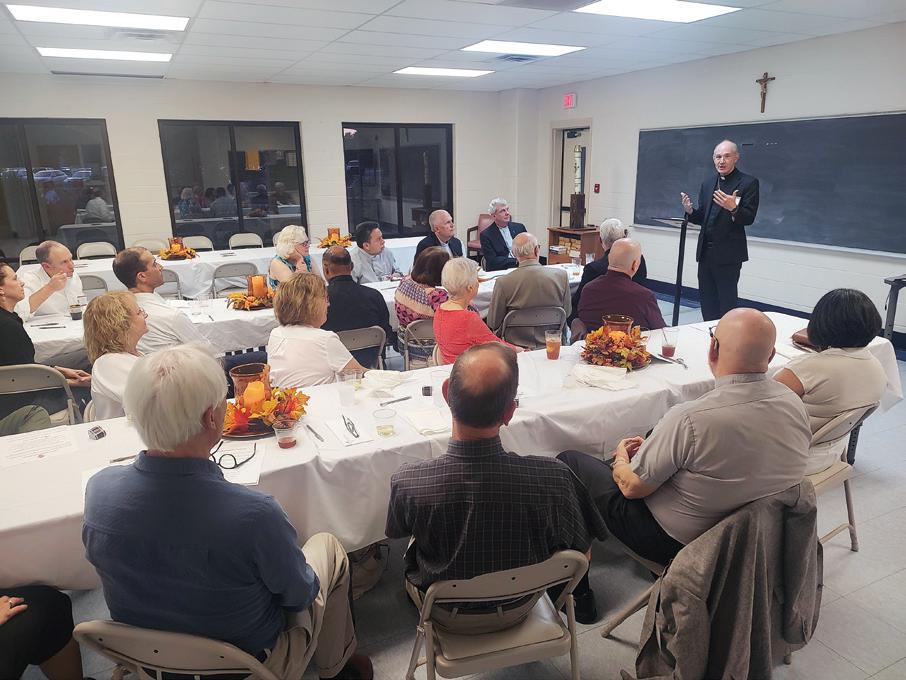
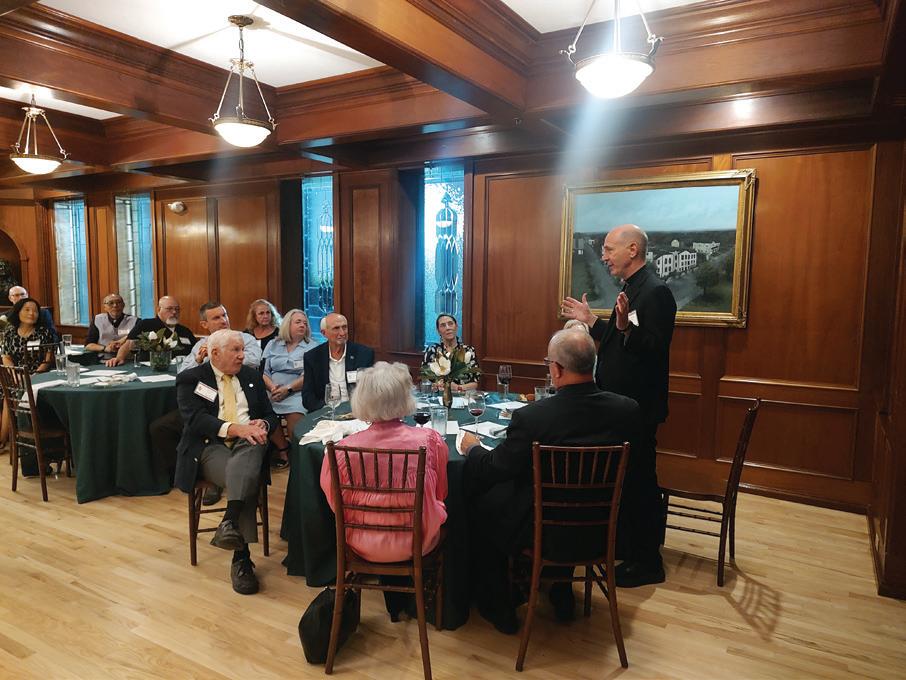
Three events were offered: on Oct. 1 at the Bluff View Art District in Chattanooga, on Sept. 17 at St. Dominic Church in Kingsport, and on Nov. 20 in the Cathedral Hall of the Cathedral of the Most Sacred Heart of Jesus in Knoxville.
The Catholic Foundation of East Tennessee supports the education and formation of the seminarians of the Diocese of Knoxville. Catholic Foundation members also support the purchase of property that will become the foundation for future parishes across the diocese.
Catholic Foundation events recognize the good work of current members while also inviting new and prospective members to learn more about the foundation’s efforts throughout East Tennessee.
For those who had an opportunity to attend a 2025 CFET reception, they heard about St. Peter, the honorary patron saint of the Catholic Foundation of East Tennessee.
The foundation looks to the steadfast witness of St. Peter, the rock upon whom Jesus Christ built His Church (Matthew 16:18).
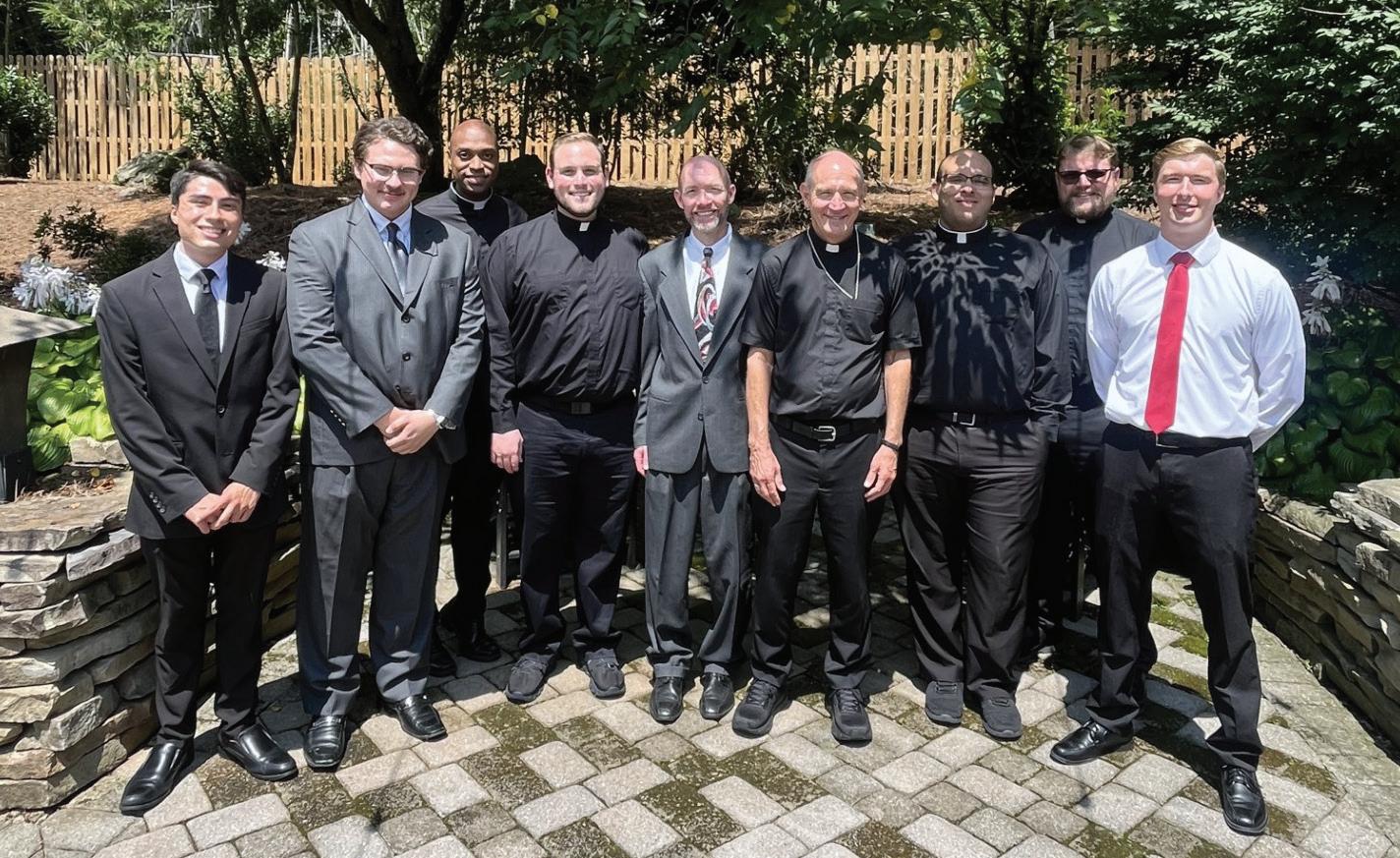
Growing the diocese Above: St. Teresa of Kolkata Church in Maynardville, which was dedicated on Feb. 2, 2019, is one of the Diocese of Knoxville's newest churches. Below: Bishop Mark Beckman hosted Diocese of Knoxville seminarians on Aug. 6 at the bishop's residence. Shown from left are Gerald Stults, James Meadows, Father Arthur Torres, Nicholas Hickman, Rick Hoelzel, Bishop Beckman, Deacon Daniel Cooper, Father Mark Schuster, and Eli Holt. Father Schuster, pastor of St. John Neumann Parish in Farragut, also serves as the diocese's vocations director. Father Torres, pastor of Our Lady of Perpetual Help Parish in Chattanooga, also serves as the diocese's assistant vocations director.
St. Peter’s example continues to inspire the work of CFET members as they support the foundations of the Church today: seminarians who prepare to serve as future shepherds and the growth of the diocese, which is strengthened through the purchase of land for future parishes.
In an update provided to CFET members and guests, Deacon Hicks Armor, executive director of the Catholic Foundation of East Tennessee, shared highlights at each
event:
n Nine seminarians are currently studying for the priesthood.
Father A.J. Houston and Father Renzo Alvarado Suarez were ordained to the priesthood in June.
n The Catholic Foundation of East Tennessee has distributed more
than $4.2 million in support of seminarian education and land purchases.
The commitment of Catholic Foundation of East Tennessee members reflects the enduring mission entrusted to the Church from the time of the Apostles.
By investing in the men who will one day guide Christ’s flock and offering support for the places where that flock will one day gather, the foundation helps to ensure that the Gospel continues to take root in every generation.
Educating future priests and funding land purchases continue to grow the Diocese of Knoxville to serve all Catholics within the region.
The Diocese of Knoxville recently concluded the largest survey of the faithful in its history. During Lent 2025, parishioners were asked to fill out the Disciple Maker Index (DMI) and comment on parish life, their personal beliefs, and the health of the Catholic community in East Tennessee.
With 100 percent participation among the parishes, the diocesanwide survey results are helping to shape the direction of both the Diocese of Knoxville and individual parishes in the coming years.
Five areas of priority have been determined, with one key priority being a focus on the promotion of vocations throughout the diocese.
Educating men for the priesthood is essential to ensuring a sacramental life for the faithful in East Tennessee. And formation helps men more deeply discern their calling.
In the Diocese of Knoxville, the education of one seminarian costs $70,000 annually. To provide for the needs of the parishes throughout
CFET continued on page A14
COURTESY OF BETH PARSONS
2025 #iGive Catholic is another success
Money raised will benefit Diocese of Knoxville parishes, schools, ministries
The East Tennessee Catholic
Celebrated annually on the Tuesday following Thanksgiving, Black Friday, and Cyber Monday, #iGiveCatholic is the U.S. Catholic Church’s giving day that kicks off the charitable season and joins the Catholic community in giving thanks and giving back.
The 2025 #iGiveCatholic giving day was held on Dec. 2, and it was one of the most successful giving campaigns to date.
As the first-ever giving day created to celebrate the faithful’s unique Catholic heritage, #iGiveCatholic inspires faithful stewards to “Give Catholic” on #GivingTuesday, a global day of giving. #iGiveCatholic is a bishop-led initiative in partnership with lay leaders in Catholic philanthropy Declared “the most successful Catholic crowdfunding event to date” by National Catholic Register , the goal of the #iGiveCatholic giving day is to rally the Catholic community in support of organizations that shape souls: parishes, schools, nonprofit ministries. National 2025 #iGiveCatholic results: n $26,359,714 was raised
n 63,727 donors made a gift n 1,484 ministries were supported by the giving day
The Diocese of Knoxville has hosted the #iGiveCatholic giving day since 2017.
Since that time, participating parishes, schools, and Catholic ministries across East Tennessee have collectively raised $921,889 in support of projects for their communities.
Diocese of Knoxville results for #iGiveCatholic 2025 (visit https:// www.igivecatholic.org/community/knoxville for full results) :
n $138,520 was raised n 414 donors participated n 492 donations were made n 15 Catholic ministries in East Tennessee were supported through this year’s giving day Donations by state and East Tennessee leaderboards
While most donations were made from households in Tennessee, there were some donations that came from out of state.
Donations to support East Tennessee ministries were received from: Alabama, Colorado, Florida, Georgia, Illinois, Indiana, Louisiana, North Carolina, Pennsylvania, South Carolina, Tennessee, Texas, Virginia, and Washington.
#iGiveCatholic 2025 prizes:
Thanks to support from Catholic Extension Society, the Diocese of Knoxville was able to give out two prizes to participating ministries. Prize winners include the Society of St Vincent de Paul of the St Francis of Assisi Cumberland County Conference and St. Mary Parish and School in Oak Ridge.
Prizes were randomly selected
and posted on diocesan social media platforms to generate excitement and support for the giving day.
Most dollars received for the Diocese of Knoxville #iGive Catholic 2025 giving day:
1. St. Joseph School, Knoxville: $48,230
2. St. Mary’s Legacy Clinic: $42,100
3. St. Jude School, Chattanooga: $17,940
4. St. Albert the Great Parish, Knoxville: $12,408
5. Notre Dame High School, Chattanooga: $5,185
6. St. Thérèse of Lisieux Church, Cleveland: $3,310
7. St. Mary Parish and School, Oak Ridge: $1,800
8. The Society of St Vincent de Paul St. Francis of Assisi Cumberland County: $1,650. ■
‘A reservoir of trust’ Cardinals leave consistory with clear vision from pontiff: ‘A Church that cares’
By Paulina Guzik OSV News
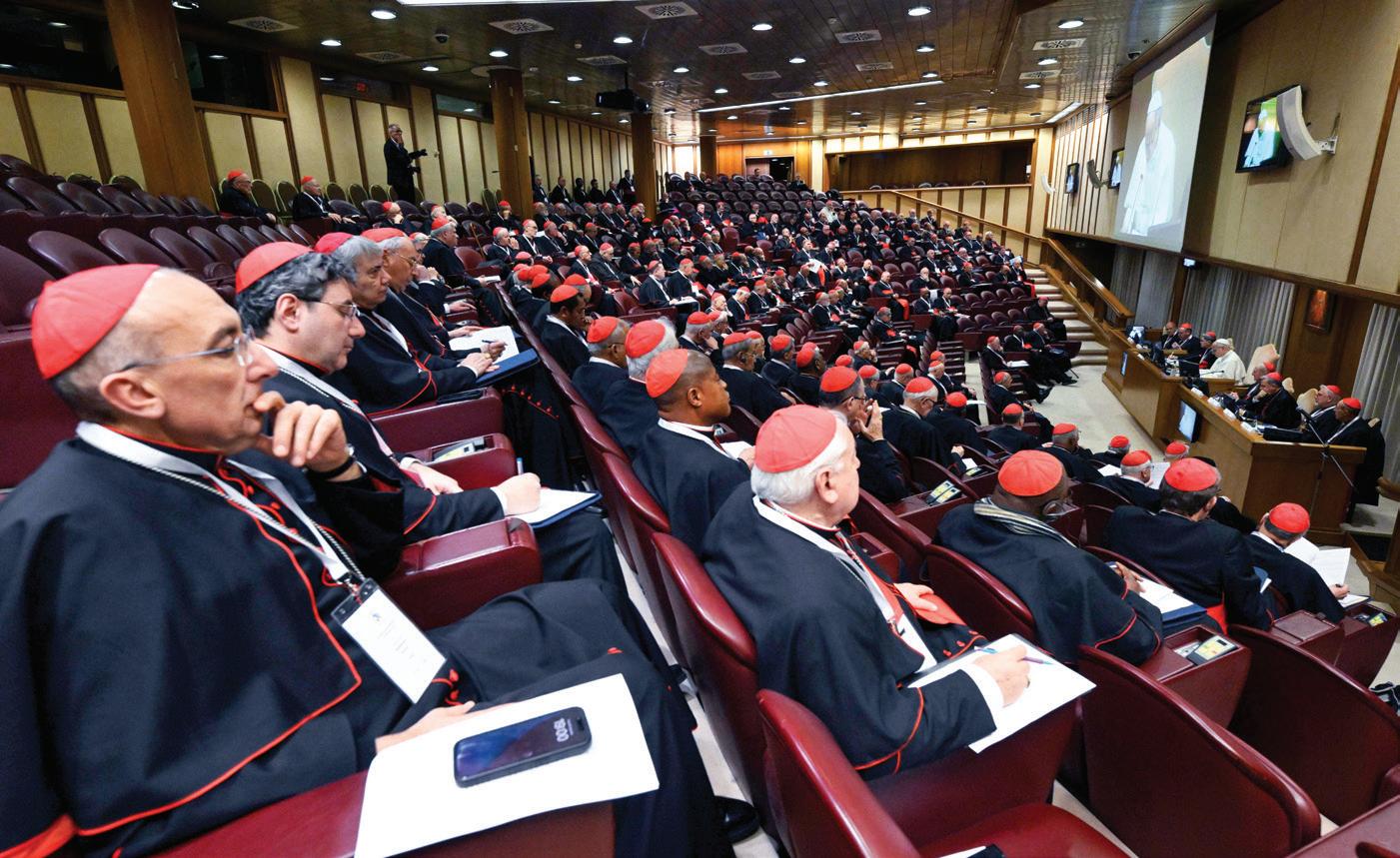
After an intense day of roundtable discussions, the “low-batteried” but “very pleased” cardinals wrapped up the first historic extraordinary consistory convened by Pope Leo XIV in a spirit of fraternity, with a sense of knowing each other better and saying they “discovered” the pope, while he did “more listening than talking.”
They left the consistory with a clear vision of the new pontiff for “a Church that cares.”
Pope Leo intends to continue consistory discussions once a year, with the next consistory planned for the end of June, then following with ones scheduled once a year, lasting three to four days, Matteo Bruni, director of the Holy See Press Office, confirmed during an evening press conference.
The pope, according to Mr. Bruni, told cardinals on Jan. 8 that the consistory is designed as a “continuity with what was requested during the cardinals’ meetings before the conclave and also after the conclave,” and that the synodal methodology used “was chosen to help them meet and get to know each other better.”
Salesian Cardinal Cristóbal López Romero of Rabat, Morocco, told journalists waiting for the cardinals in front of the Paul VI Audience Hall that, with the level of fraternity reached during merely 15 hours of the consistory discussions, “the College of Cardinals has been strengthened.”
He said he is “very pleased,” as the meeting “has allowed us to get to know each other a little better, to share, and because it will also continue.”
“I believe it has been a way of reaffirming that there is continuity not so much with Pope Francis, but with the Gospel, with the Second Vatican Council, and with all the magisterium that has emerged as a consequence of this Second Vatican Council. So, in that sense, I am very pleased with the results,” Cardinal Romero said.
Cardinal Stephen Brislin of Johannesburg, present at the evening press conference in the Vatican Press Office, told journalists, “The importance of this consistory was not solely in the discussion that took place,” but in the possibility “to listen to each other and to get to know each other” as the prelates
College is back in session
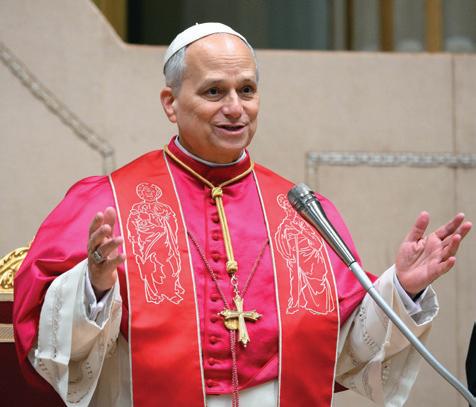
Above: Members of the College of Cardinals from around the world attend a consistory with Pope Leo XIV at the Vatican on Jan. 8.
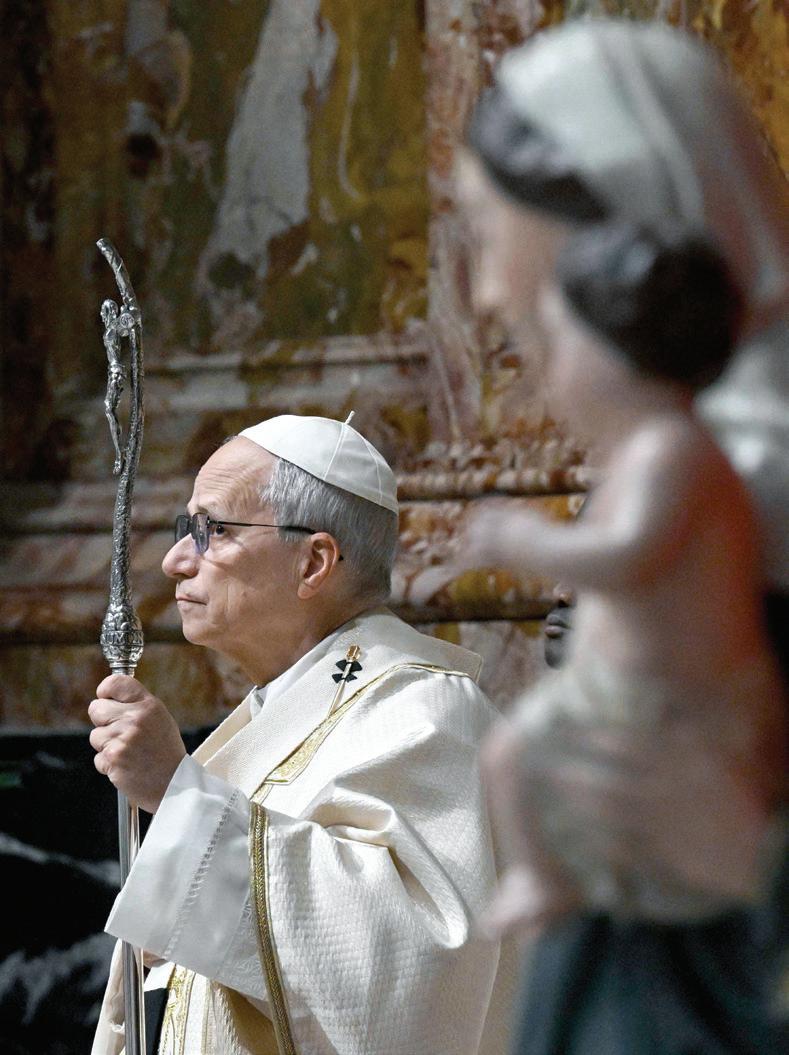
Left: Pope Leo with his crosier as he celebrates Mass in St. Peter's Basilica at the Vatican on Jan. 8 during the consistory.
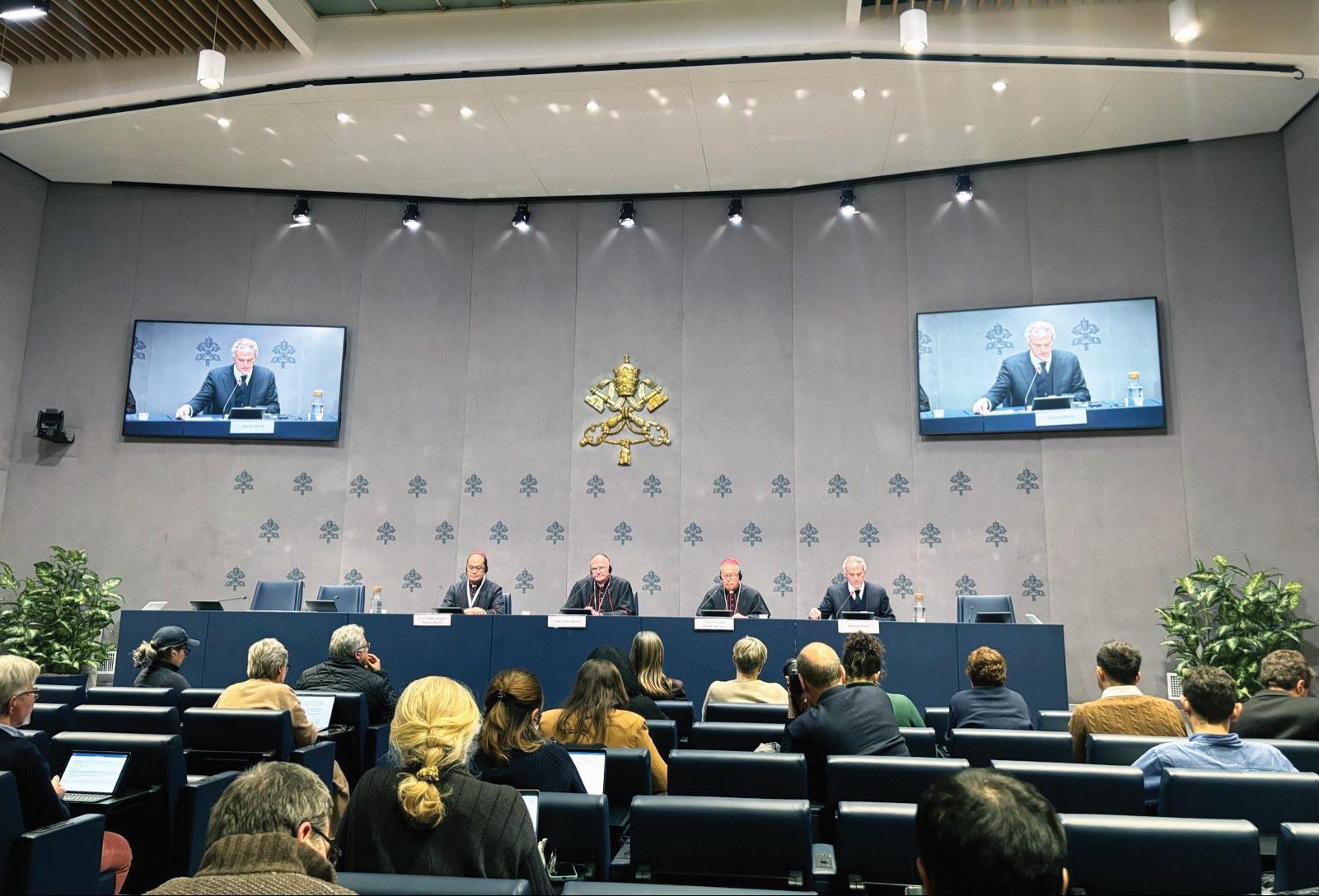
Below: Cardinal Pablo David of Kalookan, Philippines, Cardinal Stephen Brislin of Johannesburg, Cardinal Luis José Rueda Aparicio of Bogotá, Colombia, and Matteo Bruni, director of the Vatican Press Office, are pictured during the Jan. 8 news conference at the Vatican Press Office.
“haven’t known each other very well.”
He stressed that the meeting “has been an assistance” to Pope Leo “as successor of St. Peter” and that it proved that synodality is “a way of being Church” and a “disposition” of the Church.
The second day of the consis-
tory reminded the cardinals of the Synod on Synodality, with three-minute interventions from participants in group discussions, sharing meals and thoughts from “the treasure that the Gospel is for mission,” through necessity to approach people’s “broken lives with humility,” and to synodality as “a
Life as a gift
tool for growing relationships,” Mr. Bruni said.
Asked whether there were any tensions especially upon scrapping liturgy and Church governance from the list of issues to discuss, and leaving Evangelii Gaudium and synodality on the table the South African Cardinal Brislin said it was a “pleasant experience, friendly experience,” and that “the pope wants to be collegial” and learn from “the richness that comes from the experiences of people” coming from different parts of the world.
Cardinal Luis José Rueda Aparicio of Bogotá, Colombia, also present during the press conference, added that “sometimes there is criticism or different positions but we try to reach harmony, which does not mean uniformity, but going back to the roots,” which he referred to as the Second Vatican Council.
The themes of the June consistory are yet to be named, and they were not specified when OSV News asked during the news conference whether liturgy or other pressing themes that have emerged would be addressed in the next consistory.
Cardinals walking out of the Paul VI Hall confirmed to OSV News, however, that during the Jan. 7-8 consistory there was no time to discuss liturgy.
The list of cardinals who participated in the extraordinary consistory has not been released, only the number 170. But the Vatican said the pope met 93-year-old Cardinal Joseph Zen on Jan. 7, and on Jan. 8 the pontiff specifically thanked the senior cardinals for making the effort to come.
Cardinal Zen, bishop emeritus of Hong Kong, had to get permission from judicial authorities in Hong Kong to attend the consistory.
Passing the pope’s words to journalists, Mr. Bruni said the pope emphasized: “‘Your witness is truly precious,’ reaffirming his closeness to the cardinals around the world who were unable to come.”
“We are with you and we feel close to you,” he said, repeating the pope’s words, as some cardinals, like Cardinal Baltazar Porras of Venezuela, whose passport was confiscated by the South American country’s regime, were unable to be in Rome.
Cardinal Pablo David of Kalookan, Philippines, who was present at the press conference, said, “It
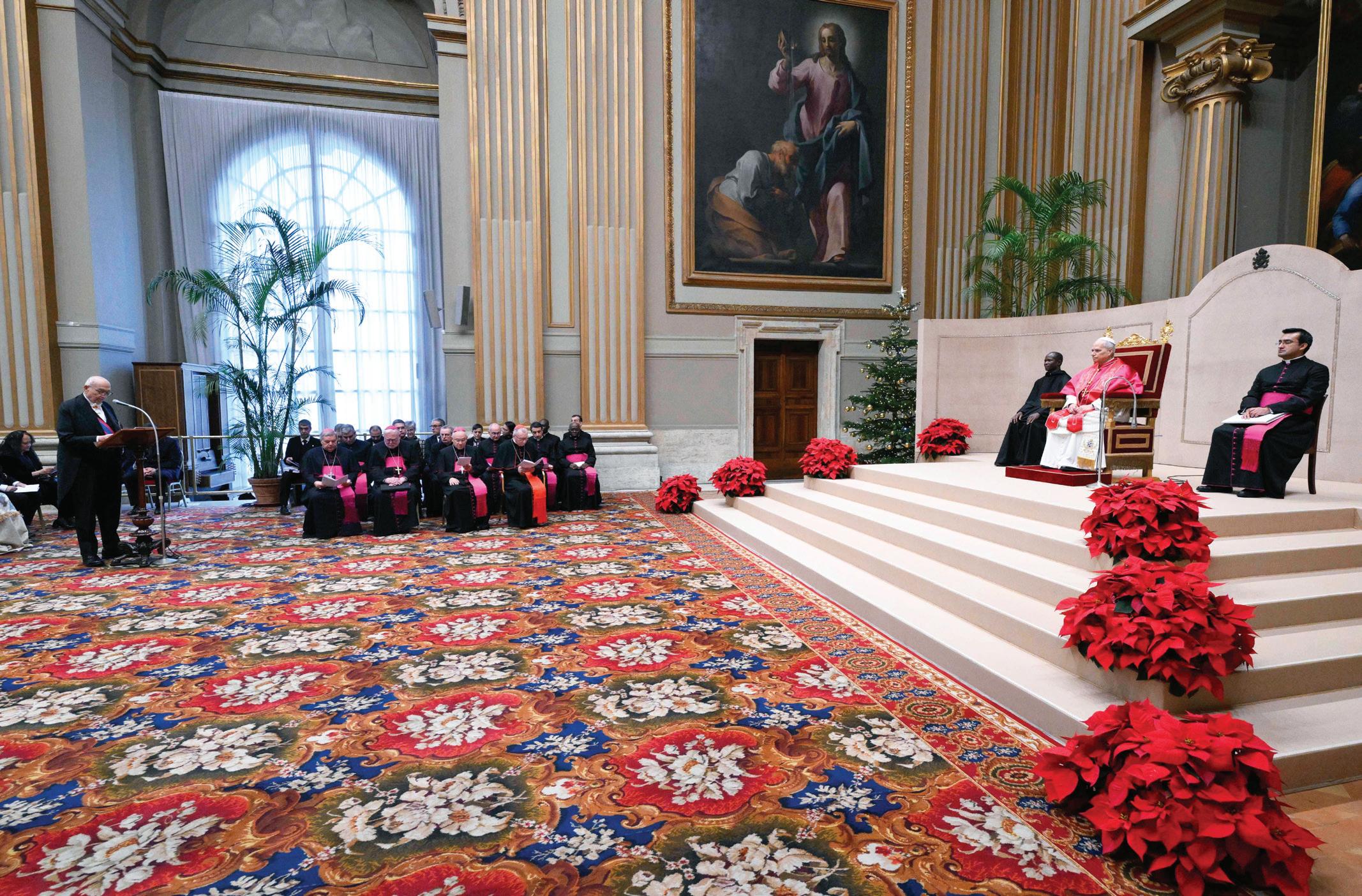
Pope Leo delivers fierce defense of the unborn in address to diplomats
By Josephine Peterson Catholic News Service and Paulina Guzik OSV News
Pope Leo XIV warned diplomats of rising global volatility, fractured communication, and a growing disregard for human life in his annual speech to representatives to the Holy See.
Speaking to representatives of the 184 countries that have full diplomatic relations with the Vatican, the pope expressed concern over a “weak” global approach and action among countries on certain issues, saying that “war is back in vogue and a zeal for war is spreading.”
Pope expresses concerns over war, violence
Peace is being sought through weapons, threatening the rule of law and therefore the foundation of all peaceful civil coexistence, he said in the Jan. 9 speech at the Hall of Benedictions at the Vatican.
He expressed concern about religious freedom being curtailed around the world. Aid to the Church in Need, an international Catholic-aid organization, last year released its “Religious Freedom in the World Report,” which concluded that 64.7 percent of the world’s population lives in
countries that have “serious or very serious violations of religious freedom.”
He cited deadly attacks on Christian communities in Africa and the Middle East, while also warning of less visible discrimination occurring in Europe and the Americas.
Life issues featured in pope’s speech to diplomats
Pope Leo strongly defended the family, marriage, and unborn life during his first-ever New Year's address to the diplomatic corps on Jan. 9, telling the diplomats accredited to the Holy See that abortion “cuts short a growing life and refuses to welcome the gift of life.”
“The vocation to love and to life,” he continued, “manifests itself in an important way in the exclusive and indissoluble union between a woman and a man.”
“The institution of the family faces two crucial challenges today,” the pope said, naming “a worrying tendency in the international system to neglect and underestimate its fundamental social role, leading to its progressive institutional marginalization,” and “the growing and painful reality of fragile, broken, and suffering families, afflicted by internal difficulties and disturbing phenomena, including domestic violence.”
Diplomats continued on page A20
Consistory continued on page A20
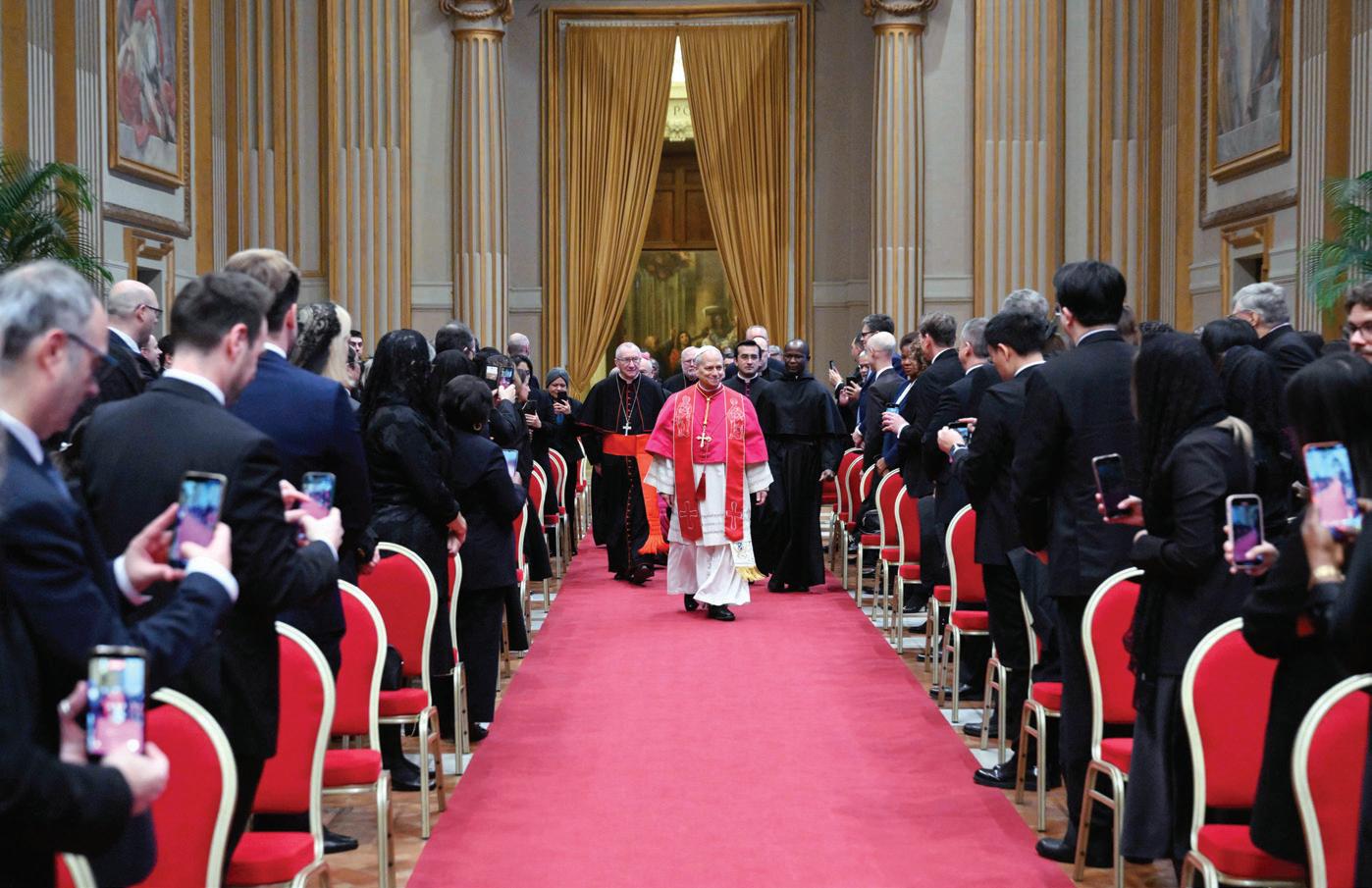
Diplomatic message Pope Leo XIV walks down the aisle to meet with members of the diplomatic corps accredited to the Vatican at the Apostolic Palace at the Vatican on Jan. 9.
“Roman is a hard worker. Great smile, high character, great kid, great teammate. I saw the same things show on the football field,” Mr. Goldberg added. “He doesn’t get discouraged. He is built on caring about others and giving back. He controlled what he could, which is usually an indicator about how successful somebody can be.”
Following a disappointing, 4-8 season at Maryland in 2024, Mr. Hemby envisioned himself as a Terp starter for one more season, before getting a chance to take his talent to the NFL.
But Maryland coach Mike Locksley stunned him in a postseason exit interview by strongly advising Mr. Hemby to enter the NCAA transfer portal and start over with a change of scenery to enhance his NFL chances.
“It hurt my heart to leave Maryland. My family saw it as a blessing before I did. I started looking at it like God opened a door for me while closing another,” Mr. Hemby said. “I haven’t looked back since.”
Mrs. Hemby looks at her son’s future with hope and pride in how he has grown during his one-year experience a long way from home in Bloomington, Ind. And her fondness for John Carroll will always be strong.
“John Carroll not only invested tirelessly in Roman’s growth as a student-athlete, but pushed him to be a well-rounded man, fueled by his faith and commitment to give back to communities that played a role in his upbringing,” she said. “His success on and off the field is directly tied to his time at John Carroll.”
‘Heisman is bigger than me’
As he waited for the announcement of who would win the Heisman Trophy awarded to the best college football player of the year Dominican Father Patrick Hyde turned to one of his fellow friars and said, “I have never been so invested in the outcome of an award.”
After all, Father Hyde has become a big fan of star Hoosiers quarterback Fernando Mendoza. Father Hyde serves as pastor of St. Paul Catholic Center on the school’s Bloomington campus and where Mr. Mendoza has attended Mass.
Father Hyde not only celebrates the football player that Mr. Mendoza is, he also appreciates the person Mr. Mendoza is and the way the quarterback embraces his faith in God.
So, when Mr. Mendoza was announced as the winner of the Heisman on Dec. 13 in a ceremony in New York City, Father Hyde rejoiced with the other friars watching the event on television.
“Watching Fernando win was so wonderful,” the priest told The Criterion, the news outlet of the Archdiocese of Indianapolis. “When good things happen to good people, it’s a win for everyone. His speech was a testament to his hope and determination.”
His speech was also an all-inclusive thank-you to all the people who have made a difference in his life, starting with the way he has begun nearly every post-game interview this season.
“First, I want to thank God for giving me an
It will also include commemorations of the Georgia Martyrs, five Franciscan missionaries who were killed for their faith in 1597, whose path for beatification Pope Francis cleared in January 2025; the celebration of the feast of Corpus Christi in the Archdiocese of Washington and the Diocese of Arlington, Va.; and stops in the Archdiocese of Baltimore, the nation’s first Catholic diocese
The pilgrimage will pass through most of the original 13 colonies, with stops in 18 dioceses and archdioceses: St. Augustine; Savannah, Ga.; Charleston, S.C.; Charlotte, N.C.; Richmond, Va.; Arlington, Va.; Washington, D.C.; Baltimore; Wilmington, Del.; Camden, N.J.; Paterson, N.J.; Springfield, Mass.; Manchester, N.H.; Portland, Maine; Boston; Fall River, Mass.; Providence, R.I.; and Philadelphia.
The pilgrims will also make a private, midpoint retreat at the St.
Greenland continued from page A2
opportunity that once felt a world away,” Mr. Mendoza said.
Seconds later, he added, “This moment is an honor. It’s bigger than me. It’s a product of a family, team, community, and a whole lot of people who believed in me long before anybody knew my name.”
Getting more emotional with each thank-you, he spoke with love about his teammates and shared praise for the fans who have supported him in his one year at Indiana.
Then his expressions of love turned toward his brother, the backup quarterback at Indiana.
“And to my lifelong teammate, Alberto, my brother and closest confidante, the one I trust more than anybody to get through a tough day, tough play. I love you, bro,” he said. “I love you and thank you for always giving it to me straight, no matter the circumstance.”
His thoughts then turned to his teammates and coaches at Christopher Columbus High School in Miami, a private Catholic college-preparatory high school run by the Marist Brothers. “Thank you to coach Dunn and Christopher Columbus High School for giving me a home, a dream to follow, and more importantly a brotherhood.”
After thanking his coaches, including coach Cignetti, Mr. Mendoza focused on his parents and grandparents.
“My family’s unconditional love and belief kept me going and pushed me forward,” he said. “These are people who (believed in) me long before football did.”
The emotion poured from him as he talked about his mother, who has endured multiple sclerosis.
“Mami, this is your trophy as much as it is mine,” he said. “You’ve always been my biggest fan. You’re my light, you’re my why and biggest supporter. Courage, love those have been my first playbook and the playbook that I
carry at my side through my entire life. You tell me toughness doesn’t need to be loud; it can be quiet and strong. It’s choosing hope.
“It’s believing in yourself when the world doesn’t give you much reason to. Together, you and I are defying what people think is possible. I love you.”
He next offered heartfelt words to his father.
“Papi, thank you for grounding me. Thank you for holding me accountable when it was tough. Thank you for reminding me that talent means nothing without discipline, without consistency. … You personified commitment. You picked all of us up whenever we needed it most.”
Mr. Mendoza then shared a touching salute in Spanish to his parents and grandparents, who all came to the United States from Cuba.
“Por el amor y sacrificio de mis padres y abuelos, los quiero mucho. De toda mi corazon, de toda gracias.” (“For the love and sacrifice of my parents and grandparents, I love you. With all my heart, thank you.”)
All the thank-yous led to one last message that Mr. Mendoza wanted to share, a message about belief, dreams, and the path to making a dream come true.
“This is an important one,” Mr. Mendoza said. “I want every kid out there who feels overlooked and underestimated, I was you. I was that kid, too. I was in your shoes.
“The truth is, you don’t need the most stars, hype, or rankings. You just need discipline, heart, and people who believe in you and your own abilities. I hope this moment shows you that chasing your dreams is worth it, no matter how big or impossible they seem.”
Father Hyde was moved by it all.
“My favorite part was the overall message of hope, joy, and humility,” the priest said. “In particular, the way he spoke to and about his mother and his message of encouragement and hope to those who are overlooked.” ■
Cabrini Shrine
New York City.
Pilgrimage ends in Philadelphia
The pilgrimage will end in Phila-
lectively,” and that “Greenland belongs to its people,” with only Denmark and Greenland having the right to decide on matters concerning them.
Fears of the United States’ willingness to move on Greenland already home to the Pituffik Space Base for some 70 years under an agreement with Denmark, a NATO ally have increased in Europe following the Jan. 3 U.S. unilateral military intervention in Venezuela.
Some 56,000 people a majority of them Inuit live in semiautonomous Greenland, which along with the Faroe Islands and the European nation of Denmark forms the Kingdom of Denmark.
The world’s largest island gained self-rule from Denmark in 1979, and Greenland governs most of its domestic affairs, with Denmark overseeing foreign and defense policy.
In 2009, the Greenland Self-Government Act es-
delphia with events planned July 4-5, Independence Day weekend, to commemorate the adoption of the Declaration of Independence in the Pennsylvania State House, now the city’s Independence Hall, on July
tablished islanders’ right to declare independence from Denmark. According to Harvard University’s Belfer Center for Science and International Affairs, “most Greenlanders support eventual independence, though economic reliance on Danish subsidies complicates this goal.”
Father Majcen said the unfolding situation regarding Greenland highlights the urgent pastoral mission of the Church. He said people in Greenland have a “quiet strength.”
“People are worried, but they are also very clear: this is our land, our culture, our home,” he said
“As a priest, I see how political uncertainty affects people’s hearts. It creates anxiety, especially about identity and the future of children and families,” he explained. “Our pastoral work today includes listening more, comforting more, and helping people name their fears.”
And, he said, “the Church must be a place of
4, 1776. That weekend will include special outreach for Catholic youth and all-day eucharistic adoration July 4. The pilgrimage’s closing Mass will take place July 5 at the Cathedral Basilica of Sts. Peter and Paul, followed by a eucharistic procession to the National Shrine of St. John Neumann.
Organizers said in the media release that “the pilgrimage seeks to extend the fruits of the three-year National Eucharistic Revival that began in 2022 and culminated in the 2024 National Eucharistic Pilgrimage and subsequent Congress in Indianapolis. The fruits of the 2025 Drexel Pilgrimage carry forward into the 2026 Cabrini Route.”
The pilgrimage also will connect with a national prayer campaign and digital lecture series “that highlights themes and topics of America through a Catholic lens and framework,” organizers said. ■
peace and hope. We must stand for human dignity, for the rights of the Inuit people, and for dialogue instead of threats.
“Above all, we pray for wisdom for leaders, for peace between nations, and for the strength of our community,” said Father Majcen. “In tense times like these, the Church’s role as a home for everyone becomes even more important.”
“As people of faith, we are called to be peacemakers, especially in uncertain times,” said Father Majcen. “We should remember that we are all God’s children, and our true strength comes from compassion and working together for the common good.”
He invited the faithful “to pray for peace and respect for sovereignty, and to join us in caring for creation, especially our fragile Arctic environment, which is one of God’s most breathtaking but vulnerable masterpieces.” ■
Frances
in
Eucharistic continued from page A4
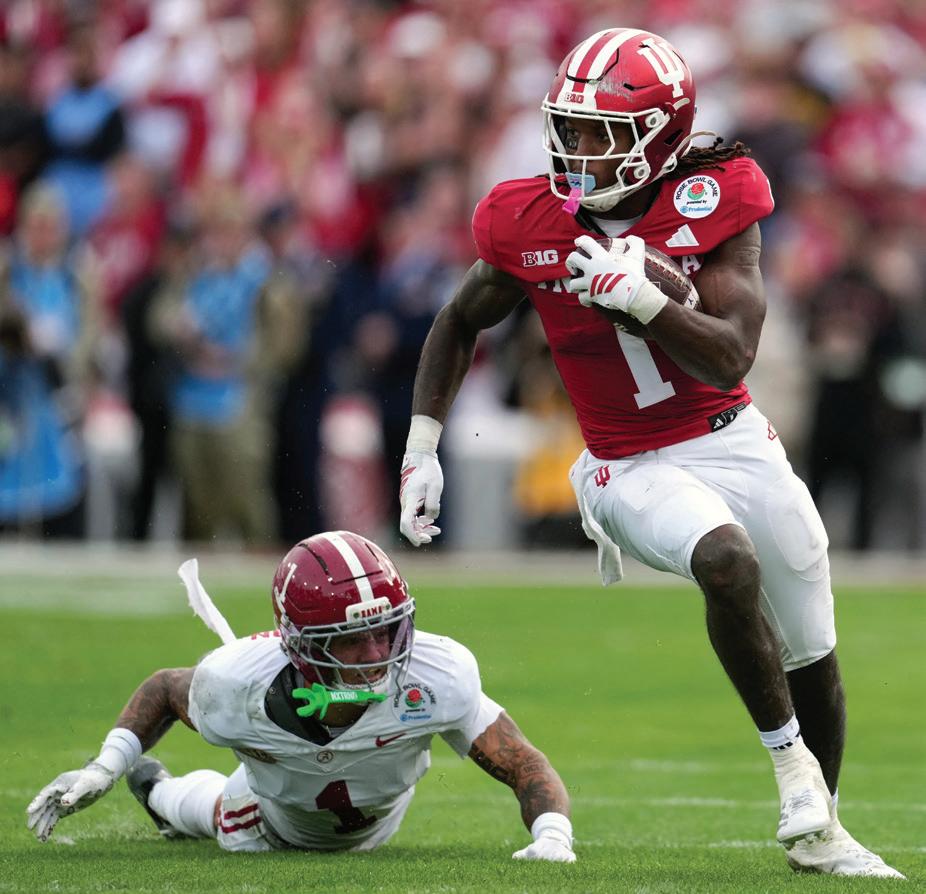
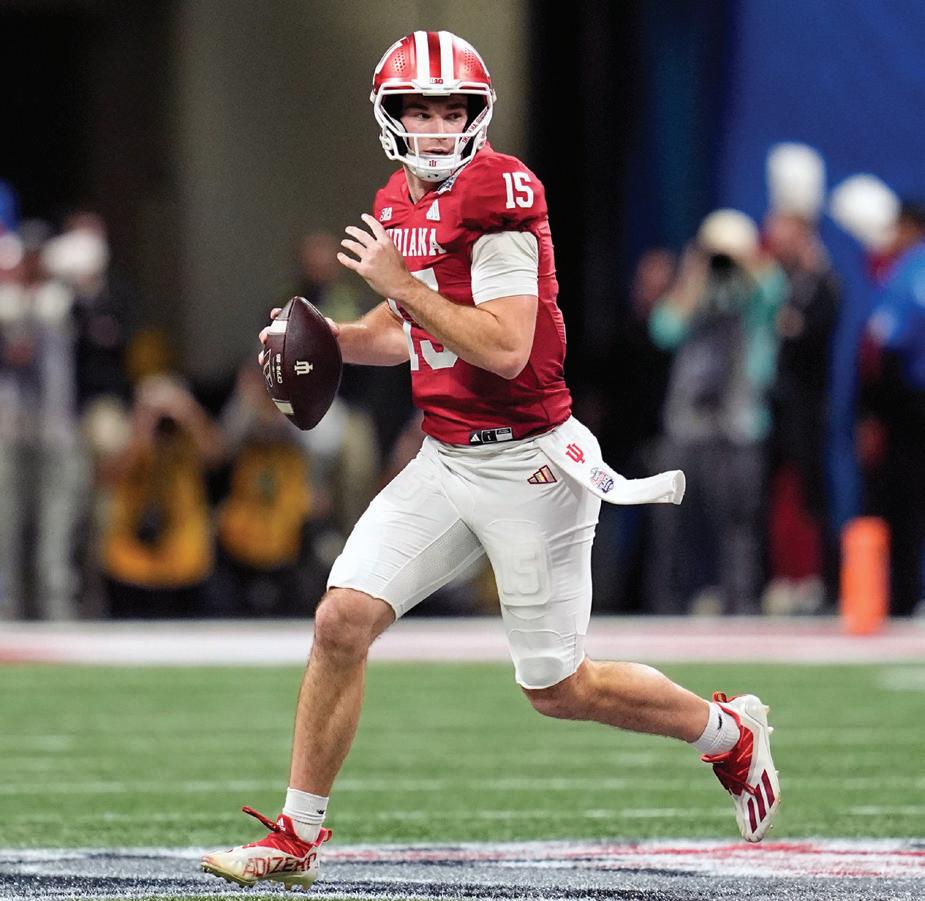
Catholic Hoosiers Left: Indiana Hoosiers running back Roman Hemby runs against Alabama defensive back Domani Jackson in the 2026 Rose Bowl and quarterfinal game of the College Football Playoff on New Year's Day at Rose Bowl Stadium in Pasadena, Calif. Right: Hoosiers quarterback Fernando Mendoza scrambles against the Oregon Ducks on Jan. 9 in the Peach Bowl and semifinal game of the College Football Playoff at Mercedes-Benz Stadium in Atlanta.
OSV NEWS
PHOTO/KIRBY LEE, IMAGN IMAGES VIA REUTERS
OSV NEWS
Faith communities join for immigration vigil
Diocese of Knoxville takes active role in prayer service for Hispanic families
By Blanca Primm and Viridiana Marin
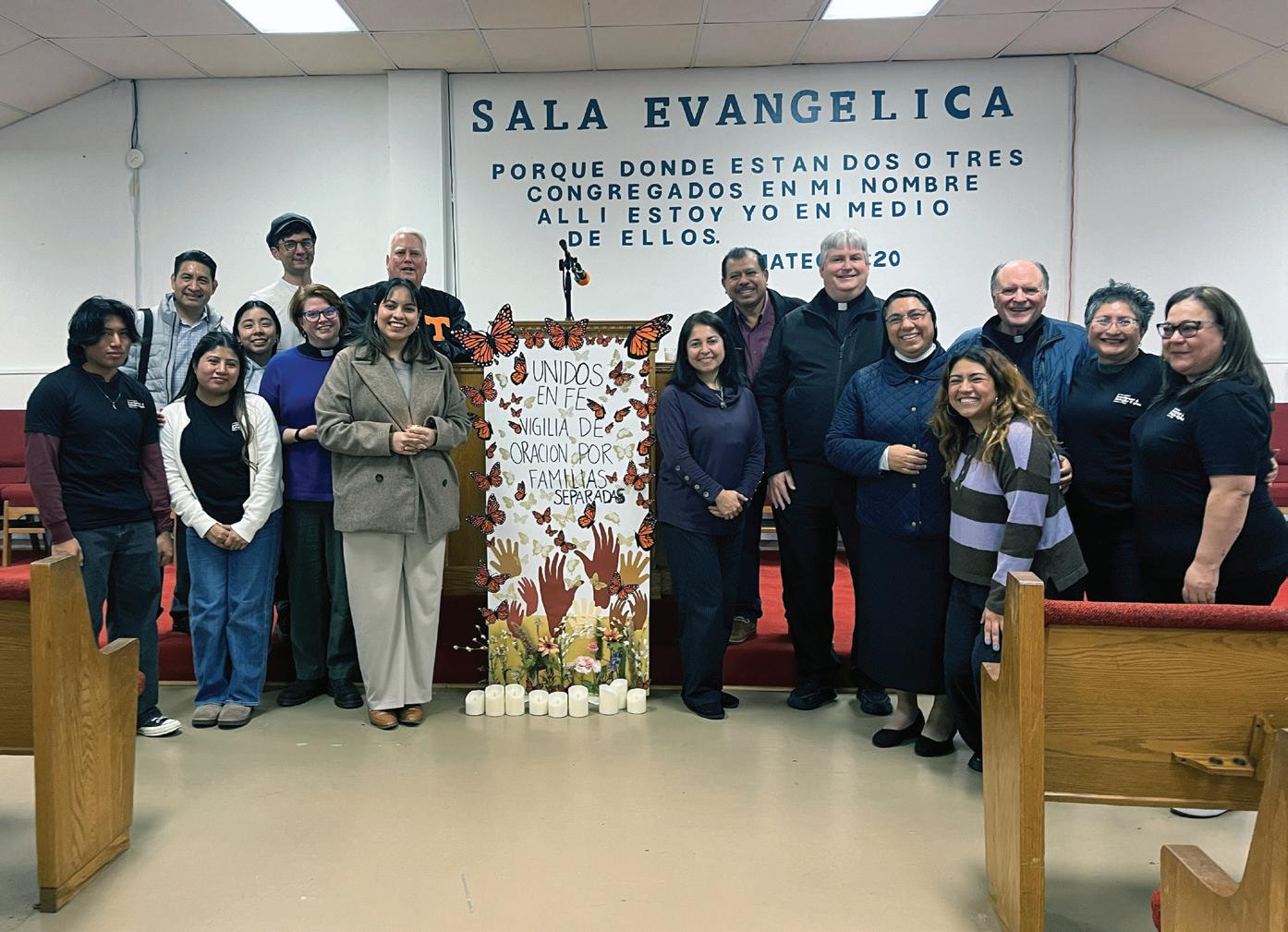
On Dec. 1, people of faith gathered at St. Andrews Center in Chattanooga to bear witness to a truth at the heart of the Gospel: families are sacred, and no person is beyond the reach of God’s love.
This ecumenical vigil “United in Faith and Solidarity: A Prayer Vigil for Separated Families” brought together faith leaders and community members across traditions to pray, accompany, and stand in hope with immigrant families facing separation, fear, and uncertainty.
The vigil was organized by Comité Caminos, a committee of the Tennessee Immigrants and Refugees’ Rights Coalition (TIRRC) in collaboration with local faith leaders.
Rooted in faith, family, and community, the gathering refl ected the richness of God’s people: different languages, cultures, and religious traditions standing side by side. In a world often marked by division, the vigil became a living sign of unity and compassion.
The evening intentionally created space for both grief and hope. Community members courageously shared testimonies that revealed the daily realities faced by many immigrant families: the pain of separation, the anxiety of living under constant threat, and the deep wounds infl icted when loved ones are taken from their homes.
Among the most powerful moments was the testimony of a child whose father was taken away. It was compiled by a faith leader, whose words reminded all present that immigration policies are not abstract debates but lived experiences that shape childhood, family life, and the future.
Listening to this testimony became an act of reverence—an encounter with Christ Himself.
“For me, my fi rst encounter
with it was a phone call from the child that was fi lled with sobs, confusion, and chaos. It left the kids in a complicated situation, mourning for their father who hasn’t died but was out of reach,” said Alejandra Guajardo, who is with House of Refuge in Cleveland.
“Any contact with their father included rushed phone calls to try to keep track of his location before his deportation, since he was being moved around so
U.S. bishops praise DHS policy change on religious-worker visas
By Kate Scanlon OSV News
The Department of Homeland Security on Jan. 14 issued an interim final rule reducing wait times for religious worker visas. Catholic advocates were among those who pushed the Trump administration to address the backlog in its visa category.
In its announcement, the department said its regulation change would reduce the wait time applicants are required to remain outside the United States.
A spokesperson for DHS said in a statement the department “is committed to protecting and preserving freedom and expression of religion.”
“We are taking the necessary steps to ensure religious organizations can continue delivering the services that Americans depend on,” the spokesperson said. “Pastors, priests, nuns, and rabbis are essential to the social and moral fabric of this country. We remain committed to finding ways to support and empower these organizations in their critical work.”
The new rule removes the requirement for R-1 religious workers to reside outside the United States for a year upon reaching the visa's statutory five-year maximum period.
DHS said in its announcement that while R-1 religious workers will still have to leave the United States, there is no longer a minimum time requirement for them to reside and be physically present outside the United States before reapplying for the R-1 visa.
Archbishop Paul S. Coakley of Oklahoma City, president of the U.S. Conference of Catholic Bishops, and Bishop Brendan J. Cahill of Victoria, Texas, chair of the USCCB’s Committee on Migration, said in a joint statement, “We are tremenVisas continued on page A19
much, and to fi gure out what to do with the pieces that were left behind,” Ms. Guajardo said. “The phone calls were cut off too soon, leaving the kids in distress. We’d go to the apartment and bag up items on a few occasions shortly after his detainment.
“The kids went through their dad’s stuff and their own as if we just went through a funeral. It’s a death of life as they knew it with an unclear future. And I wish I could say things got better
for these kiddos, but unfortunately, this is not the case. They are deeply struggling and long for the days they had when they lived with their father.”
Faith leaders stood together in moral witness, affirming the dignity of every family and the need for due process for all. Drawing from their respective traditions, each leader offered a brief reflection following the testimonies, underscoring a shared commitment to justice, mercy, and accompaniment.
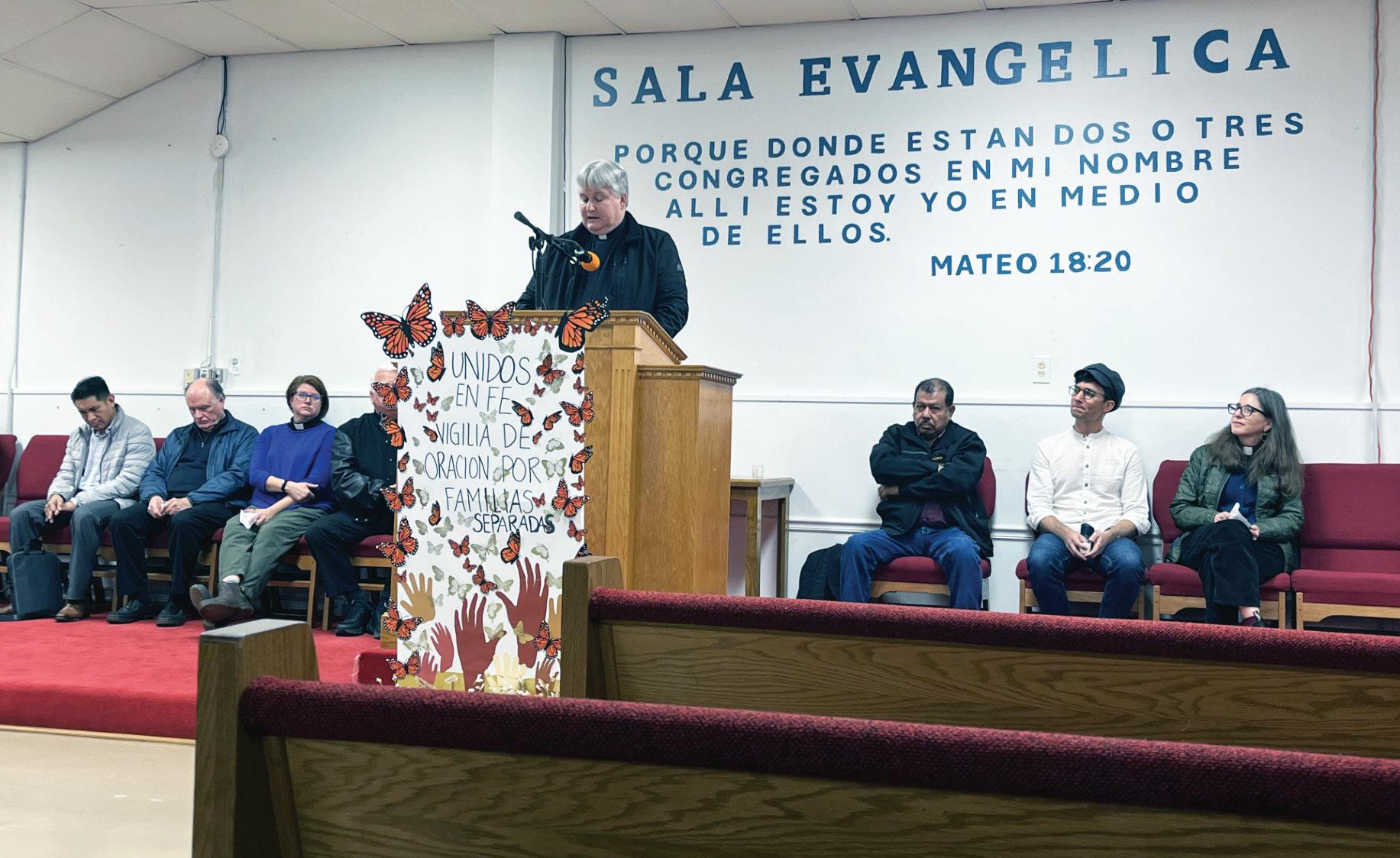
Father Alex Waraksa, associate pastor of St. Jude Parish in Chattanooga, was the Catholic representative for the vigil. He read part of the U.S. Conference of Catholic Bishops’ pastoral letter to immigrants.
Father Jim Vick, dean of the Diocese of Knoxville’s Chattanooga deanery and pastor of St. Bridget Parish in Dayton, played an important role in coordinating participation of the clergy.
In addition to Father Waraksa, Father Michael Nolan, pastor of St. Thérèse of Lisieux Parish in Cleveland, and Father Mike Creson, who is retired from active ministry in the diocese, also attended.
Representing the Basilica of Sts. Peter and Paul was Sister Ema Soto, MAG. From Knoxville, Blanca Primm, diocesan director of Hispanic Ministry, and Rocio Melendez, also from the diocesan Office of Hispanic Ministry, were in attendance, too.
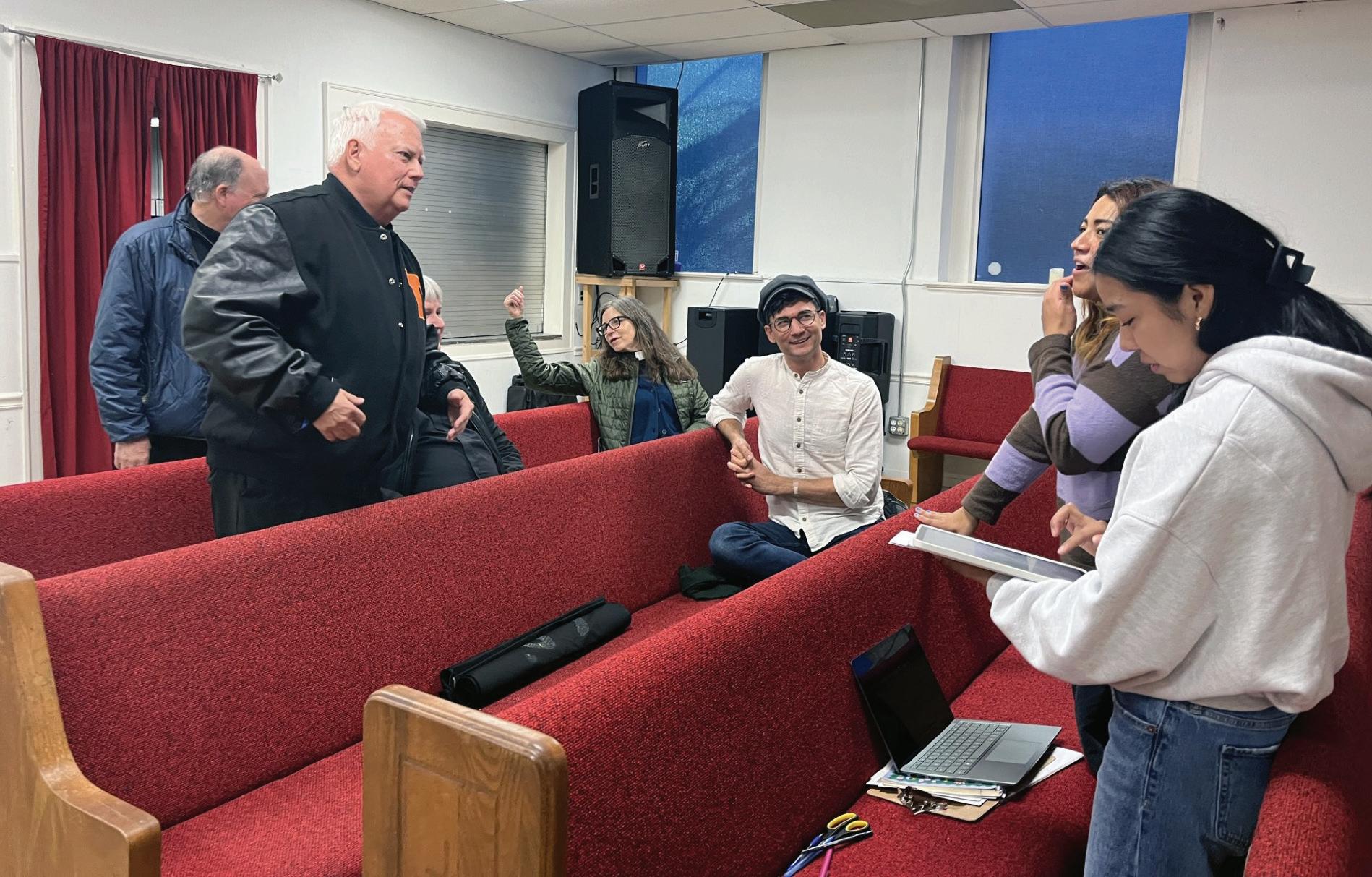
“Gathering in the basement worship space of St. Andrews Center with the 80-plus in attendance had the feel of being part of an underground movement finding its voice to stand in solidarity with those in our parishes, neighborhoods, and communities who live in fear of being detained, separated from their family, and being deported,” Father Nolan said.
“Our prayer moves us to speak out and work for meaningful immigration reform and against indiscriminate mass deportations.
continued on page A18
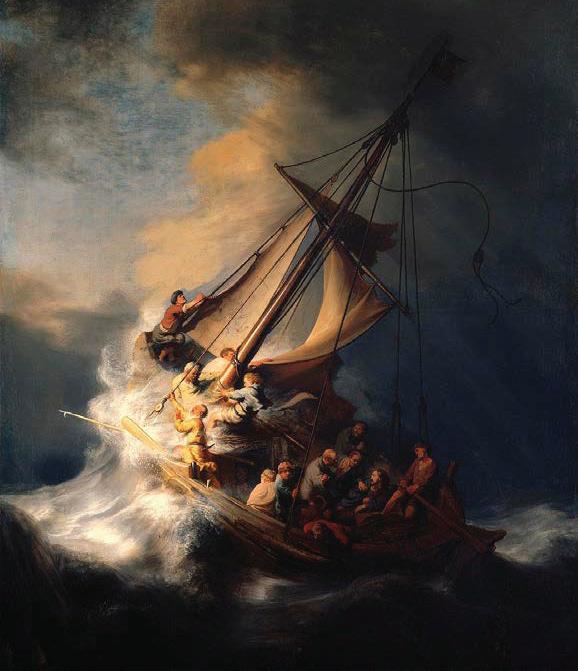
Weathering the Storm
Out of the depths, I have cried to thee, O Lord. Psalm
SATURDAY, FEBRUARY 28 2026
SAINT DOMINIC CATHOLIC CHURCH KINGSPORT, TN 7:00AM - 3:00PM
The Appalachian Highlands Men’s Conference is a local one day event that will include breakfast and lunch, fellowship, dynamic speakers, music, prayer, and opportunities for Sacramental Confession and Eucharist.
SCAN THE CODE TO REGISTER FOR THE EVENT OR VISIT facebook.com/ CatholicMensConferenceKPT
It is with great gratitude that I welcome Conference” at St. Dominic Church, knowing building solidarity among you as courageous to nurture the heroic virtue and goodness we are single or married, fathers, deacons each day with Eucharistic hearts, as men our baptismal share in Christ’s threefold of His Mystical Body. To live our Mass unafraid to take up our cross and follow for each other as G worker” in with strong yet tender hearts that flow in a most beautiful way when we help with sufferings, addictions, misfortunes ness, we engage in the spiritual battle of confront the darkness and indifference selves broken and wounded by the effects seek Christ’s merciful and healing love Jubilee year, may you be Christ’s bearers offer you my blessing and my prayers God bless
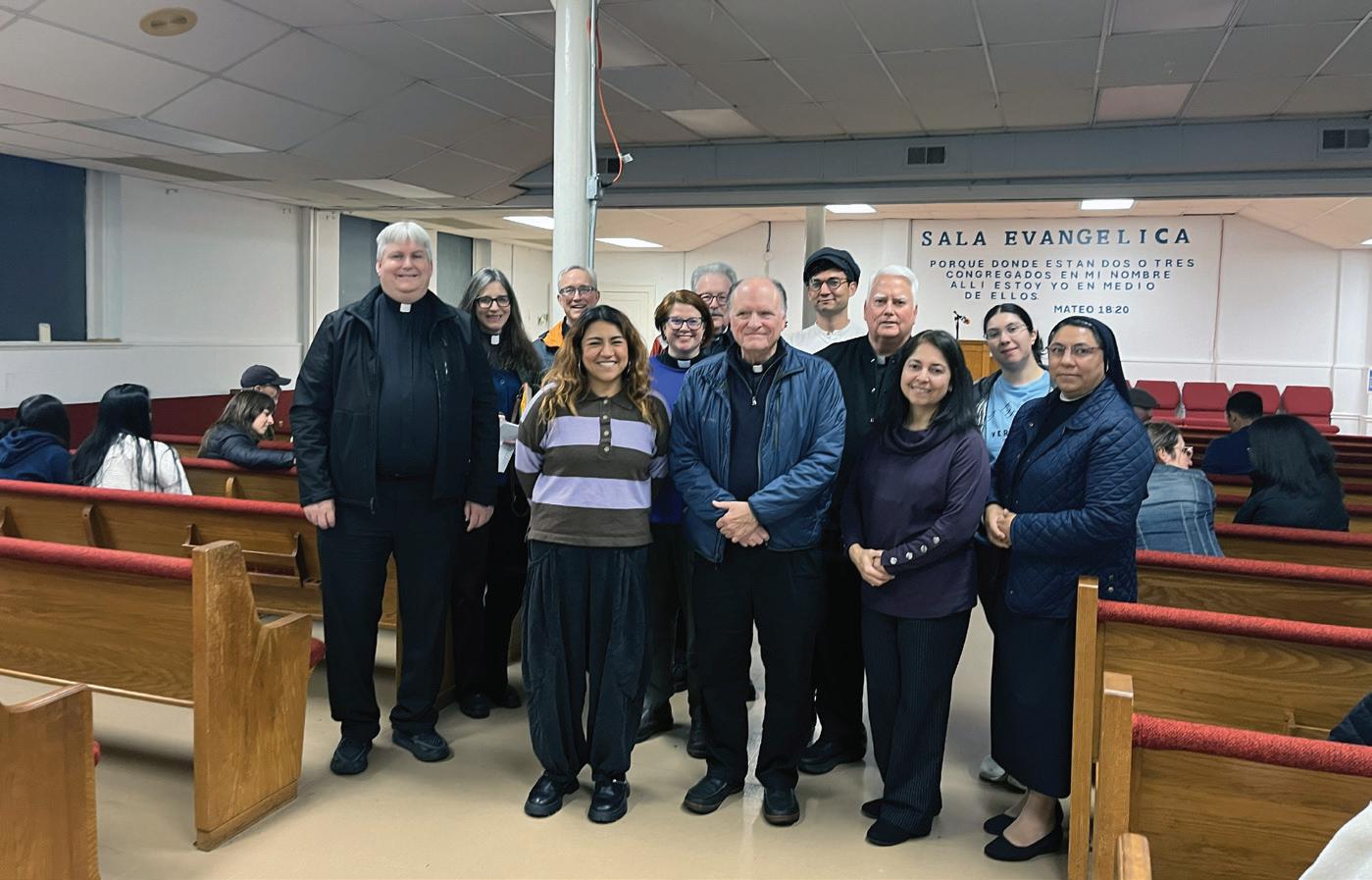
Praying in solidarity Above: Members of ‘Comité Camino,’ faith leaders and the TIRRC team that organized the ecumenical vigil for immigrant families gather at the end of prayer at St. Andrews Center. Below: Father Alex Waraksa, associate pastor of St. Jude Parish in Chattanooga, helps lead the ecumenical prayer vigil in support of the Hispanic community in East Tennessee.
Vigil
BISHOP MARK BECKMAN
FATHER JOHN ORR
STEVE HEMLER
130:1
The annual Bishop’s Appeal for Ministries makes possible the formation of clergy, the growth of Catholic education and campus ministries, the provision of food, shelter, and medical care to those in need, and vibrant faith formation in every parish—impact made possible each year by the generous support of the faithful of our diocese.
Make your gift and learn more today at dioknox.org/appeal.
Catholic Charities
Christian Formation
Clergy and Seminarian Formation
St. Mary’s Mobile Medical Clinic Youth, Young Adult and College Campus Ministries
CATHOLIC MINISTRIES SUPPORTED BY THE BISHOP’S APPEAL FOR MINISTRIES
Basilica continued from page A5
destroy the historic fabric of the surrounding neighborhood.
n It would obstruct natural light from coming through the Tiffany stained-glass windows of the basilica.
n There is inadequate parking already in the area where the apartment building would sit. No additional parking is included in the proposed development.
n There is concern about the future structural integrity of the 136-year-old church and the potential damage that can be caused during the digging of a foundation for the 12 story building and over time.
James Poston, a professional engineer and a basilica member, issued three reports on the construction project.
Mr. Poston concluded that there are real dangers in the drilling that will be required to stabilize the apartment building that would be just a few feet from the church; that limestone, shale, tunnels, and caves prevalent beneath Chattanooga pose a significant risk to the project and adjoining structures such as the basilica; and that deep drilling that would be required for the 12-story tower would deliver vibrations strong enough to damage the basilica and its historic characteristics, such as the stained-glass windows, its pipe organ, and its architecture, “all of which are priceless and irreplaceable.”
Mr. Poston also concluded that the apartment tower would overshadow the basilica campus most of the day year-round, including during worship services.
“It is my professional opinion that there is a significant possibility of serious, irreparable, permanent damage to the structure and surrounds of the Basilica of Sts. Peter and Paul Catholic Church at 214 E. 8th St. in Chattanooga. I therefore urge, in the strongest terms, that Hamilton County and the city of Chattanooga immediately halt construction plans and not grant rezoning as currently planned,” Mr. Poston stated.
“If there is construction at the proposed development site in the future, it must be no higher than can be supported by the existing soil structure and foundation capability. Any major disturbance of the soil and underlayment risks irreparable harm to a sacred space with deep historical ties to the city of Chattanooga (including to the Civil War), and under the purview of His Holiness Pope Leo XIII and the Roman Catholic Church,” he added.
and Strategic Planning.
CFET continued from page A8
East Tennessee, the diocese strives to have seven men enter into seminary each year.
The diocese views these costs not as expenses but rather as essential investments. A wellformed priest answers God’s call on his life by faithfully serving thousands of Catholics over many decades. The value of providing the sacraments and guiding parish communities is immeasurable.
Additionally, land is needed for the growth of the diocese and the establishment of new parishes. In 1988, when the diocese was formed, there were 38 Catholic churches in East Tennessee. Today there are 50 parishes, one mission church,
the
“Given these findings, it is evident that the proposed development would fundamentally alter the character and functionality of the basilica and its associated buildings, and present the real possibility of permanent irreparable damage. The persistent lack of natural light not only compromises the visual and spiritual experience of the space but also poses tangible risks to the wellbeing of those who live, work, and gather within its walls,” Mr. Poston stated. “The basilica has a long-standing role as a cornerstone of community and heritage. Denying this rezoning thus should not be viewed as anti-development. Denial of rezoning is pro-health, pro-community, and consistent with historical constitutional zoning principles.”
According to the basilica, there are more than 600 original pipes from the church’s 1890s organ, believed to be the oldest pipe organ in Chattanooga that is still in use.
“Many of the pipes are wooden. Just as vibrations could cause damage to a violin or piano, severe, prolonged vibrations at best would cause tuning difficulties, and at worst cause pipe damage. Vibrations could also damage the supporting structures of the organ,” according to the basilica
“We have over 3,000 parishioners who will oppose the scope of this project,” the basilica said in a statement. “Sts. Peter and Paul has been elevated by the pope and the universal Church to the status of a minor basilica in acknowledgment of its historic architectural beauty, and specifically for its Tiffany windows. This is a worldwide honor that puts us on the world map as a destina-
and one public association of the faithful.
The diocese sees a growing need for the establishment of new churches in the years to come. Growth areas include the Vietnamese community within the Chattanooga area as well as growing Catholic communities in South Pittsburg and Ooltewah, to name only a few of the many locations that are seeing expansion.
Support of the Catholic Foundation of East Tennessee represents an important strategic investment in the future of the local Catholic Church. The motto of the foundation is “Building the Catholic Church in East Tennessee—One Priest and One Parish at a Time.” This vision helps to meet these two essential needs for the
tion. The church and its windows are a treasure that draws people to our community. A building that overshadows the basilica would minimize that asset and disappoint visitors and regular attendees,” the basilica continued.
Father Carter emphasized that more than 2,000 people had signed a petition opposing the development.
Mayor Wamp’s concerns centered on the importance of the basilica to the history of Chattanooga, and that it is worth fighting for. He said that after having been inside the basilica, its natural light and structural integrity are necessities for the basilica’s existence.
Meanwhile, Father Carter and the basilica staff are planning to meet with the developer to discuss potential solutions.
Sts. Peter and Paul is the mother parish of many East Tennessee parishes. The church underwent a $300,000 face-lift in 1997 and 1998, when the ceiling vaults were painted, the Tiffany windows cleaned, the Stations of the Cross refurbished, and damaged areas repaired. In 2006 the church sent its then–70-year-old Kilgen organ for repairs. On Oct. 24, 2010, the Emma Strahle “Bootie” Varallo Parish Hall, a $1.151 million project named for a lifelong parishioner, was dedicated.
In 2011, the church was elevated to a minor basilica by Pope Benedict XVI, and Monsignor George Schmidt was installed as its first rector. Father Carter was installed as the second rector in November 2014.
In 2016, the aging rectory of Sts. Peter and Paul was renovated. In 2018, the basilica sanctuary and nave underwent a restoration project which was completed in 2019. ■
Diocese of Knoxville.
Membership within the Catholic Foundation of East Tennessee makes the growth of the Diocese of Knoxville possible. An investment in the Catholic Foundation of East Tennessee is an investment in the people of the diocese and the future of the local Church.
Together, the faithful of the Diocese of Knoxville continue the witness of all those who have come before to ensure the Catholic Church in East Tennessee thrives for generations to come. For more information about how to support the good work of the Catholic Foundation of East Tennessee, contact the diocesan Office of Stewardship at 865-584-3307. ■
A Foundation for expansion Bishop Mark Beckman meets with members of the Catholic Foundation of East Tennessee during receptions at St. Dominic Church in Kingsport on Sept. 17 (pictured left), in Chattanooga on Oct. 1 at the Bluff View Art District (pictured center), and on Nov. 20 in the Cathedral Hall at the Cathedral of the Most Sacred Heart of Jesus in Knoxville. Bishop Beckman was accompanied by Deacon Hicks Armor, who serves as the Diocese of Knoxville director of Stewardship
The pontificate of Pope Leo XIII was at
time Sts. Peter and Paul Church was built in 1890.
THE EAST TENNESSEE CATHOLIC ARCHIVES
Making a point Above: Father David Carter, addresses the Chattanooga-Hamilton County Regional Planning Commission on Jan. 12. Standing behind him is James Poston, an engineer and member of the Basilica of Sts. Peter and Paul. Upper right: Basilica member Brian O'Shaugnessy addresses the commission. Lower right: A look at the nave and sanctuary of the basilica, including the Tiffany stained-glass windows.
COURTESY OF MARIA RIST/BASILICA OF STS. PETER AND PAUL (2)
DAN MCWILLIAMS
DAN MCWILLIAMS
DAN MCWILLIAMS
DAN MCWILLIAMS
DAN MCWILLIAMS
DAN MCWILLIAMS DAN MCWILLIAMS
DAN MCWILLIAMS
DAN MCWILLIAMS
DAN MCWILLIAMS
Catholic Schools: Notre Dame High School's 150th
closure of many Catholic schools nationwide.
Bishop Mark Beckman celebrated a morning Mass for the student body, Dominican Sisters, and several alumni in the school’s Michael and Eleanor Miller Theater on the anniversary day. Seven priests, a deacon, and current and former school leaders attended, with many Notre Dame alumni among their number. Bishop Beckman is not an alum of Notre Dame but as a transitional deacon taught religion there in the 1989-90 school year. When he was appointed shepherd of the Diocese of Knoxville in spring 2024, the bishop said that “my year teaching at Notre Dame High School in Chattanooga solidified my desire to be ordained to the priesthood.”
“It is so good today that we gather to celebrate this moment on this beautiful community’s birthday, its beginnings, 150 years ago today,” Bishop Beckman said in his greeting at Mass, “and that we have our Dominican Sisters. Your community came from Nashville to begin this beautiful educational ministry in East Tennessee, and it is so wonderful that this institution, this place of learning, is still thriving and growing. For all of these things, we are grateful today to the Lord.”
Proud graduates
Monsignor Al Humbrecht, Father John Dowling of the Notre Dame class of 1968, Father Mike Nolan (’78), Father Peter Iorio (’82), school chaplain Father A.J. Houston, and Father Christopher Manning of the Diocese of Knoxville and Father Joe McMahon (’75) of the Diocese of Nashville concelebrated. Deacon Hicks Armor (’70) assisted. Father Manning served as NDHS chaplain and as a faculty member from 2019-24.
Fourth Degree Knights of Columbus from assemblies 1084 and 3250 in Chattanooga provided an honor guard at Mass.
A proclamation from Pope Leo XIV and anniversary displays depicting “moments in Fighting Irish history” from 1876 to the present were in the hallway outside the theater.
Current head of school Dr. Eric Schexnaildre (’96) and former head of school George Valadie (’71), now the diocese’s interim superintendent of Catholic Schools, spoke before the Mass began.
“It is fantastic to see you guys back at a totally normal day at Notre Dame High School, right, students?” Dr. Schexnaildre said. “I want to first off welcome all our guests: our alumni and friends and supporters of Notre Dame High School as we kick off an incredible achievement . . . to recognize the special place, community, and family that Notre Dame High School is.”
Referring to himself as “a proud graduate,” Dr. Schexnaildre said that “this place changed me. It molded me, with so many other thousands of alumni. It’s very special to my heart. For me to return and serve in the world I’m in, it’s surreal and I’m very grateful for the opportunity.”
The Dominican Sisters taught at Notre Dame for its first 97 years, leaving in 1973, but they returned in 2010 and remain on the faculty today. Six Sisters attended the Mass—Sister Anne Catherine Burleigh, Sister Mary Jude Repinski, Sister Imelda Garrison, Sister Mary Louis Baltz, Sister Victoria Marie Liederbach, and Sister Dominica Bickerton. Dr. Schexnaildre recognized them as well as Kelly Valcarce, director of community engagement for Chattanooga Mayor Tim Kelly, and Betsy Kammerdiener and Jean Payne of Memorial Hospital.
Perry Storey, principal of Notre Dame from 1996-2013, and wife Cindy, who worked at the school for a longer period, including as its director of Student Academic Support Services, also were present at
the Mass.
“They worked here for a long time,” Dr. Schexnaildre said.
“Perry—nearly 18 years, that’s like 100 years, I think. Perry oversaw unprecedented growth with our enrollment and facilities and whatnot. Perry, I appreciate you being here and Cindy as well.”
The head of school referred to a statistic that 60 to 70 Catholic schools have closed each year since 1960.
“That’s kind of scary and sobering, but I think what it does is bring home the importance of Notre Dame High School and who we are,” he said. “It is so great to see our alumni here. There are many, many here already. It is truly a special place, and for our students it’s pretty awesome that you get to be here, whether you’re a freshman or a senior. You get to be here as a part of this.”
A number of anniversary events are planned through this school year and into 2027, Dr. Schexnaildre said, as the first school year for Notre Dame was 1876-77.
In introducing Mr. Valadie, who served Notre Dame as a teacher and coach and in admissions advancement before his later leadership duties, Dr. Schexnaildre said “he’s checked all the boxes.”
“It’s an honor to be here to get to celebrate our school’s 150th jubilee,” Mr. Valadie said. “Is it an anniversary? Or a birthday? I’m not sure it matters. But we know it happened a long time ago, and let’s be honest, you’re still here 150 years later. It’s an accomplishment few institutions can match. However you look at it, today marks our day.
“As the planning has progressed, we decided we want to have more than a one-day birthday. We wanted a yearlong birthday. So, we’re using 2026, all of it, beginning now and going all the way through next fall, to be celebrated as our 150th jubilee year.”
Mr. Valadie said that “no matter how hard you try, it’s virtually impossible to imagine life in 1876” when Notre Dame began. “Light bulbs hadn’t been invented yet, so imagine torches and lanterns throughout the building. Electric fans didn’t exist, much less airconditioning, nothing to circulate the air inside, so the building most likely would have had a different
sort of aroma, if you know what I mean. Indoor plumbing was rare, too, if you want to imagine that lunch-period rush.”
No sports for the early students, no vinyl records, and no drinking straws, bottlecaps, zippers, cotton candy, fly swatters, Band-Aids, paper towels, or cheeseburgers existed in 1876, he added.
Mr. Valadie then mentioned the University of Tennessee at Chattanooga and the Erlanger Hospital system and made a playful dig at three of Notre Dame’s fellow private schools and sports rivals in Baylor School, McCallie School, and Girls Preparatory School.
“UTC didn’t exist. Erlanger didn’t exist. Neither did Baylor … or McCallie … or GPS,” he said.
Father Ryan’s parish, now the Basilica of Sts. Peter and Paul, operated a one-room school in the church basement in the 1870s, Mr. Valadie pointed out.
“Father Ryan knew it was an OK school at best, but he dreamed of something better. So, he sent a letter, a lot of them actually, to the Dominican Sisters of St. Cecilia, the very same order that’s still there today and still teaching with us today, and he asked them to come begin what he called a ‘select school’ here in Chattanooga,” Mr. Valadie said. “And so on this date, Jan. 6, 1876, the feast of the Three Kings, four sisters arrived in Chattanooga and immediately set about planning this new school while at the same time taking over leadership of the other one.”
The yellow-fever epidemic was “a disaster,” the superintendent said.
“There was no cure. If you survived, it was God and luck. Taking no chances, fearing for their lives, 80 percent of the Chattanooga population moved out of the city, but not the Sisters and not the pastor. Of those Chattanoogans who did stay, 20 percent of them died, including the pastor of the church. In all, some 20,000 people died,” he said.
Notre Dame closed for two years, but during that time “these same Sisters, teachers by trade, stayed to nurse the ill and the dying and because of the unexpected need, they turned the school buildings into orphanages for the children who suddenly had no parents,” Mr. Valadie added.
The school became coed in 1896 and changed its name to Notre Dame School. Monsignor Francis T. Sullivan in 1917 envisioned a new school building, according to one of the displays outside the theater. That building on Eighth Street near the future basilica opened in 1926 and was used through spring 1965, serving students in kindergarten through high-school grades. The school in 1963 also became the city’s first to integrate.
“In 1925, Monsignor Sullivan built what was the fourth Notre Dame, and it still stands today downtown, up the street from Sts. Peter and Paul. If you’re old like me, we call it ‘Old Notre Dame,’” Mr. Valadie said. “The school opened and operated there for 40 years before this building, the one we live in today, was opened in the fall of 1965.”
When the current campus on Vermont Avenue opened and the name Notre Dame High School debuted, K-8 grades continued at the old building as Sts. Peter and Paul School. St. Francis Parish, a black parish founded in 1948, operated a school from 1951 until both the parish and school were closed in 1972. St. Francis parishioners then began attending the city’s other Catholic churches, and Sts. Peter and Paul School took on most of the St. Francis students and was renamed All Saints Academy before it closed after spring 1985. The ASA building still stands, with its sign covering the old Notre Dame School sign.
The NDHS campus in 1965 was quite smaller than it is today, with the John Varallo Athletic and Wellness Center among the additions since then.
“This theater we’re in today wasn’t built until 15 years later. The library wing wasn’t built for 40 more after that, and Varallo came after that,” Mr. Valadie said. “But all of that brings us to why we gather in a special way this morning. When you celebrate such a rich history, you have to give thanks to and for those who brought you to life. After all, imagine just for a second where you would be today if you weren’t here.”
Thanking God and Notre Dame’s
founders
Numerous people deserve gratitude upon the school’s anniversary, he continued.
“We thank God every day, but a big part of today is honoring the founders of our school, the Dominican Sisters, and the thousands and thousands of donors through the years who have given their resources because they believed you are worth it,” Mr. Valadie told the students.
He closed by mentioning cake and ice cream that would be served later at a reception in the cafeteria.
“Until then, I invite everyone here to offer your morning Mass in thanksgiving for all who came before,” he said.
In his homily, Bishop Beckman referred to the day’s Gospel from Mark 6, telling of Jesus feeding the 5,000, and the first reading from 1 John 4.
Earlier in Mark 6, Jesus tells the Apostles to “come away by yourselves to a deserted place.” The bishop compared the city of Chattanooga in 1876 to such a location.
“It makes me think of that great journey those Sisters made down to Chattanooga. When I think about the description George gave so beautifully, of how Chattanooga was much simpler in those days, I suspect if we could go back in time and stand here and look around, we would see mostly trees around us, so it was a very different place,” Bishop Beckman said. “This would be in those days ‘a most deserted place.’”
But a great multitude awaited Jesus when they arrived in the “deserted place.”
“The Sisters who arrived here NDHS continued on page A17
Take this, all of you Bishop Mark Beckman celebrates Mass at Notre Dame High School on Jan. 6 to mark the 150th anniversary of the school.
DAN MCWILLIAMS
In the name of the Holy Spirit Bishop Mark Beckman and Monsignor Al Humbrecht distribute Communion and give blessings to Notre Dame High School students on Jan. 6 during the 150th-anniversary Mass.
DAN MCWILLIAMS
Catholic Schools: Notre Dame High School's 150th Anniversary
knew that a community waited for them,” the bishop said. “It’s very interesting: the first thing Jesus does, He begins to teach them. The Word of Life is what they most desperately need, and that great teaching of Jesus, the light of the world, has continued here at Notre Dame for 150 years,” Bishop Beckman continued. “When those Sisters arrived in this deserted place, the United States of America was only about 100 years old, a new nation in the world. And here in East Tennessee, the people waiting on this shore were hungry for the Word of God.”
The reading from 1 John “beautifully captures in a nutshell the great truth that we most need to remember: that God Himself is love and that all of us have been so loved by God that God desires us to live with Him forever,” the bishop said. “Thus, He sent His own beloved Son to die for us, and once we know that, we must love one another as God loves us. Is that not the heart of the Gospel? This first reading is the reading being proclaimed all over the world today in the Catholic Church and today’s Gospel likewise. We are part of something very big that has its roots going back to Jesus Himself. All the teachers here at Notre Dame in these last 150 years have continued to teach as Jesus taught.”
In Mark 6:35, “the day begins to grow late, and the Apostles say, ‘This is a big crowd. They’re hungry. What now?’” Bishop Beckman said. “And we see the concern of Jesus for their whole person, not only to teach them but to care for their bodies, to feed them and nourish them with bread and fish. And Notre Dame has done more than just teach the minds of students over these last 150 years; it’s also cared for our students’ whole persons. Body, mind, soul, and spirit—all of you matter to the Lord, and your whole self matters to the Lord. That’s why we believe in the resurrection of the body and life everlasting. The great gift of the Lord’s love for us touches every part of the human person.”
Jesus proceeded to feed 5,000 with very little.
“There’s also a third element to the Gospel today that really strikes me, and that is that they don’t have a lot of resources: five loaves and two fishes,” the bishop said. “Notre Dame has done remarkably well in 150 years, over many of those years with very scarce resources. And yet all the Lord asks is that we bring what we have to Him and we let Him use it for something bigger. So many people here in Chattanooga in the last 150 years, some of them here today, have given generously of your resources so that the students of this generation can continue to learn the saving Gospel of Jesus Christ. What a gift.
“And what does the Lord do with those limited resources? He takes them, He blesses them, and He gives them to the disciples to feed the hungry multitude. There is a task in today’s Gospel for all of us. I especially want to speak now to you who are students at Notre Dame right now. You are the next generation who will graduate from this beautiful place, and you will carry the good news of Jesus into the world wherever you go, in whatever vocation the Lord calls you to do, and wherever you end up in this beautiful world that God created.
“The Lord is inviting you to continue that chain of love that began with the Lord made flesh. You share in His life wherever you go. The Lord wants to involve you. Bring to the Lord your gifts, your talents, the gift of who you are as God created you, and let the Lord bless you and pray over you and allow you to be a partner with Him in spreading the good news of Jesus in the world today. God is love, and we must love one another even as we have been loved by Him.”
The next 150 years
Bishop Beckman asked his audience “are you all ready for the next 150 years at Notre Dame?”
“It’ll be interesting to see what happens in the future. May the graciousness of God who has willed this community continue to bring it to great fruition through Christ our Lord,” he said.
Father Houston spoke at the end of Mass and thanked the bishop, the priests, Deacon Armor, the Dominican Sisters, the students and other Mass musicians, the servers, and all who organized the jubilee celebration.
“Wow, what a wonderful day, amazing decorations in the hallway, this wonderful community gathered in here, so many good things happening today,” the chaplain said. “I’d just love to give lots of thanks, so many thanks to give today. First of all, thank you so much to our Almighty God for gathering us together, for all of the blessings we enjoy every single moment of our lives, and especially for the blessing of Notre Dame High School. Thanks to our Blessed Mother in heaven, Our Lady of Lourdes, who has prayed for us every single day from the start—150 years ago, every single day since then, and many more years into the
future.”
Father Houston’s thanks to the Sisters drew a round of applause.
“Thank you so much to the Dominican Sisters of St. Cecilia who made the trip here to Chattanooga both 150 years ago and today, for all they’ve done for this school and for this community. Thank you for the love you’ve shown to each and every one of the students over the years,” he said.
Father Houston then asked the bishop to bless rosaries that were custom-made to commemorate the anniversary and were available after Mass.
“Blessed be God, our God and Father, who has given us the mysteries of His Son to be honored with devotion and celebrated with faith. May He grant us, His faithful people, that by praying these rosaries we may with Mary, the mother of Jesus, seek to keep His joys, sorrows, and glories in our minds and hearts,” Bishop Beckman said in the blessing.
Priests including Father James Driscoll, Father Lawrence Maxwell, and Father John Patrick Connor served as principal of Notre Dame before Jim Phifer became the school’s first lay principal in 1974. Mr. Phifer, a TSSAA Hall of Fame member as a golf coach, is Notre Dame’s longest-serving principal, retiring in 1993.
Perry and Cindy Storey are basilica parishioners. Mr. Storey, the school’s second-longestserving principal, oversaw the renovation and updating of the school’s science labs, the dedication of the Jim Phifer Gym and a baseball field, and an Alumni Chapel.
“Seventeen in years as principal is a lifetime in the principal business, but I think one of the things is, and Eric said it very well this morning, is that a lot of people gathered around our school, and a lot of people helped us,” Mr. Storey said after Mass.
“A lot of these people have gone on to their reward in heaven. These benefactors really helped us through many, many times—good times and when things were tough, and the families, the families who stick with the school and send their kids here to have that faith formation. That’s always been a real core basic that we follow—we want to give those families and those students the best education but also build their spiritual development.”
Mr. Storey mentioned the longevity of Notre Dame “because there were a lot of Catholic schools that were formed about the same time, and they’re no longer in operation, so we are so blessed. There were schools all around the country that were struggling that didn’t make it through some of the things that we have made
it through.” He added that NDHS has “celebrated milestones with the community” as well in its 150 years.
Father Nolan, now pastor of St Thérèse of Lisieux Parish in Cleveland, said he is greatly indebted to his alma mater.
“Frankly, I owe Notre Dame High School and the community—the teachers before us, the spiritual directors I had before anyone had ever heard of that term—an awful lot,” he said. “It’s part of my extended family. Frankly, I was moved to tears many times today—tears of gratitude and joy. I pray that God may continue to enter the hearts of these children and their parents and all those we need to support Notre Dame.”
The high school “positively” influenced his priestly vocation, Father Nolan said, but he added, “I probably spent more time trying to make it go away rather than embracing it. I wish I had embraced it more now. It was Father Mike Johnston, who was the chaplain here at the time, who I went to after a SEARCH weekend and said, ‘Tell me a little bit about this seminary stuff.’ It was the first time I’d really talked about it publicly, but I fought it for a good number of years after that.”
Father Johnston of the Diocese of Nashville served as vice principal of Notre Dame and as principal of Knoxville Catholic High School. He is also a mentor of Bishop Beckman.
“But the one I owe a lot of allegiance to is Moira Tingle, a former Dominican Sister who stayed and continued to teach at Notre Dame,” Father Nolan said. “She was my first spiritual director, and I didn’t even know that’s what was going on. She was a real vessel of God’s grace.”
Father John Baltz was the founding pastor of St. Francis Parish and influenced the desegregation of Notre Dame in 1963, Father Nolan said. Father Baltz and St. Francis students took part in a reunion at NDHS in 2003.
“(Desegregation) was done peacefully. When it became a mandate, a law of the government, other schools in the school system came to study how Notre Dame did it. They were innovators in many ways,” Father Nolan said. “Father Johnny Baltz, I believe, had a lot to do with it, questioning how come his parishioners were not attending Notre Dame. It might not have been against the law, but it was against the practice.”
Father Iorio is pastor of Our Lady of Fatima in Alcoa and came to the Notre Dame celebration after his own parish recently marked its 75th anniversary.
“I think this is exciting, having just gone through an anniversary year at my parish. This is double that number of years,” he said. “It’s exciting for me as both an alum and as a former faculty member. I was chaplain for four years from 1995 to 1999.”
Many changes to the current Notre Dame campus occurred after Father Iorio’s time there.
“It was not as extensive as it is now. There’s always a great family feel and a wonderful welcoming attitude. People know each other. It’s great. There are some changes physically, but the faith and the love that are generated in this Catholic community are very palpable,” he said
Two future monsignors influenced his vocation “very much” as he “interacted with the priests on the faculty back in the day,” Father Iorio said.
“Father Al Humbrecht and then Father Pat Garrity were definite influences for me, and now they’re my good friends and brother priests,” he added with a laugh.
In his closing remarks at Mass, Bishop Beckman said that it is “a true blessing that we are together today. May the Lord continue to pour out His goodness upon Notre Dame.” ■
Celebrating Notre Dame Above: Fathers Joe McMahon, John Dowling, Christopher Manning, Peter Iorio, Mike Nolan, A.J. Houston, and Monsignor Al Humbrecht concelebrate Mass at Notre Dame High School on Jan. 6. Below: NDHS students take part in the procession as Mass begins.
DAN MCWILLIAMS (2)
I’m grateful for the priests able to attend and pray that more will be able to join in future gatherings. Even a single Catholic priest in clerical attire can represent so much more to those in need of prayer, hope, and reassurance of God’s love for all made in His image and worthy of dignity, respect, and humane treatment,” Father Nolan added when asked what the vigil meant to him.
For Catholics, this witness resonates deeply with the teachings of the Church. The USCCB has consistently affirmed that the dignity of the human person does not depend on legal status and that the separation of families is a grave moral concern.
Catholic social teaching calls on the faithful to protect family unity, uphold the sanctity of life, and ensure that laws serve the common good while respecting human rights. Father Waraksa shared some insights as he ministers to the Hispanic community in East Tennessee.
“As Catholics, we are a minority in East Tennessee, yet among members of the Hispanic community Catholics are a majority. It is good for other churches to see that as Catholics in the USA we come from many different countries from all over the world and our Catholic faith unites us,” he said.
“I feel sad that simple daily actions such as driving one’s car or bringing children to school or church or shopping can bring risks to the unity of families. I see families who sometimes fear coming to church. I see families who are not sure who they can trust regarding how they
Prayers continued from page A5
a woman who had suffered a gunshot wound to the head. He said CPR and other life-saving measures were administered and the woman was transported to Hennepin County Medical Center, where she was pronounced dead.
Chief O’Hara said a preliminary investigation into the incident indicated the woman “was in her vehicle and was blocking the roadway on Portland Avenue, midway between 33rd Street and 34th Street in the city
“At some point, a federal law enforcement officer approached her, on foot, and the vehicle began to drive off. At least two shots were fired. The vehicle then crashed on the side of the roadway,” Chief O’Hara said The Minneapolis police chief said the Federal Bureau of Investigation and the Minnesota Bureau of Criminal Apprehension are among the agencies investigating the incident.
“This has been a very difficult time for everyone in the city and this is obviously a very, very tragic situation where a woman has lost her life,” Chief O’Hara said.
“We’ve dreaded this moment since the early stages of this ICE presence in Minneapolis,” Minneapolis Mayor Jacob Frey said during his remarks at the news conference.
“We ask that the community continue to call for peace,” Chief O’Hara said.
Mayor Frey agreed. “Let’s unite around hope and love and peace and getting justice; that’s what we need to be doing right now,” he said
While Chief O’Hara said on Jan. 7 that the FBI and the Minnesota Bureau of Criminal Apprehension are among the agencies investigating the incident, on Jan. 8, Minnesota Bureau of Criminal Apprehension Superintendent Drew Evans wrote in a statement posted to the agency’s website that “the FBI informed the BCA that the U.S. Attorney’s Office had reversed course: the investigation would now be led solely by the FBI, and the BCA would no longer have access to the case
might be judged for the color of their skin or for the language that they speak or how they might speak English with an accent. Some of the same situations Catholics experienced in past centuries in coming to the USA are being repeated today. I see that perhaps people’s views on immigration are being formed more by public opinion or views rather than the Gospel or the Church’s social teachings.”
The vigil continued with an interfaith prayer led by Ms. Guajardo followed by a moment of silence. Vigil participants were invited to pray in their own way, honoring the diverse expressions of faith present while they remained united in purpose.
Candles were lit as a symbol of the light of hope that all are called to share in their lives as the vigil participants prayed:
“You know our community, Lord. You know the families living in separation, the neighbors missing from our streets, the fear that tries to settle into our homes. We bring this sorrow into your light, trusting that You hold every one of our burdens with tenderness… Almighty God, strengthen us to stand against every form of injustice: the systems that wound, the policies that divide, the silence that allows suffering to continue. Shape us into people who practice justice and compassion with courage.”
The faith leaders who participated in the ecumenical vigil were Rev. April Berends (Episcopal), Rev. Katharine Toledano (United Church of Christ), Rev. Candace Worth (PresbyterianPCUSA), Father Alex Waraksa (St. Jude Catholic Church), Rev. Harrison West (Episcopal), Pastor
Joel Bamaca (Evangelical), Pastor Darwin Barrera (Iglesia Jesus Rey de Reyes) and Christopher Heintz (Ordinand Episcopal Church, faith caucus leader).
“It was powerful to see so many faith leaders across different denominations and cultures, all united by God's love and solidarity with our immigrant community members. The vigil was a place to share stories, grieve, lament, and remind one another that we are not alone. God sees us and is with us. And He is giving us the courage to make a home that welcomes all of us” said Mr. Heintz, who also is a member of Chattanoogans in Action for Love, Equality, and Benevolence (CALEB) in Chattanooga.
The closing remarks were offered by Viridiana Marin, TIRRC community organizer.
“The testimonies we heard today make it clear that family separation doesn’t just happen, it’s fueled by programs like 287(g), which allow state and local law enforcement to collaborate with Immigration and Customs Enforcement, stripping people of dignity and due process.
“Yet the evening did not end in despair. For Catholics, we have a call. Jesus Himself was a refugee as a child, fleeing violence with Mary and Joseph. To stand with immigrant families today is to walk in His footsteps. As the USCCB reminds us, welcoming the stranger and protecting the vulnerable are not optional acts of charity but essential expressions of our faith,” Ms. Marin said.
United in faith and solidarity, the vigil participants trust that hope—rooted in Christ—will continue to rise among His people. ■
"Lower the temperature of rhetoric, stop fear-filled speculation, and start seeing all people as created in the image and likeness of God. That is as true for our immigrant sisters and brothers as it is for our elected officials and those who are responsible for enforcing our laws. ... It is only by working together with God's help that we will have peace in our communities, state, and world."
Archbishop Bernard A. Hebda, of the Archdiocese of St. Paul and Minneapolis
materials, scene evidence, or investigative interviews necessary to complete a thorough and independent investigation. … As a result, the BCA has reluctantly withdrawn from the investigation.”
In remarks during a news conference on Jan. 8, Minnesota Gov. Tim Walz reiterated his condolences to Ms. Good’s family: “Deepest sympathies on an unimaginable tragedy and the horror of the last 24 hours.”
In his latest remarks, the governor acknowledged protests that followed the incident
“Thousands of Minnesotans demonstrated last night peacefully,” Gov. Walz said. “To Minnesota, I say thank you. There’s strength in numbers, there’s power in peace, and what we
saw was a beautiful vigil to a life that we’re starting to learn more about.”
Gov. Walz acknowledged the BCA withdrawing from the investigation. “We have learned that the Trump administration has now denied the state that ability to participate in the investigation. And I want to make this as clear as possible to everyone: Minnesota must be part of this investigation. These are non-partisan career professionals who have spent years building the trust of the community.”
“And so Minnesotans, I will continue to press that we be part of the investigation, that we do the investigation, so that Minnesotans can trust what the outcome is,” the governor said. “I don’t have a predetermined notion. Yes, I saw the video.
Yes, I saw that. But a thorough investigation will see what happened before that. It will take all factors in, and it will come up with a fair and just conclusion and we will accept that.”
Archbishop Hebda in his Jan. 7 statement appealed for all people
“to lower the temperature of rhetoric, stop fear-filled speculation, and start seeing all people as created in the image and likeness of God. He said, “That is as true for our immigrant sisters and brothers as it is for our elected officials and those who are responsible for enforcing our laws.
Archbishop Hebda also said he wanted to “echo today the repeated call of the U.S. Catholic bishops that we come together as a nation and pass meaningful immigration reform that does justice to all parties.”
He indicated that the issue is becoming “more divisive and violent” the longer the country refuses to grapple with it
“It is only by working together with God’s help that we will have peace in our communities, state, and world,” he said. ■
Responding with prayer A woman holds a rosary during a vigil for a 37-yearold woman who was shot in her car by a U.S. immigration agent, according to local and federal officials, in Minneapolis on Jan. 7.
Bearing this cross A message is written on a wooden cross placed next to flowers and candles at a memorial site during a vigil for a 37-yearold woman who was shot in her car by a U.S. immigration agent, according to local and federal officials, in Minneapolis on Jan. 7.
Vigil continued from page A12
A shared mission Diocese of Knoxville priests Father Mike Nolan, Father Alex Waraksa, and Father Mike Creson, meet other faith leaders and coordinate with Viridiana Marin of the Tennessee Immigrants and Refugees’ Rights Coalition (TIRCC) prior to the start of the Dec. 1 prayer vigil.
COURTESY OF BLANCA PRIMM (2)
Faith in action Catholic priests, religious, and laity join Chattanooga faith leaders and organizers of the ecumenical prayer vigil for immigrant families facing separation. The prayer vigil was on Dec. 1 at St. Andrews Center in Chattanooga.
dously grateful for the administration’s work to address certain challenges facing foreign-born religious workers, their employers, and the American communities they serve.”
The DHS announcement came after Archbishop Coakley met with President Donald Trump at the White House, although topics of their Jan. 12 meeting have not been made public
The USCCB is among the organizations that have worked to address the religious-worker visa backlog. Bishop Mark J. Seitz of El Paso, Texas, the migration committee’s previous chair, told the bishops’ fall plenary assembly in Baltimore in November that he was “very optimistic” there would be “positive developments in the very near future” on the issue of religious-worker visas.
R-1 non-immigrant religious-worker visas allow some religious workers outside the United States such as Catholic priests and nuns to legally enter the United States to serve their faith communities. These are initially granted for a 30-month period, with one possible renewal allowing for a total of five years, so they can be in the United States to carry out ministry work.
While within that window, they can apply for employment-based EB-4 status so they can legally remain in the country without interruption. However, there is a significant backlog for such visas, as there is greater demand than the number of visas issued That backlog could have a grave impact on the Church in the United States, as the National Study of Catholic Priests, released in 2022 by The Catholic University of America’s Catholic Project, indicated 24 percent of priests serving in the United States are foreign-born, with many of them also subject to visa renewals.
The R-1 visa rule change, by eliminating the requirement to have residency outside the United States for one year before reapplying, is expected to help prevent these religious workers serving U.S. faith communities from having to be reassigned outside the country.
Archbishop Coakley and Bishop Cahill added, “The value of the religious-worker visa program and our appreciation for the efforts undertaken to support it cannot be overstated.”
“This targeted change is a truly significant step that will help facilitate essential religious services for Catholics and other people of faith throughout the United States by minimizing disruptions to cherished ministries,” they said. “In order to provide the full extent of the relief needed and truly promote the free exercise of religion in our country, we continue to urge Congress to enact the bipartisan Religious Workforce Protection Act.”
That legislation, if enacted, would permit religious workers already in the United States on temporary R-1 status with pending EB-4 applications to stay in the country while waiting for permanent residency. The bipartisan legislation was introduced in the Senate by Sens. Tim Kaine, D-Va., Susan Collins, R-Maine, and Jim Risch, R-Idaho, and in the House by Reps. Mike Carey, R-Ohio, and Richard Neal, D-Mass. In statements at the time, Sen. Kaine and Sen. Collins both cited priest shortages in their states. All five lawmakers behind the legislation are Catholic.
Miguel Naranjo, director of religious immigration services at the Catholic Legal Immigration Network, also known as CLINIC, said in comments to OSV News, “The Department of Homeland Security’s decision to reduce the minimum time foreign-born religious workers must spend outside the country before re-applying for R1 status is a positive and pragmatic step one that CLINIC, our partners, and faith leaders across the country have advocated for.”
“However, while today’s DHS announcement offers welcome relief, religious workers are still required to depart the U.S. after five years, even though they may now return for a new R-1 period without waiting a full year abroad,” he said.
“This change, while helpful,” he added, “does not fully resolve the challenges facing clergy, particularly as travel bans continue to prevent many from obtaining visas at all. We hope this and future DHS decisions reflect a deeper recognition of the vital role foreign-born clergy and faith workers play in sustaining U.S. congregations, faith-based nonprofits, and the communities in which they serve.”
In a statement, the Hope Border Institute, a group that works to apply the perspective of Catholic social teaching in policy and practice to the
U.S.-Mexico border region, said, “Our foreign-born priests and religious are critical to the fabric of the Catholic Church in this country.”
“Immigrants play a crucial role in the strength of our faith communities, and this was a crucial step to guarantee that many parishes and local communities can have a reprieve from the uncertainty surrounding the ability of their priests and religious to remain in the United States,” their statement said. “However, we still await an end to the attacks on the dignity of every person through mass deportations, which continue to threaten all of our migrant brothers and sisters, who are all part of the crucial foundation of the Church in the United States.”
The regulation change comes as Catholic advocates have expressed concern about some other Trump administration immigration policies.
At their November meeting, the bishops approved a “special pastoral message” their first since 2013 when they objected to the Obama administration’s contraceptive mandate voicing “our concern here for immigrants.” The bishops’ special message opposed “the indiscriminate mass deportation of people” and also prayed “for an end to dehumanizing rhetoric and violence, whether directed at immigrants or at law enforcement.”
The statement, which did not name President Trump, came as a growing number of bishops have acknowledged that some of the administration’s immigration policies risk presenting the Church with both practical challenges in administering pastoral support and charitable endeavors, as well as religious-liberty challenges, such as a policy easing restrictions on Immigration and Customs Enforcement actions at what are seen as sensitive locations, including houses of worship.
J. Kevin Appleby, senior fellow for policy at the Center for Migration Studies in New York and former USCCB director of migration policy, told OSV News that the DHS regulation change was “very good news for the Church in the U.S.” He said, “It will help the bishops provide pastoral care to the Catholic faithful nationwide, especially immigrant communities, by ensuring foreignborn clergy can continue their ministries. Moving forward, the bishops will be able to meet the pastoral needs of their flock with confidence.” ■
The vocation “to love and to life,” the pope said, “manifests itself in an important way in the exclusive and indissoluble union between a woman and a man,” he said of traditional marriage, and “implies a fundamental ethical imperative for enabling families to welcome and fully care for unborn life.”
Calling it “increasingly a priority, especially in those countries that are experiencing a dramatic decline in birth rates,” he said life “is a priceless gift that develops within a committed relationship based on mutual self-giving and service.”
“In light of this profound vision of life as a gift to be cherished, and of the family as its responsible guardian, we categorically reject any practice that denies or exploits the origin of life and its development,” the pope firmly stated, calling abortion a practice that “cuts short a growing life and refuses to welcome the gift of life.”
Delivering the address in English, he told the diplomats that the Holy See “considers it deplorable that public resources are allocated to suppress life, rather than being invested to support mothers and families. The primary objective must remain the protection of every unborn child and the effective and concrete support of every woman so that she is able to welcome life.”
Many of the diplomats are from countries that facilitate abortion in their legal systems, such as France, which has enshrined abortion in its constitution.
Pope Leo also expressed “deep concern” about “projects aimed at financing cross-border mobility for the purpose of accessing the so-called 'right to safe abortion. ’ ”
Strongly opposing surrogacy as well, he said that “by transforming gestation into a negotiable service, this violates the dignity both of the child, who is reduced to a product, and of the mother, exploiting her body and the generative process, and distorting the original relational calling of the family.“
“In light of these challenges, we firmly reiterate that the protection of the right to life constitutes the indispensable foundation of every other human right. A society is healthy and truly progresses only when it safeguards the sanctity of human life and works actively to promote it,“ Pope Leo said.
Protecting life means also rejecting euthanasia, the pope emphasized, calling assisted-dying methods “deceptive forms of compassion.“
“Similar considerations can be extended to the sick and to those who are elderly or isolated, who at times struggle to find a reason to continue living,“ he said. “Civil society and states also have a responsibility to respond concretely to situations of vulnerability, offering solutions to human suffering, such as palliative care, and promoting policies of authentic solidarity rather than
Consistory from page A10
was really refreshing to see the Holy Father was more listening than talking” during the consistory and added that while no concrete decisions have been made, “he was taking notes very, very seriously, so he must be up to something.”
Dominican Cardinal Jean-Paul Vesco of Algiers, Algeria, speaking to journalists outside the Paul VI Hall, said that the consistory was “a wonderful time,” emphasizing that it was not only a time for the cardinals to know each other, but for them to discover the personality of Pope Leo.
“This pope is ... a pope you want to love. He’s ... deeply kind. He loves. He was there, present, simply. It was beautiful,” the cardinal, who may see the pope coming to his country in the footsteps of St. Augustine, told journalists.
He described the pontiff as “con-
"In
light of this profound vision of life as a gift to be cherished, and of the family as its responsible guardian, we categorically reject any practice that denies or exploits the origin of life and its development. ... In light of these challenges, we firmly reiterate that the protection of the right to life constitutes the indispensable foundation of every other human right."
encouraging deceptive forms of compassion such as euthanasia.“
The pope met the world s diplomats a day after he finished a day and a half consistory with cardinals, one that strengthened his relationship with the college, and set him off for his own agenda after following Pope Francis ’ calendar in the Jubilee Year.
Pope suggests clear, direct language for dialogue
In this speech and throughout the year, the pope has spoken out on ongoing international strife, including the war in Ukraine, the Israel-Gaza conflict, and the U.S. military operation to capture Venezuelan President Nicolás Maduro.
When looking at today’s conflicts, he said, “we cannot ignore that the destruction of hospitals, energy infrastructure, homes,
sistent” and “straightforward” in his “simplicity.”
He said he leaves the consistory with a notion that the cardinals “feel loved” by their boss and “want to love him” with a certain level of fraternity being a clear fruit of the gathering.
“He completely succeeded in that from the very first time,” Cardinal Vesco said, chatting the longest of all cardinals with journalists, including OSV News.
Emphasizing the need for teamwork in the Church, the pope told the cardinals in his off-the-cuff remarks on Jan. 7: “I experience the need to be able to count on you: you are the ones who called this servant to this mission!” adding in his introductory speech that the consistory will “point the way for our path ahead.”
Cardinal Vesco said that even with such a short gathering, it
Pope Leo XIV
and places essential to daily life constitutes a serious violation of international humanitarian law.”
He pointed to the United Nations as a counterbalance to this trend, saying that it is the center of international cooperation that defends humanitarian rights and mediates conflict.
But, he said, one of the greatest current challenges to dialogue as a way to address conflicts is the loss of a shared understanding of language.
“Today, the meaning of words is ever more fluid and the concepts they represent are increasingly ambiguous,” he said. “Language is no longer the preferred means by which human beings come to know and encounter one another.”
He said that the “contortions of semantic ambiguity” are becoming “more and more a weapon
is clear that Pope Leo “wants a Church ... that is both a missionary Church that proclaims the Gospel, but also a Church that cares,” and “that is precisely in this form of communion and fraternity.”
“Before anything else, rather than just talking about things, he does them. And to me, that seems very solid,” Cardinal Vesco said, stressing “we can clearly feel that this reservoir of trust” the pope puts in the College of Cardinals “is a value that will stand the test of time.”
“The emphasis is more on the relationship part than content,” Father Jordi Pujol, associate professor of the Pontifical University of the Holy Cross in Rome, told OSV News. While a day and a half is too short of a time frame to deeply discuss any issue, let alone the four projected at the beginning of the meeting, Father Pujol stressed that the pope “wanted to show he is starting his
with which to deceive or to strike and offend opponents.” He suggested clearer, more direct language be used throughout the home, politics, and the media to address these misunderstandings and to avoid conflict on a greater scale.
Freedom of expression shrinking, human rights impacted
He went on to say that efforts to loosen or blur the meaning of words are often defended as protecting free expression, but in fact undermine it.
“It is painful to see how, especially in the West, the space for genuine freedom of expression is rapidly shrinking,” he said. “At the same time, a new Orwellian-style language is developing which, in an attempt to be increasingly inclusive, ends up excluding those who do not conform to the ideologies that are fueling it.”
When moral or linguistic boundaries are weakened, he said, it doesn’t stop at speech, but rather it spills over into limits on basic human rights and an individual’s ability to act according to their moral and religious beliefs.
“This may be the refusal of military service in the name of nonviolence or the refusal on the part of doctors and health-care professionals to engage in practices such as abortion or euthanasia,” he said.
The pope said if a society forces moral uniformity, it risks sliding toward authoritarianism.
Pope Leo closed by saying that despite conflict found around the world, there is no shortage of signs for courage and pointed to St. Francis of Assisi.
“His life shines brightly, for it was inspired by the courage to live in truth,” he said, “and the knowledge that a peaceful world is built starting with humble hearts turned toward the heavenly city.” ■
pontificate as a good leader, and a good leader is making the cardinals know each other.”
A good leader, Father Pujol added, is one who says “don’t expect all coming from me it’s the team that is going to move things forward. It shows that he is not personalistic, and it sets up his style” of listening first, the professor of media ethics and media law at the School of Church Communications said. Cardinal Claudio Gugerotti, prefect of the Dicastery for the Eastern Churches, echoed this sentiment in his brief comments to journalists, including OSV News, saying the pope “was also very eager to exchange a few words, to connect with others in a very simple, informal way, and that was very pleasant.”
Joking about the Italian nature of the Vatican consistory, he added, “The lunch was excellent. Unfortunately, we missed the nap.” ■
Diplomatic status Above and below: Pope Leo XIV meets with members of the diplomatic corps accredited to the Vatican at the Apostolic Palace at the Vatican on Jan. 9.
CATHOLIC
Understanding, planning Catholic funerals Masses express Christian hope in eternal life, resurrection of the body
By Michael R. Heinlein OSV News
Catholic funerals express the Christian hope in eternal life and the resurrection of the body on the last day. Every component of Catholic funeral rites should express these fundamental beliefs and hopes.
Instead of what sometimes is called “a celebration of life,” a funeral is really a privileged opportunity to return to God the gift of the deceased, hoping to usher them into paradise with the aid of our prayers. Our love for the departed is expressed after death, above all else, in our prayer for them.
Whenever possible, the Church recommends that the family should be involved in planning the funeral rites from choices of texts and readings to music and liturgical ministers. Parish staff should guide family members through the process.
Death is a new beginning for Christians. “In the face of death, the Church confidently proclaims that God has created each person for eternal life and that Jesus, the Son of God, by His death and resurrection, had broken the chains of sin and death that bound humanity” (Order of Christian Funerals (OCF), 1). This maxim guides the Christian approach to funerals.
There needs to be direct communication with the parish and funeral home. Usually, funeral homes are fully aware of each parish’s expectations and regulations. But it is important to be in communication with the parish directly.
One of the first decisions to be made is whether the deceased will be buried or cremated. The Church’s tradition prefers burial over cremation. However, cremation is allowed, so long as this option is not chosen to express anything contrary to the hope in the resurrection of the body. More families are opting for cremation with the hope of decreasing funeral expenses.
In either case, a place of burial needs to be chosen. Bodies are to be disposed of in a fitting and dignified way, consonant with the human dignity that should be afforded everyone, as we are made in the image of God.
Cremated remains must be buried not placed in the home, spread on land or at sea, etc.
Cremains can be buried in a cemetery grave or placed in a parish columbarium or niches, akin to mausoleums. Burial at sea is also permitted, so long as the body or cremated remains are in a sealed container (not spread openly).
In cases of burial, choices regarding attire should recall the respect to be shown toward the body. Consideration should be given to display some Christian symbols in or near the casket at the time of a wake or to be buried with the deceased, such as a crucifix, rosary, or Bible.
The Church advises that, where possible, friends and family should be included in taking part in the preparation of the body.
It is preferable that a funeral Mass be celebrated in the presence of the body of the deceased, but not required. As the Order of Christian Funerals states, “The Mass, the memorial of Christ’s death and resurrection, is the principal celebration of the Christian funeral.”
There are times, however, that a funeral Mass might not be preferable or might not be permitted. This should be discussed with parish staff during the planning stages. If a funeral Mass is not chosen, it is desirable that a memorial Mass should be scheduled for the deceased’s intention at a later date.
If Mass is not chosen, a funeral Liturgy of the Word and final commendation of the deceased is celebrated. These may be conducted at the church, the funeral home, in a chapel at the cemetery, or even at the graveside.
Wakes, or viewings, are opportunities for family and friends to come together, console one another, and recall the impact the deceased had on them. Though typically in a funeral home, this is sometimes conducted in a church facility a matter that would need to be discussed or negotiated with parish staff.
Wakes find their origins in the Christian celebration of vigils, often associated with major events or feasts. The vigil for the dead is intended to be dedicated to prayer for the deceased. The church supplies a liturgical rite for wakes to be celebrated by a sacred minister of the Church; they may be celebrated by a lay minister in some cases. This is a combination of readings, a brief homily or reflection, prayers, and possibly music.
The wake also is a time for popular devotions that might have been particularly significant in the faith life of the deceased, such as the rosary or the Divine Mercy chaplet. Another option for the wake is to celebrate the Office of the Dead from the Liturgy of the Hours the Church’s daily prayer, composed of psalms, readings, and prayers.
During the funeral, the readings from Scripture “provide the family and the community with an opportunity to hear God speak to them in their needs, sorrows, fears, and hopes” (OCF, 22).
There are four readings for a Catholic funeral. The parish staff usually provides families with copies of the readings from which they can choose. The readings should
be one each from the Old and New Testaments (though during the Easter season both readings come from the New Testament) in addition to a Gospel passage. There also is a psalm, which is usually sung. Be aware that there are a variety of readings, particularly for use in unique or special circumstances. Special prayers are a key part of the liturgy. The orations of the presiding minister address God on behalf of the entire Church in their prayer for the deceased. In addition to general orations (either inside or outside the Easter season), there are a variety of options that may be suited to more specific circumstances, such as for a young person, for one who suffered a long illness, or for one who died suddenly, etc. There are many other options (for prefaces and eucharistic prayers), so discuss that with the parish staff if interested.
The music chosen for a Christian funeral “should express the paschal mystery of the Lord’s suffering, death, and triumph over death and should be related to the readings from Scripture” (OCF, 30). As a resource to those planning funerals, many parishes will often have a list of hymns appropriate for use at a funeral from which to select.
“The music at funerals should support, console, and uplift the participants” (31).
There are normally three hymns chosen for use: at the entrance, at the preparation of the gifts, and at the reception of Communion, in addition to musical settings for the Mass responses. There also is what is called the song of farewell, sung at the end of the funeral Mass during the final commendation. Moments of silence are important, too, to “permit the assembly to reflect upon the word of God and the meaning of the celebration” (OCF, 34).
Because many roles for volunteers at funerals are liturgical, great care must be taken to ensure that these ministers are well trained and suitable. You may wish to choose readers for the first and second readings, to present the gifts at the offertory, or to serve the Mass.
In addition to liturgical ministers, there might be the need for pallbearers (usually six) or representatives of the family or close friends to place the pall and Christian symbols on the casket or near the cremated remains. ■
At bedsides of the dying, these Sisters offer comfort, care Charism of Servants of Mary is ministering to the sick around the world
By Kate Quiñones Catholic News Agency
When a 93-year-old Catholic father from New Orleans had a stroke, he knew he was prepared to die. Clinton Jacob attended adoration and Mass daily and was “rarely without a prayer book or rosary in hand,” according to his daughter, Kim DeSopo.
“[He] never spoke of death with fear or sadness,” she said. “He would simply say, ‘I’ll be going home.’”
But not everyone feels prepared for death.
The Servants of Mary, Ministers to the Sick, is a Catholic community of Sisters who dedicate their lives to caring for the sick and dying in New Orleans and around the world
As nurses, they are at the bedsides of the dying through the long nights, whether their patients are lifelong Catholics or have never thought about religion.
The Sisters often encounter patients as well as family members who are struggling to accept “an illness or imminent death,” said Servant of Mary Sister Catherine Bussen.
“Many times, there is a need for reconciliation within the family, for
a return to their faith, for acceptance of their condition, etc.,” Sister Catherine said.
As medical professionals, the Sisters provide physical treatment, but they also walk with their patients throughout their illnesses, encouraging patients and families “always with the hope of eternal life,” Sister Catherine noted.
Ms. DeSopo, Mr. Jacob’s daughter, called the Sisters for support. The next day, Sister Catherine arrived at their doorstep, and every
night for two weeks, she sat at Mr. Jacob’s bedside.
Sister Catherine’s presence was “a gift,” Ms. DeSopo said. “Sister Catherine brought peace and calm into a time filled with stress and sorrow.”
“Her prayers, patience, and care provided comfort not only to my father but also to my mother, who could finally sleep knowing someone trustworthy and compassionate was by his side,” Ms. DeSopo said, recalling Sister Catherine’s
“selfless dedication” and “unwavering faith.”
Sister Catherine was with Mr. Jacob when he died on Sept. 26, 2024. She prepared his body, cleaning him and sprinkling him with holy water, and then prayed with his wife and daughter.
“I will never forget the care and dignity she gave him, even after his final breath,” Ms. DeSopo said.
“I was sick and you visited me.”
This Scripture verse, Matthew 25:36, summarizes the charism of the Servants of Mary, according to Sister Catherine.
When they care for the sick, they care for Christ.
The Sisters will care for anyone in need, preferably within the sick person’s own home. In those who are suffering, the Sisters “discover Jesus carrying His cross,” Sister Catherine explained.
“By caring for the sick, we believe that we are caring for Christ Himself, who still suffers today in the suffering Mystical Body of Christ,” she said.
Founded in Madrid in the 1800s, the Sisters’ community cares for the sick and dying in Louisiana, Kansas, and California as well as throughout Central and South America, Spain, France, England,
Faith in the resurrection This file photo shows a priest sprinkling holy water on the casket following a funeral Mass at Our Lady of Lourdes Church in Massapequa Park, N.Y.
Dedicated to the dying The Sister Servants of Mary hold a procession with the statue of Our Lady of the Assumption at Mary Health of the Sick Convalescent Hospital in Newbury Park, Calif.
COURTESY OF THE SERVANTS OF MARY, MINISTERS TO THE SICK
to have the cemetery land properly zoned, its loop road paved, and its previously cleared-off dirt surface covered with topsoil.
“It’s one of the most wonderful days for me, to see it all come to fruition,” Deacon Smith said after the consecration. “For much of the last year and a half, I’ve had to deal with business-type aspects of getting laws changed and rezoning and approvals, and then it became a construction project with major excavation and all that. Today, this construction site became consecrated ground, holy ground. In true measure to the holy cross, just feeling God’s presence here, it’s one of the happiest days that I’ve had in a long time.”
What the Catholic faith is really all about
The bishop blessed a large cross that stands behind a new marble altar with tiles at the cemetery. The altar was installed on what was formerly the nursery’s loading dock.
“In the rite of Christian burial, when we come out here to celebrate that rite, there is a phrase that I particularly remember. It speaks about the grave being a sign of hope that promises resurrection even as it claims our mortal bodies,” Bishop Beckman said in a brief homily at the consecration.
“And in a nutshell, that is what the Catholic faith is really all about. There’s a beautiful reverencing for the body that God created, and that’s why we honor it so in Christian burial. The hope is that we will one day share in the glory of the Lord forever, and as it were, have our resurrected or glorified bodies, or as St. Paul called them ‘spiritual bodies.’
This beautiful cemetery that we bless today will be a place that many will come in the future to honor in Christian burial their loved ones.”
Before the ribbon-cutting, Deacon Smith addressed the gathering and thanked the Seftons as well as Paul and Rebecca LaPointe of St. Thomas the Apostle Parish in Lenoir City, who donated the cemetery altar.
Having an altar at the cemetery allows for “a beautiful place to celebrate on All Souls’ Day and All Saints’ Day and maybe even where you see these trees where we haven’t developed, where the grass stops, we plan to have Stations of the Cross.
Maybe on Good Friday or a nice Friday in Lent, Bishop could lead us in the Stations of the Cross here,” Deacon Smith said.
The deacon also thanked Adam Waller, a Loudon County commissioner, who has two children who attend St. John Neumann School in Farragut, as well as Mr. Waller’s father, Mike Waller, a member of the Loudon County Planning Commission and Board of Zoning Appeals.
“Adam was critical to me because this would have never happened unless we got Loudon County to change a law because the law says you can’t have a cemetery unless it’s 20 acres. Well, guess what? This is 10 acres,” Deacon Smith said.
“Adam is a District 6 county commissioner. He and his daddy helped me all the way through getting the law changed, and then once we got the law changed, we had to get it rezoned because it was for agriculture. Then after all that, we had to get the county commission to bless it and approve. Adam, I’m grateful for all you and your daddy did to help us go through all that county stuff. It took
months and months,” he added.
Stu McFadden, a parishioner of St. Thomas the Apostle, made the large wooden cross for the cemetery.
“He’s a woodworker. He’s working on the tabernacle table for St. Thomas. He’s just a phenomenal man, so thank you,” Deacon Smith said.
The chancellor also thanked priests attending the consecration, including diocesan vicar general Father Peter Iorio, also pastor of Our Lady of Fatima Parish in Alcoa. Father Iorio was present at the event along with Father Julian Cardona, pastor of St. Thomas the Apostle; Father Mark Schuster, pastor of St. John Neumann in Farragut; Father Hoan Dinh, associate pastor of St. Patrick in Morristown; Monsignor Patrick Garrity, pastor emeritus of St. John Neumann; and Father Elijah John Joseph of the Benedictines of Divine Will in Blount County.
Benedictine Brothers and Benedictine Daughters of Divine Will attended the consecration along with the Evangelizing Sisters of Mary, based at St. John Neumann, and the Religious Sisters of Mercy of Alma, Mich. Deacon Smith thanked Father Cardona on behalf of St. Thomas the Apostle Parish.
“In four to six weeks on that holy cross, you’ll see a 4-foot-tall, 4-footwide, 10-inch-depth corpus that will be mounted on it. The great parish of
St. Thomas helped fund that,” Deacon Smith said. He also thanked “our bishop for his unwavering support” for the cemetery “from the very beginning” of his ministry in East Tennessee. Bishop Beckman saluted Deacon Smith “for his countless hours” in making “this dream become a reality.”
‘Nampenda Maria’
Before the ribbon-cutting, the Evangelizing Sisters of Mary sang a Marian song, “Nampenda Maria,” in Swahili. The Sisters also sang that song at the burial of Father Joseph Hammond, CHS, in the priests’ corner at Holy Cross Cemetery. Father Hammond, a priest of the Crusaders of the Holy Spirit community, is the only person buried at the cemetery to date. He served in the Diocese of Knoxville from 1998 until his death last Aug. 9. He was laid to rest on Aug. 16 at Holy Cross following a funeral Mass at St. John Neumann Church celebrated by Bishop Beckman and concelebrated by Archbishop Joseph E. Kurtz.
“We have a very faithful, holy soul who’s praying for us today,” Deacon Smith said before the Marian song. “You’ll see his brand-new tombstone, and that’s Father Joseph Hammond, who was from Ghana. The Sisters sang that Blessed Mother song at his burial. To honor him and to continue to ask for his prayers, I ask the Sisters to come forward.”
The bishop and the Seftons cut the ribbon at the cemetery, and the group then processed to the altar as the Sisters of Mercy sang Psalm 118, with the antiphon from verse 20: “This is the gate of the Lord; here the just shall enter.”
After giving an opening blessing, Bishop Beckman began the rite of consecration.
“Brothers and sisters in Christ, a common Christian concern has brought us together to bless this cemetery, where our bodies and the bodies of others sealed with the name of Christ will lie at rest, awaiting the dawn of the Lord’s coming in glory,”
Cemetery continued on page A23
'Such a beautiful place' Bishop Mark Beckman leads prayer during the consecration of Holy Cross Cemetery on Dec. 20. Deacon Sean Smith is standing at right.
BILL BREWER
he said. “After preparing this resting place for the dead, we should look to Christ, who suffered and rose again for our salvation. He has commanded that we keep watch for His coming and has promised to meet us when we rise again.”
The bishop then led a prayer. “Lord, you made your people a pilgrim Church to be welcomed by you into its eternal home,” he said. “Bless us as we go in procession to this cemetery. May this place, prepared in the sure hope of the resurrection, never cease to remind us of the life that we are to share in Christ, who will transform our earthly bodies to be like His in glory, for He is Lord forever and ever. Amen.”
Deacon Smith proclaimed a reading from 1 Thessalonians 4:13-17: “We do not want you to be unaware, brothers, about those who have fallen asleep, so that you may not grieve like the rest, who have no hope. For if we believe that Jesus died and rose, so too will God, through Jesus, bring with him those who have fallen asleep. Indeed, we tell you this, on the word of the Lord, that we who are alive, who are left until the coming of the Lord, will surely not precede those who have fallen asleep. For the Lord himself, with a word of command, with the voice of an archangel, and with the trumpet of God, will come down from heaven, and the dead in Christ will rise first. Then we who are alive, who are left, will be caught up together with them in the clouds to meet the Lord in the air. Thus, we shall always be with the Lord.”
After the reading, Deacon Smith placed canonical documents on the altar. The bishop and Deacon Smith signed a decree establishing Holy Cross Cemetery as a “public juridic person,” a term from canon law, meaning the cemetery can operate in the name of the Church. The two also signed a cemetery statutes document, which may be viewed by those reserving a plot at the cemetery on its website (see below). Bishop Beckman and Father Iorio signed a document appointing Deacon Smith as superintendent of the cemetery.
The bishop then blessed and incensed the cemetery cross and blessed those attending.
“God of all consolation, by your just decree our bodies return to the dust from which they were shaped, yet in your way of mercy you have turned this condition of darkness and death into a proof of your loving care,” Bishop Beckman prayed. “In your providence, you assured Abraham, our father in faith, of a burial place in the land of promise. You extolled your servant Tobit for his charity in burying the dead. You willed that your own Son be laid to rest in a new tomb, so that He might rise from it, the victor over death, and offer us the pledge of our own resurrection.
“Grant that this cemetery, placed under the sign of the cross, may, by the power of your blessing, be a place of rest and hope. May the bodies buried here sleep in your peace, to rise immortal at the coming of your Son. May this place be a comfort to the living, a sign of their hope for unending life. May prayers be offered here continually in supplication for those who sleep in Christ and in constant praise of your mercy. We ask this through Christ our Lord. Amen.”
The bishop then blessed the cemetery with holy water as Deacon Smith drove him throughout the property over its now-paved looped road in a John Deere Gator utility vehicle. The faithful sang Psalm 51 as the bishop and deacon made their way through the cemetery. Deacon Smith led intercessory prayers afterward.
Bishop Beckman said the cemetery altar will be consecrated soon.
Four burial gardens
The cemetery has four burial gardens: a large Exaltation of the Holy Cross garden, a Holy Rood garden, a Santa Cruz (Spanish for “holy cross”) garden for the Hispanic community, and a Good Shepherd garden—a name chosen by Bishop Beckman— for priests.
The Santa Cruz Burial Garden is “in recognition of our large Hispanic communities,” Deacon Smith said.
Priests will be buried at no cost in the Good Shepherd Burial Garden.
Holy Cross Cemetery is in a rural area at 14301 Northshore Drive just across the Knox County line in Loudon County, and it has a Lenoir City address. The property is centrally located between St. John Neumann and St. Thomas the Apostle parishes. The new cemetery includes a large onestory building from the nursery.
The diocese searched for some years for a new Catholic burial site as Calvary Cemetery close to downtown Knoxville, maintained by Immaculate Conception Parish, has been close to capacity for several years. The sixacre Calvary property on Martin Luther King Jr. Avenue was acquired by IC, whose church is about two miles away, in 1869. Calvary is landlocked in a residential area.
The diocese’s other cemetery, Mount Olivet in Chattanooga, was founded in 1886 and is maintained by the Basilica of Sts. Peter and Paul and other Chattanooga Deanery parishes. Mount Olivet covers about 30 acres with another 20 for potential expansion and has columbaria, which Calvary does not. Holy Cross Cemetery will not have columbaria but will allow for the burial of cremated remains. All three diocesan cemeteries have sections for priest burials.
Others who helped bring Holy Cross Cemetery to reality include Dennis and Kim Bridges of Bridges Funeral Home in Knoxville, who are assisting the diocese in designing the cemetery, and many parishioners of St. Thomas who “worked tirelessly” on the paving and landscaping, Deacon Smith said.
Mr. and Mrs. Sefton are parishioners of the Cathedral of the Most Sacred Heart of Jesus. Mr. Sefton called the cemetery consecration “wonderful.”
“In the diocese, we’ve been looking for a cemetery for a long time. As I understand it, the one in (East) Knoxville is nearly full,” he said. “This is fairly central to four parishes, really, and I think there’s a great need for it. I know when they were looking to do this, they took a vote in parishes, like a census, on whether people wanted to be cremated or buried. I think it turned out that 51 percent wanted to be cremated and 49 percent wanted to be buried. . . . I think it’s going to serve the local parishes very well here, and it’s a beautiful spot.”
Mr. Sefton said that Deacon Smith’s efforts “have been amazing. He’s actually turned this from an out-ofbusiness nursery into four beautiful burial gardens.”
The Seftons “are planning to be buried here,” Mr. Sefton noted.
Holy Cross Cemetery has a provision made by the Seftons “for the burial of non-Catholics, but they have to be baptized Christians,” Mr. Sefton said.
The Seftons were the largest donors toward the construction of the new cathedral and later donated its organ. The couple also sponsors the Cathedral Concert Series, which will have its 100th performance soon.
The loading dock from the former nursery at Holy Cross Cemetery “was dilapidated cinder block” when the property was donated, Deacon Smith pointed out.
“My wife and I made a trip to Italy a couple of months back,” he said.
“At the Colosseum, they built this new altar, and that’s where the Holy Father does the Way of the Cross and has a Mass there, and I thought, ‘My
goodness, wouldn’t that be nice to have at our cemetery for All Souls’ Day and various things?’
“Essentially, I said, ‘Where in the world could I do it?’ I said, ‘Well, the biggest eyesore is that loading dock. What if I could get stacked stone and make it beautiful and then order the tiles and stuff from Italy and build an altar on that loading dock because you can’t really get rid of it? I went to a donor, Paul and Rebecca LaPointe. I wanted to surprise the bishop and the Seftons with the altar. I said, ‘I need some help financially because the marble and the tiles come from Italy, I’ve ordered it, and would you help, and they did.”
A candidate for the permanent diaconate, Rigoberto Ricardo Gonzalez of Pigeon Forge, then stepped in. “I hired a contractor . . . he and his team built it for me,” Deacon Smith said.
Before Father Hammond’s burial, the greenhouses, gravel, and many pots for plants from the cemetery site’s time as a nursery all had to be removed upon the completion of the property transfer. Extensive work was done at the cemetery between the priest’s burial in August and the day of its consecration.
“From that point in time, we hadn’t even done the excavation to level it and to get rid of all the crushed rock and debris. That was the first step,
and then once it was leveled we had loads after loads, large dump trucks, come in with topsoil, which is not cheap, and we’ve got at least 2 1/2 inches of topsoil in all four gardens,” Deacon Smith said.
“Then after the topsoil was deployed, it was all seeded heavily and straw was put in place. Before we did the seeding and strawing, we installed a full sprinkler system, so we’ll be one of the very, very few cemeteries in Knoxville where every garden is sprinkled, so even in July, August, September, we’ll have green grass. Obviously, the most expensive thing was the paving of the loop road, so that was done, and it’s turned out beautifully.”
Deacon Smith praised the Seftons, who are natives of Great Britain, for their donation of the cemetery land.
“From the cathedral to the cathedral organ to things behind the scenes that people have no idea of, they’re just constant givers to the Church, and they love the Church,” he said. “They definitely wanted a holy, sacred cemetery to be buried in, and they wanted it to look like a cemetery, so we’re going to require upright monuments. When it’s all said and done, it’s going to look like a holy Catholic cemetery.”
The Seftons donated the property in fall 2024, and the deed transfer to the diocese closed on June 1.
The large building on the site could potentially house a memorial chapel and its kitchen could allow it to be used for gatherings after burials, such as receptions or luncheons.
Parishioners who desire traditional burials with a headstone—not a flat plaque—are encouraged to reserve a plot at Holy Cross Cemetery. The cemetery will not charge to bury babies and will charge less for smaller plots needed to bury an urn.
At the time of the consecration, the cemetery had 87 families on a waiting list for 226 plots, with some families having purchased as many as 10 to 12 plots. To be put on a waiting list for a plot, visit cemeteryholycross.com Deacon Smith earlier said that the cost for a plot “will definitely be a fair, just, competitive price.” ■
Sacred sound Sister Maureen Ouma, Sister Restituta Nyinoweitu, and Sister Elizabeth Wanyoike of the Evangelizing Sisters of Mary sing "Nampenda Maria" during the consecration ceremony for Holy Cross Cemetery on Dec. 20. Observing from left are Deacon Hicks Armor, Bishop Mark Beckman, Alan Sefton, Sally Sefton, Deacon Sean Smith, and Dorothy Curtis at right.
BILL BREWER
Deacon Herman said the pilgrimage was filled with blessings and graces and also was special because he was able to assist Monsignor Humbrecht, who celebrated Mass daily during the pilgrimage.
“Monsignor Al was the only person on the pilgrimage I knew pretty well. By the end of the trip, it reminded me of graduating from high school. We made all these friends in that short period of time and then you go your separate ways. But it was a neat trip,” Deacon Herman said.
Deacon Joe and Lucia Herman were originally scheduled to go on a pilgrimage to the Holy Land in November 2023, but on Oct. 7, 2023, militant groups launched a surprise attack on Israel, which essentially shut down Israel to tourism.
In the meantime, Monsignor Humbrecht was planning a Jubilee Year pilgrimage to Rome and reached out to the group that was to go to the Holy Land to gauge its interest in visiting Rome.
“We were able to go through the Holy Doors at St. Peter’s Basilica, St. Paul Outside the Walls, and St. Mary Major. That was very special. We were very fortunate to be able to see the pope up close during his Wednesday address while we were there,” Deacon Herman recalled. “His address was very moving. He was very down to earth.”
The Hermans also found Assisi, in the footsteps of St. Francis, and St. Padre Pio’s birthplace moving experiences.
“Being a country boy from Mountain City, I really enjoyed going to Assisi. We also went to Pietrelcina in Italy, which is where St. Padre Pio is from. We got to celebrate Mass in the same church
Sisters continued from page A21
where he was baptized and then where he celebrated his first Mass, his thanksgiving Mass. We also got to see the home he grew up in as a child,” Deacon Herman said.
The Hermans are looking forward to making another Jubilee Year pilgrimage.
“I would like to do that again. I would like to go back in 2050 if I’m still around,” he said. “Monsignor Al was great. He has been to Rome and through Italy several times. He’s just a great person anyway.”
Monsignor Humbrecht described how the pilgrims were excited to visit Pietrelcina, Italy, the birthplace of St. Padre Pio, and how they were able to have a pilgrim Mass in the church with help from the local Italian tour guide there amid logistical challenges.
“We began our pilgrimage in Assisi. I have been blessed to visit Assisi several times before. The Basilica of St. Francis, the Church of St. Clare with the San Damiano cross that spoke to St. Francis and the church housing the tomb of St. Carlo Acutis are very special places. But I enjoy being able to just walk around the city that has such a sense of peace and tranquility about it,” Monsignor Humbrecht said.
“I have for a long time had a special appreciation for Trappist monasteries. In Rome we visited the Abbey of the Fontane, given to the Trappists in 1140. It is venerated as the site of the martyrdom of St. Paul and several early martyrs. They also make great chocolates,” the monsignor noted.
In October, Cathedral of the Most Sacred Heart of Jesus parishioners Taylor and Caitlyn Crosby made their pilgrimage to Rome.
“We were so excited for our first visit to Rome to coincide with the
Italy, Cameroon, the Philippines, and Indonesia. They run a hospital for the poor in Bamenda, Cameroon, as well as two missionary houses in Oaxaca, Mexico.
The Sisters look to Mary as an example as they accompany those who are suffering.
“Although we are not able to take away someone’s cross, we are present to them, offering all to the Father, like Mary did at the cross of Jesus, that all suffering may be redemptive and fruitful,” Sister Catherine said.
“Every one of us Sisters would tell you that it is an absolute privilege to be able to enter into the intimacy of a family’s home, listening to the dying, praying with them, and encouraging them on the final stage of their journey as their soul passes into eternity,” she said.
“Our Catholic Christian faith is a beautiful comfort during these times because it is all about looking forward to the promised life to come, the
2025 Jubilee Year,” Mrs. Crosby said. “It was important for us to make the pilgrimage together, which was incredibly moving and shaped our faith journey.”
The couple went through all four Holy Doors, visited several other churches, attended a Sunday Angelus given by Pope Leo, and attended adoration at St. Peter’s Basilica.
“We were able to visit the tombs of St. Peter, St. Paul, Pope Francis, Pope Benedict [XVI], and countless other faith leaders. We saw countless relics from saints across the Church’s history, such as those of St. Thérèse. These small moments and glimpses of the Catholic Church’s history made for countless moments of beautiful, prayerful reflection,” Mrs. Crosby said.
“Walking through the Holy Doors, visiting the beautiful churches, seeing the droves of pilgrims was a more profound experience than we could have ever imagined, and we are so blessed to have been able to experience it. We look forward to the day we get to go back and bring our kids with us.”
Also in October, Father Peter Iorio, pastor of Our Lady of Fatima Parish in Alcoa and vicar general and moderator of the curia for the diocese, and Jim Wogan, former communications director for the diocese, represented the diocese at the three-day Jubilee of Synodal Teams and Participatory Bodies.
The trip included speakers and classrooms sessions focused on the next steps in the Synod, concluding with Mass with Pope Leo. Father Iorio was able to concelebrate the Mass.
Father Iorio described the Jubilee Year pilgrimage to Rome as part of the Synod as truly memorable for the many ways he experienced the
whole goal of our lives, eternal life,” Sister Catherine said.
One woman from New Orleans received news no one wants to hear—she had a terminal illness. Though she was not religious, she knew she needed help and did not know who else to turn to, so she called the Servants of Mary.
As they cared for her and helped her deal with her dire diagnosis, the Sisters learned the woman was “completely alone in the world,” said Sister Catherine, who took care of her. Other people from the surrounding Catholic community volunteered to stay with her.
During that time, the woman found a home in the Catholic Church and received the sacrament of baptism.
Her “anxiety was transformed into peace,” said Sister Catherine, who was with her as she died
“As the end drew near, she had a new faith family,” the Sister said. “She was no longer alone.
The life of a Sister Servant of Mary is “contem-
fullness of the Church.
“It was an unexpected special gift to be able to participate in the Synodal Teams event that was part of the jubilee. To have the focus on the synodal way was enlightening, and because there were over 2,000 people taking part in that particular jubilee event, it was encouraging. I was especially impressed by Pope Leo, who addressed our group and was very in tune with this process because he had participated in it prior to his election,” Father Iorio said. “His knowledge and response to issues throughout the Catholic Church and throughout the world was impressive.”
The Our Lady of Fatima pastor said personal highlights of the pilgrimage were seeing people he hadn’t seen in years and participating in workshops that had an emphasis on conversations in the Spirit.
“The beautiful vigil in St. Peter’s Square was a Marian-focused prayer service, and the closing Mass in the basilica was very special. It was a very memorable experience. Part of the memory is receiving the joy of the occasion and the message of hope and bringing that back as well as the diversity of our faith experiences. I will also have a memory of walking through the Holy Door in St. Peter’s Basilica,” Father Iorio concluded.
More about Father Iorio’s and Mr. Wogan’s experience can be found in the article “Humbly seeking the truth” in the December 2025 edition of The East Tennessee Catholic
As the Jubilee Year closes, the memories, blessings and graces from the year will carry on in the hearts of the pilgrims of hope who journeyed to Italy ■
plative in action.”
The Sisters unite “our prayer life with our work—going about what we are doing, in all the business of daily life, in a prayerful spirit,” Sister Catherine said.
The Sisters have time set aside for prayer and work, “but these two aspects cannot be separated from one another,” she continued. “The grace and light received in prayer flows into our work and ministry, and everything we experience in our ministry is taken to prayer.”
Throughout the year, the Sisters take special care to remember the dead.
In November especially, Sister Catherine said the Sisters “remember all our patients who have died with us by placing their names in our chapel and offering Masses for their eternal happiness.”
“Even after a patient has passed,” she said, “and they no longer need physical care, our ministry continues by praying for their soul.” ■
COURTESY OF LISA MORRIS/SELECT INTERNATIONAL
When in Rome Upper left: Pope Leo in St. Peter's Square. Upper center: Monsignor Al Humbrecht at Mass with Deacons Dave Waguespack and Joe Herman. Upper right: Father Mike Nolanled pilgrimage at Holy Door. Lower left: Father Mike Nolan, Lisa Morris, and Religious Sisters of Mercy Maria Juan Anderson, Mary Simone Haakansson, and Celeste Mary Poche. Lower center: Emily and Alan Booker. Lower right: Jim Wogan and Father Peter Iorio.