Shockwave Therapy for Peripheral Vascular Disease:
Key Benefits and Insights by
Gabriel Carabello MD
Published on:01/28/2026

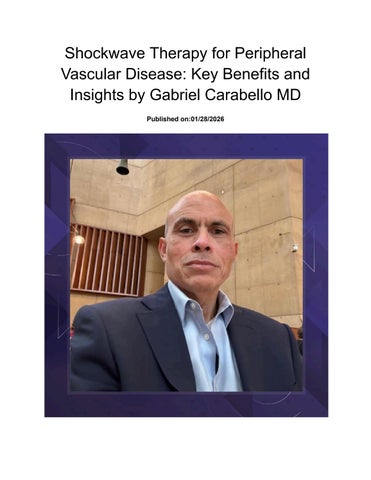
Peripheral vascular disease is a condition that affects the blood vessels outside the heart and brain. It can cause poor blood flow to the arms, legs, and other parts of the body. When left untreated, it can lead to pain, ulcers, and even tissue damage Recently, shockwave therapy has emerged as a promising treatment. Understanding its benefits and how it works can help people manage peripheral vascular disease more effectively as exclaimed by Gabriel Carabello MD
Shockwave therapy uses high-energy sound waves to improve blood flow in affected areas The waves stimulate the growth of new blood vessels and aid the repair of damaged tissue This process can reduce pain, increase mobility, and improve overall circulation. People with peripheral vascular disease often experience discomfort while walking or standing, and shockwave therapy can provide significant relief
One of the main advantages of shockwave therapy is that it is non-invasive Unlike surgery or other invasive procedures, it does not require incisions or long recovery times. The treatment is usually performed in a clinic and takes only a few sessions Patients often notice improvement in pain and walking ability within weeks This makes it an attractive option for those who want to avoid more aggressive treatments.
Shockwave therapy may also help reduce the risk of complications from peripheral vascular disease. By improving blood flow, it supports healing in areas affected by poor circulation. For people with ulcers or slow-healing wounds, shockwave therapy can enhance tissue repair When combined with lifestyle changes, such as quitting smoking, exercising regularly, and managing blood pressure, it can significantly improve quality of life.
Doctors typically recommend a complete evaluation before starting shockwave therapy. Tests like ankle-brachial index measurements, ultrasounds, or CT scans can help determine the severity of peripheral vascular disease Based on the results, a treatment plan is created The therapy is usually part of a broader approach that includes medication and lifestyle management
While shockwave therapy is generally safe, it may not be suitable for everyone. People with certain medical conditions, like bleeding disorders or infections in the treatment area, should discuss alternatives with their doctor. Side effects are usually mild and may include temporary redness or soreness at the treatment site.
Shockwave therapy for peripheral vascular disease offers a new approach to managing this challenging condition Improving circulation, reducing pain, and supporting tissue healing gives patients a chance to regain mobility and live more comfortably Understanding its benefits and working closely with a healthcare provider can help maximize the results of this innovative treatment