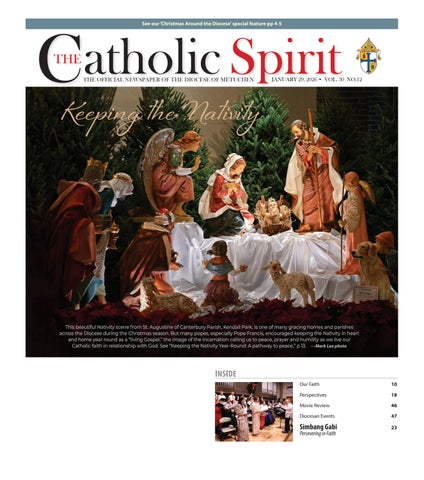
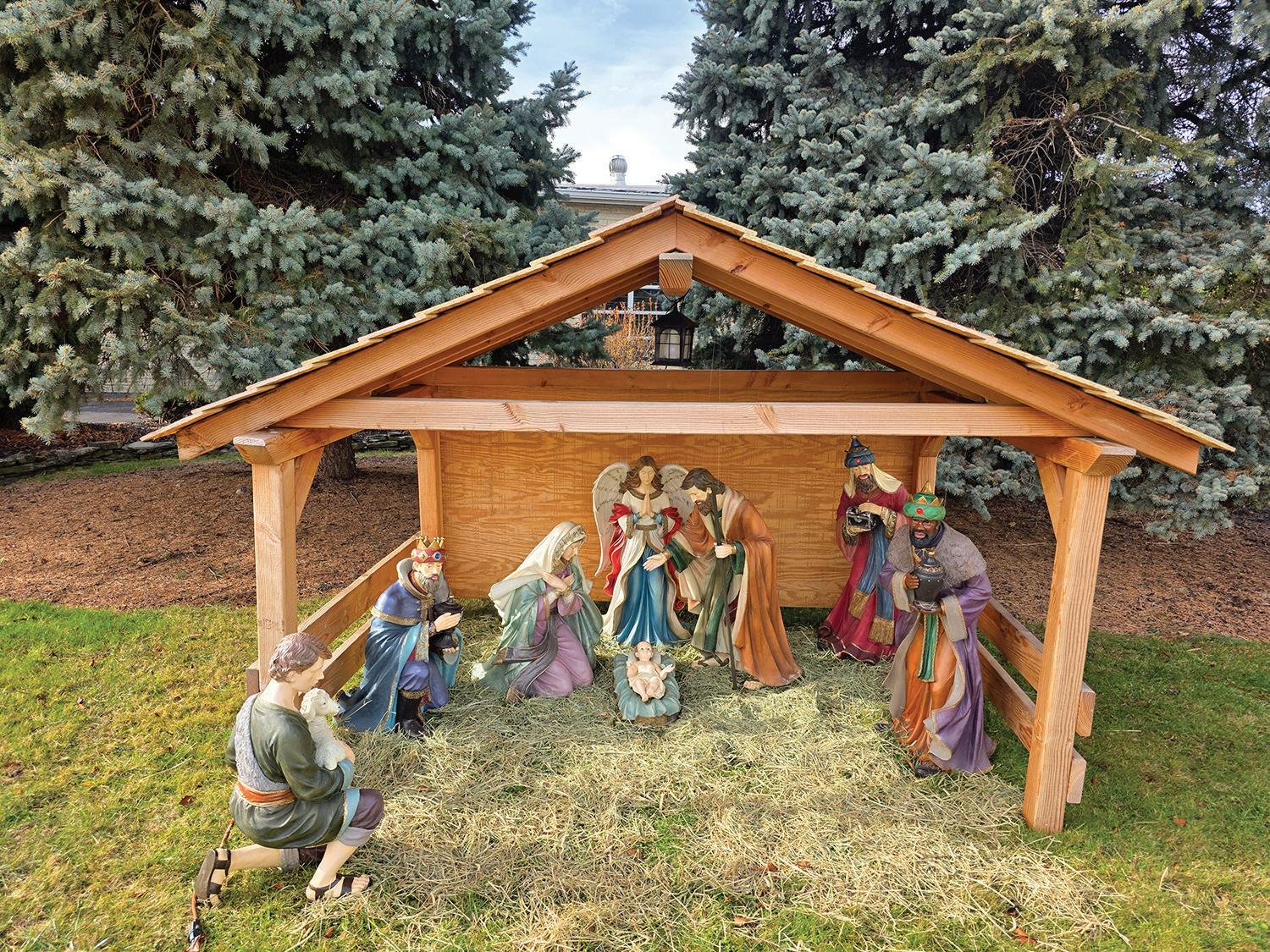
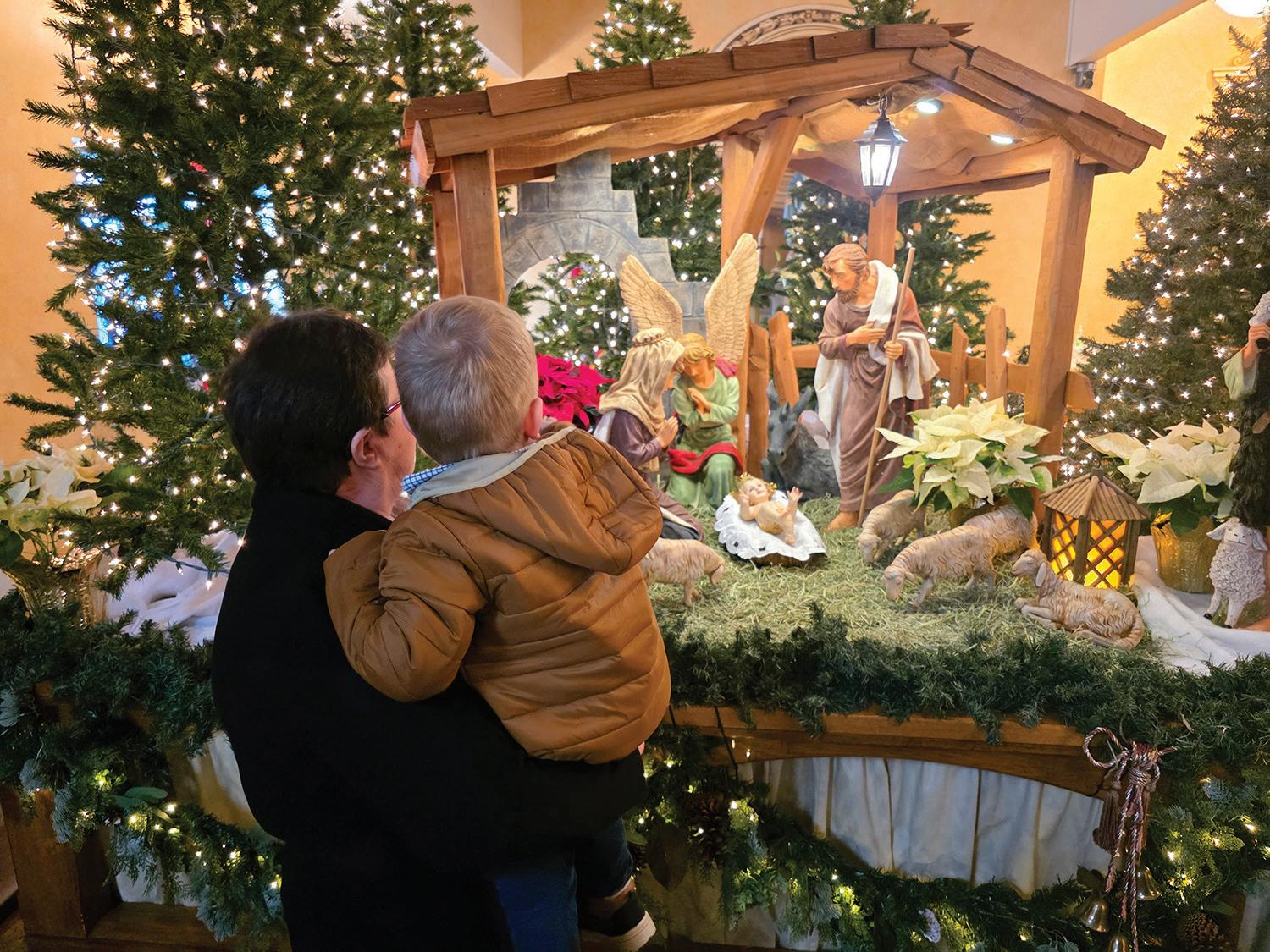
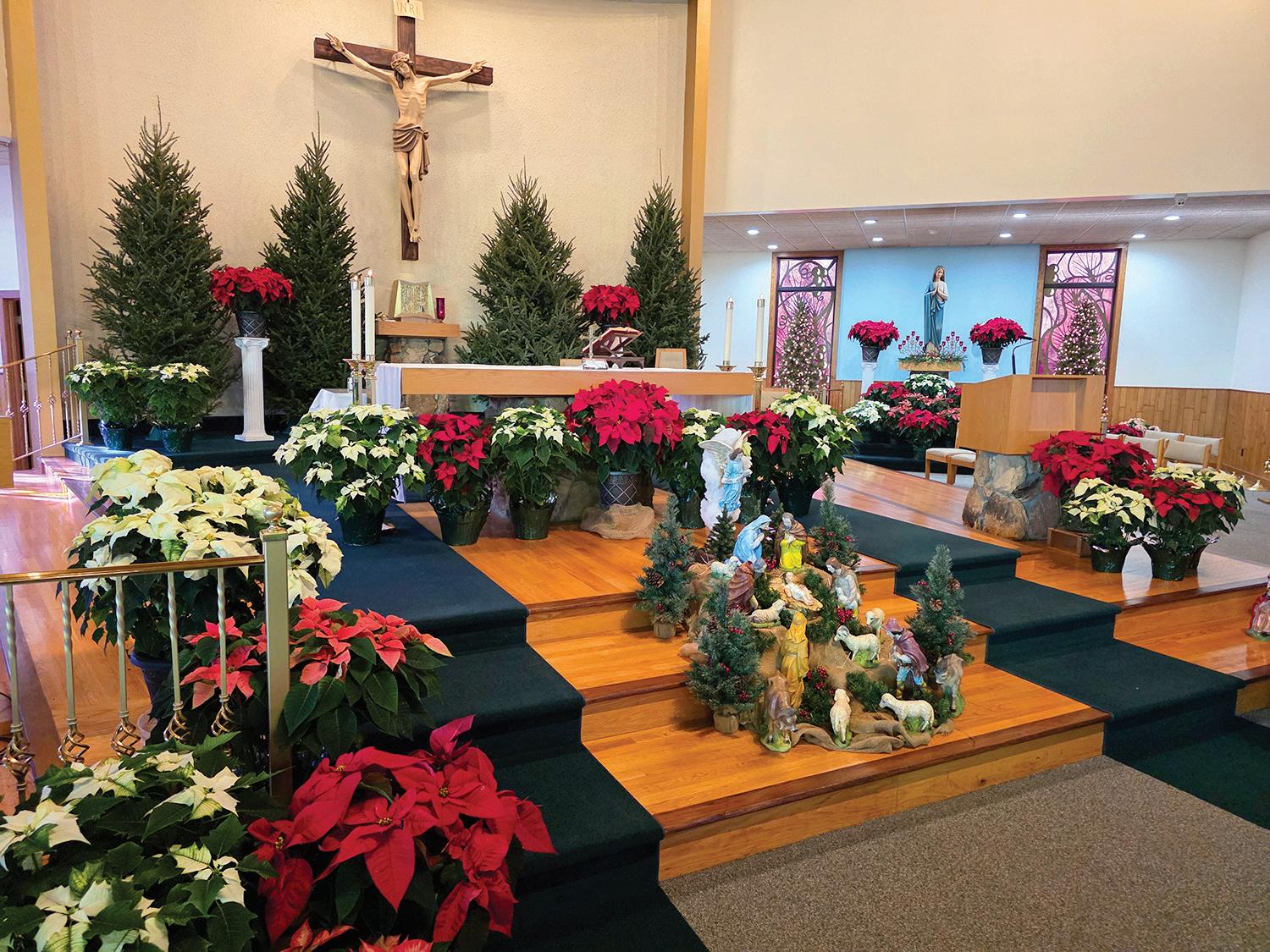
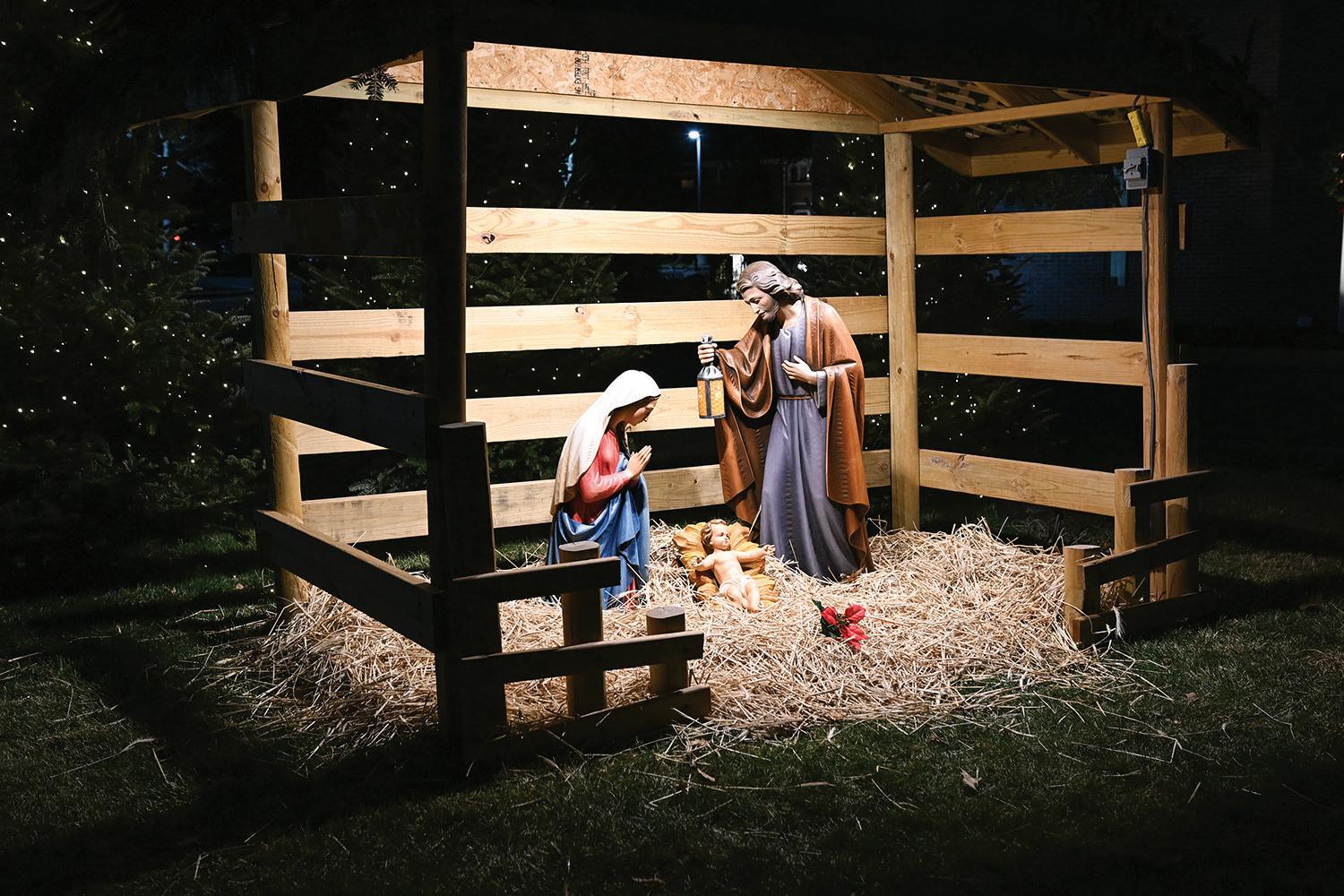
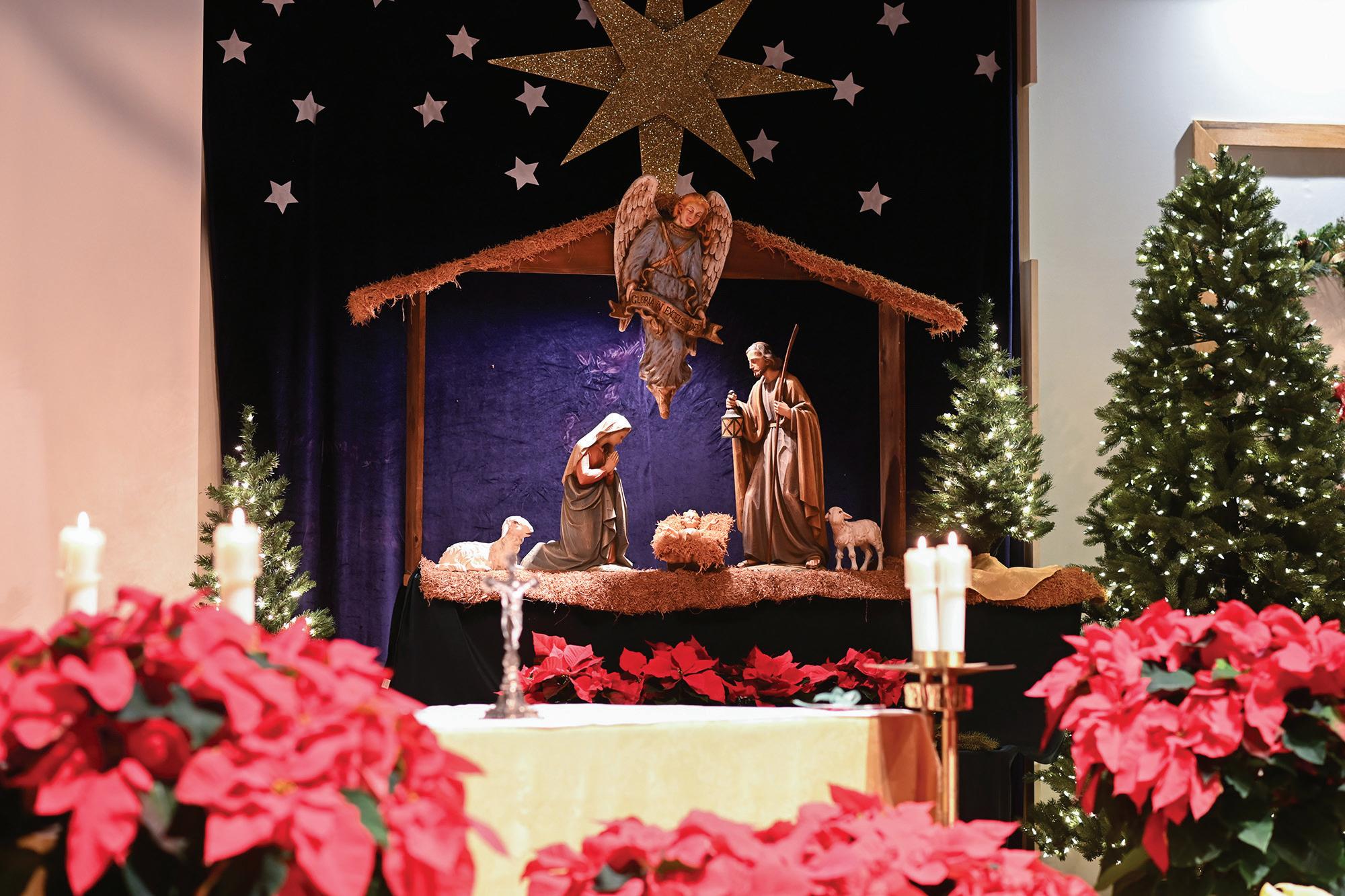
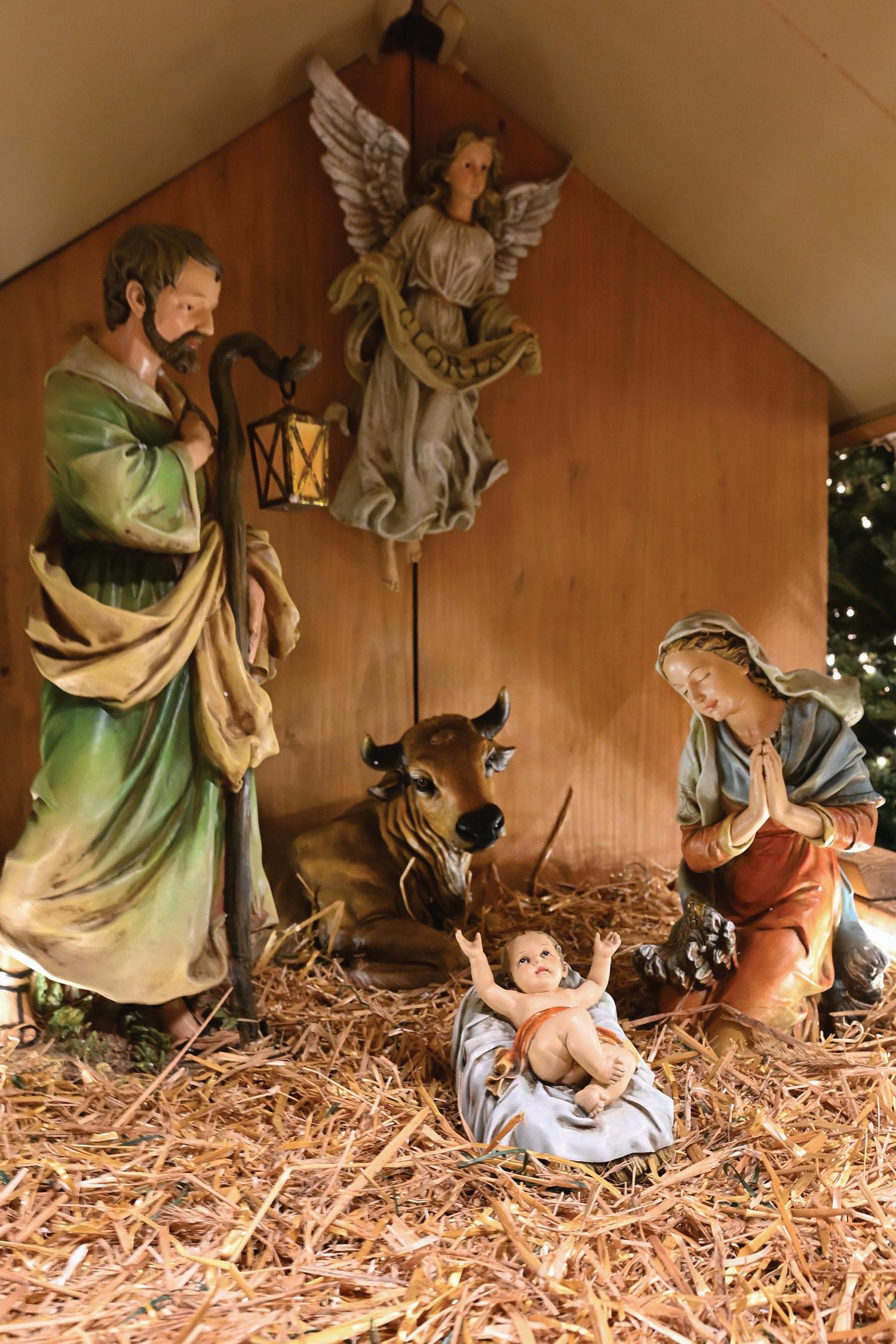
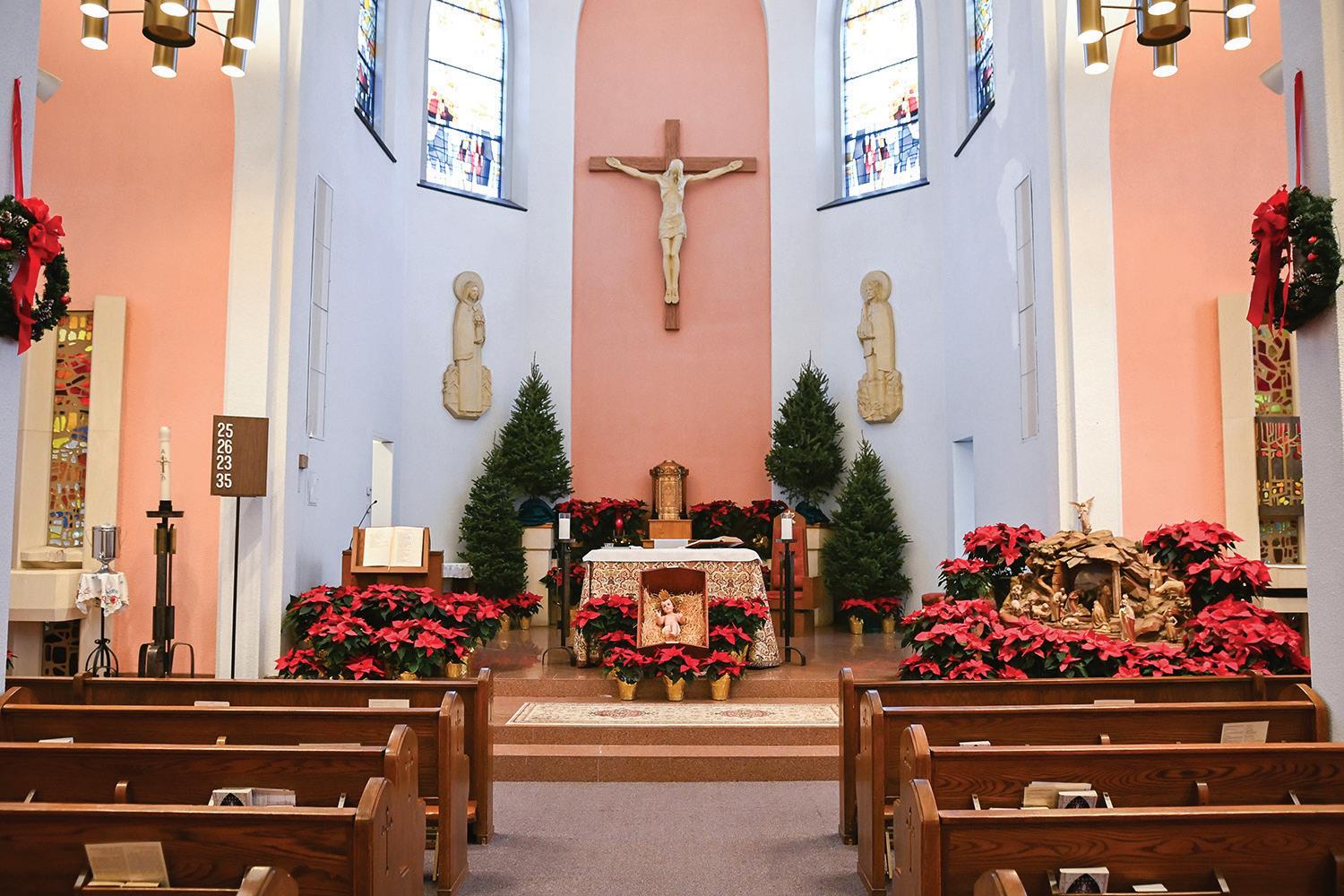
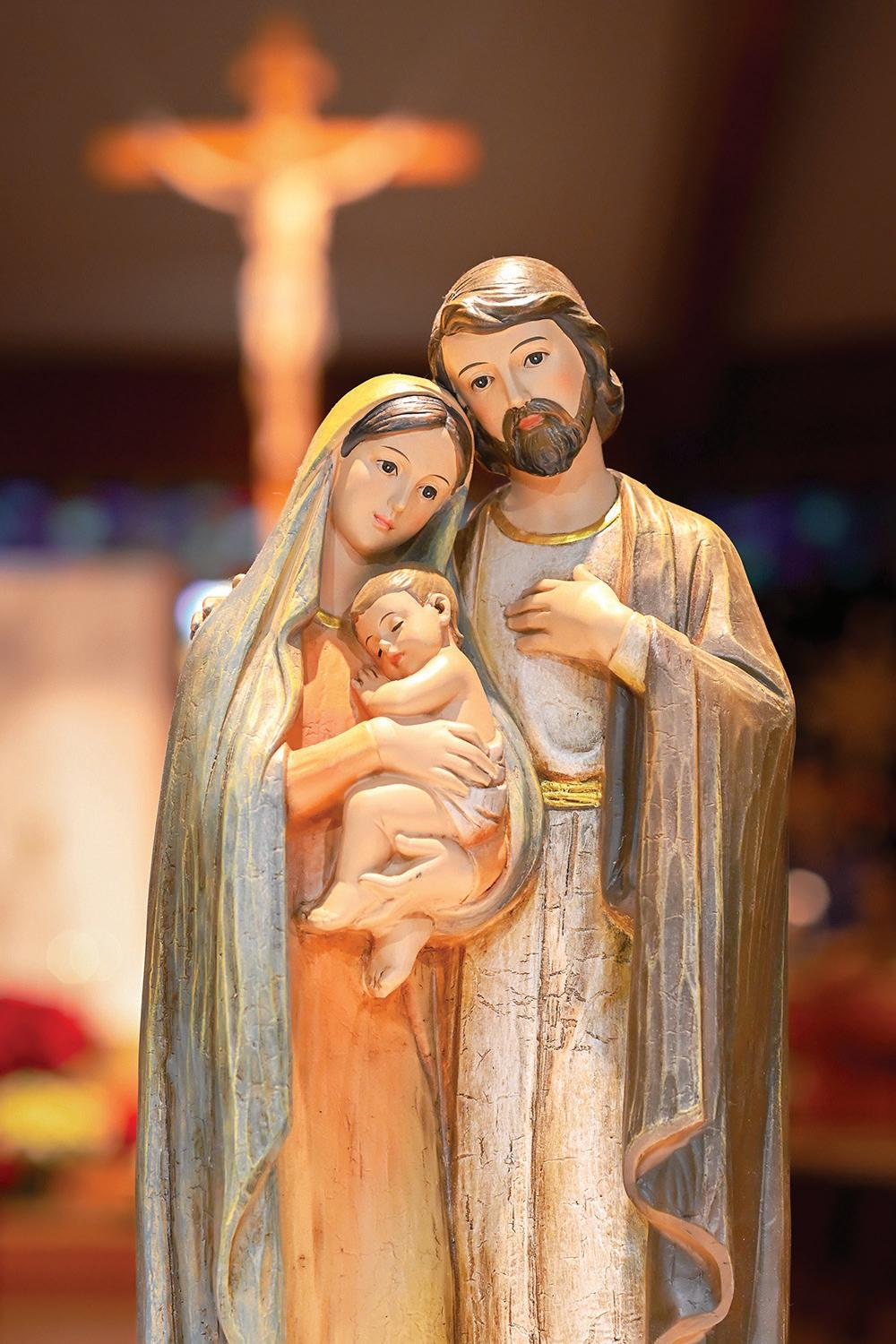
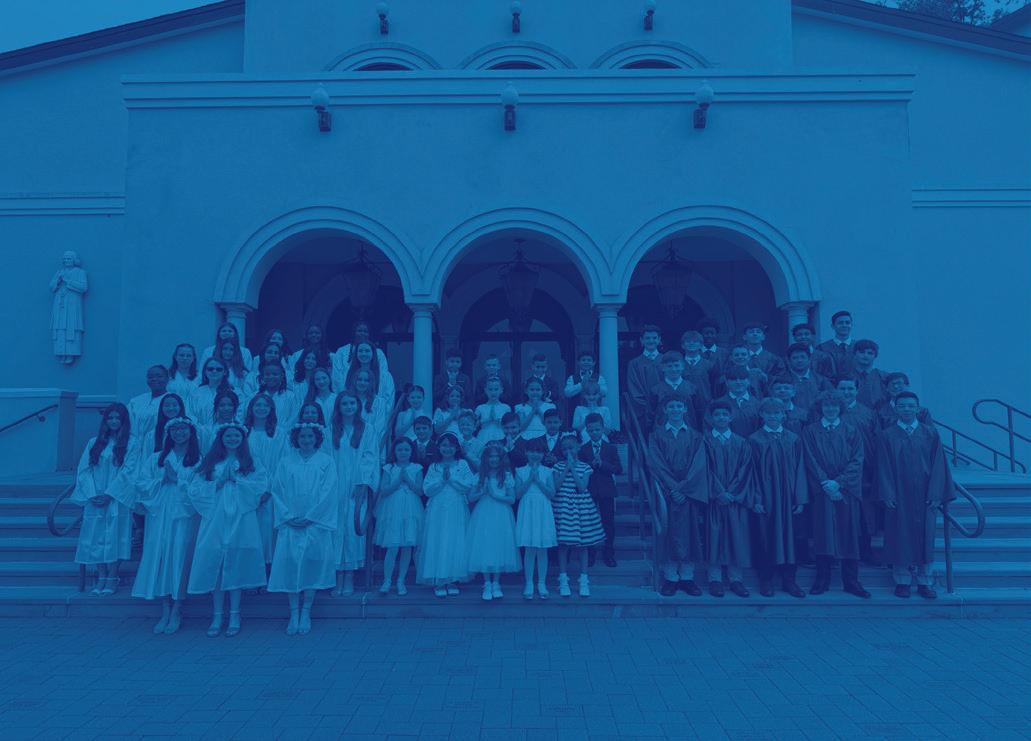
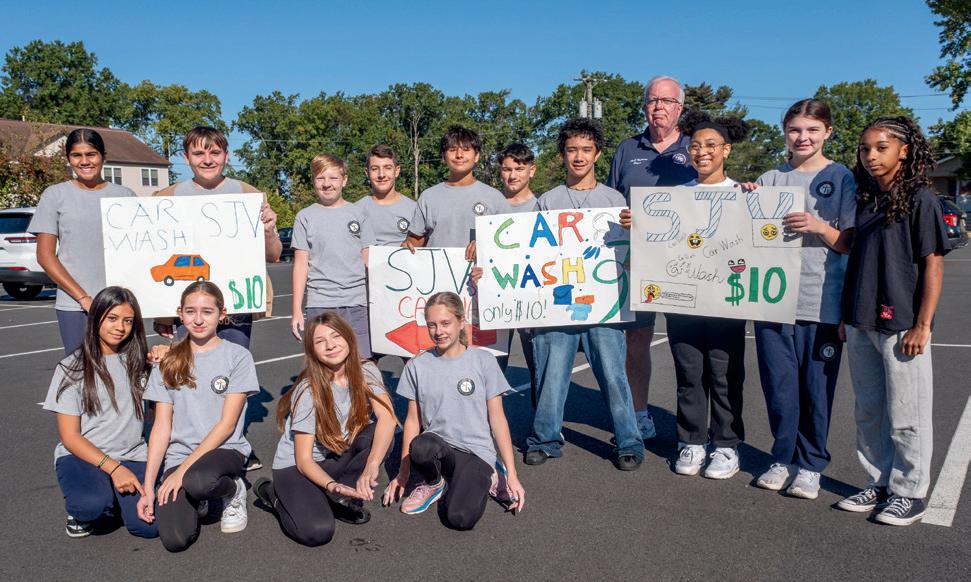
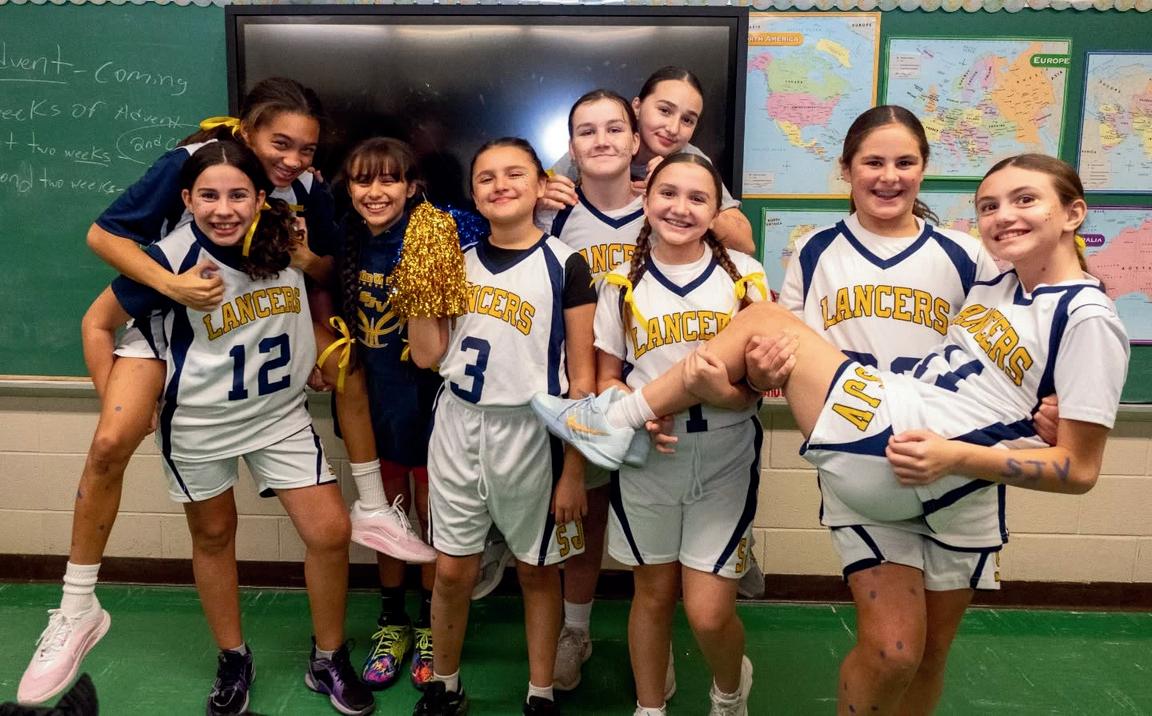
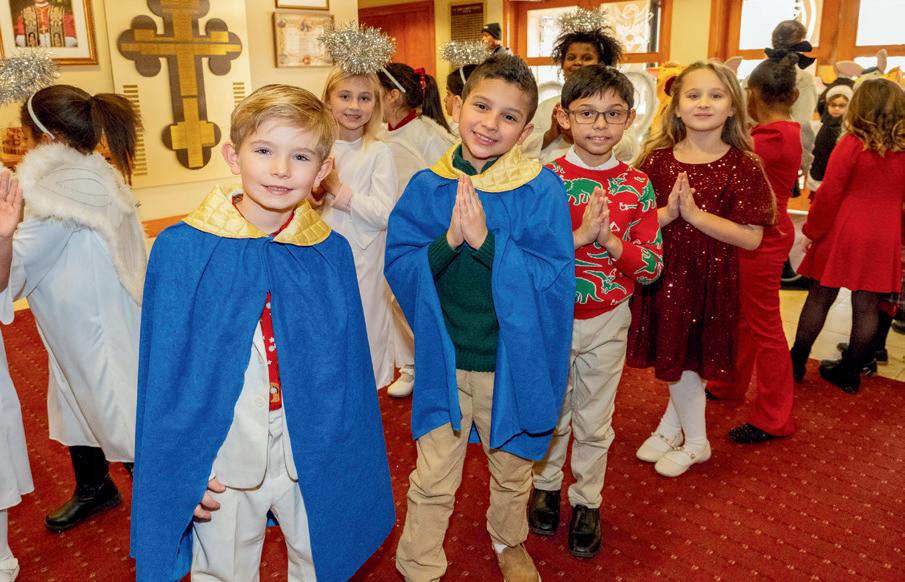
This beautiful Nativity scene from St. Augustine of Canterbury Parish, Kendall Park, is one of many gracing homes and parishes across the Diocese during the Christmas season. But many popes, especially Pope Francis, encouraged keeping the Nativity in heart and home year round as a “living Gospel,” the image of the Incarnation calling us to peace, prayer and humility as we live our Catholic faith in relationship with God. See “Keeping the Nativity Year-Round: A pathway to peace,” p 13. Mark Lee photo
Pope Leo XIV, Homily, Holy Mass on the Solemnity of Mary, Mother of God, St. Peter’s Basilica, Jan. 1, 2026
Dear brothers and sisters,
Today, on the Solemnity of Mary, the Holy Mother of God, at the beginning of the new civil year, the Liturgy offers us the text of a beautiful blessing: “May the Lord bless you and keep you. May the Lord let his face shine on you and be gracious to you. May the Lord uncover his face to you and bring you peace” (Num 6:24-26).
In the Book of Numbers, this blessing follows the instructions regarding the consecration of the Nazirites, highlighting the sacred and fruitful dimension of offering gifts within the relationship between God and the people of Israel. Human beings offer the Creator all that they have received, and he, in turn, responds by turning toward them his benevolent gaze, just as he did at the dawn of creation (cf. Gen 1:31).
Moreover, the people of Israel, to whom this blessing was addressed, were a people who had been set free – men and women reborn after a long period of slavery, thanks to God’s intervention and the generous response of his servant, Moses. In Egypt, they had enjoyed certain comforts: food was available, as were shelter and a measure of stability. Yet this came at the cost of their freedom; enslaved, they were oppressed by a tyranny that demanded ever more while giving ever less (cf. Ex 5:6–7). Now, in the desert, many of those former comforts were lost. But in exchange there was freedom, which took shape as an open road toward the future, found in the gift of a law of wisdom and in the promise of a land where they might live and grow without shackles or chains. In short, it was a rebirth.
Thus, at the dawn of the new year, the Liturgy reminds us that for each of us, every day can be the beginning of a new life, thanks to God’s generous love, his mercy and the response of our freedom. It is beautiful to view the coming year in this way: as an open journey to be discovered. Indeed, through grace, we can venture forth on this journey with confidence – free and bearers of freedom, forgiven and bringers of forgiveness, trusting in the closeness and goodness of the Lord who accompanies us always.
We recall this truth as we celebrate the mystery of Mary’s divine motherhood. By her “yes,” she helped give a
With God’s love,
the new year means every day can be the beginning of a new life
human face to the source of all mercy and benevolence: the face of Jesus. Through his eyes – first as a child, then as a young man and as an adult – the Father’s love reaches us and transforms us.
Therefore, as we set out toward the new and unique days that await us, let us ask the Lord to help us experience at every moment, around us and upon us, the warmth of his fatherly embrace and the light of his benevolent gaze. In this way, we may better understand and keep constantly in mind who we are and towards what marvelous destiny we are heading (cf. Second Vatican Ecumenical Council, Pastoral Constitution Gaudium et Spes, 41). At the same time, let us also give God glory through prayer, holiness of life, and by becoming mirrors of his goodness for one another.
Saint Augustine taught that, in Mary, “the Creator of man became man: so that, though he orders the stars, he might suckle at a woman’s breast; though he is the Bread (cf. Jn 6:35), he might hunger (cf. Mt 4:2)… in order to free us, even though we were unworthy” (Sermon 191, 1.1).
In this way, Augustine recalled one of the fundamental features of God’s face: the complete gratuity of his love. As I emphasized in the Message for this World Day of Peace, God presents himself to us “unarmed and disarming,” as naked and defenseless as a newborn in a cradle. He does this to teach us that the world is not saved by sharpening swords, nor by judging, oppressing or eliminating our brothers and sisters. Rather, it is saved by tirelessly striving to understand, forgive, liberate and welcome everyone, without calculation and without fear.
This is the face of God that Mary allowed to take shape and grow within her womb, completely transforming her life. It is the face she proclaimed through the
“Indeed, through grace, we can venture forth on this journey with confidence –free and bearers of freedom, forgiven and bringers of forgiveness, trusting in the closeness and goodness of the Lord who accompanies us always.”
joyful yet delicate light of her eyes while bearing him in her womb; the face whose beauty she contemplated daily in her home as Jesus grew as a child, boy and young man; and the face she followed with the heart of a humble disciple, as he walked the paths of his mission, all the way to the cross and the resurrection. To do so, she too laid aside every defense, renouncing expectations, claims and comforts – as mothers so often do – consecrating her life without reserve to the Son she had received by grace, so that she might, in turn, give him back to the world.
In Mary’s divine motherhood, then, we see the meeting of two immense,
“unarmed” realities: that of God, who renounces every privilege of his divinity to be born in the flesh (cf. Phil 2:6-11), and that of a human person who, trustingly and fully, embraces God’s will. In a perfect act of love, she offers him the greatest power she possesses: her freedom. Reflecting upon this mystery, Saint John Paul II invited us to contemplate what the shepherds found in Bethlehem: “the disarming tenderness of the Child, the surprising poverty in which he is found and the humble simplicity of Mary and Joseph.” These realities transformed their lives, making them “messengers of salvation” (Homily at Mass on the Solemnity of Mary, the Holy Mother of God, XXXIV World Day of Peace, 1 January 2001).
He spoke these words at the conclusion of the Great Jubilee of the Year 2000, in terms that resonate with our reflection today: “How many gifts,” he affirmed, “how many extraordinary occasions the Great Jubilee has offered to believers! In the experience of forgiveness received and given, in the commemoration of the martyrs, in listening to the cry of the world’s poor… we too have glimpsed the saving presence of God in history. We have, as it were, physically felt his love which renews the face of the earth” (ibid.). He then concluded: “Just as he asked the shepherds who hastened to adore him, Christ asks of believers, to whom he has given the joy of meeting him, a courageous readiness to set out once again to proclaim his Gospel, old and ever new. He sends them to enliven our human history and culture with his saving message” (ibid.).
Dear brothers and sisters, on this Solemnity, at the beginning of the new year, and as we approach the conclusion of the Jubilee of Hope, let us draw near to the Nativity scene in faith. Let us approach it as the place of “unarmed and disarming” peace par excellence – a place of blessing where we recall the wonders the Lord has worked in the history of salvation and in our own lives. Then, like the humble witnesses at the grotto, let us set out once more, “glorifying and praising God” (Lk 2:20) for all that we have seen and heard. May this be our commitment and our resolve for the months ahead, and, indeed, for the whole of our Christian lives.
Correction: On page 15 of the December issue, Maria Agnese was noted in error as being diocesan director of the Office of Human Life and Dignity. Her correct title is program coordinator. The Catholic Spirit apologizes for the error.
How to report abuse If you were sexually abused by a member of the clergy or anyone representing the Catholic Church, or you know of someone who was, you are encouraged to report that abuse to local law enforcement, the New Jersey Division of Child Protection and Permanency at 1-877-NJ ABUSE (652-2873) or 1-800-835-5510 (TTY/TDD for the deaf), and also the Diocesan Response Officer at (908) 930-4558 (24 hours/7 days a week).
— CNS photo/Lola Gomez
As Holy Doors
close, cardinals emphasize God’s arms are always open
By Cindy Wooden Catholic News Service
ROME (CNS) – The path to conversion, the door to God’s mercy and the call to live in Christian hope all continue beyond the Jubilee Year, said the three cardinals who closed the Holy Doors at three major basilicas in Rome.
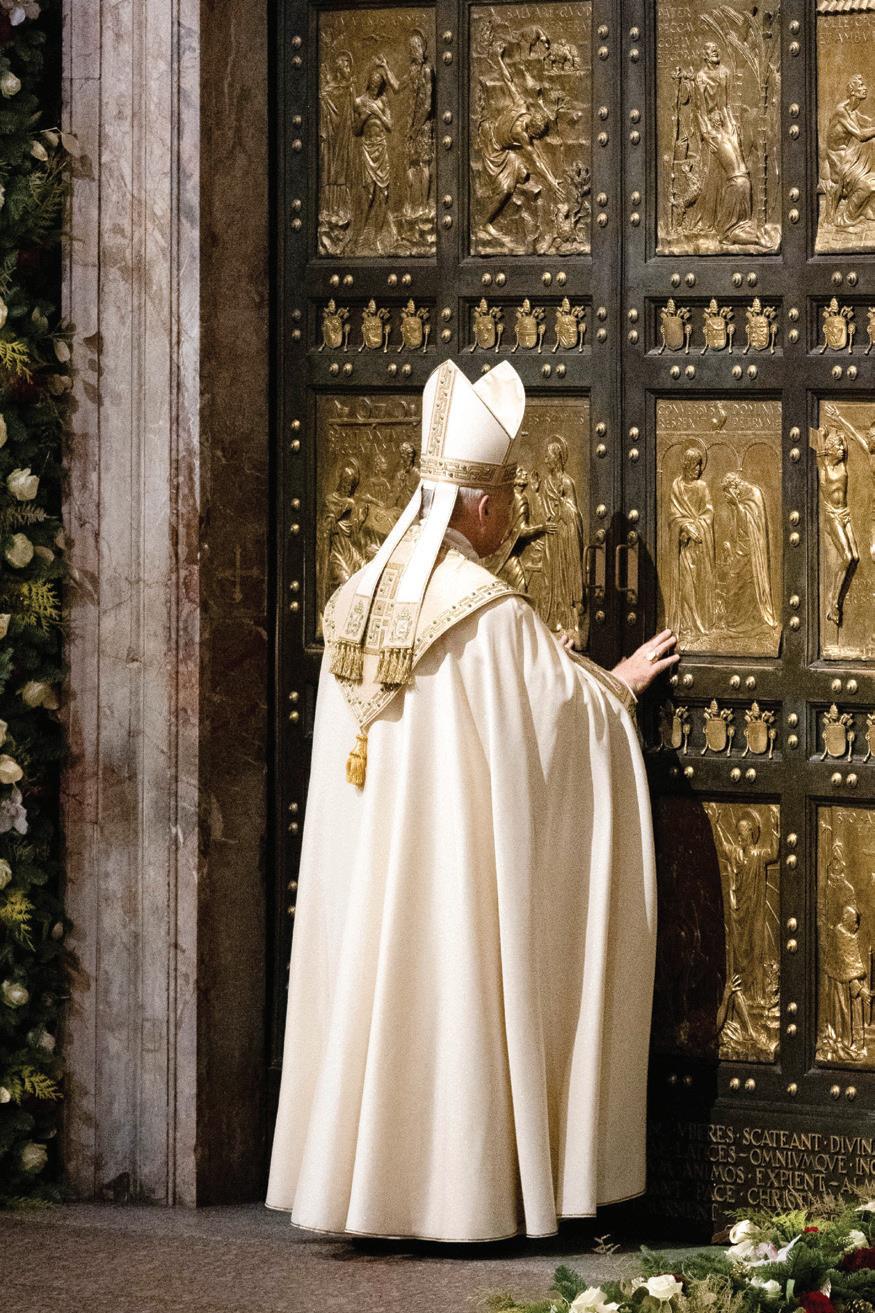
On the feast of the Epiphany, Jan. 6, Pope Leo solemnly closed the Holy Door of St. Peter’s Basilica at the Vatican, formally concluding the Holy Year 2025, which Pope Francis opened on Christmas Eve 2024. But diocesan and other local celebrations of the Jubilee concluded Dec. 28.
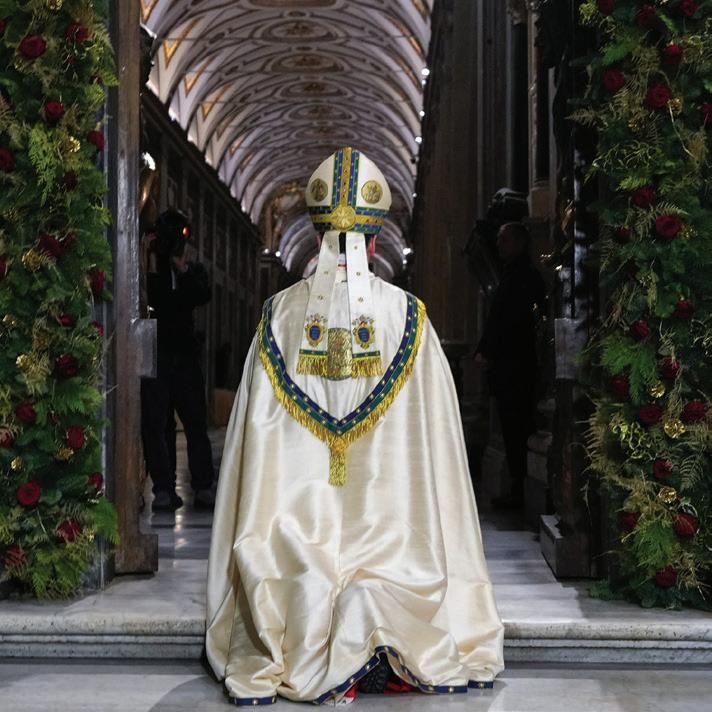
Cardinal Rolandas Makrickas, archpriest of Rome’s Basilica of St. Mary Major, presided over the rite of closing the basilica’s Holy Door at dusk Dec. 25 before celebrating a special Mass. Cardinal Baldassare Reina, papal vicar of Rome and archpriest of the Basilica of St. John Lateran, did the same there Dec. 27. And U.S. Cardinal James M. Harvey, archpriest of the Basilica of St. Paul Outside the Walls, presided over the closing of its Holy Door and the celebration of Mass Dec. 28.
The Holy Doors are bricked up be-
tween Jubilee Years, which usually occur every 25 years. Pope Leo has indicated, however, that an extraordinary Holy Year will be celebrated in 2033, to mark the 2,000th anniversary of the death and resurrection of Jesus.
“What is closing is not divine grace, but a special time of the Church, and what remains open forever is the heart of the merciful God,” Cardinal Makrickas said in his homily Dec. 25. While the Holy Door is closed, “the door that truly matters remains that of our heart: it opens when it listens to the word of God, it
Far left, Cardinal Rolandas Makrickas, archpriest of Rome’s Basilica of St. Mary Major, kneels in prayer on the threshold of the basilica’s Holy Door before solemnly closing it Dec. 25, 2025, as the Jubilee Year was ending.
—CNS photo/Lola Gomez
Left, Pope Leo XIV closes the Holy Door at St. Peter’s Basilica Jan. 6, 2026, at the Vatican, marking the official end of the Jubilee Year.
—CNS photo/Pool, Cristian Gennari
the past year.
Hope, the theme of the Jubilee Year, “moved the countless pilgrims who left on our roads the footprints of steps weighed down by the burdens pressing upon their hearts,” Cardinal Reina told people during the Mass at St. John Lateran. “They passed through the Holy Door in order to find the One they were seeking. The door of our cathedral bears the imprints of the caresses of all those who passed through it in search of mercy.”
Though the Holy Door is closed, he said, “we know that the Risen One passes through closed doors and never tires of knocking on our closed doors, in order to offer and to find mercy. Yes, to find it – because he too seeks it.”
“Indeed, he has told us of the final surprise: that in the end we will be judged on love, on mercy, on the glass of water given to the thirsty; on the morsel of bread to the hungry; on closeness to those who are imprisoned or ill; on clothing the naked; on welcoming the stranger,” Cardinal Reina said.
At St. Paul Outside the Walls, the burial place of the Apostle Paul, Cardinal Harvey noted that the Jubilee’s theme, “Hope does not disappoint,” was taken from St. Paul’s Letter to the Romans. “It is not only a motto, but is most of all a profession of faith,” the cardinal said.
widens when it welcomes our brother or sister, it is strengthened when it forgives and asks for forgiveness,” he said.
“In this basilica, precisely during this Holy Year, we have been granted the grace of a very special task: to safeguard a memory that becomes prophecy,” he said, drawing attention to the late Pope Francis, who is buried at St. Mary Major “and honored by thousands of faithful every day.”
According to SIR, the news agency of the Italian bishops’ conference, an estimated 20 million pilgrims passed through the Holy Door at the basilica in
“In a world marked by war, crises, injustices and confusion, the Church wanted to reaffirm that Christian hope is far different from trying to flee history,” he said; rather, “it is expressed in the ability to pass through it with one’s gaze fixed on Christ.”
The Holy Door is not simply a material passageway, Cardinal Harvey said, “it is a spiritual threshold, a call to each one of us to leave behind that which weighs on our hearts to enter the space of mercy. Crossing it means recognizing that salvation flows from humbly entrusting ourselves to the only One who can give us fullness of life.”
Faithful heed Pope Leo’s call to keep the Church alive, as Jubilee Year ends
VATICAN CITY (OSV News) – After a jubilee year not seen for centuries –with one pope opening the Holy Door and another closing it – Pope Leo XIV ended the Jubilee Year of Hope at St. Peter’s Basilica Jan. 6 telling the world to love and seek peace, protect what is holy, and flee from modern efficiency. But what really stayed with the faithful – not only the lucky hundreds inside the basilica but also the thousands soaked in the pouring winter rain in St. Peter’s Square – was Pope Leo’s urging to keep the Church alive. Pilgrims from Europe, Latin America, Africa and beyond
echoed the Pope’s message, describing renewed faith, unity across cultures, and a call to bring hope home. For Diane, who is originally from Peru but who has lived as a member of Secular Institute of Mary Servant of the Lord in Mexico for the last 23 years, the Church can reach those who seem distant, especially young people today “in their hardships – or a day-to-day where they manifest their inner doubts about faith,” she said, adding “we can walk along with them.”
As the Holy Doors closed, the Jubilee was seen by many not as an ending but as a beginning.
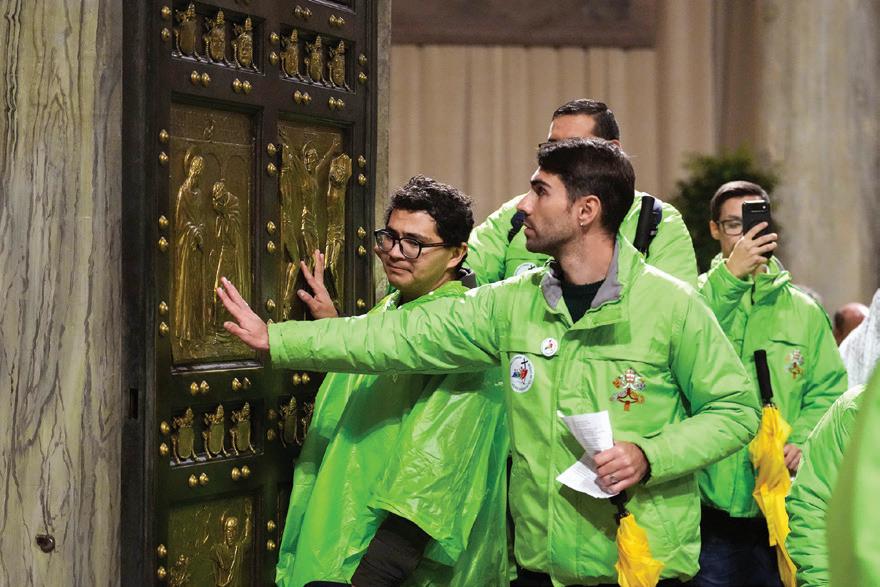
Jubilee volunteers touch the Holy Door at St. Peter’s Basilica at the Vatican Jan. 5, 2026, the last day it remained open before Pope Leo XIV officially closed it Jan. 6 to mark the end of the Holy Year. —CNS photo/ Lola Gomez
Around the Diocese
With gratitude for the gift of community
Deepening our awareness of God’s presence among us Carrying the light of Christmas forward into the year ahead
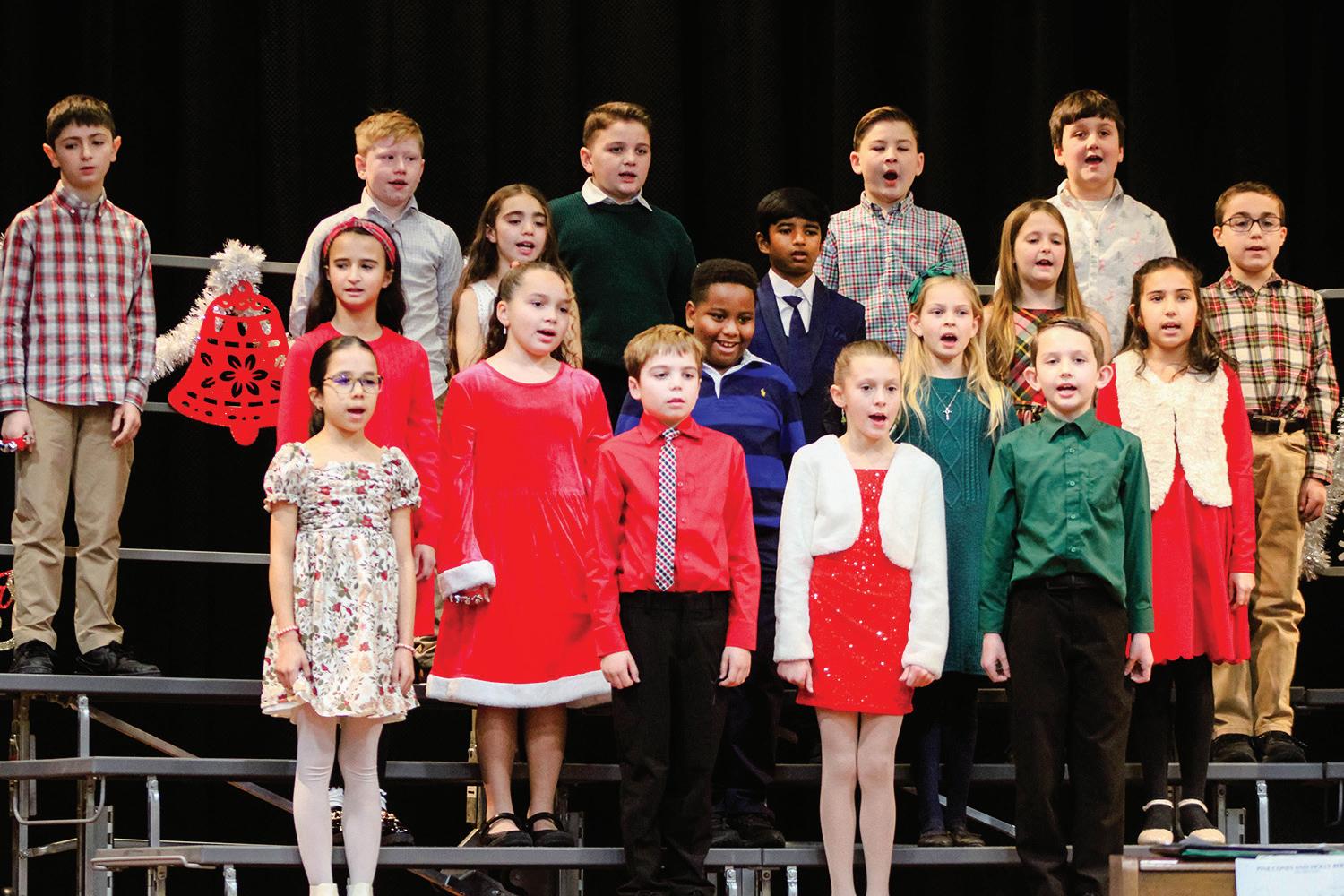
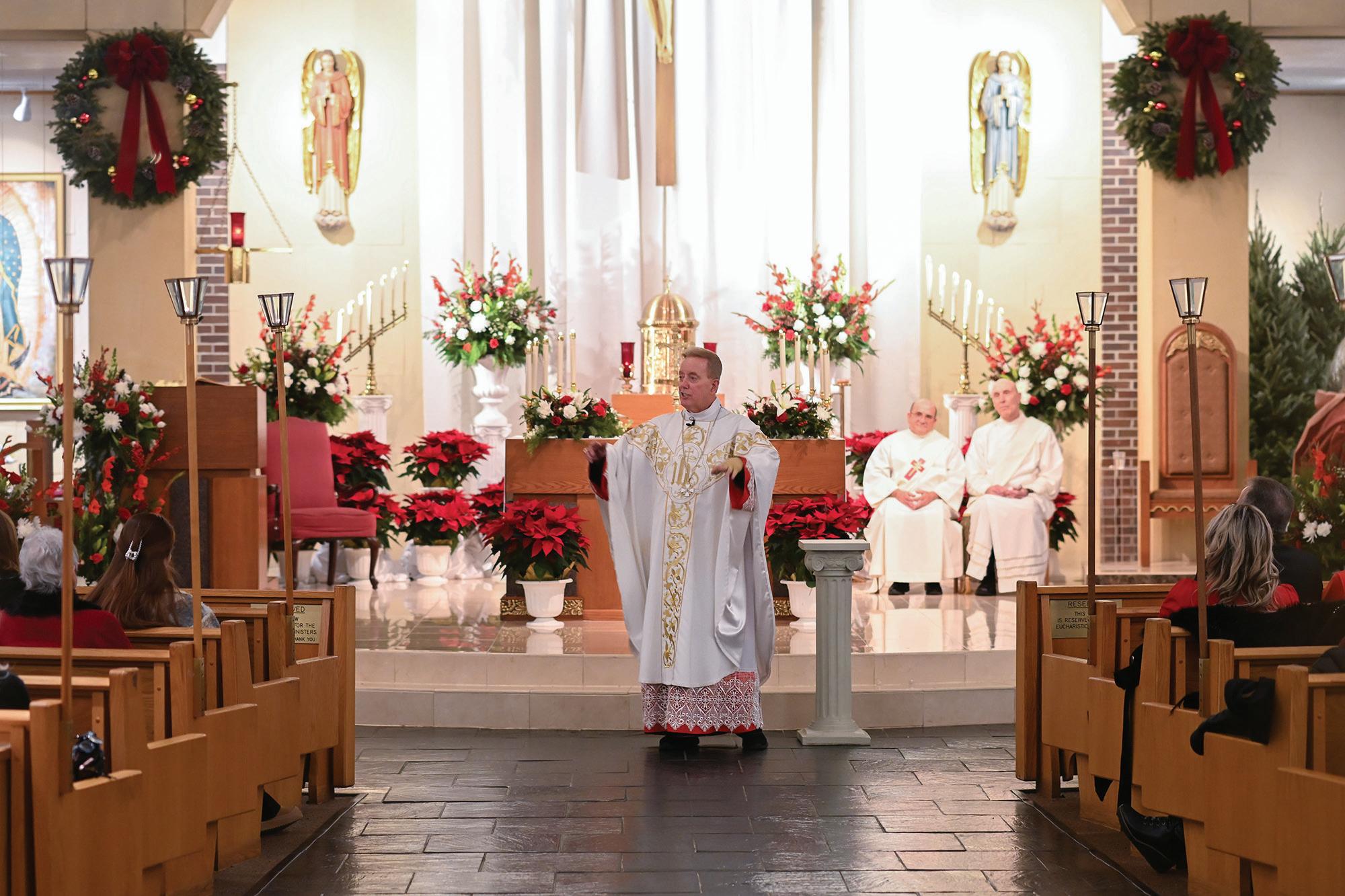
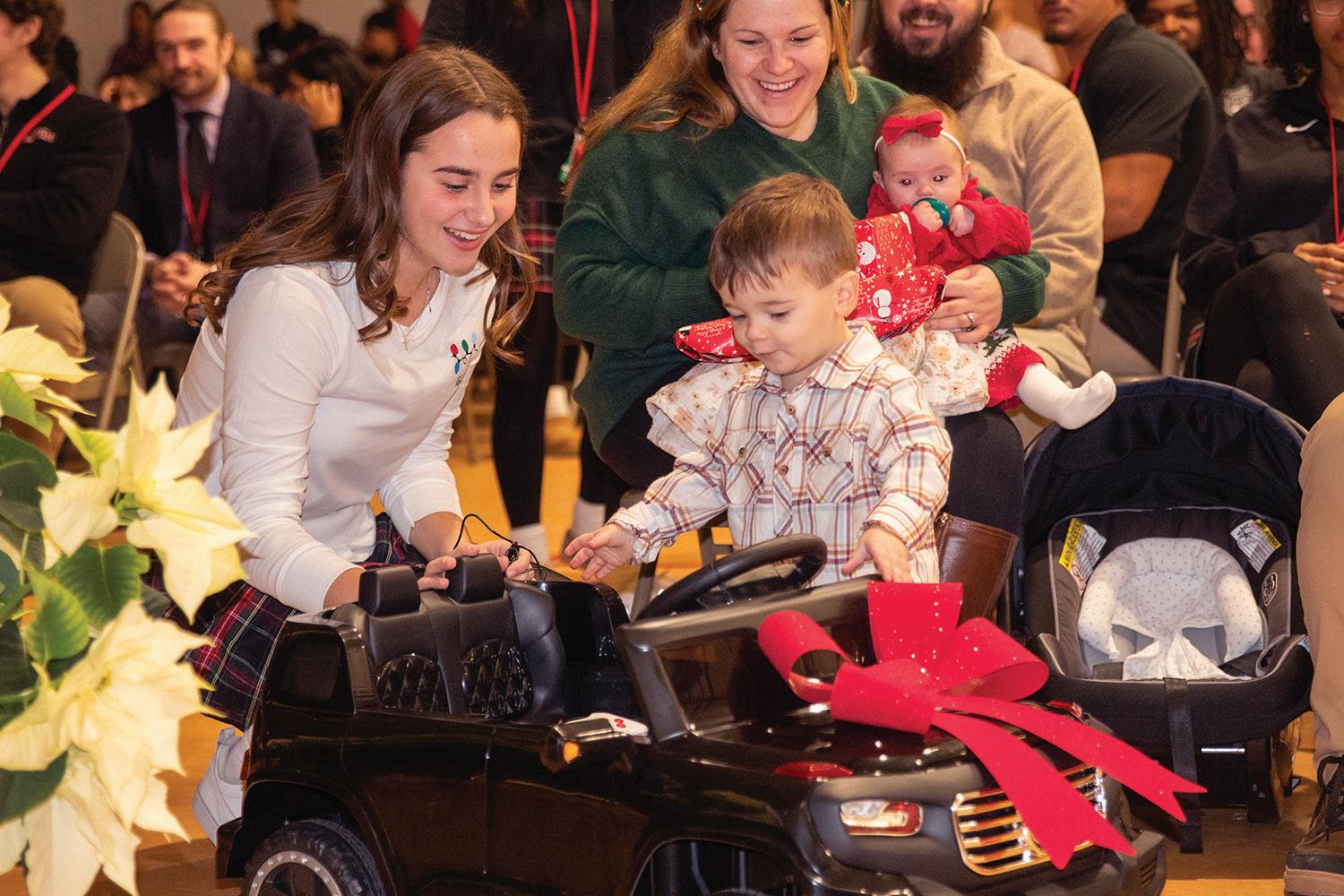
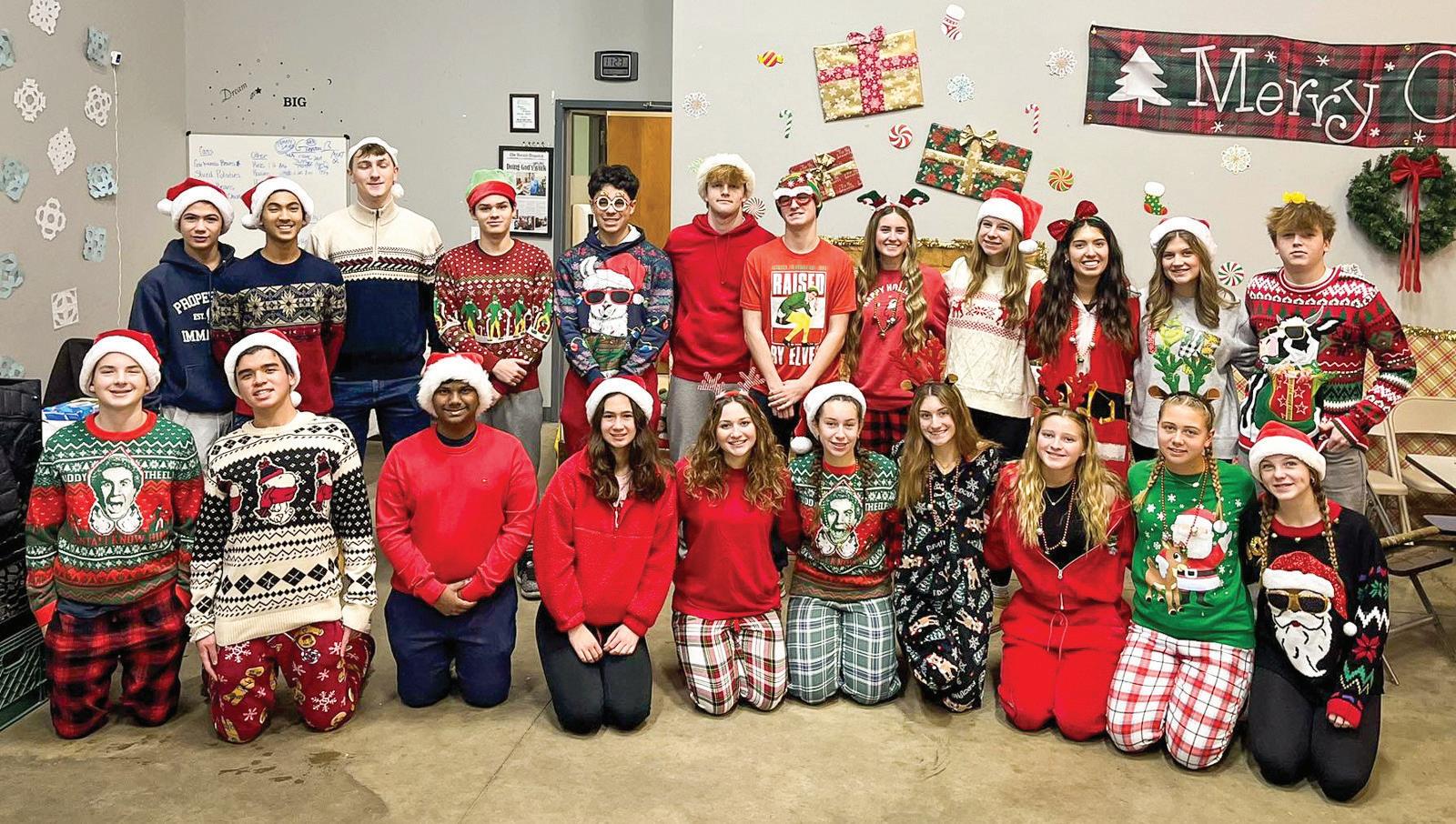
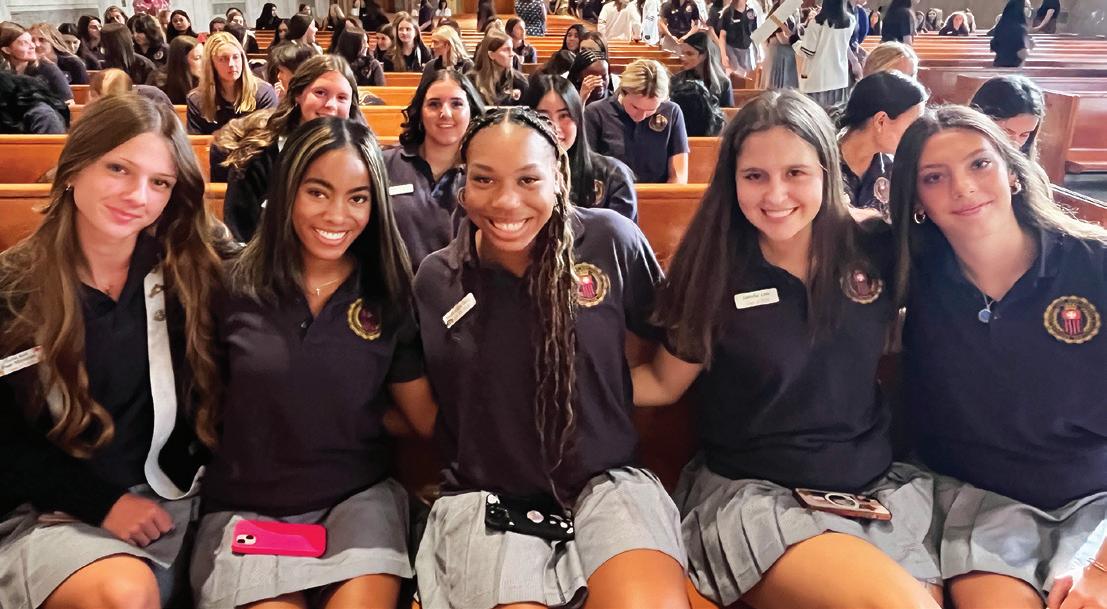
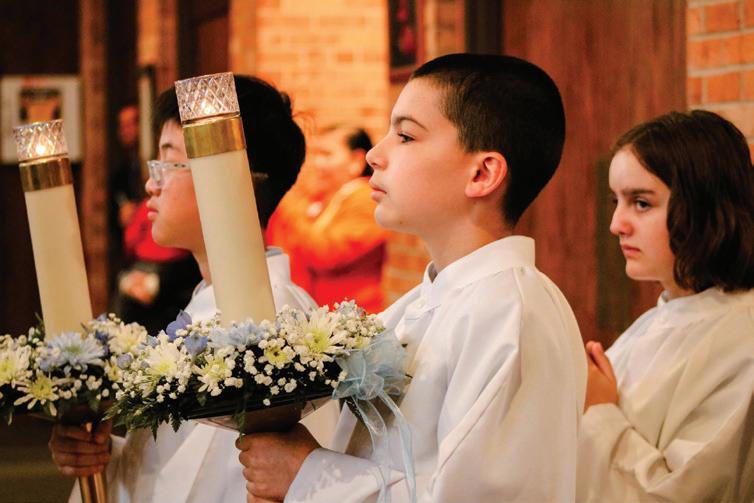
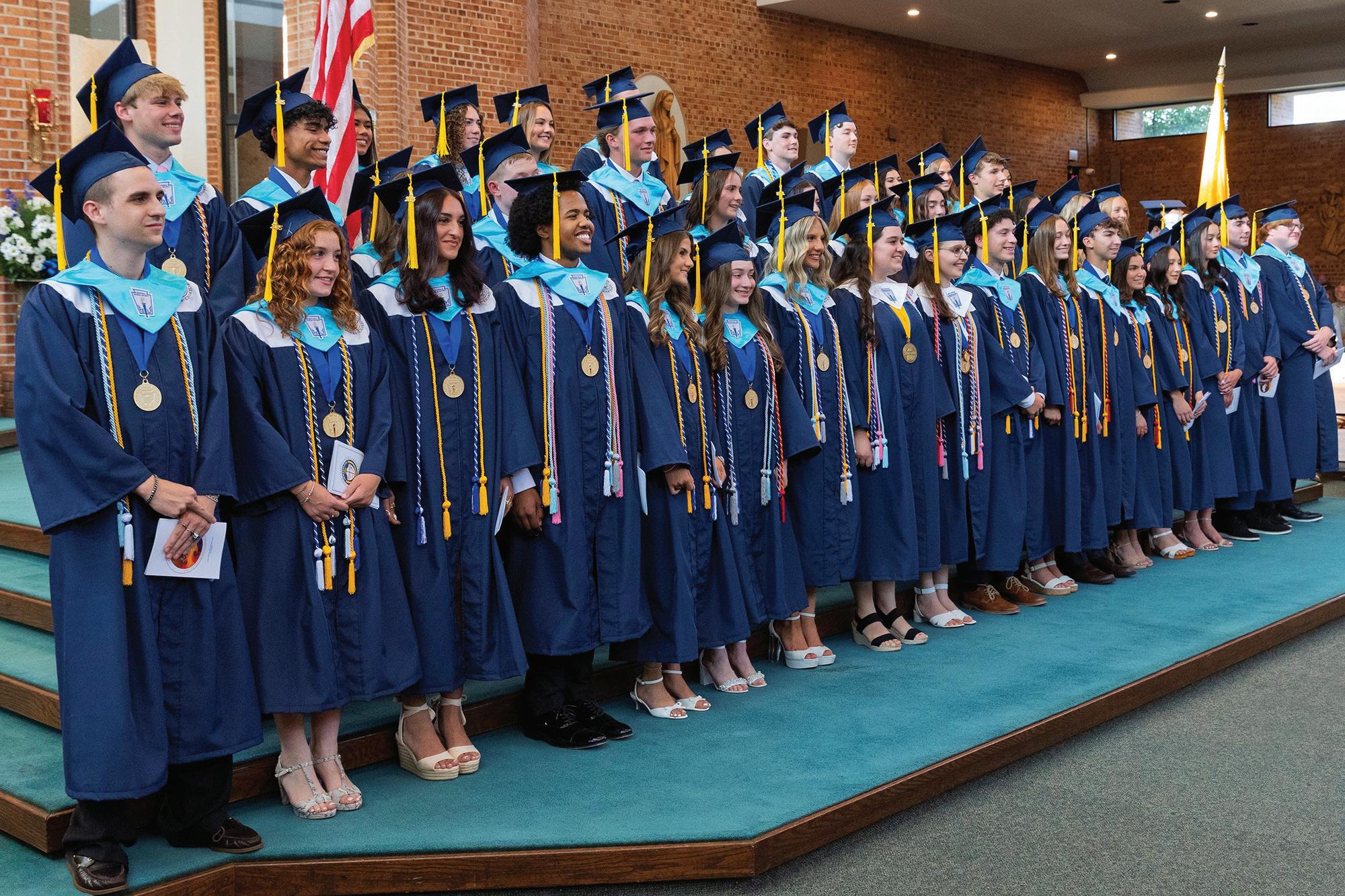
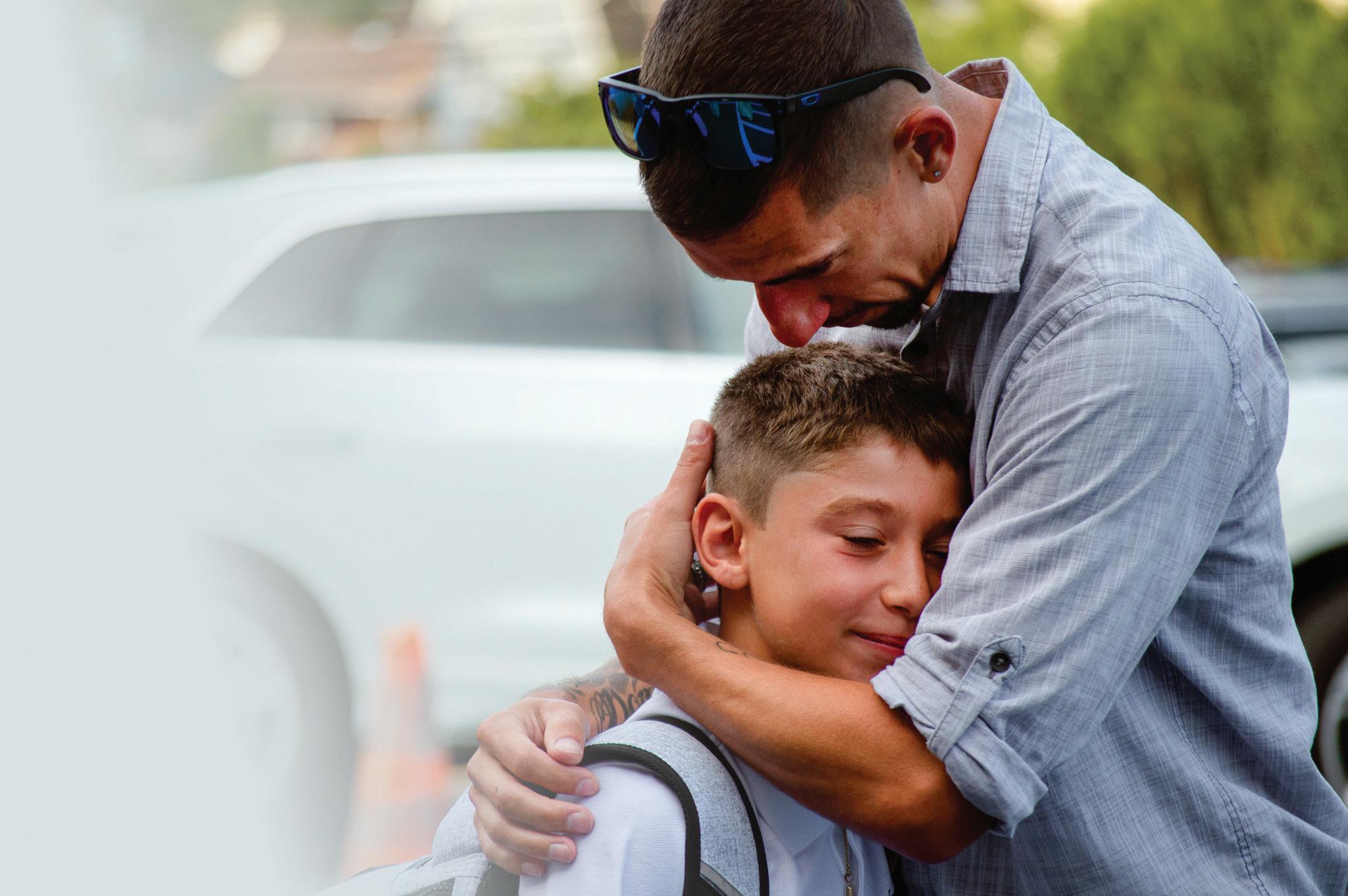
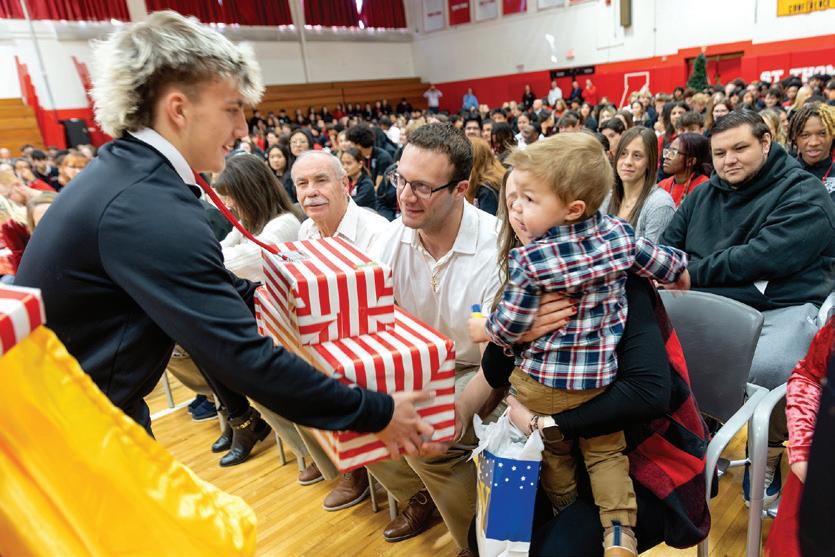
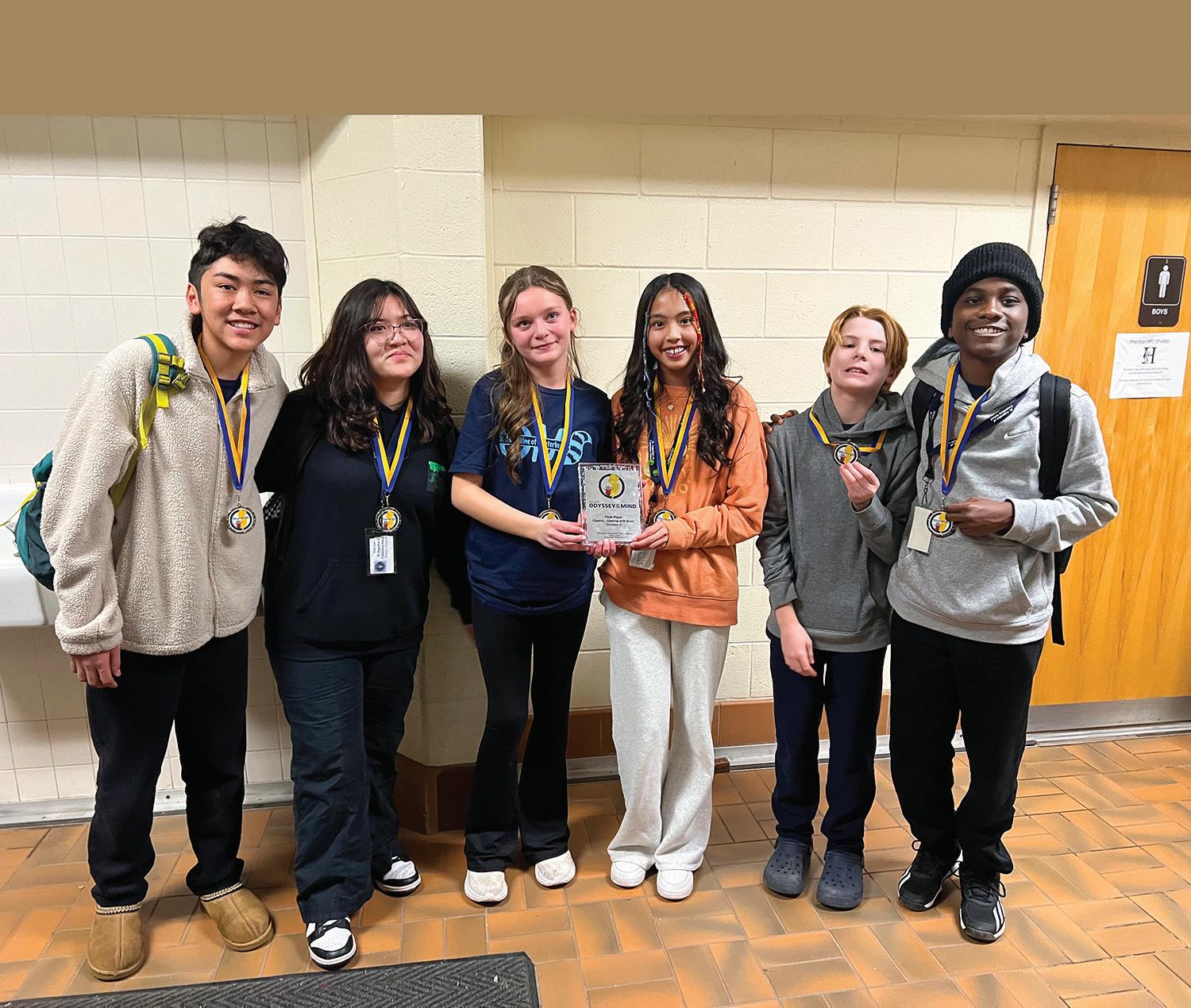
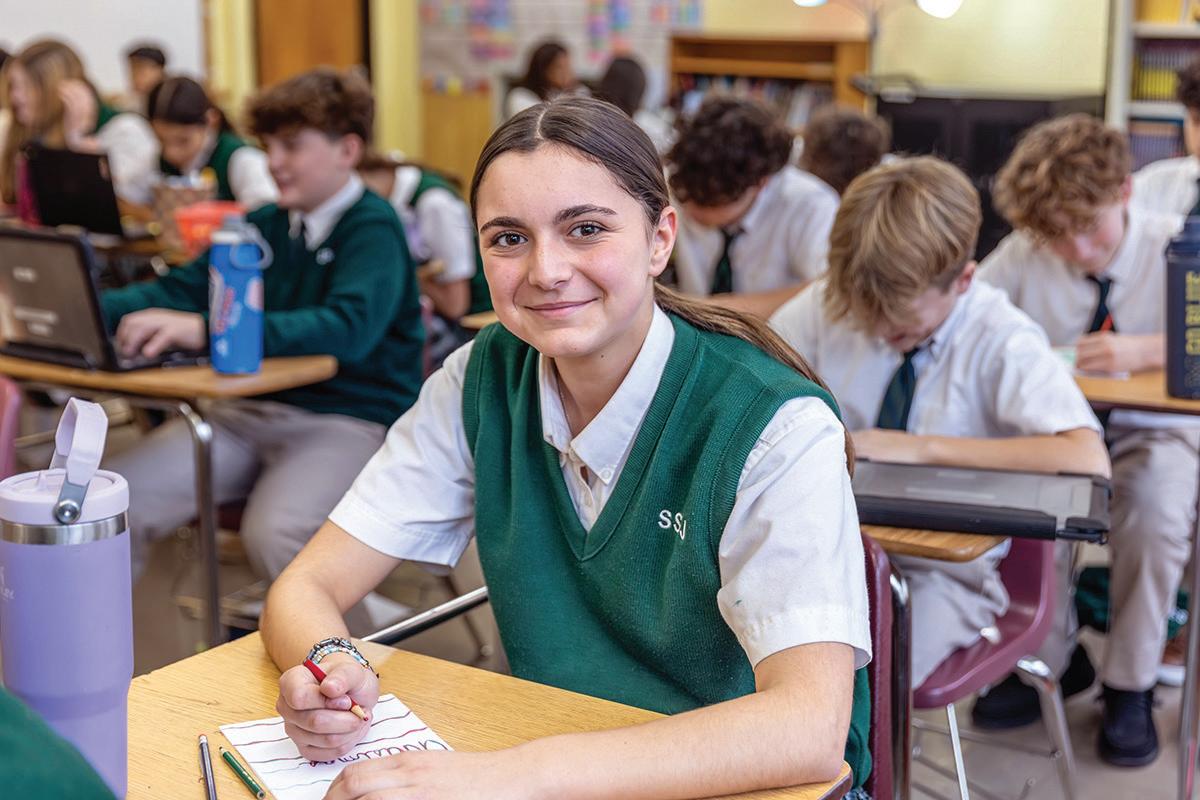
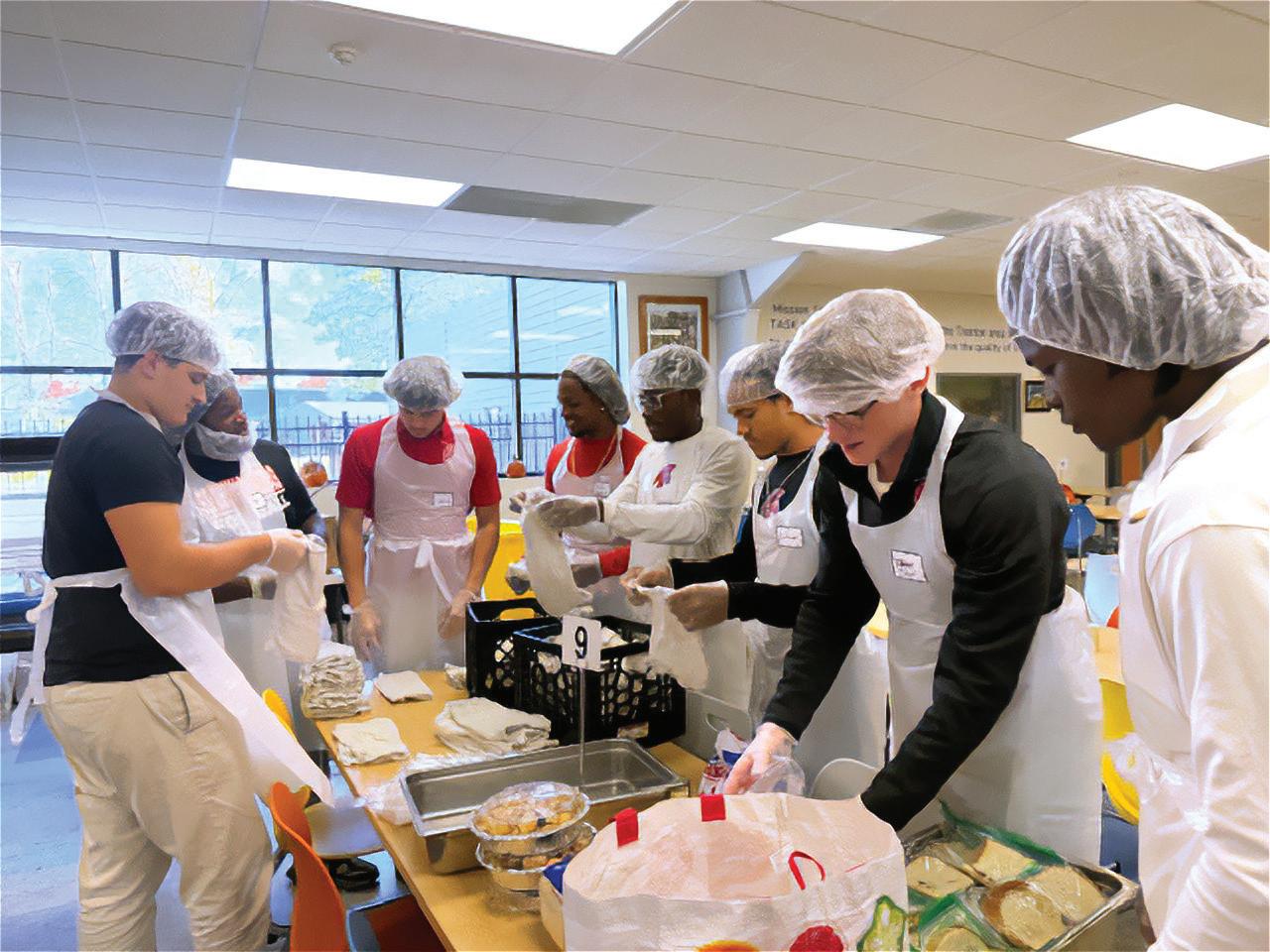
Christmas is never just one moment in the life of the Church – it is a season that unfolds in many places, among many people, in beautifully different ways. Christmas Around the Diocese invites you to step into that shared story, glimpsed through the faces, spaces, and traditions that marked the celebration of Christ’s birth across our parishes, schools, and communities.
From candlelit carol services to joyful children’s pageants, from quiet moments of prayer to halls filled with laughter and song, these photographs capture more than events. They reveal the living faith of a diocesan family gathered around the mystery of the Incarnation. Each image tells a story of welcome: doors opened, tables set, hearts lifted, and lives touched by the message of Emmanuel – God with us.
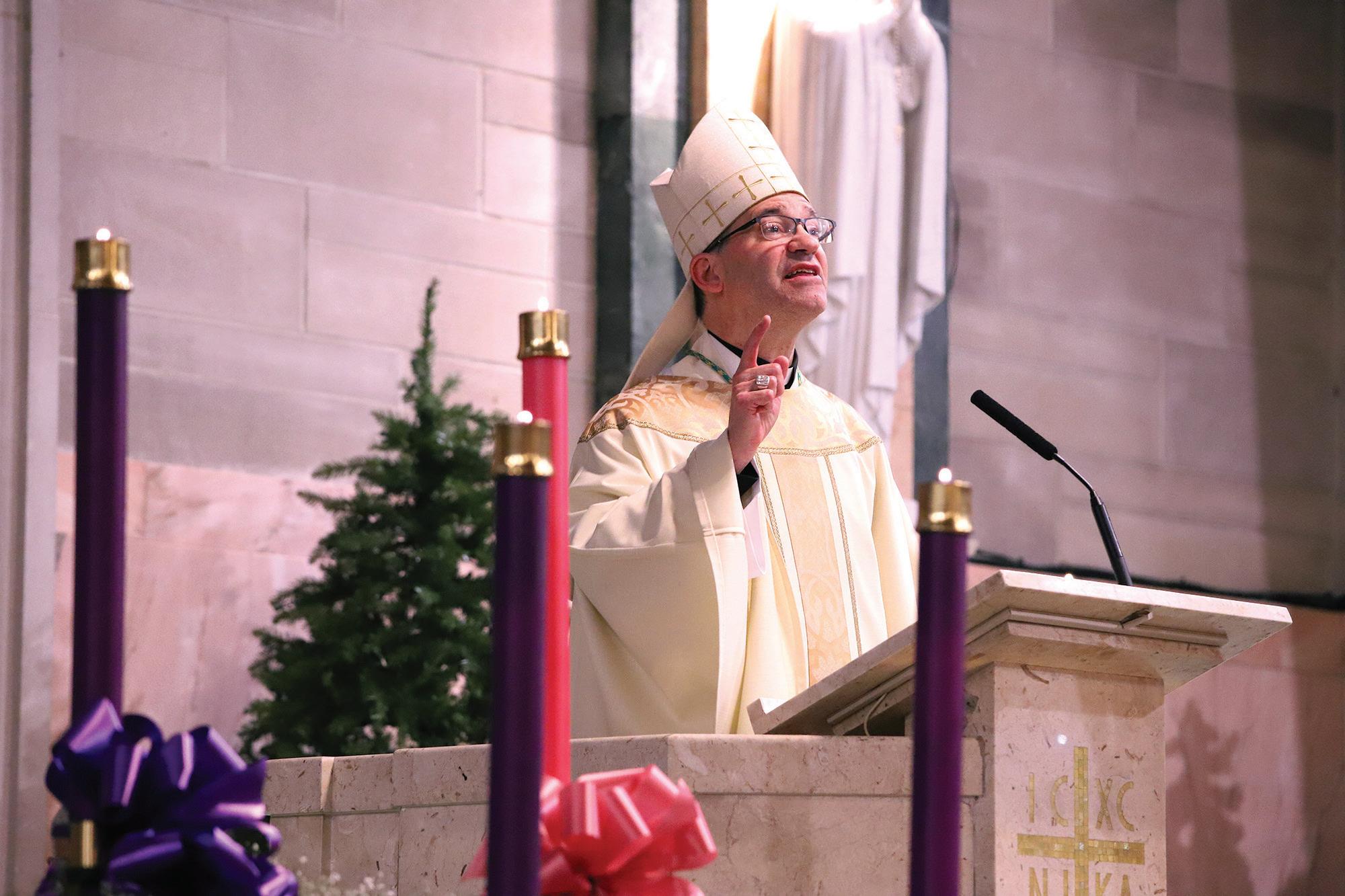
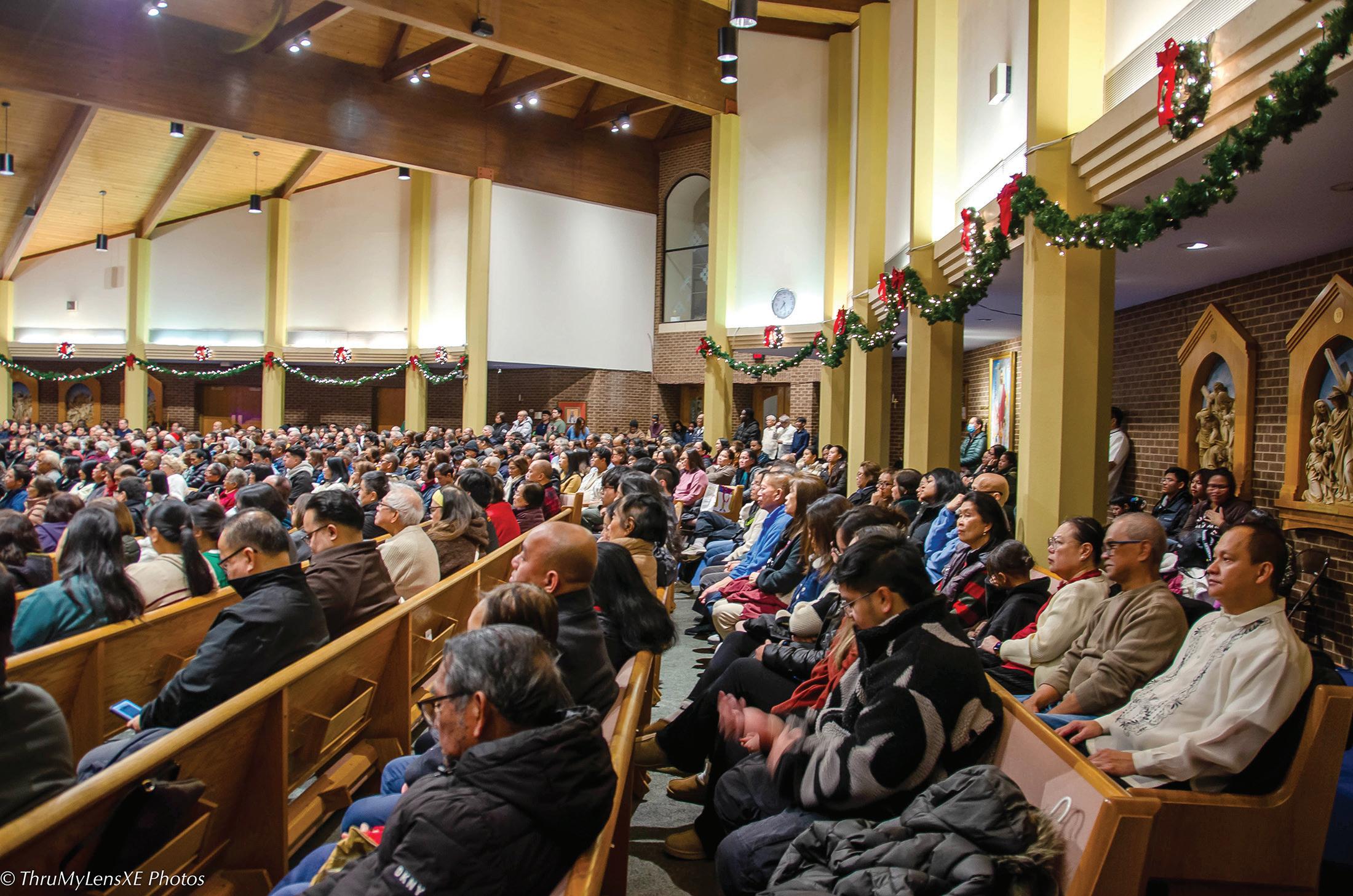
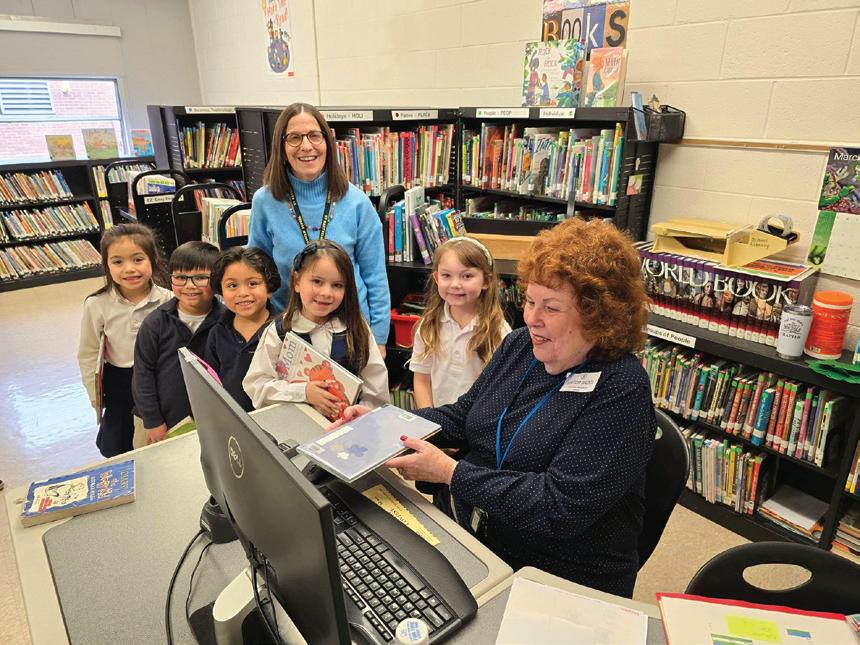
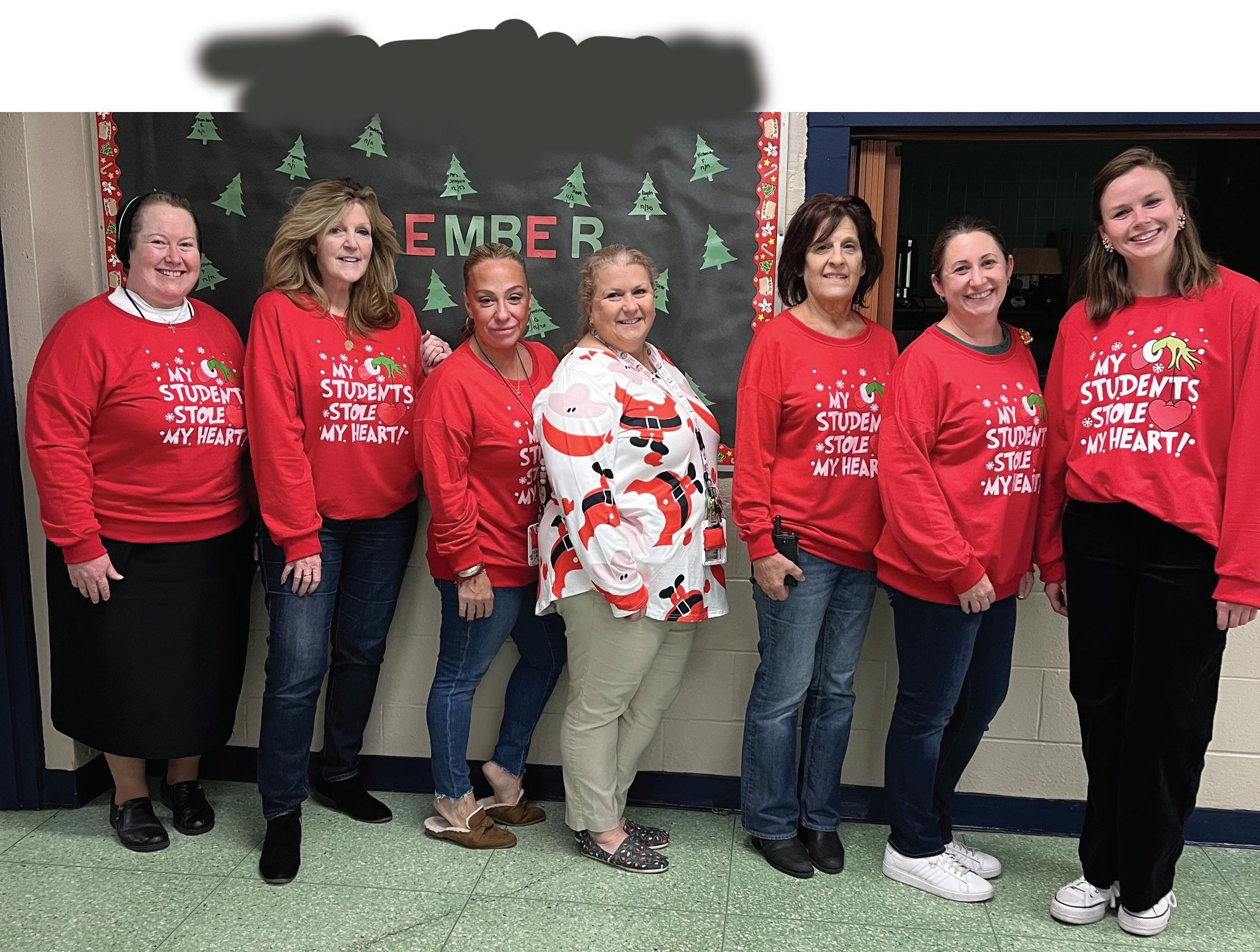
Sacred Heart, Manville, 1, 2
St. Bernard of Clairvaux, Bridgewater, 6, 7
—John Batkowski photos
St. Augustine of Canterbury, Kendall Park, 4, 5
St. Joseph, Bound Brook, 8, 9
St. Ladislaus Church, New Brunswick, 10
St. Luke, South Plainfield, 11, 12
St. Matthias, Somerset, 13, 14
St. Thomas Aquinas High School, Edison, 15, 16
—Mark Lee photos
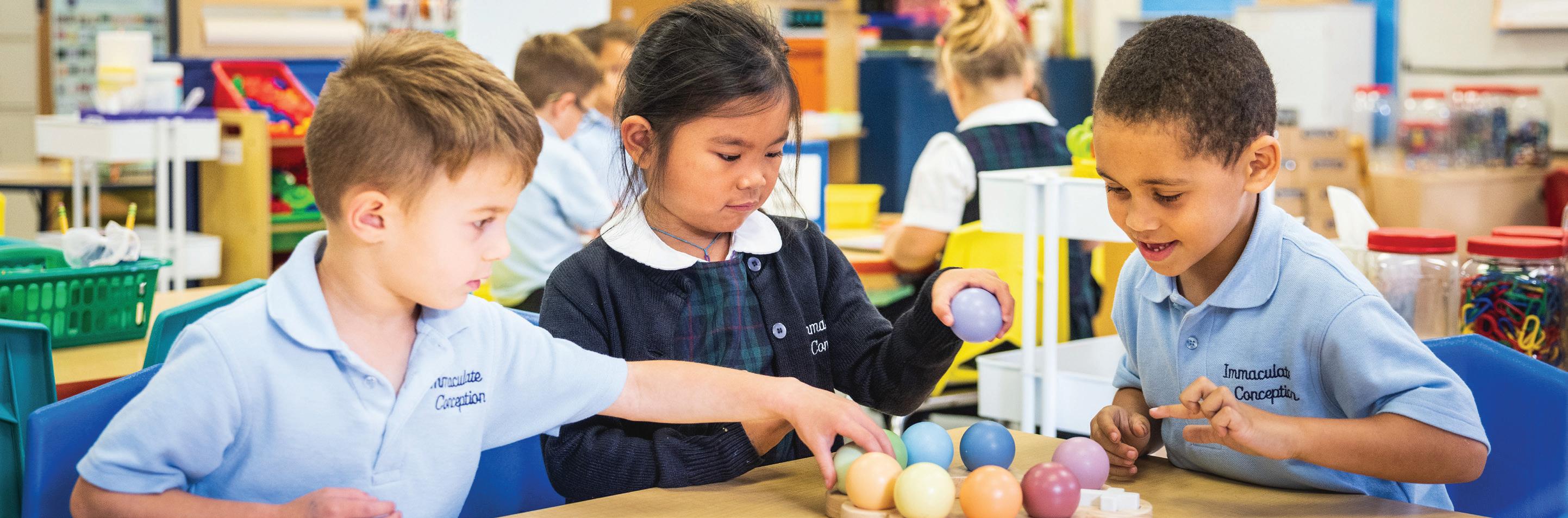
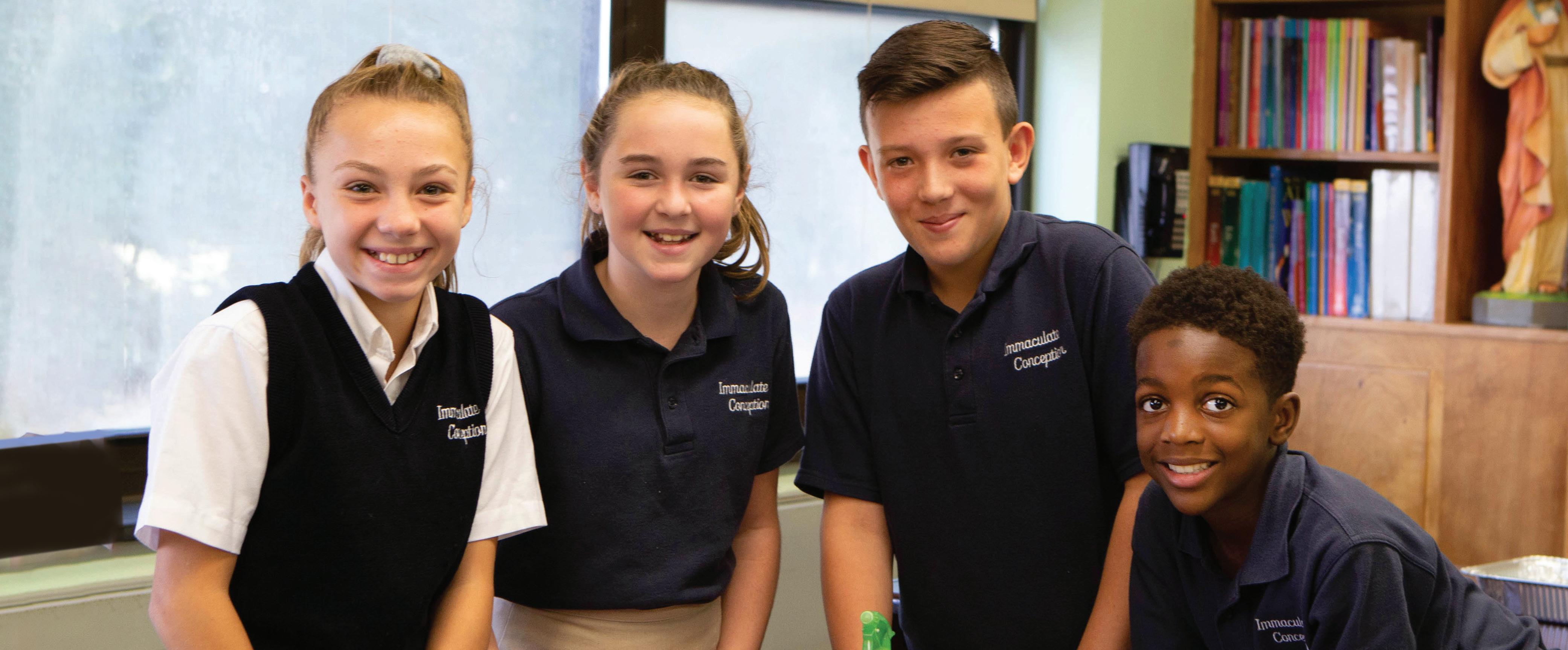
Immaculate Conception School, Somerville, 3
Immaculata High School, Somerville, 17
photos
Diocese brings Jubilee Year of Hope to a close, with gratitude and hope for the future
By Christina Leslie Contributing Editor
The Jubilee Year of Hope 2025 invited the 600,000 Catholics who call the Diocese of Metuchen their spiritual home to join with their 1.4 billion brethren worldwide last year to, in the words of the late Pope Francis, “fan the flame of hope that has been given us and help everyone to gain new strength and certainty by looking to the future with an open spirit, a trusting heart and far-sighted vision.” Local faithful took those words to heart and mind over the course of the ensuing 12 months, continuing as pilgrims of hope in central New Jersey. Though the calendar has turned to 2026, the message of hope and faith-filled service resonates still.
Then-Metuchen Bishop James F. Checchio had addressed the Diocese in a letter at the opening of the Year of Hope and issued in a spiritual rallying call. “The theme chosen by our Holy Father, pilgrims of hope, reminds us that hope is one of the most essential characteristics of the people of God and the scriptures,” he wrote, “and we know that this passes into the life of the Church as well. Indeed, Christ founded his Church to be an instrument of hope in our world.”
Faithful of all ages in the Diocese of Metuchen became those instruments of hope, exhibiting their Christ-like example throughout the Jubilee year, and demonstrating their willingness to aid in building
the kingdom of God close to home:
• New priests, religious and deacons eagerly stepped forward to take up the mantle of humble service, enabling leading those already serving in parishes and institutions, hospitals and prisons, schools and community centers to expand upon their gifts of time, talent and treasure.
• Teachers, staff and administrators who have dedicated their lives to education in our elementary and secondary schools, ensuring a faith-based foundation for thousands of youth throughout the Diocese of Metuchen.
• The faith-based actions of senior Catholics of the Diocese inspired future generations in a myriad of ways, including a celebration of long-lived marriage, dedicated service at their parishes, and willingness to learn.
• Youth, too, exhibited their boundless energy could be utilized in the faith-based arena. The good works of St. Timothy Award winners, philanthropy of fund- and prayer-raising endeavors at their schools or on their ballfields, even their positive use of social media to spread the Good News contributed to the health and growth of the Kingdom of God in central New Jersey.
• Bringing together all these groups – and many other pieces of the glorious, diverse puzzle of multicultural members – hundreds of modern-day pilgrims journeyed to the National Shrine Basilica of the Immaculate Conception in Washing-
ton Sept. 20, and the National Blue Army Shrine of Our Lady of Fatima, Asbury, the preceding week to experience Eucharistic procession, inspirational talks, fervent prayer and joyous liturgies with Bishop Checchio.
Bishop Checchio’s letter to introduce the Year of Hope concluded, “You and I are the body of Christ today, so we too must cultivate this virtue of hope in our lives and share it with others. Hope is essential for us… I thank you for responding to God’s call and for all you do to build up his kingdom in our local Church and for being instruments of hope for so many in need of it right here throughout this beautiful diocese.”
Diocesan administrator Father Jonathan S. Toborowsky celebrated the Jubilee Year’s conclusion with a Dec. 28 noon liturgy in the Cathedral of St. Francis of Assisi. In his homily, Father Toborowsky discussed the milestones which had impacted the Mother Church’s Metuchen-based spiritual family last year, including the death of Pope Francis, the election of Pope Leo XIV, and the reassignment of Bishop Checchio to the Archdiocese of New Orleans.
“Our late Holy Father asked us to be ‘Pilgrims of Hope,’ inspired by St. Paul’s Letter to the Romans,” Father Toborowsky began. “Pope Francis wrote, ‘Hope is born of love springing from the pierced heart of Jesus Christ on the Cross.’ Maybe this is why the Bishops of the United States have asked that we consecrate our
country to the Sacred Heart of Jesus in 2026. As we start thinking of New Year’s resolutions, maybe one I suggest for you is a new appreciation of your Baptism, based in our hope for eternal life with Christ, and an eternal happiness in the presence of God, far surpassing any happiness this earth can give.”
Echoing the Jubilee Year’s message of hope and love, Father Toborowsky once more quoted the late pontiff. “We aspire to a happiness that is definitively found in the one thing that can bring us fulfillment: love,” he said. “Thus, we will be able to say even now: I am loved, therefore I exist. I will live forever in the love that doesn’t disappoint, the love from which nothing can ever separate me.”
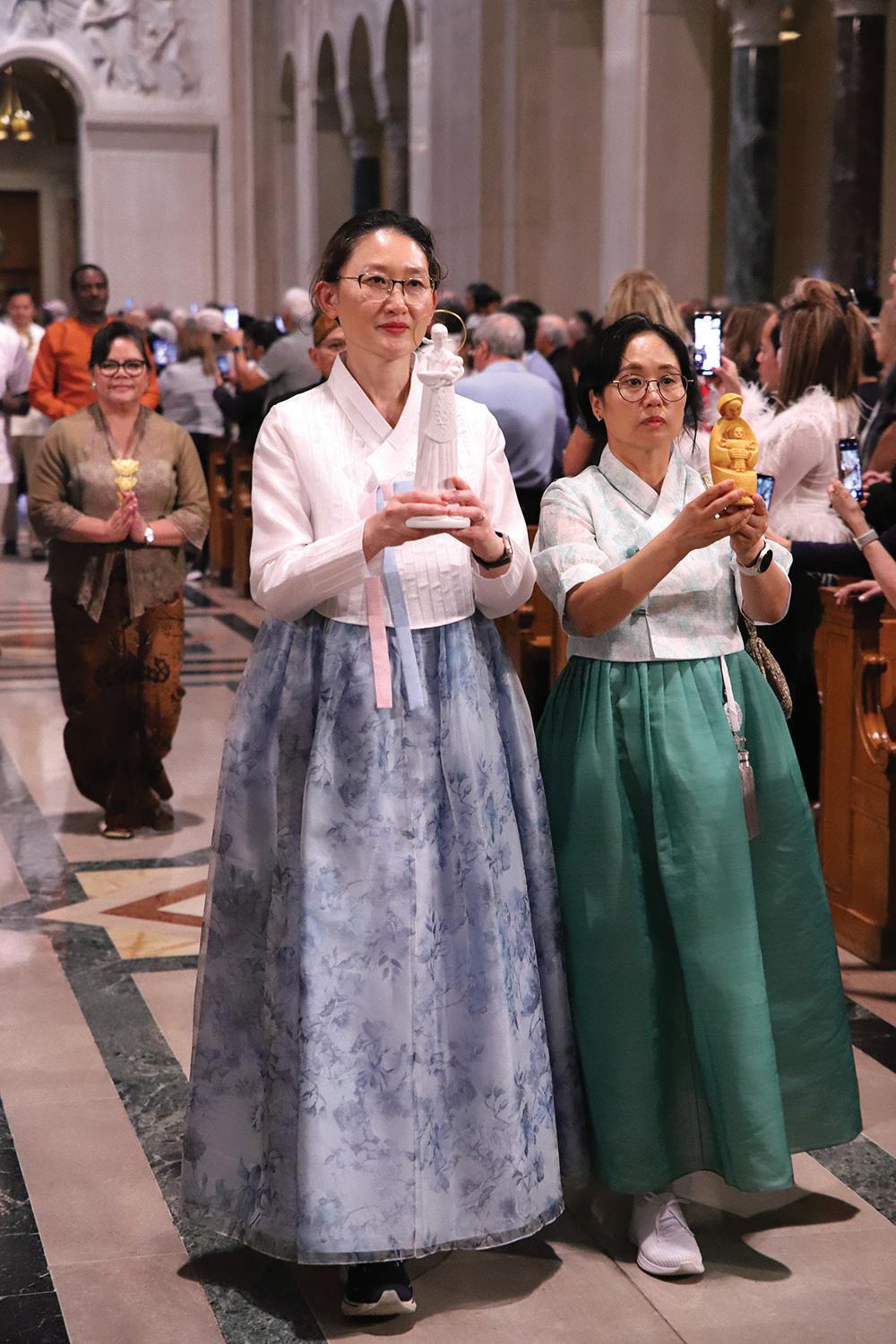
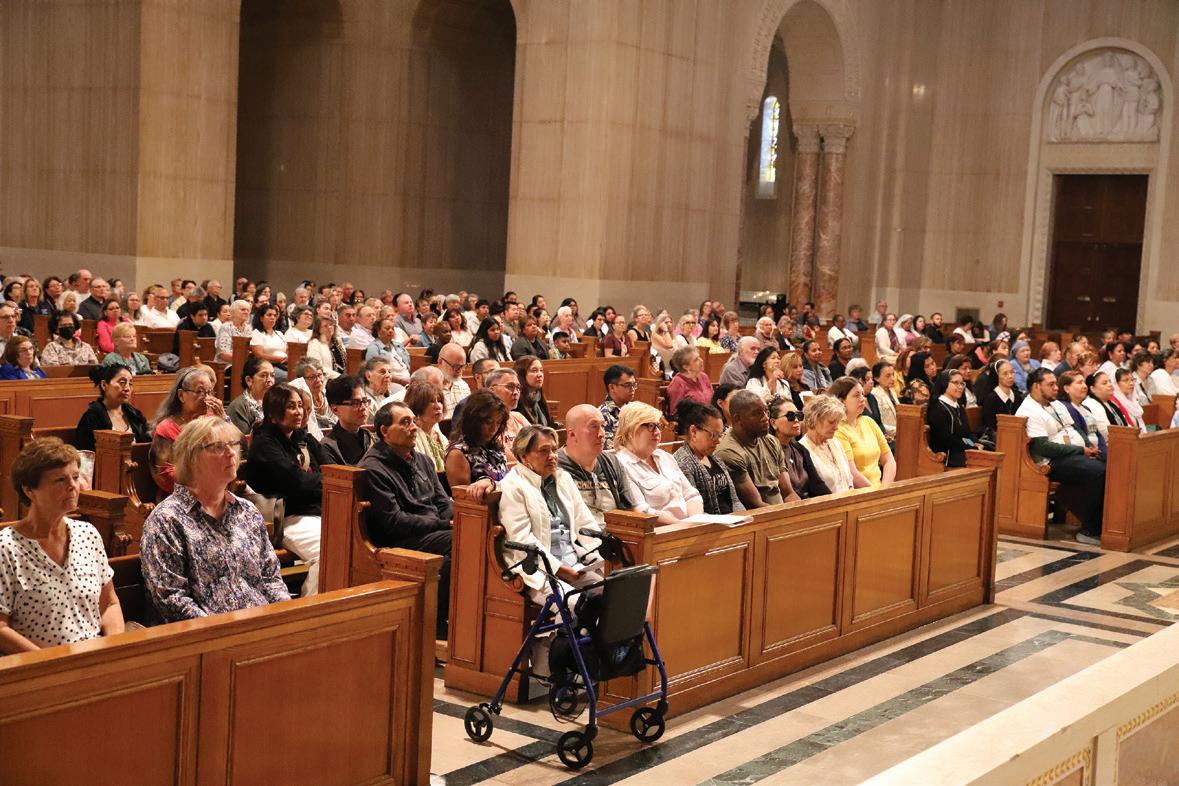
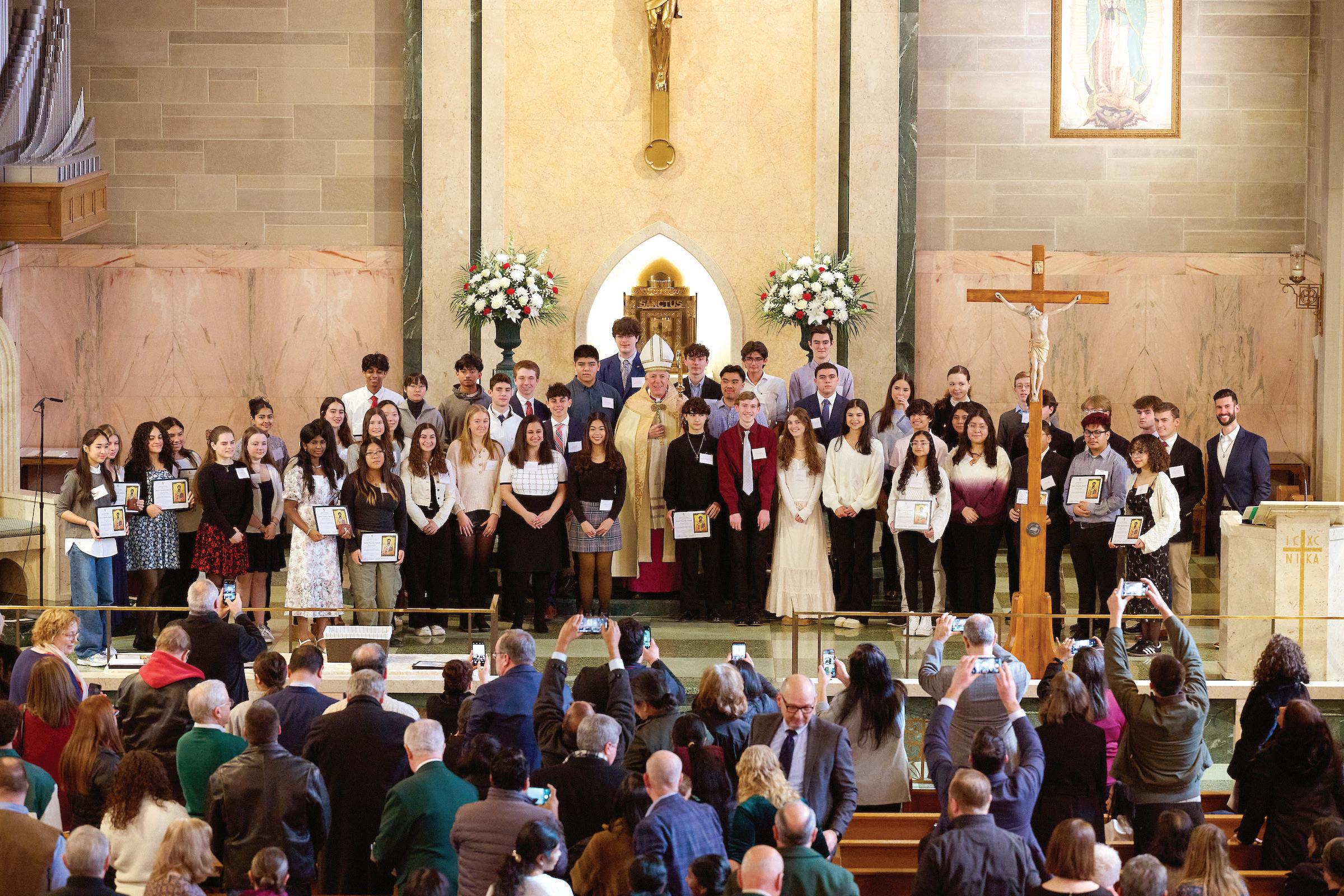
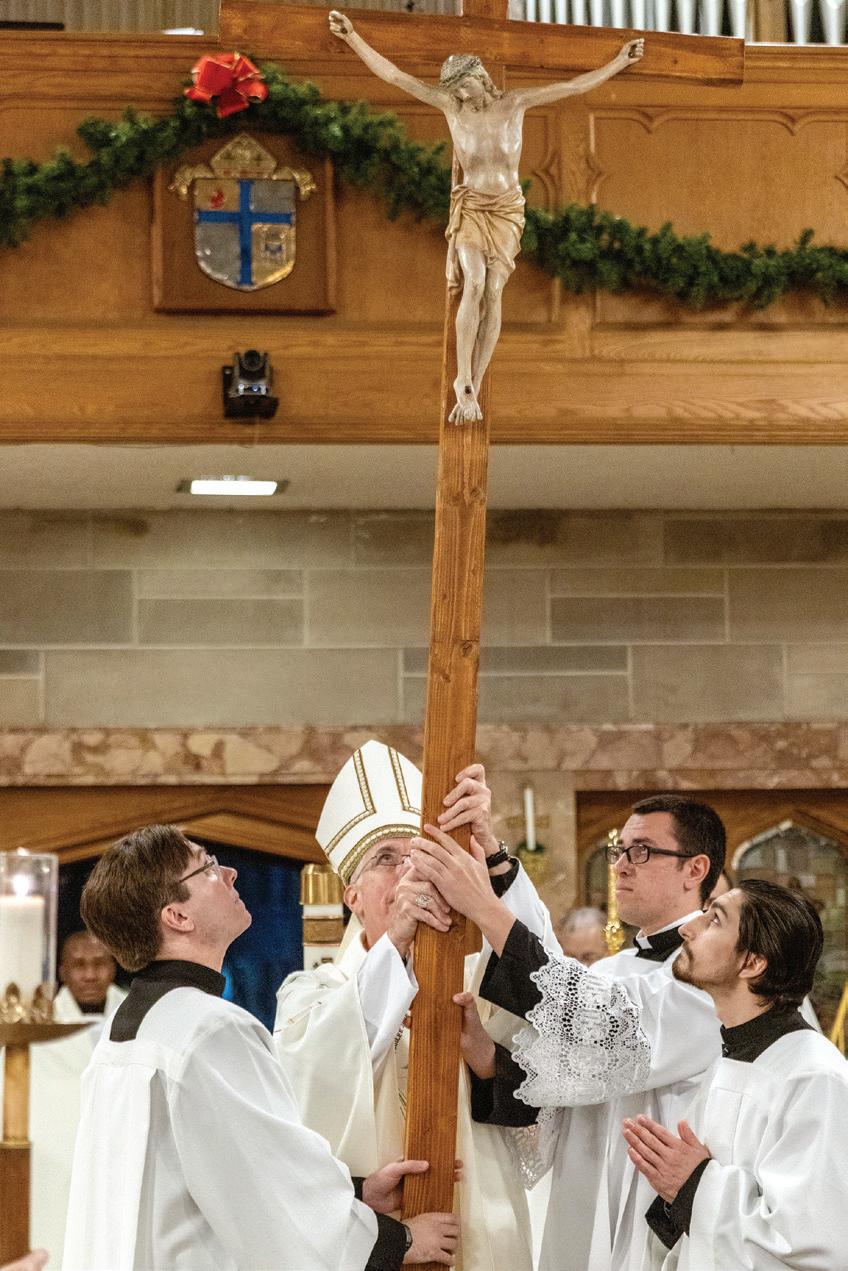
Members of the Body of Christ from throughout the Diocese of Metuchen united in celebrating the Jubilee Year of Hope, reflecting once again how their singular gifts and talents blended into a beautiful, diverse tapestry of faith. (1,2) Parishioners of many diverse heritages processed into an overflowing National Shrine Basilica of the Immaculate Conception, Washington, Sept. 20, during the diocesan pilgrimage to the nation’s Mother Church; (3) Teens who contributed their time, talent and treasure to their parishes and communities, earning them the coveted St. Timothy Awards, pose before the Cathedral altar Jan. 25, and (4) then-Bishop James F. Checchio lifts high the Jubilee Cross in the Cathedral of St. Francis of Assisi, Metuchen, Dec. 28, 2024, to mark the beginning of the Church-wide Jubilee Year of Hope. —Photos by John Batkowski (1 & 2), Mike Ehrmann (3) and Hal Brown (4).
Pope Leo, bishops react to US capture of Maduro with concern for Venezuela
By Junno Arocho Esteves, OSV News
(OSV News) – Pope Leo XIV expressed “deep concern” following the capture of Venezuelan President Nicolás Maduro and his wife, Cilia Flores, by the United States in a large-scale attack.
After reciting the Angelus prayer with pilgrims gathered in St. Peter’s Square Jan. 4, the Pope said the “well-being of the beloved Venezuelan people must prevail over all other considerations and lead to overcoming violence and pursuing paths of justice and peace.”
Entrusting Venezuela to its patroness, Our Lady of Coromoto, as well as the country’s recently canonized saints – Sts. José Gregorio Hernández and Carmen Rendiles – Pope Leo called on Catholics to pray and highlighted the need to respect Venezuela’s right to autonomy and self-determination.
“This must guarantee the country’s sovereignty, ensure the rule of law enshrined in the Constitution, respect the human and civil rights of all, and work to build together a serene future of collaboration, stability, and harmony, with special attention to the poorest who suffer due to the difficult economic situation,” he said.
After months of tension, U.S. President Donald Trump ordered the nighttime military operation Jan. 3, capturing
Maduro and his wife, and transporting them to New York to face narco-terrorism conspiracy charges, The Associated Press reported.
According to AP, Venezuelan officials said some people were killed in the U.S. attack but did not disclose the number of casualties.
Reactions from around the world have been mixed, with many, particularly Venezuelans in the diaspora, hailing Maduro’s capture, while others expressed concerns that the U.S. attack violated international law.
The country’s bishops issued a brief “message of accompaniment and closeness with the People of God” via Instagram and X that did not comment directly on the capture of the Venezuelan president and his wife, but instead urged for “prayer for the unity of our people.”
“In light of the events that our country is experiencing today, let us ask God to grant all Venezuelans serenity, wisdom, and strength,” the bishops said. “We express our solidarity with those who were wounded and the families of those who died.”
Less than an hour later, the bishops issued a second brief statement calling on the people of Venezuela “to live more intensely in hope and fervent prayer for
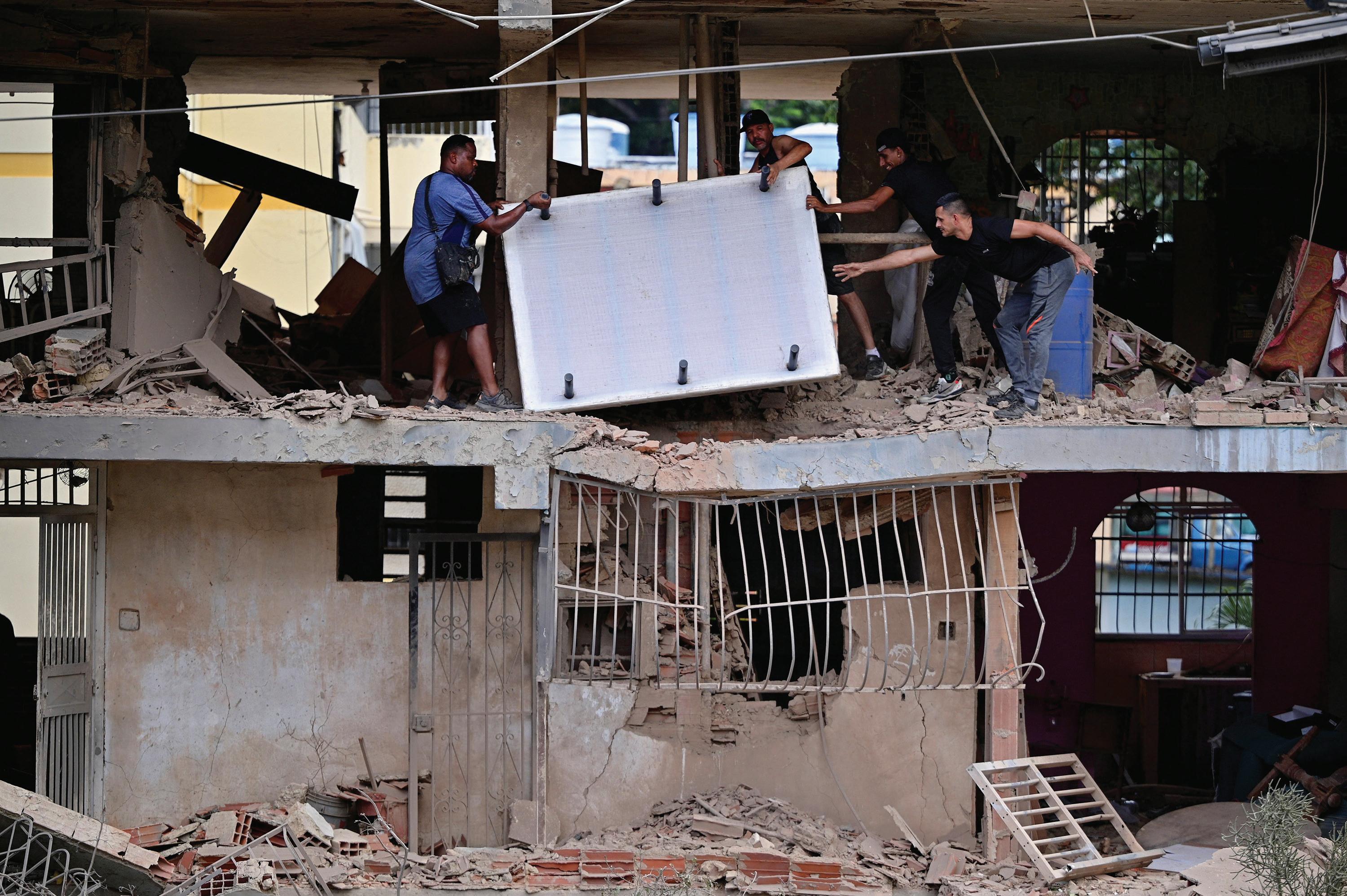
People carry personal belongings at a damaged building in Catia La Mar, Venezuela, Jan. 4, 2026, following U.S. strikes the previous day on Venezuela during which President Nicolas Maduro and his wife, Cilia Flores, were captured. —OSV News photo/Gaby Oraa, Reuters
peace in our hearts and in society, rejecting any type of violence.”
“May our hands open for encounter and mutual aid, and may the decisions that are taken always be made for the well-being of our people,” the bishops wrote.
The statement was shared by other Latin American bishops’ conferences, including the bishops of Argentina and Mexico.
The Mexican bishops’ conference said it was “united in prayer with the bishops of Venezuela to ask God for serenity, wisdom, and strength for the Venezuelan people.”
In a brief comment to SIR, the news agency of the Italian bishops’ conference, Archbishop Jesús González de Zárate of Valencia, Venezuela, president of the country’s bishops conference, said he had been “awake since 2 a.m. to follow what was happening” and that he was accompanying “our people with prayer.”
While Venezuelans are still in shock, Archbishop Zarate said, “the facts are still in development to properly assess” the situation and emphasized his “trust in
God and the values of our people.”
Bishop Juan Carlos Bravo Salazar of Petare, a diocese located east of the Venezuelan capital of Caracas, issued a statement Jan. 3 on the diocese’s Instagram account acknowledging that the people of Venezuela “are living through moments of confusion, uncertainty, and pain, in which we do not see clearly what is happening.”
“Our strength and hope are in the Lord of life and peace,” Bishop Bravo said, urging the need “to maintain serenity, peace, and above all a climate of prayer.”
He also urged caution, asking people to “take shelter and not go out.”
“For the good of our people, do not make calls to (take to) the streets, nor disseminate unverified and unconfirmed information, nor from sources that are not reliable or official. Let us stay in communication among ourselves, between pastoral zones, and with our closest collaborators,” he said.
Junno Arocho Esteves writes for OSV News from Malmö, Sweden.
1. The days of both fast and abstinence are Ash Wednesday (Feb. 18) and Good Friday (Apr. 3).
2. The other Fridays during Lent (Feb. 20 and 27, Mar. 6, 13, 20, and 27) are days of abstinence.
3. Fasting in the Roman Catholic tradition means to limit oneself to one full meal with two smaller meals which together do not equal the size of your full meal. The obligation of fasting applies only to Catholics between the ages of 18 to 59.
4 Abstinence in the Roman Catholic tradition means to abstain from eating meat (beef, chicken, pork, turkey, etc.). The obligation of abstinence applies to all Catholics who have reached the age of 14.
The USCCB has a document with some good things for Lent. Scan the QR code or visit: https://www.usccb.org/resources/10%20Things%20to%20Remember%20During%20Lent.pdf.
A steady light: Pope Leo XIV’s top five moments of 2025
By Elizabeth Scalia, OSV News
“Lebanon needed this embrace.”
The words went out over a social media platform, made more poignant for the accompanying image of Pope Leo XIV consoling a weeping Lebanese woman.
I couldn’t help thinking “perhaps the whole world needed it, and needs this Pope, for this time.”
Leo’s papacy, of nine months gestation, has revealed itself slowly – full of hope but also hidden, as though the first Pope from the United States meant to show himself in small, unhurried measures.
The office into which he had been thrust might quickly make its demands known, but this new pontiff seemed to be considering everything placed before him with care. The punditry, who had barely counted Cardinal Robert Prevost among the papabile going into the conclave, have been chomping at the bit to define the man, quickly comparing him to his predecessor or trying to label the new pontiff according to their preferences.
Barely had we met him before one head-spinningly swift headline blared: “With Leo, there’s no going back from Francis,” while another editorial declared Prevost would be no “Francis 2.0 or even 1.5.” More thoughtful publications watched and waited to see what the first steps of this newborn pontificate would show – would he be cautious or take off running?
Our new Peter came with a papal name of both historic greatness and clear-minded engagement with changing times and trends, and that seemed to please everyone.
As societies are roiled by the still-evolving, barely studied effects of techno-addiction on our minds and souls, increased government surveillance on our trust, mysterious use of bitcoin on economies and the thoughtless embrace of artificial intelligence on everything, there seemed to be a consensus of hope that this new Leo might be nodding toward Leo XIII, whose encyclical “Rerum Novarum” helped to define the moral concerns and rights of laborers during the Industrial Revolution.
When the new pope admitted as much, expectations grew that he would quickly address all of it, especially bringing Catholic sensibility to bear on the powers and problems inherent to AI.
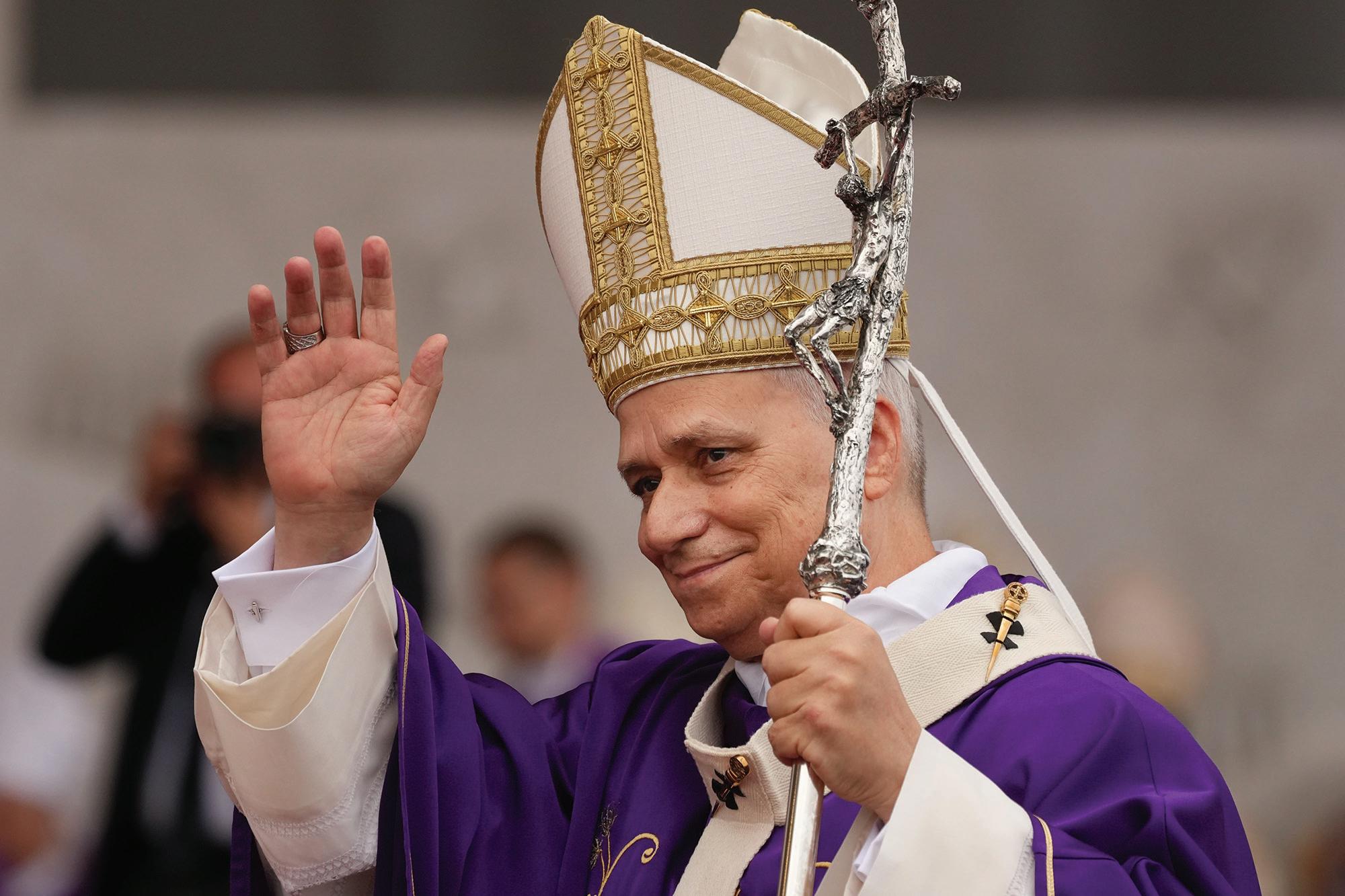
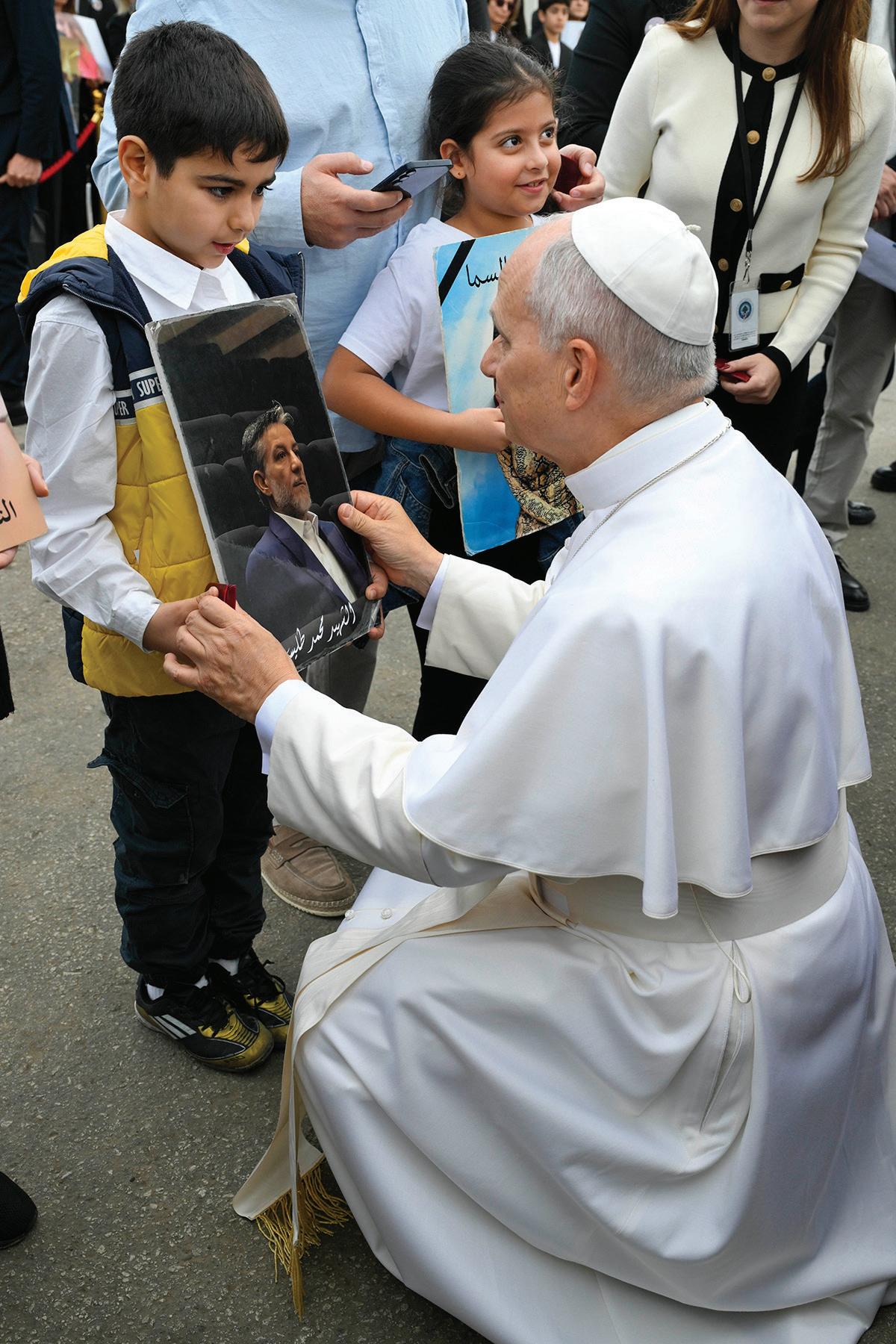
Above left, Pope Leo XIV greets the faithful before he celebrates Mass in Beirut, Lebanon, on the final day of his first apostolic journey Dec. 2, 2025. —CNS photo/Lola Gomez. Right, Pope Leo XIV kneels to speak to a boy in Beirut Dec. 2, 2025, during a meeting with families of victims and with survivors of a deadly 2020 port explosion. The boy is holding a photo of his father, who died that day. —CNS photo/Vatican Media
Meanwhile, the Augustinian who appeared on the balcony of St. Peter’s last May 8 kept his initial thoughts to himself. Making his first popemobile forays into the crowds attending his audiences, he greeted babies and made several spectacular catches as all manner of “Pope Leo” dolls came his way.
“He seems quietly centered, and comfortable in his own skin,” I wrote to a friend. “But I wish he’d do something spectacular, already. I mean, why the reticence? He’s from Chicago!”
“By way of the missions in Chiclayo, Peru,” I was reminded. “Be patient. Honestly, I like that Leo is taking his time and leaving a lot to the imagination. Showing an ankle, so to speak, not the whole leg.”
As the Holy Father’s papacy progressed, I realized that what I’d thought of as “reticence” was instead an Augustine-rooted habit of careful thought. After the dramatic pipe organ of Pope John Paul II, the quiet piano of Benedict XVI, and the larger-than-life brass band that was Pope Francis (a man unfiltered while speaking off-the-cuff but capable of real elegance on paper), Prevost presented more like an acoustic guitar tuned by the master: soothing, inviting, complex and capable of great surprise.
Here are my top 5 “Pope Leo Moments” for 2025.
1His first interview –and the messages contained in it
In his first interview, Leo spoke clearly of his concerns for socio-economic issues, wealth inequality, the marginalized, environmental concerns, immigration, war and governmental overreach but also surprised many by insisting, “I don’t see my primary role as trying to be the solver of the world’s problems.”
Rather, the new pope means to root the voice of the church firmly to its source: “The values that the church will
promote in dealing with some of these world crises don’t come out of the blue, they come out of the Gospel.” It goes back, he added “to the very basic things of respecting one another, respecting human dignity …”
And so, month by month Pope Leo began to show us what he meant – by issuing a beautiful and moving exhortation on love of the poor; by praying with the leader of a historic persecutor of the Church; by addressing the marginalized, both outside and within the church through Gospel lenses and with an eye toward bridging what has become polarized. He’s used digital encounters to stay in touch with young Catholics, to excellent effect.
All of that added up to a great beginning for this infant papacy, but Leo’s slow revelation ended in Lebanon, where we saw a candle of steady light, burning with a full and compassionate heart for the suffering, a vigorous and deep uplifting faith and a humble yet firm sense of occasion.
2. Visit to Turkey and, especially, Lebanon
In considering the top five moments of this papacy thus far, Pope Leo’s visit to Turkey and Lebanon is an obvious standout. The photos from Leo’s pilgrimage to Iznik were breathtaking: standing above the submerged ruins of the ancient Basilica of Saint Neophytos, the bishop of Rome joined in prayer with the Ecumenical Patriarch of Constantinople and representatives of Eastern churches, both Catholic and other Orthodox, and helped the one, apostolic Church breathe with both lungs.
In Istanbul he made a respectful visit to the famous Blue Mosque, leaving his shoes outside but – in a departure from his three predecessors – politely declining to pray with an innately American demurral, “that’s OK.”
After that, Leo’s focus was Lebanon, Lebanon, Lebanon, with that beleaguered nation’s estimated 1.3 million Catholics demonstrably overjoyed to meet their new Papa. The Holy Father seemed similarly enthused, becoming the first pontiff to visit and pray before the shrine of St. Charbel Makhlouf, the great Melkite monk held in deep reverence by Catholic and even some Muslim Lebanese. Indeed, Pope Leo later acknowledged “the enduring truth that Christians, Muslims, Druze and countless others can live together and build a country united by respect and dialogue.”
From there Pope Leo met with an enthusiastic group of young people, his stirring address spelling out the challenges of balancing technology and interpersonal relationships; he also consoled the families of those lost in a devastating 2020 explosion that killed hundreds – the “embrace Lebanon needed” – closing the trip with a Mass attended by an estimated 150,000 Catholics. There, he preached with forceful beauty: “Lebanon, stand up,” he said. “Be a home of justice and fraternity! Be a prophetic sign of peace for the whole of the Levant.”
3. Meeting – and praying with – an earthly king
Precedent setting as it was, Pope Leo’s Apostolic Journey was not the first historic moment of his papacy. A month earlier he had welcomed Britain’s King Charles III, Supreme Governor of the Church of England, to St. Peter’s and for the first time since the Reformation, a pope and a British monarch prayed together, and in the Sistine Chapel, no less!
There are still plenty of issues keeping us apart but Leo is demonstrating that Christians praying together, in every part of the world, must always be the beginning dialogue for peace.
Religious model lives on Marian example
By Christina Leslie, Contributing Editor
“God makes Mary the masterpiece of his mercy so that each one of us might share in the death and resurrection of his Son,” asserted Bishop Emeritus Arthur J. Serratelli to a room filled with those devoted to a life of service in Christ. “Mary becomes the model for all the disciples of Jesus. He holds her up as what true discipleship is all about.”
Bishop Serratelli – author, priest, theologian and scripture scholar – served as keynote speaker of the Dec. 13 Diocesan Day of Recollection for Consecrated Life held in the St. John Neumann Pastoral Center, Piscataway. Focused upon the topic “Mary, Mother and Perfect Disciple,” the gathering of religious also included fellowship, the celebration of Holy Mass, and the opportunity for Confessions and Eucharistic Adoration.
the Church, he has served as the chair, or member, in multiple Vatican appointments, and is the author of numerous books on the Catholic faith.
The Church has always placed Mary in a place of honor and devotion, the Bishop began. “In the order of nature, the mother forms the child, but in the order of salvation, the child forms the mother,” he said. “Mary put God’s will first, [and as a] faithful follower of Jesus, she ultimately helps religious develop that bond of charity which should unite them in their religious community.”
Father Jonathan Toborowsky, diocesan administrator, expressed his appreciation to those present at the workshop, noting their crucial contributions to the Church of Metuchen. “Thank you for the work you do in the parishes and communities and your apostolates,” he told them. “What you take on makes life so much easier for the pastors, [as does] your visible witness to the people.”
Father Toborowsky introduced Bishop Emeritus Serratelli, whom he had first met as a seminarian in Seton Hall’s St. Andrew’s College Seminary. Bishop Serratelli, a native of Newark, was ordained to the priesthood in St. Peter’s Basilica in 1968. The graduate of Seton Hall University, South Orange, he continued his education in Rome, earning licentiates in theology and Scripture from the Pontifical Gregorian University and the Pontifical Biblical Institute. For the next 25 years, the future bishop taught Sacred Scripture and biblical languages at Immaculate Conception Seminary, and served for three years as Rector of St. Andrew’s College Seminary at Seton Hall University.
Named a Prelate of Honor by Pope St. John Paul II in 1998, Bishop Serratelli was appointed two years later as Auxiliary Bishop of Newark, where he served in various capacities, including Vicar for Ministries, Regional Bishop for Essex County, Vicar General, and Moderator of the Curia. In 2004, he was installed as the seventh Bishop of Paterson. Though officially retired from active ministry in 2020, Bishop Serratelli often serves as weekend celebrant in area parishes. Over the course of his long service to
Asserting that all followers hold the responsibility of evangelizing others, Bishop Serratelli said, “We never need be afraid to suggest to others, especially our young, a deeper involvement in the work of the Church. The most powerful teachings are the ones we give through example. Mary is the model and mother of all vocations.”
He continued, “God willed us into living with purpose and mission. His choice for us goes beyond what we could ever imagine. We are called to embrace God’s love freely and live out our vocation wherever he places us.
“Sometimes our life may seem without glory, monotonous, routine and even boring,” the bishop admitted. “The daily realm of duties take place without glamour, yet all the while we are to bear for others the saving gift of Jesus… At the foot of the cross, Jesus made his mother our mother, and just as she cared for him, she stays with and cares for us. She takes every one of us under the mantle of her love.”
Bishop Serratelli conducted a question-and-answer session and shared highlights from his most recent book, “Living our Faith Day by Day,” which combines daily minute-long meditations, inspirational quotes, reflections and prayer based on the Nicene Creed, now marking its 1700th anniversary year. He presented each religious in attendance with an autographed copy of the book.
Sister of Christian Charity Anna Nguyen, Delegate for Religious and Consecrated Life, expressed her joy for the assembly, noting, “We, too, need renewal. We need each other, and we need a community larger than our own. When we gather like this, we feel we are a community of the Diocese of Metuchen: we connect, we work with each other and we get close. We help each other live our faith. As the bishop said at Mass today, we have a mission to turn our hearts to the Lord, and it needs to begin with us.”
Bishop Emeritus Arthur J. Serratelli served as principal speaker Dec. 13 at the Diocesan Day of Recollection for Consecrated Life in the St. John Neumann Pastoral Center, Piscataway (top), reminding the religious that “as a faithful follower of Jesus, Mother Mary helps us form a bond of charity”. Center, Bishop Serratelli and Father Jonathan Toborowsky, diocesan administrator, chat with a religious sister. Bottom, attendees participate in a question and answer period and discussion of the bishop’s book, “Living Our Faith Day by Day.” —John Batkowski photos
10 America will be consecrated to the Sacred Heart of Jesus
2026 will be a remarkable year for the United States. As the nation celebrates 250 years since its founding, Catholics across the country will also dedicate our nation to the Sacred Heart of Jesus. In June, the American bishops will consecrate our country to the Sacred Heart, entrusting the United States to God’s mercy and moral guidance. This convergence of civic and spiritual anniversaries invites a deeper reflection on a symbol that has shaped centuries of Catholic devotion and continues to speak powerfully to the modern world.
Among the many symbols within our Catholic tradition, the Sacred Heart of Jesus stands out for its unique ability to unite profound emotional resonance with rich theological meaning. It expresses divine love not as an abstract doctrine but as something visible, tangible, and deeply human. Because of this accessibility, the Sacred Heart speaks not only to believers but also to those outside the Catholic faith. Its imagery communicates compassion, mercy, and self-giving love in a way that is universally intelligible.
The modern form of devotion to the Sacred Heart is most closely associated with St. Margaret Mary Alacoque (1647–1690), who reported receiving private revelations between 1673 and 1675 in which Christ asked her to spread devotion to His Heart. These visions gave the devotion a distinctive shape that endures today: the image of the Heart itself, the First Friday devotion, the Holy Hour, and the Feast of the Sacred Heart. For this reason, St. Margaret Mary is widely recognized as the one who “promoted devotion to the Sacred Heart of Jesus in its modern form.”
St. Margaret Mary Alacoque, a French Visitation nun, lived a life marked by suffering, humility, and an unwavering desire to belong entirely to Christ – qualities that made her both a credible witness and a powerful spiritual voice. Her spiritual director, St. Claude de la Colombière, played a decisive role in discerning and validating her experiences. His guidance provided credibility to her revelations and helped ensure their dissemination within the Church. Biographical accounts emphasize her perseverance through illness and trial, making her a reliable and inspiring figure whose personal witness strengthened the persuasive power of the message she carried.
St. Claude de la Colombière (1641–1682), a French Jesuit priest, contributed his own gifts of discernment, intellectual
Beyond religious contexts, the heart itself has long symbolized love, sacrifice, vulnerability, and commitment – meanings embedded in cultures across the world. As such, the Sacred Heart serves as a bridge between faith and human experience. It draws upon symbols people already understand, making its message immediately relatable. The devotion does not require specialized theological knowledge; it speaks directly to the human condition.
The imagery of the Sacred Heart – flames, thorns, radiant light, and the wound of Christ – functions as a visual summary of the Gospel. Each element conveys a distinct theological truth: the flames represent transformative love; the crown of thorns signifies Christ’s suffering for humanity; the light symbolizes divine truth; and the open wound expresses vulnerability and an invitation to relationship. Together, these symbols form a multilayered icon that is both intellectually rich and spiritually evocative.
Prayer to the Sacred Heart of Jesus
O most holy Heart of Jesus, fountain of every blessing, I adore you, I love you, and with a lively sorrow for my sins, I offer you this poor heart of mine.
Make me humble, patient, pure, and wholly obedient to your will. Grant, good Jesus, that I may live in you and for you.
Protect me in the midst of danger; comfort me in my afflictions; give me health of body, assistance in my temporal needs, your blessings on all that I do, and the grace of a holy death.
Within your heart, I place my every care.
In every need let me come to you with humble trust saying, Heart of Jesus, help me.
Amen
clarity, and fidelity to the rise of the modern devotion. His life demonstrates how God often uses friendship, obedience, and hidden sacrifice to shape the course of the Church.
After St. Margaret Mary’s death in 1690 at age 43, the devotion spread rapidly, especially through the Jesuits, who adopted her revelations as a spiritual foundation. Their global missionary presence helped the devotion take root across Europe, Asia, and the Americas. Over the next two centuries, papal endorsement further solidified its place in Catholic life. The Feast of the Sacred Heart was eventually extended to the universal Church, and the devotion became
associated with themes of reparation, mercy, and social renewal. St. Margaret Mary’s influence was so significant that she was canonized in 1920 and honored as the “Apostle of the Sacred Heart.”
The historical context of the devotion’s rise also helps explain its rapid spread. The 17th century was marked by war, plague, and political instability – times when people longed for reassurance that God remained close to human suffering. The Sacred Heart offered precisely that: a symbol of comfort, solidarity, and hope. It addressed emotional, spiritual, and communal needs at a moment when many sought signs of divine presence and care.
Importantly, the Sacred Heart is not merely an object of contemplation. It inspires concrete action. Throughout history, devotion to the Sacred Heart has motivated acts of charity, forgiveness, compassion, and social justice. This practical dimension strengthens its persuasive power by connecting belief to behavior. It suggests that divine love is not passive but active – something meant to be lived out in daily life.
Unlike doctrines that often emphasize rules or abstract metaphysics, the Sacred Heart emphasizes relationship. It portrays God not as distant or impersonal but as One who desires closeness with humanity. In a modern world where many seek meaning, purpose, and belonging, this relational dimension is especially compelling. It speaks to contemporary longings for authenticity and emotional depth.
The global reach of the Sacred Heart demonstrates its adaptability and universality. Embraced across continents, cultures, and languages, it shows how a religious symbol can transcend time and geography. Its message remains relevant because it appeals to something fundamentally human: the desire to love and be loved. In this way, the Sacred Heart endures not only as a theological symbol but as a powerful expression of hope, compassion, and faith – one that continues to resonate in every age and place.
As we celebrate 250 years of God’s generous gifts – life, liberty, and the pursuit of happiness – may our nation be renewed in the abundance of His love and mercy through the Sacred Heart of Jesus.
May the Most Sacred Heart of Jesus watch over our country and have mercy on all our souls.
Father Hillier serves as diocesan director, Office of Pontifical Mission Societies, the Office for Persons with Disabilities and Censor Librorum.
We share in Church’s role of combatting, eradicating human trafficking
Every year the Diocese of Metuchen’s Office of Human Life & Dignity hosts a Choices Matter Conference to help educate fellow Catholics about the many critical life issues that we face in our world today. Past conferences have addressed issues such as abortion, assisted suicide, euthanasia, stem cell-research, human cloning, reproductive technology, pornography and end-of-life care and decision making, all through the lens of Catholic moral teaching.
This year will mark the 25th Choices Matter Conference and its focus will be on the hidden crime of human trafficking. The theme “Safeguarding Human Dignity…Shining a Light on Human Trafficking” was chosen in an effort to raise awareness about this crime as preparations are underway for the 2026 FIFA World Cup, which will take place in cities across the country this summer. Large-scale events like the World Cup often create opportunities for abuse and exploitation due to large crowds, increased demands and vulnerable populations in
construction and hospitality. Beginning on June 13th, the World Cup will bring eight soccer games to the MetLife Stadi um in East Rutherford, New Jersey, with over one million people from across the globe expected to attend.
Often referred to as a form of “mod ern day slavery,” human trafficking is defined as the use of force, fraud, or coercion to induce someone into labor or sexual exploitation. It is a violation of human rights and is considered a federal crime in the United States. According to the Global Slavery Index, there is an estimated 49.6 million people living in situations of trafficking at any given moment in time, and around 1 million of those reside in the United States.
and human trafficking survivor, Gina Cavallo, will give a testimony about her personal journey from trauma to triumph. In addition, the Conference will feature an opening Mass, Eucharistic adoration and a variety of exhibits. All are welcome to attend.
The Catechism of the Catholic Church forbids acts that cause the enslavement of humans (CCC 2414).
During the Second Vatican Council in 1965, the Church reaffirmed, “slavery, prostitution, the selling of women and children, and disgraceful working conditions where people are treated as mere tools for profits rather than free and responsible persons are infamies and supreme dishonor to the creator.” (Gaudium et Spes, 1965) Pope Francis referred to human trafficking as “not only a serious crime–it is a rejection of the God-given dignity of every human being. It is an open wound on the Body of Christ and on the body of all humanity, demanding
an ongoing, united response.” Inspired by Francis’ thoughts and teachings, a document entitled, Pastoral Orientations on Human Trafficking (2019) was published to offer a framework for planning pastoral engagement, advocacy and education for dioceses, parishes and other groups.
The 2026 Choices Matter Conference, which is scheduled for Saturday, March 21, 2026 at the St. John Neumann Pastoral Center, will explore this framework. Maria Celina Márquez, policy advisor for the U.S. Conference of Catholic Bishops, will address the Church’s role in combatting and eradicating human trafficking. Retired police chief David Ryan will discuss risk factors and signs of potential victims. Keynote speaker
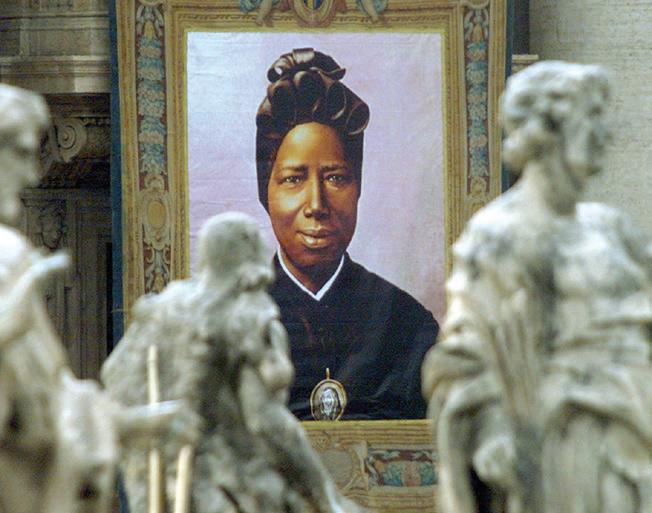
The World Day of Prayer Against Human Trafficking is celebrated every year on February 8th. This coincides with the feast day of St. Josephine Bakhita who is the patron saint of human trafficking victims and survivors and the Church’s inspiration of hope and resilience for those subjected to trafficking. St. Bakhita, herself, was kidnapped as a young girl and was sold into slavery in Sudan and then to Italy where she encountered the Catholic faith. Once she was freed, she became a Canossian nun and dedicated her life to sharing her testimony and comforting the poor and suffering.
On her feast day, all are encouraged to pray for an end to modern slavery and recommit to building a world where every person’s dignity is respected and protected, from conception to natural death. Everyone is invited to engage vigorously in learning about and healing human trafficking. Please consider attending the 2026 Choices Matter Conference which will shine a light on this evil enterprise. Register by visiting, https://diometuchen. org/choicesmatter.
Human Trafficking Awareness Through the Lens of a Subject Matter Expert –A Survivor’s Journey from Trauma to Triumph Gina Cavallo
Author, Speaker, Consultant in Anti-Trafficking Movement
The Role of the Church in Combating Human Trafficking
Maria Celina Márquez
Policy Advisor U.S. Conference of Catholic Bishops
Survivor Informed Human Trafficking Prevention
David M. Ryan
(Retired Police Chief), Coordinator, Westchester County Anti-Trafficking Task Force
LIFE ISSUES CONFERENCE
Saturday March 21, 2026
St. John Neumann Pastoral Center, Piscataway, NJ
Opening Mass at 9 a.m., Conference 10:15 a.m. to 3 p.m. Exhibits, Eucharistic Adoration and Confession
“Safeguarding Human Dignity … Shining a Light on Human Trafficking”
General Admission $35
Student Admission $15
Admission includes lunch and hand-outs
Register at www.diometuchen.org/choicesmatter or scan QR code here
A file photo of St. Josephine Bakhita. —OSV News photo/Paolo Cocco, Reuters
12 Everyone can be a good Samaritan, Pope says in message for world’s sick
By Catholic News Service
VATICAN CITY (CNS) – People of faith and goodwill need to take time to acknowledge the needs and suffering of those around them and be moved by love and compassion to offer others concrete help, Pope Leo XIV said. To love one’s neighbor – whom Jesus identifies as anyone who has need of us – is within everyone’s reach, he said in his message for the 34th World Day of the Sick, observed by the Church Feb. 11, the feast of Our Lady of Lourdes.
“The pain that moves us to compassion is not the pain of a stranger; it is the
pain of a member of our own body, to whom Christ, our head, commands us attend, for the good of all,” the Pope wrote in the message released Jan. 20. Titled, “The compassion of the Samaritan: Loving by bearing the pain of the other,” the message focuses on the importance of encountering and listening to others; being moved by compassion, and loving God through concrete action in solidarity with others.
In his message, Pope Leo said, “To serve one’s neighbor is to love God through deeds.” In fact, the “true meaning of loving ourselves,” he wrote, involves “setting aside any attempt to base our self-esteem or sense of dignity
on worldly stereotypes – such as success, career, status or family background – and recovering our proper place before God and neighbor.”
“I genuinely hope that our Christian lifestyle will always reflect this fraternal, ‘Samaritan’ spirit – one that is welcoming, courageous, committed and supportive, rooted in our union with God and our faith in Jesus Christ,” Pope Leo wrote.
“Enkindled by this divine love, we
will surely be able to give of ourselves for the good of all who suffer, especially our brothers and sisters who are sick, elderly or afflicted,” he wrote.
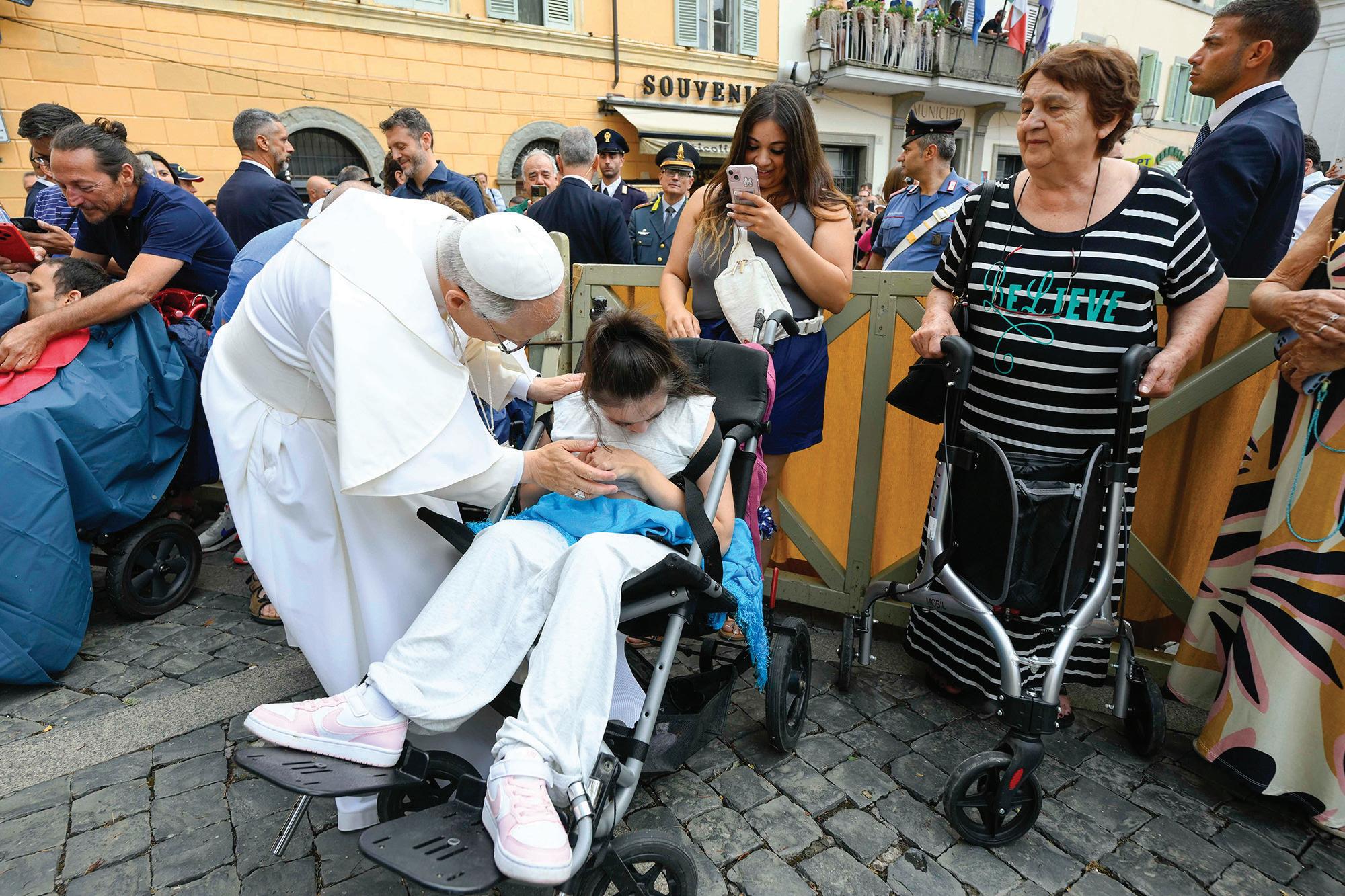
Pope Leo XIV greets a young woman in a wheelchair after leading the recitation of the Angelus prayer in front of the papal palace in Castel Gandolfo, Italy, Aug. 17, 2025. —CNS photo/Vatican Media
Making change – faithfully
By Rev. Msgr. Joseph Kerrigan Special Contributor
Being able to deal with change is one of the more sprawling human challenges, so vast that it’s hard to know where to begin or end in tackling the topic.
At the broadest level, there are the many and multilayered uninvited changes that life inherently brings, and then there are those changes we seek to initiate ourselves.
We have just begun the new calendar year 2026, and Lent’s Ash Wednesday arrival on February 18 is just around the corner. The two dates are often associated with resolutions to change, which
make them opportune moments for reflection and action.
Moreover, as Catholics called to continuing conversion, there’s actually no inopportune time to talk about change. In the famous Gospel passage (Matthew 2:1-12) that is part of the Solemnity of the Epiphany, the Magi, after their encounter with the Christ child, “departed for their country by another way.” There is an obvious self-preservation context for the Magi’s new route, in light of murderous Herod’s intentions, but there’s also a popular interpretation positing that all profound encounters with Christ can lead to new roads and change.
Compounding our capacity to ad-
dress change is this current era of circumstances beyond our control, an age of deep uncertainty and complex unknowns. The psychotherapist Francis Weller has a new book with a revealing title: In the Absence of the Ordinary: Soul Work for Times of Uncertainty.
In his introduction, Weller writes: “It is becoming increasingly clear that our lives are completely entangled with the living fabric of the world.” This observation squares well with a popular theme of Pope Francis’ teaching, in Laudato Si and elsewhere, that “everything is connected.”
However, what we are connected and entangled with can be daunting. Weller calls this current period of collective unknown, “The Long Dark.” He says that the combined effect of frayed social bonds, inflamed political discourse, species extinction and other disruptions have left us outside “the ordinary world, and (we now) have entered the underworld, a sightless terrain that is shadowy and strange … this move into the underworld has left our sense of bearing dislodged.”
As you might imagine, Weller doesn’t leave readers to wallow in his sober assessment. His work is a helpful guide to navigate the dimensions of change at this particular moment.
He describes the following five “disciplines of soul” needed for “The Long Dark,” disciplines that already may be assisting us at some level in the practice of our faith, especially for those who have a contemplative leaning:
1) deep listening: As Weller notes, “When we listen deeply, we begin to uncover what wants to be brought into awareness. We become receptive and permeable to sources of wisdom that lie beyond the purely human.”
2) restraint: Taking a pause for reflection before impulsively moving into action.
3) humility: Most of us know and live the value of humility in following Jesus who exemplified it in his words and actions. For Weller, humility also serves us well in dealing with change as it honors mutuality and our connection with the world.
4) the embrace of not knowing: When we drop our expectations, according to Weller, we become more open to mystery, revelation and discovery.
5) letting go: Again, in Christian faith, we know the importance of self-emptying and letting go in the life of Jesus. At the human level, Weller attests, letting go also reminds us of life’s constant process of change, and “softens the space between us and all the others with whom we share this shimmering world.”
As a psychotherapist, and a practitioner in one of the areas where healing can be gained, Weller uses medical language as he also prescribes what he calls three “medicines” of soul needed for this “Long Dark”: 1) friendship and community, 2) imagination and 3) our ancestral inheritance. As Catholics, our reservoir for these three “medicines” runs deep. For example, our parish community augments normal circles of friendship and community, our fellowship with the Holy Spirit enhances our sense of imagination, and our ancestral inheritance runs all the way back through Christian and biblical history to tap the wisdom of our ancestors in faith.
Toward the end of his letter to the Philippians, St. Paul writes, “I have the strength for everything through him who empowers me (4:13).” In Christ, Paul has strength for everything, including the changes that lie ahead. And so do we.
Msgr. Kerrigan is pastor of St. Joseph Church, Bound Brook, and an instructor in the Institute of Contemplative Leadership at Mepkin Abbey, SC.
Keeping the Nativity Year-Round: A pathway to peace
“Blessed are the peacemakers, for they shall be called children of God.” Matt. 5:9
By Mary Morrell, Editor-in-Chief
The Nativity is inseparably linked to peace.
The angels’ proclamation at the time of Jesus’ birth – “peace on earth” – was not a sentimental greeting card wish but a declaration of God’s intention for humanity.
But like our Nativity scenes which are carefully packed away, often before the New Year begins, peace seems to be the piece that is missing from our daily lives – in our families, our communities, within our nation and across the globe.
With the state of things, it is easy to question whether peace will ever be a possibility. What can we do to change things? And how might that be connected to keeping the Nativity year-round?
More than just displaying a Nativity scene throughout the year, keeping the Nativity means allowing God’s promise of peace to shape our personal, communal, and global relationships long after the Christmas season has ended.
It is through the Incarnation, which is made visible in the Nativity, that God bridges the distance between heaven and earth. Remembering the Nativity throughout the year, keeping it in heart and mind, reminds us that true peace begins with healed relationships – with God and with one another.
The humility of the Nativity also defines the nature of Christian peace. Christ is born not into privilege but into poverty, not into security but into risk. We see that peace is not the absence of conflict alone, but the presence of love amid vulnerabil-
ity. Keeping the Nativity visible and interiorly present challenges forms of peace built on exclusion, domination, or fear.
Year-round contemplation of the Nativity is year-round contemplation of the Incarnation. Our belief in Jesus as God incarnate encourages us to pursue peace through gentleness, patience, and sacrificial love rather than coercion or control. It forms peacemakers who reflect Christ’s way of being in the world.
The Nativity also gathers unlikely companions – shepherds and Magi, the poor and the learned, locals and foreigners, and, of course, the furred, feathered creatures God has made. This inclusive vision stands as a critique of division and hostility. Keeping the Nativity alive throughout the year reminds communities that peace grows where difference
is welcomed and where all are invited to encounter Christ together.
God’s decision to dwell among us assures believers that they are not abandoned in suffering or uncertainty. This assurance fosters trust and hope, even in difficult circumstances. Remembering the manger throughout the year anchors the heart in the truth that God is near, especially in moments of fragility.
Ultimately, keeping the Nativity year-round transforms peace from a seasonal sentiment into a lifelong vocation. The child of Bethlehem continues to call the world toward reconciliation, justice, and mercy. By living in continual remembrance of the Nativity, we become bearers of the peace first sung by the angels–a peace rooted in God’s enduring presence among us.
Parish brings teaching of Pope Benedict XVI to new Advent reading series
By Robert Christie, Correspondent
An idea for an Advent reading series, shared by Father Mauricio Tabera-Vasquez, pastor, came to life the weeks before Christmas, giving those who were interested an opportunity to answer their questions about the miracle of Jesus, the mystery of God made man and the virgin birth.
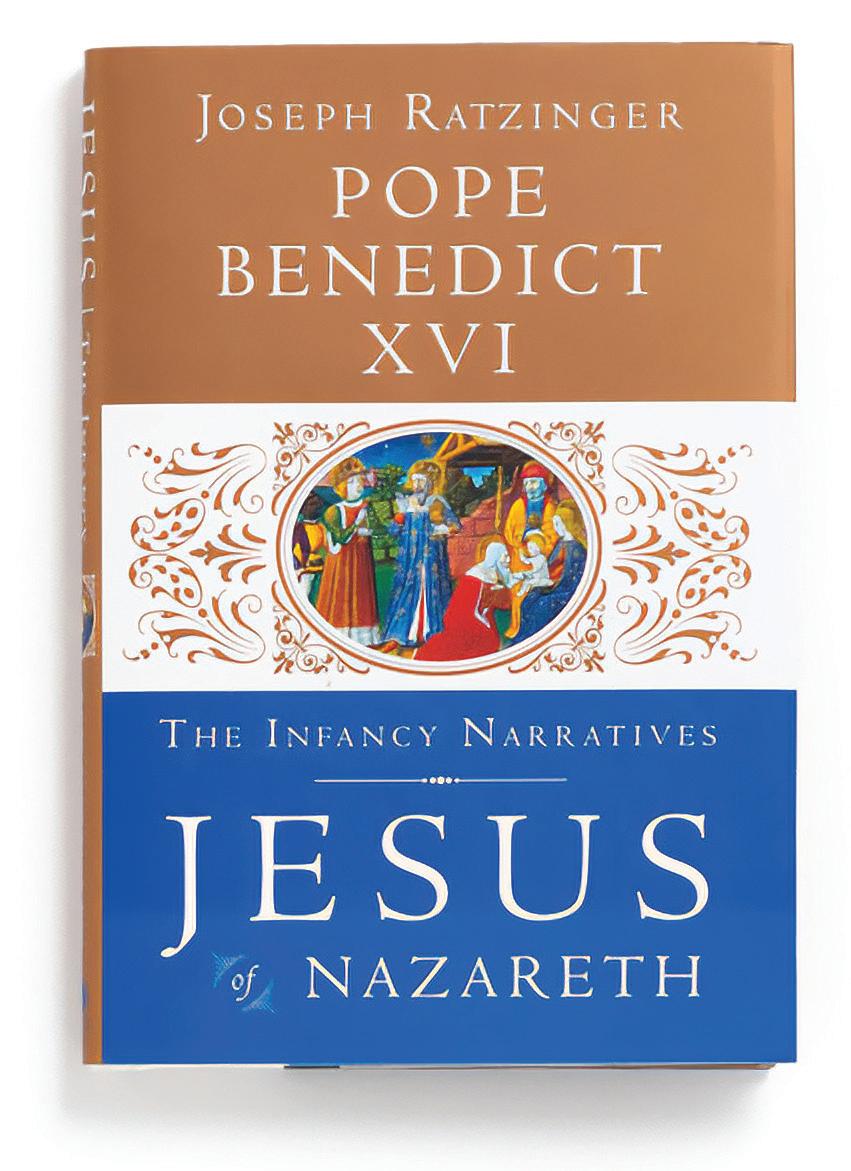
From Nov. 26 – Dec. 17, Sts. Joseph and Luke Parish, North Plainfield, held a program focusing on Pope Benedict XVI’s book, “The Infancy Narratives: Jesus of Nazareth,” a study of the gospel accounts of the annunciations, the infancy, and boyhood of Jesus of Nazareth.
Gerry McKenna, one of the facilitators, commented, “The Narratives were such an excellent study for Christmas preparation. Benedict deeply probed what was really going on among the cast of individuals connected to the Incarnation. He depicts their strong sense of faith and hope, without which the Christmas story would never have unfolded as we know it.”
Each session was devoted to one chapter, examining a variety of events and their theological underpinnings. Chapter 1 asked the question, “Where Are You From?” opening discussion on the identity of Jesus and his origin, what that means in terms of Jesus’ being descended from Adam, and how that shows humanity begins anew in Jesus.
Additional sessions unfolded the symbol of the manger
and the relationship between God’s grace and human values, and presented a reflection on the Magi who, in their diversity, represent the search of all humanity, not just one particular sect, for the one true God.
The sessions closed with Pope Benedict’s analysis of the 12-year old Jesus in the temple, when he stayed behind in Jerusalem after the feast of Passover, and what this meant in terms of his intimate relationship with the Father.
Bonnie Allen, parish catechetical leader who participated in the sessions, acknowledged that “the infancy narrative series was a wonderful Advent reflection. It gave you another perspective based on two Gospels in seeing how the birth of Jesus is an event that was predestined by God; to be thought of and remembered in this season of preparation. You have the opportunity to see that Jesus‘s birth from humble beginnings is rooted in the faith, trust and obedience of His earthly parents and is part of God’s plan for us to be reconciled with Him; to know Him, to love Him and to serve as His disciples in our daily lives.”
McKenna added, “It helped me look more deeply this year at the Christmas story scenes: images of beautiful stars, shepherds, parents, angels and wise men. I see them now more deeply, as less romanticized, more realistic, in a more meaningful way.”
As a new program in the parish, the Advent reading series was an opportunity to increase understanding of Scripture, foster discussion within the community and serve as a tool for evangelization. With participants expressing a desire for additional sessions, Father Mauricio is considering another series for Lent.
After a month of preparation, homeschooling families are consecrated to Mary
Homeschooling families from around the Diocese gathered at the Shrine Chapel of the Blessed Sacrament, Raritan, Dec. 8, the Solemnity of the Immaculate Conception, to consecrate themselves and their children to Mary. This followed 33 days of preparation by the families, beginning on Nov. 5, at St. Magdalen De Pazzi Parish, Flemington.
The 17 children who finally completed the consecration journey were guided by Jesus Our Hope Sister Anna Palka. She spoke about what total consecration to Mary is all about. The devotion, popularized by the French saint, Louis de Montfort, in his 17th century
book, “True Devotion to Mary,” is a reception of Mary’s motherly affection for us and a petition to remain perpetually under her protection. Homeschooling families used the book, “Marian Consecration for Children” by Carrie Gress in their daily consecration preparation.
The diocesan Homeschool Ministry was established in the Diocese by Archbishop Checchio to embrace the rising popularity of homeschooling and provide direction and opportunities for Catholic families looking to homeschool in a way that grounds them in their faith. Throughout the year the Di-
devotion, learning and adventure.
If your family is homeschooling and interested in joining the group to participate in similar activities, you will want to be added to our email list. Contact Father Gilbert Starcher at Gstarcher@diometuchen.org for more information and to get involved.
Upcoming events include an Out door Stations of the Cross, Feb. 27, and a visit to the State Museum on April 15. Plans to provide a homeschool mom’s retreat this summer are being considered.
Article contributed by Father Gilbert Starcher, coordinator, diocesan Homes-
Finding our story in Catholic Press Month
On Dec. 19, the diocesan Vocations Office hosted the inaugural meeting of the Padre Pio Discernment Club for boys, grades K-8, at the Blue Army Shrine, Asbury. Ten boys attended the meeting which began with prayer, learning about St. Joseph, and a timed manger building contest. If your son in grades K-8 is interested in joining the club, contact Father Gilbert Starcher, Vocations Director, at GStarcher@diometuchen.org.
—Courtesy photo
By Mary Morrell, Editor in Chief
Stop the presses!
That’s something I hope I never hear anyone say for The Catholic Spirit.
We are blessed to be among those newspapers that are still in print and grateful to be starting our 30th year. We have our Metuchen bishops to thank.
Our independent paper began in 1996 under the leadership of Bishop Edward T. Hughes, who reminded us that our name, The Catholic Spirit, was chosen “to indicate our reliance on the Holy Spirit. We pray that the spirit of the Lord will animate our pages and lead us to produce a spirited and lively newspaper.”
I was privileged to be part of that founding, and can say we still honor that dedication to the Holy Spirit. When I returned to The Catholic Spirit in 2023, the current editor and former director of communications, Joanne Ward, gave me a beautiful stained glass image of the Holy Spirit as a welcome gift. It sits on my desk in front of a lamp and is a glowing reminder of that devotion.
Under Bishop Paul G. Bootkoski, every parish in the diocese began to receive bulk copies of the paper without charge. And with his support, Archbishop James F. Checchio made it known how
much he valued the written word as a tool of faith and community building, writing a column every month to share things with his flock and giving us a wealth of great photo opportunities to share in the paper.
We also need to send a thank you to our pastors, those who make The Catholic Spirit available to their parishioners, and those who contribute to our story bank, often with compelling articles and meaningful reflections. We are grateful!
Catholic Press Month, which, according to Catholic Media Association writer Zoey Maraist, is sometimes “referred to as February by non-Catholic media journalists,” is a time to consider the good in Catholic Communications, most importantly the Good News, as it appears in the lives of our readers and how it affects the wider community.
With February around the corner, we continue to pray, that for our small corner of the world, we can live up to Pope St. John Paul II’s reminder for journalists that, “It must be your concern to make yourselves witnesses to the truth, so that the human person will always be respected. The Church is counting on you to know how to retransmit to the world the message of hope that comes from Christ.”
—Markus Spiske photo/Unsplash
Leaving the light on: Women’s quiet, powerful gift for evangelizing
— Donna Moriarty photo/Unsplash
One thing a writer learns is that their experiences in childhood offer a wealth of stories. One of my favorite memories
Pope
4.
is walking home from the bus on a winter evening in upstate New York. The only sound was the crunching of my boots on a snow-covered road, and the brightest light was the winter moon. But as I moved down the street another light became visible and warmed me even from a distance – the light in our living room window.
My mother left this light on every night, and another on the front porch,
Leo XIV’s top five moments of 2025
“Dilexi te”: Continuity and unity
It was a beautiful sign of papal continuance when Pope Francis picked up Benedict XVI’s unfinished encyclical and completed it, issuing “Lumen Fidei” and graciously writing “I have taken up his fine work and added a few contributions of my own.” Likewise, “Dilexi te,” the apostolic exhortation Pope Francis was preparing before his death was finished by Leo XIV, who wrote, “I am happy to make this document my own … since I share the desire of my beloved predecessor that all Christians come to appreciate the close connection between Christ’s love and his summons to care for the poor.”
not so I could find my way home but so I would know, even before I got there, that our house was just that, home – a place of love and light and security; a harbor in every storm.
There is something deeply human –and deeply holy – about this simple act of leaving a light on. It is a gesture so small it rarely calls attention to itself, yet so full of meaning that it can comfort even the most weary heart. Leaving a light on for someone is saying without words, “I am thinking of you. I want you to come home safely. You matter to me.”
It is a simple, quiet act of love, a vigil of care reflective of the way women evangelize, though they may not realize it. Their evangelization is not always dramatic or public. It is the evangelization of presence, of warmth, of attentiveness to the needs of others. It is the kind of witness that feels like a lamp glowing in the window – a steady assurance that someone is holding space for you, even when you’re far away or not quite yourself.
Leaving the light on is more than a practical gesture; it is a proclamation of hope. A woman who keeps that light burning is, in a sense, keeping watch for the lost or wandering places in the hearts of those she loves. She creates an environment where others feel safe to return, safe to be seen, safe to be loved. This is evangelization at its most elemental – not forcing truth upon someone, but simply making room for them to encounter goodness, to encounter the love of God.
There is something uniquely Marian about this way of evangelizing. Women often have an intuitive sense for the unseen emotional landscapes around them. They notice when someone might need reassurance, comfort, or a reminder that they belong. Their evangelization is incarnational – rooted in daily life, in the details that make a home feel like a refuge. It mirrors the tenderness of God, who does not coerce but invites, who illuminates the path rather than pushing or pulling us along.
When a woman leaves the light on,
Continues from page 8
While notions of papal continuance too frequently rest upon shallow externals (“Will he eschew a mozzetta? Will he wear a camauro?”) in this cooperation of popes working as brothers toward the same end, we see the continued presence of the Holy Spirit, who upholds the institutional Church, whether she is at her best or her worst. What a heartening thing.
5.
Plaintalk for the plane presser
Leo’s three most recent predecessors agreed to in-flight press conferences, which are informal and can sometimes yield answers requiring later follow-up
she is offering more than physical light. She is offering a living symbol of the Gospel, something Jesus did every day, inviting people in with the promise that love waits, love welcomes, love remains.
In this simple act, a woman becomes a quiet evangelist – showing Christ’s love not through speeches or arguments, but through the steady glow of compassion. She teaches that evangelization can be as gentle as a lamp in the darkness, and just as powerful. She teaches that strength does not require volume. True evangelization often begins in the stillness of listening, in the humility of accompaniment, and in the courage to offer hope where despair has settled.
Women have long demonstrated this truth. They carry stories that encourage resilience, model faithfulness, and keep communities connected. Many serve as moral anchors when times are confusing, as encouragers when spirits falter, and as bearers of wisdom passed from generation to generation. They model Mary, who did all these things as she accompanied Jesus throughout his life, and his disciples after his death.
This quiet gift is not the result of softness, weakness, or passivity. It is the quiet of a steady flame – one that doesn’t shout for attention, but that banishes darkness simply by being what it is. Women bring this kind of evangelizing light into spaces where formal preaching might never reach – within families, among friends, in workplaces, and in the countless interpersonal connections that fill our daily lives.
In a world hungry for authenticity and weary of noise, the quiet, powerful evangelization of women stands as a gentle but persistent reminder – light doesn’t need to be glaring, it simply needs to illuminate the dark places of life and reach hearts that may otherwise remain in the shadows. Women’s evangelization is not always recognized, but it is always real. It is the kind of power that changes people and, quietly, steadily, changes the world. It is Mary’s power, and ours, as well.
or clarification. On the return to Rome, the Holy Father, while doubtlessly still processing all that he had experienced in the Levant, covered an array of topics with clarity, discernment and discretion – no follow-ups required – and he even shared something of his personal prayer life.
Perhaps in keeping with his stated belief that he is not meant to be “the solver of the world’s problems,” he refused to go into detail about delicate socio-politico issues. Asked about a letter from Hezbollah, Leo delicately sidestepped the details saying only, “Clearly, on the part of the Church there is the proposal that they lay down their arms and that we seek dialogue. But beyond this, I prefer
not to comment at this time.”
Responding to a query as to his state of mind when the possibility of his election became clear in conclave, the pontiff was natural and instructive. “I resigned myself to the fact … I took a deep breath, and said ‘here we go Lord, you’re in charge, you lead the way.’”
A prayer of surrender to an unimaginable change in life and station, “here we go, Lord, you’re in charge.” By word and example, perhaps the best and most succinct example of lived and intimate prayer that a pope can make, unceremoniously offered as instruction to us all. Elizabeth Scalia is editor at large for OSV. Follow her on X @theanchoress.
New chapter in life of St. Lucy Province of Religious Teachers Filippini
Delegates of the St. Lucy Province of Religious Teachers Filippini, which covers the entire United States, recently elected a new Provincial Superior and four Provincial Councilors to assist her during the six-year term that began immediately and continues until October 2031.
After spending time in prayer and reflection before the Blessed Sacrament in Eucharistic Adoration, the Sister delegates elected Sister Marianne McCann as Provincial Superior. At the time of her election, Sister Marianne had been serving as Provincial Councilor from 2019 to 2025. She was also the Superior of the local convent at St. John Vianney Parish, Colonia. Previously, she served for many years as principal of Paul VI High School, Haddonfield.
The four Provincial Councilors elected were Sister Laura Bezila who served as Provincial Councilor from 2019 to 2025, and who teaches theology part-time at Villa Walsh Academy, Morristown. Also elected was Sister Alice
Ivanyo who serves as parish catechetical leader at Our Lady of Victories Parish, Sayreville. Sister Alice also ministered as Provincial Councilor from 2007 to 2013. The election of Sister Lesley Draper, prin cipal of Villa Victoria Academy, Ewing, followed. The final Provincial Councilor elected was Sister Elaine Bebyn who ministers as principal at Villa Walsh Academy, Morristown.
During the celebratory meal fol lowing the election, Sister Marianne addressed the Sisters with a message of gratitude for the honor of the Sisters’ trust, and she welcomed the Sisters to up coming scheduled events in the life of the Province. Sister Marianne further asked for their prayerful support at this time of transition of administrations. There was a palpable sense of excitement in the dining room as the Sisters began a new chapter in the life the Religious Teachers Filippini in the United States.
Contributed by St. Lucy Province of Religious Teachers Filippini.
A first Eucharistic Encounter: Formation, Adoration, Communion
Deacon José Miguel Suárez wel comed nearly 150 parishioners to Visitation Parish in New Brunswick for its first Eucharistic Encounter, a day of formation, adoration, and communion centered on the living presence of Christ in the Blessed Sacrament.
In his welcoming remarks, Deacon Suárez reflected that many might have come out of curiosity or a desire to encounter more deeply the mystery of love revealed in Jesus present in the Blessed Sacrament. He invited those gathered to receive the day as a gift, opening themselves to an intimate encounter with God through prayer, formation, and reflection, and allowing Christ to meet them in a personal and transformative way.
The Nov. 22 Eucharistic Encounter was organized by Deacon Suárez, the Missionary Disciples of the Blessed Sacrament, and four other deacons from the diocese.
Celebrated in the context of the next day’s feast of Christ the King, the retreat culminated as Father Michael Fragoso, pastor, led the community in a Eucharistic procession to the altar, inaugurating a
Reflecting on the Eucharist as both banquet and sacrifice, Deacon Hernando Patiño emphasized that living the Eucharist fully requires formation and love. He highlighted what he called three essential truths: the Eucharist is food for the soul, a saving sacrifice, and the real presence of Christ.
Deacon Richard Ferreira drew upon the teaching of St. Thomas Aquinas, ex-
wine into the Body and Blood of Christ. In this context, he recalled St. Carlo Acutis, who joyfully described the Eucharist as his “highway to heaven.”
The Coro Divino Salvador from St. Magdalen de Pazzi Parish in Flemington provided music throughout the day. Members of the Missionary Disciples of the Blessed Sacrament also shared per-
Above left are Missionary Disciples of the Blessed Sacrament, members of Visitation Parish, who organized the retreat. Above right, pictured from left, are Deacons Richard Ferreira, José Miguel Suárez, Jose Diaz, Hernando Patiño, and Ricardo Rivera. Pictured at left is Deacon José Diaz who reminded retreatants that they “remain disciples on a journey of faith.” —Courtesy photos
Participants Vicky Tison, Eridiana Peralta, and Rosa Marte said the encounter was not only an opportunity to serve the community, but also a time of deep spiritual growth, strengthening their commitment to love and serve the Lord. Ana María, who participated in the retreat, described the experience as one that united formation, fellowship, and community, underscoring the importance of reverence, purity of heart, and interior preparation when approaching the altar, and recognizing the immense gift of welcoming Christ into one’s life.
Pictured from left, Sister Elaine Bebyn, Provincial Councilor; Sister Alice Ivanyo, Provincial Councilor; Sister Marianne McCann, Provincial Superior; Sister Laura Bezila, Provincial Councilor, and Sister Lesley Draper, Provincial Councilor. —Courtesy photo.
Like Jeremiah, I don’t want to repeat the teaching of the Church but, as part of my prophetic mission as a priest, I have an obligation to do so.
Normally, the Church sets aside the third weekend of January to proclaim a pro-life message, when we acknowledge out loud that abortion is wrong, that it is a sin, that it is tantamount to homicide in the eyes of God. On this weekend, we affirm that all human life is sacred from conception to natural death. Like Jeremiah, my message will make me no friends.
I do have some good news for you! First of all, abortion is a forgivable sin. Any woman who has committed abortion is encouraged to bring this to the sacrament of Confession. Why? Not only to be absolved of this sin, not only to be reconciled to God through his loving mercy
Pro-life people are called to pray for, not judge, those who choose abortion
and forgiveness, but also to be healed of the wounds (both psychological and spiritual) that abortion often inflicts. Jesus wants all such women to come back to the fold – to be reconciled to his Church – to communicate with him through the sacraments, especially the Eucharist.
Please God, one day, abortion will be no more. But much catechesis must take place, and viable options for women contemplating abortion must be made more easily available.
If we are a pro-life people, then we must affirm even those who have had an
The scrambled schooling of a scribbler – part 1
I recently noticed that I am listed somewhere online as “Author: Sr. Gabriela of the Incarnation.” I was horrified! To call me an author! It reminds me of George Mikes’s reply to a reviewer who labelled him a “second-rate writer.” Such a description, wrote Mikes, the Hungarian-British journalist, was putting him much too high. If Shakespeare was a first-rate writer and Milton a second-rate writer, then he, Mikes, considered himself to be approximately a seventeenth-rate writer. I think that I can join him on that level.
I can’t possibly be considered an author. An author puts pen to paper and produces literature. I have put pen to paper and produced one small book and a smattering of articles, none of which qualify as literature.
Moreover, I write in English even though I stopped learning English when we moved to Europe. I was 12 at the time, and, in school, we had just started to di agram sentences. I never had more than the beginning exercises in diagramming sentences, so that probably explains why my sentences are usually very short, with few if any dependent phrases: I wouldn’t know how to diagram my own sentences. So, I stopped learning English before I was a teen, though we continued speaking it at home, and I read some English books.
I decided to take up writing as a hobby in my early 20s, not because I liked writing but because I decided that I needed a hobby. I had tried knitting and crochet ing and weaving, but they didn’t occupy
my mind enough. I didn’t have enough money to collect things unless they were free, and besides I hate feeling cluttered. I had a feel for music, but I wasn’t good enough to do it even as an amateur.
I never considered painting or sculpting, for I am the opposite of ambidextrous, whatever that is, and I possess an over-abundance of thumbs. I considered the options very carefully and decided to do writing as my hobby. I chose it because a) it is cheap; b) it is portable and c) it doesn’t demand any manual dexterity. The quality of your writing has nothing to do with the quality of your handwriting.
With that decision, I then proceeded to mess up a lot of nice, clean paper and seriously reduce the world’s supply of ink. I continued to do this after I entered Carmel, and with time, the drain on ecology was eased when I was able to use a computer keyboard rather than paper and pen.
In all this time, I never had a single lesson in writing. At this point, it would probably be counterproductive. I would probably get so self-conscious that my fingers would be tied into knots.
If put to the test, I could say that I did have one teacher, though he would only know of that fact from heaven. As
abortion. Let us pray for these women, especially those who see no evil in what they have done. And for those who do have remorse, point them in the direction of their priest or minister, allow them to seek the peace which comes with forgiveness and healing.
Finally, like Jeremiah, I have a prophetic duty to raise awareness about the evils of abortion, but never am I called to stand in judgment of those who commit these sins. Those who have had abortions, are not monsters. They are our sisters, our daughters, our granddaughters. They are nice people and close to our hearts.
Like Jeremiah, I am not here to condemn them but to pray for their rehabilitation, their restoration to wholeness and their reconciliation with our God and his Church, which, in the words of C.S. Lewis, “is not a museum of saints but a hospital of sinners.”
I don’t pretend to be Jeremiah or to expect one day to hold his grandeur, I just want to be faithful to my priestly vocation, my prophetic mission and my Christian stance as a pro-life Catholic.
Father Comandini serves as diocesan coordinator of the Office for Ongoing Faith Formation.
I said, I read English books, and I tried to read some English classics, like Jane Austen, the Brontes, Ivanhoe, poetry (at one point I could recite from memory all of Gray’s “Elegy in a Country Churchyard,” though I was more at home with limericks and Ogden Nash).
I also read Boswell’s “Life of Johnson.” Besides his statement that he could be the friend of almost any man but not an American, the only part of the book that I remembered was his advice to a young man who wrote to him saying that he wanted to be a writer and would Dr. Johnson give him some advice. The Doctor’s advice – if I remember it correctly – was to tell the young man to order his thoughts carefully. Then, when he came to write, his words would naturally also be in order.
I took that advice to heart and probably became the great Lexicographer’s most assiduous student. In spite of his antipathy toward Americans, he was very sympathetic to Catholics, so I hope that he is glad to have me as a student… (To be continued).
Sister Gabriela of the Incarnation is a member of the Discalced Carmelites order in Flemington. Learn more at www. flemingtoncarmel.org.
—Beku Kanomi photo/Unsplash
Patience is the needle, love the thread
By Pierre-Alain Giffard Special Contributor
Evangelization is not an event, but a journey. It is not about instant results, but about faithful witness across the arc of time. In the delicate work of drawing souls toward the heart of God, we must learn to sew patiently: “Patience is the needle, and love the thread.”
Jesus Himself shows us this path. In the Gospel according to Mark, Christ says, “The kingdom of God is as if someone would scatter seed on the ground, and would sleep and rise night and day, and the seed would sprout and grow, he does not know how” (Mk 4:26–27).
Evangelization resembles this divine mystery of growth: we sow the Word, but its blossoming happens in hidden places, over time, through grace. Patience is therefore not passivity but an act of trust. To evangelize is to imitate the patient mercy of God, “who desires all men to be saved and to come to the knowledge of the truth” (1 Tim 2:4).
The Directory for Catechesis (2020) reaffirms this dynamic when it states: “Evangelization requires a gradual process. It is necessary to know how to wait, how to respect the rhythm of the other person, and how to remain present with constancy and affection.” In other words, evangelization unfolds not on our schedule, but on God’s.
New stained-glass designs for Notre Dame now on display amid ongoing debate
PARIS (OSV News) – The models for six new contemporary stained-glass windows planned for Notre Dame Cathedral are now on public display in Paris, following months of intense national debate. The works, designed by French painter Claire Tabouret, are featured in the exhibition “In One Breath” at the Grand Palais through March 15. Tabouret’s large-scale, figurative designs depict Pentecost – the descent of the Holy Spirit upon Mary and the disciples – chosen by the Archdiocese of Paris as part of a new catechetical path for visitors to the cathedral.
The windows are being crafted in Reims and are scheduled for installation in late 2026, replacing six 19th-century windows
The seed of the Gospel may lie dormant in the soil of a human heart for years. The evangelizer, like a loving gardener, must water, nurture, and wait.
Pope Francis, in Evangelii Gaudium, captures this well: “Time is greater than space.” He writes, “This principle enables us to work slowly but surely, without being obsessed with immediate results. It helps us patiently to endure difficult and adverse situations, or inevitable changes in our plans.” Evangelization, in this light, is not the conquest of territory but the cultivation of fidelity. We are not engineers of conversion; we are companions on the road.
Yet while patience is the needle, it is love that threads it all together. Evangelization is ultimately an act of love. As St. Paul writes to the Corinthians, “The love of Christ urges us on” (2 Cor 5:14). Evangelization is never manipulation, nor coercion, nor strategy–it is the overflow of love. Love listens. Love discerns. Love endures. It is this love that renders our patience credible and our witness luminous.
The saints lived this truth. St. Monica prayed for her son Augustine’s conversion for nearly twenty years. Her patience, woven with tears and bound by love, finally bore fruit in one of the greatest theologians in the Church. St. Francis Xavier, after tireless missionary labor, died without seeing the full fruit of his efforts in Asia. Yet his witness planted seeds that centuries later would yield a great harvest. Patience without love is resignation; love without patience is frustration. Together, they are the fabric of Christian mission.
The global human heart knows what the Gospel teaches: Deep change comes slowly, and always through love. In evangelization, then, we are called to imitate Christ the Good Shepherd. He walks with His sheep. He waits for the lost. He calls by name. In the Emmaus story (Lk
24:13–35), Jesus walks patiently with the two disciples, listening to their sorrows before gently revealing Himself in the breaking of the bread. He does not rush. He accompanies. This is the pastoral model of evangelization.
In our own time, we may be tempted by efficiency and metrics. We may grow discouraged when people do not respond, when Masses remain empty, when catechesis yields little visible fruit. But we must remember: God is at work in hidden ways. Our task is not to force growth but to remain faithful. Evangelization is not the marketing of a religious product, but the revelation of a divine Person – Jesus Christ – whose gaze of love awakens freedom.
As St. John Henry Newman reminds us, “God has created me to do Him some definite service… I am a link in a chain.”
We may not see the end of the chain. But by our fidelity – our patient stitching of love – we strengthen the whole.
Let us not forget the power of small, consistent gestures: a listening ear, a word of encouragement, a service rendered, a silent prayer, a life lived with integrity. These are the stitches of evangelization. And over time, they form a beautiful garment: the Church radiant with the love of Christ.
So we continue. We sow the Word. We wait with patience. We love without counting the cost. For evangelization, like the Incarnation itself, is God’s slow work among us.
Patience is the needle. Love is the thread. The soul of the world is mended one stitch at a time.
Dr. Pierre-Alain Giffard is a theologian and practitioner whose work is marked by a unique blend of academic scholarship and pastoral leadership, providing insights and resources to nurture vibrant, mission-driven Christian communities.
by
Eugène Viollet-le-Duc. The project has sparked controversy among heritage advocates and some Catholics, particularly after President Emmanuel Macron was the one to publicly announce them.
Critics argue historic elements should not be removed, while supporters say the new windows honor tradition and reflect the living faith of the Church today. In response to a request from the Archdiocese of Paris, Tabouret has strived to “stay as close as possible to the narrative” of the story of Pentecost, as she explained in the written presentation she made for the Grand Palais, “so that this story can be understood by as many people as possible.”
Claire Tabouret, a 44-year-old French painter of international renown, who lives between France and Los Angeles, is pictured in front of her art on an undated photo. She designed six contemporary stained-glass windows for Notre Dame Cathedral in Paris that have been on display at the French capital’s Grand Palais of the Champs-Elysées since Dec. 10, 2025. They will be exhibited until March 15, 2026, and are to be installed in the cathedral by the end of the year. —OSV News photo/courtesy Nathan Thelen
TAKE A TOUR
Pursue Greatness at Immaculate Conception School. We’ve got a few spots saved and a multitude of opportunities for you to grow in mind, body, and spirit. Sign up to take a tour today!
To schedule a tour please contact Monica DeAngelo, Director of Marketing and Enrollment at (908) 895-1105.
SPRING OPEN HOUSE
Wednesday, March 11, 2026 6:00 pm
Pursue Greatness at Immaculata High School. Scan to sign up for our Spring Open House today!
Register today!
To schedule a tour please contact Michele Blandino, Director of Admissions at (908) 722-0200, Ext. 1218.
Man 2 Man group widening ministerial scope
By Robert Christie Correspondent
Eager to grow its reach into the community and enhance its members’ spirituality, a Watchung-based men’s group held a planning meeting and retreat Nov. 22 to evaluate its past and build towards its future.
Man 2 Man, a men’s spirituality group whose members hail from numerous parishes in at least two dioceses, met at the Loyola Jesuit Center, Morristown, to evaluate the six-year-old group’s progress. Larger in scope than a typical parish-based ministry, it endeavors to explore and enhance its members’ relationship with God in community, according to chief facilitator and group founder Gerry McKenna.
“This group centers itself, both live and virtual, at a beautiful House of Prayer in Watchung, away from all the distractions of daily life,” he said, adding, “Participating in the retreat was a way of not only focusing on our inner selves, but fulfilled an intention to build stronger solidarity with other members of the group and figure out how we can best meet their spiritual needs.”
Member Bill Gibson said, “Faith, while personal, grows through participation in community. For many, these opportunities do not exist on a parish level.
Through sharing a wide range of faith experiences and challenges, our faith grows stronger and we often discover new personal insights from the diversity we are exposed to.”
Ted Hopkins noted that “It is comforting to find others that are on a similar spiritual journey, finding like-minded people who can make the journey feel less alone. Sometimes it can be intimidating to reach out to a fellow parishioner, but the men's group is made up of people that made a choice and commitment to get together for a common cause.”
Gibson contributed, “One of the bases for a strong faith life is participation in a community that not only supports you in your faith but also challenges you to grow during times of doubt or adversity. The retreat provided a unique opportunity to meet my fellow travelers openly and vulnerably, knowing that they were there for me both in weakness and strength.”
The primary new insight was that the group should plan an outreach extension of its mission - to take its scope beyond its current structure of meeting once a month - by a new focus on the Beatitudes and the corporal and spiritual works of mercy.
The centrality of communal prayer was a major focus of discussion, and members decided it would be advantageous to discuss with other men’s
“One of the bases for a strong faith life is participation in a community that not only supports you in your faith but also challenges you to grow during times of doubt or adversity."
groups the role prayer plays in their missions. McKenna felt that “One thing we could share is a hybrid approach to participation. Although use of communication technology can be difficult and sometimes disruptive, it is a way of future sharing of spirituality and evangelization. It is worth moving through the pains of adapting to this in order to gain more availability, inclusivity, and ability to spread the Gospel.”
Bill Gibson summarized his experience, saying: “The retreat reinforced for me that I am part of a faith community that wants to grow, both collectively and individually. The opportunity to share at the retreat on a small group basis without any reservations or fear of judgement, but with an absolute expectation of support, is something that many of us don't find available on the parish level.”
Ted Hopkins added, “I took away that just one person can help another and make a difference in their life. In general, sometimes in life, people are broken but still feel the Spirit and are willing to help others.”
While the group does not have a spiritual director, it counts a spiritual director among its members, and it has hosted clergy. McKenna commented, “The group is lay organized. Members come from strong backgrounds spending years as theologians, leading and teaching RCIA and CCD and other parish ministries. Members also bring years of experience of enduring the struggles of family life out of which comes much wisdom and experience of following the Gospel.”
Anyone interested in joining the men’s group may contact Gerry McKenna at 908-472-3969.
9am Mass - 12:30pm
St John Neumann Pastoral Center 146 Metlars Lane Piscataway, NJ 08854 Catechists,
PCLs
Loyola Jesuit Center photo from FB
(732)549-6234
Come visit our Open Houses January 25, 2026, 11:30 am - 1pm April 21, 2026, 6pm - 8pm
● Curriculum that highlights academic excellence
● 1:1 Chromebooks for Grades PreK4- Eight integrated with Google Classroom
● Schoolwide STREAM theme incorporated into the curriculum
● Technology and Science Labs, Library, and designated Art, Music, Spanish and PE classrooms
● Extracurricular enrichment opportunities, such as robotics, basketball, track, choir, drama and handbells
● Variety of lunchtime clubs: Chess, Finance, Math, Art Clubs
● Spacious classrooms equipped with Smart Boards/Promethean boards
● Certified teachers and Cognia Accredited school
● Before and after care available for all students
● 2018 National Blue Ribbon School Award
● Security/safety measures in place
● Tuition assistance available Scan our QR code for more information.
930GroveAvenue,Edison,NJ08820
sthelenaedison.org
Bishop Checchio’s Visit
Lab Wizard of Oz Christmas Concert
By Christina Leslie Contributing Editor
“We must set out to bring light into world by persevering in faith,” declared Bishop Michael A. Saporito to the congregation of faithful seated before him in the Cathedral of St. Francis of Assisi for the Dec. 23 closing Mass of Simbang Gabi. “We all start out perfect and precious … We must make the most of the opportunities God has given and gifted to us.”
The Metuchen cathedral was filled with hundreds of Filipino descent eager to celebrate the final night of Simbang Gabi, the annual Advent celebration of Blessed Virgin Mary’s birth of Jesus our Savior. The Filipino Apostolate Festival Choir sang in Tagalog and invited the Christ Child to come to those who wait for his birth. Men and women from numerous parishes walked in the procession bearing banners and illuminated parols, star-shaped lanterns meant to represent the Star of Bethlehem.
Simbang Gabi (Tagalog for “night worship”) is the Filipino Christmas tradition wherein faithful attend nine days of Masses from Dec. 16 – 24 honoring the Blessed Mother as she prepared for
offers Filipino-based worship during Advent
the birth of the Christ Child. The celebration of light, prayer and music originated in the 1500s as Spanish friars arrived in the Philippines, and the devotion spread worldwide to Filipino communities.
Through the efforts of the diocesan Filipino Apostolate, the celebrations have grown to include some two dozen host parishes. An early-morning Mass (“Misa de Gallo,” or Mass of the Rooster) was held each day in St. Ladislaus Church, New Brunswick, and evening Masses were celebrated to capacity crowds at churches throughout the four counties.
Bishop Saporito, who serves the Archdiocese of Newark as auxiliary bishop for Bergen County, was principal celebrant and homilist for the Mass. He was accompanied by Filipino acolytes, deacons and priests of the Diocese at the altar including Father Gerardo Paderon, coordinator of the diocesan Filipino Apostolate as well as pastor of Queenship of Mary Parish, Plainsboro.
Reflecting upon the Gospel of Luke (1:57-66) which reveals the birth, circumcision and naming of John the Baptist, Bishop Saporito stated, “The child
in his mother’s womb [and] he points us to claim our God-given dignity anew.”
That dignity and light were gifts from the Father, and we have an eternal connection with him as sons and daughters of Christ, he continued. Despite our woundedness and imperfections we must not be afraid, and we must joyfully take up the mission to bring the light of Christ to others.
“Our witness can provide for others a reason to turn their lives to Christ,” said Bishop Saporito. “By bearing witness you can give them hope… While we possess the gift of life, it is never too late to grasp hold of the graces set before us in the beginning, and realize how perfect and precious we are in the sight of God. Together we must glorify him by our love.”
Father Paderon called the novena “one of our most beloved and treasured traditions. Through Simbang Gabi, we Filipinos prepare with joyful anticipation to celebrate the birth of Our Lord,” he added.
Jose Lagdameo, a Cathedral parishioner and member of the diocesan Filipino Apostolate, explained his spiritual connection to the ethnic celebration, saying, “Gathering with fellow Filipinos to prepare for the birth of our Lord and Savior Jesus Christ is a tradition that
has shaped my faith since childhood. For many of us, Christmas simply isn’t complete without the prayer, community and hope that Simbang Gabi brings. Celebrating it here in the Metuchen Diocese allows me to stay rooted in my heritage while living out my Catholic faith in the community I now call home.”
Father Jonathan Toborowsky, diocesan administrator, served as principal celebrant of the Dec. 16 opening Mass of the Filipino observance of Simbang Gabi in St. Cecilia Parish, Iselin (1) with Filipino priest concelebrants and hundreds of faithful (4) filling the pews. (2) Bishop Michael P. Saporito of the Newark Archdiocese served as celebrant and homilist of the Dec. 23 closing Mass in the Cathedral of St. Francis of Assisi, Metuchen, declaring the Christ Child “points us to claim our God-given dignity anew.” (3) The entrance procession featured faithful in ethnic dress carrying parols, or lanterns, which symbolized the Star of Bethlehem. An earlier celebration in St. Cecilia Parish, Dec. 16 (4) attracted hundreds of area Filipinos to the Iselin church. —ThruMyLens XE Photos (1 & 4) and John Batkowski photos (2 & 3)
A dozen reasons to choose Catholic Schools United in Faith and Community
Our Catholic schools: Places of ‘hope, excellence, and deep care for every child’
In these challenging and uncertain times for families and young people, many parents are asking an important question: Where will my child be known, supported, and truly formed, not just academically, but as a whole person? At the Office of Schools, we are grateful for the opportunity to share why our Catholic schools continue to be a source of hope, stability, and excellence for so many families.
Across the Diocese of Metuchen, our Catholic schools are places where faith and learning walk hand in hand. At a time when children are facing increased social pressures and distractions, our schools provide something deeply needed: a strong moral foundation rooted in Gospel values, combined with academic rigor and personal care. Our students are not simply numbers in a system, they are known by name, valued for who they are, and encouraged to grow into who God calls them to be.
One of the greatest strengths of our Catholic schools is community. Parents consistently tell us that when they walk into one of our schools, they feel the difference. There is a sense of belonging, partnership, and shared mission. Teachers, administrators, and families work together to support each child’s growth, academically, socially, emotionally, and spiritually. In a world that can often feel fragmented, our schools offer children a place of connection and consistency.
Academically, our Catholic schools continue to excel. We offer strong, standards-based instruction, innovative teaching practices, and a commitment to developing critical thinkers, problem solvers, and compassionate leaders. Our graduates are well prepared for high school, college, and beyond, but just as importantly, they are prepared for life. They leave our schools with a clear sense of
right and wrong, a commitment to service, and an understanding that their gifts are meant to be shared.
Faith formation remains at the heart of all we do. Through daily prayer, religious instruction, liturgies, and service opportunities, students learn that faith is not something reserved for Sundays, it is something lived each day. In our schools, children learn to see Christ in one another, to act with kindness and integrity, and to respond to the needs of others with compassion.
As many of our schools prepare for upcoming open houses during Catholic Schools Week, we warmly invite parents to visit, ask questions, and experience our Catholic schools firsthand. Come meet our dedicated teachers, speak with our principals, and see our classrooms alive with learning and joy. An open house is more than a tour, it is an opportunity to envision your child thriving in an environment that nurtures both mind and soul.
Catholic education is an investment, not only in your child’s academic future, but in their character, faith, and sense of purpose. In these challenging times, our schools remain places of hope, excellence, and deep care for every child entrusted to us.
We would be honored to welcome your family into one of our Catholic school communities for the 2026-27 school year.
Barbara Stevens-Secretariat of Education
Joseph Diskin-Superintendent of Schools
Sister Mary Louise Shulas-Director of Curriculum
Office of Schools-Diocese of Metuchen
Catholic Schools Week 2026 (January 25th-30th)
“An open house is more than a tour, it is an opportunity to envision your child thriving in an environment that nurtures both mind and soul.”
We cultivate a faculty and staff of people who are dedicated, caring and effective.
We have a 99% high school graduation rate. 85% of our graduates go to college.
We prepare students to be productive citizens and future leaders.
We provide a safe and welcoming environment for all.
We offer an education that combines Catholic faith and teachings with academic excellence.
We partner with parents in the faith formation of their children
We set high standards for student achievement and help them succeed.
We emphasize moral development and self-discipline.
United in Faith and Community Catholic Schools
We provide a balanced academic curriculum that integrates faith, culture and life.
We use technology effectively to enhance education.
We teach children respect of self and other.
We instill in students the value of service to others.
Photos from some of the 25 schools in the Diocese of Metuchen, above, are representative of the many reasons Catholic schools stand out as exceptional options for families looking for an exceptional education for their children in a place where “they are known by name, valued for who they are, and encouraged to grow into who God calls them to be.”
Most of the growth we have seen across Christian denominations in recent years has been in Christian communities that teach sure norms that are relatively stable as society changes. The coming generation of Catholic parents are likely to look for a strong sense of Catholic
identity in Catholic schools. As resources become scarcer, why would parents choose Catholic school for their children if they do not perceive that Catholic school offers something that public school, or another private school, cannot?
Promoting a uniquely Catholic culture in our schools is both a necessary task and a challenging one. In rising to
this challenge, it is helpful to examine what variables make cultural identity survive and thrive.
One important characteristic is a common language. How do we understand, and talk about, Catholic education? What do we mean by “Catholic”? And more broadly, what language do we share when we talk about our faith? Sharing a common language will mean a well-articulated mission, one that is communicated effectively to parents such that it attracts families to our schools.
Above left, Sister Martha Mary Carpenter, principal at St. Peter Indian Mission Catholic School on the Gila River Indian Reservation in Bapchule, Ariz., works with a student during boys’ seventh- and eighthgrade math class Sept. 4, 2024. —OSV News photo/Bob Roller
A second characteristic of cultural identity is the use of symbols. What symbols do we see of Catholicism in our schools? When parents stop by to visit, does the Catholic school look different to them than the local public school or a Baptist school would?
Children, especially those of elementary age, are very concrete thinkers and learners. The visible symbols around them, such as icons, statues, crucifixes and pictures of faith in action, help tell them about where they are and what they are learning. What unique ideas, values and beliefs do we promote in our Catholic schools, and how are they made visible in concrete ways?
The identity-building power of rituals and traditions make them important characteristics of most academic institutions that have longevity. Current students want to remain because of the shared rituals that have built community and become an important part of their lives, and former students continue to support the school – and encourage their children to attend it – because of their fond memories of these traditions.
In our Catholic tradition, we need not look far for ideas that can build the sense of collective identity in our Catholic schools. The liturgical calendar provides occasions for many types of celebrations and traditions, not to mention the day-to-day experiences of Catholic
Above right, St. Thomas Aquinas High School students receive the Eucharist from Father David E. Keyes, Vice Principal for Catholic Mission, during the Aquinas Star Mass held in December. The Aquinas Star Program enables the school community to support a chronically or terminally ill child. —Photo Courtesy of Lillian Chadwick ‘26
prayer and the sacraments.
Shared cultural norms, even ones that pose challenges to the individual, also build the sense of cultural identity. Catholic schools should not be afraid to promote an authentically Catholic, often countercultural, morality that includes respect for life at all ages and stages, promotion of chastity as a response to our understanding of the dignity of the body and sacredness of marriage, the necessity of social action, including solidarity with the poor, and countless other ways in which we as Catholics are called to be witnesses in society today.
Similarly, we live in a culture in which academic standards have been challenged by the notions of one’s “personal best,” leading to a situation in which we have many public school graduates with high self-esteem, but very little knowledge or academic skill.
While needs and talents can vary greatly, we must also remember that children cannot rise to standards we do not set, and we must not be afraid to call them to rise to high standards of behavior and academic achievement, all the while assisting them in meeting the challenge. Joseph D. White is a licensed psychologist.
Msgr. O’Neill celebrated as ‘shepherd to his people’
By Christina Leslie Contributing Editor
Msgr. Edward M. O’Neill, whose philosophy was “If you always have the best in mind for the people, that is what matters the most,” was celebrated at his Mass of Christian Burial Jan. 10 in St. John Vianney Parish, Colonia, the faith community which flourished under his leadership for 23 years of his 55-year priestly service. The retired priest died Jan. 6 at the age of 83.
A native of Downpatrick, Ireland, Msgr. O’Neill was born in 1942 to the late Mary (Walls) and John O’Neill. He was educated by the Sisters of Mercy and the De Salle Brothers, later entering the Dominican Order as a Brother. Following his studies in St. David’s College, North Wales; the Divine Word Seminary,
Rosscommon, Ireland, and St. Patrick’s Seminary, Maynooth, Father O’Neill was ordained to the priesthood for the Divine Word Missionaries Dec. 18, 1971, at Sligo Cathedral by Bishop Dominic Conway.
Father O’Neill served as a missionary in Papua New Guinea before being assigned in Bordentown. In 1975, he was assigned to St. John Vianney Parish, Colonia; he was incardinated into the Diocese of Trenton in 1981 and assigned to St. Andrew Parish, Avenel, as well as Chaplain to Rahway State Prison and Avenel Diagnostic Treatment Center. In 1985 he became pastor at St. John the Evangelist Parish, Lambertville, before returning to St. John Vianney as pastor in 1995. He was named a Chaplain to His Holiness in 2004, retiring from active ministry in 2018.
Under the direction of the Irish-
born priest, the parishes in which he served enjoyed the benefits of a newly constructed preschool building and refurbished sanctuary (St. John Vianney); a major restoration to mark the centennial of the church (St. John the Evangelist); and the appointment of a chaplain at the state prison in Rahway.
In his homily, Father James W. Hagerman, pastor of St. Bernadette Parish, Parlin, recalled his friend and fellow priest’s declaration that only two things were certain: taxes and eternal life.
“Msgr. O’Neill said, ‘Our faith journey in Christ begins as we are carried into the church to our Baptism, and our faith journey ends as we are carried in for our funeral,’” Father Hagerman said. “The prophet Isaiah speaks powerfully, and God made you and I a tremendous promise: on this mountain I will destroy death forever.”
Pausing at times to regain his emotions, Father Hagerman continued, “Monsignor said to me, ‘Let my celebration be one of rejoicing, for I lived such a wonderful life.’ I have to admit that last night [during the priest’s Mass of Commemoration] some of us did not do that so well. God challenges us to assist one another as we journey to him.”
The two had met when Msgr. O’Neill and then-Deacon Hagerman were assigned at St. Andrew Parish, Avenel; the deacon’s father approached the Monsignor to ask he watch over his son. During the course of their friendship, travel and conversations, the two shared both pleasant and difficult times.
“He always prayed for his parishioners, had a deep devotion to pray the breviary and to pray to Our Lady, which he got from his father,” Father Hagerman said. Sharing the Monsignor’s philosophy of service, he quoted, “Do what is best for the people. It is not about you, it is about the people you shepherd.’”
With a nod to the place of Msgr. O’Neill’s birth, the liturgy’s music included a heart-felt rendition of the Irish hymn “Lady of Knock” and a farewell which bid the deceased “May the road rise up to meet you. May the wind be always with you. May the sunshine warm you always ‘till we meet again.”
Msgr. O’Neill is survived by his brother Sean O’Neill, his sister Mary O’Hara and many loving nieces and nephews. He will be interred in his native country on a future date.
Before the final farewell, Father Jonathan Toborowsky, diocesan administrator, noted Msgr. O’Neill had begun his ministry as a missionary in Africa before travelling to the United States. “He understood the worldwide dimension of our faith to our brothers and sisters,” Father Toborowsky noted, “no matter they were of different colors and different peoples. Who could imagine, from his childhood in Ireland, he could fall in love with Colonia, New Jersey.”
Msgr. Edward M. O’Neill was heralded Jan. 10 during his Mass of Christian Burial in St. John Vianney Parish, Colonia, where he had served 23 of his 55 years of priesthood. Top, Father Jonathan Toborowsky, diocesan administrator, served as principal celebrant and was accompanied by Msgr. O’Neill’s brother priests. Bottom left, each priest of the parish anointed Msgr. O’Neill’s casket during the Final Commendation. Bottom right, homilist Father James W. Hagerman, pastor of St. Bernadette Parish, described how the late priest was steadfast in prayer for his parishioners and to Our Lady. —Hal Brown photos
Martin Luther King Jr. Day, Jan. 19, 2026, is observed on the third Monday of January, close to King’s birthday on January 15. The day is a federal United States holiday with all government and most business offices closed. King emphasized the importance of racial justice through his advocacy for nonviolent resistance and structural change. He believed that true peace is not merely the absence of tension but the presence of justice, goodwill, and brotherhood. King argued that racial equality cannot be achieved without radical changes in society, highlighting the need for systemic reforms to address injustices faced by Black Americans.
By Kimberley Heatherington OSV News
Nearly 61 years ago – March 7, 1965 – approximately 600 peaceful demonstrators approached the foot of the Edmund Pettus Bridge in Selma, Alabama. They had begun their procession less than a mile away at the Brown Chapel A.M.E. Church, intending to march a 54-mile route to Montgomery, the state capital.
Their goal was to register Black Southern voters – and what happened next would secure the Voting Rights Act of 1965.
As the crowd crested the middle of the bridge, an intimidating sight awaited them – a phalanx of armed sheriff’s deputies and state troopers. Within minutes, they rushed the marchers.
The resulting brutal images – flailing nightsticks smashing into unresisting bodies; billowing clouds of tear gas burning eyes and throats; biting dogs tearing clothes and flesh – were beamed to stunned television viewers across America, as the Civil Rights struggle suddenly became a bloody, broadcasted reality.
A week later, on March 15 – after President Lyndon B. Johnson delivered “The American Promise” speech to Congress – voting rights legislation was introduced to ban race-based voting restrictions and authorize federal oversight, ensuring states followed the 15th Amendment’s guarantee that the right to vote not be denied on account of race.
Johnson signed the Voting Rights Act into law Aug. 6, 1965, surrounded by many Civil Rights leaders – including the Rev. Dr. Martin Luther King Jr. and Rosa Parks – who had fought so hard for its passage.
Father Robert Boxie III – chaplain at Howard University and priest-in-residence at Immaculate Conception Catholic Church in Washington -- took a Catholic Extension-sponsored pilgrimage to Selma in October 2024.
He told OSV News he found the pilgrimage “eye-opening and beautiful and wonderful and frustrating and angering, all at the same time. It was kind of a wide range of emotions.”
Father Boxie noted that racial and economic disparities still exist there.
“I feel like everyone goes down to Selma and takes their photo shoot on the bridge,” he explained. “For a long time, I thought – because of all the popularity and notoriety – there was opportunity and development there, but there really isn’t. Everyone goes for the photo op and then leaves.”
Father Boxie was also amazed to find the city still largely segregated.
“It’s unbelievable,” he said. “But I guess the thing I was encouraged by was
Black Catholics reflect on more than 60 years of Voting Rights Act, challenges today
the fact that the mission of the Church still continues there.”
The Edmundite Missions, which have since 1937 ministered to African Americans in the Deep South, offer social services to Selma, including job training through their Center for Workforce Development.
“One of the directors of the center mentioned that the local Catholic church in town is the most integrated house of worship in the entire town of Selma,” Father Boxie shared.
On a national scale, Father Boxie expressed concern about the Trump administration’s efforts to eliminate what are known as DEI (diversity, equity, and inclusion) initiatives in America through executive orders.
Three were signed in the first few days of the second Trump term, with the administration calling DEI initiatives “illegal and immoral discrimination programs.”
“In a lot of ways we have made great progress, but in so many ways, I feel like we’re regressing,” Father Boxie said. “It’s really frustrating – especially this moment that we’re living in. The attacks on ‘DEI’ – I don’t even know what that means anymore. It’s a term that’s been hijacked. It means a lot of things to a lot of different people.”
Father Boxie offered his own definition rooted in the Church’s teaching.
“I think at its core, it’s what America is all about. We are a diverse nation with people from all over the world. Diversity is a good thing. Diversity is of God,” he said. “And the fact that it’s been turned into something negative – or something that should be avoided or not talked about – just flies in the face of who we
tice, infamously declared in the 1857 Dred Scott decision that Black people “had no rights which the White man was bound to respect.”
In spite of Taney, the 13th, 14th and 15th Amendments to the Constitution would later abolish slavery, establish birthright citizenship inclusive of Black men and women formerly under slavery and their descendants, and grant Black men the right to vote. (Women did not get the right to vote until the 19th Amendment was ratified in 1920.)
Nonetheless, voting challenges remain.
While Auxiliary Bishop Roy E. Campbell Jr. of Washington, president of the National Black Catholic Congress, was too young to vote when the Voting Rights Act became law, he remembers family reactions.
are as Americans.”
“So much of our history has been exclusive, especially when it comes to race,” said Father Boxie. “And it’s just un-American; it’s un-Christian; it’s anti-Catholic.”
According to the Church’s teaching in the Catechism of the Catholic Church, “The equality of men rests essentially on their dignity as persons and the rights that flow from it: Every form of social or cultural discrimination in fundamental personal rights on the grounds of sex, race, color, social conditions, language, or religion must be curbed and eradicated as incompatible with God’s design.”
Shannen Dee Williams – an associate professor of history at the University of Dayton, Ohio, and author of “Subversive Habits: Black Catholic Nuns in the Long African American Freedom Struggle” (Duke University Press) – spoke with OSV News and bracketed the 60th anniversary of the Voting Rights Act with historical context.
“In the United States, voting rights are inextricably linked to citizenship rights. One must be a U.S. citizen to vote in a U.S. election. For Black Americans,” Williams said, “especially the descendants of the enslaved people whose lives, labors, sufferings and centuries-long exploitation literally built the nation, the passage of the Voting Rights Act of 1965 was the culmination of a long African American struggle for freedom, citizenship and democracy in a nation too long dictated by enslavers’ and segregationists’ economic interests and inequitable electoral dominance.”
Williams noted Roger Taney, the first Catholic U.S. Supreme Court jus-
“When it was passed, I could hear my aunts and uncles talking,” Bishop Campbell recalled, “sort of like, ‘It’s about time that prior amendments – the 14th and 15th Amendments of the Constitution that said all citizens have the right to vote – be enforced.’”
Like Father Boxie, Bishop Campbell said he has experienced racism: “It’s the thing you’re not allowed to do; the things that you’re questioned about, when others are not questioned; the extra steps you have to go through to have the same thing that another doesn’t give a second thought to.” And he, too, has contemporary concerns about racial justice.
“How we treat others today will say how well we believe in racial equality and social equality, in economic equality, and in educational equality,” he said. “And when we have an administration that says, ‘We don’t want, we don’t need and we cannot have diversity, equity and inclusion’ – well, we’re taking a step backward. We’ll take more than one step backward.”
While the Voting Rights Act of 1965 improved some things, Bishop Campbell said, it certainly didn’t change everything. “All we have to do is look back five years ago – what came to the forefront with George Floyd, and the way he was treated … and so in witnessing to that, the Church not only has to make proclamations and statements, but they have to do something.”
Bishop Campbell noted the strong presence and witness of Catholic clergy and religious during the Civil Rights era. “If you look at pictures – especially Dr. King and those closest to him at the marches – you see Catholic priests marching alongside of him. That,” declared Bishop Campbell, “has to happen again.”
Kimberley Heatherington writes for OSV News from Virginia.
Civil rights leader the Rev. Dr. Martin Luther King Jr. talks with U.S. President Lyndon B. Johnson in this undated photo. Johnson signed the Civil Rights Act into law July 2, 1964. On March 15, 1965, Johnson signed the Voting Rights Act into law. —OSV News photo/Yoichi Okamoto, courtesy LBJ Library
TWO YEARS IN A ROW!!
Voted Best Private School in Central Jersey 2024 & 2025
ST. BARTHOLOMEW SCHOOL
470 RYDERS LANE EAST BRUNSWICK, NJ 08816
FREE BEFORE SCHOOL CARE FOR GRADES K-8 FROM 6:45 AM
General Information
Pre K- 8 Grade- Cognia Accredited th
Full Day Pre K-3 and Pre K-4 Programs
Extended Childcare Program (Before and After Care)
Nurturing, Family Environment with Electronic Surveillance
Full Time Director of Safety and Security
Full Time School Counselor
Fully automated Lending Library
Modern Gym Facility and Dedicated Art and Music Classrooms
Independent Pre K and K-8 Playgrounds
Busing Arranged through Individual Townships
Hands On Learning
Differentiated Instruction
Instructional Aides in Primary Grades
Cross curricular Lessons
Full-day Kindergarten
The St. Bartholomew School faculty and staff nurture our students from Pre K-3 to Grade 8 guiding them to be successful . Why Choose SBS?
Student Information
St. Bartholomew School has a strong feeling of family and community. Our staff, faculty, and students are valued and challenged to reach and surpass their potential. Our dedicated teachers focus on educating the whole child while emphasizing creativity, critical thinking, and problem solving.
Project Based Learning STREAM
Guided Learning Stations
Differentiated Instruction
Science Lab
Spanish Pre K - Grade 8 PE, Ar t, Music, Library, and Technology Classes
Innovative Collaborative Classroom
Chromebooks 1:1 Grades 2-8 iPads Grades K-1
Google Classroom
IXL
National Junior Honor Society
International Thespian Honor Society, Junior Troupe
Bread A gift that feeds the body, restores the spirit
By Dr. Carol Funk Special Contributor
Everyone eats bread. Everyone knows what bread is. Every civilization in the world has had bread since the beginning of time. It is an innovation with as many different incarnations as there are cultures in the world.
Bread is a symbol of sharing. When we break bread with others around the table, there is a presence that cannot be explained. There is a connection.
When we offer bread to a stranger, we are present to the stranger in all of us. We recognize each other’s humanity; we recognize each other’s hidden divinity.
Broken bread connects with our brokenness as a people; we realize we are not really different from everyone else.
Survival takes work. Learning takes work. Relationships take work. Being happy takes work. Things of value take work. The labor of the broken bread re-
minds me of these basic truths.
When our souls run on empty, mak ing bread, baking bread, and sharing bread replenishes our flagging spirit.
With the desire to make bread comes humility. When I make bread, I have to follow a plan. I cannot have it my way on my terms. Too much sugar prevents it from rising. Too much hot water kills off the fragile yeast. Too little rest will make the bread tough. Too much heat hardens the outside, leaving the inside raw. Making bread is a delicate balance. It must be approached with care. Bread, like life, is made from living things. Like life, care makes the difference in how it turns out.
Making bread is an exercise in overcoming fear of failure. Do not be afraid to try to make bread. It takes practice. If you don’t try, you will never know how to do it. It might come out much better than you expected. Or maybe not.
It is all grist for the mill (pun intended).
With the onset of damp and chill weath er, it seems like just the right time to settle in and enjoy a simple dessert that requires a few ingredients that are easily available in your home. A warm dish of bread pudding, perhaps topped with some clouds of whipped cream, or a dab of warm maple syrup, or nothing at all chases the dread of the cold. Here is my recipe for bread pudding:
Recipe
It is always nice to add an unexpected touch of simple sweetness after the “over the top” meals and desserts we consumed over the holidays. This recipe is a good way to use up leftover bread with milk, eggs and spice mixture to make a creamy, custardy pudding. Hardened dry bread is the first necessary ingredient. It soaks up the egg, milk and spice mixture like a thirsty sponge. This recipe is made with ordinary white bread. If available, using challah bread or brioche in this recipe makes for a lighter texture.
Ingredients
• Eight pieces of white bread with trimmed crusts, cut into half slice triangles
• Five eggs and one egg yolk at room temperature
• Five cups of milk, or three cups of milk and two cups of half and half
• One half cup of white granulated sugar and another quarter cup of sugar set aside for topping
• 1/8 tsp. salt
• 1 tbsp. vanilla
• 1 tsp. cinnamon
• 1 tsp. zest from one medium orange or lemon
• 1 c. raisins, dried cranberries, or fresh blueberries
• 2 oz. butter to dot the top of the bread before baking
• One 14” Pyrex baking tray, or one deep dish round baking tray greased with butter or cooking spray
• Preheated oven to 350◦.
In a large bowl, add five eggs, one yolk and whisk vigorously, slowly adding five cups of milk. Stir well and combine sugar, salt, cinnamon, vanilla, and zest. Line the baking dish with the trimmed, triangular cut bread. Be sure to line the sides, with the triangular cut bread pieces pointing up. Ladle a fourth of the liquid mixture into the baking dish, lining the bottom. Next, add another layer of bread, carefully making the points of the triangle bread slices point upward. Pour more of the egg mixture on top, covering the bread. Pat down the bread into the liquid so that the bread is thoroughly saturated. Distribute the last portion of bread to the baking dish. Add and saturate the bread with the egg liquid as before. Pat down the bread into the liquid. Add all the raisins, distributing them evenly over the top. Poke down the raisins with a spoon so that they are submerged into the bread, not only on the surface of the pudding. Dot with butter and sprinkle with the granulated sugar that was set aside for the topping. Bake in a preheated oven at 350 degrees for fifty minutes. Take the pudding out of the oven and test for doneness by giving it the “wiggle and jiggle test.” If the pudding “wiggles” it is too wet and not done. You will see the liquid floating on top, indicating that it is too loose and not custard. Return the pudding to the oven for another ten minutes.
Test the pudding again. It should “jiggle.” It should move slightly but not be hard to the touch. Pierce with a knife in the center of the dish. If it comes out clean, the pudding is done. The pudding may be served warm or cold with a dollop of whipped cream.
From “Come, Taste and See,” by Dr. Carol Funk. For more information visit: authorcarolfunk.com
WORLD & NATION
USCCB president exhorts faithful to heed MLK's call to be 'a drum major for justice'
WASHINGTON (OSV News) – Marking the Jan. 19 Martin Luther King Jr. Day, Archbishop Paul S. Coakley of Oklahoma City, president of the U.S. bishops’ conference, urged Catholics to reflect on how they are called to be “drum majors for justice” in their own communities. He drew on the slain Civil Rights leader’s words and the Church’s Gospel mission from Jesus Christ in a Jan. 13 statement released by the U.S. Conference of Catholic Bishops. Archbishop Coakley reflected on the Rev. Martin Luther King Jr.’s 1968 sermon, “The Drum Major Instinct,” and challenged the faithful to consider how leadership rooted in service and humility can shape efforts for justice, peace and righteousness today. “Let us take a moment to honor the life and legacy of Dr. Martin Luther King, Jr., whose prophetic voice was a ‘drum major for justice,’” Archbishop Coakley said. Archbishop Coakley emphasized that Rev. King’s message remains relevant for Catholics who are also called to “be leaders in the priorities that Christ gave us,” particularly the works of mercy. “Just as important is the challenge to help the faithful to authentically live out this call,” he said. Born in 1929, Rev. King had led the Civil Rights movement from 1955 until 1968, when a white supremacist assassinated him in Memphis, Tennessee. Martin Luther King Jr. Day is observed on the third Monday of the month of January, near his Jan. 15 birthday. This year also marks the 40th anniversary of its first observance as a federal holiday.
‘I am here to listen’ Pope Leo tells cardinals at start of consistory
VATICAN CITY (OSV News) – An extraordinary consistory of cardinals opened Jan. 7 at the Vatican, gathering 170 cardinals for what could be one of Pope Leo XIV’s defining moments of his pontificate. The meeting began with the chanting of “Veni Creator Spiritus,” and after the Pope’s speech and Cardinal Timothy Radlciffe’s meditation, moved quickly into small group discussions, echoing the synodal style of recent Church assemblies. Pope Leo set the tone with a simple message: “I am here to listen.” He stressed that the gathering was not about drafting documents, but continuing a conversation to help him serve the universal Church. Emphasizing unity and collegiality, the Pope urged cardinals to grow in communion, warning that “division scatters.” Cardinals voted overwhelmingly to focus discussions on two themes: the Church’s missionary identity, rooted in Evangelii Gaudium, and synodality as a way of working together. A meditation by English Dominican Cardinal Timothy Radcliffe urged cardinals to stand with Peter amid the “storms of our times.” The chosen themes will be taken up Jan. 8, as the Pope and cardinals continue discerning the Church’s path forward.
Compiled from Our Sunday Visitor
March
for
Life
2026 challenges abortion with message 'Life Is a Gift'
WASHINGTON (OSV News) – The 2026 national March for Life promises to bring tens of thousands of pro-life Americans to the nation’s capital to celebrate the beauty of every human person, born and unborn, with the theme “Life Is a Gift.” That’s a universal message that speaks to the heart and cuts through the noise,” Jennie Bradley Lichter, president of the March for Life Education and Defense Fund, said about the 53rd annual March for Life in Washington Jan. 23. “It invites our marchers to join the spirit of joy and celebration that is the March for Life – a spirit inspired by the inherent goodness and beauty of life itself.”
The 2026 march is the first led by Lichter, who began serving as president last year. The event comes following the news that the new pope, Pope Leo XIV, once attended. Pro-life chants, music and prayer mark the daylong event filled with colorful banners and handmade signs as people march around the U.S. Capitol to the Supreme Court building. Lichter called 2026 a “critical moment” for the march. “We applaud the many states that have stepped up to the plate and advanced laws to protect life,” she said. “But there’s still so much yet to do in transforming the culture.”
Pope sets Jubilee to mark 800th year since St. Francis' death; saint's body to be displayed
ASSISI, Italy (OSV News) – Pope Leo XIV has proclaimed a special Jubilee Year marking the 800th anniversary of the death of St. Francis of Assisi, highlighting the saint’s enduring message of peace, holiness, and care for creation. In a Jan. 10 decree issued by the Apostolic Penitentiary and announced by the Franciscan Friars, the Vatican declared a Year of St. Francis that runs from Jan. 10 of this year through Jan. 10, 2027. During the jubilee, Catholics may receive plenary indulgences under the usual conditions, including through pilgrimages to Franciscan churches worldwide or spiritual participation by the sick and homebound. In a letter marking the opening of the jubilee in Assisi, Pope Leo said St. Francis’ witness is urgently needed in a world marked by war, division, and environmental harm. The jubilee will feature major events in Assisi, including the first public display of St. Francis’ body this spring, drawing hundreds of thousands of pilgrims. The overwhelming number of people coming for the public display, the basilica said, is a testament to “the universality of the message of the Saint of Assisi and the timeless appeal of his figure.”
Archbishop Paul S. Coakley of Oklahoma City, president of the U.S. Conference of Catholic Bishops, and the Rev. Martin Luther King Jr., are pictured in a combination photo. Marking Martin Luther King Jr. Day Jan. 19, Archbishop Coakley urged Catholics to reflect on how they are called to be "drum majors for justice" in their own communities, drawing on the Civil Rights leader's words and the Church's Gospel mission in a Jan. 13, 2026, statement released by the USCCB. —OSV News photo/Bob Roller/LBJ Library
Pope Leo XIV holds a consistory with cardinals from around the world at the Vatican Jan. 7, 2026. —OSV News photo/ Simone Risoluti, Vatican Media
Pope Leo XIV and Franciscan friars pray before the tomb of St. Francis in the Basilica of St. Francis of Assisi, Italy, Nov. 20, 2025. —CNS photo/Vatican Media
Students from Wheaton College in Wheaton, Illinois, hold the March for Life banner outside the U.S. Supreme Court during the annual March for Life in Washington Jan. 24, 2025. —OSV News photo/Elizabeth Frantz, Reuters
CALL TO SCHEDULE A TOUR TODAY!
SCRIPTURE SEARCH®
Gospel for January 25, 2026 Matthew 4:12-23
Following is a word search based on the Gospel reading for the Third Sunday in Ordinary Time, Cycle A: After John the Baptist’s arrest. The words can be found in all directions in the puzzle.
HEARD JOHN ARRESTED
NAZARETH BY THE SEA ZEBULON NAPHTHALI JORDAN PEOPLE DARKNESS DEATH REPENT KINGDOM HEAVEN SIMON ANDREW A NET JAMES ZEBEDEE BOAT FOLLOWED
FIRST CALLED
15 days, $4950 all inclusive Philadelphia departure Phone: 1-614-833-5716 Email: italiantours@aol.com Web: italianheritagetours.com
February For Children With Incurable Diseases Let
pray that children suffering from incurable diseases and their families receive the necessary medical care and support, never losing strength and hope.
Senior Care at Home
Senior Care at Home is the lower cost alternative to nursing homes or assisted living. Family Care Placement, LLC, provides live-in caregivers allowing them the comfort of their own home. We specialize in placing FILIPINO caregivers. All candidates are fluent in English with excellent References. For our personalized placement services, call Karen at 908-377-9375
A plan for Lent: Adopt the mindset of God
Fourth Sunday in Ordinary Time (A)
This Sunday we are treated to one of the most beautiful and beloved passages in St. Matthew’s Gospel, Jesus’ presentation of the Beatitudes. Understanding the Beatitudes is crucial for understanding the rest of Jesus’ mission for they express the definitive ethics of the Christian community, and are, in a certain sense, the constitution of the Kingdom of God.
The Beatitudes refine the moral absolutes of the Ten Commandments by setting believers on the road to perfection; our task as followers of Christ is not simply to avoid evil, but always to be striving to do (ever better) good.
In order to properly approach the Beatitudes, however, we would do well to consider our second reading this Sunday, a reading taken from St. Paul’s First Letter to the Corinthians. In this section of his letter, Paul is exhorting the Corinthian community to look at life, not in their old earth-bound ways, but rather through God’s eyes. As an example, Paul tells the Corinthians to simply look at themselves – a rather motley crew by human standards, without many connections to the learned, the powerful, or the noble.
Yet, it was they who had been chosen by God to carry forward his mission of converting the entire world to the Gospel of Jesus Christ. Paul explains that God did this precisely so that no one could boast that the success of the Gospel was due to their eloquence or power or wisdom. Rather, it was the wisdom of God that had formed them into his community, and it was the power of God’s wisdom that was to prevail in drawing the world to himself.
Paul emphasized that, for Chris-
“The truth of the Beatitudes does not come from human experience, but rather from the supreme fact that they express the mind and will of the Father.”
The Sermon of
tians, salvation comes not from what we have done, but rather from what God has done for us. God’s standards are different from human standards, and all people must open their hearts and minds to accepting this. Thus, Paul says, if they want to boast about anything, make it boasting, not about their wisdom, power, or prestige, but rather about the fact that God has chosen them in Christ Jesus, and that, through Christ Jesus, we have all come to salvation. That, Paul teaches, is truly the mind of God.
The Beatitudes as well reveal the mind of God. They are expressions of the blessing and good fortune of those lucky enough to find themselves in certain concrete situations. And yet, to the human mind, they must seem terribly puzzling – after all, if one wants to get ahead in this world, it is really better to be meek or humble or oppressed? Is it really the merciful and those who mourn who are seen as the powerful ones? Are the righteous
New partnership aims to
WASHINGTON (OSV News) – A group including Catholic organizations announced Jan. 21 a new partnership – The Catholic Immigrant Prophetic Action Project – that aims to assist the Catholic Church in the U.S. in organizing a robust response on behalf of migrants and refugees in the country, including those with legal status, who are affected by mass deportation efforts.
The project – a partnership between the Hope Border Institute, a group that works to apply the perspective of Catholic social teaching in policy and practice to the U.S.-Mexico border region and the Center for Migration Studies move their
and pure of heart really satisfied with the condition of society?
It is precisely here that we are reminded that God’s ways are not the ways of humanity, and that God’s foolishness is wiser than even the greatest human wisdom. The Beatitudes are prophetic declarations of the mind of God, Jesus’ revelation of how God sees things. The truth of the Beatitudes does not come from human experience, but rather from the supreme fact that they express the mind and will of the Father.
As such, the Beatitudes present God’s definitive answer to the question, “Who are the important ones in the Kingdom of Heaven?” We learn that the heavenly nobility consists of those who are “poor in spirit,” that is, those who profoundly recognize their need of God. Those who mourn the sinful condition of the world and who thirst for justice, they are the ones who will be raised up in heaven.
God will show special favor to those who are meek and merciful. The pure of heart and those who seek after peace will have their greatest longings satisfied. And to those who are chosen to suffer for the sake of the Gospel Jesus says, “Rejoice and be glad, for your reward will be great in heaven” (Matthew 5:12a).
The Beatitudes are not simply beautiful religious poetry, but rather a real challenge to set aside earthly perspectives and to see things through Jesus’ eyes. May we adopt Paul’s advice and come to boast about and rely upon not our own abilities and achievements, but rather on everything our God has done for us. That is the first step of our journey toward heavenly glory, a good orientation for our spiritual focus as we seek to adopt the mindset of God, and perhaps even the core of a plan for our upcoming Lenten observances.
Msgr. John N. Fell serves as Episcopal Vicar for the Vicariate for Clergy.
support Church’s ministry to migrants, refugees
initiative forward through research, communications and other support.
The project will directly support dioceses and archdioceses to strengthen the Church’s response to mass deportations, organizers said. On a call announcing the partnership, Bishop Brendan J. Cahill of Victoria, Texas, chairman of the U.S. Conference of Catholic Bishops Committee on Migration, pointed to the “special pastoral message on immigration,” issued by the bishops at their annual fall plenary.
He said it “showed the unity of the bishops on the dignity, God-given, of every human person, and our almost unani-
mous desire to take that public.”
Catholic social teaching on immigration balances three interrelated principles – the right of persons to migrate in order to sustain their lives and those of their families, the right of a country to regulate its borders and control immigration, and a nation’s duty to regulate its borders with justice and mercy.
the Beatitudes (1886-96) by James Tissot from the series The Life of Christ, Brooklyn Museum
Women leave the port of entry in El Paso, Texas, to cross the bridge leading into Ciudad Juarez, Mexico, March 24, 2025, hours before Bishop Mark J. Seitz of El Paso led a protest and prayer vigil against mass deportations by the U.S. government. —OSV News photo/Bob Roller
Deacon Carl Psota, 83: a lifetime of serving God
Deacon Carl E. Psota, 83, entered into eternal rest on Dec. 27 in Douglasville, Ga. Born in South Amboy, New Jersey, Carl was a man of steadfast faith whose life was defined by his “living homily” of humility and love.
Carl was predeceased by his parents, Frank and Helen Psota, and is survived by his brother, Frank.
An industrious man of many talents, Carl held professional licenses in both real estate and power plant operations. He built a long and dependable career in terminal management and quality control, earning a reputation for integrity, diligence, and quiet leadership.
In 1989, Carl answered a lifelong
calling and was ordained as a Deacon in the Diocese of Metuchen. He dedicated over 30 years of active ministry to St. James Parish in Woodbridge, where he compassionately guided families through Baptisms, marriages, and seasons of hardship. Upon relocating to Georgia, he continued his life of service at St. Theresa of the Child Jesus Church, remaining active in the parish for as long as he was able.
A funeral Mass was held Jan. 10 at St. Theresa of the Child Jesus Church, 4401, Douglasville, Ga.
In lieu of flowers, the family requests that donations be made to St. Theresa of the Child Jesus Capital Campaign Building Fund at https://www.sainttheresaofthechildjesus.org/campaign.
Carl’s greatest joy was his family. He is survived by his beloved wife, Judith, with whom he shared 60 years of marriage – a union rooted in faith and enduring love. His legacy continues through his daughter Beth Ann Dudek and husband Beniamin Dudek, and her children Devin Pellegrino, John Perry Pellegrino, Ireland Pellegrino, and Vivian Pellegrino; his daughter Amy Horan and husband Ed McCall, and her children Catie Horan, James Horan, Patrick Seamus Horan, and Daniel Jr. Horan; and his great-grandchildren Alana Mae Dozier and Noah Horan.
Mercy Sister Monica Jacques, loved family, ministry, age 95
Mercy Sister Monica Jacques, age 95, passed away peacefully on Dec. 11, 2025, at McAuley Hall Health Care Center, Watchung, The Perth Amboy native, one of two children born to August and Helen Jacques, grew up near St. Mary Church, and often assisted the Sisters of Mercy there; she attended St. Mary elementary and high school, both staffed by the order.
After graduating high school, Monica entered the Sisters of Mercy. She received the name Sister Mary Ronald upon professing her vows but later returned to her baptismal name following the Second Vatican Council. She earned a bachelor’s degree in mathematics from Georgian Court College (now University), Lakewood, and a master’s degree in physics from the University of Wisconsin, Superior, and continued studies in social work at the University of Minnesota and Rutgers University, New Brunswick,
earning a New Jersey State Certification as a School Social worker.
Sister Monica’s teaching career began at Immaculate Conception School in Camden, followed by assignments in St. Mary School, South Amboy and Camden Catholic High School. Cherry Hill. She later served as principal at St. Mary High, Perth Amboy, her alma mater, and concluded her teaching at Red Bank Catholic.
Sister Monica then transitioned to social service at the House of Mercy in Bridgeton and parish ministry in Hightstown and South Amboy. In 1989, she joined the support staff at Georgian Court University and later directed religious education at St. Bernadette Parish in Northfield. Her final ministry was at St. John Vianney Parish, Colonia. She spent her last years at McAuley Hall among a beloved community.
Sister Monica is predeceased by her
beloved brother, John Jacques (Jack) and his wife Claire. She is survived by her loving and attentive nieces and nephews Susan (Paul) Swanson, John (Dyann) Jacques, Jr, Joni (Michael) Sheerer, and Robert (Cynthia) Jacques, and her eleven grands and nine great grands.
Sister Monica was a cheerful, positive person with a good sense of humor. She enjoyed life. Monica adored her brother Jack and cherished his children and their families. She considered her vocation as a Sister of Mercy to be a blessing and lived it in a spirit of generosity and gratitude. Her smile and her laughter will be greatly missed.
Services were held at McAuley Hall Health Care Center, Burial followed at Holy Redeemer Cemetery, South Plainfield. Memorial donations may be made to Sisters of Mercy, 1645 US 22 West, Watchung, NJ 07069.
Sister of Mercy Hortensia Diaz, 80, known for her love of others
tary and high school education. Growing up, she developed a love for sewing, crocheting, knitting, and embroidery –skills she carried with her throughout her life and often shared with those she loved. She married young, built a good life with her husband, and together they raised two sons. Though her marriage ultimately ended, she remained devoted to her family.
theology at the College of Saint Elizabeth in Convent Station. Throughout her years of ministry, she served with dedication and gentleness in a variety of roles that reflected her love of people and her commitment to service.
Sister Hortensia (De Llano) Diaz, age 80, died peacefully Jan. 5 at McAuley Hall Health Care Center
Born
in Havana for both her elemen-
In the face of growing political unrest in Cuba, Sister Hortensia made the courageous decision to flee her homeland so her family could have a better life. She began anew in the United States, guided by perseverance, faith, and her deep love for her children.
Sister Hortensia entered the Sisters of Mercy in Watchung in 1998, bringing with her a spirit of compassion, maturity, and lived experience. As part of her religious formation, she spent time studying
Before and after entering the community, Sister Hortensia offered her many gifts in both professional and pastoral settings. She worked at First Savings Bank in Woodbridge for approximately 17 years, a position she treasured and often recalled with great fondness for the work and her colleagues. She later served as school secretary at Marylawn of the Oranges in South Orange (2001–2002). Her longest and most cherished ministry was with Catholic Charities in Bridgewater, where she served as a Family Advocate (2002–2004), Coordinator of Volunteers (2004–2007), and contributed her skills in office operations. In every place she
served, she was known for her kindness, her quiet strength, and her ability to make others feel welcomed and understood.
Sister Hortensia spent her final years at McAuley Hall Health Care Center, surrounded by a community she deeply loved and who loved her in return.
She is survived by her son, Ramiro Diaz, and his wife, Marisol; and her beloved granddaughter, Cristina, whom she absolutely adored. She is predeceased by her son, Armando Diaz and her brother, Luis Diaz. May her memory remain a source of comfort, strength, and grace for all whose lives she touched.
A Mass of Christian Burial took place Jan. 10 at McAuley Hall Health Care Center with burial at Holy Redeemer Cemetery, South Plainfield. Memorial donations may be made to Sisters of Mercy, 1645 US 22 West, Watchung, New Jersey 07069.
— Courtesy photo
in Watchung, New Jersey.
in Havana, Cuba, Sister Hortensia was the daughter of Segundo and Anacleta De Llano. She attended Alvarez Academy
Mrs. Barbara Kearns, mother of diocesan Chancellor Anthony Kearns
Barbara Ann Kearns, age 89, of Whitehouse, died peacefully surrounded by her loving family on Monday, Jan. 5 at Morristown Memorial Hospital.
Born in Orange, Barbara was the daughter of the late John and Lillian Merck. She was raised in Maplewood and graduated from Benedictine Academy in 1954 before earning her bachelor’s degree from Chestnut Hill College in 1958. Following college Barbara embraced the job of a third-grade teacher in Berkeley Heights, a role she held for two years before beginning her family with her beloved husband, Anthony P. Kearns, Jr.
The Kearns family resided in Basking Ridge for 15 years before moving to Whitehouse, where Barbara and Tony devoted their lives to serving the community through Kearns Funeral Home. Although not a licensed funeral director, Barbara was an integral part of the family business. She could be found answering phones, completing paperwork, preparing the funeral home, cleaning, and offering comfort wherever it was needed. Her gentle spirit, compassion, and generous heart drew people to her and left a lasting impression on all who met her.
In 1985, the family faced a life-changing challenge when Tony was stricken with a virus that resulted in a condition called Transverse My-
elitis, leaving him a quadriplegic. For the next 18 years, Barbara devoted herself to lovingly caring for her husband while continuing to support the family business and nurture her children. Her life was a true testament to steadfast faith, selfless love, and quiet strength.
A daily communicant at Our Lady of Lourdes Church in Whitehouse Station, Barbara was deeply involved in parish life. She was a member of the Rosary Altar Society, the Charismatic Prayer Group, Ruth’s Circle, and the Social Concerns Group. She served as a Lector and brought Holy Communion to the homebound and hospitalized as a Eucharistic Minister. Beyond her church, she was active in the community as a member of Readington Seniors and as a long-time Meals on Wheels driver.
Of all her many accomplishments and acts of service, Barbara was most proud of her family. She was the devoted mother of eight, the cherished grandmother of 30, and the loving great-grandmother of 19, a number joyfully expected to grow to 21 by this coming August.
Her life was a beautiful example of faith in action, compassion without limits, and love that continues to ripple through generations. She will be deeply missed and her memory will be forever cherished.
She was predeceased by her be-
loved Tony on Dec. 1, 2002. She is survived by her eight children, Mary Beth Berry and her husband, Shane; Kathleen Kotalic and her husband, Chris; Patricia Sanderson and her husband, Bruce; Margaret Mary Hatton and her husband, Ray; Anthony P. Kearns III and his wife, Paula; Barbara Kearns; Rosemarie Cioppa and her husband Rob, and Clare Parente and her husband, Brian. She is also survived by her 30 grandchildren, Devlin, Tegan, Cailin, Ashleann, Tristan, Amie, Megan, Christopher, Bruce Jr., Kristen, Timothy, Jessica, Samantha, William, Josephine, Anthony IV, Joseph, Francesca, Sofia, Brittni, Annie, Jack, Kelly, Thomas, Allison, Benjamin, Matthew, Mary, Jacob, Emma and her 19 great grandchildren; Lucas, Michael, Lillian, Mikaila, Matthew, Nicholas, Alexandra, Ella, Mia, Jacob, Porter, Joseph, Ryan, Abigail, Caroline, Dominic, Faith, Olive, and Anthony V, as well as her dear brother Jack Merck and his wife, Nana.
A funeral liturgy was celebrated Jan. 10 at Our Lady of Lourdes Church in Whitehouse Station, with burial in Holy Cross Cemetery in Basking Ridge.
Donations may be made to the CONGREGATION OF THE MISSION-AFRICA and may be mailed to 109 E. Price Street Philadelphia, PA 19144.
— Courtesy photo
In a heartwarming display of community spirit and holiday generosity, Immaculata High School’s Basketball Team, Somerville, and St. James Roman Catholic Church, Basking Ridge, teamed up recently to make the holidays brighter for residents. The groups collaborated on a massive turkey distribution, ensuring that numerous families connected to the YES Early Learning Center at Holy Family would receive a crucial element for their holiday meals.
Catholic Charities wants to thank the St. James parishioners for the generous donations this holiday season. We are truly in awe of your thoughtfulness and endless giving to the clients and families we serve.
The PACT clients and Team staff from all three programs gathered for a special holiday party at 4-H Log Cabin in East Brunswick was filled with music, dancing, food, fun, prizes and Santa! This annual holiday party has been a tradition for more than 25 years for the PACT program and the clients, and staff members look forward to it!
The YES Early Learning Center at Holy Family held a Holiday family book fair! Laila, one of the teachers, collected 489 books for the children to enjoy over the holiday break. Additionally, they held a Reinforce Literacy Workshop as well for parents.
Stepping forward in charity Charity & Celebration at the Heart of the Holidays
Aftercare at Cucinella School in Long Valley celebrated the Holiday season in a few ways. The children worked together to build festive stacking cup trees. They balanced each cup to see how tall their tree could get! The children applied their teamwork and STEM skills to build a tree taller than them. One of the students who attends the aftercare program taught the other students about Hanukkah. The children learned how to play dreidel and earned chocolate coins to enjoy. It is important for the children in the aftercare programs to learn about other cultures and it’s an extra special treat when one of their peers is able to share their culture with the group!
Santa Claus made some very special visits to both YES Early Learning Center at Holy Family and YES Early Learning Center at St. Ladislaus in New Brunswick and gave a present to each child. They were all so excited to see Santa!
Unity Square Community Center received incredible generosity from their partners, volunteers, and neighbors this holiday season. They were able to distribute food, essentials, toys, and so much love to our community members during their holiday distribution. Special thanks to Rutgers Health Rutgers IDEA, Assemblyman Joe Danielsen, St. Matthias Church, RWJ and our board member Tom for volunteering his time.
Tiffany Workman is the communications specialist in the diocesan Office of Communications and Public Relations.
Pope embraces youth of Rome, reminds them they are not alone
By Paulina Guzik, OSV News
Pope Leo XIV embraced the youth of Rome – both literally and with his words – during a Jan. 10 meeting with the young people of the Diocese of Rome, telling them to choose real relationships over digital isolation.
It’s “always better to see each other in person and not just on screens,” Pope Leo told the crowd, adding, “It’s very important that we try to build human relationships, good friendships, and above all, friendship with Jesus.”
A massive crowd of thousands of young people – from parish groups to school and scout groups, as well as individuals from all over the Pope’s own diocese gathered in the Paul VI Hall on Saturday evening, with the Pope calling the crowd
“courageous” – as many young people didn’t fit inside and followed the encounter on the screens in St. Peter’s Square.
The Pope started the meeting clearly in a relaxed and joyful mood, telling the excited crowd that his young American niece asked him before the meeting: “Uncle, how do you cope with so many problems in the world, with so many worries? ... Don’t you feel alone? How do you manage everything?”
“And the answer, largely,” the Pope said, “is you! Because we are not alone!” and later added that “we can truly know in our hearts that we are never alone, because Jesus is with us!”
Speaking candidly, Pope Leo reflected on loneliness, especially in an age of constant online noise, warning that “links without connection” and “likes without
The Paul VI Hall at the Vatican is filled with a massive crowd of young people for a meeting with Pope Leo XIV Jan. 10, 2026. The thousands of young people came from parish groups, and school and scout groups and included individuals from all over the Pope’s own Diocese of Rome. An equally large crowd of those who didn’t fit inside the hall followed the encounter on screens in St. Peter’s Square. —OSV News/Ciro De Luca, Reuters
affection” leave young hearts empty.
“We can be isolated even in the midst of so many people,” he said.
In these moments of despair, however, the Pope called all to “sharpen our sensitivity.”
“If we listen carefully and open our eyes, creation reminds us that we are not alone: The world is made of connections between all things, between the elements and living beings.”
The Pope offered a remedy to the youth of Rome: “When you feel alone, remember that God never abandons you.”
“His company becomes the strength to take the first step toward those who are alone, yet he is right beside you,” he said, adding that sharing lives and talents with others is the best solution to not feel alone: “Everyone remains alone if they look only at themselves.”
“Instead, drawing closer to others makes you become an image of what God is for you. Just as he brings hope into your life, so you can share it with others. You will then find yourselves together, seeking communion and fraternity,” the Pope said.
Virginie, a 25-year-old scout leader who came with the group of teenagers for the Jan. 10 meeting, told OSV News she was very happy to meet the Pope and echoed the Pope’s words on youths sharing their lives and gifts with others.
A Redemptorist Spiritual Center overlooking the Atlantic Ocean offering preached retreats, days of prayer and use of the facility for outside groups.
LOYOLA JESUIT CENTER
161 James Street • Morristown, NJ 07960
973-539-0740 • Fax: 973-898-9839 www.loyola.org • retreathouse@loyola.org Retreats for lay men, women, priests, religious; days/evenings of prayer. Groups planning their own programs are welcome.
THE SHRINE OF ST. JOSEPH 1050 Long Hill Road, Stirling, NJ 07980 908-647-0208 • www.stshrine.org Day & Overnight Retreats Gift & Book Shop - open daily
A Retreat House Sponsored by the Religious Teachers Filippini overlooking the Atlantic Ocean and Barnegat Bay. Offering days of prayer, retreat weekends, spiritual programs, meetings and staff days.
live my faith with the scouts,” Virginie said. “Not everyone in our scout group is Catholic but (we) try to help them to discover their faith because this is something that can give you peace and happiness in our lives – more than a simple person can normally have.”
Her colleague Riccardo told OSV News that thanks to his scouting experience, “I’m living my Catholic journey in a unique way and I’m developing my faith in a personal way, not in an imposed way, almost. And I’m happy, because I’m managing to develop my own personal version, almost my own idea, and at times it’s a great help and allows me to move forward.”
The Pope told the young people to resist the pressures of modern culture, saying: “Don’t expect the world to welcome you with open arms.”
Instead he encouraged young people to be joyful and to pray.
“To set the world ablaze requires a burning heart! And God lights the fire when we pray,” the Pope told them.
The “true good in life cannot be bought with money or conquered with weapons, but can be given, simply, because God gives it to everyone with love,” the Pope emphasized.
After many Italian youth died in a fire at a bar on New Year’s night in a Swiss resort in Crans-Montana, the Pope encouraged the youth to pray for their deceased peers and their loved ones. The blaze took the lives of 40 people of different nationalities and seriously injured another 115.
After greeting Pope Leo at the beginning of the meeting, the youth asked: “Can we embrace you?” with the Pope eagerly welcoming them in his arms.
“I live my faith and I’m trying to
Paulina Guzik is international editor of OSV News. Follow her on X @ Guzik_Paulina.
The center offers an atmosphere of silence, solitude and space for those seeking to develop and deepen their relationship with God, others and the world we live in. We have day and weekend programs throughout the year. Also available: Spiritual Direction, 19th Annotation of the Spiritual Exercises. Please check out our website for more information or email villapauline@scceast.org
352 Bernardsville Road Mendham, NJ 07945
Sr. Theresa Marie Tran, SCC 973-543-9058 www.sccus.org/villa
To join this retreat guide, email mgregory@diometuchen.org
Kean University Junior Named 2025 C. David Evans Scholarship Recipient
Saint Peter’s University Hospital announced Nicholas Mercardo of Helmetta as this year’s C. David Evans Scholarship recipient during their 19th annual Oncology Kids Holiday Party and Scholarship Awards Program held Dec. 5. Originally created by a group of dedicated oncology nurses at Saint Peter’s, the event was designed to bring holiday cheer to children who lost a parent to cancer. Over the years, the celebration has grown to include a meaningful college scholarship program, with recipients announced during the festivities. Mercado, age 20, is a junior at Kean University and is majoring in marketing. He has been attending the Saint Peter’s Oncology Kids Holiday Party since he was nine years old.
Initially, the party hosted 14 children who lost a loved one to cancer and who had been treated at Saint Peter’s. Since then, attendance has grown to more than 100 and includes not only children and teens, but college- and high school-aged individuals who have returned year after year. The party includes gifts from Santa, but even more impactfully, the event offers the opportunity for participants to share their experiences with others who can relate to their sense of loss and to pay tribute to their loved ones.
When asked why he continues to return to the event year after year, Mercado said, “The individuals that attend really understand what I’ve been through, and I understand them. Initially, I looked forward to seeing the nurses that treated my father and my grandfather and even though some of them are no longer working there, there’s a group of my peers that reunite there and we look forward to seeing each other.”
Mercado was born at Saint Peter’s University Hospital. His father and grandfather were later patients at the same time, both battling cancer. Mercado lost his grandfather in Nov. 2013 and
Picture from l. to r. are: Nicholas Mercado, 2025 C. David Evans Scholarship recipient; Leslie D. Hirsch, president and CEO of Saint Peter’s Healthcare System; Carla Evans, founder of the C. David Evans Scholarship program in honor of her husband; daughter, Celeste Evans; nurse Avril Keldo, creator of the Oncology Kids’ Holiday Party at Saint Peter’s University Hospital; Patti Mercado, Nicholas Mercado’s mother. —Michael Castronova photo
his father in Feb. 2014. He expressed his gratitude for the scholarship that will assist with his tuition expenses.
In 2012, Celeste Evans, whose husband C. David Evans had passed away from cancer at Saint Peter’s, decided to ensure the scholarship would be sustainable year after year and support the higher education goals of these children. As a single mother whose daughter, Carla, started attending the Oncology Kids Holiday Party at age four, Celeste knew the challenges that some of these children would now face having not only lost a parent to cancer, but perhaps facing the financial impact of losing the family’s breadwinner as well. She and her husband were both advocates of higher education and Celeste felt strongly that
Saint Peter’s Healthcare System, New Brunswick, has announced Epic as its partner for the launch of a new centralized electronic health record (EHR) platform. This partnership enhances Saint Peter’s commitment to innovation and digital advancement that benefit patients by improving the continuity of care through a centralized EHR. Epic is the most widely used EHR nationwide, currently serving more than 250 million patients. Its interoperability system exchanges over 1.3 million records daily across a network of hospitals, clinics, and providers.
Key benefits of the launch will be evident throughout the healthcare system and include:
• Access to a comprehensive, single integrated patient record across all touchpoints of care, including inpatient and outpatient, emergency department, physician practices and more, thereby
making sure the scholarship continued every year was the best way to honor his legacy.
Avril Keldo, the hospital’s director of Professional Practice, Clinical Education and Nursing Research, and the event organizer for 18 consecutive years, said, “The event has become so much more than a holiday party – we’ve built a ‘family’ that delivers hope, resilience and lifelong friendships. As a nurse who started her career in oncology, it’s not just the patients that we get to know, but their families, as well, given that many are at the hospital for ongoing treatment and/or hospitalizations.”
Mercado said that he looks forward to completing his degree at Kean. In addition to his studies, he recently took up
creating a seamless patient experience
• Full transparency regarding patient records including tests, prescription medications, examination summaries and future appointments, etc.
• The ability to merge several separate supporting systems into the integrated Epic platform for greater operational efficiency
“Having Epic will be a game changer for Saint Peter’s and will mark a major step forward in improving quality, safety, and the coordination of care,” said Leslie D. Hirsch, FACHE, president and CEO of Saint Peter’s Healthcare System. “Patients will benefit by having secure, round-the-clock access to their medical history, lab results, and appointment information. They will be able to request prescription refills, view test results, and interact with the office staff through Epic MyChart, all from the convenience of
golf, a sport that his father enthusiastically embraced, as another way that Mercado continues to honor his legacy. One of his early memories of the compassionate care exhibited by Saint Peter’s oncology staff was a nurse named Oscar. There were many days after Oscar’s nursing shift had ended that he visited Mercado’s father at his bedside, just to chat and offer emotional support. Unfortunately, Mercado returned to the Oncology Kids Holiday Party one year, only to learn that Oscar had also passed from cancer, something he chose not to share with his patients, all the while supporting them in their fight.
For more information or to donate to the scholarship fund, visit cdevansscholarship.org.
their phone or computer.”
“The integration of Epic will elevate Saint Peter’s delivery of care while allowing for improved efficiency to manage revenue cycles across the entire healthcare system continuum, and most importantly, allow us to better serve our patients, no matter which services they access,” said Dr. Jordan Tannenbaum, vice president/chief information officer and chief medical information officer at Saint Peter’s Healthcare System. “Epic is an investment in the future, ensuring value-based care by creating a seamless patient experience and continually raising the bar when it comes to safe, quality care, while simultaneously streamlining operational workflows. Our partnership with Epic allows us to stay at the forefront of healthcare technology.”
Epic is anticipated to be fully integrated and operational at Saint Peter’s in 2027.
IMMACULATA’S RILEY GORMAN GROWS WITH STRONG SUPPORT INTO COLLEGE BASKETBALL
PROSPECT
has continued to be a lethal scorer. He tries to emulate the pregame routines of Stephen Curry, his favorite player and arguably the best shooter in NBA history, and model his downhill playing style after Jalen Brunson, an NBA All-Star with the Knicks.
“I think I’m a pretty good playmaker, creating shots for myself or my teammates,” Gorman said. “I’ve kind of tried to shape my game into being a point guard, especially for the next level (college) where my body and my size fit the most.”
By Greg Johnson, Correspondent
Raised in a competitive household in Milltown, New Jersey, Riley Gorman used to face off in basketball with his brother who is two years older. Whether it was on their mini hoop inside or playing one-onone outside, the elder brother usually won.
Circumstances are a bit different these days.
“I think the past couple years, I’ve flipped the switch a little bit,” Riley says. “I’ve got the upper hand now.”
Gorman is now a college basketball prospect while finishing up his senior year at Immaculata High School. But it was only possible because of his family support system laying the foundation for his success.
Gorman’s brother and father played sports at St. Joe’s in Metuchen, and his aunt played basketball and softball at the University of Rhode Island. They pushed Gorman to improve his craft and fueled his passion for basketball, which he began playing in second grade. His aunt even worked out with him and shot basketballs with him as a kid.
Baseball was his primary sport until eighth grade, when Gorman decided to focus on reaching his potential in basketball.
“Basketball, I really realized that was the one I enjoyed doing more,” Gor-
man said. “It got to a point with baseball, unfortunately, where I’d go to the field and it didn’t feel the same as it did going to pick up a basketball, get shots up and all that. So, when I started to realize that, it was definitely a tough decision telling my baseball coaches, my parents as well. But everyone was so supportive.”
It helped that Gorman grew about two and a half inches between his freshman and sophomore years of high school. But for a player who is still only 6-foot2, honing skills throughout his youth has been paramount.
Gorman started playing travel basketball in third grade with St. Bartholomew in East Brunswick, and he has played AAU basketball with the NJ Bulldogs, Jersey Force and Hilltopper Basketball Club.
When he got to high school, Gorman enrolled at St. Joe’s – a place he enjoyed both academically and athletically. But when St. Joe’s fired its basketball coach after his sophomore season, Gorman opted to transfer.
Immaculata was the first school he visited, and he decided it was the right fit after a conversation with basketball coach Ryan McKeever.
“Transitioning, especially middle of high school, is never easy and pretty
intimidating,” Gorman said. “But I remember first day, my first summer league game with my new team, the guys were so welcoming. They all said, ‘What’s up?’ to me, took time to really talk to me, ask me about where I was at, why I’m there now. Just Immaculata in general has been great with school, faith, and then, of course, basketball has been great.”
McKeever points out that Gorman has been particularly dedicated in his faith.
“He’s a kid that takes advantage of everything a Catholic school like Immaculata offers,” McKeever said. “He’s involved in campus ministry, he’s involved in any type of things that we do with charity. He’s just an unbelievable kid, and we’re lucky to have him.”
Gorman is averaging 20 points per game this season and has been Immaculata’s leading scorer for the past two years. Including his sophomore year at St. Joe’s, when he moved up to the varsity level, he is closing in on his goal of 1,000 career points.
Gorman also wants to win the Somerset County Tournament after leading Immaculata to its first 20-win season in five years last winter.
Mainly a shooting guard growing up, he has been a point guard at Immaculata with about three assists per game. Yet he
McKeever adds that Gorman’s biggest improvement as a senior has come defensively, as this season he has taken on the challenge of holding opposing teams’ best players below their scoring average –all while rarely subbing out of games and remaining a top scorer and play-maker.
“He’s a kid that you’ll go win a lot of games with him because of what he brings to the table,” McKeever said. “He’s been tremendous since Day 1, and it goes throughout all the other guys. His work ethic is what stands out the most. He gets it done in the classroom, he gets it done on the basketball court, and I’m excited for him to finish out this season on a high note.”
Gorman is being recruited by Division II and III schools to play college basketball. He is also an excellent student with a 4.4 GPA and plans to study finance in college.
Asked how he has been able to distinguish himself in high school, Gorman referred back to his support system –which also includes his basketball teammates and coaches.
“I put a lot of work into the game of basketball, and having people around me throughout the whole program that show that they have confidence in me and trust what I could do, that definitely helps take it to the next level,” Gorman said.
—Mary Iuvone photos
“I don’t think that’s ever happened before,” said Shellhammer, now in his 15th season coaching at the Mount.
Only they weren’t there to watch his team. They were there to scout Rutgers Prep, one of New Jersey’s top girls’ basketball programs and Mount St. Mary’s opponent for that game on Jan. 8.
It was a sign of the gift and the curse facing the Lions these days. The team has made tremendous progress under Shellhammer, working its way up from the Skyland Conference’s lowest division to the highest with four straight division titles and seven straight winning records from 2017-23. But now the program is adapting to playing against the cream of the crop.
With that comes losses and growing pains that are teaching the Lions life lessons.
“In the end, you only get better from playing the best,” Shellhammer said. “In
Left, Mount St. Mary junior Calleigh Kreitz dribbles toward the basket during an away game against Montgomery on Dec. 16. Below, Mount St. Mary junior Lucy Burke, right, lines up a shot. Below left, Mount St. Mary coach Ryan Shellhammer congratulates sophomore Sophia Krum (15). —Mary Iuvone photos
MOUNT ST. MARY GIRLS’ BASKETBALL PROGRAM LEARNING LIFE LESSONS WITH STEP-UP IN COMPETITION
By Greg Johnson, Correspondent
anything in life, you get smarter by being around smarter people. If you’re at a job, you get better being around somebody that’s been there before and is more ex-
Shellhammer views it as a process for his teenagers of continually taking a step and then adjusting to the next challenge. In this case, the speed of the game intensifies when you’re playing top-15 teams in New Jersey like Rutgers Prep and Gill St. Bernard’s.
“Playing this competition day in and day out can only make us better for the future,” Shellhammer said. “You have to bring it every single day, every single play, because you take one play off, and those teams, they’re going on a run. They’re just so talented, so quick, so long and so good.”
Mount St. Mary also has a more inexperienced core group because it graduated two Division I-level college players after last year.
At the same time, the Lions are developing exciting young players like junior Calleigh Kreitz, junior Lucy Burke and sophomore Sophia Crum.
“(Kreitz) brings the ball up, she defends, she rebounds, she hustles every single play, and also has a voice,” Shellhammer said. “Not only is she a leader by example, but she is able to lead this group with her voice as well.”
In past years when Mount St. Mary was routinely winning games, Shellhammer could script more general two-week plans for practices. Now, he needs to spend more time analyzing game film to see where his team needs to improve.
He might notice tendencies which require them to work on specific skills. He knows he has to be less rigid as a coach and adjust quickly. He is passionate about that because he also coaches boys AAU basketball with the NJ Panthers and is regarded as a top skills trainer.
“This year, more than ever, we have done skill development – probably 60 to 70 percent of each practice, because there’re no plays that you can call up to beat the athleticism that we’re playing against,” said Shellhammer, who works with assistant Emily Miller. “You have to have the skill and the fundamental foundation to be able
to hold your own against it. So I do think even when we’re playing live in practice, it’s very rarely five-on-five. It’s normally two-on-two or three-on-three, to work on the small things and then incorporate them into the bigger picture.”
It’s a challenge that Shellhammer says has motivated him “beyond belief” to do more of his own homework and change his coaching philosophies and psychology. For example, he recently led the girls through meditation to start practice as something unique.
“It’s really motivating me to keep them positive in a very tough time and let them understand that sport is just a microcosm of life – to learn how to deal with adversity and persevere through it,” Shellhammer said.
Shellhammer is also optimistic about the type of basketball players that Mt. St. Mary will attract in the future because of the relationships he has built with families over the years. He knows many of the girls before they even get to the Mount because they attend games as middle schoolers or even younger.
“And then once you get up that hill and you see that beautiful campus and the academics that we have here, it normally does the job for you,” Shellhammer added.
Crossword Puzzle
1 Transport for Peter and Andrew
Achille-___
“…and the Son of Man has nowhere to ___ his head” (Mt 8:20)
Catholic songwriter Guthrie
Public showing
They ate what they were forbidden to eat 19 Don’t put it before the horse
First name in werewolves
Ancient Roman day
Confused hand-to-hand fight
“Let’s go”
Forced upon
Out of the library
Two are in a quart
Lacking brightness
An epistle
Little devils
Extraterrestrial
Drooling dog of comics
The New or The Old
Total
Representative
Tooth covering
Those whom Jesus came to call
Agape ___
Nautical speed
Biblical instrument
49 Forfeit or sum paid into the pool 52 Against 53 “Go Down Moses” et al.
56 Prom attendee 57 Stan’s partner 58 Frat letters 59 Hebridean tongue 60 Kind of power 61 “___, Sing America”
1 False god of the Old Testament 2 Book containing calendar of Masses 3 Mr. Greenspan 4 Repeated, it’s the piper’s son 5 City in the Archdiocese of Westminster and the Diocese of Brentwood
Known for his “Funeral Blues”
(abbr.)
Lace of square mesh
QWhy is Mary’s perpetual virginity so important to us Catholics? I’ve had discussions with my Protestant friends about this, and while they believe Mary was a virgin when Jesus was born, they don’t understand why we’re so “hung up on” the idea that Mary remained a virgin for the rest of her life. (Florida)
AI think the first and most foundational reason why our belief in Mary’s perpetual virginity is so important to us is because we believe this is simply the truth.
We see hints of Mary’s commitment to a life of virginity within the text of the Gospel itself. For instance, in the first chapter of St. Luke’s Gospel, when the angel Gabriel announces to Mary that she will be the mother of the Savior, Mary responds by asking: “How can this be, since I have no relations with a man” (Lk 1:34)?
Since Mary was already betrothed to Joseph, she would have had no reason to ask this question if she had intended on having normal marital relations at some point. That is, the thought that she would one day bear a son would not have surprised her if she was expecting her married life to unfold in the usual way – but this news would be quite shocking if she had committed herself to a special lifelong dedication to God in virginity.
Similarly, toward the end of St. John’s Gospel, as Jesus is dying on the cross, he entrusts his now presumably widowed mother to the care of the beloved disciple, St. John (Jn 19:26-27).
Had Mary borne other children besides Jesus, as would have been expected in a normal marriage, there would have been no practical need for Jesus to do this. And although in some places the Gospels references the “brothers” of Jesus, early commenters such as St. Jerome have pointed out that a better translation of this word might be something like “kinsmen,” since it could refer either to siblings born of the same parents or to cousins.
But beyond the Gospel accounts, Mary’s perpetual virginity is something that has been continuously affirmed
though our sacred tradition. And knowledge of the faith via tradition is something that sacred Scripture itself endorses (2 Thes 2:15).
One reflection of this tradition is a writing from the second century A.D. known as the “The Protoevangelium of James,” which recounts stories of Mary’s early life and her special consecration to God as a young child. This work can be a bit fanciful in some places, which is part of why it didn’t “make the cut” in terms of becoming part of the New Testament and included in the canon of Scripture. Still, given its ancient source material and lasting effects on popular Christian piety in the Church’s early centuries, we can nevertheless appreciate this writing as a reflection of venerable oral traditions.
In terms of why Catholics are so, as your friends put it, “hung up” on the truth of Mary’s virginity, I don’t think there is any one quick and clearly defined answer to that question. But my own thought is that we treasure the doctrine of Mary’s perpetual virginity because of the wider theology this relates to and points toward.
As the Catechism of the Catholic Church tells us: “Mary is a virgin because her virginity is the sign of her faith ‘unadulterated by any doubt,’ and of her undivided gift of herself to God’s will” (CCC 506). And: “At once virgin and mother, Mary is the symbol and the most perfect realization of the Church: ‘the Church indeed … herself is a virgin, who keeps in its entirety and purity the faith she pledged to her spouse’” (CCC 507).
That is, the fruitful virginity of Our Lady – and Christian consecrated virginity in general – points to the radical primacy of God. Virginity is also a living anticipation of the life of the world to come, where God will be our total and perfect fulfillment.
Jenna Marie Cooper, who holds a licentiate in canon law, is a consecrated virgin and a canonist whose column appears weekly at OSV News. Send your questions to CatholicQA@osv.com.
“The Visitation,” circa 1445, which was created by Luca della Robbia, was featured in an exhibit at the National Gallery of Art in Washington. The Bible contains great examples that highlight the value of life. Consider the moment Elizabeth and Mary, both miraculously pregnant, met at the visitation.
—OSV News photo/ courtesy National Gallery of Art
‘ The Song of the Lamb’: A dialogue on how to renew the Liturgy and our hearts
By Jason Cordova Special Contributor
The Book of Revelation is known for its use of vivid imagery and symbols to depict the end times, as revealed by Christ. Some of the imagery, such as the Lamb with seven horns and seven eyes, can appear very foreign, or even grotesque upon first reading. But upon deeper investigation, this apocalyptic book unveils a beautifully profound glimpse into the heavenly liturgy, as all of the angels and saints live in constant worship of God. This understanding of the heavenly liturgy reveals the deep meaning of our earthly liturgies – that they are our own participation in the same worship in which the angels and saints are eternally engaged.
It is under this contextual framework that Cardinal Robert Sarah and Peter Carter come together to deliver “The Song of the Lamb: Sacred Music and the Heavenly Liturgy” (262 pages, Ignatius Press 2025), an incisive critique of modern Catholic liturgical trends and a practical manual toward liturgical renewal. Readers who are drawn to the beauty, tradition, and sacredness of the Mass will find this book to be a powerful reminder of the primacy of Christ not only in the liturgy, but in our hearts as well.
Cardinal Sarah draws on his knowledge and experience as prefect emeritus of the Congregation (now the Dicastery) for Divine Worship and the Discipline of the Sacraments. Presented in the form of a dialogue, he responds to Carter’s
questions about the liturgy and how it is celebrated in the Catholic Church today.
Cardinal Sarah relies heavily on the documents of Vatican II, as well as the works of two popes –Pius X and Benedict XVI – to support his arguments.
The book is divided into five parts. The first three deal with clarifying many of the principles that the liturgy should follow, as well as defending the traditional conceptions of the Mass, which, the authors argue, have been lost in today’s Church. The fourth and fifth parts follow a much more pragmatic approach, as the authors examine the role of proper liturgical formation in the clergy and how they can lovingly and firmly shepherd their congregations to truly give all to God in worship.
This theme of giving all to God is interwoven throughout every page of this book, emphasizing the radical humility to which the Church and its members are called. Cardinal Sarah repeatedly reminds the reader that personal preference and emotions must be held subordinately when considering the inherent sacredness of the Mass. He writes, “The essence of the liturgy is to confront and transform ... sometimes the liturgy should make us uncomfortable.”
This book is available at https://ignatius.com/the-song-of-the-lamb-slsmp/
He makes a case for various traditional aspects of the liturgy to be kept intact, such as the use of Latin and a return to Gregorian chant as the primary form of liturgical music. In clear and direct language, Cardinal Sarah explains two main reasons for this: the unifying nature
of following tradition and the transcendent nature of beauty. Praying in Latin connects Christians from every corner of the world to each other and “if we lose Latin, we lose this shared bond with the Church throughout the world.” And when listening to sacred music, he writes, “It signifies a divine manifestation through its revelation of Beauty,” indicating its role in lifting the soul to God.
In this book, Cardinal Sarah empathizes with Catholics who may find some aspects of the liturgy unfamiliar or even uncomfortable. But he simultaneously provides sound reasons for why this un-
comfortable shift is worth the trouble. Readers may find this book repetitive, as Cardinal Sarah’s answers were mostly taken from written answers to questions that Carter submitted to him, and most refer to the same underlying principles. Nonetheless, the repetition highlights the coherency that unites the many themes of the book, which, in turn, speaks to the authentic desire to renew and restore the liturgy that Cardinal Sarah and Carter share.
Jason Cordova serves as diocesan administrative assistant for the Secretariat for Family and Pastoral Life.
Films tell story of African American Catholics’ legacy, Church’s ministry to Native Americans
WASHINGTON (OSV News) – The Washington-based Black and Indian Mission Office is getting a boost from two new half-hour documentaries, “Trailblazers of Faith: The Legacy of Af rican American Catholics” and “Walking the Sacred Path: The Story of the Black and Indian Mission Office.” Father Mau rice Henry Sands, a Detroit archdiocesan priest that heads the office, is a member of the Ojibway, Ottawa and Potawatomi tribes, which are together known as Anishnaabe. He grew up on Walpole Island on the border between Ontario and Michigan. Father Sands hopes the documentaries will help with fundraising.
Trailers of the films can be viewed on the mission office’s website, https://blackandindianmission.org/films. “Trailblazers of Faith” tells the story of how African Americans have been able to embrace the Catholic faith without abandoning their
own culture. A particular focus is on the Baltimore-based Oblate Sisters of Providence, the first Catholic order in the U.S. for Black women, as well as Venerable Mother Henriette Delille of New Orleans, Servant of God Julia Greeley, Venerable Father Augustus Tolton and Servant of God Sister Thea Bowman. They are among seven Black Catholics with active sainthood causes –
dubbed the “Saintly Seven.” The Black and Indian Missions Office originated in 1874 as the Bureau of Catholic Missions, with wider goals added in subsequent years. The office is in a brick row house that once belonged to St. Katharine Drexel (1858-1955), the Philadelphia heiress who devoted her life and her wealth to ministering to Native Americans and African Americans.
Left, this is a still from the documentary “Walking the Sacred Path: The Story of the Black and Indian Mission Office,” a recently released documentary from the Washington-based Black and Indian Mission Office. Above right, this is a still from the recently released documentary “Trailblazers of Faith: The Legacy of African American Catholics” from the Black and Indian Mission Office in Washington. —OSV News photos/courtesy Black and Indian Mission Office
The perfect story Bible for Catholic families
From Creation to Christ to the Church
Presents salvation history in a sweeping, cohesive narrative–not fragmented stories–providing young readers a big-picture view of Scripture.
Uniquely Catholic
Unlike Protestant storybook Bibles, this features heavy biblical typology, showing how Old Tes tament stories point to Jesus, Mary, and the sac raments, along with illuminating quotes in every chapter from saints, popes, and Church Fathers.
Written by an Expert Storyteller
Emily Stimpson Chapman, acclaimed for her theological depth and engaging style, brings the Bible’s greatest stories to life for
Visually Stunning
Enchanting, full-color illustrations by Diana Renzina in a timeless, captivating style–beauti ful enough to be cherished for generations.
Prepares Young People for the Full Bible
Introduces the Bible’s overarching story, events, and characters, preparing readers to eventually
The Story of All Stories: A Story Bible for Young Catholics
By Emily Stimpson Chapman, Illustrated by Diana Renzina, Audiobook narrated by Jonathan Roumie Ages 7–13 • October 13, 2025 • Word on Fire Votive • 496 Pages • 6-1/4” x 9” • Hardcover This book is available at https://book.wordonfire.org/story-of-all-stories
Rian Johnson identifies as agnostic today, but clues of his evangelical Protestant upbringing peek through the cracks of more than one of his films. Most notable, until now, was a subtle use of a song by Larry Norman, the “godfather of Christian rock,” in a restaurant scene in “Knives Out,” a delightful 2019 murder mystery starring Daniel Craig as gentleman sleuth Benoit Blanc. There’s a second Norman needle drop in Johnson’s exhilarating new “Knives Out” threequel, “Wake Up Dead Man”–but Christianity is all over this film.
“Wake Up Dead Man” stars Josh O’Connor as an earnest young Catholic priest named Father Jud contending with a fearsome culture-warrior pastor played by Josh Brolin. Johnson has been frank in interviews about the necessity of reconnecting with his youthful passion for Christ to write Father Jud’s character. I spoke with him via Zoom about the influence of G.K. Chesterton, biblical themes in the film, and the meaning of grace for his detective hero and for himself. Our conversation has been edited for length and clarity.
Given all the religious press that you’ve done for this film, you’re well aware how much enthusiasm there is out there for the character of Father Jud. I wanted you to know that one of my Catholic followers on social media said this was the first film he’d ever seen that made him want to become a priest!
Wow! That’s incredible to hear. It’s hard for me to grasp the impact on anybody outside of myself. I know how making the movie made me feel. And I’m thrilled that people are having such strong reactions to it, particularly in the faith community. That’s honestly where so much of the hard work went into: reconnecting with the things I truly valued about being a Christian.
You’ve compared your approach to writing Father Jud to method acting. Mark Rothemund, the director of “Sophie Scholl: The Final Days,” told me 20 years ago that he was an atheist, but he said, “I believed in God the whole time I was making this movie.”
Yeah. That profoundly resonates with me. The method-acting analogy is apt but doesn’t quite get it, because a method actor is usually trying to find things in their experience that are analogous to what their character is going through. Writing Father Jud, it was really, for me, making an active effort to put
Hungering for a sense of grace’: Interview with ‘Wake Up Dead Man’ writer-director Rian Johnson
By Deacon Steven D. Greydanus
few Bible wonks would grab it.
The second movie, “Glass Onion,” ends with a revenge-driven, destructive finale I’m not crazy about. But watching these two films together, I feel like Blanc, like all of us, is on a journey–in this case, from revenge to grace and mercy.
Yeah. It feels good to close it off there... not close it off! I’ll hopefully make more of these. But, for this film specifically, that was the thing I’m proudest of. I’m always trying to get like that perfectly satisfying ending, like the feeling I had as a kid at the end of “E.T.”–that’s sort of the high that I’m chasing in movies.
myself back into the place I was when I was younger and when I was a Christian. I was not raised Catholic, but I was deeply, deeply Christian.
A big part of why I wanted to make the movie was I felt kind of a hunger for those things that I valued about my relationship with Christ. And, I have to say, it felt so good to be able to reconnect with that part of me and to channel it–specifically the parts of it I feel like I need more of in my life right now, if that makes sense.
You’ve mentioned G. K. Chesterton’s “Father Brown” mysteries as an inspiration; there’s even an explicit hat tip to Father Brown in this film. What about those stories played a role in your thinking while making this movie?
I had read the “Father Brown” stories in my 20s, but I reread all of them right before I started writing this film. Besides being great mysteries and great yarns, and Father Brown being a delightful character, the inspiration was twofold.
First, those stories were a true proof of concept that serious ideas of faith and morality can play well with an entertaining murder mystery–not just one wedged in the other, but like peanut butter and chocolate. The morality play of a crime mystery and a character who’s truly wrestling with humanity from the perspective of faith: Those two things can really lock together and serve each other.
The other thing was that Father Brown is a good detective because he’s a priest, yes, but not because he understands the perfect and divine. It’s because he
understands the imperfect and the human, and he has empathy for it. He understands that man is sinful and fallen, and he isn’t pearl-clutching about any of that, but embraces that humanity as his true work.
Because I didn’t grow up Catholic, I wanted to get as much perspective as I could about the life of modern Catholic priests. My aunt and uncle, who I’m very close to, are devout Catholics. They were kind enough to have me over for dinner, and invited their priest and like five other young priests, and I got to talk to them. Something that struck me was how all of them–particularly Father Scott Bailey, who ended up consulting on the film–talked about meeting people where they’re at. That’s Father Brown right there.
The level of biblical and liturgical nerdery in the film is really high! From how closely the plot maps to the Holy Week liturgy, to a Pontius Pilate figure asking “What is truth?” and some confusion about a gardener at an empty tomb... I think my favorite detail, though, is the one that highlights what a farce this via dolorosa is, which is a literal whitewashing of a tomb.
The explicit thing of Jud saying, “If you can’t confess your deepest sin without fear, then this whole place is a whitewashed tomb,” was a late add! At first I had just had [the actual whitewashed tomb] as a low-lying Easter egg. But then I thought, no, it’s a good thing to point out. It absolutely delights me to hear you pulling out those references. It’s the sort of thing that I just baked into it hoping it would have an overall effect on audiences, and maybe a
With this movie, what I was chasing was that feeling of... I know “grace” can be a stretchy word, but I mean it in a specific way. I was looking for a sense of grace in the way that I approached the world; I was hungering for that. And to have Blanc start the movie where he does, and then end it on that note of true grace, giving up the thing that he values the most in order to give a person who, from his perspective, deserves it the least and is his enemy–to give that person a moment of forgiveness and grace at the end of their life–that felt really, really good to me.
It’s an expression of what I think is one of Blanc’s defining character traits, which is his empathy. In this case, his empathy for Father Jud causes him to see the world a bit the way that Father Jud does, and that has a lasting effect on him, I think.
Yeah, and the other thing that I like, because I think this is very, very true in my experience, is it’s not because Father Jud said something to Blanc. It’s through seeing Father Jud’s actions.
Well, having arrived at this road to Damascus moment, where is there for Blanc to go?
(Laughing) I’m going to take a breath and just enjoy where he’s at right now! Making this film was a more exciting, fulfilling experience for me, engaging with this issue of faith that was such a big thing in my life. I feel exhilarated, like, “Okay, what else can these movies engage with?” But I don’t know what that is yet. I’m going to take a bit of a break and write something totally different. But hopefully down the line I’ll figure it out.
Steven D. Greydanus, a deacon for the Archdiocese of Newark, has been writing about film since 2000, when he created Decent Films, for film appreciation and criticism informed by Catholic faith. For 10 years he co-hosted the Gabriel Award–winning cable TV show “Reel Faith” for New Evangelization Television, has appeared frequently on Catholic radio and written for a number of Catholic outlets.
Office for Discipleship for Children Family Series via Zoom with Dr. Stella Jeffrey: Feb. 12, 7-8 p.m., Involving Family in First Penance and First Eucharist Preparation; March 12, 7-8 p.m., Involving Family in Confirmation Preparation. Contact Jill Kerekes: Jkerekes@diometuchen.org
Family Healing Mass, for all feeling alone or grieving due to divorce, severe marital difficulties, as well as for children of any age who are affected by these facets of family brokenness. Please join us for a special Mass and Resource Fair on Saturday, March 14, at 10 a.m. at the St. John Neumann Pastoral Center, Piscataway. Representatives from “Surviving Divorce,” “Retrouvaille” and “Life-Giving Wounds” diocesan ministries will be present. There will also be activities for younger children while adults are looking into the resources. To register, please visit: diometuchen.org/events/family-brokenness-mass. Contact Rachelle Hanna for details at rachelle.hanna@gmail.com.
AROUND THE DIOCESE
Blood Drive. Most Holy Redeemer Parish (Desmond Hall), 133 Amboy Road, Matawan. New Jersey Blood Services will be conducting a blood drive at Most Holy Redeemer Parish on Thursday, Feb. 12 at 1– 7 p.m. in Desmond Hall. At this time, the blood supply is critically low – PLEASE HELP. Remember to eat, drink, and bring your Donor ID or ID with your name and photo.
The Willie Lynch Band, presented by Our Lady of Lourdes Knights of Columbus, Council 6930, Whitehouse Station, 7 p.m. The Willie Lynch Band has played to thousands of audiences as they keep the Irish tradition alive. Dinner, desserts, outstanding entertainment. The event will enable the Knights to support many of the local organizations like Starfish Food Pantry, Hunterdon ARC, Clinton ARC, and Lyons VA Hospital to name a few. Our Lady of Lourdes Parish Hall, 390 County Road 523 Whitehouse Station, $50.00 per person. Doors open at 5:30 p.m. Dinner and show start at 7 p.m. For tickets contact: Bill Murphy at 908-500-2999 or email: wkmurphy@att.net or Jim Siessel at 917-9032174 or email: jimsiessel@yahoo.com
The Metuchen Diocese Cursillo Movement will conduct a Men’s Cursillo Weekend from June 18 -21, 2026, at the Villa Pauline Retreat Center in Mendham. For further information about Cursillo visit the website at metcursillo.org
DIOCESAN PROGRAMS
Adoration at Pastoral Center – The faithful are invited to Eucharistic Adoration at the St. John Neumann Pastoral Center, Monday through Friday, from 9 -11:45 a.m. As Pope St. John Paul II noted. “The Church and the world have a great need of Eucharistic adoration.” Anyone interested in signing up should contact Maria Agnese at magnese@diometuchen.org.
Perpetual Adoration – Shrine Chapel of the Blessed Sacrament The Shrine Chapel of the Blessed Sacrament, Raritan, is looking for adorers to sit with the Blessed Sacrament Monday through Friday from 10:00 a.m. to 4:00 p.m. Exposition of the Blessed Sacrament is also being offered the first Saturday of each month (Night Vigil) from 8:00 p.m. to 8:00 a.m. Anyone interested in signing up should visit https://blessedsacramentshrine.com.
Volunteers Needed – Catholic Charities Thrift Store and Food Pantry Catholic Charities needs volunteers for their thrift store and food pantry in Phillipsburg. Your time can directly help those in need. Contact Maria Hunter at 732-387-1315 or mhunter@ccdom.org to learn more about how you can contribute.
SELLING YOUR HOME?
Willing to buy your home or townhouse in as-is condition. Quick 30 day cash closing. I’m a Licensed realtor in the State of NJ. Eugene “George” Pantozzi 908-392-2677 (call or text) georgepantozzi@hotmail.com
EMPLOYMENT OPPORTUNITY - FREELANCE PHOTOGRAPHER
The Diocese of Metuchen is seeking a freelance photographer to cover important events throughout the Diocese, particularly the Bishop’s pastoral visits. The ideal candidate will have knowledge of how to appropriately photograph liturgical events in the Diocese and assist the Office of Communications and Public Relations, as well as The Catholic Spirit. Interested candidates should contact Adam Carlisle at acarlisle@diometuchen.org.
Rev. King reminded us there is no ‘faking our life in Christ,’ Cardinal Gregory says
PHOENIX (OSV News) – The Rev. Dr. Martin Luther King, Jr., reminded us that there is no “faking our life in Christ,” said Cardinal Wilton D. Gregory, archbishop emeritus of Washington, at the Diocese of Phoenix’s annual Mass honoring the slain Civil Rights leader Jan. 17.
Cardinal Gregory, the nation’s first Black cardinal and the Church’s first African American cardinal, served as the guest homilist at the annual Rev. Dr. Martin Luther King Jr., Mass at Xavier College Preparatory Catholic High School’s Chapel of Our Lady in Phoenix. He was joined by Bishop John P. Dolan and Auxiliary Bishop Eduardo Nevares.
Reflecting on the day’s Gospel passage taken from the parable of the good Samaritan, Cardinal Gregory described the titular Samaritan as an “unlikely hero” that would not have been expected to help a Jewish man, connecting his story to those of African American heroes.
“African American heroes have an important lesson to offer all Americans, because they exhibit a determination and a moral integrity that enriches our nation and perfects the human spirit,” Cardinal Gregory said. “The secret to human greatness and to spiritual excellence” is found in “living proudly according to the ‘content of their character,’” he added, referencing Rev. King’s 1963 “I Have a Dream” speech.
Cardinal Wilton D. Gregory, the first African American cardinal and now retired archbishop of Washington, delivers the homily as he concelebrates the Diocese of Phoenix’s annual Rev. Dr. Martin Luther King Jr. Mass Jan. 17, 2026, at Xavier College Preparatory High School’s Chapel of Our Lady in central Phoenix. —OSV News photo/Brett Meister, courtesy Diocese of Phoenix
Catholic Schools of the Diocese of Metuchen
Proclaiming the Catholic Faith. Educating the Mind. Forming the Heart. Inspiring Service.
Hunterdon County
Immaculate Conception Annandale icsannandale.org
908-735-6334
Middlesex County St. Joseph Carteret sjps.net 732-541-7111
St. John Vianney Colonia school.sjvianney.com 732-388-1662
St. Bartholomew East Brunswick school.stbartseb.com 732-254-7105
St. Helena Edison sthelenaedison.org 732-549-6234
St. Matthew Edison school.stmatthewtheapostle.com 732-985-6633
St. Augustine of Canterbury Kendall Park school.staugustinenj.org 732-297-6042
St. Francis Cathedral Metuchen stfranciscathedralschool.org 732-548-3107
St. Ambrose Old Bridge stambroseschool.net 732-679-4700
St. Thomas the Apostle Old Bridge sttaob.com 732-251-4812