and Evanston communities since 1881
The Daily Northwestern
4 A&E / e Dolphin Show
“Footloose” production premieres with heartfelt performance
6 OPINION / Gender and Sexuality Studies Program
GSS director condemns gender de nition language in NU’s deal with government
NU restores tuition bene t
Staff celebrate return of tuition perk program
By NINETH KANIESKI KOSO daily senior staffer @ninethkk
Over seven months after Northwestern announced the end of the University’s Enhanced Employee Reduced Tuition benefit, the program will be reinstated for employees hired before Jan. 1, Vice President and Chief Financial O cer Amanda Distel said at Wednesday’s Faculty Senate meeting.
“We’re at a place as an institution where there’s a lot of policy change,” said Feinberg School of Medicine communications specialist Julie Bednark. “ at’s not great, and so it was great to nally hear some good news like a step in the right direction. We are thankful.”
e EER bene t allows NU employees with an annual salary of less than $100,000 to take unlimited classes with 90% reduced tuition a er three years of continuous full-time bene tseligible service.
On June 12, the University announced its intentions to end the program on Jan. 1 of this year, leading many sta to petition for the change’s reversal under the NU Together for Tuition Coalition.
“This development is the direct result of sustained employee advocacy and community courageously raising their voices,” Bednark said. “It demonstrates the power and necessity of collective action and institutional accountability.”
Bednark noted that the change applies to all sta hired before Jan. 1, so there is still inequity with new sta . Two sta members with the same position should not have di erent access to education based on their hiring date, she said. She added that in the time it took the University to reverse the decision, some sta had already le NU to pursue opportunities elsewhere.
“We have already lost strong sta to institutions that invest more fully in their workforce,” Bednark said. “Educational access is not a perk, it’s a recruitment, retention and equity issue.
» See TUITION BENEFIT, page 11
PHOTO/ ICE protest Snowy vigil protests ICE violence in Minneapolis
For many Envision
Envision Evanston advances
City Council narrowly approves landmark comprehensive plan in a 5-4 vote
By SOPHIE BAKER daily senior staffer
When city officials first launched Envision Evanston 2045 in February 2024, residents gathered at the Lorraine H. Morton Civic Center armed with Post-it notes and stickers to assess their priorities for the city’s future.
A er a move across town and nearly two years of debate, City Council voted 5-4 to pass the comprehensive plan at its Monday meeting. Ald. Clare Kelly (1st), Ald. Tom Su redin (6th), Ald. Parielle Davis (7th) and Ald. Ma Rodgers (8th) voted against the plan. “I do want to echo all those who said this is a very important and very exciting milestone, and kind of the starting gun for the hard part,” said Mayor Daniel Biss. “So congratulations, thank you and good luck.”
City rallies following ICE shooting Vigil in Evanston upli s Latino voices, condemns federal enforcement
By ISABELLA JACOB and DESIREE LUO daily senior staffers
@isabellaj313 /
@desiree_luo
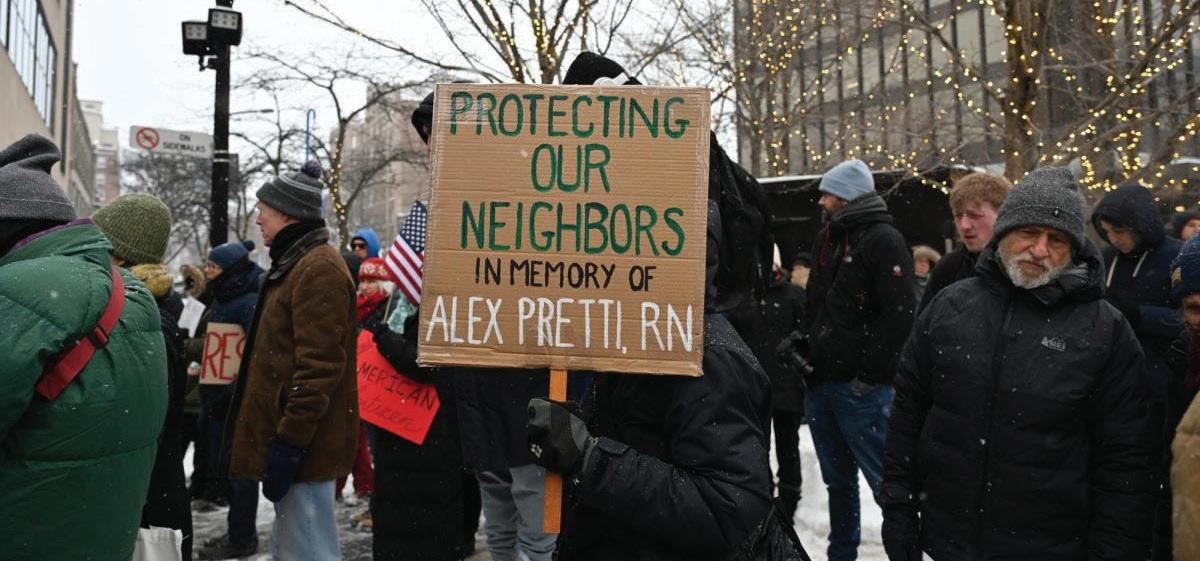
More than 100 community members gathered Sunday a ernoon at a snowy Fountain Square for a vigil one day a er Immigration and Customs Enforcement agents shot and killed a man in Minneapolis.
e man was identi ed as Alex Pre i, a 37-year-old intensive care nurse. Video footage from a witness and independently veri ed by e New York Times shows Pre i holding a phone during the shooting, contradicting a Department of Homeland Security X statement claiming ICE agents tried to disarm Pre i and shot him in self-defense.
e Times has veri ed videos showing the agents removing a gun from Pre i’s person before the shooting. Videos veri ed by e Times also showed that Pre i did not draw the weapon. Minneapolis has witnessed increased federal immigration enforcement in recent weeks, and Pre i is the second person and U.S. citizen ICE agents have killed in the city this month. e rst was 37-year-old Renee Nicole Good, whom agents fatally shot three weeks ago.
Good’s death prompted a similar emergency vigil Jan. 8, organized by Evanston-based activist group Pink

Poster Club. e organization also arranged Sunday’s protest alongside Evanston Latinos, Indivisible Evanston and Sanctuary Evanston. Sunday’s vigil was “intentional in upli ing” Evanston’s Latino community, Evanston Latinos Executive Director Ricardo Villalobos said.
Villalobos said Sunday’s programming of songs and speeches, done in both English and Spanish, aimed to showcase Latino culture. Toward the protest’s end, he took the stage with his guitar to perform a song in Spanish.
“People being impacted are people who sometimes don’t have a voice,” Villalobos told e Daily. “We want to make sure that the voices re ect the community being impacted.”
In addition to acknowledging Pre i and Good, Villalobos spoke about Liam Conejo Ramos, a ve-year-old boy from suburban Minneapolis who was detained alongside his father, as well as several victims who have died in ICE custody.
State Sen. Mike Simmons (D-Chicago) and Mayor Daniel Biss, both running for Illinois’ 9th Congressional District seat, stood among attendees at Fountain Square. Both candidates have called for ICE to be abolished.
Simmons told e Daily that President Donald Trump should be impeached and private prisons
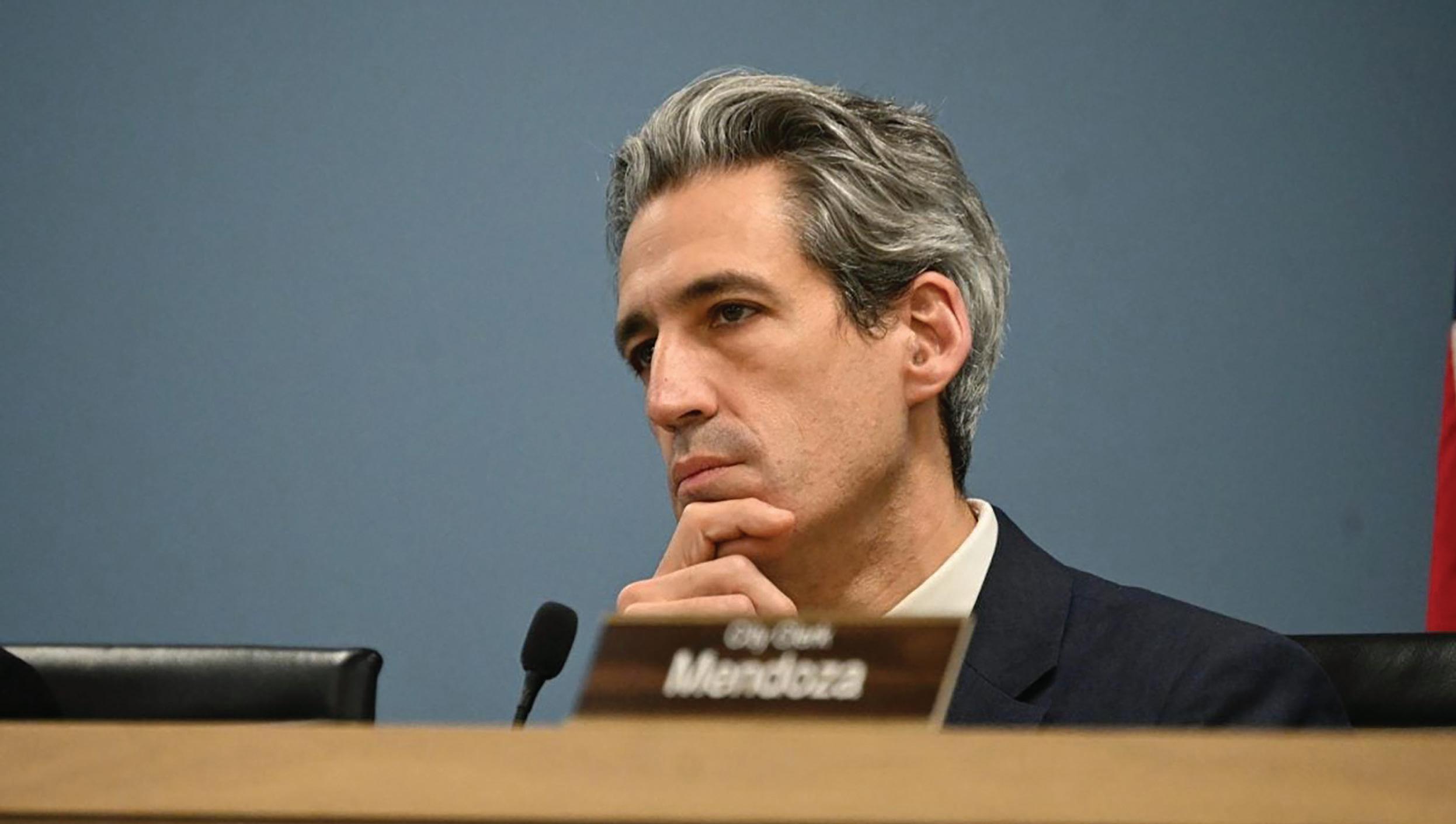
Yong-Yu Huang/The Daily Northwestern Mayor Daniel Biss called ICE’s actions a “campaign of terror” in an interview with The Daily during Sunday’s vigil.
holding abducted individuals should be abolished.
“I’m out here because I’m outraged, and Evanstonians are outraged at the fascist takeover of our country, where we’re seeing coldblooded murders in the streets,” he said.
Biss called ICE’s actions a “campaign of terror” and acknowledged that “everyone’s trying to gure out what they can do” in an interview with e Daily.
“We need to match their escalating violence with escalating nonviolent resistance everywhere we possibly can,” Biss said.
A pair of Northwestern students at the vigil, including Weinberg sophomore Sophie Beveridge, called on their classmates to engage more with community issues.
As they took the stage alongside a fellow a endee to lead the crowd in song, they pointed out how few
NU students a ended the event.
“We’ve been talking about how our campus feels so quiet,” Beveridge told e Daily. “I feel like it’s very easy to feel removed from what’s going on in the world and in this country.”
Beveridge said she and her classmates have begun brainstorming volunteer and fundraising activities to promote civic engagement among NU students, particularly those including art and music.
Chicago resident Lore a Martin stood among the chorus of a endees that accompanied performers on Sunday. Despite not speaking Spanish, Martin said the songs struck a chord.
“We didn’t know what it meant, but we knew what it felt like,” Martin said.
i.jacob@dailynorthwestern.com desireeluo2028@u.northwestern.edu
When Envision Evanston was rst introduced, city ocials presented the initiative as a broad e ort to update the city’s long-term planning framework and rewrite its zoning code. e proposal quickly drew criticism
» See COUNCIL , page 11
Medill o ers loan help to graduates
Collins said the program re ects Medill’s values of supporting local news journalism and “that there is somebody covering those stories.”
By TAARIQ AHMED
e Medill School of Journalism will join the Columbia Journalism School’s loan assistance campaign starting in 2026. e campaign will be available for graduate alumni who are working for a U.S. local news organization.
e Loan Repayment Assistance Program aims to support graduate alumni by repaying student loans they borrowed to fund their Medill education. Originating at Columbia, it is funded by the Knight Foundation.
Expansion of the program comes as local news organizations face increasing scal challenges. e 2025 Medill State of Local News Report, run by Medill’s Local News Initiative, found that the number of local newspapers continues to decline.
Julie Collins, Medill assistant dean of graduate admissions & nancial aid, said L P allows local news organizations to recruit and retain journalists interested in working for them.
“It almost goes hand in hand,” Collins said. “We’re encouraging students to consider local news and public interest reporting as a career path, but we’re, in a way, supporting local news organizations that have top-tier journalists reporting for those news organizations. It’s a full circle.”
When a student graduates, Collins said they receive a notication about whether they are working for or have accepted a role at a local news organization that quali es for L P, along with information about applications. Graduate alumni are eligible to apply within ve years of their graduation date. She also said the program aims to encourage graduate students to “broaden their lens” to local news organizations when it comes to job searches. Mackenzie Warren (Medill ’00), interim executive director of the Local News Initiative, said L P combats limitations of “who can a ord to be a journalist.”
“To get a classical journalism education at a place like Medill or Columbia, that’s an investment
Sophie Baker/The Daily Northwestern
Evanston critics, the housing dispute was inseparable from broader criticism of Biss’ leadership.
DPOE declines to endorse in key primary races
By JACK BAKER and SOPHIE BAKER daily senior staffers @jdowb2005
The Democratic Party of Evanston declined to endorse a candidate in the crowded race to represent Illinois’ 9th Congressional District on Sunday after no contender secured the two-thirds majority of dues-paying members required for the party’s backing.
Mayor Daniel Biss led the pack with 53% of the vote among members, followed by State Sen. Laura Fine (D-Glenview) with 17%. Progressive content creator Kat Abughazaleh secured 10% of the vote.
In a statement to The Daily on Sunday, Biss wrote that he’s “humbled to have earned majority support among the candidates for Congress.”
“We’re building the strongest locally-supported campaign in this race, and I look forward to growing our grassroots movement as we approach March 17,” Biss wrote.
The DPOE also declined to endorse candidates in races for Illinois Senate and U.S. Senate, but attorney Rachel Ruttenberg and Lieutenant Gov. Juliana Stratton received the most support in their respective races.
Members gathered for an endorsement session at the Unitarian Church of Evanston on Saturday, hearing from party officials and candidates in all three races.
Leading congressional candidates condemn federal immigration enforcement
The fatal shooting of Alex Pretti, a 37-year-old Minneapolis resident, by federal agents in Minneapolis on Saturday morning loomed large over the event, coming just weeks after an Immigration and Customs Enforcement officer killed Renee Nicole Good in the city.
“Listen, they killed somebody again today,” Biss said. “This is what’s at stake in this moment. This is what we are dealing with as a people — the lawlessness, the escalating violence, the lies.”
Biss added he is the only candidate “who is winning fights for our values inside of government” as well as “out in the streets.”
In her remarks, Abughazaleh said that although she would “genuinely love” to talk about other policy priorities, she wants and needs to discuss ICE activity.
She referenced her October federal indictment tied to protest activities at the ICE detention facility in Broadview, Illinois, calling her actions “the bare minimum for anyone trying to run for office.” She has since pleaded not guilty to the charges.
Abughazaleh said demanding to abolish ICE “isn’t enough” and challenged her opponents to commit to prosecuting Trump administration officials.
“Maybe I am strange for thinking this, but I don’t know how any Democrat can talk to any voters today and mention anything else but this,” Abughazaleh said. “We can all speak the lines. We can go through all of the motions, but it is not enough anymore.”
Fine called ICE “out of control” and labeled its actions “unacceptable.” She highlighted her support for Illinois’ Safety and Action for Liberation Together Act, legislation she said mandates federal agents “unmask” and identify themselves during operations in the state.
Leading candidates for U.S. Senate, U.S. Reps. Robin Kelly (D-Matteson) and Raja Krishnamoorthi (D-Naperville), also denounced the shooting at Saturday’s event. Stratton did not attend the endorsement session.
“I’m horrified and saddened,” Kelly told The Daily following her speech. “Is this my country?”
Kelly introduced articles of impeachment against Department of Homeland Security Secretary Kristi Noem in mid-January. Over 100 congresspeople, including Krishnamoorthi, have since signed onto the impeachment resolution.
While denouncing Saturday’s shooting, Krishnamoorthi was heckled by an audience member.
In December, the Chicago Sun-Times first reported that Krishnamoorthi accepted more than $90,000 in contributions from conservative donors, including the chief technology officer for Palantir, an ICE contractor. Krishnamoorthi later told the SunTimes he donated contributions from Palantir’s CTO to unnamed immigrant rights groups.
Appearing to reference those donations and the murder of Renee Nicole Good, the audience member shouted, “Shame on you. Her blood is on your hands.”
Still, Krishnamoorthi reiterated his criticism of Saturday’s shooting, adding he would not vote “for a single dollar for DHS” and calling for Noem’s impeachment.
“It’s outrageous, unacceptable,” Krishnamoorthi told The Daily. “To me, it looked like murder.”
Balloting process sparks controversy
The endorsement session followed a rocky start to the DPOE’s voting process, which included both four days of voting via Election Runner, an online balloting software. Paper ballots were also available to members during Saturday’s event.
In total, 279 people voted — about 80% of DPOE’s membership.
Voting began Wednesday morning, but the online ballot initially left off two candidates: economist Jeff Cohen and Chicago resident Mark Arnold Fredrickson.
The DPOE caught the mistake and restarted its balloting process that day, according to Ryan Flynn, the party’s secretary.
Candidates could also submit videos addressing DPOE members. However, ballots distributed to members mistakenly indicated that Abughazaleh and some other candidates “did not submit” a video.
Flynn said that although Abughazaleh had submitted a video on time and the DPOE confirmed receipt, a processing “mistake” prevented it from appearing on the electronic ballot.
By the time the party realized this error, Flynn explained, “many dozens had already voted,” and party officials did not want to restart balloting a second time. Abughazaleh’s video was ultimately posted to the DPOE’s YouTube channel, along with submissions from other candidates, on Thursday.
In an Instagram post Friday evening, Abughazaleh wrote, “the DPOE misrepresented us on the ballot, didn’t tell us, and still has not issued a formal correction.”
The party sent an email to members that night apologizing for the mistake but refrained from naming specific candidates who were affected, according to Flynn. He explained party officials didn’t want to “create additional chaos” or give one candidate a moment in “the spotlight.”
He emphasized that the video submissions were
purely supplemental, labeling Saturday’s in-person speeches “the main event.”
“We’re giving our membership extra through the YouTube channel,” Flynn said. “This does not in any way, shape, or form preclude our members from voting or not voting for any candidate.”
But in an interview with The Daily at Saturday’s endorsement session, Abughazaleh said she worried members would react negatively to the ballot’s language and explained she wanted to “correct the record.”
“If I were someone voting on that, I would think, ‘Wow, that candidate doesn’t care enough to submit the video,’” she said. “Even if it’s just a mistake, it’s an issue, considering this is a democratic process.”
A spokesperson for the Abughazaleh campaign added, “The damage has been done.”
Attendees look to the future
While the DPOE declined to endorse a candidate in the congressional race, U.S. Rep. Jan Schakowsky (D-Evanston), who announced her retirement in May, encouraged attendees to vote — and to support Biss.
“I’ve said, ‘Daniel, you have to be in my shoes, which means you better be a badass when you get to the Congress of the United States and caring for all of the people in the district,’” Schakowsky said at the event. “I feel very sure that that’s going to happen.” Illinois House Majority Leader and State Rep. Robyn Gabel (D-Evanston), who acted as the DPOE’s proxy chairperson during the event, later clarified that members are not allowed to endorse specific candidates from the podium, according to the party’s bylaws.
Meanwhile, Evanston resident Loretta Jackson, who has voted for Biss in multiple elections and is considering several candidates for Congress this year, said she’s eager for “change” and added that combatting federal immigration enforcement is her top priority.
“Who would be willing to step up and confront ICE?” she said. “I would see myself supporting someone that is not afraid, someone that is able to speak up and speak out.”
j.baker@dailynorthwestern.com
s.baker@dailynorthwestern.com
















Join Us











ON CAMPUS
ASG voter turnout legislation stalls
By ANNA CAPUTO the daily northwestern
e Associated Student Government proposed legislation around a year ago to increase voter turnout among students in the McCormick School of Engineering, which has had historically low voter turnout. e legislation has yet to be implemented, though it may take e ect in the upcoming presidential election.
e legislation states an ASG representative will sit in the Technological Institute lobby and encourage students to vote. McCormick senior Ryan Beam, who created the legislation, said that although two rounds of elections have occurred since its passage, it has yet to be implemented due to a lack of candidates for McCormick Senate positions and a shortage of current ASG members available to sta the tables.
“( e legislation) hasn’t really done much yet because of circumstances,” Beam said. “It could starting this presidential election, and hopefully I can nd someone to continue it once I’ve graduated. Hopefully we can get some people in Tech who will get people to vote.”
In the 2024 ASG election, only 101 votes were cast by McCormick students, less than 5% of the total school population.
Communication senior Ryan Lien, who co-sponsored the bill, said he has seen a similar pattern of low turnout in the School of Communication.
“I could see something like this expanding to other schools,” Lien said. “Or ASG just having more tabling for voting in lobbies of various buildings. ere’s de nitely multiple schools that need it.” Beam also said low voter turnout could be due to a lack of candidates. A er the last Senate election, only three of the four McCormick Senate seats were lled. If elections are not competitive, Beam said people might not think voting is important.
McCormick freshman Esha Chandra lled a vacant McCormick seat in a special election last October. She said low voter turnout and low ASG participation from McCormick students could be

due to their focus on extracurriculars related to STEM rather than student government.
“(ASG is) people who are interested in maybe going to law or pre-law, people who have an interest in social advocacy, and for whatever reason, those types of people just aren’t McCormick students,” Beam said.
Although McCormick students may not value ASG as much as students in other schools might, Beam said it’s still important to vote and to have someone who can represent students’ voices, especially with Northwestern’s involvement in national politics.

Lien said if students don’t vote, they could experience a diminished student life experience and student voice. He said ASG allocates thousands of dollars to clubs throughout the year and voting gives students more say in where that money goes.
“When a school lacks a senator or multiple senators, those students’ voices are less impactful in funding processes, meaning that money isn’t allocated as e ciently or e ectively as it possibly could be,” Lien said.
annacaputo2029@u.northwestern.edu
The Daily Northwestern www.dailynorthwestern.com
Editor in Chief Emily Lichty eic@dailynorthwestern.com
General Manager Stacia Campbell stacia@dailynorthwestern.com
Holly and John Madigan Newsroom
Phone | 847.491.3222
Campus desk campus@dailynorthwestern.com
City desk city@dailynorthwestern.com
Sports desk sports@dailynorthwestern.com
Ad Office | 847.491.7206 spc-compshop@northwestern.edu
THE DAILY NORTHWESTERN is printed each Wednesday during the academic year, except vacation periods, the two weeks preceding them and once during August, by Students Publishing Co., Inc. of Northwestern University, 1999 Campus Drive, Evanston, IL 60208. All news is published 24/7 online at Dailynorthwestern.com.
First copy of THE DAILY is free, additional copies are 50 cents. All material published herein, except advertising or where indicated otherwise, is Copyright 2025 THE DAILY NORTHWESTERN and protected under the “work made for hire” and “periodical publication” clauses of copyright law.
POSTMASTER: Send address changes to THE DAILY NORTHWESTERN, 1999 Campus Drive, Evanston, IL 60208. Subscriptions are $100 for the academic year. THE DAILY NORTHWESTERN is not responsible for more than one incorrect ad insertion. Check out DAILYNORTHWESTERN.COM for breaking
Illustration by Charlotte Nagel
In the 2024 ASG election, only 101 votes were cast by McCormick students, less than 5% of the total school population.
A&E ARTS AND ENTERTAINMENT

The Dolphin Show’s ‘Footloose’ features vocal talents
By THOMAS HURLEY the daily northwestern
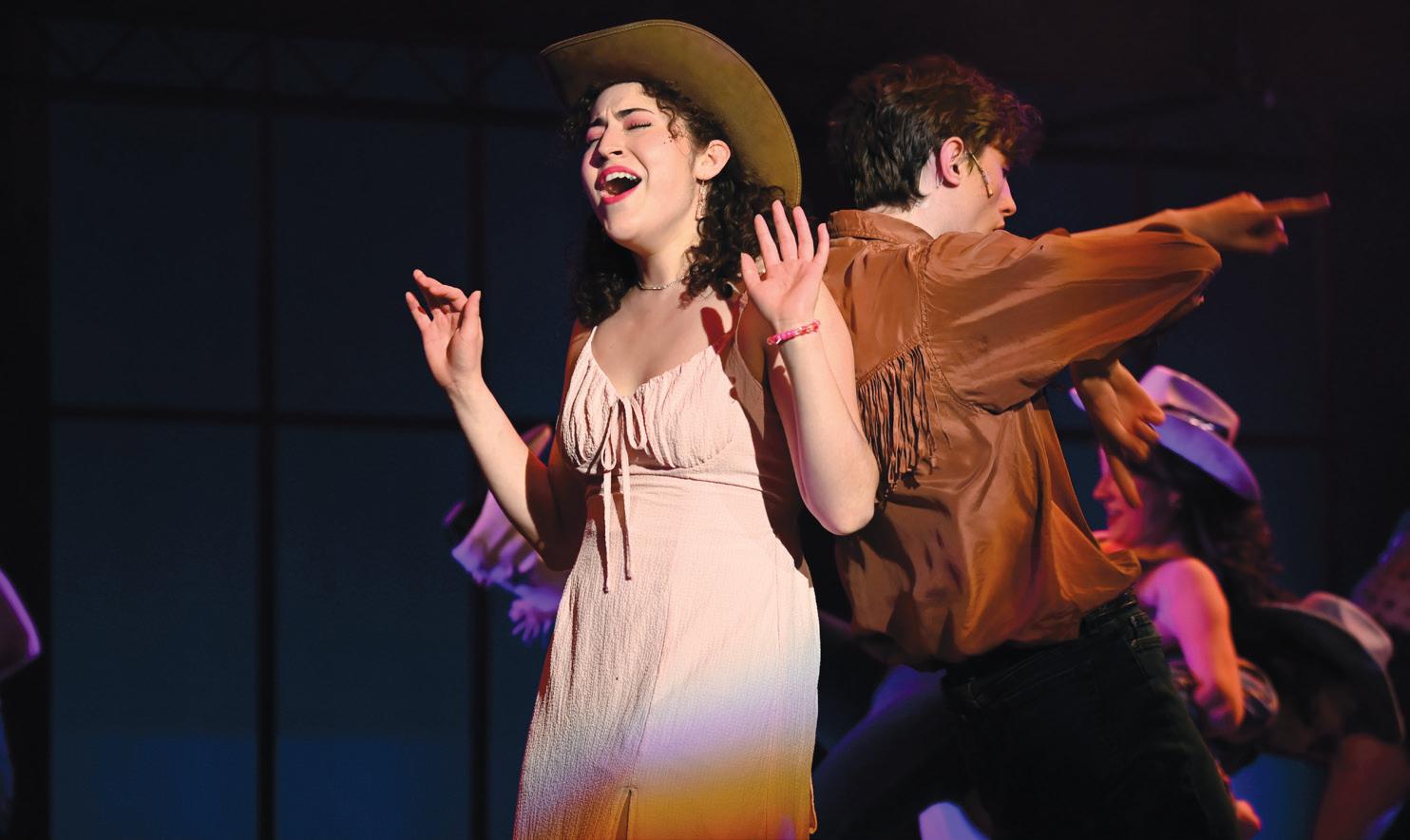
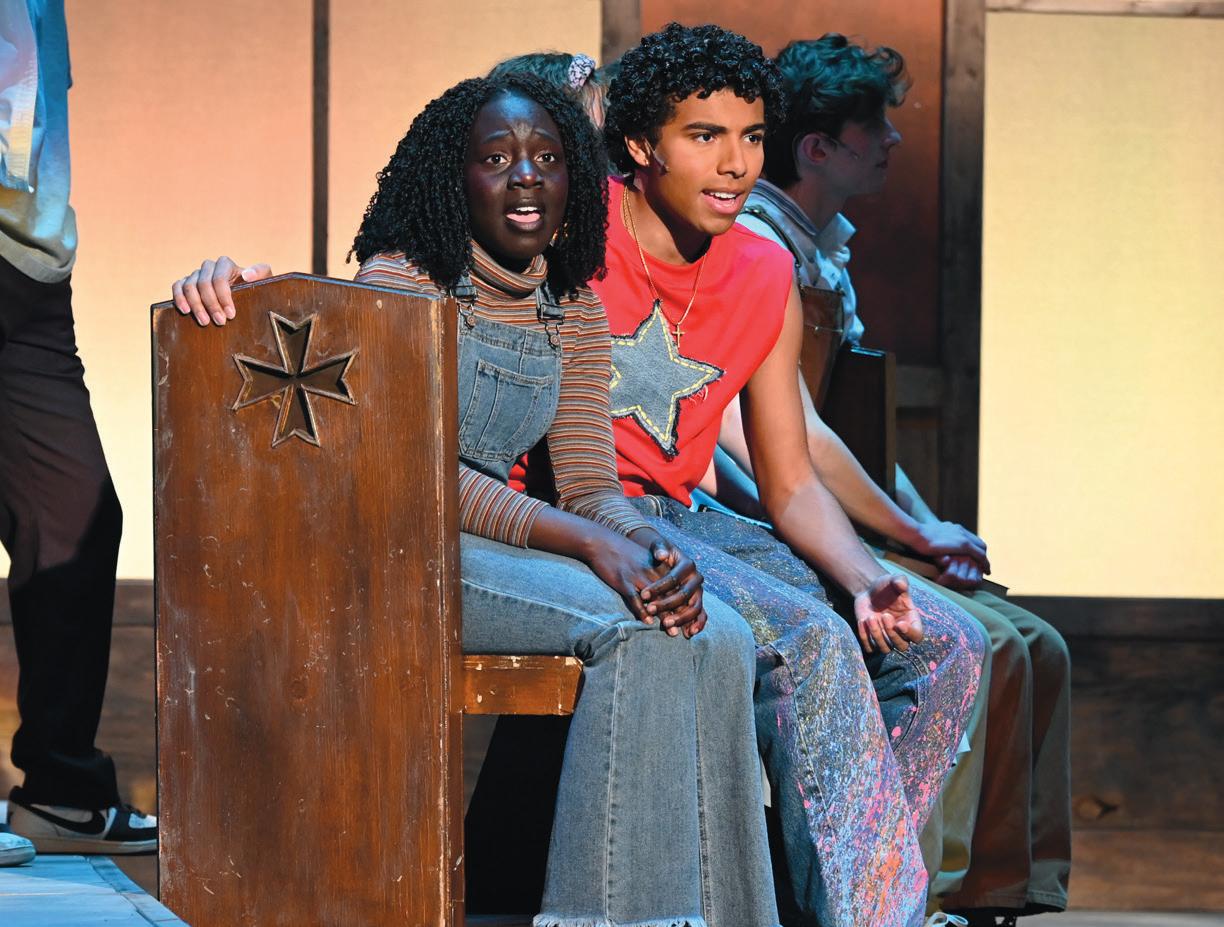
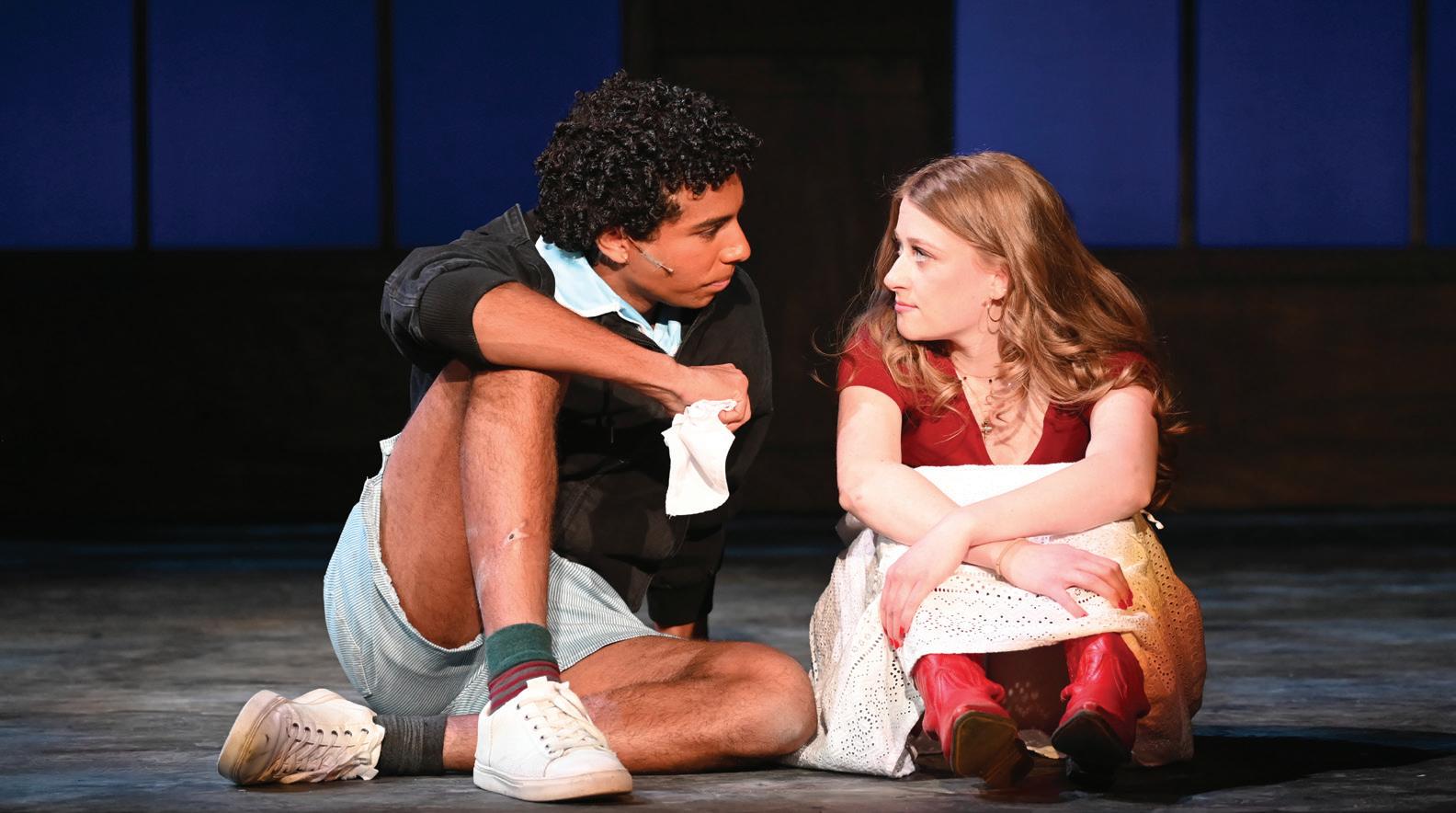
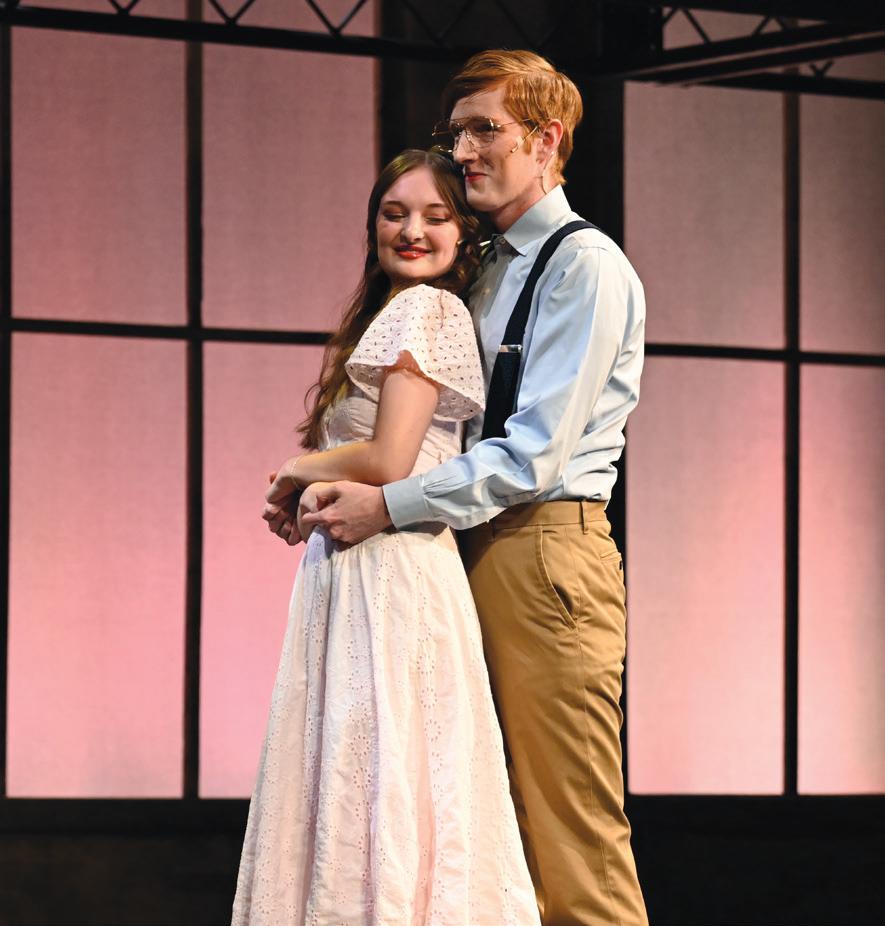
The Dolphin Show’s rendition of “Footloose” opened in Cahn Auditorium Friday, rewarding audiences with a fun-packed, heartfelt performance of professional caliber.
“Footloose” tells the story of Ren (Bienen and Medill junior Mackenzie Kirkwood), a Chicago teenager who moves to the small town of Bomont and struggles with the community’s strict rules, including the illegalization of dancing.
Reverend Moore (Communication senior Garraway Nance), Bomont’s influential traditionalist pastor, personifies this conflict, especially after Ren falls for his daughter, Ariel (Communication junior Anna Rigo).
Kirkwood said he moved to the United States at the age of eight and relates to Ren’s struggles in Bomont.
“I was able to use those feelings of being an outsider and learning to assimilate into a new culture for the show,” he said.
The Dolphin Show has a long history, with “Footloose” being its 83rd annual performance.
It is the largest student-produced musical in the country, featuring over 150 student actors, musicians, crew members, and other contributors.
“Literally every single aspect of it is done by a
student, and I just think that’s so impressive and so telling of the drive of Northwestern theater students,” said Communication senior Sarah Novak, who plays Vi, Reverend Moore’s wife.
While talent and passion are visible throughout the production, they are especially prominent in the energized, memorable dancing.
Communication junior Myah Shelton and Communication senior Marcella Tracy’s choreography is at times complex and at others simple. But, it is always central to a musical that is, at its core, about dancing.
The high-quality execution of the choreography might suggest that the cast is comprised of trained dancers. However, it was a new skill for some actors.
Kirkwood said, outside of a couple of years of tap dancing around the age of six, he did not have any dancing experience.
“I was petrified to take this role because I was like, ‘This is so much dancing,’” he said.
To prepare for the role, Kirkwood practiced both in and out of rehearsal since November, eventually bringing his moves to the “natural” appearance he wanted for his character.
Rigo said she had a dance injury about a year ago and had to undergo surgery at the end of the summer, making “Footloose” her first show she’s danced in since.
“The part that I honestly love the most is it feels like a triumphant return for me to get to dance so much and do the amazing choreography,” she said.
With instantly recognizable hits such as the title track and “Let’s Hear It for the Boy,” the musical is filled with ’80s pop rock that is suited to Ren’s story.
In “I Can’t Stand Still,” Kirkwood’s vocals remind the audience early in the show that despite being an upbeat, dance-centric show, “Footloose” has plenty of moments for vocalists to shine.
Kirkwood is majoring in opera, but he said he finds it important to have versatility as a performing artist.
“It’s like ’80s pop rock, so that just completely goes directly in the opposite way of all my training,” he said.
“But, I mean, it’s interesting — a lot of my classical opera technique does help support me to belt these rock ballads in ‘Footloose.’”
The entire ensemble’s vocals are showcased in full in large numbers involving the church choir.
Rigo’s singing is also spotlighted throughout the show, and she brings out the emotions of her songs to convey her character’s complex story.
“(Ariel is) a character who puts on a lot of different masks based on who she’s around but is just struggling with a lot of grief deep down under all that,” she said.
The singing and dancing are complemented by the crew’s stage usage.
The unique location allows for certain aspects that aren’t compatible with the theater department’s other venues, including a massive bridge across the top of the set and eye-catching signs. The signs serve as simple but effective scene transitions, indicating the characters’
‘How Did I Get Here?’ evolves Louis
By ELIZA MARTIN
The people said that 2016 is back, and Louis Tomlinson gave them what they wanted with an album that echoes his 2010s boy band origins while maturing his solo portfolio.
Released on Friday, “How Did I Get Here?” is the third solo project by the English singer-songwriter, who rose to fame as a member of pop group One Direction.
Tomlinson has openly struggled with imposter syndrome throughout his career. “How Did I Get Here?” is clearly a step forward, with lyrics, vocals and instrumentals coming together in a more confident, realized sound.
This renewed self-assurance is evident from the moment you hit play. Along with adding to the theme of One Direction stars naming songs after fruits, “Lemonade” is an upbeat, guitar-heavy song with echoed backing vocals underlying Tomlinson’s voice. The poprock number excellently sets the tone for the album.
The album adopts somewhat of a boy band feel, with most songs including catchy choruses, upbeat accompaniments and fairly simple lyrics. It’s clear that Tomlinson has nearly perfected this formula — the tracks fit together cohesively rather than coming across as copy-pasted versions of each other.
The mix on every song also sounds well-balanced, giving both instrumentals and vocals space to shine, which only adds to the cohesion.
Amplified bass lines add funk to the rough “Imposter” and groove to the laid-back “Sunflowers.” Meanwhile, “Last Night” lets drums and percussion take center stage, even featuring what sounds like a tambourine.
The instruments not only complement Tomlinson’s songwriting, but add dimension to the album’s genres. Guitar parts on “Palaces” and “Broken Bones” create an alternative vibe that differentiates itself from the strictly-pop tracks.
Accompaniments slowly build to amplify “Dark To Light,” a song exploring grief. Some speculate that this song is a tribute to Tomlinson’s former bandmate Liam Payne, with lyrics like “I wish you could see how you look in my eyes / One more time.” Tomlinson chooses to leave the song’s meaning ambiguous, allowing the powerful words and backtracks to speak for themselves.
In addition to being talented producers, Tomlinson and “How Did I Get Here?” co-creators know when to end a song. Most tracks on the album run between 2:30 and 3:00 minutes, getting listeners hooked on the catchy lyrics and riffs without letting the choruses overstay their welcome.
The album as a whole also ends on a beautiful note. Tomlinson reflects on his musical journey and battles
location, whether it be a gas station, burger joint or Reverend Moore’s church.
“There’s a lot of things flying in for this show, which is a lot of fun, and it’s fun to call as well. But, it’s also something where you really have to pay attention when you’re calling it,” Communication junior and production stage manager Ella Poon said. “When you get it right, it’s really satisfying.”
Poon credited the scenic designer, Communication senior Nic Lam, for creating “incredible” signs, as well as the technical directors for helping bring them to life. She said the production process started last spring, but some people on the team were putting in over 40 hours a week for the two weeks leading up to the show.
“It’s really exciting when you get to see it in reality for the first time,” she said.
The end result is a two-hour runtime of classic musical theater with five performances, three of which took place last weekend.
There are two more chances to see the show, Friday and Saturday at 7:30 p.m.
“‘Footloose,’ at the end of the day, it’s just such a joyful experience, for the cast, for the crew,” Novak said. “It’s genuinely been so lovely and I just really invite people to come to closing weekend because it’s just a blast.”
thomashurley2029@u.northwestern.edu

Thomas Hurley/The Daily Northwestern
Illustration by Chelsea Lim Louis Tomlinson’s ‘How Did I Get Here?’ has a cohesive sound and allows him to face imposter syndrome head on.
‘Clicka’ showcases Mexican American experience
By ALEXANDER HERNANDEZ GONZALEZ daily senior staffer @alexbespeakin
This review contains spoilers.
When I heard that “Clika” was backed by Los Angeles-based Mexican American record label Rancho Humilde, I knew I had to keep tabs on the film. However, after passing its August release date, I didn’t hear anything about “Clika” until the new year. Directed by Michael Greene and released on Jan. 23, reviews from critics online bashed the film’s storyline, promotion and execution. Between inspiration from classics like “8 Mile,” “Friday” and “Boyz n the Hood” and giving Latinos more opportunities to be in the film industry, I was confused as to the existence of this hate-train.
The film takes place in Yuba City, California, a well-known agricultural hub in the Central Valley. Chito (JayDee) is a migrant who works in the fields picking peaches with his homies Flaco (Uziel Pantoja Delgado) and Blunt (Daniel “DoKnow” Lopez). However, an unexpected rise to fame on social media brings conflict to Chito’s personal life. So, the only thing that I could do was follow my instinct, head to the cinema and watch the film for myself.
Winter gear, a half-hour commute to AMC Theatres and five minutes to spare before trailers commenced: I was ready to see why “Clika” was receiving much hate from fans and strangers alike. Nine movie-goers, including myself, sat towards the top row and held our own predictions.
As the film commenced, a quick tour of the city showed its vital sources of economic value; busy factories and farms commencing operations for the day. At 3:30 a.m., an iPhone alarm wakes Chito up, and a bedroom showcases both the Mexico and United States flags.
After putting on workwear and kissing his sleeping mother, Mari (Nana Ponceleon), goodbye, Chito walks to the peach farm with a lit cigarette as the sun begins to rise. Labor under a hot sun, singing corridos tumbados and writing lyrics in a navy blue notebook showcases Chito’s dream of becoming a prominent singer in the música mexicana scene.
Upon bumping into his uncle, Alfredo (Cristian “Concrete” Gutierrez), however, familial struggles are revealed.
Chito shares that the home, once owned by his now-deceased grandfather, doesn’t have a stable income, and the bank is ready to foreclose on the generational location. The solution to the problem? Execute “runs,” or trafficking loads of marijuana with Alfredo across the state to quickly make money.
Thankfully, the problems are addressed via the lucrative business, and Chito’s personal life is vastly improved. Shooting a music video that goes viral, dating veterinarian student Candy (Laura Lopez) and a meeting with music executives that ultimately turns out well for the artist paints the picture well.
However, if there were no conflict in the film, then it would clearly be inauthentic and, frankly, boring. Although this section came in the later half of “Clika,” it offered sadness, shock and anger for players like Chito and Alfredo, who are both involved
in a life-or-death situation after a 400-pound deal.
After stepping away from the marijuana business, Chito gives his all to writing and recording music while rebuilding his relationships with Mari, Chuy (Josh Benitez), Candy and Alfredo. Brief moments of live performances and photographs with loved ones beautifully wrap up the film.
Tracks from Rancho Humilde artists such as Fuerza Regida, Junior H and Los Farmerz brought a smile to my face. Not only are the songs recognizable, but they reminded me of late nights with friends, live corridos tumbiados and a whole lot of positive energy.
As the leadman of Herencia de Patrones, whose tracks were prominently featured, Jay Dee’s acting debut is quite impressive, as he evokes poignant emotions of joy, sadness and panic through his storyline. Pantoja’s skills as a guitarist and Lopez’s comedic presence add immensely to the trio’s dichotomy throughout the film, especially when moments of tension are present.
Do we have to strictly compare “Clika” to its inspirations? Absolutely not. They can simultaneously have similar and different elements to them. No need to shame first-time actors or even dogpile on executive producer Jimmy Humilde’s responses to criticism.
The mere fact that we have a film like “Clika,” that loosely models Jay Dee’s experience from farmlands to fame, is beautiful. As an avid listener of corridos tumbados and fan of Rancho Humilde artists, the film showcases the ambition Mexican Americans hold in the U.S., whether they are in the music space or not.

At its core, “Clika” is a love letter to the hustlers, workers and the next generation seeking to chase their own idea of the American dream in this country. With the release of the album “El Mundo Es Tuyo” that is directly inspired by the film, I have one thing to say: son “Cosas De La Clica.”
a.hernandez.gonzalez@dailynorthwestern.com
Winter weather reshapes NU students’ fashion styles
By JASMINE LI the daily northwestern
With bone-chilling wind cutting across Sheridan Road, the journey to class for Northwestern students during the winter becomes an odyssey. At any moment, snow, slush or ice could blanket the sidewalks and a sunny afternoon can become frigid by evening.
Throughout the winter, dress choices are less about personal preference and more a strategic reflection of the harsh climate. Still, the cold doesn’t entirely eradicate campus fashion. Some students treat winter like a styling challenge, building a consistent “look.”
Some surrender to pure function and are content as long as they don’t freeze. And most land somewhere in the middle: balancing warmth and personal style, heavy coats on repeat, while accenting with small details — scarves, gloves, jewelry and color.
Certain students notice specific clothing pieces that have become an unofficial uniform around campus. Communication sophomore Shahmeer Mirza said he’s noticed a Burberry scarf “that’s like everywhere” and “in a lot of different colors.”
Weinberg first-year Justin Jia pointed to a different scarf trend. He’s repeatedly noticed a multicolored checked scarf like the one from Acne Studios. Jia also highlighted the presence of Canada Goose and their popular winter downcoats.
“I see all kinds of different styles, colors and lengths,” Jia said.
While making use of some trendy pieces, students still try to build their own unique look to stay warm while looking put-together.
Jia described his two winter looks: the “smartcasual” one for pre-professional days and the sweatshirt-and-hoodie version for everything else. In both, he ends up turning to the same piece: a good coat. “It’s almost like a protection layer now in Chicago,” he said.
By SIRI REDDY
senior staffer
This review contains spoilers.
In the book world, Colleen Hoover’s about as polarizing as an author can get. Some readers laud her as a literary powerhouse, a mainstay of the romance genre. Others consider her books — and her smarmy, often morally grey characters — altogether unbearable.
I consistently find myself in the latter camp. In fact, I vowed years ago to never spend money on a CoHo novel again after an utterly underwhelming experience reading her bestselling 2016 novel “It Ends With Us.”
But Hoover has returned after a roughly threeyear hiatus (and a Hollywood scandal) with “Woman Down.” Despite my reservations about her previous books, this so-called “twisty thriller” felt like too enticing of a read to pass up.
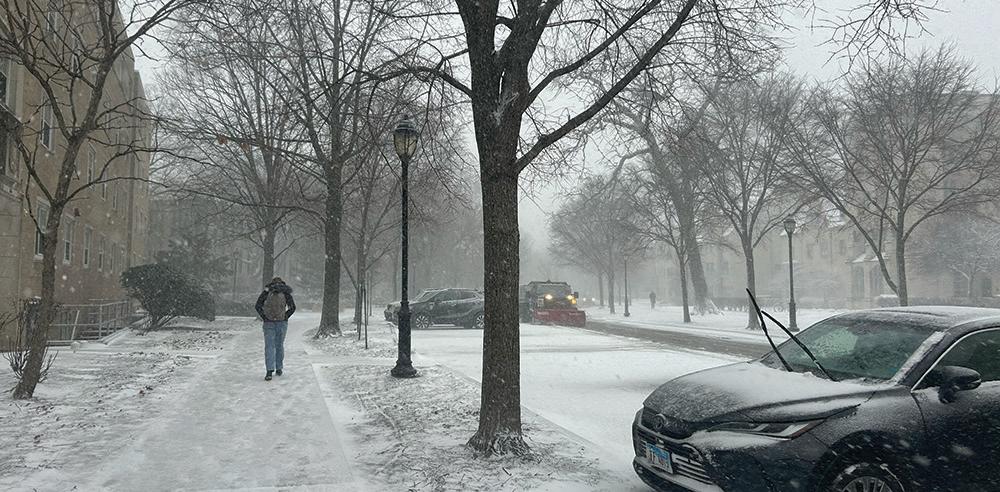
Mirza’s system is even more particular. He tends to look for his shortest jeans so the ends don’t get wet in the snow. He pairs those with a black puffer coat and his signature bright purple scarf.
Weinberg junior Seth Ye relies on heat technology. He prioritizes wearing a thermal underlayer in the cold for two reasons.
“Number one, it’s not affecting your fashion style because people are not seeing that,” Ye said. “And number two, if you’re wearing a high-tech underlayer, it will be very thin but still keep the heat within your body. So you can have more options for style.”
Released on Jan. 13, the novel follows renowned author Petra Rose. After her controversial book-tomovie adaptation sparks a viral online hate train against her, Rose retreats to a remote lakeside cabin, desperate to write the next best romantic suspense novel and return to her rightful place at the top of the charts.
Rose’s issue? She seems fundamentally unable to write about anything she hasn’t experienced herself. Her half-baked novel is about a woman having a torrid affair with a married police officer, and she just can’t get in the minds of the characters. Naturally, she then heads to Facebook to livestream her complaints to thousands of her fans.
The very next day, a mysterious married police officer named Saint shows up at Rose’s cabin to inquire about a nearby crime scene. Intrigued, he offers to help her with her “research.” As expected, a torrid affair ensues.
The novel is written in the straightforward, nofrills style that characterizes much of Hoover’s work. There’s pitifully little descriptive imagery, and the
Then there’s the wild-card strategy. Some students still dress like it’s September. Jia said he still sees some people wearing shorts.
Mirza says a particular choice haunts him. “Jorts. Jorts. Jorts,” Mirza said. “I cannot tell you the amount of people that I’ve seen just walking down Sheridan in jorts and like a parka.”
Of course, most winter wardrobe strategies have a breaking point — the temperature where people officially give up trying to look good.
Mirza said he stops negotiating with the cold at around 15 degrees Fahrenheit. Jia’s bar is lower: If
reader is often told outright about the nuances of the plot rather than left to come to conclusions themselves. It makes the novel a remarkably easy read, but also remarkably predictable. At times, it almost feels mind-numbing.
Saint and Rose are also endlessly frustrating to read about. Saint continuously crosses Rose’s boundaries over the course of the novel: He stands outside her window to watch her sleep, drives hours to brood outside her daughter’s birthday party and even breaks into her home to pretend to kidnap her.
Time after time, Rose forgives him. She continues to write off his behavior as part of their elaborate shared fantasy, even as the lines between roleplay and reality (with hints of responsible adult decisionmaking) blur.
In these moments, the book feels more like a toxic mafia-boss boyfriend daydream than a high-brow thriller. And given Rose is a married mother in her mid-thirties, it’s hard to expend much sympathy towards a situation she’s burrowing herself deeper into.
it drops to minus four degrees Fahrenheit, he said would “completely give up” and resort to wearing ski pants.
But even when students claim they prioritize comfort, the desire to look put-together doesn’t fully disappear. Mirza said outfits can be a morale boost, even if no one sees them under a coat.
“It’s going to help give me that kind of like, ‘You know what? I’m going to have a good day today and it’s ’cause I look good,’” he said.
jasmineli2029@u.northwestern.edu
I’ll be honest: It’s also difficult to review this novel without confronting the sheer similarities between Rose and Hoover.
Like Rose, Hoover is a prolific romance novelist. Like Rose, Hoover was a key player in a controversial book-to-movie adaptation. Like Rose, Hoover faced widespread criticism that pushed her offline and into writing her next book. Though she prefaces the novel by reminding the reader that Rose’s journey is not a reflection of her own, “Woman Down” feels like farcical fanfiction Hoover wrote about herself. It’s a condemnation of cancel culture, an exposé on the insanity of TikTok detectives and a plea for the reader to give more grace to downtrodden public figures. If this was her intent, “Woman Down” could’ve been a Notes app screenshot posted to her Instagram or a tell-all podcast episode on “Call Her Daddy.” As a novel, however, it falls flat — and reminds me why I swore off CoHo all those years ago.
s.reddy@dailynorthwestern.com
Illustration by Leyton Jackson
In approximately 82 minutes, “Clika” explores how the American dream can easily take turns for the best and worst for Mexican Americans.
Jasmine Li/The Daily Northwestern
Despite freezing temperatures, Northwestern students find ways to express their style.
OPINION
Margin Notes: Kids are mean. Well, so are college students


Over Winter Break, one of my cousins threw food at me a er we happily spun around the dance oor. He’d recently turned ve. What the hell happened?
Anyone who’s spent time with kids — whether siblings, cousins, family friends’ kids or campers you’re responsible for — knows that children can be odd cookies. Beyond their sweet mush of innocence, they can be pre y brutal.
Kids say mean things about your hair, clock your questionable clothing choices, expose the unspoken tension between you and a family friend, rummage through your purse or, on a particularly inspired day, throw paint at you. It’s true, that a er a certain age, the frequency by which kids start blowing raspberries at you decreases. But there’s a kind of mercilessness phase of childhood that nobody really talks about: being college students. At rst, it seems unfair to equate grown adults — people who vote, (likely) pay taxes and can help themselves to their own plate of
food — with a bunch of vile preschoolers. And yet the more time I spend in college, the more I realize that our habits as children merely manifest in more discreet versions of the same exclusion pa erns and bad manners.
Nasty toilet seats, clogged drains, odd smells shi ing through the vents and, if you’ve ever been to a female-only bathroom, hair — lots and lots of it — stuck on unreachable parts of the wall. Evidently, college life forces us back into our old preschool habits of needing somebody to pick a er us.
Hygiene jokes aside, wandering through corridors at club events or a empting to make friends at Greek house parties, you’ll start to notice the scariest thing of all: College is a playground. Preprofessional groups, networking clubs, publications, sororities and fraternities. It’s a game of who plays with who, and we love it. O en, we call it “recruitment.” ink about it like that scene from “Mean Girls” where Cady gets her rst hallway tour. On the right, there’s the people that’ll be willing to play with you and toss the ball over. Next, there are the people you probably should not invite to your game, but it’s ne if you join theirs.
Somewhere else, there are the people you’d probably like to play with, but have to go
through an extensive process to get an invite. And lastly, there’s the people you de nitely should stay away from and — someone will warn you about this — you must dodge their frisbee pass like the devil.
While our new college playground is in no way as violent as that of a bunch of 6-year-olds (thankfully, we don’t o en see people pushing one another from slides or throwing punches), it remains a stressful, obnoxious place.
College can be brutal, too. It’s a world of backhanded compliments, inconsiderate alarm blasts, inexistent dining hall etique e, passiveaggressive Snapchat texts and extraneous, multistep club applications. e truth is, we’re all complicit in it. We select our friend groups, “rush” our societies and later shu e through freshmen to take over our executive positions. We drop our plates in the dining hall, throw copy paper in the toilet and li er when it’s convenient. We all have at least one person we’ve spoken badly about with our friends.
But the thing about playgrounds — real ones — is that cruelty is rarely the end of the story. Kids cry, sulk and occasionally rip each other’s Barbie heads o , but they make up minutes later over a shared juice box. ey don’t keep score for long. ey forget quickly, forgive
easily and return to play as if nothing happened. eir harshness exists alongside an impressive capacity for gentleness — a so ness that reappears as quickly as it disappears. As much as they are mean, kids can be incredibly kind.
Maybe we need to give each other some of that same grace. We are still learning how to exist alongside one another, how to share space, how to include without posturing and how to compete without excluding.
Perhaps we have something to learn from “mean” kids. Our bad manners don’t mean we’re doomed. ey mean we’re un nished — it’s what our parents liked to call our “growth period.”
Maybe, like kids on a playground, we’re still growing, albeit awkwardly, into the people we will be a er graduation. And growing up is hard.
It’s no wonder we don’t want to do it alone.
Alexia Sextou is a Medill sophomore and author of “Margin Notes.” She can be contacted at alexiasextou2028@u.northwestern.edu. If you would like to respond publicly to this op-ed, send a Le er to the Editor to opinion@dailynorthwestern.com. e views expressed in this piece do not necessarily re ect the views of all sta members of The Daily Northwestern.
Gender and Sexuality Studies Program Director: In solidarity
PAOLA ZAMPERINI
OP-ED CONTRIBUTOR
The Gender and Sexuality Studies Program wishes to make clear to our community that as scholars of gender and sexuality, our academic unit does not concur with or condone the definition of sex nor gender put forth by the Executive Order, “Defending Women from Gender Ideology Extremism and Restoring Biological Truth to the Federal Government” issued in January 2025 and cited in Note K of Northwestern’s agreement with the federal government.
The central claims the order makes — that “biological” sex is immutable and defined at conception, that gender identity has no bearing on sex and that existing beyond a
The summer before I arrived in Evanston, I never considered this question. I had always thought friendship was the same everywhere. The qualities that made a friend were universal: thoughtful, loyal and always wanting the best for the other. Some people at Northwestern do view it that way, but I’ve met just as many people who have much different criteria.
At NU, I’ve found that friendship follows certain standards: Agreement upon a shared set of values, social stepping stones and trueblue friendships.
1. Agreement upon a shared set of values
Can you be friends with someone you disagree with? For many here, the answer is no. A difference in opinion on policy, religion or the candidate you choose to vote for can destroy your friendships or your reputation entirely among a small contingent of the undergraduate population.
Some friend groups or individuals on this campus first require you to agree on a set of moral l or political values before they will ever be your friend. No disputing claims or debating ideologies. With disagreement comes a friction in the air that causes discomfort for everyone involved. The room becomes quiet. Eyes dot around until they meet yours and quickly look away. You have two options: Agree or become a pariah. In my time here, I’ve acquired a heuristic
cisgendered identity is impossible, immoral or unhealthy — are both cruel and demonstrably baseless.
There are decades of research in the humanities, social sciences and medical sciences that are diverse in their perspectives and rich in their context. One can engage with these to better understand the concepts of gender, sex and sexuality that are so central to our lived experiences. We remain committed to teaching these complexities in the same fair, comprehensive and well-informed manner we have so long been committed to.
As a unit, we stand by our trans, nonbinary and gender non-conforming students, staff and faculty, many of whom may be experiencing feelings of erasure and disavowal as a result of the agreement. To this end, we reject the notion that the above-mentioned policies are meant to “defend” women and we will actively oppose any University action or policy that limits the access of transgender people, many
of whom are women, to gendered spaces.
We believe that our community can stay committed to being a welcoming environment for all, and that University operations should reflect the academic rigor of this institution. As we have done since our inception, we seek collaboration with individual colleagues and staff, programs, departments, centers and schools within and beyond Northwestern to achieve these objectives.
GSS also wishes to acknowledge recent events that have occurred at The Rock. The appearance of the Cross of Burgundy — painted after the trans flag memorial had already been covered — constitutes, in our view, an unmistakable public manifestation of far-right — if not fascist — ideological affiliations.
Such actions affect every member of the NU community. They occur within a broader political climate in which many people, and particularly our trans students, staff and
faculty, already feel heightened vulnerability in the wake of the agreement recently signed between the University and the federal government.
In such a context, it is expected that these events may generate fear or unease. As a program committed to fostering critical inquiry, equity and community well-being, Gender and Sexuality Studies calls on the University to reaffirm a commitment to protecting the health, safety and learning experiences of people of all genders.
Paola Zamperini is a faculty member at the Weinberg College of Arts and Sciences and Director of the Gender and Sexuality Studies Program. She can be contacted at gss-director@northwestern.edu. If you would like to respond publicly to this op-ed, send a Letter to the Editor to opinion@dailynorthwestern.com. The views expressed in this piece do not necessarily reflect the views of all staff members of The Daily Northwestern.
that puts this issue to bed: If someone won’t meet me where I’m at, won’t have a conversation with me about disagreements or simply can’t accept me for who I am, they aren’t worth my time or attention. This mindset will help you filter out insincerity and find other students who — though they might not agree with you — will at least view you on the same level as them.
2. Social stepping stones
Is a friend someone who can get you a bid to a top fraternity? Is it someone who will connect you with an important alum from McKinsey? Is it someone rich whom you know could pay for the most electric Spring Break trip?
Yes, in some cases, your friends will have these qualities because the truth is, at NU, you will be used. But perhaps that’s not as bad as it sounds. You’ve worked your whole life to attain the skills you have, so why not put them to use? If you are friends with someone who benefits your career just by knowing them, there’s nothing wrong with that. The issue is whether that’s the only reason why you’re their friend. That’s taking advantage of someone. That’s wrong. So before you build your network, analyze your prospective friend’s character to make sure they’re not solely interested in you because of what you can do for them. Networking is inevitable; reducing friendship to networking is the problem. Don’t let the grind culture blur the line between the two.
3. True-blue friendships
No matter how pessimistic the last two
sections may have seemed, true friends at NU still exist. How do you think everyone makes it through these treacherous winters?
There will always be people who see past your beliefs or social positioning to who you really are. People who are loyal, kind and want the best for you. The key to finding these people is just to meet as many Wildcats as you can. Be proactive. Join clubs, Greek organizations, go to the library or sit next to someone new in the dining hall. Eventually, you will find a few of these gems. They aren’t as rare as you think.
So, I ask you: What does it mean to be a friend at NU?
The answer is up to you. This question is one that will be presented to you over and over, and one day you will have to answer it for yourself. I know my answer, and I would advise you to put a lot of thought into it. It just might decide the trajectory of your time here.
DJ Harrison is a Medill sophomore and author of “’Cat Commentary.” He can be contacted at djharrison2028@u.northwestern.edu. If you would like to respond publicly to this op-ed, send a Letter to the Editor to opinion@dailynorthwestern.com. The views expressed in this piece do not necessarily reflect the views of all staff members of The Daily Northwestern.
The Daily Northwestern Volume 146, Issue 15
Editor in Chief Emily Lichty
Managing Editors Marisa Guerra Echeverria Nineth Kanieski Koso Betsy Lecy Anavi Prakash
Multimedia Managing Editors Femi Horrall Yong-Yu Huang Jonah McClure
Creative Directors Christina Lin Matt Wasilewski
Opinion Editor Aidan Klineman
Assistant Opinion Editors DJ Harrison George Koutrouvelis
By SUMMER HU and JOSH SINGER the daily northwestern @summer_huu
e Evanston/Skokie School District 65 Board of Education voted 5-1 to terminate Willard Elementary School’s Two-Way Immersion program at the conclusion of the 2025-26 school year during its Monday night meeting.
e district plans to consolidate the TWI strands at Willard and the Dr. Bessie Rhodes School of Global Studies — which will close following this school year — into a double strand at the new Foster School in fall 2026.
e TWI program brings together Spanish-speaking and English-speaking students in classrooms to develop pro ciency in both languages.
“It is an incredible opportunity to bring di erent cultures, di erent backgrounds, di erent languages together and learn from one another,” said Willard TWI parent and former Daily sta er Marc Zarefsky (Medill ’07). “It has always been, if not the brightest spot in this district, certainly one of the brightest spots.”
Stacy Beardsley, assistant superintendent of performance management and accountability, said the decision is estimated to save the district between $300,000 to $450,000, as well as roughly $80,000 to $160,000 in transportation costs.
e termination of Willard’s TWI program is part of Phase 3 of District’s 65 Structural De cit Reduction Plan, which aims to cut $10.9 to $14.85 million from its budget before scal year 2030. roughout the fall, the board narrowed in on four school closure scenarios, and eliminating Willard’s TWI program was included in each option.
Following multiple failed a empts to approve a closure scenario, the district decided to move forward with the Willard TWI closure without a board vote at its Dec. 15 meeting, drawing backlash from some families.
During that meeting, a community member pointed out inconsistencies between board materials and District 65 webpages, prompting a district review “to be er understand the TWI program and whether or not the Board ever voted to designate TWI as an approved magnet program,” according to a Jan. 26 memo from Beardsley and Assistant Superintendent of Academics Katie Speth.
e memo outlined “notable gaps in information”
in past board memos and minutes, leaving Willard TWI’s status as a magnet program unclear.
Because closing a magnet program legally requires board approval, district administrators ultimately requested the board’s input, resulting in their Monday night vote.
Beardsley cited low building utilization rates and program enrollment numbers as reasons for terminating Willard’s TWI. Following the closure, seven TWI strands will remain across the district, increasing the average TWI classroom utilization rate to 75% and raising average TWI class sizes to 19, according to a presentation by district administrators.
“We have a foundation to grow on, even when we have seven strands,” Beardsley said.
Board member Maria Opdycke, the lone dissenter, said there wasn’t su cient information to make an informed decision on the program’s termination. She added the decision could disincentivize people from moving to the district and negatively impact the community’s diversity.
When Opdycke asked administrators for data comparing student outcomes following the closure of one versus two TWI strands, they responded that the district does “not at the moment” have such statistics.
“I think there needed to be more understanding and more forethought before moving a strand like that — that there were other options available to us,” Opdycke said in an interview with e Daily following the board’s vote.
Over 25 community members signed up to speak during public comment on Willard TWI’s closure. Some brought their children to the podium while speaking.
To illustrate TWI’s importance to the Willard community, several parents cited an internal community survey conducted in January.
According to Meg Knapik, a Willard TWI parent and Student Assignment Planning Phase III Commi ee member, the survey received a 68% response rate from Willard families. It found that 47% of current Willard TWI students would leave the program entirely if Willard’s strand closed, but 97% percent of respondents would stay if TWI remained at Willard.
Zarefsky said his son will be transferring to Foster to continue the TWI program but was elated by the prospect of remaining at Willard.
“His eyes lit up and he said, ‘Wait a minute. You mean there’s a chance that our family could still stay together?’” Zarefsky said. at chance was eliminated by the board’s decision, which will force Willard TWI parents to choose
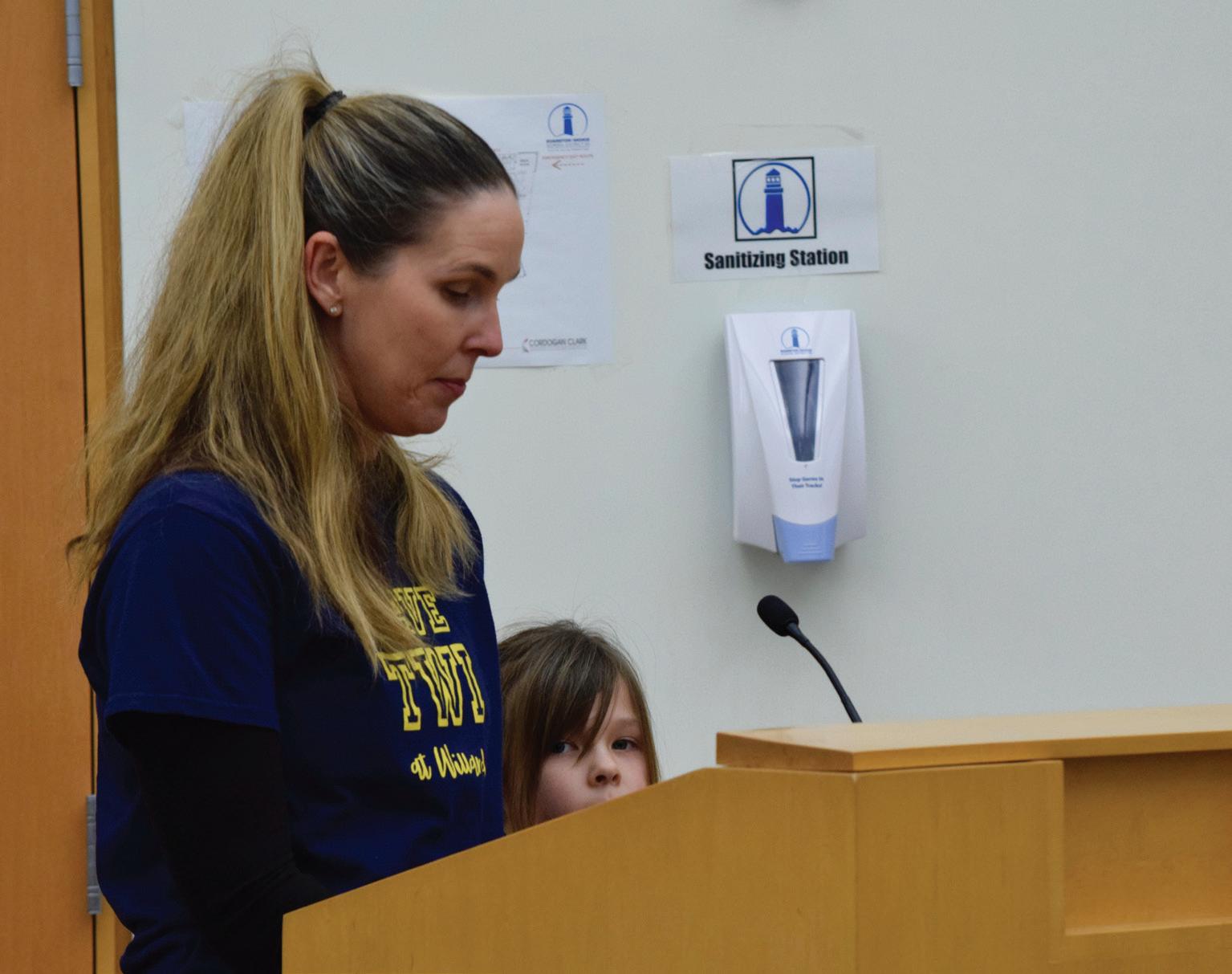
between sending their children to Foster or completing a return to home school request to remain at Willard but forgo enrollment in the TWI program.
Zarefsky said that he and other parents are not “anti-Foster,” only “pro-TWI.”
Evanston resident Jessica Getch, who is the mother of a 1 year old, said she and her husband recently bought a house in the Willard a endance boundaries because of its TWI program. Getch argued during public comment that the decision would send a message that families like hers “are not welcome in the 6th or 7th wards.”
Getch added that the decision to close the TWI program at Willard and open strands exclusively at Foster “sends an unwelcome message.”
“It implies that Hispanic and Latino families should limit their housing options to the 5th ward,” she said. “ is is a life-altering decision for many of us.”
Later in the meeting, the board blitzed through
several decisions, unanimously approving a resolution calling on Cook County to pay the district approximately $25 million in undistributed property tax revenue. e board also nalized Crowe LLP as the forensic auditing company that will examine the district’s nances from scal years 2021-24.
Additionally, the board unanimously approved the closure of the School Age Child Care Summer Program, a district program where parents pay to send their students to either a half or full day of programming for six weeks during the summer. By the time the board members concluded their vote on the TWI program, most of the a endees had already le .
“You’re going to regret it,” one a endee said as they stormed out of the room.
summerhu2029@u.northwestern.edu
joshuasinger2029@u.northwestern.edu




























































By ASHLEY WEI daily senior staffer
Beyond the classroom, some Northwestern students step into the role of an entrepreneur, translating passion into tangible solutions, like for the outdoors, school safety or finding love.
Three of the eight honorees on Chicago Inno’s 2025 Under 25 list advanced their startups at The Garage, NU’s hub for students passionate about entrepreneurship.
Ali Lee
After discovering her love for entrepreneurship through a clothing company she founded in high school, Ali Lee (Weinberg ’25) created Swarm at NU, an insect repellent and fragrant moisturizing lotion.
Lee first saw bug repellent double as lotion in Southeast Asia, after which she built the brand as part of The Garage’s Little Joe Ventures Fellowship and Jumpstart Pre-Accelerator programs, where entrepreneurs can receive financial support and guidance for their business. Lee said The Garage became an incredible network and professional launchpad to grow her business.
“I was bootstrapping (my company) in high school, and I’m just so grateful for (The Garage) because it’s made my experience so much better and more successful,” she said.
Lee earned $100,000 as the winner of VentureCat 2025 and has raised over $500,000 for the product.
Ohm Vyas
Ohm Vyas (McCormick M.S. ’25), cofounder and chief operating officer of ShotHawk, is developing a system to subdue active shooters in the time between a 911 call and police arrival.
“We thought it was our prerogative to take action on this, to confront the situation and do something as students, because, as a student, we don’t feel safe in these environments,” Vyas said.
When activated, ShotHawk’s AI camera detection system locates the assailant and neutralizes the threat by deploying pepper gel or another nonlethal spray.

After founding ShotHawk as an undergraduate student at Bradley University, Vyas continued to grow the product at NU with The Garage. He credits The Garage in helping to shape his company’s vision and providing guidance with business operations.
The team successfully deployed 25 units across Illinois with a $75,000 grant from the Illinois Innovation Voucher Program. They are currently fundraising to continue growing the business.
“We want to be those trendsetters and move the needle to the point where schools become safer, buildings become safer and there is a little bit of intervention before police arrive on the scene,” Vyas said.
Weinberg junior Nandan Dhanesh founded Northwestern.Love to help students find dates by fixing “gaps” in traditional dating apps. He started the project with his twin brother, Amal Dhanesh, a junior at Yale University.
“Our whole thing is trying to bring dating and online matchmaking back into the real world and give people the opportunity to actually meet new people in person and hopefully spark something,” Dhanesh said.
Northwestern.Love matches users then ensures the pair meets in person. Rather than personalitybased matches, the app solely relies on mutual attraction.
Launched through The Garage’s Jumpstart PreAccelerator program last summer, Dhanesh said roughly 600 students at NU, 300 at the University of Chicago and 300 at Yale University have used the app. For Dhanesh, The Garage is a space to tap into the wisdom and passion of like-minded peers. Dhanesh said founders like him sometimes internalize their company’s performance, but moments of recognition like this highlight his progress.
“I think stuff like this is a good opportunity to just look up for a second, take a break and look back and sign post that you’re actually doing pretty well,” Dhanesh said. ”
a.wei@dailynorthwestern.com










Nandan Dhanesh
Illustration by Nicole Cheah
A ‘Maybe Happy’ beginning on Broadway for NU alum
By GABE HAWKINS daily senior staffer @gabejournalist
Just months a er graduation, Claire Kwon (Communication ’22) booked her rst Broadway show. Following a hasty audition process, she appeared as an o stage swing, covering multiple ensemble parts in a musical adaptation of the 2000 comedy lm “Almost Famous” that very fall. It was a Saturday evening, and Kwon was out to dinner when her manager nally called.
A er hearing the news, Kwon rushed home, overcome with emotion.
“I remember I was so crazy and anxious. I was pulling my car out of the spot, and I hit a concrete pole,” she said.
Booking a Broadway gig was the culmination of a lifelong dream for Kwon, who fell in love with theater at the age of nine when she appeared in a youth production of “ e Wizard of Oz.”
Olivia Pryor (Communication ’22), a close friend of Kwon’s, happened to be visiting family in New Jersey on a night Kwon appeared in “Almost Famous.”
Pryor said she and her mother had tickets to “A Strange Loop” on Broadway that evening, but seeing Kwon was far more important.
“We ran over to the ‘Almost Famous’ box o ce, and I was like, ‘My friend’s going on tonight! Do you have any tickets le ?’” Pryor said.
Two years a er “Almost Famous” concluded, Kwon returned to the Broadway stage as a standby in the critically acclaimed musical “Maybe Happy Ending,” appearing onstage when star Helen J. Shen is out.
“Maybe Happy Ending” chronicles two helper robots in near-future South Korea, who fall in love a er years of social isolation. A er Claire asks Oliver to borrow his charger, the robots strike up an adversarial friendship.
ey eventually travel to Jeju Island in search of Oliver’s former owner, who abandoned him in his apartment. Toward the end of the show, the robots discover their romantic feelings for one another. However, much like their ba ery life, their love has an expiration date.
The fan-favorite musical garnered critical acclaim and won six Tony Awards last year, including the Tony Award for Best Musical. Following
its theatrical success, “Maybe Happy Ending” was nominated for the Grammy Award for Best Musical eater Album in November.
A er over a year as a standby, Kwon will take over the role of helper robot Claire on April 3 for a limited engagement.
Actors Darren Criss and Shen originated the roles of Oliver and Claire in the Broadway production and will take their nal bows in the coming months. A er Shen leaves in February, Kwon’s fellow standby, Hannah Kevi , will take over the role for six weeks before Kwon’s engagement begins.
By way of Northwestern
Kwon was working as an assistant house manager at Wirtz Center for the Performing Arts her freshman year when she stumbled upon Head of Acting David Catlin and introduced herself.
“I saw how personable she was, how authentic she was, what a good conversationalist she was,” Catlin said. “I remember that meeting as though it was yesterday because she made that kind of impression.”
Kwon credits much of her professional success to her time at NU and her immersion in the performing arts as a child.
Growing up in Bergen County, New Jersey, a convenient bus ride away from Broadway’s epicenter in Midtown Manha an, Kwon fell in love with theatre early in life. She recalled commuting to the city to see shows on a regular basis.
“I was very lucky that in high school, when I was going through my obsessive phases, I could scour for very cheap tickets online and then take the bus by myself and go to Midtown,” she said.
Kwon said she was deeply invested in theatre during high school, but was uncertain how far her passion would take her.
Kwon applied to NU on a whim, not thinking she would get in.
“When I was rst applying to Northwestern, I didn’t know how perfect it might be. I applied not expecting to get in and also not expecting to be able to a ord to go, but then I did, and luck had it that I was able to go, and it kind of was the perfect place,” she said.
In the freshman year theater sequence, students participate in the crew of a Wirtz production to gain hands-on experience with the mechanics of a theatrical show. While working on “A Chorus
Line” her freshman year, Kwon met Karina Patel (Communication ’22), who Kwon described as her best friend.
Patel said she was immediately struck by Kwon’s curiosity, a quality that has endured through adulthood.
“She’s someone that’s been on Broadway and will also talk to you about quantum physics for an hour,” Patel said.
Double-majoring in theatre and international studies, Kwon juggled a he y workload, both academically and artistically.
Still, she quickly acclimated to NU’s performing arts scene, becoming an active member of THUNK, one of NU’s most popular a cappella groups. She also auditioned for THE BIX!, a musical improvisation group, and quickly became friends with Maddie Burton (Communication ’21), the eventual director of the club.
“My rst impression of her was, ‘How is this girl able to handle so much so well?’ She was known as the person who was always going to be said ‘Yes’ to because she was just so talented,” Burton said.
Kwon also joined Purple Crayon Players, an organization under the Student eatre Coalition that presents theatrical productions for young audiences.
Kwon described a formative moment when a mother approached her a er a PCP performance to thank her for the organization’s community
outreach. e mother told Kwon she was “so pleased by all this work you guys are doing,” despite initial skepticism about NU’s relationship with the Evanston community.
“I thought that was a really beautiful moment, and also a very helpful one,” Kwon said. “It showed a way that we could actually give back to the community that we are in and are o en taking from.”
Kwon appeared in multiple other student productions, including Wirtz productions “ e Ballad of Mu Lan,” “Fun Home” and “ e Wolves,” as well as StuCo’s adaptation of Jane Austen’s “Sense and Sensibility.”
While studying theater, Kwon worked closely with various faculty members who fondly look back on their time teaching her.
Kwon studied under Catlin in a two-year sequence, and he would o en ask Kwon for help with scene work.
“I could turn to Claire, and I would say, ‘Could you hum something or sing some kind of creepy song, or something that’s mournful, or something that’s melancholy?’ And she would just instantly intuit what the perfect thing to sing was,” Catlin said.
eatre Prof. Kelli Morgan McHugh worked with Kwon in private vocal lessons from her sophomore year through graduation.






















































Photo courtesy of Deborah Abramson
Claire Kwon takes over the role of helper robot Claire in Broadway’s “Maybe Happy Ending” on April 3.
She describes herself as “Claire’s biggest fan.”
“Immediately when I met Claire, I just knew she was going to go places, not only because she has an incredible voice, but she is an incredible actor and dancer, and she’s super humble about it,” McHugh said.
McHugh said Kwon was a quick learner, adding that she would periodically challenge Kwon to expand her vocal skillset.
Toward the end of her college career, Kwon had an epiphany.
“By my senior year, when I was at NU and trying to nd agency managers, I realized that if I didn’t fully commit and go for it 100%, I was always going to regret it,” she said.
Under McHugh, Kwon was selected for the Acting and Musical eater Showcase, a selective sequence where musical theatre students travel to New York City to produce a performance for an audience of casting directors and talent agents. Representation is critical for artists breaking into the Broadway industry, and Kwon got signed with a manager soon a er the showcase.
‘Maybe Happy Ending’
Having known Kwon as an artist and friend for years, Pryor said Kwon immediately came to mind when she heard “Maybe Happy Ending” was in development.
“I remember when I heard about the show and
that it was auditioning, I remember being like ‘Claire Kwon, she’ll be playing that part.’”
However, Kwon’s journey to “Maybe Happy Ending” began with heartbreak.
When she rst sent in a self-tape for the show in early 2024, it was met with radio silence. Kwon thought her chances of being cast in the show were slim to none.
Initially, she brushed aside the rejection and shelved it as an unfortunate reality of her chosen industry. However, when she saw “Maybe Happy Ending” early in its Broadway run, she fell in love with the show — and felt devastated that she wasn’t onstage.
“ ere was a big part of me, actually, that was like, ‘ at’s it, I’m leaving this industry. e show is perfect, and I want to be in it, and if I’m not in it, then what am I doing? Maybe I’m not meant for this industry,’” she said.
Li le to her knowledge, the casting team had not forgo en about Kwon’s tape.
Nearly a year later, as the production was searching for an additional Claire standby, the casting team revisited her tape. Without asking for any additional materials from her, they knew Kwon had what they were looking for.
“Her tape was so good,” said Justin Scribner, production stage manager at “Maybe Happy Ending.” “What I saw on her tape was that she has a very strong and clear voice, and she has just the right amount of edge for this role.”
Shen echoed Scribner’s message.
As the principal, Shen has a unique outlook on Kwon’s performance.
“(Kwon) has so many colors in her pale e,” Shen said. “She’s able to tap into di erent genres and di erent styles of singing, and she really wants to learn so much.”
A er two months as a standby, Kwon made her Claire debut on March 19. She described the night as “simultaneously surreal and also just like any other day.”
“I felt very present on stage, and I felt like I was prepared enough that I could really just drop in and live the show and be in the moment,” she said. She described positive reception from fans of “Maybe Happy Ending” who showed up to her debut.
Multiple friends Kwon had amassed throughout college traveled to the city to see her rst performance in the show.
“It was kind of like a mini reunion. Some of my friends from Northwestern and from high school, who had not seen each other in years, got to reconnect … I’ll be forever grateful,” she added.
Since then, Kwon has performed an additional nine times, according to Scribner.
He said that few other young actors possess the emotional maturity required to play a robot like Claire. Like Oliver, Claire is abandoned by her owners. But unlike him, her former owners granted her the password to unlock all of her memories, including the divorce of her married owners and a drunken advance by the male spouse.
“(Claire) is a robot with her factory se ings intact, who, a er 13 years of living alone, is kind of broken and kind of rusted over,” Scribner said. “(Kwon’s) got so many incredible muscles that she’s developed over the few years since graduation, and
she is so perfect for this role.”
As the only other standby who has played Claire, Kevi got a front row seat to Kwon’s artistic process. Having gained insights from one another while understudying the same role, Kevi said Kwon’s performance highlights her curiosity and hunger for knowledge.
“She is so smart and so well read and such a good critical thinker,” she said. “It really inspires me to see how she uses that in her art, and how she uses that to impact others.”
Stepping into Broadway stardom, Kwon has a vibrant group of friends, former mentors and colleagues passionately cheering her on.
In her opening number, “ e Way at It Has to Be,” Claire sings: “When that nal moment comes/ I’ll say hi, and shake its hand/be polite and let it in.”
Much like Claire, Kwon is well prepared for the journey. ”
gabehawkins2028@u.northwestern.edu
Se ing the record straight
An article published in Jan. 21’s paper titled “Panel explores MLK ideals” misspelled “Li Every Voice and Sing.” e Daily regrets the error.
Ducks Dan and Dave: Rock, Paper, Blizzard

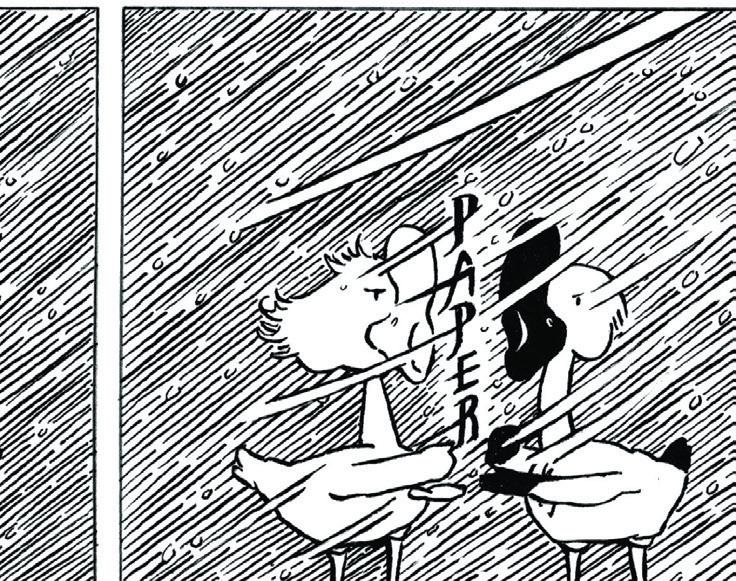
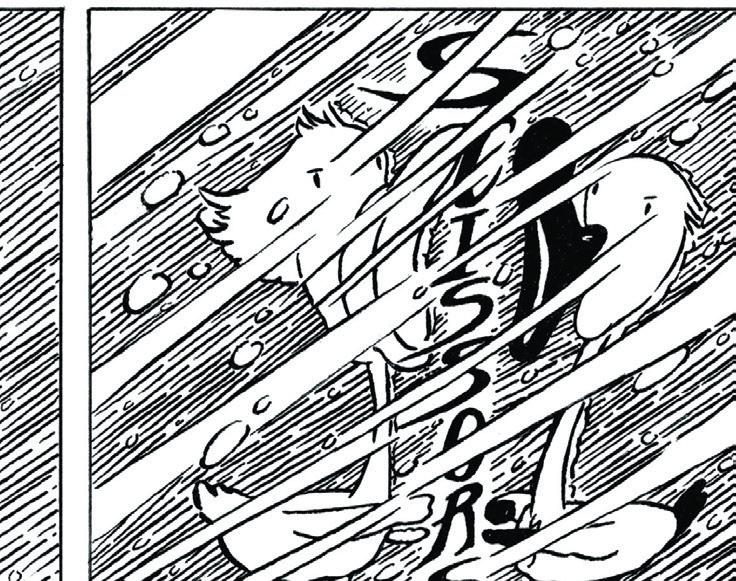
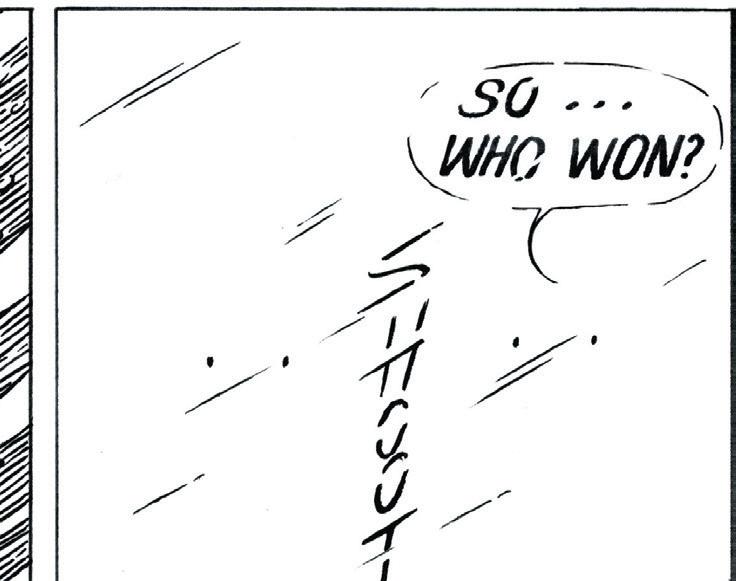

Nathaniel Foster is a student at the School of Professional Studies and writer of Ducks Dan and Dave. He can be contacted at nathanielfoster2027@u.northwestern.edu or @duckscomics. Lia Kim is the illustrator for Ducks Dan and Dave and is not associated with Northwestern. e views expressed in this piece do not necessarily re ect the views of all sta members of e Daily Northwestern.
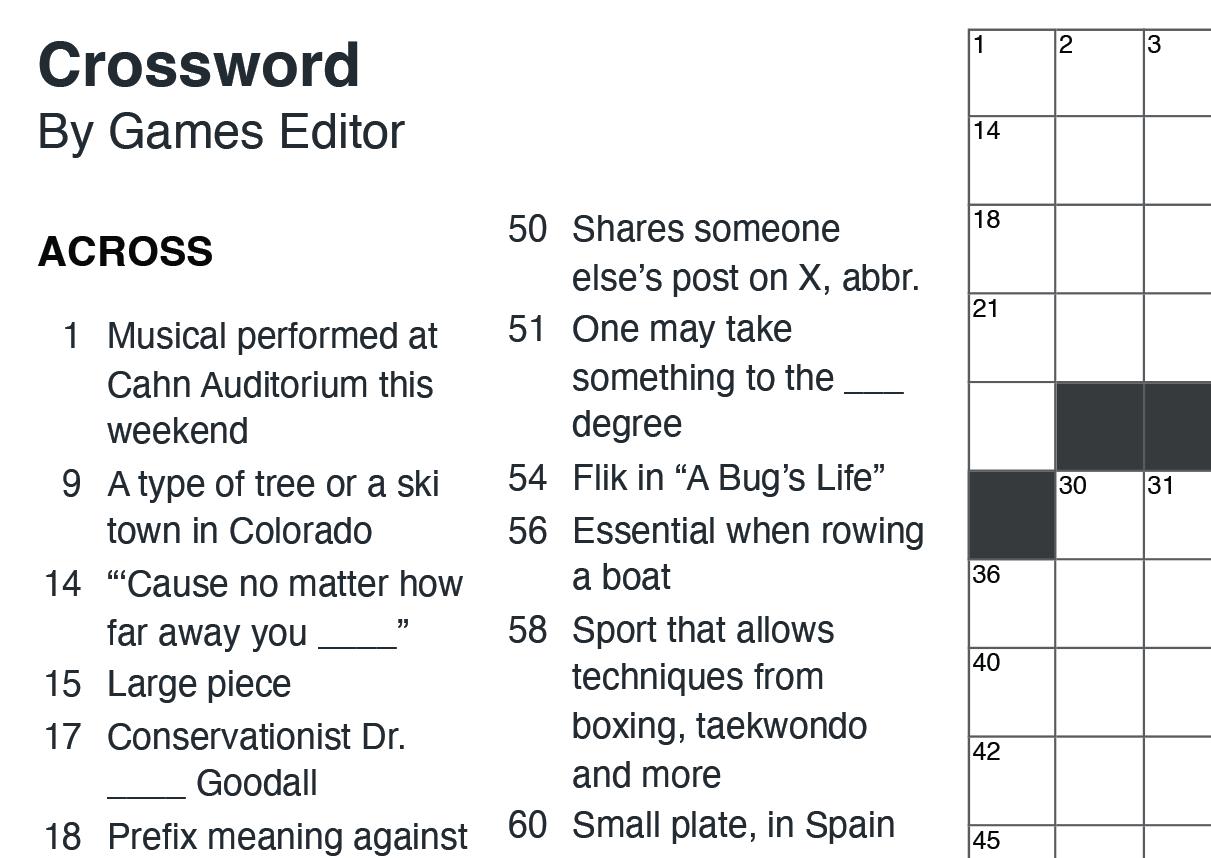
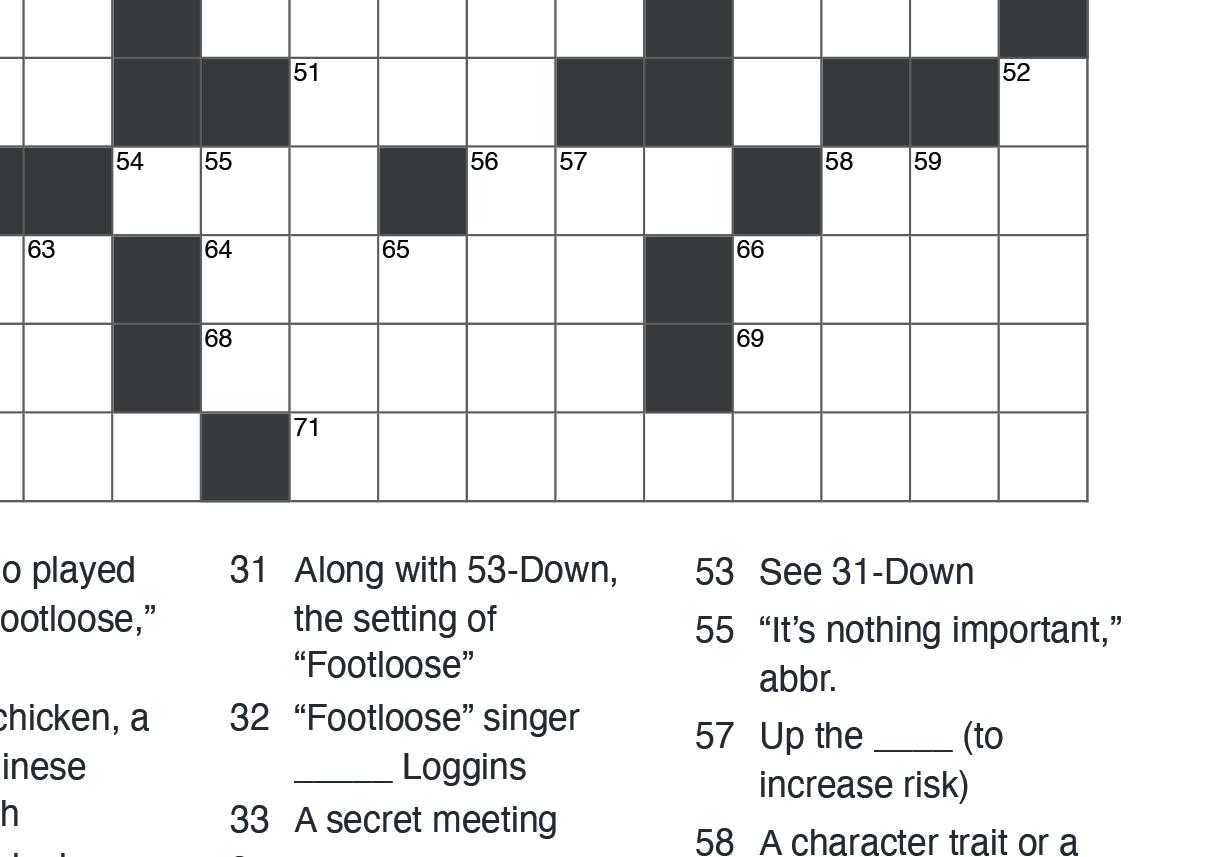
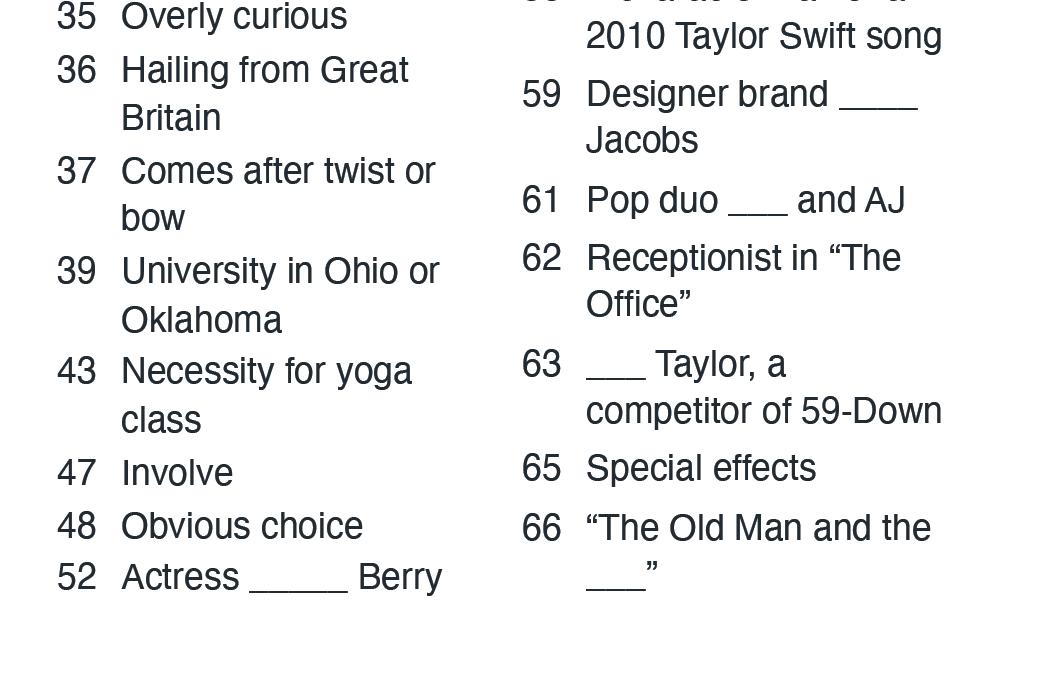
The Daily Northwestern Weekly Crossword
By Kate Pollot



From page 1
from residents who said the timeline was too rushed and that there were not enough opportunities for public input.
The city released the first draft of the comprehensive plan in November 2024. By January 2025, the controversy over the project’s timeline prompted City Council to split the comprehensive plan from the related zoning overhaul.
The Land Use Commission then spent months scrutinizing specific language and repeatedly postponing a recommendation to Council.
After it ultimately reached Council in June, members spent the summer entrenched in line edits. They approved the final edits to the draft plan in October after six special City Council meetings and two public hearings that spanned a period of almost four months.
From the outset, the planning effort generated considerable controversy — both over how the plan addressed housing and density and over Biss’ handling of the process itself.
Kelly even walked out of deliberations during a July meeting, calling the process “flawed and undemocratic.”
The most intense debate over the comprehensive plan centered on the housing chapter, which Ald.
TUITION BENEFIT
From page 1
When staff see a clear pathway to advancement elsewhere, they will leave. Northwestern will lose institutional knowledge, continuity and community.”
Bednark urged the University to invest in policies that benefit all employees.
Christina Wouters, the assistant director of graduate services and financial aid at the Bienen School of Music, is working to earn her master’s in musicology. When she heard that the EER benefit
LOANS
From page 1
in your future,” Warren said. “If we can find ways to help see that investment pay itself back faster through things like the LRAP program, then that’s a good investment in journalism overall.”
Jonathan Nieuwsma (4th) said that June contained “probably 90% of the drama” surrounding the plan.
The initial draft called for allowing a variety of housing types in “all neighborhoods” and promoting higher-density housing in the city’s centers. This approach quickly drew pushback from residents who feared it would erode neighborhood character or lead to unwanted development.
The Land Use Commission revised this language, replacing it with a commitment to “preserve and increase Evanston’s diverse housing choices.” Critics argued the new wording was contradictory and too vague to guide future zoning decisions.
While the final draft retains much of the initial intent to increase housing supply, it narrows the undertaking by tying density more directly to specific locations and future zoning standards rather than broadly allowing diverse housing types across all neighborhoods.
Sarah Petersen, executive director of Open Communities, said during public comment at Monday’s meeting that she was grateful to live in a city that was working to address the housing crisis.
“We look to you now as our leaders to take action, to say yes to the Evanston we’ve envisioned in this comprehensive plan, where there’s room and opportunity for all,” Peterson said. “We can’t say solve all the nation’s problems, but we can do this if we take
was returning, she was “shocked but in a good way.”
Distel emailed Bednark, Wouters and others in December, reaffirming the decision to remove the EER benefit, to the chagrin of many staff members.
A few weeks later, on Jan. 8, interim University President Henry Bienen announced his intentions to backtrack on the removal of the EER benefit at the State of the University address, a point he reiterated in an interview with The Daily on Jan. 9.
“I don’t like it that somebody had a kind of implicit promise (that) they could go to school at Northwestern to upgrade their skills, and then they can’t afford it,” Bienen told The Daily.
action now.”
For many Envision Evanston critics, the housing dispute was inseparable from broader criticism of Biss’ leadership.
Opponents described Biss as a career politician who was using the comprehensive plan to advance his own political interests. At Monday’s meeting, Evanston resident Jenny Washburn accused Biss of attempting to “push through” the comprehensive plan to “pad his resume.”
Biss made headlines when he said it would be “immoral” to delay the plan in December 2024, arguing that the city could not afford to wait to address urgent housing needs. Critics seized on the remark, saying it reflected a willingness to steamroll residents’ concerns.
But Biss saw the debate in different terms. During a forum for congressional candidates earlier this month, Biss said he put his career on the line to benefit the city.
“People told me, ‘The fight’s not worth it. You’re going to piss off too many people. It’s too hard,’” Biss said at the forum. “But I stayed in, and we’re going to get it done.”
In last year’s municipal election, mayoral challenger Jeff Boarini made criticizing a perceived lack of transparency in Biss’ handling of Envision Evanston central to his campaign. In statements to The Daily, he described the comprehensive planning process as
Wouters said she would like to see more transparency behind the decisions the University makes.
“You can’t do something, and you say, ‘Why?,’ and they say, ‘Oh, because I said so,’” Wouters said.
“‘That doesn’t go as far as showing you, ‘Well, this is because X, Y, Z.’ If you can see why a decision was made, it’s a lot easier to understand, to accept rather than just, ‘Trust us.’”
Kate Banner, the administrator and director of research operations at the Center for Computational & Social Science in Health, said when she found out about the reversal, she felt grateful that Bienen and others in leadership recognized the
“irresponsible” and “predetermined” from the start.
Still, Biss won the mayoral race in a landslide. In his victory speech, he referenced the heated debates around Envision Evanston that defined the campaign.
“It was a little cynical,” Biss said. “It was a little grumpy. It was a little suspicious. And maybe even a little change-averse.”
The roughly 40 public commenters at Monday’s meeting were split in their support for the comprehensive plan. Some reiterated that the planning process did not provide adequate opportunities for residents to share their perspectives. Others thanked council members and city staff for their work to address Evanston’s affordable housing shortage.
Evanston resident Claudia Garcia-Rojas (Weinberg M.A. ’15, Doctorate ’23) offered a more personal reason for her support of the plan. Garcia-Rojas lives in a multi-unit building in the 3rd Ward that she described as “unsafe.” Last year, her dog nearly died due to a mice infestation, and she exhausted her savings to pay to treat him. She could not afford to leave the building.
“Housing is not a reward for wealth, it is a condition for human life,” Garcia-Rojas said.
The city will now turn toward zoning, where it will begin implementing the goals the comprehensive plan lays out.
s.baker@dailynorthwestern.com
need to continue the program.
Banner and Bednark both thanked Feinberg Prof. Andrea Graham, McCormick Prof. Ian Horswill and others for advocating to bring the issue before the Faculty Senate.
“I think true leadership is being able to realize when there’s a mistake that’s been made and to try and restore it or to create a new path forward that takes into (account) where the failures occurred and how we can kind of bolster things going forward,” Banner said.
n.kanieskikoso@dailynorthwestern.com
Tarin Almanzar, the senior associate dean of admissions, financial aid and enrollment management at the Columbia Journalism School, said adding Medill as a partner was “a no-brainer,” as both schools often work together for recruiting.
EDITOR IN CHIEF
Emily Lichty
Almanazar said she encourages prospective graduate journalism students to consider LRAP in their decision-making process, as it has been impactful for many Columbia graduates.
“One of the goals of the loan repayment assistance program is helping alums remain employed in places that they love, and they feel an affinity to,” Almanzar said. “Our numbers indicate that that’s been made possible.”
Brett Cione, director of LRAP at Columbia Journalism School, said that although local journalism pay is “not always great,” journalism schools can be expensive, and many students take out loans and end up with debt. He believes the program will support graduates who still wish to pursue local news journalism, which will benefit the journalism industry.
Cione also said he has heard from Columbia graduates who took jobs specifically because of LRAP.
“It has the potential to change somebody’s entire career trajectory,” Cione said. “It’s removing financial barriers to allow people to tell the stories that they want to tell, work in the places where they want to work and serve the communities that they want to serve.”
r.ahmed@dailynorthwestern.com
The Daily Northwestern
Winter 2026 | An independent voice since 1923 | Evanston, Illinois
IN FOCUS EDITORS
Sarah Serota, Hannah Webster
SOLUTIONS EDITOR
PRINT MANAGING EDITORS
Marisa Guerra Echeverria, Nineth Kanieski Koso, Betsy Lecy, Anavi Prakash
MULTIMEDIA MANAGING EDITORS
Femi Horrall, Yong-Yu Huang, Jonah McClure
CREATIVE DIRECTORS
Christina Lin, Matt Wasilewski
CAMPUS EDITOR
Lexi Newsom
ASSISTANT CAMPUS EDITORS
Riq Ahmed, Sophia Bateman, Lucas Kubovchik
CITY EDITOR
Jack Baker
ASSISTANT CITY EDITORS
Claire Coffey, Wallis Rogin, Emily Dissanayake
SPORTS EDITOR
Kamran Nia
ASSISTANT SPORTS EDITORS
Sid Sivaraman, Yoni Zacks, Charlie Perlman
ARTS & ENTERTAINMENT EDITOR
Alexander Hernandez Gonzalez
ASSISTANT ARTS & ENTERTAINMENT EDITORS
Gabe Hawkins, Rainee Li
OPINION EDITOR
Aidan Klineman
ASSISTANT OPINION EDITORS
DJ Harrison, George Koutrouvelis
FEATURES EDITOR
Regan Huizenga
ASSISTANT FEATURES EDITOR
Lizzie Perry
Naomi Taxay
ASSISTANT SOLUTIONS EDITORS
Kate Moores, Caroline Altschul
SOLUTIONS GRANT COORDINATOR
Lily Ogburn
AUDIO EDITOR
Ruby Dowling
ASSISTANT AUDIO EDITORS
Eliza Martin, Allegra Lief
PHOTO EDITOR
Liam Barrett
ASSISTANT PHOTO EDITORS
Drayson Jaffee, Luke Meinhardt
VIDEO EDITOR
Yana Johnson
ASSISTANT VIDEO EDITORS
Chris Kim, Miguel Tsang
ILLUSTRATIONS EDITOR
Nicole Cheah
ASSISTANT ILLUSTRATIONS EDITOR
Charlotte Nagel, Chelsea Lim
DATA VISUALIZATION EDITOR
Ryan Ottignon
ASSISTANT DATA VISUALIZATION EDITOR
Navya Singh
POLLING EDITOR
Diya Raj
ASSISTANT POLLING EDITORS
Isabella Kunc, Graciela Zhang
CROSSWORD & GAMES EDITOR
Kate Pollot
ASSISTANT CROSSWORD & GAMES EDITOR
Tanat Johnny Tungsubutra
WEB DEVELOPER
Devon Lai
DESIGN EDITORS
Clare Kirwan, Sami McKenney
ASSISTANT DESIGN EDITORS
Connor Tang, Ruixin Zhang
AUDIENCE ENGAGEMENT EDITOR
Edward Simon Cruz
NEWSLETTER EDITORS
Dalton Hanna, Maya Wong
ASSISTANT NEWSLETTER EDITORS
Maya Heyman, Hannah Mehler
SOCIAL MEDIA EDITOR
Ashley Dong, Avantika Singh
ASSISTANT SOCIAL MEDIA EDITOR
Sarah Park
COPY CHIEFS
Bianca Dishmon, Joshua Singer
COPY EDITORS
Clara Freeth, Jordan Balousek, Ina Choe
DIVERSITY & INCLUSION CHAIRS
Izzie Jacob, Teresa Ayala Leon
DEVELOPMENT AND RECRUITMENT EDITORS
Sophie Baker, Caroline Killilea, Ashley Wei
STAFF EDITOR
Siri Reddy
GENERAL MANAGER
Stacia Campbell
SHOP MANAGER
Chris Widman
BUSINESS OFFICE STAFF
Tia Bethke, Branden Chen, Edward Simon Cruz, Allie Epstein, Ken Trakulyingyong, Jen Walsh
ADVERTISING PRODUCTION STAFF
Lori Cui, Christina Feng
SPORTS
MEN’S BASKETBALL
Northwestern melts in sunny SoCal, loses to UCLA
By KAMRAN NIA daily senior staffer @kamran_nia
These schools would’ve never played each other at this time of year before.
But as the Wildcats (9-11, 1-8 Big Ten) fell 71-64 to UCLA in their first-ever meeting at the iconic Pauley Pavilion on Saturday, the teams began a soon-tobe-familiar tradition as conference realignment has brought NU and the Bruins (14-6, 6-3 Big Ten) closer than college basketball fans might have ever imagined.
Just a few years ago, the ’Cats wouldn’t have been playing a January game steps away from students competing in outdoor intramural soccer matches and fans eating ice cream while basking in the sun. Back in Evanston, fans were bunkering away from below-zero windchill temperatures at the Luna’s Pub watch party with $1 wings.
While warm weather seemed to deliver good vibes as a starting lineup featuring three freshmen helped win NU its first conference game at USC earlier in the week, the same group appeared to dry up across town as the team shot 37.7% from the floor.
Despite splitting the games, coach Chris Collins said it was a productive week for the ’Cats to regain confidence following a 0-7 start to conference play.
“We got better this week,” Collins said. “We were able to come out here and split the two games. We came out here kind of a battered team, a little bit demoralized being 0-7, and I think we regained some spirit on the trip.”
Dribble penetration was a problem as the Bruins created opportunities for forward Tyler Bilodeau, who scored 18 points on 7-for-11 shooting. Once NU started forcing the ball away from him, guard Trent Perry began to take over, also finishing with 18 points.
UCLA shot 49.1% from the floor, fueled by a 61.5% first-half effort that built a lead they would not lose. In
the first half, guards Donovan Dent and Perry easily beat defenders and found Bilodeau.
While the ’Cats adjusted well at halftime to prevent UCLA from beating them on straight-line drives — and holding the Bruins to 37% shooting in the second period — their poor first-half setup created too deep a hole.
“(Bilodeau’s 16 points) in the first half, coupled with the guard’s penetration, gave them that double-digit lead, which was tough for us,” Collins said.
Despite NU seemingly resolving offensive issues at times — namely 3-point shooting — its scoring disappeared for large stretches of the game while the Bruins took advantage.
Freshman forward Tre Singleton was the ’Cats’ early aggressor, scoring six points to help open a 10-6 lead, but he only finished with 12 points on 2-for-8 shooting. As he faded, UCLA quickly got ahead 16-12 behind Bilodeau’s 3-for-3 start from the floor.
Meanwhile, NU’s first-half cold stretch lasted almost eight minutes as it let a four-point lead turn into a ninepoint deficit that proved too large to overcome.
Senior forward Nick Martinelli contributed with his usual 20 points and eight rebounds, but he shot an inefficient 8-for-19 from the field. He was also cold from beyond the arc, knocking down none of his four 3-point attempts.
“(UCLA) made (Martinelli) take his efficiency; made him take 19 shots to get 20 points,” Collins said.
Junior guard Jordan Clayton — who had shot 22.5% from beyond the arc entering Saturday — made both of his initial 3-point attempts. But similarly, he couldn’t follow through as the game progressed, finishing with nine points on 3-for-5 shooting.
The ’Cats’ overall ineffectiveness made it simple for the Bruins to extend their lead as the afternoon progressed, opening the second half with a 10-5 run to bring their advantage to 51-36.
NU didn’t go away as it cut UCLA’s lead to six points with 2:54 remaining after a 7-0 run. But, the Bruins
‘Go For It’ documentary
By JONAH MCCLURE daily senior staffer @jemccl125
For a program characterized by sheer dominance, a season without a national title could be viewed as a failure. But for Northwestern, national champion runner-up in 2025, a year characterized by community, hope and belief was a story worth telling.
“Go For It,” a documentary released Thursday on YouTube, follows the Wildcats’ road back to the national championship game, with notable moments intertwined with player spotlights and relevant moments from previous seasons.
“It’s just a cool way to tell different parts of the story and keep you engaged,” director Jack Sullivan said.
The team’s “director of creative content” has now directed a documentary on NU’s past four seasons.
Ahead of the ’Cats’ trip to Boston for the NCAA Division I Women’s Lacrosse Championship, Sullivan interviewed five players. The following days became the documentary’s primary focus, as he focused on
the team before and after its win over Boston College in the semifinals.
One of the players he spoke to during that week was then-senior defender Sammy White, who was an integral part of NU’s defense during her four years and had just played her final home game. Sullivan said White also helped out behind the scenes.
“She had to come up with some video for a class project,” Sullivan said. “So that was kind of lucky for me.”
Outside of the semifinal game coverage, the documentary loosely follows some of the year’s significant contests, along with personal stories from select players. Sullivan said being around the team allowed him to understand the roles certain players had and who deserved more coverage.
During the first half of the documentary, Sullivan tells the stories of three different players. After showing some of the Boston footage and the ’Cats’ early-season loss to Boston College, he talks to then-senior midfielder Emerson Bohlig and her family about lacrosse and coming to NU.
Bohlig and then-senior midfielder Sam Smith are both from California, which Sullivan said is a
responded with back-to-back scoring possessions to shut the door.
Despite Saturday’s loss, Clayton said the team’s “vibe” had changed as it competed in Los Angeles. He noted they were competing with greater intensity and said he hopes they return to Evanston with similar energy.
“Overall, our style of play, how we’re competing, got a lot better, and I think that’ll propel us to get some wins hopefully,” Clayton said.
All afternoon, UCLA’s student section, The Den, was ready to embrace its foe. It hounded junior guard Jayden Reid — who scored one point — with “airball”
chants on several occasions.
Its pregame rooting guide, “The Dirt From the Den,” compared Martinelli to a sloth, made fun of Dillo Day and joked about NU for hiring former UCLA Football coach Chip Kelly.
This Saturday afternoon, the Bruins backed up their trash talk as they welcomed their relatively new conference rival, the ’Cats.
And as the game concluded, the same “airball” chants rang down as Clayton missed a deep triple. ”
kamrannia2027@u.northwestern.edu
“non-traditional” area for lacrosse players to come from. He also included Smith because he said she hasn’t always received the attention she deserves as an “absolute workhouse” for the team.
Smith discussed her sister, Madison, and how they drove each other to improve as they grew up. In one game last season, Sam was sick and unable to play, and Madison filled in for her. At one point, Madison fell and tore her ACL, ending her season.
“She was just so positive,” Smith said in the documentary. “It was so incredible to see how strong and resilient she was through this whole process.”
Sullivan included another story about an injury. Then-graduate student defender Claire Snyder has experienced three ACL tears during her time as a ’Cat, and Sullivan showed footage of her rehabbing in 2024.
A common theme throughout the entire documentary is community, as several players emphasized how great it has been to be part of NU.
“It’s the most inclusive group I’ve ever been a part of,” then-freshman attacker Claire Ratke said in the documentary. “We all can be our true, authentic selves, and we set aside our differences to come together for
one shared goal, which I think is really special.”
After 45 minutes of build-up, the documentary reached its climax when NU faced Boston College in the semifinal. Sullivan replays the comeback victory and the game’s final moments before sealing the documentary with more footage of celebrations and team bonding.
Two days later, the ’Cats lost their second straight national championship game since winning it all in 2023. However, the detail of last season’s defeat sits on-screen for about five seconds in the final minute of the documentary.
Sullivan said the importance of the Boston College game stood out, given that NU had lost to the Eagles earlier last season and in the previous national championship game. The ’Cats put all their energy into their semifinal win, which is what the documentary leads up to, and he said everyone on the team is going to remember that win.
NU will look to start a win streak over Boston College in its season opener on Feb. 6.
jonahmcclure2028@u.northwestern.edu
By YONI ZACKS
the daily northwestern @yonizacks
The planning continues for Northwestern’s new season.
On Tuesday, the Big Ten released every team’s football schedule, and the ’Cats’ season starts on Sept. 5 with a matchup against South Dakota State. However, fans will have to wait a little longer to find out where the games will be played.
A video posted to the football team’s social media pages announced that “Home Venue Info” will be revealed on Feb. 3.
The schedule includes the top four Big Ten teams from the final 2025 AP Poll, as well as Illinois, which finished unranked but received the most votes among unranked teams.
The Jackrabbits were the FCS national champions in 2022 and 2023, but lost to Montana in the second round of the playoffs last year. South Dakota State ranked 13th in the FCS in defense last season. Following this game, NU will have its lone bye of the 13-week season.
A home-and-home series against the Colorado Buffaloes begins this year when the ’Cats host coach Deion Sanders and his team on Sept. 19. Last season, the Buffaloes struggled to replace quarterback Shedeur Sanders and Heisman Trophy winner Travis Hunter, going just 3-9.
A matchup against the national champion No. 1 Indiana Hoosiers awaits NU at Memorial Stadium in Bloomington on Sept. 26 to open conference play. The Hoosiers are coming off a perfect 16-0 season and have just two losses over the last two seasons, both to teams that played for the national championship.
Despite losing Heisman-winning quarterback Fernando Mendoza and star receiver Elijah Sarratt to the NFL draft, the Hoosiers found replacements in the portal in former TCU quarterback Josh Hoover and ex-Michigan State wide receiver Nick Marsh, who headlined ESPN’s 3rd-ranked portal class.
After ending James Franklin’s tenure at Penn State with an upset win at Beaver Stadium last year, the ’Cats will host the Nittany Lions on Oct. 3. Led by new coach Matt Campbell and the nearly two dozen players he took with him from Iowa State, the Nittany Lions will be a completely different team this year with the sixth-best transfer class.
NU then breaks up conference play with the team’s only Group of 6 foe on the season, Ball State, who travel to Evanston on Oct. 10. The Cardinals finished 4-8 last year and were outscored 73-3 in two games against Power 4 teams, Purdue and Auburn.
Former head coach Pat Fitzgerald and his Michigan State Spartans will host the ’Cats on Oct. 17. Fitzgerald, a linebacker on NU’s 1995 Rose Bowl team, spent 17 years as the ’Cats’ head coach before being fired in 2023. He heads to a Spartans program that has one winning season since coach Mark Dantonio retired after the 2019 season.
Coach David Braun’s crew will host the Rutgers Scarlet Knights on Oct. 24. The Scarlet Knights are coming off a two-win conference slate against basement dwellers Purdue and Maryland.
Oregon, a 2025 College Football Playoff semifinalist, will host the ’Cats at Autzen Stadium on Halloween. The Ducks came to Martin Stadium on Sept. 13 and thrashed NU 34-14, leading 31-0 by the end of the third quarter. Oregon returns starting quarterback Dante Moore but is replacing both coordinators, who left for head coaching jobs.
Iowa will travel to Evanston on Nov. 7. Led by the longest-tenured coach in college football, Kirk
Ferentz, the Hawkeyes haven’t finished below .500 since 2012. NU’s series against 2025 CFP teams will continue when the ’Cats head to Columbus to take on No. 5 Ohio State on Nov. 14. The Buckeyes had the best scoring defense in the country last year, and coach Ryan Day reloaded in the transfer portal with ESPN’s 5th-ranked class. Ohio State also returns star receiver Jeremiah Smith and quarterback Julian Sayin.. The ’Cats will then head to Minneapolis to face off against Minnesota at Huntington Bank Stadium on Nov 21. NU beat the Gophers last fall on a missed field goal at Wrigley Field, but will face a Minnesota team that went undefeated at home last year. NU will conclude its season with a matchup for the Land of Lincoln Trophy against Illinois for the 120th time in its history on Nov. 28 in Evanston. The ’Cats will look to get revenge for last year’s snow-filled loss against the Illini, this time on the team’s home turf. NU holds the advantage on its home turf in the 21st century, going 8-3 against Illinois at Ryan Field since 2000. However, the ’Cats have lost four of the last five games against the Illini.
y.zacks@dailynorthwestern.com
Daily file photo by Luke Meinhardt
Northwestern lost to UCLA on Saturday as it split its two-game stretch in Los Angeles.