Candidates talk campaigning in deep-blue Illinois 9th district
12 SPORTS / Football
Northwestern takes control of transfer portal with highly-ranked 2026 class of 14 recruits
AUDIO / e Weekly
A breakdown of the past week’s top headlines
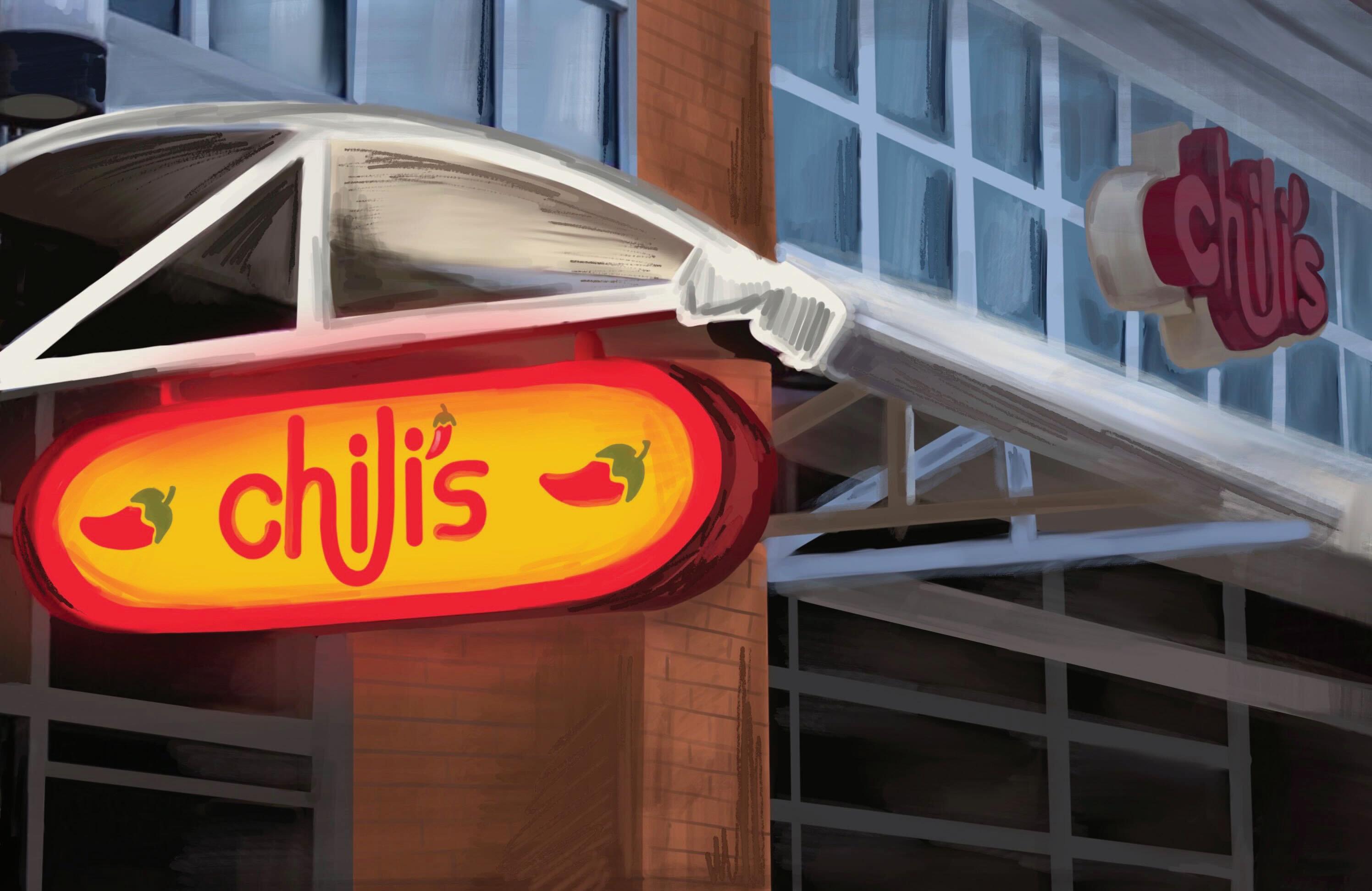
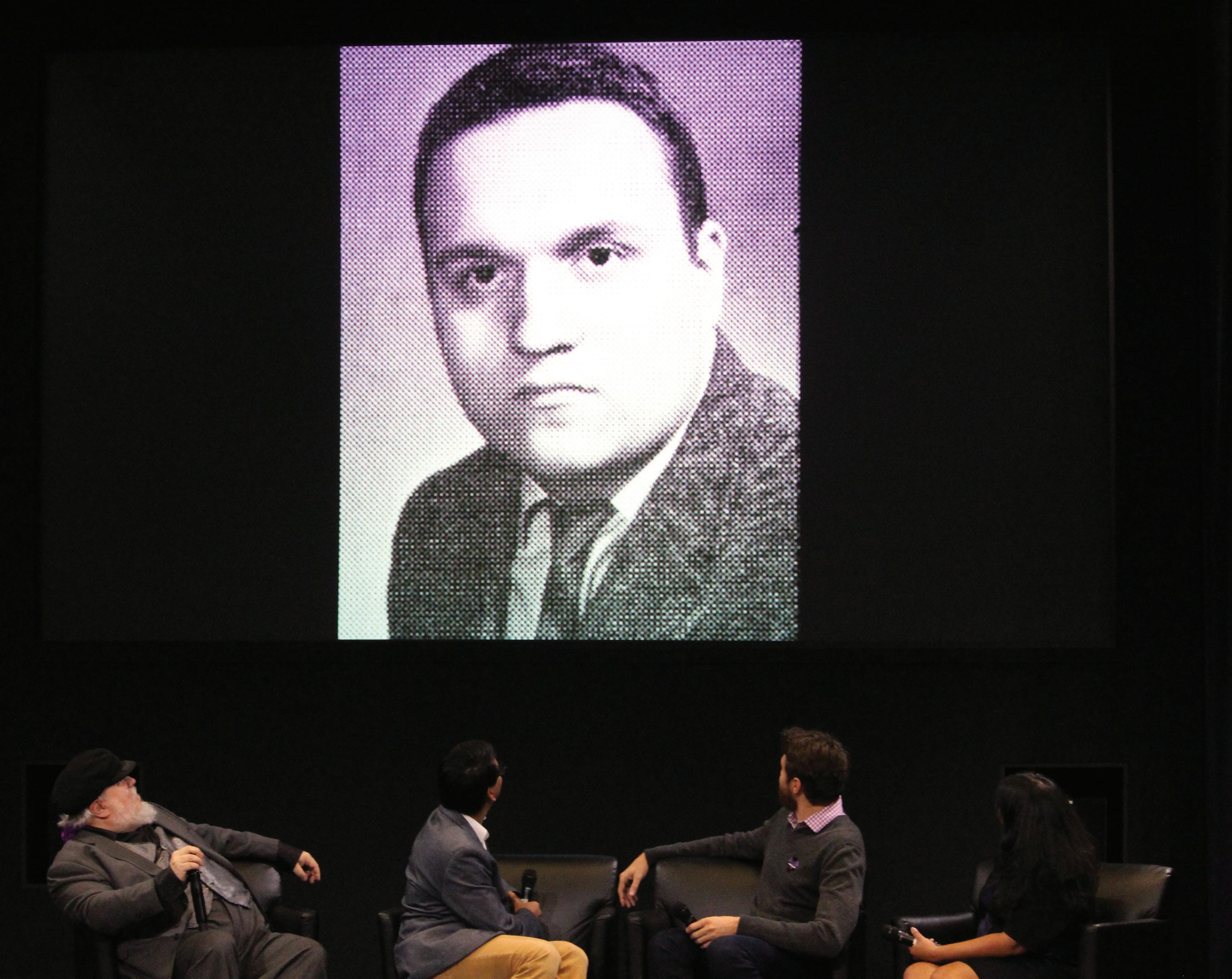
A decades-long staple of downtown Evanston, Chili’s closed a er Dec. 15.
Panel explores MLK ideals
Leaders talk current events, Black history
By TAARIQ AHMED the daily northwestern
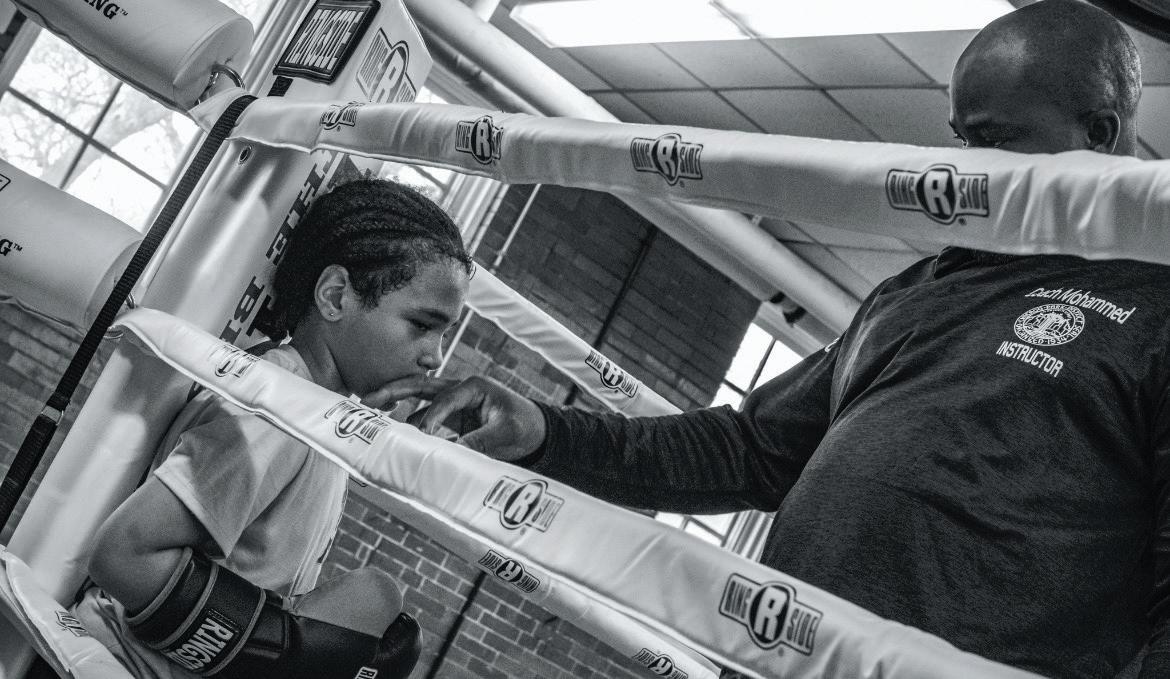
A panel of Northwestern faculty and local community leaders talked about the concept of “Beloved Community,” current events and the importance of preserving Black history to honor the legacy of Martin Luther King Jr. on Tuesday evening.
e panel spoke about how they perceived King’s ideas like “Beloved Community,” in the present and how their work, related to history or archival projects, can inform responses to current events under President Donald Trump’s administration.
School of Professional Studies master’s student Nekesa Josey, the president of the Student Leadership Council at SPS, talked about her personal interpretation of King’s “Beloved Community” ideal, which she said is “a responsibility” and not just “a slogan.”
“When we bring the two words together, the meaning expands,” Josey said. “A ‘Beloved Community’ is not de ned by sentiment alone. It is not merely something we feel, it is something we live.”
Panelist and history and Black studies Prof. Leslie Harris said she believes “Beloved Community” as an idea is being challenged.
City bids solemn farewell to Chili’s Community members mourn
By EDWARD SIMON CRUZ AND CLAIRE COFFEY
the daily northwestern @edwardsimoncruz
A college student, councilmember and drag queen walk into a bar.
Waiting tables like theirs
restaurant, scrutinize planned high-rise
was Loyola University Chicago senior Daniel Jaén, who juggled a full course load and job at Chili’s Evanston on the corner of Maple Avenue and Clark Street, just blocks away from Northwestern’s campus.
The restaurant stored each table’s utensils in paper sleeves,
Annual concert honors MLK Day
Chicago-area artists perform for the 23rd year
By CLAIRE COFFEY the daily northwestern
An energetic crowd filled the seats of Evanston’s Nichols Concert Hall Sunday for the Music Institute of Chicago’s 23rd annual Martin Luther King, Jr. Community Celebration Concert.
A wide variety of performers from across the Chicago area contributed to the concert, including vocal performers, symphony flutists, children’s choirs and composers. Several performers were decorated high school artists honing their skills through local non-pro t music development programs. e concert’s rich diversity in performers mirrored the message of keynote speaker Jonathan Bailey Holland, dean of Northwestern’s Bienen School of Music. “ ere is much that music can teach us,” said Holland. “Perhaps, most importantly, it can
help us remember that thriving communities require thriving individuals who are appreciated for what each of them brings to the collective whole.”
Holland stressed that the “musical experience” reminds others of what is possible through cooperation and commitment to a shared goal — a belief re ected in King’s civil rights activism.
Super cial and circumstantial di erences, he said, “ma er not when we are performing the same work.”
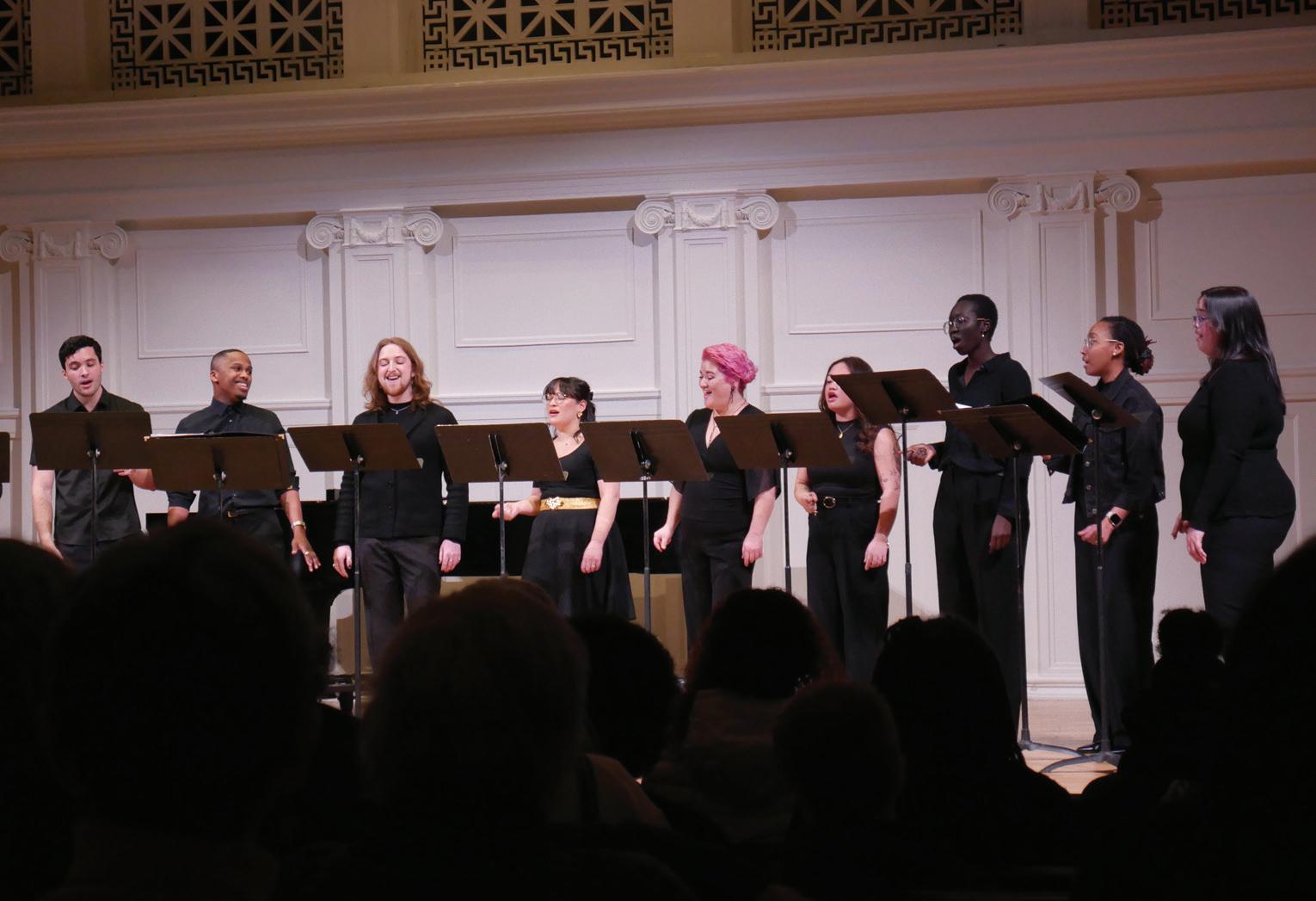
The event opened with a rendition of “Li Every Voice and Sing” by Soul4Real, a Black a cappella group at NU. As the song, widely known as the unofcial Black National anthem, lled the concert hall, audience members rose to sing along.
Community members also gave speeches highlighting the importance of King’s legacy throughout the event. Haven Middle School eighth-graders Lila Hall, Wes Morgan and Micah Thompson read out excerpts from King’s speeches. “His message rings true today
printed with Chili’s-themed drawings. During shi s, some workers joked about ge ing one of these images — a lime — ta ooed. Days a er Chili’s Evanston shuttered its doors in December, Jaén and three coworkers did.
For Jaén, inside jokes re ected the meaningful relationships he
developed with coworkers.
“It really felt like a home for a lot of us,” Jaén said. “And obviously there was people that have been there longer than I have, but it still felt like we were so much of a team and really a family there.”
» See CHILI’S , page 9
e panelists included Laurice Bell, an Emmy-nominated producer and director and the executive director of the Shorefront Legacy Center and several history and Black studies professors. Black studies Department Chair and Prof. Sylvester Johnson moderated the conversation.
e event began with a performance by Soul4Real. NU’s premier Black a capella group sang songs like “Life Every Voice and Sing,” uno cially known as the Black National Anthem, with the audience.
“ ere is a lot going on that really is de ning ‘community’ quite narrowly,” Harris said. “Community can be su ocating. It can be used as a weapon to move against the very things that Dr. King was trying to envision.”
When it comes to analyzing King’s work, Bell said it was important to consider his words outside of his own historical context.
Bell encouraged the audience to re ect on how King would react to current events as if he were still alive, referring to her experience as a producer and director collaborating with artists
» See KEYNOTE , page 9
Professors discuss Venezuela strike
By THOMAS HURLEY the daily northwestern
Seven professors discussed the implications of the recent U.S. military operation in Venezuela, dubbed “Operation Absolute Resolve,” at a Friday event hosted by the Bu e Institute for Global A airs.
e Jan. 3 strike and capture of Venezuelan President Nicolás Maduro has generated mixed reactions among Venezuelans in the Chicago area and condemnation from local Democratic politicians.
Medill Prof. Peter Slevin moderated the event, which featured six other Northwestern professors who spoke about their perspectives on the situation in Venezuela.
History Prof. Daniel Immerwahr described President Donald Trump’s foreign policy approach as “anti-hegemonist, not isolationist.” He highlighted the administration’s e orts to annex Greenland, adding that he takes such ideas seriously, whether or not they actually happen.
Political science Prof. Ana Arjona acknowledged that the U.S. has made similar interventions before in Latin America. But
she said the Venezuela operation raises unique concerns, because the U.S. didn’t provide a humanitarian justi cation for the a ack, breaking with its foreign policy norms.
“ is is going to make it so much easier for future administrations to just do what they want,” Arjona said.
History Prof. Lina Bri o said the word “drugs” and the label “narco” have allowed the administration to participate in international operations like this one.
Referencing the Iran-Contra Affair, Britto said the CIA has participated in arms and di erent types of tra cking before, and that it’s clear the U.S. has other motivations than limiting drug tra cking.
“If we stop thinking about the War on Drugs as a war against drugs, and we see it as a toolkit for the administration of state violence …,” Bri o said. “We see that it’s not a contradiction, it’s not even hypocrisy — it’s a logical, functioning strategy.”
Political science and sociology Prof. James Mahoney said it’s important to note that while the operation was remarkably successful, it easily could have been “some kind of Bay of Pigs disaster.”
Mahoney echoed the other
professors’ point that the operation was motivated by interests beyond curbing the ow of drugs, adding that such U.S. interventions o en lead to more political instability.
“ e key ingredients for a future revolution in Venezuela might be emerging,” Mahoney said.
Sociology Prof. katrina quisumbing king said the operation in Venezuela doesn’t have the same facade of “democracy-building” compared to past instances of U.S. military involvement. She also discussed that the once-opposing concepts of nativism and imperialism are now coupled as “America First” principles under the Trump administration.
Political science Prof. Edward Gibson spoke about the future of Venezuela, focusing on opposition leader María Corina Machado and how she provides a surprising alternative to what he called the “main actors” following Maduro’s capture: acting President Delcy Rodríguez, coercive internal security forces and the armed forces.
“ e one thing that unites all three of these groups: ey do not want democratization,” Gibson said. “ ey want preservation of the authoritarian regime.” thomashurley2029@u.nortwestern.edu
Illustration by Emily Lichty
Thomas Hurley/The Daily Northwestern Political science Prof. Ana Arjona talked about the importance of the language used to describe operations like the Jan. 3 strike in Caracas at the Bu ett event.
AROUND TOWN
Four Republicans make long-shot bid in IL-09
By YONG-YU HUANG daily senior staffer @yong_yuhuang
Content warning: This story contains mentions of sexual misconduct.
The last time a Republican represented Illinois’ 9th Congressional District, Harry Truman was in the White House.
As this year’s race to represent Evanston and surrounding municipalities in Congress barrels toward the March 17 primary election, much attention has been paid to its crowded Democratic contest, which features a sprawling field of 16 candidates — some of whom boast seven-figure war chests and endorsements from national political figures.
But come March, just four candidates will vie for the race’s Republican nomination.
In the fall, paraprofessional Rocío Cleveland, former software developer Paul Friedman, IT consultant Mark Su and pastor John Elleson filed for a chance to represent the district in Washington, D.C.
In the seven decades since a Republican last held the seat in 1949, just three people have been elected to the position. U.S. Rep. Jan Schakowsky’s (D-Evanston) retirement sparked the district’s first open contest since her initial election in 1998. The 2024 election saw Schakowsky beat Republican Seth Alan Cohen with 68.4% of the vote.
As such, this year’s Republican candidates have attracted little institutional support. Cook County Republican Party Chairman Aaron Del Mar said the party will likely concentrate its resources on congressional races in the 7th, 8th and 17th districts instead, where the party thinks it has a better chance of winning.
Del Mar noted the strength of Democratic candidates like Mayor Daniel Biss’ endorsements and State Rep. Hoan Huynh’s (D-Chicago) transparency with constituents.
“But realistically, outside of putting up a strong candidate, this district is going to be an uphill climb to be able to win it — even as an open seat,” Del Mar said.
A mandate from God
The call to run for office came in a “vivid” dream from God, Lake County-based Cleveland explained. In it, Cleveland said she was attending a political
meeting when people around her began collapsing after drinking water she believed was “poisoned.” After hearing explosions, she then rescued a crying baby before being greeted by a bright light. Interpreting the experience as divine instruction, Cleveland decided to throw her hat into the ring.
Cleveland entered politics as a Hispanic outreach coordinator for former Lake County Sheriff Mark Curran’s sheriff campaign and also volunteered during his campaign for the Illinois Supreme Court. She did not launch a congressional campaign two years ago because she believed another Republican candidate had a stronger chance in the general election, Cleveland said.
But this time, her motivation is two-pronged: She said she must be “obedient” to God’s commands, and she’s tired of the district “not being represented accordingly.”
At a November candidate forum in Northbrook, Illinois, Cleveland presented Democratic candidate Kat Abughazaleh with a “gift bag” for use in prison following the latter’s federal indictment. Months later, Cleveland defended her actions to The Daily.
“I don’t regret anything that I did,” Cleveland said. “I believe that I was standing for what is right.
Cleveland claimed that community members thanked her afterward.
But Del Mar had sharp words for Cleveland, calling her a “bad actor” and suggesting her “unacceptable antics” have made the race “radioactive.”
“She just doesn’t represent our beliefs and our values and conducts herself in an unbecoming way,” Del Mar said. “And I don’t want our party to be associated with that type of behavior.”
In response, Cleveland wrote in a statement to The Daily that Del Mar’s allegation says “far more about him than it does about (her),” and criticized his personal conduct.
“I will continue to expose corruption, immorality, and incompetence in both parties,” she wrote.
Cleveland said she has worked for several years as a paraprofessional, supporting multilingual learners and students with special needs. She supports volunteering to help the less fortunate and stressed the importance of raising “more resilient children.”
One of Cleveland’s top policy concerns is curriculum and student privacy in public schools. In particular, she believes that schools should not teach about gender identity, abortion or other sensitive issues without parental consent.
Additionally, she said that schools should provide separate bathrooms for transgender or gender-nonconforming students.
“I see how much the public school system has failed so many students. I believe that we parents need the option of having school choice,” Cleveland said.
In terms of public safety, she called for safer streets in the district — as well as across the state and nation — and for stronger border security.
Cleveland also attacked Illinois’ SAFE-T Act — a criminal justice reform package that eliminated cash bail, added police accountability standards and changed detention and sentencing rules — arguing that it has weakened public safety and failed to support victims of crime.
“When we have people coming into our nation that do not have our best interests and are not all about America first and being assimilated to our culture, these are the things that we could potentially face,” she said.
Cleveland said she plans to release legislation focused on pedophiles, men’s rights and sexual assault.
She emphasized that she does not take PAC money and does not want to be influenced by lobbying groups. Additionally, she said she believes both parties should be held accountable for failures and poor behavior.
“As a conservative, we can’t be pointing the finger at Democrats and saying, ‘Oh, they do this, they do that,’” Cleveland said. “We need to look at our own party too, and hold our own accountable.”
‘Old-school conservative’ Friedman talks checkered past
Former software developer Friedman said he hopes to bring a cross-partisan approach to Washington, where he wants to get “Congress to work again.”
According to Friedman, a significant portion of the 9th district feels politically unrepresented.
“This district is gerrymandered to be roughly onethird Republican and two-thirds Democrat,” he said. “So I’m going to give those people a voice.”
Friedman did not shy away from addressing his status on North Carolina’s Sex Offender and Public Protection registry.
In 1999, he pleaded no contest to misdemeanor fourth-degree criminal sexual conduct involving a 13-year-old girl at an Ann Arbor, Michigan shop he co-owned. Friedman was 27 at the time.
Friedman acknowledged that his “lips touched her
cheek” and said he admitted this to the police. According to him, the authorities pursued the case on that basis. However, Friedman said he denied additional allegations, including harassment.
He noted that after moving to North Carolina 11 years ago, state authorities required him to register there. Friedman said he has since unsuccessfully petitioned to have his name removed and emphasized he does not consider himself a sex offender.
“There is a difference between being on the sex offender registry and being a sex offender,” Friedman said.
Friedman explained that he first began thinking of running for office after losing his job in July.
While volunteering at the Evanston Farmers’ Market, he helped former Democratic candidate Jill Manrique’s campaign collect signatures before becoming a candidate himself. Ultimately, Manrique did not file to appear on the Democratic primary ballot.
Now, Friedman said he’s trying to win the Republican primary while staying under a $5,000 fundraising threshold.
A self-described “old-school conservative,” Friedman said he believes the federal government should stay out of local matters.
For example, he said that although the federal government is responsible for addressing immigration, he’s concerned about the recent actions of Immigration and Customs Enforcement agents, especially considering what he called their lack of training.
“Why are they armed to the teeth?” Friedman said. “My thought was the ICE agents rightly have to do a job, but if they are going to come into your local district, they have to coordinate with the locals. The people who should be armed are the local law enforcement, not the feds.”
Within the blue-leaning district, Friedman believes there are more Republicans than people think. However, he added that he has already encountered antiRepublican sentiment during his congressional run. Friedman said he attended an Indivisible rally and helped move supplies to attendees’ cars afterward. After discussing his candidacy as a Republican, Friedman said he was met with an expletive and told his help wasn’t needed anymore.
So far, his campaign has reinforced his belief that more everyday citizens should get involved in politics,
» See REPUBLICANS , page 8
App combines felines and friendship
By YANA JOHNSON daily senior staffer
When Weinberg senior Ashley Guo saw her friends struggling to maintain their long-distance relationships as freshmen, she knew instantly that she wanted to help.
Instead of just providing advice for sustaining long-distance love and connection to her friends, Guo said she took a hands-on approach by creating her mobile app, ReCat.
“I wanted to make something that could help connect two people, even though they are far away from each other,” Guo said.
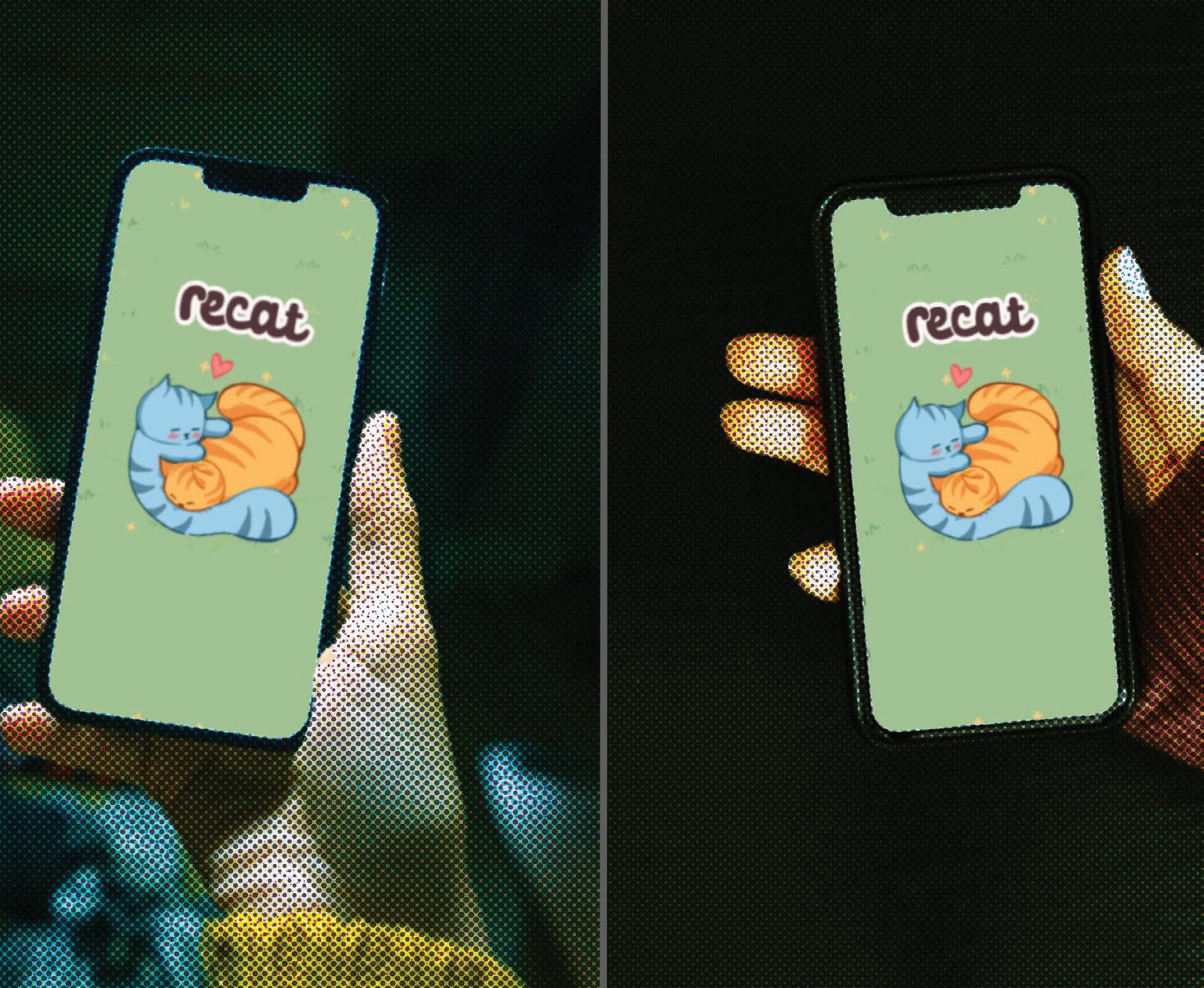
ReCat allows users and their partners to raise a virtual cat on its platform. Guo developed the app through e Garage, NU’s student startup workspace, and has developed it throughout her time at the University.
Once signed into the app using a unique shared code, ReCat users can leave categorized notes for their partner within groups such as “Touch,” “Praise,” “Time,” “Gi s” and “Service,” mirroring what are popularly referred to as the ve love languages. For every note, they are rewarded with “ sh” — the game’s currency — with which they can purchase treats to feed their cat and raise its “Happiness” level.
Guo said the decision to gamify long-distance relationships was intuitive. As she found many longdistance couples come together to play video games, she adapted the ritual into an engaging, caretaking genre in a mobile app style.
However, the decision to make cats the center of the app was not immediate.
Guo said when the app was in its beta development phase, it was conceptually a digital journal in which couples le entries for each other over time. With this format, though, she found engagement levels were not optimal, leading Guo and the ReCat team to explore making caretaking the crux of the app.
In deciding the object of care, Guo said ReCat’s leadership wanted something that was not as serious as a baby, but not as casual as a plant.
While they aren’t her pet of choice, Guo said cats were the perfect answer to user engagement issues. “I’m actually, personally, a dog person,” Guo said.
ReCat is a student-created app that o ers a way for users to maintain and nurture long-distance relationships.
“More people were comfortable with raising a cat together. Maybe they’re easier to take care of.”
As ReCat’s focal point cemented through its development, the app’s leadership team expanded. Medill sophomore and Daily sta er Trois Ono joined the marketing team in October and has contributed to ReCat’s social media engagement and student outreach e orts.
Ono, who is from Japan, said she is excited to share the app with friends and family at home.
“ e initial goal was for the site to be for longdistance romantic relationships,” Ono said. “But I really think it doesn’t ma er who you’re partnering with in the app, because you’re taking care of a cat and it’s so cute.”
Ono said future app updates may allow multiple users to share caretaking responsibilities with many friends in a map format similar to a “neighborhood,” rather than exclusively sharing the duty with one signi cant other.
Communication sophomore Henry Blocksidge said he was excited when he downloaded the app last year, as he considers it “a fun way to keep up with friends” amid social media fatigue.
“I’m excited about ways to keep up with people you care about that aren’t Instagram or TikTok,” Blocksidge said. “If we’re going to be on our phones anyway, why don’t we connect in a fun way?”
yanajohnson2028@u.northwestern.edu
are $100 for the academic year. THE DAILY NORTHWESTERN is not responsible for more than one incorrect ad insertion.
Illustration by Nicole Cheah
A&E
arts and entertainment
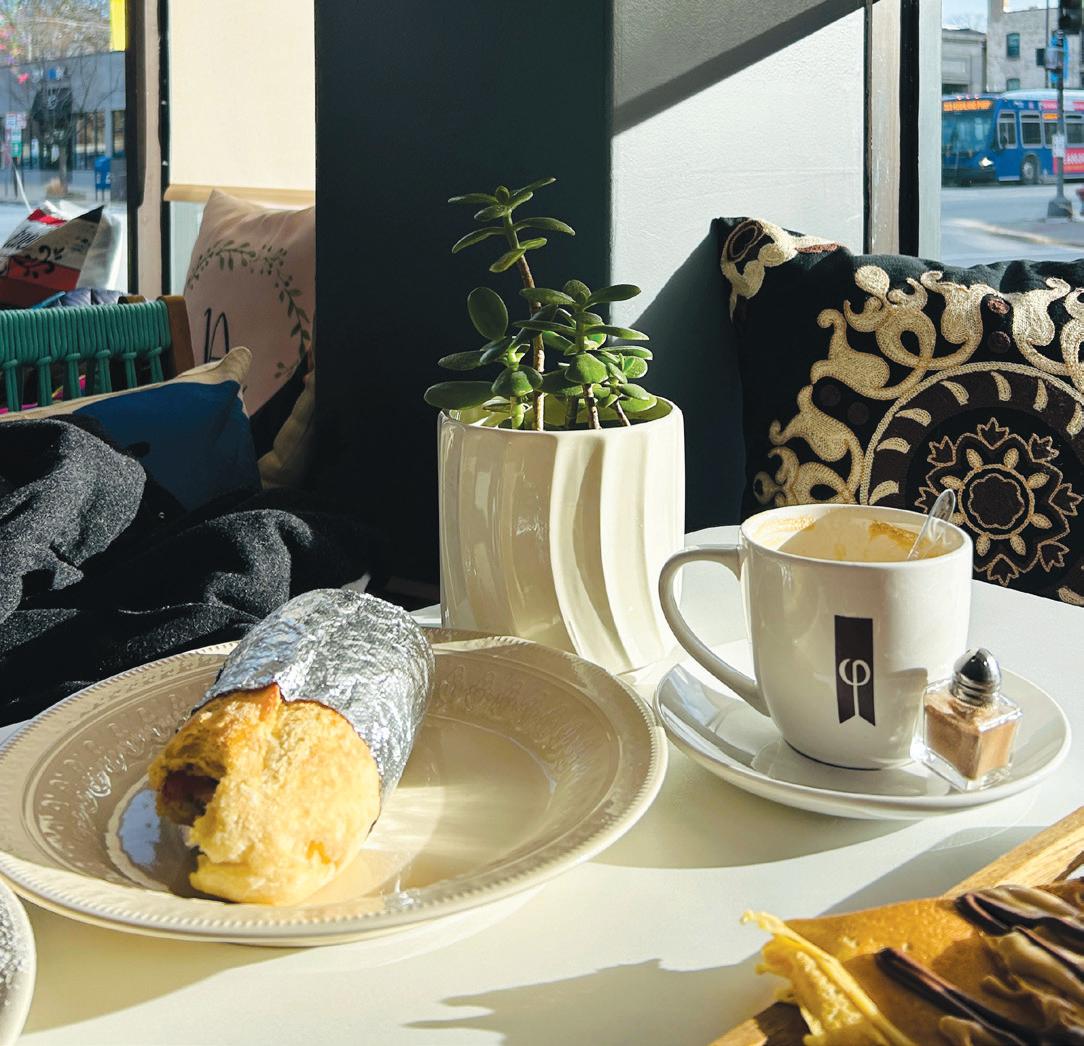
Crepe O’Clock brings European comfort to Evanston
By CARMEN GASKIN and ESTEBAN SALAS SERRANO
the daily northwestern
When you think of the word “crepe,” cafes in Paris, warm treats on a rainy day or even fancy hotel breakfasts may come to mind.
Crepe O’Clock surpasses these expectations with its antiquated Italian decor and remarkable selection of pastries, proving itself as Evanston’s best-kept secret.
The cafe is situated on the corner of Dempster Street and Chicago Avenue, surrounded by a unique array of stores, such as an antique shop, thrift store and pizzeria.
After piling out of the Dempster train station, we were happily greeted by the co-owners, Vassiliki Stratikopoulou, and her husband, Panagiotis Georgopoulos, who recommended five top menu
items. They said their choices reflect modern crepe artistry blended with familiar Greek flavors.
Their savory crepes feature one-of-a-kind, thin, crispy, flour sheets, while the sweet crepes are more akin to the traditional Parisian dish.
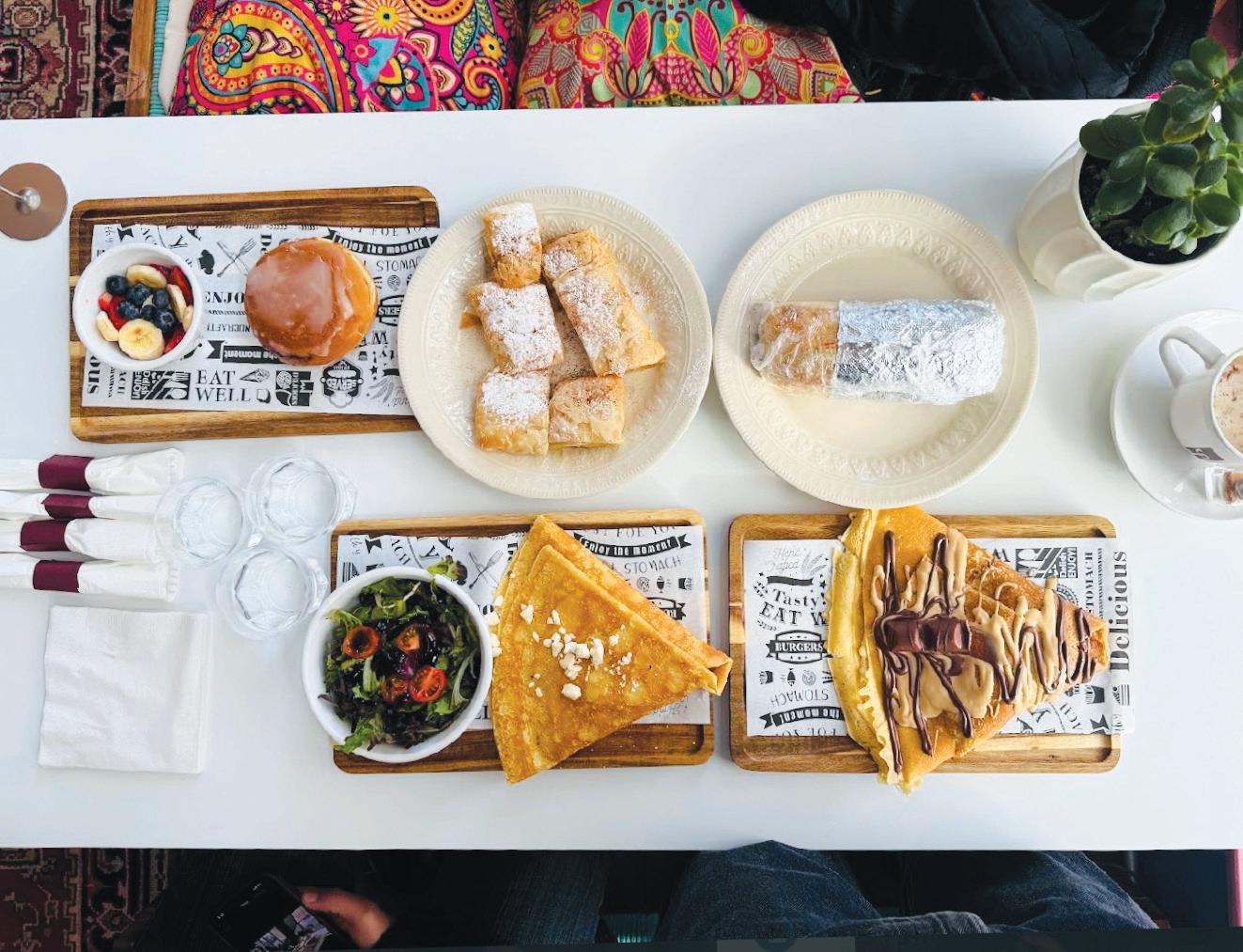
Our favorite was the savory Greek Crepe ($14), accompanied by a choice of fruit or Greek salad. The crepe was beautifully done — golden brown with a pleasant fluffiness. Stuffed with feta cheese, Kalamata olive, halved cherry tomatoes, chopped onion and oregano filling, each bite of this Greek crepe had a perfect mix of aromatic, rich, yet light flavors.
A close runner-up was the Kinder Bueno Crepe ($12), a chocolate delicacy perfect for sweet-treat lovers. The bananas and strawberries helped balance the chocolate’s richness. Together, the flavors are enough to keep you coming back for more. This Italian-chocolate-inspired crepe is a
‘Breaking Bad’ creator’s new
By MIGUEL TSANG daily senior staffer
Is no company better than creepy company?
That’s the core question at the center of “Pluribus,” a strange new series from “Breaking Bad” creator Vince Gilligan.
When my roommate turned on the first episode in November, I had no idea what to expect. The series’ central conflict — a vague happiness virus that spares all but 13 people — seemed like it could be the plot of a distant sequel to the movie “Smile.”
“Pluribus” chronicles angsty fantasy novelist Carol Sturka (Rhea Seehorn), who happens to be unaffected by an outbreak that claimed an eighth of the world’s population, including her girlfriend.
The remaining seven billion people on Earth share a hive-mind and do everything they can to earn the favor of the immune 13, with the hopes of eventually assimilating them into their pack.
When Carol meets the 12 other unaffected people, none of whom seem to share her interest in reverting the world back to how it was, much to her frustration.
The remaining episodes follow a more slice-oflife vibe Carol as she meanders around apocalyptic
Albuquerque with her hive-mind “chaperone,” Zosia (Karolina Wydra).
Not to say there aren’t exciting moments or shocking reveals, but this show definitely holds its cards close to its chest.
What kept me watching was Carol’s painful lack of charisma. It’s hard not to feel secondhand embarrassment when she proudly lectures the other characters or spouts brazenly terrible Spanish.
It’s a testament to Seehorn’s acting chops that she’s able to effortlessly portray a character who’s so deservedly unpopular with her peers. Seehorn’s performance has an air of self-awareness since it truly leans into Carol’s chronic insufferableness, making her antics all the more entertaining.
It’s no wonder Seehorn won a Golden Globe for her performance.
Even though she was annoying, I found it hard not to feel for Carol. I constantly found myself questioning what was keeping her motivated to not only be alive, but also reverse the virus.
At the end of the day, “Pluribus” is a show about the grief that having the world served to you on a silver platter couldn’t fix.
Speaking of the world, I appreciated the show’s global scale compared to the hyperlocal southwest vibe of “Breaking Bad.” I had no idea Gilligan could crack
or depict
must-have.
And for those who prefer their indulgence in a cup, our espresso folks are in for a treat. If you love lattes, we recommend their hot hazelnut latte ($5.75). With hints of rich hazelnut, this drink is everything a latte’s supposed to be: strong, intense and flavorful. Other latte flavors include caramel and vanilla, offered both hot and iced.
If you’re a strong coffee drinker like us, we recommend giving their espresso a shot.
They don’t serve decaf espresso drinks yet, but customers have access to standard coffee bar beverages, including lattes, matchas and Greek frappes. You can also find soft drinks and fruit juices available.
We also ordered an elegant, simple Greek sandwich ($9). This dish is served with a similar filling to the crepe, between two loaves of sourdough bread. Great for an on-the-go start to your
day, the sandwich is an excellent way to open up your palette to the traditional Greek flavors Crepe O’Clock has to offer.
For a sweet option, the Cinnamon Filled Brioches ($7) are laced with a citrus tang, accented by a touch of sweet cinnamon sugar. Lastly, their beloved Greek Bougatsa. This pastry ($7) is a perfect way to end your Crepe O’Clock visit. With its sweet, tangy custard, crackly puff pastry and lightly dashed cinnamon topping, you’ll quickly see all your bougatsas gone. All in all, Crepe O’Clock is the perfect cafe getaway to unwind, relax and indulge in a variety of sweet and savoury Greek treats alongside a beautiful view of downtown Evanston.
“Pluribus” is the latest sci-fi series from Vince Gilligan.
Carmen Gaskin/The Daily Northwestern
Carmen Gaskin/The Daily Northwestern
Esteban Salas Serrano/The Daily Northwestern
Esteban Salas Serrano/The Daily Northwestern
Eli Williamson’s photos examine Black masculinity
By REGAN HUIZENGA daily senior staffer @reganmichele215
While riding the subway in New York in 2016, Eli Williamson snapped a photo of a Black father with his two sleeping children: daughter on his lap and son on his side.
Williamson has been taking photos as a hobby
for several years, taking inspiration from his father who was a photographer. Williamson frequently took photos of landscapes and the moon, but this photograph was different.
After the first photo of the father and his children on the subway, Williamson said he quietly started taking more and more photos of Black men. Initially, the photos focused on fatherhood, but soon evolved to focus on “being able to look at Black men as having some form of inherent virtue,”
he said.
This became the inception of a new project, titled “The Four Virtues,” which will culminate in its fourth and final installment at the Evanston Art Center from Jan. 24 through March 1. “Fellowship” will be on display in the center’s Lobby Gallery.
A self-proclaimed “failed philosopher and failed theologian,” Williamson said he took an interest in the four virtues of stoicism: wisdom, courage, justice and temperance.
For him, virtues seemed to be based on expectations, and so he became interested in examining the virtues and expectations on Black men and boys.
“If you have low expectations, it’s easy to live down to them. But when we have high expectations and we expect things, that fundamentally shifts the relationship,” Williamson said. “I believe viewing Black men as having inherent virtue in society shifts the relationship that they have with the culture and the society they live in.”
Eventually, Williamson settled on four virtues –fatherhood, work, wonder and fellowship – which became the four parts to his series.
The first three parts were featured in the EAC in the last three years Williamson said. “FatherHood” represented the relationships of Black men with those under their care, biological or not. “Work” reflected their relationship with labor and how that labor should be respected, while “Wonder” illustrated the ability to walk around in a state of wonder rather than hypervigilance, he added.
The EAC’s Lobby Gallery is typically reserved for more time-sensitive shows and puts an emphasis on highlighting underrepresented or emerging
artists, according to Director of Development and Exhibitions Emma Rose Gudewicz.
Typically, the gallery doesn’t allow artists to return for a solo show if they have had one in the past two years. However, Williamson’s series was a special case because it was a four-year long show, Gudewicz said.
Williamson said initially, he wasn’t public with his work, but then a mentor showed his work to the EAC.
Having “The Four Virtues” on display there has been an “elevation” for Williamson, he said.
After struggling to frame his photos the first year, Williamson said he hopes his style has become more professional.
For Gudewicz, Williamson’s growth has been evident.
“He’s had a lot of time to adjust his style, and I think one of the biggest changes I’ve seen is how he displays the work,” she said. “Each year it’s always different and he’s really kind of honed in on that skill.”
The concluding part of the series, “Fellowship,” depicts cooperation and collaboration, Williamson said. Whereas the first three parts incorporated a lot of street photography, “Fellowship” includes many photos of Williamson conversing with his subjects.
Although some of the photos are “brilliant in composition,” Williamson said that’s beside the point.
“None of these photos are done in isolation,” he said. “Some of them work well by themselves, but context is everything with this project.”
r.huizenga@dailynorthwestern.com
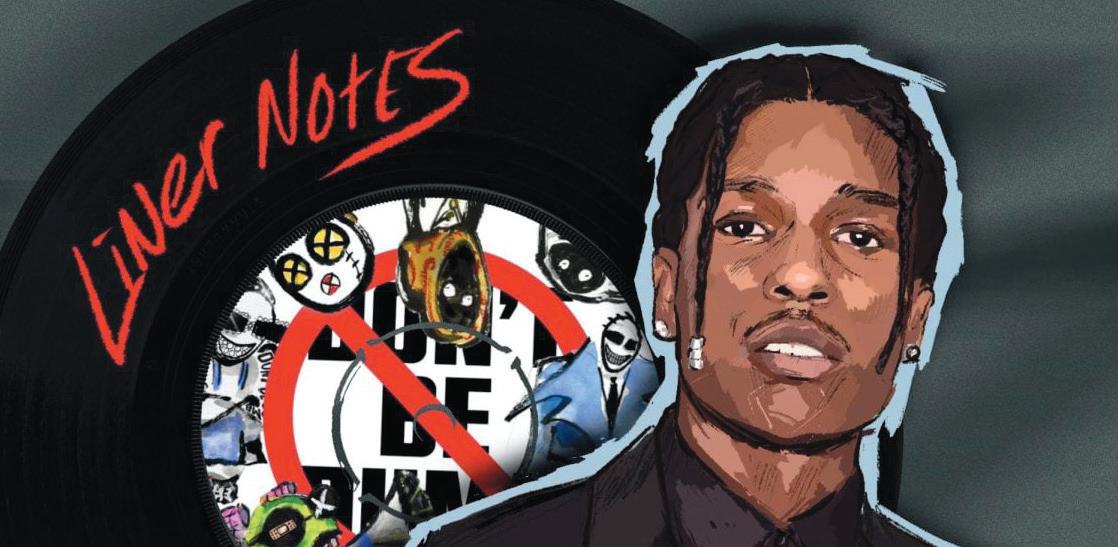
A$AP Rocky makes comeback with ‘Don’t Be Dumb’
By JACK GREENSPAN the daily northwestern
After rapper A$AP Rocky released “TESTING” in 2018, he left fans waiting eight years for a new album. In the meantime, Rocky was busy modelling for luxury fashion houses, acting in a feature film and raising three children with his partner, global superstar and entrepreneur Rihanna.
Now, Rocky is back with “Don’t Be Dumb,” a gift for the fans who stuck around through all of his sidequests.
In the fourth studio album, Rocky delivers a medley of musical styles, some old and others new. The first three songs deliver gritty, in-your-face trap beats layered with boastful lyrics.
Tracks like “WHISKEY (RELEASE ME)”, “DON’T BE DUMB / TRIP BABY”and “THE END” are more dreamy and melodic, potentially influenced by the rapper’s love for indie rock and psych pop genres.
The project’s most memorable moments occur when Rocky combines these two vastly different sounds – hard-hitting trap beats and psych-infused melodies – into one song. Sometimes, he does this by fusing elements of both into one beat, like on “PLAYA,” where dreamlike pad synths (alongside bass and backing vocals by Thundercat himself) play on top of automated trap drums.
On other tracks, Rocky accomplishes this combination not through fusion, but through sudden back-and-forth beat switches. “AIR FORCE (BLACK DEMARCO)” alternates between a chaotic opiumstyle beat and a beautiful, melodic dream-pop ballad.
Admittedly, it’s a bit chaotic. However, the song may have been better off with just one beat switch to avoid the whiplash of two vastly different sounds. Rocky goes in a completely new musical direction in certain tracks, which works surprisingly well. On “ROBBERY,” Rocky and Grammy award-winning rapper Doechii take turns rapping over a swing jazz
instrumental.
The result: a track that’s mischievous, showy and even seductive. It’s been a long time since we’ve seen a mainstream rapper rhyme over a jazz instrumental, and this is the best I’ve heard since Tyler, The Creator’s “HOT WIND BLOWS” or Kendrick Lamar’s “For Free?”
In “STAY HERE 4 LIFE,” Rocky teams up with alternative R&B singer Brent Faiyaz to deliver a bouncy, soulful and memorable R&B track that might just be the peak of the album. With a groovy bassline, a catchy hook and silky smooth vocals from Faiyaz,
Chicago Poet Laureate
By AMY L. WONG the daily northwestern
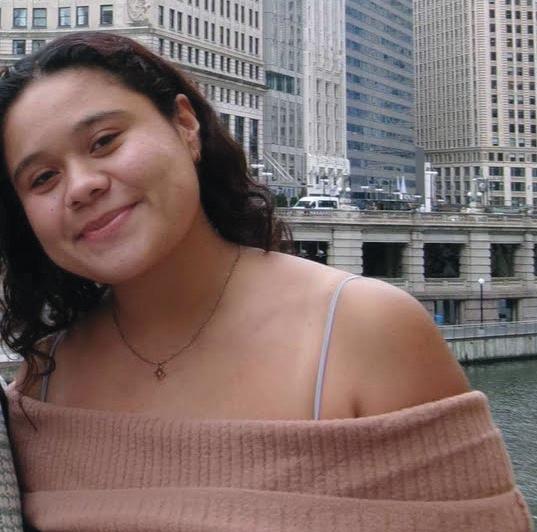
Newly announced 2026 Chicago Poet Laureate
Mayda Del Valle performed her recent work at the Chicago Cultural Center celebrating Chicago while also critiquing its political history Wednesday.
At a celebration held by the The Chicago Department of Cultural Affairs and Special Events, Chicago Public Library and the Poetry Foundation, the Chicago native paid homage to the city and condemned its legacy of political corruption.
Chicago Mayor Brandon Johnson, introduced Del Valle, criticizing the federal executive branch and emphasizing unity.
“We are truly blessed to have a poet laureate who has shown us the importance of coming together, fighting back and being unapologetic about who she is and using words to transform and to heal,” he said.
Del Valle followed Johnson’s remarks with
there’s little not to like about this track.
Rocky’s artistic inspiration extends beyond just musical influences. The album cover was designed by American filmmaker Tim Burton, and Rocky makes creative nods to the eerie, fantastical style of Burton’s films throughout the album.
The haunting, orchestral outro instrumental on “STOLE YA FLOW” sounds straight out of “The Nightmare Before Christmas,” fittingly so, as Danny Elfman — composer for many of Burton’s films — contributed to the album.
Similarly, “THE END” starts with an uncanny
recitations of her latest poems about her father and Chicago. Her commentary on political corruption in Chicago elicited gasps and cheers from the audience.
The city was ranked America’s most corrupt using data from 1978 to 2021, according to a 2023 report from the University of Illinois at Chicago. Chicago had 1,824 federal public corruption convictions from 1978 to 2021.
“Streets crooked as your politicians,” Del Valle recited. “New York invented games but you invented infamy, Chicago.”
Although Del Valle was unafraid to explore the less attractive aspects of Chicago in her work, she also discussed the contributions the city has made to the country and her life.
She referred to the railroads that strengthened America’s economy and how her community carried its “pain and laughter and a song” when it migrated to the city.
“Chicago, city of my birth, city of my childhood, city of my broken heart, city of my lost children and loved city of all — I love you, have never questioned,”
childlike vocal sample singing “this is the way the world ends” as rapper will.i.am and Rocky address the current gloomy state of our world, painting a Burtonesque picture of humanity’s future.
“Don’t Be Dumb” isn’t a perfect album. Regardless, the project is a creative comeback for Rocky. He ventured into new musical territory and brought together an eccentric group of collaborators to bring his gritty yet beautiful creative vision to life. What more could you ask for?
jackgreenspan2028@u.northwestern.edu
Valle recited. “While my heart lives — worse, open and split — between two places, it’s always given me the music to know.”
Being named Chicago Poet Laureate is only one of Del Valle’s many accomplishments.
In 2001, Del Valle won the National Poetry Slam, becoming the youngest and first Latine poet to win. She also performed at the White House in 2009 after being invited by former President Barack Obama and former First Lady Michelle Obama.
Hector Gonzalez, an attendee who said he has known her for more than 20 years, said he appreciated Del Valle’s reflection on Chicago’s history.
“The way we just look at Chicago as an entity, as being the heart of the city, we are the veins to the United States. We are the veins to the world,” Gonzalez said. “I love that she was bringing that with a lot of historical facts and even honoring some of our ancestors through her journey.”
amywong2026@u.northwestern.edu
Photo courtesy of Eli Williamson
Eli Williamson’s photo series, “The Four Virtues,” will end with its fourth and final part, “Fellowship.”
Amy L. Wong/The Daily Northwestern
The 2026 Chicago Poet Laureate Mayda Del Valle performs her recent original work at the Chicago Cultural Center.
Illustration by Nicole Cheah
A$AP Rocky’s fourth studio album features collaborations with Brent Faiyaz, Thundercat, Doechii, Damon Albarn of Gorillaz and more.
Introducing our Winter 2026 Opinion Columnists
By AIDAN KLINEMAN daily senior staffer @ptsklineman
The Daily Northwestern Opinion Desk is proud to name nine columnists for Winter Quarter 2026, furthering its commitment to serving as the heartbeat monitor of the Northwestern and Evanston communities.
Our student columnists — seven of whom are returning from Fall Quarter 2025 — will draw on their backgrounds and experiences to produce regularly-occurring pieces on a plethora of relevant topics — from advice and humor to politics, news and culture.
e practice of civil discourse is the most
DJ HARRISON
“’Cat Commentary” is about what’s relevant to the lives of students on campus. I’ll discuss topics students might find relatable and should likewise be at the forefront of campus conversation. My column will also intertwine some of my experiences at Northwestern and my home state of Kansas. “’Cat Commentary,” at the end of the day, is a place where Wildcats will feel heard and welcomed.
Fun fact about DJ: I’m a movie-lover, and my favorite movie is “Before I Fall.”
GABRIELA HAMBURGER MEDAILLEU OFF THE RECORD
“O the Record” is about the conversations we nd through connection. Northwestern is buzzing with friends talking about life, love and culture in dorm rooms and strangers nding middle ground over everything from geopolitics to pizza places in Evanston. Our opinions are only as important as the people we choose to share them with. “O the Record” is about asking bold questions, sharing important stories and nding meaning in the small, intimate moments that o en go unheard — the ones that typically live off the record.
Fun fact about Gabriela: I’ve decided cold is a mindset I’m not subscribing to this quarter.
important exercise for preserving the health of a vibrant, free society. We hope you will join us in our e orts to facilitate the freest exchange of ideas on campus by contributing to e Daily Northwestern Opinion section. Any member of the Northwestern and Evanston communities — past or present — is entitled to publication consideration.
As always, please forward pitches, submissions and feedback to opinion@dailynorthwestern.com.
a.klineman@dailynorthwestern.com
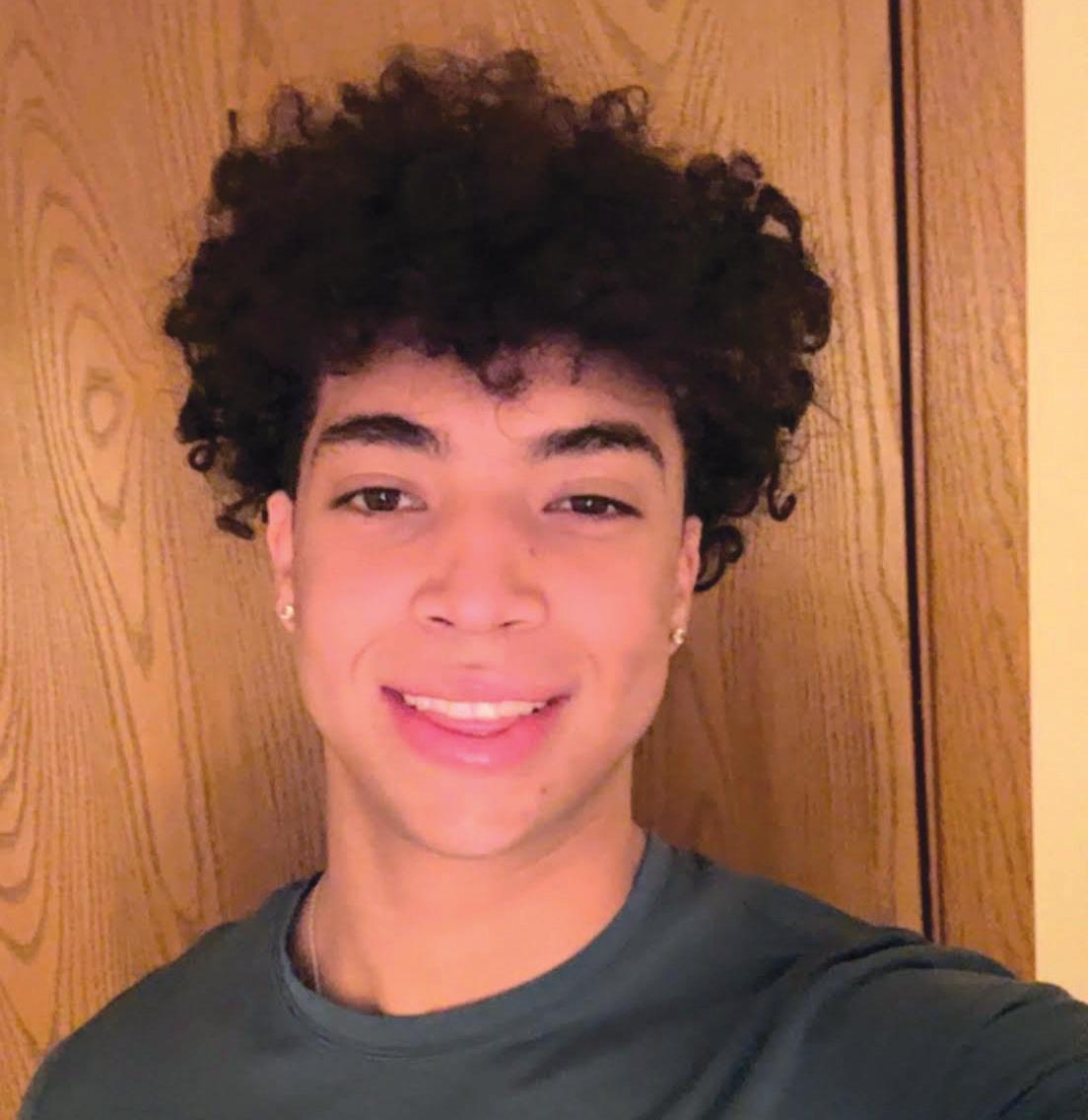
ARLETTE CORREA RENT FREE
“Rent Free” is about everything but necessary knowledge. As a 20-year-old girl, I am prone to obsessing over the most frivolous things, sometimes for days on end. I may be too online sometimes, but I enjoy the small things in life. I hope to bring joy to the middle of your week with a random insight into what’s been living in my brain for the last week, whether it be a movie review or a rant about my latest worry.
Fun fact about Arle e: I went to boarding school in the middle of Ohio!
RAWYA HAZIN DEAR READER, LOVE WYA
If I experience something I love, I’ll cherish it, romanticize it, gi -wrap it — and then I’ll share it all with you. is column is a space for all things tender, confusing, ordinary and extraordinary about being human. I’ve always had a so spot for the slow detours we take to happily pi er-pa er through this life — enjoying the experience without rushing to arrive. Feel free to reach me anytime and always.
Fun fact about Rawya: ‘Rawya’ means storyteller in Arabic — I might just have the rst parents in history who’d be disappointed if I didn’t become a writer.
GEORGE KOUTROUVELIS THROUGH THE BLUE TINT
“ rough the Blue Tint” chronicles my experience in and around di erent “L” lines and using the public transit system to explore Chicago’s o en underrepresented areas. I like to say that by the time I graduate, I want to feel like I’ve truly lived in the city. I hope that by writing this column, I can both explore my new home and inspire others to do the same. I’ll try to include a good mix of information and exploration in my column so that both the reader and I can nd beauty in this big city.
Fun fact about George: I am an avid reader and read over 100 books last year.
SYLVIE SLOTKIN
COMMUNAL SHOWER THOUGHTS
“Communal Shower oughts” focuses on whatever I’ve been thinking about in the shower that week. Usually, it’s nothing too deep. As a not-so-undercover lover of gossip, I’m pleased to share that people text each other my column. I’ve seen it happen in class. It’s pre y hard to miss “Shower oughts” Girl — she’s unapologetically in your face and unafraid to instigate.
Fun fact about Sylvie: Tomatoes. An additional fun fact is that I had the opportunity to change my fun fact this quarter or, perhaps, elaborate. I opted to keep it as is.
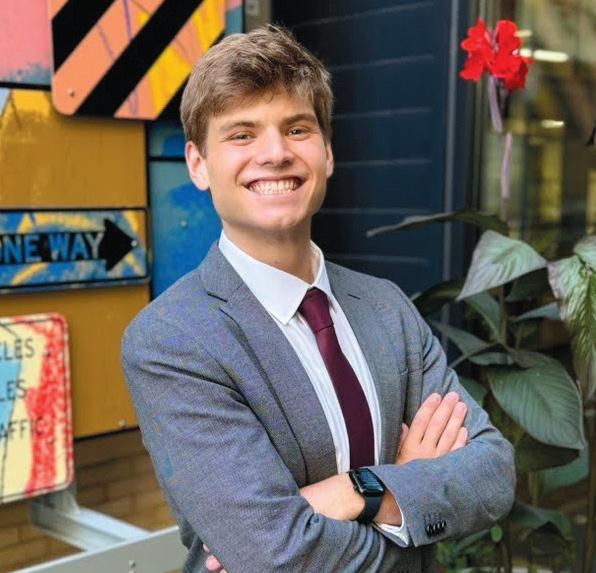
AIDAN KLINEMAN
OFF-CAMPUS: WHITE HOUSE
“Off-Campus: White House” is my column about national politics and how they affect us. I bring readers an authentic, timely and informative assessment of the most critical issues facing our nation and, by extension, our university. I seek to understand our circumstances: what has led to them, how we should respond and their consequences for our collective national soul — if we still have it.
Fun fact about Aidan: I was an o ensive lineman for 10 years, if you can believe it.
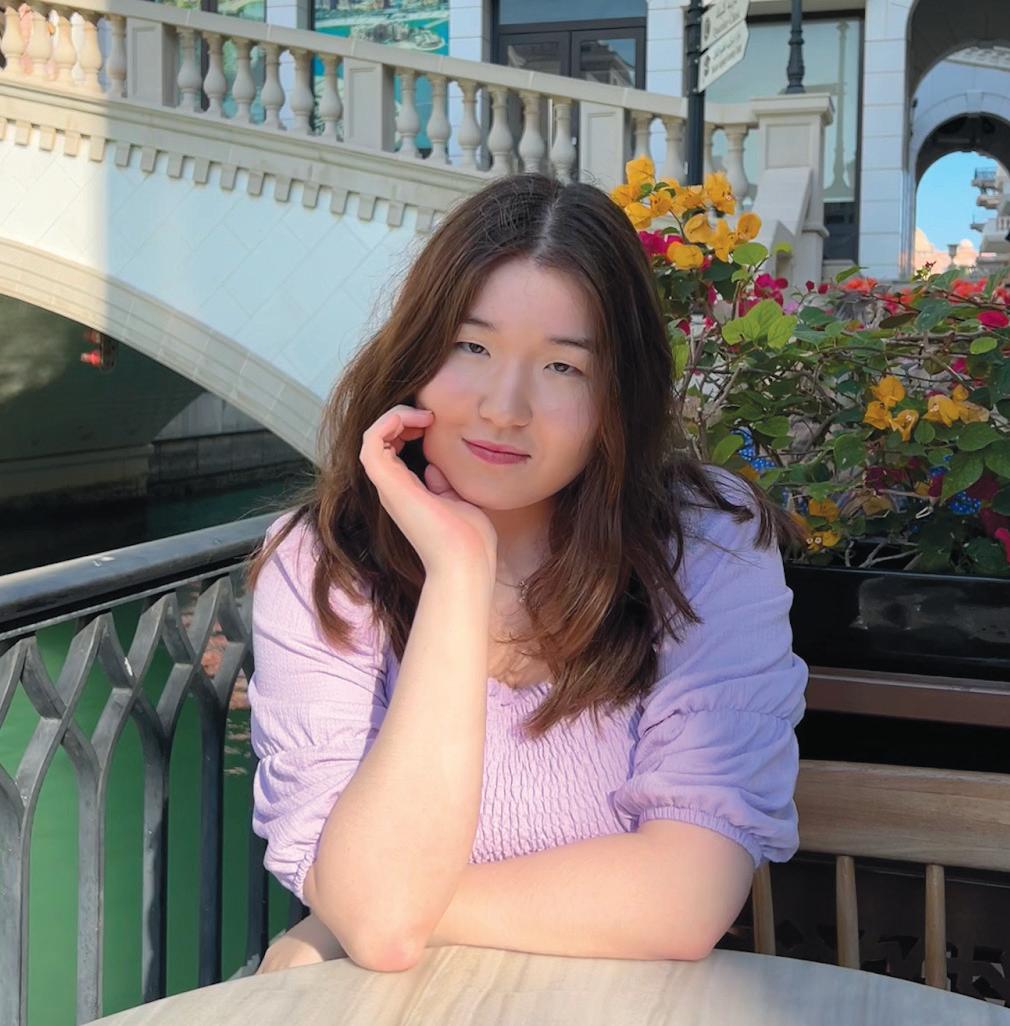
AIZERE YESSENKUL YES-SENTIALS
My column gives a glimpse into what it’s like to study at Northwestern University in Qatar, while also branching into re ections on lms, books, art, music and the cultural currents that shape how we live. I want to explore ideas that feel both personal and universal, with a sprinkle of existential re ection woven throughout. At its heart, “Yes-sentials” is about uncovering meaning in the ordinary and questioning the systems we o en take for granted.
Fun fact about Aizere: I’ve probably rewatched “How I Met Your Mother” over 10 times.
MARGIN NOTES
“Margin Notes” brings the scribbles we make on the sides of pages to life. is column is about sharing un ltered opinions, hot takes and observations I probably should’ve kept to myself. From the campus world to one beyond Oz, “Margin Notes” invites us to bravely notice and admit the li le things a lot of us think, but are o en too hesitant to say. Messy, funny and a li le too honest — it’s the notes we write in the margin, told out loud. Fun fact about Alexia: Team “Ross and Rachel were not on a break.”
Editor in Chief Emily Lichty
Opinion Editor Aidan Klineman Assistant Opinion Editors DJ Harrison and George Koutrouvelis
ALEXIA SEXTOU
Lead Democratic candidates purchase cable TV ads
By DESIREE LUO daily senior staffer @desiree_luo
Four Democrats running to represent Illinois’ 9th Congressional District have begun campaigning on cable airwaves.
Progressive content creator Kat Abughazaleh, former FBI agent Phil Andrew, Mayor Daniel Biss and State Sen. Laura Fine (D-Glenview) all purchased 30-second television advertisement spots in January ahead of their party’s crowded March 17 primary election.
Abughazaleh’s, Biss’ and Fine’s ads addressed increased federal immigration enforcement in the Chicago area.
After launching her candidacy last March, Abughazaleh wrote in an X post that her campaign would not spend money on “old, ineffective tactics” like cable ads.
But in December, she became the first candidate to announce a cable placement, debuting an ad that showed footage of a federal agent shoving her to the ground during a September protest at the Immigration and Customs Enforcement detention facility in Broadview, Illinois.
Her second cable ad, titled “It’s 2026. We need to act like it,” aired in early January. In it, Abughazaleh criticizes “career politicians” and says Democratic primary voters “don’t have to settle.”
Fine began campaigning on TV in early January.
Her first commercial addressed the health insurance system, which left her family “drowning in medical bills” after a car accident, she said in the video.
In her second ad spot, Fine said she “championed the law to unmask ICE and hold them accountable,” referencing House Bill 1312. Co-sponsored by Fine and dubbed the Safety and Liberation Together Act, the law aims to curtail federal immigration enforcement and protect immigrants.
In a Jan. 13 news release announcing the ad, Fine’s campaign wrote it shows “her role in winning Illinois’ biggest fights against Trump and the special interests” and comes as her campaign has raised nearly $2 million.
In response, Biss’ campaign manager, George Lundgren, wrote in a news release Friday that Fine missed the SALT Act’s signing in December to attend a New York City campaign fundraising event.
“Laura Fine chose campaign donors over showing
up, and now she’s using special-interest money to rewrite history in a TV ad,” Lundgren wrote.
As for Biss himself, the mayor’s first and only commercial to date began airing several days after his opponents’.
“Biss vs ICE” includes a clip of the mayor telling ICE to “get the hell out of Evanston” at a Halloween news conference, following the arrest of several people in Evanston and Skokie that day. The ad closes with a nod to his recent endorsement from retiring U.S. Rep. Jan Schakowsky (D-Evanston).
On Tuesday, Andrew’s campaign became the latest to join the airwaves. Like Fine’s, his first commercial discussed the personal experience that drew him to politics: surviving a school shooting at age 20. His ad spot opened with that anecdote.
Third Ward resident Mark Marinacci said he’s seen TV ads from Biss and Abughazaleh about “once a week, twice a week.” He said he hasn’t seen any from
Fine yet.
“Biss is basically saying, with Jan Schakowsky right next to him, ‘Hey, continuity,’” Marinacci said. “Kat is basically saying, ‘Expletive Trump, and we can’t be pushovers.’”
Other prospective voters said their exposure to candidates has come through social media.
SESP senior Noelle Robinson, who lives on Northwestern’s campus, said she hopes to vote in the primary. She said she’s familiar with Biss in his capacity as mayor and has seen Abughazaleh on Instagram.
“I feel like I haven’t seen a lot of advertisements specifically for the race,” Robinson said.
Medill Prof. Gerry Chiaro, who directs the Immersion Quarter course for Integrated Marketing Communications master’s students, said most voters start to engage with races closer to primary election day.
With the increasing prevalence of digital campaign advertising, Chiaro said marketing circles have
debated TV ads’ effectiveness. But he said they continue to form the “basis for all the other content that you’re putting out there.”
“I think it’s still way more impactful than people want to give it credit for,” he said.
Regardless of the advertising medium, Chiaro said candidates need to distinguish themselves and give voters a reason to support them. That can be difficult, he said, especially in a packed primary field. There are currently 16 candidates in the 9th District Democratic primary. Right now, Chiaro said he’s not sure any one of them stands out.
“We can get all the shares and likes and followers and all of that,” he said. “But if it’s not going to motivate someone to register to vote, make sure that they’re out there voting, it’s hard to see that making that big of a difference.”
desireeluo2028@u.northwestern.edu
The primary election is on March 17.
Friedman said. Now, he hopes that he can inspire others to pursue this path.
“Running for o ce is a blast,” Friedman said. “If you’re a citizen, just get into the process. Run for o ce. Be involved.”
Su seeks common ground
As a resident of the 9th district for almost three decades, Rogers Park-based IT consultant Su said he wanted to see be er representation for his community. “I saw, in 26 years, one congresswoman, same voice for over 20 years. Now I think it needs a new, di erent voice,” Su said, describing this year’s race as “an equal opportunity” contest.
Su said he also runs his own media platform — Chinese-language site USCN News — which covers mostly Chicago-area and Illinois-focused news, o en centering on the Chinese American community.
Broadly, Su hopes to reduce political division in Washington. He said that he doesn’t want either party to win — and claimed that he is the only candidate willing to work with both sides to “reduce con ict” and “work on a common interest.”
Con ict between Trump and the voting public, as well as increased political polarization, were some of the other issues that pushed him to run this year, Su said. “I want to make sure the majority of the families are
insured,” Su said, adding that he hopes to make sure low-income and disabled community members also receive proper healthcare coverage.
Although Su described ICE’s actions as “extreme,” he criticized Democratic candidates who have protested at the ICE detention facility in Broadview, Illinois.
“ is kind of thing is not what I want to do,” he said. “But I want to reduce ICE action.”
Su is currently the leading Republican candidate in fundraising, with just over $15,500. However, he still lags far behind most Democratic candidates.
According to Su, while most signi cant endorsements go to the Democratic candidates in the area, his independence sets him apart.
“ at’s my big di erence between me and several of the other top Democratic candidates,” he said.
A pastor turns to politics
is isn’t Elleson’s rst political campaign. e Arlington Heights pastor previously ran for this seat in 2018 — and lost with 26.5% of the vote to Schakowsky’s 73.5%.
For nearly 24 years, he has ministered at Lakewood Chapel — a congregation he said re ects the district’s political lean, estimating that Democrats make up around 70% of its members.
Elleson describes himself as a “compassionate conservative,” stressing that he supports Republican values but believes they should be paired with empathy for struggling community members.
He said he supports stricter federal immigration enforcement but believes it should be carried out humanely. According to Elleson, many in his congregation have been afraid to a end church in recent months, and in the past, he has personally wri en le ers and appeared in court to support families facing deportation.
“I help. I’ve helped more people than probably any of the Democrat candidates. at’s what I do.” Elleson said. “But … you just can’t let the gates open completely. You got to know who’s coming in the country, you really do, or you’re going to have a problem.”
Beyond Illinois, Elleson has taught English and U.S. history at universities in China following the Tiananmen Square incident. He added he has also supported community projects in Africa and Central America.
One of Elleson’s top policy priorities is the nation’s growing debt and perceived nancial instability. He said the federal government must reduce spending and return to balanced budgets to protect the next generation.
“One of the reasons I’m running is, sometimes in a district like this, it’s hard to get good people to run, and I think there is a shot now,” he said. “ is is a more interesting year, and you need a good candidate like me.”
Grassroots against the grain
Still, local Republican leaders say the path forward
for any Republican nominee remains steep.
“As you’re doing door-knocking, there’s probably not a very bright reception,” Del Mar said. “ e cost of ge ing your name out there is expensive.”
As Democratic candidates turn to mailers and television ads, Republican candidates who sport comparatively smaller budgets cannot a ord these publicity methods, Del Mar said. Instead, according to him, they’ll have to run grassroots campaigns.
Former Republican congressional candidate and Assyrian GOP Vice Chair Sargis Sangari lost against Elleson in the 2018 primary. He said Elleson is unlikely to prevail in the general election this year.
“To try to ght against a machine that has a gerrymandered-district that is set up in a way to ensure, statistically, you’ll have less of a chance of winning as an opposition party candidate, whether it be here in Illinois with the Democrats or whether it be even in Indiana,” Sangari said, “People have to at least get to know you in ve di erent occasions for them to even remember your name.”
Sangari said that the Assyrian GOP would not be endorsing anyone until a er the primary.
However, he thinks that all the candidates, regardless of party a liation, lack a long-term vision for the district.
“ ey’re all short-term-looking, hoping that once they shake your hand, you’re going to run to the polls and vote for them,” he said.
desireeluo2028@u.northwestern.edu
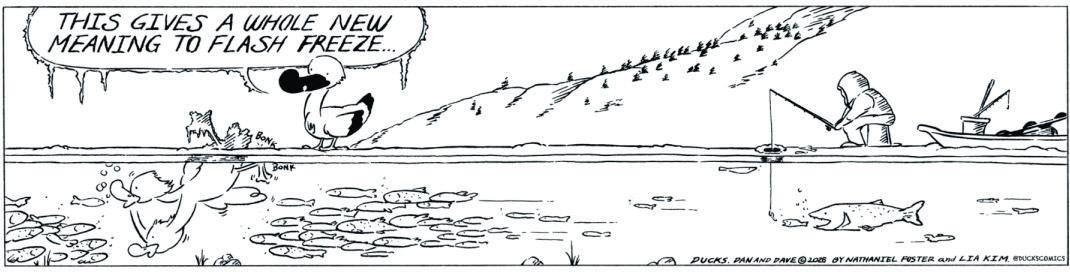
Ducks Dan and Dave: Duck Season
Nathaniel Foster is a student at the School of Professional Studies and writer of Ducks Dan and Dave. He can be contacted at nathanielfoster2027@u.northwestern.edu or @duckscomics. Lia Kim is the illustrator for Ducks Dan and Dave and is not associated with Northwestern. e views expressed in this piece do not necessarily re ect the views of all sta members of e Daily Northwestern.
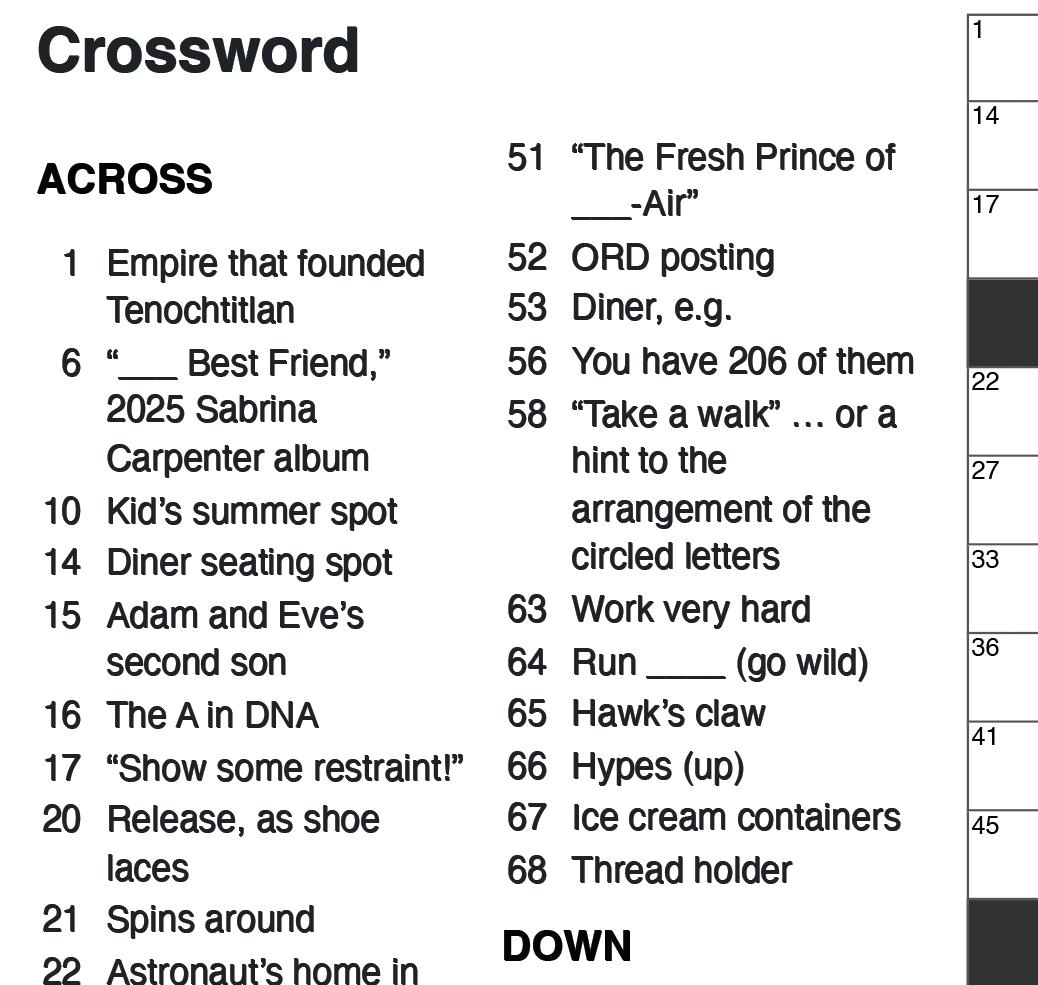
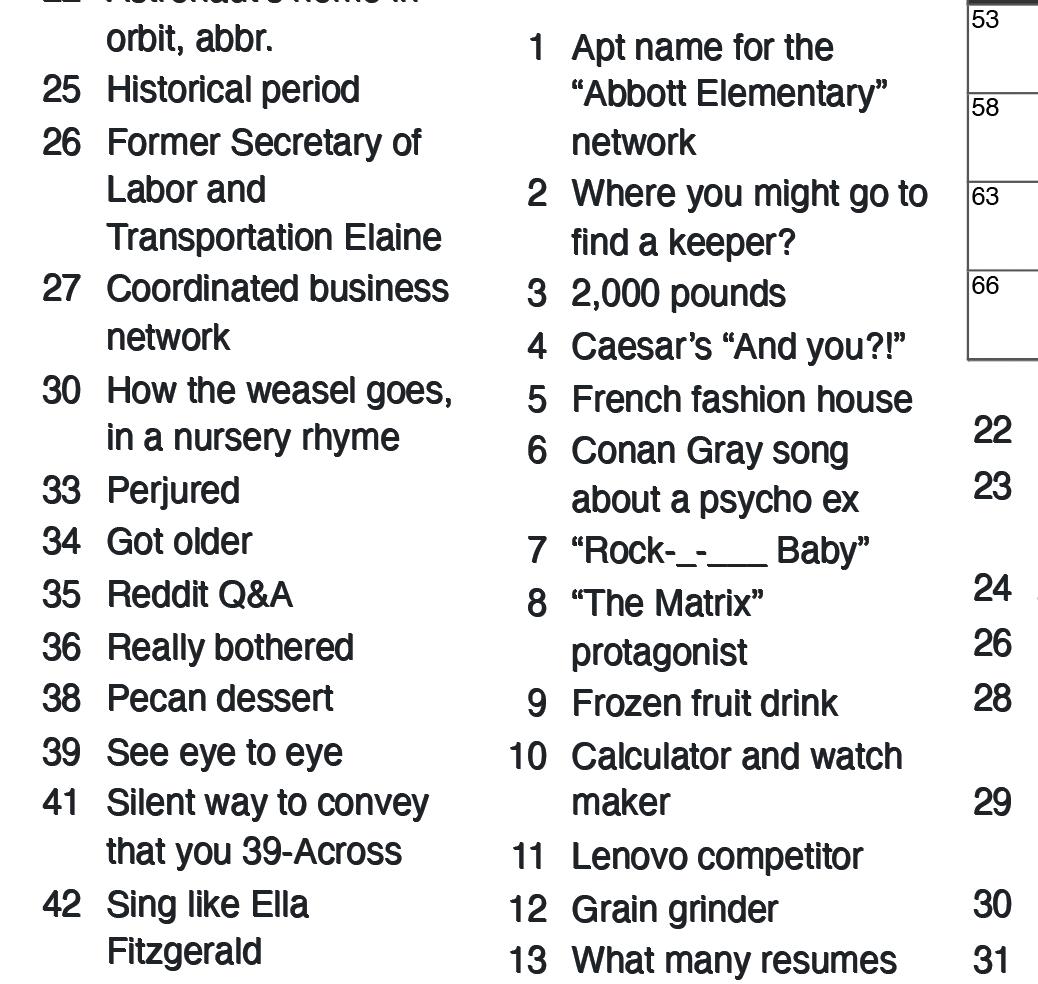
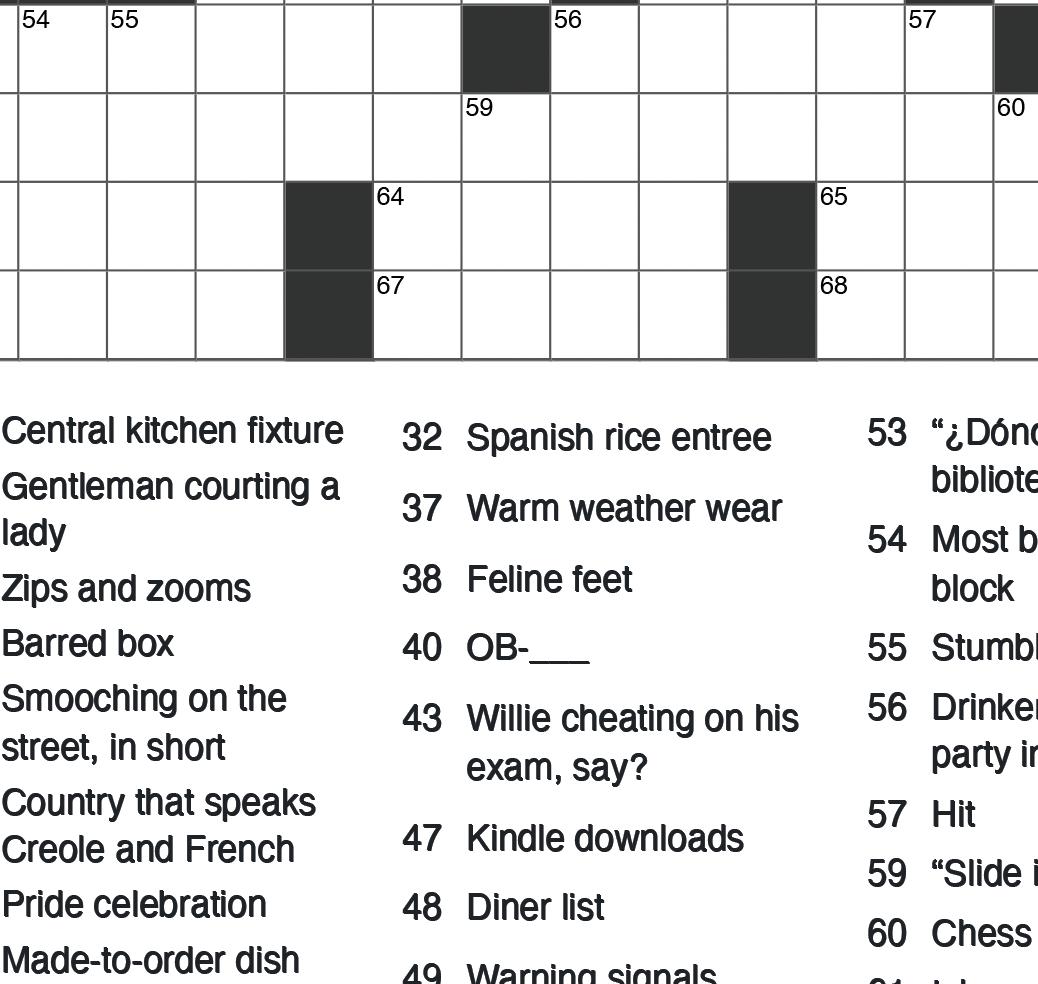
The Daily Northwestern Weekly Crossword
By Tanat Johnny Tungsubutra
Jaén said the company’s “ironic” branding, driven by viral social media posts, drew the location’s employees together and a racted business from NU students. But in September, Continuum Development bought Church Street Plaza, the commercial center housing Chili’s. Continuum intends to oversee construction of a 27-story tower at 900 Clark St. with over 350 residential units and over 2,900 square feet of retail space.
e developer spent nearly a year in talks with Chili’s parent company, Brinker International, about the restaurant’s future, according to Continuum cofounder and managing member Evan Meador. But Meador wrote in an email to e Daily that maintaining a Chili’s location in the building “wasn’t feasible” because of square footage requirements. Brinker opted not to relocate the restaurant.
Since Dec. 16, the corner of Maple and Clark has lain dormant. Proponents of the development argue the proposed residential and retail spaces will a ract businesses and residents while maintaining a ordability. Still, some community members remain unconvinced while simultaneously upset about the loss of a neighborhood staple.
Dinner dates and margaritas
For more than half a decade, Chicago drag queen Neutral Gena rode the Purple Line into downtown Evanston with one destination in mind. Every two months, she and other queens would gather at Chili’s on their nights o for “that basic sort of chain restaurant vibe.”
Neutral Gena said the friendly sta , “relaxed” energy and “Midwestern come-as-you-are” atmosphere were what brought her back time and time again.
e classic Chili’s menu also helped.
“ e Presidente Margarita — she got me together,
whose work, she said, grew from King’s messages. “He was 39 years old when he was murdered,” Bell said. “He was a young man — and though he accomplished a lot, though he spoke a lot — I wonder what he would be saying today, not just to take what he said as gospel then. But where would he be now?”
History professor and panelist Kate Masur
she got me together,” Neutral Gena said. “ at was sort of the go-to: Go grab a couple Presidente Margaritas and a Triple Dipper to share and your night is o to a good start, honey.”
Chili’s has long been a staple of downtown Evanston. e restaurant began welcoming customers to its Church Street Plaza location in early 2003, according to Daily archives. A Daily sta er wrote in a review that March that the casual dining spot was “be er than (she) had expected,” though “few will go to Chili’s expecting the best meal of their lives.”
But Soni Obinger (Medill ’06), another former Daily sta er, got something arguably be er at the restaurant: a husband. For their rst date as sophomores in November 2003, the two watched “Elf” at the movie theater down the block a er dinner at Chili’s.
Obinger said the restaurant’s sit-down dining felt “fancy” compared to other spots nearby. at’s why her date ordered the since-discontinued chicken-fried steak despite being more of a burger or salad person: He wanted to put his “best foot forward,” according to Obinger.
“I’m not sure why that included chicken-fried steak dinner, but that’s okay,” she said. “I still married him.”
e drinks at Chili’s were too expensive for Obinger and her friends to frequent the spot, and Obinger rarely visited other locations a er graduating. But she said the restaurant remained a “special place” during her time at NU, and she was saddened to hear about the closure of what she deemed “an institution of Evanston.”
Neutral Gena and her fellow queens are not ready to let go of that institution altogether.
“We literally drove to the Skokie Chili’s four days out,” she said. “I had never been, and you know what? It’s still giving.”
High-rise tower plans in progress
As residents headed to the polls in last April’s consolidated municipal election, Ald. Clare Kelly’s (1st) reelection campaign mounted signs outside Allison
shared how she had worked with the U.S. National Parks Service, which she called “an important venue for telling historical stories,” to ensure new academic research about the Reconstruction period made its way to the public.
She criticized a March 27 executive order titled “RESTORING TRUTH AND SANITY TO AMERICAN HISTORY,” in which Trump alleged that American history has been cast in a way that “fosters a sense of national shame” and made cuts to museums among other actions.
Dining Commons with one simple message: “Save Chili’s.”
Kelly recalled the restaurant “bustling” with NU students every time she visited, and she said she recognized the need for a restaurant downtown that a racted students and families alike.
“I know it won’t be Chili’s, but I hope that we do see something of that sort of vibrancy and price point there,” Kelly said.
e Land Use Commission approved a special use permit Wednesday for Dogtopia of Downtown Evanston to relocate across the street to 1710 Maple Ave. Dogtopia owner Sarah Lewis wrote in a December email to e Daily that the move will not interrupt service.
Meanwhile, AMC Evanston 12 is set to eliminate ve movie screens and renovate its remaining ones.
Meador wrote in an email to e Daily that the developers would prioritize “a comparable, activating hospitality experience” at the new site. e developers received “substantial interest from both local and national hospitality operators” seeking a presence in downtown Evanston, he added.
Ald. Jonathan Nieuwsma (4th) said the new development will help revitalize downtown Evanston. A er the COVID-19 pandemic, he said many of the area’s o ce spaces were le vacant as people began working from home.
e goal, Nieuwsma explained, is for the building’s units to increase Evanston’s “short supply” of housing and permanently draw residents back to the area.
“I’m really excited about the economic vitality and the vibrancy that having more people downtown is going to bring,” he said.
Moving in … and moving out
According to a scal impact study conducted in January 2025, Continuum will price about 20% of the residential units more a ordably for 30 years to qualify for a tax incentive under statewide a ordable housing programs.
Masur said it was essential to have di cult conversations about American history.
“ e most American thing that you can do is to tell the truth about this country’s history,” Masur said, to applause. “I think it’s profoundly American to invest in education, to invest in research, to tell the truth and expect that people will come to grips with it.”
Morris Robinson, the production manager at NU Press and founder of Shorefront, talked about his experience preserving histories of Black people in Evanston and the North Shore area.
He said emphasizing giving back to the community is important.
“ ey own their legacies,” Robinson said. “We come in at Shorefront to a community, not as the expert, but as the student and a curator and a
as it did in the 1960s,” ompson said a er reciting “Keep Moving From is Mountain.”
e Evanston Children’s Choir performed the Zulu folk song “Aya Ngena” and Evanston native Rollo Dilworth’s song “Climbin’ Up the Mountain, Children!” According to the choir’s artistic director Gary Geiger, both songs brought a ention to music’s role in protest.
Meador cited the programs’ extensions through 2034 as evidence of their “success statewide,” writing that the plaza “can simultaneously advance housing a ordability objectives and deliver long-term scal bene ts to the City.”
Kelly said she wants to learn more about how those potential tax breaks would impact a ordability in Evanston. She hopes to see guarantees for permanent a ordable housing in developments like 900 Clark St. Evanston’s Inclusionary Housing Ordinance requires compliance from rental units for 30 years and compliance from for-sale units “in perpetuity or as long as allowable by law.” Meador wrote that Continuum remains “open to further study, particularly as we plan to remain in Evanston for the long term.”
Plans for 900 Clark St. were rst led in July 2024, but Chili’s employees only learned on Dec. 3 when the restaurant would close. ey had less than two weeks before their nal day.
Jaén said he works another job with “very slim hours,” but he quickly had to scramble for something to ll the nancial gap le by Chili’s closure. He paid his January rent, but without a new job, Jaén said he has “no idea” how he’ll make due in February.
Brinker o ered to transfer him and others to the Skokie restaurant. Some employees took the o er, but without a car, Jaén couldn’t t the trip into his schedule. With the relocation o er, Jaén said Brinker “loopholed” itself out of providing severance or unemployment support.
Brinker did not respond to e Daily’s request for comment.
“I’m still really angry at the position that they put me in, and not just me — all the people in the kitchen and all the single mothers that work for Chili’s and all the immigrants that work for Chili’s,” Jaén said. “ ey kind of just screwed us over, and they did it to build condos for rich people that want to live in Evanston but don’t work in Evanston.”
e.cruz@dailynorthwestern.com
claireco ey2029@u.northwestern.edu
caretaker of their legacy. So building that trust is the most important thing that we focus on. And that’s not a one-time trust.”
Masur said community-oriented work supports American democracy, especially during periods of political strain and division.
While she nds current events challenging, she said looking to history — including King’s life and legacy — may help.
“Democracy has always been a struggle,” Masur said. “ is is our moment of being in that struggle. We should never have taken it for granted, and now we see why. is is a time when it’s our turn to stand up and ght for our democracy, however imperfect it may have been in the past.”
r.ahmed@dailynorthwestern.com
consumed with immoral acts. Be careful, brethren! Be careful, teachers!”
e concert concluded with the world premiere of “Unknown.” e piece was composed by Abisola Toukourou through the Hearing in Color and La Caccina non-pro ts’ Young Composer Residency. At 15, Toukourou is the youngest person to be selected for the program. Addressing the crowd, she said her song represents King’s life as well as “motifs that are known throughout the Civil Rights Movement.”
Performed by Hearing in Color’s vocal ensemble Chroma, the piece’s soaring solos and delicate ri s re ected social justice advances in the U.S.
“In times of social unrest, art was o en created by oppressed peoples to secretly mock their oppressors in order for them to keep their morale up,” Geiger said. is message was echoed by Morgan’s reading of King’s “ e Purpose of Education,” which frames education as a powerful form of resistance.
“We are prone to let our mental life become invaded by legions of half-truths, prejudices and propaganda,” he said, reciting King’s speech. “If we are not careful, our colleges will produce a group of close-minded, unscienti c, illogical propagandists,
However, verses urging people to “rise to take control of skin and bone” reminded concertgoers to continue King’s lifelong advocacy for civil rights.
“Some 60 years later, we remain very aware of the tentativeness of the democratic ideal of equality and therefore must continue to persist in the ght,” Holland said.
claireco ey2029@u.northwestern.edu
SPORTS
NU goes ‘back to the drawing board’ after double losses
By SIDDARTH SIVARAMAN daily senior staffer @sidvaraman
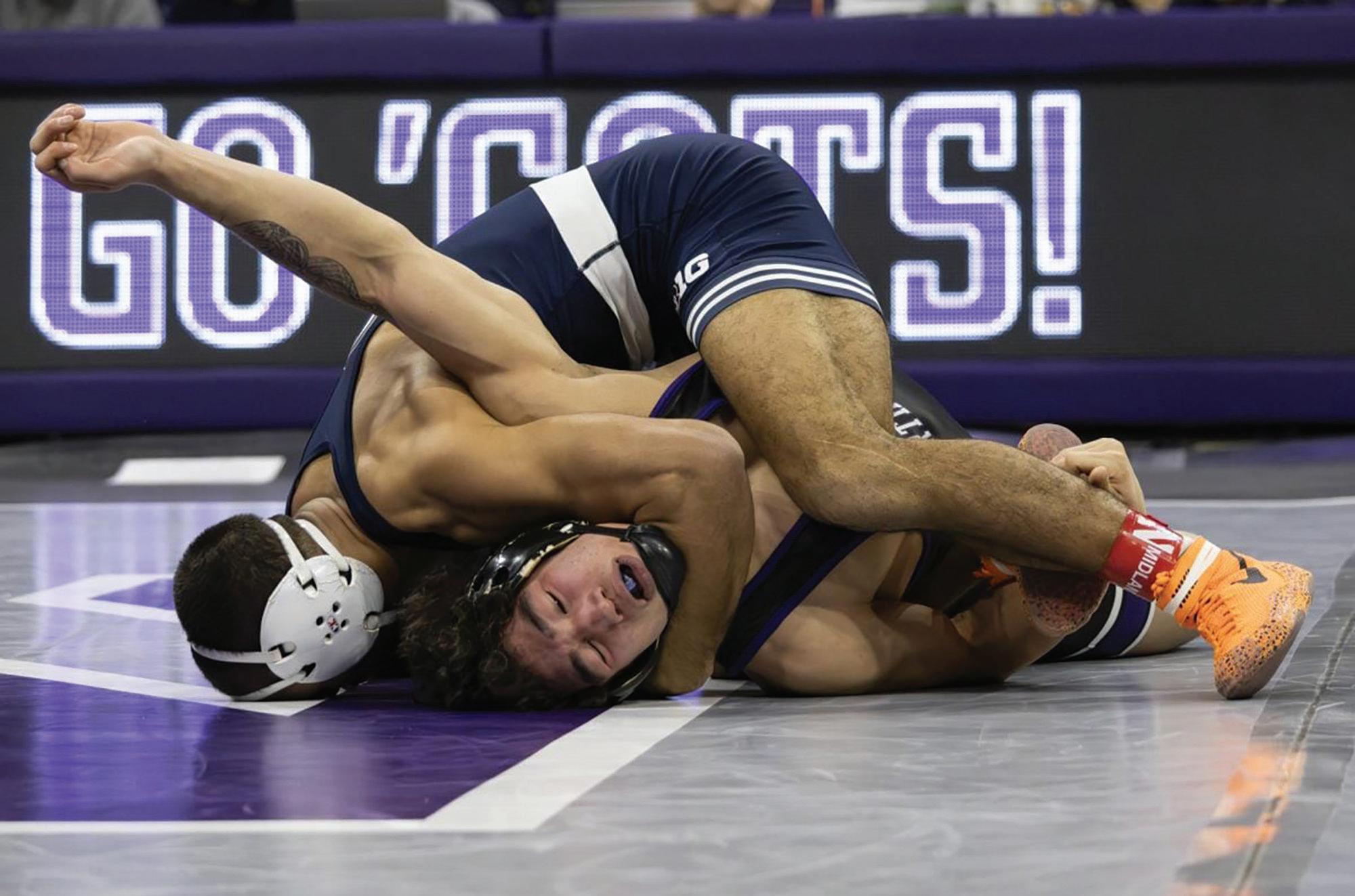
Northwestern dropped a Friday trip to No. 18 Wisconsin 28-12 before getting shut out 51-0 at home by No. 1 Penn State Sunday afternoon.
Coach Matt Storniolo said the Nittany Lions (9-0, 3-0 Big Ten), who won their NCAA-record 80th straight dual meet Sunday, gave the Wildcats (3-3, 1-2 Big Ten) an up-close exhibition of its lightning-quick wrestling style that blows out opponent after opponent.
“I hate when another team teaches us a lesson, but there are lessons to be had here,” he said. “Penn State does a really good job of constantly working,
moving their hands in ties, moving their feet and getting reactions, and it takes a lot out of you.”
After Penn State conceded just two takedowns to longtime rivals No. 4 Iowa Friday night, graduate student 184-pounder J.D. Perez was the only Wildcat to take down a Nittany Lion on Sunday — but even that battle ended in a 22-7 technical fall in favor of No. 4 Rocco Welsh.
Perez said he was able to get on offense, but not as much as he wanted. It was a common theme across the board, as several NU wrestlers started aggressively, but couldn’t convert early attacks into points. The Nittany Lions pounced on the weary hosts, scoring nine of their 17 takedowns in ranked matches during the final two minutes.
Storniolo said the ’Cats gave the 13-time national champions too much respect, adding that he would have liked to see a more combative attitude from his team.
“It’s a mean game out there, and if you give them an inch, they’re going to take a yard, especially when it’s a team that’s that talented,” he said.
No. 32 redshirt freshman 174-pounder Eddie Enright tries to prevent a takedown by Penn State No. 1 Levi Haines in a 19-4 loss.
Although he wanted to see more fight on Sunday, Storniolo said the ’Cats wrestled harder against the Badgers (10-1, 2-1 Big Ten) Friday night than the final score indicated.
He specifically referenced No. 24 redshirt senior 133-pounder Sean Spidle’s match against No. 13 Zan Fugitt, in which Spidle took an early 3-2 lead.
“In a flash of an eye,” though, Fugitt secured a cowcatcher hold to throw Spidle onto his back for a pin.
NU would have earned three team points with a Spidle decision win, but instead, Wisconsin scored six points for the pin.
SWIMMING AND DIVING
The highlight of NU’s weekend was No. 26 redshirt sophomore 125-pounder Dedrick Navarro’s upset of Wisconsin’s No. 11 Nicolar Rivera. Down 5-3 in the third period, Navarro found a vulnerable right leg and capitalized for a three-point takedown. The Nampa, Idaho native held control through the final minute for his fourth win against a ranked opponent and the biggest upset of his young career.
“Hopefully that shows him that not only can he compete with the best guys, but he is one of the best guys,” Storniolo said.
Navarro started Sunday with the same fire, grabbing hold of No. 2 Luke Lilledahl’s left leg in the opening 10 seconds. The Nittany Lion expertly wriggled out of his grasp, though, and as Navarro wore down, Lilledahl punished him with three third-period takedowns en route to a 20-5 technical fall.
It’s “back to the drawing board” for Navarro, although he said the win over Rivera motivated him to keep pushing himself against top wrestlers. NU will return to Welsh-Ryan Arena this Friday to face No. 17 Rutgers, which Penn State similarly blanked 46-0.
As one of three returning regular starters on a 10-man lineup filled with transfers and emerging freshmen, Navarro said the young team is starting to click together with a culture focused on consistent improvement.
“We spend a lot of time (in practice), and it’s not for nothing,” Navarro said. “Not worrying about the score and just letting that take care of itself, I think it’s better than trying to wrestle to win.”
s.sivaraman@dailynorthwestern.com
Men pull off upset, women fall short against Wisconsin
By YONI ZACKS the daily northwestern @yonizacks
As Northwestern honored its seniors in the pool Saturday, the men’s and women’s swim teams put on a record-setting show.
The No. 25-ranked men’s team upset No. 19 Wisconsin 161-133, while the No. 22 women’s team fell just short against the No. 15 Badgers 154-146.
In the second race of the day, the men’s 400 medley, the Wildcats’ quartet of junior Stuart Seymour, sophomore Joshua Staples, junior Connor Schuster and sophomore Oliver Kós swam a time of 3:05.27. The mark broke the Norris Aquatics Center record by over two seconds.
Another facility record fell in the 200 free relay, with the same crew winning the race with a time of 1:16.98. The record-breaking day continued when junior Cade Duncan edged out Seymour by .07 seconds in the 100 freestyle, as both of them beat the previous facility record and Duncan bested Matt Grevers’ program
record from 2007 to take the title.
Junior Diego Nosack also added to the new records. His second-place finish in the 400 individual medley was good enough to break the facility record as well.
Records continued to fall in men’s diving, as junior Adam Cohen broke his own record from last weekend’s meet against UChicago with a score of 409.75. His teammate, junior Ryan Augustine, finished second.
Despite the loss, the women’s 200 free relay team of seniors Lindsay Ervin and Audrey Yu, graduate student Ekaterina Nikonova and junior Amy Pan qualified for the NCAA tournament with a pool-record time of 1:28.06.
The record-breaking party added another guest when junior Sydney Smith set a pool record for the women’s 200 freestyle with a time of 1:45.25.
Seymour continued his strong day by claiming another victory, this time in the 100 backstroke. Staples and Schuster also won their individual races, the 100 breaststroke and 50 freestyle, respectively.
The ’Cats’ next meets are Jan. 30 against Minnesota and Jan. 31 against Purdue.
y.zacks@dailynorthwestern.com
Five Wildcats make DI Preseason All-American teams
By JONAH MCCLURE
senior staffer
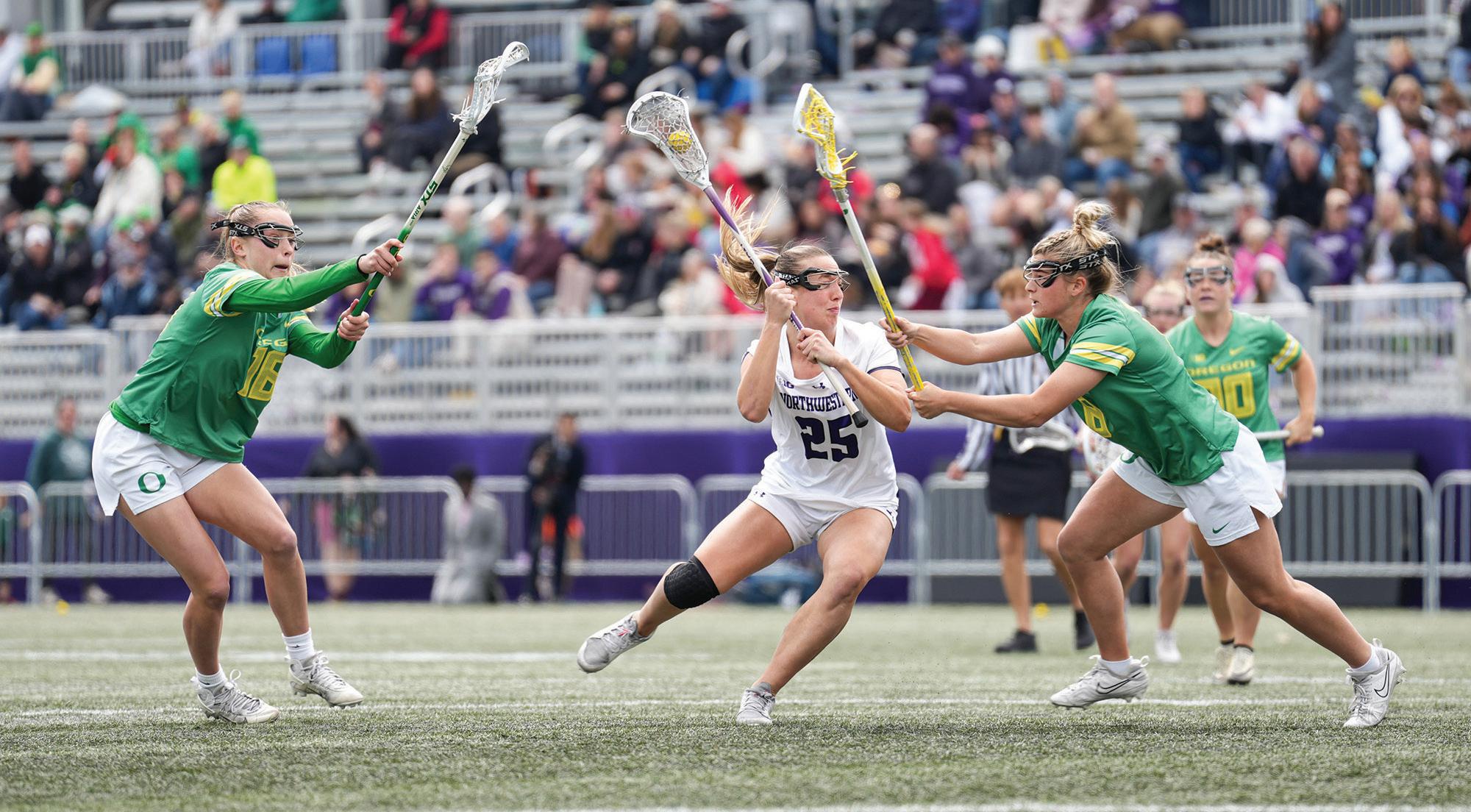
Five Northwestern players were named Division I Women’s Preseason All-Americans, USA Lacrosse announced Tuesday. Senior attackers Madison Taylor and Maddie
Epke were selected to the First Team. Graduate student attacker Olivia Adamson, graduate student defender Annabel Child and graduate student goalkeeper Jenika Cuocco were all selected as honorable mentions.
The Wildcats, who are ranked No. 2 in the preseason coaches poll, are one of five teams with at least five All-Americans.
The selection is Taylor’s second straight to the preseason first team. She enters this year after breaking the NCAA Division I single-season goals record while leading NU to the national championship game. The veteran has tallied over 50 goals in each of her first three seasons and scored 109 goals in 2025.
Taylor and former ’Cat Izzy Scane will be part of the United States’ roster for the World Lacrosse Women’s Championship, USA Lacrosse announced Thursday.
Both players have previously won junior world championships, as Taylor was a U20 champion in 2024 and Scane was a U19 champion in 2019. The 16-team world championships will take place from July 24 to Aug. 2 in Tokyo.
Epke comes to the ’Cats as a transfer after three years at James Madison University. She was nominated for the Tewaaraton Award during his junior year after notching 88 points and corralling 235
draw controls. The Dukes’ all-time leader in draw controls will replace Sam Smith, who nabbed over 100 draw controls during the last three seasons with NU.
The ’Cats’ other three All-American selections round out this season’s incoming transfer class. Adamson arrives in Evanston after four seasons at Syracuse, the final of which was cut short by injury after just three games. In each of her first three seasons, she tallied at least 30 goals. Adamson will face her former school on March 12.
Child spent the past four years at Harvard before transferring to NU. She picked up more than 30 ground balls and caused 25 and 24 turnovers in her junior and senior seasons, earning a Second-Team All-Ivy League nod during her junior year.
Cuocco became a ’Cat after spending four years at Drexel. The three-time CAA Goalkeeper of the Year and multiple-time All-American led all of the NCAA in saves and save percentage in 2024. She will take the place of Delaney Sweitzer, another graduate goalie transfer to be named as an AllAmerican Honorable Mention.
NU begins its quest to return to the national title game when it faces Boston College on Feb. 6. jonahmcclure2028@u.northwestern.edu
Daily file photo by Anna Watson
Senior attacker Madison Taylor eyes the goal during a game last season. Taylor was named to the Preseason AllAmerican First Team on Tuesday.
Drayson Jaffee/The Daily Northwestern
No. 1 Penn State gave Northwestern an exhibition of its lightning-quick wrestling style that has won 80 consecutive duals with a 51-0 shutout Sunday afternoon.
Thomas Hurley/The Daily Northwestern
The men’s and women’s swimming and diving teams set multiple pool and program records in their meet against Wisconsin.
MEN’S BASKETBALL
Inexperience underpins Nebraska loss
By SIDDARTH SIVARAMAN daily senior staffer @sidvaraman
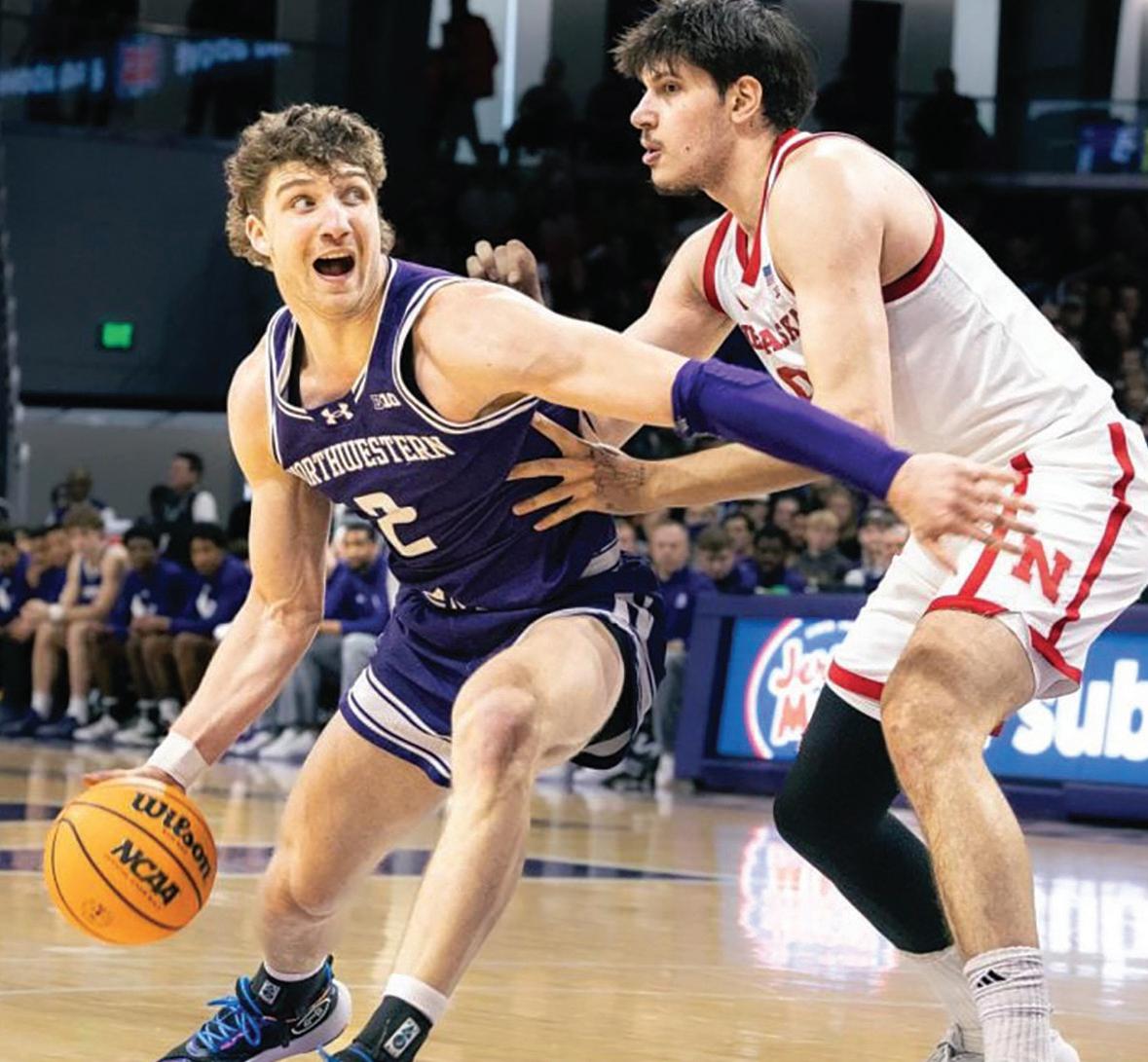
With 13 minutes left in Northwestern’s 77-58 loss to No. 8 Nebraska Saturday afternoon, senior forward Nick Martinelli led the Wildcats (8-10, 0-7 Big Ten) with 17 points. As freshman forward Tre Singleton took a brief reprieve on the bench, no one else on the floor for the hosts had more than six. It was par for the course for NU, which has struggled to find weapons outside of Martinelli, the nation’s second-best scorer. The Glenview, Illinois native has shouldered almost the entire offensive burden this season, but strong team defense and rebounding had kept the ’Cats within seven at that point in the second half.
“The poor shooting has been a surprise, but you can overcome that by being tough and gritty and finding a way (to win),” coach Chris Collins said. Martinelli called his own number, backing into a left post stocked with three Cornhuskers (18-0, 7-0 Big Ten). His hook shot missed everything. Martinelli finished the game with 22 points on 9-for20 shooting, while Singleton was the only other NU player to score more than 7 points, with 14.
Nebraska guard Pryce Sandfort made Martinelli pay with a jumper on the other end, then doubled his money with a layup after a pass from junior guard Jayden Reid sailed to no one. It was uncharacteristic for the team best in the nation at protecting the ball, and an omen for a young team facing an epidemic of second-half breakdowns.
So began a glittering 17-3 run for the undefeated visitors en route to a 77-58 victory. To the tune of a thunderous “Go Big Red” from the visiting supporters, the ’Cats went stone-cold from the field with just a lone 3-pointer from sophomore guard Max Green to keep them warm. The Huskers caught fire in the meantime, capitalizing on four turnovers during the run.
A trademark Sandfort deep ball from the left wing — one of four from the Husker guard’s favorite spot — put the exclamation point on proceedings.
“They wore us down, and we just haven’t been mentally tough enough to fight through these situations, unfortunately, in our league games,” Collins said.
Collins pointed out postgame that visiting coach Fred Hoiberg started two fifth-year seniors while he began with two freshmen. Altogether, Hoiberg’s lineup was entirely upperclassmen while Singleton and freshman guard Jake West started alongside sophomore guard Angelo Ciaravino, junior forward Arrinten Page and Martinelli.
Playing against veteran teams like Nebraska can be a great “learning experience” for younger players, Collins said. Referencing Purdue senior guard Braden Smith’s growth since his freshman year, he added that many of the Big Ten’s stars gain their prowess through experience.
With NU not there yet, Nebraska capitalized on its opponent’s fatigue to penetrate the paint, and the Wildcat defense’s rotations allowed the Huskers to find open shooters on the perimeter, Collins said. It was a hallmark of an experienced team taking advantage of a younger roster still figuring out what it takes to battle in the Big Ten.
As NU gears up for its biennial trip to Los Angeles, Collins emphasized that the team needs just one win to start turning around its season.
s.sivaraman@dailynorthwestern.com
Northwestern falls short against Nebraska
By YONI ZACKS the daily northwestern @yonizacks
The losses have continued to pile up for Northwestern, which gave up a 17-3 second-half run to No. 8 Nebraska in a 77-58 loss Saturday.
A now-seven-game losing streak to open conference play resumed in blowout fashion as an optimistic first half gave way to a brutal second period for the Wildcats (8-10, 0-7 Big Ten)
Coach Chris Collins ran it back with four of the five starters from Wednesday’s loss to Illinois, but brought in sophomore guard Angelo Ciaravino to replace junior guard Jordan Clayton.
The ’Cats started early with a midrange shot from freshman forward Tre Singleton before giving up an easy basket on the trip down.
After a turnover by junior center Arrinten Page, the Huskers responded with a turnover of their own. Senior forward Nick Martinelli capitalized on the mistake by drilling a top-of-the-key 3-pointer.
However, the next two NU possessions ended with Martinelli misses, and the Huskers capitalized on the lack of offense to build a 7-5 lead that they would extend to 10-5. The ’Cats would respond by making their next five shots to keep the game close.
The teams continued to trade shots throughout the rest of the half, with the largest lead being seven points. Martinelli continued to have a strong game, focusing his efforts in the paint. He finished with 22 points.
A four-point play off of a late foul by Clayton led to a Huskers four-point lead that NU could not overcome for the remainder of the half. The ’Cats never trailed by more than seven or less than two after the four-point play, ending the first half behind 34-29.
In the second half, an early 3-pointer from freshman guard Jake West was unable to mitigate a sevenpoint barrage from the Cornhuskers (18-0, 7-0 Big Ten) that put the ’Cats down 41-32 early in the half. The teams traded shots before NU continued to struggle, going down 46-36 as Martinelli went scoreless for the first five minutes of the half.
As the half went on, it became clear why this Huskers team is undefeated and ranked eighth in the nation. Nebraska dominated the ’Cats physically, consistently pushing the play to the interior and outmuscling overmatched NU players on their way to the basket.
The lead grew to 56-44 with 10:26 left as the ’Cats were unable to generate any offense, with three turnovers by junior guard Jayden Reid being compounded by a shot clock violation and Martinelli suddenly being unable to score.
As the lead grew to 19, with Nebraska on an 11-0 run, Collins called a timeout to settle his players. Instead, his team had to listen to a Husker-heavy crowd chant “go Big Red” for most of the timeout.
The next few possessions were much of the same, as NU did not recover from its early struggles and was unable to close the gap. A late run proved too little, too late and the final score ended up being 77-58.
“We played pretty well for 20 minutes, and in the second half, they wore us down,” Collins said. “We haven’t been mentally tough enough to fight through those situations.”
1. Focus on inside shooting early disappears, leads to offensive struggles
Coming off a game in which the team shot 36% from deep, NU adapted its game early and built an efficient offense. The team shot just three threes in the first 10 minutes and six total in the half, compared to 12 in the first half of the last game.
While avoiding the deep ball, NU followed Martinelli’s lead and worked in the paint. In the first half, the team finished with 10 points under the basket.
WOMEN’S
Nearly every possession for the ’Cats ended with the team driving to the basket, powering through a Huskers defense that ranks third in the Big Ten in scoring defense.
Despite the clear effort to push play inside the free-throw line, NU struggled to capitalize on its shots. The team shot 42.6% in the field and came up empty on possessions where the crowd was hungry for points.
“We haven’t shot the ball very well at all, which surprised me,” Collins said. “I didn’t see that coming with the guys we have out there.”
No one exemplified these struggles more than Clayton, who attempted only two shots in the first half, both from beyond the arc, and missed both of them. The only NU player to make a 3-pointer in the first half was Martinelli, with the ’Cats’ only two makes from deep in the period.
Martinelli also fell victim to the shooting struggles, not scoring a point in the second half until 14:26 remained, by which time it was too late to stop the Huskers’ bleeding.
2. Rebounding starts as strength before becoming liability
The first half was marked by NU attacking the glass early and often, outrebounding the Huskers 21-13.
Ciaravino and Martinelli led the effort by combining for 13 rebounds to match the Huskers at the half. The duo was consistently successful in the first half at boxing out Nebraska and limiting its ability to capitalize on NU’s poor shooting.
In the second half, however, a switch appeared to flip for the Huskers, who garnered the first five rebounds of the half as NU fell apart against Nebraska’s physicality. The Huskers are a consistent force at the rim, ranking in the middle of the conference in rebounds but second in the Big Ten in fouls.
As the half went on, NU remained unable to cover the glass, being outrebounded 15-9 in the second
half and consistently struggling to handle a Husker team that was flying through the paint. This included a mid-air shot by forward Berke Büyüktuncel off an offensive board that sucked the air out of the home portion of the Welsh-Ryan Arena crowd. Moments later, the timeout was accompanied by an exodus from a portion of the student section. Husker fans responded to that exodus by growing even louder, giving their players standing ovations after and rousing cheers after each offensive board.
3. Man defense leads to open shots, fastbreak points
The ’Cats continued to run man defense, and it cost them early. Several times, an NU player would rush to help their teammate defend the ballhandler, and in their haste, forget about their own defender. That newly wide-open man would capitalize on the opportunity and make a nearly wide-open shot that no one could defend.
“We’ve really struggled to keep the ball out of our paint with the drive,” Collins said.
As the ’Cats struggled offensively, the team proved unable to defend successfully, often giving up points due to the sloppy man defense. That included Nebraska’s big three of forward Braden Frager, forward Pryce Sandfort and guard Jamarques Lawrence shooting 52.6% in the first half.
In addition to leaving open shots available, NU gave up plenty of points on the fastbreak. The ’Cats scored just three points off the break, but also gave up 15. After NU’s shooting struggles led to a miss, the next play would often be a Nebraska layup.
“We haven’t had the resolve that we’ve needed in these conference games to have the grit to get those stops,” Collins said.
Next week, the ’Cats head out to California for a two-game trip that includes a game against USC on Wednesday before a battle with UCLA on Saturday. yonizacks2029@u.northwestern.edu
NU’s two-game winning streak ends in loss at Illinois
By ANDREW LITTLE daily senior staffer
@little_andrew_3
Northwestern took in-state rival No. 25 Illinois down to the wire, but could not complete the fourthquarter comeback in a 74-71 loss.
The defeat snapped a two-game win streak for the Wildcats (8-11, 2-6 Big Ten) and marked the Fighting Illini’s (15-4, 5-3 Big Ten) seventh straight win over NU. Entering the fourth quarter trailing 58-51, the Wildcats went on a 13-4 scoring run to cut the deficit to one point with seven minutes remaining. Sophomore guard Xamiya Walton led the comeback with eight
fourth-quarter points, hitting both of her three-point attempts in the quarter. Walton finished with a careerhigh 19 points and shot 5-for-8 from long range.
Forward Cearah Parchment stepped to the freethrow line with nine seconds left with a chance to ice the game, as the Fighting Illini held a 73-71 lead. She missed the first shot, but made the second to put Illinois up three.
The ’Cats took possession after the miss, but were unable to get a clean shot off before the buzzer. Senior guard Caroline Lau eventually launched a long threepointer near the half-court logo, but missed off the backboard as time expired.
Senior forward Grace Sullivan led the ’Cats with 21 points and nine rebounds. Sullivan started the game
1-for-6 from the field, but heated up, ending the first half with 13 points.
After a back-and-forth start to the game, Walton hit a 26-foot three-pointer to give NU a 29-26 lead with 6:43 remaining in the second quarter. The Fighting Illini then pulled ahead with a 14-4 run to close out the first half.
Entering the second half with a 40-33 lead, Illinois maintained a double-digit lead for the majority of the quarter, before Walton drilled a three-pointer late in the third quarter to put the ’Cats down 58-51 headed into the final frame.
Throughout a tightly contested fourth quarter, forward Berry Wallace kept the Fighting Illini ahead. She scored a career-high 29 points, including 12 in the
fourth quarter.
Illinois kept NU at bay in large part due to its freethrow shooting, knocking down eight of 10 attempts in the fourth quarter and 19 of 22 throughout the game. The ’Cats finished the game with nine free-throw attempts, converting on seven. Illinois dominated the boards, outrebounding NU 42-27. The ’Cats took care of the ball much better than usual, turning the ball over just five times compared to their season average of 15.5. NU returns to action on Jan. 25 against UCLA, the second leg of four consecutive road games. andrewlittle2028@u..northwestern.edu
Luke Meinhardt/The Daily Northwestern Senior forward Nick Martinelli drives to the basket in the first half on the way to a 22-point performance.
NU takes control of portal with 2026 transfer class
By ALEX BOYKO daily senior staffer @aboyko_nu
For all but two teams, the majority of the transfer portal chaos has come to a close. Friday marked the official deadline for players to enter the portal, except for those who played in the CFP National Championship Monday night. Now, after the 48-hour window to process previously-entered names has passed, the extent of the shuffle is becoming clearer.
Despite arguably the wildest transfer class in FBS history, Northwestern appears to be more in control than ever before, taking big swings while also limiting its own losses.
As of Monday, 247Sports ranked the Wildcats’ transfer class 11th in the Big Ten, but this represents a significant jump for the ’Cats, previously ranking last and second-to-last since the conference expanded to 18 teams.
NU’s class of 14 recruits ranks higher in 247Sports’ cumulative transfer points metric than Wisconsin and Michigan State’s groups of 32 and 26, respectively, largely because of the program’s first two 4-star transfers.
In the first year after the removal of the spring transfer portal window, the logistics and news cycle of December and January in the college football world have become even more tumultuous and difficult to navigate.
More and more athletes are choosing to enter the portal each year, and according to the NCAA, over 10,000 entered across the DI, DII and DIII levels this year. As of earlier this week, there are still at least 1,000 athletes yet to join a new team in the FBS alone.
Following a bowl game victory over Central Michigan on Dec. 26, Northwestern’s offseason could finally begin in earnest, and with it, controlled chaos fell over the airwaves in Evanston.
The hiring of offensive coordinator Chip Kelly a few days later quickly became national news, and a flurry of subsequent transfer recruitments and coaching staff changes catapulted NU into the limelight for
one of the busiest and least certain times of the year for college sports.
So, where does that leave the Wildcats heading into 2026?
This year’s bout with the transfer portal has been a stark shift from the ’Cats’ first few rounds in the ring, which have been at the mercy of the shifting college football landscape.
In the first six offseasons since the portal’s inception in 2018, the ’Cats had more players leave the program than enter each year. However, that trend has quickly flipped on its head in the past two.
Coach David Braun took 15 swings last season after a program-high 13 players chose to pursue greener grass elsewhere, marking the first time NU saw an increase in roster size due to the portal. This season’s tally of recruits is already up to 14, with only eight entering the portal, the fewest since 2022.
Rising senior quarterback Aidan Chiles comes over from Michigan State and is expected to be the fourth transfer signal-caller in as many years to start the season for the ’Cats, bringing with him 20 games of starting experience in the Big Ten.
On the other side of the ball, rising redshirt senior linebacker Kobie McKinzie officially committed that same day as Chiles, making the move from Oklahoma for his final year of eligibility.
Immediately following the win over Central Michigan, Braun set the bar high for how his team would handle the waves of player movement to come, and largely, that has come to fruition.
“I am so confident in our retention, (general manager) Christian Sarkisian, all the work that we’ve proactively done in that vertical,” Braun said. “There (are) a lot of guys that are really committed to making sure that they come back.”
The ’Cats lost three of last year’s starters to the portal. Two graduate students, tight end Hunter Welcing and kicker Jack Olsen, were granted an extra year of eligibility and opted to play their final seasons at Ohio State and Miami, respectively.
Defensive lineman Anto Saka also decided to seek
opportunity elsewhere in his senior year, ultimately choosing Texas A&M.
However, NU retained most of its star players with remaining eligibility, including rising redshirt junior running back Caleb Komolafe, rising senior and junior wide receivers Griffin Wilde and Hayden Eligon II, and rising redshirt senior defensive back Robert Fitzgerald.
With an already high amount of roster turnover with the graduation of this year’s senior class, having these foundational pieces to build upon for next year, both on and off the field are crucial in coach Braun’s eyes.
“This group is going to be challenged. We’re losing not only a lot of really good football players, but we’re losing a lot of incredible leaders. This group better be hungry,” Braun said.
Following a season headlined by its defense, the ’Cats have largely focused on bringing in offensive talent from the portal to pair with its shiny new addition at offensive coordinator. Alongside Dehnicke and Chiles, NU has also received commitments from three offensive
linemen, two running backs and another tight end. Alongside its new stadium and retooled coaching staff, NU appears to be adapting its offseason approach, with increased comfort in dealing with the portal ahead of the 2026 season.
Although the entrance process has closed, there is no deadline for those already in to commit to a new team, as evidenced by the ’Cats’ latest recruit — running back Gavin Sawchuk — committing yesterday after serving as Florida State’s lead back this past season. NU has not suddenly become the belle of the ball because of one busy offseason, but the continued commitment to adapting to the post-transfer portal NCAA goes a long way toward any hopes of a Cinderella story.
“We’ve got a lot of work to do. I’ve got a lot of work to do,” Braun said of his team’s trajectory. “It’s progress over perfection. We are far from perfect, but we are progressing.”
alexboyko2026@u.northwestern.edu
Northwestern chooses to live with transfer portal pickups
By YONI ZACKS the daily northwestern
@yonizacks
The transfer portal is the place where teams live and die in college football. This year, Northwestern chose to live.
The Wildcats are coming off a 7-6 season that ended with a bowl domination against Central Michigan, and that could’ve been it. Not for David Braun.
After hiring Chip Kelly on Dec. 30, that could’ve been it. Not for David Braun.
After hiring an offensive staff filled with veterans throughout January, that could’ve been it. Not for David Braun.
Instead, Braun dove into the portal headfirst, signing players to fill the team’s biggest gaps, both new and created by the portal. It could be the spark this NU team needs to take the next leap.
Michigan State transfer, junior quarterback Aidan Chiles fills one of the ’Cats’ biggest needs. Offenses can crash and burn without the right signal-caller — look at what happened to graduate student Preston Stone this year — but that won’t happen to these 2026 ’Cats.
Despite some highs — including a 305-yardgame against Minnesota to gain bowl eligibility — Stone’s interceptions against Illinois and Nebraska cost the team two games it had a chance to win. His 52.4 QBR ranked 95th in the country, and his 12 interceptions were tied for the fifth-most in the country.
Bringing in a dual-threat quarterback like Chiles will give NU the perfect match for Kelly’s new system and allow for a brand-new offense to take on the brand-new Ryan Field.
Chiles’ new favorite target could be former Minnesota-Duluth redshirt freshman tight end Luke Dehnicke, who the ’Cats brought in as a replacement for departing tight end Hunter Welcing, who transferred to Ohio State.
Dehnicke averaged more than a touchdown a game for the Bulldogs last season, including a breakout performance for 230 yards and four touchdowns against Mary.
By nabbing a tight end who had nine Power Four offers, including from No. 14 Vanderbilt and ACC champion Duke, NU is showing it is willing to fight for players it believes will make an impact.
That’s what choosing to live looks like.
It is also getting back up after a player exits. In addition to Welcing, the ’Cats lost star redshirt junior defensive lineman Anto Saka to Texas A&M, redshirt junior cornerback Evan Smith to Duke, redshirt junior cornerback Dillon Tatum to Miami (Ohio) and freshman offensive tackle Hayden Wright to Houston.
NU’s response? Sign three offensive tackles: Redshirt junior Grant Seagren from Oklahoma State; redshirt sophomore Arkel Anugwom from Alabama and redshirt sophomore David Anchondo from Saginaw Valley State. The three should help as the team rebuilds following the additional losses of
graduate students tackle Caleb Tiernan and guard Evan Beerntsen. Braun and his staff didn’t stop there. They added two transfer running backs in Bowling Green redshirt freshman Mar’Kel Porter and Florida State redshirt junior Gavin Sawchuk. Sawchuk had over 600 total yards and nine total touchdowns last year. The duo should replace the impact of graduated running back Cam Porter and redshirt freshman Dashun Reeder, who is currently in the transfer portal. Bringing in multiple players at a position and creating depth at key positions in running back and offensive tackle should allow Kelly to experiment with his offense and vary his personnel groupings. Impact is something that truly can’t be measured until the season starts and the downs are played, but the ’Cats are on the way to making the leap from the middle of the Big Ten to the upper echelon.
y.zacks@dailynorthwestern.com
Chip Kelly reaches into past to build experienced coaching staff
By YONI ZACKS the daily northwestern @yonizacks
The big moves keep coming for the Wildcats. After hiring 35-year coaching veteran Chip Kelly as its next offensive coordinator, NU has swiftly filled out much of his offensive coaching staff over the past week. Kelly has reached into his past with his trio of hires, using connections from his tenure as the offensive coordinator of the Las Vegas Raiders and head coach of UCLA and the Philadelphia Eagles to add quarterbacks coach Jerry Neuheisel, offensive line coach Tim Drevno and tight ends coach Bob Bicknell. Neuheisel, who was promoted to offensive playcaller at UCLA after its 0-4 start and led the Bruins to three straight wins last season, has spent his entire coaching career at UCLA. He rose through the ranks from graduate assistant to wide receivers coach to tight ends coach. At NU, he’ll return to coaching the position he played in college, which Los Angeles Times UCLA beat reporter Ben Bolch (Medill ’96) said will be a strength for him.
Bolch, once the Fall 1995 deputy sports editor for The Daily Northwestern, noted that Neuheisel has always been willing to do whatever he could to support
his program in Westwood, and he expects that will continue in Evanston.
Neuheisel and Kelly’s relationship was evident during a 2022 media availability, when Neuheisel revealed that Kelly would let him and other assistant coaches call plays during practice.
“For us as coaching development, what more could you ask for than to be able to ask Coach Kelly exactly what he thought about all your calls,” Neuheisel said in the availability.
Similarly, Bolch said he anticipates Drevno, who replaces former offensive line coach Bill O’Boyle, to share a dedication to success.
Drevno, who spent last year as an offensive consultant for Texas, has been a coach for almost 35 years and has coached six offensive linemen who became first-round picks. He also spent three years in the NFL with the San Francisco 49ers, where he oversaw seven offensive linemen selected to the Pro Bowl.
As offensive line coach, Drevno will work with the position at the heart of Kelly’s pro-style offense, which he has experience with from their three years together at UCLA. The Bruins’ offense under Kelly relied on running the ball often and successfully, setting the program record for most points scored in 2022 with 510.
Bolch said that part of the reason Kelly hired Drevno is likely his success with players both on and off the field.
“He’s known as a very high character, caring person who really supports his players,” Bolch said.
In his college coaching career, Drevno has coached seven all-conference offensive linemen. He spent most of his career in California, including stops at UCLA, USC and Stanford.
A former offensive coordinator for Michigan and San Diego, Drevno’s teams were consistently at the top of the league in rushing. In his three years at Michigan, his teams finished eighth, third and third in the Big Ten in total rushing yards.
At San Diego, his squads finished with the top–scoring offense in Division I-AA twice and ranked in the top 10 in the other two seasons on the way to two national championships in four years.
Drevno’s boss during six of those seven seasons was current Los Angeles Chargers coach Jim Harbaugh.
When hiring him at Michigan, Harbaugh said in an interview with the team’s website how excited he was to continue working with Drevno.
“Tim is an outstanding offensive line coach and is a technician that works very hard at making his studentathletes better players and students,” he said.
Bicknell, replacing Paul Creighton, is another 30-plus-year coaching veteran. He has spent most of his career in the NFL, coaching the tight ends for the
New England Patriots, Buffalo Bills and Kansas City Chiefs, as well as several other stops.
Bicknell has spent 21 years coaching the offensive line and wide receivers in addition to the four years he has spent coaching tight ends.
Kelly’s new-look offense could be built on flexibility, according to Bolch.
Some of that variability has included his use of the T-formation, which employs three running backs, and his ability to adapt his offense, as seen when he switched from an up-tempo blur offense to a more ground-andpound pro-style.
“He’’s very detail-oriented, and he always has a plan,” Bolch said.
To achieve that style, Kelly often employs a dualthreat quarterback. Last week, NU landed a commit from former Michigan State quarterback Aidan Chiles, who had the second-highest rushing grade for a Big Ten quarterback over the last two years.
Bolch said before Chiles’ commitment that the ’Cats would be best set up for success if they had a dual-threat quarterback.
The combination of a new offensive coordinator, experienced position coaches and a system-fit quarterback marks 2026 as a new beginning for NU Football.
y.zacks@dailynorthwestern.com
Alex Boyko/The Daily Northwestern
Coach David Braun has recruited 29 transfer athletes in the past two offseasons, more than Northwestern added in the previous six years combined.