University of Iowa political science professor Tim Hagle said he sees today’s political polarization as part of a long cycle in the U.S.
“We are more polarized than maybe we’ve been,” he said, though he pointed to similar levels of tension emerging in the early 1900s and the 1950s Red Scare.
Hagle said people like Kubby or Mamdani gain traction because of local context.
He said Iowa City is one of the most liberal parts of the state, anchored by the UI and Johnson County’s long record of voting overwhelmingly Democratic. That landscape, Hagle said, makes it easier for left leaning candidates to find support.
Hagle said personable candidates who articulate community values can win despite ideological labels and that local races are heavily shaped by turnout.
He was less convinced that Mamdani’s win indicates a national embrace of socialism. He suggested young voters lack the Cold War context that shaped older generations’ distrust of socialism.
“Folks under 30 don’t remember why it was a problem,” he said. “Socialism, to them, seems more idealistic.”
According to City & State New York, 1,036,051 votes were cast for Mamdani. The election saw an 84 percent increase in voter turnout compared to 2021; the city hasn’t seen that volume of voters show up to the polls since 1969.
As reported by the Center for Information & Research on Civic Learning and Engage-
so I learned.”
That instinct volunteer first, figure out the skill later — would shape the next four decades of her life.
By her early 20s, Kubby learned Iowa City politics from the ground up. She was living in a housing collective across from a park that the city was planning to sell to the county because o cials claimed it “wasn’t used.”
he e perienced the park differently and started a data-collection project, meticulously tracking the date, time of day, number of people, their activities, and age ranges in a handmade spreadsheet. She even recalled a time when peace activists living across the street would play basketball with the National Guard, who used the park for maneuvers.
She brought the data to the council, telling them, “You might still decide to sell it, but you can’t say no one uses this park.”
She became a student of the process. After hearing about a development at the Pedestrian Mall, now the Graduate Hotel location, that would take down trees, she called the city clerk and was advised to start attending meetings to learn what was happening in advance.
She found the meetings interesting because she was “kind of nerdy” and saw the connections between issues.
It didn’t take long before she looked at the council and realized something: “No one up there looks like me, is in my age range, has my politics, has my rational, intellectual approach to things.” he said she noticed the effect she had on the room. When she walked in, people
ment, 75 percent of voters between the ages of 18 and 29 voted for Mamdani, 19 percent for Cuomo and 5 percent for Sliwa.
t , ubby reflects on her socialist legacy and calls herself “a practical radical” — a kind of politician who, she says, believes that power emerges from showing up, organizing, explaining, and insisting that everyday people deserve a voice.
But the path to that identity started long before her name was printed on yard signs.
UI Young Democratic Socialists of America members say they repeatedly evoked the kind of politics Kubby practiced long before they were born.
UI third-year student Nathan Royer defined democratic socialism as politics focused on “addressing the needs of everyday people… whether that be in New York like Zohran [Mamdani] or locally, like Karen Kubby.”
UI third-year student Grant Anderson said both the Democratic and Republican parties are funded by similar interests.
“Democratic socialism is truly grassroots in that it is by workers and for workers,” he said.
tudents pointed to specific local policies rooted in that approach. UI fourth-year student Dave Cacho cited Iowa City’s free bus system as an example.
“We’re already seeing the impacts. It’s very popular,” Cacho said.
Several saw Kubby’s legacy echoed in Mamdani’s election.
UI third-year student Zachary Adams said Mamdani’s win showed “people really care about working class issues,” and listed affordability, public housing, and lower rents as key needs.
Sam Golden, a UI second-year student, said Mamdani proved “socialism isn’t a scary word anymore.”
“He’s a proud Democratic Socialist,” olden said. I think that differs slightly from people like AOC or Bernie, where they don’t really lean into socialism or calling [themselves] socialists.”
Students said Mamdani’s race — and local wins in Iowa City — show a path to greater win.
“If we can do it at the city level, then we can learn to do it at the state level, then at the national level,” Anderson said.
Kubby said she doesn’t pretend the work is easy. The issues she cares about — economic justice, community leadership, long-term systems change — require patience, conflict management and a willingness to stay at the table even when progress feels slow, she said.
ubby first lived in Iowa City from to 1973, while her father taught Army ROTC during the height of the Vietnam War. The era’s tension, she said, shaped their household. When her military family would move, her mother was often a Red Cross volunteer at a hospital in their new location.
She returned to Iowa City in 1978 to attend the UI, intending to become a high school science teacher. But activism pulled her in. At a draft registration meeting, she said she felt something physical, immediate.
“When they asked for volunteers, viscerally, my hand shot up,” she said. “I didn’t know how to do what they were asking...
ophy she described as “sewer socialism.”
The term originated in Milwaukee in the early 1900s, where a socialist government focused on eliminating open sewer lines in working-class immigrant communities to prevent people from being constantly sick.
“We were more parochial socialists looking at the here and now, and how do we make people’s lives better now?” she said.
During her time, she became known for explaining complex issues. She always tried to be simple, direct, and clear.
When late Mayor Ernie Lehman would lean over and tell her a proposal was “not reality,” she would lean back and say, “If three of you would join me, we [could] create this reality.”
She sought input at the public hearing stage. She would visit neighborhoods to discuss issues like upcoming sewer work months in advance. he found it di cult to rely on the part-time council structure, which often meant relying on information funneled through the city manager s o ce.
“Even if people disagreed with me, they understood the issue,” she said. “People supported me because they trusted me.”
That trust enabled real accomplishments: adding gender identity protections to the Human Rights Ordinance in 1997, pushing environmental safeguards, strengthening public comment processes, and negotiating with developers to protect ecological features.
She also led an effort to change the rhythm of council meetings, moving the time when the general public could speak before planning and zoning, so developers and their attorneys had to wait.
She remembered one developer shouting from the back of the room, “I’ll sign whatever you want, Kubby.”
Kubby’s commitment to creating constructive alternatives to broken systems extended into her professional life after her time on the city council.
From 1999 to 2008, she served as the executive director of the Emma Goldman Clinic, which, according to the clinic’s website, is a nonprofit feminist-focused reproductive care clinic. The seminal local institution marked its 50th anniversary in 2023.
fter stepping away from o ce, ubby did not leave her advocacy behind. She worked with the UI’s Iowa Women’s Archives and the State Historical Society to rename the council chambers after Emma . arbaugh, Iowa City s first female mayor. arbaugh, who took o ce in , was the first female mayor of any . . community over , people. The effort to rename the hall took six months.
Kubby also worked with a group called Environmental Advocates, which launched a recycling initiative in schools by collecting milk jugs.
The program was successful, she said, with children “hounding their parents” not to throw away materials, and the volunteers couldn’t handle the volume of materials. This led to the city’s involvement, which ultimately evolved into Iowa City’s current curbside recycling program.
Former Iowa City Mayor Regenia Bailey credits Kubby for helping her enter public life. Bailey said Kubby recruited her and encouraged her to run for council. At the time, Bailey was leading the Iowa Women’s Foundation, an organization determined to help provide social change for women and girls in Iowa, and a statewide study had recently highlighted how few women served in Iowa politics.
She said Kubby wasn’t just supportive — she was strategic.
ubby had written a local o ce campaign manual that the team used to structure their race. Bailey said Kubby has “passion for public service, especially local o ce, along with her “clear vision on how one runs the campaign.”
Her deep political network and experience made her indispensable, Bailey said, adding that Kubby modeled accessibility.
“Karen was one of the people who encouraged me to do o ce hours as an elected o cial, which was very much in line with my philosophy,” she said. Few residents attended, but the symbolism was important elected o cials should be reachable.
Currently, Kubby said she is channeling her energy into inclusive economic development, working with others to help entrepreneurs who are people of color or immigrants and lack access to resources or financial institutions. The goal is to implement the community-led project and broaden community leadership.
Kubby also holds a perspective on how change happens. She is willing to accept “incrementalism” as part of success — she is willing to take units of affordable housing being built in a year, because “revolution doesn’t happen very often.”
would sit up straight and shu e papers.
“That’s power,” she said. “Having an effect just walking into a room.
She funneled information to community groups, acting as a “conduit” to help them prepare for public hearings, and then ran for city council in 1985 at age 24 against what she called two “very well-liked incumbents,” John McDonald and Kate Dickson.
Her campaign was pinned largely on a nuclear-free city initiative, which was part of a broader, systematic activism project along Interstate 80 to protest trucks carrying nuclear warheads or spent nuclear fuel. The measure passed; she lost.
Her campaign used distinctive Sandinista-style billboards in black, white, and red, featuring her braided hair and face, including her distinctive nose, so “people could get to know me from my features” and connect them with her name and politics.
Along the way, she learned something subtler: people recognize passion.
She ran again in 1987, focused on the public library after Friday hours were cut.
Kubby said libraries are the “cornerstone of democracy,” providing information and access to reference librarians, whom she called the “superheroes of the city.”
The library board decided to close on a Friday because it was the day with the fewest patrons, an effort to be the least harmful to the community.”
Every Friday at 10 a.m., she read stories on the library lawn “no matter what the weather was.”
She lost the election by just under 2 percent — but the library got fully funded that following January.
In 1989, she won a special election held on Jan. 10, running against a Republican candidate. Two days later, she was sworn in and handed multimillion-dollar budget items. She was 28. Serving in the ‘90s was complicated, Kubby said, noting the political culture was male-dominated and often hostile. She said she was surrounded by a council that was not always welcoming.
t her first budget meeting, she recalled a colleague joking that Kubby would propose tie-dying the police department’s T-shirts or building a new park pool in the shape of a potter’s pot. Kubby responded by bringing a mock budget for the T-shirts and dye, essentially making fun of herself to disarm her critics.
“They were rude, abusive, disrespectful, many times,” she said.
As a survivor of domestic violence, she said she was particularly aware of these dynamics. Instead of escalating, she adapted.
She also learned to listen for the “grains of truth” within angry or negative comments.
Former council member Larry Baker, a local novelist who served during the same era as ubby, offered one memory that he still remembers “almost word for word,” a remark made by another council member who, he said, shared his “grudging respect” for Kubby.
“Every council needs somebody like Karen on it, but, God forbid, not more than one,” Baker said in a statement to The Daily Iowan.
Baker said the line struck him so powerfully at the time that he later adapted a version of it into a political novel — one of the few impressions of that era he still feels confident invoking. Kubby governed under a political philos-
Kubby also co-chaired the successful referendum campaign for a new public library, which required 60 percent of the vote to pass. She knew the campaign had succeeded when she saw children chanting, “Library, library” during the UI Homecoming parade.
She remains adamant that the next generation step up to shape the future she has spent decades trying to build. Real change depends on new voices taking risks, learning in public, and claiming space in rooms where decisions get made, she said.
“Step up,” Kubby said. “I am ready for you to take over.”
Iowa’s literacy scores increase in fourth graders
Governor a ributes the jump to new literacy law, while experts point to a broader trend.
Iowa’s reading proficiency scores jumped nearly 11 percent after the state implemented the “Science of Reading Act” signed into law by Iowa Gov. Kim Reynolds in 2024.
Reynolds and Iowa Department of Education Director Mackenzie Snow are hopeful similar results will come in mathematics after Reynolds’ “Math Counts Act” was signed into law in June.
The laws made several changes to Iowa’s code regarding reading and math curriculum, including requiring parental notification and an individualized success plan if a student is not meeting reading benchmarks as well as the implementation of a new curriculum.
The “Science of Reading Act” also requires teacher candidates to take the Foundations of Reading Test before they can get a teaching license in Iowa, which ensures all teachers know the reading interventions and reading instruction foundations.
During a September news conference, Reynolds and Snow pointed to the “Science of Reading Act” as a leading factor in Iowa’s jump in proficiency among fourth grade students in the 2024-25 school year, since they were the first class the law’s changes would impact.
“These successes say a lot about Iowa’s dedicated teachers and our school administrators, but they also say a lot about a strengthening partnership between Iowa schools and the Department of Education,” Reynolds said in the Sept. 24 news conference.
Shawn Datchuk, the former director of the Iowa Reading Research Center and a current education professor at the University of Iowa, said he appreciates that the reforms focus on ensuring equitable access to early interventions like requiring reading plans and getting parental involvement. However, he noted that research does not yet support pinpointing the legislation as a driver of that proficiency.
Rather, he said, the gains are more likely a broader national trend as schools recover from the COVID-19 pandemic that disrupted learning.
“I do think that there will be some important steps here taking place to ensure all students in a school, whether they have disabilities or not, have
access to needed reading support,” Datchuk said.
The law also prohibits the use of an antiquated instructional method known as the three-cueing system, which relied on teachers to spot reading problems through regular classroom observation rather than through structured assessments.
Finally, the law required the implementation of an individualized reading plan and parental notification if a student is not meeting benchmarks.
Datchuk said while the law is promising, he hopes that it does not stop there, and further legislation is needed to see sustained progress under the “science of reading.”
“For science or reading to be implemented, this cannot be the only piece of legislation that is done,” Datchuk said.
“‘The Science of Reading Act,’ I think, deserves continual discussion and ex-
ploration, and to figure out what works and what doesn’t.”
Datchuck said the state lacks support and evidence-based practice for students whose first language is Swahili or Arabic.
Iowa City Community School District Elementary Curriculum Director Kristin Wendlant said in a statement to The Daily Iowan the district had already used most of the law’s requirements as its standard practice.
“Implementation has not changed much for our students or teachers beyond additional documentation and formal family notification,” Wendlant said.
Wendlant said it is too early to tell if the law is being reflected in the district’s reading scores, but the law has helped the district formalize what it has always done.
“We’re seeing more consistent progress monitoring and resource alignment
in both literacy and math,” Wendlant said in the statement. “Mandatory parental notification has increased clarity and, in some cases, prompted earlier family–school problem-solving.”
Wendlant is looking forward to seeing the progress made under the new math law that has increased support from the Iowa Department of Education and coordinated math leadership statewide.
“The law has sparked greater collaboration among math leaders statewide, especially as screening, intervention, and progress monitoring in math are new for many districts,” Wendlant said. “For districts already doing this work [like ICCSD], it has affirmed and refined our instructional and systemwide practices and focused professional learning so teachers can deepen their understanding of math instruction.”
Iowa panel says public pensions remain strong
Iowa DOGE task force report recommends a change to model public pension system.
Reynolds addressed concerns at a press conference following the release of the final report.
The Iowa Public Employees Retirement System, or IPERS, is known for its strong benefits and high funding rates compared to public pension systems in other states. But in recent months, the system’s future has been uncertain.
Recommendations from the Iowa DOGE Task Force, created by Iowa Gov. Kim Reynolds in February and intended to find ways to increase efficiency within the state government, advised Reynolds to explore potentially switching new public employees off the IPERS system to a defined contribution plan.
IPERS, a defined benefit plan, was created in 1953 because the state government understood the need to provide benefits that would help attract and retain public employees in Iowa.
The task force is made up of leaders from “private sector businesses, education, and local government,” according to the state of Iowa website. Reynolds appointed all board members except Iowa Rep. Hans Wilz, R-Ottumwa, and Iowa Sen. Dan Dawson, R-Council Bluffs, who sit on the committee as ex-officio members.
After statewide pushback from public employees and Democrats, the task force more indirectly suggested the change in its final report, released in October, and instead recommended the state explore changes through studies of the compensation and benefit plans in the state.
“You can rest assured that IPERS will be there for your retirement, just as you’ve planned and we’ve promised,” Reynolds said.
Committee members and financial experts emphasize the strength of the IPERS system compared to other public pension systems nationwide, along with the lack of desire for change among Iowans, even in the wake of Reynolds’ assurances.
Melissa Peterson, legislative and policy director for the Iowa State Education Association, said the program is one of the most “revered” in the nation — chiefly because of the immense oversight of the system.
Oversight includes the IPERS staff, the IPERS Investment Board, and the Benefit Advisory Committee.
The advisory committee is made up of representatives from public employee interest groups who make recommendations about member benefits to the state legislature and IPERS itself. This includes Peterson, who is vice chair of the committee and provides guidance on behalf of teachers.
University of Iowa economics professor Anne Villamil said the IPERS system is stronger than public pension systems
in other states, such as Illinois. The funding ratio for IPERS, the ratio of its assets to its liabilities, was 90.75 percent in fiscal year 2024.
According to a yearly report from Illinois’ public pension program, the State Employees’ Retirement System, the Illinois system had a 43.3 percent funding ratio in fiscal year 2024.
UI finance and economics professor Richard Peter said funding health and the reliability of benefits make Iowa’s system stand out. He said a fully funded system — at 100 percent or higher — means the state has enough assets to pay the present value of all promised assets, taking into account how the value of money changes over time.
“The compensation [for public employees] is not as high as folks in the private sector,” Peterson, vice chair of the benefits advisory committee, said. “There needs to be other things that make it attractive for people to join public employment, and this is one of those offerings.”
Peterson has represented education professionals in Iowa at ISEA for nearly 15 years. This includes public employees of school districts and colleges, virtually all of which are eligible for IPERS.
Sue Cave, who represents the State Police Officers Council on the Benefit Advisory Committee in Iowa, said the IPERS system also assists in recruiting law enforcement officers to the state.
“If that system were to change and become less stable, it would likely negatively affect recruitment and retention [of officers],” Cave said in a statement.
Defined benefit plans are traditionally utilized by long-term public employees, Villamil said, and the plan provides a set, guaranteed income in retirement with payments for life — stability that isn’t offered with the alternative, a defined contribution plan.
New IPERS retirees averaged $2,125 in monthly benefits during fiscal year 2024, according to an annual report from the system.
Cave said stable, defined benefits are particularly important for law enforcement officers who risk their lives to serve the state.
Defined contribution plans, such as 401(k)s, are more frequently seen in
the private sector, Villamil said, and is self-managed. Retirement returns depend on personal investments, but plans are transferable between jobs.
Peterson said the recommendation made by the DOGE Task Force to explore transferring future public employees to a defined contribution plan reflects the interests of private sector businesses, who predominantly rely on defined contribution plans.
“I can understand why a business leader might say, ‘Let’s get rid of the defined benefit system so that it levels the playing field from a retirement perspective with private industry,’” Peterson said.
Peterson said the recommendation lacked a general understanding of the system. She said the task force did not speak to anybody from IPERS, the advisory committee, or the investment board before the release of the report.
Peterson said the report alluded to the contribution of general funds from the state to the IPERS system, which she said is inaccurate. The IPERS system is solely made up of investment returns, along with employee and employer contributions, Villamil said.
The employee contributes 6.29 percent, and the employer contributes 9.44 percent of covered wages to the system, which are then pooled into the IPERS Trust Fund and invested. Villamil said about 70 percent of user benefits come from investment returns.
Peter, the UI finance and economics professor, said switching new employees over to defined contribution plans would negatively impact the financial health of IPERS because there would be less younger, working people paying into the system. He also said a transition of plans would be costly for the state.
“From a cost-efficiency standpoint, shifting to a new system would introduce additional expenses and expose IPERS to transition risks that state and local governments would ultimately have to absorb,” Peter said.
Peterson said the recommendations from IPERS are challenging in conjunction with other difficulties for the education system statewide, which she said include “inadequate funding” in recent years and the teacher shortage.
“When someone makes a recommendation to change one of the fundamental components that is used to retain quality employees, it is where you see a lot of people get concerned,” Peterson said.
Pie it forward
Deluxe Cakes and Pastries has continued its longstanding partnership with the Iowa City Free Lunch Program by donating 10 percent of their Thanksgiving pie sales to the program. During the record-breaking 43-day-long federal government shutdown, owner, Jamie Powers, o ered free breakfast to those in need.
SPORTS
Iowa men’s hoops finds new voice
Rob Dengler’s journey to become the newest Iowa men’s basketball announcer.
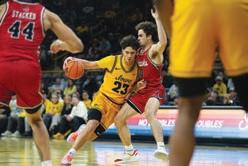
As a kid, Rob Dengler sat in his room and listened to Bob Brooks call Iowa Hawkeyes basketball games on the radio. He’d pretend to be Steve Carfino, Mark Gannon, Greg Stokes, or Bobby Hansen watching the toy ball go through the topless wooden barrel for the game-winning buzzer-beater.
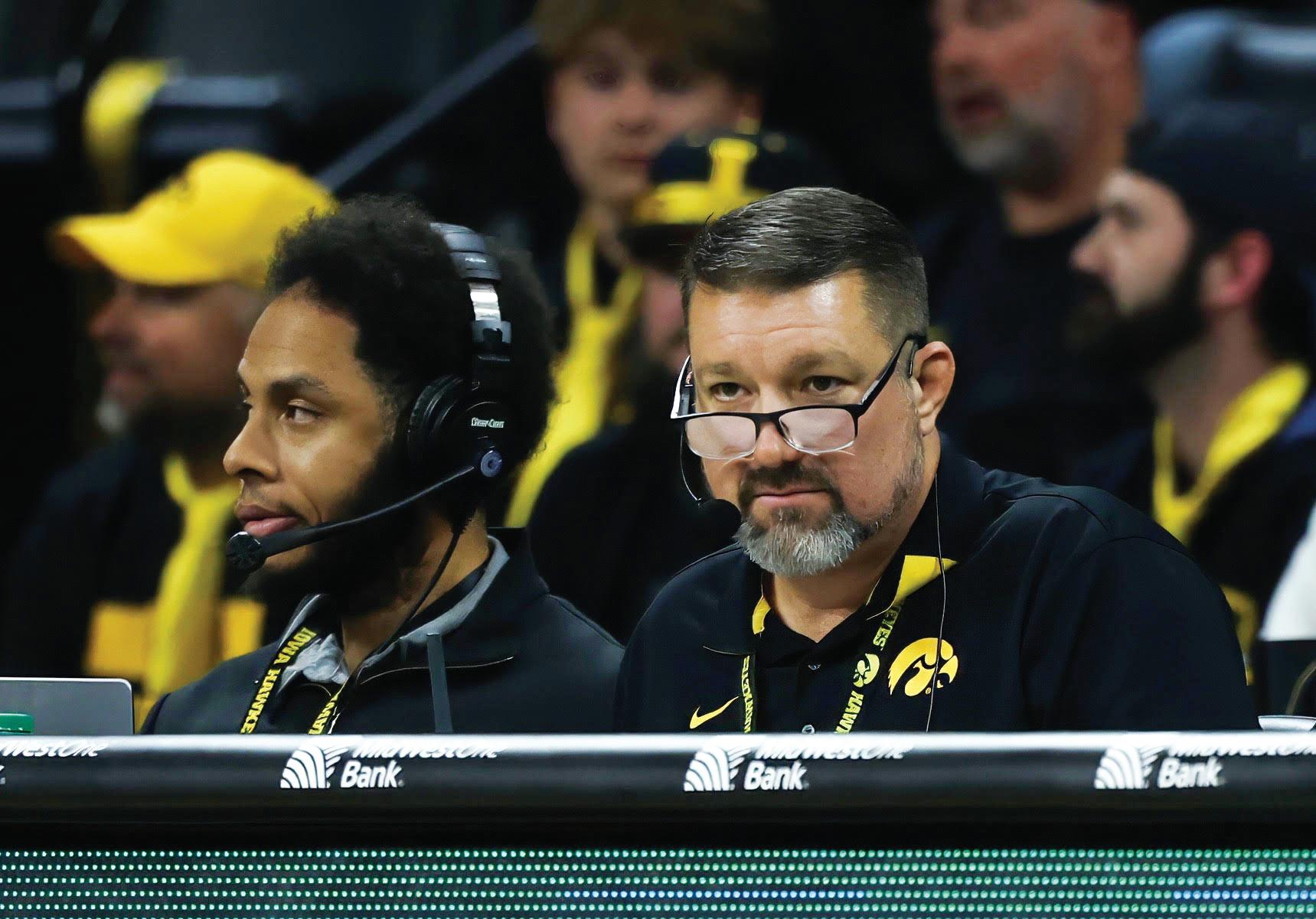
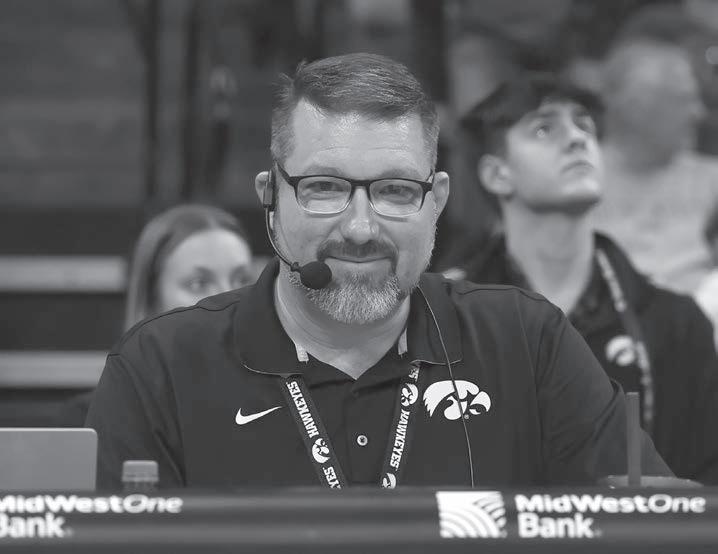
Dengler long hoped his name would become familiar among Hawkeye fans like those he heard on the radio as a kid in the 1970s and 1980s. While he never was the Hawkeye hooper he dreamt to be, his name carries weight every time his voice echoes up the seats of Carver-Hawkeye Arena and through the speakers of TVs in his first season as Iowa men’s basketball’s public address, or PA, announcer.
“It would be too much for my 5-year-old self to comprehend,” Dengler said. “Sometimes it’s hard for my 51-year-old self to comprehend. It’s just such a dream.”
The black and gold runs deep in the family — Dengler’s grandfather, Robert Gustafson, was a tight end in the 1940s; his mom, Linda Gustafson, was a swimmer in the 1970s; his father, Ray Dengler, was also an Iowa grad. Eventually, he and his sister, Katie, attended the University of Iowa.
Dengler’s life started out on a farm in Walcott, Iowa, 50 minutes east of Iowa City where he lived until he was 8 years old. From there, the family moved to Rockford, Illinois.
His Hawkeye fandom grew stronger each time an Iowa sporting event was cast on the 23-inch tube TV in the basement.
His private school days at Keith Country Day School from third to eighth grade had Dentler thinking he’d play for the Iowa men’s basketball team someday as he dominated his competition. It was when he got to Rockford Auburn High School where the playing field was more even, though he still stuck out.
He attended two Tom Davis-run camps at Carver-Hawkeye Arena, and in the second one when
Inside Iowa Athletics’ partnership with BEST
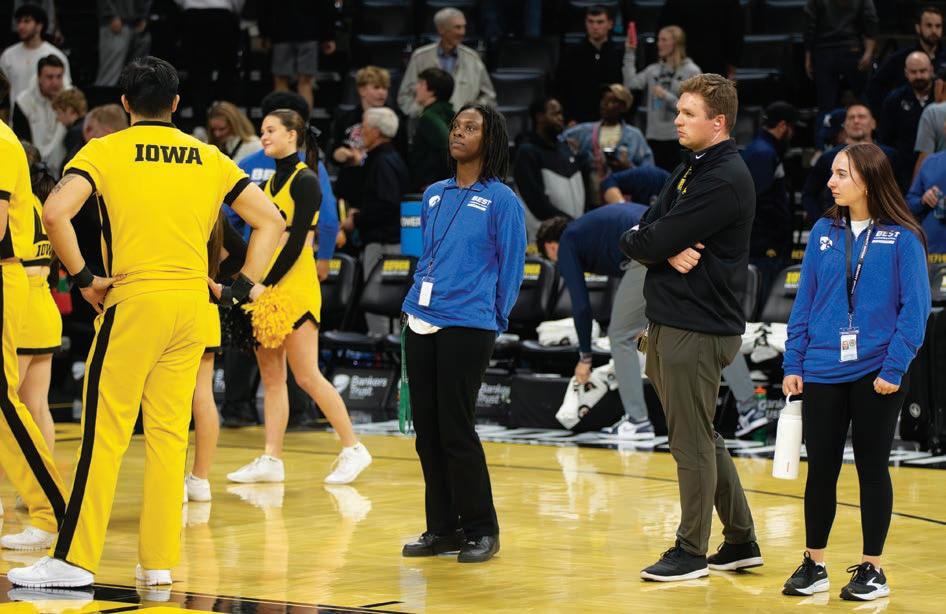
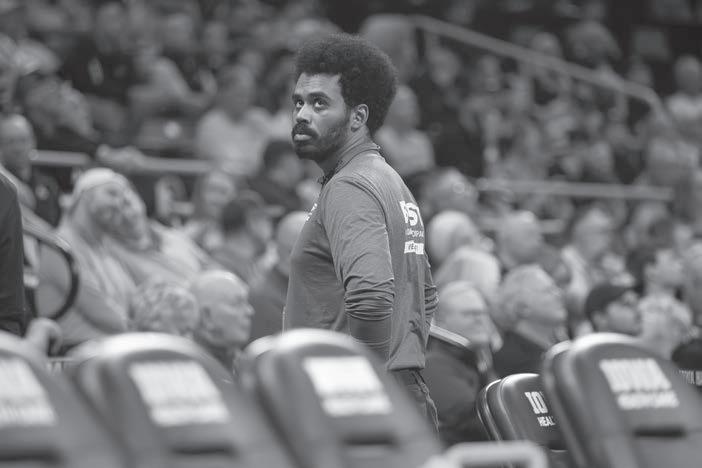
surrounding lots to buying a hot dog, is made possible by someone else’s work. It’s normal to interact with employees of BEST, the security company that works at venues like Kinnick Stadium and Carver-Hawkeye Arena, but what may seem like part-time work is actually the result of a mutually beneficial partnership, one where student-athletes from local colleges can provide for their teams while making these events possible.
“The reason, mostly, is fundraising for our team,” third-year Ryan Brosius, a baseball player for Coe College in Cedar Rapids said. “We take trips, we have weekends [where] we have to stay in hotels, so us working basketball games, or sometimes football games, helps out with fundraising.” The Dubuque, Iowa, native also noted the benefits that come from working events like Iowa sporting events.
“It puts more money in our
he was 17 years old, he got posterized by eventual Iowa player Russ Millard — a memory he holds lightheartedly. It’s a subtle reminder that becoming a college basketball player wasn’t in the cards for him.
“I remember the Iowa trainer was checking me to see if I was OK because I just got dunked on by 6-foot10 [Millard],” Dengler said. “He murdered me, just dunked right over me.”
Dengler graduated from the UI in 1997 with a degree in physical education, though the job market for PE teachers was so congested that he took a job teaching math at Burlington High School in Iowa for three years before switching to Southeastern Community College for the same role.
Then came the opportunity that changed his life.
In 2004, Southeastern was in pursuit of its third national championship in five years. KC Flemming, the team’s original PA announcer at the time, needed someone to fill in for a game, to which Dengler was
Dean Peterson embracing new home at Iowa
Peterson, a transfer from Rutgers, is a three-time NCAA qualifier at 125 pounds.
Producing top-tier talent at the 125pound weight class is nothing new for Iowa men’s wrestling. After a disappointing run at the 125-pound title last season, the Hawkeyes remain hopeful to return to the dominance the team is used to seeing.
Stepping into the room for Iowa this season is Dean Peterson. A transfer from Rutgers, Peterson is a three-time NCAA championship qualifier and finished in the top-10 at the Big Ten Championship in each of the last three seasons. Peterson made his Hawkeye debut on Nov. 6, when Iowa took on Bellarmine in its home-opening dual at Carver-Hawkeye Arena. The senior took down Damian Ryan by decision, 5-1.
At the National Duals Invitational on Nov. 15-16, Peterson headlined the Hawkeye lineup at 125 pounds. In Iowa’s quarterfinal dual against No. 15 Illinois, Peterson took down No. 16 Spencer Moore, 4-2.
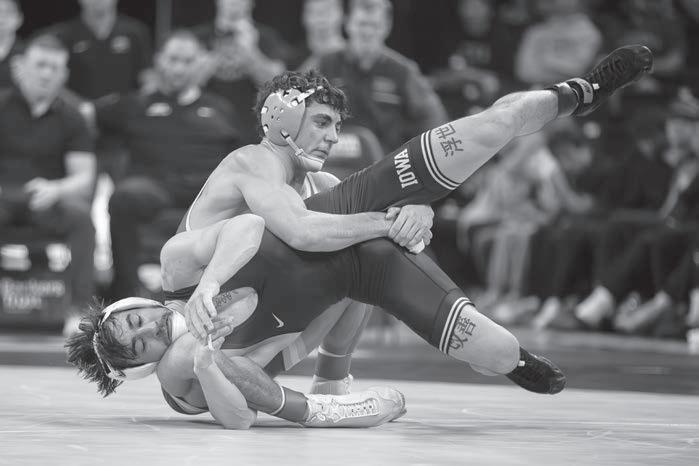
Heading into the third period of Iowa’s semifinal dual against Oklahoma State, No. 10-ranked Peterson trailed No. 2 Troy Spratley, 4-2.
Peterson chose neutral position for the final frame and needed a takedown to get Iowa started in the rivalry matchup. After little action for most of the period, the Rutgers transfer shot for a single-leg, but Spratley countered and gained control of Peterson’s leg.
With just five seconds remaining in the bout, eterson quickly escaped Spratley’s control and circled to his back to secure the takedown and snatch the lead. Peterson then held on for the final seconds to get the win, .
“We got to the edge, and I knew there was short time,” Peterson said. “[Spratley] kind of stopped wrestling a little bit, and I felt that. [I] tried to work my way in, and with my speed, I was able to get behind him.”
Head coach Tom Brands was proud of Peterson for the way he continued to fight through the match but knew he could have done more to stay in control.
Max Pa erson finds his way in pro hockey
After experience with multiple junior league teams, Pa erson is at home in Iowa.
For Iowa eartlanders forward Ma at terson, motivation to play hockey wasn’t just environmental but familial. Growing up in Kamloops, British Columbia, hockey was ubiquitous, but Patterson only had to look as far as his father. Ed Patterson, who played professional hockey for the L s ittsburgh Penguins during Patterson’s youth, served not just as an inspiration but also as a guide.
“My dad is my best friend and my role model, so it’s been helpful to lean on a guy like that, atterson said. If I ever have any questions, he’s been through it, so it makes life a lot easier when it comes to hockey.”
Patterson began his hockey career with the Kamloops Blazers in an under-15 league, where he not only made plays on the ice but also made valuable friendships.
“Most of my really good friends grew up playing youth hockey with me,” Patterson said. “Everyone takes hockey pretty seri ously in Canada, and most kids do end up picking hockey.”
After youth hockey in Canada, Patter son got his start in the Western ockey League, or W L, a major junior league in Canada and the northwest U.S. that focuses on player development for potential professional careers. Yet for Patterson, his mat uration as a player occurred across multiple different settings.
fter two years with the ootenay Ice, Patterson was traded to the Swift Current Broncos. From there, Patterson was traded to the Everett Silvertips, where he was an alternate captain. atterson ended his W L career with the Seattle Thunderbirds. The 25-year-old forward said he is grateful for all the people he met during his experience in the W L.
I got to meet a lot of players and coaches and play in different systems,” Patterson said.
I was able to meet a lot of my good friends today through those different teams and even play with some guys I knew through my youth hockey days, so that definitely helped with the transitions.”
fter traveling around the W L, atterson opted for the collegiate route rather than going directly to the pros. The forward felt he didn’t have the size just yet.
One of his best friends from his junior
Patterson and the Dinos won the Canada West Championship in 2023, but the Kamloops native said he learned more about relationships than anything else during his time in Calgary.
“The closer you are as a team, the easier it is to win, atterson said. I picked up on daily habits that are important to my overall life and not just hockey.”
atterson started his C L career with the Fort Wayne Komets before being traded to the eartlanders. o stranger to swapping teams and altering his scenery, Patterson took the change in stride.
I was only in Fort Wayne for a couple of games before luckily being traded to Iowa, atterson said. I ve loved every second here in Iowa, and the transition has been pretty seamless.”
With the season still young, Patterson has recorded three goals and said he has been
“You realize just how good of people they are — they take care of the guys first and themselves after,” Patterson said. “You can see why they’re in the leadership positions, and they definitely got the right decision with those two guys.”
Choosing to play collegiately technically delayed Patterson’s professional hockey career, but so far, his journey is off to an impressive start. Patterson thanked his eartlanders coaches and teammates for getting him back into the swing of things. While still a long way from reaching the level of his father, Patterson hasn’t lost sight of his progress.
“My game has gotten better as the season’s gone on, and that’s thanks to all the guys in the locker room, atterson said. It s been good to get myself familiar with the physical play of the C L, and I ve been having fun doing it.”
Iowa women’s basketball back to dominating the paint thanks to star trio
For the last five years, Iowa women s basketball’s identity has been the dominance of their guard play, whether it be Caitlin Clark or Lucy lsen. owever, this year s team brings back shades of Megan ustafson s awkeyes from the late 2010s, where a post presence was just as essential as the top of the key.
Led by fourth year forward annah tuelke, second year center va eiden, and first year center Layla ays, Iowa basketball has reasserted its dominance in the paint.
I like what I ve seen out of our bigs, head coach an ensen said. I love them.
In the awkeyes start, tuelke and eiden have started every game and rank as two of the team’s top three scorers. The duo average a combined 26.6 points and 17 rebounds per game, all while shooting percent from the floor. espite coming off the bench during the stretch, ays has
provided strong depth for the team, averaging 10.4 points and 5 rebounds per game, posting a double-double against the Drake Bulldogs.
Depth in the paint will be, and already has been, crucial for the awkeyes. n area of concern for eiden has been foul trouble. The second year center picked up a couple of early fouls against orthern Iowa and was one away from fouling out against Drake the game before.
“We can’t have too many games where Ava gets two fouls midway through the second quarter,” Jensen said. “That takes her out of it because then she has to play a little timid.”
If ays continues to improve, ensen will have less to worry about if eiden is forced to spend extra time on the bench to avoid fouling out.
If we get that group consistent to where we can rest them and not have to think, ‘Oh gosh, someone s in foul trouble, ensen said. It s more just their mentality with the little things.”
While Stuelke primarily plays power forward, eiden and ays share the center role. With tu-
elke on the bench against orthern Iowa, the duo shared the court for a brief spell but gave up an offensive rebound to the anthers.
Learning to play with one another will be key for the trio, especially against teams with taller lineups. No one from the trio is focused on themselves but rather diverts their attention to one another’s improvement.
“We all push each other a lot and are very supportive, ays said.
tuelke and eiden have served as leaders on the court for ays, who continues to adapt to the physicality and speed of the college game after arriving in Iowa as a pri ed recruit from laska.
“Coming in not having played a bunch of big girls, they ve helped me find my way through this, ays said. They ve had the e perience and have played the position, so I m just learning from them.”
Outside of basketball, the three have already grown a strong relationship with one another. ff the court, we re with each other all the time, ays said. We even go to church together.
Which college bowl game reigns supreme?
Trey Benson champions the Hawai’i Bowl, while Patrick Halma makes the case for the Pop-Tarts Bowl.
When it comes to the postseason of college football, one non-playoff bowl game easily comes to mind. Starting in 2023, the Pop-Tarts Bowl — now dubbed “The People’s National Championship” — has quickly become a must-see game among college football fans, including myself.
Making this bowl game so unique are its mascots and postgame festivities. This bowl game boasts mascots of literal PopTarts flavors, which are unveiled by the mascots ripping their own wrapping off before the game. It is then in the victory celebration that one of the displayed mascots is later sacrificed to a giant toaster on the field and served to the winning players and coaches.
Just a few weeks ago, the bowl game directors announced that this year, unlike past years, there will be six Pop-Tarts split into two teams of three: Team Sprinkles and Team Swirl.
Throughout the game, the fans will be able to vote on which team they want to be sacrificed to the giant toaster and be eaten by the winning team. This team of Pop-Tarts will then join Frosted Cinnamon Roll and Frosted Strawberry in the history of sacrificed mascots.
While the fans can’t decide the winner of the football game, they still choose who the victors eat.
I can t think of another bowl game that has any festivities even close to this. Yes, some bowls can be iconic because of names and maybe locations, but when it comes down to the fan experience, toasting a mascot of a Pop-Tart on live TV is just unreal.
When it comes to the postseason of college football, I am marking my calendar for Dec. 27 to sit down and watch a team of op Tarts get sacrificed on television.
Since its inception in 2002, one bowl game has stood out in a league of its own, becoming a late-night staple for fans in the pre-Christmas season the awai i Bowl.
Traveling to the beautiful shores of onolulu, awaii, offers college football fans the unique experience of watching their teams play within a picturesque backdrop. With palm trees flowing in the wind and some of the best beaches in the world, there is no atmosphere quite like the awai i Bowl.
Even those watching on television get to see some of that relaxation and continue to watch the sport they love in paradise.
In addition to the top notch scenery of awaii, the games have been nothing short of electric in recent memory, as five matches
dating back to 2017 have come down to 10 points or less.
Just three seasons ago in 2022, Middle Tennessee narrowly defeated San Diego State, 25-23, in a thriller of the ages.
The Blue Raiders outscored the Aztecs, 9-6, in the fourth quarter to take the slim victory that year. Depending on how the schedules work out, the awai i Bowl can even be played the night before Christmas.
For example, last season, USF and San Jose State found themselves in a match of the ages on Christmas Eve.
USF took home the win, 41-39, leaving the few fans on the East Coast to be up along with Saint Nicholas. imilarly, in , the awaii Rainbow Warriors defeated the BYU Cougars, 38-34, on Christmas Eve in dramatic fashion, scoring a fourth-quarter touchdown in front of its home fans to take the win.
While every bowl game offers its own individualistic, unique e periences, the awai i Bowl offers that and more, leaving the game unmatched.
Hannah Stuelke, Ava Heiden and Layla Hays have proven their worth for the Hawkeyes with the team’s hot start.
Iowa,” Dengler said.
The person who hired him at Western Illinois, iane Cassimire, was engler s former college classmate at Iowa. They shared another friend, Kelsey Laverdiere, who is the associate athletics director, marketing & multimedia at Iowa. Cassimire helped Dengler get in contact with Laverdiere for future fill in opportuni ties with the Hawkeyes, but the COVID-19
pandemic hit shortly after and cut off all sports for a brief period.
fter receiving engler s r sum for fi ve years, Iowa athletic director cott Thompson came forward in December 2024 with three softball opportunities in the spring.
practiced his starting lineup introductions in a way inspired by ay Clay, former Chi cago Bulls PA announcer during Michael ordan s si championship runs in the ‘90s. engler s first time walking down the Carver steps to his sideline seat gave him goosebumps, and it continued as the teams took the court for warmups, the fans filled the seats, and the intro video
played. oing from a gym that packs no more than 1,500 people to a pit of 10,000 seats was intimidating at fi rst. But once he spit out that first word in the introduc tions, those butterflies flew away. e felt like that kid again listening to the game through the radio and hearing nothing but voices.
program s pockets and helps our team out as a whole,” Brosius said. “Everyone signs up for dates that they can work, and then guys on the team just carpool whenever Coe baseball works.”
First-year Brady Wise, a member of the golf team at Mount Mercy University in Cedar apids, agreed that while workers don t necessarily get money themselves, the programs they represent still benefit.
“We get a certain amount of money that goes to our team so that we can get into more tournaments, get better equipment, stuff like that,” Wise said. “I feel like it might build a little bit of camaraderie. We get to all get together and go work a game, then watch some of the game, too, just being around each other.”
Hailing from Central City, Iowa, Wise also addressed how the team gets more opportunities by fundraising through B T s events.
ur coach said that we re going to get into more tournaments as a team,” Wise
That same year, Western Illinois offered him a fill in for a couple of men s and women s basketball double headers, which led to opportunities with football and volleyball as well.
“I was kind of in the midst of that, that I thought maybe I could do something for
recommended by his friend, Brian Vanderstorm, for his radio-like voice and basketball knowledge. Dengler took the opportunity, practiced in his basement for a week, called the game in front of a hot, sweaty gym with around 1,000 people, and has been in love with it ever since. For the next 15 years, he continued to back up Flemming whenever he was needed. And in 2019, another friend, Brian McAtee, talked to the Burlington Bees about their PA situation at the time and, again, recommended Dengler for the job, which he got.
said. We ll be able to do more fun stuff or get better stuff again.”
Third-year Freddie Walker, a native of ustralia and Wise s teammate, said the work helps Mount Mercy s team travel to events.
“It enables more gear and apparel for us, which helps with bringing better recruits in when they see how far we re traveling and the sort of stuff we re get ting. It s not e actly a hard job to do. We re all pretty capable of working, Walker said.
Walker noted the work helps grow relationships within the team, discussing his own experience traveling to work the men s basketball game against Chicago tate.
“You just joke around,” Walker said. even of us were in the same cars for a pretty easy ride up. [We] just all made jokes, had fun, and then got dinner after. It seemed like it just brought us closer, the guys that were there.”
Brosius agreed with Walker that the work is manageable and often a good time.
“The guys have a good time when
did the same thing from the other side of the mat.
Dengler impressed nonetheless, and when Iowa men s basketball and gym nastics long term announcer reg Bentler une pectedly passed away, cott vouched for Dentler for both roles fulltime.
“Operationally, they had an opening, and he recommended me,” Dengler said. “That led to an audio demo, and that led to an interview, and that led to the Iowa men s basketball job and the gymnastics job.” For months, Dengler prepared for his first Iowa gig on ov. for men s basket ball s matchup against obert Morris. e
“He kept wrestling,” Brands said. “He hits a shot, comes up and double-unders, gets the stall call. He needed to do more of that. Then, the guy got in on us, and we did a oudini. o, let s control that more, but we ll take it. e s very explosive.”
After securing the takedown and returning to the center of the mat, Peterson let out a couple of roars while flexing towards his teammates in the corner.
Peterson praised his teammates, saying that everyone has each other s backs. He also credited his teammate, abe rnold, for supporting everyone during their matches.
“He was hyping me up before my match and after my match,” Peterson said. “I love it.”
The well-traveled Hawkeye faithful erupted from their seats in section 119 of the BOK Center, while the Iowa bench
They travel well, and there s a lot of fans in a lot of places,” Peterson said. They pack Carver all the time, so it s good to see them out here.”
eterson, a native of Barnegat, ew Jersey, said his goal for this season is not only to be an ll merican and C champion but also to be more consistent.
“[I want to] go out there and wrestle as much as possible, that full seven minutes,” Peterson said at media day on Oct. . ot really slowing down, trying to dominate more than just scoring points.”
eterson also said he feels like he s in the best shape of his life, and while his work ethic hasn t changed, he s work ing smarter than he used to. The intense training he receives from Tom and Terry Brands has been beneficial for him.
“I love the way they coach,” Peterson said. They re involved. They have so much knowledge, and it s hard not to absorb it.”
I m a fan with a microphone, engler said. It s such a privilege. Dengler is still adjusting to covering his childhood team. And while Dengler and Bentler never formally met, he s more conscious about carrying the torch that Bentler left behind after two-plus decades — as a PA announcer and as a person.
“I hope to come close to being as nice as he was and as friendly and as supportive of that. verybody loved reg Bentler, Dentler said. “And those are huge shoes to fill.
they re working, Brosius said. ome of the guys, if they re lucky, get to work on the floor during basketball games, so that s an interesting one. We work two hours, three hours before the game,
and then we get to go watch a little bit during the game. It s free basketball, free wrestling, free football, whenever we re working the games. It s not too bad. It s pretty easy stuff.”
CORNHUSKERS SHUCKED
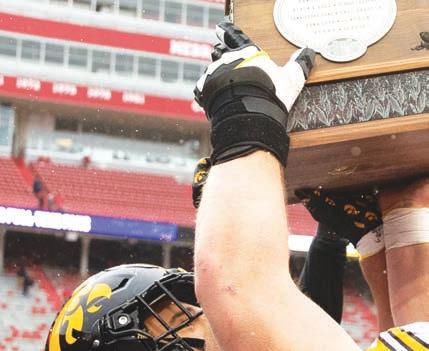
The Iowa Hawkeyes defeated the Nebraska Cornhuskers, 40-16, during a football game at Memorial Stadium in Lincoln, Nebraska, on Nov. 28. This was the Hawkeyes’ last regular season game. The team now awaits its bowl game destination, which will be released on Dec. 7.
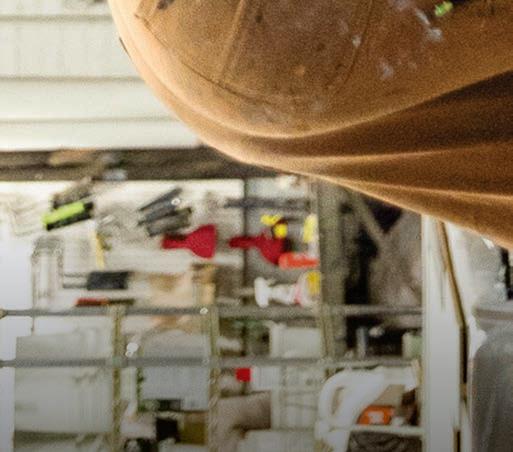
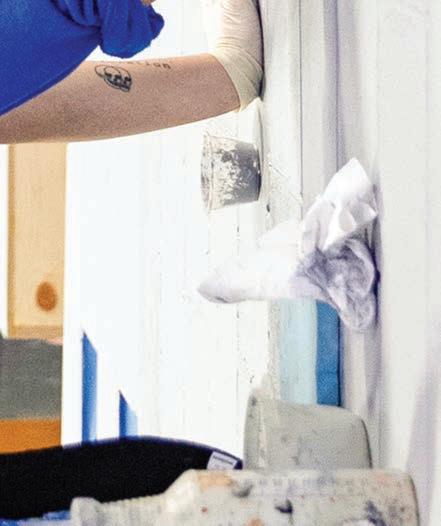
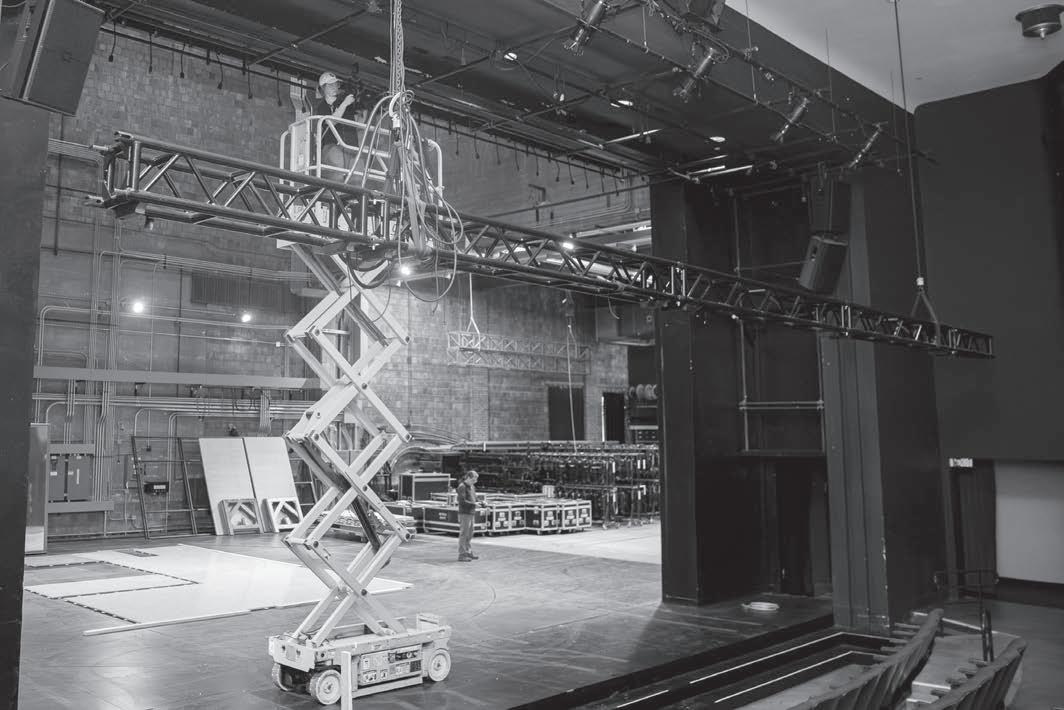
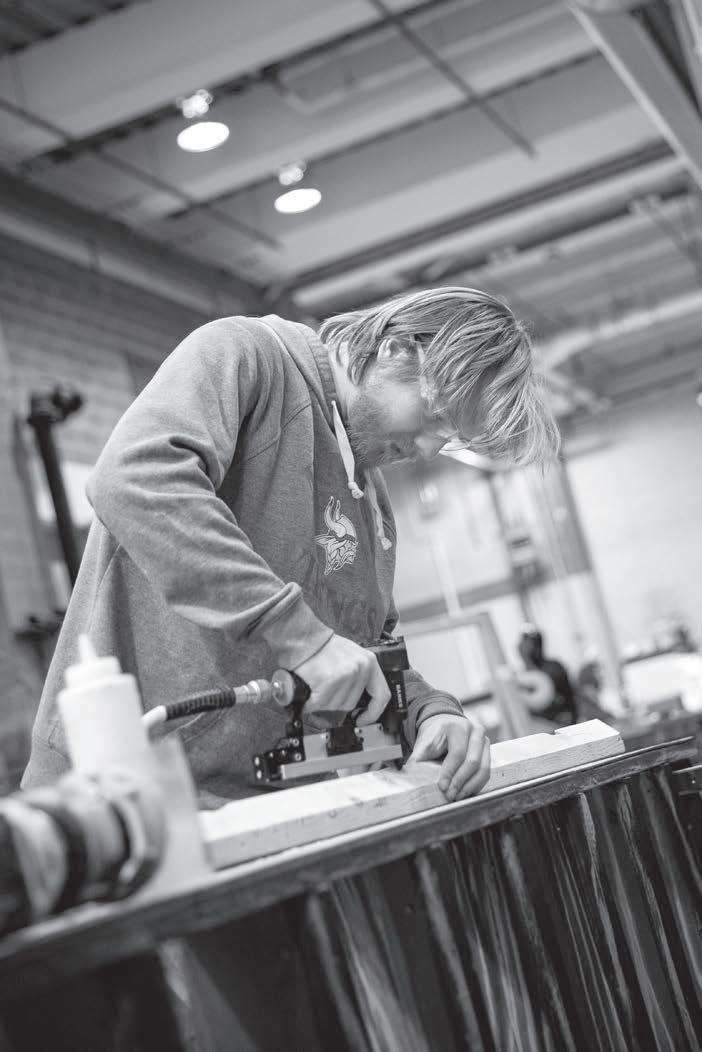
Crew members work behind the scenes on UI productions.
Behind the sets with UI stage technicians
Stage workers set up scenes and props for university staged productions.
As the curtains close on theater productions, applause ramps up for performers as they take their final bows. The curtain drops, and they wave to the audience with bright smiles on their faces before directing the audience’s attention to the light and sound booths, where a short burst of applause rolls until the actors and actresses bow once more.
Audience members make their way back home while discussing the marvels of the show, mostly complimenting the skills of the leading performers. However, the technicians behind the scenes, often unrecognized by the audience, are equally important in helping craft shows.
When it comes to putting shows together, the University of Iowa Theatre Department puts a lot of thought into the design process.
Every theater and stage is different and requires different parts that must all work together to ensure the set is as safe as possible.
Exploring Iowa’s history with “President Barbie”
Kate Orazem and Andrea Leusink discuss an
This is an installment in a multi-part series.
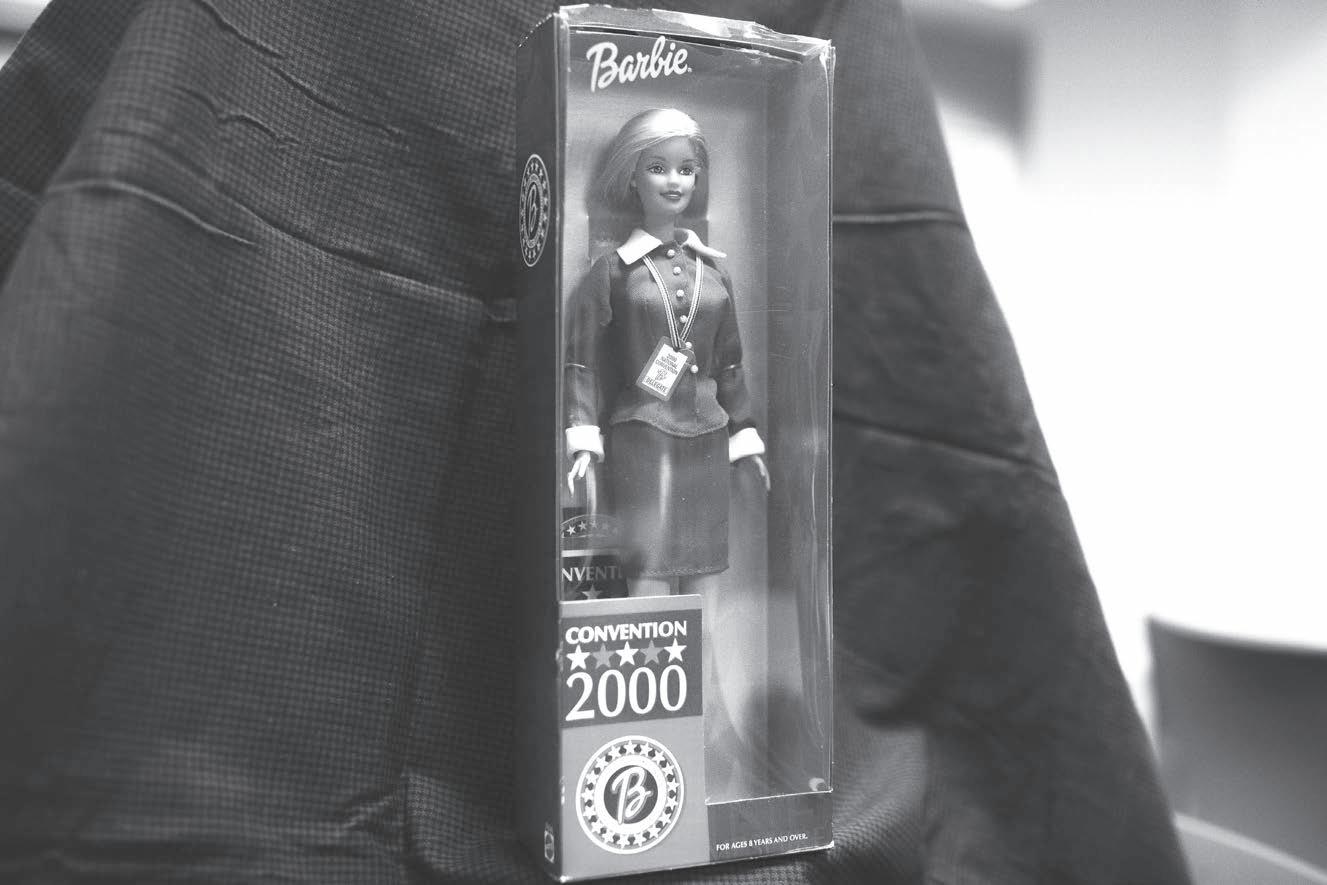
The University of Iowa’s Women’s Archives categorizes items under many labels, one of which is known as “Women in Politics.” Here, a well-preserved Barbie doll is held, a throwback to a collaboration with the 2000 Democratic Convention.
Kate Orazem, the UI Iowa Women's Archive's "Women in Politics" archivist, and Andrea Leusink, a first-year graduate student in the UI School of Library Information Science, tell the doll's story.
The Daily Iowan : Who was this item from?
Kate Orazem: Ethel “Marion” Helland owned it. This donation is from her niece, Diana Koppen, who has just really done a lot of great work to share Marion’s story. Marion lived in Minnesota for a long time after her early years in Iowa. I believe she was a delegate to the Democratic National Convention, so that’s where she probably found [the doll]. It sounds like the dolls were essentially a Mattel promotion. They donated them to both conventions that year.
I saw they did different appearances of Barbie, too. This one seemed like they made the most of it because it is by far the cheapest of the ones still available online. But some of the more rare versions are worth almost $2,000 on eBay. Not this one, though. This one is worth $50.
Why did Marion have a Barbie like this?
Orazem: The Barbie is related to her organizing the Democratic Party in Minnesota. She was involved in a variety of political causes, including the Minnesota Human Rights Commission. She helped various state bodies put together reparative curricula — curricula about Native American history — and to correct certain types of history in the past in schools that were racist and prejudiced against Native Americans.
Why was this item salvaged for the archives?
Orazem: This sort of object is a fun thing she kept from one side of her activism in electoral politics. [Political conventions] were the kind of thing she was least involved in among her civil rights, human rights, and electoral work. The reason I chose to keep it is that it’s an artifact of material culture. It will be interesting as time goes on to remember that, not only did Mattel
promote itself in this way, but they were interested in positioning Barbie as a political figure herself. There are lots of things like this in the archives, where something in a collection may not be super closely tied to the person who donated it to us. But, it has interest of its own so we keep it for that reason. There is also a sort of big space here on the box. [Mattel] possibly printed some bo es that said something different than delegates.
On the back of the box, text reads, “PRESENTED TO | DELEGATES | DEMOCRATIC NATIONAL CONVENTION | LOS ANGELES, CALIFORNIA AUGUST 14-17, 2000.” A space between “DELEGATES” on the box suggests to Orazem Mattel would have printed multiple different writings on the box.
Did Marion keep other paraphernalia from her political career in her home?
Orazem: documenting her activism. Other things we’ve seen in the collection are lanyards, a yo-yo, political pins, and buttons.
Leusink: of my head, but it’s referenced in the Smithsonian. It’s this button about a certain woman from the 1970s in Minnesota who was going through a trial for murder.
Orazem: artifacts in the collection is these books she used with her students. These are older textbooks, and she would have her students go through and mark where they saw instances of bias in the way the history was being told.
Leusink then brought out a sweatshirt from the collection, decorated with several cartoon faces of different ethnicities. The faces are racist stereotypes with a message printed out above them saying to be inclusive.
Leusink: walked in [to the school she worked at] and saw this sweatshirt hanging in a classroom. The kids had seen it in the fifth grade class and asked if they could write a note to the publisher to write a complaint and see if they could have [the sweatshirt] changed.
Orazem: learning by doing it for the students and getting them involved in political activity.
What were some other major achievements in Marion’s life?
Orazem: She won some awards that were related to her work with the Human Rights Commission in Minnesota, and her civil rights organizing in general.
Does ‘Wicked: For Good’ earn its acclaim or is it overhyped?
Riley Dunn argues the movie delivers, while Charlie Hickman says it leaves much to be desired.
There’s a reason why everyone is talking about “Wicked.” From incredible vocals to the emotional performances of its leading actresses, the second part of the hit musical phenomenon is worth seeing.
“Wicked: For Good” picks up after the dramatic conclusion of the first installment and follows closely with the lives of Elphaba, played by Cynthia Erivo, and Glinda, played by Ariana Grande, as they begin to settle further into their new lives — Elphaba as the newly minted Wicked Witch of the West and Glinda as “the Good.”
It is Erivo and Grande who truly bring this movie to life through the dedication and authenticity each brings to their respective witches.
Erivo’s Elphaba is a complicated, heartfelt character who knows the world she desires and works to make it a reality, even when that means facing off against both the citi ens of Oz and her closest friends.
ne of the film s most devastating moments occurs when Elphaba, upset at how her spells always seem to go astray, believes she has lost her friend and eventual love interest, Fiyero, forever. She commits to the label of “wicked”
she has been given all her life in the song “No Good Deed.”
This was one of the songs I was most antic ipating, and Erivo nailed it. Every note of this ballad was meaningful, conveying Elphaba’s anger and heartbreak, and her continued resolve to fight against the Wi ard.
As Erivo’s co-star, Grande also brought a gravity-defying performance to the big screen, portraying a conflicted Glinda who has everything she’s ever wanted, yet feels uneasy and still holds feelings for the Elphaba she used to know.
While I didn’t agree with all of Glinda’s actions in the movie, Grande played her in a way that made me feel sympathy for the character, and by the end, I understood who Glinda “the Good” was and who she wanted to be.
One of her solo songs, “Girl in the Bubble,” was a well-placed addition to the original musical act and helped to lay out her internal struggles through the physical presence of her pink traveling bubble.
In addition to two incredible leading performances, I enjoyed the continuation of Fiyero’s, played by Jonathan Bailey, character arc and the numerous tie-ins to the 1939 “Wizard of Oz” movie, including the construction of the famous yellow brick road meant to lead people to the Wizard’s power.
The colorful sets, creative lighting, and musical masterpieces also make this a wonderful return to the world of Oz and a thrilling conclusion to the first movie. Wicked For Good” should absolutely be added to fall watch lists, as the theatrical experience cannot be beat.
I have no connection to “Wicked,” have never seen the musical, and found 2024’s “Wicked” movie excruciating to sit through. I was not surprised to walk out of “Wicked: For Good” absolutely miserable.
Having no clue what happens in the story made this a ba ing e perience. While fans of the musical knew what to e pect before the films came out and were undoubtedly excited to see their favorite moments from the show brought to the big screen, I was absolutely lost.
Without any reverence for the source material, a lot of the moments the movie treated as big dramatic turns came across silly. Every time a part of “The Wizard of Oz” was explained to be connected to one of the characters in this movie, I rolled my eyes. Once these connections start forming, it begins to feel like the entire point was to contextualize elements from the classic movie for no reason. Sometimes things can just exist; we don’t need pre uels and franchises built off every old movie.
The praise for Cynthia Erivo and Ariana Grande’s performances is valid; they were the only two parts of this movie that breathed with any life. Jeff Goldblum appears to be sleepwalking through his scenes.
Even though Erivo and Grande’s scenes stand out, the formal decisions do nothing to complement them. During the climactic, titular “For Good” song, the camera remains fixed at eye level and barely moves.
A big conversation surrounding the first film was the washed out, ha y visuals. For such a fantastical setting, it was disappointing how the practically built sets ended up just falling into the background because of all the digital effects surrounding and laid over them.
“Wicked: For Good” has the same problem, at least to my eyes. Every interior shot looked like a car commercial, with flat neutral lighting that diminishes the fantasy atmosphere. Director Jon M. Chu said in a 2024 interview with IndieWire that he was going for a more "realistic fantasy" look for the movies.
While that urge is understandable since live-action adaptations usually follow this logic, for a story full of flying monkeys and impossibly vast landscapes, leaning into the vibrant nature of the world would have kept me more engaged.
I’m glad fans of the musical have enjoyed these poorly crafted, self-indulgent long adaptations, but I am happier I’ll never have to think about munchkins or yellow brick roads ever again.
Some of her signal achievements were from her work on equality.
In Marion’s obituary, she is credited with the 2000 Dream Keepers Elder Award, the 2010 Golden Valley
the set is as safe as possible. Similarly, sets and props are often put together with specific intentions that are to be carried out and received by the audience. To make sure this happens smoothly, a meeting between the production team, stage management, and design team occurs. This includes undergraduate and graduate students, as well as faculty and occasionally hired university alumni, who all work together to help the director's vision come to life.
“We see how we can transform the set, and then it’s about communicating with the designer and the director to make sure both of their visions can be presented on stage,” Ella Crosby, a UI third-year student, said. Crosby is a double major in English and creative writing and theater arts, where she focuses on stage management. Throughout her time at the UI, she has worked as both a stage manager and an assistant stage manager for several university productions, the most recent being the workshop piece “Drill Drill Drill,” which was put on in October.
She is currently working as an assistant stage manager on the musical “Head Over Heels,” which premieres on March 6.
“Workshops all take place in MacVey Theatre, which is a black box, so you have a little bit of freedom in how you want things to go,” Crosby said. “For workshops, we don’t have a budget to build a set, but we do have a bunch of resources to get set pieces.”
Before the meeting with the production and design teams, designers spend several weeks, maybe even months, planning the layout of the set. This process begins with the meeting, continues with the scene designer drawing up ground plans, and doesn’t really end, as the director and all teams often make changes to the set as the rehearsal process progresses.
“I’m very type A, so I made a spreadsheet, and I went through the whole script,”
Grace Ziomek, a UI fourth-year student, said. “I wrote down props and set pieces talked about in the script where they were or dialogue or stage directions alluding to them, and I just took inventory and made a very big list of everything. I added the director, added the stage manager to it, and that's kind of where I kept all of my lists.”
design teams, stage managers like Crosby make a list of pieces they are interested in using, and then run to a warehouse to get the pieces and load them onto the stage.
minutes off campus, where large set pieces and props are stored. Any production put on by the university is allowed to pull from the wide collection of pieces, such as a log of different chairs for every occasion and design, so long as they make sure to fill out a rental agreement.
Crosby said smaller props such as set dressings can be repurposed, while large pieces made specifically for main stage productions are only in use for one show and get struck at the end of theshow’s run.
a piece in a show and start coming up with ideas for a set they are currently working on.
“There are these crates, I’ve seen them in quite a few shows, but they’re really nifty because they open at the top, like hinges, and that’s super cool,” Crosby said.
Similarly, there is a scene shop in the
and was faced with limited space when transporting the pieces. We get one truckload for each workshop , so I had to narrow it down uite a bit. The big question is, ‘What’re the most important set pieces for the show?’ And then with the things that we weren't able
The UI’s theatre department has a props database and a Google Drive where stage managers can scroll through and view
“You can go down rabbit holes, if you’re like, oh, I need a specific chair. There are different chairs you can pick from, and any different kind of shows can use these,
Aside from the ideas that these team members are bringing to the table, there are instances where a technician may see
Theatre Building on campus, which houses platforms and stair units, as well as smaller hand props and several furniture pieces. Many of the larger set pieces do get reused; however, some of them are unusable because of the nature of the show they were used in.
Rob Durham is the technical director at the UI. His role is to take what the production team dreams up and turn the plans into reality. lot of that stuff is built per show. It s specific to that show, so we re not going to reuse that,” Durham said. “It typically takes us five weeks to build the set , a full week to install it, and about two days to break it down.”
The scene shop is easily accessible, making it simple to add or subtract smaller props from a show, especially closer to showtime. Oftentimes the stage manager will simply put in a request for a piece, and a crew member will be sent down to retrieve the item. This typically applies to hand props that have been saved from previous shows.
Pulling from the warehouse isn’t as easily done. Many of the larger props are stored off site from the Theatre Building where the design team is given limited space to bring all of the major set pieces they need.
Ziomek has worked on many shows for the university, both as an actor and as a technician backstage. For “Drill, Drill, Drill,” she worked as the set designer
to bring, it's more of, ‘How can we greet the illusion of this thing?’” Ziomek said.
Once the set is built, a vital part of the process is safety for the actors and actresses. Durham said the actors are typically rehearsing on the set the day after it has been built, but it doesn’t always work out perfectly for the technicians.
“If something is not done, we have the right to say, ‘Hey, it's not safe, we'll get it safe on Monday,’” Durham said. “Because of the nature of the set, it’s not easily changed. Small changes are fairly common; large changes are almost impossible.”
Some shows have consumables or props that get recycled every night, such as food that is eaten on stage or letters that are read during the show, Crosby said.
Workshops and other similar smaller productions have a very short amount of time for both setup and strike. Sometimes, this short turnaround time is just one night, since each day has its own set of shows. “When you're setting up a show, you look forward to this thing. It's something you put a lot of care and effort into putting together. It's a lot of communication. It's more stressful because you're putting in the work, iomek said. trike is very fulfilling because it's not like you're like, ‘Oh, this is over now.’ It's kind of like a resolution; you saw the show, you saw everyone's hard work put into it, and you kind of just get to turn the page and do something new.”
What to do in Iowa City this winter
How to make the most out of winter in Iowa without staying indoors.
Knowing how to make the most out of the cold, snowy months can be a struggle. Luckily, there are many fun winter-themed activities to do around Iowa City.
In the center of the Coral Ridge Mall is a small ice rink known as Bodyarmor Ice Rink. Anyone can sign up and skate to their heart’s content. There are times strictly for hockey teams and classes for those learning to skate for the first time, but many slots are open each day for the public to sign up and glide. Cheap and accessible for people of any skill and ability, ice skating is a fun activity for people looking to try something new.
If the prospect of skating outside in the winter sounds more appealing, the Scheels Ice Rink, at Penn Meadows Park in North Liberty, might be just right. Open in the winter from 9 a.m. to 9 p.m., the rink is perfect for the wintery aesthetic post on Instagram or an outdoor option for fun.
Throughout downtown Iowa City, holiday pop-up markets, activities, and free trolley rides fill the streets. With the trolley giving free rides each Friday from Nov. 21 to Dec. 19, and the market pop-ups starting from Nov. 28 to Dec. 24, there will be a lot to explore downtown.
Certain activities are specifically for kids, such as photo opportunities with Santa and the Kids’ Market, where Santa’s helpers assist children who bring a wishlist of gifts to find everything they need. The festivities will also include a downtown elf hunt, a retail open house event featuring over 16 businesses, and a small business spotlight day, where the City of Iowa
City offered free parking in all downtown parking ramps.
So far, the weather predictions for this upcoming winter look promising for snow lovers throughout the Midwest. With hilly terrain and heaps of snow expected to come, sledding is the best way to take advantage of winter delights. Hickory Hill is only a short 10-minute drive from campus, giving students a convenient option to access a perfect park for sledding — though campus itself has decently tall hills with plenty of ideal slopes for shredding some snow.
For cheap and accessible relaxation this winter, the University of Iowa sauna rooms might be the best way to warm up after a chilly day on campus. With both dry and hot saunas, having some time to sit inside will surely melt winter ice away as the days get progressively colder. Just don’t get too hot, or else you might crave the cold.
Most fishing spots in the winter are
How to find the best Christmas decor
Lily Kopp and Kyrsten White debate the best style of holiday decoration.
There are several reasons the Christmas season is highly regarded as one of the best: the songs, the snow, and being around family and friends. However, the most breathtaking part of the Christmas season is the decorations. Between bright lights and bold red and green, the maximalist, traditional decorations have me enamored for the entire season.
This year, “Ralph Lauren Christmas decorations,” more commonly known as traditional Christmas decorations, have been trending on social media, but my family has followed this trend for years. In my house, Christmas decorations have always been put up as soon as possible. Red and green lights stay up on the house all year round, but other decorations go up quickly, with a traditional vibe curating the perfect cozy space to host holiday parties.
Basically, once the Halloween season is over, the bins filled to the brim with our Christmas decorations, both antiques passed down for generations and little trinkets from HomeGoods, start to be brought up from their storage in the basement.
The time to decorate for Christmas is here, and families have started coming together to put up trees and hang ornaments they’ve had for years.
When it comes to choosing garlands to put up, some families take a less traditional route. In the typical style, the tree is green and lights are white or simple colors. Though I had some Christmases like that as a child, whenever I have decorated with my family recently, it has been through a slightly different route.
In the past couple of years, my mom and I started decorating by thinking about what would bring us the most joy. Since Halloween had always been our favorite holiday, we began buying Christmas stuff on the more spooky side. One year, we had a black Christmas tree adorned with silver ornaments and little fake spiders. It was fun and exciting to try
Hundreds of trees, glass, felt, and faux pine all go up around the house, covered in colorful lights, fake snow, and tartan patterning.
The decorations cover nearly every surface available — on top of cabinets, overflowing on shelves, and in the background on countertops.
The main focal point is our Christmas tree. Typically, a balsam or Fraser fir and standing 9 feet tall, the tree is covered in bright white lights that form the background for snowflakes in an array of colors, peppermint sticks, and icicle ornaments.
The rest of our ornaments are a collection our family has acquired over the years. From handmade trinkets dating back to 2004 to decorations that have been bought year after year as our family has grown, the tree is always filled with every color imaginable — layered with traditional colors.
Around the house, random faux pine garland, vintage Santa pictures, and vintage bears sit in corners, while lights go up in every possible space.
Although the traditional Christmas lifestyle chose me, I wouldn’t change it for the world.
Nothing beats watching old Christmas movies while the room is lit by colorful lights hanging around the room, surrounded by traditional red and green decorations that have been put up in familial houses for generations.
something new, which are feelings I hope to carry with me for future holiday seasons.
Now, this is not to say I do not like the look of traditional Christmas decor, but I find it interesting how an atypical style of Christmas lights, trees, and ornaments can allow someone’s personality to shine. Though I had a black Christmas tree, my little sister never really enjoyed Halloween like me, so she was given a pink tree that matched her more. It was exciting to see how she decided which color of lights and type of ornaments she wanted to put on because it highlighted who she was.
Despite the clash of a pink and black tree in the same room, it was nice because my mom, sister, and I all got to show anyone we had over for Christmas activities the intriguing way we interpreted the holiday. In the long run, though, it does not matter what accessories people choose for their holiday season. Whether they want to accessorize their home with a traditional tree and the typical string of colorful lights or find a different colored tree and lights to match, the real thing that matters is sparking holiday spirit within yourself and your home.
impeded by ice freezing over the water, making it impossible to regularly cast a line. But never fear, ice fishing season is just around the corner. Once the ice becomes completely solid for at least a week and is safely tested, it can be walked across, and someone can fish through the thick ice sheets.
The Iowa Department of Natural Resources recommends Iowa City River Landing Pond, East Oakdale Pond, Clear Creek Pond, and several other ponds on its website. Many of these become perfect ice fishing locations in the winter, so keep an eye out.
An hour and 32 minutes away from campus is Dubuque, Iowa. Dubuque is home to Sundown Mountain Resort and offers several different slopes, pathways to ski down, and activities for young and old alike. Lessons for beginners are offered as well as spots for those with fewer skills to practice before attempting to go down the hill. To prepare, I recommend looking into which paths are the hardest and easiest to ease yourself into developing skills.