Reynolds’ departure invites commotion
Democrats see opportunity in Reynolds’ last session, Republicans say their priorities remain, despite fissures.

DES MOINES — While Democratic lawmakers stand unsure if Iowa Gov. Kim Reynolds’ last legislative session will be beneficial to their priorities and hope for change, Republican lawmakers think the next few months will be productive and successful.
Reynolds announced in April she will not seek reelection, making this session crucial. She listed her goals, concerns, and hopes for her ninth and final legislative session through her Condition of the State address on Jan. 13.
“I’ve had the opportunity to work with Gov. Reynolds. This [is] my seventh session, and we’ve had a great relationship. We’ve all had a similar goal, obviously, as Republicans,” said Iowa House Speaker Pat Grassley, R-Butler. “I think we’ve done a tremendous job under her leadership.”

Iowa Rep. Jennifer Konfrst, D-West Des Moines, a candidate running to represent Iowa in Congress, thinks Reynolds will prioritize her legacy for her final session, making her push for items such as property tax reform to be completed this turn around.
Lawmakers adjourned the 2025 legislative session without a final property tax bill, despite the issue being pegged as a priority for Republicans.
“I do believe it will be a big push for her, for her own legacy,” Konfrst said. “It is just a matter of if that is something that everybody else can agree on.”


State legislators are divided on how Reynolds’ lame-duck status will influence policy goals.

Iowa Republican leadership said the impending transition will not influence their priorities.


“I think to just look at policy and proposals and say, ‘This is your last session,’ and not take [Reynolds] very seriously is not a good way to govern,” said Iowa Sen. Majority Leader Mike Klimesh, R-Spillville, following Reynolds’ final Condition of the State address.


Foot tra ic spikes in downtown IC
Nine million visits were recorded in 2025, a continued increase from the past two years.
Following closures and moves from downtown Iowa City businesses, the Iowa City Downtown District reported a boost in foot traffic in 2025.
A total of 9 million visits were recorded in the downtown district during 2025, based on data reports by Placer.ai, a platform that provides foot traffic insights from mobile devices.
A visit is recorded when a mobile device stays within the boundaries of the downtown district for more than 10 minutes. The software uses GPS, Wi-Fi, and cellular data information to determine the precise location of the device. Although the software does not track people, it makes it possible to see the movement of people within the downtown district.
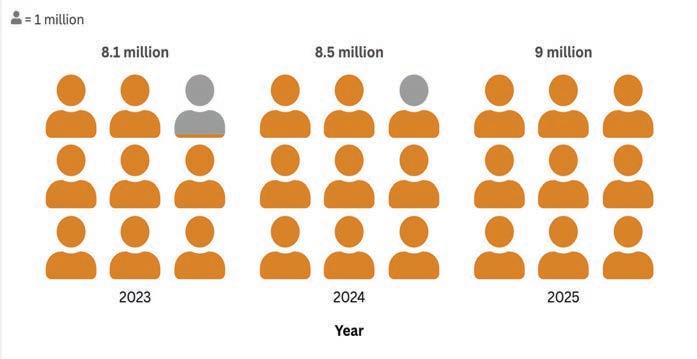
The number of visits in 2025 is an improvement from previous years, reflecting an upward trend since 2023. In 2024, there were 8.5 million visits downtown, and 2023 saw 8.1 million visits. Betsy Potter, executive director of the Iowa City Downtown District, said these numbers show consistency.

Burge bathroom upgrade draws mixed reactions
The $20.3 million in renovations will convert Burge bathrooms into a pod-style.
“The two lobby bathrooms, especially, I’d say, compared to some other ones I’ve seen. But $20 million definitely should not go towards just the bathrooms. Maybe a little bit, but not that much.”
University of Iowa students have a new factor to consider as they pick a dorm of their choice for the Feb. 1 housing deadline: Burge Residence hall’s modernization project.
The Iowa Board of Regents approved the $20.3 million renovation in November.
The renovations will turn communal bathrooms from the six floors into pod-style, single user bathrooms, similar to those in Catlett and Hillcrest residence halls.
Burge currently utilizes communal style bathrooms, or a larger space with rows of stalls and sinks. INVISION Architecture LLC will take on construction, which will take place during the summer months from 2025 to 2030.
Caleb Westra, a second-year student at the UI and a resident assistant at Burge, said there is a need for bathroom renovations, but he is surprised by the university’s current price point.
“Some of them look pretty old,” he said.
While Westra agrees with the university’s plan for upgraded plumbing, he said he disagrees with the pod style if Burge will continue to not offer more co-ed living. Westra said the privacy of a pod is not needed if all the residents on the floor are the same gender.
“If you’re trying to increase more living, make accommodations for more toilets, more showers,” he said. “Pods would limit bathroom availability. I feel like people would abuse those.” Westra said on his floor, he has heard requests from students to modernize the downstairs study space instead of any requests to renovate the bathrooms.
“Some people complain about the lack of games, saying, ‘You only have one pool table,’ and then Currier has four of them,” he said. “I heard, ‘Get more games down there, more space, update some of the equipment.’”
Westra said renovated bathrooms could lead more students to choose Burge Residence Hall over other dorms.
“Burge has always been attractive,” he said. “People want Burge right away. It’s always the one that’s filled up. It’s right next to all the buildings, especially Tippie [College of Business] and the Chemistry Building. The location is in our favor.”
Ishan Dhanani, a UI fourth-year student and a resident assistant at Burge, said he believes Burge will make their floors co-ed with the renovations, making the pod-style bathrooms a welcome change for him and other RAs.
“I think it would help out a lot,” he said. “It would reduce our incident reports. We would never have to write up girls for going into the guy’s bathroom because that wouldn’t be an issue. That would be really helpful.”
Dhanani said he thinks the privacy of one room could prevent residents from running into disorderly crowds at night.
Dhanani said he hopes the changes will
Klimesh said Senate Republicans plan on comparing proposals between the two branches of government to better understand where they align rather than dismissing Reynolds’ priorities due to her outgoing status.
Similarly, Grassley said he does not foresee Reynolds’ departure having a negative impact on his party’s effectiveness to push legislation through this session, noting the Republican agenda would be the same regardless.
“She’s still the governor of the state of Iowa,” Grassley said. “We still have a trifecta of all Republicans.”
However, he noted the imminent change may have a political impact within the state Democratic party, but Grassley said he does not anticipate the upcoming election changing the opposing party’s legislative goals either.
“There are opportunities,” Grassley said, referring to Democrats. “Things have changed, we would argue we have been very clear, we lay out an agenda of things we want to get done, we tell Iowans what we want to do, and we have been able to accomplish those things.”
State Democrats largely see Reynolds’ last session as an opportunity for the minority party to make up ground, both through legislation and favorability among Iowans.
Having served since 2017, Reynolds has become the least popular governor in the country, with a disapproval rating at 53 percent.
As of Oct. 15 Reynolds held the title of most unpopular governor for seven consecutive years. She is one of only two governors with an underwater net approval rating, the other being Rhode Island Gov. Dan McKee, a Democrat.
Reynolds’ ranking followed reports by the U.S. Bureau of Economic Analysis indicating Iowa has fallen to 49th nationally in overall economic performance and 48th in personal income growth under the Trump administration. The state’s once top-ranked public school system sits near the middle nationally. According to the 2025 Cancer in Iowa report, the state ranked second-highest in the nation for cancer and cancer growth.
“Iowa Republicans have followed Kim Reynolds down a disastrous path,” the Iowa Democratic Party said in an Oct. 17 news release. “Time for change.”
Iowa Sen. Sarah Trone Garriott, D-Windsor Heights, a candidate vying for the Democratic nomination for Iowa’s 3rd Congressional District, said Reynolds’ lame-duck status offers an opportunity for Democrats to draw attention to some of the “challenges [Iowa] is being left with as a result of her leadership.” She said some of the most divisive decisions from the governor’s tenure will impact the legacy Reynolds leaves behind, but Iowans are feeling the impacts of damages, and they know Reynolds has not served the state’s best interest.
Trone Garriott noted the budget deficit and ducation avings Accounts, or private school vouchers, as two detrimental results of Reynolds’ leadership.
Iowa’s general revenue is projected to fall around $800 million in fiscal year , according to estimates from the Iowa Revenue Estimating Conference. Because of this, the state budget is estimated to fall nearly million in fiscal year 2027, and the state will have to dip into both reserve funds and the Taxpayer Relief Fund to cover the cost. Fiscal year 2027 begins Oct. 1 and will run through Sept. , . Private school vouchers offer students thousands of state-funded dollars to attend private high schools in the state. The vouchers are estimated to have cost the state between $314 to $349 million in the 2024-2025 school year, according to KCCI.
The projections are based on the application of the number of students in the program multiplied by
the , provided to each recip ient. The number lands nearly a million dollars over the initial esti mated cost of the program.
Trone Garriott is among the vast majority of state Democrats who criticize the program as being too expensive and detrimental to Iowa’s public school system.
She said Iowans are feeling the financial hardship stemming from Reynolds’ term, and Democrats have an opportunity to step in at the upcoming election.
“People are really reflecting on that legacy, starting to think about what’s next, and I think we have some really compelling opportunities for different leader ship,” Trone Garriott said.
Iowa Rep. Adam Zabner, D-Iowa City, said Democrats in his cham ber have an opportunity to make progress ahead of Reynolds’ depar ture. He said House Democrats plan to emphasize what a bluer legislature and governor’s office could look like.

Zabner said it is clear to him that Iowans are not happy with the direction the state is headed, and he sees it as a chance to present people with what an alternative agenda could mean.
“It’s time for change,” Zabner said. “The reason Gov. Reynolds is not running for reelection is because after nine years, Iowans are worse off.”
Iowa Senate Minority Leader Janice Weiner, D-Iowa City, hopes the impending change may bring a chance for bipartisan legislation ahead of the transitional election season.
She is optimistic the session will bring important negotiations between her Republican colleagues out from behind closed doors to provide meaningful change, specifically mentioning property tax relief, to Iowans. Weiner wondered if Reynolds’ status would lead to more collaboration between the parties.
“The question that I’m asking myself, and we’re all looking at, is: ‘To what extent will our colleagues in the House and the Senate, the majority party, go to honor the governor’s wishes?’” Weiner said.
Trone Garriott had similar curiosities and questioned if party leaders would be as responsive to the governor’s direction or if they would pave the way for their own agenda this time around.
She expects the governor’s exit will shift Reynolds’ relationship with state Republican party leaders, alluding to a more disjointed dynamic this session.
Trone Garriott has already noticed some “fissures” in the Republican majority on the back end of Reynolds’ term, citing the 12 state senators who broke from party leadership to demand a vote on a carbon capture pipeline bill in May 2025.
“That was pretty unprecedented for me,” Trone Garriott said. “In the time ’ve been in office , enate Republicans] have always been in perfect agreement, or at least they would vote in perfect agreement.”
Lawmakers and candidates say Reynolds’ looming departure is reshaping not only priorities at the state capital but also the dynamics of high-profile national and statewide races taking shape in . Reynolds’ agenda is unfolding against the backdrop of competitive congressional races and an open governor’s race that has already drawn national attention.
Konfrst said Reynolds appears focused on finishing long-sought policy goals before leaving office, particularly property tax changes, but questioned whether lawmakers across the aisle will align behind them.
“It seems like property taxes is a thing she wants to get knocked out [of] here this session,” Konfrst said.
State Auditor Rob Sand, a Democrat and gubernatorial contender, said Reynolds’ final session is marked equally by what she is and is not addressing.
Sand pointed to the state’s budget outlook and economic indicators as issues likely to be featured
prominently in campaign messaging well beyond Iowa.
“We didn’t hear about a record state budget deficit,” Sand said following Reynolds’ Condition of the State address. “We didn’t hear about the economic condition of the state of Iowa being 48th in personal income.”
Sand said those omissions will resonate as candidates seek to draw contrasts in national and statewide races.
Several Democrats running for Congress say Reynolds’ exit has elevated scrutiny of her record, particularly as Iowa becomes a battleground for control of the U.S. House.
Trone Garriott, who is running
on Jan. 12, only the second day of session, aimed at keeping both the Iowa City and Des Moines locations open. The bill, House File 2025, was introduced in a bipartisan effort by abner, ep. Dave Jacoby, D-Coralville, Rep. Bobby Kaufmann, R-Wilton, and Rep. Charley Thomson, R-Charles City.
“ his bill specifies the historical research resource centers that the Department of Administrative Services must maintain under current law in Des Moines and Iowa City must be in buildings located in those cities, ade uately staffed, and open to the public,” the legislation reads.
Zabner also said he will keep
against Konfrst in the Democratic primary for Iowa’s 3rd Congressional District, said her campaign has already drawn increased interest from national media because of the overlapping races.
“Because I am running for a higher office, get a little bit more attention from state and national media,” Trone Garriott said, adding that issues debated at the state capitol, including health care access and education funding, are increasingly framed as national concerns.
As of Jan. 15, The Cook Political Report reported Trone Garriott’s campaign is building the momentum to defeat U.S. Rep.. Zach Nunn, an Ankeny Republican who represents the 3rd Congressional District.
The report follows a recent Change Research poll that showed Konfrst beating Nunn and Trone Garriott leading Nunn 53 percent to 40 percent — the strongest performance of any Democrat tested against Nunn according to The Cook Political Report.
Konfrst said even with a crowded election calendar, she hopes lawmakers resist turning the session into a campaign stage.
“It’s an election year, and a lot of us are running for something else,” she said. “That’s really going to affect what some of the floor debate looks like and what some of the bills coming up look like.”
For Democrats, Reynolds’ upcoming departure has created an opportunity to reframe Iowa’s challenges as the result of years of Republican leadership — a message likely to be echoed in congressional campaigns nationwide.
“ eople are definitely reflecting on the governor’s tenure and her legacy now as she’s on her way out,” Trone Garriott said, pointing to ongoing budget deficits and education funding pressures. “It’s drawing attention to the challenges we’re being left with as a state.” and said those reflections are likely to intensify as candidates seek to connect state policy decisions to national debates over economic growth, public accountability, and fiscal responsibility.
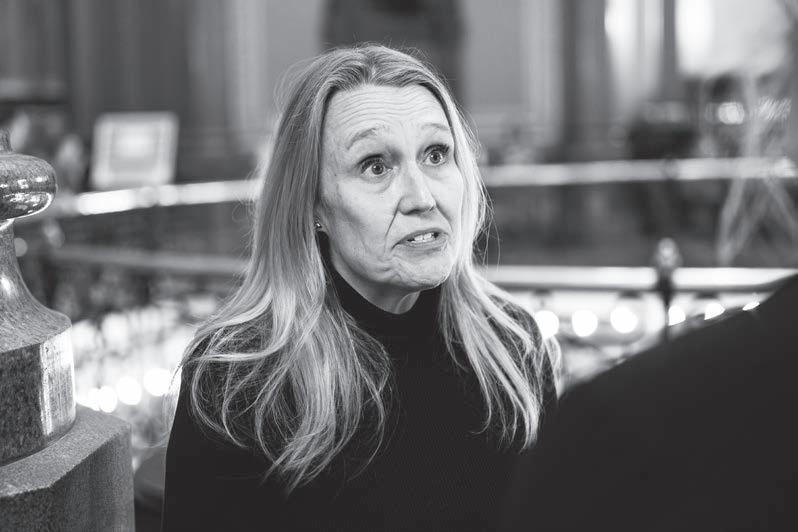
“The things that we didn’t hear tonight are some of the biggest problems in front of us right now,” Sand said, following Reynolds’ annual address on Jan. 13.
While state legislators are largely focused on lowering the cost of living — Republicans pinning property tax reform, and Democrats pinning lowering the cost of rent and groceries — local officials are emphasizing how they can best serve the people of Johnson County.
Zabner, an Iowa City resident, said the closure of the State Historical Society of Iowa building has sparked concern among his constituents. Because of this, he was one of four legislators to file a bill
the University of Iowa in mind to “ensure we are able to provide affordable, world-class education.”
Zabner said the price of housing is his personal top priority, which aligns with affordability initiatives of the state Democratic party. He said his opportunity to work as a ranking member of the Local Government Committee has allowed him to work on policies that expand the construction of housing across Iowa, which he hopes will lower the median age of firsttime homeownership.
A report from the National Association of Realtors found the typical age of first-time homebuyers has risen to an all-time high in 2025, averaging 40 years.
“What I hear from my friends is that the idea of homeownership has become a joke to them,” Zabner said.
He also called attention to Iowa’s public school system and said he wants to prioritize making it “the best in the country again,” along with focusing on quality of life in Iowa. He said this will be key for House Democrats and said years of a Republican trifecta has caused prices to rise, leading to a decline among well-being statewide.
Iowa Rep. Judd Lawler, R-Hardin Township, the only Republican state legislator from Johnson County, did not respond to an interview request by the time of publication.
Weiner said Senate Democrats are also laser-focused on affordability. She said it will be crucial to lower the cost of housing, child care, health care, and groceries to prevent people from leaving the state.
“ f people can’t afford to live here, then they might go elsewhere,” Weiner said. “And we need young people here. We need lots. We need to be able to attract and retain people.”
“Brain drain,” or the outward migration of young people from the state, has not only cost Iowa revenue but has led to a workforce shortage in the state. Legislators on both sides of the aisle have voiced concern on the subject and intend to introduce various bills aimed at targeting the phenomenon.
In a 2025 study, Common Sense Institute Iowa, a nonpartisan research organization, found Iowa had the seventh highest cumulative net outmigration of college graduates in the country. The study estimated local and state governments forgo nearly $400,000 in tax revenue per outgoing graduate as well as a . billion loss in D by . Weiner emphasized the need to call attention to the issues Iowans care about most to keep people from leaving the state.
“Whether it’s housing, child care, food, health care, or any other issue you can imagine that is keeping Iowans up at night,” Weiner said.
“That is what [Iowans] really want us to focus on, and that is why it’s our main focus during the session.”

supportive small business community.”
While some businesses closed, other businesses moved locations within the owa ity Downtown District. he former Active ndeavors location on linton treet became the relocated home for Fieldhouse ar and rill. Haard ounty ar and en housand illages also shifted locations within the district.
“We’ll likely see more business movement next year,” otter said. “ hat’s not unusual. losures happen for many reasons, including retirement or life changes, and that creates opportunities for new concepts.”
Potter said the district relies on this data to understand daily traffic trends, particularly to evaluate the success of events and identify peak periods of activity. n , weekends consistently dominated downtown traffic, illustrated by aggregate foot traffic data.
“ aturdays saw a little over million visits, while Fridays recorded about . million,” otter said. “During the week, Wednesday and hursday were closer to about million visits each, so there’s a definite weekend bump, but weekdays are still active.”
Major events also play a role in driving up traffic numbers. Home football games are some of the busiest days downtown, while holidays such as hristmas and hanksgiving bring a noticeable dip, otter said.
The downtown district puts on a number of events for businesses and their customers to participate in, including aste of owa ity, hop rawls, and ktoberfest. hese events attract traffic to businesses in the district.
“We saw extremely high success in all of the events we participated in through the district,” Maggy Moral, owner of clothing store evival, said. “We are constantly getting new residents that are able to discover us and other
businesses downtown.”
eyond foot traffic, the district’s business landscape remained relatively steady in . he downtown vacancy rate hovered at around percent, a figure otter described as “low” compared to the national average of office spaces, which is around percent. While this stability limited the number of new businesses entering the area, it also meant fewer closures overall.
After years in business, ortado Mediterranean afe announced its closure on nstagram on an. . ielo, a clothing store in the owa ity edestrian Mall, announced its closing on Dec. .
“Due to many factors outside of our control, our business was hit very hard over the last couple of years,” Monica Ferguson, owner of ielo, said. “Our biggest challenges were rising prices everything from shopping bags to wholesale apparel went up significantly.” Ferguson said the owa ity Downtown District was extremely helpful to her business, and community members did what they could to keep her business afloat.
“We absolutely loved being downtown in the Ped Mall. Our customers were ama ing, and we made many friends and connections,” Ferguson said. “ owa ity is a very uni ue and exciting city, with a

address the disparity in the bathroom sizes across Burge Residence Hall.
“My bathroom compared to the one floor up, the girls bathroom above, is probably half the si e,” he said. “We have six showers, three stalls, two sinks, two urinals. think the girls floor above has showers.”
Dhanani said communal-style bathrooms have a negative connotation around campus, so changing the bathrooms to pods will attract more residents.
“ think urge would become even more attractive after that,” he said. “ think it’s already attractive because we have the dining hall and the linton treet Market . o people know we’re in owa cold months, they don’t want to
For owa ity resident ee revino, who fre uents downtown multiple times per week, the district’s variety is what keeps her coming back. revino said downtown felt more lively in than it did in previous years, especially compared to the D- pandemic era.
“ his year has felt very vibrant,”
revino said. “ D- really did a number on people’s social mobility, but downtown feels like a place people want to be again.”
The flexibility of downtown offerings allows visits at any time of day and many activities, revino said.
“I can go downtown at 8 a.m. to get a coffee, p.m. for lunch and some shop hopping, and p.m. for a show or just to meet up with friends at a bar,” revino said. For revino, community engagement is important. She said recurring community events play a major role in drawing people downtown and sustaining local businesses.
“ vents like ride, the lock arty, and the Arts Festival are things that make owa ity a great place to experience the benefits of a lively city while also fostering the tight-knit community of a smaller town,” revino said.
Downtown Iowa City foot tra ic in 2025
The number of visits to the downtown district has grown by nearly 1 million over the last two years.
go outside.”
sla Hamilton, a first-year student, said while she appreciates the university accommodating students at Burge Residence Hall through the renovations, she wishes more attention would be brought to her dorm, Mayflower esidence Hall.
“ he fact that they’re renovating urge, while ’m sure that they do need that as well, it feels a little superficial,” she said. “ heir bathrooms are gross, but our everything is gross.”
Mayflower Residence Hall remains open despite multiple past efforts by the niversity of owa to sell or redevelop the building.
Proposals of selling the building were ultimately dropped, allowing Mayflower to continue housing students while the university reassessed its long-term housing needs.
Hamilton said while the first floor of Mayflower was renovated in the summer, the same attention has not been brought to the rest of the dorm.
Hamilton said both her kitchen and bathroom have stunk over the semester, no matter how much she tries to clean them.
“It feels a little crazy because we were put here,” she said. “None of us chose Mayflower. We got it as a last choice. And so as freshmen, it’s weird to be living in a suite style without a kitchen that really properly works and is gross.”
Hamilton said beside renovating the kitchens, she’d like to see the Mayflower Market revamped.
“ t’s supposed to be like the linton treet Market at urge, but it’s definitely not,” she said. “ t’s very understocked, and they don’t really have many food options and definitely not many
nutritious options.”
Hamilton said while it must be difficult for the university to make a list of priorities for dorms, she feels Mayflower’s issues have gone on longer than most.
“ t feels a little like urge is central, and that’s what a lot of people see when they come to campus,” she said. “Mayflower feels like it’s shoved to the side and like they don’t want people to think about it.” he university’s priority to renovate Burge remains.
enior ice resident and niversity Architect od ehnert noted in the regents meeting in November that Burge is the second largest residence hall on campus and must be continually modernized to sustain the large number of residents.
“Part of this is student life and the housing and dining’s continued effort to keep our residence halls moderni ed,” he said.

OPINIONS
A year of Trump invites chaos
The president’s tumultous second term boasts power without accountability.

Jan. 20 marked exactly one year since President Donald Trump was inaugu rated into his second term. It has been a long, overwhelming, and unpredictable 365 days.
“I truly believe Donald Trump has accomplished many things so far,” Uni versity of Iowa communications student Alex adcliff said. “ hose things include shutting down our government for the second time, destroying families with no remorse or accountability, pardoning evil people, and violating international law.” adcliff is right.
In just one year, the Trump admin istration has completely disgraced democratic and humanitarian values, while jeopardizing the institutional integrity of the government. The only thing left to do is to stand up, protest, and vote against Trump’s wielding of unsolicited power.
Haven White, a second-year UI stu dent, knew once Trump got elected, things would go bad quickly, but she never expected this degree of tension.

“It’s honestly appalling how many things the administration has been able to get away with,” White said.
Nowhere is this more visible than in the expansion of immigration enforcement. Under the guise of criminal reform and national security, U.S. Immigration and Customs Enforcement, or ICE, has gotten away with an absurd amount of brutality and dehumanization.
Data shows that the majority of ICE detainees have no criminal record, and among those with convictions, many committed only minor offenses. Agents continue to aggressively arrest people off the street, no matter their legal status. he brutal, unjustified murder of . .
overnment officials and agents are on a power trip, and it is our president who is allowing it to happen.
nstead of offering pathways to citizenship, Trump has subjected over 30 African states and many other Middle Eastern countries to a travel or visa ban.
In his most recent act, Trump froze visa processing for 75 countries, including Iran, Russia, and Pakistan.
“America has been a country of immigrants and refugees since the Declaration of Independence. This kind of action goes against the foundation of what we stand for,” White said.
citizen Renee Good in Minnesota by ICE agent Jonathan Ross is the latest tragedy. It is also the latest example of the government lying directly to citizens. Even with videos clearly showing an unprovoked shooting, government officials are blatantly denying any guilt by ICE.
“You have a woman who aimed her car at a law enforcement officer and pressed on the accelerator. Nobody debates that,” Vice President J.D. Vance said in response to Good’s murder.
Within 24 hours of Good’s murder, Homeland Security Secretary Kristi Noem ordered limitations on congressional oversight over ICE facilities.
Anti-immigration is only one piece of this administration’s agenda.
Just days after the new year, Trump escalated U.S. involvement in Venezuela by authorizing bombs and kidnapping the Venezuelan President Nicolás Maduro. Abandoning diplomatic norms, Trump revived an aggressively expansionist foreign policy that has alarmed both allies and international watchdogs.
UI professor of American foreign policy Brian Lai noted this change in foreign policy under the Trump administration.
“Past U.S. presidents may have, similar to Trump, disagreed with the policies of allies, particularly NATO allies, but they
did not bring it into the open and did not challenge our allies the way that Trump has,” Lai said.
With three years ahead of him, it is hard to know how these tensions will fare.
“The question that will need to be answered is what are the long-term implications of policies that have upset allies, such as extensive use of tariffs, how we have addressed the Russia-Ukraine conflict, and what ultimately happens in Venezuela and Latin America,” Lai said.
This is only the most recent damage. Domestically, Trump repeatedly tested the limits of executive power and blurred the line between the presidency and personal authority.
hroughout , rump’s efforts to “Make America Great Again” included appointing officials for their loyalty rather than competence and experience. This has weakened federal agencies by sidelining professionals.
With U.S. Secretary of Health and Human Services Robert F. Kennedy Jr.’s rhetoric, Trump is set to cut millions from the National Institutes of Health, including cancer research. Similar loyalty-driven decisions have reshaped agencies like the Environmental Protection Agency, or EPA. The EPA launched its biggest deregulatory bill in early 2025 and has recently weakened its air pollution regulations.
It is irrefutable, or at least it should be, that the Trump administration has made a staggering change to American domestic, foreign, and economic policy in the last year.
But this change wouldn’t be possible without rump’s efforts to change societal boundaries.
This slow normalization of the unthinkable is not a sudden democratic backslide. And it didn’t start a year ago. It is the natural continuation of an extreme movement that started five years ago, on Jan. 6, 2021, when Trump incited violence at the nation’s capitol building, stepping over the boundary for the first time. The Jan. 6 riot never really ended; the mob just moved into the White House. White has tried raising awareness of current events by reposting stories on Instagram. She has called her representatives in Missouri and Iowa and has attended every protest she could. “There is only so much I can do. Past these actions, others and I feel completely powerless. It just feels so out of our control,” she said. With some of the most corrupt men in charge of one of the world’s most powerful governments, it is easy to believe resistance has become trivial. This feeling is not accidental. Exhaustion and hopelessness, combined with a non-stop news cycle, are great political tools. For the Trump administration, disengagement is the goal. It is a midterm year, and governmental change seems possible. Trump himself has admitted losing control of Congress would put his presidency at risk.
“You've got to win the midterms,” he said. “Because if we don’t win the midterms, it’s just going to be — I mean, they’ll find a reason to impeach me.” That statement alone should show that inaction comes at a cost.
If it doesn’t, take a look at the last year of Trump's America. Because democracy doesn’t just disappear. We just stop trying to fight for it.

Iowa, Johnson County tra ic fatalities drop in 2025
The number of deaths fell to one in 2025, following Iowa’s historic low.
Johnson County followed a statewide trend of decreased traffic-related deaths, dropping from eight driving fatalities in 2024 to one in 2025.
For the first time in years, since the state of owa began recording traffic fatalities in , the state saw fewer than 300 deaths in 2025. There were traffic fatalities reported last year, dropping from 357 in 2024 to 260 in just one fewer than the fatalities recorded in , according to owa Department of ransportation, or D , records.
arry rant, state safety planner for the owa D , said the short-term goal was always to be under 300 fatalities in a year.
“ his is a really big deal for owa,”
Grant said. “Just the fact that if this holds the for fatalities for , that will be the lowest ever fatalities that the state of owa has had for motor vehicle crashes.”
If the number remains unchanged over the next few months with no new deaths reported from , owa will achieve its lowest recorded traffic deaths in history.
While traffic fatalities have gone down, the overall amount of crashes in Johnson County and Iowa have increased. In ohnson ounty in , the total number of crashes was , . n the total was , , according to the owa Crash Analysis Tool.
“ tatewide, the serious injuries were down, along with minor injuries were down, but the total crashes were up. o it just seems like vehicles are safer, and then the crashes happen,” eth ean, a public resource officer for the owa tate Patrol in the Johnson and Linn County area, said.
ean attributed the rise in crashes to multiple factors, including higher traffic volume and more winter weather

conditions in early December.
When coming up with solutions for better road conditions, the D works with universities, including the niversity of owa, on a weekly basis, looking at crash data and figuring out what should be focus areas.
“A lot of the universities in cooperation with DOT get that data so we can analyze the roadways in Iowa to see how the vehicles and the drivers are reacting to the roadway. hat helps us define, h, we need to redesign this type of intersection, or we need to redesign this roadway type,’” rant said. ehind the drop in overall traffic fatalities are declines in specific types
Johnson County crash fatalities
Deaths caused by motor vehicle crashes are at at all time low in the state, with Johnson County seeing a downward trend over the last few years.
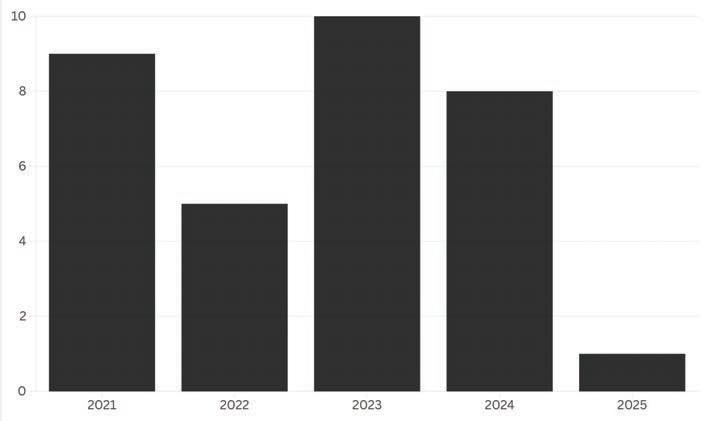
of crashes, according to state data, with reductions in motorcycle, intersection, and multiple-fatality crashes.
“We reduced motorcycle fatalities on average by about fatalities last year, and that is huge. Motorcycle fatalities in Iowa usually come in at about 60 to the mid- s fatalities a year, and last year we had ,” rant said.
Grant also attributed lower fatalities to mergency Medical ervices, or M , and how quickly they have been able to get to crash sites.
“ owa is a very rural state, but we’ve got some great volunteer services out there — firefighters and M and just getting those folks there sooner and getting that lifesaving care sooner is also reducing fatalities,” rant said.
n late eptember , ohnson County EMS opened its fourth location in the county, owa ity Fire Department 2 on the west side.
en ymonds, assistant director of the ohnson ounty Ambulance ervice, said when he first started in , the county had three areas they were responding from, and now the service is up to four, they are able to give a quicker response.
“ ime is of the essence, and you want to get them to definitive care as soon as possible, and watching our metrics, I know that we do a great job hitting Johnson County at meeting those metrics and exceeding those metrics,” Symonds said.
Another component to the fatality drop is car technology, rant said, with newer cars including intuitive features such as airbags, anti-lock brakes, adaptive cruise control, and lane assist.
In addition to changes in crash patterns, rant said owa’s roads have also played a role in the reducing of fatalities.
“ he number one crash, especially a fatality crash, in the state of owa is a runoff-the-road crash. When we looked at that, and we added, we were at about 56 percent of our center line rumbles on our primary two-lane roads. ast year, we increased it to percent. o we really went out and retrofitted a lot of roadways with those rumble strips,” rant said.
The DOT has also increased the thickness of the lines on roads, adding reflective beads to the paint, and added reflective strips to curves on the road. n the next few years, rant expects fatalities to plateau, with numbers not decreasing rapidly until car technology further advances.
“ t takes about years to incorporate a safety element within that vehicle. Lane assist started probably years ago, and now you’re just starting to see more and more of the vehicles that have that lane assist,” rant said. “Most people keep a car between and years, and then they get rid of them. So that old technology goes out the door. We get the newer technology.”
Iowa lawmakers propose SHS requirement changes
Two conflicting bills call for changes to historical research centers in Iowa.
As Iowa lawmakers return to the state capitol this session, two bills targeting the future of the nearly -year-old tate Historical Society of Iowa Centennial uilding join the months-long fight on the fate of the facility.
House File 2025 was introduced on an. and changes how historical resource research centers, such as the owa ity tate Historical ociety, are defined in Iowa.
The legislation adds to previous Iowa law, re uiring that a research center not only be present in Iowa City and Des Moines but that both facilities be ade uately staffed and open to the public.
A day later, enate tudy ill was introduced, opting to change the language of Iowa law to only require one research center to be maintained in Des Moines.
oth bills look to implement a permanent solution to the ongoing debate around the centennial building’s closure after a temporary memorandum of understanding was filed between the State Historical Society of Iowa under the Department of Administrative Services and the University of Iowa.
nder the memorandum, which runs through the end of une, the university will be providing library space where residents can access State Historical ociety of owa materials, a responsibility which the Department of Administrative Services claims counts the library space as the state’s official research center in Iowa City. Anthony ahn, the state archivist of the tate Historical ociety of owa, said that under the memorandum, the goal of the historical society remains to provide as much access to historical records to the public as possible as it faces an , budget shortfall.
Jahn said residents could visit the
state historical society’s website and request to review a historical collection of their choice. The historical society would then determine if the item was safe to ship to the university, in which case the collection would be shipped and temporarily displayed in the Special Collections Reading Room on the third floor of the university library, ahn said.
Jahn said a similar system is found in the state historical societies of Wisconsin and Missouri.
“This is very commonplace for institutions,” he said. “ oaning for the purposes of researching some collection or some piece of material. Neighboring states have this sort of arrangement where these collections will move between repositories.”
Although the method is used by neighboring states, Mary ennett, a retired special collections coordinator at the Iowa City State Historical ociety, said the agreement is not as streamlined as the Department of Administrative Services claims it to be.
“The entire month can only comprise three banker boxes that’s about nine field records,” she said. “ o, if people in owa ity asked for materials, only the first three that asked are probably going to get it because they’re going to have to wait until the next month.”
ennett made her own re uest for collections through the university’s system to find most of her requested materials were denied because they were determined to be too fragile to leave the Des Moines facility.
ennett said if students are also denied their collections re uest, they would have to travel all the way to Des Moines or pay for copies of historical documents.
“ t’s really hampering the ability of university students who are choosing history as an area of interest to pursue that topic; the University of Iowa has the only Ph.D. program in history in the state of owa,” she said.
ennett, with several other historians, filed a lawsuit against the historical

society over the centennial building’s closure. The lawsuit brought about a temporary injunction in ctober, forcing the historical society to temporarily cease removing collections from the Iowa City location.
ennett said the process could be ongoing until , something she hopes will not be the case.
ames arew, an owa ity attorney representing the plaintiffs of the lawsuit against the historical society, said his strategy will remain the same as it was for the temporary injunction.
“We will argue that the court had it right when it issued the preliminary injunction,” he said. “ y the plain wording of the statute the state of Iowa is required to have a research facility here in owa ity.”
Larew said he would be surprised if both Democrats and Republicans in the owa House and enate don’t come together to oppose the Centennial uilding’s closure.
“The legislature was not aware of
this action to close,” he said. “ t was announced after the legislature had gone home last session. There were no public hearings, there were no meetings, there were no attempts to write administrative rules interpreting the statute. So there was lots of surprise there.”
ennett said the goal of preventing the centennial building’s shutdown could be far away, but the ave owa History Coalition will still be raising awareness for the local history yet to be removed. he coalition will host a Founder’s Day celebration on an. from to on p.m. at the Iowa City Public Library. The event will commemorate the founding of the State Historical Society of Iowa and Iowa ity, which took place on an. , . “That institution survived the Civil War, the reat Depression, two world wars, the pandemic, you name it. hat institution has always been supported,” ennett said. “ don’t understand how these people have the arrogance to say they can kill it off when generations of owans have depended on it.”
Iowa changes SNAP, returns to Summer EBT
Anti-hunger experts, advocates say dignity and choice are less accessible.
ignificant changes to the upplemental Nutrition Assistance rogram, or NA , took effect an. , reshaping what hundreds of thousands of owans can buy with food assistance benefits while reopening the door to a long-delayed summer nutrition program for children.
ogether, the policies reflect a shift in how owa approaches hunger, public health, and personal choice and they are already reverberating through grocery stores, food pantries, and low-income households across owa.
n an ctober news release announcing the upcoming changes, the owa Department of Health and Human ervices, or owa HH said the restrictions are intended to “promote healthy food choices” and better align NA purchases with foods, considered essential under owa’s tax code, like bread, milk, eggs, fruits, and vegetables.
he department said limiting certain items including candy, soda and some in-store prepared foods would help ensure nutrition assistance dollars are spent on products that support overall health.
owa HH officials have argued the changes align NA with broader state efforts to address diet-related chronic disease, including obesity. he department framed the waiver as encouraging purchases of staple foods such as fruits, vegetables, meat, dairy, and grains, rather than highly processed items.
owa HH acknowledged the changes would re uire adjustments by retailers and NA participants. he department said it has worked with grocery stores to update point-of-sale systems and has published guidance to help families understand which items remain eligible under the new rules.
nder a waiver approved by the . . Department of Agriculture, owa implemented the most restrictive NA food eligibility rules in the country, according to advocates who track federal nutrition policy.
At the same time, owa ov. im eynolds announced owa would participate in ummer lectronic enefit ransfer, or ummer , also known as N ucks, after opting out for the past two years. owa would only rejoin the summer program if it were allowed to impose tighter limits on NA purchases.
he result is a policy package the governor said will promote healthier eating, while critics argue it increases confusion, stigma, and barriers for families already struggling with food insecurity.
“ owa was one of the first states in the country to refocus two federal food assistance programs on the reason they were created to help low-income families afford nutritious foods,” eynolds said in her annual ondition of the tate address on an. . “With DA’s approval, NA and ummer in owa will help families purchase fresh produce, grains, meat, and dairy but candy, sweets, and soft drinks are no longer covered.”
he NA restrictions that took effect an. go far beyond bans on soda and candy that other states have proposed or enacted. owa tied NA eligibility to the state’s tax code, meaning foods that are considered taxable under owa law, like prepared foods and baked goods, are now largely ineligible for purchase with NA benefits.
uke l inga, a policy and advocacy manager at the owa Hunger oalition, who works extensively on NA and hunger issues, said owa’s approach is unusually broad and difficult to interpret.
“ ’m not a lawyer, but do NA policy work, and ’m even having a hard time wrapping my head around some of these re uirements,” he said.
While soda and candy are among the prohibited items, l inga said the

definitions are not straightforward. ugar-sweetened beverages, such as sweet tea and lemonade, are banned, as are ero-calorie and ero-sugar sodas.
l inga said products such as granola bars without flour fall under the state’s candy definition, while items like a wix bar, which contains flour, remain eligible. he most overlooked changes, l inga said, involve prepared foods.
“ f a store is selling food that is prepared for consumption on site, those items are no longer eligible,” he said.
NA already prohibited hot prepared foods. owa’s waiver expands that restriction to certain cold prepared items, depending on how and where they are sold.
According to l inga, a grocery store that cuts fruit and sells it in a cup may be allowed to accept NA unless the cup includes a fork. old deli sandwiches may be ineligible if the store has a microwave available for customer use, even if the customer does not intend to heat the food.
Food pantry leaders across ohnson ounty say the new rules are likely to create confusion at checkout counters and increase reliance on charitable food systems.
oughly , owans rely on NA , including about , residents in ohnson ounty, according to the DA. yan obst, executive director at the North iberty ommunity antry, said restricting food choices makes it harder to navigate an already complex system.
“ y limiting or restricting food choices, it just makes it harder for people and for retailers to know what’s eligible and how they can best feed their families,” obst said.
He said pantry staff rarely see NA recipients buying excessive amounts of candy or sugary drinks.
“ ur experience at the food pantry is that people are meeting their household dietary needs,” he said. “ hey are not exclusively trying to find candy or sugary drinks.”
At the oralville ommunity Food antry, executive director ohn oller said the restrictions could disproportionately harm individuals who lack full kitchens or stable housing.
“ hey’re just adding an additional burden for families who are trying to provide for themselves and their kids,” oller said.
“ ingle households or individuals who don’t have access to kitchens won’t be able to purchase ready-to-eat sandwiches or rotisserie chickens, even though those foods can be nutritious.”
oller said he expects increased demand for prepared foods at food pantries items
that pantries themselves often struggle to source consistently.
Advocates repeatedly raised concerns about dignity and stigma and said the new policies are not going to work the same for everyone.
“ eople can define healthy how they want but someone who’s hypoglycemic might need to carry a candy bar around with them, or someone who maybe has kidney issues and actually shouldn’t eat bananas or potatoes,” l inga said.
“ think we should be trusting people to make those decisions for their own family, and we need to be empowering them with ade uate benefits.”
l inga said the policy risks putting NA recipients in hard situations at checkout lines.
“We’re really trying to avoid people confronting a situation where the cashier is telling them this doesn’t ualify and they’re confused,” he said. “ hat also puts the cashier in a very awkward position.”
eyond confusion, l inga said the restrictions send a broader message.
“ he message it sends is that the state of owa does not trust low-income families and parents to make the best food choices for their families,” he said. obst pointed to cultural traditions and everyday moments the policy overlooks, like cakes for special occasions.
“ ust because somebody is experiencing poverty doesn’t mean they don’t deserve celebrations like birthdays,” he said. “ his is taking a societal problem and placing the blame on neighbors who had nothing to do with these political choices.”
oller said stigma already discourages people from applying for or using NA .
“ eople already feel a degree of shame because of the stigma attached to utili ing NA benefits,” he said. “ olicymakers telling you how to make the best choice for your family that’s a hit to dignity.”
l inga said higher stigma is associated with lower participation in food assistance programs. NA enrollment in owa is already at its lowest level since , while food banks report record demand.
eynolds has said the restrictions promote healthier eating and address childhood obesity, while critics say the policy does little to make nutritious food more affordable.
“ estricting unhealthy food does nothing to promote healthy food choices,” l inga said. “ he number one barrier for NA participants eating healthier is the high cost, and this does nothing to address affordability.”

oller said the majority of NA participants want to consume more fresh fruits and vegetables and high- uality proteins, but they simply can’t afford them.
“ hese NA restrictions do nothing to address the underlying issue that impacts the health of every American healthier foods are more expensive,” he said. “ ntil we address that, these types of restrictions just add additional hoops for families to jump through and cause unnecessary harm.”
l inga pointed to incentive-based programs such as Double p Food ucks, which match NA dollars spent on fruits and vegetables, as more effective tools.
He also cited a national grocery industry report estimating that implementing NA restrictions could cost retailers . billion in the first year, costs that would likely be passed on to consumers.
“ hat means food prices go up for everyone, including low-income folks on NA ,” l inga said. “ hose healthier options become even less accessible.”
owa en. arah rone arriott, D-Dallas ounty, said the waiver’s reliance on tax status creates arbitrary outcomes.
“ hey say, f it’s taxable, it must be unhealthy,’” she said. “ ut in reality, it allows a lot of unhealthy choices and pre-
vents people from purchasing things that are healthy.” rone arriott said what sounds reasonable in theory breaks down in practice.
“ t makes it very hard to use NA assistance,” she said.
While NA restrictions tighten, owa will once again participate in ummer , a federally funded program that provides grocery benefits to families with children who receive free or reduced-price school meals during the academic year.
eynolds announced owa’s participation in ummer after the DA approved the NA waiver allowing the state to restrict certain food purchases. he administration previously cited costs, childhood obesity, and concerns about program oversight as reasons for opting out, even as federal funding covered the full cost of benefits and half of administrative expenses.
According to owa Health and Human ervices, the program provides approximately per child over the summer months. n owa, that amounts to roughly to million annually and serves about , to , children.
For the past two summers, owa opted out.
“We had a uarter of a million kids missing out on summer for the last two years,” l inga said. “ hat’s close to million every year that would have gone directly to owa families.”
obst said the absence of ummer had immediate effects.
“ he first year, the state did nothing, and we set records for food distribution and new people served,” he said. ast summer, owa replaced ummer with Healthy ids owa, a food box distribution program.
“ t was hapha ardly planned,” obst said. “ t served far fewer kids than ummer , and the food was often not sufficient for families’ needs.”
oller said food pantries partnered extensively to fill gaps.
“We said, yes,’ because we wanted kids to have some food instead of none,” he said. “ ut it was incredibly challenging, and we’re relieved not to have to do that again.” ummer was created to address the nutrition gap that occurs when school meals disappear during summer break. While summer meal sites exist, transportation, work schedules, and rural geography limit access.
“Free school breakfast and lunch may be the most balanced meals kids get all day,” l inga said. “When school is out, grocery costs go up immediately for families.” en. anice Weiner, D- owa ity, said the return of ummer restores choice and efficiency.
“ t gives families the option to go to the grocery store and buy what they need for their family,” Weiner said. “ t’s more dignified, and it helps local grocery stores, too.” rone arriott called the program “super convenient” and economically beneficial.
“ hat money goes directly to families and into their local economy,” she said. he governor has been explicit that owa’s return to ummer is tied to NA restrictions.
“ he state of owa very clearly said, We won’t do ummer unless we’re allowed to do these restrictions,’” l inga said. ritics argue the linkage creates a tradeoff in which children gain summer food assistance while adults face increased barriers year-round.
“ ’m glad she changed her mind,” rone arriott said. “ ut it’s troubling that help was withheld until restrictions were approved.”
Despite sharp criticism of the NA waiver, advocates say they are relieved that ummer is returning.
“ t’s a rare piece of positive news,” oller said. “Families will finally have a resource that works.”
Newly appointed city council leadership shapes 2026 priorities
Amid leadership changes, the council set housing, child care, and community support as top issues.
say that they disagree with the direction that the city’s gone under Mayor Teague.”
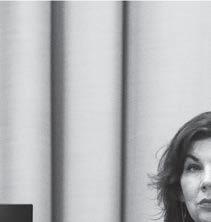
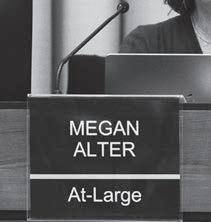
As the Iowa City City Council begins its term, councilors identified housing, child care, and immigration-related concerns as key policy areas for the year ahead. Bruce Teague was reelected as mayor, and the council selected Megan Alter as mayor pro tem to help guide policy discussions.
In last term’s election in 2024, Teague and Mazahir Salih were unanimously elected as mayor and mayor pro tem, respectively. This year, the council voted 4-3 to appoint Teague, with councilors Megan Alter, Shawn Harmsen, and Josh Moe voting for Teague’s reelection, and Teague voting for himself.
Laura Bergus and Oliver Weilein voted for Mazahir Salih, with Salih also voting for herself for the position of mayor, according to city council minutes.
After the mayoral vote, the council’s selection of Alter as mayor pro tem was also split 4-3, with the same councilors — Teague, Harmsen and Moe — supporting her, and Bergus, Weilein, and Salih opposing.
Salih said her decision to run for mayor refl ected a diff erence in perspective on leadership approach and timing, not a disagreement about values.
“I believe leadership is about service, responsibility, and helping guide the council through complex moments with steadiness and trust,” Salih said. “After the sixth year on council and fourth year as mayor pro tem, I felt prepared to off er that experience and approach at a time when our community is facing real challenges.”
David Sterling, former organizer with the Democratic Socialists of America and campaign manager for Clara Reynen’s 2025 Iowa City City Council bid, said this split stood out and represents a political rift in Iowa City.
“The city council has done a very good job trying to smooth stuff over by building bridges and creating understanding,” Sterling said. “But having not solved the problem through that method, it’s actually been really nice to see the other three councilors not necessarily acting in unison, but each of them standing out to
Sterling explained the “political rift” and said the majority four councilors did not quite understand a “common person’s” problems, and their approach didn’t contribute to solving problems like wage theft and the housing market for renters.
Alter acknowledged the increase in split votes but said the council continues to have conversations from different vantage points, even if that doesn’t make changes in terms of votes.
“I think there’s a perspective or perception from some members of the public that we’re divided because of the fact we have more 4-3 votes, because that is a reality. I want to make sure that perception doesn’t become reality,” Alter said.
As Alter steps into the mayor pro tem position, she hopes to be a “collector of different perspectives.”
“While our votes are not aligned, we are all entitled to our own votes and perspectives. For us to better understand them, I think it is something I can bring. In a time where there tends to be more split votes, I think having that base of understanding will be incredibly useful,” Alter said.
When looking back at 2025, the emphasis always returns to Iowa City’s fare-free transportation for both city councilors Salih and Alter. The pilot program launched in August 2023 and was expected to end in August 2025; however, due to its success, Iowa City decided to keep the program running through June 2026, according to an Iowa City news release.
“It will never get old to me to say that we turned our buses fare free,” Alter said. “It’s a huge accomplishment. We’ve increased our ridership. It makes things easier, not only for the public, but for the bus drivers so that they don’t have to worry about people having the right fare.”
Alter also recognized the city’s work partnering with Johnson County to support child care wage enhancements for child care professionals and workers, providing a $2 hourly wage increase for ualifying full-time child care staff.
“[The wage enhancement] has really



helped with stability of care, which is great for the kiddos, great for the parents, and great for the workers that they’re able to not have to say, ‘Oh my god, now that my shift is over, I have to maybe go do a second job to try to make up the difference.’ o ’m really, really proud of that,” Alter said.
Iowa City councilors have spoken out about various national issues, including the shooting of Renee Nicole



and supportive of our immigrant communities. It’s going to take community members; it’s all of us. Local governments cannot override the federal government, and so we need to fi nd as many ways as possible to help protect our most vulnerable community members, and that’s going to take all of us,” Alter said.
Going into 2026, the main concern voiced by both councilors and the
Good by U.S. Immigration and Customs Enforcement, or ICE, in Minneapolis, immigration, and a stance against public money going toward fi rms tied to the conflict between srael and a a.
“City government exists to serve people. There is a moment where silence itself becomes a statement. What happened nationally does not stay there. Iowa City is home to many immigrants who are scared and deeply affected by an event like what happened in Minneapolis,” Salih said.
Sterling said they appreciated city leaders for publicly addressing national issues that they believe affect local residents, specifi cally referencing the Israel divestment resolution which called for the city to avoid investing public funds in companies “complicit in the current and ongoing humanitarian crisis in Gaza.”
“The Israel divestment resolution was good. That was like real, meaningful beyond simple affi rmations of change,” Sterling said.
Going into 2026, Alter addressed community concerns over ICE presence in Iowa City following the arrest of Jorge Elieser González Ochoa and said she does not support “lawlessness.”
“The city is here and is loud
community is the housing crisis, with Alter saying this is something the council is “laser-focused on.”
According to Greater Iowa City Inc., a community and economic development organization, in 2023, Johnson County had a defi cit of , aff ordable rental units, making up 14 percent of Iowa’s shortfall and only being 5 percent of the population.
Moving into the next term, Salih hopes to set measurable goals to address housing instability in Iowa City.
“I think what’s really missing right now is not only funding. It is creating goals that match the scale of the need. I believe Iowa City should commit to an annual target for producing and reserving affordable housing, at percent or less of the area’s median income. Alongside permanent supportive housing for residents,” Salih said.
Alter said she plans to continue to focus on making child care accessible and available, recognizing it as a concern for many community members.
“It’s not just a family issue; it really does have to do with what is a healthier community,” Alter said. “It’s an economic issue and helps with the workforce. It helps with the overall health of the community.”
The Daily Iowan gave me my dream job
I’m excited for this new chapter, but the DI will always hold a special place in my heart.

I’ve been going to Iowa Hawkeye games for as long as I can remember. I don’t remember much from my first game the y-Hawk football game at Kinnick Stadium — but my parents do. Rather than enjoy the game like a normal 4-year-old should, I decided to cry and scream during the entire game, which likely annoyed my parents and everyone in our section. The rainy aturday afternoon definitely dampened my spirits, but the Hawkeyes still won the game. Seventeen years later, those emotions again returned at Kinnick Stadium. It wasn’t because my 4-year-old self was forced to sit in a rainy stadium with 70,000 strangers, it was because I thought that the Nov. 22 thriller against Michigan State would be the last time I would ever cover an Iowa football game at Kinnick. That statement is partially correct. hat was indeed my final game at innick Stadium as a member of The Daily Iowan , but it’s not going to be my last game — it’s just another chapter of what I hope to be many more exciting memories in the Paul W. Brechler Press Box for years to come.
Before I share what that new chapter of life will be, I wouldn’t be close to achieving it without my two and a half years at this amazing publication. It’s still a weird sentence to type because I never even envisioned working here in the first place.
I’ve always been an Iowa fan, so coming to the University of Iowa to pursue my dream of covering sports was a no-brainer, but joining the DI was never really at the top of my list. Becoming the next Gary Dolphin or Kevin Harlan was always my dream career, not sportswriting.
After arriving in Iowa City in 2022, I decided to take the easy route and adjust to college life. Being a fan is fun, but I soon became bored with it and set a goal to get involved with journalism by my sophomore year. That led me to the DI’s website, where I soon found myself filling out a job application. Landing a job on the sports staff was now the goal, but my ultimate ambition was still to call games on the radio.
ut after writing my first article a piece analyzing Kirk Ferentz’s College Football Hall of Fame resume — everything changed. I was always a good writer in high school, but I never enjoyed it, mainly because writing about “Moby Dick” and “The Old Man and the Sea” is boring.
With the DI, I had the freedom to write about any topic I desired, and I quickly fell in love with sportswriting. My passion for the job was somehow enough to convince my editors that I should become
the “Flex uy” and fill in for any of the major sports that needed coverage. Fast-forward to my senior year, and I went from being the wandering gazelle in the newsroom to leading our incredible sports section and fulfilling my lifelong dream of covering Iowa football and men’s basketball. he work was filled with many stressful and sleepless nights, but I didn’t care because I was doing what I love and working with some of my best friends.
I didn't expect to write this column until graduation, but as the saying goes, “life can change in an instant.”
While I was in Tampa covering the ReliaQuest Bowl, I received a call from RoundtableSports, a new global sports network. They told me they wanted me to lead a new Iowa Hawkeye site — HawkeyeRoundtable — that was set to launch in a few days.
The decision was both very easy and very diffi cult. unning my own Hawkeye site has been the goal, but I didn’t want to leave the DI in the middle of the year because I love this place so much. I ultimately accepted the position, which is why I’m writing this, but there’s so many people that have helped me get to this point. This would turn into a novel if I listed everyone here, but I want to give a special shoutout to everyone I’ve had the pleasure of meeting and working with during my time here.
Thank you to my executive editors, Jami Martin-Trainor and Roxy Ekberg,
for always being patient when the sports section misses a deadline or disrupts the newsroom when watching football. Thank you to our great publisher, Jason Brummond, for his fantastic leadership and providing us with so many amazing opportunities to travel to games. Thank you to our sports writing coach, John Bohnenkamp, for not only being a great mentor to me in this business but also for so many awesome ball discussions in the newsroom. hank you to my incredible staff especially our football crew of Matt McGowan, Jackson Miller, and Chris Meglio — for working so hard to accomplish our mission of delivering top-notch content while having a great time doing it. I’ll never forget the daily laughs — shoutout Chris for that — we’ve shared in the newsroom over the years. Thank you to the talented folks from DITV and the visuals section for being great collaborators and travel partners. I can name a memorable story from every DI trip I’ve been on, and that’s because of the amazing friendships I’ve built with some of you guys.
Finally, I want to thank my family for their incredible support. Whether it’s enthusiastically reading every article or giving me helpful advice, it means the world to me, and I’m forever grateful. While I’m excited for this new chapter of life, the DI will always hold a special place in my heart. After all, it literally led me to my dream job.

Iowa City, Des Moines rally and mourn in response to Minneapolis ICE shooting

Following Renee Good’s death on Jan. 7, who was shot by an ICE o icer, community members rallied in downtown Iowa City on Jan. 11. Hundreds a ended a candlelight vigil in the evening, as a member of Good’s family spoke. Two days later, at the second day of the 2026 Iowa legislative session, protesters called for justice for Good.




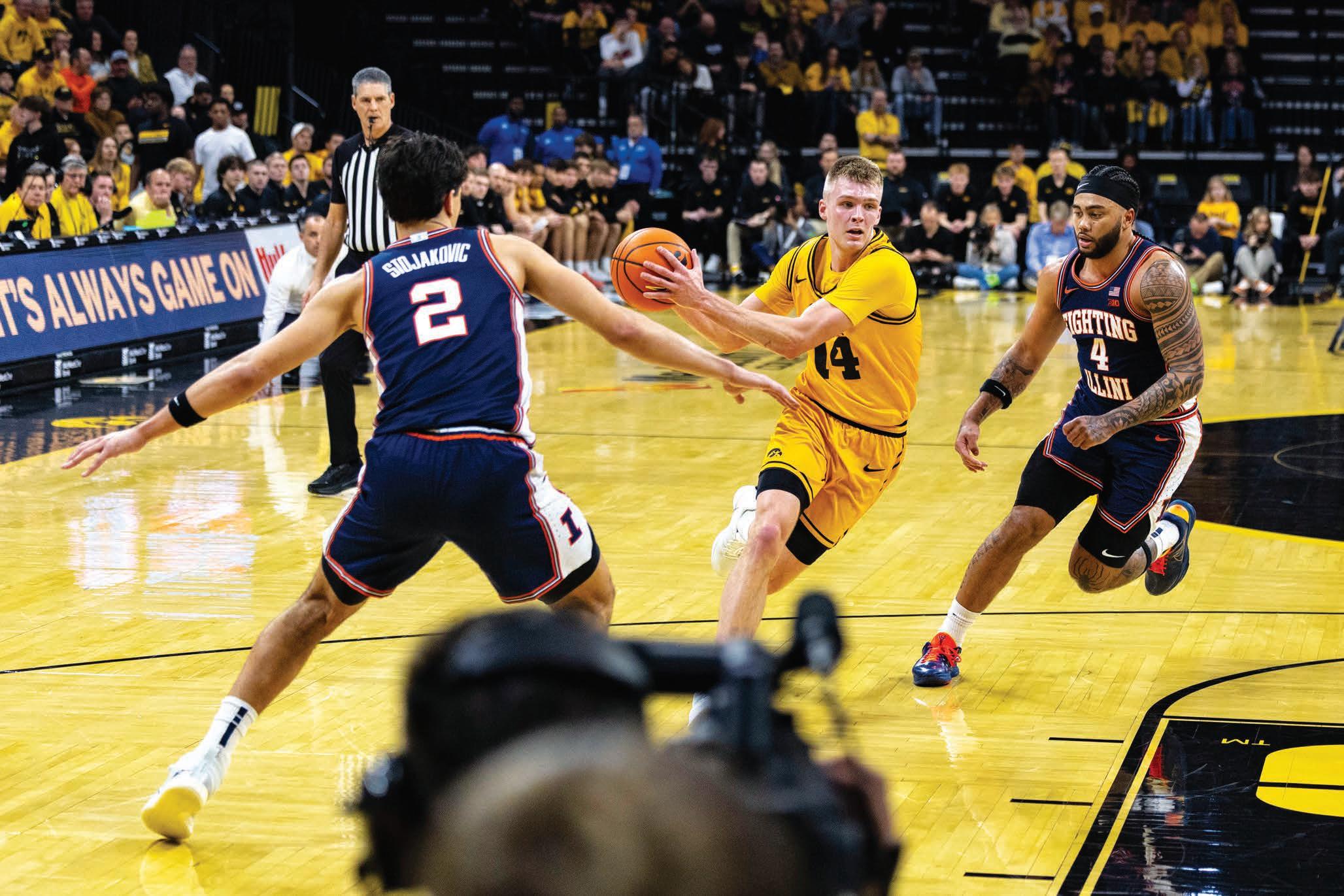
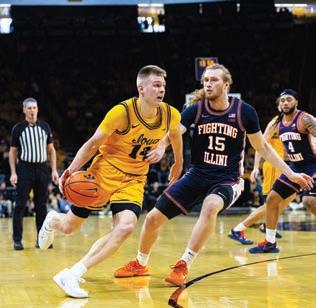
certainly isn’t a benchwarmer. ather, in his first season in owa ity, tirt is the immy hitwood for the Hawkeyes a star both the team and surrounding community know can carry the team to the mountaintop.
For owa, the destination is a return to the N AA ournament, a mile marker the Hawkeyes fell short of the past two seasons. nder new head coach en Mc ollum, the Hawkeyes aim for postseason relevance, playing meaningful games before packed crowds down the stretch.
While the journey to such a future hasn’t been linear, Stirtz has remained a constant main attraction. In case his team-leading 17.6 points, 5.1 assists, and 1.6 steals don’t scream that fact, just look at his profile on owa Athlet-
ica,” college basketball insider Jon Rothstein said.
Whether it be his prompt decision-making or dynamic pace of play on the court, Stirtz’s impact on Iowa is both obvious and intangible.
As former N A veteran turned analyst teve mith called him, Stritz is the pilot and copilot of the Hawkeyes. Yet throughout his basketball journey, Stirtz’s view from the cockpit has changed, from Division II Northwest Missouri State to mid-major Drake and now to Power Four Iowa.
Nevertheless, the difference in scenery didn’t change Stirtz as he evolved from overlooked recruit to nationwide name and N A prospect.
He’s been with the same girlfriend, now fiancee, who
Iowa men’s track and field hurdles into indoor season
Seasoned athletes headline the Hawkeyes under head coach Joey Woody in the 2026 season.

Iowa men’s track and field enters the indoor season with versatility, returning longtime head coach Joey Woody, who has been with the program since , as well as strong performers across areas such as throws, sprints, and mid-distance.
Woody, who was named to the role in uly , credited the program as a group focused on competing for one another.
He said the culture of the group ensures the athletes are not focused
on individual success but rather competing at a high level as a team.
A former World hampion runner as well, Woody noted Iowa’s emphasis on this team culture.
“We actually have passed on some really good athletes we felt weren’t going to contribute to having a successful culture here,” Woody said. “We feel like we’ve got a really good group of people in our program, and I think that’s where it all starts.”
In his time at Iowa, Woody has garnered numerous accolades, including leading the Hawkeyes to All-America honors and ig en individual titles.
hese accomplishments are not lost on athletes like fourthyear mid-distance runner errick Johnson, who credited Woody and assistant coach Jason Wakenight as some of the best coaches in the N AA. “ hey’re underrated coaches, but I did my research on who they coached, the development of the athletes they coached,” Johnson said in an email to The Daily Iowan . “Everyone who comes to run for them will PR and become a contender in the ig en
brothers. lder siblings Mason and aden and younger brother ooper were tirt ’s first opponents and teammates, their games held on the driveway of their home in Liberty, Missouri.
Roger, a former player at Emporia State University in Kansas, was the varsity men’s basketball coach at the local high school, and the gym offered another setting of competition for his four sons.
rowing up, tirt first impressed his father with his awareness. Whether it be a youth basketball or flag football game, Stirtz could always size up the situation and sense what needed to be done at that moment. Oftentimes, it
Iowa football dominates the transfer portal
The Hawkeyes addressed nearly every positional need, landing elite FCS and Group of Five talent.
Another year of the N AA transfer portal window has arrived, and the Iowa football program has been active in its departures and additions. he Hawkeyes have lost multiple key players to the portal, but general manager yler arnes and the owa coaching staff have done an outstanding job of filling those gaps.
Perhaps the biggest loss for the Hawkeyes so far was starting safety oen ntringer, who left for ouisville. he junior from Ypsilanti, Michigan, was a season-long captain and ranked third on the team with total tackles in . he Hawkeyes wasted no time in replacing the All- ig en safety, snagging three defensive backs in Anthony Hawkins of illanova, yler rown of ames Madison, and avier Styles of Robert Morris University.
Brown will likely be the one to make the largest immediate impact in the owa secondary, having been named an Allun elt honorable mention after totaling tackles with five pass breakups, helping the Dukes to a ollege Football layoff appearance.
Hawkins, at -foot- , is a very exciting pickup for the Hawkeyes’ secondary as well, tallying 11 pass breakups last season to earn F Freshman All-American honors. owa also immediately fortified its defensive line. Following the surprising departure of rian Allen, who committed to Vanderbilt, the Hawkeyes picked up three defensive linemen, two of whom are edge rushers.
Elon edge rusher Kahmari Brown committed to Iowa on an. , immediately filling the void of what would have been Allen at the Hawkeye defensive end position.
Brown put together a monster season as a sophomore in , collecting sacks and tackles for loss, totaling tackles an impressive number for a defensive lineman.
Another F defensive line pickup was rice tevenson of Holy ross. tevenson is a run-stuffer on the interior defensive front, logging total tackles with . for a loss in his junior season with the rusaders.
Stevenson will likely step right into a starting role alongside Brown, pairing with current Hawkeyes Bryce Hawthorne and Iose Epenesa to create an exciting pass rush for
Sydney Turner steps into the spotlight
The second-year’s international success helped anchor Iowa’s all-around depth.
When it comes to the Iowa gymnastics team this season, many people will mention the abundance of leadership with fourth-year Hanna Castillo and fifth-year JerQuavia Henderson, or the new arrivals like Sophie Schriever and Daisy Bowles.
However, early on this season in her second year of collegiate action, Sydney Turner has already started to make her mark on Iowa and even on the international scale.
Turner, originally from British Columbia, Canada, posted a new career-best on her floor routine at the season’s home opener with a score of 9.925, which beat her original careerhigh of 9.8, which she earned at last season’s NCAA Regionals.
Turner competed in 11 of the 13 meets last season, earning a 9.9 on vault and 9.925 on bars. She said she enhanced her skills by working on the little things and trying to raise her confidence.
“I really wanted to make my routines as perfect as possible,” Turner said. “My coaches even helped me be more confident in show ing off and having fun in the gym and on the competition floor.”
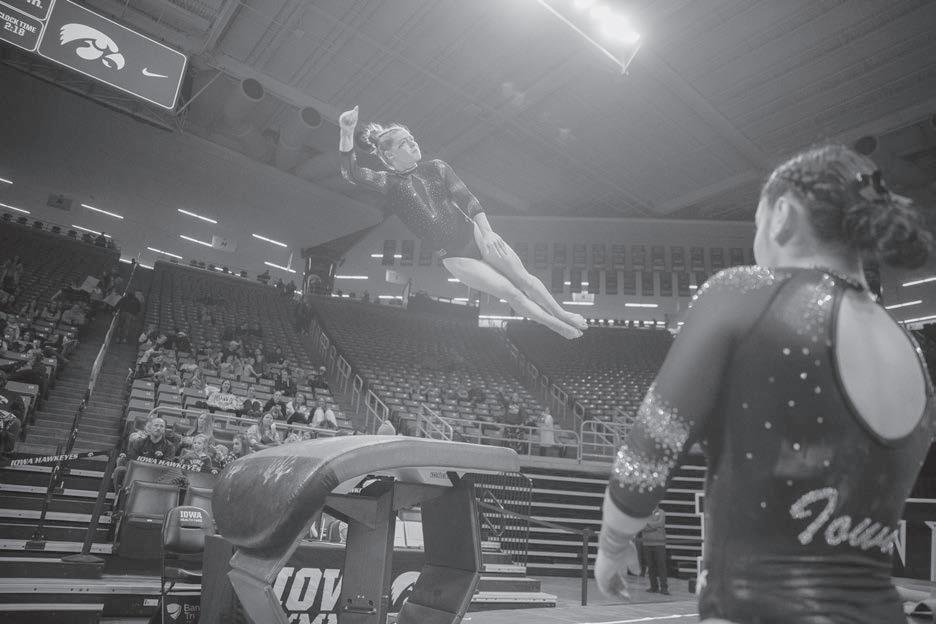
This season, she has already competed as one of the all-around competitors, similar to last year. With such a deep roster, Turner has already made her presence known to the coaching staff.
“It’s her preparation and everything that she does in practice, something we have told all our gymnasts,” Iowa head women’s gymnastics coach Jen Llewellyn said. “She shows up every day like she wants to compete, which is because she takes care of herself mentally and physically.”
Much of Turner’s experience has even led her to the international level of competition.
From 2022-24, Turner competed with Team Canada in the Pan American Championships, earning multiple bronze medals and a silver medal on bars in 2024. Her accomplishments helped her earn a spot as a traveling alternate for Team Canada during the 2024 Paris Olympics.
“It was so much fun to travel the world and compete for my country,” Turner said. “It really prepared me for college gymnastics, and I tried to carry what I learned to the University of Iowa.”
These experiences have allowed Turner to gain crucial skills many gymnasts don’t
receive until later in their collegiate careers, such as handling nerves on a big stage.
“The experiences she has had at the elite level with Team Canada are absolutely insurmountable for helping her with the team sport here in college,” Llewellyn said.
Though Turner has achieved goals on the international level, she still has some personal and team collegiate objectives she hopes to attain this season.
“This season I really want to hit some per-
Iowa’s first-year all-around gymnast
What is your favorite competition you have competed in?
sonal bests on vault, bars, beam, and floor, which I have now just accomplished,” Turner said. “But I really want our team to get a bunch of 197’s and be super successful.” Turner’s goals are lofty and futureoriented, but her career aims remain centered on the present as this season and her career gradually unfold.
“I really think my career aspiration is still to enjoy what I do every single day and being intentional in the gym,” Turner said.

Why are you majoring in sports marketing?
The Daily Iowan: What or who got you into gymnastics?
Daisy Bowles: My sisters were put into gymnastics, and being the third kid, my parents put me in it, too.
Of the four events, which one do you prefer most?
I would say bars because it’s probably my best event, and that makes it the most fun.
I would say the [Nevada] state meet my senior year.
If you did not do gymnastics, what sport would you play, and why?
Probably tennis because I have always been interested in it, and it would be so fun.
What is the biggest difference you’ve noticed between Iowa and Nevada?
The weather and the whole vibe of big city versus small city.
I love sports and never want to leave sports. I also love the business side of everything.
What do you miss most about home?
I would say the city and being able to go on the Las Vegas strip whenever.
Would you want to coach gymnastics one day?
I don’t think so, I love gymnastics, but I want to try as many things as I can in my life.
Should the College Football Playo format change?
Sports reporter Jackson Mendoza argues for a different selection process, while sports reporter Jonah Frey believes no alteration is needed.

The College Football Playoff, or CFP, has come a long way since its original four team layout and now features 12 schools in its current iteration.
Although the tournament brings opportunities and recognition to an additional eight competitors, there is still work to be done to perfect it.
The most discussed and needed change has to do with James Madison and Tulane punching tickets to the big dance this season. These two schools received automatic bids to the CFP by winning their respective conferences, the Sun Belt and AAC.
I am all for giving smaller universities their time in the spotlight and earning the recog-
nition they deserve, but the duo were no match for Oregon and Ole Miss. Both teams had to go into the opposing team’s stadium and win a playoff game against two of the top teams in the country. That is a difficult task for any team, let alone teams with less resources and lack of fivestar recruits. The solution to this?

Just put the 12 best teams in the country in the CFP. Notre Dame, Vanderbilt, and Texas were just some of the teams to be snubbed in this year’s postseason bracket.
I think I can safely say college football fans would rather see one of these teams go into Autzen Stadium in Eugene to take on the Ducks rather than witness a game that was 33-6 at halftime. The home games in round one of the CFP are so special to fans, and we would rather watch a competitive game between two even teams than the blowouts we’ve been used to.
It’s time to reformat the CFP. It’s time to give the fans what they want.
he first two years of theteam college football playoff format have clearly proven the playoff is set up just as it should be.
For starters, let’s look at the seedings of the teams that have reached the national championship game so far: No. 1, 7, 8, and 10. It’s not like the top four seeds are beating up on everybody else as there has consistently been a strong sense of parity between higher and lower seeds.
In fact, until Indiana beat Alabama in January, not a single top- seed had ever won a playoff game. While the idea of an expansion from 12 teams may sound enticing from the fans’ perspective, there are several reasons why it should be avoided. With the addition of more teams
comes the addition of more games. The national championship will be Indiana’s 16th game. Any more would make some teams’ schedules the same length as an NFL schedule. These are student athletes. While NFL players can dedicate their lives to the sport, some of these collegiate athletes are still heavily focused on their academics. The wear and tear of a 17-plus game season on top of the workload of college would be brutal. eeping the auto-bid for the five best conference champions helps to avoid monopolizing the sport by giving smaller conference schools something to play for as well as incentivizing players to play for those schools. There have been some blowouts, but Boise State held its own last year, and the group of five schools aren’t the only ones getting blown out either. There are always going to be teams like Notre Dame that for some reason think they should be in, no matter how much you expand. Next thing you know, a 7-5 Nebraska team is going to be screaming its case to the committee.
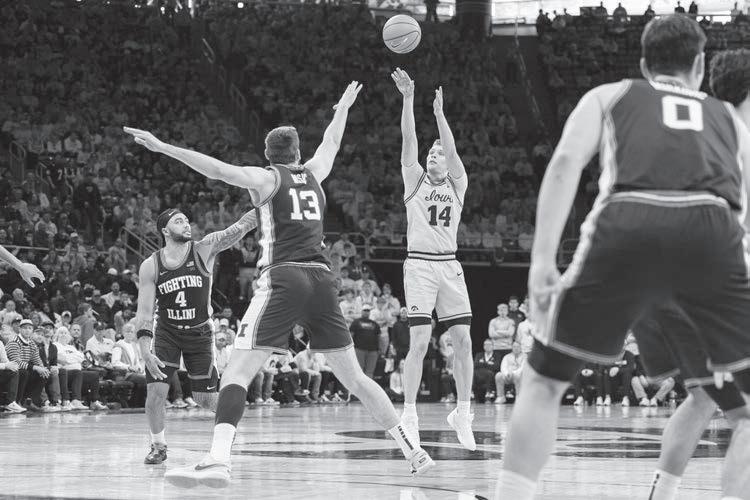
never the focal point of the s uad.
“I feel like I’ve played with just motivation and a chip on my shoulder my whole career,” tirt said. “And couldn’t imagine not having that.”
From an outsider’s perspective, Stirtz fell through the cracks during college recruitment, but in Rogers’ eyes, his son landed in the ideal spot at Northwest Missouri tate, winners of two national titles under Mc ollum, who valued unselfishness just as much as oger.
“He said, ‘I’ll bench Bennett if he’s being too selfish on the court,’” oger said.
Embracing this warning, Stirtz led the conference with a . assist-to-turnover ratio but also a . field goal percentage in his first collegiate season. After winning consecutive national championships, Mc ollum took the Drake job, and Stirtz followed him via the transfer portal.
A move up to Division I only elevated tirt ’s game. He won the Missouri alley onference layer of the ear after leading the league in scoring with . points per game. oger said in November of that season, agents began reaching out, but Stirtz
waters, such as entering the N A Draft ombine and receiving feedback and evaluations from teams, similar to what former Hawkeye Payton Sandfort did prior to his final season. et tirt declined, opting not to deter any focus from his new team — one that relied on him but also learned how to operate in his absence. ver owa’s first games, tirt averaged minutes per contest, tallying five matchups where he never saw the bench. ut now with conference action in full swing, Stirtz has been forced to watch from the sidelines, as he picked up at least three fouls in each of the Hawkeyes’ last three games. Stirtz picked up his fourth foul with eight minutes and 23 seconds to go in the second half against A and went to the bench, eventually returning as Iowa earned a - win. “ was a fan. t was definitely different and weird, but I trust my teammates, and I know the work they put in,” tirt said. “ trust them percent.” Never hesitant to praise his teammates, Stirtz is the same with those from his hometown. ver friends and family attended
meant playing the hero, but Roger never considered his son selfish.
Ever mindful of the situation, Stirtz would base his play off his team’s opposition. Against weaker foes, Stirtz’s goal wasn’t to set a scoring record for himself but create career-highs for his teammates. A natural point guard, tirt ran a democratic offense, where teammates’ successes were just as valuable as his own.
“He would never, ever be the high scorer,” oger recalled. “He would always distribute. His goal would be, ‘Hey, how many assists can I get?’”
While Roger doesn’t consider himself pessimistic, he wasn’t the first to see his son’s talent as Stirtz earned consecutive all-state selections in his junior and senior years
conference. chose this place because believe I can be something special with the coaches here.”
Less than a week after the conclusion of the Hawkeye Invitational, held in owa ity from an. - , third-year Ryan Johnson earned the honor of Big en Field Athlete of the Week. ohnson, from pringboro, hio, was announced as the recipient on an. , five days after a . -meter weight throw to become the fourth-best weight thrower in N AA Division history. ordan ross also shined at the Hawkeye nvitational. he first-year recorded a . in the meters to tie for the sixth-fastest in school history. ross previously earned ig en Freshman of the Week honors for his collegiate-best . in meters at the immy rant Alumni nvitational on Dec. .
The first-year’s speedy start complements the skills of older athletes with more experience, like fourth-year sprinter yrese Miller.
“Something that stands out to me about Iowa as a program is the win-
the suffocating hil arker defense.
ffensively, owa landed a commitment from one of the most sought-after wide receivers in the portal. osing three of the top-five team receiving leaders to graduation left a gaping hole in the Hawkeyes’ wide receiver room.
Tony Diaz, a redshirt freshman at the niversity of exas io rande alley, hauled in 67 catches for 881 yards and touchdowns in . Dia chose owa over Alabama, Arkansas, and Kentucky, and will provide elite contested catch abilities, quickly becoming a red zone threat for the Hawkeyes.
airing Dia with eece ander ee and Dayton Howard will give projected starting quarterback Jeremy Hecklinski three jump-ball options down the field, potentially creating a dynamic passing attack for Iowa in . owa also added freshman offensive lineman rent Wilson from ames Madison. Wilson, at 6-foot-4, 275 pounds, helped pave the way for the Dukes’ rushing attack that ranked sixth-best in the country this season.
at iberty High chool. nstead, assistant coaches marveled at Stirtz’s “unbelievable” play, his state of mind always two passes ahead.
Prior to any skill evaluation, Roger knew his son’s work ethic, one honed his sophomore year with a new morning routine: wake up at a.m. and in the gym minutes later. No teenager wants to get up that early, and Roger admitted his son needed some encouragement at first, but added “success breeds success.” nce the results arrived, his son’s motivation began to internali e. Standing at 6-foot-4, Stirtz’s height wasn’t an issue in his recruitment, but the guard didn’t receive any Division offers. oger can’t pinpoint a specific reason. His son possessed athleticism but didn’t really look the part at pounds. His AA team performed well at tournaments, but Stirtz was
ning culture and mindset that the team carries,” Miller said in an email to the DI . “No matter the conditions, we show up and perform our best when it matters most.”
After early successes, the program looks ahead to the remainder of indoor season.
For athletes like Miller, ohnson, and ross, chances to compete include trips to exas, Arkansas, and ndiana.
For coaches like Woody, the key word is gratitude.
Woody said he grew up in owa ity, and being a part of the Hawkeyes’ track and field is a dream come true. Woody is entering his th year with the program.
“ ’ve been a Hawkeye my entire life. ven though went to Northern owa, and that’s my school that I competed for, I grew up a Hawkeye, and I’ve obviously been a Hawkeye since 2006 as a fulltime coach here,” Woody said.
Whether in his career as an athlete or his coaching tenure at the collegiate level, Woody is thankful for the mentors he has had along the way.
didn’t want any interference, even if they portended a bright future. oger and Mc ollum handled the attention instead.
“He has the unique ability to just eliminate all distractions and focus on the main thing, and he probably does that better than anyone ’ve ever seen,” oger said.
Last spring after transferring to Iowa, tirt had an opportunity to test the N A
the contest against the Bruins and gathered in the ob Feller lub oom postgame. tirt , fresh off a team-high points, stopped by and thanked everyone who made the trip. No matter how high he ascends, Stirtz remains at ground level with the people who helped him achieve. “ hey’re first,” oger said. “ hey’re more important than him.”

“I’ve been very fortunate to be a part of not just a successful program, [but] just being surrounded by great people,” Woody said.
The addition of Wilson will provide depth for the oe Moore Award-winning unit that loses three starters — center Logan Jones, guard Beau Stephens, and tackle ennings Dunker.
he Hawkeyes also picked up . . hillips r., a running back from the niversity of South Dakota who totaled 1,920 yards and touchdowns, averaging . yards per carry in . he -foot- , -pound back will join the Iowa running back room after departures from Jaziun Patterson and errell Washington r. to the portal.
Iowa addressed the special teams unit that loses its starting kicker, punter, snapper, and return specialist by picking up North Dakota tate kicker li ick, who nailed -offield goals and was -for- on extra points last season.
Simply put, the Hawkeyes smashed the 2026 transfer portal, landing a multitude of F and roup of Five talent who can make an immediate impact.
owa lost a lot this offseason, with total starters either graduating or entering the transfer portal, but the Hawkeyes have quickly and effectively addressed those departures, providing an exciting roster for fans to look forward to in .
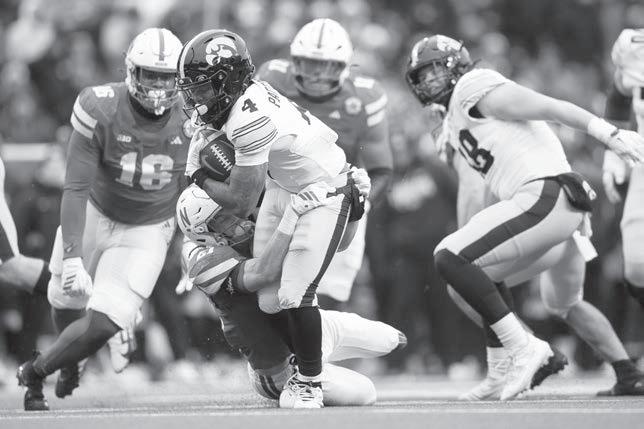





MOMENTS OF THE MATCH
From Coralville to Tampa, The Daily Iowan photographers captured many moments over winter break. The Hawkeyes’ overall record across all sports was 27-10, with other notable highlights including an upset over Vanderbilt football and women’s basketball being ranked back in the top ten.
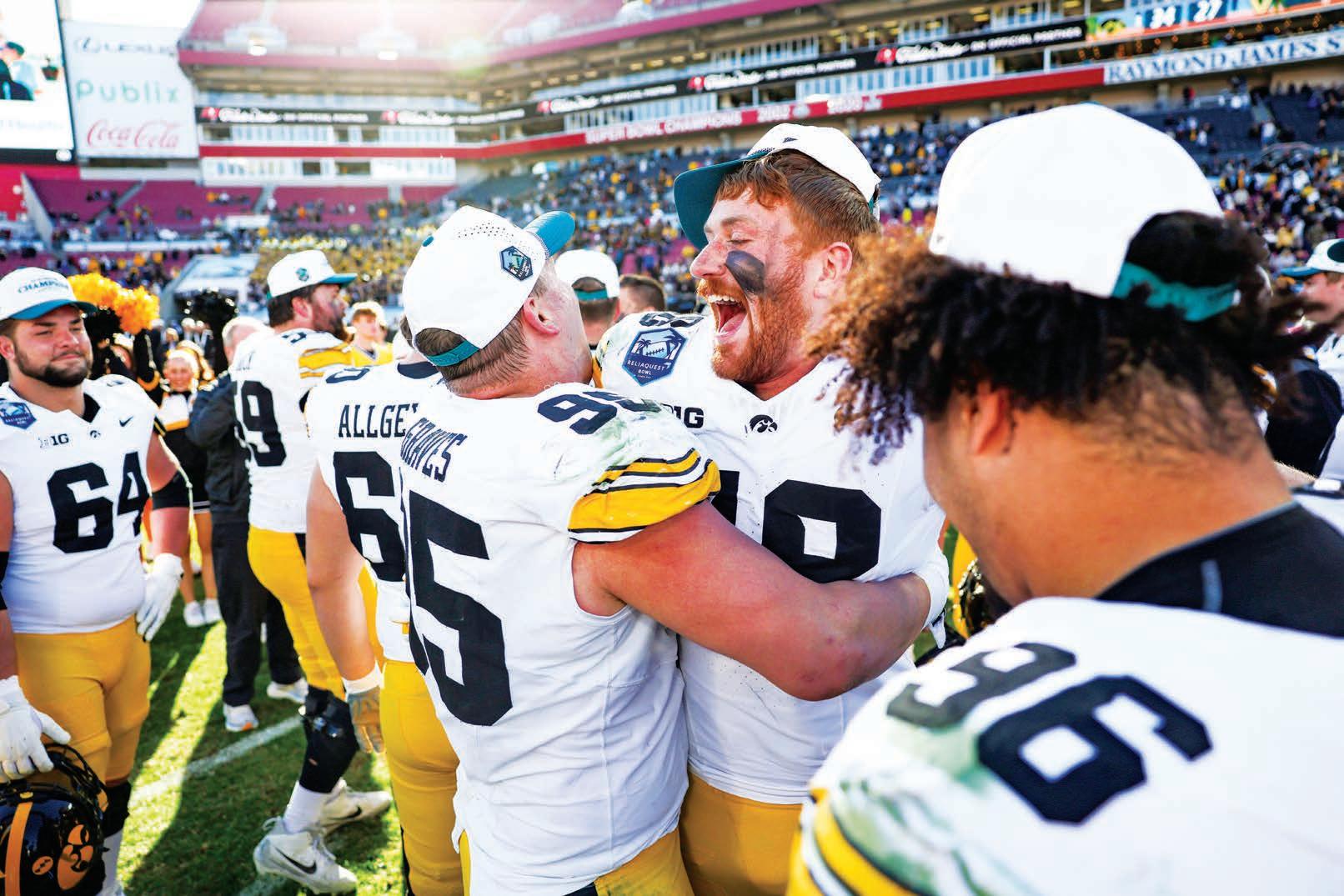


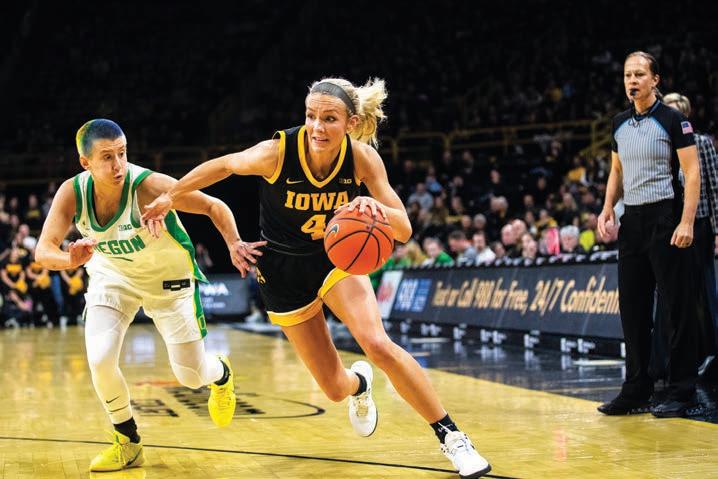




Looking at the in uence of microtrends on Iowa City

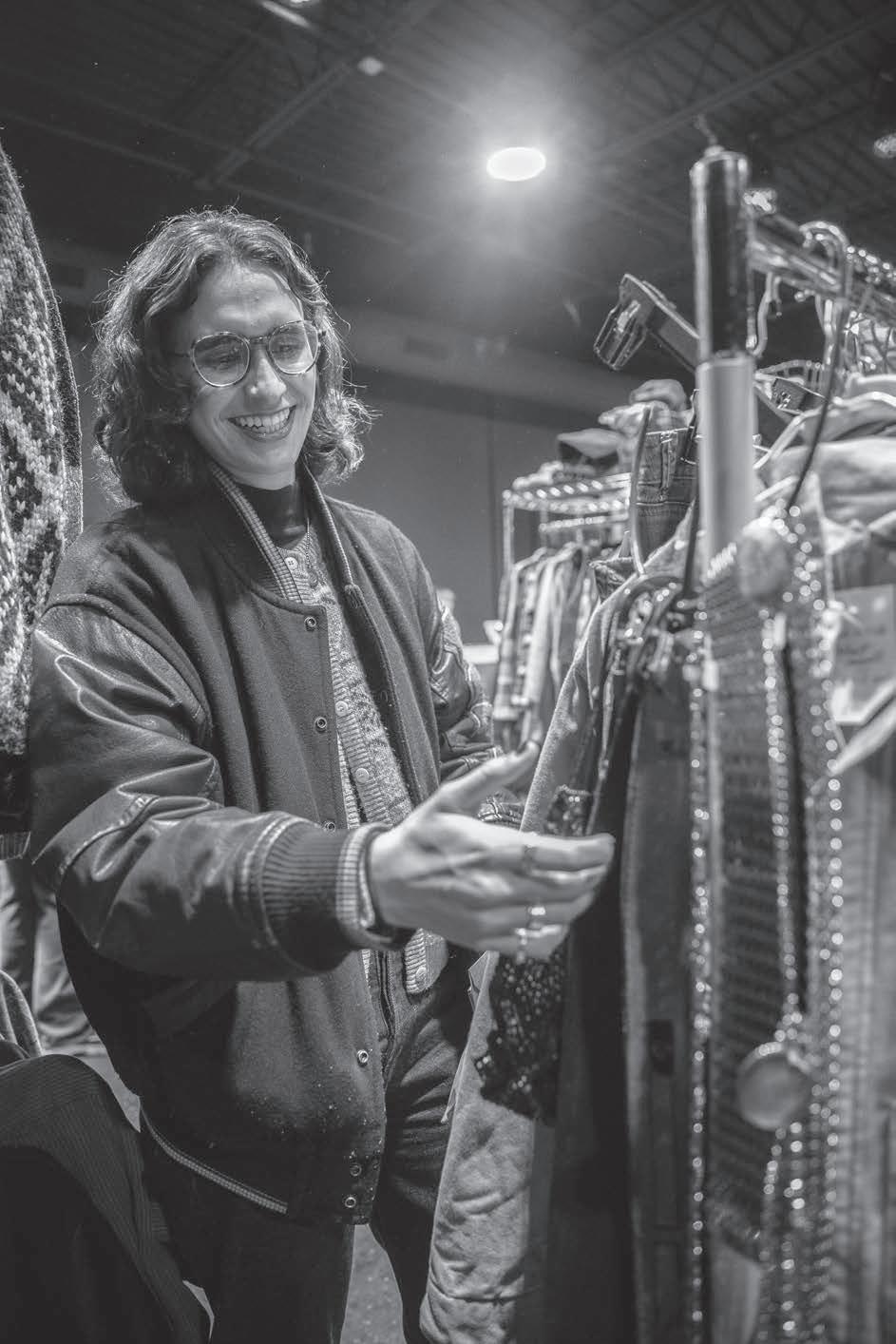
Evolving trends influence Iowa City
Iowa City explores the ever-changing world of microtrends, self-expression.
College campuses act as a notoriously cyclical cesspool for fashion pieces, items, and lifestyles among young adults, and the University of Iowa is no exception to this consistently trendy culture.
Nicholas Zimmermann, a second-year UI student, took note of ever-evolving fads on campus, drawing attention to the constant need for change and novelty.
“It seems like there’s a new ‘thing’ every semester, whether it’s a water bottle or a pair of shoes or a popular game,” he said.
One of the latest trends gaining traction recently is the impish collectible toy doll line known as Labubus. Labubus are a cultural phenomenon, a staple of what is considered the “performative male” trend: a new, distinct style and way of dress.
These little dolls generated $677 million in the first half of 2025 alone, according to data from Demand Sage, a site that collects data to aid in business insights. The collectibles are not the only elements of self-expression that have gained traction in the past year, though.
Local clothing and fashion stores reflect Zimmermann’s stance on trends; it doesn't take long for people to move onto the next big thing. Pitaya, a boutique located on the Iowa City Pedestrian Mall, keeps on top of evolving styles, a necessity to survive in today’s fashion culture. Every week, the storefront mannequins are redressed to draw in customers. Decked out in new arrivals and fresh styles, the mannequins show off outfits based on events happening in Iowa City, such as Greek life date parties, holidays, and fashionable sporting fan attire.
Although the mannequins are based on situational outfits, Pitaya finds its most popular items to be what’s trending online, which, according to 22-year-old store manager Emma Johnson, are never guaranteed to last for long.
“There are items that will come and go in as short as a few weeks,” Johnson said.
Due to the college campus location, Pitaya employees find social media sites such as Pinterest and TikTok incredibly helpful to track what is hot among young adults.
“It takes a lot of people and doing a lot of research; we really pay attention to what people are picking up and trying on. Overhearing customer conversations and asking questions about what people are looking for specifically are also big factors,” Johnson said.
Whether it’s new patterns, colors, or cuts, Johnson
5 proshots to watch instead of ‘Hamilton’
Musical theater fans are no longer restricted by limited stage recording options.
Thousands of people have seen the professional recording of “Hamilton.” When the recording was released on Disney Plus in 2020, it became an instant hit. However, several lesser-known proshots, a high-quality recording of a live performance, bring live theater right to the viewer's living room. Here are five proshots to watch to fill the “Hamilton” void.
Based on the real-life 1899 newsboy strike and following the same storyline as the 1992 film, the Broadway musical truly brings the story to life. The stars, Jeremy Jordan, Kara Lindsay, and Ben Fankhauser as Jack Kelly, Katherine Plumber, and Davey, respectively, truly understand their roles and play them beautifully.
The music is slightly different from the movie, but the changes all enhance the story and provide better storytelling than the original lyrics.
The filmed production also allows for easier listening, and more voices and harmonies are heard throughout the songs compared to the studio recording or the original movie. “Newsies” is one of my personal favorite proshots and is definitely worth a watch. “Newsies” is available to stream on Disney Plus.
“Legally Blonde” is another musical based on an iconic movie, and it follows the same plot as the 2001 film. “Legally Blonde” is one of my favorite movies, so when I found out it had been adapted into a musical, I was skeptical; however, this is slowly becoming a frequent rewatch.
The musical does an excellent job showing Elle Woods, played by Laura Bell Bundy, truly wants to succeed at Harvard, even though she started at the school to win back her ex-boyfriend, Warner, played by Richard H. Blake.
While the musical distinguishes itself from the movie a bit by having Emmett, played by Christian Borle, play a larger role in helping Elle improve her law skills, it is still true enough to the source material. “Legally Blonde the Musical” can be watched on YouTube.
The musical won three Tony awards when it was first on Broadway in 2009. It was recently revived on the West End, starring Caissie Levy, Eleanor Worthington-Cox, and Jack Wolfe, and the proshot of this recording can be found with a subscription to Broadway HD.
The show tells the story of a mother trying to manage her bipolar disorder and grief from the loss of her son 16 years prior.
The story tackles the effects it has on the rest of her family, including her husband and daughter, who both feel invisible compared to their late son and brother.
Although this musical is much older than the first three on my list, originally coming out in the 1940s, the adaptation was filmed in 2003. Starring Hugh Jackman as Curly McClain, the musical contains music that will be stuck in your head for days upon days.
Although the show has had several revivals since the 2003 recording, Jackman’s Curly is something that sticks with you after seeing it.
The set is very simple, just having a train station and two houses, so it allows the actors to move throughout the stage while dancing and singing to their fullest potential. The 2003 “Oklahoma!” can be found on Amazon Prime Video.
“Anything Goes” is another musical that has had many revivals, all of them getting better as time goes on.
The 2021 recording, starring Sutton Foster, contains some of Foster’s best singing and comes with some drama, as it is highly debated whether Foster or Patti LuPone played a better Reno Sweeney.
I am partial to Foster, but I’ve seen her live, so she holds a special place in my heart. If I could sell “Anything Goes” viewers in just one sentence, I would say this musical has possibly the best, most fascinating and entertaining tap number I have ever seen, running nearly eight minutes long, which I rewatch almost weekly.
“Anything Goes” is streaming on Broadway HD.
‘People We Meet on
Vacation’ is
light, lacks depth
Netflix’s adaption of the best-selling book doesn’t match the author’s style.
Throughout the years, thousands of devoted fans have continually praised New York Times Bestselling author Emily Henry’s writing style and character dialogue. When it was announced that one of her most famous books, “People We Meet on Vacation,” would be adapted into a movie by Netflix, the expectations were set high.
“People We Meet on Vacation” follows the story of Poppy, a free-spirited travel blogger, and Alex, a book-loving English student. Despite their vastly different personalities, the two have been best friends since college and vowed that no matter what was happening in their lives, they would go on vacation together every summer.
This arrangement abruptly ended, and Poppy found herself hating traveling ever since she lost her favorite companion. With the guise of attending Alex’s brother’s wedding, Poppy tries to reconnect with him on vacation to save their friendship.
In “People We Meet on Vacation,” the perspective shifts between the present timeline and the previous summer vacations the two main characters have been on together. This structure allows the characters’ personalities to shine through and provides the audience with more context for how their relationship developed over time.
While enjoyed the scenes the film portrayed, I believe the book delivered on this structure better. he film adaptation left out many important plot points and merged several scenes together, which were originally separate in the source material.
These missing scenes overall left me wanting more from the film, and felt the plot was unevenly paced because of the missing scenes.
Another issue presented by this lack of plot points was the loss of the complex character dynamics between Poppy and Alex.
While the book originally gave Poppy and Alex both deeper trauma and insecurities, the film never explored this,
resulting in neither character changing dramatically by the end of the film. I also felt this presented more plotholes, especially with Alex’s relationship with his girlfriend, Sarah.
While the books clearly depict Poppy’s own insecurities toward Sarah and oppy’s effect on Alex’s relationship, the film never dives into these topics, and instead changes aspects of the original storyline that weren’t necessary.
Although the characters were not as complex as they could have been, this film is still a fun experience overall. The characters were lively, many of the scenes were humorous, and the storyline was still compelling despite the lack of complexity.
Even without reading the book, this film is a lighthearted, enjoyable time. oppy and her wild outfits were entertaining to watch, and the actress who plays Poppy, Emily Bader, captures her essence and was a delight to watch on screen. Tom Blyth, commonly known for his role in “The Hunger Games: Ballad of Songbirds and Snakes,” was also very entertaining and played his role as Alex convincingly.
It’s clear that both Bader and Blyth enjoyed their time on set shooting this film, and that shines through in their interactions onscreen.
Bader dancing around as Poppy in a short blue wig and Blyth busting out the worm as Alex on the dance floor proves this tenfold, and gives the impression the characters were enjoying themselves.
Even though I wished for more of the inner dynamics and complexity of the characters, “People We Meet on Vacation” still made for an enjoyable film, and ’m glad that it was my first new release of 2026, even if it wasn’t given the theatrical release it deserved.
With the popularity of Henry’s books and this adaptation, I wouldn’t be surprised if another one of her novels does well on the big screen.
Four more of her books are set to be adapted into movies, according to People. "Funny Story" and "Happy Place" will run on Netflix, and each ead and "Book Lovers" are also expected to be adapted.
UI Special Collections conserves 1920s dress
Conservationist Zoe Webb and librarian Elizabeth Riordan discuss the historic flapper dress.
This is an installment in a multipart series.
While the University of Iowa Special Collections and Archives is not known for its items of clothing, a few pieces are tucked away within boxes in their respective collections.
One piece of clothing in particular is meticulously restored by conservationist Zoe Webb at the top level of the UI Main Library. As a fan of the dress, the owner, and the collection it originates from, librarian Elizabeth Riordan is knowledgeable about the 1920s flapper dress.
The Daily Iowan: Who donated this dress to the archives?
Riordan: It was donated by a woman named Betty Osincup. Betty was aware that [the University Archives] had the Brinton Collection because it was in a lot of newspapers. The collection is a pretty famous one for us to have.
She had bought this in Washington, Iowa, at the estate sale of the original owner. She had bought several things, including a couple of dresses — this one being one of them — and then had it for years.
Her daughters had worn it at times. hen she finally decided it was time for it to come home with the rest of the collection.
What is the Brinton Collection?
The Brinton Collection is formally known as the Brinton Entertainment Company Papers. Back in the ‘80s, a man named Michael Zahs was offered this collection in a box labeled “Brinton Crap” that was in someone’s basement. They asked if he had any interest in buying it, and he looked at it for no longer than 20 seconds and said yes.
In this collection, there are papers, magic lanterns, magic lantern slides, tickets, and all this stuff from Frank and Indiana Brinton, who did shows and lectures from Minnesota to Texas during the early s. There’s a lot more history, but they were early entertainers here in Iowa.
Did this dress belong to Indiana Brinton?
Indiana Brinton was a lot younger than Frank. She helped him and traveled with him for all the shows. He died in , and she lived until , so she had a long time without him.
With Frank, she ran the Grand Opera house in Washington, Iowa, for a while. And then she went off after he died. he still had a house in Washington, but she also had land in Texas and land in Florida, so she was traveling everywhere.
Would she end up going to a lot of parties, incentivising her into having a flapper dress?

Oh yes! With her always traveling with him and being on stage and doing shows, she would have had to be glamorous in a way — it was a part of the show. And then when Frank died, she was a widow, so she was kind of free. But she had also inherited a bunch of money. So she was able to go to Europe, she was able to travel, and do all of this stuff as a single woman. do think she partied for a while.
Why was there a lining put under the dress by past owners?
We can only theorize at this point. My guess is to make it more modest. I think it’s hilarious because the daughter who wore it would have worn it in the ‘80s. So, to think that in the s it had to be made more modest is ironic.
‘Primate’ is a strong start to 2026 horror
The wacky, violent monster film delivers sick kills.
horror movie: a group of teenagers spends a weekend in a secluded beach house and is terrorized by the family’s intelligent chimpanzee.
Without the lining, would it have essentially been see-through?
I don’t think it’s see-through since there are enough beads. Think of it as wearing pantyhose they can be a little opa ue, so it’s like she’s wearing silk stockings.
This dress has some wear and tear. What is the process of helping bring this dress back to life?
Webb: he first thing do is assess it so I can make sure it can be handled. The next steps for conservation are for me to attempt to reattach some beads. There are some loose threads, so I untangle them and tack down this loose material.
I’m not trying to restore it, I’m not trying to make it look brand new, but there are ways that you can do hidden stitches to just tack down the loose threads and beads.
Riordan: This dress is a great example of how much special collections depend on our collection care team. This is a very popular item, I love to bring it out. But every time we brought it out, I felt like a bead came off. decided we couldn’t bring it out anymore. But then what’s the point of having an educational item in an educational setting if people can’t get up close to it? So, everyone up here makes it so that students can handle or get up close to this stuff. A lot of what we do is because we have people up here who make it all possible.
I’ve been seeing trailers for Johannes Roberts’ new animal horror film, “Primate,” for what feels like forever at this point. During the NFL Wild Card games, the Golden Globes, and between Instagram scrolls, I felt like every ad I saw featured Ben, the rabies-infected chimp at the center of the film.
The problem with the ubiquity of Ben’s presence is that many people, myself included, thought the movie looked terrible. It’s a very silly premise that the trailers seemed to be selling as a serious

I was pleasantly surprised to find “Primate” is much more of a B-movie gore fest than a horror story about the tragedy of an animal family member going feral. The limited emotional stakes that are present in the movie are set up very uickly within the first minutes, and then it’s all monkey business, and to be honest, that is why you buy the ticket.
The best horror movies get under your skin and convey something true about the human condition through macabre atmosphere and grisly imagery, but
the best B-horror movies provide simplistic thrills. You won’t learn anything about the dangers of domesticating the natural world in “Primate,” that’s a job for “Jurassic Park.” You will, however, see a man in an elaborate monkey suit humorously stalk a gaggle of frankly unintelligent teenagers and kill them in increasingly violent and elaborate ways. It’s a blast! he devotion to practical effects, like having an actor portray Ben the monkey, pays off in spades, as every time the camera presents a close-up of the animal, there’s an unsettling quality to his lifelike eyes and textured features. Some of the camera work turns scenes that could come off as stupid and silly into thrilling ones. An image of Ben through a refracted glass door has stuck in my head since leaving the theater. With anonymous actors you’ve never heard of delivering pretty bad performances, the filmmaking has to step up to make any of the scare sequences actually suspenseful, and thankfully, I felt like it did.
“Primate” could get by on being watchable gory schlock, only notable for its gnarly kill sequences, but I thought Roberts’ filmmaking elevated just slightly above trash. Trashy, sure, but not trash. This is something I miss about
seeing movies: the mediocre. January is renowned for being a dumping ground for studios to ditch some real stinkers in hopes the quiet month will drive people to the theater regardless of quality. But I usually enjoy these trashy throwaways. Too often, I walk out of a movie thinking it was an exhilarating masterpiece I will think about forever — see my three separate reviews of “One Battle After Another,” apologies to my fellow editors — or empty garbage I’ll never think about again. I don’t think I’m alone in that feeling either, as most fi lm criticism read falls into dichotomous categories.
rashy films can fill this void they can provide us with a few hours of joy and entertainment before we go back to our parents’ house to write a review. Will I remember any of the characters’ names in “Primate” a week from now? Absolutely not. Will I remember an extended kill sequence that made a group of people sitting behind me clap and send the entire theater into raucous laughter? Totally.
“Primate” is like empty calories, and seeing it was a reminder to me of the joy of seeing silly-looking, trashy fi lms in theaters surrounded by strangers. Wellmade schlock is more valuable than ever in this cinema landscape.


noted the unpredictability of clothing longevity and how quickly fashion can go out of style. Constantly checking socials and following popular influencers changes the game when getting ahead of the next big thing.
In the digital age, social media has been proven to affect how certain trends grow and evolve. With one quick post to social media, a fresh video quickly popularizes new forms of self-expression, from clothing styles to water bottles and keychains. If a post gains enough of a following, it quickly cycles through the feeds of various people who have taken an interest or

them into different categories.
“One of my favorite styles to talk about is goths. You see a group, probably young people, and they’re wearing black trench coats and military boots and dark hair and dark makeup, and you immediately think, oh, they’re making this real statement about how they’re anti-establishment and rebellious, and they want to be individual,” Rupe said.
However, what often ends up happening is that different people who dress in goth clothing around the world end up dressing similarly, creating a distinct form of style, Rupe said.
For marketers, it can be difficult to try to create something “viral” due to the difficulty of appealing to a wide audience of
Social and political situations can also influence what microtrends reach a wider audience and when. Culturally relevant clothing, trinkets, and belongings resonate depending on what broader societal issues they rise up in response to.
“Maybe a trend right now is this vintage thrifting resale trend, and that’s a real backlash to fast fashion and some of the environmental things going on right now,” Rupe said.
While fashion plays a monumental role in trending culture and the lives of many young adults, it is only one aspect of our changing society.
Food and drink restaurants are no exception to trends. Starbucks, a popular coffee chain whose menu is largely influenced by social media and the ever-changing demands of caffeine-loving customers, recently released new menu items.
Alongside new protein-packed coffees,

interacted with similar posts in the past. This cycle can be rapid, spreading styles in seconds.
Dana Rupe, director of the UI’s John Pappajohn Entrepreneurial Center, said the fashion industry has two major seasons, spring and fall, which bring their own trends, but this cycle now moves at a much faster pace.
“We used to see trends last a season or two, maybe a year or two. Now we’re seeing these trends last weeks or months, and things are moving much more quickly,” Rupe said.
Rupe also teaches marketing, fashion, and lifestyle classes through the UI’s School of Journalism and Mass Communications. Along with her work at the UI, she has always worked in the fashion industry and has owned several of her own apparel businesses, working with national brands such as Adidas and Under Armour.
While she believes the turnover rate of trends has changed, Rupe said the underlying principles that drive the fashion industry have remained the same.
“Fashion is used as personal adornment and self-expression. So even if someone thinks they don’t participate in fashion, that’s actually a conscious decision,” Rupe said.
With each new class, Rupe likes to ask her students why they chose to wear certain styles of clothing, emphasizing that even randomly choosing a shirt and pants out of the closet is a conscious choice of self-expression. Choosing not to be engaged with or care about dress is still participating in personal style.
People’s appearances often serve as a gateway to understanding them or placing


Dubai chocolate train would make its way to Starbucks,” she said. “But I’m mostly surprised by the number of people who are ordering it.”
The impact of social media on trends is proving to grow increasingly more influential. New flavors aren’t the only thing making their way to major corporations; diet culture is as much of a trend as any other, and protein is the new “it-girl” of healthy eating.
With the rise of gym influencers, and the following pressure to be fit and gain muscle, protein is put on a pedestal. At the risk of ignoring other essential macro-nutrients, many people share their extremely protein-heavy diet online, boasting that it’s the answer to everyone’s health issues and fitness goals.
“Everyone is preaching about adding protein into their diets now, so it was only a matter of time until we found a way to add it to our coffee,” Marietta said.







people, each of whom is trying to make an individual statement with the way they dress, even if they don’t realize it.



Whether it’s through clothing, food, or lifestyle choices, trends are moving faster than ever. However, their purpose hasn’t changed; trends work as an outlet for society to have individualistic expression and forge connections within. While what’s “in” may change on college campuses like the UI, the desire to belong,








“People are seeking through trends, either to differentiate themselves or to connect with other people,” Alisa Weinstein, adjunct assistant professor in the UI’s Department of Anthropology, said. “My hunch is that these trends and people getting involved in them are seeking human connection.”







Weinstein is also a program coordinator for the Iowa Summer Writing Festival. In her classes, she examines fashion from an anthropological perspective and encourages her students to observe their own fashion and dress practices.





For example, many students walk around campus wearing Hawkeye gear. While key components, such as black and gold colors and the tigerhawk logo, remain unchanging, there is variation in style and expression.






While one Hawkeye fan might attend a football game wearing striped black and gold overalls, another might show up in a gold Tigerhawk-sporting tank top and ripped jeans.












“There’s a nuance to it, like how people sometimes want to do their own Hawkeye stuff to differentiate themselves from other Hawkeyes,” Weinstein said. “But ultimately there’s definitely something uniting people, a sense of connection or pride or school spirit.”














Even outside local communities, fashion can connect people to others all across the world, where materials are sourced, produced, and shipped.











barista, was surprised by how far the trend had never have guessed that the








Fourth Wing by Rebecca Yarros People We Meet on Vacation on Netflix
Heated Rivalry on HBO Max