Interiors and architecture from the Gulf, Levant and beyond
Sherif /Nagy
Enlighten Your Eternal Beauty, Inside and Out!
@muarjewels www.muarjewels.com
info@muarjewels.com
Enlighten Your Eternal Beauty, Inside and Out!
@muarjewels www.muarjewels.com
info@muarjewels.com
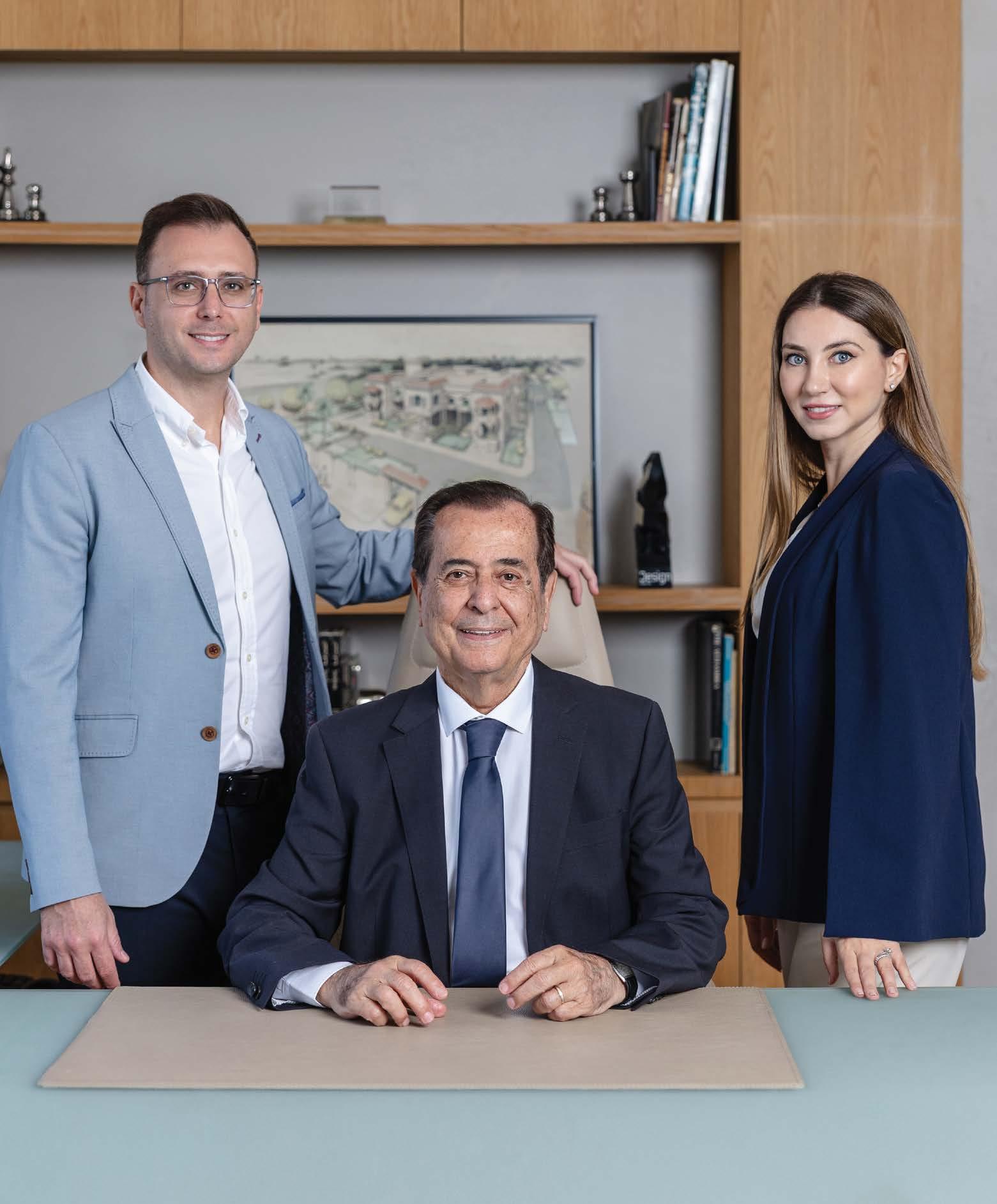
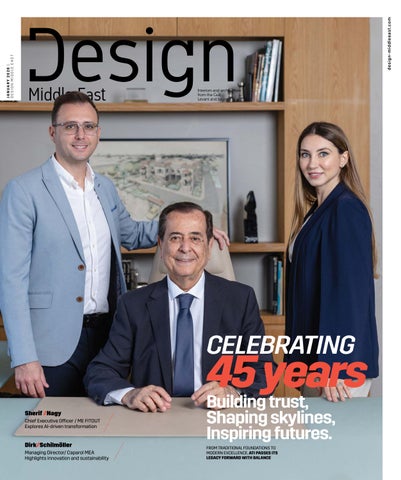
By any measure, 45 years is a rare achievement in the UAE design and construction industry. For ATI, it is not simply a milestone, but the foundation for what lies ahead. For Altug Ajun, Executive Director at ATI, this legacy is deeply personal, shaped by the vision of the firm’s founder and his father, Necdet Ajun.
16 OP-ED Emojis in Modern Communication
By Dr Syed Andrabi, Assistant Professor and Program Director, Communication Design at Heriot-Watt University Dubai, explores how emojis are reshaping emotion, meaning, and connection in digital communication.
16 INTERVIEW Fit-Out, Reimagined
Sherif Nagy, CEO of ME FITOUT, shares insights on leadership, in-house manufacturing, AI adoption, and how sustainability and luxury are redefining the region’s fit-out landscape.
30 ART Neo Ebreeq: A Traditional Object Reimagined
Transforming a heritage object through digital technologies and innovation.
The Neo Ebreeq, inspired by the traditional Lebanese ebreeq, a clay water drinking container, reinterprets how cultural heritage can be reimagined through digital technologies and innovation.
32 MATERIAL-MASTERY Where Craft Meets Stone
Dr. Tetyana Kovalenko, Chairwoman of Elite Stone Group, reflects on her family’s marble legacy, the artistry behind Made in Italy craftsmanship, and how sustainability
and innovation are re-defining luxury stone in contemporary architecture.
38 PROJECT
A Refined Vision for Ras Al Khaimah’s Coast
Designed and delivered by P&T Group for RAK Properties, the InterContinental Ras Al Khaimah Resort & Spa redefines beachfront hospitality through architectural restraint, masterplanning clarity, and long-term sustainability.
42 PRODUCT SOURCING Design, Delivered Through Smarter Procurement
In an increasingly complex Middle Eastern market, procurement has evolved beyond cost control to become a key design enabler. This story looks at how Mart® aligns sourcing, logistics, and lifecycle services to support design intent across large-scale commercial projects.
46 TRENDS
Rethinking the Modern Bathroom
Stefan Schmied, Leader IMEA at LIXIL International, shares insights into why the bathroom is becoming the UAE’s most progressive and design-led space.
48 SUPPLIER FOCUS
Paint That Performs Dirk Schilmöller, Managing Director Middle East, Africa & Asia at Caparol MEA, reflects on
the brand’s recent growth, evolving market demands, and how colour, sustainability, and innovation are shaping the future of paints and coatings across the region.
52 AUTOMOBILE
Electric, Elevated: The iCAUR V27 Has Landed
The eco-friendly iCAUR V27 SUV launches in the UAE, marking the brand’s entry into the Middle East market.
54 TALKING POINT
Why Context-First Design Matters
Nils Remess, co-founder of ZNera Space, explores why context-first design is essential to creating climate-responsive, culturally grounded architecture in the Middle East.
58
SPACES THAT TEACH Designing Tradition for Today
Heritage-inspired interiors at RGS Guildford Dubai redefine dining and gathering spaces for a new generation of pupils.
62 EVENT PREVIEW DOMOTEX 2026: Interiors Without Limits
DOMOTEX 2026 expands its scope beyond flooring to present a comprehensive showcase of interior finishing solutions, offering architects, designers, and developers a complete view of the future of built environments.


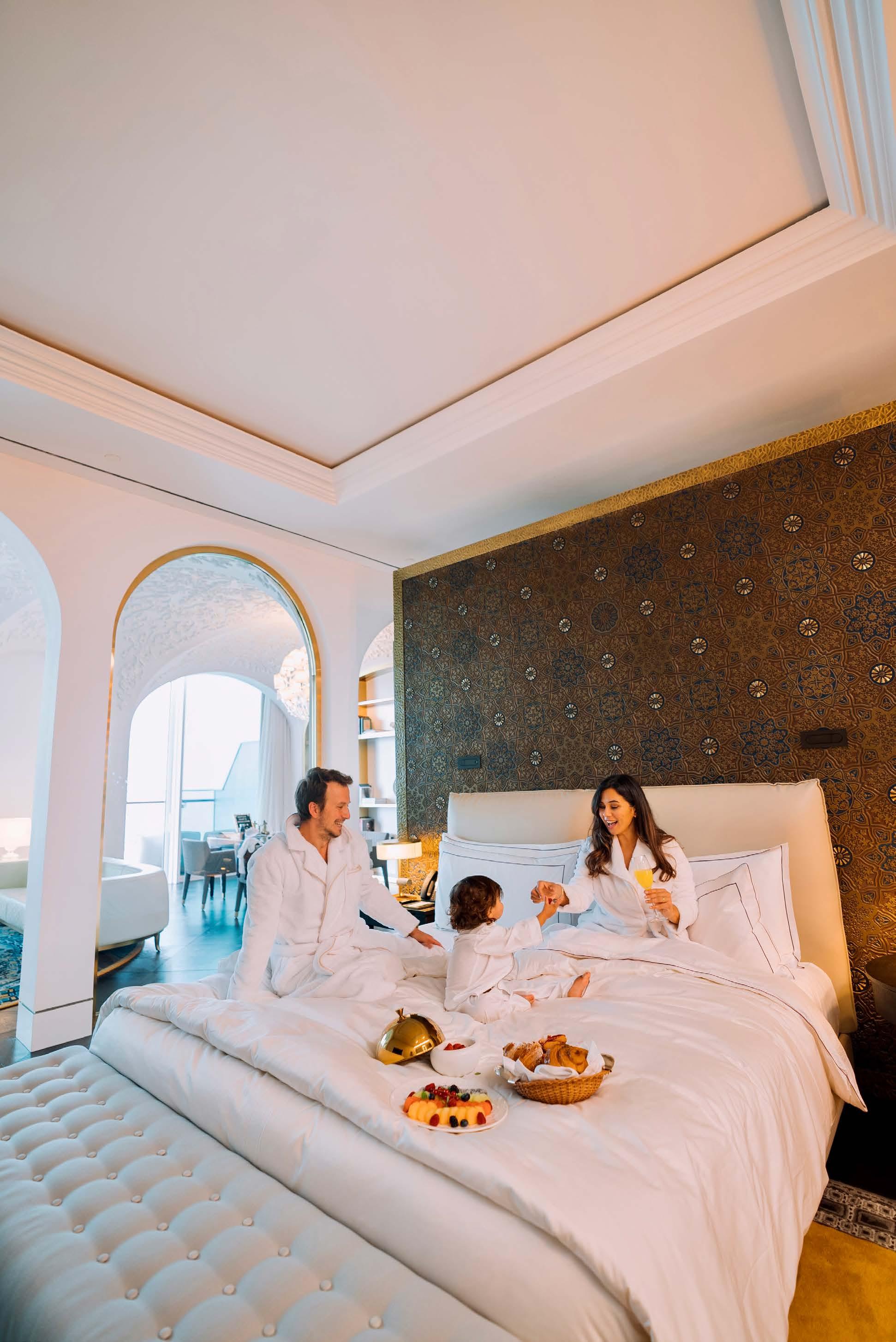
Step into a world of opulence when you book a Suite at Raffles Doha.
Experience the added luxury of QAR 750 credit to spend on dining in the hotel, and QAR 500 towards any Spa treatment.
Children aged 12 and below are welcome to indulge in the enchantment of complimentary dining.
Rates starting from QAR 3,500 per night
For reservations, please call +974 4030 7100 or email reservations.doha@raffles.com
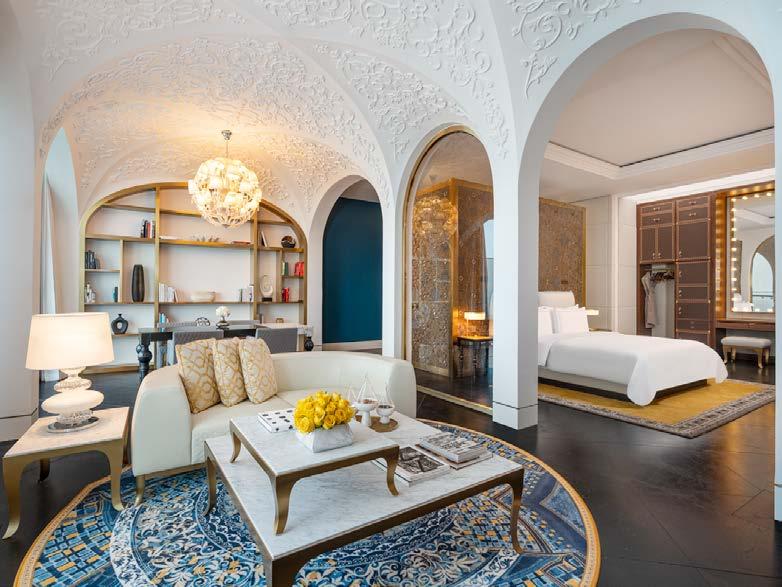
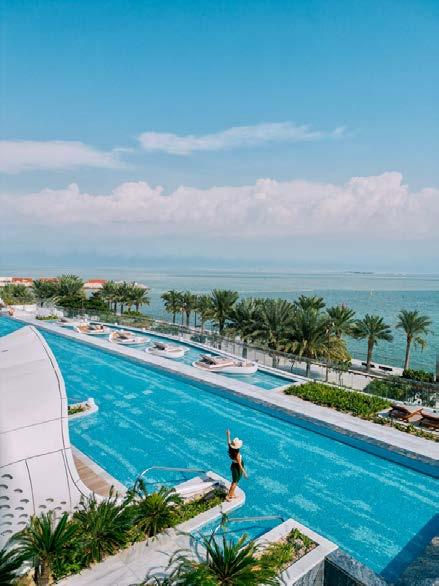

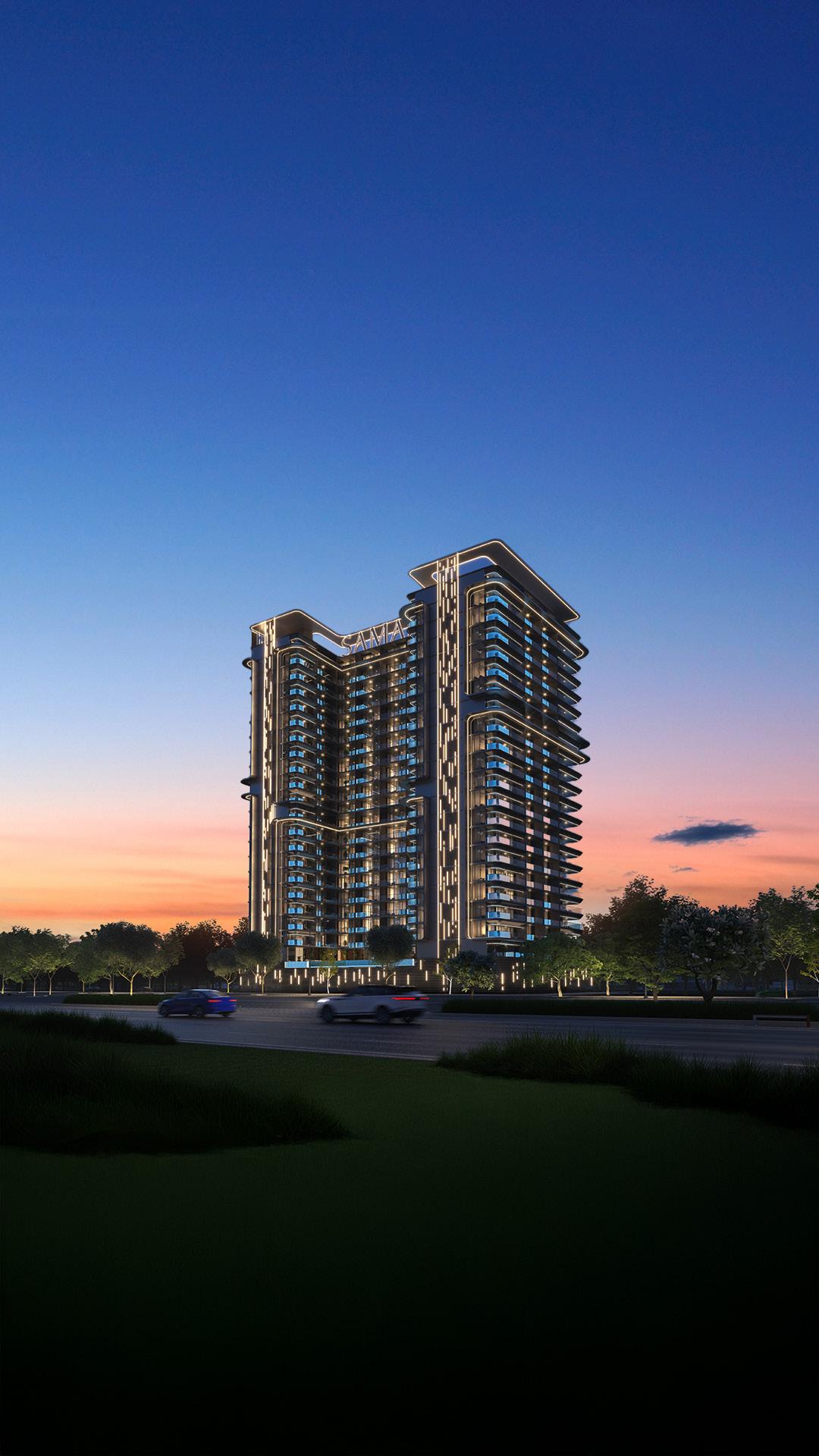
Escape to a home where urban sophistication meets resort tranquility. PRIVATE POOLS | 30+

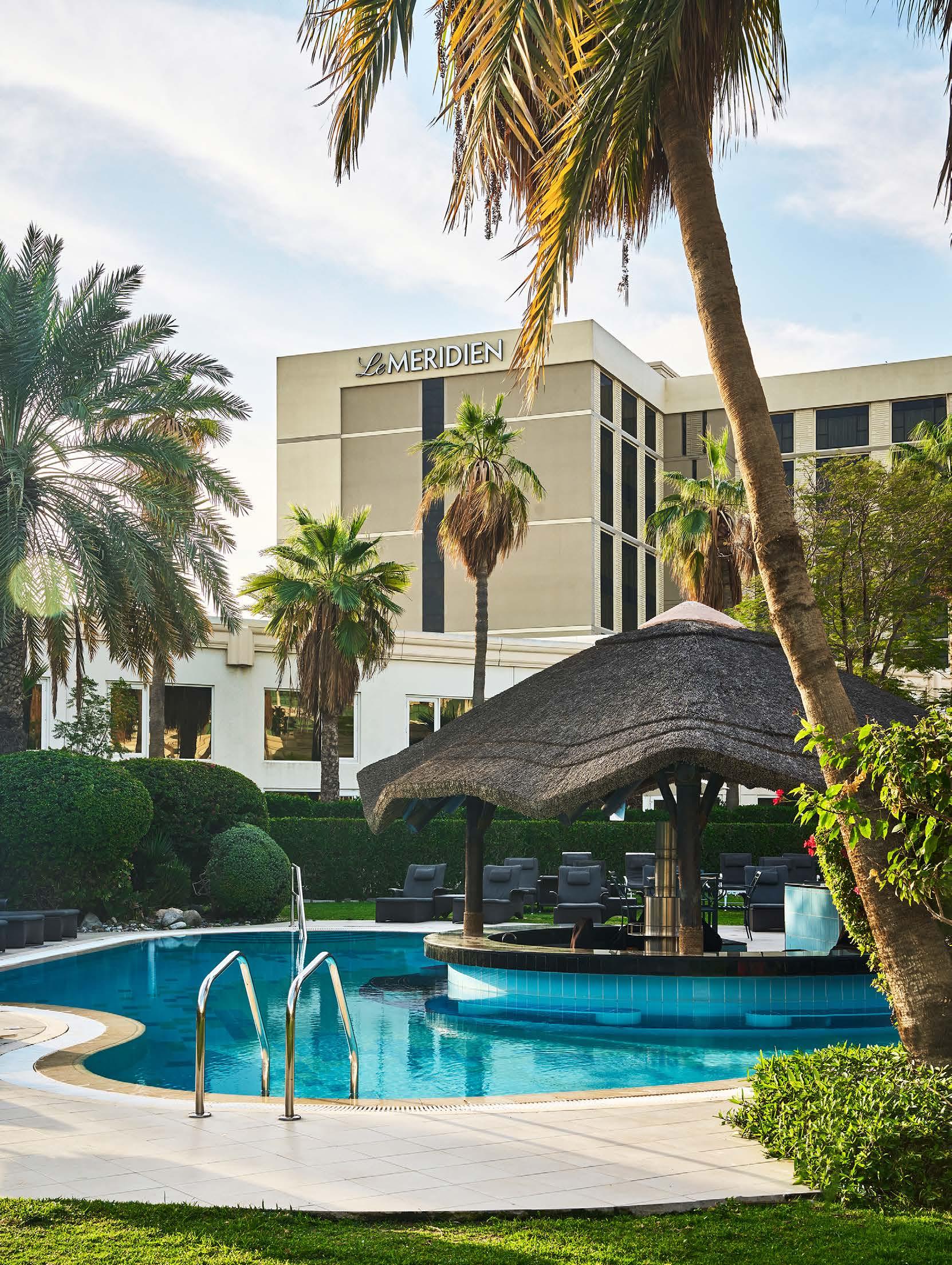
A serene sanctuary at the heart of the city’s dynamic landscape, Le Méridien Dubai Hotel & Conference Centre redefines the art of urban hospitality. Set across 15 acres of immaculately landscaped gardens, the hotel o ers an elegant retreat just moments from Dubai International Airport, placing guests within e ortless reach of the city’s most iconic districts, from Dubai Mall and Burj Khalifa to the storied charm of the Gold Souk and Dubai Creek.
With 580 beautifully appointed rooms and suites, the property invites travellers into a world where contemporary design meets the timeless sophistication of the Le Méridien brand. The distinguished 196 rooms in the Le Royal Club wing elevate the experience with spacious, light-filled rooms, and refined club privileges, while select ground-floor accommodations in the main building open directly onto lush gardens and tranquil pools, o ering a resort-like ambience rarely found in the city.
Well-being is woven into the hotel’s DNA. Guests may indulge in five swimming pools, unwind in serene outdoor enclaves, or train at one of Dubai’s most expansive and advanced fitness facilities, sta ed by expert coaches and equipped with cutting-edge technology to nourish mind, body, and spirit.
At the heart of the property lies an extraordinary culinary journey. Housing 18 acclaimed restaurants and bars, Le Méridien Dubai is home to some of the city’s most storied dining institutions. From the ever-legendary Seafood Market, celebrated for its market-style freshness, to Casa Mia, Dubai’s pioneering Italian restaurant, each venue reflects a passion for authenticity, craftsmanship, and memorable dining artistry.
A beacon for global meetings and events, the hotel features more than 44,000 sq. ft. of versatile event spaces, comprising 24 impeccably designed venues outfitted with modern audiovisual capabilities. Whether orchestrating a grand celebration for 1,750 guests, hosting an international exhibition, or curating an intimate executive gathering, the hotel’s specialist events team and award-winning culinary experts bring each vision to life with impeccable precision and creative flair.
From inspired dining to world-class event facilities, and from resort-style relaxation to unmatched convenience, Le Méridien Dubai Hotel & Conference Centre stands as a destination where cosmopolitan energy and cultivated luxury converge, inviting every guest to unlock a stay that is truly memorable.
“New beginnings don’t need grand announcements—sometimes they simply arrive with quiet intention.”
The intention this year is simple: to do better, to stay humble, to meet new people and learn from them with openness.
There’s something refreshing about the start of a new year. Much like a birthday, it marks another chapter unfolding—an opportunity to pause, reflect and celebrate hopes, achievements and everything still ahead. As we step into this fresh chapter together, I raise a toast to good health, peace of mind, shared successes and the small moments that make the journey worthwhile. Here’s to a year guided by positivity, progress and intention.
We open this issue by celebrating a significant milestone: ATI’s 45-year journey in the industry. At its foundation is the vision of founder Necdet Ajun, whose values of integrity, discipline and long-term thinking shaped the company from day one. Today, that legacy continues through his son, Altug Ajun, Executive Director, alongside Dilara Ajun, Creative Director. Together, they strike a thoughtful balance between tradition and modernity, leading ATI across residential, hospitality, educational and commercial projects. It is a story rooted in strong foundations, hard work and values carried forward with clarity and intent. Beyond this feature, the issue brings

together engaging interviews, insightful op-eds and carefully curated features that reflect the conversations shaping design, architecture and the wider built environment today. Each piece offers perspective, inspiration and a closer look at the ideas driving the industry forward.
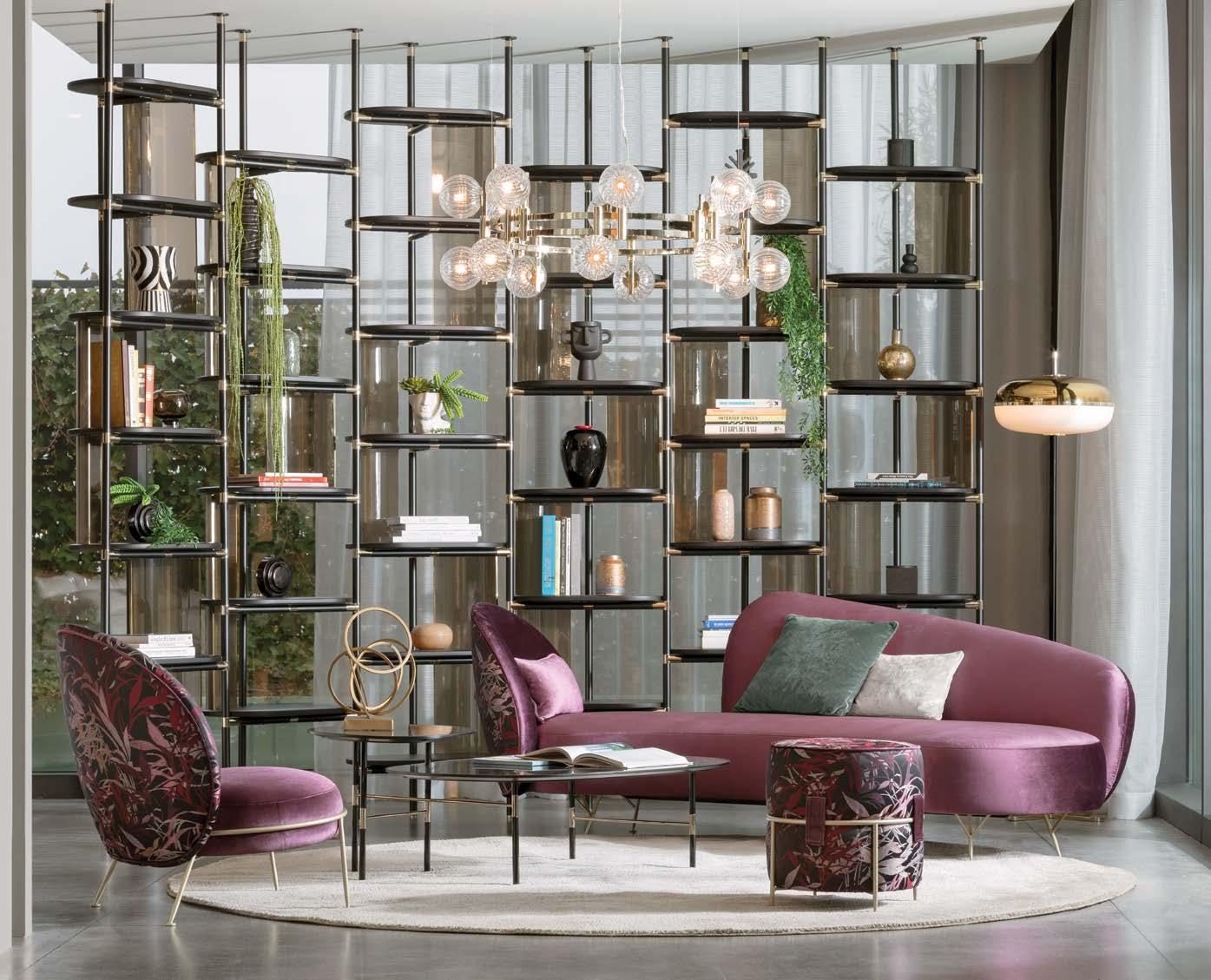
Our Pick of the Month is the Amaretto Sofa by SICIS—a striking blend of heritage and innovation. It’s the kind of piece you imagine unwinding on after a long day… when a quiet moment finally appears, inviting you to slow down.
Here’s to embracing fresh beginnings with optimism and intention.
Roma Arora Editor roma@bncpublishing.net @romaarora_

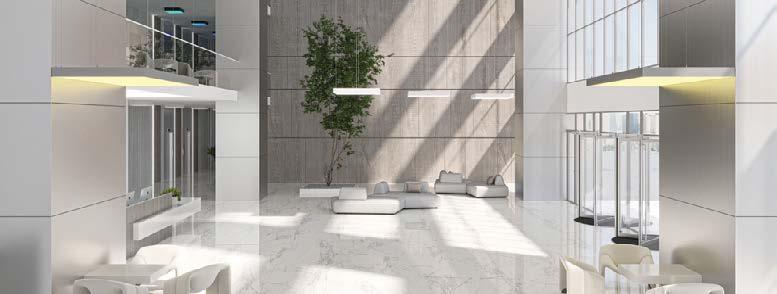

CEO WISSAM YOUNANE wissam@bncpublishing.net
MANAGING DIRECTOR RABIH NAJM rabih@bncpublishing.net
GROUP PUBLISHING DIRECTOR JOAQUIM D’COSTA jo@bncpublishing.net +971 50 440 2706
EDITOR ROMA ARORA roma@bncpublishing.net
ART DIRECTOR SIMONA EL KHOURY
MARKETING EXECUTIVE AARON JOSHUA aj@bncpublishing.net
COMMERCIAL DIRECTOR ANDREA MOCAY andrea@bncpublishing.net
DIGITAL REPORTER REEBA ASGHAR reeba@bncpublishing.net
DIGITAL MEDIA PRODUCER EDUARDO BUENAGUA Eduardo@bncpublishing.net
SUBSCRIBE subscriptions@bncpublishing.net
PO Box 502511 Dubai, United Arab Emirates T +971 4 420 0506 | F +971 4 420 0196
For all commercial enquiries related to Design Middle East, contact our Group Publishing Director JOAQUIM D’COSTA jo@bncpublishing.net | T +971 504402706
All rights reserved © 2026. Opinions expressed are solely those of the contributors.
Design Middle East is exclusively licensed to BNC Publishing. No part of this magazine may be reproduced or transmitted in any form or by any means without written permission of the publisher. Images used in Design Middle East are credited when necessary. Attributed use of copyrighted images with permission.
Printed by UPP
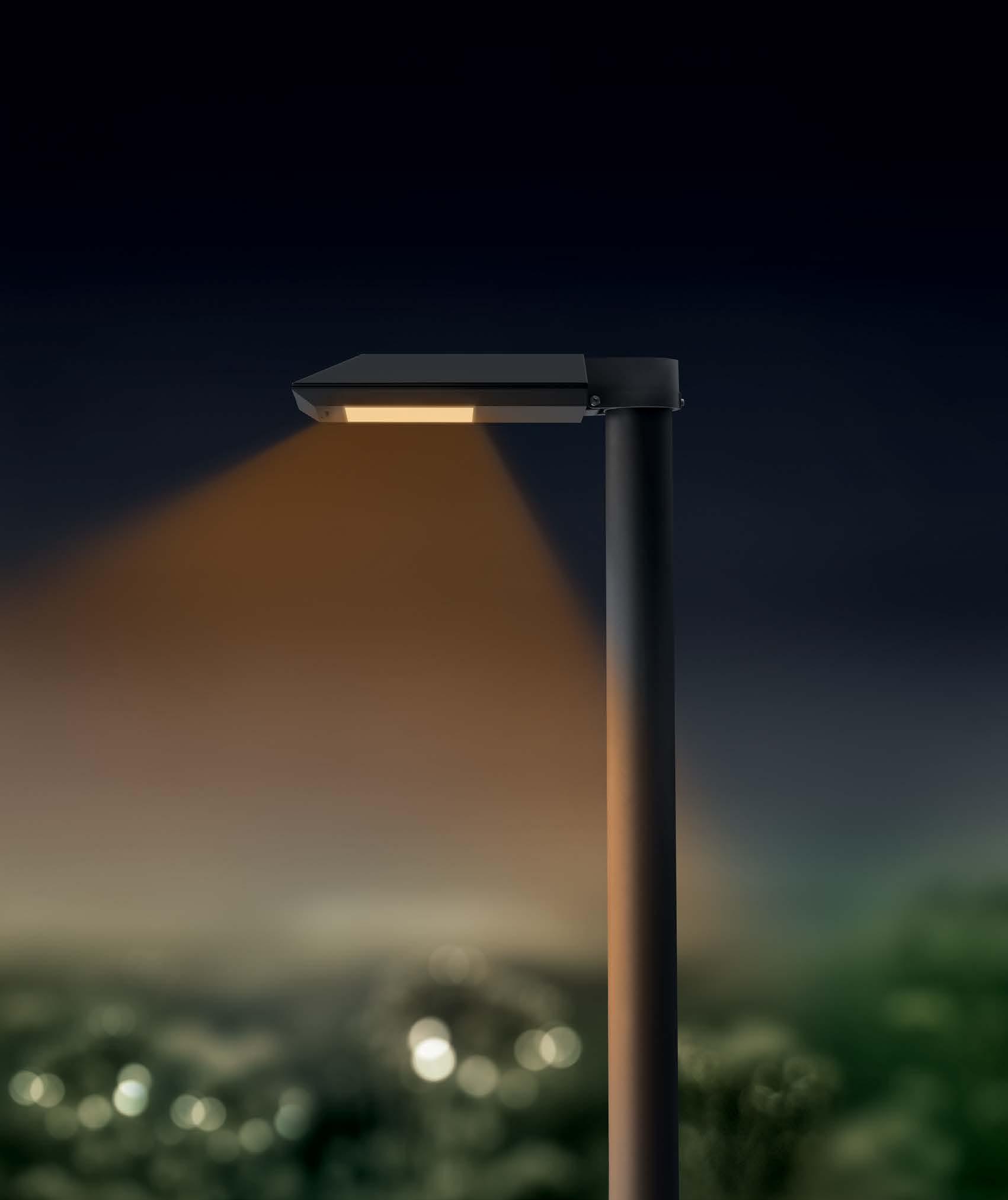
BEGA pole-top luminaires with BugSaver® technology protect nocturnal fauna by reducing the color temperature from 3000 Kelvin to an amber color around 1800 Kelvin, which reduces the light attractive effect. The color temperature and output can be controlled dynamically. bega.com/bugsaver
Designed by DBM Studio, the awardwinning practice led by Mahsa Gholizadeh, Hanbok is more than just a restaurant. It is an encounter with Korean history reinterpreted for a bold new era. Envisioned as a modern palace, the space becomes a world where tradition is not preserved behind glass but allowed to move, breathe and evolve. Every gesture within the interior pays homage to the grace of Korean design, while daring to re-shape it with contemporary precision.
Located on the promenade of Abu Dhabi’s Galleria Mall on Al Maryah Island, Hanbok is the newest culturally inspired, modern dining destination to step foot in the region. At the heart of the restaurant lies a narrative of duality. The space is inspired by a queen who walks her palace grounds with both serenity and quiet rebellion: powerful yet poetic, rooted yet unafraid to transform. It is her story that defines the atmosphere, expressed through
sculpted ceilings, gentle fabric folds, dramatic shadows and warm light.
Arrival at Hanbok is marked by a sculptural portal that connects the outside world to the inner realm of the restaurant. Guests pass through an immersive entrance tunnel formed by 1,100 handmade Korean pots, each crafted in the spirit of traditional Buncheong ceramics. Arranged as a layered, semi-transparent screen, the installation softly filters light and movement, blurring the boundary between the mall and the dining space beyond. Both ceremonial and contemporary, the portal sets the tone for the experience within, inviting guests to slow down and step into Hanbok’s evolving narrative.
The main dining hall introduces this conversation between eras. Overhead, dark, sculptural ceiling forms recall the vaulted timber structures of traditional Korean architecture, reinterpreted with modern craftsmanship. Strategic illumination carves depth into the contours, creating a sense of movement and grandeur. Below, curved seating, richly textured fabrics, and smooth stone surfaces echo the volume and drape of a traditional
hanbok, transforming its elegance into spatial form.
The bar area acts as the restaurant’s anchor, where a grid-lit backdrop and layered arches evoke palace portals and rhythmic Korean screens. Here, heritage becomes contemporary geometry. The palette of deep charcoals, earthy neutrals and touches of lacquered red draws from royal garments and ceremonial objects, grounding the space in authenticity while remaining resolutely modern.
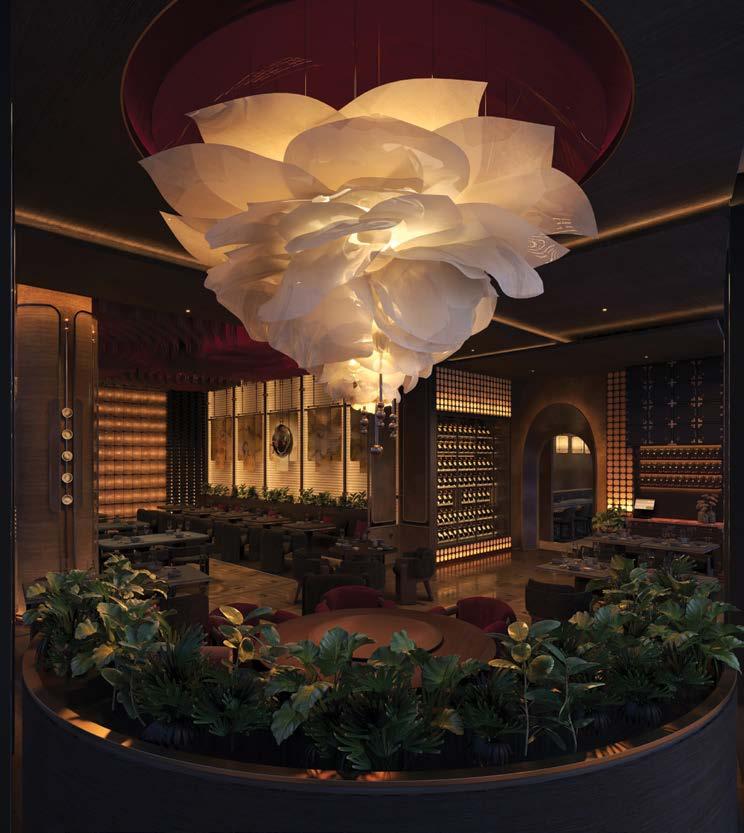
Ascending to the upper dining terrace, the atmosphere softens where a sculptural chandelier reminiscent of a blooming lotus hovers above, casting diffused, meditative light. Lush planting and gentle tonal contrasts create a connection to the quiet courtyards of historic palaces, where reflection and stillness reside.
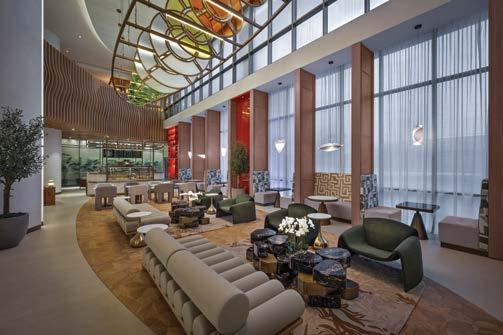
Pullman Dubai Jumeirah Lakes Towers has officially unveiled its fully refurbished lobby and public areas, designed by Dubai-based interior design studio DZ Design. The project marks a major milestone for the brand, with Pullman JLT becoming the first hotel in the region to introduce Pullman’s newest design identity, one that blends lifestyle, productivity, and community at its core.
The transformation repositions the lobby as a fluid, multifunctional social hub, moving far beyond traditional notions of arrival. With seating increased from 12 to more than 40, the space now supports co-working, casual meetings, relaxed gatherings, and quiet moments of downtime, responding to the shifting needs of today’s travellers.
Guided by the concept ‘Raw Meets Refined’, DZ Design layered natural textures with polished surfaces to create a contemporary, welcoming environment. The introduction of organic forms, tone-on-tone desert palettes, and a signature colouredglass chandelier elevates the doubleheight volume while maintaining a calm and approachable design.
Dina Murali, design director at DZ Design, shared: “The old lobby could seat around twelve people. Today, within the exact same footprint, the space comfortably accommodates more than forty. That shift was essential to creating a true social hub and a place where guests can work, mingle, or unwind in the evening. Increasing the seating capacity without compromising flow was one of our biggest achievements.”
Diane Tabet, director of interior design at Accor, said: “At Pullman, we look at travel differently. The
modern guest seeks softer productivity and spaces where connection, culture, and comfort come together. The Social Hub is central to that vision.”
The refurbished lobby now shifts effortlessly throughout the day , from a natural light-filled morning lounge to a warmer, livelier, community-driven atmosphere in the evening. This transition is supported by subtle moodchanging lighting that responds to different times of day.
Tabet added: “Our collaboration with DZ Design translated our brand pillars into a design language that celebrates connection, productivity, and relaxation in equal measure. The result is a space that feels dynamic, elegant, and distinctly Pullman.”
Sushanth Nambiar, cluster general manager, commented: “The timing of this refurbishment aligned perfectly with Pullman’s rollout of its new brand identity, and we’re proud to be the first hotel in the region to showcase this design direction. After more than a decade of operation, it was the right moment to evolve from a traditional business hotel to a more premium, lifestyle-driven experience.”
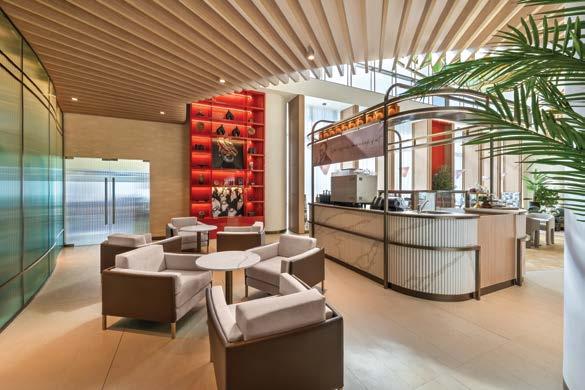
Upon arrival, guests pass through the Pullman Portal, a signature architectural element and a first for the brand globally, which creates a moment of transition between the city and the lobby experience.
To the right, the reception area opens with sculptural brass counters and a backdrop of custom red shelving, complemented by bespoke booth seating designed for quick check-ins.
Moving further inside, the space unfolds into the main lobby lounge, where multiple seating typologies create a fluid, multifunctional environment.
Reem
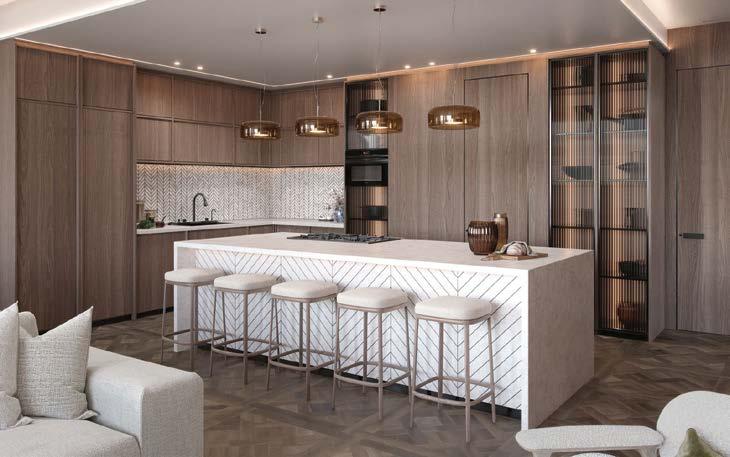
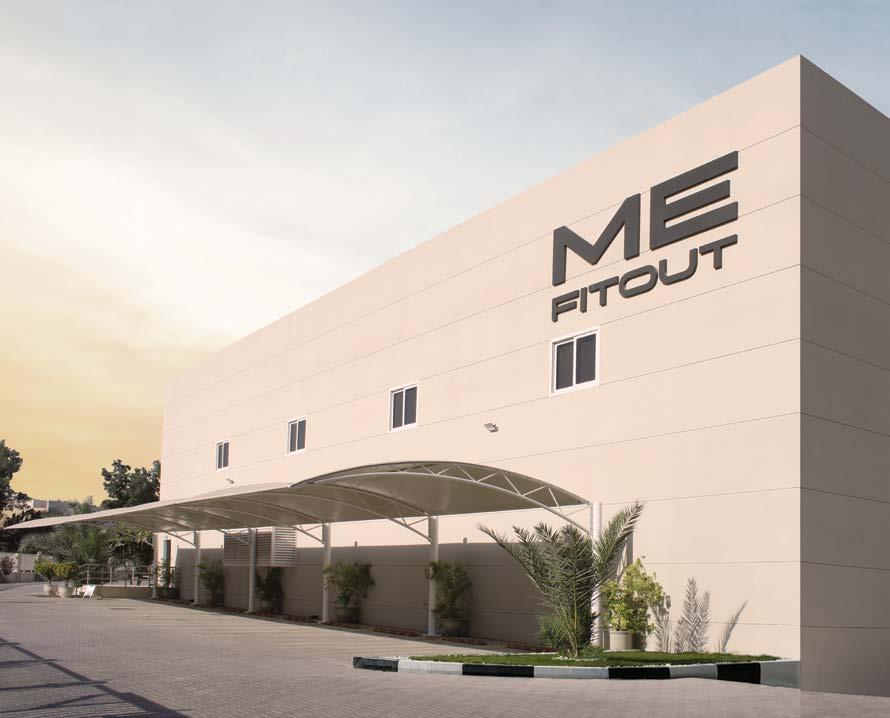
ElevenME FITOUT, a fastgrowing interior fitout company, has successfully completed the joinery and fit-out works at Reem Eleven, a 25-storey residential tower with a built-up area of over 20,000 sqm, developed by SAAS Properties at the heart of Reem Island, Abu Dhabi. The project serves as a testament to the company’s growing capacity to execute complex, large-scale residential interiors that combine precision, craftsmanship, technology, and sustainability.
The first phase of the project encompassed complete joinery installations across 20 floors, including bespoke wooden doors, wardrobes, kitchen units, and cabinets. These units were custom-built at ME FITOUT’s state-of-the-art manufacturing facility in Dubai Investment Park. The second phase focused on public areas, including the installation of premium wall claddings, integrated seating, decorative joinery, and cabinets, tailored to deliver timeless design precision and durability. Sherif Nagy, CEO of ME FITOUT, said: “The successful delivery of Reem Eleven’s joinery and fit-out works demonstrates the scale of precision, discipline, and innovation needed for high-rise residential projects in the UAE’s competitive market. The country’s interior fit-out industry is projected to surpass USD 4.13 billion by 2030, driven by accelerated urban growth and the evolving appetite for sustainable, high-performance living spaces. Aligning with SAAS Properties’ vision of
unparalleled living and working environments has enabled us to raise execution standards across design quality and craftsmanship throughout the project.”
“Beyond addressing market demands, our fully integrated manufacturing and project delivery model is advancing the objectives of the ‘We the UAE 2031’ vision, the UAE’s Green Agenda 2030, and the ‘Make it in the Emirates’ initiative by reinforcing local production capabilities, reducing reliance on imports, and raising the bar for quality, sustainability, and design excellence,” added Sherif.
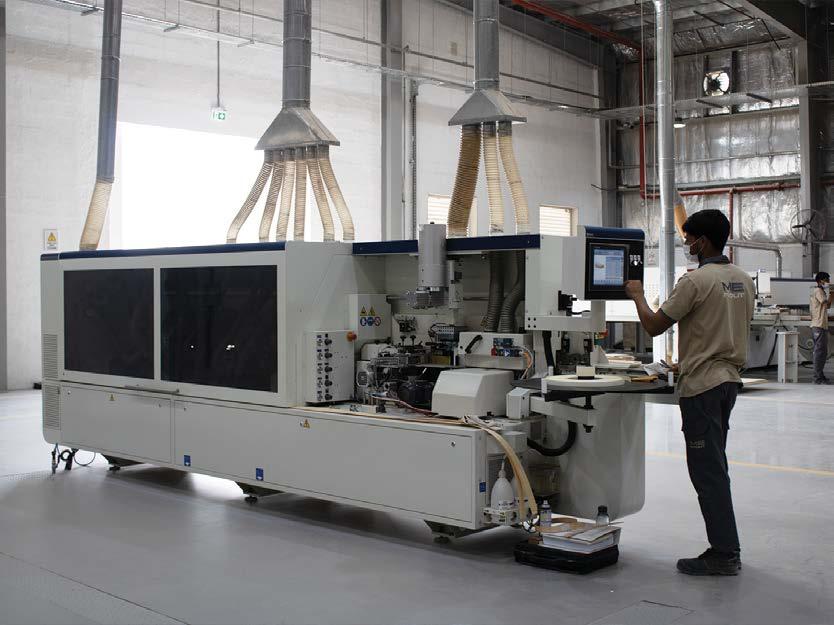
As part of the project, ME FITOUT leveraged advanced European machinery and digital production-tracking systems to achieve maximum precision across large-volume outputs while minimising material waste. Every component was manufactured using FSCcertified boards, low-VOC finishes, and recycled materials, reflecting the company’s commitment to sustainable manufacturing and compliance with the UAE’s environmental standards.
ME FITOUT used advanced European machinery and digital tracking to deliver highprecision outputs with minimal waste.
The company’s in-house design and production teams ensured seamless alignment between structural layouts and interior details, supporting on-time delivery without compromising creative vision or craftsmanship quality. With an unwavering focus on safety and excellence, ME FITOUT continues to reinforce its reputation as a trusted partner for developers and consultants across the UAE.
As ME FITOUT expands its residential, commercial, and hospitality portfolio, the joinery and fit-out project at Reem Eleven marks a significant milestone for the company. It showcases ME FITOUT’s capability to deliver future-ready interiors aligned with the UAE’s objectives for innovationdriven construction, sustainable practices, and world-class design standards.
By Dr Syed Andrabi, Assistant Professor and Program Director,
Communication
Design
at HeriotWatt University Dubai, explores how emojis are reshaping emotion, meaning, and connection in digital communication.
According With the rise of social media platforms and smartphone technology, the use of emojis in communication has increased exponentially.
People are increasingly employing emojis to express themselves and convey ideas succinctly across digital platforms. The term ‘emoji’ is derived from the Japanese language, combining ‘e’ for picture and ‘moji’ for letter, effectively meaning a pictograph. As a result, emojis can be viewed as the digital successors to pictograms, ideograms, and emoticons.
The first emoji was created in the mid1990s by Shigetaka Kurita, an employee at the Japanese telecom firm NTT Docomo. He aimed to visually represent human emotions, such as the ever-popular happy faces (smiley) and the grinning face . Since then, emojis have expanded to

encompass both abstract concepts (such as love, happiness, and peace) and concrete objects (such as weather symbols, animals, flags, and everyday items). Today, the Unicode Consortium, which standardises emoji usage, lists approximately 3,953 emojis, underscoring that emojis are the fastestgrowing form of communication in the digital realm.

A significant milestone in emoji history occurred in 2015 when the ‘Face with Tears of Joy’ emoji was chosen by the Oxford Dictionary as the ‘Word of the Year.’ In justifying the decision for selecting an emoji over a word, the dictionary stated that this emoji encapsulated the ‘ethos, mood, or preoccupations’ of contemporary society, reflecting the sharp rise in emoji popularity worldwide. While the design circles welcomed this inclusion, it evidently triggered no protests or complaints from the academic circles. This recognition by a prominent institution signalled a shift in communication norms, indicating that emojis have become an integral aspect of human interaction.
Today, emojis have penetrated virtually every sphere of communication. They have influenced adaptations of classic literature (e.g., Alice in Wonderland), inspired underground emoji maps of cities, and found a place in celebrity lifestyle, political discourse, and even news reporting.
For example, British tennis player Andy Murray famously used emojis to chronicle events from his wedding day to Kim Sears, starting with a rising sun and a light shower, moving through moments of joy at the church, and culminating in the couple retiring to bed.
Similarly, Australian Foreign Affairs Minister Julie Bishop conducted an entire political interview via iMessage using only emojis, which BuzzFeed labelled as the ‘world’s first emoji political interview.’ In response to questions about Australian Prime Minister Abbott and Russian President Putin, she represented the former as a running man and the latter as an angry, red-faced individual. When asked about her leisure activities, she responded with emojis representing reading, music, and television.
Major broadcasting institutions such as the BBC have also embraced the emoji phenomenon. On ‘World Emoji Day,’ the BBC aired a special bulletin inviting viewers to decipher the day’s headlines through emojis. One particular headline, concerning a member of the royal family visiting Poland, was presented through a series of emojis, followed by images of the visit, captioned: ‘The Duke and Duchess of Cambridge arrive in Poland with their children George and Charlotte.’ This innovative feature was well received, leading the BBC’s Newsbeat page to produce a weekly emoji news round-up that engages viewers actively every Friday.
Major broadcasting institutions such as the BBC have also embraced the emoji phenomenon.
On ‘World Emoji Day,’ the BBC aired a special bulletin inviting viewers to decipher the day’s headlines through emojis. .
Studies on technology suggest that users favour emoji keyboards over traditional alphabetical keyboards because they are easier to use for conveying emotions and ideas. Emojis are particularly effective at bridging communication gaps among individuals from diverse countries, cultures, and linguistic backgrounds, enabling the sharing of similar feelings and concepts in everyday narratives. This effectiveness, however, depends on a shared understanding between sender and receiver; something largely achieved through global digital interaction. As such, emojis have emerged as a near-universal language in the digital age. Recent advancements in artificial intelligence have further bolstered the ‘acceptability and universality’ of emojis, making them a growing ‘new type’ of language for an ever-expanding ‘new kind’ of online audience.
To summarise, the role of emojis within digital communication is not merely a passing trend; it represents a profound evolution in how we convey meaning, express emotions, and connect across cultural and linguistic divides. As communication evolves in the digital landscape, emojis will become deeply embedded in our everyday interactions. More than mere decoration, they serve as visual cues that express complex concepts and contexts that plain text often struggles to convey. By bridging cultural and linguistic gaps, emojis enhance conversations, making them more expressive, relatable, and human in the fastpaced realm of digital communication.
Sherif Nagy, CEO of ME FITOUT, shares insights on leadership, in-house manufacturing, AI adoption, and how sustainability and luxury are redefining the region’s fit-out landscape.
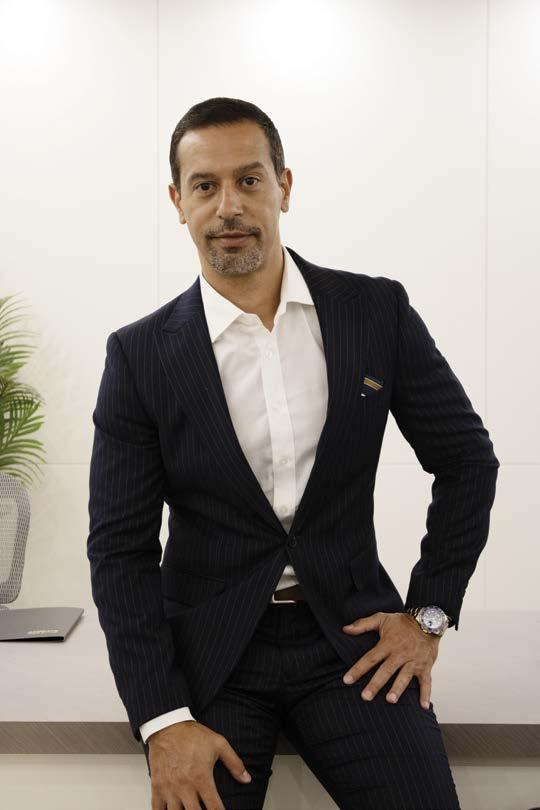
What leadership lesson has shaped your approach to running me fitout?
Over the years, my leadership vision has greatly evolved, keeping pace with the dynamic needs of the modern fitout landscape. However, safeguarding client trust, promoting transparency, and guaranteeing service quality at every touchpoint have always remained key priorities for me as a leader. At ME FITOUT, we ensure this by facilitating all stages of manufacturing in-house, from joinery to upholstery, metal, and glass works.
“Integrated, in-house facilities are pivotal in expediting delivery cycles and achieving superior quality outcomes. This contributes to advancing the Dubai Industrial Strategy 2030, which aims to reduce reliance on imports and enhance localised production.”
I also believe that a true leader should be able to identify and nurture promising talent, positioning them as the cornerstone of each project. Moreover, I strive to lead by example, promoting eco-friendly practices and advanced technologies that enhance exclusivity rather than diminish it.
As a leader, I champion both open management and lateral management principles, which are key to driving innovation and cross-team collaboration while ensuring efficient delegation of duties. Ultimately, my leadership vision
focuses on transforming client demands into exceptional designs with a personal touch, further setting superior standards and delivering lasting impact.
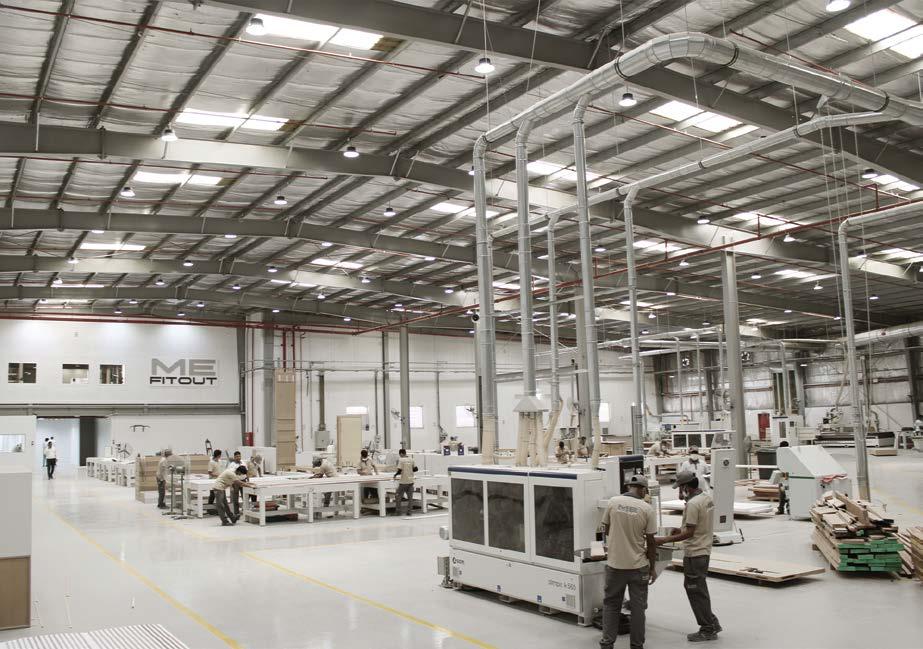
Why is having an in-house, wellequipped manufacturing facility critical for today’s fit-out companies? Integrated, in-house facilities are pivotal in expediting delivery cycles and achieving superior quality outcomes. This contributes to advancing the Dubai Industrial Strategy 2030, which aims to reduce reliance on imports and enhance localised production. Our in-house capabilities primarily stem from our large manufacturing facility in Dubai Investment Park (DIP), where technology, sustainability, and craftsmanship converge to drive precision, speed, and design excellence. The facility is equipped with nextgeneration European machinery, ensuring seamless delivery of bespoke joinery, upholstery, steelwork, and glass, among others. It can also execute multiple complex, large-scale projects
simultaneously without compromising quality or customisation capabilities.
How do you balance high-end design expectations with strict budgets and timelines?
We are seeing a growing demand for integrated production models and digital workflow systems, as Dubai Smart City initiatives push for efficiency, digital integration, and cost optimisation in construction and interior projects. In line with this, we undertake design, manufacturing, joinery, upholstery, metalwork, and glasswork under one roof. This empowers us to adhere seamlessly to strict budget and timeline constraints while ensuring best-in-class quality and eliminating reliance on external subcontractors. Furthermore, our advanced technology, material optimisation software, and real-time workflow management help optimise resources and scheduling, catering to the evolving demands of clients, particularly in the luxury segment.
What roles are ai and automation currently playing in fitout execution – and what’s next?
AI and automation have emerged as cornerstones of the fitout landscape, with the UAE National Strategy for Artificial Intelligence 2031 establishing a unified framework for adoption across diverse industries to improve efficiency and sustainability.
ME FITOUT’s commitment to supporting this transition is exemplified by our DIP facility, tailored for digital integration and featuring ERP systems, Critical Path Method scheduling, and CNC automation. We have also integrated material optimisation software and advanced machinery into our operations, ensuring efficiency, flawless quality, and sustainability.
Looking ahead, AI-powered project management platforms and robotics are set to further shape the fit-out landscape, driving speed and quality while reducing costs.
How can sustainability and luxury co-exist without compromise in fit-out projects?
The future of interior contracting will be shaped by the synergy of sustainability and design excellence. The evolving regulatory landscape and growing market expectations are driving the use of sustainable materials and processes, positioning environmental responsibility as a key value proposition for high-end projects.
Recognising this shift, we have developed a sustainabilitydriven manufacturing facility, integrating intelligent recycling systems, material optimisation software, and a centralised sawdust collection process. For us, sustainability
and luxury are not contradictory but complementary, advancing environmental goals while ensuring high-end finishes.
How do modular joinery and offsite production improve speed, quality, and cost control?
There is a growing adoption of modular construction and offsite production, driven by demand for faster delivery cycles and sustainable building practices, aligning with the Dubai 2040 Urban Master Plan. Recent reports highlight the benefits of modular construction, including waste reduction, enhanced cost control, and improved quality assurance. We support this transition by facilitating modular and offsite production without outsourcing, leveraging our in-house capabilities. Our advanced equipment, integrated workflows, real-time production tracking, and scheduling software allow us to execute multiple large-scale projects simultaneously, ensuring consistency, expediting delivery, and strengthening cost control. Precision machinery and standardised workflows ensure consistent quality and tighter tolerances compared to
“THE SECTOR IS ENTERING A NEW PHASE WHERE TECHNOLOGICAL ADVANCEMENTS, MODULAR CONSTRUCTION, AND SUSTAINABILITY ARE INTEGRAL.”
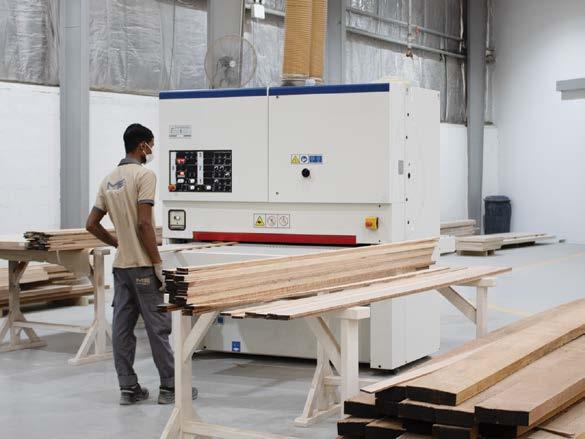
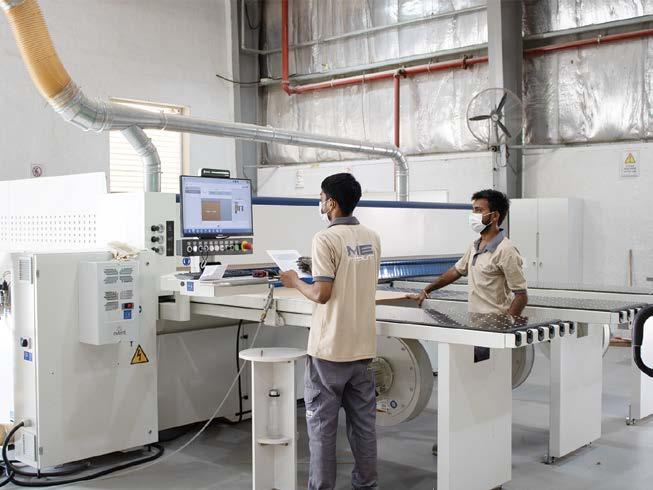
“There is a growing adoption of modular construction and offsite production, driven by demand for faster delivery cycles and sustainable building practices, aligning with the Dubai 2040 Urban Master Plan.”
traditional site-based fabrication. With components produced in parallel with site preparation, project timelines are significantly reduced.
What’s the secret to managing demanding clients while maintaining project integrity?
Enhanced transparency, digital project tracking, and close client collaboration are key to achieving long-term success and meeting diverse client expectations in the dynamic UAE market. At ME FITOUT, we strive to combine excellent service quality and value with clear accountability.
We utilise real-time dashboards and workflow management solutions to keep clients fully informed and engaged, ensuring that client demands are fulfilled seamlessly without compromising project integrity.
What major shift do you expect to redefine the middle east fit-out sector in the next five years?
The sector is entering a new phase where technological advancements, modular construction, and sustainability are integral. Urban development frameworks such as the Dubai 2040 Urban Master Plan and national sustainability commitments like Net Zero 2050 are driving the integration of ecoconscious and technology-driven practices.
We believe that the convergence of advanced manufacturing, AIdriven project management, and eco-conscious design will shape the sector, setting new benchmarks for speed, quality, and sustainability. Our facility in Dubai Investment Park is tailored for this transformation, featuring ERP systems, Critical Path Method scheduling, CNC automation, and a workforce skilled in both traditional craftsmanship and digital systems.
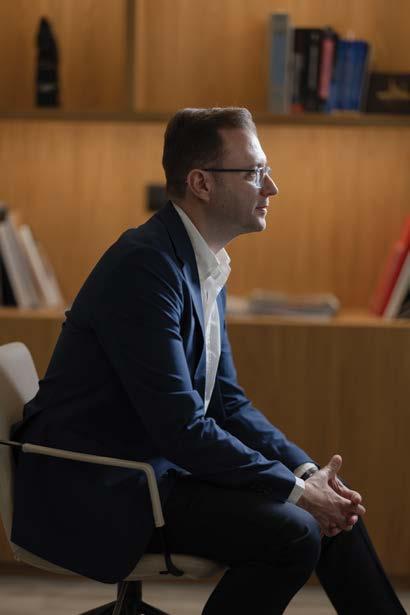
By any measure, 45 years is a rare achievement in the UAE design and construction industry. For ATI, it is not simply a milestone, but the foundation for what lies ahead. For Altug Ajun, Executive Director at ATI, this legacy is deeply personal, shaped by the vision of the firm’s founder and his father, Necdet Ajun.
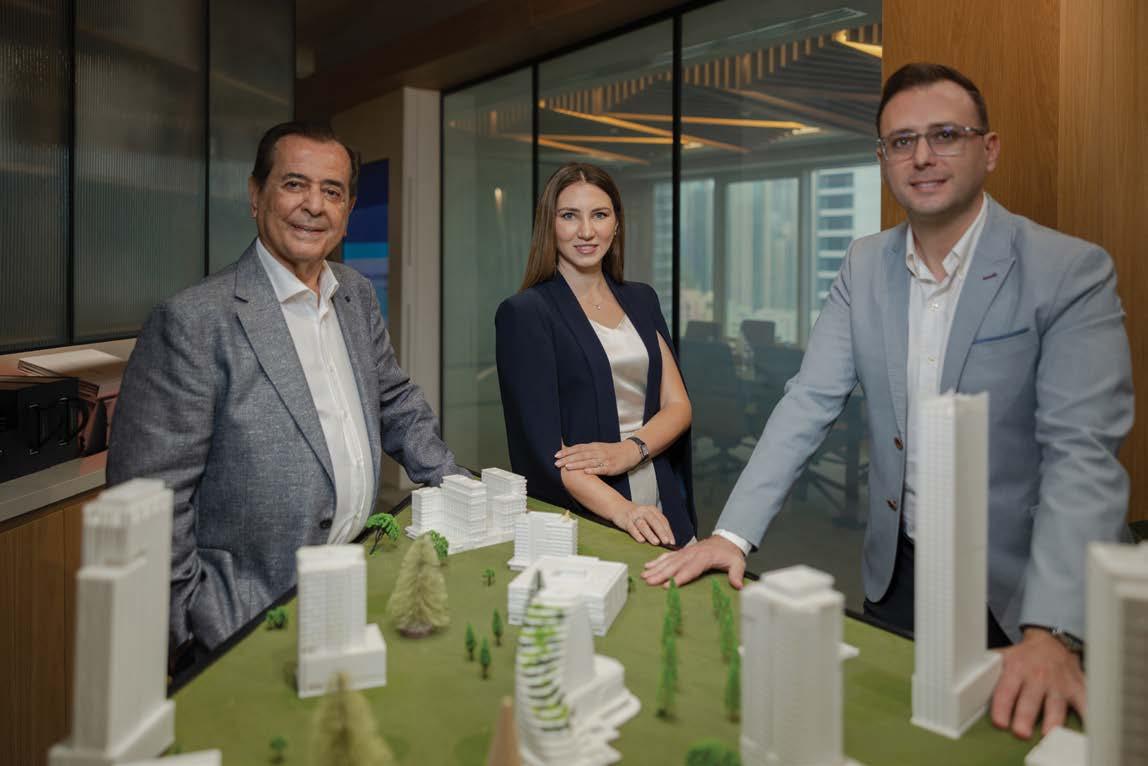
“Staying relevant has required a delicate balance of honouring our roots while aggressively embracing the future. Creativity, research, and development lie at the core DNA of our organisation.”
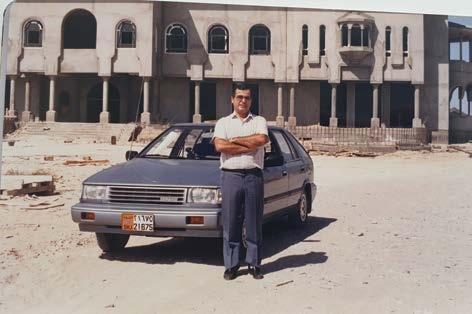
ATI was founded by Necdet Ajun, whose principles of integrity, discipline, and long-term thinking continue to guide ATI’s journey forward. His legacy laid the foundation for a company that balances ambition with responsibility, consistently exceeding expectations. In an industry defined by speed, cycles, and constant reinvention, longevity is rare— and ATI’s enduring success, now celebrating 45 years, is truly extraordinary.
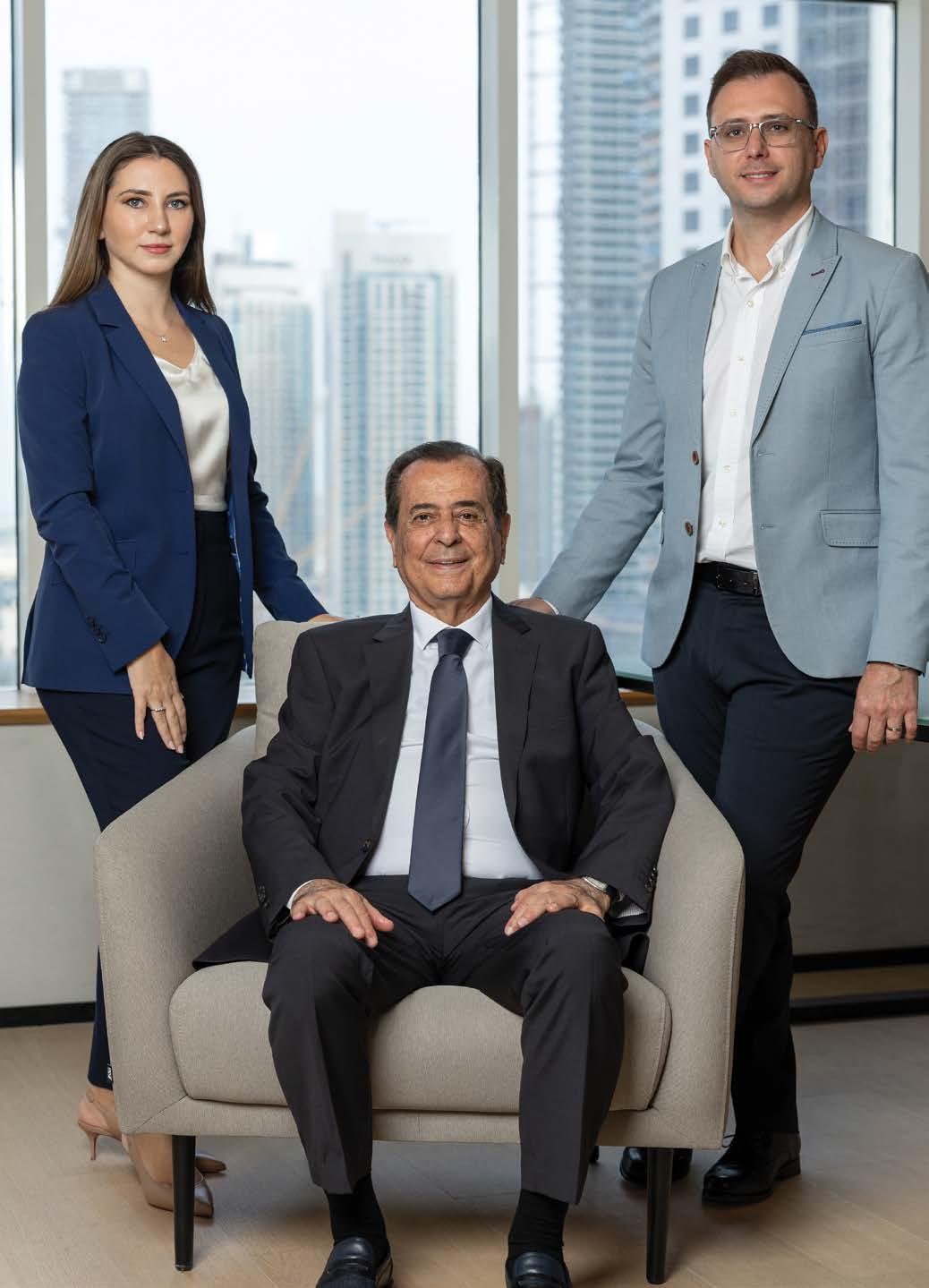
Today, that legacy is carried with pride by his son Altug Ajun, Executive Director, and by his wife, Dilara Ajun, Creative Director, whose visionary creativity continues to set new benchmarks and inspire those around them. Together, they push boundaries, blending innovation, culture, and heartfelt design into every project. This remarkable trio is making waves across the industry, weaving tradition, creativity, and strategic foresight into a lasting impact. In the UAE design and construction sector, ATI’s story is exceptional—a testament to resilience, heritage, and transformative growth
spanning decades.
As ATI marks 45 years in the market, the firm stands as one of the country’s enduring success stories—shaped by deep local roots, disciplined growth, and a deliberate evolution from a traditional design consultancy into a fully integrated development partner, poised to inspire the next generation.
Founded in 1980, ATI’s journey closely parallels the UAE’s own transformation—from an emerging market dependent on external expertise to a global hub that exports knowledge, systems, and talent. Today, backed by a 150-strong multidisciplinary team and offices across the UAE, the UK,
Turkey, Egypt, and Kazakhstan, ATI’s strength lies not merely in its geographic reach, but in its enduring relevance—shaped by adaptability, continuity, and a clear sense of purpose.
For Altug Ajun, Executive Director at ATI, longevity has never been accidental. It is the result of balancing heritage with forward momentum. Altug reflects: “Staying relevant has required a delicate balance of honouring our roots while aggressively embracing the future. Creativity, research, and development lie at the core DNA of our organisation.”
That DNA, he explains, is shaped by deep local intuition—an understanding of culture, regulation, and market behaviour built over decades—combined with the systems, connectivity, and talent pool of a global consultancy. Rather than pursuing rapid expansion for scale alone, ATI has taken a measured path. Quality, not volume, has guided decision-making. Altug explains: “We have never prioritised rapid, unchecked expansion for the sake of scale. We focus on quality over quantity, working primarily with long-standing clients as
strategic partners. Their growth drives our growth, and vice versa.”
This philosophy has fostered relationships built on trust rather than transactions, many of them spanning decades.
From local roots to global reach
ATI’s international expansion reflects a broader shift in the region itself. Once a market that imported expertise, the UAE has become a global reference point for high-speed, high-quality construction. Altug Ajun, Executive Director, ATI: “Forty-five years ago, the UAE primarily imported architectural expertise from abroad. Today, the world comes here to learn from our experience.”
The firm recognised early that the expertise honed in the Gulf’s demanding environment—where complex projects are delivered under intense time pressure—was highly exportable. This insight informed
ATI’s expansion into markets as diverse as Central Asia and the UK. Altug elaborates: “We expanded into markets where we saw a need for that specific blend of agility and high technical competence— taking the lessons learned in Dubai and applying them to emerging markets like Central Asia and established, mature markets like the UK.”
The UAE as an innovation forge
Few markets test architects and engineers quite like the UAE. Tight timelines, ambitious briefs, and uncompromising quality expectations have turned the region into a proving ground for innovation. Altug underscores this reality: “The UAE acts as a forge for high-speed, high-quality construction. Nowhere else on earth demands such complex projects to be delivered in such compressed timeframes, without sacrificing quality.”
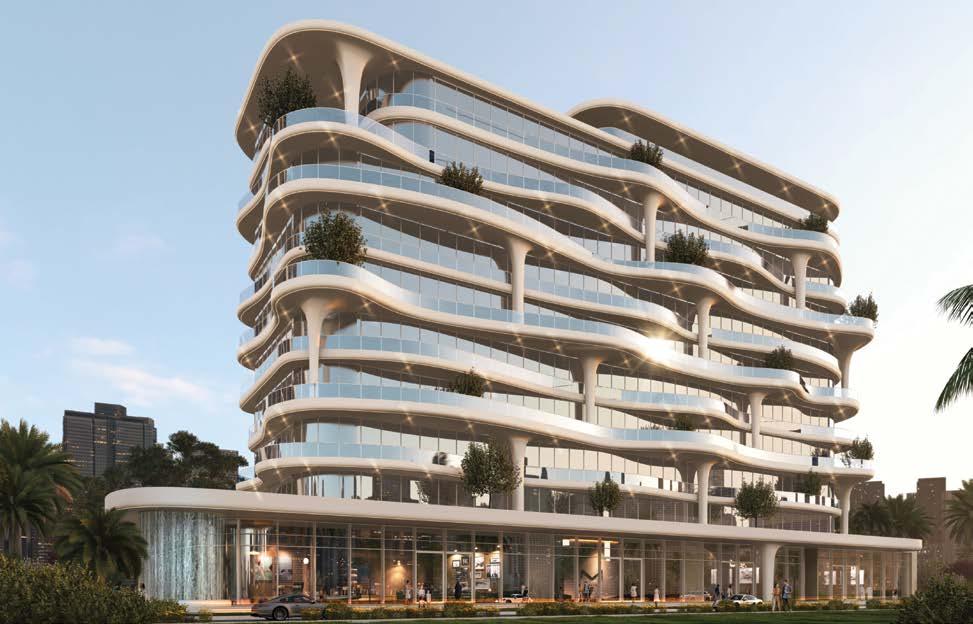
This demanding environment has pushed ATI to adopt and refine advanced tools wholeheartedly— from integrated BIM workflows to AI-assisted design processes. The true value of this experience lies in its practicality. Altug explains: “The experience gained here is valuable because it is battle-tested. When we approach a project in Kazakhstan or Egypt, we aren’t just bringing theoretical design knowledge; we are bringing proven methodologies for delivering complex developments efficiently under pressure.”
traditional consultancy
ATI’s evolution from a traditional design firm into a fully integrated development partner marks a defining chapter in its story. Altug explains: “Traditional design firms usually wait for a brief from a developer. We have shifted that model to assist investors throughout the entire development lifecycle.”
This 360-degree approach supports investors whether they are building to sell, lease, or operate assets such as schools or hospitality developments. Altug adds: “Our
360-degree service means we assist the entire value chain. This includes sourcing the appropriate land, running detailed feasibility studies, handling RERA escrow account management, providing world-class architecture and engineering, and finally, managing sales and marketing through our specialised subsidiary companies.”
In today’s market, capital is readily available, but development expertise is often fragmented. This is a challenge Altug understands deeply, having grown up within the business founded by his father, Necdet Ajun. ATI’s integrated model directly addresses this gap. Altug notes: “Many investors want the rewards of property development—but they lack the technical infrastructure, market know-how, and the tricks of the trade to execute it efficiently. We provide that infrastructure in a box.” By managing projects from land acquisition through to delivery and sale, ATI reduces inefficiencies and miscommunication, allowing investors to focus on long-term value rather than short-term hurdles.
Despite its broad scope, ATI maintains that design remains central to every project. Altug, Executive Director, ATI: “We believe design is the primary driver of value. When you control the whole process, you realise that good design—both architectural and engineering solutions—is what ensures profitability.”
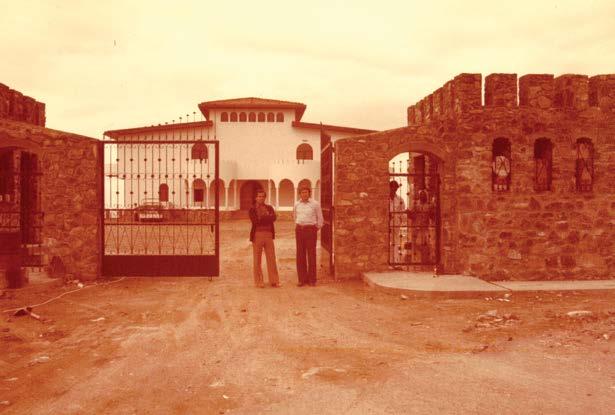
This perspective allows the firm to align design quality with commercial performance, ensuring that aesthetics, efficiency, and return on investment reinforce one another rather than compete.
Designing for a maturing market ATI’s portfolio—spanning residential, mixed-use, and educational developments across diverse geographies—is unified not by a fixed aesthetic, but by a deep responsiveness to context and longevity. “Designing for specific contexts is primary to our philosophy. A mixed-use tower in the UAE requires a specific approach to shading, orientation, and lifestyle amenities, while a development in Northern Europe demands a completely different response,” explains Altug. As the UAE’s real estate market matures, this sensitivity has become critical. “The market has matured significantly. It is about building smart and creating long-term asset value,” he adds. Sustainability, community-centric planning, and operational efficiency now sit at the centre of decision-making— areas where ATI’s lifecycle-driven, integrated approach delivers tailored, high-quality solutions grounded firmly in local realities.
Culture and continuity ATI’s dual identity—local at heart, global in reach—has shaped its culture. Teams collaborate across offices, sharing perspectives while remaining grounded in regional expertise. Altug Ajun, Executive Director, ATI: “A designer from our Türkiye or UK office might work on a Dubai high-rise, bringing fresh international perspectives that are then contextualised by our local team’s deep regulatory and cultural knowledge.”
Reflecting on ATI’s journey, one defining decision continues to shape everything the firm stands for today. Altug recalls: “The pivotal moment was the strategic decision to stop being purely service providers waiting for instructions, and instead become partners in the development cycle.” That shift— from executors to collaborators— redefined ATI’s purpose, placing trust, accountability, and long-term value at the heart of its work. Looking ahead, the ambition is clear and confident: to carry this integrated DNA beyond borders. Altug concludes: “We are now focussed on positioning ATI not just as designers, but as holistic development solution providers for investors globally.”
After 45 years, ATI’s journey, shaped by Necdet Ajun’s visionary foundation and carried forward by the new generation—Altug and Dilara Ajun—is more than a story of growth. It is a legacy of integrity passed down through generations, relationships nurtured with trust, and an unwavering commitment to creating lasting value for the UAE and beyond.
THE 11th INTERNATIONAL INTERIOR, EXTERIOR, FURNISHING & FIT-OUT EXHIBITION
DESIGN, BUILD, FURNISH TM ALIGNED INDUSTRY EXHIBITIONS POWERED

EGYPT’S INTERNATIONAL EXHIBITION CENTER, NEW CAIRO - EGYPT 14 - 16 MAY 2026
BY TAREK KHOURY
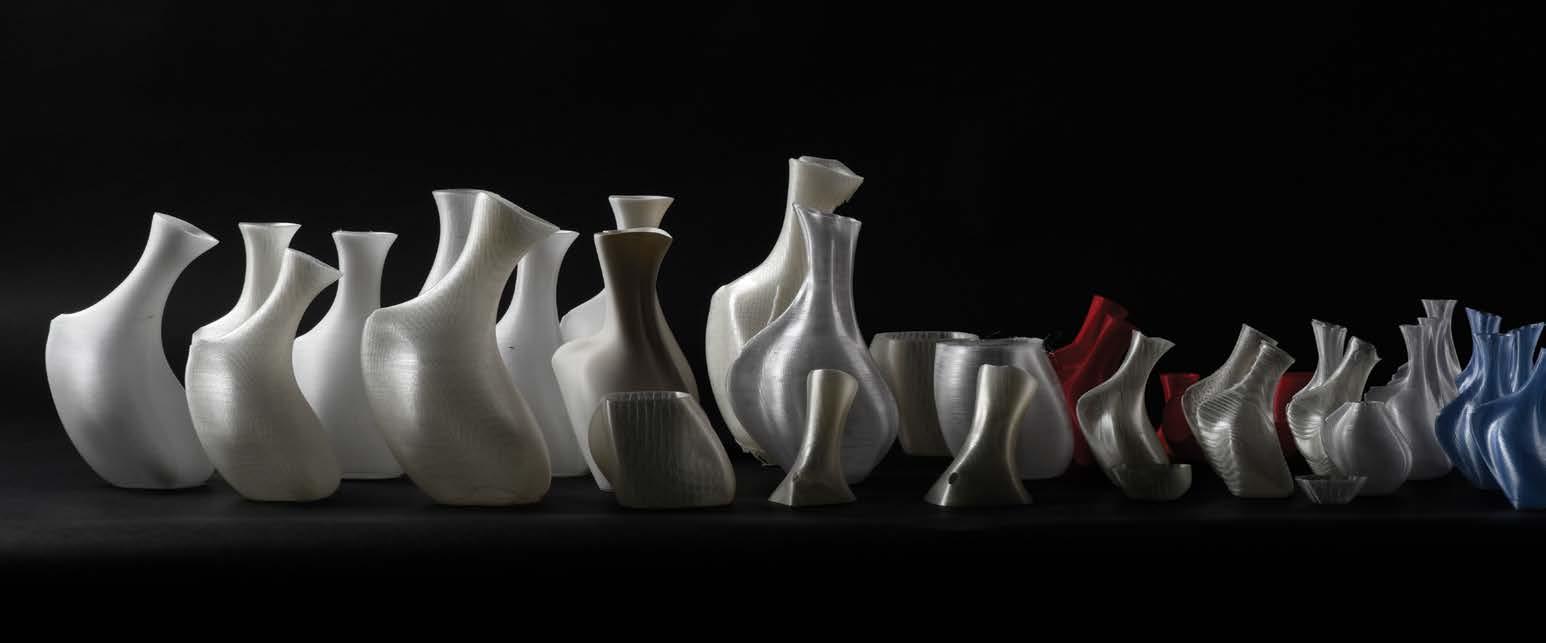
Transforming a heritage object through digital technologies and innovation. The Neo Ebreeq, inspired by the traditional Lebanese ebreeq, a clay water drinking container, reinterprets how cultural heritage can be reimagined through digital technologies and innovation.
The traditional aspects of the ebreeq might at first glance appear simple, but it embodies quality that have been developed over centuries to combine function and beauty. To designer Tarek Khoury, it is the indigenous knowledge embodied by the Ebreeq that is of value.
“To redesign the Ebreeq for today, I first had to understand what gives this traditional object its value. The way that water flows with it and from it; its form and material; the way users interact with it – these are all aspects that need to be preserved,” he explains.
The Neo Ebreeq reimagines the ebreeq after careful observation of the way it has been traditionally made and how one interacts with it. Each element, from the spout to the container to the handle, has guided a design process wherein tradition served as a basis for innovation.
The Neo Ebreeq is a mix of indigenous knowledge, a study of interaction, and contemporary approaches to making.
The use of clay retains the intrinsic water purification qualities of the traditional ebreeq. While the study
of water flowing in the process of filling and drinking from the ebreeq was essential to reimagine this object. Meanwhile, 3D scanning, digital modeling, and fabrication prompted shifts in form, not possible in conventional pottery practices.
It is the result of this material preservation, the study of human interaction, and technological exploration that established a new design language rooted in heritage. Traditional gestures were respectfully acknowledged while curves and contours were reconsidered and reinterpreted,
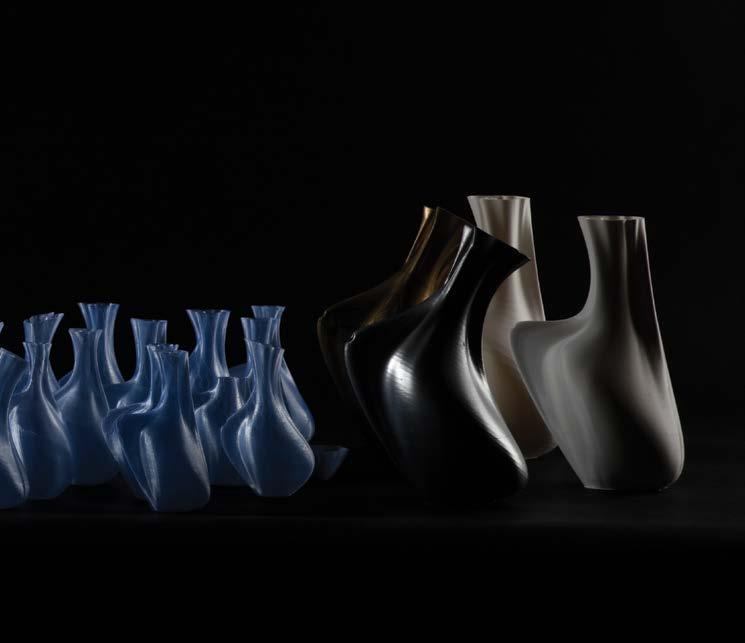
creating various modern iterations of ebreeq.
“My process became generative,” says Khoury. “The analysis of traditional aspects of the ebreeq actually prompted me to find moments where I could experiment, iterate, and uncover new forms.”
The Neo Ebreeq is functional, nostalgic, and beautiful. It invites one to interact with it, reflect on its heritage, and admire its fluid forms.
Nevertheless, its importance extends beyond its physical characteristics and historical value. The design
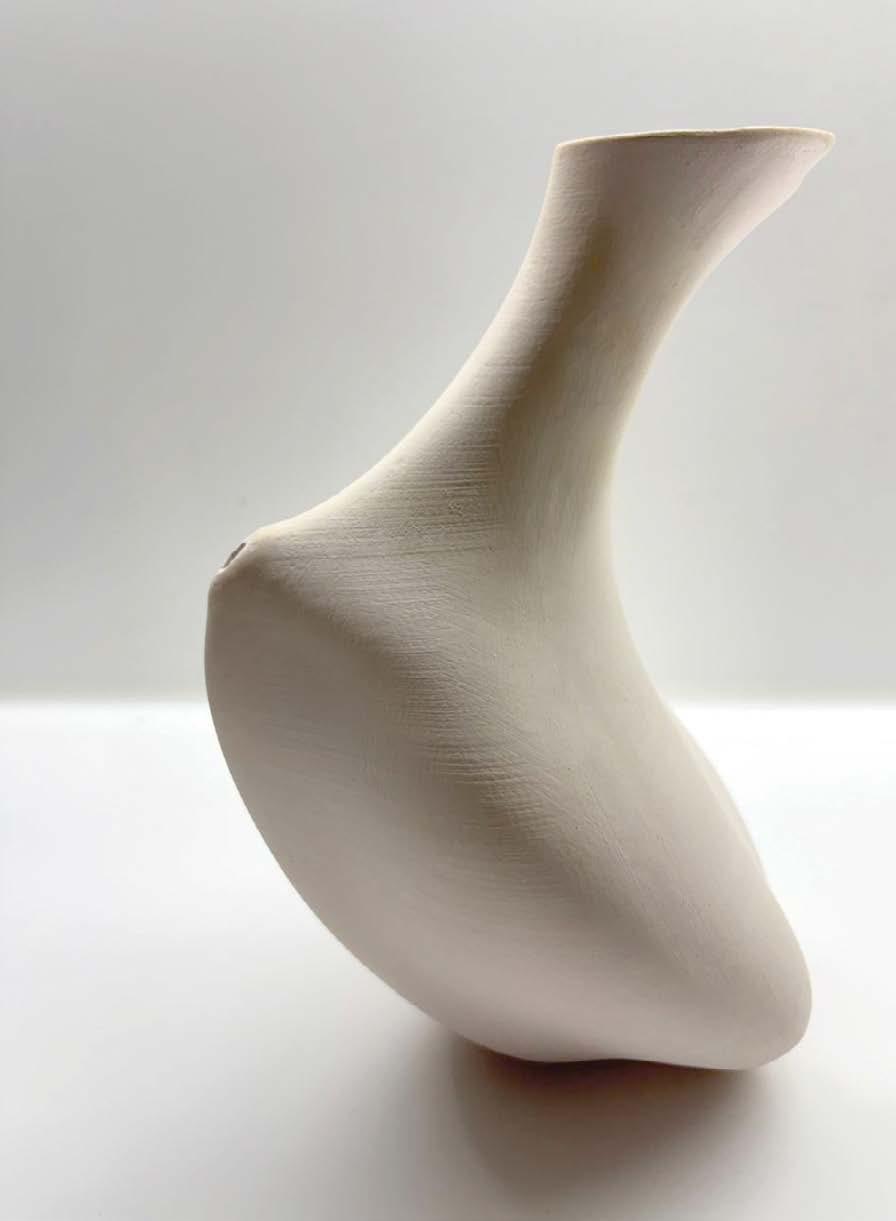
of the Neo Ebreeq is rooted in a methodology in which human movements and water flows prompt new, modern forms.
In Lebanon and the broader region, with its rich histories, heritage, and innovation, there is the possibility of intersecting. The Neo Ebreeq shows that design can continue to pay respect to the past while enabling opportunities for the future. It opens possibilities for other heritage objects rooted in craftsmanship, culture, and materiality to be seen through a contemporary lens.
Ultimately, the Neo Ebreeq is a living bridge between eras, showing that to understand tradition’s flow, essential elements and forms aren’t just to nod at the past, but to revive centuries-old knowledge and merge it with a generative method and digital technologies for contemporary design.
Neo Ebreeq shows how the Ebreeq could be reimagined for today while opening up future design possibilities for other objects. Thus, it challenges designers to consider: How can other traditional objects inspire new forms for today? How might craft, culture, and modernity exist in harmony within such objects, influencing our daily lives?
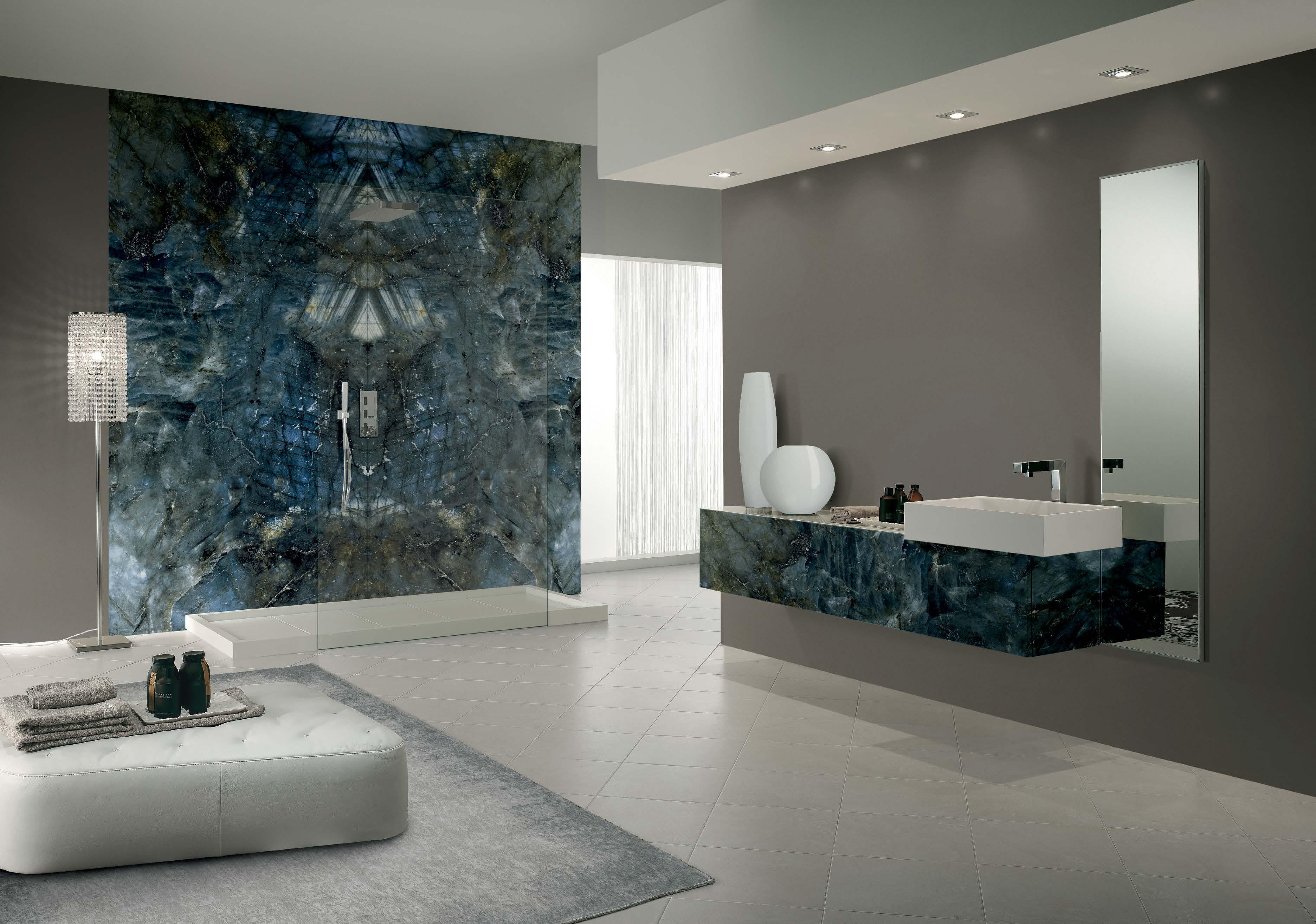
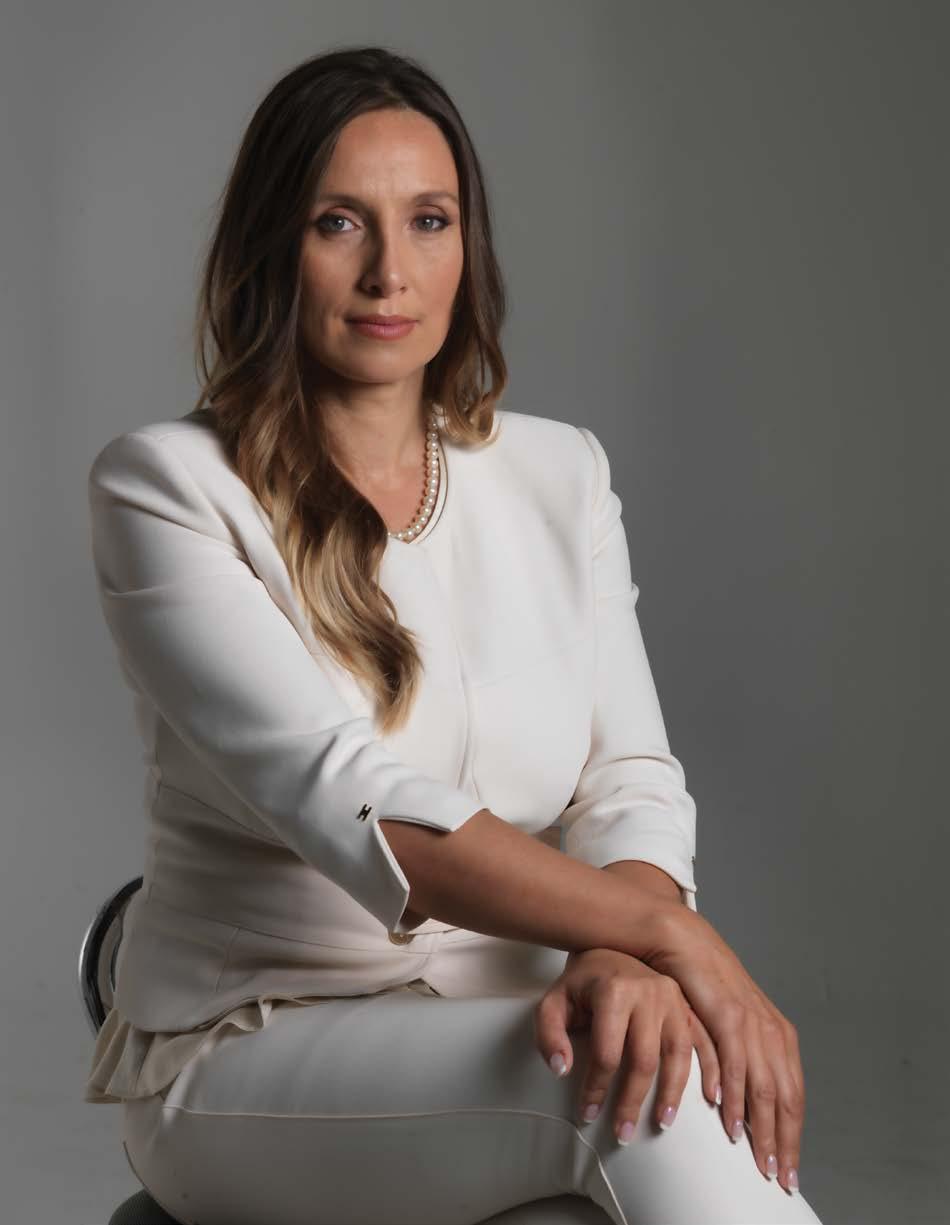
Dr. Tetyana Kovalenko, Chairwoman of Elite Stone Group, reflects on her family’s marble legacy, the artistry behind Made in Italy craftsmanship, and how sustainability and innovation are redefining luxury stone in contemporary architecture.
What inspired the creation of Elite Stone and its focus on luxury natural stone?
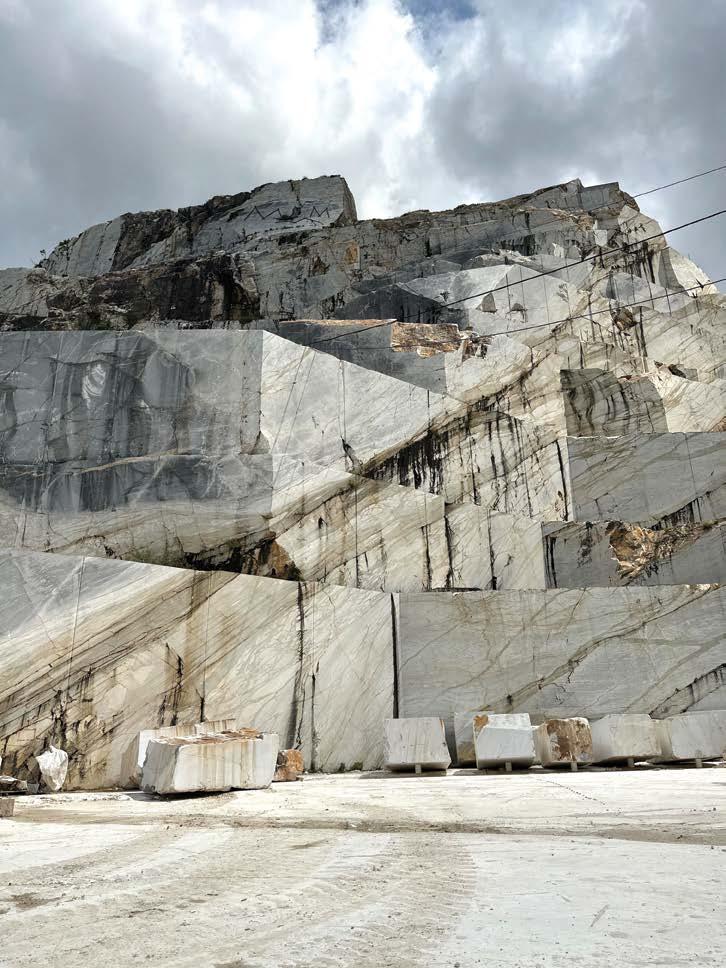
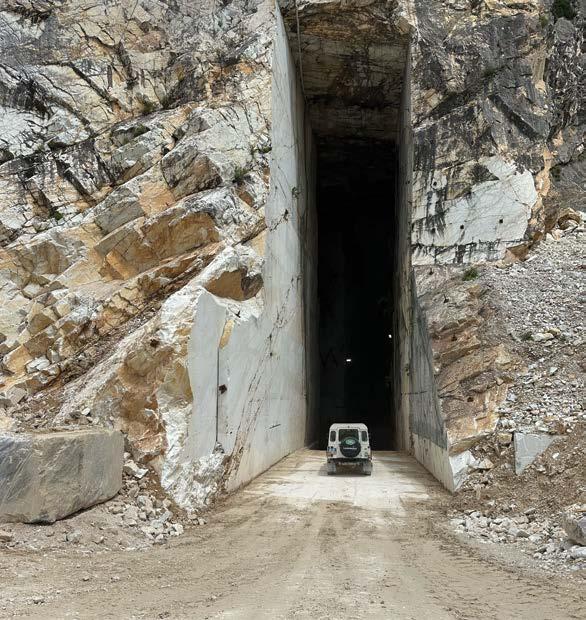
The creation of Elite Stone builds upon a strong family heritage that predates the company itself, originally centred exclusively on marble quarrying. Our flagship quarry, Calacatta Gold in Carrara, is not only one of the most prestigious materials in the world but also one of our best-selling. Calacatta Gold belongs to the luxury goods segment and has historically been sought after for high-end projects, so the path into the luxury building field was already set.
When I began working in this field after graduating in geology in Rome, I developed a deep passion for the world of luxury, which inspired me to establish Elite Stone as a brand focused exclusively on luxury-segment natural stones — extending far beyond just Calacatta Gold. Through continuous research, passion, and significant investment in luxury marbles, Elite
Stone has grown into the company it is today, offering an extensive selection of over 300 varieties of luxury materials. Each is meticulously curated and readily available in our warehouse to meet the needs of discerning architects and designers worldwide.
Another driving factor when I entered the business was recognising that Italian artisanal marble craftsmanship was highly segmented, and that few companies truly spoke the
same architectural and design language as designers and architects. This insight led to the creation of our dedicated project division, composed of highly skilled artisans, engineers, and architects.
This team allows Elite Stone to transcend the traditional role of simply supplying marble. We now offer a full-cycle service — from initial professional consultation and design collaboration to meticulous fabrication and final delivery. This integrated approach
has elevated our ability to meet the sophisticated demands of luxury projects and deepen partnerships with designers, ensuring that every detail aligns perfectly with their vision.
How do you select and source the rare marbles and onyx in your collection?
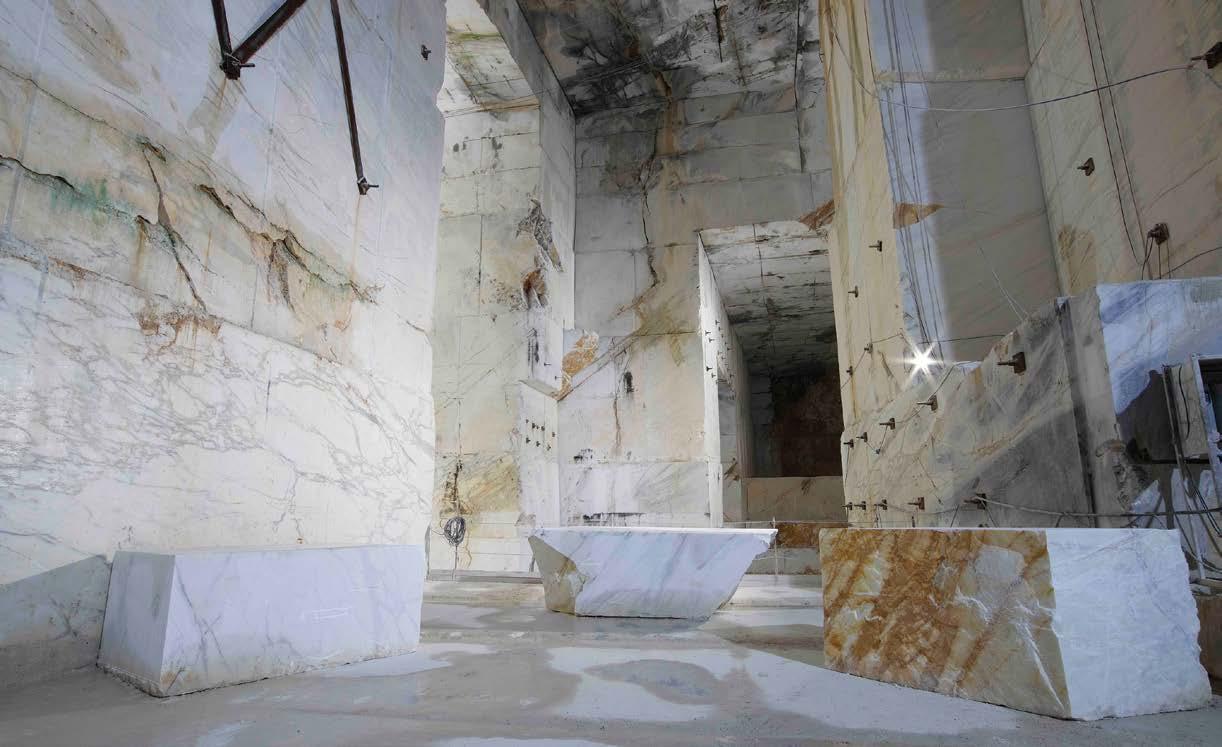
In addition to materials from our own quarries, we source marbles and onyx from quarries around the world. Our selection and sourcing process is deeply rooted in over 20 years of personal experience, combined with close collaboration with architects and designers. We apply rigorous professional criteria similar to those used in evaluating diamonds — assessing colour, structure, the presence of defects, and overall rarity.
This highly specialised evaluation requires extensive direct quarry experience and expertise. Beyond the technical assessment, a refined understanding of our clients’ tastes and current design trends is essential to ensure that each material not only meets the highest quality standards but also resonates with the specific aesthetic vision of each project.
What sets Elite Stone apart from other premium stone suppliers globally?
What truly sets Elite Stone apart is our unique combination of heritage, expertise, and vertically integrated operations with full transparency. As the only producer in Dubai offering direct-fromquarry Italian marble with a clear and honest pricing structure, we ensure our clients know exactly where their stone comes from and how it was sourced.
Built on decades of family tradition in marble quarrying, we bring unmatched knowledge of
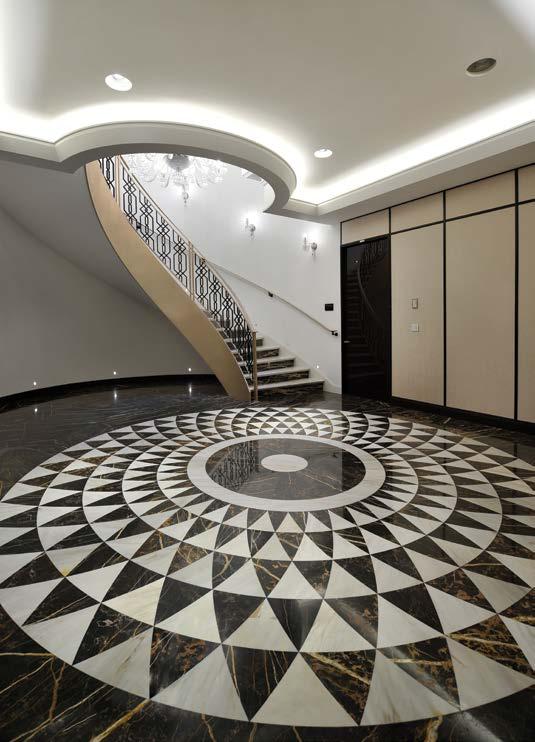
luxury natural stone — from sourcing rare and exceptional materials to meticulous quality control. Our dedicated project division of artisans, engineers, and architects provides end-to-end solutions, from expert consultation to precision fabrication, ensuring every detail reflects the vision of architects and designers. Moreover, we combine Italian heritage with a strong Middle Eastern presence, delivering global standards with local expertise. Our Dubai
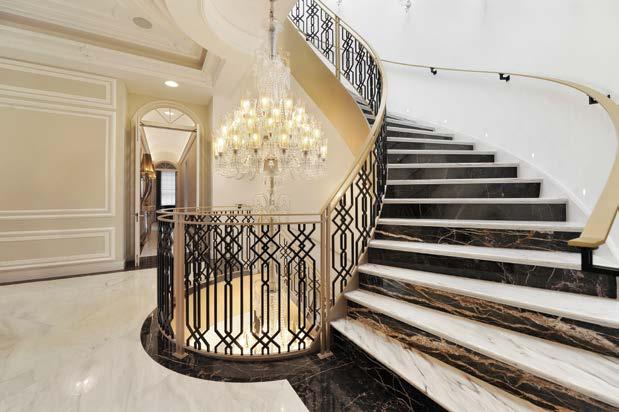
“We have also developed innovative products, including backlit walls, custom stone doors, and other bespoke solutions that push the boundaries of natural stone design."
branch was established to provide the region with immediacy, exclusivity, and consistency. With access to over 300 luxury stone varieties, many of them exclusive, we don’t just supply materials — we create true works of art for prestigious projects worldwide.
How does Elite Stone collaborate with architects and designers to create bespoke solutions?
Collaboration lies at the heart of Elite Stone’s
philosophy. We work closely with architects and designers from the earliest concept stage, offering expert guidance on material selection, finishes, slab layout, and technical feasibility. Our dedicated project division — comprising skilled artisans, engineers, and architects — ensures every detail is thoughtfully addressed.
To bring bespoke projects to life, we offer specialised services such as custom engineering, production, and unique surface finishes. We have also developed innovative products, including backlit walls, custom stone doors, and other bespoke solutions that push the boundaries of natural stone design.
We see ourselves as creative partners, translating ideas into tangible, refined surfaces that elevate each space through unparalleled craftsmanship.
What role does craftsmanship play in preserving the authenticity of “Made in Italy”?
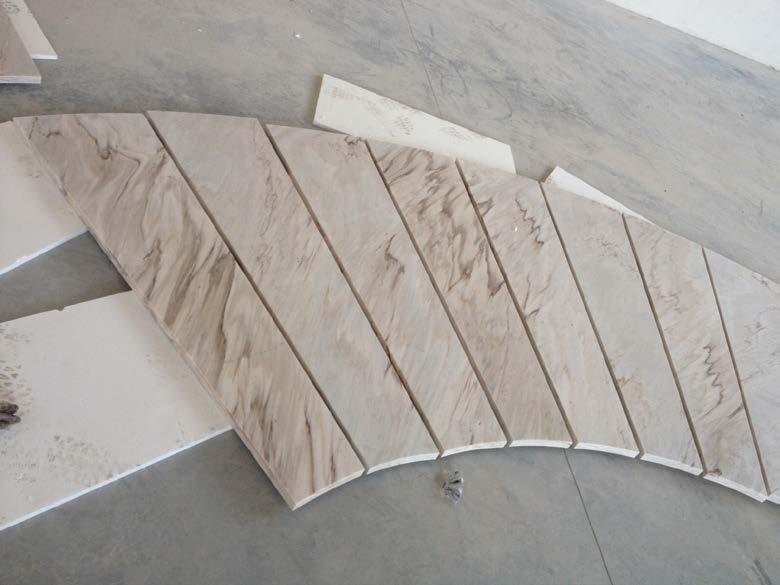
Craftsmanship is fundamental to preserving the authenticity and prestige of the “Made in Italy” label. While highquality raw material is essential, it is merely the potential to become a luxury surface. Only skilled and knowledgeable craftsmanship can transform it into a true luxury product. There is no standard process — each
material and each block requires a bespoke, highly tailored approach.
At Elite Stone, craftsmanship embodies the deep-rooted Italian tradition of arte del maestro, where skills and knowledge are passed down through generations. This heritage ensures that every piece undergoes meticulous handwork by artisans who not only understand the technical aspects but also respect the soul of the stone.
This bespoke approach preserves and elevates each slab’s unique character, transforming it into a flawless, functional work of art. By harmonising time-honoured techniques with modern technology,
we uphold the unmatched quality and heritage associated with Italian craftsmanship, reinforcing the global prestige of “Made in Italy” in the luxury natural stone industry.
How is sustainability reflected in your sourcing and production process?
Sustainability is an integral part of Elite Stone’s sourcing and production philosophy. Marble itself is a pure, carbon-free, and ecofriendly material, naturally formed over millions of years, making it one of the most environmentally harmonious materials available. Its durability and timeless beauty further support sustainability by offering exceptional
longevity and reducing the need for replacement or renovation.
We prioritise responsible quarrying practices that minimise environmental impact and ensure careful management of natural resources. By working closely with our quarry partners, we support ethical extraction methods and promote sustainability throughout the supply chain.
Transparency is also key. Our clients can trace the origin of each stone and understand the sustainable practices behind it. Through this holistic approach, Elite Stone balances luxury with environmental responsibility, delivering timeless natural stone
solutions with a positive impact on the planet.
What has been one of the most memorable or challenging projects you have worked on?
We proudly collaborate with some of the world’s most prestigious brands and developers. Elite Stone is a centralised supplier for the Richmond Group, which, among others, owns the Cartier brand — a testament to the trust placed in our expertise and quality.
One of the most memorable and challenging projects we undertook was for Cartier in Kuala Lumpur. Based solely on visualisations and design concepts, we engineered
and produced uniquely curved backlit onyx walls, each rising eight metres high and intricately engraved with gold leaf. This project required bespoke solutions at every stage — from the supporting structure and precision lighting integration to specialised production methods — all tailored to realise a singular vision. Our team’s ability to innovate and collaborate closely with designers allowed us to transform a complex concept into a breathtaking reality, exemplifying Elite Stone’s commitment to craftsmanship, technical excellence, and creative partnership.
How do you see natural stone and luxury surfaces evolving in future interior and architectural design trends?
Natural stone has been synonymous with luxury and sustainability throughout human history. Among these materials, Italian marble holds a singular legacy as an essential and timeless component of true luxury. Its unmatched beauty, rarity, and heritage represent the pinnacle of refined taste and artisanal mastery — a legacy that will remain steadfast even as design and technology evolve.
There is no other material that combines such enduring elegance with unparalleled durability. This makes natural stone the ideal choice for luxurious,
long-lasting interiors and architectural works.
The Middle East’s growing focus on green and ecosustainable luxury aligns perfectly with the ethos of natural stone. As the region embraces ambitious sustainability goals, the carbon-free composition, longevity, and recyclability of stone seamlessly support this new direction in luxury.
By harnessing innovations such as backlit and lightweight stone solutions, alongside digital technologies like 3D modelling and digital dry lay, designers can now visualise and execute sophisticated projects with greater precision. This reduces waste, minimises surprises, and pushes creative boundaries — all while honouring the artisanal craftsmanship that lies at the heart of Italian marble. At the core of luxury is a dialogue between tradition and innovation. The legacy of Italian marble and the artisanal arte del maestro remains essential, ensuring that every surface is a work of art. Combined with advanced technology and sustainability, this legacy will continue to define the future of natural stone as the ultimate symbol of luxury.
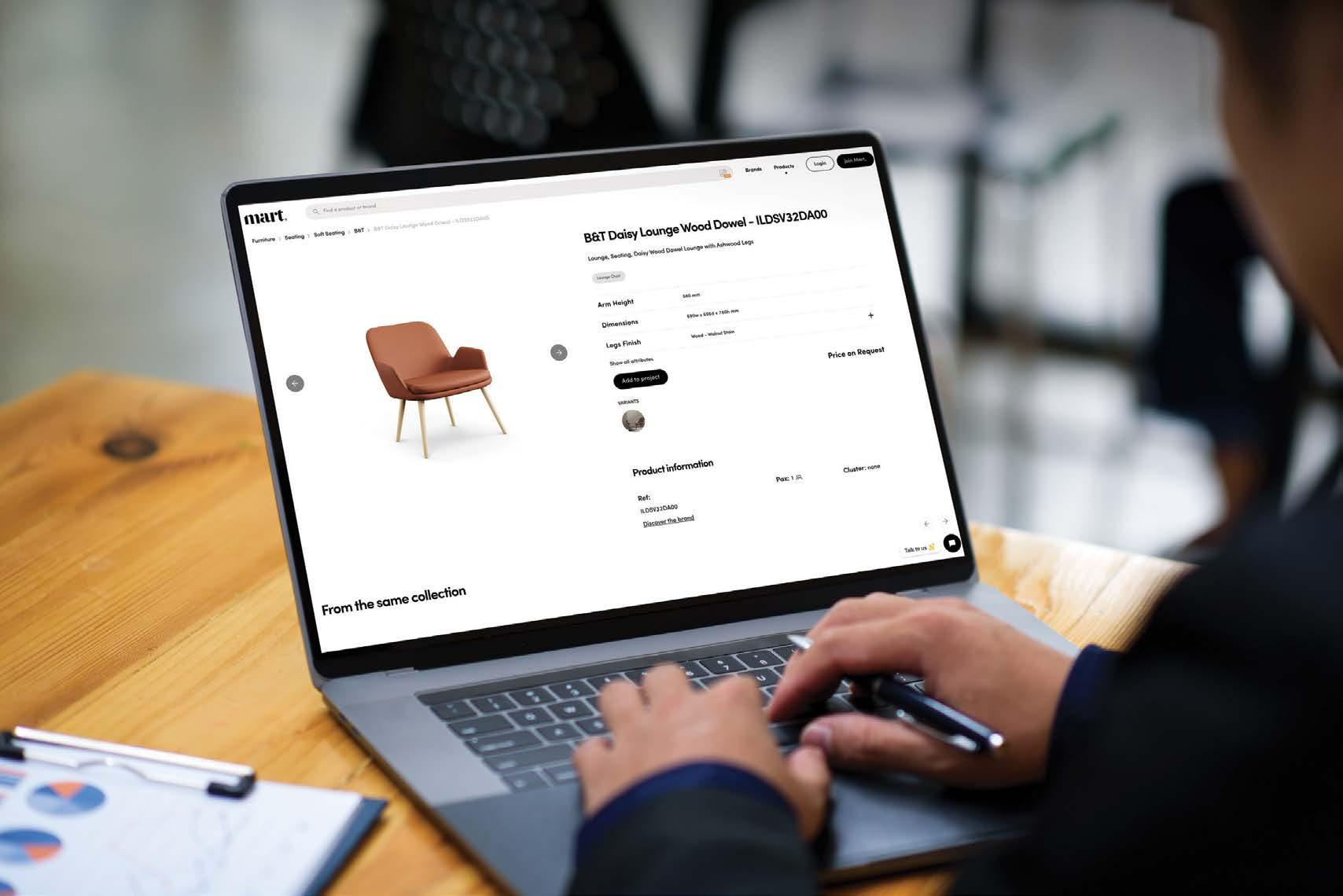
Mart® is a contract furniture platform for architects, designers, and procurement teams. We bring clarity to complex specification, connecting access to world-leading brands with AI-supported tools that quietly accelerate decisions. Backed by 30 years of regional experience, and delivered end to end from design and specification to installation and responsible recycling.
DESIGNED AND DELIVERED BY P&T GROUP FOR RAK PROPERTIES, THE INTERCONTINENTAL RAS AL KHAIMAH RESORT & SPA REDEFINES BEACHFRONT HOSPITALITY THROUGH ARCHITECTURAL RESTRAINT, MASTERPLANNING CLARITY, AND LONG-TERM SUSTAINABILITY.
A Contemporary Coastal Benchmark for Ras Al Khaimah
Delivered by P&T Group for RAK Properties, the InterContinental Ras Al Khaimah Resort & Spa is a 43,600sqm, 5-star beachfront development completed in 2021. Drawing on decades of experience in high-end hospitality, including landmark projects such as FIVE Palm Jumeirah in Dubai, P&T led the design from concept through to delivery, shaping a resort that balances architectural clarity, sustainability and long-term performance. The resort brings together hotel rooms and suites, beachfront villas and chalets, alongside a comprehensive mix of dining, wellness and leisure facilities. A large spa, multiple swimming pools, destination restaurants and conference and event spaces are integrated into a carefully considered masterplan, reinforcing the project’s role as both a leisure destination and a regional hospitality hub.
Responding to Ras Al Khaimah’s evolving identity
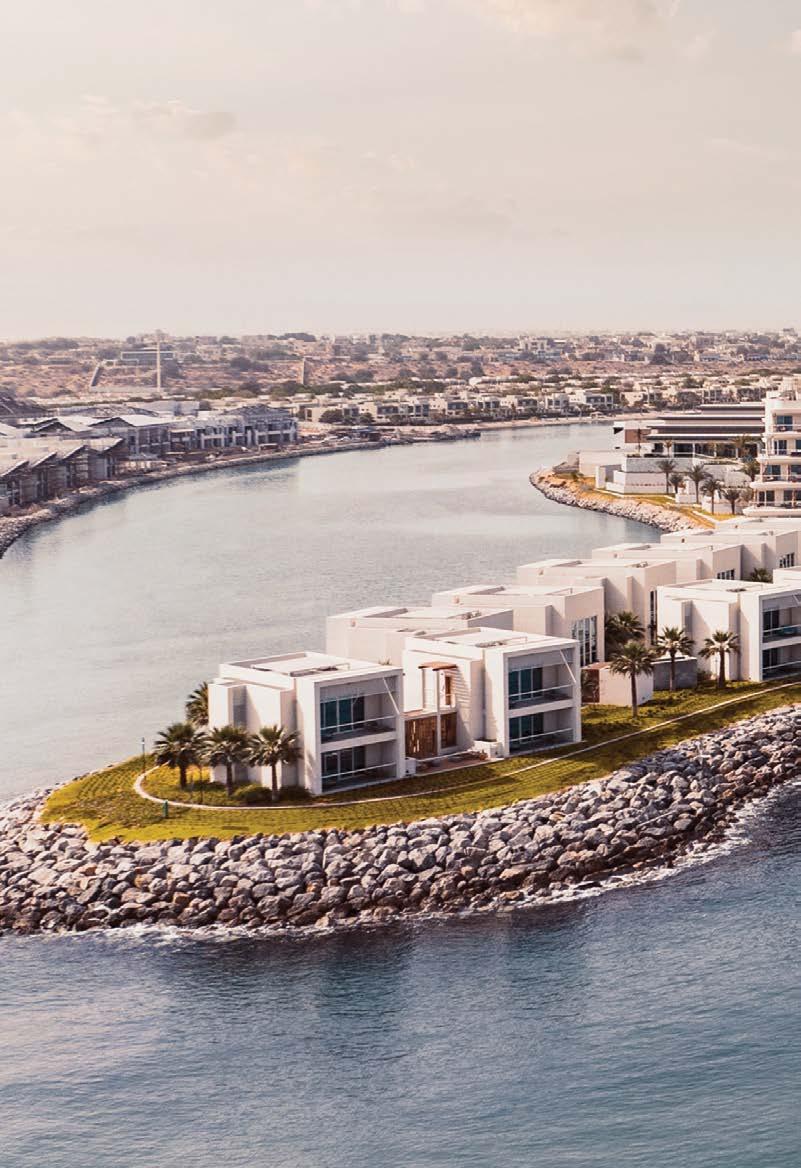
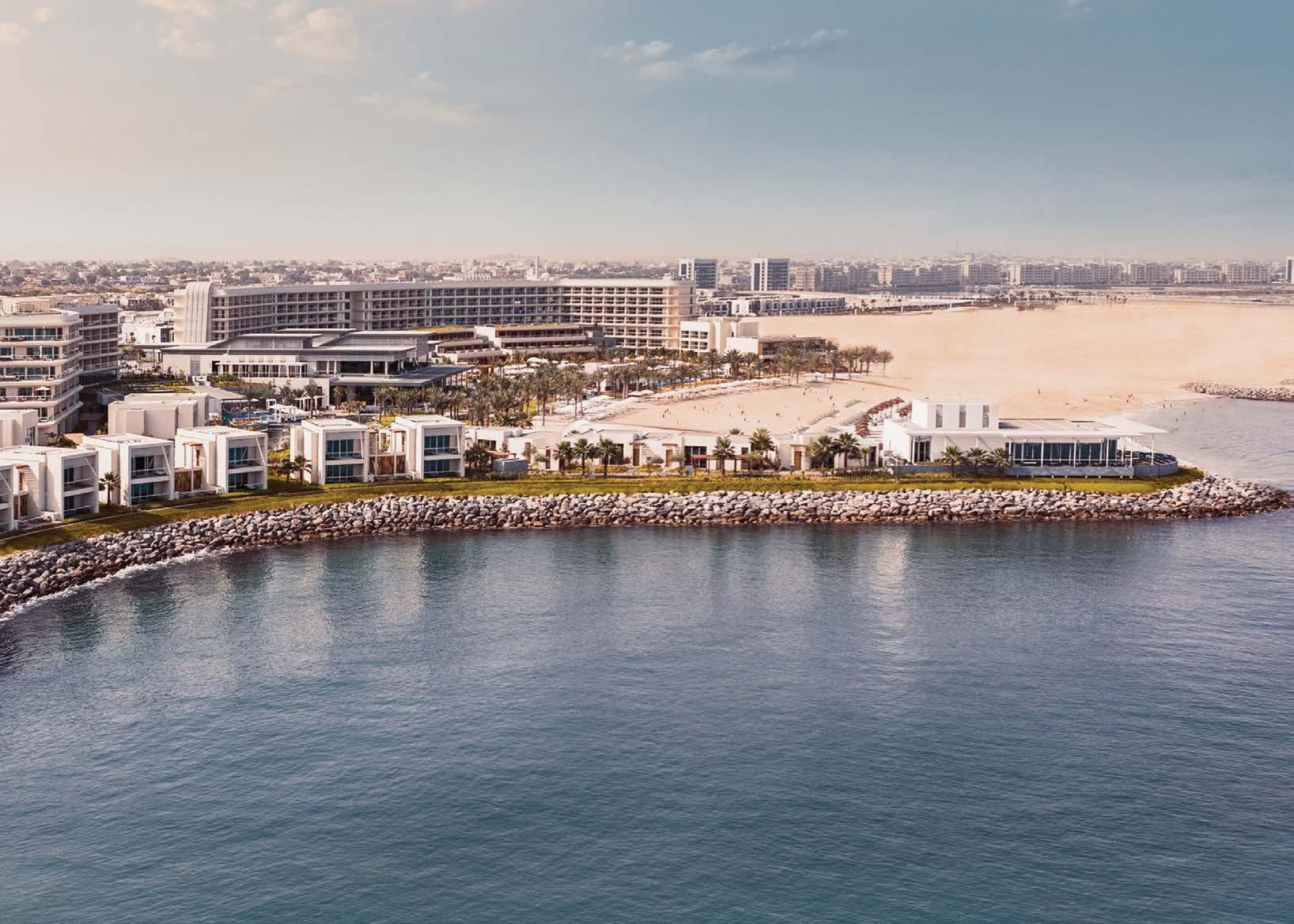
Located within the Mina Al Arab masterplan, the resort occupies a prominent headland defined by a rare dual-waterfront condition, with a natural beach on one side and a manmade waterway on the other. As Ras Al Khaimah continues to position itself within the UAE’s hospitality landscape, the project plays a key role in shaping a more understated, design-conscious resort identity for the emirate. Rather than competing for visual dominance, the architecture adopts a measured, contextual approach. Lowrise forms, generous landscaping and carefully controlled massing allow the development to sit comfortably within its surroundings, reinforcing Mina Al Arab’s broader coastal vision while maintaining a strong sense of place.
The original brief called for a contemporary tropical resort with a strong relationship to landscape and water. As the project progressed, the scope evolved to accommodate an increased number of keys, rising from approximately 300 to 350. This shift required a strategic masterplanning response, increasing density while preserving privacy, openness and the resort’s relaxed character.
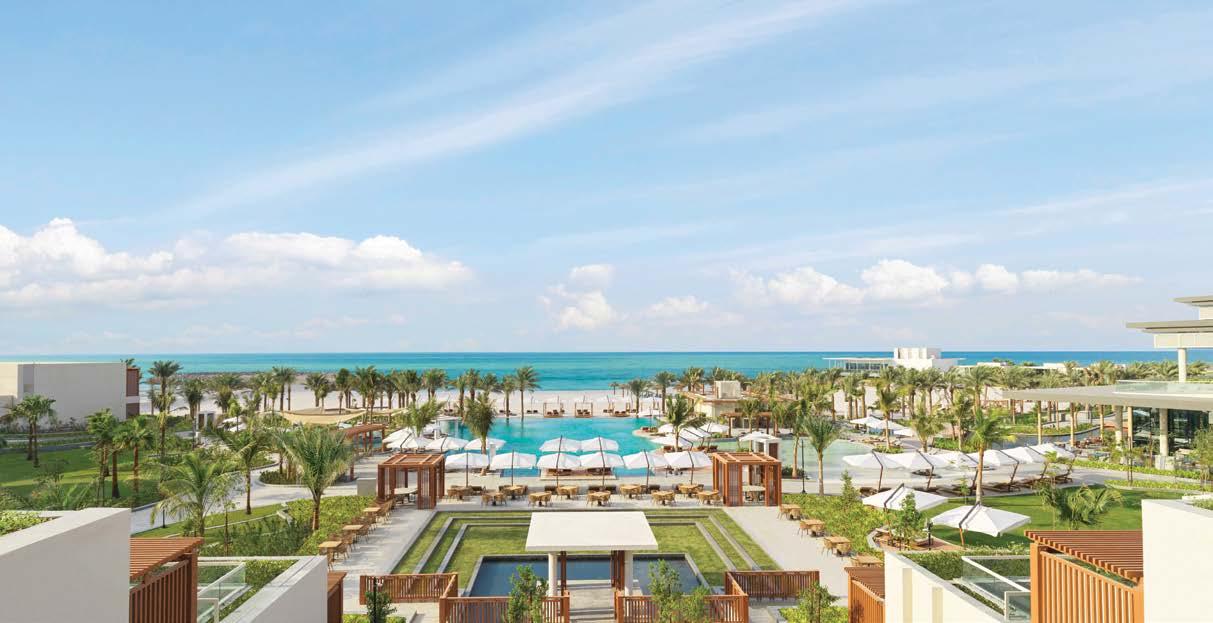
P&T’s solution was a distributed planning strategy, breaking the programme into a series of interconnected buildings rather than a singular dominant mass. This approach maximised sea views across the majority of guest spaces, improved environmental performance and allowed landscape to remain a defining element of the guest experience. Circulation is intuitive and fluid, reinforcing a seamless transition between indoor and outdoor environments.
P&T implemented a distributed planning approach, dividing the programme into interconnected buildings to enhance sea views, environmental performance, and the landscape-led guest experience.
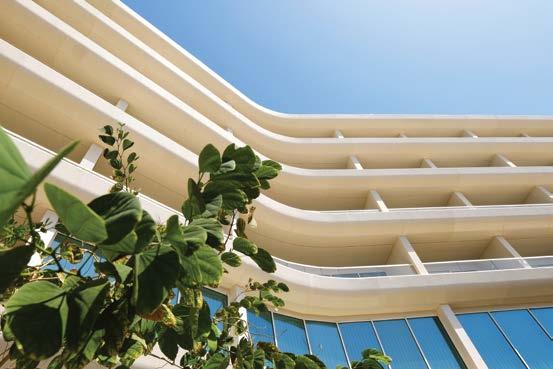
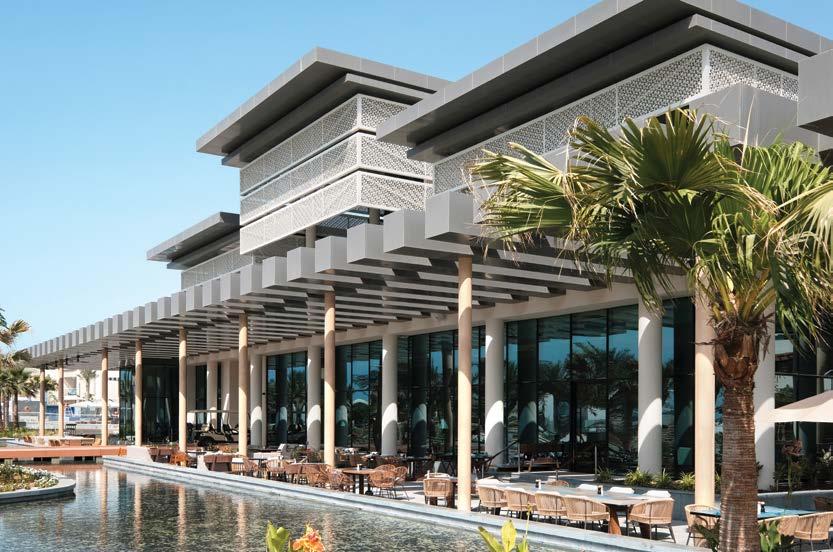
The resort features calm contemporary architecture, using layered façades, shading elements and natural stone to enhance durability, proportion and environmental performance.
Architectural language and material restraint
Architecturally, the resort is defined by a calm, contemporary language that prioritises proportion, durability and environmental response. White rendered façades are layered with shading devices, pergolas and screens in aluminium, GRP and wood-plastic composites, creating depth while mitigating solar gain. Natural
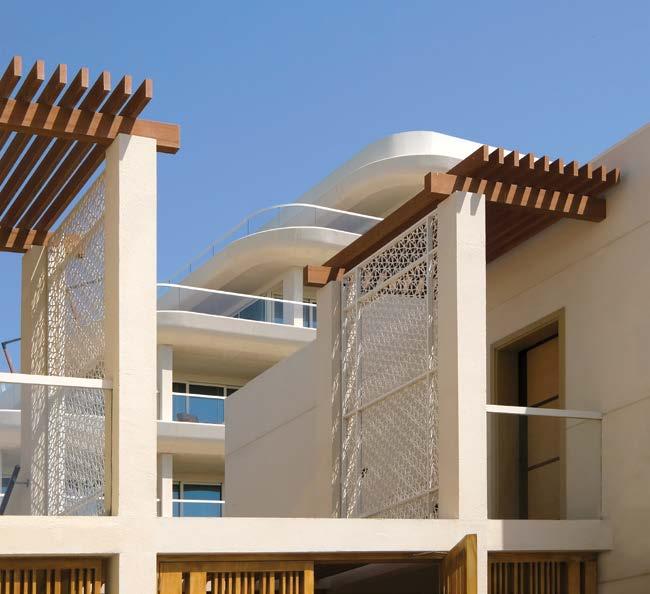
stone is introduced at ground level and within key public areas, grounding the architecture and reinforcing a sense of permanence. Rather than relying on overt decorative gestures, the design is deliberately restrained. Materiality, light and shadow are used to create visual interest, ensuring the architecture remains timeless and adaptable over the long term, a critical consideration for resort developments of this scale.
Sustainability as a core design driver
Sustainability played a central role in shaping both design and technical decisions, with a clear focus on long-term operational efficiency. Flat plate solar hot water collectors were integrated to meet approximately 60-70% of the hotel’s hot water demand, delivering an estimated payback period of around 4 years. This approach allowed environmental performance to be aligned directly with commercial viability, a critical consideration for
large-scale hospitality developments.
Mechanical and electrical systems were designed with long-term performance in mind. High-efficiency chillers, heat recovery systems and energy recovery devices reduce operational energy demand, while LED lighting and intelligent controls are implemented throughout. External lighting and landscape illumination are managed through photocells, timers and building management systems, balancing guest comfort with efficiency and reduced operating costs.
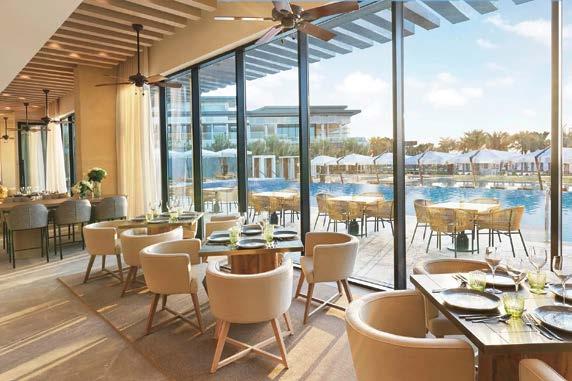
Reflecting on the project’s longterm performance, Moemen AbdElkader, Associate Director at P&T Dubai, highlights the importance of real-world feedback in shaping successful hospitality environments:
“RAK InterCon stands as a oneof-a-kind hospitality landmark, establishing a regional benchmark since its inauguration in 2021. We value the continuous feedback from end users and guests, as it provides critical insight into how the architecture performs in real conditions, across both short-term
experiences and daily operations. The project’s success lies in the careful orchestration of Frontof-House and Back-of-House environments, where spatial efficiency, operational clarity and user experience are seamlessly integrated. This architectural harmony is fundamental to delivering a truly successful hospitality building.”
Completed in 2021, the InterContinental Ras Al Khaimah Resort & Spa stands as a clear demonstration of P&T’s ability to deliver complex, multidisciplinary hospitality projects from concept to completion. The project reflects a design approach rooted in experience, one that understands the realities of construction, operation and lifecycle performance while maintaining architectural integrity. As RAK continues to grow as a destination for high-end hospitality, the resort serves as a benchmark for contemporary coastal development, aligning design ambition with environmental responsibility and long-term value.
Philippa Jones, Senior Manager Mart®
In an increasingly complex Middle Eastern market, procurement has evolved beyond cost control to become a key design enabler. This story looks at how Mart® aligns sourcing, logistics, and lifecycle services to support design intent across large-scale commercial projects.

What Is Mart? Mart® is an endto-end
contract furniture business delivering sourcing, procurement, logistics, installation, and lifecycle services for complex commercial projects.
Built as the independent furniture arm of regional fit-out leader KPS, Mart® combines more than 30 years of sourcing expertise and supplier relationships with a digital platform that simplifies specification, availability, and procurement workflows — enabling faster decision-making, reduced risk, and more sustainable furniture outcomes.
Find out more at kpsmart.com
Why procurement is now a design and business issue, not just a cost one
For much of the past two decades, procurement in design-led projects has been treated as a downstream function. Something that followed
the creative work. Something primarily focused on cost control, negotiations, and delivery logistics. That separation no longer reflects reality. Across the Middle East, designers are being asked to deliver more complex projects, at greater speed, under tighter commercial scrutiny. Clients expect faster programmes, better performance, longer warranties, and fewer surprises, often while pushing budgets harder than ever. In this environment, procurement is no longer simply about buying products. It has become a strategic factor that directly shapes design outcomes, project risk, and long-term value. The result is a fundamental shift: procurement is now as much a design and business issue as it is a financial one.
Designers under pressure: more, faster, with greater accountability Designers today are operating in a very different landscape to even five or ten years ago. Beyond creativity and spatial intelligence, they
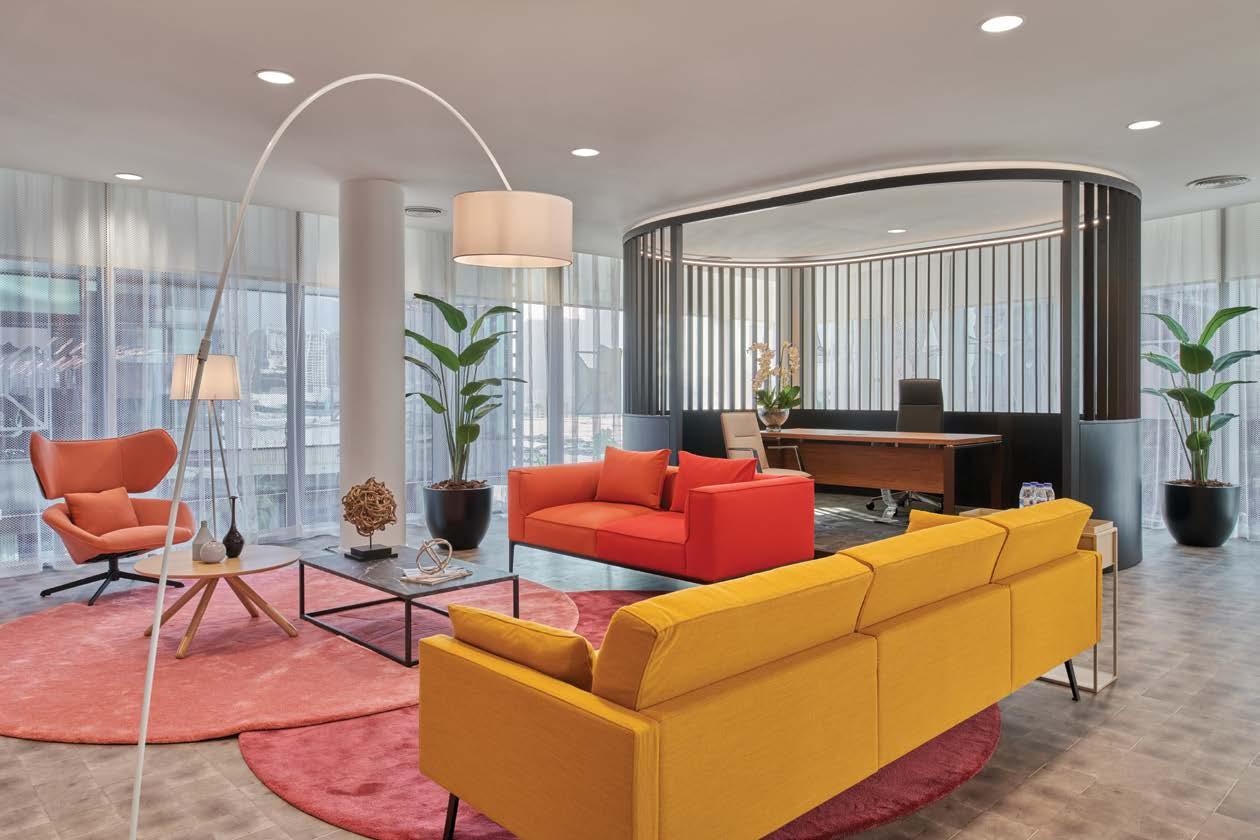
End clients today want more value, not just lower prices. They expect extended warranties, reliable performance, and products that support long-term operational efficiency. Procurement, in this context, becomes a tool for managing risk rather than simply negotiating cost.
are expected to understand supply chains, anticipate risk, and help safeguard project timelines.
“Designers are being asked to deliver more, faster, and with greater accountability for what happens beyond the drawings,” says Philippa Jones, Senior Manager at Mart®. “Procurement decisions now sit much closer to the design phase because they directly affect what can realistically be delivered, when, and at what level of quality.”
Late-stage procurement issues such as unavailable products, long lead times, or unclear specifications, can quickly undermine carefully considered design intent. What once might have been seen as a delivery problem now feeds back into design decisions much earlier in the process. In practice, this means designers are increasingly required to balance creativity with commercial realism, often under intense time pressure.
The complexity of a global marketplace
At the same time, the furniture and interiors marketplace has become more global and more complex than ever before. On paper, access to international brands and suppliers should be an advantage. In reality, the sheer volume of choice can introduce new risks. Quality benchmarks vary. Ergonomic standards are not always clear. Information about aftermarket parts, maintenance, or lifecycle performance is often fragmented or difficult to verify.
“For many designers and clients, there’s a lack of transparency around what they’re actually specifying,” Philippa explains. “It’s not just about how something looks on day one, but how it performs over time, from ergonomics and durability to spare parts availability and warranties.”
These knowledge gaps are not trivial. In large commercial or institutional projects, a single specification decision can affect hundreds or even thousands of items. When information is incomplete, risk multiplies.
While cost remains important, it is no longer the only, or even the primary concern for >>>
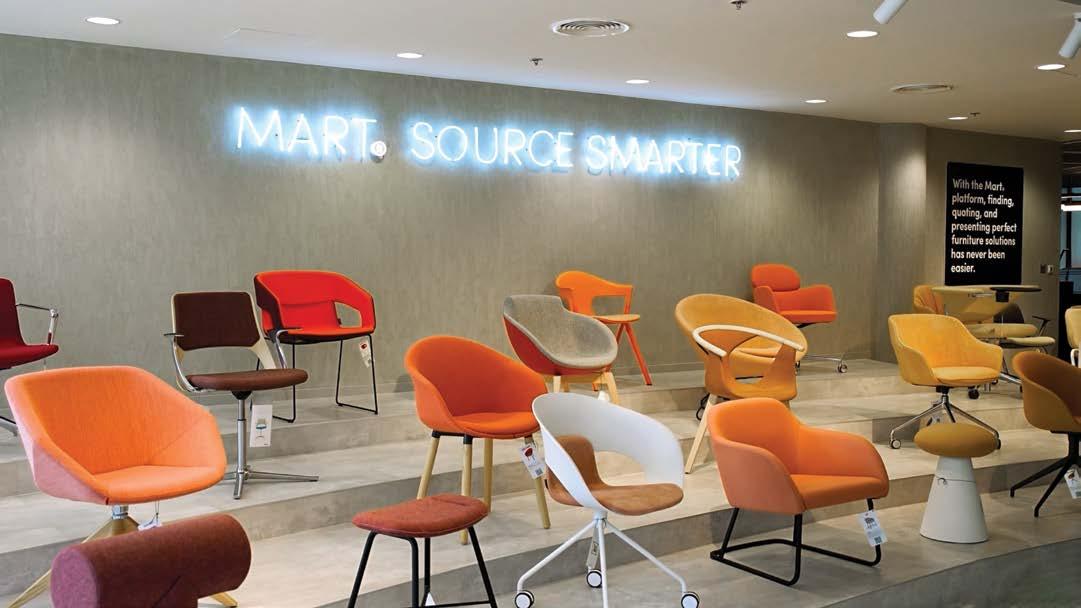
many clients. Increasingly, the bigger risks lie elsewhere: delays, re-specification, compliance issues, or unexpected lifecycle costs after handover.
End clients today want more value, not just lower prices. They expect extended warranties, reliable performance, and products that support long-term operational efficiency. Procurement, in this context, becomes a tool for managing risk rather than simply negotiating cost. This shift has changed the role procurement plays within projects. It now sits at the intersection of design quality, programme certainty, and business performance.
Why smarter sourcing is a competitive advantage
Against this backdrop, the idea of “smarter sourcing” has gained real traction. Not as
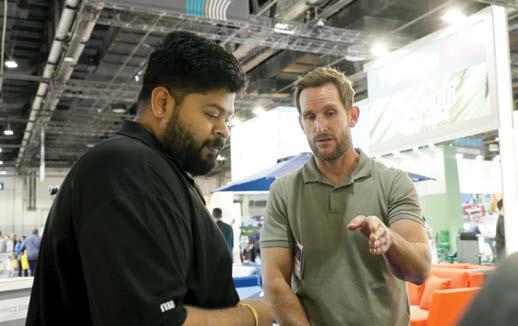
a buzzword, but as a practical response to growing complexity. Smarter sourcing is less about buying cheaper products and more about improving visibility, reducing uncertainty, and enabling better decisions earlier in the process.
It relies on shared information, clearer workflows, and systems that support collaboration rather than fragmentation. This is where technology, when applied thoughtfully, can play a transformative role.
“Much of today’s procurement process is still slow, manual, and fragmented,” says Bharat Sankar, who heads platform development at Mart®. “Highly skilled professionals spend huge amounts of time chasing information, checking availability, and managing spreadsheets, instead of focusing on the value they bring.”
In large contract furniture projects, the challenge is magnified. Designers and procurement teams may be sourcing hundreds or thousands of complex product configurations from multiple international vendors, across different time zones and languages. Uncertainty around stock levels, lead times, or specifications creates delays and forces late-stage compromises.
“Technology should remove that uncertainty,” Bharat explains. “It should take the guesswork out of availability, configuration, and delivery, and simplify the entire end-to-end process.”
Technology as an enabler, not a distraction
Importantly, the role of technology in procurement is not to replace design expertise, but to support it.
“The goal isn’t to add another layer of complexity,” Bharat says. “It’s to simplify and accelerate the process so designers have more time to do what they do best, designing.”
When procurement systems are fragmented, information is duplicated, decisions are delayed, and accountability becomes unclear. By contrast, integrated, transparent workflows can
increase speed, reduce errors, and give all stakeholders confidence in their decisions.
For clients, this translates into clearer expectations and fewer surprises.
For designers, it creates space, time reclaimed from administrative tasks and uncertainty, and redirected back into creative and strategic work.
One of the most significant changes underway is cultural rather than technical. As procurement becomes more closely integrated with design and project delivery, traditional silos are breaking down. Designers, project managers, and procurement teams are increasingly expected to work in parallel rather than sequentially. Decisions happen earlier. Information is shared more openly. Responsibility is distributed more evenly.
“When procurement is treated as a collaborative process rather than a handover, everyone benefits,” Philippa notes. “There’s greater trust, fewer lastminute changes, and a much stronger alignment between design intent and delivery.”
This collaborative approach is particularly important in the Middle East, where project scale and speed leave little room for error.
The Middle East presents a unique set of challenges, and opportunities, when it comes to procurement. Large-scale developments, fast-track programmes, and diverse supply chains demand a level of coordination and clarity that traditional processes struggle to support. Regulatory requirements, compliance standards, and client expectations continue to rise.
In this environment, procurement systems must be built for scale, speed, and transparency. Those that succeed do more than support delivery, they enable better decision-making across the entire project lifecycle.
The days of procurement being a purely transactional function are over. Today, it is a strategic tool that influences design quality, business outcomes, and long-term value.
Smarter sourcing is no longer a “nice to have”. It is a competitive advantage for designers seeking certainty, for procurers managing complexity, and for clients demanding better performance from their investments.
As projects become faster, more complex, and more demanding, the integration of design, procurement, and technology will only deepen. The most successful teams will be those that recognise procurement not as an afterthought, but as a critical part of how great design is delivered.
Sankar, Digital Product Manager Mart®

STEFAN SCHMIED, Leader IMEA at LIXIL International, shares insights into why the bathroom is becoming the UAE’s most progressive and designled space.
As 2025 draws to a close, a clear shift is shaping residential design across the UAE: the bathroom has become one of the most thoughtfully considered spaces in the modern home. Once defined primarily by function, it is now where wellness, lifestyle, and sensory comfort converge most naturally. This evolution has been gradual, driven by changing daily routines, a growing desire for calm at home, and a renewed appreciation for the moments of pause that begin and end in the bathroom.
According to Stefan Schmied, Leader IMEA at LIXIL International, the transformation is unmistakable. “The bathroom is no longer a space that homeowners design last or approach purely practically. It has become one of the most curated rooms in the home,” he explains. “People are looking for environments that support recovery, reflection, and a more mindful way of living. That mindset is clearly shaping design decisions in the UAE.”
One of the most visible changes is the move toward spa-inspired layouts. Bathrooms are becoming more open, both visually and spatially, with an emphasis on fluid movement, clean sightlines, and a sense of calm from the moment one enters. Natural light is maximised, partitions are softened or removed, and wall-mounted elements replace heavier built-ins to create visual lightness. Many homeowners are reworking existing layouts to achieve the long,
uninterrupted lines associated with contemporary wellness architecture.
Material choices are evolving in parallel. The UAE market continues to gravitate toward warmer metallic finishes, champagne tones, brushed bronzes, and soft golds, offering understated luxury within a calming palette. These are paired with textured ceramics, matte surfaces, and discreet storage solutions that preserve a sense of order and serenity.
As Schmied notes, “A bathroom today must support rushed mornings, relaxed evenings, and multigenerational living. It needs to deliver practicality without compromising comfort or design, because it is being used more
scious of consumption. Technology now allows both.”
Looking toward 2026, accessibility is emerging as a defining design consideration. Inclusive design is no longer treated as a separate requirement but as an integral part of good bathroom planning. With more multigenerational households across the UAE, features such as level-entry showers, intuitive controls, and generous circulation are becoming standard, designed to offer ease and dignity without compromising aesthetics.
While these shifts reflect broader global movements, they take on a distinct character in the UAE. International design influences are balanced with a
Looking toward 2026, accessibility is emerging as a defining design consideration. Inclusive design is no longer treated as a separate requirement but as an integral part of good bathroom planning.
intentionally than ever.”
Sensorial design is also playing a more prominent role. Homeowners are increasingly attentive to lighting, acoustics, and water experiences that influence mood and daily rituals. Soft, indirect lighting replaces harsh illumination, while improved acoustic control reduces echo and enhances calm. Water delivery systems have become more refined, with thermostatic mixers and advanced shower technologies allowing for consistent temperature, comfort, and personalisation, without unnecessary water use. “Water plays a central role in the bathroom’s emotional experience,” Schmied explains. “People want showers that feel restorative and natural, while remaining con-
preference for warmth, comfort, and refined finishes that resonate locally. “The UAE absorbs global trends quickly, but it never adopts them without interpretation,” Schmied observes. “What we see is a thoughtful layering of global sophistication with designs that suit local lifestyles.”
The result is a space that has been fundamentally redefined. What was once purely practical has become deeply personal, a room that frames how people begin and end their days. As 2026 approaches, the bathroom stands out as the UAE’s most transformed, and most transformative, space: one where design, technology, wellbeing, and sustainability come together with quiet confidence.
DIRK SCHILMÖLLER, MANAGING DIRECTOR
MIDDLE EAST,
AFRICA
& ASIA
MEA, REFLECTS ON THE BRAND’S RECENT GROWTH, EVOLVING MARKET DEMANDS, AND HOW COLOUR, SUSTAINABILITY, AND INNOVATION ARE SHAPING THE FUTURE OF PAINTS AND COATINGS ACROSS THE REGION.
Looking back at 2024–2025, what were the biggest milestones for Caparol in the region?
The past 18 months marked a period of significant progress for Caparol across the Middle East and Africa. We delivered double-digit growth across the region, reflecting sustained demand for our premium solutions, the strength of our regional partner network, and a growing appetite for more expressive design. Growth was matched by investment in people and presence. We onboarded almost 40 new colleagues across sales, marketing, supply chain, and technical functions, and expanded our footprint
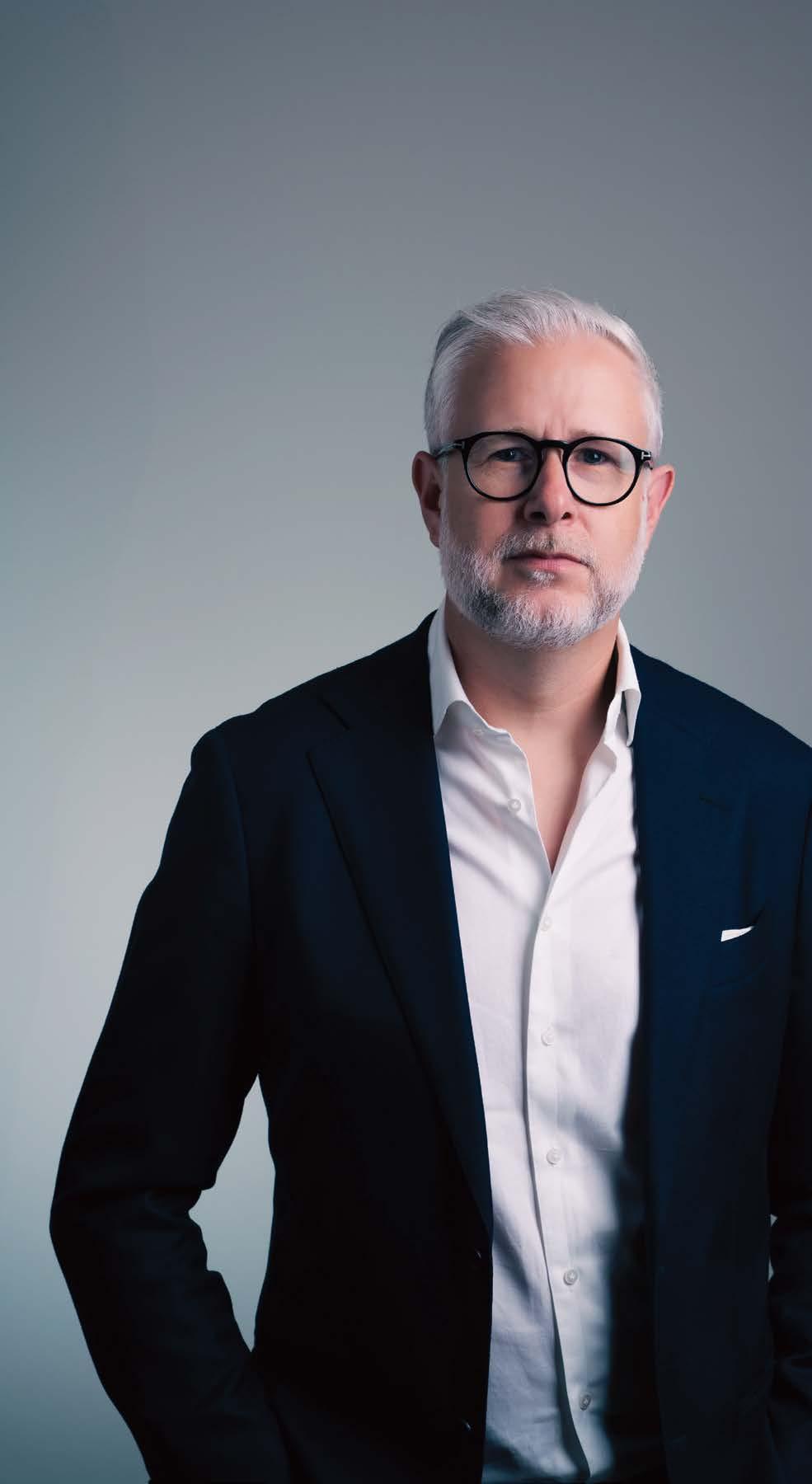
DIRK SCHILMÖLLER, Managing Director
with the opening of our Caparol Africa office in Kenya, alongside a new office and dedicated training centre in Muscat, Oman. This investment reinforces our commitment to being closer to customers and supporting projects on the ground.
We also strengthened our market engagement through major industry platforms, including participation at The Big 5 Construct Kenya, IDF Oman, and Zak World of Façades UAE, while continuing to expand our dealer network across the UAE, including new partnerships in Abu Dhabi. Being recognised as a Great Place to Work further reinforced our commitment to building a strong, people-led organisation that supports long-term growth and partnership in the region.
How has market demand evolved— especially around sustainability, wellness coatings, and performance finishes?
There has been a clear evolution in market demand, reflecting the region’s growing focus on sustainability and wellness-driven solutions.
With approximately 75% of consumers expressing concern about climate change, environmental awareness is increasingly influencing consumer behaviour across the region.
As a result, there is heightened demand for eco-friendly formulations, particularly products with low or zero volatile organic compounds (VOCs). We are also seeing regulatory transformation, with an increasing number of Gulf standards governing coating chemistry, while Dubai Municipality VOC thresholds, bilingual safety data sheets, and SABER certification in Saudi Arabia move regional compliance closer to European norms.
Premium, odourless, VOC-free paints have long been a priority for us and are present throughout our product range. These products support wellness-conscious customers while meeting and exceeding the region’s evolving regulatory requirements.
Health and indoor air quality are now key considerations for both residential and commercial >>>
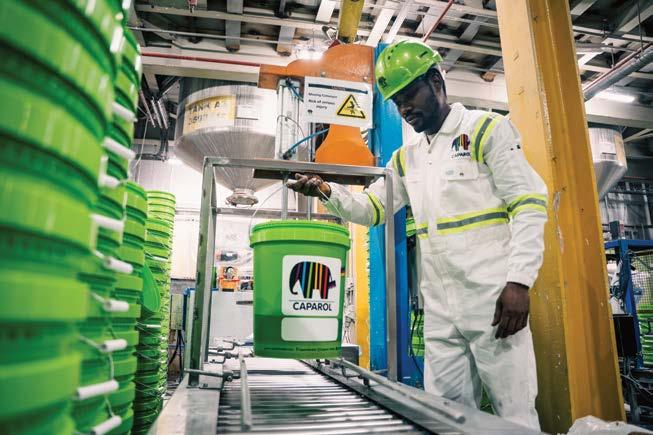
customers. We are responding with ongoing innovation, including soon-to-be-announced interior paint offerings that further build on our portfolio combining aesthetics with wellness benefits. Demand for green building certifications continues to rise, and Caparol’s decades-long expertise in sustainable, high-performance finishes positions us strongly in this space. These trends not only shape our product development but also drive meaningful industry dialogue around healthier, more sustainable built environments.
How have colour preferences shifted across residential, commercial, and hospitality sectors this year?
Design sensibilities across the region are undergoing a notable shift. According to our recent UAE Colour Confidence survey, 70% of UAE residents expressed a desire to move away from beige tones towards bolder and more expressive colour schemes. This reflects a growing interest in personalisation and the use of colour as a form of self-expression.
We are seeing a strong preference for earthy tones, includ-
ing greens inspired by nature, browns that echo desert landscapes, and blues reminiscent of the Arabian Sea. These palettes resonate deeply with the region’s cultural and natural identity.
In residential spaces, there has been a noticeable uptake in green accent elements, particularly in kitchen cabinetry, reflecting global design influences. In commercial and hospitality environments, these trends are equally evident. Projects such as Mama Shelter demonstrate a multi-coloured, eclectic approach to interiors, celebrating bold design choices. At the same time, destinations like SIRO One Za’abeel highlight the growing focus on wellness, sustainability, and muted, natural finishes.
Which recent innovations or technologies have had the greatest impact on your product strategy?
Innovation is central to Caparol’s DNA, and recent developments have played a significant role in shaping our product strategy. We continue to prioritise wellness-focussed coatings, including air-purifying and anti-bacterial solutions.
One example is CapaCare
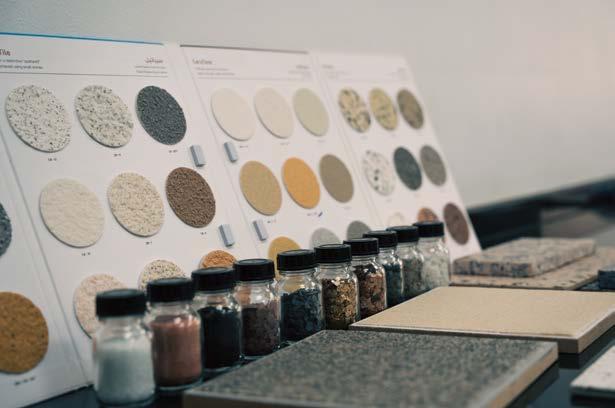
Protect, developed using Silverbac technology to persistently inhibit the growth of viruses and bacteria on coated surfaces. This responds directly to increasing demand for healthier indoor environments.
We have also introduced new binders and raw materials that significantly reduce emissions, reinforcing our commitment to sustainability. Our exterior solution, CapaStone, remains a standout product in the region. Designed to replicate the beauty and texture of natural stone, it has proven particularly popular locally. We have since enhanced this range with advanced raw materials and a broader colour palette, improving both durability and aesthetic flexibility.
Which markets in the Middle East, Africa, or Asia show the strongest growth momentum going into 2026?
The UAE continues to be our largest and strongest market, with solid growth across all sales channels. The country’s active construction and design sectors continue
Innovation is central to Caparol’s DNA, and recent developments have played a significant role in shaping our product strategy. We continue to prioritise wellnessfocussed coatings, including air-purifying and antibacterial solutions. " "
to drive demand for premium, eco-friendly, and high-performance coatings.
Beyond the UAE, Iraq has emerged as our Best Newcomer market. In 2025, we successfully implemented a new go-to-market strategy by partnering with a main importer, enabling more streamlined operations and stronger local responsiveness.
East Africa, particularly Kenya, also shows strong momentum.
With our new office in Nairobi and increasing market interest, we are seeing promising project wins that highlight the region’s appetite for Caparol’s products and expertise.
How do you see functional coatings—such as thermal, anti-bacterial, or high-durability solutions—shaping the future?
Functional coatings are increasingly shaping the future of the industry, driven by growing awareness among end users and stakeholders. Customers are prioritising solutions that enhance health, energy efficiency, and longterm durability.
Architectural projects accounted for 68% of the market in 2024 and are expected to grow at a CAGR of approximately 4% through 2030. There is rising demand for fade-resistant, textured, and dirt-shedding solutions, requiring continued innovation from manufacturers.
As awareness around energy conservation increases, thermal coatings are becoming essential to improving building performance and meeting regulatory requirements. At the same time, anti-bacterial and wellness-focused coatings are becoming standard expectations rather than niche offerings. This shift presents an opportunity for Caparol to lead by delivering solutions that balance performance, sustainability, and design flexibility.
What colour directions or themes do you predict will lead design trends in 2026?
In 2026, colour trends will be defined by confidence, contrast, and more intentional use of colour. We are seeing multiple colour narratives emerge simultaneously, ranging from soft, calming shades to bold, expressive hues.
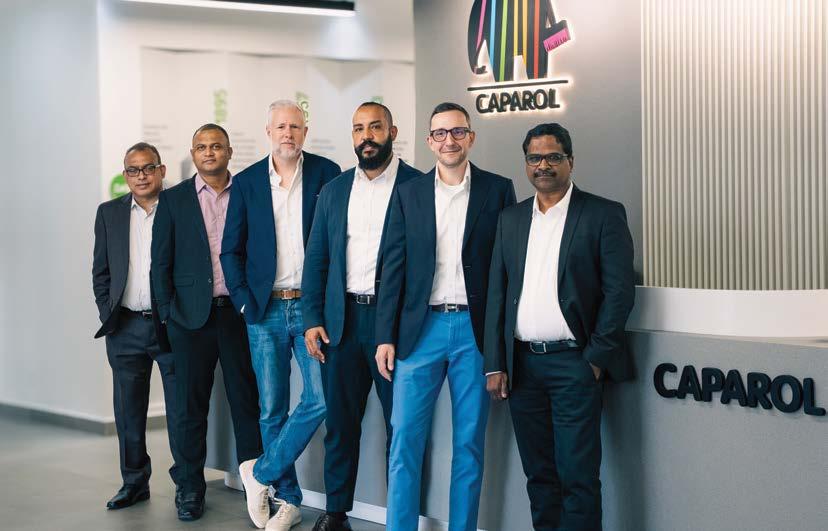
Colour is increasingly being used to define mood, identity, and function, rather than serving as a neutral backdrop. This is reflected in the growing use of architectural elements, feature surfaces, and zoned applications. The ‘statement coat’ approach, in particular, is expected to see continued growth.
Sustainability remains a strong influence on colour choices. Caparol’s research shows that environmental awareness plays a key role in colour selection, with strong interest in earthy, nature-inspired tones. These are warmer, more expressive shades that reflect landscape, materials, and light.
Materiality and tactility are also becoming increasingly important. Natural materials, textured finishes, and handcrafted details contribute to interiors that feel more human and grounded. Colours such as Oase Green and Warm Terracotta pair seamlessly with these elements, while solutions like CapaStone reinforce the shift towards finishes that offer depth, authenticity, and character.
What will Caparol’s top priorities and focus areas be as you look ahead to 2026?
Our priority remains delivering high-quality surface and coating solutions tailored to regional climate conditions, supported by over 130 years of expertise and strong regional R&D.
Staying close to our partners and customers will remain central, with increased collaboration across retail, project, and specification channels, supported by on-ground technical expertise.
The Caparol management team driving innovation, collaboration, and long-term growth.
From an operational perspective, decentralising manufacturing is a key focus. A new manufacturing facility, expected to be announced shortly, will enhance supply resilience and speed to market.
Africa will continue to be a strong growth focus, with a strategy centred on building sustainable local presence while maintaining global quality standards. Organisational development also remains critical, with continued investment in talent, safety culture, and capabilities to support the next phase of growth.
THE ECO-FRIENDLY ICAUR V27 SUV LAUNCHES IN THE UAE, MARKING THE BRAND’S ENTRY INTO THE MIDDLE EAST MARKET.
iCAUR, an electric-led automotive brand from China, is launching in the Middle East with the dynamic V27 SUV. Making its regional debut in the UAE, iCAUR is expected to expand its footprint across the Middle East.

Driving the green mobility revolution in the region
In an important development for the Middle East market, with coordinated efforts being made by governments, companies and consumers to meet green mobility goals, the V27 is a range-extended electric vehicle (REEV) SUV offering
longer distances alongside lower emissions. The V27 is powered by a battery and electric motors, with an additional 1.5L turbocharged petrol engine acting as a back-up generator to maintain the charge of the battery as required.
The REEV powertrain has a total range of more than 900km, with
the capacity for 150km of pure electric zero-emissions driving, making it ideal for most journeys in the UAE. With a combined power output of 449hp and a top speed of 170km/h for the rear-wheel drive model and 180km/h for the all-wheel drive variants, the V27 offers thrilling performance for drivers in the Middle East.
“This is the right time to launch the V27 in the Middle East, especially in the exciting UAE market,” says Mr. Zhang Xiaolong (Tim), General Manager of iCaur Middle East. “In line with the UAE’s green mobility strategy, there is strong momentum and consumer interest in the low- and zero-emissions vehicle segments, and the iCAUR V27 supports this vision with exceptional fuel efficiency alongside an exciting driving experience.”
Design-wise, the V27 blends retro nostalgia with the latest innovations. With a bold and boxy body design and muscular lines reflecting a classic SUV style, the V27 is set to draw attention on Middle East roads. The dual sunroof is both attractive and practical, and at the front, the headlights feature a distinctive square housing with a black backdrop and round LED daytime running lights, complementing a functional, utilitarian grille.
Off-road elements such as the upright A-pillars, low window line and large side windows offer exceptional all-round visibility, while the protruding wheel arches offer a wide-body look that also allows drivers to fit larger upgraded wheels and tyres.
The interior does not compromise on modern style, practicality and technology, with 64-colour ambient lighting, 48 storage spaces, flat floor storage in the second row, 15 speakers
Off-road elements such as the upright A-pillars, low window line and large side windows offer exceptional all-round visibility, while the protruding wheel arches offer a wide-body look that also allows drivers to fit larger upgraded wheels and tyres.
and a 15.4-inch high-resolution floating display screen.
“We are confident that this great-looking SUV will prove very popular, especially among young, energetic buyers,” says Zhang Xiaolong (Tim), General Manager of iCaur Middle East. “As well as standing out from the crowd, the V27 has practical off-road capabilities with 220mm ground clearance and 1.6T of towing capacity.”
The V27 makes a brave statement in the competitive
Middle East SUV market.
Combining timeless SUV-inspired design with the comfort and technology expected by modern drivers, iCAUR’s first foray into the region promises to be the start of an exciting new era for sustainable motoring.
“By bringing the V27 to the Middle East, iCAUR is committed to being part of the solution as we work towards meeting important climate goals – we are proud to showcase a vehicle that looks great, is fun to drive and plays a role in reducing our reliance on fossil fuels,” says Tim, the General Manager of the ME region.


Nils Remess, CO-FOUNDER OF ZNERA SPACE, EXPLORES WHY CONTEXT-FIRST DESIGN IS ESSENTIAL TO CREATING CLIMATE-RESPONSIVE, CULTURALLY GROUNDED ARCHITECTURE IN THE MIDDLE EAST
At 45 degrees in a Dubai summer, architecture either works or it does not. Shade, wind, and material are as critical as form. Yet as our cities
race skyward, too many designs still speak an international language of glass
and steel, rather than the language of place. In a region transforming faster than almost any other, the question is not how high we can build, but how deeply architecture can connect to the geography, culture, and climate that define it.
Across the Middle East, governments are aligning national visions around sustainability, liveability, and identity. The UAE Vision 2031, Saudi Vision 2030, and
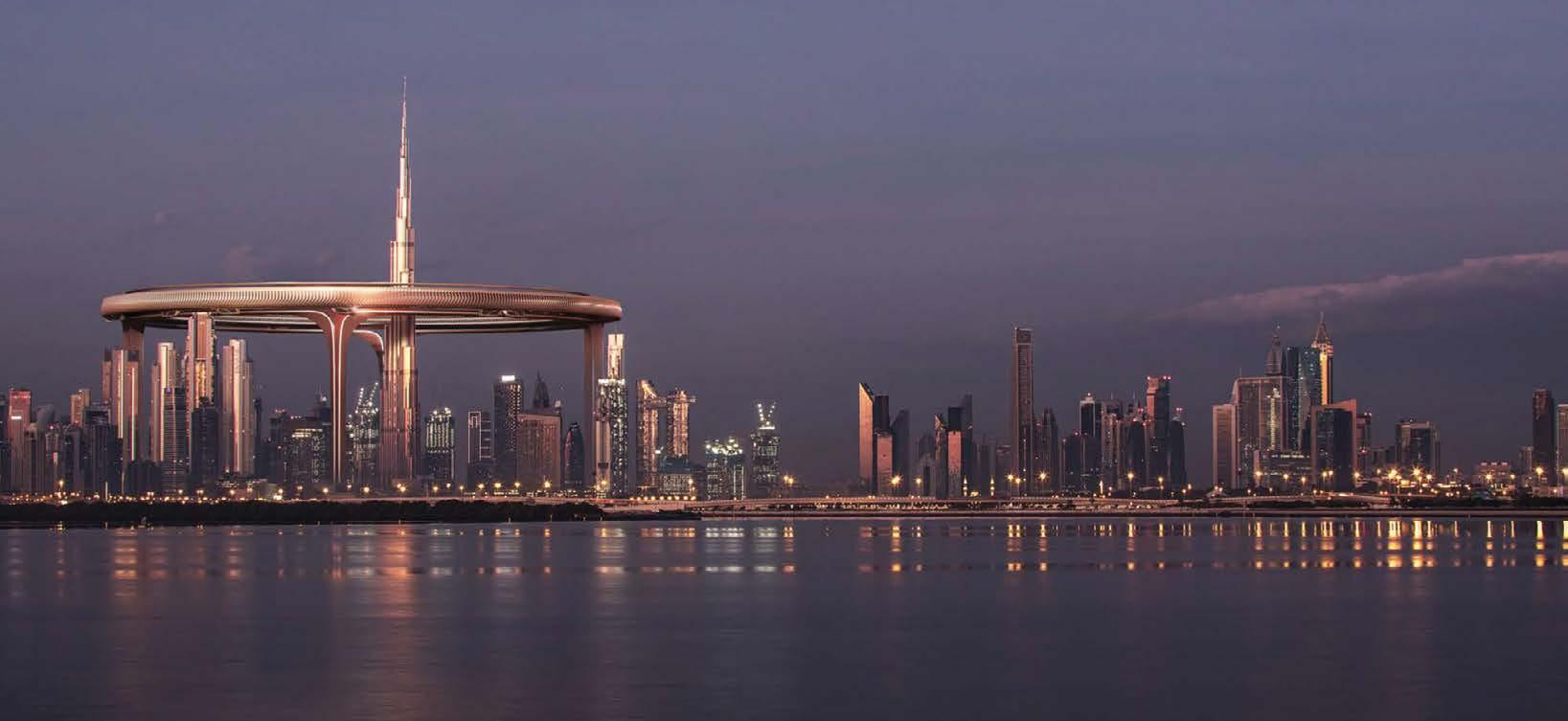
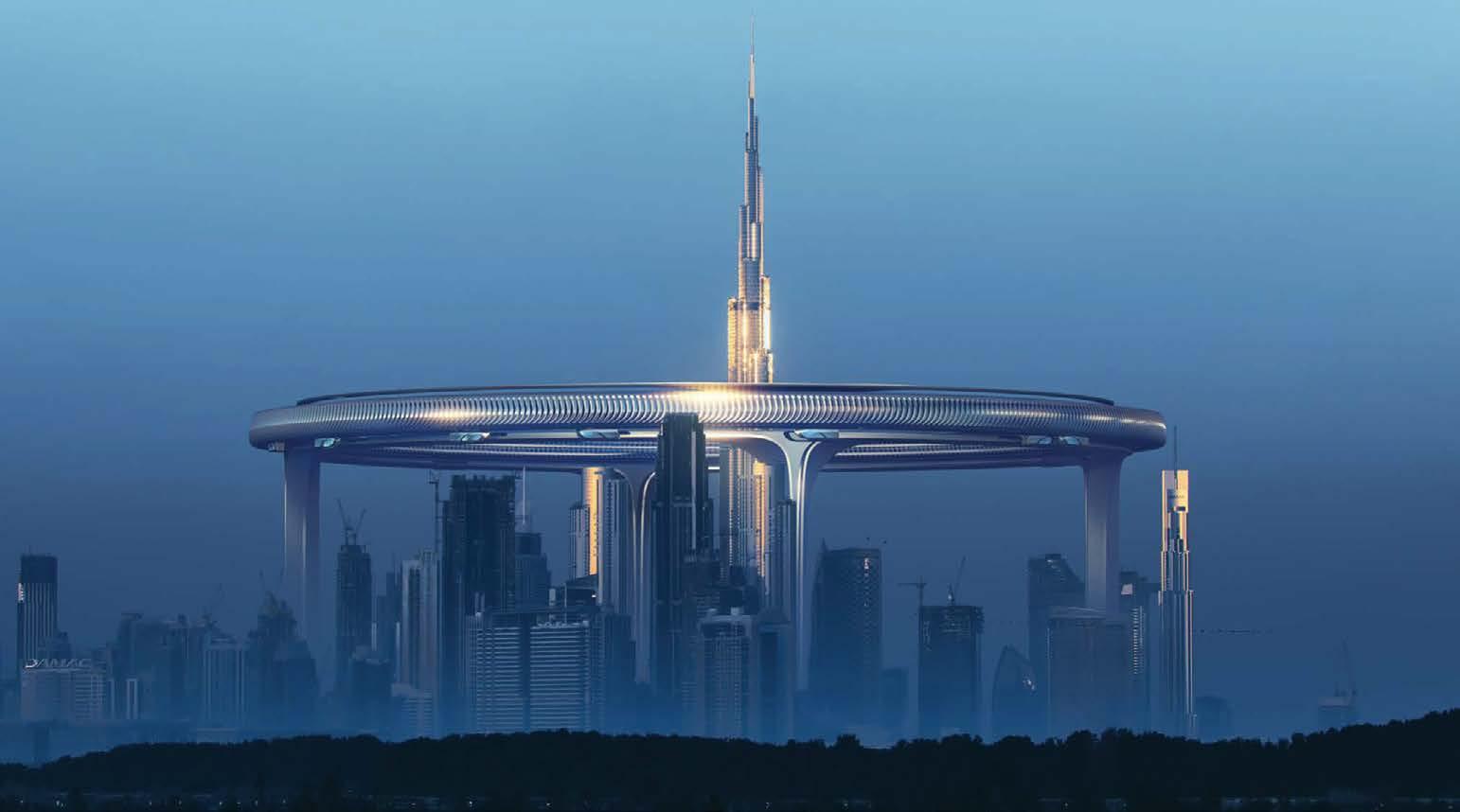
the UAE’s Net Zero 2050 Strategy outline ambitions for human-centred cities that balance innovation with environmental responsibility. Yet as urbanisation accelerates, architects must move beyond aesthetics to address a fundamental challenge: how to create design that reflects the realities of this region rather than replicating global models.
My approach has always been guided by the belief that context-first design is essential to meeting that challenge. It is neither an aesthetic movement nor a nostalgic look at the past, but a strategic methodology that begins with geography, climate, and community. It enables innovation that grows from local conditions
rather than being imposed upon them. Context is not a constraint; for us at ZNera Space, it is the framework through which meaningful and resilient architecture emerges.
Across the Gulf, urban temperatures average between five and seven degrees higher than surrounding rural areas, and cooling can account for up to 70 per cent of peak electricity demand, according to the
International Energy Agency. These figures make it clear that environmental performance is a necessity, not an aspiration. Designing buildings that work with nature rather than against it must become the regional standard. When this mindset guides design, sustainability becomes instinctive rather than decorative.
Projects such as Downtown Circle explore this principle.
The experimental design study reimagines Dubai’s urban future through the concept of
For ZNera Space, context-first thinking is equally powerful in everyday urban life. The GDP project in Dubai illustrates how these principles translate into practice.
a circular city within a city. Rather than a construction blueprint, it serves as design research into how future urban centres could operate as self-contained ecosystems, integrating air purification, vertical farming, and shaded microclimates to sustain liveability at scale. The aim is not to reject density, but to rebalance it so that human comfort and environmental health coexist.
Similarly, The Smog Project in Delhi investigates how architecture can function as civic infrastructure. Conceived as a network of air-filtering towers, it explores how the built environment might actively improve air quality in one of the world’s most polluted cities. Both concepts demonstrate how experimental design can provoke new thinking about the relationship between architecture and the environment.
For ZNera Space, context-first thinking is equally powerful in everyday urban life. The GDP project in Dubai illustrates how these principles translate into practice. The mixed-use development links commercial, residential, and communal areas through shaded walkways and courtyards that respond directly to the local climate. By respecting movement patterns and social rhythms, the project demonstrates how design can enhance comfort and identity in fast-changing neighbourhoods.
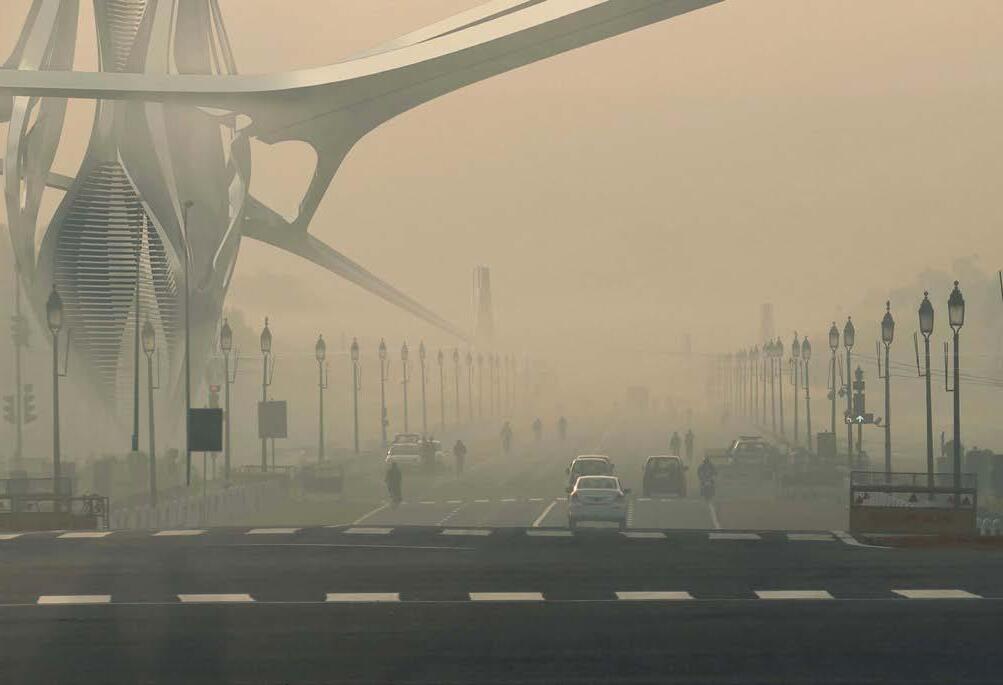
This approach aligns closely with regional planning priorities such as the Dubai 2040 Urban Master Plan and Abu Dhabi’s Urban Planning Vision, both of which emphasise walkable, liveable, and climatically responsive cities. Achieving these ambitions requires more than technology; it demands renewed respect for the environment and culture that shape how people live.
Design rooted in place also safeguards cultural identity. In an era of globalised skylines, the Middle East risks losing visual and social distinctiveness. Design that balances integrity with innovation ensures that modernisation reinforces heritage rather than erasing it. National initiatives—from Saudi Arabia’s Diriyah Gate Development Authority and AlUla Masterplan to the UAE Ministry of Culture’s Architectural Identity Programme and Oman’s Sustainable Cities Initiative—recognise the importance of linking tradition with progress. While preserving history and culture is vital, architecture should not simply replicate the past. Instead, it must reinterpret traditional principles to meet contemporary needs. Passive cooling, material efficiency, and community-centred planning have long been embedded in the region’s way of life; the task today is to re-engineer these ideas using modern tools and technologies.

Regional architecture must refine traditional climateresponsive principles using modern tools, technologies, and community-focussed design.
in the Gulf’s conditions of extreme heat, humidity, and dust. Solar panels, green façades, and cooling systems developed for temperate climates can lose efficiency or require significantly higher maintenance in this region.
The challenge is not adoption, but adaptation—creating solutions engineered specifically for local climate conditions, materials, and long-term performance rather than short innovation cycles.
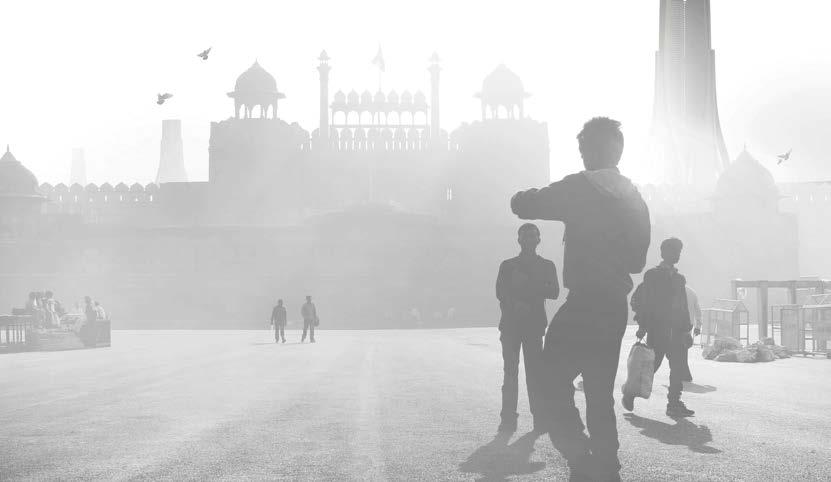
Policy frameworks are already steering the region towards measurable sustainability, including the UAE’s Green Building Regulations, the Estidama Pearl Rating System, and the Saudi Green Building Code. The next step is ensuring these frameworks translate into solutions that perform in practice. Imported sustainability systems may excel on paper but often struggle
Progress will depend on developing building typologies and technologies that are conceived, tested, and refined locally. This requires an integrated process in which architects, engineers, and environmental scientists collaborate from the earliest design stages. It also means combining traditional passive design intelligence—such as deep shading, thermal massing, and natural ventilation—with contemporary digital modelling and environmental
simulation. These tools enable designers to predict building performance across seasons, understand how materials age, and anticipate how users interact with space under varying climatic pressures. For architects, rethinking design must begin with evidence rather than image. Instead of starting with a global form and adapting it to the Middle East, design should emerge directly from the data of place: the path of the sun, prevailing wind directions, the availability of local materials, and the social patterns that shape daily life. When these parameters define the brief, buildings perform naturally and efficiently, reducing reliance on mechanical systems. This is what makes architecture not only sustainable, but truly regional in its intelligence.
The Middle East has both the resources and the ambition to redefine what architectural progress means. Genuine progress, however, will not be measured by vertical metres, striking silhouettes, or media headlines alone. It will be defined by buildings that contribute meaningfully to environmental resilience and human wellbeing.
As Gulf cities advance their national visions, the region has an opportunity to pioneer a model of development that is technologically advanced yet ecologically grounded. This is the future we should be working towards: architecture that generates, restores, and protects.
Context-first design is not about looking back; it is about designing forward with intelligence drawn from place. The region’s next chapter will be written by those who create spaces that perform— for people, for climate, and for culture alike.
Heritage-inspired interiors at RGS Guildford Dubai redefine dining and gathering spaces for a new generation of pupils.
Design in education goes beyond aesthetics; it shapes experience, memory, and identity. At Royal Grammar Guildford School Dubai, interiors have been carefully reimagined to honour centuries-old British heritage while responding to the expectations of a contemporary learning environment. The result is a collection of spaces that feel both timeless and relevant, where tradition is not preserved behind glass, but lived, experienced, and reinterpreted every day.
Royal Grammar Guildford School Dubai (RGSGD), the sister school of one of the UK’s most prestigious independent British curriculum institutions, has unveiled a series of newly designed interiors that celebrate the school’s rich heritage while reimagining traditional design for a modern setting. The transformation includes St Edward’s Dining Hall—fondly known as Teddy’s—the Drawing Room, the Principal’s Office, and the Society Room, each crafted to embody the legacy and character of RGS Guildford. The newly unveiled spaces, designed by AM Design Consultant, celebrate Royal Grammar Guildford’s historic identity while responding to the expectations of a modern learning environment in Dubai.
Moving away from neutral modern palettes, the design brief sought to create standout, story-led environments that reflect the authenticity of the partnership with the home school in Guildford and pay tribute to the school’s distinguished history. Every detail, from the choice of colour to the craftsmanship of bespoke furniture, is a nod to tradition reinterpreted through a contemporary lens.
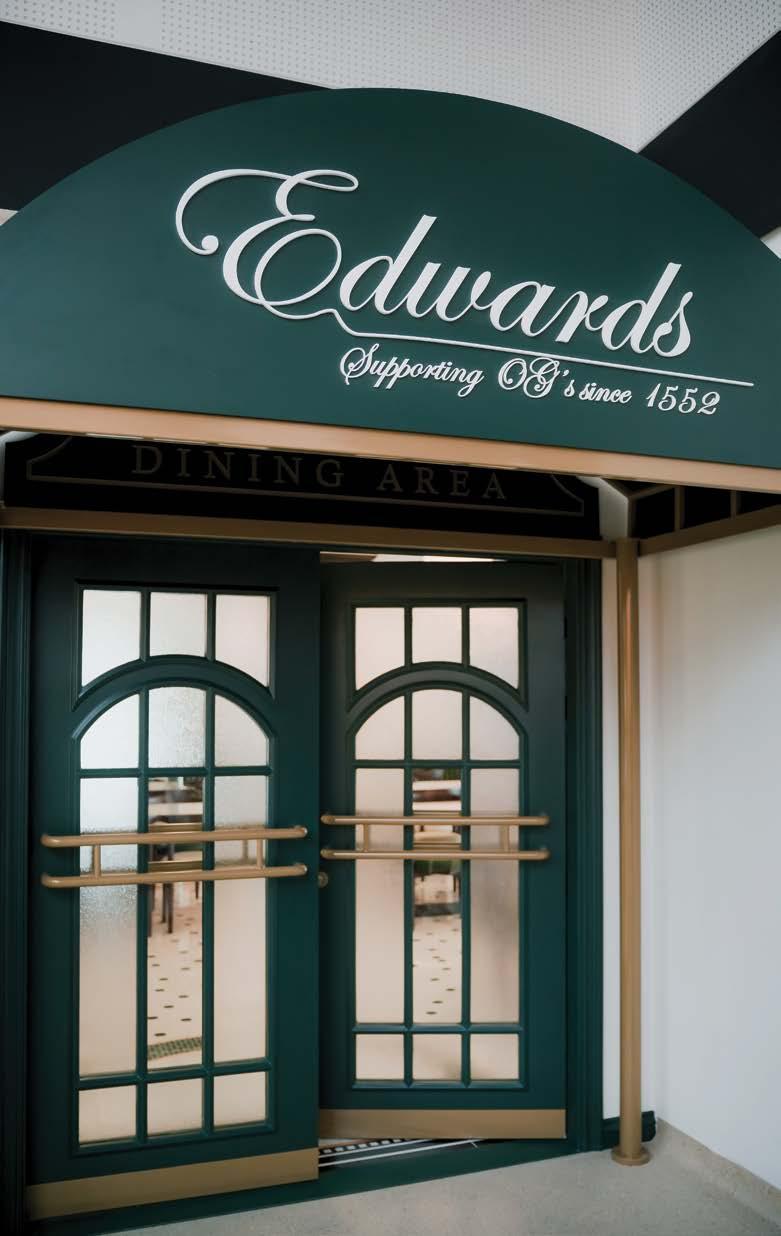
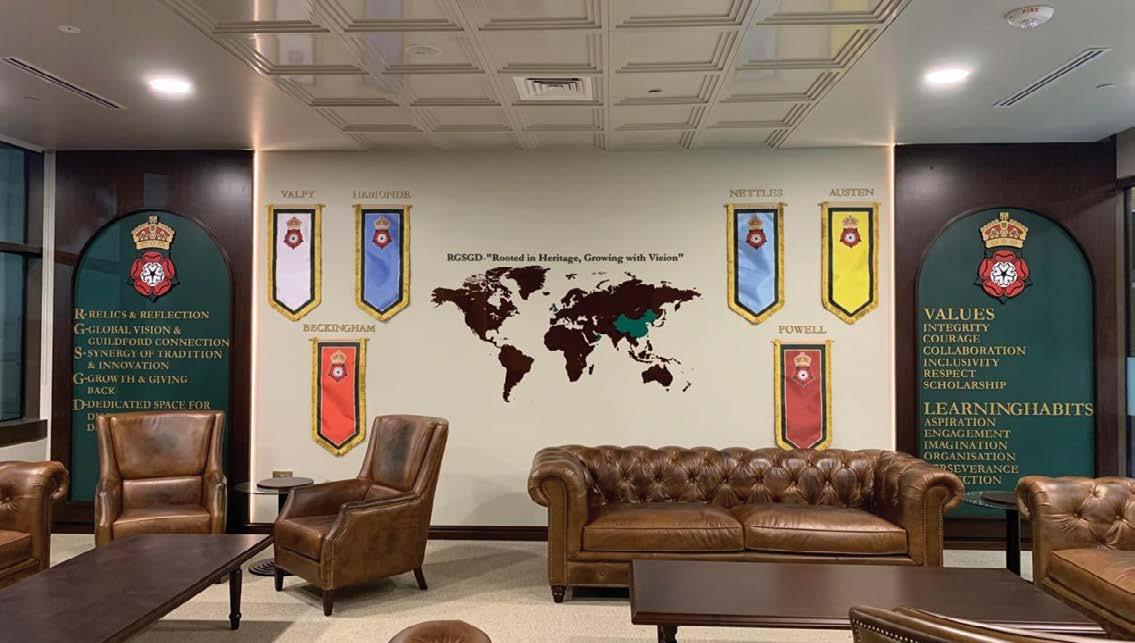
Named after King Edward VI, Teddy’s serves as a vibrant dining hall for senior school pupils. More than a lunch space, it is designed as a place to connect, converse, and recharge. Inspired by classic Ralph Lauren cafés, the space accommodates up to 90 students and features mosaic flooring with custom tiles, bespoke tables, and elegant brown-tinted mirrors.
Touches of the school’s signature green and deep wood tones run throughout, while ceiling batons and a custom green canopy at the entrance reinforce the heritage aesthetic. Adding a playful twist, a life-sized teddy bear dressed in the school’s iconic striped blazer stands proudly in the corner, bringing warmth and charm to the refined setting. For younger learners, a miniature counterpart—Little Ted’s by Edwards—has also been created. With hanging greenery, soft lighting, and scaled-down furnishings, the space transforms lunchtime into an enchanting experience for the Foundation Years.
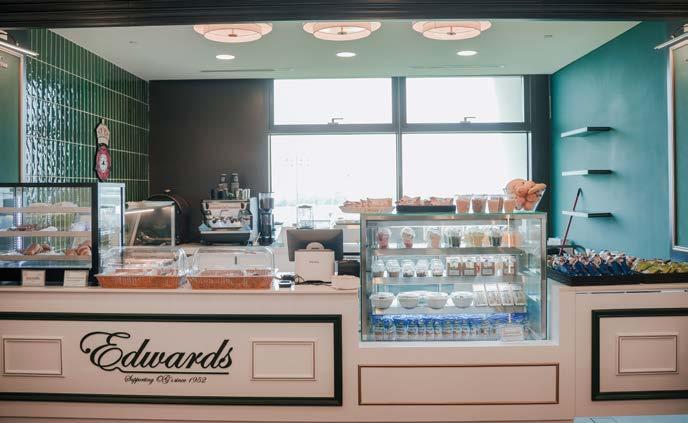
The Drawing Room offers a warm, welcoming environment for parents and guests, where first impressions matter. With deep Chesterfield sofas, green cabinetry, and displays of blazers, ties, and trophies from the UK school, it blends comfort with history. A large wall map showcases RGS’s international campuses, while a replica of Guildford’s iconic town clock provides a tangible link to the home campus. Adjoining the Drawing Room, the Principal’s Office has been relocated to the ground floor for greater accessibility. Featuring a commanding oak desk, RGS-green panelled cabinetry embossed with the school’s rose, and brass-accented bespoke lighting, the office embodies authority and approachability in equal measure, offering a distinguished backdrop for meetings and online engagements alike.
“Our vision was to create interiors that resonate with the RGS identity while feeling fresh and relevant to the pupils who use them. We wanted every corner to inspire pride and belonging— a balance between timeless British heritage and contemporary Dubai sophistication.”
ANISHA MERCHANT, AM DESIGN CONSULTANT.
A dynamic addition for senior pupils, the Society Room draws inspiration from the debating chambers of world-class universities. Designed to support oratory and critical thinking, it accommodates up to 24 students in a C-shaped configuration that encourages open discussion and intellectual exchange, reflecting the school’s enduring emphasis on scholarship and dialogue.
Commenting on the newly designed spaces, Matthew Pearce, Principal of RGS Guildford Dubai, said: “These new spaces do more than reflect our heritage; they bring it to life. Every detail, from tile patterns to colour palettes, tells a story of connection between our
historic roots in Guildford and our forward-thinking community here in Dubai.”
Anisha Merchant, AM Design Consultant, added: “Our vision was to create interiors that resonate with the RGS identity while feeling fresh and relevant to the pupils who use them. We wanted every corner to inspire pride and belonging—a balance between timeless British heritage and contemporary Dubai sophistication.”
With these newly reimagined interiors, Royal Grammar Guildford Dubai continues to build on its legacy of excellence, where tradition, innovation, and thoughtful design come together to create an environment that is distinctly RGS.
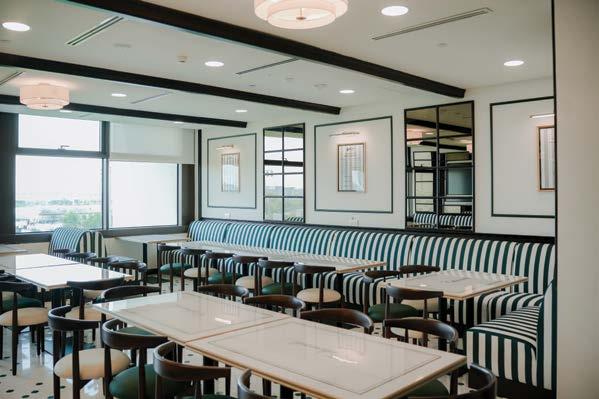
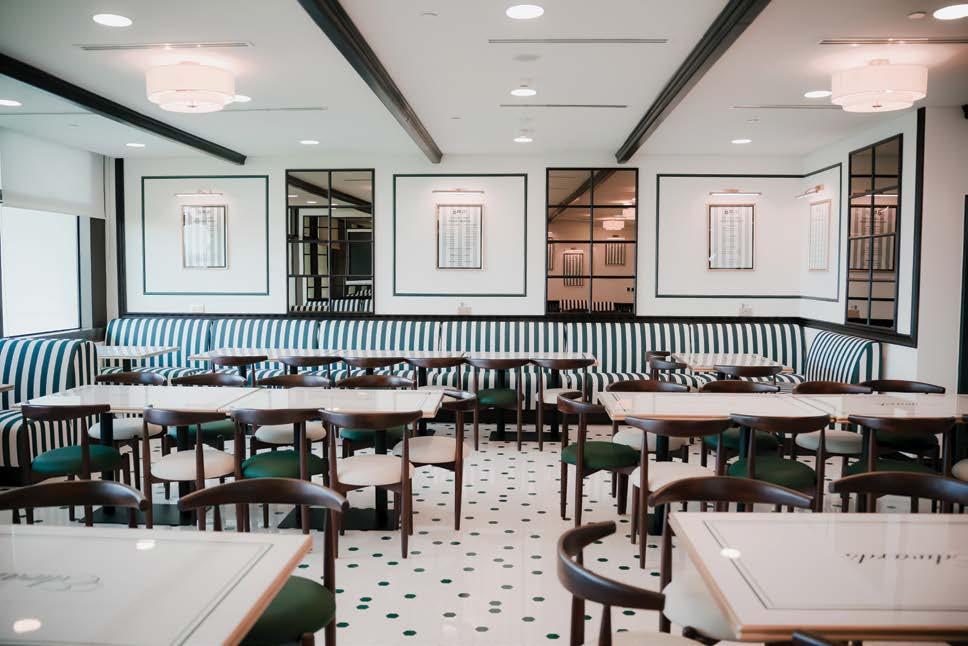
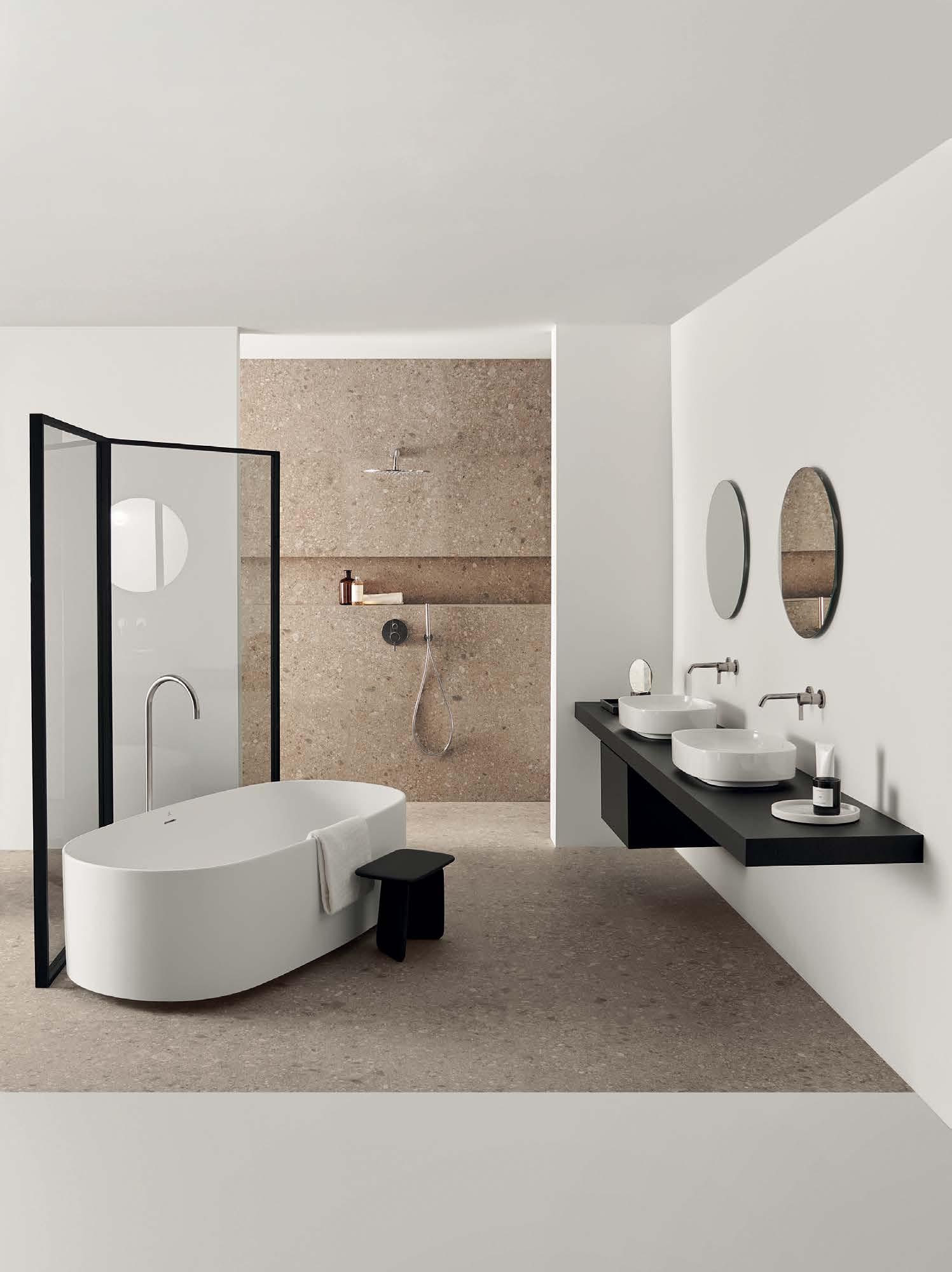
DOMOTEX 2026 expands its scope beyond flooring to present a comprehensive showcase of interior finishing solutions, offering architects, designers, and developers a complete view of the future of built environments..
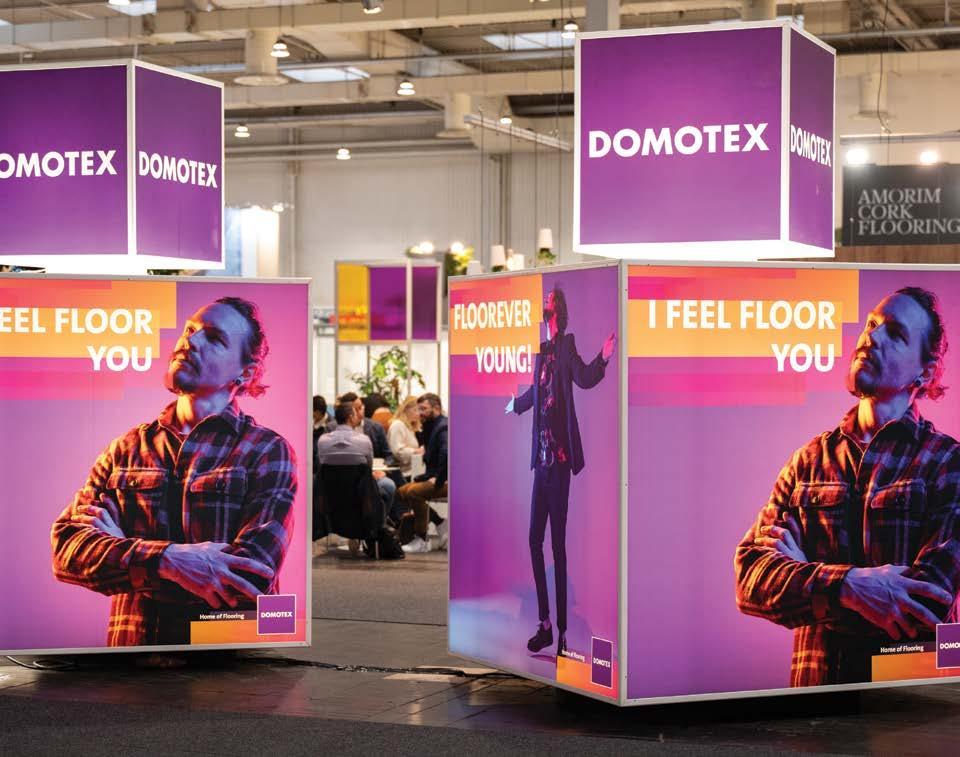
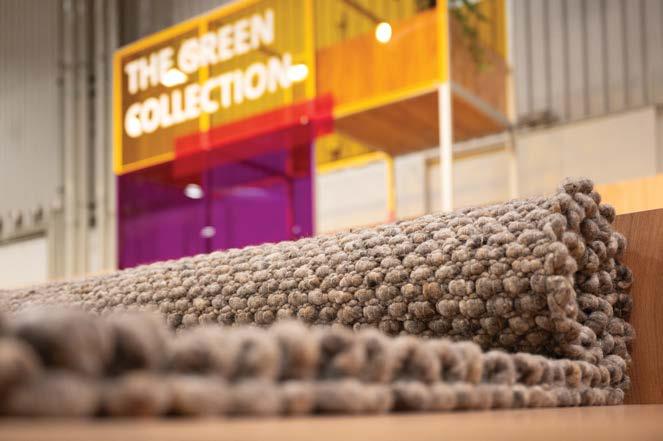
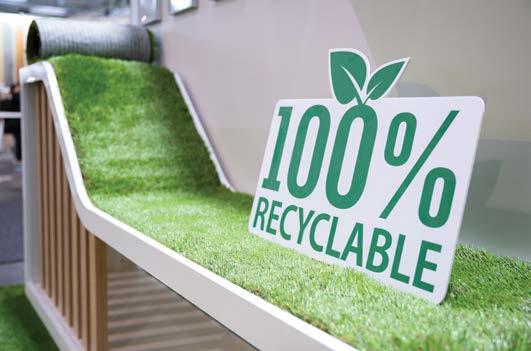
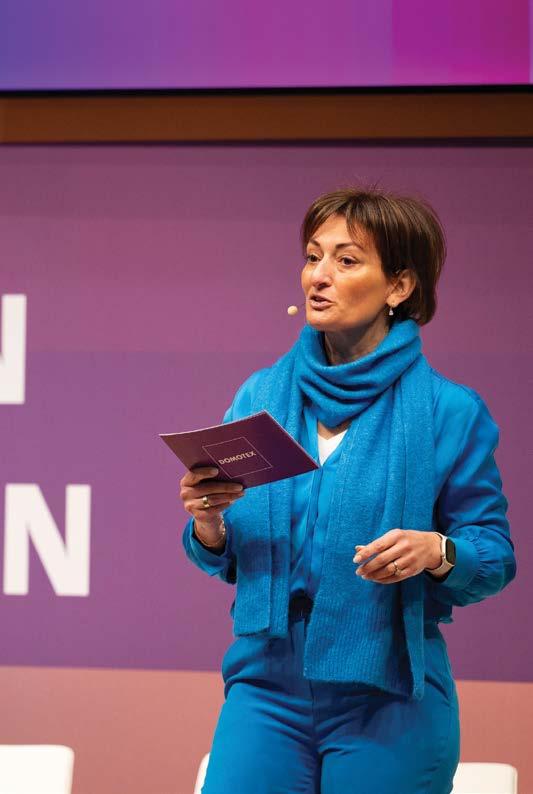
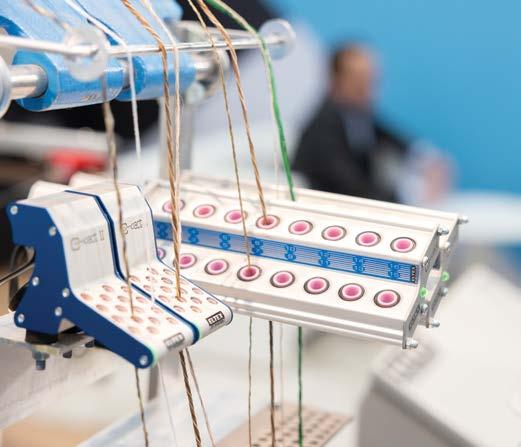
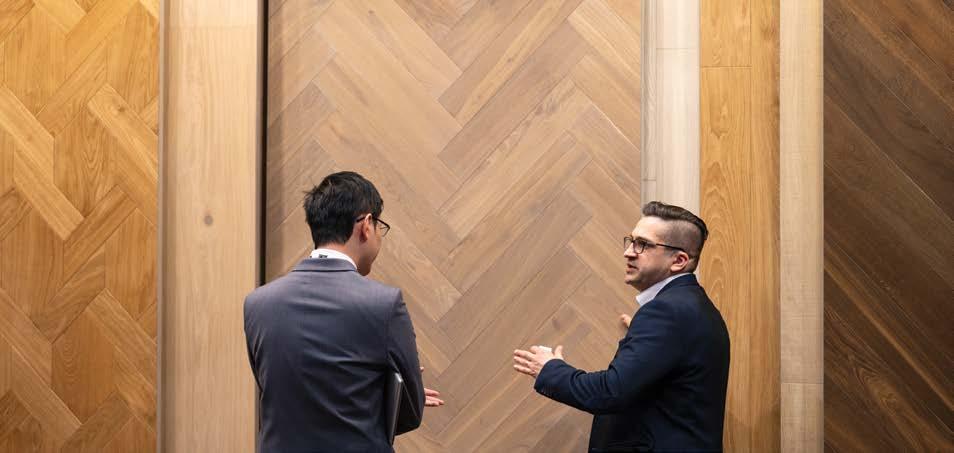
DOMOTEX 2026, the global hub for flooring and interior finishing, is gearing up to welcome architects, interior designers, distributors, and traders from across the world, including the Middle East, to experience the latest trends and technologies shaping the future of interior spaces.
Held under the theme “Creating Rooms. Transforming Spaces.”, the fair runs from January 19-22, 2026, at the Hannover Exhibition Grounds.
With an expanded concept that now includes flooring, wall and ceiling systems, acoustic solutions, paints, wallpapers, and sun-shading systems, DOMOTEX 2026 offers a holistic view of interior design and construction solutions.
For GCC professionals, the show serves as an unparalleled platform to explore sustainable materials, connect with global manufacturers, and discover technologies driving future-ready developments across hospitality, retail, real estate, and public infrastructure projects.
Sonia Wedell-Castellano, Global Director of DOMOTEX, said: “DOMOTEX 2026 is where the global flooring and interior finishing community comes together to set trends, exchange ideas, and explore innovations that redefine spaces,” She continued: “We look forward to welcoming professionals from the Gulf region, where creativity and development are accelerating at an incredible pace. DOMOTEX provides a world-class platform to inspire and enable their next wave of projects.”
This year’s edition is already seeing robust participation from leading international brands such as Kronospan, Egger, Lanxess, Unilin, Classen, Gerflor, ter Hürne, Swiss Krono, Project Floors, Bostik, and Saint-Gobain, among others. New exhibitors in wall décor, coatings, and acoustic solutions underscore the show’s evolution into a full-spectrum interior design platform.
The Architects Space will be a key attraction, offering a curated experience for design professionals with guided Architects Runs, interactive workshops, and networking sessions. Visitors will also find immersive experiences at the Innovation Area, where digital tools and materials science come together to demonstrate the future of craftsmanship.
For visitors from the GCC, DOMOTEX 2026 is not just a trade fair; it serves as a gateway to partnerships, sourcing opportunities, and insights from the world’s most advanced markets in flooring and interior technologies. The show’s digital innovations and sustainability showcases align closely with the region’s ongoing drive toward smart, green building solutions.
From large developers and distributors to boutique design studios, GCC participants can leverage DOMOTEX to identify partners, explore supply chain opportunities, and integrate global best practices into regional projects.
SICIS unveils the Amaretto Sofa, a refined evolution of one of its most recognisable design icons. Developed from the original Amaretto armchair, the sofa marks the debut of the AIconic collection—an experimental initiative exploring the intersection of design culture and artificial intelligence. Retaining the enveloping volumes and bold elegance that define Amaretto, the new sofa expands the concept into a more
generous, convivial form while enhancing comfort and architectural presence. AI is used not as a replacement for craftsmanship, but as a creative tool to explore proportions and forms, accelerating design research while preserving the brand’s identity. Rooted in SICIS’s tradition of mosaics, surfaces and furnishings, the Amaretto Sofa reflects a future-facing vision grounded in heritage, craftsmanship and timeless aesthetic values. www.sicis.com