ONLINE READERSHIP: 410,000 monthly unique clicks through Google Analytics
The SingaporeBusinessReview is the highest circulating and best read business magazine in Singapore. Our online readership has an average of 215,000 unique viewers, according to Google Analytics. We won the Business Trade Media of the Year Award at the 2017 MPAS Awards.
Do reach out to us if you would like us to tell your story to our readers via print and online advertising or events.
Charlton Media Group 101 Cecil St. #17-09 Tong Eng Building Singapore 069533 +65 3158 1386
HONG KONG Room 1006, 10th Floor 299 QRC, 287-299 Queen's Road Central, Sheung Wan, Hong Kong +852 3972 7166 www.charltonmedia.com
MIDDLE EAST
FDRK4467, Compass Building, Al Shohada Road, AL Hamra Industrial Zone-FZ, Ras Al Khaimah, United Arab Emirates
Can we help?
Editorial Enquiries: If you have a story idea or press release, please email our news editor at sbr@charltonmediamail.com. To send a personal message to the editor, include the word “Tim” in the subject line.
Media Partnerships: Please email sbr@charltonmediamail.com with “Partnership” in the subject line.
Singapore Business Review is published by Charlton Media Group. All editorial materials are covered by copyright and may not be reproduced without consent. Contributions are invited but copies of all work should be kept as Singapore Business Review can accept no responsibility for loss. We will, however, take the gains.
Sold on newsstands in Singapore, Malaysia, Hong Kong, London, and New York. Also out in sbr.com.sg with an online readership of 215,000 monthly unique visitors*.
FROM THE EDITOR
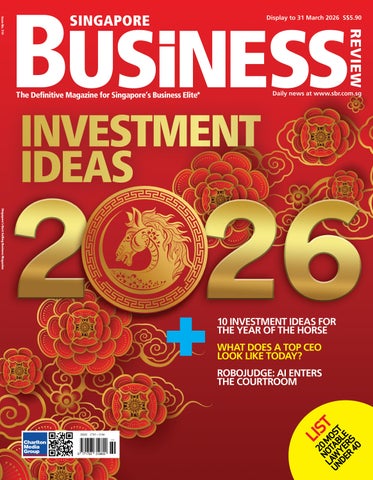
Early 2026 finds investors reassessing risk amidst a softer US dollar and a more disciplined view of artificial intelligence. Our cover story examines where capital is being redeployed, presenting 10 investment ideas shaped by these conditions. Read the full analysis on pages 28 to 30.
That recalibration is also evident in corporate leadership. An analysis of the STI shows that most CEOs were promoted from within, often after long careers in finance, engineering, or operations. See pages 24 to 25 for our report.
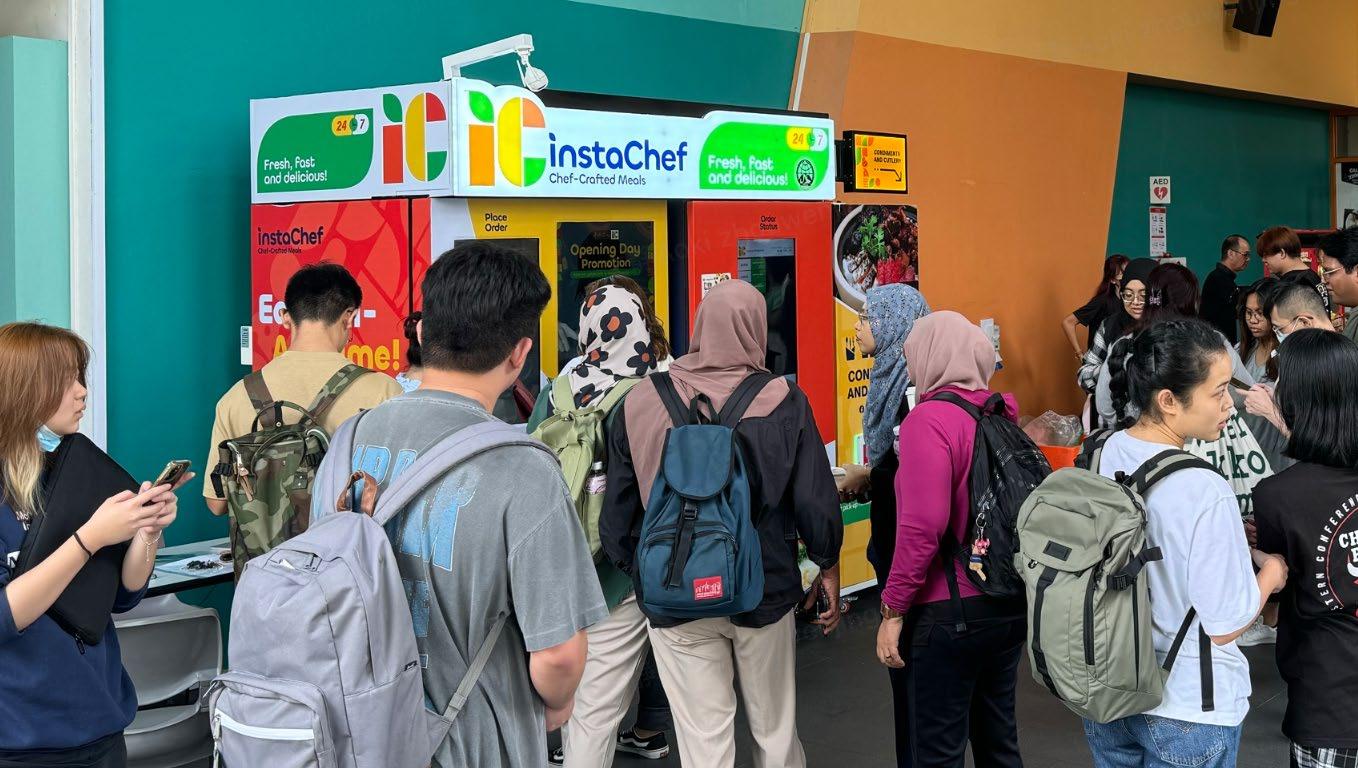
Markets are also being reshaped by how selectively new technologies are adopted. Autonomous vehicles remain constrained by regulatory and operational realities, keeping robotaxis largely within campuses and industrial estates. That story appears on page 6. At the same time, oversight of financial influencers has tightened, whilst the courts move ahead with AI tools for the Small Claims Tribunals—developments we examine on page 8.
In this issue, we also highlight our annual list of Singapore’s top lawyers under 40. Meet them on pages 33 to 37.
Read on and enjoy!
*Source: Google Analytics
Tim Charlton
News from sbr.com.sg
Daily news from Singapore
MOST READ
HDB to launch 4,620 flats in 2026 BTO exercise
The Housing Development Board’s 2026 February Build-To-Order exercise will launch a total of six projects across four residential towns, offering 4,620 new flats. The supply is spread across Bukit Merah (1,040 units), Sembawang (1,920 units), Tampines (530 units), and Toa Payoh (1,130 units). Sembawang provides the largest mix from two-room Flexi all the way to five-room flats.
MOST READ COMMENTARY
Singapore is ready for EVs, but the industry needs to catch up
BY Soh Ming
Singapore is wellpositioned for the adoption of electric vehicles. Charging infrastructure is expanding steadily, vehicle technology has matured, and the total cost of ownership is now competitive with internal combustion engine cars. Yet adoption is still constrained not by technology or policy gaps, but by mindset inertia amongst drivers, businesses, and industry players.
Employers plan pay rises as 2026 talent demand stays strong
Broad-based salary increases are expected across most sectors in 2026, with nearly all employers in accounting and finance, supply chain and procurement, sales and marketing, and HR and business support projecting higher compensation. Over half plan to hire contractors, mainly for shortterm or project-based needs. Professionals who switch jobs may see raises between 5% and 15%.
What is driving the next era of wealth management in Singapore?
BY Derrick Tan
Wealth management in the AsiaPacific region is undergoing a profound transformation, driven by unprecedented capital flows, regulatory innovation and a rapidly expanding pool of high-net-worth individuals. Singapore’s total assets under management soared to $5.4t in 2024, a 10% increase from the previous year.
Yangzijiang Maritime to debut on SGX after $5.2m placement
Yangzijiang Maritime Development Ltd, a subsidiary of Yangzijiang Financial Holding Ltd, will list on the Singapore Exchange (SGX) Main Board on 18 November 2025 after raising at least $5.2m through a private placement. The company offered up to 8.64 million shares at $0.60 each. Yangzijiang Maritime is expected to debut with a market capitalisation of around $2b.
The role passwordless plays in securing Singapore’s digital future BY
Jasie Fon
Singapore's rapidly developing digital economy and widespread adoption of innovative technologies make it a prime target for cybercriminals. In 2024, the citystate suffered 20% of all cyberattacks in Southeast Asia. Whilst passwords are structurally built into online safety, they were never intended to scale with the complexity of modern digital ecosystems.
REDEFINING EXPERIENCES THROUGH TECHNOLOGY
Co-creating Singapore’s first ‘Borderless University’ with StarHub’s Ubiquitous Network.
StarHub and the National University of Singapore (NUS) have co-created Singapore’s first ‘Borderless University’, a breakthrough initiative that is reshaping the future of education.
The ‘Borderless University – Powered by Infinite Technology’ initiative leverages StarHub’s modern digital infrastructure, powered by Cloud Infinity — a hybrid multi-cloud architecture – to deliver ultra-fast, secure, and uninterrupted connectivity for staff and students anytime, anywhere, both in Singapore and abroad.
TRANSFORMING ACCESS, EMPOWERING LEARNING
At the heart of this initiative is a private 5G network exclusively built by StarHub for NUS — a first-of-its-kind in Singapore. Using eSIM technology, students and staff can instantly and securely connect to NUS’s digital resources and the internet without the need for physical SIM cards, complex configurations, or VPNs. A simple QR code scan is all it takes.
Leveraging 5G backhaul technologies, the solution also ensures seamless connectivity even for devices that are not 5G-enabled. By integrating directly into NUS’s existing network, it fosters a truly mobile, flexible, and borderless learning environment from lecture halls to living rooms.
“The 5G network has completely transformed how I learn at NUS. I can seamlessly access study materials, quizzes, and exams anytime, whether I’m on campus or at home. With secure and reliable connectivity, I can take exams or complete assignments on the go confidently using my 5G-enabled PCs or
devices without disruptions. This convenience has also significantly boosted my productivity, saving me about three hours each week. The extra time has allowed me to focus more on my studies,” said Year 3 Faculty of Dentistry student, Chua Sim Ying.
SMART, SAFE, SUSTAINABLE
The Borderless University is not just a leap forward in connectivity — it is a stride towards building a greener, smarter campus.
By potentially reducing the need for physical cabling and wired infrastructure, StarHub’s solution supports NUS’s efforts to lower its carbon footprint and create a greener digital ecosystem.
The network was rigorously tested with NUS focus groups to ensure optimal performance, security, and user experience — reflecting StarHub’s commitment to delivering human-centric innovations that align with NUS IT's mission to drive the New Digital for education, research, and administration through technology and innovation.
“This collaboration with StarHub aligns with our vision for a future-oriented learning environment. Both staff and students will benefit from seamless access to NUS’s resources and the internet, wherever they are in Singapore; and in the future, overseas, without the need for VPN or other remote access technologies” — Ms Tan Shui-Min, Chief Information Technology Officer, NUS
SETTING A NEW BENCHMARK FOR HIGHER EDUCATION
StarHub’s partnership with NUS was recently recognised at the SBR Technology Excellence Awards 2025, where the project won the Connectivity – Telecommunications category.
The accolade celebrates the bold reimagining of what a campus network can be — borderless, intelligent, and future-proof.
“Partnering with the National University of Singapore to co-create Singapore’s first Borderless University has been a truly exciting journey. This award reflects not just the strength of our collaboration, but the real impact that StarHub’s Modern Digital Infrastructure can deliver. By combining secure, seamless connectivity with future-ready innovation, we’re helping to set a new standard
Ms Tan Shui-Min, Chief Information Technology Officer, NUS
Driverless dreams: Why robotaxis won’t hit Singapore anytime soon
Robotaxis are unlikely to become a common sight on Singapore’s roads within the next five years despite recent investments and ongoing trials, according to analysts.
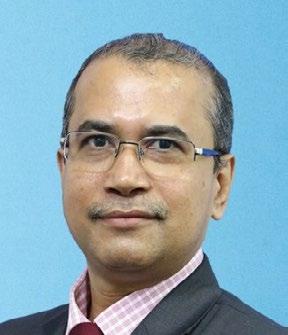
Zafar Momin, an adjunct professor at the National University of Singapore Business School, said autonomous ride-hailing remains far from everyday use.
“I don't see anything happening in the next few years,” he told Singapore Business Review in an interview. “We shouldn’t think of robotaxis as something where you're going to walk down the road and get one.”
He added that early deployments would stay limited to controlled areas such as university campuses, industrial parks, depots, and closed-loop precincts where traffic conditions can be tightly managed.
Andreas Nienhaus, a partner at Oliver Wyman, said Singapore’s safety-first regulatory framework also means an islandwide robotaxi network is unlikely to emerge within the five-year horizon.
“Singapore starts with fixed-route autonomous shuttling before expanding into real everywhere, every time robotaxis,” he said. “It will take more than five years.”
Public trust remains a central barrier. “How would you like to sit in a vehicle that doesn't have a driver, especially if you know that such vehicles have had accidents?” Momin asked.
Both noted that Singapore continues to review incidents overseas, including accidents and service suspensions in the US and China that triggered public pushback. They said confidence must be firmly established before authorities consider wider deployment.
Liability is another unresolved issue. Momin said regulators have yet to determine liability in a collision.
“Whom do you sue? Do you sue the software company or the hardware company or the operator?” he asked.
Technical constraints also remain. Dense traffic, unpredictable road behaviour, narrow lanes, and frequent heavy rain create a far more complex operating environment than in many Western testbeds.
Nienhaus said Southeast Asia offers limited scale for commercial robotaxi operations.
Few cities have the infrastructure, mapping systems, or regulatory readiness required for large fleets, making it hard for operators to achieve the scale needed to lower costs.
Even so, both analysts see long-term opportunities in autonomous software, system development, as well as controlledroute transport services.
In August 2025, Grab Holdings announced plans to take an equity stake in Chinese autonomous-driving firm WeRide by mid-2026 to accelerate the rollout of Level 4 robotaxis and shuttles in Southeast Asia.
Momin said startups focused on autonomous driving software, such as Pony. ai, might see increased demand. He added that public transport authorities could expand the use of driverless shuttles for first- and last-mile trips to MRT stations.
Complementing public transit
Nienhaus said Singapore’s strategy is meant to complement, not replace, public transit. “You can try to increase accessibility to public transit through last-mile shuttling, and that’s exactly what Singapore is currently doing,” he told the magazine.
He also cautioned against expectations of cheap robotaxi fares. “If you look at other players around the world, they’re not as cheap. You need massive scale to drive down costs," Nienhaus added.
Singapore’s regulatory framework is amongst the most detailed globally.
Whilst some industry players say the bar is high compared with the US, the Oliver Wyman partner noted that the public supports the safety-focused approach.
Momin said Singapore remains well prepared, citing long-running autonomous vehicle trials at Nanyang Technological University and in Jurong. The government in July 2025 formed a 17-member steering committee on autonomous vehicles (AV) to guide the safe integration of AVs and strengthen connectivity.
For now, both analysts said robotaxis would not reshape Singapore’s transport workforce or displace drivers.
“Robotaxis are not going to be mainstream anytime soon,” Momin told Singapore Business Review. According to Nienhaus, autonomous fleets still require significant human support, meaning the technology is more likely to create jobs in the near term than threaten existing roles.
How would you like to sit in a vehicle that doesn't have a driver, especially if you know that such vehicles have had accidents?
Regulators have yet to determine if the software company or operator holds liability in a collision
TRANSPORT & LOGISTICS
Companies face higher costs as halal certification moves online
The food, retail, and hospitality sectors should brace for higher compliance costs and tighter documentation as the country’s halal certification system shifts fully online, intensifying scrutiny over how products are sourced, processed, and handled, analysts said.
Since 1 October 2025, the Islamic Religious Council of Singapore has replaced physical halal certificates with digital versions featuring quick response (QR) codes that allow instant verification of validity and approval type.
The move promises faster checks but raises the bar on traceability,
according to Sanjay Singh, an associate partner and senior vice president at Frost & Sullivan.
“Companies will need steady, year-round documentation across sourcing, preparation, and storage because everything is traceable,” he said. Digitalisation also enables more frequent and unannounced inspections, he continued.
The shift comes as the Asia-Pacific halal food market, valued at about $586b in 2024, is forecast to grow almost 12% annually to reach $1.26t by 2031, according to India-based Cognitive Market Research.
Rising consumer expectations add
pressure: halal standards are essential for 17% of Singapore consumers and about 20% of Gen Y shoppers, said GlobalData Foodservice Practice head Anuran Dhar. “The digital shift closes any room for fraudulent or ambiguous halal claims,” he said.
Implementation concerns
But the transition also forces firms to strengthen internal controls, with Singh estimating potential efficiency gains of about 15% if systems and documentation are managed properly.
Data security and compatibility with Islamic council platforms are key risks, he said, adding that staff training would be critical as companies move away from paper-based processes.
Execution remains a concern.
Dhar said digital certificates and QR codes should reliably link to accurate information, whilst secure portals are essential for maintaining trust amongst businesses and consumers. System outages or validation errors should be addressed quickly to avoid undermining confidence.
He added that the transition would work only if all parties keep pace. Certifiers need adequate resources, small businesses require onboarding support, and consumers need clear guidance.
“If any part of the chain falls behind, the whole system could feel more cumbersome than helpful,” Dhar said.
Differences in halal requirements across markets also add complexity for companies in regional supply chains, Singh said.
THE CHARTIST: SINGAPORE BECOMES APAC’S THIRD-RICHEST BILLIONAIRE MARKET
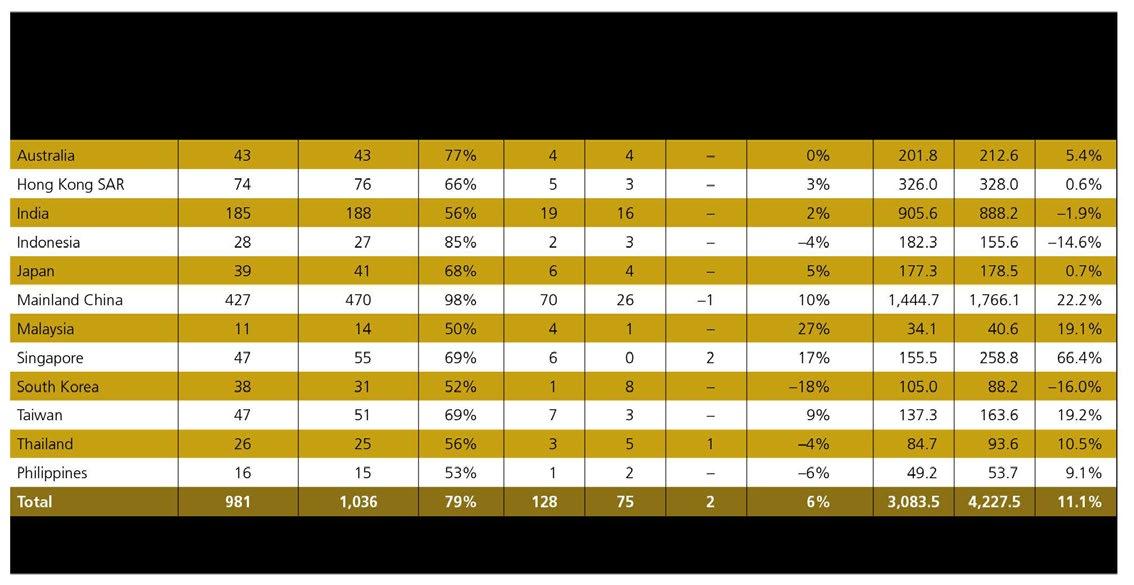
Singapore’s billionaire wealth rose to $335.36b (US$258b) in 2025, an increase of 66.4% year-on-year, according to UBS’s Billionaire Ambitions Report 2025.
The rise pushed Singapore ahead of Australia to become the Asia-Pacific (APAC) region’s third-largest billionaire market.
The report showed that Singapore’s total billionaire wealth expanded by almost two-thirds from $201.50b (US$155.5b) in 2024, reflecting a sharp increase in high-net-worth inflows and
market gains, it added. Wealth rankings place Singapore behind Mainland China and Hong Kong SAR but ahead of Australia, which posted a 5.4% increase in billionaire wealth.
Six individuals joined Singapore’s billionaire list during the year, marking one of the strongest annual expansions amongst regional markets, the report said.
UBS attributes the increase to broader regional wealth momentum, noting that billionaires in the region wealth rose 11.1% overall.
QR codes will replace physical halal certificates for better traceability
Wealth tracker in APAC
Source:
The digital shift closes any room for fraudulent or ambiguous halal claims
Sanjay Singh
Anuran Dhar
FOOD & BEVERAGE
MAS CRACKS DOWN ON UNLICENSED CONTENT CREATORS
The government is stepping up oversight of social media influencers and banks marketing financial products, signalling that online promotion without proper licensing can carry serious consequences.
The Monetary Authority of Singapore (MAS) issued guidance in September 2025 and sent advisory letters to individuals it said may have provided financial advice without a licence, signalling that digital content creators are now squarely within regulatory reach.
“Content creators who are unfamiliar with legal requirements may inadvertently be conducting a regulated activity without the appropriate licence, which may result in consumer harm,” the central bank told Singapore Business Review in an interview.
The issued guidance clarifies that even content framed as educational, or advice aimed at niche audiences, may fall under regulation if it promotes financial products or helps facilitate transactions.
MAS can also reach nonSingaporean content creators producing material for local audiences, ensuring awareness and compliance with the city-state’s financial laws.
Responsible digital marketing
Financial institutions are also grappling with the same mounting pressures.
Banks should closely oversee partners, including influencers, using contracts and compliance checks.
Failing to do so could make them liable for misleading promotions or breaking regulations, MAS said.
Lawyers at Bird & Bird ATMD LLP said Singapore’s actions reflect the growing importance of responsible digital marketing in financial services.
“Financial institutions partnering with third parties—including influencers—must extend oversight, including contractual clauses for compliance and audit rights,” the law firm said on its website.
Robojudge: AI enters the courtroom
Singapore is introducing an artificial intelligence (AI)powered tool for its Small Claims Tribunals (SCT) to summarise case documents for magistrates and improve access for self-represented litigants, a move aimed at easing caseload pressures and raising efficiency in lower courts.
Whilst the system promises faster case handling, analysts cited the need for careful oversight as judicial processes adopt automation.
Rakesh Kirpalani, chief technology officer at Drew & Napier LLC, said the technology should be deployed with safeguards because generative AI could produce inaccuracies.
“As with any AI tool, the output of the SCT tool may contain hallucinations that may create false summaries, or cause facts to be falsely created, altered or omitted,” he told Singapore Business Review
Built on Harvey AI, the system is designed to process evidence from informal communication channels such as WhatsApp, Telegram, and Slack—materials magistrates would otherwise review manually.
The rollout was phased, with tribunal magistrates receiving access first, followed by self-represented litigants who began using the tool in November 2025. According to authorities, the tool has been thoroughly tested and includes safeguards to keep sensitive case information confidential.
The system could help judges “focus their efforts on addressing more complex aspects of a dispute that require legal reasoning and decisionmaking,” Kirpalani said.
The tool also helps people and businesses spot key facts and arguments that they might otherwise overlook because they may not fully understand legal nuances, their rights, or the evidence in a dispute.
He added that users will get clear warnings that the tool may produce errors and that they are still responsible for any summary they use.
Leong Si Ngah, engineering, AI, and data partner at Deloitte Singapore, told the magazine that responsible deployment is critical as judicial and legal systems adopt automation.
“Responsible and trustworthy AI, delivered through strong safety and security guardrails, will be fundamental to scaling it with confidence,” she said in a separate interview. Such measures, she added, support innovation whilst preserving credibility and trust.
Integrating emerging tech
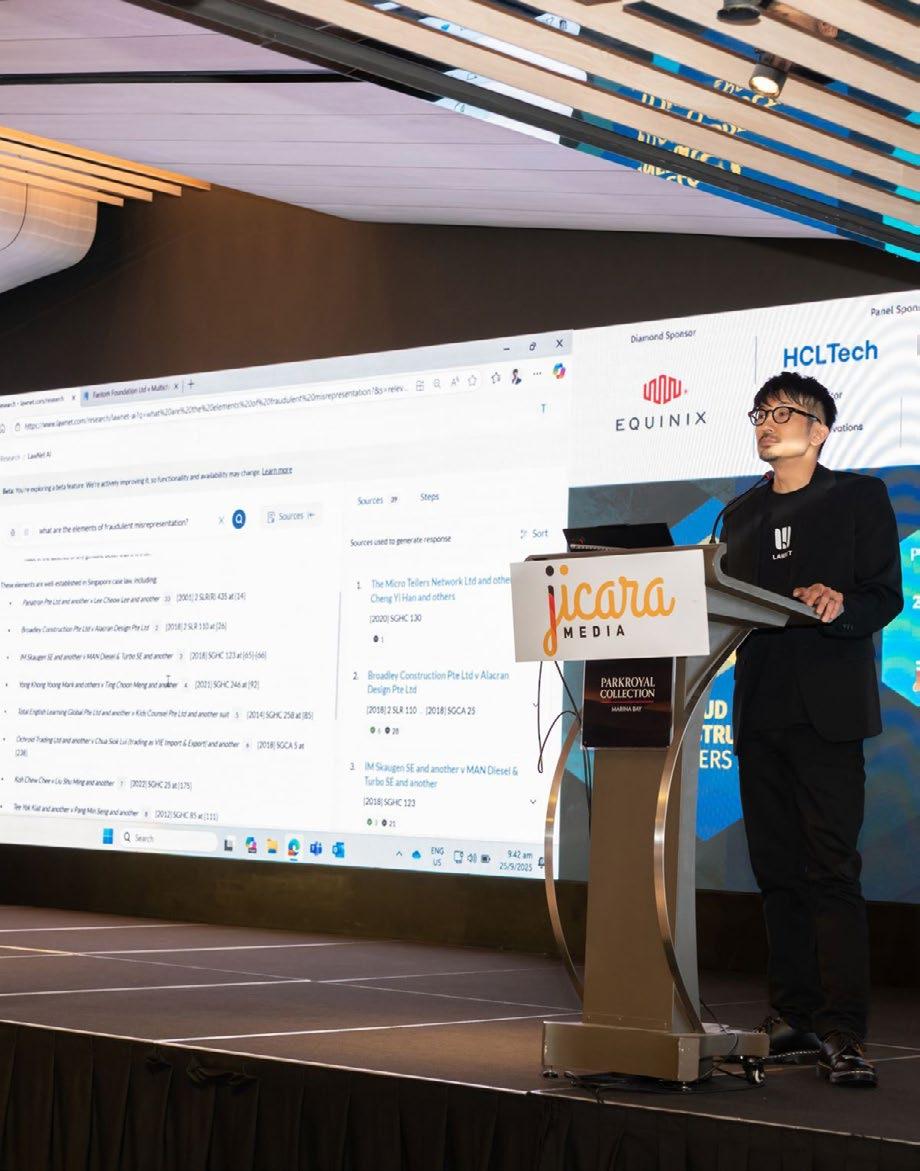
Singapore is also rolling out LawNet 4.0, an upgrade that integrates a GPTbased legal Q&A model to support legal research. Trained on Singapore judgments, legislation, and legal texts, the system lets lawyers and in-house counsel run text-based queries on contract-law issues.
Kirpalani said the model could cut the time spent comparing legal resources and let users check citations themselves. However, he warned that relying on AI without reviewing its output could put practitioners at professional or contractual risk.
Users should still verify citations and explanations, he told the magazine, because lawyers are responsible for the work they submit.
Responsible and trustworthy AI will be fundamental to scaling it with confidence
The introduction of the SCT tool and LawNet 4.0, according to Kirpalani, demonstrates how Singapore aims to integrate emerging technologies “in a safe and meaningful manner, whilst putting in place safeguards to prevent misuse or over-reliance.”
LawNet 4.0 integrates a GPT-based legal Q&A model (Photo from LawNet Technology Services)
MEURAKI PTE. LTD. plans to double its partner network by early 2026 as it tries to build a more immersive wellness platform that merges digital experiences with real-world engagement, its founder said.
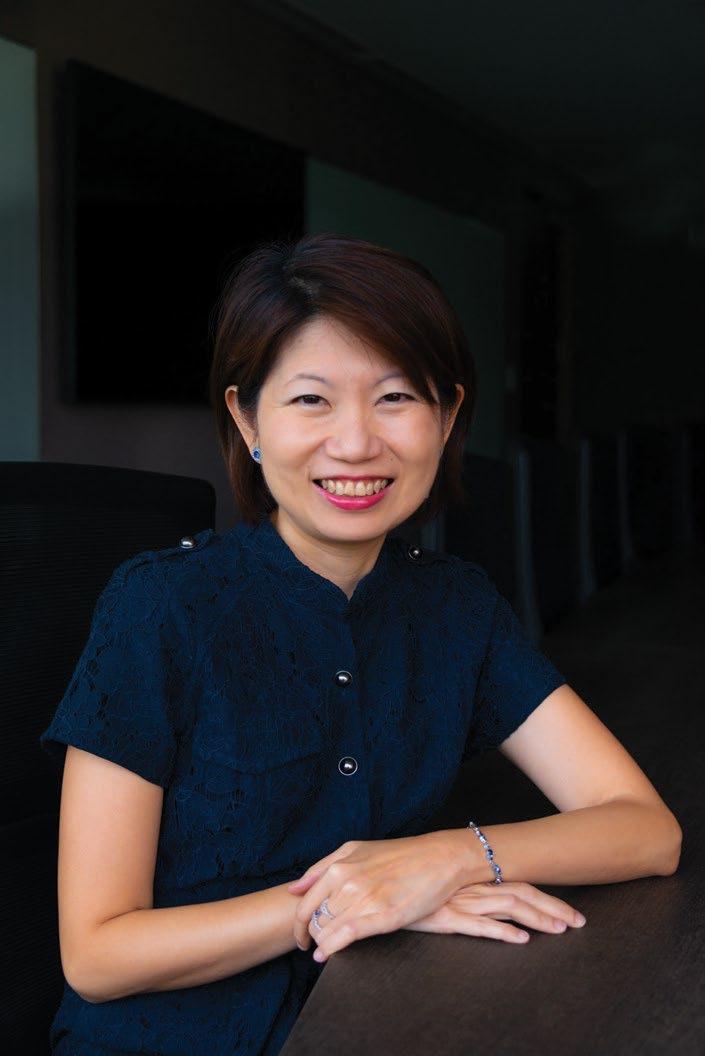
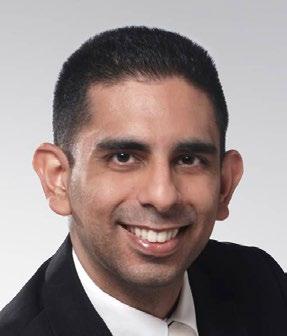
“Wellness today is very fragmented,” founder Michelle Ngiam told SingaporeBusinessReview. “We want to weave together the different pillars of wellness into one system.”
The startup operates a gamified wellness app that hosts a marketplace of 50 to 60 brands offering supplements, therapy, counselling, and childhood enrichment programmes.
The marketplace was rolled out in the fourth quarter of 2025, whilst the platform’s gaming and reward features are already live and available to users.
“We combine technology, real-world experiences, and real rewards to help people build sustainable well-being habits through play and adventure,” Ngiam said in an interview.
Users earn promo cards or discount codes by completing in-app quests or joining MEURAKI's live wellness events, which feature activities linked to fitness and mindfulness.
The company recently held its INNERDRIVE™ event at Funan, as part of the official Grand Prix Season Singapore (GPSS) 2025 inspired by Formula 1 racing, and the MEURAKI Genesis Village Festival held at Gardens by the Bay.
Ngiam said these events not only enhance user engagement but also attract collaboration from brands. “They can come on board and support us in many different ways—whether it's cash, sponsorship, or in-kind partnerships,” she said.
Expansion plans
To accelerate product development and regional expansion, MEURAKI is raising money from its first institutional or seed funding round. Ngiam did not disclose the target amount but said the capital would support product enhancements and expansion beyond Singapore.
“We’re looking at potentially running all these experiences outside Singapore,” she said. The company’s ambition is to grow the MEURAKI community to up to 10,000 by the end of 2025 as they expand their ecosystem and deepen engagement locally, with a target of around 30,000 by 2026.
“What we’re working on is to build the marketplace further, bring in more brands and experiences, and grow our user community through the app,” Ngiam said.
She added that MEURAKI’s goal is to position itself as Southeast Asia’s leading gamified wellness platform.
“Our long-term goal is simple—to make wellness rewarding,” Ngiam said. “It should be immersive, transformational, and instinctive, like an adventure that people want to keep returning to," the founder added.
Synthesys eyes 100 tie-ups for Network
Synthesys is ramping up efforts to scale its “Network” platform, allowing users to trade tokenised securities seamlessly across multiple blockchain networks.
The startup, formerly known as Equitize Global Pte Ltd., is targeting more than 100 partners by the end of 2026 from 40 distribution channels now.
“Synthesys infrastructure enables traditional financial institutions to plug into the rapidly growing tokenised economy,” Synthesys CEO and cofounder Darien Poh told Singapore Business Review in an interview.
“This means we will continue to connect not only blockchain-enabled distributors, but also traditional institutions distributing tokenised assets," he continued.
Its partners include public blockchains such as Ethereum, Solana, Polygon, and Arbitrum, along with Canton, a private ledger for banks, and Chainlink, a data bridge connecting blockchains to real-world information.
Poh said tokenised securities remain largely fragmented. “Different security brokerages and different exchanges are not interoperable. Right now, you cannot easily trade between Broker A and Broker B. Synthesys is the layer that
Darien Poh, CEO at Synthesys
ties it all together,” he said.
The company is seeking to create what Poh described as a “globally interconnected market,” linking issuers and distributors across the industry.
Synthesys raised $14.2m (US$11m) in September 2025 to build out the platform, in a funding round led by blockchain investor Mark Pui.
“Our funding will go towards improving our infrastructure,” Poh said. “Since we are building something that aims to revolutionise the capital markets, we need to ensure it is extremely secure," he continued.
Security and compliance are central to the company’s plans. “We are placing a lot of emphasis on compliance to make sure that is something we can deliver,” he added.
Whilst its immediate focus is improving distribution efficiency through Network, Synthesys is also preparing products to help traditional asset managers tokenise their portfolios.
Verta scales biomass output to meet demand
ENERGY & OFFSHORE
Verta Bioenergy Pte. Ltd. is ramping up production of clean industrial fuel in Southeast Asia by converting agricultural and livestock waste into biomass pellets amidst rising demand for sustainable energy alternatives.
The startup collects materials such as rice husks, chicken manure, and coconut shells from farms and processes them into pellets using its proprietary drying and blending technology. “We then get all the necessary accreditations and safety clearances done,” CEO Jeremy Tan told SingaporeBusinessReview in an interview
The firm sells its biofuel to industries in the Philippines — including food and beverage, cement, paper, and power — as a direct, drop-in replacement for coal.
“By conducting research and development on abundant local agri-waste to create a drop-in replacement fuel, we
ensure customers don’t have to invest in new infrastructure,” chief operating officer and co-founder Timothy Khor said in the same exclusive interview.
Verta has raised more than $1.1m in funding from investors, including French energy giant Engie SA, Singaporean venture capital firms Wright Partners Ventures Pte. Ltd. and Alpha Gen Venture Capital Pte. Ltd., and an angel investor from the Manila Angel Investors Network, Inc.
Michelle Ngiam, founder at MEURAKI
Verta founders Jeremy Tan and Timothy Khor
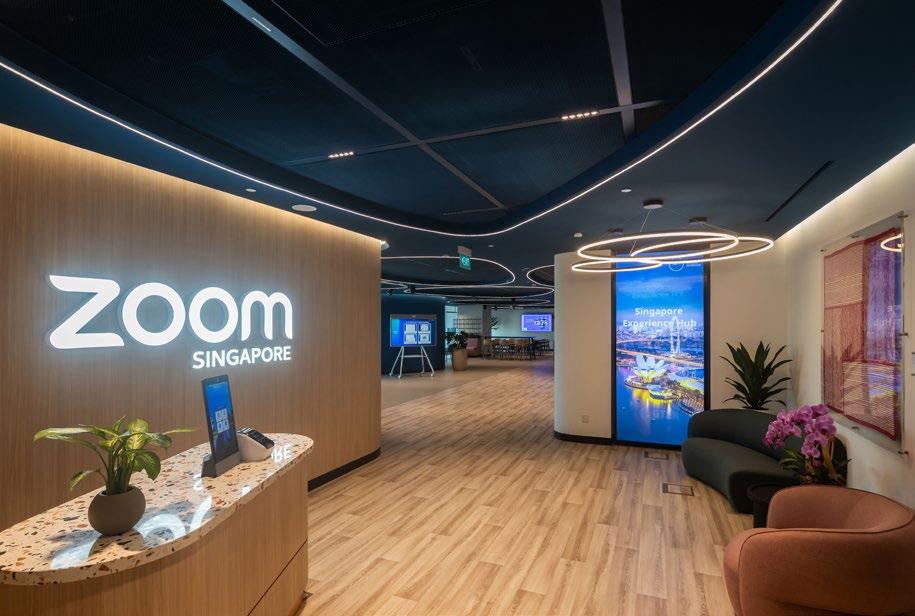
Zoom opens heritage-inspired office
It features Peranakan tiles and local fabrics inspired by the city-state’s history.
Zoom Communications has opened an office in Singapore that blends technology with heritage, sustainability, and hospitality in its design.
Izabella Lorenz, head of global real estate and workplace strategy at Zoom, said the workspace reflects both the company’s technological focus and local culture.
“We wove in identity through Peranakan tiles, locally inspired fabrics, and colour palettes drawn from Singapore’s culture and history,” she told Singapore Business Review
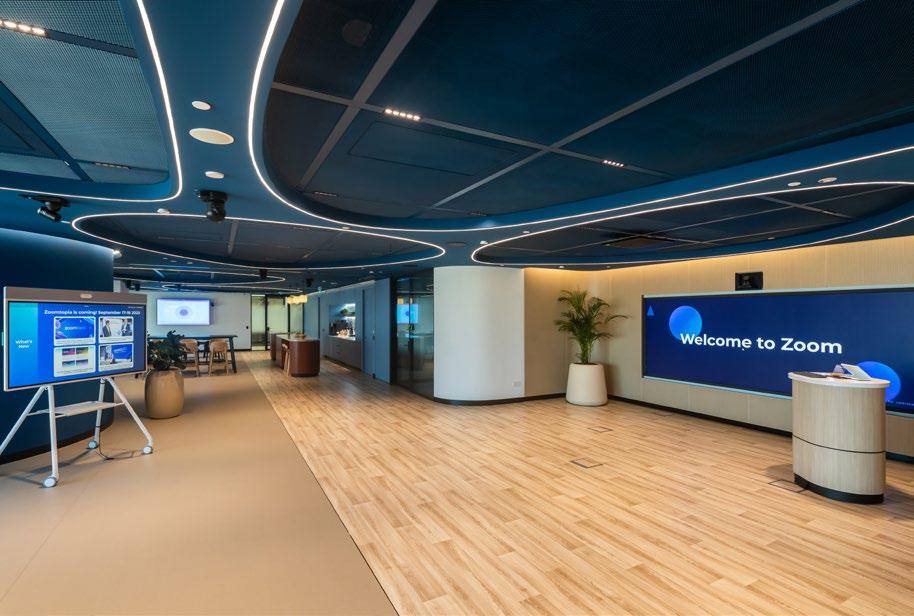
The Engagement Hub features a Hybrid Collaboration Zone, a cluster of meeting rooms that let teams connect more effectively with colleagues across the region and globally.
Sustainability was a key consideration, she added,
noting that finishes were selected to balance durability with environmental responsibility.
A focal point is a large tapestry created in partnership with Art for Impact, woven from recycled plastic bags recovered from the ocean. According to Lorenz, the artwork reflects the intersection of art, community involvement, and environmental responsibility.
The Singapore office is divided into two sections. The Engagement Hub serves as the main workspace, designed to adapt to different workstyles.
The Focus Zone is a quieter area for individual work. It is fitted with desks, phone rooms, and booths to provide privacy and support concentration.
1 From the moment visitors arrive, they can see firsthand new Zoom features and products.
2 The Experience Hub has a 150-inch interactive touchscreen for dynamic demonstrations of Zoom Workplace and AI Companion.
3 The Hybrid Collaboration Zone is a set of meeting rooms equipped with the latest Zoomenabled technology.
4 The Engagement Hub brings together different workstyles under one roof, creating an environment where people have the flexibility to choose how they work best.
5 Every meeting room is equipped with the latest Zoom Rooms technology, designed to make hybrid meetings seamless and inclusive.
6 At the heart of the office is the Community Zone where teams can gather for events or informal conversations. 1
Isabella Lorenz
Hengdian SG hub blends design, teamwork
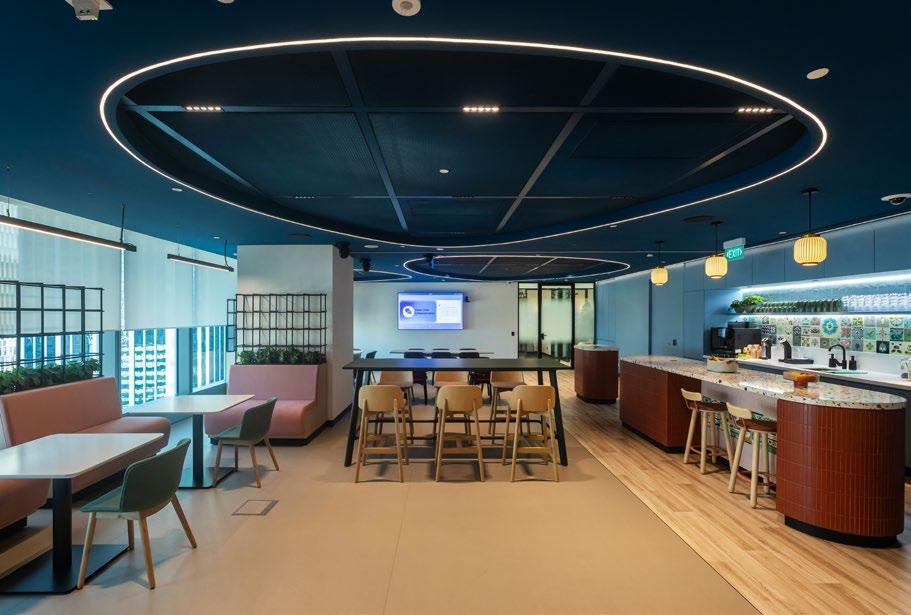
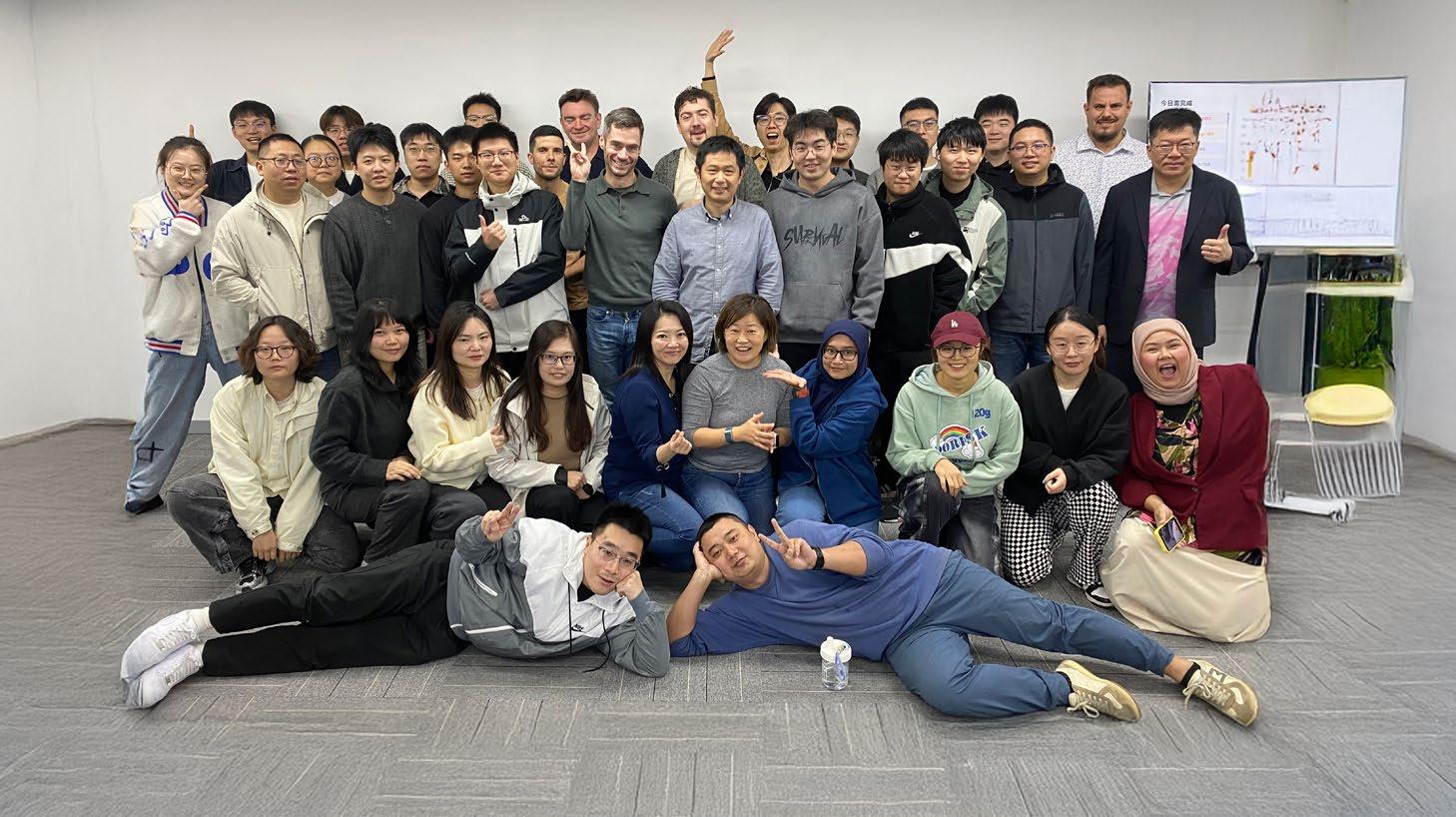
Hengdian Group, one of China’s largest diversified companies, has unveiled its Singapore headquarters—a 2,300-square-foot space designed to encourage interaction, movement, and conversation rather than traditional corporate formality.
Harry Li, director of operations at Hengdian Group Singapore, said the office at the IOI Central Boulevard Towers was designed to feel bright, modern, and conducive to teamwork. “It has a lot of natural light, warm wood tones, and a mix of textures that make the space feel calm yet energising,” he told Singapore Business Review
The design takes cues from Hengdian’s Hangzhou office, known for its craftsmanship and attention to artistic detail. “We wanted to bring that same sense of care, but with a
modern twist," Li told the magazine. Collaboration sits at the core of the office layout, which includes open work areas and informal zones to encourage interaction.
Li cited the pantry-adjacent area as his favourite feature. “It’s a bright, open meeting space where ideas flow easily and everyone feels comfortable speaking up,” the director told the magazine.
We wanted to bring that same sense of care, but with a modern twist
For quieter work, the office includes private meeting rooms and sound-proof focus booths. The company also chose IOI Central Boulevard Towers for its sustainable and energy-efficient design, which features smart airconditioning and ample natural lighting.
The Singapore hub will start with a lean team focusing on business development and partnerships.
Seamlessly accept all payments
• Local and international card payments.
• QR payments from local banking apps and mobile wallets as well as overseas payment apps from China, India, Indonesia, Malaysia and Thailand.
Enhance operational efficiency
• Manage your entire store from one integrated POS terminal, with an intuitive digital menu you can customise to fit your exact business needs.
• Receive real-time notifications, detailed transaction reports and settlement updates instantly via our online platform.
• Simplify record-keeping with our digital receipt management system.
Transform how you do business
• Convert your NFC-enabled Android device into a secure, cost-effective POS terminal with our SoftPOS solution.
How Atlas uses AI to transform LCC distribution
Discover how Atlas turned low-cost carrier (LCC) distribution from chaos to certainty.
When Atlas (Atlaslovestravel.com) was founded six years ago, the travel industry faced a paradox: demand for low-cost carriers (LCCs) was exploding, but distribution through indirect channels was fragmented and complex.
Why is LCC distribution so fragmented?
Each of the world's low-cost airlines operated with unique systems, pricing rules, and booking processes. Travel Sellers juggled dozens of disconnected platforms without direct access to real-time fares or terms. Aggregated data layers complicate things further, causing frustrating price changes at checkout and poor post-booking experiences. The industry needed fundamental reinvention. Atlas's solution? Build AI as the foundation from day one.
AI-first architecture
Unlike many traditional aggregators or consolidators that add AI later, Atlas designed its entire model around artificial intelligence from the start.
Traditional travel platforms work as "data pipelines," checking airline systems only when customers search.
This creates delays, drives up costs, and limits coverage. Atlas's AI predicts what customers will search for and calculates answers in advance. Think weather forecasting. Atlas's AI-Powered Pricing Engine studies patterns and real-time data to predict price movements. When you search Singapore to Bangkok, Atlas already knows the likely price range and availability—delivering 97% pricing accuracy and eliminating "price changed" surprises at checkout.
Real problems, real solutions
The biggest impact shows up where it matters most: speed, reliability, and transparency.
No more ‘Oops, price changed’
Ever selected a flight, entered payment details, then discovered the price jumped? That's because airline prices change constantly, sometimes every few minutes.
Atlas's Booking Success Prediction Model spots trouble in real-time, from airline system issue and price volatility to optimal booking moments (price lock). This keeps booking success rates above 95%, whilst competitors struggle with frequent failures.
Bringing certainty through standardisation
Every LCC operates differently. One airline's "Basic" fare includes 7kg carry-on; another's includes 10kg. Refund policies, terms, currencies, and booking flows all vary dramatically. For Travel Sellers, managing multiple integrations requires enormous manpower handling separate integrations and constant updates. Atlas standardises everything into one unified system. Human experts map each carrier's unique fare structures, terms, and processes into a consistent framework and automate updates.
The result: Travel Sellers work with one predictable interface regardless of airline. Add new carriers without retraining staff or building new integrations.
Operations meets intelligence
Here's what makes Atlas different: 70 employees do work that traditionally requires 700+ people. AI monitors 140+ airline systems, catches problems before customers
see them, provides 24/7 support, and manages transactions in 20+ currencies.
But it goes beyond efficiency. Atlas analyses search patterns across 1.2 million routes worldwide. Airlines, airports, and destinations use these insights to identify underserved routes and predict demand shifts before competitors do. Better decisions, backed by real traveller behaviour—not guesswork.
The business impact: no aggregated flight content, faster service, lower costs.
Built on solid ground
Alibaba Cloud's infrastructure provides the computing power, global reach, and reliability Atlas needs for 24/7 operations, enabling a start-up to compete with industry giants.
LCC refunds: In minutes, not weeks
Traditional refund processing takes days or weeks of manual work. Atlas's AI automates 95% of refunds in under 15 minutes— checking eligibility, matching documents, submitting requests, and processing payments once approved.
Democratising travel through LCC accessibility
Atlas's mission extends beyond technology— it's about making affordable low-cost carriers accessible globally. LCCs offer exceptional value, but fragmented systems have historically limited access.
Atlas removes friction through: standardised LCC flight content; nonaggregated fares, ancillaries, and terms and conditions; low latency responses for real-time booking; direct airline connections without middlemen; clear refund workflows; and multi-currency settlement.
As AI advances, Atlas expands what's possible in LCC distribution, including predicting issues before they occur, influencing schedules based on real demand, as well as making international travel as simple as food delivery. AI is not intended to replace people—it handles complexity, so teams focus on creativity, strategy, and meaningful customer experiences.
For Atlas, innovation serves a clear purpose: creating value for customers, empowering partners of all sizes, and building a travel ecosystem where accessibility, affordability, and transparency are standard—not exceptional.
From paradigm shifts to actionable plans—Atlas’s leadership team recently gathered at Hangzhou to shape their 2026 blueprint and beyond
Flight | Baggage | Seat | Fare Families
Atlas (atlaslovestravel.com) is a global travel-tech company offering a complete LCC flight API and data analytics solution, unifying fragmented content from 140+ LCCs and driving growth through analytics from 1B+ daily searches across global LCC data.
Built on a foundation of transparency, Atlas provides Travel Sellers with non-aggregated fares and terms and conditions while giving airlines full visibility into fare distribution.
Strengthen business resilience through strategic trade credit protection with NCI
The company helps businesses protect receivables, preserve cash flow, and manage rising insolvency risks.
Singapore has witnessed a notable surge in business insolvencies, with liquidations in the first half of 2025 surpassing figures from the same period over the past five years. For many companies, this presents a critical risk to liquidity and operational stability, particularly for those exposed to distressed entities.
In this context, trade credit insurance has become an essential tool, enabling businesses to protect receivables, manage credit risk, and maintain resilience in an increasingly volatile market.
Securing business assets
By protecting a company’s debtor ledger, which is one of its largest assets, trade credit insurance safeguards against insolvency and payment defaults, preserves cash flow, and provides businesses with the confidence to expand, even when trading with new or international buyers.
Ronnie Lau, CEO of NCI Singapore, highlights that rising insolvency levels have tangible repercussions across supply chains, with unsecured suppliers potentially facing liquidity challenges. Recent closures, including high-profile names such as Twelve Cupcakes, Wan Yang, and Jollibean, illustrate that even well-known businesses are vulnerable. The key lies in proactive
risk mitigation, particularly in securing trade receivables. “What is required is an exploration of the company’s risk mitigation practices, especially towards their trade receivables, and they need to assess if they are sufficiently secured and limited towards the impact of the risks of their clients failing and hence impacting their balance sheet,” said Lau.
Trade credit insurance provides companies with essential protection for their debtor ledgers, which often form a substantial part of current assets. Unlike other assets such as cash deposits or inventory, trade receivables are typically unsecured, leaving creditors exposed to the operating environment and financial health of their debtors.
“In times of debtor distress or insolvency, the insurer can provide assistance in collections for insured debts,” Lau explained. “In the event of non-collection of the insured debt, the insurer will pay a claim towards the valid insured debt, mitigating the risk of financial loss.”
This protection is particularly critical for exporters, where pursuing debts in foreign jurisdictions can be uneconomical. Traditional recourse, such as engaging debt collection companies, does not guarantee recovery and often incurs additional costs. By subscribing to trade credit insurance, companies can secure their receivables, reducing the risk of financial loss and ensuring that cash flow and balance sheets are safeguarded.
Strengthening liquidity and cash flow
Beyond risk mitigation, trade credit insurance preserves liquidity and supports cash flow. Insured receivables can also serve as collateral for financing, whilst claim payouts alleviate cash flow issues arising from non-payment, reducing bad debt costs and strengthening financial stability. The coverage also enables businesses to trade confidently with new or unfamiliar buyers, capturing revenue opportunities competitors may hesitate to pursue.
Securing appropriate coverage requires specialist expertise. Lau compares this
to engaging expert consultants across different business functions. “The specialist investigates various concerns relating to the specialisation and allows the focus unit to perform what they do best and offers bespoke solutions for the related concerns,” he remarked.
In early 2025, NCI incepted a policy for a client after detailed discussions to understand their business structure and credit risks. Customised terms aligned the policy with operational needs, providing essential risk mitigation whilst enabling the client to trade confidently.
When buyers became insolvent a few months later, claims on valid debts were promptly paid, preserving cash flow, limiting losses, and demonstrating how tailored credit insurance can both protect and support growth.
NCI also provides holistic support in credit management and risk assessment. “NCI prides itself as a one-stop Trade Credit Solutions provider,” Lau affirmed.
Leveraging advanced IT systems and an in-house Credit Risk Management team, NCI assists clients with buyer onboarding, credit analysis, and credit reports on entities worldwide.
This integrated approach enables companies to manage both domestic and international trade exposures.
Proactive risk management support
Looking ahead, NCI underscores that trade credit insurance is an active risk management tool. “NCI seeks to engage with our clients regularly to keep abreast of their business requirements as well as credit pain points,” Lau emphasised.
Each business operates under its own unique model, with distinct requirements that demand tailored solutions. By continuously engaging with clients, NCI can explore and implement solutions tailored to their specific needs, helping them manage emerging risks, navigate rising insolvencies, and maintain liquidity, profitability, and operational resilience.
NCI seeks to engage with our clients regularly to keep abreast of their business requirements as well as credit pain points
Ronnie Lau, CEO of NCI Singapore
Sustainability as ASEAN’s strategy, advantage in global trade
For ASEAN, sustainability has shifted from being a requirement to a strategy for trade readiness and long-term growth in diverse economies.
ASEAN’s economies have long been fuelled by dynamism and exportdriven trade, a model that has underpinned the region’s rapid growth. Today, however, modern global markets require sustainability reporting to demonstrate transparency and credibility across supply chains. As a result, what was once viewed as a compliance task has become a strategic tool that enables continued market access and strengthens ASEAN’s competitive edge.
“Across the region there is a decisive shift: markets moving from ‘reporting to comply’ toward ‘reporting to compete,’” explained ACCA Public Affairs Manager George Thomson in an interview with Singapore Business Review. “Businesses increasingly recognise that transparent and comparable disclosures are essential to attract sustainable investment and maintain trade access.”
This transformation extends to governments as well, with national frameworks being realigned with the International Sustainability Standards Board (ISSB) standards. ACCA’s Sustainability Reporting in ASEAN study explains that more than a technical adjustment, this alignment has become a differentiator that enhances market confidence and regional integration.
Currently, countries accounting for 85% of ASEAN’s GDP have publicly aligned with ISSB standards,underscoring the region’s proactive stance. Instead of waiting to be told what to do, ASEAN economies are taking steps to shape sustainable finance systems that meet global expectations.
This approach reduces uncertainty for investors whilst also building a platform for cooperation for regulators.
The EU effect and the risk of a two-speed sustainability economy
ASEAN has also been exerting effort to align with European Union (EU) expectations, considering that the latter’s regulatory mechanisms such as the Carbon Border Adjustment Mechanism (CBAM) and the Corporate Sustainability Reporting Directive (CSRD), have been setting new benchmarks for global supply chains.
“For ASEAN exporters, especially those
in carbon-intensive sectors, readiness is now a trade prerequisite,” Thomson said. “Compliance with international disclosure and assurance standards signals reliability to investors and buyers in Europe.”
The harmonisation between ASEAN’s national frameworks and international standards, although a challenge, can help businesses demonstrate equivalence with EU expectations, Thomson added.
Sustainability is the new currency of trade
But amidst an overall trend towards progress, risks remain. Effective regulation requires practical implementation and an investment in skills. If the region fails to close assurance and capability gaps, there is the risk of a “two-speed sustainability economy” where advanced markets attract green capital whilst smaller or emerging economies fall behind.
Thomson stressed that this weak assurance would undermine the trust that drives investment. To address this, there should be proportional assurance frameworks along with strengthening the
capacity of small and medium accounting practices to support local clients.
Accountants as architects of trust
The process of turning sustainability data into credible insight for investors and regulators relies on the capable hands of accountants. They have the expertise in validating metrics, integrating ESG into performance management, and providing assurance that enables informed decisions.
Accountants’ blend of technical expertise, ethical grounding, and independence transforms sustainability data into decision-useful insight, which ensures that sustainability is not just reported but believed. As the economy continues to become increasingly interconnected, ASEAN’s ability to turn sustainability to an advantage will determine its place in the next phase of global trade integration.
Looking ahead, Thomson offers a clear message to policymakers and businesses: “Sustainability is the new currency of trade,” underscoring how ASEAN’s competitiveness depends on its ability to harmonise standards, invest in human capital, and strengthen assurance capacity.
“The choice is clear: treat sustainability as compliance and risk being left behind, or embrace it as a strategy and lead the next phase of global trade integration,” he added.
Proportionality and shared learning
As ASEAN’s diversity is its strength, sustainability frameworks must reflect that by focusing on consistent principles rather than identical templates.
As part of Malaysia 2025 ASEAN chair year, ACCA worked with the ASEAN Business Advisory Council on a report that sets out how ASEAN can move towards an aligned regional position, using ISSB standards as a common baseline whilst allowing national priorities to be layered on. At national and implementation level, ACCA can then support partners by mapping local frameworks against ISSB, developing proportionate reporting guidance, and creating training modules for finance professionals so that policy ambition translates into practice. As Thomson notes: “For ASEAN, the opportunity is there. The opportunity is clear: a coordinated regional approach will unlock durable trade competitiveness.”
ACCA Public Affairs Manager George Thomson
Leading by influence: How Trane Technologies is leading a sustainable future for Asia
To attain a carbon-free future, Trane Technologies focuses on guiding the industry rather than competing.
In the Asia Pacific region, growing cities and surging energy demand have made it a proving ground for how global companies can drive sustainability at scale.
Talking with Singapore Business Review, Allen Weiqi Ge, Group President of Trane Technologies Asia Pacific, highlighted how the company sees both a challenge and an opportunity to steer an entire sector toward a more responsible future.
To influence and not just to compete Trane Technologies perceives itself not only as a market leader in HVAC (heating, ventilation, and air conditioning) and climate solutions but as a catalyst for transforming the industry’s approach. “We boldly challenge what’s possible for a sustainable world,” Ge said.
For Ge, leading should not be about setting boundaries but inviting people to be more open-minded about future possibilities. This focus on influence over competition is central to Trane Technologies’ philosophy of “sustained, not episodic” innovation. It emphasises the importance of developing technologies, business models, and partnerships with more energy-efficient systems rather than chasing short-term wins. Central to this approach is a profound customer-centric focus that goes beyond
We boldly challenge what’s possible for a sustainable world
technological innovation to encompass business models, products, and market creation. It demands not only a deep understanding of what customers currently need but also the foresight to work with them and guide them toward future possibilities they may not yet envision.
Beyond engineering breakthroughs, the company aims to take a leading position in determining what needs to be done. This is reflected in the integration of artificial intelligence (AI) and advanced refrigerant into its product lineup.
As a key part of the product innovation, the company has transitioned the majority of its products from HFC refrigerants with relatively low global warming potential (GWP) to even more environmentally friendly HFOs with near-zero GWP, leading the industry toward more sustainable solutions. Ge noted that air conditioning contributes to about 40% of buildings’ energy consumption, yet there are opportunities for reduction with the use of AI, benefiting not just the company but the whole society as well.
For instance, Trane's AI-powered optimisation platform unlocks an additional 10-30% in energy savings for high-efficiency chiller plants, transcending traditional systems to deliver precise and intelligent energy control.
With the acquisition of BrainBox AI, Trane Technologies has begun embedding selflearning systems into building management operations. These AI-driven systems analyse everything from sunlight exposure and air conditioning usage to building occupancy, allowing facilities to automatically adjust cooling, lighting, and ventilation through automatically calculated data.
“By leading this process, the whole industry can follow. There’s a tremendous benefit for everyone,” Ge said.
The Gigaton Challenge
Perhaps the company’s most ambitious undertaking is its Gigaton Challenge, a global commitment to help customers reduce one billion metric tons of carbon emissions by 2030. Since 2019, Trane Technologies has already achieved 237 million metric tons of
customer carbon reductions and a 44% cut in its own operational emissions. In the Asia Pacific, the company recorded 75.46 million tons of customer carbon reductions, or nearly one-third of Trane Technologies’ total global progress.
Within its own operations, Trane Technologies’ Asia Pacific plants also incorporate solar panels, automation, and high-efficiency systems to cut emissions and waste. By the end of 2024, solar installations across four regional plants had reduced CO2 emissions by nearly 20,000 metric tons. At the same time, automation and data-driven efficiency have allowed production to rise whilst operational emissions fell by nearly half over five years.
That same spirit of influence extends to the company’s Thermo King business, which focuses on utilising electrification and improved energy efficiency in its refrigerated transport solutions.
“You really need this new technology to help transport these temperature-sensitive goods in good condition,” Ge said.
A hub for global innovation
With engineering technology centres in China and India developing hundreds of patents, the Asia Pacific region is not just a key market for Trane Technologies but has become a proving ground for the company’s “in Asia for Asia, for the world” strategy.
Ge underscored that despite its status as a global company, Trane Technologies operates with an “in Asia, for Asia” thinking first and foremost. “Strategically, because we are a global company, we want to make sure we are ‘for Asia, for global' as well. We leverage global resources, technology, and we bring them to Asia,” Ge added.
The company’s Asia Pacific Engineering Center has contributed nearly half of its total patents, developing innovations driven by local market needs. These breakthroughs, including advanced chillers and heat pump technologies, are now being deployed around the world.
Ultimately, what makes Trane Technologies stand out is its belief that sustainability should be contagious and treats progress as an influence.
“We don’t want a monopoly,” Ge said. “We just want to make the first move and make efforts to have the second and third companies follow as well.”
Allen Weiqi Ge, Group President of Trane Technologies Asia Pacific
SBR EXCLUSIVE RESEARCH
What does a top Singapore CEO look like?
Most lead the same firms they joined decades ago, rising from finance, engineering, or operations into the top job.
Singapore’s corporate elite is defined by continuity, loyalty, and steady succession from within, with eight of 10 CEOs on the 30-company bellwether Straits Times Index (STI) being internal appointees who spent years building their careers within the same company before reaching the top, according to data compiled by Singapore Business Review
Most of these leaders are in their 50s or 60s and have held their posts for an average of seven years, combining experience with longevity. Many rose through the ranks from finance, engineering, or operational backgrounds, reflecting the city-state’s preference for steady leadership and technical competence.
Leadership ascension
Singapore Telecommunications CEO Yuen Kuan Moon, for instance, joined the company in 1993 as a fresh engineering graduate and climbed through several management positions before becoming head of the company’s consumer business in 2012.
In 2021, he was appointed group chief executive. In a LinkedIn post that year, Yuen said he stayed because he believed in the company’s mission to make a “real difference in the lives of our customers and the communities we serve.”
At Singapore Airlines Ltd., CEO Goh Choon Phong followed a similar path. He joined the carrier in 1990 after graduating from the Massachusetts Institute of Technology and served in roles ranging from marketing to finance and cargo. His predecessor, Chew Choon Seng, described him as a leader with “versatility and deep experience” when Goh took the helm in 2010 at age 47.
There is no fixed age for leadership ascension in Singapore’s corporate landscape. Loh Hwee Long, who became CEO at Keppel DC REIT in 2023 at 46, had spent more than a decade at the company, most recently as its chief investment officer (CIO) overseeing data centre assets. At the
other end of the spectrum, Venture Corp. Ltd. CEO Wong Chee Kheong was 62 when appointed in 2024 after two decades in the company.
The outlier is Kuok Khoon Hong, the 76-year-old co-founder and CEO at Wilmar International Ltd., who helped build the palm oil giant from scratch in 1991. The Wilmar International chief executive is the only founder still leading a firm among STI constituents and the oldest CEO on the list.
At least 10 CEOs have held their roles for two years or less, including DBS Group Holdings Ltd. CEO Tan Su Shan, who took over in March 2025 after serving as deputy CEO and head of institutional banking. CapitaLand Integrated Commercial Trust CEO Tan Choon Siang also joined in 2025 after a stint leading CapitaLand’s Malaysian REIT arm.
Family succession still plays a quiet but enduring role in corporate Singapore. Five STI companies are now led by descendants of founders or their chairmen. Wee Ee Cheong, CEO of United Overseas Bank Ltd. (UOB) since 2007, represents the third generation of the founding family. He joined the bank in 1979, became deputy chairman in 2000, and succeeded his father, the late Wee Cho Yaw, in leading one of Southeast Asia’s biggest banks.
Ren Letian, 43, is the youngest CEO on the STI list. He joined
Yangzijiang Shipbuilding Holdings Ltd. in 2006 as a site project manager, rose to general manager of the main shipyard, and became the chief executive in 2015. He is the son of honorary chairman Ren Yuanlin. Even external hires come with solid credentials and senior-level experience. Anthea Lee, CEO at Frasers Logistics & Commercial Trust, headed Keppel DC REIT Management, where she served as CEO from 2021 to 2023.
Education
Educational backgrounds amongst these leaders reveal consistent patterns. Most have degrees in business or engineering, with almost equal numbers holding postgraduate qualifications. Only a handful pursued Master of Business Administration (MBA), though many attended executive programmes at top institutions. Vincent Chong, CEO at Singapore Technologies Engineering Ltd., earned a mechanical engineering degree from the National University of Singapore (NUS) and later attended leadership programmes at Columbia Business School and the Thunderbird School of Global Management in Arizona, US.
Kerry Mok, chief executive at SATS Ltd., holds a business degree in accounting from Monash University. Scott Price, CEO at DFI Retail
At least 10 CEOs have held their roles for two years or less
CEO age compared with tenure
Source: Singapore Business Review
Group Holdings Ltd., has an MBA and a master’s in Asian Studies from the University of Virginia.
Oversea-Chinese Banking Corp. Ltd. (OCBC) CEO Helen Wong, who started as a management trainee at the bank, earned her social science degree from the University of Hong Kong and became OCBC’s first female CEO in 2021. She has retired in December 2025 after more than four decades in banking.
About a third of Singapore’s top executives are alumni of local universities such as NUS and Nanyang Technological University. Many others studied overseas, with alumni networks stretching across American universities including Stanford, Massachusetts Institute of Technology, and Boston University, and European schools such as Oxford and Imperial College London.
One prominent overseaseducated CEO is Thapana Sirivadhanabhakdi, who heads Thai Beverage Public Co.
Ltd. (ThaiBev) He holds both undergraduate and master’s degrees in finance from Boston University and became CEO of the Thai group’s beverage arm in 2008 at age 33. ThaiBev, listed on the Singapore Exchange since 2006, is part of his father’s TCC Group empire.
Glass ceiling
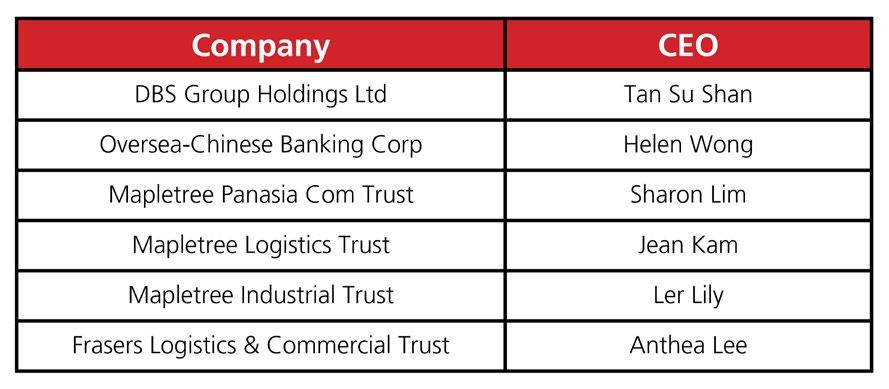
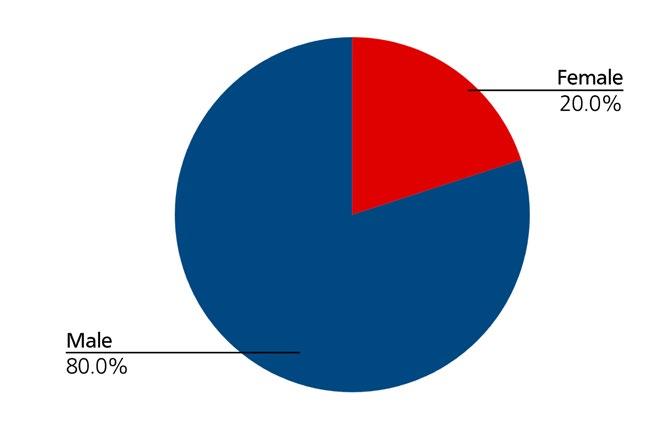
Despite Singapore’s reputation for business diversity, women remain underrepresented at the top. Women lead only 20% of STI-listed firms, and half of them are from the Mapletree Investments Pte. Ltd. group.
Sharon Lim, CEO at Mapletree Pan Asia Commercial Trust since 2015, held senior roles at CapitaMalls Malaysia REIT. Jean Kam, CEO at Mapletree Logistics Trust, took the helm in 2024 after heading its investment division. Ler Lily, who became the chief executive at Mapletree Industrial Trust the same year, was the company’s chief financial officer (CFO).
SBR EXCLUSIVE RESEARCH
CEOs' ages as of November 2025
Source: Singapore Business Review
Climbing the corporate ladder
Career progression towards CEO in Singapore usually involves leading a unit or moving through key executive positions such as CFO, CIO, or executive vice president.
At least half of the top chief executives once headed subsidiary companies before assuming the top post, a reflection of Singapore’s structured succession planning culture.
Genting Singapore PLC illustrates another variation in leadership continuity. Lim Kok Thay, son of Genting Group founder Lim Goh Tong, has served as chairman since 1993 and executive chairman since 2005. In June 2025, he took on the additional role of acting CEO after Tan Hee Teck stepped down.
Singapore’s top corporations value a long runway of grooming, institutional loyalty, and steady internal progression.
The proportion of male vs. female CEOs
Female CEOs of the STI Top 30
Source: Singapore Business Review
INDUSTRY INSIGHT: MARKETS & INVESTING
Next 50 could draw eyes away from bank-heavy STI
It’s a yield-rich, real-asset and mid-cap growth basket.
The iEdge Next 50 Index, Singapore’s newly launched equity benchmark, may push more investors towards mid-cap stocks as the city-state looks to broaden activity beyond the Straits Times Index’s (STI) blue-chip heavyweights.
The index tracks the 50 biggest and most liquid companies below the STI’s top 30 constituents. By carving out a defined mid-cap universe and offering both market-cap and liquidity-weighted versions, the benchmark gives investors a clearer way to access firms outside the banks and real-estate giants that dominate Singapore’s stock market.
“In the short term, the introduction of the new index is likely to reshape perceptions of Singapore’s equity market, broadening the story beyond the 30 STI components,” according to Shekhar Jaiswal, head of equity research at RHB Singapore. The iEdge Next 50 could eventually “create a true two-tier structure” with more consistent research coverage and investor flow, he added.
Products tracking the index remain absent, but according to analysts, a mid-cap exchange-traded fund is likely once performance builds a track record.
“Once more people are
familiar with and confident in its performance, ETFs tracking the index may be introduced, creating a natural avenue for sustained institutional capital flows into nonSTI companies,” he said.
Other markets have long operated with established midcap benchmarks, and analysts say Singapore is catching up.
“This is going to attract investor interest,” Stephen Bates, a partner and head of deal advisory at KPMG in Singapore, said. It’s consistent with what developed markets elsewhere have done to raise midcap visibility, he added.
Tilting
towards real assets
Interactive Brokers Singapore Chief Exeuctive Officer Yujun Lin said inclusion in a benchmark already puts a spotlight on a market segment, even before any tracking products come to market.
“New indexes help highlight and draw attention to specific groups of stocks,” he said in an interview.
The benchmark’s composition diverges sharply from the STI, which continues to be dominated by DBS Bank Ltd., OverseaChinese Banking Corp. and United Overseas Bank Ltd., as well as Singapore Telecommunications Ltd. and a handful of large real estate
investment trusts (REIT).
The Next 50 tilts heavily towards real assets. Jaiswal estimates that Singapore REITs make up about 45% of its weight, giving the index higher sensitivity to interest-rate shifts.
The cluster includes logistics, data centre and hospitality trusts—sectors aligned with consumption and infrastructure demand.
It’s effectively a yield-rich, realasset and mid-cap growth basket, according to Jaiswal.
Governance expectations
Bates said the concentration—16 to 17 REITs—is unusually high compared with mid-cap indexes overseas. That weighting lifts dividends: the index yields roughly 5.8%, above the STI’s 4.5%.
Beyond real estate, Lin noted that the index includes a broader mix of industrial, manufacturing, and telecommunication companies, sectors that have limited presence within the STI’s big-bank-led structure.
Analysts expect index inclusion to influence corporate behaviour over time, though not immediately.
More investors monitoring stocks tends to push firms toward better disclosure and governance.
Companies would need to maintain sufficient free float and liquidity to remain in the index, Jaiswal told the magazine.
The KPMG partner also told Singapore Business Review that as oversight increases, “the overall level of investor scrutiny is higher,” often prompting improvements in reporting or board engagement.
Lin said visibility alone brings pressure. “Index inclusion heightens visibility, and the influx of capital and liquidity incentivises continued inclusion,” he continued.
The index’s liquidity-weighted version adds another layer of discipline. “A liquidity-weighted benchmark rewards actively traded stocks with higher index weightings,” Jaiswal told the magazine.
The feature may encourage firms with thin trading to step up investor outreach or market-making efforts.
Bates said the index structure also lowers barriers for retail and institutional investors alike, offering diversified exposure without the need to pick individual names.
The index tracks the 50 biggest and most liquid companies below the STI's top 30 constituents
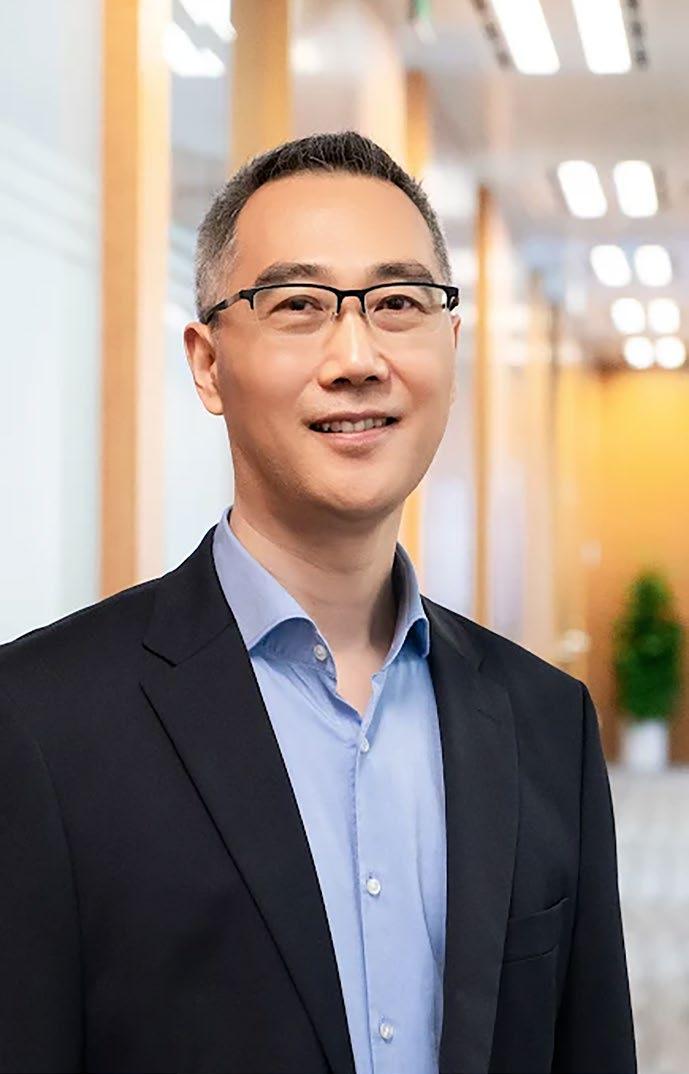
Yujun Lin
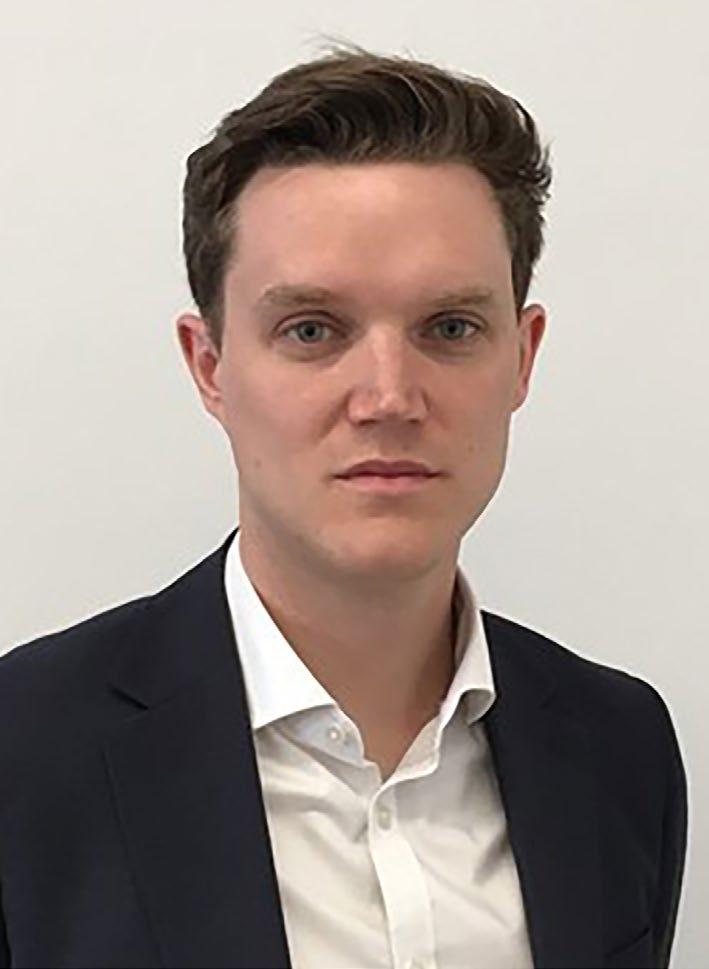
Stephen Bates
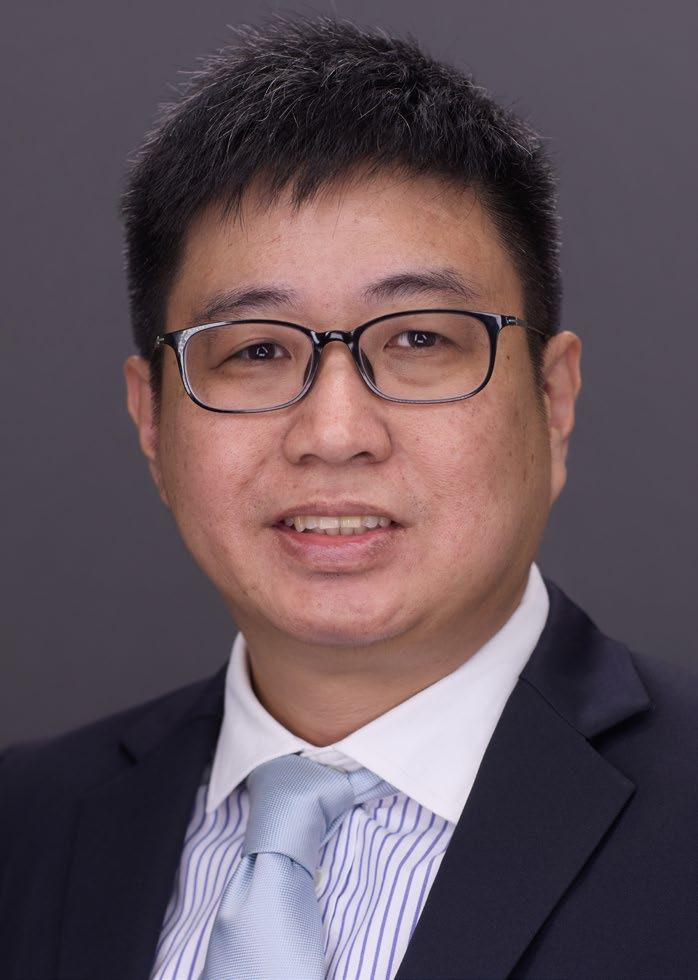
Shekhar Jaiswal
SINGAPORE’S NEWEST SHIPYARD
PAXOCEAN SG @ 5JS
The 17.26-hectare facility, featuring 3 docks and 1,250m of berths, is designed for operational scale and versatility—capable of supporting a wide range of vessels, including offshore, specialised, and Suezmax-class ships.
iHub5 is a new initiative designed to serve as the nexus for fostering collaborative partnerships to drive deep-tech solutions. iHub5 connects ecosystem stakeholders to leverage domain expertise, engineering capabilities, and operational insights to accelerate business growth and decarbonization.
Located within iHub5, the Centre of Excellence in Engineering R&D advances Kuok Maritime Group’s (KMG) technology interests such as digital twins, carbon capture, electrification, and alternative fuel solutions.
Dollar slide, tariffs, and AI doubts to test investors in 2026
TChinese stocks and US small caps are good bets. Markets are unpredictable, and 2026 will test investor discipline in ways both familiar and new
he next twelve months bring uncertainties that could make or break investors’ returns depending on how they manage risk, with the dollar’s decline, ongoing US tariffs, and questions surrounding artificial intelligence (AI) investments as key factors.
The weakening US dollar is expected to influence global investment flows and may require investors to reassess currency exposure. Shihan Abeyguna, managing director for Southeast Asia at Morningstar Asia, said this could drive a global reallocation of assets.
“Markets are unpredictable, and 2026 will test investor discipline in ways both familiar and new,” he told Singapore Business Review in an exclusive interview. “Trade tensions and tariffs remain a key topic" he continued.
Investors in Singapore and Hong Kong are showing greater openness to diversify out of the United States and into Asian markets.
“Tariffs will be one of the biggest what-ifs leading into 2026, with US President Donald Trump likely to
roll out more next year,” according to Hugh Chung, chief investment officer at Endowus Pte. Ltd.
Meanwhile, AI investments are under increasing scrutiny.
After years of soaring valuations, the market is questioning whether the billions of dollars invested in AI tools and companies will translate to comparable profits.
Luke Pais, EY-Parthenon private equity leader for ASEAN and CEO at Ernst & Young Corporate Finance Pte. Ltd. in Singapore, argues that an AI bubble is unlikely at this stage. "Whilst AI has yet to deliver returns commensurate with the capital invested to date, we are still in the very early stages of use cases maturing.”
Investors should not overreact to headlines, analysts said.
“Don’t sell assets during market downturns,” Abeyguna told the magazine. “Periods of heightened uncertainty often lead to sharp recovery rallies. Missing these can significantly affect long-term investment outcomes.”
He cited the April 2025 tariff
shock, which created compelling buying opportunities, as a historical example of how volatility could reward disciplined investors.
Idea 1 Focus on Chinese
stocks
Chinese and Hong Kong equities could perform well in 2026.
Morningstar’s top stock picks include Alibaba Group Holding Ltd., Industrial and Commercial Bank of China Ltd., along with Yum China Holdings, Inc.
Abeyguna said the Chinese government is likely to continue supporting domestic growth, even as debt constraints limit broader fiscal stimulus. “Whilst we would like to see grander measures to support consumers and help turnaround consumer confidence, we think debt constraints remain," he noted.
Throughout 2025, China rolled out support measures and pushed banks to participate in boosting the economy. For example, a circular issued in December 2025 urged banks to support key consumer sectors like durable goods and electronics to boost domestic demand.
Idea 2 Invest in AI adopters
Rather than focusing on companies building AI infrastructure, such as chipmakers and cloud providers, investors may benefit more from companies that adopt AI.
“The market is obsessed with AI builders, leaving adopters dramatically undervalued,” Abeyguna said.
Traditional companies particularly in healthcare, finance, and industrial sectors could use AI to cut costs and improve operational efficiency, the managing director added.
Healthcare is a particularly promising area. Administrative costs can be significantly reduced, and AI may accelerate drug discovery.
Despite these advantages, healthcare is trading below fair value, presenting a potential investment opportunity.
But Abeyguna said the AI infrastructure market could follow the historical Railroad Paradox of the 19th century, when investors lost money due to overbuilt railroad tracks. Margins for infrastructure providers may struggle even as AI adoption grows, he added.
The Chinese government is likely to continue supporting domestic growth (Photo from Alibaba)
Hugh Chung
Shihan Abeyguna
Idea 3 Mixed outlook for the US
The US market presents a split scenario. Tim Fung, head of equity strategy at J.P. Morgan Private Bank Asia, forecasts near double-digit S&P 500 returns for 2026.
But labour market weaknesses and the lingering impact of tariffs pose risks, he wrote in the bank’s 2026 Global Investment Outlook report published in November.
Chung told the magazine that investors should diversify beyond the S&P 500 or Nasdaq, whilst keeping US stocks as a core holding because they include innovative, cashgenerating global companies.
Moreover, Abeyguna said AsiaPacific markets could provide better value and diversification opportunities given the weak US dollar.
In a 2026 investment outlook report for Asian investors released in December 2025, Vincent Chung, co-portfolio manager of diversified income bond strategy at T. Rowe
Price Hong Kong Ltd., said investors should hold less US fixed income, as higher yields might be available in other markets.
Idea 4 US small-cap stocks
US small-cap stocks add diversification and have less exposure to AI-driven trends.
After lagging large caps, they trade below fair value, making them a useful option for balanced growth portfolios, according to Abeyguna.
Small caps have lagged bigger stocks, making them a good way
to diversify, according to Endowus’ chief investment officer.
Idea 5 Europe and India
Europe and emerging markets outperformed the US in 2025. Fung expects Europe to benefit from increased defence and fiscal spending. India is projected to experience strong earnings growth, potentially surpassing China as the leading emerging market.
A survey by Natixis Investment Managers Singapore Ltd. found that 51% of investors identified Indiaspecific equities as one of the top three emerging markets likely to outperform in the next 12 months.
Idea 6 Avoid corporate bonds
Tight credit spreads make corporate bonds less appealing, analysts said.
Tariffs will be one of the biggest whatifs leading into 2026, with US President Donald Trump likely to roll out more
Investors may prefer intermediateterm bonds, local-currency emerging-market debt, or highquality government bonds with attractive yields.
Abeyguna cited opportunities in local-currency emerging-market sovereign debt, whose yield has averaged 6.3%, with select segments offering above 9% potential, including currency appreciation.
High-quality government bond yields are expected to remain elevated due to expansionary fiscal policies in the US, UK, Germany, and France. Vincent Chung noted that governments would need to tap more sensitive buyers for funding, keeping long-term yields high.
Idea 7 Caution on pharma
Rising tariffs could disrupt pharmaceuticals and semiconductors. In Singapore, companies paused US expansion until tariff exemptions were clarified. Minister Gan Siow Huang confirmed negotiations to secure favourable terms for Singaporean drug exports.
Idea 8 Healthcare remains strong
Healthcare is expected to dominate private-equity activity in Southeast Asia, driven by ageing populations and rising private consumption. Diversifying into healthcare and biotechnology offers strong potential for portfolio resilience, Chung said.
Idea 9 Private markets
Private markets are expected to see increased interest amongst
Diversifying into healthcare and biotechnology offers strong potential for portfolio resilience
Rising tariffs could disrupt pharmaceuticals and semiconductors
Luke Pais
Vincent Chung
mass affluent and high-net-worth investors in 2026.
“For affluent investors, private credit has become the practical 'onramp,'”Abeyguna said.
“These funds offer the yield enhancement and floating-rate income that investors currently crave," he continued.
But semi-liquid funds might limit redemptions during market stress, he said. Infrastructure, healthcare, and consumer-driven sectors remain the primary areas for private equity, with digital infrastructure— data centres, fibre networks, and telecommunication towers— expected to continue driving growth, EY-Parthenon’s Pais said.
Idea 10 Gold prices may rise
Gold prices could reach $6,064 (US$4,700) per troy ounce in 2026, up from $5,652 (US$4,381), according to data from Hua Seng Heng Commoditas Co. Ltd., a Thailand-based company dealing with gold trade and investments.
In Thailand, demand for gold bars as savings instruments has risen, whilst jewellery purchases declined, Hua Seng Heng CEO Tanarat Pasawongse told a wealth management forum in December.
He advised cautious accumulation to avoid missing out on other asset opportunities. “Nor should they chase gold at high prices.
The $4,773-$4,903 (US$3,700US$3,800) per ounce range is considered appropriate for gradual
For affluent investors, private credit has become the practical 'onramp'
accumulation,” he said.
Investor takeaways
The year ahead presents complex challenges and opportunities. Currency fluctuations, trade tensions, AI adoption, and sectorspecific trends will shape returns.
Strategic diversification across Asia, healthcare, private markets, and selective US and European equities can provide resilience.
Caution in corporate bonds and measured exposure to gold may protect capital. Discipline and longterm planning matter. Investors who assess markets carefully, manage risk, and position portfolios well can still find growth whilst limiting losses.
The year ahead will favour patient, informed, and flexible strategies amidst global volatility.
China's 'anti-involution' push
In 2026, Chinese stocks’ performance will be driven by the government’s emerging “antiinvolution” campaign, according to Morningstar Asia Ltd.
China is tackling its deflation problem through anti-involution policies that will reduce overcapacity either through production limits or reductions in subsidies, said Morningstar's Claire Liang, principal manager research, Asia; and Kai Wang, market strategist.
“In summary, these policies are likely to benefit industry leaders by squeezing out smaller peers whose operations become unviable. Amongst the industries most impacted, we’ve identified electric vehicles, batteries, cement, and solar as those where industries are likely to
benefit the most,” they said.
Likely beneficiaries include electric vehicle conglomerates such as BYD Company Limited and Zhejiang Geely Holding Group Co., Ltd.
Other companies who may benefit include lithium battery manufacturer Contemporary Amperex Technology and cement producer Anhui Conch Cement Company Limited, Morningstar said. Beneficiaries are expected to see higher earnings growth, which in turn should lift stock prices and create capital for further investment, they added.
However, they clarified that it is still uncertain whether the policy would be successful especially in industries without a clear market leader.
“This approach is not a panacea as there is overcapacity in other industries such as steel, solar, and oil refining, which lack clear market leadership,” Liang and Wang said.
For example, the experts observed that fund managers reduced their exposure to BYD due to concerns that the government’s campaign may limit its ability to leverage vertical integration for further price cuts to gain market share.
“The diverse ways specialist fund managers are responding to the Chinese government’s policy highlights both the complexity and uncertainty associated with this programme. This will naturally be off-putting for many investors who desire an uncomplicated narrative and near-term results, but it’s these situations that can deliver the best long-term returns for those prepared to undertake the necessary research and remain patient in their execution,” the experts said.
Infrastructure and consumer-driven sectors remain the primary areas for private equity
Gold prices could reach $6,064 per troy ounce in 2026
Kai Wang
Claire Liang
Cross-border work fuels legal hiring
Dispute resolution and M&As are key areas of demand.
PROFESSIONAL SERVICES/LEGAL
Cross-border work and overseas deals are lifting hiring in the legal sector, with demand expected to stay strong through 2026 as transactions grow more complex, rules differ across markets, and clients look for lawyers who can handle multi-country work.
Top-tier law firms said the ability to handle cross-border matters has become a key factor in hiring.
“Clients increasingly look for lawyers who can navigate matters spanning multiple jurisdictions and sector-specific regulations,”
Koay Saw Lean, director of human resource at Rajah & Tann Singapore LLP, told Singapore Business Review
“As a result, we attract candidates who are keen to hone their experience in cross-border work and who display strong client engagement skills,” she continued.
Geographic flexibility and practical international exposure are shaping recruitment, she said. The firm supports the developments by offering overseas work opportunities, training programmes, and a postgraduate scholarship to help lawyers build specialist skills.
Key areas of demand
Hiring momentum is reflected in recent data. Employment in Singapore’s legal sector rose 19% year on year in February 2025, Foundit Insights Tracker said, citing stronger demand tied to regulatory change, corporate expansion, and higher compliance needs.
Dispute resolution and mergers and acquisitions (M&A) remain key areas of demand, whilst newer fields such as environmental, social, and governance (ESG) framework, fintech, digital assets, infrastructure, and energy projects are taking on a larger role, the tracker added.
Rajah & Tann, ranked second by headcount in Singapore Business Review’s survey, has expanded its dispute resolution, aviation, and banking and finance teams.
According to Kelvin Tan, director and co-head of employment at Drew & Napier, hiring has picked up across
financial regulatory work, M&A, tax, private client advisory, and disputes.
“Disputes continue to be in perennial growth mode,” he told the magazine, adding that overseas work, digital assets, infrastructure, and fund-related activity are also driving recruitment.
Drew & Napier, ranked third, has focused on structured onboarding, mentorship, and training to support long-term careers.
Despite global economic and political uncertainty, Singapore remains attractive to regional and international clients, Tan said, particularly those seeking to consolidate operations, pursue acquisitions, or resolve disputes.
WongPartnership LLP, ranked fourth, said rising demand for cross-border legal services has made regional growth a priority.
WongPartnership Managing Partner Sean Yu Chou said competition for talent remains intense as lawyers place greater weight on career development and
work-life balance.
The firm has invested in training and retention programmes and increased its focus on energy, ESG, and private credit work.
Adopting digital tools
Kelvin Poa, country managing principal at Baker McKenzie Wong & Leow LLC which ranked seventh, described Singapore as a hub for legal work across Asia and said the firm plans to continue targeted hiring through 2026.
At the same time, law firms are stepping up the use of digital tools and artificial intelligence (AI) to improve efficiency.
Rajah & Tann has expanded AI training for its lawyers, whilst WongPartnership and Baker McKenzie Wong & Leow have rolled out tech for legal research and drafting. Drew & Napier has also adopted digital tools to aid lawyers and clients, reinforcing Singapore’s position as a key legal centre in the region.
Employment in the legal sector rose 19% year-on-year in February 2025
Sean Yu Chou
Kelvin Tan
Koay Saw Lean
LEGAL FIRMS SURVEY
LEGAL LUMINARIES
Singapore's most notable lawyers under 40
Eight women and 12 men have earned a place on Singapore Business Review’s 2025 list of the country’s most influential lawyers under 40.
This year’s honourees are recognised for their work across corporate and M&A, dispute resolution, banking and finance, competition, restructuring, energy, infrastructure, and maritime law, advising major clients such as Great Eastern Holdings Ltd., CapitaLand Ltd., and Olam Agri Holdings Ltd.
They practise at leading firms, including WongPartnership LLP, Drew & Napier LLC, Rajah Tann Singapore LLP, Shook Lin & Bok LLP, Baker McKenzie Wong & Leow, Dentons Rodyk & Davidson LLP, Stephenson Harwood, Reed Smith, Virtus Law LLP, and TSMP Law Corporation.
The honourees have played key roles in landmark transactions and disputes, from billion-dollar mergers and acquisitions, privatisations, and cross-border financings, to sustainability-linked loans, and major energy and infrastructure projects.
Leading the pack is WongPartnership LLP with five representatives, whilst the youngest honouree comes from TSMP Law Corporation. The lawyers are listed below, from the youngest to the most senior by age.
3 Sally Lee, 34
Shook Lin & Bok LLP
Sally is a Corporate Finance partner specialising in M&A, handling private equity and venture capital deals, strategic joint ventures, takeovers, and exits across Asia. Notable work includes acting for Dymon Asia Private Equity on a significant number of investments and exits, TPG-backed Pathology Asia in its sale valued at $2.6b, and forestry fund New Forests' ($10.4b AUM) first investment in Vietnam. Sally contributes to Singapore’s venture capital investment model agreement (VIMA) initiative and has been recognised by Asialaw and Legal500 for her expertise and being “always on hand to problem-solve”.
1 Chow Wai Yin Brenda, 30 TSMP Law Corporation
Brenda is a key member of TSMP Law Corporation’s Corporate Real Estate and Banking & Finance practices, advising on high-value corporate and real estate transactions. She represents banks, REIT managers, and developers, delivering end-toend counsel across acquisitions, disposals, and financing. Notable work includes representing Chiu Teng in its acquisition of industrial project developments, BDx on its $140m industrial building acquisition, and leading trustee-change exercises for ESR-LOGOS REIT and ALOG Trust. Beyond deal work, she supports charities through pro bono corporate governance and secretarial guidance.
4 Samuel Koh, FCIArb, 34 Drew & Napier LLC
Samuel is a dual-qualified commercial dispute resolution lawyer in Singapore and New York. As a Director in Drew & Napier, he handles complex, cross-jurisdictional, international commercial litigation and arbitration matters across various industries, and has secured favourable outcomes for clients including government-linked entities and ultra-highnet-worth individuals. Notably, he obtained and resisted the annulment of a $188m SIAC arbitral award for Shanghai Electric Group Co Ltd. Recognised for his legal acumen and advocacy, Samuel was previously appointed as a Justices’ Law Clerk and a Young Amicus Curiae of the Supreme Court of Singapore.
2 Shaun Woo, 33 Shook Lin & Bok LLP
Shaun is a partner in the Banking & Finance practice, advising local and international banks, corporates, and sponsors on acquisition, real estate, development, and working capital financing across APAC. He handles bilateral and syndicated facilities, including cross-border transactions. Key deals include $235m commercial property acquisition and refurbishment in Singapore, adviser for $5.185b syndicated loan to a global insurer, $194.5m sustainability-linked facilities to a palm oil producer, and $158.6m Japanese real estate financing. Shaun blends technical structuring expertise with practical execution across complex, high-value financing mandates.
5 Chiang Yuan Bo, 34
Yuan Bo is a partner in the Corporate M&A practice, advising on public and private M&A and corporate transactions across a spectrum of industries including healthcare, real estate, fintech, consumer staples, and hospitality. More recently, he led the $2.35b Olam Agri sale to SALIC, the largest Asia-Pacific consumer M&A in a decade and a landmark sovereign wealth fund acquisition. Yuan Bo also advised on other strategic high value and novel transactions, including Eu Yan Sang’s $694m sale and GXS Bank’s acquisition of Validus Capital and its loan book. Formerly a disputes lawyer, Yuan Bo combines transactional expertise with litigation experience.
WongPartnership LLP
6 Yin Li Lim, 34 Baker McKenzie Wong & Leow
Yin Li is a Senior Associate specialising in restructuring, insolvency, banking and finance, recognised for dual capability across contentious and non-contentious matters. He advises borrowers, sponsors, and lenders on complex cross-border court-supervised and debtor-in-possession restructurings, and high-value syndicated loans. Recent highlights include advising syndicated lenders on PT Sarana Multi Infrastruktur’s $907m sustainability-linked term loan and local institutional creditors on Sri Lanka’s S$16.204b (US$12.5b) international sovereign bond restructuring. Yin Li is regarded as a leading “lawyer for all seasons”, with expertise to guide clients through bull and bear markets alike.
9 Daniel Gaw, 36 WongPartnership LLP
Daniel is a partner in WongPartnership LLP’s Commercial & Corporate Disputes, Commodities and International Trade Disputes, and International Arbitration practices. He represents corporates and sovereign states in high-stakes disputes across oil and gas, mining, renewable energy, engineering, and commodities. His work includes acting for the Republic of Korea in SICC proceedings to set aside an investmentarbitration award, and representing the Republic of Poland in PCA arbitrations exceeding $1.383b under the Australia–Poland BIT and Energy Charter Treaty. Daniel also serves on the YSIAC Council and lectures regularly on dispute resolution.
7 Sim Bing Wen, 35 Drew & Napier LLC
Bing Wen is a director in the dispute resolution department, specialising in complex commercial litigation, investigations, and arbitration. He acted in some of Singapore’s biggest-ever disputes, including the $4.537b Hin Leong litigation— where he secured worldwide Mareva relief and consent judgments—and the ongoing $3.500b 1MDB-related claim for Standard Chartered Bank. His clients include PwC, Singapore Post, UBS, DBS, and Standard Chartered. He also prosecutes for healthcare regulators, serves on the National Cancer Centre’s Clinical Ethics Committee, and worked as a Deputy Public Prosecutor and Justices’ Law Clerk.
10 Bernadette Tan, 36 WongPartnership LLP
Bernadette is a partner in the Banking & Finance practice, specialising in banking and finance transactions having acted for lenders and borrowers in numerous complex and high-value domestic and cross-border financings, including syndicated loans, acquisition and privatisation financings, green and sustainable loans, real estate and project financings. She advised Blackstone on the $20.57b (A$24b) AirTrunk acquisition, the $1.2b acquisition financing for Soilbuild REIT, and the $341.5m green financing for ESR-REIT. Bernadette is recognised in Chambers Global & AsiaPacific, Legal 500 Asia Pacific, IFLR1000, and ALB Singapore Rising Stars 2025.
LEGAL LUMINARIES
8 Soong Wen E, 36
Wen E is a partner in WongPartnership LLP’s Corporate/Mergers & Acquisitions practice, specialising in public and private M&A, private equity, and venture capital transactions. She has advised on several billion-dollar, market-shaping deals, including advising Great Eastern Holdings (GEH) on OCBC’s $1.4b offer and the proposal to resolve GEH’s trading suspension; acting for CLA Real Estate in CapitaLand’s landmark $21b restructuring and privatisation-plus-listing scheme; and advising ESR-REIT’s manager on its $1.4b merger with ARA LOGOS Logistics Trust. Wen E is also recognised in Legal 500 Asia Pacific and the IFLR1000 list.
11 Ron Oong, 37
Ron, partner and co-head of the Infrastructure and Project Finance groups, is dual-qualified in Singapore and England & Wales. He advises on complex cross-border transactions across energy, infrastructure, and technology, spanning banking and financing, large-scale M&A, energy offtake and trading, and major infrastructure development. He led deals exceeding $1b and often acts as lead counsel on flagship projects across Asia-Pacific. Recent work includes GlobalFoundries’ landmark longterm power purchase arrangement with Keppel, Serentica’s award-winning $550m (US$425m) financing, and major power, chemical and data-centre developments.
WongPartnership LLP
Dentons Rodyk & Davidson LLP
LEGAL LUMINARIES
12 Matthew Seah, 37 Stephenson Harwood LLP (a member of Stephenson Harwood (Singapore) Alliance)
Matthew is a maritime and finance lawyer in Singapore’s top-ranked Maritime, Trade & Offshore Finance team, recognised for his expertise in cross-border asset financings, restructurings, and sustainability-linked loans. He advises on complex, award-winning transactions including Hyundai Merchant Marine’s $796.9m sustainability-linked facility for methanol-fuelled container ships and BW LNG’s $187.9m FSRU financing in the Philippines. Matthew also advises on distressed loans facilities, vessel enforcements, and multi-jurisdictional sales. Known for his pragmatic, commercial approach, he maintains strong APAC sector relationships and contributes actively to thought leadership.
15 Joshua Seet, 38
Rajah Tann & Singapore LLP
Joshua is known for his expertise in competition and trade law. Dual-qualified in Singapore and Hong Kong, he advises on complex Singapore and cross-border merger control, regulatory investigations, and trade compliance matters. Key highlights include LINK REIT’s $2b acquisition of various Singapore malls, and Coca-Cola, F&N and Pokka’s beverage container recycling collaboration. Two high-profile investigations have previously also been nominated by GCR as “Matter of the Year”. Joshua is a Future Leader (Lexology Index), Notable Practitioner (asialaw), and Legal 500 Key Lawyer in competition law.
13 Adzfar Alami, 38 Rajah
Adzfar, a partner in the Banking & Finance Practice Group, regularly advises major financial & non-banking financial institutions, sovereign wealth funds, REITS, and global conglomerates. His expertise includes acquisition financing, real estate and construction financing, project financing, and Islamic financing. Key transactions include advising OUE REIT on its $978m sustainability-linked financing and Southeast Asia’s first sustainability-linked Islamic revolving facility in the shipping industry. He combines technical expertise with landmark execution in high-value financing transactions, earning recognition in Chambers Asia Pacific 2025 and Lexology Index 2025.
16 Joel Quek, 38 WongPartnership LLP
Joel specialises in commercial and corporate disputes, representing States, state-owned enterprises, multinational corporations, and high-net-worth individuals in complex, high-value matters across finance, commodities, energy, technology, and healthcare. Key work includes enforcing an investment-arbitration award for Deutsche Telekom against India, minority oppression suits for the Mustafa Centre founder, and employment and governance disputes for the former Noble Group chief executive officer. A former Justices’ Law Clerk, Joel is recognised as a Benchmark Litigation Future Star, ALB Rising Star, and Lexology: Arbitration Future Leader.
14
Wong & Leow
Pradeep’s expertise spans all facets of dispute resolution, including pre-litigation strategic counsel, mediation, litigation, and international arbitration. He is a trusted adviser on a broad spectrum of contentious and non-contentious employment law, investigations, and compliance matters. With over a decade of experience advising clients ranging from global corporations to start-ups on high-stakes legal issues, clients have consistently recognised his business acumen and legal knowledge, describing him in leading legal directories as “very commercially minded,” a “superb lawyer,” and being “very responsive and [having] a superb understanding of business aspects”.
17 Kit Fei Wong, 38
Lin & Bok LLP
Kit Fei is a partner in the Corporate Finance practice, specialising in public and private M&A. She has acted in major cross-border public transactions, including advising the joint financial advisers in a consortium’s $15.053b buyout of Global Logistic Properties, one of Asia’s largestever private equity takeovers, and Taylor Maritime Investments’ $656.2m acquisition of Grindrod Shipping. Her private M&A experience spans private equity and strategic mandates, and advising Chinese clients in overseas investments. Kit Fei is recognised in The Legal 500 Asia Pacific 2025 as a “great partner” with strong technical expertise.
Tann & Singapore LLP
Pradeep Nair, 38 Baker McKenzie
Shook
18
Sheetal Sandhu, 39 Virtus Law LLP (a member of Stephenson Harwood (Singapore) Alliance)
Sheetal has over 15 years’ experience guiding clients through cross-border M&A, with a focus on the maritime, technology, energy, and healthcare sectors. She is a trusted adviser for deals in Singapore and across Southeast Asia. Sheetal was part of the team advising on one of Asia’s largest co-investments—a landmark transaction involving Seraya Partners and global LPs that led to the $861.6m (A$1.1b) privatisation of MMA Offshore. Her recent work spans headline acquisitions, strategic alliances, and regulatory matters, all supported by strong client endorsements and has displayed notable thought leadership.
19 Alina Chia, 38 Rajah Tann & Singapore LLP
Alina is a partner with over 15 years of experience in international arbitration and litigation. Frequently entrusted with complex matters which require clarity of thought and strategic insight, she has acted in high value, cross-border disputes involving government entities, greenfield projects, joint ventures, and shareholder issues. Alina also regularly handles arbitration-related litigation. Alina has appeared before the Singapore High Court (including the Singapore International Commercial Court) as well as in Singapore International Arbitration Centre, ICC and ad-hoc arbitrations.
LEGAL LUMINARIES
20 Aditi Aparajita, 39 Reed Smith
Aditi is a Counsel specialising in energy transactions and renowned for high-value, cross-border project and corporate financings. She advised the lender consortium on PacificLight’s $1b+ refinancing, one of Singapore’s most significant power sector transactions. She has also led financings for corporates such as Chevron and Shell across Asia. Aditi has structured sustainable and green finance and worked on the $97m loan to Cleantech Solar, the then largest green loan in Asia Pacific’s C&I renewables sector. Combining technical precision with commercial acumen, she is a mentor, industry leader, and champion of inclusion and pro bono initiatives in the legal profession.
The Top 50 Insurance 2024 rankings show recovery from the 2023 downturn.
Singapore’s insurance industry rebounded in 2024, with gross premiums rising 10.67% year on year as insurers expanded beyond traditional protection products into wealth, investment and retirement solutions.
Both the life and general insurance segments posted annual growth after a weak performance a year earlier. Life insurance premiums climbed 10.93%, whilst general insurance premiums rose 1.61%, according to data compiled by Singapore Business Review
This reversed a 9% contraction in 2023, when softer demand for life insurance and a preference for fixed deposits weighed on premiums amidst elevated interest rates.
The annual rankings list the 50 biggest insurance companies in Singapore by gross premiums, based on Monetary Authority of Singapore data. The list comprised 18 life insurers, 30 general insurers, and two life reinsurers, underscoring the breadth and diversity of the citystate’s insurance market. Life insurers dominated the
rankings. Great Eastern Life Assurance Co. Ltd. ranked first after booking $13.2b (US$10.2b) in premiums in 2024. Group CEO Greg Hingston attributed the solid performance to steady growth in its core product lines.
“We have broadened our product offerings in 2024, introducing customer-centric propositions to address the growing demand for wealth management,” he said in an exclusive interview with Singapore Business Review
The chief executive added that shorter-term single premium plans performed well in 2024.
Prudential Plc ranked second, with gross premiums surging 31% to $9.6b (US$7.4b), marking one of the strongest growth rates amongst major players. Meanwhile, AIA Singapore Pte. Ltd., Manulife (Singapore) Pte. Ltd. and Singapore Life Holdings Pte. (Singlife) all placed third.
Manulife Singapore CEO Benoit Meslet said the insurer’s standing was reinforced by enhancements to its whole-life solutions.
“We also introduced new solutions
for high-net-worth individuals seeking legacy planning and wealth accumulation, reinforcing our leadership in this segment,” Meslet said in a separate interview.
These boosted Manulife’s position in the high-net-worth segment, Meslet told the magazine, adding that geopolitical uncertainty had also shaped customer behaviour, with more people prioritising protection and long-term financial security.
Singlife’s 2024 performance showed a deliberate shift toward long-term value and quality, according to Chief Executive Officer Pearlyn Phau.
“We realigned our distribution channels to sharpen productivity, segmentation, and mix management across bancassurance, financial advisory (FA), and owned Distribution networks,” Phau said. “This enabled us to deliver strong results in the non-participating funds segment, achieving 4% quarter-onquarter growth against a flat market," she told the magazine.
Regular premium sales at Singlife rose 45% year on year, outperforming the broader market’s increase of only 26%.
Phau said the gains came from more productive sales staff, better adviser targeting, and customers keeping their policies longer. She added that updated incentives and data-based tools helped shift the focus from volume to quality.
High-net-worth promise
Across the life insurance sector, investment-linked plans were the main draw for customers in 2024, driving much of the industry’s expansion, according to the Life Insurance Association of Singapore. In 2024, the life insurance industry paid out $18.1b (US$14b) to policyholders and beneficiaries, 33.4% more than a year earlier, reflecting higher claims and maturing policies. The general insurance market was supported mainly by the motor, health and property segments, which accounted for industry shares of 21.6%, 20.5% and 14.8%, respectively, based on data from the General Insurance Association.
Rising healthcare use and steady demand for motor coverage underpinned premiums, even as competition across lines remained intense, the data revealed.
Life insurance premiums climbed 10.93%, whilst general insurance rose 1.61%
Pearlyn Phau
Benoit Meslet
Greg Hingston
INDUSTRY INSIGHT: FOOD & BEVERAGE
Can AI vending kitchens help restaurants survive costs?
The government is looking into developing 'automated kitchens'
The food and beverage (F&B) industry is testing automated vending kitchens as a way to survive soaring costs and a potential repeat of 2024's record wave of closures.
Food tech firm Aikit Pte. Ltd. launched a six-month pilot in September 2025 for ChefGenie, an artificial intelligence (AI)-powered “automated kitchen” developed with Enterprise Singapore under the Ministry of Trade and Industry.
Born from Aikit’s earlier success with InstaChef, which delivered hot meals through smart vending, ChefGenie builds on real purchase data to help local F&B brands adopt autonomous kitchen technology— allowing them to scale faster and operate more efficiently.
The platform gives restaurants a manpower-light expansion model whilst improving consumer trust in ready-to-cook vending meals.
The machine cooks dishes only when an order is placed, distinguishing it from traditional preheated vending systems.
People think vending meals are just frozen food reheated, Aikit Marketing Manager Crono Lee said, adding that they want that first bite to give a restaurant-quality feel.
Cost-wise, it comes up to be cheaper than a full restaurant
“Even my father, who is 70, was thinking: ‘What’s this fried rice? Is it just frozen food?’ I said: ‘No, it was actually prepared today,’” he told Singapore Business Review. His father liked it after trying it himself.
ChefGenie uses a mix of microwave and induction cooking for precise temperature control, allowing complex dishes such as claypot chicken rice.
Each product has a five-day shelf life and passes government testing. Lee told the magazine that busy sites could see machines restocked as often as three times a day.
The trial comes as operators face tightening margins. Savills data show monthly prime retail rents rose 0.5% in the third quarter of 2025 to $28.40 per square foot, whilst food service workers earn an average of $2,391 a month, according to Indeed.
From January to September 2025, 2,286 F&B firms closed, nearing 2024's record 3,047.
“Rental costs are at their peak, and skilled manpower is always a big challenge,” Lee said.
The pilot seeks to help restaurants expand through smaller, unmanned locations. Instead of one or two outlets, brands could add three or more vending sites, he added.
Singapore’s consumers are open to automation. GlobalData Plc found that 55% of respondents in the citystate regularly order using QR codes, compared with 33% globally.
Yet Tim Hill, the firm’s key account director for Southeast Asia, warned that too much automation could dull the dining experience.
He cited the robotic cocktail bar at Changi Airport that offers a free cocktail drink in return for downloading an app.
“Despite the twin offers of a free drink and the novelty of witnessing a robot shaker, it is the most boring bar in Singapore,” he said in a separate interview. “Punters would rather pay heavily inflated prices to have a real person do this for them elsewhere in the terminal,” he continued.
For some brands, vending remains a mixed proposition. SaladStop! CEO Adrien Desbaillets said his chain tested vending units years ago but struggled with maintenance and downtime.
“Cost-wise, it comes up to be cheaper than a full restaurant,” he said. “But the revenue as well will never reach what a restaurant does,” he added, noting that it needs scale and a dedicated tech team.
'Not a cure-all'
Desbaillets thinks automation is not a cure-all. Artificial intelligence, he said,won’t fix fundamentals like site selection, the products, or operations. It is for businesses ready to integrate it, not those still building their digital basics, he added.
From January to September 2025, 2,286 F&B firms closed
He sees room for long-term gains amongst fast-food giants but advises smaller operators to focus first on point-of-sale systems, loyalty programmes, and kitchen efficiency before layering in AI.
Aikit’s vending kitchens, if successful, could give smaller food operators a way to expand without the burden of rent and labour costs. But industry leaders agree that machines can’t replace a good product, a clear brand, and a well-run business.
“I don't think AI will solve any of that,” Desbaillets said, referring to the F&B closures. “For most small and medium enterprises in Singapore, I think it's just adopting the right point of sale first, getting the right loyalty programme in place, and getting your efficiencies in the kitchen.”
Tim Hill
Adrien Desbaillets
Coliwoo boosts co-living amidst expat growth
Its hotel and apartment-based properties offer stays from a night to a week.
Coliwoo Holdings is counting on Singapore’s rising foreign population to drive the next phase of growth in its co-living business, with plans to add approximately 800 rooms a year through 2026.
“There’s still a big gap to convert existing foreigners in Singapore into co-living,” Chief Executive Officer Kelvin Lim told Singapore Business Review
Singapore’s foreign workforce rose 2.7% to 1.91 million in June from a year earlier, according to government data. Lim said the company has hit its 800-room target for 2025, with more projects in the pipeline next year.
“We will finalise these after the initial public offering."
Coliwoo’s parent, LHN Ltd., has applied to spin off the coliving unit for a separate listing on the Singapore Exchange’s Mainboard. Under the proposal, LHN will transfer its Coliwoo assets and operations to the newly listed company.
The initial public offering has drawn “tremendous support” from cornerstone investors, including Avanda Investment Management, one of the fund managers tapped by the Monetary Authority of Singapore under its $5b equity market development programme, Lim said.
Post-listing, Coliwoo plans to expand abroad but will keep Singapore as its key market. “The Singapore market still has very big growth potential for co-living,” Lim said.
Out of 160,000 rental units in Singapore—roughly 320,000 rooms—only 3,000 rooms or 1% are operated by the company, he pointed out.
Stable foundation, flexibility
The chief executive officer added that Coliwoo’s model, based largely on hotels and serviced apartments, provides a stable foundation and flexibility.
“This allows us to easily reclassify our rooms to cater to tourists, visitors, and foreigners who come to Singapore for work,” he said. “People who come here for work not only work in Singapore; they actually work in the region. They travel in and out," he continued.
Co-living gives them flexibility without a one- or two-year lease. Unlike residential co-living setups, Coliwoo’s hotel and serviced apartment-based properties can offer stays as short as a night or week. This makes the company competitive on price whilst adding value through shared facilities, Lim said.
Students returning to Singapore form another key segment. They do not need to pay 12 months of rent— nine or 10 months is enough. When rooms are vacant, Coliwoo can lease them to short-term visitors through travel platforms or nearby corporate offices.
Coliwoo also benefits from Singapore’s event-driven tourism, with the city-state hosting major international gatherings such as the Formula 1 Grand Prix, which attracted over 300,000 spectators in 2025, marking the
second-highest turnout in the race’s 16-year history.
“We see Singapore as very promising for co-living,” he said. “People who come here for work are also quite mobile, and co-living offers them exactly the kind of flexibility and value they’re looking for," the CEO continued.
Other acquisitions
In late 2025, Coliwoo entered into a 50:50 joint venture with Macritchie Developments to acquire the REHAU Building at 1 King Geroge's Avenue for $40m.
The partners will convert the property into a co-living asset whilst retaining commercial space on the ground floor, the company announced in a bourse filing.
The firm also announced the opening of Coliwoo Midtown, a six-storey property that was a conversion of the former GSM Building, in the first quarter of 2026.
People who come here for work are also quite mobile, and co-living offers them exactly the kind of flexibility and value they’re looking for
Core facilities at the Midtown property include private serviced suites for mid- to long-term stays, two fully equipped commercial kitchens with a shared dining area, a gym, and a dedicated co-working zone.
The development is positioned to serve corporates, educational institutions, expatriates, and other mid-term occupiers because of its proximity to Bugis, Bras Basah, and Rochor.
Coliwoo posted core profit after tax and minority interests of $22.920m in 2025, representing a surge of 62.9% over the previous year. Moreover, its occupancy rate stood at 96.1% during the period.
Kelvin Lim, CEO at Coliwoo
ShopBack leverages gaming for global growth
The US will be a key focus in the coming years.
ShopBack, the Singapore-based cashback platform operated by eCommerce Enablers Pte. Ltd., is entering its second decade with plans to go global, expanding its popular reward ecosystem into new markets and industries, including gaming.
“We started as a Singapore company. Then, we became a regional company. Now, I would say that we actually have global ambitions,” ShopBack co-founder Joel Leong told Singapore Business Review in an exclusive interview.
After establishing a strong presence across Asia, ShopBack entered Germany in 2023 and launched in the US this year, setting up operations in Austin, Texas.
“As we enter markets like Germany and the US, we want to establish our presence everywhere in line with our vision to be the world’s most rewarding way to shop,” Leong said.
The US will be a “key focus” for the company in the coming years, he added, noting that ShopBack aims to double or even triple its growth there. “We’ll take the learnings that we have from Asia to the US,” he said.
“So that has always been our belief: How can we test it in one market, through either user behaviour understanding or partnerships that we could do, and from there, once it is successful, we try to bring it to other countries and replicate the success,” he added.
To attract more users, ShopBack introduced ShopBack Play in the US, a feature that rewards players with cashback for completing in-game milestones in titles such as Monopoly Go!, Township, and Block Blast!.
Leong said the concept was inspired by everyday commuting habits in Singapore, where many people play games on their phones whilst traveling to and from work. “What we did was really work with the game companies, so that when users play these games, they can also earn cashback. You don’t have to buy anything – you just have to play. From there, we’re able to offer them cashback for playing more games,” he added.
The feature was initially piloted in Singapore and later expanded to other markets, including the US, reflecting ShopBack’s broader mission to make everyday shopping and activities more rewarding for users.
Expansion plans
ShopBack is also preparing to expand several of its existing offerings internationally, such as ShopBack E-Receipts, which rewards users when they upload purchase receipts on everyday essentials, and ShopBack Pay, which provides cashback for in-store purchases.
The former is available only in Australia and Taiwan, whilst the latter is being expanded from Singapore, Australia, and Malaysia to Hong Kong.
Shopback runs campaigns that will benefit both users and merchants, such as Travel Thursdays and payday
We want to establish our presence everywhere in line with our vision to be the world’s most rewarding way to shop
sales, Leong said. He assured that these campaigns remain “economically-viable” for merchants.
ShopBack also launched Travel Planner, a tool designed to help users compare prices for flights and hotels across different providers so users can choose services that can better return cashback.
“The good thing about travel is that it tends to be quite linear,” Leong said. “You book a flight, a hotel, activities, and the other use cases that you might require for travel. And with Travel Planner, we want to help make sure that all of these are handled well," he continued.
Heavy AI investment
As the company scales globally, it is also investing heavily in artificial intelligence (AI), which Leong described as central to its next phase of growth. The co-founder said AI tools have improved ShopBack’s internal productivity and are being used to create more personalised experiences.
“Through AI, we will better understand our customers and what they need," he told the magazine.
With that, we'll be able to personalise their shopping journey and give much better recommendations across multiple categories,” he added.
ShopBack partnered with over 2,000 merchants during its launch in the US in 2025. Partners included Amazon, Best Buy, Walmart, Expedia, Ulta, Macy's, Kohl's, Uber, CVS, DoorDash, amongst others.
Joel Leong, co-founder at ShopBack
AI-Powered Digital Imaging Solution
CEO INTERVIEW
8M Real Estate enters suburban projects scene
Sceneca Square near Tanah Merah MRT will open in 2026.
8M Real Estate Pte. Ltd. will push into suburban mixed-use developments for the first time as the heritage-focused landlord broadens its portfolio beyond conserved shophouses in the central business district (CBD).
The move signals a strategic pivot under CEO Jocelyn Hao, who took the helm in October. The firm plans to roll out two suburban projects in 2026, including Sceneca Square near Tanah Merah MRT station.
“This is our first venture into the suburban area, and it fits our mandate of bringing what makes Singapore best in terms of customer and retail experience,” she told Singapore Business Review in an exclusive interview.
The development will feature FairPrice Finest, managed by NTUC FairPrice Co-operative Ltd —the biggest supermarket chain in Singapore—as its anchor tenant, giving nearby residents expanded grocery options.
The expansion comes as 8M continues to lean on its core portfolio of conserved shophouses—a limited stock of about 6,500 across the city-state.
“We own the biggest portfolio of heritage shophouses, primarily in the CBD,” Hao said. “Our mandate also includes protecting these heritage shop houses for Singapore and for the community we serve.”
Challenges and opportunities
Hao said the challenge is balancing preservation with ensuring the buildings adapt to market demand.
“8M’s primary focus is Singapore real estate,” said Hao. “The vision is to have a long-term presence here. Not just from a return standpoint, but in how we can add value to the community and the society at large.”
8M has been accelerating its use of technology to update its portfolio. Smart building management systems now track utilities, optimise energy use, and let tenants lodge maintenance requests digitally.
“Tenants can reach out or use the technology to inquire for support or seek maintenance needs,” she pointed out.
The firm is testing more automation in its upcoming Tanah Merah MRT Station project, including Internet of Things-enabled toilets and autonomous cleaning robots. Internally, 8M has deployed an artificial intelligence (AI) chatbot — Ask Grace — to help employees retrieve human resource information quickly.
Expansion strategy
Hao expects meaningful shifts across the property sector in the next three to five years, with pockets of opportunity emerging in residential, retail and office markets. In housing, co-living supply is set to expand, buoyed by investor interest following Coliwoo Holdings Ltd.’s initial public offering and plans to add 1,000 units by 2026.
Other players, including Cove Living Pte. Ltd., are pushing deeper into niche products.
8M aims to differentiate itself by offering bigger units suited for stays of three to six months, letting residents cook and manage daily routines more comfortably.
A co-living asset in Jalan Besar—a partnership with Cove—will further extend this strategy.
Consumer behaviour in retail and food and beverage is shifting towards value-driven concepts, Hao told the magazine, though interest from luxury brands in heritage spaces remains strong.
"There's an increasing interest from the luxury players to expand their experience beyond just selling merchandise [and] I think we see that happening in other developed cities like Tokyo, Seoul, or Shanghai," she said.
"The luxury players are experimenting in the shophouse environment, primarily because of the heritage appeal and the cultural and arts appeal," Hao added.
This is our first venture into the suburban area, and it fits our mandate of bringing what makes Singapore best in terms of customer and retail experience
She cited earlier collaborations such as Louis Vuitton X Murakami and Chanel Ltd.’s cruise presentation at Raffles Hotel as examples of how global brands use shophouses and conserved spaces to create distinctive experiences.
The office segment remains steady for 8M, supported by demand from small businesses and tenants seeking spaces of up to 10,000 square feet.
Hao said she wants to position 8M to give back to Singapore’s retail and commercial industry. Community partnerships will remain central to its expansion.
“We have always been deeply rooted in the community,” she said. “Our CSR (corporate social responsibility) programme works closely with key partners, and that will continue as we grow," she added.
Jocelyn Hao, CEO at 8M Real Estate
INDUSTRY INSIGHT: MARKETS & INVESTING
Equity revival gains pace with more IPOs expected
Family
offices and institutional investors are showing “renewed” interest.
Singapore’s multibillion-dollar push to revive its stock market is starting to show results, with higher trading activity, investors snapping up undervalued shares and a pickup in higher-quality listings this year, market participants said.
The city-state committed $5b to its equity market development programme, with $1.1b and S$2.5b already allocated in two tranches to selected asset managers.
Even before the funds were fully deployed, investors had begun paying closer attention to local stocks, said Jason Saw, group head of investment banking at CGS International Holdings Ltd.
Investors have been working “a lot harder” to buy undervalued stocks, Saw told Singapore Business Review “Liquidity on a year-on-year basis is up around 20%. There’s been a shift in liquidity for sure," he added.
The equity market has long struggled with challenges such as thin trading and limited investor attention, in part because domestic capital has traditionally flowed into overseas assets.
IPO activity rebound
Saw said the equity programme had helped reverse some of that trend by drawing funds back into local shares and improving market depth.
He added that the Singapore Exchange (SGX) has seen an improvement in the quality of companies choosing to list this year.
Initial public offering (IPO) activity rebounded strongly in 2025. Singapore recorded its busiest year for IPOs since 2019, raising over $2b from nine deals, according to Stephen Bates, a partner and head of deal advisory at KPMG in Singapore. Market sentiment has improved, and companies are more willing to consider SGX again, he said in a separate interview.
The partner noted that policy changes, including tax incentives and simpler listing rules, have lowered the
The less diverse mix may also reduce the appeal for global investors and innovative firms
hurdles for companies weighing a Singapore listing.
Investor interest has also been supported by tweaks to the Global Investor Programme, which grants permanent residency to eligible foreign investors.
Earlier in 2025, authorities tightened the programme by restricting qualifying investments to equities listed on approved Singapore exchanges. The move narrowed investment choices but encouraged family offices to place capital directly into the local market.
Saw cited the range of companies that have gone public as a sign of renewed confidence. Recent listings include Ultragreen.ai, a healthcarefocused company with high margins that raised about $241m; co-living operator Coliwoo Holdings; and Centurion Accommodation REIT, which focuses on student and worker housing.
These listings help build confidence, he told the magazine, adding that broader investor and research coverage would be key to sustaining momentum.
Singapore’s equity market has faced structural challenges in recent years. Roughly two-thirds of listed firms have traded below net tangible value, Bates said, discouraging issuers seeking fair valuations.
The market has also been dominated by banks and real estate investment trusts, with fewer technology or biotechnology names compared with regional peers.
“The less diverse mix may also reduce the appeal for global investors and innovative firms,” Bates said.
“Thin trading volumes and an ageing retail investor base continue to limit liquidity as well," he added.
Next stage
Bates noted that other Asian exchanges with larger investor bases have often proved more attractive to growth companies. Despite these constraints, both experts said the outlook is improving.
Saw said authorities could build on recent gains by backing Singaporebased companies with global operations and strong governance, helping create the next generation of multinational firms anchored in the city. “That’s the next stage.”
The pickup in initial public offerings is likely to extend into 2026. According to Saw, more listings are expected, whilst Bates said the pipeline should widen, liquidity should deepen, and sector diversity should improve in the next two years.
Recent listings include Ultragreen.ai, a healthcare-focused company with high margins that raised about $241m
Stephen Bates
Jason Saw
INDUSTRY INSIGHT: RETAIL
SMEs to gain from e-commerce rule updates
The guidelines should boost the confidence of merchants on large platforms.
Small and medium enterprises (SME) in Singapore stand to gain the most from updated e-commerce rules that aim to give clearer, more practical direction on how to operate in increasingly complex online marketplaces, according to analysts.
The revised guidelines set clear rules for fair online retail, helping smaller businesses manage limited staff and time, Ng Ee Kia, assistant chief executive at the Competition and Consumer Commission of Singapore (CCCS), told Singapore Business Review in an exclusive interview.
“SMEs may benefit more from clearer guidance because they tend to have limited resources,” Ng said.
Many smaller merchants, she said, struggle to balance daily operations with the need to understand and comply with evolving rules.
“The common feedback is that they are fighting day-to-day operations,” she said .“They have less time and capacity to fully understand all the rules and are trying to make sense of
what they need to do,” she added.
First introduced in 2020 to support businesses moving online during the pandemic, the e-commerce rules have been updated to reflect how online retail has grown more complex.
Singapore’s e-commerce market grew from $102.9b in 2024 and is expected to reach $309.6b by 2033, according to market research company IMARC Group.
It now includes many product listings, frequent price changes, paid placements, and overlapping promotions that can give confusion to sellers and shoppers.
Curbing misleading practices
The update was led by Enterprise Singapore through the Singapore Standards Council, with inputs from major platforms such as Shopee, Lazada, and FairPrice, as well as trade groups, consumer bodies, CCCS, and the Ministry of Home Affairs.
The updated rules cover platforms and sellers across e-commerce and require genuine discounts, clear
terms, and greater transparency on rankings and sponsored listings to curb misleading practices and build consumer trust.
Ng said the clearer rules should give merchants more confidence when operating on large platforms. “Hopefully, especially on bigger platforms, they have a better sense of what they should or should not do,” she told the magazine.
Winnie Ching, group director for legal and enforcement at CCCS, also told the magazine that the update focuses on practices that businesses could realistically apply. Major platforms and trade associations were involved to ensure the guidelines do not disrupt daily operations.
A key update extends dispute channels to cover merchant–platform issues, giving enterprises clearer recourse over problems like late payments or unfair listings.
More predictable environment
Samer Elhajjar, a senior marketing lecturer at the National University of Singapore, noted that clearer rules push competition towards quality, service, and long-term value, not heavy promotions.
“In the long run, small merchants benefit because trust works in their favour,” he said in a separate exclusive interview, adding that transparent listings encourage repeat purchases and brand building.
“Clear and honest listings make people feel respected, appreciated, and that feeling strongly influences whether they buy or not,” he added.
The update also tightens safeguards against e-commerce fraud, requiring stricter merchant checks, faster account suspensions, and better records.
Ching told the magazine that the rules lower the risk of breaching competition and consumer protection laws, creating a more predictable environment for businesses.
Ng said the guidelines would continue to evolve alongside technology and market practices, with future updates likely to address tools— including artificial intelligence—that are shaping online retail.
The update also tightens merchant checks, faster account suspensions, and better records
In the long run, small merchants benefit because trust works in their favour
RETAIL
Samer Elhajjar
Winnie Ching
INDUSTRY INSIGHT: HEALTHCARE
Medtech pilot to lure more regional investment
Participation would still hinge on market opportunity and product demand. HEALTHCARE
Singapore’s plan to speed up medical device approvals through a pilot programme with Malaysia could draw more medtech firms seeking a regional base, according to analysts.
The initiative, which runs through 28 February 2026, allows Singapore’s Health Sciences Authority and Malaysia’s Medical Device Authority to rely on each other’s assessments for moderate- to high-risk devices, covering Classes B, C and D.
They both seek to cut review times by 50% for devices already cleared in Singapore and by 30% for those approved first in Malaysia.
“If the time-saving targets are achieved, regulators will have a strong case for continuation,” Rohit Anand, director of research and analysis for medical devices at GlobalData Plc, told Singapore Business Review in an interview.
Review times under Singapore’s full-evaluation route stretch up to 160 working days for Class B devices, 220 for Class C and as long
as 310 working days for Class D.
Peter Liddell, principal adviser and head of healthcare and life sciences at KPMG in Singapore, told the magazine that the pilot is likely to attract more capital from venture funds, private-equity firms and corporate investors searching for high-growth opportunities in the medtech field.
He added that the city-state could see greater investment in digital health infrastructure and medtechspecific talent as companies position themselves for faster access to Southeast Asian markets.
Liddell also expects demand for regulatory technology to rise as startups and local enterprises alike seek digital tools that could help them navigate cross-border pathways.
“We may also observe the emergence of regulatory technology solutions as startups and local enterprises seek out digital platforms and services to navigate new pathways more efficiently,” he said in an exclusive interview.
Anand noted that companies should prepare coordinated submissions for regulators and maintain a single documentation to enter the two markets with fewer added requirements.
Demonstrating that reliance can work without compromising safety would strengthen the case for extending the scheme, he said.
Still, participation will hinge on commercial considerations.
“A company’s decision to enter Singapore depends on the market opportunity, demand for the product, and whether the pilot makes expansion worthwhile,” according to Anand.
Local manufacturing decisions in Asia-Pacific also factor in labour, demand, and trade costs, the director of research pointed out.
Easing uncertainties
The programme has the potential to help ease uncertainty across the ASEAN (Association of Southeast Asian Nations) regulatory landscape that investors often describe as fragmented.
“Instead of being in wave three, Singapore might move into wave two of a global product launch,” Stephen Sunderland, Partner & Head of Asia-Pacific Region, L.E.K. Consulting, told the magazine.
Singapore produced more than $15.6b worth of medtech products in 2021, according to the Economic Development Board, which sees the Asia-Pacific medtech market reaching $293.2b by 2030.
Sunderland said the pilot could pave the way for broader cooperation with countries such as Vietnam and Indonesia, potentially achieving as much as 95% of the benefit of wider regional alignment. Hospitals and patients could also gain from shorter approval windows, which may pull forward procurement cycles.
Still, the pilot’s relatively short duration may limit uptake, he said, noting that companies typically plan regulatory and launch strategies in three- to five-year cycles.
“Six months is pretty short in regulatory circles,” Sunderland said. “It might not actually get as much usage since firms take some time to shift their regulatory strategies.”
The initiative seeks to cut review times by 50% for devices already cleared in Singapore
Rohit Anand
Peter Liddell
Stephen Sunderland
Finance execs warn of governance risks in fintech
Rapid adoption of e-payments and tokenisation may outpace policy.
The financial technology (fintech) industry faces governance and sustainability risk as the sector continues to explore and advance the use of artificial intelligence (AI), asset tokenisation, and electronic payments.
“Digital technologies centred on foundational architecture, electronic payments, digital identities, trusted data, asset tokenisation and programmable money as the basis for the new financial system and as a key enabler for not just financial activities, but almost all parts of the economy,” said Ravi Menon, chairman of the board of directors, Global Finance & Technology Network (GFTN).
“So I think we're in the cusp of a next stage of a quantum leap,” Menon said at Singapore Fintech Festival 2025 during the "Steering the Global Future" session held at the Festival stage in November 2025.
Whilst advancements in fintech bring tremendous benefits, they
We're in the cusp of a next stage of a
face regulation and sustainability challenges, he told leaders from Bank for International Settlements (BIS) and Ant Group during the session, moderated by writer and former professor Dr. Razeen Sally.
“I think regulators and authorities have to embrace innovation now.
There are some examples where the authorities have kept up with the pace of innovation, and you can see that in their ecosystems that they're producing," said Agustin Carstens, former general manager at BIS.
"MAS has embraced innovation, invested a lot in innovation, and developed a very strong human capital to be able to do the job," Carstens pointed out.
"The same needs to happen in many other latitudes. We have to embrace innovation in such a way that we can assure that adoption is safe, is appropriate, and welfare is improving without being a major stumbling block in the process of innovation,” he added.
On sustainability, Menon said AI in fintech has the potential to help decarbonise operations, even as AI and data centres consume large amounts of energy.
“It cannot be eating up all the world's energy resources just to do what we are doing much more efficiently. So that stage of AI's development is what's going to make sure it's sustainable,” he said.
Aside from artificial intelligence, he still cited that electronic payments and asset tokenisation have made transactions more efficient.
Pulling force
Eric Jing, chairman at Ant Group Co. Ltd., described the trend:
“Agentic AI will be booming. I think today, agents already have you to purchase, maybe a product, or help you make a reservation and pay a deposit, so that's a pulling force for agentic pay to ensure a smooth customer experience, right? But that's not the whole thing."
Jing said this was only an early stage, noting that agents within multi-agent or genetic systems were already able to collaborate on complex tasks. Such work would generate revenue, he added, with payments distributed amongst participating agents under predefined terms or smart contracts.
“I think agentic pay will definitely be booming, very, very quickly,” he told the session attendees.
Jing said that in considering AI-related scenarios involving tokenisation, one key area was the tokenisation of money, which he argued would enable real-time, crossborder settlement. He added that this would particularly benefit small and medium-sized enterprises and companies engaged in global trade, especially on the payments side.
“Secondly, on our asset side, the tokenisation of various assets onto the chain, we're enabling the kind of trade off the asset of the tokens across markets, across institutions and more efficiently, more transparently and credibly," he added.
Jing also noted that AI is improving risk management and fraud detection across financial services, boosting institutional efficiency and making services more accessible to consumers.
Sally, Carstens, Jing, and Menon at Singapore Fintech Festival 2025 (Photo from SFF)
EVENT NEWS: ASIAN POWER SUMMIT
Singapore takes lead in Southeast Asia’s biomethane transition
Data centres and a new sandbox programme are driving demand for renewable gas imports.
Singapore is emerging as the trigger for biomethane development in Southeast Asia, “given the higher willingness to pay” and the government’s move to support imports through the new Biomethane Sandbox programme.
“Biomethane has the same characteristics as natural gas,” Dieter Billen, partner and head of Energy & Sustainability Practice for Southeast Asia at Roland Berger, said during his keynote speech at the Asian Power Summit 2025 held in Singapore.
“You can use this biomethane in the same applications, the same infrastructure, the same transport infrastructure.” He noted that this makes it possible for Singapore to decarbonise existing gas-based power plants without building new systems.
The biggest opportunity, according to Billen, will be in the power sector. “There’s the opportunity to produce electricity using the existing gasbased power plants in Singapore using biomethane,” he said.
“That electricity can then be sold with a premium because it’s basically renewable electricity produced in Singapore, even though the biomethane is imported.”
Accelerated adoption
The Singapore Economic Development Board has also issued a closed call for proposals to look into biomethane’s potential for various power generation and industrial applications.
According to the Energy Market Authority (EMA), biomethane is a renewable fuel produced by upgrading biogas from organic waste or residues to almost pure methane, and is chemically identical to fossilderived methane.
“Biomethane enables emissions abatement without costly retrofits, as it can make use of the current natural gas infrastructure in Singapore,” EMA noted.
This opportunity is being accelerated by Singapore’s data centre industry. “For upcoming tenders for
new data centre capacity, there will be strong mandates to encourage applicants to move towards green energy pathways,” Billen said. “Amongst those green energy pathways, biomethane is the most viable one," he added.
He shared that data centres are already negotiating with generation companies (gencos) in Singapore to secure renewable electricity sourced from biomethane.
“The Singapore government has actually also announced a programme called the Biomethane Sandbox to encourage the Gencos to import biomethane into the country,” Billen said. “The idea is that biomethane replacing natural gas can be used to offset the carbon footprint,” he added.
The idea is that biomethane replacing natural gas can be used to offset the carbon footprint
“At this point, what’s happening is that we have the data centres that want to participate in new capacity tenders negotiating with some of the gencos,” he said. “Those gencos are also negotiating import agreements with various types of players because of that opportunity to produce power from biomethane and sell it to companies like data centres.”
The Biomethane Sandbox supports these efforts by allowing imports that replace natural gas, helping companies offset carbon taxes.
Billen acknowledged the cost challenge, saying biomethane “can be typically double the price of natural gas,” but he emphasised that it remains more cost-competitive than other alternatives.
“When you compare it to importing green hydrogen or ammonia into Singapore, biomethane is still significantly more cost-competitive,” he said.
He concluded that Singapore’s leadership will have a broader regional impact. “Biomethane was never a major type of fuel or decarbonisation in the region,” he said in the summit.
Dieter Billen, partner and head of Energy & Sustainability Practice for Southeast Asia at Roland Berger
Total visibility. Real-time tracking. Smarter freight decisions.
Get full control over your global shipments right here in MyHFM.
Track all your shipments live - Ocean, Air or Land. Get real-time milestone updates and delivery.
Access the system and receive instant alerts. Designed for team who value visibility, speed and data-driven logistics.
Freight Management
For more info, contact: customerservice.hfm@havi.com havi.com/about
Leverage influencers to drive awareness and boost your e-commerce sales. Download The Ultimate Playbook for Influencer Marketing in Southeast Asia here.
Need to scale and automate your influencer program? Visit www.impact.com to find out how. According to a recent report, eCommerce sales in Southeast Asia are expected to reach $305bn by 2029 and 20% of online sales are driven by influencers.
Central fund to accelerate green jet fuel
Airlines might need to soften the impact of higher airfare on travelers.
Singapore’s move to create a central procurement and funding system for sustainable aviation fuel (SAF) is positioning the city-state as a regional and possibly global anchor for the emerging green jet fuel market.
“For Singapore to embark on this journey in a more structured manner, they needed to set up a mechanism to collect funding, send clear market signals, address demand and supply, create the ecosystem, and kickstart the market,” Jean Nie Ho, a partner and head of the environment, sustainability and governance practice at Dentons Rodyk & Davidson LLP, told Singapore Business Review in an exclusive interview.
The Civil Aviation Authority of Singapore (Amendment) bill—passed in 2025—imposes a fixed sustainable aviation fuel levy on all departing flights starting in 2026. The proceeds collected by the agency will form a fund to procure, manage, and distribute the fuel.
This supports Singapore’s plan to cut aviation emissions from airport operations by 20% from the 2019 level of 404,000 tonnes of carbon dioxide equivalent by 2030, and reach net-zero domestic and international aviation emissions by 2050.
S. Sivanesan, a senior partner at law firm Dentons Rodyk & Davidson, noted that Singapore is already among the world’s major oil refining centres, which could encourage more companies to explore SAF-related operations in the city-state.
Straightforward adoption
Several industry players have made significant investments. For instance, Finnish refiner Neste Corp. operates a major facility in Singapore with an annual capacity of 2.6 million tonnes of renewable products, including SAF, following its expansion in 2023.
Meanwhile, Aether Fuels Pte. Ltd. and Aster Biofuels Pte. Ltd. are developing Project Beacon on Pulau Bukom, with construction planned for 2026 and commercial operations targeted for 2028.
The Sustainable Air Hub Blueprint released in 2024 details a 1% sustainable aviation fuel use target beginning in 2026, with plans to raise this to 3% to 5% by 2030. Ho said SAF adoption is straightforward since it only requires blending into existing jet fuel systems, with no major infrastructure change needed at airports.
“You don't need to build up new things. The other impact would be because it's a whole ecosystem that has to be developed, so the investment really would come in from the manufacturer side,” Ho said.
“But to get the investors, you need to show that there is a stable demand so that they can actually get something back,” the expert also said.
Because the SAF levy will be incorporated into airfares, Sivanesan said airlines should assess how ticket prices across different classes would be affected, adding that carriers might need to soften the impact on travellers.
“A fixed levy removes price volatility and helps to spread out the cost of adoption proportionately across all airlines.
In addition, it has the effect of advancing the use of SAF in a more coordinated manner, thereby avoiding sudden spikes in air ticket prices for consumers,” Jonathan Yap, director for dispute resolution at law firm Drew & Napier LLC, told Singapore Business Review
Still, industry examples suggest that passenger traffic need not suffer. Yap said experiences in the European Union and UK—where a 2% SAF mandate is in place— show that air travel demand remains intact.
“Heathrow offers a useful case study,” he said in a separate interview. “It is one of the leading airports in SAF adoption and accounted for 17% of global sustainable jet fuel consumption in 2024. In the same year, Heathrow’s passenger numbers reached a new peak.”
Heathrow uses an incentive programme that lets airlines uplift SAF at the airport to bid for rebates that lower their SAF costs. These are funded through existing aeronautical charges.
Under Singapore’s model, its aviation authority will set up Singapore Sustainable Aviation Fuel Company Ltd. to centrally procure sustainable aviation fuel and manage its environmental attributes, ensuring accountability, quality control, and accurate tracking.
Yap said a central buyer could get better commercial terms through bulk purchasing. He noted that Singapore is the first country to impose a SAF levy.
“This adds to our reputation for taking pragmatic measures to advance policy objectives,” he said.
“It also signals Singapore’s commitment to environmental sustainability without undercutting our status as an air hub," Yap continued.
Singapore aims to cut aviation emissions from airport operations by 20% by 2030
Jean Nie Ho
S. Sivanesan
Jonathan Yap
SMARTER PATROL,
SAFER PERIMETER.
Introducing Matrix: The Next Evolution in Outdoor Security
Matrix is our most advanced outdoor security robot yet With enhanced autonomy, upgraded sensors, and next-gen AI, it delivers unmatched perimeter intelligence in any environment
Designed to thrive in rugged terrain and harsh conditions, it patrols proactively, detects threats in real time, and integrates seamlessly into your existing security infrastructure Whether you’re protecting critical assets or expanding your security reach, Matrix is always on guard smarter, stronger, and more resilient than ever.
SCAN TO VIEW OUR WEBSITE
SME hiring to rise as local job matching grows
Town-based pairing can shorten hiring timelines and lower costs.
Small and medium enterprises (SME) in Singapore are expected to step up hiring as a governmentbacked job-matching initiative brings employers and job seekers together at the neighbourhood level, helping firms tap local labour pools and cut recruitment frictions.
The Community Development Council (CDC)-led Jobs Nearby @ CDC programme links residents with openings close to home, complementing national employment schemes by offering support within local communities.
By working through town councils and grassroot networks, the initiative reaches job seekers who may not engage with centralised online platforms, said Linda Teo, country manager at ManpowerGroup, Inc. Singapore.
“The CDC-led town-level job-matching initiative… embeds employment support within neighbourhoods and bridges last-mile gaps,” she told Singapore Business Review in an exclusive interview. She described the approach as “hyperlocal and accessible,” tailored to community needs and well suited to Singapore’s business landscape.
That localisation matters because SMEs dominate the economy. They account for about 99% of businesses and employ the majority of local workers, yet many struggle with limited recruitment visibility and small humanresources teams.
Levelling the playing field
For these firms, town-based matching can shorten hiring timelines and lower costs by connecting them directly with nearby candidates.
“For SMEs with limited brand visibility or outreach, this initiative helps level the playing field,” Teo said, adding that job seekers often gravitate toward bigger employers unless smaller firms gain better exposure.
The push towards localised hiring fits into a broader shift in workforce policy. Hiring is moving away from rigid job descriptions towards skill-based and technology-supported models, according to Sean Tan, career business leader for Mercer LLC Singapore.
Job-matching programmes help reduce friction by aligning candidates’ skills more closely with business needs, he said a separate interview with the magazine.
National programmes such as SkillsFuture reinforce this shift by encouraging lifelong learning.
Beyond technical know-how, programmes increasingly stress skills such as judgement, synthesis and independent analysis, which are needed to navigate data-heavy environments and work alongside artificial intelligence (AI) tools, Tan said.
Labour-market data suggest conditions remain supportive. In the third quarter of 2025, employment rose by 25,100, more than double the previous quarter’s gain, according to the Ministry of Manpower.
Unemployment stayed low even as job vacancies eased to 69,200 in September from 76,900 in June. ManpowerGroup’s survey showed 32% of employers plan to add staff in the first quarter of 2026.
The challenge, analysts said, is not a shortage of programmes but execution—whether firms can turn policy support into faster hiring, stronger retention, and higher productivity. Reskilling at scale is central to that effort.
Ho Seong Kim, CEO at the Singapore Institute of Management Academy Pte. Ltd., said demand is rising for both technical and human-centric skills. Employers need to build learning cultures, whilst workers should take ownership of continuous development to stay relevant.
He said demand is rising for roles in AI, data analytics, sustainability and cybersecurity, along with human skills such as teamwork, leadership and big-picture thinking.
National workforce institutions are backing this transition with technology-enabled matching. Desmond Tan, deputy secretary-general at the National Trades Union Congress (NTUC), said Singapore’s labour strategy combines job placement, skills upgrading, and hiring incentives.
Disruption
Through NTUC’s Employment and Employability Institute, firms gain access to candidates supported by career coaching and training advice.
“AI-enabled tools such as the NTUC AI Career Coach managed by e2i further enhance speed and accuracy in job matching by generating personalised job recommendations and labour market insights,” Tan said.
At the same time, business leaders warn of disruption. Ryan Meyer, Asia-Pacific managing director at General Assembly Space Academy, said companies are using AI to raise productivity, which could replace some roles over time. Leaders need to be open about its impact, he added.
Ecosystem players such as SGInnovate are focusing on talent transitions into deep-tech fields. Alicia Ng, deputy director for career and business partnering at SGInnovate, said programmes such as PowerX and Helix Immersion have helped workers move into cybersecurity and AI roles, even without technical backgrounds.
“There is a clear narrative of where the growth sectors are,” she said, adding that such programmes act as an “enabler for both the hiring organisation and the talent plan.”
Programmes such as SkillsFuture help reduce hiring friction by aligning workers’ skills with business needs (Photo from SkillsFuture)
Linda Teo
HR & EDUCATION
Sean Tan
Ho Seong Kim
Desmond Tan
Eliminating artificial workflow barriers inherited through decades of WMS expansion and shedding systemic limitations to unlock radical advancements in productivity in the DC. No Limits.
The intersection between AI and the Workplace Fairness Act
The discussions amongst human resource practitioners earlier this year may have been dominated by the passing of the workplace fairness bill by Parliament on 8 January 2025.
In brief, the Workplace Fairness Act 2025 (WFA) aims to protect individuals from discrimination on the ground of protected characteristics and to establish fair employment practices.
There is also the recognition through the WFA that Singapore citizens and permanent residents form the core of the workforce in Singapore.
However, as 2025 ended and the anticipation with respect to the effective date of the WFA starts to build up, the conversations seem to turn towards how the use of artificial intelligence (AI) may have implications when viewed from the WFA perspective.
Having attended the recent People Behind People Forum 2025, organised by the Institute for Human Resource Professionals, there was substantial focus turned towards the intersection between AI and the impact on employment and workforce which can be broadly viewed from many perspectives.
However, what is of interest though is how the use of AI can trigger broader questions around compliance with the provisions of the WFA.
This is not intended to be a comprehensive review of the WFA and the implications of AI but hopefully through the points raised, it can assist to raise awareness of the potential issues that may creep up unknowingly.
Generally, we can categorise the issues into two categories – when AI is used in the displacement of the workforce and when employment decisions are made using AI.
Decision to use AI in the displacement of workforce
In the former category, the main concern would arise on the very decision to use AI in place of the existing workforce.
Section 17 of the WFA states that there is discrimination against an individual when an employer makes an employment decision that adversely affects an individual. Nothing in that provision provides that the adverse decision made against an individual must be made in favour of another individual or person.
Applying section 17 literally to a situation where an employer decides that AI can be used to replace the existing workforce on the basis that the current employees are old or will have too many conflicting responsibilities such as caregiving responsibilities, that decision in itself can be adverse to the current group of employees and accordingly may fall foul of Section 17 of the WFA.
In this case, even though the employer has not actually discriminated against any of its current employees in favour of employees who are younger or have lesser responsibilities, this is not of concern since section 17 does not provide for that as a requirement to prove discrimination. However, is it possible to argue that there may be a policy interest to ensure that companies continuously adopt new technologies to renew their workforce? And should the current group of employees refuse to adopt or learn new skillsets to operate the AI systems in place of their current role, then even though they are of protected characteristics, the decision exercised adversely against them should still be permitted to stand?
FREDERICK TAY Director Joyce A Tan & Partners LLC
If we look at the exceptions under Section 20 of the WFA, it does provide a list of different exceptions but each of the exceptions seems to fall on whether there is a genuine requirement for another individual that does not have the protected characteristic to perform the role. In this case, it seems that artificial intelligence, which is not an individual, does not therefore fall within the exception.
When using AI as part of the employment decisions
Another area of concern that we need to grapple with relates to the interpretation of “employment decision.”
Employment decision is defined under section 2 of the WFA to mean an employment decision mentioned in sections 5, 6 or 7 of the WFA and each of sections 5, 6 or 7 of the WFA refers to employment decision as the decision made by an employer.
Employer is again defined under section 2 of the WFA to mean any person who employs or intends to employ another person under a contract of service with an employer.
If a company decides to rely on AI to make the employment decision or relies substantially on AI to make the employment decision, is that considered a decision of the employer since the AI is not a person?
In a case where the company decides to send certain employees for training and in doing so, uses an AI tool to merely assist the company to come up with an initial list but the company eventually decides the final group of employees to be sent for training.
In such a situation, as the company, being the employer, makes the decision, it is clearly within Section 6(1)(d) of the WFA if certain employees were being discriminated against.
Let’s consider another situation where the company decides to deploy an agentic AI that will automatically decide which employees should be considered for training and also send training invites directly to them without anyone from the company making the employment decision.
In this new scenario, if the agentic AI decides that only certain male employees should receive training, can it be said that section 6(1)(d) of the WFA may have been breached but in this case, can it be said that the company has indeed made the employment decision?
It is arguable that agentic AI is deployed by the company, hence the company, as the employer should remain liable for the decision made by the agentic AI, or does it?
As mentioned, this is not intended to be conclusive in terms of the issues discussed but hopefully serve as a reminder to companies that when they start considering the deployment of AI in their employment process, they should also start to consider its implications under the Workplace Fairness Act.
WFA aims to protect individuals from discrimination on the ground of protected characteristics
The real price of doing nothing: Singapore's counterfeit challenge
GUANKAI (GK) NG Co-founder and Director of Business Development Nabcore
Recent arrests of counterfeit sellers in Singapore point to an uncomfortable truth: the days when counterfeiters were amateur operators are over. Counterfeiters have evolved to include highly structured syndicates who are using artificial intelligence (AI), 3D printing, and design manipulation to create knockoffs almost indistinguishable from originals.
The problem is worsened if there are grey market activities. Grey market happens when genuine products are illegally diverted into unapproved channels. The process further undermines pricing and affects distributors' relationships.
For businesses in Singapore that are expanding regionally or importing goods, it is a perfect storm of threats that affect revenue, consumer safety, and brand reputation. The risks lie across industries, from cosmetics and electronics to jewellery, fast-moving consumer goods (FMCG), and even government-regulated sectors. The question for companies is no longer whether to act but how quickly.
Multi-layer defence
No single technology can combat counterfeiting and grey market issues. Smart labelling solutions combine physical markers and digital authentication to generate data insights used to effectively protect brands. With cosmetics being one of the most counterfeited categories, industry reports suggest that over 65% of cosmetics bought online are fake. Their small size, high value, and ease of replication make them an easy target.
Many brands struggle to incorporate security features into compact packaging; they very often do not have visibility across their distribution channels. The result: lost sales, liability risks, and reputation damage when harmful substances in the counterfeits injure consumers.
The solution comes from integration in both the physical and digital spaces. Tamper-proof, unique security codes or NFC labels give each product a unique identity, much like a birth certificate.
Consumers and distributors verify authenticity via smartphone, powered by multilingual web platforms. Each scan generates real-time data showing where and when the products are verified.
This information provides clear visibility into the supply chain. Brands that implement such solutions are often able to increase their sales volume by 20% to 30% within a year as they reclaim lost revenue due to counterfeits and also gain new sales with increased consumer trust.
The FMCG challenge
FMCG products are facing similar threats but under different constraints. Higher production volumes and lower unit costs restrict the adoption of technologies. With hardly any security features, FMCG products become an attractive target for counterfeiters for their low barriers to entry and the promise of millions in illicit revenue.
The art of brand protection is about embedding the technology at the time of production without disrupting workflows. Special pigments or nano-taggants can be added to standard printing inks, enabling executives to conduct random market checks with handheld devices.
For consumer verification, anti-copy QR codes or security watermarks can be added to existing label artwork; this makes ordinary packaging smart packaging without changes to production processes. Even government agencies have adopted this, adding anticopy features to safety labels for consumer products.
Citizens can check products using their phones, while authorities can monitor suspicious activities and perform enforcement.
The Singapore context
Being a regional hub makes local businesses particularly exposed. Local companies often source from several countries, sell across more than one border, and find themselves competing in markets where different standards are applied for enforcement.
Allowing parallel imports – though strictly legal – complicates the environment further and makes distinguishing legitimate products from grey market goods and outright fakes more difficult for the consumer. Nevertheless, tech-savvy consumers and strong digital infrastructure also present their own set of opportunities in the island.
Transparency and proof of authenticity are expected from Singaporean shoppers. Transparency and immediate verification via a smartphone bring a competitive advantage for brands by building consumer trust and differentiation in the busy markets.
Authentication scans provide worthy insights into consumer engagement and geographical demands, thus helping companies prepare against any risk and smooth their operations. The visible features of security signify commitment towards consumer protection and further place the brands as premium and trustworthy.
The cost of inaction
Counterfeiting siphons hundreds of billions of dollars from legitimate companies every year. As worldwide supply chains become increasingly complex-with products often crossing multiple borders and many intermediaries before reaching consumers-there are openings at every stage for fraud and diversion to occur.
Consumers' expectations have also changed a lot. Today, buyers want transparency, authenticity proof, and assurance about sustainability and ethical sourcing. Brands that cannot assure such things lose market shares to brands that can.
Anti-copy QR codes can be added to existing label artwork
Digital infrastructure of tomorrow, today
GLOBAL DIGITAL INFRASTRUCTURE POWERING THE FUTURE OF
K2 Strategic is a global developer, owner, and operator of hyperscale digital infrastructure assets.
We specialise in delivering the critical physical infrastructure that underpins today’s internet, cloud services, and emerging digital technologies. From advanced data centre environments to renewable energy and connectivity solutions – we are a comprehensive digital infrastructure partner.
DATA CENTRES (PORTS)
DATA CENTRES
State-of-the-art hyperscale campuses across Ireland, Thailand, Malaysia, and Indonesia — engineered to support the evolving needs of global enterprises.
World-class data centre campuses in Ireland, Indonesia, Malaysia, and Thailand — purpose-built to meet the dynamic demands of global hyperscalers.
Driving sustainable innovation through renewable energy solutions that power our data centres in strategic global markets. RENEWABLE ENERGY
Extending our reach beyond data centres, we invest in regional connectivity infrastructure to ensure seamless, secure data exchange across international markets.