Gen 4 vessel’s Z-Bow hull cuts resistance by more than 8%. Singapore
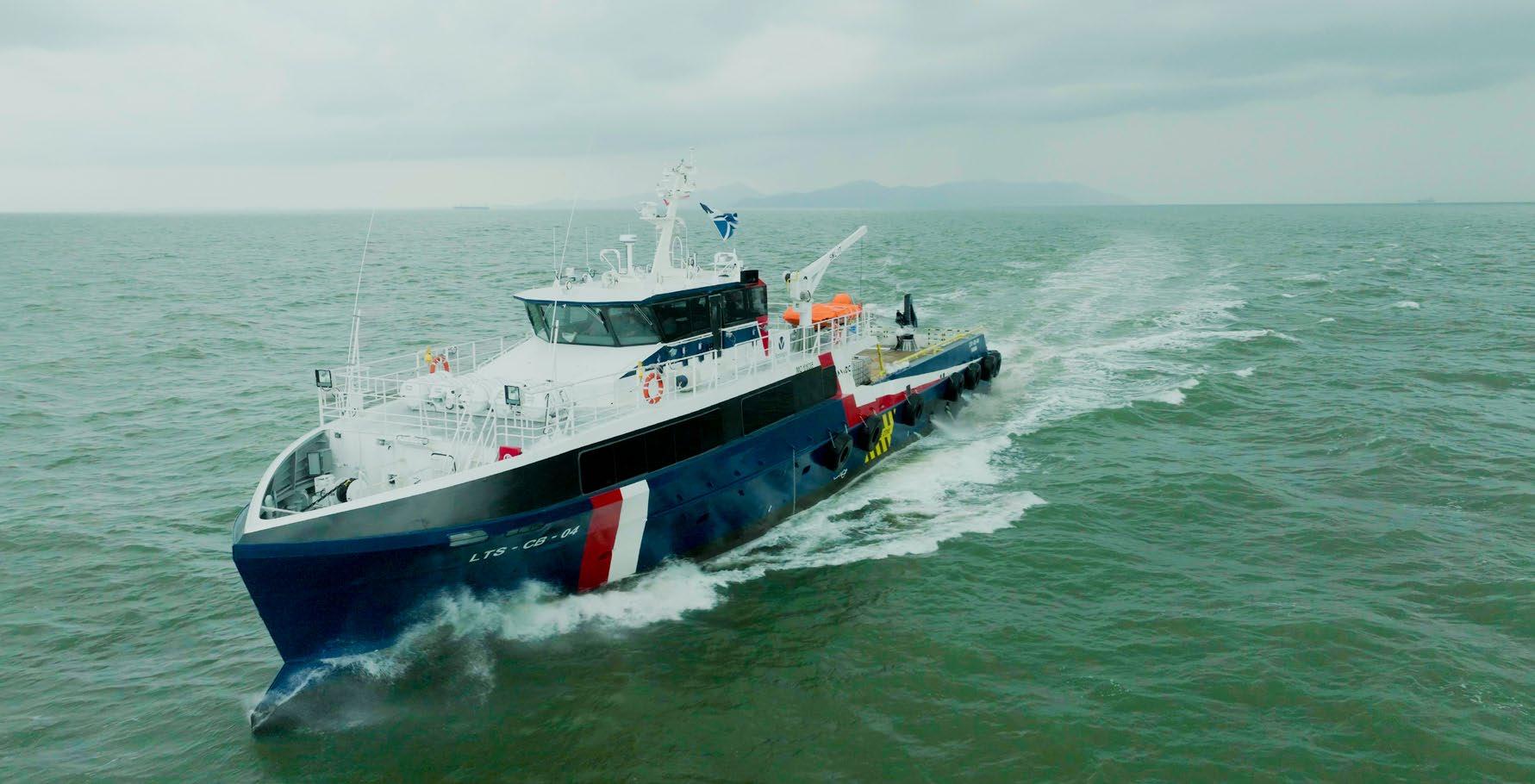
Singapore-based Strategic Marine (S) Pte. Ltd. has delivered two 42-metre fourth-generation fast crew boats to support offshore oil and gas operations in the Middle East, as demand rises for vessels that can move workers safely and efficiently between shore and offshore sites.
The vessels were delivered to United Arab Emirates-based NMDC Logistics & Technical Services, the marine and equipment arm of the NMDC Group (formerly National Marine Dredging Company), which is expanding beyond oil and gas into industrial and
construction work.
“Their primary role is fast crew transportation between shore bases, offshore platforms, and field installations, ensuring safe and reliable personnel transfer in demanding operating conditions,” according to Naseem Freihat, business development manager for the Middle East and Africa at Strategic Marine.
Strategic Marine worked with Thailand’s Prima Marine Public Co. Ltd. to build the vessels, whilst the design was developed by Australia-based Southerly Designs Pty. Ltd. to
meet the offshore conditions of the region.
One of the key upgrades in the Gen 4 model is its Z-Bow hull design, which Freihat said improves how the vessel moves through waves.
“The Z-Bow increases the vessel’s waterline length… and reduces pitching and slamming,” he said in an exclusive interview. “This lowers resistance in real offshore sea states, cuts fuel consumption and allows the vessel to maintain service speed more efficiently.”
Strategic Marine said the
MacGregor 165t crane beats rivals
Atlantic opts for a lightweight crane on its vessel.
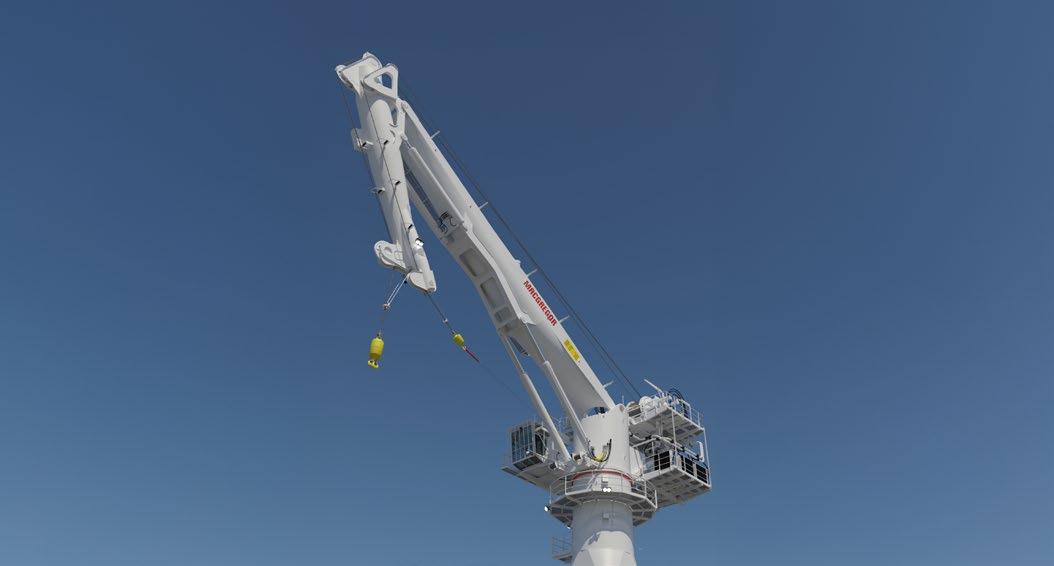
MacGregor has secured a contract to deliver a newly developed high-performance lightweight 165-tonne active heave compensated (AHC) crane to Hong Hua Yard in China.
The vessel owner is Atlantic Navigation. Equipment delivery is scheduled for completion by the second quarter of 2027, with an option included for one additional crane. The order is booked into MacGregor’s fourth quarter 2025 order intake.
The scope of supply includes the complete delivery of a modern 165-tonne AHC crane to be installed on a 90-metre Construction Support Offshore Vessel built to ABS Class standards.
This newly developed crane represents the next generation of offshore lifting technology, and is designed to offer superior performance and a competitive edge over traditional 150-tonne solutions.
“This order demonstrates delivery and customer confidence in our nextgeneration offshore crane technology,” said Pasi Lehtonen, executive vice president, Offshore Solutions at MacGregor. “Our lightweight 165-tonne AHC crane provides higher lifting capacity for the same weight as competitor systems, giving our customers a real operational advantage,” he added.
The project reinforces MacGregor’s strong local presence in China. With a dedicated sales team, a large service office, and production located close to Hong Hua Yard, MacGregor can ensure smooth communication and close collaboration throughout the installation and commissioning phases.
Experienced local and global personnel will work closely to ensure efficient delivery and meet its customers’ expectations.
The delivery is scheduled for completion by the second quarter of 2027
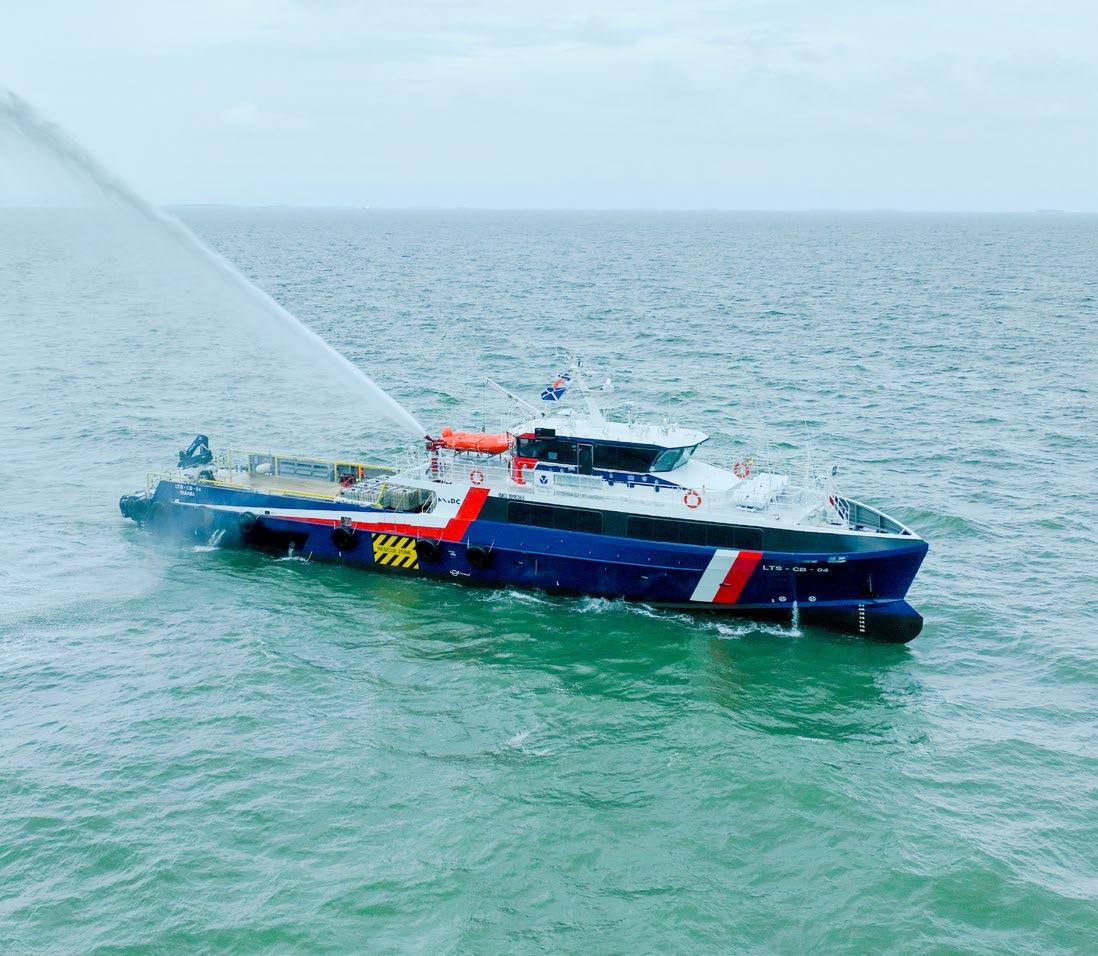
Strategic Marine worked with Thailand’s Prima Marine Public Co. Ltd. to build the vessels
Naseem Freihat, business development manager at Strategic Marine
hull cuts resistance by more than 8% compared with the previous generation. Freihat added that the design performs better both during transit and whilst operating in offshore fields, reducing power demand and lowering operating costs.
About the vessel
The vessel’s propulsion and machinery layout keeps engines running closer to their most efficient range. This improves fuel use, cuts wear and lowers longterm maintenance costs.
Each 42-metre vessel can carry as many as 80 people and reaches speeds above 30 knots, or about 55.6 kilometres per hour.
The
At service speed, its threeengine setup uses about 827 litres of fuel per hour.
Seating can be adjusted to support pure crew transport or mixed crew and cargo work. A gyro stabiliser helps reduce rolling, improving comfort and safety during crew transfers and when holding position offshore, Freihat told the publication.
The boats can also be adapted
for light cargo work, offshore support, standby duties, and patrol roles. Their deck layout lets operators switch between missions rather than using multiple specialised vessels.
“The hybrid system allows low-speed or standby operations to be carried out more efficiently,” Freihat said, adding that it can reduce fuel use, emissions, noise, and engine hours.
According to Strategic Marine, it plans to roll out more fuelefficient and flexible vessel designs next year, with greater focus on hybrid systems and alternative propulsion as offshore operators tighten cost and environmental targets.
Each 42-metre vessel can carry as many as 80 people and reaches speeds above 30 knots
GPS spoofing raises costs for Singapore shipowners
Cargo premiums climb 50% as spoofing incidents disrupt global lanes.
Singapore
Singapore’s marine insurers face higher costs as GPS spoofing and jamming incidents climb across key shipping lanes, a trend that is compelling shipowners to strengthen cybersecurity on vessels and prompting underwriters to overhaul how they price and model digital risk.
“Digitalisation is impacting almost all industries and business sectors,” Lars Lange, secretary general of the International Union of Marine Insurance (IUMI), told Marine & Industrial Report. “Marine insurance has, on the whole, been relatively slow to adopt technologies, but inroads are being made.”
Insurers, he said, are updating underwriting processes as cyberrelated navigational disruptions become more frequent.
Shipowners are under growing pressure to deploy stronger digital safeguards as spoofing events spread across the Middle East, the Black Sea and parts of Southeast Asia.
The Singapore Shipping Association’s (SSA) Singapore Cyber Insurance for Safe Shipping and Operational Readiness (SCISSOR) programme is amongst the initiatives filling the protection gap.
The product provides cyber cover that traditional marine policies typically exclude, such as ransomware damages, operational downtime from attacks, and theft linked to system breaches.
SSA President TS Teo said
We have seen a surge of cases such as GPS spoofing and jamming in 2025, incidents that can cause vessels to collide or run aground, posing significant risks to vessel and crew safety
shipowners increasingly view cyber protection as a core operational requirement. The group also launched the SCISSOR Index, a cybersecurity scorecard that lets companies benchmark their preparedness and identify gaps.
“Such attacks can lead to severe consequences—we have seen a surge of cases such as GPS spoofing and jamming in 2025, incidents that can cause vessels to collide or run aground, posing significant risks to vessel and crew safety,” he said.
Teo added that insurers themselves should improve their digital capabilities to keep pace. He noted that tools that enhance underwriting accuracy or streamline claims would help insurers respond more quickly and operate more efficiently.
Global marine insurance premiums reached $39.92b in 2024, up 1.5% from the previous year, IUMI said in a recent report. It flagged geopolitical risks, a weak US dollar, pressures from fleet
Toll Group cuts vessel emissions up to 80%
Singapore
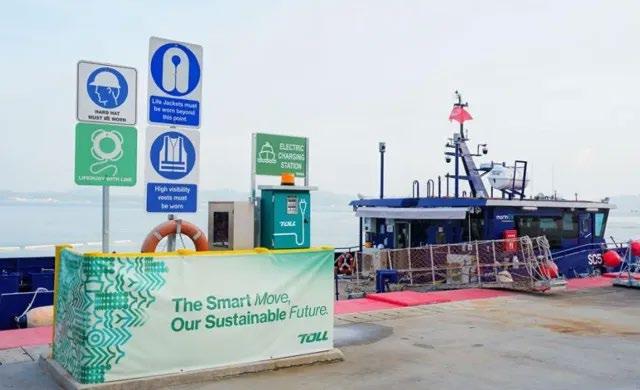
Toll Group has launched Singapore’s first electric decarbonisation hub dedicated to electric supply vessels, marking a 12-month proof-of-concept developed in partnership with Yinson GreenTech. Toll said the hub is expected to cut emissions by up to 80% per vessel trip, saving more than one tonne of carbon dioxide per journey.
The model also aims to optimise vessel movements and improve overall operational efficiency.
The hub integrates electric marine transport with smart warehousing and efficient cargo trucking, supported by real-time digital coordination.
Toll said the end-to-end setup is designed to deliver cleaner and faster port logistics whilst reducing idle time
across the supply chain. Infrastructure at the site includes purpose-built charging facilities and smart cargo-handling processes intended to maximise vessel uptime. Cargo transfers are digitally verified to support speed, safety, and operational transparency.
The hub is strategically located near Changi Airport and the Eastern Anchorages, enabling rapid air-sea connectivity, efficient trailer access, and consolidated warehousing operations. According to Toll, the project is intended to generate real-world operational data to support future regulatory development and accelerate the adoption of green maritime technologies in Singapore and across Asia.
decarbonisation, and ageing vessels as additional challenges.
Lange said the long-term rise in premiums reflects both higher shipping activity and the expansion of the global fleet. Singapore has seen cargo premiums climb roughly 50% over the past decade.
The shift towards cleaner fuels is creating another layer of complexity for both shipowners and insurers.
“From a hull and machinery underwriter’s perspective, the shift towards alternative marine fuels like methanol, ammonia, biofuels, and electric propulsion introduces both risk and opportunity,” Alex Lim, a senior underwriter at QBE Insurance Group, told the publication.
“Methanol and ammonia pose significant safety concerns due to their toxicity and flammability, requiring careful assessment of bunkering procedures, crew training, and onboard containment systems,” he added. Battery-powered vessels also carry risks tied to thermal runaway and charging systems. Singapore is trying to smooth the transition by developing bunkering standards for methanol, ammonia and other fuels. But insurers say risk models will need continuous refinement as adoption widens. Underwriters are increasingly working with shipowners to understand vesselspecific hazards and craft coverage that reflects new technologies.
The hub is located near Changi Airport and the Eastern Anchorages
QBE Insurance senior underwriter Alex Lim, SSA President TS Teo, and IUMI secretary general Lars Lange
Smart ports market to hit $15.5b by 2032
The smart ports market is expected to reach $15.5b by 2032, jumping from $2.0b in 2022.
According to India-based Allied Market Research, this reflects a compound annual growth rate of 23.1% from 2023 to 2032.
One of the primary growth drivers of the smart ports market is the adoption of automation and AIdriven systems. Automated cranes, autonomous vehicles, smart gate systems, and digital twins are helping ports optimise cargo handling, streamline workflows, and reduce vessel turnaround time.
Real-time analytics, powered by IoT sensors deployed across
port assets such as cranes, trucks, containers, and yard equipment, offers critical insights into performance, wear and tear, and maintenance schedules.
Predictive maintenance reduces downtime significantly, improving asset lifespan and minimising disruptions across the logistics chain.
“By integrating AI, IoT, data analytics, and automation, smart ports create real-time visibility, reduce operational bottlenecks, and accelerate cargo movements. These technologies enable ports to manage increasing cargo volumes whilst lowering downtime and operational costs,” the company said.
Mammoet moves 990t barges for Tekong polder
Sixty-eight airbags and four winches retrieved 12 massive vessels.
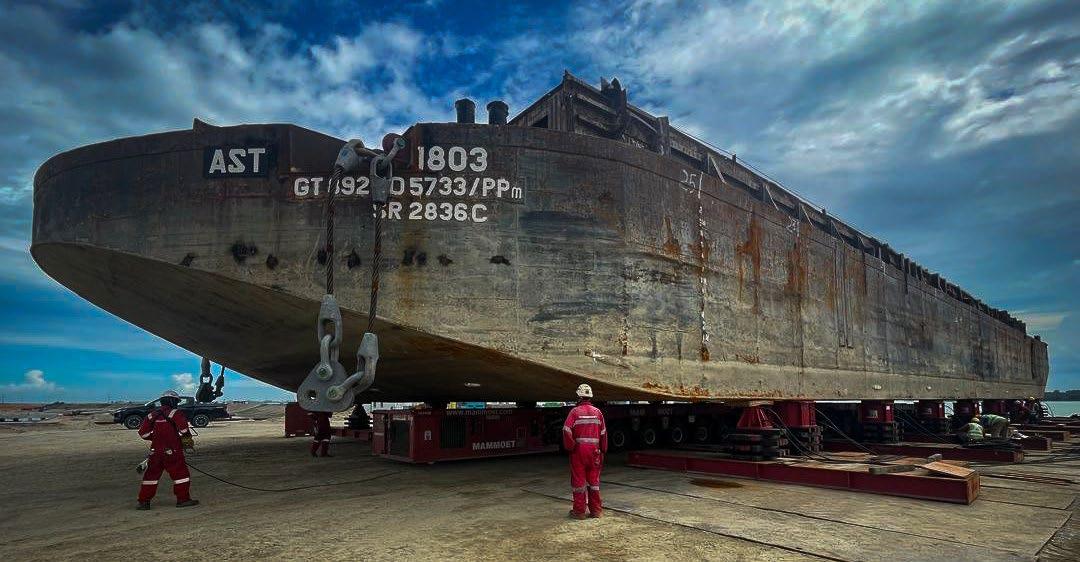
Mammoet has completed the retrieval and relaunch of twelve barges weighing up to 990 tonnes at Singapore’s Pulau Tekong Polder, using airbags, winches, and modular transporters to move vessels that had become landlocked during construction works.
The barges, ranging in weight from 680 tonnes to 990 tonnes, had to be recovered from a stormwater collection pond, transported across a newly built haul road to a surrounding dike, and launched back into the sea. It required specialised equipment and careful sequencing.
Mammoet was selected for the task due to its experience on similar projects worldwide, particularly in the use of airbags and winches for vessel retrieval and launching.
The company assembled a team of local and international experts to carry out the work.
Phased project
The project was executed in phases.
Mammoet deployed 68 airbags and four winches, with individual capacities ranging from 60 tonnes to 85 tonnes, to retrieve and launch each barge from the designated pond.
Airbags were positioned beneath the bow of each barge, and once all cables were secured, two winches were used to pull the vessel out of the water.
The barge was then moved to a point where 18 climbing jacks were installed to raise it further.
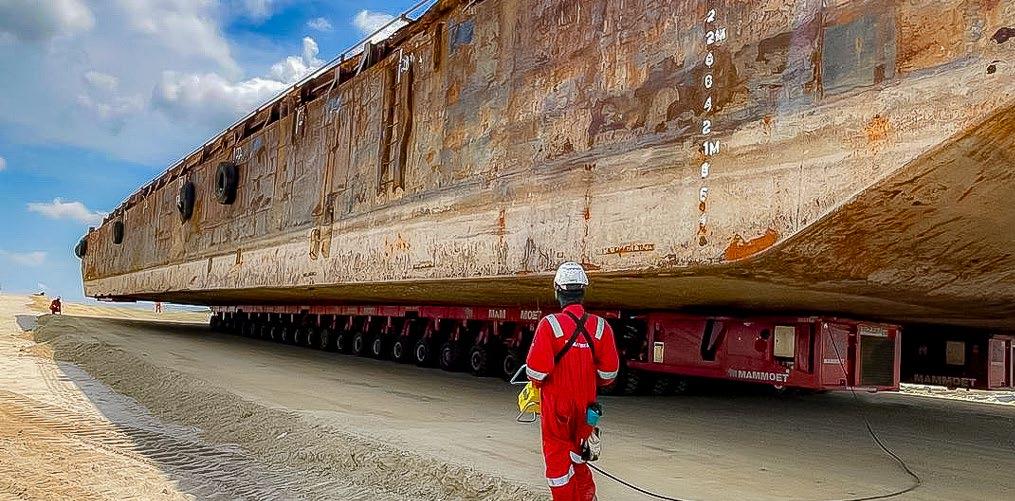
Once elevated, the airbags were removed and self-propelled modular transporters (SPMTs) were inserted beneath the barge. The modular transporters then carried each vessel across the site to the launch area, where it was set afloat. The launch process mirrored the retrieval operation and was repeated for all twelve barges.
The operation formed part of works
By leveraging our global expertise, we helped enhance Singapore’s geographical footprint
at the Pulau Tekong Polder, a major land reclamation project on an offshore island in Singapore that has paved the way for the country’s first polder, reclaiming about 800 hectares of land.
Led by the Housing and Development Board (HDB) and constructed by the Boskalis Penta Ocean Joint Venture (BPJV), the project adopted the empoldering method, marking the first time this approach has been used in Singapore.
Empoldering
Unlike traditional land reclamation, which relies on sand infill, empoldering involves constructing a dike around a low-lying area and draining water from it. The dike protects the polder from the sea, whilst water levels within the area are managed using a network of drains and pumps. This approach significantly reduces the amount of fill material required and helps lower construction costs.
As part of the project, a stormwater collection pond was built within the polder to manage excess runoff.
Floating equipment and barges were deployed to deepen and enlarge the pond. Once these works were completed, the vessels became landlocked and required retrieval so they could be relocated for continued use.
“We take immense pride in our role within the Tekong Polder project. By leveraging our global expertise, we helped enhance Singapore’s geographical footprint,” said Anandan Lokantham, sales manager for Mammoet Projects AMEA region.
Mammoet was selected for the task due to its track record on similar projects
The polder has helped Singapore reclaim about 800 hectares of land Singapore
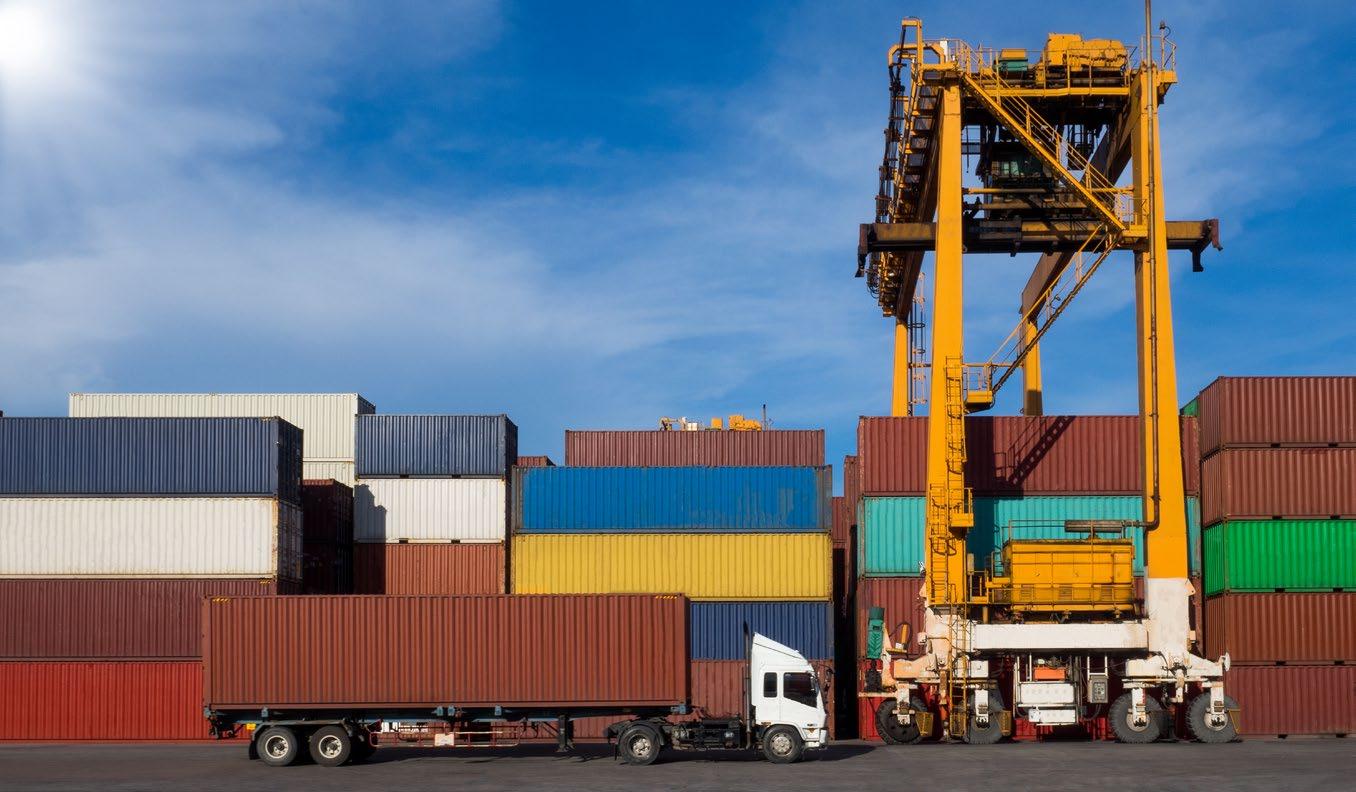
Automated cranes, autonomous vehicles, and digital twins are helping ports optimise cargo handling
Ships ready for net-zero but green fuels are missing
The sector needs 150 million tonnes of green hydrogen by 2050 to break fuel supply deadlocks.
Vessels capable of using lowcarbon fuels are starting to enter service, but fuel supply is not keeping pace, according to a report published by Accelleron.
The study said cross-sector initiatives involving energy producers, industry, and ports are progressing, yet supply remains far below what maritime demand will require.
Accelleron positioned Asia-Pacific as a proving ground for carbon-neutral shipping fuels. It said shipping will need 100 to 150 million tonnes of green hydrogen a year by 2050, within a wider 500 to 600 million tonnes required across hard-to-abate sectors.
Current plans amount to only about 38 million tonnes, backed by roughly $320b of investment.
The report outlined five “deadlocks” slowing the transition.
“The hardest part of shipping’s decarbonisation journey turns out to be scaling green hydrogen as the building block for e-fuels—a task no single industry can achieve alone,” Accelleron chief executive Daniel Bischofberger and Christoph Rofka, division president of medium & low speed products, wrote in the report.
These include uncertainty over fuel pathways, the concentration of early e-fuel supply in a few regions, limited green-finance flows into maritime fuels, weak or absent carbon pricing and demand incentives for shipping,
The hardest part of shipping’s decarbonisation journey turns out to be scaling green hydrogen as the building block for e-fuels
and uneven port readiness that confines early bunkering to a small group of hubs.
Accelleron said Asia-Pacific shows several differentiators.
Modular e-fuel production is advancing, including China’s Chifeng project in Inner Mongolia, which produces about 300,000 tonnes of e-ammonia a year and targets 1.5 million tonnes by 2028 at reported Free On Board prices below $700 per tonne.
Japan, Korea, Singapore, Australia, and the European Union are developing book-and-claim and guarantees-of-origin schemes to bridge early distribution gaps. Port roles are becoming clearer, with Australia and parts of China emerging as producers, Japan and Korea as receivers, and Singapore as a connector.
Singapore features prominently.
It is the only economy in the AsiaPacific region with a carbon tax that affects shipping and provides port dues and registry incentives.
It is running ammonia and methanol pilots and progressing front-end engineering design studies for 55 to
SIPG picks
Wärtsilä
again after 200 bunkerings
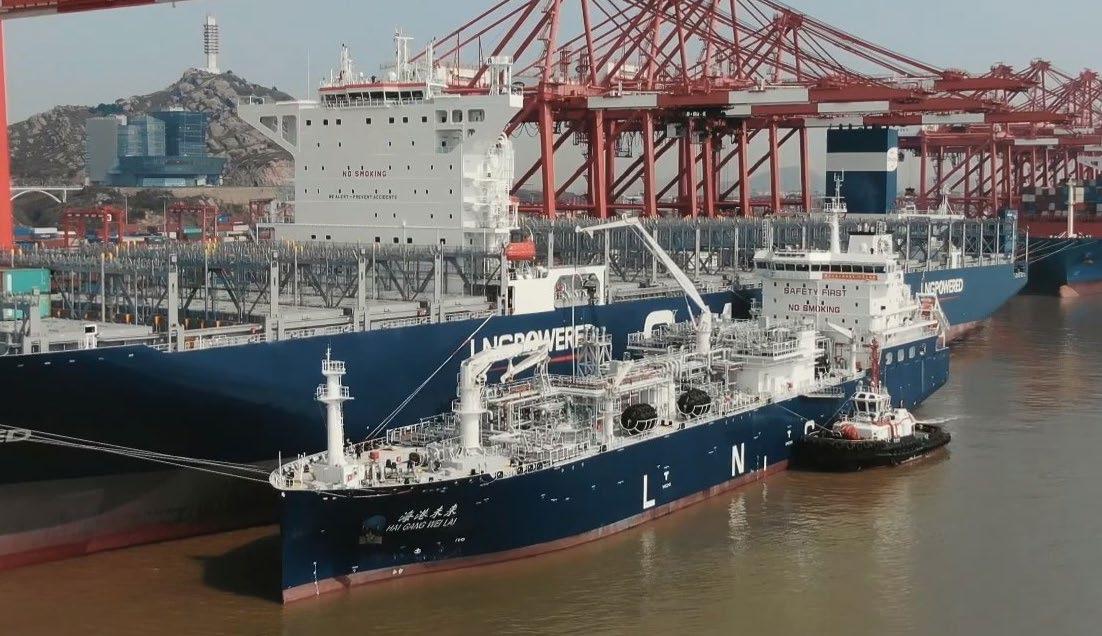
Wärtsilä Gas Solutions, part of technology group Wärtsilä, will supply a range of solutions for a new LNG bunkering vessel built at the Jiangnan Shipyard in China for Shanghai International Port Group (SIPG) Energy Shanghai Co.
The scope includes the cargo handling system, the fuel gas supply system, and a boil-off gas reliquefaction system (Compact Reliq – CRS). The systems are fully integrated to ensure optimal efficiency. The order was booked by Wärtsilä in the third quarter of 2025.
“During the recent three and a half years after we took over Hai Gang Wei Lai, we have finished more than 200+ bunkering of 1 million+ m3 LNG for various ships calling Shanghai port. We are satisfied with the performance of
65 megawatts of ammonia-to-power capacity and at least 100,000 tonnes a year of ammonia bunkering on Jurong Island. According to Accelleron, these steps position Singapore as an early netzero bunkering hub.
Other early movers include Shanghai, Busan, and Yokohama, markets that are piloting methanol and ammonia and building operational readiness.
Most other ports, the report said, still lack the economics, bunkering vessels, trained workforce, and procedures needed to go beyond pilot phases.
On alternatives, Accelleron said nuclear propulsion, including molten-salt small modular reactors, is unlikely to scale before 2050 due to various technical, regulatory, and social barriers.
DFO to expand large vessel fleet to seven
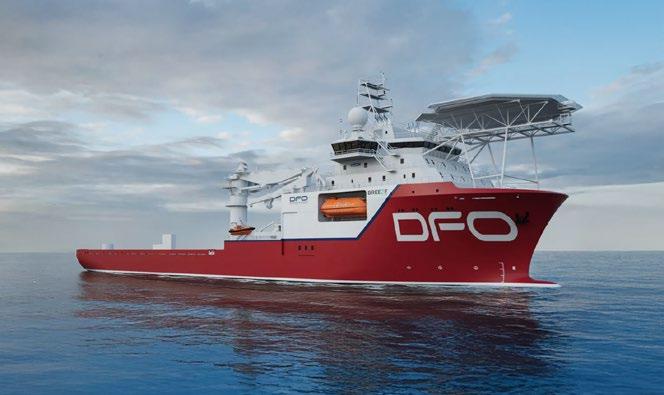
Dong Fang Offshore (DFO) has inked a major Subsea and Cable Lay Vessel (CLV) shipbuilding contract with Westcon, a Norway-based shipyard company.
Under the agreement, Westcon Yard will take over and complete the construction of a large CLV currently underway, with the contracted delivery date in the first quarter of 2027.
The new vessel order supports DFO’s recent business growth and expansion plans, and replaces cable installation capacity lost in Taiwan following the recent exercise of the 2028 option for the Orient Adventurer by DeepOcean in Europe, taking the vessel firm to the end of 2028 in Europe, with further options until 2031.
With the addition of the new CLV, DFO’s operational capability will be significantly improved.
The number of large construction vessels over 100 meters will increase from two to seven by 2027.
Wärtsilä systems and this is the reason we are working with them again in this new project,” according to He Bin, vice general manager at Shanghai SIPG Energy Service Co. Ltd.
“The demand for LNG as a marine fuel continues to increase, and we are a leader in supplying modern and reliable systems that optimise overall cargo handling efficiency for LNG bunkering vessels,” said Barry Lang, general manager of Sales, China, at Wärtsilä Gas Solutions.
“We are working closely with the owner and shipyard to implement improvements, which will elevate the system to a new level of performance.”
The Wärtsilä equipment is scheduled for delivery to the yard during 2026.
The ship is expected to be commissioned in summer 2027.
“The decision for this new CLV is driven by the successful extension of the Orient Adventurer’s contract, and as such a new vessel is required to replace her for subsea cable projects DFO have already secured in 2028 in APAC,” said Polin Chen, chief executive officer at DFO.
“Considering the vessel’s delivery schedule, secured contract backlog, competitive building price, and future business development, we are looking forward to welcome our second CLV to the fleet. This addition will add much needed capacity to support our customers offshore energy ambitions, and secures DFO’s long term future as a leading APAC based contractor,” the chief executive continued.
DFO’s operated fleet will include two highly-specialised large CLVs, two Construction Support Vessels with cable repair capability, three Service Operations Vessels, one DP1 Survey Vessel, two Anchor Handling Tugs, seven Crew Transport Vessels, one Cargo Barge, and one newly acquired DP2 Multicat.
As part of its expansion plans, DFO submitted its initial public offering application to the Taiwan Stock Exchange in July 2025.
The company has also signed several memoranda of understanding, including with Lamprell Energy for a GustoMSC-designed NG9000X wind turbine installation and maintenance vessel for large turbines of 15 megawatts and above, and with GO Offshore to establish a framework for cooperation in offshore wind farm support vessels as well as offshore oil and gas vessel operations.
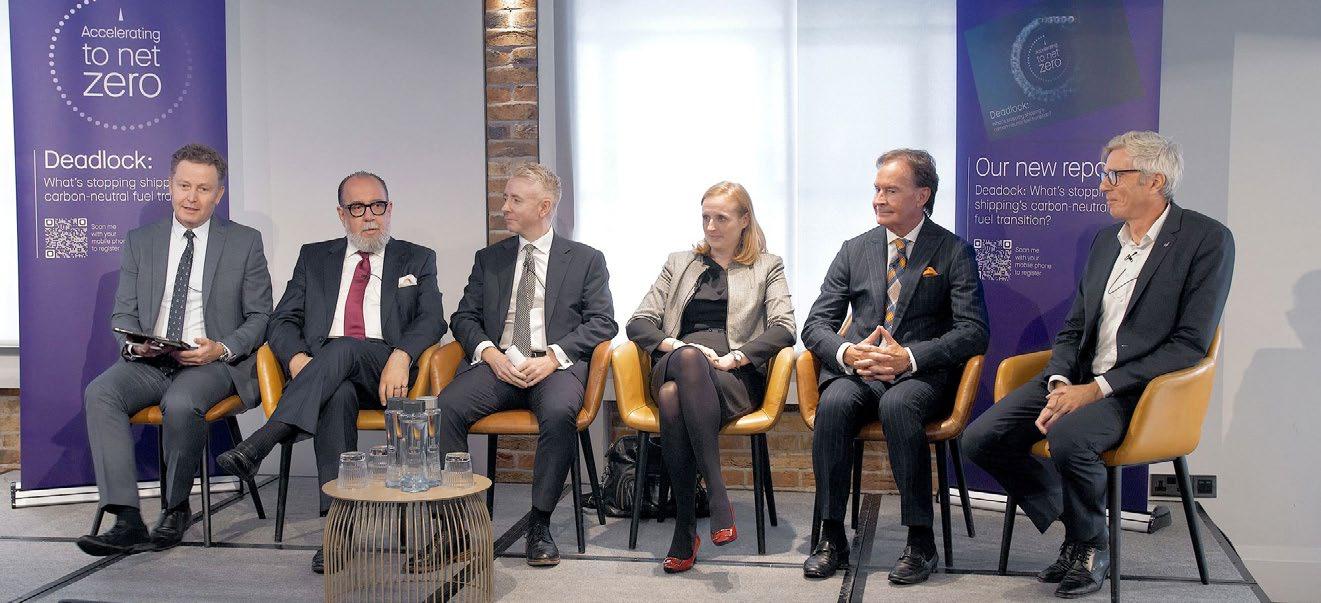
Stakeholder dialogue with shipping leaders at the London International Shipping Week
Current plans amount to only about 38 million tonnes (Photos from Accelleron)
Delivery is expected in the first quarter of 2027
Wärtsilä booked the order in the third quarter of 2025
China
Taiwan
Mitsubishi delivers JP’s 1st Katana Bow ferry
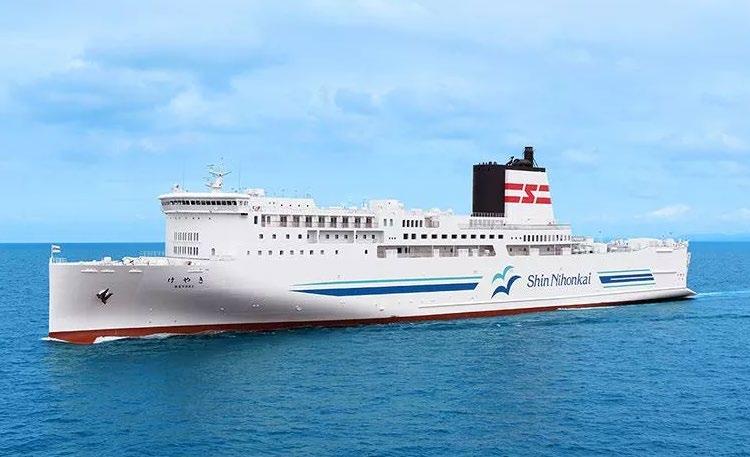
Mitsubishi Shipbuilding Co., Ltd. has delivered the large car ferry Keyaki produced for Shin Nihonkai Ferry Co., Ltd. and Japan Railway Construction, Transport and Technology Agency.
According to the company, the ferry was produced at the Enoura Plant of Mitsubishi Heavy Industries’ Shimonoseki Shipyard & Machinery Works in Yamaguchi Prefecture. This will serve on a shipping route between the cities of Otaru in Hokkaido and Maizuru in Kyoto Prefecture.
Keyaki is the first ferry in Japan to adopt the latest energy-saving hull form, including a Katana Bow and buttock-
flow stern hull with ducktail. Propulsion resistance is suppressed by an energysaving roll-damping system combining an anti-rolling tank and fin stabilisers.
These innovations deliver energy savings of about 5% compared with earlier vessels.
“Going forward, Mitsubishi Shipbuilding will continue to contribute to active use of sea transport and environmental protection, resolving diverse issues together with its business partners through construction of ferries that provide stable sea transport together with outstanding energy and environmental performance,” the company said in a press release.
MPM bags landmark $198m research vessel
Marco Polo Marine Ltd. (MPM), through its wholly-owned subsidiary Marco Polo Shipyard, has secured a landmark $198m contract from Taiwan’s National Academy of Marine Research for the design and construction of a 4,000 GT oceanographic research vessel.
The vessel will be made for the National Academy of Marine Research, which is a research institute under the Ocean Affairs Council of Taiwan.
The project is estimated to have a timeline of four years at Marco Polo Marine’s shipyard in Batam, Indonesia, with engineering and
commercial support from Singapore.
The vessel is designed by Norwegian firm Skipteknisk AS, and will feature a Dynamic Positioning System, dieselelectric propulsion, twin azimuth thrusters, battery energy storage system, and waste head recovery system, amongst others.
The research vessel is self-financed through internal cashflows with no project-specific debt required, according to the company.
“This contract represents a landmark achievement for our shipbuilding division as the largest award in our unit’s history,” said Sean Lee, chief executive officer at MPM.
S&P identifies 503 vessels linked to false flags
The number of false-flagged vessels — ships that illegally use or display registration details without authorisation — increased between 2022 and 2025, according to an S&P Global report.
The increase has been driven by factors such as purges from reputable registries and tougher enforcement of international sanctions programmes.
This has prompted what the report describes as a “temporal shift” in evasion tactics, including frequent flag hopping, manipulation of Automatic Identification System (AIS) data, falsified documentation, and the use of complex ownership structures.
S&P said the growing exploitation of smaller or open registries has further complicated efforts to combat fraudulent practices.
Fraud methods
One method involves the creation of false digital identities through AIS manipulation, allowing vessels to misrepresent their identity by transmitting the identifiers of another ship or fabricating digital details linked to a flag state.
Another practice is the continued use of registration details after a vessel’s flag has officially been terminated or allowed to expire.
Fraudulent registration may also occur when vessels submit false documentation to obtain or retain
flag-state papers.
Vessels may associate themselves with a flag physically, digitally or through documentation, but doing so without authorisation constitutes fraud, the report said.
In some cases, ships deliberately emulate false identifiers to obscure their true identity; in others, such behaviour may indicate that the vessel is not legitimately registered under any flag at all.
The flag state plays a central role in global shipping, acting as the primary authority responsible for overseeing the activities of vessels registered under its jurisdiction.
A significant share of the world’s cargo tonnage is registered under Liberia, Panama, the Marshall Islands, Hong Kong, and Singapore. Combined, these registries represent 58% of total global cargo capacity. The S&P report also identified 503 cargo-carrying vessels linked to 35 false flags.
A fraud method includes AIS data manipulation
Keyaki’s shipping route runs between Otaru, Hokkaido, and Maizuru, Kyoto
Sean Lee, CEO at Marco Polo Marine
Japan
Taiwan
Nuclear boxships save $68m a year
A 15,000 TEU vessel gains 38% annual capacity by cutting fuel tanks and boosting speed.
Nuclear-powered containerships are seen to reduce costs and greenhouse gas emissions, whilst also improving transit times without sacrificing safety or economic competitiveness.
According to a Lloyd’s Register and LucidCatalyst report for Seaspan Corporation Pte. Ltd., nuclear-powered vessels eliminate vessel operators’ highest operating costs, up to $50m annually in bunker fuel and an estimated
$18m in carbon penalties.
“Our analysis shows that nuclear-powered containerships will likely outcompete conventionally fuelled and green fuelled competitors—dominating their trading routes through superior performance without requiring green premiums,” Eric Ingersoll, managing partner, LucidCatalyst, said.
“The key to unlocking this advantage is organising the market through sophisticated
supply chain and technology strategies. By forming a crossindustry consortium, we can build a responsive supply chain and achieve competitive reactor costs, making nuclear the economically optimal choice for shipowners and charterers alike,” he added.
The analysis found that a single 15,000 twenty-foot equivalent unit nuclearpowered containership operating at 25 knots (39% faster than conventional
MOL targets net-zero by 2050 via EV business
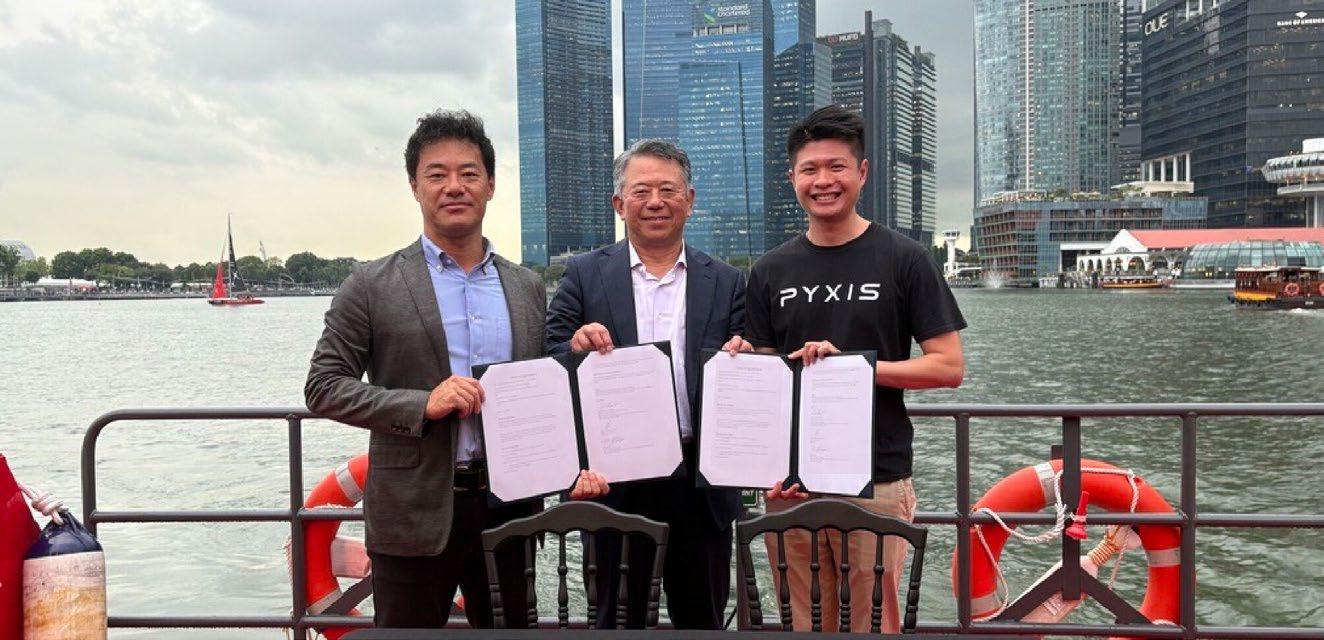
MOL Southeast Asia and Oceania (MOLAO) and Pyxis have agreed to explore the feasibility of establishing a joint venture in November 2025.
MOLAO said the heads of agreement provide a framework for collaboration during the study phase but does not constitute a binding commitment to form the joint venture.
This agreement builds on the memorandum of understanding signed in October 2023.
Under this agreement, the parties aim to collaborate on joint development and marketing of the electric vessels (EV) business in the Singapore region, as well as marketing for the expansion of EV’s introduction in Japan. MOL Group has positioned its environmental strategy as one of the key strategies in its “BLUE ACTION 2035” management plan
and is the first company in the Japanese ocean shipping industry to set the target of achieving net zero GHG emissions by 2050.
The two companies will also engage the industry and their stakeholders, share knowledge, and implement decarbonisation initiatives whilst monitoring the adoption of environmental regulations.
“We believe this memorandum will be an important step for both companies to make a significant change in the shipping industry.
Promoting the introduction of EV vessels to solve environmental issues will be one way,” according to Nobuo Shiotsu, senior managing executive officer at MOL.
“We believe cooperation with partners who has same ambition and trustworthy is essential to achieve that,” he continued.
vessels) could deliver up to 38% higher annual cargo capacity compared to conventionally fuelled vessels through a combination of increased speed (enabling 6.3 versus 5 round voyages annually) and 5% additional container space from the elimination of fuel tanks and systems.
“If the industry pledges to purchase more than 1,000 units in 10 to 15 years, it estimates that modular reactors could be produced for $750 per kilowatt (kW) to $1,000 per kW, significantly cheaper than conventional nuclear power plants, and maintained within standard vessel drydock cycles,” the analysis said. Each unit would be designed
Nuclear-powered containerships will likely outcompete conventionally fuelled and green fuelled competitors
to operate for around five years between refuelling, drastically reducing downtime and providing independence from global bunkering networks.
The study outlines a roadmap showing how manufactured nuclear propulsion units could reach commercial readiness within four years of starting an intensive programme, with total system costs below $4,000/ kW and fuel costs under $50/ MWh. Market modelling indicates potential uptake of 40 gigawatts (GW) to 90 GW by 2050, depending on regulatory progress and industry adoption.
“Nuclear propulsion offers not just a decarbonised solution, but a transformative economic opportunity for shipowners and charterers alike,” said Meg Dowling, senior engineer – Nuclear Technology and Alternative Fuels at Lloyd’s Register.
Singapore
Nuclear-powered vessels cut operators’ highest operating costs, up to $50m annually in bunker fuel
Eric Ingersoll, managing partner at LucidCatalyst
WinGD launches first high-pressure LNG engine
It unveiled X-DF-HP dual fuel engine at Marintec China for power hungry container ships. China
Swiss marine power company
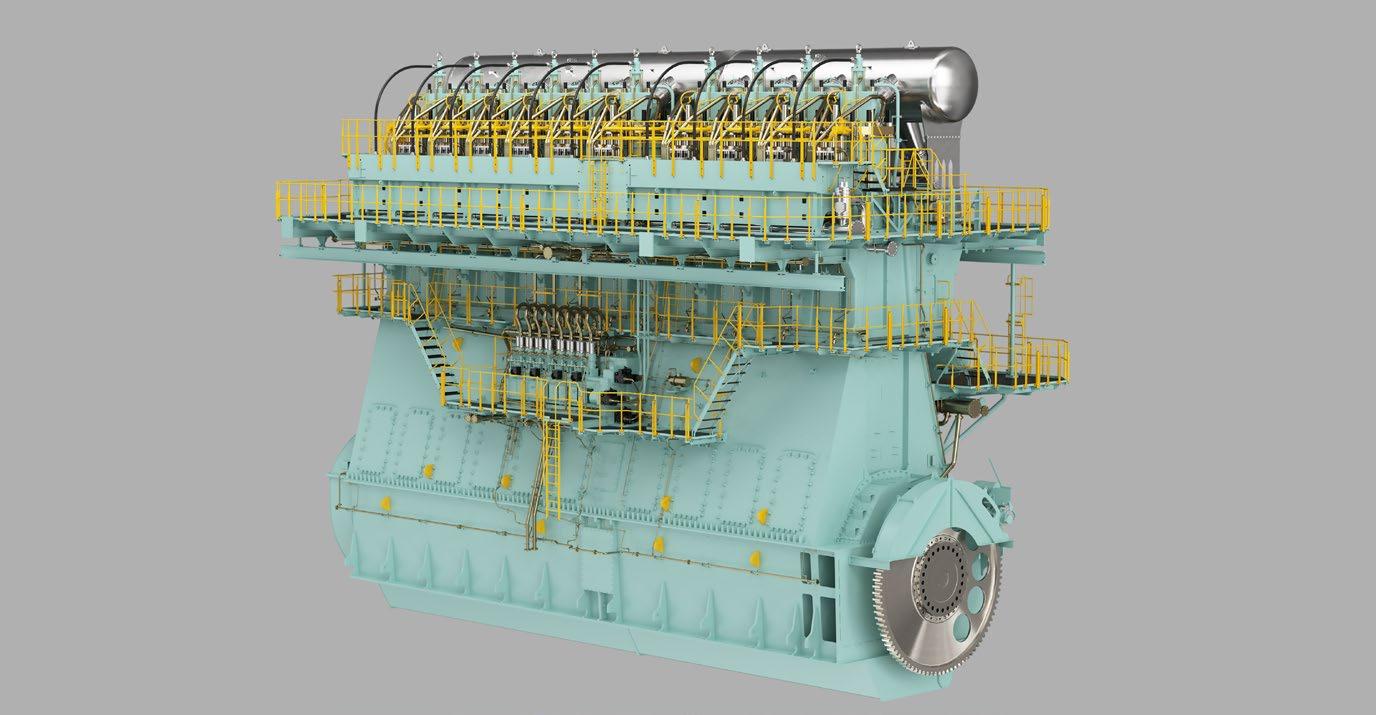
WinGD has introduced its first high-pressure LNG dual-fuel engine, the X-DF-HP, developed specifically for the demanding operating profiles of ultra-large container vessels (ULCVs).
Unveiled at Marintec China 2025, the new engine arrives at a pivotal moment for shipowners navigating the energy transition, with the IMO’s Net Zero Framework currently paused and the prospect of regional regulation becoming increasingly fragmented. As a result, interest in LNG-fuelled tonnage continues to accelerate.
About X-DF-HP
Available in X82 and X92 bore sizes, the X-DF-HP is tailored to the scale, speed and load requirements of the ULCV sector, with first deliveries planned for 2028.
Based on comparisons between the efficiency of WinGD’s established diesel engines and similar dual-fuel designs, the high-pressure dual-fuel concept is anticipated to deliver improved efficiency.
“Large container vessels present a unique propulsion challenge,” said Benny Hilström, vice president, Market Development at WinGD. “They demand immense power, exceptional efficiency and long-term fuel flexibility. With the X-DF-HP, we are providing operators with a
For all other vessels, the low pressure X-DF platform continues to deliver the best lifestyle economics
purpose-built solution for the most power-hungry vessels, offering uncompromised, trouble-free propulsion,” he added.
Available with the same auxiliary system requirements—such as fuel supply pressure—as other recognised engine concepts, it supports straightforward installation for shipyards and provides a practical, future-ready option for vessel owners.
Achieving Tier III compliance in both gas and diesel modes using only a standard SCR, X-DF-HP provides ultra-large container vessel operators a powerful, space-efficient and futureready choice for the most demanding ultra-large container vessels.
“The X-DF-HP is built on the high-pressure Diesel X92-B engine platform that has already proven itself as one of the most efficient and reliable large-bore solutions in the container segment,” said Sebastian Hensel, vice president, R&D, at WinGD.
“Building on our long-standing diesel engine expertise and our deep experience in LNG dual-fuel technology, we’ve developed the X-DF-HP. Our tests and simulations show the X-DF-HP will deliver a clear
DNV approves China’s 1st domestic rotor sail
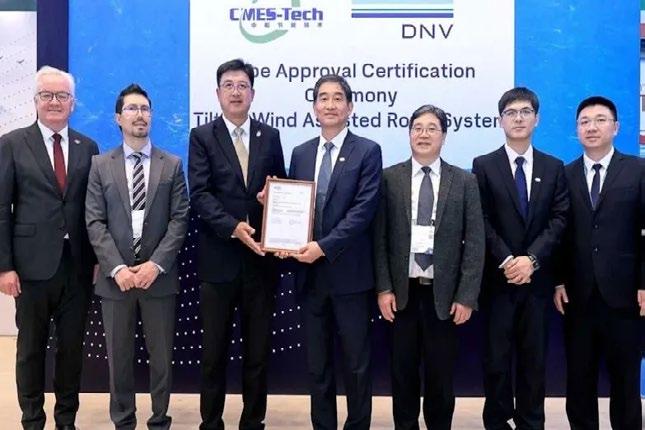
DNV has granted a type approval design certificate to CSSC Shanghai Marine Energy Saving Technology Co., Ltd. (CMESTech) for its new 5m × 35m Tilting Type Wind Assisted Rotor System.
In a statement, DNV said this is the first domestically developed rotor sail system in China to achieve this recognition under the company’s WAPS rules (ST-0511).
With this certification, the system is confirmed ready for installation on DNV-classed commercial vessels.
The CMES-Tech tiltable rotor system features a retractable and adjustable design, enabling the rotor to adapt to varying draft and clearance conditions, and retract during cargo operations to avoid interference with deck/hatch operations or port infrastructure.
The system also integrates
intelligent sensing and automatic control to adjust rotor operation based on real-time wind conditions, maximising wind propulsion efficiency, whilst maintaining safety.
Dr Huang Guofu, general manager of CMES-Tech, said this “demonstrates that our 5 m × 35 m tilting rotor design meets the highest classification and validates our commitment to driving maritime efficiency.”
step up in fuel efficiency and GHG performance compared to existing high-pressure dual-fuel engines on the market,” he continued.
The X-DF-HP builds on more than a century of high-pressure Diesel cycle expertise and dual-fuel innovation at WinGD. It joins the company’s high-pressure, multi-fuel portfolio, which includes the methanol/ethanolcapable X-DF-M/E and ammoniafuelled X-DF-A engines.
This provides operators with a fully fuel-flexible platform, with established engines such as the X92-B now able to be retrofitted for highpressure LNG, methanol, ethanol, or ammonia as fuel pathways evolve.
With LNG providing FuelEU Maritime compliance well into
the next decade, and uncertainty remaining around future IMO requirements, LNG continues to offer a cost-competitive, low-risk route to fleet decarbonisation.
WinGD’s X-DF (low pressure) and X-DF-HP engines are fully compatible with renewable methane blends, enabling operators to progress towards lower-carbon operations without extensive mechanical modifications or the high retrofitting costs typically associated with emerging fuels.
“For ultra-large container vessels choosing LNG as their pathway to net zero, the X-DF-HP is the most costeffective option,” added Hilström. “For all other vessels, the low-pressure X-DF platform continues to deliver the best lifestyle economics,” he continued.
China
The rotor system features a retractable design
The X-DF-HP is available in X82 and X92 bore sizes (Photo from WinGD)
Maersk expands beyond ocean with massive China hub
The company also opened its mega distribution centre in Malaysia, its largest in Asia-Pacific.
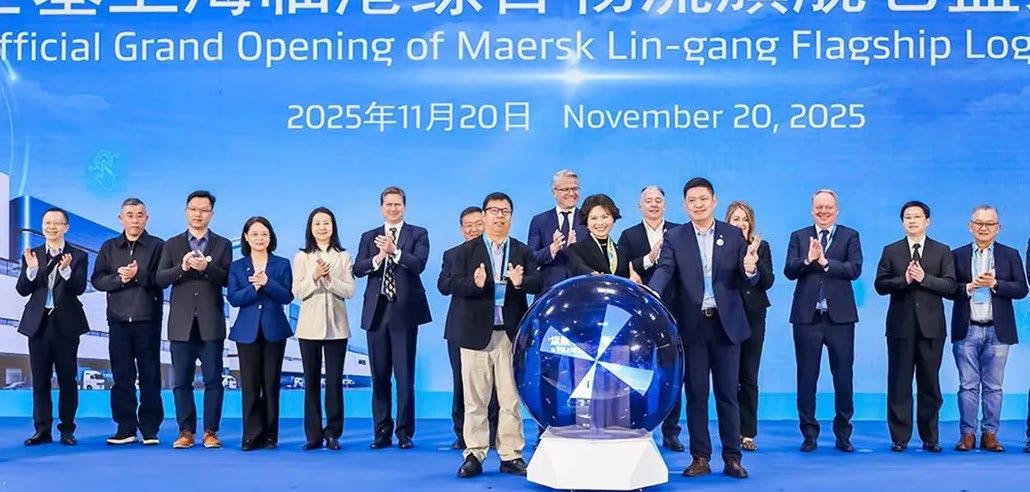
A.P. Moller - Maersk (Maersk) has opened its $140m flagship logistics centre in Shanghai’s Lingang area, marking one of the company’s largest warehousing investments globally.
The company said the Lingang Flagship Logistics Centre spans 113,000 square metres (sqm) and offers 147,000 sqm of storage space. It was designed to serve customers in China, across Asia-Pacific, and beyond.
“China is not only the world’s largest exporter but also a key consumer market. This facility significantly enhances our omnichannel fulfilment capabilities and further strengthens the connection between China and international markets,” said Maersk Chief Executive Officer Vincent Clerc in a statement.
About the facility
The facility is located 40 kilometres (km) away from the Shanghai Yangshan Port, one of Maersk’s most strategic nodes for global shipping.
It comprises four highstandard ramp warehouses and one fully automated intelligent warehouse, equipped with systems including automated storage and retrieval systems
(ASRS), stacker cranes, rail-guided vehicles, and autonomous mobile robots.
Powered by advanced warehouse management software and automated systems, the facility enables real-time inventory control, dynamic task scheduling, and data-driven decision-making. These innovations reduce costs, improve accuracy, and boost operational efficiency.
The logistics centre also incorporates features such as solar panels expected to supply over 70% of its electricity and fully electric equipment, as well as rainwater harvesting and resource recycling.
Maersk has also opened its Maersk Mega Distribution Centre in Malaysia, its largest contract logistics facility in the Asia-Pacific, which boosts its warehouse footprint by more than 30% in the country.
The new facility spans a total floor area of nearly 180,000 sqm offers 100,000 pallet positions, and is a multi-client facility, purpose-built to handle a wide range of commodities including fast-moving consumer goods, food and beverage items, footwear, and apparel.
The warehouse is located in Shah Alam, with direct connectivity to major highways, providing easy access to key
APM Terminals inks $550m deal for Laldia terminal
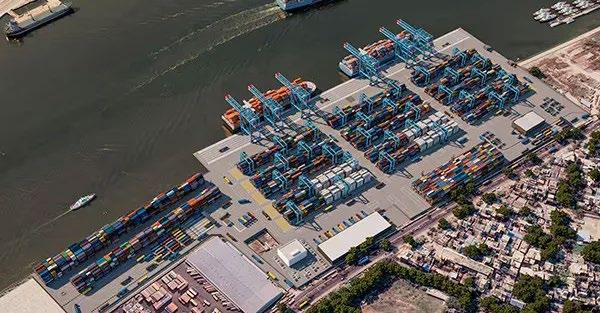
APM Terminals and Bangladesh’s Chittagong Port Authority have entered into a $550m investment deal for the improvement of the Laldia Container Terminal in Chattogram.
The concession agreement will allow APM Terminals to operate the terminal for a period of 30 years, which can be extended based on KPIs.
The Laldia Container Terminal will be fully designed, financed, built, and operated by the investors.
“This greenfield project enables us to play an active role in supporting the growth of the local manufacturers, exporters, importers and the broader Bangladeshi economy,” said Keith Svendsen, chief executive officer at APM Terminals.
The project is part of the Sustainable
Green Framework Engagement between Denmark and Bangladesh, a bilateral initiative aimed at fostering green investment, job creation, and sustainable economic relations.
“Laldia will be the country’s first green port and the single largest European foreign direct investment in Bangladesh. This landmark collaboration with APM Terminals will unlock new capacity for our exporters, reduce logistics bottlenecks, and enhance our competitiveness in global markets,” said the Chief Adviser of Bangladesh Muhammad Yunus
Once operational in 2030, the terminal will expand Bangladesh’s annual port handling capacity by over 800,000 twenty-foot equivalent units (TEU), improving the country’s global trade efficiency and connectivity.
industrial zones, urban centres, Port Klang and Kuala Lumpur International Airport.
It is also around 340 km from the Port of Tanjung Pelepas, which is Maersk’s key transhipment hub port in Asia.
Malaysia facility tech
The facility is equipped with several automation systems including autonomous mobile robots, put-to-light technology, and an automated storage and retrieval system. These advanced solutions enable faster order fulfilment, shorter lead times, and improved order accuracy by minimising human error.
Its other features include
This facility significantly enhances our omnichannel fulfilment capabilities
an end-to-end transport management system for realtime tracking and monitoring of shipments, a wide range of value-added services such as tagging, labelling, re-packing, palletising, returns management, quality control and product disposal, and Maersk’s Warehouse Management System (WMS) and Electronic Data Interchange (EDI) capabilities, providing customers with real-time inventory and transaction visibility, enhanced traceability and possibilities for technological integration with customers’ existing systems.
“This facility marks one of Maersk’s most significant milestone investments in Asia Pacific and stands amongst our largest contract logistics sites globally,” according to KS Chang, head of Maersk Contract Logistics Asia Pacific.
“This hub reinforces our integrated capabilities to deliver reliable, flexible supply chains and modern, automated solutions that will help customers scale and reach local consumers more effectively.”
ABS grants AIP to Samsung’s wind float
South Korea
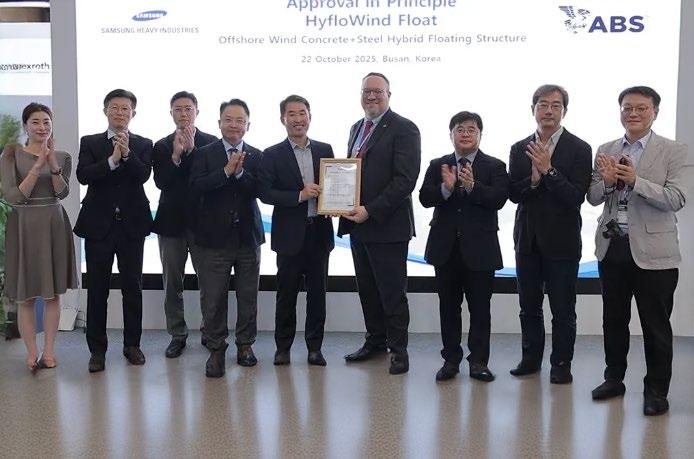
ABShas issued approval in principle (AIP) to Samsung Heavy Industries (SHI) for its innovative HyfloWind Float.
According to ABS, the HyfloWind Float is a novel hybrid floating offshore wind structure designed to enhance production efficiency and streamline deployment processes.
This features a unique concretebased steel composite design, diverging from traditional all-steel structures.
This facilitates local fabrication in regions where steel manufacturing capabilities are limited, lowering the costs associated with importing steel.
By integrating a steel frame with the concrete, the design reduces the
overall weight.
“The HyfloWind Float represents a groundbreaking method for constructing floating wind platforms, empowering nations to leverage regional materials and labor,” said Rob Langford, vice president, Global Offshore Renewables at ABS.
“This hybrid floating solution is tailored to meet the needs of customers who prioritize local content,” said Ahn Young-Kyu, vice president of Samsung Heavy Industries.
“Together with our existing steel models, we are establishing a flexible supply system to support global offshore wind expansion, including key markets across Asia,” he added.
The Lin-gang Flagship Logistics Centre spans 113,000 sqm and offers 147,000 sqm of storage space
The HyfloWind Float features a concrete-based steel composite design
The company will operate the terminal for 30 years
Bangladesh
IMO delay sparks global shipping fragmentation
Experts warn that pausing the Net Zero Framework allows nations to create unaligned carbon taxes.
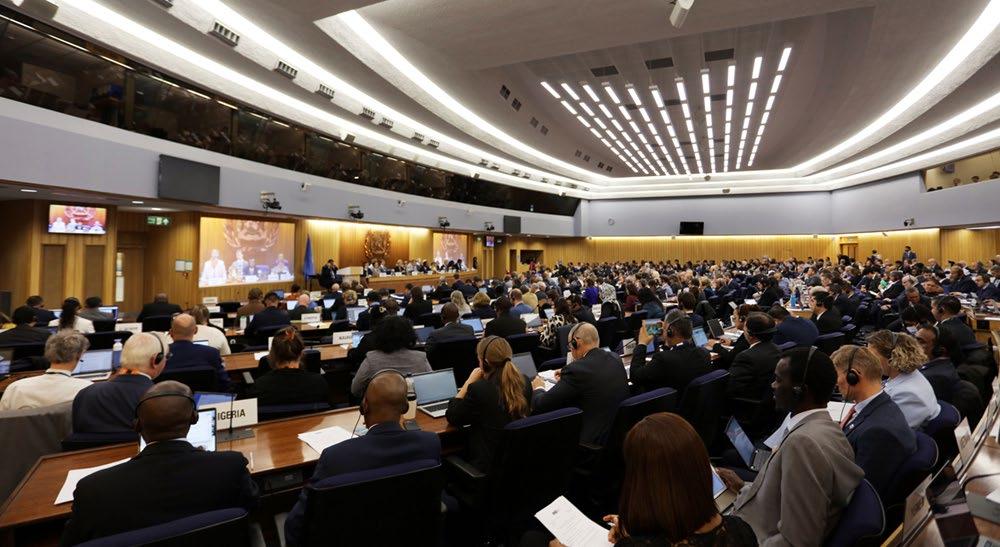
The International Maritime Organization’s (IMO) decision to delay its Net Zero Framework is creating a regulatory vacuum that threatens to fragment global shipping decarbonisation efforts, an expert said.
“What looks like a pause is, in reality, an open door for national governments to move ahead with their own systems,” said Philippos Ioulianou, managing director at EmissionLink. “Instead of gaining clarity, we risk creating a patchwork of unaligned carbon schemes that will make
global compliance significantly harder for shipowners,” the managing director added.
Several countries are already moving to fill the void. The UK’s Emissions Trading Scheme (UK ETS) will come into force in June 2026, Türkiye is preparing its own version, and Gabon on Africa’s west coast has openly discussed a local carbon levy. Ioulianou said more governments are likely to follow, driven as much by fiscal pressures as environmental goals.
“For many governments facing widening budget gaps, carbon pricing offers a quick
route to new revenue,” he noted. “Without a unified global framework, carbon markets could become less about decarbonisation and more about balancing the books,” he added.
Ioulianou warned that regionalised systems will multiply reporting formats, verification rules, and administrative burdens, creating real operational risks.
“Good luck to the shipowner who gets it wrong. Picture a vessel calling at a West African port, unaware of a newly introduced local regulation. The port authority could detain
We’re hearing from Asian owners who are quietly steering clear of certain European routes due to compliance complexity
it for non-compliance and the owner is left footing the bill”, the managing director said. He added that some owners are already adjusting trade patterns to avoid overlapping schemes. “We’re hearing from Asian owners who are quietly steering clear of certain European routes due to compliance complexity. That should concern everyone.”
Ioulianou also raised concerns about how revenues from emerging national carbon schemes will be used as “there is no assurance that these funds will flow back into decarbonisation.”
“Some governments won’t even know how much they’ll collect until year-end and once the money arrives, the temptation to redirect it to other priorities will be strong,” he said.
With more uncertainty set to continue, Ioulianou urged shipowners to strengthen their
BMT AI platform cuts port costs by 15%
approach to monitoring and managing compliance.
“Managing this manually, port by port or across scattered spreadsheets, is no longer realistic,” he said.
“Owners need real-time intelligence on regulatory changes and data they can act on — long before they reach the next port of call.”
“We continuously track global emissions schemes, translating fast-moving regulation into practical guidance. Our aim is to help owners stay compliant, keep trading and avoid being caught out by local policy changes,”he added.
Without decisive action from the maritime organisation, Ioulianou warned, the trend towards regionalisation could become irreversible.
“Every new national scheme makes it harder for the IMO to rebuild a globally aligned approach later,” he said. “Once rules fracture into regional pieces, putting them back together will be extremely difficult,” he continued.
“The delay was meant to give the industry time to adapt. Instead, it risks creating confusion, competition and complacency. The world isn’t waiting for a decision, it’s moving ahead, one emissions scheme at a time.”
The prototype uses autonomous data and 3D modelling to avoid over-dredging whilst slashing fuel use and carbon emissions.
UThis project represents a step change in how Australia thinks about and manages maritime data Australia
nder Phase 2 of the ‘Deep Blue’ Project, BMT is working with the Department of Infrastructure and Transport of South Australia (DIT SA) to develop a prototype of its ADAPT platform for management of state harbours. This marks a key milestone in Australia’s journey towards smarter, data-autonomous maritime operations.
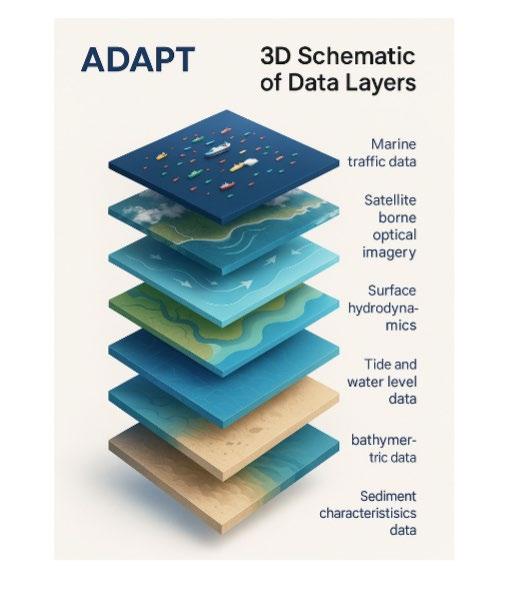
About the prototype The prototype is based on BMT’s ADAPT (Adaptive Dredging Automated Prediction Tool) platform—a cloud-based, artificial intelligence (AI)powered data management and intelligence system that enables real-time environmental monitoring, predictive insights and improved operational decision-making for ports and coastal infrastructure.
ADAPT integrates multiple data sources—from autonomous vessels and metocean sensors to survey models and machine learning outputs—transforming vast and complex data streams into actionable intelligence. It automates pattern detection, anomaly identification and
forecasting across diverse port and environmental datasets, helping decision-makers reduce dredging costs, improve safety, and optimise operations.
Early deployments indicate efficiency gains of up to 15% compared to traditional approaches, BMT said.
These improvements are achieved through advanced forecasting to avoid over-dredging, proactive maintenance to safeguard channel access and trade continuity, and intelligent scheduling that helps reduce fuel consumption along with carbon emissions.
The platform builds on BMT’s extensive experience supporting ports and coastal infrastructure across Australia, where AIenabled simulation and digital twin technologies have become core to future-ready asset
management and sustainable dredging strategies.
Through its Deep Blue collaboration, BMT is breaking new ground in maritime data autonomy, moving beyond traditional remote sensing models to create a dynamic data-as-a-service ecosystem.
By embedding AI and intelligent analytics across autonomous platforms, data networks and digital twins, BMT is enabling customers to transform data into foresight— empowering faster and more confident decision-making.
“This project represents a step change in how Australia thinks about and manages maritime data,” said Graeme Nayler, regional business director, Asia-Pacific at BMT.
“By combining AI and autonomy, ‘Deep Blue’ is proving that data is not just collected - it’s intelligent, active and transformative.
Our collaboration with the Department of Infrastructure and Transport reinforces our commitment to helping government and industry reimagine data as a sovereign asset driving safety, sustainability and operational advantage.”
Deep Blue builds on BMT’s
successful partnership with Australian-based autonomy specialist Ocius Technology, whose Bluebottle autonomous surface vessels (ASVs) recently demonstrated persistent remote data collection capabilities under real-world sea conditions in the Gippsland region.
The combination of BMT’s DEEP and ADAPT platforms with Ocius’s renewable-powered autonomous systems proves how AI-driven autonomy and scalable data fusion can reshape maritime operations for
government and industry alike.
As part of its broader innovation portfolio, BMT continues to advance research and operational capability in multi-domain data integration, digital maritime systems and predictive analytics.
The organisation’s approach reflects a wider strategy to deliver sovereign and commercial, scalable and sustainable technology that underpins Australia’s blue economy and defence industries alike.
Shipowners are urged to strengthen their approach to monitoring and managing compliance
BMT’s prototype is based on its ADAPT platform, a cloud-based intelligence system
Singapore named world’s top container port
It leads the inaugural Leading Container Ports report by scoring highest in all five pillars.
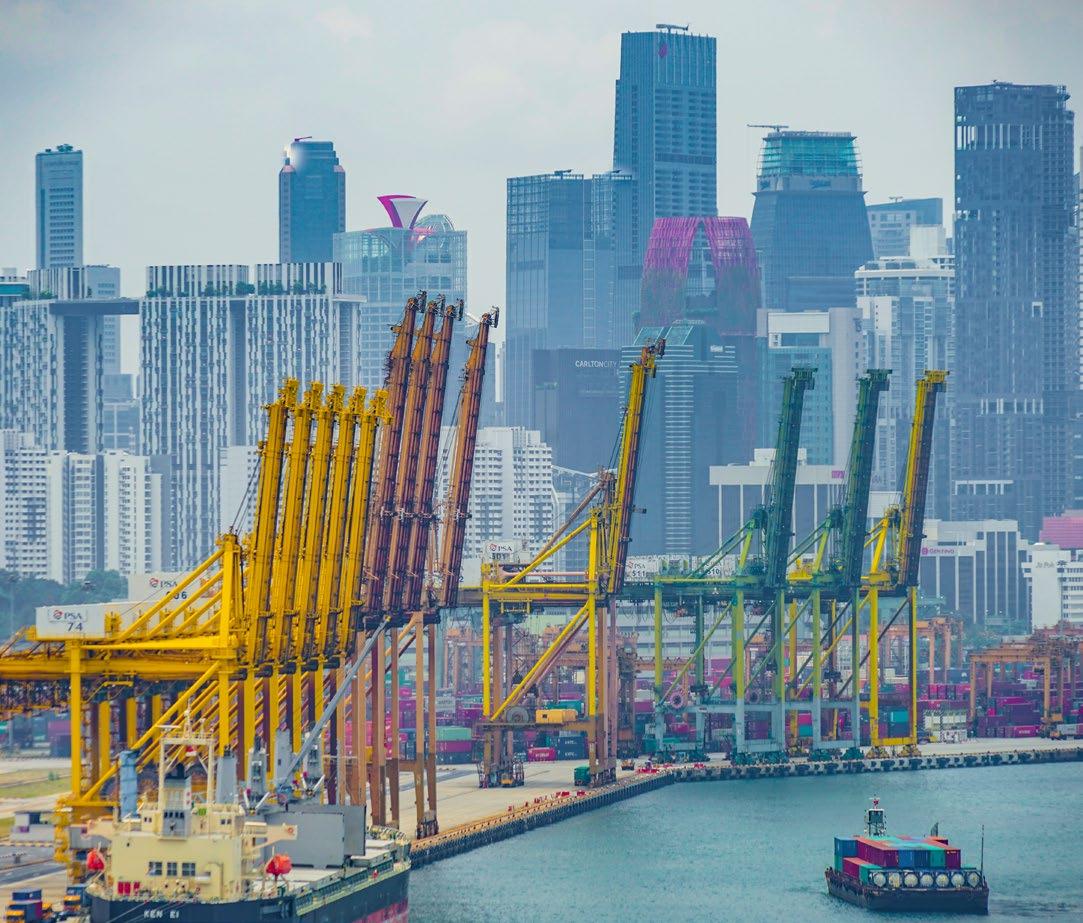
Singapore is named the world’s leading container port in the first edition of the Leading Container Ports of the World (LCP) report, an independent global benchmark published by DNV and Menon Economics. Shanghai and Ningbo-Zhoushan follow in second and third place, with Rotterdam and Busan completing the global top five.
Maritime transport carries close to 90% of global trade by volume, and container ports alone handle more than 80% of non-bulk merchandise.
Today, these ports are undergoing a profound transformation, driven by rising trade flows, rapid advances in technology, and mounting pressure to meet climate targets.
Against this backdrop, DNV and Menon Economics have introduced the industry’s first global container port ranking. The LCP report benchmarks 160 ports against 35 indicators grouped into five pillars: enablers, connectivity and customer value, productivity, sustainability, and overall impact. These indicators are based on objective data, such as throughput volumes, berth productivity, emissions per Twenty-foot Equivalent Unit (TEU), and alternative fuel availability, and are complemented by expert assessments from leading shipping stakeholders. The LCP ranking complements other industry benchmarks, such as the Leading Maritime Cities of the World (LCM) report, by providing a focused assessment of container port performance.
Knut Ørbeck-Nilssen, CEO Maritime at DNV, commented: “Container ports quietly underpin much of the global economy. Every year, they move more than 930 million TEUs, supporting the flow of goods that keep businesses running and communities supplied. As global trade patterns shift and the industry faces new pressures,
Container ports quietly underpin much of the global economy
ports that are able to adapt, communicate clear strategies, and invest in future-proofing their operations will continue to lead and set the pace for the sector’s evolution.”
“This report aims to provide trusted insights that help ports and stakeholders navigate these changes with confidence,” he added.The report recommends that ports invest in scalable infrastructure, accelerate digitalisation, and lead on sustainability whilst maintaining strong customer relationships and building resilience against disruptions. Clear strategic planning and transparent communication are essential for ports aiming to secure longterm competitiveness.
Port Authorities play a critical role in shaping the future of container ports. Forward-thinking strategies that prioritise productivity, service quality, digitalisation and sustainability are essential for long-term competitiveness. Whilst some ports did not rank amongst the top due to overall performance indicators, many port authorities across regions demonstrate a forward leaning mindset and are actively investing to close these gaps, a trend reflected in the report.
Dr Erik Jakobsen, partner and chair of Menon Economics, added: “The top-performing container ports are both expanding capacity and rethinking how technology shapes daily operations. We see ports where automation and digital tools are woven into every process, from vessel scheduling to cargo handling. Investments in cleaner energy and integrated transport links are also making a difference, helping ports operate more efficiently and adapt to new demands.”
Global top five container ports: Singapore Singapore achieved the highest overall score, leading in all five pillars of the ranking.
Its world-class infrastructure, transparent governance, and strong connectivity make it a global benchmark.
The port serves all major shipping lines and offers the most mainline services.
Advanced automation and early investments in alternative fuel bunkering, green shipping corridors, and emissions reduction measures reinforce its leadership in sustainability.
Shanghai (China)
Shanghai is the world’s busiest container port, processing 51.5 million TEUs in 2024.
It holds the highest Liner Shipping Connectivity Index score and offers extensive mainline services.
The port combines smart technologies with efficient handling of Ultra Large Container Vessels and ranks second in sustainability thanks to robust shore power infrastructure and green corridor initiatives.
Ningbo-Zhoushan (China)
Ningbo-Zhoushan is the fastestgrowing container port globally, handling 39.3 million TEUs in 2024 and recording a 26% increase in volume over the past three years. Its growth reflects its strategic role in China’s Belt and Road Initiative and its expanding global connectivity.
Busan (South Korea)
Busan serves as Northeast Asia’s logistics hub and a key transshipment point linking Chinese, Japanese, and Korean markets. Its strategic position and operational efficiency make it a critical node in regional and global supply chains.
Rotterdam (Europe)
Rotterdam is Europe’s largest container port and a leader in sustainability and innovation. It invests heavily in alternative fuel infrastructure, onshore power supply, and digital twin technology, consistently ranking as the top maritime gateway in Europe.
Notably, several of these ports (Singapore, Shanghai, Busan, and Rotterdam) are also featured in the LCM report, underscoring their dual role as global trade gateways and integrated maritime hubs.
In addition to the global ranking, the LCP report features regional rankings, with New York & New Jersey, Hamburg, Tanger Med, Jebel Ali, and Sydney recognised as leaders in their respective regions.
GREG KNOWLER
Europe Editor Journal of Commerce, S&P Global
Asia-Europe ocean carriers add capacity as trade enters peak shipping period
The annual pre-Lunar New Year rush is underway on the Asia-North Europe ocean trade, with some market watchers reporting signs of frontloading on top of seasonal demand while others feel the volumes in January are within historical norms.
What is clear, however, is that carriers are injecting significant capacity into the trade lane this month while blanking very few sailings as shippers race to get their cargo on the water before factories across China close for up to three weeks.
The Year of the Horse begins on 17 February.
Peter Sand, chief analyst at Xeneta, said capacity offered on Asia to North Europe was at an all-time high this week with no blank sailings. Data from Xeneta’s eeSea shows a record 1.15 million twentyfoot equivalent units (TEUs) in capacity is being deployed this month on the Asia-North Europe trade lane, with blank sailings removing just 25,000 TEUs.
In February, the planned capacity will drop to just over 1 million TEUs.
“Demand is solid and seasonally strong ... anything of top of that could be fuelled by [market] uncertainty,” Sand told the Journal of Commerce.
Sea-Intelligence Maritime Analysis also highlighted a significant capacity increase, pointing to current weekly capacity of 421,825 TEUs being offered on AsiaNorth Europe, a 49% net increase compared with a 2015–19 preCOVID-19 historical baseline.
Demand is solid and seasonally strong... anything on top of that could be fuelled by [market] uncertainty
“This is a strong indication of a frontloading strategy where shippers are pushing massive volumes into the network much earlier than the historical figures suggest, likely a response to the current extended Asia-Europe transit times,” Sea-Intelligence wrote in the newsletter.
“By flooding the trade lane early, shippers aim to ensure that their European inventory is buffered before the planned Lunar New Year capacity withdrawal begins,” the analyst noted.
Demand following seasonal patterns
A spokesman for Hapag-Lloyd said demand on the eastbound trade routes from Asia to Europe was following seasonal patterns.
“We’re witnessing a normal peak season which started in December and is now ramping up towards Lunar New Year,” a spokesperson for Hapag-Lloyd told the Journal of Commerce. “We expect bookings to soften from end-January onwards as factories close.”
Michael Aldwell, executive vice president of sea logistics at Kuehne + Nagel, said most of the forwarder’s customers in Europe used a “just-in-time” approach to manage supply chains and stock levels, which was affecting the duration of peak shipping periods.
“[However], after two years of extended transit times, shippers are adjusting their plans accordingly, leading to a more stretched peak season,” Aldwell said.
Rising spot rates are accompanying the strong preLunar New Year demand, with all indexes showing steep increases since early October. According to Platts, a sister company of the Journal of Commerce within S&P Global, Asia-North Europe rates of $2,700 per FEU this week are more than double the Oct. 3 price.
Container Trades Statistics, in its latest available data (October), shows Asia-North Europe container volume growth of almost 8% over the first 10 months of 2025 was oscillating US tariffs on Beijing saw Chinese shippers redirecting cargo to European markets.
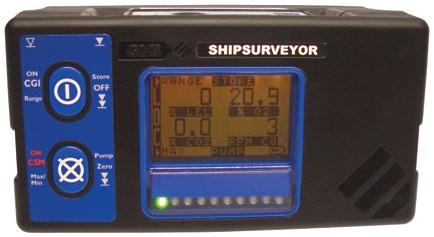
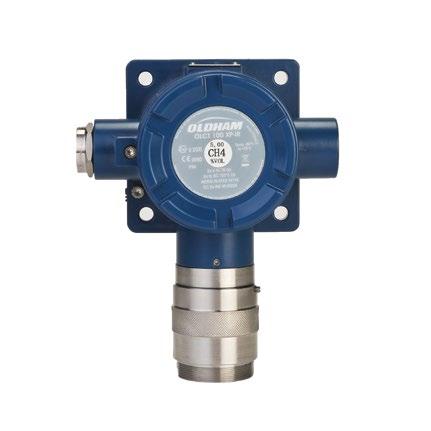
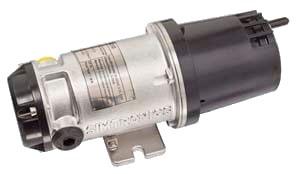
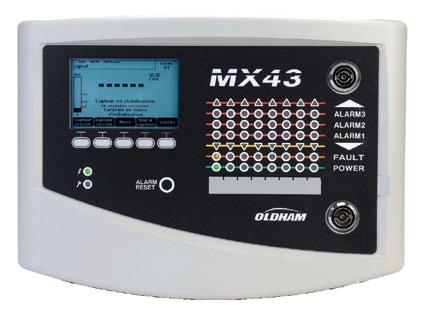
Fixed & portable gas and flame detection solutions with industry leading strategic insight give you the power to protect. With hundreds of years of combined experience and the most comprehensive gas and flame detection portfolio in the industry, Teledyne Gas & Flame Detection is dedicated to protecting people, assets and the environment.
Teledyne Gas and Flame offers a wide range marine approved and certified portable and fixed gas detectors for the Marine Industry. Our products have been developed in combination with extensive consultation, technical expertise and regulatory expertise in mind. Our comprehensive range offers highly reliable, compact and rugged designs and the flexibility to adapt to specific use requirements to offer the complete solution for the marine industry.