
Mission Statement
We, at Catholic Health Services, humbly joint together to bring Christ’s healing mission and the mission of mercy of the Catholic Church expressed in Catholic health care to our communities.
St. Charles Hospital Service Area
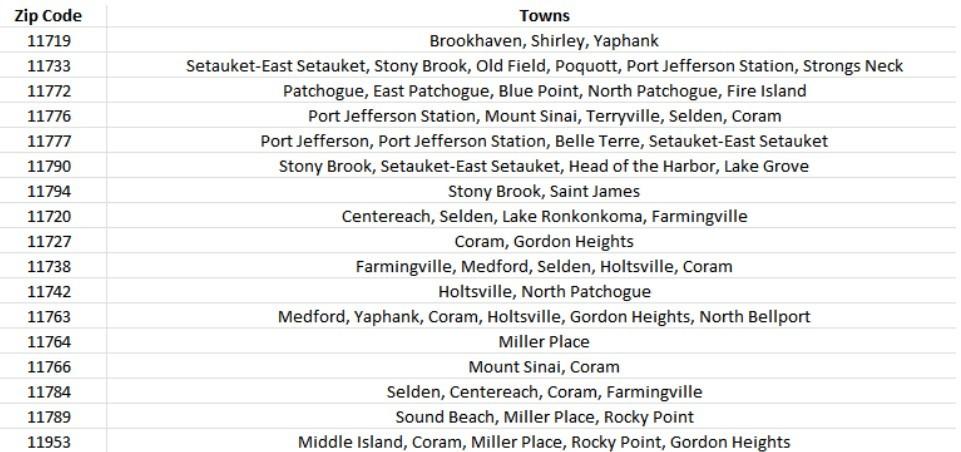
St. Charles Hospital, founded in 1907, has served the residents of the Three Village area for more than 115 years. St. Charles is a 243-bed, acute care, full-service, community hospital and regional rehabilitation center with nine outpatient satellite rehabilitation sites across Long Island. Located in Port Jefferson, NY, St. Charles Hospital’s primary service area is Suffolk County. The chart below defines the zip codes and municipalities (towns) comprising St. Charles Hospital’s service area.
Demographics
Suffolk County’s total population as of 2020 is 1,481,362 (47.2% male; 50.8% female). Those ages 15-44 represent 35.4% of females; 36.7% of males; ages 60 plus represent 23.7% of males and 25.6% of females; those 18 years and older represent 78.8% of males and 79.8% females. The region is predominately White at 65.3% with 7.7% Black/African American and 4.4% Asian. Hispanic or Latino represent 22.4% of the population,1 about a four percent increase from the last report.
Geographic description
Suffolk County is 2,373 square miles and is the second largest county in New York. Catholic Health’s (CH) three hospitals in the county service this easternmost county in New Yok State and the county is divided into 10 towns: Babylon, Huntington, Islip, Smithtown, Brookhaven, Southampton, Riverhead, East Hampton, Shelter Island and Southold.2 Suffolk County is an area of growing diversity, cultures, and population characteristics.
1 U.S. Census Bureau, 2020 Decennial Census 2 https://www.ny.gov/counties/suffolk
Socioeconomic information
In terms of household income, 35.2% of the population earns less than $74, 999 with 15% of that group earning less than $34,999 annually. Of the population, 8% of those under 18 years of age live in poverty, while 6% of those ages 18 to 64 live in poverty and for those ages 18 -34, 6.7% live in poverty.3
The percentage of the population (5 years and over) that speaks a language other than English at home is 30.3%, with Spanish the dominant foreign language spoken 14.7% followed by other Indo/European languages 8.7% and Asian languages 5.1%. In terms of education, for those age 25 and over, 89.4% are high school graduates or higher, 31.9% hold a bachelor’s degree or higher. The percent of the total population uninsured is 4.2%. Of that percent, non-citizens represent 32% of the uninsured. Hispanic/Latino represent 42.1% of the uninsured followed by Black/African American 10%, White 63.9%, Asian 6.5%. Of the uninsured, 37.6% earn less than $74,999 household income and 9.1% earn under $25,000 household income. Approximately 9.6% of the total noninstitutionalized population is disabled. By race/ethnicity, 10.6% of the Native Hawaiian/Pacific Islander population is disabled, 13.6% of the American Indian/Alaska Native population is disabled, 10% of the White population is disabled, 9.6% of the Black/African American population is disabled, and 7.2% of the Hispanic/Latino population is disabled. Native American/Pacific Islanders account for less than one percent of the county’s population.4
Income – one social determinant of health – precludes individuals from low-income communities from accessing preventive and/or medical care due to their difficulty to afford co-payments/deductibles (if insured) or care at all if they are uninsured. The inability to afford co-pays and deductibles consistently rises to the top as a barrier to health care on Long Island Health Collaborative’s (LIHC) Community Health Assessment Survey year and after year. The median household income in the past 12 months by race is $107,422 (White), $85,840 (Black), $91,711 (Hispanic/Latino). Mean income in the past 12months, per capita by race is $50,352, $33,170 and $28,414, respectively.4 According to research conducted by the United Way of New York’s ALICE report,5 Long Island residents are earning wages that do not cover life’s basic costs. As of 2020, 31.5% of Long Island households fall below the set income threshold needed to live and work, which equates to 130,599 households in Nassau County and 171,921 households in Suffolk County, struggling to afford these basic needs.
Key Health Partners
Partnering with community-based organizations is the most effective way to determine how the health priorities will be addressed As part of our collective impact strategies to promote health and well-being for residents in our communities, St. Charles Hospital has strong relationships with local and regional community-based organizations, libraries, schools, faith-based organizations, the local health department, local fire departments and municipalities that support and partner with us to reduce chronic disease, mental health and substance misuse, and to promote health equity. Some of St. Charles’ partners include: the LIHC, the Suffolk County Department of Human Services, Catholic Charities and Catholic Faith Network (CFN).
Public Participation
St. Charles Hospital, along with Catholic Health’s (CH) other five hospitals, worked with the Long Island Health Collaborative (LIHC) and the Suffolk County Department of Health Services (SCDOHS), and dozens of
3 U.S. Census Bureau, 2016-2020 American Community Survey, Five-Year Estimate
4 U.S. Census Bureau, 2016-2020 American Community Survey, Five-Year Estimate
5 https://www.unitedwayli.org/ALICE2020
community-based organizations, libraries, schools and universities, local municipalities, and other community stakeholders to produce the CHNA. SCDOHS representatives offered input and consultation, when appropriate, regarding the data analyses conducted by the LIHC and DataGen. Top, high-level findings include a continued prevalence of chronic disease incidence, particularly heart disease, diabetes, obesity and cancer. Further, surging rates of mental health and substance misuse issues among all demographic categories was found, with disparity seen among youth, and low-income communities of color continuing to experience a higher burden of disease overall. In 2022, members of the LIHC reviewed extensive data sets selected from both primary and secondary data sources to identify and confirm New York State Prevention Agenda priorities for the 2022-2024 Community Health Needs Assessment cycle. Data analysis efforts were coordinated through the LIHC, which served as the centralized data return and analysis hub.
Results of Community-Wide Survey
Primary data was obtained from a community health needs assessment sent to individuals and a similar survey to community-based organization leaders6. Additionally, we looked at results from two qualitative studies to round out our primary data.7 Secondary data was derived from publicly-available data sets curated by DataGen into its proprietary data analytics platform, CHNA Advantage ™, offering 200 plus metrics to determine health issues within Suffolk County.8 As such, priorities selected for the 2022- 2024 cycle remain unchanged from the 2019 –2021 cycle selection, and the selected health disparities in which partners are focusing their efforts rests on the inequities experienced by those in historically underserved communities and communities of color.
Community Health Priorities for 2023-2025
Primary data and secondary data demonstrate that residents living in Suffolk County are experiencing poor mental health status. The 2021 Robert Wood Johnson Foundation County Health Rankings examining Suffolk County in Quality-of-Life Health Outcomes demonstrates an average of 4.0 poor mental health days per 30 days in Suffolk County.9 Mental health issues have soared in the past two years, spurred in part, by the effects of the pandemic. Using data from the U.S. Census Bureau’s COVID-19 Household Pulse Survey (April 23, 2020 – October 26, 2020), a New York State Health Foundation analysis found that more than onethird of adult New Yorkers reported symptoms of anxiety and/or depression, with racial and ethnic groups of color as well as low-income New Yorkers, reporting the highest rates of poor mental health. However, the 18 – 34-year-old age group reported the highest rates (49%) of poor mental health.10 High school students (grades 9 through 12) fared just as badly. A number of studies found poor mental health
6 Community Health Assessment Survey (CHAS) assessing responses from individuals, summary report and survey instrument (Appendix A) CBO Survey Analysis 2022, assessing responses from community-based organization leader, summary report and survey instrument (Appendix B)
7 Qualitative Analysis of Key informant Interviews Conducted among Community-Based Organization Leaders (Appendix C) Long Island Libraries: Caretakers of the Region’s Social Support and Health Needs: Qualitative Analysis (Appendix D)
8 Statewide Planning and Research Cooperative System (SPARCS), New York State Prevention Agenda dashboard, Behavioral Risk Factor Surveillance System (BRFSS), Extended Behavioral Risk Factor Surveillance System (eBRFSS), New York State Community Health Indicators by Race/Ethnicity Reports, Community Health Indicator Reports, Prevention Quality Indicators, CDC Places, and U.S. Census Bureau. The CHNA Advantage™ data analytics platform includes these and other state and national level indicators. It also encompasses social risk measures offered by Socially Determined, Inc.
9 https://www.countyhealthrankings.org/app/new-york/2021/compare/snapshot?counties=36_059%2B36_103
10https://nyhealthfoundation.org/resource/mental-health-impact-of-the-coronavirus-pandemic-in-new-yorkstate/#:~:text=The %20proportion%20of%20New%20Yorkers,health%20throughout%20the%20survey%20period
along with suicide ideation intensified during the pandemic for high schoolers. An April 2022 analysis of data from the 2021 Adolescent Behaviors and Experiences Survey revealed that 37.1% of students experienced poor mental health during the pandemic, and 31.1% experienced poor mental health during the preceding 30 days.10 The pandemic made a bad situation worse, especially for youth, as mental health issues and suicides were already increasing prior to the COVID-19 pandemic.11 12 13 14 With the shortage of mental health care workers and the lingering psychological effects of the pandemic, mental health services remain a top priority for the region.
The county also saw an uptick in opioid-related overdoses and deaths after having made some gains prior to the pandemic. As of 2019, Suffolk County still exceeds the New York state benchmark of 15.1 in overdose deaths per 100,000 due to opioids. According to data provided by Suffolk County’s Department of Health, the rate of opioid overdoses is currently 19.6. In addition, emergency department visits involving heroin overdoses is extremely high in the county. As of 2019, the Suffolk County rate is 47.2 compared to New York State’s benchmark of 31.1 per 100,000 population.15
Another health disparity identified in primary and secondary research is adult obesity. According to the Robert Wood Johnson Foundation’s County Health Rankings for Suffolk County,16 27% of the population (18 and older) reports a body mass index (BMI) greater than or equal to 30 kg/m.17 In 2019, The New England Journal of Medicine studied projected adult obesity in the United States by 2030 based on today’s obese and overweight adult populations.18 By 2030, the obesity epidemic is projected to impact nearly 1 in 2 adults.
According to the New York State Department of Health, obesity is a significant risk factor for many chronic diseases including type 2 diabetes, high blood pressure, asthma, stroke, heart disease and certain types of cancer. The prevalence of chronic diseases is persistent in the county. Nationally, communities of color experience higher rates of chronic disease. Using diabetes as an example, the American Indian/Alaska Native population represents 14.5 percent of adults 18 or older who are diagnosed with diabetes followed by Black, non-Hispanic at 12.1% and Hispanic overall at 11.8% in the United States. Asians and Whites experience the disease at 9.5% and 7.4% respectively.19 Health providers report that many individuals delayed preventive care and routine screenings due to the pandemic, leading to more complicated cases and unfavorable outcomes. Chronic diseases are preventable conditions sensitive to lifestyle (diet/physical activity) habits but hampered by the obstacles presented by social determinant of health factorsincome/employment, race/ethnicity, food access, housing/neighborhood location, and level of education. The county and hospitals identified in this report through collaborative efforts and facility-specific programming acknowledge and address these determinants regularly.
10 https://www.cdc.gov/mmwr/volumes/71/su/su7103a3.htm? s_cid=su7103a3_w
11 https://www.cdc.gov/mmwr/volumes/66/wr/mm6630a6.htm
12 https://www.cdc.gov/nchs/fastats/mental-health.htm
13 Weinberger, A. et al. (August 2017) Trends in depression prevalence in the USA from 2005 – 2015: widening disparities in vulnerable groups. Psychological Medicine, 1-10
14 Bitsko, R et al. (2018) Epidemiology and impact of healthcare provider-diagnosed anxiety and depression among US children. Journal of Developmental and Behavioral Pediatrics, 1-9.
15 https://webbi1.health.ny.gov/SASStoredProcess/guest?_program=/EBI/PHIG/apps/opioid_dashboard/op_dashboard&p=ch& cos=47
16 https://www.countyhealthrankings.org/app/new-york/2022/measure/factors/11/map
17 https://www.health.ny.gov/statistics/prevention/injury_prevention/information_for_action/docs/2021-02_ifa_report.pdf
18 https://www.nejm.org/doi/full/10.1056/NEJMsa1909301
19 https://www.cdc.gov/diabetes/health-equity/diabetes-by-the-numbers.html
St. Charles Hospital Interventions, Strategies and Activities
Priority Number One: Prevent Chronic Disease
Goals and selected interventions concentrate on Focus Area 4: Chronic Disease Preventive Care and Management, with additional programming addressing other focus areas.
Interventions, Strategies and Activities:
1. Live Better Awareness Campaign: Promote healthy eating and food security to increase skills and knowledge to supply healthy food and beverage choices. The goal is to decrease the percent of adults over 18 with obesity in low-income communities of color.
Process measures:
St. Charles Hospital provided numerous healthy eating programs in the community.
On January 7, St. Charles held a “Go Red for Heart Health” event with St. Charles registered dieticians; 30 attended.
On February 14, a St. Charles registered dietician presented “A Heart Healthy Diet” at Bristal Assisted Living in Mt. Sinai; 25 attended.
On March 20, for National Nutrition Month, “Eat the Colors of the Rainbow” presentations were held at the Port Jefferson Elementary School; 350 attended, grades K-6.
On April 1, a St. Charles registered dietician presented “Nutrition for Performance” for the Port Jefferson School Districts’ Middle School sports teams; 125 attended.
On February 20, a St. Charles registered dietician participated in a “Mini Medical Camp” educating 2nd -6th graders regarding healthy eating habits; 15 attended.
On May 1, a St. Charles registered dietician presented “Be a Stroke Super Hero” at Port Jefferson Middle School; 25 attended.
On May 5, St. Charles Hospital held a “Cinco de Mayo” event in recognition of Stroke Awareness Month. Registered dieticians supported the event with healthy nutritious snacks; 20 attended.
St. Charles Hospital employees participated in a “Meals of Hope” food packing event, assembling nutritious meals that were distributed to local parishes and food pantries; 10,000 meals were provided to more than a dozen parishes and food pantries.
St. Charles Hospital participates in the Long Island Cares “Food to Go” program. Every patient seen in the Emergency Department is screened for food insecurity. Those identified as food insecure are given a food to go bag, along with contact information for Long Island Cares and SNAP enrollment information. From January – November 2025, 53 food-to-go bags were provided to patients in need.
On June 25, St. Charles Hospital’s Maternity Department participated in a library-sponsored community baby shower event in the underserved area of Bellport at South Country Library. The event was open to all new and expecting moms. Education was provided on healthy eating; 10 attended.
During the month of August 2025, St. Charles Hospital hosted a summer food drive, with healthy donated food items distributed to St. Gerard Majella RC Church in Port Jefferson.
During the month of November 2025, St. Charles Hospital hosted a Thanksgiving food drive with food items to feed 30 families donated to local food pantries and parishes.
On November 20, for Diabetes Awareness month, St. Charles Hospital’s diabetes experts provided an educational table on diabetes; 40 attended.
On November 21, St. Charles Hospital staff volunteered at the Helping Hands food pantry, preparing and serving meals to families in need. 125 attended.
On December 4, St. Charles Hospital participated in the Senator Palumbo Health Fair at Rose Caracapa center and provided educational information on diabetes management and proper nutrition; 200 attended.
On December 15, A St. Charles Hospital Neurologist and Neuropsychologist presented a community presentation on Memory and addressed the importance of proper nutrition for Brain & Heart Health; 75 attended.
2. Bariatric educational seminars, offered to pre- and post-bariatric surgery patients.
Process measures:
St. Charles Hospital provides hybrid (in-person & virtual) Bariatric Support Group meetings facilitated by a St. Charles Registered Nurse and features various guest speakers, including registered dieticians, psychologists and physician specialists.
Support groups held are as follows: January 15th, 23 attended; February 19th, 20 attended; March 19th, 20 attended; April 16th, 27 attended; May 21st, 43 attended; and June 18th, 25 attended, July 16, 18 attended; September 17, 30 attended, October 15, 25 attended, November 19, 28, December 17, 20 attended. From January through December 2025, there was a total attendance of 279.
3. Free blood pressure screenings are provided at local community organizations.
Process measures:
St. Charles professionals offered blood pressure screenings at the following locations:
Free blood pressure screenings are offered at the Port Jefferson Library on the second Friday of the month. From January to October, blood pressure screening sessions were held 1/10, 2/14, 4/11, 5/9, 8/8, 9/12, 10/10, 12/5 with a total of 58 participants.
On May 5, St. Charles held a “Cinco de Mayo” event for Stroke Awareness Month. Registered dieticians supported the event with nutritious snacks and free blood pressure screenings were also provided; 15 blood pressures were provided.
On September 20, Catholic Health hosted its annual health fair in Melville; more than 200 people attended, 54 screened and 27 flu shots were administered.
On September 24, St. Charles Hospital participated in Maryhaven’s Annual Employee Health Fair in Port Jefferson Station; 25 blood pressures screenings were provided.
On October 18 and 19, CH participated in Oyster Bay’s annual OysterFest, providing a total of 269 blood pressure screenings and education over 2 days.
4. St. Charles Hospital employees, including registered dieticians, provide educational programs, lectures, to school districts and community members.
Process measures:
On January 7, St. Charles Hospital held a “Go Red for Heart Health” event with a St. Charles registered dietician; 30 attended.
On February 14, a St. Charles registered dietician presented “A Heart Healthy Diet” at Bristal Assisted Living in Mt. Sinai; 25 attended.
On March 20, for National Nutrition Month, “Eat the Colors of the Rainbow” presentations were held at the Port Jefferson Elementary School; 350 attended, grades K-6.
On April 1, a St. Charles registered dietician presented “Nutrition for Performance” for Port Jefferson School Districts’ Middle School sports teams; 125 attended.
On February 20, a St. Charles registered dietician participated in a “Mini Medical Camp” educating 2nd -6th graders on healthy eating habits; 15 attended.
On May 1, a St. Charles registered dietician presented “Be a Stroke Super Hero” at Port Jefferson Middle School; 25 attended.
On May 5, St. Charles Hospital held a “Cinco de Mayo” event in recognition of Stroke Awareness Month. Registered dieticians supported the event with nutritious snacks; 20 attended.
On May 20, a St. Charles surgeon provided a lecture “Permanent Solutions for Acid Reflux” at Jefferson’s Ferry; 35 attended.
On June 2, a St. Charles orthopedic surgeon presented “Latest Updates in Hip Pain” at Jefferson’s Ferry; 30 attended.
On June 19, a St. Charles expert provided an “Annual Diabetes Update” at Mary Haven Center of Hope in Port Jefferson Station; 20 attended.
On June 25, St. Charles Hospital’s maternity department participated in a library-sponsored community baby shower event at South Country Library in Bellport. The event was open to all new and expecting moms. Education was provided on healthy eating; 10 attended.
On July 23, a St. Charles neuropsychologist provided a presentation on “Memory Impairment, Early Identification, Management and Treatment Options;” 35 attended.
On September 3, St. Charles Hospital, in collaboration with the Long Island Health Collaborative and New York Coalition for Transportation Safety, held a 1.6 mile “Walk Safe with a Doc” event in Port Jefferson Village. A St. Charles physical medicine and rehab physician discussed the importance of walking on overall health; 12 attended.
On September 3, St. Charles’ pastoral care director provided a lecture on “Building Inner Resilience” at Jefferson’s Ferry in South Setauket; 35 attended.
On October 25, a St. Charles physician provided a lecture on “Shingles: Vaccine, Symptoms and Treatment” for the Selden Foxes Senior group at the Selden Fire Department; 35 attended.
On October 25, St. Charles Hospital Medical experts including a gastroenterologist, physician assistant and registered nurse provided preventative education at the Fire Academy event in Yaphank, “Woman in The Fire Departments”; 90 attended.
On October 31, St. Charles Hospital and our east end medical resources participated in the Annual Veterans Stand-Down Event; 150 attended.
On November 4, St. Charles Hospital participated in a health fair at St. Rosalie in Hampton Bays; 80 attended.
On November 5, St. Charles Hospital’s Dental Department held a “Give Vets a Smile Day.” Nineteen people attended and $12,000 in dental work was provided.
On December 4, St. Charles Hospital participated in the Senator Palumbo Health Fair at Rose Caracappa center and provided educational information on diabetes management and proper nutrition; 200 attended.
On December 15, A St. Charles Hospital Neurologist and Neuropsychologist presented a community presentation on Memory and addressed the importance of proper nutrition for Brain & Heart Health; 75 attended.
5. Expand access to evidence-based self-management interventions for individuals with chronic disease (arthritis, asthma, cardiovascular disease, diabetes, prediabetes, and obesity) whose condition(s) is not well-controlled with guidelines-based medical management alone. Educating and informing through classes, distributing written information or using educational software.
Process measures:
On February 7, St. Charles Hospital hosted a “Go Red” for Heart Health Month; 30 blood pressure screenings were provided.
On February 12, a St. Charles cardiologist provided a “Heart Healthy Nutrition” lecture at Jefferson Ferry in South Setauket; 35 attended.
On February 14, a St. Charles registered dietician provided a heart healthy lecture at Bristal Assisted Living in Mt. Sinai; 25 attended.
On February 21, a St. Charles cardiologist presented “Updates in Heart Health” for employees of Head Start at East Wind in Wading River; 40 attended.
On March 4, St. Charles Hospital began a one-year, evidence-based “Diabetes Prevention Program” that will be completed in December 2; 10 people registered.
From March through April 2025, St. Charles Hospital hosted a seven-week, evidence-based Falls Prevention program called “Stepping On.” The program incorporates a comprehensive multidisciplinary itinerary that reduces the risk of falling. The program is held twice a year, spring and fall, and is instructed by 2 certified therapists; 10 participated.
A free community-based exercise program, “People with Arthritis” is held at St. Charles Hospital and facilitated by a hospital physical therapist. The program was held from March 12–May 2, twice a week; 22 participated.
On March 24 – May 12, St. Charles Hospital and RSVP offered a free program “A Matter of Balance” at Wisdom Gardens in Port Jefferson Station; 15 attended.
On March 25, St. Charles Hospital participated in a health fair at St. Rosalie Church in Hampton Bays. Nutrition, diabetes, breast health, mental health specialties were represented; 125 people attended.
On April 12, St. Charles Hospital participated in the annual “Port Jefferson Health & Wellness Fair” at the Meadow Club in Port Jefferson Station. An educational table was hosted by St. Charles employees, offering educational information regarding a wide variety of health topics, including nutrition, diabetes prevention and more. St. Charles provided healthy acai cups to more than 200 vendors and community guests. Twelve balance screenings were performed.
On April 16, a St. Charles Hospital lactation consultant and RN participated in an educational event focusing on the benefits of breast feeding with the Office of Maternal Health for Black Maternal Health week; 50 attended.
On May 20, a St. Charles surgeon provided a lecture “Permanent Solutions for Acid Reflux” at Jefferson’s Ferry; 35 attended.
On June 2, a St. Charles orthopedic surgeon presented “Latest Updates in Hip Pain” at Jefferson’s Ferry. 30 attended.
On June 19, a St. Charles expert provided an “Annual Diabetes Update” at Mary Haven Center of Hope in Port Jefferson Station; 20 attended.
On June 25, St. Charles Hospital’s maternity department participated in a library-sponsored community baby shower event at South Country Library in Bellport. The event was open to all new and expecting moms. Education on healthy eating was provided; 10 attended.
On September 3, St. Charles Hospital, in collaboration with the Long Island Health Collaborative and New York Coalition for Transportation Safety, held a 1.6 mile “Walk Safe with a Doc” event in Port Jefferson Village. A St. Charles physical medicine and rehab physician discussed the importance of walking on overall health; 12 attended.
On September 4 – October 9, St. Charles Hospital hosted a free “Stepping On” falls prevention program; 14 people attended.
On September 30, St. Charles Hospital hosted a “Drumming for Parkinson’s” program; 9 attended.
On October 8, through November, St. Charles Hospital hosted a free community Arthritis Exercise program; 20 people attended.
On October 23, St. Charles Hospital hosted a free community prostate cancer screening; 12 were screened, all were negative.
On October 25, St. Charles Hospital Medical experts including a gastroenterologist, physician assistant and registered nurse provided preventative education at the Fire Academy event in Yaphank, “Woman in The Fire Departments”; 90 attended.
On October 31, St. Charles Hospital and our east end medical resources participated in the Annual Veterans Stand-Down Event; 150 attended.
On November 4, St. Charles Hospital participated in a health fair at St. Rosalie in Hampton Bays; 80 attended.
On November 5, St. Charles Hospital’s Dental Department held a “Give Vets a Smile Day.” Nineteen people attended and $12,000 in dental work was provided.
On November 21, St. Charles Hospital provided a community lecture for Patchogue Medford High School on Substance Use Disorders; 45 attended.
On December 4, St. Charles Hospital participated in the Senator Palumbo Health Fair at Rose Caracappa center and provided educational information on, wound care, Parkinson’s, falls prevention with screenings, three screened, diabetes management, proper nutrition and provided 24 hearing screenings; 200 attended.
On December 15, A St. Charles Hospital Neurologist and Neuropsychologist presented a community presentation on Memory and addressed the importance of proper nutrition for Brain & Heart Health; 75 attended.
6. Healthy Sundays: BP and BMI screenings, flu vaccinations, health education and referrals to follow up care.
Process measures:
On October 5, St. Charles Hospital provided 41 flu vaccines in a Healthy Sunday at St. John the Evangelist Church in Riverhead.
On October 26, St. Charles Hospital provided 32 flu vaccines in a Healthy Sunday at St. Rosalie RC Church in Hampton Bays.
On November 9, St. Charles Hospital provided 28 flu vaccines and 4 blood pressures in a Healthy Sunday at The Basilica Parish of the Sacred Hearts of Jesus and Mary in Southampton.
7. Offer the evidence-based National Diabetes Prevention Program (DPP) each year.
Process measures:
A Diabetes Prevention Program (DPP) began at St. Charles Hospital on March 5th and will conclude on December 4th; 11 people graduated.
8. Employee Running/Walking Club
Process measures:
On February 7, a “Go Red for Heart Health” event was held in the hospital’s main lobby. St. Charles’ food and nutrition staff provided heart healthy food samples and recipes to 30 people. The event included a one-mile walk around the hospital campus.
In September, St. Charles Hospital kicked off a “Wellness Walking Challenge” to help promote increased physical activity; 15 teams with 155 employees recorded more than 500,000 steps.
On September 3, St. Charles Hospital, in collaboration with the Long Island Health Collaborative and New York Coalition for Transportation Safety, held a 1.6 mile “Walk Safe with a Doc” event in Port Jefferson Village; St. Charles physical medicine and rehab physician discussed the importance of walking on overall health;12 attended.
On October 18 and 19, 12 St. Charles Hospital’s running club employees participated in the Suffolk County Marathon.
9. Educational presentations on numerous topics offered by subject matter experts through Catholic Health’s Speakers Bureau. Topics include Diabetes: Myths & Truths, Nutrition for Heart Health, Striking Out Strokes, Smoking Cessation, Falls Prevention and more.
Process measures:
St. Charles Hospital provided the following community outreach programs from January 1 – October 2025.
On February 7, St. Charles Hospital held a “Go Red for Heart Health” event with blood pressure screenings; 30 blood pressures were provided.
On February 12, St. Charles Hospital held a “Taking Care of Your Heart with a Heart Healthy Diet” presentation held at Jefferson Ferry in South Setauket; 35 attended.
On February 14, St. Charles Hospital held a Heart Health Awareness Presentation at Bristal Assisted Living in Mt. Sinai; 25 people attended.
On February 20, St. Charles Hospital participated in a mini medical camp at The Explorium in Port Jefferson. St. Charles staff from the lab, stroke, infection prevention, nutrition and the Emergency Department presented to 15 elementary school students.
On February 26, a St. Charles surgeon provided a lecture, “Permanent Solutions to Acid Reflux” lecture at St. Charles Hospital; 8 attended.
On March 20, St. Charles Hospital presented “Eat the Colors of the Rainbow” presentation at Port Jefferson Elementary School; 350 attended.
On April 1, St. Charles Hospital presented “Nutrition for Performance” for Port Jefferson Middle School students; 125 students attended.
On April 7, an advanced practice provider from St. Charles presented “Lyme Disease Awareness and Prevention” at the Comsewogue Library. Four attended.
On April 7, St. Charles Hospital hosted annual Parkinson’s disease Symposium; 110 attended.
On April 29, an advanced practice provider from St. Charles Hospital presented “Lyme Disease Awareness and Prevention” at a Port Jefferson Middle School Health class; 25 students attended.
On May 1, five health experts from St. Charles Hospital presented “Be a Stroke Superhero” for the Port Jefferson Middle School students’ health class; 25 attended.
On May 14, experts from St. Charles Hospital presented, “Artificial Intelligence: Implications for Professional Psychology Practice;” 15 attended.
On June 2, St. Charles orthopedic surgeon provided a lecture, The Latest Updates in the Treatment of Hip Pain” at Jefferson’s Ferry in South Setauket; 30 attended.
On June 17, St. Charles Hospital provided a “Falls Prevention” presentation at St. Francis of Cabrini Church in Coram; 25 attended.
On June 18, a St. Charles urologist virtually presented “Prostate Cancer Awareness and Prevention” for AARP; 40 attended.
On June 19, a diabetes expert from St. Charles Hospital provided a “Diabetes Update” presentation to nursing staff at Maryhaven Center of Hope in Port Jefferson Station; 20 clinical employees attended.
On May 20, a St. Charles surgeon provided a lecture “Permanent Solutions for Acid Reflux” at Jefferson’s Ferry; 35 attended.
On June 2, a St. Charles orthopedic surgeon presented “Latest Updates in Hip Pain” at Jefferson’s Ferry. 30 attended.
On June 25, St. Charles Hospital’s maternity department participated in a library-sponsored community baby shower event at South Country Library in Bellport. The event was open to all new and expecting moms. Education was provided on healthy eating; 10 attended.
On July 23, a St. Charles physician provided an educational lecture, “Invest in Your Mind: Alzheimer’s Disease” at the Selden Fire Department; 35 attended.
On October 15, a St. Charles physician provided a lecture on “Shingles: Symptoms and Treatment” for the Selden Foxes Senior group at the Selden Fire Department; 45 attended.
On October 23, St. Charles chemical dependency staff presented on the dangers of vaping and substance abuse at St. John the Baptist High School in West Islip; 800 students and 200 faculty attended.
On November 21, St. Charles Hospital provided a lecture to Patchogue Medford High School on Substance Use Disorder; 45 attended.
On December 15, A St. Charles Hospital Neurologist and Neuropsychologist presented a community presentation on Memory and addressed the importance of proper nutrition for Brain & Heart Health; 75 attended.
10. Promote tobacco use cessation.
Process measures:
St. Charles Hospital, in collaboration with the Suffolk County Department of Health, held a free “Learn to Be Tobacco Free” program, which began in January; 16 people registered and 8 graduated.
The hospital is working with Suffolk County Department of Health to arrange a Smoking Cessation Program, tentatively scheduled for late spring 2026.
On October 23, St. Charles chemical dependency staff presented on the dangers of vaping and substance abuse at St. John the Baptist High School in West Islip; 800 students and 200 faculty attended.
On October 26 and 27, St. Charles staff from the chemical dependency program, spoke to students at about the dangers of vaping and substance abuse at Port Jefferson High School; 400 students attended.
11. Chronic Disease Self-Management Program
Process measures:
St. Charles Hospital is hosting a CDC evidence-based “Diabetes Prevention Program” from March through December; eight people registered, four have graduated.
St. Charles Hospital was unable to host a “Chronic Disease Self-Management” workshop in Fall 2025 as Wisdom Gardens was unable to accommodate. Working on plans to schedule for Spring/Fall 2026.
12. Walk Safe with a Doc
Process measures:
On September 3, St. Charles Hospital, in partnership with the Long Island Health Collaborative and New York Coalition for Transportation Safety, held a 1.6 mile “Walk Safe with a Doc” event in Port Jefferson Village. A St. Charles physical medicine and rehab physician discussed the importance of walking on overall health; 12 attended.
Priority Number Two: Promote Well—Being and Prevent Mental and Substance Use Disorders
Goals and selected interventions concentrate on Focus Area 2: Mental and Substance Use Disorders Prevention, with additional programming addressing other focus areas.
Interventions, Strategies and Activities:
1. Continue to distribute CH's Mental Health Substance Use Disorder Services Guide to CH community partners at all outreach events, including hospital health fairs and Healthy Sunday’s events. The guide is available as a download from the CH website.
Process measures:
On February 11, St. Charles Hospital’s Detox, Chemical Dependency & SUD Rehab team presented to 5 Rocky Point Middle School health classes; 60 attended.
On February 12, St. Charles Hospital’s Detox, Chemical Dependency & SUD Rehab team leaders presented to 5 Rocky Point Middle School Health Classes; 120 attended.
On February 26, St. Charles Hospital’s Detox, Chemical Dependency & SUD Rehab team leaders and St. Charles’ Director of Psychology presented at the Diocesan Department of Education at “Mental Wellness Day” event held at St. John the Baptist High School in West Islip; 50 attended.
On February 27 and 28, St. Charles Hospital’s Detox, Chemical Dependency & SUD Rehab team leaders presented at Rocky Point High School; 225 attended.
The Sherpa Program, a free service provided by the Family & Children’s Association, is comprised of recovery coaches trained to meet with overdose survivors and their families in the Emergency Department. The team directs people to treatment, offers encouragement and follow-up. St. Charles Hospital’s collaboration with the Sherpa Program resulted in 282 interventions between January and September 2025. Total number for the year will be updated at the end of December. Fourth Quarter data not available at time of submission.
On April 12, St. Charles Hospital participated in the annual “Port Jefferson Health & Wellness Fair” at the Meadow Club in Port Jefferson Station. An educational table was provided with numerous flyers regarding substance use detoxification and rehabilitation services. Free balance screenings were given to 12 people; 150 attended.
On October 16, St. Charles Hospital attended the CAST Community Health Fair at the Peconic Bay Recreation Center and distributed Detox SUD and Catholic Health’s Mental Health Resource Guide; 120 attended.
On October 23, St. Charles staff from the chemical dependency program, presented on the dangers of vaping, substance abuse, and mental health at St. John the Baptist High School in West Islip; 800 students and 200 faculty attended.
On October 27 and 28, St. Charles staff from the chemical dependency program, spoke to students at about the dangers of vaping, substance abuse and mental health at Port Jefferson High School; 400 students attended.
On November 7, St. Charles staff from the Chemical Dependency Program, spoke at the Sunshine Prevention Center in Port Jefferson; 12 students attended.
On November 19, St. Charles staff from the Chemical Dependency Program, presented to Patchogue Medford Middle School parents; 25 attended.
On November 20, St. Charles staff from the Chemical Dependency Program, presented to Patchogue Medford High School students and faculty; 100 students and 15 faculty attended.
On November 21, St. Charles staff from the Chemical Dependency Program, presented to Patchogue Medford High School students; 45 attended.
2. There is a 40-bed dedicated unit at St. Charles for the safe and medically-supervised detoxification process. These are used for post-detoxification rehabilitation through a 21-day, inpatient program.
Process measures:
St. Charles Hospital’s Inpatient Detox program saw 1,313 admissions from January – December 2025. The Inpatient Substance Abuse Disorder Rehabilitation has seen 656 admissions during the same time period.
3. St. Charles Hospital staff will distribute Narcan to qualified patients.
Process measures:
From January 1 – December 2025, St. Charles Hospital dispensed a total of 1001 Narcan sprays.
4. To further the continuum of care for patients post-discharge from both the detoxification program and the rehabilitation program. St. Charles offers numerous support groups post-discharge, including: Monthly Al-Anon Family Support Group - Step Meeting, Weekly Al-Anon Family Support Group – Beginners’ Meeting, Weekly Alcoholics Anonymous - Back to Basics, Weekly Alcoholics Anonymous - Living Sober, Weekly Narcotics Anonymous.
Process measures:
From January 1- December 23, 2025, 96 meetings have been held for Al-Anon and Legacy. An average of 8 people attend per meeting for a total of 768 attendees. The meetings had been held inperson and Zoom until June. All Meetings are currently being held in person.
5. Offer an education conference for health care professionals.
Process measures:
On January 6, Dr. Tomaino, a St. Charles gastroenterologist, provided a lecture on “Fatty Liver Disease” to medical staff; seven people attended.
On May 14, Dr. David Anschel, Director of St. Charles Epilepsy Program and Dr. Theresa McKenna, St. Charles’ Director of Psychology, presented “Artificial Intelligence: Implications for Professional Psychology Practice”; 15 attended.
On June 19, Dr. McKenna presented “Annual Update on Diabetes”; 20 attended.
On 10 occasions, Dr. Arif Ahmad, Director of Acid Reflux at St. Charles Hospital, provided in-services to a total of 14 physicians.
On October 22, St. Charles Hospital hosted an Annual Interdisciplinary Conference for Traumatic Brain Injury; 33 attended.
6. Promotion of all programs, events, education offered by collaborative members that speak to the prevention of mental and substance use disorders. Posts in LIHC weekly communications newsletter, social media postings, cross promotion of member events, programs on all media platforms. Promotion on CFN and CH social media, website, and community-targeted publications.
Process measures:
The hospital also relies upon the Long Island Health Collaborative (LIHC) to disseminate information about the importance of proper nutrition and physical activity among the general public to assist Nassau residents in better managing their chronic diseases and/or preventing the onset of chronic diseases. The hospital also relies upon the LIHC to disseminate information about mental health prevention and treatment services and programming, as well as relevant information about substance misuse. Dissemination of information is achieved through the bi-weekly Collaborative Communications e-newsletter, which is sent to 560 community based organization leaders, and strategic use of social media platforms. These efforts are ongoing.
Priority Number Three: Promote a Healthy and Safe Environment
Interventions, Strategies and Activities:
1. Connect older adults and people with disabilities with evidence-based falls prevention programs such as Stepping On or A Matter of Balance.
Process measures:
March through April 2025, St. Charles Hospital hosted a seven-week, evidence-based Falls Prevention program called “Stepping On”. Eight people participated. The program incorporates a comprehensive multidisciplinary itinerary that reduces the risk of falling.
March – May 2025, St. Charles Hospital, in collaboration with RSVP, hosted an eight week evidencebased program, ‘A Matter of Balance”. Fifteen attended.
March - May 2025, St. Charles Hospital hosted an “Arthritis Exercise Program”; 22 attended
September - October, St. Charles Hospital hosted a “Stepping On” falls prevention program; 14 attended.
September – October, St. Charles Hospital hosted a “Drumming for Parkinson’s” program; 9 attended.
October - November, St. Charles Hospital is hosting an “Arthritis Exercise” program; 20 attended.
Priority Number Four: Promote Healthy Women, Infants and Children
Interventions, Strategies and Activities:
1. Nurses to take coursework to be certified as breastfeeding counselors. Training initiatives are under way.
Process measures:
St. Charles Hospital has 18 nurses who are certified breast-feeding counselors.
From January – December 2025, 180 participants attended a lactation support group, which meets every Thursday.
2. Through partnership with Suffolk County offices, children in need of early intervention will be identified and referred to the program at St. Charles Hospital.
Process measures:
There have been 555 early childhood intervention referrals received from the Suffolk County Department of Health from January – November 2025. Total for the year will be updated at the end of December.
Priority Number Five: Prevent Communicable Diseases
Interventions, Strategies and Activities:
1. Offer vaccines in locations and hours that are convenient to the public including pharmacies, vaccine only clinics, and other sites that are accessible to people of all ages. Flu Vaccinations are usually given out during months of high flu activity starting as early as September lasting until late winter.
Process measures:
On September 24, St. Charles Hospital participated in the annual Maryhaven Center for Hope Employee Health Fair; 20 flu vaccinations were administered.
On October 5, St. Charles Hospital participated in a Healthy Sunday at St. John the Evangelist Church in Riverhead; 41 flu vaccinations were administered.
On October 11, St. Charles Hospital administered 11 flu vaccines at Ridge Fire Department.
On October 26, St. Charles Hospital participated in a Healthy Sunday at St. Rosalie RC Church in Hampton Bays; 31 flu vaccinations were administered.
On November 6, St. Charles Hospital hosted a flu vaccination pod at Canine Companions in Medford; 10 vaccinations were administered.
On November 9, St. Charles Hospital hosted a Healthy Sunday at The Basilica Parish of the Sacred Hearts of Jesus and Mary in Southampton; 28 flu vaccinations were administered.
Living the Mission
The CH mission is the driving force behind all community outreach activities. In addition to the interventions summarized above, St. Francis Hospital, along with the overall system and CH skilled nursing facilities, Catholic Health Home Care and Good Shepherd Hospice, provide additional outreach programs that promote the health care ministry of the Catholic Church and address social determinants of health.
Interventions, Strategies and Activities:
1. Virtual education series streaming on YouTube, providing short videos on various topics
Currently there is a Keeping Your Child Safe at Every Age, Child and Adolescent Mental Health, Alzheimer’s and dementia series. These have garnered more than 30,000 total views.
Catholic Health also offers an ongoing Health Tips series discussing topics such as Stroke vs. Aneurysm, What You Need to Know about C-Sections, and Prostate Cancer Awareness, among others. From January-December 2025, there have been 3 videos posted, with more than 90 views on YouTube.
The “On-Call with Dr. Jason Golbin” show is designed for physicians and advanced practice providers. In each monthly episode, Catholic Health’s Chief Medical Officer Jason Golbin, DO, speaks with our physician leaders about the system’s emerging technologies and newest clinical resources while offering a glimpse into their personal stories and the compassionate care delivered. From January to December, these videos have had more than 411,000 views across multiple platforms.
2. Broadcast health-related television shows for the public, in collaboration with Catholic Faith Network, provide education and prevention lectures to improve knowledge related to specific diseases and conditions, preventive care, and up-to-date treatment options.
From January-December 2025, seven new shows with Catholic Health Cardiologist David D’Agate, DO, aired on CFN and were posted to Catholic Health’s YouTube channel. The “Stronger Together” series with Dr. D’Agate discusses topics such as cardiac health, sleep, fertility, and access to care. This show airs on CFN every four to five weeks and is promoted via Catholic Health’s internal and external communications, including a substantial social media campaign. Across multiple platforms, these videos have more than 913,000 views. Additionally, a Catholic Health segment on CFN Live, “Trending Health Topics,” produced 2 segments from January-December 2025. These videos have more than 170 views on YouTube.
There are also quarterly shows on CFN with Catholic Health President and CEO Patrick O’Shaughnessy, DO. The shows with Dr. O’Shaughnessy and Monsignor Jim Vlaun bring the latest in research and information on medical procedures and advancements. There have been 3 videos posted in 2025, totaling more than 280 views.
Additionally, Catholic Health airs a “Catholic Health Update” weekly, highlighting events or activities taking place across the system. From January-December 2025, these videos received more than 2.1 million views across all platforms.
3. Promotion of all programs, events, and education is on the CH website and all CH social media outlets, including Facebook, Twitter, Instagram, and LinkedIn.
This includes the promotion of all education, healthy recipes, health tips and support groups. Some of these include education on how to stay hydrated during the summer, facts on various cancers and screening, children’s health and more.
4. Lectures in Catholic schools, local libraries, and other community organizations.
The Catholic Health Speakers Bureau provides speakers to community organizations. From JanuaryDecember 2025, there have been 84 speaking engagements. Topics have included Heart Health, Fitness for Seniors, Breast Health, Medication Management, Seasonal Depression, and Sleep Health.
Catholic Health has partnered with AARP to host a virtual lecture series. These lectures are being held monthly from June through December.
6/18/25 – Men’s Health; 40 attended.
7/16/25 – Keep Your Sight as You Age; more than 100 attended.
8/20/25 – Concepts of Grief and How to Cope; 45 attended.
9/17/25 – Food for Thought; more than 400 attended.
12/17/25 – Safely Stay Active During the Winter: 33 attended.
5. Community Outreach Screening Buses
The Catholic Health buses travel across Long Island to different community-based organizations, providing free health screenings, including blood pressure, cholesterol, body mass index and glucose. From January through December 12, the mobile buses screened 7,493 people.
6. Healthy Sundays
In this volunteer program, we partner with different community organizations to provide BP and BMI screenings, flu vaccinations, health education and referrals to follow up care. In this volunteer program, we partner with different community organizations to provide BP and BMI screenings, flu vaccinations, health education and referrals to follow up care. Twelve events were held through December; 471 people attended.
7. Additional Community Outreach
On 4/1/25, CH employees packed food for Meals of Hope. Forty-seven employees participated and 46 boxes of food were prepared, equaling almost 10,000 meals.
On 4/12/25, CH attended Tomorrow’s Hope 10th Annual Run in Garden City and provided cardiac screenings to 6 people.
On 5/23/25, 5/24/25, and 5/25/25, CH attended the Jones Beach Air Show and provided blood pressure screenings to a total of 195 people.
On 9/20/25, Catholic Health held its annual system-wide health fair; more than 200 people attended, 54 people received blood pressure, cholesterol, glucose and body mass index screenings and 27 flu shots were administered.
On 9/27/25, CH attended St. Vincent de Paul’s annual Friends of the Poor Walk, providing health information. More than 850 people attended.
CH participated in Oyster Bay’s annual OysterFest on 10/18/24 and 10/19/24, providing a total of 269 blood pressure screenings and education over 2 days.
Dissemination of the Plan to the Public
The St. Charles Hospital Community Service Plan will be posted on the hospital’s website at https://www.chsli.org/st-charles-hospital/about/community-health Copies will be available at local free health screenings and can be mailed upon request.
By encouraging friends and neighbors to complete the LIHC Wellness Survey online or at local screenings, the Community Health Needs Assessment will help St. Charles Hospital continue to develop ways to best serve our community.
Conclusion
The Community Service Plan is intended to be a dynamic document. Utilizing the hospital’s strengths and resources, St. Charles Hospital, along with community partners, will work to continue to best address health disparities and needs. The hospital will strive to improve the overall health and well-being of individuals and families by expanding free health promotion and disease prevention/education screenings and programs in communities where they are most needed. St. Charles Hospital is committed to continue to develop ways to best serve the community.