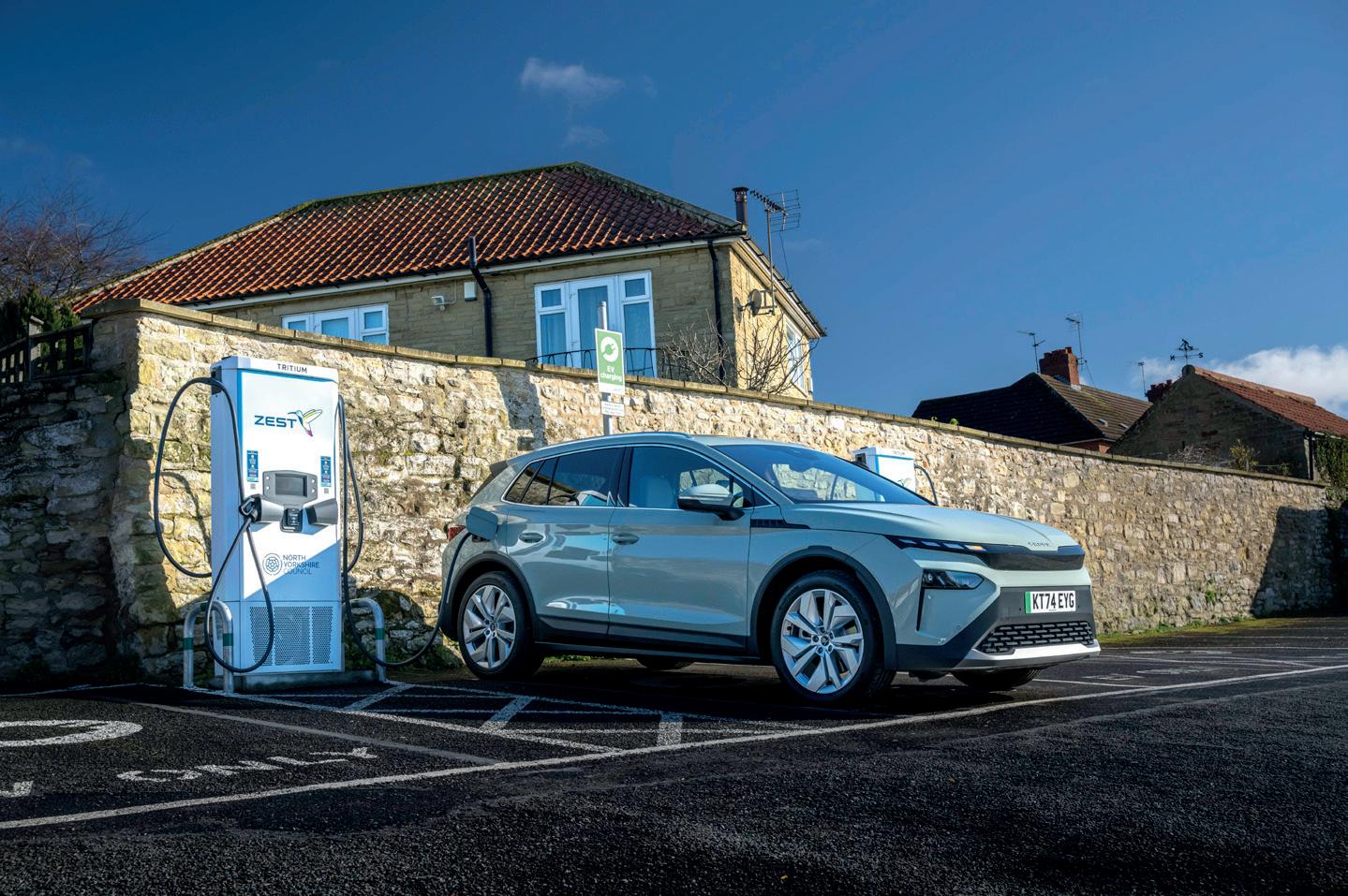
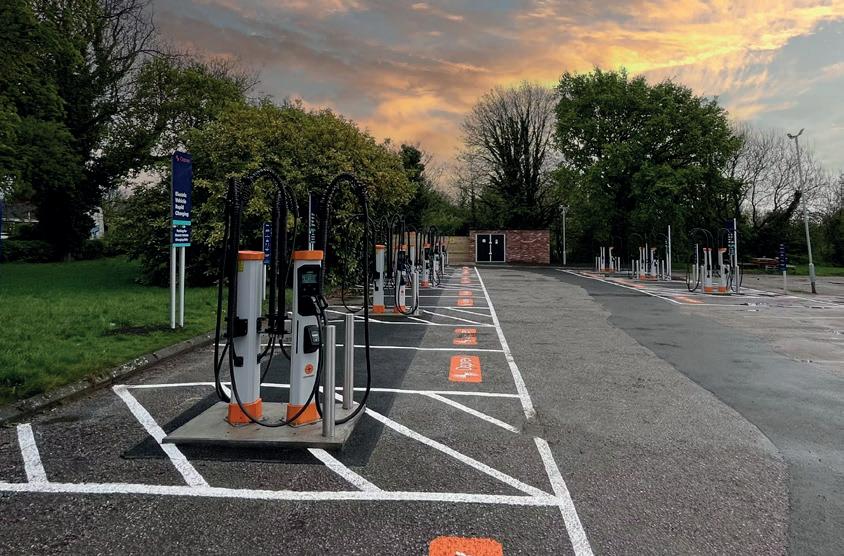
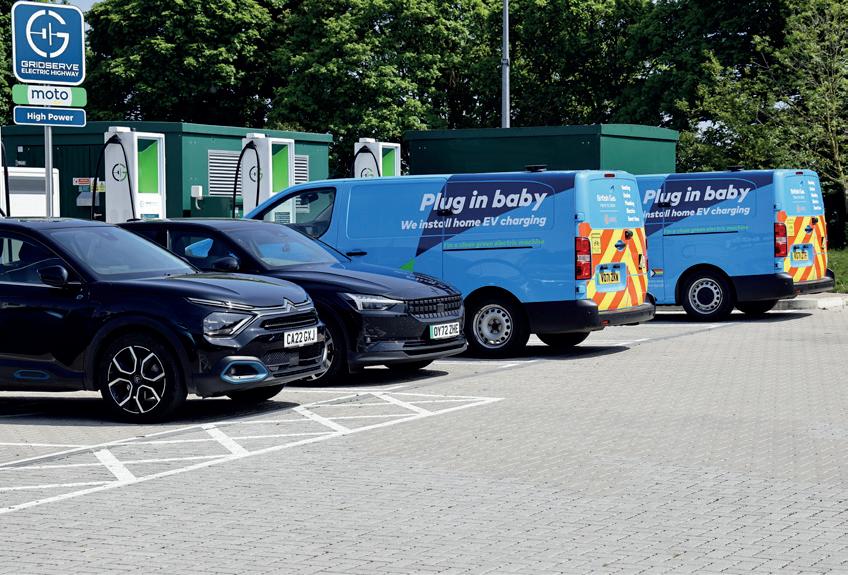
Enjoy fast, rapid or ultra-rapid charging on 98% of our network.
Whether it’s local deliveries or long-range journeys, we’re here to keep your drivers and your business powered up for the road ahead.
Allstar One Electric. Got yours yet?
Allstar One Electric
3 EV POWERED MAGAZINE
EDITOR’S NOTE
Taken for granted
Welcome to another edition of EV Powered.
As I write this, the story dominating the EV sphere is new government support for the car industry in the form of new buying grants.
In the face of constant industry calls for more government help, it feels like this announcement has been a long time coming. It’s three years since the old Plug-in Car Grant was scrapped and since then it seems car makers and sellers have been persistently asking for something in its place to stimulate private interest and help them hit the targets set out in the ZEV mandate.
Variously, they’ve called for cuts in VAT on new cars, cuts in VAT on charging and changes to vehicle excise duty rules. In the end, what we’ve got is three years’ worth of government grants that knock £3,750 off the list price of new EVs costing under £37,000.
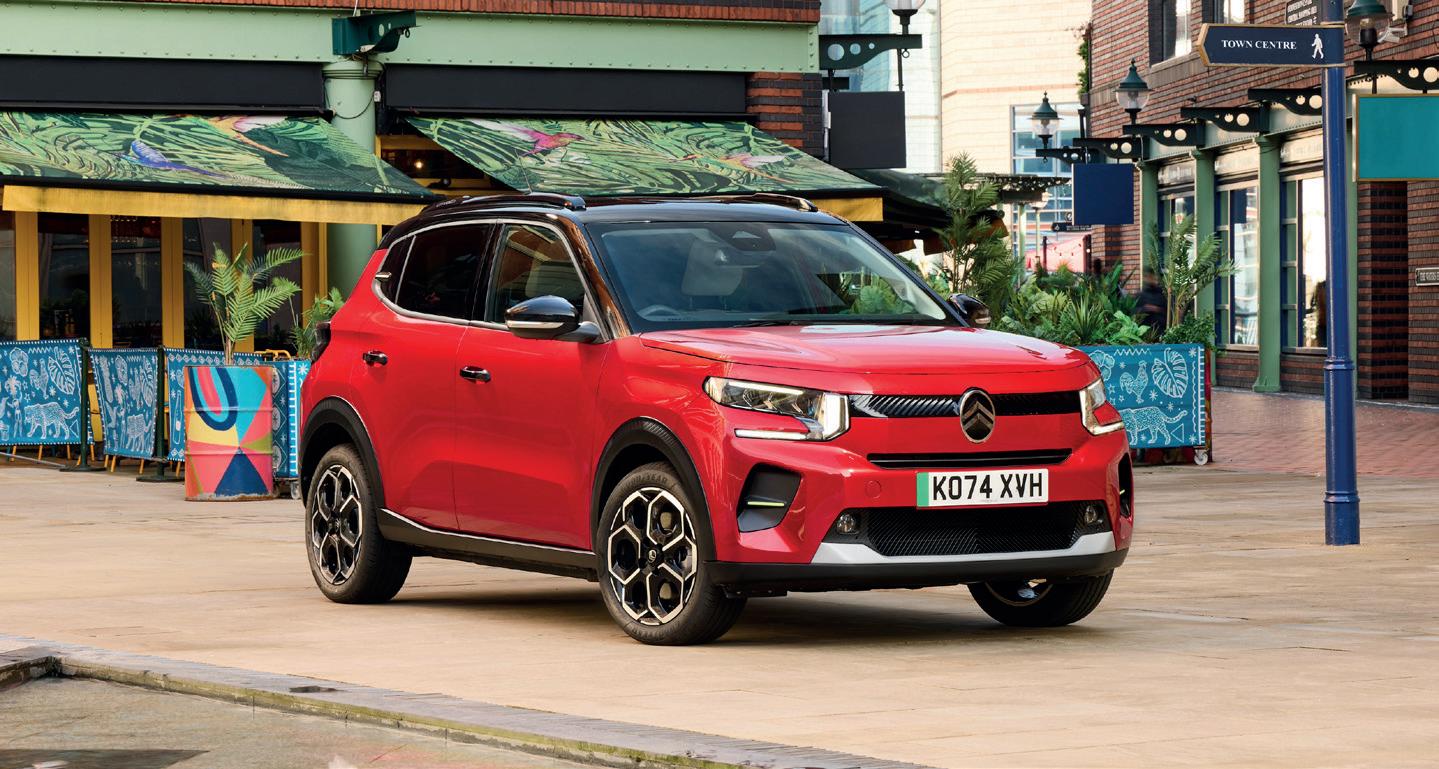
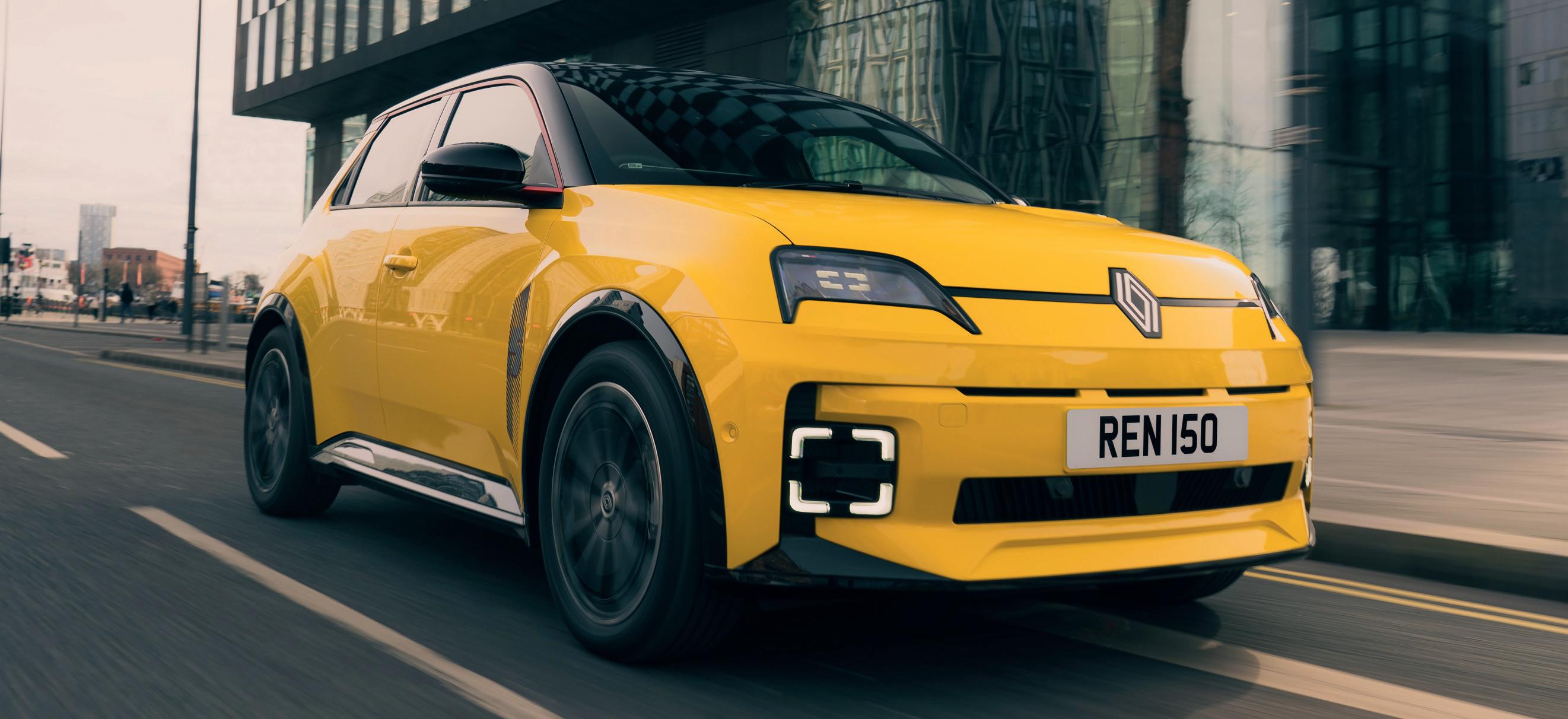
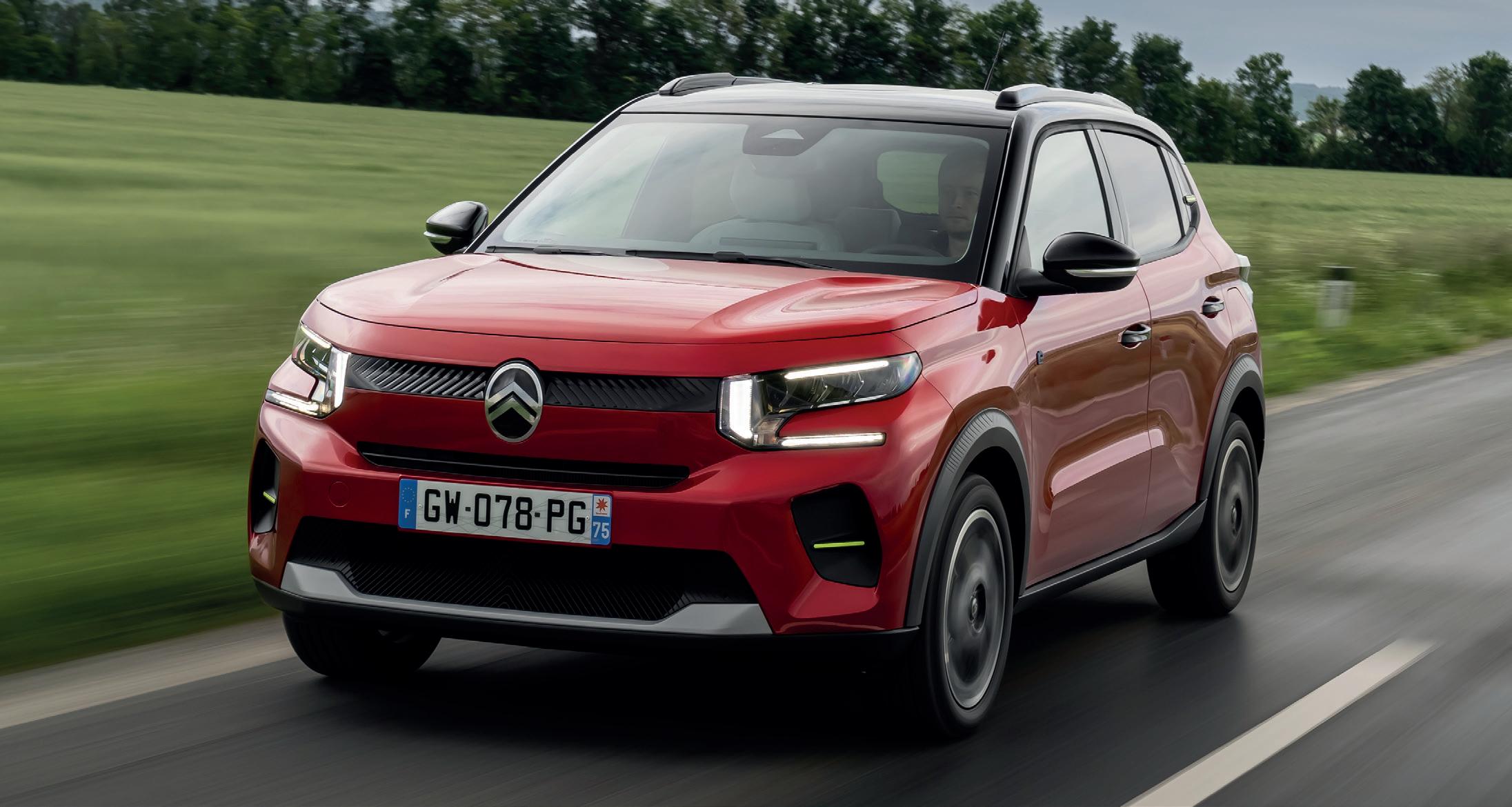
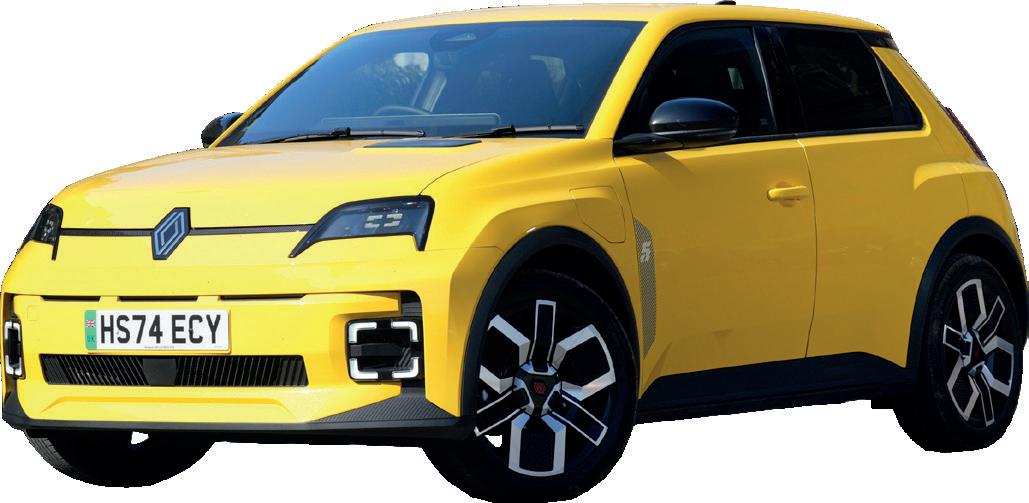
Anything that supports the EV industry and helps get more drivers to consider an EV is to be welcomed. For private buyers especially, almost £4,000 off the price of a new car is not to be sniffed at. And it makes the biggest difference at the most affordable end of the market, where the discount is a larger proportion of the car’s basic price. That, hopefully, will help switch even more private buyers onto the benefits of brilliant small EVs like the Citroen E-C3 and Renault 5.
However, as Stuart Masson points out on page 50, the latest funding is targeted purely at the new car market and serves to help car makers hit their government-mandated sales targets. It does nothing to help the vast majority of car buyers, who buy secondhand.
When the used car market is four times the size of the new car market, surely it makes sense to help buyers in that sphere make the switch. Used models offer a lower-cost entry point to electric motoring and there are some absolute bargains out there. But the latest figures from Marketcheck show the average used EV still costs almost £23,000. Helping bring that down would be a surefire way of making electric cars more accessible to far more drivers. And, ultimately, that should be the aim of government support – getting more drivers out of ICE and into EV, not helping wealthy car makers sell more brandnew models just to hit targets handed down to them by the government.
Capital Business Media Ltd, Level 18, 40th Floor, London, E14 5NR. Tel: 020 7148 3861
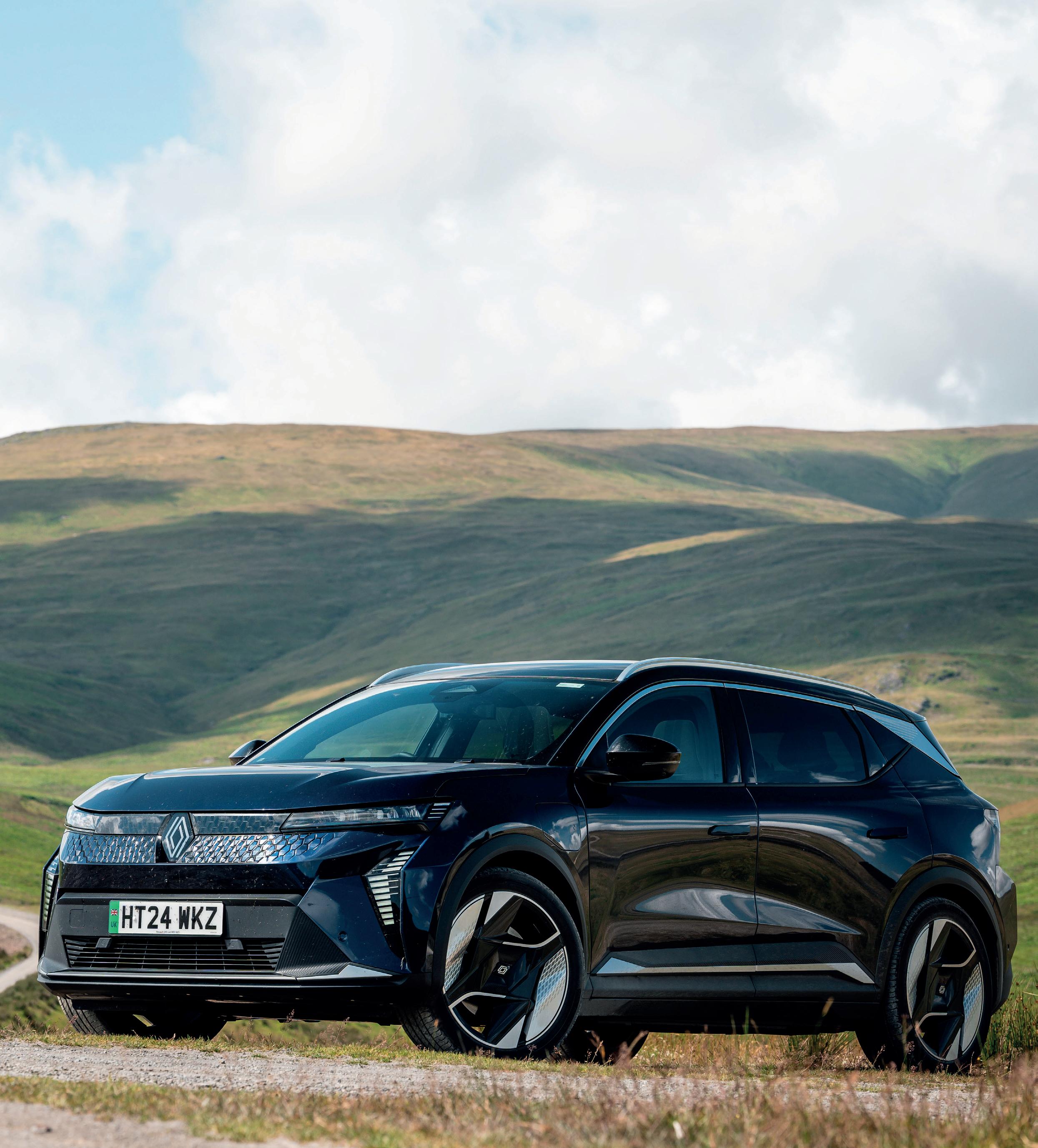
Anyway, enough politics from me. On a lighter note, I’ve been getting to grips with my new long-term test car. I was among judges who chose the Renault Scenic as the Scottish Car of the Year in 2024, so now I’m spending a few months with one to see just how well it slots into family life. Early signs are good thanks to its spacious interior, Google-based operating system and near-350-mile real-world range. You can read about my first few weeks with that on page 26.
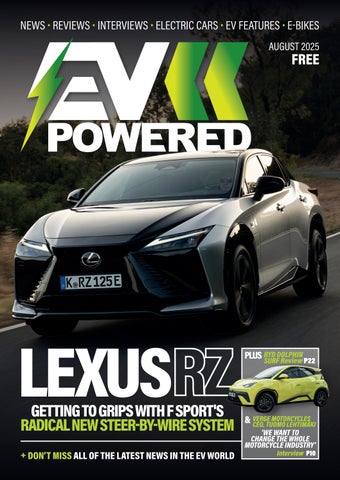
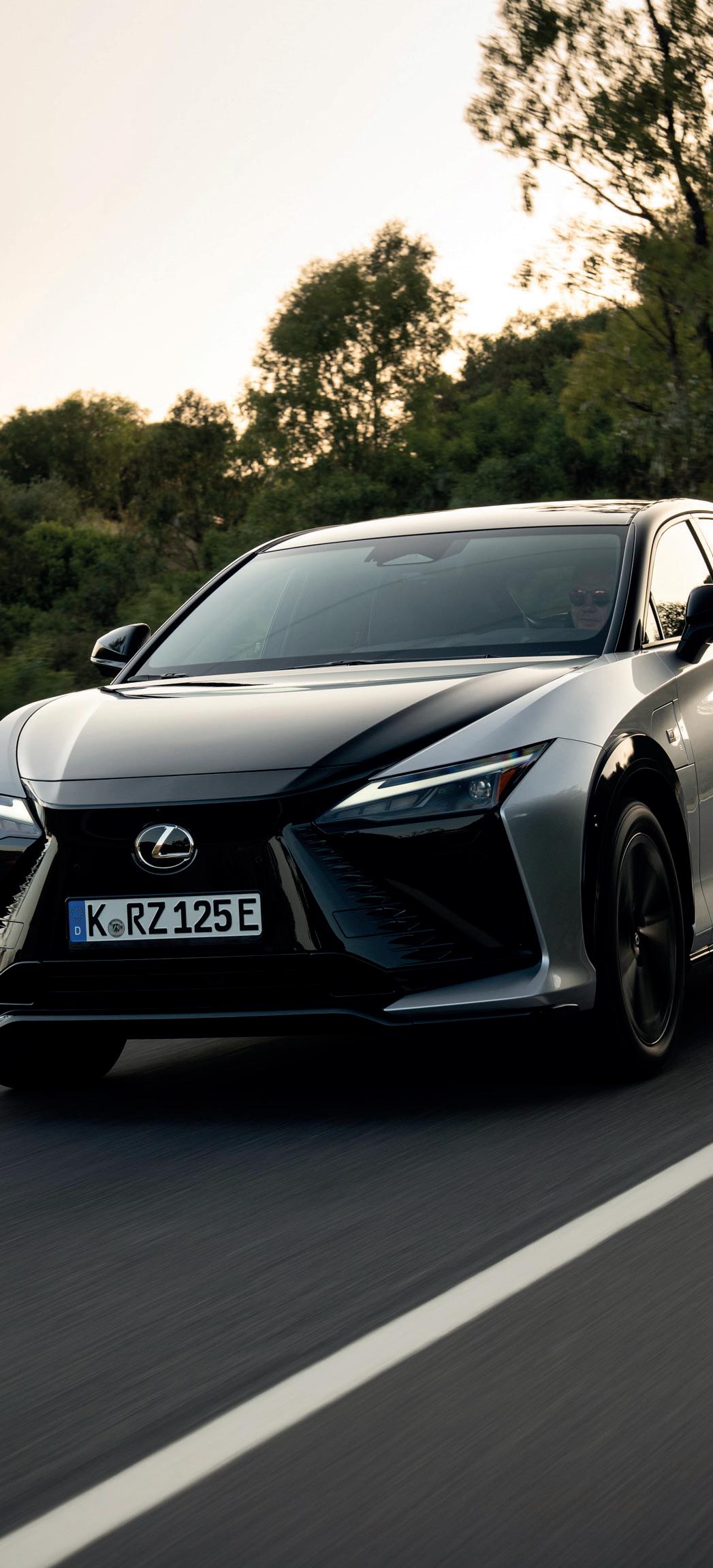
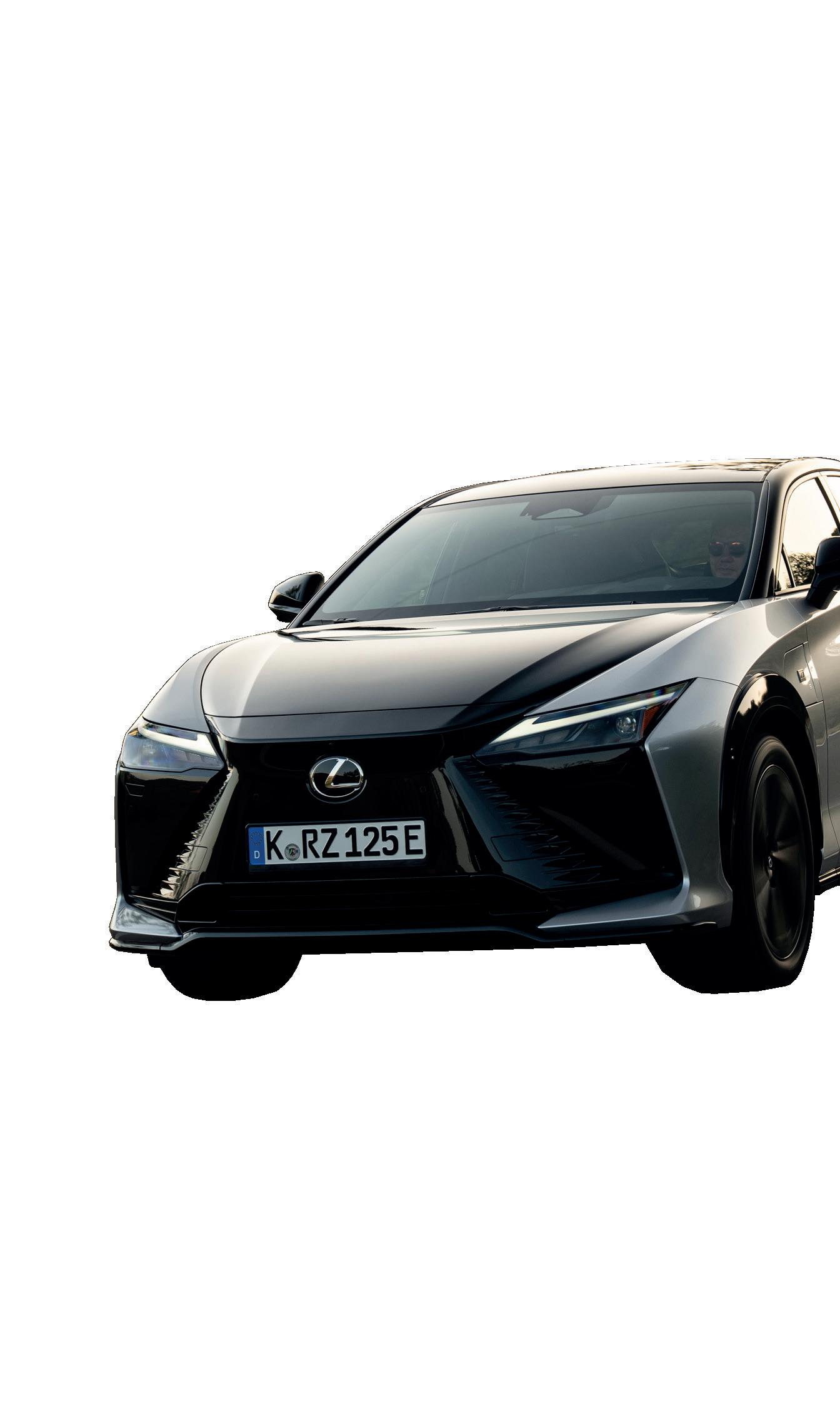
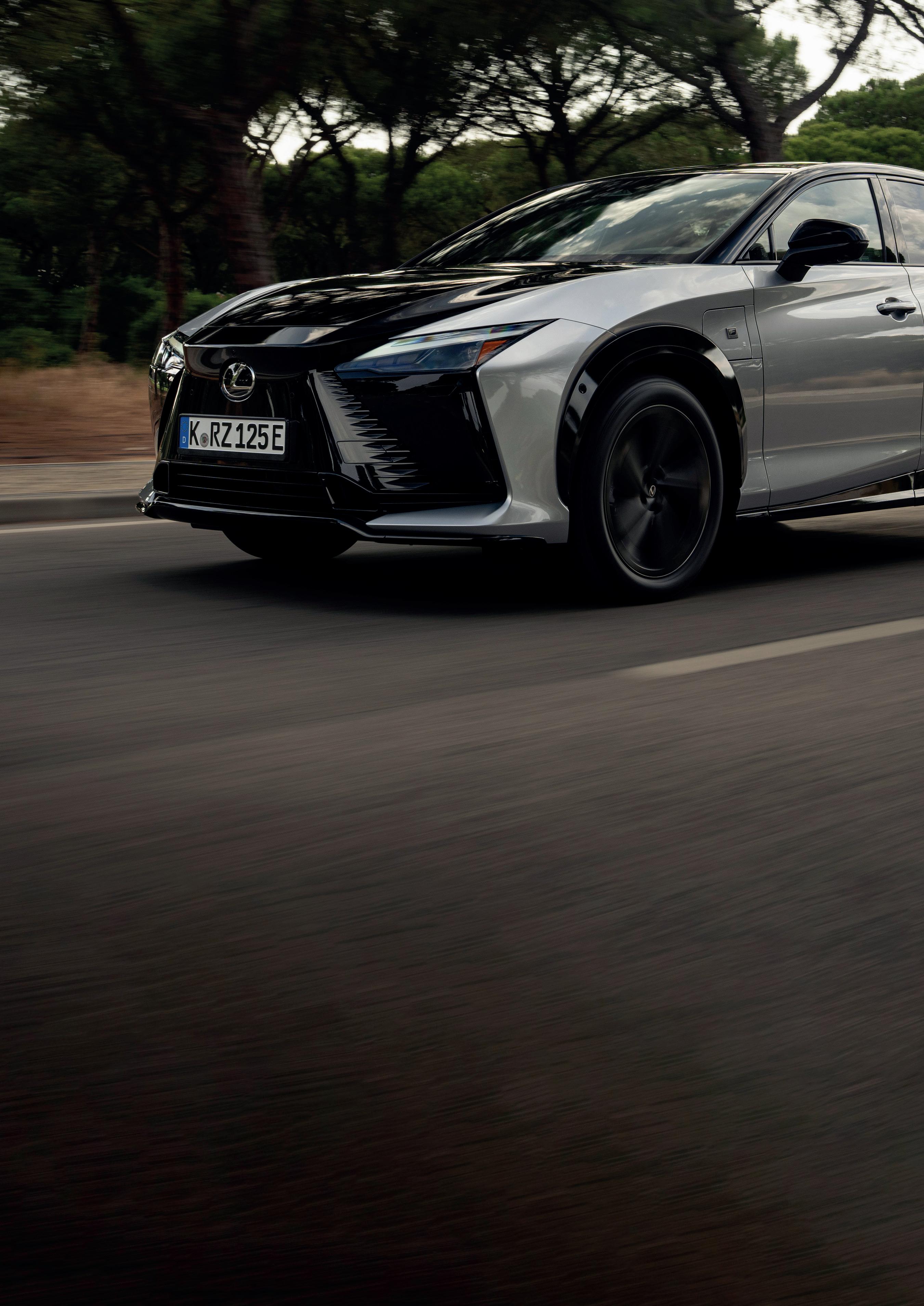
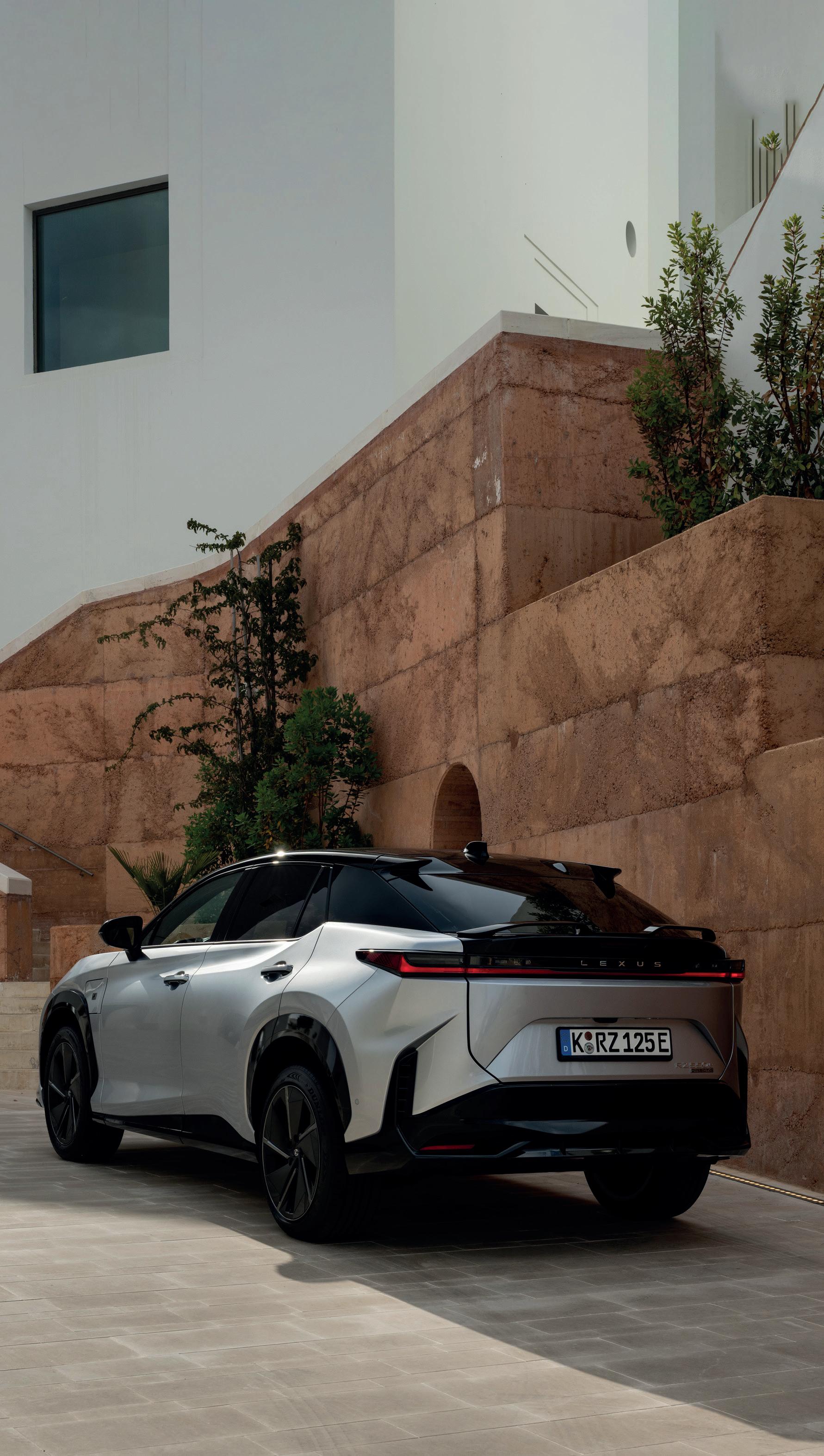
Before that, we get technical. First, we’ve been speaking to Tuomo Lehtimäki, CEO of Verge Motorcycles. He gives us a typically modest Finnish take on how his firm’s innovative in-wheel technology could revolutionise electric bikes. We’ve also been to visit UK component specialists ZF. Famous for their transmissions they’re now working on core elements that will make the next generation of EVs lighter, quieter and more efficient than ever before. And tying nicely into that, I’ve been sampling Lexus’s very own steer-by-wire system in the new RZ.
It all makes for fascinating insight into how the already well-established EV world is still developing at a blinding pace and I hope you enjoy the read.
Until next month, thanks for reading.
Matt Allan Editor, EV Powered
The EV Powered Team
Editor
Matt Allan
Reporter
George East
Graphic Designer
Grace Moseley
Videographer
Jacob Pinchbeck
Content Sales Manager
Laura Phillips
Capital Business Media, Group MD
Richard Alvin
Business Development Director
Stephen Banks
Chief Creative Director
Stuart Hyde
Finance Director
Andrew Martin
5 EV NEWS
LABOUR confirms new grant to boost EV sales
The UK government has announced a new £650 million Electric Car Grant to cut the purchase cost of new EVs.
The new incentive will offer discounts of up to £3,750 on brand-new cars priced up to £37,000, helping make almost 50% of new electric models on sale in the UK more affordable.
The upfront price of electric cars is still seen as a key obstacle to drivers making the switch, with most EV list prices higher than an equivalent petrol or diesel car.
Announcing the new ECG, Transport Secretary Heidi Alexander said: "This EV grant will not only allow people to keep more of their hard-earned money – it’ll help our automotive sector seize one of the biggest opportunities of the 21st century."
Car makers will be able to apply to add their vehicles to the grant scheme. They will then apply the grant directly to the list price of the car, saving drivers thousands without the need to fill out any additional paperwork. The new scheme will run from now until the 2028/29 financial year and is designed to offer the biggest savings on the “greenest” cars.
Vehicles will be divided into two tiers of discount depending on the environmental impact of their
manufacturing. Band one cars will be eligible for the full £3,750 discount, while band two vehicles will qualify for a £1,500 reduction.
The move follows months of pressure from the UK car industry for more government help. Despite EV sales continuing to rise, car makers have warned that they will fall short of the 28% market share set out in the ZEV mandate.
Mike Hawes, chief executive of the Society of Motor Manufacturers and Traders, said: “This announcement is a clear signal to consumers that now is the time to switch.
“Rapid deployment and availability of this grant over the next few years will help provide the momentum that is essential to take the EV market from just one in four today, to four in five by the end of the decade.”
Dan Caesar, CEO of lobbying body Electric Vehicles UK welcomed the new incentives as a “significant step” in making EVs more accessible. He commented: “While battery-only EVs are much cheaper to buy and run than most realise, surveys show that cost misperceptions are the primary reason for hesitance. A generous grant, of this nature, gives a new group of interested buyers, that might have thought that going electric was beyond them, a gentle nudge into what is great tech.”
Ginny Buckley, chief executive of Electrifying.com, added: “Nearly one in two new electric models are now more affordable thanks to these longoverdue incentives. Crucially, the support is aimed exactly where it’s needed most: from school-run staples to budget-friendly runarounds, the grants apply to cars that fit the needs of everyday drivers. In our latest survey of drivers, 76% told us upfront cost is the biggest barrier to making the switch. These returning incentives are the spark the private market needs to reignite momentum.”
The Electric Car Grant news comes shortly after the government announced a £63m package to help improve England’s public and private charging infrastructure. Vicky Read, CEO of industry body ChargeUK, commented: This announcement is brilliant news – for drivers and for the UK’s transition to electric vehicles.
“Hot on the heels of the weekend’s announcement on measures to support charging, this package is another vital boost to the charging industry, helping it invest with confidence.”
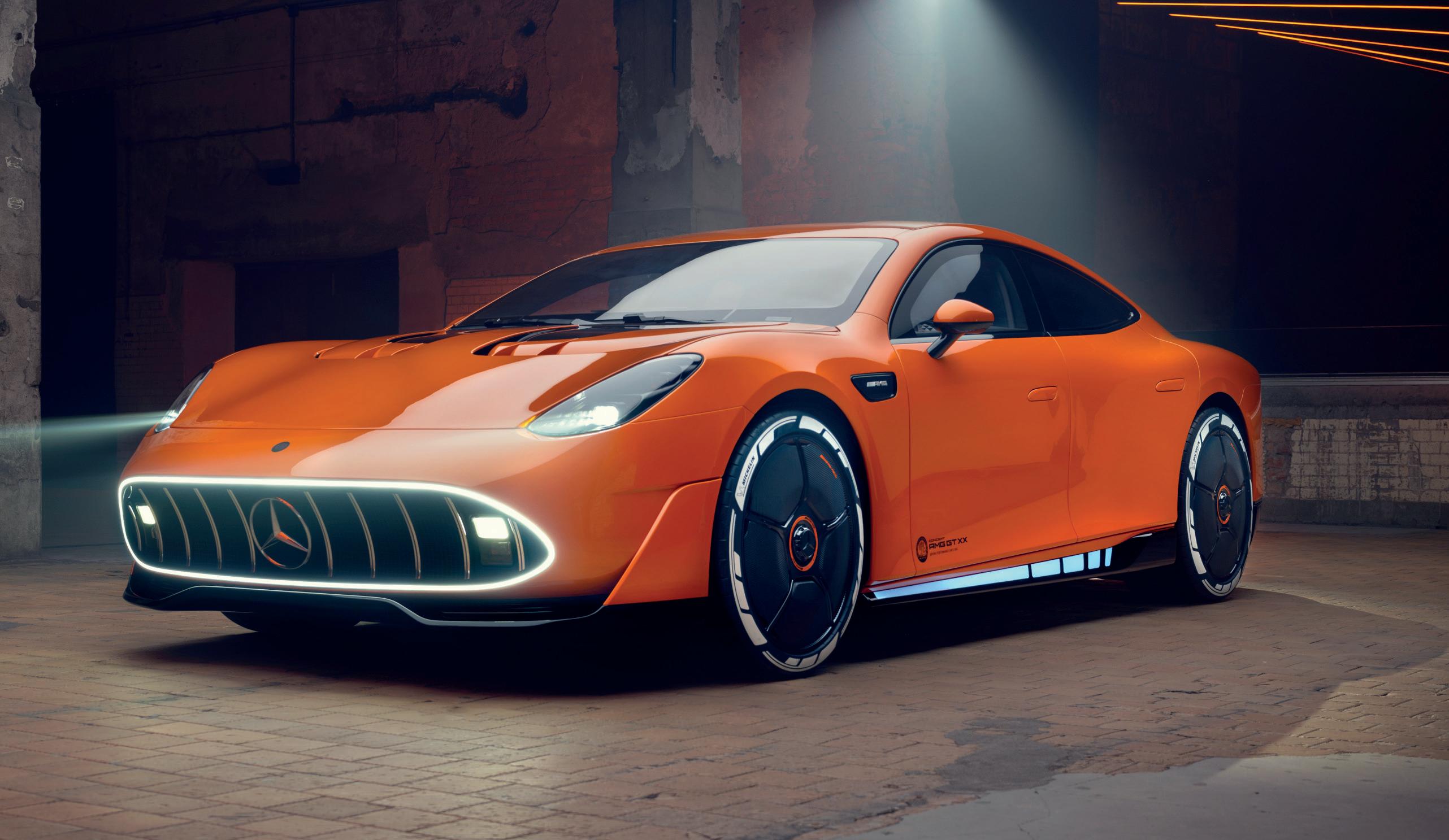
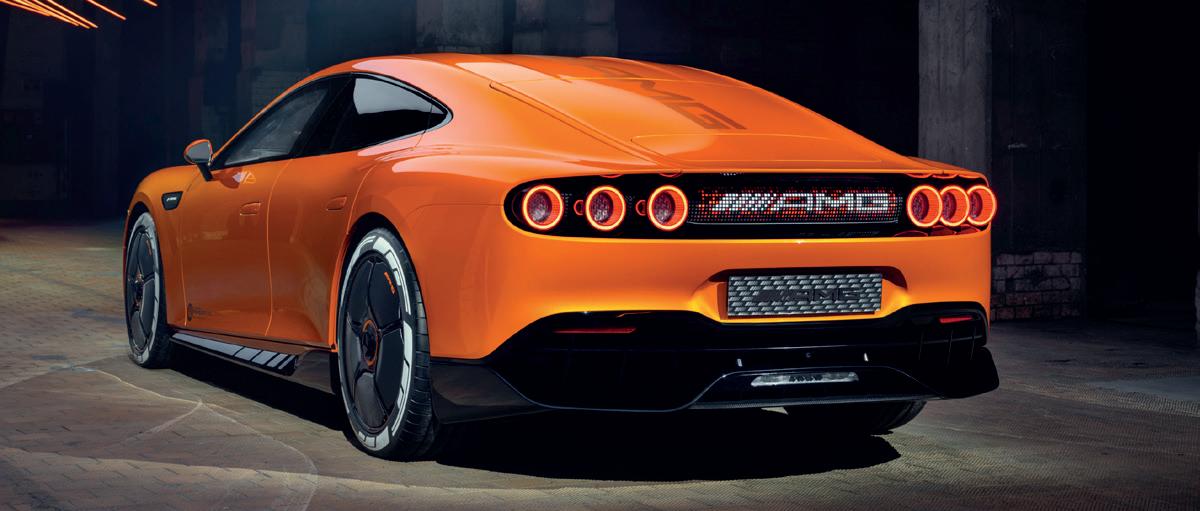
NEW 1,341BHP MERCEDES-AMG GT XX concept is coming for the Taycan Turbo GT
Mercedes-AMG has previewed its upcoming electric super-saloon with the radical, high-tech Concept GT XX.
The four-door rolling “technology programme” is designed to show what the new AMG.EA platform is capable of and packs staggering power from groundbreaking new motors, bespoke batteries and ultra-fast charging that will add 400km of range in five minutes.
At the heart of the Concept GT XX is a brandnew three-motor setup using axial flux motors developed by British specialists YASA. These are a third of the size of traditional EV motors but pack three times the power density, allowing the GT XX to produce up to 1,341bhp. Mercedes-AMG says that will deliver a top speed of more than 223mph and a 0-62mph time of less than 3 seconds.
In most circumstances, the GT XX will operate as a rear-wheel-drive car, using two motors on the back axle. Under heavy demand a third, front-mounted, “booster” motor will kick in to deliver the full 1,341bhp.
Powering the motors is an entirely new 114kWh lithium-ion battery which has been developed to allow continuous and repeated high performance driving. The pack, which is integrated into the
car’s structure, uses innovative direct cell cooling to keep it at optimum operating levels.
It also offers new levels of charging power, capable of operating at up to 850kW. That’s far faster than any public charging in Europe can deliver, but AMG says using a prototype charger developed by Alpitronic, the car can add 248 miles in just five minutes.
The GT XX’s design clearly draws on the Vision One-Eleven EV concept of 2023, and the C111 of 1969/70 which inspired that car. From its low slippery shape and bonnet-mounted cooling fins to diving coupe-style roof and sunset beam orange paintwork, there are nods to previous concepts.
There are also a host of aerodynamic features designed to improve the car’s performance and efficiency. The low-slung bonnet helps air move easily over the car while active air curtains in the front splitter extend into the wheel arches. The wheels feature electronically controlled blades that open and close to aid braking or air flow. And a smooth underbody runs from the splitter to a
massive carbon fibre rear diffuser and creates a Venturi effect that means the GT XX doesn’t need a huge rear spoiler for downforce. At the rear there’s a solid panel in place of a rear window and an active air brake hidden in the elongated tail.
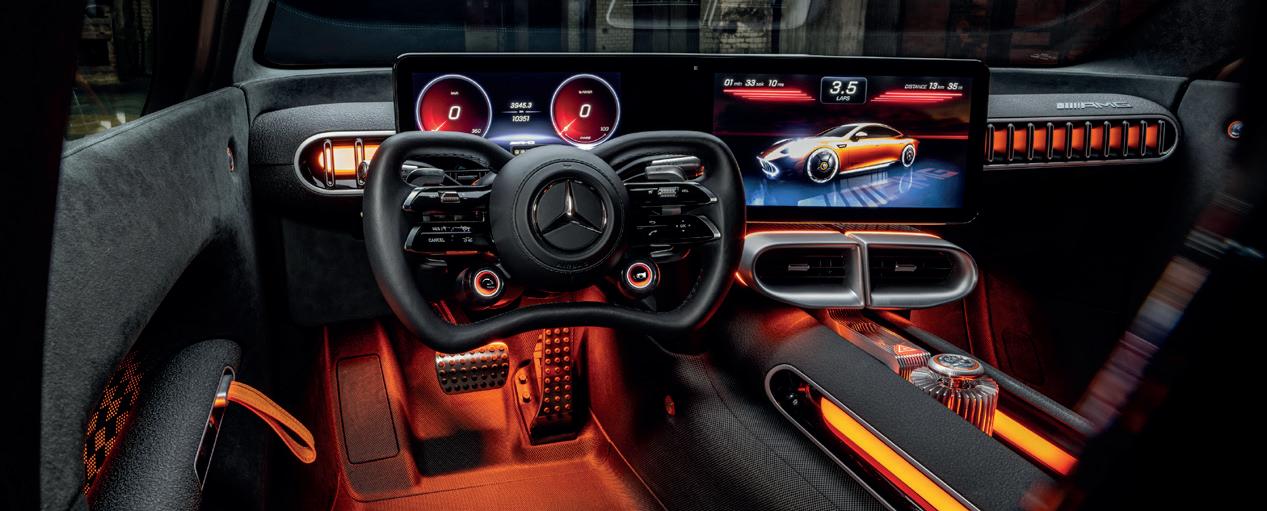
Inside, 3D printed seat pads that can be shaped to an individual driver are fitted to carbon fibre shells and finished in eco-friendly synthetic leather created from recycled plastic and oils derived from used racing tyres. Elsewhere there’s a pared-back look with exposed body elements and bright orange elements inspired by the highvoltage cabling of EV powertrains.
A yoke-style steering wheel similar to that in the AMG ONE hypercar sits ahead of a 10.25-inch digital instrument screen while a 14-inch central touchscreen is angled towards the driver for an immersive feel.
The screens appear production ready, but it’s not clear how much of the GT XX’s wild cabin or radical exterior design will make it into the production version of Mercedes-AMG’s Porsche Taycan and Lotus Emeya rival. What we do know is that we’ll see the final version in 2026 and much of the smart powertrain tech will eventually find its way into other models, including the AMG SUV due to arrive in 2027.
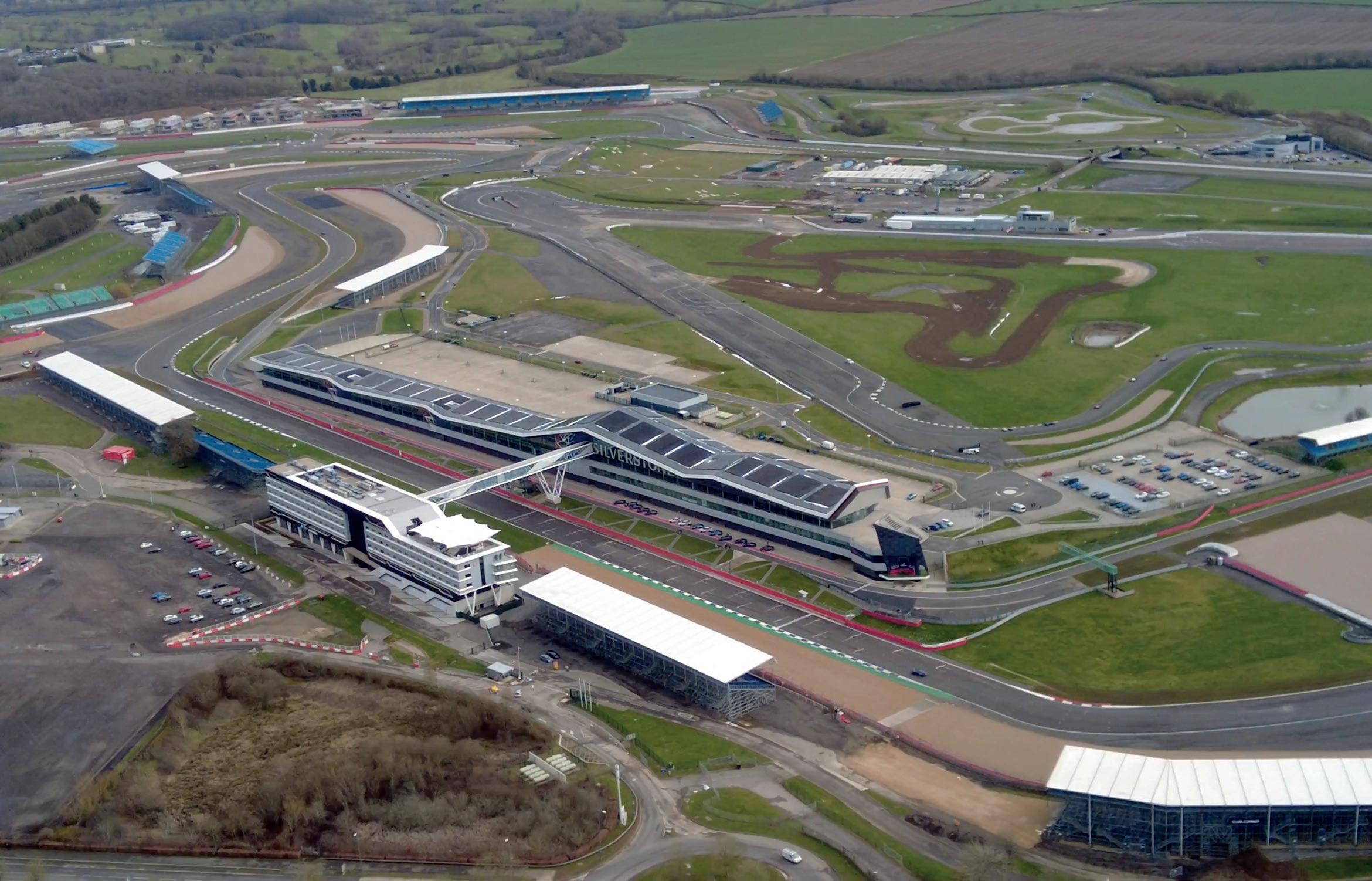
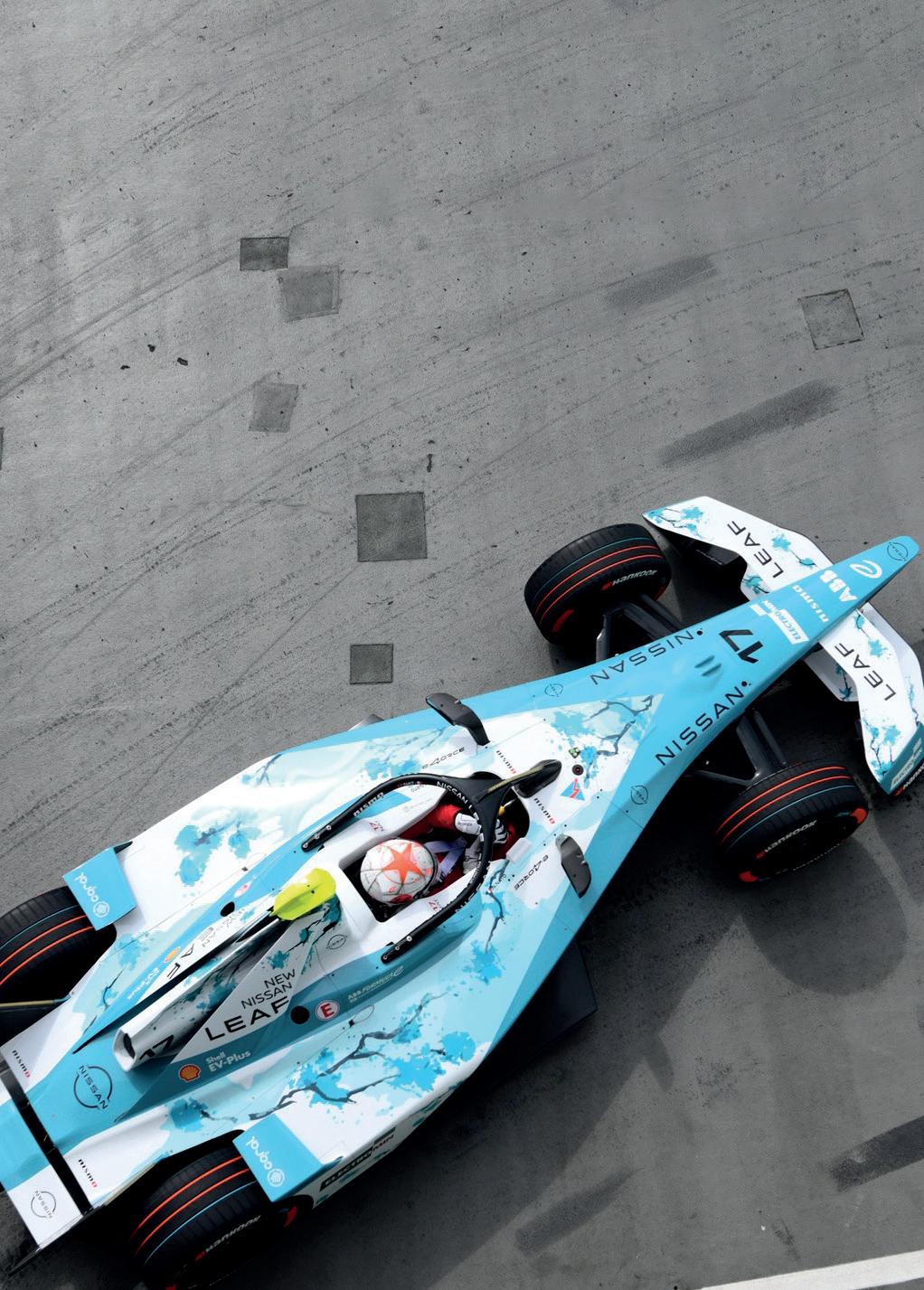
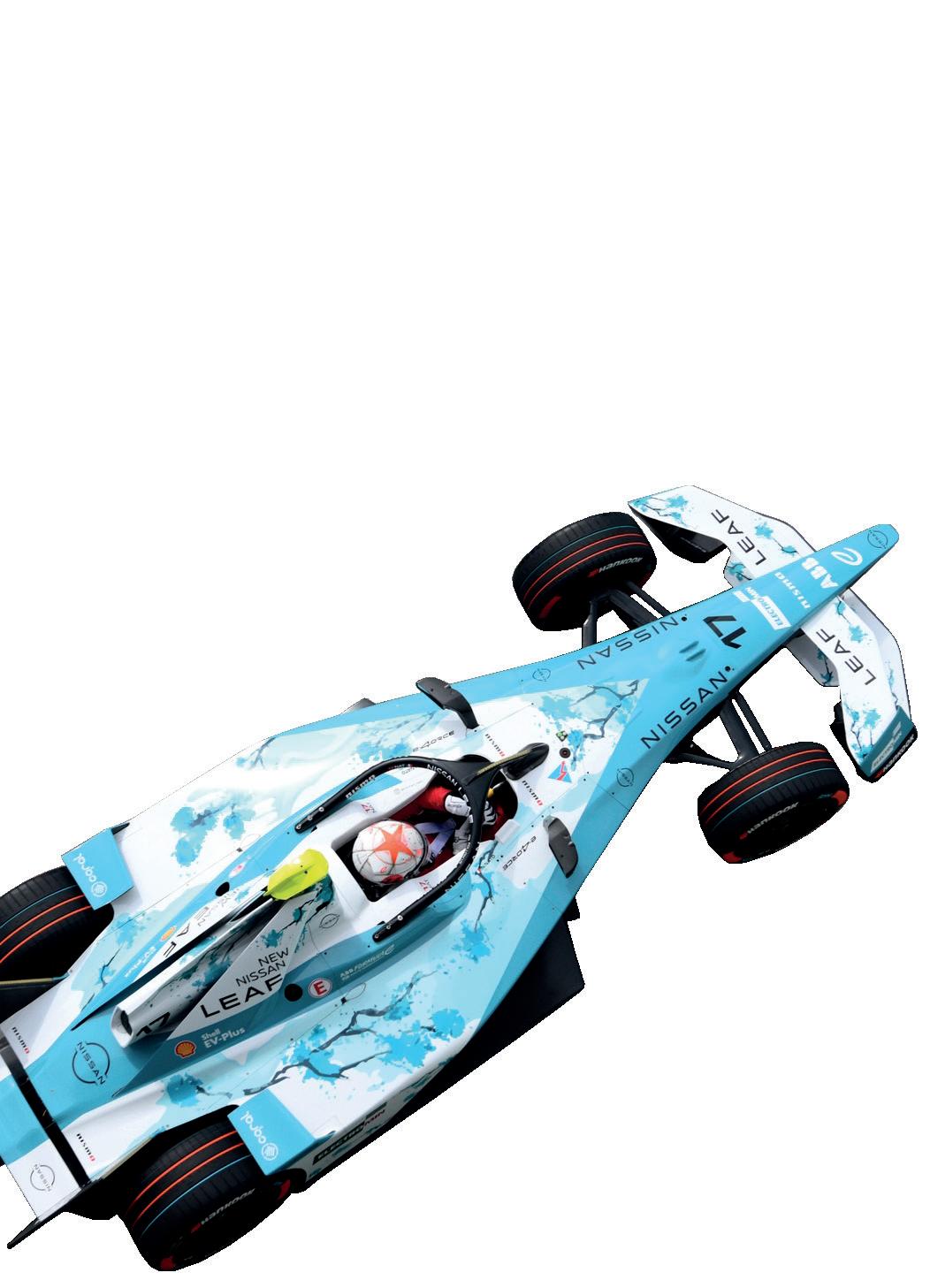
FORMULA E could leave London for SILVERSTONE as Gen4 performance leap looms, Nissan chief hints
Formula E may be set to swap the tight turns of London’s ExCeL Centre for the high-speed corners of Silverstone as the allelectric series prepares to usher in its Gen4 era in 2027.
Speaking during a media roundtable at the London E-Prix, Nissan Formula E Team Principal and Managing Director Tommaso Volpe appeared to confirm that permanent racing circuits are increasingly being considered by manufacturers for the next-generation cars, which will boast significant performance upgrades—including allwheel drive and increased power output.
“It could happen, especially with Gen4,” said Volpe, when asked about Silverstone hosting a future Formula E race. “We have a verbal commitment to keep at least half the circuits in city centres, because it’s part of Formula E’s DNA—but with cars being more performing, circuits like Silverstone will be more appropriate for the level of performance.”
Formula E’s current deal with the ExCeL runs until the end of the 2026 season—coinciding with the scheduled debut of Gen4 cars. These new machines are expected to deliver unprecedented levels of energy efficiency and corner-exit acceleration, with performance figures approaching those seen in more traditional toptier racing categories.
Volpe acknowledged that Gen4’s capabilities could outgrow several city venues. “Some locations like this one, or other city circuits we used for Gen2 and Gen3, won’t be ideal for Gen4. Safety and entertainment-wise, it’s going to be difficult to fit the performance into urban layouts.”
He added that manufacturers, including Nissan, welcome the shift towards permanent
tracks. “Silverstone-type circuits will allow us to showcase electrification as a flexible technology that delivers both efficiency and raw performance.”
The suggestion that the UK’s home of motorsport could host Formula E comes amid the championship’s increasing desire to appeal to a broader motorsport audience. Formula E has already raced at permanent venues including Shanghai and Mexico City, and is set to return to Miami in a hybrid street-track format.
If confirmed, a move to Silverstone in 2027 would mark a pivotal moment for the sport— symbolising both the maturation of Formula E and the capabilities of its next-gen electric powertrains.
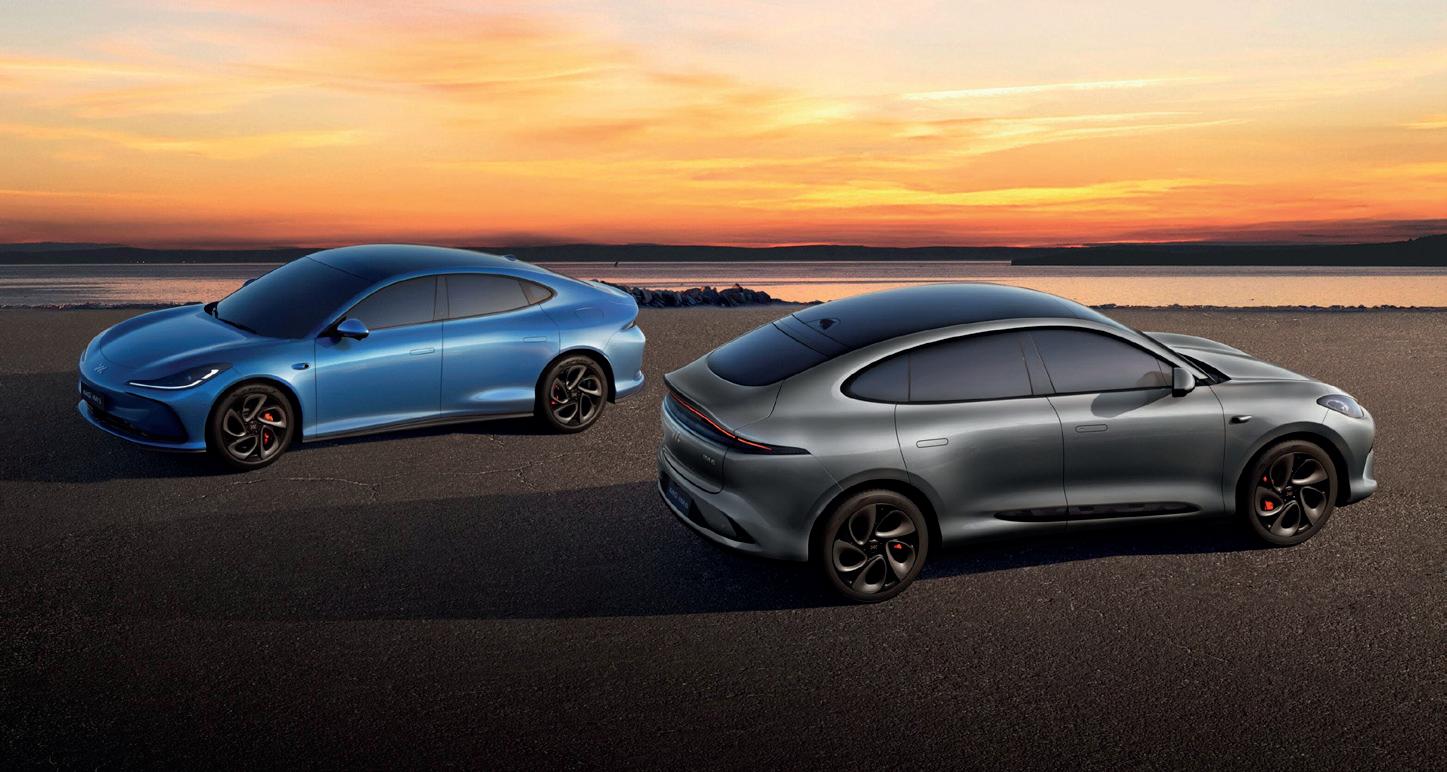
MG launches new IM premium sub-brand in UK
IM - standing for 'Intelligent Mobility' - is MG's premium brand targeting the likes of EV makers such as Tesla, Polestar, BMW, Mercedes-Benz, and Audi.
The IM5 fastback and IM6 SUV line up size-wise against the likes of the Mercedes EQE and BMW iX respectively. Despite a more premium position than other MGs, the new models are expected to significantly undercut such rivals, with prices starting at less than £55,000.
Both cars are built on an all-new 800V platform, which uses improved 75kWh and 100kWh batteries affording them better range, faster charging, and more power than other MGs. With the 100kWh option and a dual-motor configuration, the MG IM5 is said to boast a 0-62mph time of less than 3.5 seconds.
Inside, both cars get a 23-inch instrument and infotainment screen, with a 10-inch screen in the centre console. MG told EV Powered that the IM5
and IM6 will adopt a 'technology-first' approach, including advanced features such as one-touch parking and an AI-assisted “rainy night” mode.
The MG IM5 fastback and its IM6 SUV sibling have made their European debuts at the 2025 Goodwood Festival of Speed.
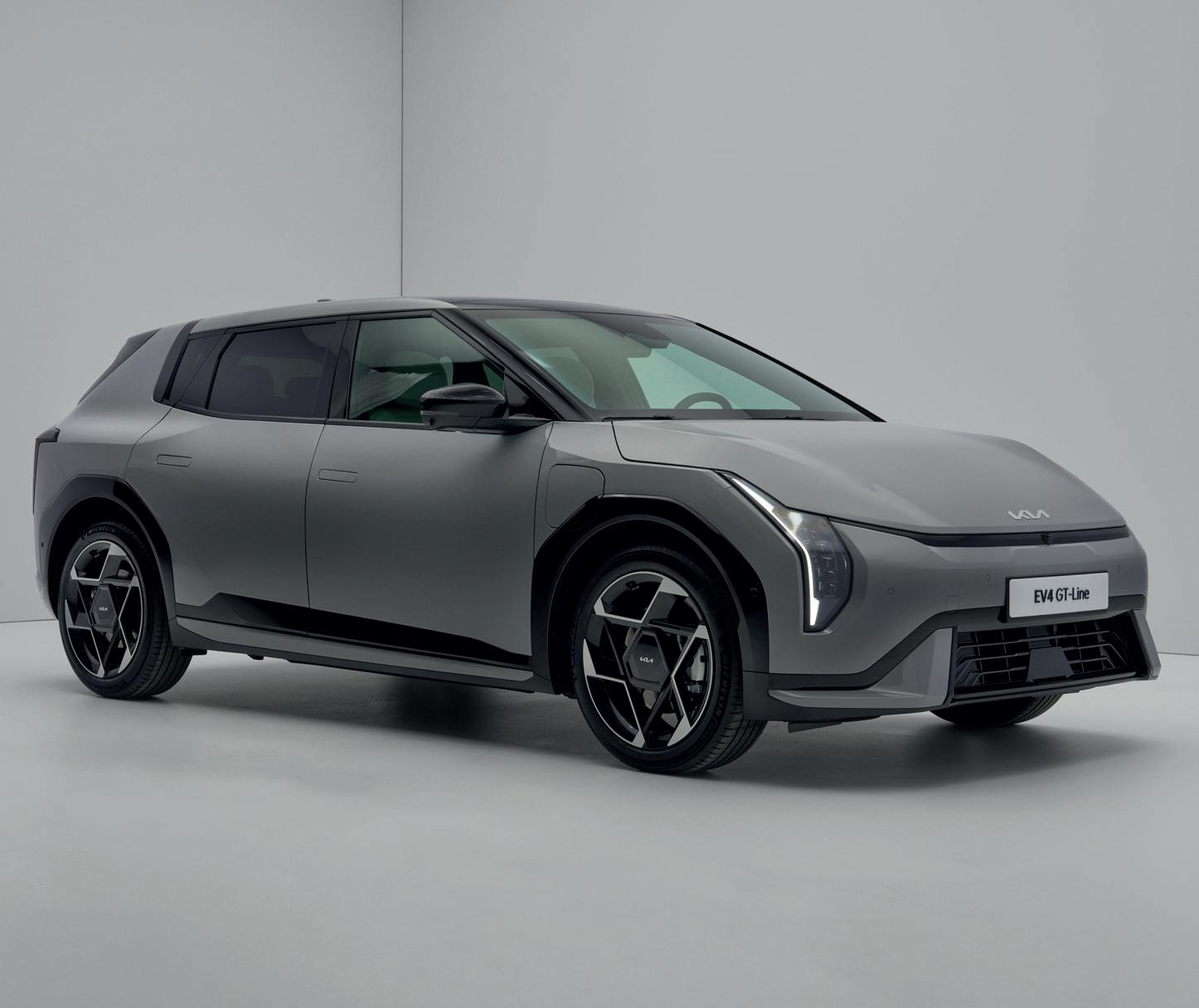
Orders open for KIA'S FIRST ELECTRIC HATCHBACK
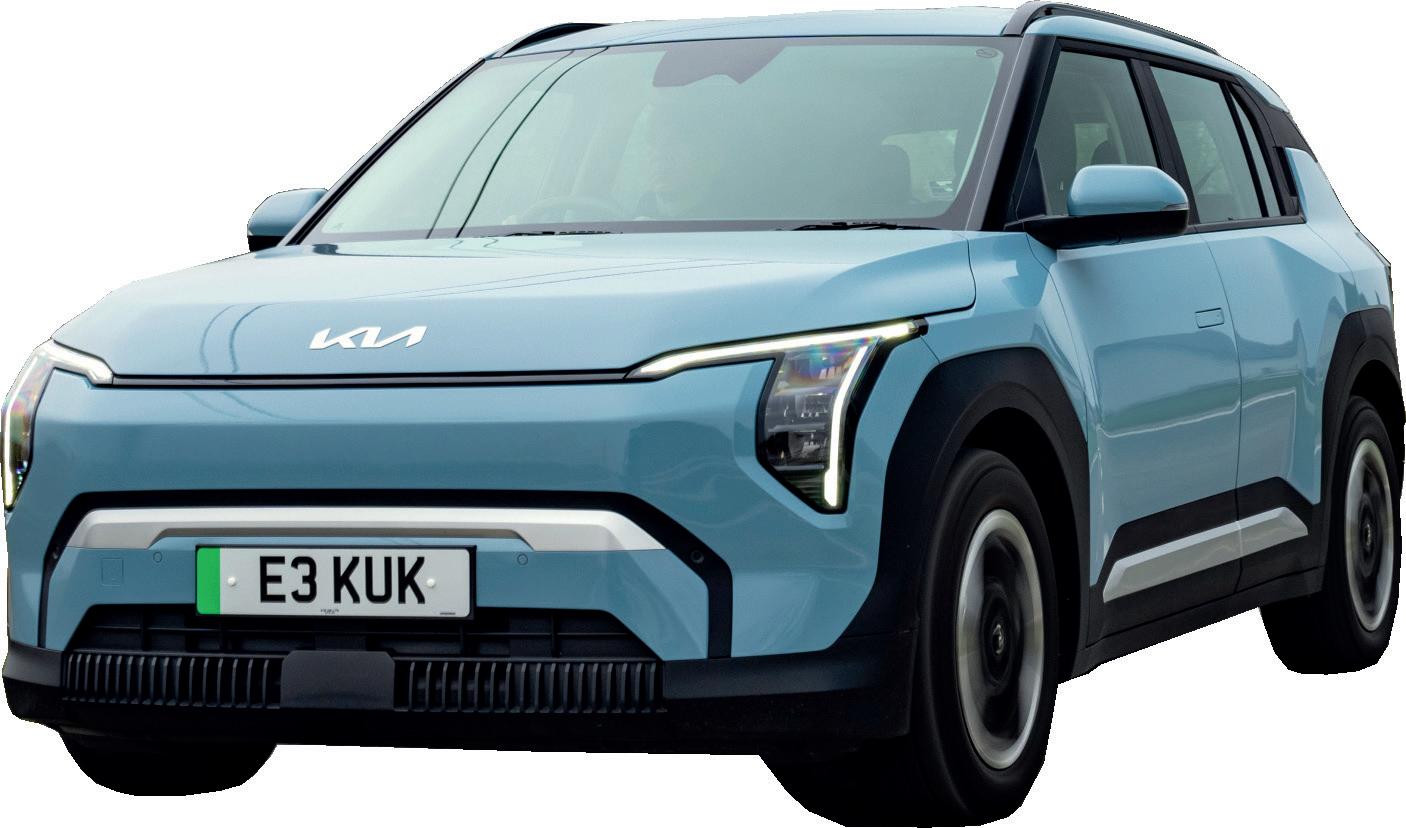
Orders for the new Kia EV4 have opened with prices starting at under £35,000 for the Korean brand’s new electric hatchback.
The EV4 is Kia’s first all-electric C-segment hatchback and is set to compete with the Volkswagen ID.3, Renault Megane and Citroen E-C4, bringing almost 400 miles of range.
All versions are powered by a front-mounted 201bhp motor shared with the EV3 SUV. This offers a 0-62mph time of 7.5 seconds.
Entry level cars come with a 58.3kWh battery offering up to 273 miles of range while higher specifications include an 81.4kWh battery offering up to 388 miles – the longest yet for a Kia.
The £34,695 starting price is for the EV4 ‘Air’ with the smaller battery. Buyers can also specify the Air trim with the larger battery, which brings the 388-mile range. That is priced from £37,695.
Above the Air grade, all versions of the EV4 get the larger battery offering 362 miles of range. The GT-Line spec is priced from £39,395, while the GT-Line S falls victim to the Expensive Car Supplement tax, with prices from £43,895.
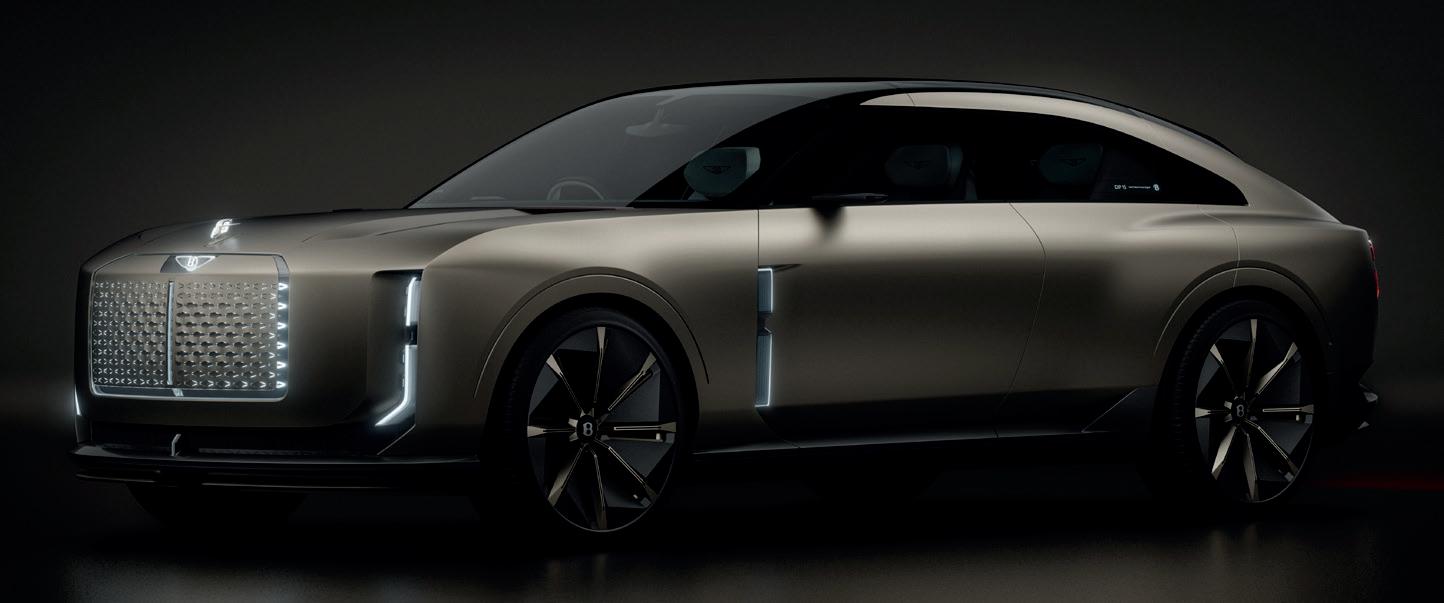
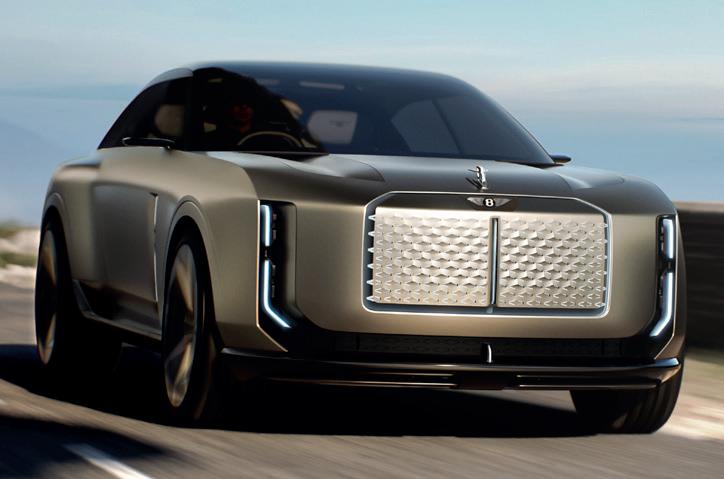
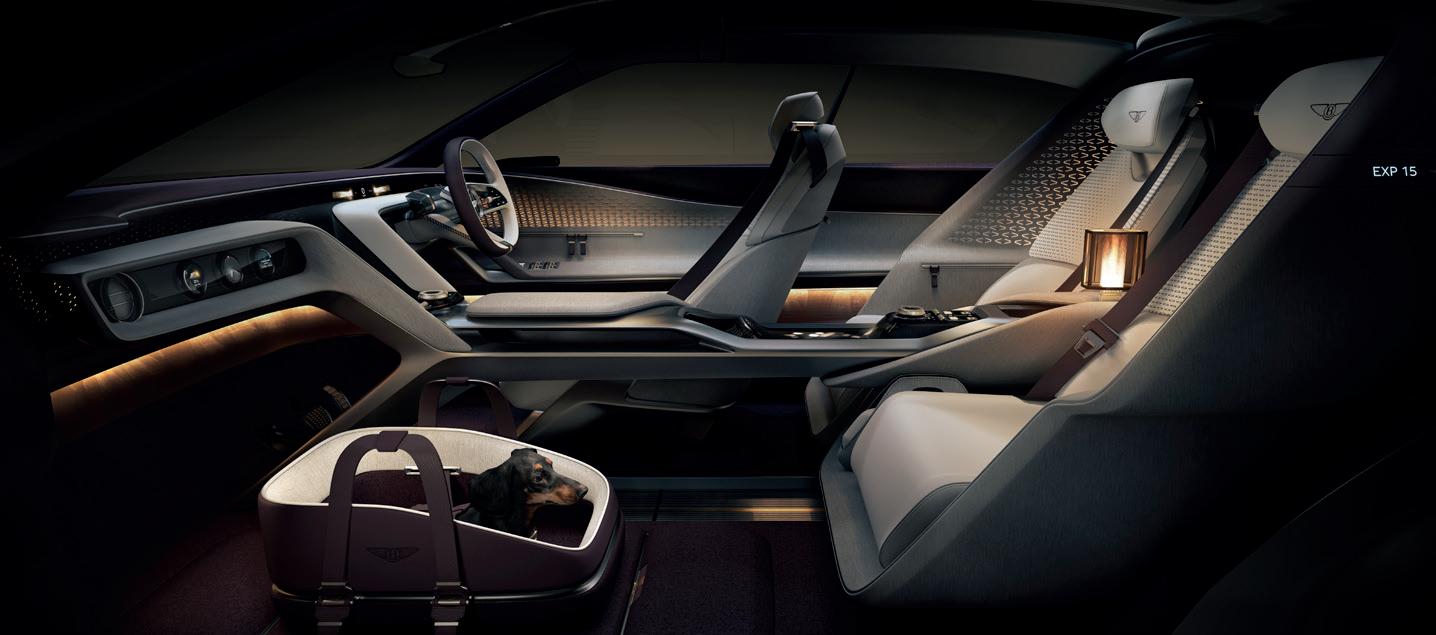
BENTLEY EXP 15 gives first glimpse of brand’s all-electric vision
Intended as a showcase for new design, technology and material approaches, the Bentley EXP 15 draws design inspiration from the marque’s famous ‘Blue Train’ Speed Six from 1930, and features an all-electric, all-wheel-drive powertrain.
Bentley says that while the EXP 15 is not intended for production it does provide “hints” to the design of its future models, including its first EV, which will be revealed in 2026.
The brand’s design director Robin Page said that the concept was an opportunity to explore new approaches to differing customer demands. He commented: “The beauty of a concept car is not just to position our new design language, but to test where the market’s going. It’s clear that SUVs are a growing segment and we understand the GT market but the trickiest segment is the sedan because it’s changing. Some customers want a classic ‘three-box’ sedan shape, others a ‘onebox’ design, and others again something more elevated.”
The EXP 15 falls somewhere in between, with raised ride height and a sloped fastback-style roof line but many familiar elements from Bentley’s two- and four-door models.
At the front, slimline vertical lights frame a radical new upright grille. Page said that the upright grille will remain in future EVs, acting as an illuminated piece of “digital art” rather than a means of getting air to an engine. Behind that the EXP 15 maintains the “endless” bonnet line of combustion-engined Bentleys but houses two luggage areas hidden beneath piano-hinged covers.
At the rear, the C-pillars pinch in in a boattail style over bulging rear arches, while the tailgate with twin high-level spoilers flows into C-shaped slimline lights which frame a new “Prestigious Shield” housing the badge.
Rather than a traditional four-door approach the EXP 15 has a radical three-door, three-seat design. The driver’s side features a single door while the passenger side gets a standard front door and rear-hinged back door. These and a section of the panoramic sunroof open to reveal a single seat on the passenger side that slides almost the full
Luxury car maker Bentley has given the first hints of what its electric future will look like with the EXP 15 concept car.
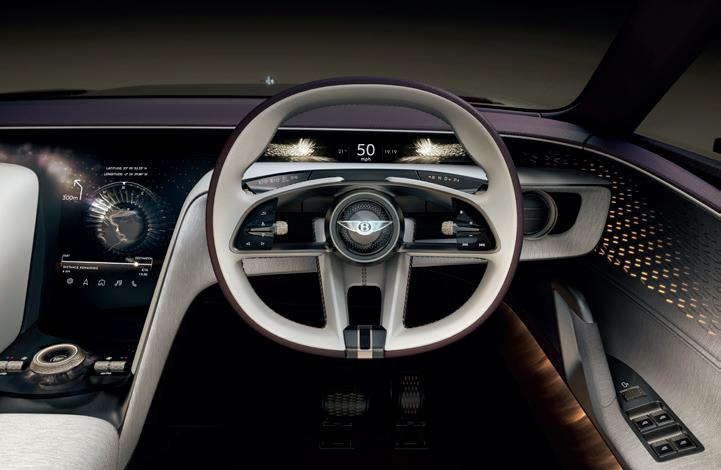
The concept follows Bentley’s traditional wingshaped dashboard design and combines digital and mechanical elements with high-end materials including wood, metal, silk and wool from suppliers to the Royal Family. Page noted: “We think people are going to get fed up with a fully digital experience and are pining for physical mechanical elements too.”
Reflecting this, the EXP 15 features knurled physical controls for many features alongside a
Bentley hasn’t given any technical details apart from confirming the EXP 15 is an all-wheeldrive electric setup. That indicates a two-motor arrangement and given Bentley’s focus on performance as well as luxury we’d expect well in excess of 500bhp.
Bentley also promises the range and charging speeds "commensurate" with the brand name. So expect a battery in excess of 100kWh, range north of 300 miles and charging in the region of 300kW or more.
length of the cabin and can swivel to make entry and exit easier.
digital dashboard display which can be switched off to reveal a wood veneer finish.
THE QUIET REVOLUTIONARIES
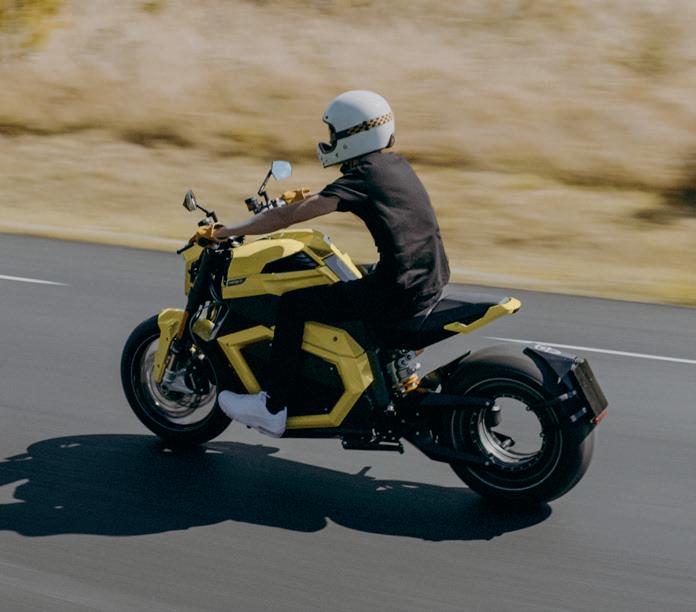
VERGE MOTORCYCLES CEO, TUOMO LEHTIMÄKI, joins George East to reveal the benefits of keeping your mouth shut in the world of EV startups, the advantages of in-wheel motors, and why a societal shift is well underway towards electric motorbikes.
Not dissimilar to your regular tech startup space, the EV startup world can be one of much shouting and hollow promises. If you cast your mind back over the last decade, brands such as Faraday Future, Lordstown Motors, and the Lightning Car Company talked a big game, but yielded very little. Just a quick Google search of the ignominious term “failed EV companies” will throw up these names and several more.
Yet while the likes of Rimac and Tesla have been electrifying headlines with Formula 1 car-shaming top speeds and unhinged political tweets, Verge Motorcycles has quietly been redefining what an electric motorcycle should be. Actually, Verge
has been at it since 2018, but you wouldn't know because they're from Finland. And Finns don't do mouthy.
To discuss what has made this "very Finnish" EV manufacturer the multi-million-dollar success story it is today, EV Powered caught up with its CEO, Tuomo Lehtimäki. Like so many of his compatriots - both in and out of the automotive world - Lehtimäki is far from self-praising about Verge Motorcycles' achievements to the point of reticence. He is cut from a similar cloth to Maté Rimac rather than Elon Musk. Yet Verge's achievements are plenty. Over the course of its short life, Verge Motorycles has
managed to collaborate with two-time F1 champ Mika Häkkinen on a 100-strong limited edition run of 'Mika Häkkinen x Verge' bikes, and bring on board motorsport's favourite mullet, Valtteri Bottas, as a brand ambassador.
"We're proud to be a Finnish company, but we Finns never think too highly of ourselves," Lehtimäki says. "While Mika [Häkkinen] and Valterri [Bottas] definitely have inspired us with their achievement and we're happy to have them involved, that's not everything.
"In Finland, we're definitely an engineering country with an engineering mindset, but we're always thinking about how the rest of the world sees us," he continues. "At Verge, we want to be this super focused company dedicated to changing firstly, powertrains on electric motorcycles, and secondly, the EV motorcycle industry as a whole."
Continued on next page
AN
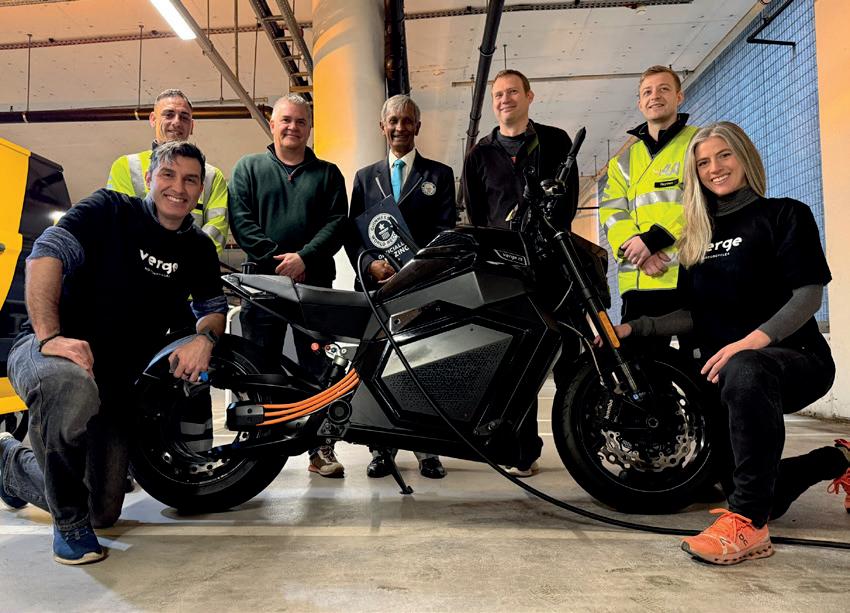
Considering what Verge has already done to disrupt the electric motorcycle world, it would be foolish to question Lehtimäki's vision. He is an energy systems engineer after all. Earlier this year, the brand rode into the history books. In March, its Verge TS Pro covered 193 miles on a single charge, a new Guinness World Record for an electric motorcycle.
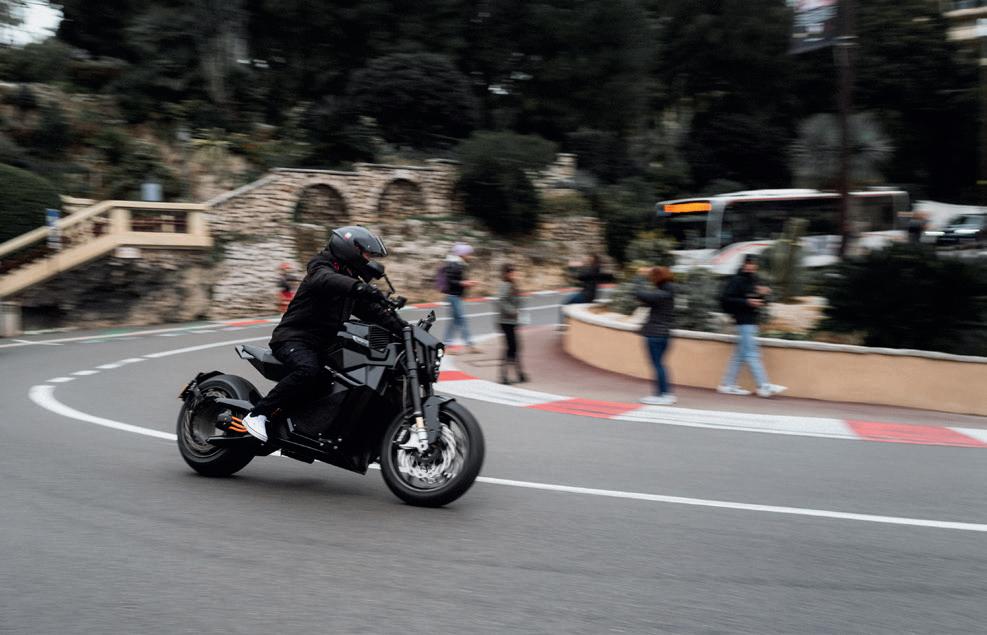
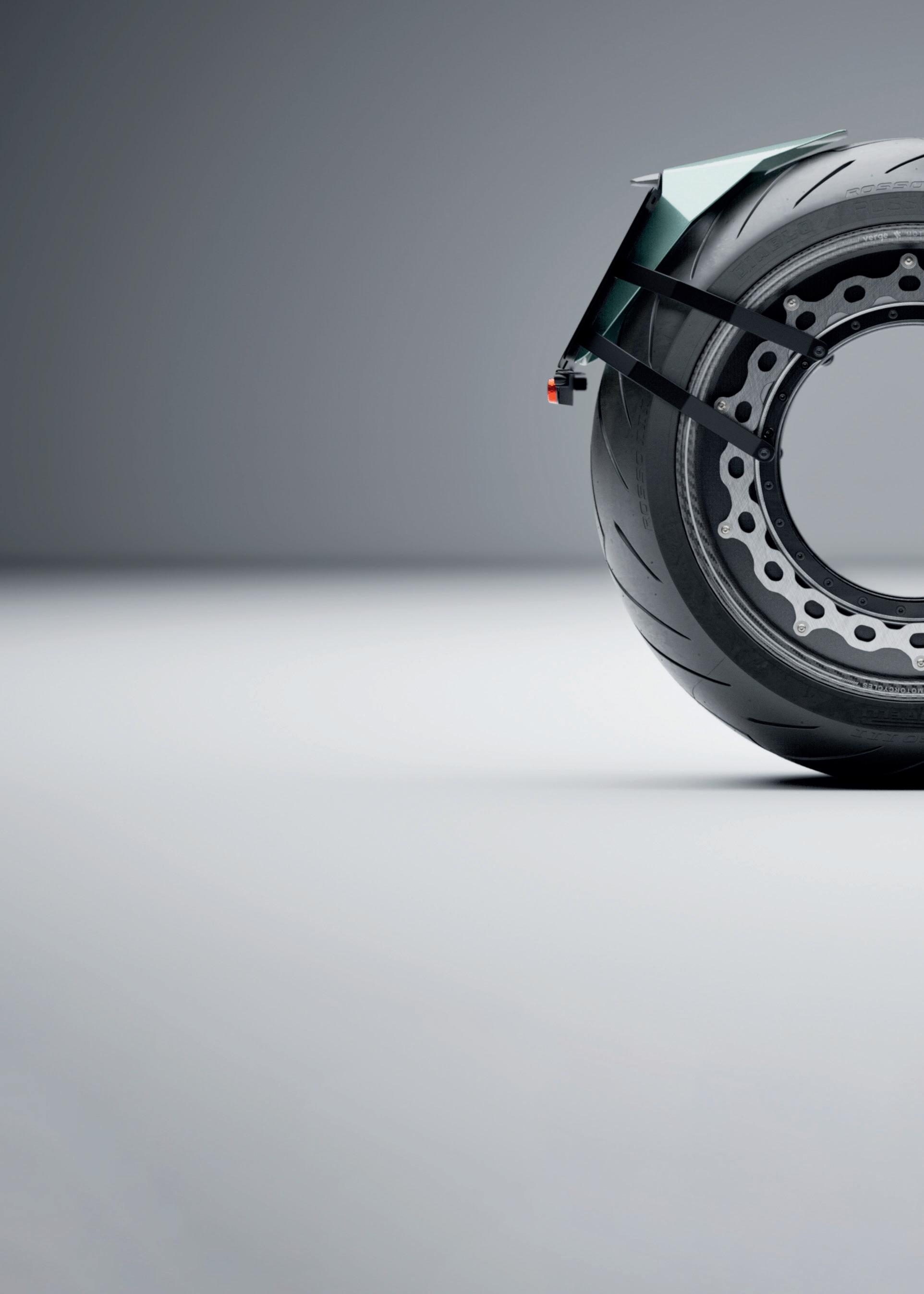
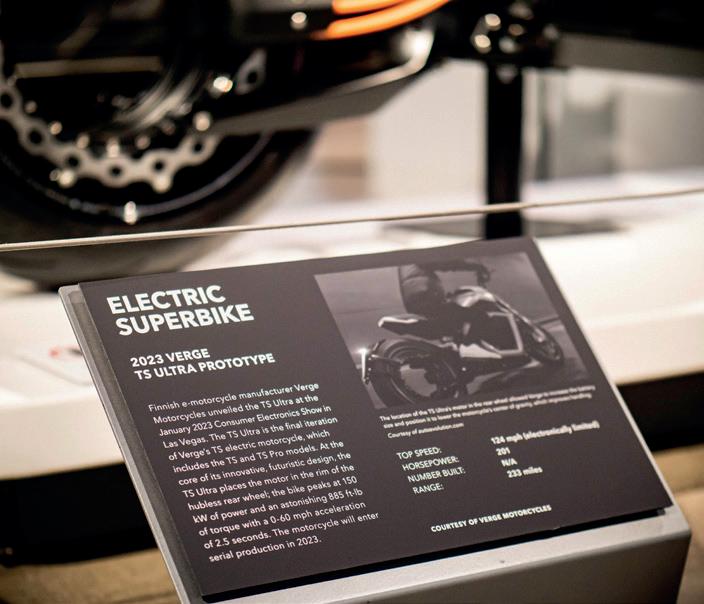
Like other models in the Verge Motorcycles range - the TS Ultra and the California Edition - the somewhat exquisite TS Pro is driven by a distinctive in-wheel motor, producing 138bhp and a staggering 738lb ft of torque. Yet the innovative choice of motor is just one part of the bike's genius.
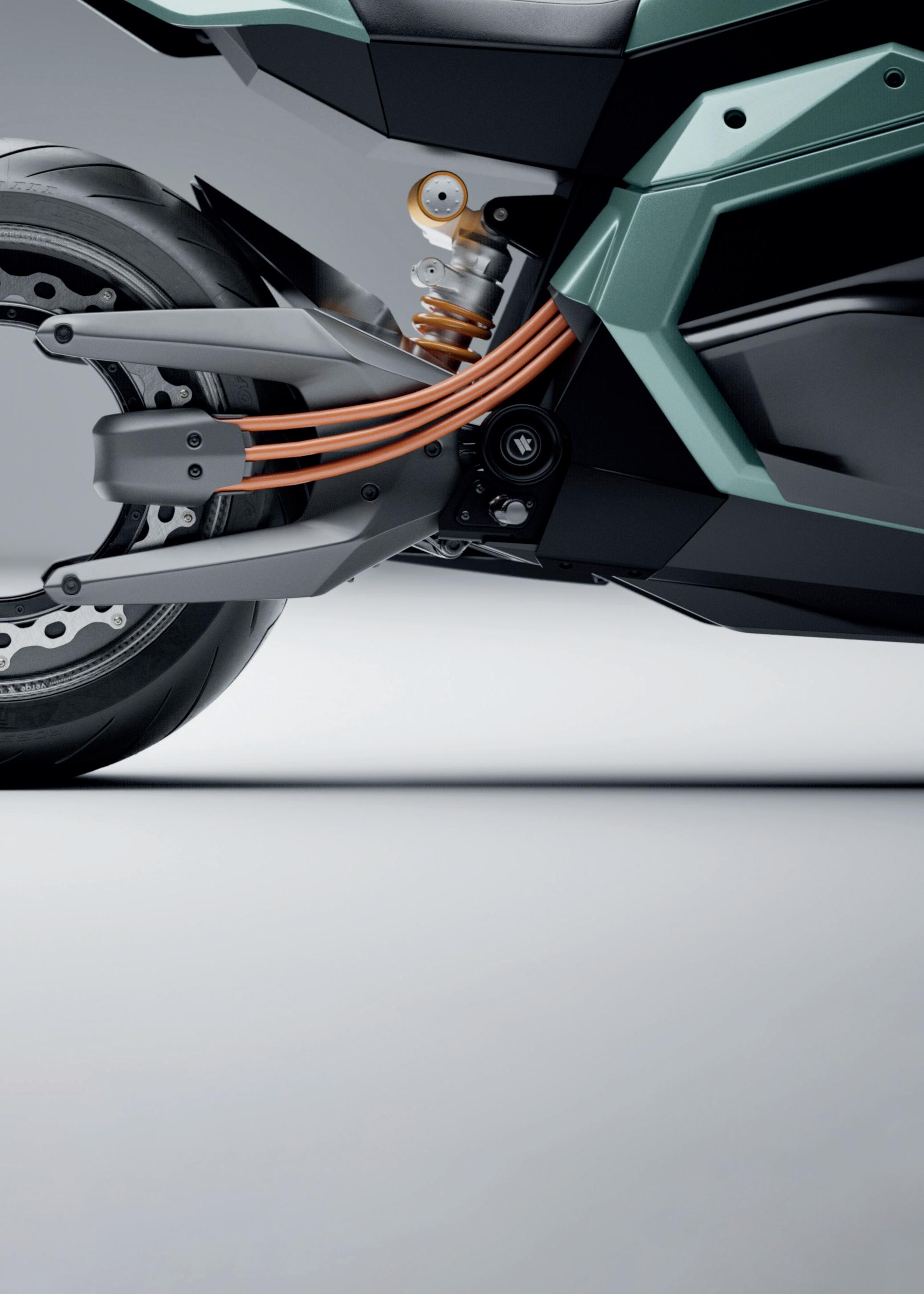
"The biggest advantage of an in-wheel motor is that it has around 120 less moving parts than if you use a conventional unit. Less parts means your production costs are reduced by a few thousand euros or dollars," explains Lehtimäki.
"From a rider's perspective, an in-wheel motor means you get better control over the bike.
INTERVIEW
flagship, the TS Ultra has a single-charge range of 233 miles.
All Verge motorcycles come with AC and fastcharging DC capabilities courtesy of the Tesla charging port. As Lehtimäki says: "By the time you've had a leak and a coffee, you can charge from 0 to 80% in just 35 minutes." Given the bikes' compatibility with the Tesla Supercharger network, that's not wrong.
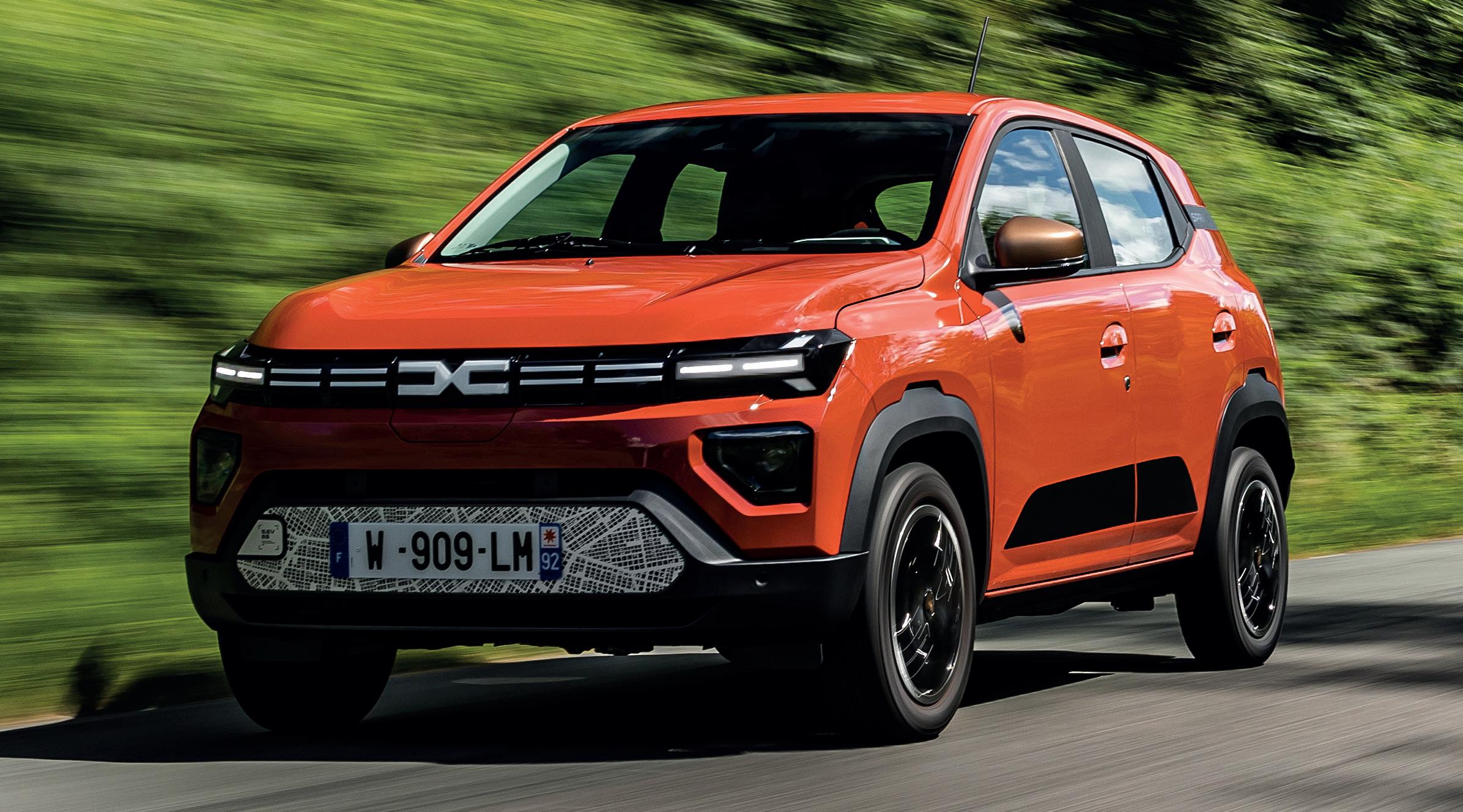
Does, though, Lehtimäki feel that 217 or 233 miles worth of charge is too much? As well as outdoing the e-Golf, this is more than the likes of other future classic EVs such as Honda e and the Nissan Leaf. It's even more than some newer cars including the Dacia Spring and the Leapmotor T03.
"Honestly, I think we've hit our peak," he reveals. "100 kilometres isn't really enough because once you've done 40 kilometres, you have to turn back and go
"IT'S NOT A ONE-SIZE FITS ALL SOLUTION AND FOR NOW THERE IS DEFINITELY ROOM FOR A BOTH... BUT THE WORLD IS CHANGING, ONE BIKE AT A TIME”
"The valves in the motor let you know exactly where the wheel is positioned on the road. If we're relying on chains or belts, then you just know the position of the motor. As to where the wheel is? That's guess work."
When it comes to proponents of in-wheel technology in the car world, Bedeo is already applying it and the Renault 5 Turbo 3E hyperhatch will adopt this layout. The upcoming Alpine A110 and rumoured Volkswagen ID.2 R are also expected to do so.
As well as looking villainously cool and providing a better riding experience than a regular drivetrain, Lehtimäki reveals that the in-wheel motor lends itself to better battery performance. Another of Verge's points of pride is what he describes as a "structural battery". If you don't speak engineer, this translates to "the battery is part of the bike's frame".
In the case of the TS Pro, which costs £20 short of £32,000, it packs an in-house-made 20.2kWh battery producing an official 217 miles of range. While the battery is the same size as the one used in the pioneering VW e-Golf, the two-wheeler will travel around 20 miles further. Meanwhile, Verge's
home. Some people accept that 200km is good, but we wanted to offer a versatile portfolio of bikes you can use in the city, and on a ride out with your family or friends.
"If we start going beyond a 300km range for crazy travelling and stuff, that's when it becomes a specialist product. That would also affect the price point of our product."
Despite his passion for the company he founded, Lehtimäki remains the stereotypical Finn in his pragmatic outlook on the electric motorcycle landscape.
Given what Verge Motorcycles has achieved and will likely go on to do, it would be easy for him to indulge himself in self-aggrandising statements about changing the world. But like I said earlier, Finns don't lend themselves to that sort of thing.
"I think it's going to be a gradual shift to get everyone onside, but we've definitely shaken up some peoples' way of thinking with how we lay our bikes out and what we've done in terms of tech," he says. "What changed everything for us though, was the charging network. Even in 2019,
there was nowhere to charge an electric car or motorbike - now charging ports are everywhere at home or when you are out and about.
"Looking to the future, I think the shift to electric motorbikes will be like smoking - hardly anybody smokes these days, because it's not a cool thing to do. But that pressure came from authority. Another way of seeing the transition is by looking at it like mobile phones. You see a friend, a public figure,
13 TUOMO LEHTIMÄKI
or someone you look up to and they have the new iPhone or whatever, and you're stuck with your old Motorola. Then you want the same phone as them.
"In electric motorbike terms, that's my wild guess about what will happen, because you think you'll be seen as a bit stupid for not riding electric - it all boils down to societal pressure. Then this avalanche starts, and you can't stop it. In fact, I think it's already started."
To wrap-up, Lehtimäki shares the opinion voiced by The Late Brake Show's Jonny Smith in the recent interview he gave to EV Powered. Indeed, it is possible to enjoy both ICE and electric powertrains.
“WE WANT TO BE THIS SUPER FOCUSED COMPANY DEDICATED TO CHANGING FIRSTLY, POWERTRAINS ON ELECTRIC MOTORCYCLES, AND SECONDLY, THE EV MOTORCYCLE INDUSTRY AS A WHOLE."
"I'm very open when I say that nobody should feel bad about riding a gasoline bike," the Finn concludes. "I love Harley-Davidsons, but I'm not really sure I should buy any more. You can have your electric bike for around town as it's nice and quiet, and you can have your four-stroke for messing about with at the weekend.
"It's not a one-size fits all solution and for now there is definitely room for a both... but the world is changing, one bike at a time."
When the Nissan Leaf arrived in 2010 with its modest 109-mile range and 24kWh battery, few would have imagined the successes that electric vehicles would go on to have a decade and a half later. In 2023, the Tesla Model Y achieved the unthinkable by overtaking the Toyota Corolla as the world's best-selling car.
In addition to matching – and sometimes even surpassing – the mileage achieved by an internal combustion (ICE) vehicle, EVs are now seen as performance vehicles in their own right. There are many reasons why the Hyundai Ioniq 5 N garnered accolades such as
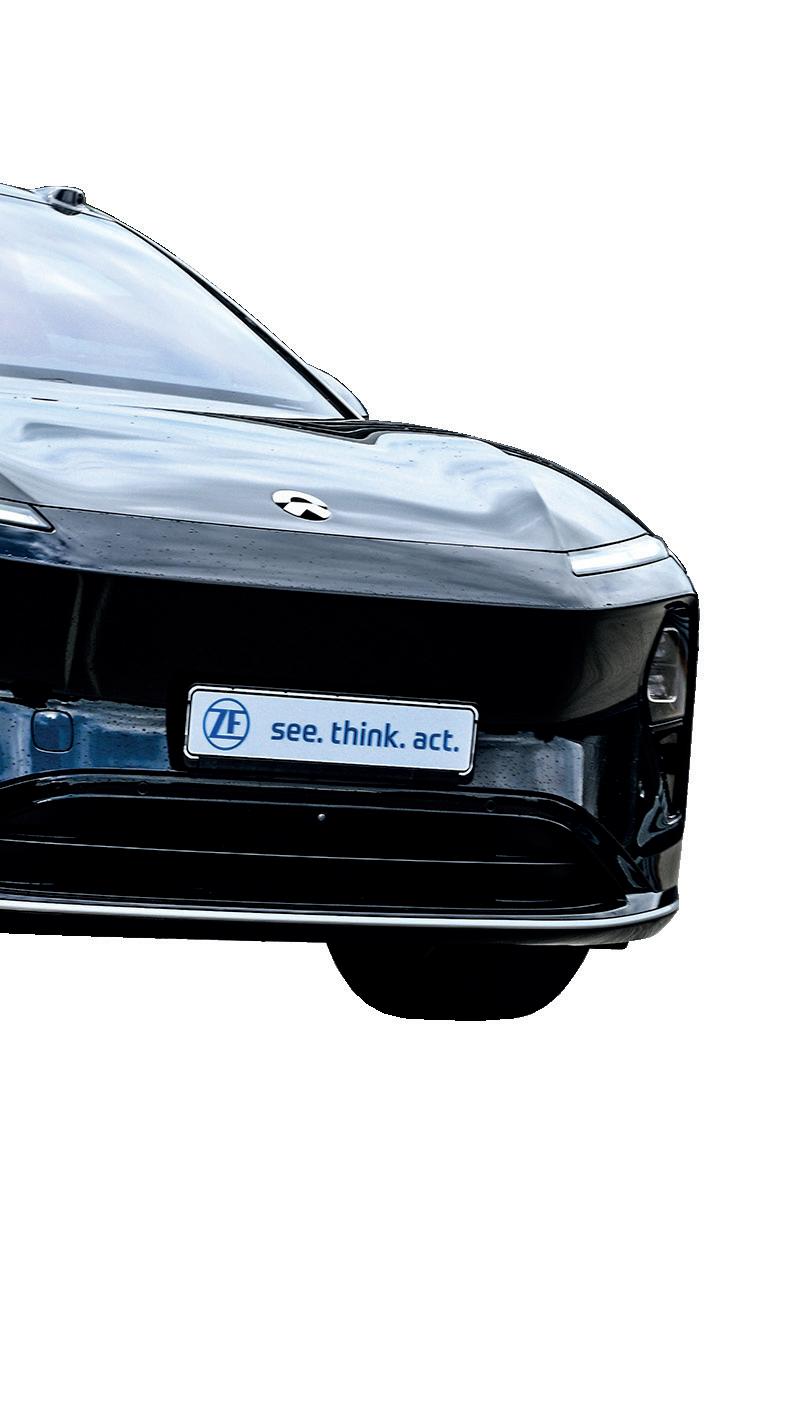
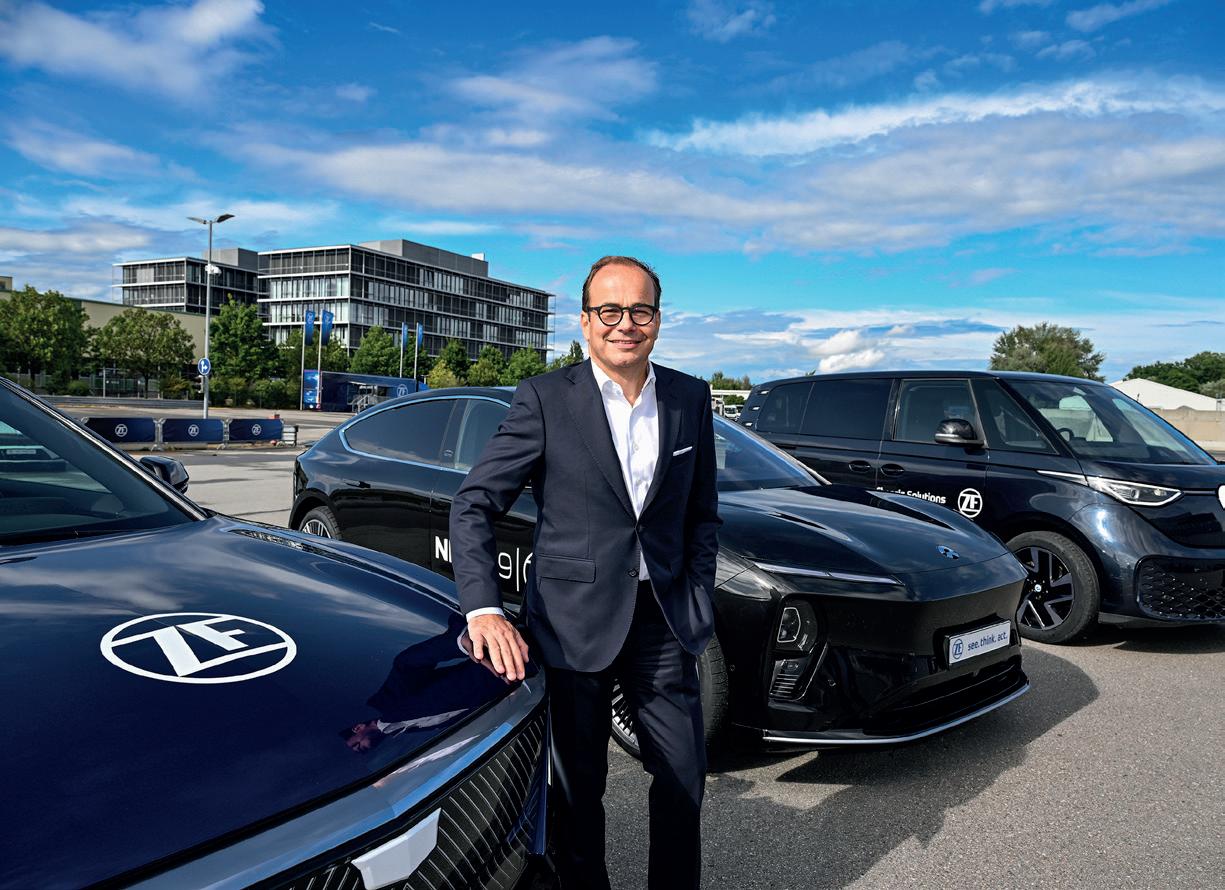
Yet where is this trend of EVs at the forefront of the automotive world headed? EV Powered visited ZF's UK headquarters in Solihull to find out.
As a reminder, ZF - or 'Zahnradfabrik Friedrichshafen' - is a German firm best known for its automatic transmissions. In fact, it's been building them since 1920. Yet there's heaps more that the company is doing, especially in relation to EV technology. With a keen eye on what's to come during the years ahead, ZF believes that 'Software Defined Vehicles' or SDV is where the future lies.
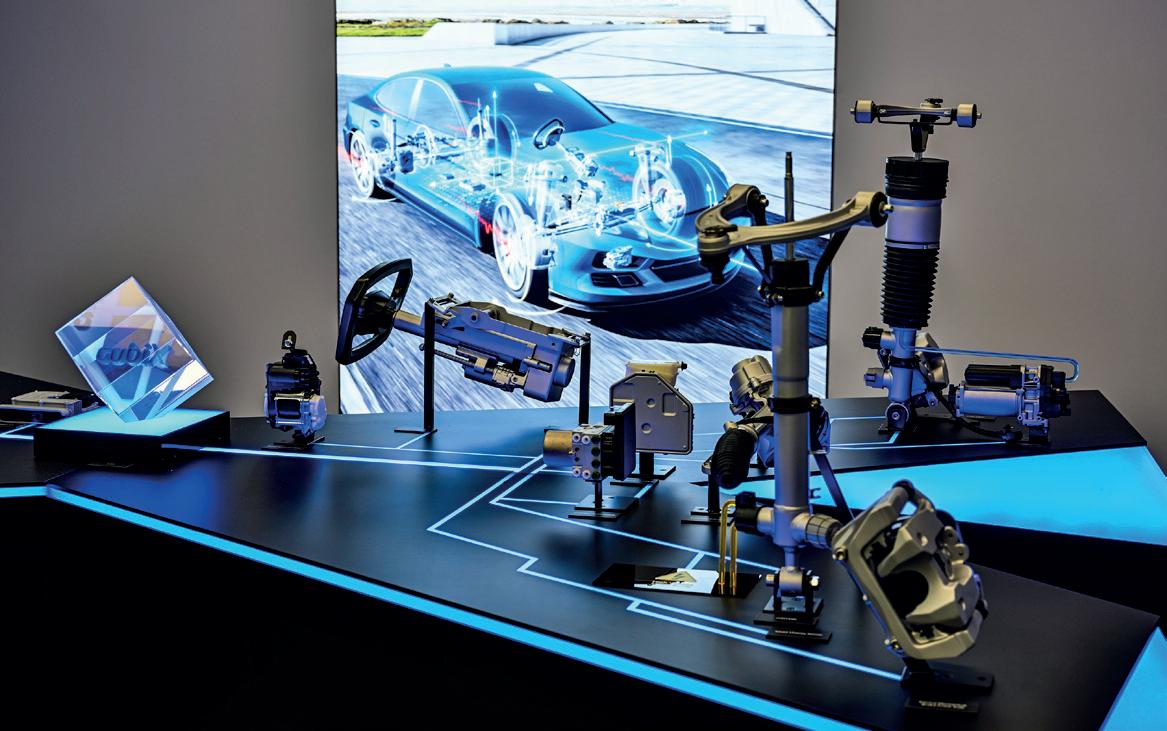
Put simply, an SDV has the bulk of its functions controlled by software, meaning most new cars fall under the SDV umbrella. In the context of software defined EVs, their hardware including steering, brakes, and damping is managed by smart actuators paired with smart sensors rather than old-fashioned mechanical linkages. In automotive terms, this is the car world's answer to aviation's fly-by-wire system.
Ultimately, ZF feels this largely hardware-free approach will strike a balance between performance, efficiency and reliability. Even now, SDVs benefit from cloud-based over the air (OTA) updates to make improvements to battery range, handling, and infotainment.
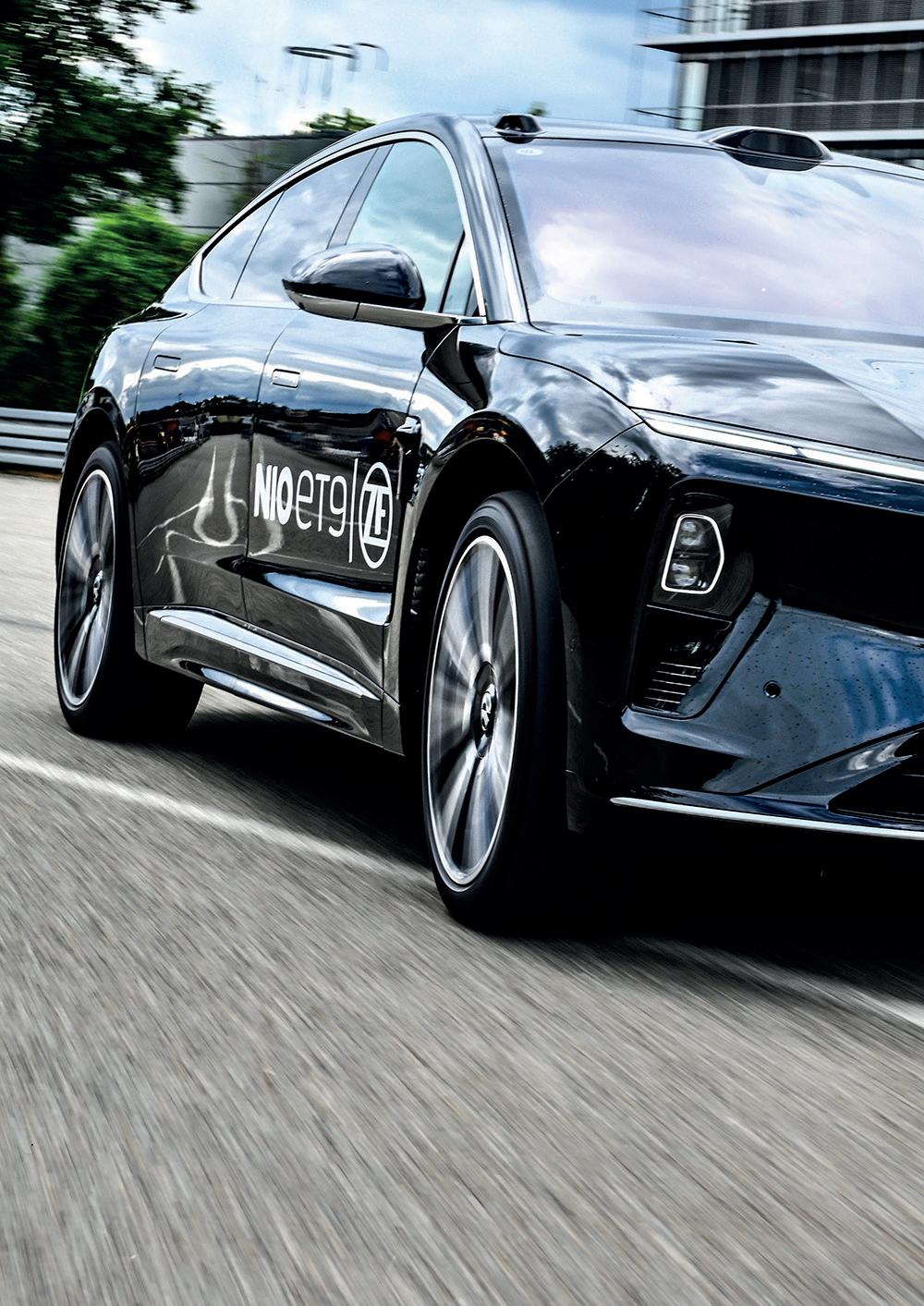
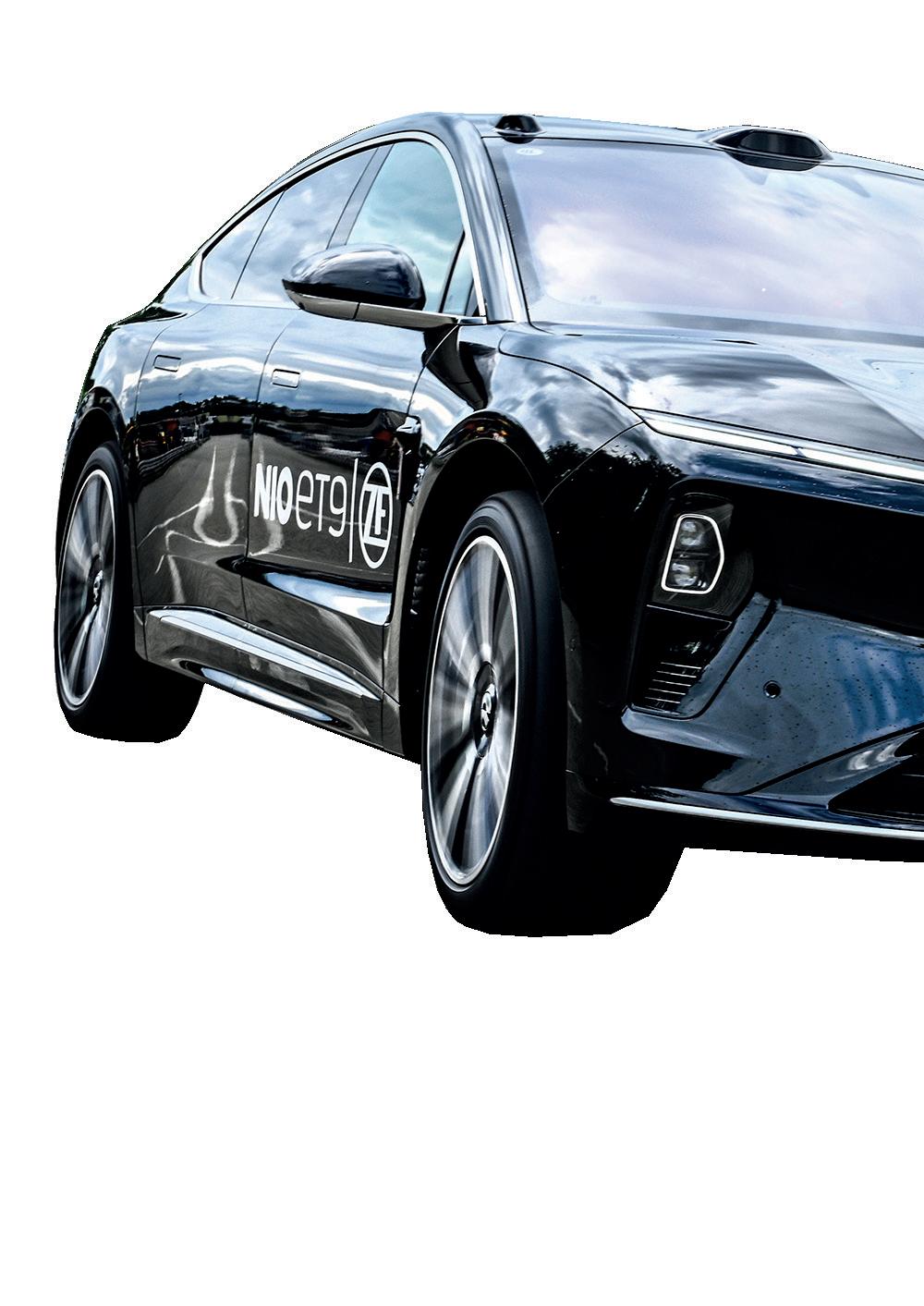
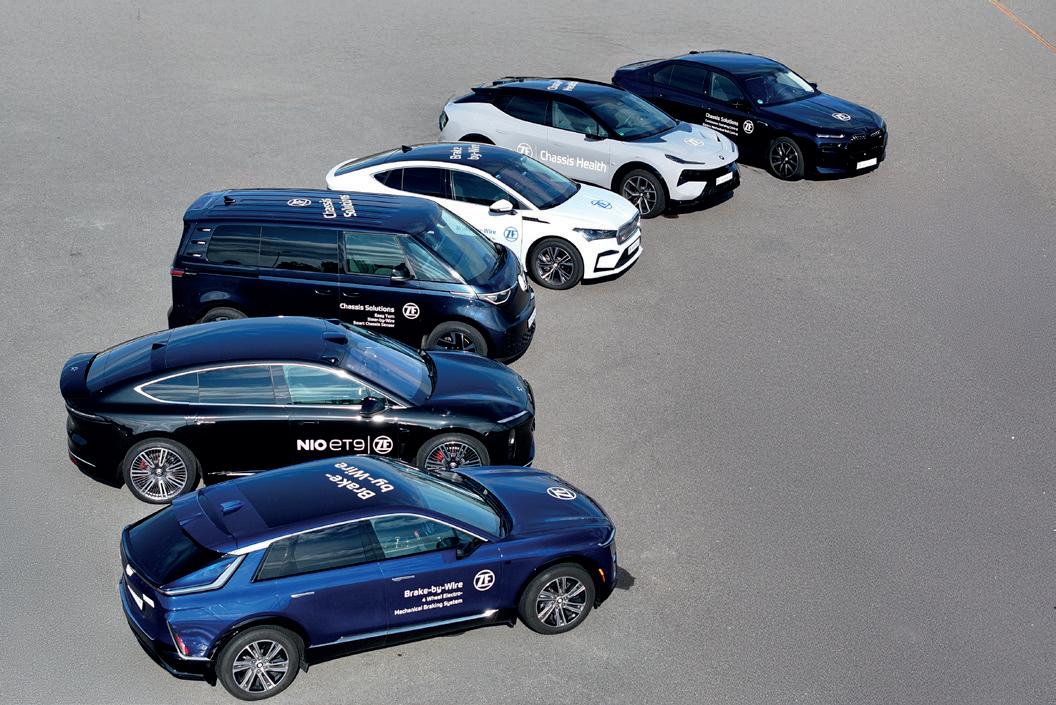
While many newer EVs benefit from the SDV approach, two in particular spring to mind – the Nio ET9, and the Farizon SV van. The ET9 is China's riposte to the Mercedes S-Class, and holds the title of the country's first mass-produced car to be fitted with a steer-by-wire (SBW) system.
Nio cites higher steering response speeds as its reasons for adopting SBW. Moreover, SDVs can return real-time data to the manufacturer regarding where improvements to their systems can be made.
At the other end of the automotive spectrum, the Farizon SV is an allelectric cargo van that uses by-wire controls for steering, throttle and braking. Its combination of sensors, servos and control units allow all the main inputs to be managed without cumbersome physical connections. Not only is this good for packaging but it also helps save weight and improve efficiency – something we will explore further later on.
Formula Student and performance mapping
ZF is a keen supporter of Formula Student UK, a race car engineering competition organised by the Institution of Mechanical Engineers, which is held each year at Silverstone.
ZF supports UK universities by inviting the brightest and best teams of mechanical engineering students competing in Formula Student's driverless, all-electric category to Solihull. There they can use ZF’s cuttingedge facilities as a sandbox to shakedown their self-designed vehicles, and get ready for the Silverstone event.
A ZF engineer involved with the Formula Student UK programme explained to EV Powered that a large part of the preparation involved with the Silverstone event is how students take the performance and behavioural data from the ECU of the previous year's challenger, and apply it to this year's car to make it more competitive.
In simple terms, the data code is extracted to a hard drive, where it is stored. The code is then altered on a computer to adapt to any changes in the circuit via power delivery, steering, and suspension. To apply the changes, the student then plugs the hard drive into the car's ECU and it reads the code accordingly. Once again, the data is extracted, altered, and re-applied in pursuit of the perfect setup.
While this isn't happening in the world of road-going SDVs just yet, ZF fully believes it's quite feasible in the future. To put things into perspective, an automotive engineer could map the driving characteristics of a Toyota GR Yaris onto a Skywell BE11. Not that you'd want to.
The chase for efficiency
The performance aspect of things, however, is just one small part of the SDV. As well as reporting live data as a way of allowing manufacturers to make constant improvements to their vehicles, ZF is aiming to make EVs quieter and more refined by taking an adaptive approach towards efficiency.
In this age of downscaling, it doesn't mean cutting costs, either.
"Even the slightest micro oscillation from a part can have a knock-on effect to the rest of the vehicle and create a vibration. In turn, this affects overall refinement and efficiency," explains Dr. David Moule, a ZF technical specialist in electric drivetrains. "This means sometimes you have to add mass and strengthen a component to eliminate the oscillation. However, you've added weight, which is something you want to keep to an absolute minimum on an EV.
"By eliminating physical components such as steering columns and braking systems, you remove several heavy components and replace them with a digital system, which reduces weight, and can be improved over the air as it tracks real-time data. When you take out weight, you improve range, vehicle efficiency, refinement, and so on. Then you find yourself in a virtuous circle as everything is working together in a more efficient way than before."
In its pursuit to improve SDV efficiency, ZF isn't just experimenting with masses, wireless systems, and removing components. Within the electric motors it produces, it has experimented with different types of steel for the motor's magnets, with alternate grades providing varying levels of energy loss.
ZF has even gone so deep as to adopt different steel milling techniques for the same component. For example, the shaft on two electric motors may appear the same to the naked eye. Under a microscope, however, their ridging appears different in the name of efficiency. It's apparent that ZF operates beyond what's visible.
What's next for EVs?
As the day winds down, it seems appropriate to loop back to the ZF philosophy of making things as efficient as possible. SDVs built prior to 2022 are controlled by a series of decentralised ECUs positioned around the floorpan.
Those manufactured from this year to 2030 will be managed by three main modules positioned at the front, middle, and rear of the car with fewer ECUs. Fast-forward to 2030 and the German manufacturer believes that SDVs will have just three areas of centralised electronic architecture - rear zone, central zone, and front zone.
Steer by wire system
Cars using ZF tech
17 FEATURE
Undoubtedly, EVs will still have their naysayers. The hackneyed 'milkfloat' and 'mobile phone' tropes will be wheeled out by the usual suspects. Yet based on the mere glimpse we were offered by the tour around the ZF Solihull site and Dr. Moule's brain, all of us who have embraced electrified motoring are standing on the edge of something exciting in terms of tech and seemingly infinite possibility.
In fact... were I a gambling man, I'd say that it's down to the rest of the automotive world to catch up.
ZF management board member, Dr. Peter Holdmann
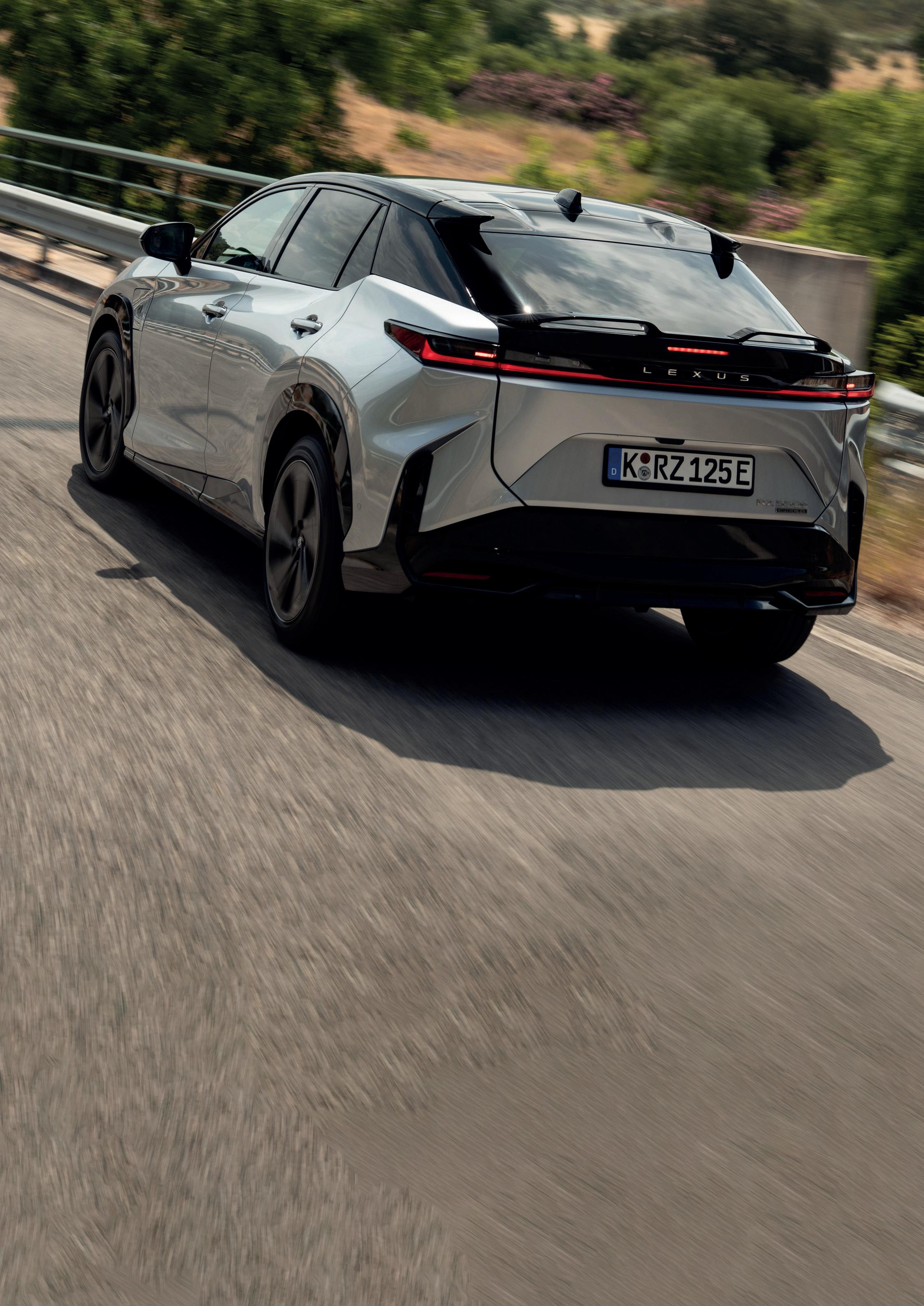
RZ LEXUS
THE NEW LEXUS RZ MIGHT LOOK FAMILIAR BUT THERE HAVE BEEN SOME MAJOR CHANGES
BENEATH THE SURFACE
couple of years ago I drove a Lexus RZ with steer-by-wire controls. We were told then that the system was still being fine-tuned but would be on sale by the end of the year. That never happened.
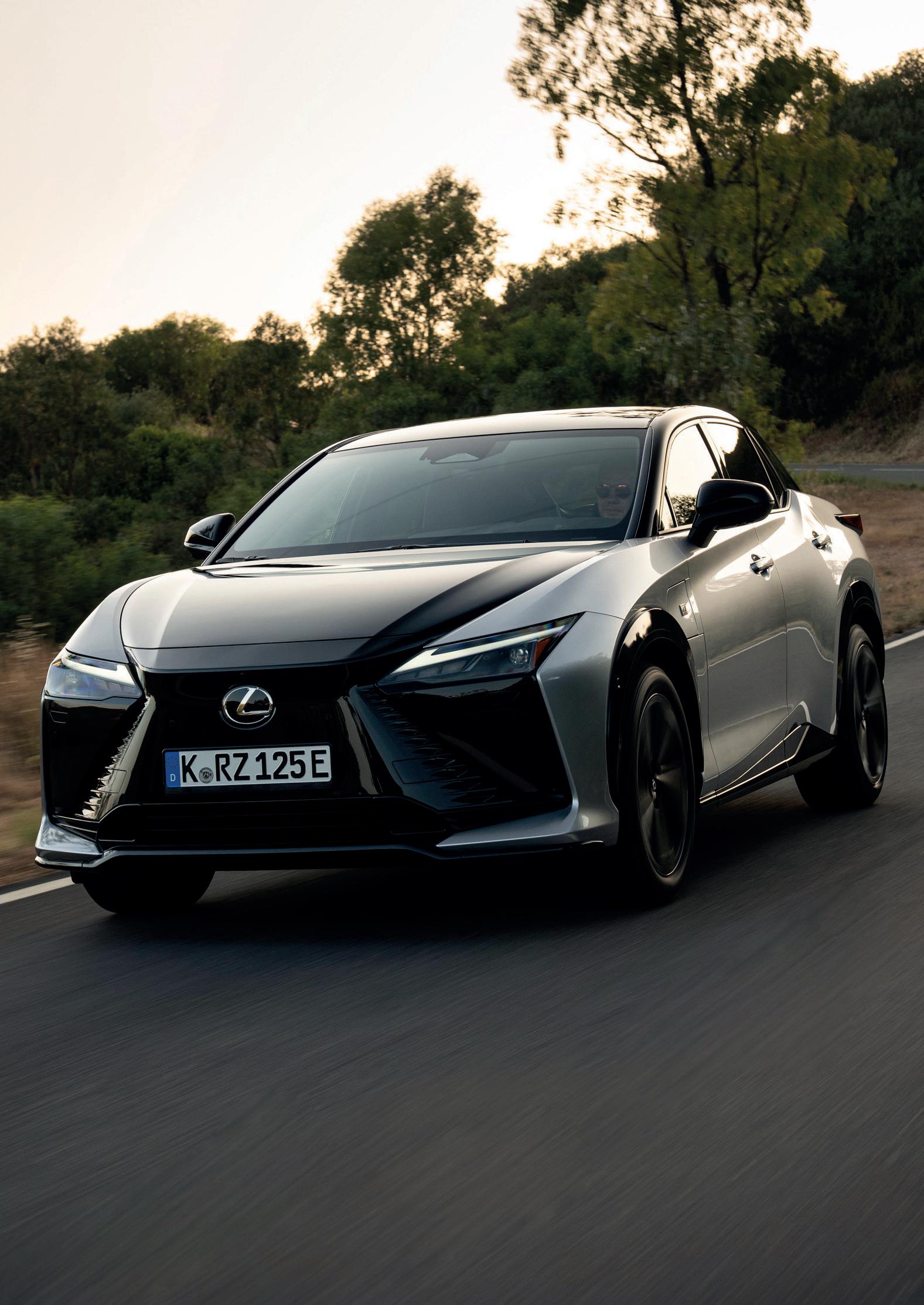
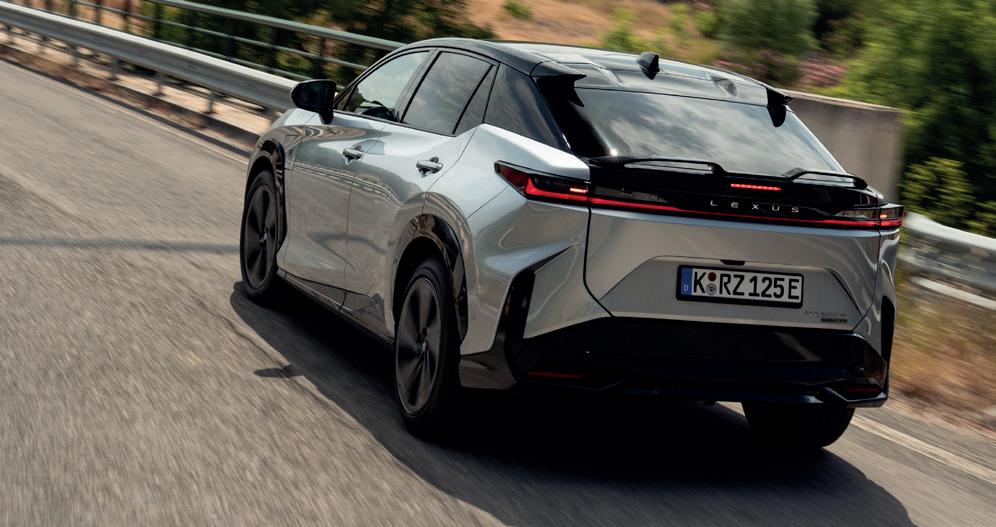
to before, while the new F Sport grade gets a more aggressive lower front bumper with fins for improved aero performance, plus a neat lowlevel rear spoiler and diffuser. There are also blue brake callipers hiding behind unique lightweight 20-inch alloys.
Interior changes are also minimal. In fact there’s not much to mention apart from new laser-cut patterns on the door cards and seats, and the option of a rather lovely hazel-colour Ultrasuede upholstery.
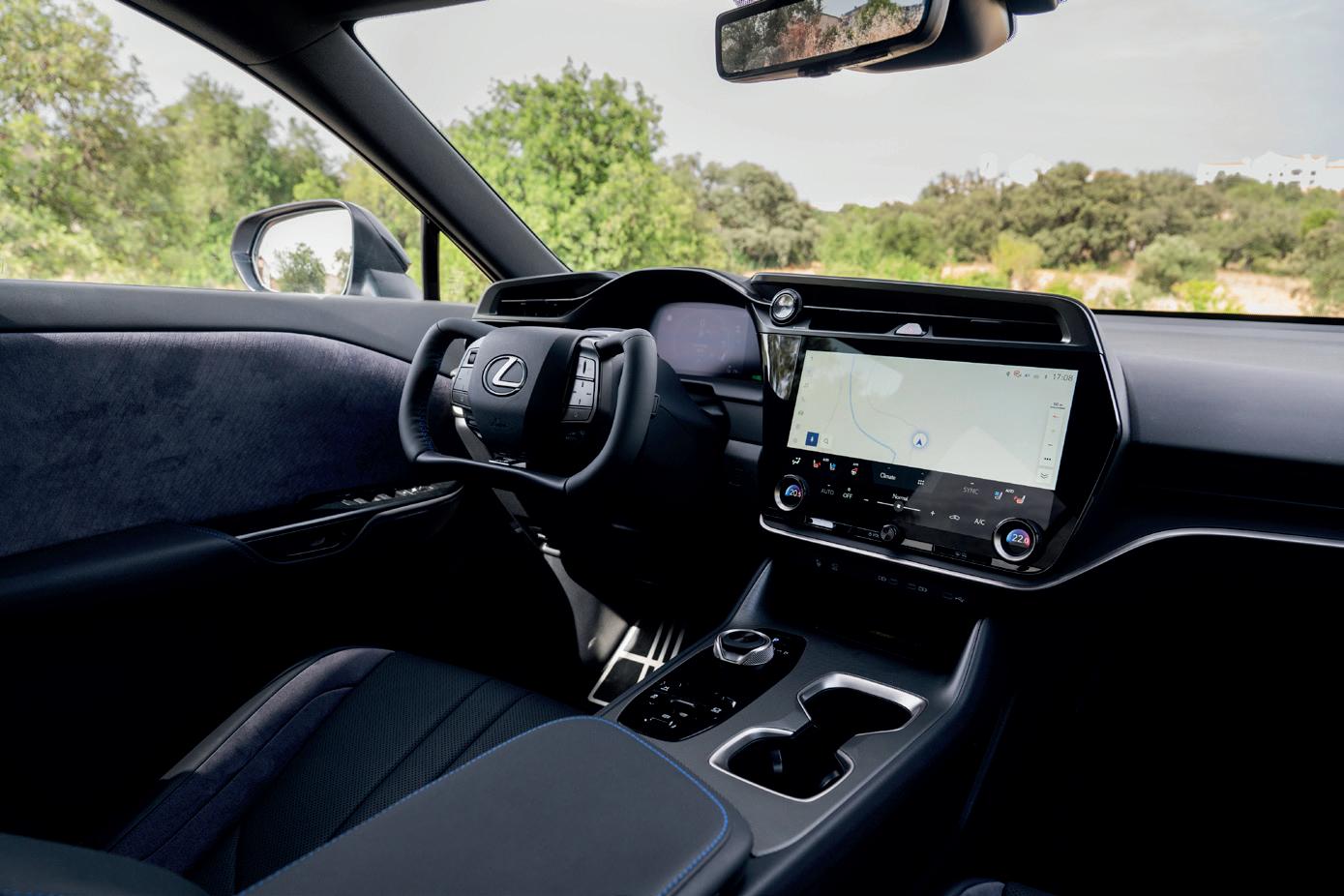
As before, there’s a sharp and responsive 14-inch central touchscreen and digital dials wrapped in a high-set dashboard. Big physical knobs for the air conditioning and a chunky drive selector are
user-friendly and there’s a welcome absence of piano black trim. The RZ also demonstrates the usual Lexus build quality which feels like it could withstand a direct strike from a meteor.
There’s ample space for four adults and a generous 522-litre boot, but rear passengers face a slightly odd knees-up seating position due to the relatively low seat and high floor.
The biggest change is that the F Sport model with its steer-by-wire setup brings an F1-style yoke in place of a regular steering wheel. This looks odd with the huge instrument binnacle behind it, and it isn’t as user-friendly as a regular wheel. The indicator stalks and regen/gear paddles are tiny elements stuck close together on the back of the yoke and are tricky to use. Trying to indicate on a roundabout, for instance, requires some finger gymnastics, and there’s still a chance you’ll adjust the regen rather than your indicator.
Less obvious changes include added structural rigidity and improved sound deadening which contribute to an even smoother and quieter ride than the already impressive pre-facelift car. While changes on the surface aren’t huge, there have been some big updates underneath.
The RZ’s battery has been upgraded to a watercooled 77kWh unit with onboard pre-conditioning. While its peak charging is unchanged at 150kW, the new battery can charge faster for longer and in a wider range of conditions. A 10-80% charge has been cut to around 30 minutes.
Lexus has also tinkered with the motors for better power, lower internal losses and less noise. The result is that the entry-level 350e offers 221bhp from its single front-mounted motor and up to 353 miles of range. That’s 20bhp and 58 miles more than before.
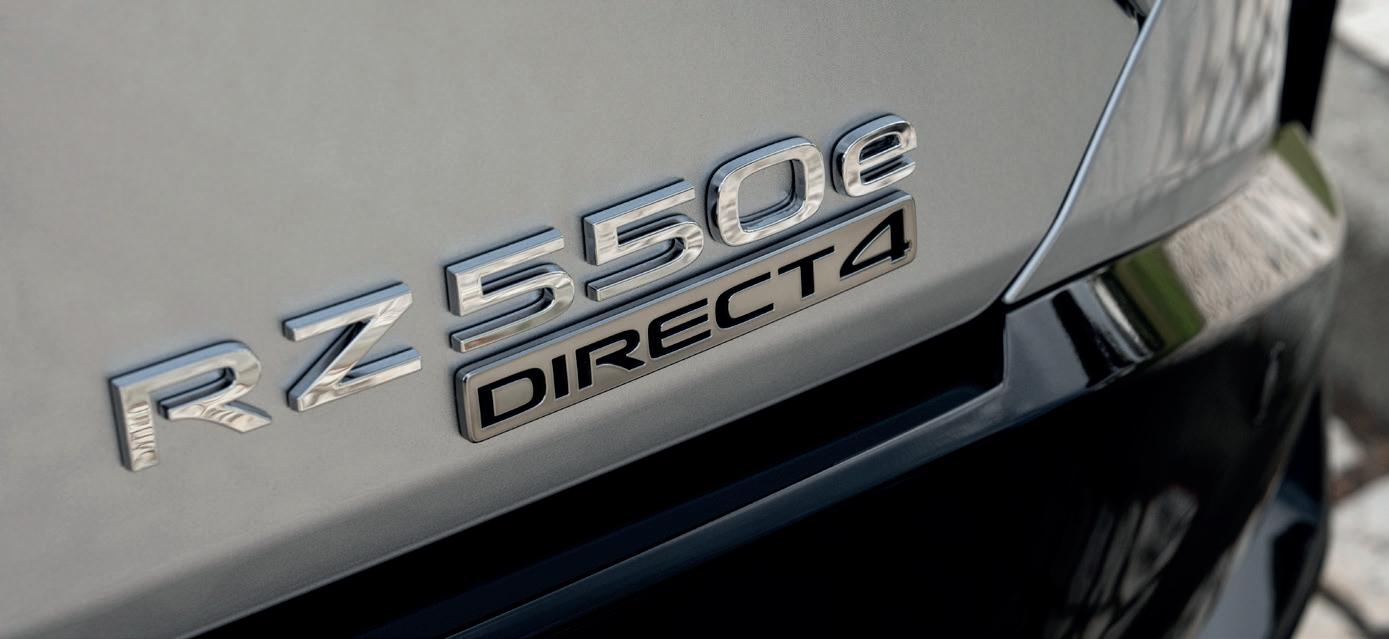
The mid-spec 500e brings all-wheel-drive, 376bhp and up to 311 miles of range while the 550e F Sport sacrifices range for performance, with 402bhp and a 0-62mph time of 4.4 seconds. It also gets a bespoke suspension setup, added bracing and Lexus Interactive Drive which adds simulated gear shifts for a more immersive experience.
Truthfully, the impact of the Interactive Drive is limited. It follows a similar approach to the Hyundai Ioniq 5 N or Kia EV6 GT, mimicking an eight-speed sequential gearbox, complete with rev limiter, engine sound and driveline shunt. The problem is it’s not as ferocious or fun as the Koreans. It feels like Lexus is trying to balance “sporty” with its
usual refinement but has got stuck in the middle. None of it is bad but nor is it transformative enough to make you press the button to access it.
The same is true of the rest of the F Sport experience. It’s quick in a straight line and hangs on well enough in corners thanks to the smart Direct4 system, but it’s not much quicker than the 500e. While the ride is stiffer, there’s still enough body roll to remind you this is a tall and heavy SUV and discourage you from getting too lairy at the wheel.
The most obvious difference between 500e and 550e is the 550e F Sport’s steer-by-wire system.
This has been retuned with input from engineers and driving experts including the boss man Akio Toyoda himself.
Among the changes are a greater range from lock to lock. There’s now 200 degrees of movement rather than 150 degrees – an increase demanded by test drivers who ran out of steering lock when the car was starting to lose control.
As well as giving more scope to rescue a bad situation, that change gives a less “jagged” feel at low speeds. Back in 2023, tiny inputs translated into massive changes in direction. Now there’s a smoother transition and gentler response to minor movements of the yoke. It’s not gone entirely – negotiating urban roundabouts requires a degree of thought that regular steering doesn’t demand – but it is better than before.
It also feels much improved at high speed. On the motorway it’s rock solid while on flowing country
roads it feels accurate and actually more dynamic than the sluggish regular steering. Strangely, it also feels more connected and better weighted than the regular setup, showing what you can do with clever software.
That clever software also eliminates unwanted feedback from the road – for instance the steering judder caused by cobbled roads or potholes. In those circumstances it works well but I’m not sure how much isolation from feedback I actually want.
Time constraints meant I didn’t get the chance to drive the 350e, but Lexus reckons that’s going to be the big seller. It’s understandable. As pleasant as the power and pace of the AWD cars is, 221bhp is adequate and the extra 30 to 40 miles of range is an attractive compromise, even if you miss out on the option of the Takumi spec.
Which brings us nicely to the various Lexus RZ trim levels.
The UK is getting three powertrains and five trim levels, prices for which will be announced closer to the on-sale date in late 2025. For reference, the current model starts at £50,145 and rises to almost £67,000.
The 350e comes in Premium or Premium Plus grades. 500e is also available with Premium Plus or Takumi while the 550e comes in F Sport or F Sport Takumi specification.
Key kit on all models includes LED lights, a powered tailgate, panoramic sunroof, heated front seats and steering wheel, and full Lexus Safety
21 REVIEW
LEXUS RZ 550e F SPORT
PRICE: £TBC
POWERTRAIN: Two-motor, all-wheel-drive
BATTERY: 77kWh
POWER: 402bhp
TORQUE: N/A
TOP SPEED: 112mph
0-62MPH: 4.4 seconds
RANGE: 280 miles
CONSUMPTION: 3.4m/kWh
CHARGING: up to 150kW
System +. Premium grade gets 18-inch alloys, synthetic leather upholstery and a 10-speaker sound system plus front and rear parking sensors. Premium Plus adds a head-up display, 360-degree parking camera and cooled front seats. Both come with the option of 20-inch alloys.
Those 20-inch wheels are standard on the Takumi grade, which also adds a Mark Levinson stereo, adaptive headlights, dimmable sunroof, the Ultrasuede upholstery and heated rear seats.
F Sport is based on Premium Plus but brings the chassis and powertrain upgrades, cosmetic enhancements and sports seats. F Sport Takumi adds the Mark Levinson stereo and dimmable sunroof.
The RZ already felt like a great expression of what an electric Lexus should be and the 2026 updates enhance that.
This upgraded model retains all the qualities of the early car, from its rock-solid quality and refinement to its space and easygoing driving nature. To that it adds better performance, better range and better charging.
Buyers will most likely go for the more affordable and more efficient 350e, even if the extra poke of the two-motor versions is welcome. However, between the all-wheel-drive options, I’m not sure the F Sport will be worth the extra money.
The differences in performance and dynamics aren’t vast and while the steer-by-wire is an interesting concept, I’m still not convinced of its benefits over a mechanical system for most drivers.
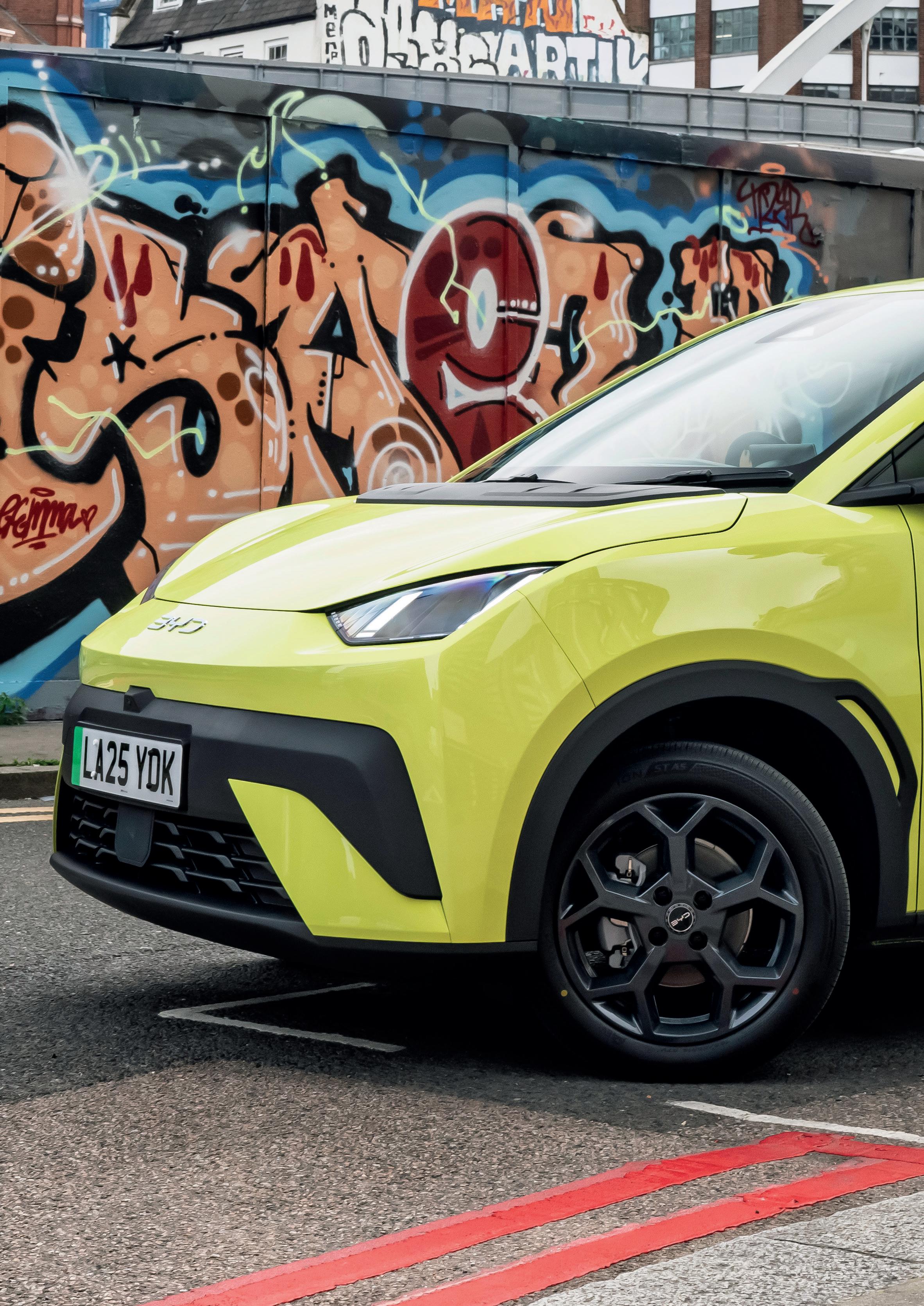
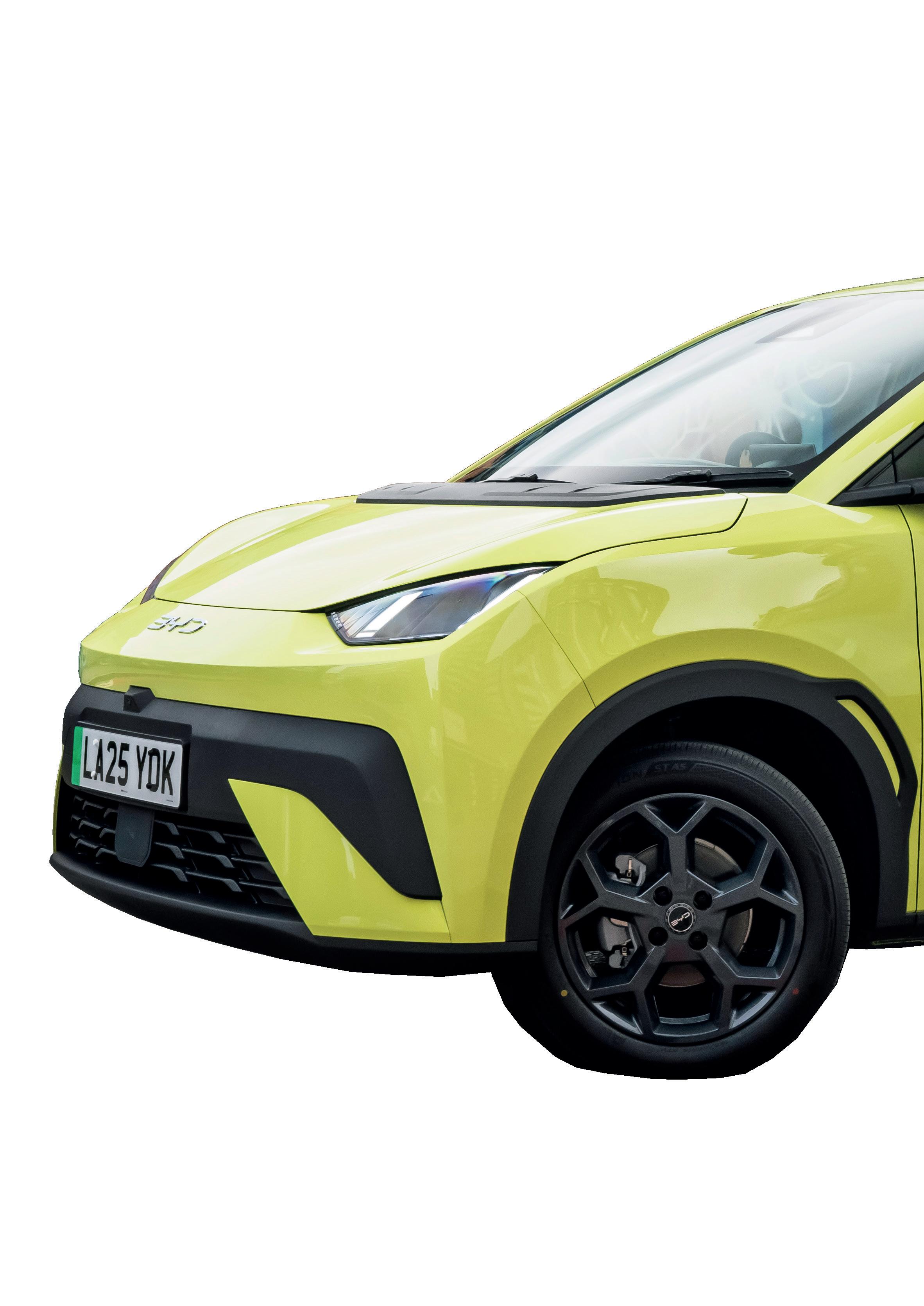
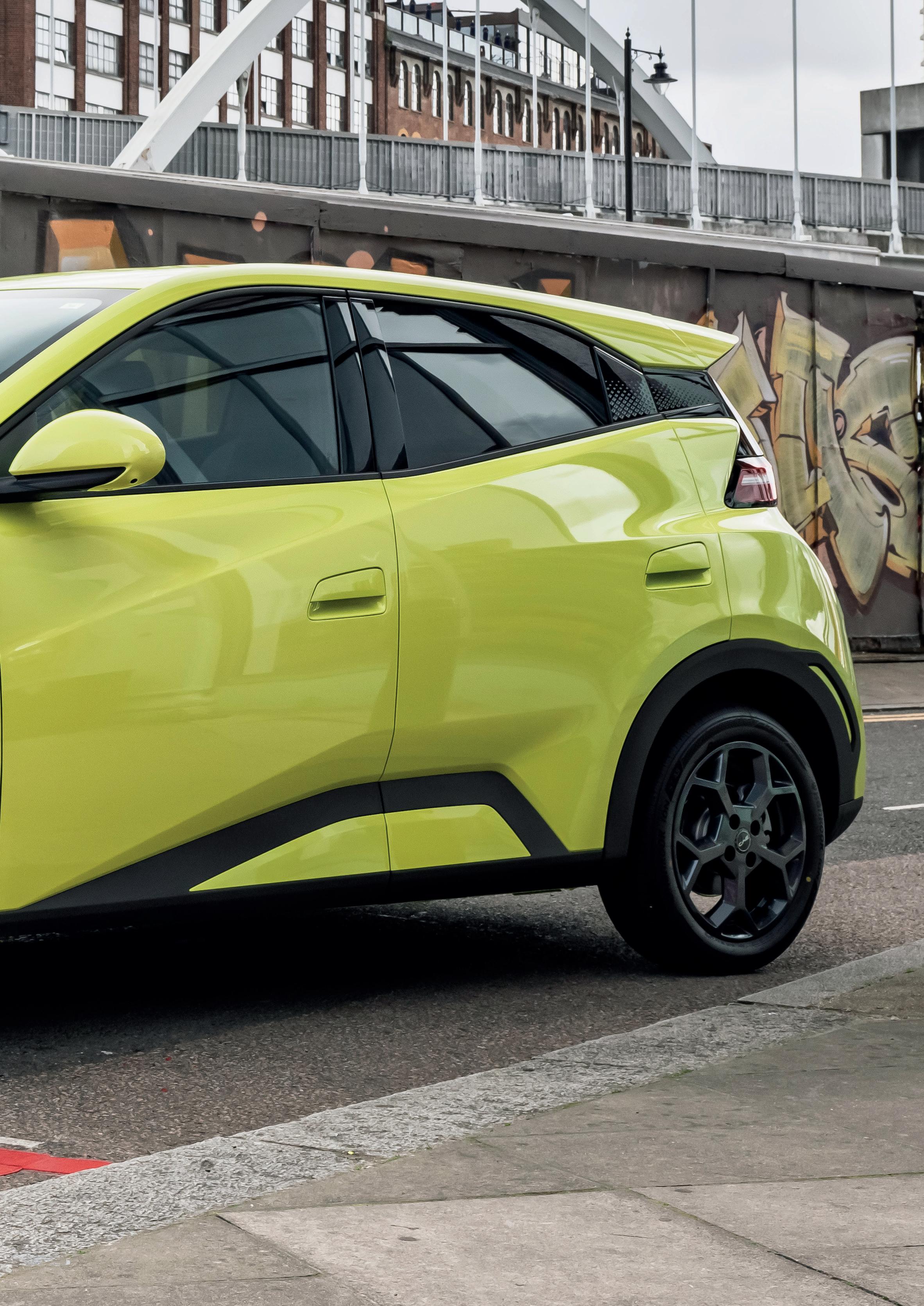
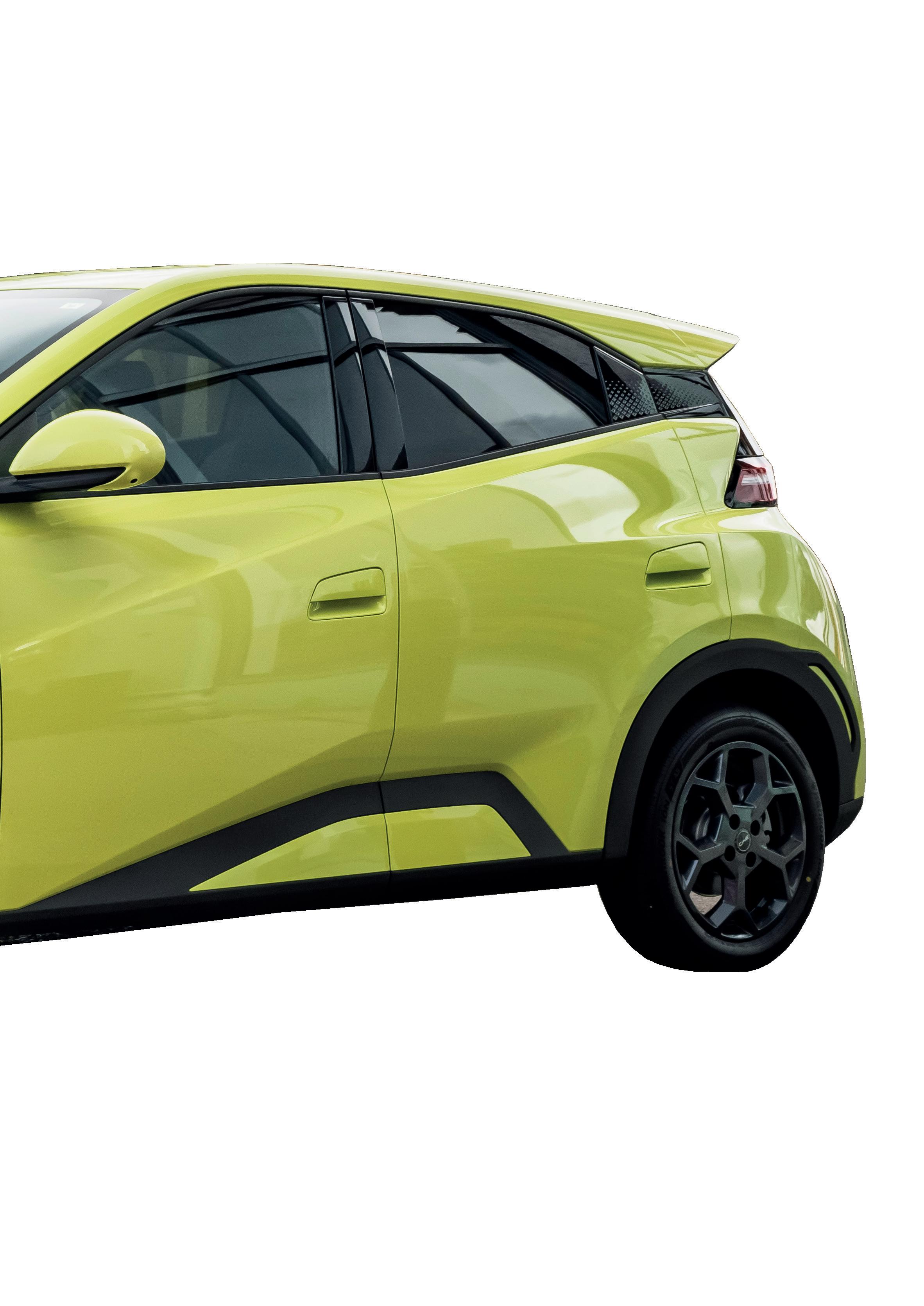
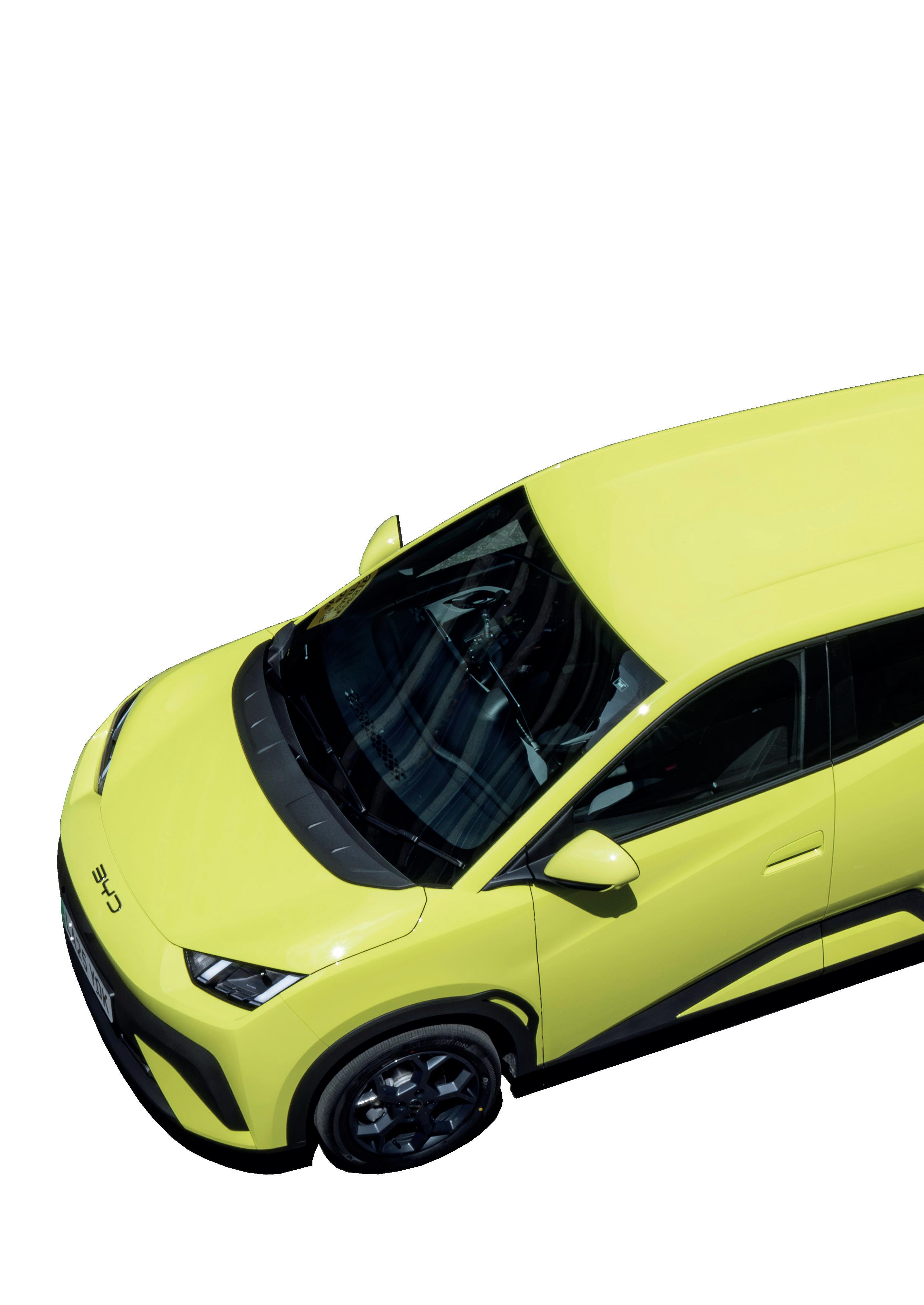
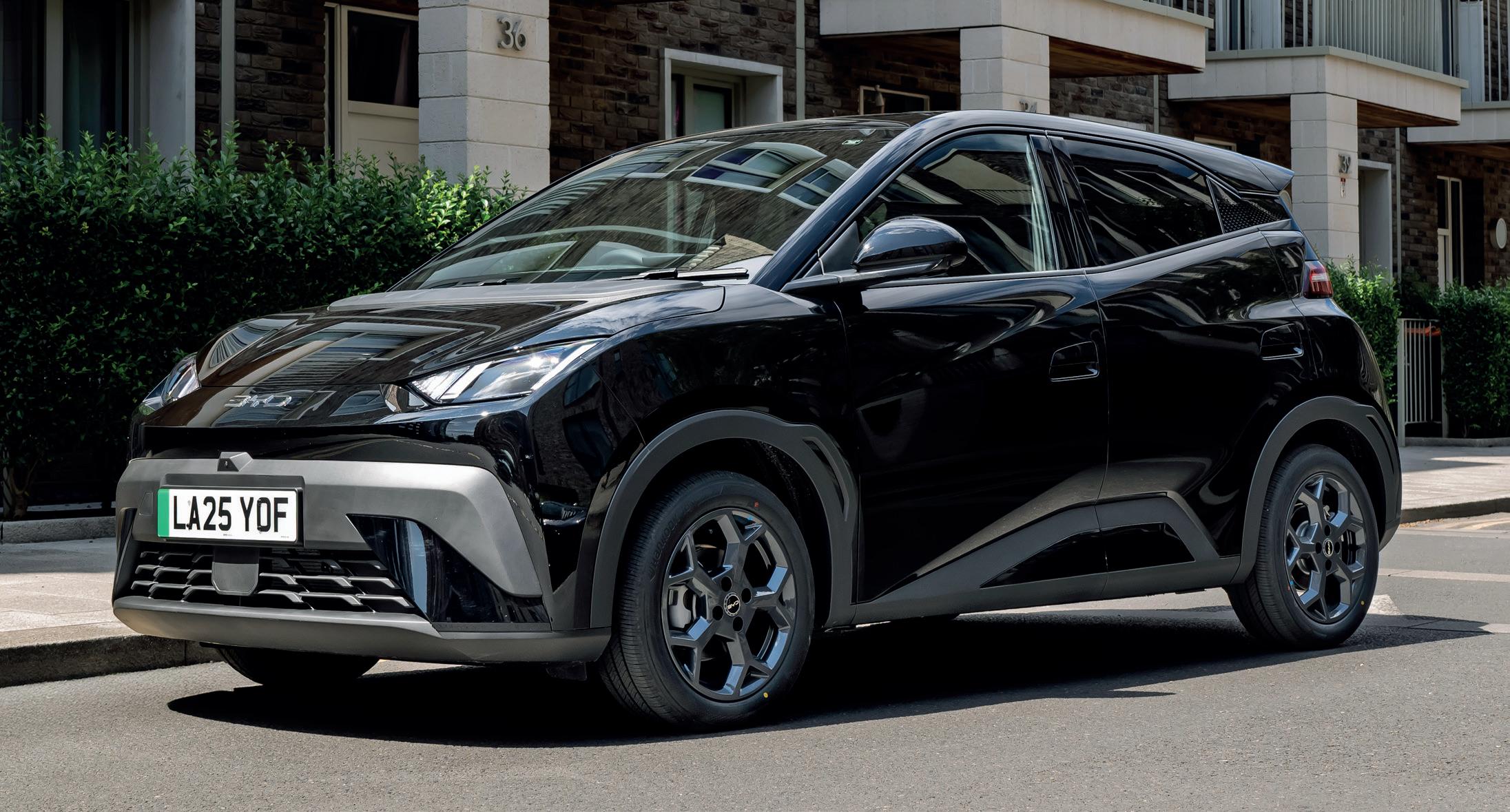
BYD DOLPHIN DOLPHIN SURF BYD DOLPHIN DOLPHIN SURF BYD DOLPHIN
DOLPHIN SURF BYD DOLPHIN DOLPHIN SURF BYD DOLPHIN DOLPHIN SURF
RENAULT SCENIC MONTH ONE
JOINING THE RENAULUTION
OUR LATEST LONG-TERM TEST CAR IS THE MULTI-AWARD-WINNING RENAULT SCENIC E-TECH, BUT HOW DOES THIS PRIZE-MAGNET ELECTRIC SUV LIVE UP TO EVERYDAY LIFE?
It’s fair to say I’ve become a bit of a Renault fanboy over the last couple of years.
For much of the last decade, the French brand churned out uninspiring SUV after uninspiring SUV (I’m looking at you, Koleos and Kadjar) then as it fully embraced electrification it seemed, suddenly, to find its mojo again. Sharp design, clever packaging and technological innovation all reappeared and made Renault a brand worth paying attention to. There’s lots of examples – in the shape of the R4 and R5, plus the Alpine A290 and next year’s Twingo. But before them came the Megane and the Scenic.
27 LONG-TERM REVIEW
RENAULT SCENIC E-TECH ICONIC LONG RANGE
PRICE: £45,495 (£46,745 as tested)
POWERTRAIN: Single-motor, front-wheel-drive
BATTERY: 87kWh
POWER: 215bhp
TORQUE: 221lb ft
TOP SPEED: 105mph
0-62MPH: 7.9 seconds
RANGE: 369 miles
CONSUMPTION: 3.7m/kWh
CHARGING: up to 150kW
I was among the judges who voted the Scenic E-Tech Scottish Car of the Year in 2024, so it seemed fitting to spend more time with the car to see if it still lived up to our acclaim after a few months.
First, the basics. The Renault Scenic is a 4.47m long, 1.86m wide family SUV. It’s in a crowded market, competing with the likes of the Ford Explorer, Skoda Enyaq, Hyundai Ioniq 5, and Peugeot E-3008. Starting at around £37,000, entry-level cars undercut rivals by a couple of thousand pounds and even at the top end, my Iconic Long Range-spec car maintains a similar gap to its Ford, Skoda or Hyundai equivalents.
What’s impressive is that after a recent line-up restructure, the small battery option has been dropped and even the basic cars get the bigger 87kWh battery which, in “my” fully loaded car offers an official range of 369 miles.
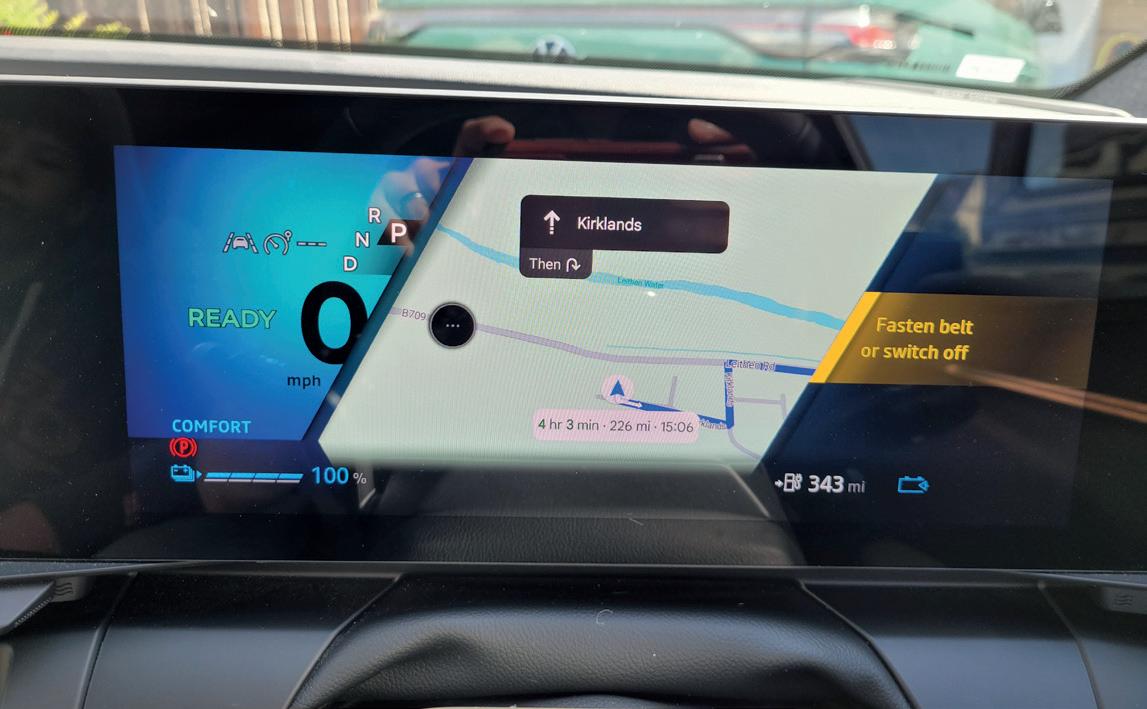
How close we get to that remains to be seen over the next few months but early indications are good. After a few weeks of familiarisation, the Scenic’s trip computer reckons a full charge will return almost 350 miles based on my driving history.
That’s helped by performance that’s decent rather than dazzling. With 215bhp, the Scenic is a little down on power compared with the mid-level Explorer or higher-spec Enyaq. It’s still perfectly sufficient for day-to-day driving – 0-62mph in less than 8 seconds is quick enough –but it doesn’t encourage the kind of driving that chews through energy too quickly.
Visually, the Scenic has a more angular aesthetic than the related Megane hatchback. The textured hexagonal grille that fades into the bodywork as it radiates from the new-look Renault badge is bold and different but not too aggressive. The same is true of the pointed bumper and arrow-shaped multi-LED running lights that give a distinctive character to the car. Although it is an SUV, the Scenic seems to sit lower than some rivals and even with chrome roof rails and 20-inch alloys, it appears remarkably compact.
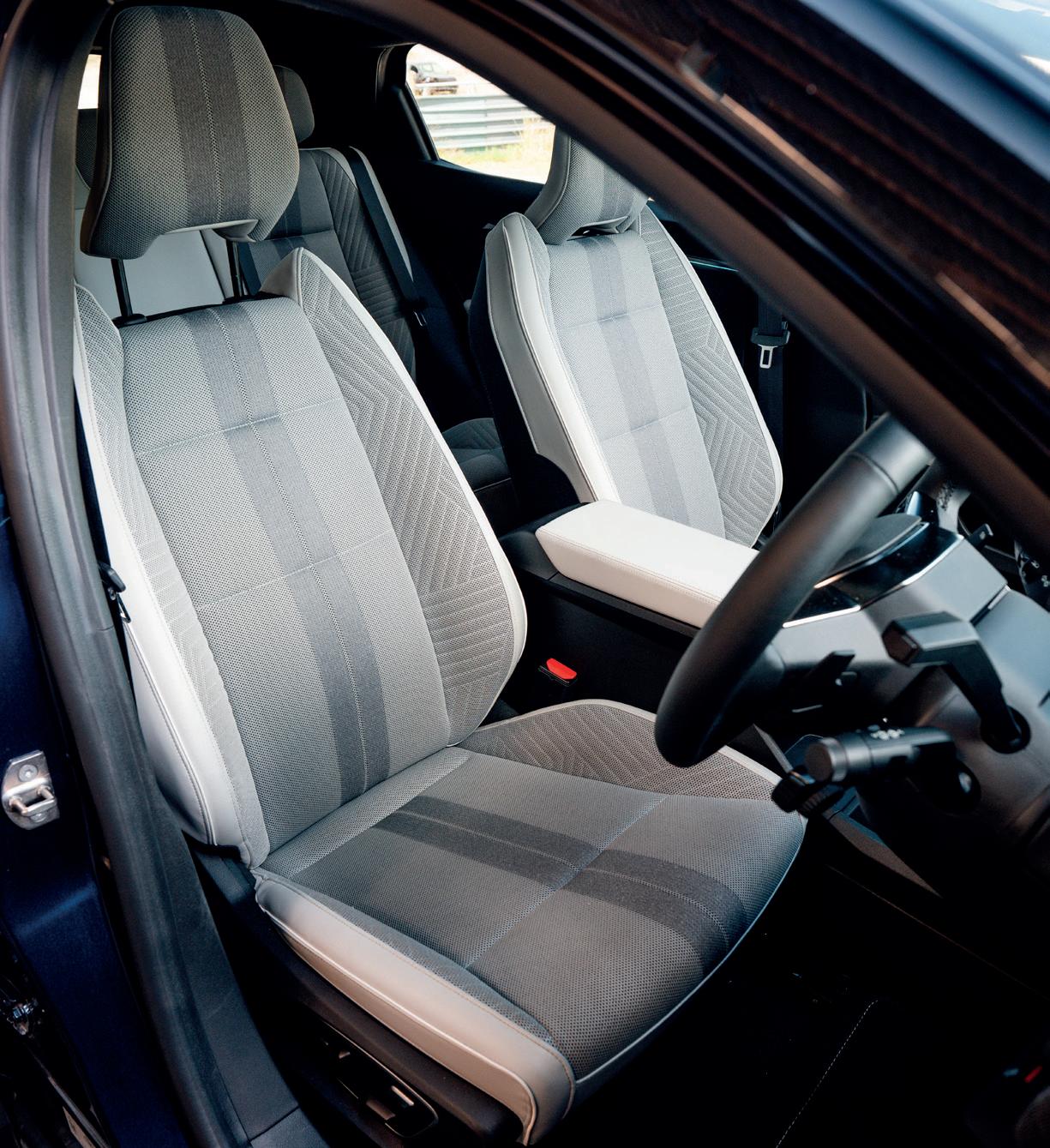
What’s clever is that it doesn’t feel small inside. I’ve yet to try and fit my entire brood of five in at once, but from a driver’s perspective there’s plenty of space and adjustment. That impression is helped by the pale fabric upholstery, made from recycled materials, and the huge panoramic sunroof with its clever liquid crystal tech that goes from clear to opaque and back at the touch of a button.
As with any modern car, especially range-topping models, the Scenic is packed with technology like that. It’ll take me more time to get to grips with all of it but two elements I’m already loving are the easy-to-use Google Automotive-powered infotainment system and the ADAS controls. More precisely, the lone button just to the right of the steering wheel which with two deft taps deactivates all the unnecessary binging and bonging and interventions you didn’t ask for or need. Chapeau to Renault, as I believe the youth say.
Also fitted to my top-spec car are elements such as heated massage seats and steering wheel (which hopefully I won’t need); a hybrid rear-view mirror with camera; 12-speaker Harman Kadron stereo, powered tailgate and hands-free parking.
Some proper family outings and long work-related trips are in the diary, which should give me time to put all that tech to the test as well as assess how well the Scenic stacks up as both a family car and long-range workhorse.
Arrived:
USED NISSAN LEAF BUYING GUIDE
A used Nissan Leaf can be a good starting point to the world of EVs, but early versions of this pioneering car are not without their quirks.
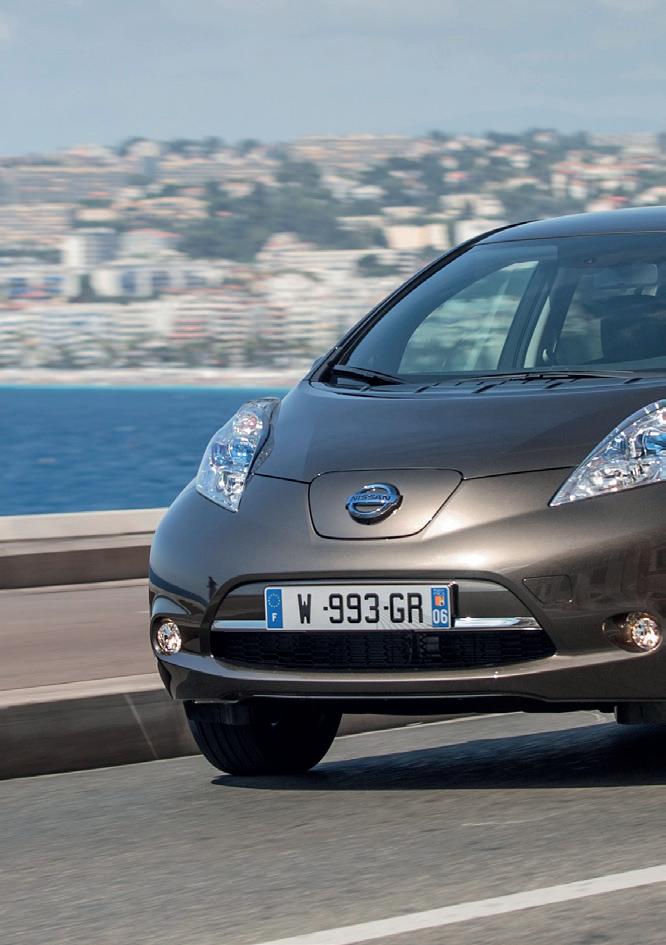
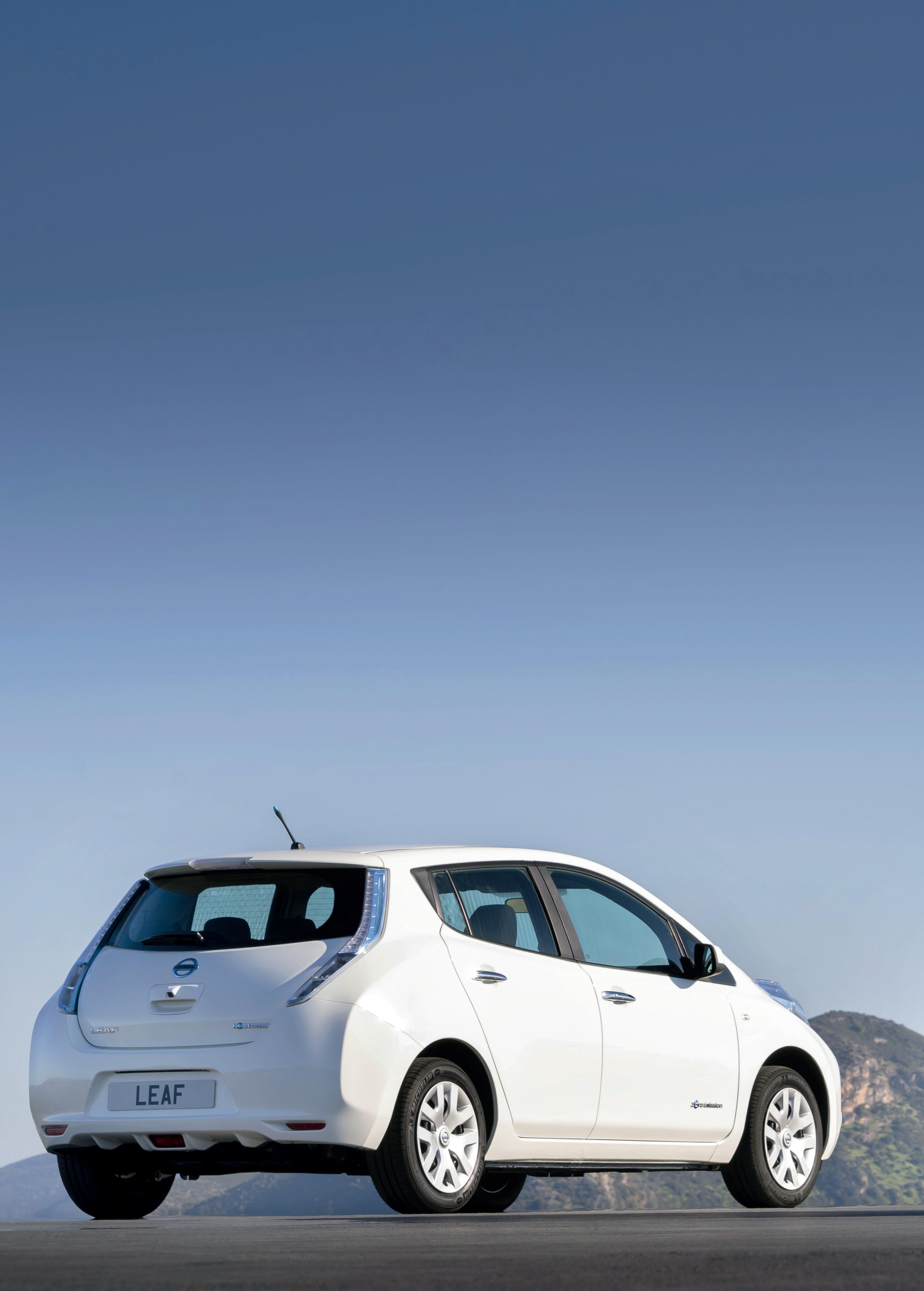
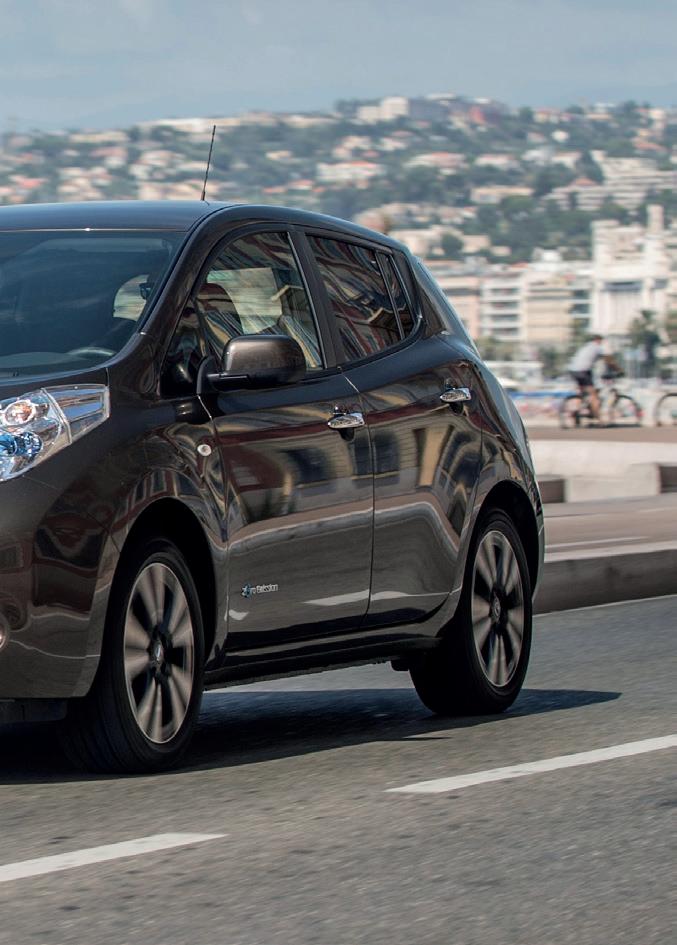
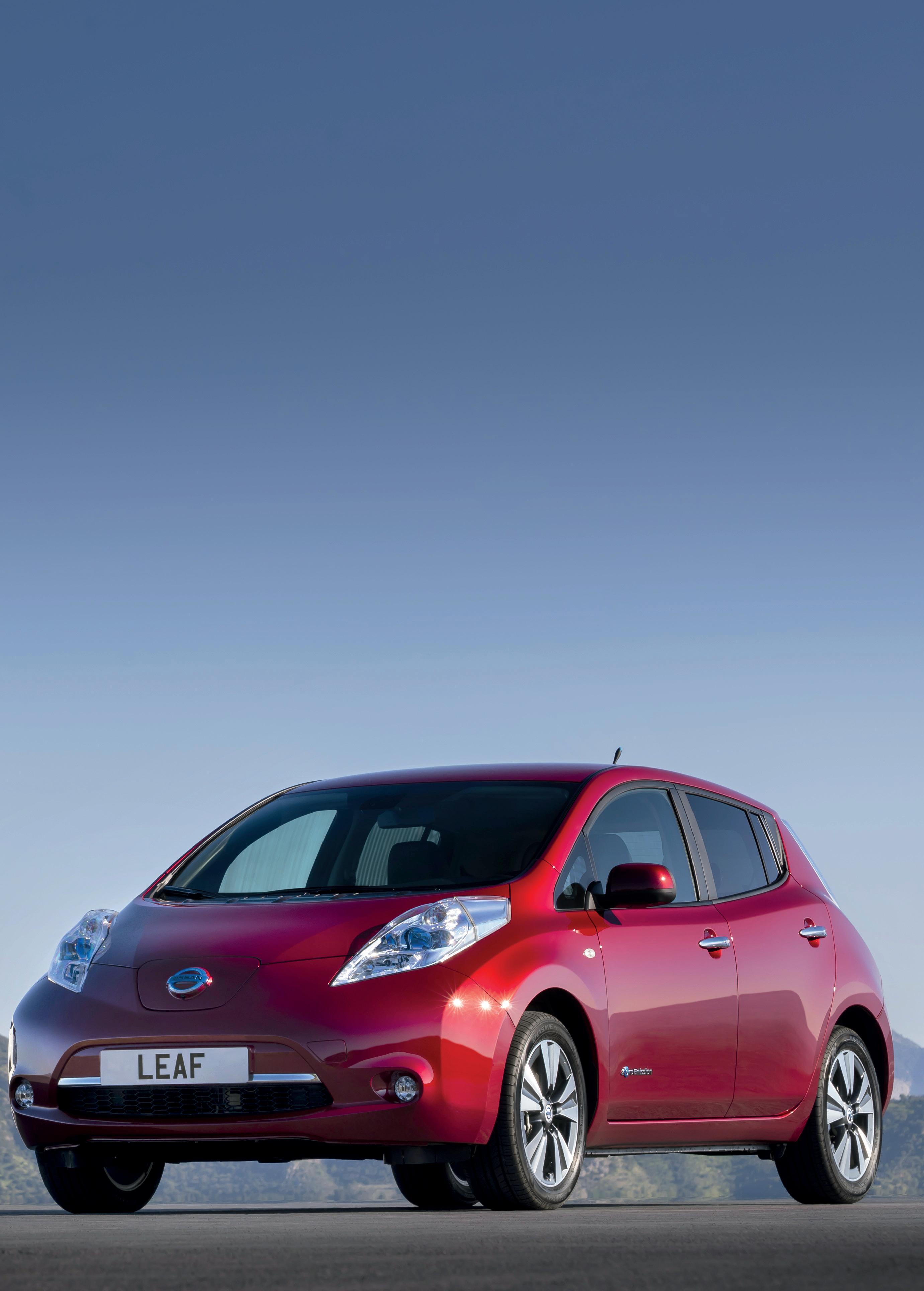
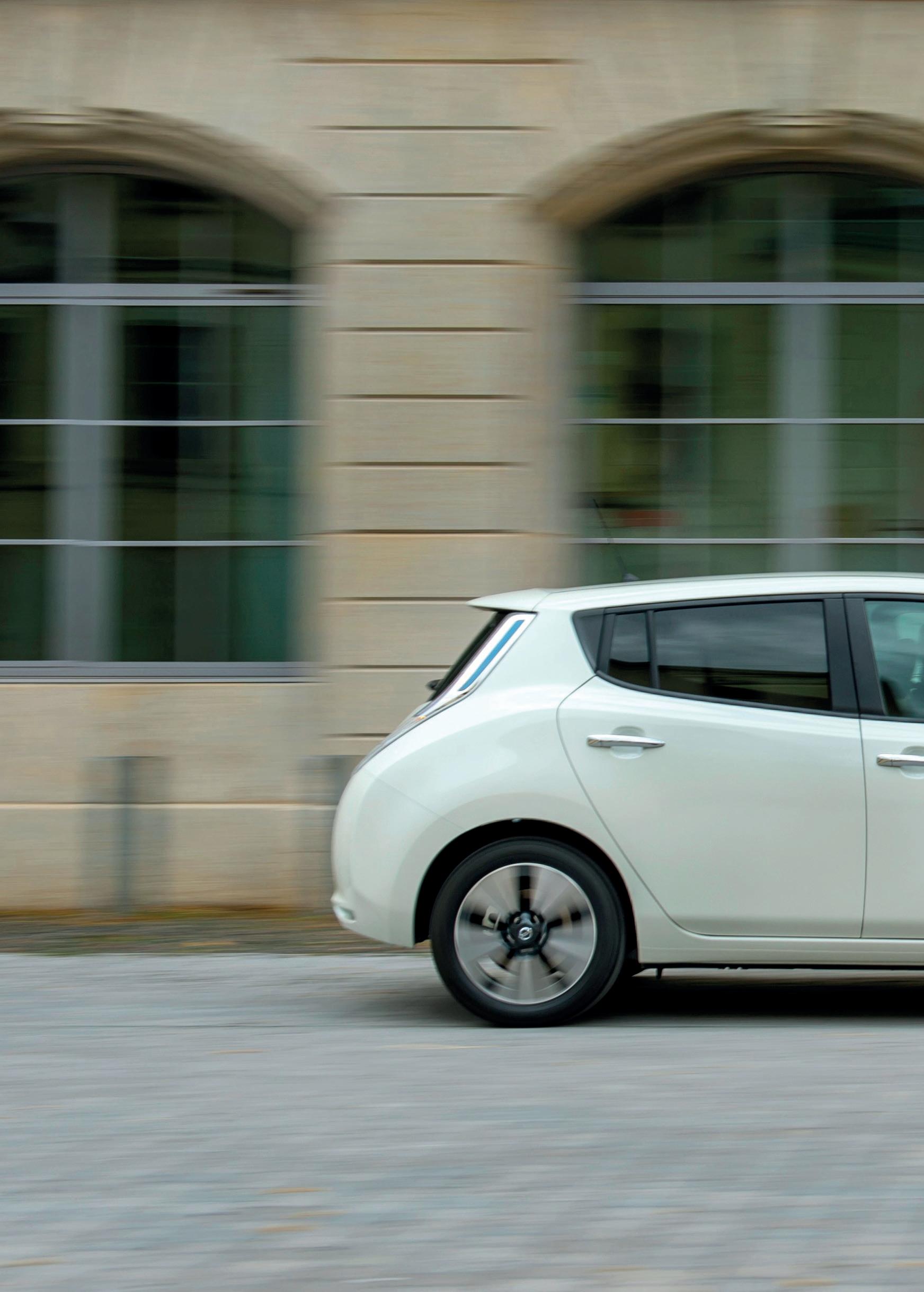
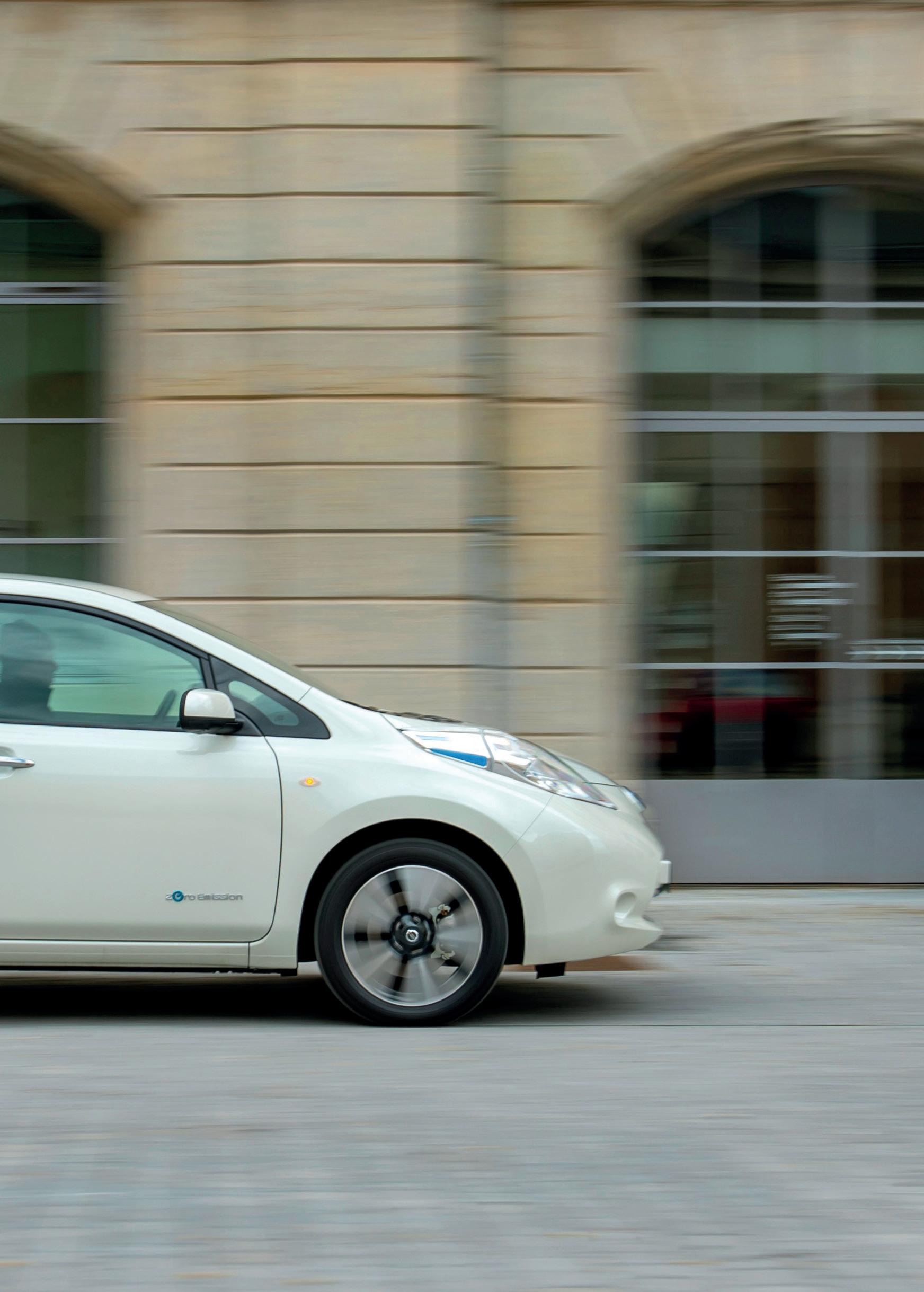
The first-generation Nissan Leaf is a landmark car in the EV world. When introduced in 2010, it was the world's first mass-produced EV. To date and two generations later, over 650,000 of them have been sold globally.
Prior to the Leaf's arrival, EVs were somewhat of a niche product. Yet with its easy-to-live-with nature and eventual range of 155 miles, the Leading Environmentally-Friendly Affordable Family Car showed that
an electric car could be used like an internal combustion engine (ICE) car without breaking the bank.
The first-gen Leaf, the focus of this buying guide, was updated twice in
29 USED BUYING GUIDE
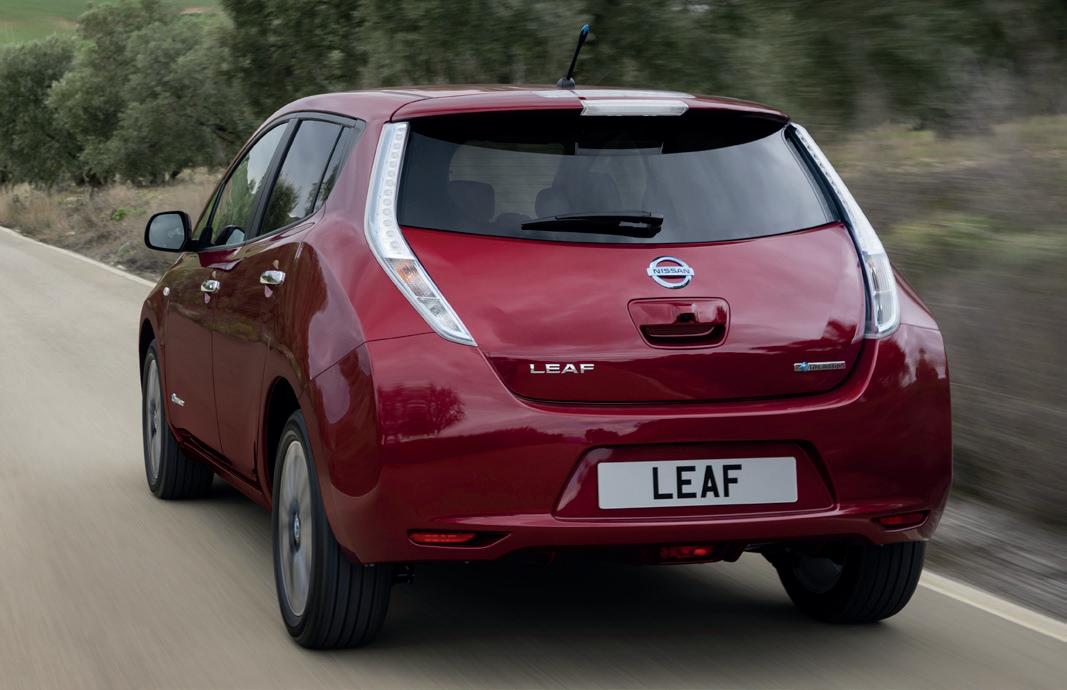
its life – firstly in 2013, then again two years later. As well as improvements to the car's electrical architecture and therefore range, Nissan tweaked the Leaf's visuals to give it a more mature, less Parrot Fish-like appearance.
While the Nissan Leaf's range is somewhat compromised compared to newer EVs, its low purchasing cost on the used market makes it a popular first EV amongst drivers wishing to dip their toes into making the switch from ICE to EV.
Nissan Leaf in the UK
The Nissan Leaf was available in three trim levels, entry-level Visia, mid-tier Acenta, and flagship Tekna. Throughout its life, the Leaf was available with a 107bhp, front-mounted motor. However, the initial 24kWh battery could be swapped out for a 30kWh unit from 2015 onwards on Acenta and Tekna models.
When it comes to range, the Nissan Leaf could initially achieve 109 miles on a single charge. The midlife update in 2013 saw this boosted to 124 miles. Meanwhile, cars with the 30kWh battery were capable of achieving 155 miles. Irrespective of trim level, battery size and range, the
Nissan Leaf benefits from regenerative braking and an 89mph top speed. Regardless of battery capacity, all first-gen Leafs had a maximum DC charging rate of 46kW – positively glacial by more modern standards.
In early 2017 - the year when the first-gen Leaf was replaced by the second-gen car Nissan launched an Acenta-based 'Black Edition' featuring 16-inch black alloy wheels, black door mirror caps, and a black roof spoiler. Additionally, the first Black Edition model received a free in-car Wi-Fi hotspot.
Moreover, the Nissan Leaf was a pivotal car for the UK car industry.
From 2013 onwards, Leaf production moved to the Japanese brand's factory in Sunderland, and more than 280,000 Leafs were produced on British shores.
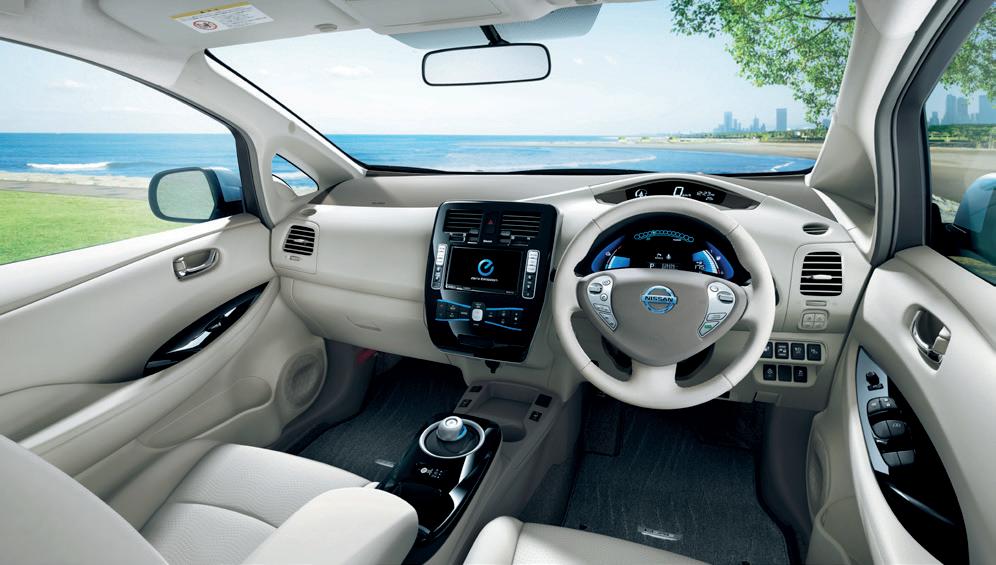
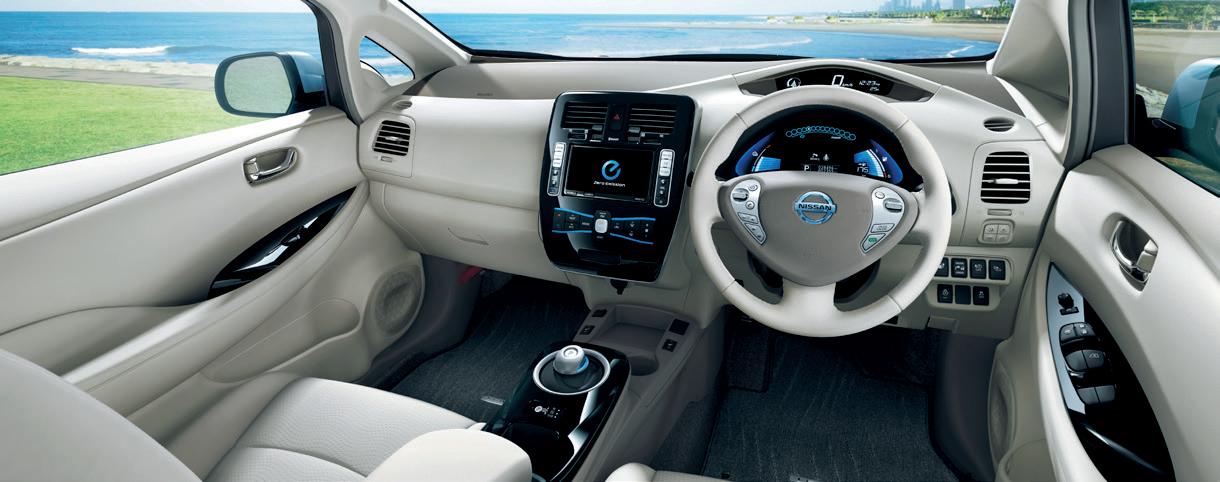
Prior to moving to the Sunderland facility, the Leaf was manufactured in Oppama, Japan. These cars can be identified by their creamcoloured interiors. British versions came with a black dashboard and upholstery. Cars from 2013 onwards came with a foot-operated parking brake, instead of a finger-operated mechanism.
Continued on next page
Equipment
In base Visia form, the Nissan Leaf was equipped with a fourspeaker sound system, a DAB radio, Bluetooth smartphone integration, and a USB port. The Acenta trim adds touchscreen navigation and telematics to inform the driver of how they are driving, and what changes they can make to be more efficient.
Meanwhile, Tekna (and the Teknaderived Black Edition) benefit from all of the above, plus parking assistance, a reversing camera, and a Bose stereo system.
Nissan Leafs manufactured for the 2016 model year onwards can be used with the NissanConnect EV smartphone and smartwatch app. This allows owners to monitor and control the car's functions including the battery level, remote charging, and pre-setting the climate control ahead of setting off on a drive.
Note, however, Nissan stopped support for NissanConnect on the first-gen Leaf in April 2024. There have also been several online reviews commenting on the app's lack of user-friendliness.
Price range and running costs
Due to its age and now relatively low power and range, costs for the first-generation Nissan Leaf are reasonable. The cheapest Nissan Leaf we found was £1,990 for a 2014 car with a 24kWh battery and 70,856 miles on the clock. The most expensive was a 2017 Tekna model with a 30kWh battery.
According to the ad, the battery indicator showed 11 of its 12 battery bars, meaning its range will be close to its original 155 miles - a 2025 study showed that EVs from 2016/17 with 90,000 miles on the
USED BUYING GUIDE 30
clock have retained an average of 75.87% of their battery capacity.
Using the lowest off-peak/overnight EV charging home tariff costing 6.7 pence per kilowatt hour, a Nissan Leaf with a 24kWh battery will cost a minuscule £1.61 to charge fully. Opt for the slightly larger 30kWh, and this figure jumps to £2.01.
Without an EV tariff and using the new standard variable tariff of 25.73p/kWh, charging the 24kWh Nissan Leaf will cost £6.17, while its newer, 30kWh sibling will set you back £7.72.
Be aware, charging a first-gen Leaf can take a while. Original cars had feebly slow 3.3kW AC charging, which was eventually upgraded to 6.6kW in 2013.
Insurance
The Nissan Leaf comes under insurance groups 19 to 25, which are in the low-to-mid point of the 50-group ranking. Entry-level Visia models are in either insurance group 20 and 21. The mid-range Acenta is either group 20 or 21, while the flagship Acenta and Black Edition fall in groups 20 and 25. As with all insurance quotes, remember that prices will be dictated by several factors including age, location, and what type of property you live in.
Also note that EVs are no longer exempt from road tax, meaning cars registered from April 1, 2017 will now cost £195 per year in road tax. Tax
31 USED BUYING GUIDE
for all EVs built between March 1, 2001 and March 31, 2017 is just £20 annually.
Reliability
The first-gen Nissan Leaf fared well in a What Car? reliability survey with a score of 98.6%. However, Nissan as a brand languised 27th out of 30 manufacturers due to the poor reliability of its ICE models.
The biggest concern with the Nissan Leaf is its battery and range. As well as being unable to return comparable ranges to newer EVs, they can also cost up to £5,000 to replace on pre-2016 cars. As we've seen, this is more than the value of some earlier models.
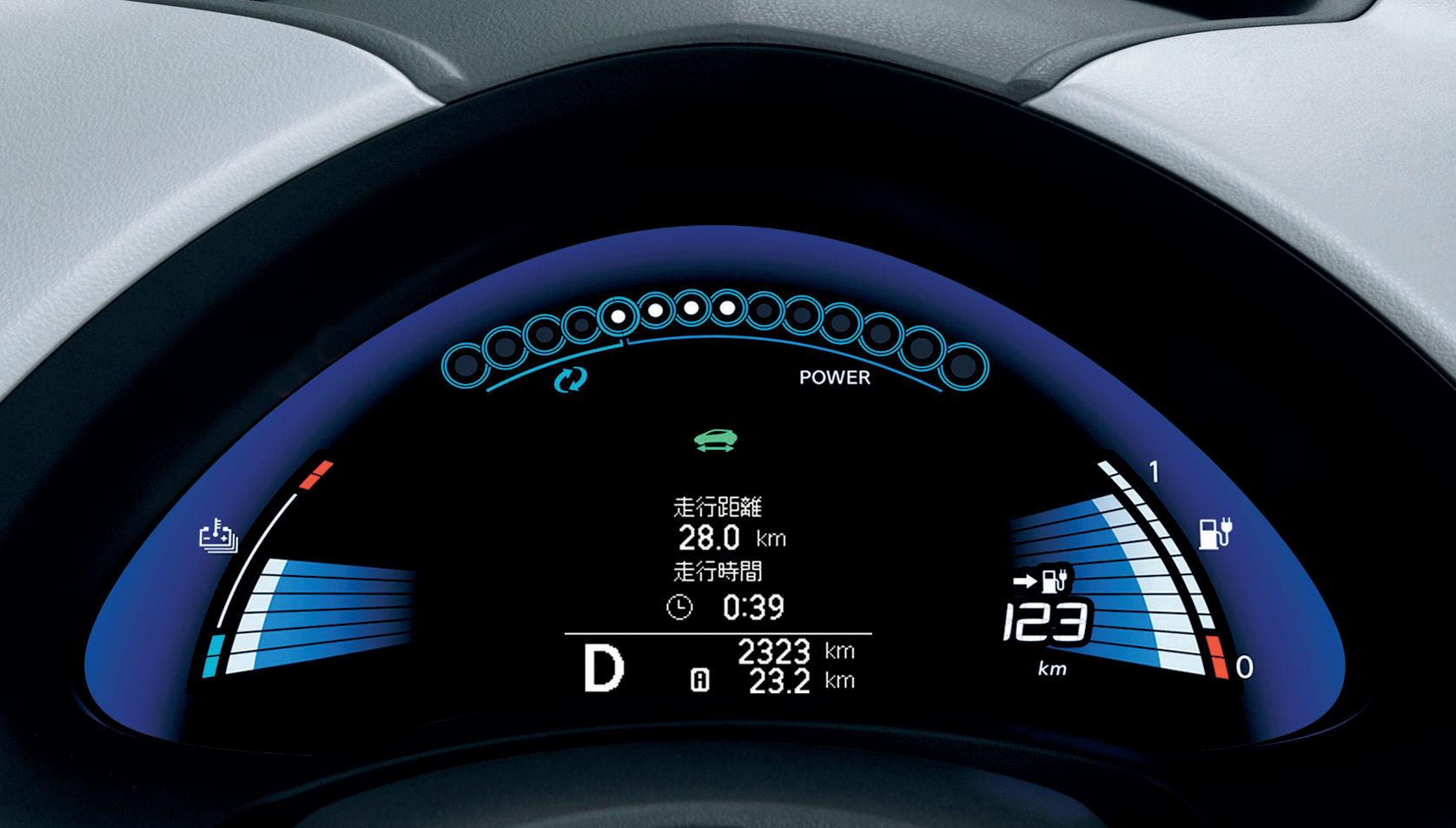
The Nissan Leaf's battery health is gauged via a battery graphic featuring 12 bars in the driver's instrument cluster. On 30kWh cars produced from 2016 onwards, if the battery level fell below nine bars, Nissan would replace the battery components free of charge to bring the capacity back to nine bars.
Moreover, the battery is covered by Nissan for eight years/100,000 miles, meaning some 2016 cars onwards could still be under warranty, albeit only just.
In terms of battery health, it is also worth looking into the previous owner's charging behaviour. If the car often charged beyond 80%, then the battery has undergone extra stress meaning range will be further compromised. In fact, it has been reported that Leafs with depleted range may need to be charged multiple times in one day.
Faults to look for
Having been around for almost 15 years now, the first-gen Nissan Leaf isn't without its age-related problems. Alongside range depletion, the following issues have been cited: Leaking windscreens, broken charger flaps, a distorted Bose sound system on top-tier Tekna models, and sticking start/ stop buttons - some cars would also shut down without warning.
Cars that haven't been driven often may suffer from airbag failure, which can be identified if the airbag warning light doesn't extinguish after five seconds while powering up, or stays on completely. Rearwheel alignment, and clattering front suspension have also been cited as other sticking points.
Official recalls
Happily, the first-gen Nissan Leaf underwent very few recalls throughout its life. In fact, we've found just three from 2015 to the car's life to
the end of 2017 when the second-gen car was introduced. These recalls of the first-gen cars were due to a loss of steering control, the sticking on/off switch, and the auto-aiming headlamps not working.
'The one to have'
The early Nissan Leaf may be a tempting proposition as it represents a low-cost entry point into the wonderful world of EVs. However, there is a lot of truth behind the saying "there's nothing more expensive than a cheap older car". Factor in battery depletion, an already-compromised range, and relatively slow charging speeds by today's standards, then an early Nissan Leaf becomes a hard sell.
Nonetheless, later Sunderland-built cars with the 30kWh battery and the 155-mile range should be more than enough for daily driving, especially if they are still under warranty. These later cars - especially in flagship Tekna trim - have also aged somewhat handsomely in comparison to previous models.
THE FORMULA E 2025 SEASON REVIEW:
ROWLAND'S RESILIENCE, PORSCHE'S POWER AND A SERIES TRANSFORMED
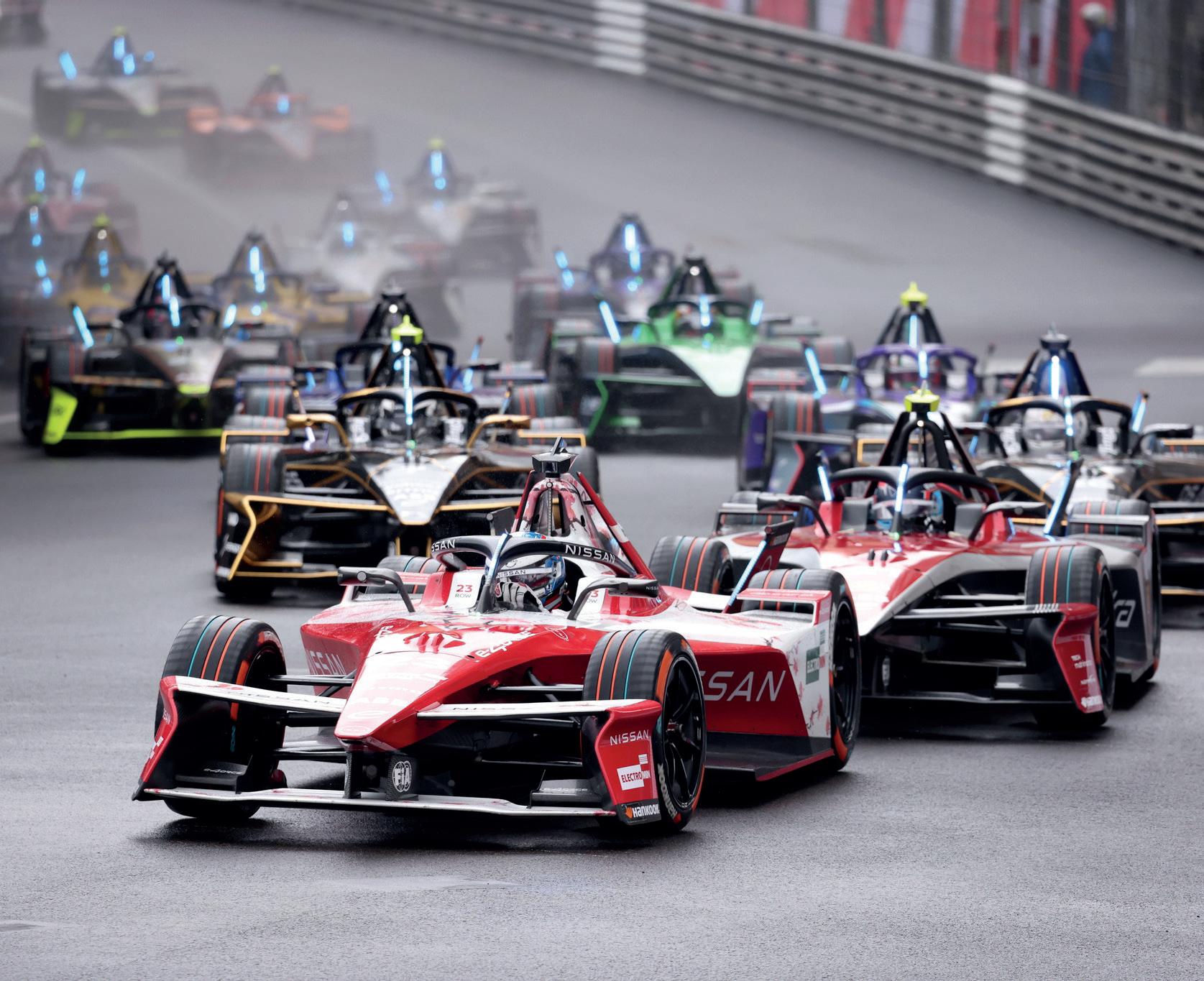
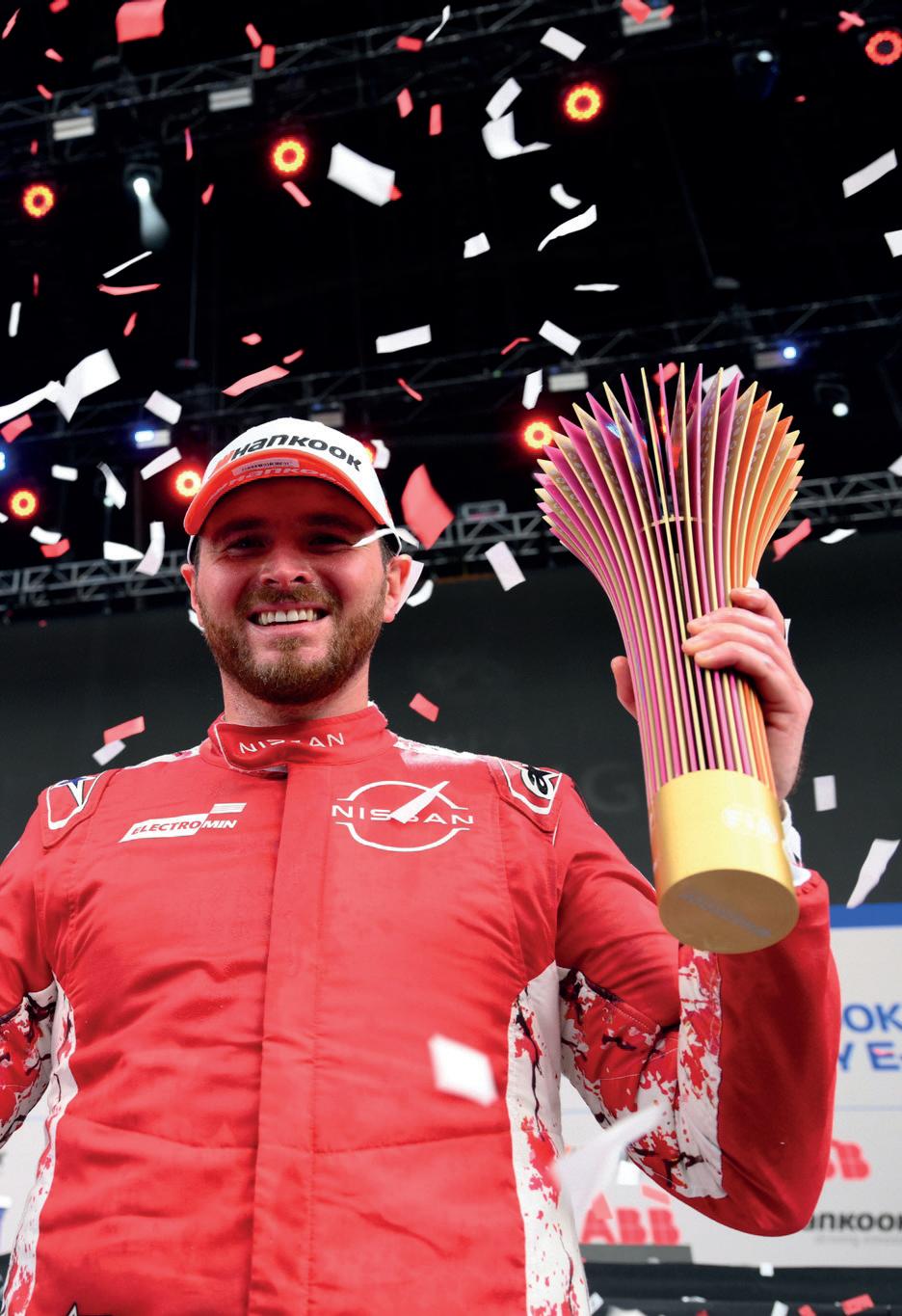
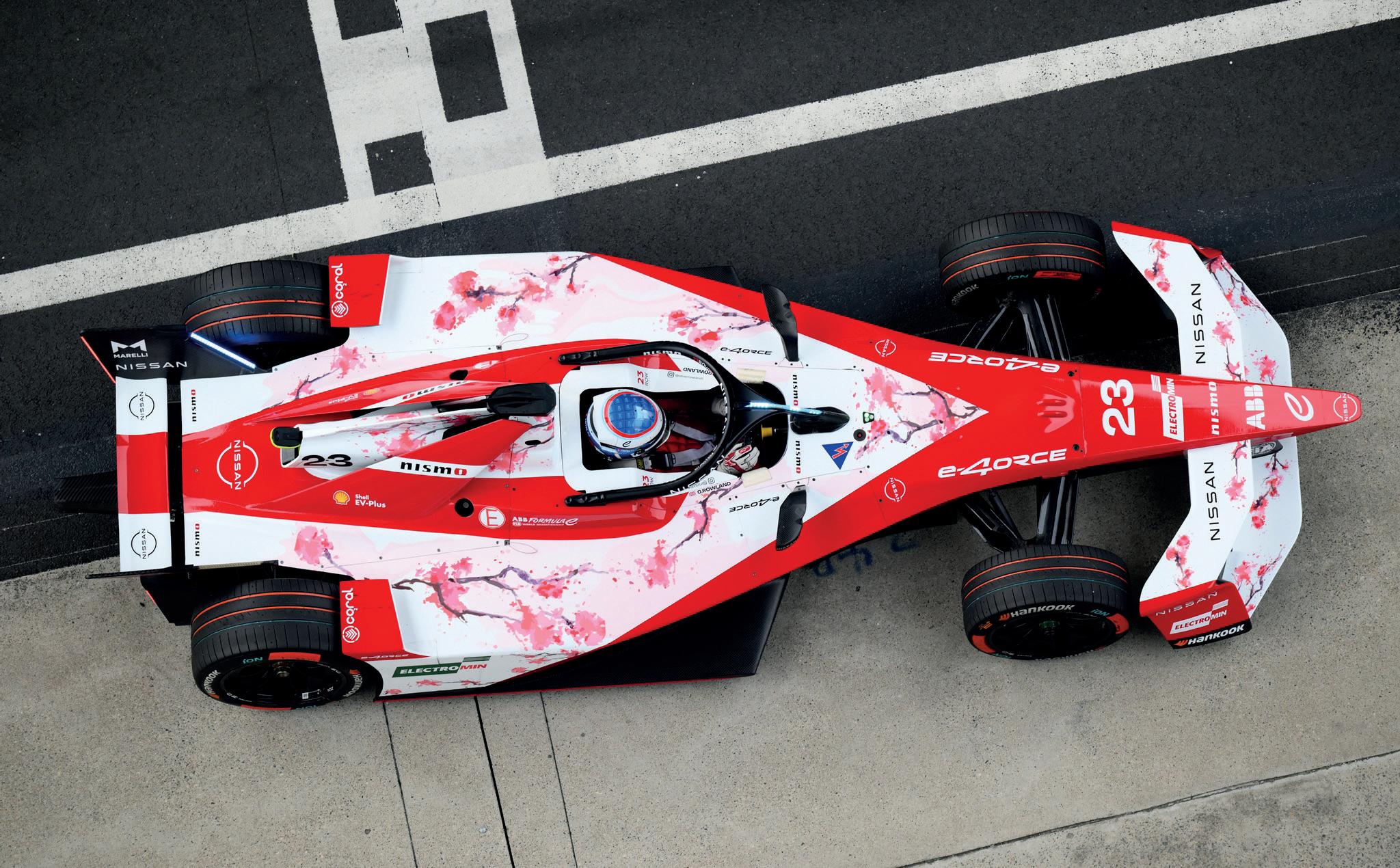
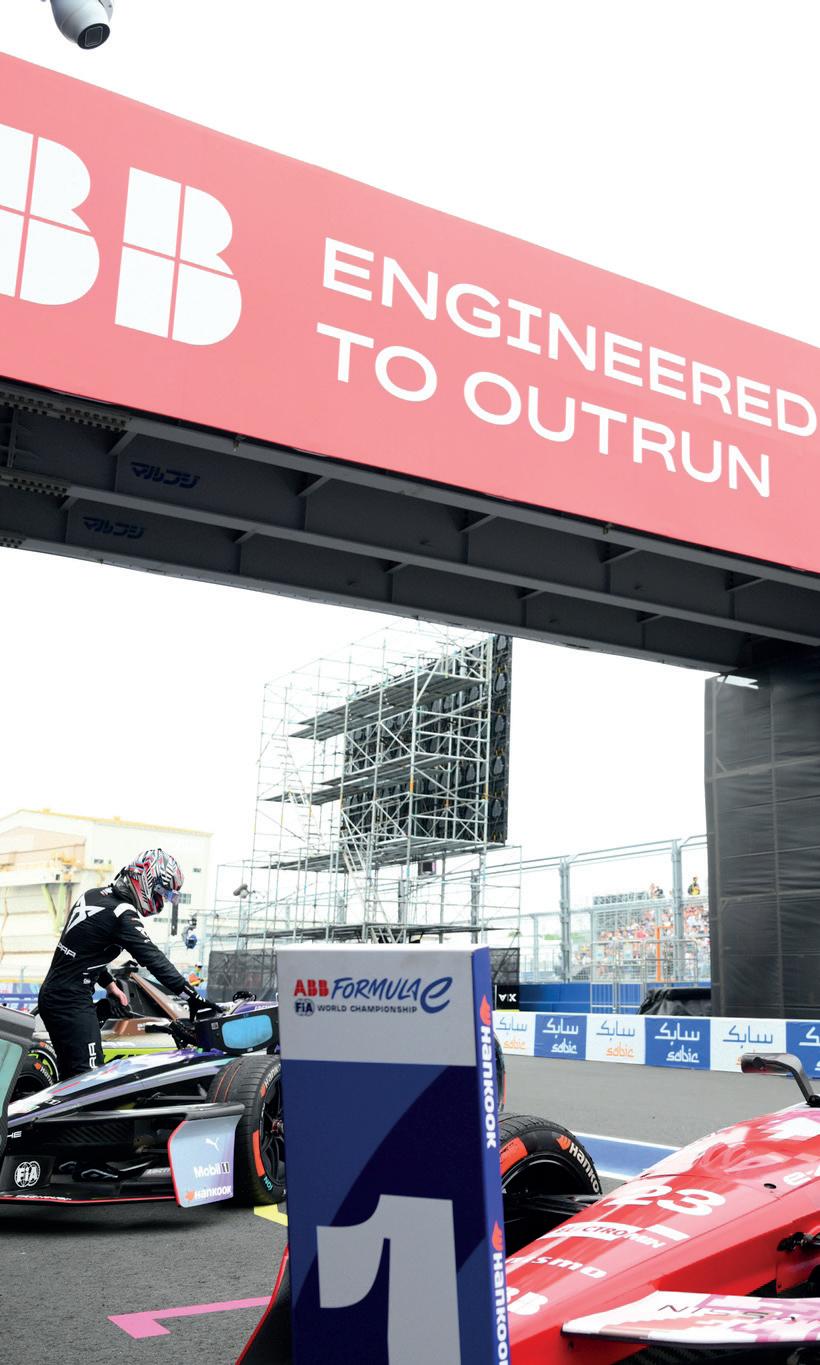
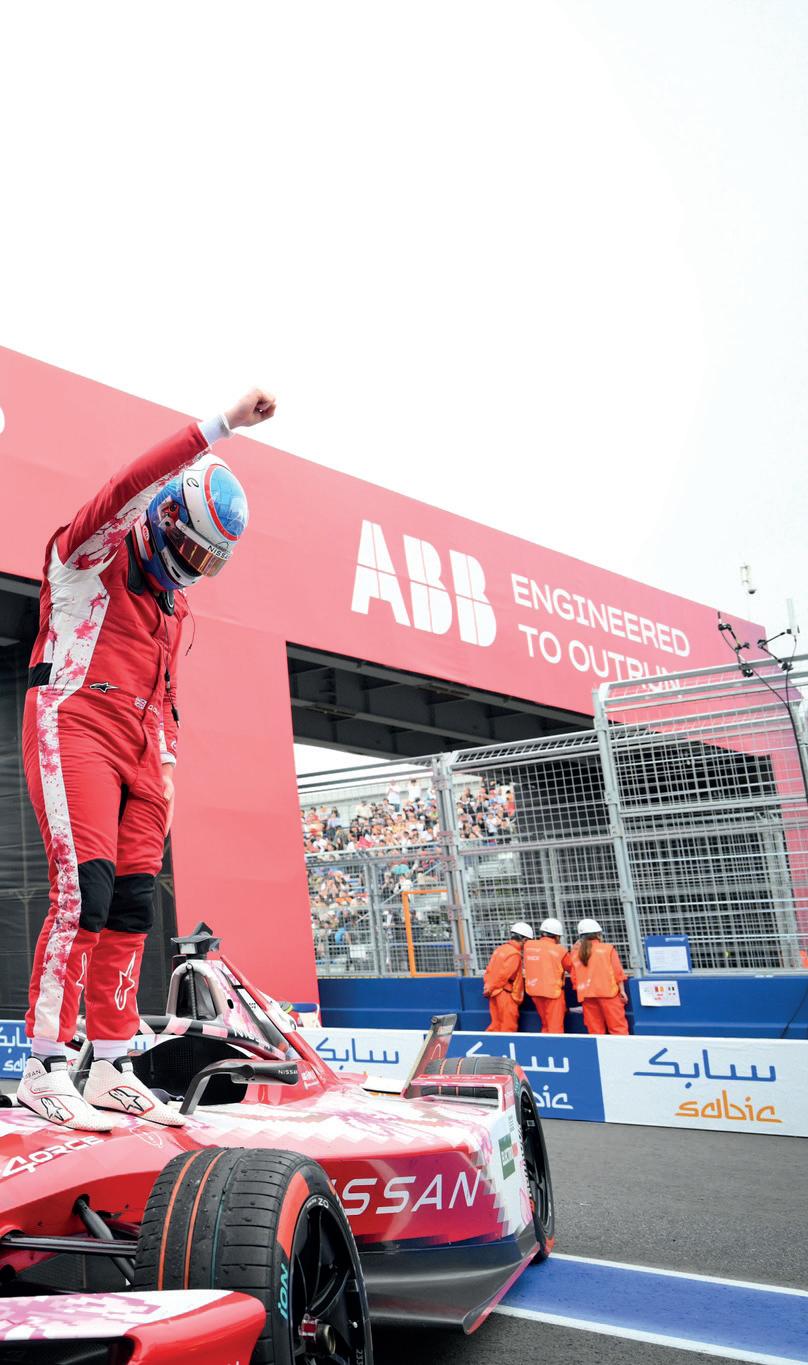
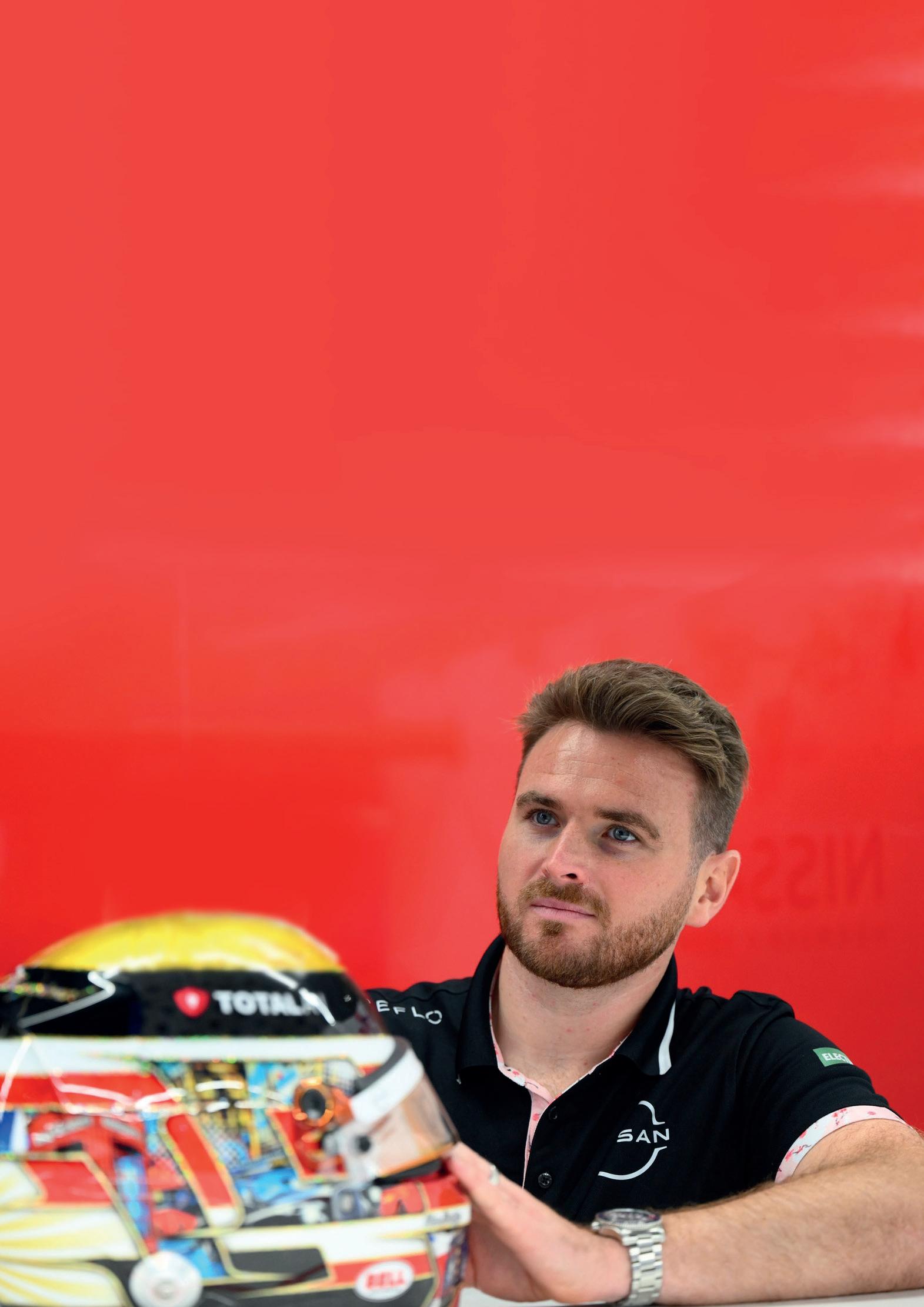
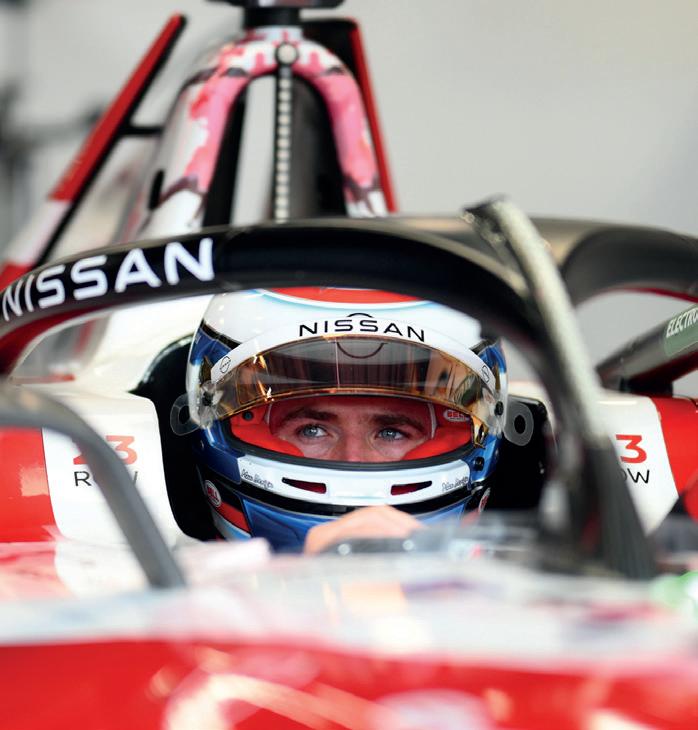
As the dust settles in London, the 2025 ABB FIA Formula E World Championship draws to a close with a sense of triumph and transformation. NISSAN’S OLIVER ROWLAND is your new Drivers’ World Champion, PORSCHE has claimed both the Teams’ and Manufacturers’ titles, and the all-electric series has completed its most competitive and compelling season to date.
It has been a year of subtle shifts and significant strides — both on and off the track — as Formula E continues to carve out its space in the motorsport landscape. With new formats, evolving regulations, and a maturing Gen3 Evo car, the racing has been fierce, the stakes high, and the results impossible to predict.
THE RISE OF ROWLAND
When the season began under the dry skies of Mexico City, few would have predicted that Oliver Rowland — despite his obvious talent — would emerge as champion. He hadn’t stood on the top step since 2020, and Nissan were still regarded as outside contenders rather than true title favourites.
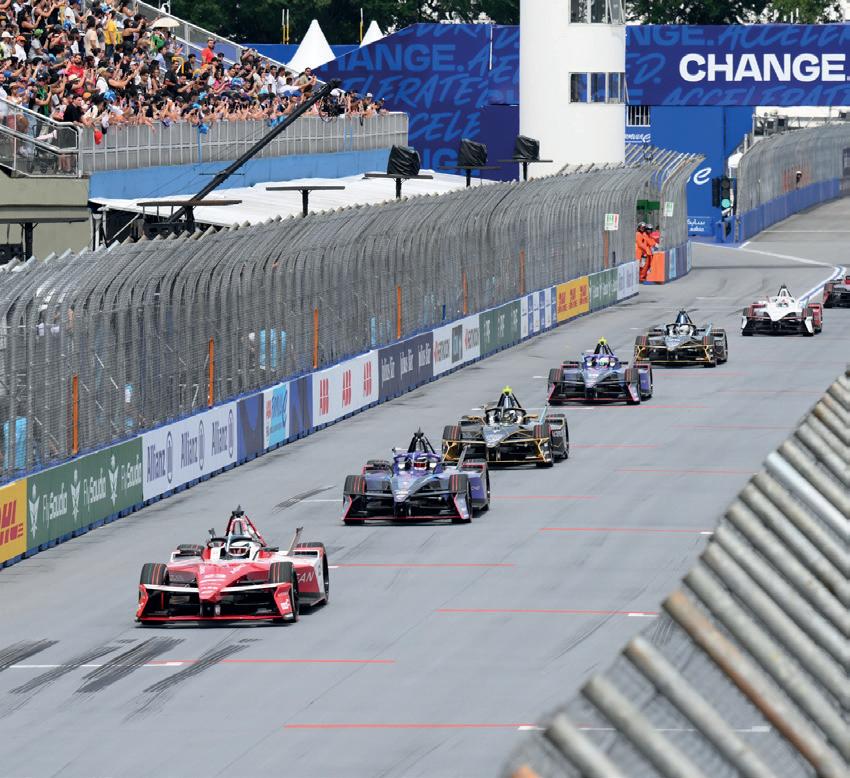
But what Rowland delivered in 2025 was a masterclass in championship racing. Not necessarily the fastest in every round, but the most consistent. His victories in São Paulo and Tokyo were clinical, but it was his ability to rack up fourths, fifths, and sixths while others faltered that set him apart.
By the time the championship returned to Europe, Rowland had built a points buffer that allowed him to race smart, not desperate. It was a maturity earned over years in the series — and it paid off in London, where 11th place in the final round was enough to seal the crown.
PORSCHE’S
ELECTRIC STATEMENT
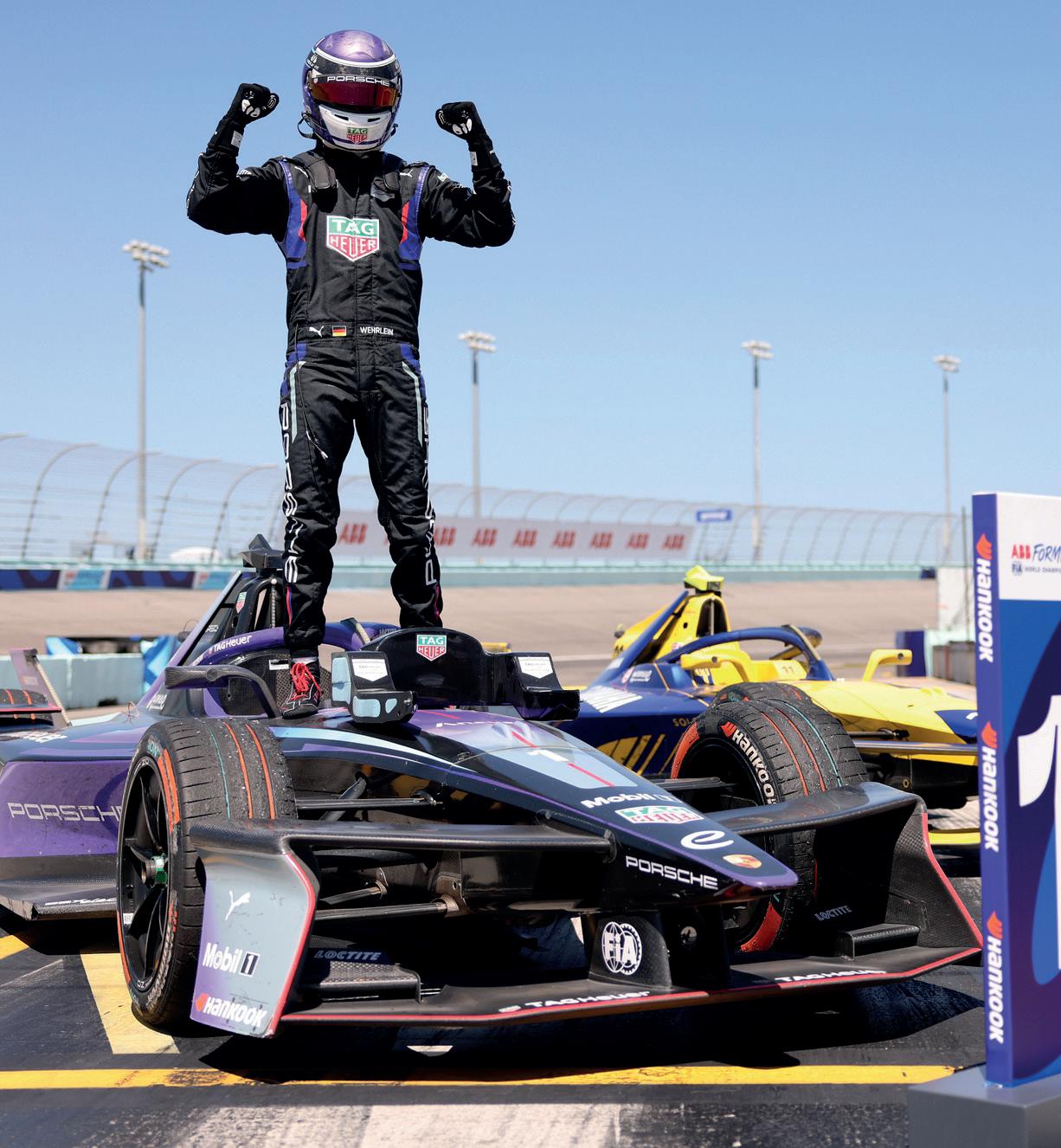
While Rowland took the individual honours, Porsche’s collective effort was the season’s other major talking point. The TAG Heuer Porsche Formula E Team — led by outgoing champion Pascal Wehrlein — executed a nearly flawless campaign to win both the Teams’ and Manufacturers’ titles.
It was the final jewel in Porsche’s Formula E crown, following Wehrlein’s Drivers’ Championship in 2024.
33 FORMULA E
final weekend with the team, secured a heroic win at the London E-Prix — a drive filled with strategy, grit, and a hint of redemption.
Cassidy’s second-half surge — with back-to-back wins in Berlin and London — brought Jaguar into title contention late in the year. But inconsistency in the opening rounds left them with too much ground to make up. Still, with three wins and strong showings from both Cassidy and Mitch Evans, the British outfit leaves 2025 with heads held high — and questions hanging over what comes next.
Team Principal James Barclay also announced his departure, ending an era that began with Jaguar’s return to world-class motorsport. Under his leadership, the team became a fan favourite and a genuine title threat. His absence will be felt in the paddock.
STANDOUT PERFORMERS AND SURPRISE STORIES
Elsewhere on the grid, Maserati MSG Racing’s Stoffel Vandoorne showed flashes of brilliance, including a strong showing in London. DS PENSKE’s Jean-Éric Vergne remained an everpresent threat, but a lack of consistency saw him fall short of the championship battle.
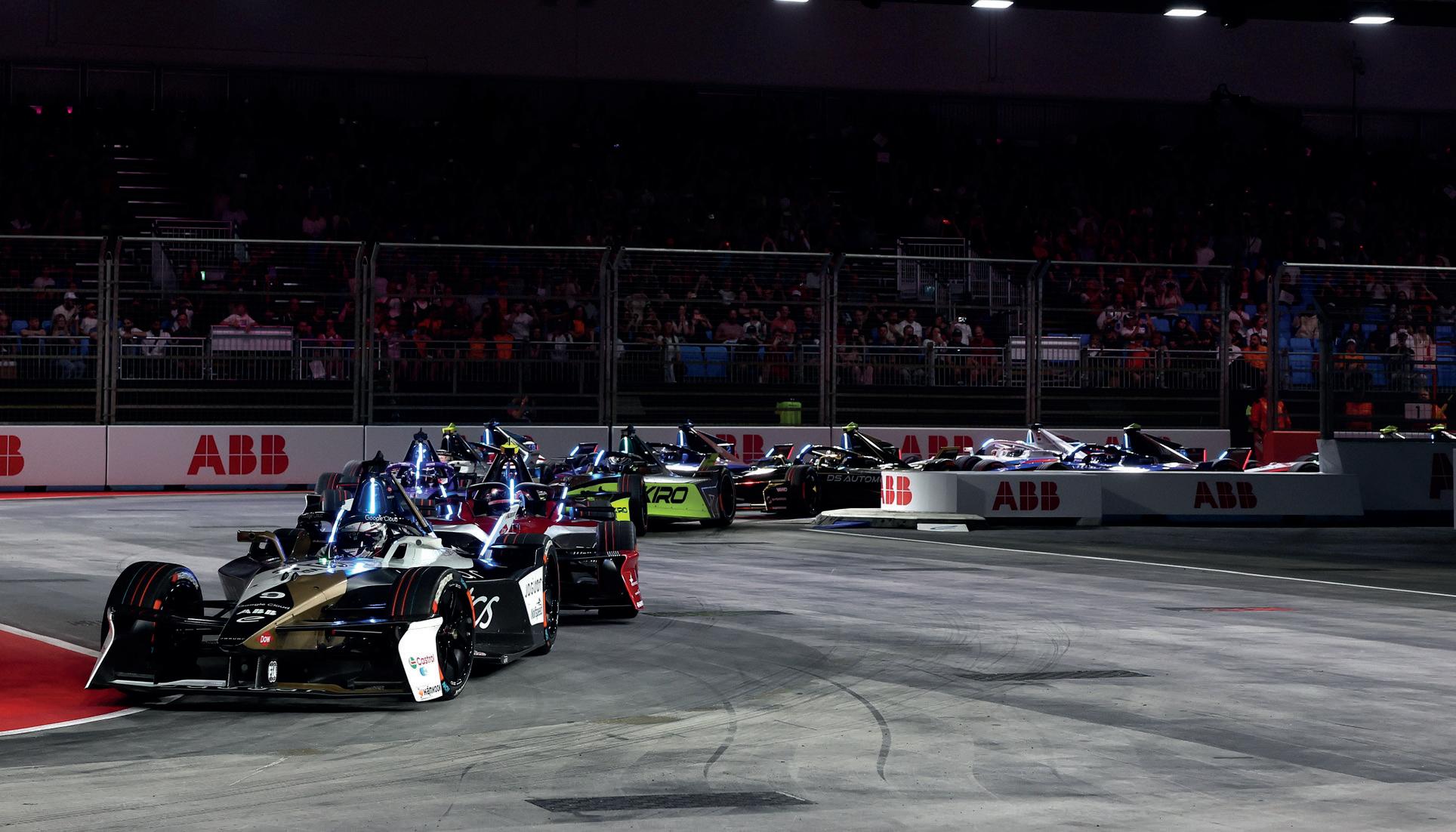
driven chaos, while Shanghai’s wet-weather thriller added another layer to the season’s narrative.
FORMULA E’S NEW REALITY
Beyond the championship table, 2025 may well be remembered as the year Formula E matured into its next era. The Gen3 Evo cars, with uprated aerodynamics and improved regen, produced closer racing without gimmicks. The series’ decision to streamline ATTACK MODE and PIT BOOST windows allowed strategy to shine without confusing casual fans.
There’s also been progress behind the scenes. Battery technology is evolving, sustainability benchmarks are being met, and manufacturers are increasingly using the series as a testbed for road-relevant EV tech. Formula E is not just racing — it’s research in motion.
The move towards digital broadcasting — and the growing shift of fans from linear TV to streaming — means the series is positioning itself for the next generation of viewers. Initiatives around fan engagement, virtual access, and on-demand content are starting to pay dividends.
LOOKING AHEAD
With the Gen4 car on the horizon and a host of driver market moves already in motion, 2026 promises more disruption, innovation, and wheelto-wheel action. For now, though, the season ends with a moment of clarity.
Oliver Rowland is your Drivers’ World Champion. Porsche stands supreme among the teams. And Formula E, still the youngest of the major international motorsport series, continues to evolve with every turn of the wheel.
As the sport grows louder, faster and more meaningful, one thing is certain: electric racing isn’t the future — it’s happening right now.
The consistency of the factory team, combined with strong results from customer outfits Andretti and Cupra Kiro, ensured that the Stuttgart marque topped both tables by a clear margin.
Wehrlein, for his part, was gracious in defeat but still formidable in competition. He ended the season third overall, claiming wins in Rome and Berlin, and setting the fastest lap in the final race. Though denied back-to-back titles, his influence on Porsche’s dominance cannot be overstated.
JAGUAR’S FINAL CHAPTER (for now)
For Jaguar TCS Racing, the season ended with a victory tinged with farewell. Nick Cassidy, in his
Rookie sensation Zane Maloney (Andretti) turned heads with an impressive debut season, scoring points in over half his starts and picking up a surprise podium in Shanghai. His rise suggests that the future of Formula E remains bright — and unpredictable. Cupra Kiro, while outside the title picture, scored vital points for Porsche’s Manufacturers’ campaign. Their aggressive mid-field racing added depth and drama to nearly every round.
And what of the returning venues? The Tokyo E-Prix proved to be a standout, with fans packing the city centre circuit in what many described as the “Monaco of the East.” São Paulo, Jakarta and Berlin once again delivered overtaking and strategy-
OLIVER ROWLAND
FROM MEXICO TO MONACO:
OLIVER ROWLAND ON WINNING THE 2025 FORMULA E WORLD CHAMPIONSHIP
This
season has been incredible. It’s
everything I’ve been working towards for so many years — not just myself, but the whole team.
Winning the Formula E World Championship still feels a bit surreal. It’s what we set out to do from the first race in Mexico, and to come full circle and lift the trophy at the end of it all... it’s difficult to describe just how satisfying that is.
There’s no doubt in my mind that this has been the most consistent, competitive, and rewarding year of my career so far. The results speak for themselves — race wins, podiums, pole positions — but beyond the numbers, I think what stands out most is how calm and in control I’ve felt, right from the start.
THE SEASON THAT STARTED IN MEXICO
If there was a turning point, it came very early. That first race in Mexico was special. There’s always a bit of uncertainty going into a new season. No matter how much prep you’ve done in the off-season — in the simulator, with the engineers, physically and mentally — there’s still that question: “Where do we really stand against the others?”
So to come out and win in the style that we did — leading from the front, managing the race smartly, and dealing with pressure throughout — that gave me and the team a huge confidence boost. The euphoria afterward was amazing. You could feel it through the garage, in the paddock, and in myself. That was when our season truly kickstarted.
From that point on, we built momentum. Tokyo was another huge milestone. That was the race where I started to really believe the title was on. It’s one thing to win a race, but to back it up in a totally different setting, against some of the best drivers in the world, showed that we weren’t just one-hit wonders this season. We were title contenders.
PEAK PERFORMANCES AND STAYING GROUNDED
I’d also highlight Monaco. Winning there always means a bit more. It’s one of those tracks where everything needs to be perfect — from setup and
strategy to driver execution. To be at the top of your game in that environment is immensely satisfying. I think that performance, as much as any other, summed up our approach this year: clinical, composed, and committed.
Of course, there were challenges too. The end of the season was probably the toughest, mentally. We had built a strong lead in the championship, and when that happens the dynamic shifts. Instead of chasing, you’re being chased. Every race becomes a calculation — how much do you risk? How much do you defend? How do you stay aggressive without being reckless?
I think we managed that pressure well. But it wasn’t easy. You start thinking
35 OLIVER ROWLAND
about the maths more than the driving, which is never ideal. That’s where having a great team around you really counts. Everyone at Nissan — from the mechanics to the strategy team — helped keep me grounded and focused.
THE FINAL WEEKEND AND A SENSE OF LEGACY
Coming into the final weekend with both the Drivers’ and Constructors’ titles still up for grabs
brought another layer of complexity. From my side, the drivers’ title was the main goal — and thankfully we got that done. But I wanted to bring home the team championship too. Not just for the points, but because this team deserves it. We’ve worked incredibly hard together, and I think a double (or triple) championship would have been the icing on the cake.
We came close, and I still feel proud of what we achieved. The atmosphere around the team all season has been phenomenal. We’ve been through a lot together, and to finish the year on top feels like a reward for all of those years of graft — the ups, the downs, the travelling, the long nights in the garage.
LOOKING AHEAD
The off-season will be short, as always. I’ll be flying out with my team-mate for a bit of a celebration — maybe a couple of days to decompress — and then some proper downtime with my wife and daughter. That’s important. These seasons are long and intense, and you need to recharge mentally as well as physically.
But it won’t be long before we’re back in the simulator, back in the gym, and back on track preparing to defend the title. I’m excited for that. It’s one thing to win the world championship — another to defend it. That’s the new target.
There’s also a sense of responsibility. Formula E is evolving fast. The technology is improving, the teams are getting sharper, and the fanbase is growing. As a champion, you carry the torch for what this series represents — innovation, sustainability, proper wheel-to-wheel racing.
I’m proud to be part of that story.
NISSAN'S ELECTRIC FUTURE : from race track to driveway
NISSAN UK MANAGING DIRECTOR JAMES TAYLOR explains that the Japanese manufacturer sees Formula E not just as a competition, but as a crucible for innovation — and proof of the brand’s long-term commitment to electrification.
“We’re are walking away from this weekend with one trophy,” he says. “But beyond that, these results validate everything Nissan has been working towards. We’ve been in the EV game longer than almost anyone.”
That’s not just corporate spin. Nissan was the first mainstream manufacturer to launch a mass-market EV, the Leaf, back in 2010. Now in its third generation, the Leaf remains one of the most recognisable electric models on British roads.
“It’s easy to forget how much ground the Leaf broke,” Taylor says. “What we’re seeing now — in Formula E and on the roads — is the product of billions of miles driven and years of EV development. The experience really shows.”
FROM RACE DAY TO REAL LIFE
The connection between Formula E and Nissan’s production models is closer than many might think.
“In the early days, it was all about learning from our road cars and applying those lessons to the race team,” Taylor explains. “But that’s changed. Now we’re at a point where it goes both ways.”
It’s been a landmark season for Nissan in Formula E. As the championship heads into its final round, the team is firmly in contention for top honours — a feat that not only reflects engineering prowess on the track, but also signals something deeper about the brand’s identity.
The latest Leaf, he says, benefits from the kind of dynamic feedback loop that motorsport enables — a testbed for cutting-edge electric drivetrains, regenerative braking systems, and energy management algorithms.
“If you’ve driven the new Leaf, you’ll know what I mean,” Taylor adds. “It’s sharper. More responsive. Some of that is direct influence from our racing programme. We’re always looking to cross-pollinate.”
It’s an approach that’s helping to reinforce Nissan’s image as not just an early mover in the EV space, but as a manufacturer committed to evolving its offering — and constantly improving the EV driving experience.
NAVIGATING THE NEXT PHASE OF EV ADOPTION
Despite years of progress, electrification remains at a crossroads in the UK. Demand from fleet buyers has remained robust, thanks in part to favourable Benefit-in-Kind (BiK) tax treatment. But for private buyers, uptake has been more sluggish.
“The new government grant for private buyers is a step in the right direction — and one we’ve been calling for,” Taylor says. “But the reality is, there’s a long way to go.”
With the UK’s Zero Emission Vehicle (ZEV) mandate now setting hard targets for the proportion of EVs sold, manufacturers are under pressure to hit 50% EV sales in the next
37 JAMES TAYLOR
few years. That, Taylor says, will require more than financial nudges.
“We’ve got to fix the infrastructure,” he says bluntly. “If you don’t have a driveway, charging is still far too inconvenient. Until we address that — with proper on-street provision — mass adoption will remain a challenge.”
He’s optimistic that the grant, paired with sustained investment in infrastructure, will move the needle. “We’re already seeing an uplift in electric interest — particularly in the lead mix. But policy and practicality have to work together.”
A MANUFACTURING EDGE –AND A MADE-IN-BRITAIN BOOST
Where Nissan does have a clear advantage is on home soil. The company’s Sunderland plant is set to produce both the new-generation Leaf and the all-electric Juke in 2026, providing a significant lift for British industry — and a strategic benefit for ZEV compliance.
“With those vehicles going into full production in Sunderland, we’ve got a strong proposition,” Taylor says. “That should help us hit ZEV targets, assuming the final criteria align. We’re working closely with the government on that.”
Add to that Nissan’s growing stable of electrified options — from mild hybrids and e-POW-
ER vehicles to full BEVs — and the company is well placed to offer a model for almost every need.
“Our e-POWER cars, for instance, are ideal for drivers who want an electric experience without needing to worry about charging. You get all the benefits — instant torque, one-pedal driving — but with petrol refuelling.”
A REINVENTING THE MICRA FOR THE ELECTRIC AGE
One of the most anticipated entries in Nissan’s EV portfolio is the forthcoming Micra. But anyone expecting a simple reboot will be in for a surprise.
“Yes, it’s built on the same platform as the Renault 5,” Taylor acknowledges, “but it’s larger, it’s distinctively Nissan in design, and it’s aimed at a different buyer.”
The response, he says, has been “overwhelmingly positive” — both from dealers and from customers engaging online. “The residual values look strong. And the Micra name still resonates in the UK. People trust it.”
Final specs and pricing are coming soon, but the new Micra EV is shaping up to be a major player in the urban mobility space — especially with the government now encouraging smaller, more affordable electric options.
GIVING CUSTOMERS REAL CHOICE
For Taylor, Nissan’s role is not just to build electric cars, but to help customers find the right one.
“People have different needs. Long-distance drivers. Urban commuters. Families. So whether it’s a hybrid, e-POWER, or full EV, we want to give them options. Our job is to help guide them — not push them into something that doesn’t fit.”
He’s also keen to stress that electrification isn’t a trend — it’s the future. “I’ve driven EVs for years. I know how good they are. The challenge now is making sure more people have the confidence — and infrastructure — to make the switch.”
With a refreshed line-up, a recommitment to UK production, and a clear-eyed view of the road ahead, Taylor is confident that Nissan is not only keeping pace — but helping lead the charge.
Smooth sailing:
why electric boats are riding a new wave
But that future is now firmly anchored in the present. From lake cruisers to 70-knot superboats, the new wave of electric vessels is making quiet but powerful ripples across the marine world.
While hybrid diesel-electric propulsion has existed in yachts for years, we’re now witnessing a surge in fully electric craft designed from the hull up. Advances in battery technology, demand for lowemission transport, and the rise of silent, wake-free cruising have all
Power meets poise
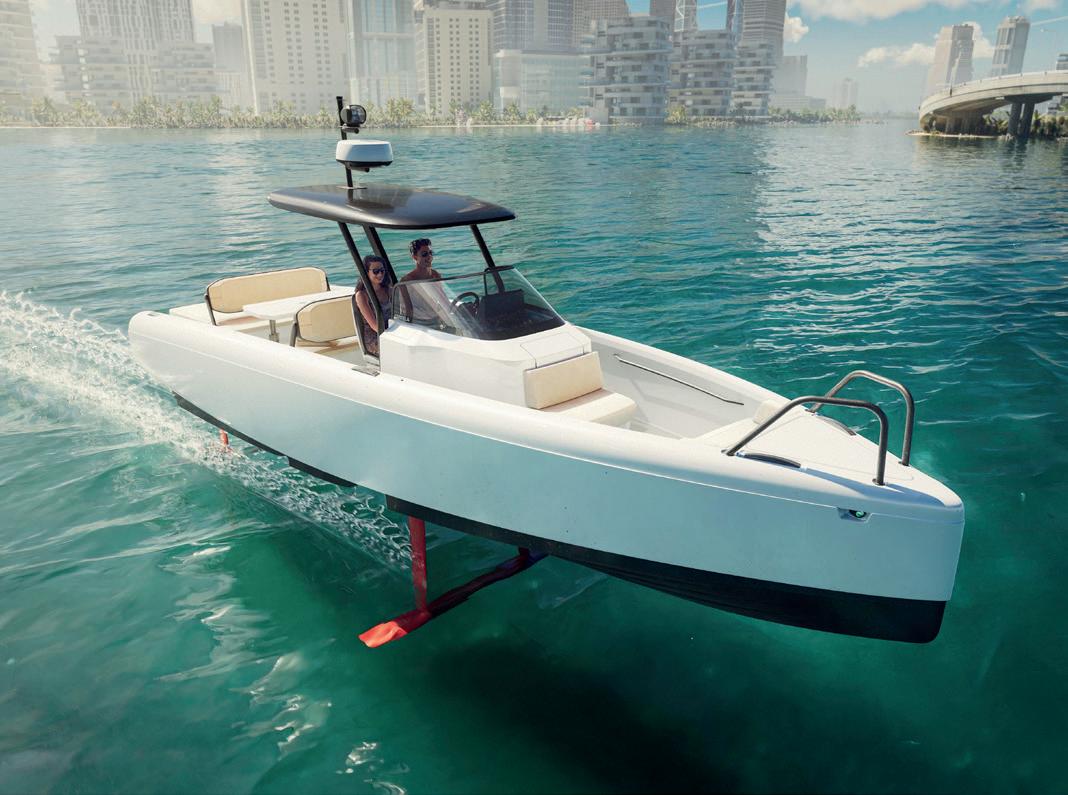
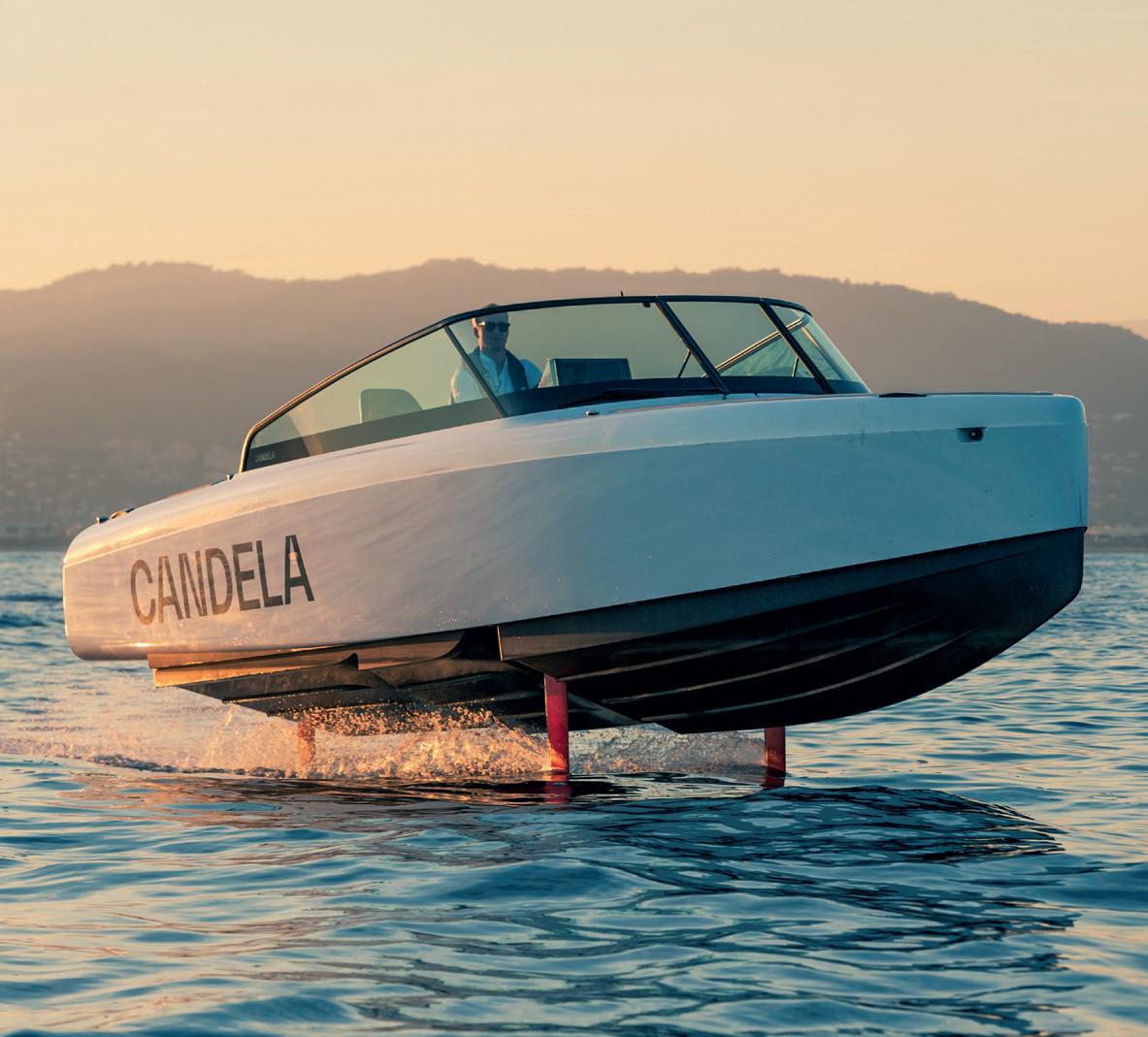
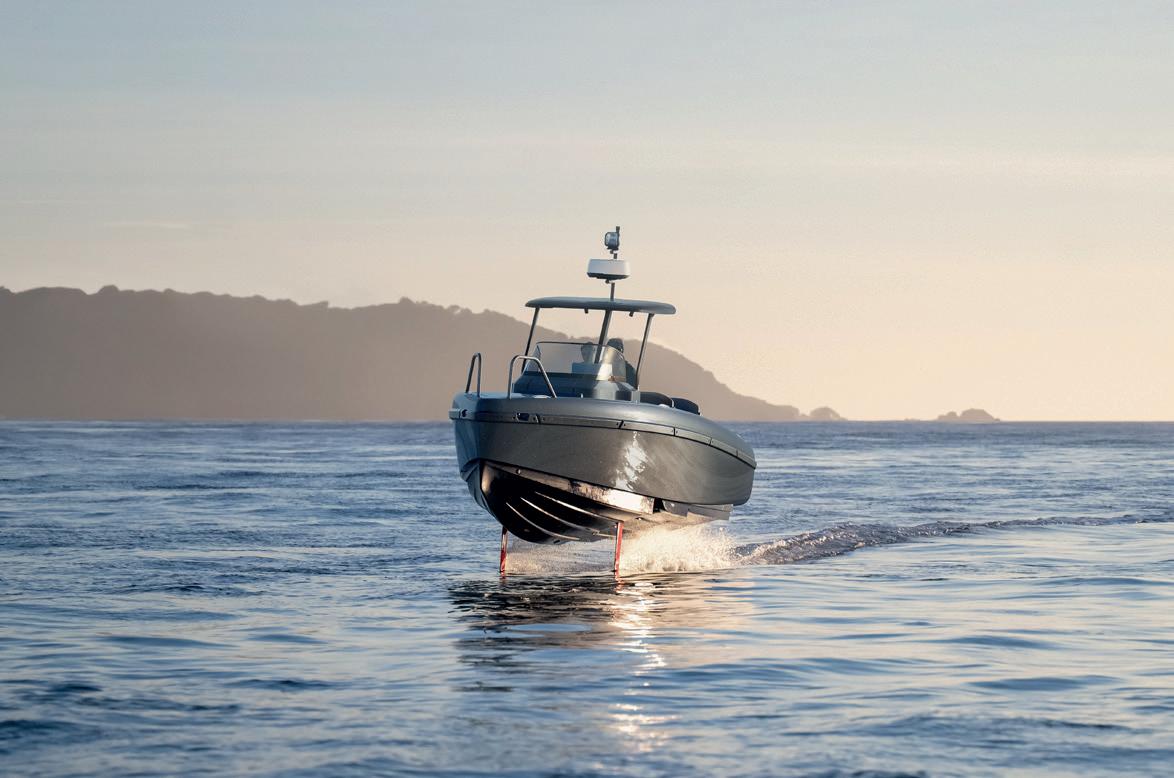
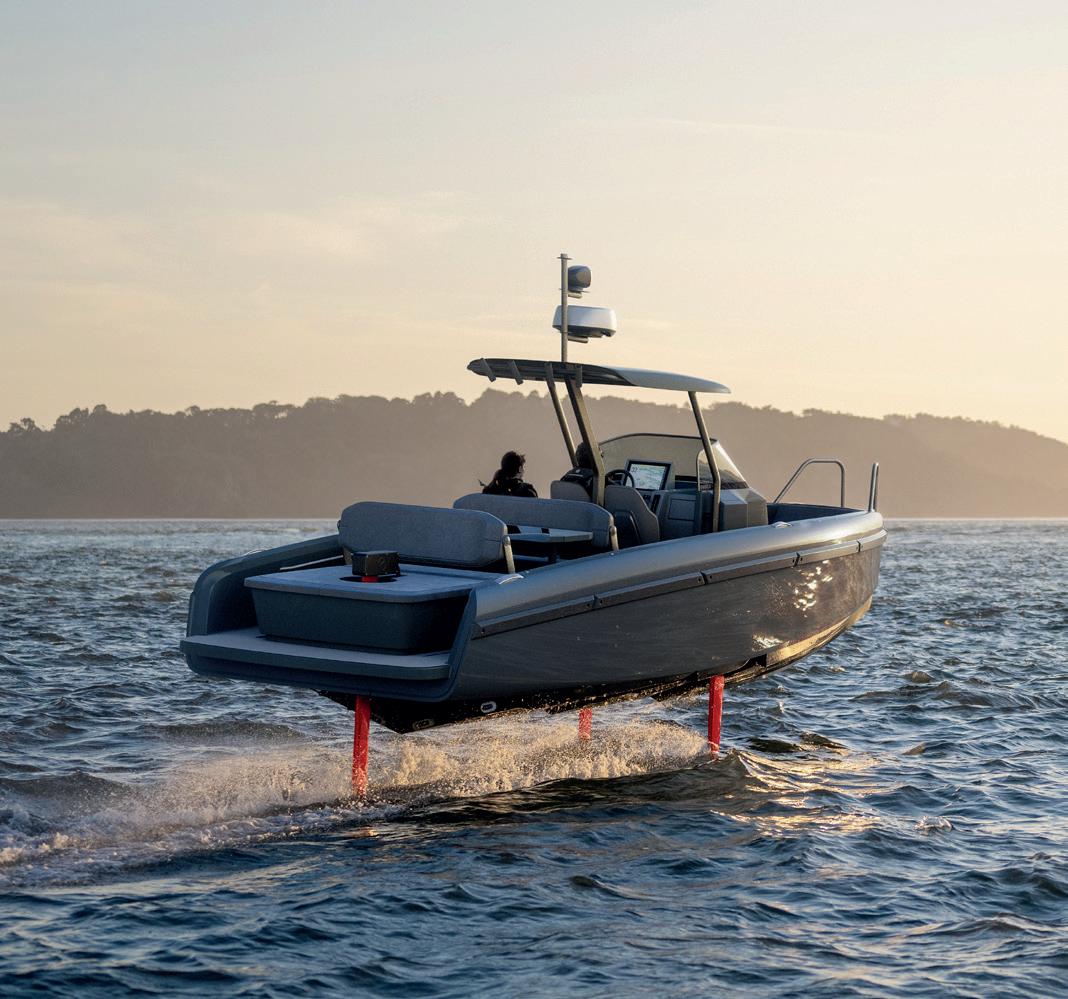
Consider the Candela C-8, the sleek Swedish hydrofoiler that recently shattered records by covering 420 nautical miles in 24 hours. Designed to lift above the waves on carbon foils, it combines futuristic tech with a minimalist Scandi aesthetic. With a cruising range of over 50 nautical miles at 22 knots, and a whisper-quiet motor that draws power from a Polestar EV battery pack, it’s one of the most compelling examples of marine electrification yet.
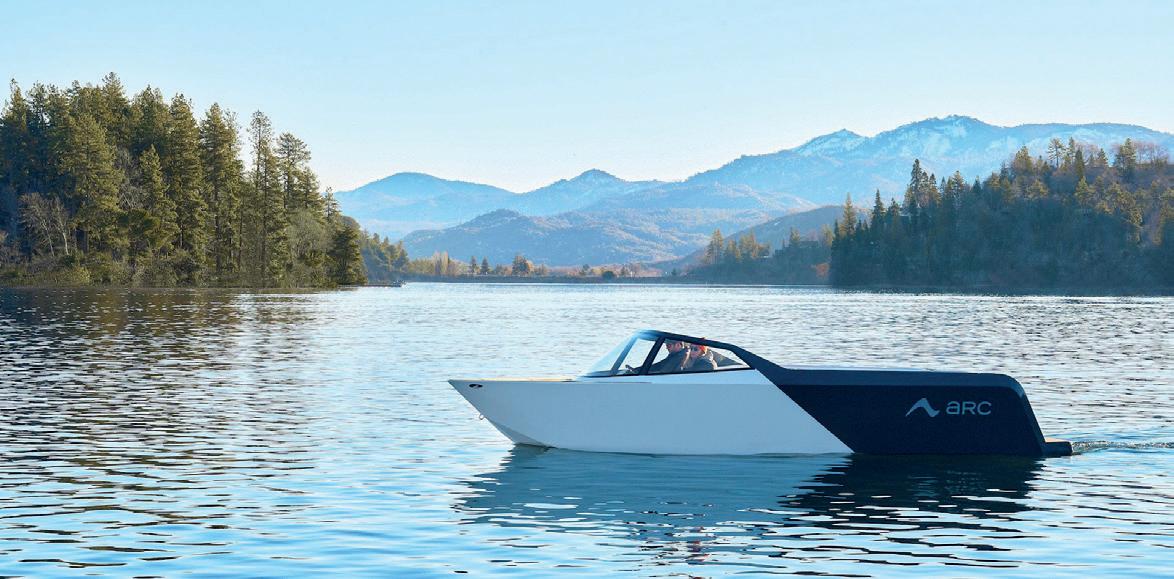
Over in California, Arc Boats is making waves of its own. The Arc One is a punchy 24-foot ski boat with a 350kW motor – that’s 475hp in old money –and a top speed of 40mph. Built by a team of Tesla alumni, it’s designed not just to glide but to launch. Expect grins and g-forces in equal measure.
Meanwhile, over in Austria, Frauscher’s 740 Mirage Air and Marian M800 Spyder are delivering refined retro luxury. With flowing lines and finely-crafted interiors, these boats don’t shout about their electric credentials – they glide into view like a whisper.
converged to put electric boats firmly on the map – and increasingly on the water.
“The electric boating industry is at a tipping point,” says Alexander Heller, CEO of Vita Yachts, which recently launched the high-performance LION dayboat. “Just like the automotive sector, electric power is no longer a novelty – it’s the next logical step.”
Slow and stylish
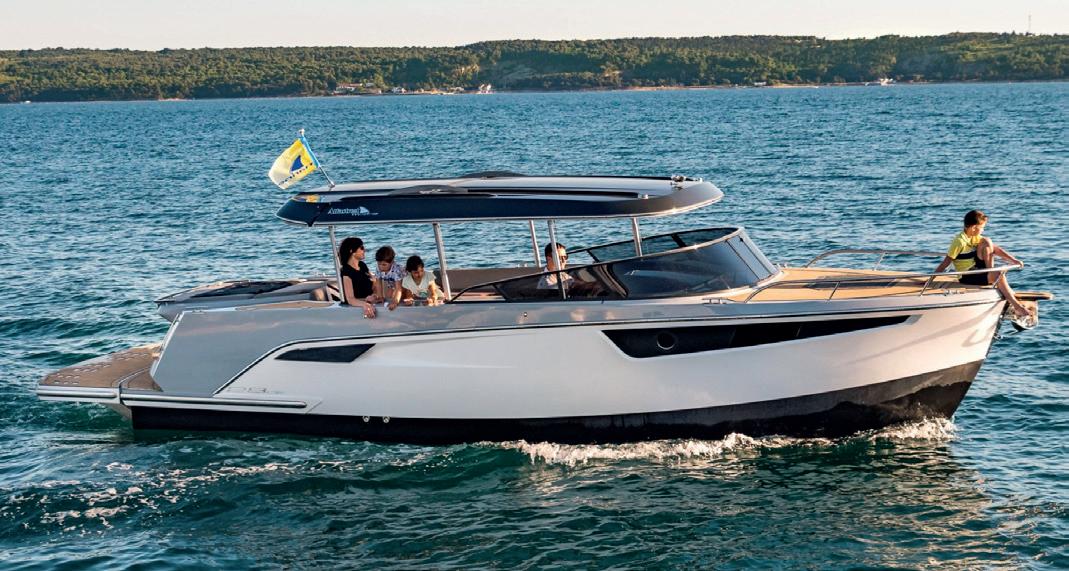
Not all electric boating is about speed. Some of the most charming models favour a slower pace and longer conversations. Alfastreet’s 28 Cabin, for instance, is built for elegant cruising at 5–6 knots along the Thames or Lake Geneva. With its cleverly engineered canopy and twin 10kW motors, it’s more about lazy lunches than leaping wakes.
The same goes for the Duffy Sun Cruiser 22, the world’s best-selling electric boat. For over 50 years, these genteel Californian bay boats have epitomised electric cruising. Topped with a classic surrey-style canopy, and fitted with a power rudder for easy docking, it’s no surprise that Newport Beach alone boasts over 3,000 of them.
CANDELA
CANDELA
39 ELECTRIC BOATS
Big boats, bigger ambition
The revolution doesn’t stop at the marina. Electric catamarans, day cruisers, and even luxury liveaboards are entering the fold. Greenline Yachts, one of the early pioneers, now offers a range of electrified cruisers, including the Greenline 40, which boasts a range extender and optional solar panels. More radical still is the Cosmopolitan 66 – a 66ft aluminium solar-electric catamaran that’s making zero-emissions yachting a reality.
Then there’s the Optima E10, a British-designed 36-footer with a unique trimaran-style hull promising 200 nautical miles at a steady 6 knots. That’s a meaningful range for a full day of cruising – and it’s entirely electric.
Design-led and digitally smart
As with electric cars, electric boats aren’t just about propulsion – they’re a design opportunity. The Riva El-Iseo, for instance, is a reimagining of the brand’s iconic 27-footer, this time powered by a 250kW motor. The prototype, finished in classic mahogany tones, is every bit a Riva – but silent and emissions-free.
On the other end of the design spectrum, Navier’s N30 looks like it belongs in a sci-fi film. Built in Silicon Valley and backed by Google co-founder Sergey Brin, it foils four feet above the waves, boasts autonomous docking and, at 30 knots, claims a 75-mile range. It’s not just a boat – it’s a tech platform. And if you’re looking for speed, look no further than Germany’s Mayla FortyFour. This carbon-fibre 44-footer is aiming for 70 knots thanks to twin 800kW motors. It’s being touted as the “Bugatti of the seas,” with a corresponding price tag.
Making electric boating mainstream
Affordability remains a hurdle, but it’s being addressed. Boats like the X-Shore 1 (from €99,000) and the Spanish-built Magonis Wave e-550 (from €33,000) are bringing EV boating to a broader audience. With top speeds of 22–30 knots and minimal running costs, they’re not just fun – they’re practical.
Infrastructure is improving too. Electric charging pontoons are appearing in marinas across Europe, from the Côte d’Azur to Cornwall. In Norway, plans are already underway for a fully electric ferry network. And with maritime emissions facing growing regulation, the pressure – and the opportunity – to go green is mounting.
Electric boating has come of age. From record-breaking foilers to serene lake launches, the breadth and sophistication of today’s offerings is remarkable. Yes, prices are high, and range remains limited for high-speed use –but the direction of travel is clear.
With major marine players like Beneteau, Zodiac, and Ferretti now offering electric models alongside start-ups pushing the limits of innovation, the sector is entering uncharted but exhilarating waters. If the automotive world’s EV transition taught us anything, it’s that once momentum builds, the tide doesn’t turn back.
And for those lucky enough to own one? Well, there’s nothing quite like slicing through calm water, in silence, powered by nothing but electrons and ambition.
CANDELA
CANDELA
ALFASTREET 28
Display and User Interface
The handlebar-mounted display does the job but isn’t flashy. It shows assist level, trip data, and estimated range, but can be hard to read in bright sunlight. Fortunately, most of the finer tuning and ride tracking is handled through the mobile app, which more than makes up for the simplicity of the screen.
Should You Buy
If you’re looking for an e-bike that excels at comfort, style, and ease of use, the Electra Townie Go! S delivers in spades. It’s not trying to be an all-terrain adventure bike or a high-speed commuter rocket. Instead, it sticks to what it does best: smooth, stylish, techsmart cruising.
Classic Cruiser Gets a Smart Upgrade
Electra Townie Go! S Review: A
Electra’s Townie Go! S is a beach cruiser with brains—marrying vintage styling with modern e-bike tech in a package that’s as smooth to ride as it is to look at.
At £1,399, it positions itself firmly in the premium cruiser category and delivers real value with standout features, thoughtful details, and integrated smart tech that actually enhances the ride.
With a sleek Shark Grey finish (that looks more like metallic blue in the sunlight), the Townie Go! S brings serious curb appeal. But beneath the retro styling lies a 500W Hyena rear hub motor, a torque sensor that dials in assist with surprising finesse, and a 520Wh battery that exceeded Electra’s claimed 50-mile range in real-world testing. Add in Trek Central app integration, Rush hydraulic disc brakes, and a fully loaded frame, and it’s clear this cruiser is more than just a pretty face.
Comfort Meets Capability
Electra’s signature Flat Foot Technology is more than a gimmick. It genuinely delivers a relaxed, upright riding position while letting you plant your feet flat at stops—a game-changer for casual riders and those seeking a confidence-inspiring
geometry. With frame sizes for riders from 4’11” to 6’4”, and wide, cushioned Balloon Cruiser tires, it’s as comfortable cruising the boardwalk as it is running weekend errands or navigating urban side streets.
Strong Performance, Natural Feel
The 500W motor with 60Nm of torque offers just the right amount of power, whether you’re gliding along the beach or climbing modest hills. Thanks to the torque sensor, power delivery feels smooth and natural— more like an extension of your own legs than a forceful shove from behind.
On max assist, the Townie Go! S delivered 38 miles of range; in Eco mode, it stretched to 54 miles, outperforming the manufacturer’s claim. A big part of that efficiency comes from the slick, low-resistance tires and smart motor tuning that adapts to your pedaling input.
Smart Charging and Custom Assist
The Trek Central app is a standout, letting you customize assist levels, plan routes based on remaining battery life, check tire pressure, and more. It even adjusts range estimates in real time
as you tweak motor settings, helping you strike the right balance between power and endurance.
Charging is handled by the new EasyMag magnetic charger, which eliminates the usual connector pin frustration. It’s quick, secure, and paired with smart battery management features like storage mode and charge cycle optimization to extend battery life over time.
Components That Deliver
This is a cruiser that doesn’t skimp on components. You get:
• An 8-speed MicroShift drivetrain for simple, effective gearing
• Rush hydraulic disc brakes with 180mm rotors for solid, predictable stopping
• A QuadLock phone mount built into the stem
• Color-matched alloy fenders and an MIK HD rear rack included as standard
Even the touchpoints feel premium: a shock-absorbing saddle, Kraton rubber grips, and upright handlebars that nail the cruiser posture.
For £1,399, you’re getting premium features, useful tech, quality components, and a relaxed ride that encourages you to take the long way home. Whether you’re riding coastal bike paths, gliding through your neighbourhood, or commuting with flair, this is a cruiser that looks great and rides even better.
Pros
Exceptional comfort with Flat Foot Technology
• Real-world range exceeds expectations
• Customizable assist and battery settings via Trek Central app
• High-quality components and thoughtful design touches
• Stylish colour options with matching accessories
Cons
• Display can be hard to read in bright sun
• Battery is non-removable, limiting charging flexibility in some situations
Verdict
The Electra Townie Go! S is a wellrounded, smartly designed e-cruiser that brings serious comfort and unexpected performance. It’s not just a great beach bike—it’s a great bike, full stop.
Thinking about electrifying your commercial fleet?
Electrifying commercial vehicles and HGVs is not just about the vehicles themselves – it involves a detailed consideration of how to keep them on the road without disrupting existing operations. Mer has the experience and knowledge to support you on this journey.
Download Mer’s free eguide for fleet managers to learn more about installing the right EV charging to keep your vehicles powered for their mission-critical journeys
Click here to find out more
BEST ELECTRIC
SMALL CARS
With a growing number of small electric cars bringing EV motoring to a wider audience, here are our favourites, from Renault to Mini
Until recently, the world of EVs has been dominated by relatively large and expensive SUVs.
Models like the Ford Explorer, Skoda Enyaq and Kia EV6 are great for families hauling lots of people and stuff over long distances. But there
are plenty of drivers who don’t need all that space or continent-crushing range. And plenty who can’t or don’t want to drop £40k on a new car.
Thankfully, 2025 has been the year of the small EV. After the pioneering work of the Renault
RENAULT 5
Everywhere you look pundits are praising the Renault 5, and we at EV Powered are no different. This European Car of the Year winner is a brilliant blend of value, capability and style. Its exterior and interior design perfectly balance nods to the original R5 with a fresh modern
look and feel. Beneath the surface it packs an impressive powertrain offering 118bhp and 191 miles of range or 148bhp and 252 miles. And it drives beautifully as well. With prices from £23,000 to £29,000, it’s also helping make electric motoring more affordable.
HYUNDAI INSTER
Although its styling is all about rough ‘n’ tough SUV-like looks, the Inster is a city car at heart. Beneath its Fisher Price 4x4 looks, this tiny EV measures just 3.8m long. But Hyundai packs a lot into its small package, from houndstooth upholstery to adaptive cruise control, and a surprising
amount of space. Powering it all are 96bhp or 115bhp motors and either a 203-mile 42kWh battery or a larger 49kWh unit good for 229 miles –more than enough for most weekly demands. Priced from £23,500, it’s an interesting alternative to the sharp Renault 5 or Citroen E-C3.
CITROEN E-C3
If the Renault 5 is the best small electric car out there, its French rival isn’t too far behind. It’s not quite as sharp looking inside or out, but with a decent 199-mile range and a budget-friendly price it’s easy to recommend. Starting at less than £22,000, the e-C3 is a compact five-
door hatch with very mildly SUV-inspired styling and space for four onboard. Despite its low starting price, features such as alloy wheels, a 10.25-inch touchscreen with wireless phone mirroring, auto LED lights, and 100kW charging are standard.
DACIA SPRING
Possibly the last word in affordable, honest electric transport. Dacia isn’t claiming the Spring is the right car for everyone but what it is doing is offering a truly accessible model for drivers with undemanding needs. Entry level cars cost just £14,995 and offer a modest 44bhp and 137-mile range, although there’s an option of
a 64bhp motor for an extra £1,000. Basic cars get a smartphone dock instead of an infotainment screen but cruise control, digital instruments and parking sensors are standard. And if you splash out £16,995 on the Extreme trim you’ll get a 10-inch Android- and Apple-compatible touchscreen and bi-directional charging.
MINI ELECTRIC
The recently launched second-generation Mini Cooper is as compact as ever but brings major improvements over the old car in almost every regard. There are now three power options ranging from 181bhp in the basic Cooper E to 215bhp in SE models and 254bhp in JCW
variants. There’s also a much bigger, 49.2kWh battery offering 250 miles of range – more than 100 more than before. Added to that is a brilliantly unusual new interior and the same grin-inducing go-kart handling as before.
There’s nothing that says all small cars have to be sensible or affordable, which is how the Abarth 600e makes it onto our list. Yes, it’s £40,000, and no, you probably don’t need 276bhp in a very compact crossover. But, my word, it’s fun. Based on the bland 4.17m Fiat 600e, the Abarth gets
a delightfully lively chassis, limited slip differential and lots of silly boy racer cosmetic upgrades. As a package, they add up to one of the most engaging “hot hatch” EVs out there, and one you won’t struggle to park at the supermarket.
ALPINE A290
The Alpine A290 was joint winner of the European Car of the Year award with the Renault 5, largely because the two are so closely related. Although they do share the same core, the Alpine is worthy of inclusion on its own thanks to how it transforms the sensible everyday R5 into
FIAT 500e
a rapid, characterful hot hatch. Smart cosmetic changes give it a more purposeful and aggressive look, and there’s a unique 221bhp motor for added oomph. Coupled to major chassis revisions and the Alpine joins the Abarth in proving that small electric cars can be bundles of fun.
The Fiat 500e was one of the first wave of small electric cars and it still holds a certain appeal after nearly five years. Its modern take on the iconic 500’s lines are a cute blend of modern and traditional and the interior is littered with neat design details that will make you smile. There are two versions – a city-suited 94bhp version with a 118-mile range or
a more flexible 115bhp one with 199 miles of range. Sadly, after some sharp price cuts, the cost of the 500e has crept up again, with even basic models starting at £25,000 and bigger-battery ones costing £31k. That’s pretty steep but for the fashion-conscious motorist keen on la dolce vita the compromises might just be worth it.
VAUXHALL CORSA
Ford might have abandoned the supermini segment but perennial rival Vauxhall is sticking with it and bringing it right up to date with an electric version of its best-selling Corsa. The Corsa is a lot bigger than it once was but that means there’s decent space for use as a family car, and
there’s plenty of modern tech, from lane keep and high beam assist to wireless Apple and Android mirroring, plus a 246-mile range in higherspec models. And for buyers concerned about budgets, the new Corsa is available for the same monthly PCP rates as a petrol version.
BYD DOLPHIN SURF
BYD is on a mission to have a car in as many segments as possible and the Dolphin Surf is its smallest offering yet. It’s a little longer than a Renault 5 but prices start at around £18,000, putting basic models closer to the Dacia Spring and Leapmotor T03. Stick to those cheaper versions with their 137-mile range and 87bhp and there’s
plenty to like about the Dolphin Surf, from its relatively roomy cabin to city-friendly ride and handling. More expensive models can’t compete with the R5 and E-C3, and the infotainment system has some “quirks”, but as a budget urban runaround, the Dolphin Surf is a decent prospect.
UK
PUBLIC NETWORK CHARGES AHEAD
The UK’s charging network has grown by more than 8,000 charge points in the last six months, with soaring numbers of high-speed chargers and a fairer regional spread of devices.
Half-year data from Zapmap shows continued significant growth across the country’s public network, with 8,670 new charge points installed since the start of 2025. That represents a 27% year-on-year increase and there are now 82,369 chargers operational at almost 40,500 locations. There have been significant improvements across all types of charger, with government funding helping boost on-street residential devices alongside a rapid increase in the number of ultra-rapid sites and charging hubs.
Since the start of the year 136 new charging hubs – defined as having six or more rapid or ultra-rapid devices – have opened around the country. They include two Osprey sites in Merseyside providing a total of 24 300kW chargers; another 16-device Osprey hub in Watford; Source’s first 12-point hub in Edinburgh and Be.EV’s Manchester Charging Oasis with 300kW charging for up to 12 vehicles.
There are now 673 charging hubs around the country, and Zapmap’s head of insights, Jade Edwards, said they indicated the future direction of EV infrastructure, providing faster charging times, sustainable power and better amenities than early ultra-rapid locations.
SPEED MATTERS
For the first time, ultra-rapid devices (150kW+) now outnumber rapid devices (50-149kW), with a 23% increase taking their number to 8,619.
Overall, ultra-rapid devices have seen 1,598 additions in the past six months, accounting for 18% of all installations.
The Zapmap data shows that there has been progress in the regional distribution of highpowered chargers this year. Nine out of 12 geographical areas of the UK now have more than 1,200 50kW+ chargers. The mapping service highlighted Scotland and England’s North-West in particular, where numbers have jumped 29% and 21% respectively.
While high-powered charger numbers are soaring, slower devices continue to make up the vast majority of the UK’s public chargers (80%). A total of 65,671 charge points are defined as lowpowered (<50kW), covering slower DC chargers and kerbside AC devices. There have been 3,709 new on-street devices installed this year as LEVI funds have been released allowing for councils and private operators to roll out more devices.
Most on-street chargers are still concentrated in London but the latest data shows an improving picture outside the capital. While London saw an increase of under 11% in the first six months of the year, the rest of the UK saw the number of on-street chargers increase by more than 25%.
And regions that have historically struggled for provision have seen some of the best growth. The North East has seen 40% year-on-year growth across all types of charger, with the East of England and West Midlands close behind with over 39% and 38% year-on-year growth respectively.
INSTILLING CONFIDENCE
Jade Edwards commented: “The EV landscape at the mid-point of 2025 looks significantly different to six months ago, in terms of the shape of the infrastructure, EV demand and availability and the legislative landscape.
“We’re always pleased to see strong growth in enroute charging and hubs, not just because they are so convenient for EV drivers on long journeys, but also because they provide high-visibility and help instill confidence for drivers looking to make the switch.
“Meanwhile, we’re now beginning to see LEVI funding awards feeding through the system, offering the 40% of people who do not have access to offstreet parking increased opportunities to charge close to home and benefit from driving electric.
“We look forward to seeing what further measures the government can introduce to make access to public charging more equitable.”
Vicky Read, CEO at industry body ChargeUK, added: “It’s particularly encouraging to see growth accelerating outside of the South East, with the North East, East of England and West Midlands seeing significant increases, as well as the continued rise in the number of high-profile and high-powered hubs to support en-route charging."
Want more control of your business budgeting?
This is Jasmin. She’s one of many business owners who already use a smart meter to feel more in control of their budgeting, because smart meters help you track your energy use and costs over time.
So like Jasmin, you can spend less time guessing and instead know how much you’re spending on your energy bills.
Search ‘get a smart meter’ today.
NEW ELECTRIC SPARKS QUESTIONS, NOT CONFIDENCE CAR GRANT
A new £650 million fund to help EV purchases sounds good on paper, but does more to help industry than the average UK car buyer, argues Stuart Masson, editorial director of The Car Expert.
As you can read about in detail on page 5, the UK Government recently announced a new incentive scheme to help encourage more drivers to switch or upgrade to a brandnew electric car.
The Government’s new £650 million Electric Car Grant (ECG), offering up to £3,750 off new electric cars priced under £37,000, looks good in a headline.
But in reality, it feels like another policy designed to help car manufacturers far more than ordinary drivers.
At a time when an overwhelming majority of households buy used cars rather than new, focusing £650m entirely on new vehicle sales seems short-sighted.
There’s nothing here for used EV buyers – no support for those looking to switch from older, higher-polluting petrol and diesel cars to more affordable second-hand electric vehicles. If cutting emissions is the goal, wouldn’t helping these drivers make the most difference?
MIXED MESSAGING
There’s also the question of whether this money will genuinely lower prices. History suggests otherwise. As seen with past EV grants, solar panel incentives and even stamp duty cuts, manufacturers and dealers often adjust prices upwards when grants are available – reducing or even eliminating the benefit for consumers. This, therefore, risks becoming just another subsidy absorbed into the industry’s bottom line.
Meanwhile, the Government’s approach feels inconsistent. This year alone, taxes on EVs have increased: road tax and Congestion Charge liability are coming for EVs from 2025, and cars priced above £40,000 face the same luxury car tax applied to petrol and diesel models. Now, suddenly, grants are back on the table to drive down EV prices. Such mixed messages undermine public confidence and feed into the myth that EVs are only affordable with government handouts.
MONEY BETTER SPENT ELSEWHERE
Perhaps most frustrating of all, the new funding could have tackled the UK’s biggest EV challenge: infrastructure. Poor public charging access remains the single biggest barrier for many would-be EV owners. Investing £650m into charging stations across the UK would have benefited every EV driver –new and used – and accelerated adoption in every region.
In short, while this new grant will help some drivers, it’s hard to ignore the sense that industry lobbying has won out over strategic thinking. Supporting electric cars is essential – but this scheme feels more like a quick headline win than a real plan for change.