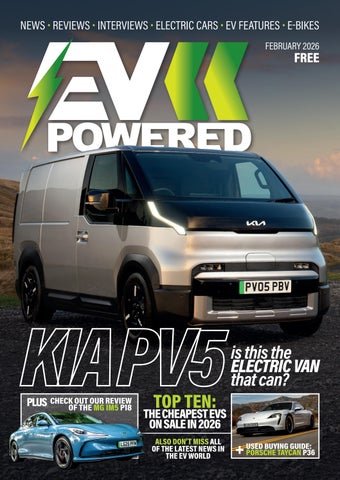
Welcome to this month’s edition of EV Powered.
I’m just back from a very soggy Stevenage where I was participating in the judging for UK Car of the Year.
The annual awards are a big deal for car makers and it was great to see all-electric models take titles in five of the eight categories – representing judges’ picks across every segment from small car (Renault 5, quelle surprise!) to large crossover (the house-sized Hyundai Ioniq 9).
A sixth winner (small crossover champ the Citroen C3) comes with an electric variant along with the petrol and hybrid options and it was perhaps telling that Citroen chose to send the EV version along for judges’ appraisal.
There’s a lot of deliberation to go before the overall Car of the Year winner is named, but there’s a good chance it’ll be electric, continuing a trend that goes back to 2019 with just one petrol interloper (the admittedly wonderful Toyota GR Yaris).
Before the glamour of a Gridserve Electric Forecourt in Hertfordshire, I was in an equally wet Brussels for the 2026 Brussels Motor Show.
This was another thoroughly encouraging experience with EVs not only in the mix but right at the forefront. Car makers keep telling us the EV transition is going to be tough, but they seem to be tackling it well.
like the Kia EV2 to sleek executive saloons like Xpeng P7+ and rugged 4x4s like the Subaru E-Outback.
Behind those were a sea of other electric models, either already launched or on their way, from the cheeky Nio Firefly supermini, to the Toyota Hilux EV – a new model in a famously EV-sceptic segment from an equally EV-sceptic brand.
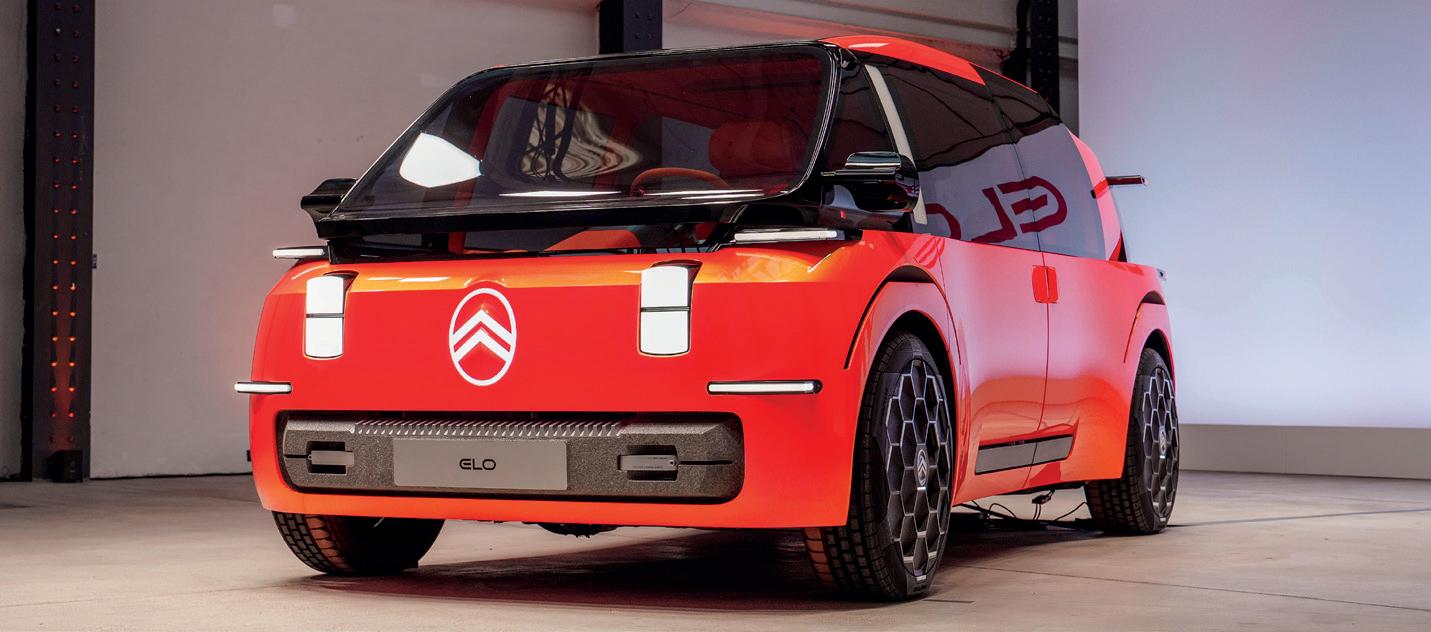
There was also a smattering of brilliant concept cars. The wild Citroen Elo blew me away with its boldness, innovative approach to space and its eyesearing orange-over-orange colour scheme. At the other end of the scale the “concept” Epiq on Skoda’s stand might as well have had a “test drive me now” sticker on it, so close was it to the final car. And the Dacia Hipster is just crying out to be made into a “real car”, as is the Audi Concept C.
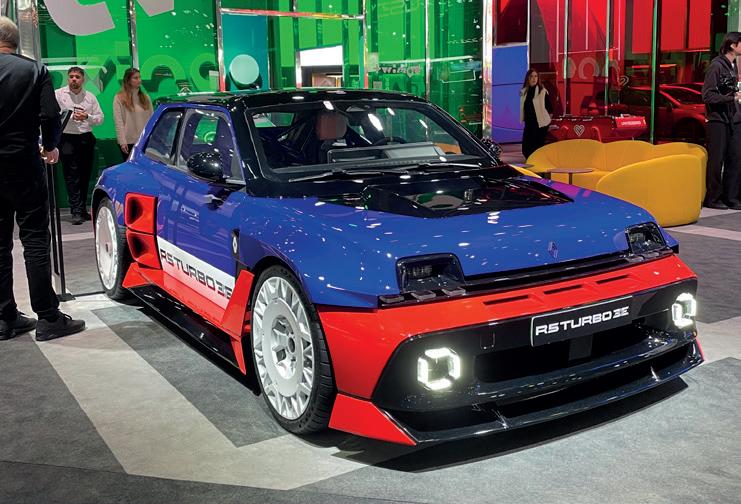
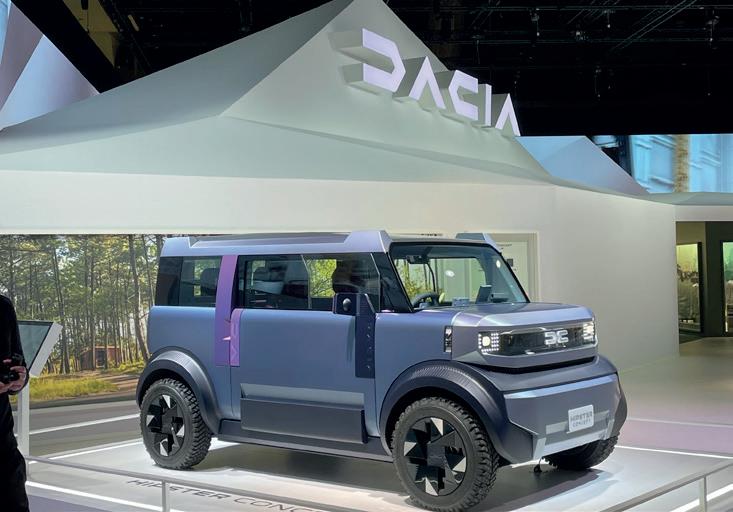
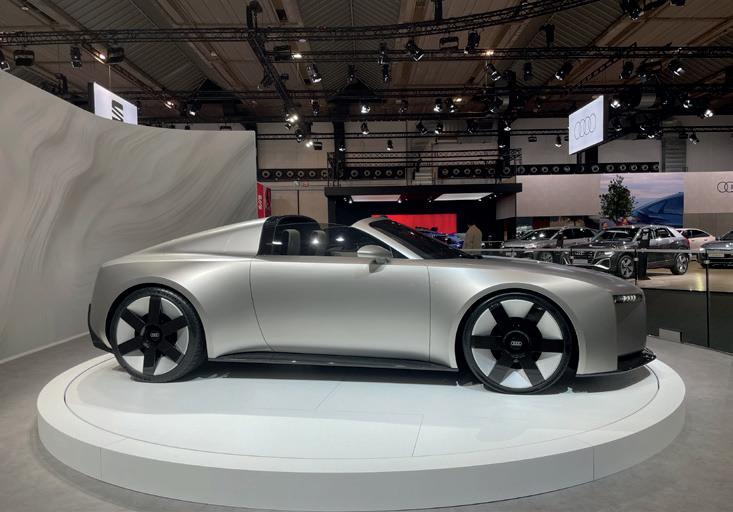
Most major reveals across the show’s media day were electric models and EVs took centre stage at most brands’ stands. Freshly unveiled models ran the gamut from affordable compact crossovers




For me, though, the twin stars of the show were on the Renault stand. Brussels was my first opportunity to see the Renault Twingo in the metal, and it was every bit as charming and clever as I expected. Parked right next to it was the Renault 5 Turbo 3 E, which was even wilder looking in the flesh. The comic-book flared bodywork and rallyinspired paint are great, but why I really love this car is because it’s not a show car, it’s something punters can actually buy and drive. And it shows that one brand can build sensible accessible EVs and bat-crap crazy ones at the same time.
We dive into all the biggest announcements and reveals from Brussels in this month’s magazine as well as bringing you a fascinating insight into the world of premium classic conversion with Everrati’s Justin Lunny, all the latest EVs news and a bumper crop of reviews – from practical panel vans to executive saloons with supercar power.
Matt Allan Editor, EV Powered
Editor
Matt Allan
Reporter
George East
Graphic Designer
Grace Moseley
Videographer
Jacob Pinchbeck
Content Sales Manager
Laura Phillips
Capital Business Media, Group MD
Richard Alvin
Business Development Director
Stephen Banks
Chief Creative Director
Stuart Hyde
Finance Director
Andrew Martin
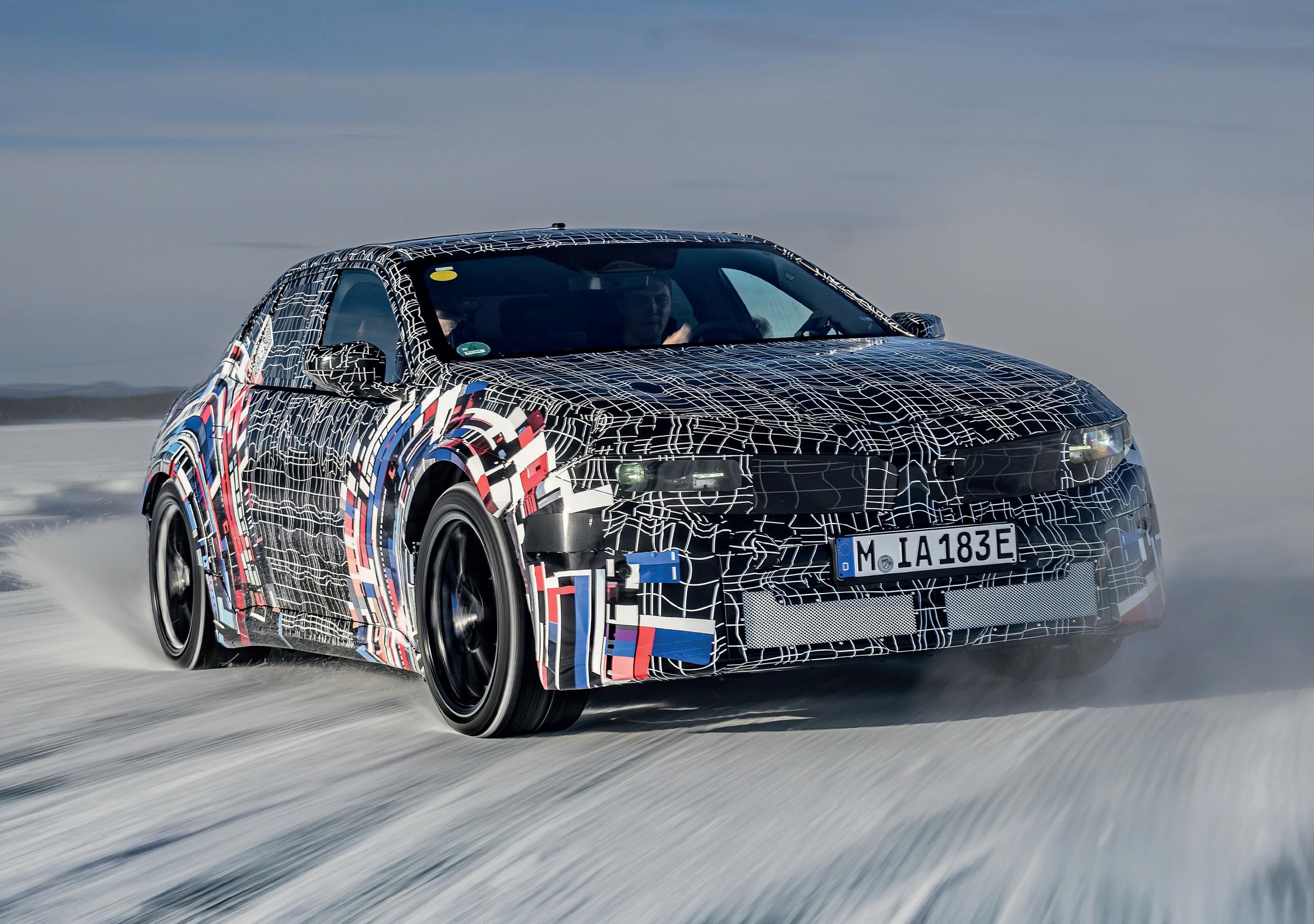
The first electric BMW M3 will boast the most powerful e-motors in the brand’s history and feature synthesised engine notes and gearshifts as it heralds a new era of Neue Klasse M cars.
The electric M3 will arrive in 2027, based on the new i3 saloon due to be unveiled this year. BMW says its first electric M car will blend the driving passion and racetrack capability associated with the famous M badge with new levels of power, versatility and efficiency.
“The next generation of models are set to establish a new benchmark in the high-performance vehicle segment,” said Franciscus van Meel, managing director of BMW M division. “With the latest generation of Neue Klasse technology, we are taking the BMW M driving experience to a new level and will inspire our customers with
outstanding, racetrack-ready driving dynamics for everyday use.”
Driving the electric M3 will be a four-motor powertrain, with an identical motor and singlespeed gearbox driving each individual wheel. BMW hasn’t given any power or performance indications for the new M3 EV but has said it will use the most powerful versions yet of its Gen6 technology. We know that the new iX3 uses motors with around 230bhp each, suggesting that the electric M3 could break the 1,000bhp barrier.
The drivetrain will be able to operate in all-wheeldrive configuration or decouple the front motors
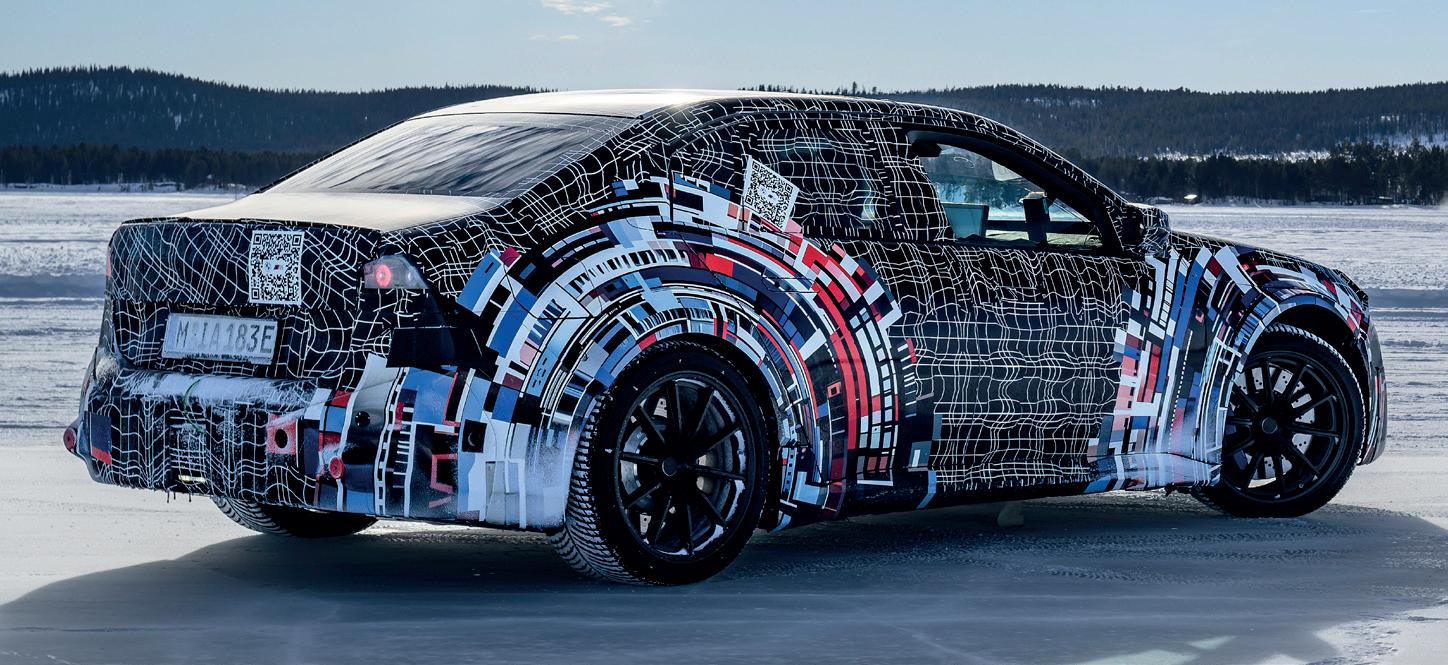
for a true M3 rear-drive experience. BMW says that being able to individually manage torque and power to each wheel will also deliver a “new dimension of driving dynamics” via the bespoke “BMW M Dynamic Performance Control”.
Adding to BMW’s mission to give the new M3 EV true driver engagement, it will feature a new “soundscape” and synthesised gearshifts in the style of the Hyundai Ioniq 6 N and Kia EV6 GT.
Like all Neue Klasse cars, the new electric M3 will be built on an 800V architecture with a battery of “at least” 100kWh. BMW says this unit has been optimised to deliver consistent high performance, while maintaining long-range capability. Aiding that, the M3 will feature the strongest recuperation so far attained from the Gen6 powertrain. The battery will form part of the structure of the car, connected to the front and rear axles for additional rigidity.
The M3 will also feature new materials aimed at cutting weight and the CO2 footprint of building the car. Natural fibres will appear in an M car for the first time, informed by the brand’s experience using them in motorsport since 2019.
This far out from launch, there’s no indication of price for the new electric M3. However, with the current petrol M3 priced from £91,000, don’t expect much change from £100,000 when it goes on sale in late 2027.
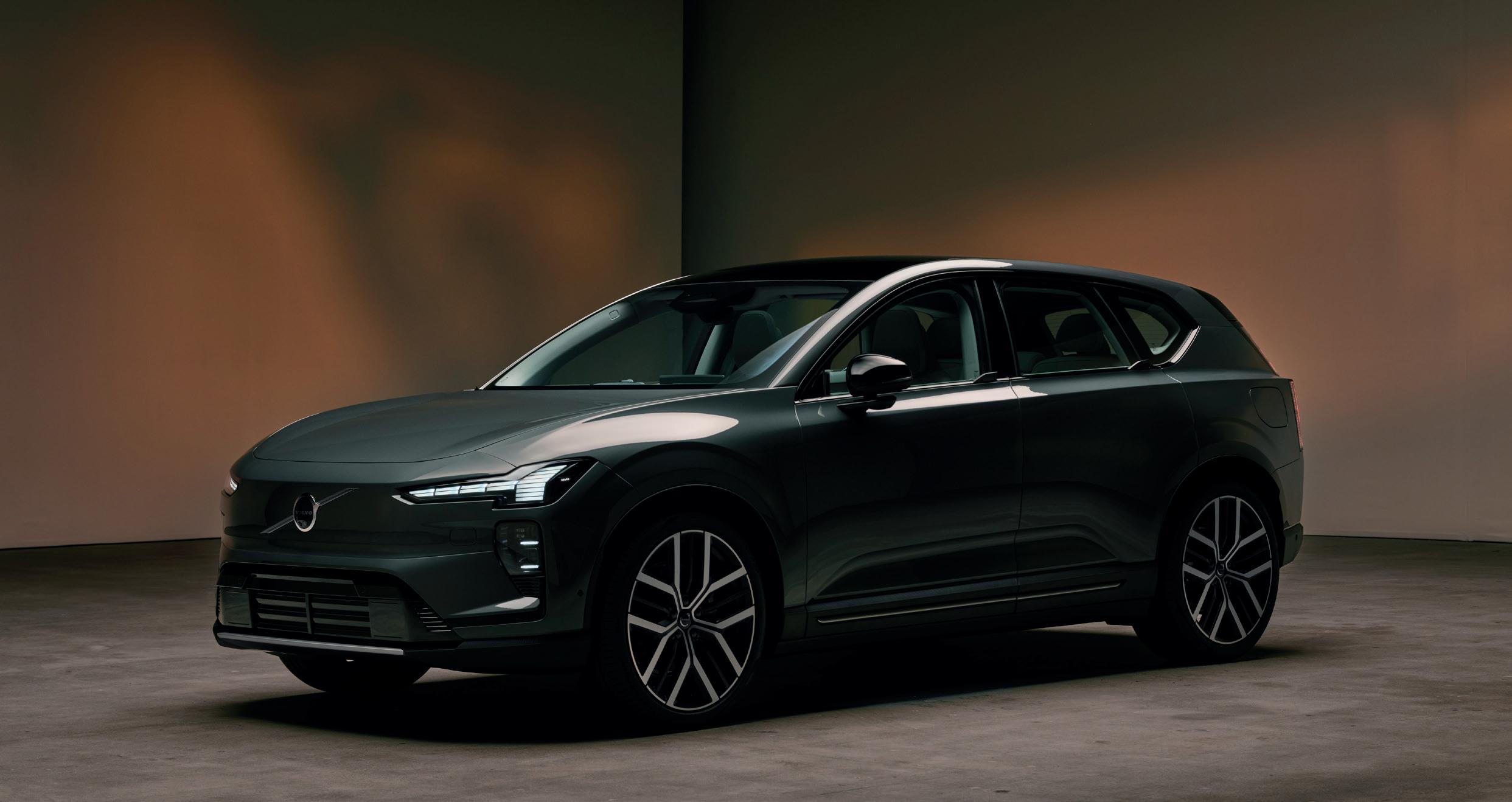
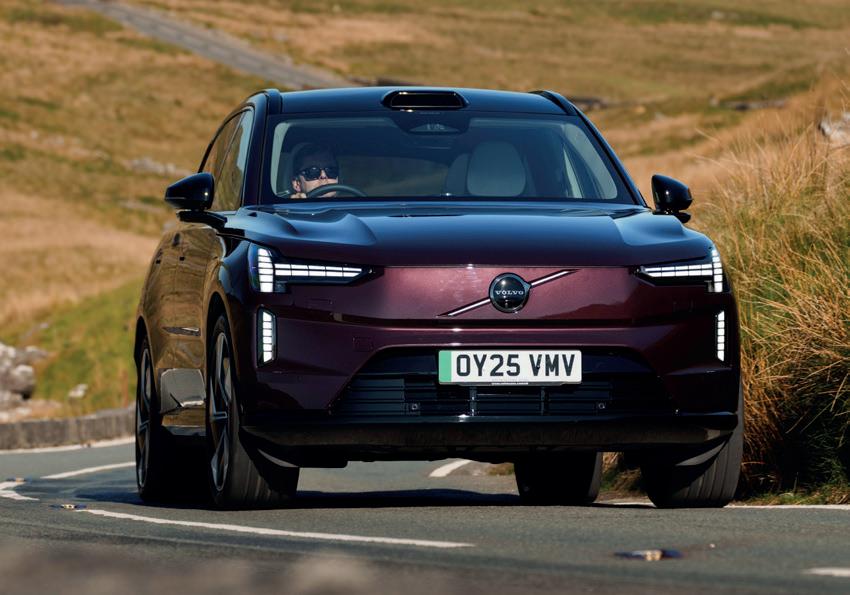
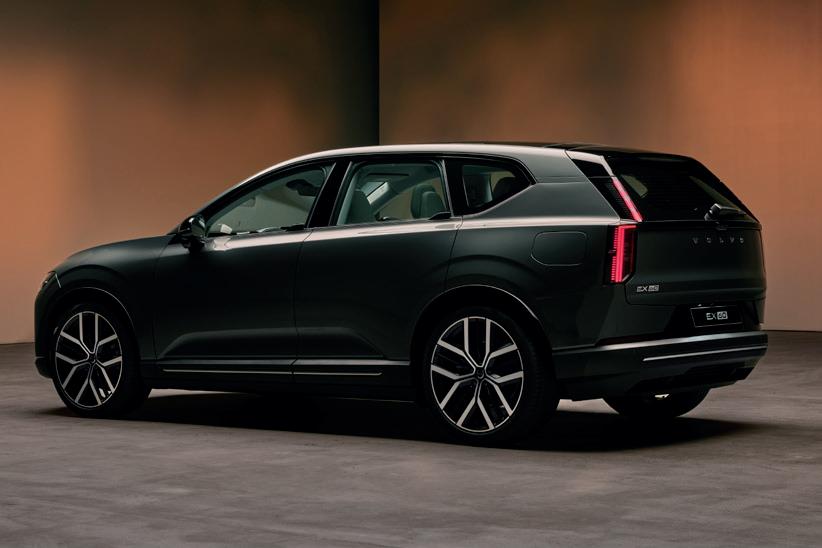
The mid-sized EX60 is the Swedish brand's latest electric car. It sits between the smaller EX30 and EX40 crossovers, and the full-sized, seven-seat EX90 SUV in its model hierarchy.
The EX60 isn't visually dissimilar from either sibling, benefiting from Volvo's signature 'Thor's Hammer' LED headlights and a smoothed-off front end. A pronounced beltline runs the length of the car, while its two-step rear lights are integrated vertically into the rear D-pillar.
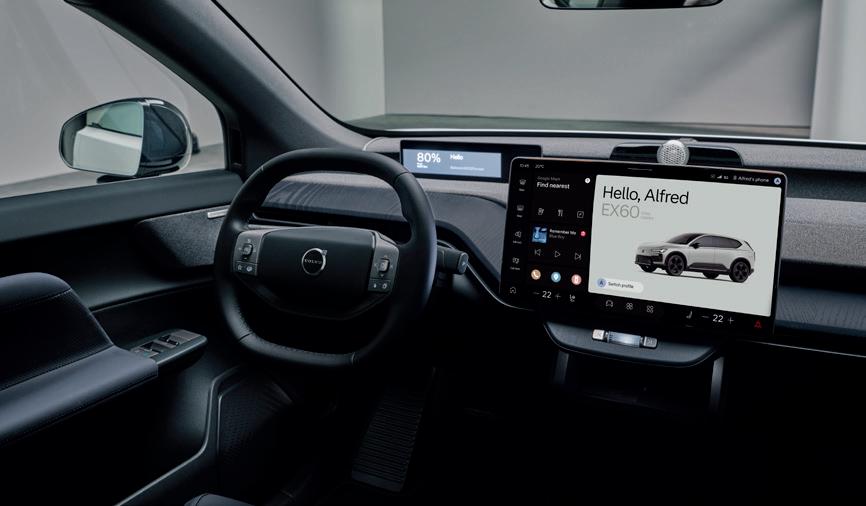
Inside, the EX60 is a largely clean break from the EX90. An Android Automotive-based infotainment system sits horizontally in the centre of the dashboard with a rocker switch underneath.
A two-spoke steering wheel is finished with physical buttons to control several of the car's functions and the infotainment system. Behind it sits a horizontally mounted driver display in favour of a traditional instrument cluster.
The EX60's Scandinavian-inspired cabin with its light and airy colours can be trimmed in either
Volvo has unveiled its all-new EX60 SUV, which promises a range of up to 503 miles and a starting price of less than £60,000.
vegan leather or cloth to align with Volvo's environmental credentials.
The new EX60 is available with either a single or twin-motor powertrain. Dual-motor, AWD cars come with a range of either 503 miles in rangetopping P12 guise and a huge 117kWh battery, while the P10 can manage 410 miles on a single charge from its 95kWh unit.
A rear-wheel-drive (RWD) P6 model with a 385mile range and an 85kWh battery is also available.
Entry-level 385bhp P6 cars are expected to be priced between £55,000 and £58,000, while the mid-tier P10 gets 503bhp, and a £60,000 starting price. The flagship P12 comes with a price tag of approximately £65,000 and an ES90-matching 670bhp.
The AWD EX60's range makes it the longestrange D-segment SUV on sale today, pipping its closest rivals, the latest BMW iX3 and the Mercedes GLC, for honours.
This is because it rides on Volvo's completely new in-house developed SPA3 - or Scalable Product Architecture
3 - platform as opposed to SPA2, which is used to underpin the recently updated EX90.
SPA3's 800V setup also allows for a 211mile top-up charge in just 10 minutes when using an ultra-fast 400kW charger.
Focusing on modularity to save weight and improve efficiency, SPA3 has cell-to-body technology, meaning the battery is integrated into part of the car's chassis structure.
The new Volvo EX60 will be built at Volvo's Torslanda factory in Sweden, which has been manufacturing its cars since 1964.
However, the EX60 is the first Volvo to be built with megacasting technology. Its entire rear underbody is cast from a single piece of aluminium instead of 100 separate parts, reducing both manufacturing times and the car's overall weight.
The EX90 offers 522 litres of boot space with the rear seats up, and 988 litres with the second row folded flat. Up front is a 58-litre frunk for charging cables.
At the car's launch event in Stockholm, Sweden, Volvo also confirmed that a more visually rugged, Cross Country version of the EX60 will join the line-up later this year.
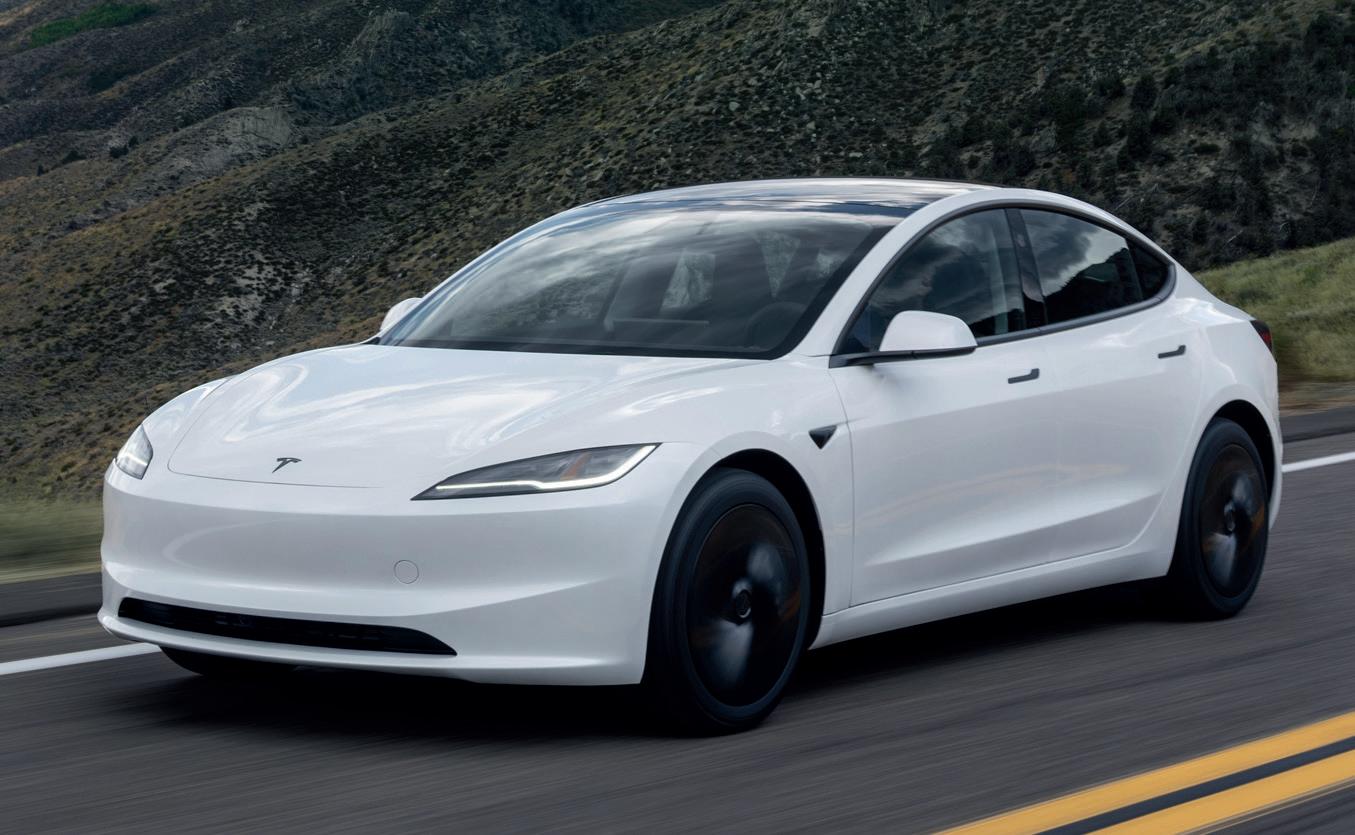
Tesla has launched a new stripped-out, entry-level Model 3 'Standard' trim to the UK with a starting price of £37,995.
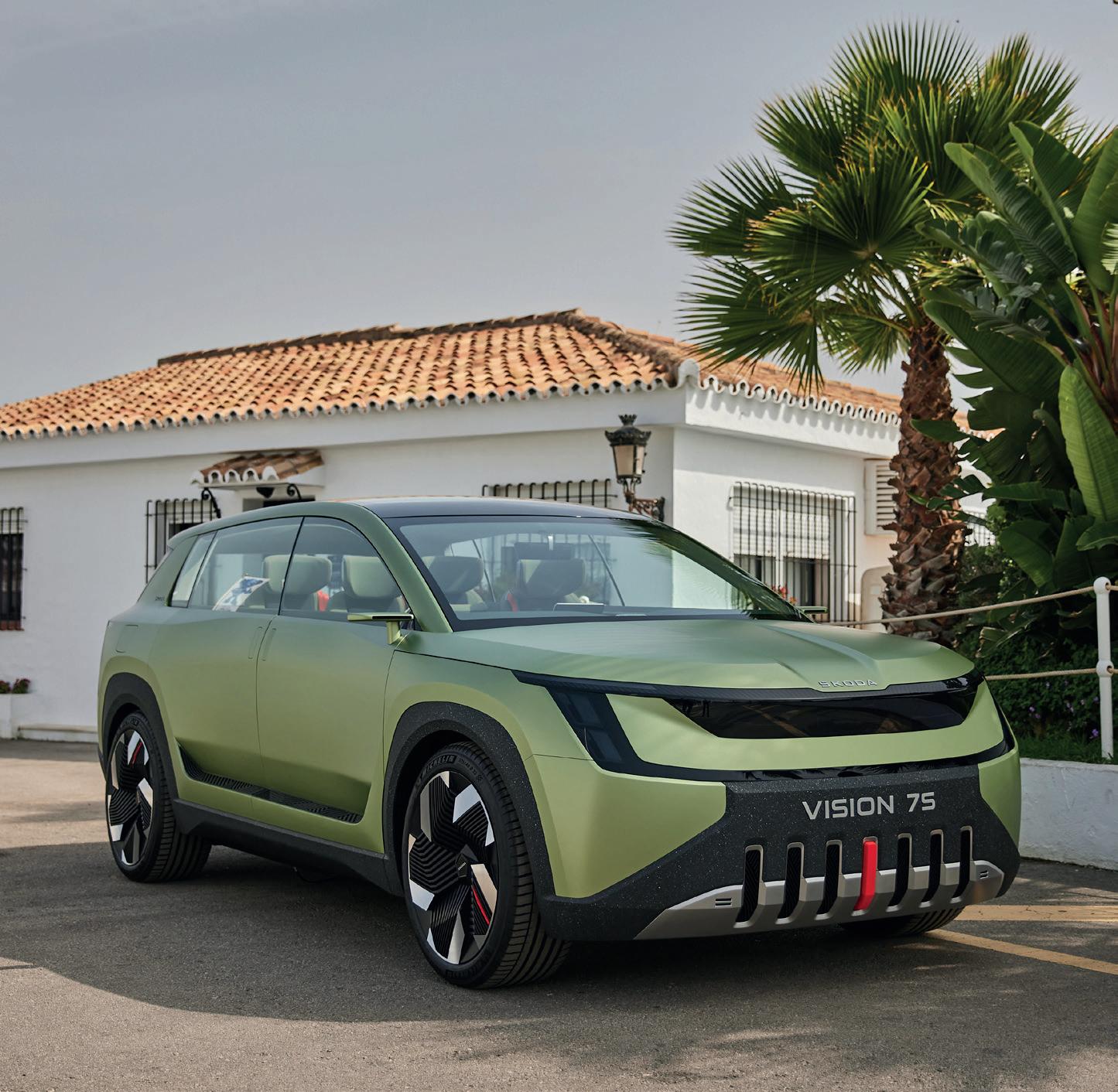
The all-electric equivalent to the Skoda Kodiaq, the Peaq will make its global debut in summer 2026 ahead of an expected launch in late 2026/ early 2027.
The Peaq is based on Skoda’s Vision 7S concept car (pictured) which debuted in 2022 and demonstrated the brand’s “Modern Solid” design language for the first time.
Martin Jahn, Skoda’s sales and marketing boss, said: “With the Vision 7S, we entered new territory for Skoda, with a clear idea of how to elevate the brand. Our new flagship takes our brand values of spaciousness and practicality to a whole new level.”
The Peaq will be Skoda’s largest and most expensive car to date. It is expected to compete with models such as the Peugeot E-5008, Mercedes GLB and Kia EV9.
It will use the same MEB platform that underpins the Enyaq. This will allow for two- and four-wheeldrive variants with up to 335bhp, and batteries up to 86kWh.
The regular Tesla Model 3 is now known as the 'Premium' in the brand's lineup, and in entry-level Long Range Rear-Wheel Drive guise, costs £7,000 more than the Standard trim.
To reduce buying costs, this latest Model 3 does away with a few of the Premium's creature comforts. The full faux-leather upholstery has been replaced with a cloth and vegan leather mix, while the ventilated front seat and heated rear seat functions have been removed, along with the subwoofer and radio tuner.
In the back, there is no rear touchscreen, and the cabin doesn't come with the latest-gen Model 3's wrap-around interior light bar, electric steering wheel adjustment or active dampers.
The Model 3 Standard does, however, still retain the 15.4-inch touchscreen in the centre of the dash, a panoramic sunroof, an electronically-operated tailgate, two wireless charging pads, and 18-inch 'Photon' aero wheels.
Skoda has revealed more details about its upcoming rival to the Peugeot E-5008.

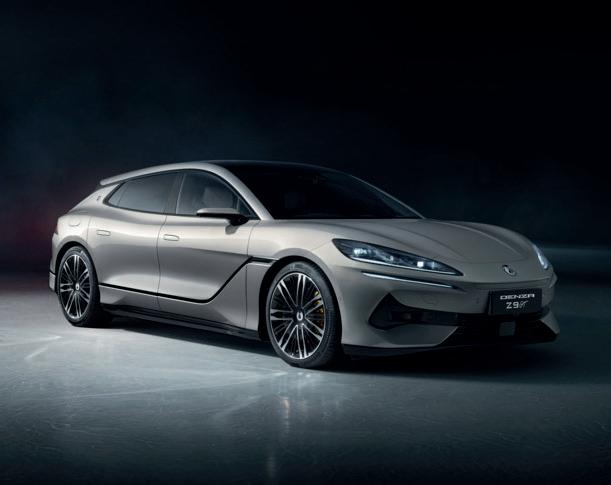
BYD plans to bring its 1000kW flash charging to the UK this year as it continues its Europe-wide expansion.
The Chinese giant’s UK country director, Bono Ge, confirmed that it aimed to install 300 of its ultra-rapid chargers around the country before the end of the year to support the launch of its new Denza premium brand.
The ultra-rapid system works with BYD’s Super-E platform and 10C battery to deliver up to one megawatt of power. That’s enough to add 1.2 miles of range per second, or 250 miles in just five minutes.
Initially only EVs from Denza will be able to take full advantage of the megawatt charging thanks to their next-gen platform. However, Ge said that the chargers will be open to owners of all EVs.
He added that BYD was in discussion with existing chargepoint operators, its dealer network and retail businesses to determine the best roll-out programme and locations for its new chargers.
This year’s nominees for the UK Car of the Year have been revealed, with EVs dominating the short list.
The annual awards, which recognised the best cars across a host of key categories, reflect the growing demand for EVs and an ever-expanding line-up of models.
Judges whittled down an initial list of 59 contenders to choose the eight category winners which will now go on to be considered for the overall title.
Of the eight segment winners, five are pure EVs and one other is offered with a choice of petrol, hybrid or all-electric powertrain.
The Renault 5 has already added to its long list of titles, being named the UK’s small car of the year. Nearly two thirds of the 33-strong judging panel picked the French supermini as their top choice.
The R5’s sister car the Alpine A290 also continued its strong awards showing, racing to the top of the judging panel’s choice for best performance car.
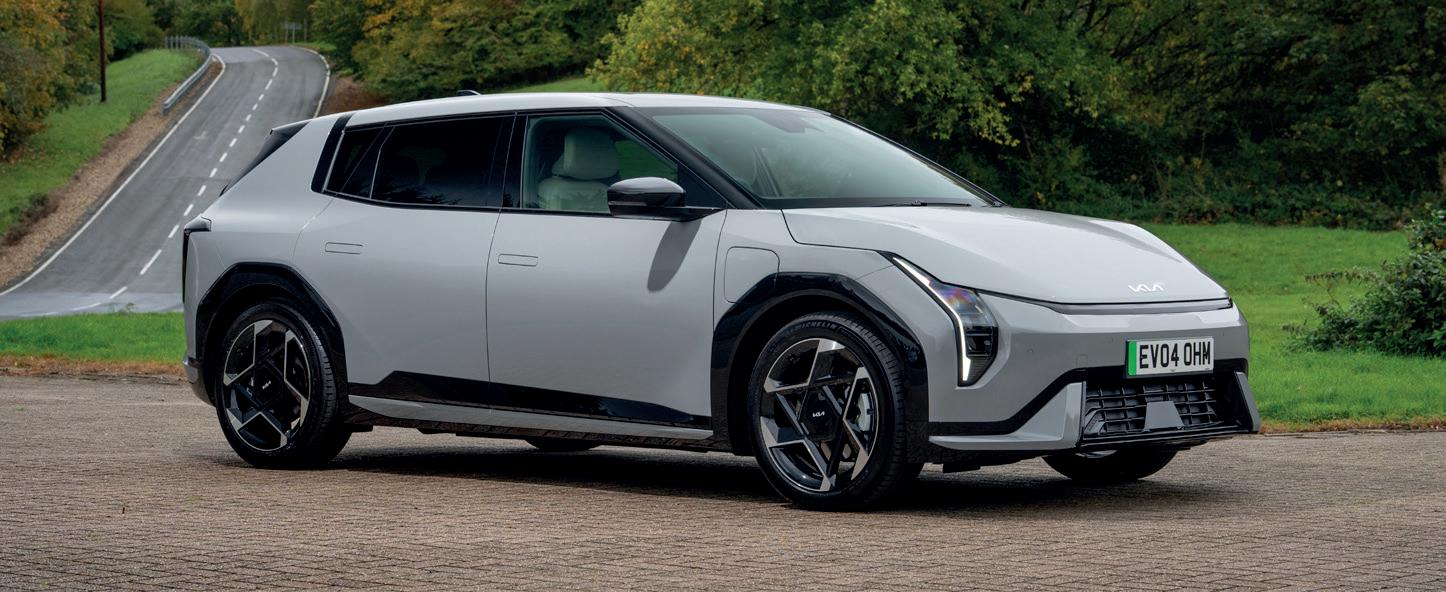
The Kia EV4 took top honours in the family car segment and will now be considered for the overall title – an accolade scooped up by Kia EVs in 2024 and 2025 with the EV9 and EV3 respectively.
One of just three models among the category winners offered with a petrol engine, the Citroen C3/E-C3 was named best small crossover. Audi was the only other marque to secure wins with combustion-powered models, scooping titles for the best executive car with the A6 saloon and best estate with the A6 Avant.
The Volkswagen group was also represented by Skoda, which was awarded the win for best medium crossover for the multi-award-winning Skoda Elroq.
Above that in the large crossover category another EV took victory, with judges selecting the Hyundai Ioniq 9.
For the first time, the UK Car of the Year Awards is being run in association with Which? Recommended breakdown service Start Rescue. John Challen, director of the UK Car of the Year Awards commented: “It is great to have Start Rescue onboard, they're just as passionate about keeping motorists informed as we are and they are experts in their own right.”
The overall UK Car of the Year 2026 winner will be announced on February 26.
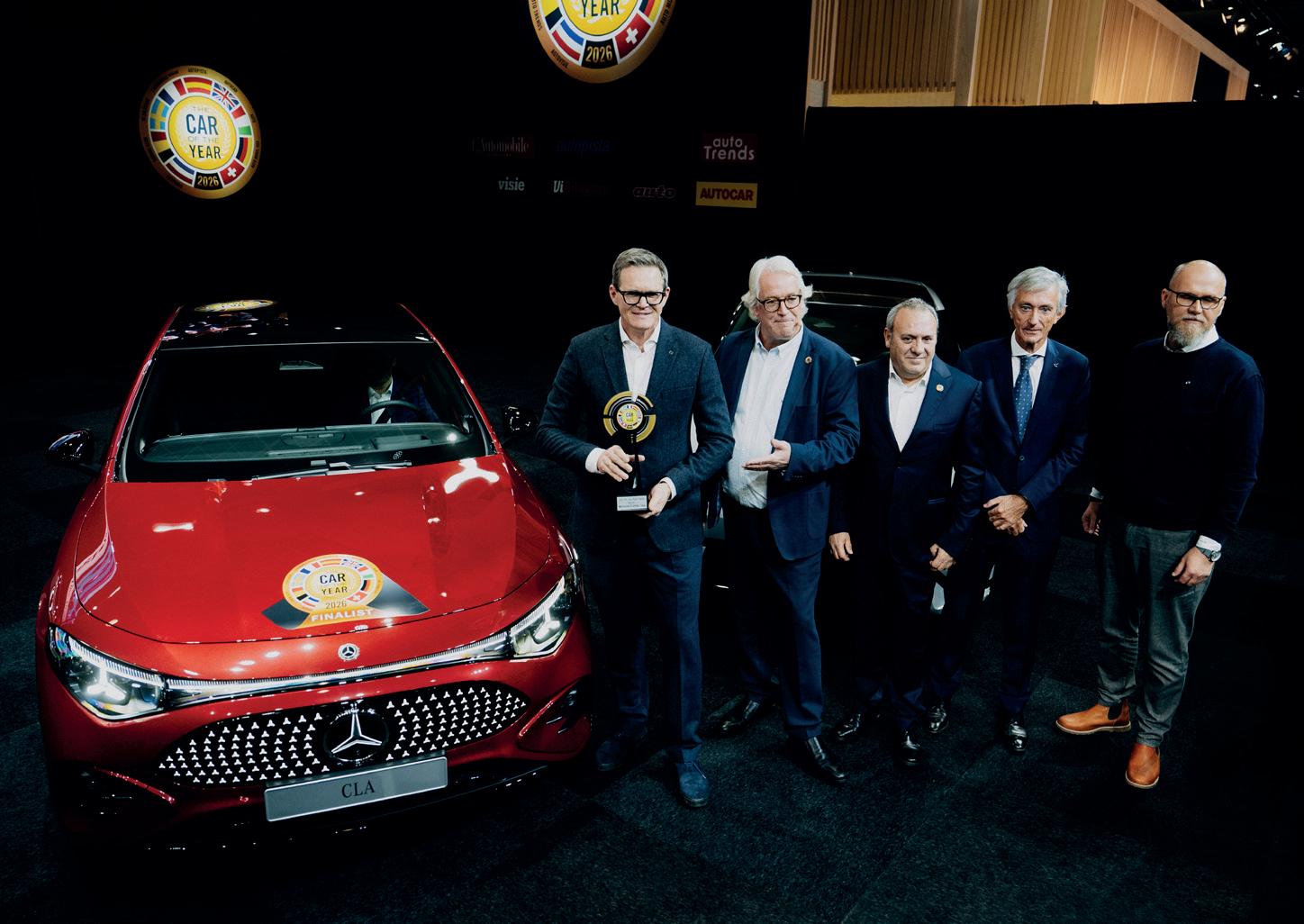
European judges have voted the MercedesBenz CLA their car of the year for 2026.
The electric saloon from Stuttgart beat six other shortlisted contenders, including four other pure EVs, to claim the prestigious title, which was announced at the Brussels Motor Show.
It is only Mercedes’ second ever win in the European Car of the Year competition, coming 52 years after Mercedes-Benz 450 SE/SEL took the crown.
A panel of 59 judges from 23 countries picked Mercede’s entry-level EV ahead of the Škoda Elroq; Kia EV4; Citroën C5 Aircross; Fiat Grande Panda; Dacia Bigster and Renault 4.
The CLA is Mercedes’ new entry-level EV but brings impressive technical innovations including a range of 492 miles and charging speeds of up to 320kW, courtesy of its 800V architecture.
2026 marks the fifth year an EV has taken the grand prize of European Car of the Year. Prior to the CLA’s victory the Renault 5, Renault Scenic, Jeep Avenger and Kia EV6 all claimed the title.
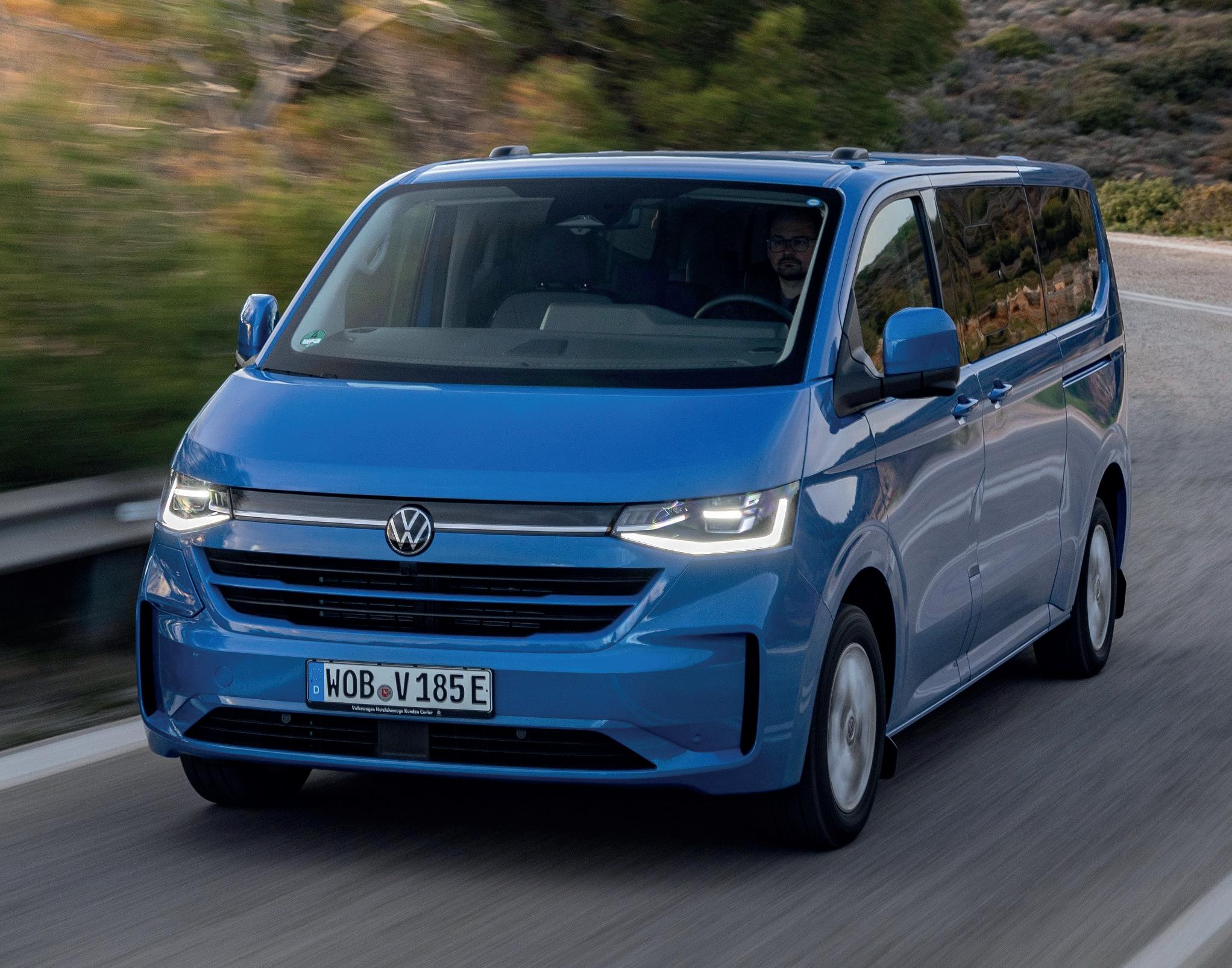
Less than a year after the all-electric seventh-generation Transporter arrived, VW has announced a series of upgrades to its commercial and passenger variants.
Among the key upgrades are a new battery with a usable capacity of 70kWh. This replaces the previous 64kWh unit and brings a 13% uplift in range, boosting the E-Transporter’s range to 236 miles.
At the same time, the van’s charging curve has been improved, meaning charging from 10-80% now takes around 30 minutes – 10 minutes less than previously.
For 2026, Volkswagen has also introduced a new all-wheel-drive powertrain. Bearing the familiar 4Motion name, the setup adds a motor to the front axle and works in tandem with the electronic stability control to manage torque and braking force. VW says the optional 4Motion setup will be available in 134bhp, 215bhp and 282bhp outputs.
Volkswagen has expanded its E-Transporter and E-Caravelle range with a bigger battery, improved charging and the option of all-wheel drive.
Recent weeks have seen tens of thousands of car fans descend on the Brussels Expo space for this year’s Brussels Motor Show.
Previously a small-scale affair, the Brussels show has grown to fill the gap left by the the defunct Geneva Motor Show.

This year, more than 50 manufacturers from across the globe packed the show’s halls with a bewildering selection of cars – some existing models, many all-new, and a huge number all-electric.
So here, we’ve rounded up all the biggest and most important new EV reveals from this year’s show:
Kia’s stand was perhaps more modest than some brands but it had some of the biggest announcements of the show.
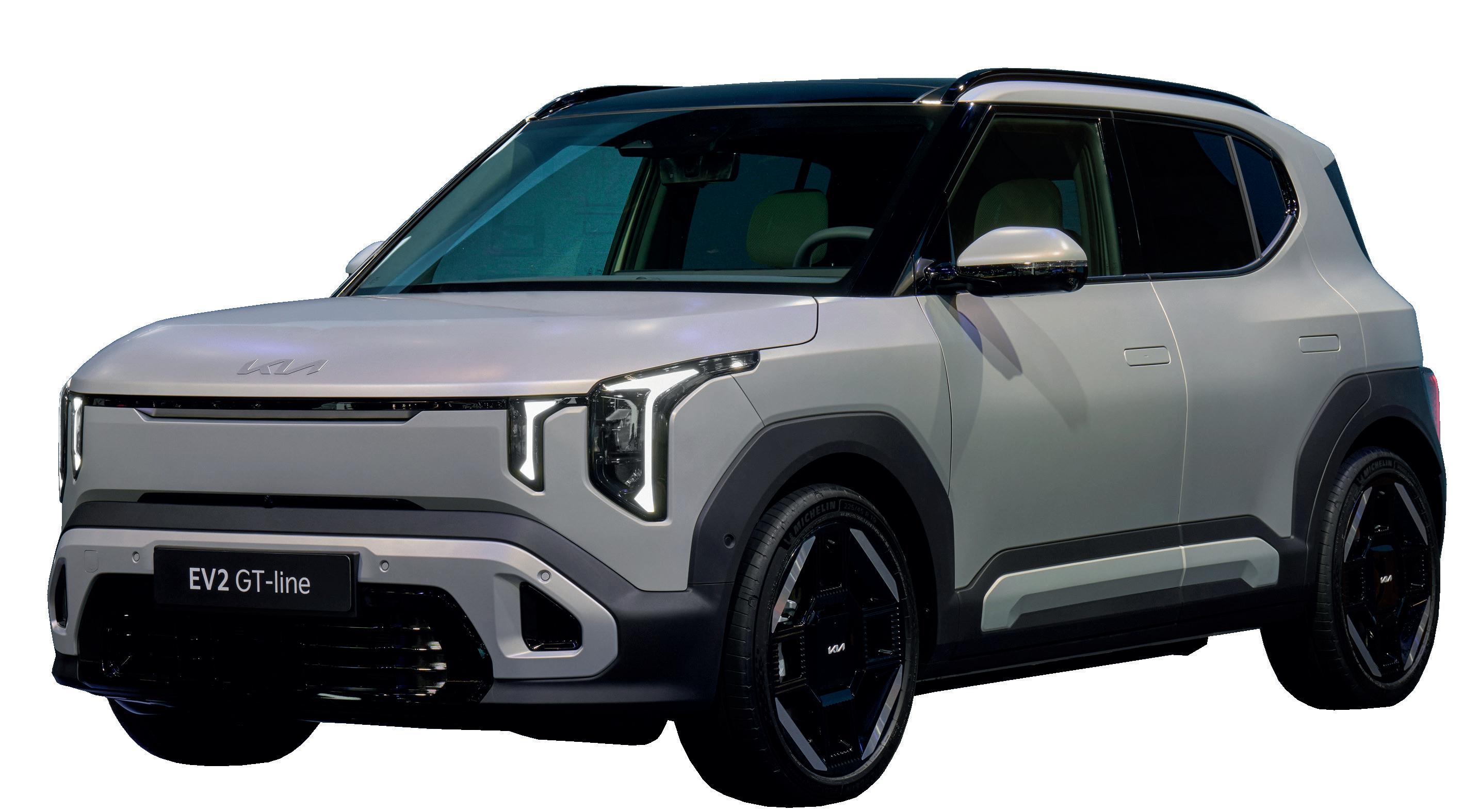
Key among them was the EV2 – Kia’s smallest EV to date (pictured left). This Renault 4-rivalling compact SUV is due to go on sale this spring and is expected to be priced from under £25,000.
It’s designed to look like a mini-EV9 and looks even better in the metal than in pictures. The boxy design and body cladding give it presence, despite measuring just 4m long. Inside, it looks and feels as robust as you’d expect from Kia. There are proper buttons as well as Kia’s now-standard triple-screen display. Buyers will be able to choose from four- or five-seat configurations, both with sliding rear seats and up to 403 litres of boot space.
Powering the EV2 is a 144bhp front-mounted motor and there are two battery options. A 42.2kWh unit offers up to 197 miles of range, while a 61kWh battery delivers 278 miles.
Alongside the sensible EV2, Kia revealed three new performance-focused GT models.
The EV3 GT and EV4 GT will arrive later this year sharing the same powertrain. In both cars a two-motor all-wheel-drive arrangement will deliver 288bhp and 0-62mph times of under 6 seconds. Both will also feature bespoke chassis tunes, electronically controlled suspension and virtual gearshift technology.
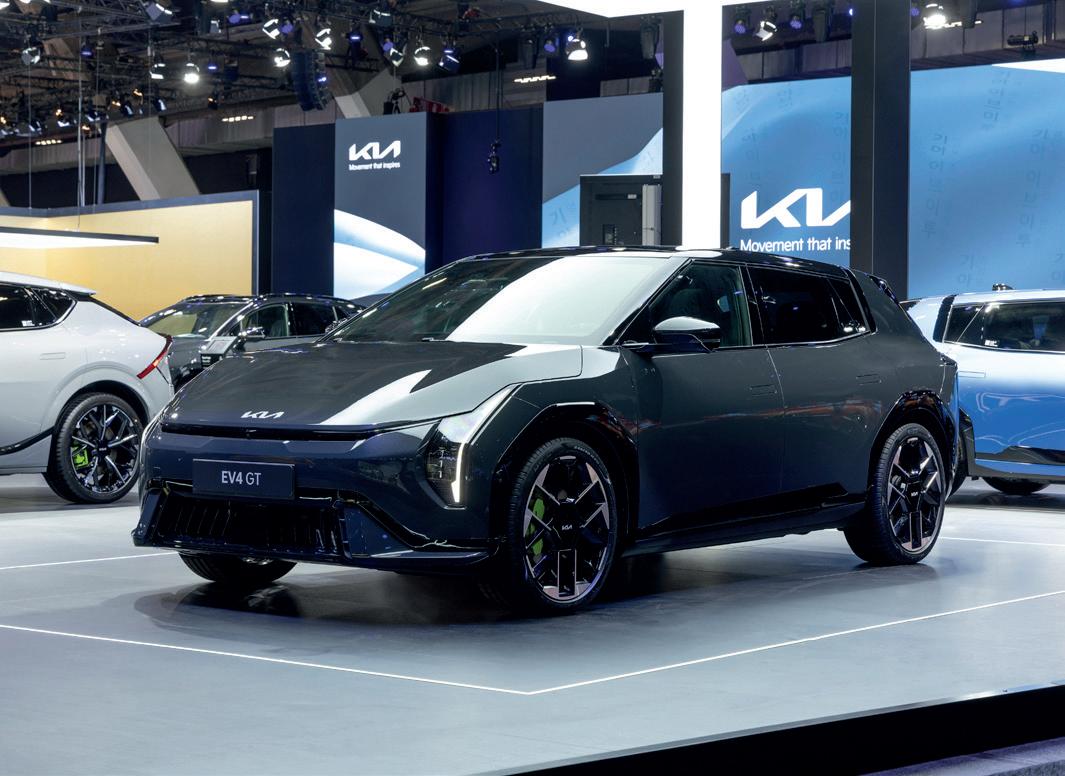
The EV5 GT will get the same gearshift technology as well as a road-scanning system for its adaptive suspension. It will also feature an all-wheel-drive powertrain, this time producing 305bhp as Kia looks to challenge the Skoda Enyaq vRS and Ford Capri.
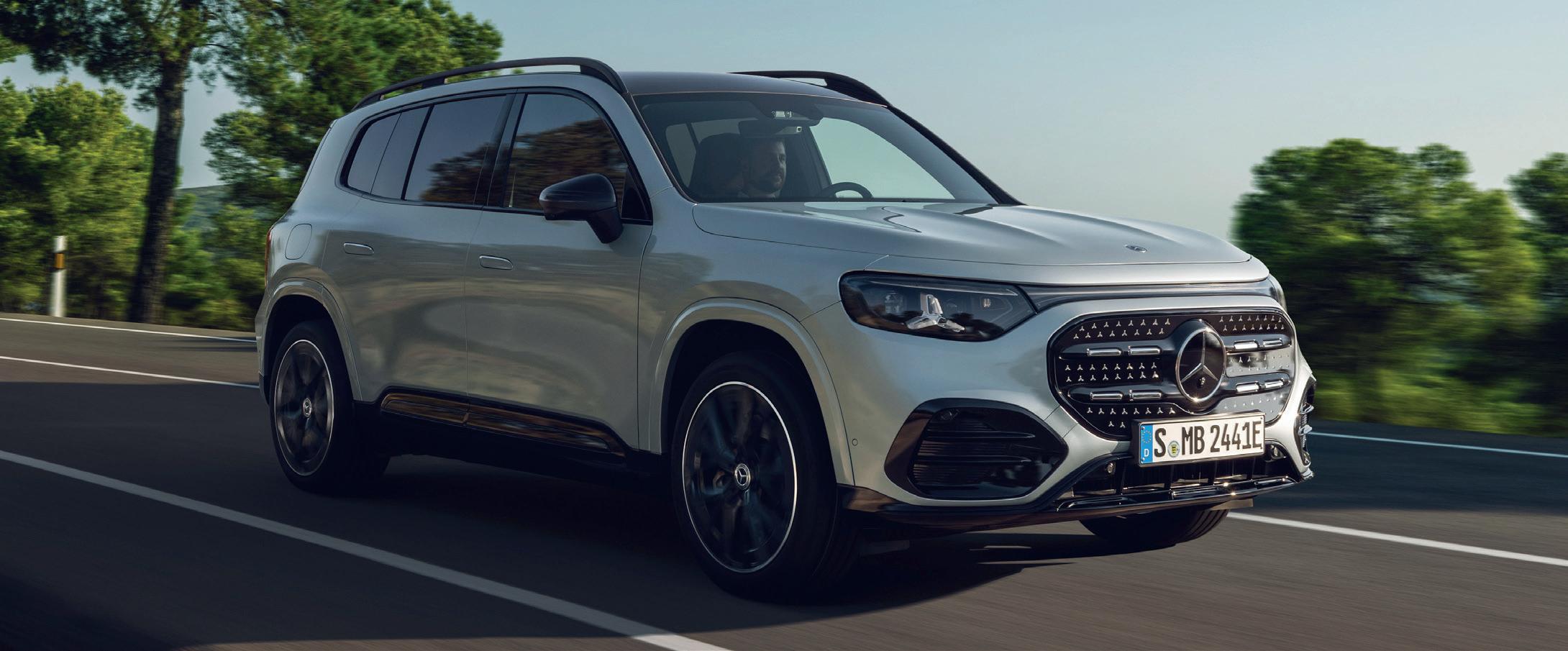
Mercedes’ big Brussels reveal was the new GLB. This is an all-new replacement for its previous electric seven-seater, sharing the same dedicated platform as the new GLC. That means 800V architecture that supports charging of up to 320kW for its 85kWh battery. In its most efficient rear-wheel-drive guise, the new GLB will cover a whopping 392 miles on a charge, while an all-wheel-drive version sacrifices a little range for more grip and 349bhp.

Like the GLC, Mercedes has gone big on tech with the GLB – offering the ridiculous 38-inch “Superscreen” that takes up the entire dashboard, and fitting a huge illuminated grille. More usefully, the new GLB is much longer than before, with an extra 10cm legroom for the third row as well as more space in rows one and two.
On sale in the next few months, expect prices to start around £50,000.

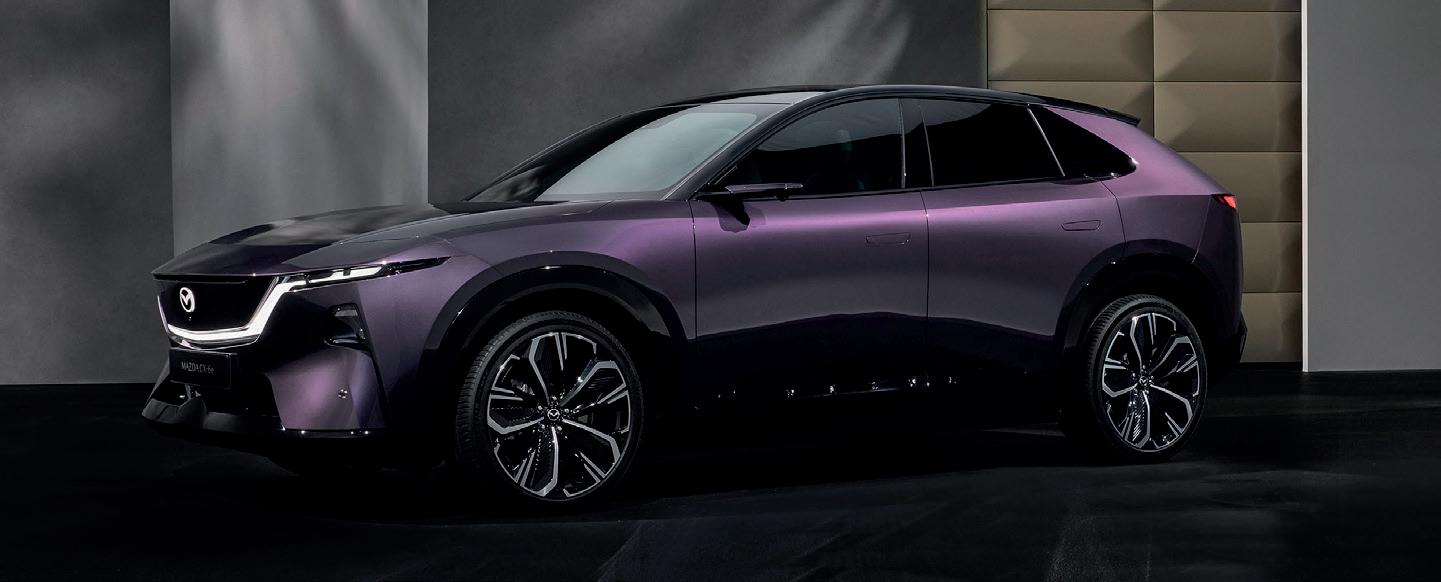
Brussels saw the world premiere of Mazda’s third EV – the CX-6e. An SUV sister car to the Mazda 6e, it’s built on the same platform as the sleek saloon by China’s Changan and, like the 6e, will reach the UK in the second half of 2026. Set to take on the likes of the Tesla Model Y and Skoda Enyaq, the 4.8m-long CX-6e uses a rear-mounted 255bhp motor and a 75KWh battery to deliver around 300 miles of range. It also features a “smart cockpit” with a huge 26-inch infotainment screen, digital wing mirrors and a head-up display instead of traditional instruments.
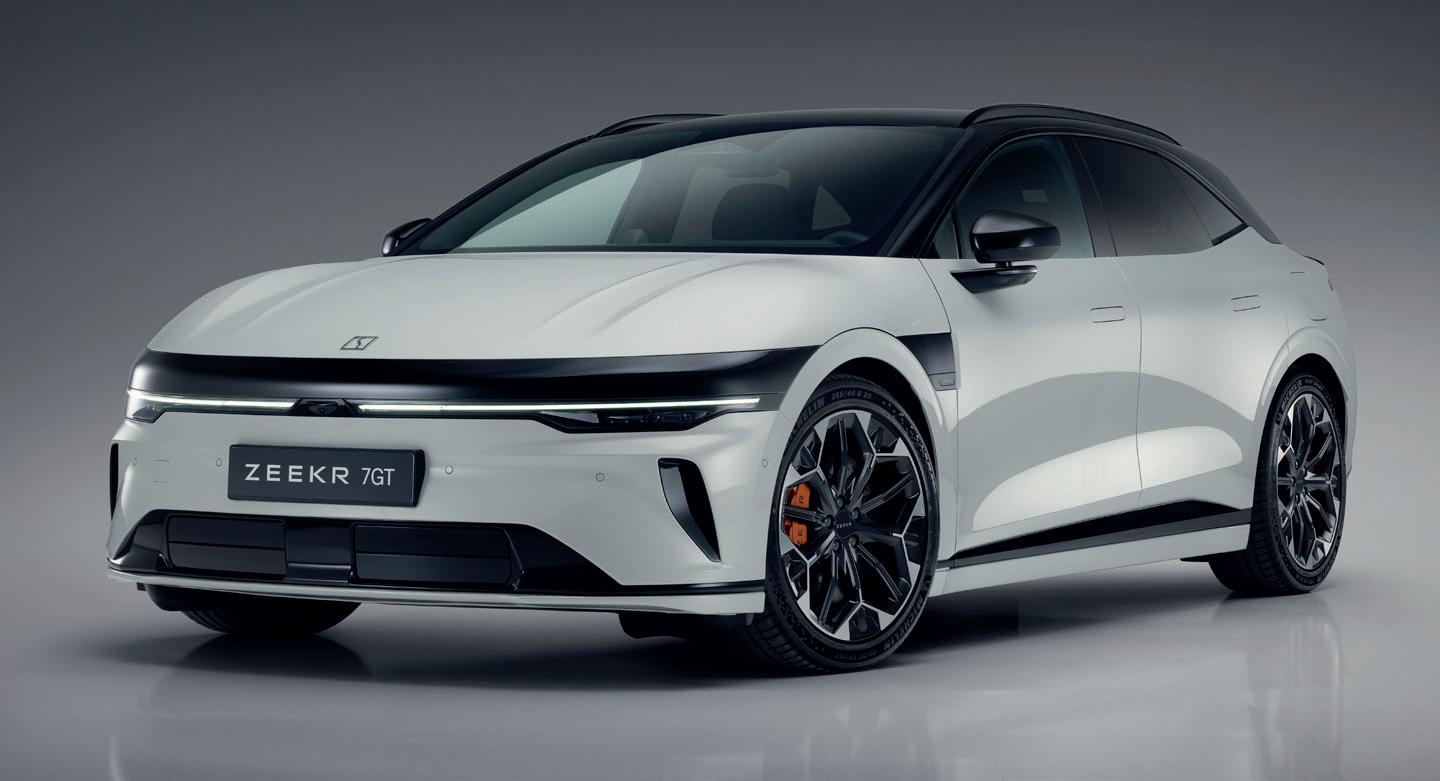
Zeekr is poised to enter the UK later this year and take on the likes of the Tesla Model 3, BMW i4 and Volkswagen ID.7. And it will do it with the 7GT, which made its debut in Brussels. It’s a sharplystyled five-seat shooting brake that proves electric estates are cool. It will cost from around €45,000 (£40,000) for the entry level Core RWD model, which packs 421bhp and 322 miles of range from a 75kWh battery. A long-range model promises 406 miles from a 100kWh battery, while a 637bhp version delivers 0-62mph in 3.3 seconds for under €58,000. Touches like the powered doors are largely gimmicks, but the astonishing performance and insanely quick charging – we’re talking 480kW – plus that attractive price tag will make it appealing to many business buyers.
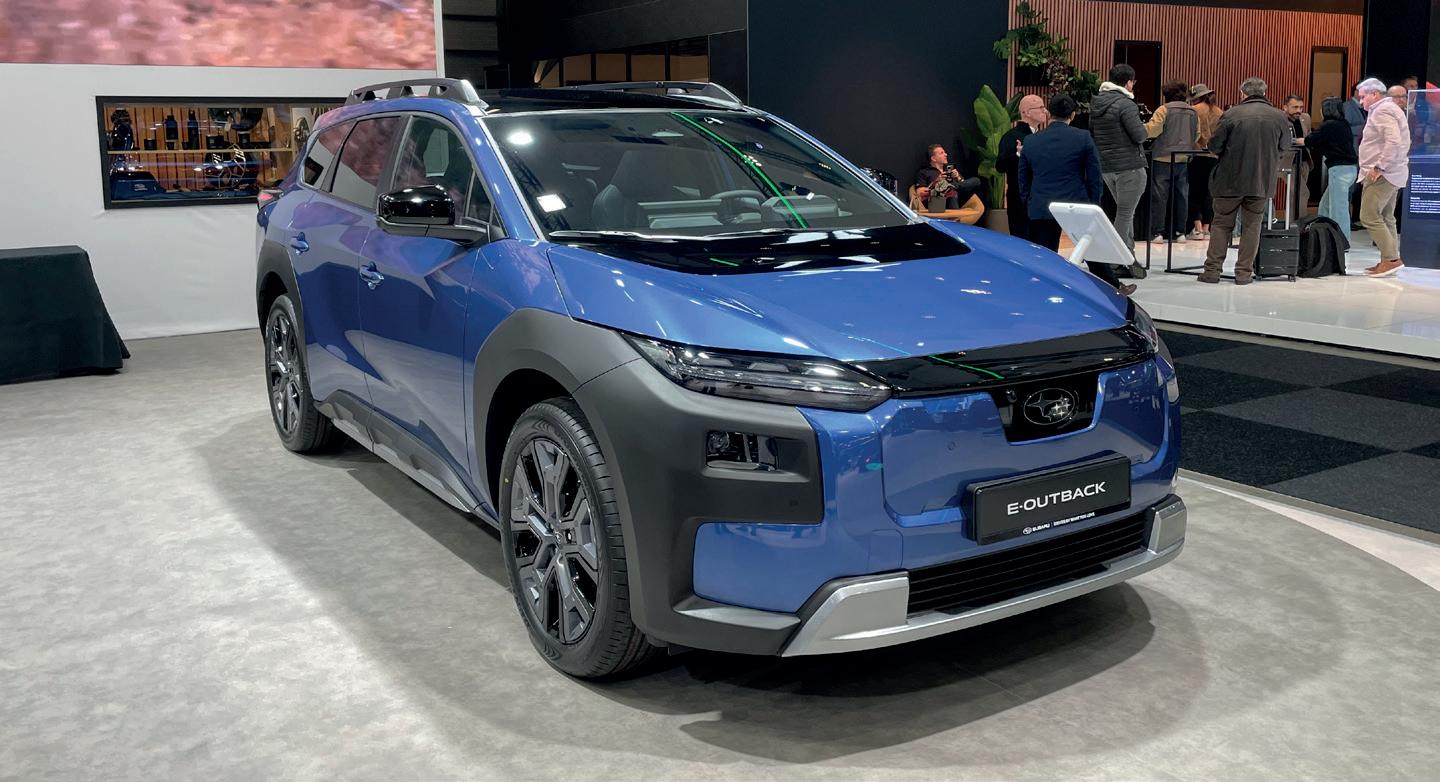
We’ve seen the American Trailseeker version already but Brussels gave us the first look at the European-spec Subaru E-Outback and it got us quite excited. Like the rest of Subaru’s EV line-up, the E-Outback is a joint project with Toyota, but here, it’s Subaru that has taken the lead and will build the E-Outback and its bZ4X Touring cousin. It looks and feels like a proper Subaru thanks to its high-riding, spacious estate bodystyle, chunky plastic cladding and roofrails. It will drive like a real Subaru too, thanks to a permanent all-wheel-drive system putting out 375bhp. That makes it quicker than an Impreza WRX. The only shortcomings we can see are an expected sub300-mile range and an interior that could kindly be described as “lacking style”.

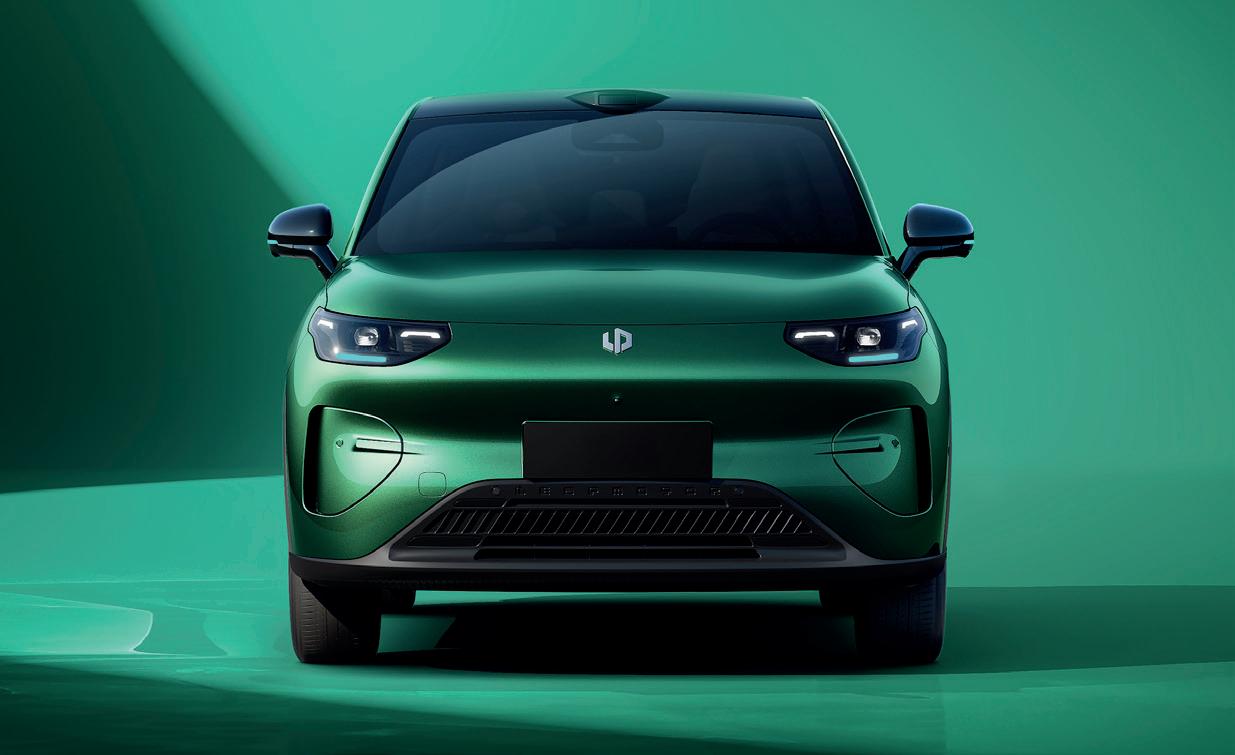
Leapmotor continued its rapid expansion with two new cars at Brussels. The B03X is a neat compact SUV rival to the Renault 4 and Kia EV2 that is due on European roads this summer. While we got to see – and were impressed by – the cutesy crossover in the metal, technical details are still TBC. Leapmotor says it will be spacious, high-tech and good value. We’d expect a range of around 250 miles and perhaps 150bhp to keep things competitive.
We also got a closer look at the B05 and our first sight of the interior. Leapmotor’s answer to the Kia EV4, VW ID.3 and Renault Megane, shares most of its characteristics with the B10 SUV, including its button-free interior and 67kWh battery. Externally, it’s handsome in a plain sort of way and while its 285-mile range might not match its European and Korean rivals, you can bet that it’ll outperform them when it comes to equipment and pricing.
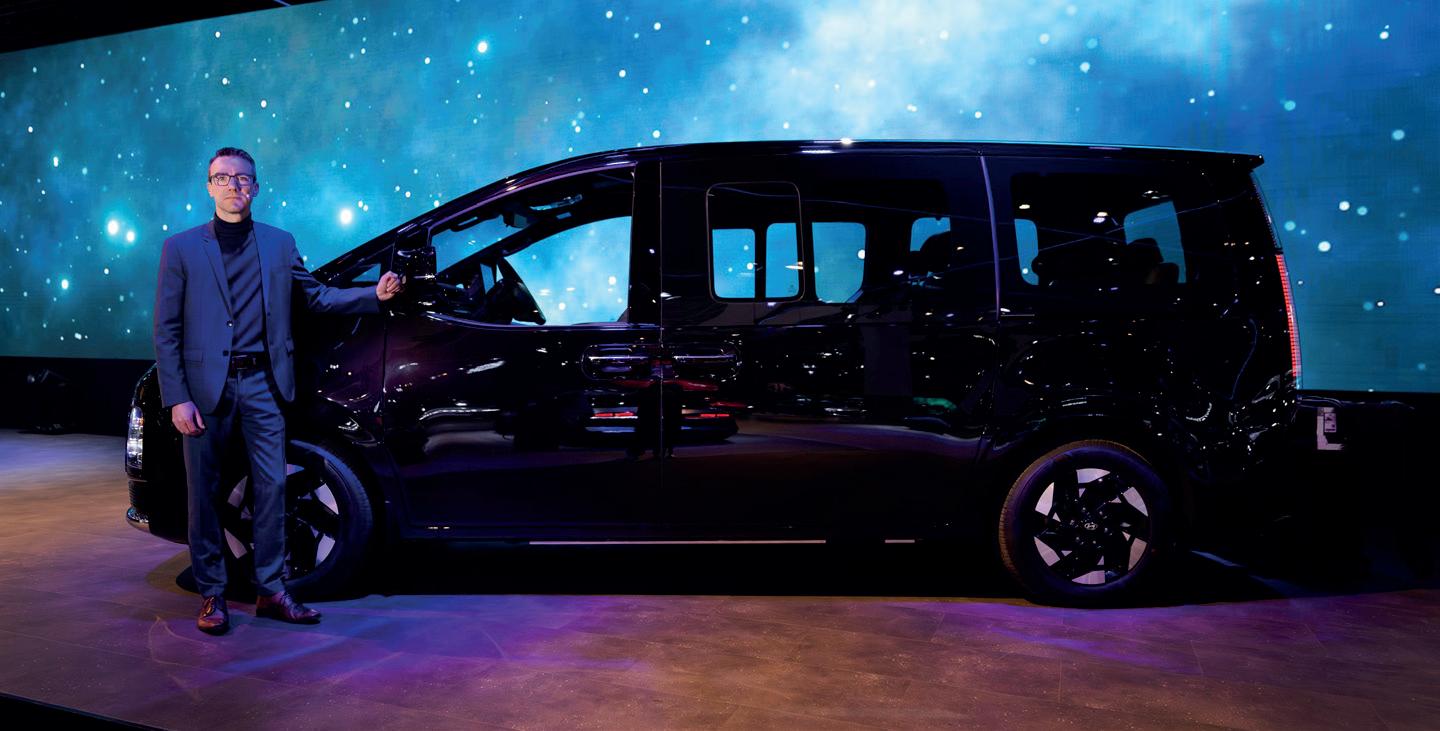
When Hyundai announced pre-Brussels that it was going to unveil its biggest ever EV, the odds were always that it would be an electrified Staria. When you’ve already got the Ioniq 9, which is the size of a small bungalow, there’s only so many places to go. So, to no-one’s surprise, the massive cloth was pulled back to reveal a massive people carrier. Based on an 800V version of the E-GMP platform, Hyundai says the Staria will charge its 84kWh battery from 10-80% in 20 minutes and cover up to 249 miles. It’ll put out 215bhp, tow two tonnes and offered a variety of seating configurations, including seven and nine-seat versions and an option with a pair of individual reclining captain's chairs in the middle row.
Citroen was out in force with existing models at Brussels, but also showcased its wild ELO concept. The French brand is unlikely to ever build anything close to this radical six-seat people carrier, but it’s a wonderfully, deliberately quirky show car that demonstrates the creativity at the heart of the brand. WIth an in-your-face orange colour scheme, wild quad sliding doors, a split tailgate, blow up mattresses that folds out from the boot, and a central driving position flanked by fold-away passenger seats, it’s true concept car, but one that showcases the flexibility an EV platform allows.
WE'RE NOT OUT TO RUIN CLASSICS, WE'RE HERE TO PRESERVE THEM



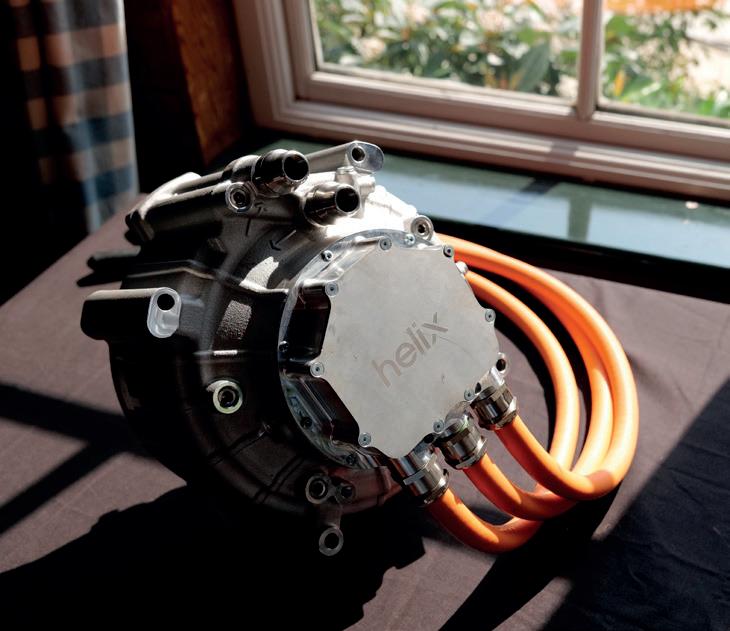
Add in silicon carbide inverters and "very tightly packaged bespoke battery systems", and you have the ingredients for a driving experience Lunny believes is on par with, if not better than, the original car.
The first part of the Everrati recipe is its in-house developed software. As we discovered last year during our site visit to ZF's UK headquarters, tuning software permits engineers to map the driving and performance characteristics of one car onto another. After all, "you wouldn't just throw a V12 into whatever you're driving at the time and expect it to work".
The second is its approach to vehicle modelling. "We treat each of our cars as a new vehicle programme, almost in the same way that an OEM would," Lunny explains. "We take everything back
to the chassis, where everything is 3D scanned and then CAD engineered not only in terms of where we can fit things, but in terms of weight distribution.
"We'll never make a vehicle that's overweight, and thousands of hours go into building each of our cars." To be precise, that's five billion CAD points scanned, and 6,000 man-hours.
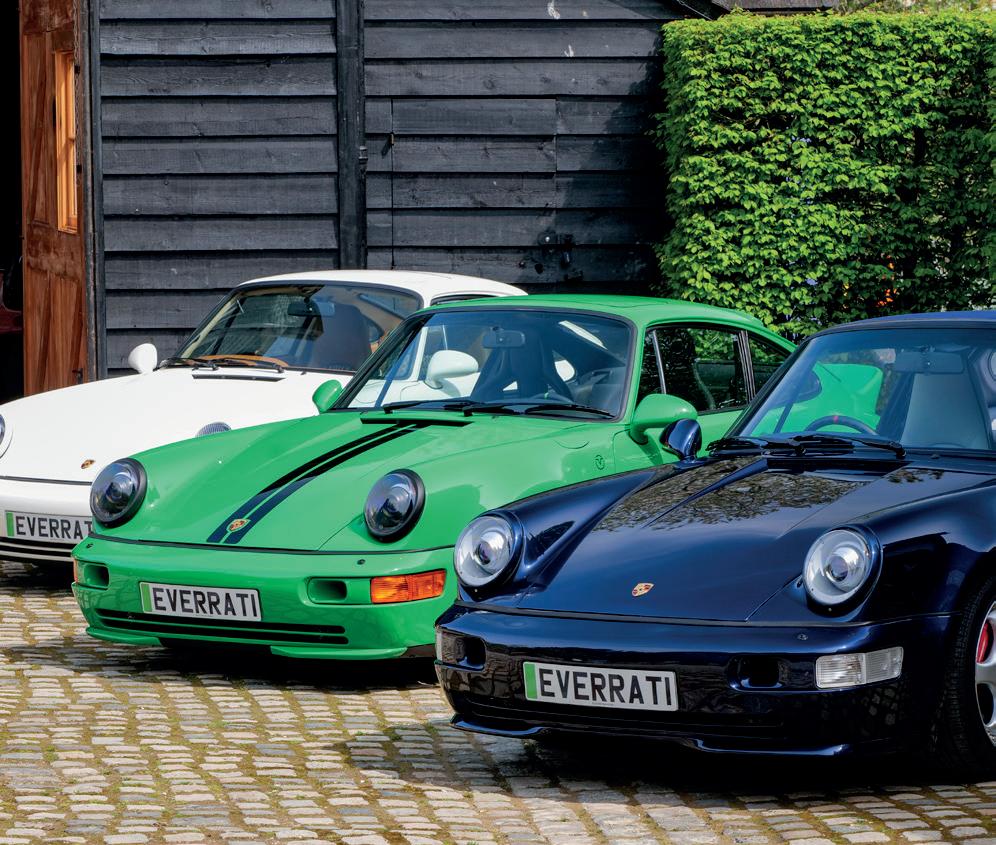
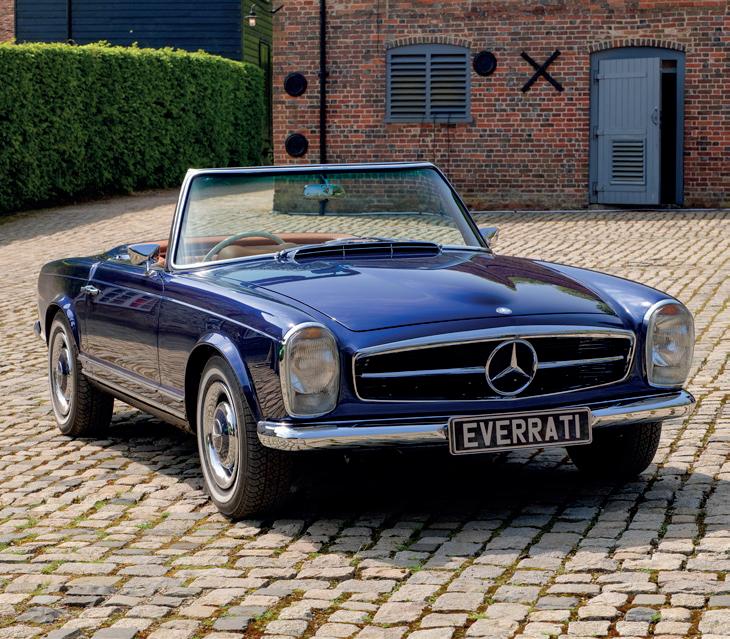
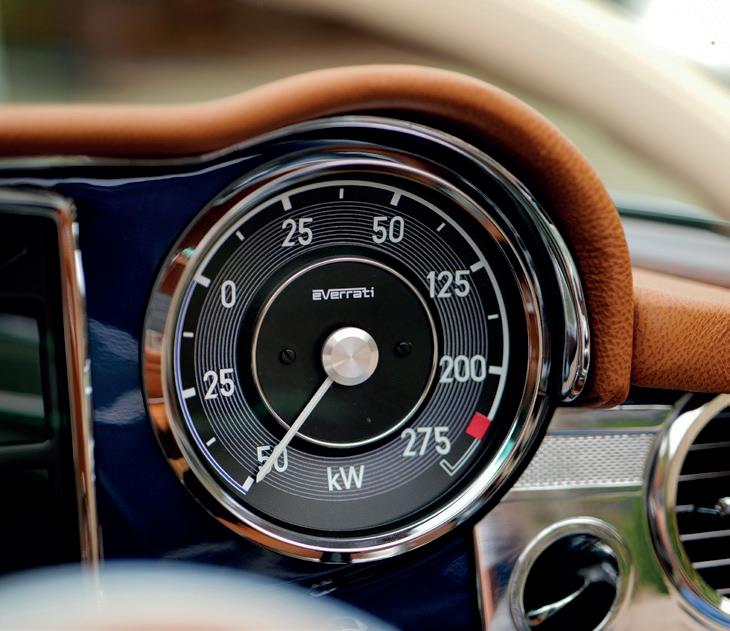
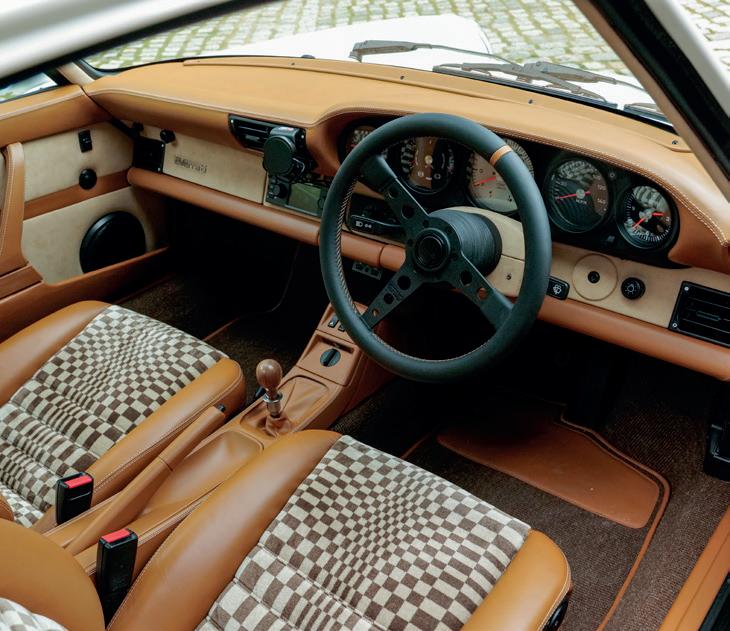
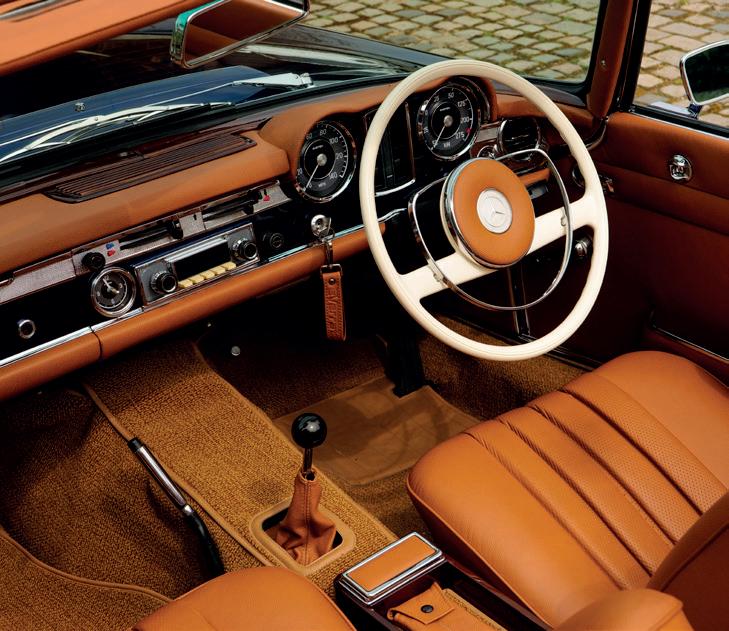
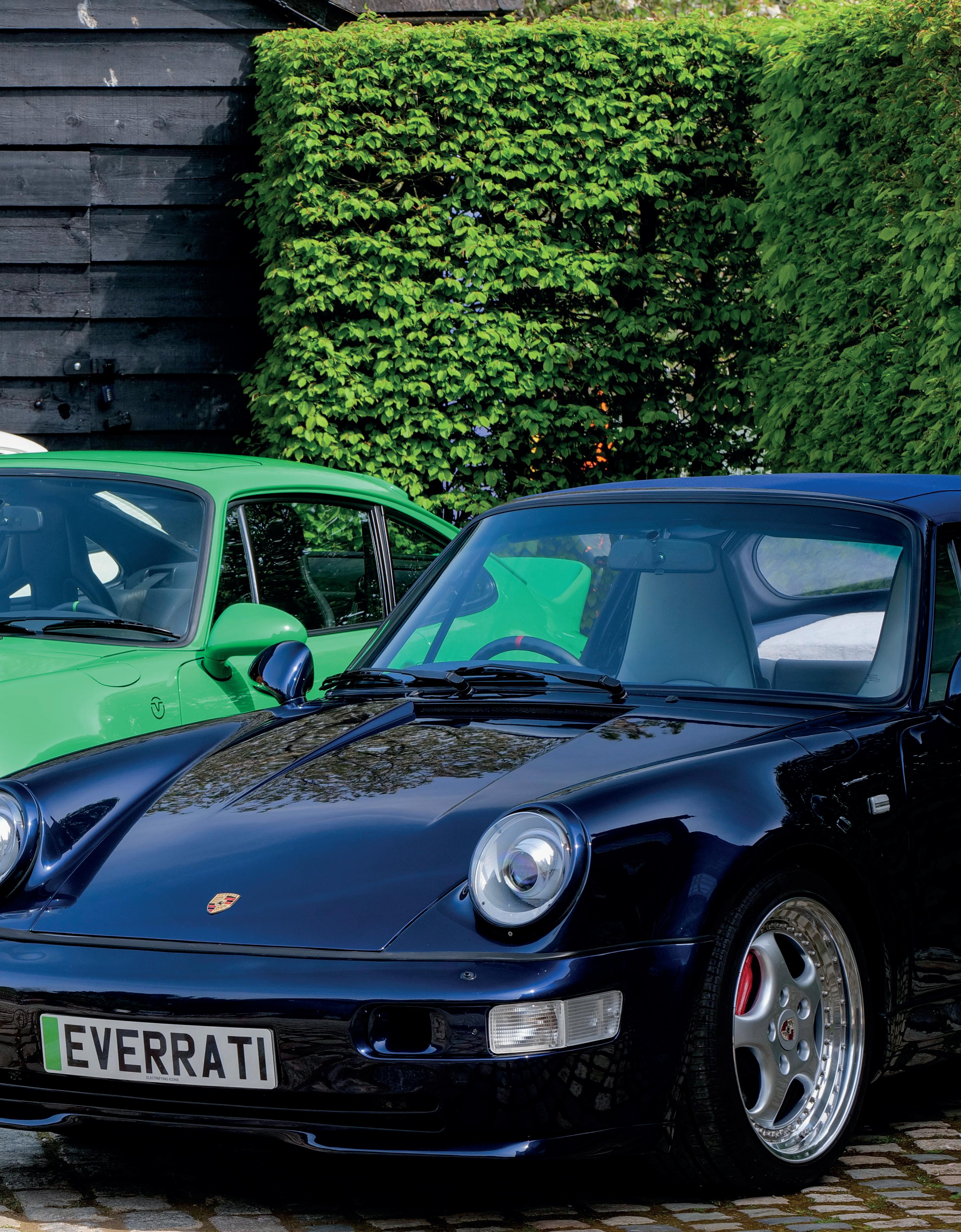
Asking Lunny to pick a favourite Everrati car would be like asking a parent to choose their favourite child. It's a non-question. He does, though, harbour a soft spot for its Porsche 964 RSR and the Mercedes Pagoda.
While it may sound sacrilegious to some, dropping the RSR's 3.8-litre, air-cooled flat six for a rear-mounted, 500bhp electric motor and a 62kWh battery makes sense from a vehicle
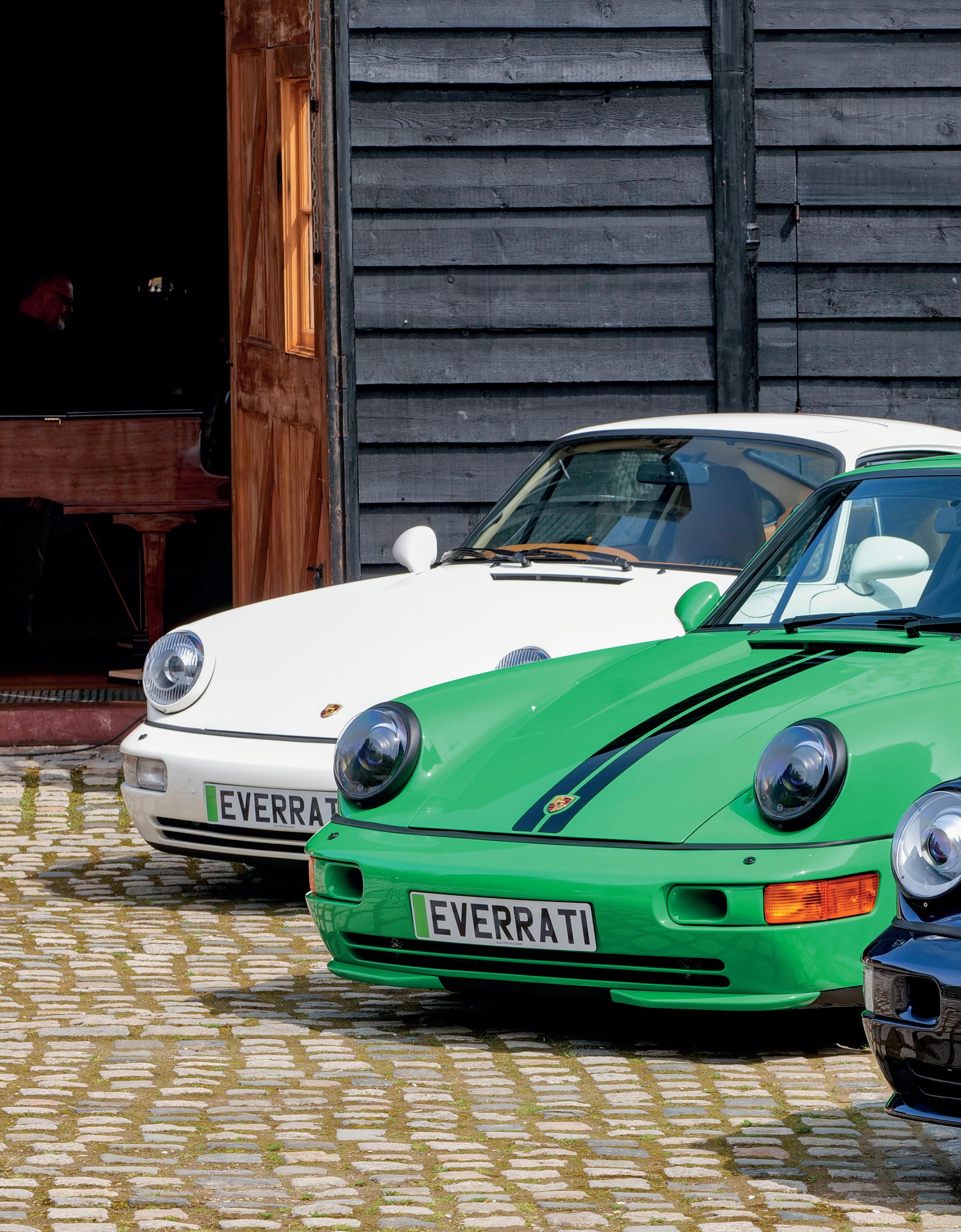
dynamics perspective, especially when you're driving this second-gen 911 as it should be driven. Lunny is also keen to clarify that the donor cars are far from concours-level. "With our 964s, they're generally pretty tired and unloved vehicles," he stresses. "We also use narrow-body cars as the source for our 911s. The Pagoda is a little different, as we start with the 230 SL instead of the more sought-after 280. Ultimately, we take lower rung cars, then give them a second life by turning them into something really rather beautiful.”
"With the Porsche, we've focused on balance and weight distribution because that's what this car is about. Almost every panel is carbon fibre, meaning we've removed 25kg of weight. It's also
60% more powerful than the original, so that makes for quite a fun equation.
"We've upgraded the brakes, the suspension, and various other items, and while you won't hear the flat six, it has so much character and soul thanks to the work we've put in and how it drives. In fact, Jonny Lieberman from MotorTrend said it's the best 964 he's ever touched. That's praise indeed for us, because at the end of the day, we're car people."
As for the Pagoda, Lunny creates an almost dreamlike visual guaranteed to tickle the fancy of any self-respecting car enthusiast, EV fan or not.
"My experience of that car has been on some of the world's most iconic drives in Southern California – the Pacific Coast Highway, that sort of thing," he recounts. "When you're following a flat-six 911 through the canyons, and you're the
one with all the performance, it's really quite exciting.
"Honestly, our Pagoda is a work of art. It's actually recreated by the same team who restore vehicles for the Mercedes-Benz museum in Stuttgart. It's beautifully finished and beautifully refined. Driving it on the right roads, well... it's quite an enjoyable exercise."
Following a successful 2025, Lunny reveals that Everrati is working on a new restomod scheduled for release later this year. But he stops short of saying exactly what it is. He also urges naysayers to view electrified classics as future-proofed, instead of ruined.
"We're looking at other front-engined, rear-wheel drive vehicles within the kind of Mercedes stable," he admits. "If you think about it, that layout is
pretty much perfect. There's a reason RollsRoyce, BMW, Bentley, and as I said, Mercedes, used this configuration from the 1960s up until as recently as the '90s.
"I can't say too much more, but the next car will be almost like an entry-level model. At the end of the day, I'm just trying to cover a few more bases and get people interested in our little brand.
"When I founded Everrati, people questioned my sanity, but we've shown that people want our products - we wouldn't still be here otherwise.
“At times, in their original form, some of these cars are not that great to drive and become a case of never meet your heroes. We want to avoid that, and we're not out to ruin classic cars – we're here to preserve them to ensure they can be enjoyed for the future."

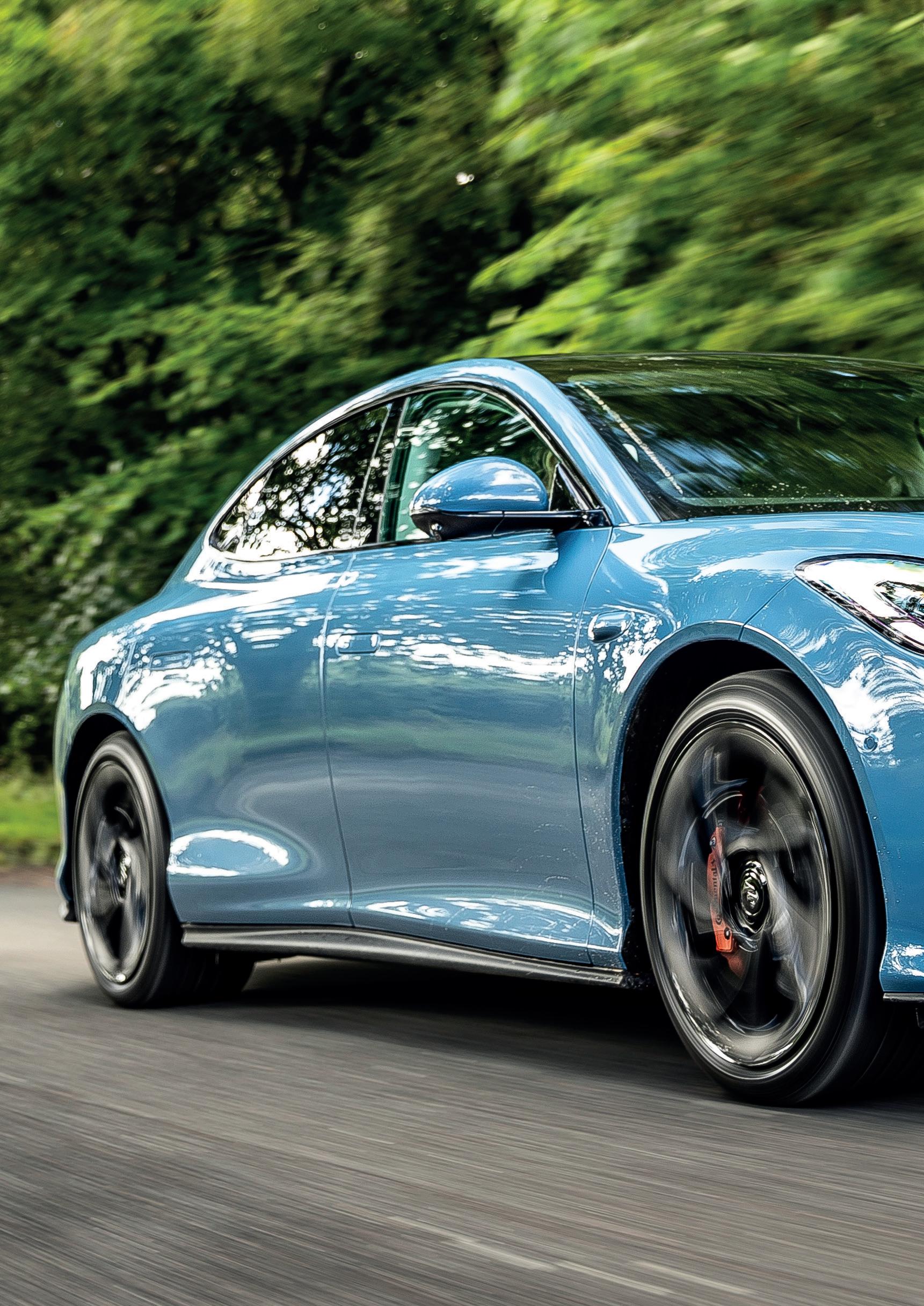
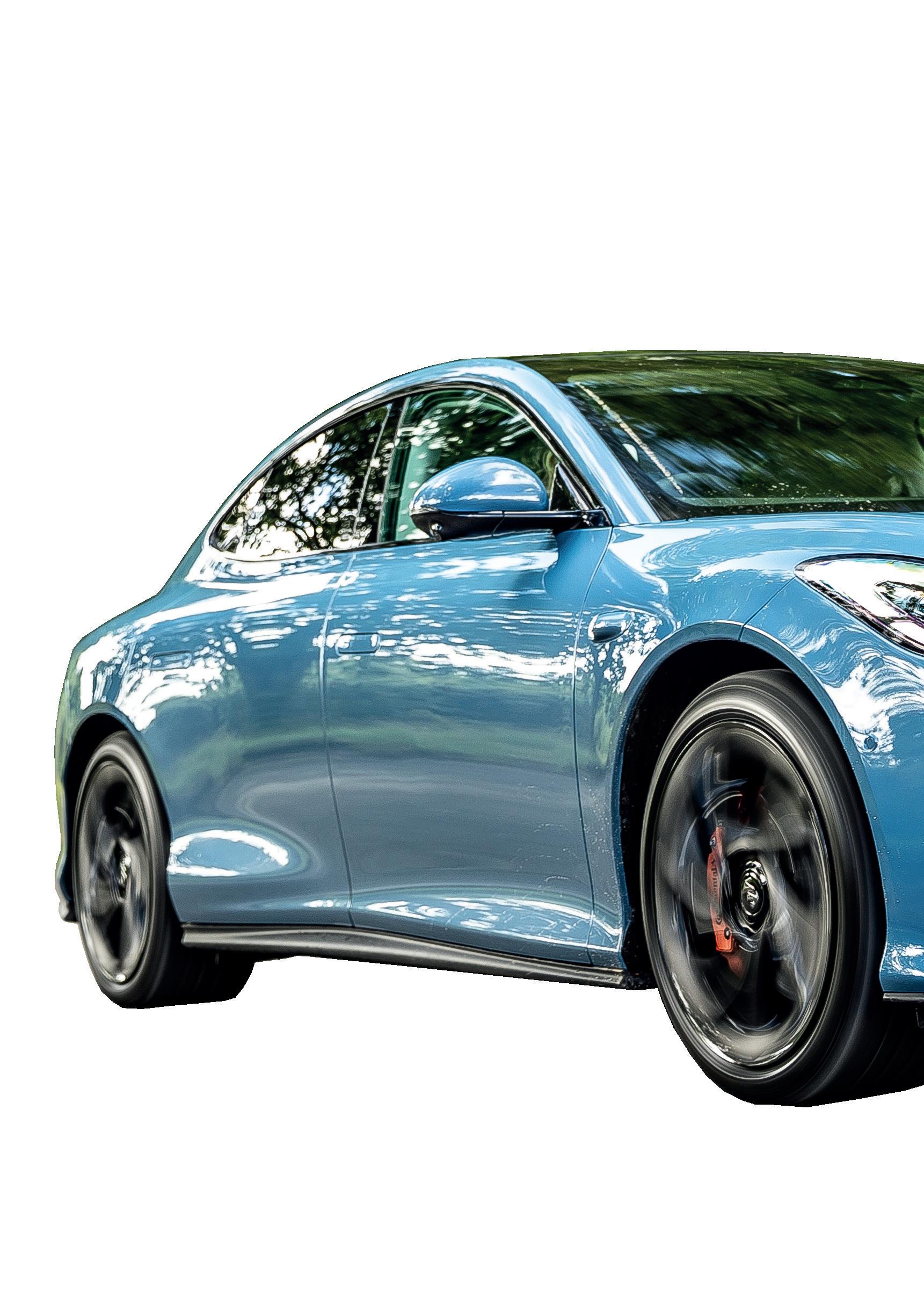
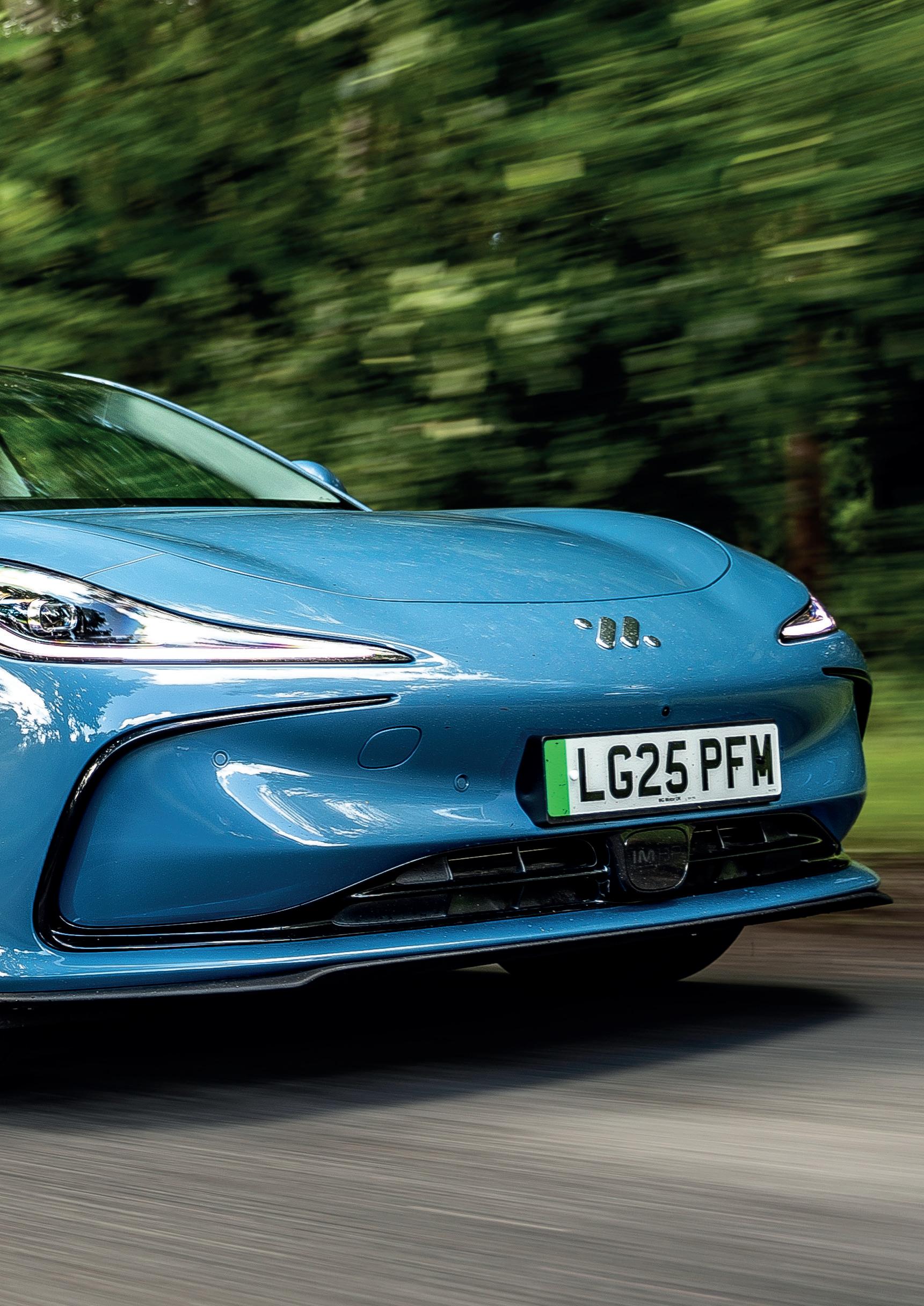
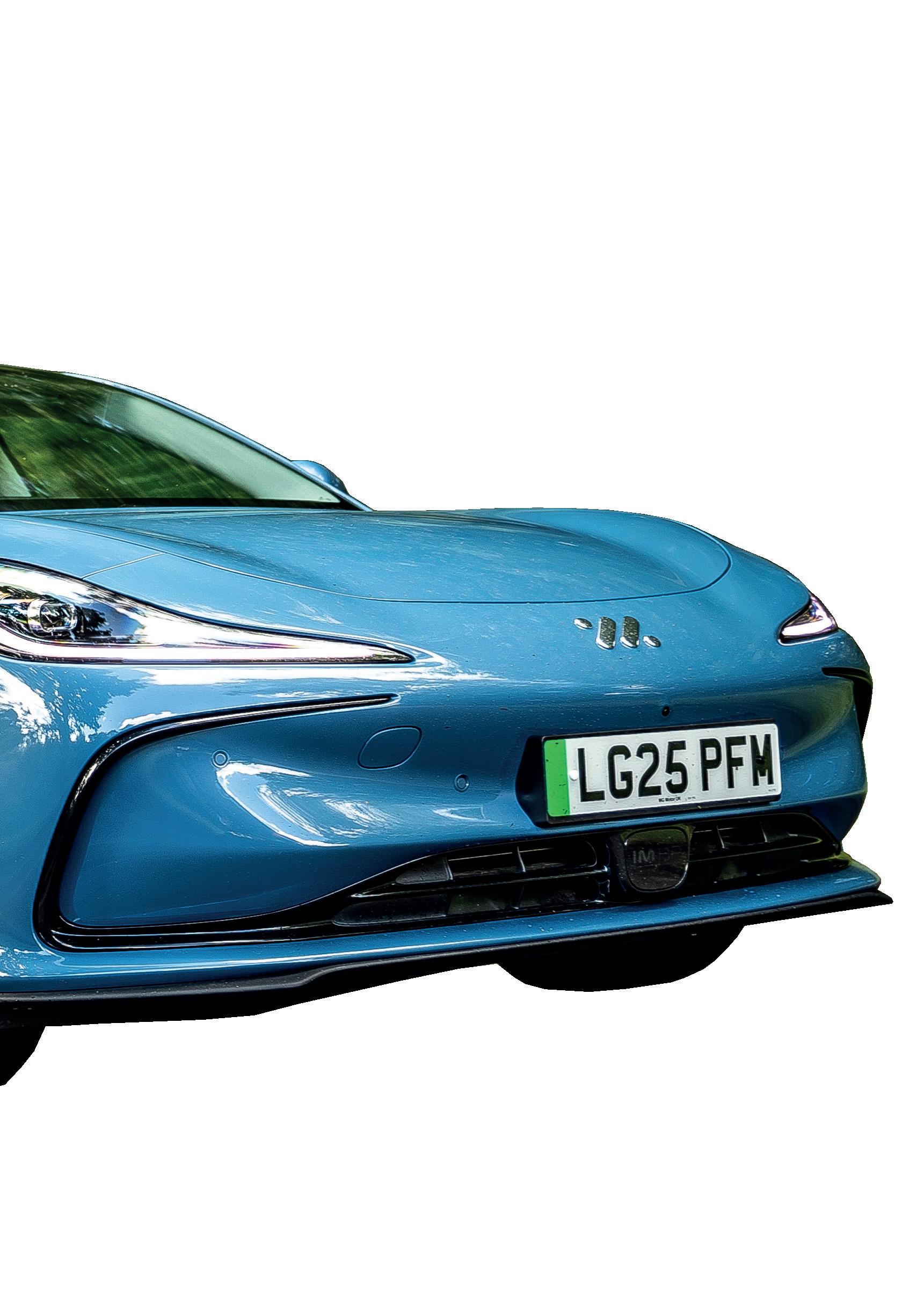
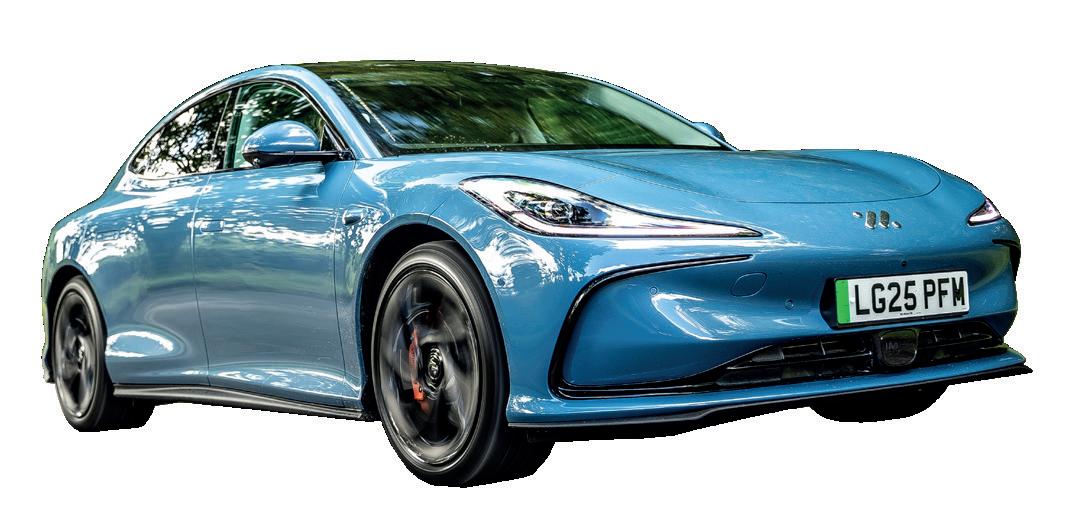
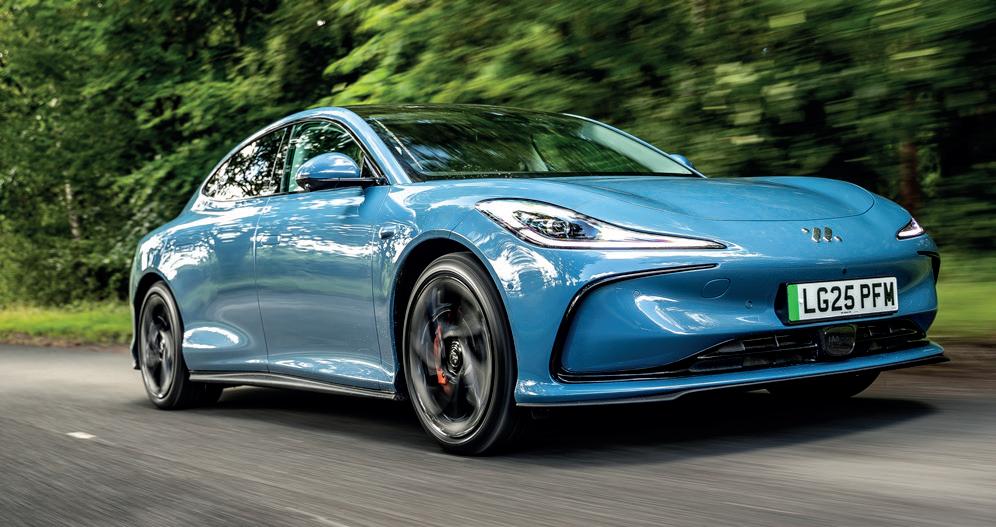
It’s a long, low and fairly handsome thing that certainly won’t look out of place among its myriad rivals, but nor will it stand out.
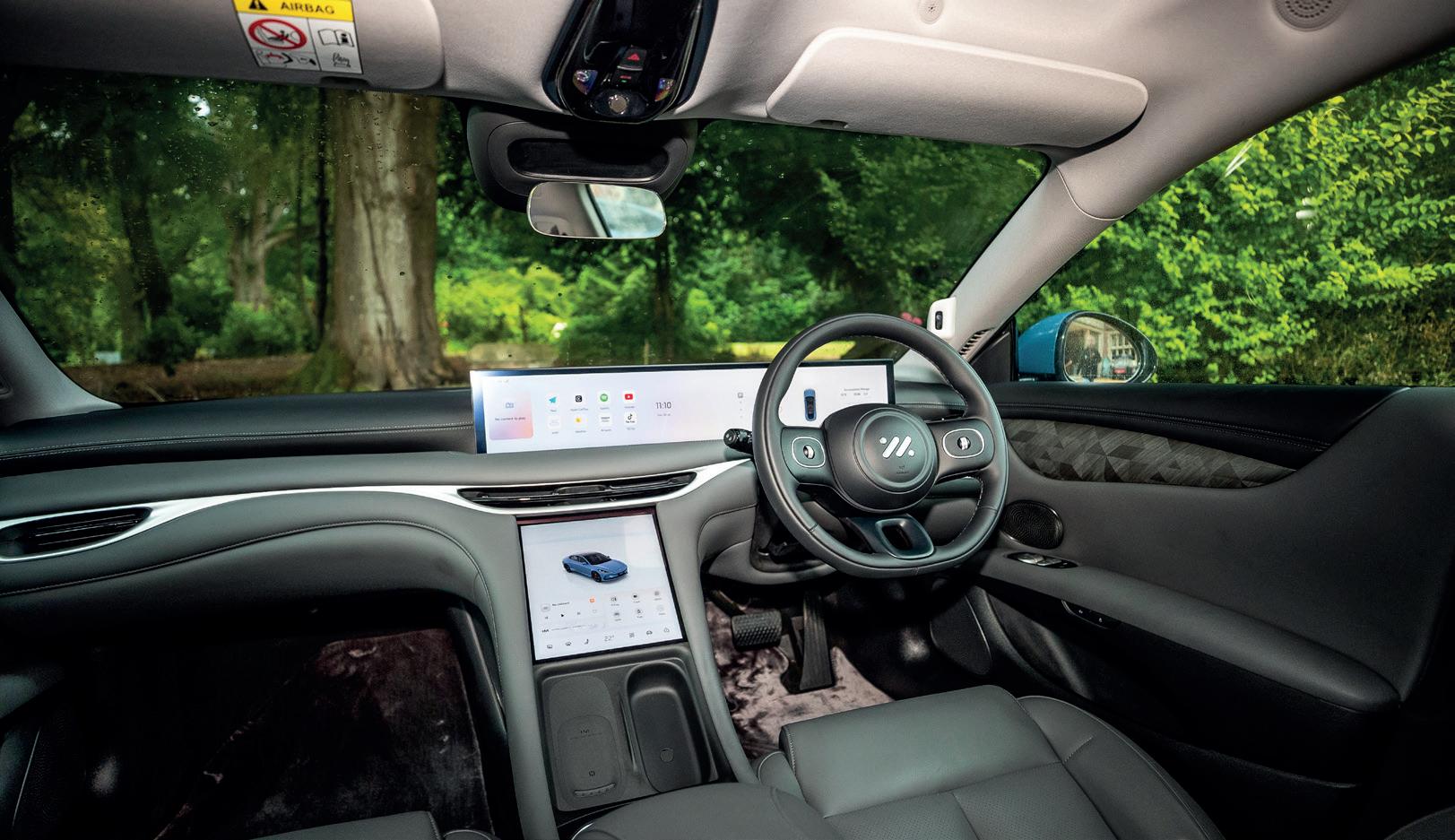
Inside, the IM’s Chinese roots are immediately revealed by the lack of almost any physical controls. Instead there is a wide 26.3-inch dashtop display housing instruments and infotainment and a second 10.5-inch control display low down in the centre console. And it’s through these –plus two unmarked steering wheel buttons – that virtually everything is controlled.
The screens themselves are crisp and responsive but frustratingly over complicated. Trying to manage every function – from wiper speed to drive modes – via a screen inevitably leads to a confusing array of menus, sub-menus and, in the MG’s case, annoyingly small icons. Even after a week and hundreds of miles of driving, I still found the interface unintuitive and irritating.
It’s a shame because the rest of the IM5’s interior is a pleasant place to be. The upholstery is fauxleather but a step above any other MG to date, and the rest of the cabin materials and build quality are pleasingly solid and high-quality.
Front seat occupants have plenty of space and adjustability in the seats, and the 2.95m wheelbase means there’s good legroom in the back too. The only problem is a high floor, which gives a kneesup seating position, and the swooping roofline, which makes it feel tight for taller adults.
Beneath the powered tailgate is a 457-litre boot. That’s a reasonable size but, like any saloon, it’s compromised by the narrow aperture. There’s also an 18-litre frunk for cable storage.
The IM5’s high-tech interior is one of the IM sub-brand’s core principles. Another is “ultimate performance”.
Central to that are a trio of powertrain choices. At the entry point is a perfectly sensible 291bhp/331lb ft single motor version that offers 304 miles of range from a 75kWh battery. Even that is no slouch, with a 0-62mph time of 6.8 seconds.
For more performance and range, there’s also a 401bhp rear-wheel-drive model with a 100kwh battery that promises a claimed 441 miles and a 0-62mph time of 4.9 seconds.
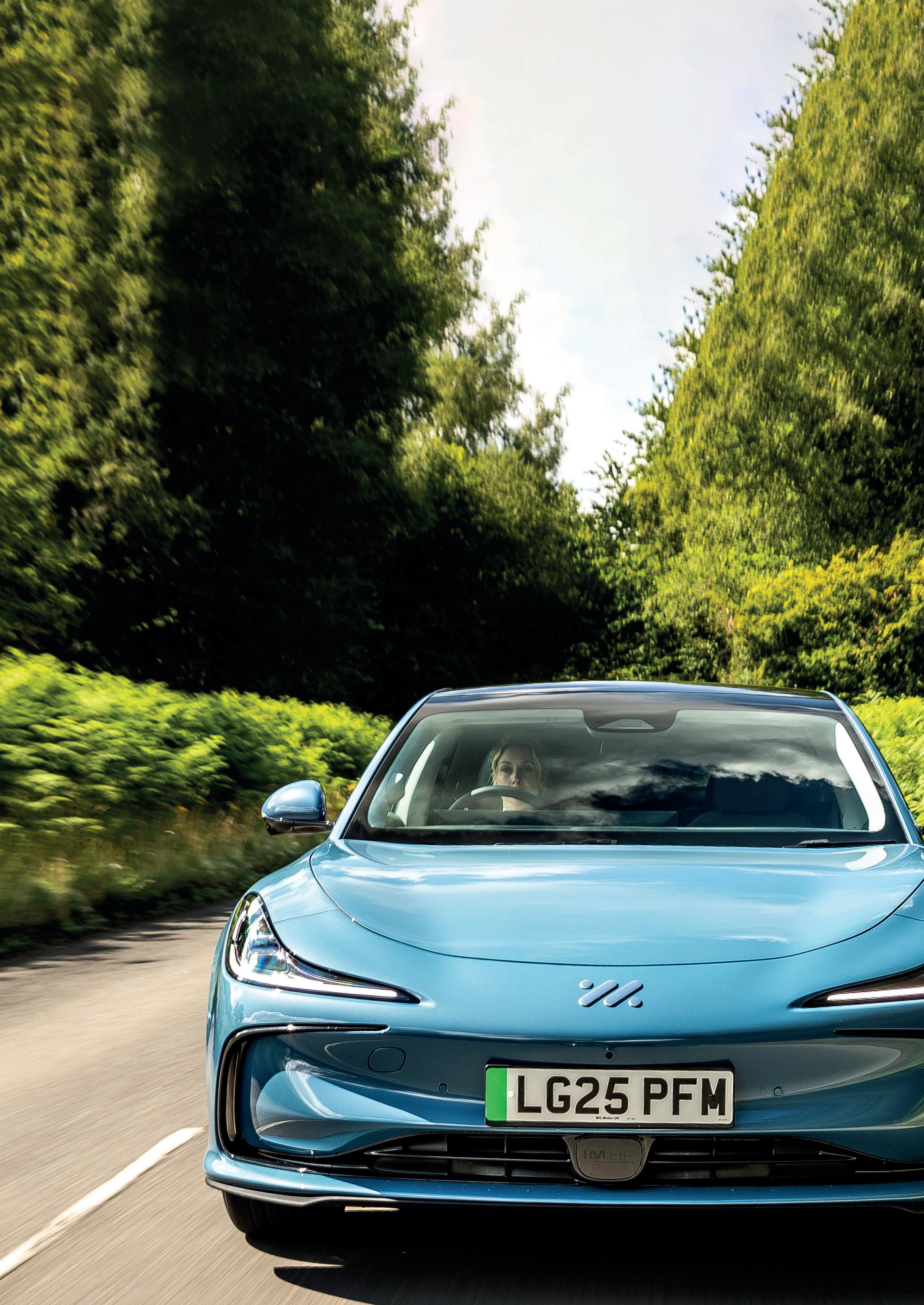
And at the very top is the ridiculous 100 Performance which pairs that same 100kWh battery with a two-motor, all-wheel-drive setup packing 741bhp and 591lb ft. That will deliver 0-62mph in a Porsche-troubling 3.2 seconds.
Sink the throttle and there is an expected but still shocking gut-punch of acceleration as the IM5 squats down and delivers all that torque to the road in one big slug. It’s enough to leave virtually anything else standing, whether from a complete stop or, as I found myself doing, getting back to motorway speeds after an average speed camera zone. It’s also enough to give passengers quite a shock if they’re not expecting it.
The problem is that once the grin factor of that instant response wears off, the IM5 doesn’t deliver much in the driving stakes.
The ride is a little stiff which means it can feel unsettled on our sub-standard roads. That firm setup does allow decent body control which, allied to standard-fit four-wheel steering allows this big saloon to change direction quickly and neatly. The all-wheel steering also helps
around town and makes the 4.9m IM5 feel smaller than it really is.
However, the steering has a distinctly artificial feel to it and there’s not much in the way of communication between car and driver. You can drive it quickly thanks to the decent body control, grip and strong brakes, but there’s not much joy to be had from doing so.
Ironically, the lack of involvement isn’t helped by how quiet the IM5 is. On the motorway such refinement is great. When pressing on, it means the car lacks a little drama.
MG claims the IM5 100 Performance will cover up to 357 miles per change and can charge at a lightning-fast 396kW. However, experience in the depths of winter suggests both are ambitious. In single-digit temperatures the range was less than 250 miles and even on 350kW chargers I struggled to get the IM5 to charge at more than 80kW. Whether that was a battery preconditioning problem or issues with multiple chargers is hard to tell but it was disappointing given the promise of ultra-rapid top-ups.
MG’s big selling point since its rebirth has been value and even with this premium challenger it is sticking to that principle.
The IM5 starts at a whisker under £40,000 for the 75kWh Standard Range model. Above that, the 100 Long Range – likely to be the most popular version – comes in at 44,995.
Right at the top, the 100 Performance costs £48,495. While that’s not pocket money, it is still £23,000 less than the 601bhp BMW i4 M60, £10k less than the 335bhp ID.7 GTX and about the same as the 523bhp BYD Seal Excellence.
LIke its more mainstream cousins, the MG IM5 also comes with a generous specification. The only options are a choice of metallic paints, and every version gets the same equipment list.
All cars get heated and cooled front seats, heated rear seats, dual-zone climate control, a powered tailgate and the usual Scrabble bag of driver assistance systems including adaptive cruise control and auto lane change. Four-wheel-steering, adaptive LED headlights and a heat pump are also standard along with
laminated glass, a 360-degree camera and 20-speaker stereo.
After a week with the car covering several hundred miles and then taking time to get my thoughts in order, I’m still not sure what to make of the MG IM5.
It’s note-worthy purely for offering hypercar power for hot hatch money, but also for being a total departure from the rest of MG’s offerings.
It’s handsome enough, spacious, well built and well equipped. There’s an argument for considering either of the lower-spec models as alternatives to established models, especially with the promise of 400 miles of range.
The 100 Performance, however, is a harder sell. Yes, you get stupid amounts of power and pace for relatively little money. But, for all its speed, the IM5 feels sterile to drive and doesn’t go as far as other variants.
It’s also hamstrung by the same overreliance on screens and unintuitive interface as every other version, leaving it at a disadvantage compared with those more established rivals.
Price: £48,495 (£49,040 as tested)
Powertrain: Two-motor, all-wheel-drive
Battery: 100kWh
Power: 741bhp
Torque: 591lb ft
Top speed: 166mph
0-62mph: 3.2 seconds
Range: 357 miles
Consumption: 3.1m/kWh
Charging: up to 396kW
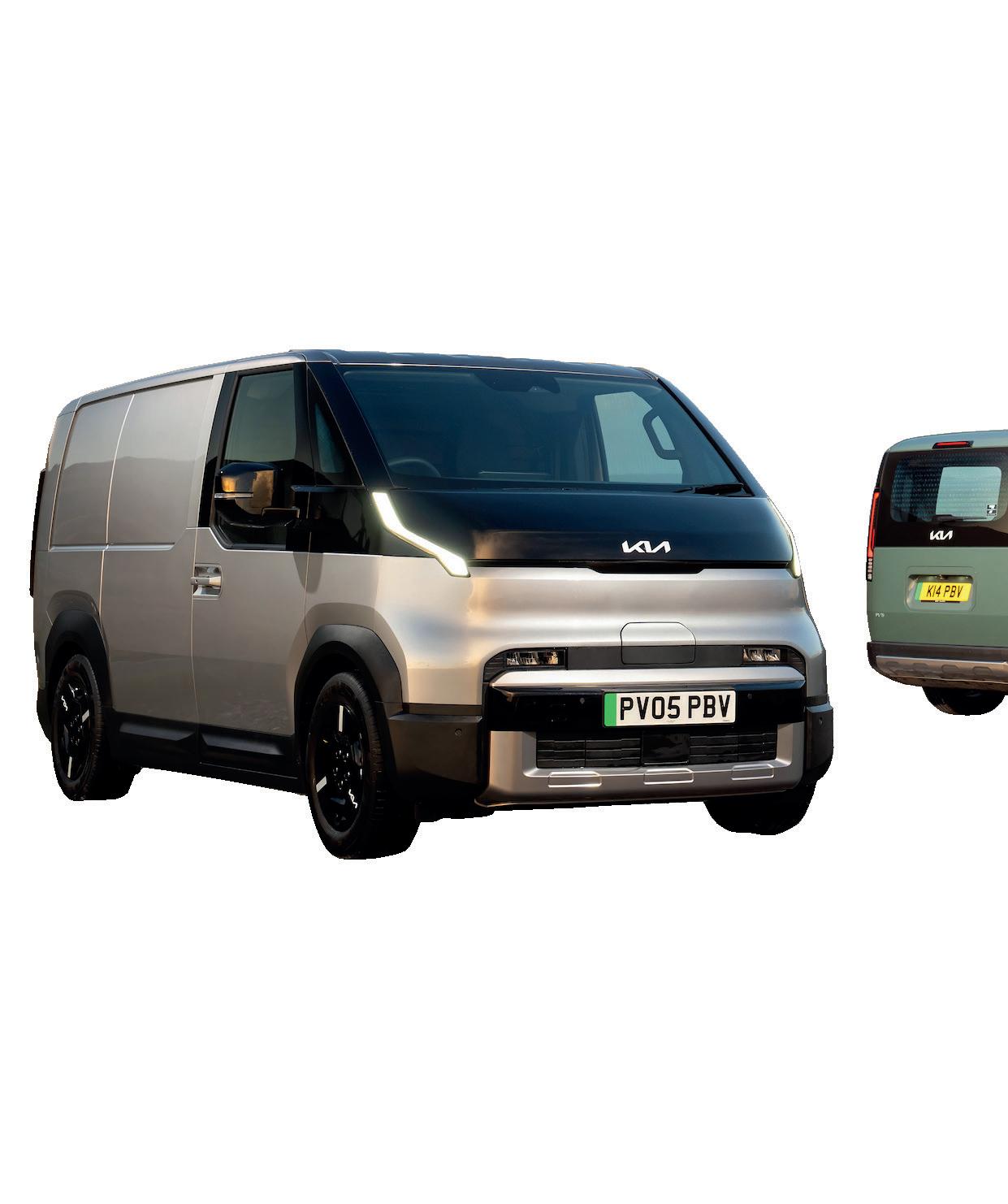
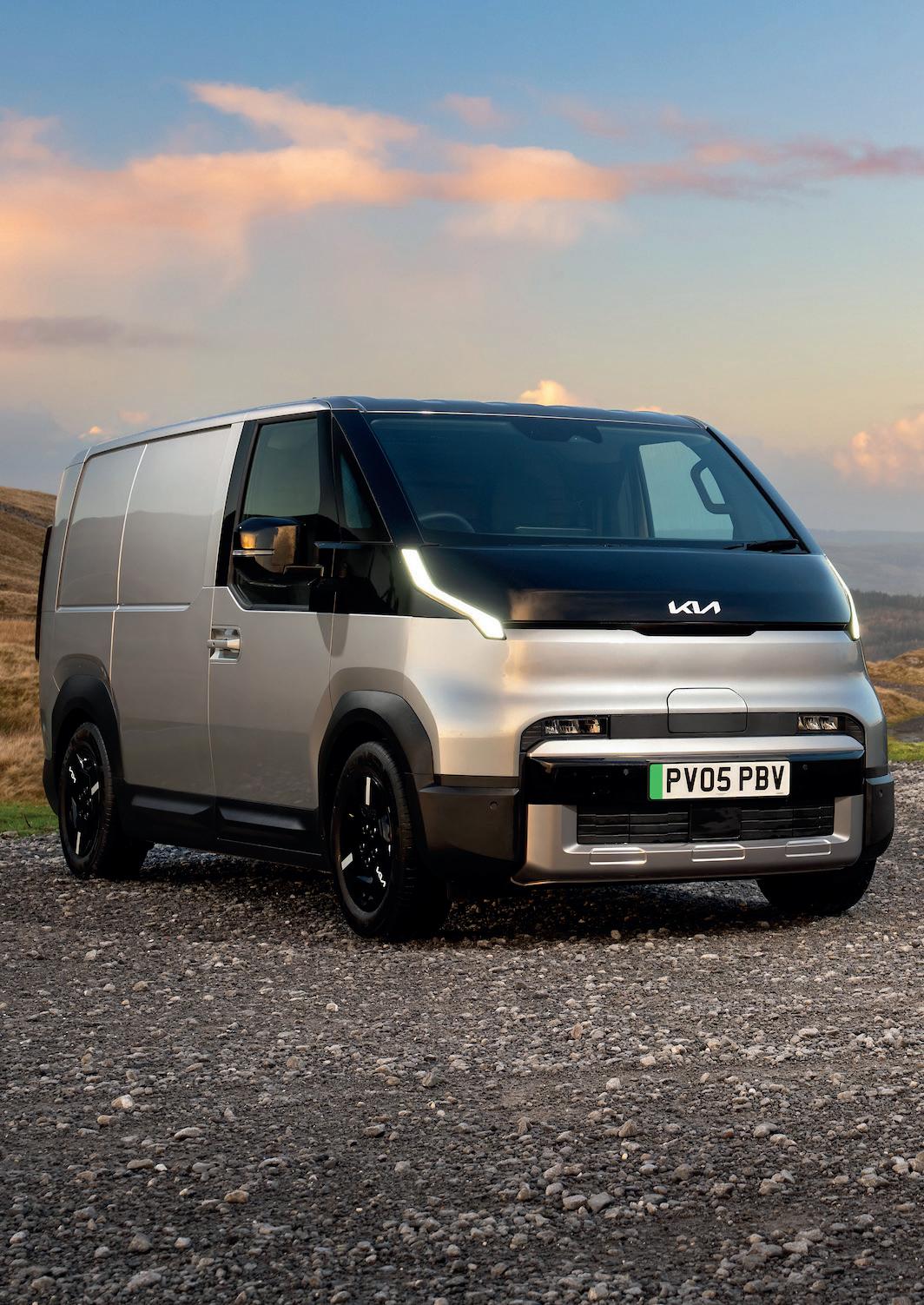
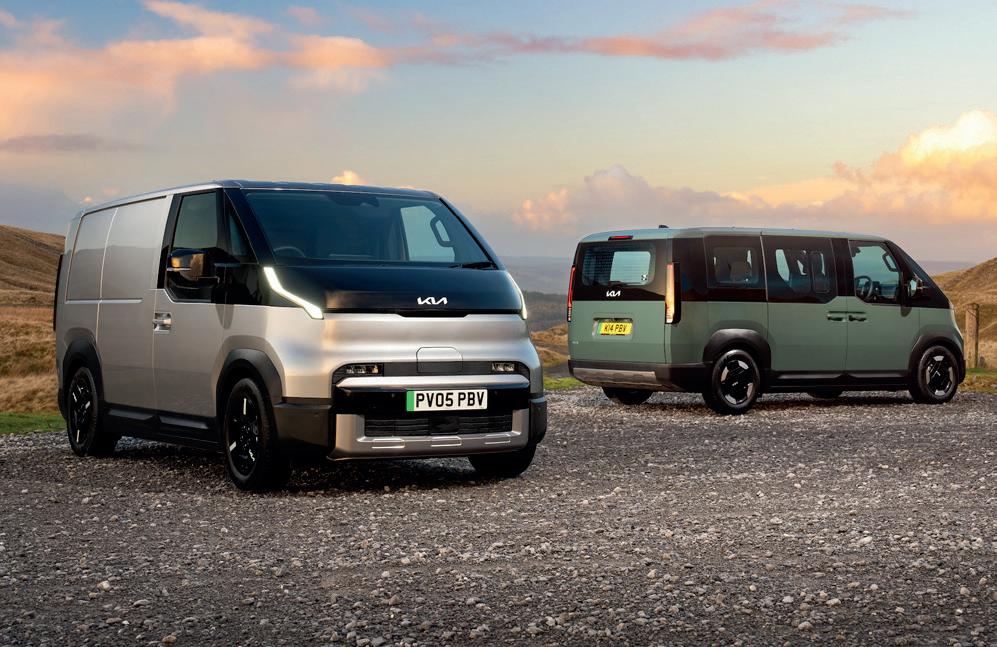
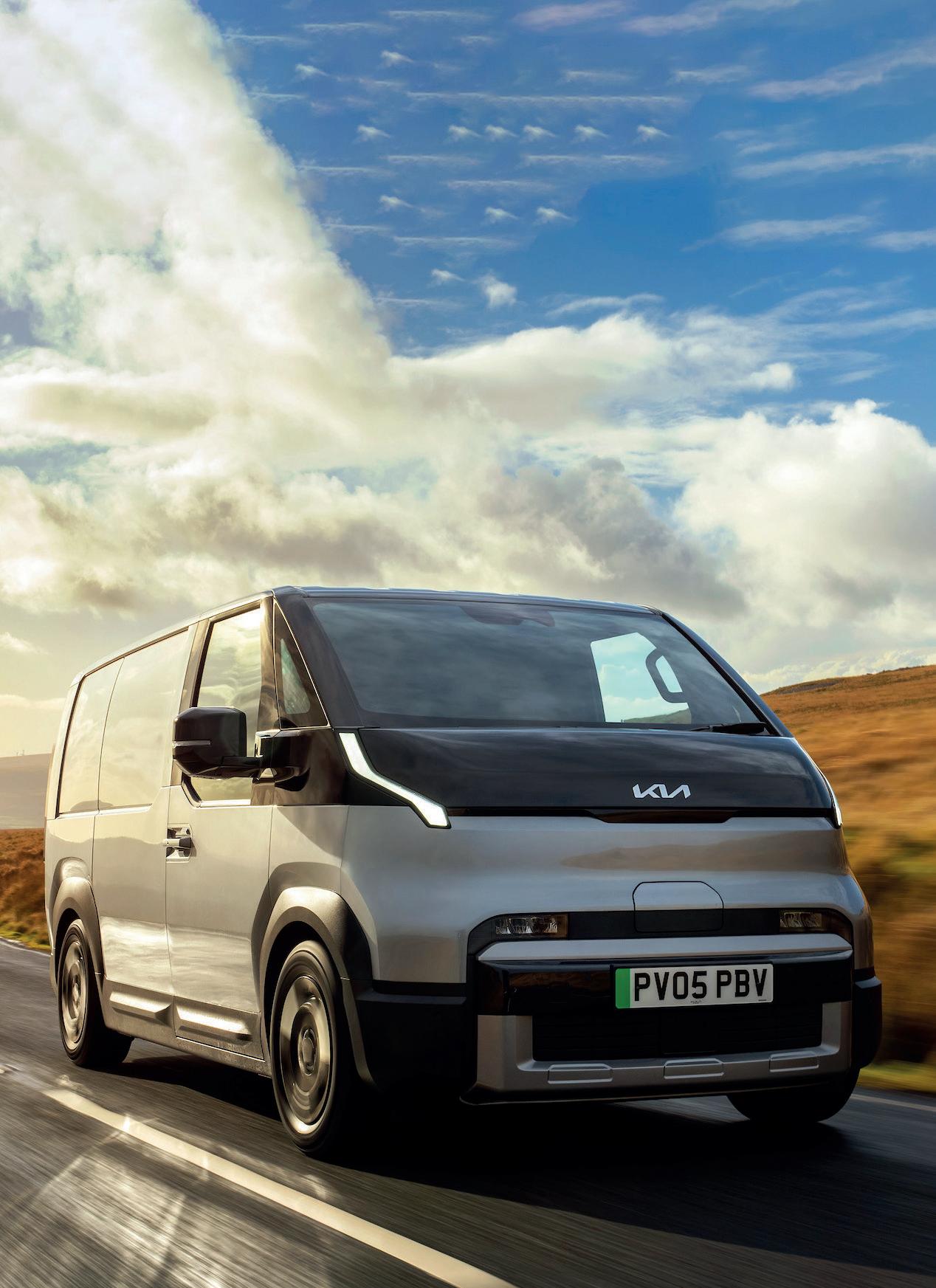
It’s the first step in Kia’s Platform Beyond Vehicle (PBV) strategy – “a vision to redefine commercial mobility through modular electric vehicles”.
That puts it in a slightly odd space between traditional compact and medium-sized vans, but could make it a useful option for businesses seeking a middle ground between established models.


Kia has already proven that it can take on and beat the world’s biggest car brands with its passenger cars, so can it repeat that success with the PV5 Cargo and its five-seat Passenger variant?
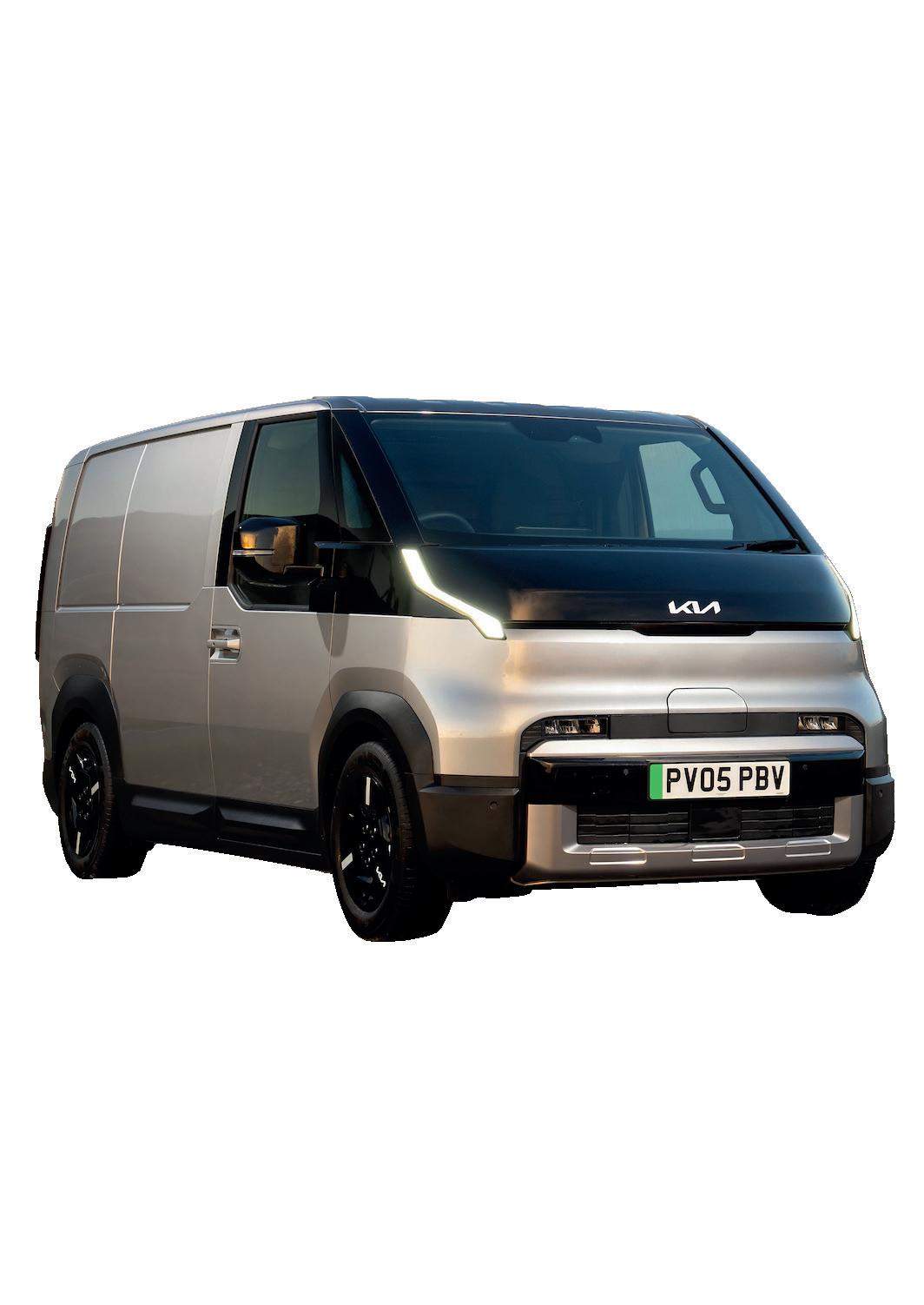
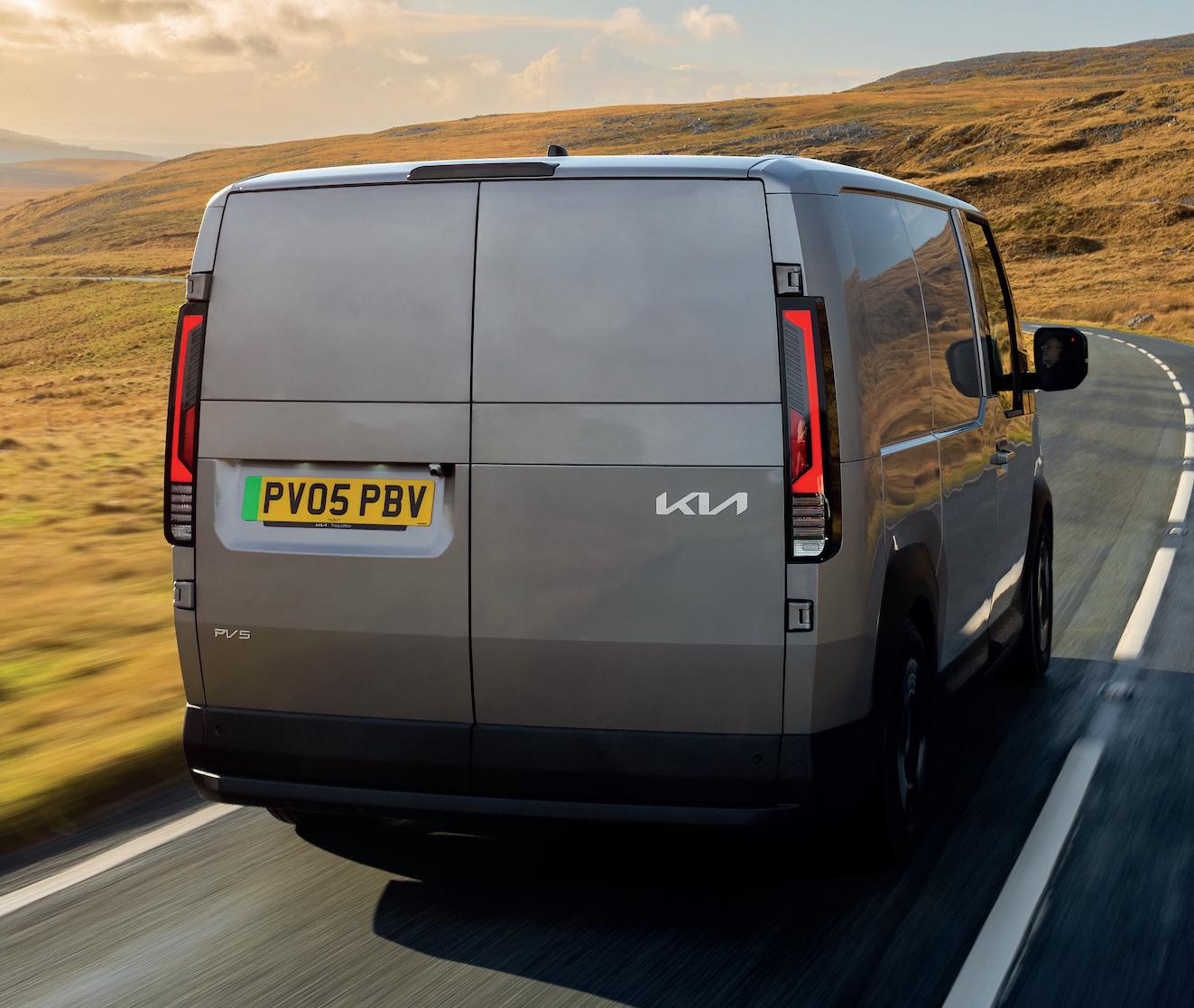
As if to emphasise that this isn’t “just another van”, Kia’s gone big and bold with the PV5’s looks. Its smooth, short front end emphasises that this isn’t a converted diesel vehicle but a ground-up EV. Its headlights are buried low down either side of the central charging port while a black “visor” beneath the windscreen and wide-set slimline running lights create a bold and individual look.
There is something distinctly futuristic about the squared-off angles around the wheel arches and in the details of the side panels, but there’s only so much “design” you can do with a panel van, so away from the bold front end, the PV5 looks a lot like any van.
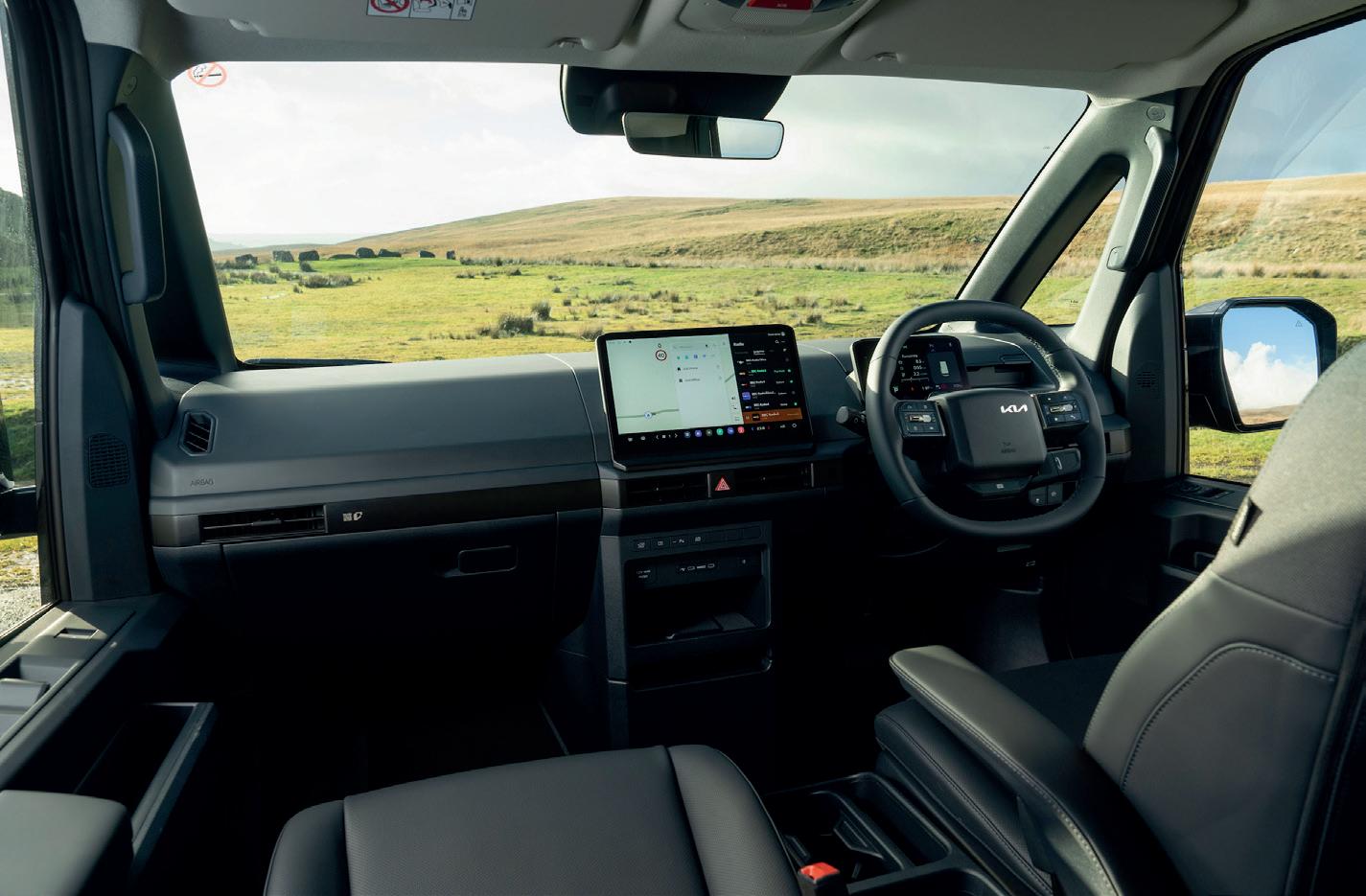
The interior also shouts “van!” very loudly. It’s a much more practical but much less stylish place than an ID Buzz cabin. It has a drab grey-over-grey finish but all the elements commercial users have come to expect.
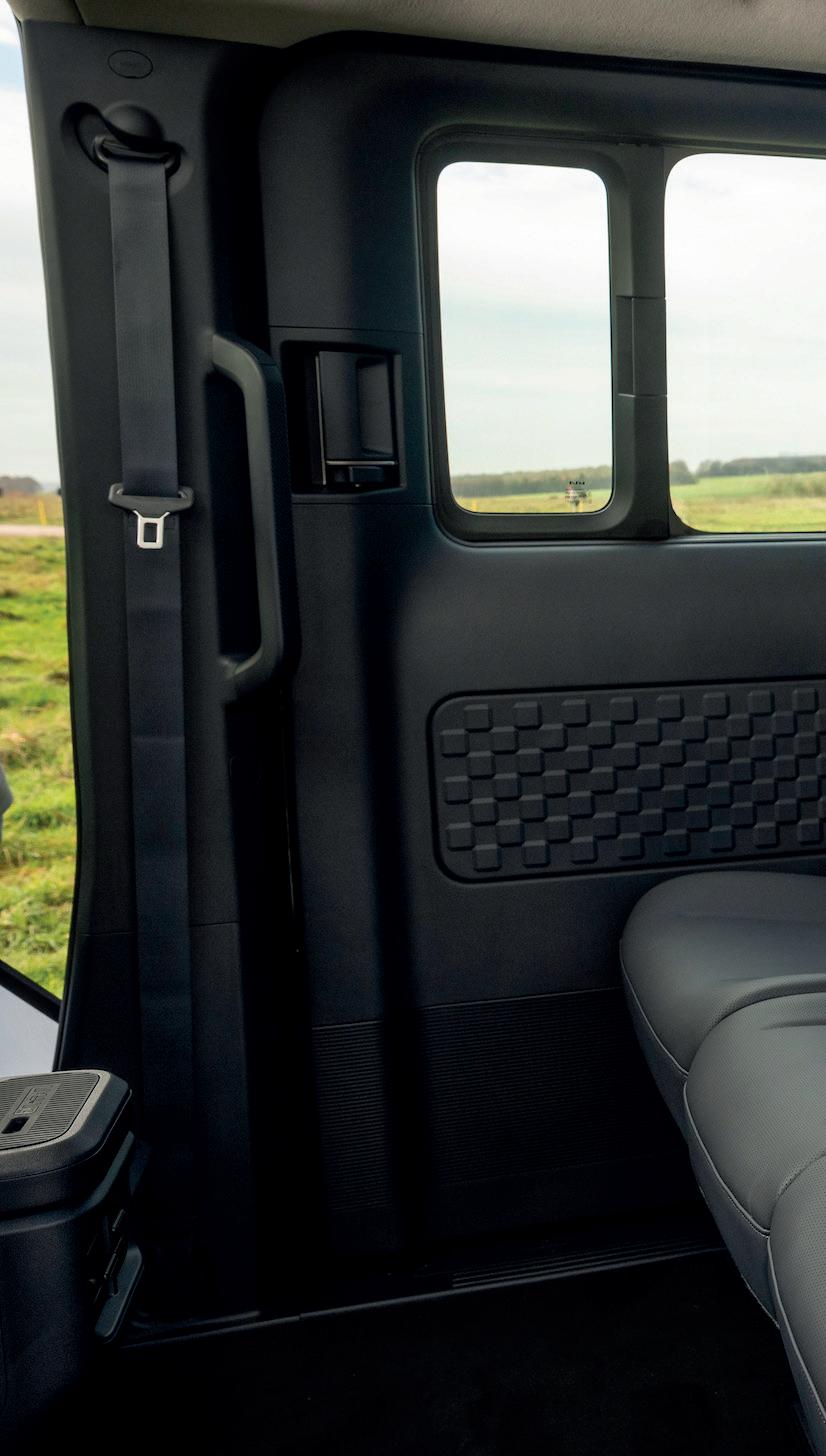
There are massive three-level door pockets with cup and bottle holders galore and space for smaller items. There’s also a big lidded dashtop storage bin, a deep under-dash tray with wireless phone charger and a pull-out drawer at the bottom of the centre console. Between the seats there’s another big storage space with yet more cupholders and a deep segmented storage bin. It feels like it’s been designed with input from the people who use vans for business on a daily basis.
For such a practical cabin it’s frustrating, then, to find that Kia has placed too much reliance on the 12.9-inch touchscreen. While passenger cars get physical switchgear for the climate and audio controls, the PV5 makes do with tiny, hard-to-hit onscreen buttons that extend to most functions. Beneath the awkward skin, however, the screen runs on Android Automotive which allows for the addition of business-focused apps such as fleet management systems.
That screen sits at the centre of a very plain slab-like dashboard, with a second seven-inch instrument display beside it. As we’ve come to expect from Kia the materials feel robust enough to survive years of heavy use, but there’s no doubt the cab feels more utilitarian and less carlike than the Buzz’s light, stylish approach.
For some reason, the PV5 has an oddly car-like seating position, You don’t sit as upright as in other vans. In the passenger version this is fine but in cargo versions with a bulkhead, the seat doesn’t slide as far back, leaving taller drivers feeling oddly cramped.
Continued on next page
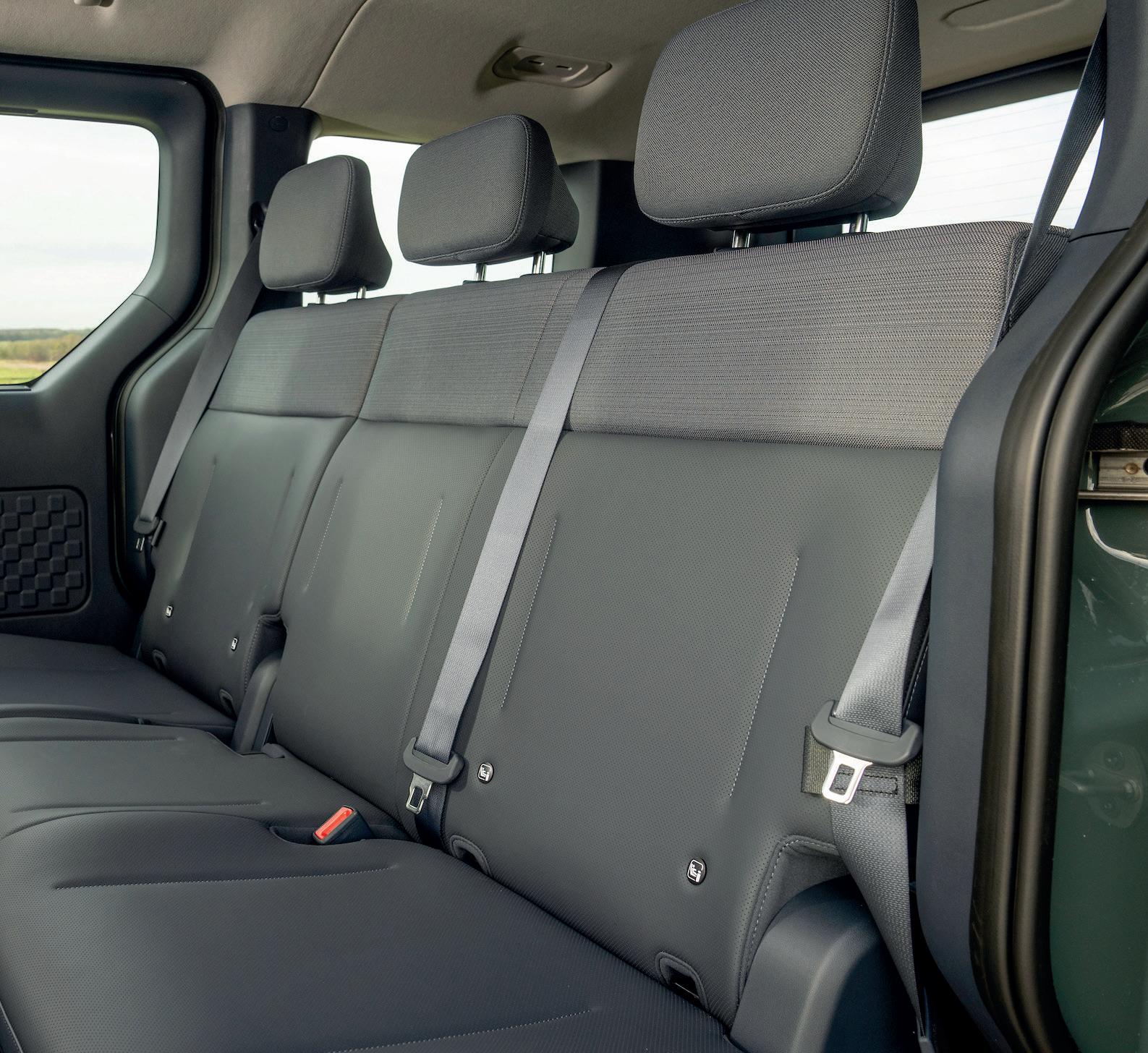
In passenger guise, those in the back will have no such complaints. The fiveseater offers acres of legroom and more than enough room for three adults across its bench, ahead of an absolutely cavernous 1,330-litre luggage space. There’s no seven-seat option yet but it is on its way.
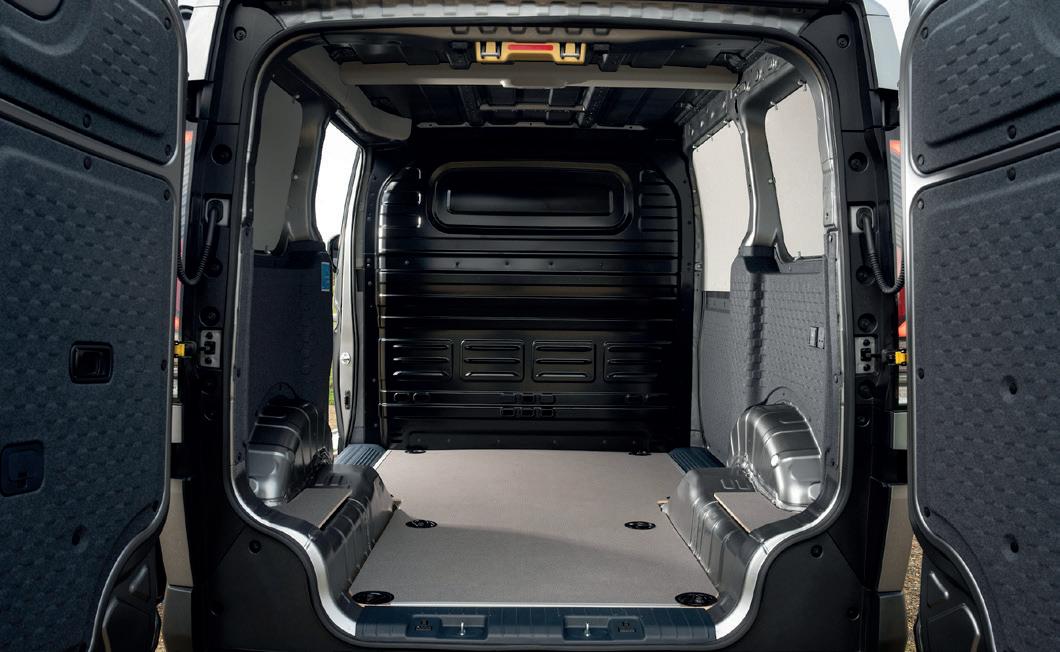
For the moment, there’s just one body size for the PV5 Cargo. The L2/H1 variant measures in at 4.67m long by 1.9m high. Cargo volume is rated at 4.4m3 and maximum payload ranges from 665kg for the long-range fourdoor version to 790kg for the standard-range three-door.
That puts it behind the industry benchmark E-Transit Custom, which even in its smallest L1/H1 is 5m long, with a 5.8m3 volume. Its payload is also more than a tonne in every variant.
Kia, however, sees the ID Buzz Cargo as the PV5s’ key rival. The Korean van has an extra 0.5m3 of cargo volume compared to the VW and can carry between 60kg and 180kg more payload.
Later in 2026 we’ll get an L1/H1 that’s a bit closer to the E-Transit Courier in size, and we’ll see a supersized L2/H2 that will boost cargo capacity, although presumably not payload.
Every PV5 Cargo comes with 180-degree opening rear doors and a single sliding door on one side. A second slider is standard on the Passenger van and a paid-for option on all Cargo variants.
With consideration to long-term running costs, the PV5 features modular elements such as removable cladding and three-piece bumpers that allow individual sections to be replaced without the cost of fitting a whole new bumper.
The PV5 also features Kia’s “AddGear” which provides attachment points which can be added to or rearranged on a case-by-case basis and offer space to add extra cupholders, umbrella hooks, tool racks or storage bins.
Both Cargo and Passenger versions of the Kia PV5 come with a choice of two powertrains.
Basic versions use a 51.5kWh battery with 184 miles of range and a 120bhp/184lb ft motor. Zero to 62mph takes a leisurely 16.2 seconds fully laden.
Entry level “Essential” trim can also be specified with a more powerful and longer range pairing, which are standard on the higher-spec Plus model. This uses a 71.2kWh battery with 258 miles of range and a 160bhp/184lb ft motor that’s good for 0-62mph in 12.4 seconds.
Passenger versions lose one or two miles of range compared with the Cargo model but every model comes with peak DC charging of 150kW. That is better than most of Kia’s passenger cars and will top even the larger battery from 10-80% in less than 30 minutes.
On the road, the 160bhp variant feels livelier than its on-paper stats would suggest. It’s never going to keep up with the 282bhp E-Transit Custom or similarly muscular ID Buzz, but it’s peppy enough for nipping around town or darting out of a junction, with a nicely balanced throttle and well calibrated regenerative braking that can be shifted between four levels of power via column-mounted paddles.
Being a van, handling is never going to be the PV5’s strongest suit but it feels planted and solid on the road thanks to its low centre of gravity and some reassuring weight to the steering. The ride is less brittle than in some alternatives but there is still a boominess at higher speeds due to the sheer amount of wide open space inside.
One of the arguments against electric vans is that they are too expensive, especially compared with their diesel counterparts.
Kia, however, has turned that on its head with the PV5 which offers remarkable value.
The Cargo starts at £27,645 excluding VAT for the 51.4kWh Essential grade. Factoring in VAT and applying the £5,000 Plug-in Van Grant (PIVG), that equates to an on-the-road price of £29,299.
The bigger battery adds £3,000 to that while the Plus trim costs from £31,055 before VAT or any grant, amounting to £33,391 OTR after tax and grants.
To put that in context, the smaller Ford E-Transit Courier starts at £27,000 before VAT or any grants and the larger E-Transit Custom starts at £43,630 exclusive of VAT. The most basic ID Buzz Cargo starts at £39,205 OTR with the PIVG applied, although it does offer more power and around 40 miles more range.
The Passenger version is a similar story. Thanks to a £1,500 discount via the Electric Car Grant, the PV5 Passenger starts at just £31,495 for the 51.5kWh Essential and maxes out at £36,795 for the 71.2kWh Plus model.
The ID Buzz passenger version offers a lot more power - 282bhp v 160bhp – and a bit more range – 282 miles v 256 miles, but it starts at a jaw-dropping £60,000.
Even Essential spec vans get LED lights, automatic air conditioning, the 12.9inch main screen with wireless Android and Apple mirroring, front and rear parking sensors, a reversing camera, adaptive cruise control and highway driving assist.
The Plus grade adds heated front seats and a heated steering wheel, wireless phone charging, vehicle-to-load capability and the option to add a heat pump. Passenger Plus variants also get 16-inch alloy wheels, heated outer rear seats, powered driver’s seat adjustment and a powered tailgate.
As an alternative to the VW ID Buzz, the Kia PV5 feels more utilitarian and less stylish. It also offers less power and a little less range. But the Cargo version is £8,000 cheaper than the Buzz Cargo, and savings on the passenger variant are a barely believable £30,000.
Compared with the more traditional Transits, Vivaros and Trafics, the PV5 is smaller, with less cargo space and lower payload. However, it’s also massively cheaper than those while still delivering a practical capable panel van or people carrier that will meet a lot of business’ and families’ needs.
On top of that, it brings all the usual Kia qualities of a well thought-out and thoroughly robust cabin, generous equipment and impressive EV powertrain. It might be Kia’s first attempt at a van, but it’s a damn impressive one.
PRICE: £31,055, excl VAT (£33,391 OTR, incl PIVG)
TRANSMISSION: Single-motor, front-wheel-drive
BATTERY: 71.2kWh POWER: 160bhp
TORQUE: 184lb ft
TOP SPEED: 84mph
0-62MPH: 12.4 seconds
RANGE: 258 miles
CONSUMPTION: 3.3m/kWh
CHARGING: up to 150kW
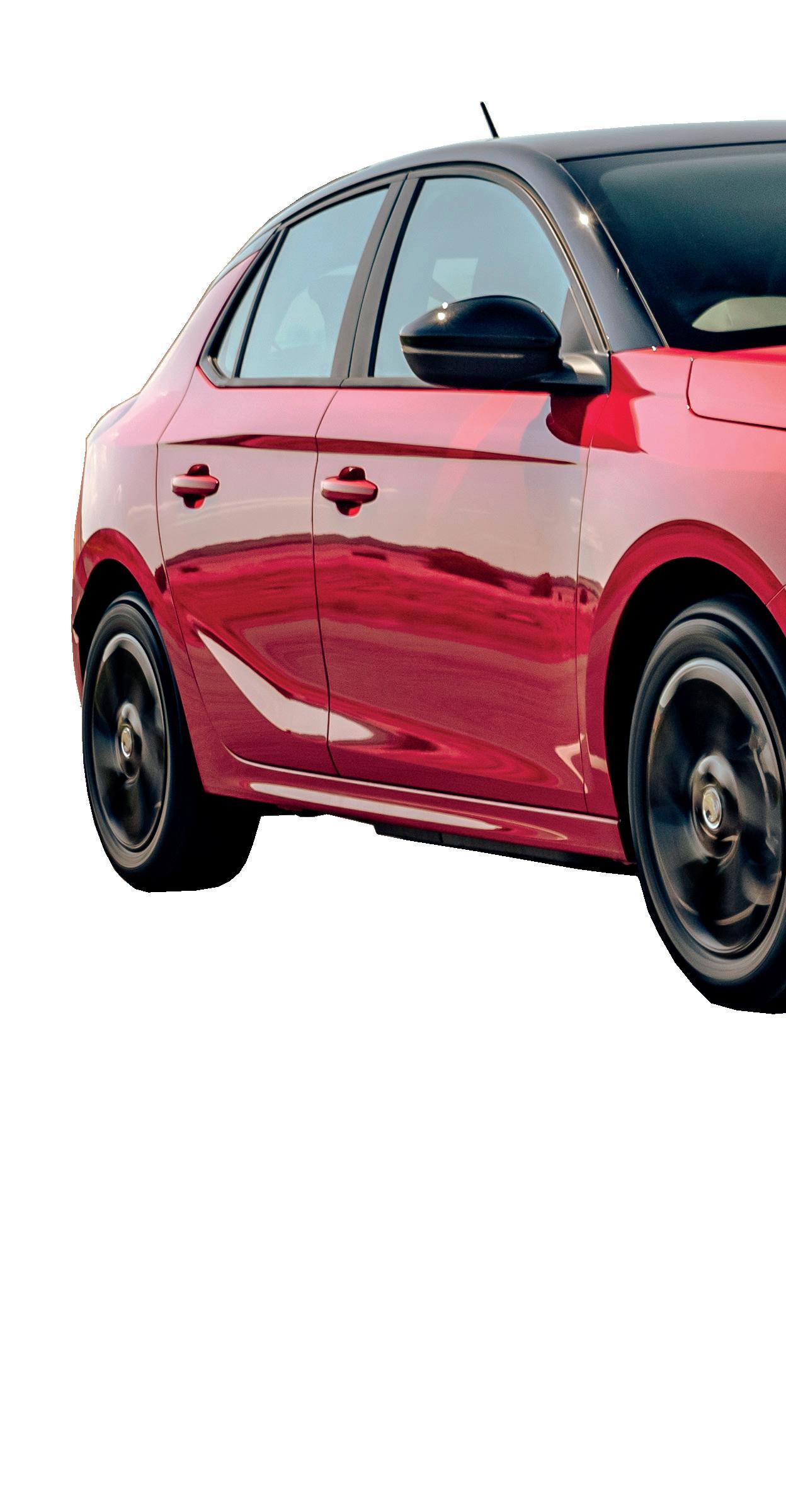
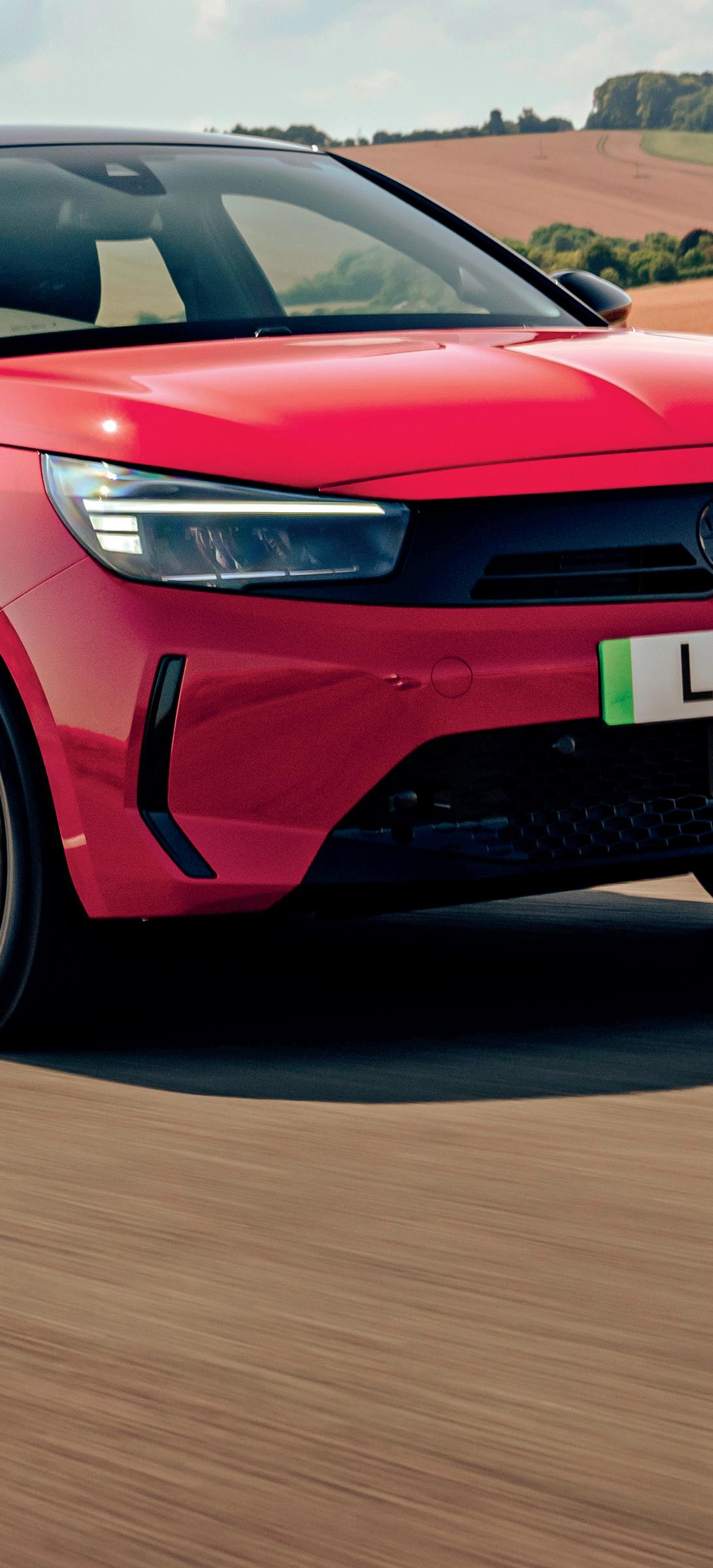
Its success is also partly down to Vauxhall’s canny marketing, which has over the years added a variety of special editions that promise additional specification for less money than the “regular” trim levels.
These special editions have had various names over the years but, right now, Vauxhall is using the Yes 25 trim grade to entice buyers, promising an entry-level price but with design features and equipment lifted from more expensive models.
It’s a smart move that should make the electric version of this supermini more attractive, but with a growing number of rivals – from the Renault 5 to the Citroen E-C3 and Nissan Micra – offering impressive tech and performance, is it enough to keep the Corsa competitive.
It’s fair to say that the Corsa isn’t the most stylish model in its segment.
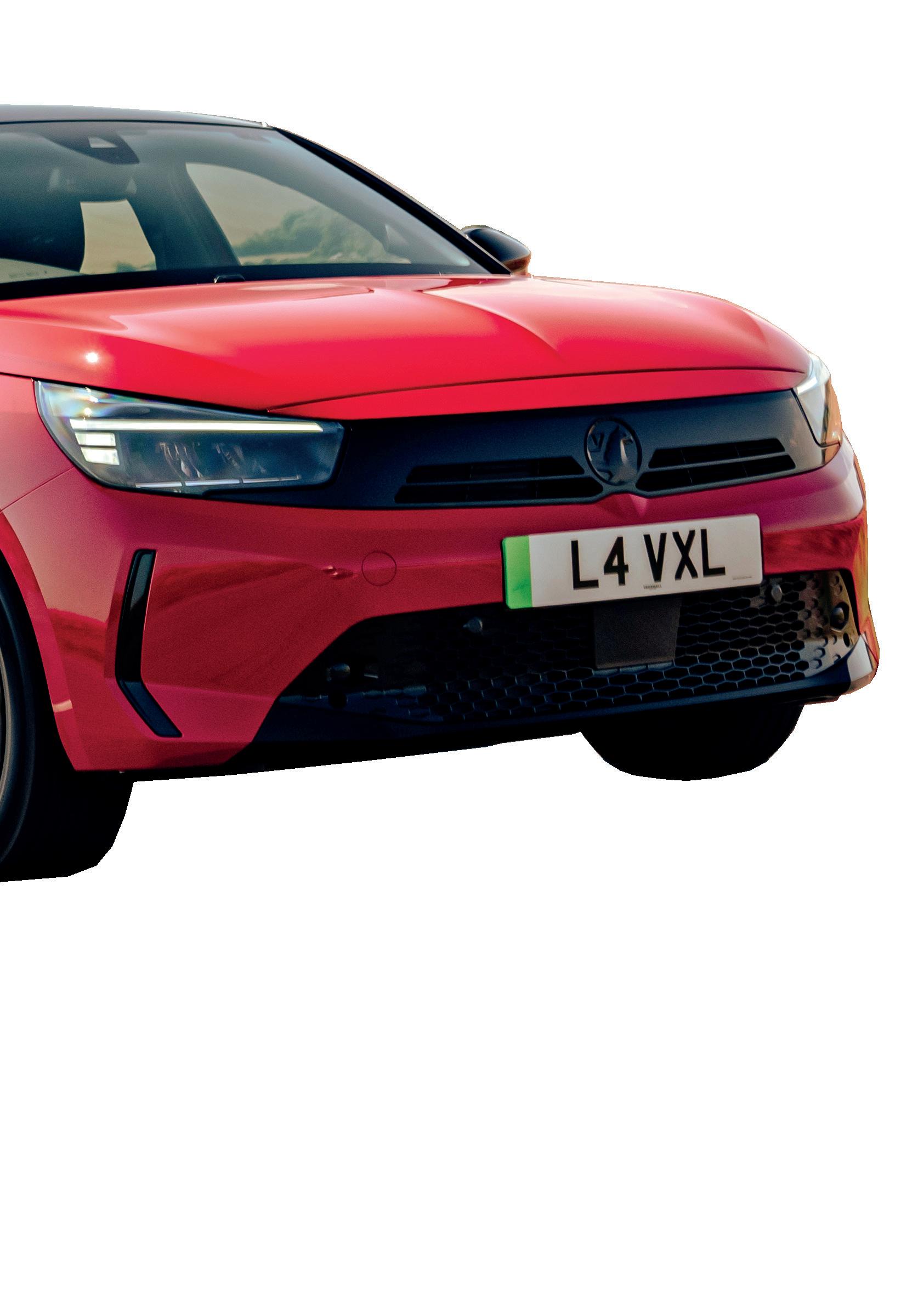
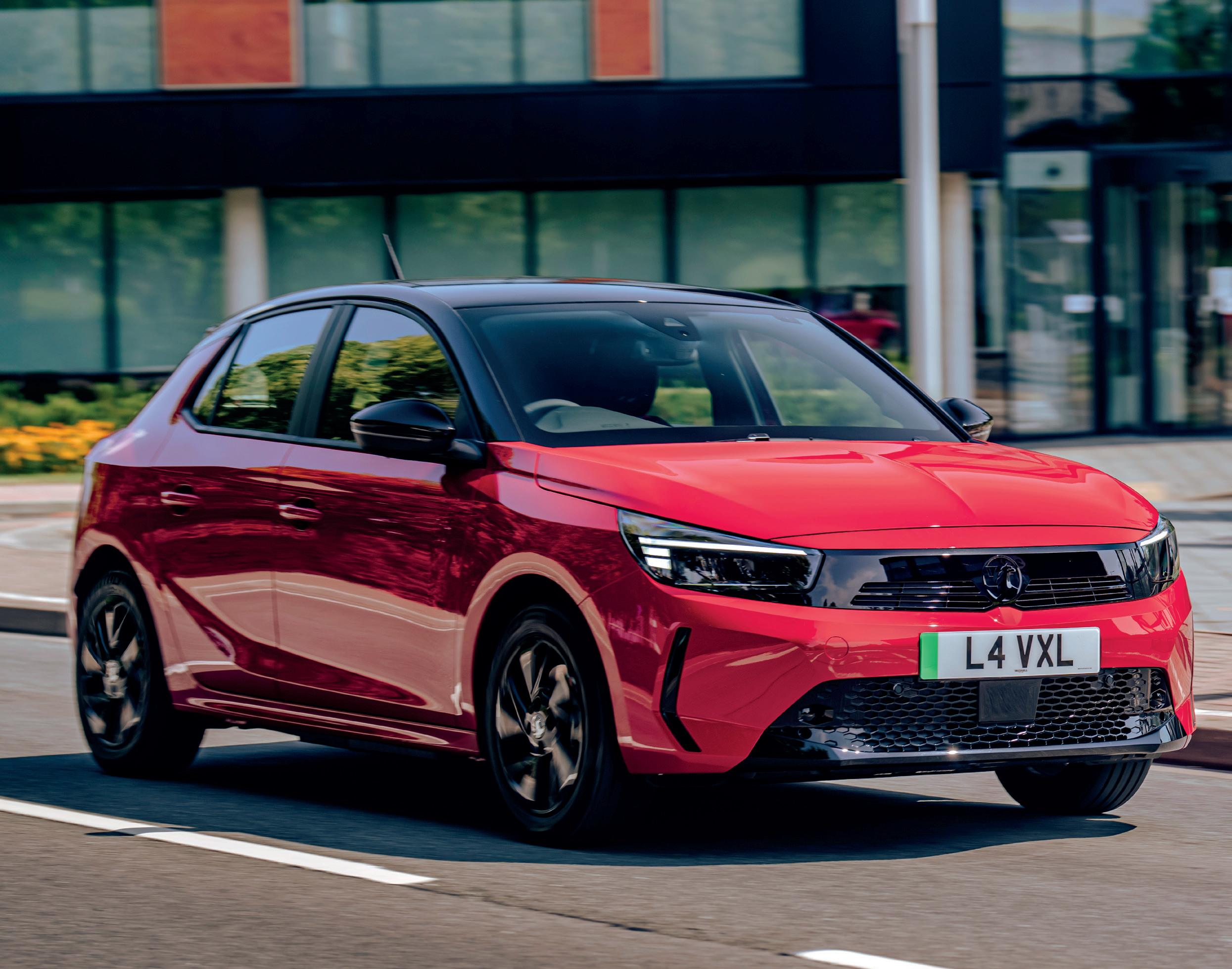
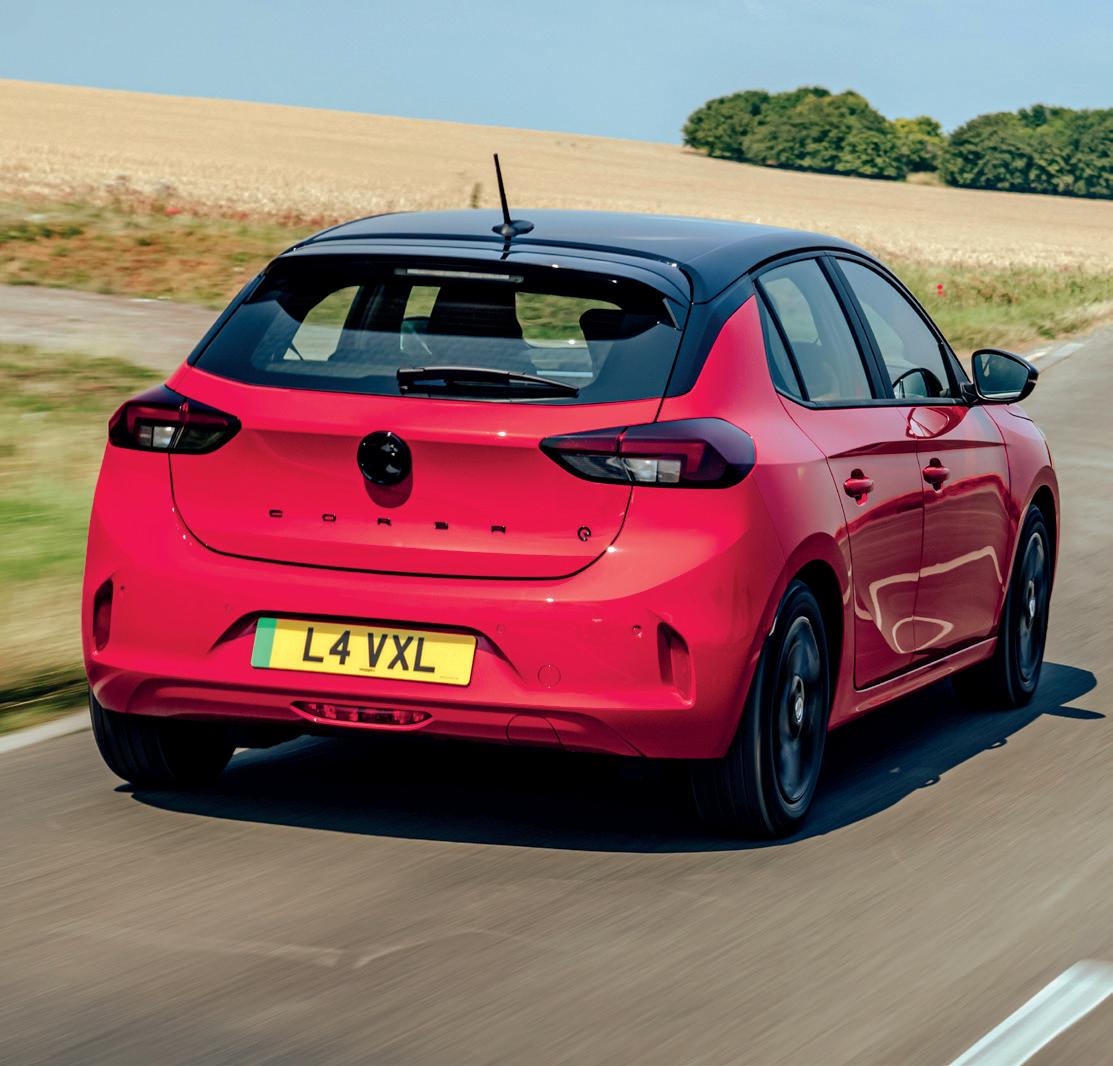
This generation came out in 2019 and despite intervening updates adding features such as the Vizor grille, it’s starting to show its age. That isn’t helped by Vauxhall’s perennial position as the poor cousin in the Stellantis family, where it misses out on the fun or stylish design options.
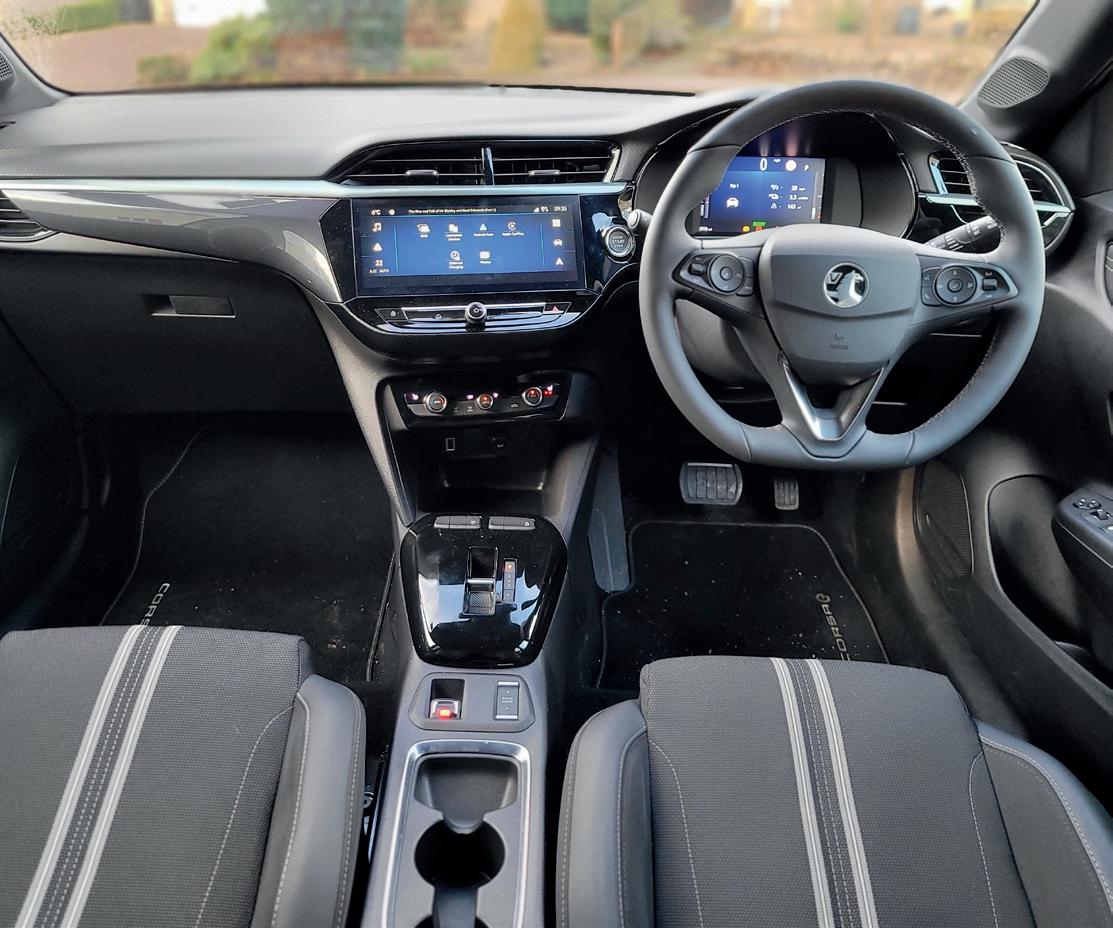
So it’s a bit dull and dowdy, with slightly odd proportions that aren’t helped by 16-inch alloys which, in today’s terms, look like go kart wheels. That said, it does make the Renault 5 look like a bit of a chunky monkey. The Corsa is actually longer than the Renault but it’s lower and narrower, so looks smaller on the road, if less exciting. The age-related problems continue inside, where the Corsa’s cabin is a little plain and a little “six years ago”. There’s a lot of shiny black plastic. Some of it is “posh” piano black on the dash and centre console, some of it is low-cost finish lower down. There is a splash of colour in the dash and door panels that matches the exterior paint if you go for a Yes 25 edition exclusive colour. That helps elevate the look a little but the rest of the design is functional rather than flamboyant.
The benefit of this older cabin design is that there are sensible buttons in sensible places for all the functions that need buttons, so it’s easy to use. A case of plain but practical rather than flash but feckless.
The downside is that the central infotainment system is relatively small and basic. It supports wireless Android and Apple mirroring but restricts them to a small central portion of the 10inch display. Functions beyond that are quite limited and involve scrolling through long menus, although big shortcut buttons simplify this a bit. It is usable but some way behind the best in the segment.
Being a supermini, interior space is limited. There’s reasonable room up front and perhaps a fraction more rear legroom than in the shorter Renault 5, but it’s still a supermini, so the back seats are really for kids only, and utterly unusable if the driver’s seat is fully back. The boot is a similarly compact 267 litres – still enough for a weekly shop although less than some rivals.
The Vauxhall Corsa Electric comes with two drivetrain options available across all trim levels.
The cheaper option is a 134bhp motor drawing power from a 46kWh battery. For an extra £1,395 buyers can step up to a 154bhp motor and 51kWh battery, which is what I’ve been testing.
Vauxhall says the Corsa Electric should cover up to 266 miles in this setup with efficiency of around 4.3m/kWh. DC charging tops out at 100kW, which means a 0-80% top-up in around 30 minutes.
As you’d expect, real-world use has an effect on all of these but, after a few bad experiences with early versions of this powertrain, I was pleasantly reassured by the Corsa’s performance.
Over a week where the temperature fluctuated between +1 and -7 degrees it returned 3.3m/kWh. That’s some way off the official figure but pretty good given the sub-zero conditions. The trip computer estimated that translated to a realworld winter range of between 160 and 180 miles, which is acceptable for the class. The only big downside is braking regeneration options, which is limited to two settings and is never fully off, nor fully one-pedal.
With 154bhp/192lb ft the Corsa is quick enough for the supermini class, with a 0-62mph time of 8.2 seconds. The throttle is a little hesitant unless you’re fairly firm, but there’s plenty of verve for nipping around town.
It drives reasonably well, too. The Corsa is more precise and agile than a Citroen E-C3, for example, but not as incisive or fun as the Renault 5, with accurate but uncommunicative steering. Its ride is supple and composed, not quite as smooth as the Citroen’s but better than the Renault, no doubt thanks to the thick sidewalls of the relatively tiny 16-inch wheels fitted to this entry-level Yes specification.
Which brings us nicely to the Corsa range, which offers three trim levels – Yes 25, GS and Ultimate.
Prices start at £26,280 for the Yes 25 trim with the smaller battery and £28,675 for the tested bigger battery, although this drops to £27,175 with the Electric Car Grant (ECG) applied. GS trim is an extra £3,735, with Ultimate another £1,810 on top of that.
Equipment-wise, even this basic Yes 25 spec gets a heated steering wheel and heated seats and has wireless Android/Apple, LED lights and cruise control, plus automatic air con and a standard suite of driver assistance.
Rivals offer adaptive LED lights, adaptive cruise, wireless phone charging, a heat pump and more, but apart from keyless entry and a reversing camera there wasn’t much I missed badly in my week with it.
The problem is that those rivals offer that extra kit and still cost less than the Corsa.
Even a top-specification Renault 5 Iconic starts at £25,945 after the ECG thanks to a bigger grant and Renault’s keen pricing. It’s a similar story with the Micra. The Citroen E-C3 is compromised when it comes to power and range, but starts at under £20,000 and tops out at less than £24,000.
Based on driving the petrol car a few years ago and mixed experiences with other cars on this platform, I had fairly low expectations for the Corsa Electric, but I was pleasantly surprised.
It drives nicely, delivers decent efficiency and even the entry-level Yes 25 has a lot of the creature comfort we have come to expect.
However, the interior is showing its age – buttons are great but the infotainment system and shiny black plastic aren’t – as is the exterior design.
More of an issue is the price. Currently, the basic Corsa is more expensive than the top-grade award-winning Renault 5. To get a like-for-like specification, the Corsa is thousands more.
Partly that’s due to rulings around the Electric Car Grant, so beyond Vauxhall’s control, but decent as the Corsa might be, it makes it a harder sell among more modern alternatives.
PRICE: £28,675 (£29,275 as tested, before ECG)
POWERTRAIN: Single-motor, front-wheel-drive
BATTERY: 51kWh
POWER: 154bhp
TORQUE: 192lb ft
TOP SPEED: 93mph
0-62MPH: 8.2 seconds
RANGE: 266 miles
CONSUMPTION: 4.2m/kWh
CHARGING: up to 100kW

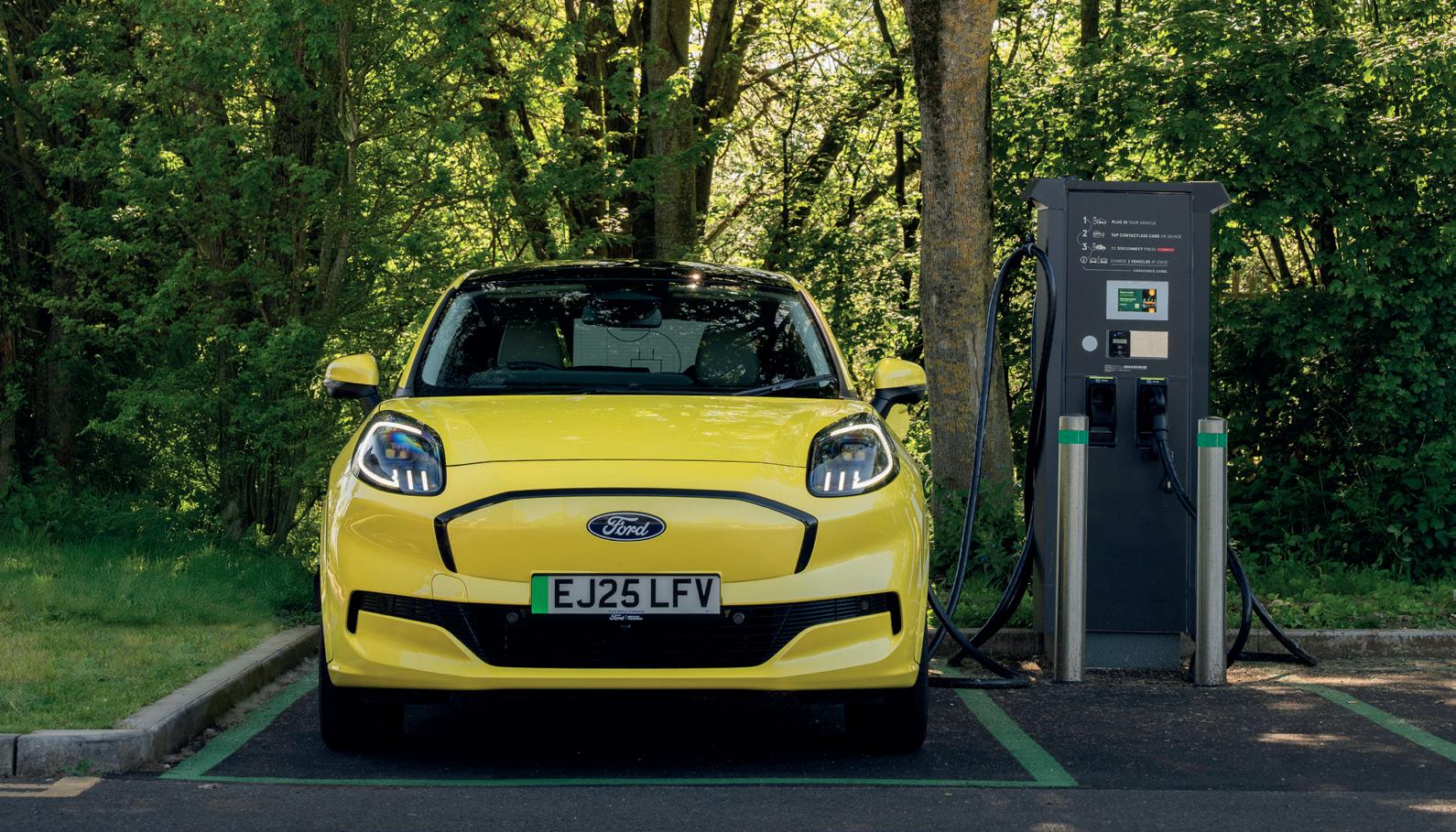
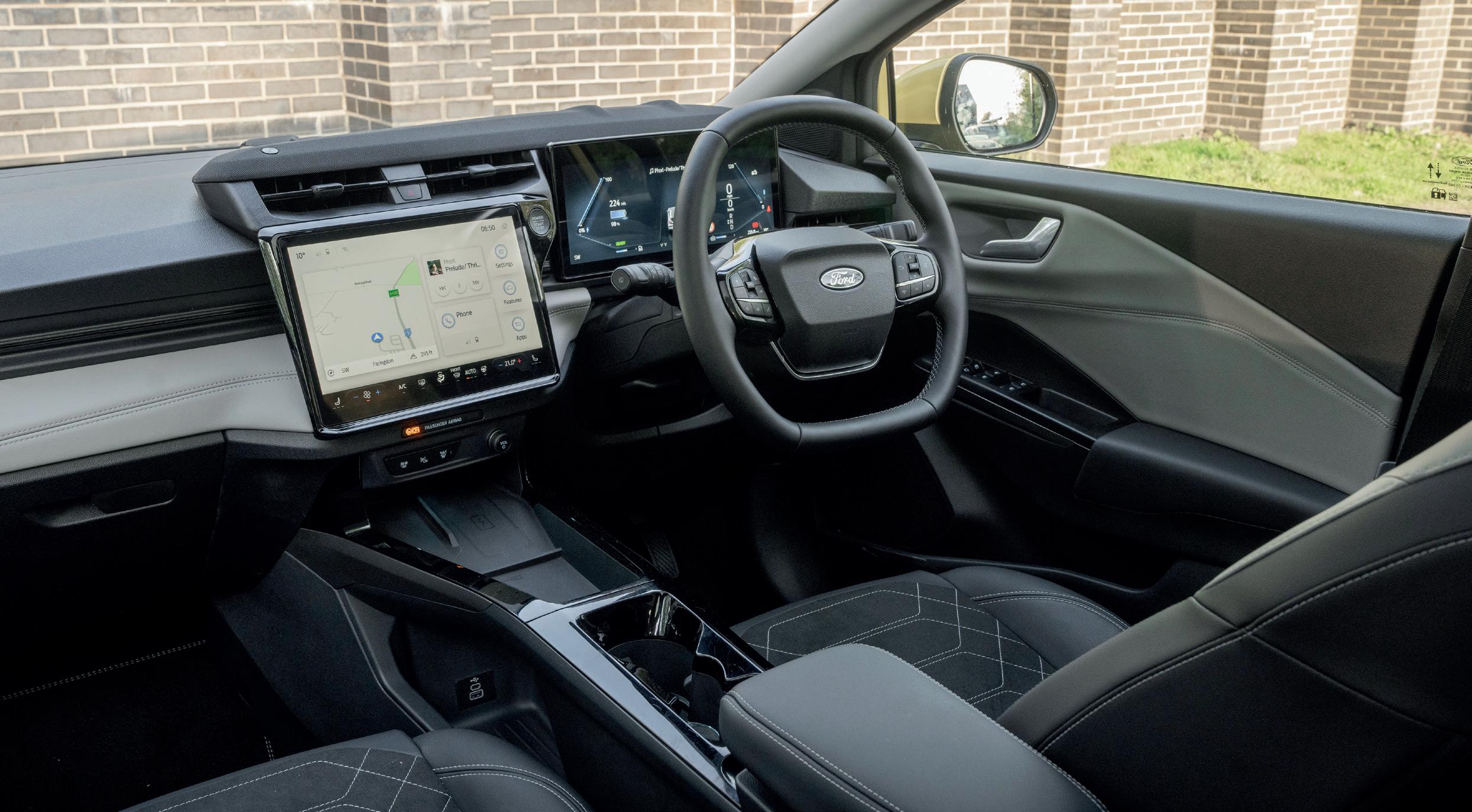
The powertrain swap has also brought minor interior changes but these are for better. With no gearstick to worry about, the centre console has been redesigned. It’s now a neat high-level unit with just a couple of cupholders and a wireless phone charging pad. Underneath is a generous open storage space hiding a couple of USB ports. It’s a small but oddly effective touch that refreshes the look and feel of the cabin.
Ahead of the new centre console there’s a 12.8inch touchscreen running Ford’s Sync4 system as well as supporting wireless Android and Apple. The screen is big and clear, with obvious icons but the underlying system is frustratingly sluggish in operation and too many functions rely on the screen and its myriad menus.
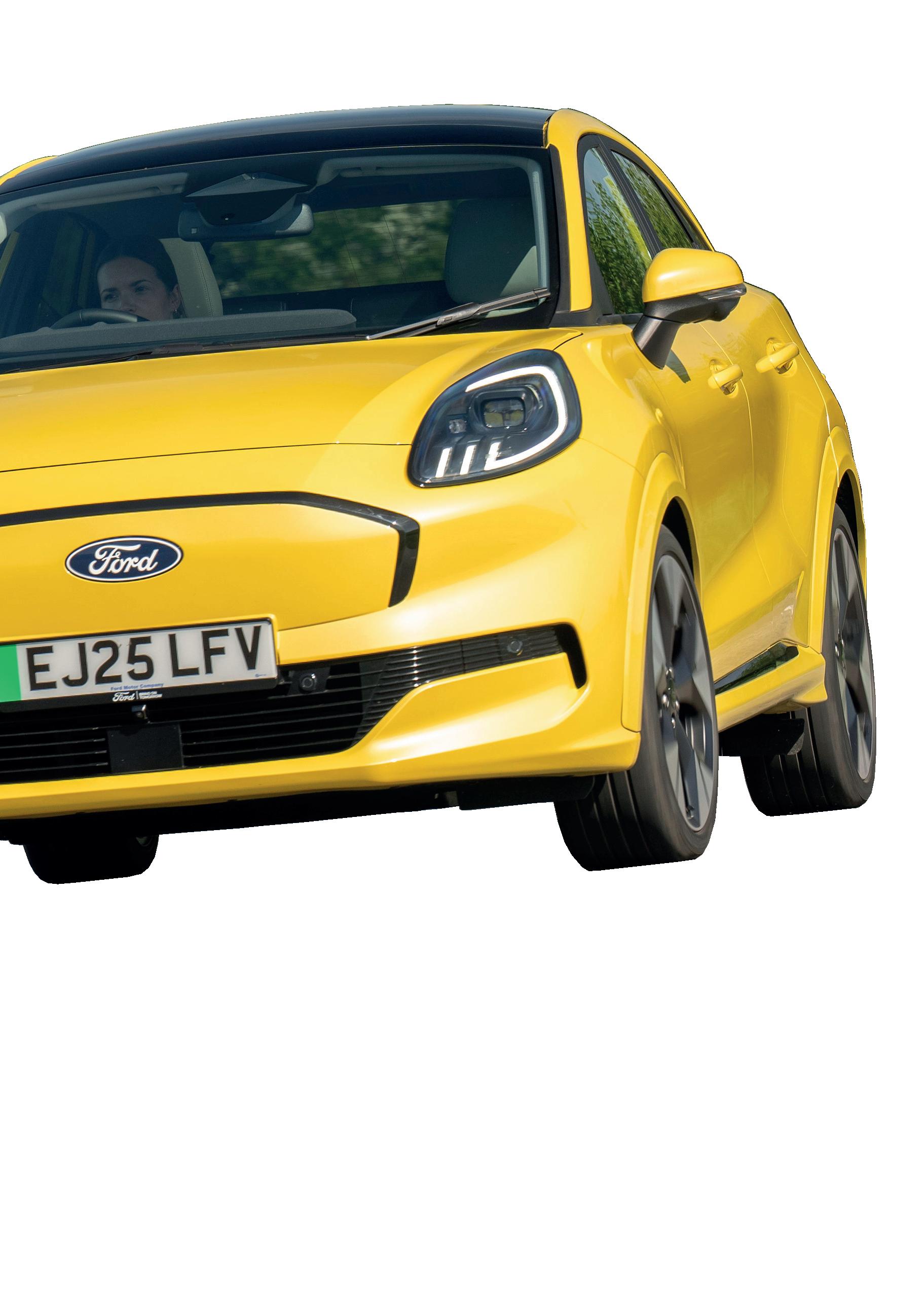
The Puma sits somewhere between the Renault 4 and Suzuki E Vitara in terms of size, which
is reflected in passenger space that is neither the best nor worst in class. An average sized family of four will fit but the Puma’s interior does feel pretty snug. The same can’t be said for the boot, which is enormous.
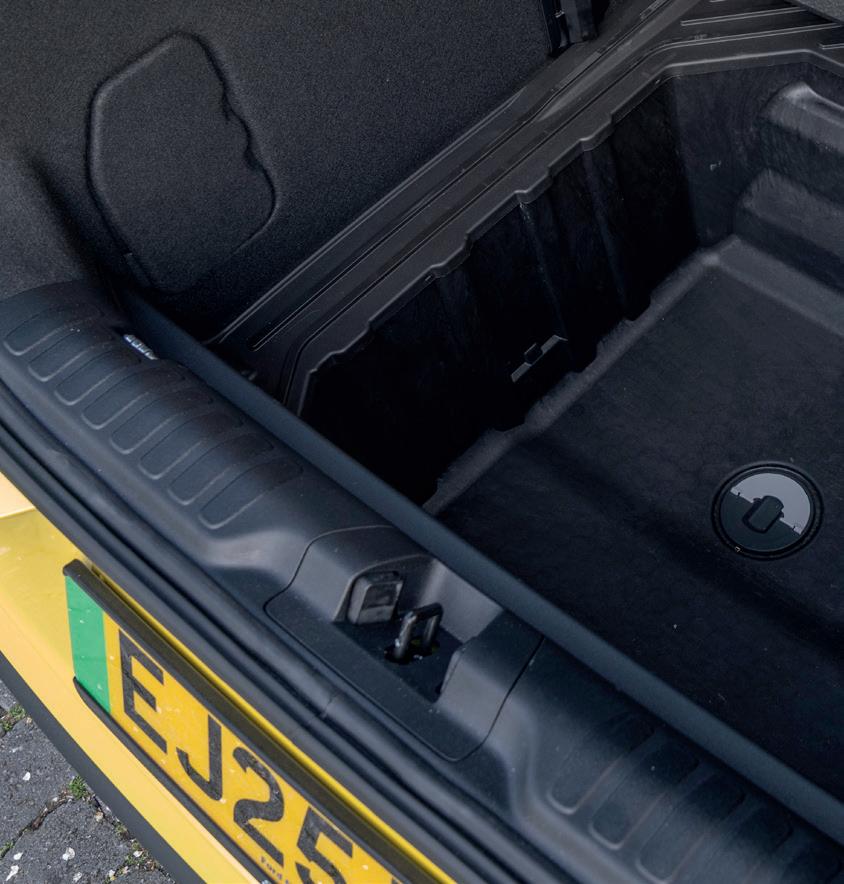
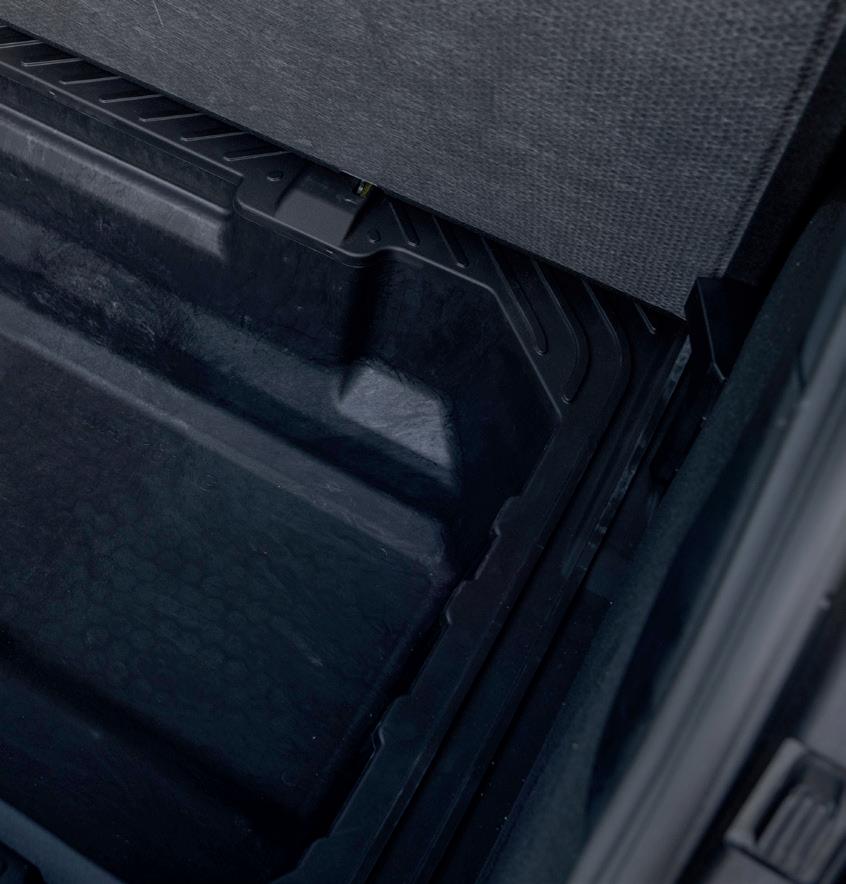
With the regular boot board in place, it’s a competitive size, but slide the board out to expose the “Gigabox” and you’ve got 523 litres of usable storage space, plus a 43-litre frunk. No rival can compete with that.
The Puma Gen-E is derived from a petrol platform, so there’s no great spread of powertrain choices here.
If you want a Puma Gen-E then you’re getting a 165bhp motor that drives the front wheels and is powered by a 43kWh battery.
That output is a little above average for the class and more in line with higher-spec versions of the Suzuki E-Vitara or BYD Atto 2. It delivers 0-62mph in 8 seconds which is quick enough but not blistering. Initial low-speed response from the
throttle is good but the Puma does quickly run out of puff at higher speeds.
Multiple driving modes adjust throttle response but like a lot of modern cars, the differences aren’t huge and don’t make much difference to overall range. There are also three levels of braking regeneration ranging from the very subtle to full one-pedal driving, which is effective if a little aggressive.
The Puma’s 43kWh battery is small for the class and it shows on the open road. Cold-weather efficiency of 3.1m/kWh is respectable enough compared with something like the R4 or Peugeot E-2008, but during my week with it the trip computer was predicting just 130 miles on a full charge – well short of the official figure and of rivals I’ve driven in similar conditions.
Maximum DC charging of 100kW is at least at the top end of what cars in this class offer and should allow a 10-80% charge in around 25 minutes.
Where the Puma Gen-E stands out among rivals is in its driving experience. The petrol version has long set the benchmark for dynamics in the class and the EV version maintains that superiority.
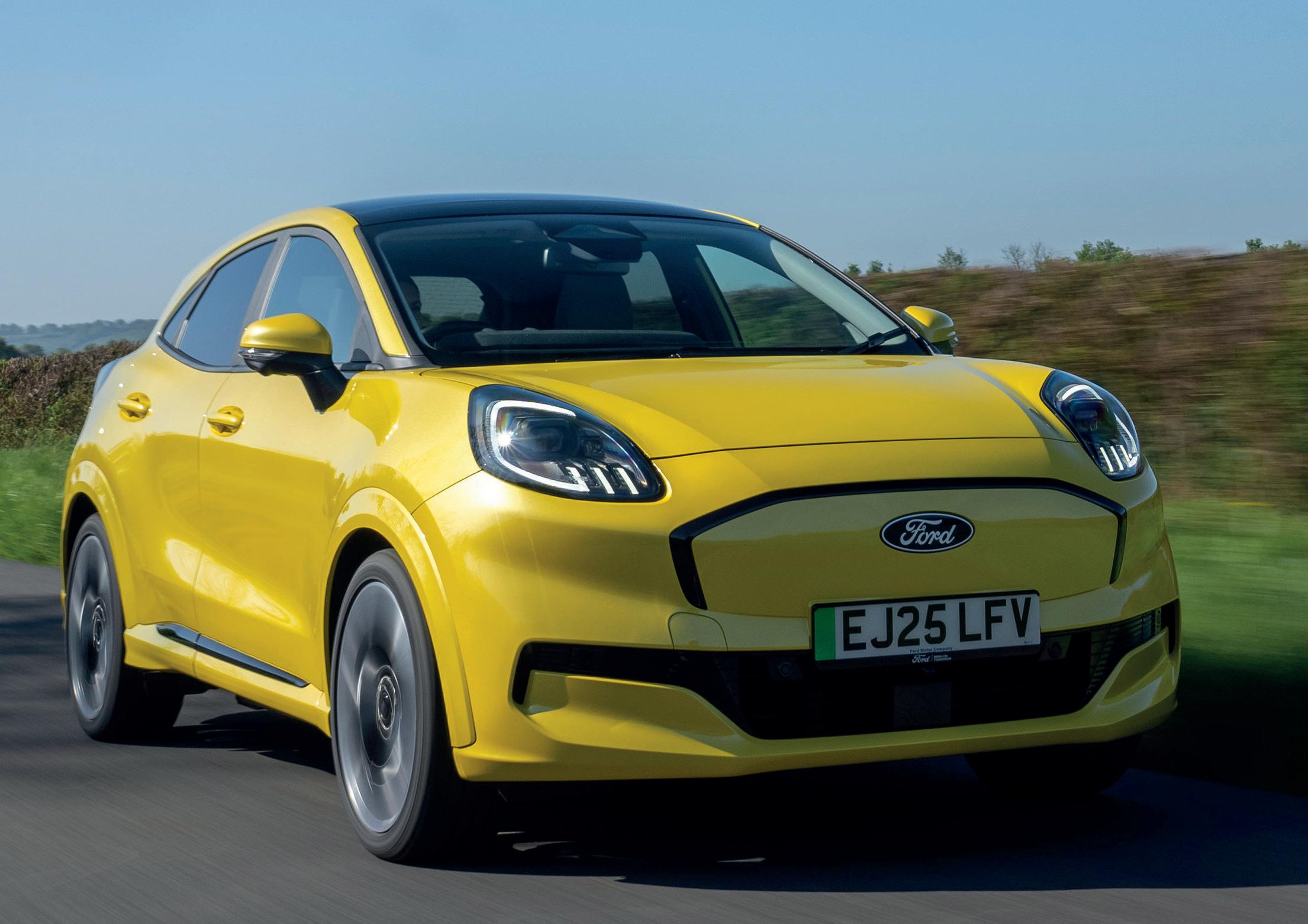
Admittedly, it feels heavier than the petrol model but still cuts along with a proverbial spring in its step. The Gen-E’s steering is sharper, livelier and more accurate than any rival you care to mention. This is a small electric crossover that you’ll enjoy driving on a twisting road, rather than enduring. That being said, the ride is distinctly firmer than some alternatives.
The Ford Puma Gen-E was the first car confirmed to qualify for the top-end Electric Car Grant.
That means buyers get £3,750 off the list price, cutting the cost of this tested Select grade car from £29,995 to £26,245.
Select is the entry-level car in the Puma line-up. Above it sits the Premium model, which is an extra £2,000.
That allows the Puma Gen-E to undercut rivals like the BYD Atto 2 and Suzuki E-Vitara, which don’t qualify for the ECG, but leaves it more expensive than the segment benchmark, the Renault 4, which also gets the full grant..
Select variants get 17-inch alloy wheels, LED headlights and tinted rear glass as standard. They also get the 12-inch touchscreen with wireless Android and Apple mirroring, a wireless phone charger, ambient lighting, cruise control and powered mirrors.
Premium adds adaptive headlights, a 10-speaker B&O stereo, powered tailgate and keyless
entry, plus 18-inch wheels. Neither model offers heated seats as standard – those and a heated steering wheel are part of a £350 Winter Pack, something I was very aware of during a cold week in January.
The Ford Puma Gen-E’s small battery and associated short range are undoubtedly a turnoff compared with many rivals. If getting as far as possible between charges is central to your needs, it’s probably not the car for you.
But for buyers with less intensive requirements it has other appeals. It’s more fun to drive than anything else in its class, offers unbeatable boot space and decent performance. It’s also keenly priced thanks to the ECG, which helps balance out its technical limitations.
PRICE: £29,995 (£26,245 with ECG applied)
POWERTRAIN: Single-motor, front-wheel-drive
BATTERY: 43kWh POWER: 163bhp
TORQUE: 214lb ft
TOP SPEED: 99mph
0-62MPH: 8 seconds
RANGE: 233 miles
CONSUMPTION: 4.74m/kWh
CHARGING: up to 100kW
RENAULT 5 LONG-TERM MONTH ONE
As Renault's reborn supermini continues to scoop up prizes, Matt Allan sets out to see whether it can maintain that appeal in day-to-day use
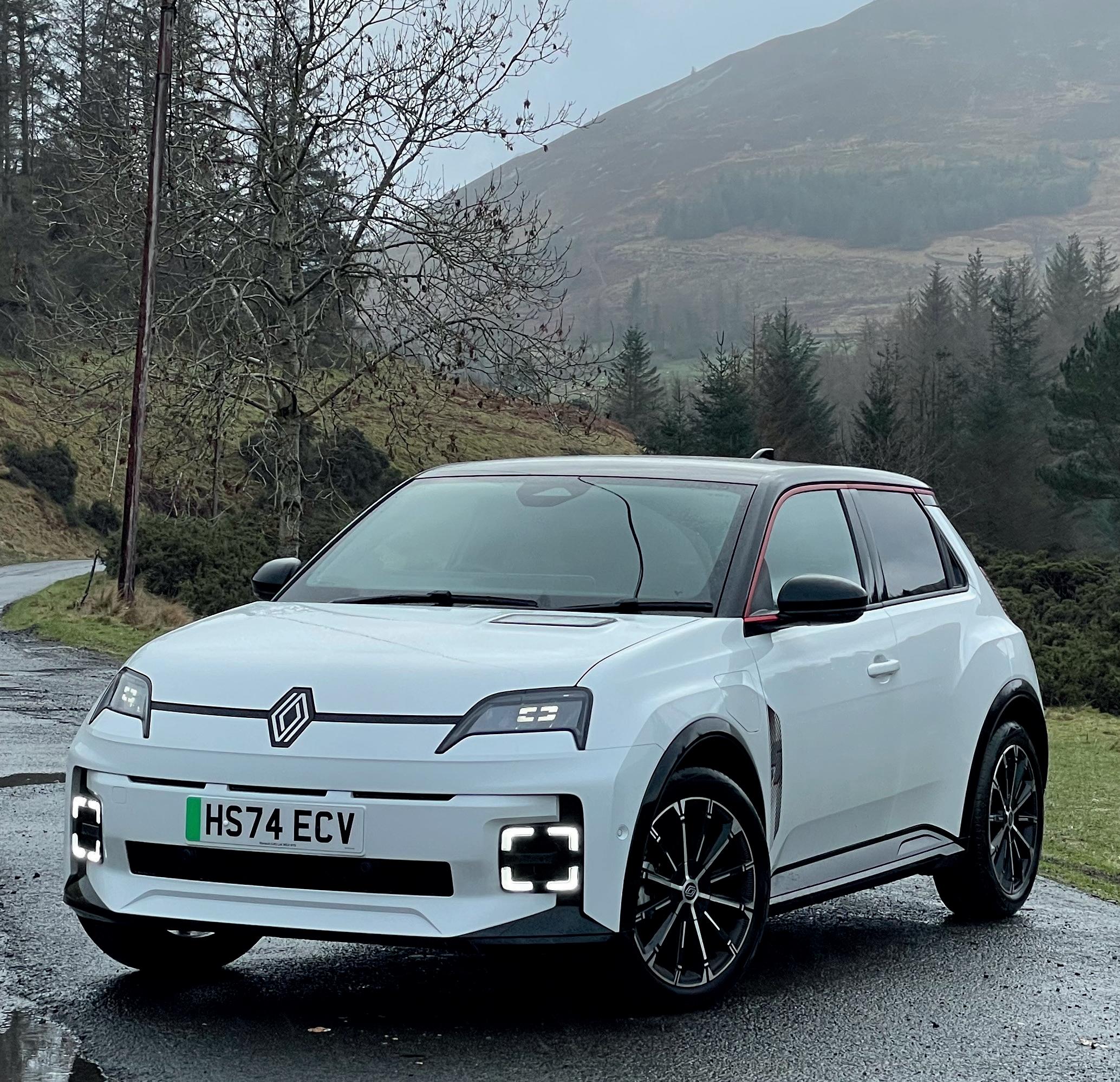
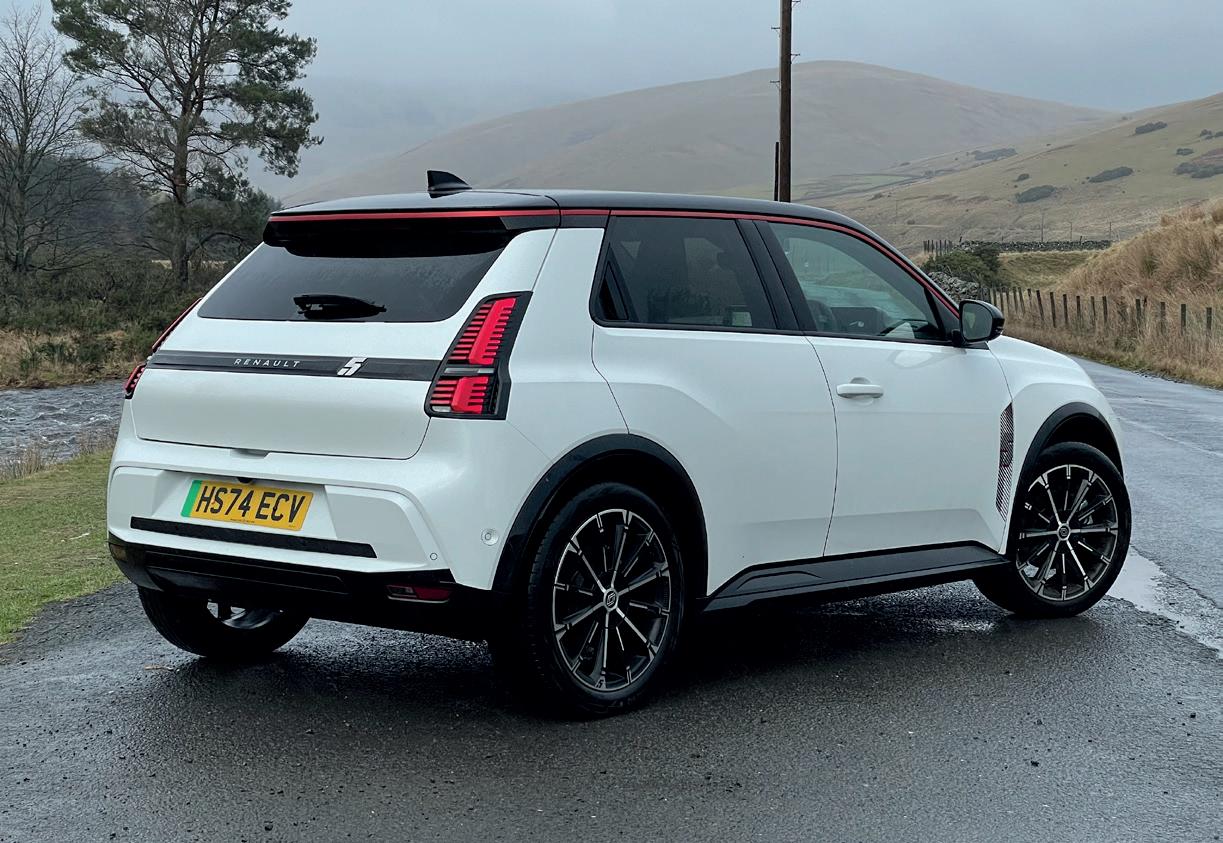
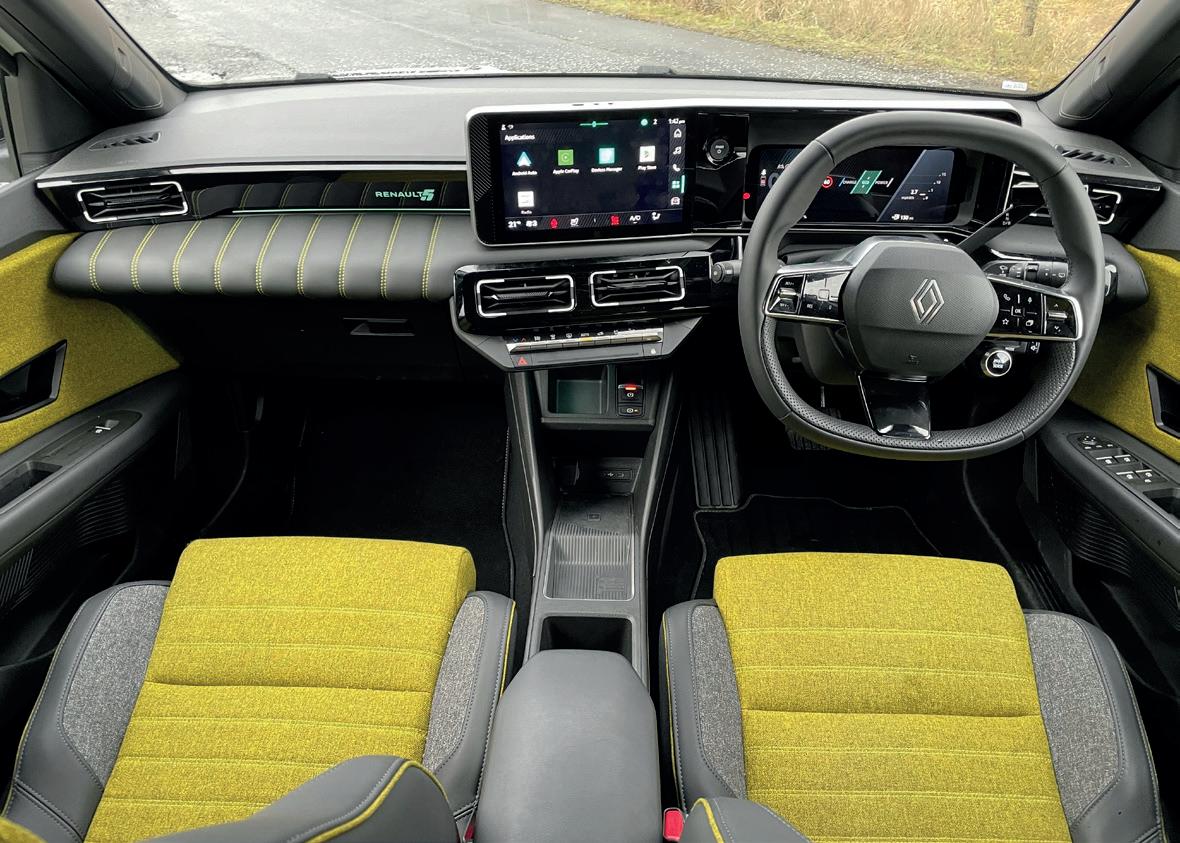
The Renault 5 has been a sensation for Renault. It’s won just about every automotive award under the sun, blowing away journalists left, right and centre.
PRICE:
£28,995 excluding ECG
(£30,045 as tested)
POWERTRAIN: Single-motor, front-wheel-drive
BATTERY: 52kWh
POWER: 148bhp
TORQUE: 181lb ft
TOP SPEED: 93mph
0-62MPH: 7.9 seconds
RANGE: 251 miles
CONSUMPTION: 4m/kWh
CHARGING: up to 100kW
Its combination of sharp design, smart packaging and well-judged powertrain combined with remarkable value have won it plaudits including the International Car of the Year, Scottish Car of the Year, UK Small Car of the Year and Which? Best Buy, as well as rapidly drawing in buyers looking for a small, stylish and affordable EV.
But what’s it like to actually live with? Can it maintain its initial charm in dayto-day life or will cracks start to show in its cheeky charm?
There’s only one way to find out...
Renault offers the R5 with two motor/battery pairings and in four trims ranging from the entry-level £21,495 Evolution with a 118bhp motor and 42kWh battery to the £26,945 Roland Garros+ with the 148bhp motor and larger 52kWh.
I had hoped to test the Techo+ trim with the more potent powertrain but schedules and availability mean I’ve had to settle for the higher-spec Iconic Five+. Oh dear, what a pity...
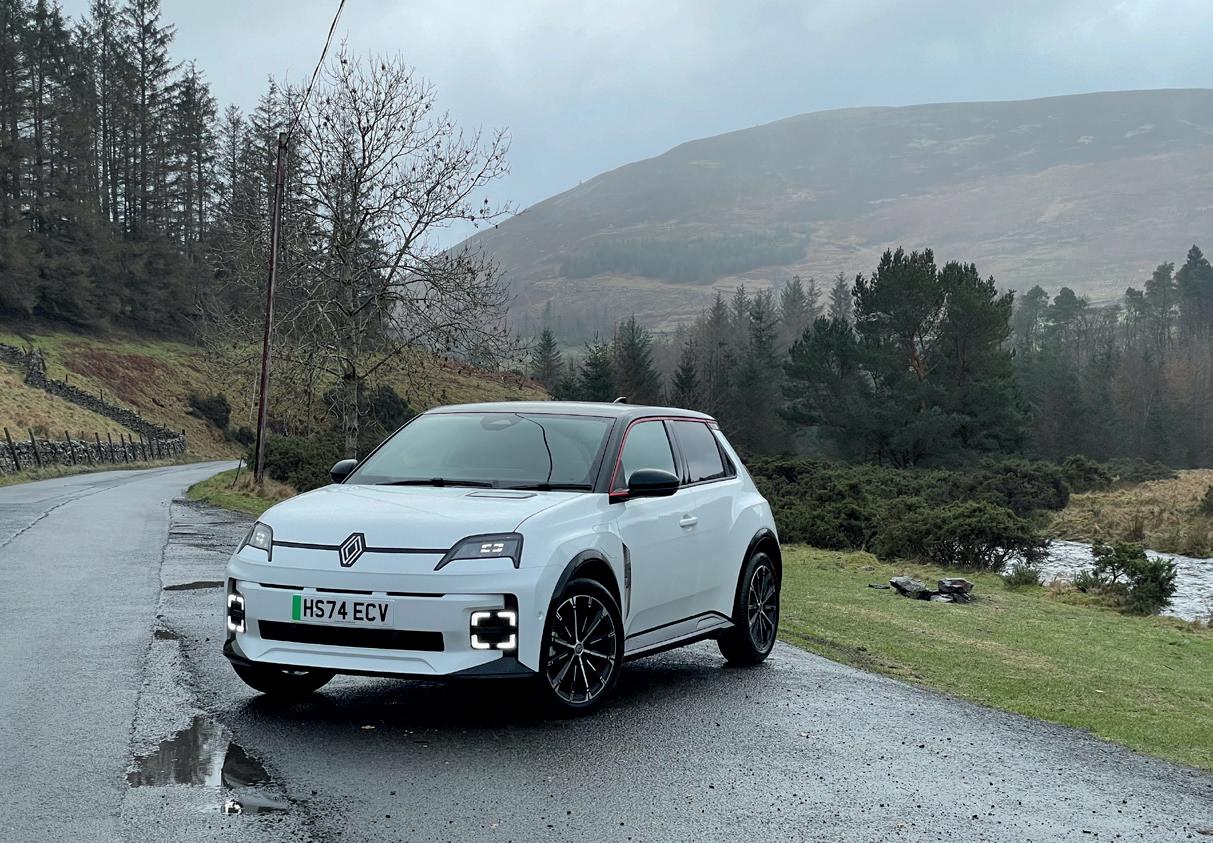
Being an Iconic 5+ spec means ‘my’ R5 misses out on the funky Green or Yellow Pop paintwork of the Techno trim, which draws even more attention to this already attention-grabbing car. Instead, mine comes in a more mature
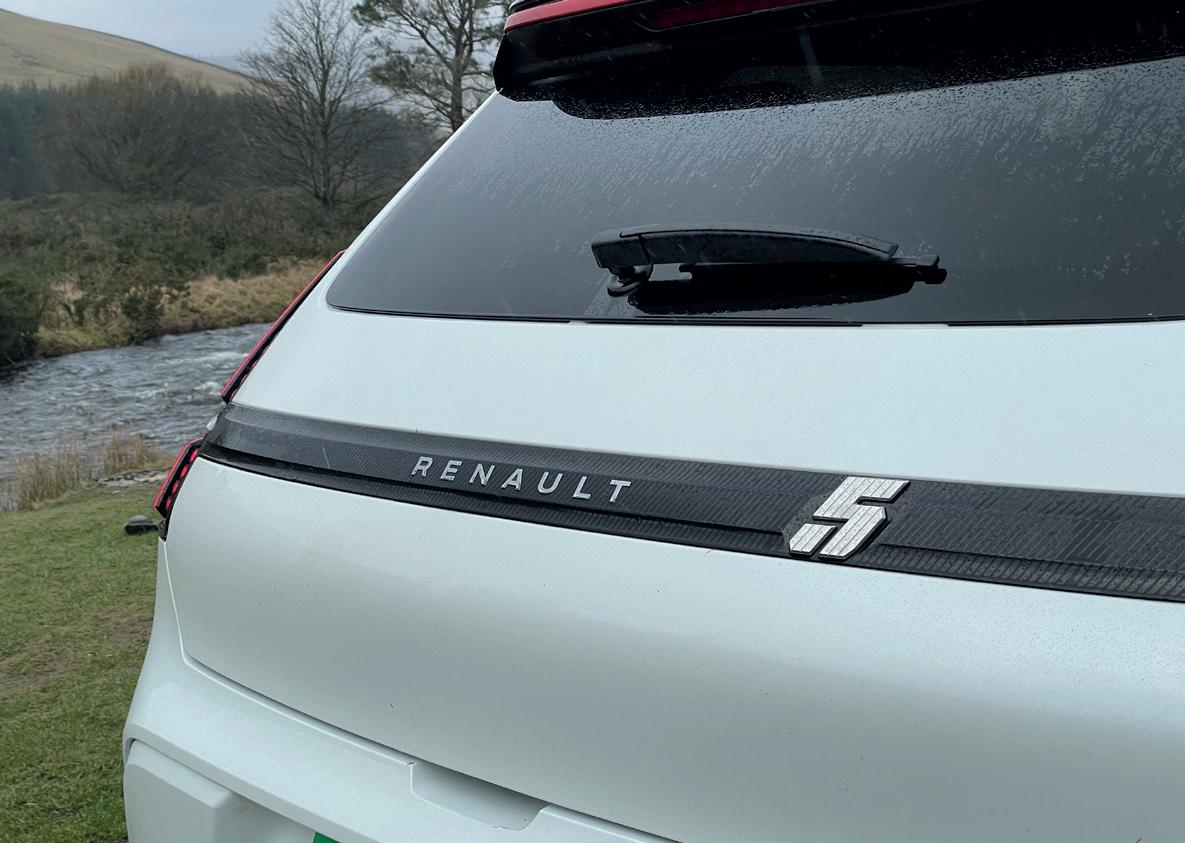
white with a black contrast roof. It’s not as exciting as the vibrant Techo+ hues but still really suits the car’s sharp angles, which blend modern sensibilities with clear call-backs to the original supermini.
Also, while it’s not as eye-catching as the Techno models, the Iconic 5 spec does mean I get heated seats and steering wheel, which are far more welcome in these chilly months.
On that subject, the car arrived slap-bang in the middle of a cold snap and the first few weeks haven’t been much kinder. Temperatures have never got beyond single figures and at their worst have plummeted to -7 degrees. As we all know, cold weather isn’t kind to EVs and the little R5 is finding the Scottish winter hard going.
According to WLTP testing, this car has an efficiency of 4m/kWh and a range of 251 miles. At the moment, I’m seeing an average of 2.7m/kWh and closer to 150 miles predicted on a full charge.
Admittedly, I haven’t been preconditioning the car and it has been subject to a lot of short runs on very cold mornings, but it does mean the R5 currently feels very much a ‘second car’. It’s coping fine with the local tasks and runs to the airport but needs to be charged a lot more frequently than my recently departed Scenic, and isn’t the default car of choice for every journey.
I’m hoping as the months roll on and the temperature increases we’ll see a marked improvement in efficiency and range.
I’m also hoping that better weather will mean I don’t have to clean it so often – the curse of a white car in winter...
Arrived:
Price as tested: Mileage since arrival:
Average consumption:
Monthly charging costs: Costs: Faults:
January 2026
£30,045 (excl. ECG) 283 miles 2.7m/kWh
£8.39
None None
Ignore the few remaining naysayers: a used first-gen Taycan is still very much a proper Porsche, so here’s everything you need to know

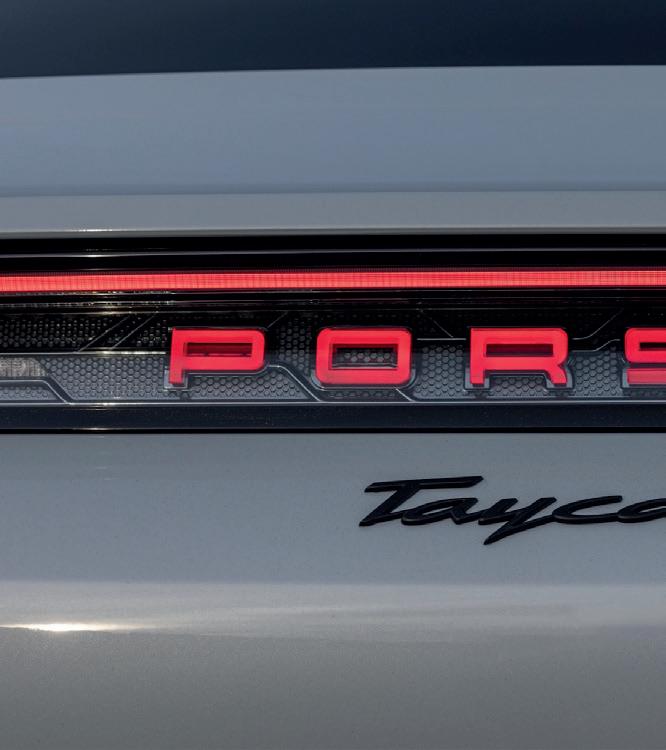
Contrary to popular belief, the Taycan isn't Porsche's first all-electric car. In fact, that accolade goes to the quad-motor 1890 Lohner-Porsche Electromobile, weighing in at over four tonnes and packing an 80-volt lead-acid battery.
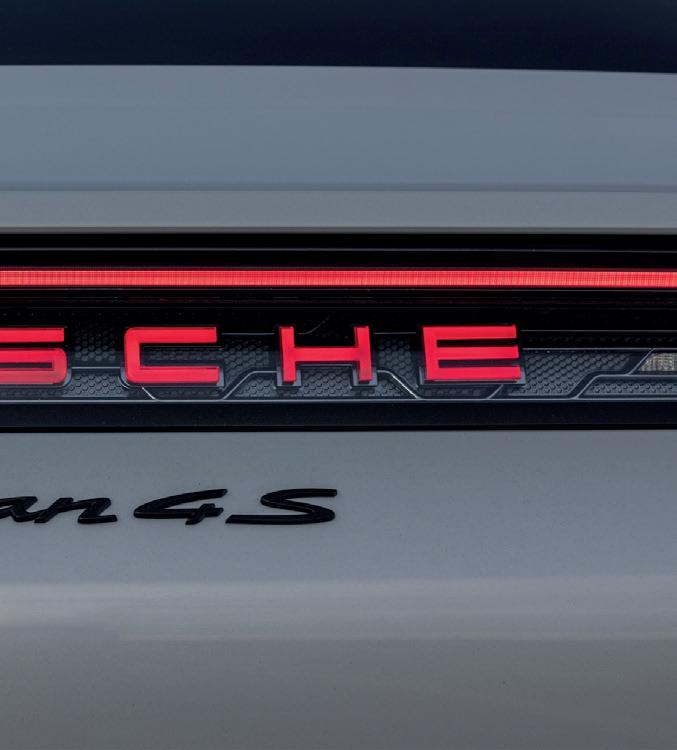

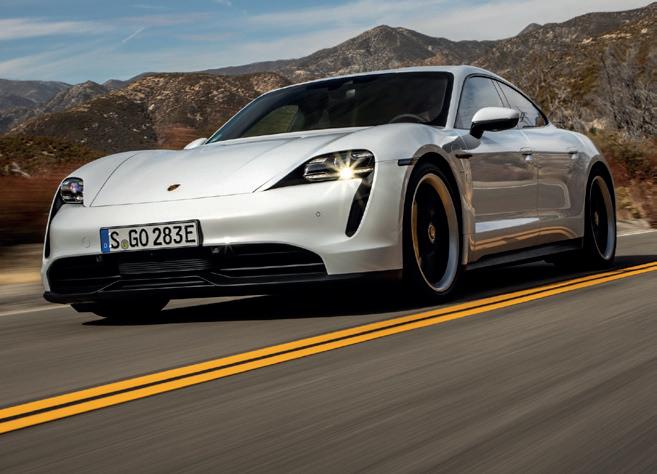
Fast-forward to 2019, and the Mk1 Porsche Taycan quickly became the first mass-market Porsche EV. It also proved the 'you can't have an electric Porsche' types wrong. Thanks to a low centre of gravity and a clever adaptive suspension system, Stuttgart's fabled vehicle dynamics, and up to 778bhp on tap, the Taycan was proof that Porsche and EV fans alike could have their cake and eat it.
The first-gen Porsche Taycan was in production until as recently as November 2024, when it underwent a facelift. Nonetheless, where other early luxury EVs have fallen by the wayside since their debut at the beginning of the decade, Taycans remain popular among used EV buyers, who love them for their signature Porsche drive and worldclass engineering.
What's more, opt for a longer-range Performance Plus car with the 93kWh battery, and you'll have up to 282 miles of range and ultra-fast charging speeds of up to 270kW.
Ultimately, with some patience and the right information to hand, it's possible to buy one of these landmark Porsches for around £43,000 from an official dealer.
The Porsche Taycan arrived in September 2019 in either Turbo or Turbo S guise. Both were all-wheeldrive and both produced 616bhp in normal operation. However, with the temporary power boost afforded by a steering wheel-mounted button, the Turbo could produce 670bhp while the Turbo S churned out 750bhp. Within a couple of months,
a twin-motor Taycan 4S debuted as the 'entry-level' model beneath the two Turbo cars. Depending on which battery size you opted for (79kWh or 93kWh) you got 430bhp or 483bhp, boosted to 523bhp or 562bhp.
That battery size also affected the entry-level rear-drive Taycan and all-wheel-drive Taycan 4, which both arrived in 2021. In "normal" mode, the small battery Taycan produced 324bhp, boosted to 402bhp. The big battery turned things up to 376bhp/469bhp.
That same year, the Cross Turismo shooting brake, its lower-riding, sportier nephew, the Taycan Sport Turismo, and the 509bhp/590bhp GTS would join the fold.
Continued on next page
Given that the Taycan is fully electric, it doesn't actually have a turbocharger: this naming system aligns purely with the rest of Porsche's model line-up.
Before the 2024 facelift, Porsche also introduced a hardcore Taycan Turbo GT model with a peak power output of 778bhp with the power boost engaged. Unsurprisingly, all of this power resulted in a supercar-worrying 0-62mph time of 2.8 seconds.
Porsche is notoriously tight when it comes to standard equipment, and the Taycan is no different. Each used Porsche Taycan will ride on at least 19-inch wheels. Heated front seats, dual-zone climate control, cruise control, a powered tailgate, and a heat pump to extract that allimportant range from the battery during the colder winter months are also standard.
If you want keyless entry, a heated steering wheel, privacy glass, a fullleather cabin and adaptive cruise control, then those are optional extras. Fortunately, though, most second-hand Taycans' original owners were generous with the options list, meaning most cars come with plenty of toys.
The Taycan is solid and very much a Porsche when it comes to how well it's screwed together. In fact, it feels better than the latest Macan Electric in terms of fit and finish. The Taycan's cabin is a modern interpretation of Porsche's signature functionalism, with the driver getting a huge 16.8inch readout featuring five digital dials as a nod to the 911.
In the centre of the dash sits a 10inch infotainment system, while beneath it is an 8.4-inch screen used to control car functions such as drive modes and climate control. While Apple CarPlay was integrated into the infotainment, Android Auto was not. A passenger screen could also be selected as an optional extra.
For keen drivers, adaptive suspension is standard across the board, and it can be adjusted to
soften or sharpen the Taycan's feel. Flick the suspension into one of the more performance-focused modes, and the Taycan's precision, wellweighted steering, and composure will leave even the most vocal antielectric Porsche fan in no doubt as to what they're driving... even if it does weigh just over two tonnes.
When it comes to safety, the Taycan achieved a five-star score in the Euro NCAP rating.
Despite its low-riding profile, there's plenty of space in the Taycan, and four adults can easily get comfortable. What's more, the 407-litre boot is big enough for six carry-on suitcases and a soft bag. Need more room? That's what the Taycan Sport and Cross Turismos are for.
An 87-litre 'frunk' or 'froot' sits up front to carry charging cables, as well as everything from takeaway meals to light shopping hauls.
Price and running costs
The Mk1 Porsche Taycan suffers from massive depreciation. Fortunately for buyers browsing the secondhand market, we found that one can be picked up for as little as around £30,000. However, it was a high-miler and sold through a nonapproved Porsche dealer.
In 2020 and early 2021, the Taycan was Porsche's best-selling car in the UK. With 700 of them for sale on AutoTrader,
its success amongst consumers is evident. The most affordable Taycan we found from an official Porsche retailer was a 2021 entry-level Taycan model with the optional 93kWh battery priced at £43,900 and a total mileage of 56,411 miles.
Conversely, the most expensive used Porsche Taycan we came across was a 2025 4S Cross Turismo. With just 2,150 miles on the clock, this car cost £99,845 with the postfacelift 105kW battery and optional Bose sound system.
The first-gen Taycan was available with two battery choices: a 79kWh
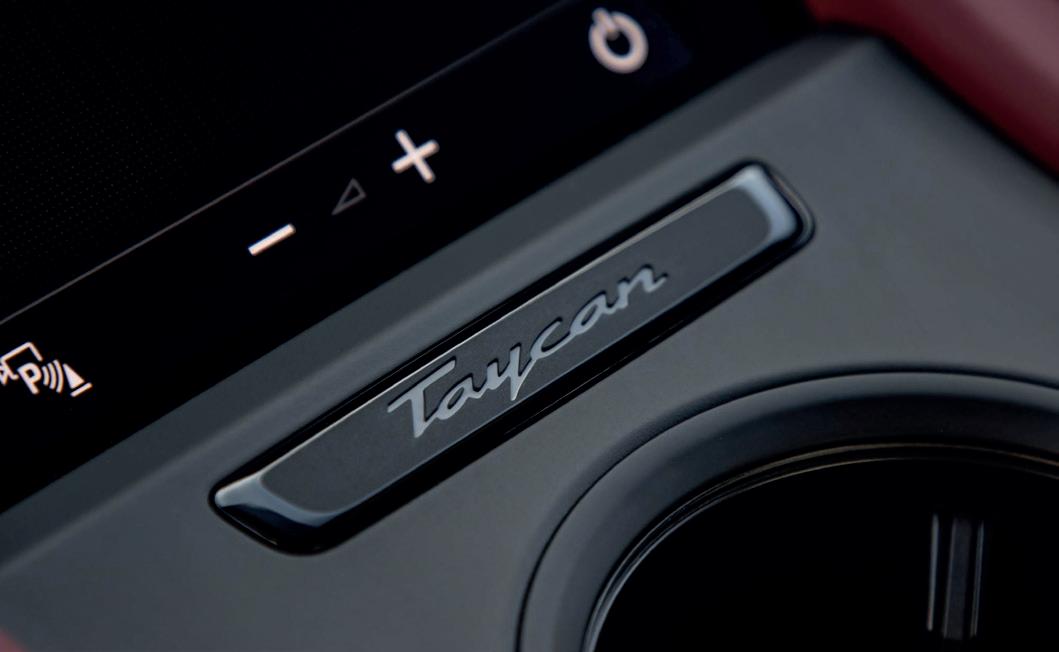
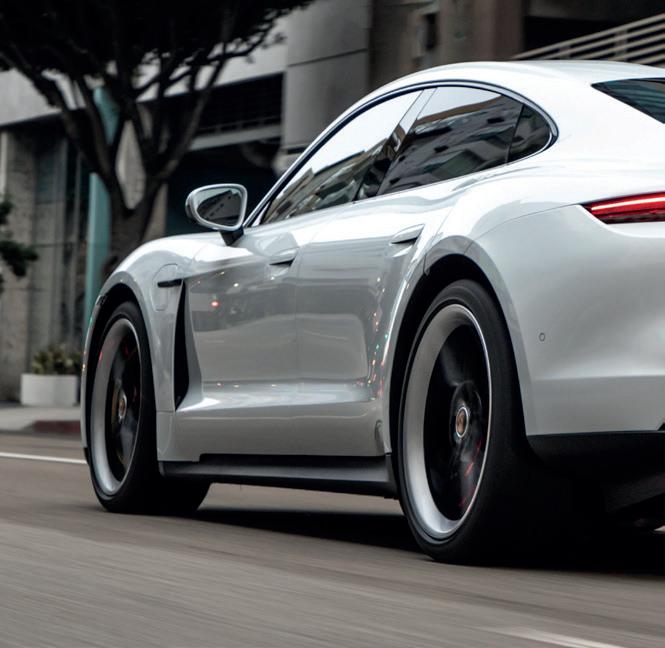
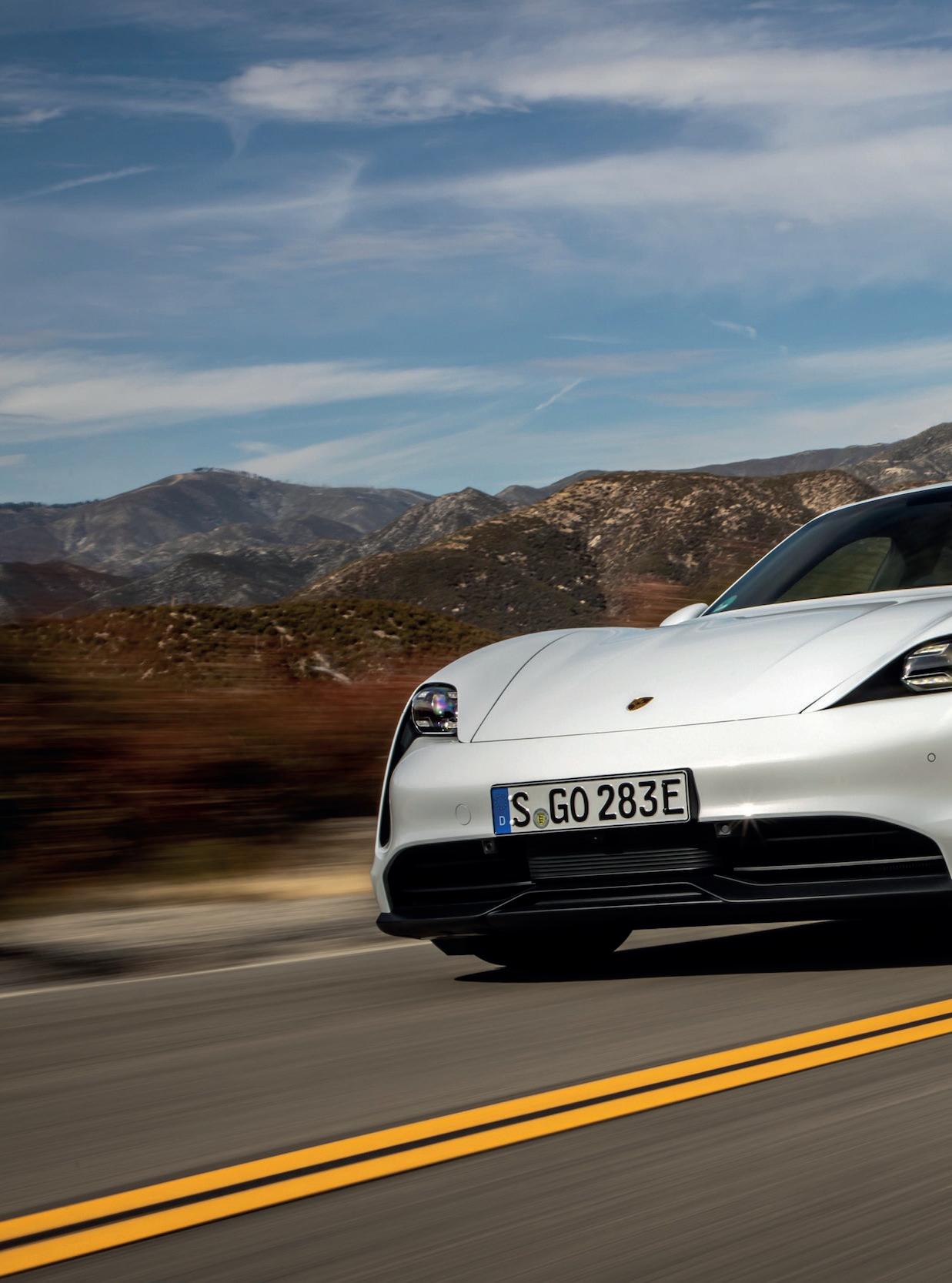
unit and a longer-range 93kWh unit. Unfortunately, this is where the Taycan shows its age compared to newer cars, as the smaller of the two manages an official 230-mile range, while the larger is capable of just 282 miles on the WLTP cycle.
Both the 79kWh and 93kWh batteries are sizeable, making the Taycan potentially expensive to run if relying on the UK's public charging network. Nonetheless, home charging with a dedicated EV tariff can bring a 0-100% charge down to as little as £6.32 for the former and £7.44 for the latter.
Charging times vary, but the 93kWh battery has a maximum fast-charge speed of 270kW. This makes a 1080% charge doable in as little as 20 minutes. With a 7kW home wallbox, a full charge will take around 13.5 hours.
Porsche's vehicle warranty is three years, meaning most prefacelift cars are no longer covered. However, the battery is protected for eight years, meaning all batteries will still be guaranteed to have at least 70% state of health until the end of that period.
On April 1 2025, EVs became taxable under new government legislation,
meaning they are no longer exempt from road tax. As such, all-electric cars registered from April 1, 2017 onwards will now be taxed £195 annually.
Being a Porsche, it's no real surprise that a used Taycan isn't cheap to insure. The most wallet-friendly models to insure come under insurance groups 47 to 50, with the most expensive falling under the top category. For reference, group 50 is the highest insurance group in the UK.
However, less powerful Taycans with the 79kWh battery are in insurance groups 47 to 48, undercutting the comparable Tesla Model S and Mercedes EQS, both of which fall under group 50.
If asked to describe the Taycan's reliability in three words, those words would be "not very good". Following its debut, most of the Taycan's problems have been centred on battery manufacturing faults. It has also suffered high-voltage electronic glitches, along with suspension issues and brake concerns.
Owners have also reported problems with the infotainment and navigation systems crashing, along with slow charging speeds and issues connecting the car to charging points.
Like almost every other dealership network we've mentioned, from BMW to MG, Porsche's network came in for mixed reviews. Some owners cited prompt attention and a strong level of expertise from Porsche technicians; others complained about long wait times for software updates, unresolved technical problems, and expensive servicing costs. Still, nobody ever bought a Porsche as a cheap way of motoring.
Since its debut, Porsche has recalled the Taycan on a whopping 14 occasions. From 2022 to 2024, it was recalled six times alone. In 2021, suspension problems led to recalls in March, June, and December. The same issue reared its head in December 2022, and again in July 2025.
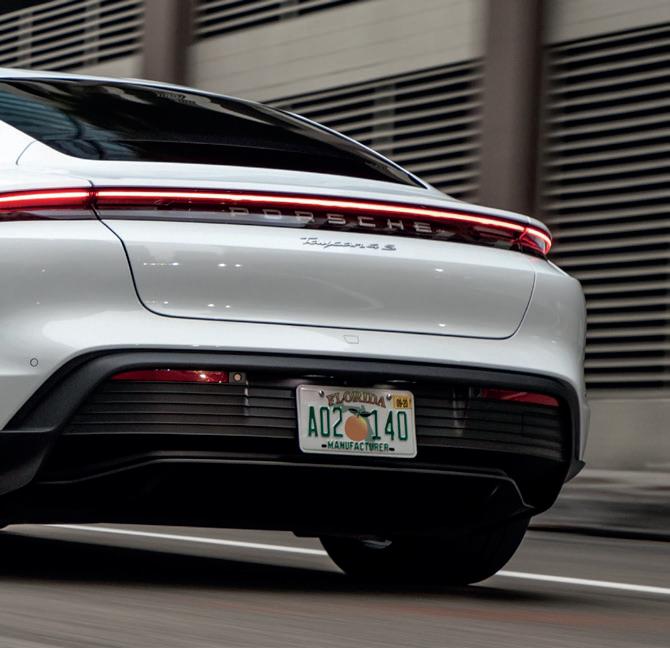
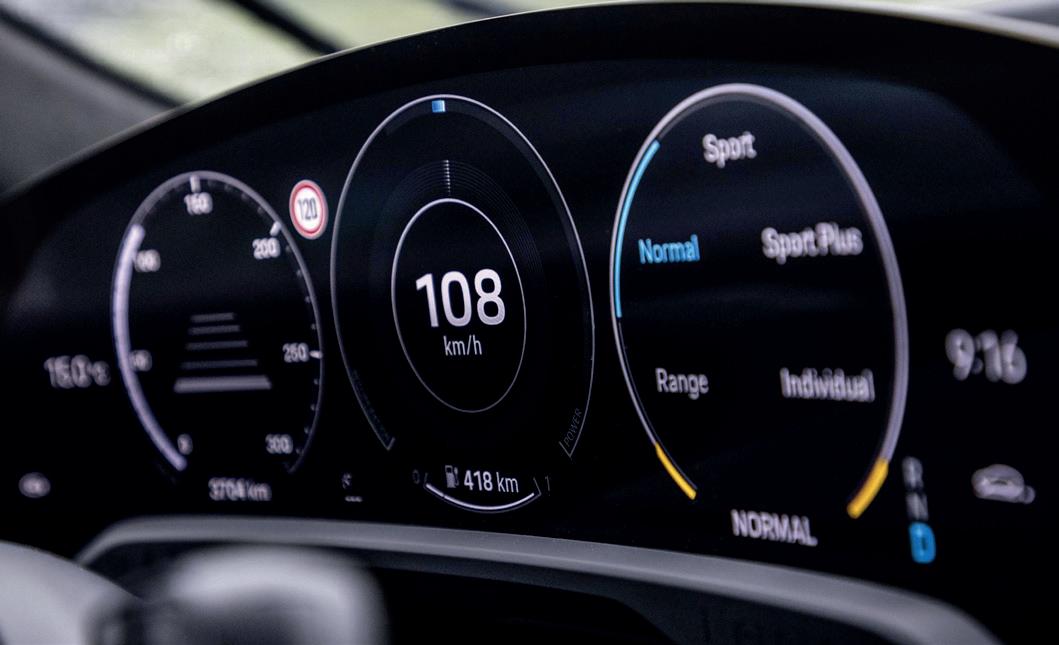
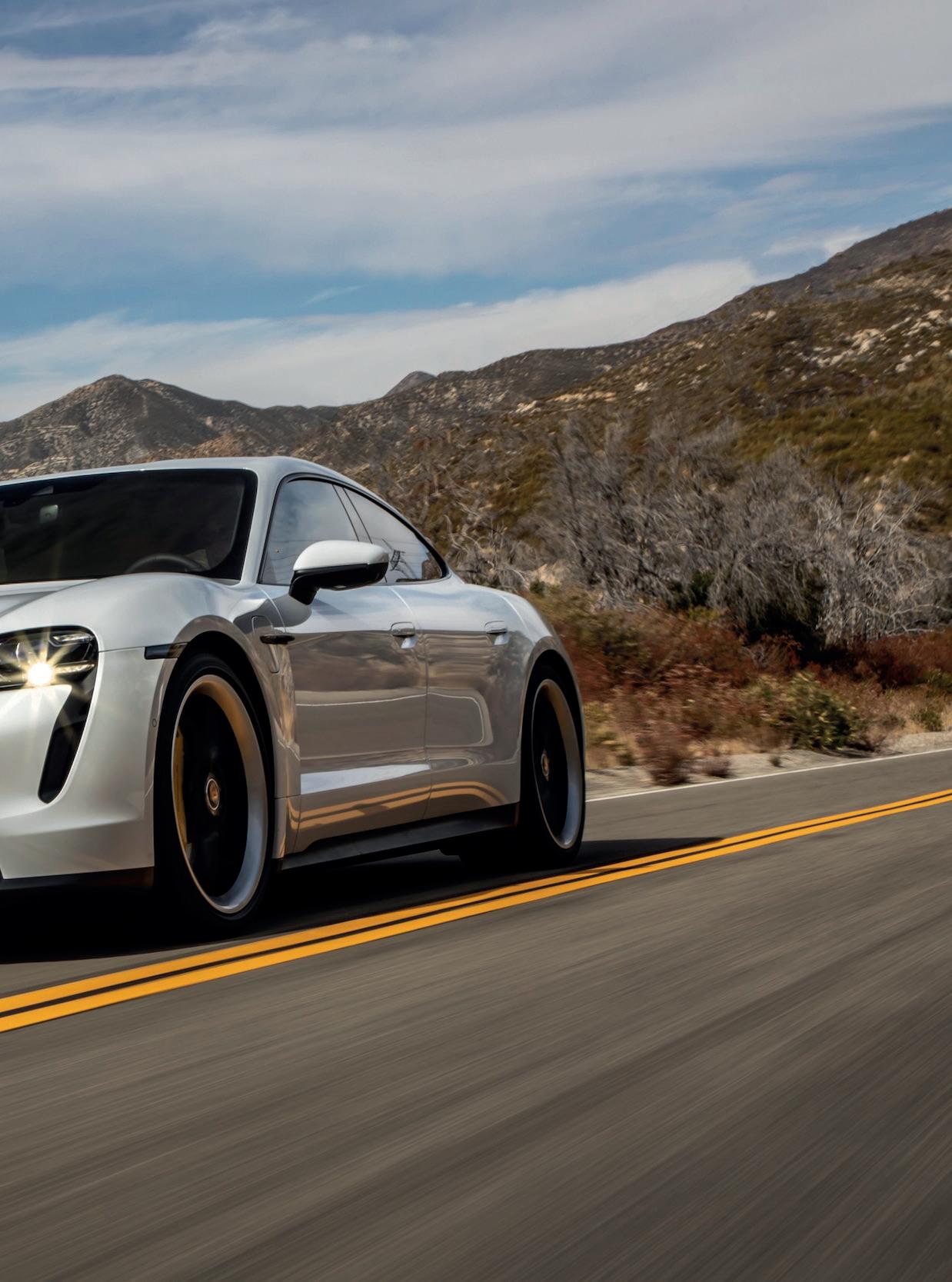
It'd be tempting to opt for the Porsche Taycan GT, but be honest - do you really need 778bhp? No, probably not. You're not Max Verstappen. With that in mind, the dual-motor 4S is our pick of the bunch. Specced with the 93kWh battery, the all-wheel drive 4S will manage up to 282 miles on a single charge, give you plenty of traction, and 483bhp.
While it's tempting to opt for a cheap, high-mileage car, the Taycan's questionable reliability is what puts us off from doing this. As with everything that comes with a high-end price tag, buy the best you can afford from an official dealer with a full service history and the related paperwork. After all, there's nothing more expensive than a cheap expensive German car.


By RICHARD ALVIN
At about 37 lb, Aventon’s newest Solterra is roughly 20% lighter than the prior generation, and you feel that immediately when lifting it, carrying it up stairs or loading it into a car. The weight saving isn’t the headline, though—it’s what Aventon has swapped in and out to get there, and whether those choices actually suit real-world riding. Having spent time on the bike, I’d say they do.
Out of the box, the Solterra 3 ADV looks like a sleek streetfighter rather than a bulked-up e-bike. The matte frame, straight flat bar and minimal graphics give it a purposeful, fast-moving stance even when stationary. It’s no cruiser, and that’s deliberate. Aventon offers four frame sizes, which is a big deal. You’re not forced into a one-size-fits-most compromise and then propping bars or stems to make it work. I hopped onto the medium and it felt dialled straight away—no wrestling with reach or posture. The riding position leans slightly forward, weight balanced between saddle and wrists. It’s efficient and engaging, ideal for someone who wants a quick, active ride rather than an ultra-upright, hands-in-your-pockets stroll.
The drivetrain is a major selling point. Aventon uses a Gates carbon belt drive, a silent, grease-free system that needs almost zero upkeep. It’s paired
with a single-speed setup— no derailleur, no shifters, no cables to fiddle with. That simplicity is central to the bike’s charm. As Aventon explains, the design emphasises low maintenance and nimble, reliable use rather than complexity.
The gearing choice—60-tooth front ring with a 22-tooth freewheel—means you work a little to reach speed, but it rewards rhythm and momentum rather than offering an easy spin at very low speeds. On flats, Eco or Sport assist keeps you comfortable; when hills appear, a quick bump to Turbo or a short standing pedal gets you over the top without drama.
Power comes from a modest but well-matched motor: 250 W nominal, 500 W peak, tuned for efficient, natural assistance rather than brute force. Because the bike is so light and uses a smooth torque sensor, it feels more capable than the numbers might suggest. In testing, it even beat the previous Solterra on a hill climb by a few seconds—proof that lighter, smarter tuning can outperform bigger hardware.
Noise is almost nonexistent. Combine the belt drive, 700- c tyres and that refined motor, and the bike rides in a quiet, serene way unusual in e-bikes. You hear the world around you, not a whirring hub. That calm, connected feel is what sells the Solterra more than any headline stat.
Aventon claims up to 70 miles of range. In practice, as with all e-bikes, results depend on
terrain, rider weight and how aggressively you use the motor.
That’s impressive from a 367 Wh battery integrated into the frame. It’s not removable for daily off-bike charging, but it is serviceable by a technician—an acceptable trade- off for the lighter, sleeker build. Charging is also quick with the provided 4 A charger, and the whole setup feels smart for a bike built to be carried, stored and ridden with minimal fuss.
The cockpit uses Aventon’s BC147 colour display, which is small but clear, showing speed, PAS, battery, trip and more. If the font seems a touch small, you can pair your phone via the Aventon app to see a larger interface, adjust settings or fine-tune motor behaviour. Over-the-air updates, ride tracking, dealer locator and support are all handled through the app—nothing flashy, but solid and genuinely useful.
Motor tuning is an actual benefit here. Stock Turbo is already punchy; with the app you can dial it up or down, tailoring the bike to your roads, your style or your energy levels. It’s a rare and valuable feature on such a lightweight, low-maintenance machine.
The Solterra 3 ADV is meant for riders who want a sleek, straightforward city bike with a little help, not a heavy, feature-packed monster. It suits apartment dwellers, commuters weaving through traffic, students carrying a bike up steps, or anyone who wants an honest, low-hassle ride that still feels quick and modern.























Electrifying commercial vehicles and HGVs is not just about the vehicles themselves – it involves a detailed consideration of how to keep them on the road without disrupting existing operations. Mer has the experience and knowledge to support you on this journey.






Download Mer’s free eguide for fleet managers to learn more about installing the right EV charging to keep your vehicles powered for their mission-critical journeys

Click here to find out more







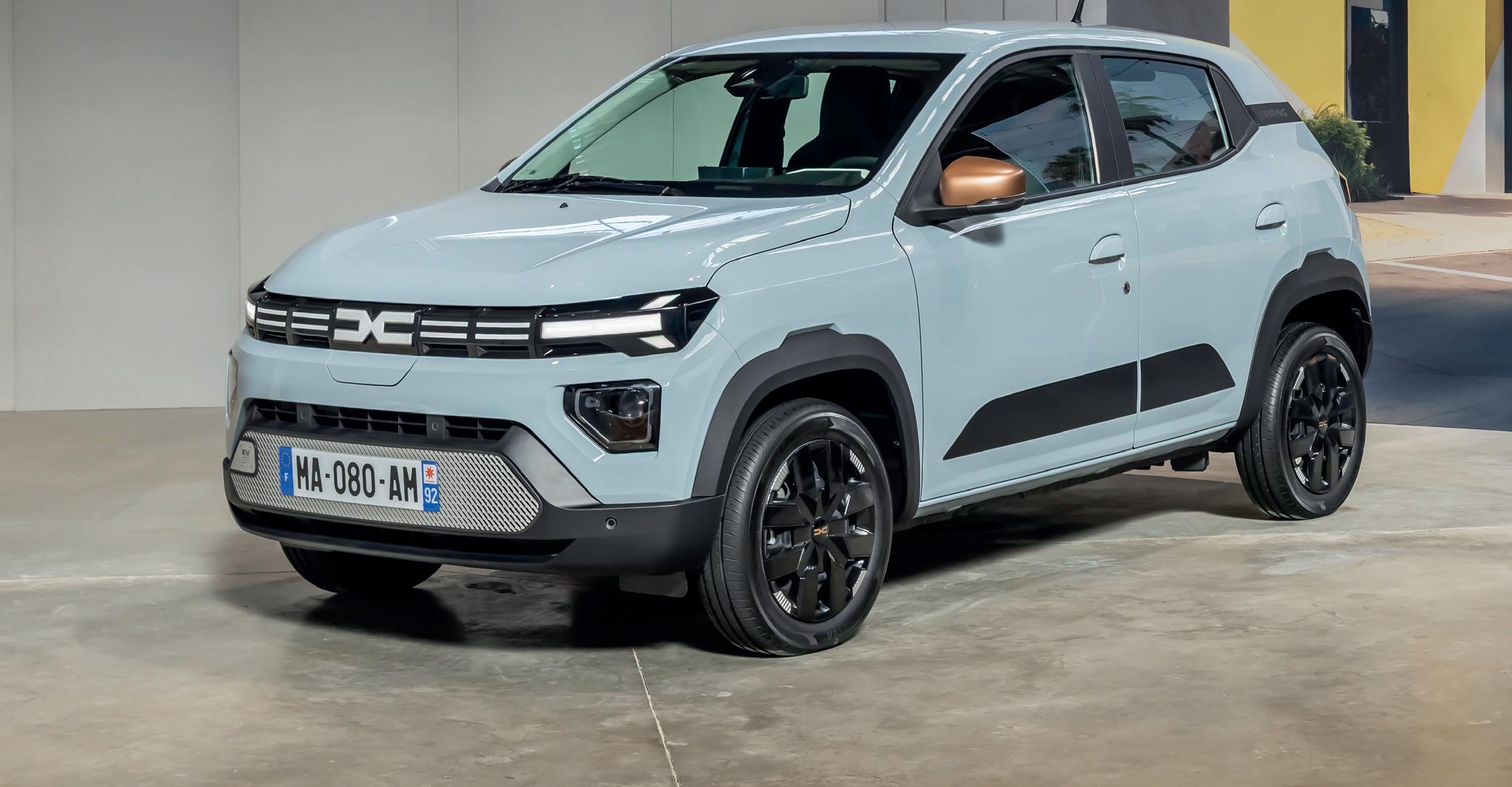
PRICE FROM: £12,240
The Dacia Spring was already the UK’s cheapest electric car but for 2026 the Romanian brand is going all-out to retain its crown. To do so, it is having to offer its own in-house version of the ECG, which knocks £3,750 from the official £15,990 list price. As well as a lower price for customers, the 2026 Spring brings a range of technical updates to this simple city runaround. New motors offer 68bhp or 99bhp and there’s faster charging for its 24.3kWh battery plus chassis upgrades to improve handling. Entry-level cars are a little bare compared to the Leapmotor T03, but even top-spec versions come in at under £14,000 with the savings applied.
2026 is set to be the year of the affordable EV, with more cheaper options than ever hitting showrooms.
That means it’s going to be tough keeping up with the UK’s cheapest electric cars – a task made even trickier by the application of two different levels of discount under the Electric Car Grant.
However, we here at EV Powered like a challenge, so we’ve compiled our list of the 10 cheapest EVs on sale right now, factoring in any ECG or in-house discounts currently being offered.
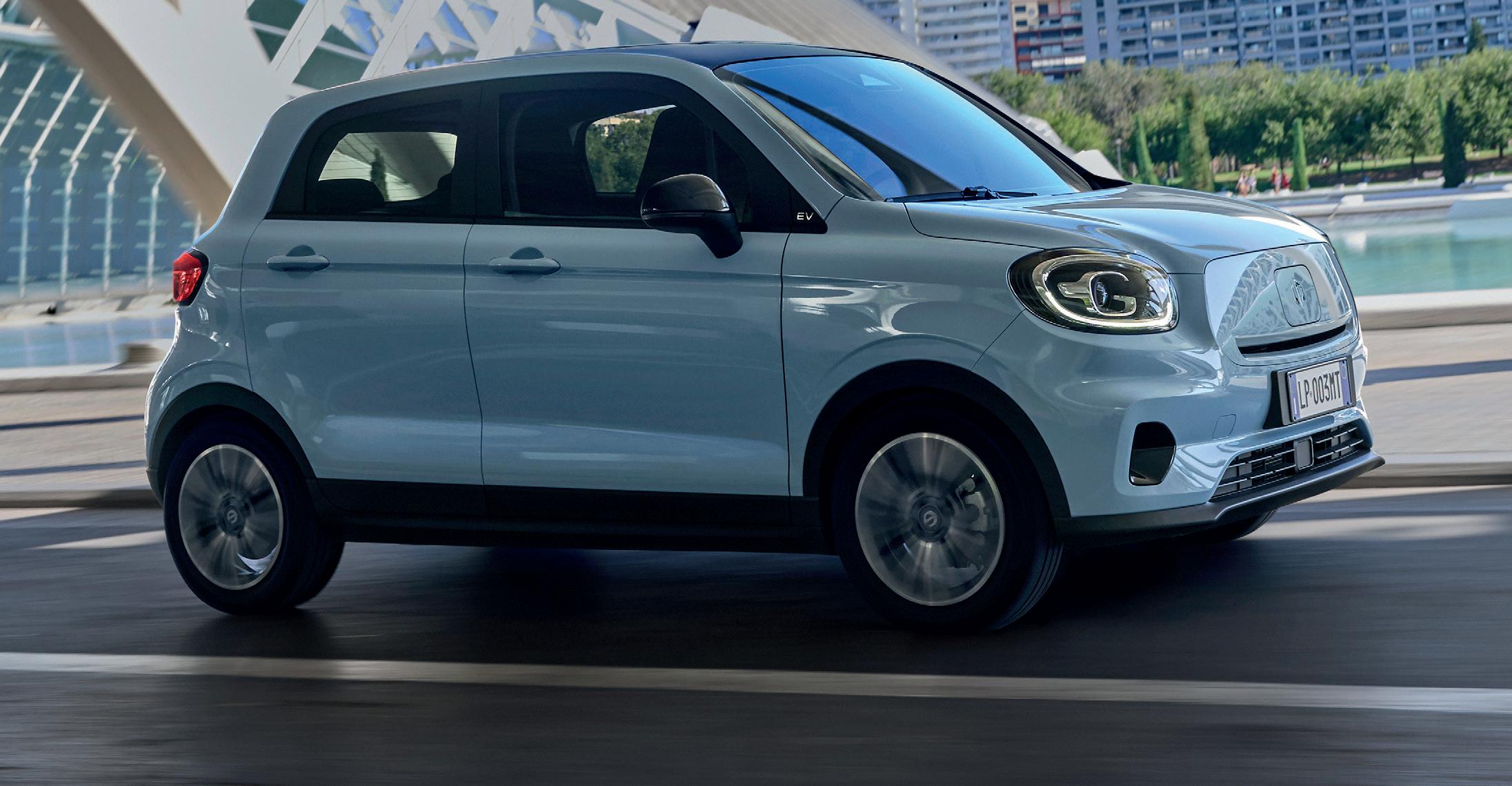
The first model from a joint project between European/US behemoth Stellantis and China’s Leapmotor, the T03 is a tiny A-segment hatchback that won’t win any beauty pageants but does offer a pretty generous spec for the money. Priced from less than £14,500, thanks to an
in-house discount scheme, the T03 gets a 37.3kWh battery good for up to 165 miles, and a 94bhp motor. A 10.1-inch touchscreen, panoramic sunroof, adaptive cruise control and air conditioning are also among standard features. LEAPMOTOR T03 PRICE FROM: £14,495
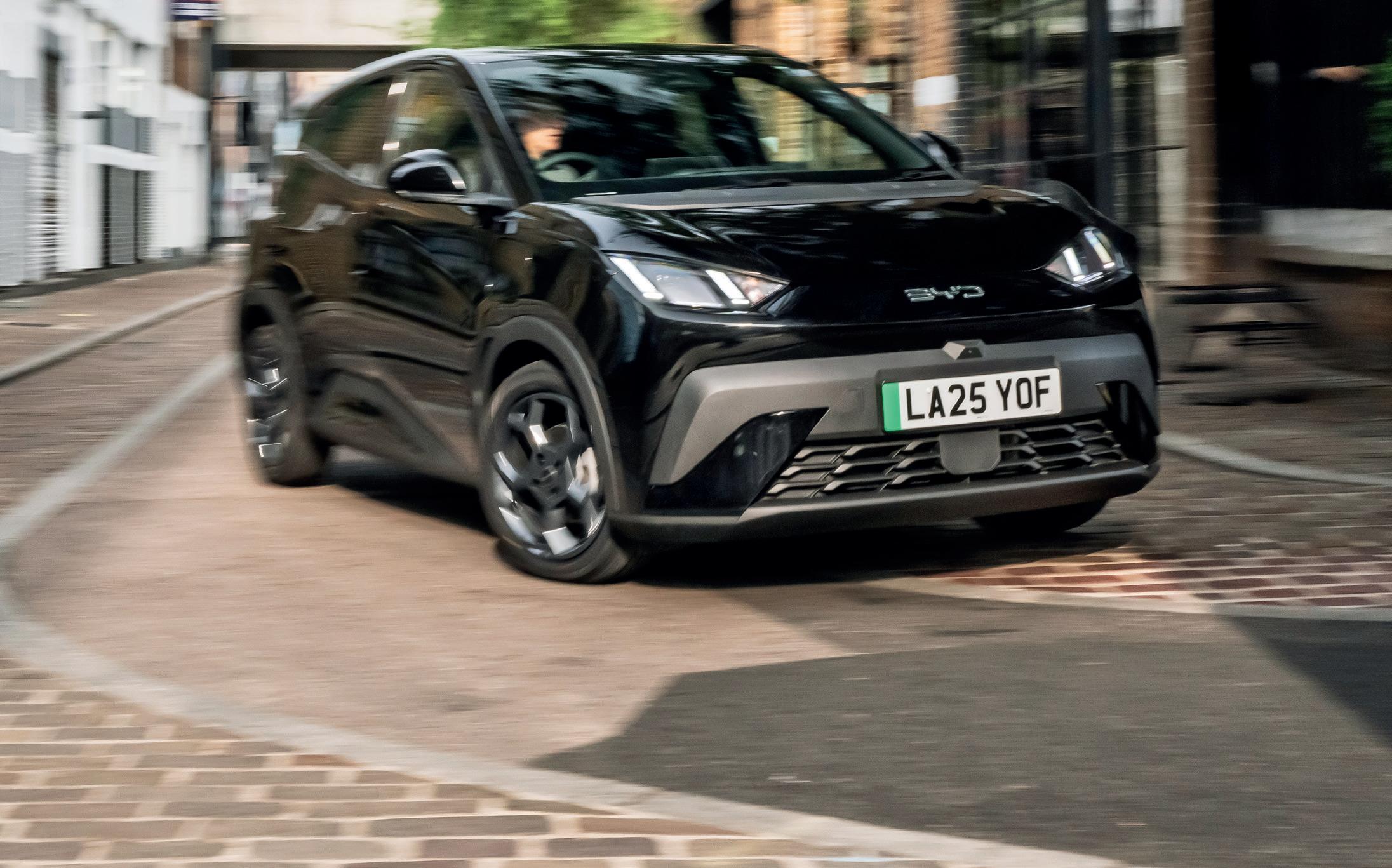
BYD entered the UK market with larger family-focused models such as the Atto 3 and Seal, but is looking to compete at the affordable end too with the Dolphin Surf. Predictably, it's a compact city car but one that's positioned to compete with everything from the Spring and T03 to the Renault 5 and E-C3. Beneath the awkward design is a relatively spacious
(for the segment) and well-equipped four-seat cabin and the choice of three powertrains. The budget-friendly Active trim uses a smaller battery and motor for a Spring-like 137-mile range, while the most efficient Boost offers up to 200 miles. Top-spec cars can't compete with the Renault 5, but at the lower end, there's a lot to like about the Dolphin Surf.
PRICE FROM: £20,995
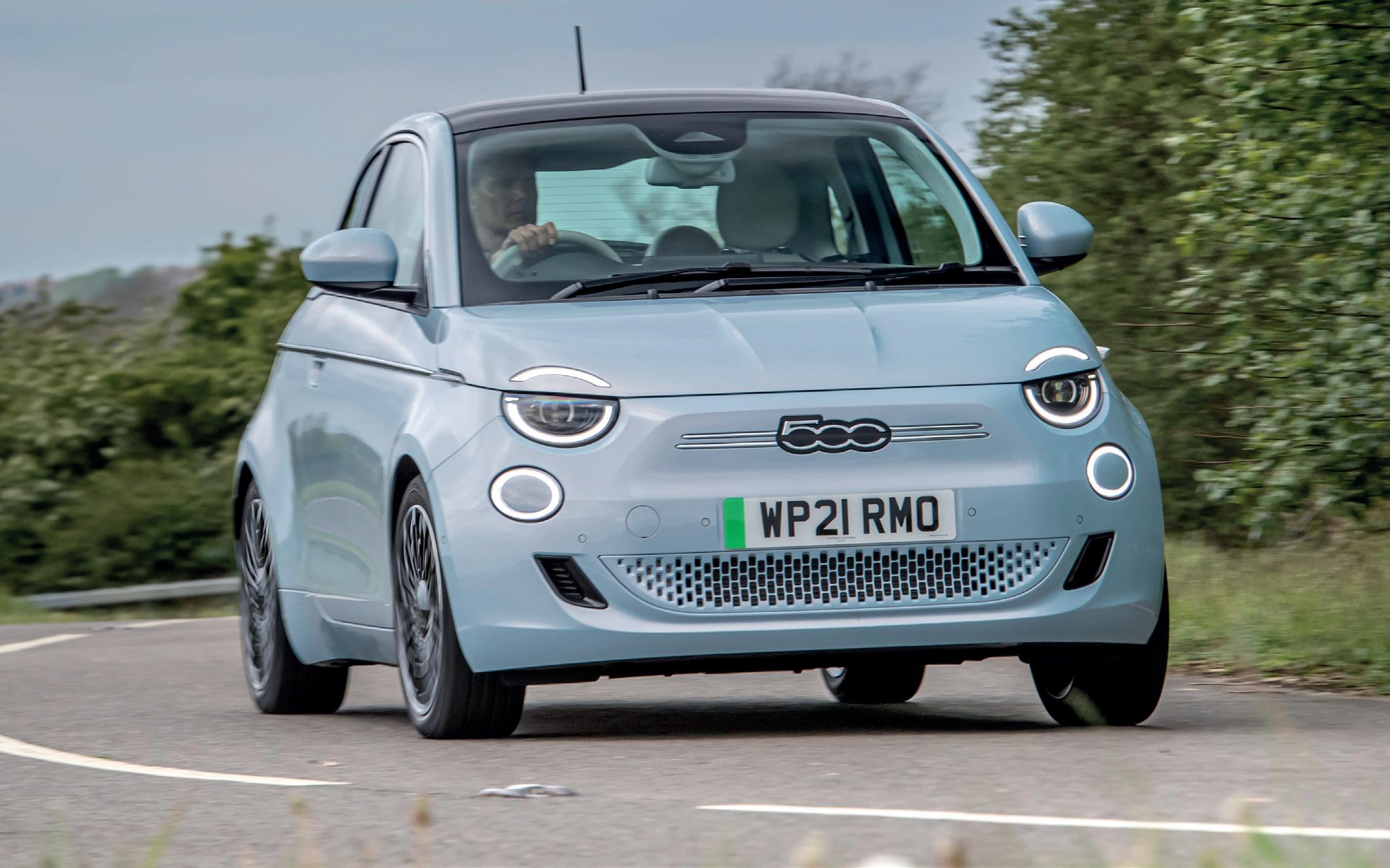
PRICE FROM: £18,650 FIAT 500e
Fiat’s electric reinvention of its retro-chic city car blends the styling cues of the earlier models with a sleeker finish and high-tech interior, and what it lacks in space it more than makes up for in charm. Fiat has just slashed prices again to make it one of the cheapest electric cars available as competition
mounts. Entry level versions come with a less powerful drivetrain featuring a 93bhp motor and 24kWh battery that’s good for around 118 miles of range. If you can find an extra £3,000, higher-spec versions offer an extra 25bhp and, more importantly, a range of almost 200 miles, plus faster charging.
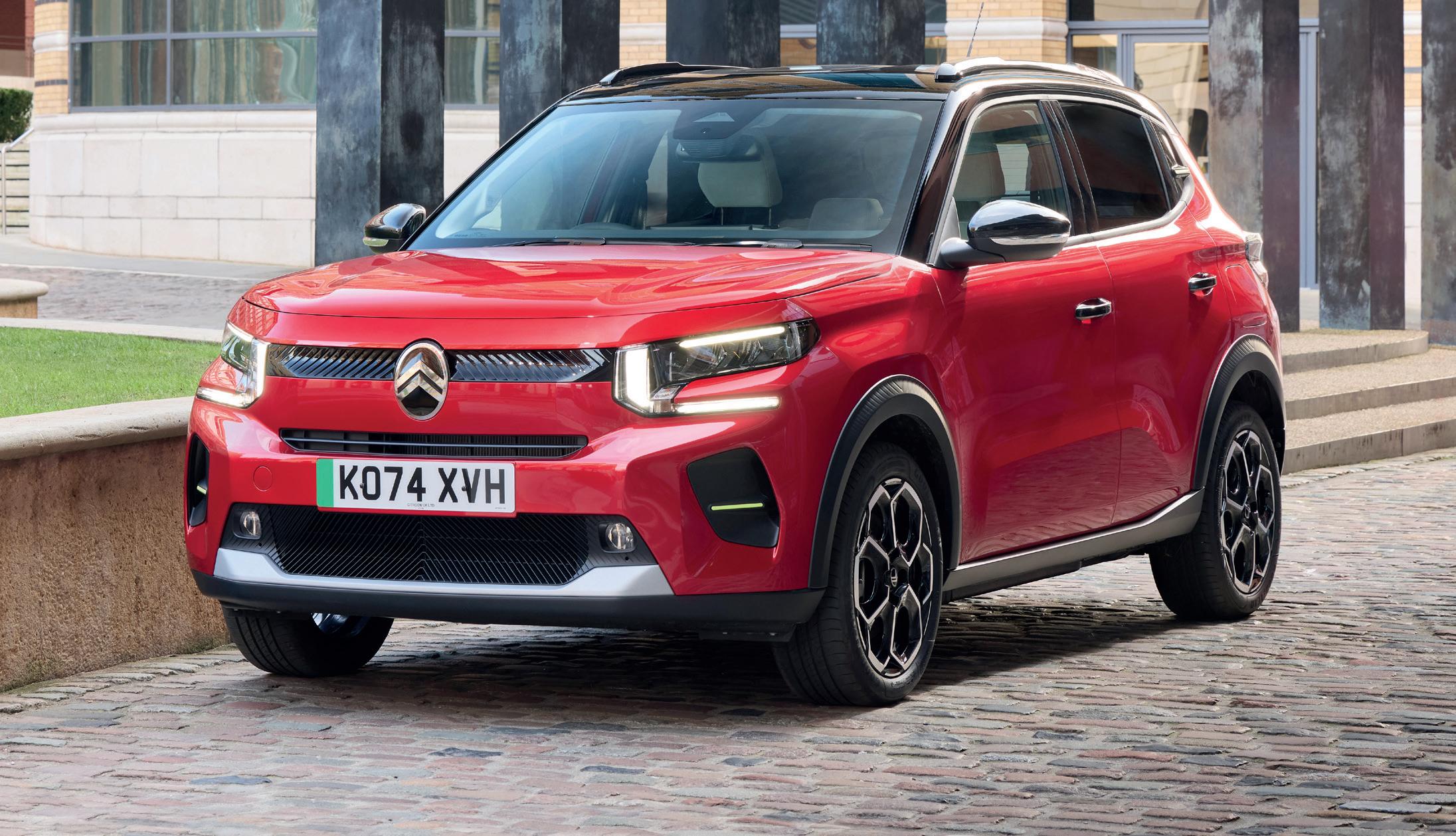
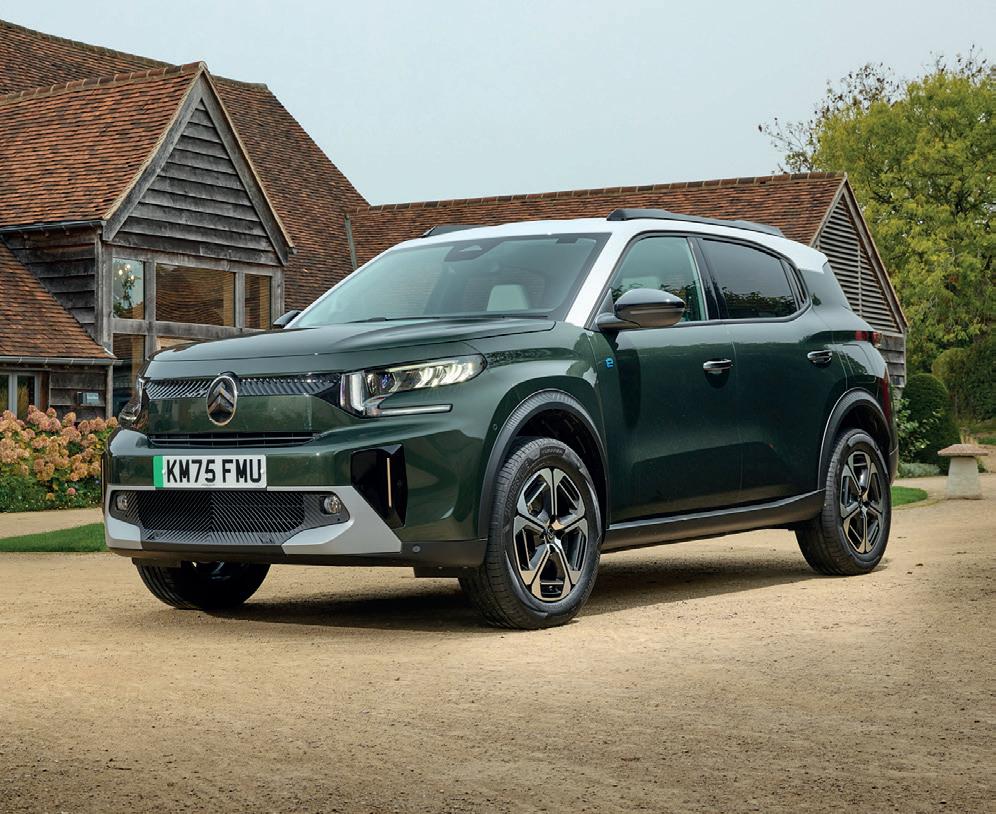
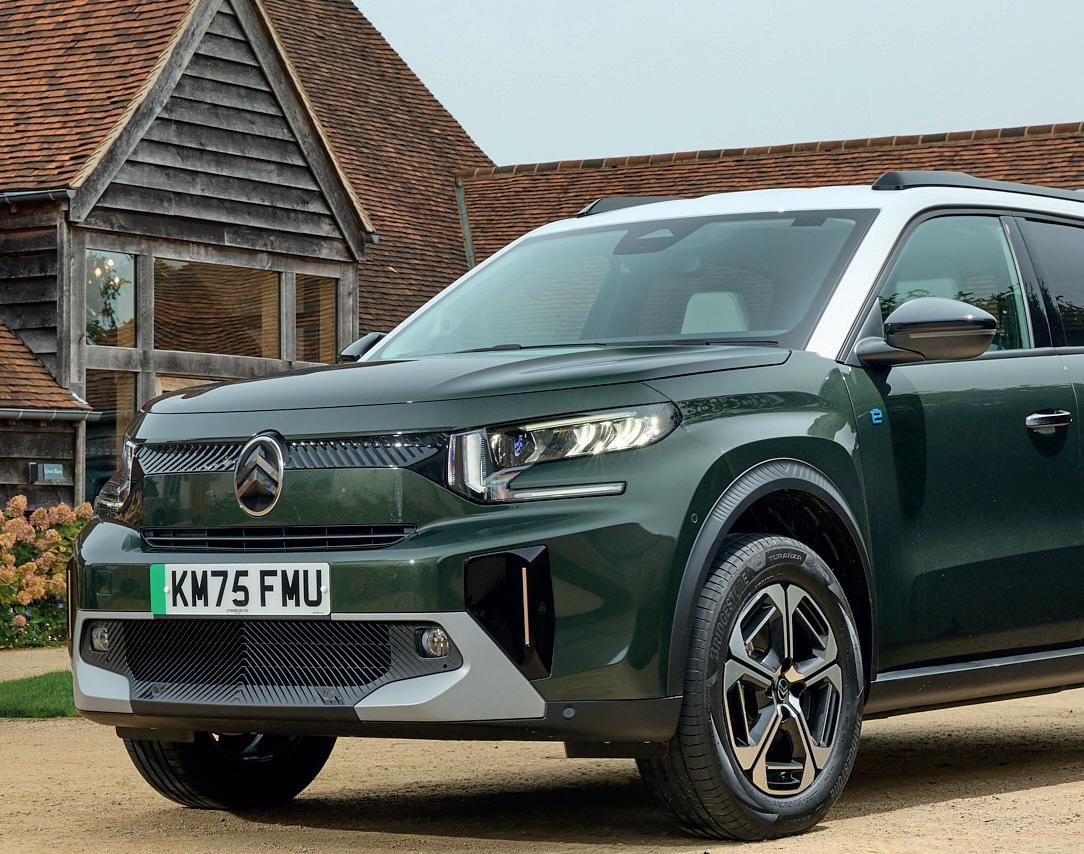
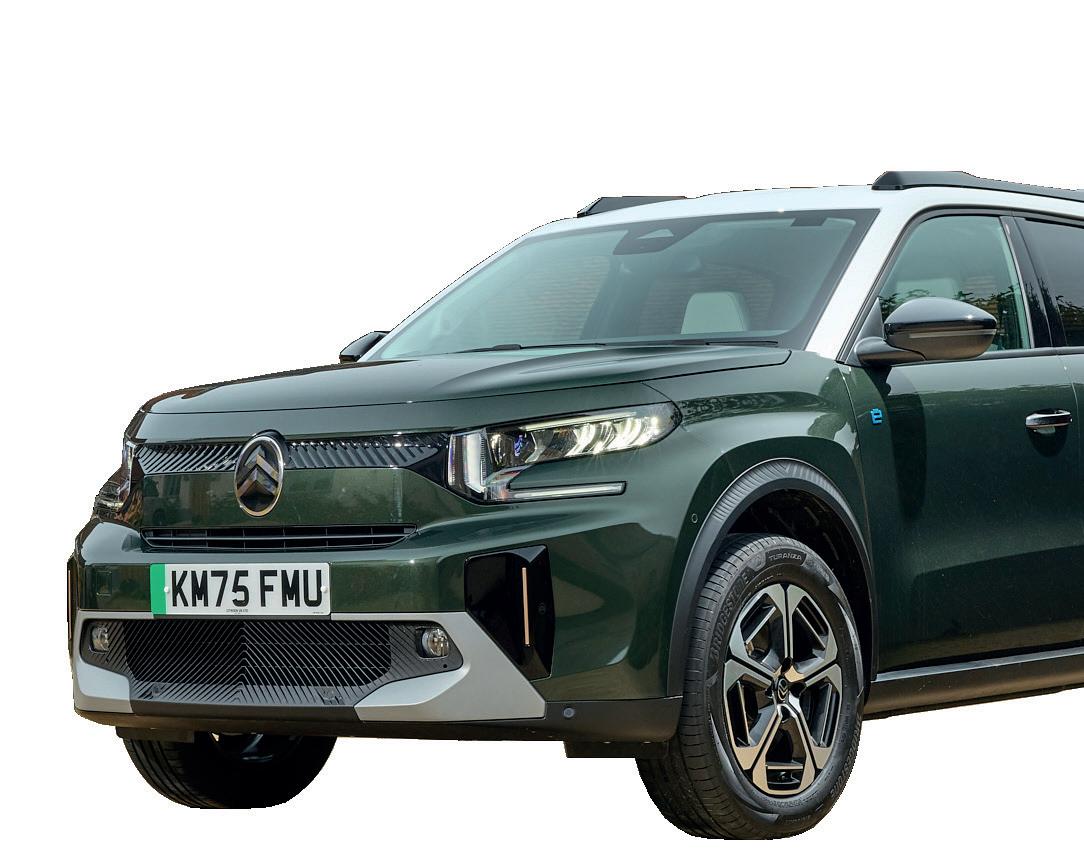
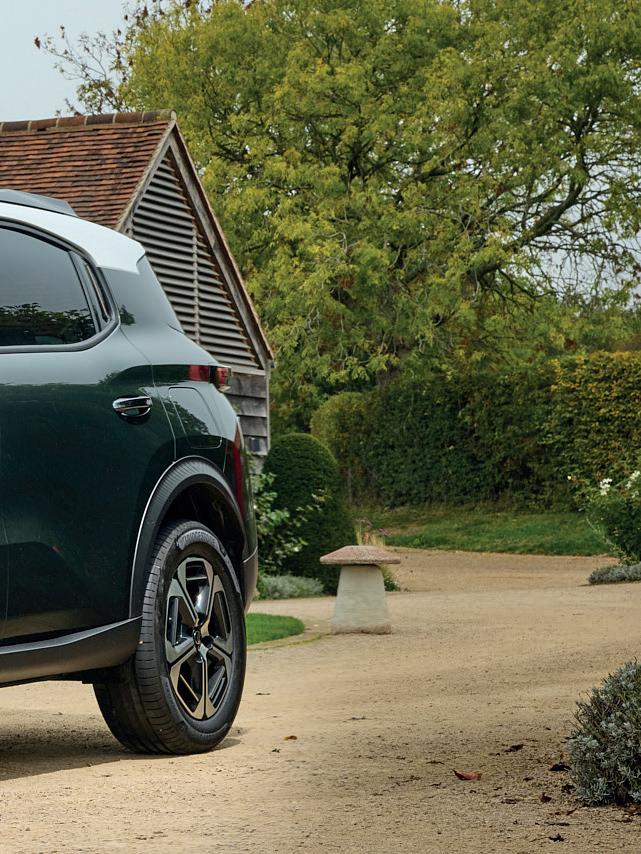
Unlike Citroen's cheapest EV, the Ami, the E-C3 is a proper car, powered by a 111bhp motor and equipped with a 44kWh battery. That means you can safely venture out of the city in the E-C3 and you’ll get almost 200 miles away before you need to charge.
PRICE FROM: £19,995 (INCL £1,500 ECG)
All versions of the E-C3 come with touches such as alloy wheels and two-tone paint and even the well-equipped Max version with heated seats and a parking camera comes in under £24,000 after the ECG, meaning even the higher-spec car would make it onto our list of the cheapest electric cars.
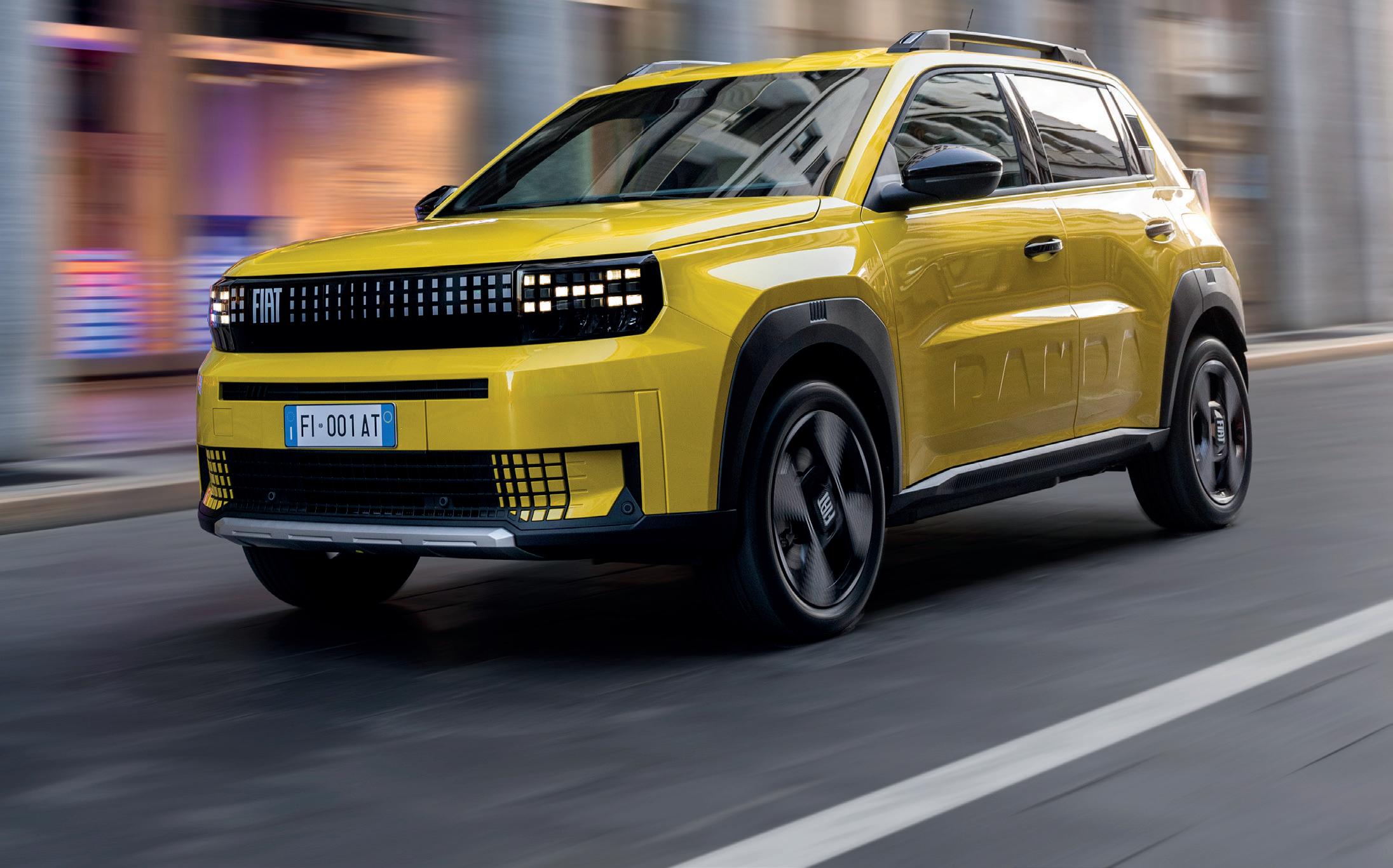
Delayed from last year, the Fiat Grande Panda is finally available to order and is set to cause problems for Fiat’s other small EV. It’s a brand-new model inspired by the beloved Panda of the 1980s and ‘90s, with retro yet modern boxy styling and a funky high-tech interior with space for four.
PRICE FROM: £20,995
This Italian rival to the E-C3 and Renault 5 uses the same underpinnings as the Citroen, which means 111bhp and 199 miles of range from its 44kWh battery. There are three trim levels to choose from, with even top-spec La Prima prices from just over £24,000.
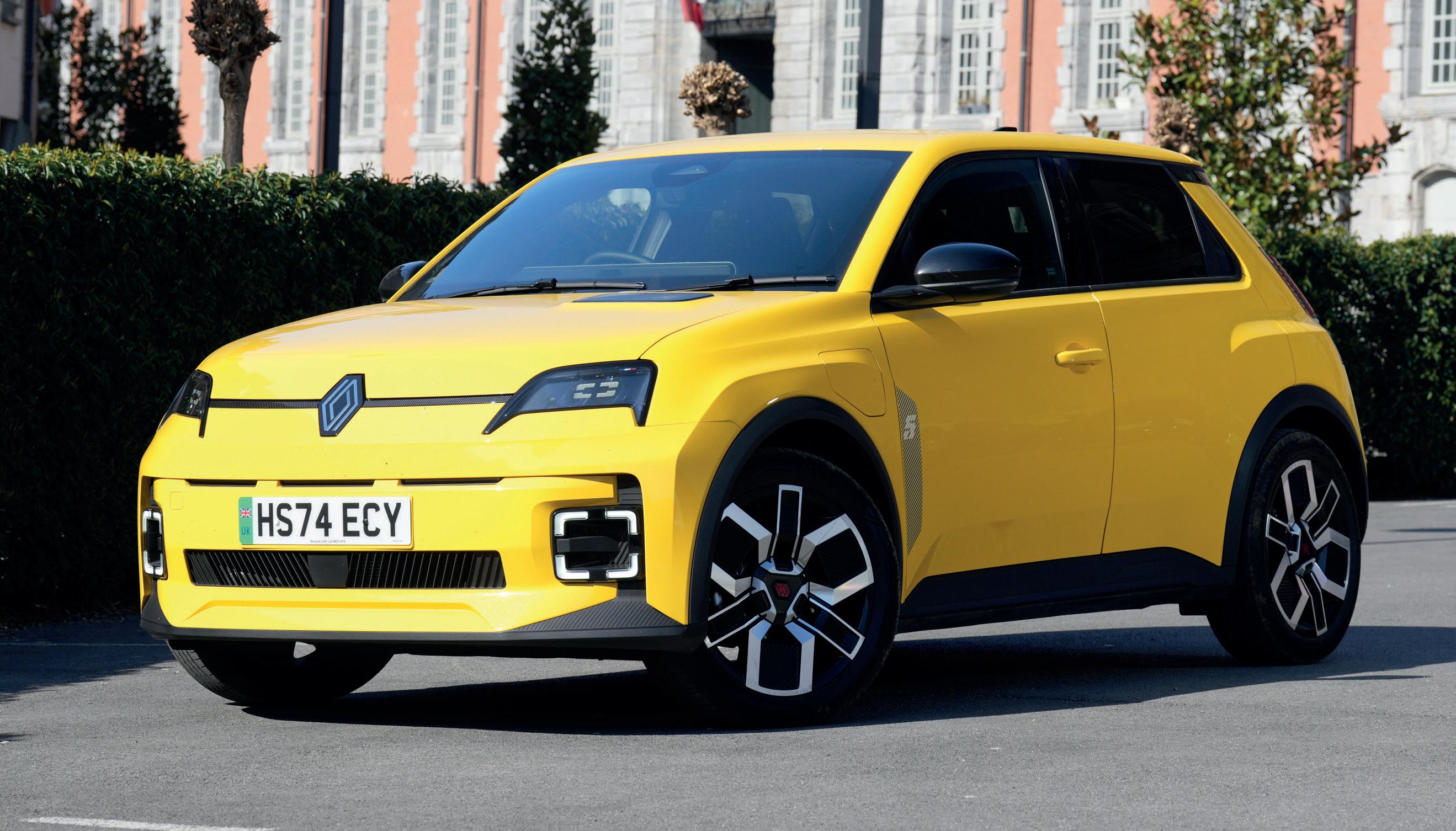
Renault really seems to have got a handle on the whole EV thing. The Scenic and Megane have won awards all over the place and the Renault 5 is following suit. As well as looking fantastic, the stylish five-door supermini offers a competitive 118bhp motor and 40kWh battery good for 190 miles of
PRICE FROM: £21,495 (INCL £1,500 ECG)
range, plus packs high-end kit such as 18-inch alloys, twin digital screens and keyless entry/start for less than £21,500. If your pockets are a little deeper, there’s a more powerful, longer range version too, that starts at just £23,945 thanks to a more generous £3,750 EGC allowance.
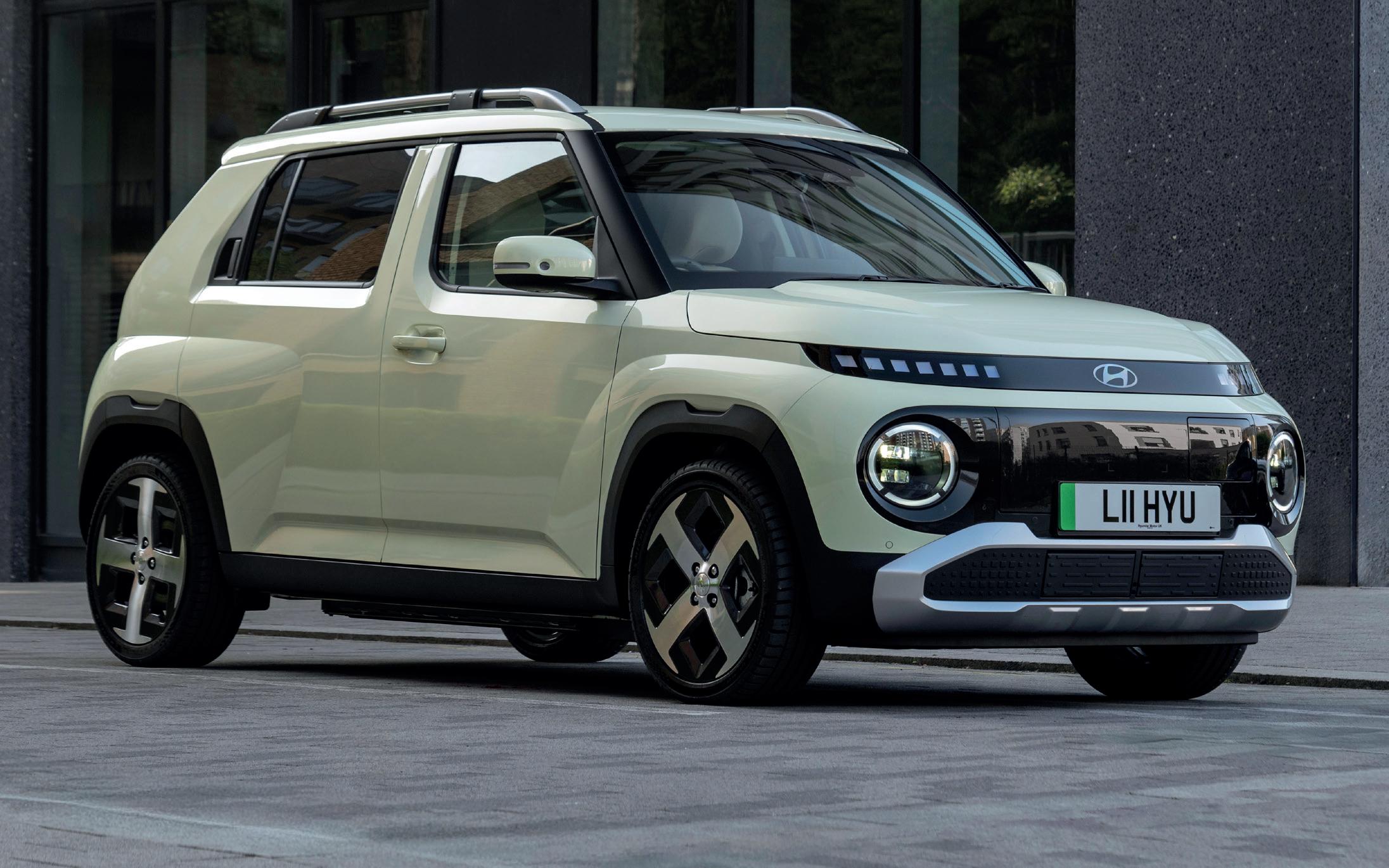
Hyundai is finally bringing its extensive EV know-how from its bigger, more expensive models to the affordable compact sector. Looking like a Land Rover but with the footprint of a Mini, this ruggedly styled city car is going head-to-head with the Citroen and Vauxhall. And it’s
PRICE FROM: £23,755
bringing plenty of tech to the fight. Entry level cars get a 42kWh battery with 203 miles of range, plus a heat pump as standard along with twin 10.25-inch screens, adaptive cruise control, rear parking camera and keyless entry.
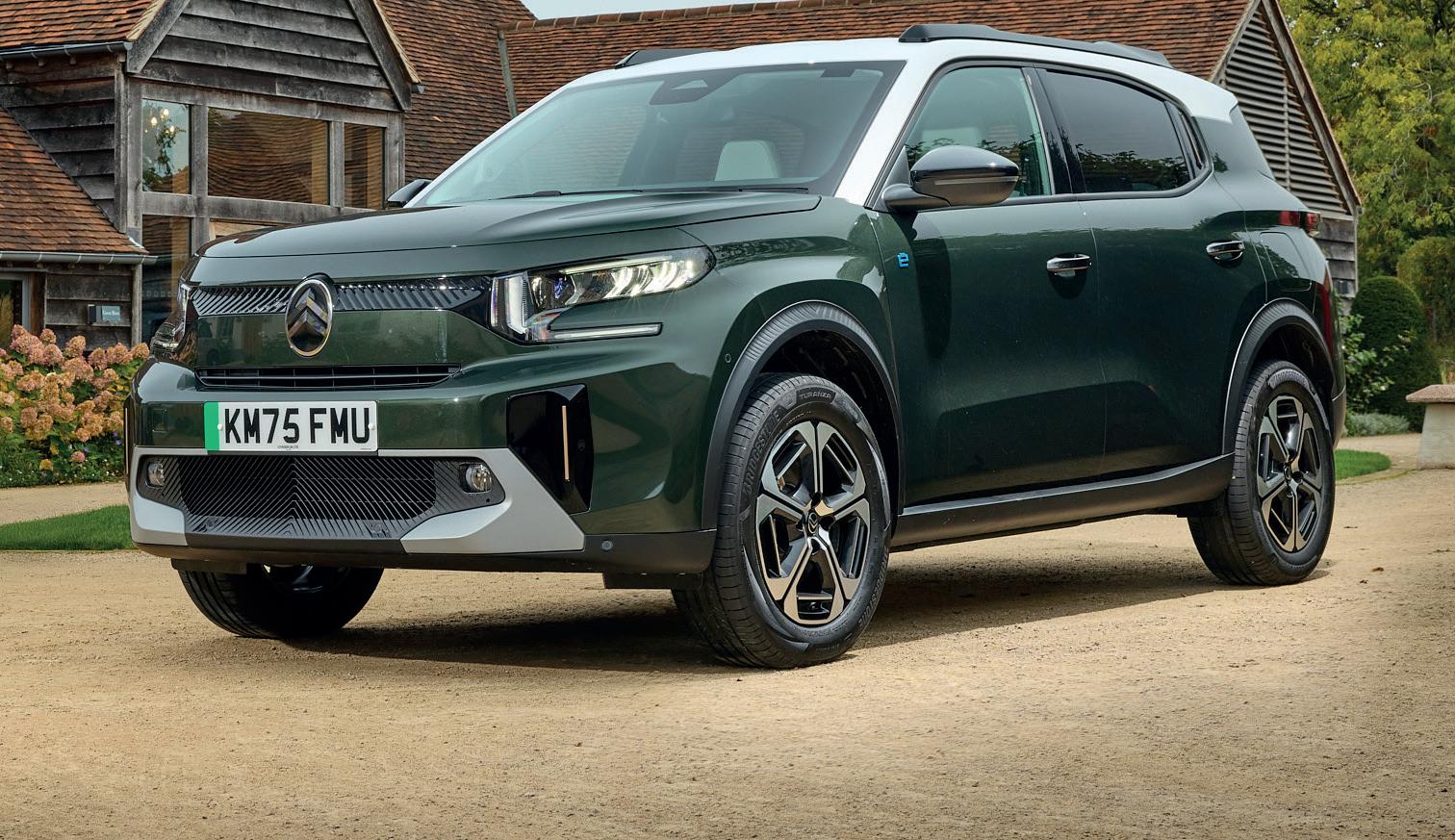
The C3 Aircross name has been around for a while, offering a bigger, more rugged SUV companion to the regular C3 hatch. LIke the E-C3, this latest version uses the Stellantis Smart Car platform and, like its predecessors, is a compact yet practical crossover that offers more
PRICE FROM: £23,095 (INCL £1,500 ECG)
family space in a relatively small footprint. Its bigger, less aerodynamic body means a drop in range to 188 miles but like the hatch it offers Citroen’s Advanced Comfort ride and an impressive specification for the money.
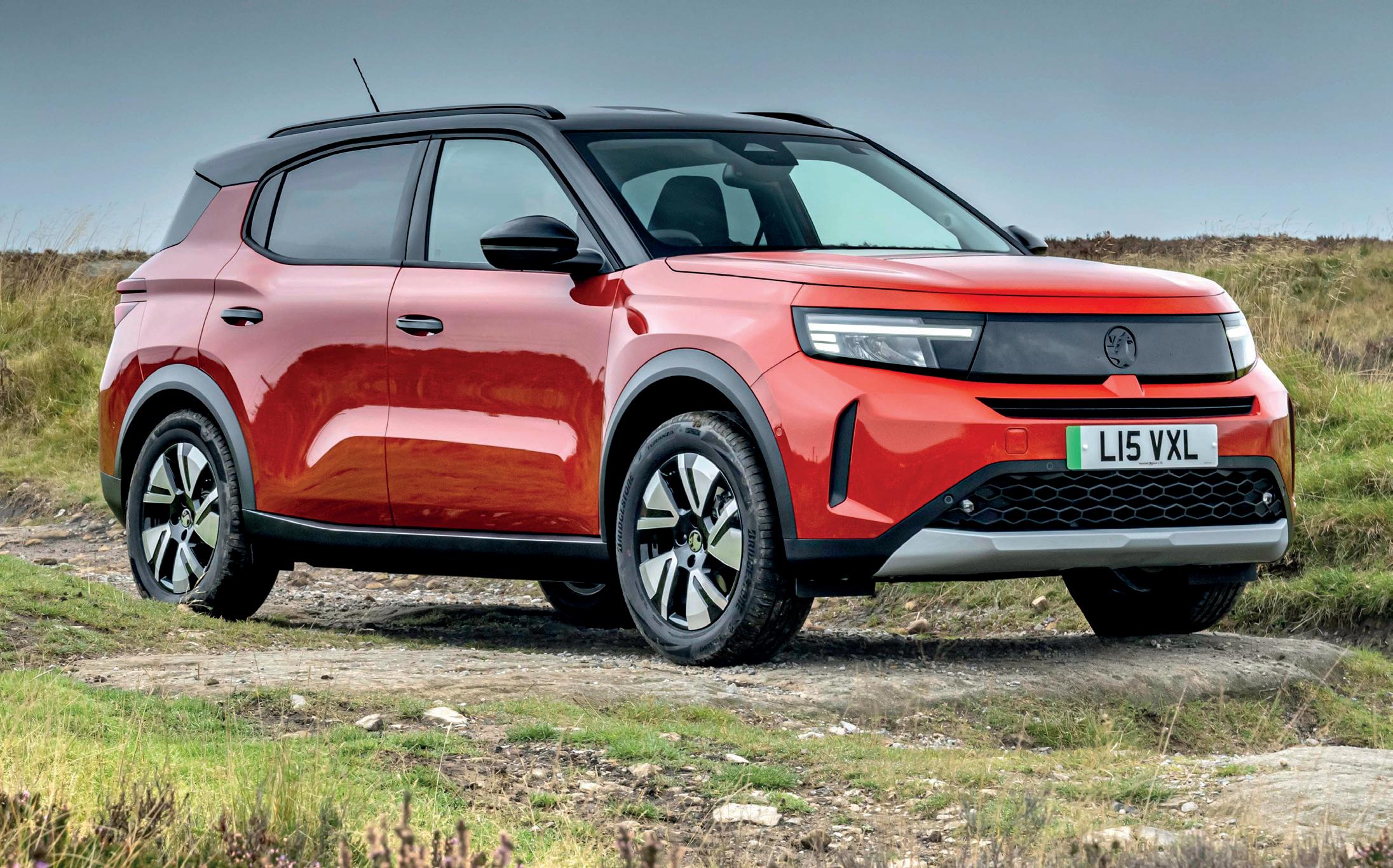
Under the boxy SUV skin, the Frontera shares the same ‘Smart Car’ platform as the Citroen E-C3 and its Aircross sibling. That means it gets the same 111bhp motor and 44kWh battery, which in this larger vehicle means a range of 186 miles. There’s also a more
PRICE FROM: £23,995 (INCL £1,500 ECG)
expensive 54kWh version with 246 miles of range. On top of that, the Frontera is a practical compact SUV designed for family life, with twin 10.25-inch digital screens, sat nav, reversing camera and cruise control as standard.
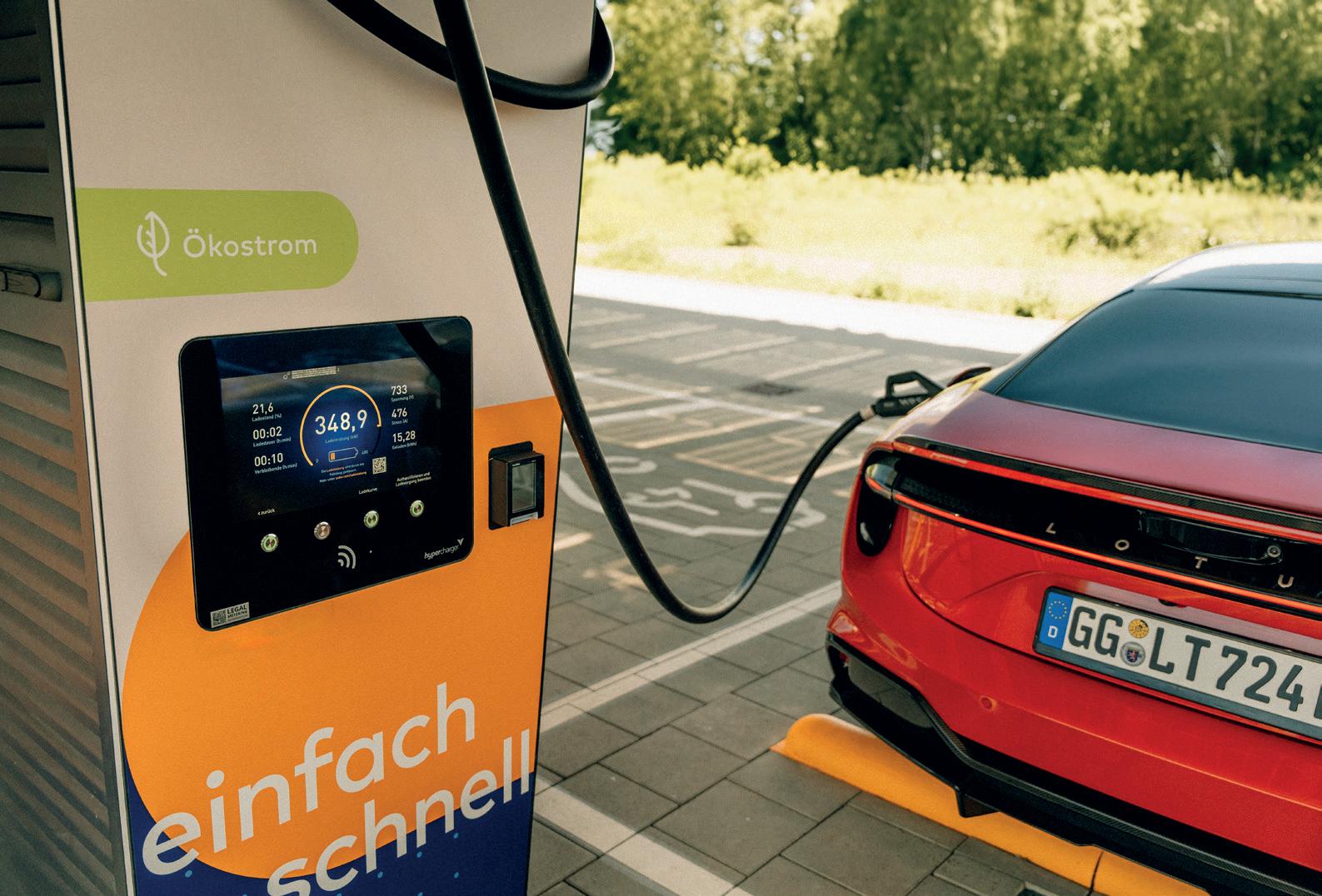
High-power charging has the single biggest effect on EV battery degradation, according to a new study.
Research by connected vehicle specialist Geotab shows that EV batteries continue to perform strongly throughout their lifespan but that average
degradation rates have actually increased due to wider reliance on ultra-fast charging.
In its updated EV battery health study, the company analysed real-world data from more than 22,700 electric vehicles across 21 makes and models over several years. It found an
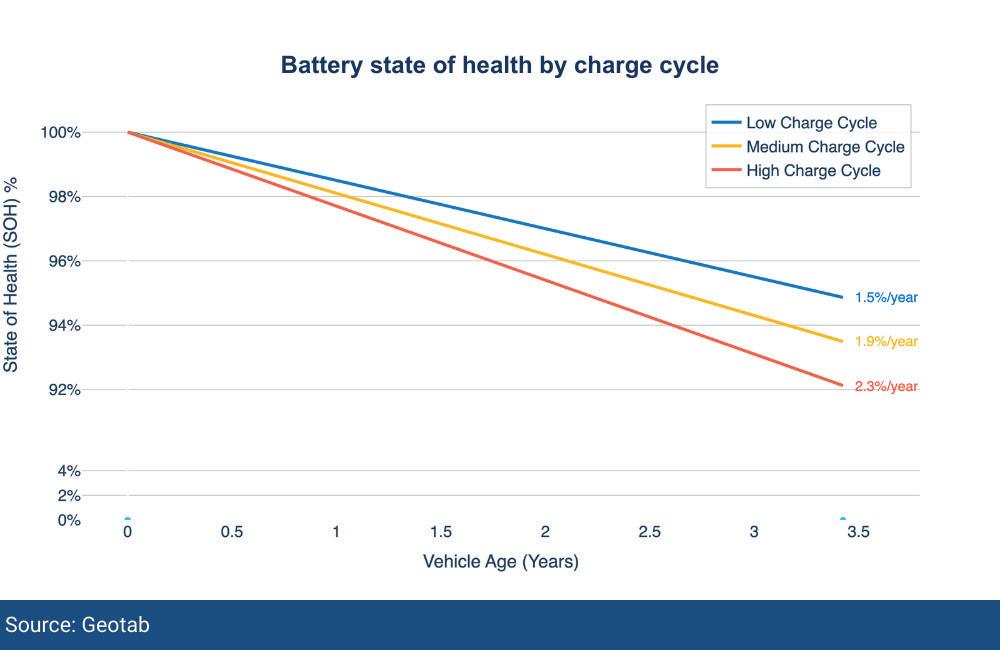
average annual battery degradation rate of 2.3%, compared to 1.8% in its 2024 findings.
Geotab’s analysts put the sharper drop in battery health down to the changing way EVs are being used, most notably a growing reliance on highpower DC fast charging.
Its data showed that vehicles that relied heavily on DC fast charging above 100kW experienced degradation at twice the rate of those using lowerpowered chargers. Cars depending on ultra-rapid chargers saw average degradation of 3% per year, compared with around 1.5% for vehicles mostly using AC or lower-powered DC chargers.
Other factors, such as climate, showed a smaller independent effect. Vehicles operating in hotter regions degraded around 0.4% faster per year than those in mild climates. Higher-use vehicles also showed slightly faster degradation, increasing by around 0.8% per year compared to the lowest-use group
However, the study also suggested that strict charging habits had a less-than-expected impact on long-term battery life. It found that, contrary to previous belief, degradation accelerates only when vehicles spend more than 80% of their time at very high or very low states of charge.
“EV battery health remains strong, even as vehicles are charged faster and deployed more intensively,” said Charlotte Argue, senior manager for sustainable mobility at Geotab.
“Our latest data shows that batteries are still lasting well beyond the replacement cycles most fleets plan for. What has changed is that charging behaviour now plays a much bigger role in how quickly batteries age, giving operators an opportunity to manage long-term risk through smart charging strategies.”
Separate studies have suggested that battery degradation rates are slowing with every new generation of vehicle and are, in some cases as low as 1% per year.
In July last year, Germany’s motoring organisation ADAC revealed that a Volkswagen ID.3 had lost just 9% of its usable capacity over four years and almost 100,000 miles of driving. More impressively, it had lost just eight miles of usable range in that time thanks to improved battery management software rolled out via over-the-air updates.
This is Jasmin. She’s one of many business owners who already use a smart meter to feel more in control of their budgeting, because smart meters help you track your energy use and costs over time.
So like Jasmin, you can spend less time guessing and instead know how much you’re spending on your energy bills.
Search ‘get a smart meter’ today.


At the launch of its Volvo EX60, brand CEO Håkan Samuelsson described Gothenburg’s latest EV as a “new beginning” – it’s so much more than that, though, writes George East
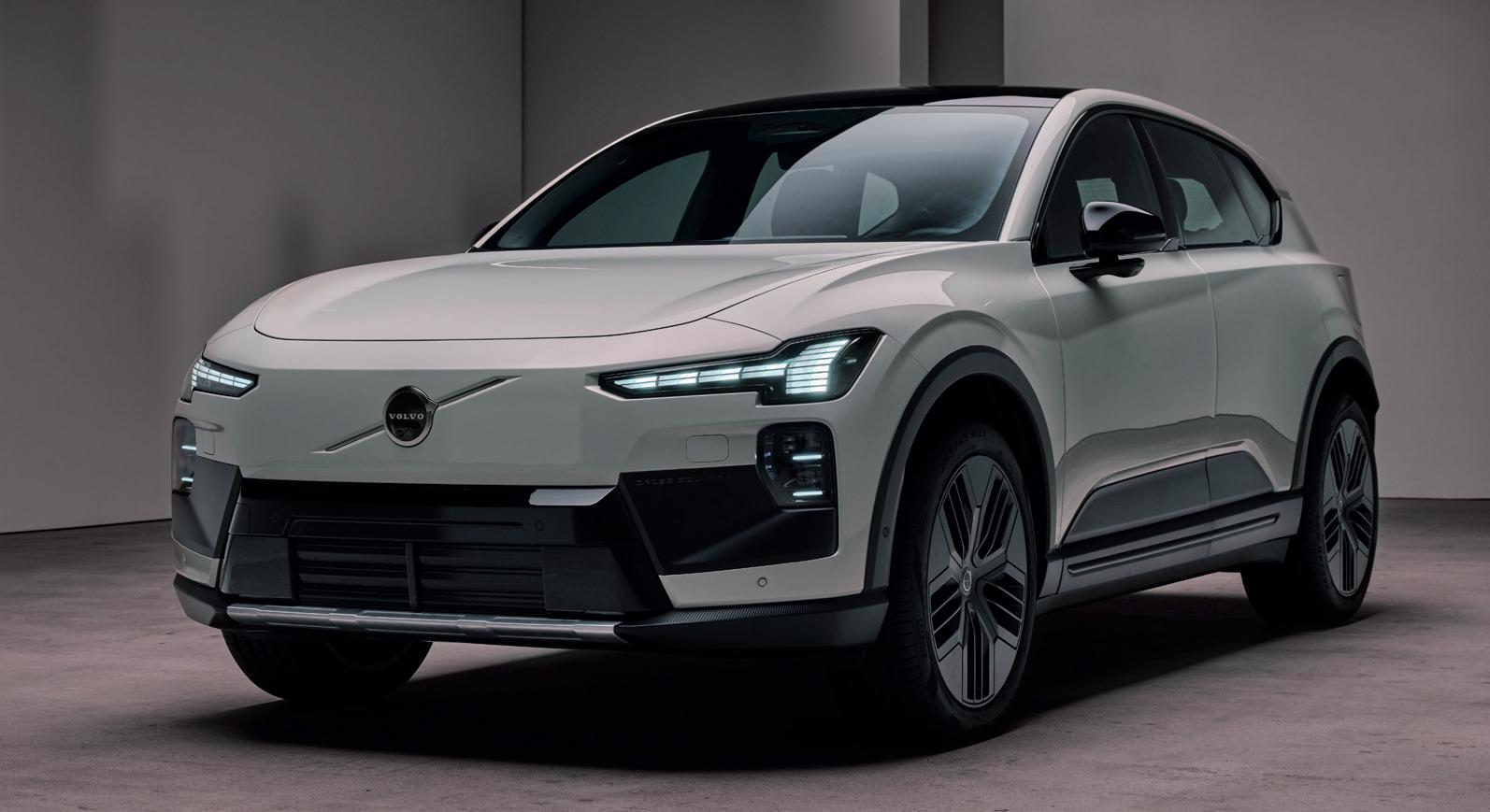
After Volvo unveiled its smart-looking EX60 at an unsurprisingly cool and understated event in Stockholm, ‘car people’ around the world breathed a collective sigh of relief.
This group outpouring wasn’t just because the EX60 is the all-electric equivalent of the muchloved XC60, the best-selling Volvo of all time. Oh no. The EX60 represents so much more than that.
To say Volvo’s switch to electrification hasn’t been easy is putting things mildly. Under the leadership of ex-CEO Jim Rowan, the marque sought to redefine Volvo for the 21st century.
Understanding what makes Volvo owners such a loyal bunch is key to understanding Volvo’s core principles of safety, innovation, dependability, and a much-welcome lack of bling ‘n gimmicks. Yet instead of bringing these fundamentals into a new era of electrification, Rowan sought to transform Volvo from a car maker that uses tech for the benefit of its customers, to a tech firm that builds cars.
This radical approach works for relatively new automakers – Tesla, BYD, Rivian, Xiaomi, for example. But to radically un-stitch the (sustainably-sourced) fabric of what makes Volvo Volvo? It was a gamble that would never pay off.
And it didn’t. Volvo’s first dedicated EV (rather than a reworked ICE car), the EX30, was plagued by software issues, and a general sense of ‘unVolvoness’. The follow up EX90 fared worse.
Volvo’s debut Software-Defined Vehicle, or SDV, the EX90 was built around a big-brained Nvidia Drive computer... that didn’t work. The EX90 was delayed by a year due to a variety of software issues, and Rowan was promptly shown the door.
To right the course of the Good Ship Gothenburg, Volvo brought back Rowan’s predecessor, Håkan Samuelsson; a man whose decade-long leadership of the firm from 2012 to 2022 oversaw some of the greatest Feely-era Volvos ever made: think Polestars V60 and S60, and the second-gen Volvo XC60 and XC90.
At his core, Samuelsson gets Volvo. Most crucially of all, he gets what Volvo buyers want. At the EX60 launch, the 74-year-old told the motoring press that the EX60 was “the most important car” for Volvo. He wasn’t wrong. It simply can’t afford another EX90style debacle, in both PR or financial terms.

It was that same event that saw the EX60’s range figure steal the front pages. In top-tier guise, Volvo’s latest can manage 503 miles from its 117kWh battery, beating key rivals the BMW iX3 and Mercedes GLC, and making it the world’s longest range EV to date (by WLTP testing).
Perhaps most symbolically, it was a clear warning shot that Gothenburg had learned from the EX30 and EX90, and awoken from its innovative slumber.
Volvo may have lay dormant for the last few years, but don’t forget that this is the car manufacturer that, amongst several other significant automotive firsts, pioneered the three-point seatbelt, crumple zones, the three-way catalytic converter, the rearfacing child seat, and side airbags.
There’s nothing yet to suggest that the EX60 will capture the very essence that makes a Volvo a Volvo, but it exudes a quiet confidence suggesting that all of the key components are in place.
Oh, and one last thing. Unlike the EX30 and the EX90, the EX60 will be built at Volvo’s Torslanda factory in Sweden, which has been building its cars since 1967.
Perhaps a return home and a return to normalcy was what Volvo’s EV programme needed all along.