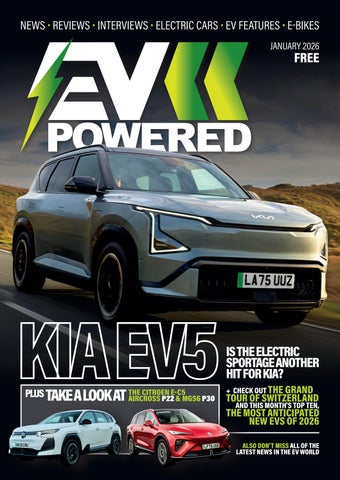
KIA EV5
Happy new year and welcome to the first EV Powered of 2026.
I would like to say that after a frantic 2025 we’re easing into 2026 gently, but that would be a lie.
A mere week into January and I’m about to head off to the Brussels Motor Show where a frankly staggering number of new EVs are set to go on show.
I’m still compiling my “hit list” of vehicles to seek out but there’s everything from the radical Citroen ELO (see page 8) to the Kia EV2 and from the compact Leapmotor B03X to Hyundai’s biggest EV yet.
It’s a busy start to what promises to be another busy year for the EV world, despite what the naysayers reckon.
It’s by no means going to be plain sailing and there are some reasons to be gloomy. There’s the EU’s backtracking on its 2035 ICE ban, and prospect of the UK following suit, plus car makers’ repeated claims that they’re being forced to go electric too quickly. There’s also the perpetual negativity from those politically or philosophically opposed to the idea of progress.
But, as multiple industry observers – those that actually pay attention – have noted, there’s only one direction of travel and that’s towards electrification.




Yes, European car makers have wangled a few extra years to keep selling hybrids but they’re all still pouring money into developing new EVs.
I spent a substantial part of December compiling what I hope is an exhaustive list of every new EV coming in 2026. You can read the full rundown over on EVPowered.co.uk, but to give you an idea of the scale of EV progress, there are more than 70 models that we know of coming in 2026 to boost the 130+ EVs already available – hardly the “slow down” predicted.
The supposed collapse of EV demand is also greatly exaggerated. The last few months have seen EVs take more than half of the new car market in the UK, and European registrations were up by a third in late 2025 even as ICE declined 17%.
Again, there’s only one direction of travel and it’s toward electric vehicles. The task for those of us who believe in electrification is to keep communicating and to keep challenging the misguided and misleading coverage that seeks to downplay EVs’ success.
So that’s exactly what you can expect from the team here at EV Powered over the next 12 months.
We know it’s not all plain sailing and there are problems to be overcome but we will continue to address those and highlight the good, the bad, and the ugly of the EV world while bringing you all the latest news, in-depth features and reviews of the most important vehicles throughout the year.
I look forward to having you along for the ride.
Editor
Matt Allan
Reporter
George East
Graphic Designer
Grace Moseley
Videographer
Jacob Pinchbeck
Content Sales Manager
Laura Phillips
Capital Business Media, Group MD
Richard Alvin
Business Development Director
Stephen Banks
Chief Creative Director
Stuart Hyde
Finance Director
Andrew Martin

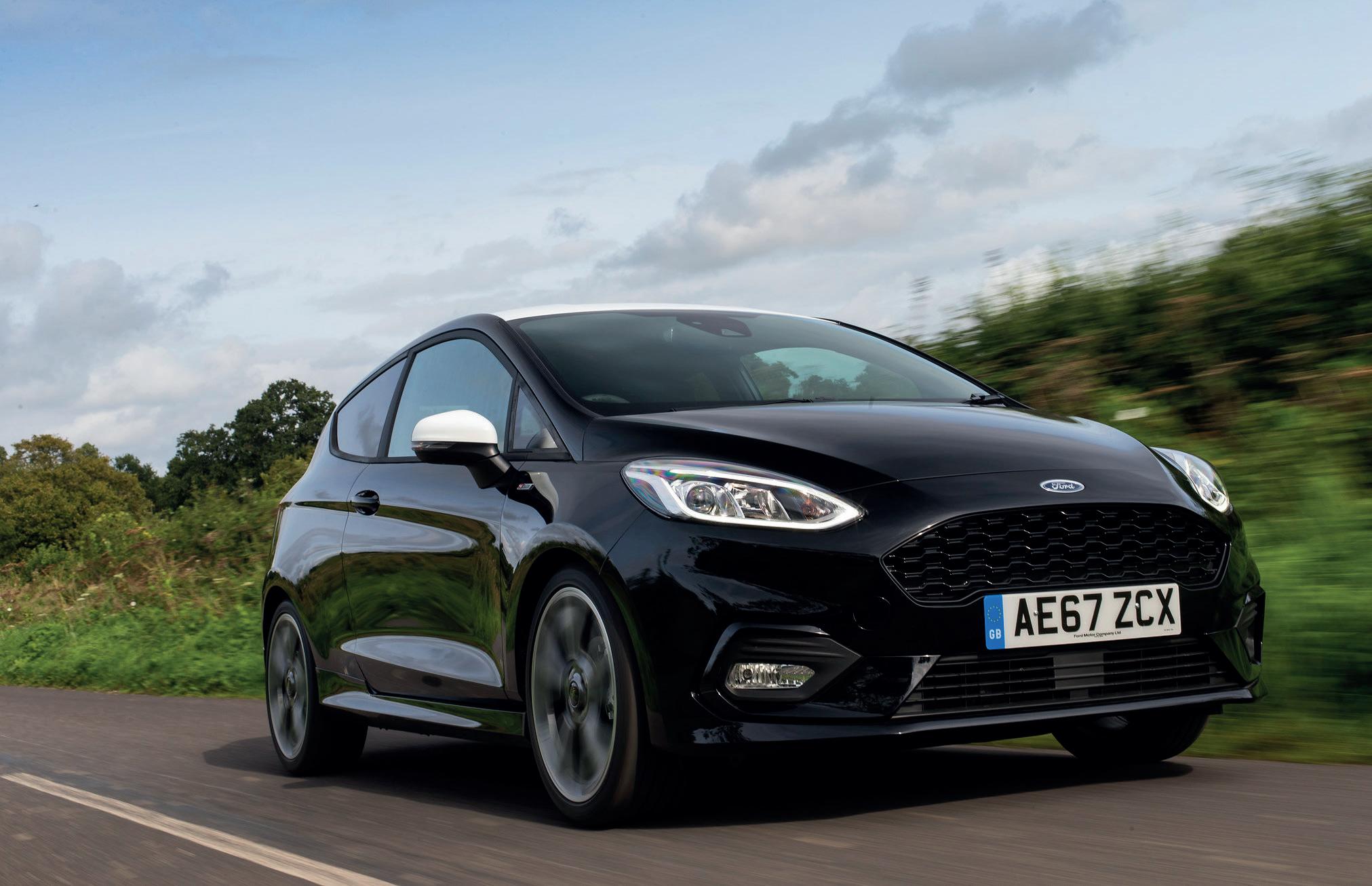
Ford is poised to revive its famous Fiesta as an allelectric hatchback after striking a deal
Ford has confirmed that it will use the AmpR underpinnings from Renault's range of multiaward-winning EVs for two new upcoming "affordable" all-electric cars.
Although still to be officially announced, that is likely to mean a replacement for the bestselling Fiesta based on the AmpR small platform borrowed from the Renault 5.
Ford has not said where the second car will fit into its new electric line-up. However, speculation suggests it could borrow the AmpR medium platform from the Mégane and Scenic, hinting at an all-electric Focus.
Like the R5, Ford's electric Fiesta will be built at Renault's dedicated EV factory in Douai,
France. Unlike the new Nissan Micra, which is largely a rebadged Renault 5 thanks to Renault's 'Alliance' agreement with Nissan, Ford insists it will be designed entirely in-house and "feature distinctive driving dynamics" and "authentic Ford-brand DNA and intuitive experiences".
Nonetheless, it would make sense for Renault to share most of its hardware with Ford, pointing to a frontmounted motor producing from 121bhp to 215bhp, and a choice of either a 40kWh or 52kWh battery. By 2028, Renault has said it will use a cheaper lithiumiron phosphate (LFP) battery in its EVs instead of its existing nickel-manganese-cobalt (NMC) setup.
Upon arrival in early 2028, the electric Ford Fiesta could - like its R5 and Micra siblings - be priced
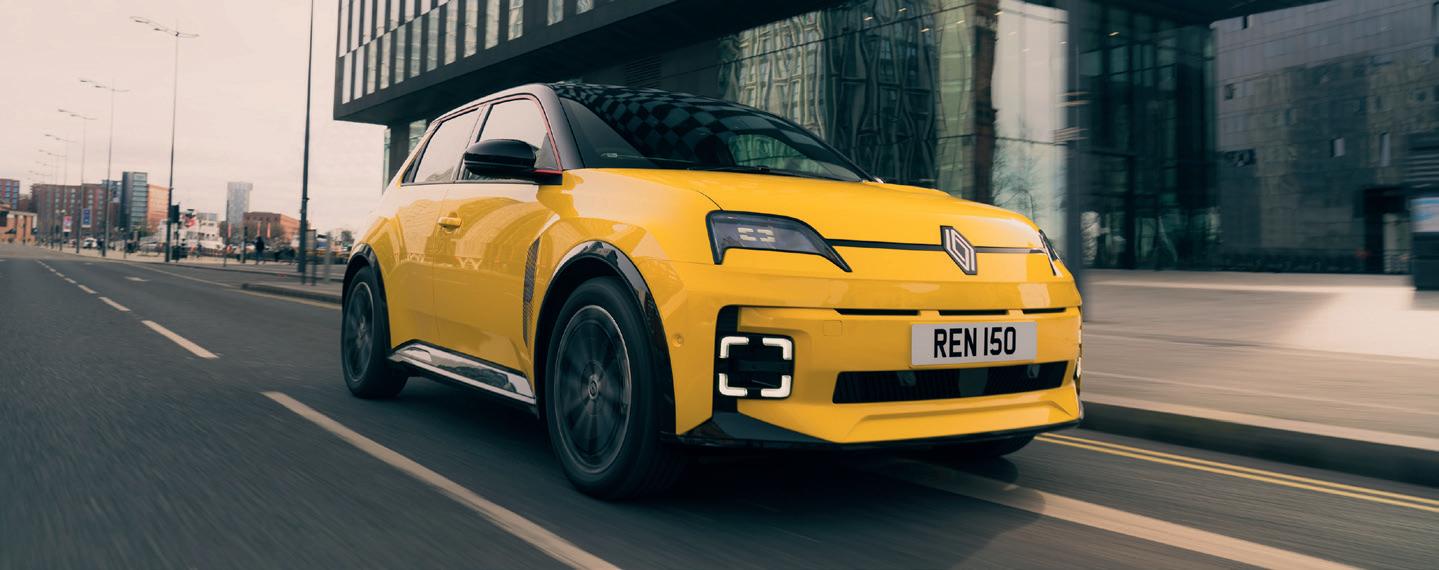
from around £22,000. It will be the first time since 2023, when it killed off the Fiesta, that Ford has had a B-segment hatchback.
The decision to usher in the two new EVs is down to the American firm's flagging fortunes in Europe. From a record market share high of 12%, Ford's fortunes have collapsed to just 4%. Sales of its allelectric Capri and Explorer have been so poor that Ford has been forced to cut up to 1,000 jobs at its Cologne plant, where both cars are built.
On the back of the tie-up with Renault, Ford CEO Jim Farley said: "The strategic partnership with Renault Group marks an important step for Ford and supports our strategy to build a highly efficient and fit-for-the-future business in Europe. We will combine Renault Group’s industrial scale and EV assets with Ford’s iconic design and driving dynamics to create vehicles that are fun, capable and distinctly Ford in spirit."
François Provost, his opposite number at the Renault Group, described it as "the strength of our partnership know-how and competitiveness in Europe".
In addition to its new tie-up with Ford, Renault has a platform supply deal with Mitsubishi as part of the Alliance agreement. This means that the troubled Japanese brand's upcoming all-electric Eclipse Cross going on sale in Europe will be based on the new Scenic.
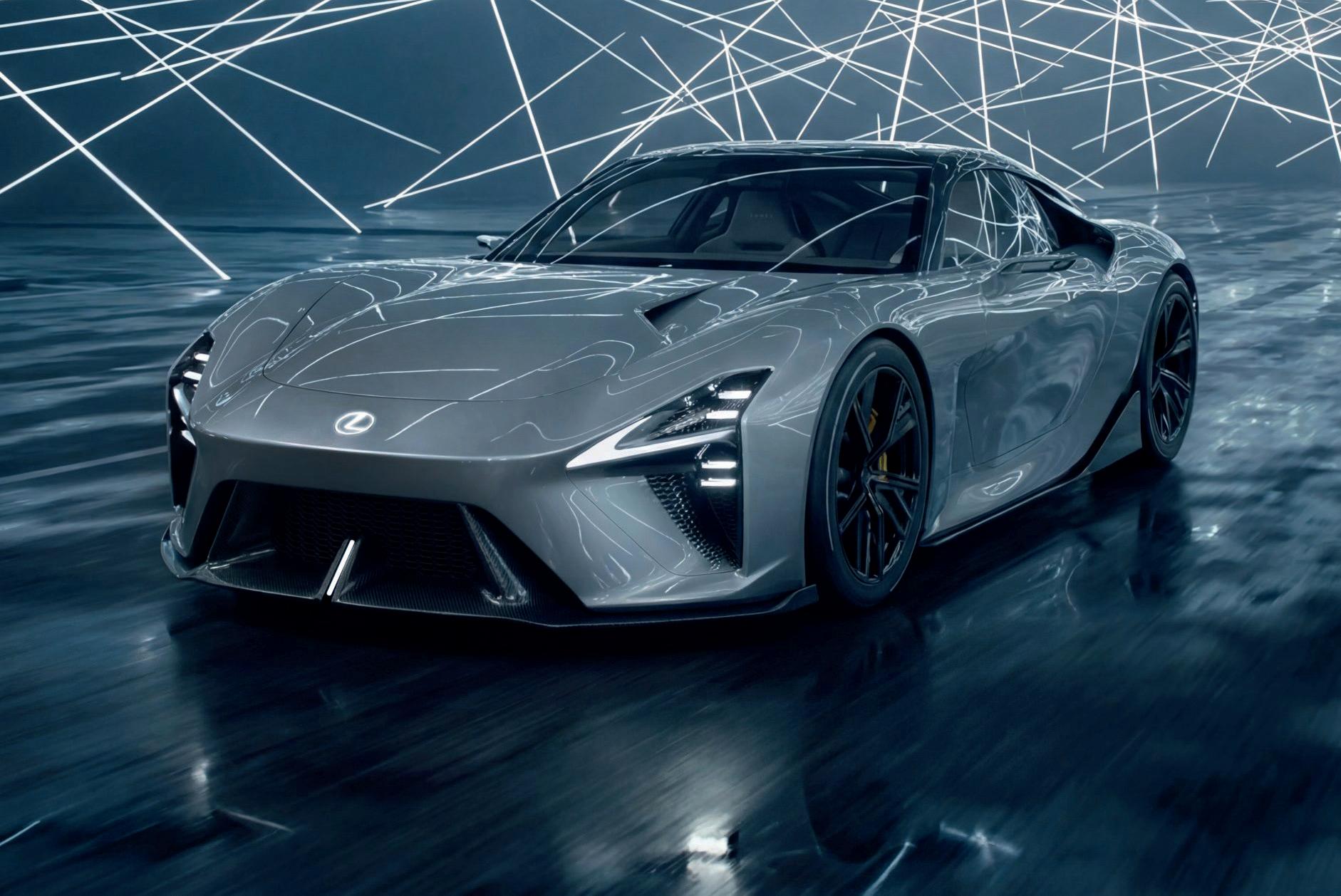
Rejecting any suggestion that any future LFA should be petrol-powered, Lexus stressed that "the model name LFA is not bound by internal combustion engines," and affirmed the electrified car will share its "light, high-rigidity all-aluminium body frame" with its Toyota-badged cousin.
The electric Lexus LFA measures up at 4.7 metres long and two metres wide and will adopt the same steer-by-wire approach as used in the recently updated Lexus RZ. The LFA will also carry over the mid-sized SUV's yoke in place of a steering wheel.
The Japanese carmaker said that the electric LFA will be "centred on the three key elements of a low centre of gravity, low weight with high rigidity and the pursuit of aerodynamic performance".
Technical details and an arrival date for the electric LFA are unconfirmed. However, Toyota has said that it plans to fit its first solid-state battery
Lexus has confirmed that its iconic LFA will return as a full EV based on parent company Toyota's newly announced V8-driven GR GT.
to one of its performance-focused EVs within a couple of years, suggesting the LFA could be the car to debut the tech.
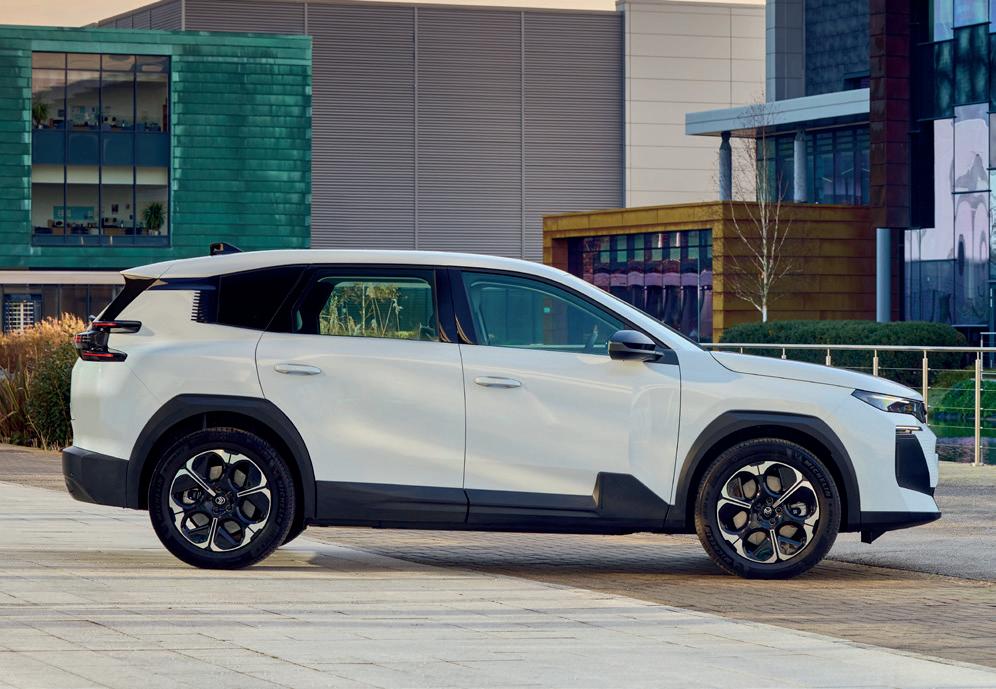
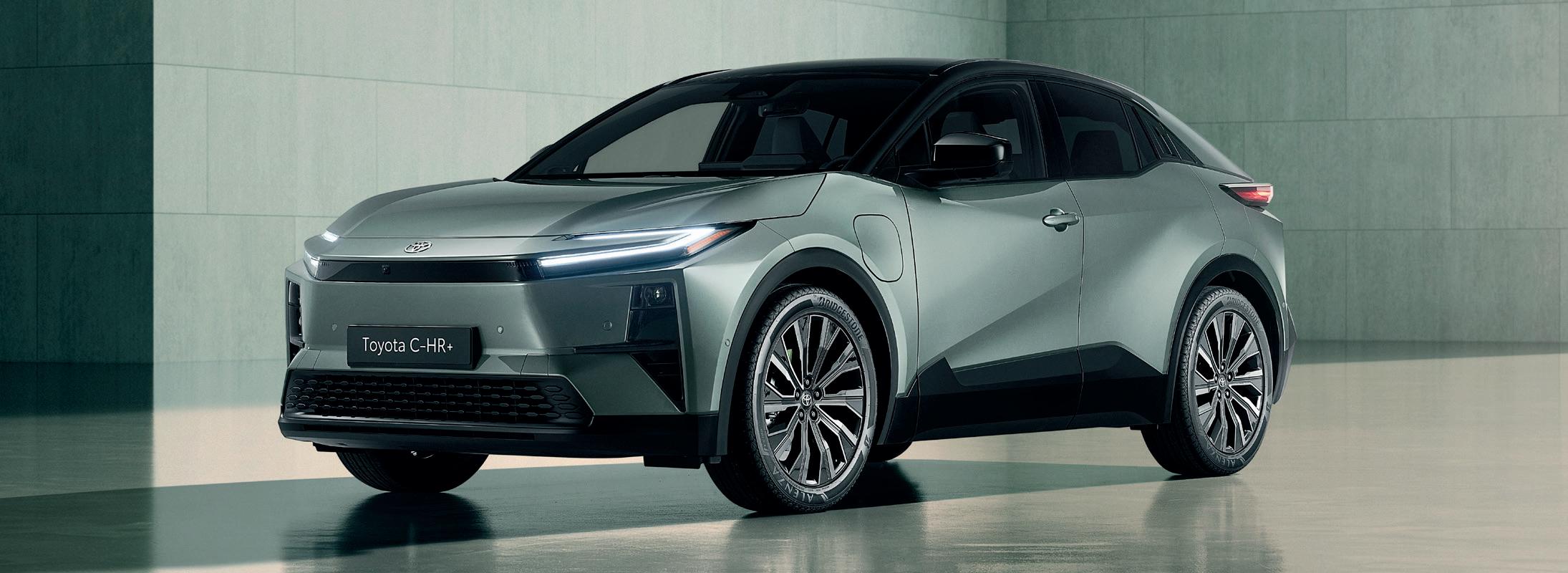
The smaller SUV sibling to the bZ4X costs from £34,495, with buyers offered a choice of three trim levels and two powertrains.
Entry-level Icon will only be offered with a 57.7kWh battery with a 284-mile range. It also features a 165bhp front-mounted motor. Above that, the Design and Excel trims use a 77kWh
battery with a range of up to 376 miles and a 221bhp motor.
Every version comes with 18-inch black alloy wheels, a 14-inch infotainment screen with wireless phone mirroring, heated seats and steering wheel, an 11kW AC charger as standard and the Toyota Safety Sense ADAS suite.
Toyota has announced pricing and specification details for its new C-HR+ as sales get underway.
The £36,995 Design adds a powered tailgate and tinted rear glass, plus the option of 20-inch alloys.
Excel trim is priced from £40,995 and adds synthetic suede and leather upholstery, power driver’s seat adjustment and a panoramic view parking camera. It also boosts the Safety Sense package.
European lawmakers have confirmed plans for a new class of ultra-compact European-built electric cars.
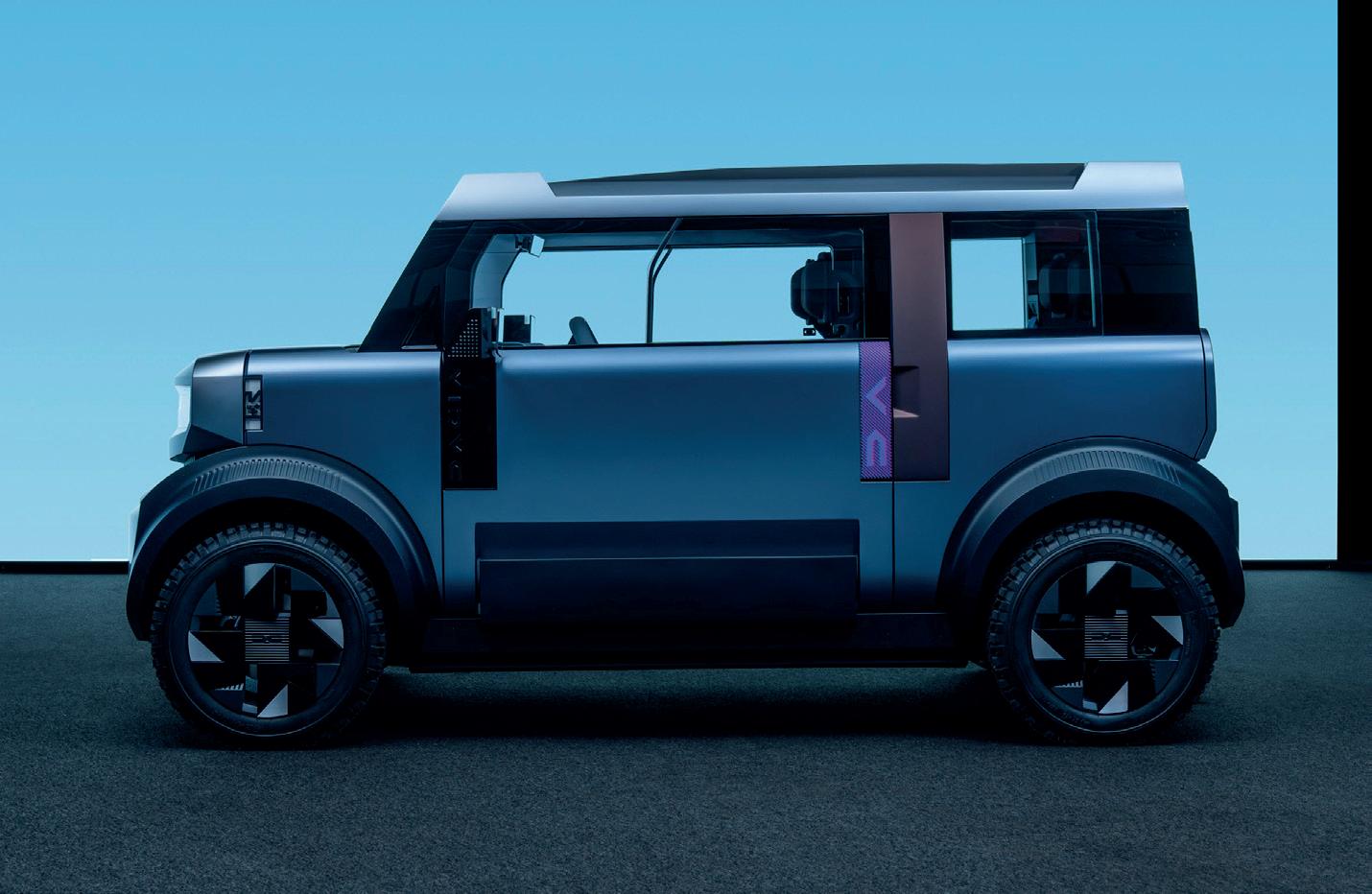
The proposed class will set strict limits on vehicle dimensions and offer car makers extra incentives to sell smaller, cheaper models.
Loosely inspired by Japan’s kei car class, the new M1E category will sit beneath the current M1 passenger car class, and above the L7E quadricycle class that includes vehicles like the Citroen Ami.
Vehicles in the M1E class will have to be less than 4.2 metres long. That’s larger than the kei car limit and covers several existing models including the Renault 5, and the Volkswagen ID. Polo. However, it’s not clear if there may be other technical restrictions on the new class.
To encourage car makers to build eligible cars in Europe the proposals include plans for emissions “super credits”. These would give 1.3 credits for every European-built M1E car sold, rather than the standard 1 credit per vehicle. These credits could then be used to offset carbon emissions from other vehicles as car makers aim to hit the recently watered-down CO2 targets for Europe.
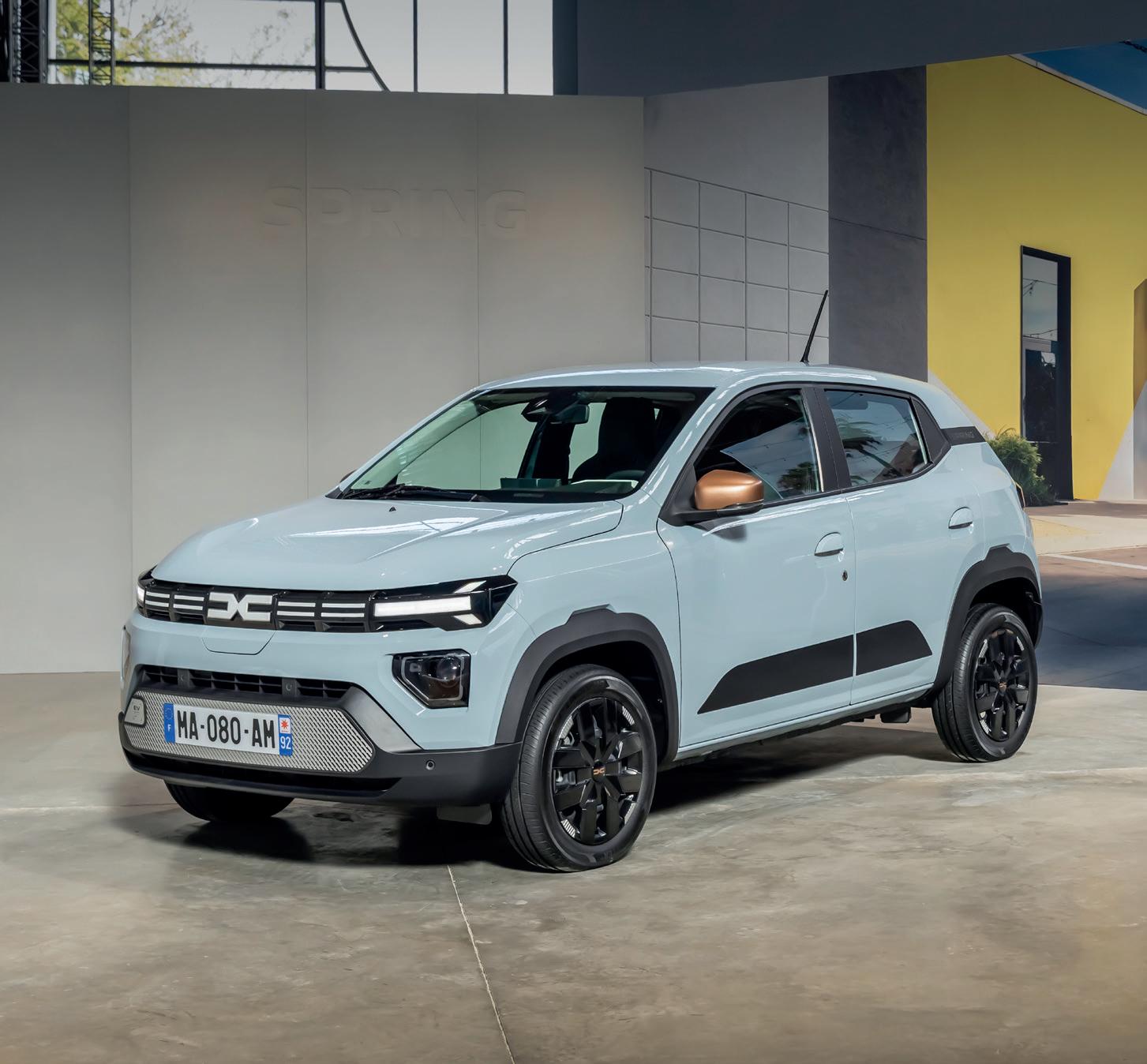
Dacia’s updated Spring has gone on sale, priced from under £13,000 thanks to a new in-house grant.
Already the UK’s cheapest electric car, the heavily revised Spring starts at £15,990 OTR but gets an even more attractive price thanks to Dacia’s own £3,750 Electric Car Grant.
The 2026 Dacia Spring brings power and chassis upgrades as well as improved specification. The base Expression 70 now gets a 69bhp motor while higher-spec Extreme 100 comes with a 99bhp motor. A new 40kW charger can top up the 24.3kWh battery from 20-80% in 29 minutes.
Under the skin, the Spring benefits from revised springs and shock absorbers, stronger brakes and the addition of anti-roll bars for a more stable driving experience.
There are just two trim levels. Expression 70 comes with air conditioning, cruise control, electric front windows, rear parking sensors and a digital instrument display. For an extra £1,000, the Extreme 100 adds electric rear windows, a 10.1-inch touchscreen with wireless phone mirroring, reversing camera, front parking sensors and vehicle-to-load.
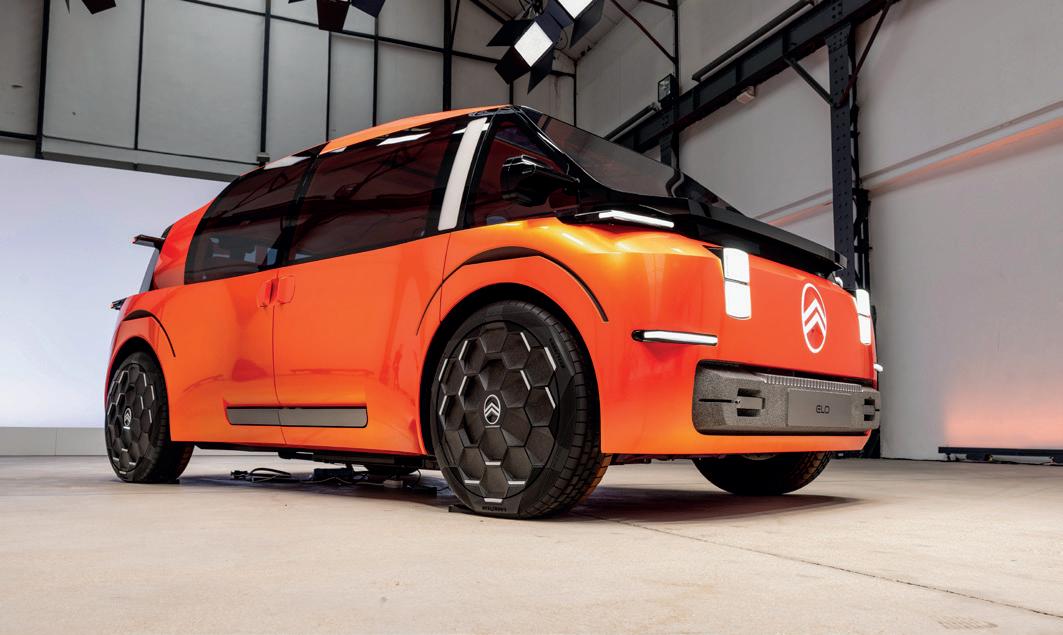
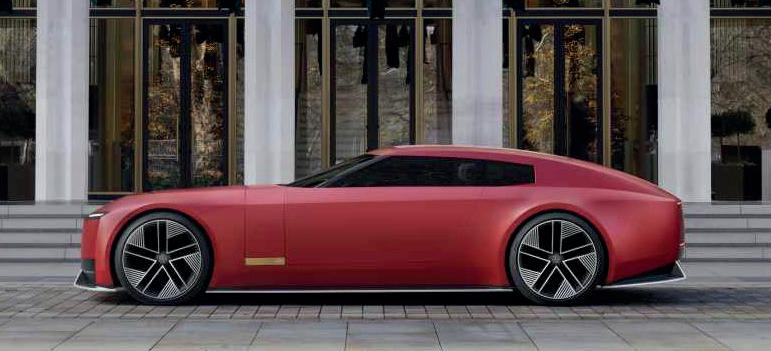
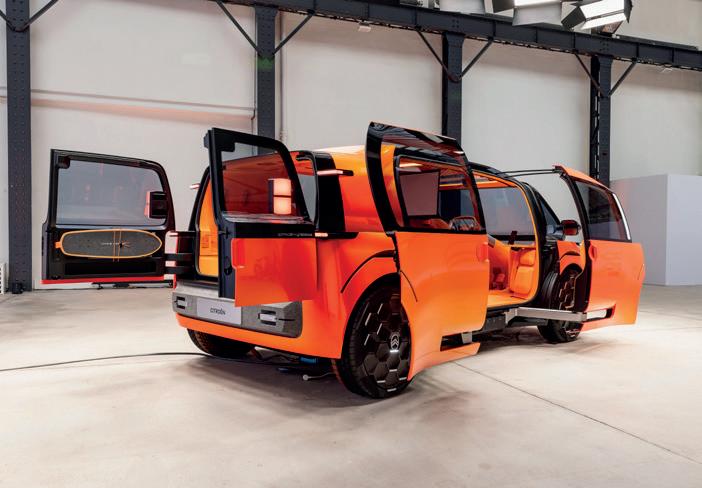
Citroen has hinted at plans for a super-compact allelectric MPV with the launch of its ELO concept car.
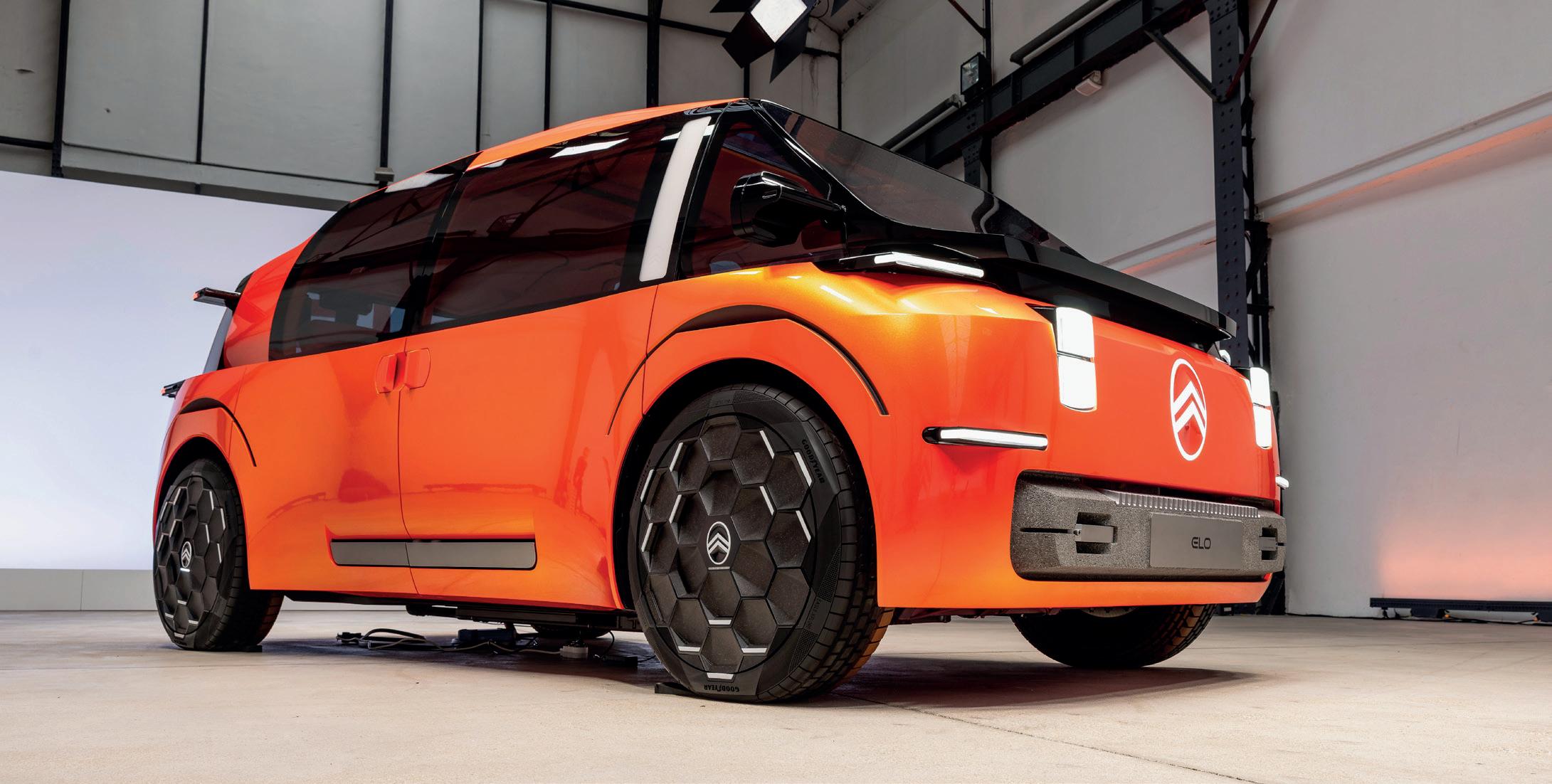
Citroen says that the striking six-seat EV “explores a new path that responds optimistically and ingeniously to contemporary challenges”.
Central to that is a relatively tiny footprint. The ELO is just 4.1 metres long – around the same as the current E-C3. But Citroen says it will offer space for up to six passengers as well as acting as a mobile office, cinema room and even sleeping space for two people. Citroen says that its ratio of exterior dimension to interior space is “unbeatable”.
Behind its sliding doors, the ELO features an unusual central driving position set ahead of a permanent row of three rear seats. The driver’s seat swivels round to face the rears when parked and two additional seats can be mounted beside and slightly behind it to create a six-seat people carrier. When not in use, these tuck beneath the outer rear seats. Those rear seats can also be
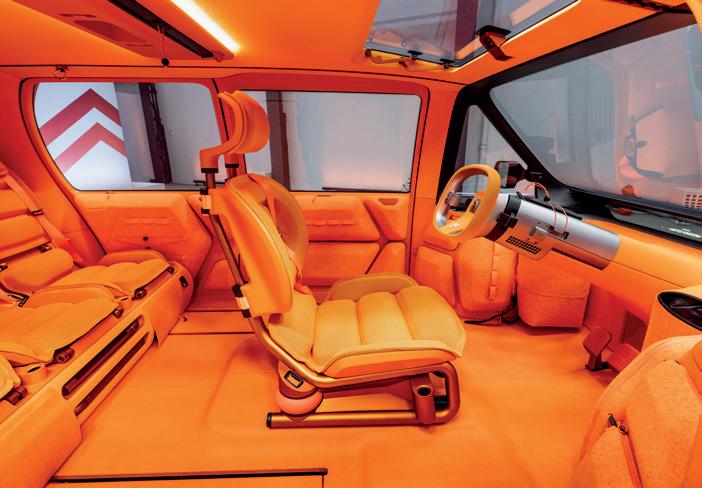
removed as used as outdoor seating – just like the original 2CV – and form part of the plan for ELO to be a “base camp” for outdoor activities.
Two inflatable mattresses are folded into special compartments in the boot to provide off-grid overnight accommodation, with vehicle-to-load capability to help power camping appliances. Even the exterior light units have been designed to act as impromptu tables for outside dining.
The durable mattress fabric and seat upholstery have been designed in partnership with sports retailer Decathlon as part of the ELO’s focus on “play”. Decathlon’s input also extends into elements such as an onboard compressor for paddleboards, smart storage areas and mounting points for an exterior awning.
For those who like to use their car as an office, the ELO features a clip-in tablet for the driver’s seat to act as a desk, and the “Smartband” instrument panel switches to display video calls, calendars and more. Pull-out trays either side of the driving position also provide “desk space” for phones, headsets and other office equipment.
The Smartband screen stretches the width of the car beneath the windscreen and provides a “floating” information display which Citroen says is cheaper to develop and produce than a traditional head-up display.
Also focused on keeping costs and environmental impact down, the ELO uses a wide range of recycled materials and interchangeable panels such as the front and rear bumpers.
Citroen CEO Xavier Chardon commented: “ELO is a laboratory of ideas that perfectly embodies Citroën's values and opens up perspectives on what drives our thinking today. It is totally in tune with the times and offers concrete, innovative solutions to promote freedom of movement and a better life. Its style expresses friendliness and joie de vivre, and its ultra-modular interior is designed as a living space in its own right."
The ELO is the latest all-electric concept after 2023’s Citroen OLI. That eventually made it to production in the form of the E-C3/E-C3 Aircross, suggesting that we could see a production model inspired by ELO in the coming years.
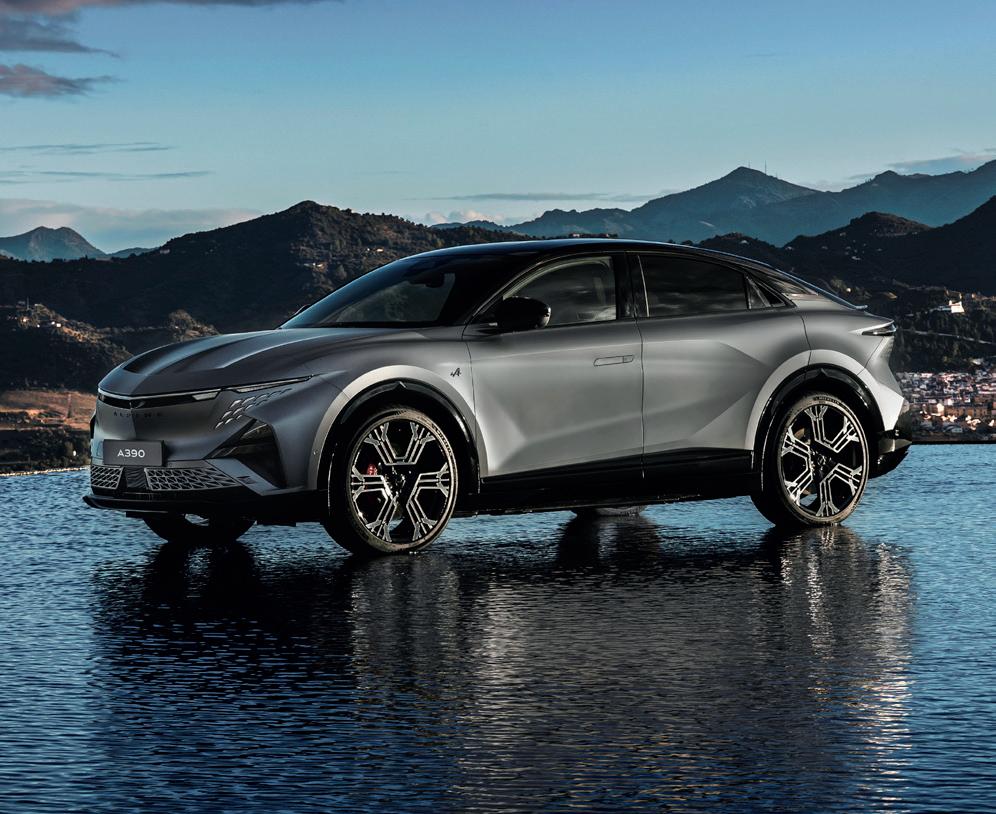
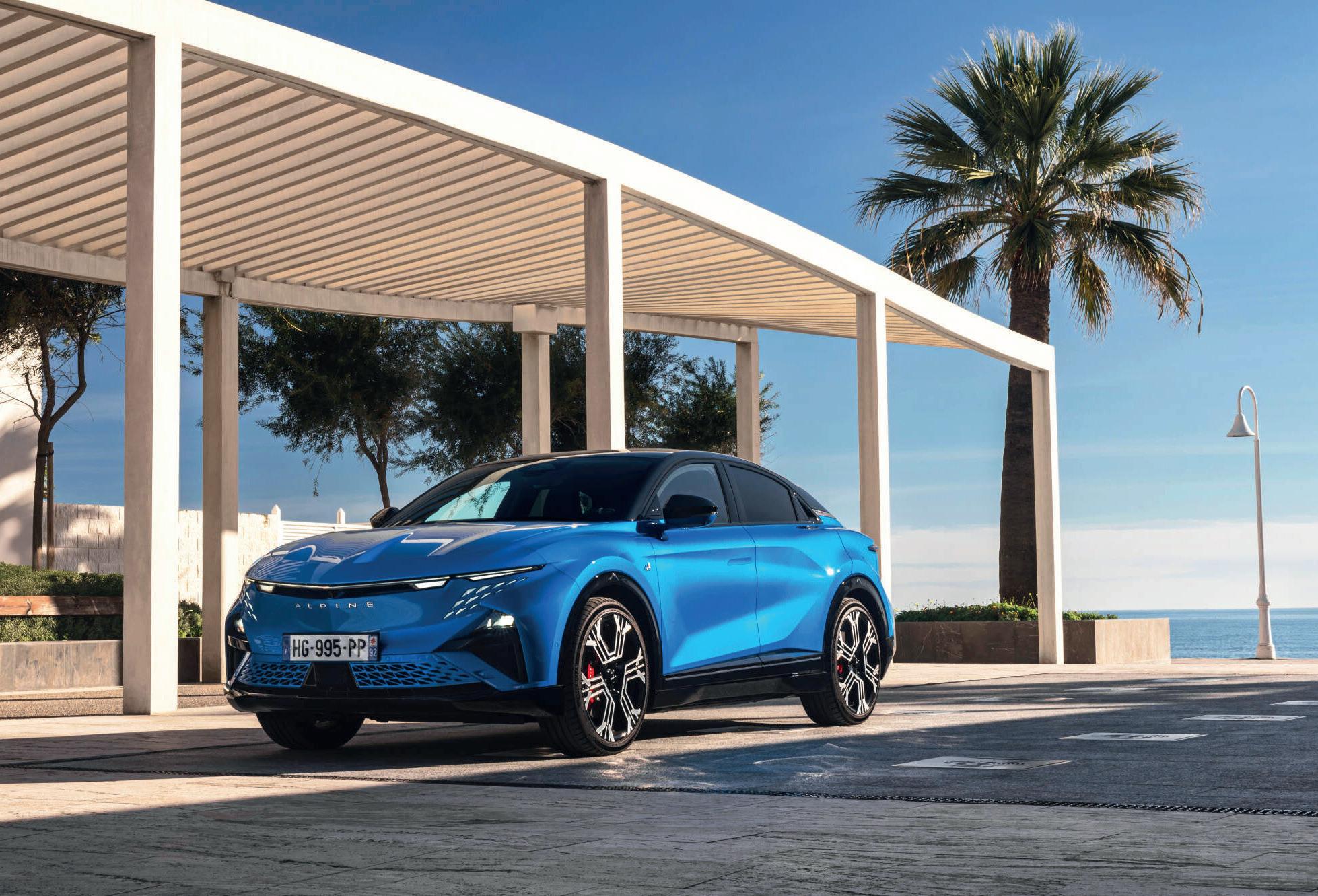
The Alpine A390 will cost from £61,390 when orders for the performance SUV open in the coming weeks.
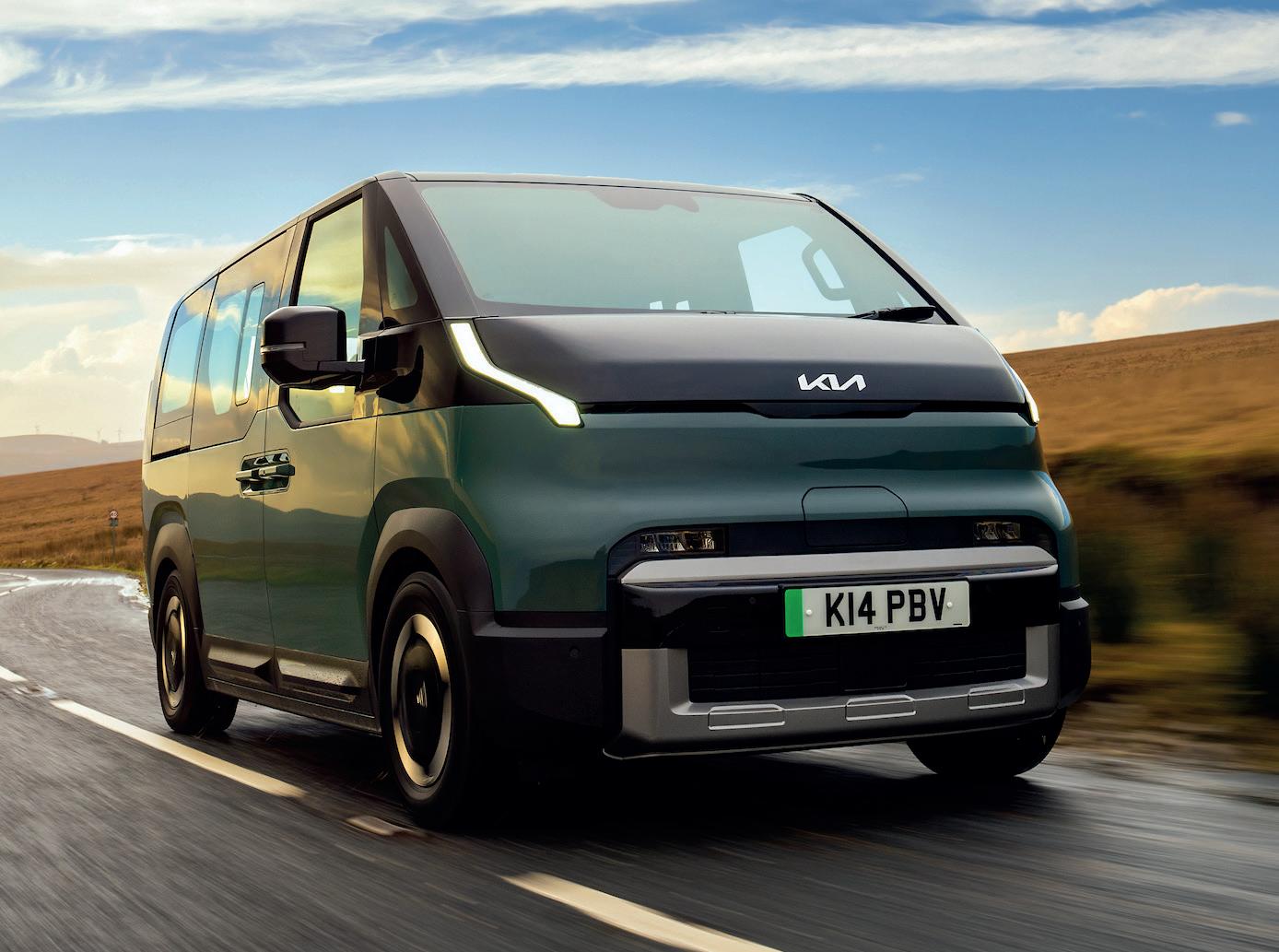
The EV4 hatchback is Kia’s first EV to be built in Europe and with the band 2 grant applied, is now priced from £33,245.
That will get buyers an EV4 Air with a 58.3kWh battery good for 273 miles. An 81.4kWh version of the Air is also eligible for the grant, offering up to 388 miles of range for £35,495.
Alongside the hatchback, Kia’s first vanbased people carrier, the PV5 Passenger, also qualifies.
The rival to the Volkswagen ID Buzz now costs from £31,495 – almost £30,000 less than the entry-level passenger Buzz.
The PV5 Passenger is available in Essential and Plus trims and with two powertrains – a 51.3kWh battery and 120bhp motor pairing covering up to 183 miles on a charge, or a 71.2kWh battery and 160bhp motor variant offers a range of 256 miles.
Described as a “racing car in a suit”, the Porsche Macan rival will be available in two specifications offering up to 464bhp and a 0-62mph time of just 3.9 seconds.
The entry-level A390 powertrain uses a twomotor setup producing 395bhp and 488lb ft, and will sprint from 0-62mph in 4.8 seconds. That will be offered in GT and Premiere Edition grades, priced from £61,390 and £65,390 respectively.
Above those, the A390 GTS gets a boost to 464bhp and 606lb ft, delivering a 0-62mph time of 3.9 seconds. Top speed is 136mph, compared with lower-grade cars’ 124mph.
All versions feature an 89kWh battery good for between 312 and 345 miles of range, with 190kW charging.
All versions of the A390 feature Alpine’s bespoke torque vectoring system to manage power and braking across both motors. Alpine says this setup allows its fastback-styled SUV to deliver “exceptional agility, balance and responsiveness” benchmarked against its existing A110 sports car.
Two Kia EVs – the EV4 and PV5 – have been approved for the Government’s Electric Car Grant, cutting £1,500 from their on-the-road price.


CEO DAVID
WHY ALL-ELECTRIC
Beyond the usual headlines denoting thousands of horsepower and the Next Big Thing that will dethrone Tesla, a demand for inner-city electric vehicles is quietly bubbling away.
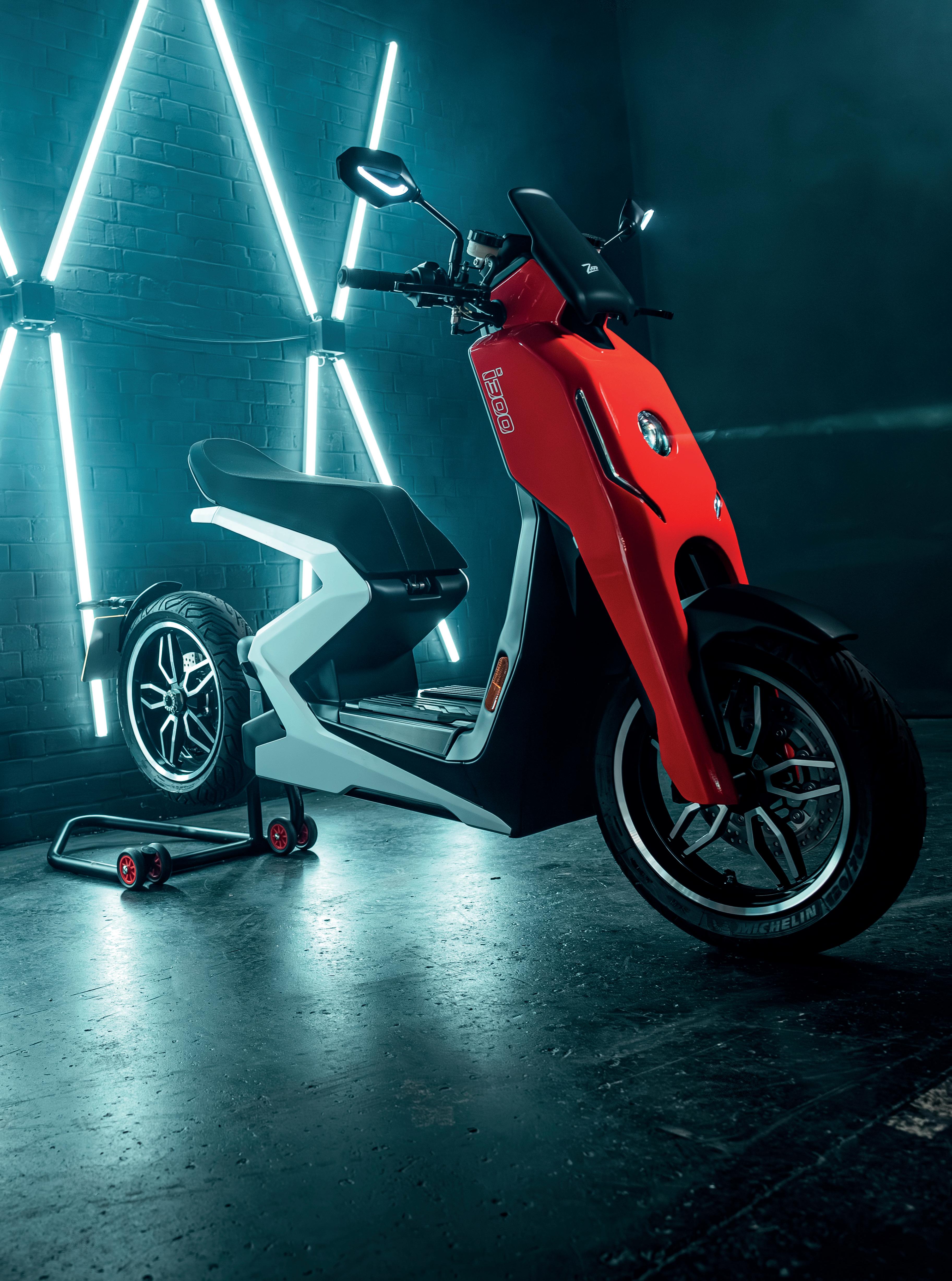
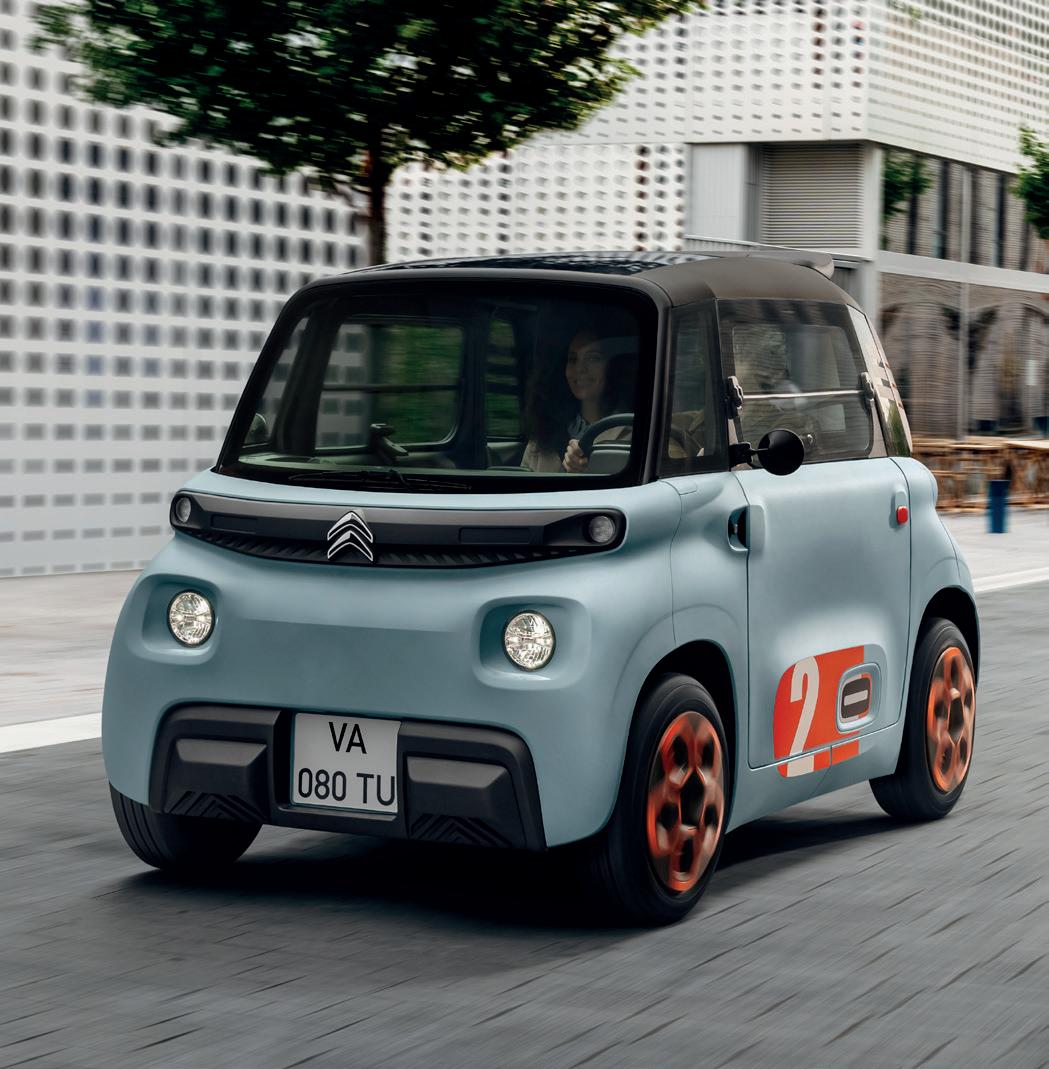
We’re not talking about the likes of all-electric buses or zero emissions trains, instead, the focus lands on ‘urban mobility solutions’; think e-bikes, electric scooters, and the likes of quadricycles such as the Citroën Ami and the Swiss-made Microlino.
In 2025, e-bike uptake increased significantly in Europe. E-bike experts estimate that over 10 million units will be sold across the continent by the time the year is out, and this growth rate is expected to continue during the coming years.
Quadricycles are also thriving. Since its 2020 debut, Citroën has shifted over 43,000 Amis and the European quadricycle market is expected to grow from $6.1bn in 2024 to $10bn by 2031.
As the battle for urban EV supremacy simmers away in the background, Zapp EV CEO, David McIntyre believes the future of inner-city personal mobility lies firmly in the two-wheel camp. To completely misparaphrase Animal Farm’s Napoleon: “four wheels good, two wheels better”.
Zapp EV was founded in the UK in 2017, as what David describes as a “design-led, British-born EV brand on a mission to re-engineer urban mobility”.
A veteran of over 30 years in the automotive industry with the likes of Aston Martin, McLaren, Bentley, and Porsche, David has spent the last 20 years of his career in South East Asia — a part
of the world, which has had untold influence on Zapp’s debut vehicle, the i300.
“In Asia, the dominant mode of transport is the two-wheeler,” he explains. “In Thailand, 84% of homes have at least one [two-wheeler], and in China, 80% of all [two-wheelers] sold are fully electric. If we look at Vietnam, over 3.2m are sold each year, and its government is implementing a strategy to ban all internal combustion engine two-wheelers from Zone One in Hanoi.
“Ho Chi Minh City has gone even further, and aims to remove all ICE two-wheelers from the road by mid-2027.”
The South East Asian model’s direct influence on Zapp is the focus on zipping in and out of urban traffic without any exhaust emissions.
As David explains, despite having a focus on modern design, the Zapp i300 remains — at its
core — an e-scooter designed to make navigating the city as easy as possible.
“Everything we do is built around a philosophy of ‘freedom without compromise,” he says. “We’ve adopted a design-led approach to things, and built the bike from the ground up. It’s aimed squarely at the urban dweller who typically goes short distances and wants to recharge quickly.”
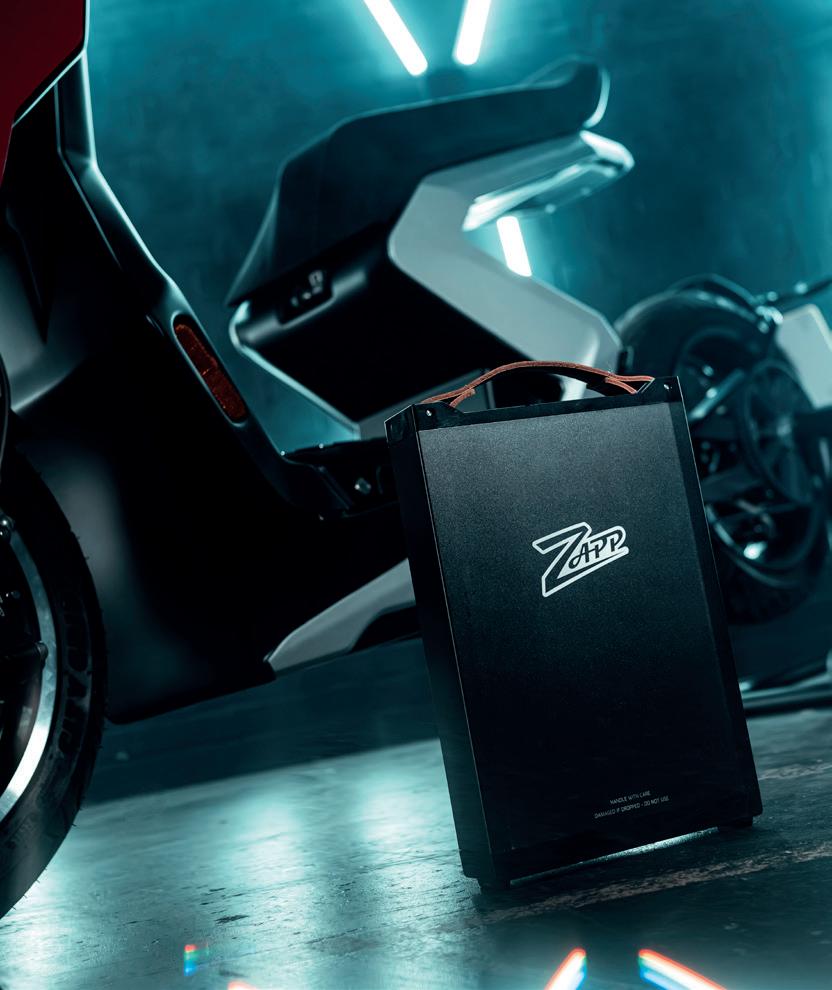
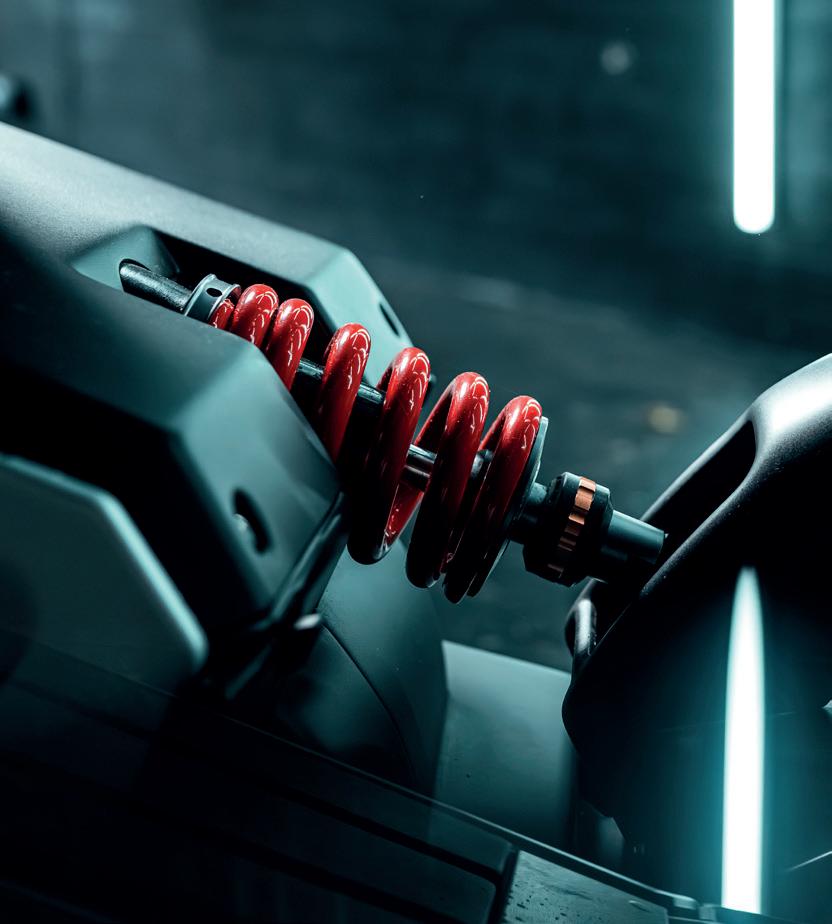
Unlike a regular electric two-wheeler, the Zapp i300 eschews a large, single integrated battery pack in favour of two smaller removable 72 volt batteries weighing six kilograms each. Combined, and paired with the bike’s 14kW electric motor, they provide the i300 with a range of up to 37 miles.
The split battery strategy is designed to eliminate the fast-dying issue of range anxiety. According
to David, Zapp’s solution is to “give people choice” about how they want to use the i300’s batteries.
For reference, the daily commute for a Londoner is around 16 miles. The i300’s battery can be charged from 20-80% in 40 minutes, and from 0-100% in two hours.
“You can charge the battery with any wall socket, whether that be at home, in the office, or in Starbucks or something. Think of it like charging a smartphone, it’s really very easy,” says David.
Alongside the £5,495 Zapp i300’s focus on ease-of-use, David believes that the design-led approach is what separates it from rivals and similarly-priced quadricycles.
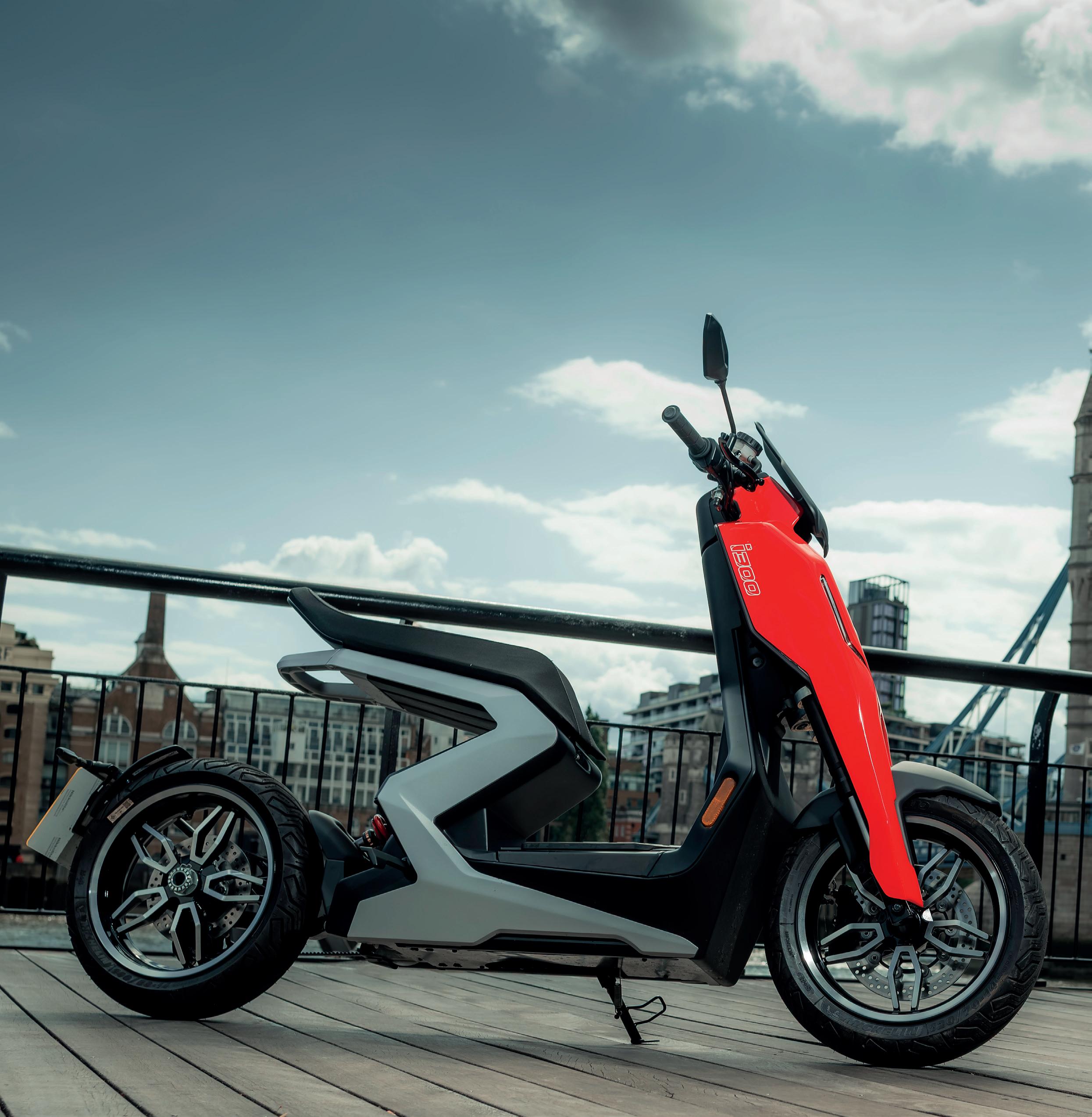
“We’ve patented our exoskeleton structure, which allows us to get the centre of gravity low,” he says.
“The batteries are placed more or less right under your feet at the heart of the bike, and that makes it fun to ride. The motor is placed low down, too.
“There are a lot of Chinese products on the market and they’ve just been modified from ICE to incorporate an electric motor. What we’ve done is designed something from the ground up to be inherently good looking, well-riding, and very easy to charge. Ultimately though, its design is what really stands out and draws people to the product.”
David also believes that the i300’s compact nature gives it an advantage over other “urban mobility solutions”.
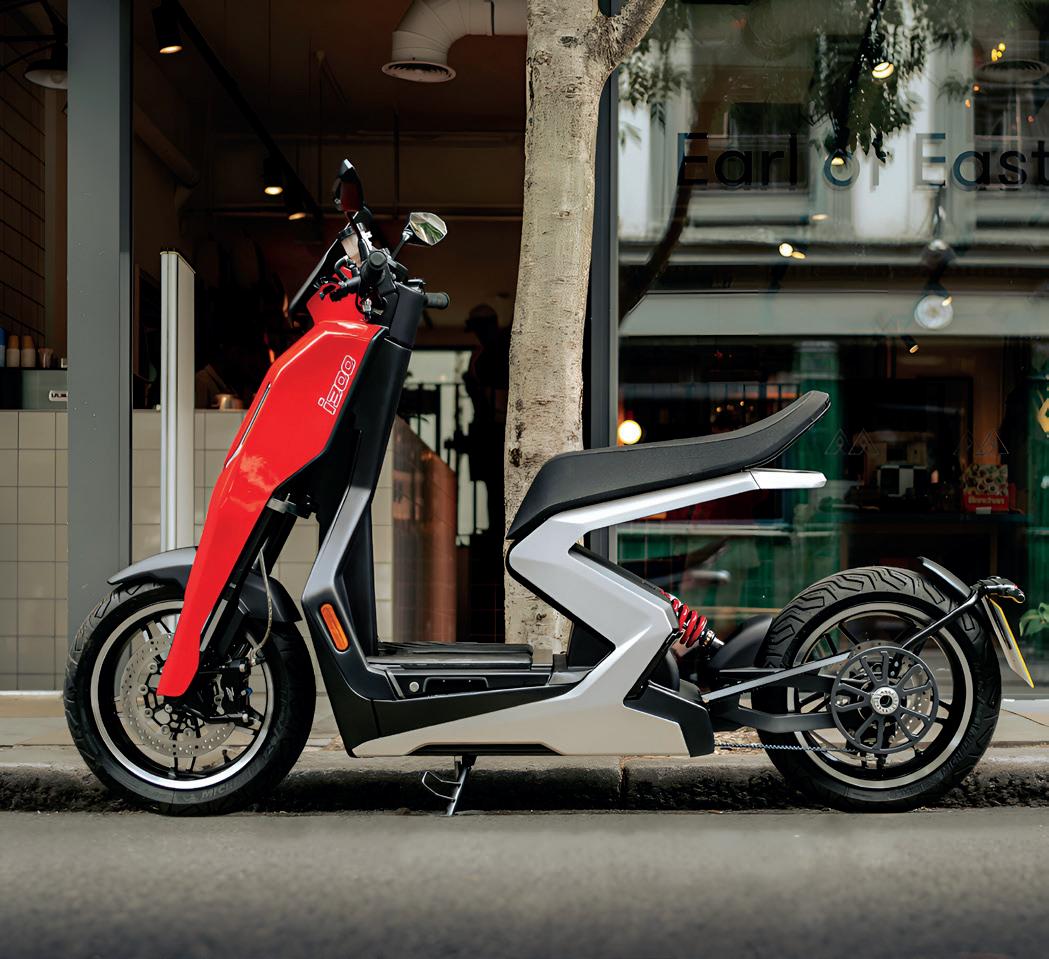
“When it comes to cars like the Ami, which I like very much, it still doesn’t solve the parking or the charging issues,” he notes. “I think quadricycles are part of the urban mobility mix, but they’re still a small car at the end of the day. You can park and charge the i300 anywhere.”
Despite the positive trends in the European e-mobility segment, UK e-bike adoption is one of the lowest. In 2024, 2.1 e-bikes were sold per 1,000 people, leaving the country second from last ahead of Belarus in the e-bike sales table.
As with all things EV, David feels that the shift towards all-electric two-wheelers lies firmly at the foot of the UK Government.

After all, privately-owned e-scooter - such as one produced by Pure Electric - can only be used on private land. To use public roads and cycle lanes, the two-wheeler must be rented through an official electric scooter rental scheme.
Should local governments adopt a programme not dissimilar to that of Oxfordshire County Council, David sees a trickle-down effect taking place across the country, with other local councils potentially warming to larger e-two-wheeler adoption.
"I think the Government is doing a lot already, but we of course would welcome any additional policies that would get people onto two wheels, and more importantly into and onto electric vehicles.
"What we're seeing at the moment are local governments such as Oxfordshire County Council taking the initiative. What I think will happen is that cities will then watch, learn, and potentially copy from these leading locations across the UK."
Whether David’s prediction comes to light or not won’t deter Zapp from its growth plans. After all, there’s a big market outside of the confines of the UK, and the London-based firm is resolute in its quest to disrupt the e-mobility landscape.
As for what’s in the pipeline, the Zapp CEO confirms two new models. He does, though, stop short at revealing any battery tech, despite it yet again playing a significant role in the brand’s future.
“The i300 is our premium product, but we’re aiming to bring in an e-bike for customers who don’t want to get a motorcycle licence, wear a helmet, or even have the performance of the i300.
“Our third product will be another scooter, but with a more conventional — but still striking — design and more storage, and possible different battery solutions.”
It’s not just Zapp that is pursuing the designforward e-scooter route as the future of electrified urban mobility. The Nico Rosberg-backed Infinite Machine made its European debut at EICMA 2025, where it unveiled its Olto and P1 models.
Looking to 2026, it looks as if we’ll be treated to yet another exciting addition in the form of e-two-wheelers. What was that about EVs being boring again?
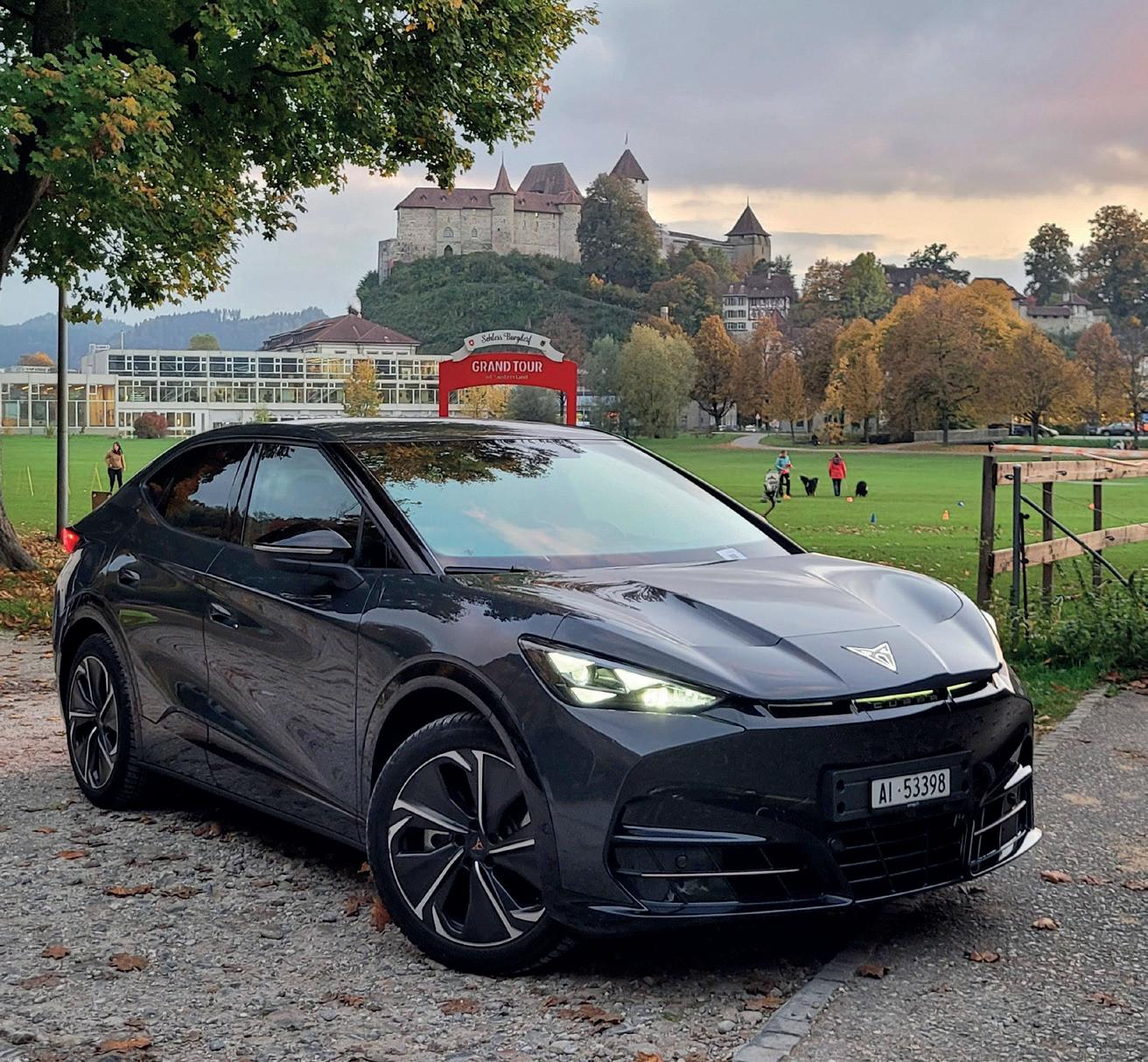

Pulling my Cupra Tavscan back into Zurich airport's rental zone I had to take a moment to reflect that just four hours earlier I’d been looking down on the clouds from the top of the majestic Brienzer Rothorn.

Just 24 hours prior to that, I’d been soaking up the autumnal beauty of the gentle Valle de Joux. And less than two days before that, I’d been pretending I was James Bond, posing on the Furka Pass.
In fact, in less than four days I’d seen a bewildering number of sides to Switzerland as Cupra’s all-electric family SUV carried me along the route of the Grand Tour of Switzerland.
The Grand Tour of Switzerland (GToS) is a 1,643km (1,021-mile) road route designed to showcase the very best of this compact country, from its soaring mountains and breathtaking glaciers to its picture-perfect lakeside villages and vibrant cities.

2025 marked the tour’s 10th anniversary, which in itself would be a good reason to tackle it. But in recent years the people behind the GToS have embraced electrification and promoted the E-Grand Tour as a way to showcase both the country’s attractions and its EV-friendliness.
It’s marketed as “the world’s first road trip that can be travelled in electric vehicles”. I’m not sure that’s entirely true, but a few days at the wheel of the Cupra Tavascan proved it’s certainly an EV-friendly way to explore a vibrant country.
Time constraints meant I wasn’t able to cover the whole route, which loops around almost the entire country. Instead the smart people at Switzerland Tourism suggested an itinerary that covered around half of the tour and showed that there’s much more to Switzerland than cuckoo clocks and chocolate.
After flying into Zurich with Swiss Airlines I picked up my Tavascan and set off south along the banks of Lake Zurich before swinging west through picturesque Rapperswil (the town of roses) toward Altdorf, skipping the no doubt stunning leg through Appenzell and down to St Moritz and Bellinzona.
As with any new EV there was a brief period checking the Cupra’s predicted range (468km/291 miles), watching how it changed with my driving style and wondering what the fitting of winter tyres and the prospect of some tough Alpine climbs would do to it. But, as with every EV, after an hour or two I’d settled comfortably into the Tavascan’s rhythm and gauged how trustworthy its computer was as well as scoping out some chargers, just in case.
The run from Zurich to lunch in lakeside Brunnen and then south is a pretty one, dotted with neat villages overlooking the water. Then the climbing begins, following the river Reuss back towards its source near the famous Furka Pass.
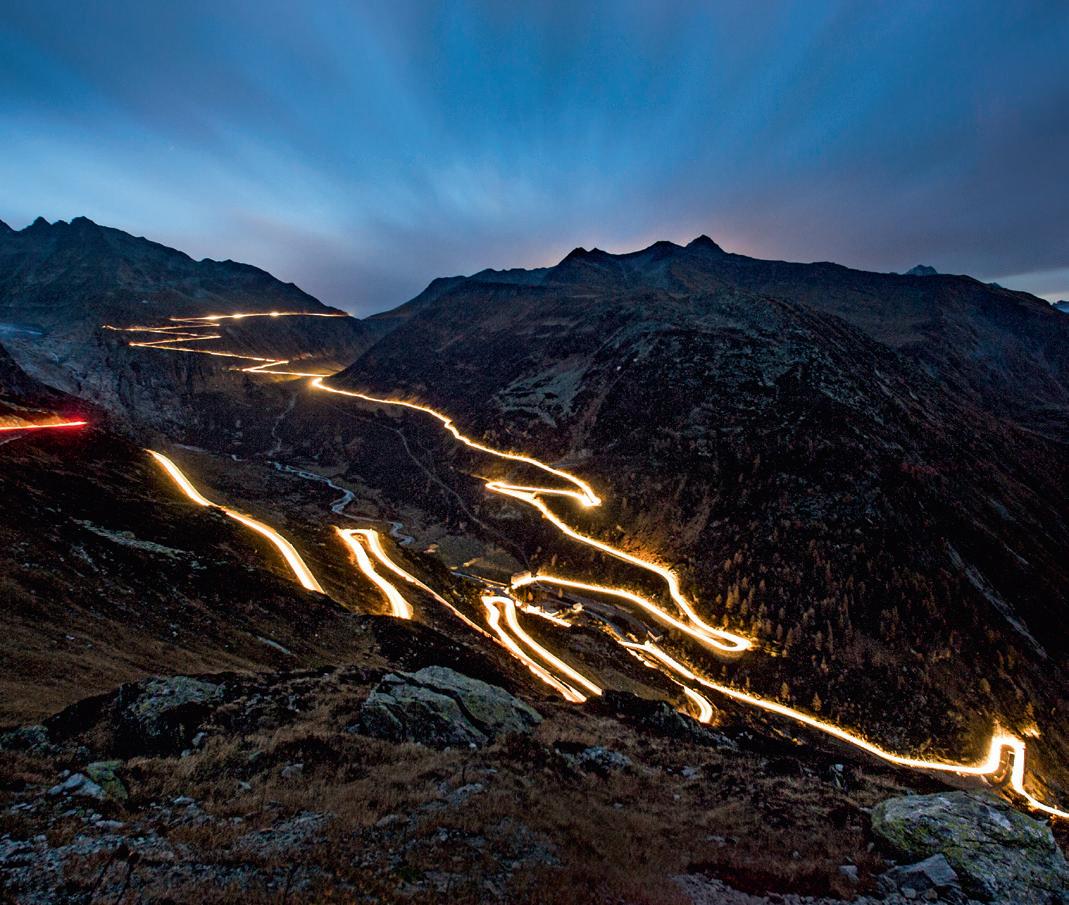
It’s roads like the Furka Pass that will defeat even the best EV trip computer. As I approached the start of the intimidating cross-mountain path, the car confidently predicted I had around 300km of range left. By the time I hit the top of the 30km climb, that had dropped to 173km. Forty kilometres later when I reached my hotel in Fiesch, it had climbed back to 230km. The joys of unpredictable terrain.
The Furka Pass had long been a dream drive for me and lived up to expectations. I posed for the obligatory shot at “James Bond Strasse” – the famous Goldfinger location – as well as taking in the awe-inspiring 360-degree vista from the very top. On the way down, I stopped at the Instagram favourite Belvedere Hotel along with the ubiquitous Spanish travel vloggers and, randomly, an entire fashion shoot.
The Pass is a must-see on the Grand Tour but, be warned, it’s not a road for the fainthearted. The switchbacks and twists are easy to navigate but the road varies from a full two lanes to barely more than single track, and on several sections all that stands between you and a drop of several hundred metres are widely spaced concrete bollards.
An overnight stop in nearby Fiesh, in the Aletsch Arena not only allowed a sampling of the German-influenced Alpine cuisine, but also presented the opportunity the next day to explore the Aletsch Glacier, Switzerland’s biggest glacier and one of countless “wow” moments along the route. Reaching the viewpoint nearly 3,000m above sea level requires two cable cars and a head for heights, but is totally worth it to see the 20km ice flow stretched out before you, and take in views that stretch from the Eiger to the Matterhorn and beyond.
The scenery of areas like the Aletsch Arena and Furka Pass is a key part of the GToS. It feels like around every corner there’s another picture-postcard village
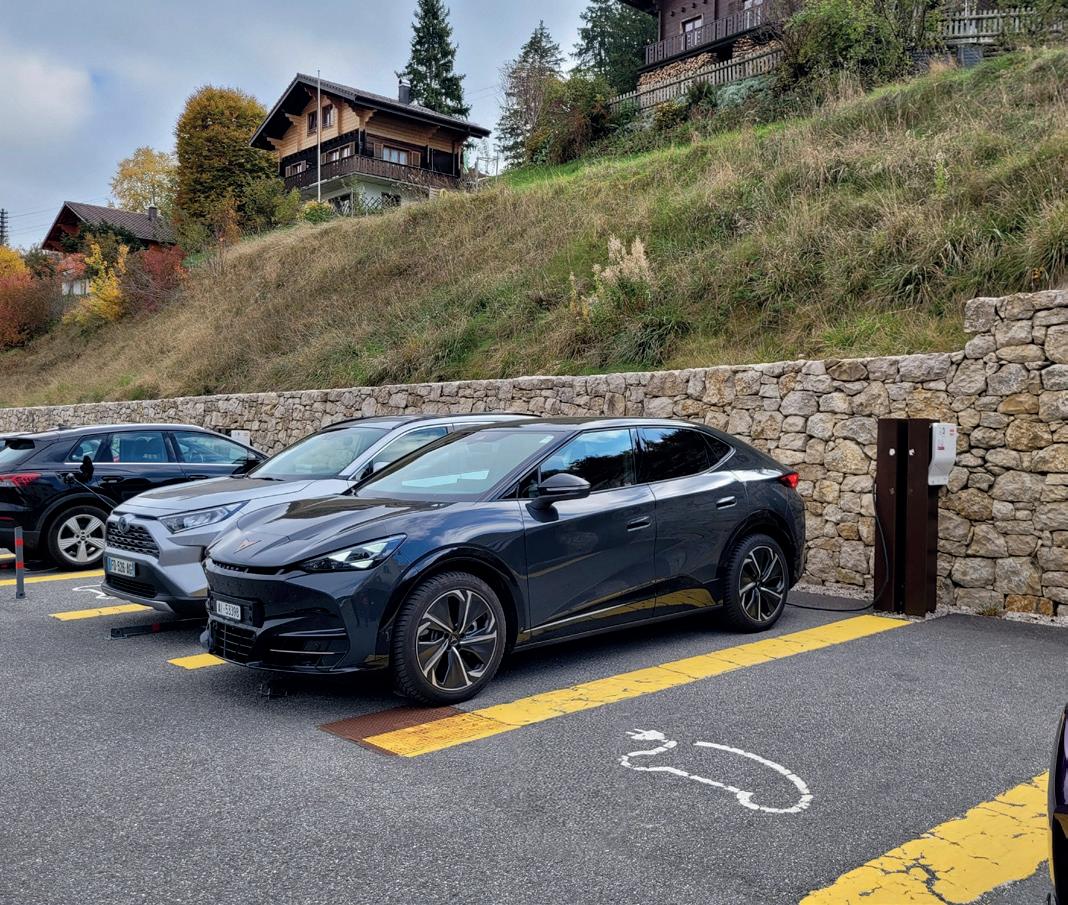

with its wooden chalets and fields full of cows, the echo of their bells clanking up the hillside clear over the silent progress of the Tavscan’s electric motors.
But beyond the jaw-dropping sights, there are the roads. Whether they’re twisting through the vertiginous glacial valleys or flowing through the softer wider lowlands, they’re interesting, impeccably maintained and dotted with the reassuring sight of EV chargers.
Moving from the Alpine region to the foothills, the cable cars are replaced by terraces of vines scaling the hillside as far as the eye can see. In Valais and Vaud, every spare scrap of land is covered in vines producing the delicious reds and whites for which they are famous.
The soft, rolling scenery of the Vallée de Joux, where I broke the journey on day two, has something of Highland Perthshire to it. The same glorious autumnal colours with trees draped in copper, ochre and yellow leaves, the wide grassy expanses and inviting lakes shielded by substantial mountains in the distance.
From the tranquility of the Lac de Joux, the next day took me to the historic lakeside city of Neuchatel, the picturesque Murten/Morat on the border of the French and German areas of the country and on to bustling Bern, where I could happily have whiled away hours marvelling at the architecture and sampling the varied food and drink. But time marches on. From the cosmopolitan capital, I quickly turned back onto more minor roads and began climbing again into the Entlebuch Unesco Biosphere – Switzerland’s first biosphere reserve and a haven for nature and sustainable tourism. An overnight stop at the historic Flühli Hotel Kurhaus provided not only a dinner to die for but a gateway to the 400km2 of mountains, meadows and more.
The genius of the Grand Tour is that it encompasses so much of the country and allows drivers to explore the many characters of Switzerland. Like Scotland’s North Coast 500 there’s something for everyone along the 1,600km – foodies, history buffs, culture vultures and active lifestyle types. And you can spend as much or as little time as you like travelling it.
Activities change with the seasons, visit in summer and you can strap your mountain bikes to the car and explore the rugged trails of Fieschertal and the Entlenbuch range. In winter, those same challenging mountains offer world-famous skiing.

For those with a love of history and culture, the route stops off in major hubs such as Geneva and Lausanne, as well as Bern and Zurich and innumerable other fascinating towns and villages. I even found time (pun intended) to discover the origins of the country’s most famous watchmakers among the “farmer horlogers” of the Vallée de Joux.
The GToS cleverly diverts you through apparently random towns and villages, inviting you to explore places you might have ignored. That’s good for visitors and the local businesses that benefit from the through-traffic. On the downside, it does sometimes mean picking your way through larger, less scenic urban sprawls.
The Grand Tour is broken down into eight clearly defined sections. That way you can choose to do one or two sections rather than tackle the entire tour in one go. Planning is simple too, thanks to a comprehensive website that details the highlights of each section, hotels and activities along the way. It even has a dedicated EV section.
I worked out that I could have done the entire route in my four days, just. That would have been an intense few days packed with amazing roads and lots of driving but I would have missed out on so much. At every turn, I wished I’d had longer to explore different places – whether wandering the historic streets of Bern or trekking the mountains.
But the GToS is not just a sightseeing tour. For driving enthusiasts there are magnificent stretches of road ranging from the wide, sweeping curves and open sight lines of the Vaud’s valleys to the technical twists and turns of the mountainous Valais region. If you want to make it all about the driving, then you can.
And it’s all so easy in an EV. Range or charger anxiety is mostly nonsense, as EV owners know, but for anyone worried about tackling such distances, the route has you covered.
In planning the tour I’d opted for the 77kWh Tavascan from Europcar’s EV fleet to minimise the charging stops and give me more time doing activities. But range was never an issue. In fact, I reckon I could have completed the entire 850km trip with just one charge.
As it was, I charged three times. The last was a simple “might as well top up while I pee” on the approach to the airport. The first was done just in case the hotel ones were busy. That was at Relais du Saint-Bernard where 28 chargers from four different providers offer plenty of options for drivers in need of a top-up.
As it turns out, I needn’t have worried. The Hotel des Horlogers in Brunnen, where I enjoy a fabulous spa treatment and dinner, had a bank of eight Avia units ready to provide a full overnight refill (although at 75c/kWh, they weren’t cheap).
That hotel was one of more than 450 along the GToS route that offer on-site charging, meaning you can carry on your merry way without stressing over charging stops.
At no point did I feel nervous about charging but, like the UK, the main roads are better served than smaller, more rural routes. Even then, many of the towns and villages I passed through had at least a couple of 50kW units tucked away somewhere and plenty of the visitor attractions have one or two low-powered "destination" chargers.
Helpfully, signage on major roads shows the next charging location and tells you how many bays it has, although they don’t indicate the operator or costs (just like most in the UK). Also like the UK, while some hubs were in huge service stations others were in less well-provisioned truck stop/ parking areas. Positively, most seem to allow a simple contactless payment so there’s no worry about local operator subscriptions.
For planning, there is a Swiss map that shows the location of all of these charging stations – linked on the GToS website. But it’s a very cluttered and old-fashioned affair with an awkward interface and little scope to filter by criteria such as speed or operator. Oddly, Zapmap doesn’t cover Switzerland, so you’re best off relying on Google, ABetterRoutePlanner or your EV’s onboard mapping to help you spot devices en route.
Doing that will let you relax and enjoy the experience of exploring a very varied and fascinating country. You can take it at your own pace and bash round hundreds of miles in a short space of time revelling in the roads and scenery. Or you can take your time, make more stops, explore what the towns and villages along the route have to offer.
Whichever option you choose, doing it in an EV is as easy as in any other car, perhaps easier as you avoid Switzerland’s ruinously expensive petrol prices. Having ticked off 834km of the Grand Tour, I’m already planning my return to cover the other 809km.
Matt flew Edelweiss from Edinburgh to Zurich (flyedelweiss.com) and explored the E-Grand Tour of Switzerland in an EV from Europcar (europcar.ch). For more information on the E-Grand Tour, visit the Switzerland Tourism website: grandtourofswitzerland.com
The past 12 months have been great for Skoda. As well as launching its new Elroq to critical acclaim, the much-loved Czech brand marked its 130th anniversary in 2025 and 117 years of producing electrified vehicles.
As part of the birthday celebrations and its focus on the future, Skoda allowed its designers to reimagine a line of its historic icons as EVs. As well as making them electric, the only stipulation was to use the newly introduced Modern Solid design language.
Unfortunately, Skoda maintains that these vehicles will remain concepts for now but we can at least appreciate the creativity of their designers, as well as hope that they offer a glimpse into the future of Skoda EVs.
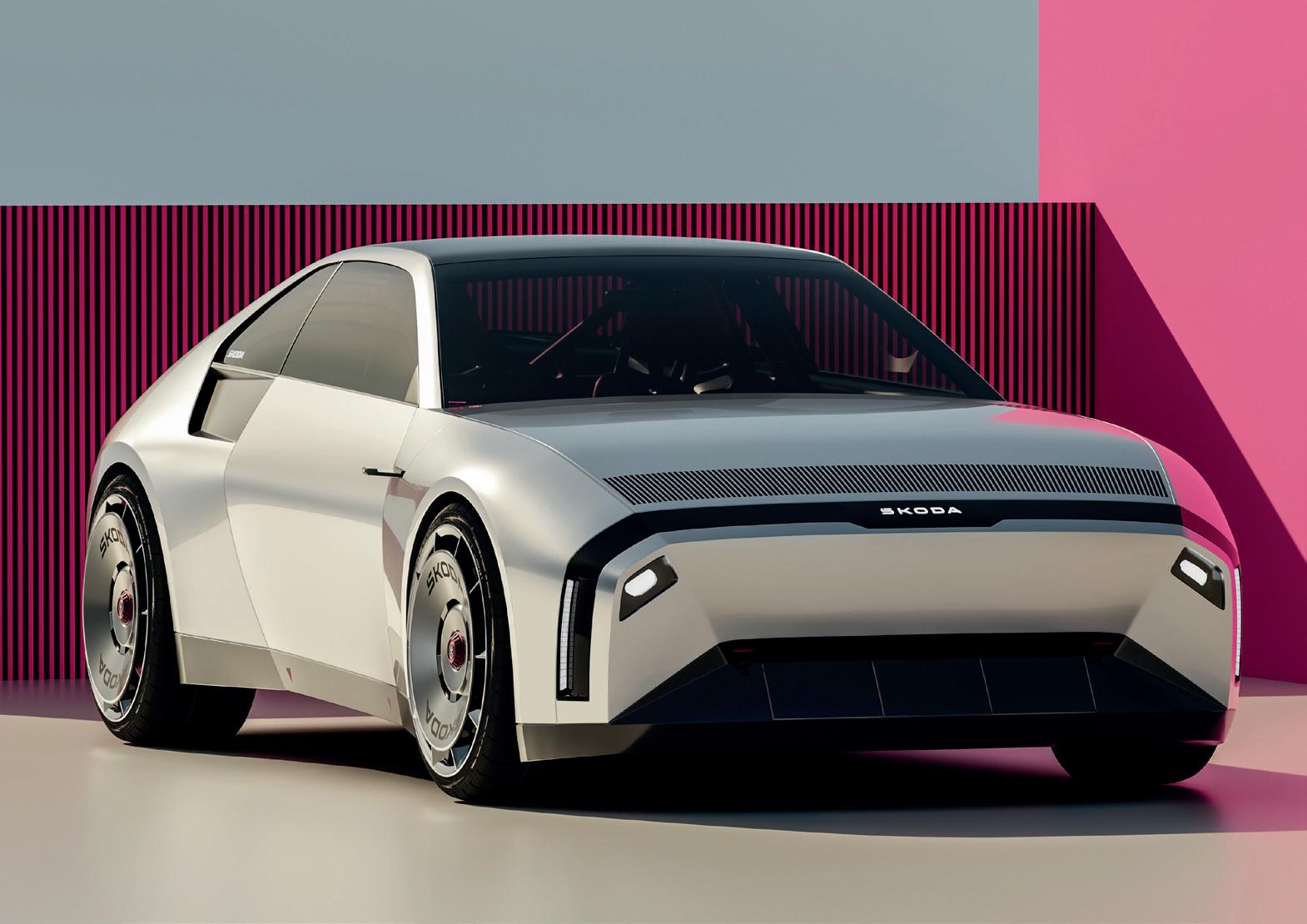
The original Skoda 110 R was a rear-engined, rear-wheel drive, twodoor sports coupé that served as the basis for the motorsport-focused 130 RS.
In line with its heritage, the reimagined Skoda 110 R electric gets 130 RS-inspired fenders, centre-lock aero wheels, a ribbed bonnet, and a roll cage. Up front, the original's round headlights have been dropped in favour of Skoda's 'Tech-Loop' lighting signature. Towards the rear of the car the air vents beneath the windows serve to cool the battery and motor. At the blacked-out rear of the car, a standalone illuminated Skoda logo dominates.
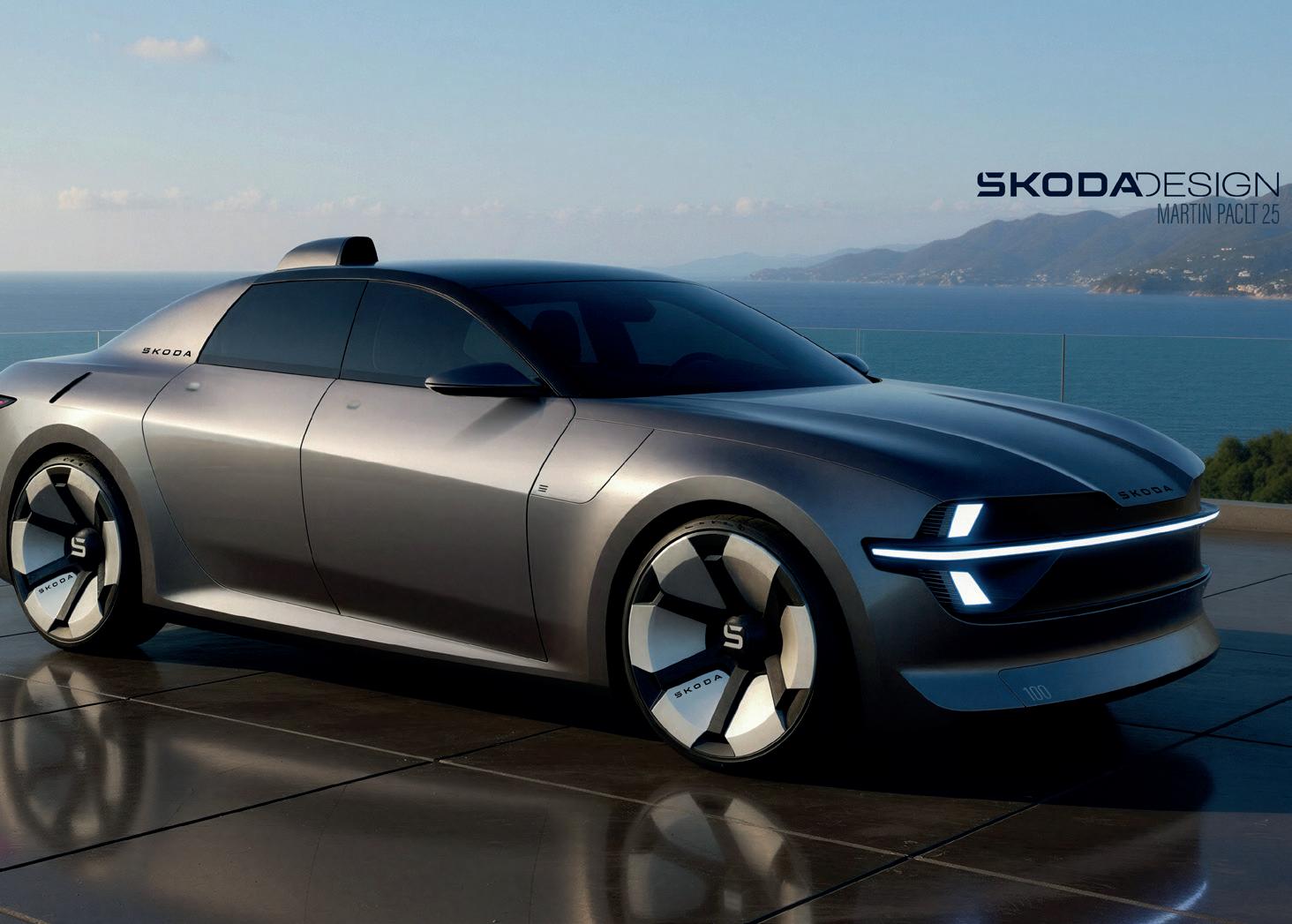
Built from 1969 to 1977, the Skoda 100 was the manufacturer's first car to exceed a million units.
The family sedan was powered by a 1.0 or 1.1-litre, four-cylinder engine producing between 47 and 62bhp. For his addition to the 'Icons Reimagined' series, designer Martin Paclt chose the four-door 100 for its "clean, timeless lines" and added his own Modern Solid take. Immediately striking are the four-element headlights, along with front and rear lightstrips, which nod to the original's chrome front end and rear air vent. An air intake sits atop the roof to cool the rear-mounted motors and battery, while there is the distinctive omission of a rear window. Moreover, the Skoda 100 concept's "body behind the back doors" draws on the original's distinctive C-pillar.
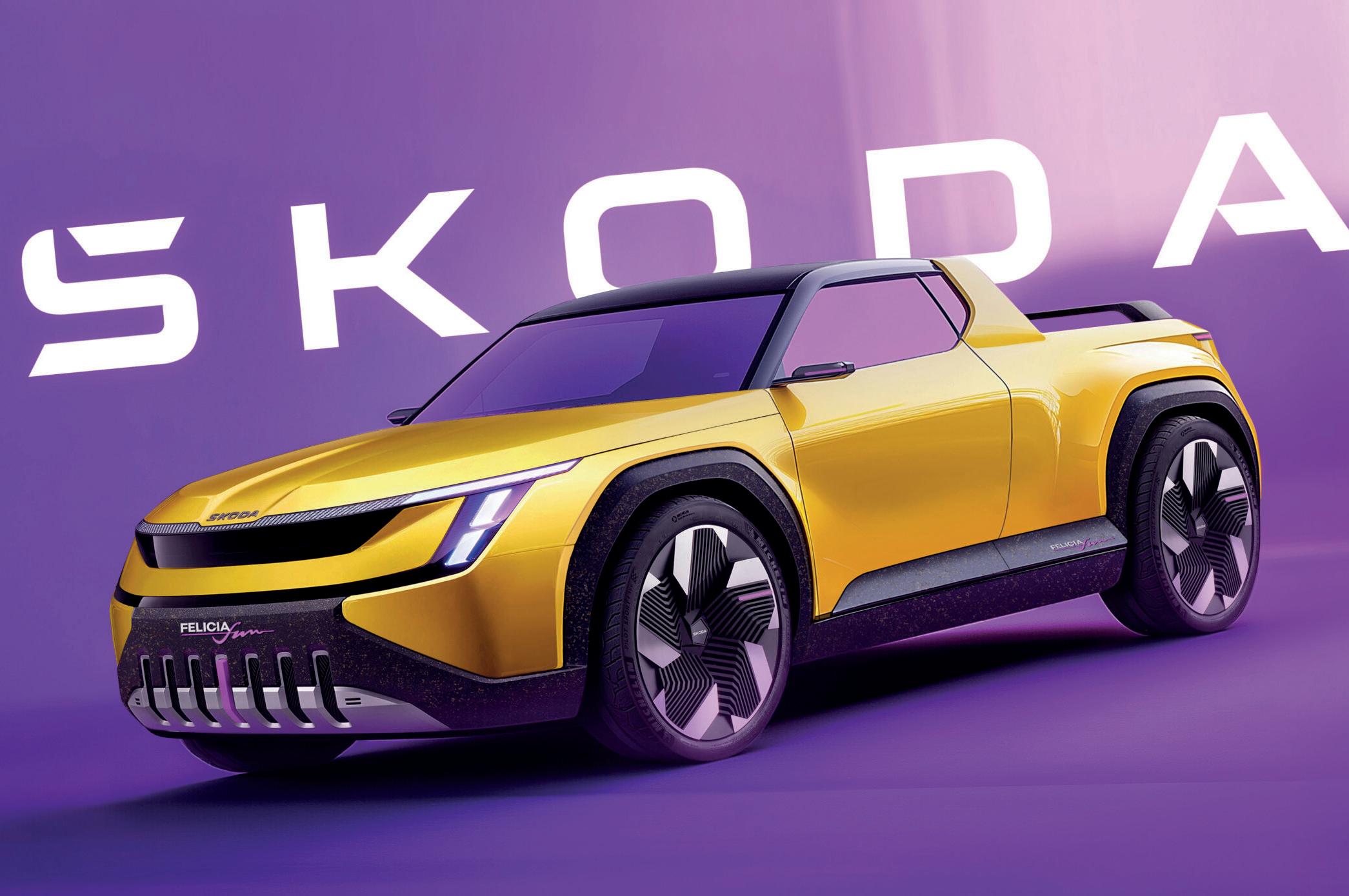
Readers of a certain age will remember the Felicia Fun of the 1990s; a brightly coloured pickup version of the Felicia hatch.
As part of its 130th birthday celebrations, Skoda revived this particular icon as an EV, seemingly based on the Vision 7S. In this new take on the Felicia Fun, Skoda has done away with the Vision 7S's second and third rows of seats to create an open flat bed. The recognisable 'Tech Deck' face remains up front, but inside, a dash-wide screen with '90s-style graphics and pink colourways riffs on the lighthearted nature of the original.
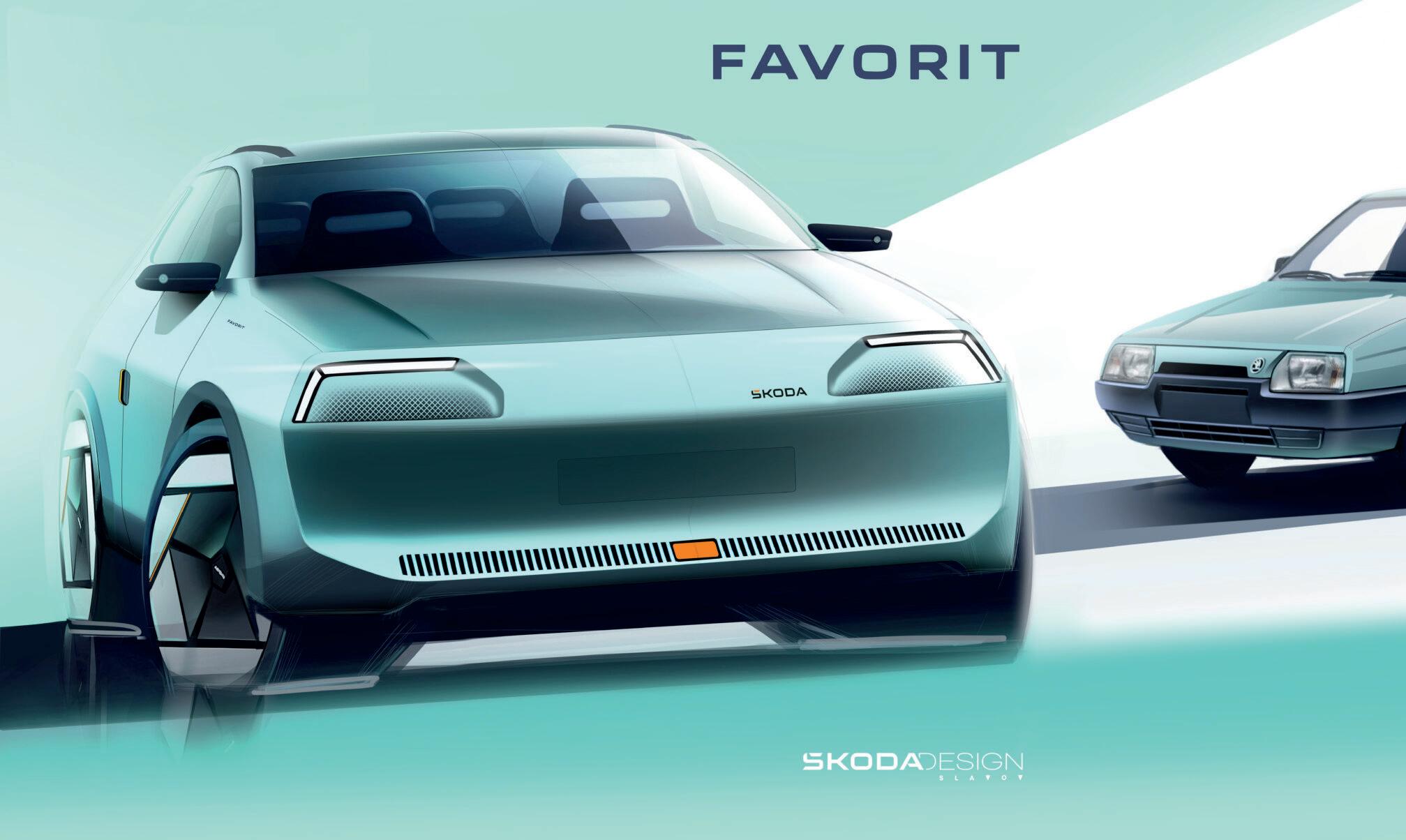
The Favorit was a landmark car for Skoda.
Produced from 1987 to 1994, this much-loved hatchback ushered in a new era of ‘modern’ Skoda thanks to a wedgy Bertone-penned body, and a ‘Western’ transverse-mounted four-cylinder engine up front. For the 130th birthday, designers Ljudmil Slavov and David Stingl brought it back as a contemporary EV with a difference: instead of adopting the blacked-out ‘Tech Deck’ front-end, the minimalist Favorit’s face gets two ultra-slim LED headlights set behind semi-transparent covers reflecting those of the original. According to Slavov, his creation is a “tribute”, and he “didn’t want to rely on current design elements".
Skoda has a strong reputation for creating versatile cars - its electric Enyaq and Elroq SUVs are proof of that.
In the 1960s, the 1000 MBX Coupé previewed the crossover trend by combining everyday practicality with outdoor adventure. According to designer David Stingl, "this car should inspire its crew to explore without hesitation". With cinema-style, fold-away seats and Citroen-inspired air suspension, it emphasises a 'go anywhere, do anything' spirit. When designing the interior, Stingl aimed to preserve the original minimalist, console-free layout while maintaining the sleek Modern Solid aesthetic. Although an electric version of the iconic Skoda Yeti doesn't exist, if it did...
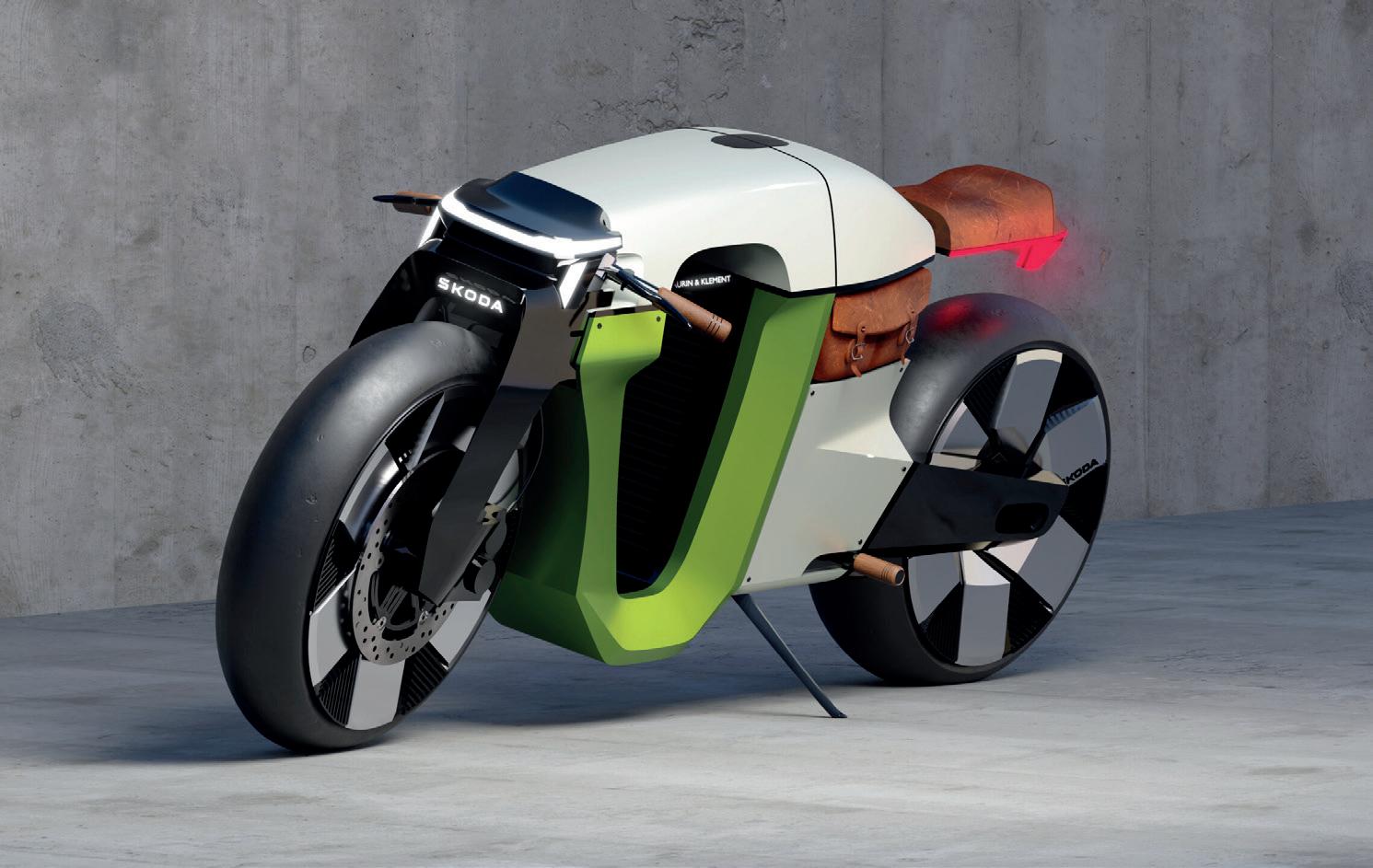
Skoda began life in 1895 as a bicycle maker before first embracing motors, then more wheels.
The Slavia B was introduced in 1899 and powered by a 1.8bhp engine with a clever belt-driven transmission. The Modern Solid Slavia B was the first EV in 2025’s ‘Icons Reimagined’ line, and brings together elements of the original bike’s ‘café racer’ aesthetic with modern design cues such as a floating seat and a hollow frame derived from the Czech language's ‘haček’ diacritic.
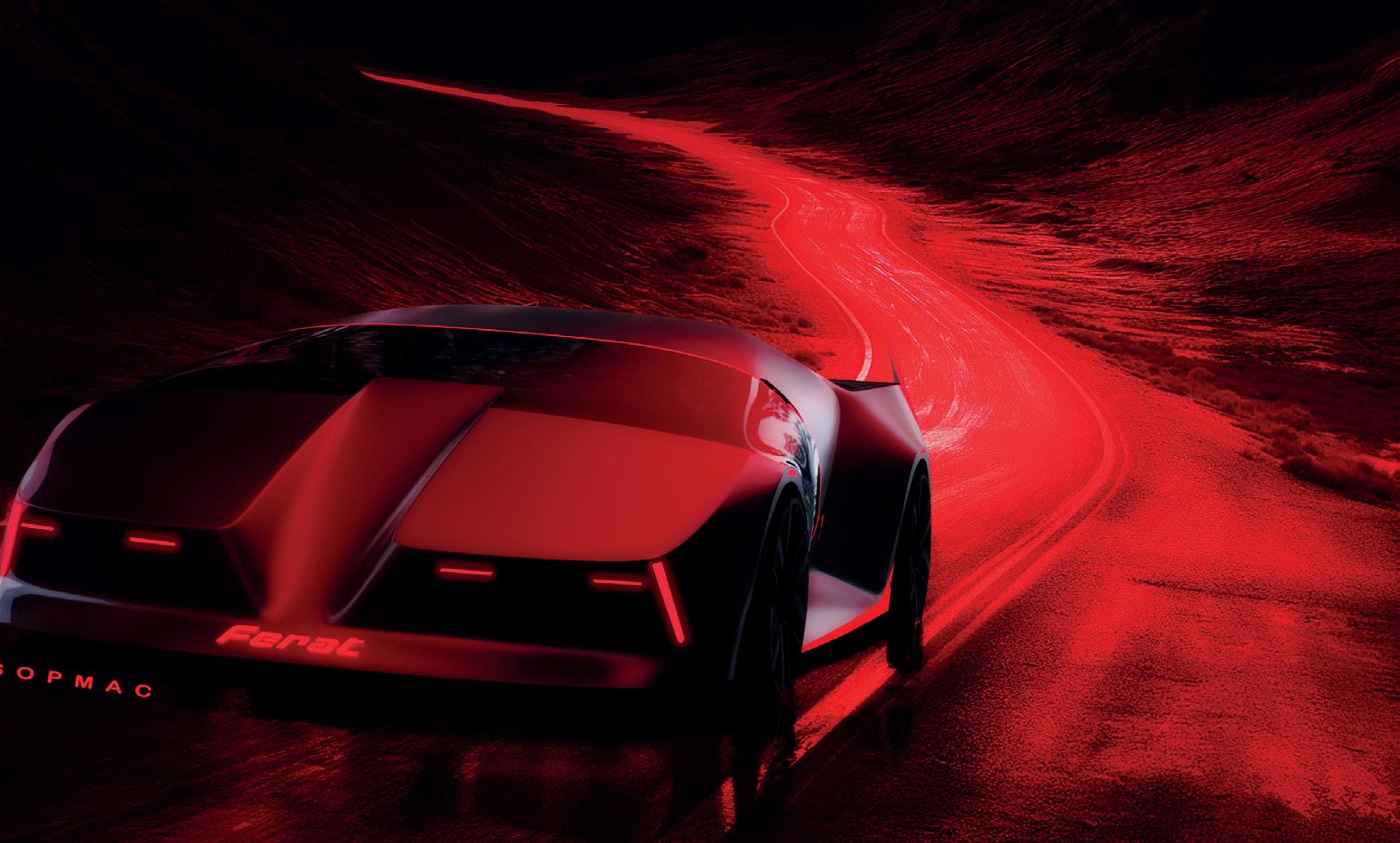

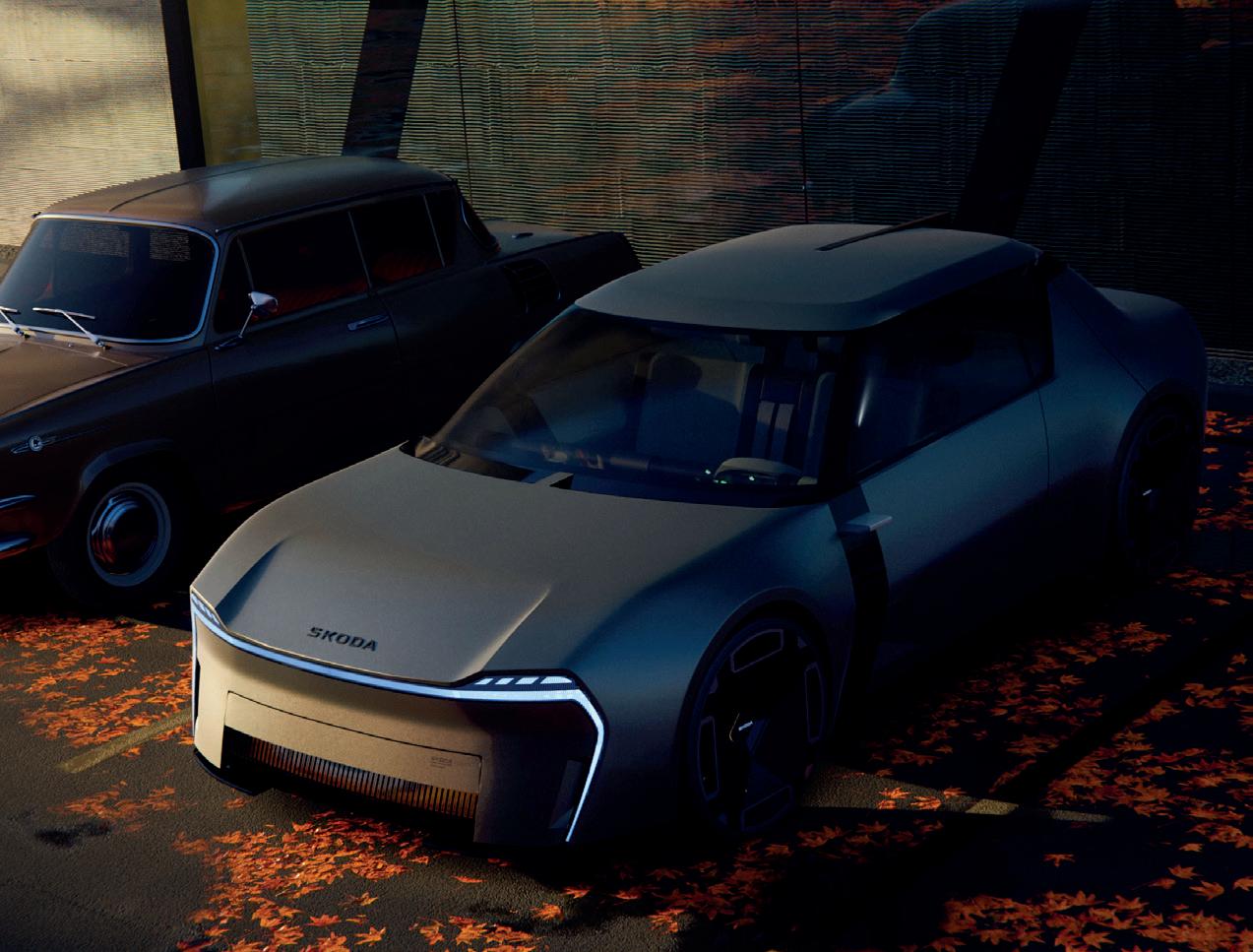
The Skoda Ferat isn’t real.
The Skoda Ferat can’t hurt you, even if it is based on a blood-fuelled Skoda 110 Super Sport, a oneoff prototype that starred in the 1982 Czechoslovak horror film - Upír z Feratu. Inspired by the original car’s moody black and red colour scheme, designers Giuseppe Campo and Stanislav Sabo sought to create “something mysterious, slightly dangerous, and striking emerging from the darkness". With the Modern Solid design language, they redesigned the Ferat’s liftable driver/passenger compartment to “literally engulf the crew." and brought the car's all-threatening aura firmly up to date with a blood-red charging indicator on the centre console.
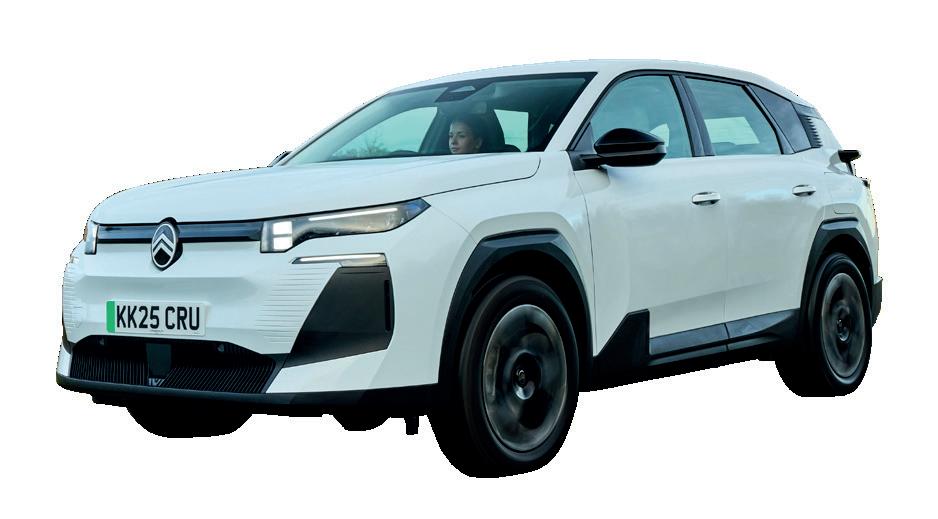
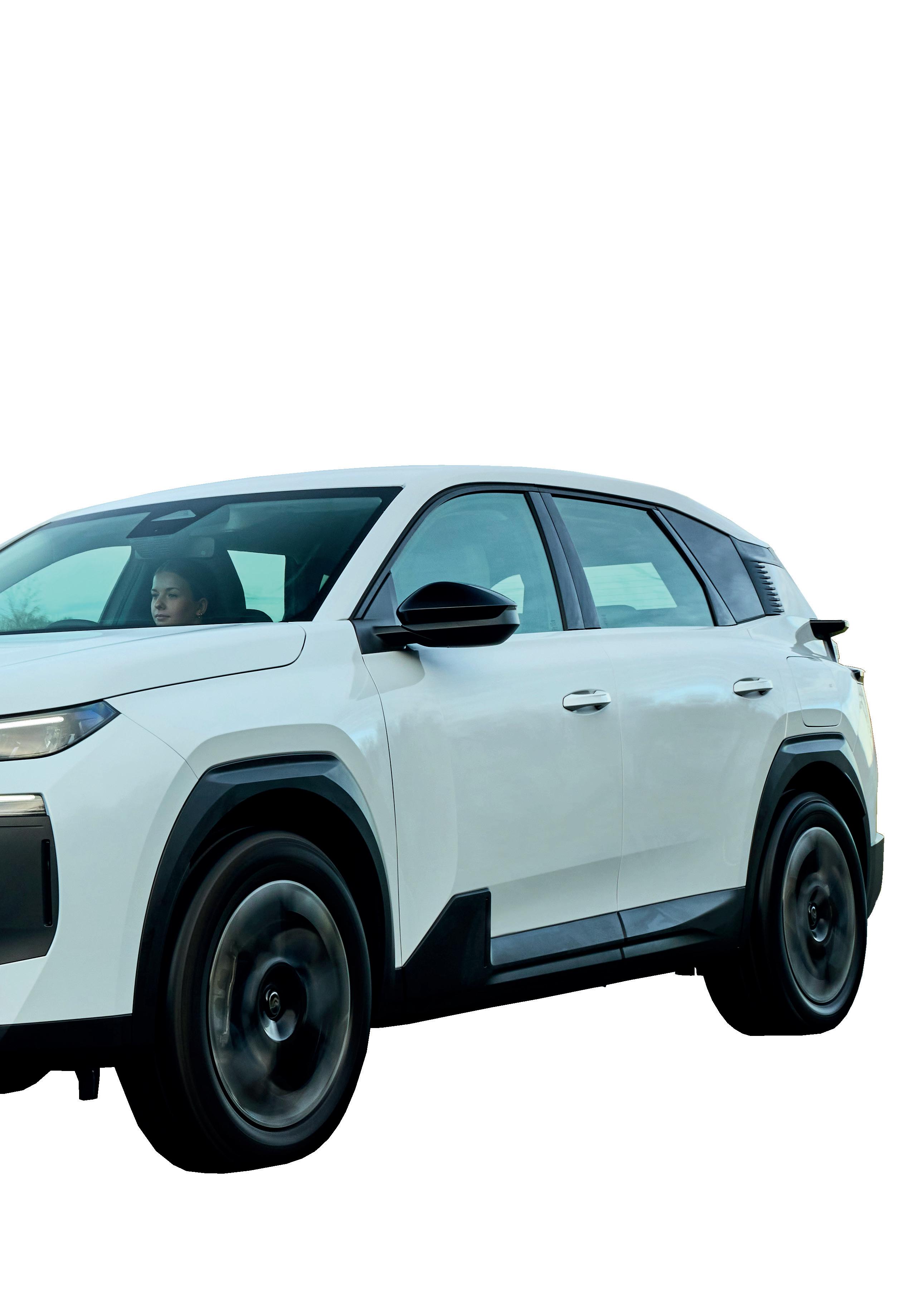
The Citroen E-C5 Aircross might be an SUV, but Citroen says it is the spiritual successor to innovative cars like the Xsara Picasso and C4 Spacetourer. Like everyone else, Citroen decided about 10 years ago that proper MPVs like the Spacetourer were history and big SUVs the future of family transport— boo!
Personal taste aside, the C-SUV segment accounts for a quarter of new car sales in the UK, so it was a smart move. But since the first C5 Aircross came along in 2017, EVs have taken off, leaving the ICE and hybrid model trailing.
Now, though, Citroen is fighting back with this electrified rival to the Skoda Enyaq, VW ID.4 and Kia EV5, hoping to wow customers with exceptional value and the longest range in its class.
The original petrol-powered C5 Aircross was a bit of a soft, blobby thing. That bubbly look was part of Citroen’s aesthetic back in the mid-2010s but since then the brand has reached for the scalpel and adopted a sharper edge.
So this all-new C5 gets a more defined and refined design with crisper lines and an unapologetically upright SUV look.
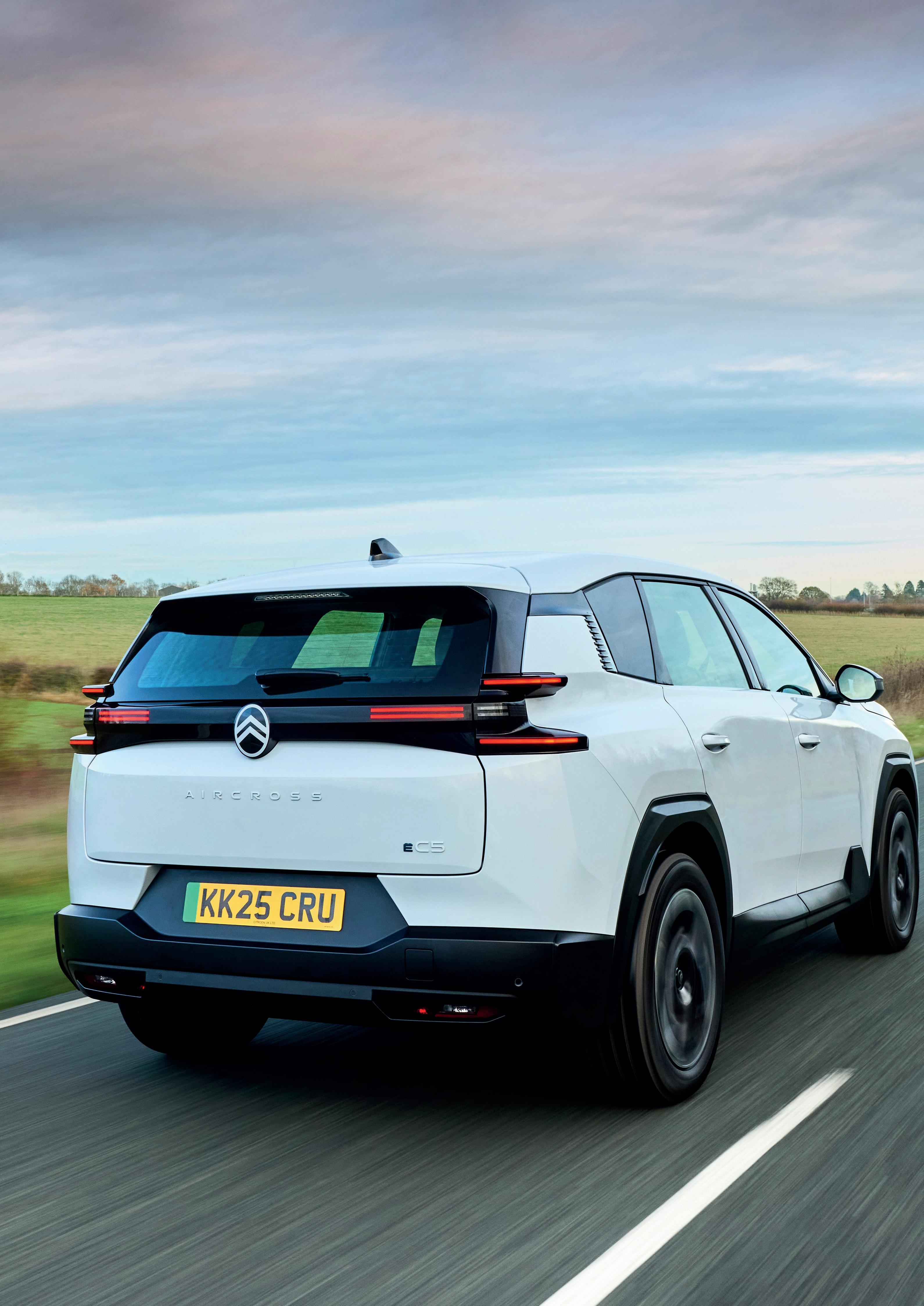
Head-on that manifests in a tall, bluff front end with neat cuboid headlights and slim running lamps, plus a sharpedged smooth bumper. A tapered waistline not only gives some definition to the car’s profile but, apparently, helps add 15 miles of range due to its aerodynamic contribution. Perhaps unusually, the E-C5 Aircross is most striking and individual from the rear, where three-section tail lights jut out like mini wings and wrap around onto the rear threequarter panels.
The overall effect is perhaps not as quirky as the old car but it ties in well with the rest of the Citroen range and looks clearly like a bigger brother to the compact E-C3 Aircross.
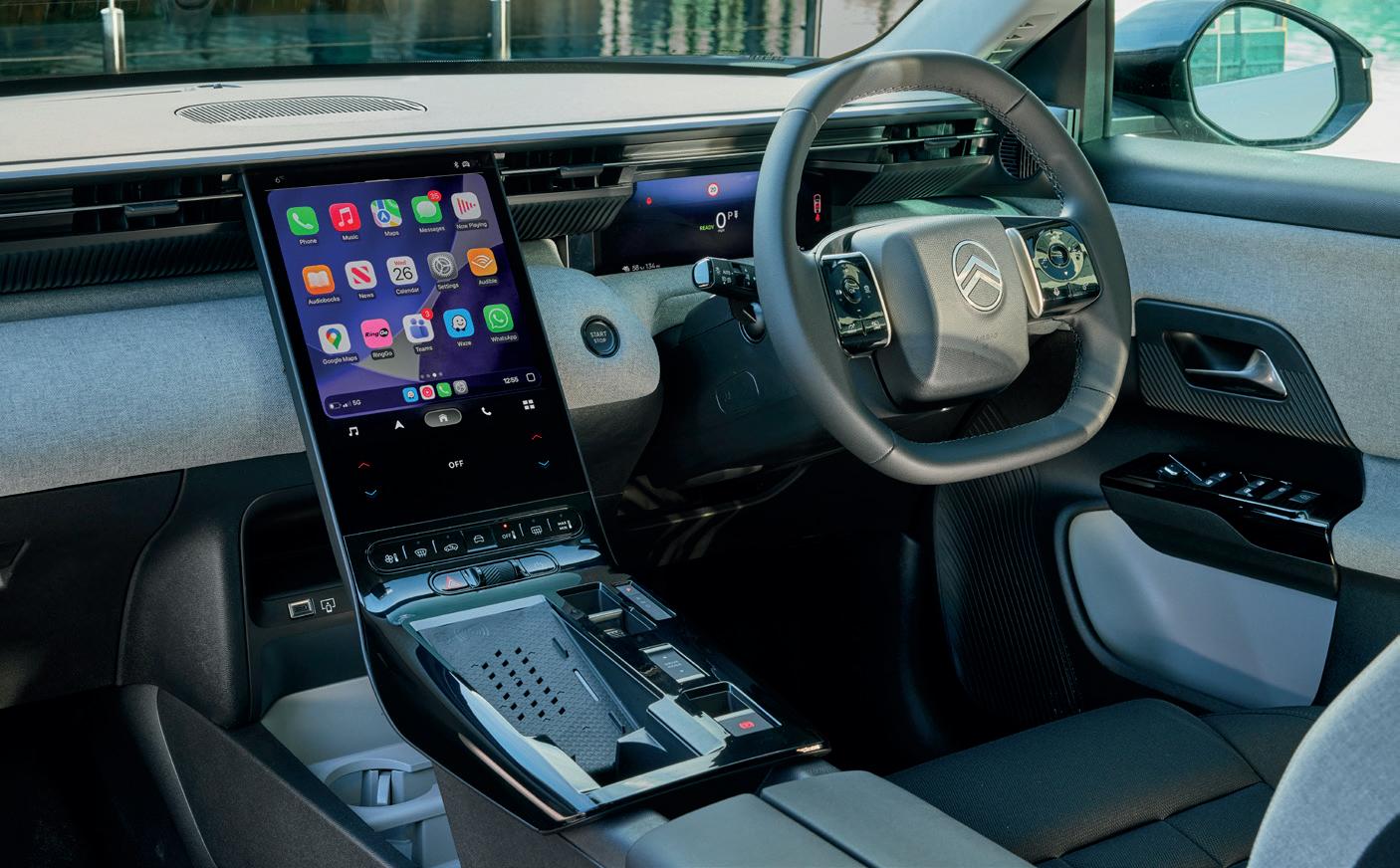
Inside there’s less family resemblance and the E-C5 Aircross is a far more upmarket affair. Material quality is a real step up not just from the old car but also from the rest of the Citroen range. Citroen says there’s a particular focus on quality in the new E-C5 and it certainly seems apparent in the solid feel of all the switchgear and interesting material choices. There’s still a bit too much piano black plastic and a few common Stellantis switches but in general it’s in keeping with the E-C5’s flagship status.

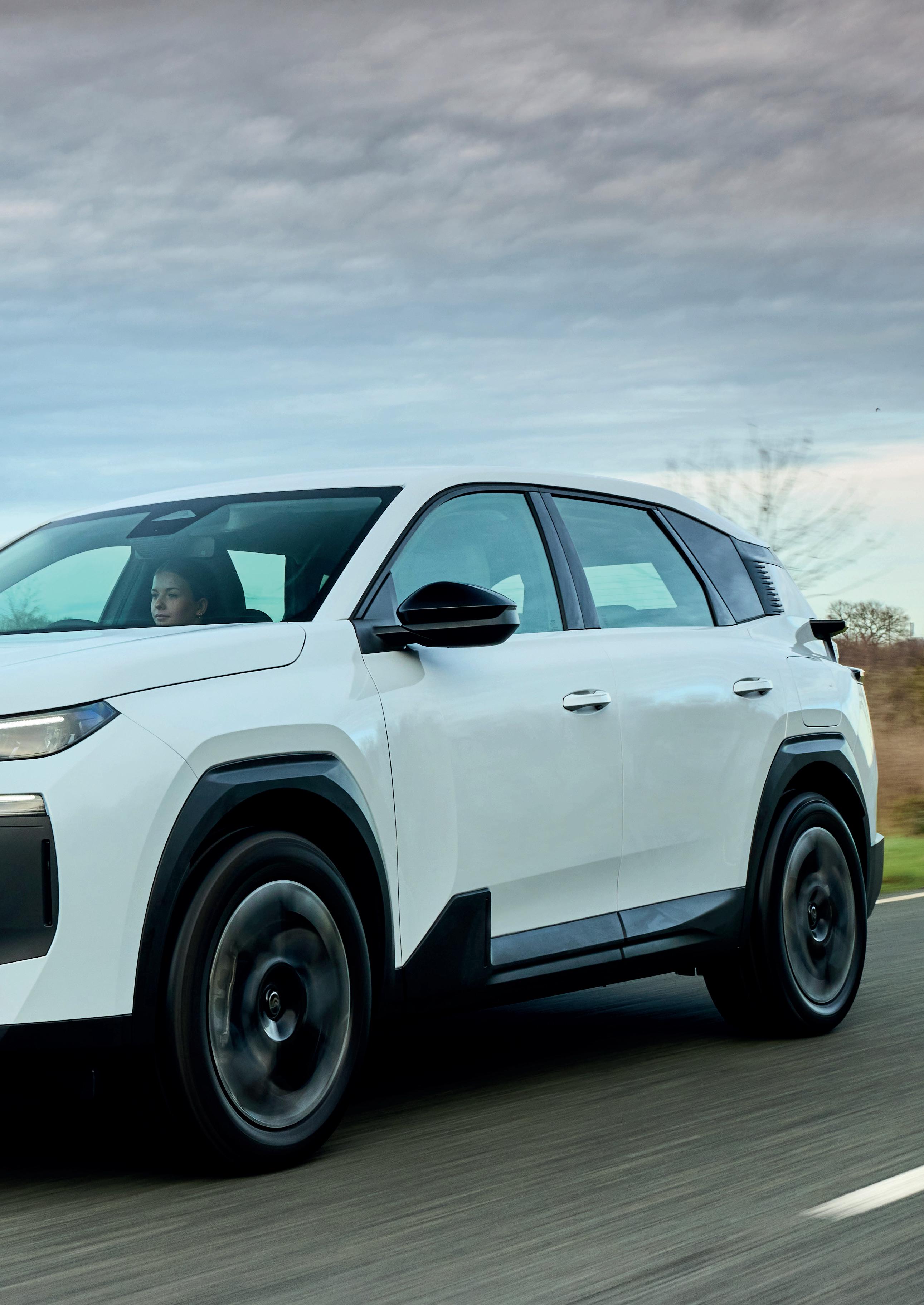
MY FIRST IMPRESSIONS ARE LIMITED TO THE LESS-POWERFUL MODEL BUT I SUSPECT THE EXTRA OOMPH OF THE LONG RANGE VERSION MIGHT BE A SMART CHOICE, ESPECIALLY IF YOU REGULARLY CARRY A FULL CAR LOAD
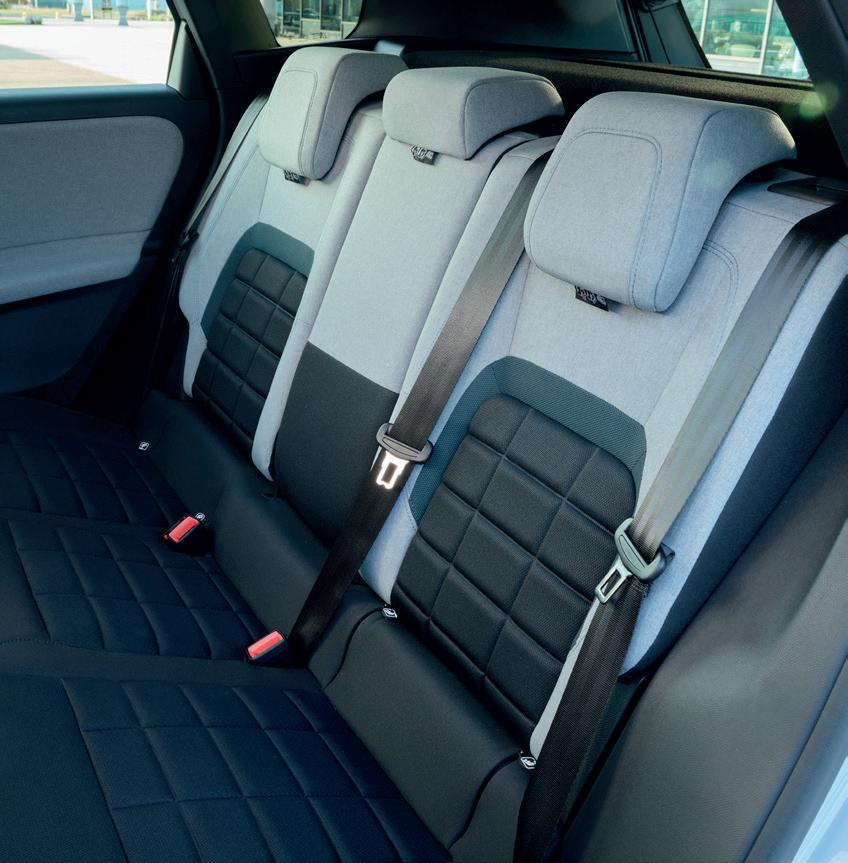
Specification makes a big difference to the interior ambience, however. The entry-level You! trim has decent materials but feels a little dark and drab. The Max trim with its cream faux-leather seats and wonderful ‘sofa fabric’ dashboard finish is lighter, smarter and more welcoming, especially if you spec the massive panoramic roof.
There’s more head and legroom than in the previous Aircross but behind the Advance Comfort front seats (they do what it says on the tin) Citroen has ditched the three individual rear seats of the first-gen car. It says research shows owners of first-gen cars rarely used the middle seat, so it decided to give those on the outer pews a bit more space. For most people this probably makes sense, but as someone with three kids, it lessens the practicality and robs the E-C5 Aircross of one of its unique benefits over rivals. Oddly, though, the seat back still splits 40/20/40.
Citroen boasts that the E-C5 has class-leading boot space at 651 litres. That’s a great, usable space with a flat load lip and huge opening. But all that room comes at the expense of rear legroom. There’s still enough for a couple of average-sized adults front and rear, but rivals such as the MG6S offer far more space behind taller front seat occupants.
At the centre of the new E-C5 sits the biggest portrait touchscreen fitted to any Stellantis model. This 13inch unit flows from the lip of the dashboard down into the centre console, sitting above a wireless phone charger and a bank of tactile physical buttons for climate functions. The screen is sharp and responsive and Citroen has taken care to make it easy to use. There are big simple menu icons and no long lists of options. Every control is big and easy to hit on the move, including the temperature controls permanently anchored to the bottom of the screen. There’s also a handy shortcut key that can be programmed to open the ADAS settings at one touch. As standard, the E-C5 Aircross supports wireless Android and Apple mirroring as well as coming with Citroen’s own EV-specific navigation system. High-spec models add a head-up display to supplement the 10-inch digital instrument panel.
There are two powertrain options for the Citroen E-C5 Aircross each with a different motor and battery.
The “comfort” range model kicks things off with a 207bhp motor driving the front wheels and a 73kWh battery delivering a WLTP-rated 322 miles of range. That’s a decent showing for the class and already outperforms a lot of Chinese alternatives.
Above that there’s the long-range version which offers a massive 421 miles from its 97kWh battery. That instantly catapults the E-C5 Aircross not only to the top of its class but onto the list of the longest-range EVs on sale. It also gets a modest power boost to 227bhp.
PRICE: £37,845 (£39,490 as tested)
POWERTRAIN: Single-motor, front-wheel-drive
BATTERY: 73kWh
POWER: 207bhp
TORQUE: 253lb ft
TOP SPEED: 106mph
My first impressions are limited to the lesspowerful model but I suspect the extra oomph of the long range version might be a smart choice, especially if you regularly carry a full car load.
The comfort range car’s 207bhp is definitely adequate for the car and will get it from 0-62mph in an acceptable 9 seconds. But it lacks the grunt of something like the Enyaq or Ford Explorer.
That’s amplified by a slightly dulled throttle response and equally soft steering. There’s a squishiness to both inputs that’s at odds with many “sporty” rivals. It’s still composed and predictable, just not dynamic.
In fact, the whole experience is a little like driving a marshmallow — not in a bad way, just in a very Citroen way. Everything is calibrated for gentle progress and soothing movement — from the slightly damped throttle and steering to the exceptional ride comfort.
Citroen’s “thing” is to be the class leader for comfort and it delivers here courtesy of the Advanced Comfort suspension with its clever hydraulic bump stops. This really does deliver unrivalled ride comfort. You still notice lumps and bumps but impacts that would send judders through the cabin of any rival are soaked up with remarkable composure. If comfort is your priority, look no further.
Citroen offers three levels of braking regeneration which, frankly, feel like they need work. There’s no full one-pedal mode, nor can you fully deactivate it to coast. While it works well enough at lower speeds, on country roads it felt a little underpowered and I found myself using the brake pedal more than I expected.
Over a couple of drives in different variants, I saw an average consumption of 3.5m/kWh. That’s not bad for a chilly November day, and equates to around 255 real-world miles between charges.
Both batteries charge at up to 160kW but the larger battery manages the 20-80% refill in 27 minutes compared with 30 for the smaller unit, thanks to a better charging curve.
Citroen now has seven EVs priced from under £33,000. The fact cars like the E-C3 and E-C4 are in that list shouldn’t be a surprise. The fact the E-C5 Aircross is on it is perhaps more shocking.
0-62MPH 8.9 secs
RANGE: 320 miles
CONSUMPTION: N/A
CHARGING: up to 160kW
Thanks to the application of the Electric Car Grant, the fully electric C5 Aircross starts at £32,565 and tops out at £38,215.
Of particular note is that the long-range version — whose batteries are built in France — gets the full £3,750 discount while “comfort range” models with Chinese batteries only get a £1,500 grant. That means you can have an extra 100 miles of range for less than £500 more. Even without the discount, the E-C5 Aircross would start at less than £34,500, undercutting pretty much every rival, including most of the options from newcomer Chinese brands — the masters of competitive pricing.
For reference, without the grant, the Skoda Enyaq starts at £39,010 for the 270-mile version, while the 360-mile Renault Scenic starts at £36,995. Exceptionally, the Leapmotor C10 starts at £32,750 after the brand’s own in-house grant. Citroen fights back with an eight-year warranty to the C10’s four, and 60 more miles in its shorter-range model.
Citroen’s basic equipment level isn’t as generous as most Chinese alternatives, who tend to come in one fully-loaded trim. But climb to the top-of-therange Max and you’ll get all the expected bells and whistles, and still be paying just a whisker over £38,000 for the 420-mile range version.
You’ll probably want the Max spec as it adds heated seats, a heated steering wheel, heat pump, powered tailgate and Matrix LED adaptive headlights – a Citroen first.
Below that, You! trim starts the range off with 18inch alloys, keyless start, dual-zone climate control, adaptive cruise control and rear parking sensors. Plus trim adds 19-inch wheels, tinted rear glass, part-fauxleather upholstery, keyless entry, and reclining rear seats along with a reversing camera and front sensors.
With the current ECG the E-C5 Aircross represents incredible value, especially in long-range guise. Nothing else can offer close to its 421-mile range for similar money.
But there’s more than just a low price to recommend. Rear legroom isn’t the greatest and the driving experience not the most dynamic but the E-C5 Aircross is an impressive all-rounder with an impeccable ride, controlled road manners and a neatly designed, comfortable interior.
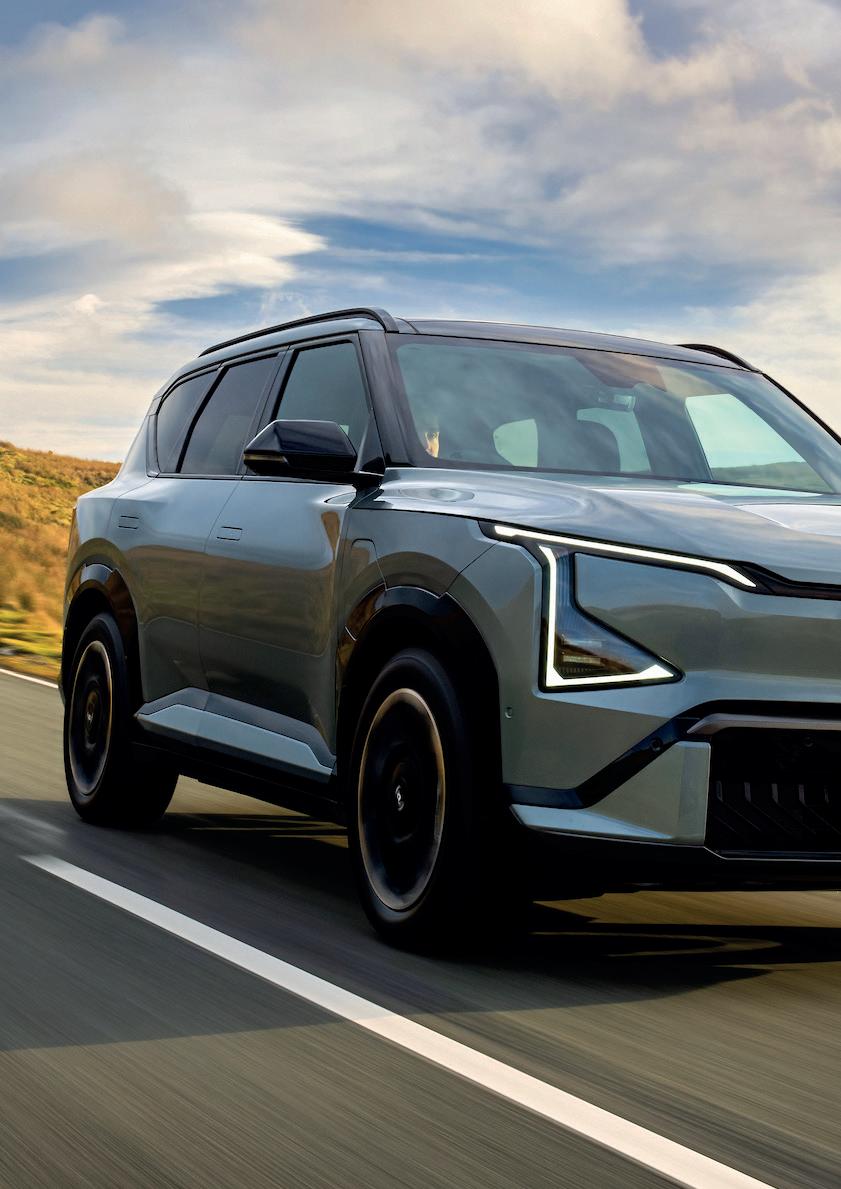
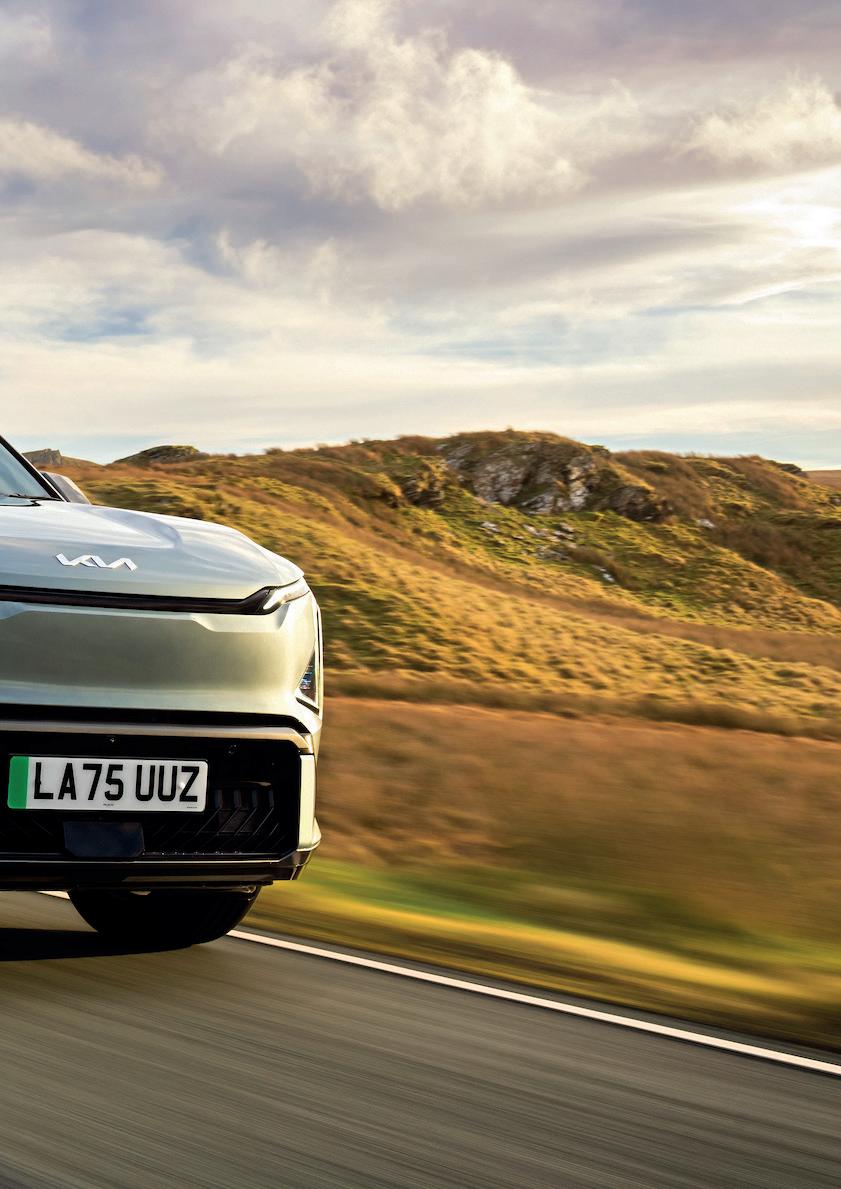
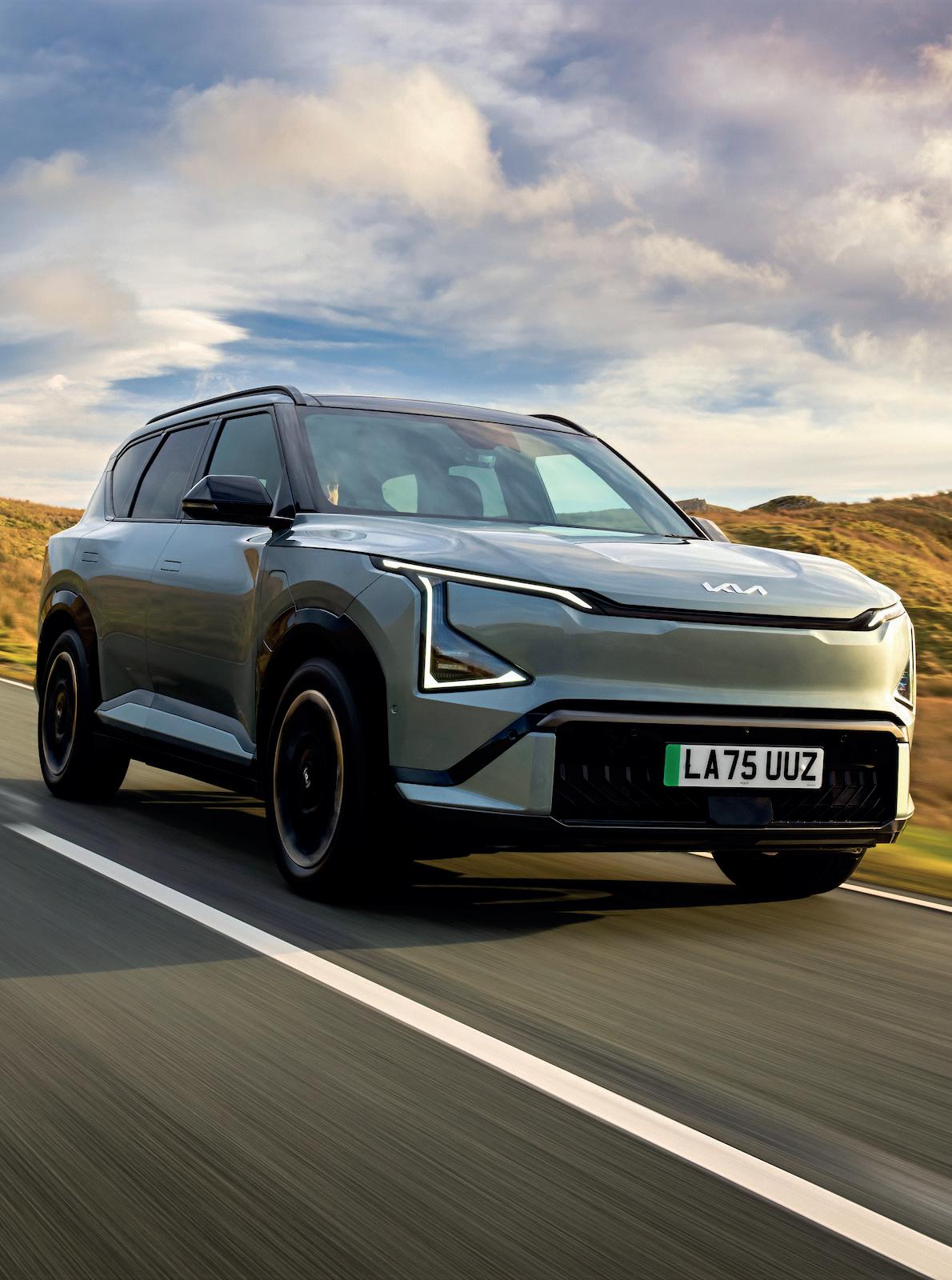
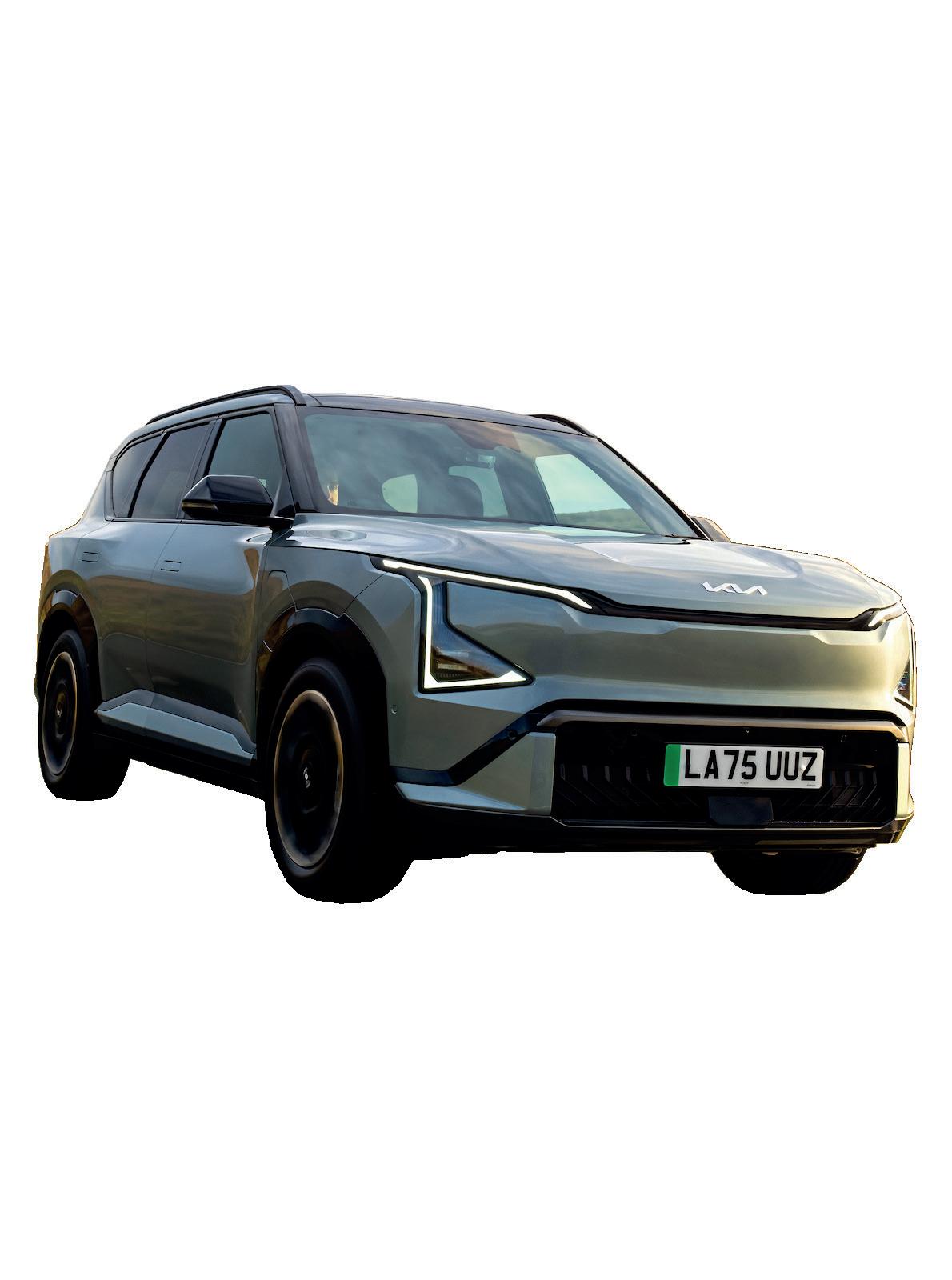
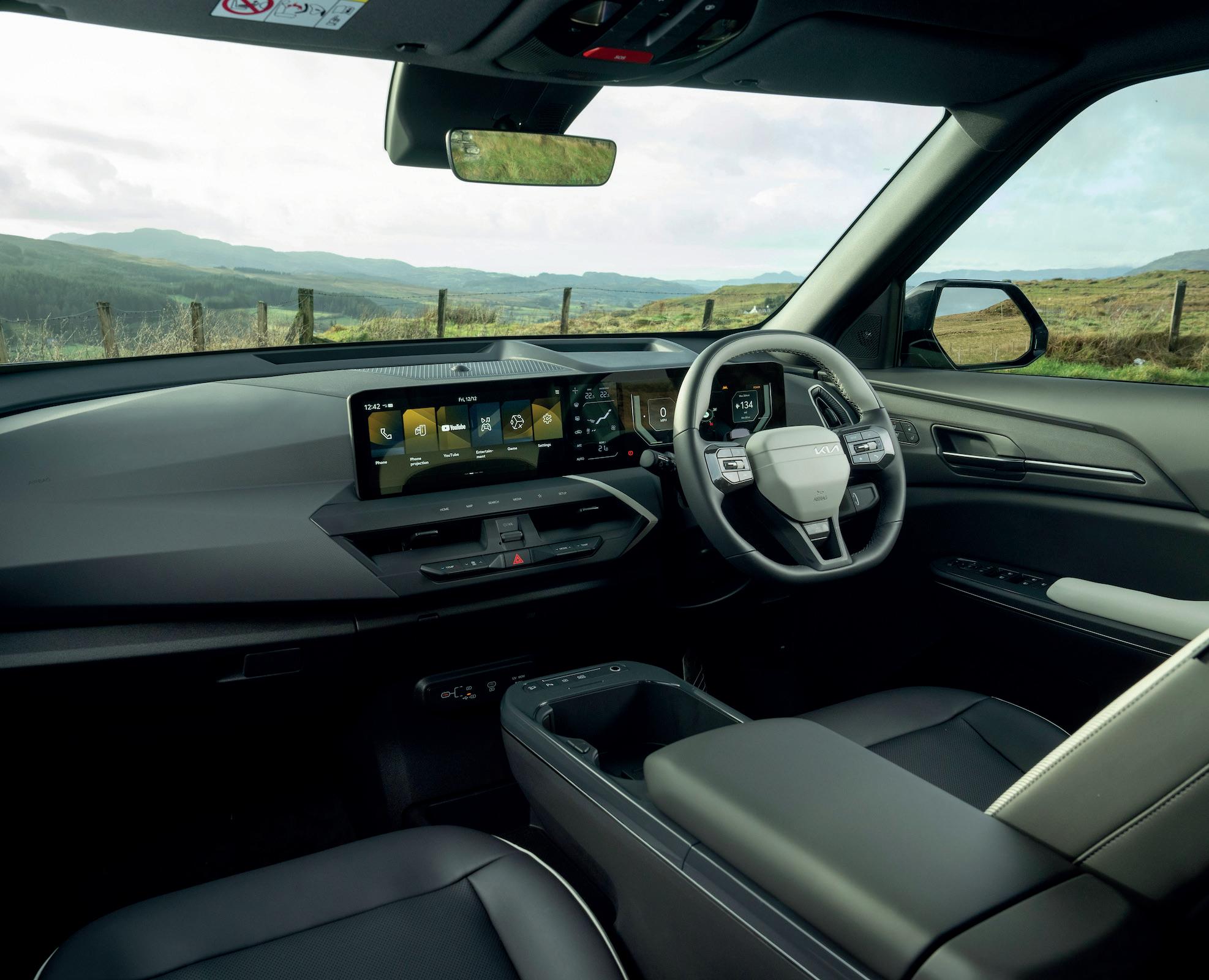
To avoid a flat slab of dashboard, Kia’s designers have given the EV5 an angular design that apes the exterior body work and pinches in around the main screen. It adds some character in an otherwise slightly dull cabin. There’s no faulting the quality – everything feels built to last a lifetime – but almost everything is a uniform grey colour. GT-Line S cars get some white panels on the part-leather seats and armrests but they’re virtually the only splash of colour anywhere. Compared with the multi-material Citroen E-C5 Aircross or Skoda Enyaq, it’s all a bit miserable.
However, like the quality, there’s no faulting the EV5’s practicality. There’s a wealth of storage spaces, from the broad lower bin between the front seats to generous door pockets and a neat slide-out table/storage unit for the rear passengers. There’s even a bag hook under the dashboard, plus wireless charging and USB ports galore.
And there’s acres of space for a family on board. The EV5’s long wheelbase means some of the best rear legroom in the class, with space for three across the wide rear bench and plenty of room for those in front. A 566-litre boot means there’s plenty of space for luggage, too, although some rivals offer even more. And there’s a 44-litre frunk for cables, picnic bags or other odds and ends.
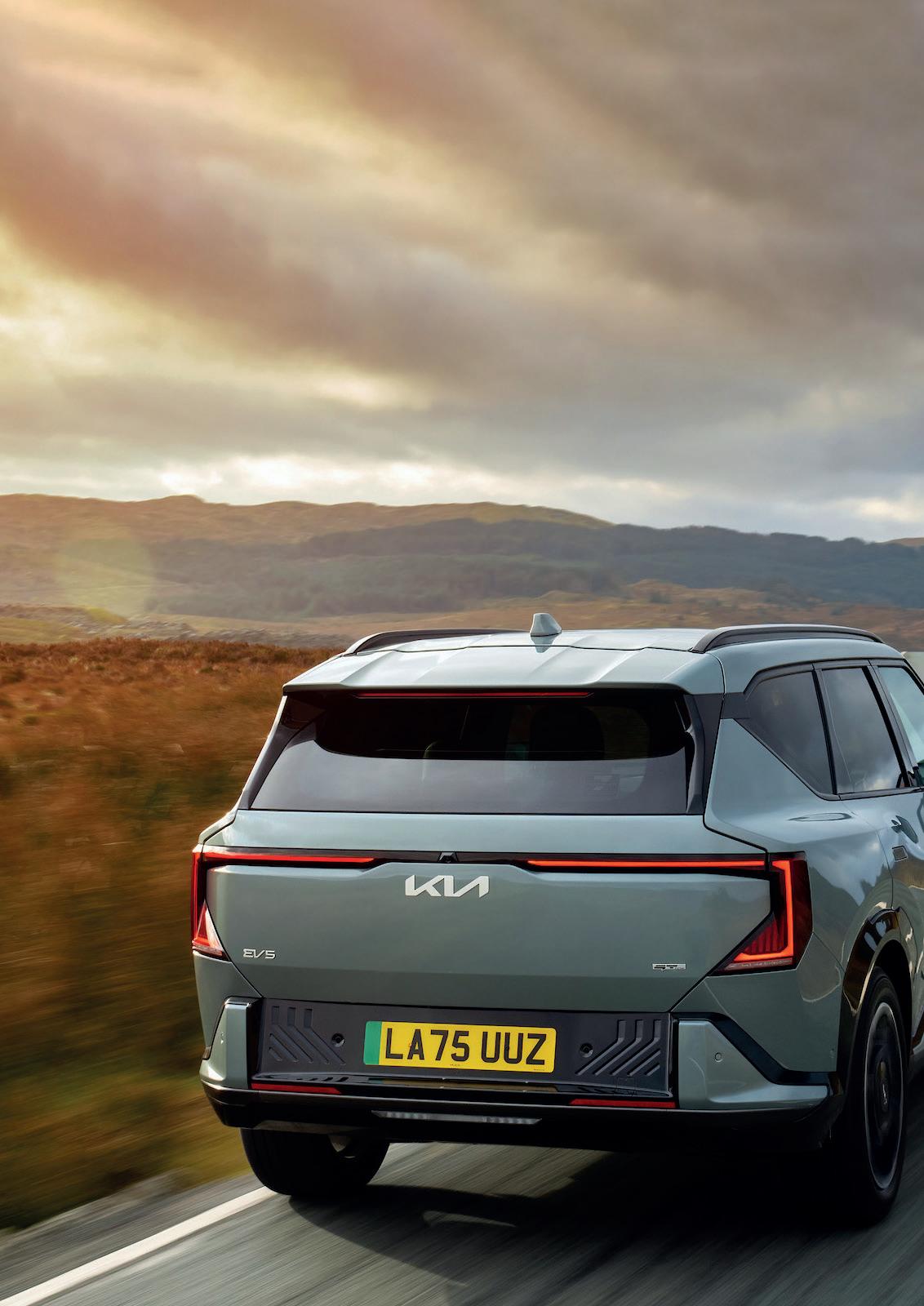
The Kia EV5’s battery and motor choice is nice and simple. There’s one of each.
An all-wheel-drive version and a hot GT model will arrive later but, for now, every version gets an 81.4kWh battery and a 214bhp motor driving the front wheels and delivering a very average 0-62mph time of 8.4 seconds.
In entry-level Air specification the EV5 has an official range of 329 miles while the GT-Line and GT-Line S with their bigger wheels and heavier equipment offer up to 313. Unusually for Kia, that’s some way off the class best. The Enyaq offers up to 360 miles in its longest-range form, the Scenic 379 miles and the new Citroen E-C5 Aircross a remarkable 421 miles.
Charging, too, is a little off the pace at 127kW. Rivals offer anything between 150kW and 280kW, which on a 10-80% top-up will shave between five and 10 minutes off the EV5’s 30-minute wait.
On the road, the EV5’s 214bhp translates into perfectly adequate but unremarkable performance. It definitely lacks the punch of something like the 282bhp Enyaq but pulls well enough for most situations and feels willing even at higher speeds. There are multiple driving modes, including sport –which sharpens the throttle and activates the pneumatic bolsters in GT-Line S cars – and snow, which dampens the throttle to lessen wheel slip.
As with other Kia EVs there are also multiple braking regeneration settings from off to one-pedal driving, with an auto option as well. Whatever your driving style, it’s nice to be able to choose a setup that suits you.
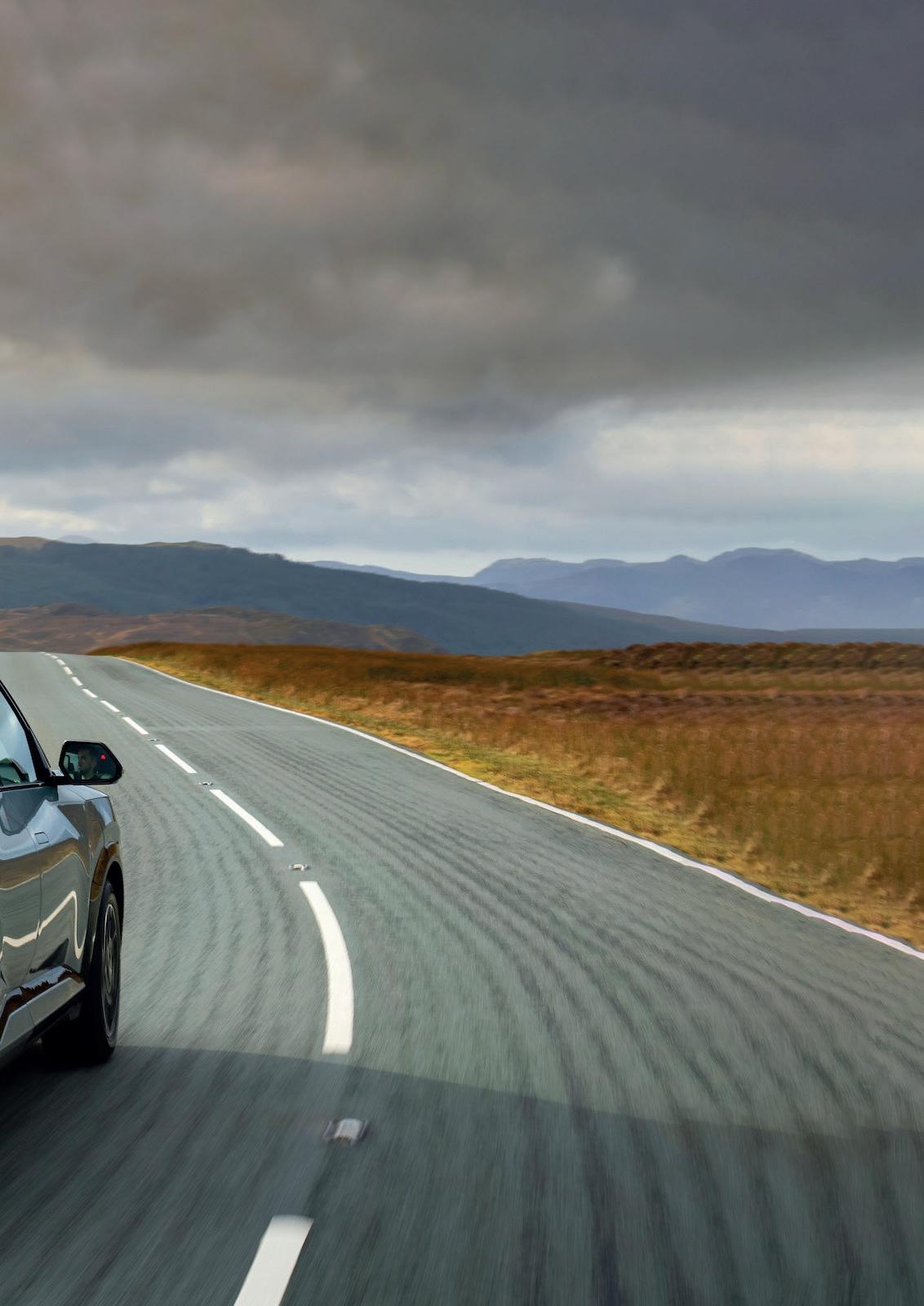
Kia can generally be trusted to deliver a controlled, reassuring driving experience and the EV5 is no different. The GT version might unlock new levels of dynamic ability but the regular car feels connected and composed whether meandering through town or pressing on along country lanes. The ride is a little firm, especially on higher-grade cars’ larger wheels, with a slightly stiff feel over badly broken surfaces. However, it is still far more settled and comfortable than any Chinese alternative and no less comfortable than something like a Scenic.
Prices across the C-SUV segment now range from the low £30,000s to the high £50,000s, so the EV5 is priced neatly in the middle of that.
Three trim levels start with the Air grade, priced from £39,345. GT-Line starts at £42,645 while range-topping GT-Line S comes in at £47,145 before options. Those options are limited to a heat pump, various fancy paint finishes and entertainment packages for the connected infotainment system.
Every version of the EV5 gets alloy wheels, full LED lights, heated front seats, tinted rear windows, dual-zone air conditioning and wireless smartphone mirroring. Standard driver assistance ranges from adaptive cruise control and lane keep assist to front and rear parking sensors and a reversing camera.
GT-Line upgrades the Air’s 18-inch wheels to 19-inch units and adds powered pop-out door handles, adaptive LED headlights, a powered tailgate and heated rear seats along with cosmetic upgrades.
To that, the GT-Line S adds a panoramic roof, Harman Kardon stereo, upgraded front seats with cooling and back-care Ergo Motion for the driver, plus a head-up display and fingerprint recognition.
The EV5 doesn’t feel like quite the same slamdunk superstar as Kia’s other EVs but that’s down to a broad pool of very capable rivals.
Some of those offer more power, more range, faster charging or lower prices, meaning the EV5 doesn’t stand out as a class leader.
Nonetheless, it does offer a fantastic all-round package that blends space and practicality with a good everyday powertrain, decent range and generous equipment list.
Price: £47,145 (£47,820 as tested)
Powertrain: Single-motor, front-wheel-drive
Battery: 81.4kWh
Power: 214bhp
Torque: 218lb ft
Top speed: 102mph
0-62mph: 8.4 seconds
Range: 313 miles
Consumption: 3.5m/kWh
Charging: up to 127kW
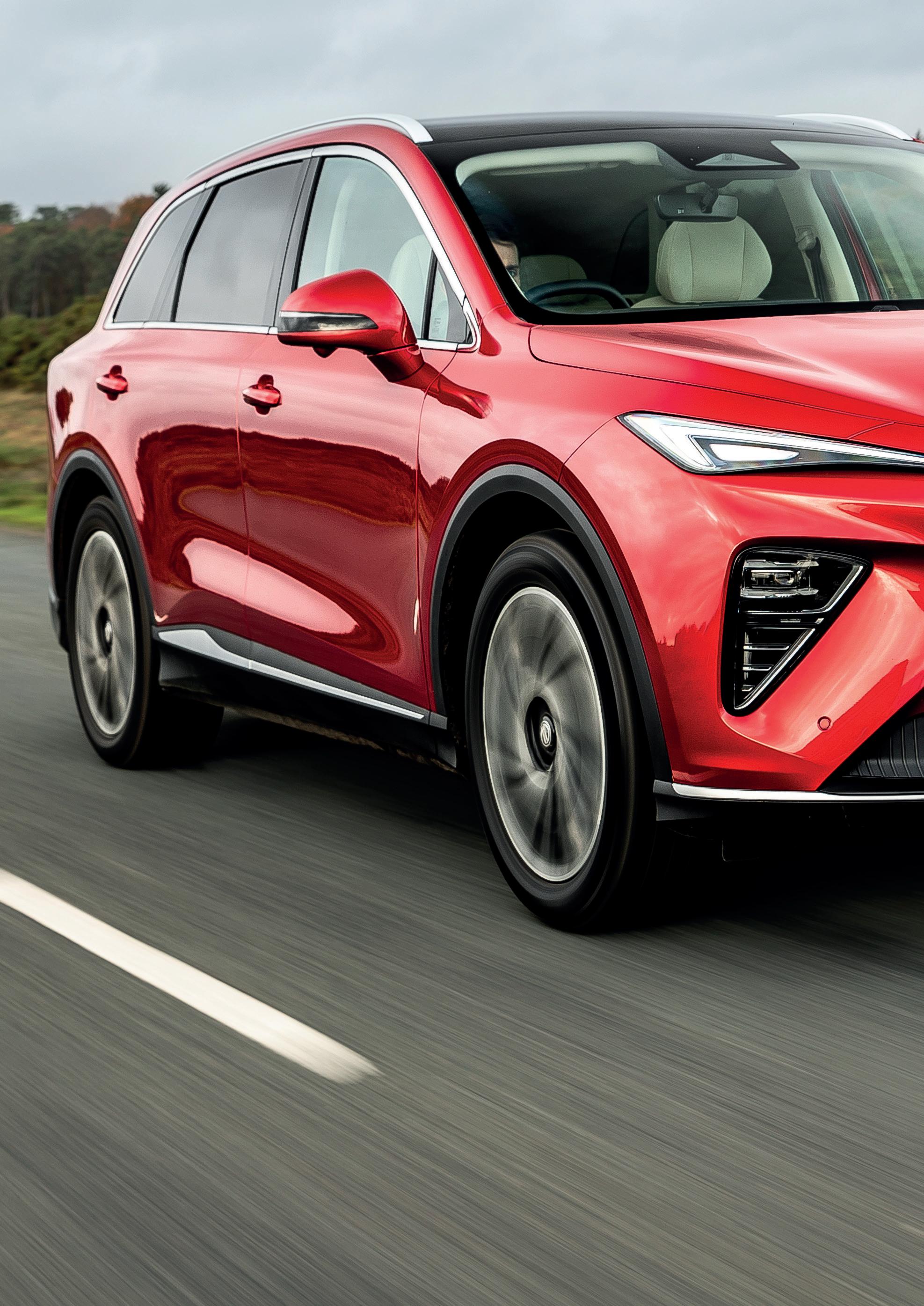
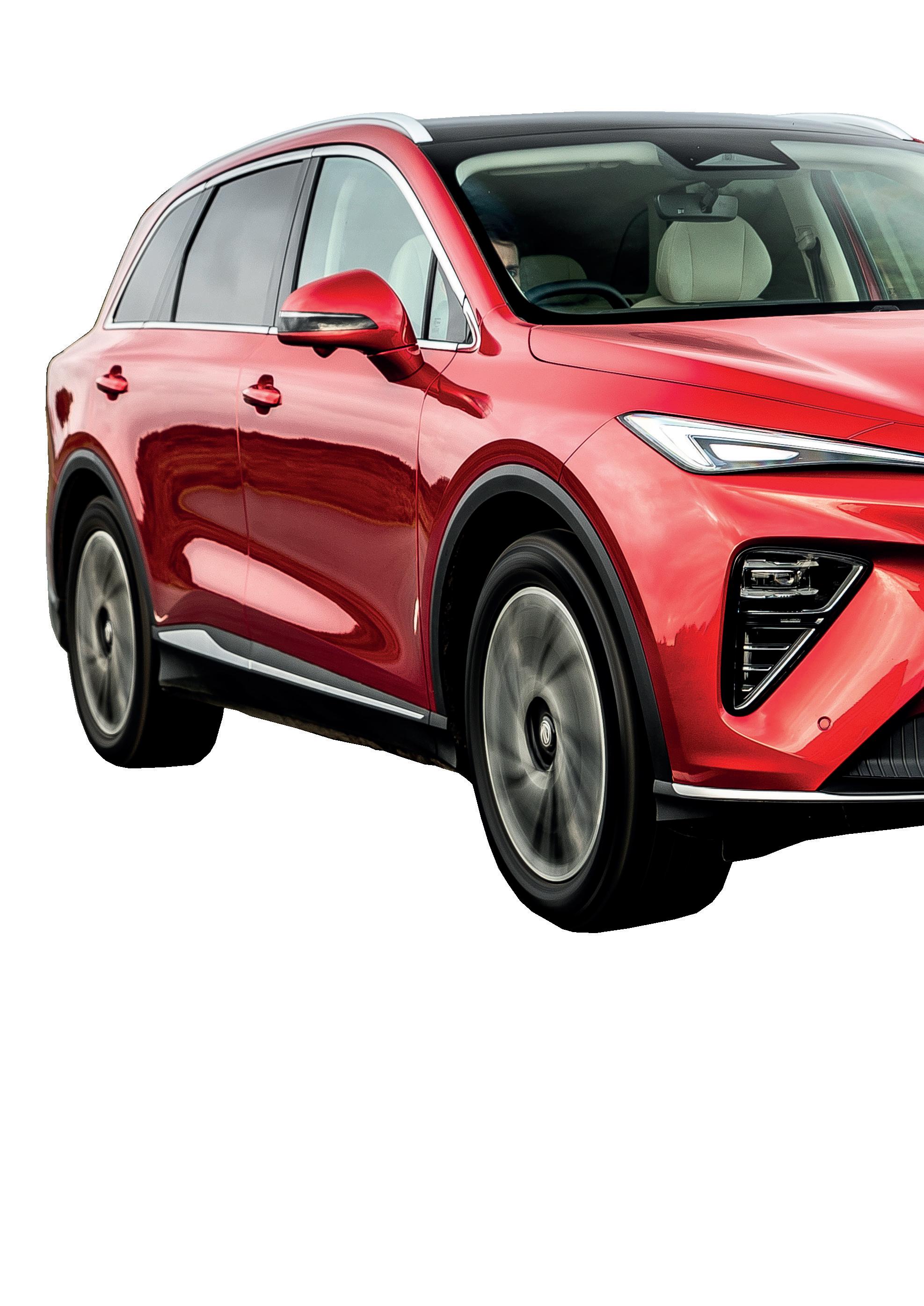
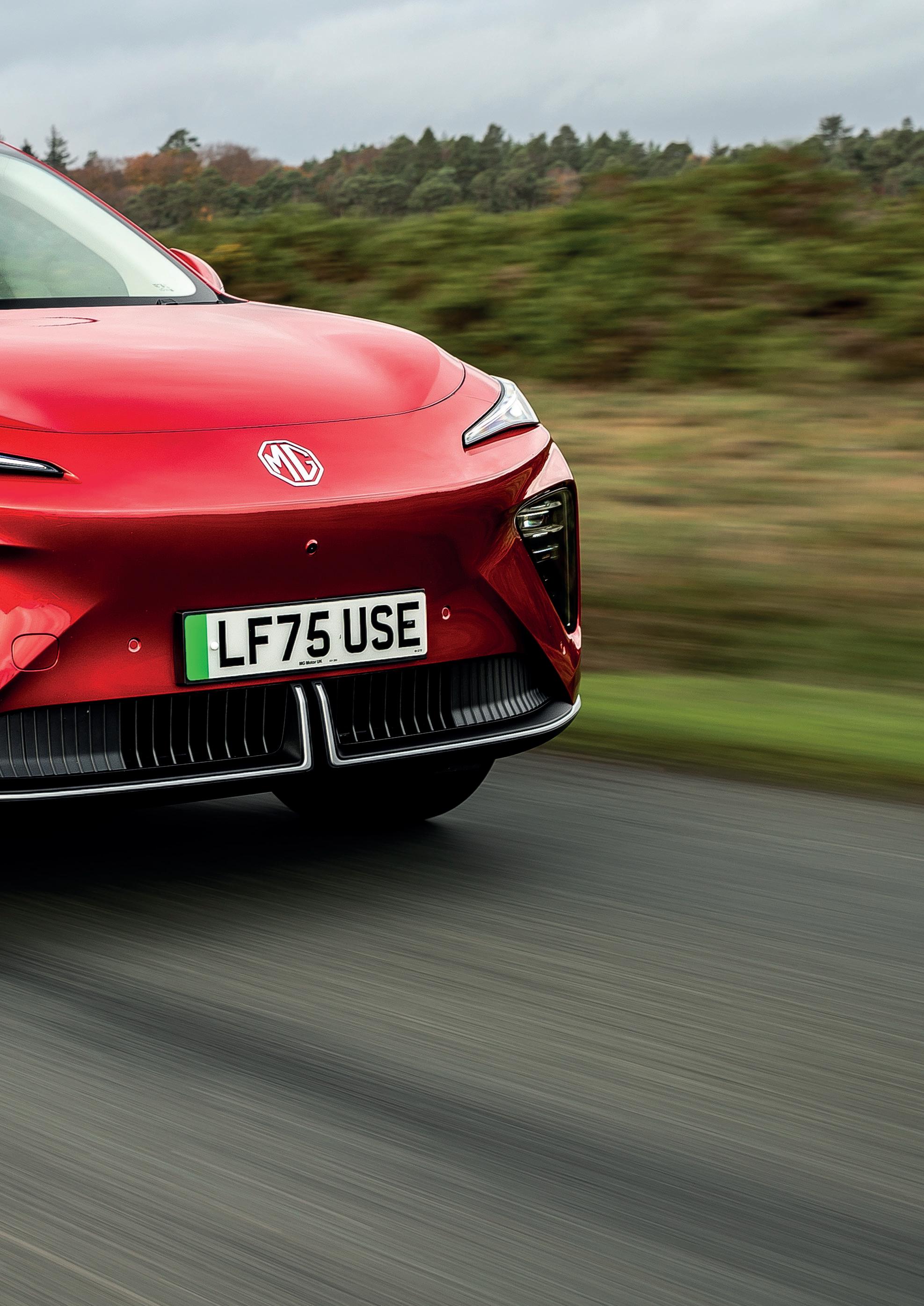
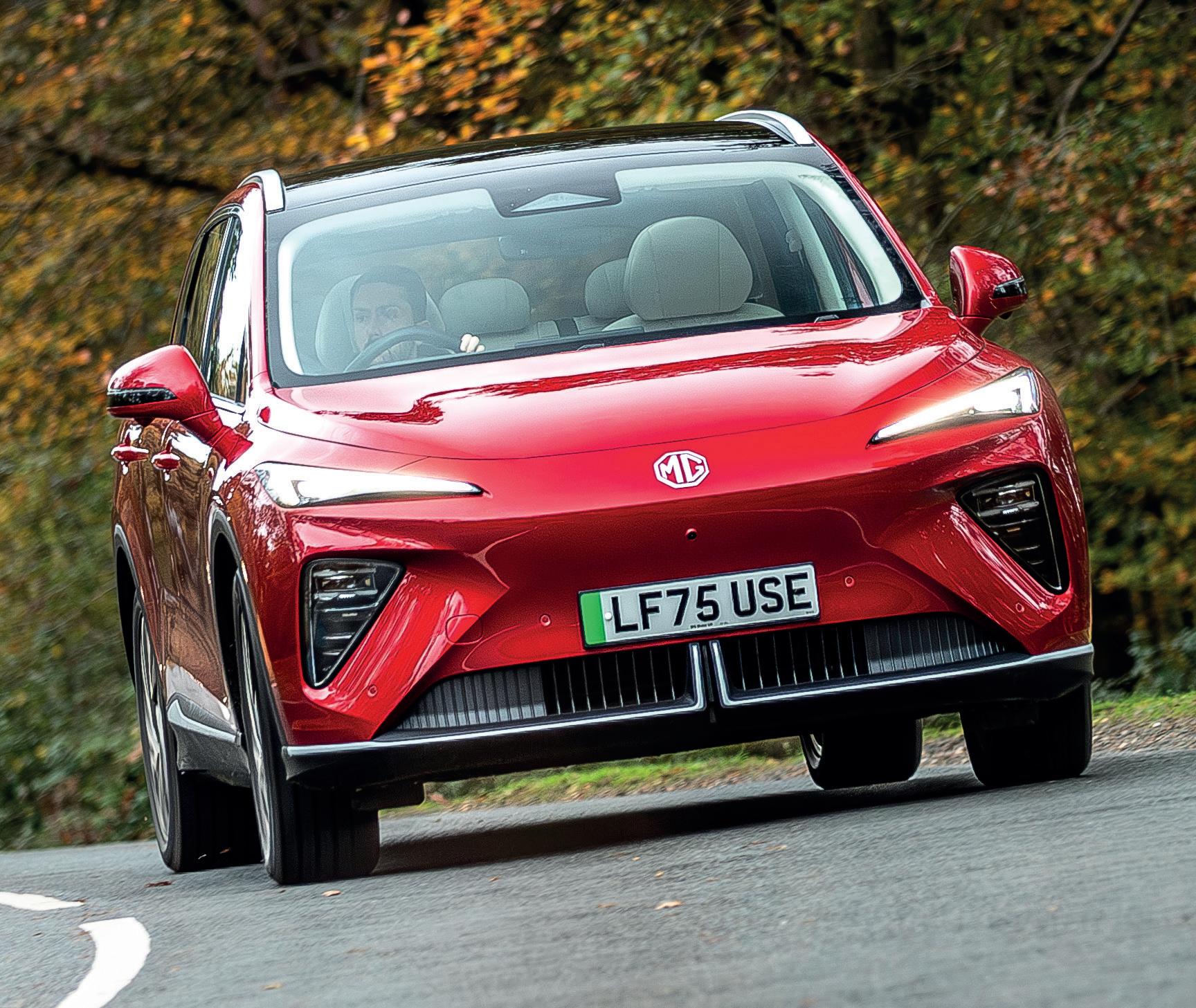
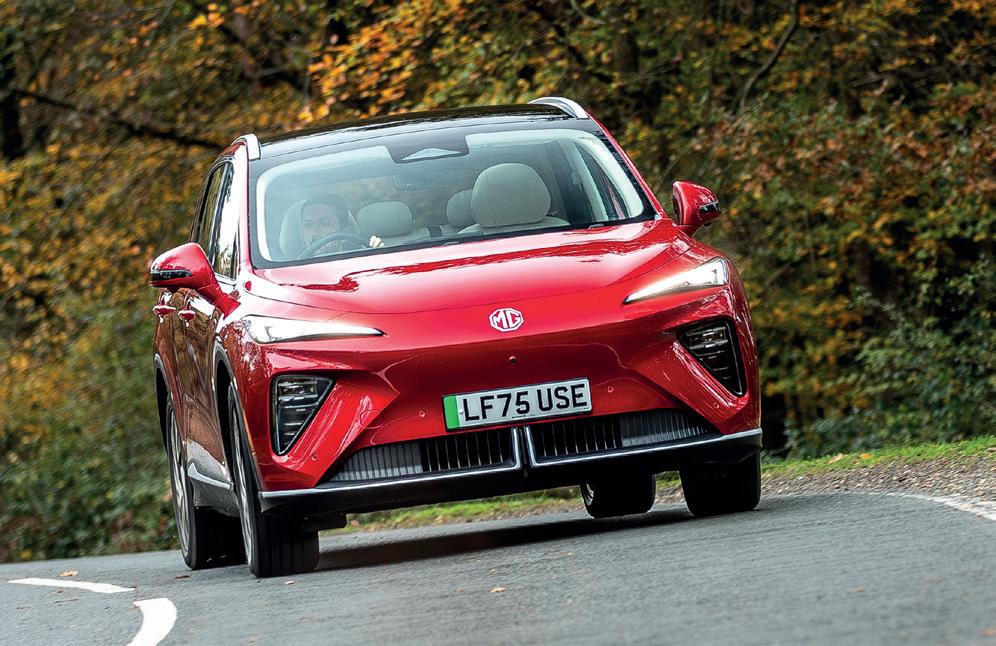
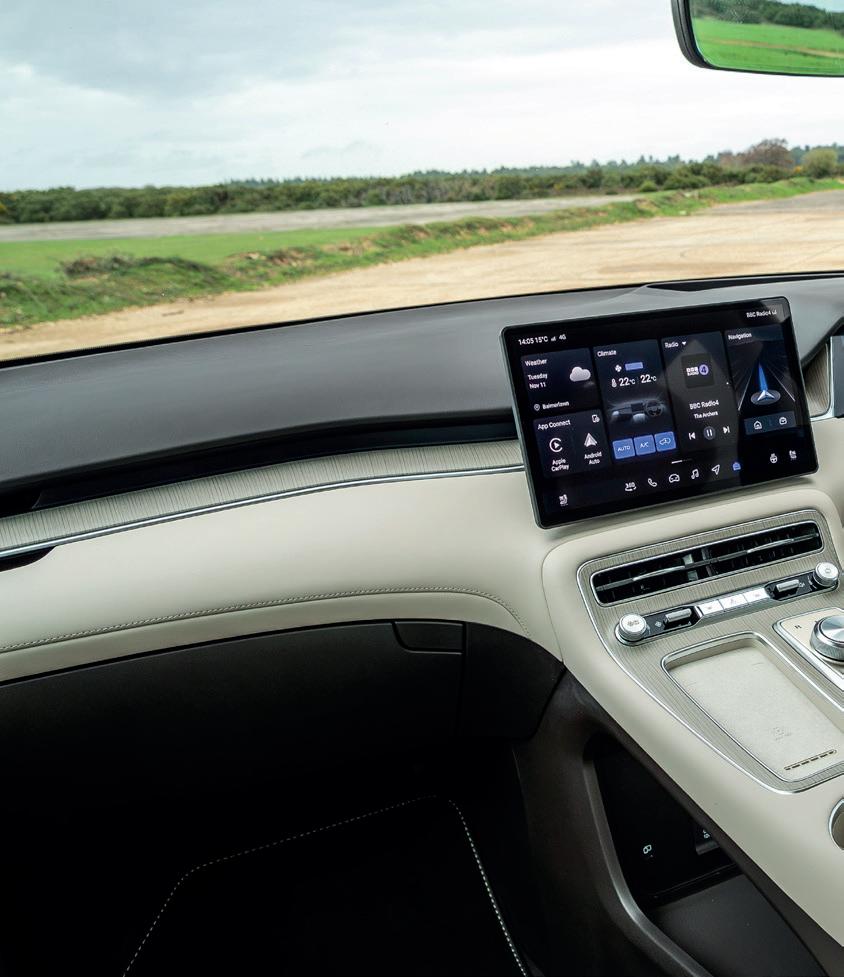
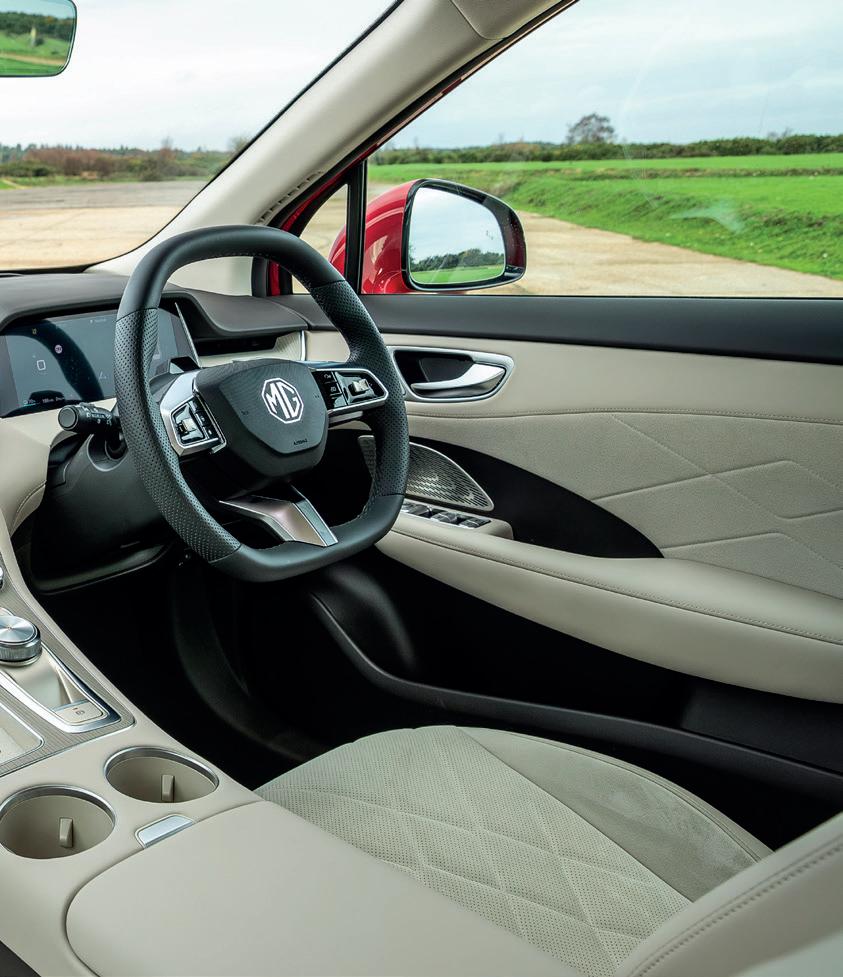
The interior design isn’t exactly groundbreaking either. It’s a very familiar arrangement with a high-set centre console, big touchscreen sitting proud of the dashboard and some digital instruments. But it is a major leap forward for MG.
For a start, material quality is far better than it has been. A couple of touchpoints still don’t match the best in class but most elements have a density and robustness that’s new for the brand. Even the drive selector, which looks familiar from the MG5 estate, feels more solid.
The faux leather and suede-effect finish on the comfortable seats also looks and feels good. You won’t believe it’s come from Bridge of Weir, but nor will you think it’s come from a discount fabric shop. And at long last MG has an infotainment system that won’t drive you insane. The 12.8-inch touchscreen is clear and responsive with a relatively logical layout. It feels lightyears ahead of previous attempts. There’s still too many menus and submenus – any European brand does it better – but it’s far from the worst example. Sensibly, MG has also included physical controls for the air conditioning and media, tucked just below the
screen. There’s even a quick customisable method to silence the nannying ADAS.
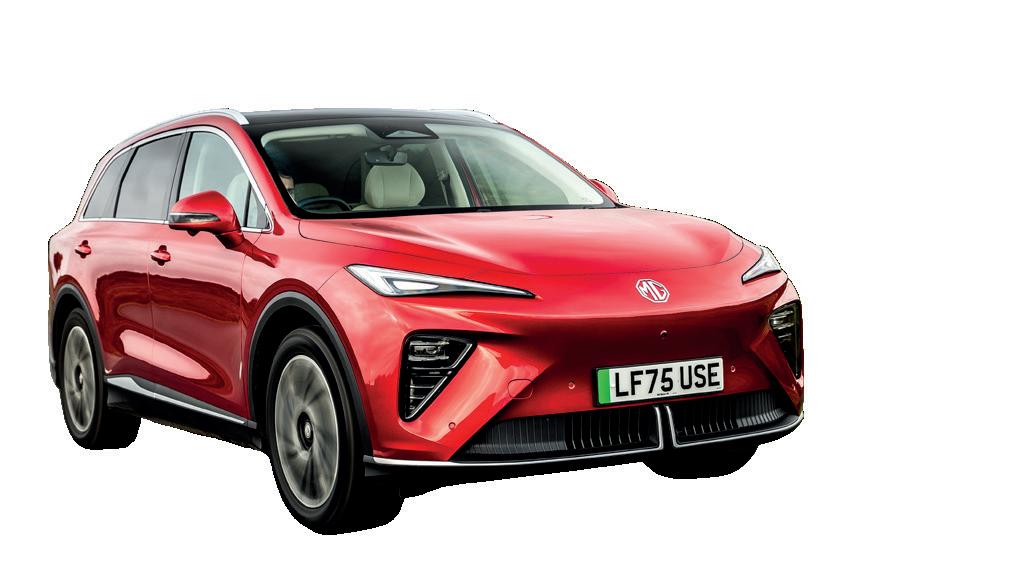
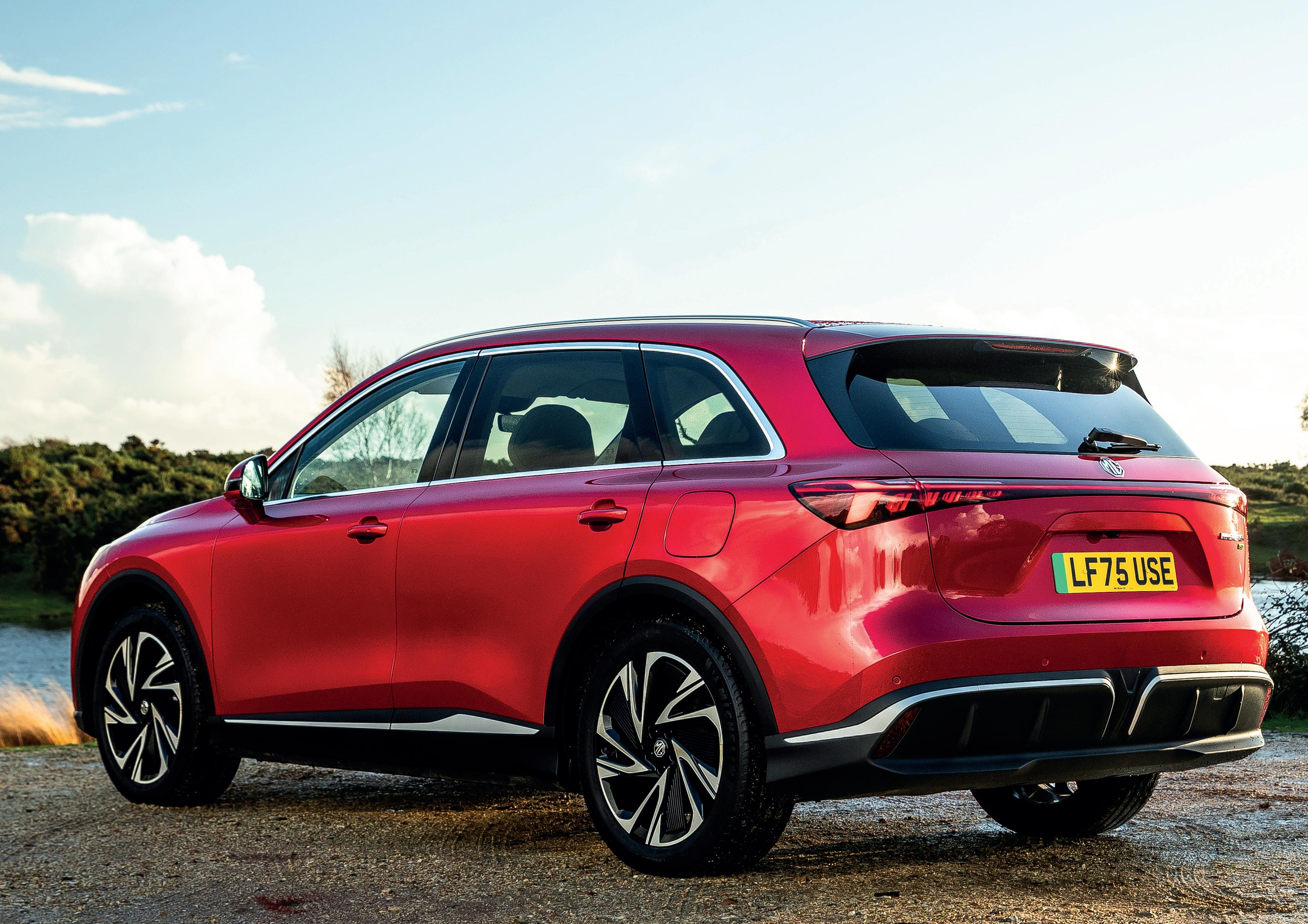
At 4.7m long the MGS6 is just smaller than a Deepal S07 and slightly bigger than an Enyaq or ID.4, but with a 2.83m wheelbase it offers astonishing space. Even with the seat set for a 6’ 5” driver there’s space for a similar sized passenger behind them, with kneeroom and headroom to spare. A family of five will fit just fine.
Boot space is quoted at 674 litres, but that’s to the ceiling. I didn’t break out the measuring tape but it seems average for the class in the regular to-seatback stakes. There’s also a 124-litre frunk – more than big enough for charging cables or a couple of bags of shopping.
The MGS6 is the third car based on the Modular Scalable Platform that also underpins the MG4 and MG5S. However, as MG’s flagship mainstream car it gets a battery and motor upgrade over its stablemates.
All versions of the MGS6 use a 77kWh battery which, in Long Range guise offers up to 329 miles of range – that’s plenty for day-to-day use, but something like a Skoda or Ford will offer more. They will also outstrip it on charging, which in the
MG is capped at 144kW and takes 38 minutes to deliver a 10-80% charge.
The Long Range model uses a 241bhp rearmounted motor to deliver a respectable 0-62mph time of 7.3 seconds. If that’s not quick enough there’s a Dual Motor model with a ridiculous 358bhp, 398lb ft and a 0-62mph time of 5.1 seconds, but reduced range of 301 miles.
MG says this is the “performance-focused” version of the MGS6. It’s certainly quick off the mark, with enough grunt to overwhelm the Bridgestone tyres on a slightly greasy road. But it’s no Macanlike handling machine.
That being said, it is impressively set up and feels calibrated for UK roads in a way that no
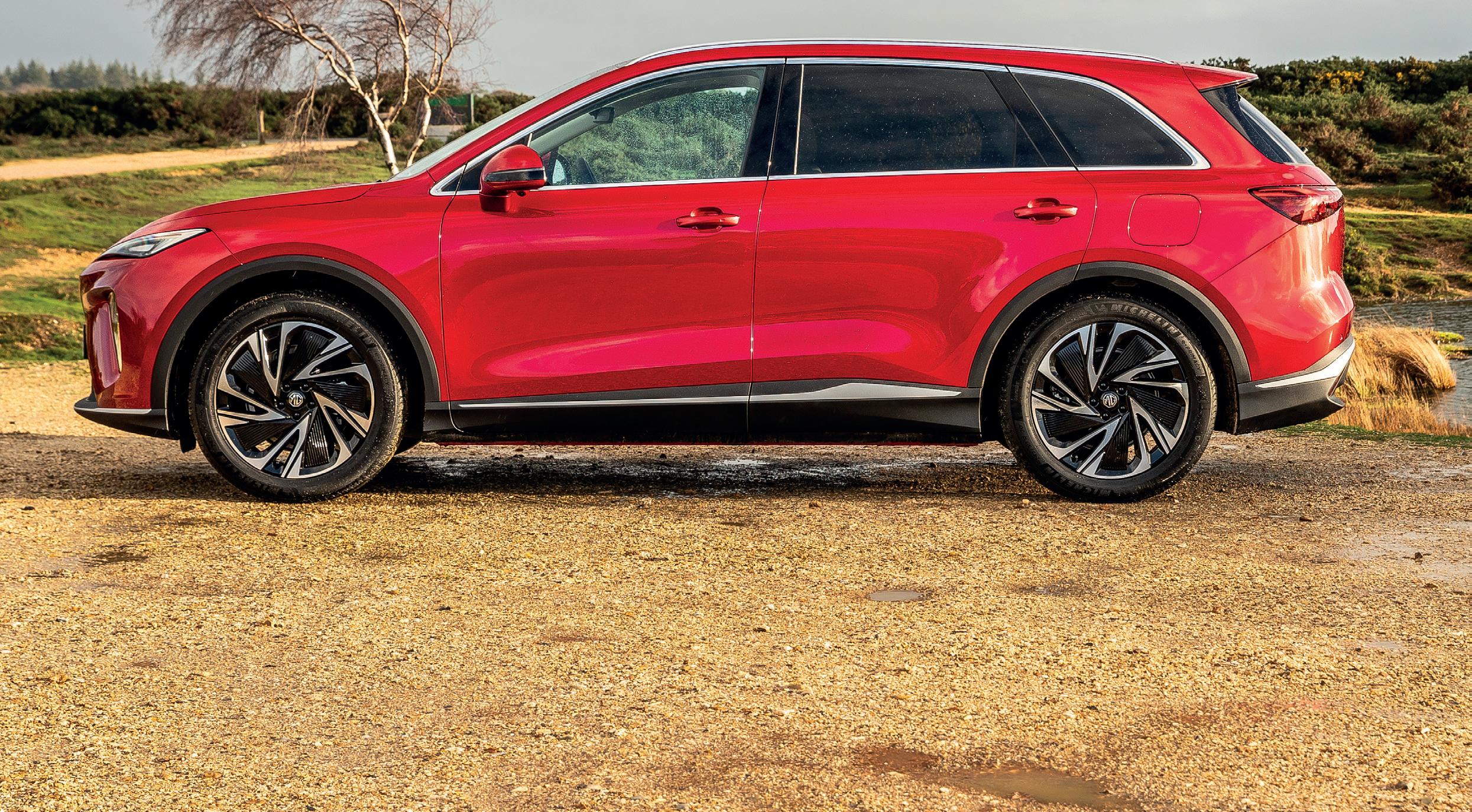
other Chinese brand can match. The ride feels taut but in a controlled way, not a harsh or jittery way. Most of the time on most surfaces it’s pretty comfortable and settled, with good body control delivered by that tightly wound suspension. The single-motor model perhaps feels a little lighter and softer sprung. It’s not quite as planted but also not quite as hard over things like potholes and drain covers.
Both versions deliver some feel to the steering as well – another area where it’s closer to European rivals than the flaky Chinese competition. It’s not quite as sharp as the MG4 but pleasingly responsive and well weighted for this type of car.
In reality, very few people are likely to opt for the dual motor model but that’s fine. The single-motor still delivers enough oomph for daily motoring, although the braking regeneration is a little unpredictable. MG started as a budget brand and even as quality improves it’s hanging on to that selling point.
The MGS6 starts at £37,995 for the SE Long Range, rising to £40,995 for the better-equipped Trophy Long Range, and topping out at £43,995 for the Trophy Dual Motor.
SE models get 19-inch alloy wheels, full LED lighting with auto-dipping headlights, rear parking sensors and camera, heated front seats and steering wheel, two-zone climate control, adaptive cruise control and wireless Android and Apple mirroring via the 12.8-central screen.
Trophy spec upgrades the wheels to 20-inchers and adds a powered tailgate, heated rear and cooled front seats with faux-leather upholstery, a panoramic roof and 11-speaker stereo. It also brings a 360-degree camera, front parking sensors, a head-up display, connected services
including TikTok, Spotify and YouTube, and wireless phone charging. What more do you need?
The MGS6 EV might just be the best electric MG to date and is a credible contender in this expanding segment.
It represents a big step forward in perceived quality and blends a hugely spacious interior with high equipment levels. It’s also more pleasant to drive than most Chinese-derived cars in the segment.
There are issues – the range and charging speeds are overshadowed by European rivals and the user interface still has some frustrating quirks. But 300 miles is enough for most users and the low entry price represents solid value even against tough budget-focused Chinese rivals.
PRICE: £40,995
POWERTRAIN: Single-motor, rear-wheel-drive
BATTERY: 77kWh
POWER: 241bhp
TORQUE: 258lb ft
TOP SPEED: 124mph
0-62MPH: 7.3 seconds
RANGE: 329 miles
CONSUMPTION: N/A
CHARGING: up to 144kW
After six months the
Renault
Scenic has us more convinced than ever that it’s one of the best family EVs on the market
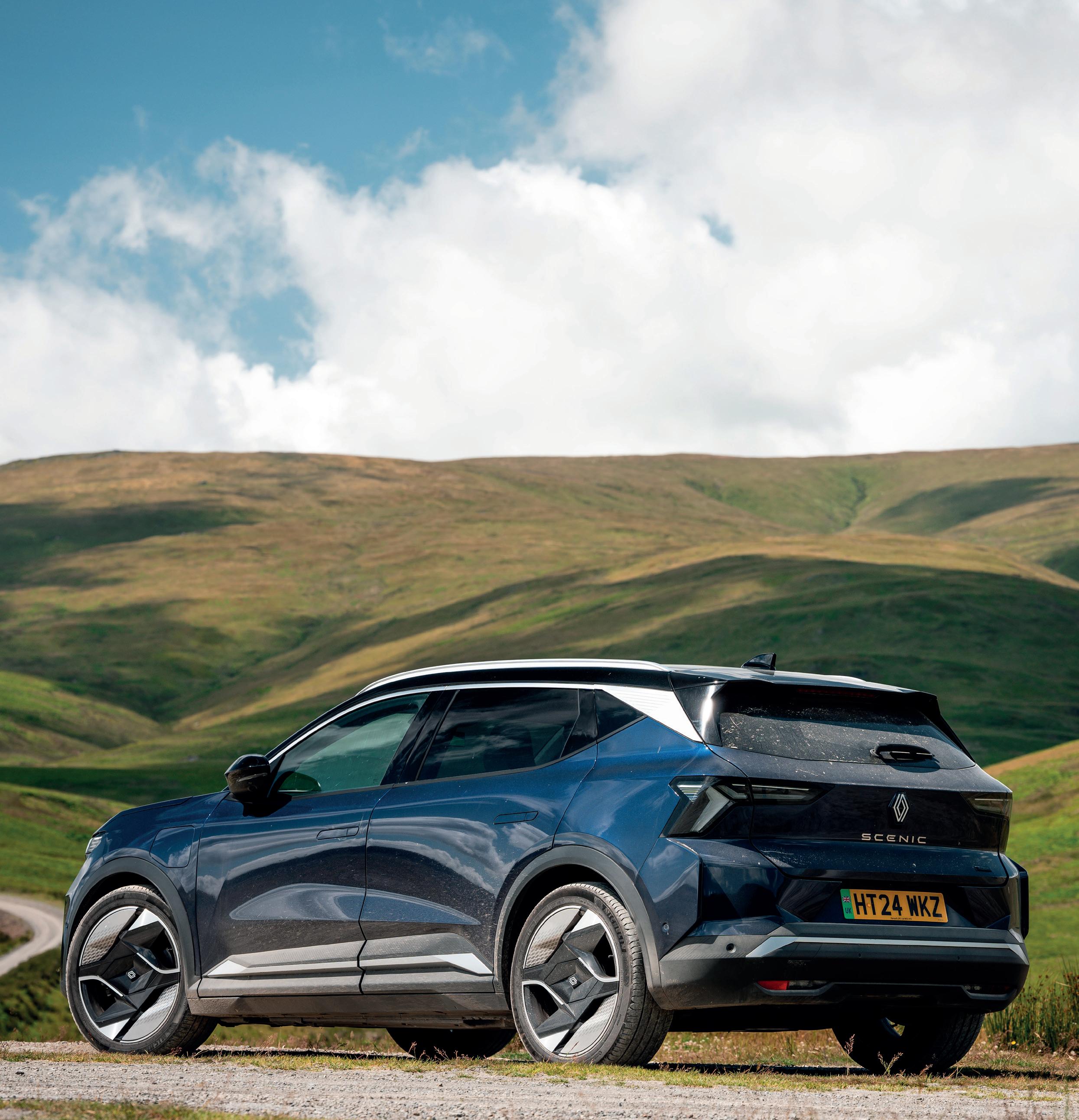
So, after six months, it’s time to bid adieu to my long-term
Renault Scenic.
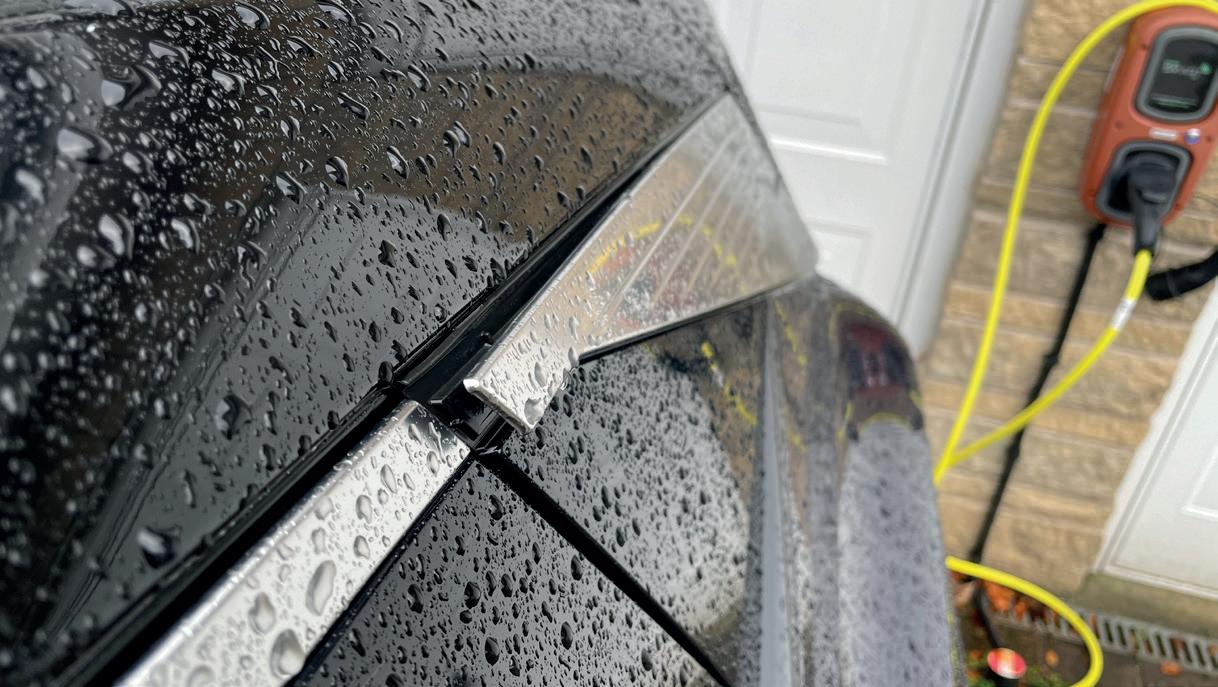
And sadly it’s going out with a whimper rather than a bang. Some particularly harsh frost followed by a sudden jump in temperatures has seen the C-Pillar trim partially pop off, leaving it jutting out like some sort of air brake. Despite multiple attempts to get help from my local Renault dealer, they haven’t seemed interested, so the Scenic has spent its last couple of weeks restricted to low-speed local drives for fear of making the problem worse.
It’s a frustrating end to my time with the car which has, otherwise, performed faultlessly.
In fact, with a selection of cars on the driveway, it’s always been my go-to choice for long drives.
PRICE: £45,495 (£46,745 as tested)
POWERTRAIN: Single-motor, front-wheel-drive
BATTERY: 87kWh
POWER: 215bhp
TORQUE: 221lb ft
TOP SPEED: 105mph
0-62MPH: 7.9 seconds
RANGE: 369 miles
CONSUMPTION: 3.7m/kWh
CHARGING: up to 150kW
The combination of great range and the brilliant integration of the battery and mapping systems mean it’s the ideal option for stress-free travelling. Charging speeds aren’t a match for some cars but I’ve never felt like I’m waiting for it to charge, especially since the real-world range means public charging sessions have been few and far between. My only gripe is that the colder months have dropped the real-world range from 350 miles to less than 300.
Some quick back-of-the-envelope maths reveals that over six months the Scenic has cost me a grand total of £220.39 across home and public charging. That’s just under 6p per mile, compared with an average of 14p per mile for a petrol car.
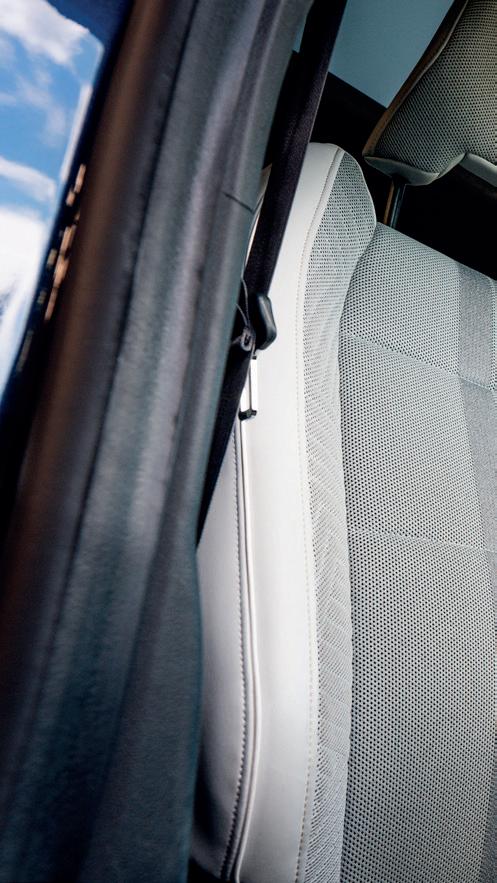
Away from my semi-regular long motorway slogs, the Scenic has slotted well into what I’d classify as “real life” – the humdrum short journeys to the shops or to various children's sporting endeavours that make up a huge amount of most families’ motoring. There are clever family-friendly touches such as the smart central armrest and USB ports galore, and it’s plenty spacious enough for four. Even with five on board it hasn’t felt like a crush. I think the airiness provided by the beautiful pale interior and massive sunroof has helped there.
A few months with it has, however, highlighted the slightly dubious quality of some of the plastics. High-level materials are nice, but the lower mouldings are a little scratchy and some of the dashboard buttons feel less robust than in rivals.
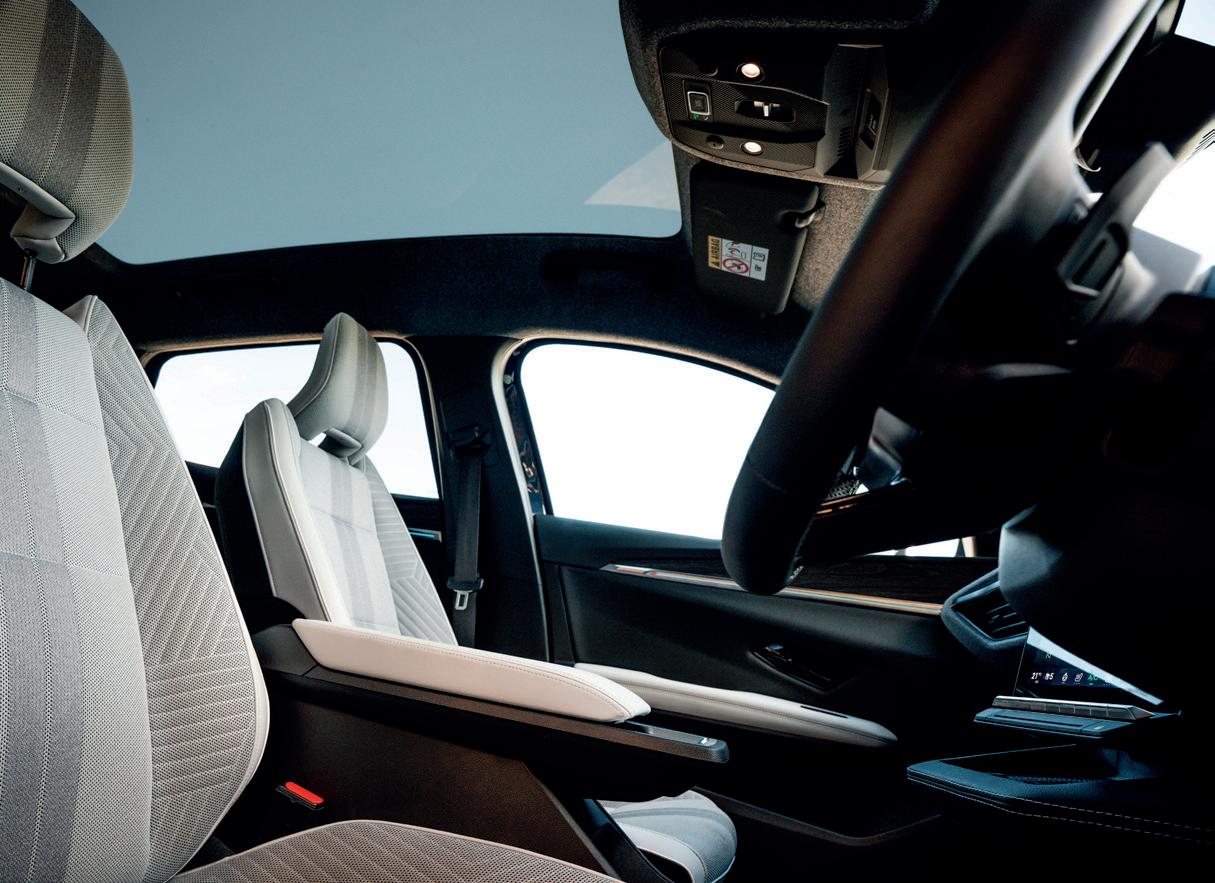
The lower-rent plastics are somewhat offset by the Scenic’s ease of use. Common sense has prevailed in the user interface, so there are physical buttons for the functions that need them rather than an over-reliance on the 12-inch screen. That said, using the screen is easy thanks to a simple menu structure and the smart Google Automotive OS. Special mention also has to go to the My Safety Perso setting that lets you deactivate the nannying ADAS with the simple tap of a button.
Recent price changes and the Electric Car Grant mean that the Iconic trim is now £5,000 cheaper than when my test car was built, starting at £40,495. That seems pretty good value compared with something like a Skoda Enyaq or Ford Explorer, but if you can live without a few of the fancier features, the techno esprit spec is £2,000 cheaper and still has all the key kit.
When the Scenic arrived, I wanted to know if months with it would vindicate my vote for it as 2024 Scottish Car of the Year and over six months it has definitely done that. It’s not particularly flashy or fancy and the Renault badge lacks the cachet of some others. But at every turn it’s proved to be a smart, practical and undemanding option. From its class-leading range to its refinement and well-thought-out technology it’s the kind of car that will slot into most families’ lives without any fuss whether it’s their first EV or they are old hands at electric motoring.
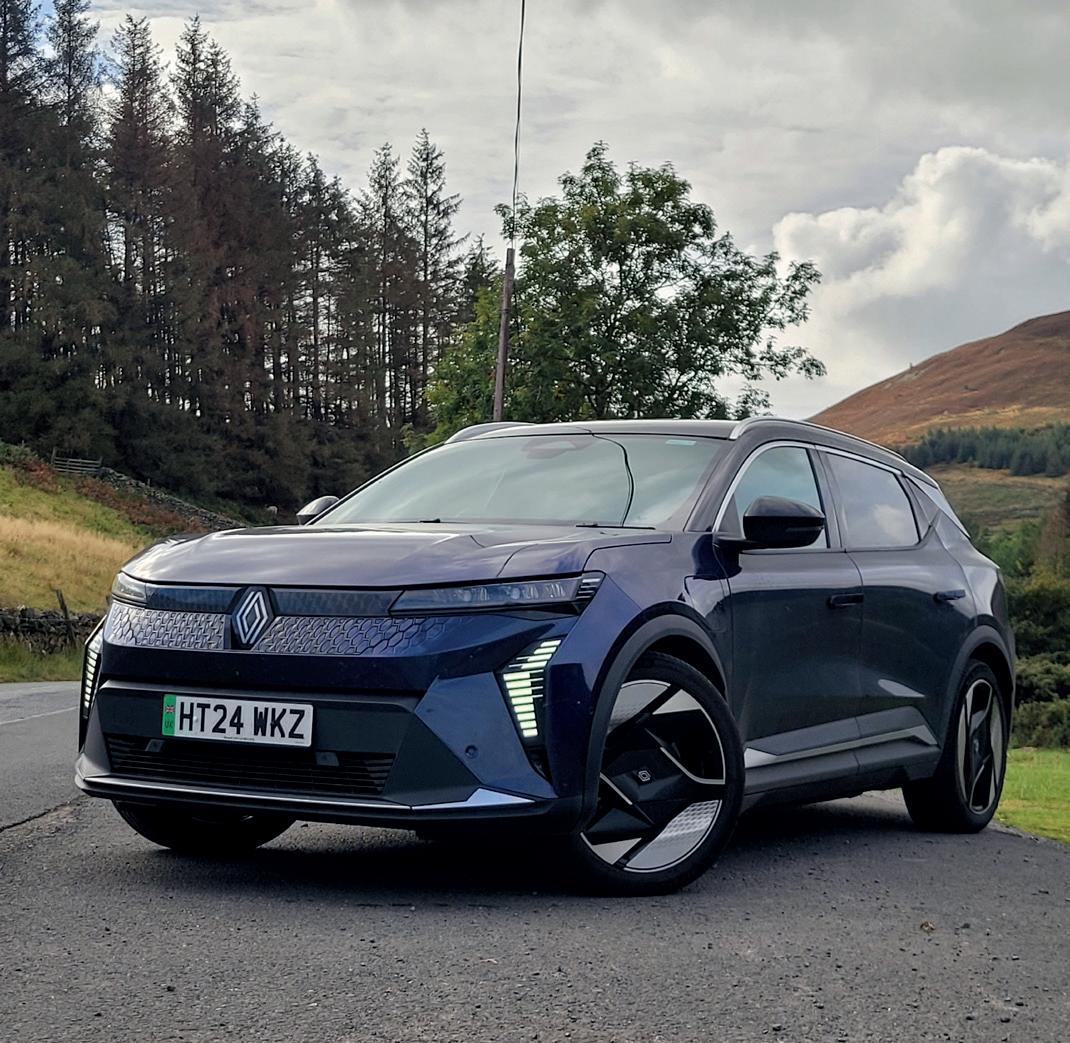
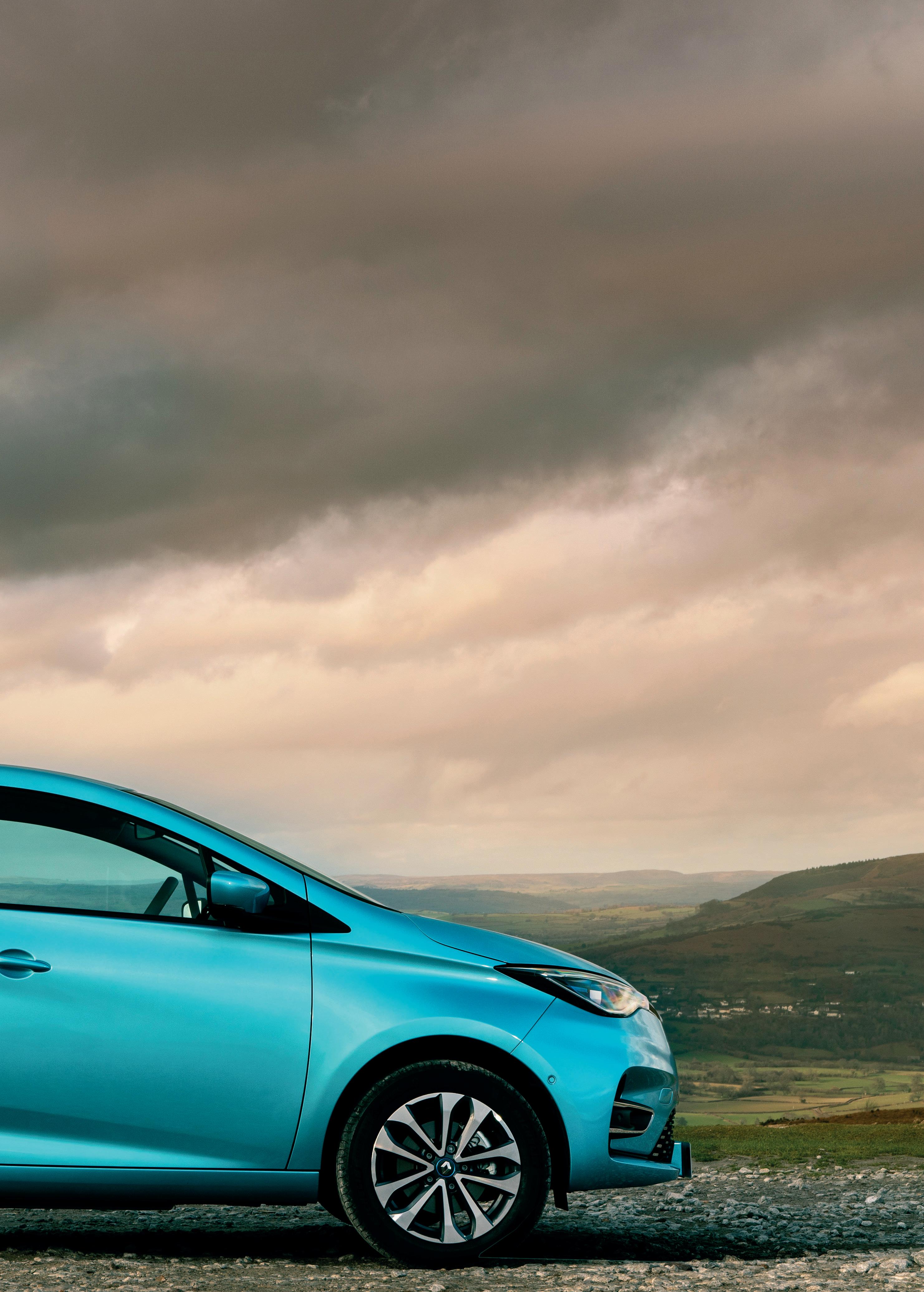
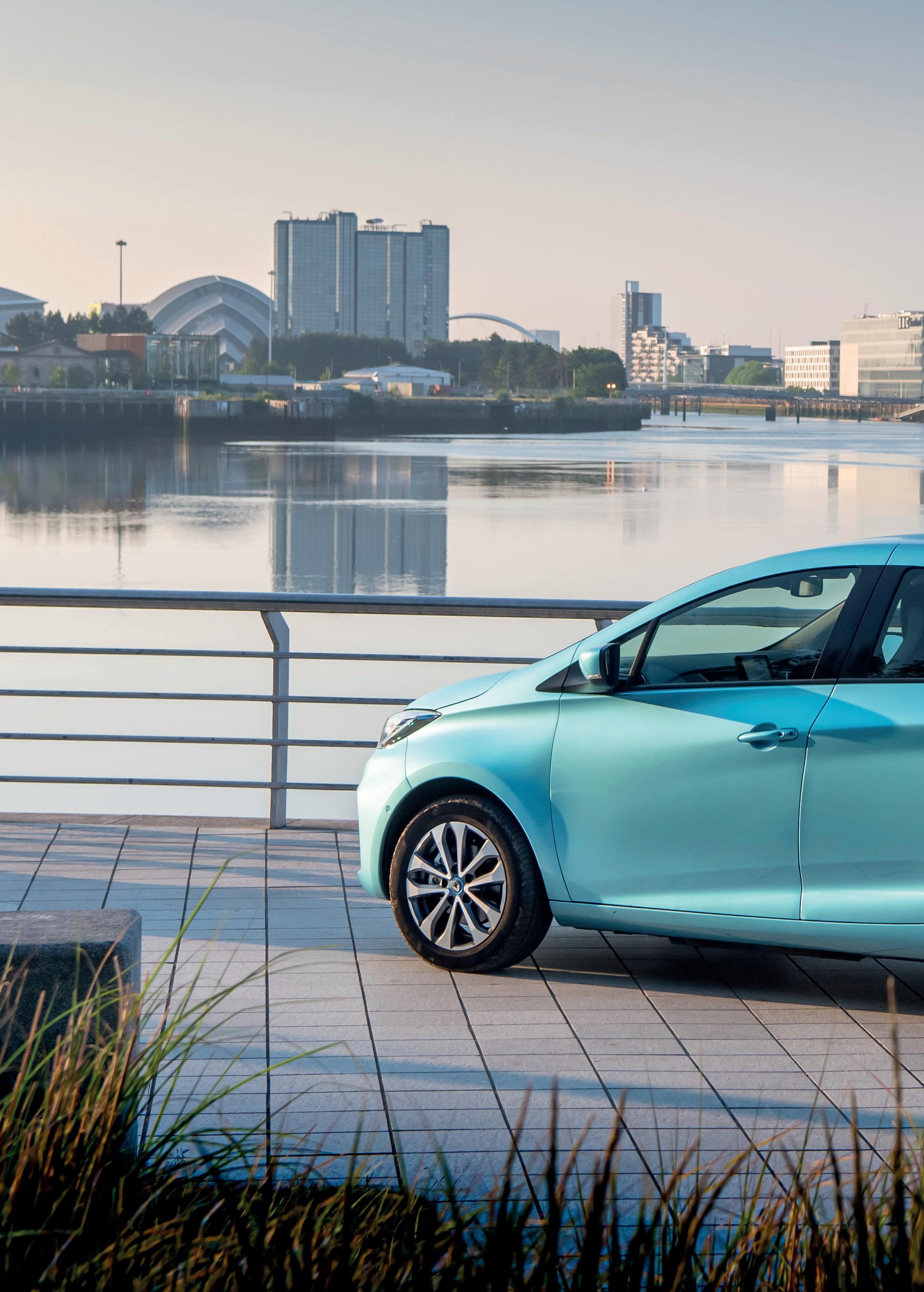
Given Renault's EV track record, a used Renault Zoe isn't a bad gateway into all electric motoring, but there are one or two concerning caveats...
The Renault Zoe was introduced in 2013 as a rival to the likes of the Nissan Leaf and the BMW i3.
By the time it was replaced by the all-conquering Renault 5 in 2024, the Zoe - meaning ‘life’ in Greek - had scooped numerous awards from the motoring press, including ‘Best Supermini’, ‘Car of the Year’, and ‘Best Small Electric Car’.
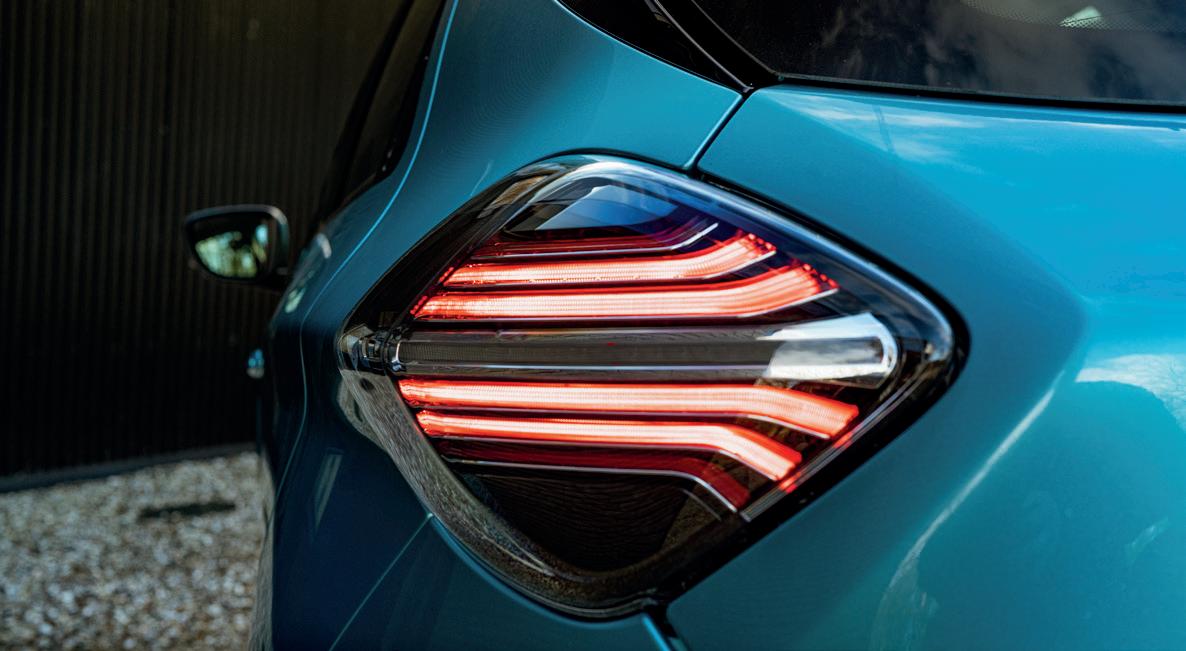
Undoubtedly, the Zoe showed that electric cars could be used as daily drivers. It could accommodate four, came with plenty of ‘big car’ tech, and 2020 facelift models were
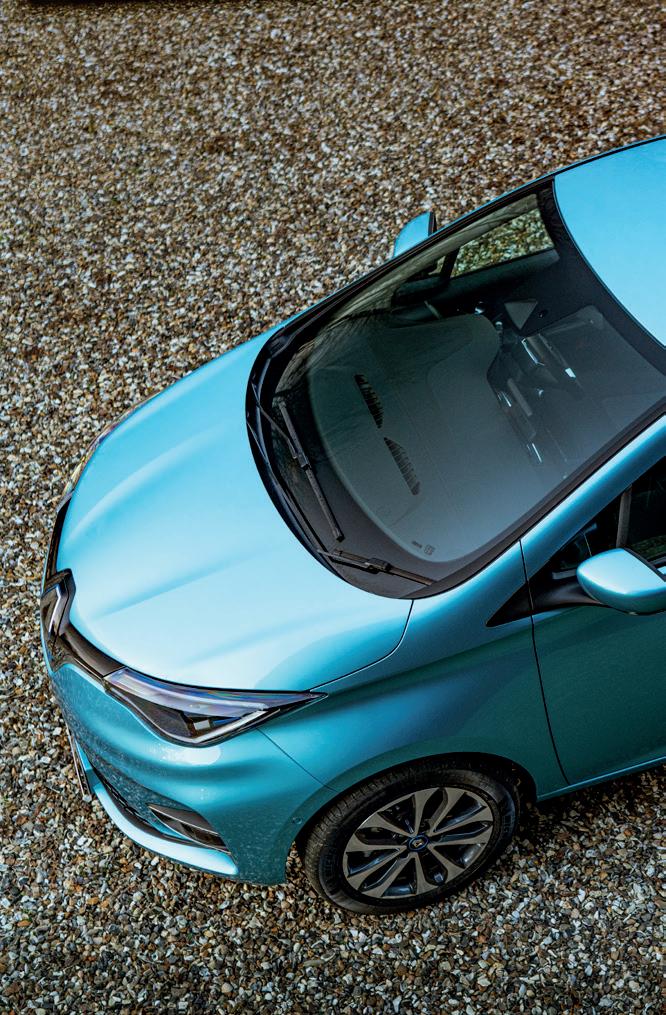
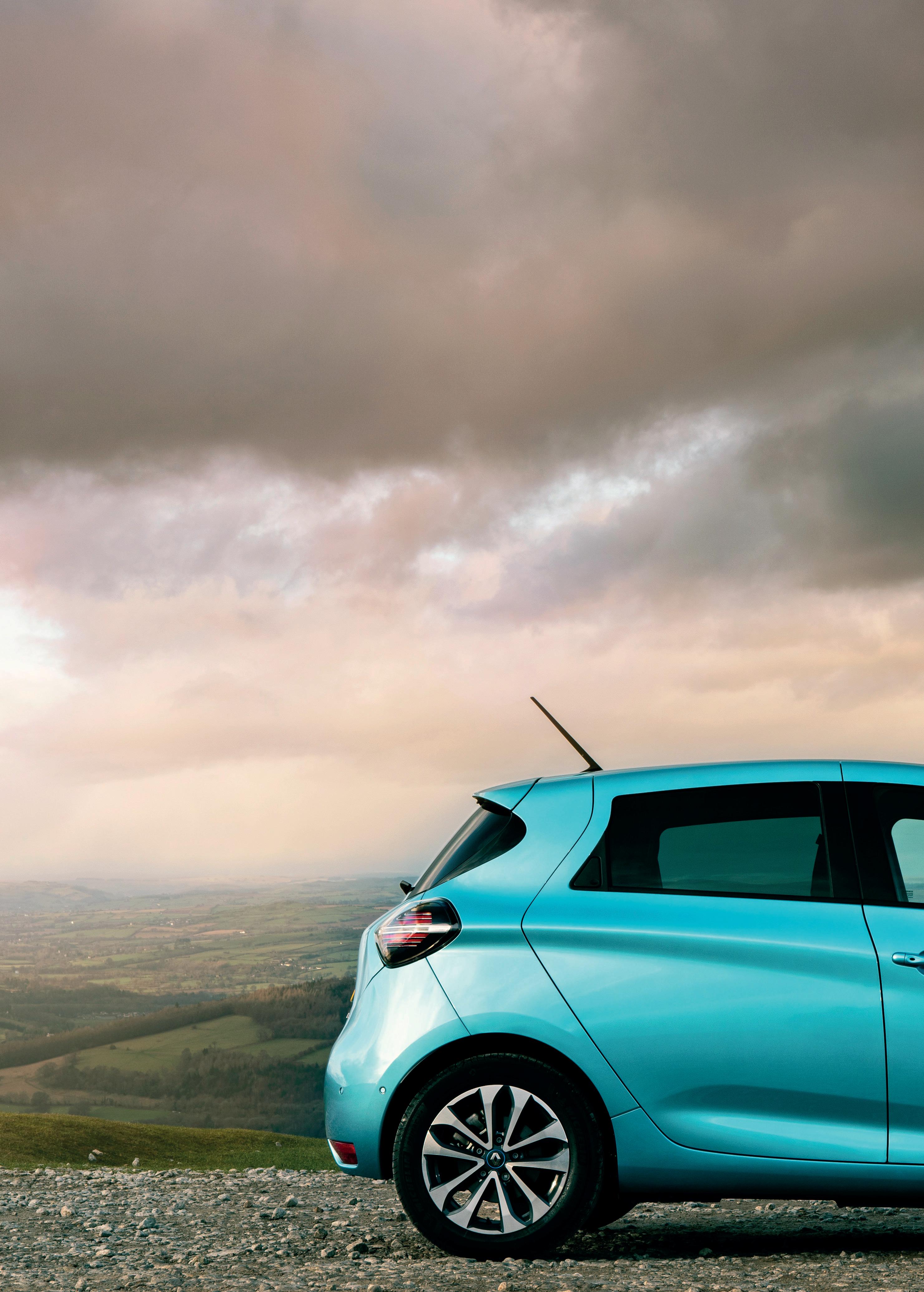
capable of up to 245 miles on a single charge.
However, a used Renault Zoe does come with a few caveats. The facelifted cars infamously scored a shocking zero stars in the Euro NCAP safety tests, and Renault’s battery
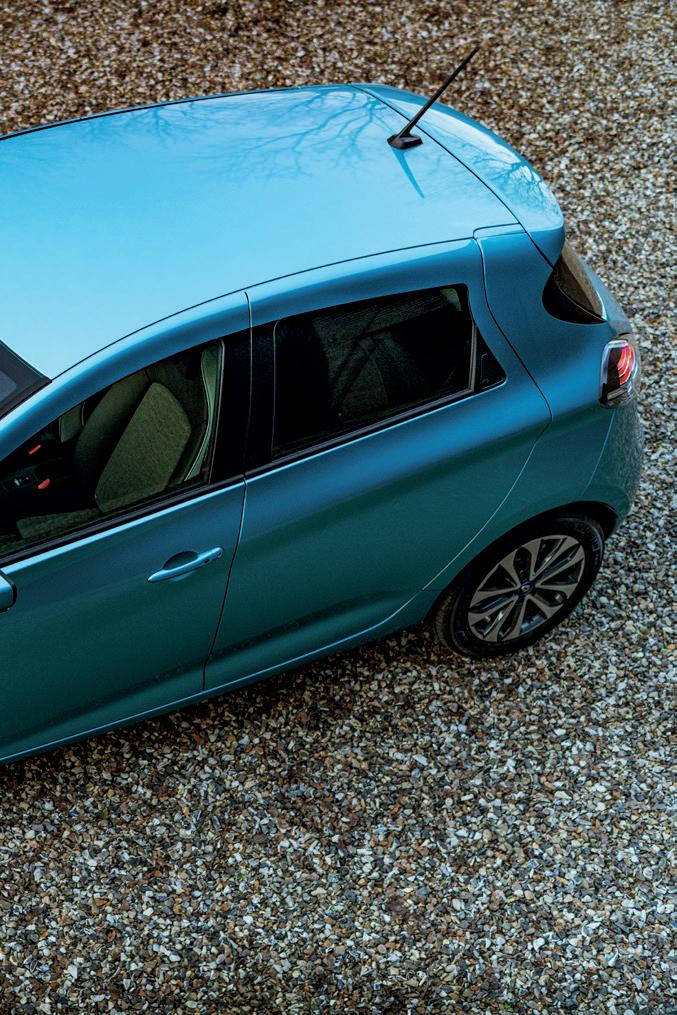
lease system on older used cars can prove costly if you don’t do your homework properly.
While firmly eclipsed by its successor in every way, a used Renault Zoe has the potential to be an affordable gateway into EV ownership.
Upon launch, the Renault Zoe was available in three trim levels: entry-level Expression Nav, midtier Dynamique Nav, and flagship Signature Nav.
Each Renault Zoe model was generously equipped, with base model Expression Nav cars fitted with climate control, cruise control, and a seven-inch infotainment system with integrated navigation. For the purists out there, it’s worth noting that the Expression is the only Renault Zoe to ride on 15-inch steel wheels.
Step up to the Dynamique Nav, and automatic headlights and wipers,
keyless entry and go, a DAB radio, rear parking sensors and 16-inch alloy wheels built on the entry-level model’s kit list.
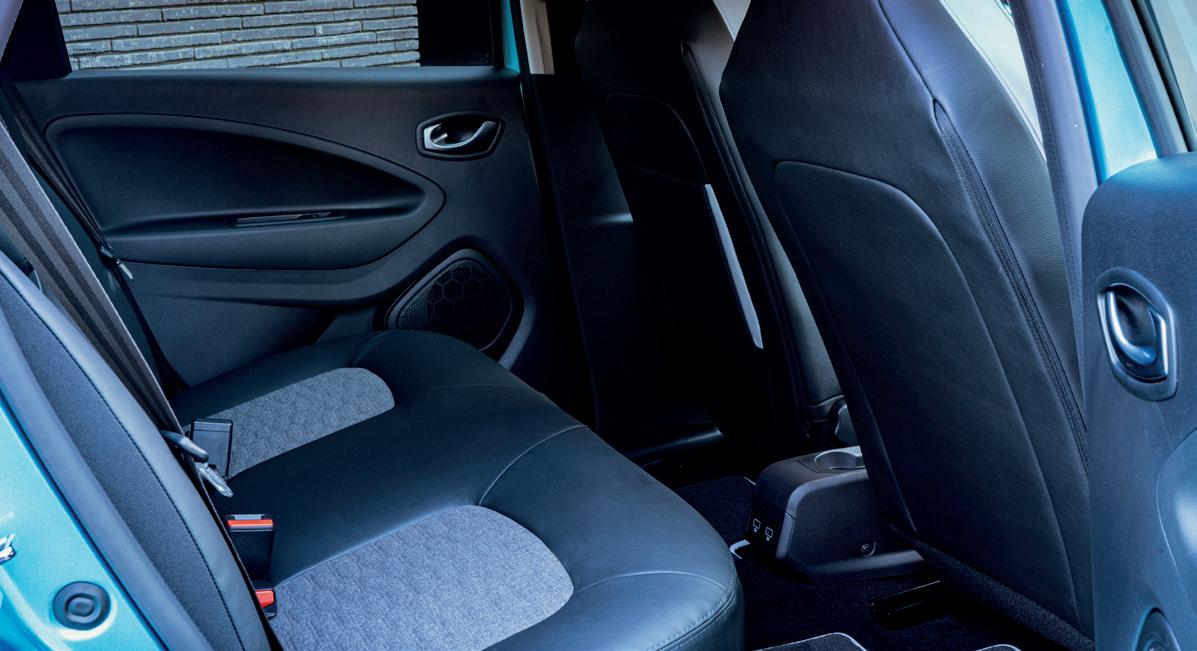
Renault took things further by fitting the range-topping Signature Nav models with some standard ‘big car’ tech. This included a Bose sound system, electronically-folding door mirrors, front and rear-view parking cameras, heated front seats, and some Cupra-style bronze trim around the cabin.
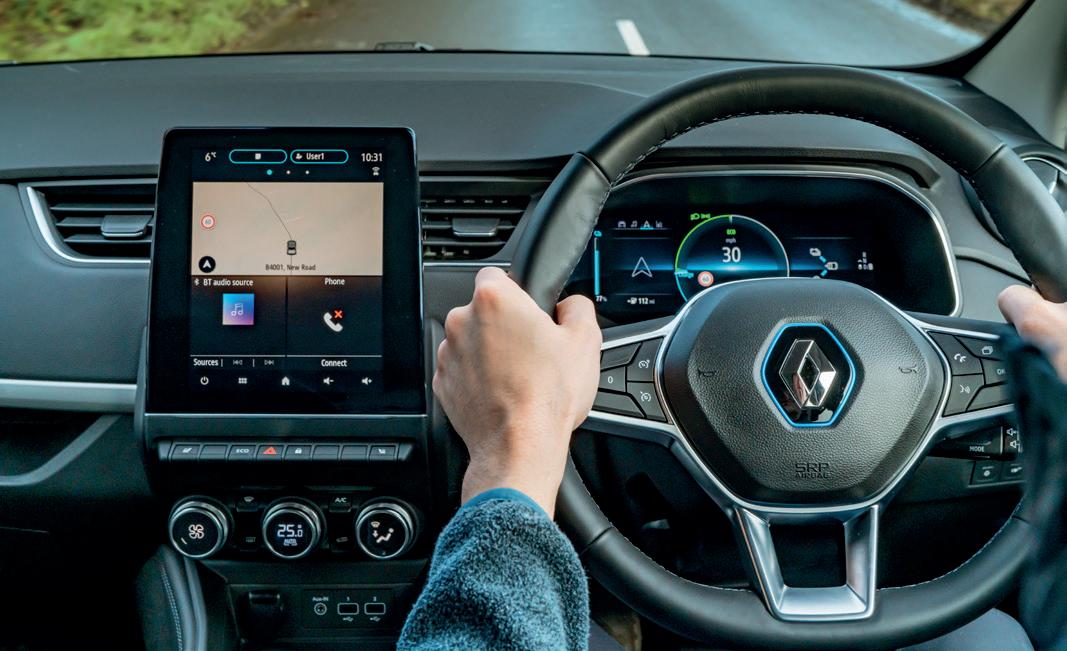
When the Zoe underwent its major facelift for the 2020 model year, Expression, Dynamique, and Nav were renamed Play, Iconic, and GT Line. The latter two models benefited from a larger 9.3-inch screen. From launch, Apple CarPlay and Android Auto compatibility were standard, but facelifted cars included wireless connectivity.
Throughout its life, the Renault Zoe was available with three battery choices. Early cars came with a
22kWh unit mated to an 82bhp electric motor. Combined, this setup returned an official range of 130 miles.
Later, Renault introduced a 41kWh battery and uprated motor offering 92bhp. In standard guise, these 'R90' cars had a real-world range of 155 miles. A Quick Charge 'Q90' Zoe with the same 41kWh battery had a charging speed of 43kW and a 196-mile WLTP range.
Note, however, that this latter figure has been converted from the now-outdated NEDC cycle, which was replaced by WLTP at the end of 2018.
The final Renault Zoe to be powered by the 41kWh battery was the R110. The most powerful Zoe yet, the R110 had 107bhp, but these additional electric horses came at the expense of range, which dropped to 186 miles.
Continued on next page
When the Zoe underwent a major overhaul in 2020, Renault seriously improved the Zoe’s range, albeit controversially.
When introduced, the new car had just one choice of battery, a 52kWh unit, and the R110 was joined by the R135 model with 134bhp. Depending on the trim, the Renault Zoe now had a range of between 238 and 245 miles.
However, the extra miles were in part achieved after Renault removed the Zoe’s side airbags and a raft of active safety measures to reduce weight. This decision (and Euro NCAP’s shifting standards) saw the Zoe’s previous five-star Euro NCAP rating plummet to zero, making it one of three cars in modern automotive history to take this dubious honour.
Like the Nissan Leaf and BMW i3, early versions of the Renault Zoe can come across as a bargain.
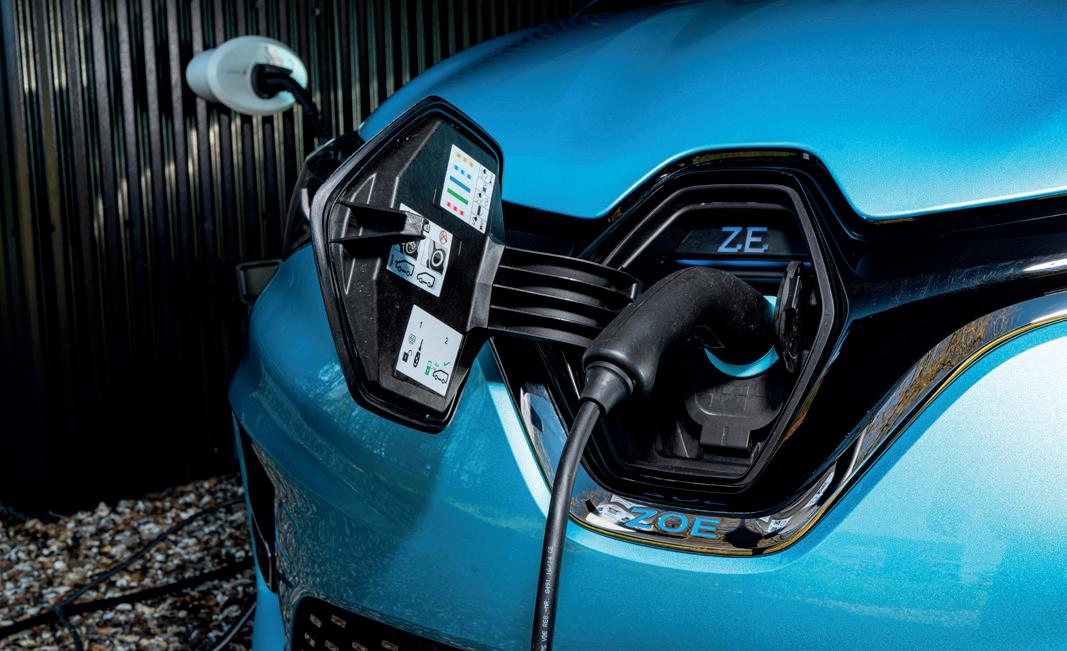
There could, however, be a catch. Cars built before the 2020 facelift could be bought outright, but Renault also offered a battery lease scheme, which cut the initial purchase price but left owners paying a monthly fee for the car’s battery.
This was a popular choice with customers of the pre-facelift model, who paid anywhere between £25 and £110 per month depending on their mileage.
The problem is that the lease deal transfers with ownership of the car and even now, some cars are tied to a lease scheme.
That means an apparent bargain could come with an extra monthly
cost attached. The only way out of it is to buy the battery from Renault’s finance company, and this isn’t cheap. So read all the paperwork carefully.
On AutoTrader, we found 342 Zoes for sale via retailers, the cheapest of which was a £2,495 2014 Dynamique model with 68,984 miles on the clock and the 22kWh battery. Note, however, that this was from a an independent dealership and there’s no note of whether it is still tied to a battery lease.
History has taught us that it’s always better to buy from an approved retailer. With that in mind, the cheapest dealer-approved used Renault Zoe we found was a 2019 41kWh car. Another Dynamique model, it had covered 22,065 miles and was priced at £4,990. However,
the dealer noted that it is a battery lease vehicle, so there’s extra cost attached.
At the other end of the spectrum, the most expensive Renault-approved used Zoe we found was a 2023 Techno car with a 52kWh battery and a total mileage of 6,738 miles. Yet with a price tag of £13,466, it’s edging close to secondhand Renault 5 territory.
Given the Renault Zoe’s diminutive battery sizes, charging at home with an 8p/kWh tariff will cost from £1.76 for a full charge of 22kWh model to £4.16 for the last 52kWh versions.
On April 1 2025, EVs became taxable under new government legislation, meaning they are no longer exempt
from road tax. As such, all-electric cars registered from April 1, 2017 onwards will now be taxed £195 annually. That does mean that early Zoes fall under the old taxation system, where they cost as little as £20 per year.
The used Renault Zoe is one of the more affordable EVs in terms of insurance.
The most wallet-friendly Zoe to insure is a pre-facelift Expression model, which falls into insurance group 14. Meanwhile, the most expensive version to insure is the Iconic R110 with the 52kWh battery,
falling under insurance group 25slap bang in the centre of the UK's 50 car insurance brackets.
As always, your insurance quote will depend on everything from your age and occupation to where you live, where you work, and your driving record.
We strongly advise that you look across a number of car insurance comparison sites before making any purchases.
While Renault has transformed itself into one of the world’s leading EV makers over the last few years,
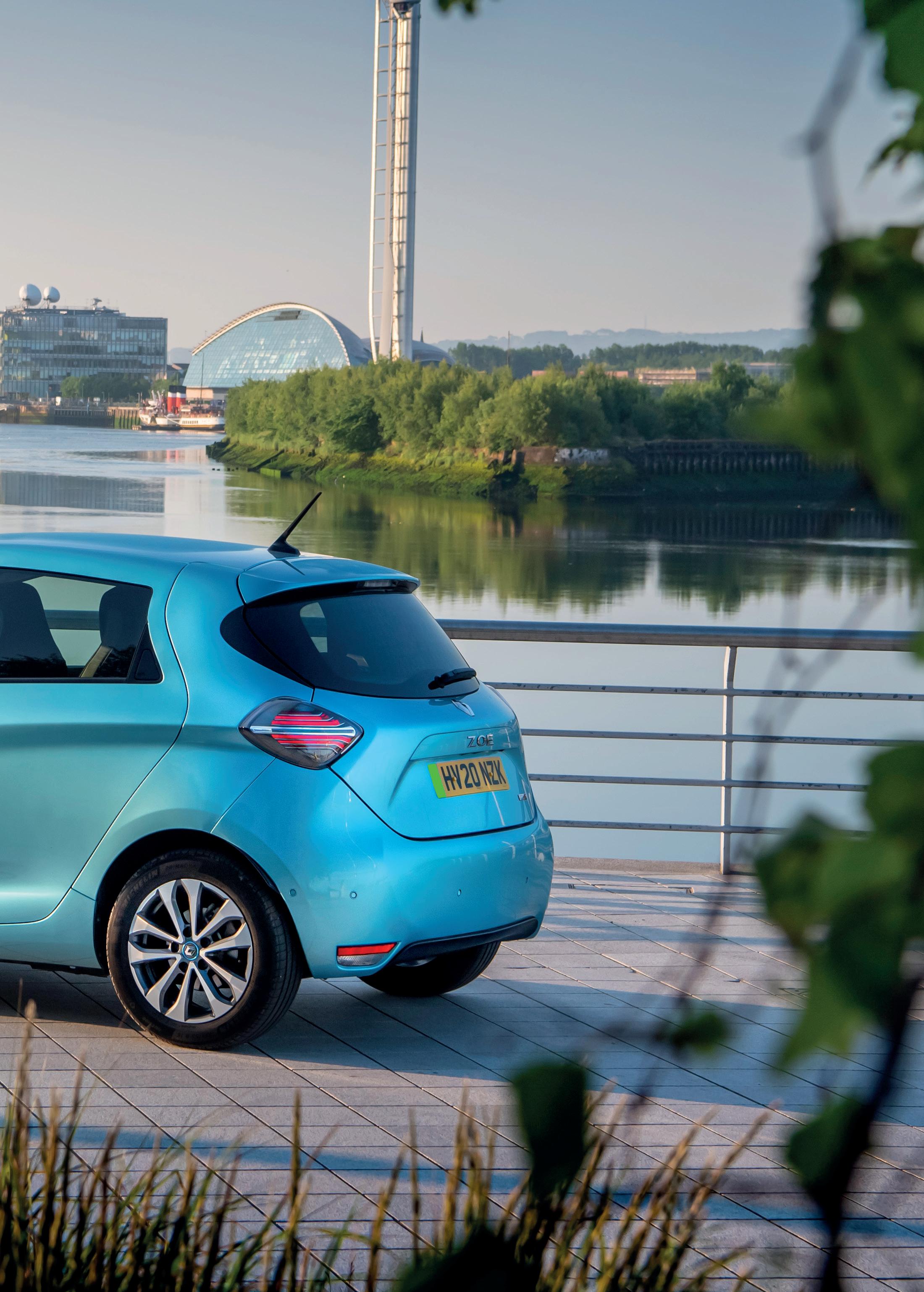
the Zoe comes from a time when French cars were synonymous with fizzy electrics.
According to the 2024 What Car? reliability survey, Zoe owners’ main gripes were related to the 12-volt battery, air conditioning, charging systems, and non-motor electrics. Problems related to the bodywork, interior quality, and brakes were also noted, along with mixed reviews for dealers.
What’s more, the Renault Zoe ranked 11th from 18 cars in the same survey, with an 86% reliability score. While this places the Zoe beneath the Mini Electric and the Nissan Leaf, it still sits
above the award-winning Kia EV6 and MG4.
In the manufacturer’s table, Renault ranked 20th out of 30 with a reliability score of 91%. While on paper this doesn’t look great, this still puts it ahead of Mercedes-Benz, Audi, Volkswagen, Ford, and JLR.
When it comes to faults, four major issues related to the Renault Zoe were identified: Front wheel arch liners would rub against the front brake hoses and cause them to leak. An incorrect accelerator pedal was fitted to a batch of 2017 cars.
Meanwhile, a line of vehicles produced from July 2015 to April 2017 was plagued by broken parking brake lever pins, causing them to roll
away when parked. Finally, the rear seat bench on some 2020 cars was not properly locked into position, potentially causing severe injury or death in the event of an impact.
If you decide to purchase a used Renault Zoe, then check with your nearest Renault dealership to see if these faults have been repaired.
Throughout its 11-year life, the Renault Zoe was recalled a total of six times. First-gen cars from 2016 - 2018 were affected a total of four times, while facelifted 2020 models were recalled twice.
'The one to have'
Believe it or not, 2020 was six years ago. With this slightly worrying piece of information in mind, we suggest looking at one of the majorly facelifted used Renault Zoes introduced for that model year.
Not only are these the most recent Zoes, but their 52kWh batteries also offer the best range in the car’s history and avoid any confusion around leasing.
While the flagship GT Line’s electronically folding door mirrors, front and rear-view cameras, heated front seats, and all-important Bose sound system may sound tempting, remember that the bulk of the Zoe’s reliability issues stem from its electrics.
All things considered, our ‘one to have’ from the used Renault Zoe range would be a Techno trim car. It’s still generously equipped, but the absence of other electronically powered toys slightly reduces the risk of electrical gremlins.
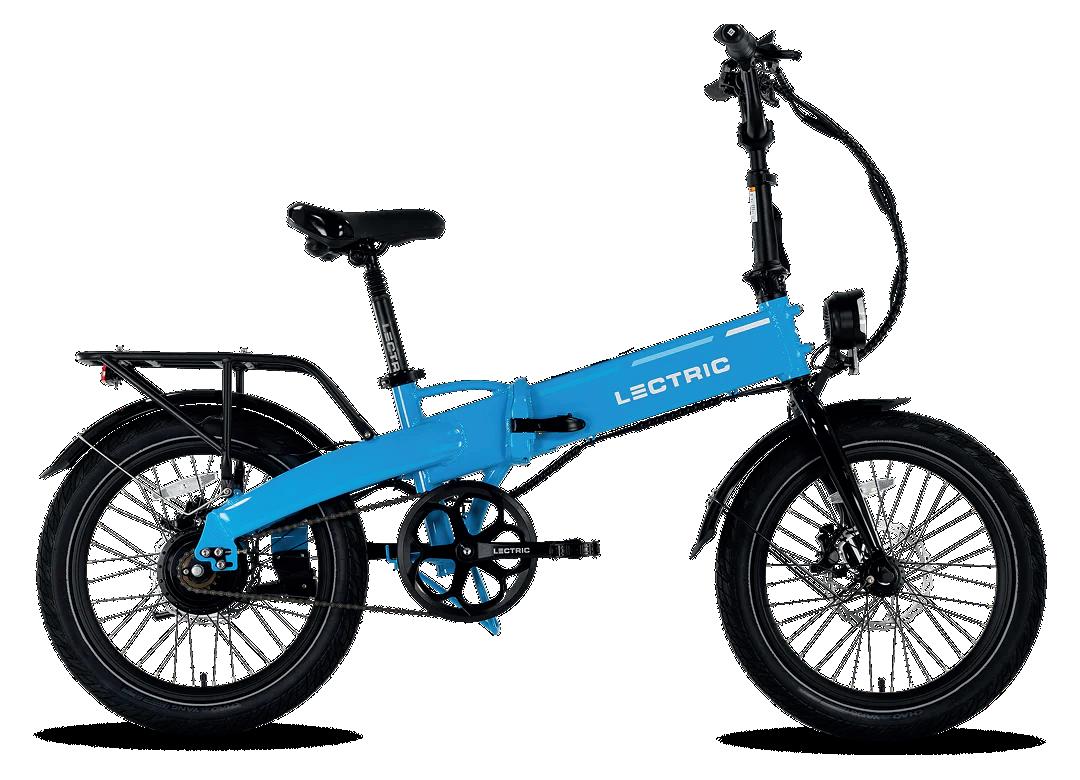
The most significant upgrades? A quieter, more efficient motor, and hydraulic disc brakes that punch well above their weight. That’s right, proper 180mm hydraulic stoppers on a sub£1,000 e-bike. It’s rare and welcome.
Nimble, simple, and seriously fun
Weighing in at just under 50lbs (22.6kg), the XP Lite 2.0 is light, nimble and easy to handle, whether you’re navigating city streets or folding it up to stash under a desk. It’s a singlespeed setup, and while that means you’re spinning your legs at 20mph, it’s ideal for beginners, low-maintenance commuters or riders who simply want “one button” simplicity.
The 500W peak rear hub motor is paired with a cadence sensor, not a torque sensor, so it won’t respond to pedal pressure , just movement. That means you only need a half-turn of the cranks for the motor to kick in. Acceleration is zippy, especially in PAS levels 4 and 5, though those wanting to ride further will want to stick to lower PAS modes.
Lectric’s newly introduced PWR system attempts to simulate torquesensor-like behaviour. It’s not quite
as refined or responsive, but it does smooth out the power delivery, especially at higher PAS settings, where the bike keeps you gliding near the 20mph top speed with little effort.
Lectric estimates a range of up to 45 miles, and in real-world conditions, I managed about 30 miles on a mix of PAS 2 and PAS 3. That’s pretty solid considering the 374Wh battery and the bike’s sub-£1,000 price tag. Riders can also upgrade to a 672Wh battery (£160 extra), potentially doubling the range to a claimed 80 miles.
Comfort-wise, the XP Lite 2.0 is surprisingly well thought out. There’s no suspension fork, which may sound like a cut, but in practice, it keeps the bike feeling nimble and direct. The steel fork absorbs just enough buzz, and the larger 20-inch tyres roll well over rougher city terrain. Riders looking for high-speed comfort on rural paths may want more cushion , but for urban use, it’s spot on.
I found the frame stiffness excellent, no flex or creaking, even when pushing hard. That’s not something I can say about many folding bikes at this price.
If you’d asked me a few years ago whether an electric bike under £1,000 could ever be worth recommending, I’d have said no. At that price point, I’d seen too many cornercutting compromises , twitchy motors, poor build quality, and frames that creaked the moment you stood up on the pedals. Then came the original Lectric XP Lite, which shook things up. And now, with the XP Lite 2.0, Lectric has refined the formula, making this already popular folder even better.
bars (not percentages), which isn’t our favourite, but at least it’s better than the old four-bar systems. The display is bright, well-positioned, and a pleasure to glance at while riding.
Lectric also offers two key upgrades:
• A gates carbon belt drive (£80 extra), replacing the chain for zeromaintenance, lube-free riding
The switch from mechanical to hydraulic brakes with 180mm rotors is a big win. Stopping distances were noticeably shorter compared to the last-gen XP Lite. They’re powerful, consistent and easy to modulate , especially important for newer riders or those riding in stop-start traffic.
The single-speed drivetrain uses a 52t front chainring and 16t rear cog. That gives it a sweet spot between 11 and 16mph. Below that, you’ll need a bit of muscle on hills; above that, expect a bit of “ghost pedalling” as your legs spin more quickly than the motor output.
Adjustability is decent, with an adjustable handlebar mast and quick-release seatpost. Riders from around 5’0 to 5’10 will be fine, though taller riders may find the saddle height limiting, especially if you’re looking for full leg extension.
New display and optional upgrades
The new colour display is a major improvement , easy to read, simple to navigate, and gives riders realtime metrics including speed, PAS level, trip data and live power output. Battery is shown via ten
A long-range battery option, as mentioned above
Both are optional, but sensible addons for riders with the budget and mileage needs.
Verdict: value without compromise
It’s easy to make a cheap e-bike. It’s much harder to make a good one at a low price , and that’s exactly what Lectric has done with the XP Lite 2.0. It’s not perfect, taller riders may want more saddle height, and the single gear means some ghost pedalling at top speed, but for everyday commuting, errands, or fun weekend rides, this is a genuinely solid, confidence-inspiring option.
At this price point, you’d expect trade-offs. But here, you get hydraulic brakes, a newly refined motor, smart display, and a folding frame that doesn’t feel like it will collapse under you. Add to that UL-certified safety systems and optional upgrades that don’t break the bank, and it’s hard not to be impressed.
For those on a tight budget , or just looking for a simple, well-executed e-bike without bells and whistles , the XP Lite 2.0 is easily one of the best value e-bikes you can buy today.























Electrifying commercial vehicles and HGVs is not just about the vehicles themselves – it involves a detailed consideration of how to keep them on the road without disrupting existing operations. Mer has the experience and knowledge to support you on this journey.






Download Mer’s free eguide for fleet managers to learn more about installing the right EV charging to keep your vehicles powered for their mission-critical journeys

Click here to find out more







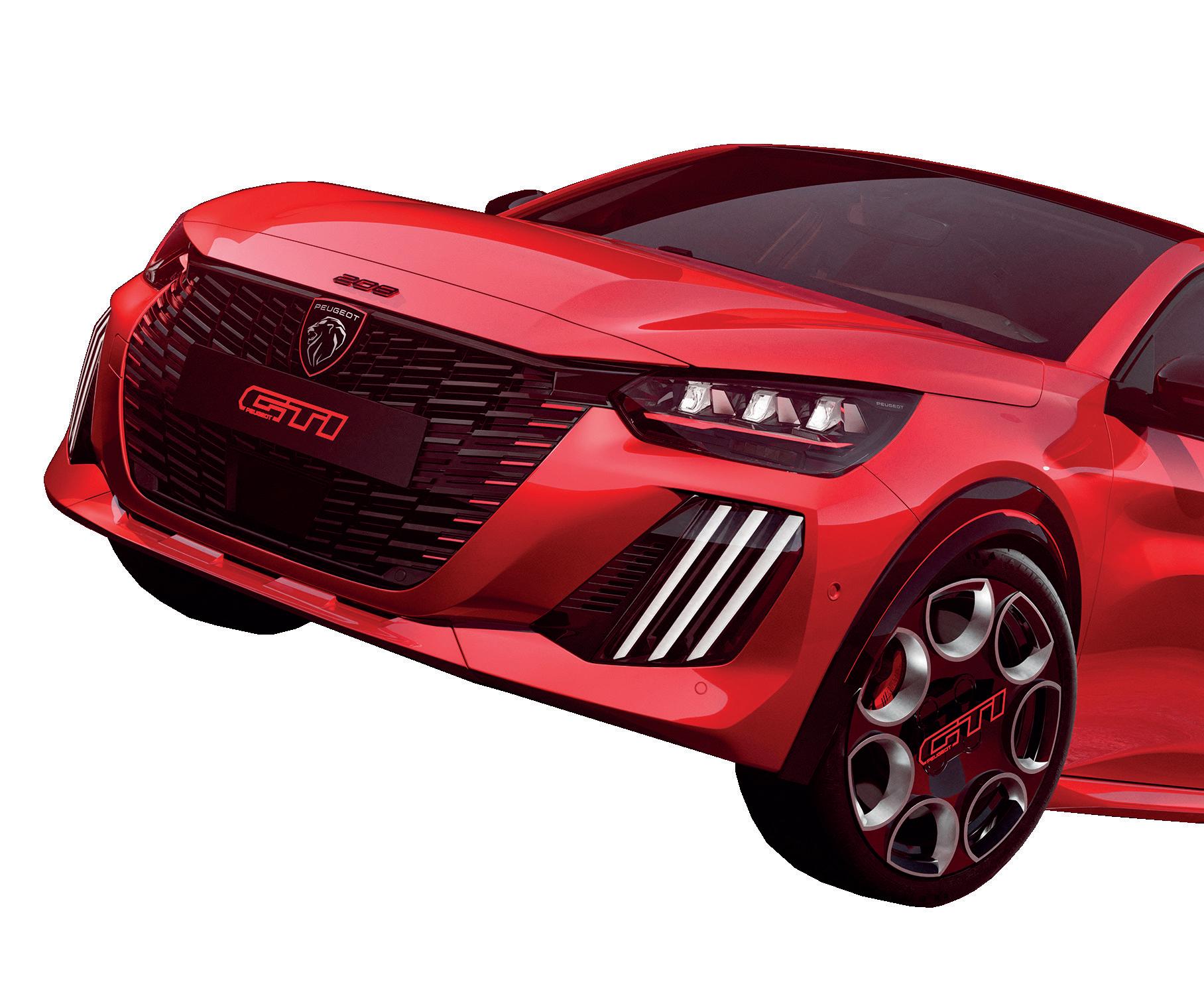
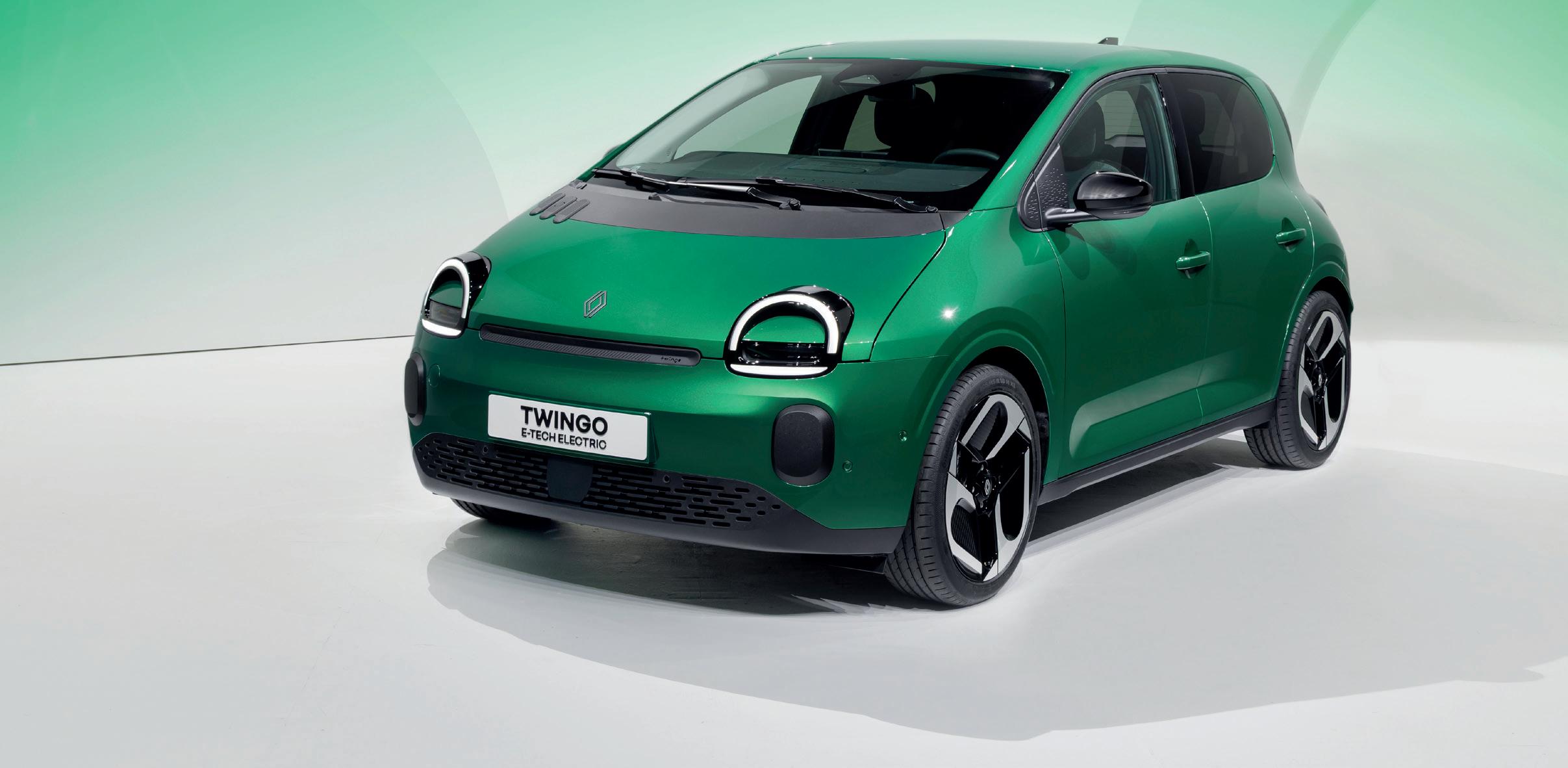
We’ve already had a sneak peek at the new Renault Twingo, which has just whetted our appetite for this revived city car. Set to arrive in late 2026, it is an all-new, all-electric reimagining of Renault’s innovation A-segment car. Its looks are a tribute to the cute frog-like original but, like the original, they’re balanced with clever design to maximise interior space and bring modern
technology. A 27.5kWh battery should give 163 miles of range and an 82bhp motor feels well-suited for city use, while prices from around £17,000 mean the Twingo will help make EVs more accessible than ever before. Renault’s revival of other models such as the Renault 5 has been a huge success and we’re expecting similar things from the Twingo.


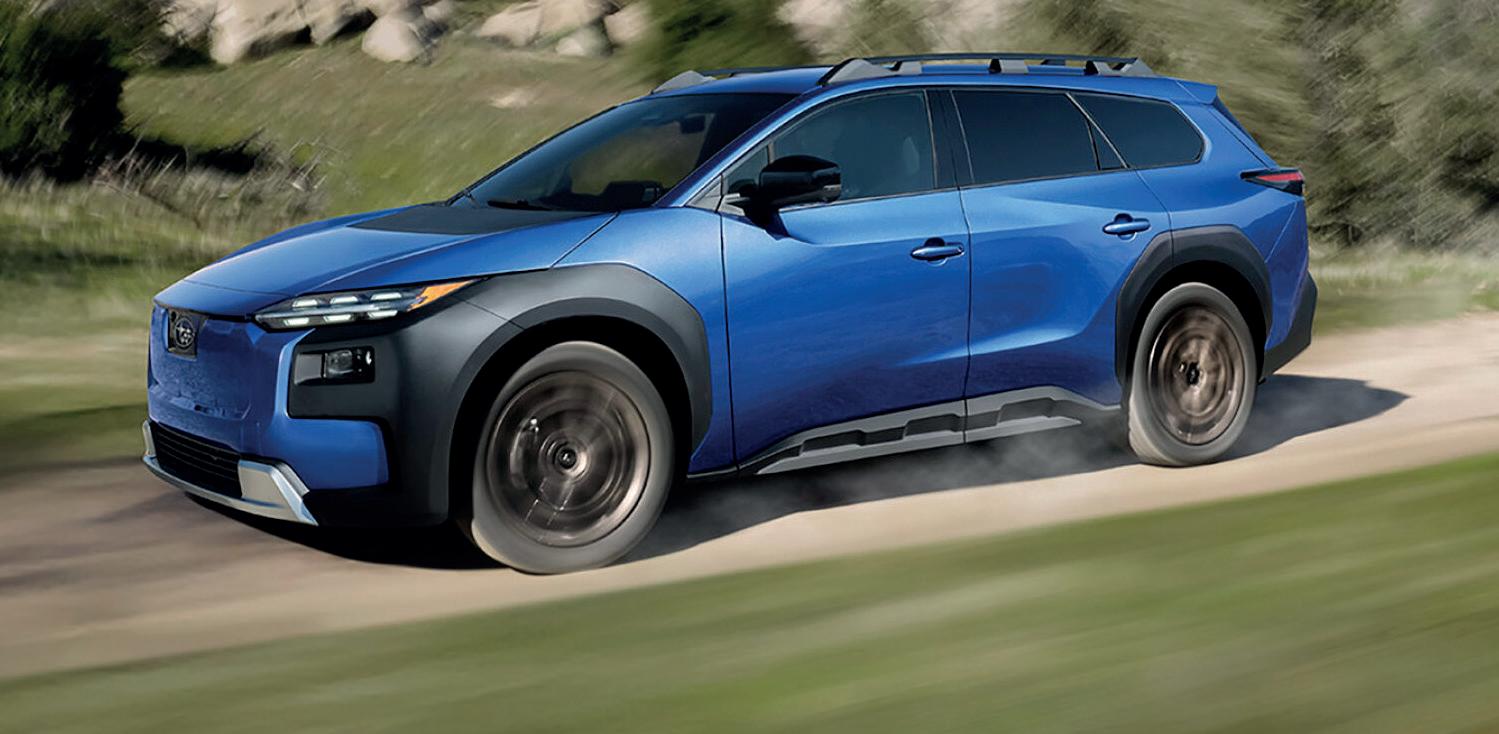
We’re making no apologies for looking forward to this car. Everyone likes Subaru but the brand hasn’t had the easiest start to its EV journey. The Solterra has struggled to find its feet for various reasons but the E-Outback might just fix that. Not only does it bring electrification to a familiar name but it also goes back to Subaru’s speciality – slightly rugged 4x4 estate cars.
Based on the same platform as the Solterra and the Toyota bZ4X Tourer, the E-Outback promises a jacked-up ride height, all-wheel-drive from a 375bhp two-motor powertrain and a dedicated X-Mode for off-road duties. It will also do 0-62mph in 4.4 seconds and cover up to 279 miles on a charge of its 74.7kWh battery.
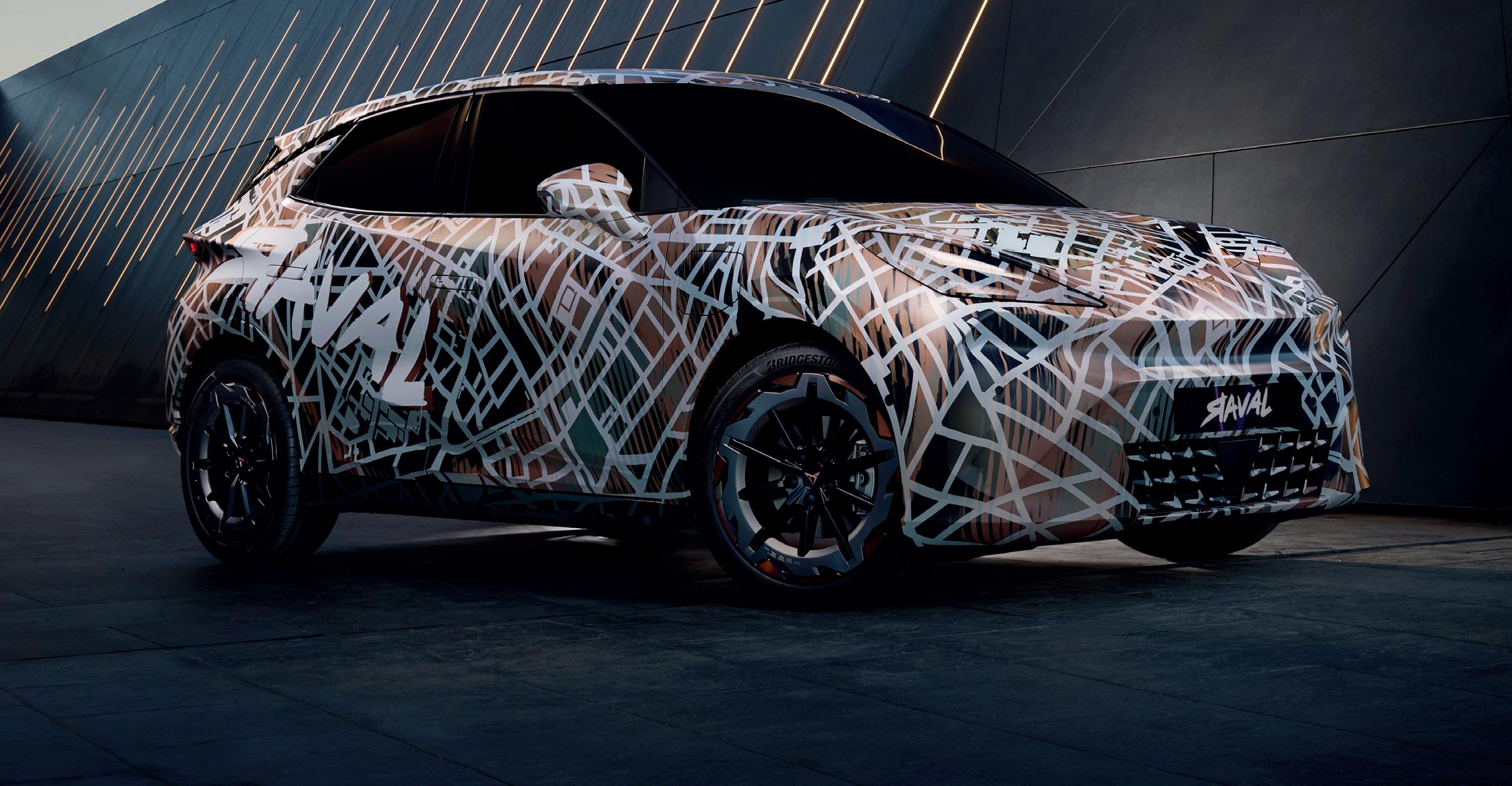
The Cupra Raval is another car EV Powered has had early access to and the initial signs are really promising. The Raval is the first in four B-segment cars from the VW Group and lays the groundwork for the VW ID.Polo hatchback as well as the VW ID.Cross and Skoda Epiq crossovers. It’s also the most exciting, bringing Cupra’s sporty flair to the small hatchback segment.
With up to 223bhp and bespoke sports steering and suspension, the VZ Extreme promises true hot hatch engagement and drives brilliantly, while even lesser “Dynamic” models will pack 207bhp and up to 279 miles of range. And with pricing from £26,000, it could give the Renault 5 a run for its money.
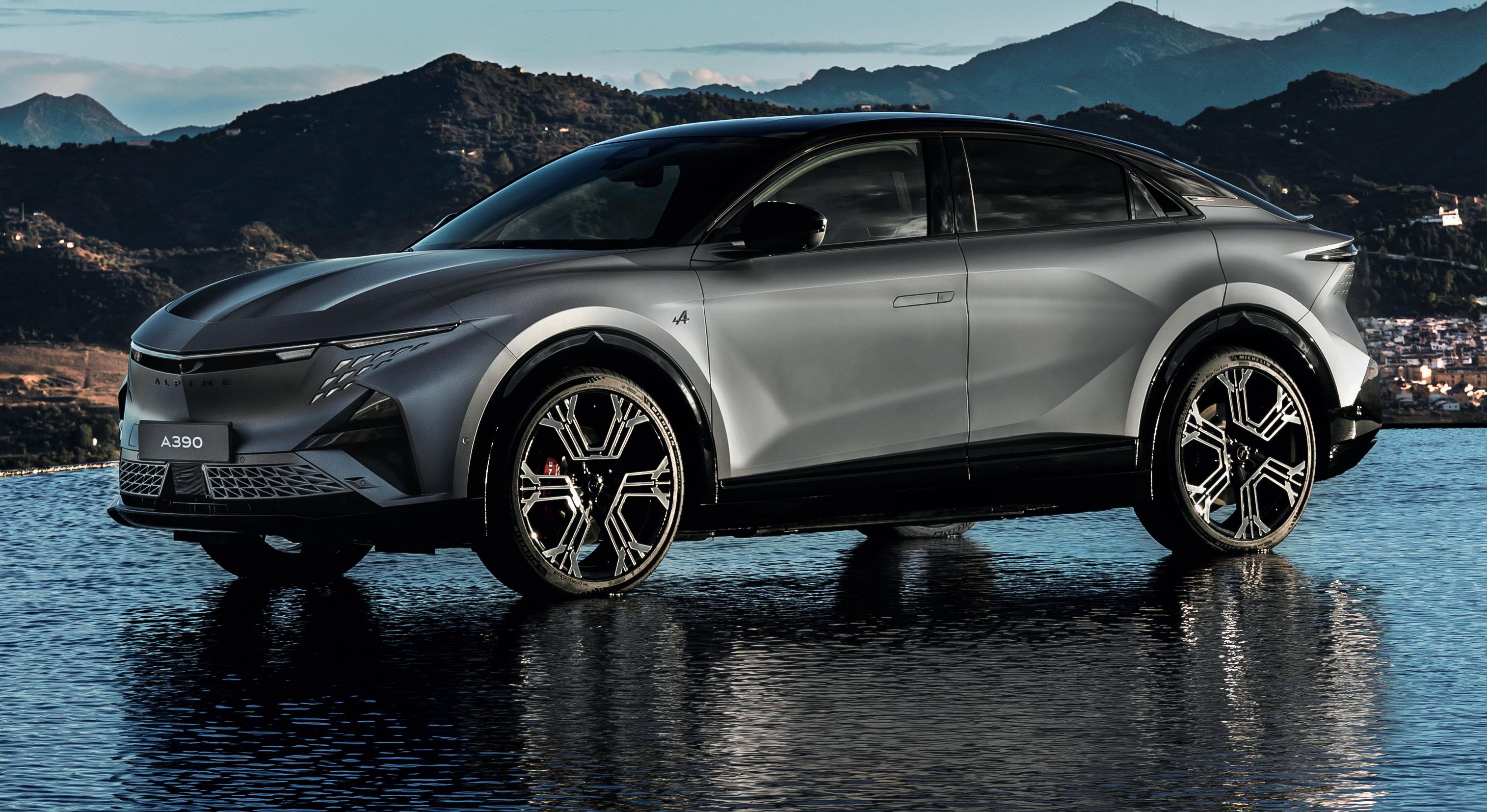
Alpine’s engineers have already proved that they know their onions with the A290 – a nicely spiced up version of the Renault 5. But for 2026 they’ve been given free rein with the A390, Alpine’s first bespoke EV. Positioned as a rival to the Porsche Macan, the A390 is Alpine’s biggest car – a five-seat coupe-SUV, but the French brand promises it will still deliver
the deft, agile feel of cars like the A110. Equipped with a tri-motor arrangement, the A390 will produce up to 464bhp and sprint from 0-62mph in 3.9 seconds. It will also feature trick torque vectoring and carefully tuned suspension and steering for that traditionally Alpine driving experience.
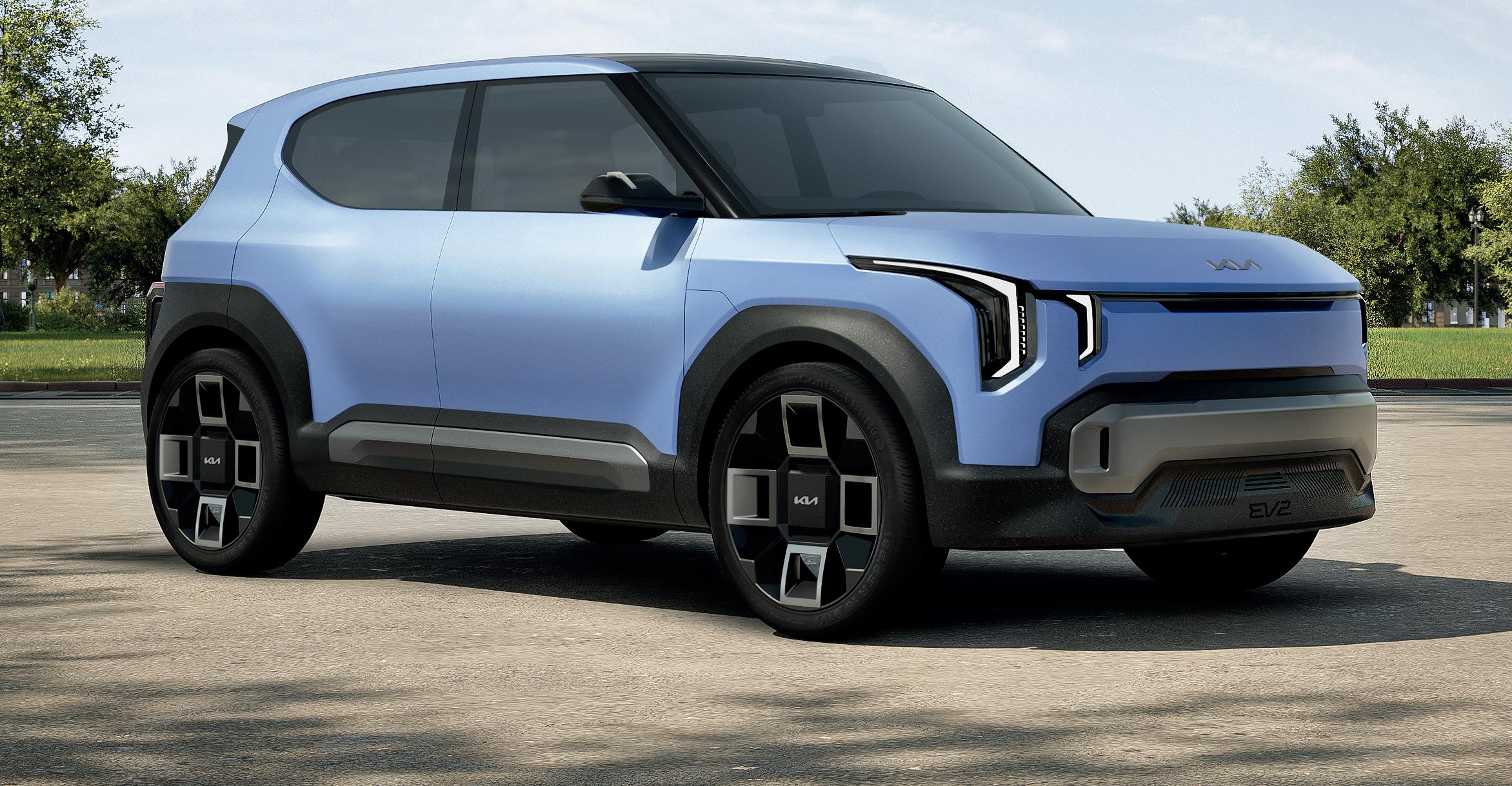
Kia continues to impress with its expanding electric line-up and we’re expecting that to continue into 2026 with the EV2. Predictably the smaller sibling to the EV3 SUV, this compact crossover is due to debut in January, bringing a new entry-point to Kia’s EV range and going head to head with the Renault 4. Concept images show a boxy design inspired by the much
larger EV9 and we expect the final car to look very similar. Tech specs are under wraps. We know this smallest Kia EV is based on the same platform as the EV3 but we expect a less powerful motor and smaller battery that that car’s 201bhp/58kWh pairing. It will also be Kia’s most affordable EV yet, with prices expected to start at under £25,000.
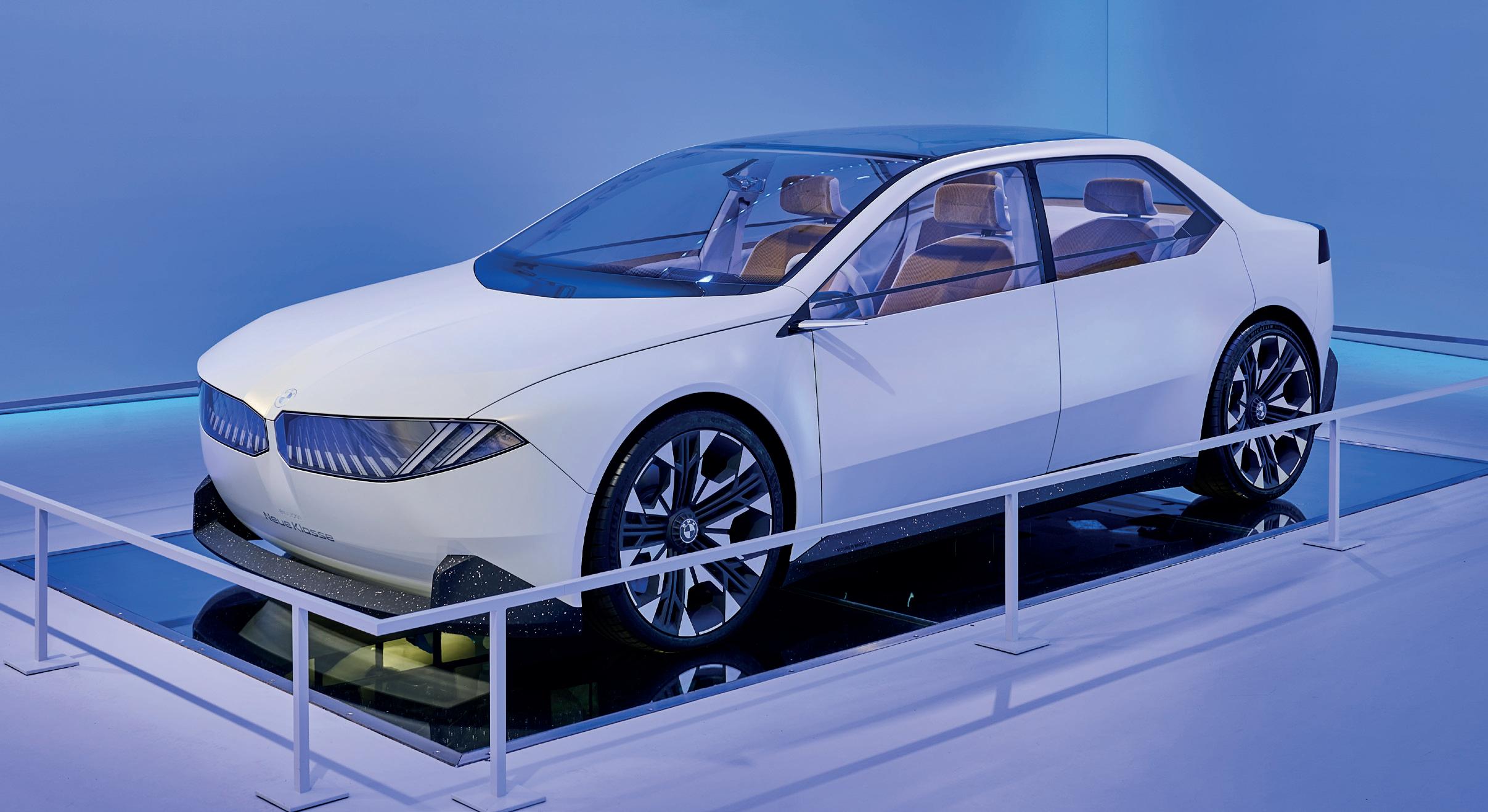
The BMW i3 is perhaps the most significant car on this list. It is the first all-electric version of the firm’s iconic 3 Series and is, therefore, hugely important. It’s based on the all-new, EV-specific Neue Klasse architecture and promises to be smaller, more efficient and more high-tech than the existing i4 electric saloon. Like the new iX3, this four-door saloon is expected
to offer up to 463bhp, all-wheel-drive and 500 miles of range from a massive 107kWh battery. It’ll also bring some of the fastest charging around, at 400kW. Cheaper single-motor variants could appear later on and we’re expected a full-bore electric M3 at some point to put cars like the BYD Seal 3.8 and Tesla Model 3 Performance firmly in their place.
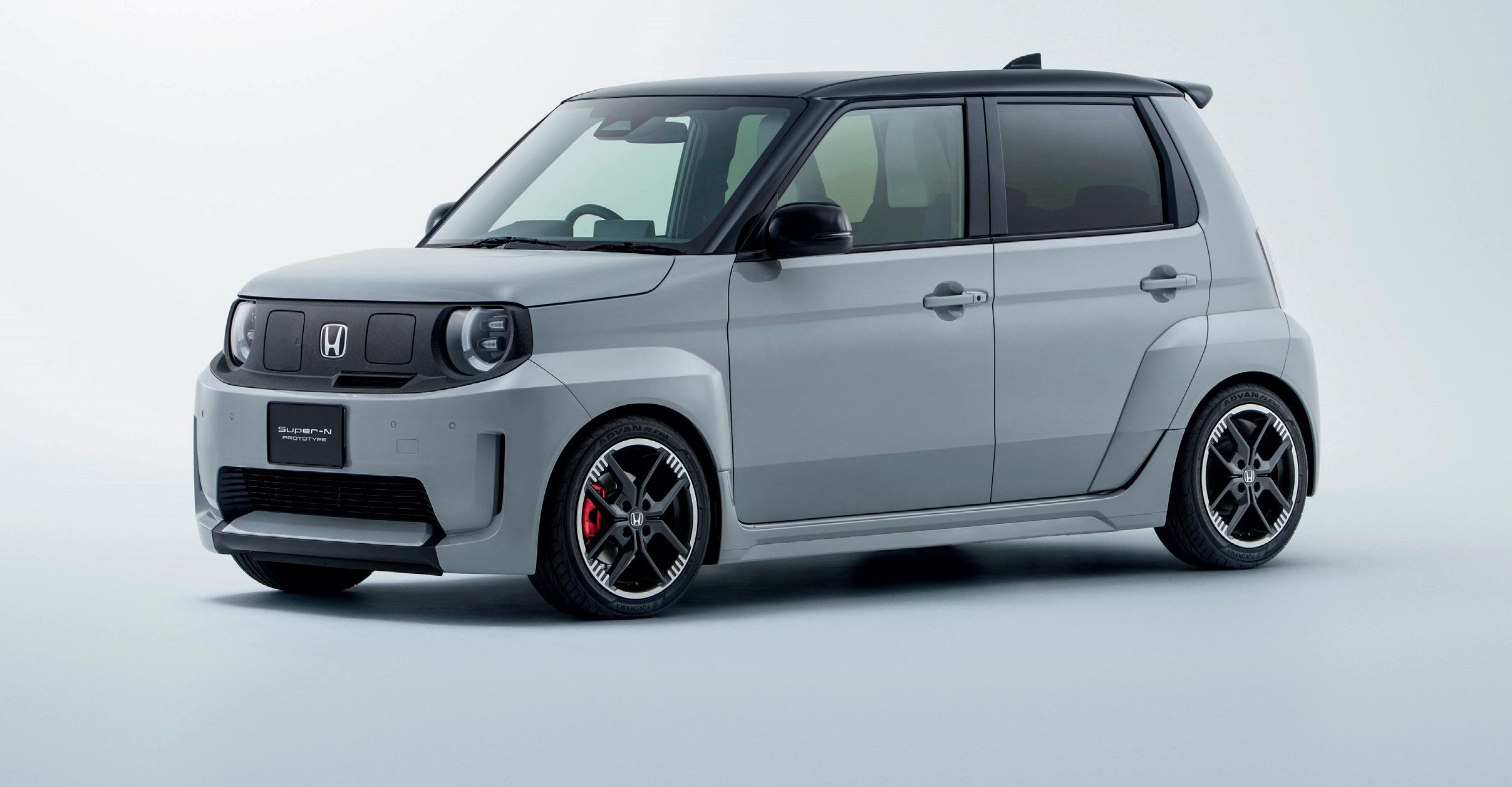
Honda is another brand that’s struggled with its early EV attempts. The Honda e was innovative, stylish and cursed with a woeful range and ludicrous price, while the E:NY1 is the definition of automotive mediocrity. But the Super-N promises something new. It’s based on the N-One e – a Japanese-market kei car. That means it’s a tiny 3.4m by 1.48m, ideal for the UK’s crowded cities and
positioned to challenge the Renault Twingo. A 63bhp motor is enhanced with simulated gearshifts and a boost mode, while a 29.3kWh battery should give around 150 miles of range. A chunky bodykit gives it a youthful sporty look and if Honda can get the pricing right, the Super-N could bring a whole new audience to the brand.
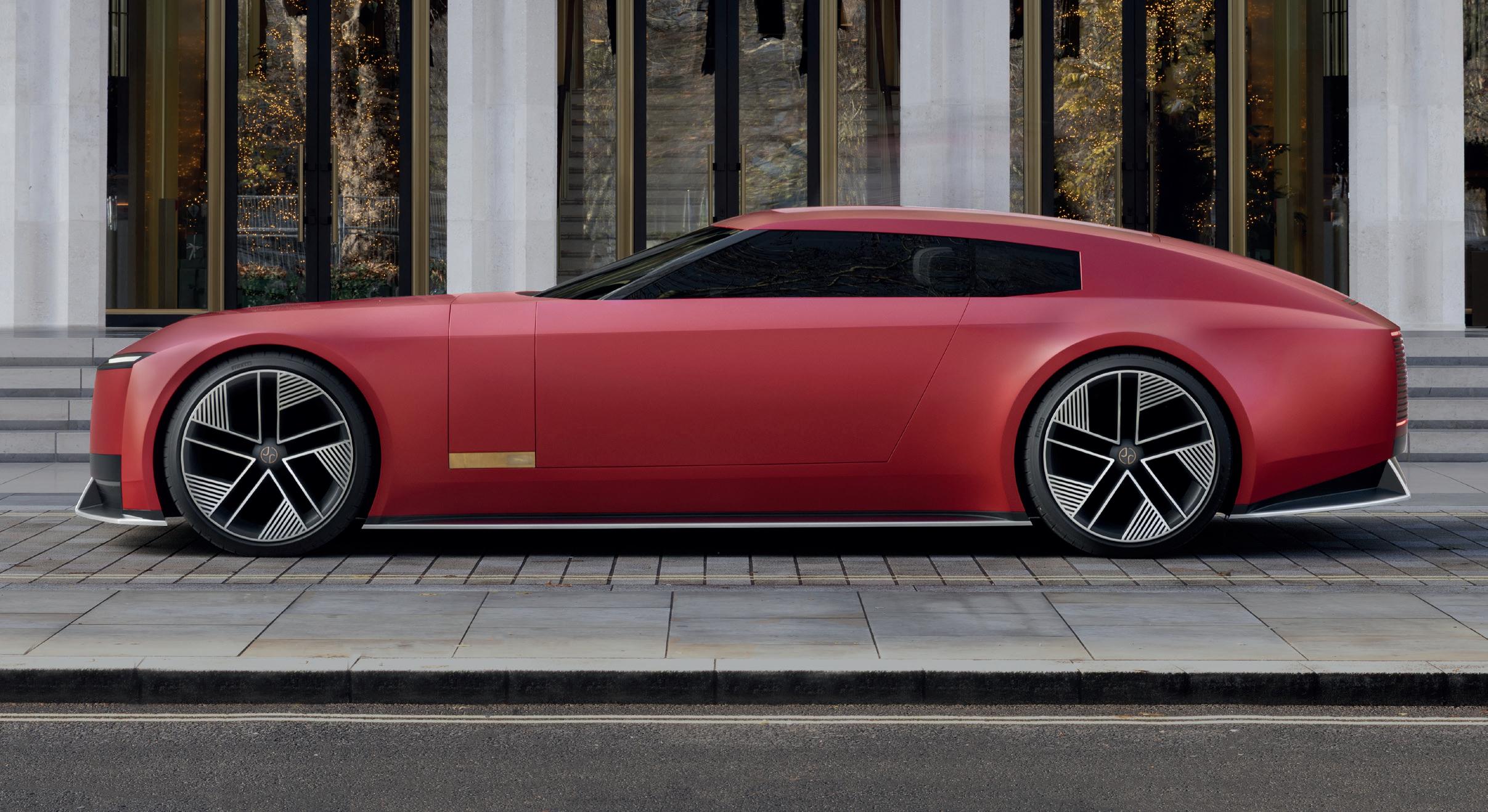
Perhaps the most controversial EV revelation of recent years, the Jaguar Type 00 is the car designed to relaunch the British brand as an allout luxury proposition. The Type 00’s staggering looks have divided opinions almost as much as the associated marketing campaign, but there’s no denying that it has got people talking about Jaguar again. The Type 00 is
a concept and the as-yet-unnamed production version will tone things down but we can’t wait to see how the final four-seat grand tourer turns out. Jaguar is predicting close to 500 miles of range, and charging that will add 200 miles in 15 minutes. We’re also expecting more than 600bhp and a six-figure price tag.
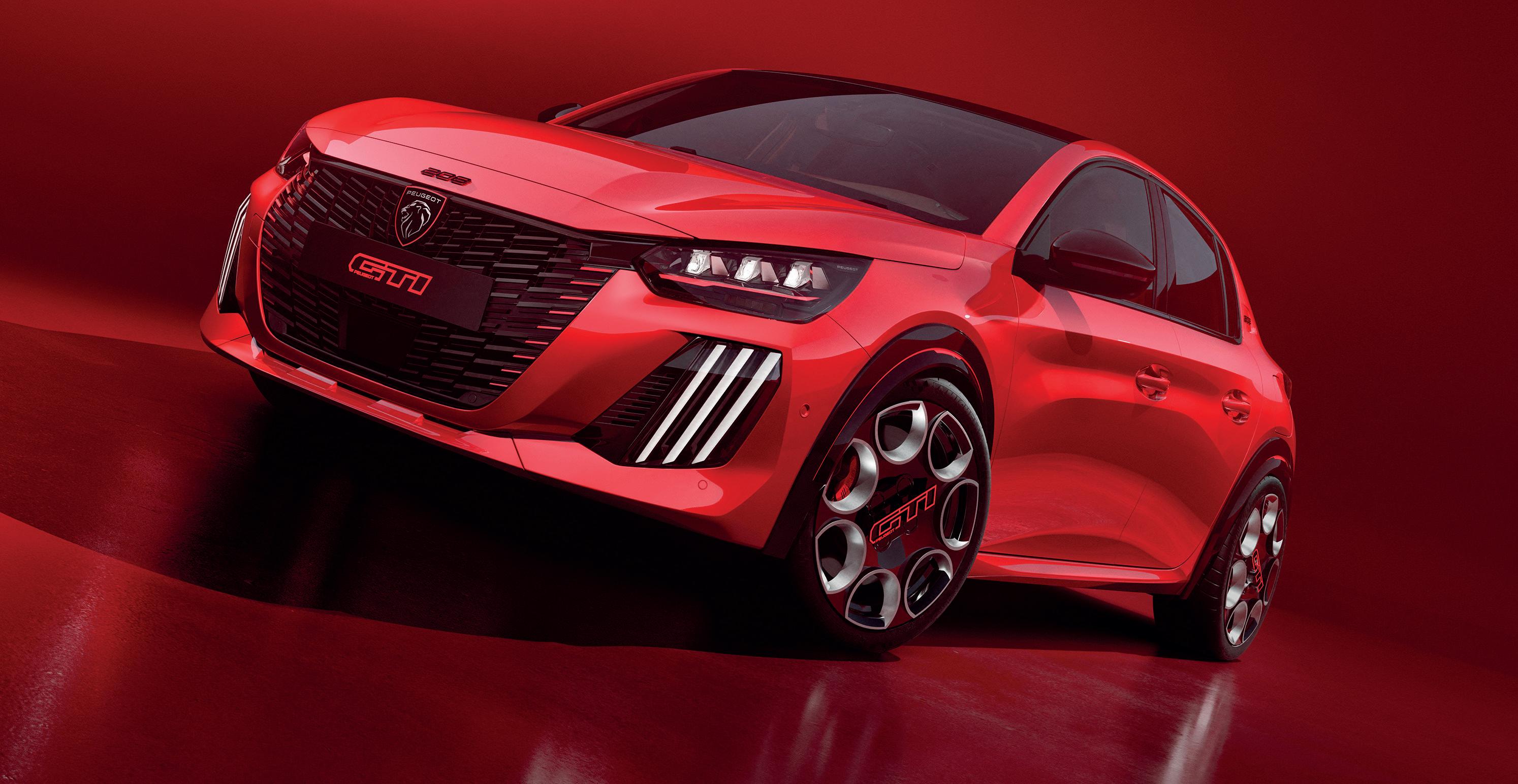
Peugeot has said that it is going to stay true to the GTI badge’s roots with its next generation of EVs. So, no GTI SUVs, instead the first car to wear the famous badge will be the compact E-208. Beneath the sharp design with its purposefully aggressive body kit and beefed up alloys, the E-208 GTI uses the same spicy running gear as the Abarth
600e and Alfa Romeo Junior Veloce. That means a 276bhp motor and a Torsen mechanical LSD. It also means bespoke sports suspension and steering calibration. We’ve been blown away by how good this setup is in taller SUVs, so we can’t wait to see what the lower, lighter hatchback can do with it.
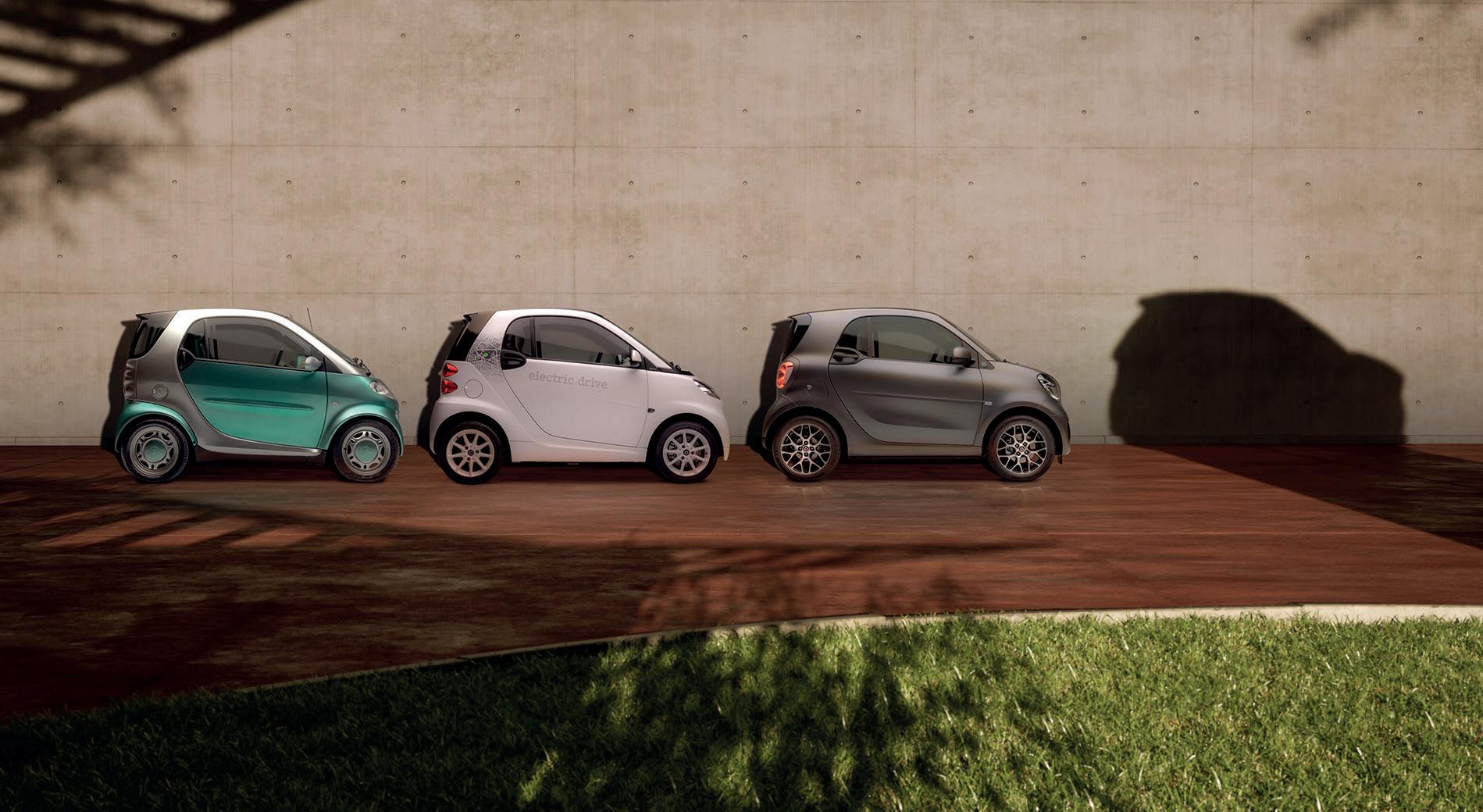
The Smart #2 marks a return to familiar territory for Smart. Once famous for tiny city cars, its electric era has seen it focus on larger premium-tinged SUVs. But in 2026 it’s going back to its roots with another tiny city-focused EV. The #2 will be a simple two-seater urban runabout and early indications are its design will echo the famous Fortwo’s short boxy looks. Technical
details are scarce, but Smart says the #2 will bring “cutting edge” technology never before seen in its segment. We’re expecting a significant improvement over the old ForTwo EQ’s 99-mile range and would expect the #2 to provide a slightly more upmarket alternative to affordable A-segment models like the Twingo and its inbound Nissan twin.
Tesla has once again been named the UK’s best charging network by EV drivers.
The US firm’s Public Supercharger network emerged as the highest-rated in the “Large” category of the annual Zapmap driver satisfaction survey, which polled almost 4,000 EV drivers.
It is the second year in a row that Tesla’s publicly accessible network has been named the best public provider, beating MFG EV Power, Ionity and Osprey.
The service scored an overall rating of 4.8 out of five, winning strong approval across the five key criteria of reliability, ease of use, customer support, value for money and ease of payment.
Tesla was included in the rankings for the first time in 2024 after opening some of its Supercharger locations up to other EVs. It has now made 1,115 chargers at 97 locations accessible to non-Tesla drivers – around 54% of its entire UK network.
Its score puts it clearly ahead of second-placed MFG EV Power, which scored 3.9 out of five. MFG’s network has grown by 68% in the past year and now has more than 1,300 devices at 522 locations. Drivers particularly appreciated its ease of use, reliability and wide range of payment methods.
Ionity jumped from the Medium to Large category for the first time in 2025 and tied with Osprey for third in the rankings of best charging networks.
Ionity has more than doubled in size since last year, with 536 devices in 58 locations. Drivers praised its reliability, ease of use and various payment methods, while Osprey tied with Tesla for the highest customer service score.
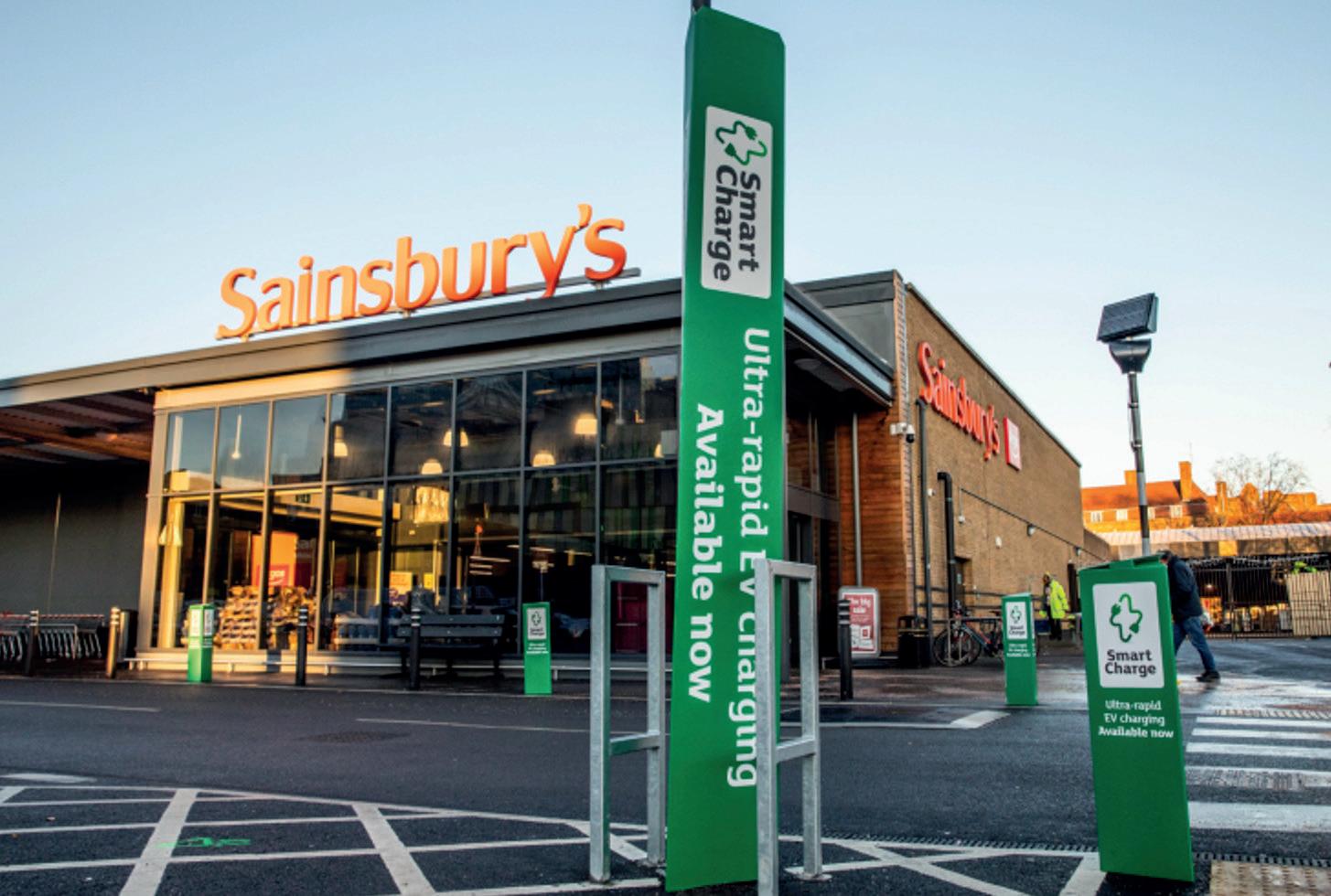
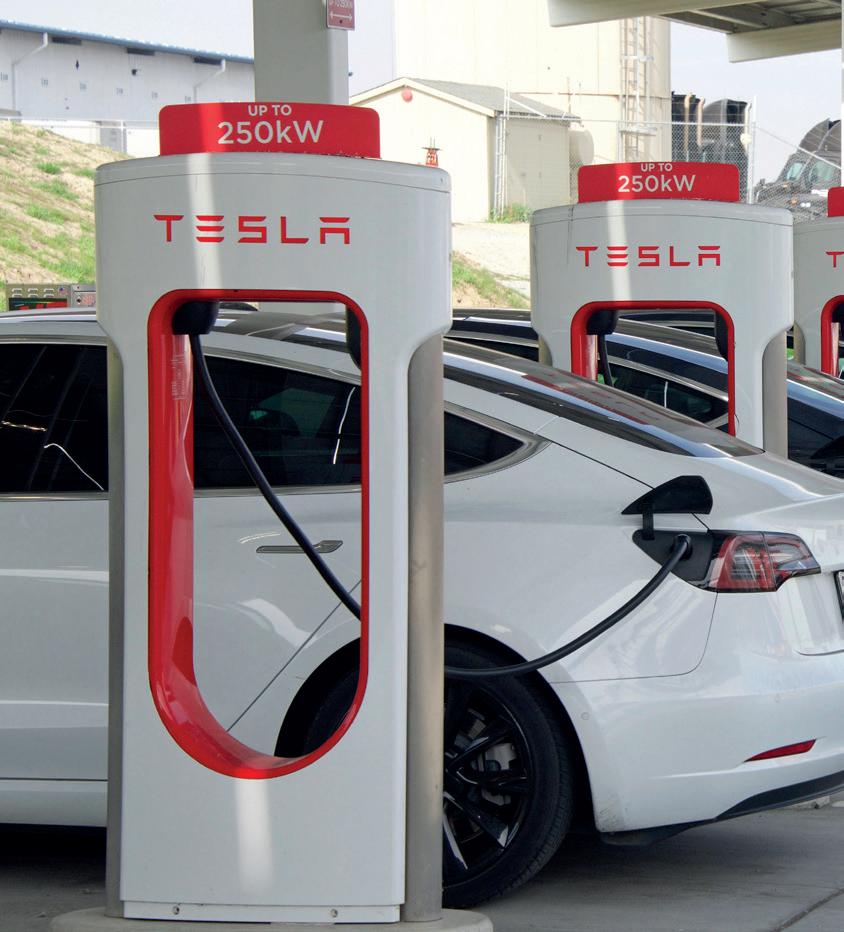
For the first time, the annual Zapmap research split results between rapid and ultra-rapid charging networks and on-street/ destination operators, as well as breaking ultra-rapid operators into Large and Medium categories. Large networks include any with more than 500 devices, while Medium covers operators with between 150 and 500 chargers.
Sainsbury’s Smart Charge, which only launched in January 2024 came out as number one in the Medium category, scoring 4.4 out of five. Respondents were particularly pleased with its ease of use and reliability. It narrowly beat Be.EV, which scored 4.3 out of five, and Fastned which scored 4.2.
This year Arnold Clark Charge was named Zapmaps’ Up-and-Coming network. The car retail chain only opened its on-site chargers to the public earlier this year but scored highly across all five criteria.
While the survey found largely positive results and 10 out of the 19 rapid networks scored highly
enough to get an ‘EV driver recommended’ title, there were some poor performances. In the large category the crumbling ChargePlace Scotland scored a lowly 2.1 while BP Pulse continued to struggle, with a rating of just 2.4 and Shell Recharge got just 2.6. They were the only three large operators not to score at least 3.5 out of five.
In the medium category Geniepoint came bottom with a score of 2.4, just behind ESB Energy on 2.7 and Lidl on 2.9.
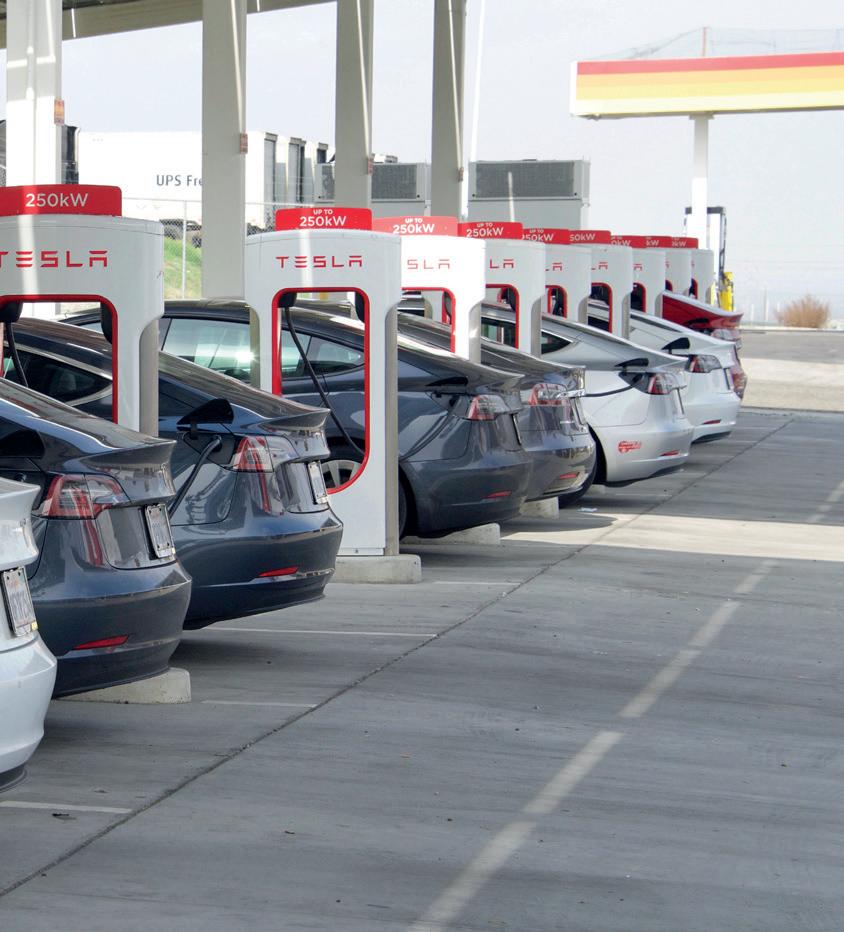
Among networks specialising in slower on-street or destination chargers, Connected Kerb and RAW Charging were named the UK’s best.
Although ultra-rapid chargers grab many of the headlines, lower powered chargers such as residential kerbside units or AC devices in locations such as gyms, shopping centres and tourist attractions account just under 80% of the UK’s infrastructure – more than 69,000 chargers.
Both Connected Kerb and RAW Charging scored 3.5 stars based on the same criteria as ultra-rapid operators and were jointly awarded the ‘Best EV charging network’ accreditation.
Connected Kerb focuses on low-powered, on-street devices for overnight charging. It currently has 6,280 low-powered devices across 1,478 locations, with its Coventry network being one of the largest outside London. Along with providing close-to-home charging it also offers a ‘smart charging’ function enabling EV drivers to plug in and schedule charging during off-peak times when demand and cost are lower.
Drivers rated it particularly highly for offering value for money and providing multiple ways to pay.
RAW Charging specialises in providing destination charging to the hospitality, leisure and retail sectors. It has 806 devices across 304 locations including Alton Towers, Chessington World of Adventures, Thorpe Park and Legoland, as well as 40 National Trust sites. Drivers highlighted the network’s reliability and ease of use as stand-out features.
Melanie Shufflebotham, co-founder & COO at Zapmap, said: “These rankings provide first hand feedback directly from EV drivers, acting as a solid indication of which networks are more reliable, as well as giving the industry guidance on driver needs and priorities.
“Overall satisfaction with the public charging infrastructure has improved — from 64% last year to 69% this year — which is also reflected in the increasing scores across the reliability indicator, the key consideration for drivers. Cost of charging on the public network continues to be a concern for drivers, with the majority of networks, with a couple of notable exceptions, receiving their lowest score for value for money.
“Looking to the future, over 60% of drivers expect the public charging network to continue to improve, and I am sure that the charge point networks will rise to the challenge, carrying on investing in more chargers and putting the customer experience at the heart of what they do.”
Vicky Edmonds, CEO of drivers’ group EVA England, added: “The user experience at public chargepoints is fundamental to the success of the transition to electric. With two thirds of EV drivers believing that the public charging network is
showing ongoing signs of real improvement, those operators that are focusing on their reliability, accessibility and affordability can pave the way for the sector as a whole to continue to deliver a driver experience that gets better and better each year.”
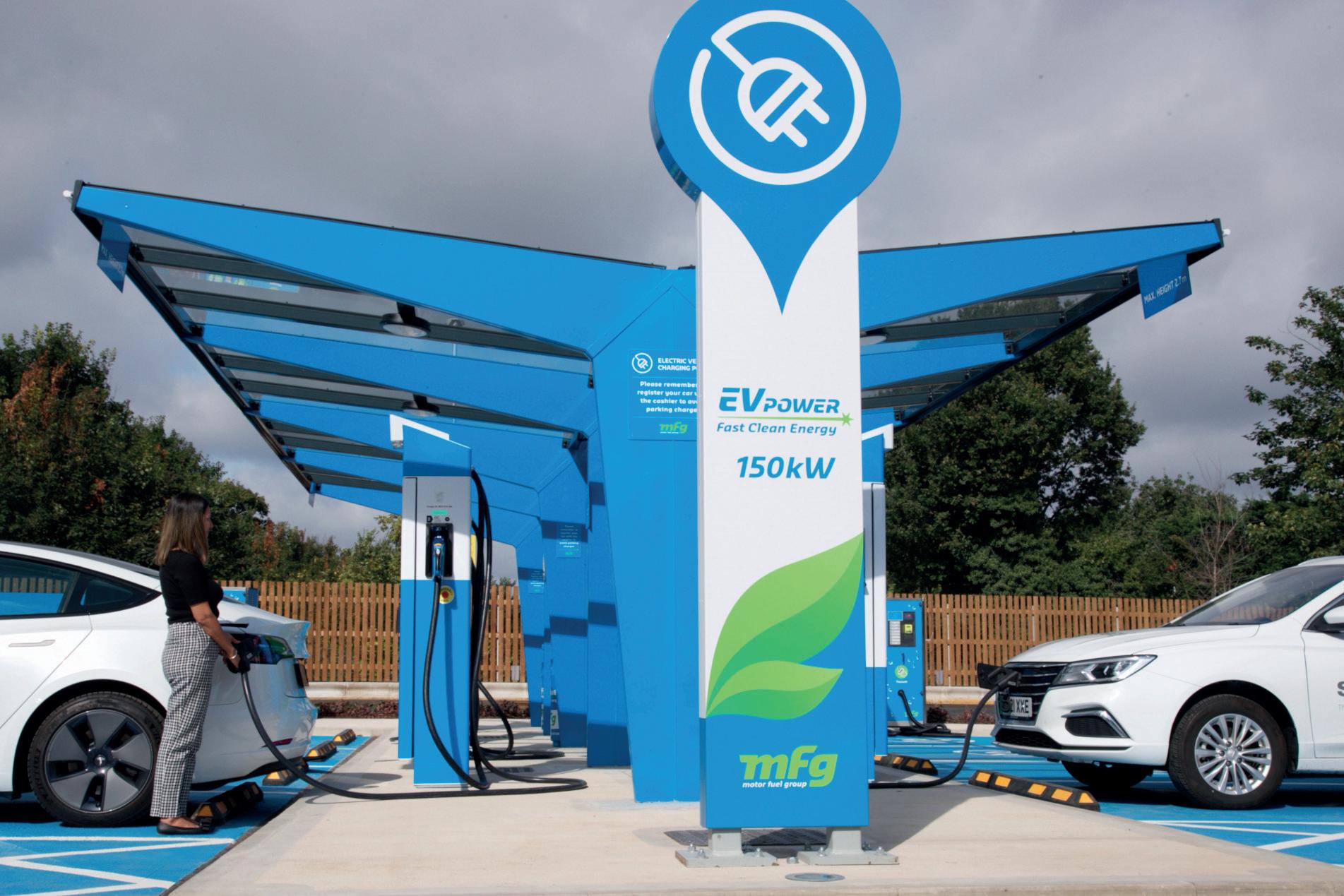
This is Jasmin. She’s one of many business owners who already use a smart meter to feel more in control of their budgeting, because smart meters help you track your energy use and costs over time.
So like Jasmin, you can spend less time guessing and instead know how much you’re spending on your energy bills.
Search ‘get a smart meter’ today.