

DESPITE THE BRAINS, PINOYS MISSING THE SEMICON BOAT
The Philippines has all the key elements for expanding its wings in the global electronics industry, so what is holding it back?

WBy John Eiron R. Francisco
ITH global interest in engineering waning despite surging demand for integrated circuit (IC) design and semiconductors, industry experts believe the Philippines— equipped with growing local expertise— stands at the cusp of a major opportunity to expand its share in the global semiconductor market.
“It is such an important industry. It could have so many benefits for our economy and we could become a leader of innovation on the global stage,” Christine Gojar, Xinyx Design Corporate Communications Executive, said on Friday at Colegio de Muntinlupa during the firm’s launching event of LAB by Xinyx. Xinyx Design, the largest IC design house in Southeast Asia and recently expanded into the Netherlands, is a premier fabless semiconductor firm headquartered in the Philippines. The company supports clients worldwide and boasts a workforce of over 425 engineers and professionals specializing in IC design, layout, verification, research and development, and ecosystem advancement.

Charade Avondo, President and General Manager of Xinyx Design Consultancy, on the broader value of nurturing local semiconductor talent: “If the government focuses on the semiconductor industry, we can support critical sectors—military, healthcare, infrastructure, even the Philippine Space Agency. There’s no need to rely solely on imported technology when we have the talent and capability here.”
Citing global data, Gojar noted that the semiconductor industry is facing a shortage of over one million skilled professionals worldwide. She emphasized that this presents a valuable opportunity for the Philippines to step in and address the talent gap. She also pointed out that even Taiwan—already a global

leader in semiconductors—experienced a shortage of around 25,000 engineers in 2023.
“If we take the opportunity and produce more engineers, we can easily leapfrog our way into development for our country,” Gojar added.
On the global front, according to the Semiconductor Industry Association (SIA), the global semiconductor market is experiencing unprecedented growth. In the first quarter of 2025, global semiconductor sales reached $167.7 billion, an 18.8-percent increase compared to the same period in 2024.
The market is projected to surpass $600 billion in total revenue for 2025, with an expected year-
DBM chief: PHL can still hit growth goal despite jitters
By Reine Juvierre S. Alberto
AFTER the Philippine economy’s lackluster growth in the first quarter, Budget Secretary Amenah F. Pangandaman said on Friday she is “optimistic” that the country will hit its growth target for the year amid increasing global economic uncertainties. The country’s gross domestic product, or the total value of all goods and services produced within a country, grew by 5.4 percent in the first quarter of the year (See: https://businessmirror. com.ph/2025/05/08/phl-economysteadies-at-5-4-in-q1-2025/).
This was cooler than the 5.9 percent expansion in the same period last year, but slightly quicker than the 5.3-percent pace in the final quarter of 2024.
The Cabinet-level Development Budget and Coordination Committee (DBCC), chaired by Pangandaman, has set the growth target at 6 to 8 percent this year until 2028.
The Budget secretary said that with government’s capital spending, which grew 8.2 percent year-on-year in the first quarter, a “high growth” trajectory can be sustained.
Pangandaman cited the na-

tional budget’s role in the country’s economic growth, translating to an 18.7-percent growth of the Government Final Consumption Expenditure (GFCE) during the period—the highest year-on-year growth since

the second quarter of 2020.
“This is why we cannot emphasize enough the important role that government spending performance plays in stimulating the economy, especially amidst the expected


Prevost, now Pope Leo XIV, known as ‘saint of the
north’ in Peru for his closeness to poor

By Franklin Biceno and Nicole Winfield The Associated Press
VATICAN CITY—Robert Prevost may have made history Thursday by becoming the first pope from the United States. But in Peru, he is known as the saintly missionary who waded through mud after torrential rains flooded the region, bringing help to needy people, and as the bishop who spearheaded the life-saving purchase of oxygen production plants during the Covid-19 pandemic.
“He worked so hard to find help, that there was not only enough for one plant, but for two oxygen plants,” said Janinna Sesa, who met Prevost while she worked for the church’s Caritas nonprofit in Peru.
“He has no problem fixing a broken-down truck until it runs,” she added.
Pope Francis, history’s first Latin American pope, clearly saw something in Prevost early on.
He first sent him to Chiclayo in 2014, then brought him to the Vatican in 2023 as the powerful head of the office that vets bishop nominations, one of the most important jobs in the Catholic Church.
By Bless Aubrey Ogerio
AGRICULTURAL imports outstripped exports in March, widening the trade gap and offsetting previous gains, data from the Philippine Statistics Authority (PSA) showed.
The International Merchandise Trade Statistics (IMTS) indicated that the $889.15-million figure marked a 2-percent increase from the same month last year, a slight increase compared to February’s sharper 17- percent jump. A year earlier, in March 2024, the deficit had narrowed by nearly 19 percent.
Overall, the country’s total agricultural trade hit $2.32 billion in March, up 10.6 percent from the previous year. This was slower than February’s 20.2-percent growth but a rebound from the 8.5-percent drop recorded in March 2024. Agricultural exports were on the upswing, growing by 16.7 percent year-on-year to $715.76 million. These farm goods made up 10.9 percent of the country’s total outbound shipments.
Almost all of March’s export revenue, which was at 97 percent, came from the top 10 commodity groups. This brought in $694.22 million, up 17.8 percent from the year before.

On Thursday, Prevost ascended to become Pope Leo XIV—the first pontiff from the United States. Prevost, 69, had to overcome the taboo against an American pope, given the geopolitical power already wielded by the US in the secular sphere.
The Chicago native is also a Peruvian citizen and lived for years in Peru, first as a missionary and then as bishop. He evoked his broad missionary experience in his first public remarks as pope, speaking in Italian, then switching to Spanish—and saying not a word in English as he addressed the crowd in St. Peter’s Square.
“Together, we must try to find out how to be a missionary church, a church that builds bridges, dialogues, that’s always open to receive—like on this piazza with open arms— to be able to receive everybody that needs our charity, our presence, dialogue and love,” he said.
The new pope had prominence going into the conclave that few other cardinals have. Prevost was twice elected prior general, or top leader, of the Augustinians, the 13thcentury religious order founded by St. Augustine.

Budget Secretary Amenah F. Pangandaman: “Even with US tariffs, the impact on GDP is less than 1 percent—we’re okay.”

BARMM clears ₧133.91-B development plan for 2026
By Manuel T. Cayon
DAVAO CITY—The Bangsamoro government recently approved the P133.91-billion Annual Investment Program (AIP) for 2026 with heavy accent on infrastructure building.
The approved plan came out in the first regular executive meeting of the Bangsamoro Economic and Development Council’s Executive Committee (BEDC-ExeCom) on May 2 in Cotabato City.
The approved AIP will fund 637 development projects across the region, covering infrastructure, social services, the economy, peace and security, and administrative development.
It forms part of the updated Bangsamoro Development Investment Program (BDIP), which will guide future budget proposals from both regional and external funding sources, the Bangsamoro Information Office said.
Melanie Indar, Planning Director of the Bangsamoro Planning and Development Authority, said the following will receive their corresponding allocations: infrastructure sector gets 76.11 percent with 184 projects; social sector, 18.16 percent with 171 projects; economic sector, 4 percent with 161 projects; peace and security, 1.29 percent with 81 projects; and development administration, 0.44 percent with 40 projects.
The BPDA coordinated the formulation of the AIP with 34 ministries and agencies of the Bangsamoro Autonomous Region in Muslim Mindanao.
The BEDC-ExeCom also adopted the Enhanced Internal Rules of Procedure (IRP) for the BEDC, updating the 2020 resolution to streamline governance and strengthen representation, the information office said.
Daren Española, chief of the BEDC Secretariat, presented to the body in session the new rules which include clearer meeting protocols, updated committee structures, and the inclusion of Special Non-Voting Members (SNVM) to represent the Special Geographic Areas (SGA) and key sectoral concerns.
Chief Minister Abdulraof Macacua, who officially chaired the BEDC for the first time since his appointment, said the updated procedures support a more inclusive and transparent policymaking process.
“Our shared priorities remain clear: education, health, peace, livelihood, infrastructure, security, and long-term development,” Macacua said, as he reaffirmed his commitment to uphold moral governance, the banner principle of former Chief Minister Ahod ‘Al Haj Murad’ Ebrahim. Macacua also emphasized that the enhanced IRP “reinforces inclusivity, transparency, and accountability in policymaking and development planning”.
The BEDC-ExeCom meeting was attended by key regional officials including Senior Minister Mohammad Yacob, BPDA Director General Engr. Mohajirin Ali, and ministers from MAFAR, MSSD, MILG, MPW, MFBM, and MPOS.
Palace insists PrimeWater probe to observe due process
MALACAÑANG has given assurances that PrimeWater Infrastructure Corp. will be given due process in the ongoing investigation on the alleged “poor service” of the Villar-owned private water concessionaire.
Palace Press Officer Claire Castro made the remark after Bayan Muna Party-list and others filed a complaint against PrimeWater at the Office of the President last Thursday. “First of all, the President and the administration believe in due process. We don’t always have the saying ‘cut the process.’ So, we will find out everything, if there are anomalies, if there are shortcomings, and what else should be stopped,” Castro said in Filipino in a press briefing on Friday.
In their complaint, Bayan Muna and the affected local water districts called on President Ferdinand Marcos to cancel the Joint Venture Agreements (JVA) of PrimeWater with local water districts (LWD) in Batangas, San Pedro in Laguna, Camarines Norte, Cabanatuan City, and
Sorsogon City.
They claimed the services of PrimeWater were riddled with frequent and prolonged water interruptions, poor water quality, and exorbitant water rates.
The Local Water Utilities Administration (LWUA) is conducting a probe on the allegation and is expected to give an update on it anytime soon, according to Castro. She said PrimeWater will be given a chance to explain its side on the issue.
“Let’s remember, the estimated number of people affected by the poor service of PrimeWater is now reaching 16 million. So, we really need to take action quickly,” Castro said.
Former President Rodrigo R. Duterte ordered a similar review on the alleged onerous service contracts of the private water concessionaires Manila Water and the Maynilad Water Service Inc. The said reviews resulted in the renegotiations of the said contracts, which is said to be more favorable to the interests of their consumers. Samuel P. Medenilla
Comelec reminds voters, bets of do’s and don’ts for May 12
By Justine Xyrah Garcia
WITH just two days left before Filipinos head to the polls, the Commission on Elections reminded both voters and candidates of key do’s and don’ts in the lead-up to and during the May 12 midterm elections.
In a press briefing on Friday, Comelec Chairman George Erwin M. Garcia reiterated that campaigning is only allowed until Saturday, May 10, for both national and local candidates.
“If your candidate gets disqualified, that’s on you. Yes, you’re campaigning, but the consequences fall on your candidate. All their efforts will be wasted,” Garcia said. Under Section 3 of the Omnibus Election Code, national candidates are allowed to campaign for 90 days, while local candidates are given 45 days. The law also specifies that campaigning is prohibited the day before and on the day of the elections.
BIR reminds bets, parties: Comply with tax regulations
By Reine Juvierre S. Alberto
ALL political candidates and political parties are reminded to register with the Bureau of Internal Revenue (BIR) and comply with tax regulations as midterm elections near. Internal Revenue Commissioner Romeo D. Lumagui Jr. said in a televised program on Thursday that all candidates and political parties spending on their campaigns and receiving donations and contributions must register with the BIR.
According to Revenue Regulation No. 11-2018, the purchase of goods and services of candidates, political parties in local and national elections intended for campaign are subject to 5 percent creditable withholding tax (CWT).
Campaign expenditures of individuals or juridical persons as donations or contributions are likewise subject to 5 percent CWT.
Lumagui said if there are unutilized or excess campaign contributions, candidates must pay the corresponding income tax.
All candidates receiving donations for their campaign must issue a non-value added tax (VAT) BIR Printed invoice must also be issued for every contribution made by donors, whether cash or in kind, Lumagui said.
As for contributions, donations and expenses, Lumagui said this must be recorded to the Statement of Contributions and Expenditures and submitted to the Commission on Elections (Comelec) and to the BIR to check if the candidates comply with their obligations. This must be submitted
30 days after the election. Through this record, candidates, political parties or party-list groups may claim their expenses as deductions from the campaign contributions.
“If they will not do all these processes, since these have corresponding penalties, it can be considered as tax evasion,” Lumagui said. If proven, Lumagui said they will face criminal charges, as well as other consequences imposed by the Comelec, such as grounds for disqualification.
UK genetics company gets US go-ahead for reproductive, respiratory disease-resistant pig
DAVAO CITY—A United Kingdomheadquartered animal genetics company announced that it got US approval of its gene-edited pig which exhibits resistance to reproductive and respiratory ailments.
The company Genus said the US Food and Drug Administration (FDA) has approved the gene-edited porcine reproductive and respiratory syndrome (PRRS)-resistant pig (PRP) for use in the US food supply chain, as “positive determinations” were also received from regulatory agencies in other countries.
“This landmark approval follows years of close collaboration of Genus with the FDA and is a significant step on the pathway to PRP commercialization in the US,” the Genus said.
Genus also said it continued to make progress with regulators in key US export markets, including Mexico, Canada and Japan. It said other international regulators, including China, Brazil, Colombia and, more
Ex-NCSC exec appeals ouster to Malacañang
FORMER National Commission of Senior Citizens Commissioner Reymar
Mansilungan filed before the Office of the President a Motion for Reconsideration after he was ordered dismissed on April 23, 2025 for lying in his resumé and recommending to grant bonuses to contractual employees.
Mansilungan suspects his dismissal has something to do with politics, being an appointee of former President Rodrigo R. Duterte and being actively involved in the Philippine Democratic Party–Lakas ng Bayan (PDP-Laban) as Citizens Committee chairman. Duterte is the chairman of PDP-Laban.
“Third, Cong Ordanes thinks I’m a threat to him. Back in 2023, when he was bragging about his bill in Congress, causing headache to NCSC, I spoke on the media [wherein I said] don’t believe his lies,” he told the B usiness M irror without elaborating on the bill that he was referring to.
recently, the Dominican Republic have already issued positive determinations for PRP, “meaning those countries will regulate the PRP the same as any other pigs”.
It said that PRRS is one of the most devastating global pig diseases. PRRS causes suffering and premature death for pigs. A 2023 Iowa State University study indicates that PRRS also increases the need for antibiotics by more than 200 percent, the Genus added.
“We have spent years conducting extensive research, validating our findings
and working with the FDA to gain approval” said Matt Culbertson, Genus PIC’s chief operating officer. “Today marks a major milestone for the pork industry.”
“FDA approval is a fantastic achievement for Genus PIC and represents a major step towards US commercialization. We will now continue to pursue regulatory approvals in other international jurisdictions with a focus on key US export markets,” said Jorgen Kokke, Genus’ chief executive officer.
Genus said it creates advances in animal breeding and genetic improvement by applying biotechnology and sells added value products for livestock farming and food producers. It has its headquarters in Basingstoke, United Kingdom and operates in over 25 countries on six continents, with research laboratories located in Madison, Wisconsin, US. The story appeared in the May issue of the Biotech Updates, the monthly publication of the Los Banos-based International Service for the Acquisition of Agri-Biotech Applications (ISAAA). Manuel T. Cayon
“Saturday, Sunday, and the early hours of Monday are crucial. That’s when votebuying typically happens. They’ll mark voters with ink and won’t let them leave... that is negative voting. Please monitor if this is happening in your area,” he added. The poll chief further emphasized that citizens may arrest vote-buyers caught in the act, citing the 1987 Philippine Constitution.
“That is allowed under the Constitution. If you’re capable, citizen’s arrest is possible. While the commission doesn’t encourage this, it remains an option,” Garcia said. Garcia also reminded the public that the liquor ban takes effect on the eve of election day.
Those who violate the prohibition may
Garcia also warned the public that cases of vote-buying tend to spike as election day nears. He urged voters to report anyone offering money, goods, or any other form of inducement in exchange for votes—and to refuse these offers outright.
Mansilungan was removed from his position following the complaints filed by Senior Citizens Partylist Rep. Rodolfo Ordanes and a certain Miguelito Garcia, that Mansilungan lied about his educational background and recommended the grant of bonuses to contractual employees.
Executive Secretary Lucas Bersamin earlier said that Mansilungan has been dismissed for serious dishonesty, grave misconduct, and conduct prejudicial to the best interest of the service.
In his motion, Mansilungan, who claimed that he only found out about his dismissal on the news on social media, stated that back in 2020, due to the strict protocol of Covid-19 pandemic, imposed by the local government of Camarines Norte, herein Respondent, being a senior citizen, he was prohibited from leaving the residence.
He then instructed his 17 year-old daughter, Joy Cristelle to go to an internet shop and encode his resume.
See “NCSC,” A4

Time BusinessMirror Our
NCSC champions senior citizen rights, well-being through holistic programs

TBy Wilnard Bacelonia
HE National Commission of Senior Citizens (NCSC) reaffirmed its commitment to protecting and empowering Filipino elderly through a wide array of health, economic and digital inclusion programs, while preparing them for participation in the May 12 midterm elections.
Speaking in a televised segment of Bagong Pilipinas Ngayon, NCSC Officer-in-Charge and Commission Member IV Dr. Mary Jean Loreche emphasized the agency’s holistic approach to eldercare, ranging from health initiatives and communitybased support to digital literacy and livelihood training.
“The mandate of the Commission is really to make sure and ensure the welfare and rights, the benefits of the seniors are well protected... we want to bring dignity to a happy, healthy aging person,” Loreche said.
To ensure senior citizens can vote safely, Loreche promoted the early voting hours from 5 a.m. to 7 a.m. Logistical support, including possible free transport, is in the works.
“These programs reflect our commitment to ensure that no senior is left behind, not in health, not in livelihood, not even in exercising their
right to vote,” Loreche said.
Among the key programs are the expanded centenarian cash gift, launched in Malacañang earlier this year; and the establishment of community-based care centers in partnership with local governments.
Care centers have been opened in Moalboal (Cebu), Cabatuan (Iloilo), Malaybalay (Bukidnon), Kidapawan (Cotabato), and Zamboanguita (Negros Oriental), with more set to launch after the elections.
“The President tells us that the elders need to be part of nationbuilding,” Loreche said.
The NCSC has also partnered with the Technical Education And Skills Development Authority and is finalizing a similar agreement with the Department of Tourism to provide training and livelihood opportunities for seniors in tourism areas; and is working with the Department of Health and the Philippine Health Insurance Corp. to expand coverage for old-age related conditions.
On legislation, Loreche said the Magna Carta for Senior Citizens and the Violence Against Older Persons bills are progressing in Congress, while also citing efforts to strengthen digital literacy to protect them from online scams.
Artificial intelligence identifies brain network predictive of psychosis in Alzheimer’s disease
MANHASSET, N.Y.—Researchers at Northwell Health’sFeinstein Institutes for Medical Research have developed an artificial intelligence (AI)-based tool that identifies a brain metabolic network capable of predicting psychosis in Alzheimer’s disease (AD). This discovery, published last week in Brain Communications, offers a potential breakthrough for earlier diagnosis, treatment development and personalized medicine for individuals with AD.
The study, led by Jeremy L. Koppel, MD, associate professor at the Feinstein Institutes’ Institute of Molecular Medicine, and associate professor An Vo, PhD, used an AI-derived metabolic brain map that looks at FDG-PET scans of people with AD, including some who experienced psychosis (hallucinations and delusions) and some who did not. The AI identified a unique pattern of brain activity, like a fingerprint, in the brains of those with psychosis. They called this pattern the ADPN (Alzheimer’s Disease Psychosis Network).
“This discovery of the ADPN provides a critical tool for advancing our understanding and management of psychosis in Alzheimer’s disease,” said Dr. Koppel. “This biomarker can potentially identify individuals at risk of developing psychosis, allowing for earlier and more targeted interventions.”
Elderly, PWDs urged to vote early
BAGUIO
By Liza Agoot
CITY—The
Commission on Elections’ (Comelec) regional Early Voting Task Force (TF) on Thursday urged members of the vulnerable sectors to avail themselves of early voting from 5 a.m. to 7 a.m. for their convenience.
“We want everyone to know that Comelec knows, Comelec understands and Comelec feels the vulnerable voters that is why after seeing its benefit in 2023, the commission decided to make it a national system from just a pilot city during the Barangay and Sangguniang Kabataan Election,” said lawyer Elenita Tabangin-Capuyan, head of the regional Early Voting TF, in a press conference on Thursday.
She said that under the scheme, all polling precincts will accommodate senior citizens, pregnant women and persons with disabilities, including their companions or assistor.
“The 5 a.m. to 7 a.m. voting time in all precincts was allotted for them. We hope they will avail of it to avoid queueing with the regular voters, escape the heat in the voting precincts
and the summer outdoor heat,” Tabangin-Capuyan added.
A PWD or senior citizen who has difficulty accomplishing the official ballot can bring an assistor—a person who is within the fourth degree of consanguinity, living in the same household as the person being assisted and willing to sign a confidentiality document— can also avail of the early voting if they are in the same voting precinct.
Lawyer Julius Torres, ComelecCAR director, said in the same press conference that the system is a relatively new process that gives priority to the vulnerable sector for their ease in casting their votes.
He said they can feed the ballot and read the results from the screen of the automatic counting machine, just like any other voters.

Priority polling precincts
MEANWHILE , priority voting will be conducted from 7 a.m. to 5 p.m. in the municipalities of Atok, Tuba and Kibungan in Benguet and a still unidentified town in Apayao.
Under this scheme, voters or their assistors in priority polling precincts (PPP) will shade their ballots, but the electoral board will feed the same into the ACM.
Lawyer Vanessa Roncal, assistant regional director of Comelec-CAR and concurrent provincial director of Comelec-Benguet, said the three municipalities in the province were identified based on the number of those in the sector.
“We know that senior citizens
have difficulty reading and they probably want to think deeply in choosing their candidates so they can utilize the PPP without worrying that they are delaying the whole proceedings,” she said. The only setback is that they do not get the chance to feed their ballots into the machine and they will entrust the task to the electoral board, Roncal added.
Lawyer John Paul Martin, election officer of Baguio, said when the PPP was still called Emergency Accessible Polling Place, there were only a few voters who availed in this city. He said “they want to be the ones to feed the ballot showing their chosen candidates.” PNA
The last full measure of love and devotion

FIFTY years ago, on May 15, 1975, Aurit and I got married in a Catholic church, committing to live a life together “for richer or poorer, for better or worse.” So, this May, we are celebrating our golden wedding anniversary, with our 3 adult children and two teenage grandchildren.
Psychosis, characterized by delusions and hallucinations, affects a significant portion of individuals with AD and is associated with accelerated cognitive decline, increased caregiver burden and premature mortality. Current treatments are limited and often carry significant risks. The ADPN, however, was helpful in distinguishing the difference in brain patterns between people with AD and psychosis, especially between the areas responsible for movement and the areas responsible for language and social understanding. It was also able to predict who would develop psychosis in the future. The stronger the ADPN “fingerprint,” the worse the person’s cognitive decline.
“The discovery of the ADPN exemplifies the power of AI and interdisciplinary collaboration in advancing our understanding of complex neurological disorders like Alzheimer’s disease,” said Kevin J. Tracey MD, president and CEO of the Feinstein Institutes and Karches Family Distinguished Chair in Medical Research. “This innovative approach, integrating neuroimaging with cuttingedge computational tools, offers a new path towards earlier diagnosis, personalized treatment strategies, and ultimately, improved outcomes for individuals affected by this devastating disease.” AP/Business Wire
I plan to gift Aurit a pair of smooth stones tied together by a bright red ribbon. The two stones I chose are from my personal collection of 5 stones that I picked up in Kyoto when we visited it last November to experience autumn in Japan, which is included in my wife’s bucket list.
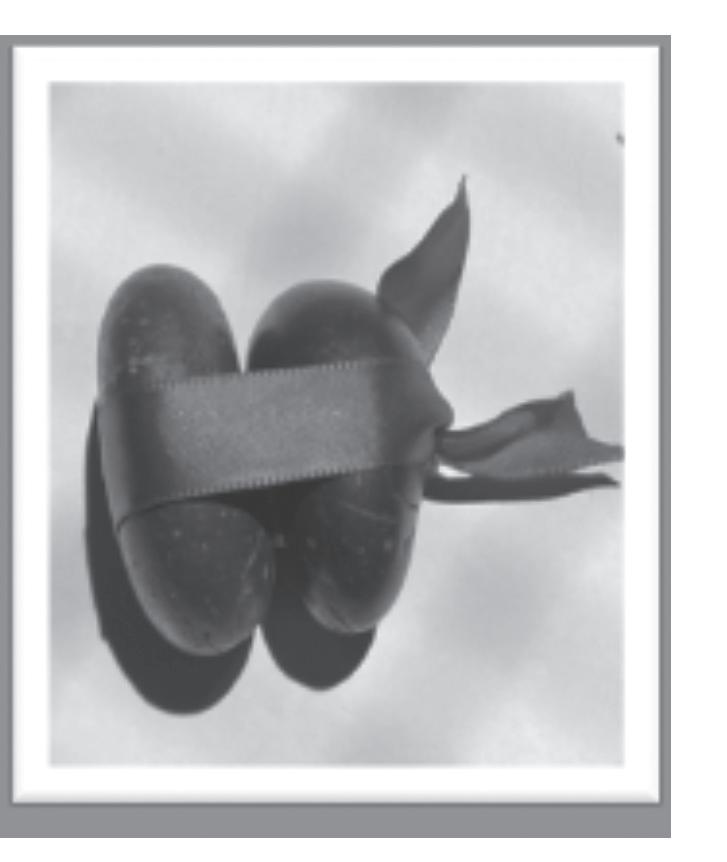
The idea of tying stones together is inspired by the small “love stones” in one of the hidden shrines. There, beside the rock statues of the Shinto god and goddesses of love and matchmaking, you will find an assortment of pebble stones. You are invited to pair up two stones of your choice, which you then tie together using a red or vermillion string. Then you are supposed to place the stringed pair of stones at the foot of the statues and say a silent prayer. With a touch of Japanese sentiment, the stones I’ve strung together are meant to be a metaphor. They symbolize solidity and endurance. The red string represents true love. Vermilion is also associated with the color of blood flowing through the body, so it is said that it is also considered as a symbol of vitality.
After 50 years of marriage, Aurit and I have managed to stay on the path, walking side by side together, albeit frail and weakened by age. Both in our mid-70s, we are now
assailed by a number of health issues. My wife in particular is afflicted with severe case of osteoarthritis on both knees. Her knee cartilages are virtually gone, and so you can imagine the intense pain she endures, alleviated partly by painkillers. On top of that, she has a partial heart blockage, interstitial disease on her lungs, and GERD. To walk, she uses two canes. When we go out, she sits in a compact wheel chair designed for traveling, which our eldest daughter and myself take turns in pushing. Since I am still physically and mentally fit and able, I am her designated caregiver so to speak. Now long retired, I’ve fully invested the remaining moments of my life to be by her side, day and night. In every wedding rite, both man and woman exchange rings as a sign of their pledge to love each other “till death do us part.” Many wedding rings are worth thousands. But the real worth of a marriage ring is another ring—suffering. It is tested in times of trouble, when the going gets rough, and most especially in the couple’s old age when the failing health of one partner becomes a heavy burden to the other partner.
again, but this time it is an unruly child. “You must have the patience of a saint,” he tells me.
I am reminded of a French film entitled “L’amour,” a poignant drama about the tenderness, discipline, and patience involved in being a loving partner-caregiver. It is so touching and moving in its depiction of what it means to look after a loved one who is ailing and completely dependent on you.
My wife’s limited mobility means we are mostly confined to our home. Being together in small enclosed space can cause friction. It does from time to time, I have to admit. But our longtime intimacy has been such that we can anticipate each other’s moods, we know what each one is thinking without speaking and try to clear things up before the day is done. We have long conquered our pride as we have learned to accept the indignities of aging and debilitating illness. If anything, being together in the snug confines of our home has made us closer in a deeper sense.
one can pay a professional caregiver, nothing can equal the quality of care and devotion a lifetime partner can give to his beloved. It is unlimited, unconditional giving. Can a stranger do that?
“How do I love thee,” asks the poet Elizabeth Browning, “let me count the ways.” Sanskrit, the ancient language, has 96 terms for love, at least that’s what I heard. I can probably say those 96 terms of endearment to my wife but I prefer to say it in action.
Love as an active verb is the reason why I want to devote the rest of my life to her. It is my way of not only manifesting my love, but also showing my deep gratitude for staying by my side and supporting me through the years.

For instance, my wife and I like to linger a little bit after our light breakfast, and being more voluble, she likes to reminisce about the past, and I realize that there are lots of stories we’ve never told each other until now. I let her because the telling of stories keeps her alive. In the end, stories are all we’re left with.

I know a 90-year-old husband who is taking care of his 90-yearold wife who shows symptoms of early dementia. He tells me it’s the most challenging task he’s ever done in his entire life. He describes it as becoming a parent to a child once
Sometimes we watch concerts and movies together. She shares with me the comments of other people about her latest postings on social media. It is small intimate moments like these that knit together our enduring marriage and further strengthen the mutual resolve to be there for each other no matter what.
When the director of the French film I mentioned was going over the 20 titles that had previously been suggested, the lead actor told him: “The film is about amour, love. Why don’t you call it that?” Voila! Love. No matter how much
Before we got married, she was an accomplished concert pianist. She gave it up to become a homemaker, a full-time wife and then a mother. She did not covet material possessions. She did not lavish money on clothes and apparel. She supported my decision to quit my job in an ad agency even if it would affect us financially. When I had no salary for many months, she took on a part time job as a piano teacher to tide us over until I found a steady job again.
Even now, weak and hurting knees and all, she still cooks our meals, and washes the clothes of my three children and my two grandkids (they live with us). From time to time, I help her hang the washed clothes to dry in our sunny backyard. She irons dry clothes when she can. Every Sunday morning, while crouched on the table, she diligently puts the medicines in our respective pill organizers.
I sometimes look at her and I feel the impulse to embrace and kiss her for unceasingly caring for me and my family. Being by her side for always is the last full measure of my love and devotion, my 96 ways of showing my love for her. As we mark our golden wedding anniversary, I am heartened by what Joan Borysenko, American medical scientist and psychologist wrote: “God is never closer than when the space between two hearts narrows.”
SENIOR citizens in Borongan City, Eastern Samar, in this undated photo. The Borongan City government is doubling the monthly financial assistance for senior citizens starting this year in line with a local ordinance. PHOTO COURTESY OF BORONGAN CITY GOVERNMENT

Nintendo sues Genki over Nintendo Switch 2
BY PATRICK VILLANUEVA
NINTENDO of America (NOA), a Washington corporation, filed a lawsuit against gaming accessories company Genki over alleged misrepresentation of Nintendo Switch 2 and misleading the fans.
Nintendo, through its online web series
“Nintendo Direct,” announced its latest console Nintendo Switch 2 on April 2, 2025. However, Genki made a “strategic campaign intended to capitalize on the public interest surrounding Nintendo’s next-generation console” months before the game console was revealed.
IN CONTEXT
ACCORDING to the complaint filed, Genki advertised it had “gained unauthorized access” to a “genuine” Switch 2, which allowed them to manufacture accessories compatible with the product. Genki later on contradicted their statement, saying they never had access to the console but maintained their position that their accessories are compatible.
Nintendo refuted their claims of compatibility, as making accessories compatible would be impossible unless they had direct access to Switch 2 or to the technical specifications, neither of which Nintendo gave to Genki.
As such, Nintendo claimed “[1] Defendant [Genki] is not in possession of a genuine console and thus cannot claim compatibility with enough certainty to make its advertising claims in good faith, or [2] Defendant [Genki] unlawfully or illicitly obtained an authentic Nintendo Switch 2, or proprietary technical information about the Nintendo Switch 2, prior to the console’s release to the public.”
WHAT GENKI DID
IN the file case, it stated that in December 2024, Genki first promoted its accessory for the thenunreleased and unverified Switch 2, including connecting with GameStop CEO Ryan Cohen “to discuss ‘the launch Switch 2 accessories [Genki was] working on.’”
On January 7, 2025, Genki then joined the Consumer Electronics Show (CES) and “demoed and promoted unauthorized purported mockups and renderings of the Nintendo Switch 2 and its accessories.” Genki CEO Edward Tsai also personally showed the 3D-printed mockups of the “authentic console.” They also displayed a video showing a 3D render of Switch 2, which was later posted on their website.
This prompted Nintendo to issue a statement on January 10, 2025 disproving the claim, saying that the hardware shown was unofficial. On the same day, Genki backpedaled its claims and stated they never had access to the authentic console.
Still, 10 days later, Genki posted a picture of CEO Edward Tsai with a caption that reads “Genki ninjas infiltrate Nintendo Kyoto HQ,” further confusing the fans. The company also doubled down on their claims, as they advertised on their website their early access or “leak” of Nintendo Switch 2 with a headline “Can you keep a secret?
We can’t...”
With all of these, Nintendo filed the case against Genki.
Genki later addressed the issue on X. “Genki has always been an independent company focused on building innovative gaming accessories for the community we love. We’re proud of the work we’ve done, and we stand by the quality and originality of our products.”












BusinessMirror
Nubia Neo 3 GT 5G: New benchmark for budget gaming?

THE mobile gaming industry continues to dominate the global scene. According to the 2025 Gaming App Report by BYYD, mobile titles now account for 49 percent of total global gaming revenue, far ahead of consoles (28 percent) and PC (23 percent). With a projected market value of $126.1 billion, mobile gaming isn’t just catching up—it’s clearly leading the way.
What’s even more telling is how much time players are spending in-game. A separate report from data. ai shows that while global downloads dipped by 6 to 7 percent in 2024, the number of game sessions jumped by 12 percent, and total time spent in gaming apps rose by 8 percent. These stats point to a clear trend: mobile gamers aren’t just dabbling anymore—they’re deeply engaged.
This is where the Nubia Neo 3 GT 5G enters the frame, the flagship of the Neo 3 series positioning itself as a powerful, feature-packed contender with a more accommodating ₱12,999 price tag.
BOLD DESIGN WITH GAMER DNA
ON the outside, the Neo 3 GT 5G wears its gaming credentials proudly. It carries a futuristic Cyber Mecha-inspired design with RGB lighting accents and mini LED elements that lend the phone a bolder, more premium feel.
The rear panel, while still made from plastic to keep the weight down, doesn’t look or feel like a budget device. The frame is sleek at just 8.2mm, and the backplate features an octagonal camera ring that adds an extra touch of sophistication. Available in mysterious Interstellar Gray or the striking Electro Yellow, the Neo 3 GT 5G looks as aggressive as the titles it is designed to play. Its 6.8-inch OLED display features Full HD+ resolution, a 120Hz refresh rate, and a touch sampling rate of 1200Hz. The panel is both sharp and responsive—ideal for high-paced competitive games where every frame and tap matters. At peak brightness levels of up to 1300 nits, visibility remains clear even outdoors.
Whether you’re gaming, streaming, or just casually scrolling, the viewing experience feels consistently smooth and vibrant.

THOUGH I started my career reviewing games, I honestly don’t play a lot these days, so I lent phone to my nephew Finn for a few days to see how it fared in real-world gaming scenarios.
He’s been using a higher-end device, so I was expecting more critiques than compliments, but surprisingly he had a lot of positive feedback. In Mobile Legends, he was able to max out the graphics settings and enable 120FPS mode without experiencing any stutters or lag. The gameplay remained smooth even during chaotic team fights, and the phone’s AI Game Space 3.0 system proved effective in clearing background tasks before launching a match.
The phone includes stereo dual speakers with DTS:X Ultra sound for an immersive audio experience, and comes equipped with Bluetooth 5.2 and Wi-Fi 5. It also features an in-display fingerprint sensor, an IP54 rating for dust and splash resistance, and support for NFC.
HIGH-PERFORMANCE PLAY
BENEATH the surface, the Neo 3 GT 5G differentiates itself with a powerful Unisoc T9100 processor. Built on a 6nm process, this 5G-enabled chipset offers higher clock speeds and better efficiency than the standard Neo 3 5G. It’s paired with 12GB of physical RAM and supports an additional 12GB of virtual RAM, pushing the total memory to a staggering 24GB.
This kind of headroom is rare at this price point and allows the device to handle everything from multitasking to graphic-intensive gaming with ease. Storage is equally generous, with 256GB onboard—plenty for multiple large titles and highresolution media. While a different processor might have elevated it further, this one gets the job done effectively. One of the more important upgrades in the GT model is its thermal management. The phone utilizes a more efficient vapor chamber cooling system enhanced with graphene layers, covering over 4,000mm² of surface area. This setup helps dissipate heat during extended play sessions and ensures that
In Call of Duty Mobile, while the graphics were capped at medium, the frame rate could be pushed to high. More than the visuals, it was the Neo 3 GT’s dual gaming shoulder triggers that made the experience feel closer to a console. According to him, having tactile buttons meant faster reactions and better aim—especially during firefights where every millisecond matters. He also mentioned that the linear motor provided responsive haptic feedback, further enhancing immersion. The only minor drawback he noted was that using the triggers in landscape mode could block one of the speakers and the charging port.
GAME LONGER, CHARGE FASTER
THE Neo 3 GT 5G houses a 6000mAh cell that easily supports four to five hours of continuous gameplay or a full day of standard use. More importantly, the GT version outpaces its Neo 3 5G sibling with support for 80W Super Charging, compared to the latter’s 33W limit. This allows the phone to go from zero to full in under 45 minutes. The inclusion of Bypass Charging is a welcome bonus, especially for gamers—it routes power directly to the motherboard rather than the battery, reducing heat buildup and prolonging battery health during prolonged sessions. The phone’s smart power management also adjusts performance levels based on how it’s being used. Whether you’re grinding through a dungeon or watching videos on standby, the system works quietly
to its hardware. Its software experience has been designed to complement the specs with smart, usercentric tools that add depth and personalization to everyday use. The device introduces an element of AI-assisted gameplay through its built-in virtual companion, Demi. It might seem like a fun gimmick, but Demi actually serves multiple purposes during gameplay: she provides live commentary, reacts to wins and losses, and offers feedback in real time— though currently limited to select titles. Her presence may feel intrusive to some due to her robotic tone, but she adds a layer of interactivity that younger users and aspiring streamers could find appealing.
The inclusion of dual shoulder triggers is not just a physical addition but a fully customizable one through the interface. Players can map controls to these triggers based on the specific needs of each game, offering a more tactile, console-like experience that’s often missing in touchscreen gaming. For fastpaced shooters or skill-heavy MOBAs, these triggers can provide the split-second advantage needed to win engagements.
CAPABLE CAMERA FOR CONTENT CREATION
PERHAPS the most surprising feature is its camera. I wasn’t expecting much since it only has one main camera—a 50MP shooter paired with a 2MP depth sensor. For selfies, it features a 16MP front camera. Compared to the regular Neo 3 5G, the GT version features additional software enhancements. These include AI Magic Photos, Sport Snapshot for fastmoving subjects, and a built-in Magic Eraser that lets you remove unwanted elements from shots with a single tap. For casual photography, as long as there’s good lighting, the results are more than adequate, and the AI features make everyday shooting more convenient.
FINAL WORD: The Nubia Neo 3 GT 5G delivers more than you’d expect at a price you won’t believe. It plays
May 10, 2025
Experts elevate case vs. various forms of bullying
CHILDREN
who suffer physical bullying at home— especially from parents or adults— are more likely to experience challenges in their studies.
A seven-year nationwide study by government think-tank Philippine Institute for Development Studies (PIDS) that tracked 5,000 Filipino students highlighted the way physical abuse at home significantly disrupts education.
PIDS researchers examined three crucial education-markers: whether students stayed in age-appropriate grades, their attendance records, and their academic performances against five different bullying experiences. It delved into a broader context, exploring the role of bullying by peers, adults and even parents.
Physical abuse by adults
UNIVERSITY OF SAN CARLOS’ Office of Population Studies Foundation policy adviser Dr. Alejandro Herrin presented the research at a recent PIDS webinar, where he pointed out the severe impact of adult-inflicted harm.
“It appears that physical bullying, especially from adults and parents, has expected negative effects on schooling outcomes,” Dr. Herrin shared, then pointed out that students experiencing physical harm were more likely to skip classes.
According to him, their data showed that, by the time the students turned 16, 20 percent were no longer at the grade level expected for their age. He observed that boys appeared more vulnerable than girls in certain aspects. They were more likely to fall behind academically than girls in similar situations.
Emotional bullying by peers
THE study revealed that not all forms of bullying had equally negative effects. Emotional teasing from peers, which students reported as hurtful, was associated with better schooling outcomes in some cases.
“What we found out is that the emotional hurt by friends and classmates seems to have a positive effect on their schooling,” said Dr. Herrin. He emphasized that girls appeared to maintain better academic performance, even when reporting emotional bullying—possibly indicating

the development of resilience. However, researchers cautioned that additional studies are needed to ascertain the outcomes. According to Dr. Herrin, “these are unexpected... and deserve additional investigation, whether these are real thing[s] that we can work on, or is this merely a statistical artifact in the way that we had analyzed the data.” It could even be suggested, he said, that what students call “emotional bullying” might be normal peer friction that unknowingly motivates them.
Psychology professor at De La Salle University Dr. Allan Benedict Bernardo is also concerned about the students’ perception of bullying: “The bigger problem may be that [they consider such] as a normal part of their social experiences in…schools.”
Dr. Bernardo warned that dismissing bullying as trivial—like away bata ”—risks perpetuating environments where harm is ignored, even as it erodes mental health and academic performance.
Bullying in schools, online
USC’S Psychology professor Dr. Delia Belleza, who analyzed the findings of the PIDS study, explained why definitions matter: “If we search the literature, there are three core elements that make bullying a bullying act: First, it must be repeated. Second, intentional—there is really the intention to hurt and to embarrass. And third, it involves a power imbalance.”
Dr. Belleza remarked that this precise definition helps separate true bullying from normal growing pains, then highlighted the importance of standardized definitions in research. She added: “Studies have shown that there are variations in the rates of prevalence of bullying.”
For her, the “digital era” has also introduced new concerns in tackling bullying.
“We have less control [over what they click, and they have been involved in a lot of social interactions which we do not see],” the profes -
sor warned, as she noted the way cyberbullying evades traditional monitoring.
Approaches to combat bullying AS schools in the Philippines implement anti-bullying policies, Dr. Herrin identified the core challenge: “What is needed is implementation, the challenge being [is, how to implement the policies].”
Their study recommended tailored approaches addressing various types of bullying while leveraging new mental health laws. Beyond school policies, family and community interventions are crucial. Parents, in particular, play a pivotal role in shaping children’s emotional and academic well-being.
“We need also to look at the association between bullying and mental health, since they are closely related,” Dr. Herrin suggested.
Meanwhile, Dr. Belleza highlighted the importance of empowering all students, not just those bullied, to foster a more positive school environment: “Bullying involves a power relation, where someone is dominant and picks on others because of their appearance or other characteristics.”
She urged children to focus on self-enhancement and resiliencebuilding in creating a positive sense of self to manage interactions and prevent harassment.
Bullying from home to school MEANWHILE, actress and positive parenting advocate Candy Pangilinan recently appeared in Save the Children-Philippines’ latest video campaign entitled: “Stop Passing It,” which calls on parents to end physical and humiliating disciplinary practices.
There, Pangilinan highlighted that not all traditions, including the use of corporal punishments, should be passed on to the next generation. Save the Children-Philippines’ Child Protection advisor and childprotection expert Wilma Bañaga warned that kids who experience or witness violence at home often channel their aggression through bully -
UP-Mindanao opens new engineering grad programs
By Manuel T. Cayon
DAVAO CITY—The University of the Philippines’ (UP) Mindanao campus now offers three graduate engineering programs— deemed a landmark move that will open the floodgate for similar courses from the island-region’s other higher education institutions.
The Master of Science in Civil Engineering and Industrial Engineering, as well as Master in Engineering in Industrial Engineering, will be offered during the opening of classes in August as a collaboration with UP-Diliman, said Dr. Maria Antonia N. Tanchuling who is the dean of the latter’s College of Engineering.
The programs will last for one year through “hyflex learning:” a combination of real-time video conferencing and periodic in-person sessions to
suit the availability of prospective students who are expected to be working professionals.
UP-Mindanao chancellor Dr. Lyre Anni E. Murao said only three courses are offered based on resource requirements, which the university immediately activated to also meet the current demands of the region.
“We see a lot of infrastructure construction activities in Mindanao, and we need a lot of civil engineers,” Dr. Murao added. “We will add the other programs later. We just have to take it one step at a time.”
UP president Angelo A. Jimenez attended the launch of the programs with Tanchuling, UP Diliman chancellor Edgardo Carlo L. Vistan and other top-ranking UP-system officers, local chief executives in the Davao Region, along with presidents and representatives of state colleges
and universities in southern Philippines.
Jimenez announced in 2024 the opening of the graduate engineering programs, and a College of Medicine later this year. He articulated UP’s hopes to contribute to addressing the severe lack of quality engineering talents in the country, much more in Mindanao. He said that “we’re talking here [about] quality engineering graduates and, sad to say, we are far behind our Asian counterparts.”
The chancellor shared that only 12 percent of the country’s engineering students are in Mindanao, and only 12 universities in the island-region offer related courses.
In terms of producing engineers, Jimenez imparted that “Vietnam has already overtaken us with its 105 engineers per 100,000 engineering students; Malaysia with 175; Singapore
Breaking barriers: A journey in STEM

MEET Keeley. At 13, she is already proving that science isn’t just for men.
ing: “Many children cannot retaliate when hurt or shamed by a parent or caregiver, so they express their anger, resentment and pain elsewhere, sometimes through aggression toward their toys, pets, younger siblings, or classmates who are smaller or appear weaker than them.”
Recent headlines have reported tragic incidents of violence and serious physical harm among students.
According to the Department of Education, bullying cases in the National Capital Region rose to 2,500 in School Year 2024-2025—up from 2,268 the previous year.
Research from the Global Initiative to End All Corporal Punishment of Children in 2021, supported by Save the Children, shows practices like slapping, spanking and verbal shaming are associated with increased aggression, anxiety, depression and long-term mental-health challenges in children.
For Bañaga, physical and humiliating punishments at home can confuse children about what’s right or wrong, and may copy this behavior when dealing with peers.
In the video “Stop Passing It,” Save the Children Philippines calls on parents and caregivers to break the cycle of violence often disguised as love and tradition. The “Positive Parenting” campaign promotes nurturing ways to raise children, such as listening patiently, setting clear rules and boundaries, guiding them with empathy, and making them feel loved and accepted no matter what.
“This is why it is so important for parents to model positive, nonviolent ways of handling conflict—especially for young children who are still learning how to manage emotions and relationships,” according to Bañaga.
Save the Children, together with the Child Rights Network, is working closely with the national government in strengthening awareness-raising efforts on the aftereffects of corporal punishment in all settings, while promoting positive parenting practices in new and existing policies and programs. With a report from Rizal Raoul S. Reyes
with 200; and South Korea with 285.”
The Philippines, he said, produces only less than 50 engineers per 100,000 engineering students, and that quality is also wanting in the country, with half of the graduates barely passing the licensure examination. Thus, it “lacks 570,000 engineers.”
Jimenez hoped the graduate engineering programs would spark the talent-quality improvement in Mindanao, but cautioned: “We cannot do it alone, though.”
Tanchuling revealed that UP has been talking with other state universities across the country about the graduate engineering programs, then added that they will wait for the “final blueprint” so that they can also establish their own graduate programs.
She said Caraga State University in Butuan City will be one the early pilots of a collaboration: “We may have a co-teaching arrangement with them, and CSU [might] offer a program on mineral extraction.”
A Grade 8 student at Manuel A. Roxas High School, she is a proud member of the school’s robotics team, where she gets to tinker, create, and bring ideas to life. When not deep into studying or building robots, Keeley enjoys reading books and spending time with her friends—a reminder that science isn’t her only world. She’s still a regular teenager who loves a good story and good company.
Her journey into the world of electronics and robotics started early— thanks to her mother who introduced her to science when she was just little.
That spark of curiosity quickly turned into a passion which led her to a world where circuits and codes make sense like second nature.
Keeley knows what it’s like to be questioned, just because she’s a girl in STEM or science, technology, engineering and mathematics: “A lot of people think girls don’t belong in science, or that they won’t be as good as boys. But that’s not true: We can achieve just as much if we’re given the chance.”
For her, representation matters. Seeing more girls and women in science means breaking the outdated idea that STEM is only for men, and she’s doing her part to change that narrative one competition at a time.
One of her proudest moments was her team’s win in the “Brainiac Robotics Contest” that tested their creativity, problem-solving skills, and teamwork. It wasn’t just about the trophy, she said; it was proof that hard work, dedication and a love for learning can take one far. For young girls who dream of pursuing science but feel discouraged, Keeley has a message: “Don’t let anyone tell you what you can or can’t do. Believe in yourself, do your best, and focus on what you love.”
During the “International Day of Girls and Women in Science,” Keeley’s story reminds us that the future of STEM is brighter when more voices, especially young girls like her, are heard. Because in science, in robotics, and in life, everyone deserves a seat at the table—and Keeley is making sure that girls like her know they belong.
Security Bank Foundation honors 29 scholars, 1st summa cum laude

SINC. (SBFI) recently celebrated 29 scholars in a ceremony held at Security Bank Centre in Makati City. Honorees included 27 Bachelor’s and two Master’s graduates.
Notably, 60 percent had Latin honors. It included SBFI’s first summa cum laude John Rojell Elizaga who earned his Journalism degree from the Polytechnic University of the Philippines. The son of a construction worker and a utility worker, Elizaga spoke of the challenges he faced on his journey: walking long distances to attend classes, juggling part-time jobs while studying, and persevering despite limited resources.
“Every day, I saw that many in my family didn’t place much value on education,” Elizaga shared. “But walking those long distances taught me otherwise. I came to understand that education was not just my way out—it was my way forward.”
Like him, many of this year’s SBFI scholars began their college education during the pandemic. Without laptops and relying solely on mobile data, online learning posed significant difficulties. With the foundation’s support and their own resilience, they persevered and succeeded.
At the ceremony, SBFI scholarship alumna Honey Lynn Gutierrez-Quiat who is now a senior vice president at Citibank Philippines encouraged the graduates to embrace their humble beginnings, and turn adversity into
strength. She reflected on her own journey, recalling the scholarship that gave her the opportunity to complete her education while working parttime to cover expenses.
“Always learn to accept your current situation, rise above it, and never be ashamed to share your story,” she said. “Harness that scarcity mindset we’ve all gained as scholars and incorporate it in how you plan your future.” SBFI chair Rafael F. Simpao Jr. shared the long-term impact of their investment in education: “The values and work ethic of our scholars are what we hope to see more of in the Filipino youth. Their stories prove the importance of continuing to invest in education and engaging future leaders in nation-building through social responsibility.”
This year’s graduates include children of Security Bank employees, agency staff, and scholars from SBFI’s eight partner-schools in Metro Manila.
To date, the foundation has supported 2,000-plus scholars, with 225 completing their college education, and 63 achieving Latin honors. It remains steadfast in its commitment to providing inclusive and transformative education.
Applications for the external scholarship program will open this month on Security Bank’s official Facebook page and web site. For more details, visit www.securitybank.com/
A8 Editor: Mike Policarpio
ECURITY BANK FOUNDATION
KEELEY introduces the robot her team built for their upcoming robotics competition.
SBFI held a recognition event for scholars who recently graduated.
ACTRESS and Positive Parenting advocate Candy Pangilinan appears in Save the Children-Philippines’ latest video campaign: “Stop Passing It,” which calls on parents to end physical and humiliating disciplinary practices, urging that not all traditions—including corporal punishments—should be passed on to the next generation.
Saturday, May 10, 2025
Pope Leo XIV celebrates first Mass after being chosen as Pope Francis’ successor
By Nicole Winfield The Associated Press
VATICAN CITY—Pope Leo
XIV celebrates his first Mass on Friday after his historic election as the first North American pope, meeting with the cardinals who chose him to lead the Catholic Church and follow in Pope Francis’ reform-minded footsteps.
Leo, the Chicago-born Augustinian missionary Robert Prevost, surprised the world Thursday when he emerged on the loggia of St. Peter’s Basilica, overcoming the traditional prohibition against a pope from the United States.
The 69-year-old wore the traditional red cape—which Francis had eschewed on his election in 2013—and trappings of the papacy, suggesting a return to some degree of rule-following after Francis’ unorthodox pontificate.
But in naming himself Leo, the new pope could also have wanted to signal a strong line of continuity: Brother Leo was the 13th century friar who was a great companion
to St. Francis of Assisi, the late pope’s namesake.
“Together, we must try to find out how to be a missionary church, a church that builds bridges, establishes dialogue, that’s always open to receive—like on this piazza with open arms—to be able to receive everybody that needs our charity, our presence, dialogue and love,”
Leo said in near-perfect Italian in his first comments to the world. Prevost had been a leading candidate for the papacy since Francis tapped him to be head of the Vatican’s powerful Dicastery for Bishops, which vets bishop nominations around the world. There had long been a taboo on a US pope,
given America’s superpower status in the secular world, but Prevost prevailed, perhaps because he’s also a Peruvian citizen and had lived for years in Peru, first as a missionary and then as bishop.
Francis, the first Latin American pope, clearly had his eye on Prevost and in many ways saw him as his heir apparent. He sent Prevost to take over a complicated diocese in Peru in 2014, then brought him to the Vatican in 2023. Earlier this year, Francis elevated Prevost into the senior ranks of cardinals, giving him prominence going into the conclave that few other cardinals had.
Since arriving in Rome, Prevost had kept a low public profile but was well-known to the men who count. Significantly, he presided over one of the most revolutionary reforms Francis made, when he added three women to the voting bloc that decides which bishop nominations to forward to the pope.
“Even the bishops of Peru called him the saint, the Saint of the North, and he had time for everyone,” said the Rev. Alexander Lam, an Augustinian friar from Peru who knows the new pope.
The crowd in St. Peter’s Square erupted in cheers Thursday when white smoke poured out of the Sistine Chapel shortly after 6 p.m. on the second day of the conclave. Waving flags from around the
world, tens of thousands of people were surprised an hour later when the senior cardinal deacon announced the winner was Prevost.
US President Donald Trump said it was “such an honor for our country” for the new pope to be American.
“What greater honor can there be?” he said. The president added that “we’re a little bit surprised and we’re happy.”
An Augustinian pope
THE last pope to take the name Leo was Leo XIII, an Italian who led the church from 1878 to 1903. That Leo softened the church’s confrontational stance toward modernity, especially science and politics and laid the foundation for modern Catholic social thought. His most famous encyclical, Rerum Novarum of 1891, addressed workers’ rights and capitalism at the beginning of the industrial revolution and was highlighted by the Vatican in explaining the new pope’s choice of name.
Vatican watchers said Prevost’s decision to name himself Leo was particularly significant given the previous Leo’s legacy of social justice and reform, suggesting continuity with some of Francis’ chief concerns. Specifically, Leo cited one of Francis’ key priorities of making the Catholic Church
more attentive to lay people and inclusive.
“He is continuing a lot of Francis’ ministry,’’ said Natalia Imperatori-Lee, the chair of religious studies at Manhattan University in the Bronx. But she also said his election could send a message to the US church, which has been badly divided between conservatives and progressives, with much of the right-wing opposition to Francis coming from there.
“I think it is going to be exciting to see a different kind of American Catholicism in Rome,’’ ImperatoriLee said.
Archbishop Bernard Hebda, of the Archdiocese of St. Paul and Minneapolis, told reporters he never thought he would see an American pope, given the questions of how he would navigate dealing with a U.S. president, especially someone like Trump.
“And so I just never imagined that we would have an American pope, and I have great confidence that Pope Leo will do a wonderful job of navigating that,” he said.
Looking ahead
LEO was expected to celebrate Mass with cardinals in the Sistine Chapel on Friday, deliver his first Sunday noon blessing from the loggia of St. Peter’s and attend an audience with the media Monday
in the Vatican auditorium, Vatican spokesman Matteo Bruni said.
Beyond that, he has a possible first foreign trip at the end of May: Francis had been invited to travel to Turkey to commemorate the 1,700th anniversary of the First Council of Nicaea, a landmark event in Christian history and an important moment in CatholicOrthodox relations. Ecumenical Patriarch Bartholomew I, the spiritual leader of the world’s Orthodox Christians, welcomed Leo’s election and said he hoped he would join the anniversary celebration. The new pope was formerly the prior general, or leader, of the Order of St. Augustine, which was formed in the 13th century as a community of “mendicant” friars—dedicated to poverty, service and evangelization. Vatican News said Leo is the first Augustinian pope.
w“He worked so hard to find help, that there was not only enough (money) for one plant, but for two oxygen plants,” said Janinna Sesa, who met Prevost while she worked for the church’s Caritas nonprofit.
“He has no problem fixing a broken-down truck until it runs,” she added.
Franklin Briceno in Lima Peru, Colleen Barry in Schiavon, Italy and Giada Zampano in Rome contributed.
Ukraine accuses Russia of violating its own truce over 700 times as Kyiv ratifies US minerals deal
By Illia Novikov The Associated Press
KYIV, Ukraine—Russia and Ukraine both reported attacks on their forces Thursday on the first day of a 72-hour ceasefire called by Russian President Vladimir Putin, and Ukrainian lawmakers unanimously
approved a landmark minerals deal with the US. Ukrainian Foreign Minister Andrii Sybiha accused Russia of violating its own ceasefire 734 times between midnight and midday Thursday. He called the ceasefire a “farce” on the social media platform X. The unilateral ceasefire coincides with Russia’s biggest secular holiday, the 80th anniversary of victory
over Nazi Germany. Kyiv has pressed for a longer-term ceasefire.
Meanwhile at the Kremlin, Putin held talks with Chinese President Xi Jinping, whom the Russian leader earlier described as Moscow’s “main guest” at Friday’s Victory Day festivities. In the evening, Putin hosted Xi and other foreign leaders for a gala dinner in an apparent effort to showcase Russia’s global clout.
The Ukrainian parliament’s ratification of the minerals deal marked a key step in a deal that will allow Washington access to Ukraine’s largely untapped minerals, deepen strategic ties and create a joint investment fund with the US for the reconstruction of Ukraine.
“This document is not merely a legal construct, it is the foundation of a new model of interaction with a key strategic partner,” Ukraine’s economics minister, Yuliia Svyrydenko, wrote on X.
The minerals agreement was approved by all 338 members of parliament, far surpassing the required 226 votes, Ukrainian lawmaker Yaroslav Zheleznyak wrote on his Telegram account. No lawmaker abstained.
In a statement, Ukrainian President Volodymyr Zelenskyy thanked everyone involved in the deal and said he expected the ratified agreement to be submitted to his office soon.
“Once the legal procedures are complete, we will be able to begin establishing the fund,” he said.
Two more technical agreements will have to be developed and signed by both sides, Svyrydenko said. Those deals include “a limited partnership agreement and an agreement that essentially determines how the fund will function,” she told reporters ahead of the vote.
She said the US expects the work on the documents to take “weeks, not months.”
US President Donald Trump talked by phone with Zelenskyy following the ratification, said Dmytro Lytvyn, an adviser to the Ukrainian president. Details of the call were not immediately released.
Russian bombs hit Ukraine in first hours of ceasefire IN the opening hours of Moscow’s ceasefire, Russian bombs struck northeast Ukraine, killing at least one civilian, Ukrainian officials said. Artillery assaults took place across the 1,000-kilometer (620-mile) front line, although with less intensity than in the previous 24 hours, officials said.
Sybiha said Russia carried out 63 assaults along the front line, 23 of which were still ongoing as of midday. Ukraine responded “appropriately,” he said, and shared information about the attacks with the US, the European Union and others.
“We will not let Putin fool anyone when he does not even keep his own word,”

Sybiha said.
Russian attacks also took place near Chasiv Yar in the Donetsk region, Oleh Petrasiuk, a spokesman with Ukraine’s 24th Mechanized Brigade, told The Associated Press by phone.
One person died and two were wounded when Russian forces dropped guided bombs on residential areas near the border in the northeast Sumy region, the regional prosecutor’s office said.
Large-scale missile and drone attacks, which have been a near-daily occurrence in Ukraine in recent weeks, abated for a short time, with no assaults recorded since 8:30 p.m. Wednesday, the Ukrainian air force said. Zelenskyy had previously cast doubt on the ceasefire, calling it “manipulation” as US-led peace efforts stalled. “For some reason, everyone is supposed to wait until May 8 before ceasing fire — just to provide Putin with silence for his parade,” Zelenskyy said.
In March, the United States proposed a 30-day truce in the war, which Ukraine accepted, but the Kremlin has held out for ceasefire terms more to its liking.
The Russian Defense Ministry accused Ukrainian forces of attacking its positions and said Russian forces would continue to “mirror” Ukraine’s actions during the Kremlin’s ceasefire.
The Russian regions of Belgorod, Lipetsk, Orenburg, Ryazan and Tambov came under a drone-threat alert overnight, but there were no reports of any drones being shot down or intercepted. Russia’s civil aviation authority Rosaviatsia briefly imposed restrictions on flights to and from the airport in Nizhny Novgorod.
Putin praises relations with Xi, welcomes other foreign leaders
IN welcoming Xi, Putin said that “the brotherhood of arms between our peoples, which developed during the harsh war years, is one of the fundamental foundations of modern Russian-Chinese relations.” He added that Moscow and Beijing were developing ties “for the benefit of the peoples of both countries and not against anyone.” Xi, in turn, said that “history and reality have fully proved that the continuous development and deepening of China-Russia relations is a necessity for the friendship between the two peoples from generation to generation.” He also called for safeguarding “international fairness and justice.”
Putin and Xi have met over 40 times and developed strong personal ties as both countries face tensions with the West.
China offered robust diplomatic support to Moscow after its 2022 full-scale invasion of Ukraine and has emerged as a top market for Russian oil and gas, helping to fill the Kremlin’s war coffers. Russia has relied on China as the main source of machinery and electronics to keep its military running after Western sanctions curtailed high-tech supplies.
Other foreign leaders who arrived in Moscow this week for the World War II anniversary celebrations included Brazilian President Luiz Inácio Lula da Silva, Serbian President Aleksandar Vucic, Slovakian Prime Minister Robert Fico, as well as the leaders of Cuba, Vietnam and Venezuela, and presidents of several former Soviet nations.
In a brief opening speech at the Kremlin gala, Putin urged “solidarity in addressing the pressing challenges of our time and to take shared responsibility for future generations.”
The Associated Press journalist Evgeniy Maloletka contributed to this report.

China’s exports to US sink, offset by trade with other economies, as US tariffs hit global trade
By Elaine Kurtenbach AP Business Writer
CHINA’S exports to the United States tumbled in April while its trade with other economies surged, suggesting that President Donald Trump’s tariffs offensive is hastening a shakeup in global supply chains.
Total exports from China rose 8.1% last month from a year earlier, much faster than the 2% pace most economists had been expecting. That was much slower than the 12.4% year-on-year increase in March. Imports fell 0.2% in April from the year before.
Shipments to the US sank 21% in dollar terms as Trump’s tariffs on most Chinese exports rose to as high as 145%. With Chinese tariffs on US goods at 125%, business between the two biggest economies has grown increasingly uncertain.
China’s imports from the US dropped more than 13% from a year earlier, while its politically sensitive trade surplus with the United States was nearly $20.5 billion in April, down from about $27.2 billion a year earlier.
In the first four months of the year, China’s exports to the United States fell 2.5% from a year earlier, while imports from the US fell 4.7%.
A potential break in the tariffs
stalemate could come as soon as this weekend. Treasury Secretary Scott Bessent and other senior trade officials are due to meet with Chinese officials in Geneva on Saturday. But Beijing and Washington are at odds over a raft of issues, including colliding strategic interests that will may impede progress in the talks.
Some of the punitive tariffs, including Beijing’s retaliatory 125% tariffs on US exports, could be rolled back, but a full reversal is unlikely, Zichun Huang of Capital Economics said in a report.
“This means China’s exports to the US are set for further declines over the coming months, not all of which will be offset by increased trade with other countries. We still expect export growth to turn negative later this year,” Huang said. Whatever the outcome of those discussions, the rapid increase in Chinese exports to other countries reflects a restructuring that began years ago but has gained momen -



2025. CHINATOPIX VIA AP
tum as Trump has raised barriers to exporting to the US.
Global manufacturers have been looking for alternatives to a near total reliance on manufacturing in China after disruptions from the Covid-19 pandemic highlighted the need for more diverse options.
The need for more versatile supply chains grew more apparent as Trump hiked tariffs on Chinese exports during his first term in office. Most of those remained during former President Joe Biden’s term.
Exports to the United States accounted for about a tenth of China’s total exports in April and the US is still China’s largest single-country market. But the European Union and Southeast Asia are larger regional export markets.
Trade with a broader grouping, the 15-nation Regional Comprehensive Economic Partnership (RCEP), which does not include the United States, is still bigger. And exports to countries participating in China’s “Belt and Road Initiative,” a vast network of Beijing-
supported infrastructure projects, are bigger still.
In the first four months of the year, exports to the 10-nation Association of Southeast Asian Nations rose 11.5% from a year earlier, and those to Latin America also climbed 11.5%. Shipments to India jumped nearly 16% by value, and exports to Africa surged 15%.
Some of the fastest growth was in Asia, reflecting moves by Chinese and other manufacturers to diversify their supply chains outside of the Chinese mainland. Most notable were exports to Vietnam, which jumped 18% year-on-year. Exports to Thailand were up 20%.
Back in China, preliminary data have shown a sharp decline in shipping and other trade activity. Earlier this week, Beijing announced a barrage of measures meant to counter the impact of the trade war on its economy, which was already struggling to regain momentum after the pandemic and a lengthy downturn in its housing sector.
The Associated Press researcher Yu Bing in Beijing contributed.


Trump keeps 10% tariffs on UK but cuts taxes on autos, steel and aluminum with trade deal
By Josh Boak, Chris Megerian & Jill Lawless The Associated Press
WASHINGTON—President Donald Trump agreed Thursday to cut tariffs on UK autos, steel and aluminum in a planned trade deal but played down the possibility of other nations getting similarly favorable terms on his import taxes, which are roiling the global economy.
Under the framework agreement, the United Kingdom is to buy more American beef and ethanol and streamline its customs process for goods from the United States.
But Trump’s baseline 10% tariffs against British goods are to stay in place, and the Republican president suggested that even higher import taxes would be charged on other countries trying to reach deals with the US.
“That’s a low number,” Trump said of the UK’s 10% tariff rate, adding that other countries would face higher tariff rates in their deals because the US runs trade deficits with them and “in many cases they didn’t treat us right.”
The announcement provided a political victory for UK Prime Minister Keir Starmer and offered a degree of validation for Trump’s claims that his turbulent approach on trade may be able to rebalance the global economy on his preferred terms. While the deal should improve Britain’s situation relative to when Trump began imposing new tariffs, the world economy is still mired in the confusion and uncertainty unleashed by the president’s import taxes. The deal with the UK would be a resonant but small step toward greater clarity given that Britain
represents a fraction of US imports.
The US president talked up the framework to reporters in the Oval Office, although the fine print remains in flux.
“In the coming weeks, we’ll have it all very conclusive,” Trump said.
The president said the agreement would lead to more beef and ethanol exports to the UK, and streamline the processing of US goods through customs. Commerce Secretary Howard Lutnick said the baseline 10% tariffs would stay in place and said an unspecified British company would be announcing the purchase of $10 billion in aircraft from Boeing.
Cars, steel and olive oil UK officials said Trump’s auto tariffs would go from 27.5% to 10% on a quota of 100,000 vehicles and the import taxes on steel and aluminum would go from 25% to zero. Starmer said Britain would preserve its health and safety standards on food products.
The UK government also said it would also reduce tariffs on 2,500 US products such as olive oil, wine and sports equipment, bringing down the average tariff rate 1.8%.
Starmer, speaking over the phone to Trump while reporters listened in, stressed the importance of the relationship between the two countries as the anniversary of the Allies’ World War II victory in Europe was being commemorated.
“To be able to announce this great deal, on the same day 80 years forward, almost at the same hour,” Starmer said, “I think is incredibly important and makes this truly historic.”
Starmer later spoke to workers at a
See “Trump,” A13


A CONTAINER ship sails off a port in Qingdao in east China’s Shandong province on Wednesday, May 7,
A14 SAturdAy, MAy 10, 2025
mirror_sports@yahoo.com.ph
Editor: Jun Lomibao

THE sports loyalties of Pope Leo XIV became a topic of conversation almost as soon as the white smoke emerged from the Vatican’s Sistine Chapel.
Elected on Thursday, Robert Prevost is the first pope from the United States in the history of the Catholic Church.
The Chicago-born missionary, who took the name Leo XIV, also attended Villanova University near Philadelphia, where he received a Bachelor of Science in 1977.
Chicago’s two baseball teams were front and center as sports fans reacted to the news.
It was initially reported that the new pope was a Cubs fan. The team congratulated Pope Leo XIV in a post on X that had a picture of Wrigley Field›s iconic marquee with the message: HEY, CHICAGO. HE›S A CUBS FAN!
But his brother, John Prevost, set the record straight in an interview with WGN-TV. The pope is a White Sox fan.
“He was never ever a Cubs fan, so I don’t know where that came from. He
Pope Leo XIV brings hope to Chicago fans
was always a Sox fan,” John said, adding that the confusion might stem from the fact their mother’s side of the family were North Siders and Cubs fans.
The White Sox posted a clip from the brother›s WGN interview on X, along with a picture of the Rate Field videoboard with the message: HEY CHICAGO, HE›S A SOX FAN! The post read “Well, would you look at that... Congratulations to Chicago’s own Pope Leo XIV.” “Family always knows best, and it sounds like Pope Leo XIV’s lifelong fandom falls a little closer to 35th
and Shields,” the White Sox said in a media statement. “Some things are bigger than baseball, and in this case, we’re glad to have a White Sox fan represented at the Vatican. A pinstripes White Sox jersey with his name on it and a hat already are on the way to Rome, and of course, the Pontiff always is welcome at his ballpark.”
The TV interview had White Sox fans wondering about the pope’s ability to convince owner Jerry Reinsdorf to sell the last-place team. Long-suffering Bears fans weighed in, too.
Sinner in Rome for renewed campaign

ROME—Carlos Alcaraz says
Alcaraz said in Rome on Thursday. Alcaraz opens against Serbian qualifier Dusan Lajovic on Friday.
During the Spaniard’s Rome debut last year, he lost to then-135th-ranked Hungarian qualifier Fabian Marozsan in the third round as he dealt with a bothersome right forearm issue.
But Alcaraz then went on to win back-to-back Grand Slam titles at the French Open and Wimbledon.
“Last year was even more difficult,” Alcaraz said, noting how this clay season he has already won the Monte Carlo Masters and reached the final in Barcelona, where he lost to Holger Rune.
“I wasn’t worried at all,” Alcaraz said. “Right now I have confidence. The practices [have gone] well.... I can’t wait for tomorrow. I think my level is in a good spot.”
The Rome tournament also marks the return of top-ranked Sinner from a three-month doping ban.
Sinner and Alcaraz are in opposite sides of the draw.
“I’m really happy to have him around again,” Alcaraz said. “Obviously for him was tough and I’m pretty sure was super long.… It is great for me, for tennis,
for the fans, that he’s able to play a tournament again.
“Hopefully,” the third-ranked Alcaraz added, “I’m going to meet him at the final.”
Sinner, meanwhile, was just as surprised by which fellow players sent him messages of support at the start of his three-month doping ban as those who sent nothing.
The top-ranked player is returning to tennis at the Italian Open this week after his settlement with the World Anti-Doping Agency (WADA) raised questions, since it conveniently allowed Sinner not to miss any Grand Slams and come back at his home tournament.
“At the start of the suspension I received some surprising messages from some players, whereas there were others who I would have expected to hear from that didn’t send anything,” Sinner said. “But I’m not going to name names.” The settlement was made after WADA appealed a decision last year by the International Tennis Integrity Agency to fully exonerate Sinner for what it deemed to be an accidental contamination by a banned anabolic steroid in March 2024. AP
Wamar, Maiquez key Knights’ victory over Pasay
SAN JUAN escaped Pasay, 75-74, on Thursday nightcap to stay in step with Nueva Ecija in the Manny Pacquiao presents 1xBetMaharlika Pilipinas Basketball Leaague 2025 Season at the Cuneta Astrodome in Pasay City. Orlan Wamar drove, drew defenders and fed Dexter Maiquez for the game-clincher in the last 4.4 seconds as the Knights extended their hot streak to nine in the round-robin elimination phase of the 30-team tournament. The Nueva Ecija Rice Vanguards trampled the Bulacan Kuyas, 98-90, to post victory No. 10 and stay ahead of the Knights, who got tested to the hilt by the Pasay Voyagers. Kraniel Viloria, Wamar and Arvin Gamboa bunched six points to shatter the thriller’s last tie, 73-67, with one minute and 23 seconds left. The Voyagers, however, countered with a layup by Marc Daniel Sangco, a corner triple by Cyrus Tabi and a breakaway drive by Salenga off a turnover by Gamboa to seize control, 74-73. San Juan coach Alex Angeles called for time with eight seconds left and plotted the play perfectly
Press corps hails Eroa, Soyud, Saet in awards
ELI SOYUD, Alyssa Eroa, and Chie Saet will join other outstanding performers who
executed by Wamar and Maiquez to pull the Voyagers down to 7-4 wonlost following their first loss after four wins at home.
Michael Calisaan wound up with 16 points and 11 rebounds, Wamar had 15 points and five assists, Gamboa had 11 points and Ron Dennison 10 points. Pasay got 20 points from Laurenz Victoria, 13 points, seven rebounds and six assists from Tabi, 13 from Bonifacio and 10 points from Sangco. The GenSan Warriors rallied to beat the Pangasinan Heatwaves, 8879, and level their record to 5-5.
One remarked on X that Chicago developed a pope before the Bears developed a quarterback. Another said the Bears now have a direct line to God. And another said the Bears no longer will be on the wrong side of Hail Marys, a reference to Washington Commanders quarterback Jayden Daniels’ 52-yard Hail Mary completion to Noah Brown to beat the Bears in October.
“Daaaaaa Pope,” Bears quarterback Caleb Williams posted on X on Thursday night. The election of the new pope
coincides with a trio of former Villanova players leading the New York Knicks on an National Basketball Association playoff run. It didn’t take long for a photoshopped picture of the four of them together to show up on social media. The Knicks erased 20-point deficits in winning Games 1 and 2 against the defending champion Boston Celtics in the Eastern Conference semifinals. Now fans are praying the combination of the Villanova guys and the new pope can help the team to its first NBA title since 1973. AP
8.2 of the latter.




The San Sebastian CollegeRecoletos product received an overwhelming 7.2 media votes but despite lagging in the team votes with just 1.6, she still garnered enough numbers to win the award. PLDT’s Savi Davison was the other nominee. Saet was hailed as Miss Quality Minutes for her substantial contribution during the times that Petro Gazz needed her.
The 40-year-old setter played a huge role in the Angels’ championship run in the All-Filipino where she became the main playmaker during the postseason. Saet received an overwhelming 14.4 total votes—8.4 from the media and 6.0 from the teams—to run away with the accolade. Other finalists were Cignal’s Judith Abil and Choco Mucho’s Royse Tubino.

Navarrete’s unorthodox method. “I am bringing all my amateur experience into this fight. This is it,” Suarez said. “The world title shot is here so I am ready and excited for the fight.” Unbeaten in 18 fights with 10 knockouts, Suarez, the pride of San Isidro in Davao del Norte, is ready to prove that his present pro record is no fluke. But the 31-year-old brawler from Mexico said he will do whatever it takes to deal Suarez his first defeat.
“I am now at 100 percent ready,” said Navarrete (39-2-1 win-loss-draw record with 32 knockouts). “There is no doubt about that now.” Navarrete added: “I prepared for a great fight. We know that Suarez is coming for my title, so I want a great fight so everyone can see I am ready to continue the path of victory.”
Sochan’s in town
Josef Ramos
ELI SOYUD is the Most Improved Player, Alyssa Eroa is getting the Comeback Player of the Year honors and Chie Saet is Miss Quality Minutes.
AT the start of Jannik Sinner’s suspension, he receives some surprising messages from some players. AP