By Henrik Ibsen
Presented in association with MiNDFOOD
EDUCATION PACK

By Henrik Ibsen
Solness Andrew Grainger
Mrs Solness Hera Dunleavy | Dr Herdal Nicola Kawana Brovik Ian Mune | Ragnar Justin Rogers
Kaja Fosli Holly Hudson | Hilde Wangel Kalyani Nagarajan
Director Colin McColl | Set and Lighting Designer Tony Rabbit
Composer and Sound Designer — John Gibson | Costume Designer Nic Smillie
John Gibson and Marcel Bear
Adeline Esther, George Maunsell, Joseph Nathan, Travis Graham, Fabian MacGregor, Salome Grace Neely, Nadine Kemp, Ben Lamb, Lucas Haugh, Matthew Kereama
Production Manager Andrew Malmo | Company Manager Nicole Sarah
Stage Manager Maddy Powell | Assistant Stage Manager Chiara Niccolini
Technical Manager Kevin Greene | Lighting Operator Ruby van Dorp
Sound Operator Andrew Furness | Props Master Selina Ershadi
Wardrobe Supervisor Sheridan Miller | Director of Photography Adam Luxton
Sound Recordist Ant Nevison | B-Cam Operator Riki Reinfeld
C-Cam Operator Andrew Blackman | Set Construction Camelspace
Associate Director Lynne Cardy | Youth Arts Coordinator Mile Fane
Education Pack Writer Emma Bishop | Education Pack Editor Lynne Cardy
Design images courtesy of Tony Rabbit and Nic Smillie
Graphic Design Wanda Tambrin | Images Andrew Malmo and Chiara Niccolini
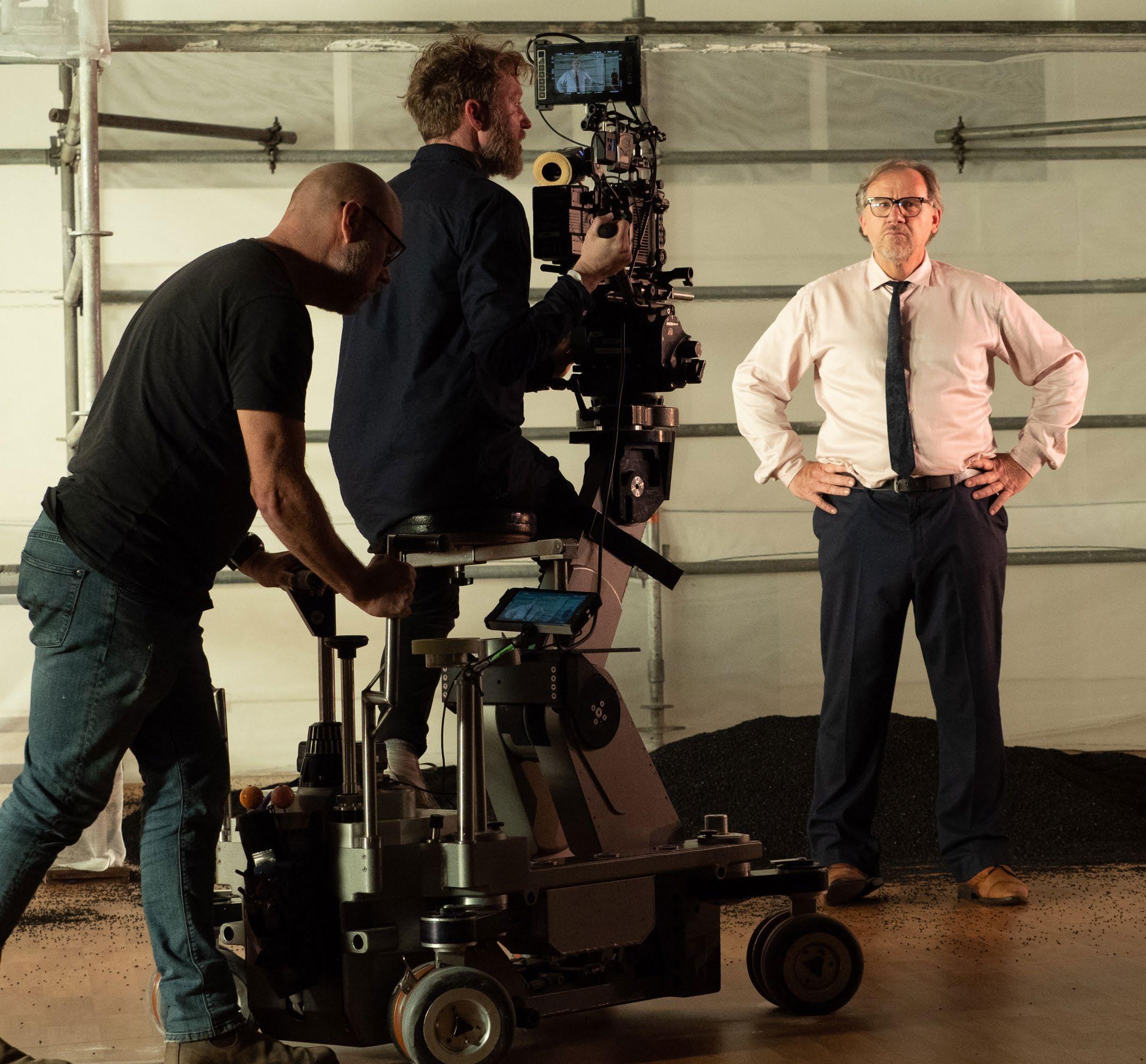
Through talent and hard work, Halvard Solness has achieved no small measure of fame and fortune. But the unexpected return of Hilde Wangel to his life threatens to shake the foundations of his success.
ATC On Stage|On Screen presents one of Ibsen’s most fascinating and enigmatic works in a new hybrid of theatre and film. In this high-quality studio adaptation of The Master Builder, a successful builder and property developer has his creative flame reignited by a young woman from his past, with dramatic consequences.
Ibsen specialist and ATC Artistic Director Colin McColl presents a magnificent work from a master playwright, in an innovative postCOVID-19 format.
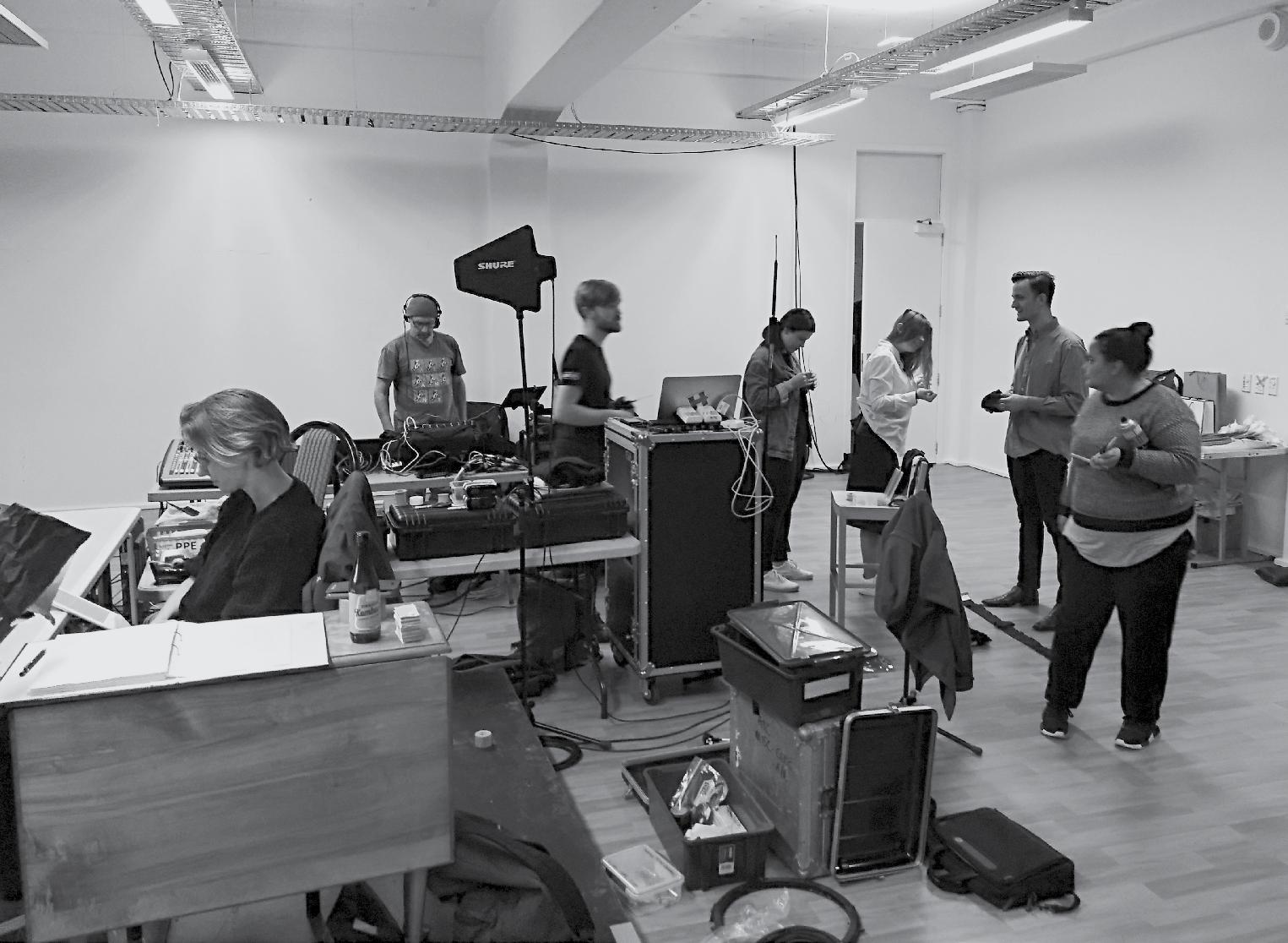
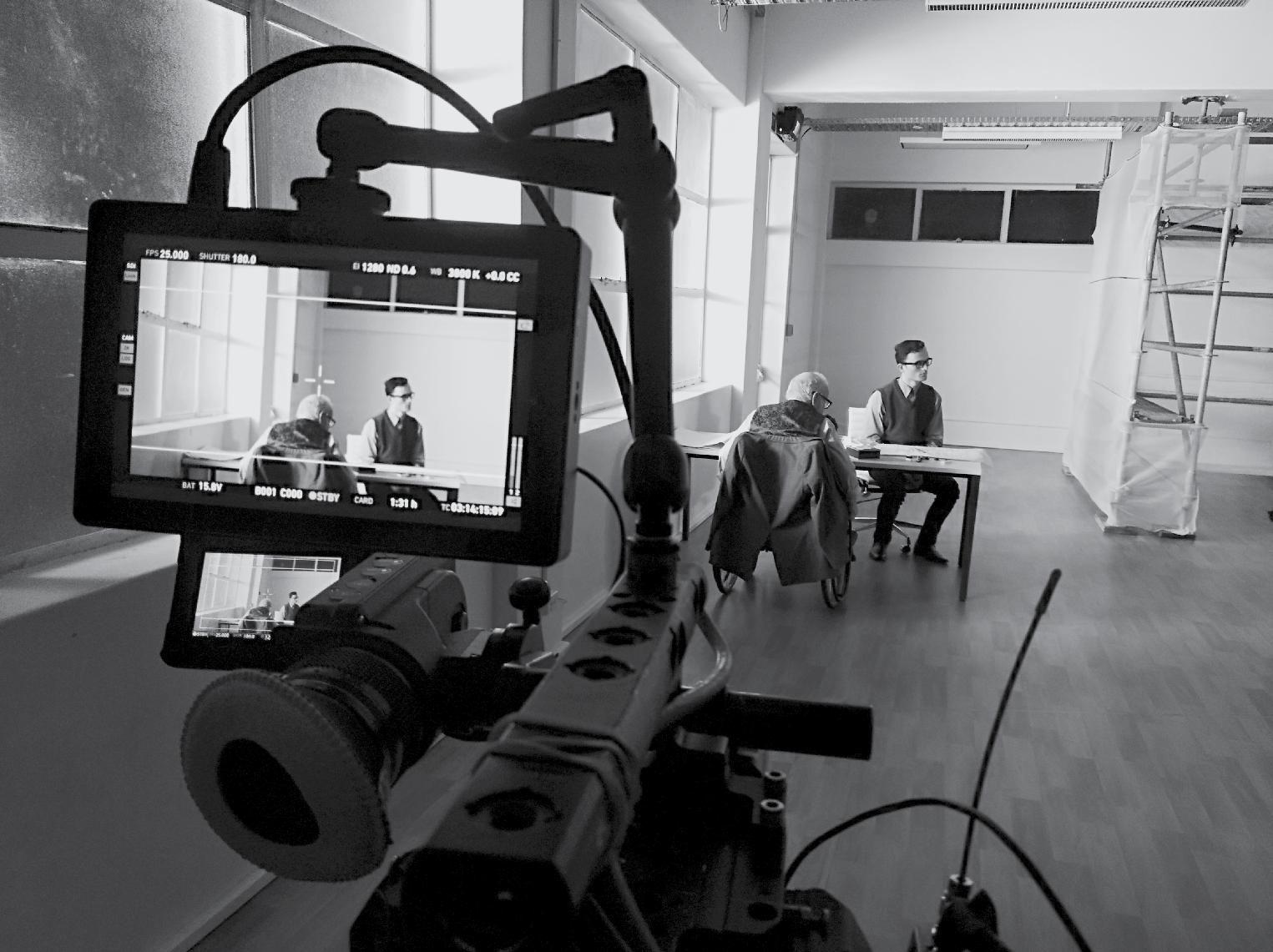
Cancelled as a mainstage production in the face of the COVID-19 pandemic, and then reconceived as a film of a live studio performance, The Master Builder went into rehearsal in May 2020, after Aotearoa/New Zealand’s lockdown restrictions eased and actors and creatives could return to the rehearsal room.
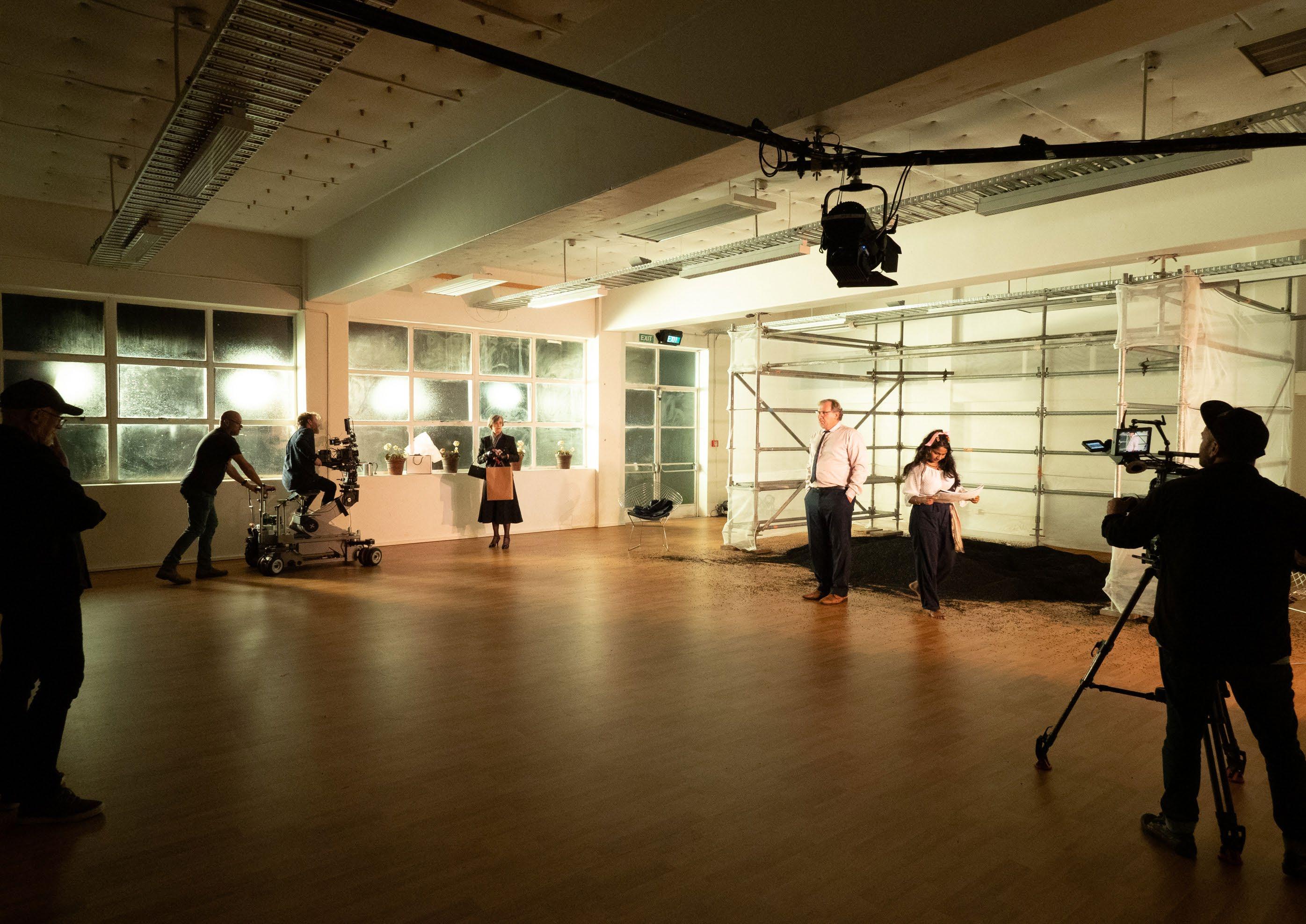
Presented in June as a short season of performances before an audience in the studio, the production captures the simplicity, spirit and energy of a final run in the rehearsal room.
The performance was then filmed for release on digital platforms. Director Colin McColl says “I quickly learnt that the rhythm, the dynamics of the story could be in the way it was shot and edited as well as the actor’s performances.”
Following lockdown it was important for Auckland Theatre Company (ATC) to provide a safe rehearsal room that catered for social distancing from each other for The Master Builder team, and from the rest of the ATC staff. Nicole Sarah, company manager explains some of the procedures put in place:
“We created a separate greenroom in the rehearsal room for The Master Builder company and allocated toilets to them. That way they did not have to share any spaces with the rest of ATC. We also scheduled it so that the rehearsal room ‘bubble’ overlapped as little as possible with the office ‘bubble’. We got this down to two days but then stayed at different ends of the office building so never saw each other anyway. As the Covid alert levels shifted we were able to change the way we rehearsed too so actors could start getting closer”.
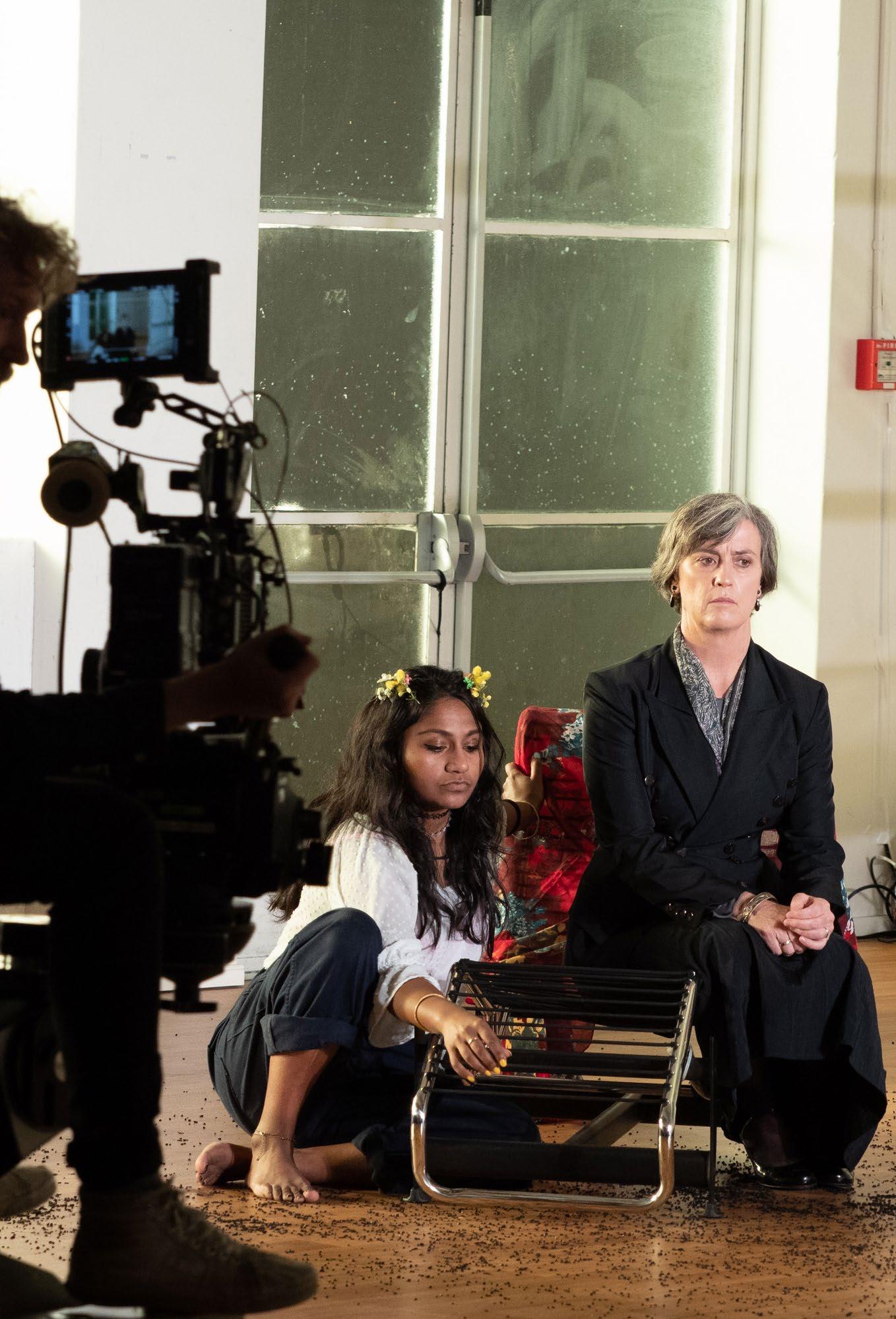
Henrik Ibsen’s The Master Builder premiered on 19 January 1893 in Berlin. Colin McColl’s new version of The Master Builder premiered on 23 June 2020 in Auckland, New Zealand.
Ibsen’s The Master Builder was written in 1892 immediately after Hedda Gabler and represents a shift in Ibsen’s form from the realism of his “problem” plays like An Enemy of the People, Ghosts and A Doll’s House, to the expressionism of his final theatre works.
THE PLAYWRIGHT: Henrik Ibsen
Henrik Ibsen was a major 19thcentury Norwegian playwright, theatre director, and poet. He is often referred to as “the father of realism” and is one of the founders of Modernism in theatre. Major works include Peer Gynt, An Enemy of the People, Emperor and Galilean, A Doll’s House, Hedda Gabler, Ghosts and The Master Builder. He is the most frequently performed dramatist in the world after Shakespeare. Ibsen was born in Norway; his plays were written in Danish. His first play was published (but not performed) when he was 22. He left Norway in 1864 for Italy, where many of his major plays were written. Only four years later, he moved to Germany, where he wrote both A Doll’s House and Hedda Gabler. He did not return to Norway until 1891. Ibsen died in Oslo in 1906.
Colin McColl’s The Master Builder was originally intended as a full production on the ASB Waterfront Theatre stage but was adapted during the COVID-19 lockdown to be presented (in Alert Level 1) before a live audience at the ATC rehearsal studios and then filmed for online release.
THE ADAPTOR/DIRECTOR: Colin McColl
Internationally regarded for his productions of Ibsen’s plays, Colin McColl has directed for the Norwegian National Theatre and the Dutch National Theatre, as well as leading New Zealand and Australian theatre companies. He is the only New Zealand director to be invited to present his work (Hedda Gabler) at the official Edinburgh Festival.
Colin has won Best Director at the Chapman Tripp Theatre Awards several times – including for his Circa Theatre production of A Doll’s House. In 2015, Colin directed Emily Perkins’ new version of Ibsen’s A Doll’s House for Auckland Theatre Company and in 2017 he directed Eli Kent’s Peer Gynt (Recycled) at the ASB Waterfront Theatre.
Discussing the process of adapting The Master Builder, Colin says “they’re called classics for a reason. The themes in plays like The Master Builder are universal and can speak to different ages in different ways. I never consciously think about “adapting” these plays, I am always just looking at them from now”.
“I never consciously think about “adapting” these plays, I am always just looking at them from now.”
Colin McColl
Colin thinks you must read classic plays with a contemporary sensibility and not regard them as museum pieces. “Every play in every production after its premiere season is, in some ways, an adaptation”.
His impulse for adapting European (non-English) classic plays is to do with the language.
Ibsen’s original – than, for example, “I do have some underwear that I keep in the knapsack. But it’s badly in need of a wash. You’ll be shocked by how filthy it is” –which is how English playwright David Hare deals with it in his latest version of the play. Far too polite, too English. So, the choices I make have to be informed and have to work for the audience who are receiving the play.”
How does he keep up with the language? Colin says “when I’ve worked on the play before I have used a Norwegian dramaturg friend of mine. She will tell me exactly the intention of the line in the original Norwegian because so
“In this play Ibsen deliberately gives Solness and Hilde a very limited vocabulary. Simple language. But often when its translated into English the language is tidied up and put in neat and tidy sentences. English playwrights have Solness sounding like a university professor instead of the uneducated country boy he was. There has been a great debate over the years about Hilde’s line” I have some underwear here – but it’ll need washing, it’s a bit shitty.” There’s a specific word in Norwegian for “dirty underwear” “skittent” – and the slang New Zealand phrase “it’s a bit shitty” is so much closer to
much gets lost in translation. But even in Norway it’s not uncommon for some of the language to be updated”.
He goes on to say, “I’ve kept the Norwegian names for the characters, but I have altered a few things here and there for clarity and modernity. For instance, Solness and Hilde discuss how his new home has a very high tower on it (who puts towers on houses these days?) So, I changed it to an apartment block with Solness’s new home on the Penthouse floors. However, the description of the Mrs Solness’s old family home as “a big ugly wooden structure with a garden that ran right down into the gully” fitted perfectly for Auckland. I imagined the house on Mt Eden or somewhere.”
• Know the play very well
• Be scrupulous.
• Using a dramaturg works
In Norway over 100 years ago, when the play was written, people’s last names were prefaced by what they did – their jobs. In Norwegian the play is called Bygmester Solness (Master Builder Solness). What connections do you make with the name Master Builder today?
• What is your view on ‘updating’ classics? What are the pros and cons of taking famous plays from the past into a modern context? Did the play speak to you?
• Which symbols / characters / settings seemed most ‘foreign’ to you as a New Zealander? Chose one (for example, trolls) and find out more about how this story or character operated in its original Norwegian context. How does this additional knowledge contribute to the concepts the play conveys?

Emma Bishop talked to Colin McColl about his long-running relationship with the play, it’s mythological links, relevant themes, and trolls.
Have you directed The Master Builder before?
Yes. I first directed The Master Builder in Dutch for the Dutch National Theatre (Het Nationale Toneel) in The Hague in 1992. The following year that production was invited to the Norwegian National Theatre as part of the annual Ibsen Festival. In 1995 I staged a completely different version at Circa Theatre in Wellington. Hera Dunleavy, who plays Mrs Solness in this version played Hilde Wangel in that production.
What was the thinking behind including the play in ATC’s 2020 season?
The name of our 2020 season is Stages of Change which has a well- being narrative underpinning it. I thought the intergenerational power play in The Master Builder was interesting in this Boomer vs Zoomer age and of course post #MeToo.
Did you have an overall concept for the production?
I am very wary of “concepts”!
I try to define but not limit the possibilities for interpretation.
“At
the core of the play is the hauntingly complex relationship between Solness and Hilde; between man and woman; youth and age; between a remorseful guilt-ridden soul and an aggressively amoral pagan will. It works on many different levels – the realistic, the mythic, the psychological and the subconscious.”
Colin McColl
For this studio production I was interested in the conflict between the mundane and the imaginative. Like a lot of Māori theatre, mythology plays a big part in Ibsen plays. Even the so called “drawing room “ plays like Hedda Gabler and A Doll’s House are chock full of Norse mythology in the names of characters (Hedda is the name of one of the Valkyries; when Norwegians hear the name Hilde they are reminded of Hildur, the mountain sirens who bewitch men to jump off cliffs). And of course, all great Ibsen characters Hilde, Solness, Hedda, Nora etc have the troll in them – a force (that can be creative or destructive)
that energises and drives them. It makes them different from the more mundane characters around them. In The Master Builder Hilde and Solness immediately sense this about each other.
What did you need to consider when filming the production? Did you need to make compromises from the live version?
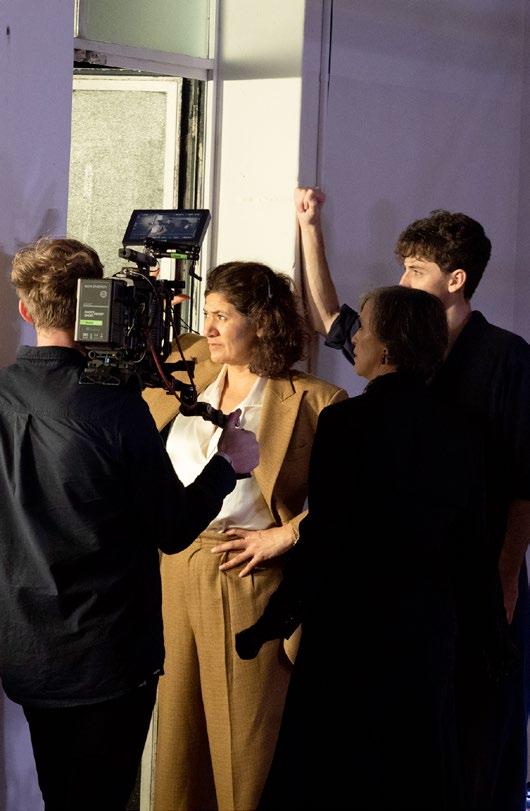
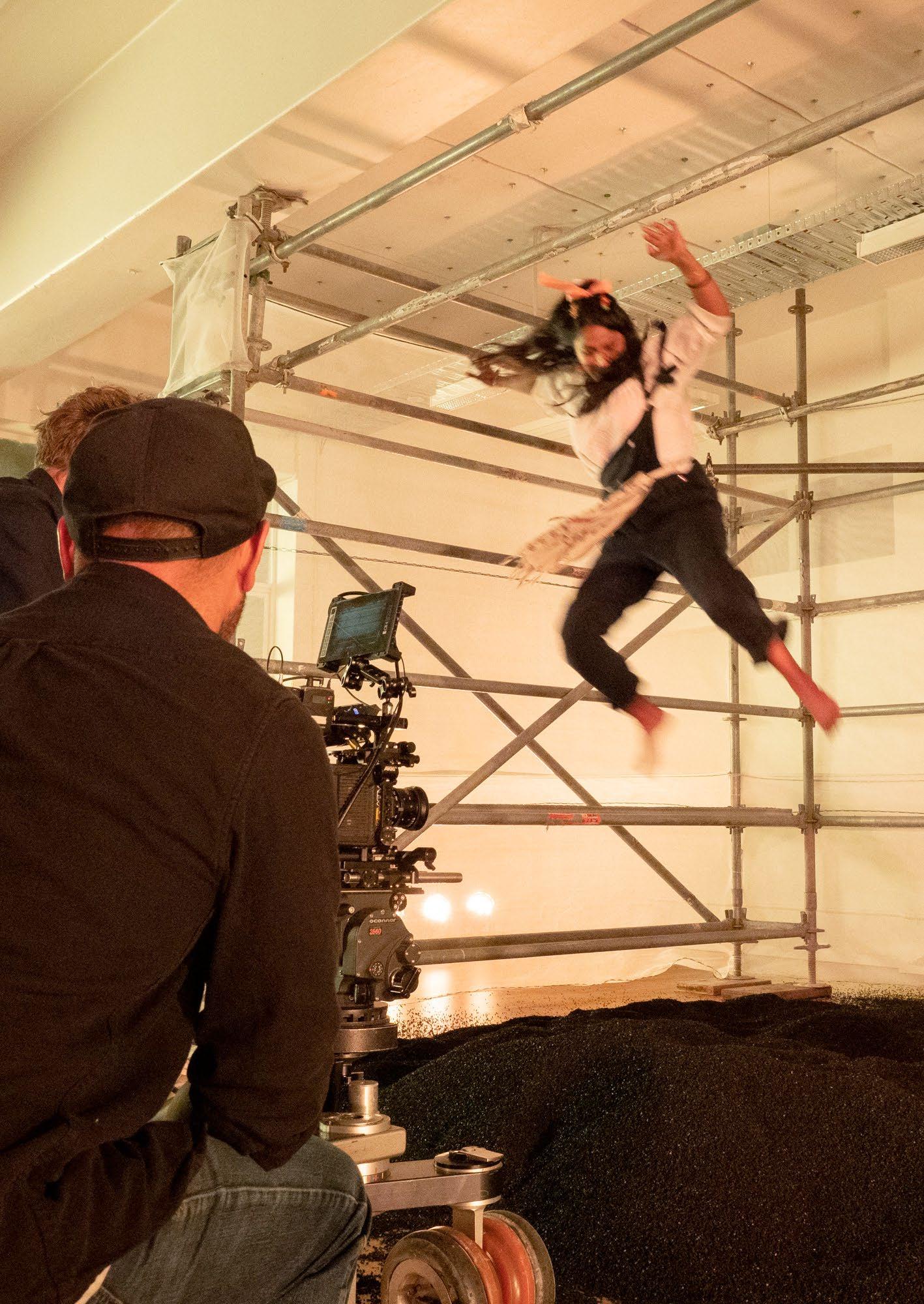
Not initially but certainly in the editing. Where you would usually see close-up shots in a film (for example you might see Kaja’s hands on her typewriter), I tried to create different moods by the different shots we set up, like using hand held cameras for
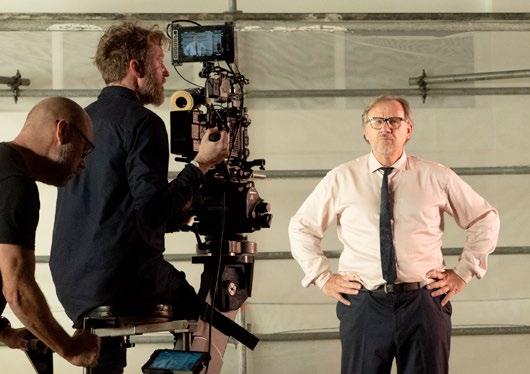
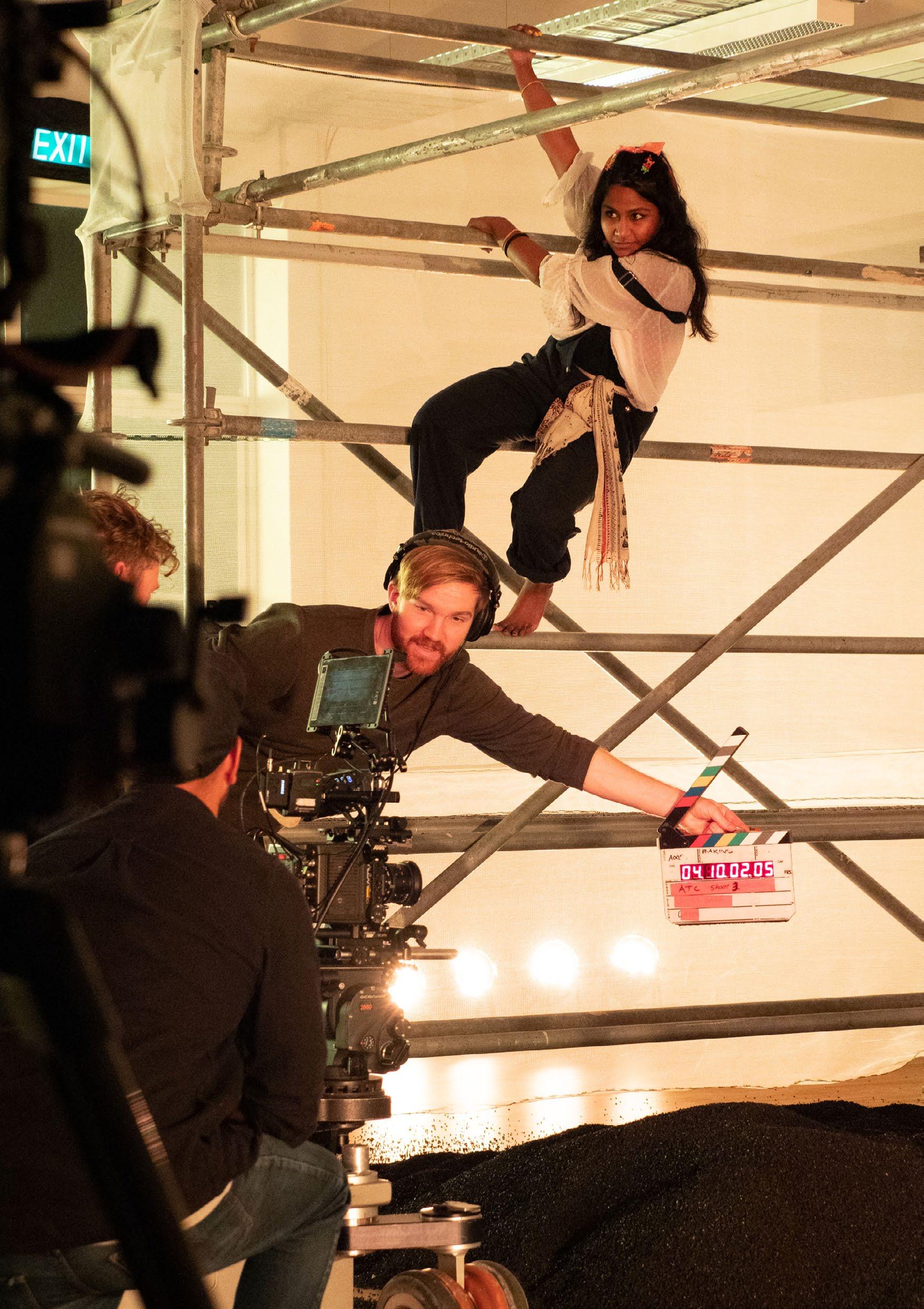
the ‘internal’ scenes between Solness and Hilde (to capture their wildness), by having cameras on a dolly and by adding foley sounds. We filmed with a cinematographer (Adam Luxton) and his crew very intensively over twelve hours, and as Adam had been in several rehearsals and showings, he also knew the piece well so we worked very quickly and on the fly! In future I would prepare a camera
script if I was to film a production like this again.
What do you want audiences to take away from this production?
Something to think about! It’s not a play that gives up its secrets easily or immediately, but my hope would be that if it interests audiences – it will set off some depth charges of thinking.
You can hear Colin talking to Radio New Zealand about the production here:
https://www.rnz.co.nz/national/programmes/standing-room-only/ audio/2018757608/colin-mcoll-brings-ibsen-to-stage-and-screen
YOUR PERSPECTIVE
• Discuss how this 150-year-old play is modernised. Which features of modern social life are used to underline or highlight the themes of Ibsen’s original?
• Colin says the play “doesn’t give up its secrets easily”. What do you think he means by this? What questions do you have after watching this production?
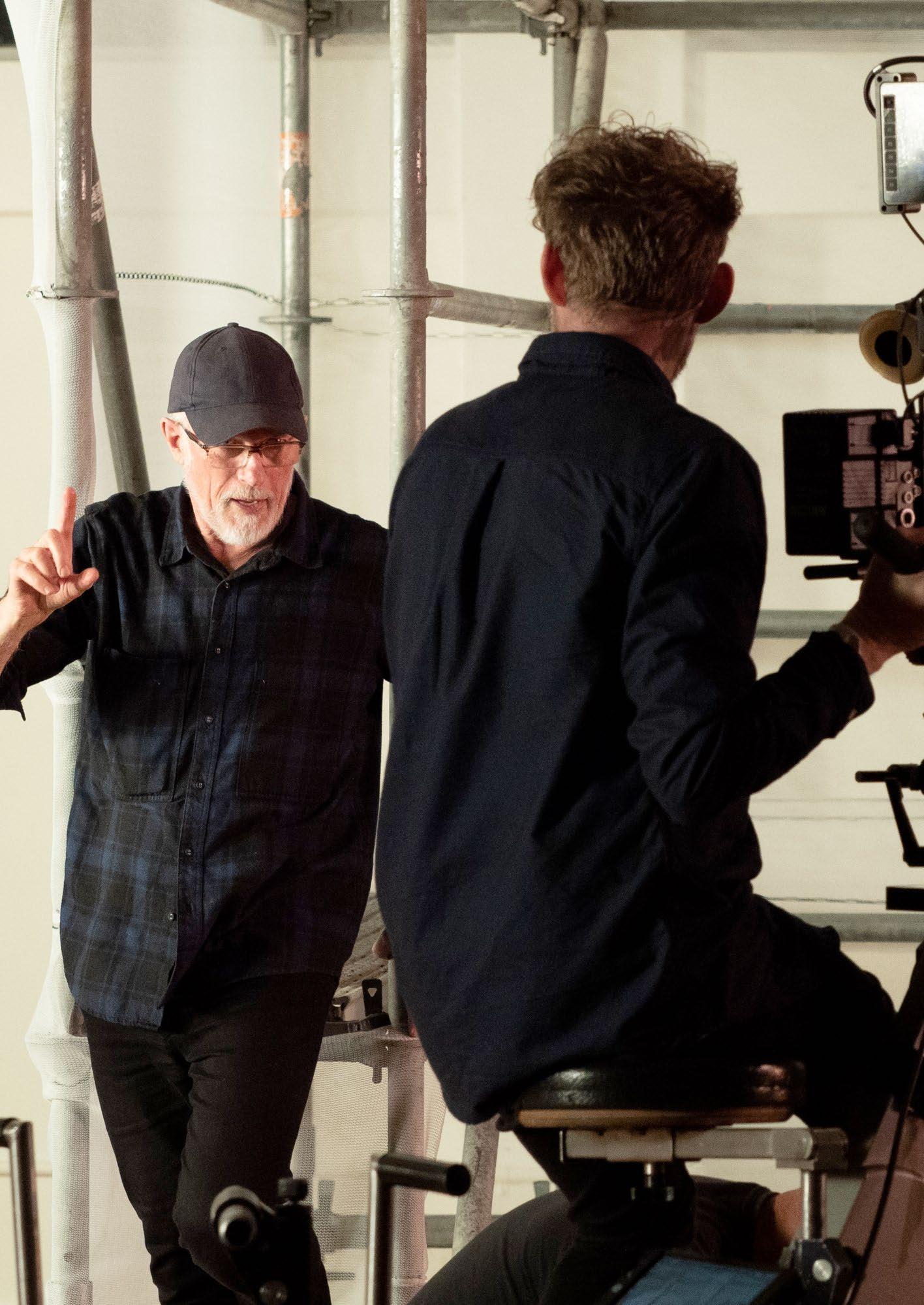
The Master Builder is a poetic fairy tale about…
Youth vs Maturity
What is real and what is imagined
Gender power play
Power and control
Potency or lack of potency (creative and sexual)
Responsibility and free will
Self-deception
How are these themes relevant or how do they connect with you today?
Can you think of situations where these might occur and what the outcomes could be. Complete the table.
Youth vs Maturity Aging Out could be in regard to morals and values or something physical such as understanding technology
Power #MeToo could be in regard to sexual harassment in the workplace
IN PLAY
Solness feeling the pressure of Ragnar, the up and coming architect. Deliberately holding him back to ensure he doesn’t pass him.
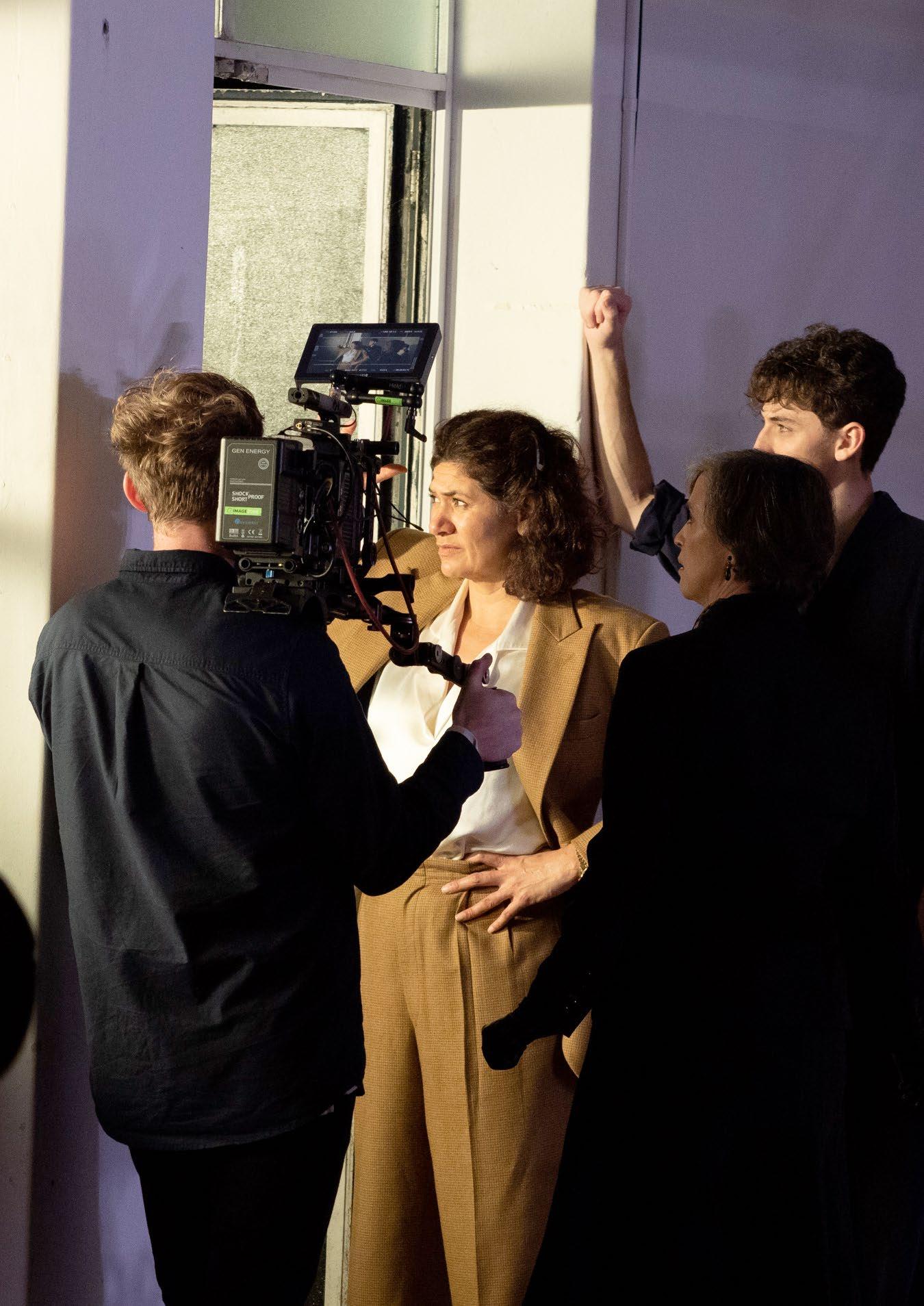
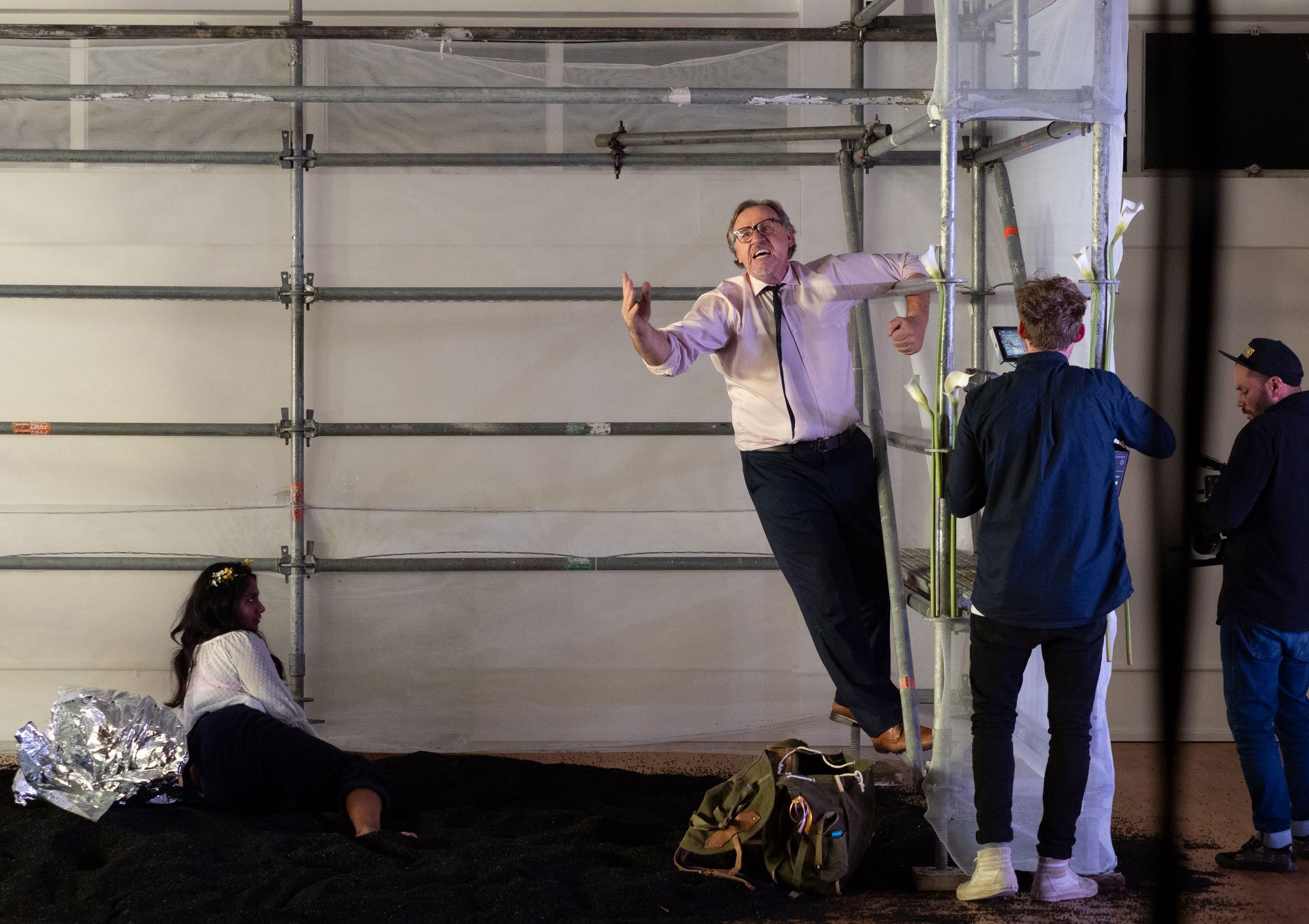
In the middle space.
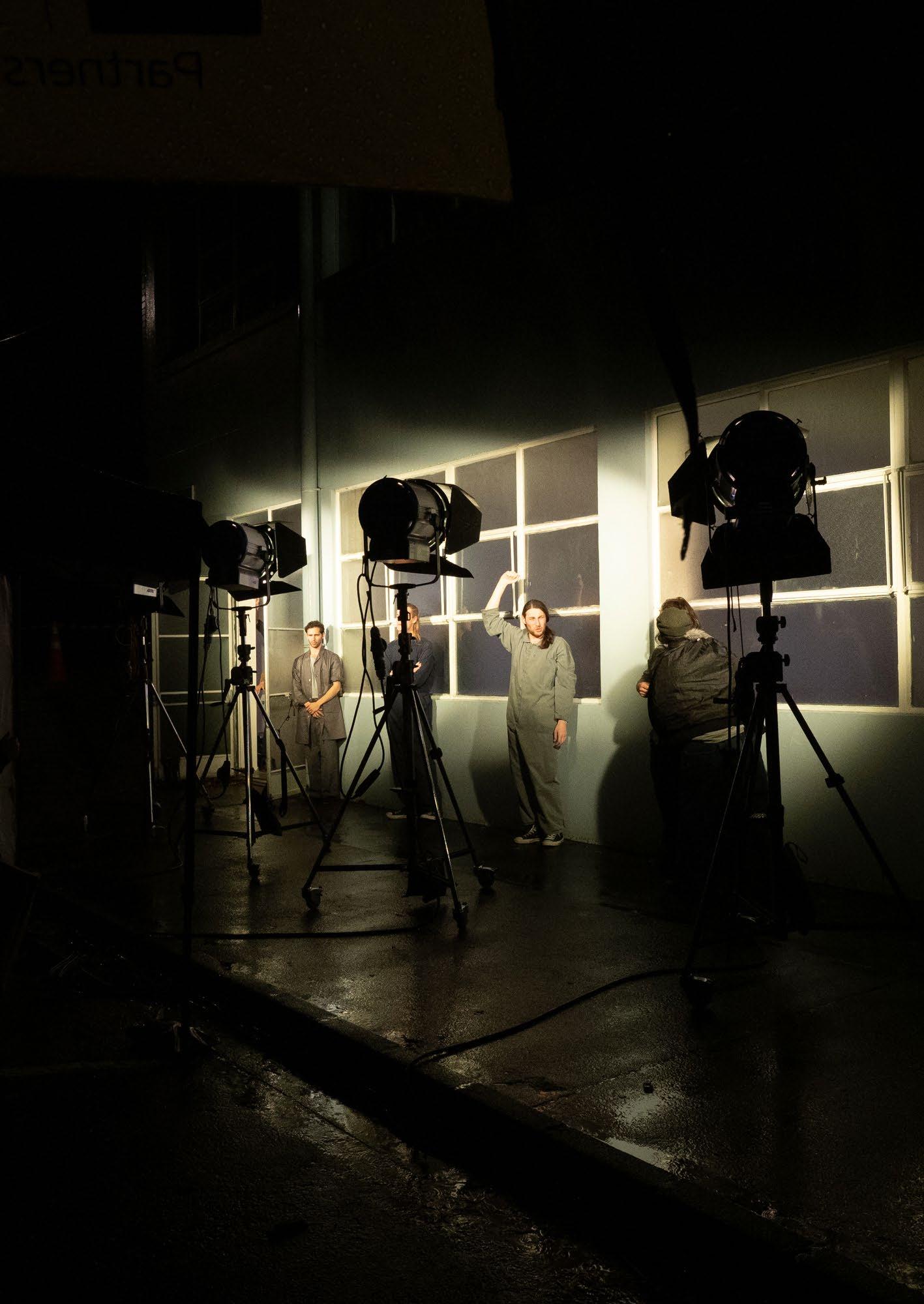
Set and lighting designer Tony Rabbit and director Colin McColl have worked together on many productions including The Master Builder 25 years ago at Circa in Wellington. Their shared knowledge and history with the play made the required pivot (from mainstage to filmed studio production) much easier.
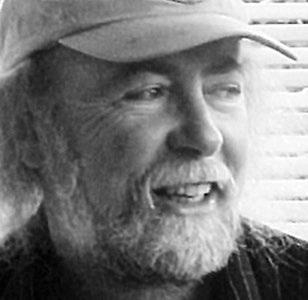
Tony says he is not a realist designer. He is interested in the character’s psyche and how the character inhabits the space. For example, he says; “what does Hilde want? Do we know what she wants – there are so many levels of thought. Does she exist or is she Solness’s dream or a spirit or perhaps the angel of death? Do we need to know? And Solness is examining who and what he is. Perhaps he is fulfilling something from the past? He has gone through an extremely traumatic experience and anyone deals with trauma in a different way.”
Originally to be staged at ASB Waterfront Theatre, much of the design work was already in place before that season was cancelled. The idea of Solness’s mind breaking down, along with the idea of being held back saw a design that included an avalanche of builder’s rubble descending onto the stage.
Emma Bishop talked to Tony Rabbit about how he changed his design to fit the ATC Rehearsal studio.
What changes were made to the staging post Lockdown?
We had to scale back our original vision from the huge ASB Waterfront stage to consider the number of people allowed in the space due to social distancing restrictions. The first suggestion was to perform with the audience and actors together on stage at the theatre, but this felt like a wrong space. We then considered the more intimate ATC rehearsal room.
The rehearsal room was originally the ballroom of the Mt Eden RSA building built in the 1950s. How
has the history of this room, and its significance with mid-century Auckland society, influenced your design?
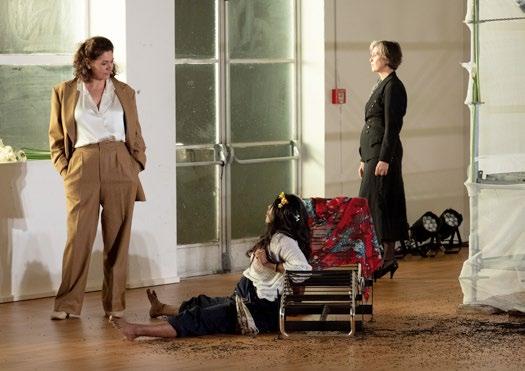
We liked the mid-century feel of the room. We wanted to honor the architecture and not fight it. It is pretty much all white and felt right for Solness’s office. It also has an art gallery feel about it.
We liked that it was open, and everything could be seen – no backstage as such with technical elements part of the environment. And of course, the huge wall of windows was a blessing –something that would have been very expensive to achieve at the theatre.
The windows were a big part of the design, particularly for the lighting. During the day, the sun illuminates the space – in fact in summer the rehearsal room is so hot they covered the windows with reflective film which was removed for this show. The window wall also has the pillars that frame the windows – this also creates light spill and shadows creating natural shutters shifting the light itself.
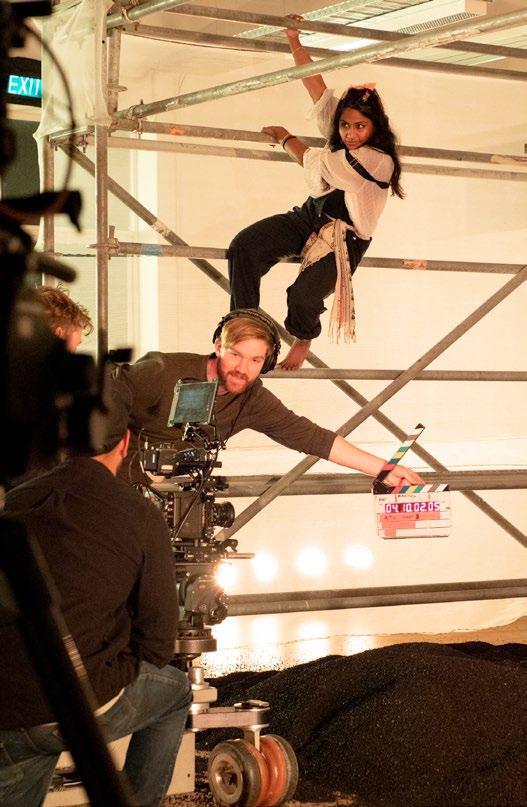
Tell us about the scaffolding. We wanted an element in the room that was pristine, controlled yet strange – almost like an Ai Wei Wei installation. Something from Solness’s construction world that could be particular to Solness and his mind-state but something that Hilde would eventually inhabit with him and destroy. It is whatever the audience want it to be – a troll cave, the inside of his mind, a representation of his paranoia, entrapment.
And the mound of rubber?
This is of course a metaphor. Its inorganic or organic matter –originally (for the ASB Waterfront Theatre stage), it was to be a mound of concrete and building waste held back by a shipping
container and wire – inspired by something we saw in Christchurch after the earthquakes.
This (much smaller) mound is rubber offcuts. It looks like a volcano of scoria however its safe for the actors – it allows them to get into the rubble It needed to be a mass in itself – it is interesting and makes the audience think as it’s something we might see outside but not inside.
It’s also hard to control – this adds to the risk or excitement – or the unknown.
Its not tidy – its random – similar to Hilde – she doesn’t necessarily do what we would expect, like this mound. And it’s a reflection of Solness’s state of mind.
Describe ways the windows were used as part of the set within the production.
• Physical use by actors
• Technical use – lighting
• Audience understanding – feeling – what did the windows make you think or feel?
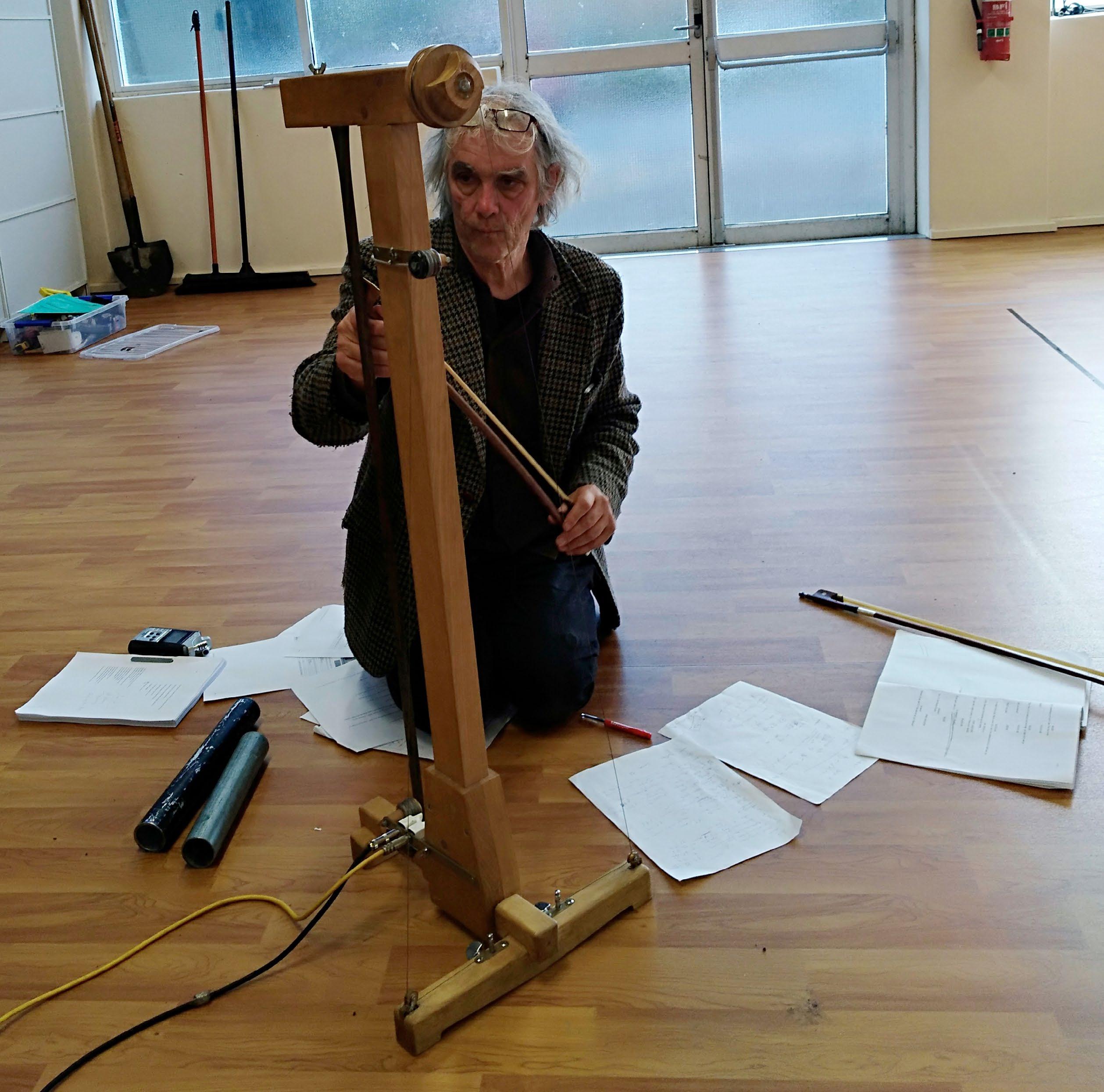
The unusual shimsaw instrument features in John Gibson’s evocative sound design. The instrument is supplied and played by Marcel Bear, who tells us about the evolution of the shimsaw:
“The shimsaw combines the 2-dimensional aspect of a flat vibrating strip of thin steel with the traditional tensioned string layout to make a new sound source. It was inspired by my intrigue at the sound of a sawblade that I heard at my dad’s factory in Mt Roskill. It was here that the shimsaws were built. When plugged into an amp the entire contraption is a sensitive pickup that translates the players intentions into otherworldly sounds. The shimsaw used in this production is the seventh in an evolved series of one-off instruments, all with a vibrating strip of steel at their heart.”
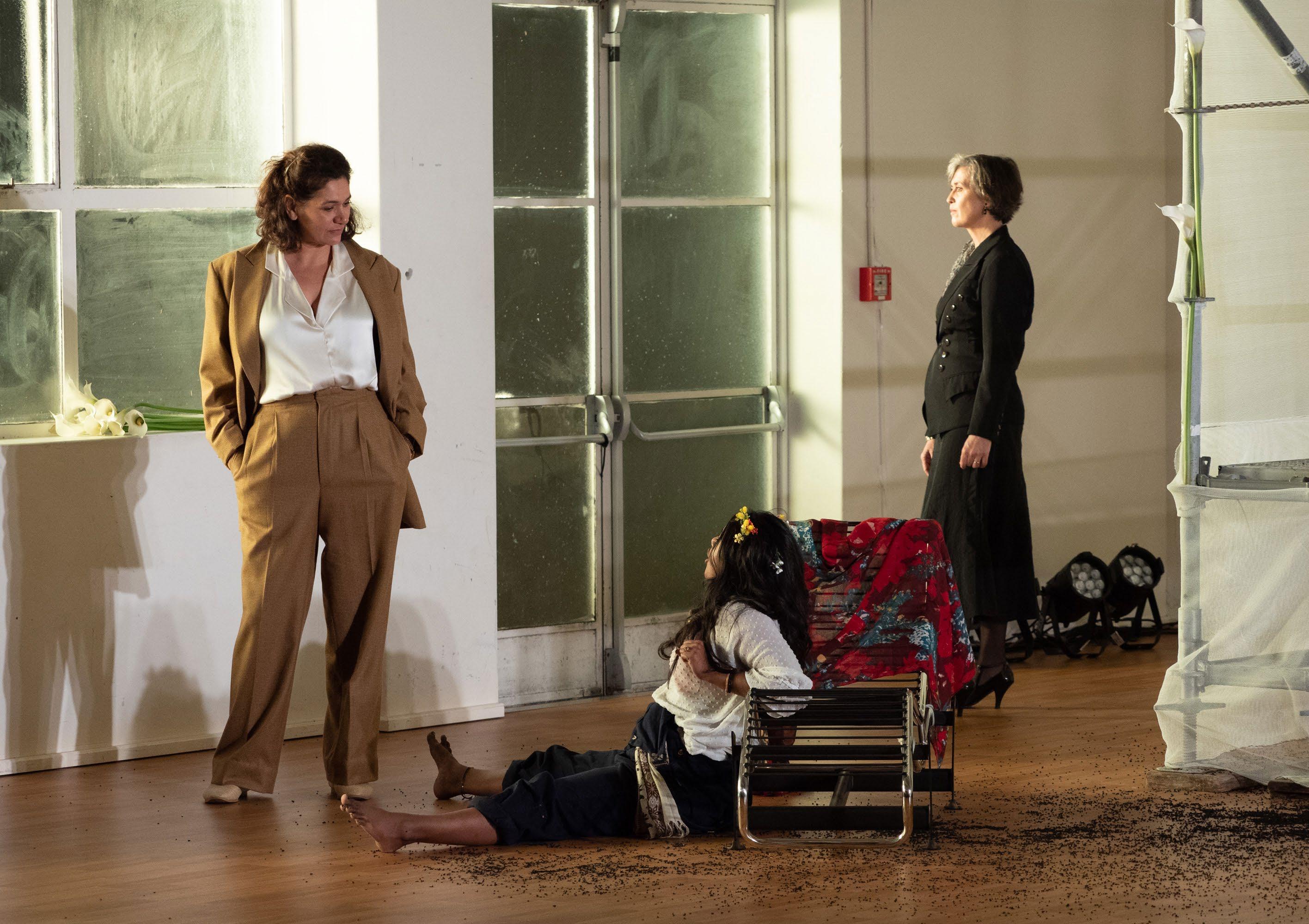
This design used the space more than creating a realistic place.
• Sketch and annotate the set used in the performance.
• Describe the places the performance took us to; where did the scenes take place?
If you were designing and the director wanted a realistic look what might you need to consider as a designer? What effect would having a realistic place (ie: kitchen, bedroom, office) have on the play’s performance. You might discuss scene transitions/flow.
Describe a moment where a character was the focus in the performance. Think about and discuss
• the function of the character in that moment
• why that specific character was the focus in that moment
• their position on stage
• the effect of the focus being drawn to the character
Thinking about this moment.
Explain how the language (verbal/nonverbal) used by the actor highlights the intended purpose of the character in this moment in the performance.
• use of drama techniques
• how the language developed the directorial concept
• historical/social context of language
• shock factor
USE OF PROPS AND SET DRESSING
• List any props or set dressing seen in the production.
• Discuss what these specific pieces did to help inform the audience –consider time, place, context.
Think about the Space in the Middle (the scaffolding) and how it was used. Explain its effect on the audiences’ understanding of the play and characters.
Brainstorm different ways you could show that we are entering an internal monologue or in a dreamlike sequence.
• use of technology
• set design
• sound
Thinking about Solness – discuss how the director alluded that we were seeing a moment that could be inside the character’s head. Think about:
• Use of technology
• Use of space
• Use of action
Explain the use of contrast as seen through the actors application of drama techniques – voice, body, movement, space, in Solness’s interactions with Hilde and when alone.
Discuss the function of Hilde within the play
• moments of revelation
• reinforcement of a key idea
How did the use of language (verbal and physical) impact the characters’ role and the audience’s understanding of it?
• Status
• Writing style
• Actors delivery of lines and action
Watch the play on YouTube (available until 30 August 2020): https://www.youtube.com/watch?v=98_TUVE2UI4
Read a review of the production here: https://www.theatreview.org.nz/reviews/review.php?id=12362
More about Ibsen: Ibsen Society of America: http://ibsensociety.org/
Watch and listen to Andrew Grainger and Kalyani Nagarajan talk about the characters of Solness and Hilde here: https://www.13thfloor.co.nz/watch-liz-gunn-talks-to-the-masterbuilder-actors-andrew-grainger-kalyani-nagarajan/
ENCOURAGING ACTS OF IMAGINATION
ATC Creative Learning promotes and encourages teaching and participation in theatre and acts as a resource for secondary and tertiary educators. It is a comprehensive and innovative arts education programme designed to nurture young theatre practitioners and audiences.
Whether we are unpacking a play, creating a new work, or learning new skills we are encouraging habits of thinking that foster acts of imagination to take place.
ATC Creative Learning has direct contact with secondary school students throughout the greater Auckland region with a focus on delivering an exciting and popular programme that supports the Arts education of Auckland students and which focuses on curriculum development, literacy, and the Arts.
ATC Education activities relate directly to the PK, UC and CI strands of the NZ Curriculum from levels 5 to 8. They also have direct relevance to many of the NCEA achievement standards at all three levels.
All secondary school Drama students (Years 9 to 13) should be experiencing live theatre as a part of their course work, Understanding the Arts in Context. Curriculum levels 6, 7 and 8 (equivalent to years 11, 12 and 13) require the inclusion of New Zealand drama in their course of work.
The NCEA external examinations at each level (Level 1 – AS90011, Level 2 – AS91219, Level 3 – AS91518) require students to write about live theatre they have seen. Students who are able to experience fully produced professional theatre are generally advantaged in answering these questions.