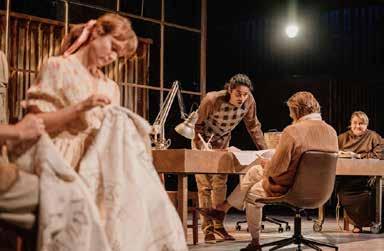
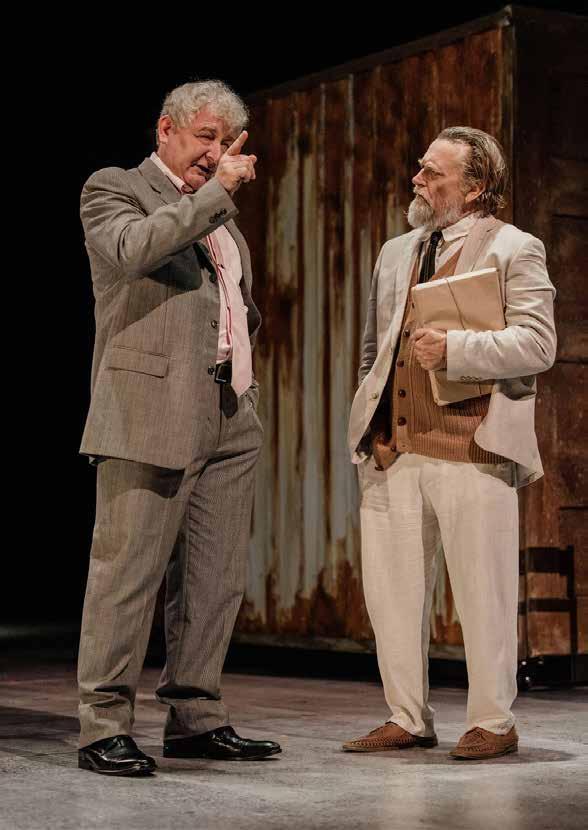
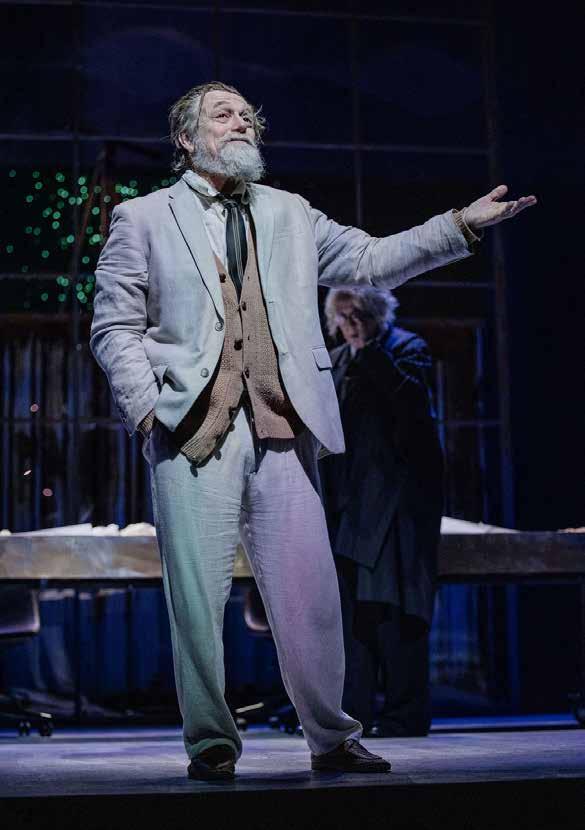
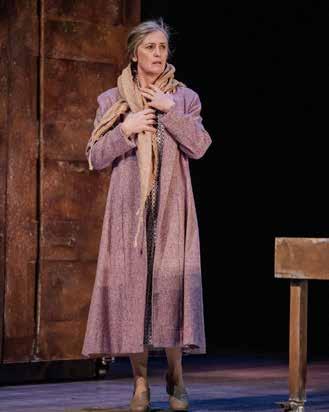
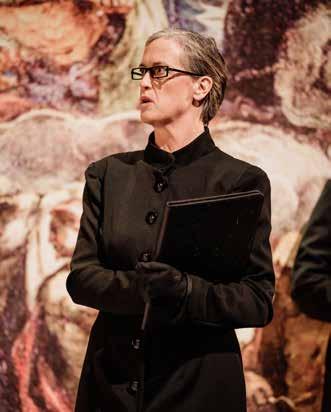
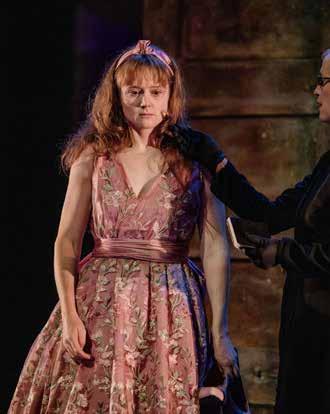
Philosopher/Cardinal Bellarmin/Guard Priest Roy Ward
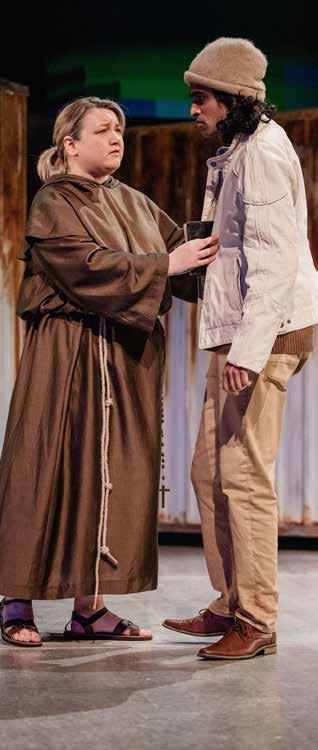
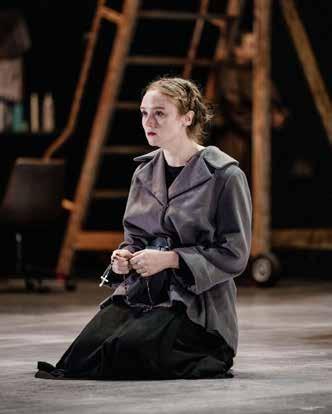
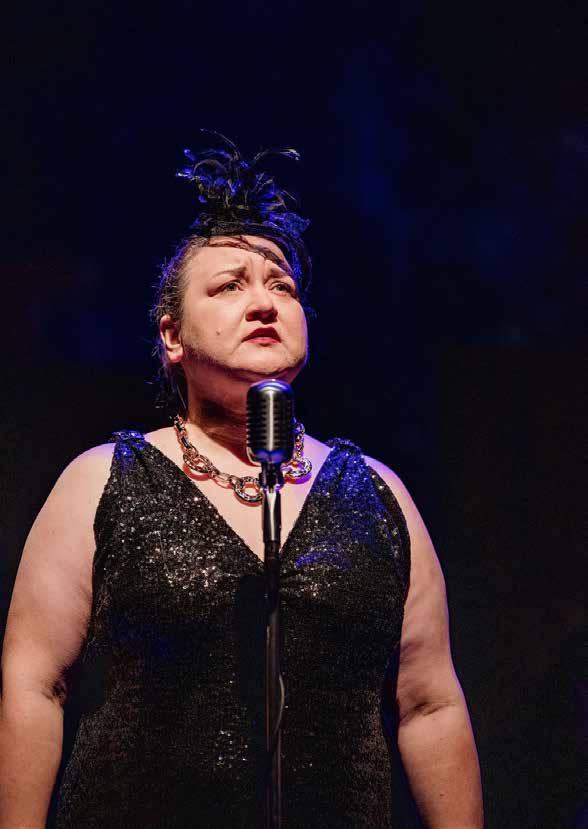
Lady-in-Waiting/Singer/The Little Monk Bryony Skillington
Federzoni Taungaroa Emile
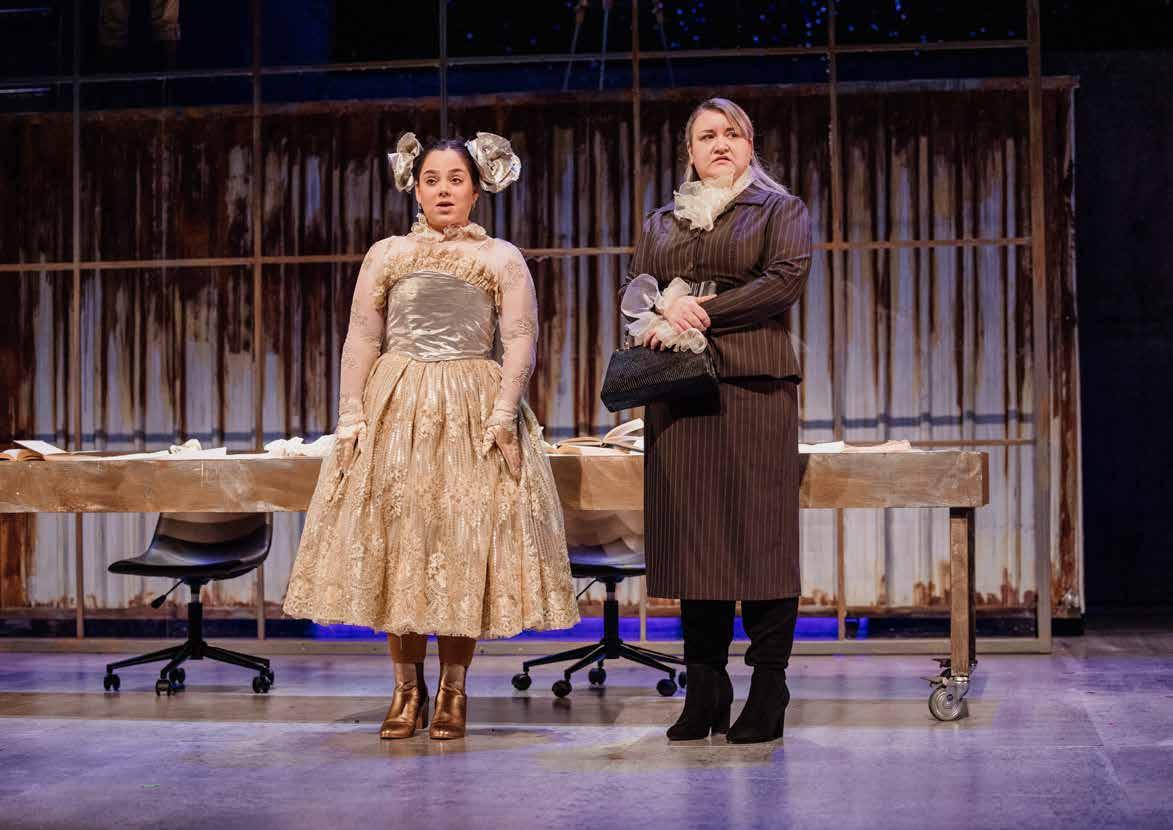
The Grand Duchess/Ensemble Aleisha Merwyn
Pope Dresser/Ensemble Maia Hapakuku Ratana
Clerk 1/Ensemble Brigit Kelly
Priest 1/Ensemble Dario Kuschke
Man in a Black Suit/Ensemble Nat Dolan
Clavius/Ensemble Kalem Leckey
Priest 2/Ensemble Viivi Crossland
The Official/Ensemble Millie Manning
CREATIVE
Director Colin McColl
Assistant Director Samuel Phillips
Set Designer Sean Coyle
Costume Designer — Elizabeth Whiting
Lighting Designer Jo Kilgour
Composer and Sound Designer John Gibson
Video Designer Harley Campbell
PRODUCTION
Director of Production — Jess Leslie
Company Manager — Elaine Walsh
Stage Manager — Chiara Niccolini
Assistant Stage Manager — Catherine Grealish
Props Manager — Kathryn Aucamp
Technical Manager — Robert Hunte
Fly Technician — TJ Haunui
Sound and AV Operators — Paris Daniel and Cameron Brown
LX Operator — Stephen Paul
Dresser — Siobhan Ridgley
Set Construction and Installation — Pilot Productions with Ray's Theatrical Services
Audio Description — Ina Patisolo and Edward Newborn
NZSL Translation — Kelly Hodgins and Mark Hodgson
MUSIC ACKNOWLEDGEMENTS
Music, Lyrics and Piano — John Gibson
Cello — Ashley Brown
Song recorded by John Kim at University of Auckland's School of Music
Cello and organ recorded at Auckland Town Hall thanks to The Auckland Town Hall Organ Trust and Auckland Live
Music from Shona McCullagh's Dancing Ground
thanks to permission from Colin Gibson and Shona McCullagh
ATC CREATIVE LEARNING
Associate Director - 2021 — Lynne Cardy
Schools and youth coordinator — Billie Staples
Teaching Artists — Catherine Yates and Matthew Kereama
Education Pack writer & editor — Lynne Cardy
Additional contributions by Amber McWilliams
Production designs courtesy of Sean Coyle and Elizabeth Whiting
Graphic Design — Wanda Tambrin
Production Images — Andi Crown
Synopsis what happens in the play
In the early 17th century and in the latter part of his life, astronomer and physicist Galileo Galilei struggles to prove the Copernican theory of a heliocentric universe; that the Earth rotates daily, and revolves around the Sun, and not the other way around, as the powerful Catholic Church insisted at the time.
When the play opens, Galileo is 46 and a well-known scientist in Padua, Italy where he lives with his daughter Virginia, housekeeper Mrs Sarti, and her young son Andrea. Galileo supports his research by taking on private pupils and lecturing part time at the university. He is teaching Andrea about astronomy when Mrs Sarti introduces a prospective student, a wealthy young man called Ludovico sent by his mother to study science because it is ‘’all the rage’’. Ludovico tells Galileo about a tube, a ‘distance glass’ invented in Holland that “makes everything big”. From Ludovico’s description of the tube’s lenses Galileo builds his own telescope, the first of its kind in Italy, and uses it to buy favour with the wealthy patrons of Venice, and to look to the night sky to prove his heliocentric hypothesis.
Working with his friend the lens grinder Federzoni, he discovers the four moons of Jupiter, and observing their phases realises he has found proof of Copernicus’ theory. Galileo’s findings are pitted against the Catholic Church and the Pope’s authority, who see them as a threat to their religion and status. Even Federzoni initially challenges his ‘earth around the sun nonsense, wondering where God exists for common people in this new, radical universe.
Galileo’s discoveries gain fame, and he moves to Florence to the court of the Medicis. Virginia - now engaged to Ludovico - is thrilled by the move to court but there Galileo’s theories are met with
disbelief and ridicule.
Unperturbed, Galileo continues his work and in Rome the Vatican research institute, the Collegium Romanum, confirms his findings.
However, the powerful Inquisition bans Copernican theory putting it on an index of forbidden texts.
Rattled by the Inquisition, a young friar and mathematician from Rome, “The Little Monk” tells Galileo he is worried about the effects these ideas will have on the lives of common people, like his peasant parents. Galileo convinces him that the Church wants to suppress knowledge precisely to retain oppressive control and power over common people.
Galileo observes eight years of silence on his theories, looking instead to other research until encouraged by the appointment of a new Pope (the mathematician Cardinal Barberini) to resume his research into sunspots. This outrages the conservative Ludovico who in turn declares he cannot marry Virginia. She is heartbroken.
Nine years pass and Galileo’s ideas spread and take root among the people. Towns throughout Italy choose astronomy as the theme of their annual carnival and the Church grows worried, summoning Galileo to Rome and the Inquisition.
To the shock of his collaborators, Andrea, Federzoni and the Little Monk, Galileo is forced to recant his theories and live-in exile with Virginia for the rest of his life.
At the end of the play Galileo, under house arrest and surveillance, receives a visit from Andrea - who is travelling to Holland - and in secret Galileo reveals that he has written a copy of his theories - the Discorsi - which he gives to Andrea to smuggle abroad.
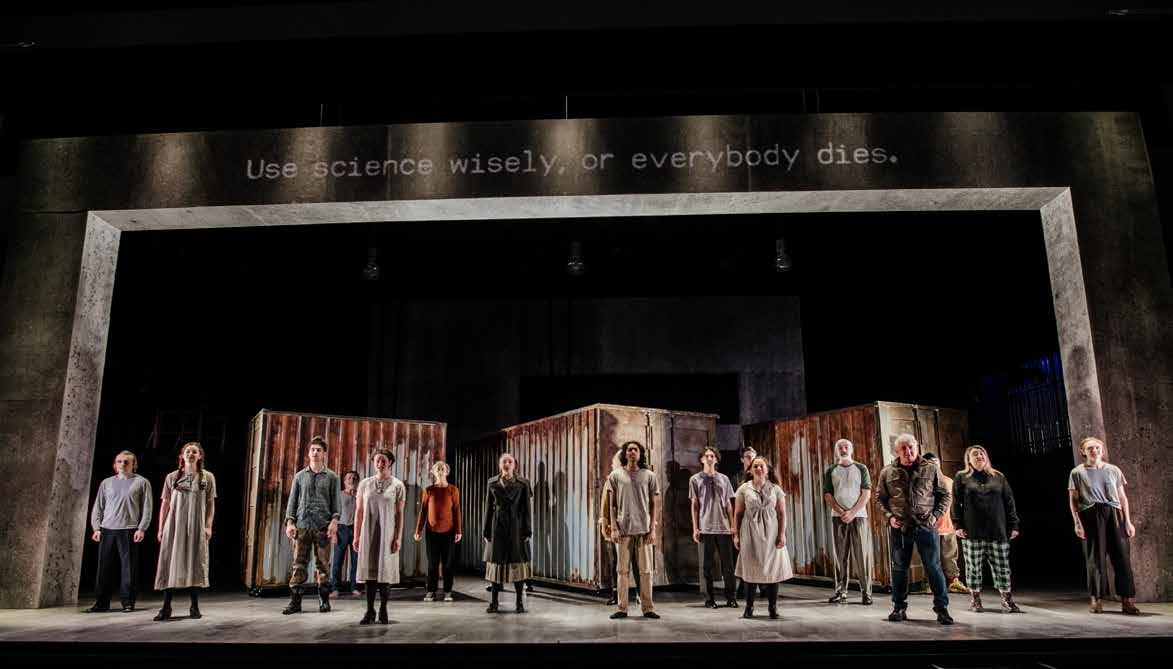
In an epilogue, the company reminds the audience to use science wisely.
Scene Breakdown
The inquisition puts Copernican theory on the index of forbidden books.
1624
After eight years of silence Galileo is encouraged by the new Pope to resume his research into sunspots.
Galileo
The song of the spread of the terrible beliefs of Galileo.
1633
The inquisition orders Galileo to Rome.
Galileo
Galileo, in front of the inquisition, recants his teachings on the movement of the Earth.
Undeterred
Galileo lives as a prisoner of the inquisition In a house in the country.
The
Galileo’s book ‘Discorsi’ crosses the Italian border.
Epilogue
The Song of The Progress of Science
So, science crossed the border and its here with us today
Now it’s got the power to blow us all away
But we’re not much smarter and we’re totally corrupt
There’s only one planet now and it's completely f___ed
If you’ve been paying attention, it will come as no surprise
Use science wisely, or everybody dies
Directing Galileo
Director Colin McColl talks about different versions of the play, its themes, and Brechtian trademarks
The Life of Galileo is often refered to as ‘the Brecht play for people who don’t like Brecht’ and while it’s not a parable play like Mother Courage and Her Children, The Caucasian Chalk Circle, or The Good Soul of Szechuan, the Brechtian trademarks of bold storytelling, terrific characters, sprinkling of Marxism and ironic humour are there.
It’s a play Brecht (and his many collaborators) re-worked several times. The first German version premiered in Zurich in 1943 in the midst of World War II. While in exile in California, Brecht and actor Charles Laughton (together with others) worked on an English language version. It was eventually presented in Los Angeles and New York (with Laughton as Galileo) soon after the war with Japan ended with the Hiroshima atomic bombing. Brecht then created a third version of the script in the early 1950’s with his own company,
the Berliner Ensemble, set up and funded by the East German communist government.
The Life of Galileo is chock-full of theme - chiefly a scientist’s responsibility to humankind, the conflict between blind faith and reason, and the containment and
ponderous. We must play Galileo lightly and quickly. Not rushed but with a quickness of thought, of ideas. The ideas must be battered back and forth between actors like a game of table tennis”. I was intrigued by this - as its true we often think of Brecht’s didactic
“The English believe that German theatre is heavy and ponderous. We must play Galileo lightly and quickly. Not rushed but with a quickness of thought, of ideas. The ideas must be battered back and forth between actors like a game of table tennis”. Bertolt Brecht
dispersal of scientific knowldege by those in power. Because state authorities persist to ignore the findings of scientists, particularly in the last few years, this Brecht play continues to have traction.
Shortly before his death in 1956 Brecht was preparing a production of Galileo as part of his theatre, the Berliner Ensemble, to tour to London. He advised his actors “The English believe that German theatre is heavy and
style as confronting- staunch, inyour-face and a little angry but in fact whenever I have seen Brecht performed by German companies it’s very relaxed, almost playful. So, in this production we’ve tried to take that on board.
Also all Brecht’s alienation
“tricks” ( to ensure an audience “observe” the play rather than getting lost in the story) have been so incorporated into the way we present theatre today
that they’ve lost a lot of their original potency. However, we use some of them in this production. There’s direct address to audience by the actor playing Galileo. The titles (and purpose) of the scenes are announced before they begin, the scene changes are in full view of the audience, and they will see actors preparing for a scene. Sometimes the sound effects between scenes are deliberately irritating so that the audience will concentrate on the content of the following scenes. Song is used to break up the narrative. Costume changes, character doubling, cross cultural and cross gender casting are deliberateall these devices are used to stop the audience getting carried away by the story, to observe and question the point of the scene and to cross examine the motives of the characters.
Characters
In Brecht’s Epic theatre characters are often archetypes. Characters relate to each other according to their roles; they represent social figures, not individual human beings. The play shows how people are oppressed by authority’s hold on knowledge to maintain their social position.
Galileo represents the search for the truth that will advance society and free people from their place in the social order.
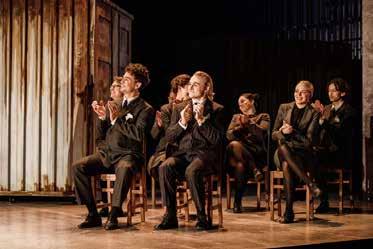
In this production a large cast bring these characters to life, including a chorus of young actors.
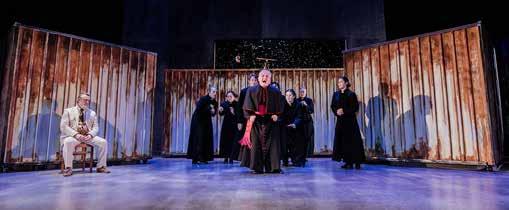
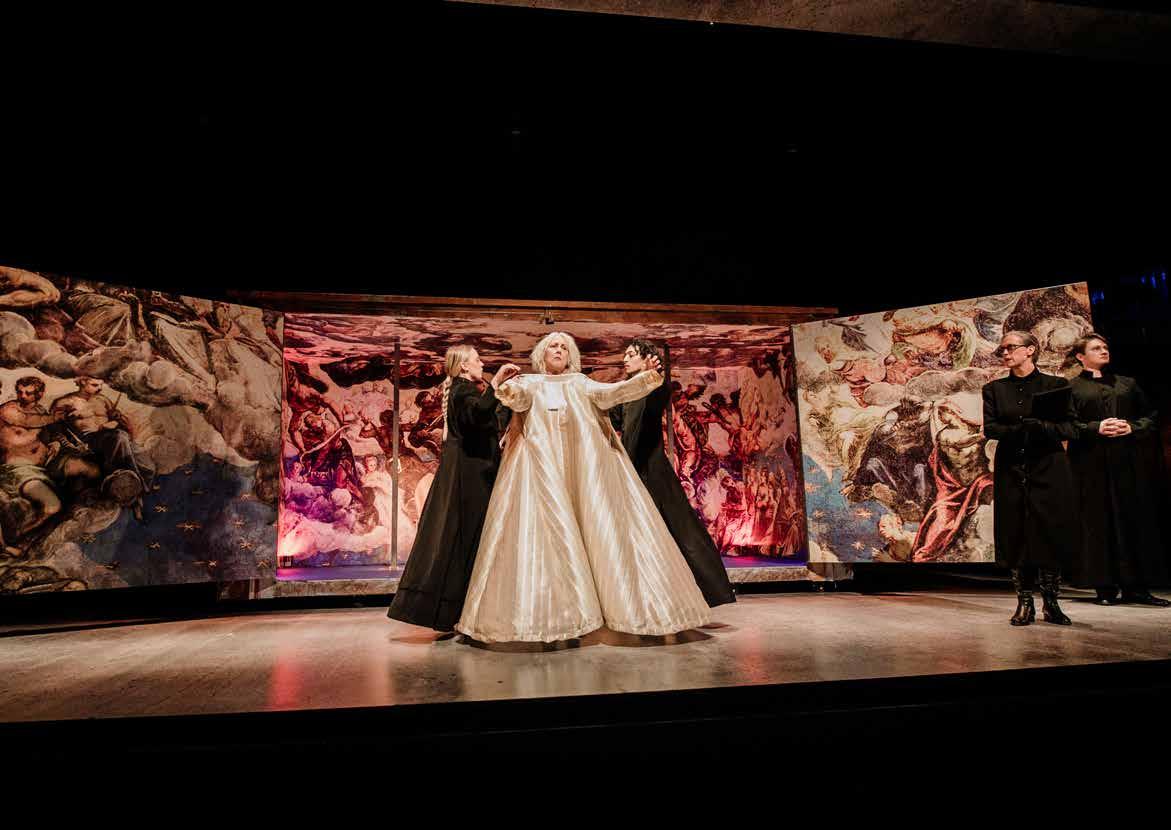
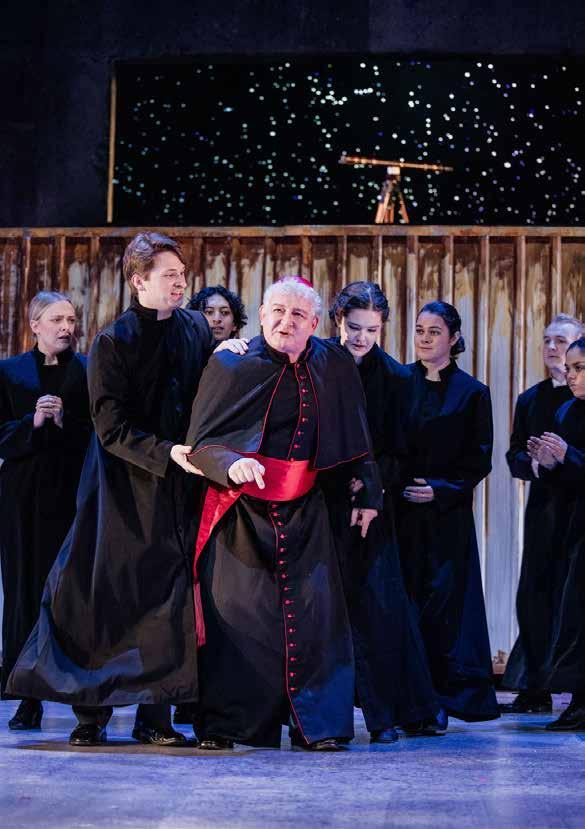
In several scenes the chorus represent the ‘people in power’; they are wealthy patrons in Venice and a flock of priests in Rome. These priests are conspicuous by their ever-circling presence like the eyes of the Inquisition, suggesting that everyone is being watched. Towards the end of the
play the chorus represent the common people as ‘displaced refugees’ at the border. Whilst individual members of the chorus occasionally have lines or cameo roles, they are unified through their movement and costume.
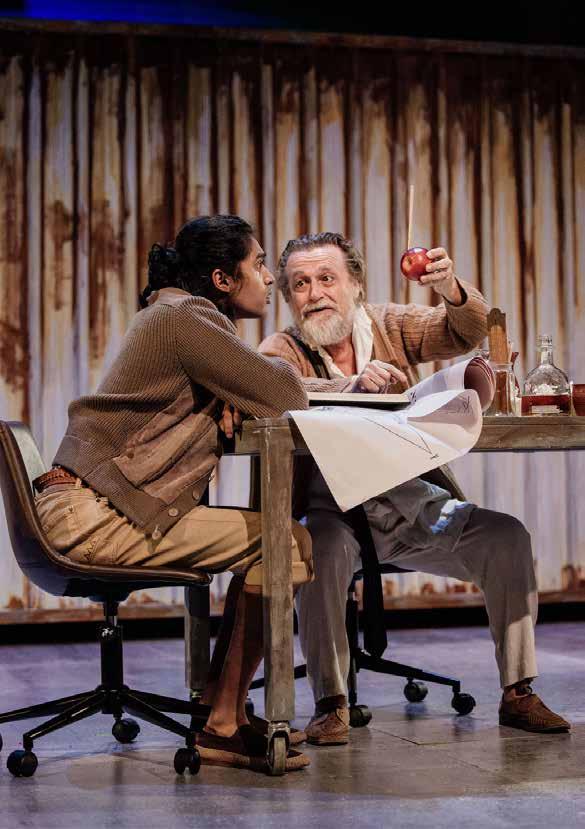
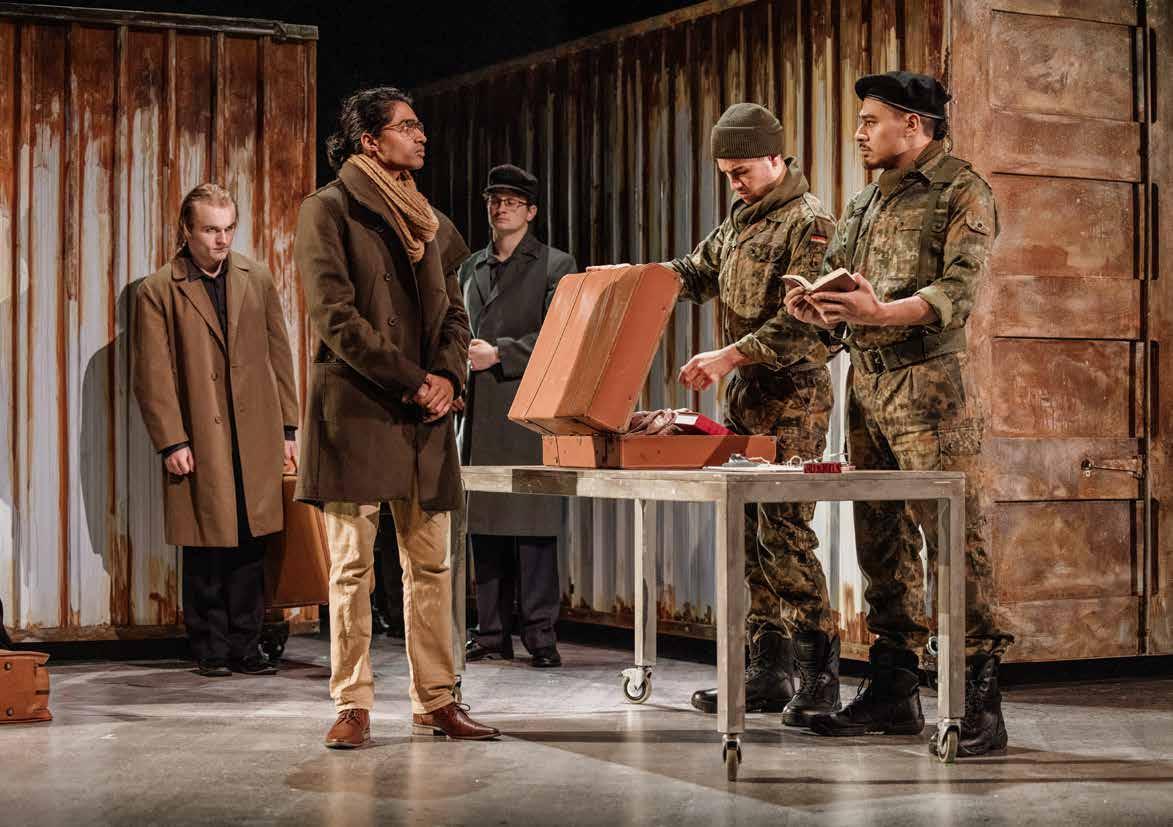
Other actors play multiple roles. Haanz Fa’avae Jackson, for example plays ‘the wealthy’ Ludovico and later appears as a street singer ‘the people’ and a border official ‘authority’, whilst Rima Te Wiata appears as a Mathematiciana member of the establishmentand the ultimate authority figure in this play, The Pope. Three of the cast play only single characters, all of whom age 30 years in the play. Michael Hurst carries the weight of the story as Galileo, Amelia Rose Reynolds is Virginia his long-suffering daughter, and Ravikanth Gurunathan is his student and colleague Andrea.
EXTENSION ACTIVITIES
• How was the aging of the key characters made evident in this production?
• What function does the Chorus serve in the play? How do they relate to the audience and the company on stage?
• Describe a moment where a character was the focus in the performance. Think about and discuss the function of the character in that moment: why that specific character was the focus in that moment, their position on stage and the effect of the focus being drawn to the character.
Who’s Who?
Characters in The Life of Galileo
Galileo Galilei
Based on historical character
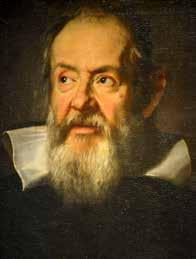
Galileo Galilei was an Italian astronomer, physicist and engineer, regarded as the father of modern physics. He spent his life making elementary discoveries that are known by most people today, such as the law of inertia and the relationship between distance and velocity.
He famously used the telescope to observe the sky and saw that the moon was full of craters, and that the stars in the sky did not orbit around the Earth. The Earth was not the centre of the universe and the sky did not fit the description of a pristine heaven as described by centuries of Roman Catholic teachings. These observations threatened the religious, political and social influence of the Church in 17th-centuryItaly, which was no longer an empire and was divided into small states. In 1632, Galileo published Dialogue Concerning the Two Chief World Systems, comparing the Copernican system, where the Earth and other planets orbit the sun, with the traditional Ptolemaic system, where everything in the universe circles around the Earth. Based on this book, Galileo was accused of heresy, was forced to recant his work and spent the rest of his life under house arrest. The phrase 'and yet it moves' is attributed to Galileo as a sign of his conviction to scientific truth.
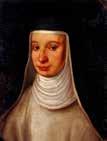
Virginia, Galileo’s daughter
Based on historical character
Maria Celeste, born Virginia Galilei Galileo’s daughter, Virginia, was a devout Catholic. She wished for her father to accept religion and resign his academic pursuits. Her engagement to Ludovico Marsili was compromised by her father’s controversial ideas. In real life, Virginia was always considered unworthy of marriage as she was born out of wedlock. She entered a convent at the age of thirteen and chose her religious name, Maria Celeste, in honour of her father’s astronomical work.
The Little Monk, Fulgenzio
Based on historical character Fulgenzio Micanzio
Initially one of Galileo’s many detractors, the Little Monk became Galileo’s pupil and one of his most vocal supporters within the Catholic Church. In reality, Fulgenzio Micanzio kept his friendship with Galileo and stood by him after his recantation.
Through Fulgenzio (not Andrea Sarti), Galileo was able to deliver his manuscript for Discourses and Mathematical Demonstrations Relating to Two New Sciences to the Dutch publisher Elzevir. He also helped Galileo with practical matters, such as securing his pension from the Church.
Fictional character
Skilled lens grinder and Galileo’s friend, Federzoni, lacked formal education but was an eager supporter of Galileo’s work. Federzoni was one of the few characters who did not speak Latin, the language of higher learning and theological thought until the 18th century. Galileo made others speak in Italian when Federzoni was in the room and wrote his books in Italian, “the language of fishwives and merchants” so they could be read by people like him.
Federzoni
Image credit (left to right):
Galileo Galilei_1635 Justus-Suttermans GalileoGalilei_Hakjosef, CC BY-SA 4.0 via Wikimedia Commons Maria Celeste_Wellcome Collection,
BY 4.0 via Wikimedia Commons
Little Monk) Bryony Skillington.
credit: Andi Crown (Federzoni) Taungaroa Emile.
credit: Andi Crown
Andrea Sarti
Fictional character
Son of Galileo’s housekeeper and Galileo’s apprentice, Andrea Sarti was one of his most passionate pupils. He was devastated by Galileo’s decision to recant his research when threatened with torture by the Inquisition.
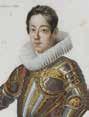
Cosima de' Medici, later The Grand Duchess
Based on historical character
Cosimo II de' Medici, Grand Duke of Tuscany Cosima became Galileo’s pupil when she was an impressionable nineyear-old. Galileo named the four moons of Jupiter Mediciean Stars in honour of Cosimo II de' Medici and his three brothers. Cosimo became a patron of Galileo by appointing him court mathematician in Florence; this allowed him to dedicate more time to his research.
Mrs Sarti
Fictional character
Galileo’s housekeeper and Andrea Sarti’s mother was a practical woman who represented the everyday person. She was hesitant about Galileo’s ideas but remained loyal to him in the mist of the plague and despite her belief that living with a heretic may have ruined her chances for eternal salvation.
Vice-Chancellor Fictional character
The Vice-Chancellor of the University of Padua was interested only in the monetary value Galileo brought to his university. To the ViceChancellor, “knowledge is a commodity”. His views were representative of the free-market mentality of the Republic of Venice as well as the independence it had from the Roman Church and Catholic censorship.
Ludovico Marsili Fictional character
Ludovico was a young nobleman who sought to be Galileo’s student hoping it would bring him fortune. He was briefly engaged to Galileo’s daughter, Virginia, but ended the engagement once he saw her father’s reputation tarnished by the Church.
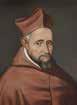
Cardinal Bellarmin
Based on historical character
Robert Bellarmine
One of the most respected Catholic theologians of his time, Cardinal Bellarmin ordered Galileo to stop teaching the Copernican theory as truth. He conceded to Galileo presenting his findings as mathematical hypotheses rather than fact. In 1930, he was canonised a saint.
Grand Inquisitor
Based on historical character Vincenzo Maculani
The Grand Inquisitor searched for heretics who contradicted the teachings of the Catholic faith. In the play, the Grand Inquisitor suggested to Pope Urban VIII that torture would force Galileo to recant his findings. However, records claim that, while Vincenzo Maculani was severe and uncompassionate, he thought Galileo was too old and ill to undergo torture.
Clavius, the Astronomer
Based on historical character
Christopher Clavius Christopher Clavius was the Vatican's chief scientist and one of the most distinguished astronomers of his age. Clavius was best-known for his work in the 1582 Gregorian calendar reform. Although he supported a geocentric model of the universe, he later accepted Galileo’s discoveries as correct.
credit (left
Cardinal Barberini, later Pope Urban VIII
Based on historical character Pope Urban VIII/Maffeo Barberini Barberini was a lover of science who sought to reinvigorate the Church. In the play, he opposed Galileo’s torture when pressed by the Grand Inquisitor. Galileo’s Dialogue Concerning the Two Chief World System used the character of Simplicio, an ignorant, literal-minded character, to voice the Church’s traditional views on the universe.
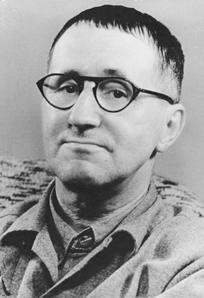
“Art is not a mirror held up to reality but a hammer with which to shape it.”
Bertolt Brecht
Bertold Brecht is famous for creating “epic theatre”, a style that constantly reminds the audience they’re watching a performance, instead of drawing them into the world of the play. Epic theatre is also called “dialectical theatre” or the “theatre of alienation”. The style is in stark opposition to the traditional ‘well-made’ play of “dramatic theatre” or “Aristotelian drama”. Brecht did not invent the term “Epic Theatre” (it was first used in connection with
revolutionary experiments by director Erwin Piscator) but Brecht is the style’s most famous champion.
At the heart of Epic Theatre is the ‘alienation effect’.
The original German term is “Verfremsdungeffekt”, which literally means “the effect of making strange”. Brecht wanted audiences to realise that their way of seeing the world was dictated by habit; he wanted to teach them to challenge their preconceptions and look at things with fresh eyes.
EPIC THEATRE CONTENT:
• Aims to make the audience THINK rather than FEEL
• Examines moral problems and dilemmas without resolving them
• Is often structurally haphazard, rather than progressing in an orderly way
EPIC THEATRE PRESENTATION:
• Promotes interaction between performers and audienceincluding players addressing the audience directly
• Interrupts the action with songs and poems to stop the audience becoming ‘lost’ in the story
• Uses symbols, such as signs, film, screens, projection, and flags, to highlight ideas in a non-naturalistic way
• Shows the stage mechanicsthe workings of the set, props and lights are visible rather than masked
“The dramatic theatre’s spectator says: Yes, I have felt like that too -- Just like me--It's only natural -- It'll never change-The sufferings of this man appal me, because they are inescapable --That's great art; it all seems the most obvious thing in the world -- I weep when they weep, I laugh when they laugh.
The epic theatre’s spectator says: I'd never have thought it -- That's not the way -- That's extraordinary, hardly believable -- It's got to stop -- The sufferings of this man appal me, because they are unnecessary -- That's great art; nothing obvious in it -- I laugh when they weep, I weep when they laugh.” Bertolt Brecht
EXTENSION ACTIVITIES
• Identify three theatre technologies used in this production that were typical of Epic Theatre. Describe them and explain how they contributed to the alienation effect.
• What is your response to Epic Theatre, based on this production and/or others you may have seen? Would you prefer to see an Epic or a dramatic performance? Why?
• Try staging one of the scenes from this play in a naturalistic mode. What difference does this make to the characters? Does it change the meaning of the lines, or affect your response to them?
Brecht outlined the differences between Epic Theatre and traditional Dramatic Theatre in a chart published in Brecht on Theatre in 1957:
DRAMATIC THEATRE EPIC THEATRE
Plot
Play has a beginning, middle and end. Issues raised are resolved.
Implicates the spectator in a stage situation
Suggests that what the audience is seeing is just like real life; wears down capacity for action.
Provides spectator with sensations
Achieves ‘catharsis’, the release of emotions.
Experience
The audience is caught up in the ‘world’ of the play.
The spectator is involved in something
Suggestion
Instinctive feelings are preserved
The spectator is in the thick of it, shares the experience
The human being is taken for granted
The human being is unalterable
Preconceptions are reinforced; ‘this is the way it is’.
Eyes on the finish
One scene makes another
Linear development
Narrative
Performance begins anywhere, continues and stops. Issues are not resolved.
Turns the spectator into an observer but arouses the capacity for action
The audience must question what they are seeing.
Forces spectator to take decisions
Presents pain and suffering as problems to be solved.
Picture of the world
The audience is not emotionally involved in the play.
The spectator is made to face something
Argument
Brought to the point of recognition
The spectator stands outside, studies
The human being is an object of inquiry
The human being is alterable and able to alter
Change is possible, for individuals and the world.
Eyes on the course
Each scene for itself
In curves
Evolutionary determinism Jumps
The human being is a fixed point
Thought determines being
The human being is a process
Social being determines thought Feeling
Audience is encouraged to engage with their emotions.
Reason
Audience is required to question and to think.
About the Playwright
German-born playwright, poet and director, Bertolt Brecht was born in Augsburg, Germany in February 1898.
Following a period working as assistant to Max Reinhardt at the famous Deutsches Theater, he
established himself as a playwright and director during the 1920s and early 1930s with plays such as Baal, Man Is Man, The Threepenny Opera and The Mother. It was during this period that he started to form his theories of epic theatre which informed so much of his later work. In 1930, the premier of Brecht and Weill’s Rise and Fall of the City of Mahagonny caused a riot as the increasingly influential Nazi Party objected to its morality and critical tone. When Hitler came to power in 1933, Brecht and his wife, actress Helene Weigel, left Germany and lived in a number of European cities before eventually settling in the USA in 1941 where he remained until 1947.
During the war years, he wrote many of his best-known plays, including The Life of Galileo. After the war he returned to Europe and formed the Berliner Ensemble. Brecht died in Berlin on 14 August 1956.
Brecht’s life was marked by conflict and controversy.
Here are some key events:
• Born in 1898, in Augsburg, Germany.
• Baptised a Protestant under the name Eugen Berthold Friedrich Brecht.
• Enrols in university in Munich to avoid the draft; attends for one semester before being drafted.
• Serves as a medical orderly for six months at the end of World War I.
• Finishes his first play, Baal, in 1918.
• Son (Frank) is born to his lover, Paula Banholzer, in 1919.
• Joins the Independent Social Democratic party in 1919, beginning a lifelong association with communism.
• First theatrical production, Drums in the Night, presented in Munich in 1922.
• Marries the opera singer and actress Marianne Zoff in 1922.
• Daughter (Hanne Hiob) is born in 1923.
• Moves to Berlin in 1924 and becomes consultant at Max Reinhardt's Deutches Theater.
• Son (Stefan) born to his mistress, actress Helene Weigel, in 1924.
• Divorces Marianne Zoff in 1927.
• Works in successful collaboration with Elisabeth Hauptman and Kurt Weill throughout the late 1920s.
• The Threepenny Opera first performed to great acclaim in 1928.
• Marries Helene Weigel in 1929.
• Daughter (Barbara) born to Weigel in 1930.
• The Rise and Fall of the City of Mohagonny causes riots at the premiere in Leipzig in 1930.
• In 1932, releases a film, Kuhle Wampe, about the unemployed living in shacks. It premieres in Moscow but is banned in Germany.
• Forced to leave Germany in 1933 by Hitler’s rise to power.
• Flees to Denmark and spends next few years in exile travelling throughout Scandinavia.
• German citizenship revoked in 1935.
• Granted United States visa in 1941.
• Lives in the US with his family for seven years, in Santa Monica and New York.
• Becomes a member of the Council for a Democratic Germany in 1944.
• Child born to Ruth Berlau in 1944; it does not survive.
• Called before the House of Un-American Activities in 1947. Testifies that he is not a member of the Communist Party.
• Returns to Germany with his family in 1948.
• Founds the Berliner Ensemble with Helene Weigel in 1949.
• Receives the Stalin Peace Prize in 1955.
• Dies of a heart-attack in 1956, at the age of 58.
“In his own life and in his writing, Brecht will literally recommend embracing the butcher, suggesting compromises with the Nazis in the case of his own brother and with the murderous Stalin regime when his own neck was at stake, and… making compromises both with witch hunters in America, and the Stalinist regime of the postwar German Democratic Republic. In real life, Herr Bertolt Brecht was always full of excuses as to why it is too dangerous for him to practice kindness in the present.”
John Fuegi, Brecht & Co.
Epic Production Design
Addressing the cast and crew at the design presentation on the first day of rehearsal, director Colin McColl talks about how he and the creative team developed the production’s aesthetic in response to the play’s themes:
“I was interested in ideas of containment of knowledge, knowledge as a commodity and how knowledge gets dispersed. There seemed to be a nice parallel between the scientific discoveries of the seventeenth century when the play is set and the modern post-war period, the late 1940’s to early 50s, which also saw a great outburst of knowledge. It was the cold war period, the beginning of the technological age, and the nuclear age.”
Set Design: Sean Coyle
Whilst not slavish to the post-war period, the production design is informed by it.
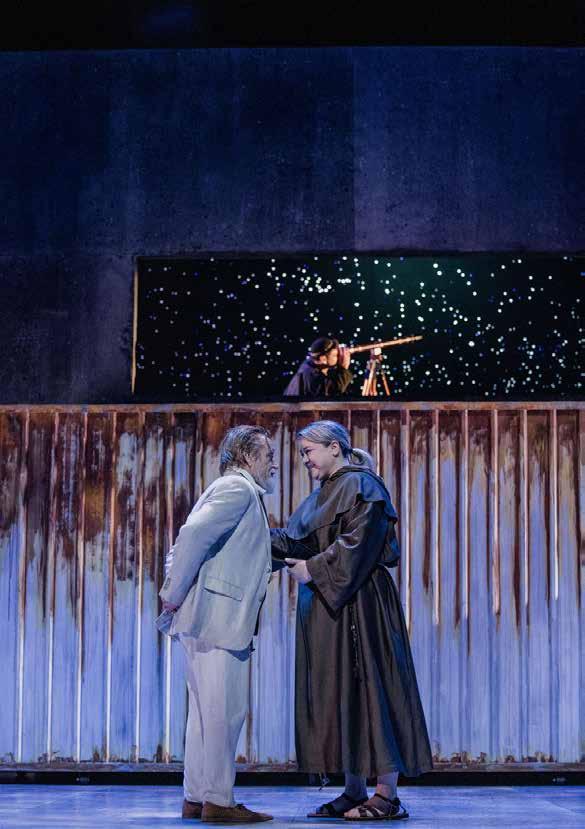
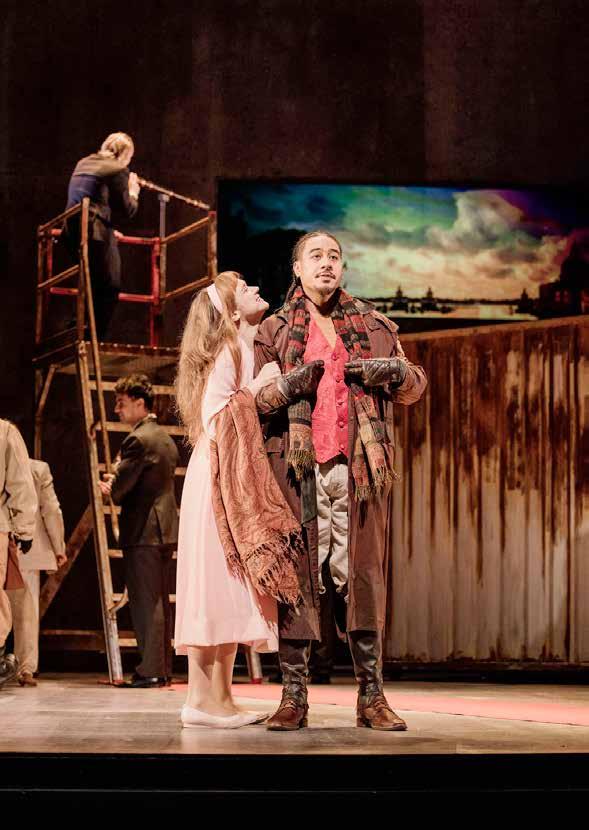
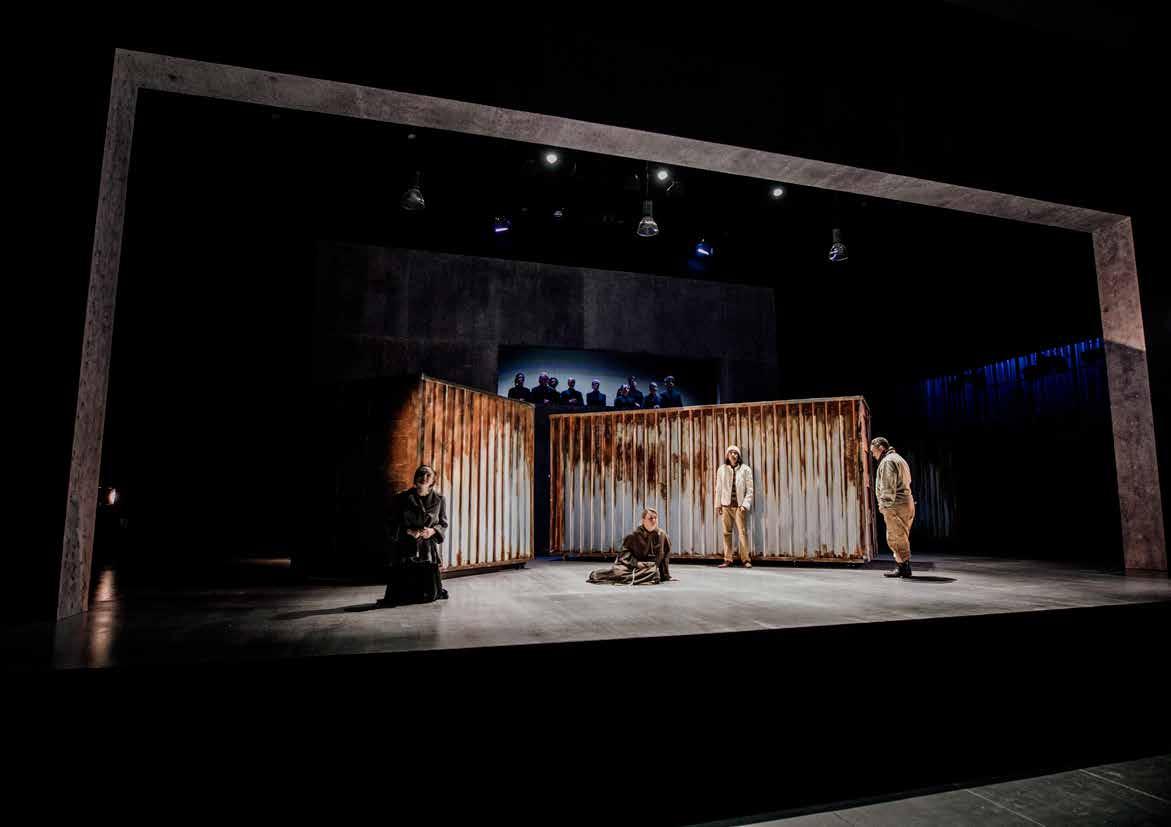
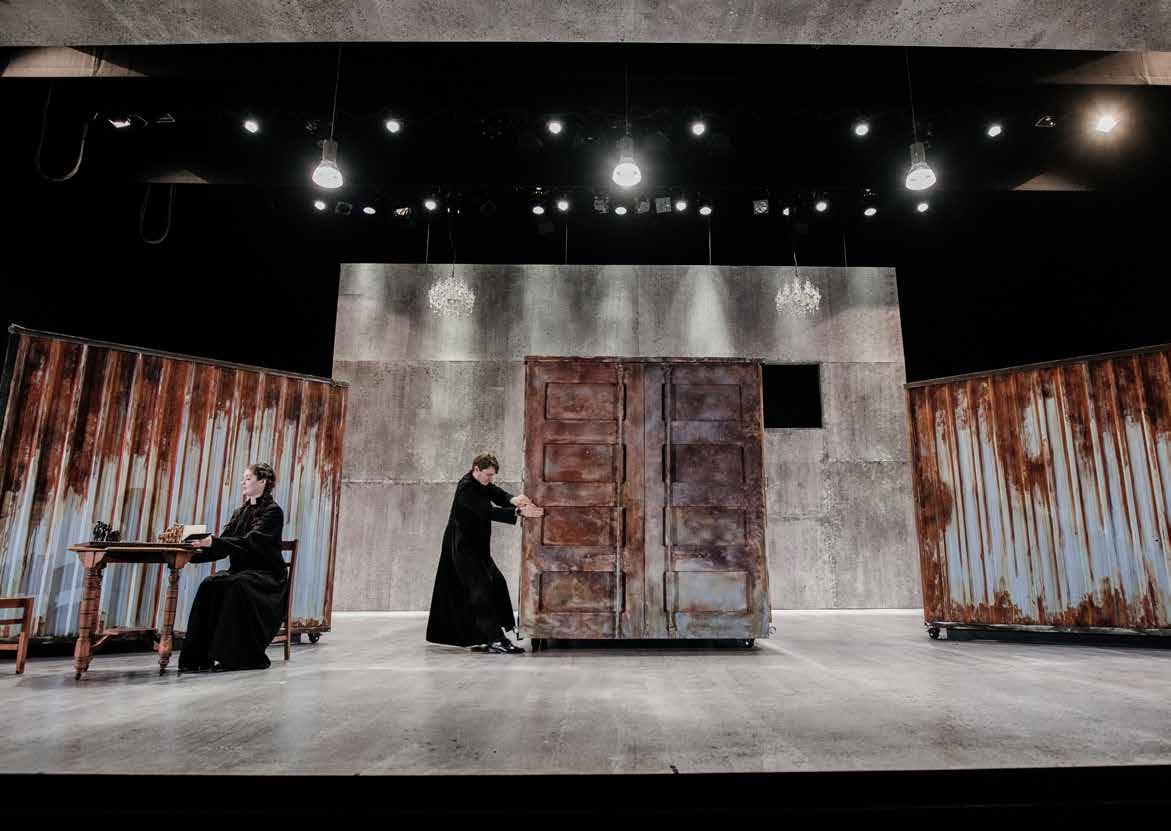
You can see the influence of brutalist architecure in the set design by Sean Coyle with its concrete floor, concrete back wall (with large opening) and concrete false proscenium arch. This is echoed by the industrial shipping containers, large ladder and the use of ‘clunky technology’ like overhead projectors.
Sean tells the company, “Containers seemed an obvious choice for looking at how knowledge is contained, commodified, and spread around the world.” Like much of the stage furniture, each container moves, and the large scaffold staircase is on lockable wheels (like you would find in a warehouse). They can be configured to create different stage pictures, different scales of spaces, and various entrances and exits.
The largest container is 2.4 metres high with lockable wheels. It is used as Galileo’s roof where he and Federzoni watch the stars. When turned around completely it opens out to reveal the interior of the Vatican.
The other two smaller containers are scaffold towers dressed to look like containers, and as they are turned the scaffold skeleton is deliberately visible to the audience - in true Brechtian style.
We can also see all the workings of the theatre - everything in the wings, props tables, stage managers, actors changing, and waiting to come on.
Similarly, the scene changes are not elegant transitions but seen in a brutal way under worker lights in full view of the audience. Colin says, “We snap from one scene into a scene change, then back into the next scene. Its like fifteen scenes of Galileo’s life, we see the character in this situation, then that and there’s thinking time between each scene so then the audience puts it all together at the end of the evening.”
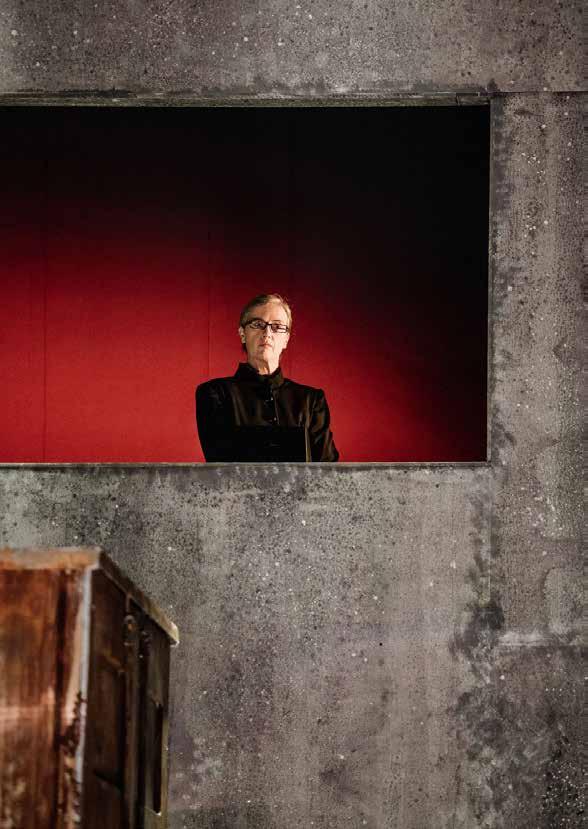
Another set element is the windows. A large window flies in to the space when Galileo moves to the lavish court of the Medicis. Galileo writes on the window, like a screen, and it creates another layer of space and views between the largest container and the back wall with its sinister opening.
The window on the back wall serves several purposes. It is a projection screen conveying images by visual designer Harley Campbell that set the location, and a surveillance tower where various characters appear to watch Galileo.
Scene titles are projected on to the false proscenium so we know what’s going to happen before we see it. In keeping with the Cold War aesthetic the font is old fashioned typewriter typeface.
Costume Design: Elizabeth Whiting
There are 80 costumes in the play.
Costume designer Elizabeth Whiting tells the company,
‘’Galileo values the working man. I wanted to make the contrast between the working people and the people in power, including the Church. So, I have done this with colour. The working people are in earth tones, whilst the wealthy are in colourful luxurious fabrics and the priests are in black cassocks. The Pope wears all the riches of the Church. Galileo is in light colours to stand out from the set.”
Elizabeth has incorporated some period touches of the 1940s & 50s into the costumes off the Grand Inquisitor, and she injects colour into the party scene in Rome with
a hint of seventeenth century high camp in the masks, lip stick and eye shadow. The Pope is dressed in all his glory in full view of the audience.
A challenge of the production is actors doubling as other characters. Hera Dunleavy, for example, plays lowly Mrs Sarti and the sinister Grand Inquisitor. It is important to contrast the costumes of these two characters to make the difference clear to the audience.
Other actors play one character only, but age 30 years in the play (Andrea, Virginia, Galileo). This is achieved without adding makeup, but by costume and the actor’s characterisation.
Music: John Gibson
“In the dark times Will there also be singing? Yes, there will also be singing. About the dark times.”
Bertolt Brecht
Music has always been integral to epic theatre. Songs and music provide breaks in the narrative for ideas to be explored in more depth, questions posed to the audience, and the mood altered. Musical director John Gibson points out that Brecht “makes musical styles fight”. For this production, John wants music that is emblematic of power. John wants to use music in the same way that the Church did at the time, to convey the
beauty and majesty of God to the people. John has sourced a recorded reproduction of a Mass in 1610 which he has had deconstructed (‘destroyed’) by guitarist David Kilgour. John is also using recordings of organ pipes for reverberation to create sinister sounds that build pressure. Sometimes the soundtrack in the scene changes will be deliberately discordant and irritating to shake the audience up.
EXTENSION ACTIVITIES
• Discuss the idea of Brechtian staging in relation to this production. What stage mechanics were visible to the audience? How did the performers contribute to creating the performance environment as part of their stage action? What purpose did this serve?
• Brechtian theatre is often performed on a bare stage with no set whatsoever. Imagine you are staging such a production. Identify how you could use props / costumes to indicate changes in time or location.
• Discuss the upstage window effect that provided the symbolic and literal representation of surveillance. What was the impact of this effect?
• How did lighting contribute to the alienation effect in this production?
• Find three advertising or magazine images of contrasting ‘characters’. Explain what you can read about this character from the clothing each is wearing. Now cut up the images and combine them to make a new character. How does your creation differ from its original elements?
• Choose one musical moment from the production and explain how music was used to create or enhance the alienation effect. What did the timing / style / production method of this interlude contribute?
Readings and Resources
Galileo Galilei – Wikipedia https://en.wikipedia.org/wiki/Galileo_Galilei
Accessed 15.06.21 Web.
Life of Galileo website https://lifeofgalileo.weebly.com/index.html
“Bertolt Brecht and the Epic Theater”. Oregon State University. http://oregonstate.edu/instruct/ger341/brechtet.htm
Publication date unknown. Accessed 15.06.21 Web.
“An Introduction to Brechtian Theatre” - National Theatre https://www.youtube.com/watch?v=l-828KqtTkA
Accessed 15.06.21 Web.
Fuegi, John. Brecht & Co: Sex, Politics and the Making of the Modern Drama. Grove Press: New York, 2002. Print.
Thomson, Peter and Glendyr Sacks. The Cambridge Companion to Brecht. Cambridge University Press: New York, 2008. Print.
ATC Creative Learning
Encouraging acts of imagination
Curriculum Links
ATC Creative Learning promotes and encourages teaching and participation in theatre and acts as a resource for secondary and tertiary educators. It is a comprehensive and innovative arts education programme designed to nurture young theatre practitioners and audiences.
Whether we are unpacking a play, creating a new work, or learning new skills we are encouraging habits of thinking that foster acts of imagination to take place.
ATC Creative Learning has direct contact with school
students throughout the greater Auckland region with a focus on delivering an exciting and popular programme that supports the Arts education of Auckland students and which focuses on curriculum development, literacy, and the Arts.
ATC Education activities relate directly to the PK, UC and CI strands of the NZ Curriculum from levels 5 to 8. They also have direct relevance to many of the NCEA achievement standards at all three levels.
All secondary school Drama students (Years 9 to 13) should be experiencing live theatre as a part of their course work, Understanding the Arts in Context. Curriculum levels 6, 7 and 8 (equivalent to years 11, 12 and 13) require the inclusion of New Zealand drama in their course of work.
The NCEA external examinations at each level (Level 1 - AS90011, Level 2 - AS91219, Level 3 - AS91518) require students to write about live theatre they have seen. Students who are able to experience fully produced, professional theatre are generally advantaged in answering these questions.
YANG/ YOUNG/
BY SHERRY ZHANG AND NUANZHI ZHENG DIRECTED BY NATHAN JOE