

WASHINGTON, D.C. — Beginning February 1, 2026, the Transportation Security Administration (TSA) will begin charging a $45 fee to domestic airline travelers who arrive at airport security checkpoints without a REAL ID-compliant credential or another TSA-accepted form of identification, according to official agency guidance.
The fee is part of a new TSA identity-verification option known as ConfirmID, which allows travelers lacking compliant identification to attempt to proceed through security after completing additional verification steps. TSA has said the change is intended to recover administrative costs associated with enhanced screening and to place that burden on individual travelers rather than taxpayers.
Who must pay the fee
Under federal rules, travelers 18 years old and above are required to present acceptable identification for domestic

House referral sends verified complaints to the justice committee, triggering the first constitutional review stage without a finding on the merits.
by AJPress
MANILA, Philippines — Impeachment proceedings against Ferdinand Marcos
formally began after the House of Representatives referred two verified impeachment complaints to the House Committee on Justice during plenary session on Monday, January 26. The referral followed the inclusion of both complaints in the Order of Business

Decision framed as a voluntary step to protect the credibility of House processes connected to impeachment matters involving his father.
by AJPress
by AJPress
LGUs get P1.2 trillion share from national tax revenue
by Elijah FElicE RosalEs Philstar.com
MANILA, Philippines — Local government units (LGUs) have received a P1.19-trillion share from tax collection, giving them the capital they need to roll out infrastructure and welfare projects without delay.
The Department of Budget and Management (DBM) yesterday said it has issued the national tax allotment (NTA) for LGUs amounting to P1.19 trillion for 2026.
Budget Secretary Rolando Toledo approved the issuance of the NTA through a special allotment release order, corresponded by notices of cash allocation, to ensure that local governments can pursue programs and projects on time.
“The timely release of the 2026 NTA en-
Senate completes reshuffle of ethics committee membership
by AJPress
the integrity of the House of Representatives and maintain public trust in the legislative process.
In a written statement released Monday, January 26, 2026, Marcos said the decision was voluntary and not required under existing law.
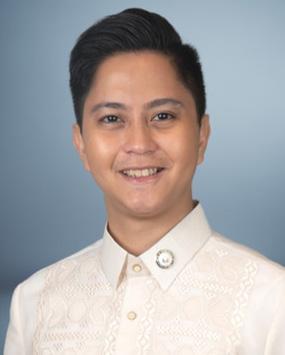
MANILA — House Majority Leader Sandro Marcos has formally recused himself from all deliberations of the House Committee on Rules related to impeachment matters involving his father, Ferdinand Marcos Jr., citing the need to preserve u PAGE 2
QUEZON CITY, Philippines — Former senator Bong Revilla has been transferred to the general population of the New Quezon City Jail Male Dormitory after completing the mandatory seven-day medical quarantine for newly admitted detainees, the Bureau of Jail Management and Penology (BJMP) confirmed.
BJMP officials said Revilla was moved out of quarantine earlier this week and is now sharing a cell with
persons deprived of liberty who are not connected to his case. Jail authorities said the arrangement follows standard custodial procedures and does not involve any special classification or accommodation.
The same medical clearance and transfer applied to four of Revilla’s six co-accused who are currently detained at the facility: engineers Brice Hernandez, Jaypee Mendoza, and Arjay
MANILA — The Senate of the Philippines has completed changes to the membership of its Committee on Ethics and Privileges, formally reconstituting the panel after weeks in which it operated without a full roster.
The revised committee lineup was approved during a plenary session following a motion by Senate Majority Leader Juan Miguel Zubiri. The changes were adopted without objection, in line with Senate rules governing standing committee organization.
As part of the reshuffle, Senators Ronald “Bato” dela Rosa and Joel Villanueva
PAGE 1
by the Committee on Rules.
The Office of the Secretary General read the entries during the Additional Reference of Business, a standard parliamentary procedure conducted between lawmakers’ privilege speeches.
The session was presided over by Yevgeny Vicente Emano, who announced the referral to the justice committee. Under House rules, the committee is tasked with determining the sufficiency in form and substance of the complaints,
including compliance with constitutional and procedural requirements.
At this stage, the referral does not constitute a finding of merit or wrongdoing. The committee’s review is preliminary and focuses on whether the filings meet the thresholds required to proceed further under the Constitution and House rules.
No details of the allegations were discussed on the plenary floor, consistent with established practice governing impeachment proceedings. Lawmakers also did not debate the mer-
its of the complaints during the session.
The House leadership has not announced a timetable for the committee’s initial actions. Any subsequent steps, including hearings or a vote on sufficiency, will depend on the committee’s schedule and the constitutional thresholds applicable to impeachment cases.
Under the Constitution, an impeachment case advances to the Senate for trial only if at least one-third of all members of the House vote to approve articles of impeachment. n
Domasig, and accountant Juanito Mendoza. All four completed the required quarantine protocols, according to the BJMP.
The quarantine period is a routine intake requirement across BJMP facilities. It is intended to prevent the spread of communicable diseases and to allow medical personnel to assess the condition of detainees before they are admitted to the general population. Officials
reiterated that the policy is applied uniformly, regardless of a detainee’s public profile or former position in government.
Revilla and his co-accused are in custody in connection with charges pending before the Sandiganbayan involving an alleged P92.8-million flood-control project in Pandi, Bulacan, based on prosecution filings and court records. The case remains unresolved, and no judgment has been issued.
Court proceedings have not advanced to trial. Arraignment was previously deferred pending the resolution of motions filed by the defense. Revilla has denied the allegations against him.
BJMP officials emphasized that the agency’s mandate is limited to the safekeeping and management of persons deprived of liberty and does not extend to commenting on the merits of cases under judicial review. n
sures that local governments have the resources that they need to deliver services without delay. This is how the 2026 budget works for the people; it is by making sure funds reach communities when they are needed most,” Toledo said.
The NTA is leaned on by local governments to sustain, if not expand, priority programs. It funds disaster preparation, education support, health care and local infrastructure, among others.
As such, Toledo said it is important that local governments gain access to their share in the NTA as soon as possible to avert, if not minimize, interruptions in service delivery.
“By releasing the NTA in full and on time, we are enabling local governments to act decisively, respond to local needs and bring immediate benefits to their constituents,” Toledo said.
Moreover, Toledo said the immediate release of

the NTA underscores the government’s sincerity in strengthening local capacity by providing for their fiscal requirements.
Under the Constitution and the Local Government Code, the NTA is the automatic appropriation received by local governments annually. The NTA is distributed to provinces (23 percent), cities (23 percent), municipalities (34 percent) and barangays (20 percent).
The amount is computed based on several factors, including the population census and land area. Since the
“This decision is guided not by legal compulsion, but by a higher obligation—to preserve the integrity of the House of Representatives, to protect the credibility of its processes, and to uphold the public’s trust in our constitutional system,” he said.
Marcos, who represents Ilocos Norte’s first congressional district, said his recusal was intended to remove any potential questions regarding the fairness, objectivity, or legitimacy of House proceedings connected to impeachment-related matters involving the President.
“This step ensures that no questions regarding the fairness, objectivity, or legitimacy of the process may be raised by the public,” he added.
The House Committee on Rules is responsible for determining the scheduling and flow of measures brought before the chamber, including procedural matters that may arise from impeachment complaints once these enter the legislative process. Under the Philippine Constitution, impeachment proceedings originate in the House of Representatives and advance only upon compliance with prescribed procedural requirements.
Marcos emphasized that stepping aside from impeachment-related discussions does not affect his broader responsibilities as House Majority Leader.“I remain committed to my duties as House Majority Leader in all other matters,
and I express full confidence that the House will act with independence, sobriety, and fidelity to the Constitution,” he said.
House rules do not explicitly require lawmakers to recuse themselves from proceedings involving relatives. However, voluntary recusals have been employed by legislators in the past to address potential conflicts of interest or perceptions of undue influence.
House officials have not indicated whether addition -
al internal safeguards will be adopted in connection with impeachment-related deliberations. The House leadership has consistently stated that all constitutional processes will be observed should any impeachment complaint reach the appropriate stage for consideration.
House Majority Leader says decision aims to safeguard institutional integrity and public trust as impeachment-related procedures remain at an early stage. n
Supreme Court’s Mandanas ruling was implemented in 2022, local government share in revenue collection has increased.
With higher revenue gains, the Mandanas Ruling devolved the task of maintaining infrastructure projects and social services to local governments.
Toledo reminded local leaders to spend their NTA share solely on authorized purposes, as he also asked them to comply with reporting requirements for accountability and transparency. n
were removed from the ethics panel. Their replacement finalized the committee’s composition, enabling it to resume deliberations on matters within its jurisdiction.
Under Senate rules, the Committee on Ethics and Privileges is tasked with overseeing issues related to the conduct, rights, privileges, dignity, integrity, and institutional reputation of the Senate and its members. The panel has authority to receive,
evaluate, and act on complaints involving alleged ethical violations, subject to established procedures and due process safeguards.
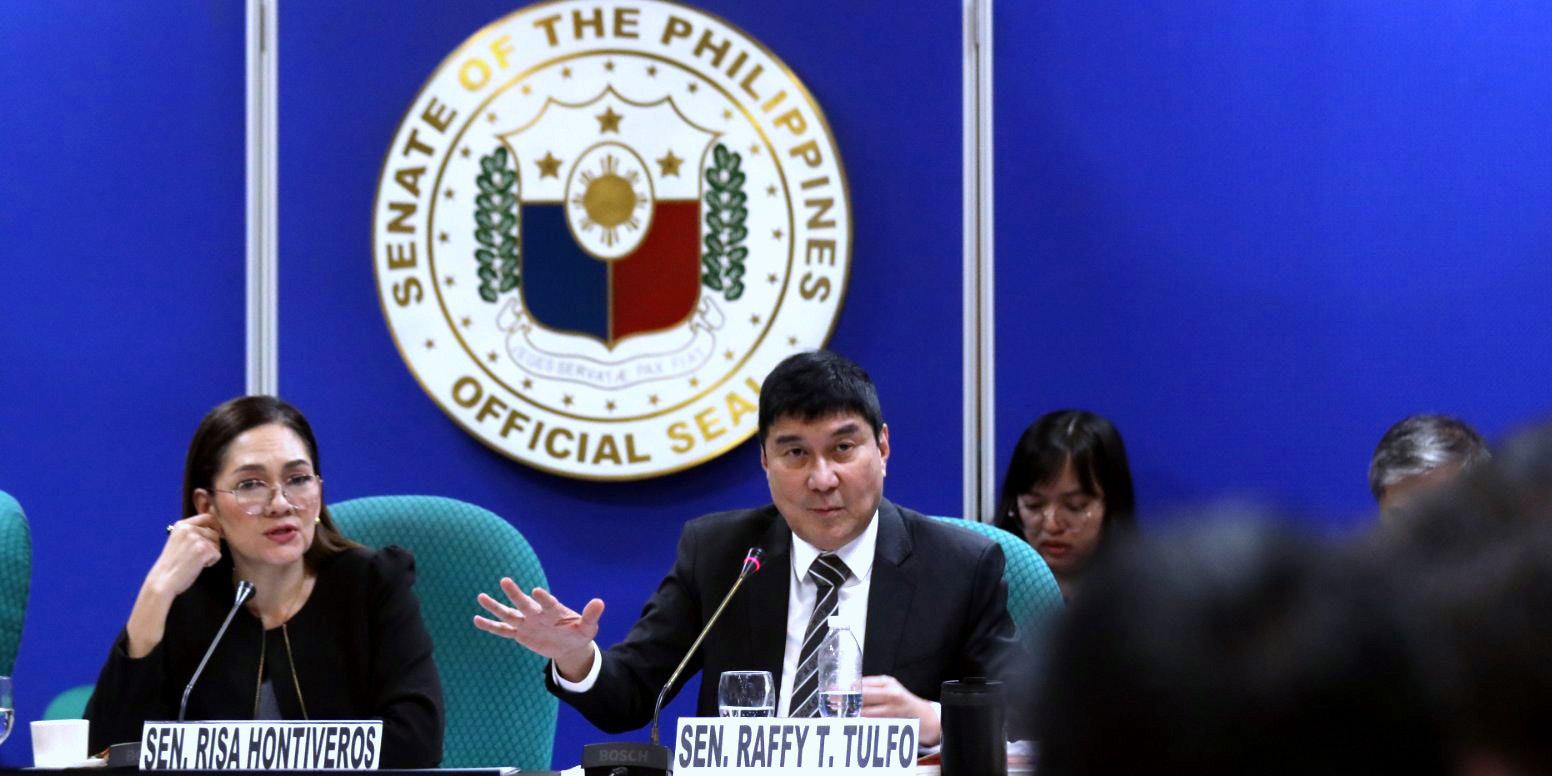
The committee is chaired by Senator JV Ejercito, with Senator Francis “Kiko” Pangilinan serving as vice chair. Other members include Senators Risa Hontiveros and Erwin Tulfo, alongside ex officio members drawn from Senate leadership positions, as provided for under chamber rules.
Ex officio membership is intended to ensure continuity and representation from both the majority and minority blocs. The completion of the committee’s membership follows concerns raised in recent months about delays in addressing pending ethics-related matters. Senate officials have previously cited procedural constraints, noting that certain actions could not proceed while the panel remained incomplete. n
The U.S. State Department is reminding travelers with upcoming trips to factor longer passport timelines into their planning, particularly during peak months.
by AJPress
WASHINGTON, D.C. —
Passport applications are taking longer to process in 2026 as rising international travel demand collides with predictable seasonal backlogs, according to the U.S. Department of State.
State Department guidance indicates that passport processing is typically fastest from October through December, when international travel volumes are lower. Processing times lengthen beginning in late winter and extending through summer, as applications surge ahead of spring break, summer vacations, studyabroad programs, and overseas family travel.
Officials familiar with passport operations say the system functions year-round with largely fixed staffing and infrastructure. During peak travel months, the sharp

increase in applications results in longer intake queues before files reach adjudicators, extending overall turnaround times even in the absence of policy changes. Renewals, the department notes, are not automatic. Each application undergoes full adjudication, including verification of U.S. citizenship, identity confirmation, fraud and security screening, and photo and data review. Applications involving name
changes or documentation discrepancies require additional checks, adding to delays when volumes are high.
Mailing and intake logistics further compound wait times. Published processing windows generally refer only to the period an application is under review at a passport agency or center. They do not include the time it takes for applications to arrive by mail or for completed
PAGE 4
PAGE 1
air travel. To avoid the fee, passengers must show a REAL ID-compliant driver’s license or state ID, or another TSA-approved credential, including a U.S. passport or passport card, permanent resident card, military ID, or certain Department of Homeland Security trusted traveler cards.
Travelers who arrive without any of these may use the ConfirmID process by paying the $45 fee.
TSA has stressed that payment does not guarantee clearance. If officers are unable to verify a traveler’s identity, the individual may be denied access to the security checkpoint and will not be permitted to board a flight. The fee is non-refundable, regardless of the outcome.
by AJPress
WASHINGTON, D.C. —
The U.S. House of Representatives on January 22 approved the Department of Homeland Security’s annual funding measure as part of a broader $1.2 trillion federal spending package, sending the legislation to the Senate days before a deadline to avert a partial government shutdown.
billion in discretionary funding for fiscal year 2026. About $10 billion of that amount would be directed to ICE, keeping the agency’s budget near current levels.
The $45 fee covers a 10-day travel window, allowing multiple domestic flights within that period. Travel beyond the 10 days would require a new payment. TSA has indicated that payment must be completed online through a federal payment system, not at the checkpoint.
REAL ID enforcement background
The fee follows the start of full REAL ID enforcement in May 2025, nearly 20 years after Congress passed the REAL ID Act of 2005. The law established federal standards for state-issued identification used for official purposes, including domestic air travel.
Before full enforcement,
How ConfirmID works ConfirmID involves an identity verification process paired with additional security screening. TSA advises travelers who plan to use the option to arrive earlier than usual, as the procedure may take significantly longer than standard screening.
TSA allowed travelers without compliant identification to fly after enhanced screening. The ConfirmID fee formalizes that exception while adding a fixed cost.
Children under 18 are generally not required to present identification for domestic travel and are not subject to the fee when traveling with an adult. What travelers should do
TSA reports that most passengers already present compliant identification, but urges travelers to confirm their ID status before flying. REAL ID-compliant cards are typically marked with a star, though placement varies by state.
Travelers with passports or other accepted federal IDs do not need a REAL ID to fly domestically. For others, obtaining compliant identification remains the most reliable way to avoid fees and delays. n
The Homeland Security bill passed on a 220–207 vote, overcoming firm Democratic leadership opposition tied largely to continued funding for Immigration and Customs Enforcement. The measure now awaits Senate consideration ahead of a January 30 funding deadline.
A narrow vote under deadline pressure
House leaders moved the bill forward as part of a multi-bill appropriations package intended to keep federal agencies operating through the remainder of the fiscal year. Supporters said the compressed timeline left little room for renegotiation, while critics argued that urgency was used to sidestep deeper policy disputes over immigration enforcement.
Funding levels and departmental scope
Under the legislation, the Department of Homeland Security would receive approximately $64.4
The DHS allocation also covers a wide range of non-immigration functions, including disaster response and recovery, aviation and transportation security, maritime operations, protective services, and cybersecurity initiatives. Republican lawmakers emphasized those missions in arguing for passage despite controversy surrounding ICE.
Democratic objections center on enforcement oversight
House Democrats said their opposition was rooted in what they described as insufficient limits and accountability measures governing ICE operations.
Lawmakers pointed to concerns over enforcement tactics, detention practices, and use-offorce standards, arguing that Congress should impose clearer statutory guardrails as immigration enforcement activity increases in multiple cities.
The debate intensified after a recent ICE-related shooting in Minneapolis drew protests and renewed scrutiny of the agency. Democratic lawmakers stressed that investigations into the incident are ongoing, but said the episode highlighted longstanding con -
cerns about oversight and transparency. Negotiated changes fall short for critics Democrats involved in appropriations talks said the final bill included some concessions, including adjustments to specific enforcement and detention line items and additional funding for internal oversight functions. Party leaders, however, maintained that those changes did not meaningfully alter ICE’s operational authority or justify supporting the measure.
A small number of Democrats voted with Republicans, citing the need to keep the government open and fund essential DHS functions, but the majority of the caucus opposed the bill.
Senate action looms
The Senate is expected to take up the Housepassed funding package in the coming days. Any amendments would require further House approval before the measure could be sent to the president. Failure to enact funding by the end of the month would result in a partial shutdown affecting DHS and other agencies covered by the package.
The House vote underscores the persistent divide over immigration enforcement, even as Congress moves under deadline pressure to complete its annual spending work. n

passports to be delivered.
During peak periods, these steps can add several weeks, pushing total renewal timelines to as long as three months, even for otherwise straightforward cases.
Higher application volumes also tend to coincide with an increase in incomplete or incorrectly submitted forms, such as missing signatures, noncompliant photos, or in -
correct fees. Each issue requires manual follow-up, diverting staff resources and contributing to broader system slowdowns.
The State Department’s repeated advisories encouraging Americans to renew passports months in advance are intended to mitigate these recurring bottlenecks. Many countries require travelers to hold passports valid for at least six months beyond their dates of entry, and
airlines may deny boarding if documentation requirements are not met. Officials emphasize that seasonal backlogs are a recurring feature of the passport system. While processing speeds improve during slower months, applications submitted closer to peak travel periods face a higher risk of delay due to demand-driven constraints rather than individual applicant circumstances. n
MANILA, Philippines — Fugitive former Ako Bicol party-list representative Zaldy Co, who has been implicated in the flood control scandal, was in Stockholm, Sweden this January, based on a petition filed through his lawyers before the Supreme Court (SC).
In a petition for certiorari, an apostille dated Jan. 15 shows that Co appeared before a notary public in Sweden, namely Stockholm County Administrative Board notary public Beatrice Gustafsson.
“I certify that I was able to verify the identity of the client, and that the signature was performed by the client of their own free will,” the apostille read.
Gustafsson further noted that the certification was conducted in accordance with Swedish regulations.

supposed investigation to “validate his [Remulla’s] conclusion that Co is guilty.”
Cancel Co’s foreign passport


Another attachment, a Verification and Certification Against Forum Shopping also dated Jan. 15 was signed by Co in Stockholm, which stated: “I caused the preparation and filing of the foregoing petition.”
Void charges
In his petition, Co has asked the Supreme Court (SC) to declare as void the Nov. 14 resolution of Ombudsman Jesus Crispin Remulla which found probable cause to file charges against him in connection with an allegedly anomalous flood control project in Oriental Mindoro.
He also asked the SC to dismiss the subsequent charges against him before the Sandiganbayan.
Co, who is facing an arrest warrant but remains at large, noted that the interim report by the Independent Commission for Infrastructure, which was the basis of the ombudsman resolution, did not recommend the former lawmaker’s indictment for graft and malversation.
Co also accused Remulla of ignoring standard procedures and having “pre-judged” him, using only the ombudsman’s
He claimed that the ombudsman did not properly notify him of the charges and refused to furnish copies of the case records to him and his lawyers. He also said the investigation was conducted with “undue haste.”
The Supreme Court will deliberate on the petition for certiorari filed by Co to determine if it is covered by the rule prohibiting fugitives from seeking judicial relief.
Earlier this month, Co filed a petition asking the SC to declare as void the resolution of the Office of the Ombudsman finding probable cause to indict him for graft and malversation over a P289-million substandard flood control project in Oriental Mindoro.
Fugitives will be caught
Malacañang yesterday expressed confidence that the fugitives hiding abroad would be brought home following reports that Co is staying in Sweden.
Presidential Communications Undersecretary Claire Castro said that the President is not frustrated with the ongoing manhunt for the fugitives because he knows that law enforcement agencies are working to track down those who are trying to evade the law.
After reports surfaced that Co appeared before a notary public in Stockholm, Sweden, the government is seeking to limit his movements in Europe by having his foreign passport cancelled.
Interior and Local Government Secretary Jonvic Remulla said yesterday they are going to go hard on Co after a report over GMA News said the former lawmaker emerged in Stockholm on Jan. 15. Remulla said they are also coordinating with the government of Sweden.
The Office of the Ombudsman said it will not be distracted by the “dilatory tactics” of Co, after the latter, through his lawyer, filed a petition before the Supreme Court seeking a temporary restraining order (TRO) and/or writ of preliminary injunction to compel the ombudsman to desist from prosecuting his cases at the Sandiganbayan. Meanwhile, the ombudsman said it will not be distracted by the “dilatory tactics” of Co, after the latter, through his lawyer, filed a petition before the Supreme Court seeking a temporary restraining or der and/or writ of preliminary injunction to compel the ombudsman to desist from prosecuting his cases at the Sandiganbayan. — Emmanuel Tupas, Elizabeth Marcelo n


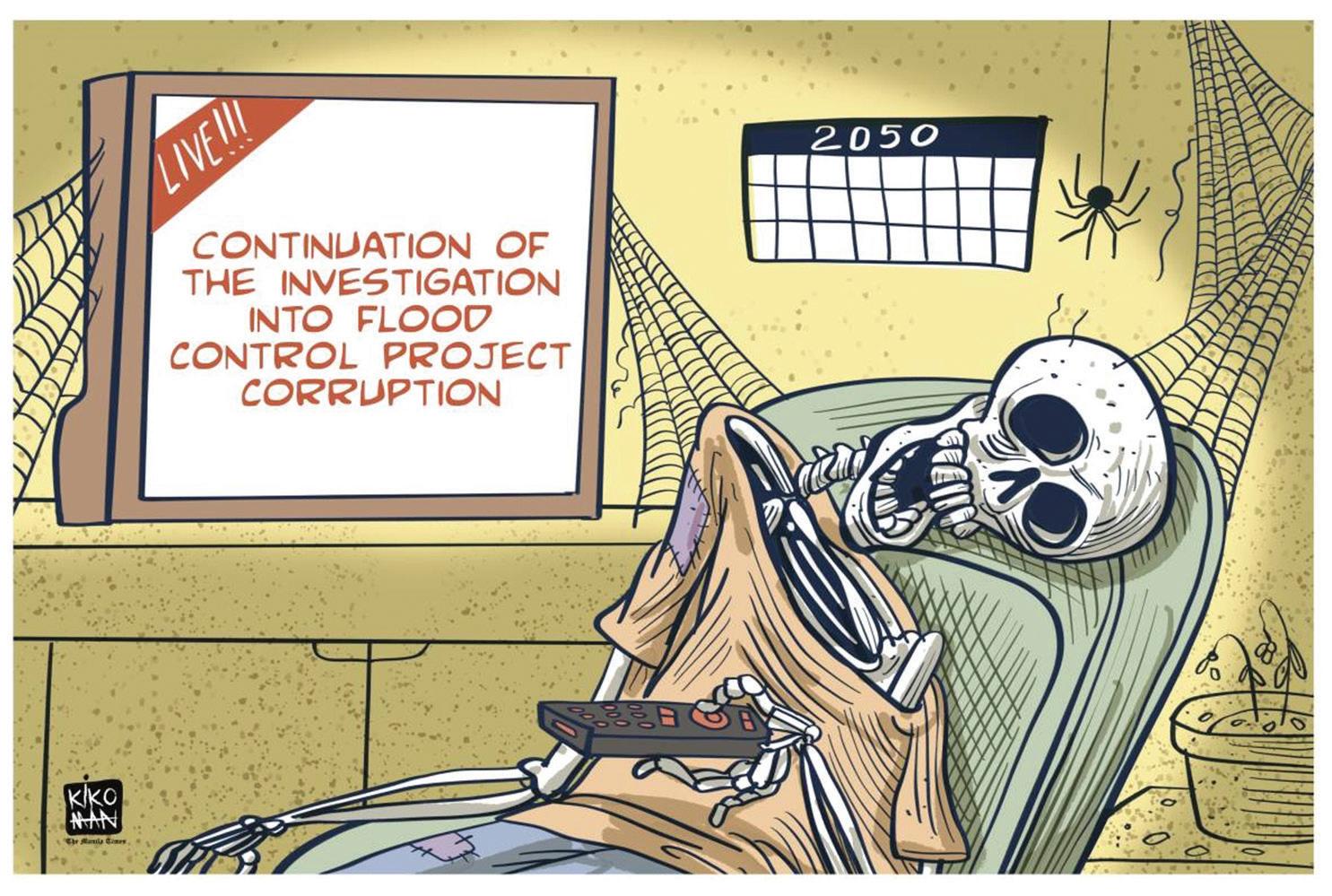
The debate over restitution in the flood control scandal has been clouded by rhetoric, but the underlying dispute is more precise and deserves to be stated plainly.
The debate over restitution in the flood control scandal has been clouded by rhetoric, but the underlying dispute is more precise and deserves to be stated plainly.
At issue is not whether restitution is lawful. Philippine law has long recognized the state’s authority to recover public funds believed to be improperly obtained. The contention lies in timing and conditionality: whether restitution may be required before a judicial finding of liability, particularly when tied to eligibility for witness protection.
This distinction matters, because it explains why businessman Pacifico Discaya
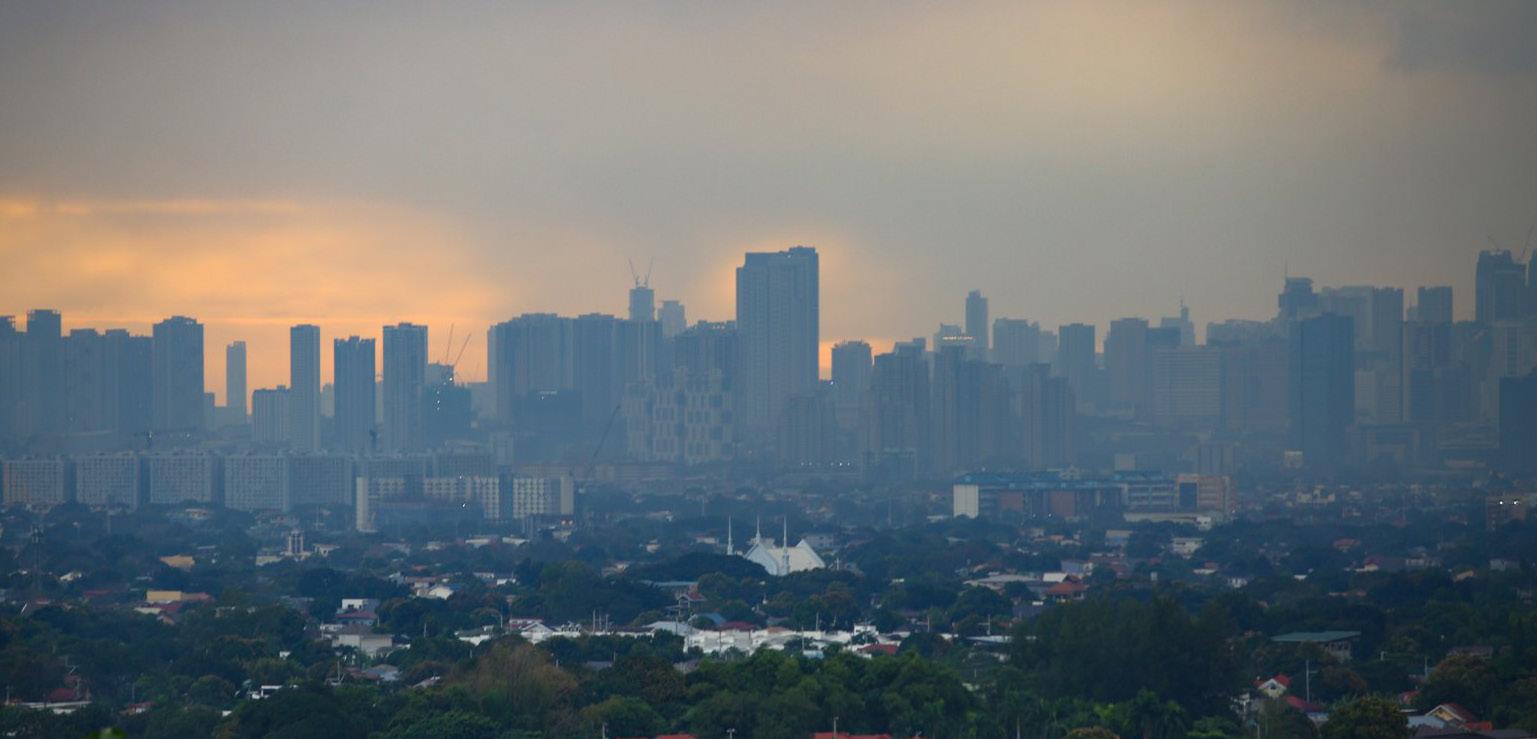
THE year 2025 will likely be remembered as a turning point in our nation’s history—a moment when corruption reached such magnitude that it could no longer be concealed or excused. Its scale and consequences became so damaging to the public good that denial itself ceased to be plausible.
For decades, corruption in public office had been tolerated as an integral perk of
has publicly said he felt “robbed” when asked to return money in connection with his possible cooperation in the investigation.
Discaya’s position, as articulated in media interviews, rests on a procedural objection. He argues that requiring the return of funds prior to conviction treats him as guilty before a court has ruled. In his framing, the money demanded represents contract payments he considers legitimate, not proven ill-gotten wealth. To compel repayment at this stage, he suggests, collapses the distinction between allegation and adjudication.
From his perspective, the restitution
power. It was rationalized as a by-product of a patronage-driven political system, its excesses softened by the belief that some benefits eventually trickled down. Lawmakers routinely inserted questionable items into the national budget, justifying them as legislative prerogatives and keeping them within what was assumed to be a “manageable” range. That equilibrium collapsed in 2025, driven by three developments few had anticipated.

First, destructive floods laid bare the consequences of years of neglect and plunder. Extreme weather easily overwhelmed flood control systems that, in many places, proved to be substandard or altogether missing. Billions of pesos spent on these projects—earlier touted by President Marcos as a centerpiece of his administration—were revealed as evidence of shoddy construction, gross overpricing, or outright fabrication.
Second, the ease with
requirement is not merely corrective but coercive. It conditions access to state pro -
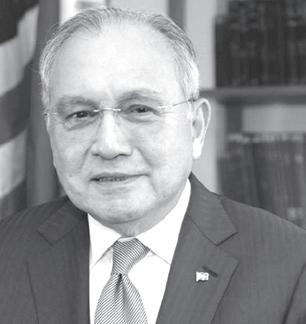
TO many of us diplomats in Washington, D.C., the continuing war in Ukraine remains one of the most sobering reminders that peace, once taken for granted in much of the world, is never permanent. What many initially assumed would be a short and decisive conflict has instead evolved into a brutal war of attrition. Cities have been destroyed and lives have been uprooted, with an entire generation of
tection on compliance with a demand he believes should only follow a final judicial
An
Ukrainians now forced to live under the constant shadow of violence and uncertainty.
Like my diplomatic colleagues, I continue to hope that a peace pact can still be achieved. History teaches us that even the most entrenched conflicts eventually find a political solution. Yet realism compels us to acknowledge that the dangers surrounding this war go far beyond Ukraine’s borders. This is no longer
just a regional conflict; it has become a central fault line in today’s global order, carrying with it the real and frightening possibility of a wider war. At the heart of this anxiety is Russian President Vladimir Putin’s long-standing ambition to reassert Moscow’s influence over territories that were once part of the Soviet Union. This desire for restored greatness may resonate with na-
by ian laqui Philstar.com
MANILA, Philippines —
Former Department of Public Works and Highways (DPWH) District Engineer Henry Alcantara is now in the custody of the Witness Protection Program (WPP).
Justice Secretary Fredderick Vida confirmed with reporters on Wednesday, January 21, that Alcantara is now at WPP.
"He is under now, officially, under the protective custody of the Witness Protection Program of the Department of Justice," Vida told reporters.
When asked where he would be brought, Vida said: "Any further information with exactly those details we cannot disclose."
Alcantara was earlier turned over by the Senate to the Department of Justice upon the agency's request, as he is a state witness in the flood control scandal.
On January 15, three former DPWH officials and one contractor were admitted as state
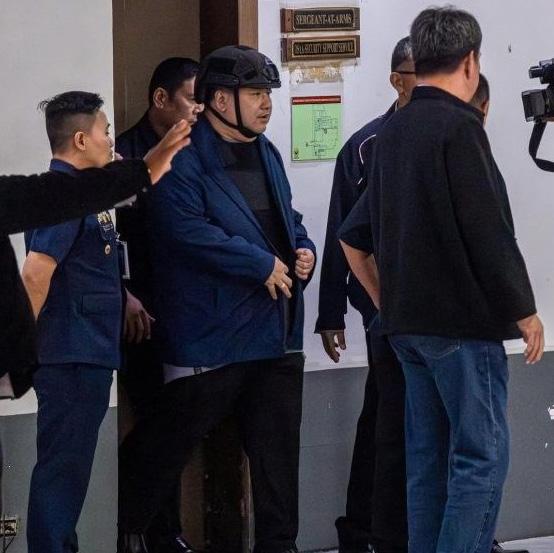
witnesses in cases involving alleged anomalous flood control projects.
One of the four officials is Alcantara, who has returned ill-gotten wealth amounting to P181 million. Other state witnesses include contractor Sally Santos, former DPWH Undersecretary Roberto Bernardo and Gerard Opulencia. n
The government sees the matter differently.
The Department of Justice has taken the position that restitution is a threshold obligation, not a penalty. Where public funds are under dispute and cooperation is sought, the state argues that it cannot allow those funds to remain in private hands while negotiations over immunity or protection proceed. Restitution, in this view, is meant to preserve public assets and prevent dissipation, not to declare guilt.
This policy approach reflects a practical concern. Corruption cases involving infrastructure often take years to resolve. Waiting for final judgments before recovering funds has historically resulted in assets disappearing, being transferred, or becoming unrecoverable. By requiring restitution upfront, the state prioritizes recovery for the public while legal proceedings continue.
The tension, then, is not rhetorical but structural.
property rights. The state emphasizes public interest and asset preservation. Both invoke due process, but they weigh its risks differently. One fears premature deprivation. The other fears permanent loss.
This is why the language surrounding restitution has become charged. When restitution is framed as extortion, it casts accountability mechanisms as abuse. When objections are dismissed as self-serving, legitimate procedural concerns risk being ignored. Neither framing serves public understanding. What is clear, however, is that restitution does not extinguish liability, nor does it confer immunity. Returning funds does not end prosecution, just as retaining them does not prove guilt.
Restitution operates in a separate lane from criminal adjudication. It is about restoration, not verdicts.
When they fail, the harm is immediate and tangible. Against that backdrop, asking whether restitution is uncomfortable for those implicated risks missing the larger moral center of the issue.
PAGE 6
tionalist sentiment in Russia, but it deeply unsettles Europe and creates unease for much of the international community. When territorial ambition is backed by military force, history shows us that escalation often follows, sometimes with catastrophic consequences.
clear and compelling.
China’s increasingly assertive actions in the Indo-Pacific region – from the South China Sea to the Taiwan Strait – have reshaped strategic calculations across Asia. The message coming from Washington, particularly from President Trump himself, was blunt but unmistakable: allies must be capable of protecting themselves. The expectation that the U.S. will always shoulder the primary burden of defense is no longer assured.
and unresolved grievances, is a world at risk of repeating the darkest chapters of the 20th century. Full?scale world war is no longer an abstract concept confined to history books – it is a possibility that responsible leaders must work tirelessly to prevent.
Discaya emphasizes presumption of innocence and
Sen. Risa Hontiveros and other officials have underscored this point, arguing that the real victim in infrastructure scandals is the public. Flood control projects exist to prevent loss of life and property.
The more important question is institutional: should the recovery of public funds depend on the pace of criminal trials, or should it proceed as soon as the state has a credible basis to act?
A system that waits may be procedurally pure but practically hollow. A system that recovers early must be carefully constrained to avoid abuse. The challenge is not choosing one extreme over the other, but maintaining legitimacy while acting decisively.
Restitution, properly understood, is not punishment. It is not confiscation by fiat. It is a safeguard against further public loss while the truth is still being established.
In scandals where public safety, public money, and public trust converge, restoration cannot be an afterthought. It must be the starting point. (AJPress) n determination.
The war in Ukraine has also triggered profound shifts in the strategic thinking of countries that, for decades, have defined themselves by restraint rather than military assertiveness. Germany is perhaps the most striking example. Shaped by the trauma of World War II, postwar Germany built its identity on economic strength, diplomacy and a deliberate reluctance to project military power. That era is now ending.
In his New Year address, German Chancellor Friedrich Merz said, “A terrible war is raging in Europe, one that poses a direct threat to our freedom and our security.”
Faced with war on European soil and an increasing uncertainty about the reliability of long?standing security arrangements, Berlin has embarked on a significant buildup of its military capabilities. This shift did not happen overnight, nor did it happen lightly. It reflects a growing recognition that peace in Europe cannot rest on hope alone. It must be underpinned by credible deterrence and the ability to defend democratic values when they are threatened.
Across the Pacific, a similar rethinking is underway in Japan which, for decades, has embraced a pacifist constitution and limited its military role, relying heavily on its alliance with the United States. Today, however, Tokyo is strengthening its defense posture, increasing military spending and preparing for a more uncertain security environment. The reasons are
The irony of our times is hard to miss. Germany and Japan, once adversaries of the West in a devastating global conflict, are now among its closest allies. Their renewed focus on military readiness is not driven by expansionism, but by caution; not by ambition, but by necessity. These are nations seeking to prevent war – not provoke it.
For countries like ours, situated in a strategically sensitive region, these developments resonate deeply. We understand the delicate balance between diplomacy and deterrence, between maintaining peaceful relations and ensuring national security. Our own history reminds us that sovereignty and stability are preserved not only by goodwill, but by preparedness and strong partnerships.
Yet amid this global rearmament, we must remain clear?eyed about what truly secures lasting peace. Weapons may deter aggression, but they do not resolve the underlying causes of conflict. Peace ultimately comes from dialogue, compromise and the willingness of leaders to step back from the brink – even when pride, politics or history make that difficult.
The tragedy of Ukraine should serve as a warning and a lesson. A world sliding into rigid blocs, fueled by mistrust
As the war in Ukraine drags on, the international community must continue to push for a negotiated settlement, however elusive it may seem. Ceasefires, confidence?building measures and sustained diplomacy are not signs of weakness: they are acts of courage. The alternative –endless escalation – is a path that does not lead to true victory.
From Washington, one can sense both the anxiety of the moment and the determination to avoid catastrophe. Policymakers speak openly of deterrence and defense, but behind closed doors, there remains a shared understanding that peace – however imperfect – is always preferable to war.
History has shown us that former enemies can become partners, that restraint can coexist with strength and that diplomacy can succeed even after prolonged conflict. As nations rebuild their defenses and redraw strategic lines, let us hope that wisdom keeps pace with power.
In the end, despite the weapons being built and the tensions being tested, we must continue to believe that peace can still prevail. Hope alone is not a strategy – yet without hope, there can be no peace at all. (Philstar.com)
* * *
The opinions, beliefs and viewpoints expressed by the author do not necessarily reflect the opinions, beliefs and viewpoints of the Asian Journal, its management, editorial board and staff.

by DominiquE nicolE FloREs Philstar.com
MANILA, Philippines —
The Department of Health Bureau of Quarantine (DOH-BOQ) has begun implementing strict health protocols, including passenger screenings, at the Ninoy Aquino International Airport (NAIA) and other points of entry amid the Nipah virus outbreak in India.
In a message to reporters on Wednesday, January 28, DOH Assistant Secretary Albert Domingo said all airports are being monitored round the clock, regardless of whether incoming passengers show symptoms of infection.
He said the country’s health protocols are consistent with World Health Organization standards, and that the DOH-BOQ is distributing informational materials on Nipah virus at all entry points.
Since there is no international recommendation to restrict travel and the Philippines' borders remain open, the agency will instead implement proactive screening measures such as online health declarations and thermal checks for incoming passengers.
India has reported five confirmed Nipah virus cases in West Bengal, with 100 close contacts under monitoring, Domingo said.
What to know about the Nipah virus
Primarily carried by bats, the Nipah virus can spread to animals such as pigs and horses and may reach humans through contaminated food, close contact or respiratory droplets.
After exposure, symptoms of infection may develop within three to 21 days, beginning with fever, headache, muscle aches, vomiting and sore throat. The infection can escalate to life-threatening conditions such as brain swelling, respiratory problems like pneumonia and seizures.
The Nipah virus first emerged in Malaysia in 1999, claiming the lives of over 100 people, primarily pig farmers. The outbreak later affected Singapore as well.
According to WHO, Bangladesh and India have been experiencing periodic or seasonal outbreaks since then due to the consumption of fruits and fruit products contaminated with the urine or saliva from infected fruit bats.
In pigs, the virus is highly contagious, with an incubation period of four to 14 days. Symptoms include barking coughs, trembling, twitching, and muscle spasms. Authorities recommend culling infected animals and restricting livestock movement to prevent outbreaks.
Currently, no approved drugs or vaccines exist for Nipah virus, and treatment
by ian laqui Philstar.com
MANILA, Philippines
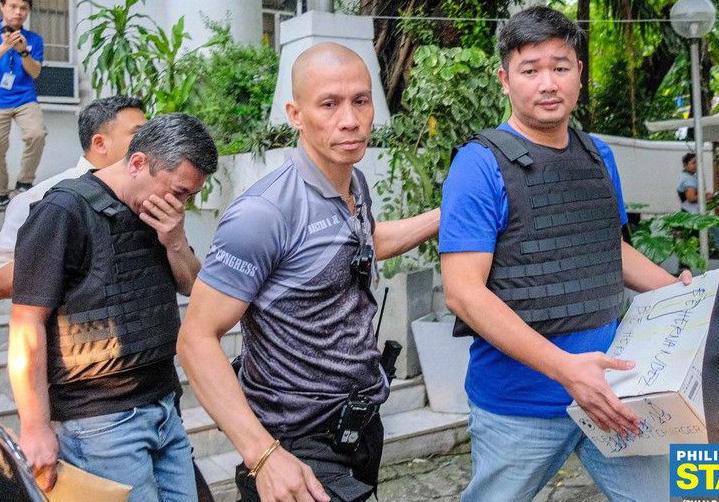
— Former Department of Public Works and Highways engineers Brice Hernandez and Jaypee Mendoza pleaded not guilty to graft charges filed against them in connection with an alleged ghost project in Bulacan.
The arraignment of Hernandez and Mendoza, along with cashier Christina Pineda, was held before the Sandiganbayan on Wednesday, January 28.
Following their plea, the anti-graft court said it will proceed with pretrial before the trial proper.
is mainly supportive, focusing on patients with severe respiratory or neurological issues. WHO, however, has designated the virus as a priority disease under its Research and Development Blueprint.
Domingo said Filipinos can reduce the risk of contracting the virus by avoiding bats and other sick animals, and by ensuring that all meat consumed is properly cooked and certified by the National Meat Inspection Service.
WHO has estimated the fatality rate of Nipah virus infections at 40% to 75%.
Not new in the Philippines
The DOH, however, assured the public that the department is capable of preventing and controlling the Nipah virus should there be cases in the Philippines, saying the virus is not new in the country.
The last time the Philippines encountered the virus was in 2014, when 17 people in Sultan Kudarat developed flu-like symptoms or brain infections, such as encephalitis and meningitis. These cases were reportedly associated with the consumption of horse meat and exposure to infected individuals.
Other countries have also tightened airport surveillance and health checks following the outbreak in India, including Thailand, Nepal, Taiwan and Singapore. n
The case stems from the alleged P92.8-billion ghost project in Pandi, Bulacan. The Office of the Ombudsman, which filed the complaint on January 16, alleged that the projects were non-existent.
Among the co-accused is former lawmaker Bong Revilla, who is currently detained at the Quezon City Jail.
Revilla surrendered to the police on the evening of January 19. Hernandez and Mendoza, who had been under Senate custody, were turned over to the National Bureau of Investigation after the Sandiganbayan issued warrants of arrest against them. n
which public works funds could be siphoned off led to an escalation in scale and brazenness. Kickbacks grew larger, more actors demanded a share, and soon there was nothing left to skim except entire budgets. Ghost projects proliferated: funds were released for structures that were never built, paperwork replaced concrete, and audit mechanisms became instruments of concealment. Flood control ceased to be about protection; it became a favored system for private extraction.
Third, Congress’ extensive reworking of the 2025 National Expenditure Program resulted in a budget the executive could barely recognize. Through “adjustments,” “insertions,” and “unprogrammed allocations,” lawmakers reshaped the budget to serve parochial interests. In a rare public rebuke, Mr. Marcos reacted by ending his State of the Nation Address in July last year with a pointed admonition: “Mahiya naman kayo!”
The standing ovation that followed—apparently oblivious to the message’s target—only deepened public disgust. Few expected what came next. Two weeks later, the President released the names of 15 contractors that had cornered at least a
fifth of all flood control projects since 2022. Notably, he named no legislators or senior officials.
Instead, he announced a digital portal inviting citizens to report on the actual state of flood control projects. By acting before a full-blown crisis of confidence erupted, Mr. Marcos cast himself as a reformist whistleblower within a corrupt system.
In the age of social media, however, narratives are hard to contain. Identifying the beneficial owners of the named construction firms took little effort. Journalists and netizens quickly traced them to members of Congress, powerful political families, and major campaign financiers. Former party list representative Zaldy Co, once head of the House appropriations committee, emerged as a central figure. Through a series of videos sent from abroad, he retaliated by implicating top officials within the administration, suggesting presidential complicity.
This is the reality we face today: an entire government engulfed in a crisis of credibility, compounded by economic strain and public anger. With national elections still more than two years away, frustration has nowhere obvious to go.
Yet something has shifted. What distinguishes this moment from the 2013 Napoles scam involving the budgetary feature known as the Priority Development Assistance Fund is not the moral outrage—of that we have never been short—but the impossibility of denying it. Corruption became visible in ways that ordinary citizens could easily recognize, document, and call out. Once exposed, it proved harder to fold it back into silence or routine. We know that simply changing leaders will not solve the problem. But exposing corruption can have real political impact. If citizens remain vigilant and push for lasting institutional reforms, the public engagement seen in 2025 could be the start of a long and challenging process of rebuilding trust in our institutions. This effort should focus less on personalities and more on restoring boundaries, accountability, and restraint to those in power. (Inquirer.net)
* * *
The opinions, beliefs and viewpoints expressed by the author do not necessarily reflect the opinions, beliefs and viewpoints of the Asian Journal, its management, editorial board and staff.
* * * public.lives@gmail.com
by Ian LaquI Philstar.com
MANILA, Philippines —
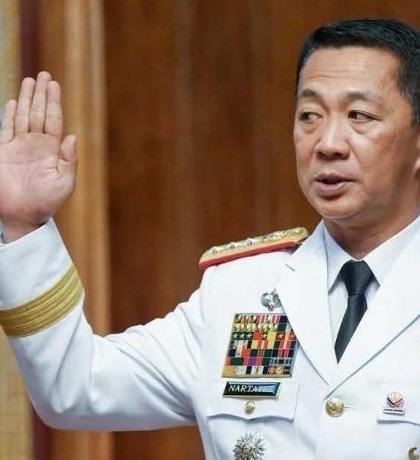
Jose Melencio Nartatez Jr. was officially promoted to a four-star general on Wednesday, January 28, confirming his appointment as chief of the Philippine National Police (PNP).
Nartatez has served as PNP chief in an acting capacity since August 2025.
The donning of ranks ceremony was held at Camp Crame in Quezon City.
Previous vacancy. Nartatez's promotion came days after the National Police Commission (NAPOLCOM) approved the optional retirement of former PNP chief Nicholas Torre III on January 19.
Torre's retirement left the four-star rank, the highest in the police and military, vacant.
Torre served as PNP chief for only two months. His tenure ended in August last year after President Ferdinand Marcos Jr. removed him following a dispute with NAPOLCOM over senior leadership reassignments.
After his removal, Torre was placed in an unassigned "floating status" before his appointment as Metropolitan Manila Development Authori-
ty general manager. Although he held a four-star rank, Torre was set for mandatory retirement upon turning 56 on March 11. n
by Ian LaquI Philstar.com
MANILA, Philippines —
Some of the individuals who allegedly participated in the Mendiola-Recto riots in September 2025 have filed counter-affidavits in the complaints lodged against them by the Philippine National Police–Criminal Investigation and Detection Group (PNP-CIDG).
The complaints were for inciting to sedition and sedition under the Revised Penal Code, stemming from the riots that occurred in Mendiola and Recto Avenue during the anti-corruption protests on Sept. 21, 2025.
The individuals, most of whom are youths, filed their counter-affidavits at the Department of Justice on Wednesday, January 28.
Lawyer Katherine Panguban of the National Union of Peoples Lawyers, who represents one of the respondents, said that some
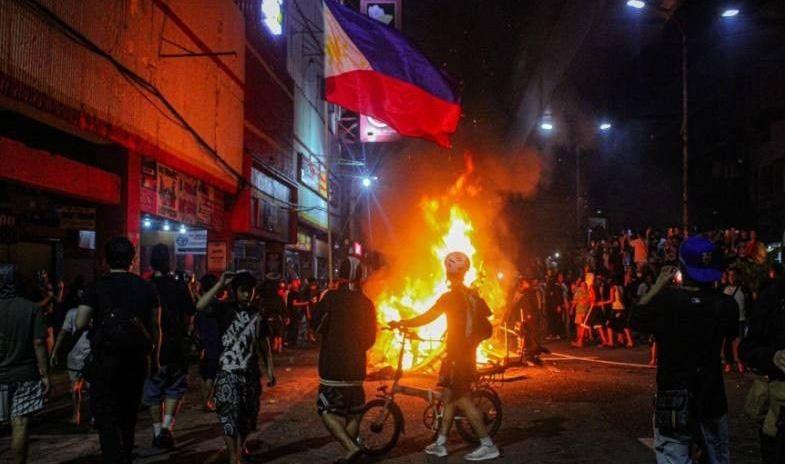
of the other individuals were apprehended by police at Ayala Bridge, where the riot began.
She recalled that the riot erupted on the afternoon of Sept. 21 at Ayala Bridge and later spread to Mendiola and Recto avenues in Manila after police intervened to contain the unrest.
Panguban also said she is representing an 18-yearold male who was merely a bystander during the riots at Ayala Bridge.
" Walang participation, kasi talagang nandon lang, nagkataon na nandon," Panguban told in an interview with reporters. (He had no participation; he just happened to be at the scene.)
Last year, the PNP said it filed complaints against 97 individuals in connection with the riots.
The unrest left two people dead and 216 arrested, some of whom were minors. n

by KRistoFER puRnEll Philstar.com
MANILA, Philippines —
The island province of Camiguin made the cut of the "52 Places to Go This 2026" list by the New York Times, the sole entry from the Philippines.
Listed No. 37 on the list, writer Patrick Scott described Camiguin as a "water lover's paradise with sandbars and hot springs."
Scott wrote about the volcanic island being home to lush mountain peaks, black-sand beaches and towering coconut palms, as well as being branded a sports tourism destination.
He also noted that Camiguin will completely open a 65-kilometer road encircling the island and its first boardwalk in the provincial capital Mambajao sometime this year.
"The island is rich in local cuisine and in cultural heritage, including a sunken cemetery, an eco farm tour and an island-wide fall festival celebrating the sweet lanzones fruit," Scott wrote, before reiterating Camiguin remains

an ideal destination for water lovers.
Camiguin is home to "treasure-chest-size neon clams, an abundance of sea turtles around white sandbar islets, hot and cold springs, and waterfalls for bathing."
Related: Wild escape, spiritual retreat: 4 bucket list destinations for holiday travel 2025
Earlier this month, Governor Xavier Jesus Romualdo reported in his State of the Province Address that Camiguin's tourist arrivals increased by almost 38% to 397,818 visitors last year, 21,496 of which were foreign nationals and a majority coming from Europe.
"Our tourism performance last year puts us firmly on
track to achieve our target of at least 30% annual growth in tourist arrivals from 2025 to 2028, which would bring Camiguin back to its pre-pandemic level of at least 800,000 arrivals by 2028," he said.
Romualdo said that based on on-the-ground observations, a significant portion of foreign visitors were from Europe.
Other Southeast Asian destinations on the New York Times' list include the Thai capital Bangkok, Penang in Malaysia, and Vietnam. Notable locations outside are Poland capital Warsaw, Los Angeles in the United States, Melbourne in Australia, Nagasaki in Japan, Iceland, and Armenia. n
by CeCile Baltasar Philstar.com
When the 2026 Milano Cortina Winter Olympics kicks off on Feb. 6 in Italy, two Filipino athletes will be proudly representing the Philippines.
Skiers Francis Ceccarelli and Tallulah Proulx of the Philippine Ski Team will be competing in the giant slalom and slalom events.
The Winter Olympics, which will be held in Milan and Cortina d'Ampezzo, is not the team's first foray into international ski competitions. They also represented the Philippines at the 9th Asian Winter Games in Harbin, China, though they did not win a medal.
Here's what we know about our Alpine ski racers.
Proulx is the first Filipino woman to qualify for the Winter Olympics and, at 17, is the youngest Filipino Winter Olympian.
According to a report by the Olympic Council of Asia, Proulx, a Filipino-American, has been skiing since she was three years old and competing since she was seven. Living in Utah, within prox-

imity to snow-capped mountains, helped cement Proulx's passion for skiing.
Having recently graduated from high school, it has been Proulx's dream to compete in the Winter Olympics. She reached her goal by earning 120 International Ski and Snowboarding Federation points, the required points for qualification.
Filipino-Italian Francis Ceccarelli's first Winter Olympic appearance is dotted with milestones. In qualifying, he has become the first Filipino alpine skier to earn a quota spot in the Olympic Winter Games and only the fifth to compete in it.
Ceccarelli, 22, was born in Quezon City, adopted by his Italian parents at the age of eight, and raised in Italy. He currently lives in Abetone, Tuscany.
Growing up Italian did not diminish Ceccarelli's desire
to stay connected to his Philippine roots. His adoptive mother, a former professional skier, supported her son's desire to gain Filipino citizenship so he could represent the Philippines in international competitions.
After gaining citizenship, he has been wearing the Philippine flag in international ski competitions since 2023, building up to his 2026 Winter Olympics medal bid. He has earned the unique right to compete in his home country while representing his country of birth. Even the athletes Ceccarelli looks up to represent his loyalties: boxing legend Manny Pacquiao and Italian football icon Francesco Totti. Followers in the Philippines may get real-time updates on the 2026 Winter Olympics via the Olympic Games App or select local sports channels. n

Nathan Studios earns international recognition as two films, Filipiñana and Levitating (Para Perasuk), are selected for screening at the 2026 Sundance Film Festival, placing Philippine cinema on the global independent stage.

by AJPress
MANILA / PARK CITY, Utah — Nathan Studios, a Philippine production company described in industry reporting as family-owned, is credited on two films selected for screening at the Sundance Film Festival in 2026, placing the studio within the official lineup of one of the world’s most closely watched independent film events.
The 2026 festival runs from January 22 to February 1 in Park City and Salt Lake City, Utah, with an online component scheduled for the latter portion of the program, according to festival organizers.
Sundance selection marks expanded international presence
Sundance’s annual selection process draws thousands of submissions from around the world. Films chosen for the final program are screened before audiences that include distributors, programmers, critics, and industry executives, making inclusion a significant mark
er of international visibility for independent producers.
Two films with Nathan Studios credits enter 2026 lineup Festival program materials list Nathan Studios in the producer or co-producer credits of “Filipiñana” and “Levitating (Para Perasuk),” both of which are part of the 2026 feature slate. The selections place the company among a limited number of Asian production outfits represented in this year’s program.
‘Filipiñana’ screens in World Cinema Dramatic Competition
Directed by Rafael Manuel, Filipiñana is programmed in the World Cinema Dramatic Competition, one of Sundance’s flagship sections. The film follows a young woman working at an elite country club whose growing closeness to its president leads her to uncover unsettling truths beneath the institution’s carefully maintained image.
The project is an international co-production involving partners from the Philippines, Singapore, the
United Kingdom, France, and the Netherlands, reflecting the cross-border financing and collaboration models increasingly common in contemporary independent filmmaking.
‘Levitating (Para Perasuk)’ included in feature program Levitating (Para Perasuk) is also part of the festival’s 2026 feature lineup. Festival descriptions center on a young spirit channeler navigating trance rituals while trying to raise money to prevent eviction, situating the story within a blend of social realism and ritual practice. The film’s inclusion further extends Nathan Studios’ presence across multiple narrative forms within the program.
Projects highlight cross-border production structure
Industry observers note that both films reflect a broader trend in which Southeast Asian producers partner with European and regional counterparts to access larger financing pools and international festival platforms. For Philippine companies, such collabora-
tions can provide pathways to wider distribution and sustained global engagement beyond domestic release cycles.
Festival schedule and platform
The Sundance Film Festival is organized by the nonprofit Sundance Institute and remains a central marketplace for independent cinema. The 2026 edition has drawn additional attention as it is widely reported to be the final festival hosted in Park City before a planned relocation beginning in 2027.
Sundance remains a key gateway for independent film
Selection at Sundance does not guarantee commercial release or awards recognition, but it often serves as a critical entry point for independent films seeking international distribution, critical appraisal, or further festival circulation. For Nathan Studios, the inclusion of two titles situates the company within that global pipeline at a moment when Philippine and Southeast Asian cinema continues to seek broader international reach. n
Veteran actor Raoul Aragon dies at 78; family says remains to be flown to Philippines
by AJPress
LOS ANGELES — Veteran
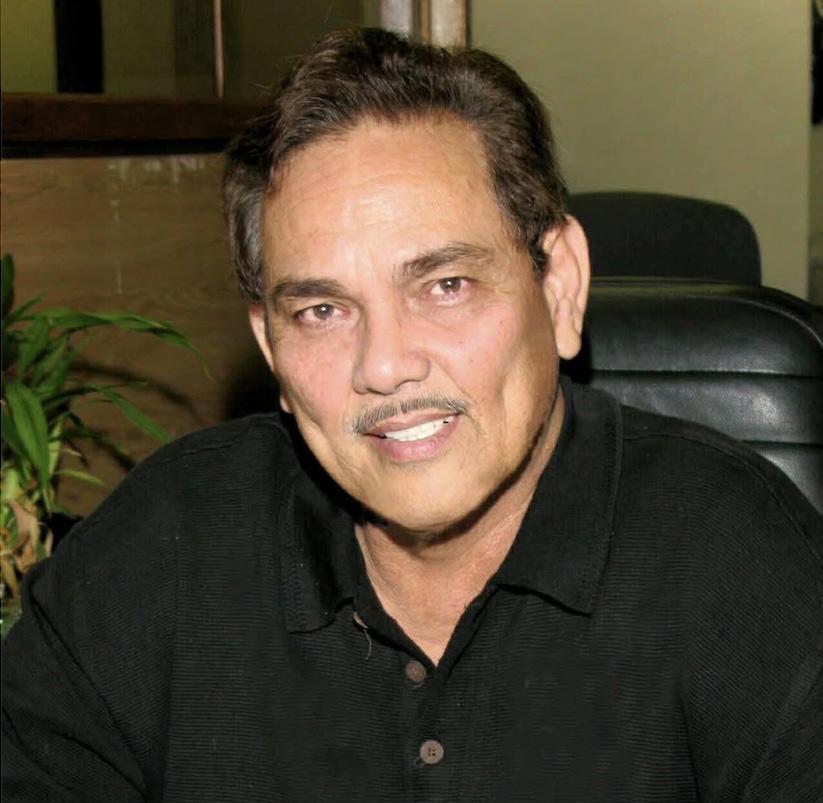
Filipino actor Raoul Aragon, whose career spanned decades of Philippine cinema and television, died peacefully on January 22, 2026, in Downey, California. He was 78.
Family confirms passing, appeals for accuracy and respect
In a statement released by his family and shared with the media through broadcaster and writer Laila Chikadora, Aragon’s daughter, Rica, confirmed his passing and explained that the family issued the statement to ensure accuracy and to prevent the circulation of unverified reports on social media.
“It is with deep sorrow that we announce the passing of Raoul Aragon, who left us peacefully on January 22, 2026, in Downey, California. He was 78 years old,” the family said.
The statement asked for restraint and respect for the family’s privacy as they mourn.
A career marked by discipline and quiet strength Aragon was part of a generation of actors shaped by the socially conscious era of Philippine filmmaking. He was known for performances grounded in restraint and emotional credibility, often portraying fathers, authority figures, and working-class men whose inner conflicts reflected everyday Filipino life.
His most acclaimed performance came in 1979, when he won Best Actor at the Metro Manila Film Festival for “Ina Ka ng Anak Mo,” directed by Lino Brocka and starring Lolita Rodriguez and Nora Aunor. The film remains a landmark of Philippine cinema, and Aragon’s performance is widely regarded as central to its impact.
He was also remembered for his role as Tio Kadyo in “Pasan Ko ang Daigdig,” alongside Sharon Cuneta, and for appearances in films such as “Working Girls” and “Waikiki,” as well as the
by AJPress
MANILA — At an age when many actresses are quietly eased out of leading roles, Charo Santos-Concio is doing the opposite. She is taking on one of the most challenging performances of her career and expanding the conversation around age, identity, and st n memory, loss, and unresolved emotional ties, unfolding quietly and relying less on spectacle than on restraint and nuance. It departs from the roles often written for older women in mainstream cinema, where characters are frequently reduced to archetypes or relegated to the background.
The project brings together two performers whose
careers span generations of Philippine film and television. Their pairing reinforces a broader idea suggested by the film, that stories about aging, intimacy, and identity do not lose relevance over time. Instead, they gain depth.
Santos-Concio’s decision to take on the role follows a career defined by reinvention. She first gained acclaim as an actress in the late 1970s before becoming one of the most influential executives in Philippine media as president and chief executive officer of ABS-CBN Corporation. During her tenure, the network expanded its film and television output, while Maalaala Mo Kaya, the drama anthology she has hosted since 1991, became a cultural fixture.
In recent years, Santos-Concio has returned more deliberately to acting, choosing roles that favor complexity over familiarity. Her recent honors, including a 2025 induction into the Rolling Stone Philippines Hall of Fame and an honorary doctorate from St. Paul University Manila, have coincided with this creative reengagement rather than signaling a closing chapter.
With Until She Remembers, Santos-Concio again challenges the notion that artistic risk belongs only to the young. At 70, she remains not only relevant but quietly resolute, continuing to test herself, her audience, and an industry still learning how to tell fuller stories about women, aging, and love. n
by AJPress
MANILA — Actor Raymart Santiago has denied any involvement in an alleged “kidnapping” incident referenced by his estranged wife, actress Claudine Barretto, stating that the allegation is false and that he will not issue public statements while a court-issued gag order remains in force.
The denial was conveyed through Santiago’s legal counsel in a statement read on the television program Fast Talk with Boy Abunda. His lawyers stated that Santiago “had no participation whatsoever” in the incident described on social media and is refraining from further comment in compliance with court restrictions connected to ongoing legal proceedings between the former couple. Allegations raised online
On January 24, Barretto went live on social media alleging that her former personal assistant took her children without her con-
sent. During the livestream, she stated that authorities had been notified and referenced the National Bureau of Investigation.
Later the same day, Barretto posted an update indicating that her children were “safe and sound.” No further details were disclosed regarding the circumstances of their return.
Public record
There are no publicly available confirmation from law-enforcement agencies indicating that a formal kidnapping complaint has been filed or outlining the status of any investigation related to the allegations. The public record at this stage consists of statements issued by the parties involved and responses from legal counsel.
Santiago’s lawyers stated that the gag order cited in their statement remains in effect and restricts his ability to address the matter publicly. Any issues, they said, will be handled through the appropriate legal forum. n
by KeIth CLores Inquirer.net
MANILA, Philippines – Beauty queen-actress Michelle Dee, fellow Kapuso actress Rhian Ramos and beauty queen-politician Samantha Panlilio are being accused of mauling a driver on Wednesday over his alleged accidental possession of sensitive photos.
Alias “Totoy,” who worked as a personal driver of Ramos, filed a complaint before the National Bureau of Investigation (NBI), alleging that the three actresses, repeatedly physically hit him and “tortured” him at his employer’s residence on January 17, that he had thought of ending his life.
INQUIRER Entertainment reached out to Sparkle GMA for the side of their talents. A statement issued by Dee and Ramos’ lawyer Maggie Abraham-Garduque denied allegations of illegal detention, though they have yet to get hold of a copy of the NBI complaint. Garduque said they are prepared to answer the charges.
Dee is the Miss Universe-Philippines 2023 titleholder who made waves as one of the semi-finalists at the Miss Universe pageant in that same year, while Panlilio is beauty queen-TV personality who ran for party-list in the 2025 midterm elections. Ramos, meanwhile, is a top Kapuso artist who last appeared in the primetime fantaserye “Sang’gre.”
“Totoy” is currently under the care of the Volunteers Against Crime and Corruption (VACC).
In an interview with the media, “Totoy” claimed that he and Ramos just came from a taping when she and her bodyguards accosted him and beat him up right inside her home at the 39th floor of a Makati residential complex.
an electrical cable impeded his fall, swinging him into the 25th floor of the building instead. He then decided to go to the lobby of the building, but was intercepted by the actress’ bodyguards, and was brought back to the 39th floor.
Upon his return to the unit, the two beauty queens joined in beating him. Totoy alleged that Dee took his clothes off, and poured rubbing alcohol all over him. She then supposedly forced Totoy’s hand inside her shirt so touch her chest, then forced his hand to choke her neck.
“Dumating yung [beauty queen], pinarusahan niya ako… Hinubaran niya ako, binuhusan niya ako ng alcohol sa katawan, tapos insprayan niya ako. Natanong ko siya, ‘Ma’am, ano po gagawin natin?’ Sabi niya, ‘Maglaro tayo.’”
(The [beauty queen] came and punished me… She undressed me, poured alcohol on my body and sprayed some in my eyes. I asked her, “Ma’am, what are we going to do?” She said, “Let’s play.”)
“Hinubad niya sa akin, wala akong damit… Inispreyan niya mata ko tapos ginanyan niya ng dalawang daliri niya… Hinawakan niya kamay ko, ipinasok niya sa dalawang.. Dito niya, saka dito. Tapos yung kamay ko idiniin sa leeg niya,” he said, demonstrating how the beauty queen maltreated him, and threatened to poke his eyes.
“Ilang beses akong tumumba sa upuan, pero kahit anong makaawa ko wala na ako sa kanila. Ta’s nung paalis si ma’am Michelle sa ibang lugar, mga 6 ng umaga nung [January] 17, tinuloy-tuloy pa rin akong binugbog ng mga bodyguard niya. Mga kasama ko sa trabaho yan sila, hindi po sila naawa sakin.”
tress’ two bodyguards beat him up some more, and forced him to drink his own urine.
At the NBI, he showed several bruises and wounds in his body as a result of the beating he took from the suspects.
Qualified theft
This did not appear to be the last of his torment as Dee also filed a complaint for qualified theft against him, which led to his detention at the Makati City Jail.
The case was filed before the Office of the Prosecutor in Makati, which dismissed the case three days later. It was only until after the resolution was issued that he was released from detention.
A copy of the resolution obtained by INQUIRER.net, read that Dee accused Totoy of pocketing one of her sensitive photographs.
“Complainant, along with her lawyer and security guard, confronted respondent regarding the photographs. Respondent then admitted that he stole the photographs from complainant’s room without the latter’s permission. Complainant explains that the photographs were kept inside an ampao and originally contained nine (9) photographs. However, when respondent returned the ampao, one (1) photograph was already missing,” a portion of prosecutor’s resolution stated the allegations.
When asked how Totoy got possession of the photos, he claimed that his wife found a copy of the photo in an ampao or envelope, and prompting him to immediately call the attention of his celebrity employer.
PAGE 11
television series “Aguila,” where he worked with Vic “Bossing” Sotto. Across film and television, colleagues described him as a disciplined actor who favored understatement over theatrics.
Life in the United States
In later years, Aragon settled in Southern California and lived largely outside the public eye. He did not actively pursue acting work in the United States, a choice friends say was consistent with his long-standing preference for privacy and family life.
Remembered as a family man
In their statement, the family described Aragon as a devoted husband, father, and grandfather. He is survived by his wife Josie; his children Zoilo, Nina, Rica, Jose, and Raul, along with their spouses; and his grandchildren Zachary, Leila, Kimi, Mika, and Jada. “A loving husband, father, and grandfather, he will be remembered for his quiet strength, kindness, and unwavering dedication to his family,” the family said. “His presence will forever be missed, but his values
and memories will continue to live on in our hearts.”
Final arrangements
The family confirmed that Aragon’s remains will be flown to the Philippines, where a viewing and memorial service will be arranged to allow family, friends, and colleagues to honor his life.
Raoul Aragon leaves behind a body of work that reflects an important chapter in Philippine cinema - one defined by realism, seriousness of purpose, and respect for craft. While he avoided celebrity, his performances continue to endure for their honesty and quiet power. n
“Galing kami sa taping… Paguwi ko po ng alas tres ng madaling araw, kami ni [actress]… Pagbaba ko po ng gamit, bigla akong hinawakan at binugbog ako sa loob… Nagmamakaawa po ako, at binubugbog pa rin nila ako,” he said.
(We came from the taping… When I got home at three in the morning, [actress] and I… When I was putting down my stuff, they suddenly grabbed me and beat me inside… I was begging, and they were still beating me.)
The next day, January 18, after the assault, he decided to end his life by jumping out the window from the 39th floor, but his attempt hit a snag because
“Si ma’am Rhian naman, nandon sya. Sinapak, sinampal nya ko ta’s binatukan nya ko ilang beses. Kaya yun nga ang ano ko, bakit pati sya binatukan ako. Tapos non, binatukan nanaman ako ng mga bodyguard nya,” he further narrated to the media.
(I fell on the chair a few times, but no matter how much I tried to beg, I was nothing to them. Then when ma’am Michelle left to go somewhere on January 17, her bodyguards continued to beat me up. They were my workmates, they didn’t show me any mercy… Ma’am Rhian was there. She also hit me and slapped me. I was thinking why she would also do that. After that, her bodyguards again beat me up.)
Totoy also said that the ac-
Ruling on the complaint, the city prosecutor dismissed the complaint against Totoy, saying “there was no basis to effect the warrantless arrest of the respondent.”
“There is no basis to hold that the crime of Theft had just been committed at the time the complainant confronted respondent,” the prosecutor said.
While in detention for three days at a police station, Totoy also accused two police officers of beating him. However, he failed to identify the two cops when asked, but that he would be able to recognize their faces. After he was released from detention, Totoy asked for the aid of the VACC, who then assisted him to take the case to the NBI.
The NBI has yet to identify charges as they are in the middle of getting all the information from Totoy. /edv

by AJPress
NEW YORK — The Philippine Consulate General in New York hosted the annual Art and Diplomacy Exhibition of the Society of Foreign Consuls in New York on January 22, 2026, at the Philippine Center, underscoring the role of cultural diplomacy in community building and international engagement.
The exhibition featured visual art and musical performances from participating consulates, including Barbados, Georgia, India, Malaysia, Morocco, the Philippines, Russia,
Serbia, South Africa, Thailand, and Türkiye. Among the highlights were the permanent display of Lamination XLIV by National Artist Arturo Luz and Solid Island by sculptor Eduardo Castrillo at the Philippine Center Lobby Gallery.
In his remarks, Consul General Senen T. Mangalile described the Philippine Center as a space where art serves as a bridge for dialogue and mutual understanding. SoFC President and Georgian Consul General Maia Bartaia emphasized art’s capacity to convey national identity while fostering connec -
tions across cultures.
Also addressing the gathering were New York City Commissioner for International Affairs Aissata M. B. Camara and Office of Foreign Missions Regional Director Kathleen Eagen, who highlighted the value of cultural initiatives in complementing formal diplomacy.
The program included musical performances by artists from Serbia and Thailand and concluded with a multicultural reception. More than 80 members of the diplomatic corps, city officials, artists, and guests attended the event. n

The CFO is promoting the 2026 Presidential Awards for Filipino Individuals and Organizations Overseas, recognizing outstanding overseas Filipinos who contribute to national development.
by AJPress
MANILA — The Commission on Filipinos Overseas (CFO) has stepped up efforts to promote the Presidential Awards for Filipino Individuals and Organizations Overseas (PAFIOO), the highest national recognition accorded to overseas Filipinos who contribute to Philippine development or excel in their professions abroad.
The outreach aims to broaden public awareness of the biennial awards and encourage wider participation in the nomination process, particularly among Filipino communities overseas.
The CFO said nominations for the 2026 PAFIOO will be accepted until May 29, 2026, covering four award categories: Lingkod sa Kapwa Pilipino Award, Banaag Award, Pamana

ng Pilipino Award, and Kaanib ng Bayan Award.
Nominations will undergo a multi-stage evaluation process, with awardees to be formally recognized in December 2026.
Support for the 2026 awards has been reinforced through Memo -
randum Circular No. 112, which directs government agencies and instrumentalities to extend full assistance to the CFO and encourages local government units, non-government organizations, and the private sector to support the conduct of the

by AJPress
NEW YORK CITY — The Philippine Consulate General in New York hosted the first executive board meeting of the Society of Foreign Consuls in New York for 2026 at the Philippine Center in Manhattan, marking the opening of the group’s activities for the year.
The meeting was chaired by Maia Bartaia, Consul General of Georgia and current president of the Society, who presented the organization’s
planned programs for the first quarter of 2026. These include an Art and Diplomacy Exhibition scheduled for January 22, a Women’s Month celebration in March, and prospective joint courtesy calls with local officials in New York and neighboring jurisdictions.
The gathering was hosted by Senen T. Mangalile, Consul General of the Philippines, underscoring the Philippine Consulate’s continuing engagement with the city’s diplomatic community.
Executive board members present represented consular missions from Argentina, Bulgaria, India, Morocco, Peru, Serbia, South Africa, Switzerland, and Thailand, reflecting the Society’s diverse membership.
Founded in 1925, the Society of Foreign Consuls in New York serves as a forum for dialogue, cooperation, and professional exchange among consular officials accredited to the city, promoting collaboration on diplomatic, cultural, and community initiatives. n
PhiliP S. Chua, MD, FaCS, FPCS
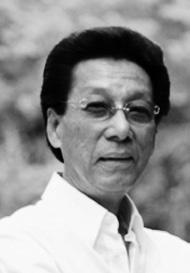
Our readers inspire us to continue our research into clinical subjects that aim to guide the public toward achieving a healthy lifestyle and longevity in their natural course. Here are some of the dozens of email queries we received each month from our readers.
Is the GLP-1 drug for everyone?
The wonder drugs, GLP-1 (Glucagon-Like Peptide 1), that recently catapulted to global popularity as very effective for Diabetes T2 and management of obesity (and more!), are a life-saver, but they are not for everyone. They appear also to reduce the risk for heart failure, fatty liver, kidney disease, and dementia. It has potential complications that could be serious for some individuals. GLP-1 injections (now available in pills) require a prescription from a licensed physician.
Does diabetes cause blindness?
Most definitely, especially among persons whose diabetes is untreated, poorly treated, or simply brittle and hard to treat. The blindness is due to what is termed diabetic retinopathy. A significant number of cases of blindness in the world today are caused by diabetes. Once the diagnosis of diabetes mellitus is confirmed, prompt and appropriate therapy should be instituted. The diabetic should be disciplined enough to religiously follow the prescribed medical regimen if the complications of the disease, like blindness, leg gangrene, etc., are to be prevented.
Can trauma to the breasts cause cancer?
Repeated trauma to the breast has been implicated as a possible etiology in the formation of cancer of the breast among women. This could be in the form of biting, pinching, squeezing, or rough manual manipulation. The breasts, like the person, must be treated with care and tenderness.
Do cellphone radiation shields work?
No, the so-called “radiation shields” for cell phones do not work, and therefore are not effective in protecting the user from radiation, reports the FTC in the United States. If anything at all, this shield “lulls” the user to complacency, and thus the user is subjected to a more prolonged radiation
exposure because of the false sense of security the unsuspecting consumers will have. While the association between cell phone use and some type of brain tumors is still unclear, it is best to avoid and minimize any type of radiation exposure from any source. To reduce radiation exposure from cell phones, we recommend the use of one of the hands-free (Bluetooth) devices now commercially available.
What causes palpitation?
Palpitation (pounding heartbeat, harder and faster than normal) could be due to extrinsic causes like ingestion of a stimulant (coffee, tea, cola drinks, chocolates, some medications, etc.) and/ or cigarette smoking, or due to intrinsic causes like coronary or heart valve diseases. The person feels the heart thumping in the chest, which could lead to some degree of discomfort and anxiety. When this happens regularly, despite abstinence from the extrinsic causes listed above, prompt medical consultation is recommended.
Are body moisturizing lotions safe?
Yes, in general, hand and body lotions in the market are safe. The frequent (two or more times a day) use of hand and body lotion is recommended because our skin needs moisture to keep it comfortable, healthy, and as young-looking as possible, for both women and men. Caution: Some people may be allergic to some of these commercially available skin moisturizers.
Can hydrogen peroxide be used for gargling?
Yes, hydrogen peroxide could be used for gargling, but ask your dentist first since he/ she knows your dental condition better and can advise you accordingly. Hydrogen peroxide, together with other common ingredients (like triclosan) in tooth pastes, helps prevent tooth decay, gingivitis (inflammation of the gums), tartar and plaque formation, and halitosis (bad breath).
Hydrogen peroxide is a substance that is incorporated in many toothpaste preparations in the market today. Baking soda is another. The anti-plaque and anti-gingivitis toothpastes are not recommended for children.
Do skin whiteners work?
There are a few popular preparations of skin (“bleach”) whitener available in the market today, which are effective and safe. They are not cheap. One well-known brand costs about One Thousand Pesos
for 2 ounces. The basic ingredient is 4% hydroquinone. The original use of it was to make skin blemishes (chloasma, melasma, freckles, senile lentigines, and other areas of melanin hyperpigmentation) disappear, but today cosmetologists, many dermatologists, and some plastic surgeons recommend it for the entire face as a “bleaching agent” to whiten the complexion. Those using this should stay away from sunlight to prevent skin burns. One substance, whose side-effect is making the skin lighter and whiter, is glutathione. Before applying skin whitener, one must consult with his/her physician first because of potential allergy, side effects, and possible complications of these items.
Can skin ointment be used for the eyes?
No, most definitely no. Skin lotions, creams, gel, ointments, and solutions are for topical (external or skin) application only, and are not safe for the eyes. There are specific drops and ointments for the eyes. Never use any other preparation, except those prescribed by healthcare professionals specifically for the eyes, which are always labeled “Ophthalmic” or “For ophthalmic use.”
Does surgery make cancer spread?
No, this is a myth. Doing surgery or “opening the patient up” does not cause metastasis (spread) of the cancer. In general, cancer proliferates rapidly to invade surrounding tissues and distant organs. The misconception resulted from the refusal of patients suspected or confirmed to have cancer to be operated on early when first advised, and had delayed the surgery so much that the malignant tumor had already spread beyond help before acceding to have the operation. So, when the surgeons operated on them that late, invariably the cancer had already spread all over. When the patients soon expired, people blamed the surgery for the spread. Today, almost everybody knows that prompt detection and early operation in the treatment of cancer gives the best chance for a cure for the majority of patients with malignancy.
The opinions, beliefs and viewpoints expressed by the author do not necessarily reflect the opinions, beliefs and viewpoints of the Asian Journal, its management, editorial board and staff.
The main objective of this column is to educate and inspire people live a
healthier lifestyle to prevent illnesses and disabilities and achieve a happier and more productive life. Any diagnosis, recommendation or treatment in our article are general medical information and not intended to be applicable or appropriate for anyone. This column is not a substitute for your physician, who knows your condition well and who is your best ally when it comes to your health. *

“A life blessed by God always results in blessing others.” I couldn’t stop thinking about that line as I celebrated my friend Ruth’s 65th birthday.
It was a memorable day— yes, even sailing on a luxurious yacht—but what moved me most wasn’t the yacht. It was the fruit of her life on full display—relationships she’s nurtured, people she’s helped, and love she’s given without needing credit for it. You can’t fake that kind of impact.
Ruth is one of the most generous people I know. And I don’t mean generous in a flashy, “look what I did” kind of way. I mean the steady kind. The kind that remembers birthdays, checks in when you’ve been quiet, shares opportunities, feeds people without announcing it, and makes you feel seen even when you feel unseen. Ruth doesn’t just give gifts— she gives dignity.
We often treat generosity like it’s a luxury item: something we’ll do “one day,” when there’s extra time, extra money, extra margin. But what if generosity isn’t
Philip S. Chua, MD, FACS, FPCS, a Cardiac Surgeon Emeritus based in Northwest Indiana and Las Vegas, Nevada, is an international medical lecturer/author, Health Advocate, medical missionary, newspaper columnist, and Chairman of the Filipino United Network-USA, a 501(c)3 humanitarian foundation in the United States. He is a decorated recipient of the Indiana Sagamore of the Wabash Award in 1995, presented by then Indiana Governor,
US senator, and later a presidential candidate, Evan Bayh. Other Sagamore past awardees include President Harry S. Truman, President George HW Bush, Astronaut Gus Grissom, pugilist Muhammad Ali, David Letterman, distinguished educators, scientists, etc. (Wikipedia). Websites: FUN8888. com, Today.SPSAtoday.com, and philipSchua.com. On Amazon.com, search for “Where is My America?” Email: scalpelpen@gmail.com.
the reward of financial freedom… what if it’s one of the pathways to it?
Here’s the surprise: many people don’t struggle with generosity because they’re selfish. They struggle because they’re scared. Scared there won’t be enough. Scared they’ll need it later. Scared giving will set them back. Scarcity has a voice— and it’s loud.
But generosity is one of the most practical ways to quiet that voice. Not because it ignores reality, but because it refuses to be ruled by fear. Generosity trains the heart to trust, the mind to plan, and the spirit to stay open.
In my book, Heal Your Money Wounds God’s Way, I share a framework I call the 6 I’s to Financial Freedom. One of those “I’s” is Increase… and Increase Generosity—because financial healing isn’t just about earning more. It’s about becoming whole. When generosity flows from wholeness, it isn’t guilt-driven, people-pleasing, or performative. It becomes purposeful. Sustainable. Joyful.
awards. The circular was signed on January 15.
The initiative comes as the CFO undertakes a strategic shift toward deeper engagement with the global Filipino community, moving beyond traditional administrative functions to focus on mobilizing overseas Filipinos for national development. Raising public awareness of the agency’s mandate is seen as central to strengthening links between Filipinos abroad
and development priorities in the Philippines.
So here’s my takeaway— and maybe yours too:
Generosity is not what you do when you’re rich.
Generosity is what you do when you’re free.
And if you want to build a financial life that’s spiritually aligned, emotionally healthy, and practically strong… don’t just chase increase. Be a go giver and not a go getter.
* * *
The opinions, beliefs and viewpoints expressed by the author do not necessarily reflect the opinions, beliefs and viewpoints of the Asian Journal, its management, editorial board and staff.
* * *
Kathy Current is a financial coach, mortgage advisor, and author of Heal Your Money Wounds God’s Way, where she combines over three decades of financial experience with timeless biblical wisdom. Kathy addresses real-life questions about God and money, helping readers find freedom and purpose in their financial lives.
That’s what Ruth modeled—especially at 65. Her birthday celebration wasn’t just a party. It was a legacy report: a room full of people who could point to a moment she helped, encouraged, prayed, gave, mentored, or simply showed up.
Discussions also covered diaspora-focused programs such as the Youth Leaders in the Diaspora initiative, which seeks to reconnect younger generations of Filipinos overseas with their cultural heritage and civic identity. Efforts are also underway to identify overseas Filipinos whose experiences and achievements can inspire the public and reinforce the country’s global presence.
Established under Batas Pambansa Blg. 79, the Commission on Filipinos Overseas is an agency under the Office of the President mandated to strengthen the social, economic, and cultural ties between Filipinos permanently residing abroad and the Philippines. Its stakeholders include permanent migrants, dual citizens, spouses and partners of foreign nationals, and Filipino descendants overseas. n

The late President Corazon C. Aquino, fondly known as Tita Cory, left an indelible mark on modern Philippine history. She embodied what many described as a quiet courage and a selflessness demanded of her generation. After the assassination of her husband, Senator Benigno S. Aquino Jr., in 1983, the yellow movement surged once again, reshaping the nation’s political destiny.
At the time, I was about to graduate from college. Instead of focusing solely on commencement rites, I found myself drawn to protest rallies against the dictatorship. It was only later that I realized Marla Teopaco, President Aquino’s niece, had been my batchmate at De La Salle University in Manila.
In February 1986, the EDSA People Power Revolution unfolded and catapulted Tita Cory to the presidency. By then, I was working with the government’s Center for International Trade Expositions and Missions (CITEM) as an analyst.
In December 1986, several CITEM employees, myself included, volunteered to decorate the giant Christmas tree inside the Presidential Guest House. It was there that I had a rare opportunity to walk freely through the rooms. I saw Executive Secretary Joker Arroyo, speechwriter Teddy Boy Locsin, presidential spokesman Rene Saguisag, and Narcisa Escaler. I even dared to go up to the second floor, a privilege seldom granted. Through presidential housekeeper Fritzi Aragon, I handed an article I had written, “My Memory of Ninoy,” published in The La Sallian in October 1983, to Ballsy Cruz, President Aquino’s eldest child, with the hope that it would be signed by the President. President Aquino was striking in her simplicity and humility. Seeing her up close filled me with deep respect.
In March 1989, Mother Teresa visited President Aquino. The two had first met years earlier, when Mrs. Aquino, before becom-



ing president, frequented the Home for the Dying on Tayuman Street in Tondo, Manila. When I spoke with Mother Teresa during that visit, she told me plainly, “Corazon C. Aquino is a very good president.” I nodded in agreement.
That same year, President Aquino inaugurated the new Quezon Institute, which was blessed by Jaime Cardinal Sin. I vividly recall the words of Father Aloysius Schwartz, founder of the Sisters of Mary, who told me: “As she walked through these charity wards, President Aquino was like an angel of mercy. Her visit was a great therapy for the tuberculosis patients. She had a marvelous touch with them. It was a very touching experience and gave new hope to the patients.”
President Aquino also extended her support to Jesuit priest Fr. Pierre Tritz and the ERDA Foundation, a nonprofit organization that provides education to destitute Filipino street children.
As Margie Juico, her appointments secretary, once told me, “Cory is a generous, kind-hearted woman. She tried her best to meet as many people as she could, especially those in depressed and remote areas in the provinces.”
During the attempted coup in 1989, Margie related that when she arrived at Arlegui, she found the First Family at prayer. President Aquino, she said, was calm

and resolute, prepared even for the possibility of death. She asked Margie to fetch a priest from nearby San Beda. When they returned, they prayed together. President Aquino then handed Margie and the priest two packages, entrusting them with something precious in case anything should happen to her, and instructed Margie to go home to her family.
While in the car, Margie carefully examined the contents and broke down in tears. President Aquino had entrusted her with Senator Ninoy Aquino’s letters and diaries.
After her term ended, President Aquino devoted her time to the Benigno S. Aquino Jr. Foundation and other nongovernmental organizations. During the

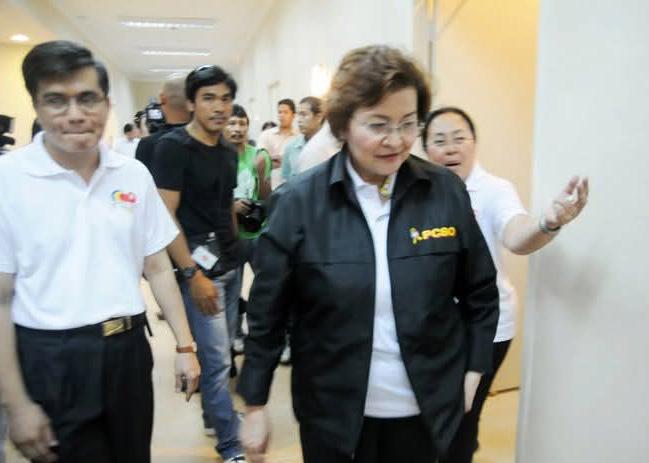

launch of the first Corazon C. Aquino Distinguished Administrative Chair in Business Management at De La Salle University, she shared a personal recollection: “Popoy has always been very supportive of everything that Ninoy and I stood for, even when it was bad for one’s health to be associated with the Aquinos. I will never forget that every Christmas, Popoy would bring chicken ham for me to take to Ninoy in Fort Bonifacio. A chicken ham may not mean much today, but during martial law, it was a precious gift. It reminded Ninoy that there



were still people outside who cared.”
She continued to be visible in people power movements and protest rallies, particularly when democracy was again under threat.
The last time I saw her in public was in February 2009, during the EDSA anniversary celebration with the La Salle Brothers. She presented a green-filled painting to Br. Armin Luistro, FSC, assisted by Melchor Mamaril, her security aide of 23 years.
Tita Cory will always be remembered for the moral courage she exemplified. She chose to do what she be-
lieved was right, regardless of consequence, especially during the most difficult moments, in service of truth, justice, and democracy.
President Corazon C. Aquino passed away on August 1, 2009. Yet her life was not in vain. Her memory continues to live in the minds and hearts of millions of Filipinos.
Tita Cory, patriot and heroine, you are not alone. We will continue the fight.
(Former President Corazon Cojuangco Aquino celebrated her birthday on January 25, a day before my 66th birthday on January 26.) n