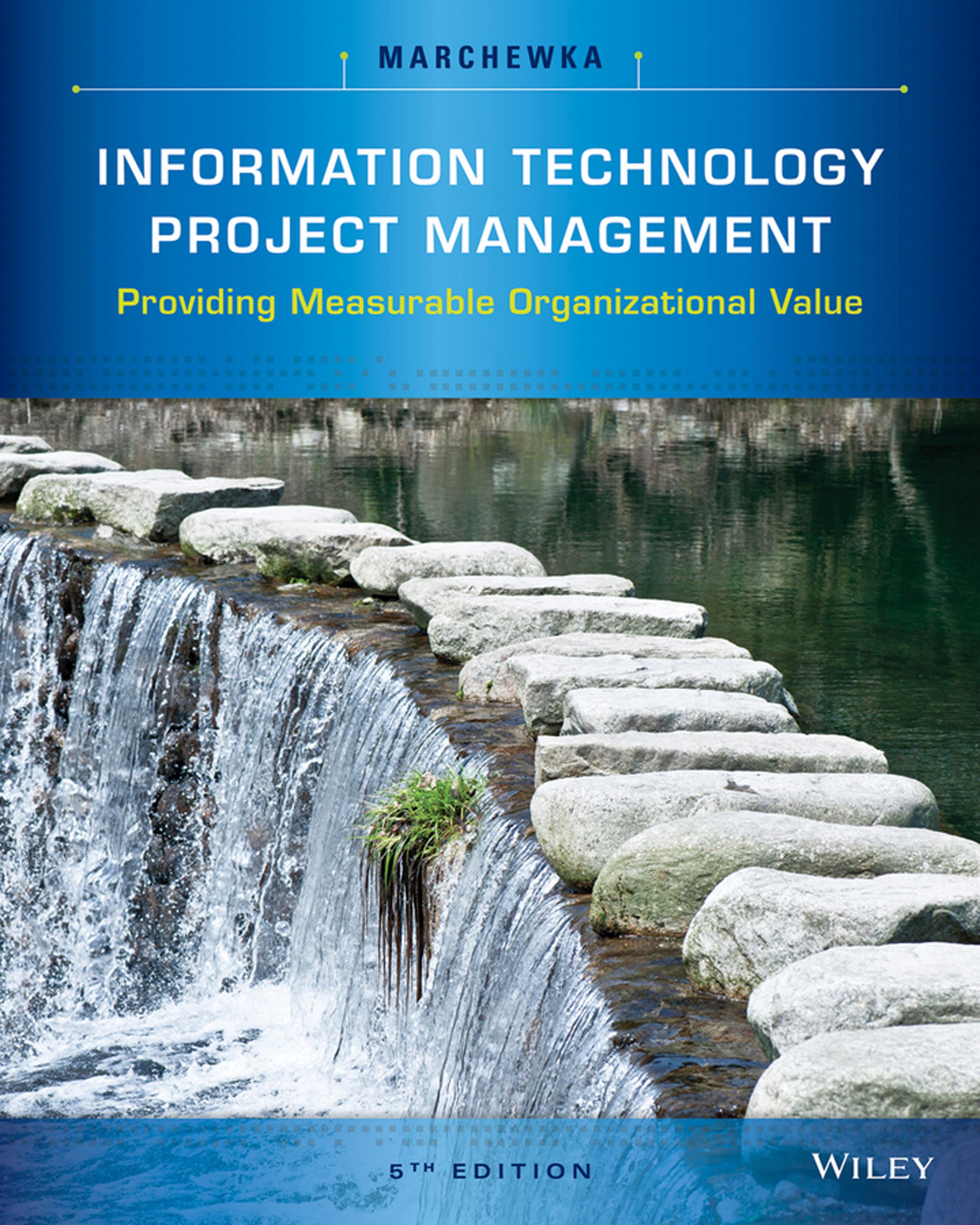
(ebook pdf) information technology project management, 5th edition - Download the full set of chapte

Page 1


Instant digital products (PDF, ePub, MOBI) ready for you

Download now and discover formats that fit your needs...

(eBook PDF) Information Technology Project Management 8th Edition

https://ebookluna.com/product/ebook-pdf-information-technologyproject-management-8th-edition/

ebookluna.com

Information Technology Project Management 7th edition (eBook PDF)

https://ebookluna.com/product/information-technology-projectmanagement-7th-edition-ebook-pdf-2/

ebookluna.com

Information Technology Project Management 7th edition (eBook PDF)

https://ebookluna.com/product/information-technology-projectmanagement-7th-edition-ebook-pdf/

ebookluna.com

(Original PDF) Information Technology Project Management, Revised 7th Edition

https://ebookluna.com/product/original-pdf-information-technologyproject-management-revised-7th-edition/

ebookluna.com

Information Technology Project Management 9th Edition

Kathy Schwalbe - eBook PDF

https://ebookluna.com/download/information-technology-projectmanagement-ebook-pdf/

ebookluna.com

(eBook PDF) Information Technology Project Management 9th Edition by Kathy Schwalbe

https://ebookluna.com/product/ebook-pdf-information-technologyproject-management-9th-edition-by-kathy-schwalbe/

ebookluna.com

(eBook PDF) Information Technology Law 5th Edition

https://ebookluna.com/product/ebook-pdf-information-technologylaw-5th-edition/

ebookluna.com

(eBook PDF) Information Technology for Management Digital 10th

https://ebookluna.com/product/ebook-pdf-information-technology-formanagement-digital-10th/

ebookluna.com

(eBook PDF) Information Systems Project Management, A Process Approach, Edition 2.0

https://ebookluna.com/product/ebook-pdf-information-systems-projectmanagement-a-process-approach-edition-2-0-2/

ebookluna.com

PRINCE2® 31

PRINCE2® Processes 31

PRINCE2® Themes 32

PRINCE2® Principles 33

TheSystemsDevelopmentLifeCycle(SDLC) 34

ThePLCandtheSDLC 35

ImplementingtheSDLC 35

Waterfall 36

AgileSystemsDevelopment 38

WhatIsAgile? 38

SomeCommonlyUsedAgileMethods 40

WaterfallversusAgile? 41

LearningCyclesandLessonsLearned 42

ChapterSummary 46

ReviewQuestions 48

HuskyAir—PilotAngelsAssignment 50

MartialArtsAcademy(MAA)Assignment 51

QuickThinking—LearningfromFailure 53 QuickThinking—DoingAgileorBeingAgile? 54

CaseStudies 55

Bibliography 58

CHAPTER3 MeasurableOrganizationalValueandtheBusinessCase59

Introduction 59

MeasurableOrganizationalValue(MOV) 60

TheMOVandProjectObjectives 61

DevelopingtheMOV 62

TheBusinessCase 67

WhatIsaBusinessCase? 67

DevelopingtheBusinessCase 68

ProjectSelectionandApproval 76

TheITProjectSelectionProcess 76

TheProjectSelectionDecision 76

ChapterSummary 77

ReviewQuestions 77

HuskyAirAssignment—PilotAngels 78

TheMartialArtsAcademy(MAA)—SchoolManagement System 80

QuickThinking—MeasuringtheImmeasurable 83 QuickThinking—TheElevatorPitch 83

CaseStudies 84 Bibliography 89

CHAPTER4

ProjectPlanning:TheProjectInfrastructure91

Introduction 91

ProjectGovernance 92

TheProjectTeam 94

TheProjectManager 94

TheProjectTeam 95

TheOrganizationandProjectPlanning 96

TheFunctionalOrganization 96

TheProjectOrganization 99

TheMatrixOrganization 100

ProcuringExternalProjectResources 101

ProcurementPlanning 102

ContractsBetweenSellersandBuyers 103

TheProjectEnvironment 105

TheProjectCharter 105

WhatShouldBeinaProjectCharter? 106

ProjectIdentification 106

ProjectStakeholders 107

ProjectDescription 107

MeasurableOrganizationalValue(MOV) 107

ProjectScope 107

ProjectSchedule 107

ProjectBudget 108

QualityStandards 108

Resources 108

AssumptionsandRisks 108

ProjectAdministration 108

AcceptanceandApproval 109

References 109

Terminology 109

ChapterSummary 110

ReviewQuestions 111

HuskyAirAssignment—PilotAngels 112

TheMartialArtsAcademy(MAA)—SchoolManagement System 113

QuickThinking—TheProjectSponsor 114

QuickThinking—ProjectsasSocialNetworks 114

CaseStudies 115 Bibliography 119

CHAPTER5

CHAPTER6

ProjectPlanning:ScopeandtheWorkBreakdown Structure120

Introduction 120

TheTripleConstraint 121

DefiningandManagingProjectScope 122

PlanScopeManagement 123

CollectRequirements 123

DefineScope 123

TheScopeBoundary 123

TheStatementofWork(SOW) 124

TheScopeStatement 124

Project-OrientedScope 125

Product-OrientedScope 125

ValidateScope 128

ControlScope 128

ScopeChangeControlProcedures 129

TheWorkBreakdownStructure(WBS) 130

WorkPackages 131

DeliverablesandMilestones 131

DevelopingtheWBS 132

ProjectEstimation 134

Guesstimating 134

DelphiTechnique 134

TimeBoxing 135

Top-DownEstimating 135

Bottom-UpEstimating 136

PokerPlanning 136

ChapterSummary 138

ReviewQuestions 139

HuskyAirAssignment—PilotAngels 140

TheMartialArtsAcademy(MAA)—SchoolManagement System 141

QuickThinking—SinkingaProject 142

QuickThinking—MorePeople=MoreProblems 143

QuickThinking—PoliticsandEstimates 143

CaseStudies 144

Bibliography 147

ProjectPlanning:TheScheduleandBudget149

Introduction 149

DevelopingtheProjectSchedule 151

CHAPTER8

ManagingProjectStakeholdersandCommunciation205

Introduction 205

StakeholderAnalysis 206

TheInformalOrganization 206

Stakeholders 206

StakeholderAnalysis 206

MonitoringandControllingtheProject 207

TheProjectCommunicationsPlan 209

ProjectMetrics 211

Burn-DownChart 213

EarnedValue 213

AnalyzingCurrentPerformance 216

ForecastingProjectPerformance 218

ReportingPerformanceandProgress 222

InformationDistribution 222

ChapterSummary 223

ReviewQuestions 224

HuskyAirAssignment—PilotAngels 225

TheMartialArtsAcademy(MAA)—SchoolManagement System 227

QuickThinking—ProjectsasSocialNetworks 228

QuickThinking—CommunicationandMentoring 229 CaseStudies 230

Bibliography 233

CHAPTER9

ManagingProjectQuality234

Introduction 234

QualityPhilosophies 237

Craftsmanship 237

ScientificManagement 238

TheTotalQualityManagement(TQM)Gurus 238

ProcessCapabilityandMaturity 240

TheProjectQualityManagementPlan 242

QualityPhilosophiesandPrinciples 242

QualityStandards,Processes,andMetrics 244

QualityAssurance 245

QualityControl 247

ContinuousImprovement:Learn,Mature,andImprove 251

ChapterSummary 251

ReviewQuestions 252

HuskyAirAssignment—PilotAngels 253

TheMartialArtsAcademy(MAA)—SchoolManagement System 253

CHAPTER10

QuickThinking—WhyDoWeAcceptLow-QualitySoftware? 254

QuickThinking—OPM3® 254

CaseStudies 255

Bibliography 259

LeadingtheProjectTeam260

Introduction 260

ProjectLeadership 261

SomeModernApproachestoLeadership 261

LeadershipStyles 263

EmotionalIntelligence 264

EthicsandLeadership 265

EthicalLeadership 266

SomeCommonEthicalDilemmasinProjects 268

MakingSoundEthicalDecisions 269

TeamsandLeadership 270

MulticulturalProjects 272

TheChallengesofInternationalProjects 272

UnderstandingDiversity 273

ChapterSummary 274

ReviewQuestions 275

HuskyAir—PilotAngels 275

TheMartialArtsAcademy(MAA)—SchoolManagement System 276

QuickThinking—LeadershipandListening 277

QuickThinking—SittingDucks 277

CaseStudies 278

Bibliography 281

CHAPTER11 ManagingOrganizationalChange,Resistance,and Conflict282

Introduction 282

TheNatureofChange 284

ChangeHasanImpact 284

ChangeIsaProcess 285

ChangeCanBeEmotional 286

TheChangeManagementPlan 287

AssessWillingness,Readiness,andAbilitytoChange 287

DeveloporAdoptaStrategyforChange 289

Rational-EmpiricalApproach 289

Normative-ReeducationApproach 290

Power-CoerciveApproach 290

Environmental-AdaptiveApproach 291

ImplementtheChangeManagementPlanandTrackProgress 291

EvaluateExperienceandDevelopLessonsLearned 292

DealingwithResistanceandConflict 292

Resistance 292

Conflict 293

ChapterSummary 295

ReviewQuestions 295

HuskyAirAssignment—PilotAngels 297

TheMartialArtsAcademy(MAA)—SchoolManagement System 298

QuickThinking—It’sNotEasyGoingGreen 299

QuickThinking—Cross-FunctionalandMulticulturalTeams 299

CaseStudies 300

Bibliography 305

CHAPTER12

ProjectCompletion306

Introduction 306

ProductReleaseorSystemImplementation 307

DirectCutover 307

Parallel 308

Phased 308

ProjectClosure 310

ProjectSponsorAcceptance 312

TheFinalProjectReport 312

TheFinalMeetingandPresentation 313

AdministrativeClosure 313

ProjectEvaluation 314

IndividualPerformanceReview 314

ProjectClose-Out(Postmortem)Review 315

ProjectAudit 316

EvaluatingProjectSuccess—TheMOV 316

ChapterSummary 317

ReviewQuestions 318

HuskyAirAssignment—PilotAngels 319

TheMartialArtsAcademy(MAA)—SchoolManagement System 319

QuickThinking—KillingaProject 320

QuickThinking—ThePost-ImplementationAudit 320 CaseStudies 321 Bibliography 324

APPENDIX:AnIntroductiontoFunctionPointAnalysis(Availableonlineat www.wiley.com/college/marchewka)

PREFACE

Welcometo InformationTechnologyProjectManagement—ProvidingMeasurableOrganizational Value(5thEdition).Thisbookwaswrittentohelpyoulearntheprocesses,tools,techniques,andareas ofknowledgeneededtosuccessfullymanageinformationtechnology(IT)projects.

Theideaofprojectmanagementhasbeenaroundforalongtime.Infact,itwasaroundbefore thegreatpyramidsofEgyptwerecreated.Today,projectmanagementhasemergedasitsownfield, supportedbyabodyofknowledgeandresearch.Althoughstillrelativelynew,thefieldsofmanagement informationsystems(MIS)andsoftwareengineeringhavetheirownbodiesofknowledgethatinclude varioustools,techniques,andmethodssupportedbyacontinuallygrowingbaseofresearch.

Unfortunately,thetrackrecordforITprojectshasnotbeenassuccessfulasonemightexpect, althoughthesituationappearstobeimproving.Onereasonforthisimprovementhasbeenagreater focusonaprojectmanagementapproachtosupporttheactivitiesrequiredtodevelopanddelivera product,service,orinformationsystem.Justasbuildingasystemismorethansittingdowninfrontof acomputerandwritingcode,projectmanagementismorethanjustcreatingfancychartsordiagrams usingoneofthemorepopularprojectmanagementsoftwarepackages.

Wecan,however,buildasystemthatisatechnicalsuccessbutanorganizationalfailure.Informationsystems—theproductsofITprojects—areplannedorganizationalchange.Informationtechnology isanenablerfornewproducts,services,andprocessesthatcanchangeexistingrelationshipsbetween anorganizationanditscustomersorsuppliers,aswellasamongthepeoplewithintheorganization.

Thischangecanrepresentathreattomanygroups.Therefore,peoplemaynotalwaysbereceptive toanewITsolutionregardlessofhowwellitwasbuiltorwhethercuttingedgetechnology,tools,and techniquesareused.Ontheotherhand,peopleinanorganizationmayrightfullyresistaninformation systemthatdoesnotfunctionproperlyormeettheirenvisionedneeds.Therefore,wemusttakean approachthatdoesnotconsiderthetechnicalsideovertheorganizationalsideorviceversa.Attention toboththetechnicalandorganizationalsidesofITprojectsmustbebalancedinordertodelivera successfulproject.

APPROACH

Inwritingthisbook,Ihavetriedtocreateabalancebetweenconceptandapplication.Manyproject managementbookstendtocoverabroadsetoftopicswithlittlepracticalapplication.Otherstendto focusonthetoolsandtechniques,butfallshortinshowinghoweverythingtiestogether.

Thisbookwaswrittenwiththestudentinmind.Manyyearsago—morethanIwouldcareto admit—whenIwasastudent,oneofmyinstructorssaidthattheproblemwithmanytextbookswas thattheywerewrittenbyprofessorsforotherprofessors.Thatstatementstuckwithmeovertheyears. WhenIfirstbeganwritingthistext,Iwantedtobesurethatitwaswrittenwiththestudentinmind.

Learningandunderstandinghowtoapplynewconcepts,tools,andtechniquescanbechallenging enoughwithoutbeingmademorecomplexbyobscurewriting.Asyouwillfindout,learningconcepts isrelativelyeasywhencomparedtoputtingthemintogoodpractice.Thisbookisintendedforboth undergraduateandgraduatestudents.Whileithasnospecificprerequisites,youshouldhaveatleast anintroductoryclassininformationsystemsorprogrammingunderyourbelt.Youshouldfindthatthe conceptsofITprojectmanagementwillcomplementcoursesinsystemsanalysisanddesign.

Thoseofyouwhoareundergraduateswillnotbethrustintotheroleofaprojectmanagerimmediatelyaftergraduation.Mygoalistohelpprepareyouforthenextseveralprogressionsofyour career.Forexample,yourfirstassignmentmaybetoworkonaprojectasaprogrammeroranalyst.

Theknowledgethatyouwillgainfromthistextwillgiveyouagoodideaofhowyourworkfitsinto thebigpicturesothatyoucanbeamorevaluableprojectteammember.

Morechallengingandinterestingassignmentsandopportunitiesforadvancementwillfollowas youcontinuetogainmoreknowledgeandexperience.Eventually,thismayleadtoaleadershiprole whereyourknowledgeandexperiencewillbeputtotheoptimaltest.

Ontheotherhand,youmayhavealreadyacquiredsomeexperienceandnowfindyourselfintherole ofaprojectmanager.Thistextwillprovideyounotonlywiththebigpicturebutalsowithafoundation forapplyingdirectlythetools,processes,andmethodstosupportthemanagementanddeliveryofa successfulITproject.

Moststudentswhoreadthisbookwillneverhavebeenonarealproject.Ihavewrittenthisbook basedonaflexiblemethodologythatattemptstobridgethequestions:HowdoIgetstarted?Whatdo Idonext?Howdoweknowwhenwe’refinished?Thismethodologyprovidesastructureforunderstandinghowprojectsareinitiated,conceptualized,planned,carriedout,terminated,andevaluated. Thismethodologywilltakeyouthroughthedifferentphasesoftheprojectlifecycleandintroducethe conceptsandtoolsthatareappropriateforeachspecificphaseorstageoftheproject.Inaddition,you willfindthemethodologyandcentralthemeofthistextisthatprojectsshouldprovidemeasurablevalue toorganizations.

Thetextprovidesanintegratedapproachtoprojectmanagement.ItincorporatesthetenareasoutlinedintheProjectManagementInstitute’sProjectManagementBodyofKnowledge(PMBOK® ),as wellasmanyofthethemesandprinciplesoutlinedinthePRINCE2® projectmethodology.Theconceptsassociatedwithinformationsystemsmanagementandsoftwareengineeringwhenintegratedwith PMBOK® provideanimportantbaseofknowledgethatbuildsafoundationforITprojectmanagement.ThisintegrationhelpstodistinguishITprojectsfromothertypesofprojectssuchasconstruction orengineering.

Thetextalsointegratesaknowledgemanagementapproach.Theareaofknowledgemanagement isanareaofgrowinginterestanddevelopment.Knowledgemanagementisasystematicprocessfor acquiring,creating,synthesizing,sharing,andusinginformation,insights,andexperiencestocreate businessvalue.Here,theconceptoflearningcyclesprovidesauniqueapproachfordefiningandcreatingnewknowledgeintermsoflessonslearned.Theselessonslearnedcanbestoredinarepository andmadeavailablethroughouttheorganization.Bestpracticescanbedevelopedfromthelessons learnedandintegratedormadeapartofanorganization’sprojectmethodology.Overtime,thegeneric methodologymayevolveandbecomeavaluableassettoanorganizationasitbecomesalignedwith theorganization’scultureandbusiness.Inturn,thisevolvingprocesswillprovidetheorganizationwith increasedcapabilityandmaturitythat,hopefully,willincreasethelikelihoodofsuccessfulprojects.

CHAPTEROVERVIEWS

Thematerialineachchapterprovidesalogicalflowintermsofthephasesandprocessesrequiredto planandmanageaproject.ThetextbeginswithanintroductiontoprojectmanagementandwhyIT projectsareorganizationalinvestments.Onceadecisiontoapproveandfundaprojectismade,the projectmustbeplannedatadetailedleveltodeterminethescheduleandbudget.Theplanningand subsequentexecutionoftheproject’splanaresupportedbytheprojectmanagementandinformation technologybodiesofknowledge.

▪ Chapter1:TheNatureofInformationTechnologyProjects providesanintroductiontowhata projectisandwhyprojectsmustbeviewedasorganizationalinvestmentsthatmustalignwitha chosenbusinessstrategy.Inaddition,thischapterdiscusseshowthedisciplinesofinformation technologyandprojectmanagementhaveevolvedtogetherandhaveledtohowwemanage projectstoday.

▪ Chapter2:ProjectMethodologiesandProcesses introducestheconceptsoflifecycles, methodologies,andprocessesformanaginganddevelopingtheproject’sproduct,service,or system.OverviewsoftheknowledgeareasandprocessesassociatedwithProjectManagement BodyofKnowledge(PMBOK® ),aswellasthecoreprinciples,processes,andthemesofthe PRINCE2® methodologyareprovided.Thischapteralsodescribesthewaterfallmethodand twocommonAgileapproachesfordevelopingtheproject’sproductorsystem.Inaddition,the conceptofLearningCyclesisintroducedandcanbeusedthroughouttheendofchaptercase assignments.

▪ Chapter3:MeasurableOrganizationalValueandtheBusinessCase focusesontheprocesses, tools,anddeliverablestoconceptualizeandstartaproject.Conceptualizingaprojectbeginsby developingacleargoaldefinedastheproject’s measurableorganizationalvalue (MOV).The MOVprovidesaclearunderstandingoftheproject’spurposeandisthefoundationforwriting thebusinesscase.Inadditiontolearninghowtoprepareabusinesscase,studentsareprovided withanunderstandingofhowprojectsareoftenselectedamongothercompetingprojects.

▪ Chapter4:ProjectPlanning:TheProjectInfrastructure focusesondefiningtheinfrastructure requiredtosupportandplantheproject.Thisincludesgovernanceoftheproject,selectionof theprojectteam,theacquisitionofinternalandexternalresources,andprocurementcontracts thataresummarizedinthenextprojectdeliverablecalledtheprojectcharter.

▪ Chapter5:ProjectPlanning:ScopeandtheWorkBreakdownStructure describestherelationshipamongscope,schedule,andbudget.Itintroducesasetofprocessesandtoolsfordefining andmanagingtheprojectandproductdeliverables.Studentsalsolearnhowtodevelopawork breakdownstructure(WBS)andseveralmethodsforestimatingtheworktobecompleted.

▪ Chapter6:ProjectPlanning:TheScheduleandBudget introducesseveralprojectmanagement tools,includingGanttcharts,activityonthenode(AON),criticalpathanalysis,programevaluationandreviewtechnique(PERT),andprecedencediagramming,thataidinthedevelopment oftheprojectschedule.Abudgetcanthenbedevelopedbasedupontheactivitiesdefinedin theWBSandtheresourcesdefinedintheprojectinfrastructureinordertodevelopthebaseline projectplan.Inaddition,theconceptofcriticalchainprojectmanagement(CCPM)isdiscussed.

▪ Chapter7:ManagingProjectRisk describestheconceptofriskmanagementandintroduces aframeworkfordefiningandunderstandingtheintegrativenatureofrisksassociatedwitha project.Severalqualitativeandquantitativeapproachesandtoolsareintroducedforanalyzing andassessingriskssothatappropriateriskstrategiescanbeformulated.

▪ Chapter8:ManagingProjectStakeholdersandCommunication focusesonunderstandingthe informalorganizationbydevelopingastakeholderanalysis.Thisanalysisprovidesthebasis forcreatingacommunicationplanforreportingtheproject’sprogresstovariousprojectstakeholders.Thischapteralsointroducestheconceptofearnedvalueandseveralcommonproject metricstomonitorandcontroltheproject.

▪ Chapter9:ManagingProjectQuality describesplanningforquality,qualityassurance,and qualitycontrolinordertoimprovetheproject’sproductsandsupportingprocessescontinuously.Thischapteralsointroducesseveralfoundersofthequalitymovement,aswellastheir philosophiesthatformanunderlyingbasisfortheproject’squalityplan.Inaddition,thequalitymanagementsystemcalledthecapabilitymaturitymodelandverificationandvalidation activitiesarediscussed.

▪ Chapter10:LeadingtheProjectTeam focusesonprojectleadershipandtwoimportantrelated components—ethicsanddevelopmentoftheprojectteam.Thischapteralsodiscussessome commonethicaldilemmasthatmaybeencounteredonprojectsandaprocessisintroduced formakingsoundethicaldecisions.Moreover,severalchallengesandissuesassociatedwith managingmulticulturalprojectsarediscussedasmoreorganizationsattempttodiversifytheir workforceorconductbusinessacrosstheglobe.

▪ Chapter11:ManagingOrganizationalChange,Resistance,andConflict describesthenature andimpactofchangeassociatedwiththedeliveryofanewproductorsystemonthepeople withinanorganization.Severalorganizationalchangetheoriesareintroducedsothatachange managementplancanbeformulatedandexecutedinordertoeasethetransitionfromthecurrent systemtothesystemthatwillbeimplemented.

▪ Chapter12:ProjectCompletion focusesonthreeimportantareasnecessaryforprojectcompletion:projectimplementation,closure,andevaluation

▪ Appendix:AnIntroductiontoFunctionPointAnalysis providesamoredetaileddiscussionon countingfunctionpointsandisprovidedonlineatwww.wiley.com/college/marchewka.

WHAT’SNEWINTHEFIFTHEDITION

▪ Theneweditionhasbeenupdatedtoreflectchangesfromthelatestversionof AGuidetothe ProjectManagementBodyofKnowledge(PMBOKGuide),2013.

▪ CHAPTER2PROJECTMETHODOLOGIESANDPROCESSESwascompletelyre-written.

▪ CHAPTER8:MANAGINGPROJECTSTAKEHOLDERSANDCOMMUNCIATIONcombinestwochaptersfromthepreviousedition.

▪ TheauthorhasalsoaddedanoverviewofPRINCE2® Methodology.

▪ ThediscussionofanAgileapproachtoproduct/systemdevelopmenthasbeenexpanded.

▪ Integrationoflearningcycleshasbeenaddedtoend-of-chapterassignments.

▪ Thediscussion(includingexamples)ofmeasurableorganizationalvalue(MOV)hasbeen expanded.

▪ Contentonprojectgovernanceanditsroleinprojectmanagementhasbeenaddedtothetext.

▪ CHAPTER4:PROJECTPLANNING:THEPROJECTINFRASTRUCTUREnowintegrates procurementcontracts.

▪ Thereisanexpandeddiscussionontherelationshipamongscope,schedule,andbudget—the tripleconstraint.

▪ ArelativelynewAgileestimationtechniquecalledPokerPlanninghasbeenaddedtothetext.

▪ Contentthroughoutthebookhasbeenstreamlinedandreorganizedsothatitisnow12chapters insteadof14.

ORGANIZATIONANDSUPPORT

InstructorResources(gotowww.wiley.com/college/marchewka)

Instructor’sManual

Thismanualcontainsdetailedsolutionstoquestionsinthetextbook.

TestBank

Testyourstudents’comprehensionwiththisdigitalcollectionoftrue/false,multiple-choice,short answer,andessayquestions.

LecturePresentationSlides

ThesePowerPoint™presentationscontainacombinationofkeyconceptsallowinginstructorsto illustrateimportanttopicswithimagesandfiguresfromthetextbook.

HuskyAirCaseSampleSolutions

Solutionsareprovidedtothisintegratedcasestudythatprovidesstudentswiththeopportunityto workasaprojectteamandapplytheconceptspresentedineachchapter.

StudentResources

MicrosoftProjectTutorials

Theauthorhasprovidedasetofonline-onlyMicrosoftProjecttutorialsatwww.wiley.com/go/ marchewka/msprojecttutorial.Usingthesetutorials,studentscanlearnsomebasicskillsthatwill helpthemcreateaworkbreakdownstructureusingMicrosoftProject.

ProjectManagementSoftware

Studentscandownloada60-daytrialofMicrosoftProjectProfessional2013fromthefollowingwebsite:http://www.microsoft.com/en-us/evalcenter/evaluate-project-professional-2013.NotethatMicrosofthaschangeditspolicyandnolongeroffersthe120-daytrialpreviouslyavailable.

AnotheroptionnowavailabletoeducationinstitutionsadoptingthisWileytitleisafreeintroductory3-yearmembershipforDreamSparkPremium.DreamSparkPremiumisdesignedtoprovide theeasiestandmostinexpensivewayforacademicdepartmentstomakethelatestMicrosoftsoftwareavailableinlabs,classrooms,andonstudent’sandinstructor’sPCs.MicrosoftProjectsoftware isavailablethroughthisWileyandMicrosoftpublishingpartnership,freeofchargewiththeadoptionofanyqualifiedWileytitle.EachcopyofMicrosoftProjectisthefullversionofthesoftware, withnotimelimitation,andcanbeusedindefinitelyforeducationalpurposes.ContactyourWiley salesrepresentativefordetails.FormoreinformationabouttheDreamSparkPremiumprogram,contact drmspkna@Microsoft.com.

ACKNOWLEDGMENTS

IwouldliketothankBethLangGolub,EllenKeohane,SangeethaParthasarathy,andMaryO’Sullivan foralltheirhelpinwritingthis5thedition.Also,Iwouldliketothankthefollowingreviewersfortheir valuableinsight,comments,andsuggestions.

RajeevAgrawal,NorthCarolinaA&TStateUniversity

DavidBantz,UniversityofSouthernMaine

PhyllisChasser,NovaSoutheasternUniversity

BarbaraCullis,UniversityofDelaware

RobertFredericks,DrexelUniversity

ValarieGriep,UniversityofMinnesota

MarkKwandrans,StateUniversityofNewYorkatBuffalo

PaulLicker,OaklandUniversity

MiriamMasullo,UniversityofMarylandUniversityCollege

ToruSakaguchi,NorthernKentuckyUniversity

JeanneSawyer,SanJoseStateUniversity

PatriciaShamamy,LawrenceTechnologicalUniversity

GerhardSteinke,SeattlePacificUniversity

JeremySt.John,TexasA&MUniversityCommerce

ABOUTTHEAUTHOR

JackT.MarchewkaisaprofessorofManagementInformationSystemsatNorthernIllinoisUniversity.HereceivedhisPh.D.fromGeorgiaStateUniversity’sdepartmentofComputerInformationSystemsandwasaformerfacultymemberatKennesawStateUniversity.Priortoentering academia,Dr.MarchewkawasavicepresidentofMISforahealthcarecompanyinAtlanta,Georgia.

Dr.Marchewkahastaughtanumberofcoursesatboththeundergraduateandgraduatelevelsand hasbeenaguestlecturerattheRotterdamSchoolofManagementatErasmusUniversityintheNetherlandsandtheUniversityofBordeauxinFrance.HiscurrentresearchprimarilyfocusesonITproject management,andhisarticleshaveappearedinsuchjournalsas InformationResourcesManagement Journal,InformationTechnologyandPeople,JournalofInternationalTechnologyandInformation Management,CommunicationsoftheIIMA, and InformationManagement

HeiscurrentlyaboardmemberandfellowoftheInternationalInformationManagementAssociation,wherehehasservedasprogramchair,conferencechair,andpastpresident.

Dr.Marchewkawasalsoeditorofthe CommunicationsoftheIIMA

JackMarchewkaisalsoablackbeltinKajukenboandaninstrument-ratedcommercialpilotwho enjoyshisfamily,karate,fishing,playingguitar,goodBBQ,ridinghismotorcycle,andagoodlaugh.

WHATISAPROJECT?

TheProjectManagementInstitute(PMI)isanorganizationthatwasfoundedin1969andhasgrownto becometheleadingnonprofitprofessionalassociationintheareaofprojectmanagement.Inaddition, PMIestablishesmanyprojectmanagementstandardsandprovidesseminars,educationalprograms, andprofessionalcertificationsthatarerecognizedglobally.Italsomaintainsthe GuidetotheProject ManagementBodyofKnowledge (PMBOK© Guide)thatprovidescommonlyuseddefinitionsfora project anda projectmanager (1).

Aprojectisatemporaryendeavorundertakentocreateauniqueproduct,service,orresult. (p.3)

Aprojectmanageristhepersonassignedbytheperformingorganizationtoleadtheteamthat isresponsibleforachievingtheprojectobjectives.(p.16)

ProjectAttributes

Projectscanbelargeorsmall,shortorlonginduration,orrelativelycheaporexpensive;however,all projectssharesomecommonattributes.

▪ TimeFrame —Becauseaprojectisatemporaryendeavor,itmusthaveadefinitebeginning andend.Someprojectsmustbeginonaspecificdate,andthedateofitscompletionmust beestimated.Ontheotherhand,someprojectshaveanimmovabledatethatdefineswhen theprojectmustbecompleted.Inthiscase,itbecomesnecessarytoworkbackwardstodetermineadatewhentheprojectshouldstart.Regardless,aprojectendswhenallthepromised workiscompletedandtheorganization’sexpectationsaremet,oritcanbeterminatedprematurelywhentheworkorexpectationscannotbemet.Whileaprojectistemporary,theproduct, service,orsystemcreatedbytheprojectcanhaveeitherabrieforlastingimpact.

▪ Purpose —Projectsareundertakentoaccomplishsomething.Aprojectmustalsocreatesomethingunique.Thiscouldbeanewproduct,service,system,oranenhancementtoanexisting product,service,orsystem.ForITprojects,thiscouldincludeengineeringorbuildingacustom solutionorintegratingandimplementinganexistingthirdparty’sproductorsystem.Regardless,aprojectmusthaveacleargoalthatdefinesthevalueoftheprojecttotheorganization. Thisisimportantforsettingexpectations,definingtheworktobedone,settingdirectionfor theprojectteam,anddevelopingascheduleandbudget.Aclear(andmeasurable)projectgoal canbeusedaftertheprojectiscompletedtoevaluateitsoverallsuccess.

▪ Ownership —Aprojectcanhavemany stakeholders thatincludepeople,groups,orotherorganizationsthathaveavestedinterestintheproject’ssuccessorfailure.Inmanycases,theproduct, service,orsystemwillbedevelopedforstakeholdersotherthanthoseinvolveddirectlywiththe projectteam.Projectsundertakenwithinanorganizationsupportinternalcustomerssuchasa high-levelmanager,oftencalleda sponsor,abusinessunit,oragroupofusers,whileexternal projectsdevelopedbythirdpartiessuchasconsultantsorotherIT-serviceproviderssupport externalcustomers,oftencalled clients.Atthecompletionofmostprojects,ownershipofthe product,service,orsystemistransferredfromtheprojectteamtothecustomer,client,oruser group.

▪ Resources —Allprojectsrequireresources.Resourcesincludetime,money,people,facilities, andtechnology.Althoughresourcesprovideameansforachievingtheproject’sgoalandcompletingthework,theycanbeaconstraintasmostorganizationalresourcesarelimited.Subsequently,projectresourcesmustbemanagedandcontrolledtoensureaprojectachievesits anticipatedorganizationalvaluetoitsinternalorexternalcustomers.

workorhowtheyrelatedtooneanother.Becausenoteveryonelikesorisinfavorofchange, thepotentialforresistanceandconflictexists.ThisiswhereanewIT-basedproductor solutioncouldendupbeingatechnicalsuccessbutanorganizationalfailure.Subsequently, thepotentialvalueoftheprojectmaynotbefullyrealized.

▪ OrganizationalEnvironment —Projectsoperateinanenvironmentlargerthantheproject itself.Organizationschooseorselectprojectsforanumberofreasons,andtheprojects chosencanimpacttheorganization(1).Itisespeciallyimportantfortheprojectmanager andteamtounderstandtheorganization’sculture,environment,politics,andstructure.These organizationalvariablesinfluencetheselection,funding,andsupportofaproject.Theproject teammustunderstandtheorganizationalvariablesandthepoliticalclimatewithintheorganizationsothatpotentialissuesthatcouldimpedetheprojectcanberecognizedandhandled appropriately.

WHATISPROJECTMANAGEMENT?

Aprojectisundertakentocreatesomethingneworunique,aswellastoenhanceanexistingproduct, service,orsystem.The GuidetotheProjectManagementBodyofKnowledge (PMBOK© Guide)defines projectmanagementas(1).

Projectmanagementistheapplicationofknowledge,skills,tools,andtechniquestoproject activitiestomeetprojectrequirements.(p.5)

Projects,Programs,andPortfolios

Organizationsoftenfundmorethanoneprojectatanygiventime.Someprojectsmaybeinthebeginning stages,whileothersaresomewhereinthemiddleorclosetocompletion.Similartotheideaofafinancial investmentportfolio,organizationsshouldhavea projectportfolio comprisedofacollectionofdiverse projects.Justasawiseinvestorshouldnotinvesttooheavilyinanygivenfinancialinstrumentlikea particularstockorfund,organizationsshouldseektobalancetheirprojectportfoliowithrespectto risk,experience,andtechnologysothattheprojectportfolioisbalanced(2).Inshort,anorganization maynotwanttotakeontoomanylarge,riskyprojects.Ontheotherhand,anorganizationmaynot wanttohaveaportfoliooflow-riskprojectsusingsoon-to-beobsoletetechnologiesthatcateronlyto asinglebusinessunit.Aportfolioofprojectsshouldbemanagedcollectivelysoastoalignwiththe organization’sstrategyandoverallplantoachievecompetitiveadvantage.

Someprojectswithintheportfoliomaybeindependentandnotdirectlyrelatedtooneanother. Conversely,someprojectsaremanagedasa program wheretheprojects’activitiesarecoordinatedso thatthebenefitsoftheprogramaregreaterthanthesumbenefitsoftheindividualprojects(1).Therefore, projectsthatarepartofaprogramhaveacommonoutcomeorcapability.Whileaprojectmaynotbepart ofaprogram,aprogramwillincludemorethanoneproject.Forexample,anorganizationmayapprovea projecttomoveitsexistingdatacentertoanewbuilding.Onitsown,thiscouldbeanindividualproject. However,iftheprojecttomovethedatacenterispartofastrategicplantointegrateanewsupplychain systemandcustomersupportsystem,thenasingleprojectthatincludesmovingthedatacenterand developmentoftwosystemsmaybetoorisky.Insteadofplanningandmanagingthedatacentermove, supplychainsystem,andcustomersupportsystemasonelargeproject,itmaybewiserandsanerto coordinatethiscollectivelyasaprogramofthreeinterdependentprojects.Eachprojectwouldhaveits ownprojectmanager,team,budget,schedule,andsoforthwithasharedgovernancestructureinplace forresolvingissuesandconflictsandtoensurethateachprojectalignswiththeoverallsuccessofthe program(1).

ProjectManagementandInformationTechnology

Modern-dayprojectmanagementisoftencreditedtotheU.S.Navy’sPolarismissileprojectundertaken intheearly1950stodeterpotentialSovietnuclearaggression.ThePolarisprojectwasstrategically important,complex,andrisky,sotheNavyneededtoensureitwasmanagedwellfromconceptthrough deployment.Thisnewapproachincludedasetoftoolstomanageprojectsandwasviewedbymany asasuccess.Asaresult,otherorganizationsinvariousindustriesbegantoadoptthisnewapproachas waytodefine,manage,andexecuteworkwiththehopeofachievingsimilarsuccess.

Today,projectmanagementisviewedasadisciplinethataddressesawidevarietyoforganizational opportunitiesandchallenges.However,thefieldofprojectmanagementhasinmanywaysevolvedin parallelwiththefieldofinformationtechnology.AccordingtoRichardNolan,theuseofthecomputer inbusinessfrom1960to2000hasgonethroughaseriesofthreedominanteras:theelectronicdata processing(EDP)era,themicroera,andthenetworkera(3).

The EDPera beganintheearly1960sandwascharacterizedbythepurchaseofthefirstcentralized mainframeoraminicomputerbylargeorganizations.TheITprojectsduringthiserafocusedgenerally onautomatingvariousorganizationaltransactionssuchasgeneralaccountingtasks,inventorymanagement,andproductionscheduling.Themanagerofthistechnologyresourcewasoftencalledthedata processing(DP)managerandusuallyreportedtotheheadaccountingorafinancialmanager.Thegoal ofusingtechnologywastoimproveefficiencyandreducecostsbyautomatingmanyofthemanual orclericaltasksperformedbypeople.Theuseofcomputertechnologywassimilartothewaysthat farmersorengineersappliedsteamenginetechnologytomechanizeagriculture.Theprocessremained relativelyunchanged,whilethemeansforrealizingtheprocessbecamemoreefficient.Subsequently, ITprojectsduringthiseraweregenerallystructured,soastructured,formalizedapproachsimilartothe oneusedonthePolarisprojectwaseffective.Becausetherequirementsofabusinessprocesssuchas payrollwerefairlystable,changingtherequirementswasnotamajorissueandlargemultiyearprojects werecommon.Unfortunately,inmanycasestheselegacysystemscreatedinformationsilos,asprojects supportedspecificbusinessfunctionsthatoftenemployeddifferenttechnologyplatforms,programming languages,andstandardsfordata.

Intheearly1980s,theIBMpersonalcomputer(PC)anditssubsequentclonessignaledthebeginningofthe microera.However,thetransitionorintegrationfromacentralizedcomputertothePCdid nothappenimmediatelyorwithoutconflict.TheoftenuncontrolledproliferationofthePCinmany organizationschallengedthecentralizedcontrolofmanymanagementinformationsystem(MIS)managers.Forexample,thefirstPCscostlessthan$5,000,andmanyfunctionaldepartmentmanagershad theauthoritytobypasstheMISmanagerandpurchasethesemachinesdirectlyfortheirdepartment. Thisoftenledtotheriseofuser-developed,independentsystemsthatreplicateddatathroughoutthe organization.Security,dataintegrity,maintenance,training,support,standards,andthesharingofdata becamearightfulconcern.TheorganizationoftenhadanITresourcethatwassplitbetweenacentralizedcomputerandacollectionofdecentralizeduser-managedPCs.Theorganizationneededtoregain controlofitsITresourcewhileusingITstrategically.

Manyorganizationscreatedanewpositioncalledthechiefinformationofficer(CIO)toexpand theroleofITwithintheorganization.WhiletheDPmanageroftenreportedtotheheadaccountingor financialmanager,theCIOoftenreportedtothechiefexecutiveofficer(CEO).Therefore,ITincreasinglybecameviewedasmorethanjustatoolforautomatinglow-leveltransactionsandmoreofatool forsupportingtheknowledgeworker.ShoshanaZuboff(4)coinedtheterm“infomate”todescribethe roleofcomputersinthisera.

ThecomputernolongerremainedunderthedirectcontroloftheITfunctionanditsspreadthroughoutthevariouslevelsoftheorganizationmadeITubiquitous.ITprojectshadtotakemoreofan organizationalviewsothatpolicies,standards,andcontrolsbecomeapartofallsystemsinorderfor existingmainframeorminicomputerapplicationstocoexistorintegratewithagrowingsurgeofPCs. Moreover,aprojectmanagerandteamcouldnolongerrelyonstablebusinessprocesses,requirements, ortechnologythatwouldallowforlongerprojectschedules;otherwise,theywouldfacetheriskof

Other documents randomly have different content

Philetos, moved ever so slightly, but in the deepest silence all gave heed to him:—

“Verily thou art born in my image, and I should think thee my own son, but that a multitudinous murmuring, which only hundreds of my descendants could have uttered, has cursed thee, as I curse thee now. Think not that I, who have waited for my vengeance these thousands of years, will now stoop to entreat thee, puny weakling, to do what do thou must; for I command thee on the instant to slay this man, and unlock the gates of death. Thinkest thou because I am feeble and but half aroused from this deathly sleep, that therefore thou canst with impunity mock me thus? Nay, rather, but that Will which has kept me fixed in my resolve, and has made these hundreds keep most strictly all my laws, that Will, though now it be manifested by a feeble voice, cannot fail to force thy sickly nature as it listeth. By the wrongs I suffered from the foolish race of men, who would none of my counsel, though to every tribe I offered life and peace; by the blood which flows in thy veins, by the mighty ties of nature, by the oath I and these have sworn, I charge thee to do my bidding; tarry an instant and I curse thee with the fatal curse. Darest thou look on me, and these thy forefathers, and still let doubt divide thy mind? I charge thee, pour out on the world the measure of my hate; unlock these fatal gates, and, unworthy as thou art, look no longer on us, but cast thyself headlong, having fulfilled thine oath. My voice already fails—slay—slay—slay!”

Thus ended the father of the haters of men, and the Egyptian drawing his sword, struck fiercely at Philetos; but less violent was the stroke than that with which the grass, bent by a gentle wind, smites the earth. He muttered—

“I cannot; thrice before have I thus purposed, and thrice have I failed.”

Then arose a shriek of horror from those dying men, and the father of them all, with a low, feeble, passionate voice, broke forth—

“By the stars of heaven, by the caves of the sea, by mighty nature, mother of all things, who once articulately promised me this power over one man, I consign thee to unfathomable misery for a thousand thousand years. On the instant thou shalt die, and thy spirit herd with the loathliest animals. In murky darkness and loathsome air, now sinking in mire, with reptiles for thy pillow, now in burning sands alive with fiery serpents, thou shalt pass a miserable afterlife; more horrors than ever I could devise shall be thy portion. It is spoken! I curse thee with the fated curse!”

And from the lips of those dying men arose the cry of “We curse thee!”

They spoke no more, but with tottering steps advanced towards the two who were still in the flush of life. Then murmured the Egyptian

“Philetos, thou seest what I have done for thee; and now I cannot have my reward in simply clasping thy hand, for then thou must share my fate.”

But Philetos, turning his back on the advancing hosts, clasped his friend by the hand, and in a ringing voice said—

“Shake off thy terror; look out on the plains beneath; seest thou not the sun smiling on the forests?—hearest thou not the cries of the wild animals? Let us away and hunt, and forget this horror; see, all nature smiles, and mocks at the curse.”

But that other answered in a melancholy voice—

“Compared with mine, thy sight is dim, and thine ears are dull; but seest thou not that black cloud arising?—hearest thou not the gathering storm?”

But Philetos answered—“Truly there is a cloud, but we shall hunt the more pleasantly; and what is rain in its season?”

“Speak no more,” answered his friend; “but if thou canst not read the meaning of the storm, look over the abyss and tell me what thou seest in the poisonous lake.”

Philetos darted to the edge of the abyss and recoiled in horror.

“I see,” he said, “a huge monster with gaping jaws, rearing his snaky folds out from the mire; and its eyes are like the eyes of men that hate, and it hisses death and misery. Let us flee—let us flee!”

“Alas!” replied the Egyptian, “thou hast clasped my hand, and thou too must die, and suffer torment with me; say thou dost not hate me—say thou wilt not curse me when we two shall be deep in horror.”

Philetos looked once more on the monster, which had now reared its slimy head above the precipice, and he read his doom in its vengeful eyes. But he quailed not, but pressing the hand of his friend, cried—

“Fear not thou! What if we must be in torment for a thousand thousand years, shall we not ever after receive homage from thousands of men whom we have saved from death?—will not the shades after these few years pay us homage?—and shall we not again and for ever hunt together and live life in life?”

Then murmured the Egyptian—“If I am ever with thee, even such misery were bliss; yet let us not die by this loathsome monster.”

So saying, he clasped Philetos, and turned the key of the gate of life! Then with a shout of triumph they hurled themselves into the abyss, and were lost in the depth of the poisonous lake.

Then arose a mighty storm, and the day was changed to night, and the temple rocked to its foundations. The haters of men fell to the earth, and with deep curses gasped out their breath. And the storm increased, and the earth trembled, till, with a shriek of despair, all the structure was buried beneath the waters.

THE END.

*** END OF THE PROJECT GUTENBERG EBOOK THOTH: A ROMANCE ***

Updated editions will replace the previous one—the old editions will be renamed.

Creating the works from print editions not protected by U.S. copyright law means that no one owns a United States copyright in these works, so the Foundation (and you!) can copy and distribute it in the United States without permission and without paying copyright royalties. Special rules, set forth in the General Terms of Use part of this license, apply to copying and distributing Project Gutenberg™ electronic works to protect the PROJECT GUTENBERG™ concept and trademark. Project Gutenberg is a registered trademark, and may not be used if you charge for an eBook, except by following the terms of the trademark license, including paying royalties for use of the Project Gutenberg trademark. If you do not charge anything for copies of this eBook, complying with the trademark license is very easy. You may use this eBook for nearly any purpose such as creation of derivative works, reports, performances and research. Project Gutenberg eBooks may be modified and printed and given away—you may do practically ANYTHING in the United States with eBooks not protected by U.S. copyright law. Redistribution is subject to the trademark license, especially commercial redistribution.

START: FULL LICENSE

THE FULL PROJECT GUTENBERG LICENSE

PLEASE READ THIS BEFORE YOU DISTRIBUTE OR USE THIS WORK

To protect the Project Gutenberg™ mission of promoting the free distribution of electronic works, by using or distributing this work (or any other work associated in any way with the phrase “Project Gutenberg”), you agree to comply with all the terms of the Full Project Gutenberg™ License available with this file or online at www.gutenberg.org/license.

Section 1. General Terms of Use and Redistributing Project Gutenberg™ electronic works

1.A. By reading or using any part of this Project Gutenberg™ electronic work, you indicate that you have read, understand, agree to and accept all the terms of this license and intellectual property (trademark/copyright) agreement. If you do not agree to abide by all the terms of this agreement, you must cease using and return or destroy all copies of Project Gutenberg™ electronic works in your possession. If you paid a fee for obtaining a copy of or access to a Project Gutenberg™ electronic work and you do not agree to be bound by the terms of this agreement, you may obtain a refund from the person or entity to whom you paid the fee as set forth in paragraph 1.E.8.

1.B. “Project Gutenberg” is a registered trademark. It may only be used on or associated in any way with an electronic work by people who agree to be bound by the terms of this agreement. There are a few things that you can do with most Project Gutenberg™ electronic works even without complying with the full terms of this agreement. See paragraph 1.C below. There are a lot of things you can do with Project Gutenberg™ electronic works if you follow the terms of this agreement and help preserve free future access to Project Gutenberg™ electronic works. See paragraph 1.E below.

This eBook is for the use of anyone anywhere in the United States and most other parts of the world at no cost and with almost no restrictions whatsoever. You may copy it, give it away or re-use it under the terms of the Project Gutenberg License included with this eBook or online at www.gutenberg.org. If you are not located in the United States, you will have to check the laws of the country where you are located before using this eBook.

1.E.2. If an individual Project Gutenberg™ electronic work is derived from texts not protected by U.S. copyright law (does not contain a notice indicating that it is posted with permission of the copyright holder), the work can be copied and distributed to anyone in the United States without paying any fees or charges. If you are redistributing or providing access to a work with the phrase “Project Gutenberg” associated with or appearing on the work, you must comply either with the requirements of paragraphs 1.E.1 through 1.E.7 or obtain permission for the use of the work and the Project Gutenberg™ trademark as set forth in paragraphs 1.E.8 or 1.E.9.

1.E.3. If an individual Project Gutenberg™ electronic work is posted with the permission of the copyright holder, your use and distribution must comply with both paragraphs 1.E.1 through 1.E.7 and any additional terms imposed by the copyright holder. Additional terms will be linked to the Project Gutenberg™ License for all works posted with the permission of the copyright holder found at the beginning of this work.

1.E.4. Do not unlink or detach or remove the full Project Gutenberg™ License terms from this work, or any files containing a part of this work or any other work associated with Project Gutenberg™.

1.E.5. Do not copy, display, perform, distribute or redistribute this electronic work, or any part of this electronic work, without prominently displaying the sentence set forth in paragraph 1.E.1

about donations to the Project Gutenberg Literary Archive Foundation.”

• You provide a full refund of any money paid by a user who notifies you in writing (or by e-mail) within 30 days of receipt that s/he does not agree to the terms of the full Project Gutenberg™ License. You must require such a user to return or destroy all copies of the works possessed in a physical medium and discontinue all use of and all access to other copies of Project Gutenberg™ works.

• You provide, in accordance with paragraph 1.F.3, a full refund of any money paid for a work or a replacement copy, if a defect in the electronic work is discovered and reported to you within 90 days of receipt of the work.

• You comply with all other terms of this agreement for free distribution of Project Gutenberg™ works.

1.E.9. If you wish to charge a fee or distribute a Project Gutenberg™ electronic work or group of works on different terms than are set forth in this agreement, you must obtain permission in writing from the Project Gutenberg Literary Archive Foundation, the manager of the Project Gutenberg™ trademark. Contact the Foundation as set forth in Section 3 below.

1.F.

1.F.1. Project Gutenberg volunteers and employees expend considerable effort to identify, do copyright research on, transcribe and proofread works not protected by U.S. copyright law in creating the Project Gutenberg™ collection. Despite these efforts, Project Gutenberg™ electronic works, and the medium on which they may be stored, may contain “Defects,” such as, but not limited to, incomplete, inaccurate or corrupt data, transcription errors, a copyright or other intellectual property infringement, a defective or

INCLUDING BUT NOT LIMITED TO WARRANTIES OF MERCHANTABILITY OR FITNESS FOR ANY PURPOSE.

1.F.5. Some states do not allow disclaimers of certain implied warranties or the exclusion or limitation of certain types of damages. If any disclaimer or limitation set forth in this agreement violates the law of the state applicable to this agreement, the agreement shall be interpreted to make the maximum disclaimer or limitation permitted by the applicable state law. The invalidity or unenforceability of any provision of this agreement shall not void the remaining provisions.

1.F.6. INDEMNITY - You agree to indemnify and hold the Foundation, the trademark owner, any agent or employee of the Foundation, anyone providing copies of Project Gutenberg™ electronic works in accordance with this agreement, and any volunteers associated with the production, promotion and distribution of Project Gutenberg™ electronic works, harmless from all liability, costs and expenses, including legal fees, that arise directly or indirectly from any of the following which you do or cause to occur: (a) distribution of this or any Project Gutenberg™ work, (b) alteration, modification, or additions or deletions to any Project Gutenberg™ work, and (c) any Defect you cause.

Section 2. Information about the Mission of Project Gutenberg™

Project Gutenberg™ is synonymous with the free distribution of electronic works in formats readable by the widest variety of computers including obsolete, old, middle-aged and new computers. It exists because of the efforts of hundreds of volunteers and donations from people in all walks of life.

Volunteers and financial support to provide volunteers with the assistance they need are critical to reaching Project Gutenberg™’s goals and ensuring that the Project Gutenberg™ collection will

small donations ($1 to $5,000) are particularly important to maintaining tax exempt status with the IRS.

The Foundation is committed to complying with the laws regulating charities and charitable donations in all 50 states of the United States. Compliance requirements are not uniform and it takes a considerable effort, much paperwork and many fees to meet and keep up with these requirements. We do not solicit donations in locations where we have not received written confirmation of compliance. To SEND DONATIONS or determine the status of compliance for any particular state visit www.gutenberg.org/donate.

While we cannot and do not solicit contributions from states where we have not met the solicitation requirements, we know of no prohibition against accepting unsolicited donations from donors in such states who approach us with offers to donate.

International donations are gratefully accepted, but we cannot make any statements concerning tax treatment of donations received from outside the United States. U.S. laws alone swamp our small staff.

Please check the Project Gutenberg web pages for current donation methods and addresses. Donations are accepted in a number of other ways including checks, online payments and credit card donations. To donate, please visit: www.gutenberg.org/donate.

Section 5. General Information About Project Gutenberg™ electronic works

Professor Michael S. Hart was the originator of the Project Gutenberg™ concept of a library of electronic works that could be freely shared with anyone. For forty years, he produced and distributed Project Gutenberg™ eBooks with only a loose network of volunteer support.
Turn static files into dynamic content formats.

Create a flipbook
Issuu converts static files into: digital portfolios, online yearbooks, online catalogs, digital photo albums and more. Sign up and create your flipbook.