
They may be out of the spotlight, but location managers have a significant influence on the storytelling of films and television series. At RUBIK, we always pay close attention to everyone involved in this area, which lies between the production department and art direction—in other words, between the technical and the artistic, between logistics and narrative.
The decision of where to shoot is important not only for the film or series but also for the hosting territory. Primarily, this is due to the economic impact, but also because of secondary effects such as screen tourism. Its growing importance has led to real competition among film commissions to attract productions.
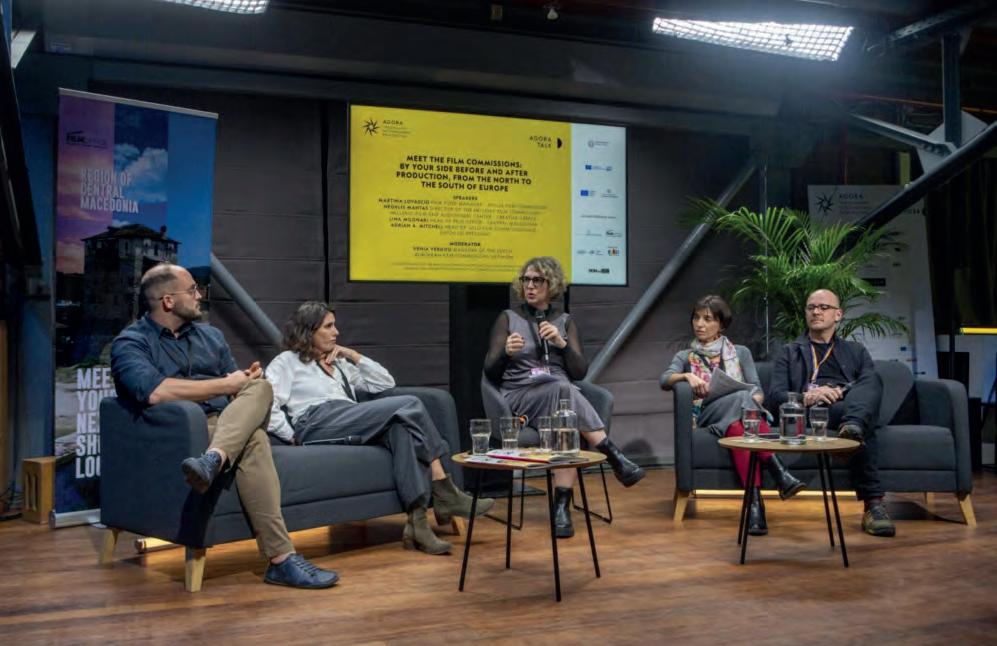
In this context, recent events like Shooting Locations Marketplace in Valladolid and FOCUS London have emerged as new meeting points. At RUBIK, we see them as highly significant, which is why we are attending them with a special international issue.
Therefore, in this edition, you’ll find extensive content on these topics, starting with articles on the latest editions of the events just mentioned.
One of the most insightful pieces for understanding the current state of the sector is our feature on the agreement between the European Film Commission Network (EUFCN) and the Location Managers
Guild International (LMGI), which includes interviews with their respective presidents: Adrian A. Mitchell and John Rakich.
Until a few months ago, Carlota Guerrero—now General Director of the Spanish producers’ federation PROA—served as co-president of the EUFCN. Drawing on her 18 years of experience as a film commissioner, she provides an article with practical advice for film offices and film commissions.
One of the main reasons for choosing a location is fiscal incentives. We’ve included an article on a study conducted by the legal firm OM-MA that examines incentives in various regions—a straightforward guide to understanding the conditions in several countries.
On a global level, we also revisit the sector’s most prestigious location awards from recent months: the LMGI Awards and the EUFCN Location Awards.
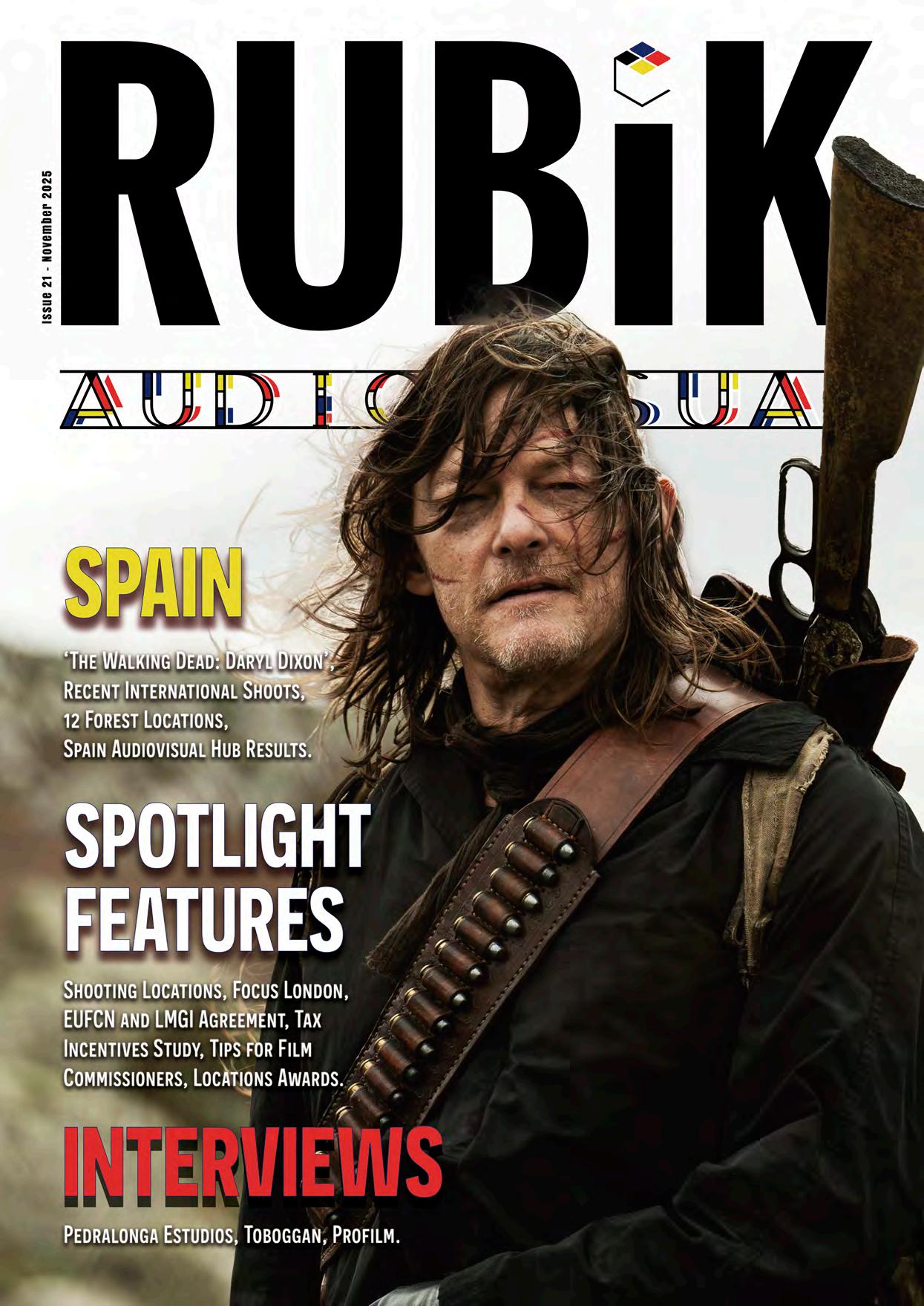
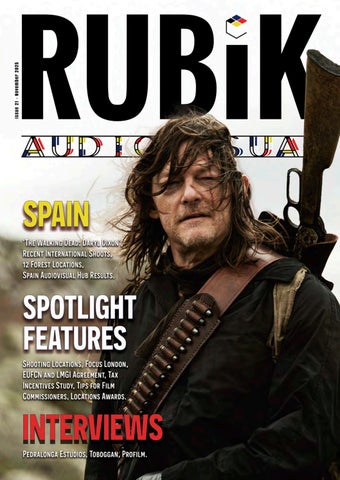
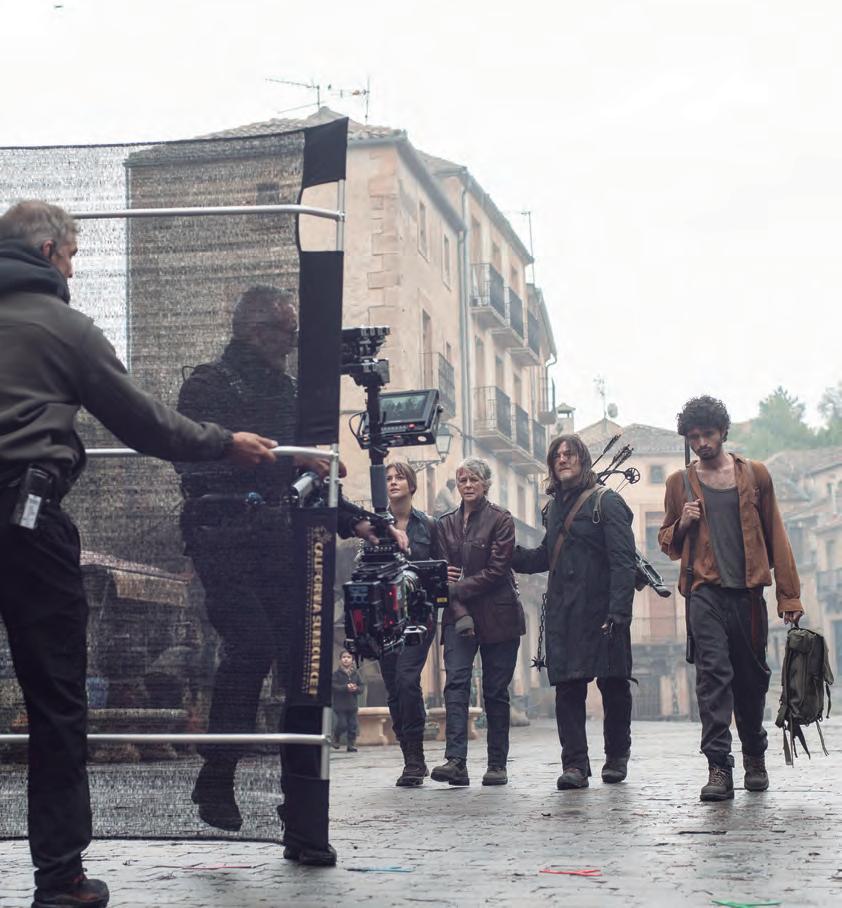
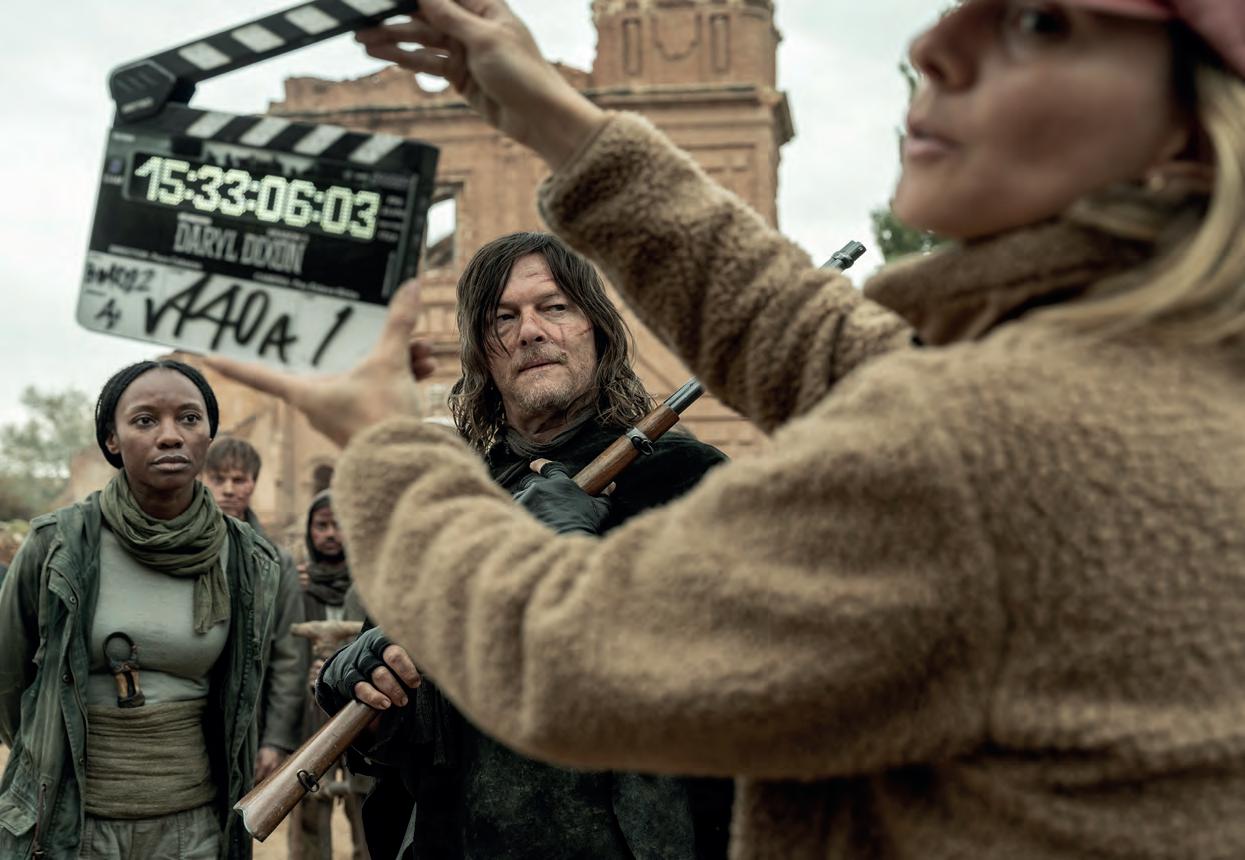
As always in our international editions, Spain takes center stage. The most in-depth feature—and the front page—is on the series The Walking Dead: Daryl Dixon, whose third season is set in Spain. It serves as a striking example of a country fully supporting a major production. The series traveled through no less than 8 regions, 22 municipalities, and 38 locations. This massive operation deserves a detailed report, split into two articles: one focusing on the production itself with insights from the service production company (Ánima Stillking) and Spanish director Paco Cabezas,
and another offering an in-depth look at the specific locations used.
Complementing this, we’ve published a piece on other ambitious international productions filmed in Spain in recent years. Many of these productions come to Spain to benefit from its incentives. These incentives— and the goal of attracting international shoots—were the driving force behind the Spain Audiovisual Hub. A recent presentation reviewed the outcomes of this initiative, and in this issue, we delve into its results and statistics.
In line with last year’s edition—where we recommended 12 mountain locations in Spain—this year we’re focusing on 12 forest locations. It’s another tool to help break the cliché of Spain as merely a land of sun and beaches.
Lastly, we don’t want to leave out the interviews. The most extensive is with Fernando Victoria de Lecea, president of Profilm (the association of the majority of spanish service production companies), and we also highlight conversations with the execs of two major production centers recently opened in Spain: the Coruña Immersive Studio and the new Toboggan sound stages in Villaverde (Madrid).
Carlos Aguilar Sambricio and Miguel Varela.
ADVERTISING CONTACT: MARKETING@RUBIK-AUDIOVISUAL.COM
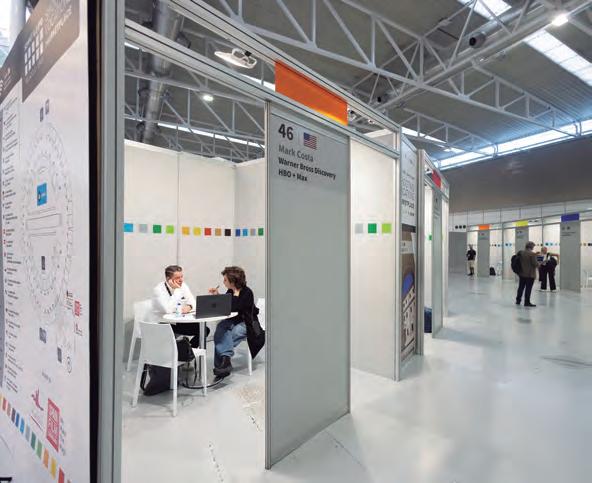
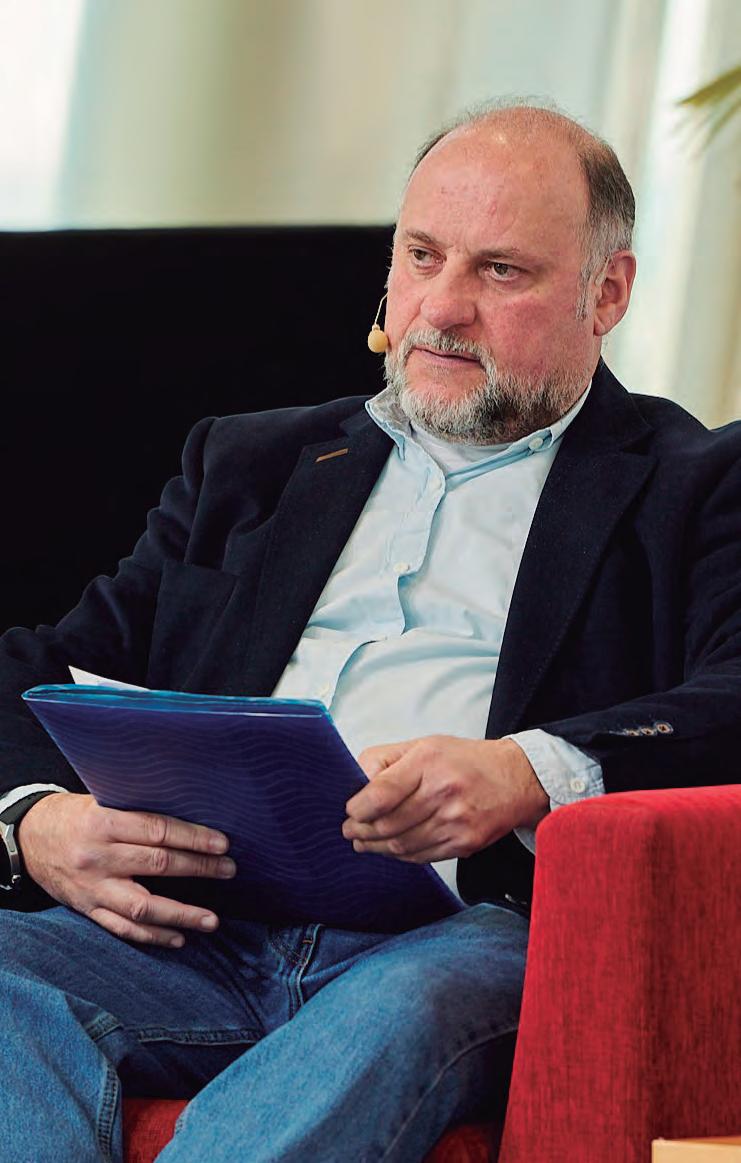
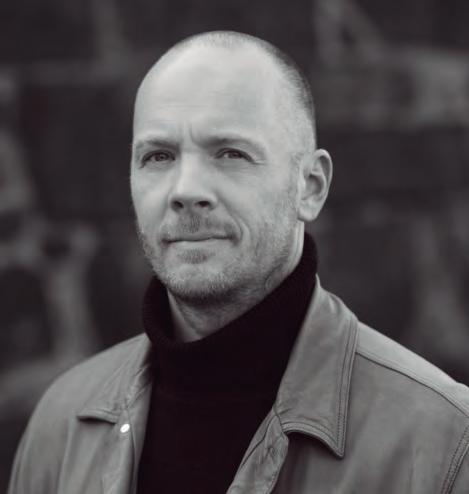


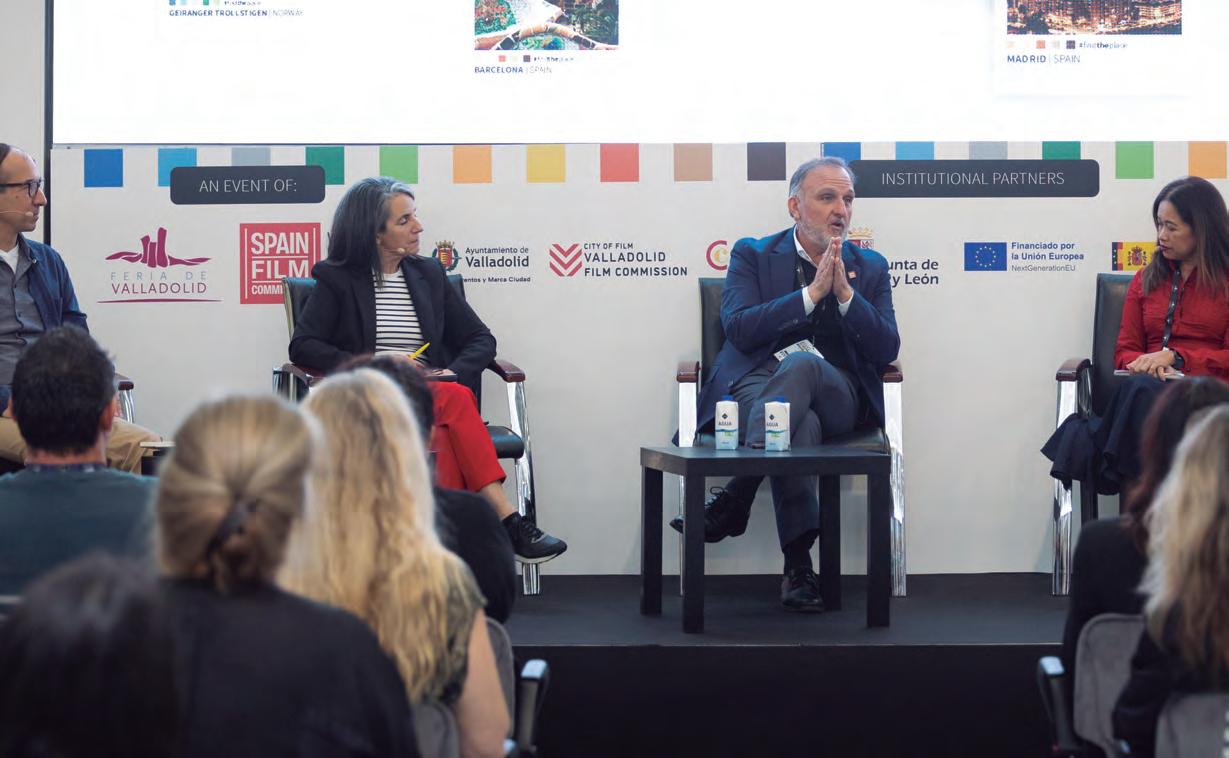
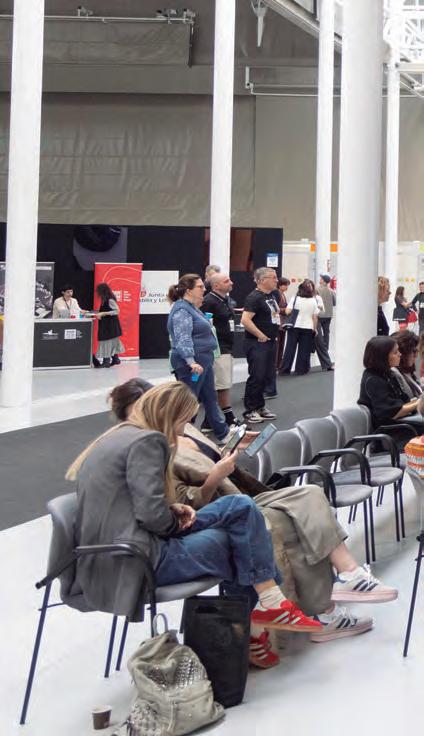
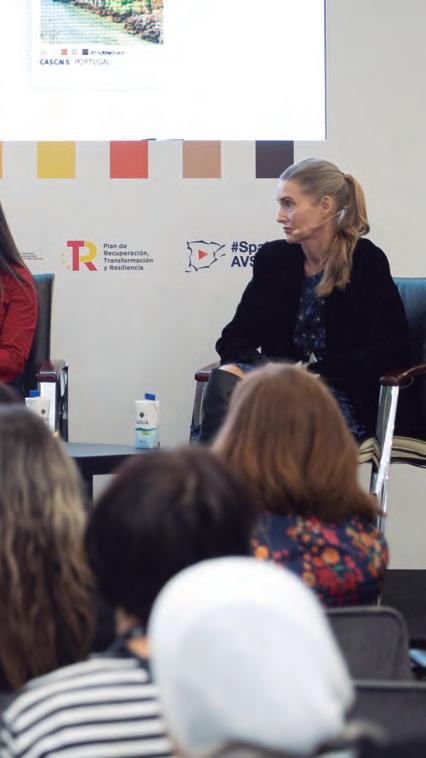
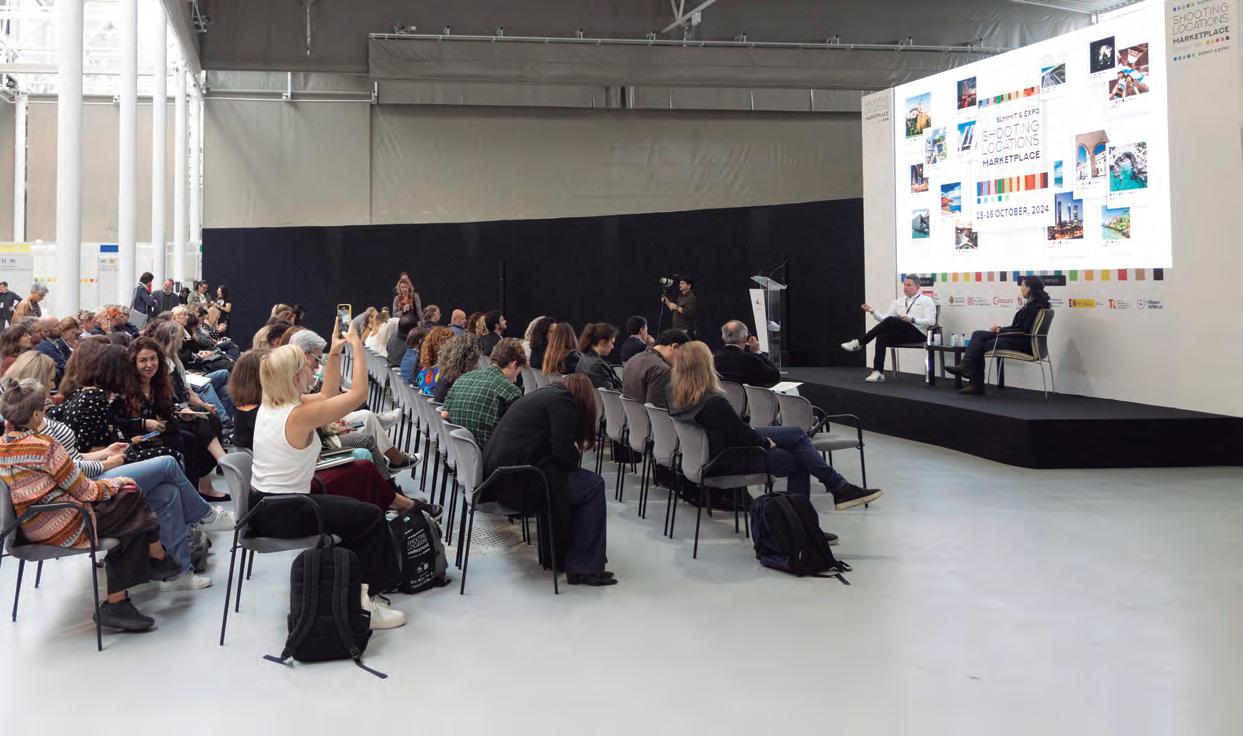
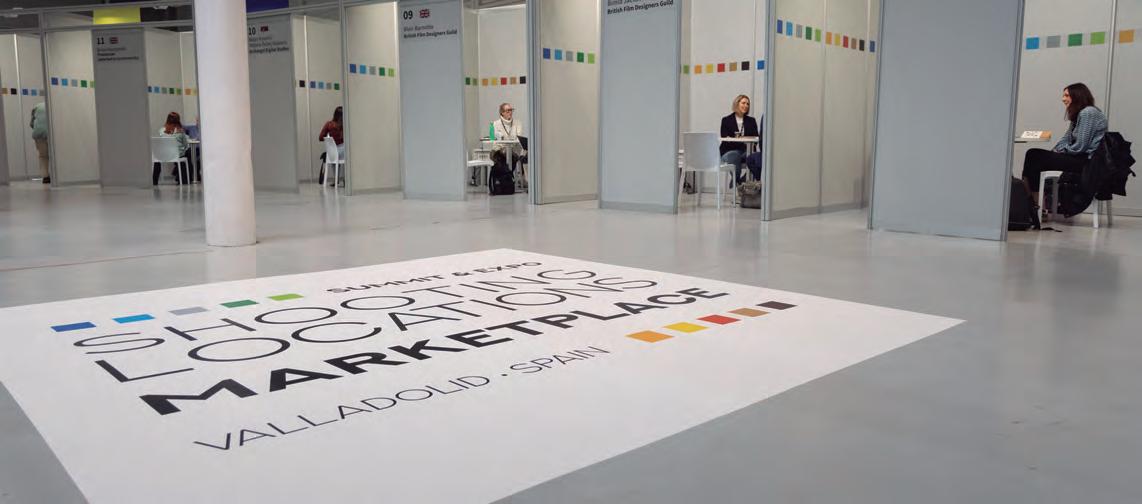
SHOOTING LOCATIONS MARKETPLACE IS A TRULY UNIQUE EVENT ON THE INTERNATIONAL SCENE. WITH AN ORIGINAL FORMAT, ITS MAIN GOAL IS TO CONNECT FILMING DESTINATIONS WITH LOCATION SCOUTS AND PRODUCERS. ON OCTOBER 15 AND 16, PROFESSIONALS FROM 24 COUNTRIES WILL GATHER AT FERIA DE VALLADOLID, WHICH ORGANIZES THE EVENT IN PARTNERSHIP WITH SPAIN FILM COMMISSION.
Shooting Locations Marketplace (SLM) celebrates its fifth anniversary, and Valladolid once again stands out as the host city of a key event in the field of filming locations.
Among the key new developments is the participation, for the first time, of film commissions and location managers from Eastern regions such as Thailand, South Korea, Saudi Arabia’s AlUla region, and Kurdistan, as well as the Ibero-American Network of Film Commissions.
The event maintains strategic partnerships with major international professional associations, including Location Managers Guild International (LMGI), European Film Commissions Network (EUFCN), Crew United, and Profilm, enhancing its global scope.
“Since the project’s inception, we have emphasized the global nature of Shooting Locations Marketplace. In the previous
edition, we made a significant leap in terms of international presence, and this year that trend is being consolidated,” explains Alberto Alonso, General Director of Feria de Valladolid.
Juan Manuel Guimeráns, President of the Spain Film Commission, highlights the national industry’s support for the project, “as evidenced by the involvement of a large number of Spain Film Commission members, as well as the growing participation of private entities, including both companies that provide production services and studios.”
One of the standout features of this fifth edition is the increased presence of private companies, with 19 firms from diverse sectors such as studios, hotels, and production service providers, hailing from countries including Spain, Portugal, Jordan, Estonia, and Hungary. New additions include Stellarium Studios, based in Ciudad Rodrigo (Salamanca), and Pedralonga
Estudios from A Coruña, joining Alicante’s Ciudad de la Luz. The hotel sector will also be represented by chains such as Paradores, Radisson, MiniHollywood in Almería, THB, Blau, and Concept Group.
At the heart of the event is the business matchmaking market, where around 70
location managers and producers will meet with destinations and companies. Many of these professionals work with globally recognized studios such as Amazon, Annapurna, CBS Studios, Climax (South Korea), Focus Features, and Marvel, with participants from the U.S. and U.K. markets representing 55% of the total.
Blanca Jiménez, Councillor for Tourism, Events, and City Branding at Valladolid City Council, emphasizes that “this marketplace, unique in Spain, is part of a field that is very important both economically and socially on a global scale. The fact that SLM is being held in Valladolid is a clear example of our city’s ability to position itself through professional and distinctive events throughout the year. We are a city of film in every step of the process, from location scouting to the screening room.”
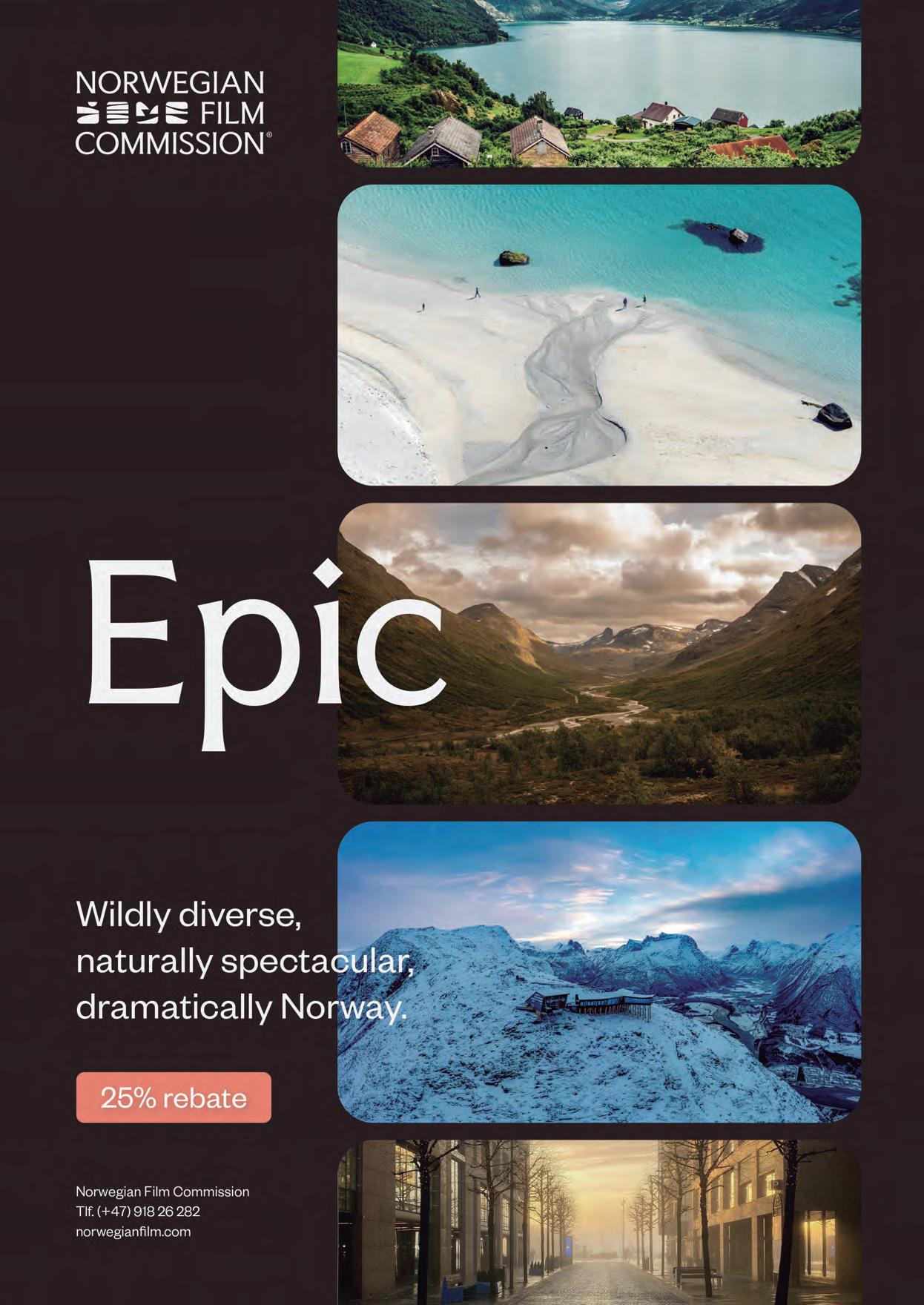
The activities of Shooting Locations Marketplace extend beyond the exhibition center, offering participants the chance to visit the destinations and filming sites discussed in the business meetings. This year, eight fam trips will depart on Friday, October 17, headed to regions such as Castilla y León, Andalusia, Rías Baixas, Asturias, Barcelona, and the Canary Islands, along with, for the first time, international destinations: Central Portugal and Norway.
In addition to the one-to-one meetings, the event features a carefully curated conference program. The opening session, titled ‘Cooperation Ties’, will take place at 12:15 p.m. on Wednesday, October 15, featuring a conversation between Juan Manuel Guimeráns and producer Anna Saura from Atrece Producciones.
That same afternoon, at 5:00 p.m., the first panel discussion, ‘Blurring Borders: The Rise of the East’, will be moderated by John Rakich, president of LMGI, and will include representatives from Thailand Film Office, Film AlUla, and South Korea’s Climax Studio.
On the second day, the morning sessions will include two panels. The first, ‘Hidden Treasures Around the World’, moderated by Kristine Guzmán of Castilla y León Film Commission, will feature speakers from the Kurdistan Film Commission, Slovakia Film Commission, Iberofic, and the Netherlands Film Commission.
The second panel, ‘Keys to Competitiveness in Global Filming’, moderated by Venia Vergou of EUFCN, will bring together professionals from production service companies such as Ready to Shoot (Portugal) or MenuFilmid (Estonia), and Pedralonga Estudios (A Coruña).
Regarding the participants, as in previous years, the event will welcome a strong presence of Spanish film commissions and film offices, representing territories from across the country: Spain Film Commission, Andalucía Film Commission, Aragón Film Commission, Asturias Paraíso Natural Film Commission, Bilbao Bizkaia Film Commission, Burgos Film Commisson, Cantabria Film Commission, Castilla y León Film Commission, Cataluña Film Commission, Costa Blanca Film Commission, Film Basque Country, Film France, Film Valencia, Galicia Film Commission, Gran Canaria Film Commission, La Palma Film Commission, Madrid Film Office, Mallorca Film Commission, Menorca Film Commission, Palencia Film Commission, Región de Murcia Film Commission, Rías Baixas Film Commission, Salamanca Film Commission, Santiago de Compostela Film Commission, Segovia Film Commission, Sevilla Film & Events, Soria Film Office, Tenerife Film Commission, Valencia Film
Office, Valladolid Film Commission and Zaragoza Film Office.
Alongside them, many European commissions will be participating, including representatives from Bayern Film Commission (Germany), BerlinBrandenburg Film Commission (Germany), Czech Film Commission, Friuli Venezia Giulia Film Commission (Italy), German Film Commissions, Netherlands Film Commission. Norwegian Film Commission, Nouvelle Aquitaine (France), Portugal Film Commission, Screen Scotland, Slovakia Film Commission, Tirol Film Commission (Austria), Viena Film Commission (Austria) and Vilnius Film Office (Lithuania).
The presence of Asian film commissions continues to grow, with this year’s attendees including Film AlUla (Saudi Arabia), Kurdistan Film Commission, and Thailand Film Office.
The event will also host service production companies, both Spanish— such as Anima Stillking, Palma Pictures,
Fresco Film, and Seven Islands Film—and international, with companies such as Zaman Productions (Jordan), Menufilmd (Estonia), The Family Project (Hungary) and Ready to Shoot (Portugal). Spanish production hubs like Ciudad de la Luz (Alicante), Pedralonga Estudios (A Coruña), and StellariumRodriwood (Salamanca) will also be taking part, alongside associations such as Crew United, EUFCN, LMGI, and Profilm.
In addition, a diverse array of organizations and institutions will participate: Aldeias do Xisto y Aldeias Históricas (Portugal), Blau Hotels (Balearic Islands), Concept Group (Balearic Islands), Fundación La Pedrera (Barcelona), Landers and Cofiño (Asturias), Ayuntamiento de Manresa (Barcelona), Minihollywood (Almería), Mont Sant Benet (Barcelona), Paradores de Turismo (Spain), Radisson Hotel Group, Red Iberofic (Latam), THB Hotels (Barcelona), The Wild Frame Locations (Madrid) and Turismo Valladolid.

90FPS 8K 16
dual sensors
stops of Dynamic Range
8K STEREO immersive
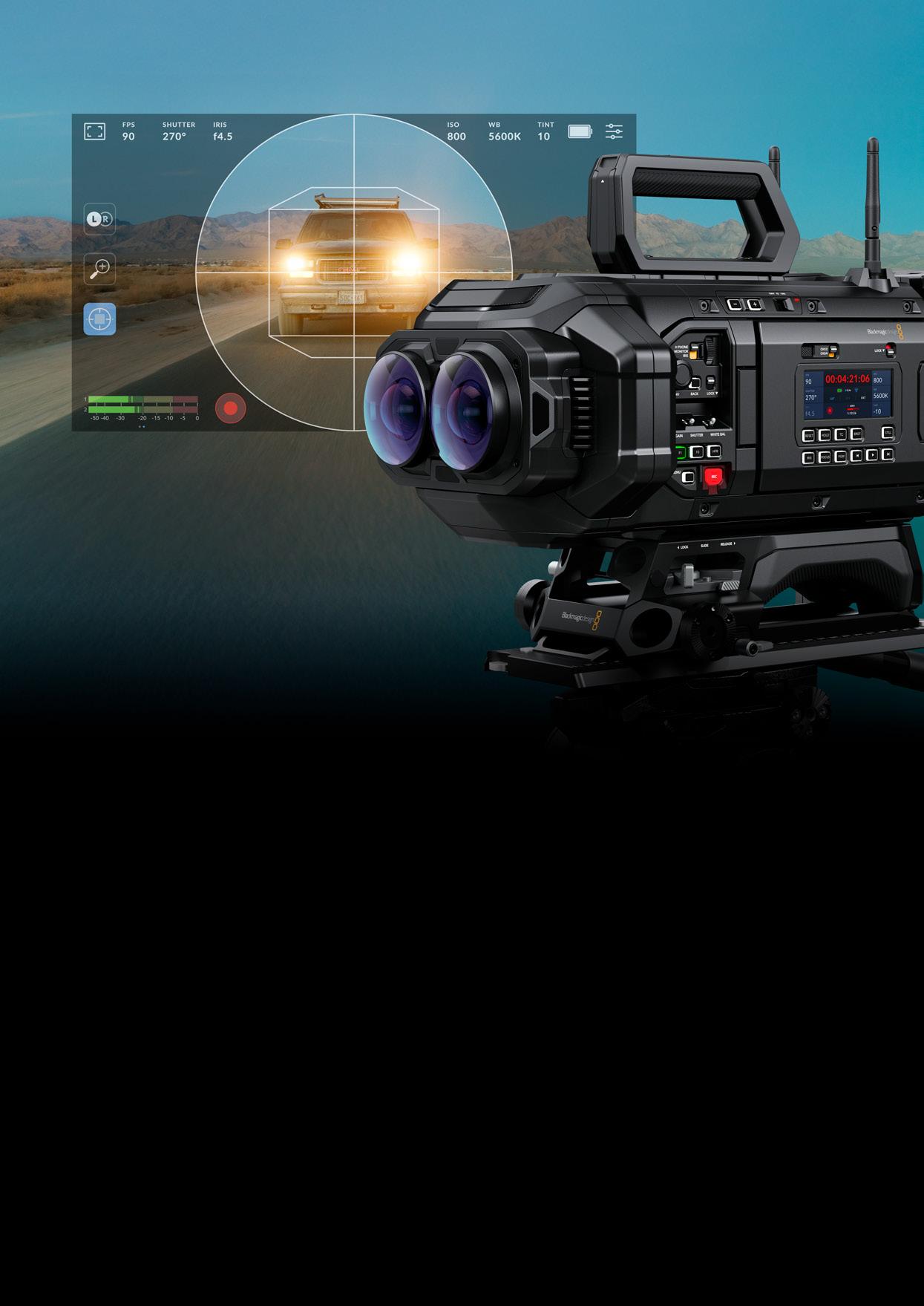
Blackmagic URSA Cine Immersive is the world’s first digital film camera for Apple Immersive Video! A fixed custom lens system and dual 8K sensors with 16 stops of dynamic range record immersive video to a single Blackmagic RAW file. This unique integrated design makes shooting 3D video simpler than ever, without the difficulty of complex multi camera 3D rigs!
Designed for Apple Immersive Video!
Apple Immersive Video is a powerful 180º media format built for Apple Vision Pro. It combines ultra-high-resolution immersive imaging and spatial audio to place viewers at the center of the action. For filmmakers, it opens up new possibilities to create scenes that unfold in every direction, giving viewers a sense of presence and realism with the freedom to explore the space around them.
Incredible RGBW Sensors
URSA Cine Immersive features revolutionary new sensors designed for incredible quality images at 8160 x 7200 resolution per eye! Using the same revolutionary RGBW sensor design as URSA Cine, the new dual sensor layout features larger photo-sites, delivering an astounding 16 stops of dynamic range! Now you can capture more detail with a wider dynamic range than ever!
While traditional digital film cameras have very basic user controls, URSA Cine has been designed with feedback from the world’s leading cinematographers so it’s loaded with controls needed for modern filmmaking. Standard connectors make it easy to use industry standard accessories and remote camera control. You also get 12G -SDI monitoring out, 10G Ethernet for network media access and more!
Includes DaVinci Resolve Studio for Immersive Video
DaVinci Resolve Studio for Mac is the world’s only solution that combines editing, color, VFX, audio post and delivery for Apple Immersive Video. New project settings bring Apple Immersive Video to every page including a new immersive video viewer that lets you view work on any monitor, an updated spatial Audio Editor as well as multiple ways to review and export Apple Immersive Video on Apple Vision Pro.
Blackmagic URSA Cine Immersive 25 825 €
CAN JOIN THOUSANDS OF FILM, TV, ADVERTISING, AND GAMES EXECS AND CREATIVES FROM OVER 100 COUNTRIES FOR TWO PACKED DAYS OF NETWORKING, KNOWLEDGE-SHARING, AND INSPIRATION.
Each passing year, FOCUS is more important for the screen industries. The organistion wants you to meet the makers shaping the future of the sector and discover global filming incentives and solutions for every stage of production.
FOCUS provides insights from expert speakers at the FOCUS Conference, developed in consultation with leading industry bodies, including Pact, BFI, BFC, UK Screen Alliance, ScreenSkills, Directors UK, Games London, and more.
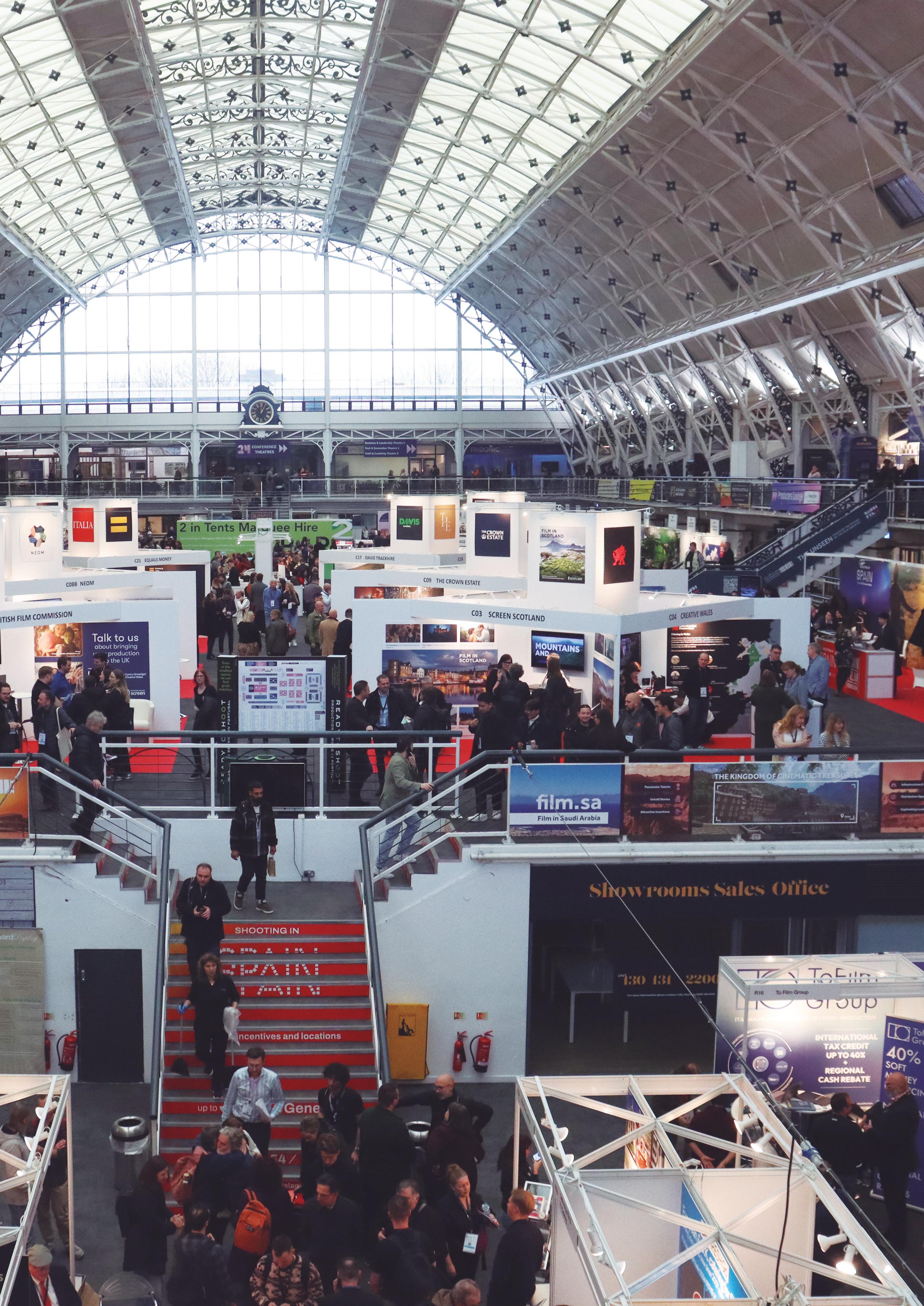
At FOCUS 2024 , over 3,900 delegates, exhibitors, sponsors and international delegations, from 72 countries, enjoyed conference sessions, meetings and networking events at the Business Design Centre London. Among the new territories represented in 2024 were Nepal, Montenegro, Tunisia, South Korea, Hungary, Serbia, Barbados, Kurdistan, India, and Japan. Over 70 conference sessions and exhibitor presentations brought together more than 200 expert speakers.
If you are a working screen professional, you can claim for your free delegate pass and secure your place at this essential end-of-year gathering. There are also opportunities for Exhibitors; in this regard you have to act fast to get one of the final spaces.
This year’s there’s a record number of exhibitors (almost 300). The showfloor will include new participants from Armenia, Czech Republic, India, Georgia, Jordan, Lithuania, North Macedonia, Malaysia, and the UAE. There will be global partners from every continent — studios, film commissions, film-friendly locations, production services, and more.

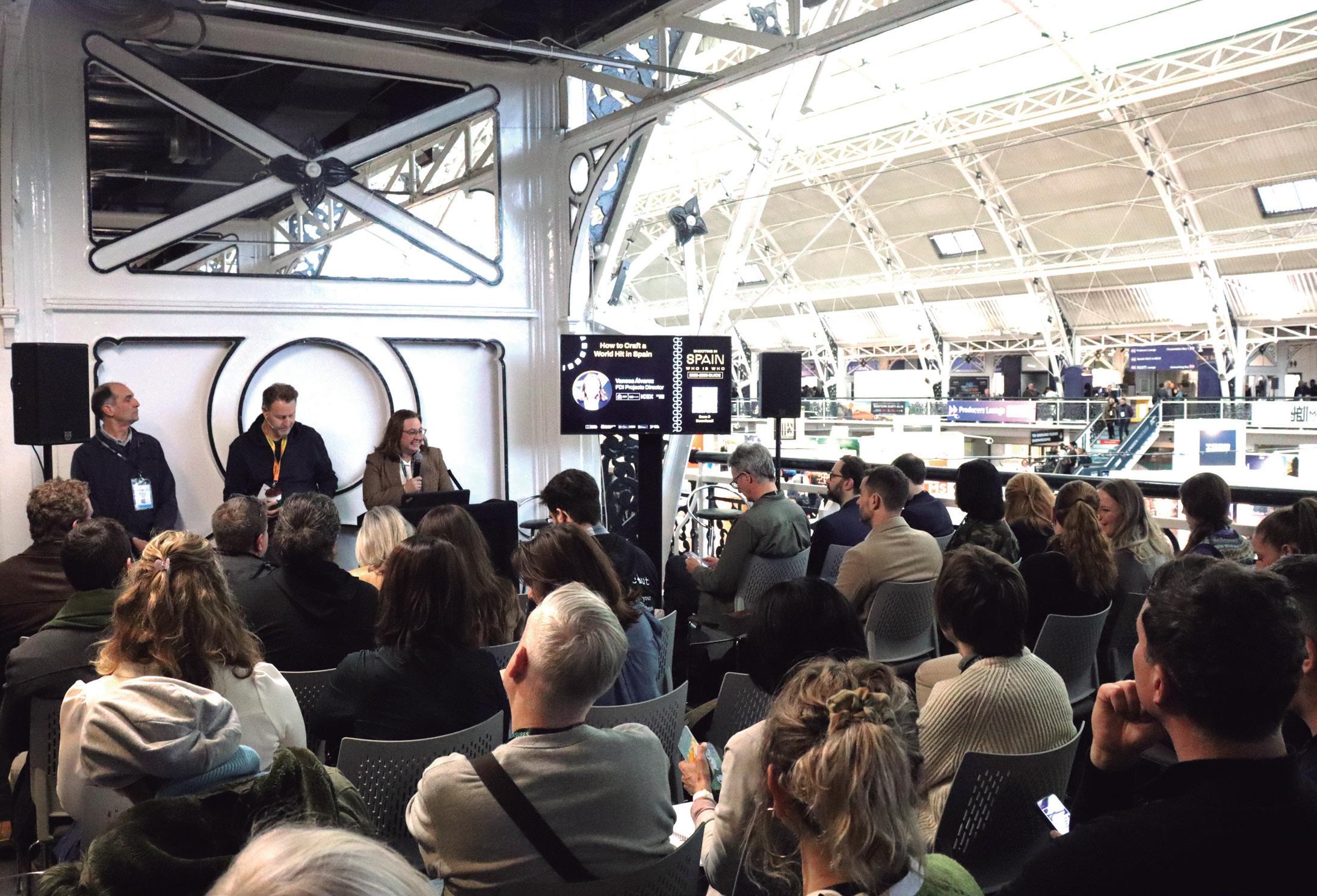
In celebration of their 10th year of FOCUS, they are introducing CO:LAB: a dedicated programme featuring networking activities and workshops, designed exclusively for producers, directors and creators of on-screen content.
This specially curated, invitation-only programme includes bespoke workshops, offering expert-driven deep dives into key topics to help you level-up your knowledge: from legal and finance updates; to the latest co-production, AI and emerging technology insights. There will be speed networking sessions and informal mixers as wel.
This CO:LAB initiative is an exclusive and limited programme, and they only have 150 passes available.
It includes tailored workshops in-depth sessions, led by top-tier industry experts, covering core production areas such as Financing Strategies, Legal Essentials, Co-Production Insight, AI & Emerging Tech, Talent Management
Also, Speed Networking Sessions Facilitated networking, designed to encourage targeted business connections; Breakfast Mixer & Reception Relaxed networking opportunities; and Digital Networking Platform Access to their digital networking tool to connect and book meetings ahead of the event.
Over two days, attendees will be able to gain insights from influential voices in the industry.
There will be a Business & Leadership Stage where key topics like tax incentives, co-production, and workforce evolution will be tackled.
Besides, in the Craft & Innovation Stage , professionals will take a look at the creative minds and technologies that are driving the future of screen production.
On Monday December 8th , we can highlight some panels related to creativity and business like ‘Human Intelligence v. AI in Film Creation’, ‘Paying for Ideas: What’s Creativity Worth Now?’ and ‘Building the
Next Generation of Leaders in Film and Television’.
Many countries take advantage of this event to promote their regions as filming destinations, both for their locations and for other reasons such as infrastructure, film crews, or tax incentives.
This year there will panels such as ‘A UK Location Filming Masterclass’, ‘The Philippines - Where Stories Find Support’, ‘Cyprus, A Natural Film Studio’ and ‘Understanding the French Tax Rebate for International Productions (TRIP)’.
On Tuesday December 9th, there will some other interesting roundtables. For instance, ‘The Global Language of Locations: Building Partnerships that Power Production’, ‘The Art of Collaboration: Blending Effects and Design for ‘Warfare’’, ‘From Scroll to Screen: The New Hollywood Pipeline’, ‘Discover the UK’s incentives for VFX and Post Production’, ‘New Tools, New Rules: AI’s Impact on Film Craft’, ‘Disrupted Distribution: How Tech Reshaped Film Financing - and What We Missed’ and ‘Authenticity Sells: What the Creator Economy Can Teach Film and TV.

BY CARLOS AGUILAR SAMBRICIO
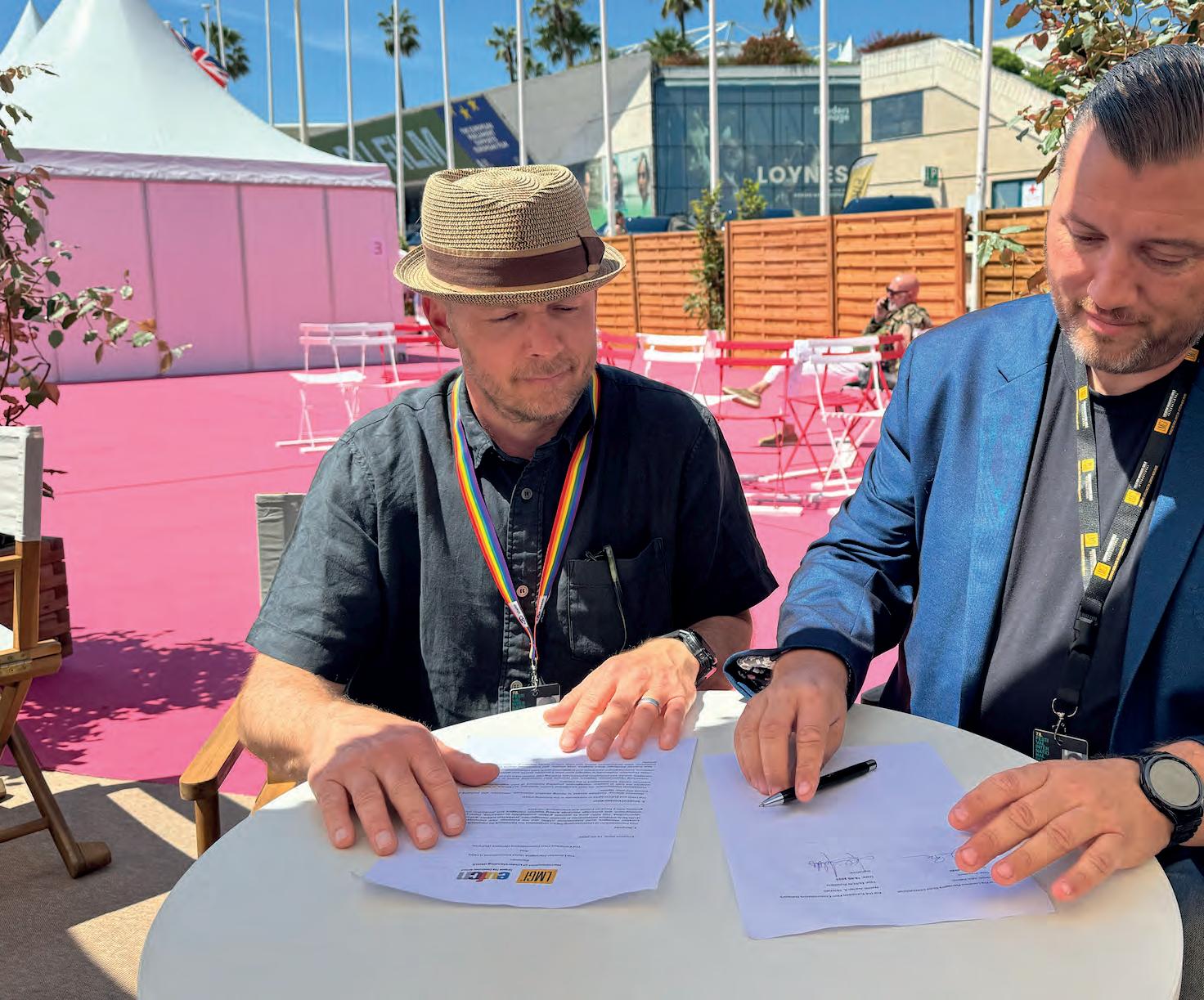
DURING LAST MARCHÉ DU FILM – FESTIVAL DE CANNES, THE EUROPEAN FILM COMMISSIONS NETWORK (EUFCN) AND THE LOCATION MANAGERS GUILD INTERNATIONAL (LMGI) SIGNED A MEMORANDUM OF UNDERSTANDING (MOU) IN ORDER TO HAVE A FRAMEWORK FOR COOPERATION BETWEEN THEM. RUBIK WANTED TO HAVE A GOOD GRASP
ON WHAT THIS AGREEMENT MIGHT LEAD TO, SO WE HAVE REACHED THE PRESIDENTS OF BOTH ASSOCIATIONS, WHO ALSO GAVE US SOME INSIGHTS ON THE CHALLENGES IN THE CURRENT LANDSCAPE.
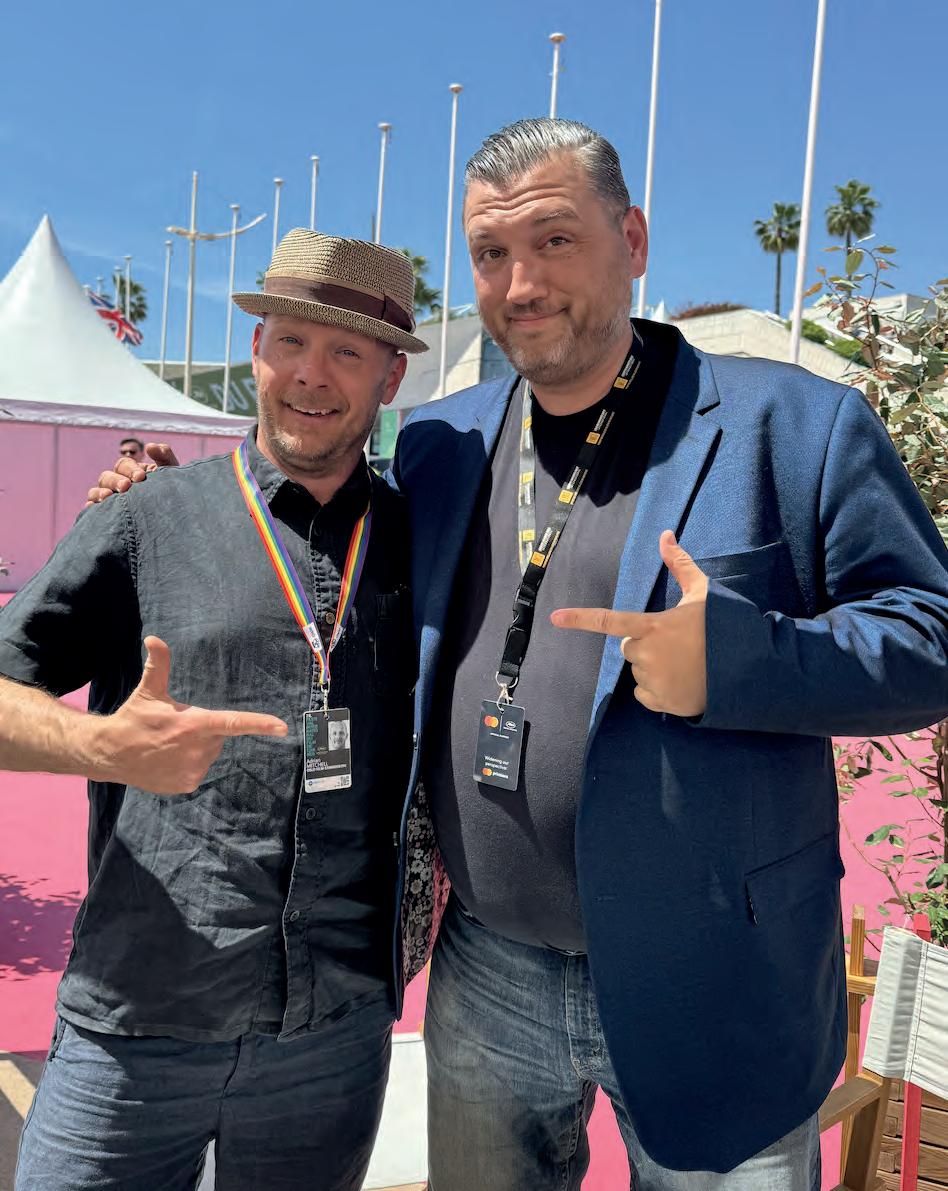
The Memorandum of Understanding was signed in Cannes by EUFCN President Adrian A. Mitchell and LMGI President John Rakich. This MoU aims to promote broader accessibility to resources, foster professional development, and encourage the exchange of knowledge among film commissioners, location managers, and production
professionals globally, with a focus on Europe and international markets.
We wanted to know in what ways can it be useful for both. Adrian A. Mitchell, European Film Commissions Network’s president think that “a collaborative relation between members of the EUFCN and the LMGI will genuinely benefit both networks in a pursuit of crafting opportunities for local commissions and local location professionals in the industry.”
“We wish to broaden the scope of awareness of the vast and spectacular European locations and contribute to a sustainable and professional partnership on all levels,” adds Mitchell, stating that “there is great potential in promotion, professionalism and facilitation that would benefit all.”
For John Rakich, Location Managers Guild International’s president, the point is that they see “real value in building stronger
their creative toolkit and gives productions more options when Europe is being considered as a filming destination.”
Mitchell notes EUFCN does its best “to promote all the areas and regions of all our members”. He believes that, if the work they do will reach and make an impact on location managers and scouts in the US, working on AV productions looking for locations internationally, then “we have succeeded in many ways”.
He thinks LMGI members have been across the whole of Europe, mentioning Iceland, Norway, Finland in the north to Spain, France, Italy, Germany in south and central Europe, adding Czech Republic, Greece, UK and more: “The main objective of this collaboration is to gain more knowledge, to shed the light on the diversity of locations in Europe and to find the best ways to expand on both our objectives, namely to find the best locations, in the best possible way and attract positive activity in our regions.”
To broaden the scope of the agreement and put it into the context of the current landscape, I wanted to ask what they believe
are the main challenges facing European film commissions today.
“One of the biggest challenges for European filming destinations today is competition on a global scale. Productions are looking not only at creative value but also at incentives, infrastructure, and cost efficiency. Regions like North America, the Middle East, and parts of Asia have invested heavily in competitive rebates, purposebuilt studios, and streamlined permitting, so Europe has to work harder to stand out,” comments Rakich.
“Some European countries have robust support systems and choose to invest in the creative industries, while others struggle with inconsistency and fragmented policies”.
Adrian A. Mitchell
Another challenge is “logistics and consistency”, according to LMGI’s president: “Europe’s strength is its diversity, but it also
means navigating different regulatory frameworks, labor rules, and permitting systems from country to country. That can be daunting for productions trying to move quickly and keep budgets under control”.
He also points out the issue of capacity and sustainability: “With the boom in global production, many popular European hubs are stretched—crew shortages, infrastructure bottlenecks, and concerns about overuse of locations all come into play. At the same time, the industry is increasingly looking at environmental responsibility, so locations need to show they can support sustainable production practices.”
But challenges also create opportunities and Rakich states that, “ with the right incentives, better coordination between commissions, and continued investment in both talent and infrastructure , Europe can leverage its incredible range of locations and cultural depth to remain one of the most attractive regions for international filmmaking.”
Mitchell mentions the cultural heritage , Europe’s own film legacy: “How to maintain our industry, there are environmental issues and there are other issues that, at the moment, are argued to
be more important than others. So, which to choose, and how to address them all?”
Also, he says “some European countries have robust support systems and choose to invest in the creative industries, while others struggle with inconsistency and fragmented policies. ” Considering Europe has a tradition of co-production, sometimes it´s complicated by differing regulations and priorities.
“I think we need to face these issues and seek opportunities in finding a balance between attracting international investment and how we cater for local screen productions. The international (huge) productions opens up for crew development and their financial spend often opens up for new investments locally in terms of new equipment and infrastructure. This will further give local productions accessibility to competence and equipment in the aftermath of these productions. This could, and often do, raise the bar of local productions on many levels,” he adds
Mitchell refers to sustainability as another challenge, that’s why “we need to discuss how we can find ways and manage to produce with less negative and more positive footprint.”
Regarding tax incentives, some people say it´s all about them when picking a filming destination. “Tax incentives are important, but they’re only one part of the equation. Producers and location managers are equally looking for ease, reliability, and creativity in a filming destination,’ claims Rakich.
He adds that, what really makes a difference is “when film commissions and regions can start with streamlined access and permitting”. So, “simplified, transparent, and predictable permitting systems save productions both time and money”, which is something producers value “immensely”.
Other strong points could be “providing local expertise and solutions in having well-connected, proactive commissions who can anticipate challenges—whether it’s finding crew, navigating regulations, or unlocking unique locations. Also, a commission that can give fast answers, adapt to last-minute changes, and connect us directly with decision-makers will always stand out.”
Rakich insists as well on infrastructure and crew: “Incentives won’t mean much
if there aren’t enough trained crews, equipment houses, or facilities on the ground. Building local capacity gives producers confidence they can deliver at scale.”
“Producers want that their investment is safe, their creative vision is possible, and their production will run smoothly. Tax credits may get them in the door, but it’s the overall package of support, talent, and trust that convinces them to stay”
John Rakich
At the end of the day, producers want reassurance, according to Rakich: “They want that their investment is safe, their creative vision is possible, and their production will run smoothly. Tax credits may get them in the door, but it’s the overall package of support, talent, and trust that convinces them to stay.”
Mitchell also argues that the conversation shouldn’t revolve solely around tax incentives: “There are many ways of being creative in terms of attracting screen production, and not all of them are necessarily linked to tax incentives. An incentive is what it is; an initiative brought forward to attract wanted activity. If this is services, accessibility, rebates or other - it is up to each and every country or region to find and decide.”
According to him, what matters is “screen value”. This may seem “naive”, but when one only looks at numbers, “you will be missing out on several aspects that give value to crew, creatives and in the end the audience.”
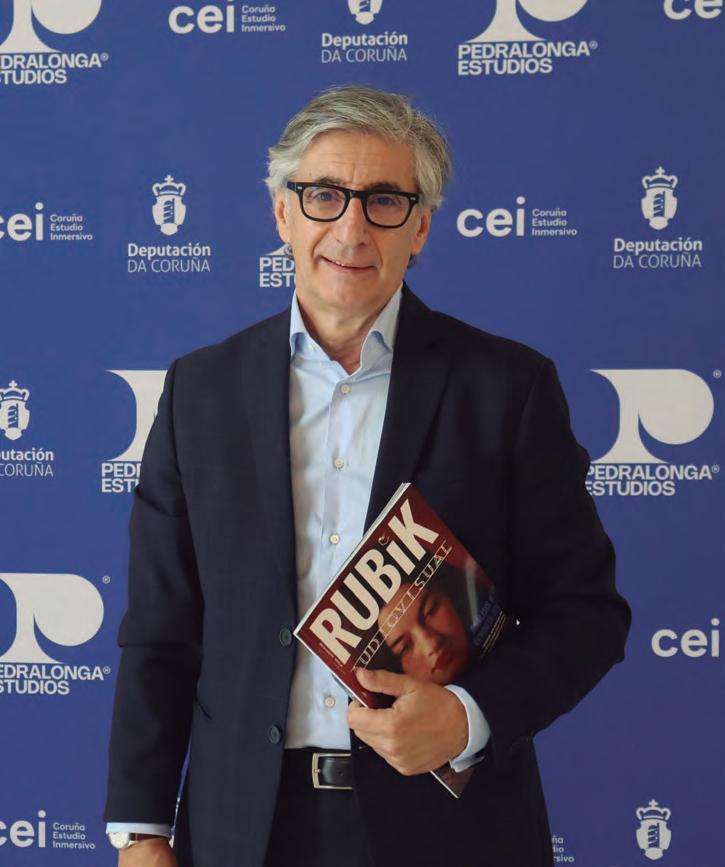
MANAGING DIRECTOR OF PEDRALONGA ESTUDIOS
PEDRALONGA ESTUDIOS INAUGURATES THE CORUÑA ESTUDIO INMERSIVO (CEI), A
AND IBERSERIES & PLATINO INDUSTRIA. WE TOOK THE OPPORTUNITY TO LEARN MORE ABOUT THE PROJECT AND INTERVIEW ITS MANAGING DIRECTOR.
MIGUEL VARELA
CEI
Rubik: How did Pedralonga Estudios come about and what is the goal of the project?
José Manuel Deus: This project started at the end of 2020, following the pandemic. Several relevant Galician production companies belonging to the Galician Audiovisual Cluster came together over the need to have spaces in the region capable of accommodating major productions. In Galicia, traditionally much filming is done outdoors due to its very attractive landscapes. But many national and international producers, after shooting those exteriors, found themselves lacking notable interior spaces to finalize filming.
That’s why the project arose to build large sound stages in Galicia where all types of film and series projects could be hosted. That idea evolved over the years until it materialized as the Coruña Estudio Inmersivo (CEI), thanks to the impetus of the Next Generation European Funds. We submitted a very ambitious project, it was well rated, it was granted, and that’s when we put it into motion.
“WE WANTED TO PROVIDE NOT JUST A STAGE, BUT A FULLY INTEGRATED SERVICE FOR THE INDUSTRY”
Rubik: So, could it be defined as a joint project of the Galician industry?
J. M. D.: Indeed, it is a project that brings together the entire Galician audiovisual sector because it is promoted by the Cluster. The ten main Galician production companies are involved as participants in the corporate entity. And also part of it is the Galician Audiovisual Cluster itself and the University of A Coruña, because we understand that this investment in studios and technology must go hand in hand with appropriate training for future generations.
We are in a privileged environment on the outskirts of A Coruña, in what is known as the Cidade das TIC. And the project is still growing, it’s very ambitious, because apart from what we are presenting now (at San Sebastián and Iberseries & Platino Industria), which is the immersive studio, there are two more large sound stages currently under construction, of 2,000 and 2,500 square meters respectively. Another benefit to highlight, in addition to good connections, location, proximity to the airport… is that we are surrounded by the entire technological
sector of A Coruña, in constant evolution. In that sense, we believe that new technologies like Artificial Intelligence will generate many development opportunities for the sector.
“Although driven by Galician industry players, Pedralonga Estudios follows a transparent, open model, offering equal conditions to national and international productions alike”
Rubik: Speaking of technology. How would you define the CEI’s technological equipment?
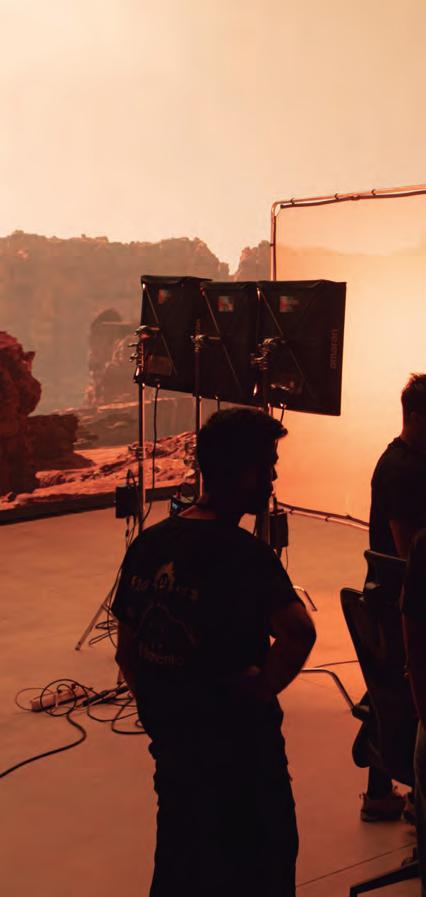
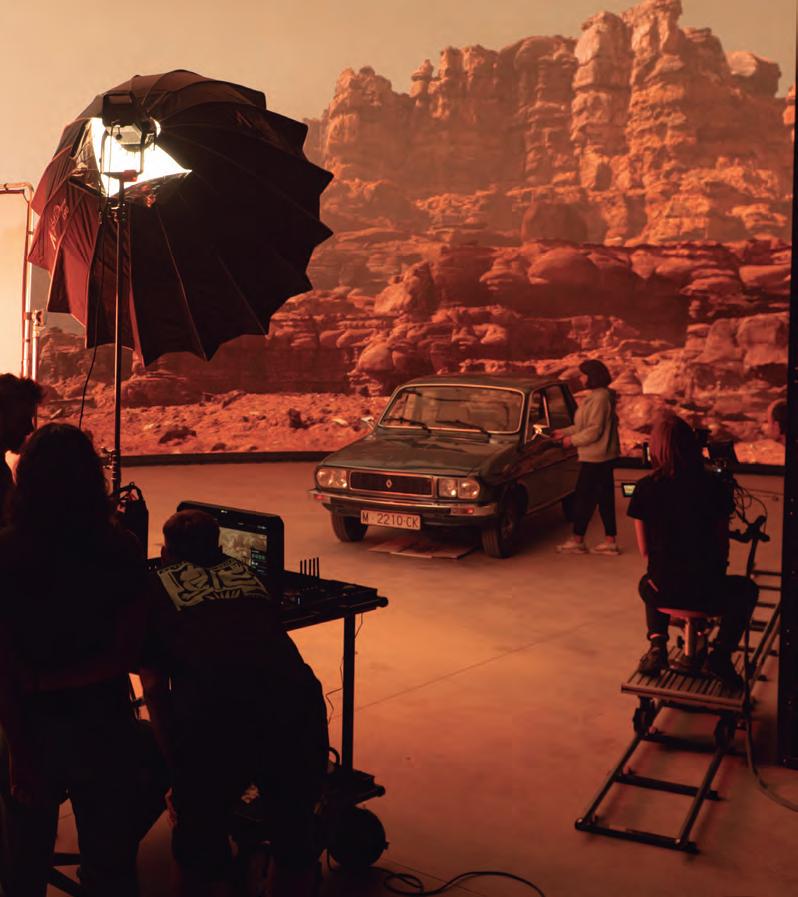
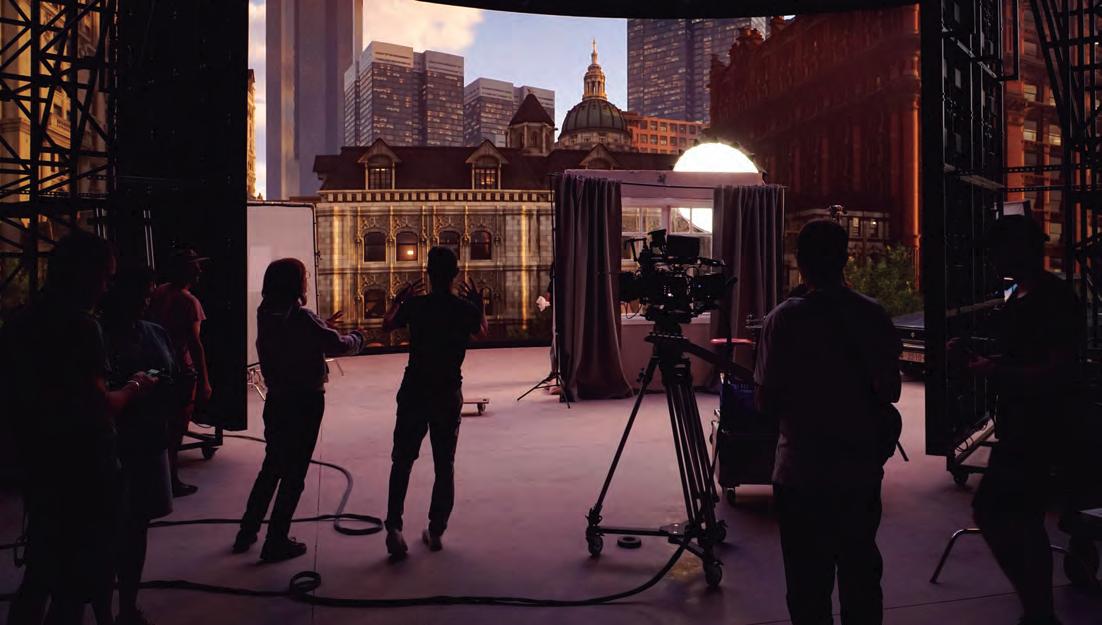
J. M. D.: All the technological equipment has been designed at the forefront, to be the most advanced in the country. It comprises 2,000 square meters, 1,200 of installations and 800 of sound stage. This stage features a unique LED screen, with a 1.9 pixel pitch,
measuring 28 × 6 meters. It also features a ceiling screen of 100 square meters, divided into three sectors, with totem systems for lighting.
More than simply building a stage, the objective was to provide an integral service to the industry. We have screening and viewing rooms, parking, VFX rooms, editing rooms… We can provide a partial service or a full one, adapting to the demands of the sector.
Regarding Virtual Production, we work with the Pixotope system, but if a professional comes with another system of their preference, they could also implement it. If the client arrives with specific equipment or specific needs, we are not a closed ecosystem; we can provide ad hoc services at any time.
Not only in the realm of virtual production, we can also provide everything related to lighting equipment, sound… that can respond to your needs without leaving the studio. Also, the companies that are part of the Cluster can provide those services and help develop the projects as a service.
Rubik: From what you have publicized, in addition to the technological design, special care has been taken so that CEI offers an integral service to productions. How does this objective translate in practice?
J.M. D.: We have designed the facilities not only thinking that they will come to film on the stage and that’s it. The center has its own cameras (Arri Alexa Mini LF), sets of optics that we put at the service of directors of photography, an integrated calibrated tracking system, all rendering machines and AR / VR systems, all processors. Everything is integrated in the system, to make only the minimal aesthetic adjustments required for each production. When a crew arrives, it is only a matter of placing the set in front of the screen for the ambiance, making small adjustments, and starting to film immediately.
Beyond the technical side, the facilities also include all the basic ancillary installations for any shoot: dressing rooms, extras rooms, wardrobes… any need that a studio shoot might imply is covered.
Rubik: When one speaks of cuttingedge technology, virtual production… one automatically thinks of large-scale productions. Is the CEI intended to host big productions or also low-budget independents?
J.M. D.: It is designed to cover all kinds of productions in the sector, even beyond film and series fiction. We also want to encompass advertising, events, videogames… The facilities are prepared to respond to all types of productions. It is possible to carry out from large to small shoots depending on the needs of each project. From full productions to shooting a single scene.
Furthermore, although Galician companies and the Cluster are involved in the project, because the entity has received public funding, we are bound by a policy of absolute transparency. In other words, the production companies that are part of the society have no advantage over those that come from other regions. We are open to free competition and provision of services in a uniform and universal manner.
And I stress “universal,” because we understand we are in a great geographical position for international companies to come to shoot. In addition to proximity to any other Spanish region, we are two hours by plane from London, we have a great connection with Portugal…
Rubik: The creation of Coruña Estudio Inmersivo is a response to an increasingly mature and ambitious Galician audiovisual industry. How would you define its current state compared to neighboring industries?
J.M. D.: I believe we are at a very good level, bringing together immense creative and technical talent, of the highest level by national and international standards. Proof of this is all the Galician series currently airing on TV
and streaming platforms, with international success. And many more to come.
This is the result of great industry growth, boosted by outstanding human talent. Also by the push generated in recent years by the regional TV, which has strongly committed to creating original fiction. Also by all the academic plans launched by various formative entities, which have allowed significant training of technical staff. Universities have been driving elements of this sector.
“In A Coruña we have a saying: “the city in which no one is a stranger.” We at Pedralonga Estudios apply that philosophy to our facilities. No client will just be a client, but a partner whom we will accompany in all phases of their project”
All these factors have allowed over the years to create an ecosystem that makes it easier to work a lot. When those factors combine with talent, with the region’s idiosyncrasy, with the marvelous landscapes available for filming… it gives rise to an audiovisual region as cutting-edge as any other, capable of undertaking major international projects.
Rubik: For a Rubik reader who still doesn’t know Coruña Estudio Inmersivo, what would you tell them to come and discover it?
J.M. D.: I would tell them to come and discover new facilities, with cutting-edge technology of all kinds. We have a network of services around all that technology that is highly important, and professionals that are giving very good responses, so a wonderful ecosystem is generated to shoot under magnificent conditions and develop any type of project.
In A Coruña we have a saying: “the city in which no one is a stranger.” We at Pedralonga Estudios apply that saying to our facilities. No client will just be a client, but a partner whom we will accompany in all phases of their project.
Rubik: Can the studio already be booked for filming? What is the process to follow?
J.M. D.: The studio is now operational. The reservation process is universal and can be done via the website or by phone. It is a simple, transparent process open to anyone. Rates are already set and public because they are established in the agreement we have with the Diputación de A Coruña. We cannot yet disclose concrete project names already in the pipeline… but we can say we are very happy and excited about everything that is to come because it is very promising. There is a clear future vision, a firm commitment to a project that we want to continue evolving until it becomes an international benchmark.
FOUNDERS OF TOBOGGAN
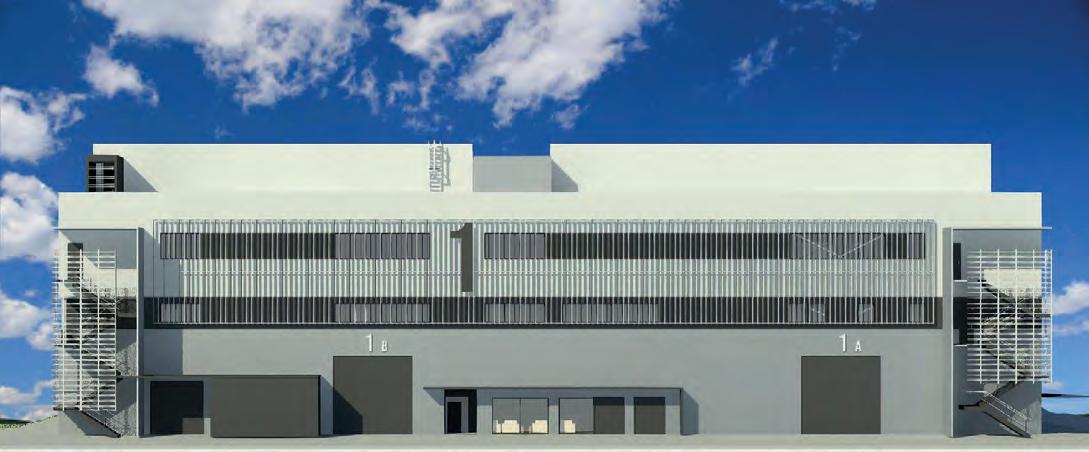
WITH FIVE SOUND STAGES UP TO 14 METERS HIGH AND A TOTAL SURFACE AREA OF 30,000 M², TOBOGGAN’S NEW AUDIOVISUAL HUB IN VILLAVERDE (MADRID) HAS BEEN DESIGNED TO OFFER COMPREHENSIVE SERVICES TO PRODUCTIONS AND ADAPT TO ALL TYPES OF SHOOTS—FROM LARGE-SCALE FORMATS TO STANDARD PROJECTS. TO DELVE INTO THE DETAILS OF THESE NEW FACILITIES, WE SPOKE WITH JUAN PEDRO RODRÍGUEZ DE LA OSSA, CEO, PARTNER AND FOUNDER, AND DAVID GONZÁLEZ OLMO, COMMERCIAL DIRECTOR, PARTNER AND FOUNDER OF TOBOGGAN.
POR SARA RODRÍGUEZ MARTÍN
Rubik: I’d like to ask about the ambitious construction of the five new stages in Villaverde. What was the objective, and how has the project evolved?
David González: It’s a project we had been planning for quite some time. When we were looking for locations, we saw that Madrid was the most suitable place to build the studios.
With this location, we’re right in the capital, just a few commuter train stops from Atocha station. The layout of Madrid allowed us to build the studios with a maximum height of 20 meters.
As a result, we were able to create sound stages with 14 meters of clear height up to the catwalks. The conditions also changed in our favor, as we had a fast-track construction process without needing a lengthy permitting process. Everything was already well advanced, which allowed us to complete
construction in just 12 months and become operational.
Rubik: One of your key advantages is offering end-to-end services to your clients, right?
D.G.: Exactly. Toboggan was founded to provide end-to-end services for both fiction and entertainment. In addition to the sound stages, we also have production centers with prop and costume warehouses, production offices—we provide producers with all the facilities and real estate they need, whether they’re shooting in-studio or on location.
And we complement that with camera equipment, camera trucks, postproduction suites, cranes…
In other words, we offer a full-service package for fiction productions—and the same goes for entertainment. When a TV show from RTVE, a streaming platform, or any other client comes in, we provide all the technical services with our own in-house staff. That includes mobile units, screens, sound, postproduction, cranes…
“IT’S ESSENTIAL FOR A COMPANY TO TELL YOU
WHAT WORKS AND WHAT DOESN’T, SO THAT, WHEN YOU SHOW UP, NO TIME IS WASTED”
All our technicians support the project: technical directors, CCUs, vision mixers, sound engineers… We deliver a full-service production experience.
Rubik: What features or services set the new Villaverde facilities apart from other studios in Spain?
D.G.: The big difference is that these studios were built from scratch with a workflow in mind for every department. We have extensive facilities and a lot of space for work and production.
There are large pre-assembly storage areas, wardrobe zones connected via freight elevators for people and materials, climate control, on-site carpentry for each stage, 17 dressing rooms including VIP suites, spacious makeup and hair rooms—all on one floor. Then we have the catering area on the third floor, next to the production offices.
Each sound stage includes space for 60 workstations, five private offices, and meeting rooms. It’s fully separated and independent.
“The difference we bring is that these are studios built from the ground up, designed with a workflow in mind for every department. We have extensive facilities and workspaces for production.”
In
terms of the stages themselves, each one has a 14-meter height, all with technical catwalks. For soundproofing, we’ve installed
acoustic curtains to manage sound isolation, technical catwalks, climate control, and every stage is fully independent. We have a block with a 2,300 m² stage and its corresponding facilities, plus a block with four stages measuring 1,500, 1,200, 1,200, and 1,500 m².
Each of those stages is constructed independently. They’re separated by safety corridors and insulated to prevent sound transmission. We’ve even implemented a flooring system to avoid sound traveling through the ground. Besides the individual safety corridors for each stage, we added another 1.5 meters between each wall.
Each stage is a standalone box. So in terms of soundproofing, climate control, facilities, height, and catwalks, it’s a complete production setup—right in central Madrid.
We also have a large parking area with space for around 200 vehicles. It’s a closed and secured facility. People can park right at
the studio lot, and we offer 24/7 surveillance. That sets us apart from other studios across Spain.
Rubik: In terms of sustainability or technological innovation aspects, what did you do in the design and management of the space?
Juan Pedro Rodríguez: The design of the Villaverde sound stages is based on 30 years of experience working with all types of production companies. These stages are meant to respect the budgets of national producers and respond to everything we’ve learned over the years about what a production needs from a studio.
They’re also designed to be highly versatile—suitable for fiction, entertainment, and advertising. The design aims to meet the needs of any kind of production.
I believe that’s why they’re so different from what’s currently available. That’s the consistent feedback we’re getting from every production company that visits during our commercial outreach. To our delight, the most common phrase we hear is: “Finally, a set of studios in this country designed professionally and built to meet the real needs of producers.”
Rubik: With this launch, you now have 18 stages across Spain. How do you assess your current market position?
D.G.: We believe we’ve positioned ourselves as one of the leading service providers in Spain, both in terms of studios and technical facilities. Our customer service is personalized and hands-on. But we don’t claim to be the top player—we humbly
consider ourselves one of the key players, wellpositioned and differentiated.
Rubik: Your goal is to continue expanding. What are your plans for growing your facilities?
D.G.: We have two additional phases currently in development. I can’t share many details yet, but I can say the goal is to expand further within Madrid.
“The sound stages are designed to be highly versatile—suitable for fiction, entertainment, and advertising. The design aims to meet the needs of any kind of production.”
Rubik: You’ve incorporated a virtual stage and immersive production technologies. What opportunities does this open up for national or international producers?
J.P.R.: I think that, while virtual production has been around for quite a few years, it requires many technical disciplines to make it work properly. In Spain, there wasn’t a company offering a truly end-to-end solution.
What do we mean by an end-to-end solution? A company that can step in from the pre-production stage to assess shooting needs, map out what’s feasible and what’s
not, adapt and create content from 2D to 3D to Unreal, and then go into production with all the guarantees of that prior work. And even continue supporting in postproduction.
What we had until now was a scattered setup—a bunch of freelancers. A production company had to know exactly who to call during pre-production. It was complicated. There wasn’t a single company offering all of this under one roof, especially with the honesty to say what’s truly possible and what isn’t.
One of the biggest issues is we’ve come across production companies, and we expected this, that have already gone through the frustration of working with virtual production—either wasting time or finding they couldn’t achieve many of the things they had been promised.
It’s essential for a company to tell you what’s doable, what works and what doesn’t— so that, when you show up, no time is wasted.
Rubik: Who are your technology partners in developing the virtual stage?
J.P.R.: What Toboggan does is bring together all the disciplines. And we do this with reliable companies. In this case, we’ve partnered with Visualmax as technology experts.
APPIA, which has years of experience across Europe in this type of production, ensures you’re not relying on freelancers but on a company you can contact directly to provide the service. We also count Lavinia among our partners.
It’s a partnership between four companies, joining forces to provide a fully guaranteed service.

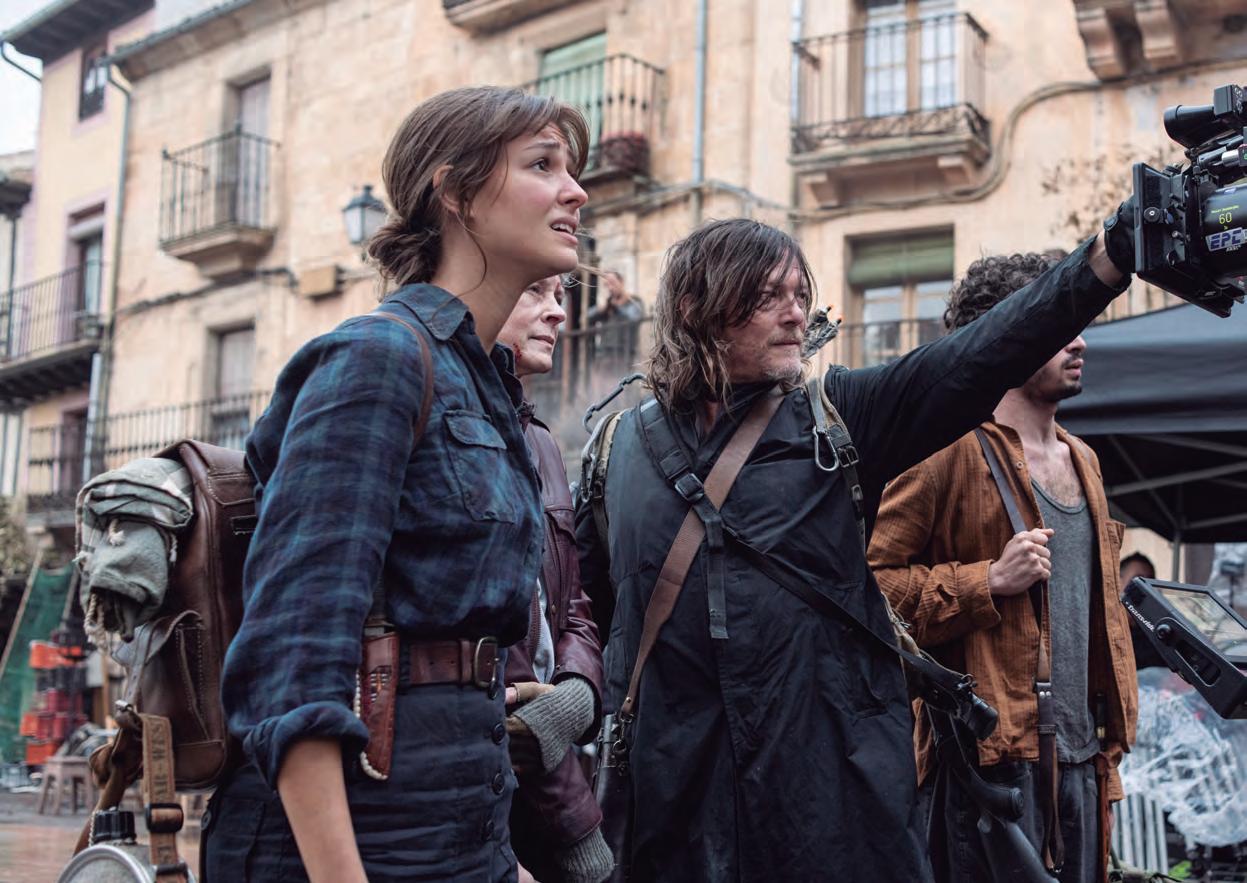
SINCE 2010, AMC’S SERIES HAS TOLD THE STORY OF A GROUP OF PEOPLE TRYING TO SURVIVE A ZOMBIE APOCALYPSE, WHERE THE UNDEAD ARE KNOWN AS WALKERS. FOR ITS THIRD SEASON, SPAIN HAS TAKEN CENTER STAGE. THE LOCAL TEAM INCLUDED MÁLAGA-BASED PRODUCTION COMPANY ÁNIMA STILLKING, WITH SILVIA ARÁEZ AS EXECUTIVE PRODUCER, AND SPANISH FILMMAKER PACO CABEZAS, WHO DIRECTED TWO EPISODES. AT RUBIK, WE SPOKE WITH BOTH TO LEARN WHAT IT WAS LIKE TO FILM THE APOCALYPSE ON THE IBERIAN PENINSULA.
Filming the third season of The Walking Dead: Daryl Dixon in Spain had a touch of Apocalypse Now—not just because of the apocalyptic setting, but also due to the specter of war, in this case the Spanish Civil War, looming over one of the locations.
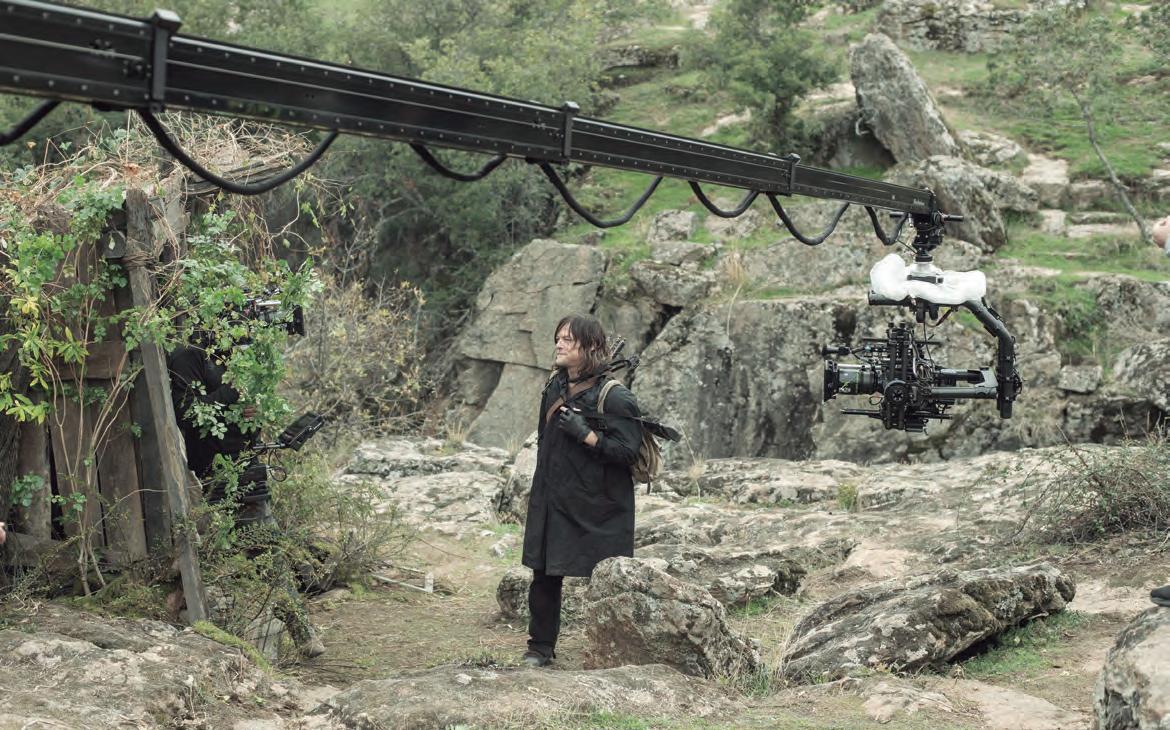
“It was a pretty intense shoot—very guerrilla-style, with handheld cameras. One of the action scenes involved 300 extras, 100 stunt performers, cranes, hydraulic jacks...,” recalls Paco Cabezas,
who directed the fourth and fifth episodes of this season.
The directing opportunity came about casually and organically. The Seville-born director had just wrapped filming season two of Wednesday for Netflix when several producer friends mentioned that AMC+ was bringing the show to Spain. After a few conversations with showrunner David Zabel, Cabezas landed a two-episode block.
The first time he met actor and executive producer Norman Reedus,
Cabezas was wearing sweatpants and socks, “taping photos and drawings all over the office walls like the killer from Seven,” as he describes it. Although Reedus was surprised by the scene, Cabezas took it in stride.
“I admire Sam Raimi or Hitchcock, sure, but dressing up in a blazer just feels unnatural to me. A director doesn’t have to look good—they need to be the one moving the most around set, rolling on the floor, running everywhere… That’s why I live in tracksuits,” explains Cabezas.
Spanish village, close to where Daryl and Carol’s boat crashes, and a place where people from all over could believably coexist.
Sepúlveda, in Castile and León, turned out to be the perfect fit—meeting all the narrative requirements and inspiring Cabezas creatively.
“Sepúlveda is an incredible town, with a stunning color palette—those browns and oranges of the buildings,” says Cabezas. “It was like filming in a medieval Disneyland,” he adds.
Another key location was the historic site of Belchite. Both the producer and director recall that it presented several challenges, including for the shooting schedule. Filming coincided with a cold drop storm (DANA) that hit Zaragoza in October 2024. “You could really feel the chill on set those days,” Aráez recalls.
In episode five, Daryl follows the trail of a convoy to Barcelona in search of Justina. Along the way, he encounters a new group of survivors desperate for water. Belchite was chosen for its arid landscapes, but the storm changed everything.
“It was supposed to be the desert, but it rained a lot. Rivers of water were running through Belchite and we had to dodge them. We kept moving locations, hiding under
cover, and as soon as the rain stopped, we started throwing dirt and sand over the mud to make it look dry,” says Cabezas.
“I wanted everything to be as real as possible, without digital effects. In action scenes with so many extras, a drone, cranes, and a thousand other things, you have to be incredibly efficient. Any mistake or hesitation could hold up the whole production team.”
“It was like fine craftsmanship. On screen, it looks like a desert—but if you turned the camera just one centimeter to the left, everything was flooded.”
For Aráez, those days were so intense they could “feel the war”—not just because they were shooting in a Civil War landmark, but because of how hard the shoot was.
Just as challenging was filming an action scene in episode four. Cabezas and
Greg Nicotero—who has previously directed action for Tarantino and Raimi—designed the practical special effects for the season.
“I remember a conversation where we both agreed that zombies had become more of a nuisance than a real threat,” recalls Cabezas.
The showrunners suggested a zombie fireball, and Cabezas and Nicotero ran with the idea. There had been flaming walkers in The Walking Dead before, but never ones raining from the sky, catapulted like fireballs.
“I wanted everything to be as real as possible—no digital effects,” says Cabezas.
For example, in a scene where a fireball hits a truck, they installed mechanical hydraulic jacks to move the vehicle upon impact.
Cabezas, who has shot many battle scenes in his career—such as in Into the Badlands—says he’s learned that the eye sees in layers, focusing on what’s closest to the camera. “Everything happening in the background is choreography you can repeat without anyone noticing—it’s like a mechanical dance,” he explains.
No matter how complex a scene is, Cabezas insists that “everything starts with strong planning and a well-organized war.” He even says it’s the shoot where he’s felt the most like Napoleon.
“In action scenes with this many extras, drones, cranes, and a thousand other
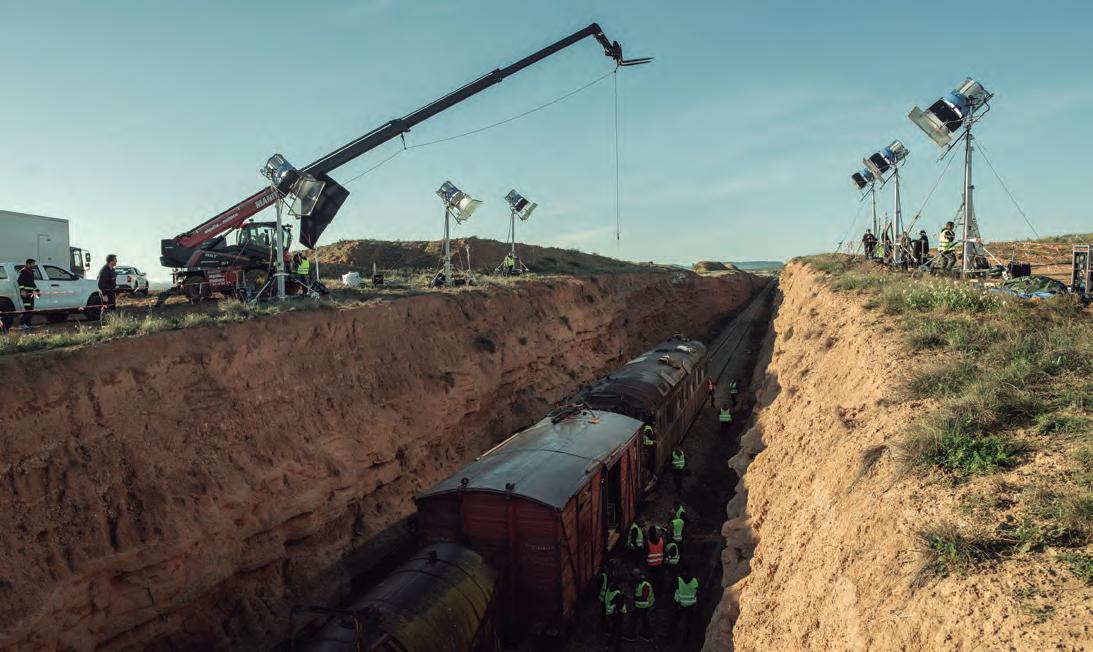
things, you have to be incredibly efficient. Any mistake or hesitation could hold up the whole production team.” he says. “You have to know exactly where you’re going so your troops, in a way, can conquer the hill,” he adds.
Despite the shoot’s complexity, Cabezas says the experience was also very freeing: “Coming from something like Wednesday, where everything was so geometrically composed, this felt like throwing a camera on your shoulder and filming a zombie documentary.”
And while they faced some dangerous situations, they always managed to stay safe: “It’s not just about doing the most spectacular magic trick—it’s also about doing it safely for the crew,” he emphasizes.
For Ánima Stillking, the experience was equally rewarding. We’re proud to be part of the Daryl Dixon family in Spain,” the team says.
In terms of economic and labor impact, the data is significant: 322 jobs were created in Spain with contracts over four months, employing locals from all the cities where filming took place.
Of the cast—70 actors and 123 stunt performers—93% were Spanish, as were 98% of the stunt team. Extras were hired nationwide, totaling 2,491 people. The
region providing the most extras was Castile and León (27%), followed by Madrid (26%) and Andalusia (24%).
Providers also came from all over Spain. While Madrid supplied the most (47% of all providers), Andalusia was second with 11%.
In total, season 3 of Daryl Dixon filmed for 93 days across the Iberian Peninsula. Castile and León and Madrid had the most shoot days—38 and 13 respectively. Galicia and Aragón, also central to the story, hosted the crew for 11 and 12 days respectively.
Andalusia served as a location for seven days, followed by Catalonia with five. The Valencian Community, where Ciudad de la Luz was used, hosted filming for three days. Castilla-La Mancha hosted the team for a single day in early February.
THE THIRD SEASON OF THE SPIN-OFF THE WALKING DEAD: DARYL DIXON, WHICH RECENTLY
CONCLUDED ITS BROADCAST, WAS FILMED IN VARIOUS LOCATIONS ACROSS SPAIN. THE PRODUCTION TRAVELED THROUGH EIGHT AUTONOMOUS COMMUNITIES, 22 MUNICIPALITIES, AND 38 FILMING LOCATIONS OVER THE COURSE OF 10 MONTHS.
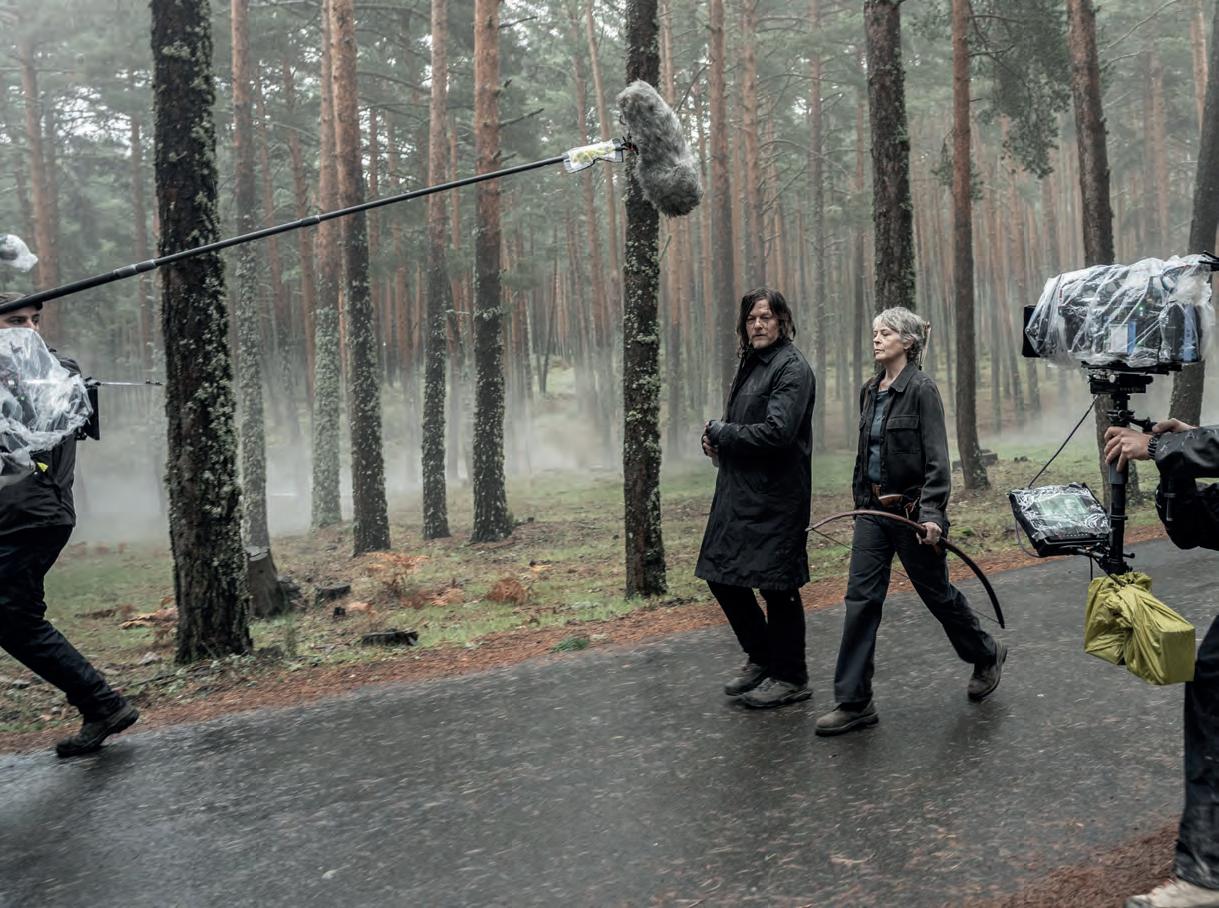
Daryl Dixon (Norman Reedus) and Carol Peletier (Melissa McBride) were last seen crossing the Eurotunnel from France to England, and indeed, at the beginning of Season 3, they are shown walking through English soil with landmarks like Big Ben and Tower Bridge in the background.
However, their goal is to return to the United States to reunite with their friends, and their time in England is shortlived. Aboard a small boat captained by Julian Chamberlain (Stephen Merchant), nicknamed “the last Brit on the island,” they set course for North America. With no
zombies able to reach them at sea, it seems the pair will cross the Atlantic without trouble—until a storm abruptly changes the sailboat’s direction.
At the end of 2024, AMC’s fictional universe —based on the comic series of the same name by Robert Kirkman, Tony Moore, and Charlie Adlard— chose the Galician coast as one of the main settings for the third season. A 300-person film crew, including technicians, actors, stunt performers, and extras, traveled to the area.
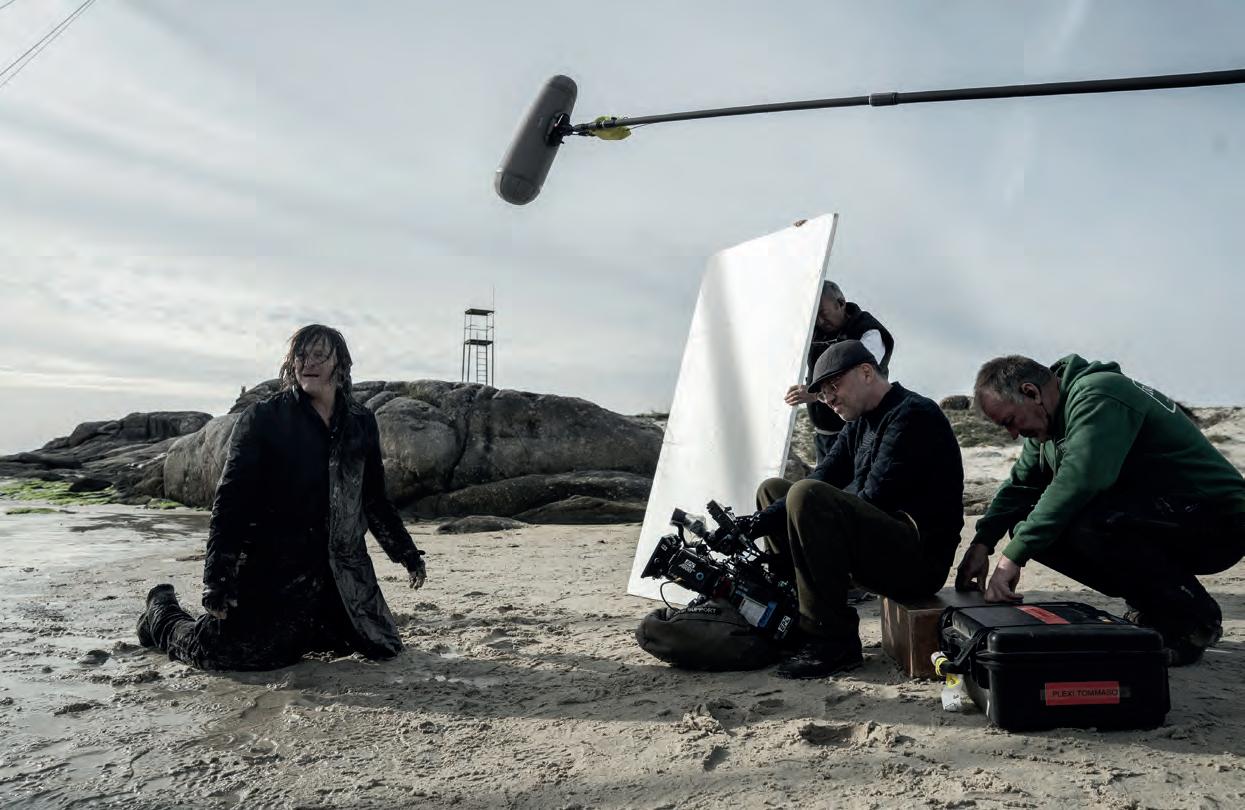
La Coruña provided several landscapes to depict the shipwreck scene: Boca do Río beach in Carnota; the beach and old whaling factory of Caneliñas in Cee; and the coastline of Camariñas.
Several aerial shots were also filmed showing the surroundings of the Punta Nariga Lighthouse in Malpica
Galicia appears not only geographically, but culturally: the show features traditional Galician costumes and masks from the Ourense region’s carnival, such as the felos of Maceda, cigarróns of Verín, and peliqueiros of Laza.
Linguistically, besides Spanish and English, the original version also includes dialogues in Galician and Catalan.
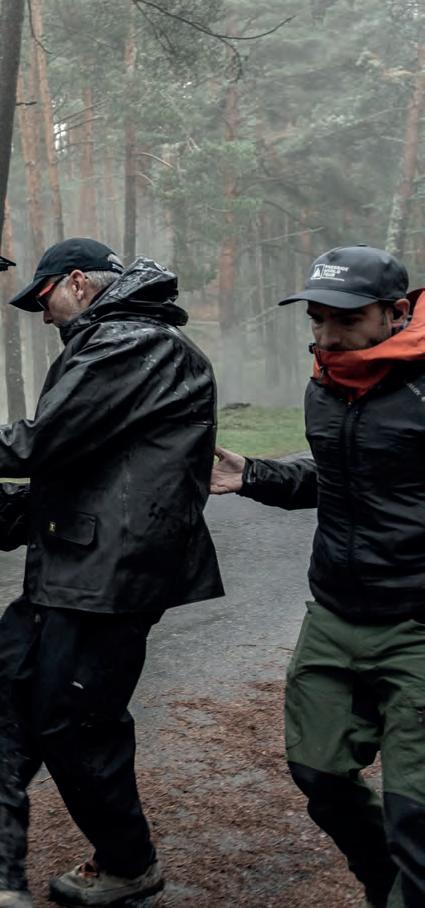
Both viewers and the characters Daryl and Carol discover they are in Spain at the end of the first episode, when they come across a hiking map of the Costa da Morte. In reality, Spain’s geography had already been on display from the start—even scenes supposedly set in London were largely filmed in Madrid.
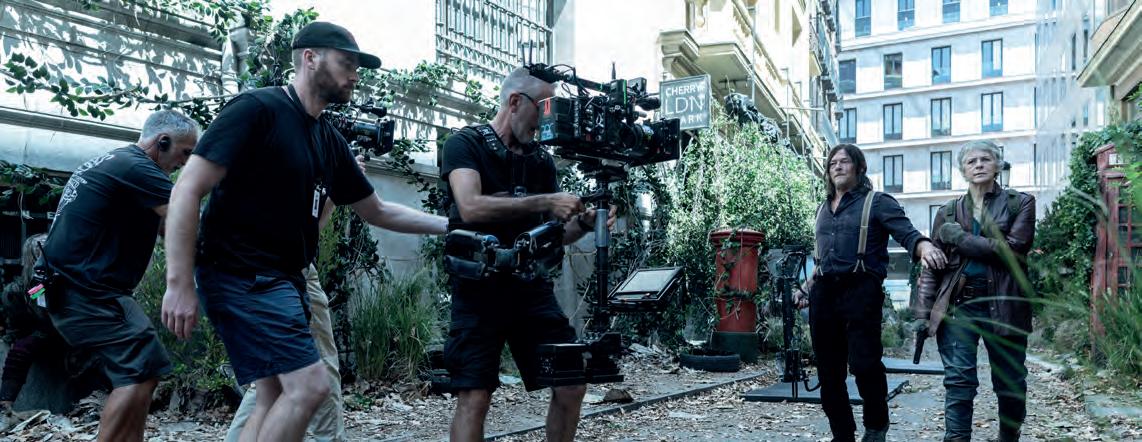
Transporting the entire production crew and resources to the UK for just a few days wasn’t efficient, so the team searched for locations in Madrid that, with the help of set design, visual effects, costumes, and other artistic resources, could double as the British capital.
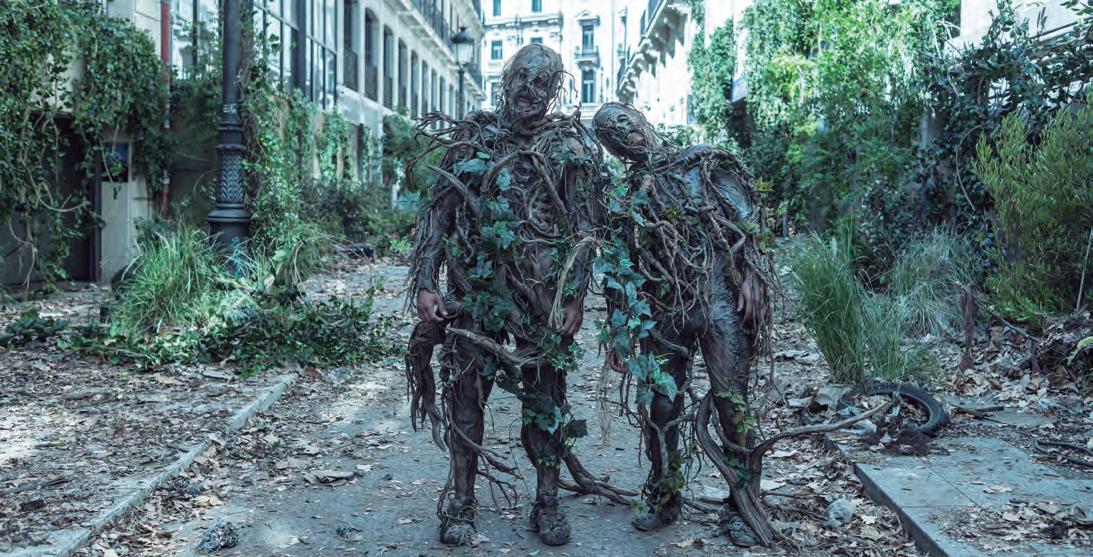
Thus, streets like Arbalán, Madrazo, and Cedaceros stood in for London, filled with zombie hordes, wrecked cars, overgrown vegetation, and signature red phone booths and double-decker buses.
The Palacio de la Trinidad on Francisco Silvela Street was another filming location. In the first episode, Daryl and Carol are seen escaping a mass of walkers by breaking into the abandoned mansion, after a tense moment spent forcing the iron gate open. Subsequent scenes show the double-height central hall, a corridor, and several rooms of the palace.
Other Madrid locations included the Madrid Stock Exchange, the Ritz Hotel, areas of Vicálvaro, and the Colonia del Pico del Pañuelo in the Arganzuela district. In fact, the latter replaced a key action scene originally set in Barcelona. The filming also took the crew to locations even farther from the city center, such as Las Rozas, El Escorial, Lozoya, and Rascafría, which mainly provided forested atmospheres.
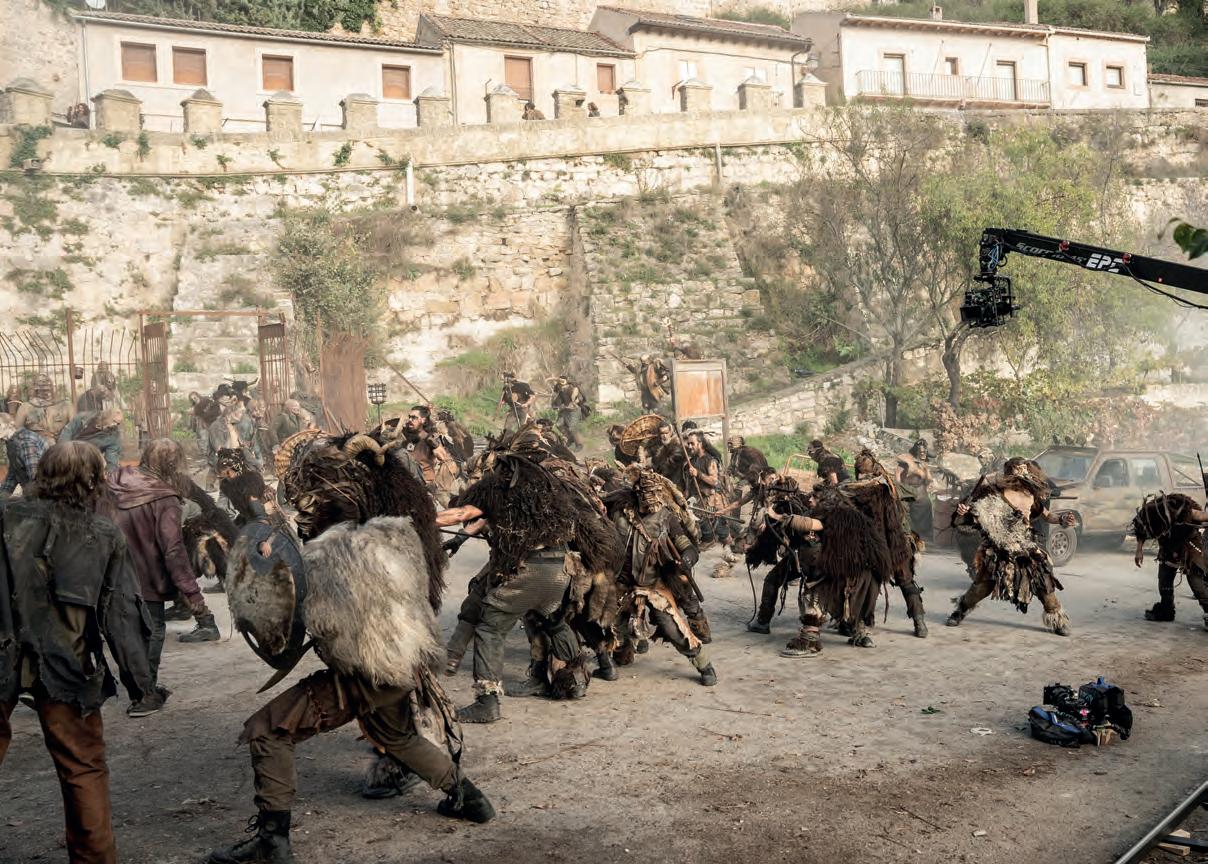
The show also played tricks with locations in other ways. The Castilian town of Sepúlveda (province of Segovia) was transformed into the fictional Galician village of Solaz del Mar, home to new main characters played by Óscar Jaenada (Federico), Eduardo Noriega (Antonio), and Alexandra Masangkay (Paz).
To convincingly portray a coastal Galician village, the production team added fishing nets, harpoons, and boats to the set. Preparations began in late August, filming took place in October, and the crew stayed through December. They used various parts of Sepúlveda, such as the town’s Plaza
de España, its historic buildings, and the Pucherillas neighborhood. Additionally, new sets were built specifically for the spin-off, including a stone wall, battlements along a roadside parapet, and an arch constructed next to the Puerta del Río—one of the seven gates of Sepúlveda’s walled enclosure.
Segovia was another location visited, specifically El Espinar and the Abbey of Párraces, where the homes of the characters Antonio and Federico were set.
Meanwhile, Navaluenga, a village in Ávila province, offered the Alberche River and its 16th-century Romanesque bridge for the show’s medieval-like setting.
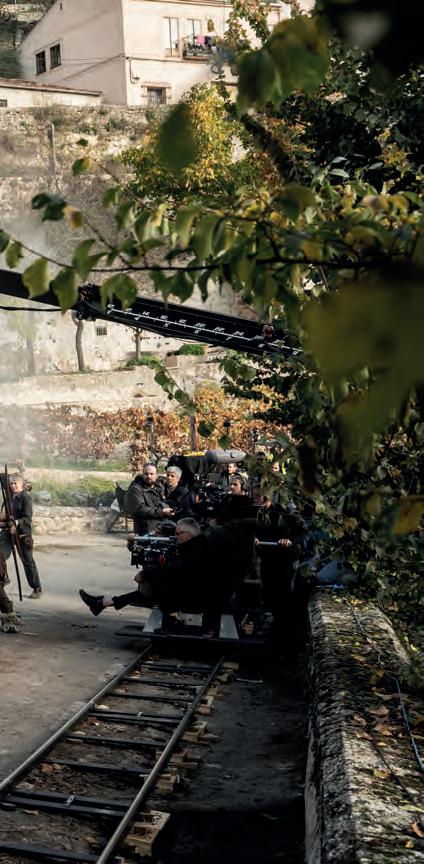
To support a production of this scale— not only geographically—several film camps and sets were installed in different locations. Between October and November, the crew headed to Aragon in search of desert landscapes featured in the fifth episode, which carries a distinctive spaghetti western aesthetic.
Scenes were filmed in the Old Village of Belchite, Zaragoza, including the main entrance to the town and the historic church of San Martín de Tours, whose facade was even used in promotional material for the
season. The team also spent time in the El Planerón steppe, where Daryl is seen riding a motorcycle.
Another key filming location for the episode was Teruel, where a scene was shot showing the protagonist riding a horse along a railway line. For this, a disused 10-kilometer stretch of track between Híjar and Samper de Calanda had to be restored. The task was completed with the help of the Friends of the Railroad and Trams Association (AZAFT), which also rehabilitated and prepared a train for the set.
Andalusia, in the southern Spain, wasn’t spared from the apocalypse either. Granada’s Albaicín neighborhood appears on the map of filming locations, including its famous Mirador de San Nicolás and its views of the Alhambra. In the nearby town of Monachil, the Purche road provided a mountainous setting representing the Granada Highlands.
Seville contributed locations such as Plaza de España, María Luisa Park, Palacio de la Motilla, Casa de Pilatos, and the Royal Alcazar.
The journey also brought the walkers to northeastern Spain, specifically Badalona (Catalonia). Scenes were filmed combining the city’s coastal landscape with its old industrial buildings. Shooting took place in the Mora neighborhood, near Marina Beach, with the iconic Three Chimneys of Sant Adrià del Besòs as a backdrop. The team also spent a few days filming at Barcelona’s Tibidabo amusement park. They also traveled to the town of Marganell, where a road leading to Montserrat was captured.
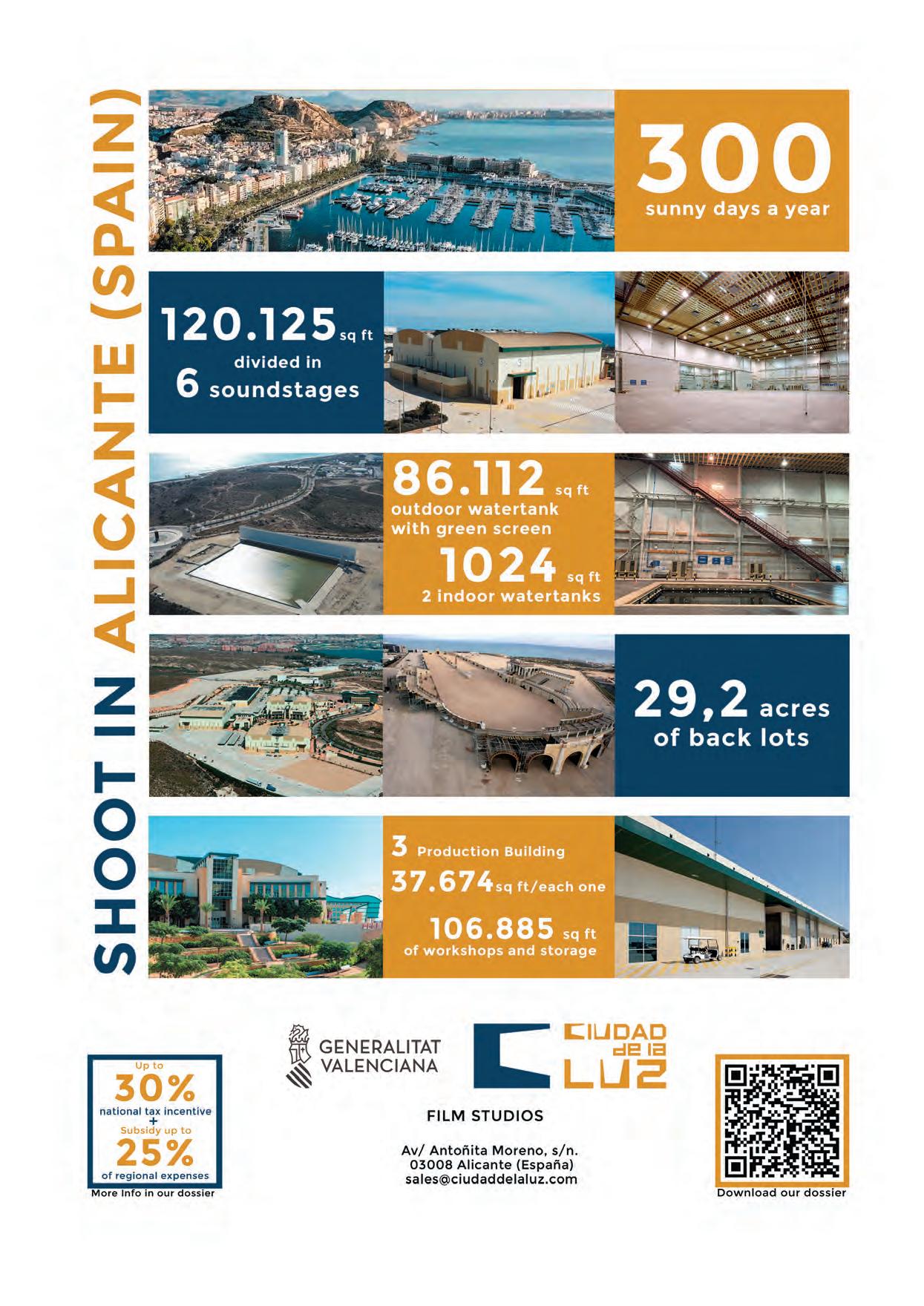
Not all Spanish locations were rural or urban. For instance, the storm-at-sea scene in the first episode was filmed in the water tank at Ciudad de la Luz. Around 250 people
worked on that shoot over 3 days at the Alicante film complex.
Lastly, although it only hosted one day of filming, the brief visit to Castilla-La Mancha is also worth mentioning. A stunt performer was scheduled to ride a motorcycle across the San Pablo Bridge in Cuenca, but the plan was called off due to rain in the forecast. In the end, the shoot was carried out using a drone that flew over various roads in the city and around the Hanging Houses to provide footage for the VFX (visual effects) department.
All the locations mentioned above form part of the ambitious filming map designed for this third season.
Last February, AMC+ announced the completion of filming, which involved 322 Spanish technicians, 2,491 local extras, 123 stunt professionals, and a total of 70 actors—93% of whom were Spanish
The apocalypse in Spain isn’t over yet, as the fourth season is also being filmed in the country. This time, the locations include Toledo and Bilbao, with Segovia returning— this time featuring the bullring of El Espinar.
So, for a few more months, zombies will continue to roam freely across the Iberian Peninsula.
BY FER S. CARRASCOSA
OVER THE PAST TWO DECADES, SPAIN HAS FIRMLY ESTABLISHED ITSELF AS A TOP DESTINATION FOR THE INTERNATIONAL SCREEN INDUSTRY—PARTICULARLY FOR MAJOR HOLLYWOOD PRODUCTIONS AND ENGLISHLANGUAGE TELEVISION—THANKS TO A COMBINATION OF FACTORS THAT GO FAR BEYOND ITS STUNNING LANDSCAPES OR RICH HISTORICAL HERITAGE, THOUGH THOSE ARE CERTAINLY NOT TO BE OVERLOOKED.
What truly makes producers and location scouts prioritize Spain is the set of conditions that streamline and reduce the cost of filming. These include attractive tax incentives, the remarkable efficiency of regional film commissions, a wide variety of natural and urban settings located close to one another, and a technical infrastructure that has consistently improved with every major production that has chosen Spain as a filming location.
In terms of tax incentives, Spain has progressively updated its legislation to compete with the most attractive filming
destinations in Europe. As a result, a foreign shoot investing at least one million euros in Spain—or 200,000 euros in the case of series—can benefit from substantial tax deductions that significantly reduce production costs. These benefits are even more generous in specific regions such as the Canary Islands, Navarre, or the Basque Country.
To access these advantages, it’s essential to partner with a Spanish service company as the local production provider, and to obtain a cultural certificate from the ICAA (Spain’s Film and Audiovisual Arts Institute), verifying the project’s eligibility. This requirement ensures that the Spanish industry also reaps the benefits of international productions.
This fiscal model is reinforced by a robust institutional ecosystem in which film commissions play a key role. Each autonomous community—and many provincial capitals—have established organizations dedicated to facilitating the permit process for filming in public spaces, coordinating with local authorities to manage traffic control or provide police presence when needed, and ensuring that shoots are compatible with everyday life.
In regions with a rich historical heritage, film commissions also serve as a liaison with monument managers and regional cultural departments, which must authorize any interventions involving protected buildings. In practice, this
means that a foreign production aiming to shoot in a historic city or a landmark such as the Royal Alcázar of Seville can rely on the local film commission as a central point of contact—streamlining what would otherwise be a complex web of separate bureaucratic procedures.
Spain’s geographical diversity is yet another undeniable advantage. Within just a few hours’ travel, one can find desert landscapes like those in Almería, lush green forests in the Basque Country, perfectly preserved medieval architecture in Castile and León or Extremadura, volcanic beaches in the Canary Islands, and modern urban environments in cities like Barcelona or Madrid.
This concentration of contrasting landscapes allows productions to access a wide variety of settings while minimizing long-distance travel, saving both time and money. Taking all these factors into account, it’s worth analyzing how they’ve been put into practice over the past decades in high-profile productions easily recognizable to the average viewer.
One prominent example is the highprofile series Game of Thrones, created by David Benioff and D. B. Weiss, which became a global phenomenon during the previous decade. Starting with its fifth season, the show incorporated numerous Spanish locations that became a distinctive part of its visual identity. For instance, the Royal Alcázar of Seville was transformed into the Water Gardens of Dorne, one of the series’ most recognizable locations.
Bringing this to life required a significant number of permits, including municipal authorizations and coordination with the Alcázar’s governing board and the regional government of Andalusia to ensure heritage preservation. Usage fees for the monument, time restrictions to avoid interfering with tourist visits, and the obligation to work with conservation specialists all influenced the production schedule and budget.
Similarly, the bullring in the Sevillian town of Osuna was used to represent the fighting pits of Meereen. For this, the local government temporarily closed the venue, allocated areas for the production team, and organized the participation of hundreds of local extras, selected through a large open casting call. The economic impact on the town was significant—not only through payments to extras, but also due to hotel bookings, expenditure in restaurants, and the long-term boost in tourism thanks to the show’s global visibility.
The production also moved to Almería, filming scenes in the Alcazaba and other historic locations, generating additional economic benefits and requiring careful heritage management plans to ensure the protection of these historic sites.
In Girona, the cathedral and old town were used to recreate King’s Landing and Braavos. This involved closing off several streets and removing modern urban elements that clashed with the medieval setting. As in previous cases, coordination with local authorities included traffic management plans, compensation for affected businesses, and collaboration with security services.
Another notable location was the islet of Gaztelugatxe in Bermeo (Biscay), which served as Dragonstone, the ancestral home of House Targaryen. This required a complex and costly logistical setup to transport crew and equipment to the remote,
environmentally sensitive site—alongside specific environmental protection measures to preserve its ecological and tourist value.
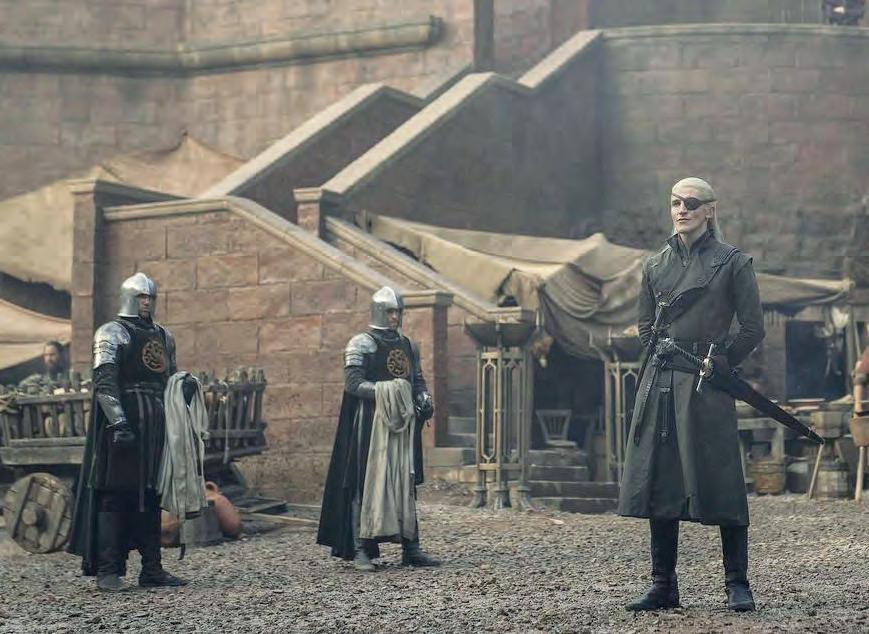
The prequel series House of the Dragon, created by Ryan Condal and Miguel Sapochnik, expanded even further on the use of Spanish locations. The cities of Cáceres and Trujillo became key filming hubs for both the first and subsequent seasons.
Spain’s
geographical diversity
is yet another undeniable advantage. Within just a few
hours’ travel,
one can
find desert landscapes like those in Almería, lush green forests in the Basque Country, perfectly preserved medieval architecture in Castile and León or Extremadura, volcanic beaches in the Canary Islands, and modern urban environments in cities like Barcelona or Madrid.
In Cáceres, various sites in the old town—including Plaza de San Jorge, Plaza de Santa María, Arco de la Estrella, Cuesta de la Compañía, and Calle Amargura— underwent temporary transformations. Modern signs and wires were concealed, anachronistic features removed, and temporary structures installed to recreate a medieval atmosphere.
The collaboration between the city council and the production team helped plan pedestrian and vehicle access restrictions during specific time windows, with local police assigned to secure the perimeter and manage public safety. A particularly interesting aspect was the negotiation around which set pieces could remain after filming as permanent attractions—such as a fountain built for the show that the city requested to keep—demonstrating how filming can leave behind lasting symbolic or material traces that enhance a city’s cultural heritage.
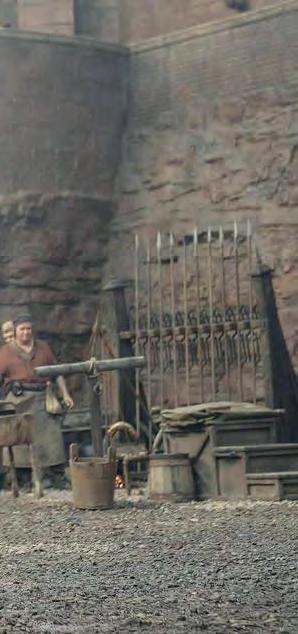
In the case of Trujillo, the Plaza Mayor was fenced off and exclusively reserved for filming over several days. Facades were
adapted with specific set designs, and a fictional marketplace was constructed. This required close coordination with the city council and local residents. Hospitality businesses forced to close during shooting were compensated, reportedly receiving around €1,000 per establishment, according to local press.
The key takeaway from both Game of Thrones and House of the Dragon is the vital importance of conducting thorough studies that account for a location’s aesthetic, accessibility, heritage protection requirements, costs associated with urban transformation, compensation for local communities, and scheduling that aligns with daily life. Spain offers unparalleled locations—but making the most of them demands detailed planning and fluid cooperation with local and regional authorities.
Beyond these two productions, the British series The Crown, created by Peter Morgan, is another standout example. Its use of Spanish locations illustrates perfectly why international productions often choose Spain to “double” for foreign settings.
In this case, various sites across Andalusia and Mallorca were used to represent a wide range of locations, from Caribbean islands to Australian ports and Mediterranean coastlines. For some of these scenes, the production worked with the Andalucía Film Commission and the city councils of Cádiz and San Fernando to film in locations such as the Port of Cádiz and the University of Río San Pedro, as well as coastal areas in the province.
These shoots required road closures, space modifications, and civil liability insurance policies covering both damage to property and potential risks to the public and extras.
All these permits are processed through regional and local film commissions. According to regional guidelines, applications typically must include a technical intervention plan, a safety plan, and—when protected
Film commissions, financial incentives, the technical skills of local professionals, and the proactive support of municipal and regional authorities have made Spain an ideal location where even the most ambitious productions can find both creative and operational solutions to their needs.

heritage sites are involved—a heritage impact assessment. All documentation must be submitted weeks in advance to obtain the necessary approvals.
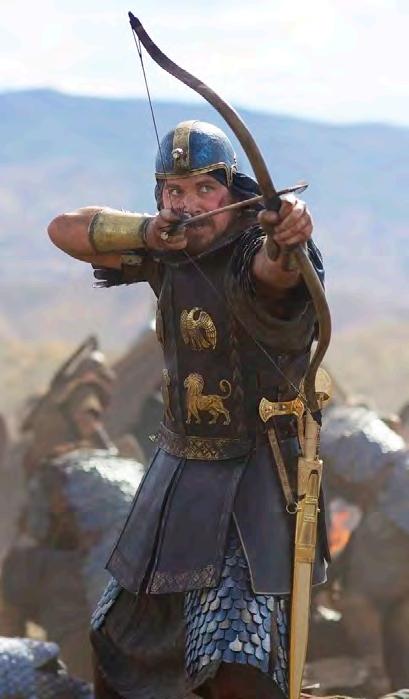
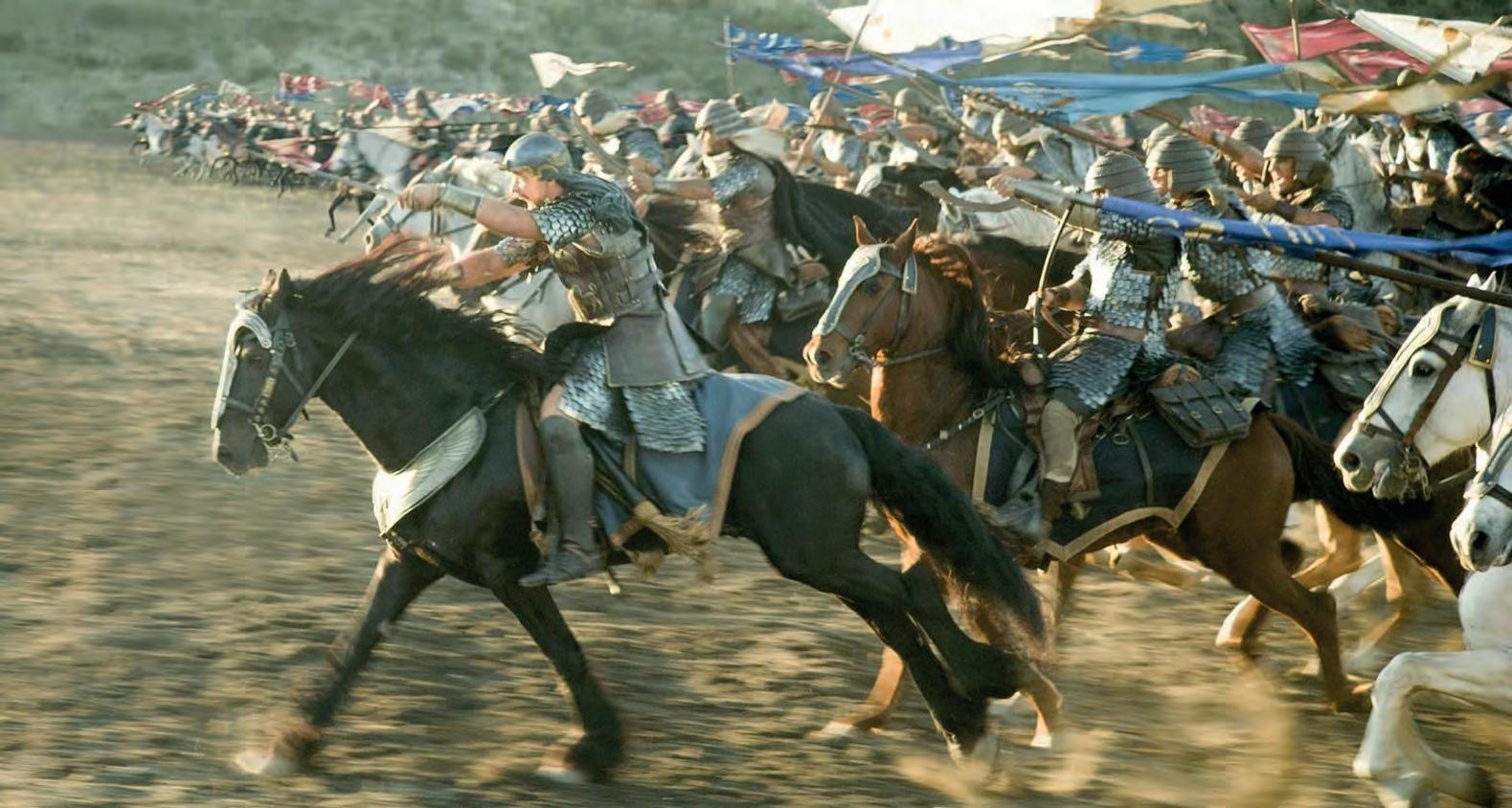
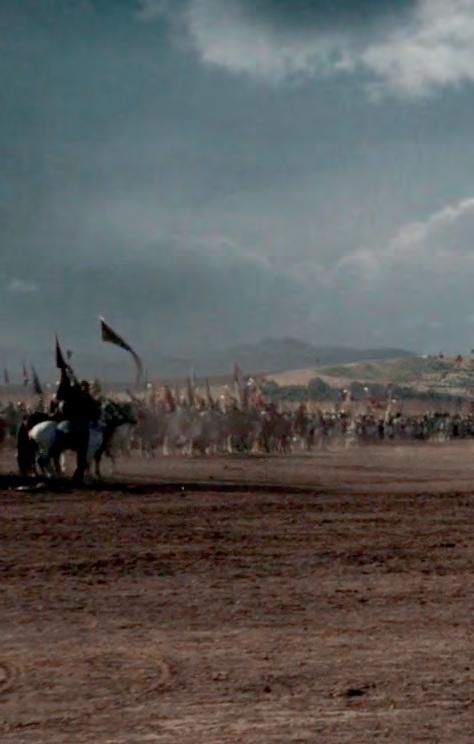
Another notable case is the film Exodus: Gods and Kings (2014), directed by Ridley Scott, which serves as a classic example of how Almería’s natural resources have been leveraged for major international productions. Filming days were held in the Tabernas Desert as well as the Sierra Alhamilla.
it’s
clear that Spain’s accumulated experience with large-scale international productions demonstrates not only the country’s exceptional natural and cultural heritage, but also its robust institutional, fiscal, and logistical framework—making it a strong competitor among Europe’s top filming destinations.
In this instance, the beaches of Fuerteventura were chosen to depict the Red Sea scenes. As with other large-scale
productions, this required specific permits from the town councils of Tabernas and the regional environmental authorities when filming near protected areas. The production also had to secure aviation authorizations for aerial shots using helicopters and drones, as well as customs and logistical permits for the temporary importation of filming equipment. The shoot began in October 2013 in Tabernas, extended to Fuerteventura, and was completed on soundstages in the UK. Altogether, it was a 75-day operation combining extensive location work with a visual effects plan that included the postproduction creation of massive digital elements. Today, this case is often cited when evaluating the balance between practical location shooting and VFX in terms of both budgeting and production timelines.
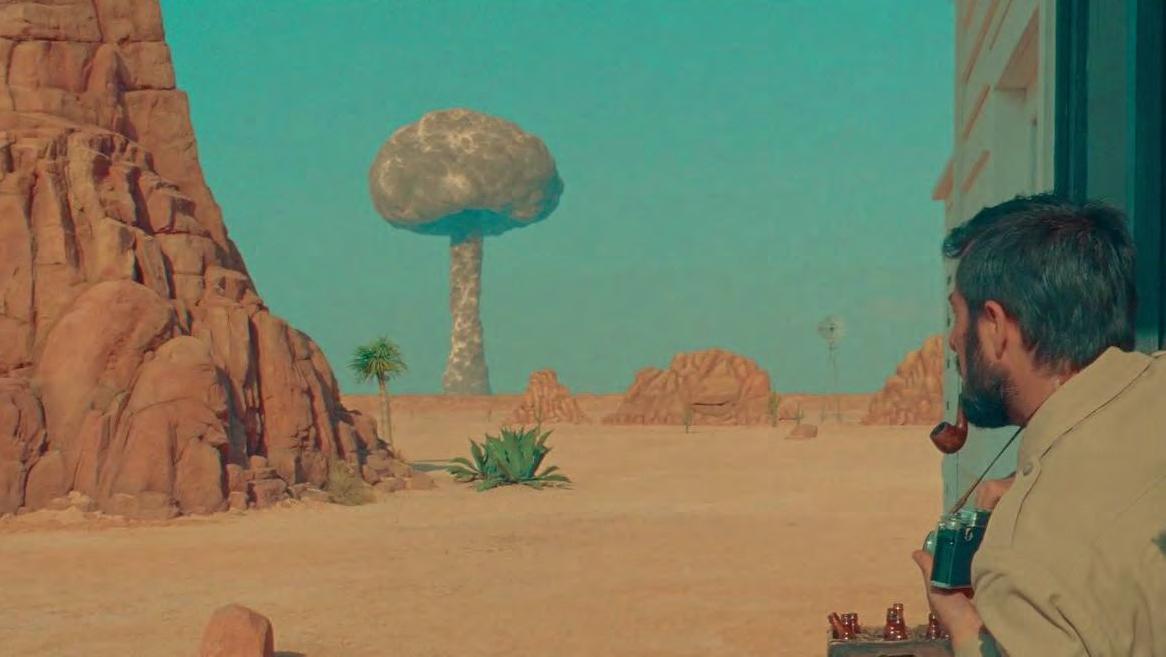
The practice of building temporary towns and full-scale sets on rural land presents a different type of operational challenge—one that particularly concerns producers. A recent example is Asteroid City (2023) by Wes Anderson, which constructed an entire fictional town on agricultural land near Chinchón, in the Madrid region. This setup required permits for occupying rural land, lease agreements with landowners, coordination with the local council, and a strict schedule for both construction
and dismantling that guaranteed the land would be returned to its original condition post-filming.
In this case, every creative decision made by the director and art department resulted in a large-scale deployment of carpentry, props, and set design. Due to the scale, the production relied on local hiring of carpenters, heavy transport logistics, and accommodation arrangements for hundreds of crew members in nearby towns. The entire operation was overseen
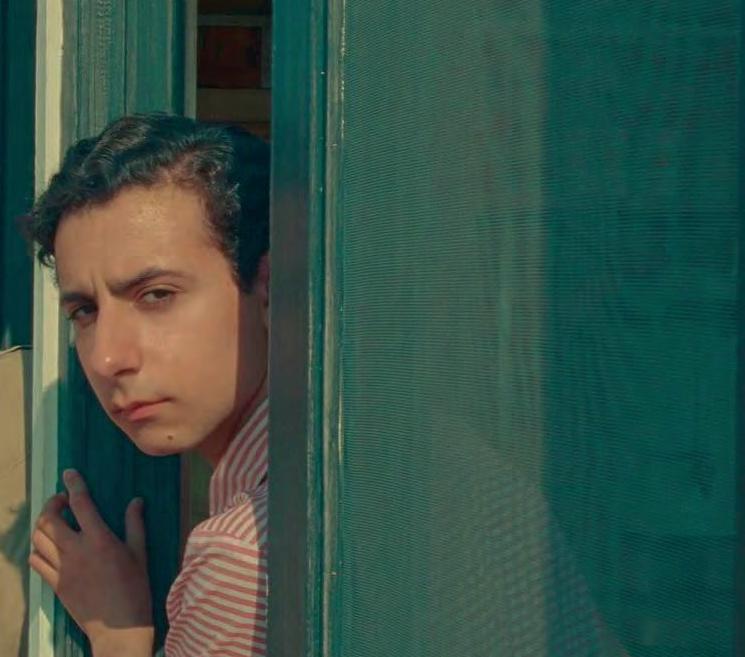
by Film Madrid Region and included the standard contractual clause ensuring the return of the land and compensation for any damages, along with a written restoration plan.
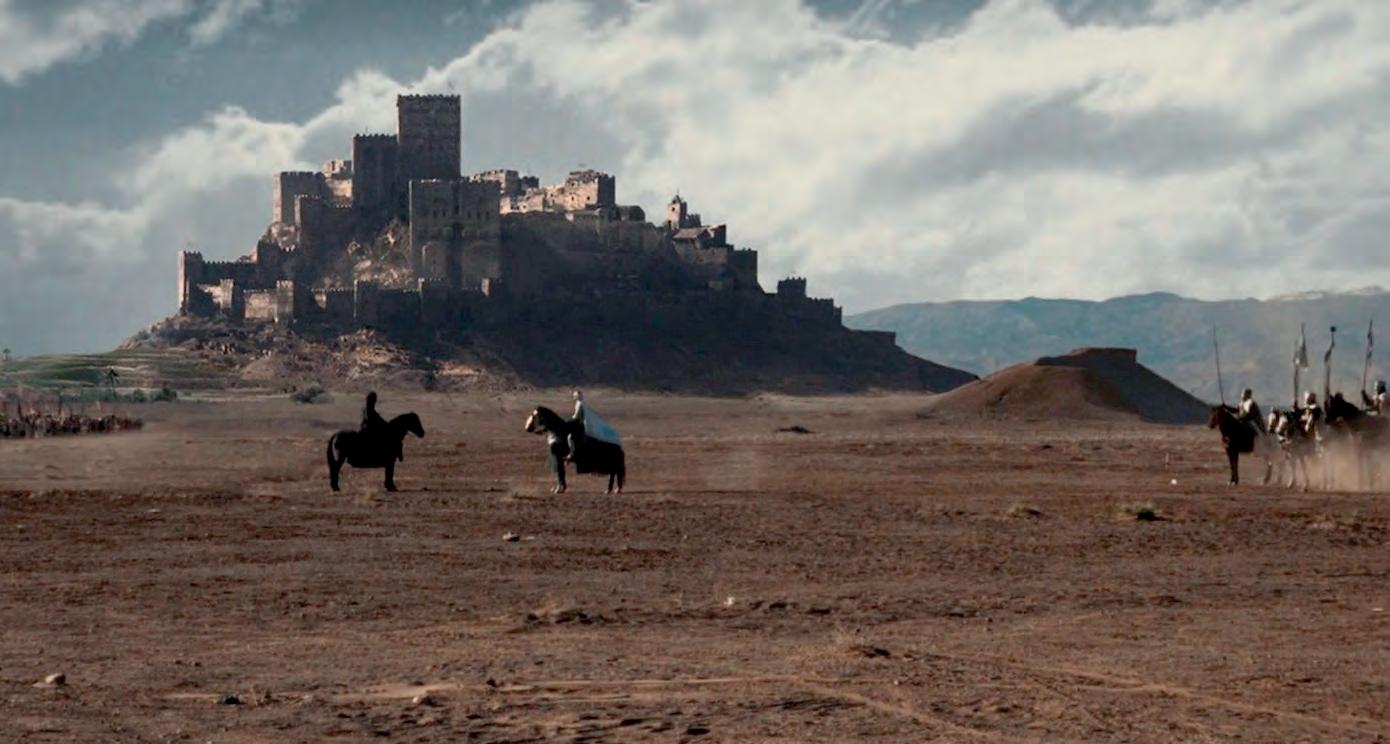
Also worth mentioning is Kingdom of Heaven (2005), again directed by Ridley Scott, which illustrates how a major production can alternate filming between Spain and neighboring countries to find the optimal mix of constructed sets and authentic historical locations. The film
used the Castle of Loarre in Huesca for fortress scenes, as well as other locations in Seville, Ávila, Segovia, and Palma del Río. These were complemented by shoots in international locations such as Ouarzazate, Morocco.
Filming at Loarre required negotiations with the regional government of Aragon and with the managers of the heritage site to establish strict conditions concerning anchoring equipment, the movement
of props through rooms and towers, scheduling, and oversight by professional conservators to avoid any damage.
Finally, Terminator: Dark Fate (2019), directed by Tim Miller, offers a compelling case study of how productions sometimes substitute one geographic setting for another due to safety, cost, or logistical considerations. In this case, scenes set narratively in Mexico were instead filmed in Madrid neighborhoods such as Pueblo Nuevo and Lavapiés, as well as in coastal towns of Almería like La Isleta del Moro.
This doubling allowed the production to reduce costs and minimize physical risks, but required a dedicated urban “dressing” phase and an aesthetic continuity unit to ensure visual credibility.
Thanks to all these examples, and many more, it’s clear that Spain’s accumulated experience with large-scale international productions demonstrates not only the country’s exceptional natural and cultural heritage, but also its robust institutional, fiscal, and logistical framework—making it a strong competitor among Europe’s top filming destinations.
Film commissions, financial incentives, the technical skills of local professionals, and the proactive support of municipal and regional authorities have made Spain an ideal location where even the most ambitious productions can find both creative and operational solutions to their needs.
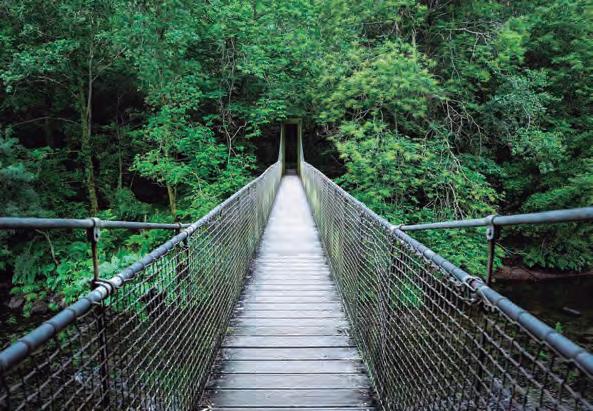
LAST YEAR AT RUBIK, WE PUBLISHED AN ARTICLE HIGHLIGHTING MOUNTAIN LOCATIONS IN SPAIN. THE IDEA WAS TO BREAK THE STEREOTYPE OF SPAIN AS MERELY A LAND OF SUN AND BEACHES. THE COUNTRY’S LANDSCAPE DIVERSITY IS ASTONISHING, AND TO REINFORCE THIS, WE ARE FOLLOWING UP THAT ARTICLE WITH THIS ONE FOCUSED ON FOREST LOCATIONS. AND THE TRUTH IS, THERE’S PLENTY TO CHOOSE FROM BECAUSE, ALTHOUGH MANY PEOPLE DON’T KNOW IT, SPAIN IS THE THIRD MOST FORESTED COUNTRY IN EUROPE—AFTER SWEDEN AND FINLAND—WITH NEARLY 28 MILLION HECTARES OF FOREST LAND. BELOW, WE HIGHLIGHT 12 FORESTS IN SPAIN THAT ARE PERFECT FOR FILM PRODUCTIONS.
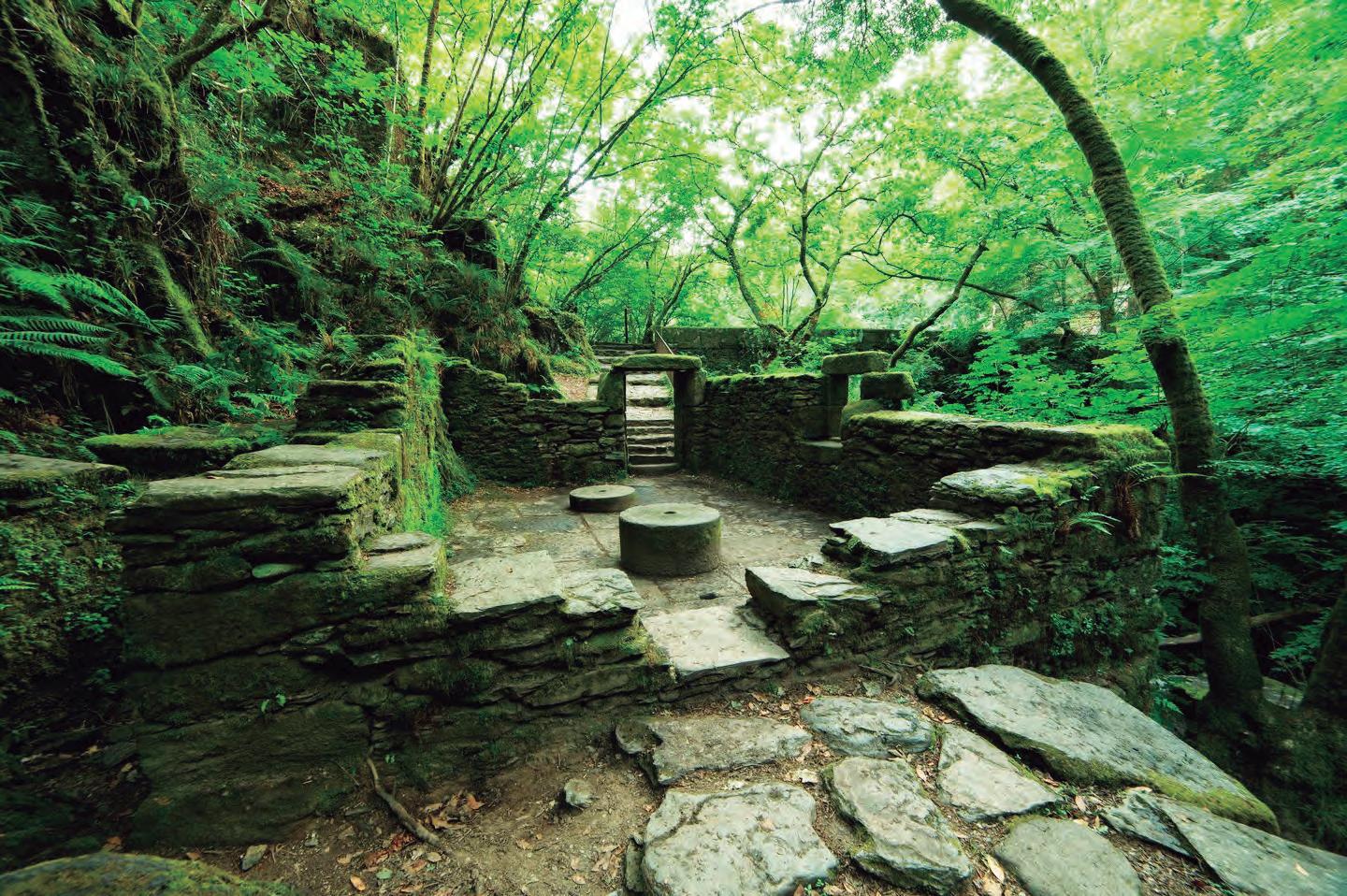
FRAGAS DO EUME NATURAL PARK
A Coruña (Galicia), in the northwest of Spain
Contact: Galicia Film Commission jairo.aldana@miraveo.es
One of the best-preserved Atlantic river forests in Europe, spanning 9,000 hectares with fewer than 500 residents. The forest follows the Eume River, and the vegetation is sometimes so dense that sunlight barely penetrates. It contains more than 20 species of ferns and 200 species of lichens, as well as oaks, poplars, ash, and alders. According to legend, goblins also inhabit the forest. There are numerous streams, springs, and waterfalls, and hidden at the forest’s heart is the Caaveiro Monastery.
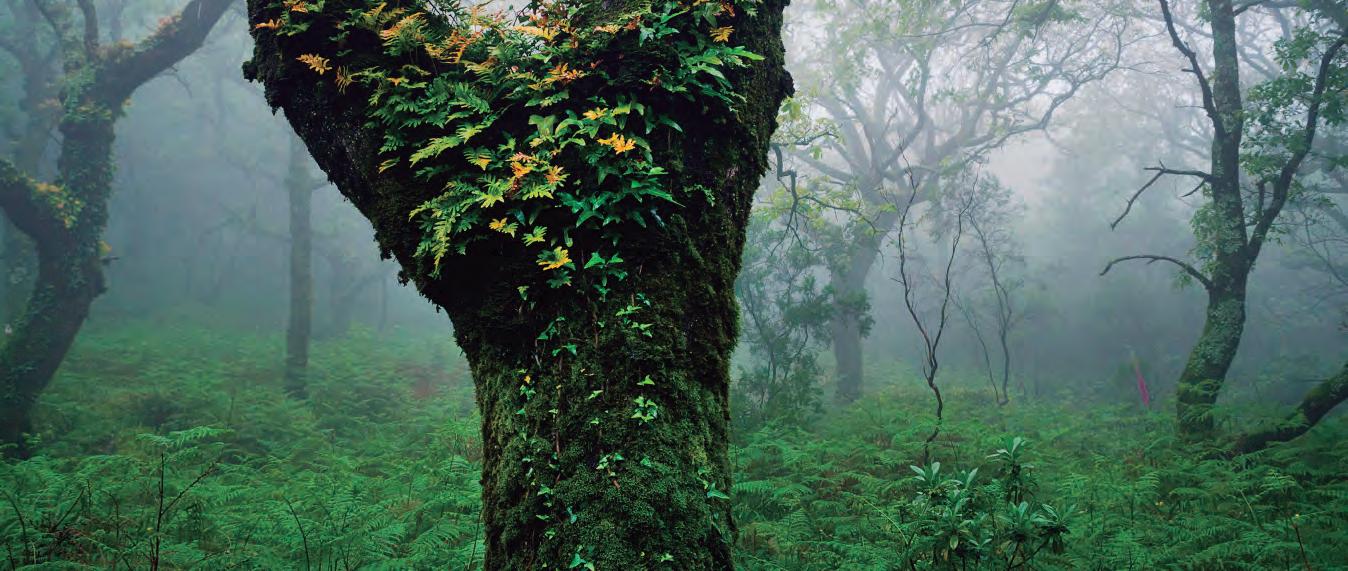
Cádiz (Andalusia), in the south of Spain
Contact: Andalucía Film Commission proyectos@andaluciafilm.com
Located in the Los Alcornocales Natural Park, between Tarifa and Algeciras, you’ll find the Llanos del Juncal and its Fog Forest. This is a laurel forest covering 80 hectares with vegetation including vines, ivy, mosses, ferns, and laurel trees, all shrouded in dense fog present for around 245 days a year. This forest exists thanks to the high humidity in the area, which creates a microclimate similar to tropical regions.
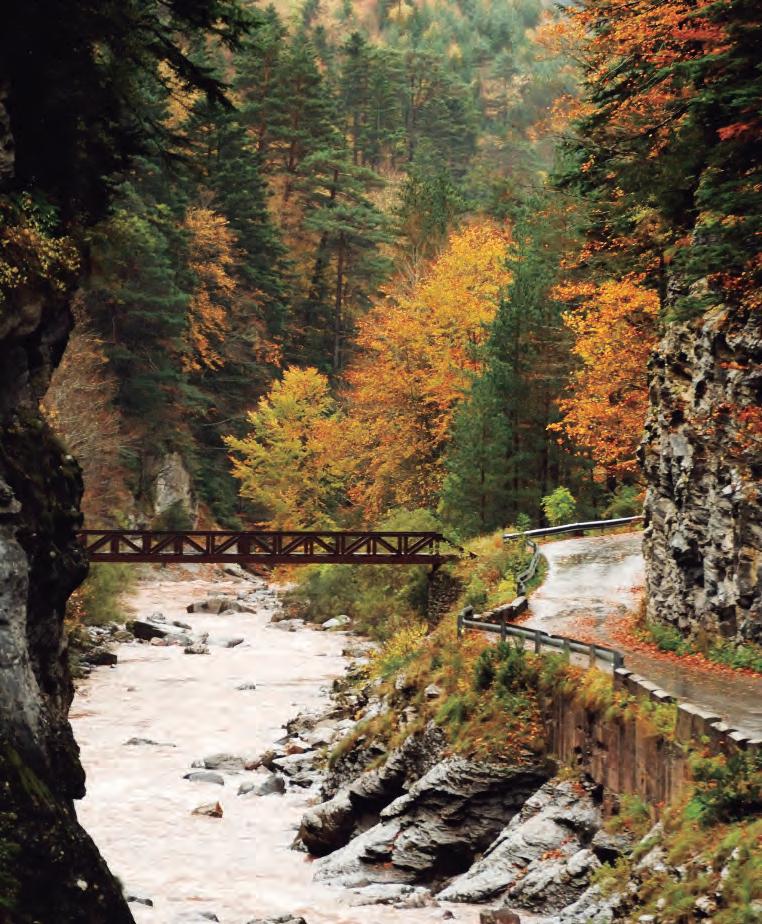
La Jacetania County (Huesca), in the northeast of Spain
Contact: Aragón Film Commission dlozano@aragonfilmcommission.es
A natural area within the Western Valleys Natural Park in Huesca, in the western Aragonese Pyrenees. It is traversed by the Aragón Subordán River and surrounded by mountain peaks. The forest mainly consists of fir trees, along with pines and beeches, and also contains yews, maples, and birches. Inside are three dolmens and the remnants of one of Emperor Antoninus Pius’s Roman roads.
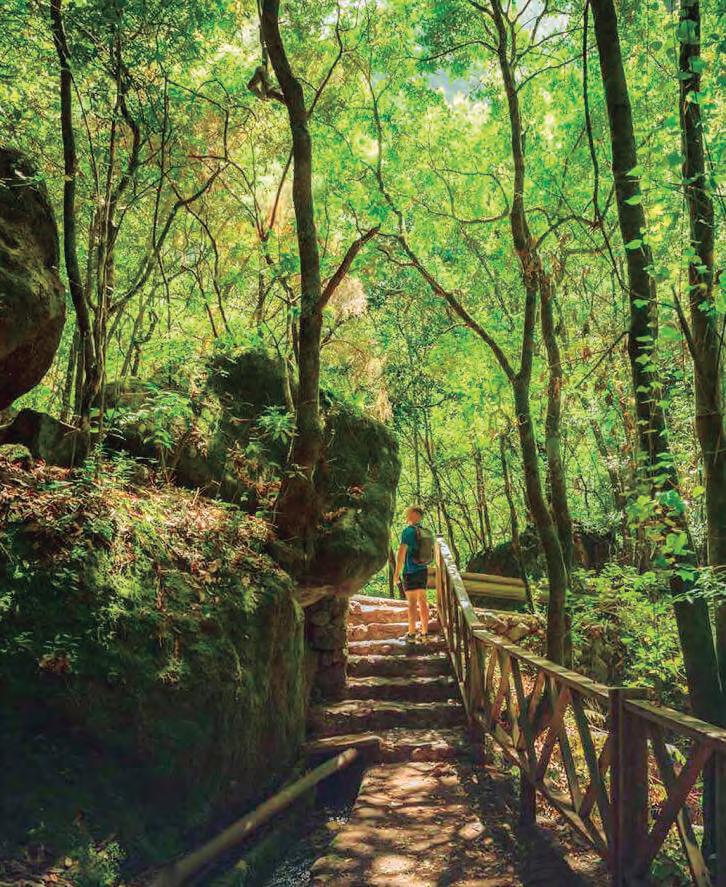
Las Nieves Natural Park, near Santa Cruz de La Palma (Canary Islands)
Contact: La Palma Film Commission info@lapalmafilmcommission.com
A UNESCO Biosphere Reserve, this forest’s high humidity supports an extensive laurel forest, reaching 20–30 meters in height, considered the most important in the Canary Islands—and among the most important in the world. Erosion has carved a deep gorge with near-vertical walls. From the El Espigón Atravesado viewpoint, the entire ravine can be seen. A highlight is the Los Tilos Waterfall, a lush spot with a pool fed by water cascading from the cliff above.
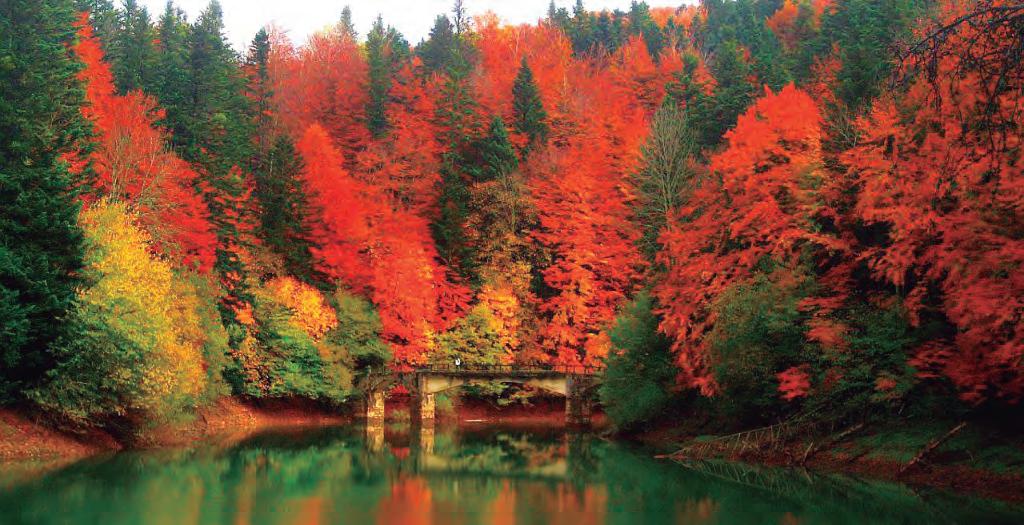
Salazar and Aezkoa Valleys (Navarre), in the north of Spain
Contact: Navarra Film Commission navarrafilmcommission@nicdo.es
This is the largest forested area in Navarre and the second-largest beech-fir forest in Europe (only surpassed by Germany’s Black Forest), with 17,000 hectares. It lies deep in the Pyrenees. The Navarrese valleys of Aezkoa and Salazar comprise the majority of it, with smaller parts in the French valleys of Cize and Soule. It features beeches, oaks, firs, birches, willows, ferns, and mosses. Ernest Hemingway once said he loved getting lost in this forest, hoping the Basajaun, Lord of the Forest, would come out to greet him.
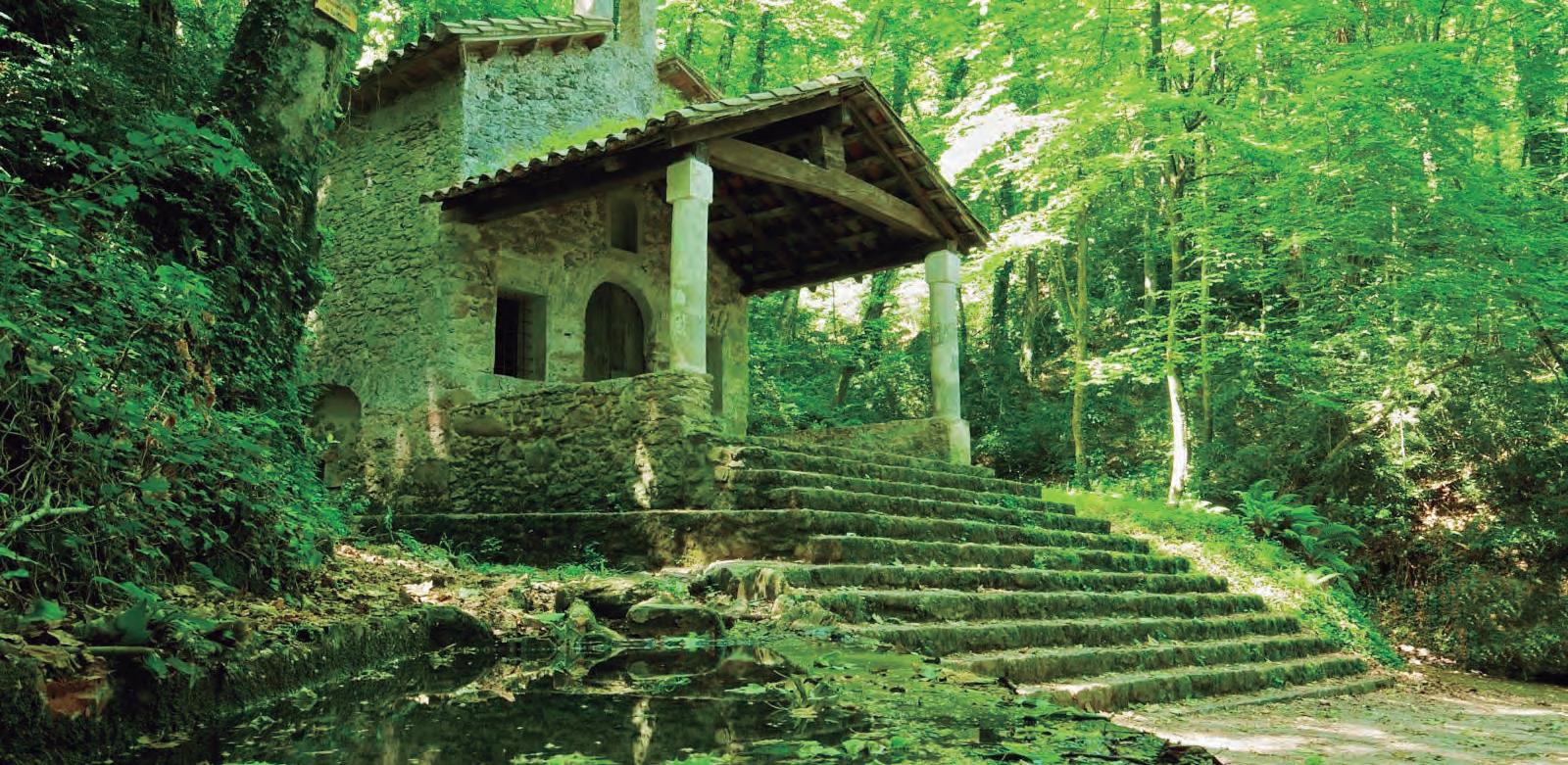
La Garrotxa County, near Olot (Girona Province), in the northeast of Spain
Contact: Catalunya Film Commission cfc@gencat.cat
A natural reserve comprising a beech forest growing on relatively flat terrain. It spans about 4.8 km² and its soil is formed by lava mounds—called “tossols”—that can reach over 20 meters in height. The forest is surrounded by several of the 21 volcanoes in La Garrotxa. At one end is the Can Jordà farmhouse, now a center for the conservation of cultivated plants.
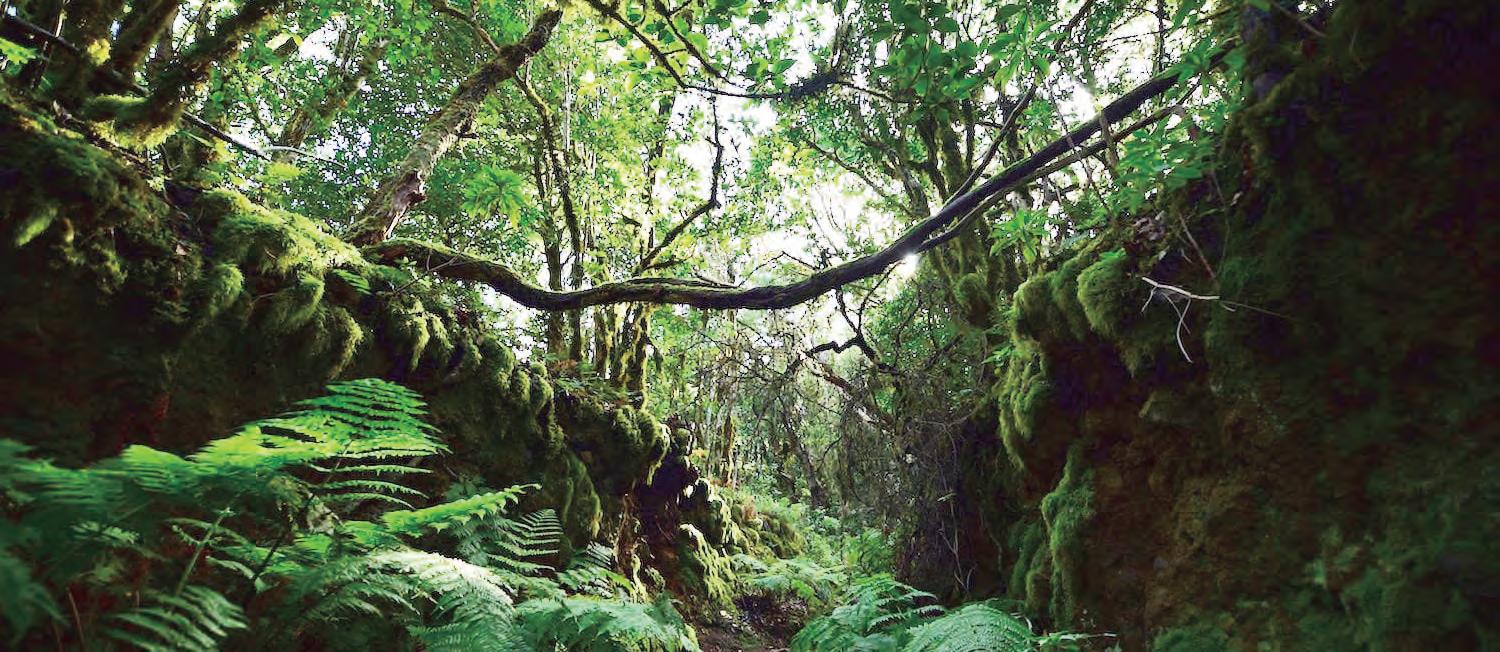
Anaga Massif, northeast Tenerife (Canary Islands)
Contact: Tenerife Film Commission film@webtenerife.com
With an area of around 14,500 hectares, Anaga Rural Park is a Biosphere Reserve located just minutes by car from Santa Cruz de Tenerife. Its upper areas host Tenerife’s best examples of laurel forest. One of the park’s most iconic sights is the “sea of clouds.” In addition to fine black-sand coves, the park features dramatic geological formations such as “roques,” dikes (wall-like intrusions), cliffs, and steep ravines.
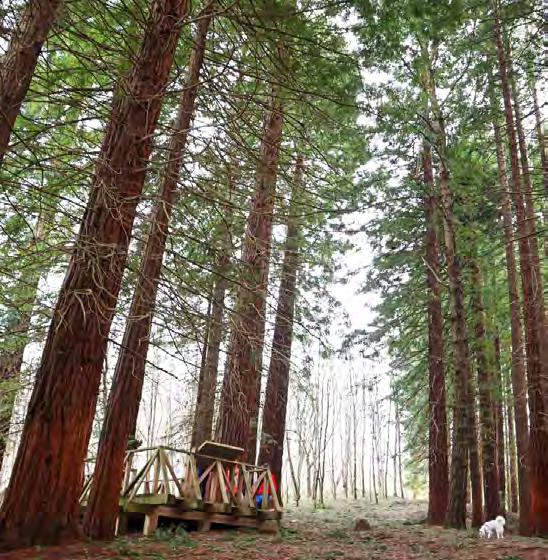
Monte de Las Navas, near Cabezón de la Sal (Cantabria), in the north of Spain
Contact: Cantabria Film Commission - cantabria.film@srecd.es
This is a forest of “baby sequoias” spanning 2.5 hectares, with around 850 sequoia trees averaging 40 meters tall and 2 meters in trunk circumference. They were planted in the 1940s and thrive in a humid, temperate climate similar to that of their native regions. This peaceful, silent haven has an accessible walking path, parking, picnic areas, and a scenic viewpoint.
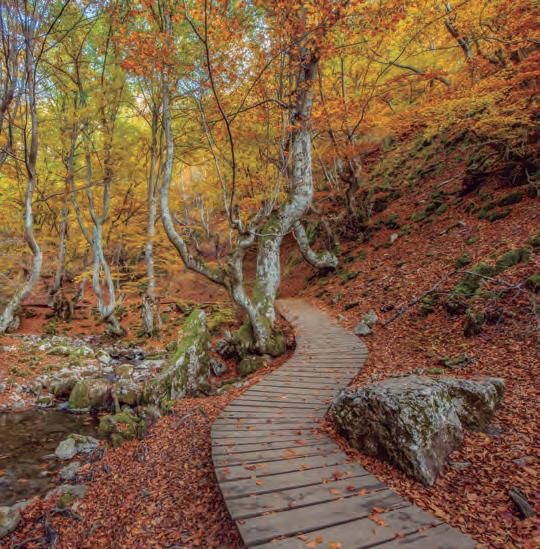
Ciñera (León), in the northwest of Spain
Contact: Castilla y León Film Commission - filmcom@jcyl.es
Just 40 km from León city, this forest was named Spain’s best-preserved forest in 2007 by the Ministry of the Environment and the NGO ‘Bosques Sin Fronteras’. A Biosphere Reserve with an exceptional network of trails and walkways, it also features an abandoned coal mine and is crossed by the Villar Stream. Highlights include one of Spain’s oldest beech trees, and a local witch legend. Other features include the narrow Villar Gorge and the “Giant’s Kettles,” scenic cascades and natural pools.
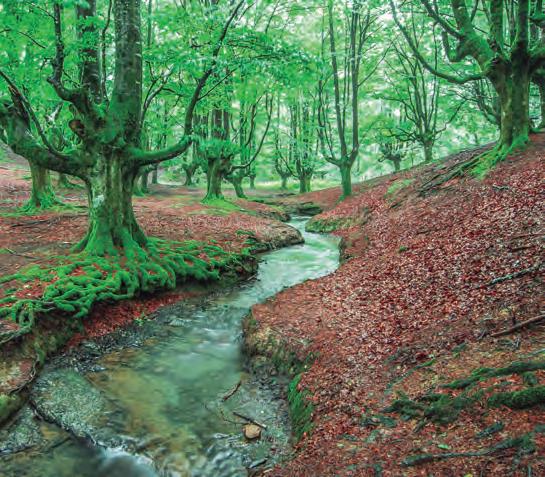
Zeanuri (Bizkaia), in the north of Spain
Contact: Bilbao Bizkaia Film Commission - info@bifilmcommission.com
Located in the Gorbeia Natural Park, this magical forest of centuriesold beech trees with thick trunks and exposed roots feels straight out of Basque mythology. Split by the Zubizabala stream, it’s notable for the unusual, vertical shape of the tree branches—an effect of traditional charcoal-burning practices. Combined with the moss and reddish leaves, the setting is hypnotic. Nearby are other natural sites like the Uguna Waterfall and Saldropo, a 3-hectare wetland
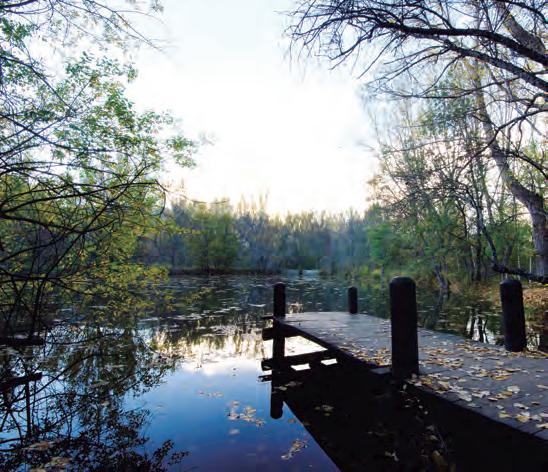
Sierra de Guadarrama (Madrid Region), in the center of Spain
Contact: Film Madrid Region filmmadrid@madrid.org
This area was transformed in the early 1990s when an old poplar grove was turned into a forest in the Finnish style. At its heart is a clearing with an old wooden cabin that once served as a sauna. Nearby is a lake, once part of a paper mill complex, bordered by a wooden dock. Remains of the old mill are scattered throughout the area, and medieval water channels can still be seen.
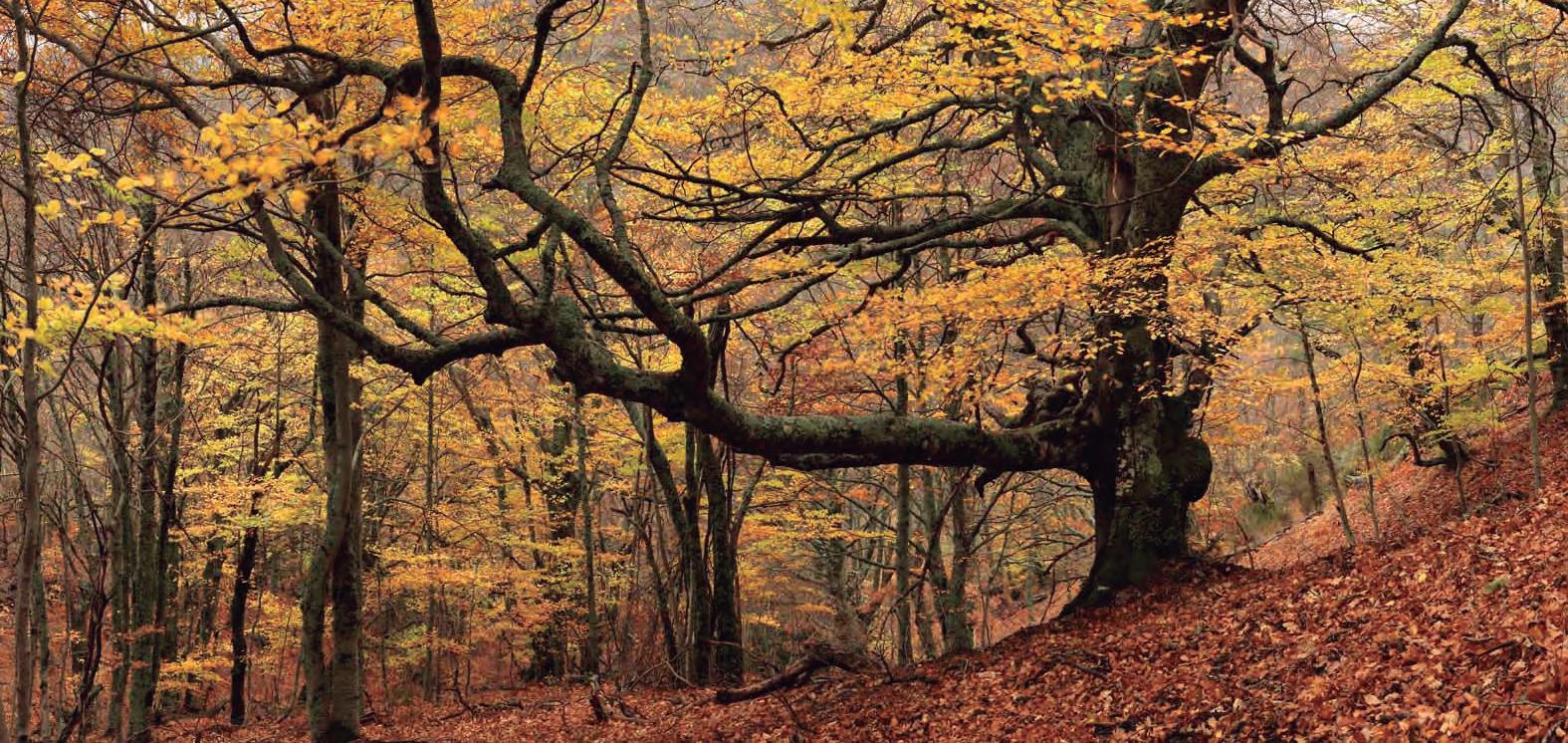
Cantalojas (Guadalajara), in central Spain, slightly to the north
Contact: Castilla-La Mancha Film Commission info@castillalamanchafilm.com
This beech forest is one of the jewels of the Sierra Norte de Guadalajara Natural Park. Located in the municipality of Cantalojas, in the northwest of Guadalajara province (Castilla-La Mancha), it covers 400 hectares and was declared a UNESCO World Heritage Site in 2017. It is preserved thanks to a unique microclimate and exudes a fairy-tale atmosphere with its vibrant colors, moss-covered ground, and serene silence. Also growing here are Pyrenean oaks, Scots pines, yews, holly, and birches.
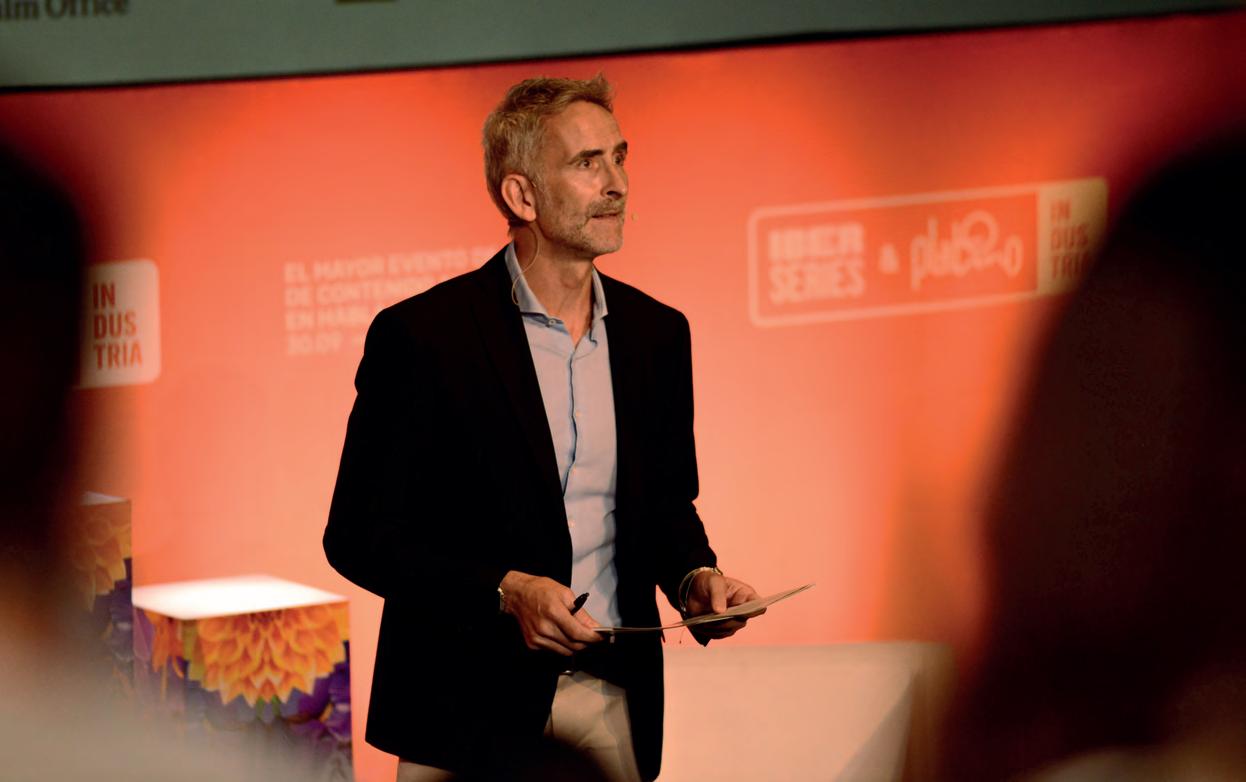
BY SARA RODRÍGUEZ MARTÍN
CARLA REDONDO, GENERAL MANAGER FOR THE REGULATION OF DIGITALIZATION AND AUDIOVISUAL
COMMUNICATION SERVICES AT THE MINISTRY FOR DIGITAL TRANSFORMATION AND PUBLIC SERVICE, PRESENTED, WITHIN THE FRAMEWORK OF IBERSERIES 2025, THE RESULTS OF THE SPAIN AUDIOVISUAL HUB PLAN (2021–2024). IN THE CONFERENCE, MODERATED BY RAÚL TORQUEMADA, DIRECTOR OF THE MADRID FILM OFFICE, THE MOBILIZED INVESTMENT, INTERNATIONAL IMPACT, AND THE CHALLENGES STILL FACING THE INDUSTRY WERE HIGHLIGHTED.
The keynote ‘Results of the Spain Audiovisual Hub Plan (2021–2024): understanding to drive progress’ was part of the Iberseries & Platino Industria 2025 programming, a gathering that brings together each year producers, distributors, streaming services executives, and institutional representatives from the IberoAmerican screen sector.
ORIGIN AND OBJECTIVES OF THE SPAIN AUDIOVISUAL HUB PLAN
Raúl Torquemada opened the session by pointing out the importance of having precise quantitative and qualitative
information:”Data allows us to understand the reality of the sector, inform managers and the public of the great benefits of the industry generated in our regions, and propose policy improvements and support for the sector.”
Torquemada also emphasized that collaboration between institutions allows for identifying growth opportunities as well as proposing policy improvements: “Last year, for example, we sponsored a report on screen tourism in Madrid and the sixth study on the economic impact of advertising film production carried out by the APCP.”
In the case of the Spain Audiovisual Hub plan, Carla Redondo explained that it began in 2021 after a dialogue with the
sector: “The plan arises precisely from dialogue with the sector, because we in public administrations are very aware that without you we cannot go anywhere nor develop any public policy that is truly successful.”
The plan is based on four fundamental pillars: the talent and creativity of Spanish human capital; historical, artistic, and cultural heritage as a resource for film and TV production; a solvent and competitive industry capable of generating content with export value; and the Spanish language, spoken by more than 600 million people, allowing for international reach.
The strategic objectives of the plan include increasing screen production by 30%, attracting international talent to
strengthen the ecosystem, encouraging foreign investment in Spain, and expanding the internationalization and export of content and services.
Redondo emphasized the importance of tax incentives and legislative reform as drivers of growth:“We started from a fundamental pillar, such as a tax incentive regime that was approved at that time, and you know that at that moment it was something that put us on the map and set us apart from the rest.”
The plan also incorporated the digitalization of infrastructures, development of emerging technologies, and opening towards new areas of the industry such as animation, video games, eSports, and extended reality.
During the 2021–2024 period, the plan mobilized more than 1.6 billion euros, managed in collaboration with 13 ministries. 30 million euros were allocated to the CDTI, focusing on research and technological innovation for SMEs.
“We focused also on SMEs, not only on large companies, so that it would include the entire industrial fabric. More than 88
SMEs benefited from these aids,” Redondo highlighted.
For its part, Spain Film Commission received 5 million euro s to promote Spain as an international filming destination. Actions included, among others: the creation of the Spain Film Talent Network—integrating audiovisual talent from companies and professionals; the strengthening of the national Spain Film Commission network; the creation of the first database of studios and sound stages in Spain; the drafting of several studies— such as the pioneering White Paper on Virtual Production in Spain or the Study on the Economic Impact of International Shoots in Spain, in collaboration with PROFILM and conducted by Olsberg SPI; and a pilot project for virtual production creating digital assets of the Monastery of San Lorenzo de El Escorial.
“I want to highlight this last one, the project they developed together with National Heritage of pilot projects with three-dimensional models of monuments, buildings, and historical, artistic, and cultural heritage of Spain,” said Redondo.
In fact, at the Global Production Awards held this year within the Marché du Film of the Cannes Film Festival, Spain Film Commission received an award for the
innovation of this project and the White Paper on Virtual Production (in addition to the Film Commission of the Year award).
“We started from a fundamental pillar, such as a tax incentive regime that put us on the map and set us apart from the rest of the countries”
RTVE Play received 20 million euros for training, technological updates, and international expansion through RTVE Play+. This included open courses and content aimed at Latin America.
Another entity that was part of the plan was ICEX, which managed 20 million euros for internationalization: “Through ICEX, we focused on participation in fairs, congresses, and events, promoting the Spanish model.”
Spanish audiovisual content was promoted at more than 19 international

markets, advertising campaigns were carried out using 150 different platforms, and offices were established in the United States and Singapore to attract investments and project the Spanish audiovisual industry globally.
Red.es managed 25 million euros for infrastructure, which were allocated to: the Campus Madrid In Game, creating a space for 200 game developers and studios; the Murcia Audiovisual Hub, which successfully combined historical buildings with cutting-edge technology; Crea Gran Canaria, for the development of a virtual studio for extended reality; Coruña Immersive Studio (CEI) , as an investment in emerging technology for virtual production; and finally, La Xarxa+ in Barcelona, which developed a multi-device OTT platform for local communication.
The European Media Outlook 2025 report confirms Spain’s position as an audiovisual powerhouse in Europe, alongside France, Germany, and Italy, representing 50% of the European market
Among the most notable data: The film The Society of the Snow was the most watched worldwide on streaming in 2024. Of the 63 most-watched series in the EU, 10 are European , and 9 of them are Spanish , including titles like Berlin or The Asunta Case
There was also a notable 38% increase in screen production , surpassing the original 30% goal.
There was also a 38% increase in screen production, surpassing the original 30% goal. This led to an increase in employment in the sector, with 107% growth in five years.
All of this has also led to an increase in employment in the sector, with 107% growth in five years. Box office revenue also stood out with an increase from 251 to 277 million euros, and cinema attendance accounts for 75% market share, placing Spain fifth in box office revenue
In 2024, 652 short films were produced, representing a 55.6% increase since 2020. In animation, the sector had a turnover of 604 million euros , with leading regions being Madrid, Catalonia, Valencia, and the Basque Country Productions like Mummies and Robot Dreams gained international recognition, including Goya and Quirino awards .
“The participation of women in audiovisual has increased by 98% since 2020, and more than 46% of productions already have either a woman in the scriptwriting or directing role,” noted Redondo.
Total investment in the sector grew from 130 million euros in 2019–2020 to 879 million euros over four years , with an estimated return of 9 euros for every euro invested in tax incentives
The second phase of the plan focuses on financial instruments managed by the Spanish Society for Technological Transformation (SETT), endowed with 1.712 billion euros. Redondo stated:

“We are the only country in the European Union that, within its recovery plan, included the screen sector.”
The first operations signed were Culture CAP7, with 44 million euros to support SMEs with audiovisual projects, and Moby Dick Film Capital, with 4.9 million euros to attract international productions and develop Spanish IPs. These instruments allow for investment in both innovative projects and companies in the audiovisual sector, strengthening the ecosystem’s maturity and competitiveness.
Total investment in the sector grew from 130 million euros in 2019–2020 to 879 million euros over four years, with an estimated return of 9 euros for every euro invested in tax incentives.
Carla Redondo and Raúl Torquemada agreed on the importance of statistical information.
“Because only with this information can you develop those programs and public policies that allow you, first, to understand the starting situation, then to establish the path you want to follow, and finally to analyze the results to know whether you’ve truly arrived or not,” Redondo explained.
Among the reports produced are: the White Paper on Virtual Production (coordinated by Spain Film Commission), the Audiovisual Technology Radar (through SETELECO), and the Video Game White Paper (in collaboration with ICEX and DEV).
In addition, surveys were conducted with professionals and companies to assess needs and emerging trends.
The plan has boosted audiovisual activity in various autonomous communities . Madrid leads in film and animation production, with technological and educational hubs.
Catalonia has seen significant growth in animation and video games. The Valencian Community and the Basque Country have consolidated studios and technological innovation spaces, while Murcia and the Canary Islands have launched extended reality hubs and studios.
These centers facilitate training, job creation, and the attraction of local and international investment.
The Spain Audiovisual Hub Plan (2021–2024) demonstrates sustained growth in production, employment, investment, and international presence of the Spanish audiovisual sector.
Public-private coordination, technological innovation, data collection, and the inclusion of female talent are presented as key factors for its future consolidation.
The plan establishes a solid foundation for Spain to continue positioning itself as a global player in the film and TV industry, extending its influence beyond Europe and Latin America, consolidating infrastructure, incentivizing innovation, and promoting diversity at all levels of production.
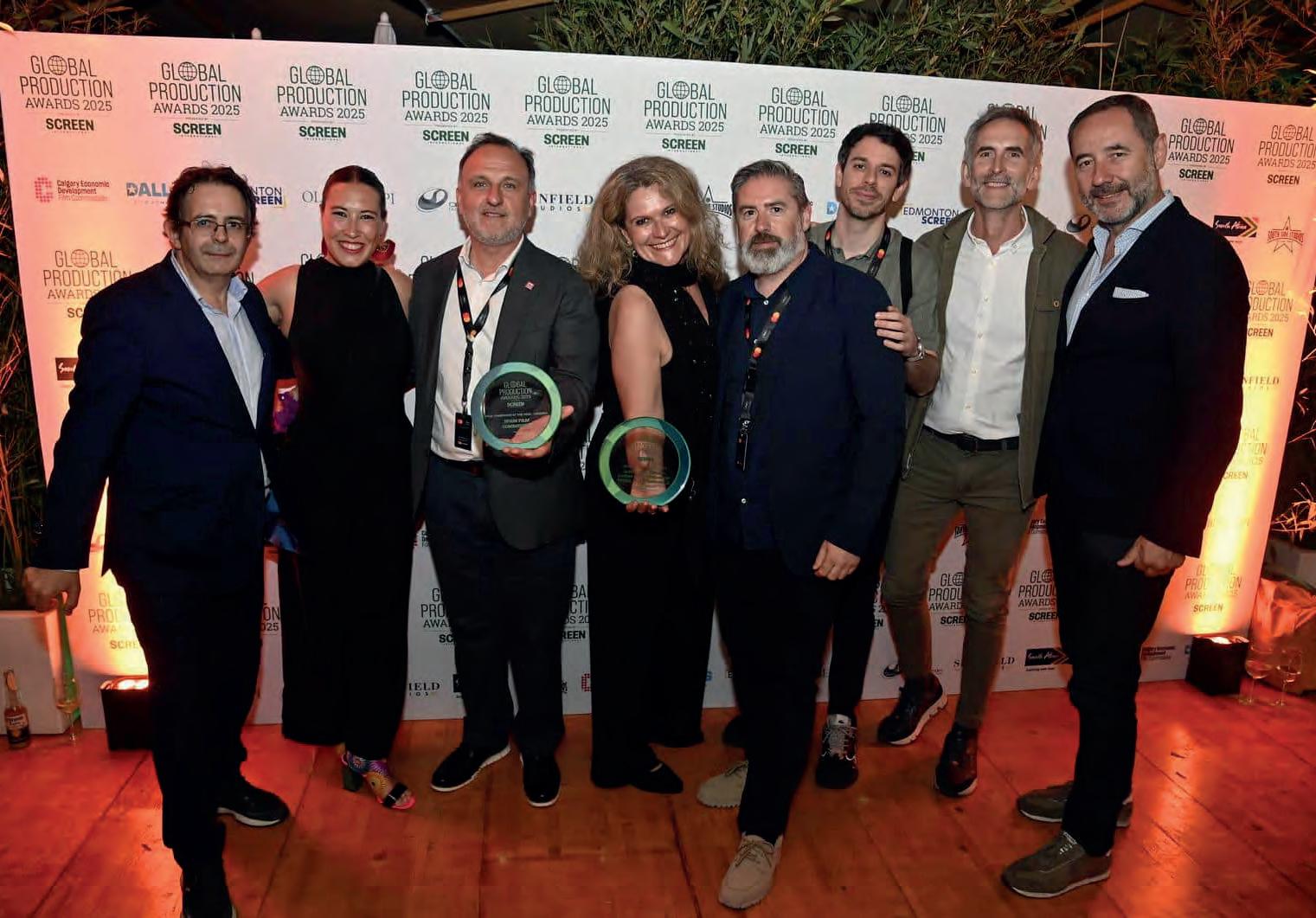
PROFILM´S PRESIDENT
PROFILM IS A NON-PROFIT ASSOCIATION THAT BRINGS TOGETHER SPAIN’S LEADING SERVICE PRODUCTION COMPANIES, WITH THE MAIN GOAL OF ESTABLISHING SPAIN AS A KEY DESTINATION FOR INTERNATIONAL PRODUCTIONS. TO EXPLORE THE MAIN TRENDS IN THE FIELD AND TO BETTER UNDERSTAND SPAIN’S CURRENT POSITION AND CHALLENGES WITHIN THE GLOBAL MARKET, WE SPOKE WITH ITS PRESIDENT, FERNANDO VICTORIA DE LECEA.
CARLOS AGUILAR SAMBRICIO
Rubik: How would you assess PROFILM’s current position as an association?
Fernando Victoria de Lecea: The association was formed seven years ago in a very natural way. Spanish production companies that were already working on foreign films and series shot in Spain didn’t have a clear way to communicate with the public administration or to voice the challenges they faced on a daily basis.
Today, we’re part of the broader ecosystem of professional associations that public officials regularly consult when evaluating the industry’s policies. We’ve seen growing interest from new production companies wanting to join, though we do maintain fairly strict entry criteria—we require that companies have a proven track record of working with international productions.
This consolidation has allowed our proposals and concerns to be taken into account when decisions are made that affect the sector. As the association continues to grow, we remain committed to maintaining the quality and dedication of our members, positioning us as a reliable and expert voice in discussions with institutions.
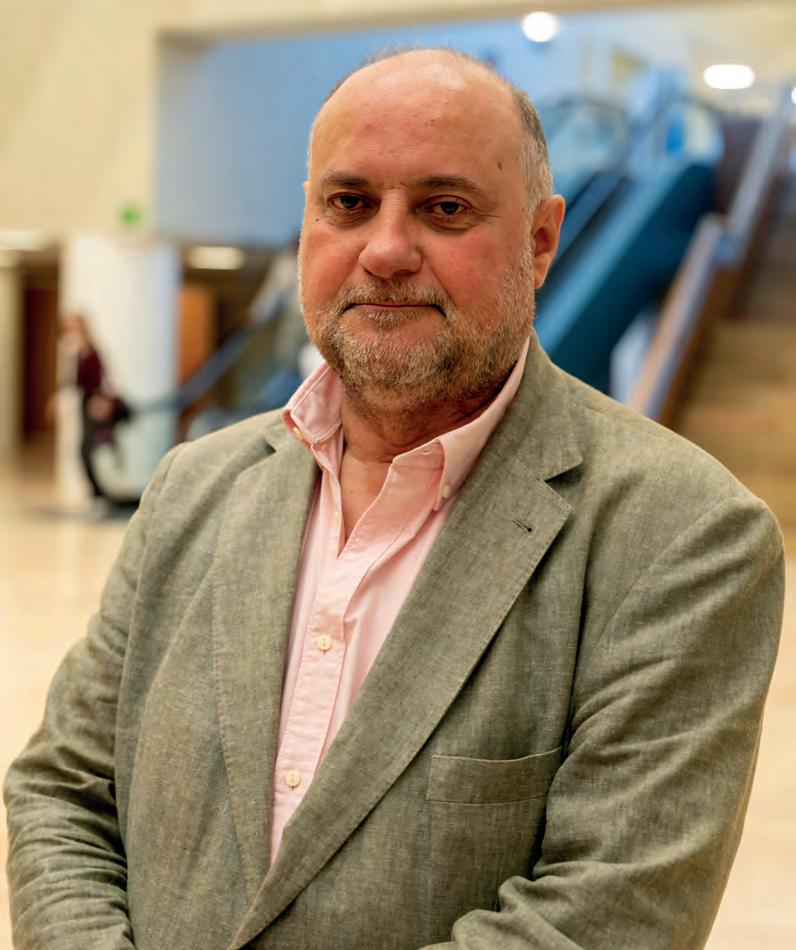
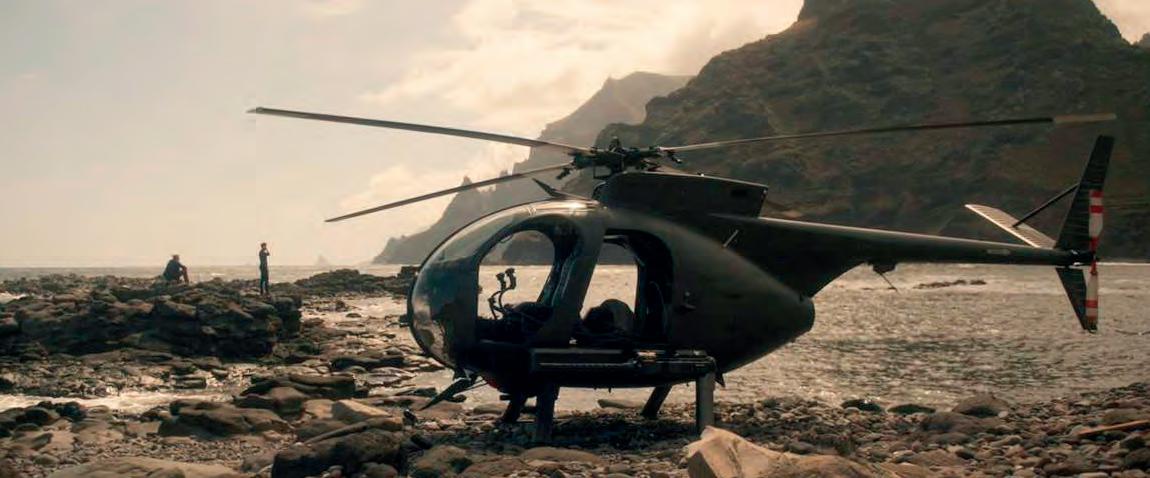
Rubik: I’ve noticed that more and more production companies are launching service divisions. Several of your members have done so. Would you say this reflects a sector with both strong momentum and future potential?
F.V.L.: Producing audiovisual content is a risky business by nature, and professionals in this industry are constantly adapting to change. With the arrival of international projects and streaming platforms in Spain, some companies have chosen to combine their own productions with international servicing, others have shifted toward international coproductions, and some continue to focus solely on one model.
It’s certainly a viable path for production companies looking to diversify and improve their workflows. Working with international crews often gives you the opportunity to discover new technical or creative approaches that may inspire your own future projects.
When it comes to the VFX sector, however, the situation is a bit different. Despite the outstanding professionals and internationally renowned companies like El Ranchito that operate here, the future looks uncertain due to the lack of competitiveness in our tax incentives compared to nearby markets.
Rubik: Spain is a major filming destination internationally. What do you think are the main reasons foreign productions choose to shoot here?
F.V.L.: The incredible diversity of natural and historic locations—easily accessible, and in a safe environment—is undoubtedly a major draw for international productions.
In addition, the international recognition of Spanish cinema and television, and the overall quality of our companies, technicians, actors, and suppliers, all make Spain a highly atractive country for filming.
But the deciding factor is almost always economic viability. That’s why we continue to advocate for tax incentives that are not only competitive with, or better than, those in other EU countries, but also straightforward to apply, legally sound, and secure for all parties involved.
Rubik: A year ago, you presented an economic impact study on international filming in Spain at the San Sebastián Film Festival, alongside Spain Film Commission. Did the report get good feedback? Do you think it has helped raise awareness about how important this segment is?
F.V.L.: Sadly, despite the report being well-received and still referenced a year later, and despite confirming what seemed obvious to us—that all audiovisual productions, especially international ones with bigger budgets, generate significant economic return—there has been little response from public institutions.
So far, no measures have been taken to systematically collect data, conduct studies, or provide economic assessments like those seen in other industrial sectors, even though we’re supposed to be—or are being told we are—a “strategic sector.”
What’s clear is the urgent need for data in order to develop public policy. More and more surveys are being conducted by different institutions to understand what film shoots contribute to municipalities or regional economies. The existing data, which could be even more specific with the involvement of the Ministry of Finance, already paints an undeniable picture: investing in the audiovisual sector pays off—not only by generating public revenue, but also by projecting a strong national image on the global stage.
Rubik: PROFILM has mentioned, when analyzing a decrease in investment compared to the previous year, that the
“THE QUALITY OF OUR COMPANIES, CREWS, ACTORS, AND SUPPLIERS MAKES SPAIN A HIGHLY ATTRACTIVE COUNTRY
main issue is the rigidity of the tax incentive system. How could the Spanish system be updated?
Fernando Victoria de Lecea: The issue with international tax incentives isn’t so much rigidity as it is insecurity. We have no problem with the system being rigorous—on the contrary. The fundamental problem is that there’s no dedicated public body where international productions can be registered or officially tracked.
Our interaction with the ICAA (Institute of Cinematography and Audiovisual Arts) under the Ministry of Culture is limited to applying for the cultural certificate. We deal with the Ministry of Finance only when filing corporate tax returns, requesting reimbursement of the incentive, and of course, during potential tax audits. What we are asking for, first and foremost, is a preliminary report—similar to those issued in R&D—that would allow for an estimate of the potential tax return.
Secondly, we’d like to be able to submit a certified audit report—just as we do when verifying production costs with the ICAA— that would be accepted by the Ministry of Finance as legally valid. But right now, where do we even submit these documents? The ICAA does not handle international tax incentives under Article 36.2 of the Corporate Tax Law, and the Ministry of Finance has no formal registry for them.
As for visual effects, the issue is that the required local spend threshold to qualify for tax incentives is too high compared to neighboring countries. That means we lose many projects. Few international productions have large VFX budgets, and when they do,
they typically split the work between multiple countries. This makes it impossible for smaller or mid-sized projects to come to Spain, and without them, we can’t grow new companies that can build the experience needed to take on major projects later.
“Spain’s incredible diversity of natural and historical locations, easily and safely accessible, is without a doubt a major draw for international productions.”
F.V.L.: Generally speaking, it isn’t the main problem—even though there’s no fixed date for reimbursement. The real issue is that the Tax Agency offers no transparency in its processes. We’ve had member companies that didn’t receive their refund in the estimated timeframe and, when they asked for clarification, the only reply they got was that the process was “under review”— nothing more.
Documentation requests or random tax inspections can happen either before or after the refund. If it’s before, it causes delays that are hard to explain to foreign producers and that seriously damage our credibility. We’ve
had members who received their full refund almost two years later than expected, simply because the amount requested was high— nothing else.
If the audit happens after the refund, it leaves the Spanish producer vulnerable, because they’ve already transferred the full amount to the foreign production. If the tax authorities later change their criteria, the local producer would be responsible for repaying the amount—which is usually substantial.
What we’re asking is that with a preliminary report, a certified cost audit, and the regular controls we already undergo— like REDEME (monthly VAT filings) and SII (real-time invoicing)—the process could be streamlined. And if there is a tax inspection, let it be a swift one. We’re open to any kind of oversight, but it must happen within a reasonable timeframe. Waiting up to two years for a refund, with no explanation and simply because a large amount was requested, is not serious or professional.
Rubik: Within Spain, some regions can offer more generous tax incentives. Is this creating saturation in those areas and making it harder to attract shoots elsewhere? Do international producers take this regional gap into account?
F.V.L.: Regional incentives developed by areas like Navarra or the Basque provinces typically don’t apply to international productions—they’re not direct refunds but rather improved financing through tax credits. So we’re not directly affected by them in most cases.
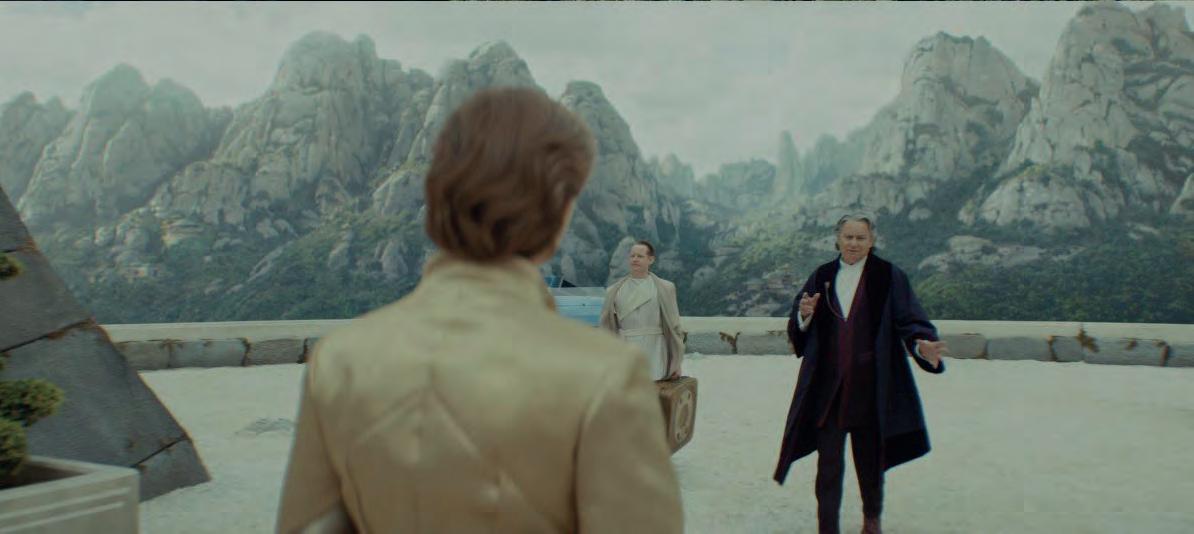
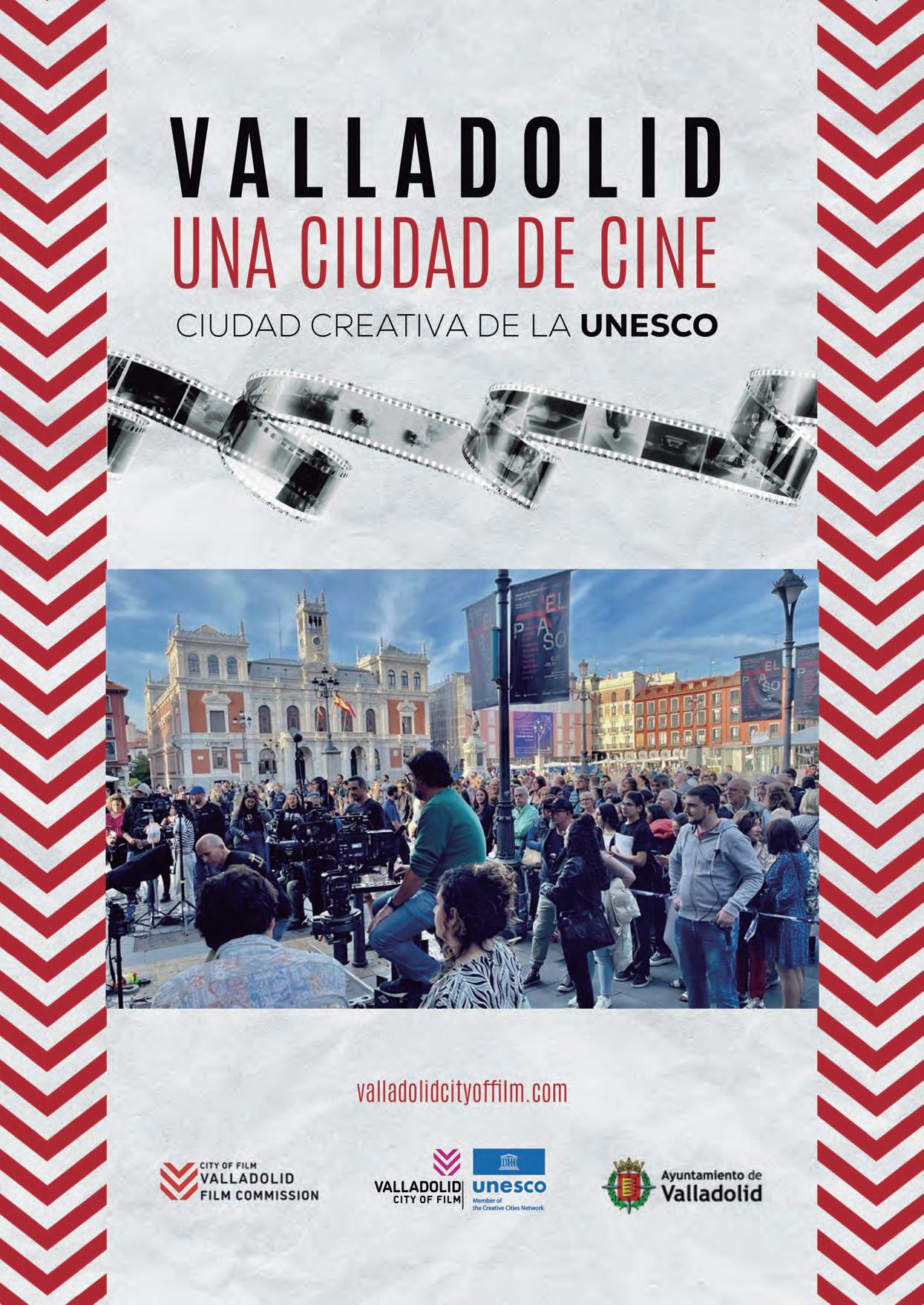
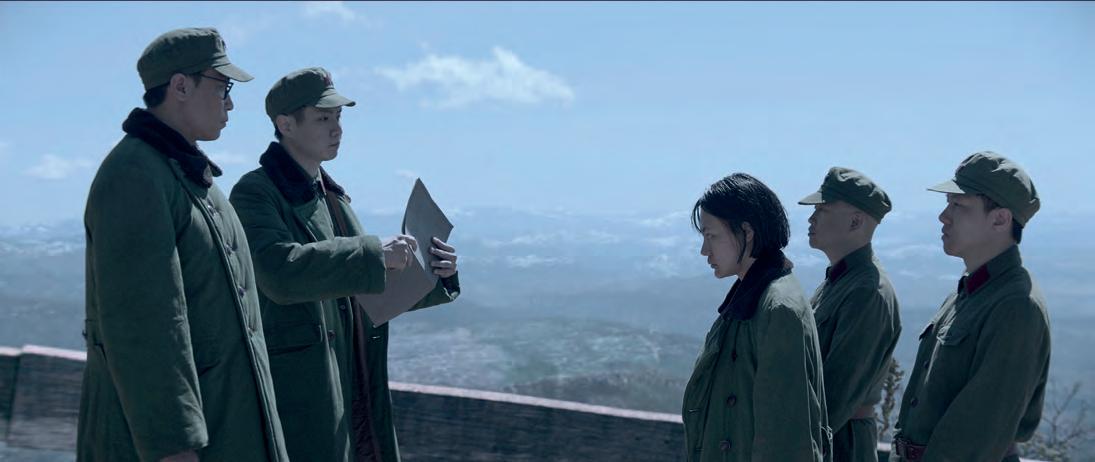
Only the Canary Islands offer a significantly higher tax benefit, due to their insular status and distance from the mainland. But rather than causing saturation, this has led to off-season work and diversification into non-tourism sectors. Film and TV production is, by nature, off-season and seeks out spaces that aren’t necessarily the most famous or touristic—often underused infrastructure or lesser-known sites that, thanks to the creativity and flexibility of the industry, are transformed into unique filming locations.
This adaptability not only broadens the location map but also helps boost economic activity in areas that might otherwise be left out of traditional tourist flows.
So, far from causing saturation, filming can be a strategic tool for redistributing economic and cultural activity—provided there’s adequate planning and real institutional support.
What’s crucial is more decisive coordination between regional and local governments and the industry. With good planning and a reliable permitting system— supported by Film Commissions, Film Offices, or dedicated audiovisual departments— filming only brings benefits.
Rubik: If the central government refuses to raise the general tax incentive rate to match those offered by other regions, what alternatives could regional institutions pursue?
F.V.L.: Autonomous Communities have many other tools at their disposal to attract productions: funding schemes for audiovisual projects, strong Film Commissions and Film Offices promoting their territories at
international events, clear and streamlined permitting protocols, building and supporting film studios, and developing a strong local audiovisual ecosystem. Any policy that makes life easier for professionals is, without a doubt, a good measure.
“With the arrival of streaming services and international projects in Spain, some companies have chosen to combine their own productions with international service work.”
Equally important is fostering collaboration between public institutions and private stakeholders. Greater coordination can lead to more efficient use of resources and better results.
This cooperation could take the form of industry roundtables, training programs for technical and creative talent, or support for internationalizing local audiovisual projects. The goal is not just economic and cultural development at the local level, but also to attract investment and talent to secure the future of the Spanish audiovisual sector.
Rubik: Representatives of the Audiovisual Hub have stated that one of their goals is to streamline bureaucracy to ease international productions. Has there been any real improvement?
F.V.L.: It’s true that some progress has
been made with visa processing. However, many Spanish consulates were unaware of the changes, so the effectiveness of that measure varies.
Aside from that, since 2015—the year Spain’s international tax incentive was introduced—percentages and refund caps have changed, but ten years later, we’re still facing the same legal uncertainty and procedural issues. In fact, the problems have grown because the stakes are higher now.
We believe the Tax Agency should have a centralized office to receive all projects applying for incentives, complete with documentation, and serve as a point of contact for clarifications. It’s unacceptable that there are differing interpretations of what constitutes an eligible expense depending on the local tax office. That’s not serious, nor professional. For national productions, there’s the ICAA—but for international ones, there’s nothing.
Rubik: The government has expressed its intention to relaunch the Cinema Law. Beyond the topics we’ve already covered, what other issues do you think should be addressed?
F.V.L.: Unfortunately, we’re not very optimistic about the legislative process for the new Cinema and Audiovisual Culture Law. After more than a year of parliamentary inactivity, there’s still no clear path forward, and it seems unlikely to advance this legislative term.
This is especially frustrating for associations like ours, which represent audiovisual professionals. There’s broad
political consensus on the urgent need to update a law that dates back to 2007—before digital platforms became a core part of Spain’s audiovisual landscape.
The current law is clearly outdated given how dramatically the sector has changed. That’s why legislative reform is seen as a shared priority, though the lack of progress is disheartening.
Among the proposed measures—besides those already discussed—we believe it’s crucial to establish a body that brings together public institutions and private industry. Whether it’s called the National Audiovisual Council or something else, this organization would serve as a preliminary consultative step before any new regulations are implemented. It would also monitor and adjust existing regulations in line with the real needs of the sector. This model already exists in other countries and is key to ensuring effective coordination and a responsive legislative framework.
“The growth in large-scale studio and soundstage infrastructure is undeniable. It’s
rare to find a region
in Spain that isn’t planning the
construction of a dedicated production facility.”
Rubik: In recent years, it’s been said that Spain lacked large-scale studio infrastructure. We’re now seeing the reopening, launching, and construction of new production facilities. Are we in a better position now, or is more effort still needed?
F.V.L.: There’s no denying the progress we’ve made. It’s rare to find an Autonomous Community that isn’t planning or building a new audiovisual production space.
But the problem remains the same: projects are often developed without consulting industry professionals, which can lead to investments that have little real viability because they don’t align with the production needs of that region.
That’s why it’s essential to invest not only in physical infrastructure but also in talent development and specialized training. Studio growth must go hand-in-hand with initiatives that build up skilled technicians, managers, and creatives, ensuring that investments align with actual production demands in each territory. Only then can we ensure that these new facilities are sustainable and truly contribute to the development of Spain’s audiovisual industry— avoiding the risk of misaligned resources and underused spaces.
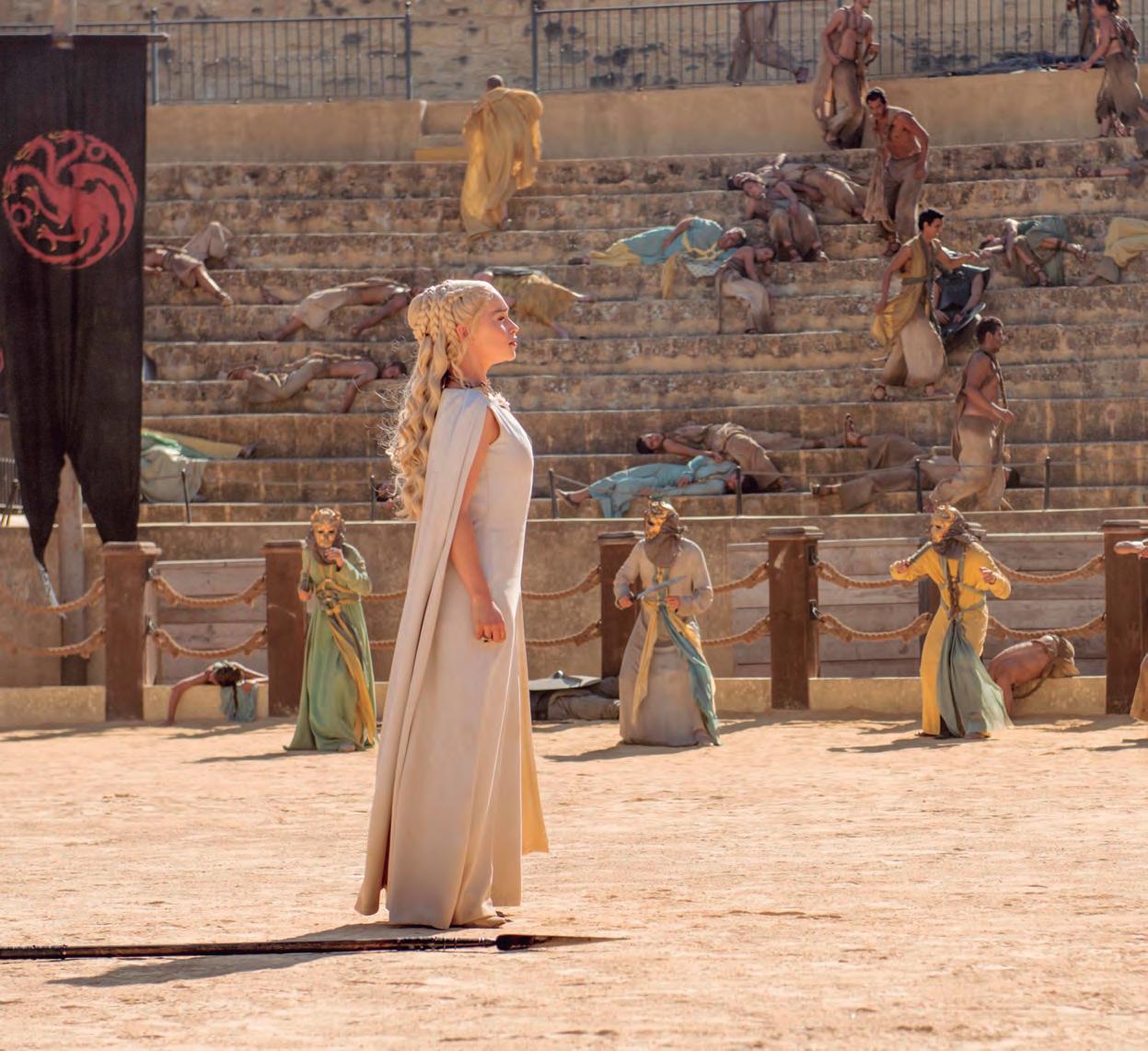
IN OCTOBER 2025, IBERSERIES & PLATINO INDUSTRIA PRESENTED A VERY INTERESTING STUDY THAT WAS PREPARED BY THE LAW FIRM OM-MA, IT PROVIDES A GENERAL OVERVIEW OF THE MOST RELEVANT FEATURES ACROSS DIFFERENT TAX INCENTIVE SCHEMES. THE REPORT INCLUDES OTHER TERRITORIES BUT IN THIS PIECE WE SPECIFICALLY FOCUS ON THE FOUR TAX-DIFFERENTIATED AREAS OF SPAIN (THE STANDARD NATIONAL REGIME, THE CANARY ISLANDS, THE BASQUE COUNTRY, AND NAVARRA), AS WELL AS THE SIX LATIN AMERICAN COUNTRIES UNDER ANALYSIS: BOLIVIA, COLOMBIA, CHILE, THE DOMINICAN REPUBLIC, ECUADOR, AND URUGUAY.
Eligible Productions:
National productions: feature and short films, fiction series, animation, or documentary.
Foreign productions: feature films or audiovisual works shot fully or partially in Spain (including animation and VFX).
Type of Incentive
• 30% on the first €1M of expenditure.
• 25% on the remaining expenditure.
• Special 30% deduction for VFX when expenses are below €1M for foreign productions.
Limits and/or Minimum Expenditure Requirements
National productions: Cap of €20M per production. • For series, maximum of €10M per episode. • 50% of the deduction base must be expenditure incurred in Spain.
Foreign productions: Minimum expenditure: €1M (except animation: €200,000). • Cap of €20M per production (€10M per episode in series). In all cases, the total of public aid cannot exceed 50% of production cost (up to 85% in special cases).
Other Relevant Information:
National productions: • Requires certificate of nationality and cultural qualification (ICAA or competent regional authority). • Production must demonstrate its cultural character. • A new,
pristine copy of the production must be delivered to the Film Archive.
Foreign productions: • Deductible expenses include creative personnel and technical/ industrial services contracted in Spain or within the EEA. • The production must demonstrate its cultural character and include in the credits a mention of the incentive received, with reference to the filming locations in Spain.
Eligible Productions:
National and foreign productions: feature films or audiovisual works shot fully or partially in Spain (including animation and VFX).
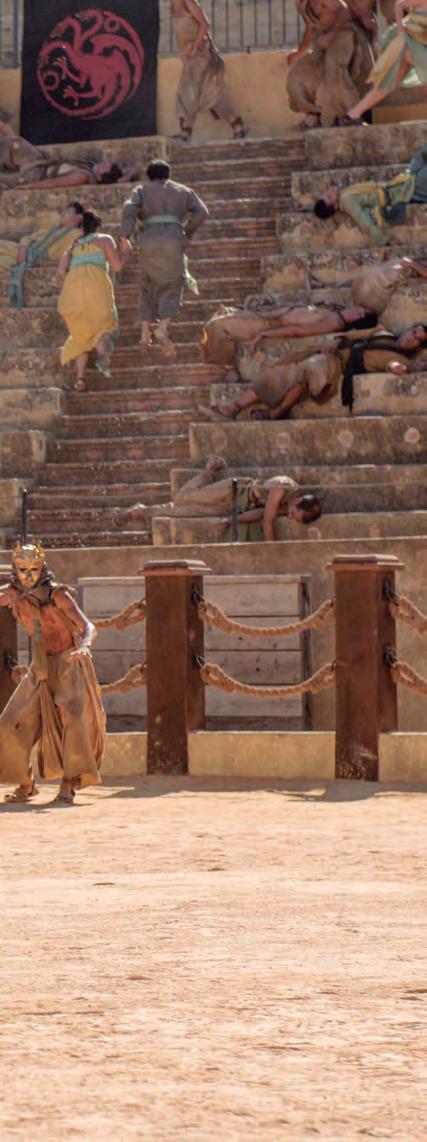
Type of Incentive:
•54% on the first €1M of expenditure incurred in the Canary Islands. • 45% on the remaining expenditure.
Limits and/or Minimum Expenditure Requirements
•Cap of €36M per production. • For series, maximum of €18M per episode.
Other Relevant Information
•National productions: must obtain the Spanish nationality and cultural certificate (ICAA) as well as the Canary Islands Audiovisual Production Certificate.
• Foreign productions: must obtain the cultural certificate and include in the credits a mention of the incentive received, with reference to the filming locations in Spain.
•Eligible expenses must be incurred in the Canary Islands (pre-production, production, and post-production).
Eligible Productions:
Feature films, short films, and series (fiction, animation, documentary). Both national and foreign productions executed by local production companies.
Type of Incentive:
Alava and Gipuzkoa: • 50% if 35–50% of the expenditure is carried out in the territory. • 60% if more than 50%. • Additional +10% if the original version is in Basque (Euskera).
Bizkaia: • 60% if more than 50% of the expenditure is local. • 50% if between 35–50%. • 40% if between 20–35%. • 35% for the remainder. • Additional +10% if the only original version is in Basque (Euskera).
Limits and/or Minimum Expenditure Requirements:
Alava and Gipuzkoa: max. €10M per production and €3M per episode. Bizkaia: no maximum limit.
Other Relevant Information:
The deduction is generated at the time of payment (not on accounting accrual). Requires a cultural certificate and deposit of a copy in the Basque Film Archive. Public aid cannot exceed 50% of total cost (60% in case of European co-production).
National and foreign productions: feature films or audiovisual works shot fully or partially in Spain (including animation and VFX).
Eligible Productions:
Film productions and other audiovisual works of fiction, animation, or documentary, both national and foreign.
National Productions: 45% (general) on production, advertising, and promotion costs (limited to 40% of production costs), adaptation expenses, and costs of the special audit report.
Foreign Productions: 35% on expenses incurred in Navarra.
Limits and/or Minimum Expenditure Requirements:
National Productions: • Expenditure in Navarra must be at least 40% of the total investment. If not met, the base is calculated by dividing local expenditure by 0.4. • Maximum deduction: €5M per production. • The production company must allow access to graphic and audiovisual material of the shooting and Navarra locations, mention in the credits that the incentive was received and deliver a copy of the production to the Navarra Film Archive. • The deduction amount, together with other public aid, cannot exceed 50% of eligible costs (up to 85% in special cases).
Foreign Productions: • Maximum deduction base: 80% of the total production cost. • Minimum of one week of filming in Navarra, either interiors or exteriors. • The deduction amount, together with other public aid, cannot exceed 50% of eligible costs (up to 85% in special cases).
Other Relevant Information:
A prior report must be requested from the Department of Culture before applying the incentive.
Eligible Productions:
National film productions. Co-productions between Bolivian and foreign producers (filmed either inside or outside the country), treated as national under Law Nº1134. Film and audiovisual art projects seeking support through the Promotion Fund managed by ADECINE.
Type of Incentive:
(Tax exemptions (Law Nº2206 and Decree Nº1241)) • VAT (13%). • Transaction Tax (IT) (3%). • Corporate Income Tax (IUE) (25%). • Film and Audiovisual Art Promotion Fund (Law Nº1134): Up to 80% partial coverage of project costs.
Limits and/or Minimum Expenditure Requirements:
Fund available only for projects with Bolivian producers or foreign producers with more than 5 years of residency in Bolivia. Co-productions with Bolivian participation are considered national and eligible for benefits.
Other Relevant Information:
The Bolivian Film and Audiovisual Development Agency (ADECINE) is the decentralized public entity responsible for administering the funds and promoting the national audiovisual industry. The system prioritizes local production and encourages foreign participation through co-productions with Bolivian producers.
Eligible Productions:
Feature films and short films in fiction, animation, and experimental formats. Documentaries, series, web series, and video games. Advertising projects are excluded.
Type of Incentive:
•Tax franchises (Valdés Law – Art. 8): tax benefits for cultural donations (different tax credits apply depending on the type of taxpayer). • Bill (2024, pending): VAT refund (19%) for non-resident companies producing in Chile (not applicable if the work is only exhibited in Chile). • Audiovisual Investment Fund (under renewal): finances up to 200 million Chilean pesos per project (≈ USD 210,000), within a total budget of 800 million.
Limits and/or Minimum Expenditure Requirements:
Audiovisual Fund requires mandatory cofinancing (65%), with foreign contributions in cash and in Chilean pesos. Co-financing in foreign currency must be expressed in the equivalent amount in Chilean pesos.
Other Relevant Information:
Donations can be in cash or in-kind; certification from the Internal Revenue Service (SII) is required. The Ministry of Cultures, Arts and Heritage may grant sponsorships to relevant
cultural projects across multiple disciplines, including audiovisual. The Audiovisual Fund covers operating, personnel, and investment costs, and encourages innovation and new trends.
Eligible Productions:
Film works, series, animation, music videos, video games, advertising, and postproduction. Both national and foreign projects may qualify (through production contracts in Colombia and subject to approval by the Ministry of Culture).
Type of Incentive:
Rebate – Colombia Film Fund (FCC): • 40% of expenses on film services contracted with Colombian companies. • 20% of expenses on lodging, meals, and transportation. CINA –Audiovisual Investment or Donation Tax Certificate: • 35% tax credit on audiovisual and logistical expenses incurred in Colombia. • Additionally, investors may deduct from income tax 125% of the invested or donated amount. • Negotiable security (credit title) issued in the name of the foreign producer.
Limits and/or Minimum Expenditure Requirements:
FCC cap: COP 3.5 billion (≈ USD 910,000) per project.
Other Relevant Information
Execution deadlines: • Film: 9 months (up to 18 with post-production). • Series: 12 months (up to 24 with post-production). • Music videos: up to 18 months.. • Animation and video games: up to 48 months.
Eligible Productions: Film, audiovisual, series, television, video games, and logistical services, both national and international. Also includes advertising production, animation, and related activities.
Type of Incentive:
Audiovisual Investment Certificate (CIA): up to 37% of audiovisual and logistical costs
and expenses incurred in Ecuador. Other benefits: tariff exemptions, exemption from the tax on foreign currency outflows for certain international payments, etc.
Limits and/or Minimum Expenditure Requirements
For 2025, approximately USD 11,902,000 has been allocated for CIA, which represents a budget ceiling for CIA concessions. Requires valid expense receipts, registrations, and certifications.
Other Relevant Information
Ecuador has declared the audiovisual sector to be of national interest, covering all stages: development, pre-production, production, post-production, and distribution. Tax exemptions apply to the import of audiovisual goods and to salary/fee payments abroad, among others.
Eligible Productions:
Feature films, documentaries, television series, miniseries, reality shows, and music videos.
Type of Incentive:
Transferable tax credit of 25% on expenses incurred in the country related to audiovisual production. Covered expenses are exempt from ITBIS (Value-Added Tax on Goods and Industrialized Services).
Limits and/or Minimum Expenditure Requirements:
Minimum investment: USD 500,000. No maximum reimbursement cap.
Other Relevant Information:
Both residents and non-residents may apply. Requires participation of a
Dominican production company to process the application. For foreign production companies: a 1.5% withholding applies instead of the usual 27% on fee payments. At least 25% of the technical and artistic staff must be Dominican.
Eligible Productions:
International and foreign audiovisual productions, international advertising productions, feature films, short films, series, music videos, animation, documentaries, etc. Productions carried out fully or partially in Uruguay with local collaboration.
Type of Incentive:
• Cash Rebate of up to 25% on eligible expenses incurred in Uruguay. • VAT exemption (22%) on production expenses for projects filmed in Uruguay under certain conditions.
Limits and/or Minimum Expenditure Requirements:
Maximum rebate: USD 1,000,000 for large projects (with budgets starting at USD 3,000,000).
For projects with budgets between USD 300,000 and USD 3,000,000, the rebate cap is lower (USD 750,000).
Other Relevant Information:
A local Uruguayan production company must be engaged to access the benefit. International advertising productions are also covered if they have an exemption certificate issued by ICAU.
Several “support lines” exist within the Uruguay Audiovisual program, including production services, co-productions, advertising, and more.
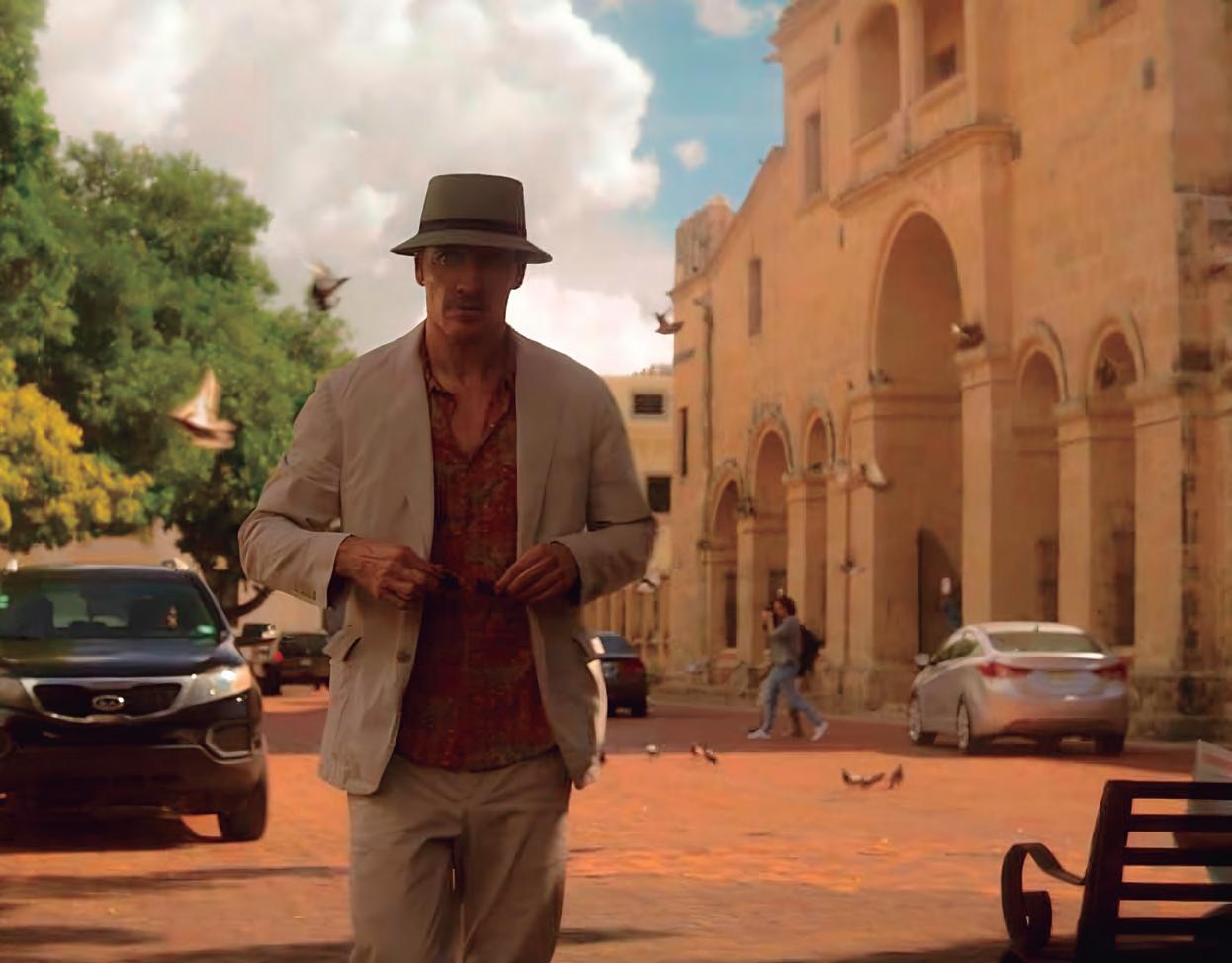
CARLOTA GUERRERO HAS BEEN ONE OF THE MOST PROMINENT FILM COMMISSIONERS IN SPAIN AND EUROPE OVER THE PAST TWO DECADES. SINCE MARCH, SHE IS THE GENERAL MANAGER OF PROA, THE FEDERATION OF AUDIOVISUAL PRODUCERS. RUBIK REACHED OUT TO HER TO PROVIDE INSIGHTS AND ADVICE FOR FILM OFFICES AND FILM COMMISSIONS, BASED ON HER EXTENSIVE EXPERIENCE AS A FILM COMMISSIONER AND HER FRESH PERSPECTIVE FROM THE PRODUCTION SECTOR.
Carlota Guerrero has started a new professional chapter after leading the Catalunya Film Commission for 18 years.
Additionally, she’s also taken on representative roles at the European level. Since 2020, she was a member of the European Film Commissions Network - EUFCN board , and from
December 2022, she served the association as co-chair alongside Adrian A. Mitchell.
As mentioned, since March she has held the position of General Manager at PROA , the Federation of Audiovisual Producers, one of the key representatives of Spain’s screen production sector.
PROA works to defend the audiovisual sector and build a strong, diverse, and committed industry,
since 2008. They gather 7 federated associations that represent all types of audiovisual production.
“We bring the voice of the industry to decision-making centers through the cross-sectoral perspective provided by the producers of film, television, series, documentaries, animation, and short films, as well as the video game developers we represent,” the Federation says.
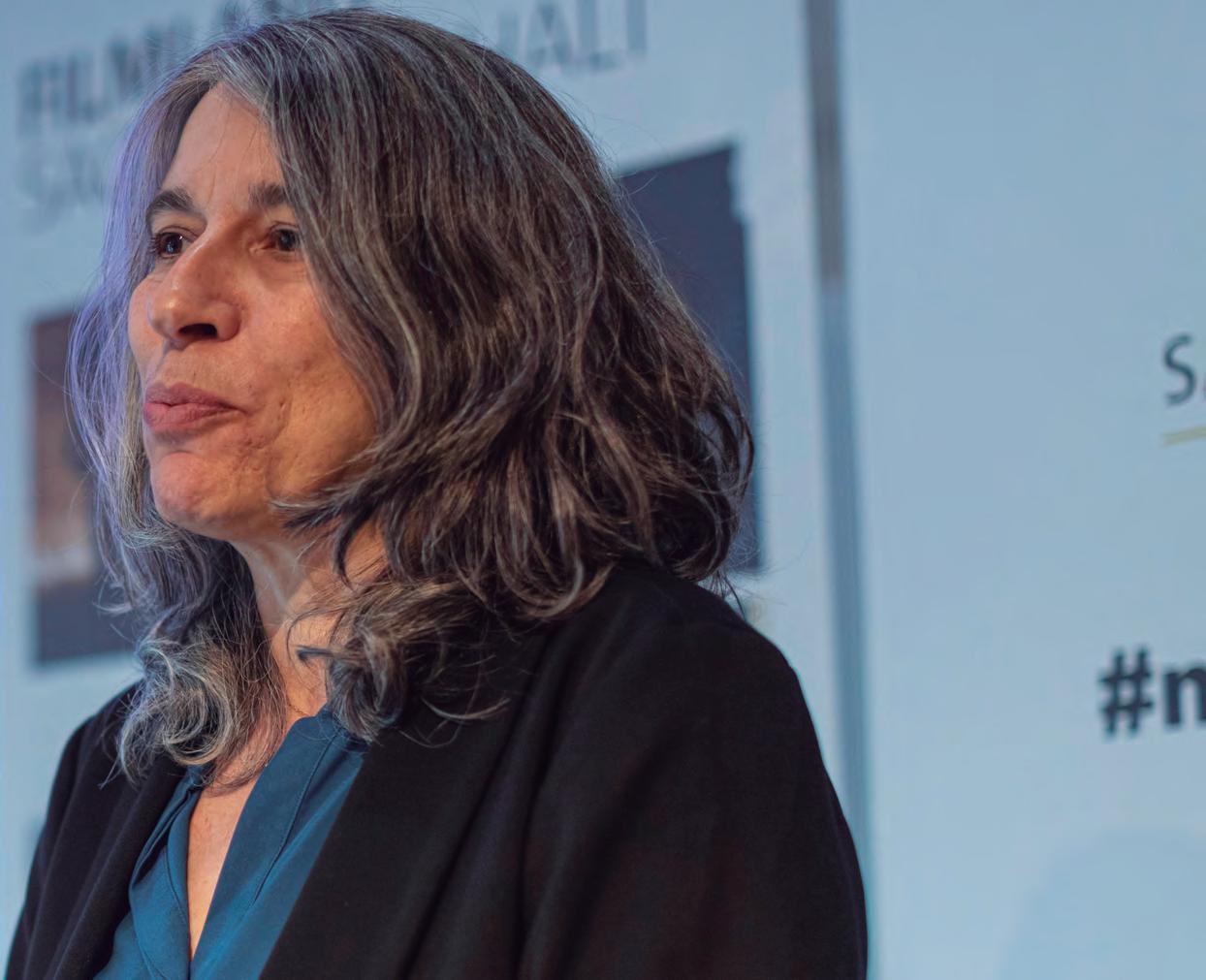
Given Carlota Guerrero’s considerable background in the field of film commissions, we deemed it appropriate to engage with her in her new capacity to shared a series of recommendations aimed at fostering smoother collaboration among the various segments of the screen industry.
1. Identify sources of financing for producers in your territory, including any available incentives, grants, or subsidies, as well as potential agreements with local public or private entities that may not involve direct funding but could result in the waiving of fees.
2. Be clear and transparent . We need to know where we stand when we plan a production. Let us know in advance the exact conditions that apply in each one of the locations we need.
3. Be aware and inform us of local regulations (from working hours to local holidays) and specific requirements of locations.
4. Build a wide and diverse network of contacts in your town/region, especially in different public administration departments, and make sure they understand the value of film making. Beginning with local police, this can go from road or coast authorities to the fire brigade, nature parks, environmentalists
or civil engineers, you never know when we will need to blow a bridge, work near endangered species or film in cities undergoing major renovation with open construction sites every other corner!
5. Be direct
6. Be available
7. Please don’t take too long to get back to us when we reach out with an enquiry.
8. Don’t give us false hope. We’d rather get a ‘no’ upfront that gives us time to look for alternatives than a ‘maybe’ that keeps us waiting.
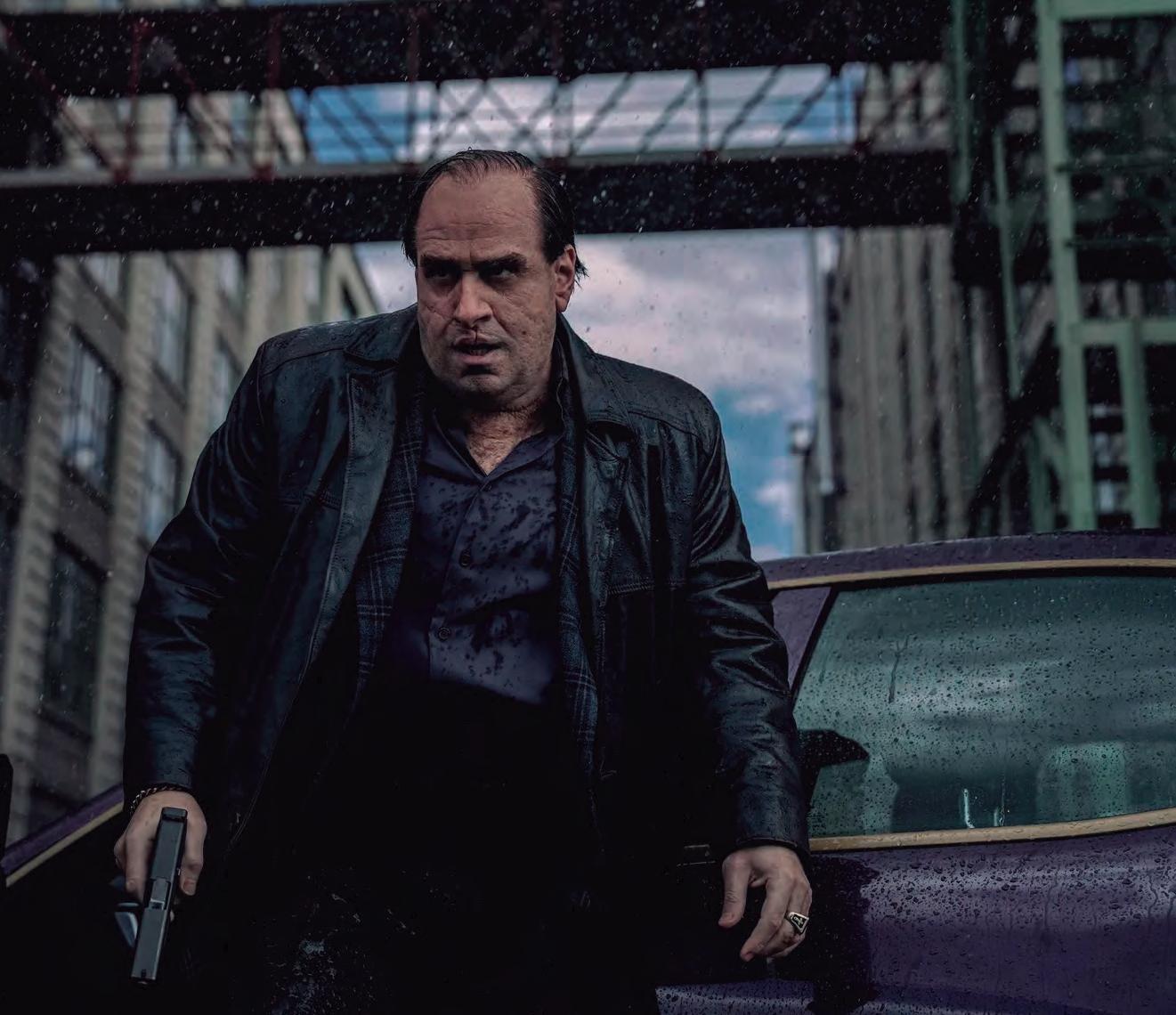
IN OUR LOCATIONS SPECIAL ISSUES WE LOVE TO HIGHLIGHT THE AWARDS RELATED TO THIS FIELD FROM RECENT MONTHS. ONE OF THE MOST IMPORTANT IS THE ACCOLADES PRESENTED BY THE LOCATION MANAGERS GUILD
INTERNATIONAL (LMGI), WHICH THIS TIME CELEBRATED ITS 12TH EDITION.
The LMGI Awards spotlight international features, television and commercials “in which the creative use of filming locations sets the tone, enriches the character, and enhances the narrative of the story”.
The awards ceremony and reception took place at the Eli & Edythe Broad Stage in Santa Monica before an audience of 400, including LMGI members, industry executives, and press. Actress and producer Rachael Harris hosted the evening. Among the special recognitions, we want to highlight that Kevin Costner , the two-time Academy Award -winning actor, producer, director, and writer, was honored with the esteemed Eva Monley Award
His dedication to storytelling through location, prominently featured in films such as Dances with Wolves, The Untouchables, The Bodyguard, Field of Dreams, Open Range, Yellowstone and Horizon: An American Saga was honoured.
Regarding the LMGI Humanitarian Award, the winner was Make-A-Wish Greater Los Angeles, recognized for “its commitment to making a significant impact on the lives of children and their families through the transformative power of a wish”. Their mission reflects “the core values of compassion, creativity, and resilience— principles that resonate profoundly within the entertainment industry, where many have seen firsthand the life-changing effects of a fulfilled wish.”
The Lifetime Achievement Award went to veteran Location Manager Ilt Jones, whose
career spans over 30 years. Recognized for “his seamless integration of real-life locations with the magical world of superheroes and large action movies”,
He has worked in some of the biggest blockbuster films such as The Dark Knight Rises, Inception, Iron Man 3, Kong: Skull Island, Black Panther: Wakanda Forever, Captain Marvel and the Transformers franchise.
This time, the LMGI Awards had winners with a geographically limited range of filming locations, as almost all the shooting destinations are in the United States. The few international elements were found in the latest Mission Impossible installment (England, Norway, South Africa, and Malta). Last year, for example, locations in countries such as Italy, Iceland, Namibia, and Canada were recognized in several productions.

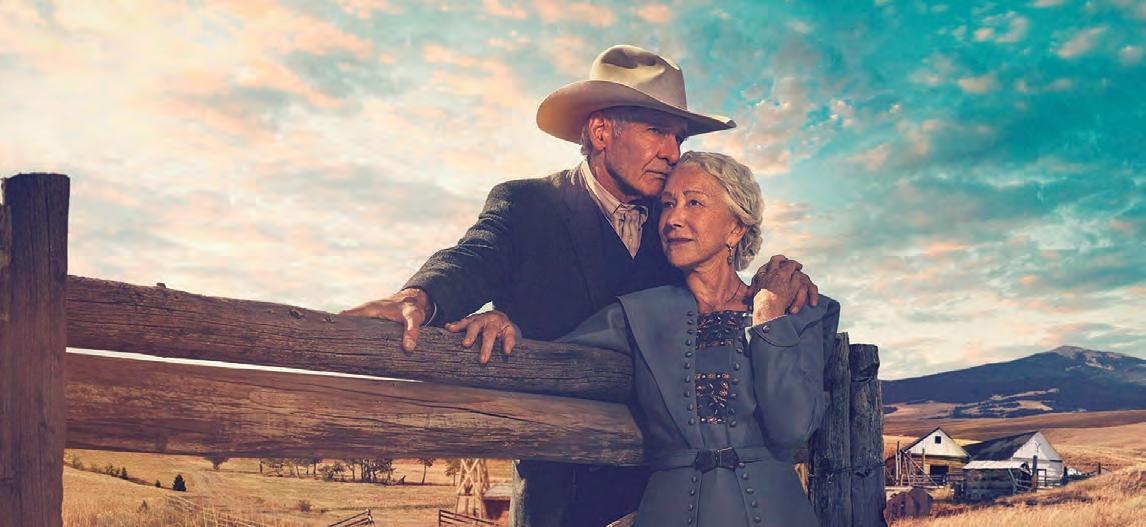
OUTSTANDING LOCATIONS IN A PERIOD TELEVISION SERIES: 1923 (Season 2), Filmed in the United States (Texas and Montana).
OUTSTANDING LOCATIONS IN A CONTEMPORARY TELEVISION SERIES: The Studio , Filmed in the United States (L.A. and Las Vegas).
OUTSTANDING LOCATIONS IN A TV SERIAL PROGRAM, ANTHOLOGY, MOW OR LIMITED SERIES: The Penguin Filmed in the United States (around NYC, Harlem, Brooklyn, the Bronx, Queens, Chinatown and Yonkers).
OUTSTANDING LOCATIONS IN A PERIOD FEATURE FILM: A Complete Unknown, Filmed in the United States (New Jersey).
OUTSTANDING LOCATIONS IN A CONTEMPORARY FEATURE FILM: Mission Impossible: The Final Reckoning , Filmed in England, Norway, South Africa and Malta
OUTSTANDING FILM COMMISSION: New Jersey Motion Picture & Television Commission for A Complete Unknown
OUTSTANDING LOCATIONS IN A COMMERCIAL: Orient Express : “Artisan of Travel” (Belmond).
IN THIS RUBIK SPECIAL EDITION, WE ALSO WANT TO LOOK BACK AT THE 2024 EUFCN LOCATION AWARDS, WHICH WERE PRESENTED EARLIER THIS YEAR DURING THE BERLINALE. THE ISLAND OF FRØYA, REPRESENTED BY THE MIDGARD FILM COMMISSION NORWAY, RECEIVED THE EUFCN LOCATION AWARD 2024 BASED ON THE JURY’S EVALUATIONS. MEANWHILE, SCHÖNBRUNN PALACE, PROMOTED BY THE VIENNA FILM COMMISSION, WON THE EUFCN AUDIENCE LOCATION AWARD 2024.
The awards ceremony attracted industry partners, international producers, media representatives, and the full jury of this edition, which was made up of renowned film professionals.
The jury for this year’s awards was composed of: Tammy Glover (Sony Pictures Television, USA), Caroline Greville-Morris (production designer, United Kingdom), Benjamin Hendriks (location manager, Netherlands), EJ Richards (location manager, United Kingdom) y Sabine Schulmeyer (location manager, Germany).
Fourteen locations were assessed based on their significance to the narrative and their impact on the audiovisual production.
The finalists in the editions were: Frøya (Billionaire Island) – Midgard Film Commission Norway (Noruega), Mdina
(Napoleon) – Malta Film Commission (Malta), Palacio de Schönbrunn (The Regime) – Vienna Film Commission (Austria), Staatsoper Stuttgart (Cranko) –Film Commission Region Stuttgart (Alemania) y Volcán Tajogaite (La Hojarasca) – Canary Islands Film (España).
The award for the island of Frøya was accepted by Solveig Sigmond Ræstad, Film Commissioner at Midgard Film Commission Norway, who was joined in Berlin by the Mayor of Frøya, Kristin Furunes Strømskag, filming coordinator Mona Elisabeth Skarsvåg, and producer Gudny Hummelvoll.
“This victory belongs to everyone on Frøya who has worked hard to make our island an attractive place for filmmakers from all over the world. It also highlights the importance of establishing an improved film incentive scheme” – Kristin Furunes Strømskag, Mayor of Frøya.
The EUFCN Audience Location Award 2024 for Schönbrunn Palace was accepted by Marijana Stoisits, Director of the Vienna Film Commission, and Stefanie Rauscher, Head of Project Management and Deputy Director of the commission.
“We are thrilled and very happy that the EUFCN Audience Location Award 2024 goes to Vienna and Schönbrunn Palace. Schönbrunn Palace is an extraordinary location that has opened its doors wide for the shooting of The Regime for the very first time in such scale. This was a huge challenge for the most visited touristic spot in Vienna, but it was mastered perfectly by the entire team of Schönbrunn Palace. The filming was absolutely a positive experience for everyone at Schönbrunn Palace, HBO/Warner Bros. and the Vienna Film Commission” – Marijana Stoisits, Managing Director of the Vienna Film Commission.
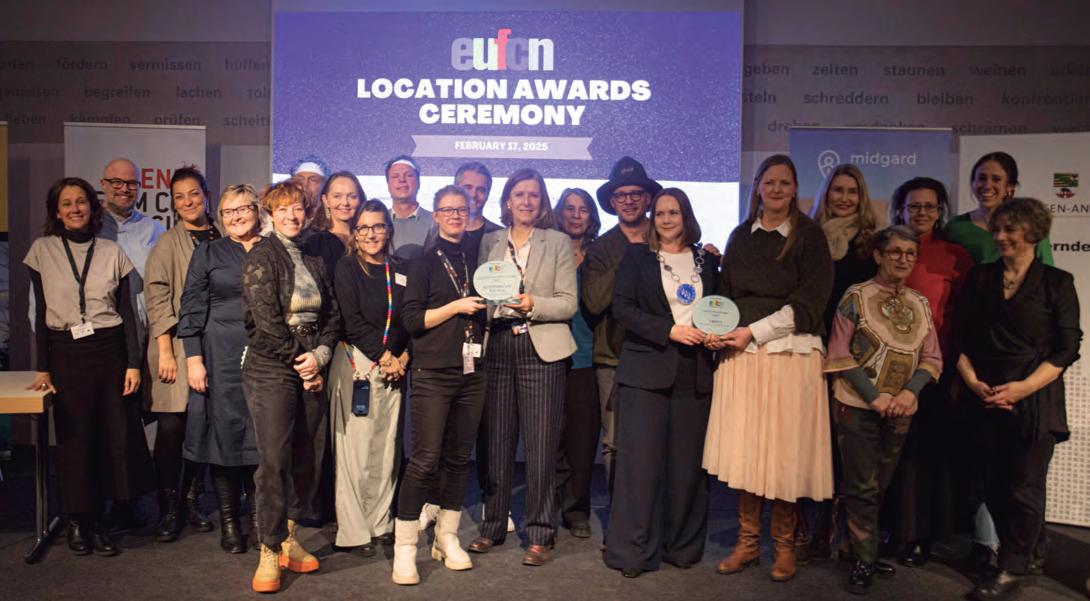

© Filming Billionair e Island in Froya /
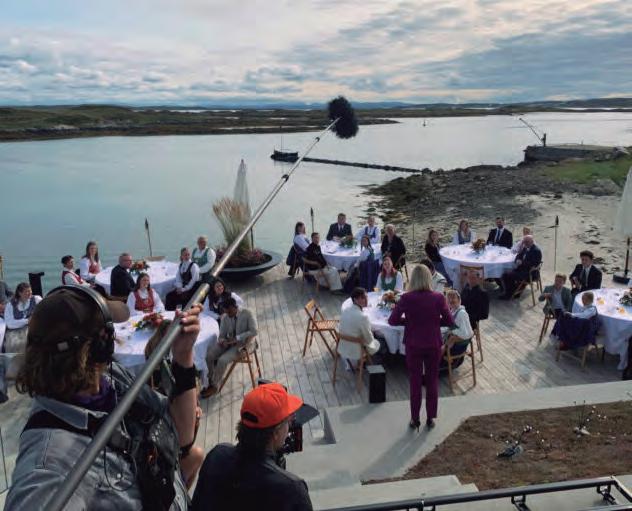
FRØYA ISLAND (Norway, Midgard Film Commission) Frøya Island in Trøndelag, Norway, shines in Netflix’s comedy-drama Billionaire Island, where salmon farm rivalry runs deeper than the Norwegian Sea. This comedy-drama, from the creators of Netflix’s first TV series Lilyhammer, explores the crazy but still down to earth battles within Norway’s lucrative salmon farm industry. Frøya’s raw and rugged coastline, windswept cliffs, and serene bays are more than just a beautiful backdrop. They reflect the humor and drama of two families fighting for control of a salmon empire. The island’s dramatic landscapes set the tone and shape the story, making Frøya feel like a character in its own right. This connection between setting and story has boosted Frøya’s reputation as a top filming destination. Series creator Anne Bjørnstad explains, “The combination of the dramatic, arch-Norwegian landscape and new Malibu-style villas with huge panorama windows makes Frøya a truly unique place, and the perfect backdrop for an intense family feud about wealth.”
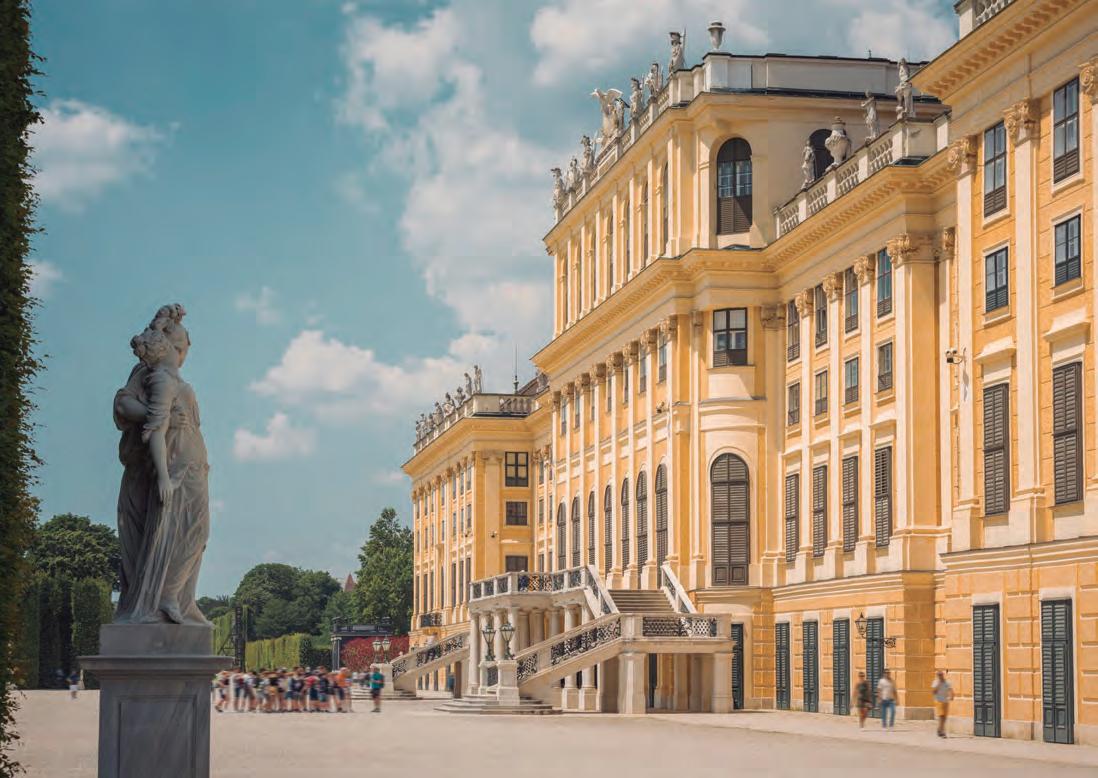
© Schloss Schoenbrunn / Se verin Wurnig
SCHÖNBRUNN PALACE (Austria, Vienna Film Commission): Schönbrunn Palace, the Baroque summer residence of the Habsburgs from the early 18th century serves for the very first time ever as filming location. An architectural masterpiece, Schönbrunn Palace impresses with its extraordinary and pompous exteriors as well as interiors, which make the perfect on-screen residence for a selfish, neurotic dictator. It is the residence of reigning dictator Elena Vernham (Kate Winslet) in HBO’s limited series The Regime, directed by Stephen Frears and Jessica Hobbs. Starring Kate Winslet, Matthias Schoenaerts, Hugh Grant and Andrea Riseborough, it was filmed in Vienna for four weeks in early 2023. The Regime was the first international film production to be allowed to shoot in the castle. The film crew, actors and the Schönbrunn Group team worked hand in hand under strict conditions in a historic building.