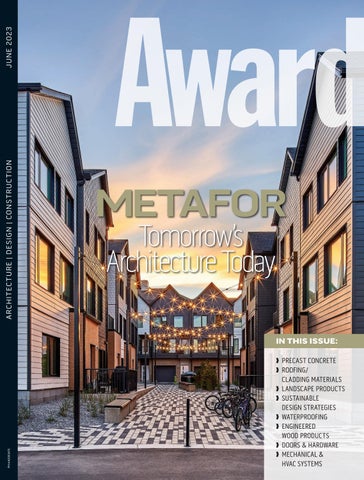
METAFOR
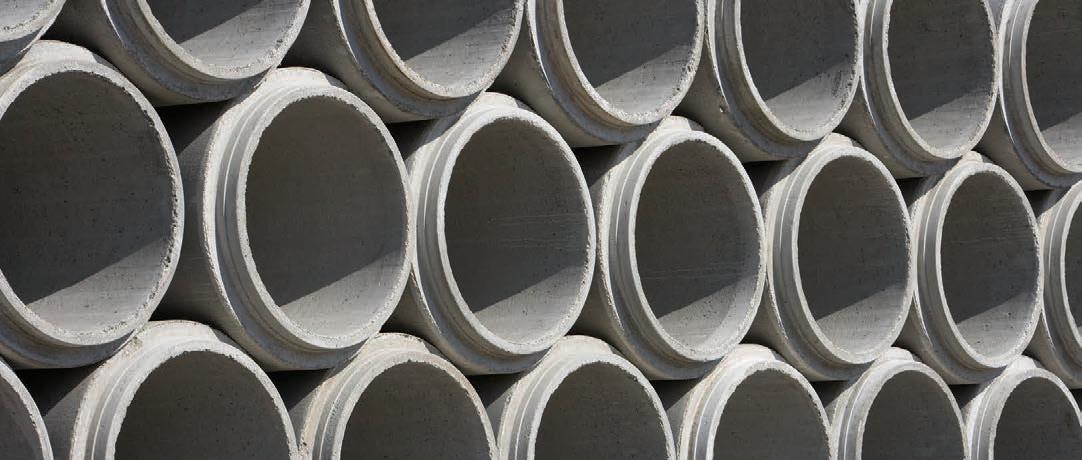
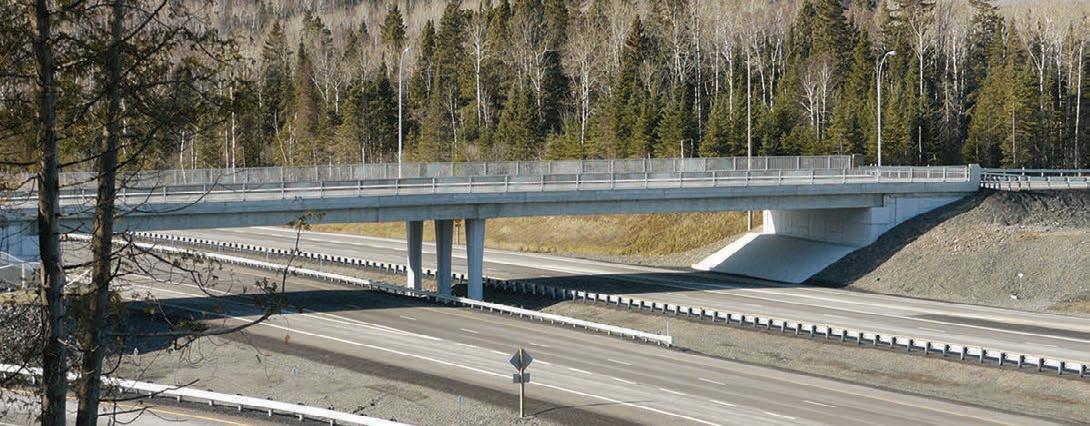
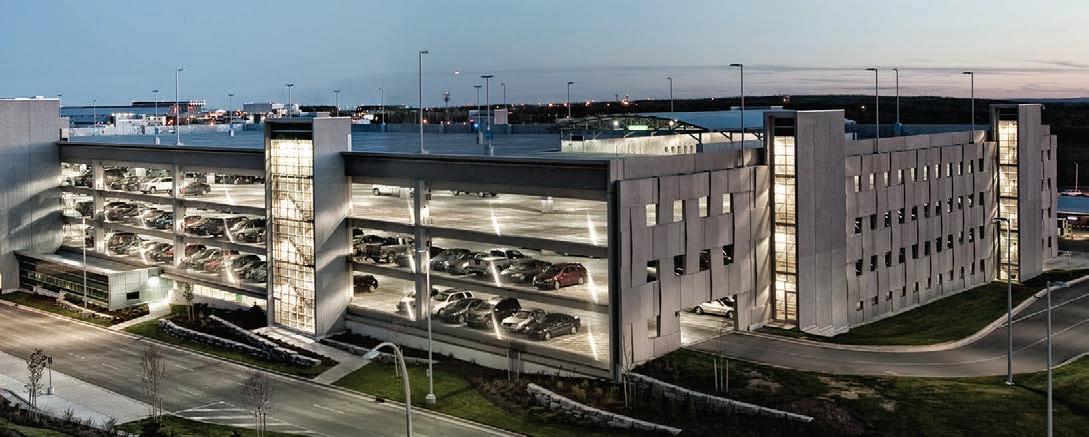
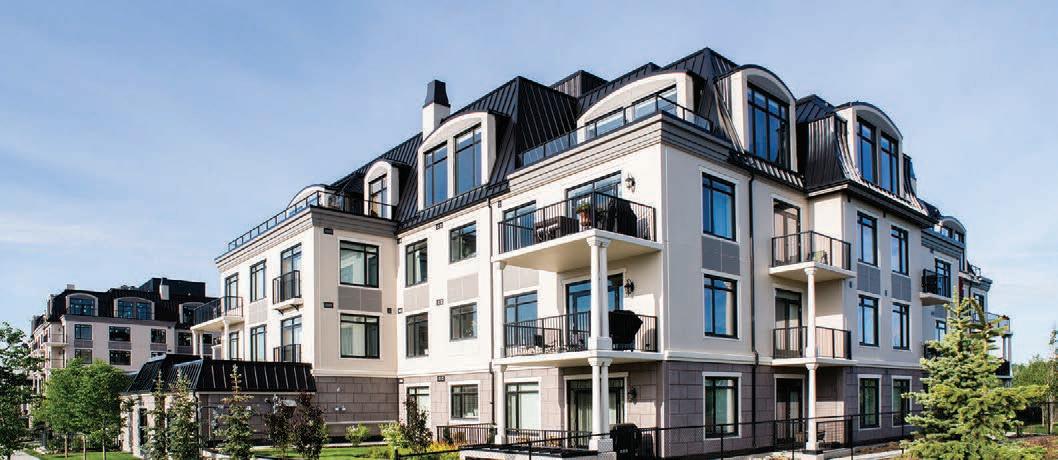
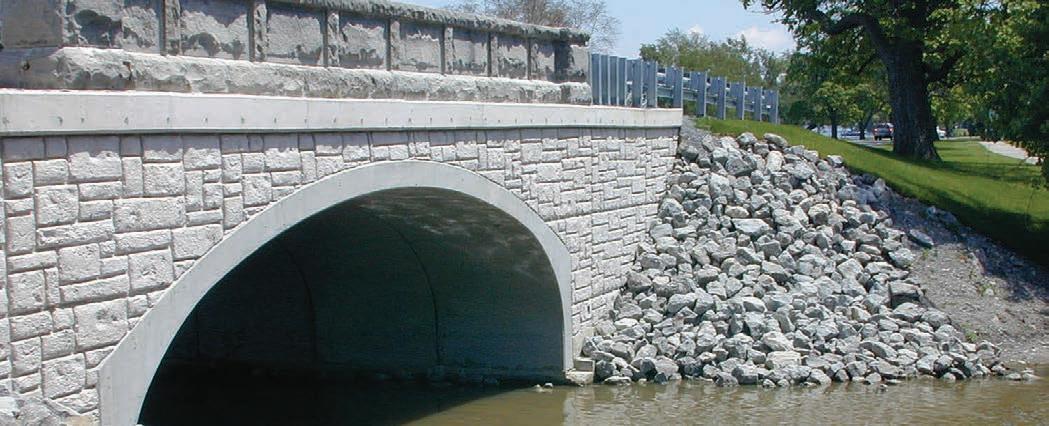
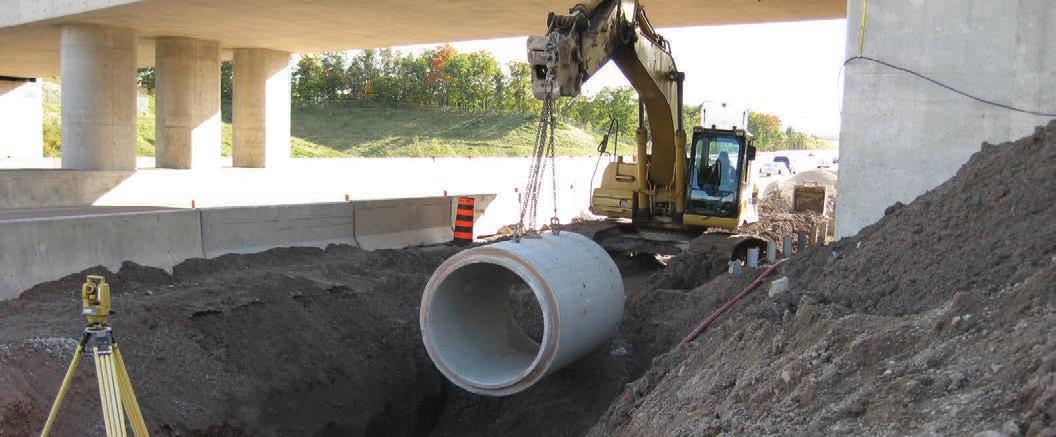
*(CPCQA) CERTIFICATION PROGRAM BY PROCESS OFFERS KEY BENEFITS TO ARCHITECTS, CONTRACTORS, ENGINEERS, GOVERNMENT AUTHORITIES AND OWNERS.
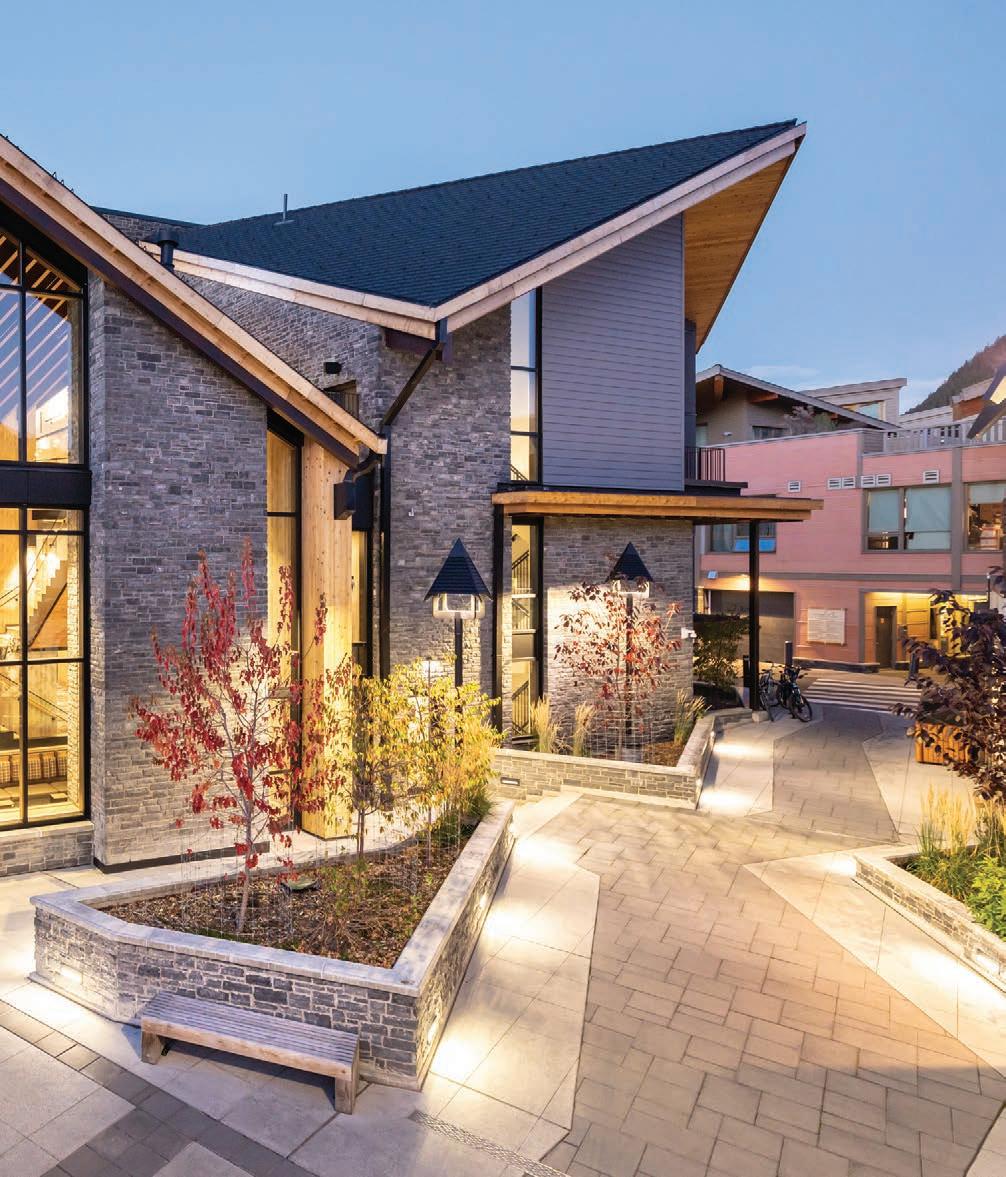
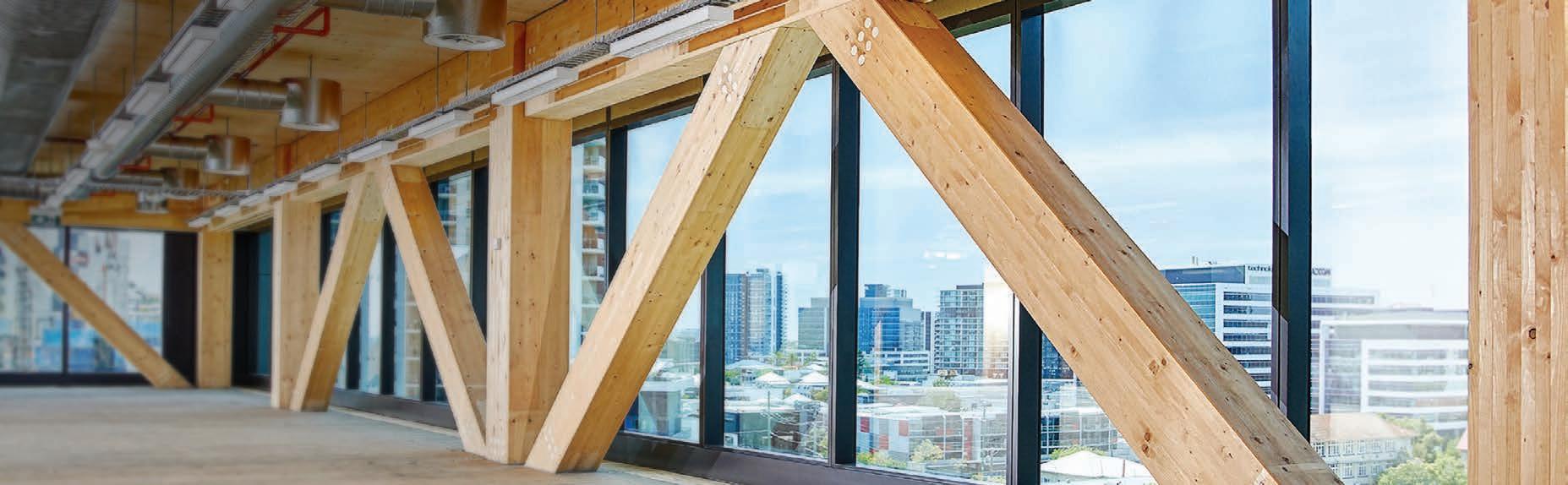
Project: Champagne Quarry Park, Calgary, AB Architect: Gibbs Gage Architects
5 RAIC PERSPECTIVE
Tackling equitable housing solutions. 6
MAKING TOMORROW BETTER THAN TODAY
With its new rebrand, Metafor honours its past while embracing a brighter future.
9
THE BUILDING BLOCKS OF CONSTRUCTION
Precast concrete industry advances sustainability with innovative techniques and partnerships. 19
AIM HIGH
Roofing and cladding trends for 2023 and beyond.
AGAINST THE GRAIN
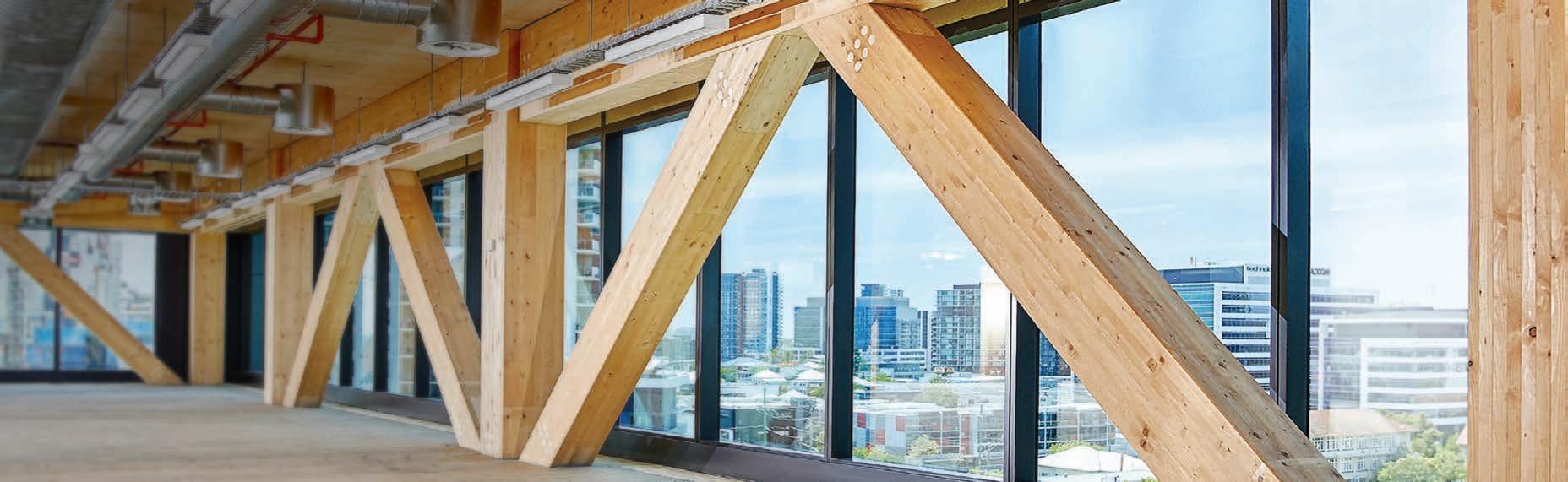
The rise of engineered wood products following an unpredictable market.
A GAME CHANGER FOR THE ENVIRONMENT
Emerging topics and groundbreaking studies influencing tomorrow’s sustainable design decisions.
OPPORTUNITY KNOCKS
The door industry continues to evolve and shape building design.
Waterproofing solutions that rise above nature’s challenges.
YOUR OUTDOOR SPACE
Innovative landscape products thrive despite inflation challenges.
Revolutionary
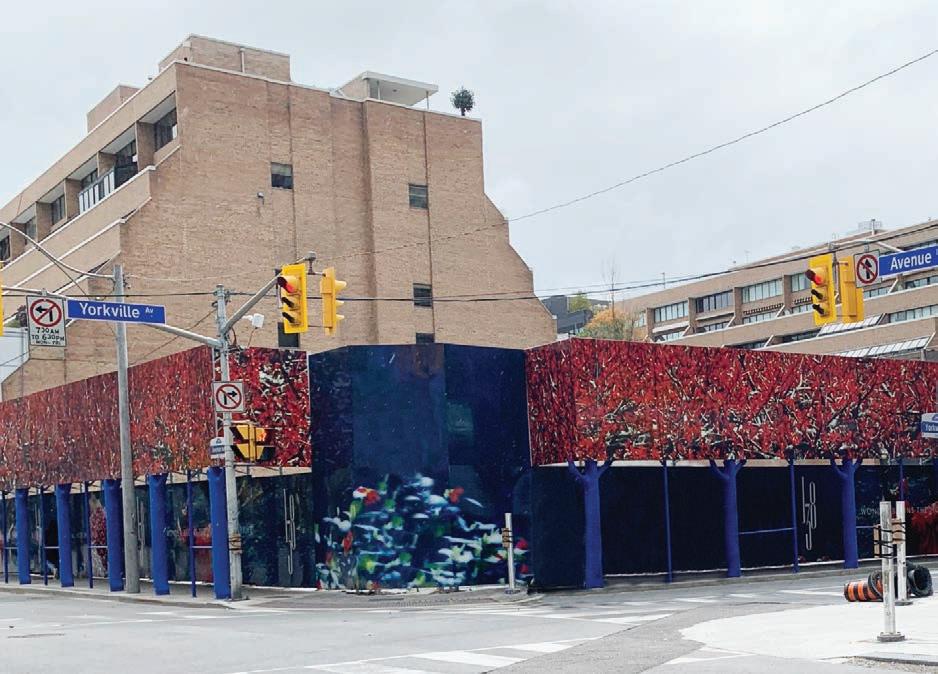
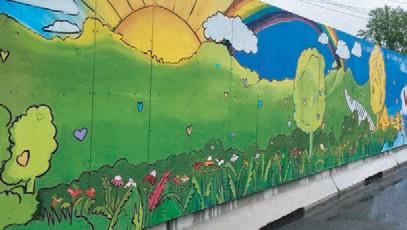
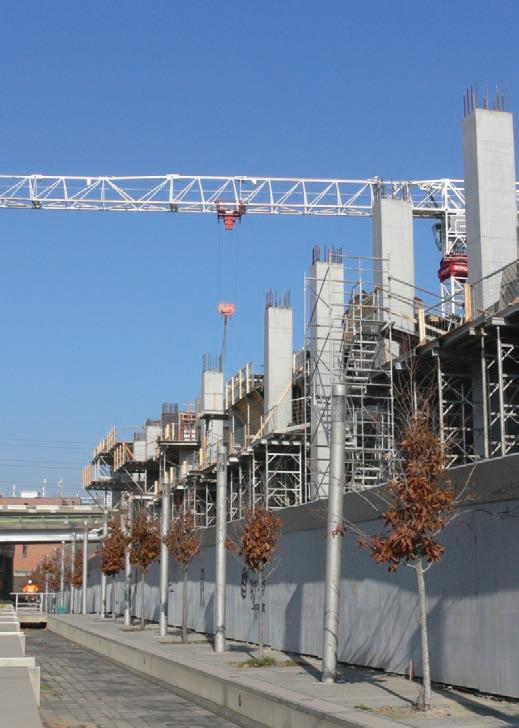
The Fence People Limited has been a Southern Ontario fence contractor since 1986. Conveniently located in Brampton, Ontario, we service the Commercial, Industrial and Institutional Industries. We bring to market unique modular plywood hoarding systems, covered walkways and overhead gate protection.
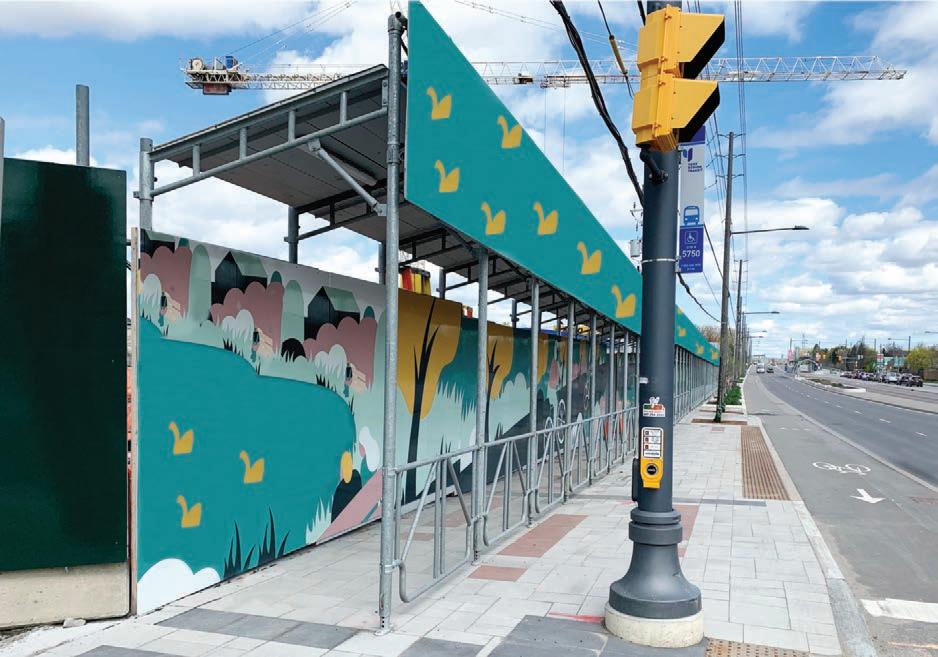
Due to the modular nature of our components we have the capability of constructing various structures and offer solutions to many special requirements. Our in house manufacturing facility allows us to respond quickly to customized requirements.
We have a large stock of wire mesh panels ready to be deployed. Three different heights are available; 4, 6 and 8 feet high.
Our ability to produce our many variety of gates makes us capable of delivering and installing our products rapidly.
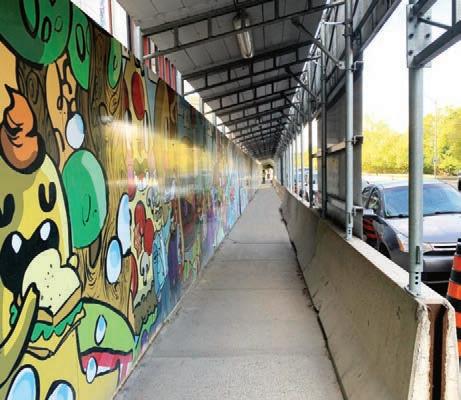
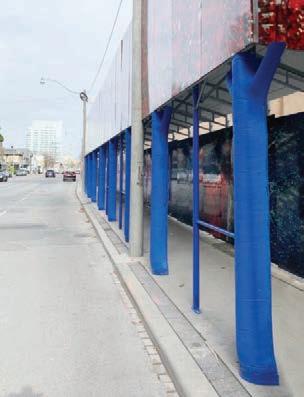
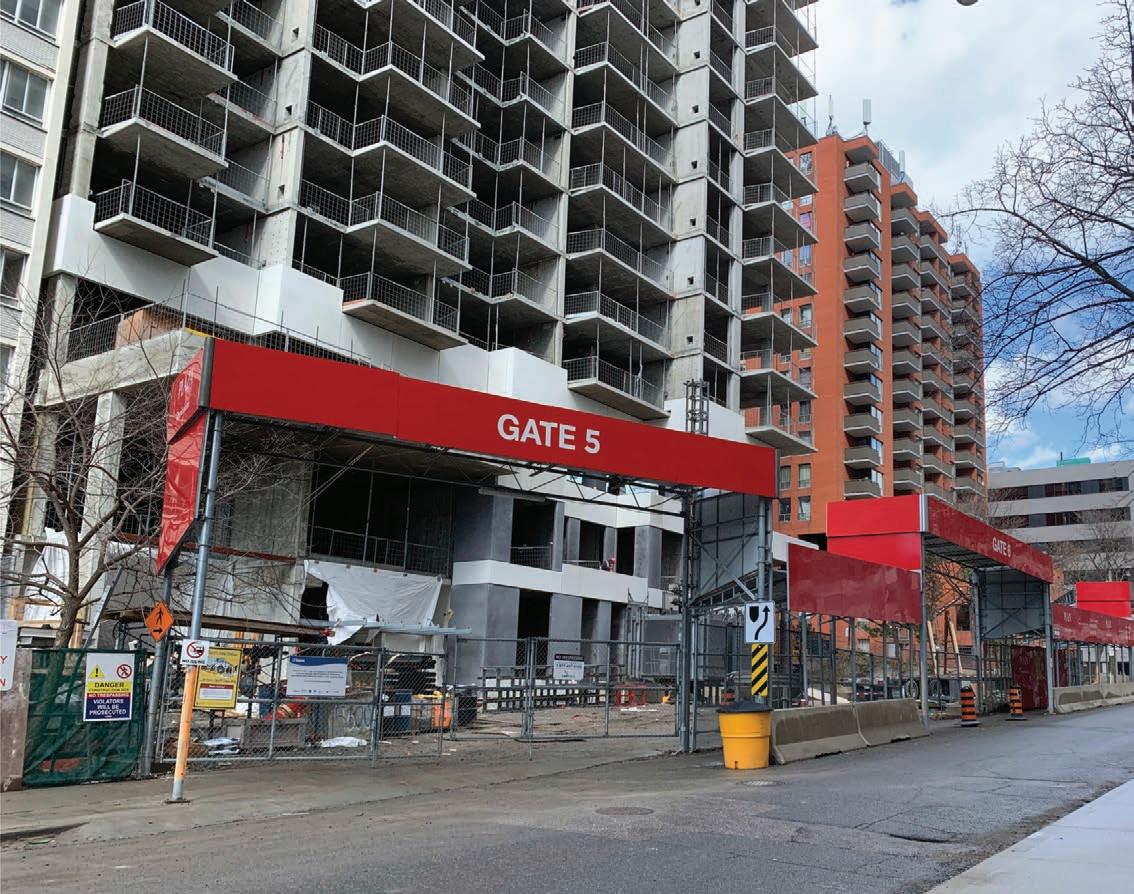
We have a large range of solutions for any site . These options can be quickly installed to close off your site for safety, aesthetics and privacy. They can also be modified or relocated to accomodate
































Tackling Equitable Housing Solutions
The RAIC is proud to be sponsoring the exhibition Architects Against Housing Alienation (AAHA), which will represent Canada in the 18th International Architecture Exhibition – La Biennale di Venezia, from May 20 to November 26, 2023. The project is led by a group of architects and designers who have come together to address housing affordability and accessibility in Canada. AAHA recognizes that the housing crisis is not just an issue of economics, but also a social and political issue that requires a collective response.
Housing alienation refers to the condition of being separated from our fundamental connections to home, the result of the transformation of land and homes into profit-generating commodities. Luugigyoo Patrick Stewart’s backslashes in c\a\n\a\d\a refer to the originating land divisions and separations that were put in place when settlers came to Canada. Through this process, land became conceptualized as private property, reserved for the exclusive use of its owner, and yet easily exchanged, throwing something as rooted as land into circulation and leading to trends such as real estate speculation and financialization.
Those with the least advantage have felt the impact of these changes most – Indigenous peoples, women, the working class, and people with disabilities. AAHA’s manifesto, “End Housing Alienation Now!” lays out their key principles and goals for creating a more equitable and inclusive housing system.
To end housing alienation in c\a\n\a\d\a, AAHA demands:
Land Back: We demand that all land c\a\n\a\d\a claims for the “crown” be returned to First Nations, Métis, and Inuit Peoples as Indigenous land in the form of co-ownership trusts.
On the Land Housing: We demand on-the-land, off-grid, nomadic communities for Indigenous women and girls with access to safe, secure, affordable, culturally relevant wrap-around support services.
First Nations Home Building Lodges: We demand Home Building Design Lodges tied to housing manufacturing facilities on reserves, to build capacity within communities by grounding the production of houses and their components, in community values, language, and education.
Architects Against Housing Alienation takes on Venice Biennale
A Gentrification Tax: We demand a Gentrification Tax to capture the unearned increment of value to build and secure deeply affordable housing within a community land trust.
Surplus Properties for Housing: We demand that all levels of government make available surplus public property assets for the development of affordable housing and the public good that is not for sale – not now and not in the future!
Intentional Communities for Unhoused People: Across Canada, there is a rapidly expanding gap between “living rough” on the street or in self-made encampments, and gaining access to long-term housing. To support unhoused people, cities must use underutilized land to fund and build intentional communities where residents receive services, share community responsibilities, and regain agency to govern space and their lives.
Collective Ownership: We demand that municipalities incorporate guidelines that prioritize co-living, co-operative, and co-housing over speculative real estate development and that credit unions and banks remove roadblocks and create pathways to cooperative financing models.
Mutual Aid Housing: We demand housing for mutual aid in the urban core, where density and supportive programming respond to existing needs, foster community-building, and provide culturally-appropriate support to refugees. A largescale development will foster cooperative support among people of diverse backgrounds and experiences.
Ambient Ecosystem Commons: We demand a vision and participatory process for housing development that upholds ambient urban ecosystems as a continuously accessible commons necessary for social housing. This process must lead to concrete action to improve the ambient commons.
Reparative Architecture: We demand reparative architecture for the Black residents of Toronto’s Little Jamaica who have been displaced or are at the risk of being displaced due to stateled gentrification. We demand the state provide reparations by funding Black-led community land trusts for the creation of affordable housing and commercial space in Little Jamaica.
AAHA’s manifesto is a call to action for architects and designers to take an active role in addressing the housing crisis in Canada. Architects, whose work helps shape our future way of life, can use their skills and expertise to promote principles of affordability, inclusivity, and sustainability – working collaboratively to create the political will, economic and policy frameworks, and designs for housing that are socially, ecologically, and creatively empowering for all.
To learn more and join the campaign, visit www.aaha.ca
Better Than Today Making Tomorrow
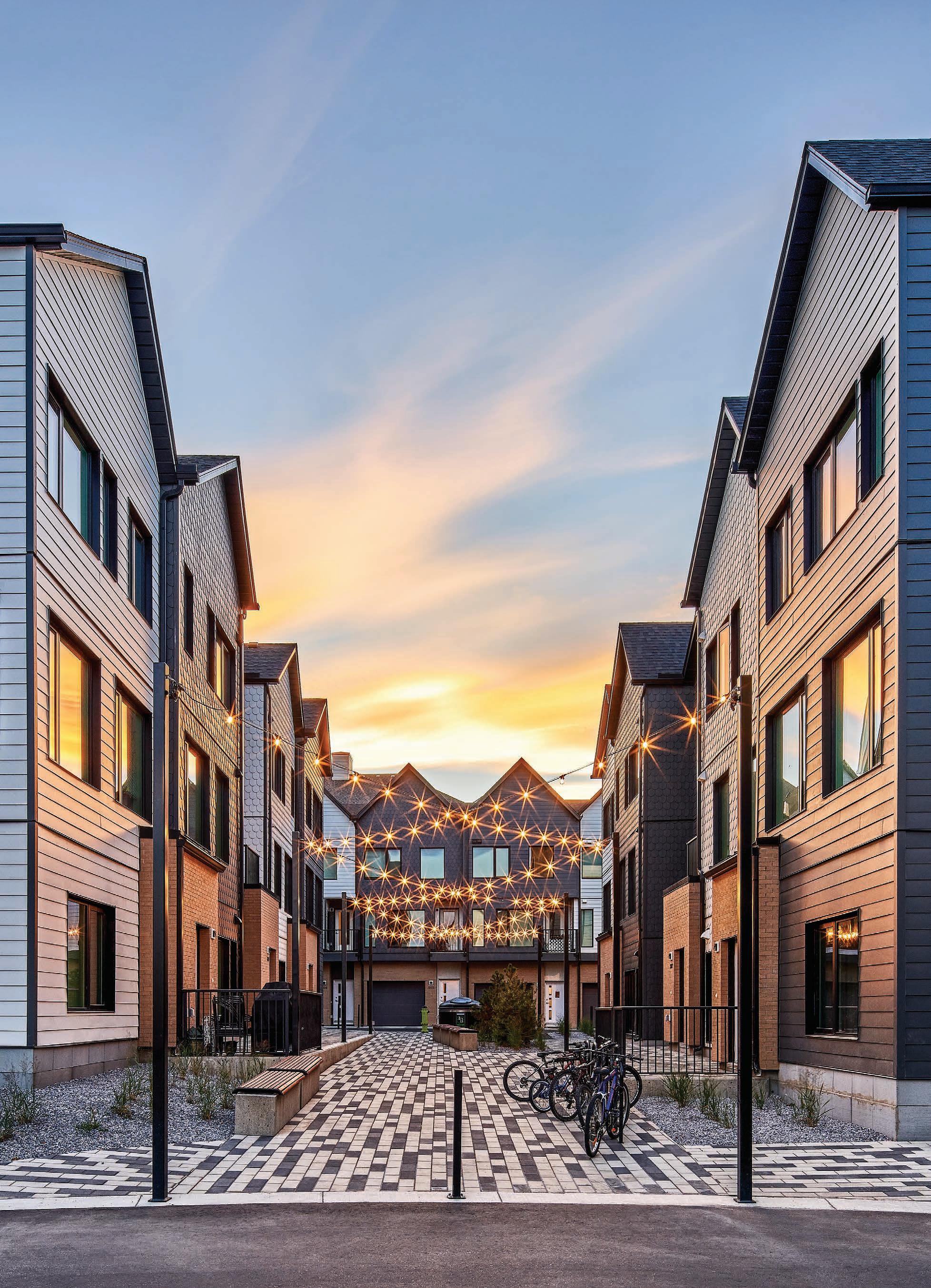
With its new rebrand, Metafor honours its past while embracing a brighter future
by NATALIE BRUCKNER | photography courtesy METAFOR
Design, like everything in life, is in a constant state of evolution. It is this transformative process that enables architecture to affect society in a profound and meaningful manner, sculpting our built environment and forging deeper connections with its inhabitants. To meet the constantly evolving needs of society, architecture must constantly innovate and adapt – a sentiment that resonates deeply with Calgary-based Metafor.
Last year, Metafor (formerly MTA and Marshall Tittemore Architects, respectively) found itself at a crossroads, with a unique opportunity to leverage its extensive 22 years of experience in a variety of settings, from urban and rural areas to Indigenous lands and city districts throughout Western Canada. Moreover, the studio had forged strong partnerships over more than two decades with national and international architectural firms and clients, resulting in numerous award-winning and world-class projects.
At the core of Metafor’s human-centric approach lies a deep sense of responsibility to create a more inclusive and accessible society for all, while simultaneously ensuring the longevity and resilience of their designs. Metafor is dedicated to utilizing their craft as a means of shaping a socially just, more sustainable future for generations to come.
Upon getting to know the team at Metafor, it becomes evident that their driving force is a deep-seated commitment to doing what is right. This sense of loyal
stewardship stems from their unwavering commitment to the community. With a steadfast focus on physiological and psychological health and safety, as well as proven sustainable practices, Metafor elevates these concepts as a cornerstone of their design philosophy.
In keeping with the concept of evolution, Metafor has this month undergone a purposeful rebrand that involves not only a change of name but a new identity, message, and mantra. This rebrand reflects the studio’s desire to better define its core values, vision, and niche.
With this impressive legacy and brand equity, Metafor was determined to build upon its momentum under new leadership and capitalize on untapped business potential. Thus, the studio embarked on a rebirth to honour its past, while embracing a brighter future.
Metafor has always been known for its visionary approach, but with the rebrand it now has a clear direction for the challenges ahead. With a renewed focus on socially and sustainably-focused projects, the company is poised to lead the way towards a better future. The leadership team’s unwavering commitment to these values is evident in their ambitious goal to collaborate on such projects by 2029 – a timeline that aligns perfectly with the broader 2030 goals set by the Canadian government and private development firms. By building on its past successes and taking bold steps towards a sustainable future, Metafor is demonstrating its leadership in both the business world and society at large.
“As architects we have the opportunity to affect actual change within our community and society as a whole, by listening to our clients’ needs, being collaborators, and understanding the challenges they face as they fulfil important mandates within the communities in which we live, work, and play in. We realized that Metafor is more than architecture – we believe in being collaborators, truly integrating design, sustainability, and building science to achieve superior results. Social change and sustainability are here to stay, and we are embracing the new thinking required and how we can make tomorrow better than today,” explains managing principal Claudia Schaaf.
Metafor’s commitment to creating a socially just, culturally rich, and ecologically restorative world is more than just words. Due to their collective success in establishing mutual trust among themselves, their clients, and the communities they serve, Metafor has been designated a Just 2.0 Organization by the International Living Future Institute – a transparency platform for organizations to disclose their operations, including how they treat their employees and where they make financial and community investments.
“Pursuing the Just 2.0 Label allows us the foundation to pursue all aspects of our work with a more defined sense of purpose,” says principal Jeff Lyness. “Sir David Adjaye’s statement ‘made by the people waiting for it’ embodies our belief that design team members are a community of professionals designing for a community of people. We care about who we work with, and for, and are a making a commitment to engage in an open and transparent process of collaboration and education. Sharing knowledge openly is key to success for us.”
The company’s unwavering dedication to sustainable design, community place-making, and adaptive building is reflected in its impressive portfolio of projects. Two notable examples are The Performing Arts Theatre of Hinton (PATH) and the ROAM Transit Operations and Training Facility.
The former is a great example of adaptive re-use in a community. Despite initial uncertainty about its fate, Metafor principal Mike Woodland’s innovative approach to reducing waste and carbon footprint proved that the building could be transformed into a multi-use Performing Arts Theatre, as well as FCSS offices and Guild Art Society. The result is a testament to the power of sustainable design and how overlooked opportunities can be leveraged to bring new life to old buildings, while providing essential amenities that attract and retain residents in the town.
“The profession of architecture is evolving and requiring us to be stronger stewards of the environment, think about equity of design in our communities and accessibility to all, while also making sure we are providing a high level of value to our clients by helping them understand that meeting ESG goals is good for their business, good for the community, and good for the environment,” says Woodland.
While very different in nature, ROAM in Banff is another great example of a Metafor community-driven project. The project was designed to house an expanding transit service with a high degree of sustainability that would meet the town’s greenhouse gas (GHG) reduction policy goals. The design-build project
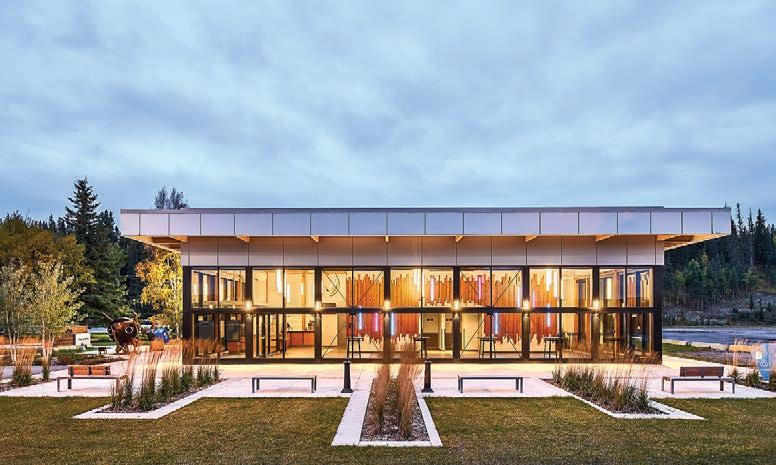
incorporates innovative features, such as an electric bus fleet with charging stations powered by a large rooftop PV array, and a low-carbon district heating plant that uses waste biomass from Parks Canada as fuel. The design is simple yet stunning, seamlessly blending with the surrounding natural environment while meeting the town and Parks Canada’s design guidelines and mountain theme.
The outcome is an inspiring showcase of renewable energy solutions that respect the pristine mountain environment, while demonstrating the community’s commitment to reducing GHG emissions. In recognition of its climate leadership and optimal building performance, the project won the 2022 CaGBC Zero Carbon Design Award.
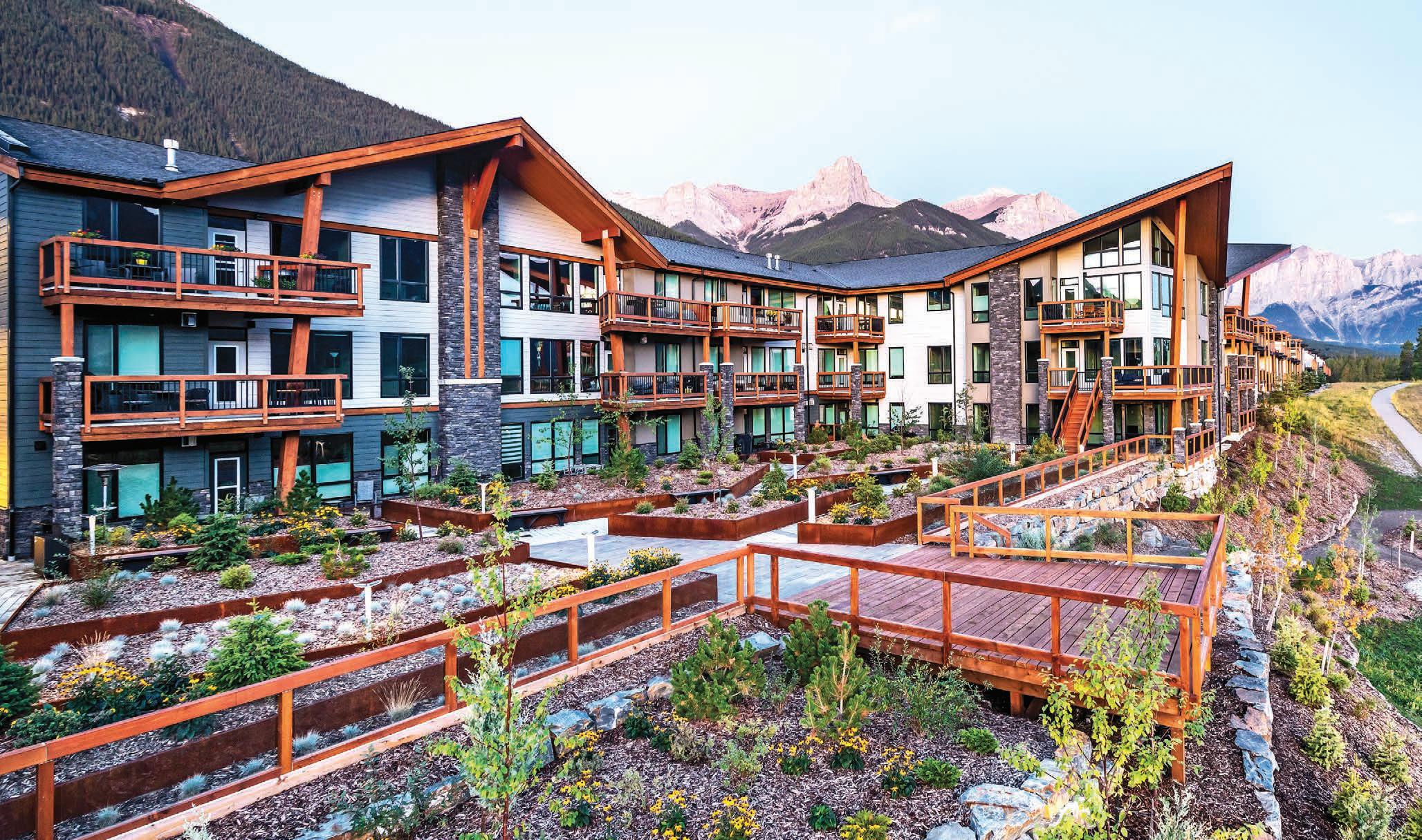
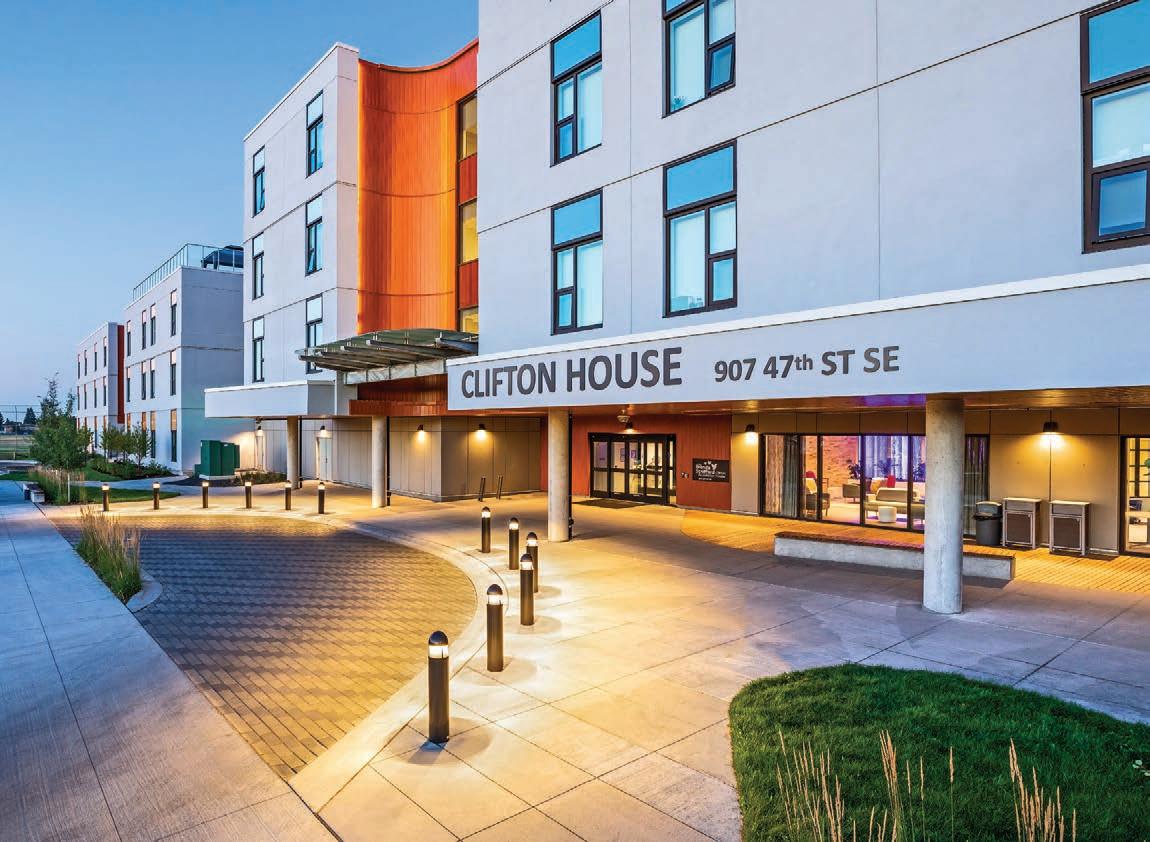
This deep sense of community and sustainability lies at the heart of each and every Metafor project. For example, Bridlewood Affordable Housing prioritizes the environment and the needs of the community; Clifton House is stand-out in that it has been designed in a collection of small neighbourhoods that promote flexibility and connection; and the stunning three-storey wood frame Lookout Ridge has been designed to blend seamlessly with its surroundings, while offering residents a private amenity landscape and lookout feature with breathtaking views of Stewart Creek in Canmore, Alberta.
And while the team already has an impressive track record, Metafor is poised to take on even greater challenges and breathe new life into communities with their upcoming projects. “We’re excited to take on the challenges coming our way and explore new opportunities where our expertise can be both valued at the same time as being challenged for growth,” says David Leonard, principal at Metafor. Those opportunities include projects such as Deer Lodge in Lake Louise, Cascade visitor accommodation, CRPS Land Use and ARP, and the purpose-built rental 900 Railway Avenue.
While Metafor has been a trusted industry leader for many years, their recent rebranding marks an exciting new chapter in their journey, empowering them to continue to push the boundaries of what’s possible. “We’re asking ourselves questions that perhaps haven’t been asked before and then asking, ‘what’s the worst that can happen if we try?’ And, ‘what is the worst that can happen if we don’t, and can we live with that?’ The new brand gives us a platform where our values can be rooted but the brand will evolve with our firm over time into the future,” says marketing and communications lead, Monica Silenzi.
As we look to the future, we can expect a multitude of even more remarkable accomplishments from Metafor and its community. Chris Sparrow, Metafor principal, concludes, saying: “I’m excited about the way architecture can contribute to the experience and sense of place of a community, and have a positive impact on the users, inhabitants, and visitors of those places. As the communities and municipalities we work in evolve, the buildings we design and the fabric of the communities they form part of change. We take great pride and responsibility for the role our firm takes in creating and defining the experiences of these places for future generations. Simply put, let’s make tomorrow better than today.” A
Clifton House, Calgary, AB
Bridlewood Affordable Housing, Calgary, AB
The Performing Arts Theatre of Hinton, Hinton, AB
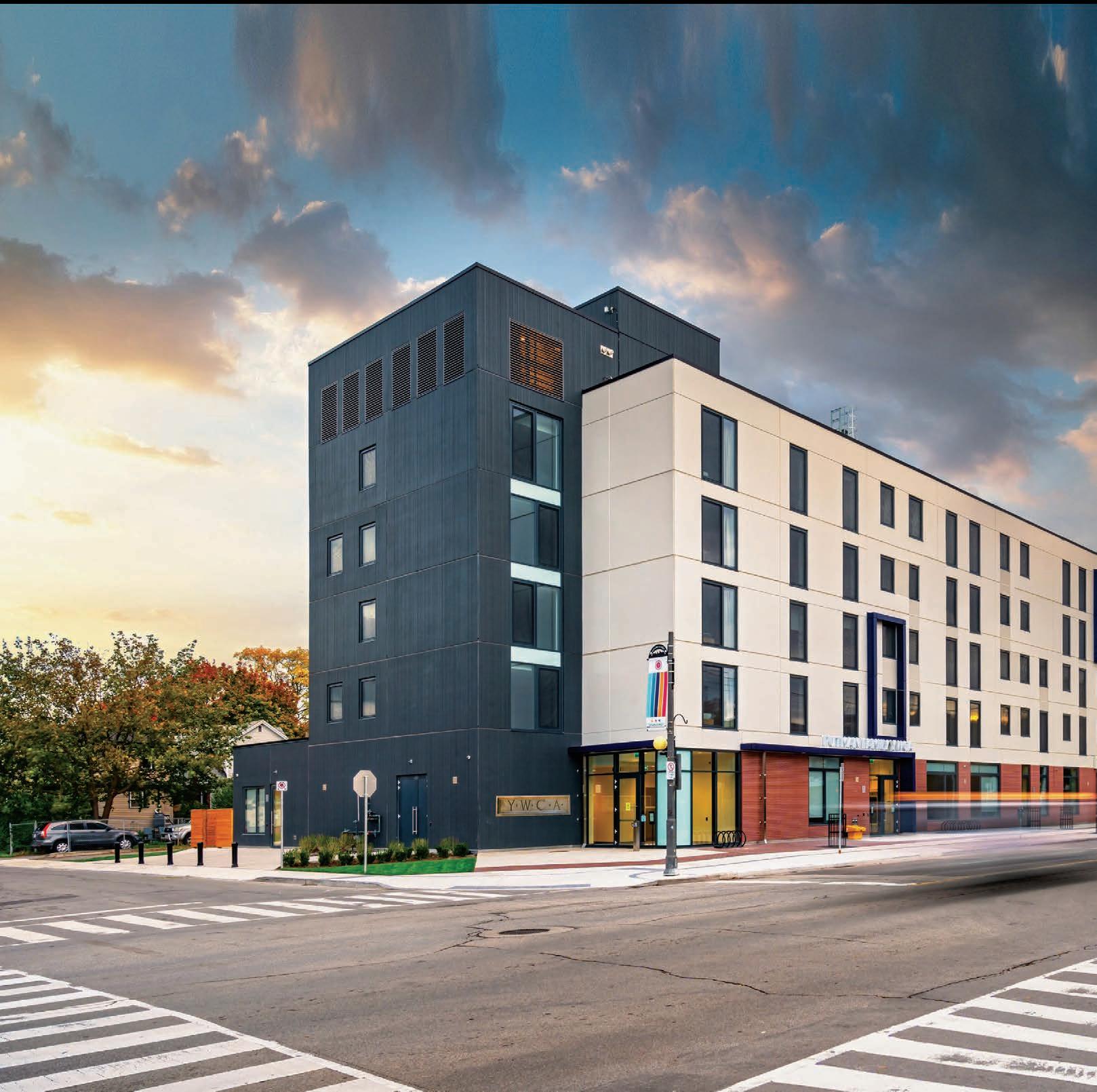
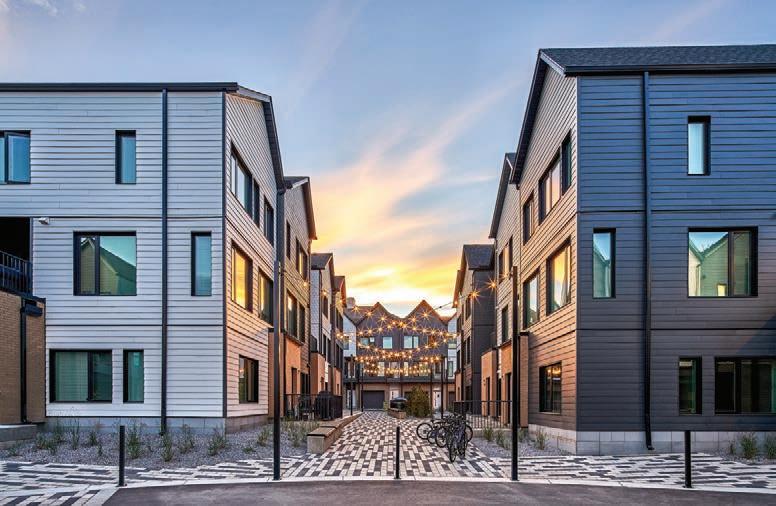
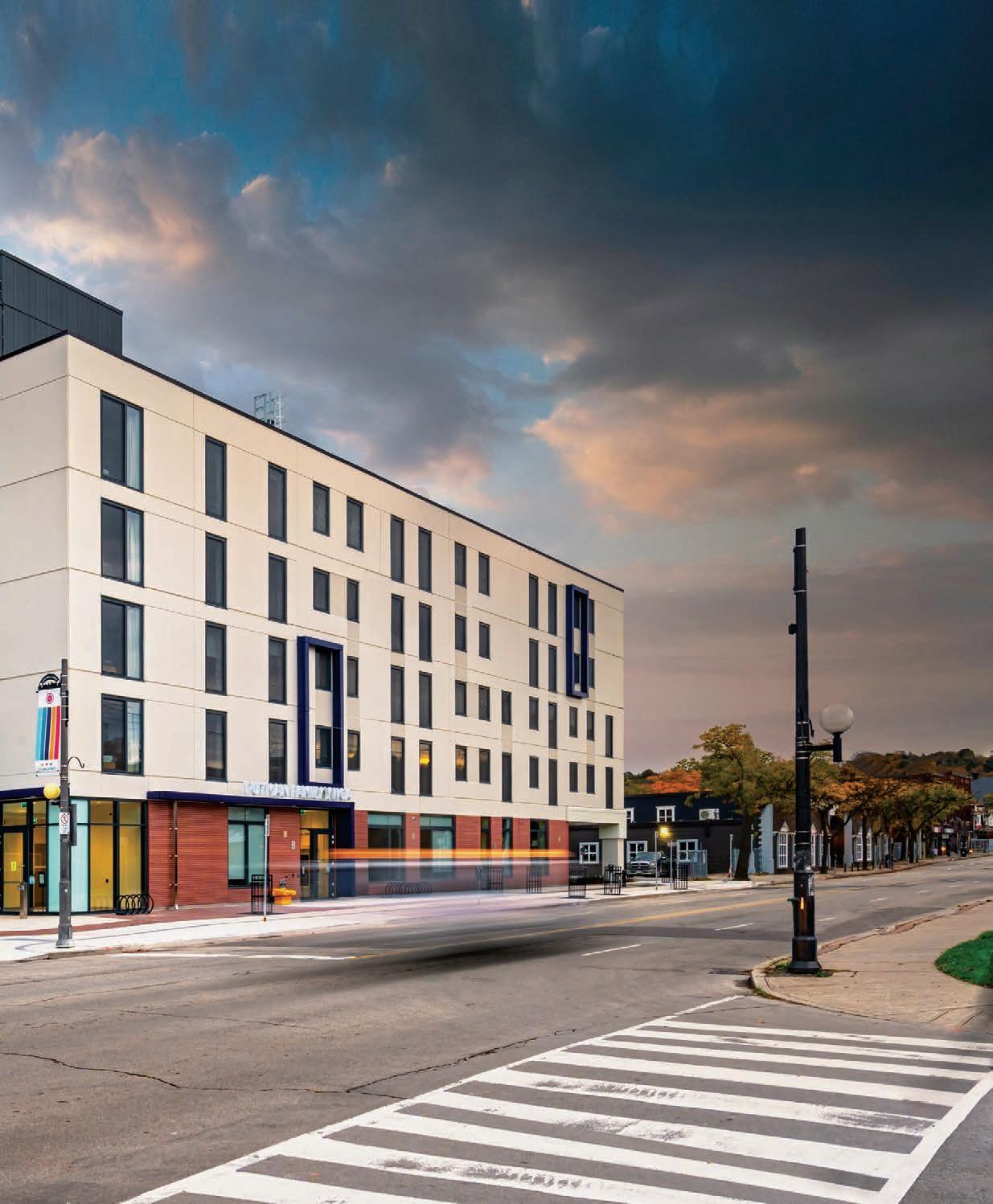
Total Precast Concrete Key Attributes to Passive House Development are:

· Manufactured in local precast facilities under controlled conditions
· The whole building envelope in one composite panel; air barrier, moisture control, insulation and the structure
· Hollowcore floor slabs allow for a much lower depth to span ratio
· Hollowcore provides the lowest GWP per m2 of concrete floor area
· Precast concrete dramatically reduces the construction schedule, site congestion, noise and environmental impacts


For more information and educational presentations check out Learn on Demand, a 24/7/365 Educational Platform. Visit: cpci-learnondemand.com/
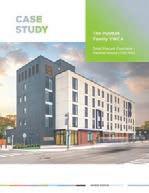

For more information on Passive House Total Precast Concrete, visit www.cpci.ca/publications to download your free copies of the Structural Solutions Guide and the Putman Family YWCA Total Precast Concrete Case Study.
Project: The Putman Family YWCA, Hamilton, ON Architect: Kearns Mancini Architects Inc., Toronto, ON
THE BUILDING BLOCKS OF CONSTRUCTION
Precast concrete industry advances sustainability with innovative techniques and partnerships
by ROBIN BRUNET
With sustainability in the construction sector continuing to be a vaguely defined value at best, it’s no surprise that the precast concrete sector is singled out by some as a major contributor to carbon emissions. Fortunately, many people in the sector are fighting back, and their arguments for the use of precast as a sustainable building material are compelling.
John Carson, executive director at AltusGroup, says, “There’s lots of discussions about cement being a high carbon material, but concrete buildings last an awfully long time, several hundred years or more if constructed properly.”
Carson offers practical advice to carbon-conscious designers. “The best way to reduce the embedded carbon in a precast concrete wall panel is to reduce the amount of cement used. CarbonCast panels with carbon fibre grid reinforcing and integrated insulation can reduce concrete use by 30 percent or more compared to solid panels. Also, the thermal efficiency of the panels results in higher R-values than other technologies, which reduces operational carbon.”
Carson adds, “While continuing to come under attack from wood enthusiasts and environmentalists for its carbon dioxide [CO2] footprint, the concrete products industry has made significant strides in CO2 reduction. Today, CarbonCast precast concrete enclosures using composite design remain one of the most effective ways to create long-lasting fire safe structures, and we have been doing so for nearly 20 years.”
As for the state of the precast market in 2023 overall, Carson says, “The North American market remains robust, and some precast producers are booked into 2024. Novel architectural facade aesthetics, unique structures, and mixed-used projects including retail, housing, and parking are drivers. Data centres and distribution continue to lead precast growth in select metro regions.”
However, he adds that while few projects have cancelled as a result of rising interest rates, “it remains an industry concern. Inflation and rising material costs, increased labour cost, and material supply chain are still key concerns. Global cement supply and type is a primary concern to precasters currently.”
Lafarge Canada has made a huge commitment to achieving sustainability across its production facilities and with its products. Its latest initiative is an agreement with TransAlta Corporation (which owns, operates, and develops a diverse fleet of electrical power generation assets in Canada, the U.S., and Australia) to advance low-carbon concrete projects in Alberta.
The new project will repurpose landfilled fly ash, a waste product from TransAlta’s Canadian
coal-fired electricity operations west of Edmonton, which ended in 2021. The ash will be used to replace cement in concrete manufacturing.
Landfilled fly ash must first go through a beneficiation process in order to be used in concrete; this project will utilize the Ash-TEK Ponded Ash
Monolith concrete insulated panel tilt-up system.
CarbonCast High Performance Insulated Wall Panels.

Transformation that’s more than skin deep.
Lehigh Hanson becomes Heidelberg Materials
We at Lehigh Hanson are pleased to join our global parent company in transitioning to Heidelberg Materials. Our entire North American family of brands is united under this new banner while remaining focused on what we do best: heavy building materials.
While this rebrand is an outward change, it represents a deeper transformation in our company. An evolution that has both responded to — and shaped — our industry.
It reflects a much broader and innovative approach to serving you, our customers, as we lead the industry in sustainability and digital solutions. Material
Beneficiation System (PABS) technology, which consistently produced high quality ash during trials and is said have a low carbon footprint and an economical operating cost. Lafarge will deploy this unique approach to the process, removing moisture from the ash, milling it, and removing excess carbon in order to ensure it meets regulatory standards as well as market expectations.
Brad Kohl, president and CEO, LafargeHolcim, Western Canada, says, “We recognize that seizing opportunities to optimize cement is a key part of our CO2 reduction strategy … there is great potential in repurposing materials across the construction value chain; transforming landfilled material such as fly ash into a usable product for construction is a winwin solution for all of us.”
Heidelberg Materials’ contribution to the cause of sustainability most recently took the form of announcing the successful completion of a memorandum of understanding with the Government of Canada. The partnership will support Heidelberg developing a full-scale Carbon Capture Utilization and Storage (CCUS) facility at the company’s Edmonton location.
The new facility is expected to be operational by late 2026 and will capture more than one-million tonnes of CO2 annually from its Edmonton cement production facility. “Our Edmonton CCUS project, as the world’s first carbon neutral plant, is another milestone in Heidelberg Materials’ ambitious drive to lead the industry to net zero, and we’re excited to begin realizing this as soon as possible,” said Chris Ward, president and CEO of Heidelberg Materials
North America. “We are fortunate to partner with the Government of Canada in this endeavor and we look forward to continued collaboration as we move forward with this exciting project.”
One of the biggest advocates of the concrete sector is Brian Hall, managing director at the Canadian Precast Prestressed Concrete Institute. When asked to assess industry activity in 2023 to date, he replies, “Sustainable and resilient architecture and construction are now more critical than ever before, and as the frequency and severity of climate-related disasters increase, the economic and human cost to respond to and recover from those disasters is increasing.
“We know we can’t change the weather, but we can change how we build. By adding resilience to the tender progress, we can build structures that can withstand disasters or, at the very least, recover from those disasters quicker and with less economic impact.”
Hall notes that prefabricated construction is growing rapidly due to the lack of skilled and unskilled workers. “Modular, or prefabricated precast construction presents many benefits, including quick and more resilient construction, while maintaining aesthetic versatility. The precast industry recognizes the importance of decarbonisation and the importance of resilient architecture and construction; as such, we’re developing our 2030-50 Roadmap in consultation with industry and regulators.”
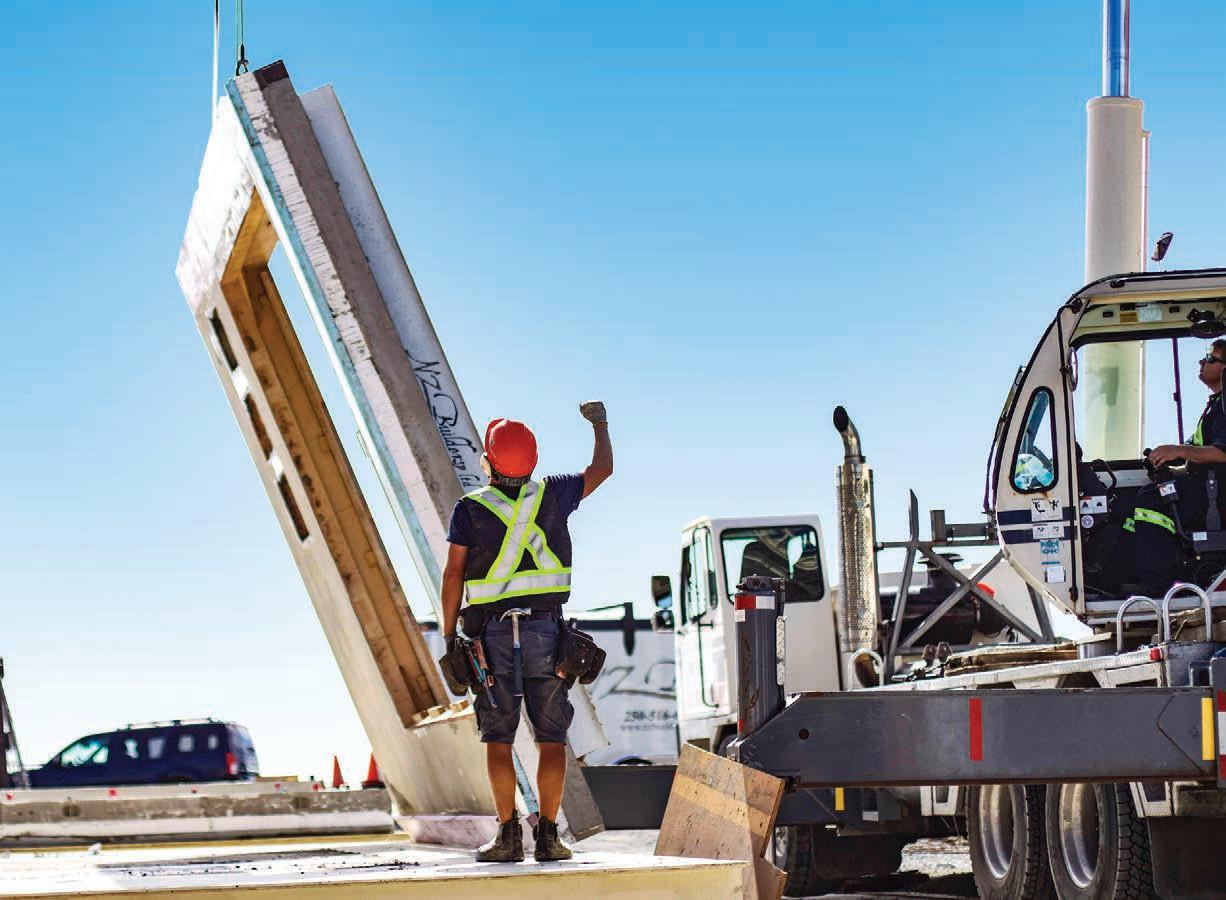
Some companies in the precast realm are rebranding in 2023 to attract more sustainability-based business. NZ Builders, a custom home building company based in Victoria, B.C., recently








Resilient precast architectural panels.
CarbonCast ® enclosures with C-GRID ® carbon fiber grid shear connectors offer a combination of benefits unmatched by any other insulated precast wall system:
n Full composite action for load-bearing performance and a thinner interior wythe for weight reduction
n Continuous insulation (c.i.) to meet the National Energy Code of Canada for Buildings
n Your choice of EPS, GPS, XPS, polyiso or phenolic insulation depending on your preference or R-value needs From thermal efficiency to remarkable aesthetic versatility, the choice is clear: CarbonCast.
Available from our Canadian AltusGroup members altusprecast.com 866-GO-ALTUS


unveiled a new logo and look, while retaining its commitment to quality craftsmanship and service.
The rebranding was done to attract a niche clientele interested in building sustainable, architecturally stunning homes that last and look incredible, as well as attract architects who are interested in pushing the boundaries of building science. Conversely, NZ has stated that it will no longer take on jobs that do not fit its design/construction niche.
The rebrand reflects a shift to focus solely on durable, high-performance custom homes and upgrades that consider future climate and energy costs. NZ founder’s Damon Gray notes that more homeowners and builders will need to factor in these considerations as the BC Building Code’s Step
Code 5 requirements come closer to taking effect in 2032. “We can still build architecturally stunning homes that push the envelope of building science, while creating something sustainable,” he says, “It’s far easier to upgrade your kitchen or finishings later when you have the extra budget, but if the foundational structure of your home is deteriorating, that’s a much bigger and more costly fix.”
Gray is known in the concrete realm for coming to Canada from his native New Zealand and realizing, after performing dozens of costly renovations on young homes that had deteriorated due to rot and mould, that B.C.’s climate required more than traditional building techniques. This led directly to the development of a concrete insulated
panel (CIP) tilt-up system called Monolith for residential construction, with Gray’s own home being the test project and subsequently receiving accolades for being the first net zero-ready residence on Vancouver Island.
Since then, Monolith Systems (an NZ sister company) provides concrete insulated panels for homes built using tilt-up wall systems and helps connect architects, designers, builders, and homeowners looking to build unique and elegant homes they can enjoy for generations.
Gray says, “Everybody deserves to live in a healthy, comfortable home, and we feel it’s our responsibility to educate our clients about how the decisions they make in the initial stages of building will help protect the health of their family and their investment long term.”
Jason Stubbe, managing director at Stubbe’s Precast, reports that because high interest rates have negatively affected Ontario’s residential condominium market (which represents his company’s traditional work), operations have pivoted to take advantage of the province’s robust warehouse market.
This continues to be an ideal venue for Stubbe’s structural wall panels, double tees, columns, and beams. “Clients are looking for rapid construction, especially in 2023 with costs being the way they are,” he says. “With our products and expertise, we’re able to get the job done twice as fast, with a variety of finishes for all-weather installation.”
However, Stubbe predicts the residential market will heat up again soon. “We’re doing a ton of quoting, and the demand for new housing is intense,” he says.









Applying the final touches to a precast concrete panel installation.

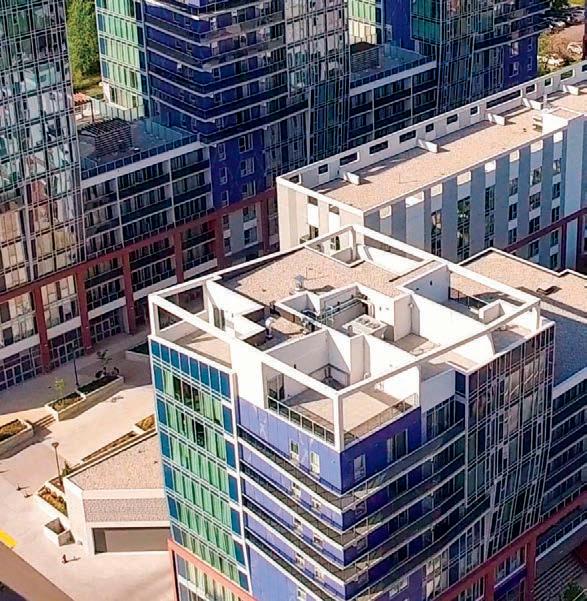


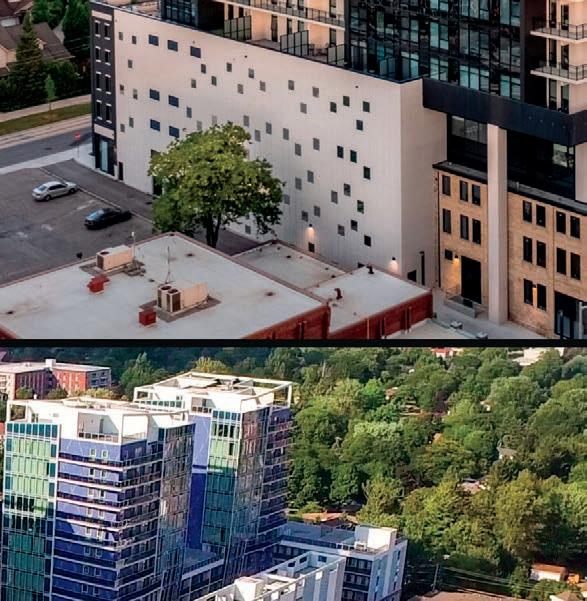



And when that happens, Stubbe’s Precast will offer even more efficiencies to clients. The company’s new fast track modular precast service speeds up the process of development and construction of residential mid-rises by predesigning modules using a BIM driven process. The outcome of this is standardized units that have been fully designed with input from all stakeholders and trade specific drawings.

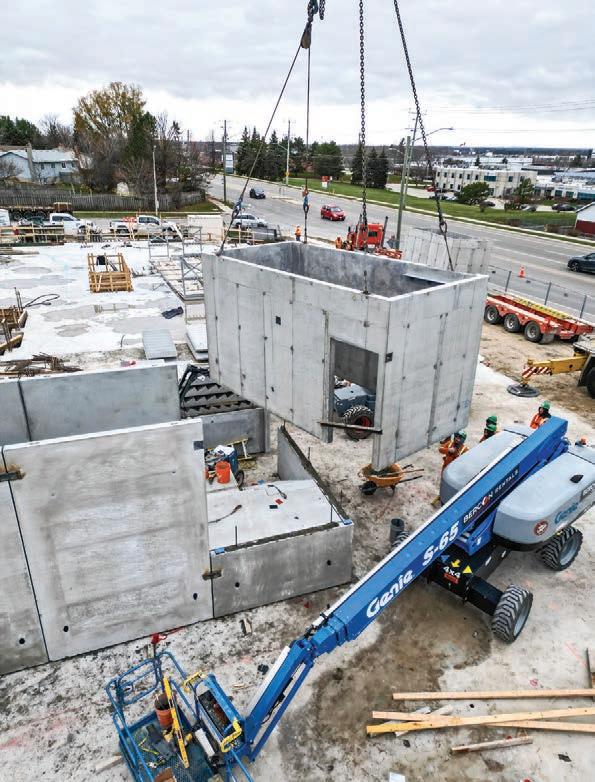
Also, Stubbe’s Precast now offers a unique box shaft solution. Following the tradition of precast products, this is the company’s answer to cast-inplace stairwells and elevator shafts, designed so they can be fully installed in the early stages of a wood or steel building construction. They also boast the accuracy, strength, and quality that Stubbe’s is famous for.
Peikko, which supplies a large selection of concrete connections and composite beams for both precast and cast-in-situ solutions in a wide variety of applications, continues to enjoy high demand of its Deltabeam Slim Floor Structure. This composite beam is a great alternative to post-tension flat slabs and enables slim floors for multi-storey buildings of any type, whether low-rise or high-rise.
The composite action between steel and concrete allows Deltabeam to easily span over 30 feet between columns. And since Deltabeam is often utilized to support pre-stessed hollowcore slabs, the spans
perpendicular to the beam can even go beyond 40 feet. The long spans in both directions mean that less columns are needed on the floor plate, and a floor layout with less columns allows for floor plans to easily be altered to suit the varying needs of tenants.
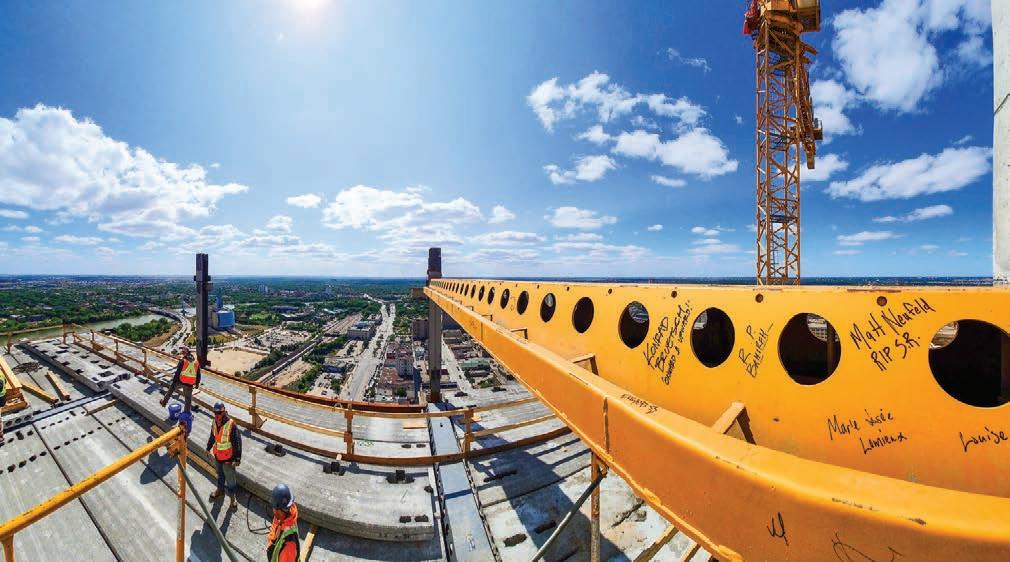
Mark Johanson, business development, Peikko, says, “Deltabeam is typically being combined with precast structures and even mass timber buildings, and currently Ontario and Manitoba are especially busy with a host of projects. Examples include affordable and long-term care housing, and a high-rise in St. Catherine with deep steel decks. In Winnipeg we recently completed a 43-storey building, and many more projects are coming down the turnpike.”
Not only does Deltabeam’s shallow design decrease a building’s floor-to-floor height, while eliminating conflicts with HVAC systems, Underwriter Laboratories (UL) fi re tests have proven it also has excellent fire resistance without any additional protection. A



















Precast box shaft installation.
Installation of a long-span Deltabeam Slim Floor Structure.
Dare to Accelerate Change
BUILDEX












Aim High
Roofing and cladding trends for 2023 and beyond
by ROBIN BRUNET
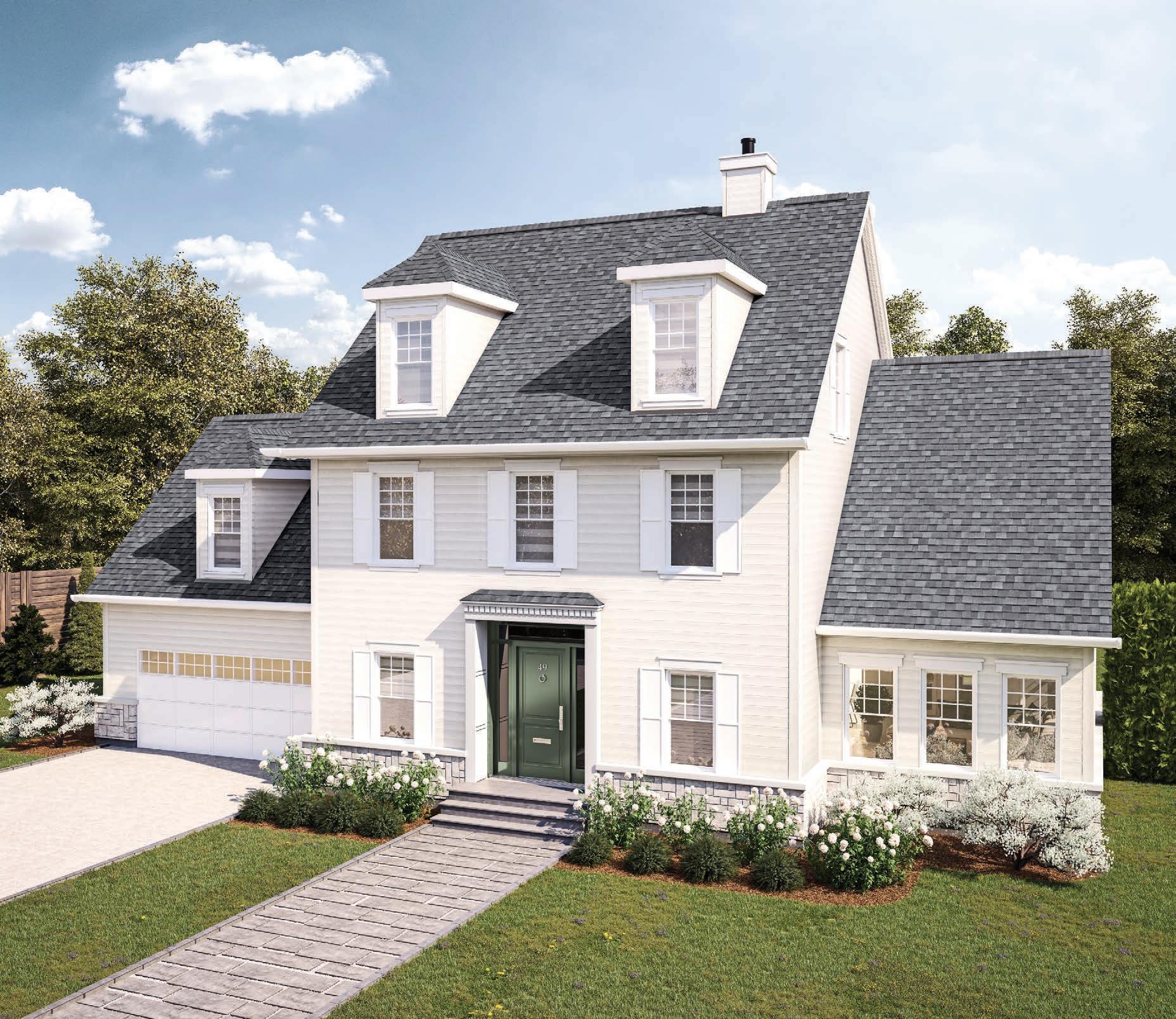
Given that the look of a roof can make or break any property’s curb appeal, the goal for developers should be to aim high: that’s the message of BP Canada (Building Products of Canada) in announcing roofing directions for 2023 and beyond.
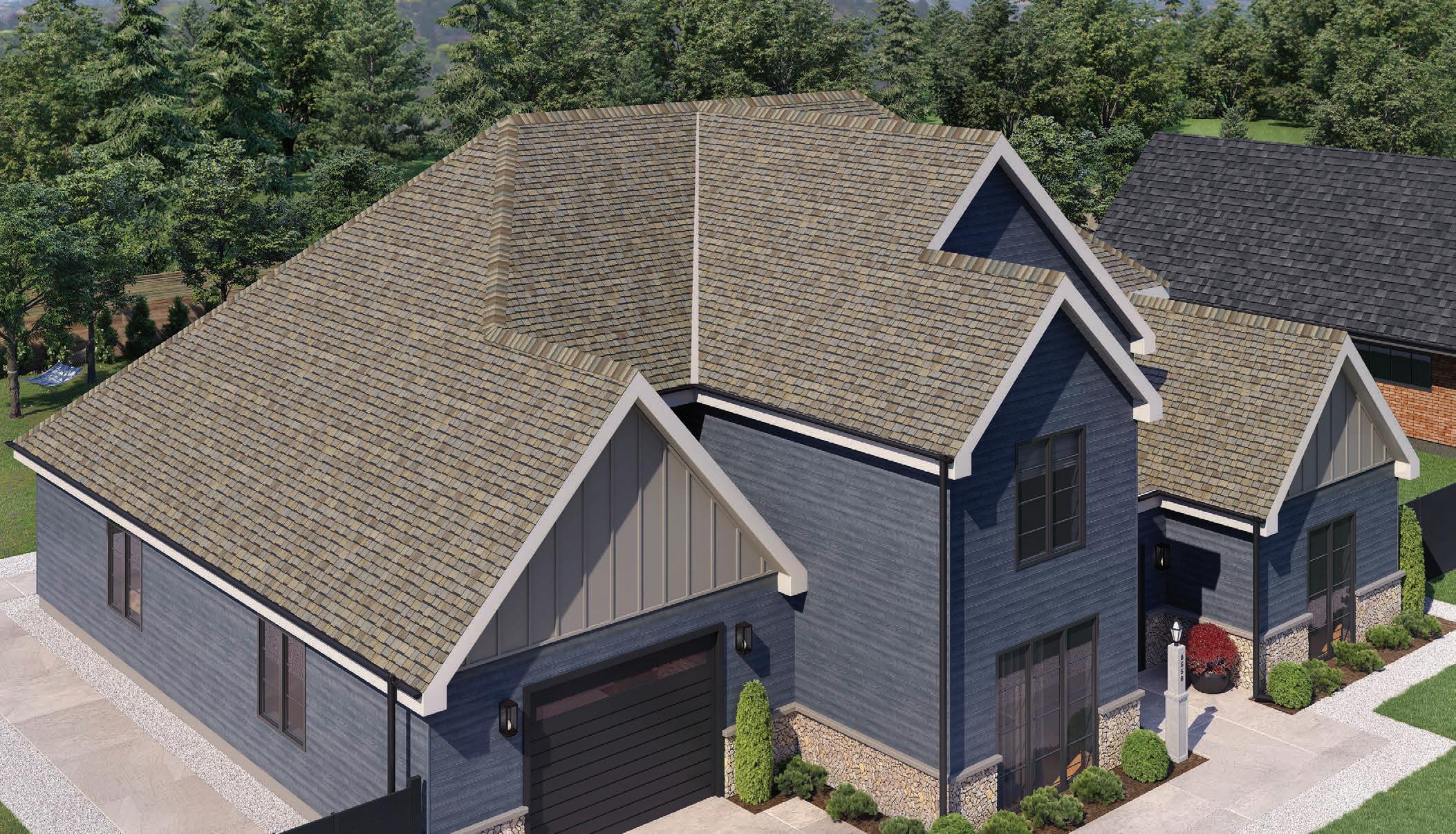
Topping the list of on-trend roofing colours is grey, but not the standard grey; instead, nuanced grey-beige or “greige,” infused with a mix of nature-inspired tones. “Black roofing shingles have always been seen as a safe choice for consumers, but now people are starting to realize that softer neutral shades like grey can actually add more wow-factor to a home’s exterior,” says BP Canada’s marketing director Nathalie Lambert.
Although black is still the company’s top-selling shingle, grey shingle sales have increased in popularity over the last year, especially in Western Canada, and Lambert attributes this to the end of the pandemic. “Consumers tastes are changing as they look for finishes that exude a sense of calm and security. They want the best of both worlds: a balance of traditional and contemporary, soothing and invigorating, sober and bold, and a style that asserts individual personality.”
In response to changing market preferences, BP Canada has launched a multi-toned pale grey shingle called Morning Mist. Part of the brand’s Mystique Collection, Morning Mist is the first shingle colour of its kind, consisting of grey, white, and brown, and providing consumers with an alternative to traditional solid grey options.
Lambert cites other aesthetic trends in the roofing market, including the pairing of shingles in shades of black, brown, and grey with white vertical siding and dark accents to achieve a contrasting effect (increasingly popular in new construction). “Conversely, blending dark siding with pale finishes creates an equally harmonious contrast.”
Lambert predicts that trends for the next few years will shift toward richer, deeper shingle colours. Also, she encourages developers to select highperformance products that provide maximum resistance and protection against high winds and wind-driven rain, ice build-up, and hail. “No matter what style you prefer, it’s important to choose a roof that’s made to stand the test of time,” she says, noting that today’s high-performance shingles are made to withstand hail the size of golf or billiard balls, as well as category four hurricane winds.
Morning Mist shingles from BP Canada’s Mystique Collection.
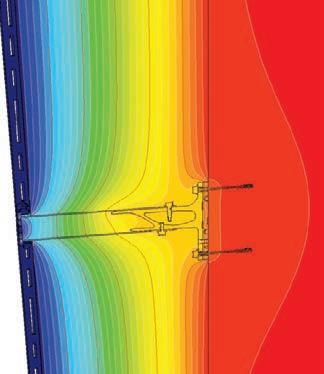





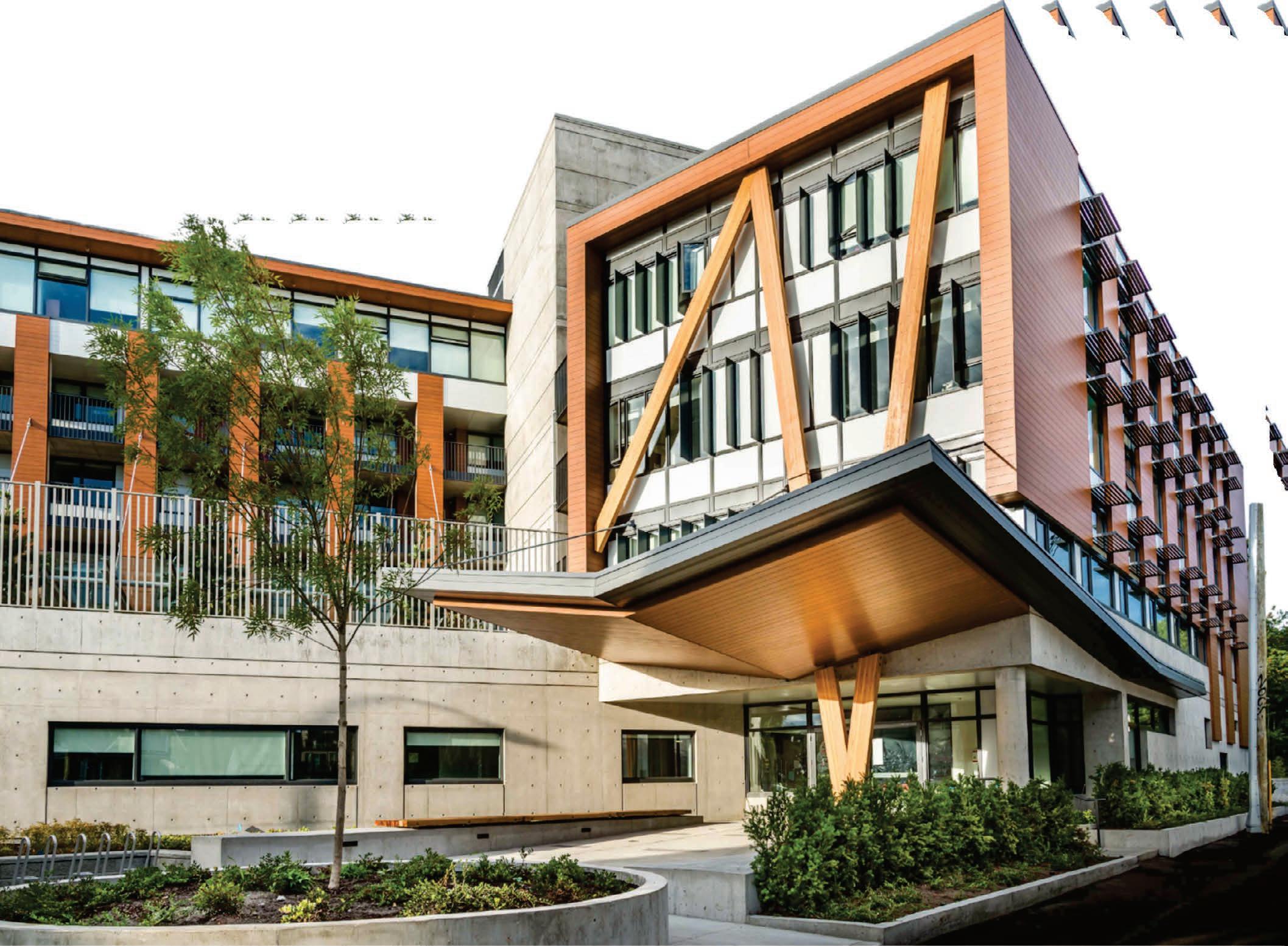

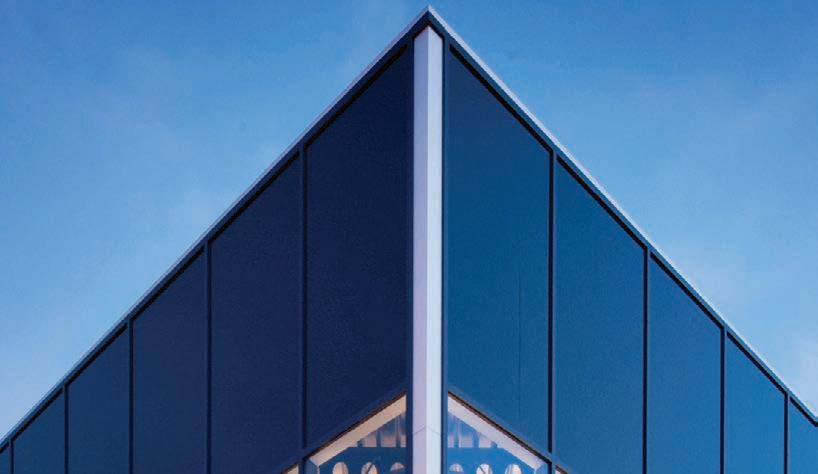
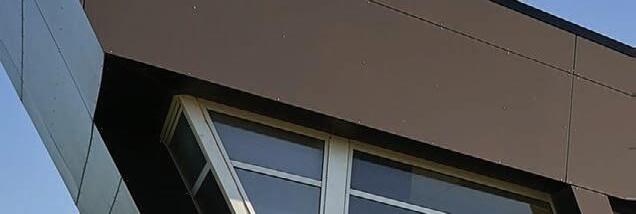
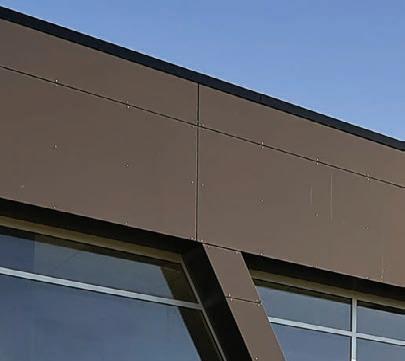
Jeff Ker, senior technical advisor at Engineered Assemblies, points out that the goals of beauty and visual appeal in the roofing sector should apply to cladding as well. And with Engineered Assemblies being the Canadian distributor of Frontek, the cladding market – especially in the commercial sector – has an uncommonly resilient panel that is also startlingly beautiful.
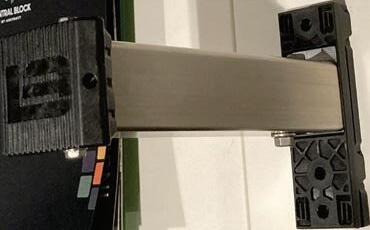
That’s because Frontek is made of extruded porcelain, which has many benefits in its own right, plus it’s augmented with a 19-millimetre (mm) thickness and is ported (hollowcore). Ker says, “The combination of all those elements makes for a truly special panel. Its thickness is the solution to other panels that are typically six to eight mm or even thinner, and provide little to no impact resistance. The hollowcore adds to the structural integrity, and it also hides the attachment clips that are truly unique to Frontek.”
This is a fully mechanical hanging system, absolutely no adhesives are required, and this means two things: extreme ease of installation, plus unlike cladding systems requiring adhesives it can be installed in adverse weather conditions, which is a huge benefit to developers. While porcelain cladding has been making inroads in the Canadian market over the past 10 years, all of them use adhesive, so this is a game changer.
“Additionally, Frontek is graffiti resistant, the colours won’t fade, and it complies with rainscreen design. It is available in one-by-three metre sheets, which is an important consideration for the architectural community.”
Frontek originates from Spain-based Greco Gres Internacional, a conglomerate of companies with a longstanding ceramic tradition dating back to 1940. The Frontek Inside and Outside System offers a dynamic multi-layer surface on any façade, without the requirement to modify the substrate. With inner and outer pieces in two different layers, this solution adds a volumetric and sculptural effect to the façade. Also, the use of porcelain panels reduces air conditioning and heating consumption by up to 35 percent and also act as insulation against sound and solar radiation.
Frontek has been used in numerous projects across Canada of late. “We’re just finishing projects in the Maritimes and other climate aggressive regions, for commercial facilities where minimal maintenance is required over the long haul,” Ker says. “In general, I think Canada is embracing the fact that you have
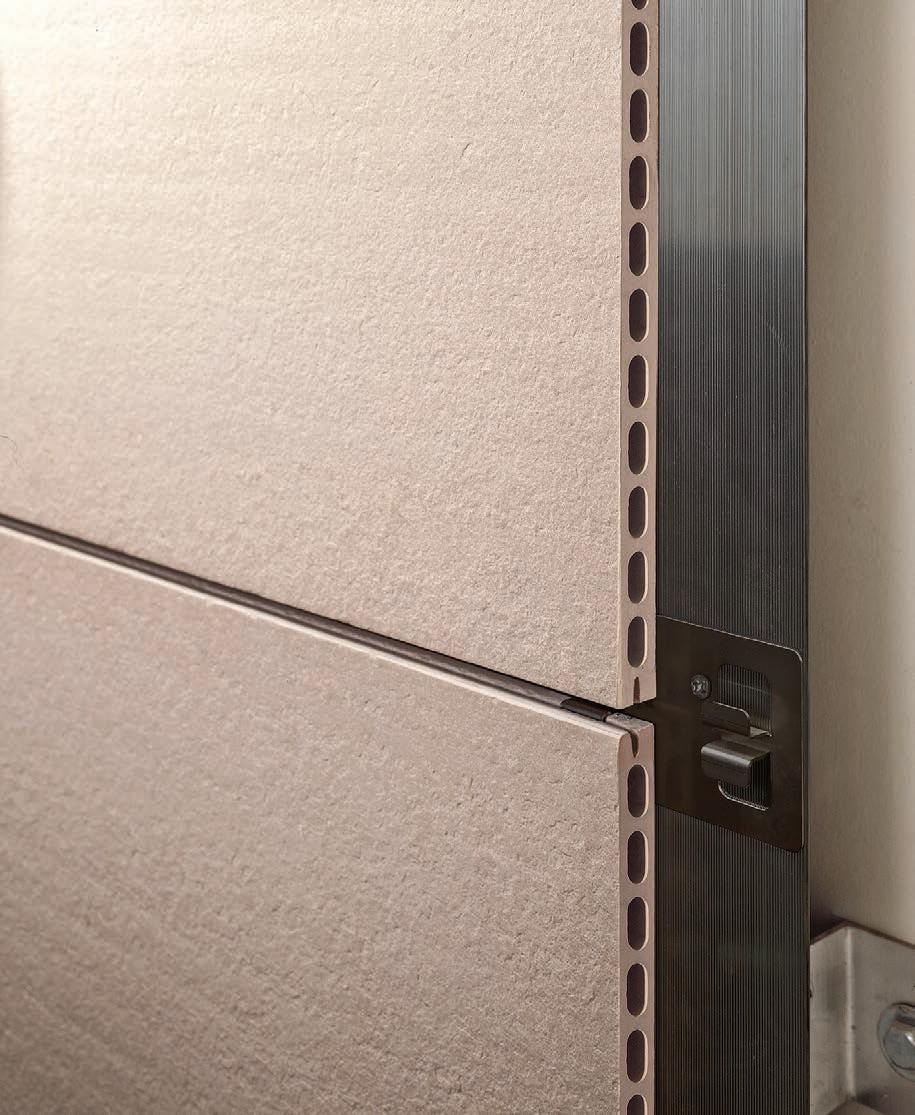

Frontek extruded porcelain panel with its fully mechanical hanging system from Engineered Assemblies.





Manoir – Vienna
to invest in high quality products in order to avoid unnecessary maintenance and repair. It sounds obvious, but it’s easier said than done.”
Vicwest, the metal roofing and cladding specialist, is deeply committed to sustainability, making the most of the fact that most steel products contain upwards of 80 percent recycled content and are infinitely recyclable at the end of their life. The company has reduced the amount of waste they produce that goes to landfill to 60 percent, with the remaining 40 percent being recycled. All of its scrap or defective steel is being recycled and reused, and it has taken other initiatives such as installing rainwater harvesting capabilities at its facilities and redesigning its transport crates to use less lumber (which has also proven to be a benefit for fuel efficiency as it lightens the weight of transport trucks).
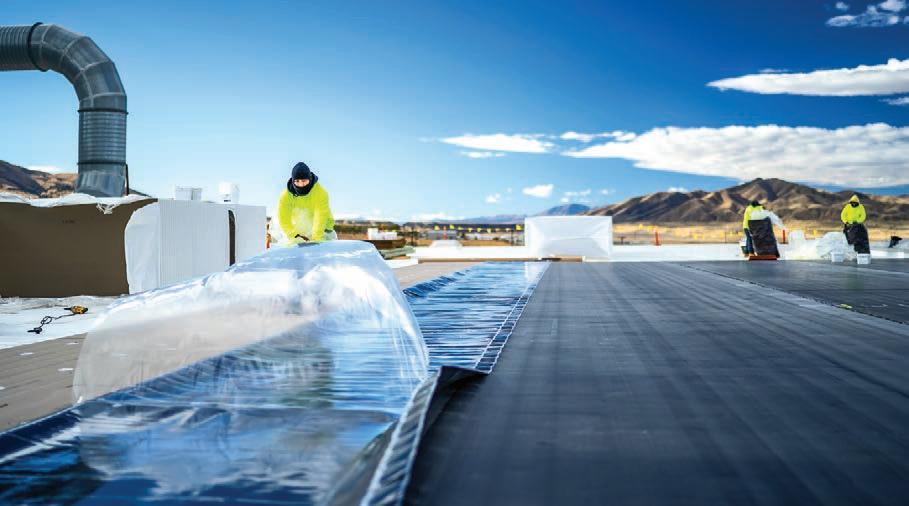
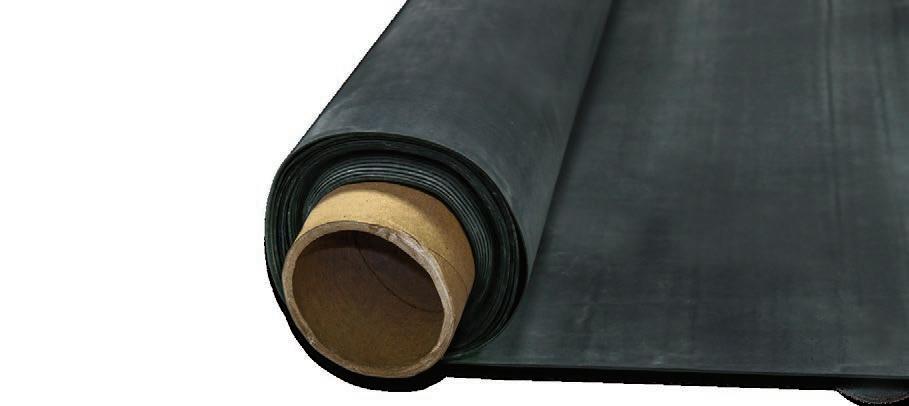
Almost inevitably, products from major manufacturers that are released in the U.S. eventually are introduced into the Canadian market, which is why a new release from Carlisle SynTec Systems is worth keeping an eye on.
Carlisle has been the leader in the commercial single-ply roofing industry for more than 50 years. It transformed the commercial roofing industry with the introduction of its Sure-Seal EPDM single-ply membrane, and today its product offerings in addition to Sure-Seal include Sure-Weld TPO, Sure-Flex PVC, and FleeceBACK membranes.
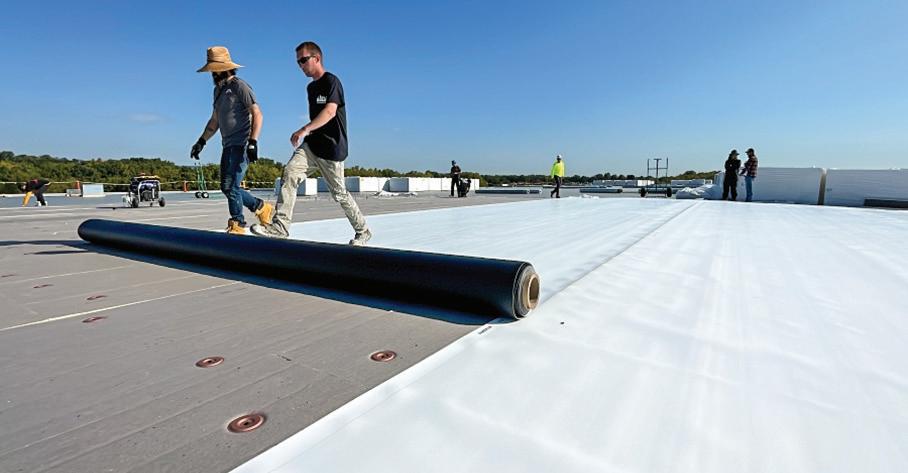
In the U.S., Carlisle’s introduction of the industry’s first-ever 16-foot-wide TPO sheet brings labour savings and enables crews to get more done in less time. With fewer rolls to load onto the roof, less time spent positioning and kicking out rolls, and fewer seams to weld, 16-foot wide TPO is the fastest way to install adhered and induction welded TPO roofs.











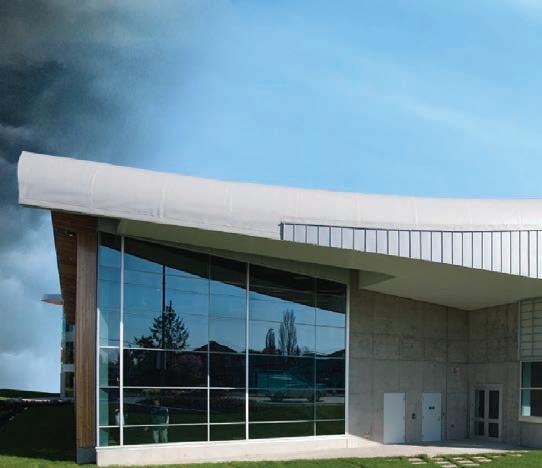





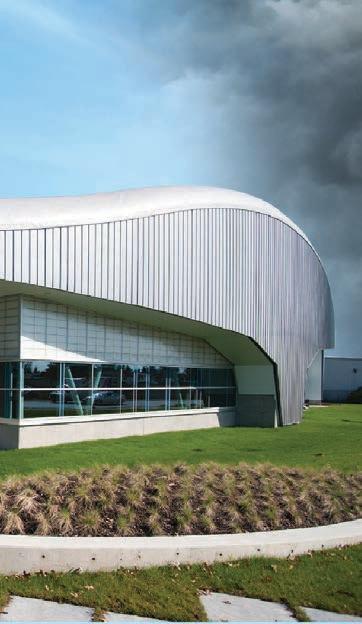


Sure-Seal EPDM single-ply membrane.
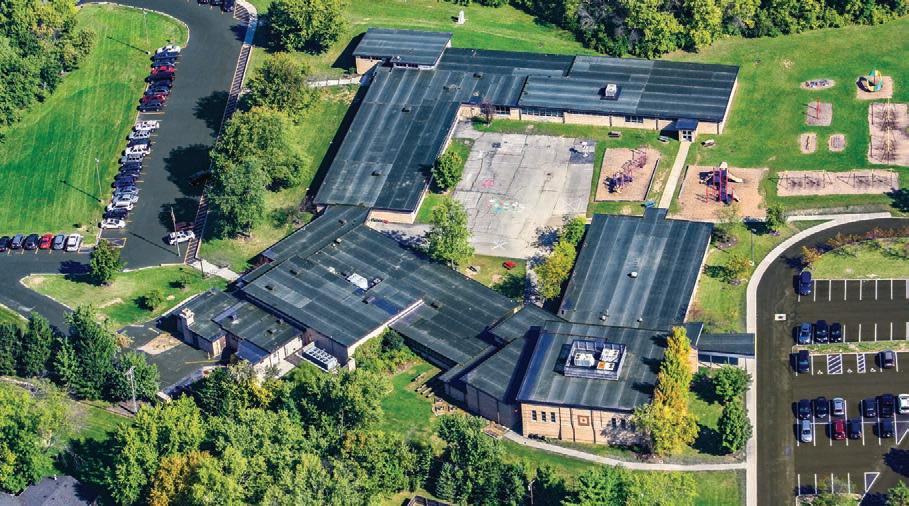
Completed Sure-Seal EPDM roofing project, Centreville School, Centreville, ON.
Installation of Sure-Seal EPDM.
Loading and staging a job often requires significant crane time and co-ordination. Regardless of a roll’s size, it must be moved into position, kicked out, and aligned before it can be adhered or secured in place. But every time a 16-foot roll is kicked out and positioned it covers 60 percent more roof area versus a 10-inch by 100-inch roll. Also, the bigger rolls cut down the number of seams, saving significant welding time, installing T-joint patches, and inspecting and probing at the completion of the job. Plus, fewer rolls on the job means less packaging and core waste to dispose of compared to smaller sheets.
Finally, what lies ahead for the roofing sector in terms of technological evolution? That was something Soprema recently discussed with the Canadian Roofing Contractors Association, Flynn, Rogers, and other professionals, given that Soprema – which specializes in waterproofing, insulation, soundproofing, and vegetated solutions for the roofing, building envelope, and civil engineering sectors – wants to continue to actively contribute to the development of the construction industry by investing in research and development as well as in education in order to transform the roofing industry.
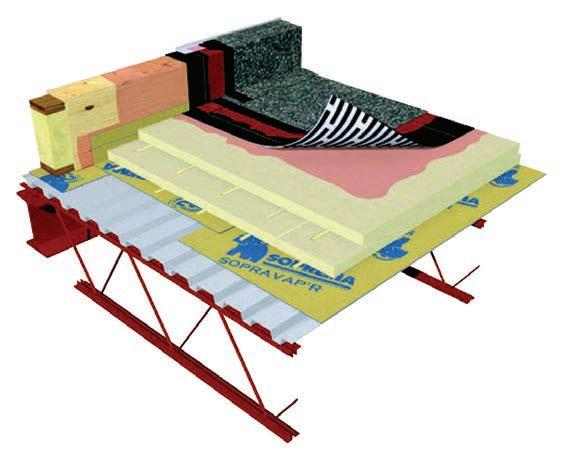
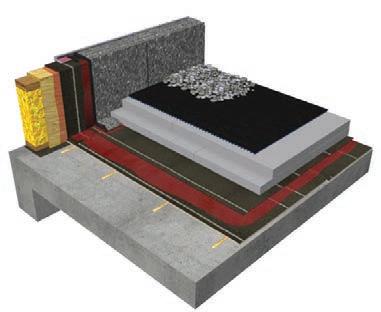
Soprema states, “One of the most important changes today is undoubtedly the interest in flameless products. These solutions, in addition to being highperformance products, are also safer for workers and the environment.
“Through discussions with several key industry players, we want to help change and improve industry practices to reduce the risks associated with works on commercial roofs. We believe that by driving discussions around flameless technologies, we will be able to demystify and encourage their use,” Soprema states on its website.
Soprema has designed a range of low-temperature products, including highperformance waterproofing membranes that can be installed during all seasons and without the use of propane-powered tools. SBS-modified roofing systems are the popular choice for low-slope commercial, industrial, and institutional buildings, while the SopraSmart family of laminated boards, high-performance membranes such as Colply Base 410 and adhesives such as Colply EF all fall under this category, for projects where the use of a flame is not permitted or desired such as hospitals or schools. A



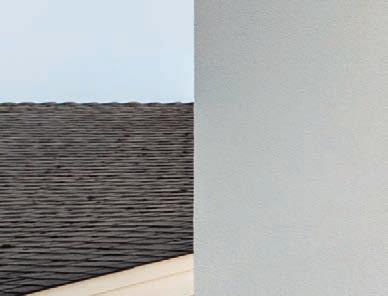
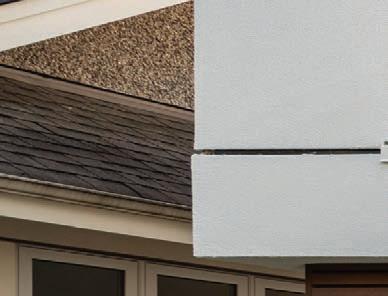
Soprema’s low-temperature flameless products, including SBS-modified roofing systems, Colply Base 410 membranes, and Colply EF adhesives.
The True GAME CHANGER in
the Siding Industry


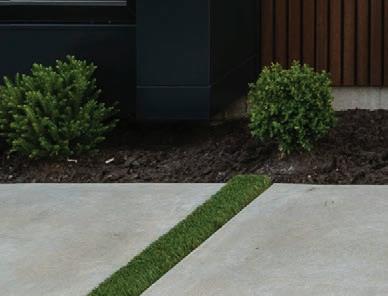
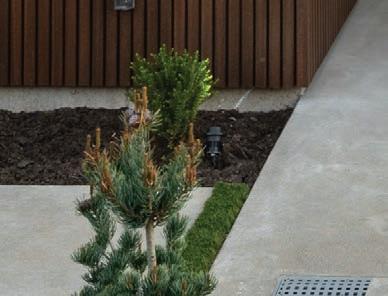
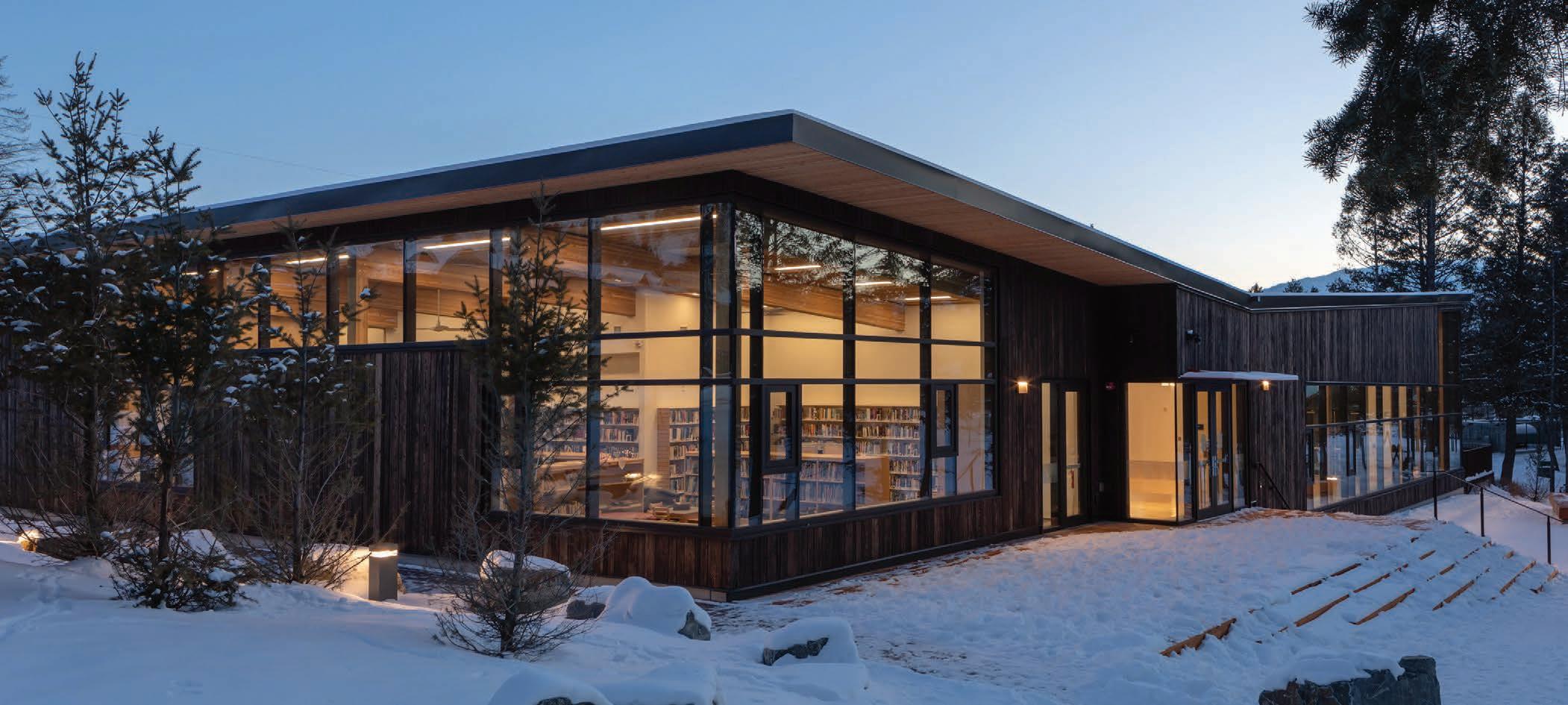
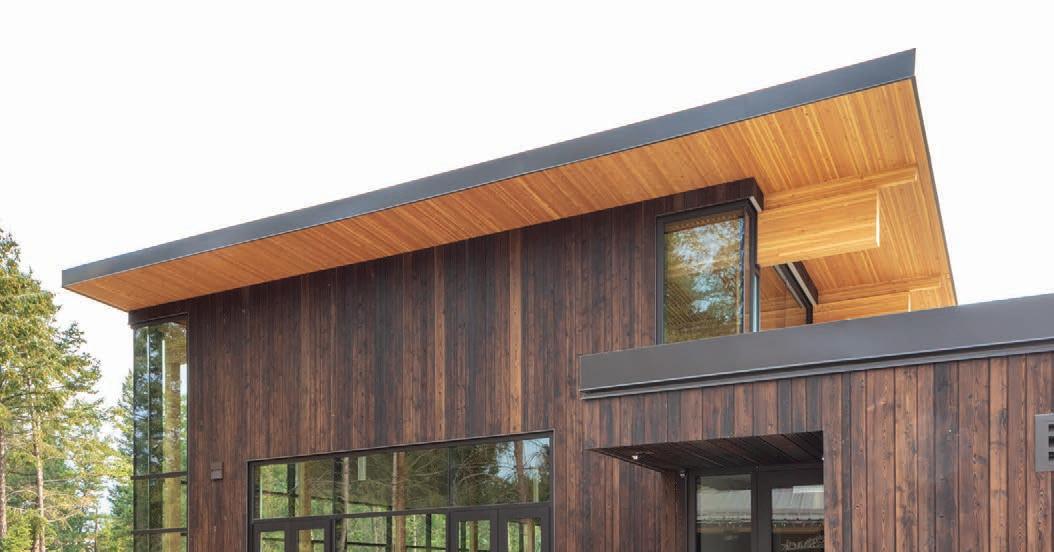
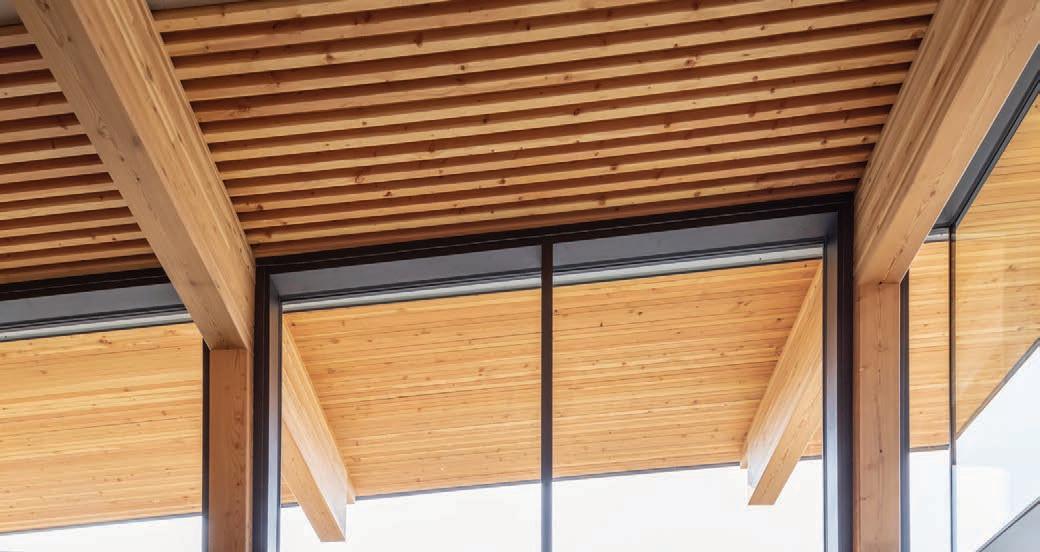
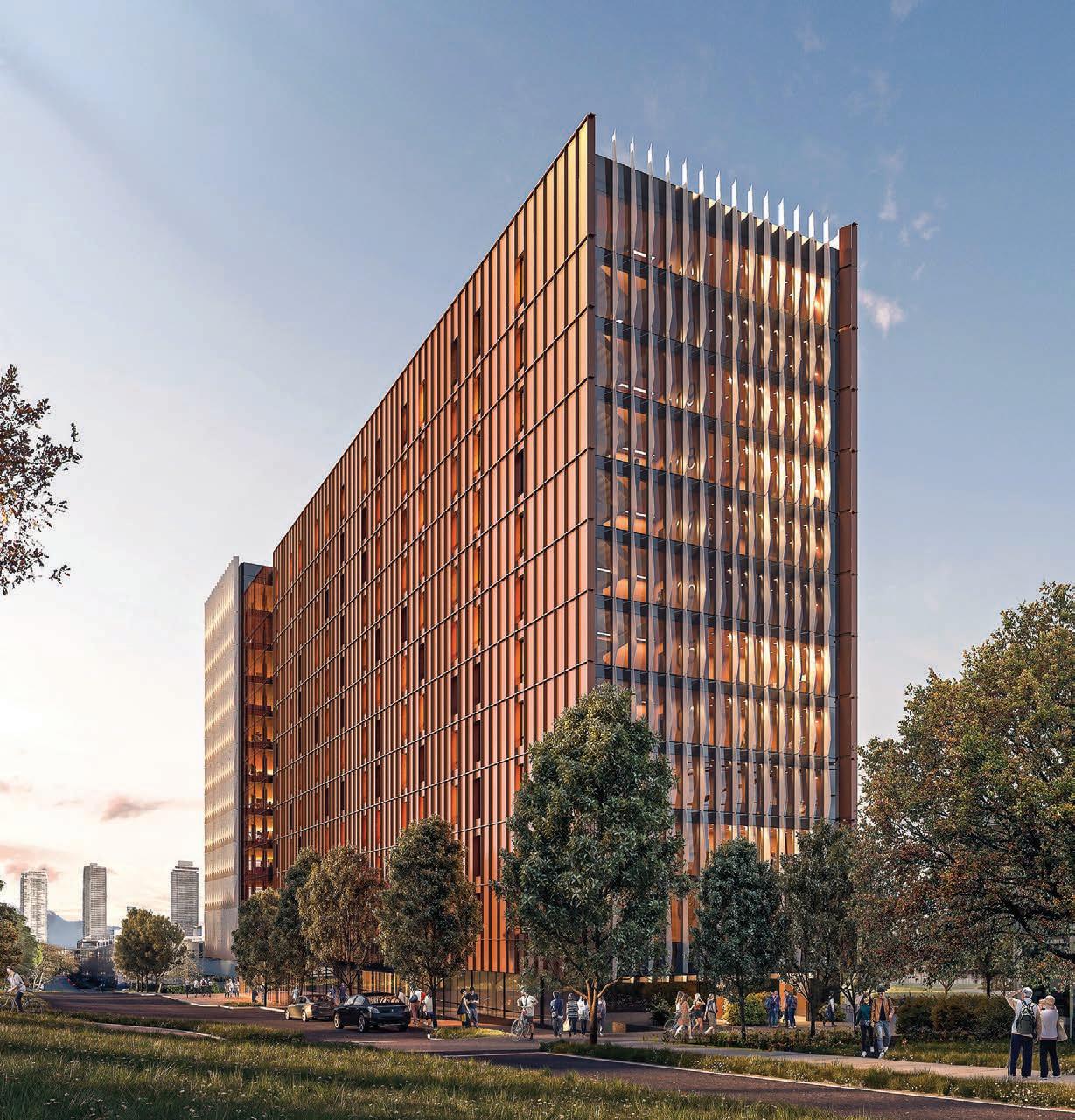
We design, engineer, manufacture and install Wood100®DLT, a 100% wood, no glue DLT
> A truly healthy, sustainable and energy efficient building product.
> Collaborating with architects on detail solutions across the design process.
AgainstThe Grain
The rise of engineered wood products following an unpredictable market
by NATALIE BRUCKNER
Despite facing market uncertainty, misconceptions, and supply chain challenges over the past few years, the engineered wood industry has emerged stronger than ever before.
B.C. has established itself as a leader in mass timber construction, having constructed several notable buildings using this sustainable material. In fact, in 2022, the province built more mass-timber wooden buildings than almost the entire U.S. combined.
Several B.C. companies, including StructureCraft in Abbotsford, Kalesnikoff in Nelson, and Structurlam in Penticton, have been gaining attention for their production of mass timber. These companies primarily source their wood from second-growth forests in the Interior. As demand for sustainable materials continues to increase, particularly in the education sector, the cross-laminated timber (CLT) market is expected to experience significant growth. Shawn Keyes, executive director at Wood WORKS! BC Canadian Wood Council, says the advent of Encapsulated Mass Timber (EMTC)
construction type in the building code, which allows buildings up to 12 storeys, is one reason for this growth. However, he adds that despite the potential of this new typology, “some challenges to adoption still exist.”
Keyes explains: “Beyond the learning curve associated with any new construction approach, one of the primary obstacles is zoning. As it stands, very few structures in B.C. fall within the sevento 12-storey height range, which currently limits the potential of this new category of building. The financial incentive is typically to construct as tall as possible on a given site to maximize returns, particularly in the Lower Mainland. We can continue to push towards taller buildings via alternate solutions and new code provisions, however, these approaches will take time. For an immediate impact, municipalities must consider zoning for the missing middle six- to 12-storey heights allowable by code so that greater density can be achieved while building with wood.”
There are number of exciting projects happening in B.C. of late, including the BCIT Tall Timber Student Housing project that is currently under construction and the 837 Beatty Street Rehabilitation project, which involves adding a four-storey mass timber office building to an existing heritage structure constructed in 1911. “This project takes advantage of wood’s light weight and offers a sensitive approach to preserving, adapting, and expanding a local heritage building, while avoiding the carbon emissions that would result from demolition. It is a useful case study for developers and engineers interested in reducing the costs of upgrading existing buildings to accommodate additional storeys, particularly heritage buildings requiring rehabilitation. As our infrastructure continues to age, solutions for reusing building components and avoiding material waste will be essential,” says Keyes.
As for the future, Keyes is excited about the potential that engineered wood buildings offer in addressing some of the most pressing societal challenges. “The rising cost of living and inflation has made it increasingly challenging for individuals to reside in our province. However, engineered wood products present a prefabricated form of construction that can provide a viable solution by rapidly delivering the housing that our province so desperately needs,” Keyes says.
Kinsol Timber Systems is also thriving in the North American market, with contracted revenue at an all-time high. To meet the growing demand, the company is building a new factory on Vancouver Island that will manufacture Nail Laminated Timber and add capacity to the market. The factory is expected to be operational by April 2024.
Mass timber is already well-known as an innovative building material, but new applications for it continue to emerge. For example, Kinsol is using mass timber for vertical applications like sheer walls, stair cores, and elevator cores.
Kinsol’s work on The Malahat SkyWalk project demonstrates the versatility of mass timber. It features a single-storey Visitor Center, a 600-metrelong elevated Boardwalk, and a 30-metre-high mass timber Viewing Tower. The Tower’s structural elements consist of Douglas Fir glulam columns and beams with steel connections and lateral bracing. CEO Mike Marshall, says the project is “a grade A example of how timber can be used for durability.”




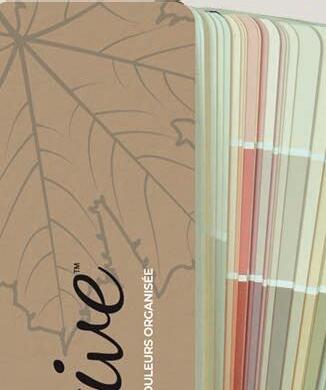
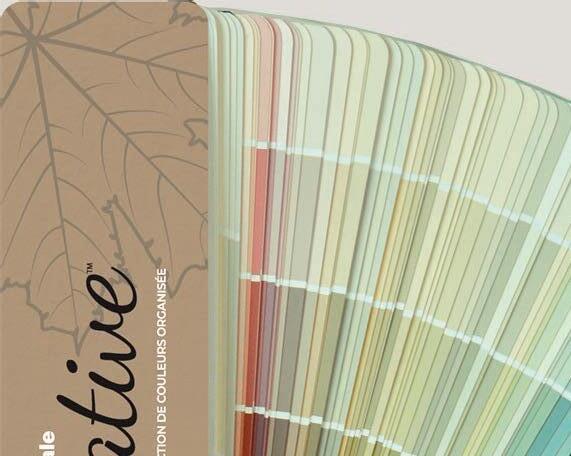
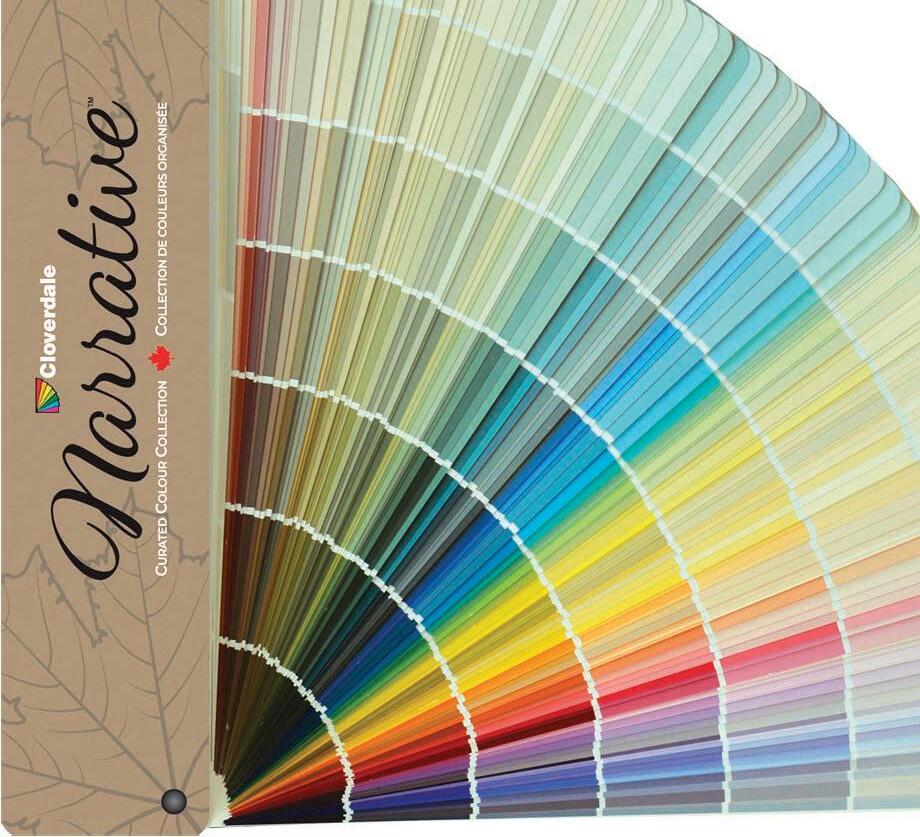
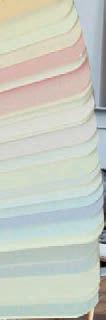
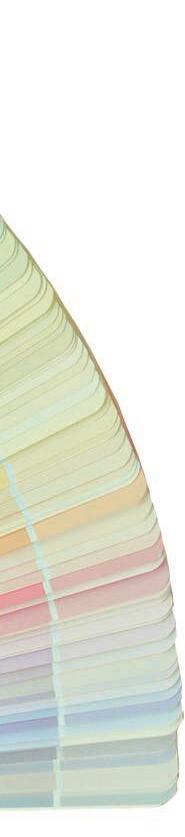
WHAT’S YOUR Colour Narrative?
Urban or Rustic?
Neutral or Colourful?
Modern or Classic?
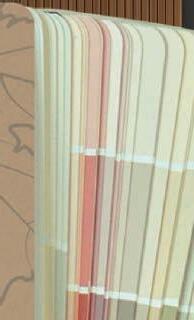
Find your Colour Narrative in our fullspectrum palette that captures more of the widely specified paint colours from across Canada, determined by our Customers and Colour Experts.




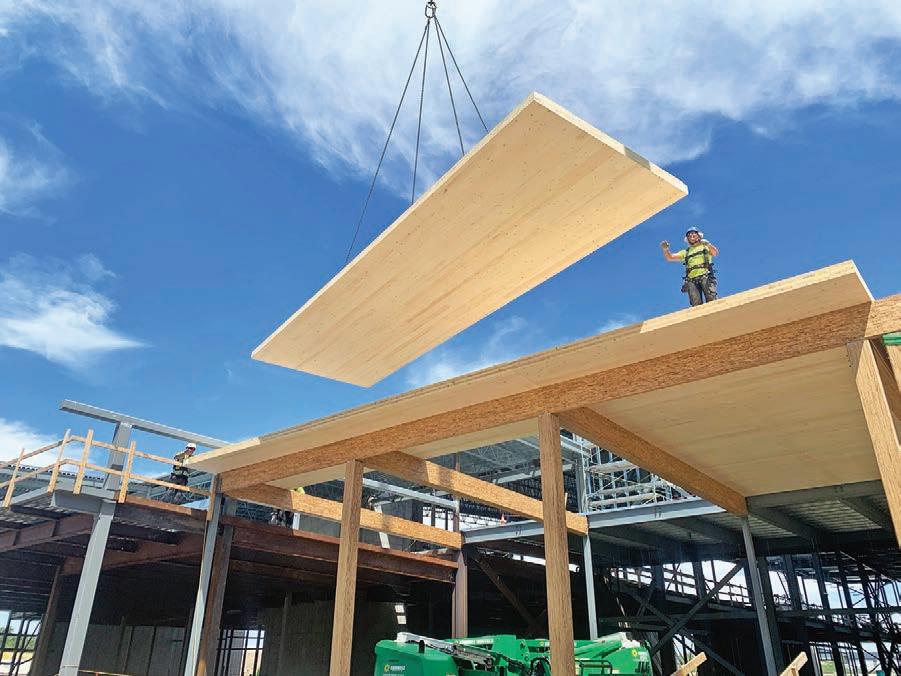
Kinsol is currently working on YouTube’s Headquarters in San Bruno, California. “The project uses glulam posts and beams and CLT panels for the floors and roof. It is phase 1 of 5 phases and adds to the growing body of work that Kinsol is doing in Silicon Valley and within the tech sector in Northern California,” says Marshall. “It’s the biggest project we’ve ever had with around 30,000 carpentry hours and $11 million in labour.”
Despite ongoing challenges with recruitment and supply, Kinsol’s COO Steve Stevenson is optimistic. “We know of multiple fronts where more suppliers are looking to open up facilities north and south of the border.” Additionally, Kinsol has a sideline product called KinsolPlay, a natural playground design-build company that is experiencing extraordinary demand. It’s fair to say, when it comes to wood, Kinsol has established its roots.
Western Archrib, a leader in the design, manufacture, and custom fabrication of glulam is yet another company that has been extremely busy of late, and according to Andre Lema, manager of business development, there are several factors contributing to this trend.
One of the main drivers is the growing recognition of wood’s carbon sequestration capabilities, which has caught the attention of government officials. “It’s just better understood now, and government is very alert to its capabilities. Also, the speed and ease of construction of mass timber buildings have become more widely understood by developers, making them an attractive option for projects. We have seen a shift where we are moving
mass timber beyond concept and trials into a more mainstream structural building product,” says Lema.
In the past, the fire durability of mass timber buildings was also a major concern for many. However, recent research has shown that they are not only safe and strong, but also resistant to fires.
Lema cites a recent testing program conducted by the Canadian Wood Council, which partnered with federal and provincial governments to conduct a series of five separate fire research burns (one being on a full-scale mass timber structure in Ottawa). The results of these tests showed that the fire performance of the mass timber structure was comparable to that of non-combustible construction in a similar fire scenario.
The primary goal of this project was to support the market acceptance of tall and large mass timber buildings in Canada and promote the adoption of the 2020 National Building Code, which includes provisions for 12-storey mass timber buildings. The fire tests had multiple objectives, including advancing building codes to permit taller and larger wood buildings.
The full-scale research fire test results showed that mass timber structures have fire performance similar to non-combustible construction, and they can withstand rare fire scenarios where the sprinkler system fails and the fire department cannot respond. During the four-hour test, the mass timber structure largely burned out within the first hour and demonstrated a quick and controlled burnout after the building’s furnishings
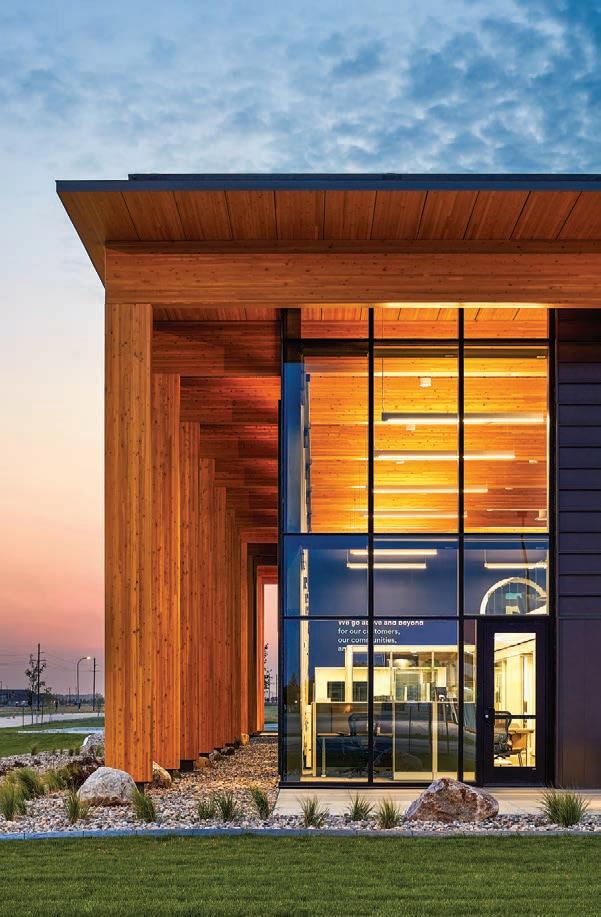
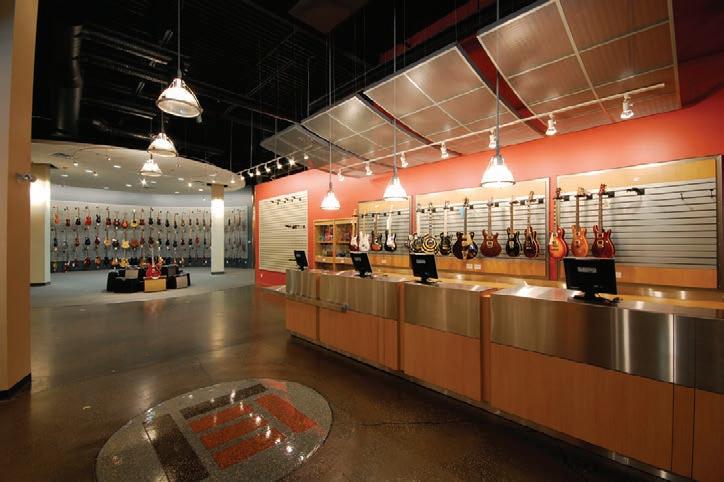

Bremer Bank, Minot, ND
were consumed. The structure was equipped with 400 thermocouples and radiation sensors to monitor the fire development, which helped researchers gain more insight into the nuances of fire safety in mass timber construction.
The findings have raised confidence levels in occupants, owners, and developers, confirming that mass timber can perform well even in rare cases where the sprinkler system fails and the fire department is unable to respond. “As old as the timber industry is, it feels like mass timber has just been invented,” says Lema.
As the interest in mass timber continues to escalate, International Timberframes – a leading timber frame and DLT mass timber manufacturer celebrating 20 years in business – recently announced the building of a new head office and mass timber production facility in Golden, B.C.
With support from the Government Green Construction through Wood Program, the new facility will be the timber framing workshop and production facility of 100 percent wood dowel laminated timber (DLT). DLT panels are being used as roof, floor, ceiling, and wall panels in modern mass timber construction. The production facility will also feature a new DLT press prototype that was manufactured in B.C.
Built to passive design principles and with geothermal and photo voltaic power, the facility will target net-zero carbon and implement a “whole wood” approach. In fact, 80 percent of the construction materials for the new facility will be wood-based, harvested within the Columbia Valley, reducing up-front embodied carbon and transportation related carbon emissions. Commodity lumber will be milled for structural DLT panels, wood fibre board will be used to insulate the building, and wood siding and bark cladding will be the protective outer layer. “We are extremely proud to be championing the production of this innovative sustainable DLT product right here in Golden,” says Sigi Liebmann, founder.
Francisco Villarroel, project and sales manager at Edmonton-based ACQBuilt Inc., says that while the first quarter of 2023 has been slower than usual for his company in Alberta, things are slowly beginning to pick up again.
“The Edmonton construction market really dropped in the first half of the year. There was a reduction of about 40 percent in business compared to last year, however, we saw it coming and there is light at the end of the tunnel. Demand from the rental market is picking up in Edmonton and that is pushing to offsite construction. We are also working on a lot of townhome community projects as well as four and six-storey buildings,” says Villarroel.
ACQBuilt’s innovative building process uses state-of-the-art technology and robotic machines. This construction process eliminates issues associated with outside elements, helps reduce long-term issues, and eliminates any errors before arriving on the jobsite. It also speeds up the process.
However, Villarroel says there is a misconception that less time equals less money. “Everyone wants to do things quicker and quicker, but at what cost? With offsite construction, while it is faster, there are additional costs – it won’t necessarily be cheaper. We build 3.5 houses a day and put a house up in one day, backframe it in one day, and by the third day it’s being shingled – it’s lockup stage; it’s secure and weather-tight.”
CURRENT CHALLENGES
Despite the bid cycle’s continued prolonged duration, Jason Beamish, owner of Beam Craft believes it “is something we learn to live with. The challenge that it presents specifically for the mass timber market is that wood fibre pricing is subject to price changes. This makes bidding on projects with long validity periods particularly risky for all parties including the owner [client], the general contractor, and the supplier. Cost certainty on input fibre for projects that are 12 to 18 months away from production and installation is elusive.”
Moreover, Beamish highlights that Western Canada is facing a limited supply chain for glulam and mass timber panel production, which can deter clients from pursuing building with mass timber due to the difficulties in navigating niche markets with a relatively small number of producers that are in high demand.
Despite these challenges, and in an effort to combat the concerns over lack of certification for mass timber installers in this sector, Beam Craft is currently in the recruiting process as they take on additional mass timber projects in B.C., Alberta, and Saskatchewan. Beam Craft is also in the beginning stages of a mass timber project at Simon Fraser University in Burnaby. The First Peoples Gathering House is a hybrid build incorporating glulam columns and beams, Dowel Laminated Timber (DLT) roof panels, light wood framing, and log poles. “We are thrilled to begin a new relationship with Scott Construction [Burnaby, B.C.] as they are the construction manager for the project,” says Beamish.
SOUND ADVICE
The importance of acoustic comfort in engineered wood buildings is on the rise, and AcoustiTECH has noticed a significant increase in customer awareness of this issue. According to Andre Rioux, co-owner at AcoustiTECH, they receive calls every week from people seeking help to provide more value to their clients and gain a better understanding of acoustics. “This is exciting and motivating. Acoustics is slowly but surely top of mind, as it should be,” says Rioux.
To respond to the increasing demand for acoustic solutions, AcoustiTECH has launched a new line of products designed to address vibration problems in areas such as gymnasiums, indoor pools, mechanical rooms, and elevators. This new line complements the company’s existing range of products that target airborne and impact noise.
“We have also partnered up with a Canadian company [Artopex] to offer two models of a customizable Mutebox for people to use in workspaces and common areas,” explains Rioux. The innovative product offers compact, acoustically optimized booths that can be integrated anywhere in an open area.
To simplify the often confusing world of acoustics in wood buildings, AcousticTECH has introduced a new way for developers, architects, property management companies, condo board members, and consumers to truly experience the sensory difference between ratings and different assemblies. “For the first time, people will have the proper tools to make decisions rather than relying on numbers which can too often be misleading,” explains Rioux.
“Too often professionals and developers assume condo owners or renters are not interested or willing to pay to enjoy a more comfortable acoustic environment. This is not our experience. We often hear people tell us they wish they would be either
offered a choice or would have paid a little more if it meant better acoustic comfort. This means not only being at peace at home but also being able to freely use your own space without being worried of disturbing your neighbours,” says Rioux.
PROTECTION
When it comes to protecting engineered wood products, Sansin wood coatings remains a top choice as it provides UV protection and water repellency for beauty with durability, all in a low VOC formula. One popular product is Sansin ENS, a durable two-coat finish that can be applied to virtually any surface, from windows, doors, and railings to siding and decks – and even to improve the performance of other coatings.
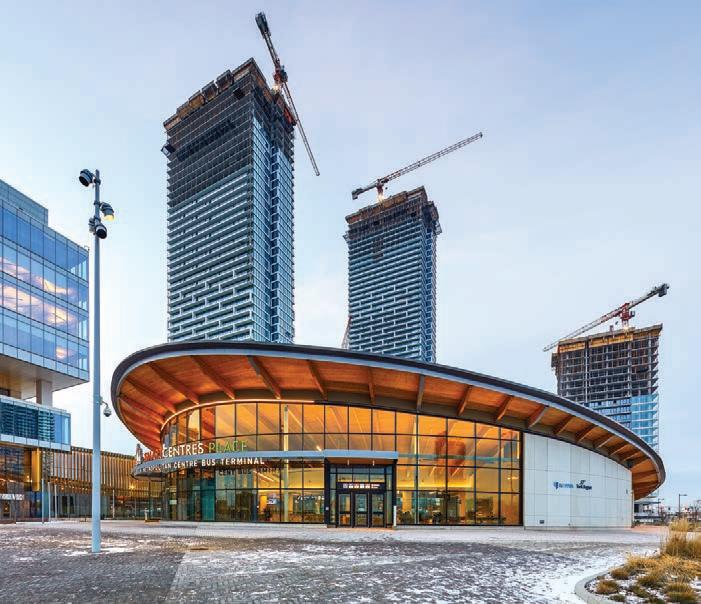
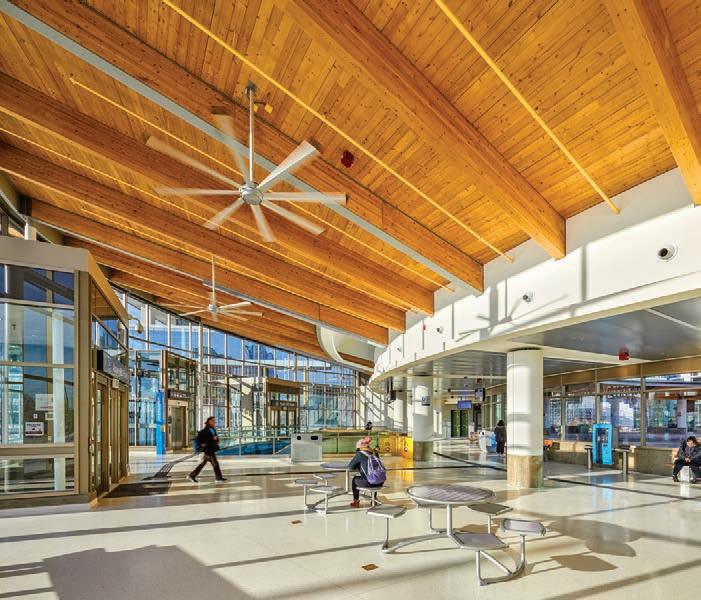
ENS is a tough, flexible finish resistant to wear, doesn’t discolour over time, and provides some of the toughest UV protection available. The exceptional adhesion characteristics of ENS – in natural, semi-transparent, and solid stains and finishes, as well as solid hide paints – raises engineered wood products to a new standard of beauty and durability. One project that utilized this product was the Smart VMC Bus Terminal in Vaughan, Ontario, which features a sustainable, innovative design that uses wood to offer a warm welcome to passengers. All of the structure’s exposed glulam beams and CLT are protected with Sansin’s environmentally friendly wood protection – one coat of KP-12W followed by two coats of Sansin ENS – adding to the project’s sustainable profile. A
Smart VMC Bus Terminal, Vaughan, ON
YOUR MASTERPIECE DESERVES THE BEST WOOD PROTECTION
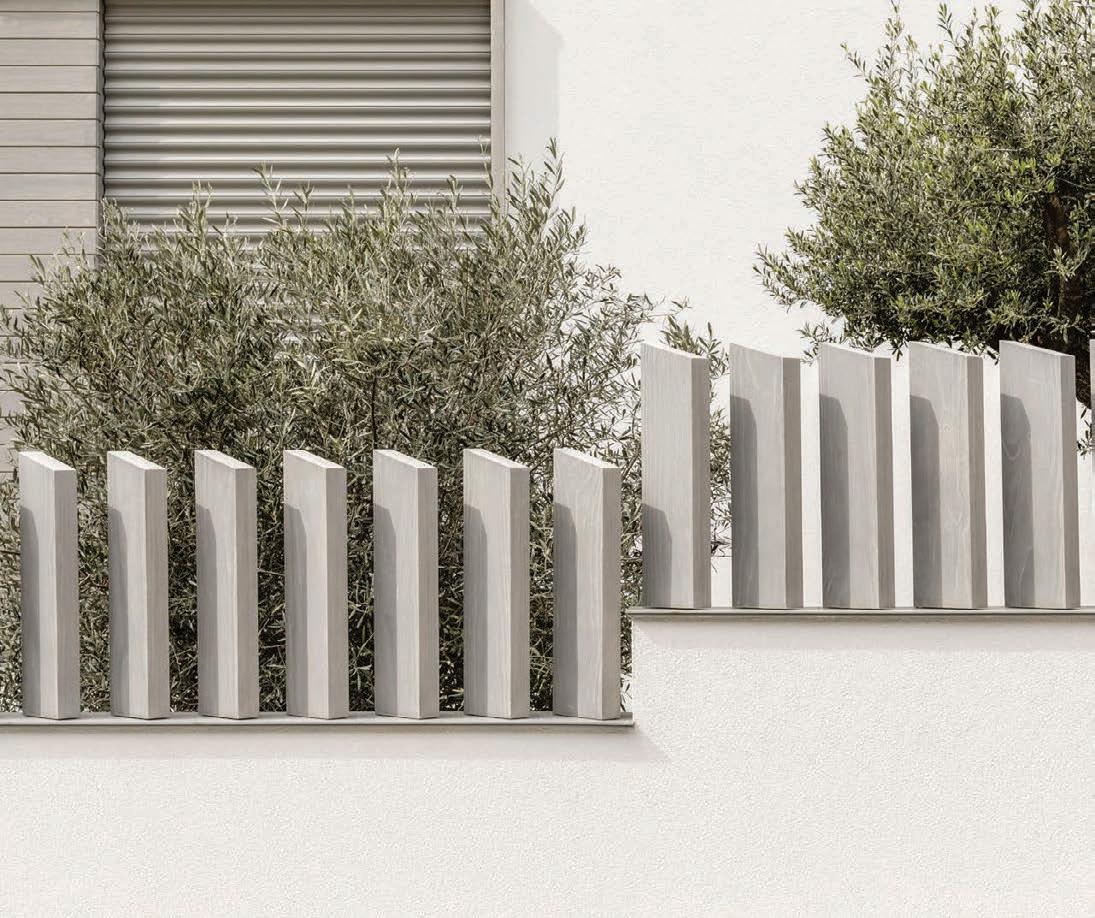
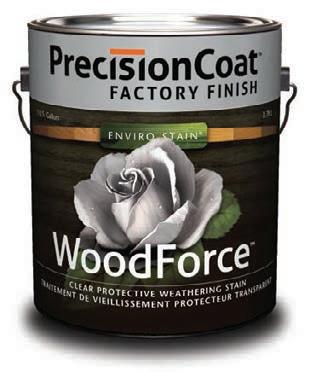
Sansin’s WoodForce offers unparalleled beauty and protection in an environmentally friendly formula –allowing wood to weather gracefully. Contact us about our specification program so we can help you achieve the perfect finish and protection, every time.

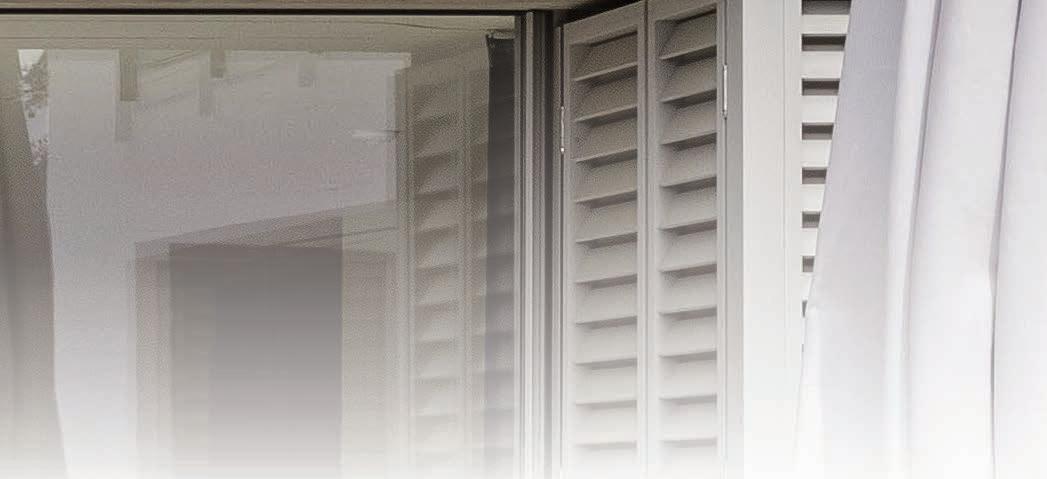
Precision Coat factory finishes and treatments deliver the colour, transparency and performance that architects, engineers and builders can count on.
Private Residence Mallorca, Spain























DESIGNAWARDS2023 PRAIRIEWOOD








RESIDENTIAL















ThePrairieWoodDesignAwardscelebratesinnova�onandthe individualsthatpushthelimitsofdesigningwithwood.Wood WORKS! AlbertaandtheCanadianWoodCouncil,congratulateall awardrecipientsinthe2022-2023program.


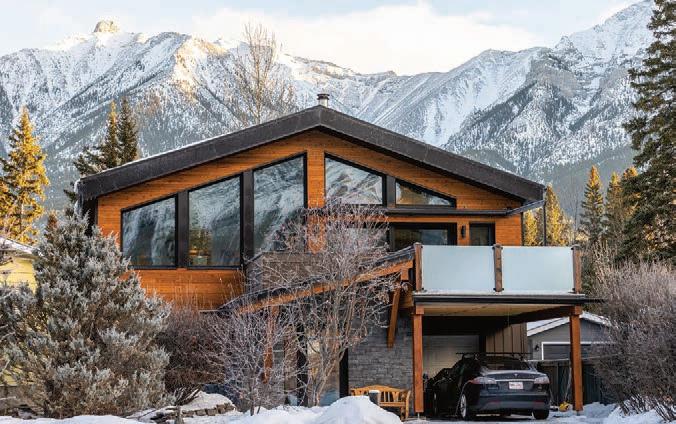
Canmore,Alberta



MountainDeepEnergyRetrofit



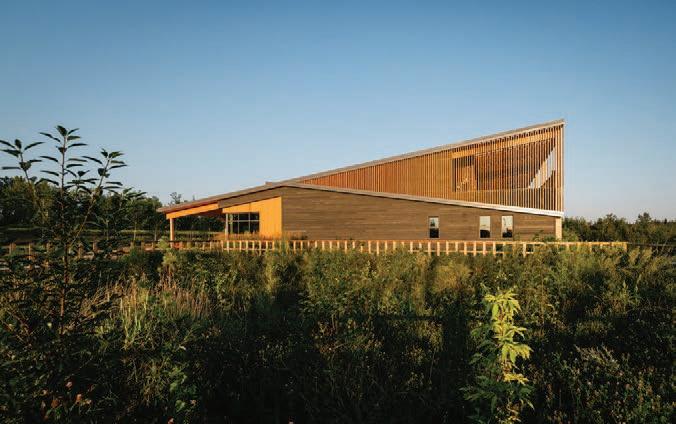











Architect: RayniKovacs/HSSDesignBuild




StructuralEngineer: JamieFukushima
GeneralContractor: HSSDesignBuild






PhotoCredit: ThomasWaltonPhotography
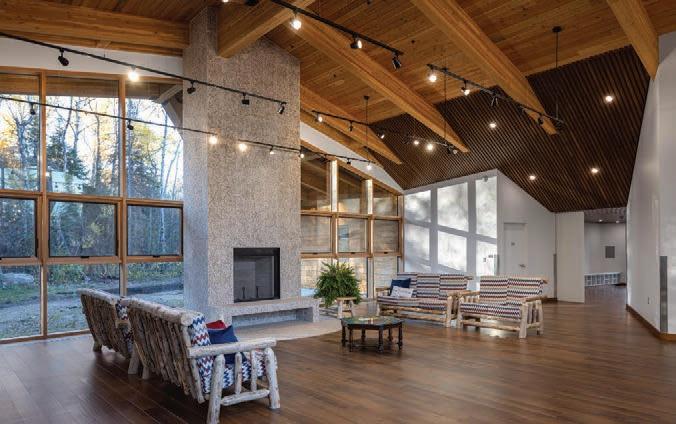
INTERIORSHOWCASE



HillsideBeach,Manitoba


GreyBuffaloGrandfatherWellnessLodge


Architect: CibinelArchitectureLtd.
StructuralEngineer: BeachRockeEngineeringLtd
GeneralContractor: ThreeWayBuilders
PhotoCredit: LindsayReidPhotography
COMMERCIAL



SmokeyLake,Alberta

MétisCrossingBoutiqueLodge
Architect: ReimagineArchitectsLtd.
StructuralEngineer: RJCEngineers
GeneralContractor: GenMecACL

RECREATIONAL






PhotoCredit: Cooper&O'HaraPhotography






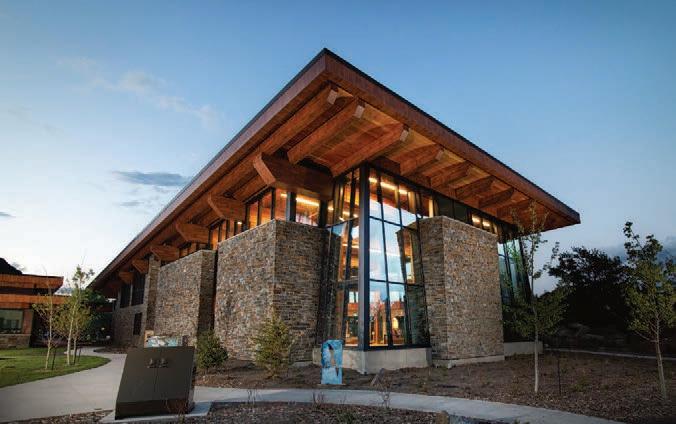
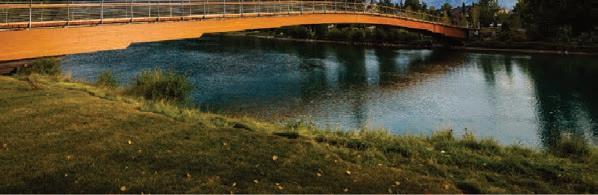
WatertonLakesNationalParkVisitorCentre
Architect: FWBAArchitects
WatertonLakesNa�onalPark,Alberta
StructuralEngineer: ISLEngineeringandLandServices
GeneralContractor: GrahamConstruc�on

PhotoCredit: AngusMackenziePhotography




















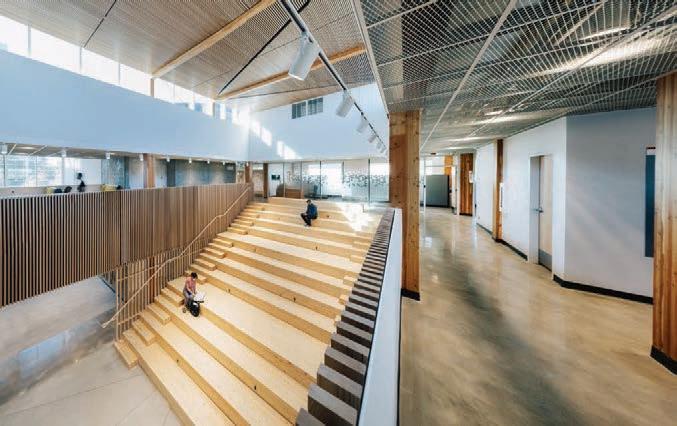


















Architect: ReimagineArchitectsLtd

NorthernLakesCollegeHighPrairieCampus












StructuralEngineer: RJCEngineers


GeneralContractor: ClarkBuilders
PhotoCredit: Cooper&O'HaraPhotography




Banff,Alberta



Architect: StructureCra�


StructuralEngineer: StructureCra�
GeneralContractor: StructureCra�
PhotoCredit: PaulZizkaPhotography
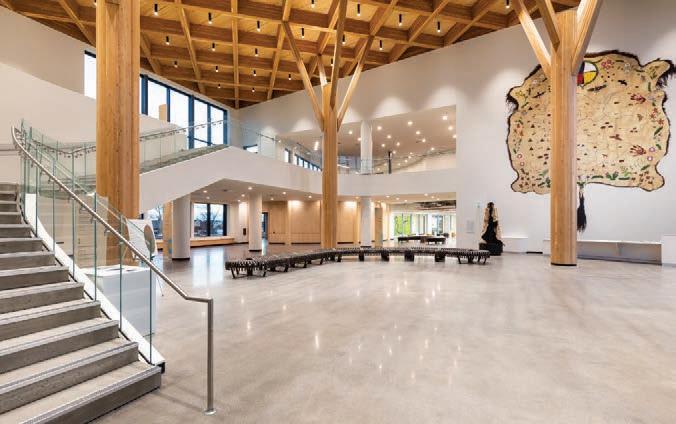
JURY'SCHOICE




RedCrowCommunityCollege


StandOff,Alberta






StructuralEngineer: ReadJonesChristoffersenLtd
GeneralContractor: ClarkBuilders
PhotoCredit: La�tude
INDUSTRYAWARD






Winnipeg,Manitoba
Architect: VerneReimerArchitectureInc

Architect: KasianArchitectureInteriorDesignandPlanningLtd



TheIntrinsicConnectionBetweenWoodandIndigenousCulture
StructuralEngineer: BeachRockeEngineeringLtd
GeneralContractor: BouchardBros2014Ltd
PhotoCredit: Sco�ZielkePhotography






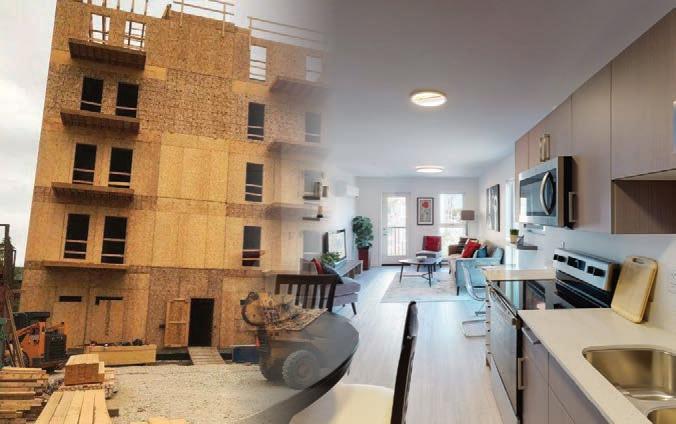
SOHOCost-effective5StoryStickWoodFrameApartment











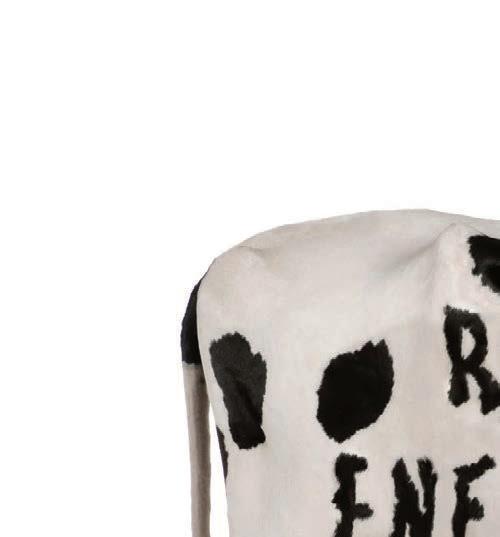

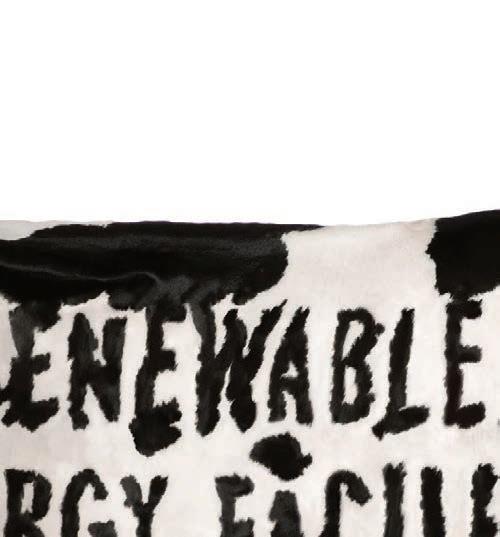





We’re finding
energy in unlikely places
Like biogas captured from cow manure to create Renewable Natural Gas1 (RNG). It’s a low-carbon energy2 that can be used in homes and businesses across the province—and we’re adding more to our supply every year.
Our natural gas delivery system can provide RNG to buildings and developments to reduce greenhouse gas emissions. This means buildings can meet strict emissions guidelines without expensive upgrades or retrofits.
Find out more about RNG at fortisbc.com/rngbuild
with us @fortisbc
A Game Changer For The Environment
Emerging topics and groundbreaking studies influencing tomorrow’s sustainable design decisions
by NATALIE BRUCKNER
Passive House, living building challenge, sustainable and regenerative buildings these are more than just buzzwords and terms bandied around in board rooms. Today, they demonstrate the many areas being explored to achieve not just net zero energy buildings, but net positive buildings.
The world of sustainable design is one of the fastest growing movements in the industry, and thanks to innovations, new research and data, and regulatory changes, leaders in the field are staying one step ahead and helping build a far brighter future.
Take, for example, the BC Building Code that in May of this year implemented substantive changes that will impact the future of sustainable design. The new changes meant that after May, most new construction submitting for building permit in B.C. had to be 20 percent more energy efficient than base 2018 BC Building Code.
The opt-in Zero Carbon Step Code also became available for local governments to reference, starting May 1. “Improved energy performance per the Energy Step Code is now mandatory for all buildings – addressing all municipalities and regional districts – as well as activating the Zero Carbon Step Code [formerly known as the Carbon Pollution Standard], of which some municipalities are adopting this year – Victoria and Saanich being two of the early adopters,” explains Terry Bergen, managing principal at RJC Engineers.
From a standards perspective, and outside of B.C., Bergen says the CaGBC Zero Carbon Building (ZCB) standard is being incorporated into many buildings across the private and public sector and is impacting sustainable design moving forward.
CaGBC’s ZCB standards are among the world’s first zero-carbon building standards and recognize the importance of building emissions in reaching national climate commitments. The standards are considered an important tool in supporting the green building sector’s efforts to decarbonize Canada’s buildings.
“This is putting into action the technologies and approaches discussed the past few years as the design and construction sector strives to do its part in meeting Canada’s carbon reduction goals,” says Bergen.
EMBODIED CARBON
Over the last 12 months, the team at Glotman Simpson has been encouraged by the increased importance of embodied carbon data in design decisions.
Harrison Glotman, project engineer at Glotman Simpson, says that most projects that started in the past 12 months will undergo a whole building lifecycle assessment (wbLCA). “Consultants now have a plethora of programs that can be implemented through various phases of the design cycle, including but certainly not limited to OneClick LCA, Tally, and CARE. These tools, and the increased availability of environmental product declarations [EPDs], have made it much easier to quantify embodied carbon,” Glotman says.
One project of note is 365 Railway with Allied Properties REIT and Perkins + Will. The project consists of four-storeys of mass timber built on top of an existing building dating back to 1949. “Since the building was originally designed to support three additional storeys of concrete, the upgrades required to the existing building were minor. This combination of repurposing space and building in mass timber is ideal from an embodied carbon standpoint,” says Glotman.
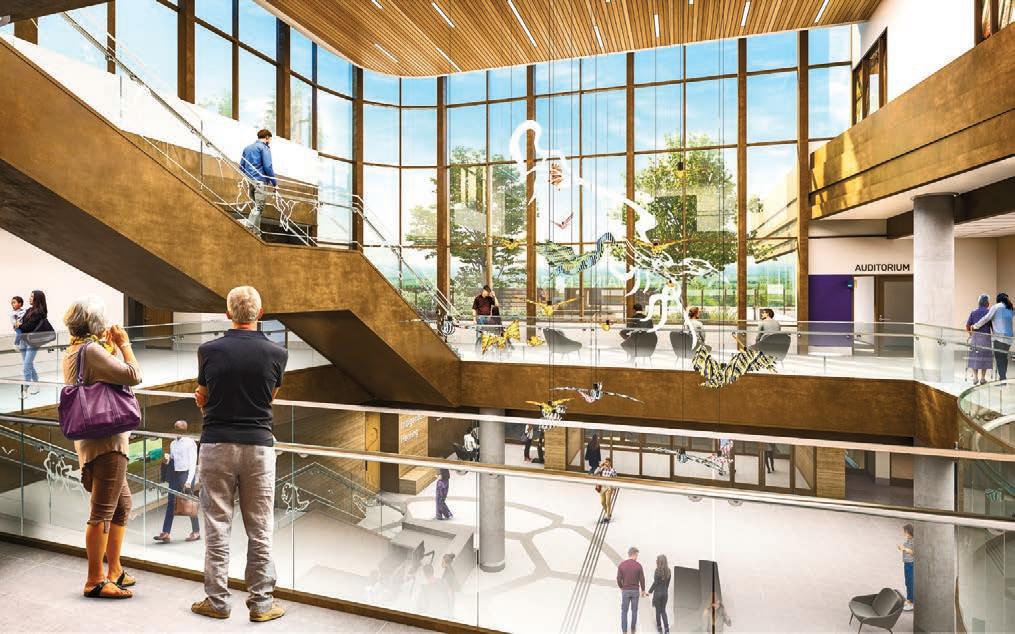
In the high-rise arena, Glotman Simpson is excited to work with Westbank and Henriquez Partners Architects on M5 prototype, a hybrid mass timber and steel structure aimed to demonstrate how we can build tall with timber in a sustainable, aesthetic, and cost-effective manner.
As an SE 2050 firm, one of the most impactful changes Glotman Simpson has seen has been through its technical education efforts. “Internally, we’ve introduced an embodied carbon calculator into all of our structural element spreadsheets and held recurring webinars on sustainable technological advancements for our team,” says Rachelle Habchi, project engineer at Glotman Simpson. Externally, Glotman Simpson has been co-ordinating with architects and sustainability consultants early in the design process about embodied carbon implications, presenting to developers about structural solutions to mitigate GWP in structures and publishing monthly studies on how different structural systems can be best optimized for both cost and sustainability.
“Our internal studies show that, more often than not, the more structurally efficient solution ends up being the more sustainably efficient solution – building sustainably does not have to come with a significant green premium,” says Habchi.
A NEW WAY OF THINKING
The team at Williams Engineering agrees with Glotman Simpson’s sentiments and says the decarbonization of buildings continues to trend up. “We’re finding it’s included now in both new build and renovations. The Reframed Initiative that we spoke about last year with Award is a perfect example of where the industry is going. It’s now wrapping up and is transforming how the industry looks at retrofits. Not just the decarbonisation of existing buildings, but also how to eliminate climate pollution and energy waste,” says Liv Ehlert, team lead, building performance and sustainability.
The initiative Ehlert is referring to is a partnership between the BC NonProfit Housing Association, the City of Vancouver, Metro Vancouver Housing Corporation, and the Pembina Institute. It commissioned deep retrofit designs for six multi-unit residential buildings in B.C.’s Lower Mainland, Capital Regional District, and Southern Interior. The results show that the design schemes are set
South
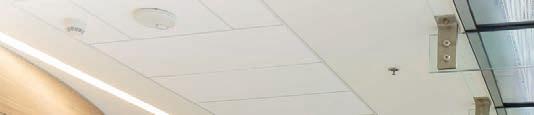
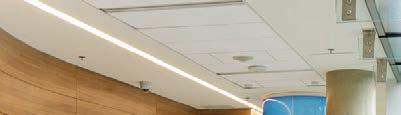
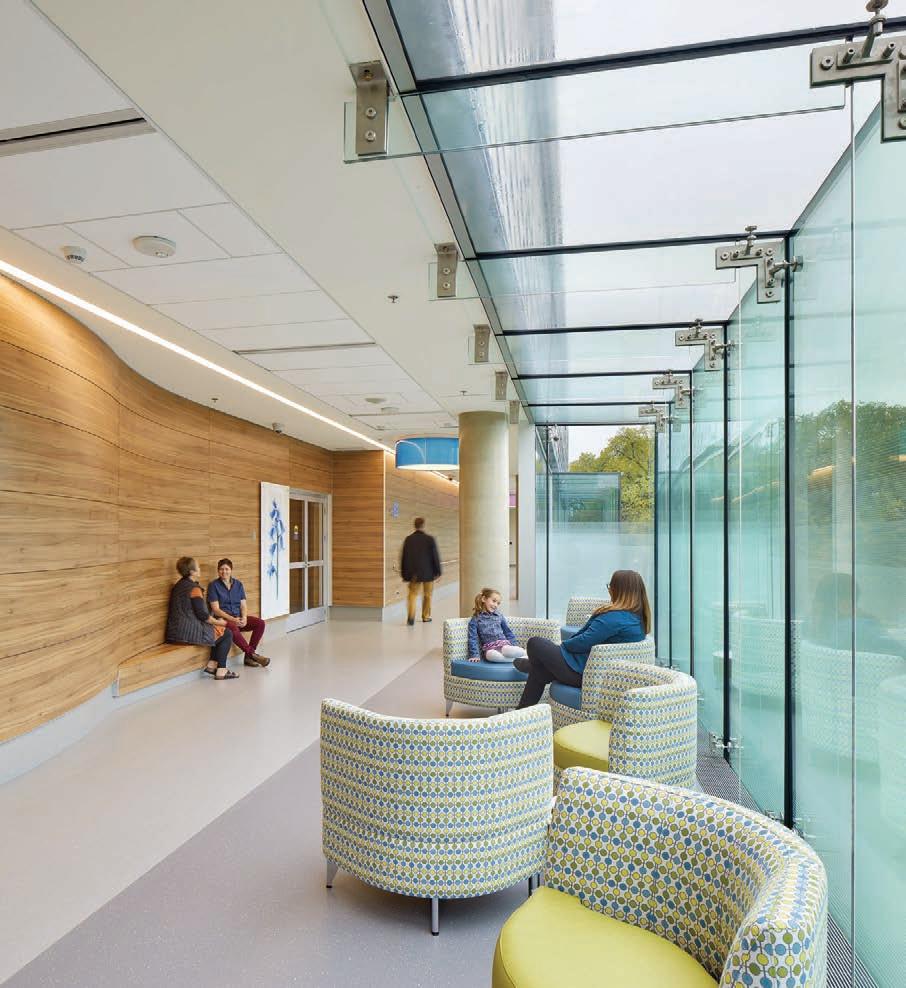
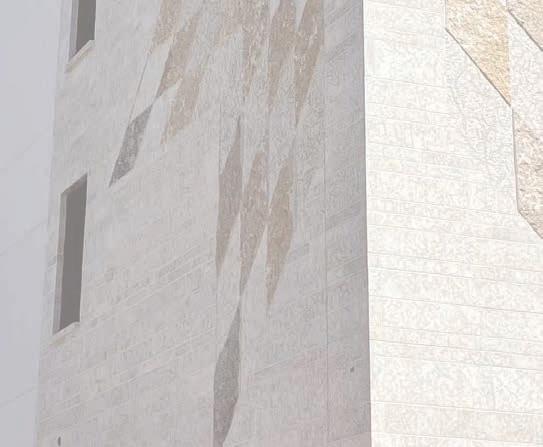
Niagara Hospital Project – the first WELL Accredited health-care facility in Canada.



to cut 400 annual tonnes carbon emissions, while minimizing embodied carbon inputs and making the buildings safer, healthier, and better prepared for the coming impacts of climate change.
One topic that is really taking hold this year, and one that Ehlert is excited about, is regenerative design – buildings that have a net-positive impact on the natural environment. “It moves past sustainable design. It looks at bigger system thinking and contributes to a positive change rather than keeping the status quo. The work we did on Crown Manor in New Westminster for the Reframed Initiative very much looked at regenerative design. I think it’s a term you will see being used more and more. What works today, might not work tomorrow, and this kind of thinking will help us stay ahead of the game.”
TALL BUILDINGS
WSP is well-known for its commitment to finding sustainable solutions to future challenges, and as such has once again been recognized in Corporate Knights’ 2022 list of Best Corporate Citizens in Canada – recognizing its social and environmental leadership, for the second consecutive year.
One area of focus for WSP moving forward is finding solutions to design more practical, sustainable, and livable tall buildings, and in turn reducing carbon in tall buildings.
“We must consider how tall buildings in the future can be more sustainable, and perhaps the aim in new construction will be to break new boundaries and achieve great projects that do not simply aim to achieve record-breaking heights but record-breaking results and positive impacts for communities or environment. To be using the vast amount of funds, construction materials, and expertise that large buildings require, it should now be ensured they are constructed with the future in mind, with positive impacts and outcomes secured, and without compromising the vital goal to limit global warming to 1.5 ˚c,” explains WSP.
By assessing different building types and materials, WSP has been able to demonstrate how different design parameters impact the amount of upfront carbon. Among the solutions is a focus on the most efficient methods of new build construction, the use of lower carbon materials like timber and reused steel, and best practice examples of high-rise building refurbishment and retrofit.
“Our buildings experts are constantly striving to achieve the ideal in vertical urbanism. We are committed to making a positive impact, and as such, we want to design buildings that bring so much more than just height to a city. From improving sustainability and operational performance, to nurturing occupants’ well-being and connecting communities, we all need to design and deliver buildings more holistically to create lasting value,” says Tom Smith, global director, property and buildings.
DIGITAL OPPORTUNITIES
The advancement of technology has undoubtedly played a big role in advancing sustainable design. Introba, one of the world’s largest building engineering and consulting firms (formerly Integral Group, Ross & Baruzzini, Elementa Consulting, and Elementa Engineering), is creating Living Systems that are intelligent, resilient built environments that adapt to the needs of the community, while protecting the health of the planet.
“We recognize that business-as-usual engineering will not future-proof against the impact on our planet’s resources or ensure human safety and comfort. Introba has a deep culture of creative engineering aligned with environmental and technological challenges facing their clients, projects, and society,” says Bill Overturf, president.
For Introba, focussing on the digital opportunities provides them an opportunity to create future-flexible systems that elevate the human experience, optimize system performance, and nurture the connection to the environment.
To help meet the increasing demand for sustainable design, Introba established a dedicated group of digital navigators to help clients understand the trends and create customized, adaptive technology plans that guide implementation and operations. From intelligent buildings to AI and mixed reality, digital navigators map client processes to the right technologies and systems to deliver a positive impact now and into the future.
In addition to cutting-edge design and smart technology integration, Introba remains at the vanguard of climate resilience strategy, providing proven strategic direction and engineering solutions to deliver healthy, high-performing spaces where occupants and communities can thrive.
“An integrated approach to buildings and infrastructure is essential for climate action and sustainable development. We must be on a clear path to decarbonize by 2050 and have made significant progress by 2030. Introba has the depth and breadth of expertise and experience to make real changes in our planetary future,” says Richard Palmer, director, global sustainability.
ARCHITECTURAL VIEWPOINT
Sustainable design continues to be front and centre in the health-care industry with increasing focus being placed on biophilic architecture’s benefits for wellbeing and health.
Leading the charge on this is Parkin, who recently took part in the Canadian Healthcare Facilities Decarbonizing Healthcare Research study. Different methods were considered to help reduce the fact that a staggering 5.25 percent of Canada’s total emissions are from health care.
Parkin was also recently awarded the South Niagara Hospital Project – the first WELL Accredited health-care facility in Canada. “This project will focus on promoting well-being and the health of its occupants,” explains Taraah Den Boer, associate at Parkin. “Our team is very excited to be working on this project because it encompasses both the exterior envelope, site design, and interior design of the space, with an increased focus occupant comfort and well-being.”
The government’s commitment to developing a Low Carbon Health System by 2050 has increased the literacy of low carbon initiatives within the healthcare sector, but challenges remain, such as a lack of funding for low carbon strategies, insufficient planning at early phases of design, incompatibility between low carbon initiatives and highly regulated health-care environments, and a hesitation to test innovative new technologies/care delivery models in risk-averse health-care settings.
“Only through meaningful innovation will health-care facilities be able to reach the 2050 targets. Using smaller projects, health-care facilities should be provided with the opportunities to test new technologies and partnerships, with opportunities to revise and respond to lessons learned from the adoption of new technologies, care delivery models,” says Den Boer.
Prairie Architects continues to make progress with its first Passive House project, the Bannerman Green Housing Co-op project – a community-based initiative to create zero-energy housing in Winnipeg’s St. John’s neighbourhood.
In reality, achieving Passive House certification isn’t an easy process in Canada due to the high energy performance requirements as well as the additional expense, as Lindsay Oster, principal architect, explains: “We are still in the very early stages of the Passive House project, but the project is also pursuing the Living Building Challenge through the International Living Future Institute, so there are a lot of moving parts! Building within an existing urban neighbourhood on a tight site in Winnipeg’s extreme climate leaves little flexibility in the project’s ‘energy budget,’ and so the design team is working through the many challenges.”
Once complete, the project will become a replicable prototype of a functional, sustainable housing ecosystem and a beacon of inspiration for the rental market.
Oster says that while the research and science is indeed out there to achieving a sustainable future, in all senses of the word, that “in order to move the dial in a meaningful way, certified systems and materials need to be more widely available and robust financial tools need to be accessible to owners to be able to increase performance of new and existing buildings.”
FINDING THE ENERGY
FortisBC remains committed to taking steps to help builders and developers achieve higher levels of the Energy Step Code with their new construction programs. Most recently, FortisBC completed a number of case studies with B.C. home builders to understand the tactics needed to reduce total energy requirements in new homes.
For example, Tyee Homes, a home builder in Kimberley B.C., worked alongside a FortisBC energy advisor to improve the energy efficiency in their homes. One of the homes, which was located within a seven-unit duplex development, achieved Step 5, the highest level of the B.C. Energy Step Code, by incorporating passive solar design, a high level of airtightness, and a high-efficiency gas combination space and water heating system.
The Wilden Living Lab is another excellent illustration of how FortisBC is collaborating with the building industry to create more energy-efficient homes. The combined use of Renewable Natural Gas (RNG) and electricity in the Wilden Living Lab demonstrates how both energy sources play a key role in B.C.’s GHG emissions reduction strategy.
FortisBC’s new construction rebates, such as the New Home Program that began in 2011, are helping encourage builders to create more sustainable homes with improved building envelopes and high-efficiency equipment and appliances.
In an effort to continue its goal to help reach B.C.’s climate targets, FortisBC filed an application with the British Columbia Utilities Commission in 2021 to ensure that every newly constructed home connecting to the gas system would automatically receive 100 percent Renewable Natural Gas (RNG) for the lifespan of the building. If approved, this initiative would give all British Columbians a choice for reducing greenhouse gas (GHG) emissions in their new homes. A
WEST COAST CONTEMPORARY LINE
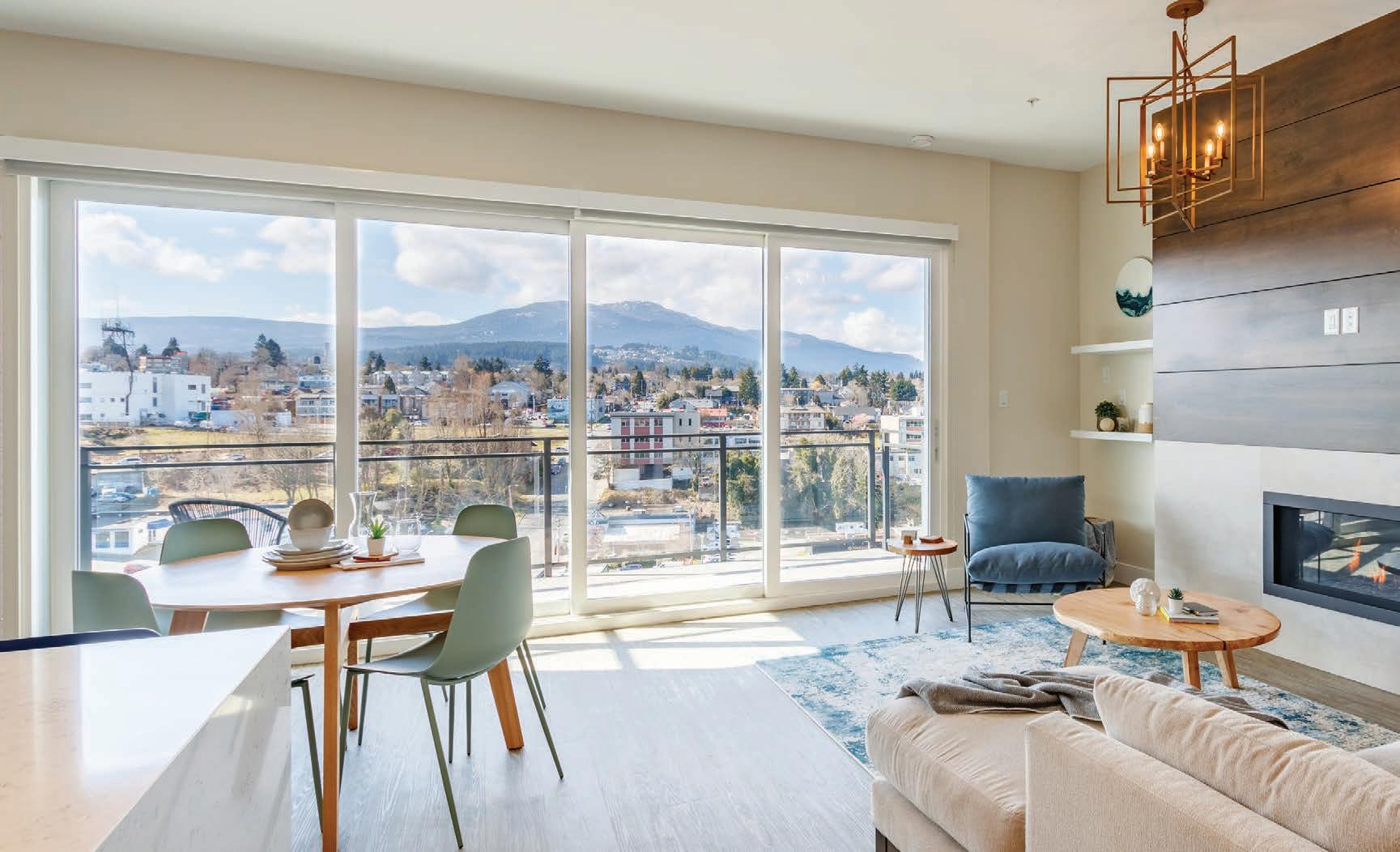
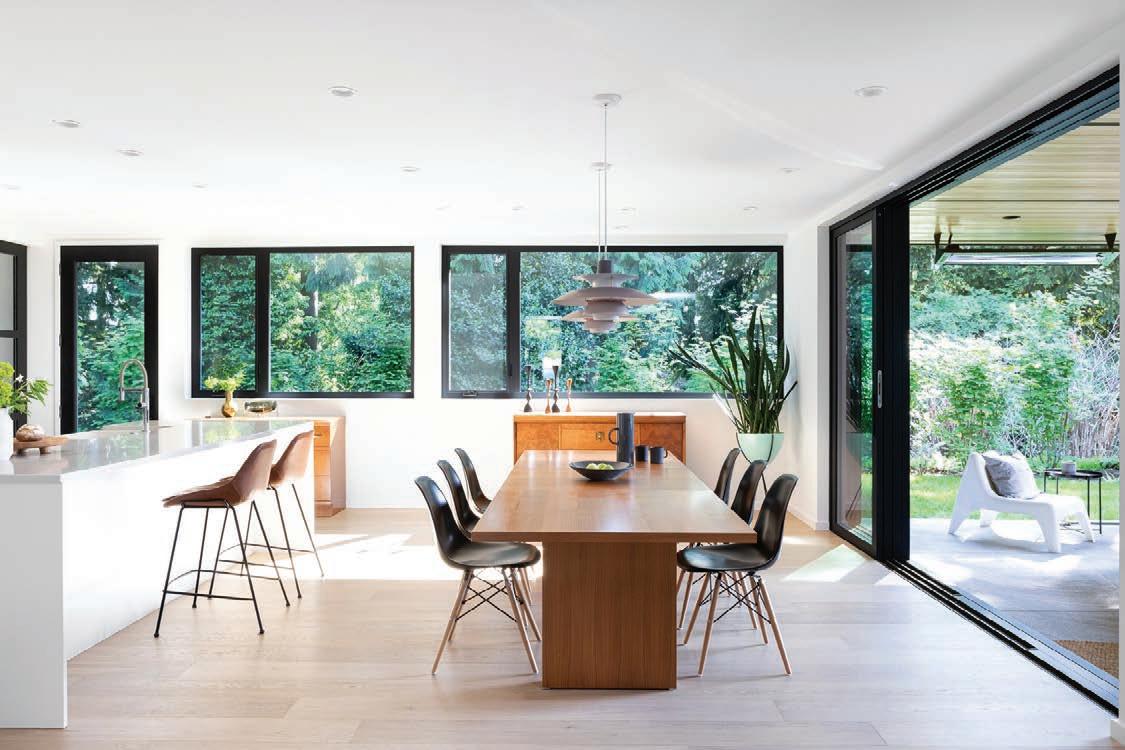
A custom home build is quite often the single largest investment in one’s life. This is a tremendous responsibility to entrust to the construction community.
Understanding this concept and exceeding customers’ expectations are what Westeck strives for and is at the core of the Westeck culture.
BIG PRODUCTS FOR ALL SIZES EMBRACE THE PATIO EXPERIENCE INDOOR/ OUTDOOR LIVING VANCOUVER 1480 Kootenay St, 1‑877‑606‑1166 CHILLIWACK 8104 Evans Rd 1‑877‑606‑1166
westeckwindows.com sales@westeckwindows.com
Opportunity Knocks
by STACEY MCLACHLAN
For the ever-evolving door and hardware industries, opportunity is knocking once again. After a few tough years struggling through supply chain issues and rapidly changing energy codes, 2023 offers producers a chance to push the limits of entry design in exciting new directions.
Driven by technological advancements, changing consumer preferences, and environmental concerns, the latest products on the market are at once high-performance and high-impact. From smart doors to sustainable materials, from residential front doors to specialty commercial garage doors, we’re taking a closer look at the exciting innovations that are transforming the door industry – and what they mean for the future of architecture and design.
GORGEOUS GLASS
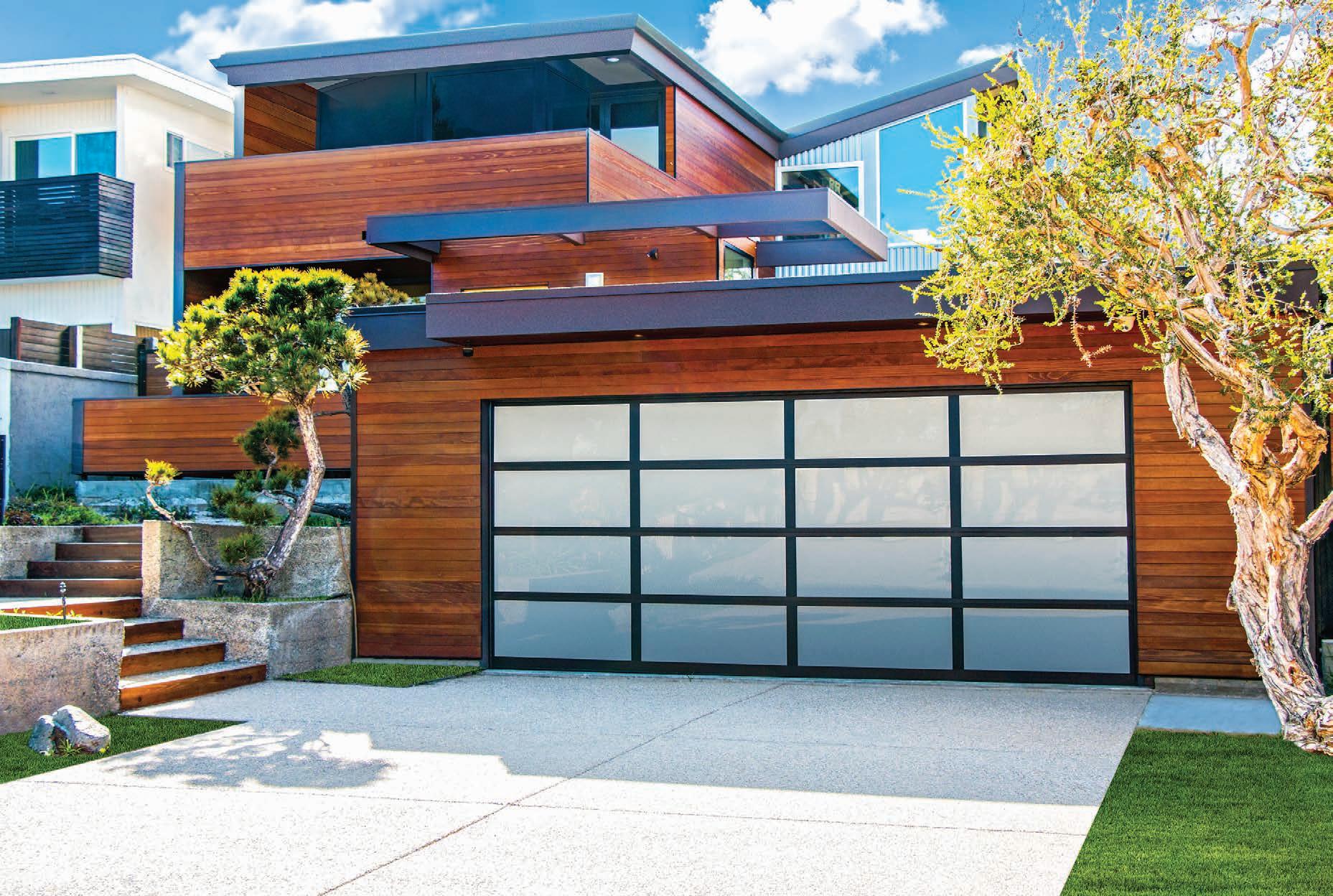
Whether for front doors, back patios, or even commercial garage-style doors, you can’t beat a glass door in 2023. “Full glass to give optimal views is the trend,” says Jon Gustad, sales director for HydAway Hydraulic Walls, which offers walls and doors for all architectural applications, with sizes available up to 36’x12’.
The door industry continues to evolve and shape building design
Don Welsh, general manager for Tormax, agrees. “We are seeing an increase in demand for all-glass automatic doors in executive style homes,” pointing to garage and pool or workout area separations, or to block off wine coolers or hosting areas.
One example of a company delivering on-trend glass door designs is Duxton Windows and Doors. Duxton offers FiberWall swinging doors and sliding doors that allow beautiful views and access to natural light. While the glass panes are transparent, the frames that hold them are a chance for designers and architects to get creative, thanks to a wide selection of colour finishes and styles. Even sage green and midnight blue are options for these premium door designs.
Of course, customers are also looking for proven performance in addition to aesthetics. And when it comes to glass doors, triple-pane windows, and windows that are Passive House Institute-certified are increasingly desirable. The demand comes from the performance requirements from both code-based policy, such as the BC Energy Step Code, as well as voluntary performance standards, like Passive House. Innotech Windows + Doors, a Canadian manufacturer based in Langley, B.C., launched the Defender 88PH+ System to meet the
demand for high-performance fenestration. The Defender 88PH+ System is a Passive House Institute cool temperate certified system that includes both windows and swing doors. In addition to thermal performance, air tightness, water resistance, and acoustical performance are other criteria that are increasingly specified by building professionals.
While black is still the most popular colour for garage doors, with wood tones a close second, Lana Winterfield, Creative Door Services’ regional manager for marketing and communications notes that glass really is growing in popularity. “Glass doors evoke a sleek, stylish, and ultra-modern look,” she says.
IN THE GARAGE
This glass garage door trend is in line with an increasing demand for modern, stylish options in this particular door category. “People want flush panel designs with cleaner lines and vertically stacked windows for a modern look,” explains Winterfield. “Smoked or satin etched privacy glass coatings for the windows is also popular.” Commercial clients are also seeking high-performance, low-maintenance solutions, of course – with a particular interest in springless opener designs.
Model
8800 garage door from Wayne Dalton.
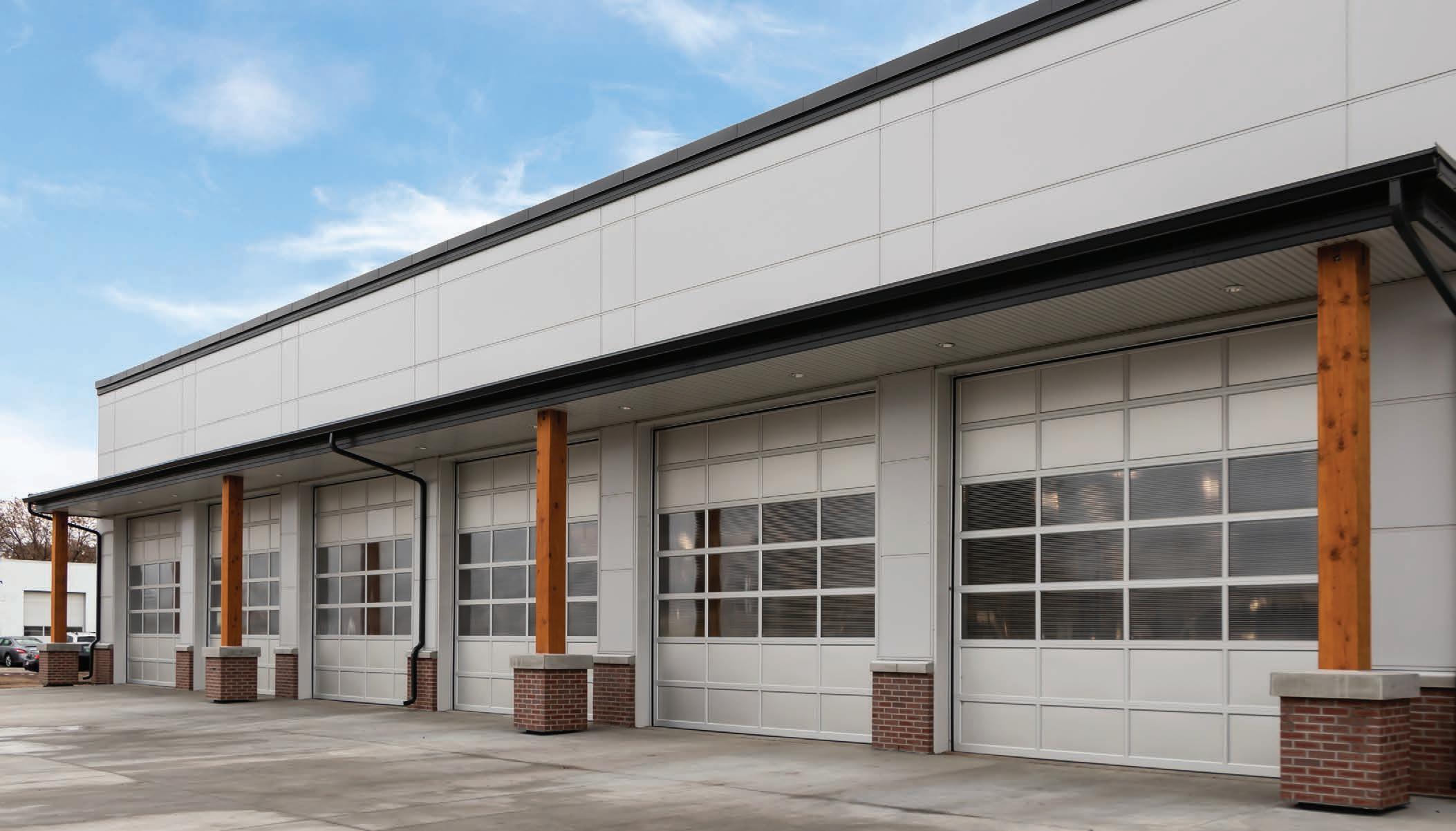



The new Microgroove garage door from Wayne Dalton creates a striking light effect and has a smaller profile and is available in woodgrain and metallic finishes – ideal for homeowners looking to match their garage door to their front door. For commercial projects, Creative Door has just launched a new direct drive operator from Manaras, which is high-cycle and springless and perfect for openings that require an air-tight closure (like car washes) as well as standard openings.
The company’s new AV 521 full view overhead door from Wayne Dalton is a sectional aluminum door that works well to maximize light penetration, bringing the light into a space. With a direct drive operator, this door is great for car dealerships, restaurants, and retail spaces alike.
Steel-Craft Door Products Ltd. is another cuttingedge Canadian overhead garage door manufacturer, committed to high-quality materials (100-percent Canadian steel) and state-of-the-art manufacturing processes. With high-end tooling and a patented Weatherlock system at the company’s disposal, it’s able to execute on a variety of styles – from residential to commercial applications – that can easily handle Canadian weather. Steel-Craft’s Climacore polyurethane insulation has best-in-class R-value, adding better strength and consistent protection from the elements. Steel-Craft can ensure the highest performance of their doors, while adding style and distinction to every home and commercial building.
SMART STUFF
Opening a door with a key? That’s old-school now. “Many of our customers are drawn to SMART operator
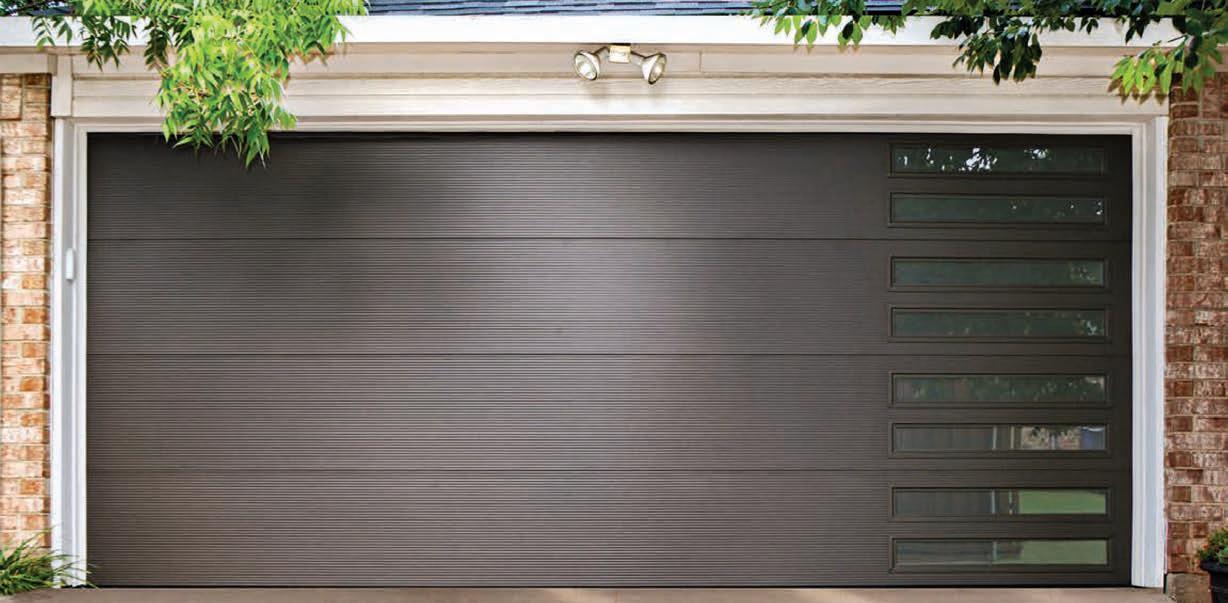
features with integration to a homeowner’s mobile phone and other smart devices like Google, Alexa, and Amazon Echo so that they can control multi-functional components, including lights and being able to open and close their garage door from their mobile device and even when they’re not home,” says Winterfield. Beyond access control for commercial applications, smart features for multi-family door entry and overhead doors are trending, too, including use with mobile apps. “Automatic door operation
continues to trend across many verticals, including multi-family, airports, community, commercial offices, to educational and more,” says Elise Mayberry, national marketing manager for Allmar. HydAway is one company offering products that integrate with smart tools. These designs have no handles or hardware, with hydraulics that can be operated via smartphone app. “People want ease of operation and the door itself to be a conversation piece,” says Gustad.
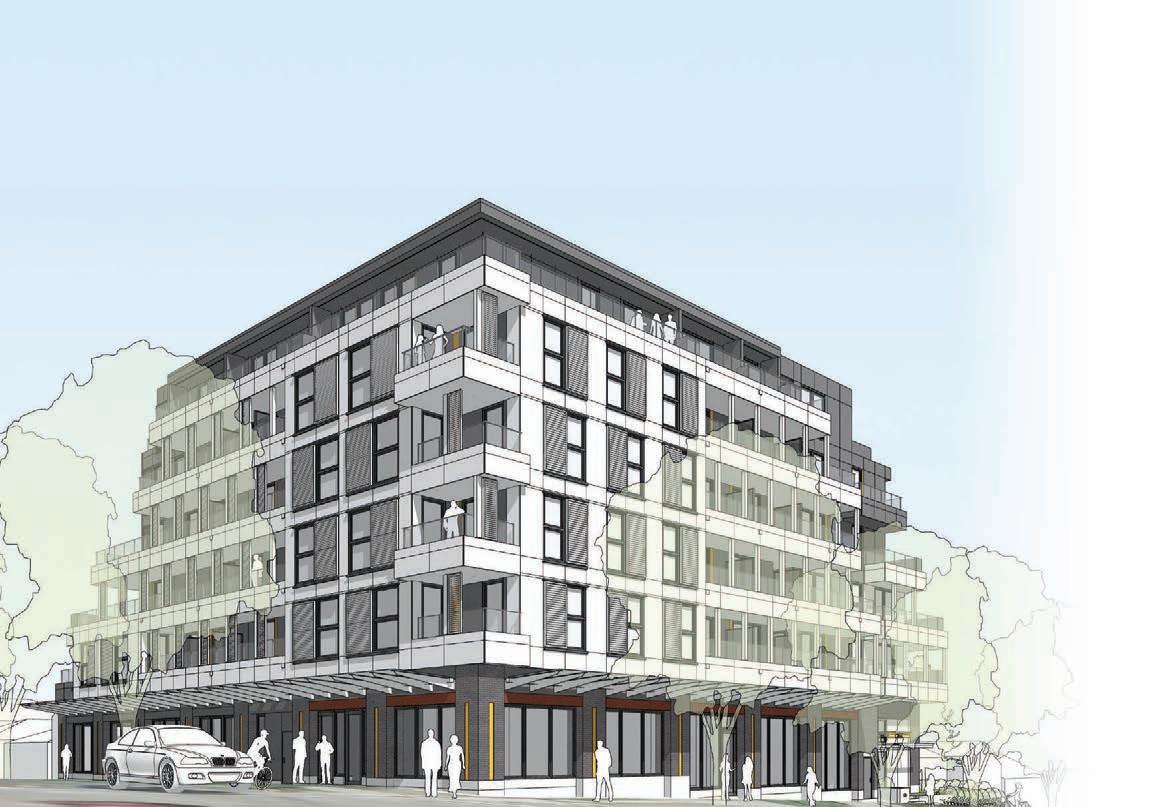
Windows + Doors for Passive House Projects

Innotech Windows + Doors is a Canadian manufacturer of high-performance windows and doors. The Defender 88PH+ System combines decades of fenestration knowledge to deliver a robust window and door system that is not only Passive House Institute certified, but that also delivers the air, water and structural performance required for highly sustainable housing developments.


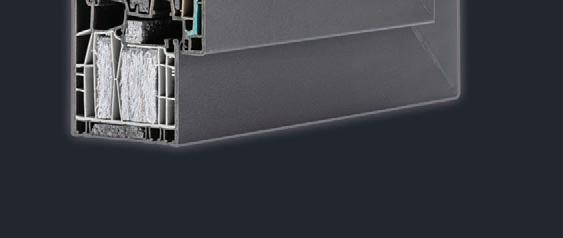
innotech-windows.com
Microgroove garage door from Wayne Dalton.
THE PEAK IN VANCOUVER, BC Passive House Multi-Family Project by Cornerstone Architecture and Edge Construction.
Everything. Except ordinary.
V8
A drawer that’s as slim as a pencil.
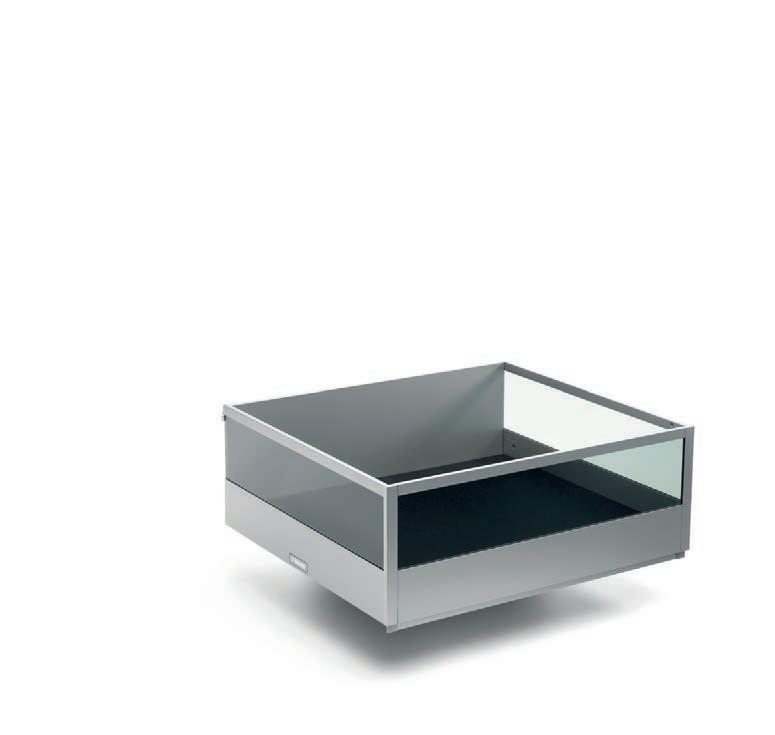
Until recently, the very idea of reducing a drawer side to 8 millimetres and, above all, making industrial production commercially viable would have been unthinkable. The new slim drawer system not only offers the only 8-millimetre one-piece steel drawer side in the world – Vionaro V8 is also the first pure-metal drawer side with no plastic elements. That produces maximum stability plus longevity and ensures an almost 100 per cent recycling rate.
Vionaro V8 Slim Drawer System.
Vionaro V8 Slim Drawer System
vionaro-v8.com
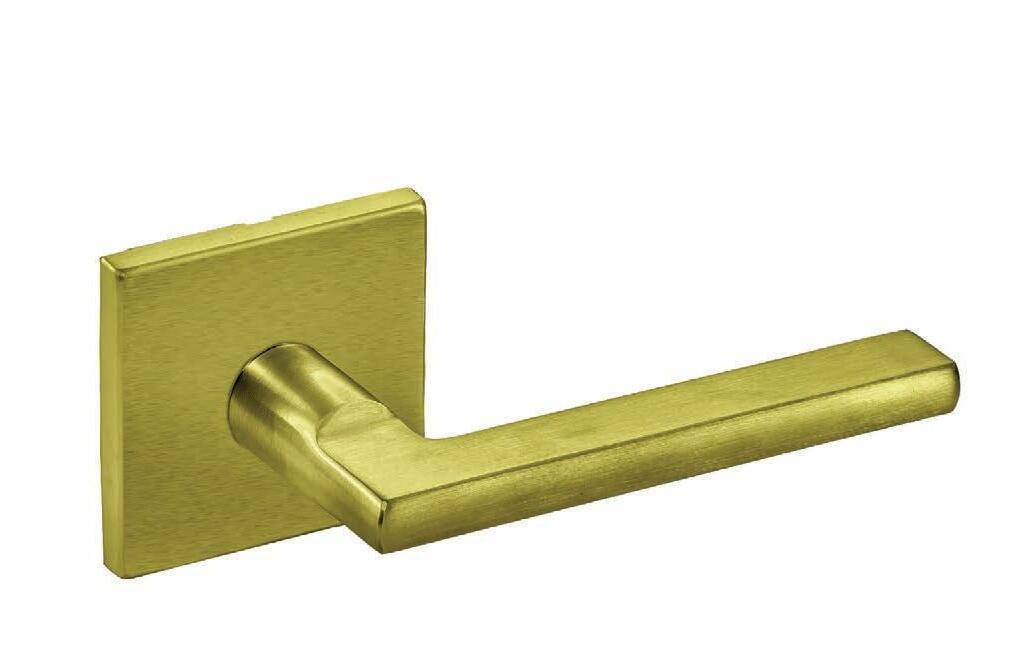
HOME HARDWARE
The standard silver and matte-black finishes of yesteryear may be on their way out. “Custom door hardware, white finishes, and wood finishes for door pulls specifically have been trending,” notes Mayberry.
Metallics, too, are hot right now. “Brushed brass hardware finishes have made a big comeback in the residential market, and we’re starting to see it cross over into the office interior world this year,” says Geoff Mainprize, principal at Trillium Architectural Products. The same brass that is making doors pop is being implemented in other spaces in the house. “Designers love how the richness of brass complements the darker wood door and millwork finishes that are common in higher-end offices.”
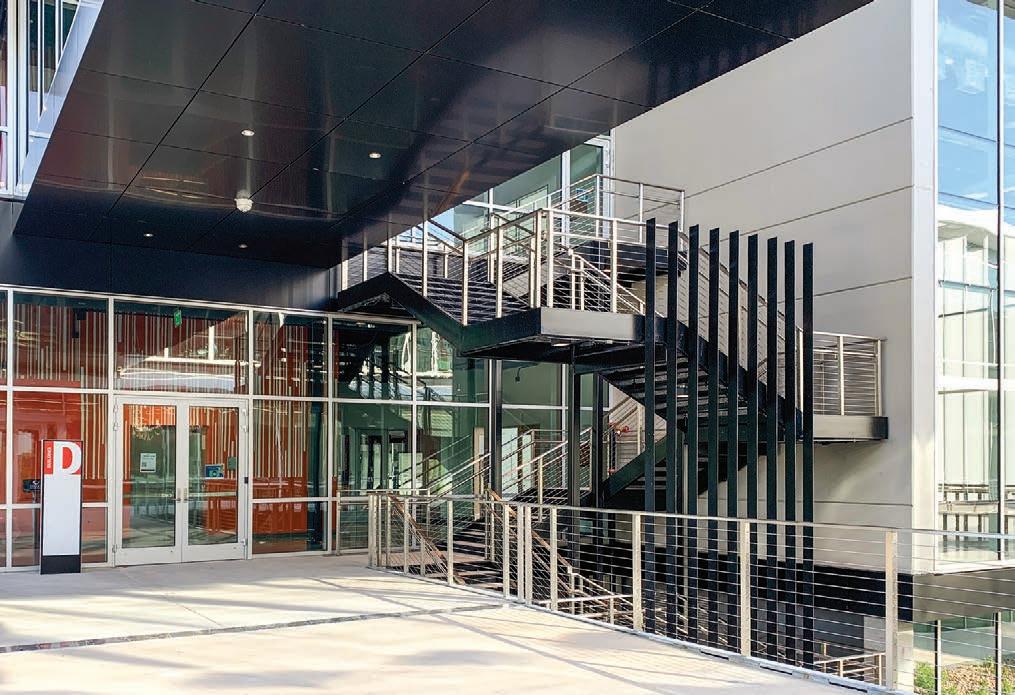
Manufacturers like Assa Abloy are presenting hardware collections, where components like levers, hooks, stops, and pulls all have a consistent style and design language. “This makes it easy for designers to visualize a complete hardware package at a glance, without having to hunt down matching components,” says Mainprize, who notes that Assa Abloy’s Collection 10 is a hot-ticket item, thanks to its clean, straight lines and flat surfaces.
Metallic finishes are popping up more often for frames as well. “Commercially speaking, we are seeing architects demanding sleeker aluminum profiles with more glass,” says Tormax’s Welsh. “It’s a real drive for system elegance, similar to the European styles.” Higher end finishes such as
stainless-steel cladding and dark-black anodized frames are the favourite for these styles.
FIRE IT UP
Energy efficiency is top of mind for many consumers, but fire-ratings should really be just as important … particularly for multi-family or commercial applications.
“Fire-rated is an unusual area, and it’s a matter of architects and designers gaining a greater understanding of what is possible,” says Fred Fulton of F1 Glazing Solutions. “The design community seems to be of the opinion that, if it’s fire-rated, it has to be steel.”
But Aluflam’s system disproves that paradigm with Contraflam fire-rated glass that is truly clear
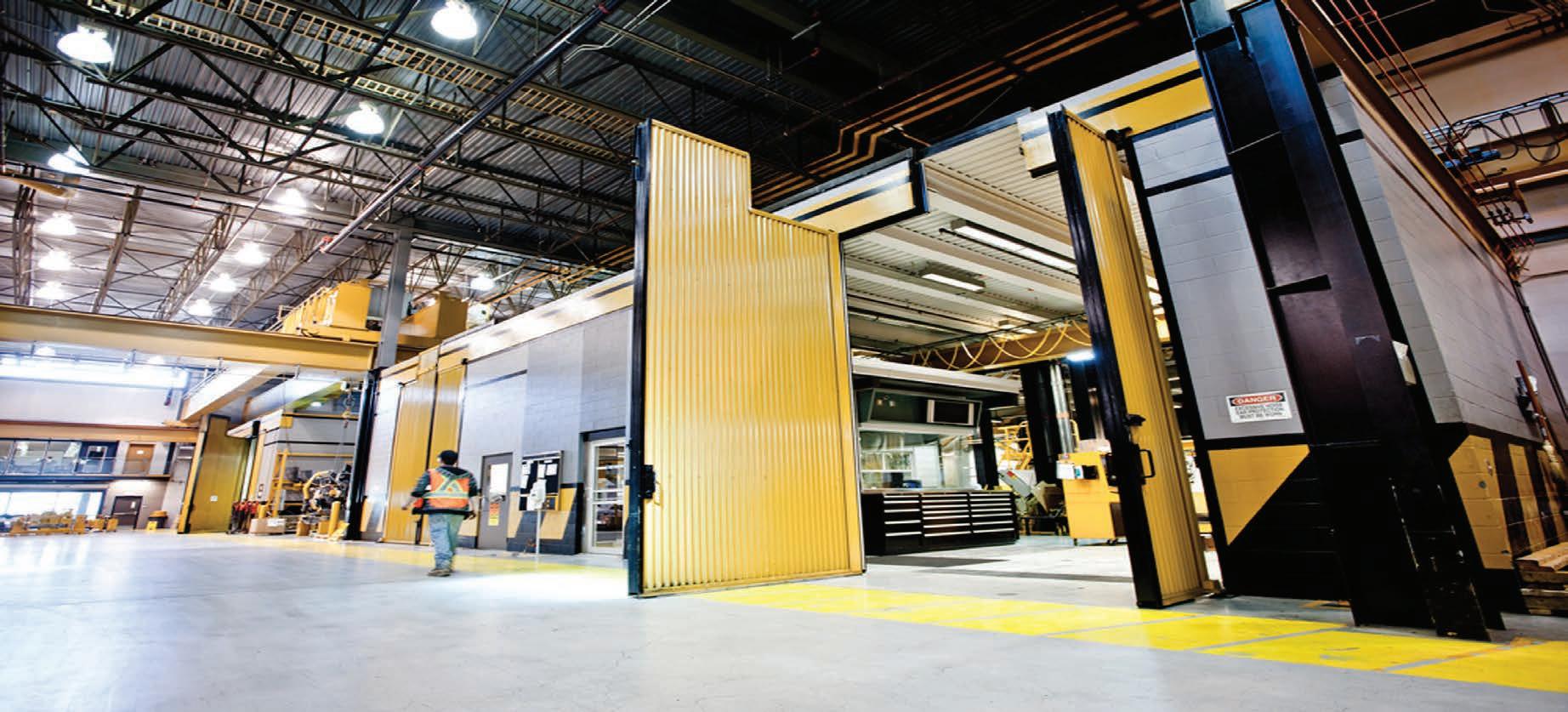
Collection
10 brass hardware from Assa Abloy.
All-aluminum fire-rated door from Aluflam.


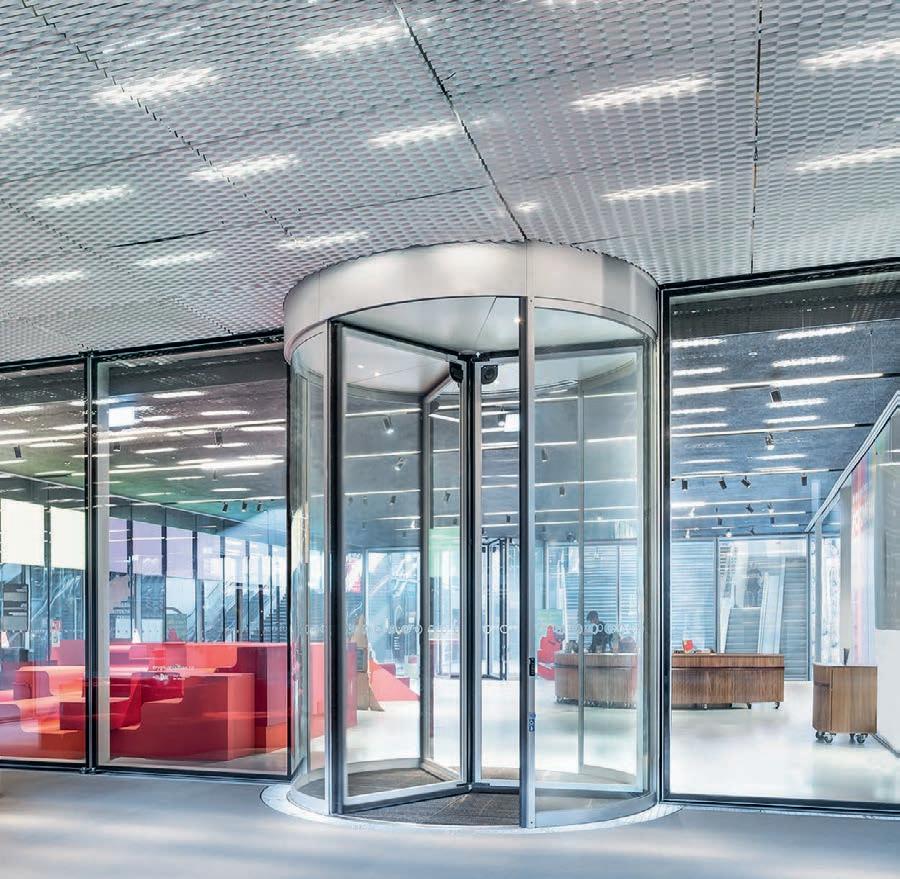
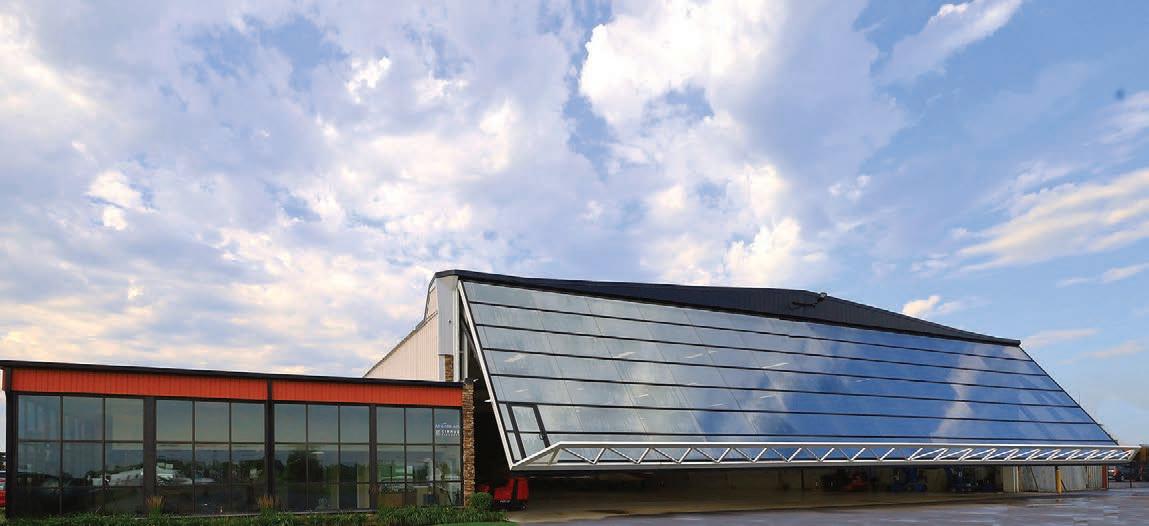
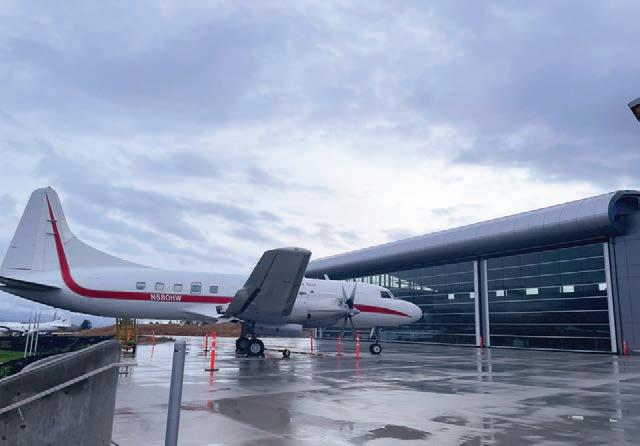

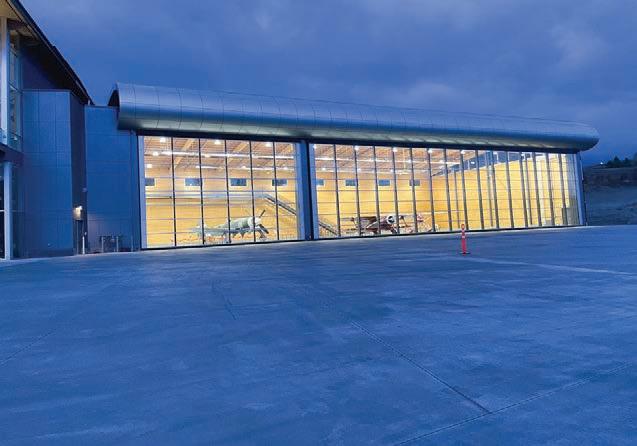
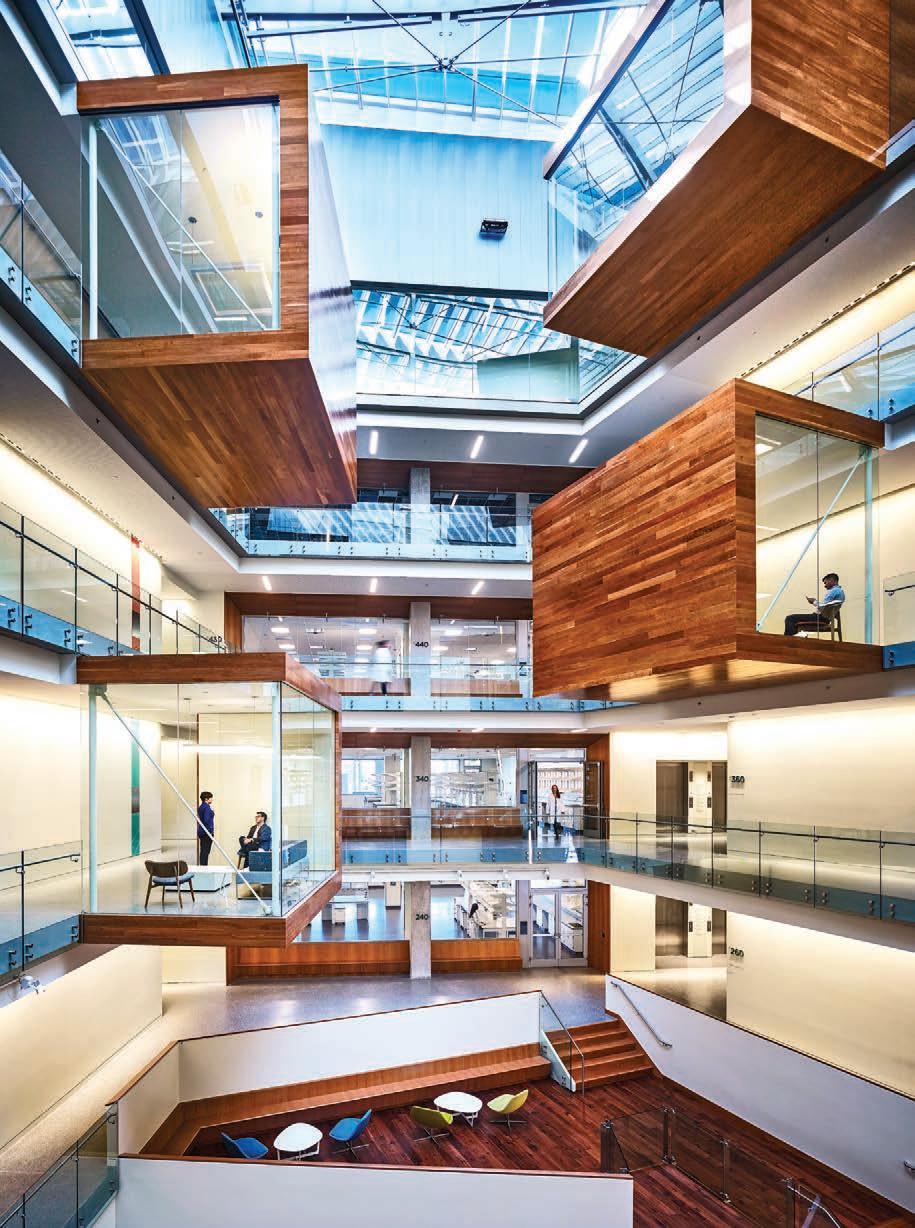
and tempered – a revolution in the world of fire safety. “Typical brands are tinted amber-to-grey and achieve impact safety commonly by applying a safety-film to one side of the glass; or by going to a laminated glass at a higher price,” explains Fulton.
F1 also offers the only all-aluminum fire-rated door on the market. “Because it’s aluminum, it features well-shaped corners, not rounded like what you get with steel doors,” says Fulton. Another benefit of aluminum doors? A full range of high-performance paints and anodic finishes to choose from.
GH Hollow Metal Doors & Frames manufacturers nearly one million doors each year – safe to say that you’ll see the company’s products in many commercial projects across Canada. With fire-ratings of 20 minutes, 90 minutes, and 180 minutes, they’re designed to meet safety code requirements for a variety of applications. Bright and cheery colours like green and orange turn a safety product into an opportunity for style.
INTERNATIONAL FLAIR
As a Canadian automated entrance provider with Swiss ownership roots, Tormax has an opportunity to bring in leading-edge European products – think door systems such as revolving and curved glass sliding doors, and high-performance hermetic sealing doors for health-care and laboratory applications.
High-tech and touchless is the order of the day, says Tormax’s Welsh. “Postpandemic, we are seeing a large increase in automatic doors with touchless activators in high traffic retail entrances and office building vestibules and corridors. Business owners are more concerned about hygiene and convenience for their customers and staff.” In the automated sector, there is continuing improvements with the safety sensor technologies, such as increased convenience with ‘virtual push button’ sensor components for sliding doors, and improved sensor setting capabilities for site-specific adjustments.
It’s clear that innovation and sustainability continue to be driving forces in shaping the future of doors and hardware. From the growing demand for smart and connected doors to the rise of eco-friendly materials and designs, manufacturers and consumers alike are taking steps towards a more sustainable and technologically advanced future. As we move further into the 21st century, it will be exciting to see how these trends continue to evolve and transform the industry. But one thing is certain: the door and hardware industry is not standing still, and neither should we. By keeping up with the latest trends and embracing innovation and sustainability, we can create a brighter, smarter, and more sustainable future for doors and hardware in our homes, offices, and beyond. A

Contraflam fire-rated glass from Aluflam.


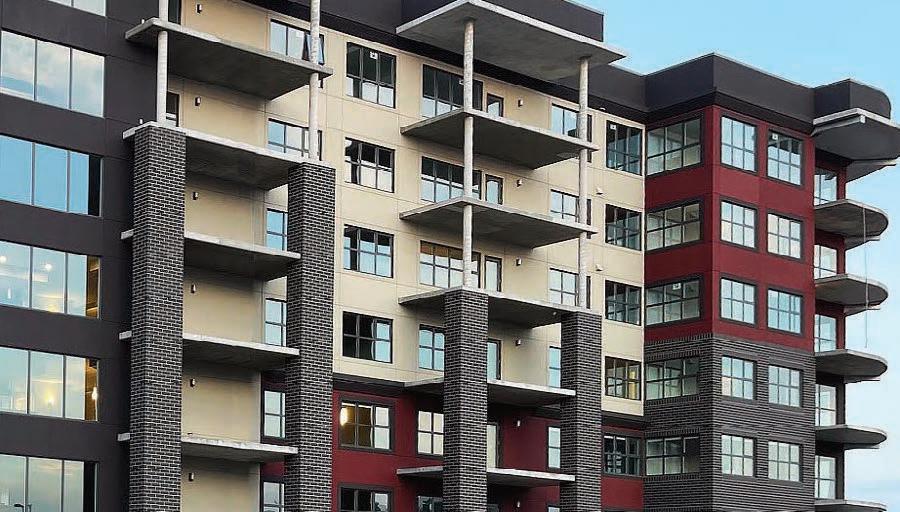
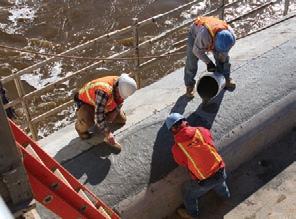

Hardware
Automatic
Electronic
Supply





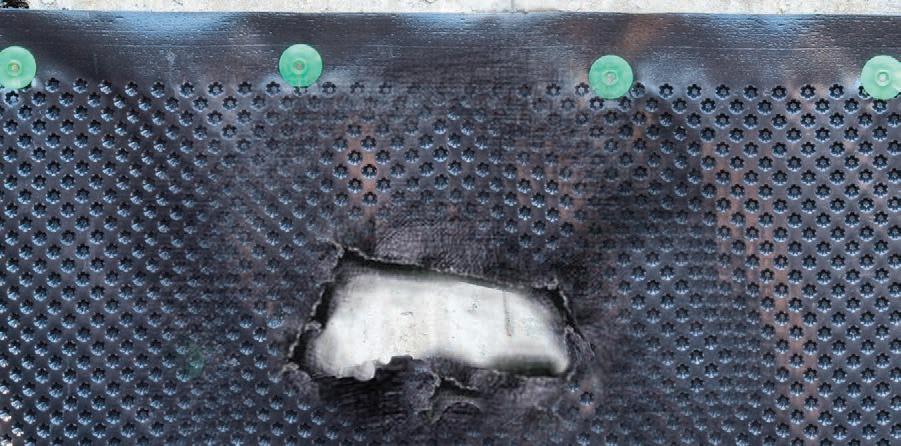





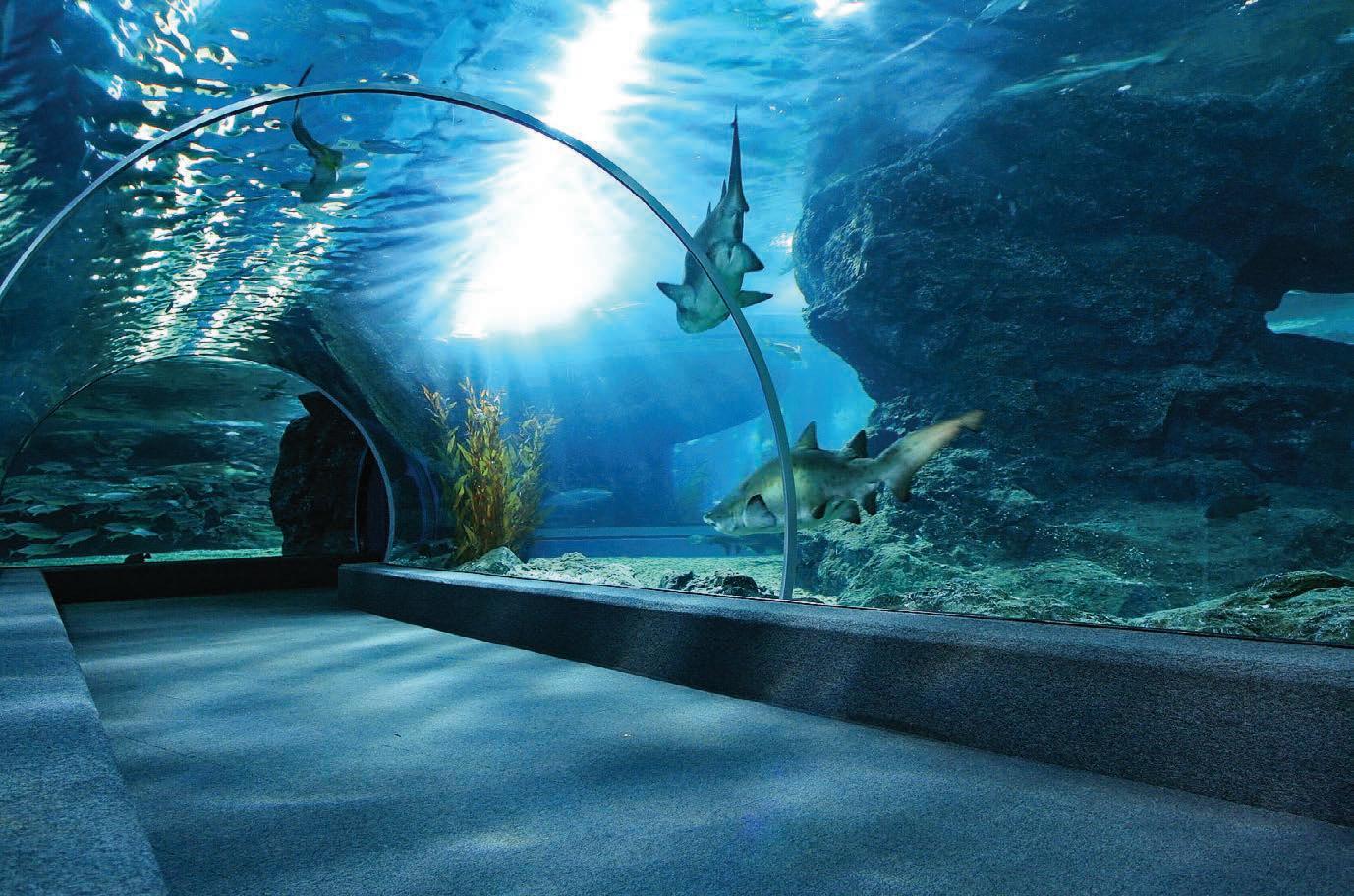
Dry & Mighty
Waterproofing solutions that rise above nature’s challenges
by ROBIN BRUNET
In terms of products, it would be difficult to beat waterproofing for sheer breadth of solutions, from membranes to admixtures and everything in between.
This of course is accompanied by what seems like constant improvements and variations of these products. “We recently introduced a liquid version of our Eucon Vandex AM-10 powdered crystalline waterproofer called Eucon Vandex AM-10L,” says Brian Salazar, national business development manager at Euclid Canada.
Euclid is the only company to offer a liquid version of the commonly used Eucon Vandex AM-10. “Since most admixtures that go into concrete are liquid, this will be much easier for the ready-mix producers to administer through our standard dispensing equipment, rather than having to add the powdered products manually,” Salazar says. “The same great benefits are offered in the liquid version.”
Eucon Vandex AM-10L is a liquid integral crystalline admixture formulated to interact with concrete capillary pore structures to provide a system that greatly reduces the permeability of concrete through the formation of tiny crystals that block the pores. It can also seal microscopic cracks and contribute along with other products like sealers to a system that waterproofs a structure. Eucon Vandex AM-10L can be deployed in above- and below-grade applications, plus it contains no added chlorides or chemicals known to promote the corrosion of steel.
Kryton International Inc., which is currently celebrating its 50th anniversary, is famous for its array of crystalline waterproofing and abrasion and erosion resistance solutions that continue to be used in the most demanding industrial circumstances, as well as for more routine residential and commercial water ingress prevention.
Kryton president and CEO Kari Yuers discusses the importance of her company’s Krystol Internal Membrane (KIM), a hydrophilic crystalline admixture used to create permanently waterproof concrete. KIM lowers the permeability of concrete and is used in place of surface applied waterproofing membranes. By stopping the transmission of water through concrete, KIM adds durability and longevity to concrete by protecting it against chemical attack and corrosion of reinforcing steel.
She says, “KIM is indispensable as developers strive to build better and achieve sustainability standards. The whole point of building durable structures in concrete is that they can last in excess of 100 years, and the less components that need to be replaced means less carbon output. KIM helps achieve that durability.”

Yuers goes on to note that KIM was recently used in the Hope Centre at the Lions Gate Hospital campus for above-grade walls to ensure longevity of the structure, without the need for coatings and sealers that must be reapplied over its life span. “The concrete will perform well without the added cost and environmental impact of such materials,” Yuers says.
In 2022, the Vancouver General Hospital Health Centre demolition and rebuild used KIM on all below-grade tunnels, which provide critical links and are at the lowest and wettest part of the project. Similarly, the BC Children’s and BC Women’s hospital redevelopment used KIM as well as full technical site support to ensure that the facility’s concrete water tanks system would be waterproof.
Yuers adds, “The recent White Rock Pier rebuild added KIM to the concrete to ensure longevity in saltwater, and the product was also used at the Olympic Cauldron pond at Jack Poole Plaza to protect from freeze-thaw damage and de-icing salts.”
Another company that provides concrete waterproofing by crystallization, Xypex, recently introduced a new product designed specifically for protection in harsh sewer conditions, where levels of H2S cause microbial induced corrosion.
Xypex Bio-San C500 combines potent antimicrobial protection along with the crystalline technology of the Xypex Admix C-Series: the product contains bio-active mineral solids that become permanently fixed within the cement matrix impairing bio-film formation, thus inhibiting the growth of acid-causing sewer bacteria such as thiobacillus – in addition to stopping the infiltration/ exfiltration of water.
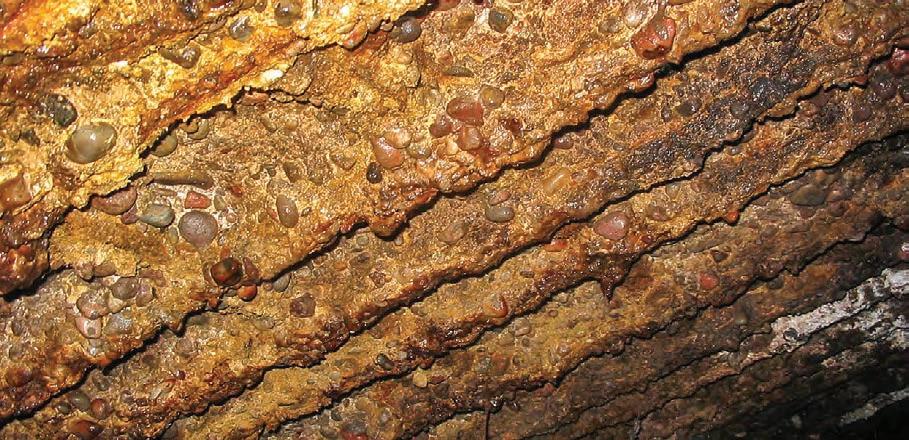
Microscopic view of Eucon Vandex AM-10L liquid integral crystalline admixture.
Xypex Bio-San C500 guards against corrosion and microorganisms in severe sewer conditions.
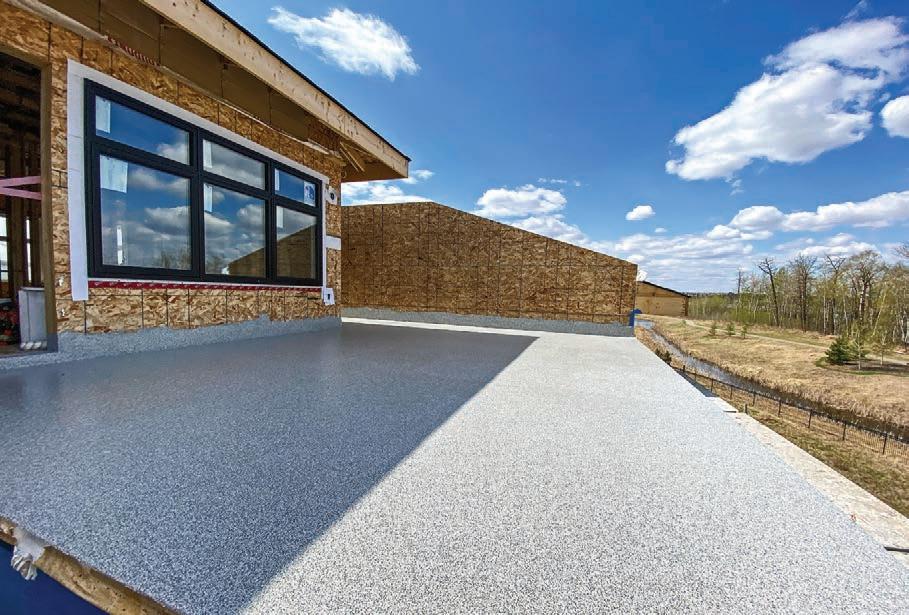
Sundecks in residential, commercial, and even industrial facilities are as susceptible as roofs to the damage caused by the elements, but Flexstone deck coatings continue to gain favour as the best alternative to traditional membranes. Their desirability starts with the manufacturing process: Flexstone is formulated to handle vehicle traffic and dramatic temperature fluctuations. This contributes to the product being long lasting – on residential sundecks Flexstone can easily last up to 30 years before repairs or a new topcoat is needed.
All the components of the Flexstone system are designed to flex together, so movements and shifts in a deck won’t cause cracking or leaks. Also, unlike traditional membranes, if part of the four-ply CCMC approved rubberized coating is damaged, the fix is easy: just sand the damaged area, wipe down, and apply a new coat.
Yet another benefit of Flexstone is aesthetic appeal. A variety of finishes are available to suit nearly any design scheme (the mock-aggregate finishes also act as tough but flexible outer shells that keep the underlying membrane safe).
One of the main challenges faced by Glade Schoenfeld, a professional engineer in the building science and restoration practise of RJC Engineer’s Vancouver office, is impressing clients about the critical role maintenance plays in the ongoing ability of any system to provide efficient waterproofing. “Rooftops in strata developments are a great example, especially roofs that double as rooftop gardens,” he says. “Plants with aggressive roots such as bamboo are popular because they tend to grow fast and are very hardy but super-aggressive roots can easily destroy waterproof membranes within a few years.”
“I’ve even seen a root ball of a beautiful 35-year-old rhododendron plant that had grown entirely under a roof membrane destroying it in the process. The fact is if any tree or plant grows too big, it spells trouble – and pulling them all out and replacing with new growth is not only costly, but in residences it can cause problems with homeowners because their view changes or the privacy provided by the mature planting gets removed.”
That’s why Schoenfeld and his colleagues spend considerable time during the planning stages of new developments and renewal projects working with landscape architects to advise on appropriate ways to ‘green’ areas that must also be waterproofed. “For instance, we talk a lot about the use of planters on rooftops, which are a simple and effective way to isolate the plantings from the waterproofing system and protect membranes from root growth,” he says. “This is in addition to other worthwhile measures, such as installing leak detection systems beneath membranes that protect sensitive spaces below, along with regular roof maintenance.”
As for waterproofing products, Schoenfeld says his team puts a focus on durability and longevity of the waterproofing systems, “and the systems used must be selected very carefully, because you only have one shot to get things right.”
The real challenge in Schoenfeld’s work pertains to all these measures being fully embraced by building owners. “Unfortunately, whenever you have rapid development, shortage of skilled labour, and escalating costs there is pressure on owners to select lesser products and systems,” Schoenfeld says. “So, we have our job cut out for us. We continue to advocate for quality systems installed by skilled contractors. It may cost more initially, but the outcome is tremendous cost savings over the long run.”
Ashley Foster, technical representative for Engineered Site Products Ltd. (ESP), is even more outspoken in the challenges facing the waterproofing sector in construction.
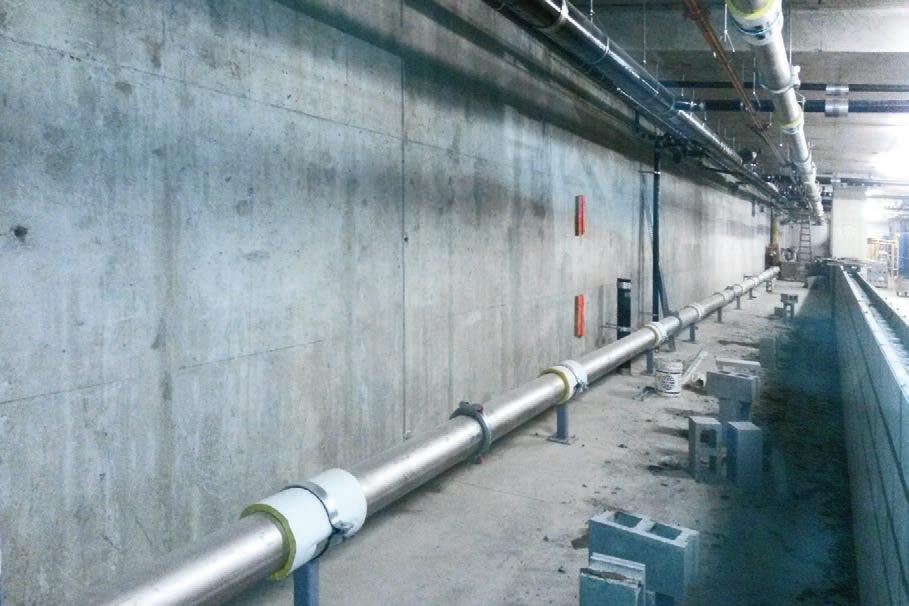
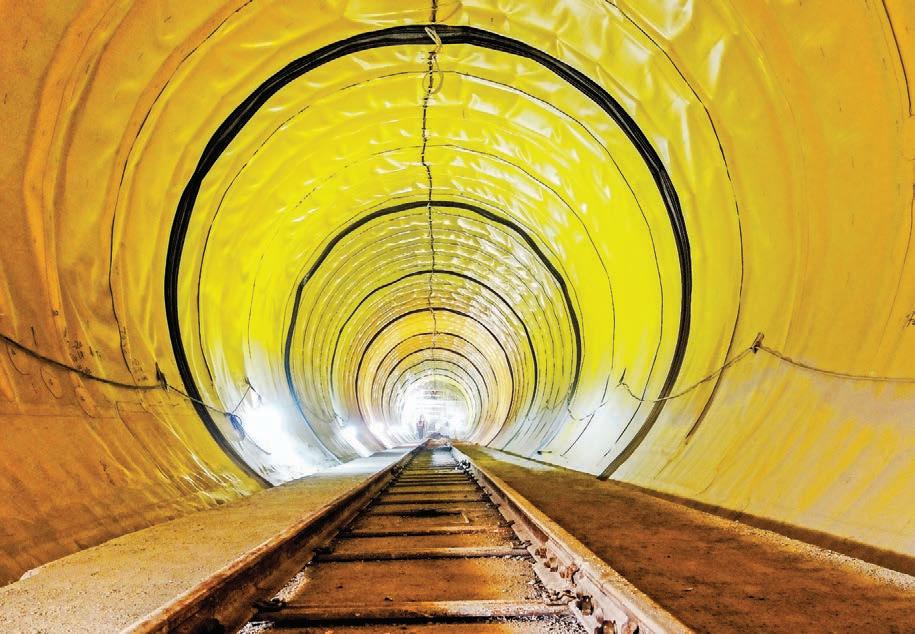
ESP has been collaborating with design and construction teams in Western Canada since 1983, providing full support for division 7 construction detailing and design assistance. The company’s primary focus is new institutional, commercial, and mixed-use projects, along with a strong commitment to tunnel work.
Foster says, “Our biggest focus is quality assurance, which begins with a review of substrate preparation – because if the preparation isn’t done correctly or is skimped over, the best waterproofing system in the world won’t perform as intended.”
For the record, ESP is the master distributor in Western Canada of CETCO waterproofing products, including Voltex (sodium bentonite layered within a durable geomembrane to provide protection for below-grade concrete construction such as that of Soho, a mixed-use project that utilized Voltex DS under slab and Voltex on the walls) and Coreflex (reinforced thermoplastic membrane integrally bonded to a proprietary Active Polymer Core layer, with fully welded seams).
Foster says that inadequate substrate prep “is a common failing, and voids that should be filled with foam or grout cause membranes to swell and inhibit performance. Also, virtually everything needs to be checked to guard against disruptions.”
Foster reports that inspections have greatly dropped off over the past five years, “Yet the warrantees we provide are contingent on the owners paying for inspections from our certified team.
“I understand the resistance: proper prep, waterproofing, and inspections are expensive, and in a time when developers are trying to save costs we’re typically the first service to be engineered down. But waterproofing isn’t just about innovative products. We have to take a holistic approach to the issue, in all building projects.” A
Sundeck protection from Flexstone deck coatings.
Krystol Internal Membrane hydrophilic admixture creates permanently waterproof concrete.
Coreflex reinforced thermoplastic membrane.
CONTEMPORARY HARDSCAPE DESIGN WITH MODULAR MATERIALS
How modularity enhances creativity and simplifies installation
Acontemporary, custom outdoor living space is ideal for most homeowners. They want their outdoor spaces to reflect their personalities and complement their existing home style. The demand for more custom applications, however, can present challenges for contractors.
Creating fully custom designs can involve many complexities, both from the design and installation perspectives. This can be on top of increased demand and workloads, causing added stress on teams. Fortunately, modular design and products are making it easier to create custom designs that make clients happy and cut down on installation time.
“Modular design works off of common nominal sizing, which allows you to create intricate designs with more speed and precision,” says Joe Raboine, Vice President of Design, Oldcastle APG. “You can pair various shapes and sizes together, creating custom patterns or blending different color palettes together. We’ve seen modularity in outdoor kitchens for several years now, but it has moved into all areas of outdoor design, bringing contractors and clients more flexibility.”
Simplifying Design and Application
Modular pavers bring more ease to the design and installation processes, thanks to their innovative structure. Working off the common nominal sizing Raboine mentioned reduces the number of cuts needed to create custom patterns and designs.
“Contractors have much more creative freedom working with modular hardscapes,” says Raboine. “They can mix and match different shapes, like diamonds and parallelograms, to create visual interest and depth, or use the same shape in different color tones. The possibilities are nearly endless.”
Using modular products also can add a sense of cohesiveness across an outdoor space. Contractors can pair the same or similar pavers throughout for a linear appearance or use patterns and geometric shapes to distinguish different outdoor rooms. For a biophilic touch, grass, plants or artificial turf can be integrated to blend the use of pavers into the landscaping.
While modular pavers offer several benefits, the reduction in installation time is the most significant for contractors and homeowners alike.
“Having the ability to save time on the jobsite means contractors and crews can complete one project sooner and move on to the next, increasing their ability to take on more work,” adds Raboine. “For homeowners, this means less interruption to their daily life and activities, and they get to enjoy their new outdoor living area sooner.”
Adding Dimension Through Product Selection
Belgard has been at the forefront of modular paver design, introducing products that can be used for a variety of hardscape applications. The new Origins and Dimensions paver lines offer contemporary design options while reducing installation time.
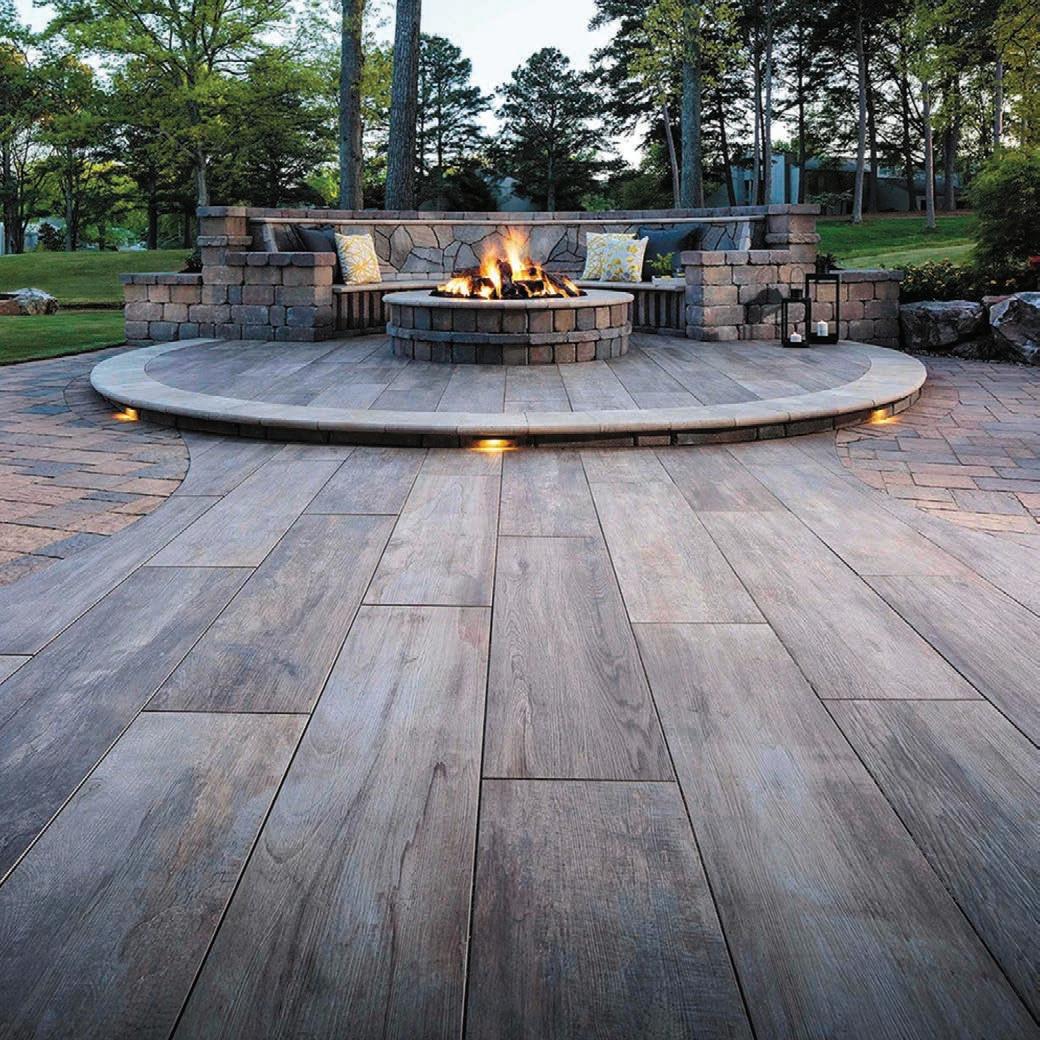
“Origins and Dimensions are two of the latest additions to our line of modular concrete pavers,” says Raboine. “We created these products to give contractors and homeowners more options in terms of both style and versatility. Each one has its own unique, contemporary look that can be used on its own or paired for a beautiful effect.”
Origins is part of Belgard’s Natural Collection and mimics the look of natural stone. This three-piece system with accent pieces is cut on uniform dimensions, making installation faster and more convenient. With multiple color options in both warm and cool tones, Origins pairs well with any exterior home style.
Dimensions is defined by its clean lines and smooth texture. Part of the Metropolitan Collection from Belgard, it’s the perfect complement to modern design styles and comes in several warm and cool-toned colors. Because of the uniform dimensions, Dimensions pavers are compatible with the Origins line, allowing for more creative patterns.
“Modularity is all about maximizing efficiency and enhancing creativity,” says Raboine. “The design process should be enjoyable for contractors and their clients, and modular hardscapes allow you to have more fun with the concepts. Products like Origins and Dimensions let you get more personalized without compromising on time or budget.”
Improving Functionality for Everyday Living
Functionality is a top priority in outdoor living today. Modular design allows for increased customization without added time, meaning contractors can meet client expectations more easily.
Modular design also makes it easier to insert additional features that enhance overall functionality. The ease of design and quicker installation allow for focus on added features, such as lighting, shade structures or sound equipment. Modular hardscapes also can be used to construct pieces like built-in benches, maximizing comfort and convenience.
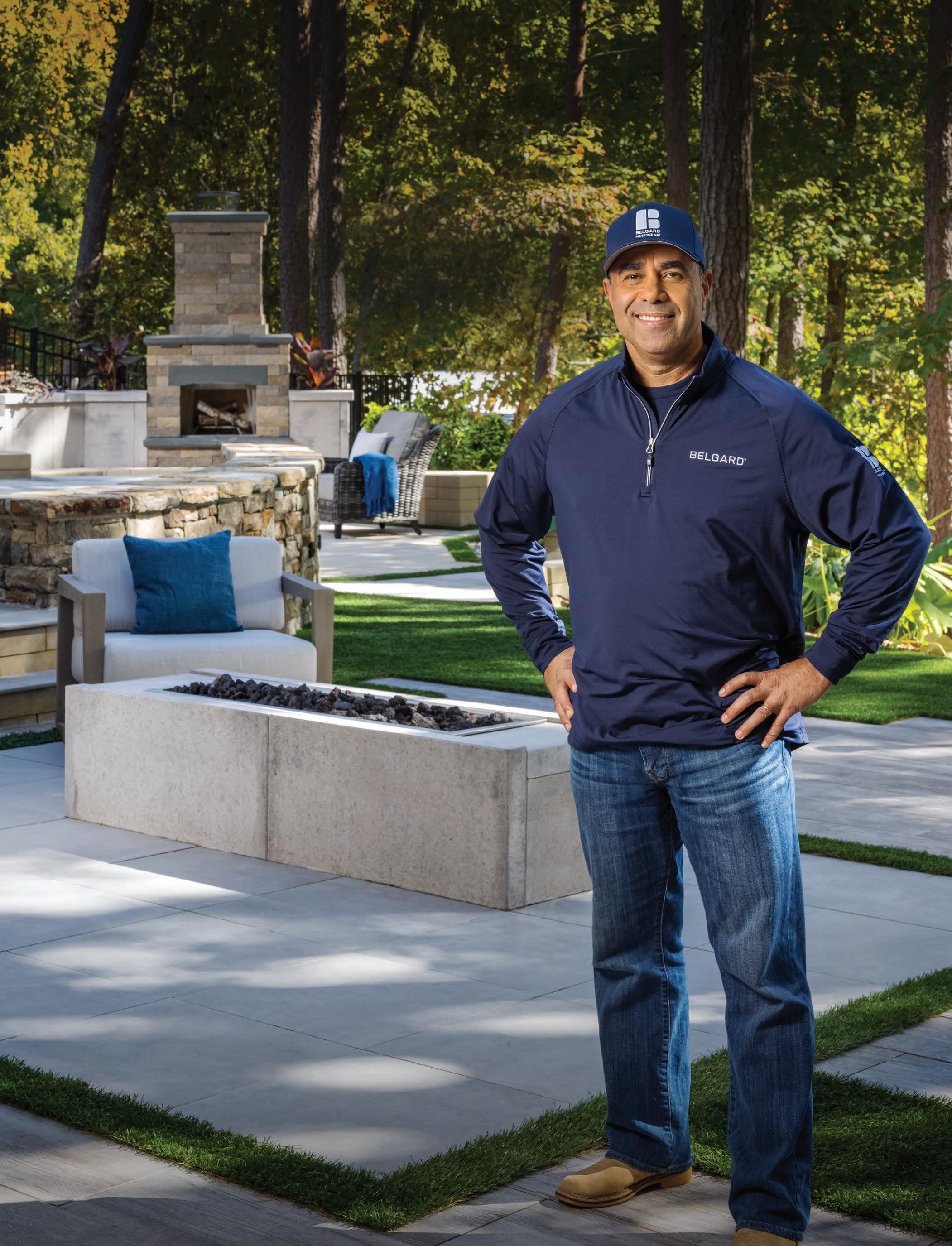




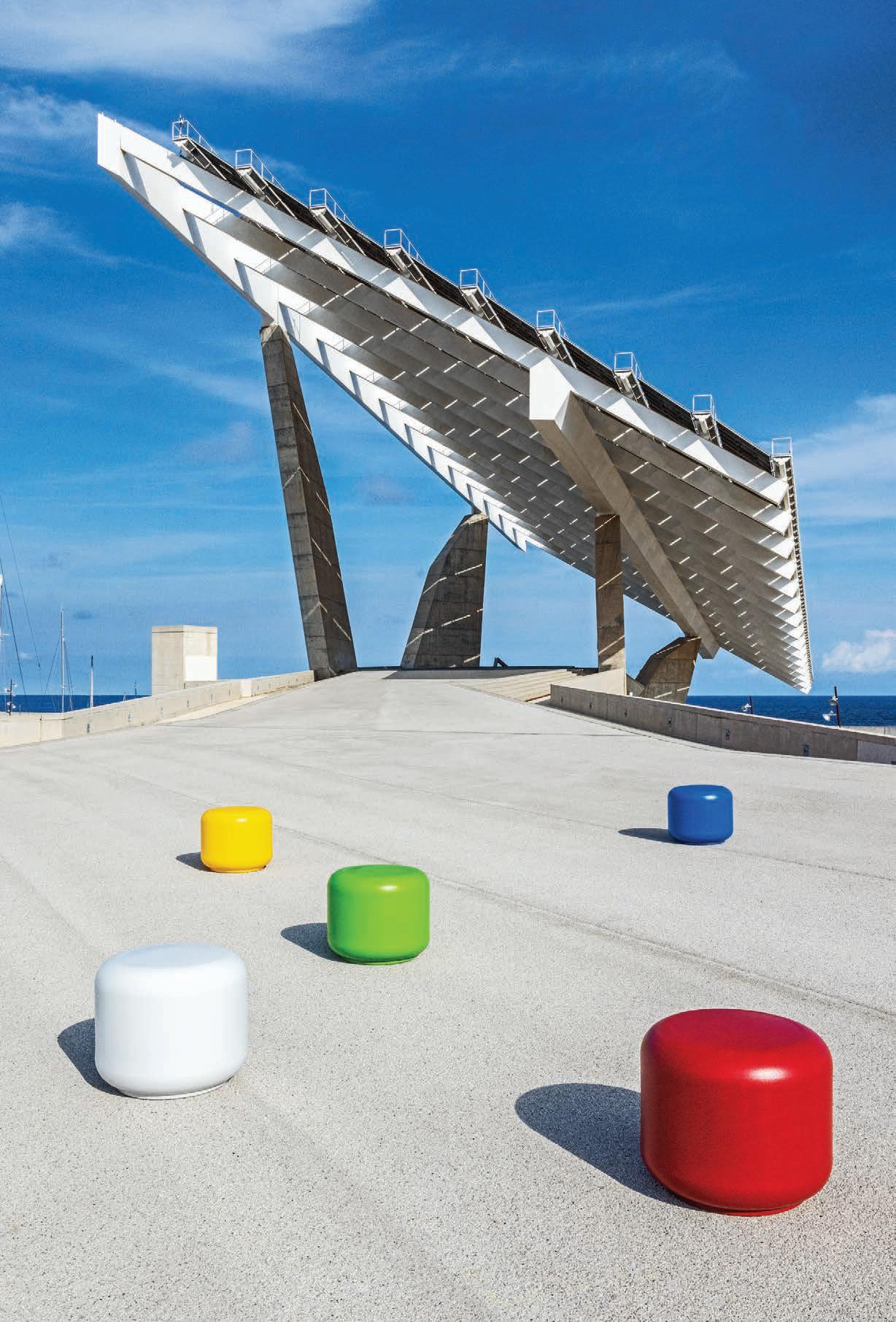
Rock Your Outdoor Space
Innovative landscape products thrive despite inflation challenges
by ROBIN BRUNET
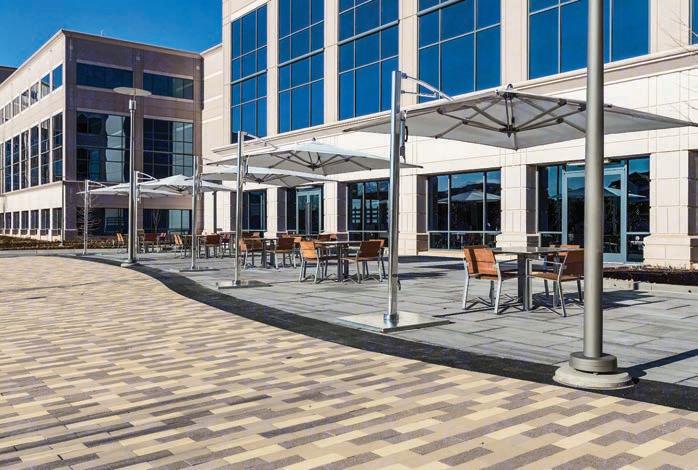
The landscaping sector was famously busy during the lockdowns due to property owners with lots of spare time and savings; and it is equally busy in 2023 despite inflation threatening to take its toll on demand overall.
Kristie Fitzgerald, marketing manager at Ohiobased The Belden Brick Company, says, “Business has been constant this year, and with the expansion of products in our Belden Clay Pavers’ series and a steady stream of innovative clay brick products, we are uniquely capable of providing the right products for the right project.” She adds that her company’s commercial and residential solutions are as popular in Canada as in the U.S.
Aside from delivering the highest-quality brick products, Belden brick is bestselling because of its versatility. “To take just one example, our Belcrest and Antique Colonial face brick can transitionally be used for segmental paving,” Fitzgerald says. “Architects and designers tend to get creative with our offerings, and we encourage that creativity in our manufacturing of distinctive colours, adaptable sizes, and exclusive textures.”
This is evident in Belden’s new Utopian Series extruded clay pavers, which feature triadic colour schemes of aesthetically pleasing colours and oneof-a-kind imagined textures (the extrusion method exhibits a swirl texture unique to the industry, and adding to this aesthetic is the fact that The Belden Brick Company is the only company that continues to reel-cut its coarse-grind pavers).
Belden has also rethought traditional clay pavers with its Plank Series Pavers, a long linear contemporary look and feel suited for the most demanding commercial applications. As with all Belden Clay Pavers, the benefits include a throughthe-body colour (over 35 to choose from) that will not fade over time, including after cleaning. The Plank Pavers can be laid flat or edge set to construct running bond, stack bond, herringbone, and basket-weave patterns or combined with the company’s Standard and Standard eight-by-eight paver sizes to create random pattern possibilities.
The Belden Brick Company’s new tumbling process gives its tumbled pavers an appealing, timeworn appearance and is an excellent alternative to the company’s sand-molded pavers when a more robust solution is needed. Emulating design cues of quarried stone, Belden Tumbled Series Pavers were sold in standard paver size until the standard and jumbo plank paver sizes were introduced to increase the range of patterning possibilities.
Belden Plank Series Clay Pavers.
Stul site furniture from Landscape Forms’ Air Collection.
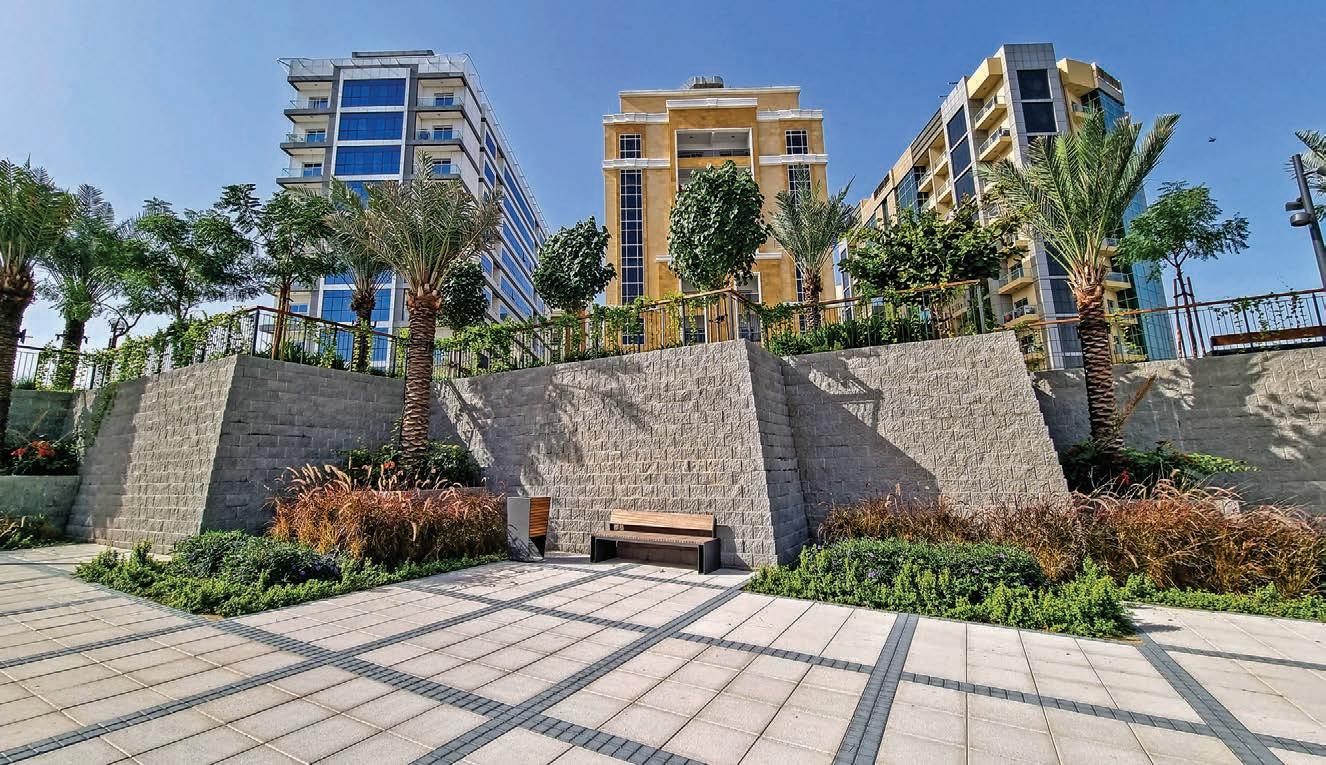
Terraforce, the South Africa-based provider of the original, reversible, hollowcore retaining block, continues to methodically develop its presence in Canada. Elsewhere in the world it has enjoyed steady expansion over the last decade, and as a result there are a host of examples on the many creative ways the blocks can be used.
Case in point: at the Al Jalila Children’s Hospital in Dubai, the incorporation of plantable rows into a noise barrier was achieved by reversing the blocks –round side facing outwards – every third row. Simon Knutton of Knutton Consulting in Johannesburg was credited for providing this wall design.
As with Belden, versatility is a key to Terraforce’s success. For example, interlocking Terraforce 4x4 step blocks can easily be used for stairs or retaining walls: they are simply laid on their sides to form steps and filled with a weak mortar mix for stability. And with equal ease, the blocks can be transformed into seating arrangements (large-scale examples of this include curved school seating arenas).
Holger Rust, head and founder of Terraforce, says, “Given their complexity, the design and construction of many of these structures must be undertaken by a professionally registered engineer. So, to facilitate the process and add value, we
developed our Maxiwall Pro design software, which is freely available to the market.” Terraforce has also established a library of technical manuals that can be downloaded from the company’s website. “However, what we really want to bring across are the endless possibilities to environmentally engineer beautiful structures,” Rust adds.
Brock White Construction Materials has a long history in Canada and the U.S. of using well-established brand products for landscaping/erosion control projects, in addition to the company’s expertise in waterproofing and building envelope construction. “Among our many suppliers is Basalite and Mutual Materials,” says Brock White’s director of marketing, Darci Smart.
Both of these companies provide a comprehensive range of products for all outdoor landscaping work. Basalite Concrete Products offers a complete line of versatile pavers well-known for quality, beauty, and functional applications; it also provides contemporary, traditional, and engineered retaining walls, plus outdoor living kits that enable indoor elements such as kitchens and fireplaces to be part of an exterior landscape design.
Laura Malashevsky, Basalite’s technical sales representative, reports that new products continue to emerge from the company’s NCMA-certified plant in Western Canada. “Rhombus is a 100-millimetrethick paver with a unique diamond shape – in fact, we’re the only manufacturer in the west to provide this shape, which gives the appearance of movement and depth using neutral colours and hexagonal patterns.” The substantial thickness of this paver makes it suitable for heavy-duty applications.

Terraforce 4x4 step blocks retaining wall.
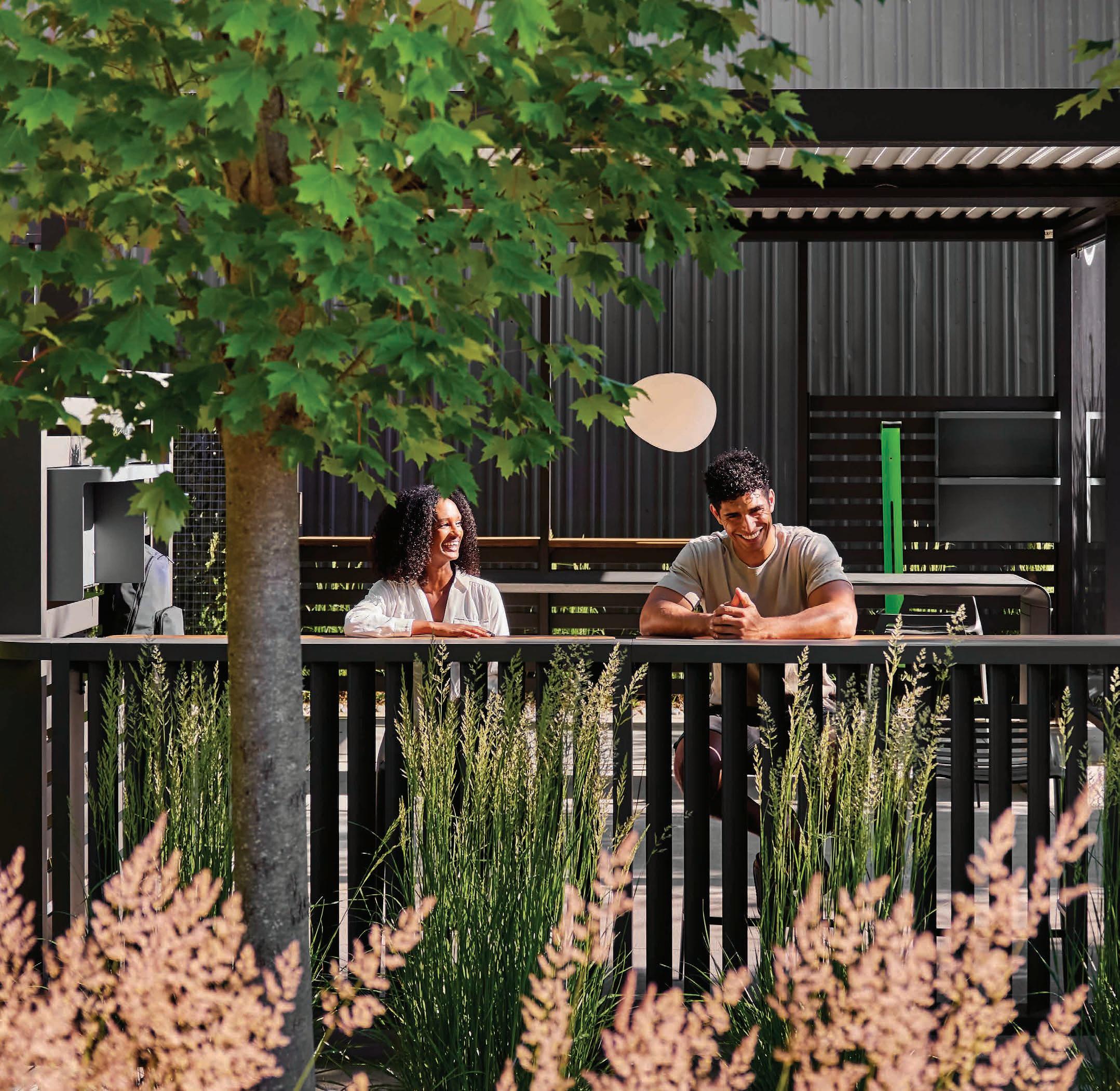
Backdrop
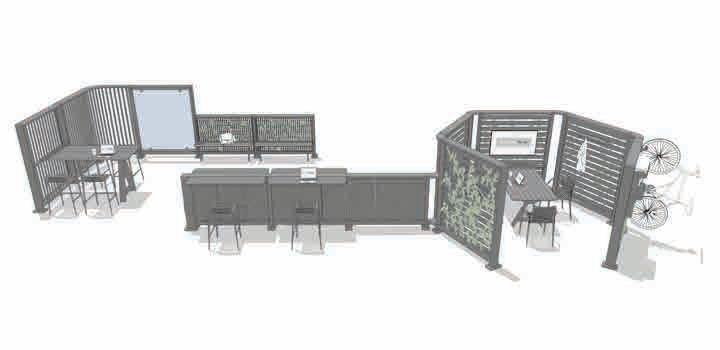
Defining Space, Inspiring Moments
We believe that for design to be truly great, it must stand the test of time, be sustainably crafted, and proudly North American made.
Backdrop: Welcoming Modular Destinations
by KEM STUDIO and
Landscape Forms | A Modern Craft Manufacturer
Designed
StruXure Outdoor
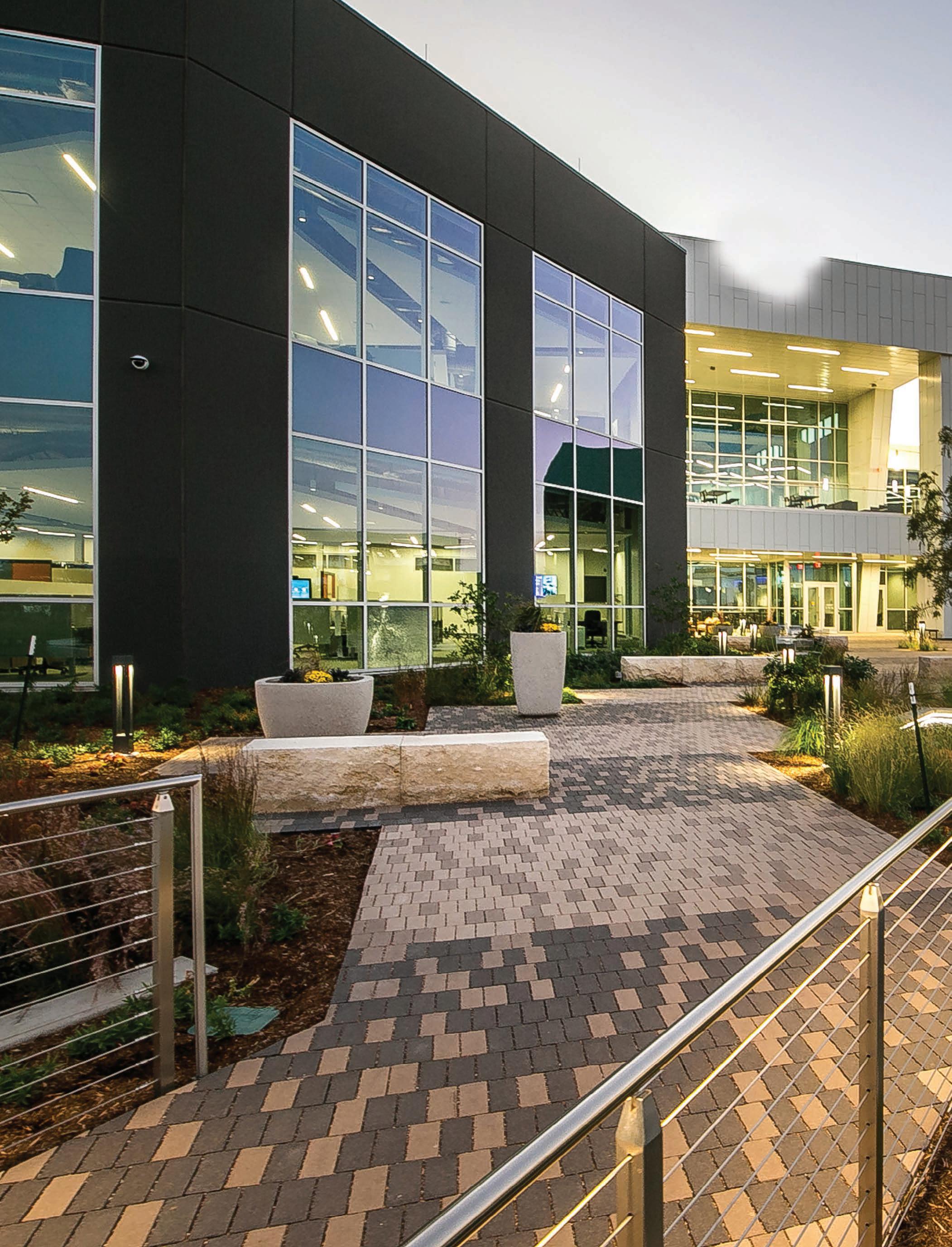

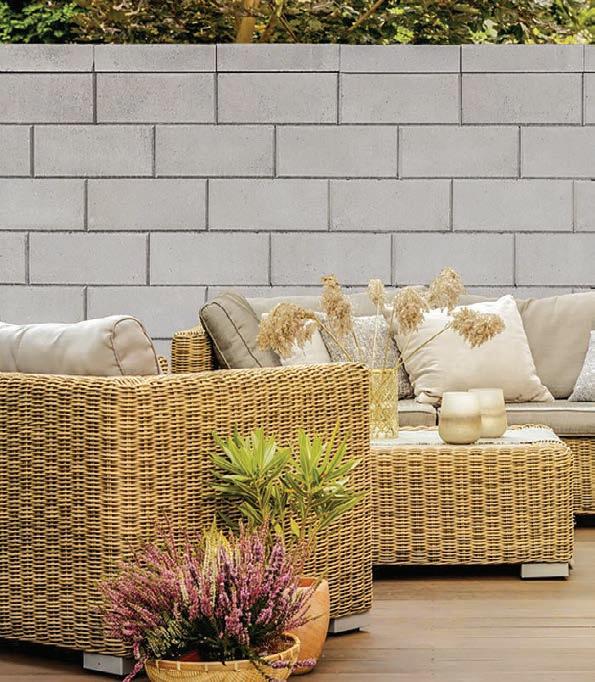
Also, Basalite’s Valley Stone Edge is a popular newer product whose smooth face and chamfered edge imparts a sleek and modern look. This retaining wall system is lightweight and uses a rear pin and channel connection, making it easy to install. “Contractors tell us this is their preferred retaining wall system due to its ease of use,” Malashevsky says.
Family-owned Mutual Materials provides high-quality masonry and hardscape products that are regionally manufactured (over 13 manufacturing plants and 18 branch offices across Washington, Oregon, Idaho, Montana, and B.C.). Mutual is famous for its masonry: brick, blended brick, structural brick, and concrete masonry units (CMU) all in a multitude of colours, shapes, and textures – which goes a long way in fulfilling the company’s objective to inspire great and lasting designs.
As for outdoor living, Mutual Materials manufactures a full range of hardscape products including patio slabs, paving stone, garden walls, and retaining walls, again in a multitude of sizes, shapes, and colours.
Ryan Heiser, director of design at Landscape Forms, reports, “The past few years have been extremely busy for us. People want to get outside more than ever, and we’ve put a lot of effort into developing products that enable new ways of working, learning, and living outdoors.”
Landscape Forms is a leading designer and manufacturer of high-design site furniture, structure, LED lighting, and accessories. Clients include municipalities, corporate, college, and health-care campuses, as well as brand leaders such as LinkedIn, Google, and Coca Cola.
Heiser says, “While we’re based in North America, we partner with designers and companies from all across the world to bring fresh perspectives to outdoor spaces. Our global partners have enabled us to offer a unique aesthetic that can easily be viewed as abstract art, which is especially great for public spaces.”
Heiser is referring to the Air Collection designed by Barcelona-based Escofet. Constructed of roto-molded high-density polyethylene with hollow interiors, the Air Collection’s five seating elements – Extasi, Fortunato, Twig, Starfish, and Stul – translate Escofet’s bold aesthetic to a material that’s light, durable, and versatile. The collection is perfectly suited for adaptable and programmable outdoor spaces, indoor spaces, transition spaces, and on rooftops, decks, and balconies.
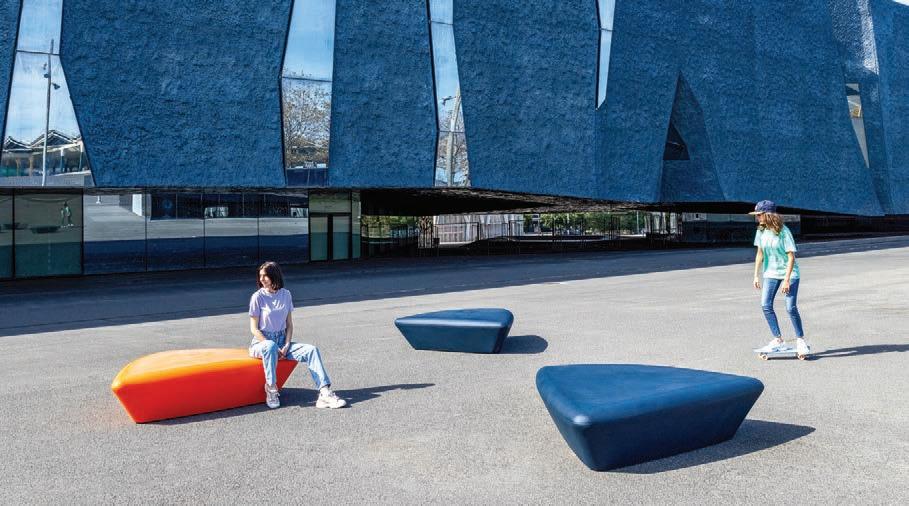
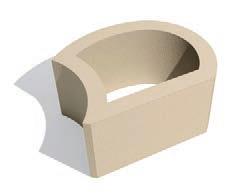
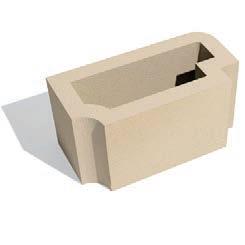
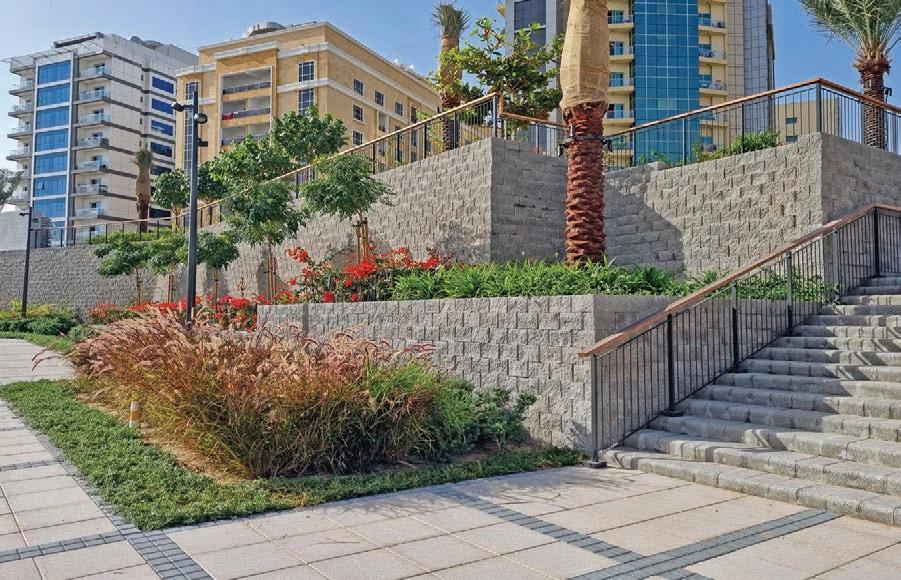

Basalite’s Valley Stone Edge retaining wall system.
Extasi site furniture from Landscape Forms’ Air Collection.
Thermal Gradient Header
The award-winning HVAC design solution proven to cost-effectively and radically reduce building carbon emissions.
“Best in Canada”
Verified Results:
67% Energy Reduction
79% Carbon Reduction


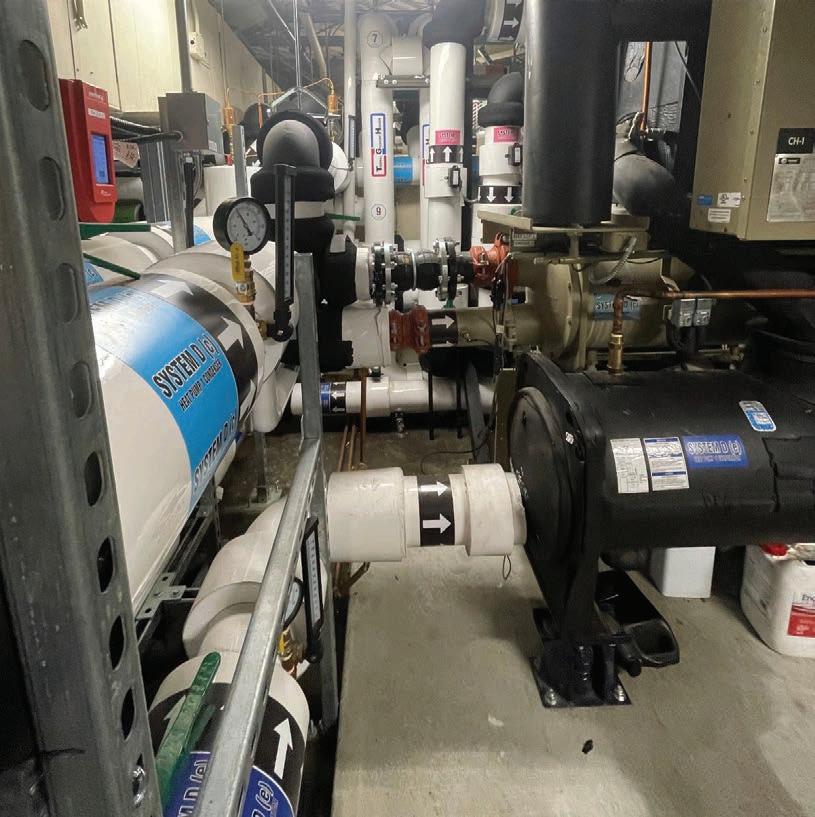
“Congratulations to Providence Health Care for their Brock Fahrni Pavilion project”

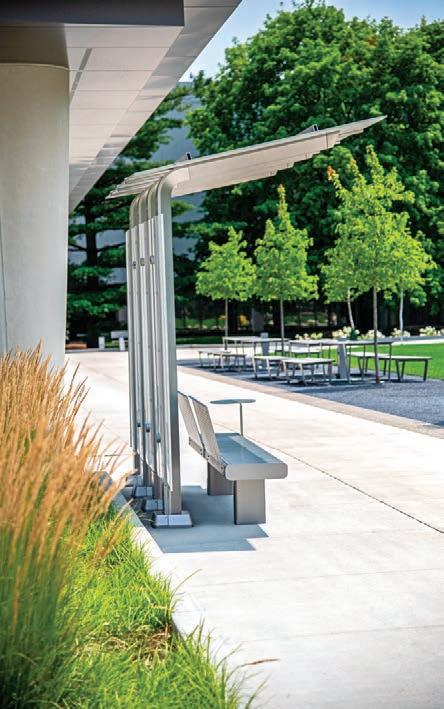
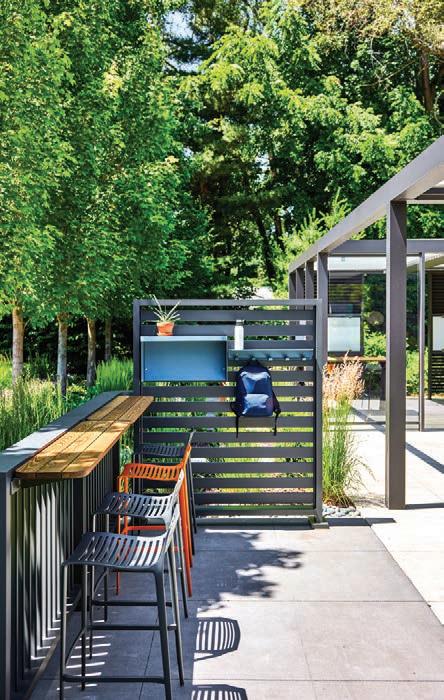
Landscape Forms’ newly released Theory is a system of furniture and structure that merges rational transit shelters with sculptural beam benches to elevate and humanize transit experiences. Designed by Scott Klinker, this family of street furnishings consists of a transit shelter system, and beam and bench seating elements. Theory uses modularity and aspects of non-prescriptive design to spark designers’ creativity. “Merging the functionality of the shelter with the sculptural nature of the beams is a totally new approach to shelter systems, and allows for interesting layering opportunities between the various pieces in the collection,” Heiser says.
Another example of modularity is Backdrop, designed by Landscape Forms in collaboration with Kem Studio: this is a system of modular panels and accessories with a simple yet important purpose, to define the outdoor spaces where people want to be. “It’s an innovative way to completely transform an outdoor area into an artful, functional environment with the feel of a room,” Heiser says.
Landscape Forms has greatly benefitted from its proprietary performance concrete, MeldStone, which has enabled the company to create large-scale organic forms, crisp-edged geometric pieces, thin-profile shapes, and seemingly weightless suspended architecture. “A great example of MeldStone’s benefits is our design with Designworks, a BMW Group company, called Typology – a seating and lighting collection that is extremely sculptural in appearance, with concrete forms draped over metal frames,” Heiser says.
Last but hardly least, while trees and other greenery are critical to landscape design, their health and upkeep is often overlooked, meaning elaborate and costly landscaping that is critical to the success of commercial and public places can quickly become drab and unappealing.
Enter Cohen & Master Tree and Shrub Services Ltd., whose consulting services along with plant health care have – in addition to forging long lasting relationships with architects and developers – made them familiar to viewers of HGTV, The Weather Channel, and many other media venues. “A good upkeep plan for any landscape design is critical,” says Cohen & Master director Tait Sala. “Moreover, we’re increasingly included in the planning design stages of projects because we take inventory of existing greenery to determine its health and identify any invasive species. This helps avoid last minute and costly design changes, in addition to helping formulate a landscape design.”
Additionally, Cohen & Master advises on hazards to landscaping, especially in urban zones. “Construction in downtown cores is the primary hazard of landscaping in that tree roots can easily be severed,” Sala says. “An even more common problem is soil compaction from skid steers and even foot traffic, with the damage to greenery only becoming apparent over time.” Consulting early on provides solutions to such problems, where it is adjustments to design or practical solutions such as underground post and beam placements that preserve roots and enable work on the surface to continue uninterrupted. A
Backdrop outdoor site furniture.
Theory sculptural beam bench.
Go With The Flow
Revolutionary mechanical and HVAC systems take centre stage in industry innovations
by ROBIN BRUNET
Arguably, the COVID lockdowns have been overly credited for building owners realizing the importance of proper ventilation in their facilities. “A lot of focus was being drawn to this issue long before the pandemic ever happened,” says Tom Todoruk, national sales manager at Tempeff. “The lockdowns intensified the need, so in 2023 the goal for HVAC is to get as much fresh air circulating in the interior as possible, regardless of what kind of building it is.”
Tempeff is an example of a company that goes beyond standards in striving to create healthy air environments, in response to systems such as single core heat recovery ventilators facing failures and other challenges due to freezing outside temperatures, (which cause units to stop circulating air or lead to mould growth). Tempeff’s DualCore system uses two heat exchangers compared to the single exchanger in conventional units; outside air goes through one exchanger for one minute or so at a time before switching to the other exchanger, so it doesn’t have time to build up frost.
The DualCore systems are designed for commercial and industrial buildings. Their success in extreme climates – they have been tested extensively by the National Research Council Canada (NRC), in triplexes built in the Canadian High Arctic Research Station in Cambridge Bay – has led the company to develop a unit that can be placed in residential buildings. “The RGSP-K units that have been in use for the past year achieve the same 90-plus percent efficiency as our commercial systems, and are very cost effective,” Todoruk says.
Specifically, RGSP-K configured units complete with DualCore technology allow for the ability to fit even in the most compact layouts, while still offering up to 92 percent sensible and 70 percent latent heat recovery in winter, without the need for a defrost strategy.
Todoruk says, “Schools, especially in this post-pandemic time, are in a mad rush to improve their provision of fresh air for classrooms and public spaces. But a typical school’s boiler is set to a certain capacity and there’s not much spare room to expand. The beauty of the RGSP-K units is that they can be installed above a drop ceiling or even in a closet.”
Meanwhile, testing of Tempeff’s highly customizable ERV equipment is playing an important role in helping to grow vegetables in extreme cold environments. “Growing vegetables is tough and costly to do in our northern regions, but the NRC is testing our ERVs in shipping containers that have been transformed into grow facilities,” Todoruk explains. “So far the results have been fantastic in Saskatoon, and this winter the ERVs and containers will be tested in an Arctic location. The results could be a game changer for food provision in the north.”
Another company that goes far beyond mechanical and HVAC standards is Thermenex, whose patented Thermal Gradient Header (TGH) is a simple hydronic approach to HVAC systems that utilizes a patented piping framework and corresponding standardized control logic. The header is built to serve as the core of an efficient, effective, sustainable HVAC system, and integrating a TGH framework into a holistic HVAC design allows engineers to design a system that outperforms anything else in both energy consumption and carbon emissions.
Thermenex’s technology, once controversial and now considered revolutionary, seems counterintuitive at first glance: achieving thermal efficiency using a pipe
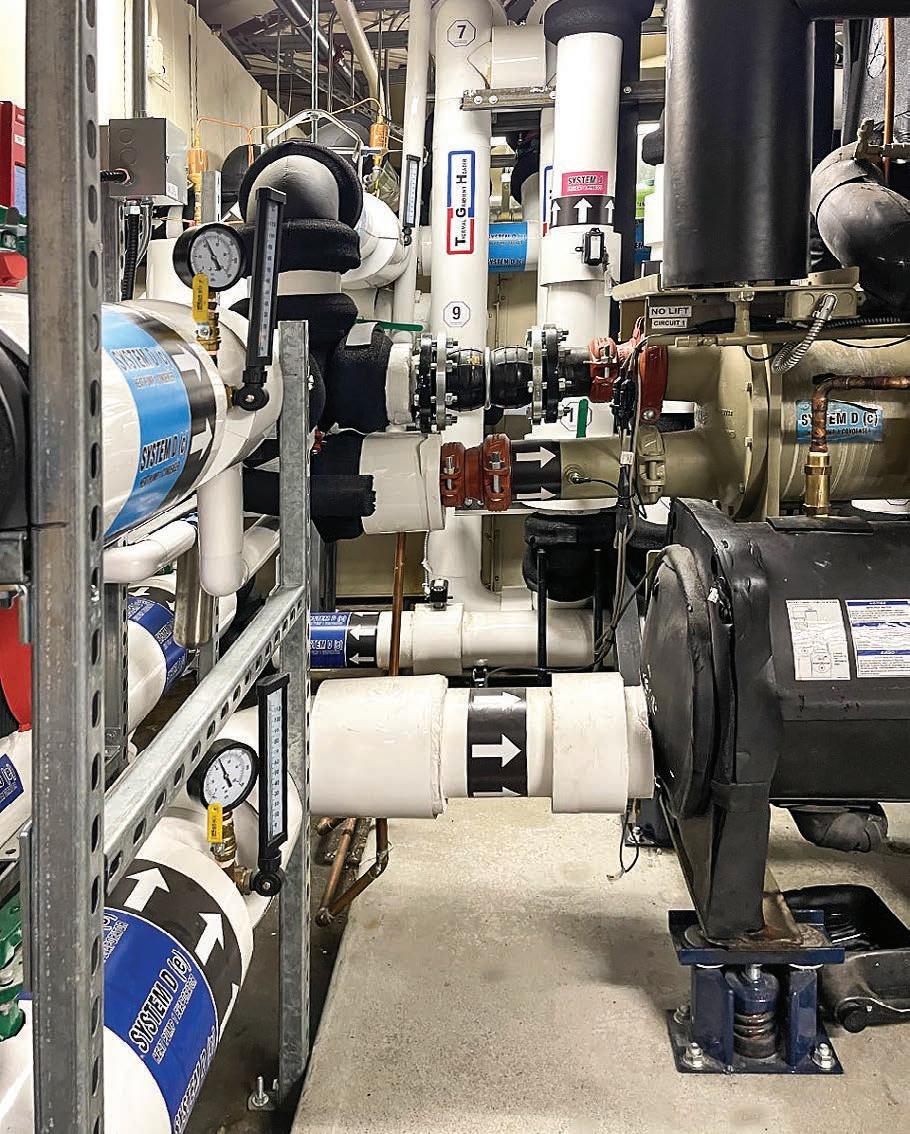
with hot water at one end and cold water at the other. In fact, the TGH has six distinct temperature regions that are separated using a simple hydronic design; this enables matching of source temperatures with the variable load requirements of a building.
Jeff Weston, president and CEO of Thermenex, is especially excited by his company’s progress in 2023. That’s because a client, Providence Health Care (PHC) under the direction of Tony Munster, won the International Federation of Healthcare Engineering (IFHE) 2022 Global Healthcare Energy Award for PHC’s St. Vincent’s Brock Fahrni assisted living pavilion.
The accolade was in response to the facility achieving the largest energy reduction in the Canadian health-care sector. In 2021 a heat recovery chiller system with a TGH designed by Impact Engineering and Thermenex was installed; it extracted waste heat that would otherwise be lost and used it to heat the building and produce domestic hot water. The result was a 68 percent energy saving and 82 percent carbon emission reduction.
Weston says, “The pendulum has fully swung in that clients are focused on zero carbon buildings and less concerned about the cost of switching to electricity. Electrification has become the new mantra of the HVAC industry. We took a different approach we call thermalization before electrification.” He adds that he concocted the term thermalization for buildings “to describe the fact that
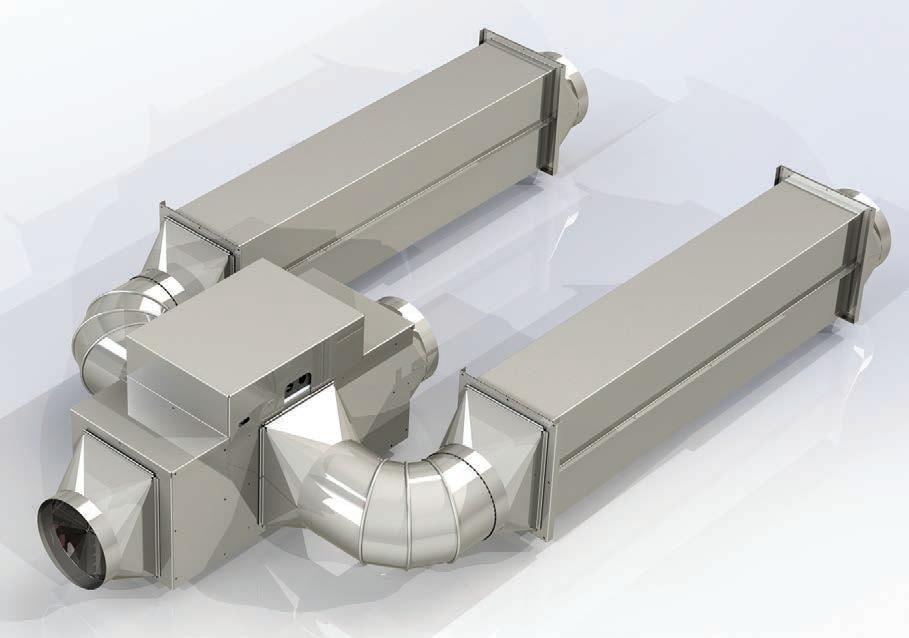
Thermal Gradient Header installed at St. Vincent’s Brock Fahrni assisted living pavilion.
RGSP-K configured unit with DualCore technology.
Tempeff’s Driving Innovation on Dedicated Outdoor Air Systems.

Tempeff’s Dedicated Outdoor Air Systems continue to not only stay current with industry changes, they LEED them. Orchestrating sustainability while conditioning the use of 100% outdoor air, and drastically removing outdoor contaminants improving indoor air quality. The use of Tempeff’s DOAS reduces the heavy load on other HVAC equipment to maintain longevity of all equipment, with the benefit of huge cost savings long term.
Find out more about Tempeff’s dedicated outdoor air systems at tempeff.com


gas and electricity are not the only energy resources available. Thermal energy exists in everything; it’s free, and we help our clients fully utilize it before consuming purchased resources. To use Brock Fahrni as an example, it didn’t need less energy, it just used 68 percent less purchased energy because it fully utilized the free thermal energy available in the building itself.”
Uponor is another company known for its innovations, especially in the plumbing and heating sectors. It created the design for the PEX expansion connection standard, tested and listed to be compliant with ASTM F1960. It is also responsible for Uponor TotalFit, a push-to-connect removable and reusable universal fitting, designed to simplify service calls and re-piping projects.
More recently, Uponor expanded its innovation in the residential radiant market with the launch of its newest radiant panel, the Xpress Trak. Designed for new construction and remodels, Xpress Trak is a single-panel system with lightweight XPS foam at its core and laminated aluminum around the entire surface to provide exceptional heat-transfer capability. The foam provides numerous benefits for installers and homeowners, including natural moisture resistance to eliminate caulking edges or panel grooves; no insulation is needed in joist spaces below the subfloor; and it has a compressive strength of 49 psi and an R-value of 3.13.
A sector in which HVAC and mechanical specialists must use all the experience and skill at their disposal is health-care, and hospital upgrades are particularly prevalent throughout Canada. One example is a multi-year upgrade of the Royal Alexandra Hospital in Edmonton, which required Williams Engineering as the prime mechanical, electrical, and structural engineering consultant to replace a 350-ton chiller with a 2,000-ton chiller.
During the initial site review of the chiller room’s equipment it was determined that a new chiller would not fit in the space left by the removal of the existing chiller without relocating two pumps, a heat exchanger, and other components. But instead of enacting an extended shutdown of the chiller plant, Williams Engineering separated the work into two phases, the first of which included adjusting how the injection flow of the secondary bridge valves would be controlled, installation of variable frequency drives on pumps, installing control valves, and modifying the existing free cooling loop.
Phase two included the addition of a 1,000-ton magnetic bearing modular chiller and a cooling tower. The design controlled the new chiller and pumps in a manner that allows the primary chilled water flow to match the secondary flow.
A recent example of Williams Engineering’s work in the hospitality sector is the Best Western Plus Mission City Lodge, which added four storeys (22,511 square feet) to the existing hotel’s 40 rooms. The company designed the heating, ventilation, and air conditioning distribution to comply with ASHRAE 90.1 requirements; guest rooms were ventilated with HRVs and heated and cooled by thru-the-wall PTACS. The corridor ventilation systems pressurized the corridors at each level with tempered outdoor air provided by the central rooftop gas-fired makeup air unit.
Elsewhere in the mechanical realm, rebranding has proven effective in truly representing the essence of professional acumen and trajectory of certain companies. That is the case of True Mechanical, which represents the 60-year heritage that firm gained through Omega Mechanical and Broadway HVAC. True Mechanical president Brad Hedblom notes that the name speaks “to how we work together now and where we’re moving to in the future,” but “we did not have to identify any differently from a company culture perspective. We were simply able to better represent ourselves graphically and put a brand concept around our already established culture.”
Under the new brand, True Mechanical has worked on unique projects such as 400 West Georgia, a LEED Platinum-targeted office tower with a stacked box design that required intricate mechanical systems and collaboration with multiple stakeholders and tenants. The 24-storey, 34,400-square-metre tower is comprised of clusters of four-storey steel-framed cubes around a central concrete core.
Other projects include the Empire Landmark Vancouver, whose 32- and 34-storey tower suites require heating and air conditioning through Variable Refrigerate Flow technology and a redesign from four-pipe fan coil to VRF systems. Also in Vancouver, the 42-storey Jenga condo tower will require hidden mechanical systems integrated into complex architectural systems; the work is being facilitated with True Mechanical’s pre-planning, layout, and VDC capabilities. A
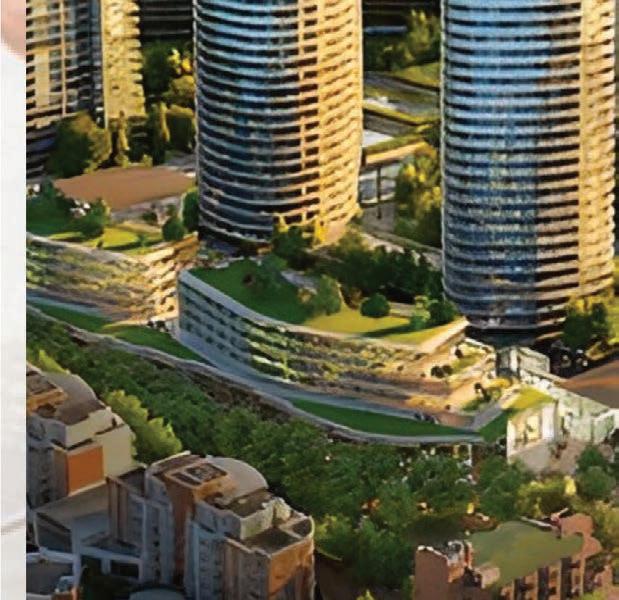

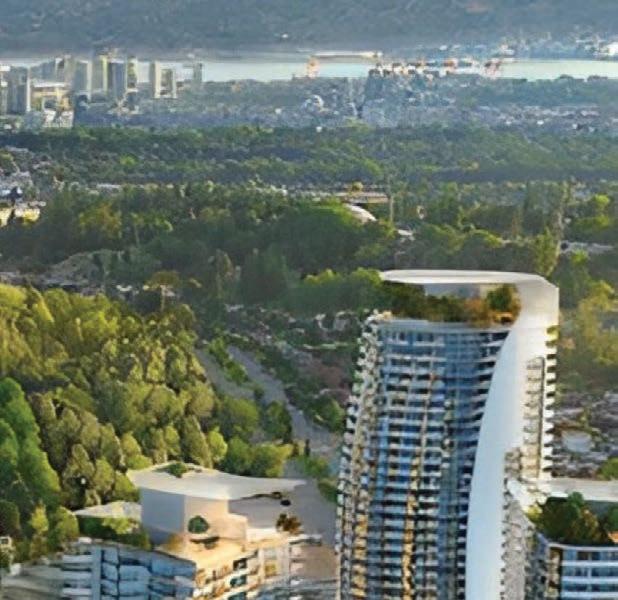
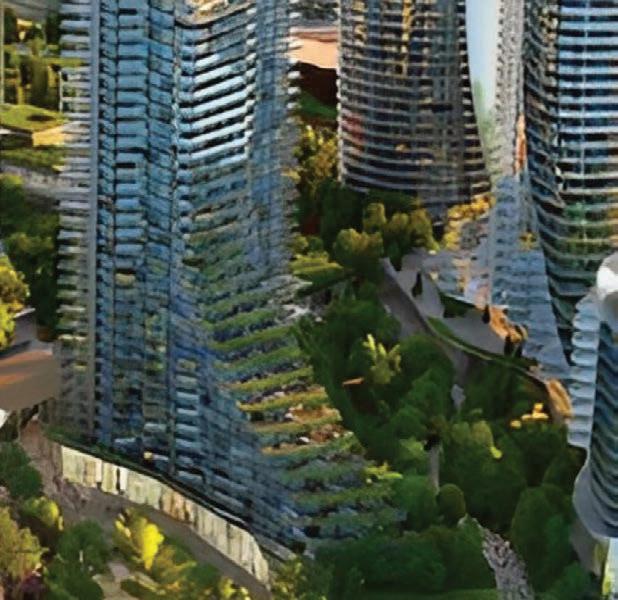
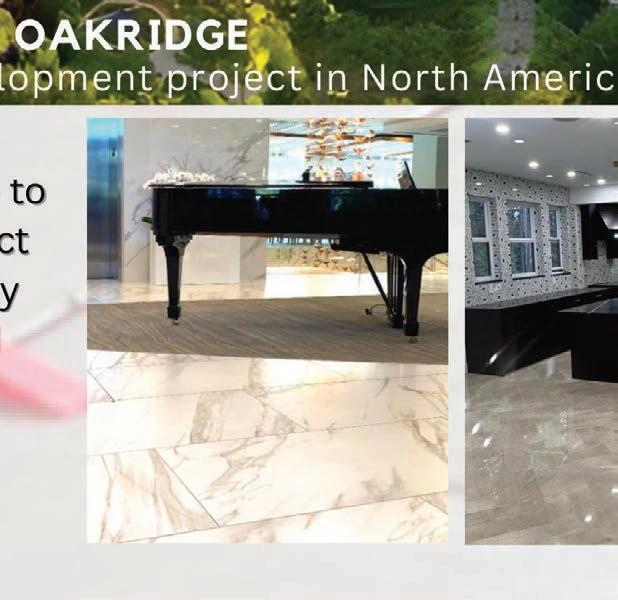
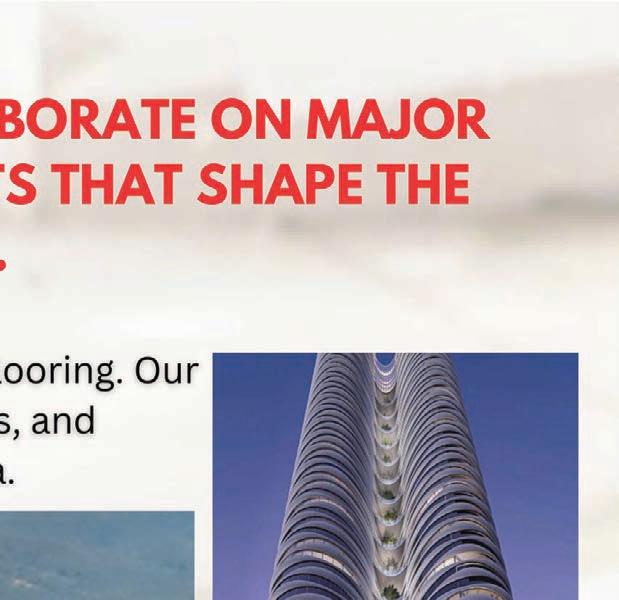
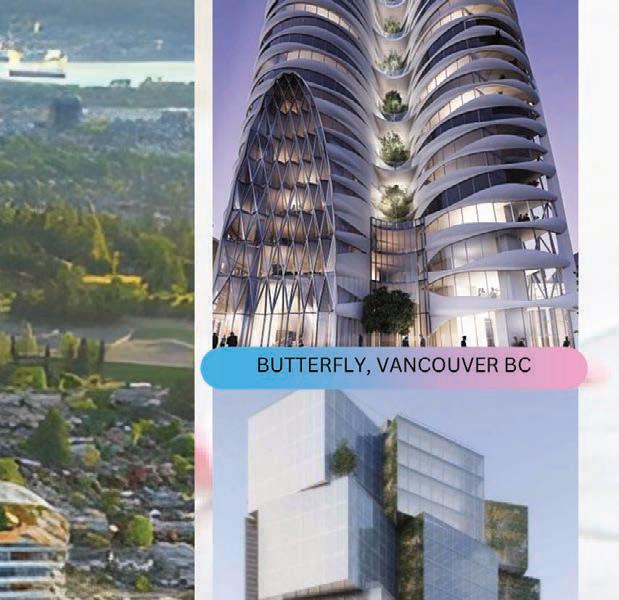
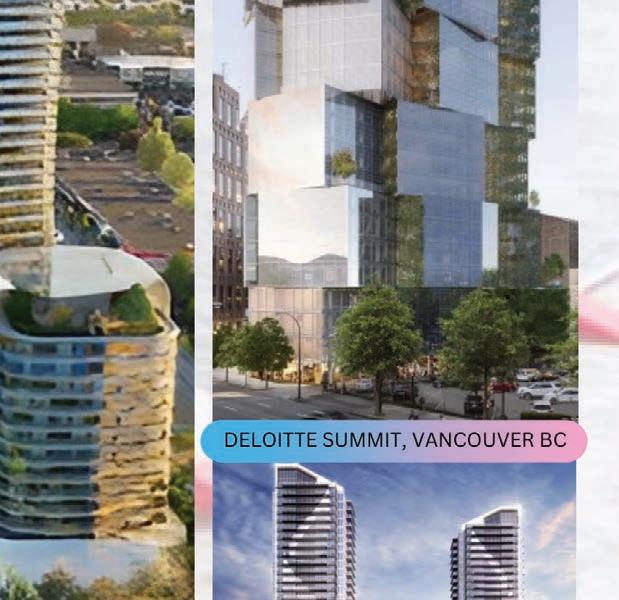
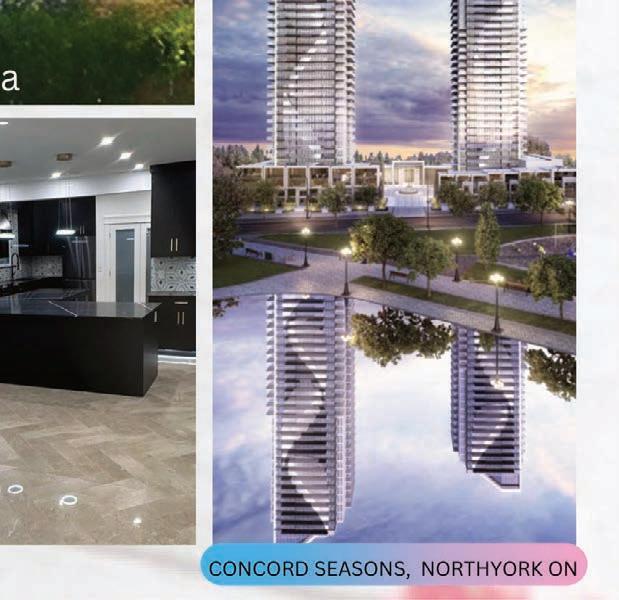
THE BUTTERFLY
by ROBIN BRUNET
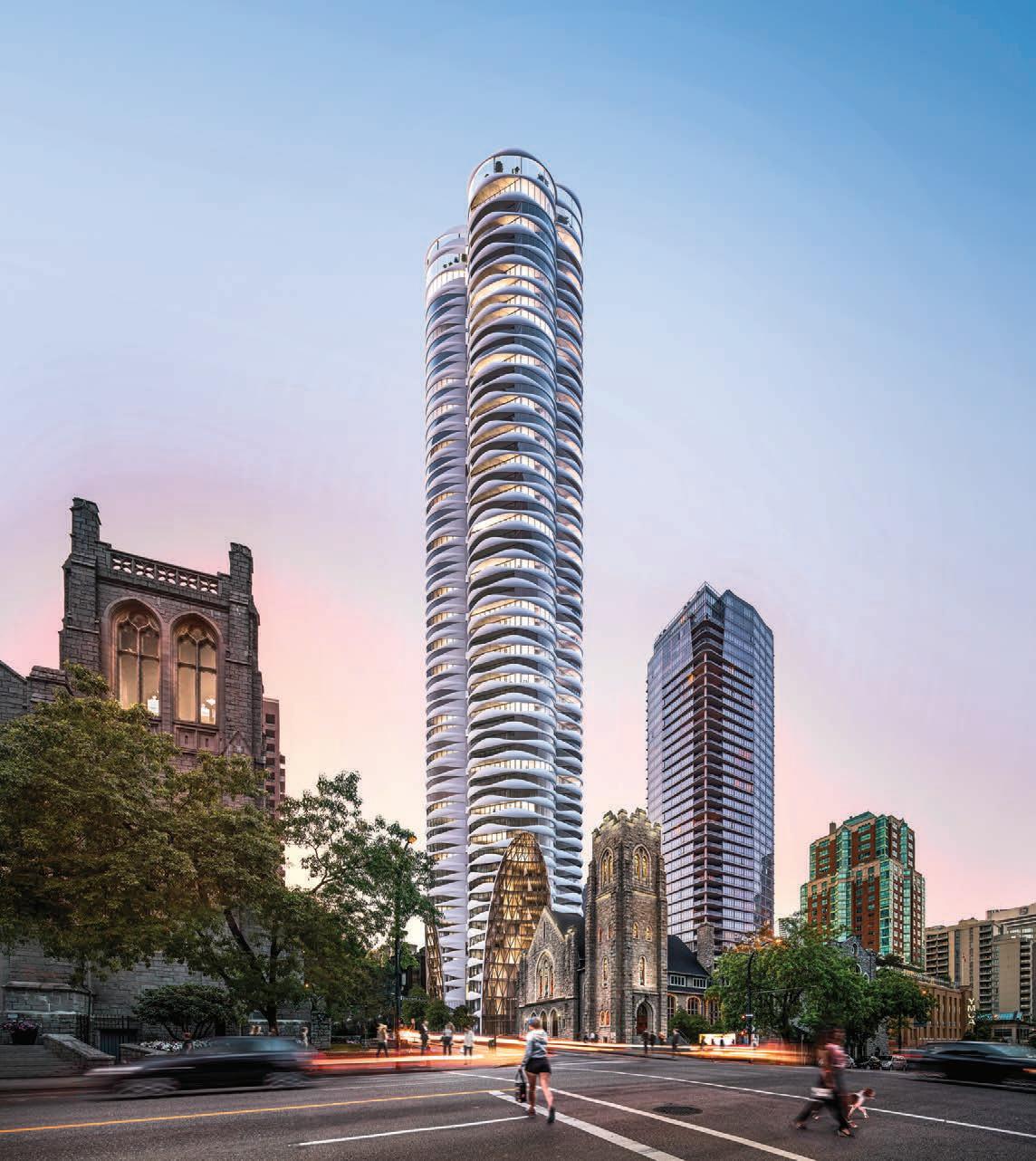
The Butterfly in downtown Vancouver may be the closest thing to architectural poetry that is possible in the context of a residential tower. Its uniqueness as a vertical neighbourhood in the sky was inspired by a design brief from Westbank’s founder to design a building that would take his breath away.
Revery design principal Venelin Kokalov recalls, “Like a butterfly caressing one’s skin, we were inspired to design a building that would touch people’s hearts, and Westbank supported us tremendously.”
This mixed-use development combines a 57-storey condo tower with the heritage restoration of the historic First Baptist Church (FBC), new ancillary space for church programming, and an affordable rental building. The tower’s sculpted façade is comprised of insulated Glass Fiber Reinforced Concrete (GFRC) panels that both curve and project to emulate clouds, high performance curved glazing, and wide spanning balconies. The parabolic chamfers of the arches at the tower’s base were designed to reflect the heritage structure and inspired by the church’s pipe organ motifs.
Outdoor sky gardens form another unique feature at each residential level of the tower: semi-private spaces reconnect residents with nature high above the ground, while promoting friendly neighbourly interactions.
Deciduous trees, rooted in customdesigned planters on every third level breezeway, grow upward to green the levels above. The gardens also provide natural cooling, ventilation, and daylighting, enhancing occupant comfort and reducing overall energy demands compared to traditional corridors.
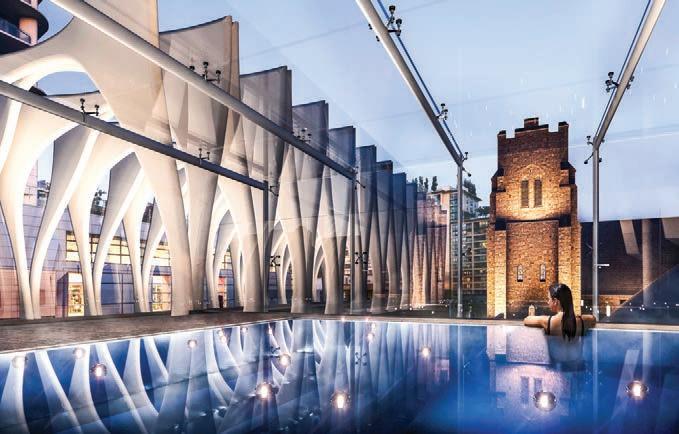
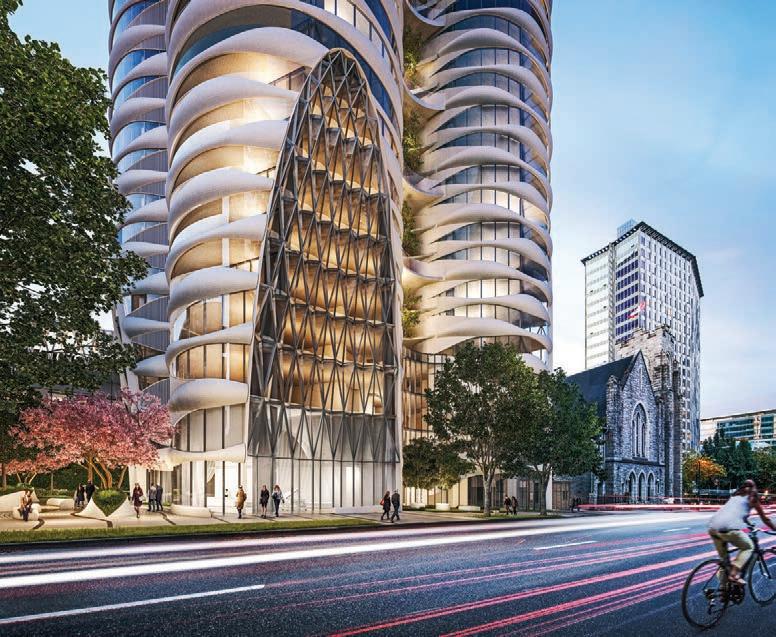
Also, The Butterfly’s 50-metre swimming pool is one-of-a-kind: bridging the podium roof and the tower’s main amenity space and enclosed by modular, prefabricated structural ribs that support a glass enclosure, the pool’s strategic position to the north of the site will ensure natural shading year-round.
Westbank’s goal when they first engaged Bing Thom in 2012 was to “change the high-rise typology” using natural light, natural ventilation, and natural forms. They developed many
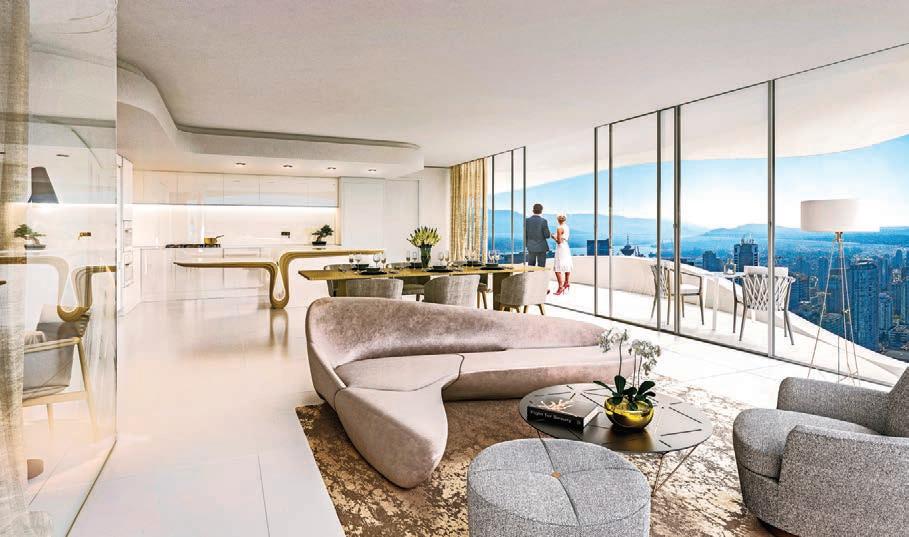
iterations of The Butterfly, including a tower sitting on top of the First Baptist Church as well as a twin tower proposal. In the end, Revery and Westbank chose a single tower scheme of four joined cylindrical forms, its massing lightened by an open vertical spine. The tower’s curved concrete façade represents clouds and the curved glass the sky.
Bryce Gauthier, principal, Gauthier + Associates Landscape Architects Inc., says of the sky gardens, “They were a brilliant Revery idea: you arrive on your floor via elevator, the doors open, and you’re in the fresh air with trees and flowers around you; then you enter your apartment.” Light, wind, and shadow studies were undertaken to help determine ideal placement of planters and other garden elements. Equal care was spent developing a plaza with water feature at ground level as well as a parkette courtyard for the tower that also acts as a break between a new First Baptist Churchowned affordable rental building. “The curving forms of the tower and of the sky garden landscape features were replicated in these areas,” Gauthier says.

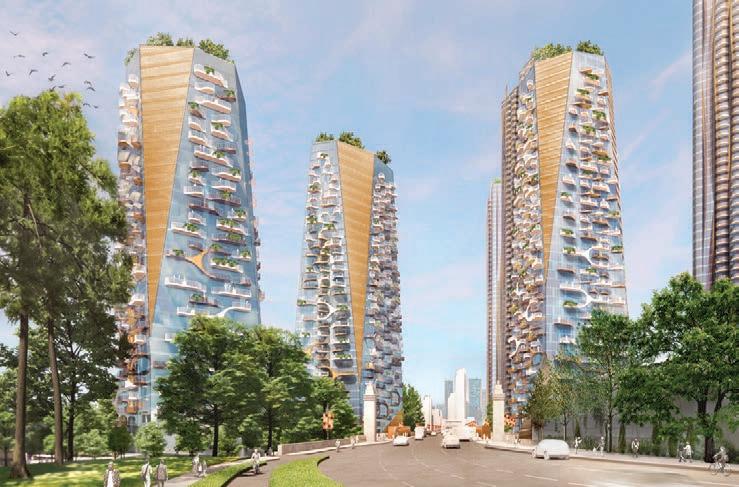
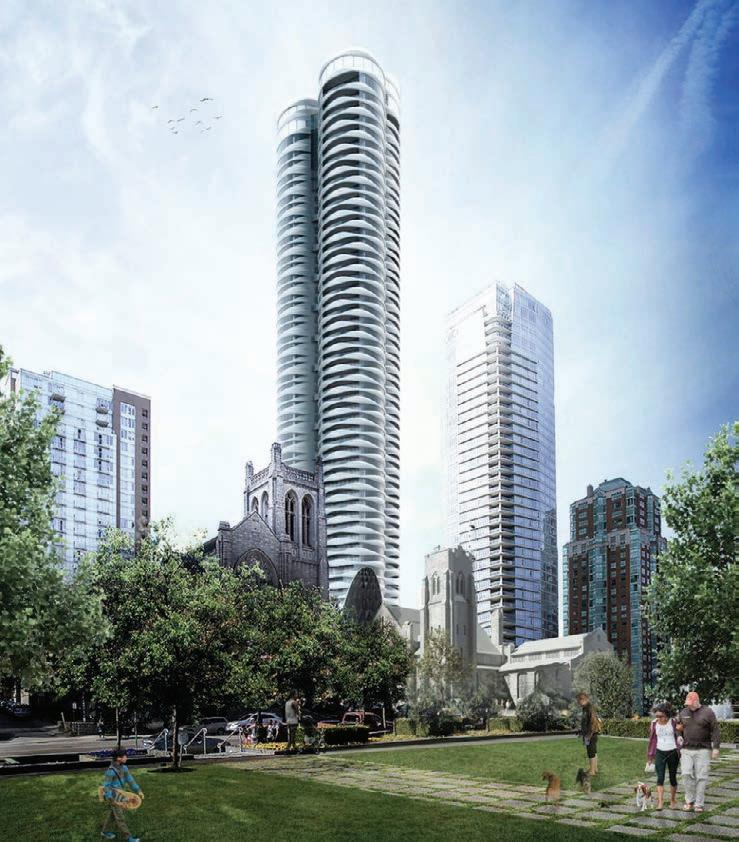
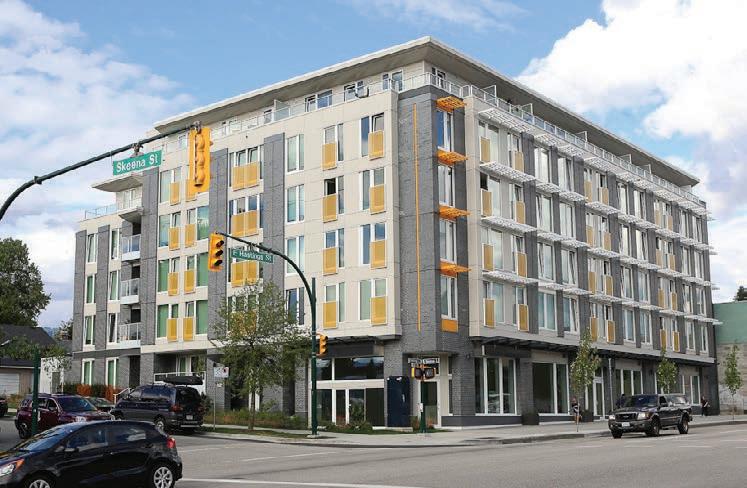
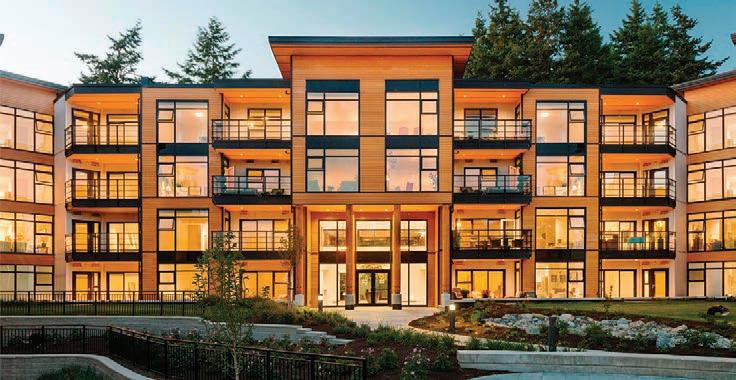
Photograph: Hayes Davidson
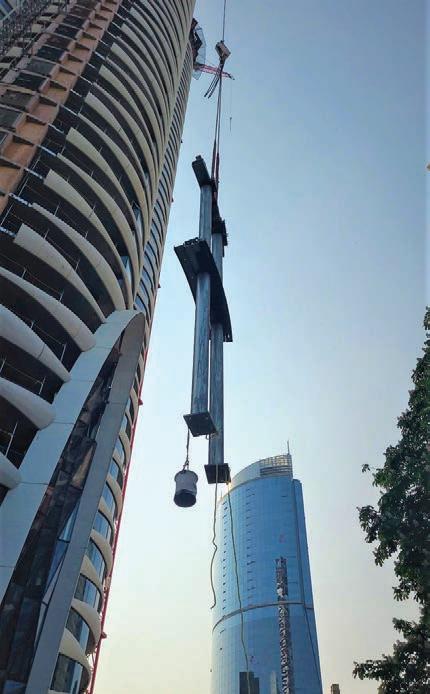
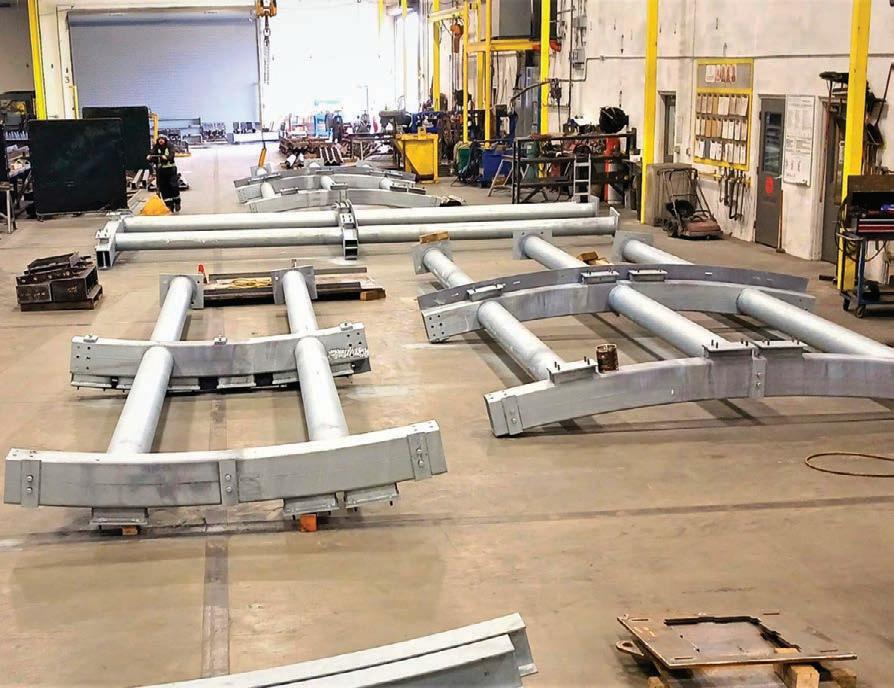
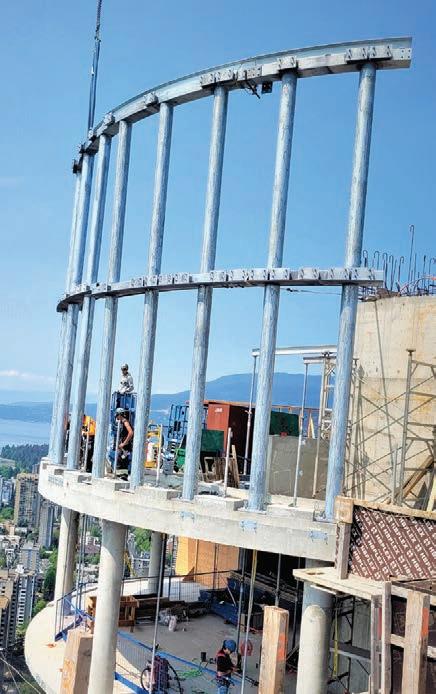





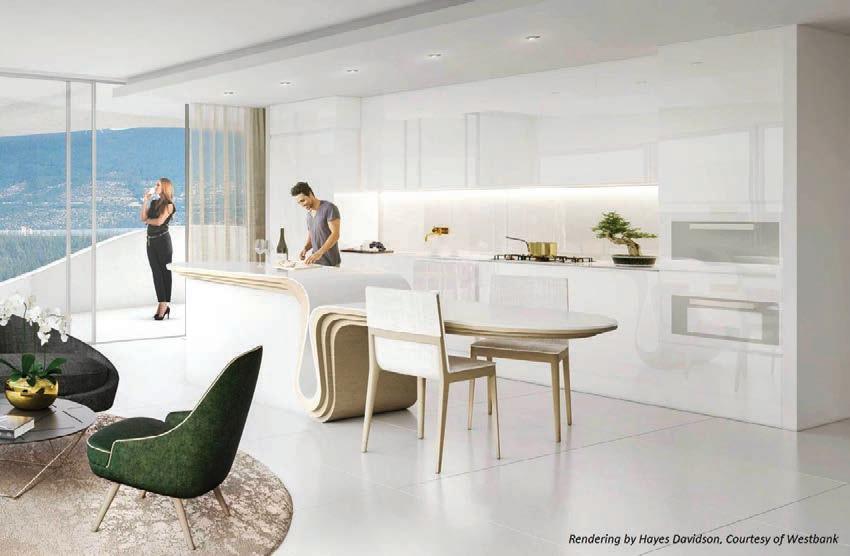

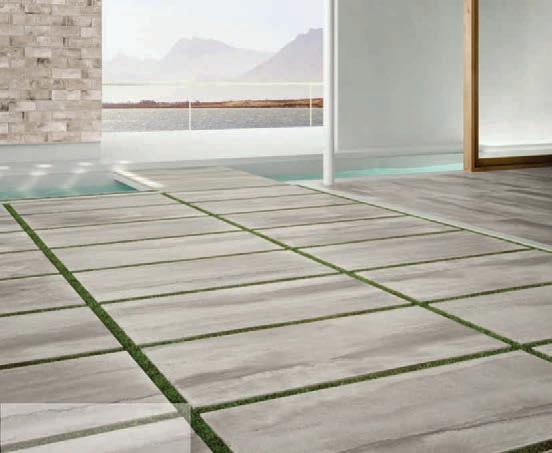
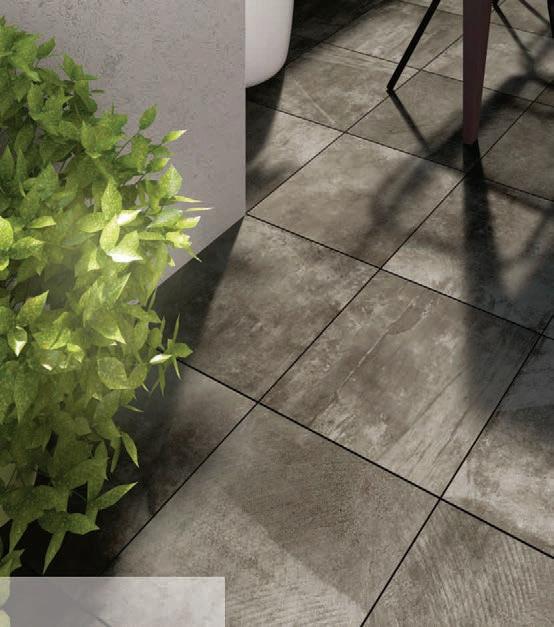
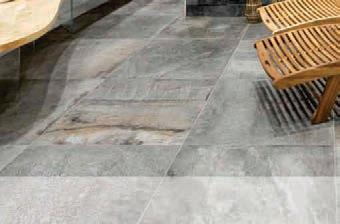
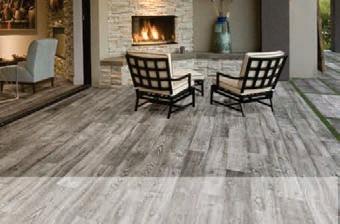
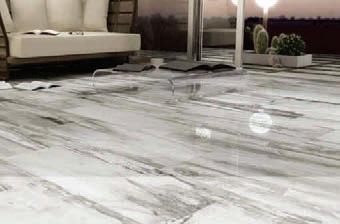
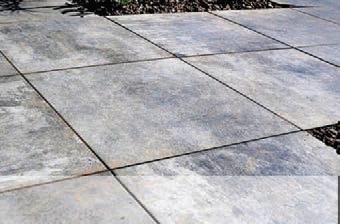

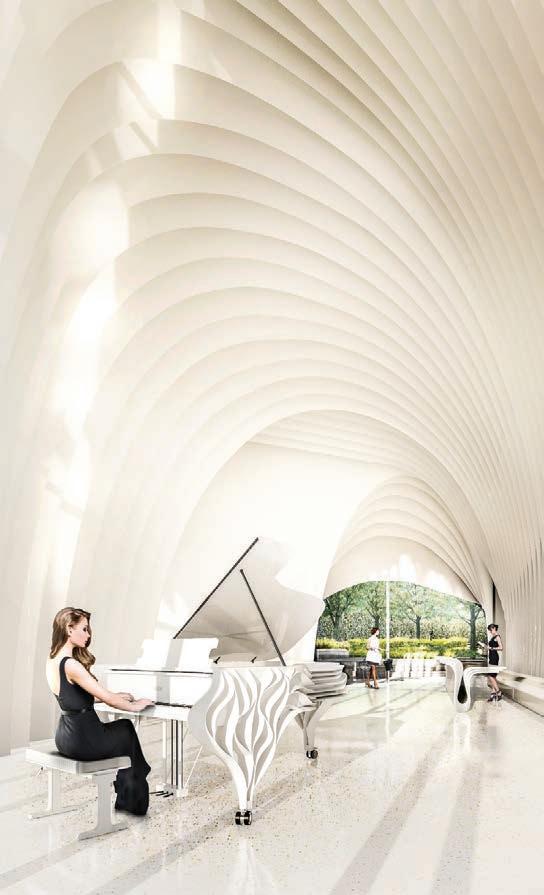
Neville Doyle, senior project manager at Peak Construction Group, calls The Butterfly “a thinking person’s project with puzzles to solve that were at an entirely new level – which was very exciting for us.”
Both the glass and the GFRC for the façade were produced in South Korea. “We originally specified
precast concrete for the façade but were unsuccessful in finding a manufacturer who could produce the curves and projections we wanted in such large numbers,” Kokalov says. “So, we switched to GFRC, which also had the benefit of being lighter.”
Precast elements such as the 36 structural swimming pool ribs were made locally, and it took just one month to install all of them: 144 precast concrete sections were transported by truck and craned onto their
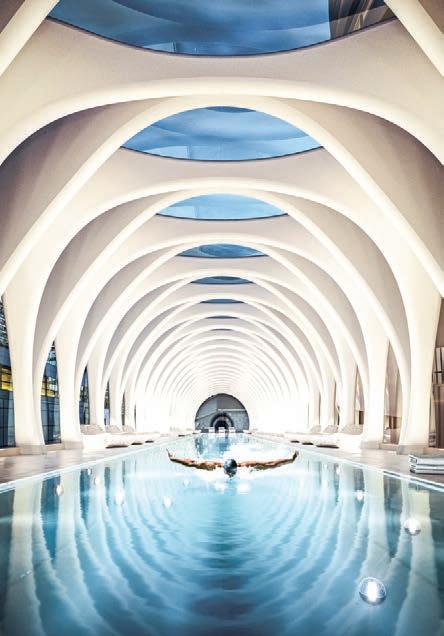

fifth level perch (the ribs will be integrated with mechanical air supply, electrical conduit for lighting, and acoustic panels). “The tower was typical construction in terms of sequence and methodology, but the geometry of the building is complex,” Doyle says. “We spent a great deal of time with the consultants reviewing design elements, as well as building prototypes for proof of concept.”
Doyle notes that The Butterfly is designed to meet at minimum LEED Gold certification and exceeds standards for energy performance with greenhouse gas reductions equivalent to a 45 percent reduction in energy use and a 22 percent reduction in energy costs.
As for constructing a tower in a congested residential/commercial setting, Doyle says “We are fortunate in that two major new buildings are planned adjacent to our site, but as our project began earlier we have been able to make full use of the adjacent roadways for logistics.”
After the design of The Butterfly was complete, Kokalov paid respect to Bing Thom by custom-designing a Fazioli piano to reflect the typology of the architecture, as part of the Westbank Piano Program. On
completion of the building, the Fazioli will sit in the lobby looking out onto the entrance courtyard. “This was Bing’s final project, and he would have been proud of our attempt to create beauty and improve our city with a tower that does so much to return people to nature,” says Kokalov. A
LOCATION
1019 Nelson, Vancouver, B.C.
OWNER/DEVELOPER
Westbank and First Baptist Church
ARCHITECT
Revery Architecture
GENERAL CONTRACTOR
Peak Construction Group (Butterfly Tower); Haebler Group (First Baptist Church)
STRUCTURAL CONSULTANT
Glotman Simpson
MECHANICAL CONSULTANT
Introba
ELECTRICAL CONSULTANT
Nemetz (S/A) & Associates Ltd.
LANDSCAPE ARCHITECTS
Gauthier + Associates Landscape Architecture Inc. (G|ALA) with SWA Group and Cornelia Hahn Oberlander
TOTAL SIZE
605,000 square feet (including tower, church restoration and expansion)
TOTAL COST
Undisclosed
Gauthier


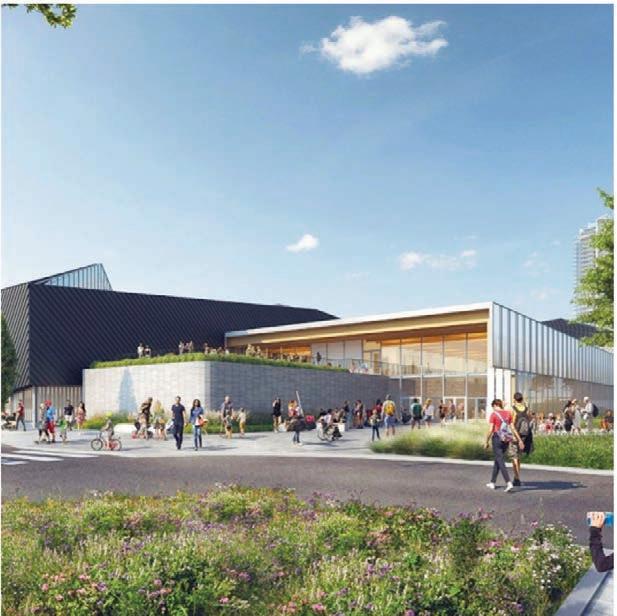
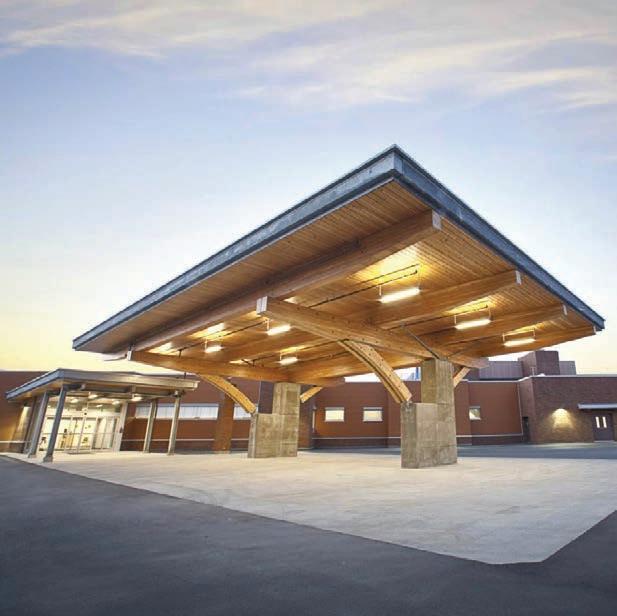
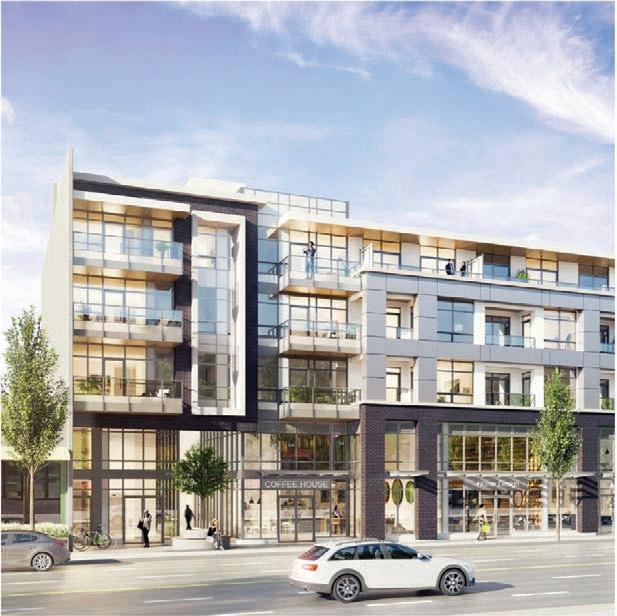



Rosemary Brown Arena
Nanaimo Regional General Hospital
Storia Burnaby Heights
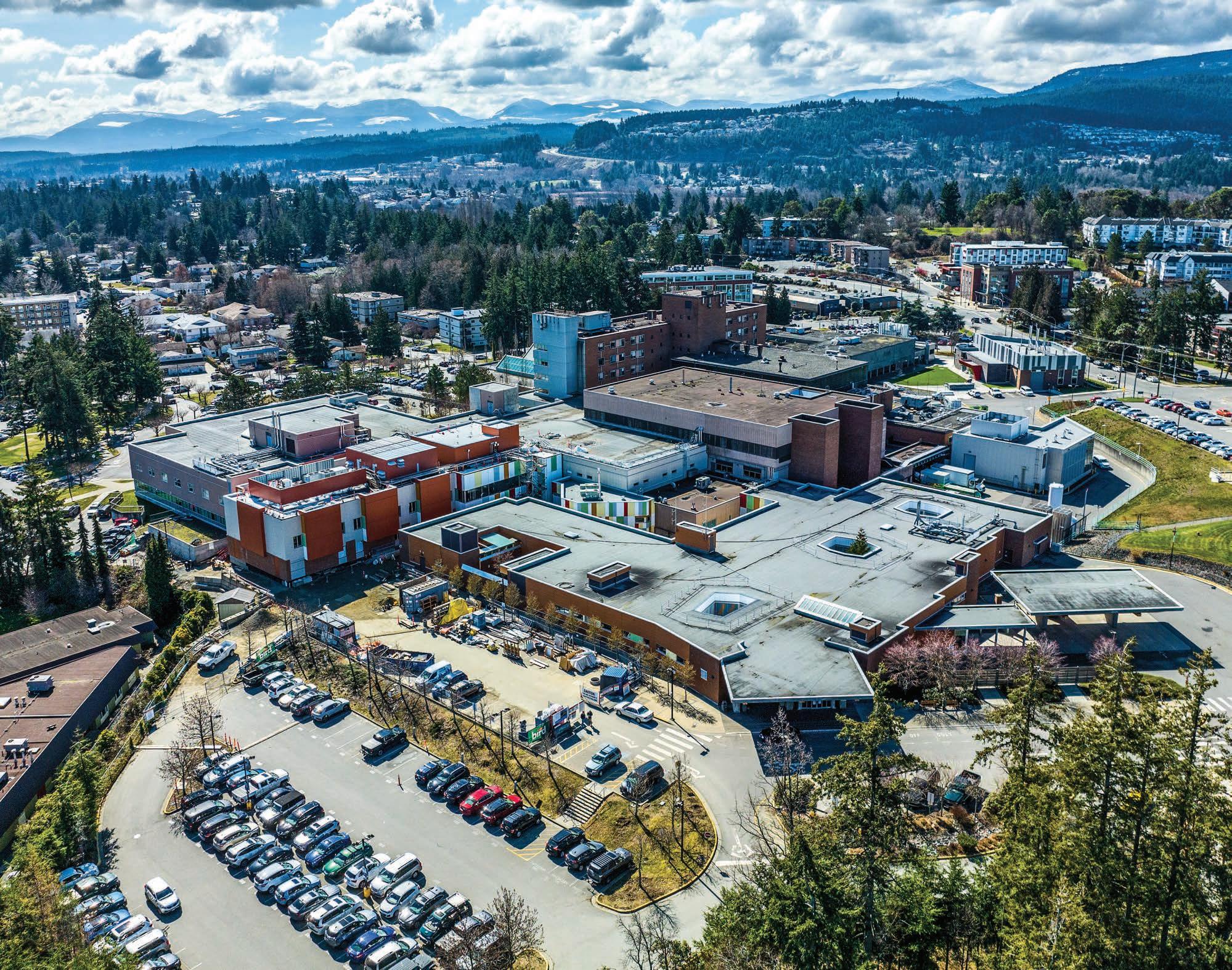
ICU EXPANSION –NANAIMO REGIONAL GENERAL HOSPITAL
by ROBIN BRUNET
Nanaimo Regional General Hospital (NRGH) on Vancouver Island is the largest hospital north of the Malahat, meaning it operates around the clock and supports patients from across the central and north island region and beyond, when they require a higher level of intensive care.
That, combined with growing regional populations, is the impetus behind the construction of a new Intensive Care Unit (ICU) at NRGH, a project that leverages the creativity of architects Stantec as well as the expertise of Bird Construction to create a new space that is triple the size of the facility’s previous ICU.
The project had an advantage that many hospital expansions do not. David Neufeld, senior project manager
at Island Health, explains, “While there have been multiple additions to this hospital since it was built in the 1960s, the property was not yet maxed out. There was still space to build plus good clinical connections.”
Specifically, the expansion was located on a parking lot enclosed on three sides and accommodated a new 12-bed intensive care unit (replacing the outdated ICU built in 1970). It also included space to complete a new 12-bed high acuity unit (HAU), an increase of six net new beds overall.
Island Health retained Stantec for the expansion, as Stantec had been involved in several past projects for Nanaimo (including the hospital’s Thermal Energy Centre as well as creating more space for the
Emergency Department). “We had retained Stantec in 2016 to contribute to our planning activities, and in 2019 design work began,” Neufeld says.
The new ICU’s 12 beds would be augmented by support spaces such as a medication room, utility room, linen alcove, nourishment centre, family conference room, and washroom. The ICU would also include improvements such as larger single-patient rooms, ceiling-mounted service booms and overhead patient lifts, a medication room, a family consult conference room, and a staff break room and rest area.
One of the key architectural expressions provided by Stantec was the layout of the patient rooms and connections with staff: this translated
into a central staff area surrounded by three pods of four beds each. Lightwells were incorporated into the design to help bring natural light deep into the interior, which proved to be of special benefit to patients.
For the exterior, the multi-coloured panelling Stantec specified for the earlier Emergency Department expansion was replicated for this project, in addition to extensive use of brick. “Our overall goal was to move away from an institutional feel and do everything to avoid being intimidating,” says Jean Phan, project manager at NRGH, adding that a sense of calm was also achieved through the use of interior colouring (that also acted as wayfinding), and spaces dedicated to local artwork.
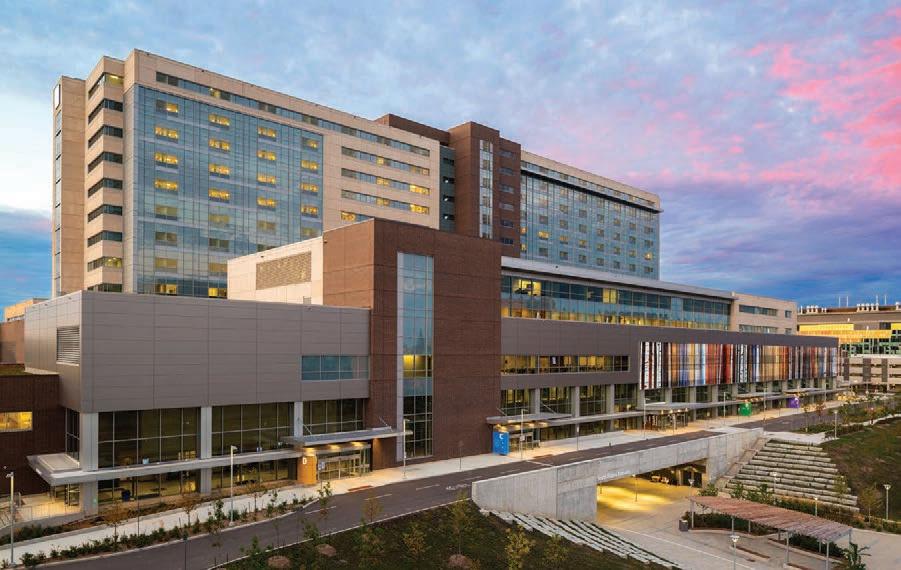
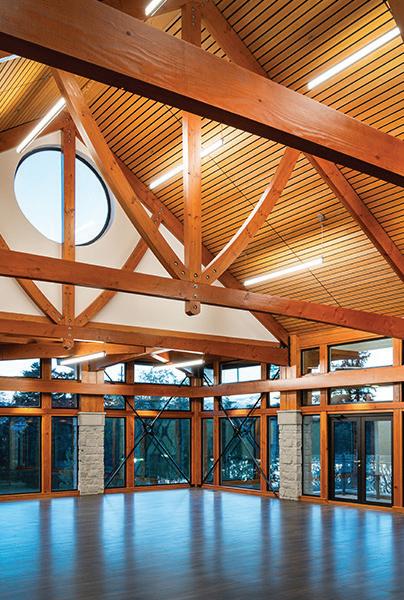
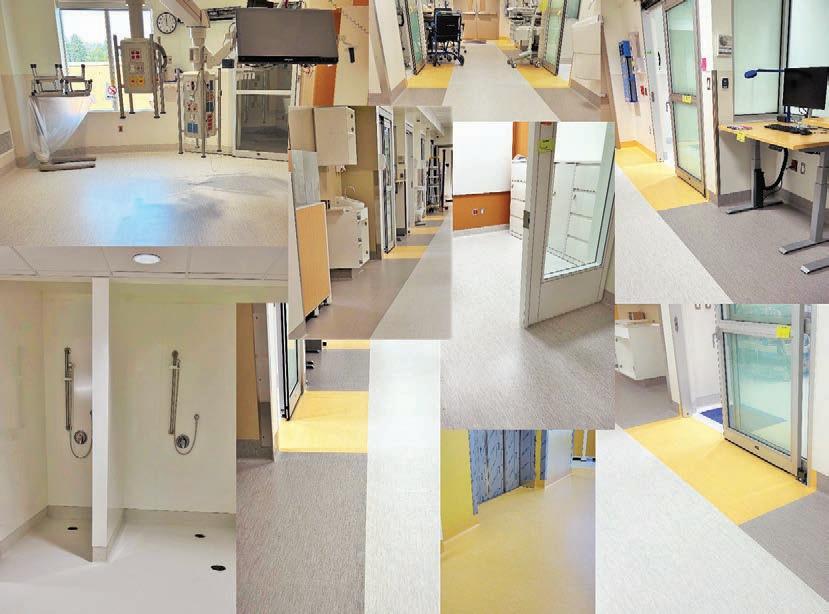
Humber River Hospital |
Photo credit: Dan Schwalm
Phan describes the many small touches that cumulatively amounted to a big positive impact for patients. “Beds were oriented towards the windows instead of away from them,” she says. “We also oriented wall clocks away from the patients’ view, since they can contribute to a sense of boredom and frustration. Also, we ensured that intercoms or AI phones would be used to communicate throughout the building instead of baby monitors, which were a communications solution developed during the COVID19 pandemic. All these elements are simple in themselves but required a lot of planning to make happen.”
Bird Construction broke ground on the site in winter of 2021, and due to the ongoing operations of the hospital, daily communication with maintenance staff, doctors, and nurses was a priority so that the effects of construction had a minimal impact.
Bird used airtight negatively pressurized hoarding to keep the facility weather tight and dust-free, and special procedures were implemented to minimize noise. Existing electrical and mechanical systems were decommissioned, replaced where necessary, expanded, and commissioned to suit the new operating suites.
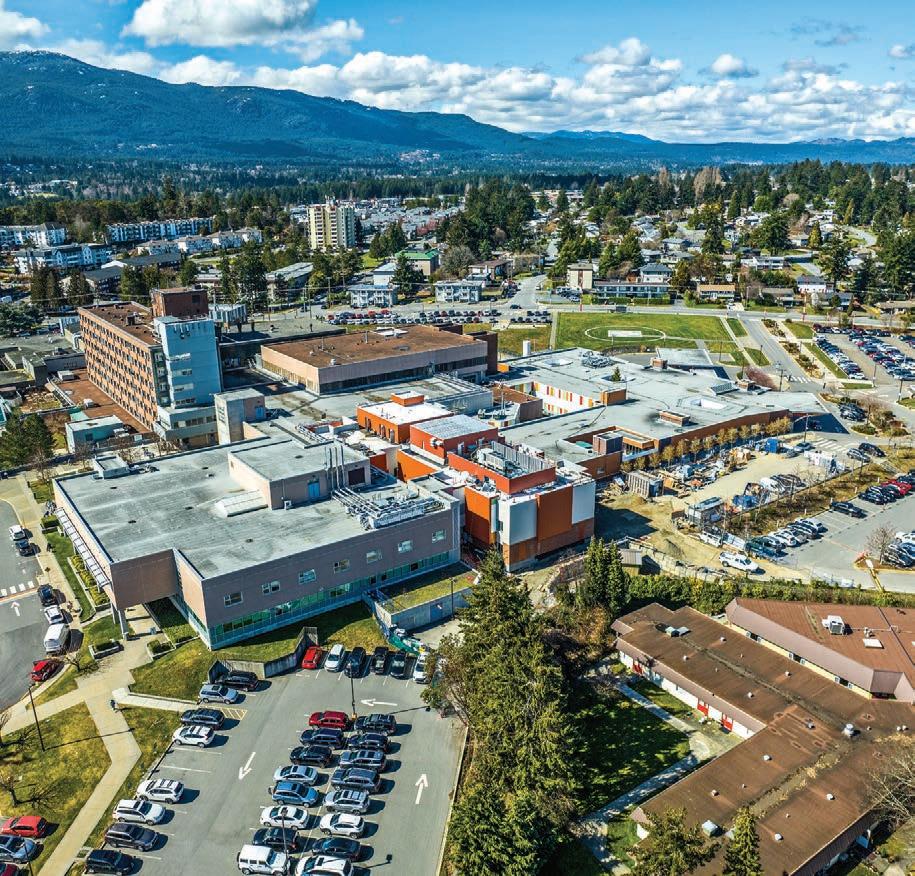
As of April, the ICU and basement support services were complete; the HAU is scheduled for completion next year. “As always, Stantec provided us with invaluable design expertise, and
ADVANTAGE STEEL FABRICATING
Bird was incredible in working through very difficult circumstances,” Neufeld says. “The new spaces are a significant contribution to our ability to provide health care as a tertiary hospital.” A

1345 Fisher Road, Cobble Hill
Tel: 250-743-8981
Cell: 250-715-8951
pat.advantagesteel@hotmail.com

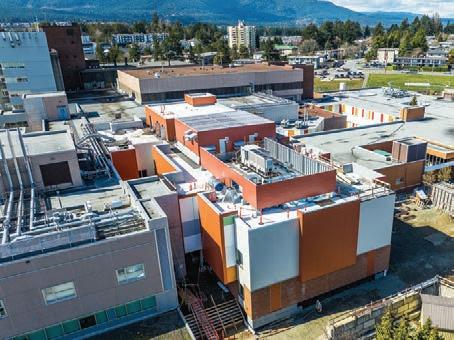
LOCATION
1200
ARCHITECT/STRUCTURAL
GENERAL CONTRACTOR
Bird Construction
MECHANICAL CONSULTANT WSP
ELECTRICAL CONSULTANT
Evolve Engineering
CIVIL CONSULTANT
Herold Engineering Ltd.
LANDSCAPE ARCHITECT
LANARC
TOTAL SIZE
30,000 square feet (total building)
TOTAL COST
$60.1
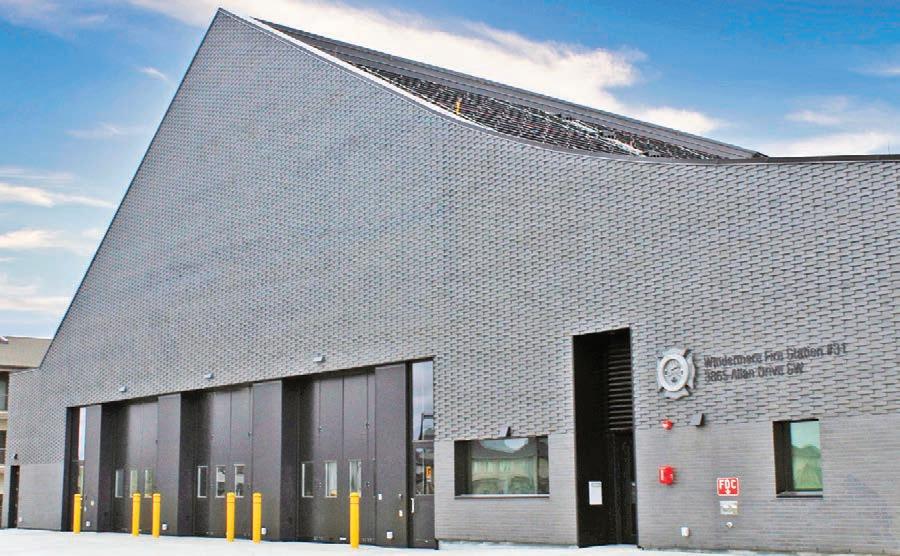

FinDoor is Canada’s biggest manufacturer of folding doors. These industrial grade doors, designed for demanding workplace environments, hold up against wear and changing weather conditions day after day without deterioration of functioning reliability.
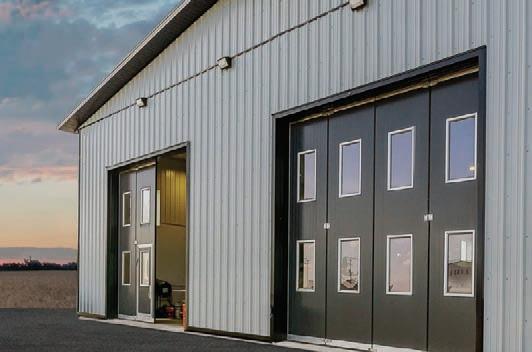
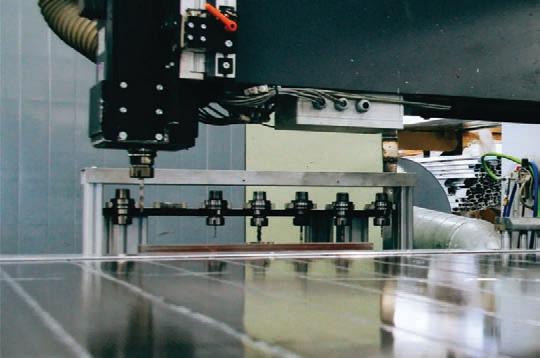
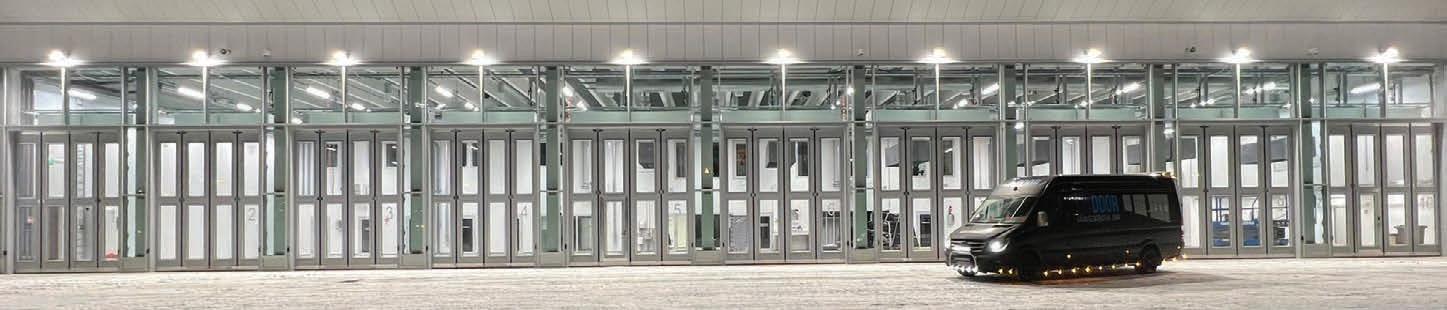
At Abe’s Door we service a wide range of industries in Edmonton and the surrounding area. Regardless of your application, we have the expertise to help you select and install a door for your needs.
Founded in 1979 by Abe Hiebert, Abe’s Door Service began with a strong commitment to service quality, accountability and innovation. That legacy continues today as Abe’s Door Service enters third generation of family ownership and continues to
offer the high level of service excellence our customers have come to expect.
When you call Abe’s Door Service you will always get a person, not an answering machine; someone who understands that your door issues aren’t just a minor inconvenience, but a barrier to your businesses’ success. From one business to another, we are here to serve you with timely, safe and efficient service.

WINDERMERE FIRE STATION 31
by LAURIE JONES
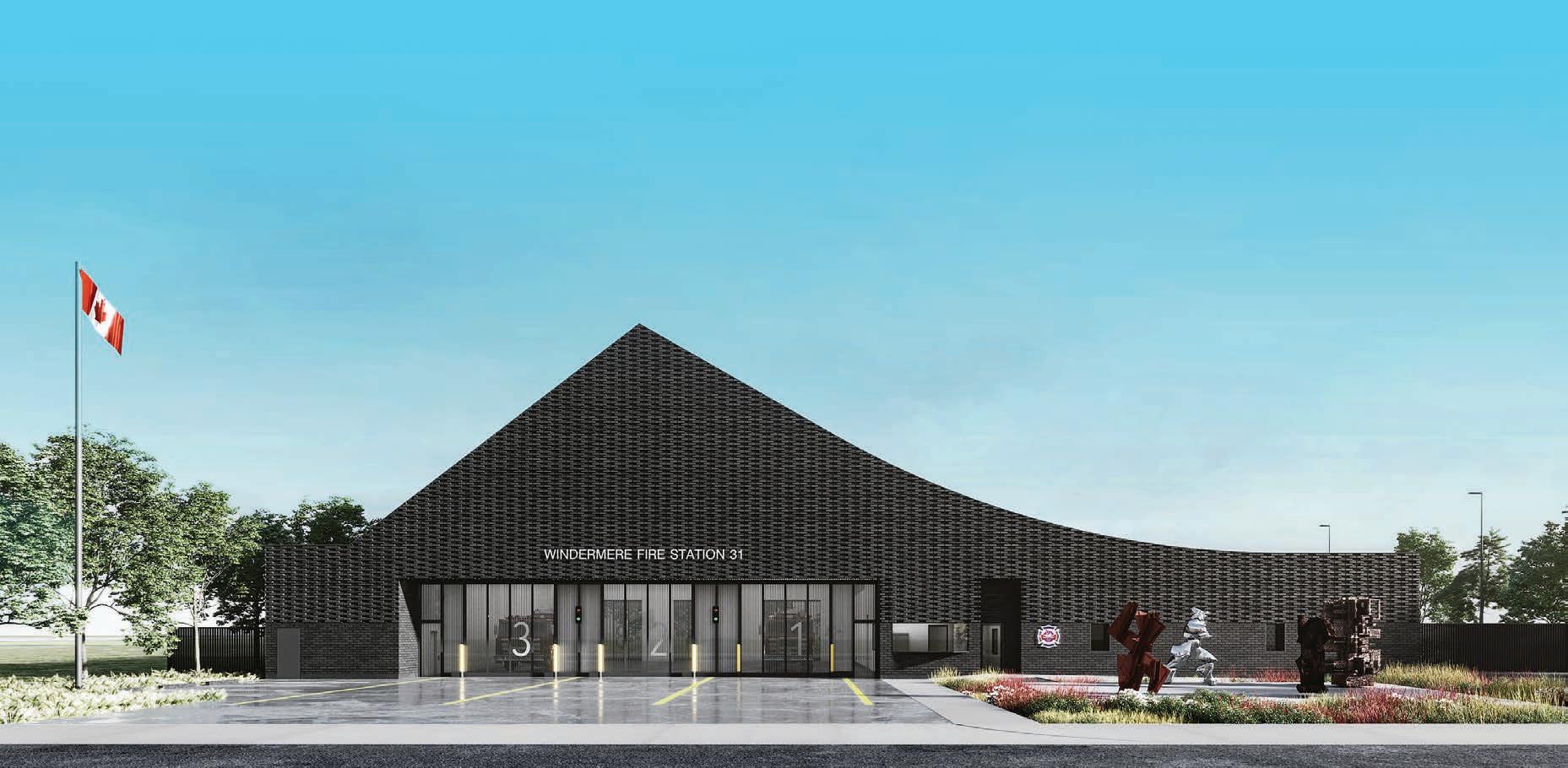
As the City of Edmonton continues to grow, so too does its need for increased emergency services. Located southwest of the city, the Windermere Fire Station 31 is a stateof-the-art, net zero energy facility that is powered by a complex array of solar panels covering the sloped roof, featuring stylish, rapid opening bifold bay doors for the trucks, and a geothermal system that creates a comfortable living environment for the firefighters year-round. This iconic building blends traditional fire hall design with the natural environment nearby, making it a true beacon in the city.
“This building can accommodate fire vehicles, surrounded by the supporting infrastructure that includes dorms for the firefighters, a kitchen, and fitness area,” says Trish Kuffler, supervisor, project management for the City of Edmonton. “There is also a geothermal field below the parking lot that offers heating and cooling for the building. To create this, 35 bore holes were made, each being 230-feet deep. This is a big factor in reaching the net zero status, along with the 382 solar modules – each is 375 watts – to create a total capacity of 143 kilowatts for this facility. The insulation value to the facilities is much higher than a traditional building to prevent heat loss through the roof or the walls. There is also underslab insulation in the truck bays.”
Linus Murphy, principal, S2 Architecture, explains that the fire station is designed for a quick response, which is called the chute time. “Once an alarm goes off,
firefighters have limited time to leave wherever they are – from the bed, or shower, or having dinner – find out where they’re going, get into their duty gear, and get on the fire truck. The design eliminated unnecessary corners and doors. This fast chute time supports a critically fast response time from the station to call destinations.”
He adds the exterior was also considered to expedite the response time, with a large visibility triangle for optimum views from and to the fire trucks. “The bifold doors also contribute to the rapid exit,” he says. “They open about two seconds faster than traditional overhead doors and reduce damage to the trucks that can be caused by the overhead style. The aesthetics of the doors are important to the station’s historic soul of a fire station.”
Murphy notes that although it’s a relatively small building, it is a very efficiently designed site using about 50 percent less site area than other similar buildings. “There is a lot of equipment and highly efficient systems, including the mechanical and electrical, which are all hidden inside. If the power goes out in the city, the generator will run for days. Even the boiler, which is typically 80 to 90 percent efficient, runs at 98 percent.”
Pat Hanson, founding partner, gh3, says in the design process they researched the history of fire stations in the Edmonton community and with a nod to traditional pitched roof appearance, they created an asymmetrical roofline that
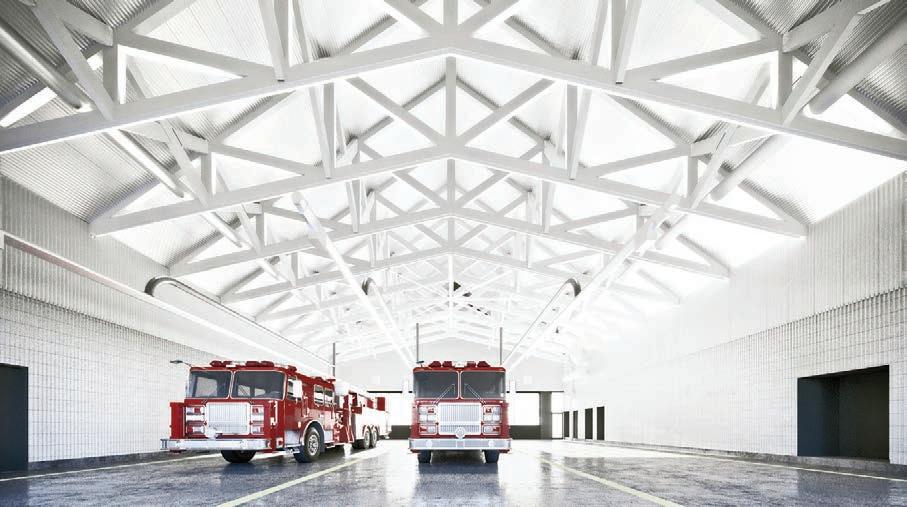
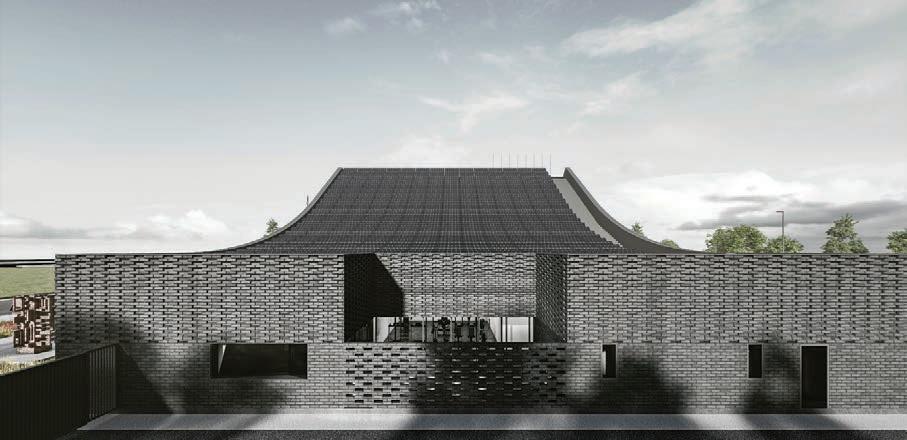
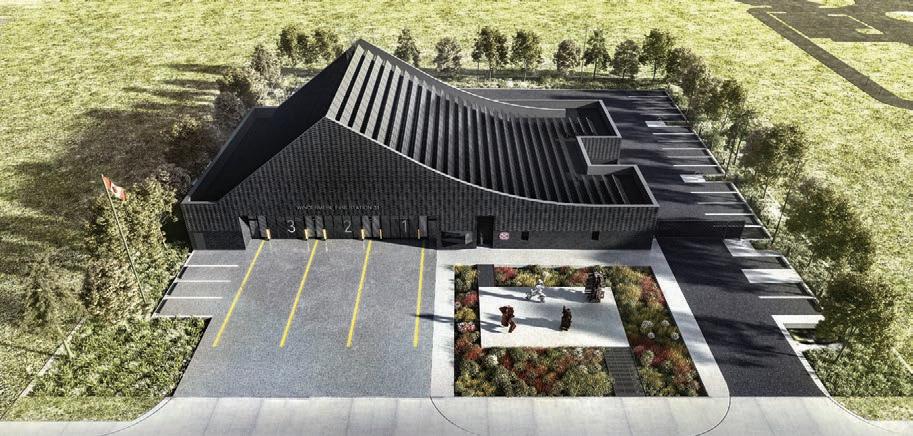
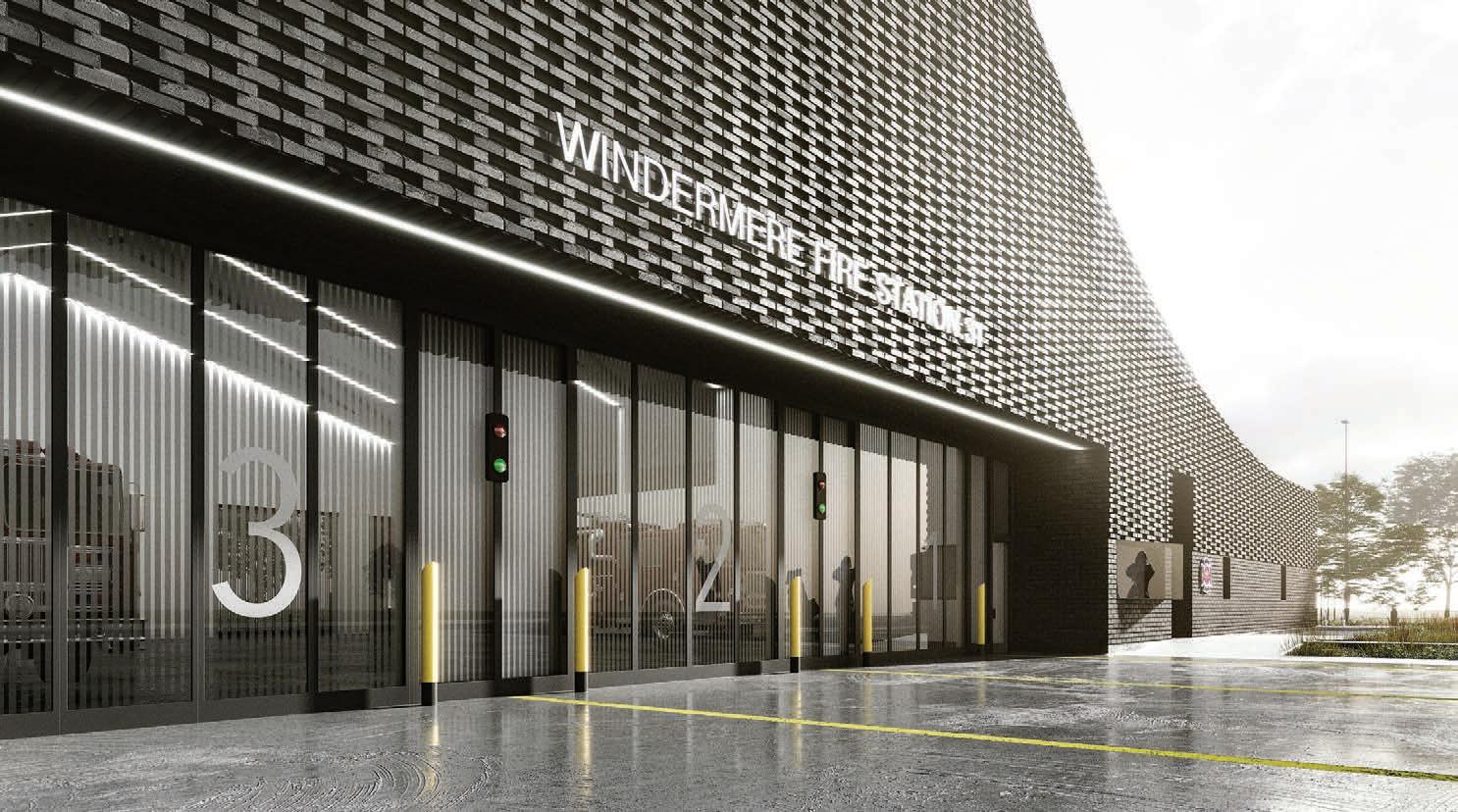
would be the base for a lot of solar panels. “Although there is a snow factor in Edmonton, the solar panels are still efficient with the way they are set on the sloped roof. There are so many sunny days in the city that it is one of the most ideal places to collect solar energy,” Hanson explains.
The black and grey brick structure exterior of the building also contributes to the uniqueness of the station.
“The bricks have a sheen to them so depending on the way the light hits the building, it can look dark, grey, or even metallic,” explains Hanson.
Andrew Brennan, superintendent at PCL Construction Management Inc., notes that the massively high ceiling in the apparatus bay is impressive. “When you walk in to the three bay garage and look up, there are twopiece structural trusses that span
across from one side of the building to the other. There are also exposed mechanical and electrical systems that follow the line of the structure in the apparatus bay, which is unique. The white brick interior matches the white trusses in the bays, making the entire area look very clean.” Brennan concludes that this modern station has created a huge sense of pride for the Edmonton fire department. A
LOCATION
3865 Allan Drive SW, Edmonton, Alberta
OWNER/DEVELOPER City of Edmonton
ARCHITECTS
S2 Architecture / gh3
GENERAL CONTRACTOR
PCL Construction Management
– Special Projects Division
STRUCTURAL CONSULTANT
RJC Engineers
MECHANICAL CONSULTANT
Smith + Anderson
ELECTRICAL CONSULTANT
SMP Engineering Inc.
CIVIL CONSULTANT/ LANDSCAPE ARCHITECT
Urban Systems Ltd.
TOTAL SIZE
15,941 square feet
TOTAL COST
$21.5 million
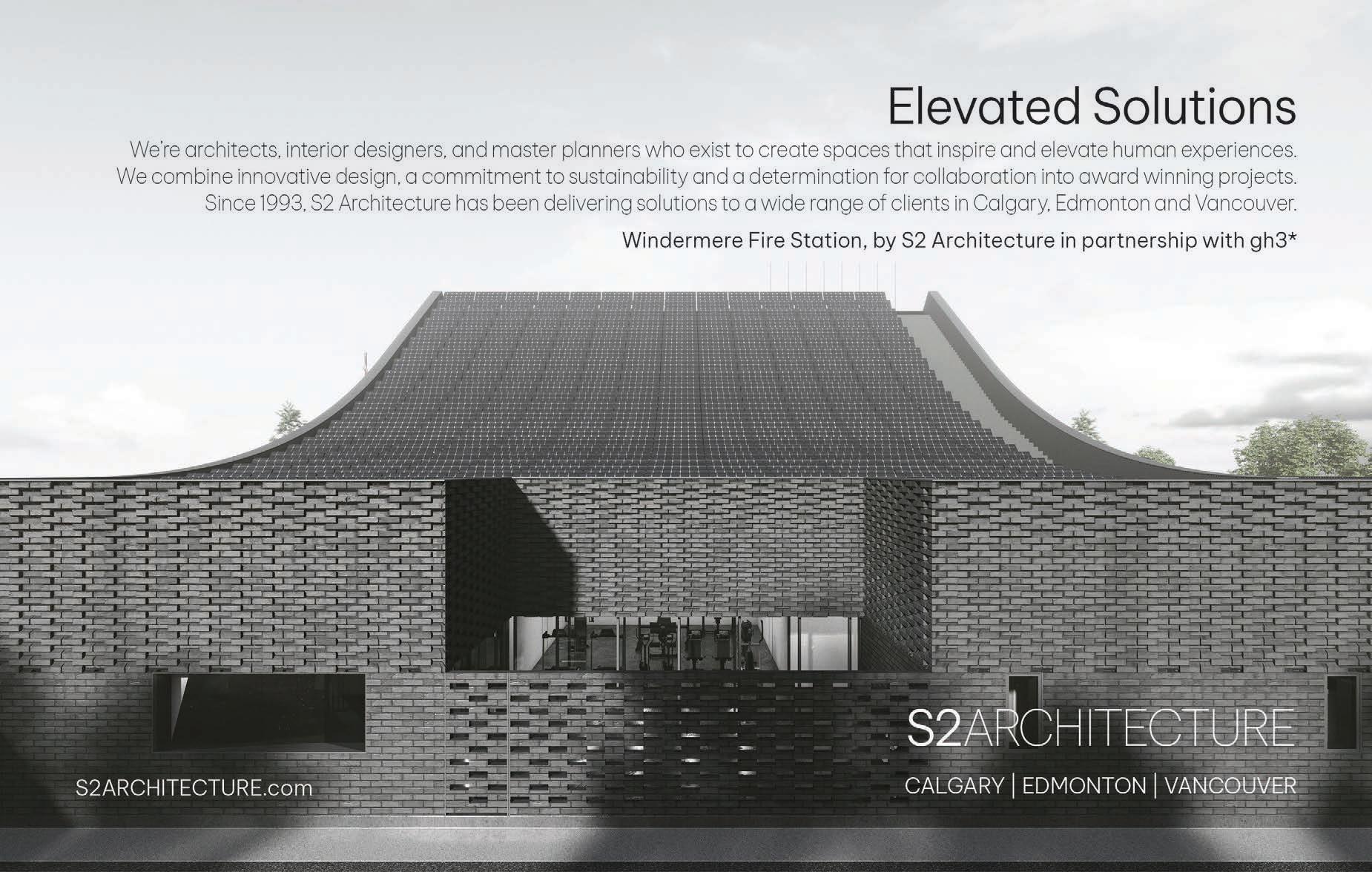
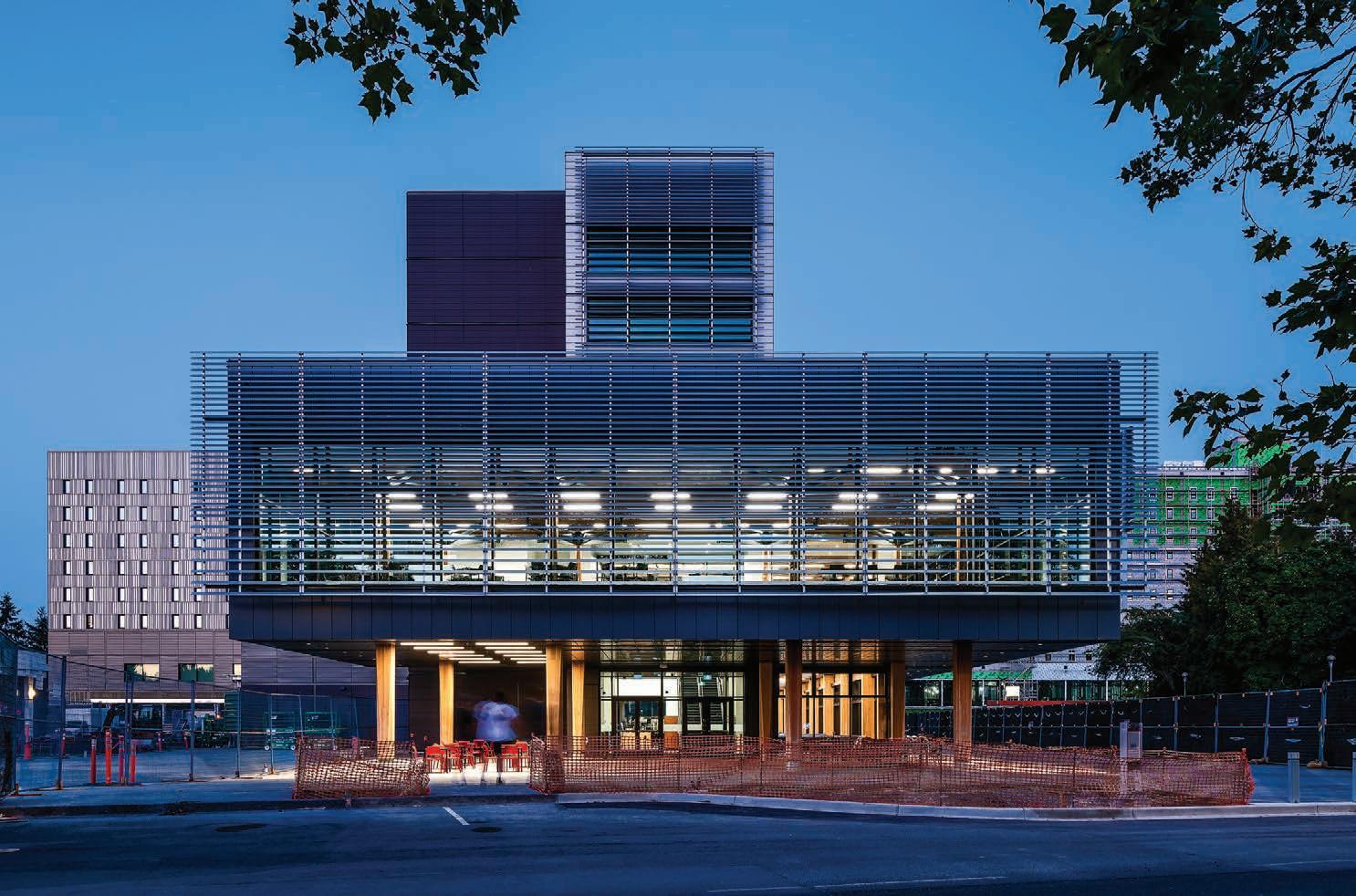
STUDENT HOUSING AND DINING –UNIVERSITY OF VICTORIA
by JESSICA KIRBY
Every construction project is unique and comes with challenges, successes, and design innovations that challenge construction and design teams to reach new heights. But the Student Housing and Dining project at University of Victoria (UVic) is truly something North America has never seen before.
It encompasses two new buildings on campus totalling more than 32,000 square metres of gross floor area. In addition to 398 student beds, the first building features the Cove dining hall, which serves the entire campus. The second building provides two 225-seat classrooms, an Indigenous student lounge and meeting rooms on the ground level, a conference centre on level two, and 385 student beds in nine storeys above that.
A new plaza between the buildings – connected to the Campus Greenway – includes an 18,000-litre capacity stormwater retention pond, seating areas, and Indigenous plantings.
“The University’s primary goal was to provide much-needed on-campus housing for 620 undergraduate students currently living off campus,” says Mike Wilson, director, office of Campus Planning and Sustainability, UVic. “The two new buildings offer new ‘community style’ living options and generous public spaces that will form the heart of the project.”
Alex Minard, architect with Perkins&Will, says the design team looked to the location for design inspiration. “Our goal was to create a heart for the student housing precinct and provide a framework for its future development,” he says. “We also wanted to capture the spirit of the campus and its wider context.”
There was also a high level of consultation with the Songhees and Esquimalt Nations. In spring 2023, Elders from both groups, university representatives, and community members gathered to reveal the buildings’ names – gifted by the Songhees and Esquimalt Nations – and to thank and honour those Nations for permission to use lək ʷəŋən names.
Building 1 is called Čeqʷəŋín ʔéʔləŋ (Cheko’nien House), the name given to the territory that is now Oak Bay, and the Peoples who lived there.
Building 2 is called Sŋéqə ʔéʔləŋ (Sngequ House), after a village in what is now known as Cadboro Bay.
Indigenous artwork will be featured in both buildings. Paving on the campus greenway to the south of Cheko’nien House features a weaving pattern, and lights along the greenway will also project a Coast Salish design.
The University wanted to work in shades of grey rather than in colours, so the team brought warmth to the dining hall with wood. An
LOCATION
Cheko’nien House 2425 Sinclair Road, Victoria, B.C. | Sngequ House 2429 Sinclair Road, Victoria, B.C.
OWNER
University of Victoria
ARCHITECT
Perkins&Will
PROJECT MANAGER
Colliers Project Leaders
CONSTRUCTION MANAGER
EllisDon Kinetic (joint venture)
STRUCTURAL CONSULTANT
Fast + Epp
MECHANICAL CONSULTANT
Introba
ELECTRICAL/CIVIL/ COMMISSIONING CONSULTANT
WSP
LANDSCAPE ARCHITECT
Hapa Collaborative
BUILDING ENVELOPE/ PASSIVE HOUSE CONSULTANT
RDH
TRAFFIC CONSULTANT
Bunt & Associates Engineering
TOTAL SIZE
16,600 square metres (Cheko’nien House); 15,900 square metres (Sngequ House)
TOTAL COST
$229.2 million
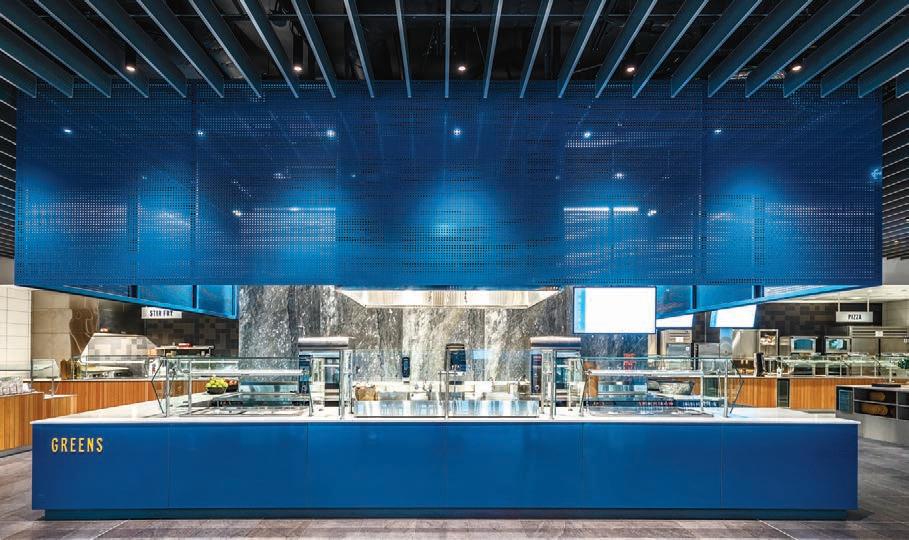
exterior metal cladding in a custom profile, created by a local fabrication shop, gives the buildings a unique and dynamic appearance on a very tight budget, despite being large and repetitive forms.
On the interior, the team endeavoured to use the primary structural system as the organizing principle for the interior appearance. “The concrete structure of each building establishes a grid within which simple finishes are inlaid,” Minard says. “Cheko’nien House extends and embellishes the concrete grid with mass timber.”
UVic chose Passive House certification because it focuses on healthy indoor environments for students, energy efficiency, carbon reduction in building system design, and providing buildings that are ready for a 2050 climate. “We strove to provide buildings that went beyond
LEED Gold and were designed to be energy efficient and resilient to climate change,” Wilson says.
Setting an incredible precedent for Passive House construction in North America, the Student Housing and Dining project is the largest Passive House project ever built in Canada and the largest commercial kitchen built to the standard in North America.
“It is of a different scale than anything that has been done before,” Minard says. “Finding the right team to build something never done before in the country was important.”
The design called for a highperformance envelope and judicious use of high-quality curtain wall, placed where it would have the biggest impact. Mass timber and strategic solar shading also reduce the carbon footprint.
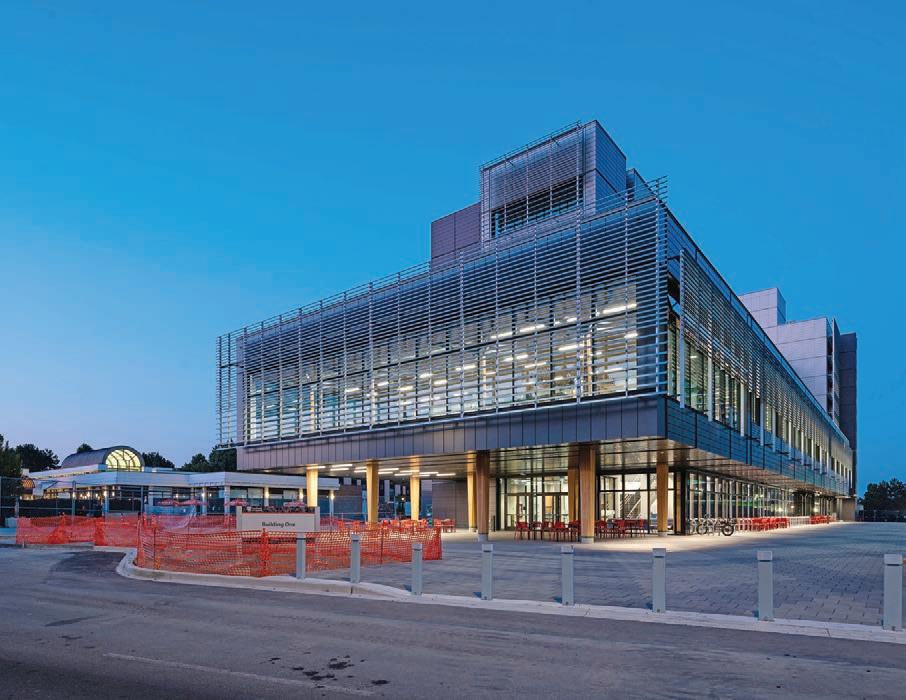
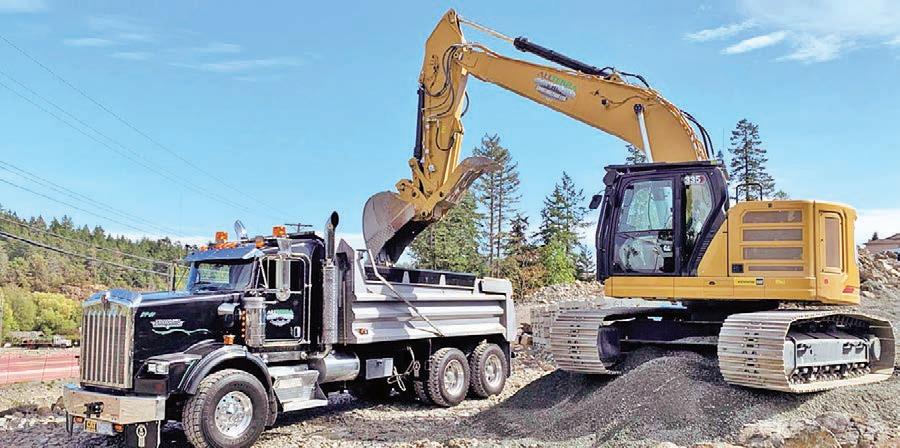
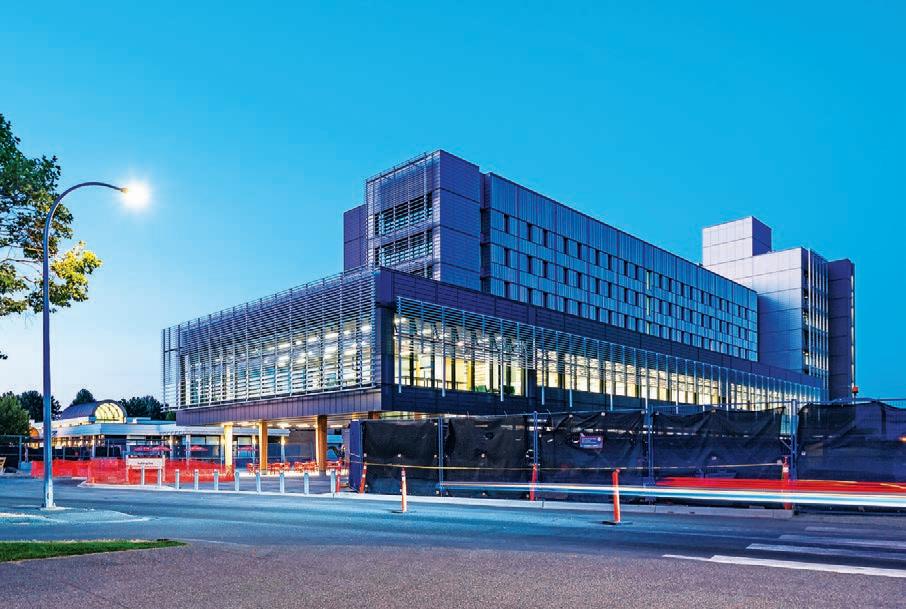



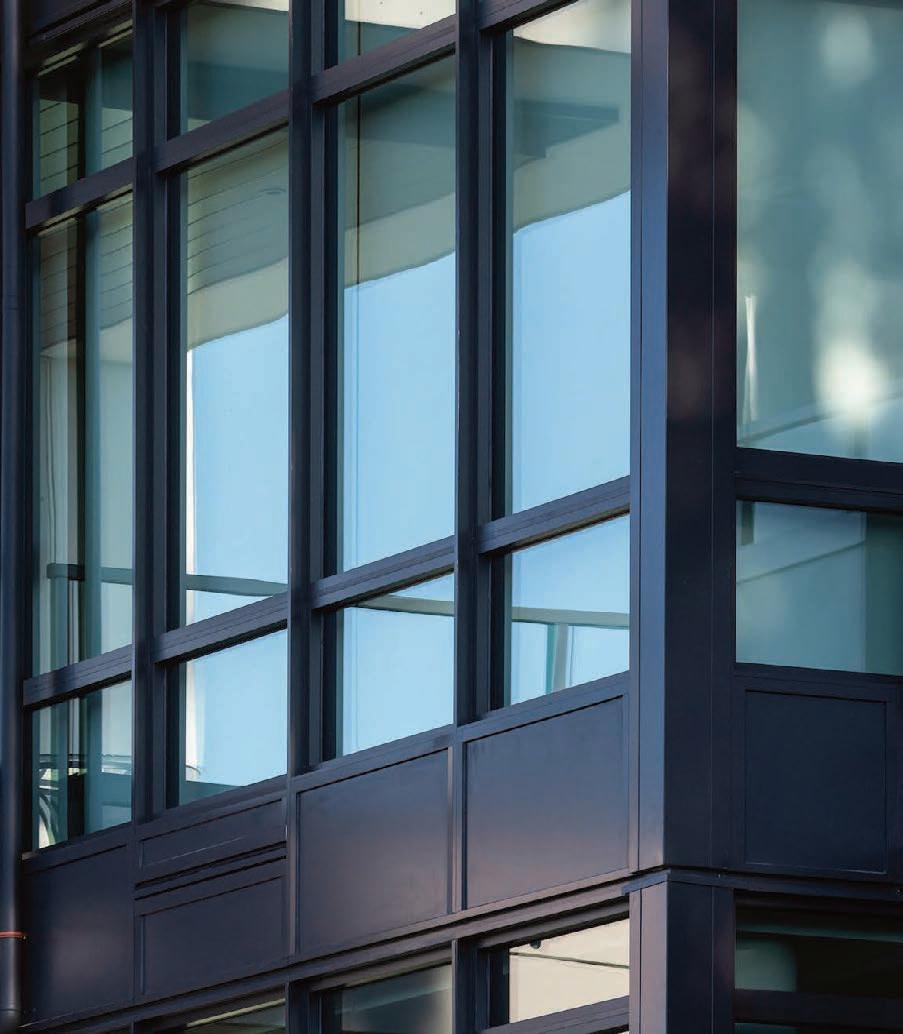
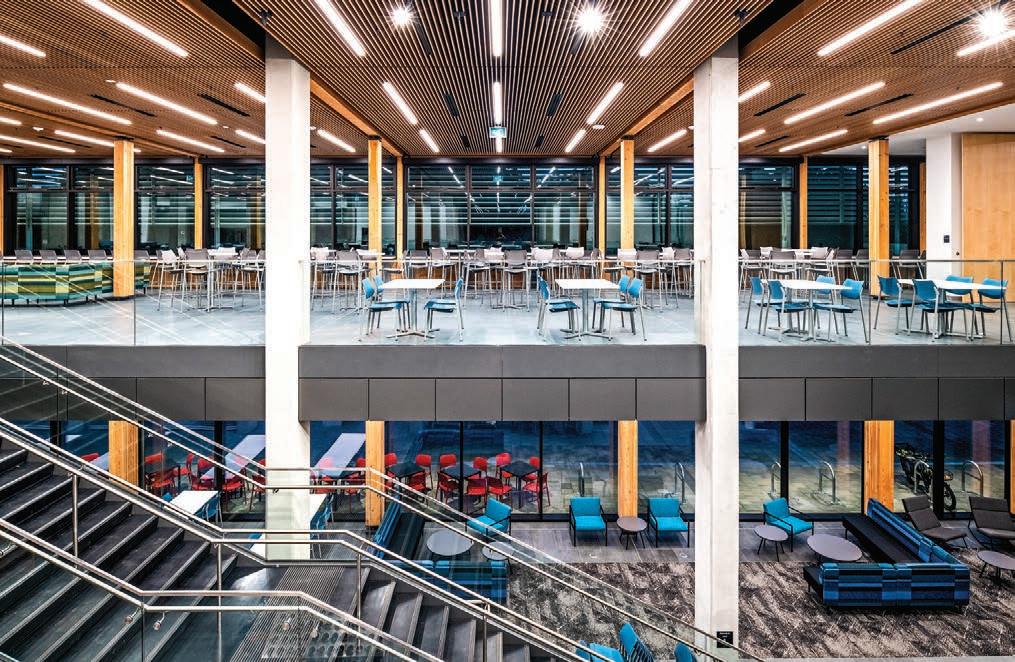
“The project required materials like the Passive House-certified curtain wall from Germany, triple pane windows, and a high volume of exterior insulation for roofing and cladding,” says Diana Demmers, project manager for EllisDon. “There was a high expectation of quality assurance and quality control required for the exterior envelope to meet high performance targets for building airtightness.”
The kitchen will output 8,700 meals per day, requiring 27,750 litres of domestic hot water (DHW) daily, so it was designed to pre-heat DHW using
waste heat from the refrigeration system, kitchen exhaust, dishwasher’s wastewater, and shower drain water.
The heat recovery ventilation reduces the need for space heating, and electric air source heat pumps and other measures reduce GHGs for hot water heating by 88 percent. “By adopting a robust energy reduction strategy and using electric kitchen equipment [rather than the industry standard gas-based equipment], this kitchen is five to six times more energy efficient than conventional commercial kitchens and decreases projected greenhouse
gas emissions by 80 percent for the entire building,” Wilson says.
A project of this scale comes with its share of unique challenges. Preconstruction began with a logistical puzzle, since the deconstructed buildings were three of the first built on campus and were connected to an underground bunker containing shared mechanical/electrical services.
“We had to relocate electrical and mechanical services and a shared fire alarm panel that were connected to some remaining buildings,” says Nick Konicek, construction manager for EllisDon. “Several adjacent buildings required shutdowns while we relocated services.”
To keep the food service running and speed up the deconstruction process, the construction team facilitated and installed a 23,000-square-foot modular dining facility, which was in use for two academic years. “This idea from the joint venture saved the project about 16 months of the schedule and reduced project risks from construction cost escalation,” Konicek says.
Cheko’nien House was ready for occupancy in July 2022 on the exact dates agreed upon in the contract written in 2018. “This, despite
disruptions, the pandemic, and the general uncertainty in the world over the past few years, was an important accomplishment,” Konicek says.
John King, Kinetic’s project director, says that on a project of this magnitude – with upwards of 400 people working indoors at once during the pandemic – the excellence of the team can not be overstated.
“We had good strong rules and everyone, including the subtrades, followed them and worked together to stay safe,” he says. “The EllisDon Kinetic team worked extremely well together. It was great to hear the praise each member of the team spoke of each other.” A
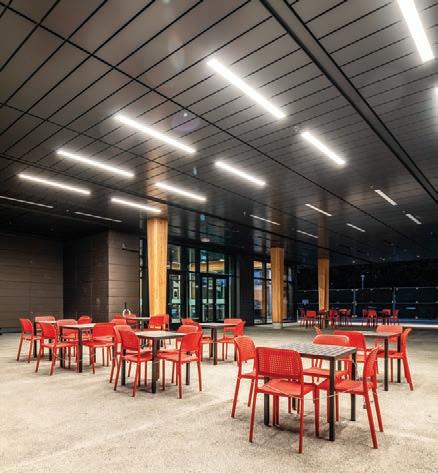
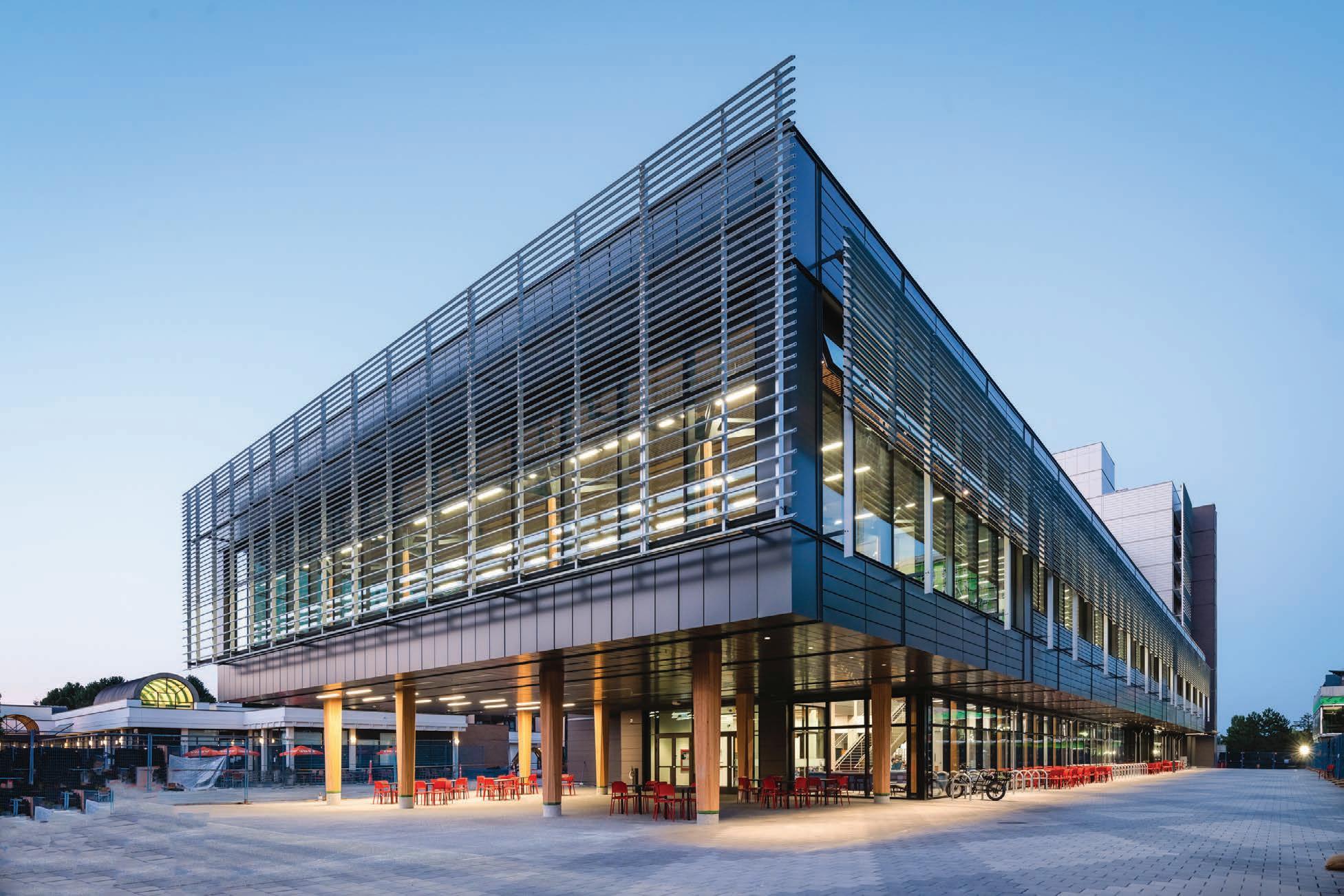
































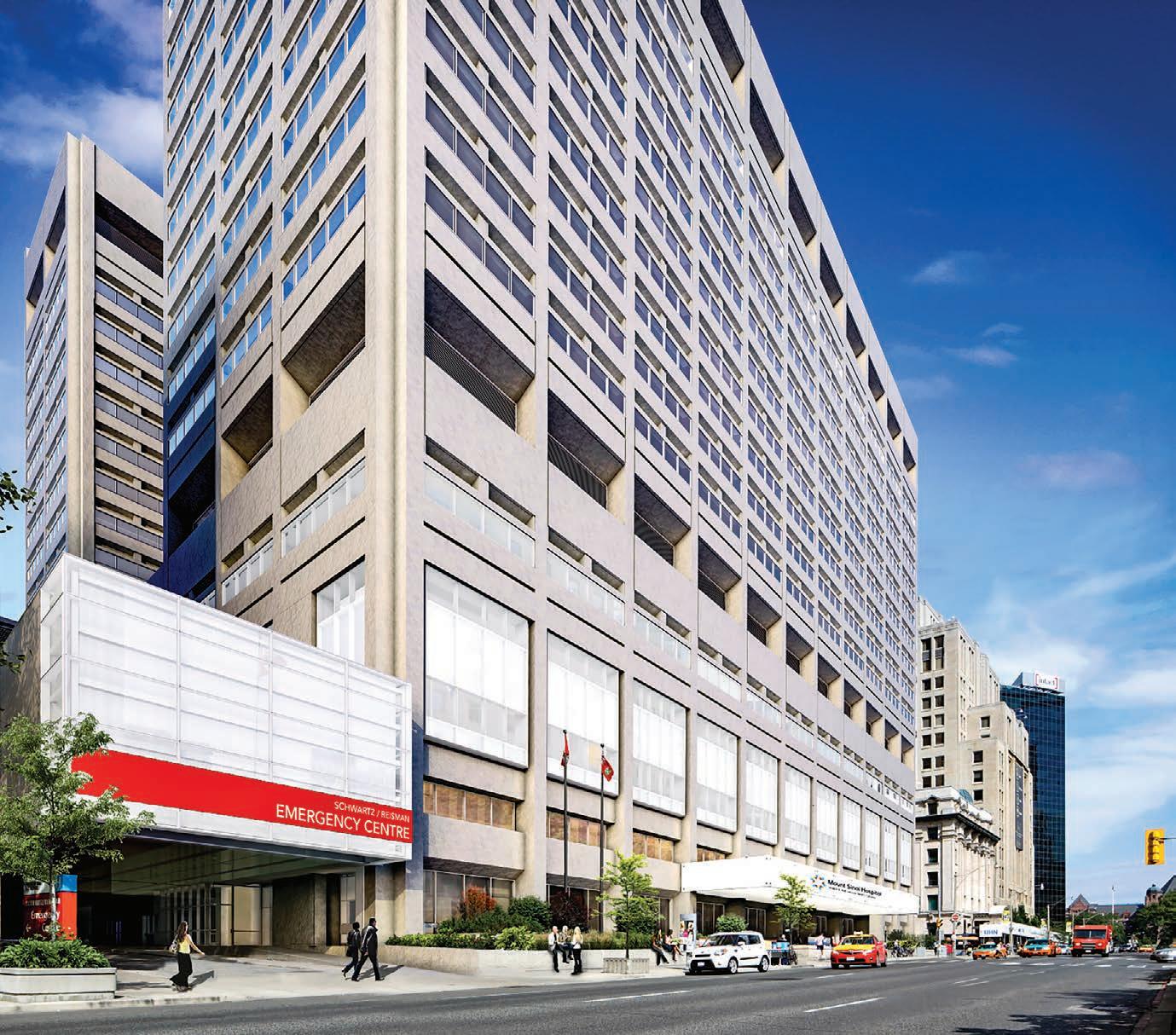
RENEW SINAI PHASE 3A –MOUNT SINAI HOSPITAL
by ROBIN BRUNET
The impetus for the Renew Sinai project at Toronto’s Mount Sinai Hospital – of which Phase 3A is the most recent component – was to upgrade key clinical areas throughout the facility along with support areas critically linked to the redevelopment focus.
The undertaking was remarkable even within the complex world of hospital redevelopment. “All told, the project consisted of 112 phases, each involving elaborate decanting, and a lot of this work was complicated further by the pandemic,” says Rick Gowrie, VP, facilities and capital development for Sinai Health.
Another complication was the Mount Sinai Hospital building itself, which is an 18-floor tower.
“It wasn’t a sprawling complex with wings that would have enabled us to upgrade one wing at a time,” says Gail Hannah architect/principal at Stantec Architecture Ltd. “If one
floor was the focus of work, the floors below and above would be affected.”
Stantec was retained to provide architectural, clinical planning, interior design, and contract administration services for the redevelopment of several key areas of the hospital. This included the redevelopment of the intensive care unit, the expansion and redesign of the emergency department, the expansion and redesign of operating rooms and surgical services, and an increased medical/surgery inpatient capacity.
Earlier, six floors had been added to Mount Sinai, creating modern facilities to support women through pregnancy and labour and improve how care is delivered to older patients. Also, between 2014 and 2016, BBB Architects oversaw the renewal of the hospital’s level three (main floor) gallery, food court, and main lobby.
Stantec’s involvement dates back to 2009, and Hannah recalls,
LOCATION
600 University Avenue, Toronto, Ontario
OWNER/DEVELOPER
Sinai Health
ARCHITECT
Stantec Architecture Ltd.
PROJECT MANAGER
Colliers Project Leaders
BUILD-FINANCE CONTRACTOR
EllisDon
STRUCTURAL/ BUILDING ENVELOPE CONSULTANT
Entuitive
MECHANICAL/ELECTRICAL CONSULTANT
H.H. Angus & Associates
FOOD SERVICE CONSULTANT
KAIZEN Foodservice Planning & Design Inc.
LABORATORY CONSULTANT
NXL Architects
TOTAL SIZE
300,000 square feet
TOTAL CONSTRUCTION COST
Undisclosed
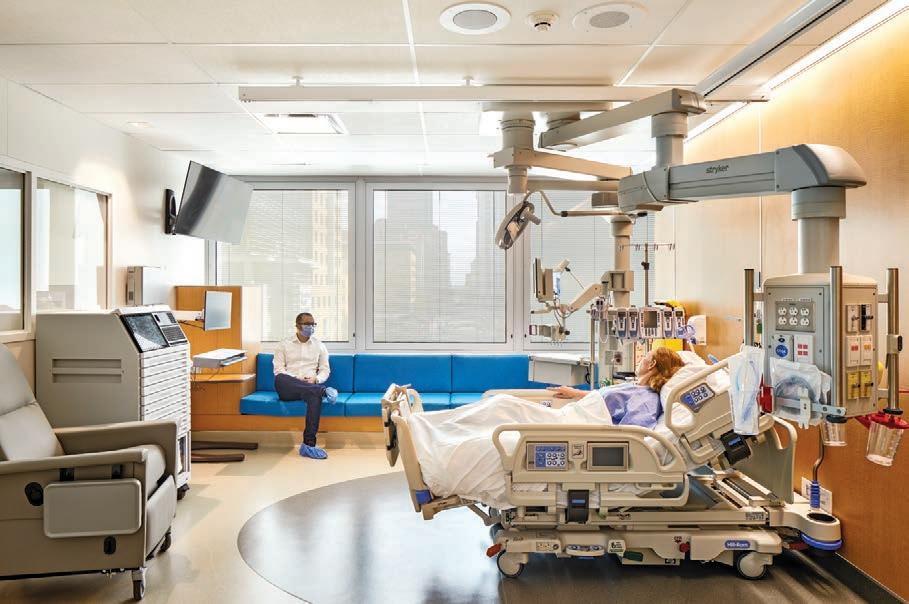
“The main challenge of the project was how to carry out over 100 phases without impacting the 24/7 operation of the hospital.”
There was no single solution, only scrupulous planning and co-ordination governed by a phasing, decanting, and relocation plan developed by Stantec. “Also, when the pandemic hit, assigning dedicated elevators to work crews played a huge role in keeping staff and the public safe,” Gowrie says.
Despite the programming focus of the project, Gowrie notes that there
was plenty of room for architectural expression. “Patient-centred and family-focused care along with creating pleasing environments for our staff was a priority,” he says.
Hannah adds, “For example, we provided the ICU with clear views of the city – previously there had been no glazing. The facade and canopy were redone creating bright and welcoming entrances, and metal fins within the new glazing panels at podium level created a pleasing new visual rhythm. Large-scale graphics


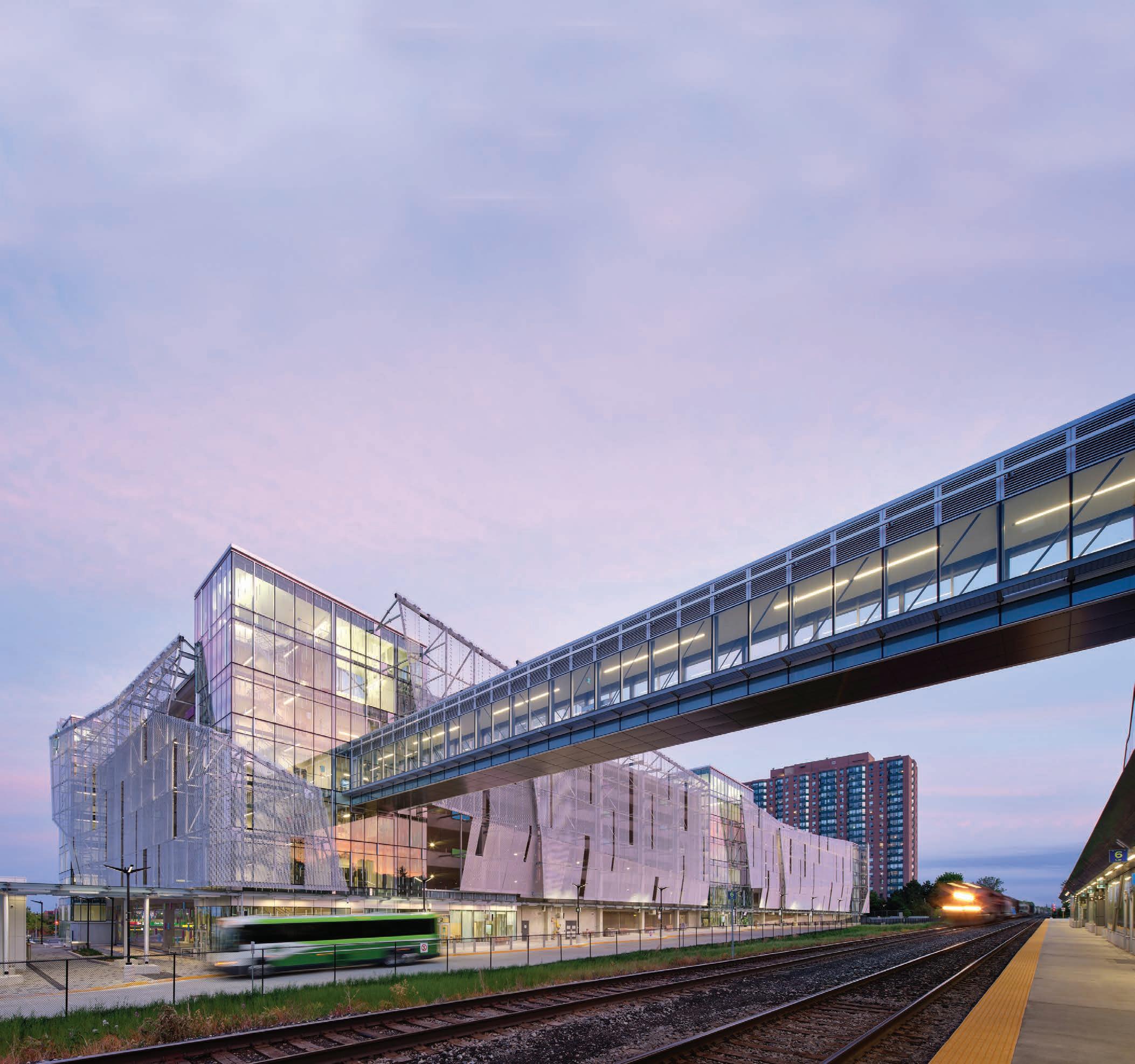
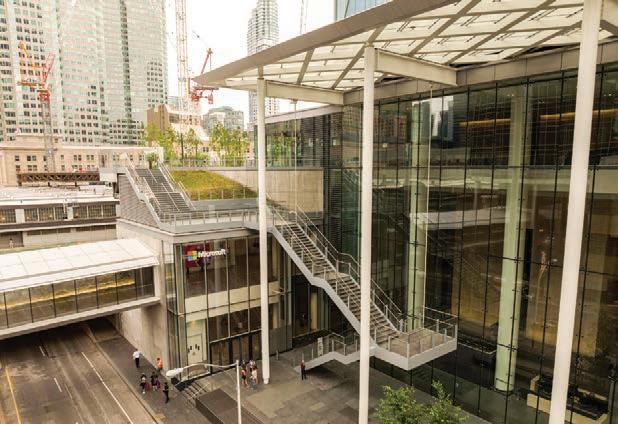
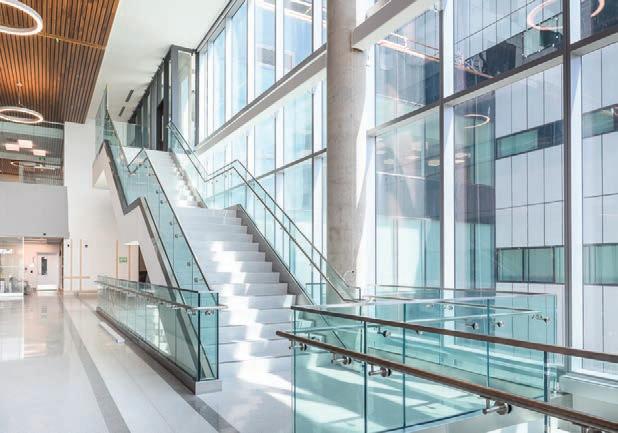
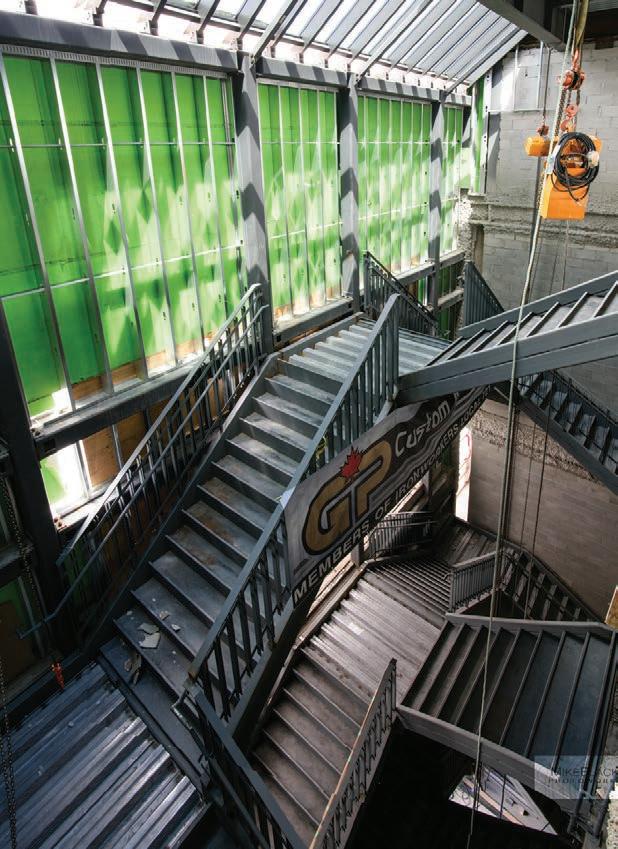
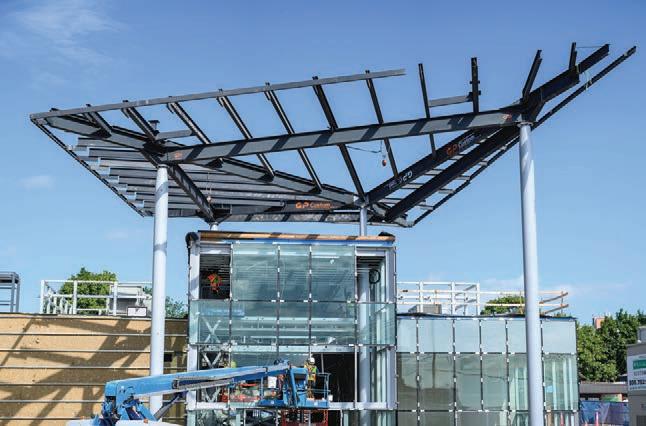
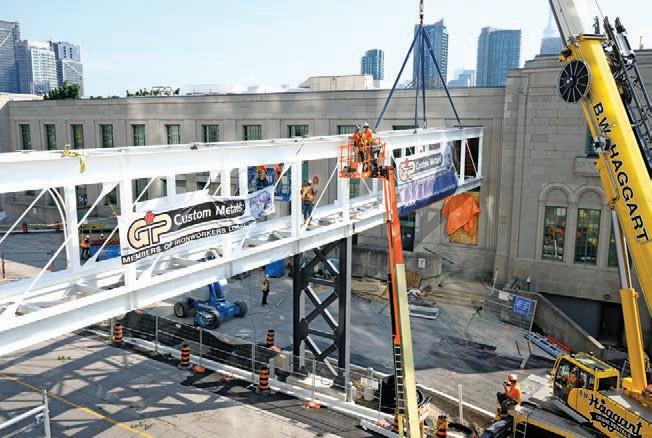
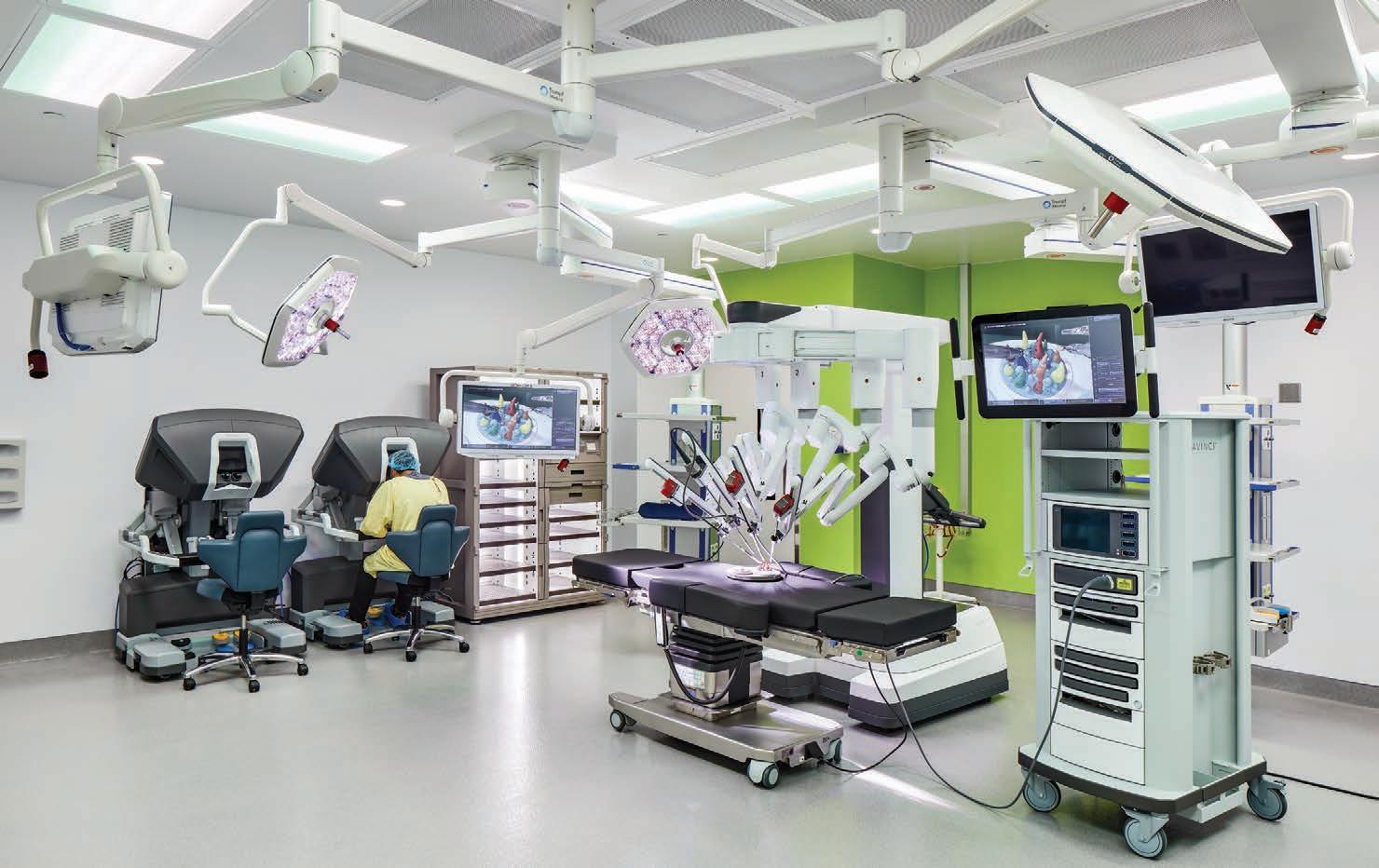
of Toronto’s waterfront were incorporated into the emergency department, and we incorporated benches along the exterior of the Intensive Care Unit as gathering spaces for families.”
A link between the surgical suite and medical device reprocessing department was greatly enhanced by
the development of a new clean elevator that penetrates all floors of the hospital podium. “It took a lot of study and concessions to find a space for the shaft,” Hannah says.
A new mechanical room was located above the existing emergency driveway, while at the same time the
suspended cast-in-place concrete slab supporting it was replaced. To achieve this and not disrupt ambulances, a steel structure support on the existing foundation systems below the driveway was installed in phases, enabling the new mechanical room to be constructed above with minimum impact.
Anne Pugh, project manager at EllisDon, says that at peak more than 200 people worked on site, specifically during the development of the new surgical floor and laboratory below that. “That was when COVID hit, which necessitated extra infection control measures in addition to the temporary walls, negative air spaces and other measures we used throughout the project,” she adds.
Pugh goes on to note that, “Every element required precise planning, including replacing operational elements such as plumbing risers. Plus, we had our fair share of opening up walls and ceilings and finding unexpected components.”
As of May, Renew Sinai was 90 percent complete and would be finished in 2024. “Considering the myriad challenges it’s an amazing accomplishment and right on the heels of the hospital’s 100th anniversary,” Gowrie says. “Special credit should be given to Darnell Williams, senior director, Phase 3A Capital Development for keeping everything under control in addition to our operational readiness, clinical leadership and teams, our project partners Stantec, EllisDon, and a host of trades for transforming Mount Sinai from the inside out.” A




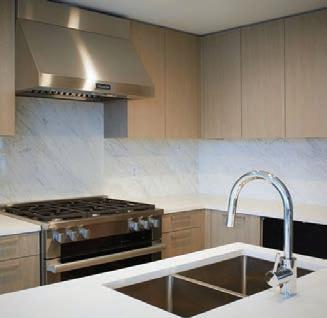
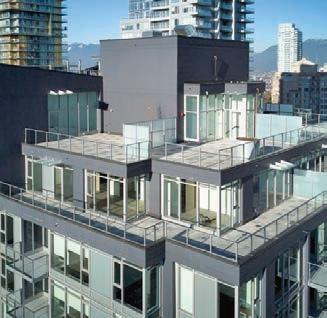

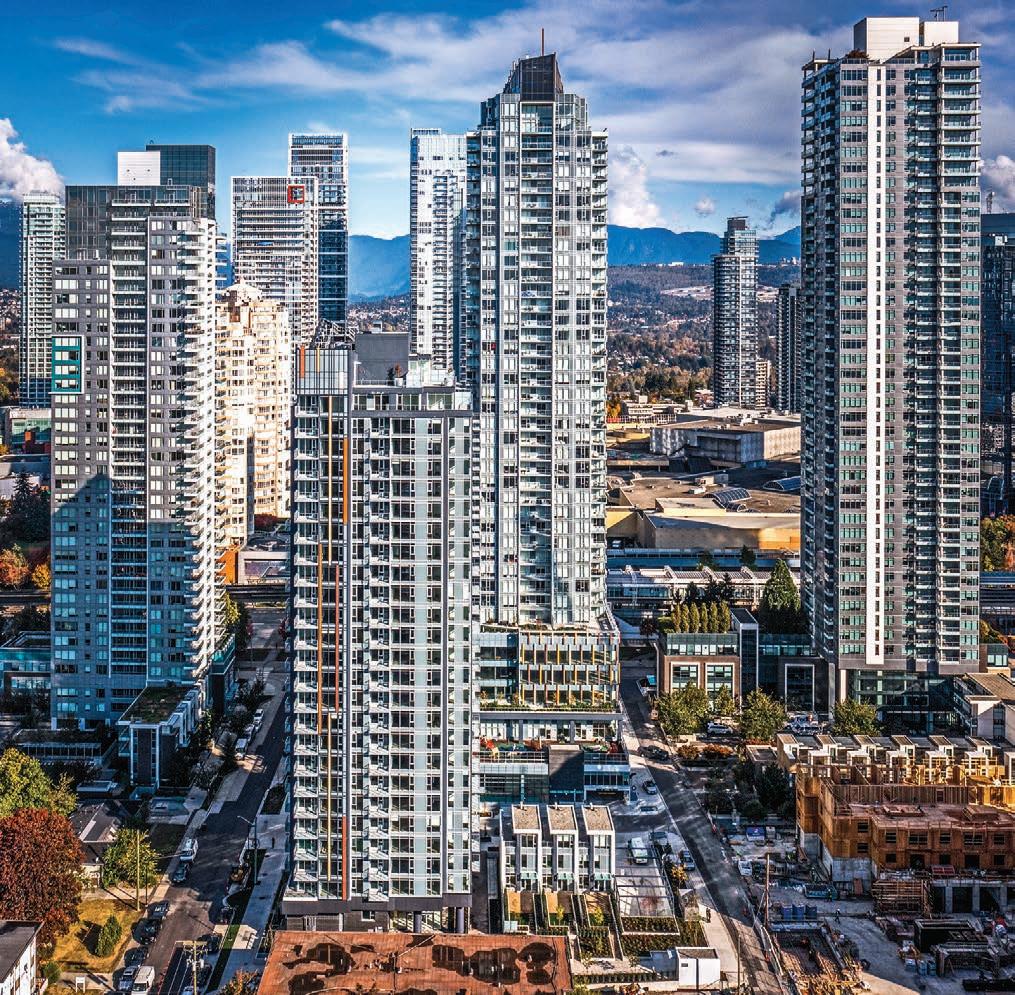
SUN TOWERS 2
by NATALIE BRUCKNER
Sun Towers is not your ordinary mixed-use project. It’s a masterpiece that combines office spaces, restaurants, residential units, daycare, and retail outlets all in one place, creating a self-contained community that’s nothing short of remarkable. As described by Gwyn Vose, director at Arcadis, Sun Towers is the ultimate transit-oriented development, where convenience and accessibility are a top priority.
But Sun Towers is more than just a collection of buildings. It’s a hub that brings together people from different walks of life and enhances their health and wellness. With the completion of Sun Towers 2, the entire project has now become a neighbourhood focal point, nestled in the heart of Metrotown, Burnaby.
The construction of Sun Towers 2 presented a unique challenge, considering that it commenced in May 2020, just as the COVID-19 pandemic was taking hold. Despite the challenges, Belford Properties, Arcadis, and Metro-Can Construction were determined to make Sun Towers 2 a reality.
“Sun Towers 2 was originally planned to start at the same time as Towers 1. Ultimately, Towers 2 became a second phase,” explains Peter Wheatley, project director at MetroCan Construction. “We knew laydown areas would be a challenge so prior to occupancy on Towers 1 we arranged with the owner and the City to use an area between tower 1 and 2 for our
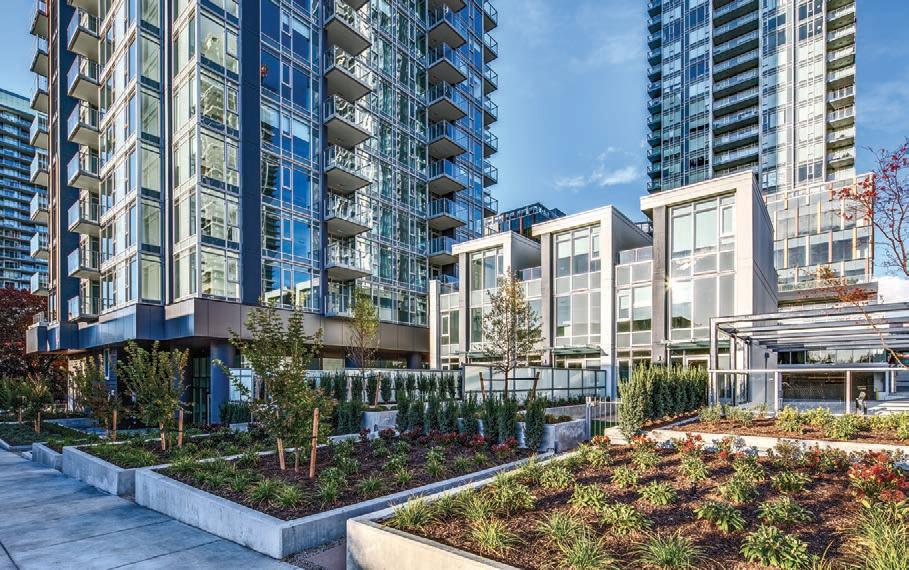
office trailers, rebar prefab, disposal bins, and short-term material staging. Excavation and shoring for Towers 2 had been planned during the construction of phase 1, so the south wall of the Towers 1 parkade was left exposed and ready for membrane once the Towers 2 parkade began to take shape.”
The project team was determined to build on the successes of Towers 1 and took valuable lessons from the first tower and looked for opportunities to enhance subtrade contracts to include more scope items that were overlooked in Towers 1. “The consulting team was the same from phase 1 to phase 2, which also allowed design revisions to be undertaken proactively. The building inspector was the same for both projects, which made for a smooth transition from one tower to the next,” explains Wheatley.
For the design of Towers 2, as was the case with Towers 1, terracotta bands of colour have been used to represent the building’s name. “It’s sort of a play on the first tower. I think the terracotta that we got into the elevations sets it apart from some of the other buildings around the neighbourhood that are just window wall and glass,” says Vose.
However, the use of terracotta slabs as well as the rooftop steel structure proved to be somewhat challenging, as Wheatley explains: “Terracotta slabs are both heavy and fragile. These were installed on three elevations on Towers 2 compared to one elevation
on Towers 1. The steel roof structure with angled curtain wall panels was also tricky to co-ordinate between the design and installation. Each window unit had to be site measured and installation was done throughout the coldest months of the year. The Metrotown area of Burnaby is notorious for high winds throughout the year as storm systems move in off the ocean, resulting in more windy days that forced the crane to shut down, especially when trying to fly the steel and windows into position 26 storeys above the ground.”
On entering the building, a grand double-height lobby space creates a true wow factor. The entry vestibule walls are clad with five-by-10-feet porcelain sheets that have been artfully crafted to resemble white marble, exuding a sense of timeless elegance. In addition, the amenity space opens to an outdoor covered patio using a NanaWall system of folding panels. “Wood veneer panels are used throughout the main lobby and this same wood veneer extends to the entry door of each suite through the tower,” says Wheatley.
Heading up through the tower is where you witness the most notable difference between the two towers, as Leo Sun, representative for Belford Properties Ltd., explains: “Sun Towers 2 features larger unit sizes and offers everything from one-bedroom suites to the three-storey townhomes that range in size from 580 to 1,604 square feet. Inside the suites are larger islands and kitchen areas, and a very aesthetically pleasing interior design.”
The penthouse units have rooftop access as well to a big terrace space.
Sun Towers 2 isn’t just a place to live, it’s a lifestyle. The secure underground parking has been thoughtfully designed to include two dedicated bicycle parking spaces per unit, in line with the city’s requirements.
Additionally, residents have access to a car wash station and a carshare program, providing them with exclusive use of two electric vehicles.
The development offers stunning views of the surrounding mountains and the city skyline, making it an exceptional place to call home. The range of amenities available in the area and the access to transit ensures that residents have everything they need right at their doorstep. Every aspect of the building, from the design to the appliances, has been carefully chosen to provide the residents with the utmost comfort and convenience.
According to Wheatley, Sun Towers marks the completion of Belford Properties’ first project in Canada. “Its colourful terracotta accents introduce a unique element to the Metrotown neighbourhood, standing shoulder to shoulder with some very unique highrise residential towers to the east and west.” All in all, Sun Towers 2 is an exceptional residential development that offers a perfect balance of luxury, convenience, and community. A
LOCATION
6398 Silver Avenue, Burnaby, B.C.
OWNER/DEVELOPER
Belford Properties
ARCHITECT/LANDSCAPE ARCHITECT Arcadis
GENERAL CONTRACTOR
Metro-Can Construction
STRUCTURAL CONSULTANT
Glotman Simpson Consulting Engineers
MECHANICAL CONSULTANT
Williams Engineering
ELECTRICAL CONSULTANT
Nemetz S/A & Associates Ltd.
INTERIOR DESIGN CONSULTANTS
Cristina Oberti Interior Design / Dialog
TOTAL SIZE
184,000 square feet
TOTAL COST
Undisclosed
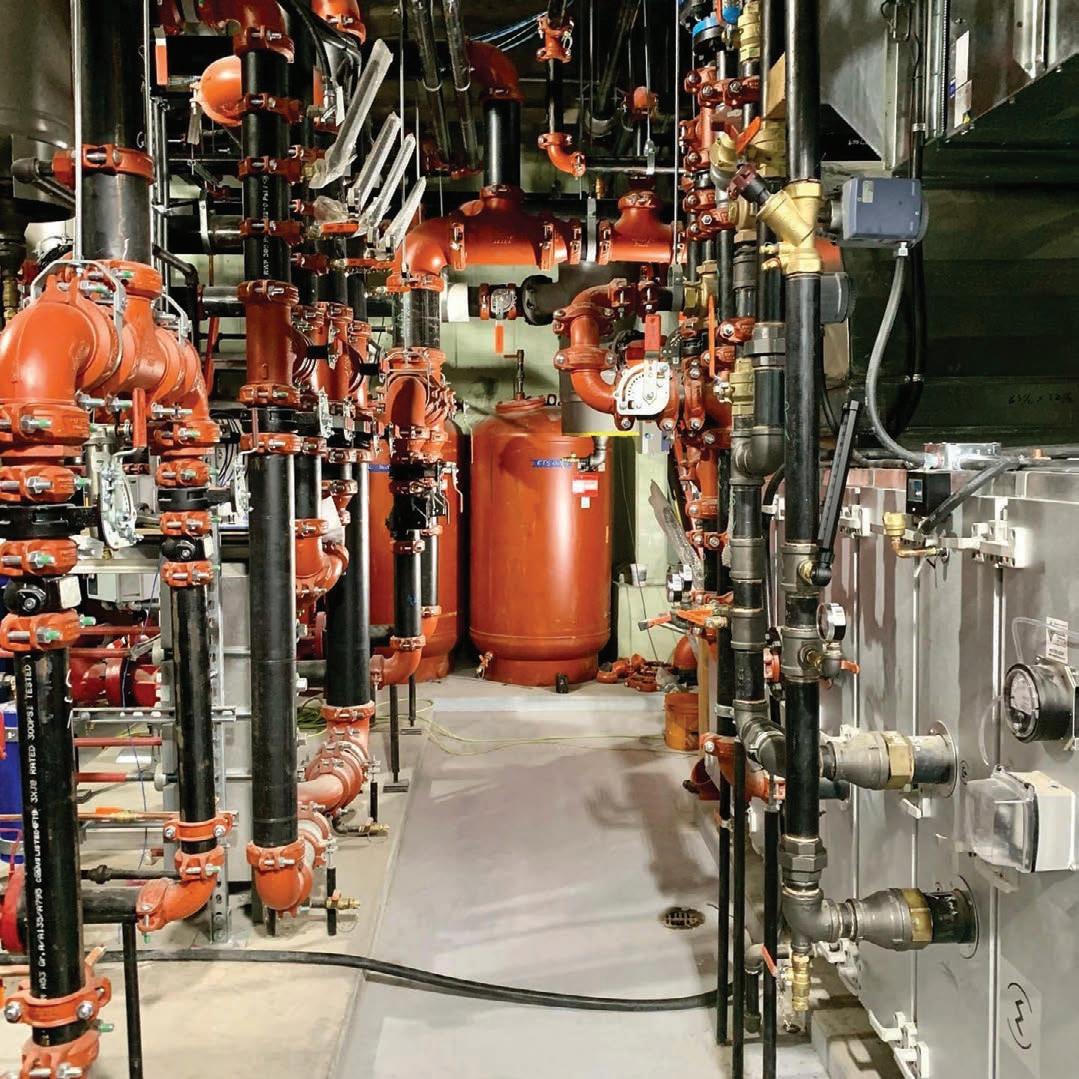


CANMORE FIRE STATION
by NATALIE BRUCKNER
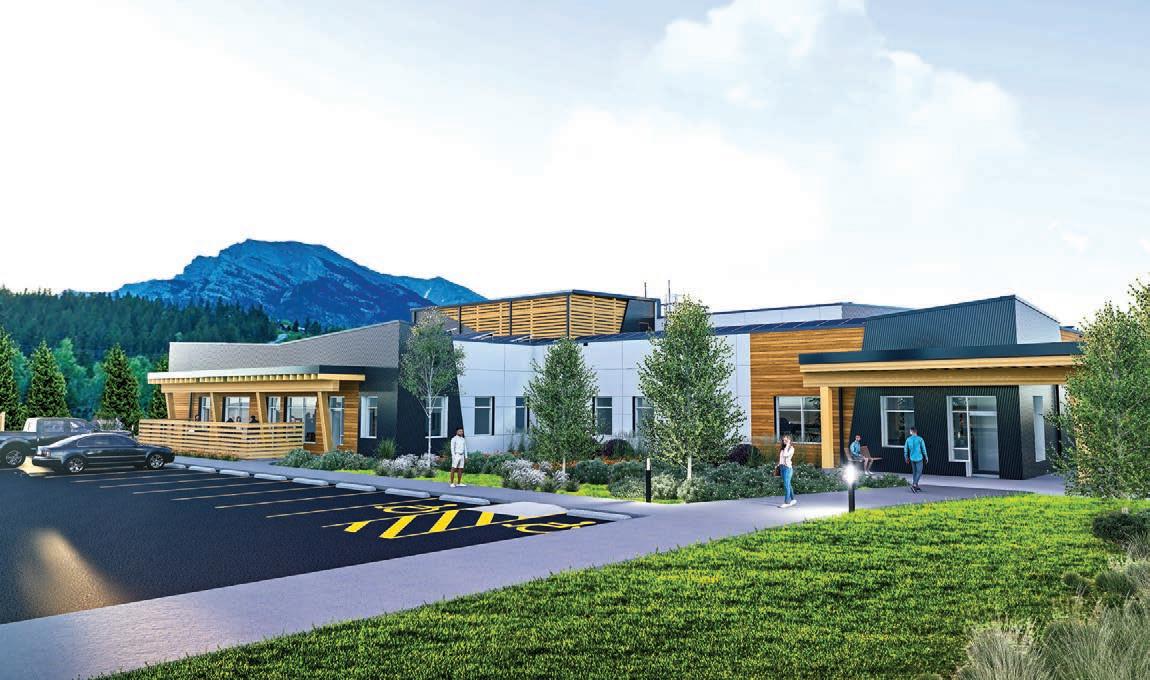
The new Fire Station in Canmore not only boasts an impressive and visually striking design but is also a true testament to sustainable architecture, reflecting the Town of Canmore’s commitment to enhancing the community’s quality of life through environmentally responsible initiatives, climate action, and wildlife co-existence.
Located on Palliser Trail, the single-storey Fire Station is a shining example of zero-carbon building design. It’s not only carbon-neutral, but has been designed to generate excess energy that can be sold back as carbon credits in the future.
Achieving this level of environmental responsibility required a significant effort by all involved, as Lesley Bannister, facilities project manager at the Town of Canmore, explains. “Following a spatial needs study across the organization in 2016, it was evident that the existing Fire Hall, constructed in 1986, was too small to meet the current and future needs of the Canmore Fire Rescue Services, and there was no room for expansion on site. Therefore, a new facility was essential.”
Following the Spatial Needs Study, a comprehensive Fire-Rescue Staffing Study and Master Plan was completed. The results of this study served as the foundation for the FireRescue Strategic Plan and led to the selection of the Palliser Trail site.
The greenfield site proved ideal for several reasons, including access to transportation networks and response times, potential for future development, and as a perfect location for a post-disaster building.
Previous studies provided an essential framework to begin the design of the new Fire Station, which began in 2020 with the partnership of Metafor (prime consultant) and Johnston
Davidson Architecture (fire station specialist). With a long-standing relationship with the Town of Canmore, Metafor’s principal, Mike Woodland, understood the nuances involved and was thrilled to be part of the process of bringing new life to what is considered the gateway to Canmore.
Key design considerations for the new fire station included efficient layout of eight bays for fire trucks and key equipment, with a designated training room, and increased storage alternatives to utilizing the bays.
“Having a clear delineation between the ‘clean’ side of the fire station and ‘dirty’ side was also a key feature, as well as having increased room for training including an interior training room and exterior training pad for active exercises,” explains Bannister.
From an energy efficiency perspective, the Town’s goal was to build a facility that mirrors net-zero requirements. Metafor also wanted to design a building that would be high profile and represent the values of Canmore, while drawing inspiration from the surrounding mountain landscape.
“The inspiration for the building form and the high angled parapets came from the Three Sisters [the trio of mountain peaks],” explains Woodland.
PCL Construction used a combination of non-combustible and high-performing building envelope materials including Hardie board, Longboard, and corrugated metal siding to help create the design with colours that mimic the striations seen in the limestone of the mountains. Moreover, the skilled placement of wood elements creates a mountain style and provides a warm atmosphere. This careful attention to detail creates a sense of harmony between the structure and its environment.
Upon entering the fire station’s main entrance, visitors are greeted with an
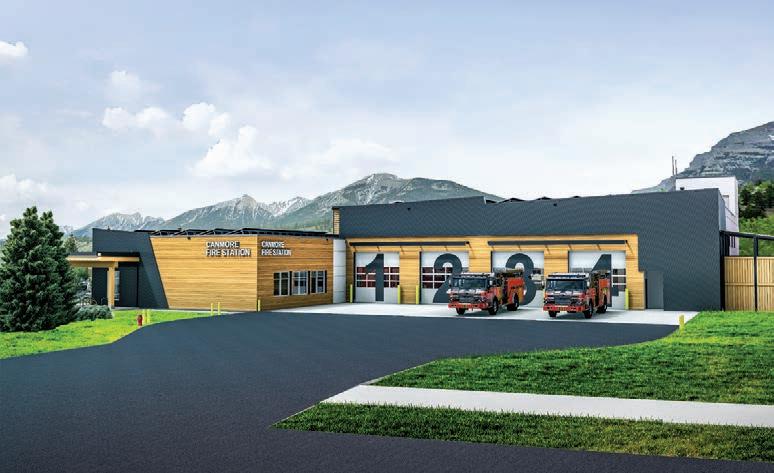
inviting layout that ensures increasing levels of privacy for firefighters the deeper one ventures into the building. The reception control area features wood slat ceilings, exposed concrete and vinyl floors, and a prominent red accent wall that symbolizes the station’s connection to firefighting.
Moving further into the building leads to the living quarters for the firefighters, designed to evoke a homelike environment. The dorms offer a sense of privacy with an outdoor patio that is fenced on three sides. One of the key design elements is the open glulam interior assembly in the apparatus bays, and numerous windows to maximize the building’s stunning views. According to Bannister, “the open space is both beautiful and functional, and will remain timeless.”
The fire station’s operational features are a highlight of the building, designed with both safety and sustainability in mind. The eight bays, hose tower, and storage rooms are strategically placed to ensure visibility and accessibility, while also allowing ample natural light to flood the space. Additionally, the building’s sustainable systems are impressive, including fire resistant exterior materials and PV array on the roof. By 2025, as the Alberta electricity grid gets cleaner, the PV array is expected to offset all CO2 emissions created by the station’s natural gas use. The air source heat pumps, which will be used 95 percent of the time, are supplemented by a natural gas boiler on colder days, with a backup generator available in case of power outages to ensure the building’s post-disaster resilience.
On reflecting on the project, Bannister says its success is down to the remarkable collaboration and dedication of everyone involved. “This has been a true team effort, with Kristine Bain, facilities project manager at the
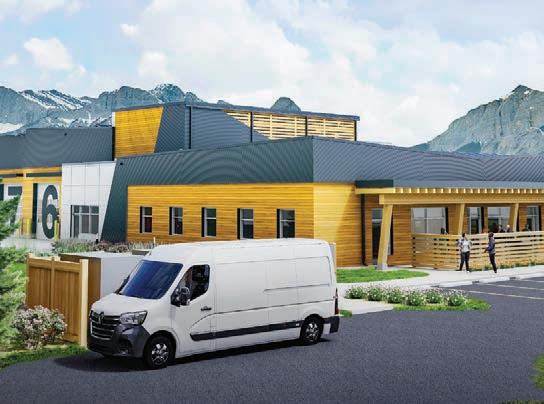
Town of Canmore, leading the planning process for this facility, while I had the opportunity to lead the execution. As the community grows, this facility will remain long-term, ensuring a safe and sustainable emergency response facility. Together with Council and all of our community stakeholders, we’re celebrating that this beautiful facility will be here in the decades to come. We’ll all be able to tell our grandkids that we helped build this facility, and that this facility helped shape the vision for sustainable buildings in this community.” A
LOCATION
1200 Steward Road, Canmore, Alberta OWNER/DEVELOPER Town of Canmore ARCHITECTS
METAFOR / Johnston Davidson Architecture + Planning Inc.
GENERAL CONTRACTOR
PCL Construction
STRUCTURAL/CIVIL CONSULTANT
ISL Engineering and Land Services
MECHANICAL/ELECTRICAL CONSULTANT
Introba
LANDSCAPE ARCHITECT
McElhanney
TOTAL SIZE
18,500 square feet
TOTAL COST
$16.975 million


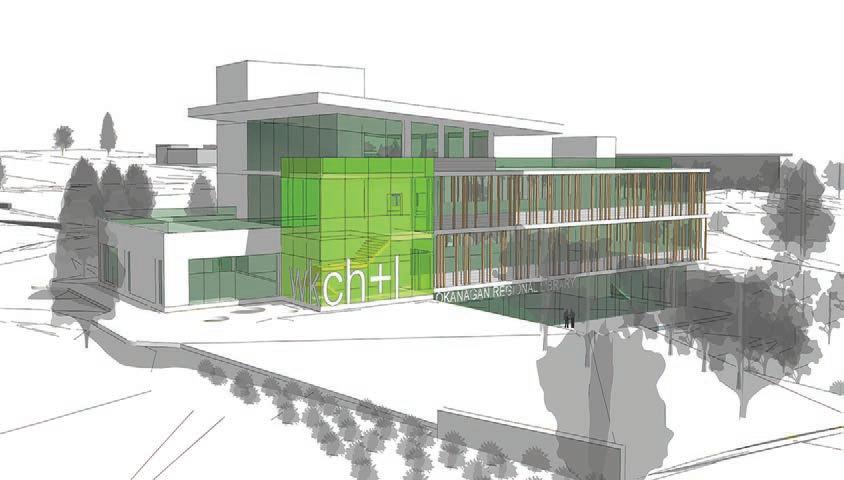

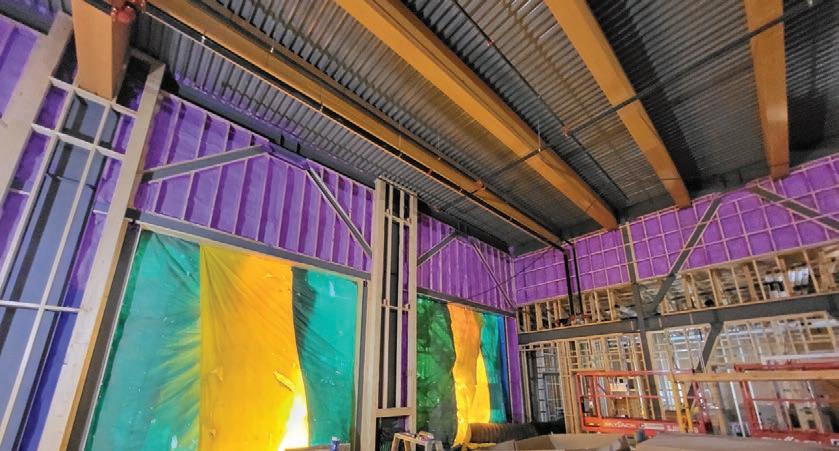
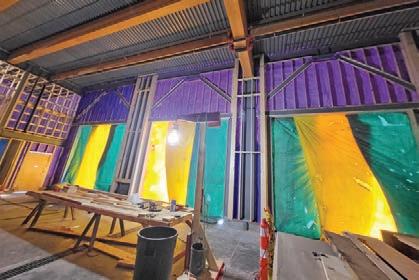
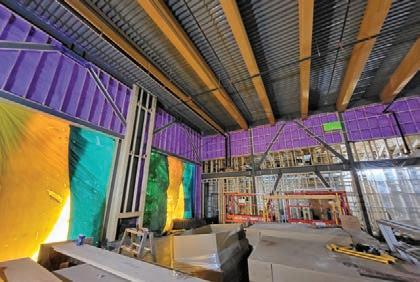
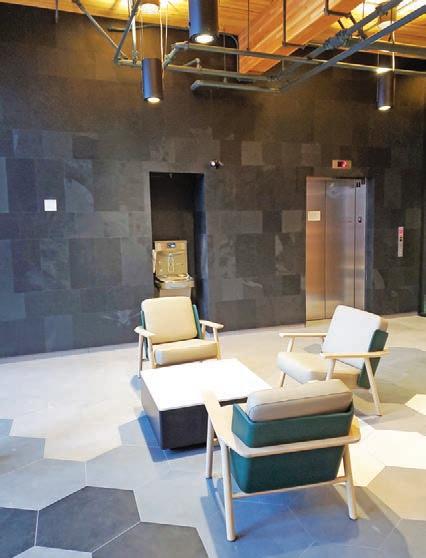
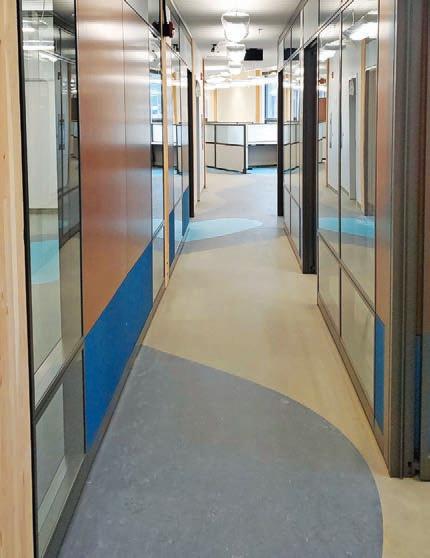
KASHGÊK’ BUILDING
by ROBIN BRUNET
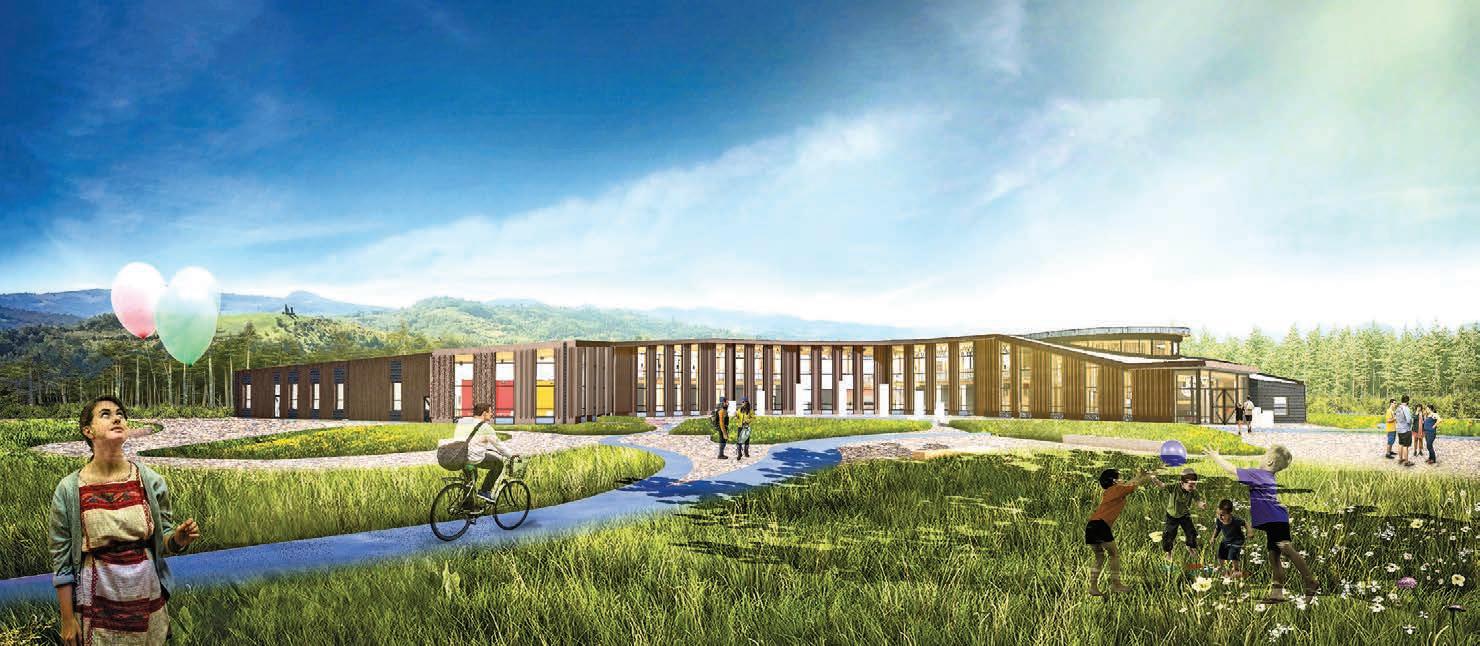
In the McIntyre subdivision of Whitehorse is a unique structure of dark cedar, glass, and masonry with sloping, curving forms: the Kashgêk’ Building, a new community hub for the Kwanlin Dün First Nation (KDFN). And while the exterior is eye-catching, the inside is stunningly beautiful, with generous use of warm wood for staircases, wall frames, and railings.
The Kashgêk’ Building is a milestone for the KDFN: over the decades the First Nation had been relocated numerous times by Indian Affairs, and upon achieving self-governing status in 2005 it was determined to send the message that it was anchored and would flourish in a permanent geographical location. Its investment and funding of the new community hub not only provides programs and services to the community, but also reinforces that determination.
The final iteration of Kashgêk’ is the result of an 11th hour rejigging necessitated by the COVID pandemic. “The virus made us scramble to replan what the building would be, with input from the KDFN,” says Richard Isaac, principal and co-founder of Reimagine Architects.
Isaac relishes involvement with First Nations projects: for three years in the 1980s he lived and worked as a volunteer in Wabasca, assisting First Nation people with design and construction projects. “Working with the KDFN was very fulfilling,” he says. “We started in 2018 with a design week that involved everyone from employees to KDFN citizens and elders, all of us sharing design ideas.”
The former administration building was located on the building site and was to remain in place for the initial stage of construction. “We had to plan the new building around this existing structure,” Isaac explains. “As a result, seen from above it would be shaped like a stylized leaping
fish, symbolizing the community’s connection to the Yukon River and deep and longstanding relationship with salmon and other fish species. The irony is that the old building was demolished before we began construction.”
Isaac was inspired by the spectacular cliffs of nearby Kwanlin (Miles) Canyon, a site important to the KDFN. The columns that surround the outdoor plaza, the topographical map on the front of the welcome desk, and the large stone-tiled walls in the building’s atrium all take their design cues from the canyon’s geographical features. Council Chambers and the outdoor plaza both feature 14 pillars that symbolize the KDFN’s relationship with the 13 other Yukon First Nations.
Intelligent space design maximized daylight and promoted passive ventilation in addition to an energy-efficient envelope, and B.C. yellow cedar was selected for exterior cladding. “We’re big fans of heavy timber, and credit goes to Fast + Epp for engineering the beams that are so prominent throughout the building,” Isaac says.
Wildstone Construction commenced work on the site in September of 2019. “We installed 997 pieces of engineered lumber and three times as many connections, with the steel and wood structures lining up perfectly,” says project manager Riley Stewart.
But the arrival of COVID not only meant Stewart’s crew had to quickly formulate a safety plan in order to continue working, it also required a fundamental change to the interior. Isaac says, “Our design was based on open concept spaces, which everyone was keen on, but the pandemic brought about the desire for more private spaces. Considering the building was already hoarded in at this point, we scrambled to rejig our design and create flexible spaces that could be closed off using demountable partitions.
LOCATION
35 McIntyre Drive, Whitehorse, Yukon
OWNER/DEVELOPER
Kwanlin Dün First Nation
ARCHITECT
Reimagine Architects
GENERAL CONTRACTOR
Wildstone Construction Group
STRUCTURAL CONSULTANT
Fast + Epp
CIVIL/MECHANICAL/ ELECTRICAL CONSULTANT
Associated Engineering
LANDSCAPE ARCHITECT
LEES+Associates
TOTAL SIZE
37,660 square feet
TOTAL COST $32.9 million
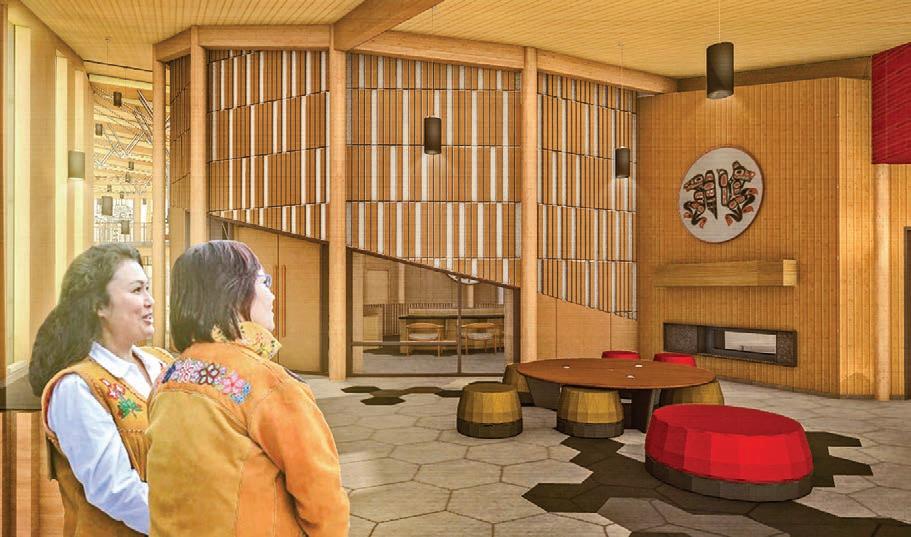

“Also, the lighting and mechanical, which had been designed for the open concept, had to be reworked – and all of this was accomplished within several weeks.”
Many other challenges were dealt with in an expedient manner. “The quarantines were tough on crews who came from outside of Yukon because they couldn’t fly home on weekends,” Stewart says. “People had to commit to five week shifts. We worked through record winter snowfalls, and then in the summer it literally rained everyday.” A massive movable hoarding system allowed crews to heat portions of the roof for treatment and to begin drywalling without delays.
Meanwhile, LEES+Associates created a landscape design consisting of a blend of a traditional plaza with a more park-like design approach, featuring a dry riverbed feature running along the front face of Kashgêk’. The ‘headwaters’ of this feature are located outside the windows of the healing room where water cascades down a series of basalt columns.
When Kashgêk’ officially opened its doors last October, KDFN Chief Doris Bill said, “We built a space for the council to meet, for staff to provide expanding programs, and services to citizens and beneficiaries – and for us to honour our culture. The building was community designed by and for our people.” A
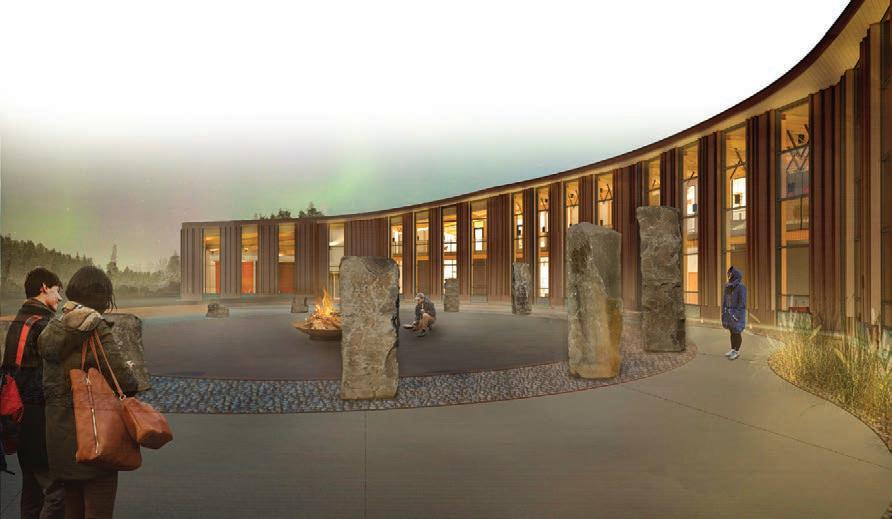
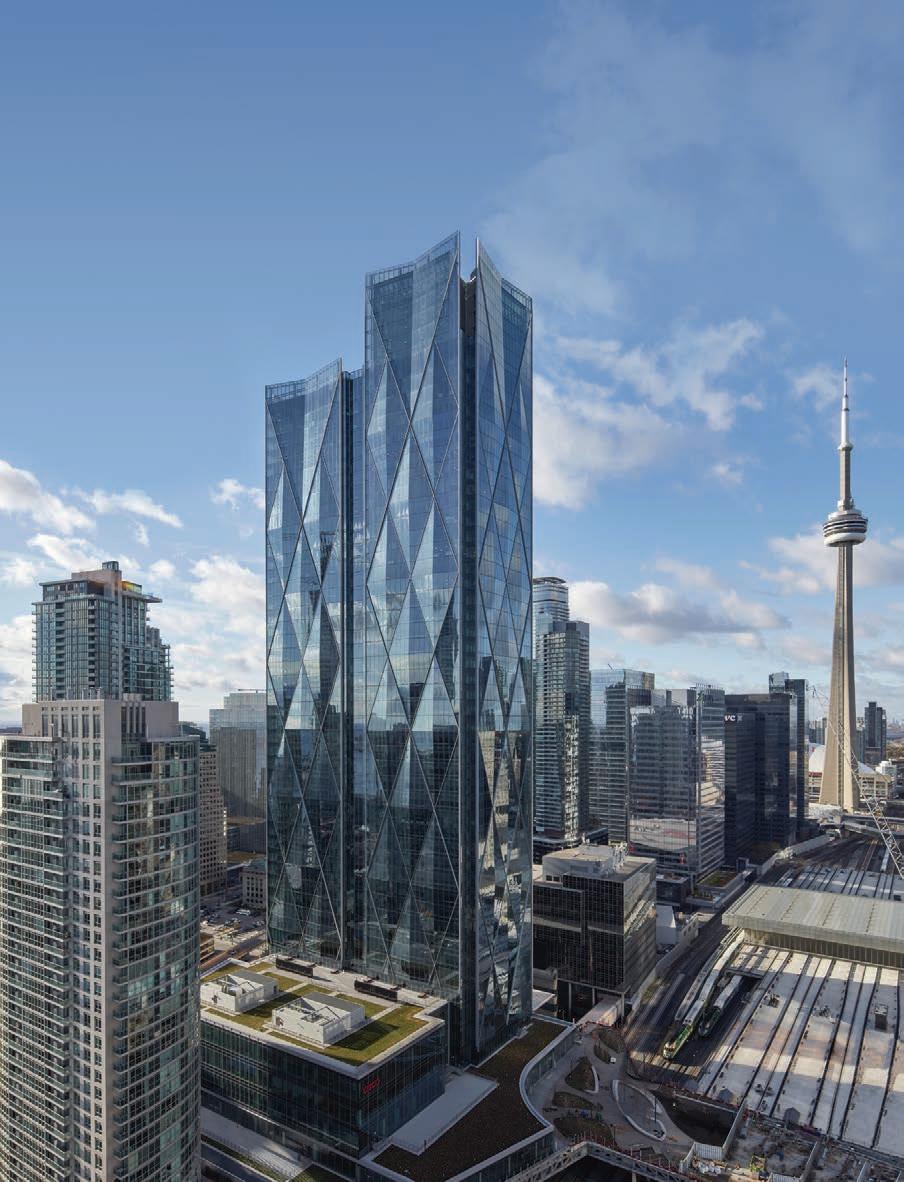
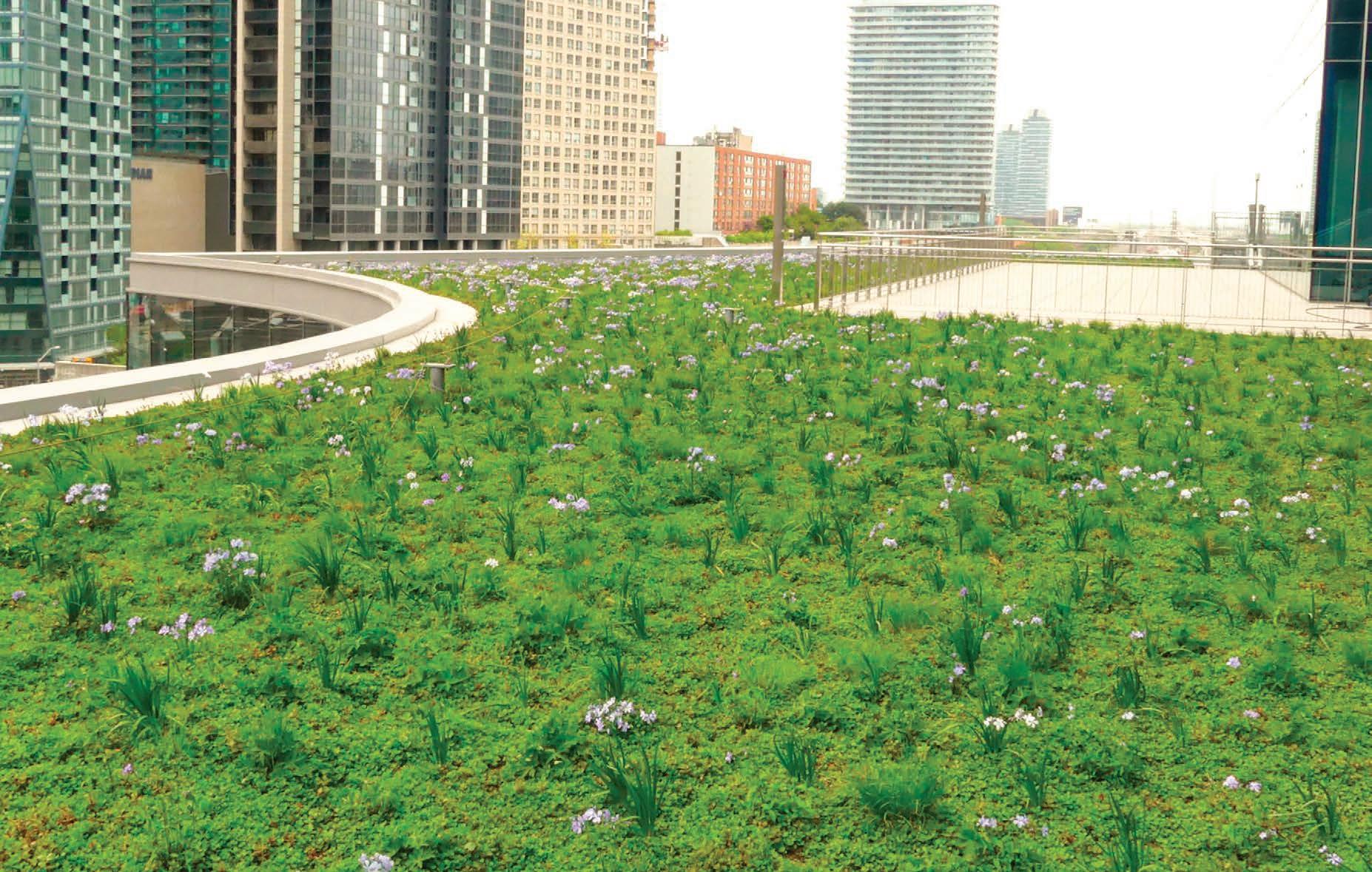

For the complete line of proven LiveRoof fully vegetated modular green roof systems visit liveroof.ca or call us at (800) 875-1392
BIODIVERSE GREEN ROOF, CIBC SQUARE
Design Architect: WilkinsonEyre
CIBC SQUARE
by ROBIN BRUNET
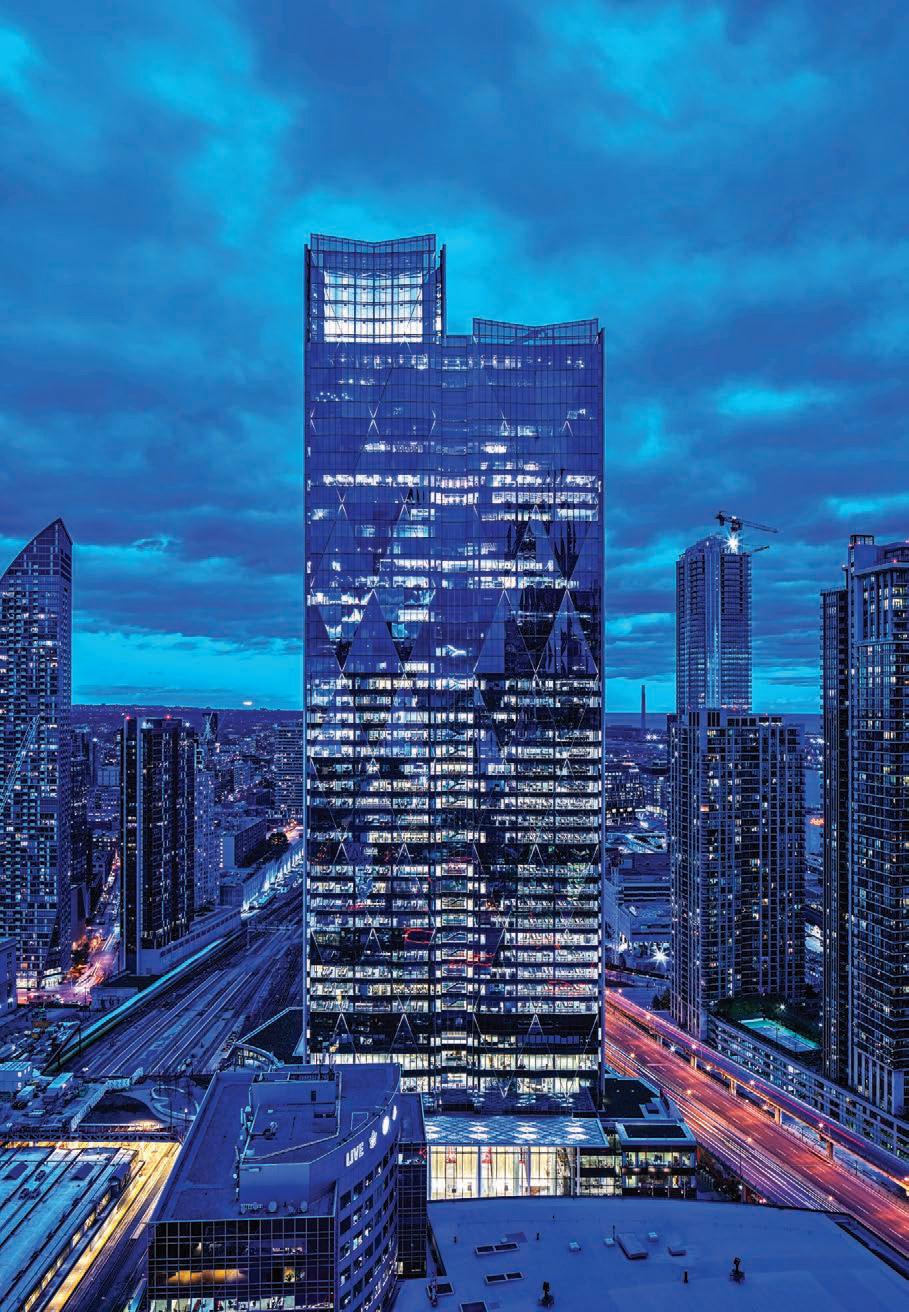
The challenges pertaining to the creation of CIBC Square in Toronto are enormous and include building adjacent to, and south of, the busiest pedestrian, vehicular, and mass transit intersection in Canada, spanning one of North America’s busiest railways, and bringing to life a unique architectural vision that fulfills the requirements of development partners Ivanhoé Cambridge and Hines.
The first of the project’s two towers was opened in October of last year, and the second tower is rising on the north side of the Metrolinx rail corridor, with both structures linked at the fourth floor level by a one-acre public park spanning the rail corridor.
Alex Richter, associate principal at Adamson Associates Architects, says, “In 2007 the Quebec-based pension fund CDPQ engaged us to determine the development potential of what is now 81 Bay Street, the last underdeveloped property on that street. We suggested that a tower could be built on the property, and we recommended the purchase of the air rights over the corridor.
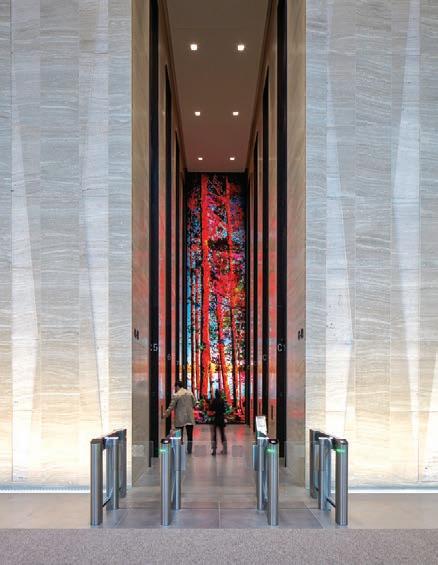
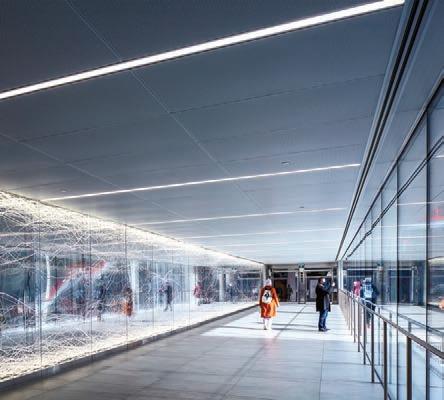
that catches and modulates light and repeats every 10 storeys – wrapping around a series of efficient, rectangular floor plates.
Bettison says, “These facades express each floor with a pattern of horizontal ribbon windows and solid, dark metal spandrels that are repeated up the height of the tower and topped by an expression of a crown.” The glass was carefully selected to provide just the right amount of reflectivity without being overpowering.
LOCATION
81 and 141 Bay Street, Toronto, Ontario
OWNER/DEVELOPER
Ivanhoé Cambridge and Hines
ARCHITECTS
Adamson Associates Architects (executive architect);
WilkinsonEyre (design architect)
GENERAL CONTRACTOR
EllisDon
STRUCTURAL CONSULTANT
RJC Engineers
MECHANICAL/ELECTRICAL CONSULTANT
The Mitchell Partnership
FIRE PROTECTION CONSULTANT
LRI Engineering
LANDSCAPE ARCHITECT
Public Works
TOTAL SIZE
3 million square feet (two towers)
TOTAL COST $2 billion
One of general contractor EllisDon’s many accomplishments on the project was building the park spanning the rail corridor. Custom girders – the largest of which was 20 tons and required several cranes to move into place – were manufactured and installed in lieu of support columns and were among 1,300 tons of steel used altogether (the park structure is now serving as a temporary laydown area as the second tower rises).
“We further suggested that another lot at 141 Bay north of the corridor be purchased for a second tower; and in developing a master plan over the next five years, we proposed that the towers be linked with a park over the corridor.”
CDPQ brought in Ivanhoé Cambridge as its Ontario representative, and in 2013 Cambridge approached Hines to assist in evaluating the development potential of this site. “The potential of these two office towers totalling three-million square feet was enormous,” recalls John Frank, Hines’ senior VP, construction.
“An international design competition was staged, and U.K.-based WilkinsonEyre was selected.”
One of many advantages WilkinsonEyre director Dominic Bettison brought to the table was looking at Toronto with a fresh pair of eyes. One of his main ideas, inspired by wanting to move away from the prevalence elsewhere of ribbed windows and solid spandrels comprising façade design, was to create a lightly folded glazed façade for both towers with a three-dimensional diamond pattern
Connecting each tower’s lobby and lift access to the elevated sky park meant that each lobby became a grand space of 25-metres high, with upper sky lobbies giving direct access to the park. The rear wall of the lobbies would be clad in slabs of vein-cut travertine in three-dimensional relief and composed of repeated triangulated elements: an abstract reference to the main facades.
Direct links were created to all of Toronto’s transit channels, including TTC Subway, GO Train, Via Rail, PATH, and the Union Pearson Express; additionally, mechanical, electrical, and other elements were designed to attain LEED Platinum Core & Shell certification, WELL Certification, and WiredScore Platinum accreditation.
Bettison credits RJC for bringing his column-free lobbies to life as well as engineering the second tower, which had to contend with the fact that any structural columns heading straight down for the south side of the building would be either on or in between active transit tracks – so a tension based steel bracing structure was used to divert the load of the south side of the tower back to the core in a symmetrical cantilever configuration.
David Galvao, senior project manager at LRI and project code consultant says, “ A number of progressive design elements challenged the project team and we engaged with the authorities to provide alternative solutions. One of which is the iconic public park elevated over the rail lands, which presented a unique set of design challenges that required a holistic approach to fire protection and life safety. From the type of fire protection selected for the elevated structure to the exiting strategies and mitigating measures to address occupant safety, our role as code consultant supported the vision of programmed outdoor assembly events for the yearround enjoyment of the public.”
Jillian Jackson, senior director, development at Ivanhoé Cambridge, says, “We are thrilled with how CIBC Square is coming to life. We managed to create a place – during a trying context – that delivers on our vision. CIBC Square goes beyond being an exceptional work environment enabled by a smart infrastructure and countless services. It connects the people of Toronto to an elevated experience – literally, given the fourth level location of our park. We feel we are truly transforming our city, for our community.” A
STRONG SIMPLE EFFECTIVE
The patented TcLip™ is a key component of the holistic SYSTEM2 approach. Used alone, or together with our SYSTEM2 approach, the TcLip™ helps achieve the thermal performance required by various building codes in North America.