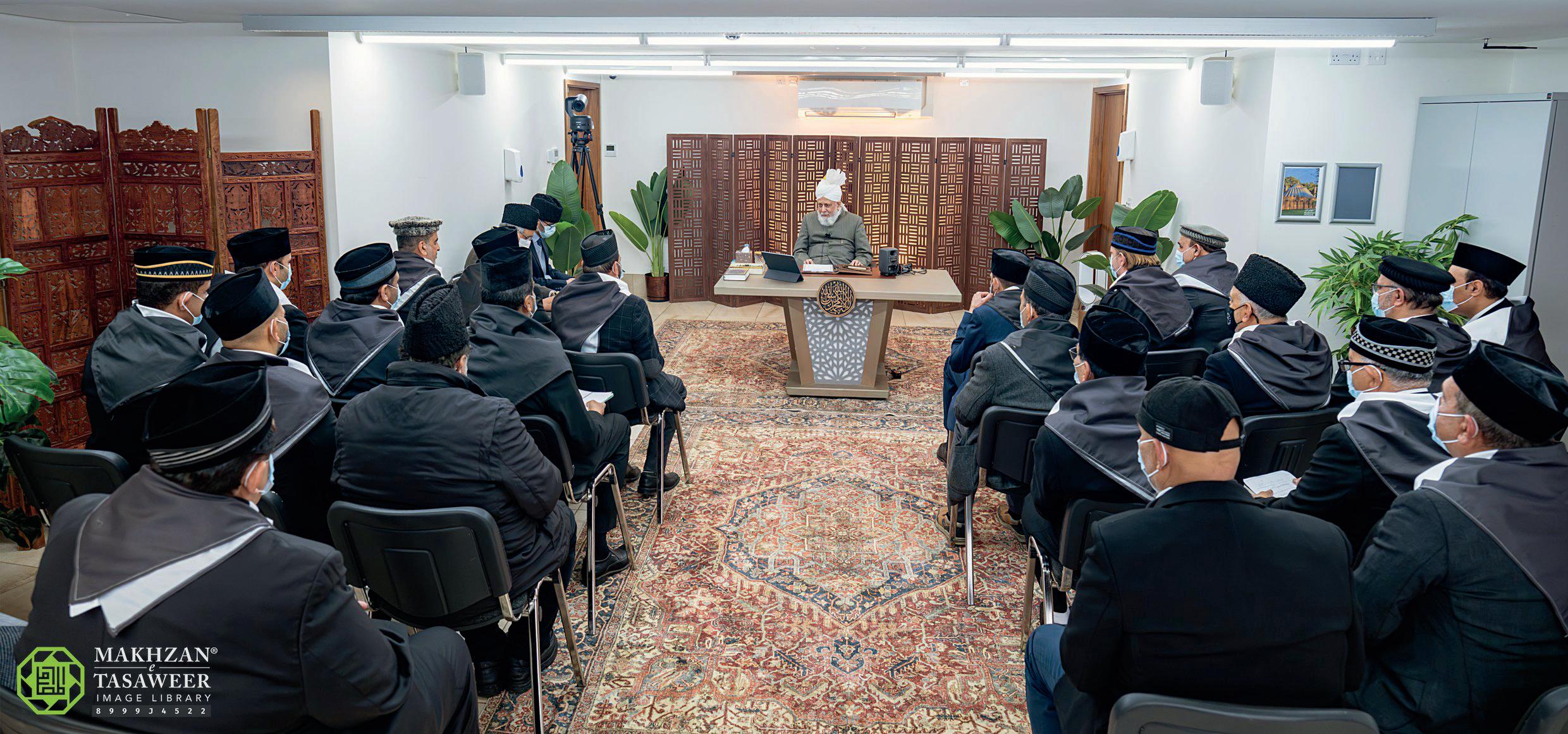
Islamabad, Tilford, 18 January 2026: The national amila of Majlis Ansarullah Switzerland had the blessed opportunity of a mulaqat with Hazrat Mirza Masroor Ahmad, Khalifatul Masih Vaa
Overview of Majlis Ansarullah Switzerland
The meeting commenced with a silent prayer. Huzooraa first addressed Sadr Majlis Ansarullah Switzerland and enquired about the number of majalis and the total membership. Sadr Sahib reported that there were 15 majalis with a total of 194 ansar Hearing the total membership, Huzooraa
remarked that this number is equivalent to a local neighbourhood.
Individual introductions and departmental guidance
Huzooraa then spoke with the national amila members one by one, including naib sadran, qaideen of various departments and a number of zu‘ama representing different local majalis
The Naib Sadr Saff-e-Dom introduced himself. Upon hearing that his plan included organising cycling events for the ansar, Huzooraa asked him about his own cycling habits. The qaid replied that he used to cycle and intended to restart.
Waqf-e-Arzi
and Talim-ul-Quran
The Naib Sadr Awwal, serving also as Qaid Talim-ul-Quran and Waqf-e-Arzi, reported on his duties. Huzooraa enquired about the participation of the amila members in the waqf-e-arzi scheme. When the qaid admitted that neither he nor the other amila members had participated in the scheme during the previous year, Huzooraa stated that the amila must lead by example; if they do not perform the duty themselves, they cannot expect others to follow. Huzooraa instructed that all amila members should first complete their waqf-e-arzi and also ensure they teach the Holy Quran within their own homes to set the system in motion.
Zahanat and Sehat-e-Jismani
The Qaid Zahanat-o-Sehat-e-Jismani reported that he goes to the gym a minimum of two or three times a week. Huzooraa asked how many other ansar attend the gym. The qaid replied that, as he had only taken charge recently, he was still collecting the data. Huzooraa remarked that taking charge of 194 people should not take long.
Maal
Huzooraa instructed the Qaid Maal to obtain exact data regarding how many members were earning, what their income was and whether they were paying according to the
Hazrat Abu Sa‘id narrated, “A woman came to Allah’s Messengersa and said, ‘O Allah’s Messengersa, the men have taken all of your [time with] your words. So, set aside for us, from your own self, a day on which we may come to you and you can teach us from what Allah has taught you.’ He said, ‘Gather together on such-andsuch a day, in such-and-such a place.’
“So they gathered and Allah’s Messengersa came to them and taught them from what Allah had taught him. Then he said, ‘There is no woman among you who sends ahead three of her children [i.e., they die before her] but that they will be for her a shield from the Fire.’
“One of the women asked, ‘O Allah’s Messengersa, [what if they are] two?’” Hazrat Abu Sa‘id further said, “She repeated it twice and then [the Holy Prophetsa] said, ‘And [even] two and two and two.’”
(Sahih al-Bukhari, Kitab al-i‘tisam bi l-kitabi wa s-sunnah,
Women’s education
Hadith 7310)
Image: Tahmeed Ahmad
23 January
23 January 1953: Regarding the preservation of all the names of those who contributed to Tahrik-e-Jadid in the first 19 years, on this day, Hazrat Musleh-e-Maudra said:
“Now, this 19-year period is drawing to a close, which was an extraordinary time. Although we will continue to offer chanda towards it afterwards, that phase has ended wherein we termed ourselves as ‘sabiqun al-awwalun’ and ‘daftar awwal’. It is the end of an era. Therefore, in my view, a booklet should be published to maintain a record of their sacrifices at the end of this 19-year period so that they can be cited as an example for others [...] In the future also, similar plans should be made to preserve the names [of these 5,000 soldiers] so that the generations to come strive to follow in their footsteps and so that we can present these people as an example for the generations to come. However, you should remember that this chanda is for life and this scheme shall live on forever.” (Khutbat-e-Mahmud, Vol. 34, p. 25)
This Week in History
A glimpse into the rich history of the Ahmadiyya Muslim Jamaat
different dafatir [batches] of Tahrik-eJadid based on 19-year terms.
To read more, see: “5,000 soldiers of Tahrik-e-Jadid’’ at alhakam.org (30 October 2020, pp. 6-7).
23 January 1965: During Jalsa Salana Rabwah, in December 1964, Hazrat Dr Hashmatullah Khanra Sahib delivered the address in which he recalled his precious memories with the Promised Messiahas. This speech was published in Al Fazl on this day.
and spend a better part of the night in prayers.” (Al Hakam, Vol. 4, No. 3, 24 January 1900, pp. 1-6)
Following this instruction, on behalf of Tahrik-e-Jadid Anjuman Ahmadiyya Pakistan, Chaudhry Barkat Ali Khan Sahib (Wakil-ul-Mal) published a 500page book, in which the name of every contributor was given,
along with details of their residence and their contributions. Later on, Hazrat Muslehe-Maud instructions to form
To read the English rendering of this emotional and educational piece, see: ‘‘A companion remembers the Promised Messiah’’ at alhakam.org (19 March 2021, pp. 11-13).
24 January 1909: On this day, with the approval of Hazrat Khalifatul Masih Ira, Hazrat Mir Nasir Nawabra published an announcement in the Badr, stating that given the growing need for amenities in Qadian, four types of buildings were urgently required, for which, he announced, Hazrat Khalifatul Masih Ira had not only given approval, but had also donated 260 rupees. The four buildings he intended to build were:
benevolent her reign had been. A memorial service was also arranged at the residence of Hazrat Nawab Muhammad Ali Khanra Sahib on Friday on this day in Malir Kotla, where the great services of the Empress were remembered and prayers were offered for her. After two other addresses, Hazrat Nawab Muhammad Ali Khanra Sahib delivered an address where he referred to the gratitude that Hazrat Ahmadas had all along expressed for the great Queen.
To read this part of history along with facts, see: ‘‘Remembering Queen Elizabeth II – Our benevolent monarch’’ at alhakam.org (8 September 2022, pp. 00-00).
25 January 1923: Hazrat Muslehe-Maudra, through his various speeches and addresses, instilled within missionaries the spirit of determination and taught them to work in every field and to face every challenge with purpose and high spirits. Al Fazl reported on this day that the advice given by Hazrat Musleh-e-Maudra to Hazrat Maulvi Muhammad Dinra, on his departure for the United States, included, “The one who is disappointed never succeeds; the one who contemplates his future endeavours, even while [his neck is] under the sword, succeeds.”
24 January
24 January 1900: on this day that Hazrat Seth Abdur of Madras was in Qadian and sought permission from the Promised to return to Madras for some important work. He had also received a telegram to return. The Promised said, “It is absolutely imperative for you to remain here during this blessed month.”
Mentioning his Ramadan routine, the Promised Messiah ready to make such a prayer in your favour that would even move mountains […]. During these days, I sit with my friends less than usual and remain in solitude for longer. This is truly to the benefit of my friends. I pray in seclusion with time and freedom
1. A mosque near the boarding house (It was this mosque that would later be known as the Noor Mosque, which housed the election of Hazrat Khalifatul Masih IIra in 1914)
2. A male hospital (later to be known as Noor Hospital)
3. A female hospital to be named Ummul Mominin Ward
4. A care home by the name of Dar-ulZu‘afa to house the old and frail
To read more about the history of Noor Hospital, see: “The Jamaat’s First Hospital” at alhakam.org (2 November 2018, p. 3).
25 January
25 January 1901: When Queen Victoria passed away in January 1901, the Ahmadiyya press paid tribute to her by publishing her biography and by reminding readers of how
To read the missionary efforts of Jamaat, see: ‘‘Pioneer Missionaries: Part 1 – Sacrifices and achievements’’ at alhakam.org (5 August 2022, pp. 10-11).
26 - 29 January
26 January 1973: On this day, Hazrat Khalifatul Masih IIIrh initiated the planting of trees to make Rabwah a lush green city and announced a scheme to plant 10,000 trees. (Khutbat-e-Nasir, Vol. 5, pp. 19-34)
27 January 1954: A copy of the Dutch translation of the Holy Quran was presented to Ghulam Muhammad, Governor-General of Pakistan, on this day. This valued gift was from Hazrat Musleh-e-Maudra and was delivered by a special delegation of Jamaat members.
Al Hakam reported
The delegation consisted of Sahibzada Mirza Mubarak Ahmad Sahib, Hazrat Malik Ghulam Faridra, Syed Shah Muhammad Sahib and Maulvi Abdul Maalik Khan Sahib. It would not be out of place here to mention that when all Muslim sects and political groups were bent on proving Jamaate-Ahmadiyya as non-Muslim, the Jamaat had completed translations of the Holy Quran in various languages and was presenting these translations to the President of Indonesia, the Governor-General of Pakistan and other influential personalities, as well as making it accessible to the general public. For further details, see Tarikhe-Ahmadiyyat, volume 16, page 413.
27 January 2012: During his Friday sermon on this day, Hazrat Khalifatul Masih Vaa mentioned Ravil Bukharaev Sahib of Russia, who had passed away in January 2012. He was a well-known Russian poet, journalist, writer, translator and devout member of Jamaat. He worked for the BBC Russian Service and after his retirement, he devoted his life to the Jamaat. He translated many books of the Jamaat into the Russian language. To read more, see: ahmadipedia.org
28 January 1944: During his Friday sermon on this day, Hazrat Khalifatul Masih IIra announced that he was termed the Musleh-e-Maud by God. Huzoorra shared details of his vision with Jamaat members in public. (Khutbat-e-Mahmud, Vol. 25, pp. 4965)
28 January 1945: On this day, a group of Buddhists arranged a multi-faith event in Kanpur, India. An Ahmadi missionary also attended and shared the Jamaat’s views about other religions. On behalf of Jamaat-eAhmadiyya, Maulvi Ghulam Ahmad Arshad Sahib delivered a speech on the topic of Islam being the universal religion. (Tarikh-e-Ahmadiyyat, Vol. 9, p. 559)
29 January 1926: On this day, a special jalsa was held in Qadian, which included 24 speeches in different languages. This jalsa was special, as it was the first of its kind. Hazrat Mufti Muhammad Sadiqra supervised the project. The final speech of this unique jalsa was delivered by Hazrat Musleh-e-Maudra In his speech, Huzoorra alluded to a prophecy of Prophet Jesus’as disciples that they would speak in different languages. He said that the meeting and the speeches made in it were clear proof of the truthfulness of the Promised Messiahas. (Tarikh-eAhmadiyyat, Vol. 4, p. 553)
Elevating spiritual standards and prayers for the Jalsa Salana Bangladesh
During his Friday sermon, delivered on 16 January 2026, Hazrat Mirza Masroor Ahmad, Khalifatul Masih Vaa, emphasised that the success of our missionary efforts is fundamentally rooted in one’s love for Allah and the quality of worship. He also urged the Jamaat to pray for the safety and success of the Jalsa Salana Bangladesh. He said:
“Our jihad of the pen and our jihad of preaching will be blessed only when we also raise the standard of our worship and increase our love for Allah the Exalted. If we wish to take part in this jihad, then we must also give due attention to the love of Allah
the Exalted and to prayer; we must also give due attention to our acts of worship. And if, while following the sunnah of the Holy Prophet (sa), we do this, then blessings will also be placed in our endeavours. May Allah the Exalted grant us the ability to do so.
[Amin]
“Today, the Bangladesh Jamaat’s Jalsa [annual convention] is also taking place. There is considerable opposition there as well. Pray for them too. May Allah the Exalted keep them all under His protection and may their Jalsa reach its conclusion in peace. [Amin]”
January: A Month of 2 Prophecies
The excellence of man is for him to develop true cognisance of the Divine and true insight, i.e. the insight one receives through faith—an insight that is accompanied by the light of Allah and guides man on every path. Without this, a person cannot be safe from the possibility of deception, and by habit or custom, such a person will oftentimes, even happily, consume a deadly poison. The sufi leaders and inheritors of shrines throughout the Punjab and all across India consider the height of their divine understanding and excellence to be limited merely to the songs of qawwali reciters, raising slogans of ﻖﺣ ﻮﻫ, and hanging upside down.
1889 was a year of remarkable divine signs. On 12 January, Hazrat Musleh-e-Maudra was born, a son whose arrival had been foretold by the Promised Messiahas. Just months later, the Ahmadiyya Muslim Jamaat was founded, marking the beginning of a mission destined to grow and flourish.
Moreover, the ignorant masses, who worship these sufi leaders witness these things, and look to these people to find the satisfaction and comfort of their soul. Observe closely, for if these people do not actively deceive others, in the least, they are themselves deceived. These acrobatics have nothing to do with the true relationship between man’s servitude (ubudiyyat) and God’s divinity (uluhiyyat); for if this true bond exists, it emits a light and brilliance, producing a pleasure the like of which cannot be compared with any other joy. I say with the purest of intentions, and God knows my intentions well, that if such exercises were a means of worshipping God, attaining divine understanding and a means for the soul to attain to excellence, then we ought to consider acrobatic performers to have attained to the pinnacle of divine understanding. The British have progressed even more remarkably in such tricks and acrobatics; but despite their advancements in this field, the level of their understanding of God is that they are non-believers or atheists altogether, and those who do believe in God, deify a weak, helpless human being who was born from the womb of a woman, Mary. These people have left aside belief in One God and believe in three, one of whom they believe was accursed and stayed in hell for three days.
O you who are wise, reflect! O you who possess a pure nature, contemplate! If hanging upside down, or musical instruments like the tabla and sarangi were the means by which divine insight and human excellence was attained, why have the British—who are experts in the art, and who produce new and innovative instruments of sound and music— stumbled, either rejecting God completely or subscribing to the concept of trinity, even though they are deemed to possess developed minds in the field of invention and innovation? Moreover, do reflect and contemplate that if this is the means by which understanding of God is attained, then those who perform at theatres, in fact all singers and dancers, must be godly and excellent individuals of the highest degree! Alas! These people have no idea as to what constitutes true understanding of the Divine. They are unaware of what constitutes human excellence and are unable to see the share of Satan in these things.
(
Vol. 2, pp.122-123)
Malfuzat [English],
Hazrat Mirza Ghulam Ahmadas, In His Own Words The excellence of man
Majlis Ansarullah Canada expands outreach through book fairs in 2025
Syed Mukarram Nazeer Canada Correspondent
During the year 2025, Majlis Ansarullah Canada continued its vital work of presenting the true, peaceful teachings of Islam to Canadians from various backgrounds. Here are the highlights of some of the most successful tabligh efforts.
Arabic Canadian Book Fair
The Arabic Canadian Book Fair, held
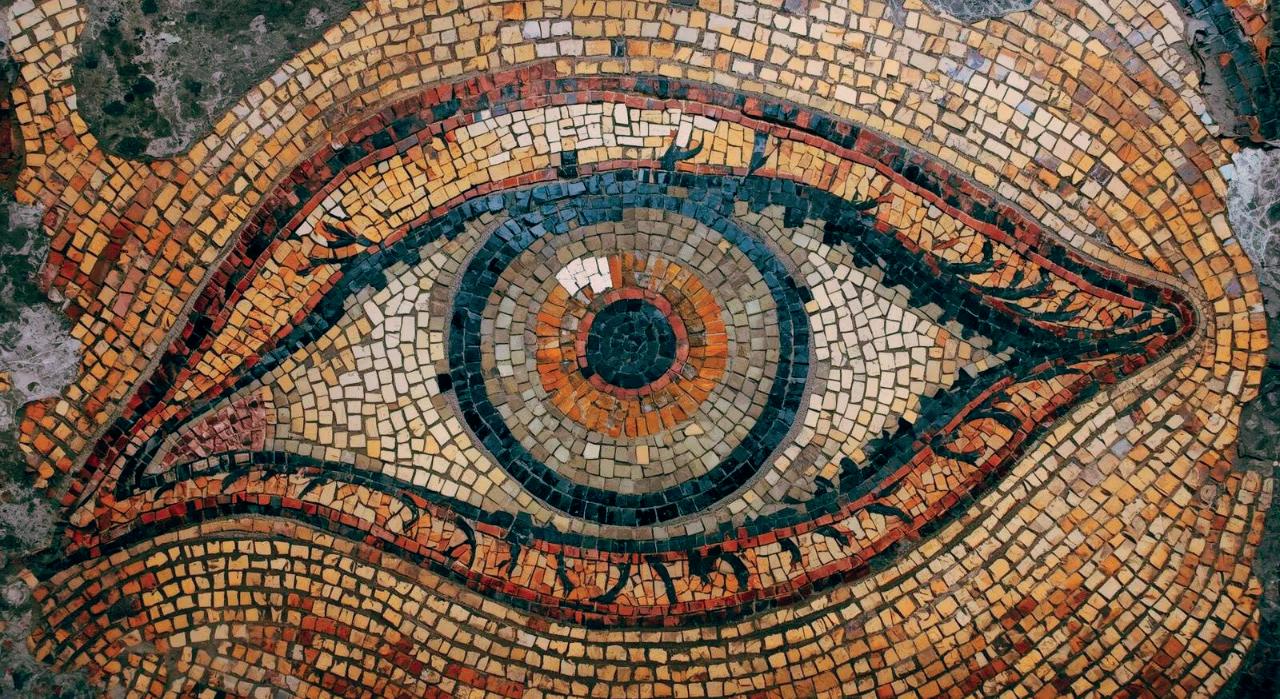
Reflecting on the wonders of the eye NEWS
annually in the City of Mississauga, Ontario, is a major cultural event dedicated to celebrating Arabic heritage, arts and literature. Its primary mission is to showcase a wide collection of Arabic books and serve as a cultural bridge for the community. Recognising the opportunity to connect with Arabic-speaking communities, a team of 14 Arab volunteers and six supporting Tabligh team members worked diligently over two days. The booth was strategically designed for maximum impact, prominently displaying the photograph of the Promised Messiahas via banners and a TV playing MTA Al-Arabia. The high visibility of Jamaat literature and visual aids ensured that countless attendees received exposure to the Jamaat’s message. Over the weekend, the dedicated teams engaged approximately 30-35 individuals in direct, purposeful discussions, successfully distributing close to 20 books and flyers, and establishing new contacts who expressed keen interest in
further research.
58th Kitchener & Waterloo Multicultural Festival
This high-profile, two-day event was held in the city of Kitchener, Ontario, drawing an estimated 5,000 visitors from various ethnicities and cultures. Two strategic spots were secured right at the entrance, ensuring maximum visibility for Jamaat’s message. The booth prominently displayed the photo of the Promised Messiahas and conveyed the message of peace to thousands of passersby. Over the weekend, dedicated ansar members from five majalis – Milton NW, Guelph, Cambridge, Kitchener and Waterloo –successfully distributed more than 800 flyers introducing Islam Ahmadiyyat and establishing 20 new contacts.
Canadian National Exhibition (CNE)
The Canadian National Exhibition (CNE),
Opinion
Rameen Masood Leicester, UK
God states in the Holy Quran: “Eyes cannot reach Him but He reaches the eyes. And He is the Incomprehensible, the All-Aware.” (Surah Al-An’am, Ch.6: V.104)
Medicine has a way of changing how you look at things long before it changes what you know. One day, you realise you no longer see a limb, a heart, a liver, or a brain in quite the same way. You begin to see organ systems. A grand design. And the hand of a Supreme Creator.
For me, this realisation has always existed, but learning about the eye made it feel more palpable than ever. Since starting medical school, every organ has left me in awe, and learning about the eye continues to fill this goblet of wonder. Perhaps it’s because such a small organ carries such an astonishingly glorious level of intricacy. Or perhaps because it reminds us so insistently that not all seeing per se is done with light alone.
Intricacies of the eye
Often described as the second most complex organ in the human body (the first is the brain), the eye is extraordinary not simply due to the ambit of its vision but because of what it invites us to reflect upon. During my ophthalmology block, this sense of wonder deepened further.
Those who have studied the eye, even briefly, will understand this well: the more you learn about it, the more you realise how much there’s still to learn. Layer upon layer, cornea,
lens, retina, each meticulously arranged. The sclera, episcleral, Bruch’s membrane, the retinal pigment epithelium – the list goes on. Structures so small, yet so precious. And yet, I often think about how casually we speak of sight. We wake up and open our eyes. We see the world all around us. Colour, movement, faces, texts. Yet, we rarely pause to reflect.
More than what meets the eye
Whilst learning about the eye, I came across the Arabic word for the eye, “ayn,” which, quite fascinatingly, is also translated as “a spring of water.” Thematically speaking, water brings countless connotations to mind and is essential for life to thrive. In a similar vein, it can be propounded that our eyes are springs of spiritual life.
There is an unseen facet to vision that
affectionately known as “The Ex”, is Canada’s largest annual community event and one of the top fairs in North America, attracting over 1.6 million visitors. This year, it was held from 15 August to 2 September. Established in 1879 as the Toronto Industrial Exhibition, it has a distinguished history as a national showcase, celebrating Canadian ingenuity, industry and diversity. This year, Majlis Ansarullah Canada had a booth in the Enercare Building. This prime location ensured that the photograph of the Promised Messiahas and the message of Islam Ahmadiyyat received daily exposure to a massive and diverse audience. 75 dedicated ansar members actively participated in rigorous morning and evening shifts throughout the exhibition’s duration. Amir Jamaat Canada, Lal Khan Malik Sahib; Missionary-In-Charge Jamaat Canada, Abdul Rashid Anwar Sahib and Secretary Tabligh Jamaat Canada, Farhan Iqbal Sahib, also visited the stall.
medicine alone can’t fully account for. We can map photoreceptors and explain how light becomes perception; nevertheless, there remains something unresolved. It may sound arcane, but there are aspects of sight which exist beyond the confines of diagrams and definitions. The Quranic verse cited at the beginning reminds us that while our eyes may fail to reach the Almighty, He reaches the eyes. This adds an extra blanket of meaning to what we consider sight to be and explores the idea that seeing is also about our willingness to receive.
I think this notion became particularly apparent to me recently as I saw various ocular conditions which medicine could treat and those it could only slow. Retinal detachments that required urgent referrals, dry age-related macular degeneration that progressed slowly, almost reminiscing how
despair doesn’t always arrive all at once. Metamorphopsia, where straight lines seem wavy, presents a prejudiced version of reality. So, the diseases of the eye can bring a person to such a stage where the eye remains physically present, but it no longer offers the truth.
Seeing
what can’t be seen
And this, I think, seems like an apt segue into the realm of spiritual sight. The loss of physical sight is undoubtedly devastating. The true weight of this can only be understood by those who endure it. But what pains me even more is how easily the disease of spiritual blindness spreads, discreetly engulfing all that comes its way. It’s quite scary how one person’s dulled conscience can become another’s point of reference. In fact, over time, distortion can begin to mistakenly feel crystal clear. After all, even the eye can adjust to darkness if we stay in it long enough.
This is why I have come to realise the importance of praying for insight and wisdom. Knowledge by itself is often insufficient unless we know how to employ it rightly. Prayer is needed for the ability to recognise when something is amiss, even if it appears familiar. It fosters the courage to admit when our vision needs correcting.
This is exactly why Allah taught the Holy Prophetsa to pray:
“O my Lord, increase me in knowledge.”
prescribed rate. Huzooraa emphasised that merely stating a total figure or showing an increase from the previous year was not a sufficient argument; the reality of the situation must be known. He directed that those who cannot pay should be known and proper permission should be sought, while those who can pay must be encouraged to pay at the full rate.
Ishaat
The Qaid Ishaat shared that the majlis produces a publication twice a year, comprising approximately 70 pages in Urdu and German.
Waqf-e-Jadid
The Qaid Waqf-e-Jadid reported that the ansar contribute more than one-third of the total Jamaat’s contribution in Switzerland.
Tajnid
and local outreach
The Qaid Tajnid confirmed that the total membership was 194 and that they were certain of this figure. He explained that they visit smaller towns to coordinate with local representatives and verify the lists. He noted he also serves as the local president for Geneva, which has 11 members.
Ithaar
While speaking with the Qaid Ithaar, Huzooraa advised that charitable efforts should be channelled in a way that motivates others and builds a culture of sacrifice. Huzooraa encouraged practical initiatives such as supporting the needy in underresourced parts of the world, including parts
Continued from page 4
(Surah TaHa, Ch.20: V.115)
Similarly, the Promised Messiahas was also taught this prayer by Allah:
“[O] Lord, show me the reality of things.” (Tadhkirah, 2018, p. 990)
Therefore, it is clear that seeing the unseen requires more than anatomy. It requests a connection between the inner self and the wider universe as everything moves
of Pakistan and Africa, through projects such as assistance to medical needs and provision of clean water.
Huzooraa said:
“Have you ever carried out any project? Have you built a hut anywhere in Africa, installed a hand pump or helped a patient? [...] If you do such things privately, then do them through the Ansarullah as well; it will be a means of reward. Then tell the ansar that you have contributed and they should also do something. This is the responsibility of the Qaid Ithaar: read the rules and act upon them and motivate people.”
Tabligh
The Qaid Tabligh explained that exhibitions had been held in two major locations, including Winterthur, with approximately 100 visitors over the day.
Huzooraa advised that exhibitions alone are insufficient. Huzooraa urged the development of a comprehensive and extensive tabligh programme which includes literature distribution, flyers and structured one-to-one engagement, alongside the involvement of a broader group of ansar in tabligh work.
Talim
The Qaid Talim reported that online classes are held every Thursday, covering the Holy Quran and books such as Kashti-e-Nuh, with an average attendance of 35 members. Huzooraa observed that if these 35 members truly acted upon the teachings, it could bring about a revolution in Switzerland. For the remaining members, Huzooraa advised sending short passages and excerpts via WhatsApp on various topics. For this, Huzooraa recommended compilations
Continued from page 1 in obedience to the Lord of the heavens and earth. Regarding this, the Promised Messiahas eloquently elucidates:
“Therefore, a muttaqi (or a righteous person) must, to a certain degree, make an intentional struggle. For when such a person attains the rank of a salih (or a virtuous servant), the unseen no longer remains hidden to such a person. A stream gushes forth from within such a one and reaches God. An individual of this nature witnesses
like The Essence of Islam (in English) or Hazrat Mirza Ghulam Ahmad Qadiani Apni Tahrirun Ki Ru Se (in Urdu), which organise excerpts by topic. Huzooraa added that this effort should complement the work of the Tarbiyat Department.
Tahrik-e-Jadid
The Qaid Tahrik-e-Jadid mentioned efforts to ensure the Ansarullah contribution remains at least one-third and, where possible, exceeds it.
Guidance to local zu‘ama
A number of zu‘ama introduced themselves from local majalis. Huzooraa offered guidance appropriate to the realities of smaller majalis and reminded office-bearers that even small numbers can be transformed into model majalis through consistent worship, unity and regular contact.
Jamaat office-bearers
Towards the conclusion, Huzooraa asked whether any participants were members of the national amila. A number of Jamaat office-bearers introduced themselves, including national and local representatives.
Concluding guidance
In his concluding advice, Huzooraa reminded them that although they are a small Jamaat, they should strive to be an “ideal Jamaat.” He emphasised that the Jamaat must be strengthened through unity and mutual goodwill. Huzooraa advised that rather than becoming entangled in minor disputes and complaints, office-bearers should focus on reformation, build mutual cooperation and work collectively for the
progress of the Jamaat. Huzooraa highlighted that Ansarullah represents a mature age group and should therefore guide others with wisdom, patience and practical example, beginning from within their own households.
Huzooraa advised:
“Make an effort to turn your small Jamaat into an ideal Jamaat. Instead of pulling one another down over trivial matters, instead of quarrelling, work together as one. [...] Leave all the petty matters and unite to work together. When unity is created, when you work as one, only then will blessings descend.
“Majlis Ansarullah are mature in age; you should explain things to everyone and carry everyone along – each and every one of the ansar. You are roughly one-fifth of the Jamaat’s [membership]. If you provide proper tarbiyat in your homes – among your children, the women in your households and your brothers – then a great deal will be set right.
“Try to keep the system running. Do not start fights over small matters. [...]”
At this, Sadr Sahib said that no complaints would come in the future, upon which Huzooraa further stated:
“Do not sit with complaints concealed. Complaints coming in is, in fact, a good thing. Say, ‘We will bring about reform’; do not say, ‘No complaints will come.’”
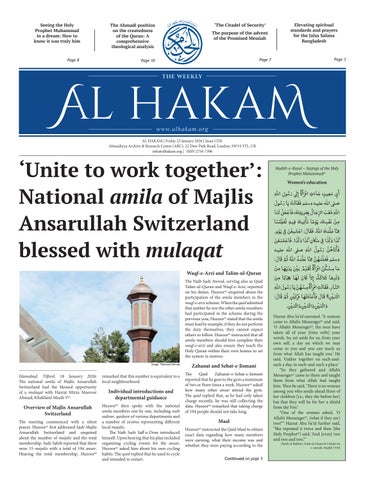
Sadr Sahib requested prayers on behalf of the majlis, including for those who were unable to attend due to illness and conveyed their salaam. The mulaqat concluded with a group photograph. Huzooraa also graciously distributed pens to the participants.
(Summary prepared by Al Hakam)
God and His love with their eyes.” (Malfuzat [English], Vol. 1, p. 27)
This realisation compels us time and again to loudly profess the unity of Allah and declare that there is a Supreme Creator responsible for the creation of the eyes. With its mind-perplexing complexity, how can one even fathom that the eyes came into existence by mere chance and without the command of al-Khaliq (the Creator) and alMusawwir (the Fashioner)?
Unequivocally, the eye is but one of the innumerable remarkable creations of the Almighty. How, then, can we ever render our thanks to Him? Truly, how benevolent is our Lord that even when our eyes cannot reach Him, He still reaches the eyes. May Allah the Almighty, who is al-Wahhab (the Bestower), bless us with spiritual insight and the ability to perceive His manifestations, both the seen and the unseen, as He pleases. Amin!
Women’s rights in Islam through the eyes of a Dutch female convert and Hazrat Khalifatul Masih II’s consoling reply to a persecuted convert in America (1926)
In 1924, a year remembered for its deep significance in the history of Islam Ahmadiyyat, a sincere spiritual journey was unfolding in the life of a Dutch woman named Miss Budd. She encountered the message of the Holy Quran through its Dutch translation. As she read, her curiosity did not remain academic; it awakened a genuine desire to understand the faith of Islam in more detail and to explore its teachings beyond the written page.
This search led her to articles written by an Ahmadi missionary stationed in America, Hazrat Maulvi Muhammad Dinra, which were published in The Moslem World, a quarterly Christian magazine circulating in the West. Through these writings, Miss Budd came to learn about the Ahmadiyya Muslim Jamaat and its beliefs.
She began corresponding with Hazrat Maulvi Muhammad Dinra and Hazrat MM Sadiqra, asking questions, reflecting on their replies, and gradually finding clarity in her understanding of Islam. With time, her study and correspondence strengthened her conviction. Although separated by distance, she formally pledged allegiance through a letter to Hazrat Musleh-e-Maudra, thus entering the Ahmadiyya Muslim Jamaat. Upon accepting Islam Ahmadiyyat, she was given the name “Hidayat,” a name that reflected the guidance she had sought and found through patient study and sincere inquiry. Below is an article by her on the status of women in Islam:
Position of women in Islam
One of the accusations of the opponents of Islam, which always surprises me, is the assertion that Islam keeps the position of women low. As yet, I have not succeeded in finding out on what this assertion is based; certainly not on the Quran at any rate, as nowhere have I found in that book a verse indicating or even hinting in the slightest degree that the position of the woman should be an inferior one.
Islam and women’s rights
On the contrary, the verses dealing with women’s rights state clearly that the position of women in Islam is as honourable as that of men in every respect. As regards her social position, we read in Surah an-Nisa’ (4:34): “Men shall have the benefit of what they earn and women shall have the benefit of what they earn.” I know that many a
working woman in Holland would jump up with joy if this Islamic injunction were to be put into practice here.
It seems to me that the position of the Dutch lady in The Hague, on whose private business property her husband had drawn a cheque for several thousand guilders and who a few weeks ago lost her case against him before the Dutch court, is far more inferior to that of a Muslim woman, who, under Islamic Law, never could have been subjected to such treatment.
Women’s respect in Islam
As regards the position of a Muslim woman with respect to her family, we read in the Quran:
“And we have enjoined man in respect of his parents – his mother bears him with faintings upon faintings and his weaning takes two years – saying, ‘Be grateful to Me and both your parents; to Me is the eventual coming.” (Surah Luqman, 31:15)
Attention is drawn to the fact that the Quran commands man specially, to be grateful to both his parents, not only to the father, but also to the mother. To women, the same respect and gratitude are due. Those who have come into contact with the Muslims know that this injunction is acted upon up to this very day in every Muslim family.
Those who also have witnessed the way in which parents are treated by their children in Western countries certainly will have to admit that, in this respect too, the
position of a Muslim woman is better than that of a Christian woman.
Religious duties
With respect to the religious duties, no difference whatever is made in Islam in this respect between man and woman.
Rewards
And lastly, with regard to the final reward, we read, for example:
“Surely the men who submit and the women who submit, and the believing men and the believing women, and the obeying men and the obeying women, and the truthful men and the truthful women, and the patient men and the patient women, and the humble men and the humble women, and the almsgiving men and the almsgiving women; and the fasting men and the fasting women, and the men who guard their private parts and the women who guard, and the men who remember Allah abundantly and the women who remember: Allah has prepared for them forgiveness and a mighty reward.” (Surah al-Ahzab, 33:36)
Thus, we see that the Quran keeps the position of women as high as that of men. Why then do our opponents charge Islam with the accusation that the position of the Muslim woman is an inferior one?
On which verses of the Quran do they base this assertion? And how can they substantiate their assertion that the position of a Christian woman is better than that of a Muslim woman? – Hidayat
To the editor of The Times, London
Hazrat Maulana Abdur Rahim Dardra (1894-1955) wrote:
“Dear Sir,
“In your issue of 5 December [1925], you publish an article written by the Bishop of Salisbury. It appears to me that its heading “A Christian Empire” made conspicuous and important on the editorial page is rather objectionable.
“It seems to suggest that the British Empire is or should become a Christian Empire. I may be permitted to say that it is not so yet and any effort on the part of the Government to proselytise would be most unwelcome.
“Speaking numerically, some British people proudly say that the Empire is Muhammadan rather than Christian, because most of the British subjects are Muhammadans. From the religious point of view, the Empire as such is quite undenominational. There is no Empire religion.
“On the other hand, the most precious jewel in the British Crown is its policy of non-intervention in religious affairs. Therefore, the Empire should not be called Christian, though it be only in name. It is by small beginnings that the greatest changes in the world are marked. Names are not devoid of meaning. Those who are proud of belonging to the Empire would lose all their fervour. The agitators would try to turn it to their advantage. And the religious section of the Empire, which can by no means be easily ignored in the East, would be seriously offended.
“Christian missionaries are better unpopular with the Foreign Office, at least so far as the major portion of the Empire is concerned. It is regrettable, however, if the policy of the Foreign Office, as suggested by the Bishop of Salisbury, has really undergone a change in this respect. I think it is not so, but it would be quite advisable for the Government to throw some light on this point to avoid unnecessary misunderstandings.
“It is hard to understand, however, why the Colonial Office has (if it has) turned to the Christian missionaries alone for help in response to the demand of Africa for education. If the Government wants men, there are hundreds of the unemployed at
‘The Citadel of Security’
The purpose of the advent of the Promised Messiah
Meekail Ahmed Student, Jamia Ahmadiyya Canada
In 1905, Hazrat Mirza Ghulam Ahmadas, the Promised Messiah and Mahdi, wrote:
“Wild beasts abound in every direction – I am the Citadel of Security.” (Barahin-eAhmadiyya Part V [English], p. 203)
In a world often characterised by anguish, chaos and disorder, the pursuit of inner peace becomes an invaluable endeavour. The metaphorical “beasts” that surround us represent the various external factors, ranging from societal pressures to global crises, that threaten our tranquillity.
The concept of a “Citadel of Security” stands as an ideal, an aspiration and a beacon of hope. The term evokes the image of a sanctuary, a place where harmony, cooperation, and understanding reign supreme. The Promised Messiahas and his teachings are a citadel of peace in this day and age needed to combat religious crises, to find a solution for global crises and for self-realisation and identity.
Throughout human history, doctrines and ideologies have played a pivotal role in shaping societies. However, one undeniable truth is that teachings change over time. Teachings are often subject to interpretation and communities seek to apply them to new contexts and situations. As the human mind keeps evolving, the real essence of the teachings might get lost. People always start to divide based on their interpretations while rejecting others.
The same can be seen in the history of Islam, as the Holy Prophetsa said, “And my Ummah will split into 73 sects. All of them are in the Fire except one sect.” (Jami‘ atTirmidhi, Hadith 2641)
Each different sect interprets Islam and its teachings in its own way and has
developed enmity for each other. Though they say there are more than one billion Muslims in the world, they call each other infidels and disagree with one another in ideology. Mullahs have directed people to extremism and they have diverted some people away from the true religion. They use this as a tool for their own purposes and to keep people with them. The best way to sell your product is under the umbrella of religion. The Promised Messiahas states:
“It should be remembered that today’s Islamic scholars (who are called maulavis) completely misunderstand jihad and misrepresent it to the general public. The public’s violent instincts are inflamed as a result and they are stripped of all noble human virtues. This is in fact what has happened. […] May God bring these ignorant maulavis back to the right path. They have misled the populace into believing that the keys to Paradise lie in beliefs that are oppressive, cruel and completely immoral.”
(The British Government and Jihad, pp. 8 and 13)
So-called Islamic ideologies, which are led by clerics, have gone towards a very extreme side, which is not the true image of Islam. Due to these statements, Islam is being attacked from every side. In this very age, God made sure to protect Islam by sending the Messiah to strengthen the walls of Islam. As the Promised Messiahas writes:
“Reason requires that in this time of peril when forces of opposition have erupted in the world and the internal condition of Muslims has seriously deteriorated, some reformer should appear to repel the mischief of the cross and to purify the internal condition of Muslims.” (Tohfah Golarhviah, Ruhani Khazain, Vol. 17, p. 129; Essence of Islam, Vol. 4, p. 190)
Even though Islam had been perfected, the real teachings were lost and a reformer was needed to bring the truth to light. The
The world today faces an array of interconnected global crises. The enormity of these challenges often leaves individuals feeling powerless, as if they alone cannot make a significant impact. However, history has shown that the power of individuals and their communities, when driven by passion, determination and a vision for change, can indeed be a catalyst for addressing and even stopping global crises.
Most global crises arise due to the immoral values or actions of a group or society or due to a certain mindset of people. When the Holy Prophetsa first migrated to Medina, his first action was to create a charter of Medina to ensure that everyone lived in peace. Huzooraa stated:
“The Holy Prophetsa immediately stated that it was essential that they all lived together in peace and harmony, and so he proposed a covenant of peace between them. According to the terms of this treaty, each group and each tribe were given their due rights. The lives and wealth of all parties were guaranteed, and any preexisting inter-tribal customs were also respected.”
(Keynote Address at the 11th National Peace Symposium, 8 November 2014)
When people truly understand the rights they owe to their fellow human beings, societies can truly prosper. As Huzooraa states:
evolution of teachings through reform is an integral part of human intellectual and spiritual development. Reformers, driven by deep understanding and moral courage, reshape teachings to address contemporary needs and challenges.
Self-realisation and identity are fundamental aspects of human existence, shaping our understanding of who we are, what we value and how we navigate the world. The journey towards self-realisation involves discovering our authentic selves, understanding our values and beliefs, and aligning our actions with our inner truths. Especially during this day and age, when people are going away from God and trying to find pleasure in worldly pursuits, people are forgetting their true purpose in life.
Thus, a lot of people question if God is real and if one can reach Him. The Promised Messiahas beautifully explained how the Holy Prophetsa brought a change in his society through the true teachings of Islam. He states:
“None but the Holy Prophetsa could have brought about this great reformation. He taught human values to people who were savages and brutes. In other words, he transformed brutes into men, men into civilised men, and civilised men into godly men. He infused spiritual qualities into them and established their communion with the True God.” (Lecture Sialkot, p. 6)
How did this great phenomenon occur? Firstly, it was due to his fervent prayers. Secondly, people saw a great example of a godly person in the character of the Holy Prophetsa. As the Promised Messiahas brought a true spiritual reformation for mankind, his writings have helped people to be fortified from the evils of this world. When a person truly becomes aware of their Creator and truly finds peace in this citadel, they can connect with their Creator and find their true identity.
“The founder of the Ahmadiyya Muslim community has also taught us that the majority of Muslims and non-Muslims have forgotten their fundamental teachings and have gone far away from God. This growing distance from God and religion is increasing the restlessness in the hearts of people.
“And he said that he had come, therefore, to remove such distance so that the rights of God may be discharged and the rights of God’s creation may also be discharged with feelings of love and sympathy. When these teachings are acted upon, then we will observe real peace; otherwise, agitation will once again bring about utter destruction in the world.” (Keynote Address at the 7th National Peace Symposium, 20 March 2010)
When people stray away from the true purpose of their creation, great problems arise. A true reformer is needed to fortify societies and their real teachings. The Promised Messiahas, driven by moral conviction and resilience, inspired the communities to address pressing global issues. Communities, in turn, provide support, shared goals and collective action to amplify the impact of individuals.
God Almighty has sent a reformer who truly was a “Citadel of Security” in time of peril. Through his teachings, the Promised Messiahas abolished extremism and brought out the true face of Islam, displayed various solutions for global crises and helped people find the true purpose of our creation and identity.
Since the time of the Promised Messiahas, society has gone through many problems and situations, from economic crises to one’s endeavour for truth. People need a philosophy, teaching or an ideology that can save them from this land of “beasts” and bring them into a citadel of peace. Every answer can be found in the teachings of Islam as explained by the Promised Messiahas, and coming to him, people can find true protection.
Continued from page 6
home and abroad who will be willing to go to Africa as teachers and professors. Or it may educate and train some of the suitable persons from among the people themselves and they will prove far more useful than the missionaries thus employed.
“If the Government wants money, it can open local funds or a public appeal may be made at home and abroad for this purpose, in which all kinds of people interested in Africa, the missionaries included, can gladly take part.
“Why should [Christian] missionaries be specially selected for it?
“Yours faithfully, Imam First London Mosque.”
A poem by a new convert titled “Ahmad”
The following poem has been composed by Mr Robert Scott, an Englishman, who has recently accepted Islam in Baghdad through the efforts of our brother Jafar Sadiq and his friends.
Oh Ahmad! Star of the East!
Thou sunshine after rain!
Thou hast brought the light to my sightless eyes
And eased my heart of its pain.
Many and dark the byeways I have wandered in the past.
But the light that shines from Qadian Has led me to the truth at last.
Allah be praised who hath deigned A prophet like Thee to give.
Blest be Thy name and all Thine house
For Thy trials that we may live.
A picture mine eyes behold
Of Islam, the old and new.
Cold sets the sun in a wintry sky
To rise in a sky of blue.
’Tis the spirit of Ahmadiyya
That has wrought this change of view
All glory and praise to the giver
Of all that is good and true.
On thee He breathed the spirit that fired His Apostles [Messengers] of long ago, That the tree of life may be green again And the streams that were dry may flow. Grant then, Oh Great Creator
To whom all praise is due, That I may cleave to the path of right
With a heart that is born anew;
That the army founded by Ahmad, The Mahdi and Promised Messiah, Pass, fearless, in victorious march
While Satan’s hordes retire.
What hope have they to conquer, Those serried ranks of sin?
Since Thou, Divine Commander, Leadest, we needs must win.
A letter from America and its reply by Hazrat Khalifatul Masih II
We publish below a letter written by our brother Sheik Ahmad Din (P Nathaniel Johnson), of St Louis, Missouri, USA and its reply from Hazrat Khalifatul Masih II[ra], the [then] Head of the Ahmadiyya Muslim Community. Sheik Ahmad Din wrote:
“O Master,
“Rest assured that I, to the best of my ability, am a faithful worker in the Cause [of Islam] and have ever been since first I started under Dr Sadiq[ra]
“Truly, I did not know before what religion meant, nor did I know what adversity meant. But Allah knows what I have suffered and what there be yet to suffer.
“For my dear faith, I have undergone much humiliation and domestic strife. I am still praying and battling. May I expect a prayer from you for myself and for my brothers in faith here?
“Yours in Islam, Sheik Ahmad Din.”
Hazrat Khalifatul Masih II[ra] replied:
“Dear Brother,
“Peace be on you. I have received your letter dated 7/10/25 and as I had heard nothing about you or the other members of our Community for a long time, I read it with great pleasure.
“I am very sorry to learn that you are being bitterly persecuted. May the Almighty God quench this fire of opposition and, out of His boundless mercy, give eyes to your opponents who, on account of their spiritual blindness, not only deny the truth and turn away from it, but are even always ready to fight against it.
“Be sure that every hardship man bears for the sake of God results in elevating and purifying him and draws him near to God, so much so that he becomes the loved one of God. Such sufferings are, in fact, a blessing.
“Real troubles are those which shake our belief in the Almighty and result in destruction. The Holy Prophet, may peace and blessings of God be upon him, says: ‘The firmer the faith, the greater the share of hardships.’
“Remain firm, therefore and do not feel uneasy. These are only trials from God so that while going through these hardships, we may realise our true position and thus find out our weaknesses, if there be any.
“Why are you persecuted? Is it because you have stolen or wrongfully taken possession of something that belonged to another? Have you committed murder? Have you sinned against society or the government? Not at all.
“Why should you then feel uneasy? Your persecution, on the other hand, is due to your manfully standing up to warn mankind against their running heedlessly on to destruction.
“This is a real sacrifice. It is a cross, having ascended which, man becomes the beloved of his Lord God. Would that these votaries of the wooden cross realise that we are the truest disciples of Jesus Christ. Not on account of any sin, but purely for our love for mankind, we take upon ourselves a whole world of troubles and hardships, in bearing which we carry a new cross every day!
“I hope you will keep writing to me now and then about yourself and the other members of our Community, because it will always keep you before my mind at the time of prayer. It is always a source of satisfaction to hear from those whom we hold dear.” –(Sd.) Khalifatul Masih
(Transcribed and edited by Al Hakam from the original English, published in the January 1926 issue of The Review of Religions)
Seeing the Holy Prophet Muhammad in a dream
How to know it was truly him
Adam Ahmad Al Hakam
According to sahih ahadith, only those dreams in which the Holy Prophet Muhammadsa is seen in his true form can be regarded as authentic. Such a vision is protected from satanic interference, whereas dreams in which his appearance does not correspond to his true description and physical characteristics cannot be considered free from such influence.
In Sahih al-Bukhari, Hazrat Anasra narrates:
“The Holy Prophetsa said, ‘Whoever
witnessed me in a dream, then no doubt, they have seen me, for Satan cannot take on my shape [or form].’” (Sahih al-Bukhari, Hadith 6994)
On another occasion, the Holy Prophet Muhammadsa said:
“Whoever sees me in a dream shall indeed witness me in a state of wakefulness, for Satan cannot assume my form.” (Ibid., Hadith 6993)
In a similar hadith recorded in Sahih Muslim, Hazrat Abu Hurairahra relates:
“The Holy Prophetsa said, ‘He who sees
M
me in a dream has indeed seen me, for Satan cannot appear in my form.’” (Sahih Muslim, Hadith 2266a)
The Hakam (judge) and ‘Adl (just arbiter) of this Age, Hazrat Mirza Ghulam Ahmadas has also expounded upon this matter, setting forth a clear criterion by which one may determine whether a person has truly been granted the honour of witnessing the Holy Prophet Muhammadsa in a dream, or whether such an experience has been influenced by Satan.
Satan’s deception
Explaining how Satan may adopt a deceptive appearance, the Promised Messiahas states:
“It is apparent from authentic ahadith that when it comes to seeing the Holy Prophetsa, only such dreams will be considered free from Satanic influence in which he is seen in his true form. For [the possibility of] Satan appearing in the form of a prophet is not only an accepted phenomenon, but it has actually happened. When the accursed Satan can appear in the likeness of God and in the manifestation of His throne, it is but a small matter for him to appear in the form of prophets.” (The Heavenly Decree [Asmani Faisla], p. 69)
Unawareness of the Holy Prophet’ssa true features
Many people are not adequately informed about the true features and characteristics of the Holy Prophet Muhammadsa. As a result of this lack of knowledge, it becomes easier for Satan to adopt an unreal or deceptive form, thereby misleading a person into believing that what they have witnessed is authentic. The Promised Messiahas states:
“Even if we accept that a person did see the Holy Prophetsa in his dream, how are we to ascertain whether it was indeed the Holy Prophetsa himself whom he saw? Since
people in this age are not informed about the true features of the Holy Prophetsa, and it is possible for Satan to adopt the unreal form of a person.” (Ibid.)
How to know if one truly saw the Holy Prophetsa in a dream
Providing a clear criterion to determine if someone has truly witnessed the Holy Prophetsa in a dream, the Promised Messiahas states:
“The true indication for the people of the present age to know that they have actually seen (the Holy Prophetsa) in a dream is that such a dream should be accompanied by some extraordinary and special features to prove that the dream is Divinely inspired.
“For example, if the Holy Prophetsa gives glad tidings of something before its occurrence, or gives news of some fated events before their actualisation, or tells in advance of the acceptance of certain prayers, or expounds such deeper meanings and subtleties of some verses of the Holy Quran as have not been written or published before, then no doubt such a dream be considered true.”
(Ibid., pp. 69-70)
Conclusion
The Promised Messiahas has thus provided clear guidance on how to distinguish whether a dream truly manifests the blessed personage of the Holy Prophetsa or is a deception by Satan. This guidance not only helps us recognise authentic dreams but also emphasises the importance for Muslims to be familiar with the true physical appearance and character of the Holy Prophet Muhammadsa. By undertaking a careful study of his true features and attributes, we can not only deepen our love for him but also build a strong relationship with the Holy Foundersa of Islam.
This article explains the long-standing Islamic debate on moon sighting and shows why prioritising local crescent sightings is firmly rooted in the Qur’an, the Sunnah, and classical Islamic law.
Archives
The Ahmadi position on the createdness of the Quran A comprehensive theological analysis
Iftekhar Ahmed Ahmadiyya Archive & Research Centre
In a mid-20th-century survey of Middle Eastern religions, a brief but significant assertion is made regarding the theology of the Ahmadiyya Muslim Jamaat. The author, AJ Arberry, a noted scholar of Islamic studies, remarks that the Promised Messiahas appeared not to accept the orthodox Muslim doctrine of the Quran’s eternal and uncreated nature, a conclusion purportedly based on a direct conversation with the then-serving imam of the London Mosque. This assertion, recorded in a reputable academic work, presents a clear puzzle, for it stands in stark and direct contrast to the voluminous textual record left by the Promised Messiahas and his immediate Successors.
This article will demonstrate that the foundational texts of the Ahmadiyya Muslim Jamaat, when examined in their own context and with attention to their specific theological terminology, articulate a consistent, multi-faceted and sophisticated position affirming that the Quran is, in fact, uncreated (ghayr makhluq).
The argument will proceed not by simple counterassertion but by a systematic examination of the primary sources, beginning with the foundational metaphysical framework upon which the entire doctrine rests, moving to the explicit creedal statements from the Jamaat’s highest authorities, examining how the leadership framed the debate’s central question and historical context, exploring the supporting theological structure that identifies the Quran as a divine attribute, addressing the nuanced resolutions offered for apparent paradoxes regarding the mechanics of revelation and the status of the Word of God and concluding with an analysis of the remaining philosophical arguments that reinforce this core position.
The centrality of this inquiry to the Ahmadi theological tradition is explicitly established by Hazrat Khalifatul Masih IIra, who identified the entire controversy as a
necessary subject for any substantive study of the scripture. In a single, dense passage from his work Fada’il al-Quran, he defined the issue by its classical name, posed the pivotal research question at its heart and immediately tethered it to its most potent historical symbol: the suffering of Imam Ahmad ibn Hanbal.
category encompassing all phenomena operating through intermediary causes, and God’s Command or Affair (amr Allah), a separate order of direct divine effectuation. This conceptual division is not a peripheral point, it is the principal framework through which the issue is consistently addressed, establishing two distinct metaphysical domains of divine action whose properties are mutually exclusive.
The Promised Messiahas deploys this core concept as a direct rebuttal to the naturalist proposition that divine revelation is merely an elevated form of human thought, identifying such thoughts as belonging to the created order:
“The answer is that all these thoughts are God’s creation (khalq Allah), not God’s Command (amr Allah), and there is a subtle distinction between khalq and amr Khalq refers to that act of God whereby God Almighty, being the Cause of all causes, creates something in the universe through the medium of causes and attributes it to Himself. And amr is that which proceeds directly from God Almighty, without the medium of causes, and with which no cause is intermixed.”
Within this specific theological lexicon, khalq is assigned a precise and technical definition. Its defining characteristic is its operation through the medium of secondary causes (ba-tawassut-e asbab). It is the domain of mediated divine action, a process wherein God operates through the very chains of causality He has established. The Promised Messiahas further refines this concept, associating khalq not with absolute origination but with the act of fashioning a composite entity (murakkab) from preexisting forms or elements – a process of transformation that occurs within time and space.
“The issue of the createdness of the Quran
“(27) What is the relationship of God’s Speech to God’s Knowledge? In former times, a great debate took place on this and great scholars were beaten over the issue of the createdness of the Quran. An Abbasid Caliph had Imam Ahmad ibn Hanbal beaten so severely that he passed away. In short, a discussion on the issue of the createdness of the Quran is also necessary – that is, what is the relationship of God’s Speech to God?”
This statement, presented here at the outset, provides the internal justification for the present analysis and serves as a roadmap for the key themes – theological, philosophical and historical – that the Jamaat’s leadership considered essential to this debate.
The foundational distinction – amr vs. khalq
Any substantive examination of the Ahmadi position regarding the nature of the Quran must begin with a foundational theological principle articulated with marked consistency in the writings of the Promised Messiahas, a principle that serves as the primary hermeneutical key to the entire question – namely, the categorical distinction drawn between God’s creation (khalq Allah), a
“And if He creates a thing in such a way that the thing previously existed in some other form, then this mode of origination is called khalq […] to fashion a composite thing into a particular shape or form is from the realm of khalq.”
Set in direct contradistinction to this mediated domain of causality is the concept of amr – an affair proceeding directly from God’s will without the intercession of any secondary causes or temporal processes, representing not creation through sequence but effectuation by pure command. This is the ontological reality behind the Quranic formula:
“‘Be,’ and it is.”
This is a command whose effectuation is described as being without suspension or delay (tawaqquf nahin hota), an instantaneous manifestation of divine intent that stands outside the sequential logic of khalq
The Promised Messiahas clarifies this immediacy:
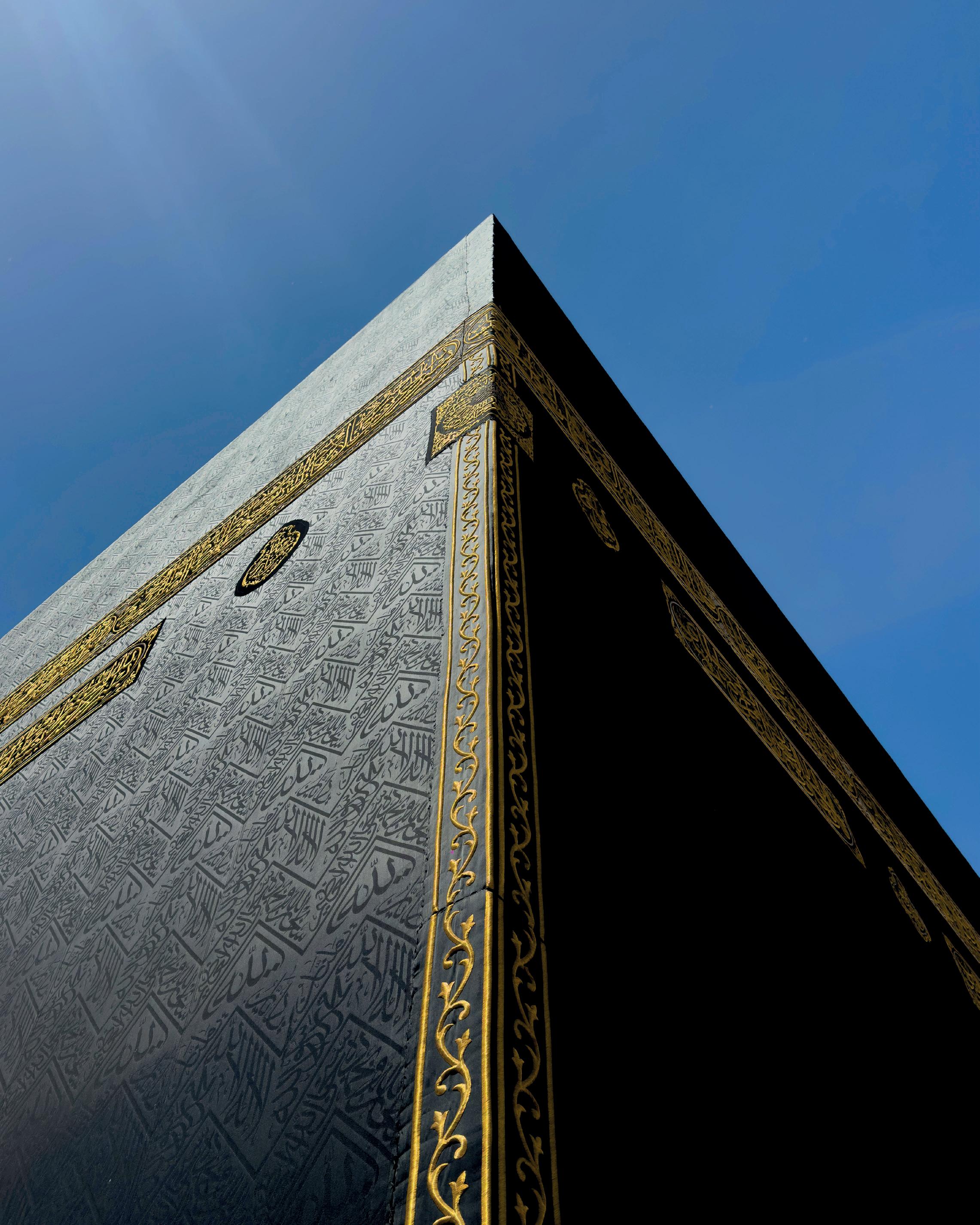
Image: mohamed abdelghaffar/Pexels
“That which is produced through causes and means is khalq and that which comes into being merely through kun [be] is amr […]. In the realm of amr, there is never any suspension.”
This concept is further delineated by distinguishing between the legislative command (amr shar‘i), to which a created being may or may not conform, and the irresistible cosmic or ontological command (amr kawni), which is an absolute decree that cannot be contravened, as seen in the command to the fire concerning the Prophet Abrahamas
The Promised Messiahas says:
“Secondly, there are the cosmic commands (awamir kawni), which cannot be opposed. For instance, when He commanded, ‘O fire, be thou cold and a (means of) safety for Abraham!’ There can be no opposition to this. Indeed, the fire could not act contrary to this command in any way.”
The direct and unavoidable consequence of this meticulously established framework is the decisive placement of Divine Speech outside the created order. Having defined the terms, the Promised Messiahas applies them with analytical finality, asserting that the Quran, as God’s Speech, does not belong to the category of created things but originates from the higher, unmediated realm of divine command.
The Promised Messiahas states with explicit clarity:
“Thus, Divine Speech which is sent down from that Absolute All-Powerful One, its descent is from the realm of amr and not from the realm of khalq.”
This entire theological construct is not presented as a standalone philosophical innovation but is explicitly grounded in the text of the Quran itself, specifically in a verse that has historically served as the scriptural anchor for this very argument within mainstream Islamic thought. The Promised Messiahas roots his entire framework in the classical proof-text:
“Verily, His is the creation and the command.”
The analytical force of the verse, as understood within this tradition, comes from the conjunction “and” (wa), which separates “the creation” (al-khalq) and “the command” (alamr) into two distinct categories belonging to God, a line of reasoning, it is worth observing, that directly mirrors the primary scriptural proof used by classical Sunni authorities like Sufyan ibn ‘Uyayna and Imam Ahmad ibn Hanbal to affirm that the Quran is uncreated.
The Promised Messiahas explains the verse’s implication as follows:
“‘Verily, His is the creation and the command,’ i.e., to create simple substances from absolute non-existence and to bring composite things into a specific manifestation are both acts of God and both simple and composite things are the creation of God Almighty.”
By identifying the Quran as an instance of amr, the argument logically concludes that it cannot, therefore, be an instance of khalq
Explicit statements on the uncreated nature of the Quran
While the metaphysical distinction between amr and khalq provides the foundational framework for the Ahmadi position, the argument does not rest on this conceptual basis alone. It is further substantiated by explicit and categorical statements from the Jamaat’s earliest leadership that directly address the nature of the Quran in unambiguous, creedal terms. The most decisive of these declarations comes
from Hazrat Khalifatul Masih Ira, who, in the course of his scriptural exegesis, makes a clear statement of his personal belief on the matter, leaving no room for speculation. While interpreting a verse that some might use to argue for the Quran’s createdness, he pre-empts this by stating his position directly:
“The meaning of dhikr muhdath is that He continued to send Speech in ever-new styles (na’e na’e payrayun mein). This is the correct meaning, because I consider Speech (kalam) to be an attribute (sifat) of God Almighty and the Speaker (mutakallim) is the Essence of God and I do not believe the Noble Quran to be created (makhluq nahin manta).”
This statement is of considerable theological weight, containing as it does the two central pillars of the classical traditionalist argument: first, that the Quran’s essence is an eternal attribute (sifa) of God and second, the necessary conclusion that it is, therefore, not created. He approached this same conclusion from another, philosophically rich angle by identifying Divine Speech (kalam-e-ilahi) with the concept of the “Spirit” (ruh). Having established this equivalence, he proceeds to make a definitive ontological statement about its nature – namely, that this Spirit is not a created entity but an attribute of God Himself.
In his work Tasdiq Barahin-e-Ahmadiyya, his reasoning culminates in this declaration:
premises upon which the ghayr makhluq position is constructed, for in that historical context, to affirm that Speech is an expression of God’s eternal and uncreated Knowledge is, by logical necessity, to affirm that Speech itself must partake in that same uncreated nature.
The immediate invocation of Imam Ahmad’s persecution within the same breath is not incidental. It frames the ghayr makhluq stance as the one for which the righteous have historically suffered. This veneration is not an isolated reference but a consistent theme. In a separate Friday Sermon, Hazrat Khalifatul Masih IIra again held up the Imam as a heroic exemplar, clarifying his creed with explicit approval:
“The Holy Scriptures and the pure book, the Noble Quran, have used the word ruh for many meanings. Firstly, ruh is the name for God’s Speech. […] In this meaning, the ‘Spirit’ (ruh) is not created (makhluq nahin) but is an attribute (sifat) of God Almighty, because this Spirit is the Divine Speech (kalam) and Allah Almighty is its Speaker (mutakallim).”
These direct affirmations from the Hazrat Khalifatul Masih Ira are themselves aligned with the technical vocabulary employed by the Promised Messiahas, who used a term that carries immense weight and historical significance in this precise context. In describing the Quran’s pre-temporal existence in the Preserved Tablet (lawh mahfuz), he uses the word Qadeem, a term which, within the lexicon of this historic controversy, functions as the direct antithesis to hadith, i.e., contingent or created, and is synonymous with the ghayr makhluq position.
In A’ina-e-Kamalat-e-Islam, he states:
“The Noble Quran, whose creation was greatly needed by God’s creation (jis ki khalqullah ko bahut zarurat thi) and which was eternally (qadeem) collected in the Preserved Tablet, was revealed over twenty-three years.”
The deliberate selection of the term qadim, i.e., eternal or pre-existent, represents a conscious act of theological positioning, one that bypasses ambiguity and directly situates his doctrine within the lexical and conceptual framework of the historical ghayr makhluq stance by affirming the Quran’s pre-existence before the creation of the temporal universe.
Framing the debate: The central question and its historical symbol
The dense and multi-faceted statement from Hazrat Khalifatul Masih IIra presented in the introduction serves as the primary lens for understanding how the Ahmadi leadership framed this historic debate. By positing the relationship between God’s Speech and God’s Knowledge as the central point of investigation, he demonstrates an acute and theologically precise understanding of the classical debate’s core problematic. His question thus functions as a guide, directing the inquiry towards the specific theological
“When the issue of the createdness of the Quran was debated, Imam Ahmad ibn Hanbal was beaten and had his arms broken, but he did not yield to the king. He kept insisting that the Quran is not created (makhluq nahin), it is Speech (maqul hai). Meaning, it is God Almighty’s Speech, not something that came into existence.”
The significance of this praise is amplified when, in the next paragraph, he elevates Imam Ahmad to a status akin to the Companionsra of the Prophet Muhammadsa, applying to him the famous hadith that they are like “guiding stars” from whom a world obtains guidance. To consistently lionise the primary historical champion of the ghayr makhluq doctrine and to do so by specifically highlighting his steadfastness on that very issue functions as a powerful rhetorical and theological endorsement.
The Ahmadi position notably avoids the sectarian extremism that characterised the classical debates. The Promised Messiahas explicitly recognised the Mu‘tazila as remaining within the fold of Islam despite their position on this issue:
“There is no doubt that they are among the Islamic schools.”
This irenic approach – respecting those who defended the Quran’s uncreated nature while refusing to anathematise those who held different views – distinguishes the Ahmadi position from the mutual excommunications that characterised the classical period.
The theological framework: The Quran as a divine attribute
While the historical framing of the debate demonstrates the high stakes and pious alignment of the Ahmadi position, the intellectual core of the doctrine rests upon a deeper theological principle concerning the nature of God’s attributes (sifat). The explicit statements affirming the Quran’s uncreatedness are not isolated pronouncements but the direct and necessary consequence of this principle, which was articulated with definitive clarity by the Hazrat Khalifatul Masih IIra, when directly questioned on this matter – a format that leaves little room for interpretive ambiguity. His response serves as the foundational premise for the entire argument: that all of God’s attributes are coeternal with His Essence and are, therefore, not created.
The exchange was as follows:
Question: “Are the attributes of God co-eternal with Him or are they created?”
Answer: “The attributes of God are not created (makhluq nahin hain). Rather, they are co-eternal and coeverlasting (azali abadi hain) with His Essence (dhat).”
With this axiom established, the argument proceeds by identifying the Quran not as a created object separate from God, but as the tangible manifestation of one of these eternal, inherent attributes – namely, the attribute of Speech (kalam).
This direct application of the doctrine of attributes to the Quran is made most forcefully by Hazrat Khalifatul
Masih Ira who, in the creedal statement previously cited, identifies Speech (kalam) as an eternal attribute (sifa) as the very reason for his belief that the Quran is not created.
The logical integrity of this framework, which posits an eternal attribute manifesting in time, depends on resolving a classical theological problem: if Speech is eternal, why is revelation not perpetual? The Promised Messiah’sas writings address this directly by drawing a fine distinction between the permanent suspension of an attribute (ta‘attul dai’mi), which he deems impossible for a perfect Being, and its temporary non-manifestation according to divine will (ta‘attul mi‘adi), which he affirms is permissible. God remains eternally the Speaker, even if He is not revealing new scriptures at every given moment.
He explains this principle in his work Chashma-eMa‘rifat:
“For any [Divine] attribute, permanent suspension (ta‘attul da’imi) is not permissible, though temporary suspension (ta‘attul mi‘adi) is permissible.”
This concept directly addresses the core philosophical challenge posed by rationalist theologians like the Mu‘tazila: that an eternal attribute of Speech or Creation would necessitate an eternal audience or an eternal creation, thus implying the existence of other eternal entities alongside God and violating pure monotheism.
The Promised Messiah’sas writings answer this objection with a sophisticated distinction between two types of eternality: the eternality of an individual (qadamat-e shakhsi), which he rejects for any created thing, and the eternality of a species or genus (qadamat-e naw‘i), which he affirms. This means that while no single universe or individual soul is co-eternal with God, the genus of creation, in some form, has always existed as a manifestation of God’s eternally active attributes.
The Promised Messiahas explains this as follows:
“From eternity, the chain of creation has run alongside Him, but no thing possesses individual eternality (qadamat-e shakhsi) in opposition to Him, yes, it does possess generic eternality (qadamat-e naw‘i).”
This doctrine allows for God’s attributes to be eternally active in principle without necessitating that any specific, individual object of those attributes be co-eternal with Him, thereby resolving the apparent philosophical tension and preserving the principle of tawhid
Resolving the theological status of the ‘Word’ as applied to creation
This rigid theological distinction between the eternal attribute (sifa) and its created result (khalq) provides the necessary framework to resolve a historical polemical objection often levelled against the doctrine of the uncreated Word. Christian theologians, most notably John of Damascus (d. 749), historically argued that if Muslims admit the Word of God (kalam Allah) is uncreated and the Quran acknowledges Jesusas as the “Word of God” (kalimat Allah), then Muslims must logically concede that Jesusas is uncreated and divine.
Foundational Ahmadi texts deconstruct this conflation by distinguishing between the Word as an eternal attribute and the Word as a title for a created entity. The Promised Messiahas argues that if the title “Word of God” implies uncreated divinity, then by the logic of the Quran, all souls would share in this status, for all souls are fundamentally words of command from the realm of amr
He explains in Izala-e-Auham:
Furthermore, he argues that even entities emerging from the realm of Command (amr) are not the Divine Essence itself but are shadows (zill) or effects of the Command. Here, a crucial distinction must be made between amr as an uncreated Divine Attribute, i.e., the eternal power to Command, and the objects of that Command, i.e., souls or spirits. While the attribute is uncreated, the resultant Spirit is explicitly defined as created (hadith) and a servant of God, possessing no share in divinity.
If the term “Spirit from Him” (ruh minhu) implied being a part of God’s uncreated essence, then Adamas would have a superior claim to divinity than Jesusas, for the Quran describes the Divine Spirit being breathed directly into Adamas
The Promised Messiahas writes:
“[T]hen it follows that the status of Adam must be higher and greater than that of Jesus. Adam would be the first of the sons of the Lord of all the worlds […]. The above-mentioned verse indicates that the Spirit of Allah descended into Adam, and that this was a more luminous descent”.
Hazrat Khalifatul Masih Ira addresses this objection by employing a reductio ad absurdum, noting that in scriptural idiom, the “Word of God” often refers to specific prophecies or commands. If being a “Word” made the recipient uncreated, then the entire creation would lay claim to godhood.
He writes in Ibtal-e uluhiyyat-e Masih:
“If in the idiom of the Holy Quran something being called the kalimat Allah, ‘the word of Allah’ is an argument in support of that thing being God, then all the words of Allah would have to be God. […] If something could be Allah precisely by virtue of being kalimat Allah, then all those complete sentences that came to the prophets, peace be upon them all, and their holy followers by way of Divine discourse and communications from their Lord, should all be God.”
He concludes that Jesusas is called “Word” specifically because his birth was the result of a specific verbal prophecy (kalam) delivered to Maryas. In neither case does the recipient of the Command become the Command itself. As Hazrat Khalifatul Masih Ira states in Tasdiq Barahin-e Ahmadiyya, Jesusas remains “His creature (makhluq)”, distinct from the uncreated attribute that brought him into being.
Addressing nuances and apparent contradictions
The sophistication of the Ahmadi position is demonstrated not merely in its foundational affirmations but in the capacity of its primary sources to address the nuanced questions that arise from the doctrine of an uncreated Quran. The conceptual groundwork for understanding how eternal, uncreated Speech can be received by a temporal, created being is laid by the Promised Messiahas himself. He describes the revelatory process as one that requires the complete suspension of the prophet’s created human faculties to ensure the purity of the divine transmission.
The Promised Messiahas explains this in his work Barahin-e-Ahmadiyya:
be neither thought (fikr) nor reflection (nazar). Rather, the person should be like a corpse (mithl-e mayyit ke ho) and all means should be cut off. And God, whose existence is real and true, Himself sends down His Speech upon someone’s heart by His special will.”
This description of the prophet as a passive recipient –“like a corpse” – whose own created faculties of “thought” and “reflection” are rendered “useless,” provides a direct explanation for how uncreated Divine Speech can be received by a created being without being admixed with created human elements. The process itself purifies the channel, ensuring the Speech remains purely divine in its transmission.
This nuanced understanding extends to the mechanics of revelation itself. The founder’s writings bypass the paradox of an eternal entity entering the contingent world by defining the process not as the physical transport of an object but as a purely spiritual influence or manifestation – a process for which he uses the specific theological term tamaththul
The Promised Messiahas explains in his work A’ina-eKamalat-e-Islam
“Here, God Almighty has named the soul ‘Word’ (kalima). This points to the fact that, in reality, all souls are Words of God (kalimat Allah) which, through an inscrutable mystery that human intellect cannot reach, have become souls.”
“God’s pure Speech is that Speech which is completely superior and exalted above human faculties. […] The first condition for its appearance and manifestation is that human faculties (bashari quwwaten) be completely suspended (mu‘attal) and useless (be-kar). There should
“If these people were to accept that no angel ever descends in its own person, but rather descends through its shadowy existence (zilli wujud), for which it has been given the power of manifestation (tamaththul) […] and just as the angel manifested (mutamaththil hu’a) for Mary, then no objection would arise.”
This non-physical process is further illustrated with the analogy of the sun, which remains fixed in its station while its light and energy spread across vast distances.
As the Promised Messiahas clarifies:
“The accomplished scholars of Islam are by no means of the view that angels, with their personal existences, descend to the earth walking on their feet like humans. […] The real matter is that, just as the sun is in its place and its heat and light spread over the earth, benefitting every single thing on earth according to its properties, in the same way, the celestial spiritual beings […] are established and settled in their own respective stations.”
This principled hermeneutic is demonstrated quite convincingly in the direct engagement of Hazrat Khalifatul Masih Ira with a key verse that could be used to argue for the Quran’s createdness: Surah al-Anbiya’, Ch. 21: V. 3, which mentions the arrival of a dhikr muhdath or “new reminder.” Confronted with a term that implies temporal newness, he explicitly rejects the interpretation that this refers to an ontological creation. Instead, he argues that the “newness” pertains only to its phrasing and presentation for a new audience. The justification he provides for this exegesis is the crucial element, for, as seen in the full quotation already presented, he explicitly grounds his interpretation in the foundational doctrine by concluding his reasoning with the decisive clause: “because I consider Speech to be an attribute of God Almighty.” This passage is of singular importance, as it shows the ghayr makhluq doctrine operating not as a passive belief, but as an active, determinative principle of scriptural interpretation, used to resolve textual challenges in a manner that preserves the core theological position on the uncreated nature of divine Speech.
Philosophical reinforcements
The argument’s historical framing is complemented by several deep philosophical reinforcements articulated by the Promised Messiahas, beginning with a position that posits a direct correspondence between the infinite nature of the Creator and the properties of His unmediated Speech, for an effect cannot possess qualities that transcend
its cause. The logic is that since the Quran displays limitless wonders, its source cannot be a finite, creative act but must be the infinite Divine Essence itself.
In his work Karamat as-Sadiqin, the Promised Messiahas develops this argument from infinity:
“It is a necessary and essential matter that a thing which has come into existence from an infinite Power (ghayr mahdud qudrat) should possess infinite wonders and properties (ghayr mahdud ‘aja’ibat). […] How, then, can the Holy Quran, which is God Almighty’s pure Speech, be limited to only those few meanings?”
Finally, the founder establishes the high theological stakes of this debate, concluding the very same foundational exposition on amr and khalq that was detailed before with a stern warning against the alternative view. He argues that to categorise Divine Speech as khalq is to effectively reduce it to the level of human thought, a reduction that leads to a grave theological error bordering on disbelief (kufr), for it implies that the infinite knowledge of God can be fully contained within the finite vessel of the human mind – an implication which is, in its essence, a claim to divinity.
He explains this critical point in Barahin-e-Ahmadiyya:
“What greater disbelief (kufr) could there be than for a person to imagine that all the treasures of knowledge, wisdom and unseen mysteries that God possesses are present within our own heart and gush forth from our own heart? In other words, its summary is just this: that in reality, we ourselves are God.”
This concluding argument frames the ghayr makhluq position not merely as a preferred opinion, but as a necessary safeguard for the absolute transcendence of God and the core principle of pure monotheism (tawhid).
Conclusion
The cumulative weight of the textual evidence, drawn directly from the writings of the Promised Messiahas and his immediate Successors, presents a clear and internally consistent theological position regarding the nature of the Quran. This position is built upon a foundational metaphysical distinction between the unmediated Divine Command (amr) and the realm of mediated creation (khalq), it is substantiated by direct, creedal affirmations of the Quran’s uncreated (ghayr makhluq) and eternal (qadim) nature and it is rooted in the theological principle that the Quran is the manifestation of an uncreated divine attribute (sifa) of Speech. The doctrine’s integrity is maintained through sophisticated resolutions to apparent philosophical and textual challenges – including the differentiation between the eternal attribute of Speech and its created recipients – as well as concepts such as generic eternality (qadamat-e naw‘i) and the temporary suspension of divine attributes (ta‘attul mi‘adi).
This entire intellectual structure is further reinforced by a consistent historical alignment with the traditionalist camp, evidenced by a distinct veneration for Imam Ahmad ibn Hanbal, and is ultimately presented as a necessary bulwark for safeguarding the absolute transcendence of God. This comprehensive theological edifice stands in direct opposition to the statement reported by AJ Arberry, suggesting that the comment from the imam of the London mosque may have represented a misunderstanding or an incomplete articulation of a complex doctrine – perhaps mistaking the contingent nature of the Quran’s temporal manifestation for a denial of the uncreated nature of its essential, divine reality. The textual record itself, however, remains unambiguous, demonstrating that the Ahmadi position upholds the doctrine of the uncreated Quran not merely as a point of classical dogma, but as a necessary consequence of its understanding of divine unity, action and revelation.
Endnotes
1. A. J. Arberry, Religion in the Middle East: Three Religions in Concord and Conflict (Cambridge: Cambridge University Press, 1969), Vol. 2, p. 352.
2. Hazrat Mirza Bashir-ud-Din Mahmud Ahmad, Fada’il al-Quran, in: Id., Anwar-ul-Ulum (Qadian: Nazarat-e Nashr-o-Isha at, 2008), Vol. 10, p. 503. It is historically noted that while Huzoor’sra statement speaks of the Imam having “passed away”, Imam Ahmad in fact survived the ordeal. He endured 28 months of imprisonment and torture, was eventually released and resumed his teaching for many years before his death in 241/855.
3. Hazrat Mirza Ghulam Ahmad, Barahin-e Ahmadiyya: Part 3, in: Id., Ruhani Khazain (Farnham: Islam International Publications, 2021), Vol. 1, p. 235.
4. Hazrat Mirza Ghulam Ahmad, Surma-e Chashm-e Arya, in: Id., Ruhani Khazain (Farnham: Islam International Publications, 2021), Vol. 2, pp. 175-176.
5. This formulation appears at least eight times throughout the Quran, for instance, Surah Ya Sin, Ch. 36: V. 83.
6. Hazrat Mirza Ghulam Ahmad, Malfuzat (Farnham: Islam International Publications, 2022), Vol. 5, p. 75.
7. Surah al-Anbiya’, Ch. 21: V. 70.
8. Hazrat Mirza Ghulam Ahmad, ibid., pp. 182-183.
9. Hazrat Mirza Ghulam Ahmad, Barahin-e Ahmadiyya: Part 3, ibid.
26. Hazrat Mirza Ghulam Ahmad, Barahin-e Ahmadiyya: Part 3, ibid., p. 236.
27. Hazrat Mirza Ghulam Ahmad, A’ina-e-Kamalat-e-Islam, ibid., p. 96.
28. Hazrat Mirza Ghulam Ahmad, Taudih-e Maram, in: Id., Ruhani Khaza’in (Farnham: Islam International Publications, 2021), Vol. 3, pp. 66-68.
29. Hazrat Mirza Ghulam Ahmad, Karamat as-Sadiqin, in: Id., Ruhani Khaza’in (Farnham: Islam International Publications, 2021), Vol. 7, p. 60.
30. Hazrat Mirza Ghulam Ahmad, Barahin-e Ahmadiyya: Part 3, ibid., p. 237.
Friday Sermon
Mubarak Mosque, Islamabad, Tilford, UK
26
December 2025
Muhammadsa: The divine bond of love
After reciting the tashahhud, ta‘awwuz and Surah al-Fatihah, Hazrat Khalifatul Masih Vaa stated:
In the previous sermon, I mentioned some aspects of the life of the Holy Prophetsa Today, I will discuss some aspects of his life in relation to his love for Allah the Almighty. Some of these aspects may have already been briefly discussed in the past. However, some of them will be discussed in detail today.
In relation to this aspect of the life of the Holy Prophetsa, the love Allah the Almighty had for the Holy Prophetsa also becomes manifest. It was not only that the Holy Prophetsa loved Allah the Almighty, but Allah the Almighty also loved him. Furthermore, after Allah the Almighty manifested His love for the Holy Prophetsa, He also guided him. We see how the Holy Prophetsa increased in this love and ensured the moral training and guidance of his Ummah [nation]. We observe how he conveyed to his Ummah the teachings that Allah the Almighty revealed to him so that they can be guided. The heart of the Holy Prophetsa was full of anguish and yearning for this. In fact, it was this very anguish due to which Allah the Almighty Himself guided him, as he was to guide the Ummah. In other words, on the one hand, his heart was filled with anguish for the love of Allah the Almighty, and on the other hand, it was filled with pain and yearning for the creation of Allah the Almighty and a longing to save them from destruction.
In the Holy Quran, in Surah ad-Duha, Allah the Almighty says:
“When He found you wandering about, concerned for your people, He taught you the correct methods for their reformation.”
(93:8) Furthermore, in relation to his love for Allah the Almighty, the translation of this verse is as follows. Allah the Almighty says: “And We found you wandering in anguish in search for our love, and so we directed you towards that path by which you found your way to Us.”
In Tafsir-e-Kabir of Imam Razirh, the following is written under the commentary of this verse of Surah ad-Duha:
“One meaning of ‘dalal’ is love, as is mentioned by Allah the Almighty in the verse:
“The word ‘dalal’ here means love. Thus, the meaning will be that you are a beloved. As such, I guided you to such paths which will enable you to gain nearness [to God] by serving your beloved.” (Mafatih-ul-Ghaib, Al-Tafsir Al-Kabir, Vol. 16, Tafsir Surah ad-Duha, V. 7, Dar Al-Kotob Al-Ilmiyah, Beirut, 2004, p. 197)
Through this, Allah the Almighty has testified that the Holy Prophetsa is completely immersed in His love.
We find this expression of love in various narrations; the love of Allah the Exalted for the Holy Prophetsa and his love for Allah the Almighty. The Promised Messiahas states at one place:
“Anyone well-versed in the modes of expression of the Noble Quran will not fail to recognise that, at times, the Most Gracious and Merciful, Exalted be His Majesty, employs words for His chosen servants that may appear unflattering on the surface, but in meaning, they are highly praiseworthy and commendatory. (On the surface, if we look at the general use of the word, it seems that it is not the appropriate word, as the word ‘daal’ means misguidance. However, this is not so. When Allah the Almighty uses it for His chosen servants on a particular occasion, the meaning of the word changes.) For example, Allah, glorified be His eminence, said regarding His Noble Prophet:
“[‘And He found thee wandering in search for Him and guided thee unto Himself.’ (93:8)]
“Obviously, the well-known and familiar meaning of the term ‘daall’, which the linguists are also fond of citing, is ‘astray’. According to this understanding, the verse would mean, ‘(O Messengersa of Allah!) God Almighty found you misguided and guided you’ (this is how the common people translate it), whereas the fact is that the Holy
Prophet, may peace and blessings of Allah be upon him, was never misguided. Anyone who professes to be a Muslim yet believes that the Holy Prophetsa was engaged in an act of misguidance at any point in his life, is a kafir [disbeliever], devoid of faith, and deserving of punishment under Islamic law.
“Here the verse should be assigned a meaning consistent with the context, which is the following: Allah, glorified be His eminence, first stated about the Holy Prophet, may peace and blessings of Allah be upon him:
“Meaning that: God Almighty found you an orphan and helpless, and He gave you shelter with Himself and found you ‘daall’ (meaning that deeply in love with the Countenance of Allah), and therefore He drew you towards Himself and He found you indigent and enriched you. (93:7-9)” (Ainae-Kamalat-e-Islam, Ruhani Khazain, Vol. 5, pp. 170-171 [The Mirror of the Excellences of Islam, pp. 148-149])
The Promised Messiahas further states:
“As the Holy Prophetsa was higher than all the other Prophets in the purity of his soul, the expansion of his mind, his chastity, modesty, sincerity, trust, fidelity and love of the Divine, God, the Glorious, anointed him with the perfume of special excellence in excess of any other Prophet. His inner and heart, which was broader and holier and more innocent and brighter and more loving than the chest and heart of any who had passed before him, and who were to come after him, were considered worthy that such Divine revelation should descend upon him as should be stronger and more perfect, higher and more complete, than the revelation vouchsafed to all those who were before him and all those who were to come after him, and which should serve as a clear, wide and large mirror for reflecting Divine attributes.” If one looks into this mirror, then one can see the attributes of Allah the Almighty as well as every aspect of Allah the Almighty. This can also be seen in the life of the Holy Prophetsa and in the teachings he brought.
The Promised Messiahas states:
“That is why the Holy Quran possesses such high excellences that the brightness of all previous books is cast into the shade before its fierce and brilliant rays. (Meaning all the light and eminence of the previous scriptures hold no value before it.) No mind can put forth a verity which is not already contained in it (everything is found in the Holy Quran). There is nothing that a person can create or invent which has not been mentioned already in the Holy Quran. Indeed, one needs to understand it.) And no reason can present any argument which is not already presented in it. No speech can affect the hearts so powerfully as the strong and full-of-blessings effect it produces upon millions of hearts. Undoubtedly, it is a clear mirror reflecting the perfect attributes of the Divine in which all is found that is needed by a seeker to arrive at the highest grades of understanding.” (Surma-e-Chashm-eArya, Ruhani Khazain, Vol. 2, pp. 71-72 [footnote])
Thus, the teaching that was revealed to the Holy Prophetsa was itself so pure that it stood above all things, above all teachings, and loftier than all scriptures. The Holy Quran contains a complete and perfect teaching. Therefore, the being of the Holy Prophetsa is the embodiment of that teaching; that is to say, his being too was complete and perfect, and this is something he demonstrated. The Book that was revealed to him was revealed for this very reason, that his being is the most perfect of all human beings, and he alone is that perfect man whose rank cannot be attained by anyone. Indeed, Allah the Almighty has declared that the Holy Prophetsa is an excellent model; strive so that you follow him. This is why, through the Holy Prophetsa, Allah the Almighty made this proclamation that people should be informed:
“Say, ‘If you love Allah, follow me: then will Allah love you and forgive you your faults. And Allah is Most Forgiving, Merciful.’” (Ch. 3: V. 32)
Thus, the ways of attaining the love of Allah the Almighty must also be learnt solely from the excellent model of the Holy Prophetsa. The manifestations of his love for Allah the Almighty that we observe are recorded in the Hadith; many such narrations are found in which the Holy Prophetsa, yearning for the love of his God, would offer the following supplication:
demonstrating love for Allah the Almighty in the following words:
“I was sleeping beside the Messengersa of Allah when, during the night, I did not find him there. In the darkness of the night, I felt around for him, and my hand touched his feet. He was in prostration, supplicating to Allah the Almighty: ‘I seek refuge in Your pleasure from incurring Your displeasure, and I seek refuge in Your pardon from incurring Your punishment. I cannot enumerate Your praises; You are as You have praised Yourself.’” (Sahih Muslim, Kitab assalat, Hadith 743)
is also one who performs other righteous deeds. He said this to Hazrat Aishara because he knew her high spiritual standard. It does not mean that one who neglects other good deeds may merely recite these words and be forgiven.
“O Allah, verily I ask You for Your love and the love of those who love You, and for the action that will cause me to attain Your love, O Allah, make Your love more beloved to me than myself, my family and cold water.” (Jami‘ at-Tirmidhi, Kitab ad-da‘wat, Hadith 3490)
Thus, today, this is the supplication that every person who claims to have love for the Holy Prophetsa ought to recite and who desires that he too becomes beloved to Allah the Almighty and for Allah the Almighty to bestow His grace upon him. Likewise, it is narrated in a tradition that Hazrat Abdullah bin Yazid Khatmi Ansarira relates that the Holy Prophetsa used to supplicate:
“O Allah, grant me Your love, and grant me the love of that person whose love will benefit me in Your presence. O Allah, whatever beloved things You grant me, make them a means of strength for me in attaining those things that are beloved to You; and whatever beloved things You take away from me, make them a means of strength for me in attaining those things which You love.” (Jami‘ at-Tirmidhi, Kitab ad-da‘wat, Hadith 3491)
Therefore, the Holy Prophetsa prayed that whatever beloved things You grant me, make them a source of strength for me in pursuit of the things beloved to You; grant me further strength so that as I acquire more of those things, I become beloved to You, and through them I attain even more of Your love and come to acquire those things that You like.
And he further prayed that whatever dear things I have – things which I consider dear to me, or my loved ones – but which You separate from me, then make them for me a means of strength in attaining those matters which You hold dear. Do not make those things that have been taken away become a cause of despair; rather, I should thereafter receive renewed strength, since Allah the Almighty did not like them and separated them from me, or since this was the will and pleasure of Allah the Almighty, then may those things which Allah the Almighty loves be granted to me. O Allah, if You take away from me those things which You do not like, then grant me the strength to attain those things which are beloved to You and are pleasing to You. Hence, this was an expression of his love for Allah the Almighty.
Similarly, Hazrat Aishara relates that after the revelation of
the Holy Prophetsa did not offer any prayer in which he did not say:
“Holy are You, O our Lord, and with Your praise; O Allah, forgive me.” (Sahih alBukhari, Kitab at-tafsir, Hadith 4967)
Hazrat Aishara has described an incident
That is to say, I am not able to praise you in a manner that truly behoves Your high status, except through the praise that You Yourself have mentioned concerning You –that alone is Your true praise.
Likewise, at another place, Hazrat Aishara states:
“One night, it was the turn of the Holy Prophetsa to stay at my house. I fell asleep, and he quietly went outside. I assumed that perhaps he had gone to one of his other wives. Overcome by a sense of great indignation, I came out and what did I behold? The Holy Prophetsa was prostrating upon the ground, folded like a bundle of cloth. I heard him supplicating:
Similarly, another narration states –reported in greater detail in Sahih Muslim – that Hazrat Aishara said: “One night, when the Holy Prophetsa was staying with me, he returned home, placed his cloak aside, removed his shoes and placed them near his feet, spread a corner of his upper garment on the bed, and lay down. When he thought that I had fallen asleep, he quietly took his cloak, quietly put on his shoes, opened the door, and went out, then gently closed the door.
“‘O Allah, my body and soul are prostrated before Thee; my heart believes in Thee. O my Lord, these are my two hands stretched forth before Thee, and whatever wrong I may have committed against my own soul is before Thee.’”
The Holy Prophetsa was such a perfect human being that nothing could be perceived of him except piety, yet even he would say, “Whatever wrong I have done to my own soul lies before Thee. O Possessor of supreme greatness, from Whom every great matter is expected, forgive all the greatest sins.”
Hazrat Aishara further relates that “He then raised his blessed head and saw me, and said, ‘What made you come out?’ (Why did you come outside? You were asleep.) I submitted, ‘Because of the thought that came to my mind,’ meaning, ‘I thought you had gone to one of your other wives.’ He said, ‘Indeed, some assumptions can become sins. Did you harbour doubt about me? That is a sin.’”
As Hazrat Aishara had stated that she doubted whether he had gone to another wife, he explained that such suspicions become sins and one should seek forgiveness from Allah. Thus, to safeguard oneself from ill suspicion, it is essential in every matter to seek forgiveness from Allah the Almighty and to engage in istighfar (seeking forgiveness from Allah).
The Holy Prophetsa then said to Hazrat Aishara, “The fact is that Gabriel came to me and instructed me to recite these words; therefore, you too should recite them in your prostrations. Now that you have heard them, recite them. Whoever recites these words will be forgiven before raising his head from prostration.” (Majmu Al-Zawaid, Kitab-ul-Salat, Hadith 2775, Vol. 2, Dar AlKotob Al-Ilmiyah, Beirut, p. 259)
Provided that they truly believe in Allah the Almighty, possess perfect faith, and
“I took my veil and upper garment and followed him until he reached Jannat al-Baqi. He stood there for a long time in supplication, then raised both his hands three times, and then turned back. I also turned back. He quickened his pace, and I quickened mine. He walked faster, and I did likewise. Then he returned home, and I entered before him and lay down. When he came in, he said, ‘O Aisha, what is the matter with you? Why is your breathing heavy?’ My breathing had become heavy due to walking quickly, and the Holy Prophetsa noticed it. I said, ‘Nothing,’ trying to evade the matter. He said, ‘You must tell me. Otherwise, the Subtle and All-Aware God will inform me.’ I said, ‘O Messengersa of Allah, may my parents be sacrificed for you,’ and then I told him everything – what had crossed my mind and how I had followed him.
“The Holy Prophetsa said, ‘So it was you – the shadow I saw ahead of me.’ I replied, ‘Yes.’ He then tapped my chest with his hand in a manner that I felt, and said, ‘Did you think that Allah and His Messengersa would wrong you?’” Hazrat Aishara said, “Whatever people conceal, Allah surely knows it. Indeed, Allah the Almighty knows it and would have disclosed it to you; therefore, I told you myself what was in my heart.”
The Holy Prophetsa said, “When you saw me going outside, it was Gabriel who had come to me and summoned me. Since he kept this matter concealed from you, I accepted his instruction and kept it concealed from you as well. That is why I did not inform you and went with him. I thought you had fallen asleep, and I disliked waking you. I also feared that you might feel lonely, thinking that you were left alone if I had told you.” He further said, “Gabriel told me that your Lord commands you to go to the people of Baqi‘ and seek forgiveness for them.”
Hazrat Aishara says that she submitted, “O Messengersa of Allah, how may I also share in this reward? What prayer should I offer for them? You have already prayed for them, but I have also come from there, so what should I pray?” The Holy Prophetsa said, “Say: ‘Peace be upon the inhabitants of this abode from among the believers and the Muslims. May Allah the Almighty have mercy upon those of us who have gone ahead and those who will come later, and insha-Allah, we too shall join you.’” (Sahih Muslim, [Urdu translation], Vol. 4, Kitab al-jana’iz, Hadith 1607, Noor Foundation Rabwah, pp. 138-140)
Thus, he taught this supplication as well. Similarly, in relation to the love of the Holy Prophetsa for Allah the Almighty, Atta
relates: “I, along with Hazrat Abdullah bin Umar and Ubaid bin Umair, came into the presence of Hazrat Aishara. Hazrat Ibn Umar said, ‘Tell us of the most beloved and wondrous matter that you observed in the Messengersa of Allah.’” The narrator stated, “Upon hearing this, Hazrat Aishara began to weep and said, ‘Every matter of his was beloved and wondrous.’ She then related that ‘once, on a night when it was her turn [for the Holy Prophetsa to stay at her house], the Holy Prophetsa came to her. When he entered the quilt with her and his body touched hers (she felt his body close to hers), he said, “O Aisha, if you permit me, I would spend the remainder of this night in the worship of my Lord.”’ She replied, “I love your closeness, and I love your wish as well. (I cherish your nearness and respect your desire). What I love most is that all your wishes are fulfilled. If you desire to worship, then do so.” He then went to a waterskin kept in the house and performed ablution, using only a small amount of water. He then stood and began reciting the Quran and weeping until I saw that his tears reached his garment. Then he lay on his right side, placing his right hand beneath his cheek, and again began to weep, until I saw that his tears fell upon the ground. Then Hazrat Bilalra came to inform him, as it was the time for the Fajr prayer. When he saw him weeping, he submitted, “O Messengersa of Allah, are you weeping when Allah Almighty has forgiven all your past and future sins?” He replied, “Should I not then be a grateful servant?” (Akhlaqul-Nabi Wa Aadabahu, Hadith 553, Dar-ulLu’Lu, Cairo, 2016, pp. 408-409)
I mentioned the Holy Prophet’ssa quality of gratefulness in the last sermon, and its further details are as follows:
In another narration, Hazrat Aishara states that whenever the Holy Prophetsa saw clouds or strong winds, concern would become apparent upon his face. She said, “O Messengersa of Allah, when people see clouds, they rejoice, hoping for rain, but I observe that whenever you see clouds, concern appears upon your face.” He replied, “O Aisha, how can I be assured that it does not contain a punishment of a destructive wind? I do not possess knowledge of the unseen. What could assure me that it does not carry the punishment that befell earlier nations? An earlier nation once saw the punishment and said, ‘This is a cloud that will bring rain upon us,’ (as mentioned in the Holy Quran). Therefore, I do not know what it contains or does not contain, and due to my fear of Allah Almighty and my love for Him that resides in my heart, I become apprehensive.” (Sahih al-Bukhari, [Urdu translation], Vol. 12, Kitab-ul-Tafsir, Hadith 4829, Nazarat Ishaat, Rabwah, pp. 68-69)
In another narration, Hazrat Aishara relates the same incident in these words: “Whenever the Holy Prophetsa saw clouds gathering in the sky, he would become restless and go to and fro, entering and leaving his house repeatedly, and his blessed countenance would change. When the clouds finally began to pour rain, his anxiety would leave him, and he would return to a state of calm.”
Hazrat Aishara once asked the Holy Prophetsa the reason for this state of uneasiness. The Holy Prophetsa replied, “I do not know whether these clouds are like the ones seen by the people of ‘Ad, who, as
mentioned in Surah al-Ahqaf, saw clouds advancing towards their valleys and said, ‘These are clouds that will bring us rain,’ whereas in truth, they brought upon them a punishment.” (Sahih al-Bukhari, [Urdu translation], Vol. 6, Kitab Bud’i l-khalq, Hadith 3206, Nazarat Ishaat, Rabwah, pp. 29-30)
Another narration records that Hazrat Abu Hurairahra said: “The Holy Prophetsa and his Companions, when the first drops of rain fell, would uncover their heads so that the rain might touch them, and the Holy Prophetsa would say, ‘This has come to us fresh from our Lord, and it is full of blessings.’” (Kanz-ul-Ummal, Vol. 1, Kitab al-azkar, Auqat-ul-Ajabah, Hadith 4936, Dar Al-Kotob Al-Ilmiyah, Beirut, 2004, p. 267)
When ordinary rain fell, this too was among his practices.
‘Urwah bin Zubairra relates that he once asked Hazrat ‘Abdullah bin ‘Amr bin al‘Aasra, “Tell me of the worst treatment that the idolaters ever inflicted upon the Holy Prophetsa.”
He replied, “Once, the Holy Prophetsa was offering prayer inside the Hatim of the Ka‘bah when ‘Uqbah bin Abi Mu‘it came and threw his cloth around the Prophet’ssa neck and began to strangle him. Just then, Hazrat Abu Bakrra arrived, seized ‘Uqbah by the shoulder, pulled him away from the Holy Prophetsa, and said, ‘Do you strike a man only because he says, “My Lord is Allah”?’” (Sahih al-Bukhari [Urdu translation], Vol. 7, Kitab Manaqib al-ansar, Hadith 3856, p. 332)
He is overwhelmed with the love of Allah and engaged in His worship, yet you are bent upon harming him!
The entire life of the Holy Prophetsa was immersed in the love of God. It was the spectacle of this divine love that led the people of Mecca to say:
“Indeed, Muhammadsa has become the lover of his Lord.” (Imam Ghazali, AlMunqidh min al-Dalal, Dar-ul-Minhaj, 2015, p. 107)
The Promised Messiahas states:
“The Holy Prophetsa was an ardent and passionate lover of the One God, and in that love he attained what no one else in the world has ever attained. His love for Allah was so deep that even ordinary people would say:
ہِبَرَّ
“‘Muhammadsa has fallen in love with his Lord.’” (Malfuzat, 2022, Vol. 6, p. 6)
The Promised Messiahas also stated:
“The Companions, may Allah be pleased with them, had beheld the countenance of that true one, whose being the lover for Allah was so spontaneously testified to even by the disbelieving Quraish. These people, observing his daily supplications, his loving prostrations, his condition of complete obedience, the bright signs of perfect love and devotion on his countenance, and witnessing divine light raining down upon his face, were compelled to say that:
“This means:
“Muhammadsa is passionately in love with his Lord. Moreover, the Companions
observed not only that devotion, love, and sincerity, but matching this love – which surged up in the heart of our lord and master Muhammad, peace and blessings of Allah be on him, like a raging ocean – they also observed God Almighty’s love for him, in the form of extraordinary support and help. Thus they realised that God exists, and their hearts testified aloud that God is with this man. They saw divine wonders to such an extent and witnessed heavenly Signs to such a degree that they were left with no doubt whatsoever that there does, indeed, exist a Supreme Being whose name is God, who controls everything and for whom nothing is impossible. That is indeed why they exhibited such deeds of devotion and sincerity and made such sacrifices as are not possible for anyone to perform until all doubts and suspicions have been removed. They saw with their own eyes that the pleasure of that Holy Being lies only in embracing Islam and adopting the obedience of His Noble Messengersa with heart and soul. After this absolute certainty, the kind of obedience that they exhibited and the feats they performed and the manner in which they laid down their lives at the feet of their holy guide.” (Shahadatul Quran, Ruhani Khazain, Vol. 6, p. 346 [Testimony of the Holy Quran, pp. 79-80])
Such accomplishments are not possible without first-hand experience.
Hazrat Alira relates:
“I once asked the Holy Prophetsa about his way of life – what was his fundamental principle. He replied, ‘Divine cognisance is my capital.’”
That is to say, when asked what his way of life was and upon what principle his existence was based, the Holy Prophetsa said, “Divine cognisance is my wealth, and wisdom is the foundation of my faith. The knowledge of God that He has granted me is my treasure, and the intellect He has bestowed upon me, I employ in His love and according to His revealed guidance. This is the essence and foundation of my faith, and the love of Allah is the very basis of my life.”
He continued, “The desire to advance in the path of God is my mount. In His love and on His path, I move ever forward. This yearning is my steed, upon which I am always progressing and striving. The remembrance of Allah is my companion and my comforter. My true friend, my comforter, and the one who soothes my heart is none other than the remembrance of Allah and prayer. Trust in Allah is my treasure. I rely only upon Him, and that reliance is my wealth.
“This is the way of life that you enquire of. Know that grief and sorrow are my companions. When pain or hardship comes my way, they are a part of my life, and I do not mind them, for Allah the Almighty is with me.” He further said, “Knowledge is my weapon. Allah has commanded the acquisition of knowledge, for it enlightens the mind and increases one’s awareness of God. It is Allah the Almighty Himself who grants me knowledge, and what weapon could be greater than that which comes from God? This is my weapon, by which I attain progress.”
Even in worldly matters, as seen in the accounts of battles mentioned previously, Allah granted him such knowledge that his planning and strategy were of the highest order. Likewise, his spiritual knowledge was vast beyond measure, clear and manifest to
all.
He further said, “Patience is my cloak.” Meaning, his garment (as it were) was patience. “Contentment with the will of God is the spoil of battle for me. I remain content in the pleasure of God. Poverty is my pride; even if it seems apparent that I am poor or deprived of wealth, I take pride in that. I take pride in the fact that despite this state of poverty, Allah the Almighty had blessed me beyond measure. Abstinence is my skill. Piety and self-restraint are my art, and I strive to perfect it. Certainty is my strength. Complete faith in Allah is the source of my strength. Truthfulness is my intercessor. I have never spoken falsehood, and truth itself is my means of intercession. Obedience is sufficient for me. I act in complete obedience to Allah the Almighty’s every command. Jihad is [the foundation of] my character. Whether it is physical striving, spiritual striving in the way of Allah, or fulfilling the rights of God’s creation, this underpins my moral character. The delight of my eyes is in prayer. Although all these qualities are part of my being, the true comfort of my eyes lies in prayer, in attaining nearness to Allah the Almighty, in worshipping Him, and in expressing my love for Him.”
In another hadith, he said, “The fruit of my heart is in the remembrance of Allah, and my longing is in my Lord.” (Al-Shifa bi Ta‘eef Huqooq Al-Mustafa, Qadi Ayyad, Hadith 347-348, UAE, 2013, p. 191)
I have presented only a few examples of the model established by the Holy Prophetsa and his example of love for Allah the Almighty. It was this very example that brought about a revolutionary change among the Companions, enabling them to achieve a rank which had previously been inconceivable. As the Promised Messiahas has stated – in the quote which I presented earlier – it was this very complete and perfect teaching which the Ardent Devotee of the Holy Prophetsa, the Promised Messiahas also emulated. At one instance, the Promised Messiahas states that Allah the Almighty bestowed His favours on him by virtue of his complete obedience to the Holy Prophetsa The Promised Messiahas states:
“On two occasions, Punjabi half-verses have been communicated to me. I have just described one occasion:
“[If you will be devoted to Me, the whole world will be yours] and the other was that I saw a vast field in which a majzub (i.e., a person completely absorbed in the love of God) was advancing towards me. When he arrived close to me, he recited:
“[A saint is recognised by the shining of Divine love on his countenance.]” (Tadhkirah [English], pp. 609-610)
The meaning of this vision shown to the Promised Messiahas was that the man saw the Promised Messiahas and said this because he saw the light of Divine love in the Promised Messiahas. At another instance, the Promised Messiahas also said that everything he had attained was on account of his obedience to the Holy Prophetsa. (Haqiqatul Wahi, Ruhani Khazain, Vol. 22, p. 64)
Hence, this was his example, and this is why the Promised Messiahas established this Jamaat. Today, we who proclaim to be the true followers of the Holy Prophetsa, and by
pledging allegiance at the hand of the true and ardent servant of the Holy Prophetsa, we have reaffirmed our pledge to live our lives in accordance with the commandments of God Almighty, we must therefore pay great attention towards this in that we must carry out every deed with utmost sincerity for the sake of Allah the Almighty and to strive in excelling in our love for Him. It is only when we do this that we can become the recipients of Allah the Almighty’s blessings; do true justice to being a part of the Ummah of the Holy Prophetsa; and do true justice in our pledge of allegiance to the Promised Messiahas and be counted amongst his true followers. May Allah the Almighty grant us the ability to do this.
Pray for the Ahmadis in Pakistan. Two days ago, in a court case that was ongoing regarding Mubarak Sani Sahib, the session judge sentenced him to life imprisonment. The accusation levelled against him is that he had a copy of the Holy Quran in his possession, which he would recite himself and teach it to others as well. When this is the state of the courts, then what hope can there be of any improvement in the situation? Even the non-Ahmadis have expressed their opinions upon this decision and have labelled it as a mockery [of the justice system]. Although the clerics are generally applauding this decision and praising the judge, the fair-minded people have written, and some have commented on this in a sarcastic manner, that this was such a huge “crime” in that he recites the Holy Quran and has kept a copy of it in his home and teaches it to children? In any case, this is the state of the so-called scholars and their followers. In some places, the administration of the government is following these clerics and implementing their policies. We pray that Allah the Almighty creates the means for them to be swiftly seized. Insha-Allah, Allah the Almighty will swiftly seize them, and we can even witness signs of it unfolding as well. But we should be concerned lest there is a delay in this owing to any negligence on our part in terms of our supplications, practical conduct and fulfilling the due rights of worship, just like the Holy Prophetsa would look up at the clouds and out of the same concern would make this prayer.
Thus, there is a great need to pay close attention to prayers. Likewise, pray for the oppressed people of the rest of the world as well, that Allah the Almighty may grant peace to everyone, everywhere, and protect all from every form of disorder and turmoil.
After the prayer, I will lead two funeral prayers in absentia, both of which I will mention. The first is of Maulana Jalaluddin Nayyar Sahib. He was the former Sadr Sadr Anjuman Ahmadiyya and Sadr Majlis Tahrik-e-Jadid Qadian. He recently passed away.
[“Surely, to Allah we belong and to Him shall we return.”]
His father, the respected H Hussain Sahib, served as a clerk in the army during World War. During this period, in 1922, while stationed in Basra, he accepted Ahmadiyyat and was appointed editor of the Jamaat magazine Sathiya Dooton, published from Kerala. He was originally from Kerala and returned there after leaving the army.
In 1950, H Hussain Sahib hearkened to the call of Hazrat Musleh-e-Maudra regarding
the scheme for the resettlement of Qadian and moved there to settle permanently with his entire family. However, within one year, he passed away in Qadian. Thereafter, Maulana Jalaluddin Nayyar Sahib’s mother, Zubaida Sultana Sahiba, remarried in Qadian to Chaudhry Abdul Haq Sahib, who was a dervish. He took responsibility for the upbringing of Nayyar Sahib’s brothers and sisters.
Maulana Jalaluddin Nayyar Sahib received his early education in Qadian, and in 1963, he passed the examination for Maulvi Fazil. He was then appointed initially to serve in the Anjuman as Inspector Baitul-Maal for a long period, during which he toured Jamaats across India. Through tireless effort and sincere affection, he brought members of the Jamaat into the system of financial contributions. As a result, he developed personal relationships with Jamaat members all across India.
The late Nayyar Sahib was granted the opportunity of serving the Jamaat for 63 years. After serving as Inspector Bait-ulMaal Aamad, he later served as Auditor, then as Muhasib, and subsequently for a long period as Nazir Bait-ul-Maal Aamad. As mentioned earlier, he was appointed Sadr Sadr Anjuman Ahmadiyya Qadian for seven years, and then he also served as Sadr Majlis Tahrik-e-Jadid for as long as his health permitted.
Similarly, he was granted opportunities to serve in the auxiliary organisations as well. He was a devout worshipper, regular in fasting and prayer, and was counted among those foremost in obeying every directive of Khilafat. He was also a sportsman and an athlete, and in this regard, too, he organised extensive activities there.
He was married into a family from Kashmir. His wife passed away before him. He is survived by two sons and one daughter, all of whom are serving the Jamaat. May Allah the Almighty grant him forgiveness and mercy.
The second mention is of respected Mir Habib Ahmad Sahib, son of Mir Mushtaq Ahmad Sahib. He recently passed away at the age of 79.
[“Surely, to Allah we belong and to Him shall we return.”]
He was extremely kind-hearted, sociable, and deeply devoted to Khilafat. By the grace of Allah the Almighty, he was also a musi. Ahmadiyyat was established in his family through his grandfather, Bau Abdul Rahim Sahib, who accepted Ahmadiyyat in 1903 through Hazrat Mir Qasim Ali Sahibra, Editor of the Faruq magazine. Hazrat Mir Qasim Ali Sahibra had adopted Mir Habib Sahib’s father, Mushtaq Ahmad Sahib, as he had no children of his own.
Mir Habib Sahib completed his FSc and BSc from Government College, Lahore, and subsequently obtained an MSc degree in Physics. He later went abroad as well. His Jamaat services include beginning his teaching career at Talim-ul-Islam College from 1970 to 1971, when the colleges had not yet been nationalised. From 1973 to 1976, he served in Sierra Leone under the Nusrat Jehan Scheme, where he was granted the opportunity to teach Physics
in Freetown. He returned to Pakistan in 1976 but in the same year went back to Nigeria, where he worked in a government school until 1987. While in Africa, in 1987, he dedicated his life as a life devotee. That same year, Hazrat Khalifatul Masih IVrh appointed him Principal of the Ahmadiyya Senior Secondary School, Hamrasha, where he served until 1991.
After that, he returned to Pakistan and continued serving the Jamaat there as well. In 1992, Hazrat Khalifatul Masih IVrh sent him to Sierra Leone to evaluate a technical institute, and based on his expert report, certain developments were carried out there. In 1996, under Nazarat Talim, he was appointed to the Nusrat Jehan Academy in Rabwah, where he served as a Physics teacher until his retirement. He also served
in the office of Sadr Umumi and volunteered his services in the General Islahi Committee.
His wife writes that her husband was regular in fasting and prayer, extremely gentle in temperament, and never made demands. He had a deep love for reading and had a passion for pursuing knowledge. If someone asked what gift to bring him, he would say, “Bring me books,” and he would regularly read scholarly works. In the same way, he extensively studied the books of the Promised Messiahas
He never made false statements. If there was something he did not wish to say, he would remain silent rather than speak incorrectly. His daughter has also mentioned these same qualities. I, too, observed him and found him to be a very noble individual who minded his own affairs
and fulfilled his life devotion with complete faithfulness. May Allah the Almighty grant him forgiveness and mercy.
He was married to Syeda Lubna, the granddaughter of Mir Ishaq Sahibra and the daughter of Major Saeed Ahmad Sahib. Hazrat Mir Muhammad Ishaq Sahibra was the son of Hazrat Mir Nasir Nawab Sahibra, who is well-known within the Jamaat and whose translation of the Holy Quran is commonly used within the Jamaat. In any case, may Allah the Almighty grant the deceased forgiveness and mercy.
(Official Urdu transcript published in the Daily Al Fazl International, 16 January 2026, pp. 1-8. Translated by The Review of Religions.)