
January 2026 NGSS Now Newsletter

Page 1


5 things to know about quality K–12 science education in January 2026

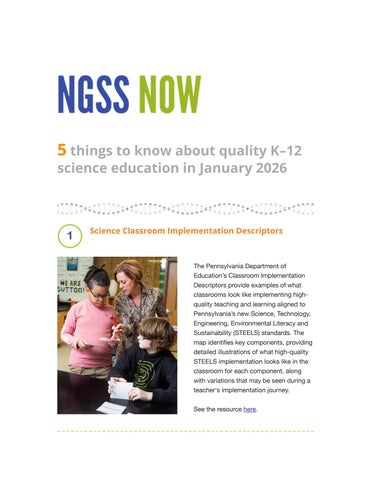
1 Science Classroom Implementation Descriptors
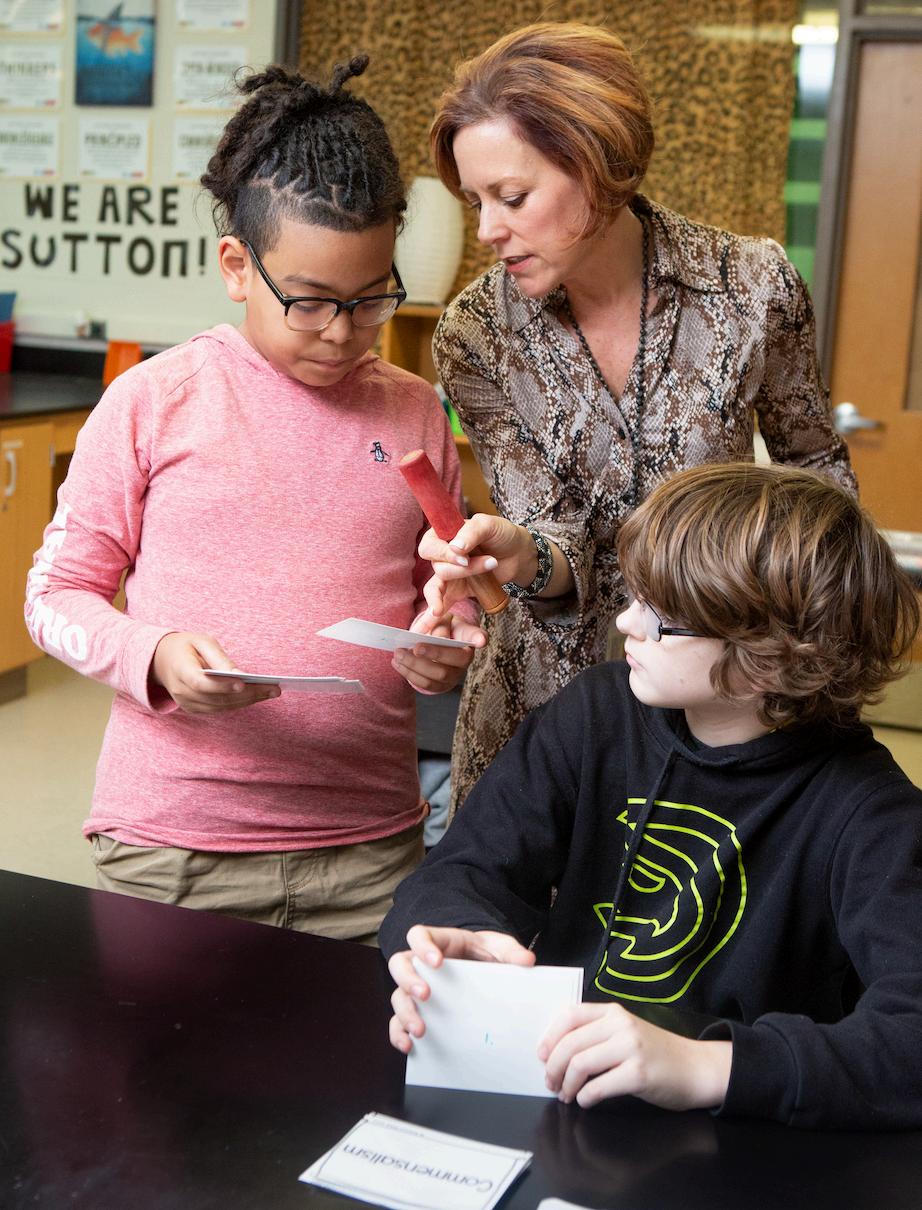
ThePennsylvaniaDepartmentof Education’sClassroomImplementation Descriptorsprovideexamplesofwhat classroomslooklikeimplementinghighqualityteachingandlearningalignedto Pennsylvania’snewScience,Technology, Engineering,EnvironmentalLiteracyand Sustainability(STEELS)standards.The mapidentifieskeycomponents,providing detailedillustrationsofwhathigh-quality STEELSimplementationlookslikeinthe classroomforeachcomponent,along withvariationsthatmaybeseenduringa teacher'simplementationjourney.

Seetheresourcehere.
2 Using Performance Tasks to Support Instruction

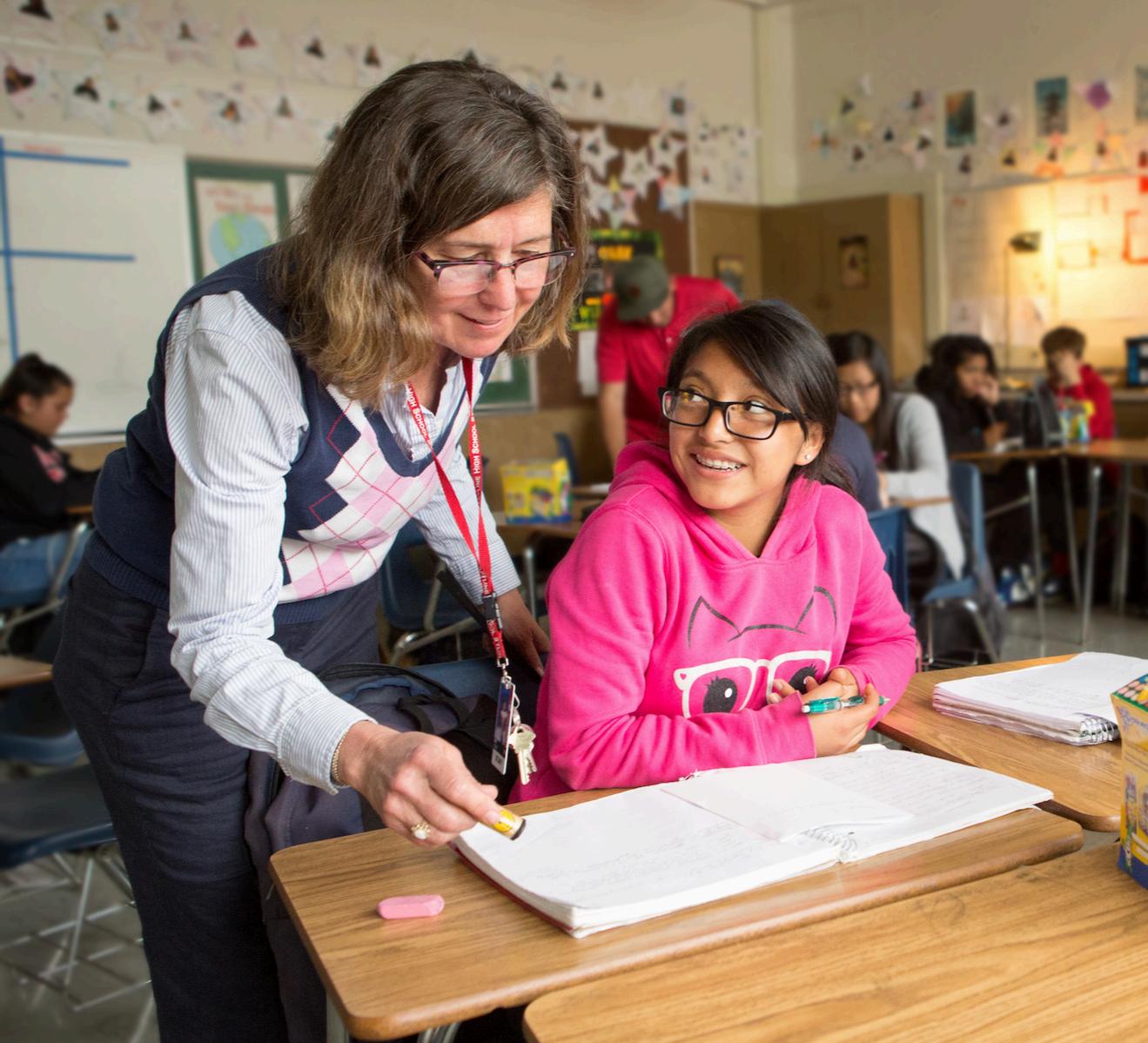
Californiaeducatorsdevelopedguidance forusingperformancetaskstosupport scienceinstructionontheAuthenticTasks forLearningandAssessmentinScience (ATLAS)website.Theguidancefocuses onusingstudentworkasatooltodrive learningforwardthroughoutinstruction ratherthanjustameasurementof learning.

SeetheguidanceontheATLASwebsite here.

3

New STEM Teaching Tool: Defending and Leveraging Public Climate & Environmental Justice Data

Real-worlddataplaysanimportantpartin high-qualityscienceeducation.This STEMTeachingTooloutlineswhere databases,tools,andguidescanbe found,helpinginstructionaldesigners supporttheimportantpracticeofusing authenticscientificdataintheclassroom.

Seethetoolhere

4

Teachers' Customizations of Storyline Science Curricula: Adapting for Their Students and Instructional Contexts

Inordertobemoreresponsivetostudentsandschoolsystemconstraints,teachersmake smallchangesdailytocurriculaandthroughoutinstruction.Arecentstudyinvestigated thelevelandfrequencyofchangestostorylinesciencecurricula,findingthatsome changessupportedthevisionandinstructionalmodelofthecurriculum,whileothersdid not.Thisresearchhighlightstheneedformoretools,models,andprofessionallearning focusedonthecommonandnecessarypracticeofcurriculumadaptation.

Seethe Science Education researcharticlehere.

5

ICYMI: Task Annotation Project in Science (TAPS) Science and Engineering Practices

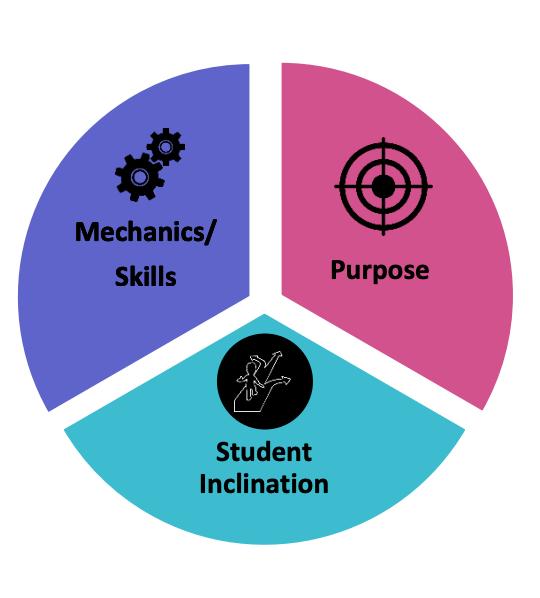
“Assessing the SEPs is different from assessing skills because of an emphasis on purpose — assessing the SEPs requires that students purposefully use the SEPs to make sense of phenomena or solve problems, rather than just demonstrating the necessary, purely procedural aspects of scientific endeavors. Skills are isolated pieces of the SEPs that are disconnected from sensemaking, while SEPs are meaningful tools to deepen students’ science exploration and sense-making connected to phenomena and problems.”

SeetheTAPSSEPresourcehere.

on Bluesky

Turn static files into dynamic content formats.

Create a flipbook
Issuu converts static files into: digital portfolios, online yearbooks, online catalogs, digital photo albums and more. Sign up and create your flipbook.
January 2026 NGSS Now Newsletter by NextGenScience - Issuu