





























Seith the academic year in full flow, education is rising up the agenda in wider public discourse. Challenges around mental health, SEN provision and the impact of VAT on school finances are ‘hot button’ topics. But equally pressing challenges are exercising minds, not least the rapidly evolving university and careers landscape. Graduates are facing the toughest job market in decades and,
may become a cheat’s best friend if not managed well, but it also seems certain to revolutionise personalised learning – providing extra stretch or support for students. I like the assessment by James Barton of London’s MPW, that AI remains a tool – even a copilot – but it can never replace human interaction and the wisdom of teachers. And as Battie Fung of Academic Asia points out, the ways in which schools are adapting to the challenges of the future are critical. Hong Kong parents considering a British education for
“GRADUATES ARE FACING THE TOUGHEST JOB MARKET IN DECADES AND, NECESSARILY, THIS IS LEADING TO SOUL-SEARCHING ABOUT WHAT KIND OF FUTURE WE NEED TO PREPARE CHILDREN FOR”
necessarily, this is leading to soulsearching about what kind of future we need to prepare children for. For many Hong Kong parents, these concerns form part of the decision making process when considering whether to make UK boarding schools an investment in their children’s future success and personal growth. Every school is keenly aware of the impact of AI, and you will find many insights in this issue on how it may reshape education, exams and –ultimately – jobs. There are positives. AI
their children are expanding their expectations and demanding that schools look forward, while maintaining their heritage and traditional rigour. She explains: “it is about offering a complete journey: one of intellectual challenge, personal safeguarding, and character development within a globally-minded community.” Education remains the key to the future, and it’s important to get it right.
Libby Norman EDITOR


CEO, Bonday International
Sevenoaks School alumnus Brian Ong is a leading edtech entrepreneur and founder and CEO of Bonday International, whose business supports young people globally through mentoring and seed funding. He is a trustee of the Sevenoaks School Foundation and the school has recently named the Brian Ong Global Centre in his honour.

CEO, IvyWise
Dr. Kat is the founder and CEO of educational consultancy IvyWise. She is one of the leading independent university admissions counsellors. Cohen graduated magna cum laude with a Bachelor of Arts degree from Brown University and continued her studies at Yale, receiving two master’s degrees and a PhD.

Global Director, MPW Group
James Barton studied Archaeology and Ancient History at Warwick, followed by an MA in Performance Philosophy. Working in education for over 15 years, he has authored Trotman Getting Into... guides across a range of academic subject areas, as well as giving talks to, among others, TEDx and ‘How To Academy’.
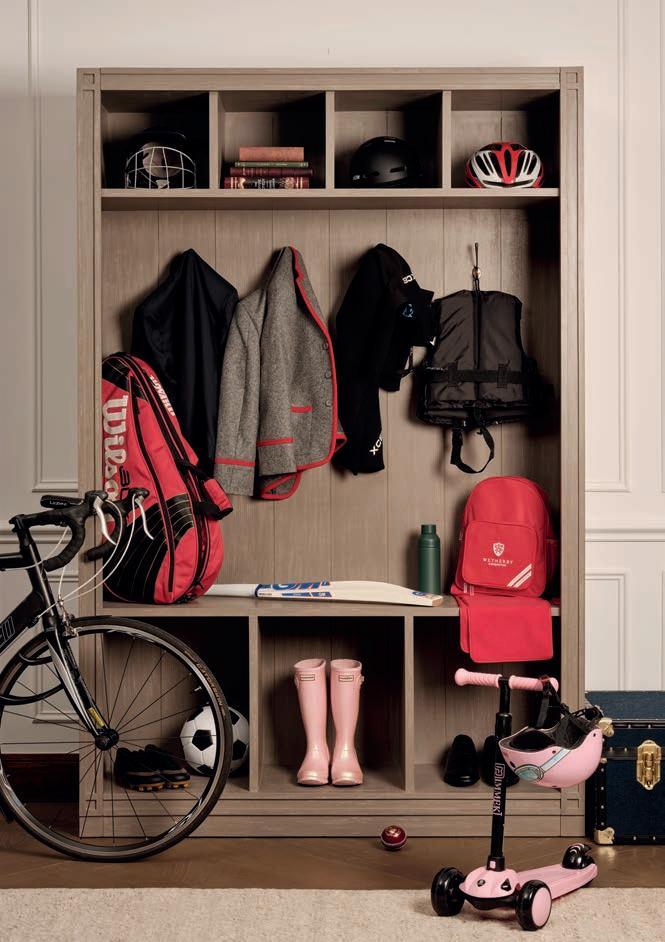
Holland Park Gate by Lodha is Kensington’s favourite family development, preferred by parents for its proximity to many of London’s top schools as well as Holland Park’s 54 green acres. Enjoy a joyful, balanced and fulfilling family life with additional household amenities including:
• Kids’ club for fun & education
• Dedicated house car for school runs
• Weekly school uniform laundry services


• Partnership with leading educational consultancy scan to expore: @lodha_uk hollandparkgate.com














THE FUTURE OF BRITISH BOARDING: AN AGENT’S PERSPECTIVE FROM HONG KONG
In the world of international education, few brands carry the weight and heritage of a British boarding school. For generations, families in Hong Kong have looked to the UK not just for academic excellence, but for an entire philosophy of education—one that shapes character as much as intellect. Yet, as the global educational landscape broadens, with compelling options from other countries, how can UK schools ensure they remain the premier choice? The answer lies not in resting on tradition, but in thoughtfully evolving its application for a new generation.
Hong Kong parents revere the British model’s proven strengths: the rigour of GCSE and A-Levels, the structure of the IB Diploma
pupils become not just knowledgeable, but intellectually agile.


The most compelling schools are those where pastoral care is proactive and visible, where houses teach resilience alongside responsibility, and where mental health support is normalised and accessible. Beyond this, the co-curricular programme is expanding. Taster sessions in entrepreneurship, partnerships with tech firms, or leadership modules with university links add a layer of real-world readiness that complements traditional sport and arts. The schools that stand out are those where every pupil, from any background, feels a genuine
“PARENTS ARE INCREASINGLY DRAWN TO SCHOOLS THAT DEMONSTRATE CURRICULAR AGILITY ”
and the unparalleled pastoral care of the house system. However, their expectations are expanding. They seek an education that prepares a young person not only for university, but for a complex, interconnected world. The cornerstone remains academic excellence, but its definition is broadening. Parents are increasingly drawn to schools that demonstrate curricular agility. While respecting the depth of specialised qualifications, there is growing appreciation for learning that connects disciplines. Schools that subtly weave futurefocused literacies into their core teaching are seen as fostering the critical, flexible thinking that top universities and employers now seek. This balanced approach – honouring the humanities while advancing STEM – ensures
sense of belonging and is actively mentored towards global citizenship. Equally, a tangible commitment to sustainability speaks powerfully to the values of today’s youth and their families. Ultimately, the enduring appeal of a British boarding education is about o ering a complete journey: one of intellectual challenge, personal safeguarding, and character development within a globally-minded community. For the families in Hong Kong and across Asia, that is not just an education—it is a wise and trusted investment for a lifetime.
Battie Fung MANAGING DIRECTOR
ACADEMIC ASIA
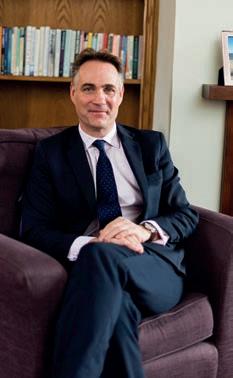
Henry Price will be Principal of Rugby School United Arab Emirates from August 2026. The Headmaster of Oakham School since 2019, and of Wellington, Somerset before that, he was Head of Classics and a Housemaster at Rugby School in Derbyshire from 2001-14. Rugby’s UAE opening will be co-ed, welcoming students from 3 to 18.
“Taunton pupils trained for two years before their Channel challenge – some couldn’t even swim at the outset”

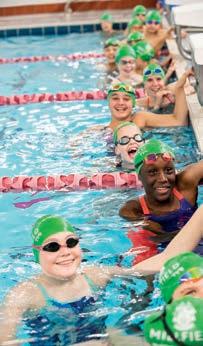
Millfield Prep School has been named the UK’s Best Sports School for 11 years. Recently, Millfield swimmers were crowned IAPS National Champions for a record 37th (girls) and 23rd (boys) consecutive year, while U12 boys’ cricket were named county champions and pupils made the podium at an IAPS tennis tournament.
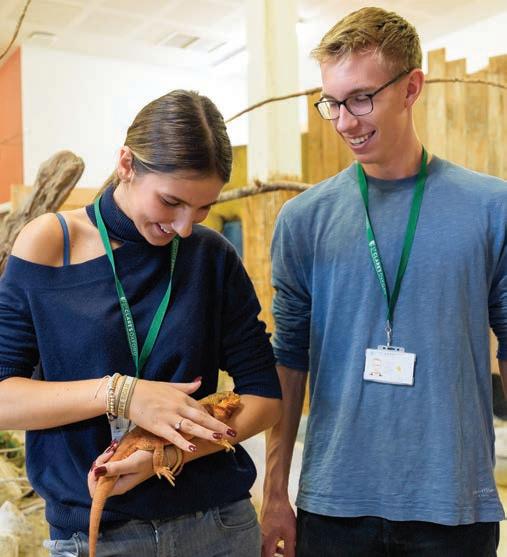
St Clare’s, Oxford’s new Summer Teenagers: Merrist Wood programme provides a nature-led alternative to city study. Based on a rural Surrey campus with a working farm and licensed animal centre, students explore Immersive English or Leadership and Sustainability through hands-on learning with animals, outdoor activities, cultural excursions and a closeknit residential community.
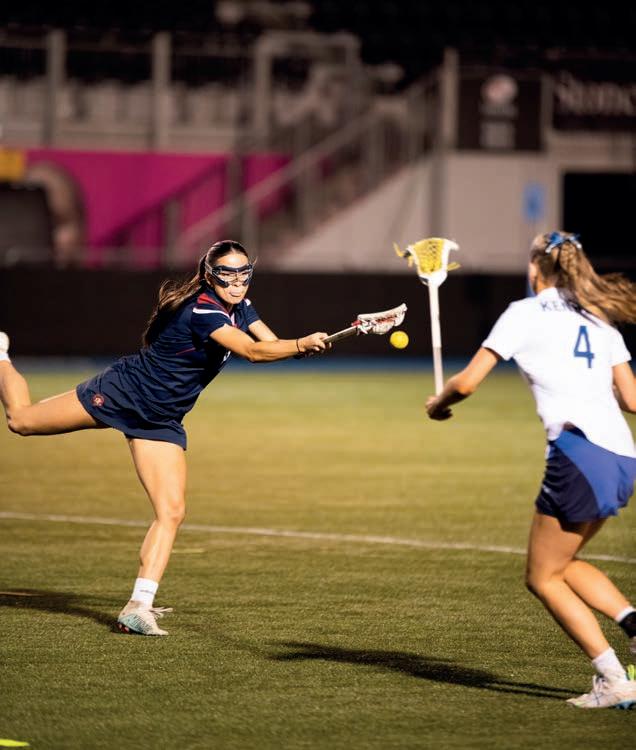
Berkhamsted Boys’ and Girls’ first teams in rugby and lacrosse played Northampton School for Boys and Moreton Hall at Saracens’ StoneX stadium in early October. Thrilling games ended in losses for Berkhamsted, with neither match defined by final score. “I’m just really proud of how we came out there and fought back,” says lacrosse captain Ella W.
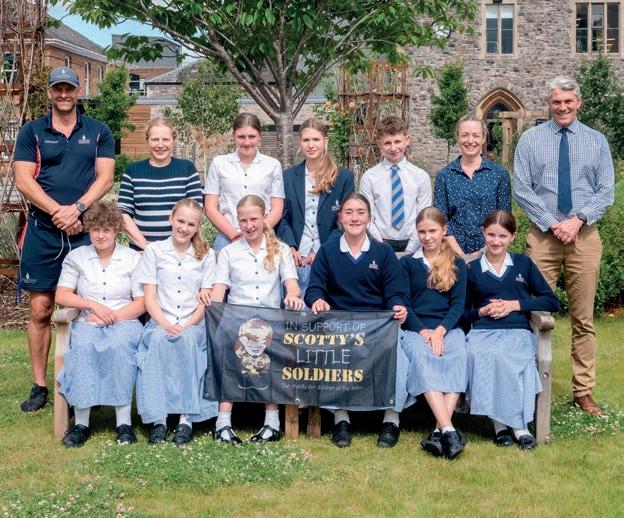
Nine 13-year-old pupils and four staff from Taunton School swam the English Channel recently, raising almost £8,000 for military charity Scotty’s Little Soldiers. This was the culmination of two years’ training – some pupils couldn’t swim at all at the outset. They are Taunton’s ninth team to achieve this Channel feat.
“It is what you read when you don’t have to that determines what you will be when you can’t help it”
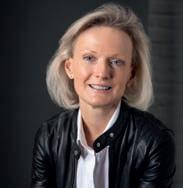
Wymondham College, Norfolk has a new Principal, Emma Arrand, who joined at the start of the academic year. She was formerly Senior Deputy Head at Monmouth School. Wymondham is the largest state boarding and day school in the UK – the team say this appointment marks an exciting new chapter in its history.
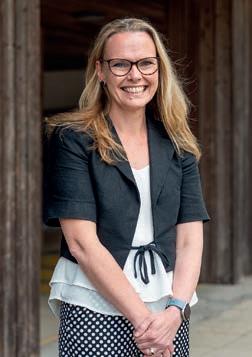
Simply Learning Tuition has appointed Alison Melrose as Director of Client Services, taking up the role in January. She has three decades of experience in leadership roles across independent schools.
“I look forward to working with the team to ensure families receive the very highest level of personalised support,” she says.

Heathfi eld School in Ascot will welcome boys into its sixth form next September. The school, part of Mill Hill Education Group, opened its Cadogan Sixth Form Centre in 2022. Headmaster Jonathan Williams says the move brings benefits for all students, with small A-level classes, broad subject choices and diverse perspectives.


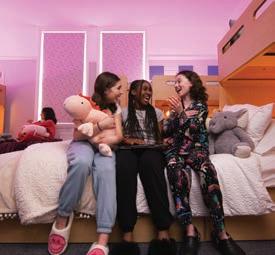
SGA Stays at St George’s Ascot is a fl exible, choice-driven boarding programme, off ering a tailored, individual boarding experience through immersion, short stays, one night stay overs, weekly or full boarding. It combines supportive boarding life with ambitious academic and co-curricular opportunities, developing independence, friendships and cultural exchange in an all-girls’ environment.
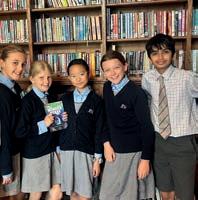
Students from Cottesmore School have become published authors. Chosen from pupils nationwide, 22 young poets from the Sussex prep earned a place in Wonder Verse, a poetry anthology that celebrates creativity, imagination, and literary talent among children.


“Music should be front and centre in education... It opens a door in a child’s mind”
“The fascination of any search after truth lies not in the attainment...but in the pursuit, where all the powers of the mind and character are brought into play”
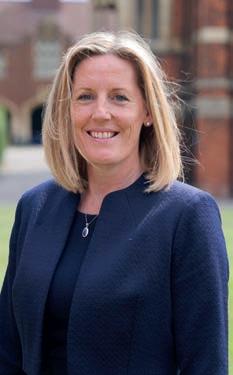
Clare Ives is the new Head of The Leys in Cambridge, joining in its 150th-anniversary year. She was previously Senior Deputy at Sevenoaks School and held senior roles at Canford. Dr Ives studied History at University of St Andrews, also completing a PhD, and moved into education from the Civil Service.
“WorldSkills’ Team UK have reached a training milestone in preparing for next year’s major event in Shanghai”








Old Buckenham Hall School, Suff olk joins Rugby School Group from January 2026.
The two schools have always enjoyed a strong relationship, with many of the co-ed prep’s pupils joining Rugby for their senior years.
“We are delighted by the opportunities the merger represents for our children,” says OBH Headmaster James Large.
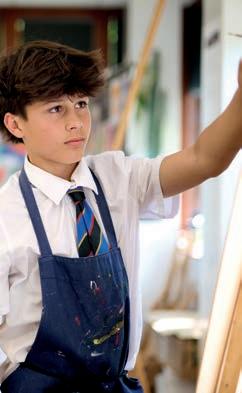
St Albans School has enhanced its scholarships programme, adding Creative and Technical to its existing options –Academic, Music, Choral, Sport, Drama – from September 2026. At 11+ and 13+, students can apply for a scholarship in Art, Creative Writing, Computer Science or Design & Technology. The school also welcomes Year 7 girls from next September.
Caolan Wukics is the new Head of Boarding at Holmewood House School, and he and his partner Isobel are also Houseparents. Together, their role is to create a homefrom-home at the Kent prep. “Watching children fi nd their feet, their voice and their independence makes this the best job in the world,” he says.




“Challenges
At EuroSkills Herning 2025, Team UK reached a milestone in its journey of skills development in preparation for next year’s ‘skills olympics’ in Shanghai. Trained by WorldSkills UK, in partnership with Pearson, Team UK received a Bronze medal and fi ve Medallions for Excellence in categories including engineering, restaurant services and hairdressing.
that come up from time to time in life are our little learning tools, our little steppingstones. If we didn’t have those things in our life, how would we learn anything?”
GLADYS KNIGHT


The Big Bang Research Project is a seven-year exploration of the benefi ts of off ering woodwork in education settings to children aged from three to eight. Over 30 countries are gathering data. Peter Moorhouse, Honorary Research Fellow at University of Bristol, is UK contact and the survey is running until the end of December.

In his keynote to the Downe House Conference in June, Michael Gove called upon schools to return to handwritten exams and more oral assessments to tackle AI-enabled cheating. The Spectator editor and former Education Secretary was speaking to an audience of 200 invited guests from independent and state schools at this annual summer meeting of education minds.
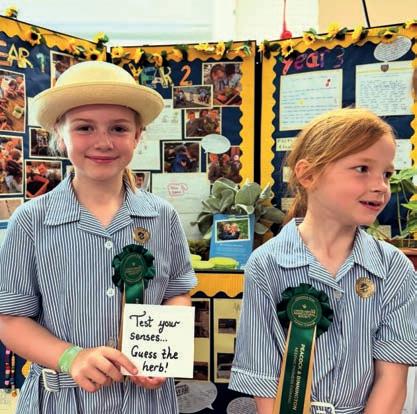
St Martin’s Prep in Grimsby has been named Independent School of the Year by SuperKind as part of its annual Social Impact Awards. Pupils earned 1,384 Social Action Badges through the initiative for volunteering, event organising and fundraising – the highest average number of registered social actions per student nationally among independent peers.



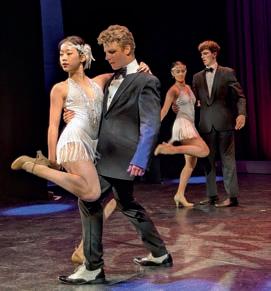
Frensham Heights is celebrating the approach that made the school so radical when it opened in 1925. Its female founders set out to educate the whole child in an atmosphere of mutual respect. Centenary celebrations started with 1925 Student Day and included 500+ students dancing the Charleston.

MPW Birmingham has appointed Adam Cross as its new Principal. He joined the college in 2003 and has served as its Vice Principal since 2010. He is also the co-author of two titles in MPW’s Getting Into series of guides, Getting into Medical School and Getting into Dental School.


“My idea is that there is music in the air, music all around us; the world is full of it, and you simply take as much as you require”
EDWARD ELGAR
“The illiterate of the future will not be the person who cannot read. It will be the person who does not know how to learn”
TOFFLER
ALVIN

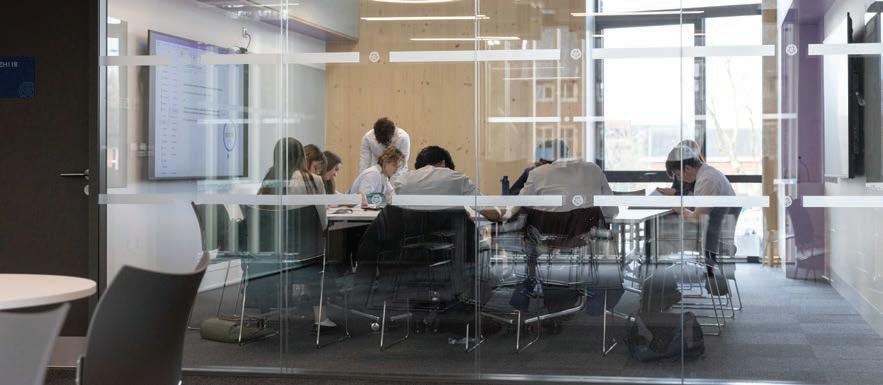
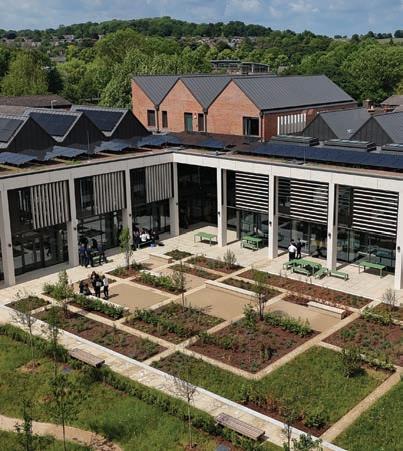
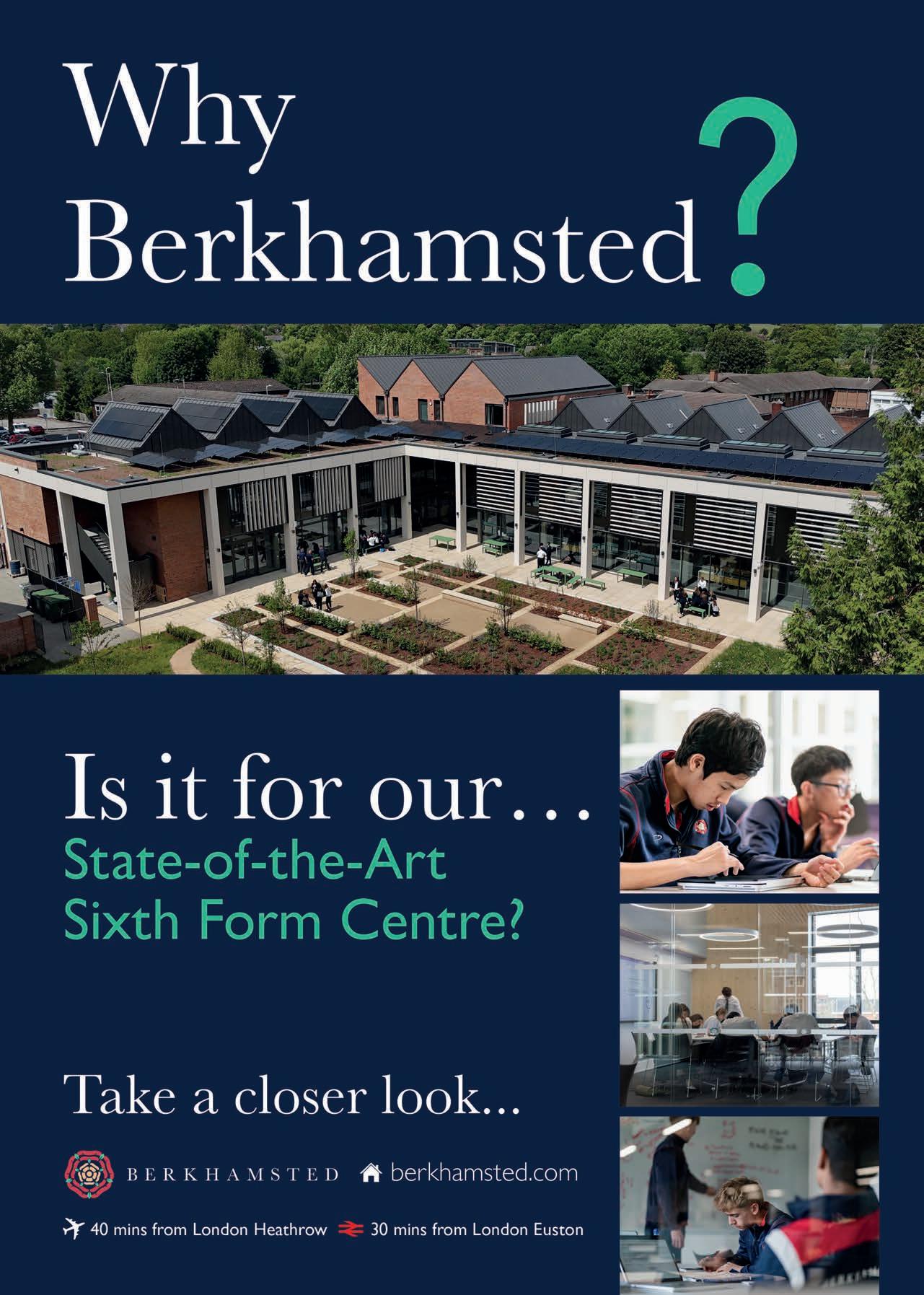
The Zaha Hadid Sixth Form at Berkhamsted provides a purpose-built and innovative place to learn and grow
Berkhamsted Schools Group opened the doors of its new Sixth Form building last March. This forwardlooking, purpose-built space was conceived and designed to reflect how young people learn, work and collaborate in the modern world. Nearly a year on, its impact on learning and attainment is clearly evident.
The Zaha Hadid Sixth Form Centre – named after the illustrious architect and Old Berkhamstedian –offers a learning environment tailored to students’ needs as they transition from school to adulthood. The open-plan design is in line with modern offices, offering extensive space for both collaboration and independent study. This allows students to work flexibly in a shared environment.
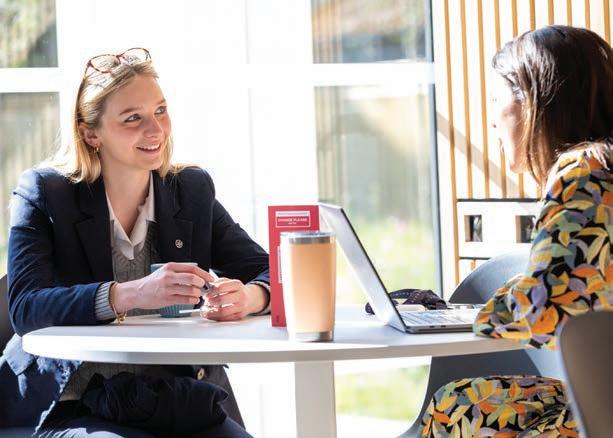
Teaching spaces are built around the Harkness model, with boardroom style tables bringing discussion, collaboration and student voice to the forefront of learning. The building’s varied meeting spaces have also created the opportunity to host careers discussions, weekly 1-1 tutor catch-ups and innovative lesson plans designed to extend learning.
This is especially evident on Friday afternoons, when students undertake leadership projects and academic challenges as part of their ‘Stretch’ programme. Initiatives include running metacognitive learning sessions for younger years, prepping for Oxbridge debate competitions and building businesses with Young Enterprise. The new building is perfect for giving students the opportunity to take responsibility for their own learning and development, while exploring what they love.
Already, this new environment is proving its worth in helping to ensure exceptional student outcomes. Berkhamsted’s 2025 A-level cohort celebrated record-breaking results, with over a fifth of grades awarded at A* and over half at between A and A*. With last year’s record-breaking cohort only spending part of their scholastic journey in the new building, there is excitement about how Berkhamsted’s next generations will soar.
The space will continue to evolve with students front of mind. A soon-to-launch ‘Entrepreneurship Zone’ will host local entrepreneurs to work, mentor and inspire students. With previous students choosing coveted high-level degree apprenticeships at companies such as Goldman Sachs, JP Morgan, BMW and the Civil Service, supporting futures in industry has never been more important.
Berkhamsted Sixth – this innovative and forwardlooking learning space – stretches students to excel academically, while also inspiring and equipping them to approach their future adventurously, however that may look.
Suzanne Mowat of St Clare's, Oxford discusses the importance of leadership experiences that prepare students for life beyond school
When we think about secondary education, academic achievement usually takes centre stage. Yet one of the most valuable lessons a young person can learn in school is how to lead. Leadership is not simply about holding a title or a formal position, it is something that emerges in everyday moments of listening, collaborating, making thoughtful decisions and taking responsibility.
The qualities that make an effective leader – communication, empathy, teamwork, resilience – do not develop overnight. They need the right kind of environment, one that challenges students, supports them and gives them space to grow. In my experience, the boarding school setting is uniquely powerful in this respect. Students are not only immersed in their studies but also live alongside peers, navigate diverse relationships and take ownership of their daily routines. This naturally cultivates independence, personal responsibility and interpersonal skills.
At St Clare’s, I see this happening every day. Our community, made up of students from over 50 countries, means that differences in background become opportunities for dialogue and learning. When students manage their own routines, contribute to shared living and build friendships across cultures, they begin to lead their own lives – and that is an essential foundation for leading others.
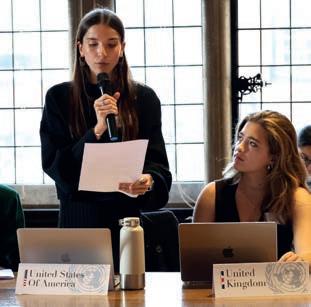
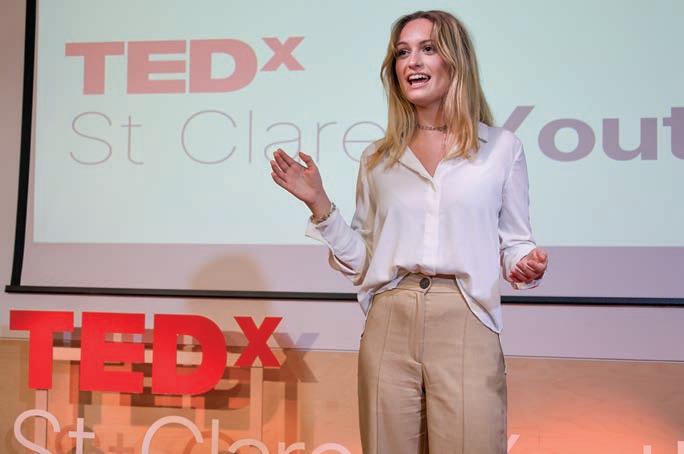
Formal opportunities matter too. Our International Student Leadership programme, Learning to Lead, provides a structured way for students to explore the fundamentals. They begin by studying what good leadership looks like, observe it in practice, and finally design and implement their own projects. I’ve seen students launch service initiatives, run conferences and represent their peers through the student council. What impresses me most is the responsibility they take for seeing ideas through – and the creativity they bring to solving problems.
Leadership development is also shaped by classroom experiences. Team-based projects, debating and group presentations demand collaboration and diplomacy. Beyond academics, activities such as Model United Nations, Young Enterprise, and TEDx give students the chance to take on roles in real-world contexts. These experiences push them to take risks, to adapt and to build confidence. None of this happens in isolation and the close connections between staff and students are vital. At St Clare’s, this partnership allows us to share in challenges
as well as achievements. True leadership is as much about resilience as it is about moments of triumph. Perhaps most importantly, leadership at school should not be about perfection or prestige. It should be about learning to act with integrity, to work alongside others and to contribute to something greater than oneself. When students discover that, they carry it forward – into university, into careers, and into the communities they will one day help to shape.
At St Clare’s, and in schools everywhere, leadership is not a separate subject to be studied – it is something that is lived and practised, day by day. And when we give young people the trust and the responsibility, they never fail to surprise us with how ready they are to lead.

Page 26
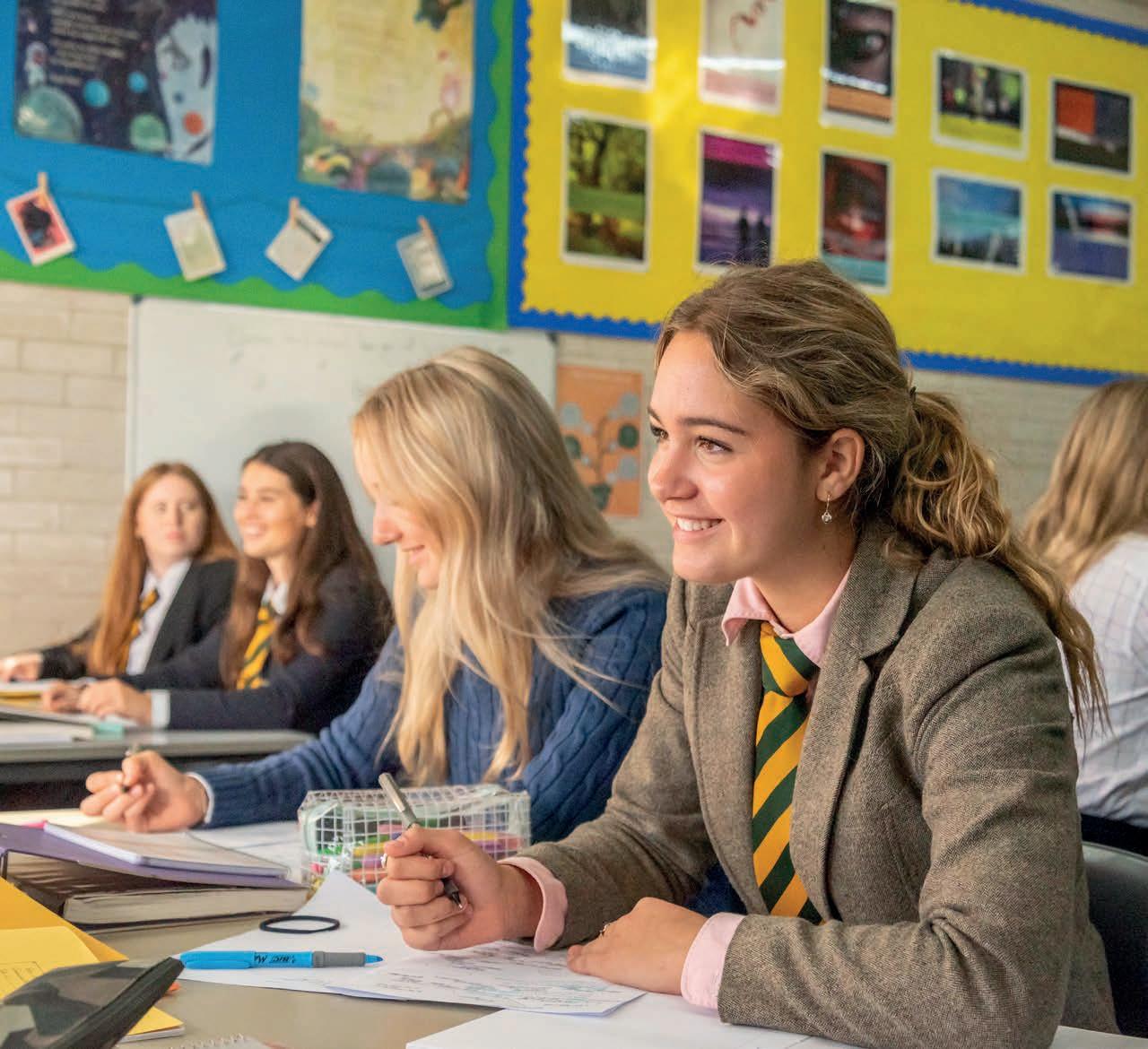
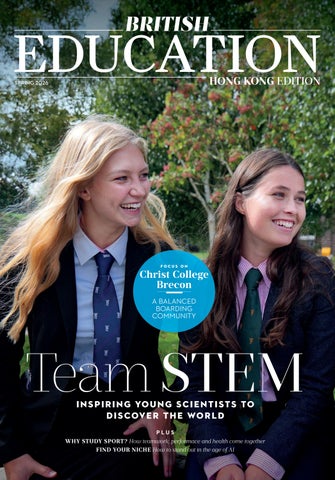
Christ College Brecon has been a strong centre for learning for the last 500 years. British Education discovers what makes it such a sucessful global establishment
Christ College Brecon enjoys a glorious location and long heritage. How have these elements shaped its 21st century ethos and values?
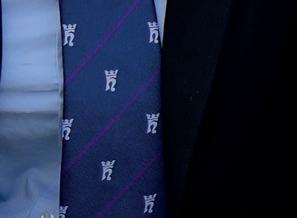
Founded in 1541 by Henry VIII, Christ College has been a community of learning for over 500 years. Our pupils still dine and worship in 13th-century Chapel and Dining Hall, while proudly wearing the traditional ‘h’ emblem recognised by generations of Old Breconians worldwide.
This heritage underpins a modern, forward-thinking school that blends tradition with innovation. Our motto, “They achieve because they believe they can,” remains central. Self-belief is the foundation of our ethos: pupils are supported to develop character, confidence and resilience within a safe, close-knit community. Our location in the Brecon Beacons National Park strengthens this spirit of discovery, encouraging pupils to value both history and the natural environment as they grow into responsible global citizens.
You have an award-winning cocurricular programme. Can you describe how this helps to challenge and develop pupils – and ensure they have lots of fun?
Our award-winning co-curricular programme makes full use of our extraordinary setting. The Good Schools Guide praised our Saturday programme as “one of the most exciting… we’ve seen,” with activities ranging from mountain biking, paddle boarding and climbing to robotics, debating, music and golf.
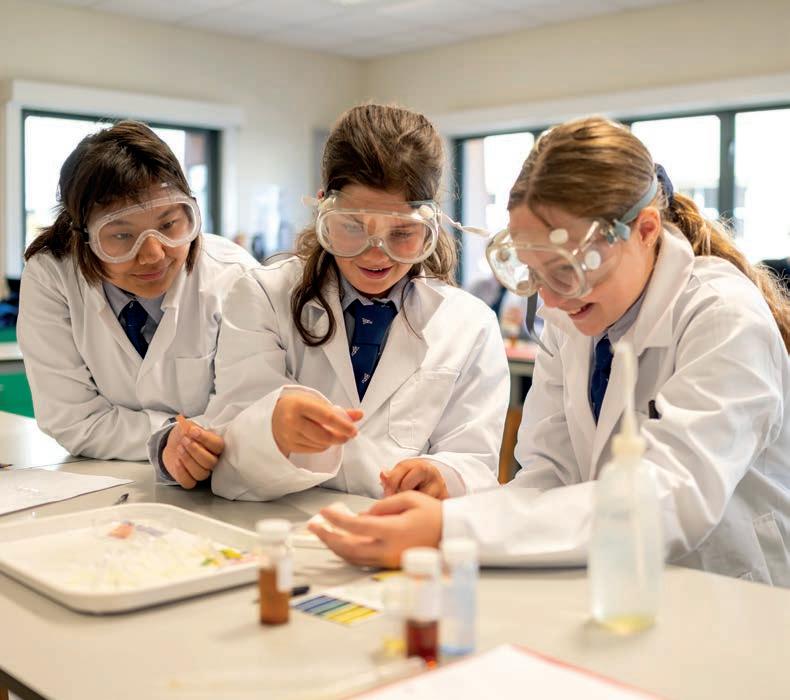
“Self-belief is the foundation of our ethos: pupils are supported to develop character, confidence and resilience”
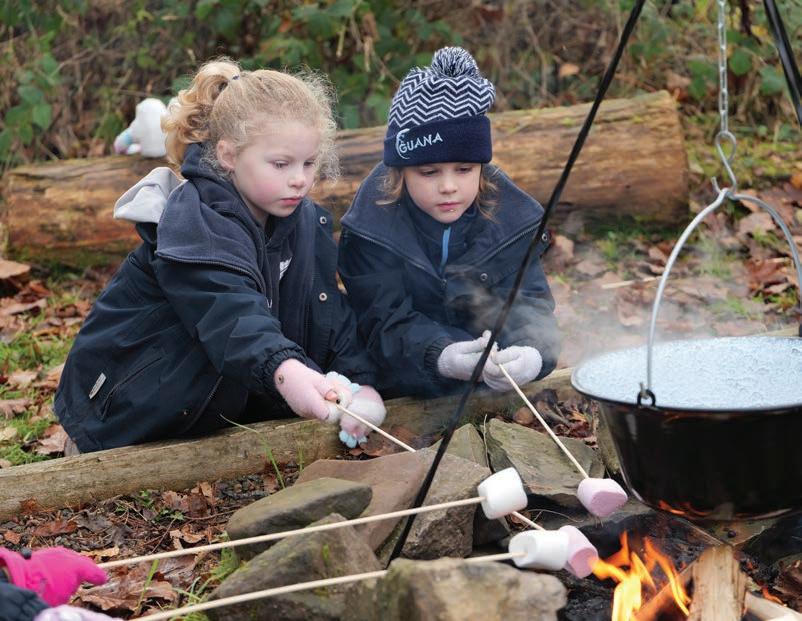
Pupils are encouraged to try something new each term, developing adaptability and confidence. Leadership opportunities exist within teams and societies, while friendly competition builds resilience. Adventure Days at the start of term use the landscape of the National Park to promote teamwork, independence and a sense of belonging.
A unique feature is our Year 9 Beacon Course, designed to strengthen selfknowledge and wellbeing. Rooted in positive psychology, it includes mindfulness practice, reflective discussions and resilience training. By engaging in shared challenges such as outdoor pursuits, and guided reflection, pupils learn to manage stress, support one another and celebrate personal growth.
Our co-curricular culture is not only enriching but fun — ensuring pupils leave with lifelong skills, friendships and memories.
“Pupils know they are seen, supported and valued, whether they are from the local area or from overseas”
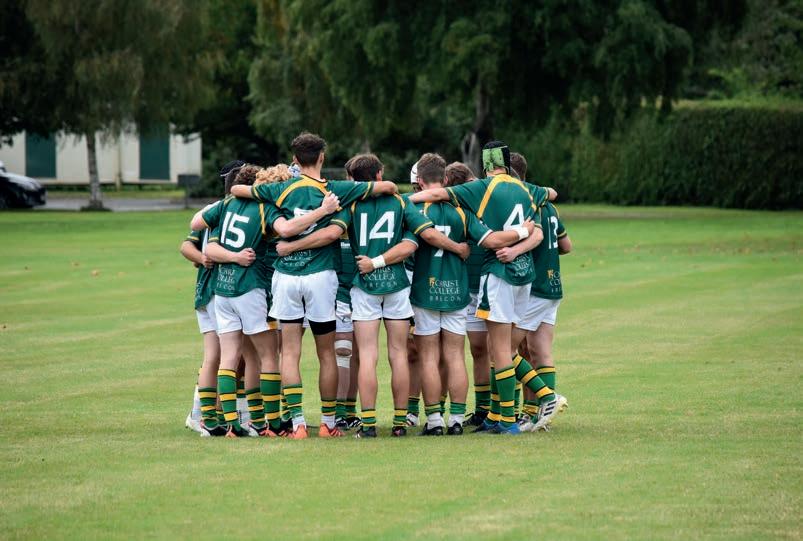
As a through school with small class sizes and a mix of local, national and international students, what are the pastoral and community approaches that ensure pupils quickly feel like they belong?
Belonging is central to the Christ College experience. House competitions in sport, art and music run throughout the year, and “Spirit Days” bring the whole community together in celebration of talent and teamwork. Every pupil contributes and takes pride in representing their house.
We champion pupil voice: Sixth Formers serve as prefects and meet weekly with staff to address pupil concerns and share ideas, fostering agency and responsibility. Termly assemblies celebrate individual and collective successes, reinforcing self-belief through recognition from staff and peers alike.
Our small class sizes, diverse student body and family-style houses create a culture of care. Pupils know they are seen, supported and valued, whether
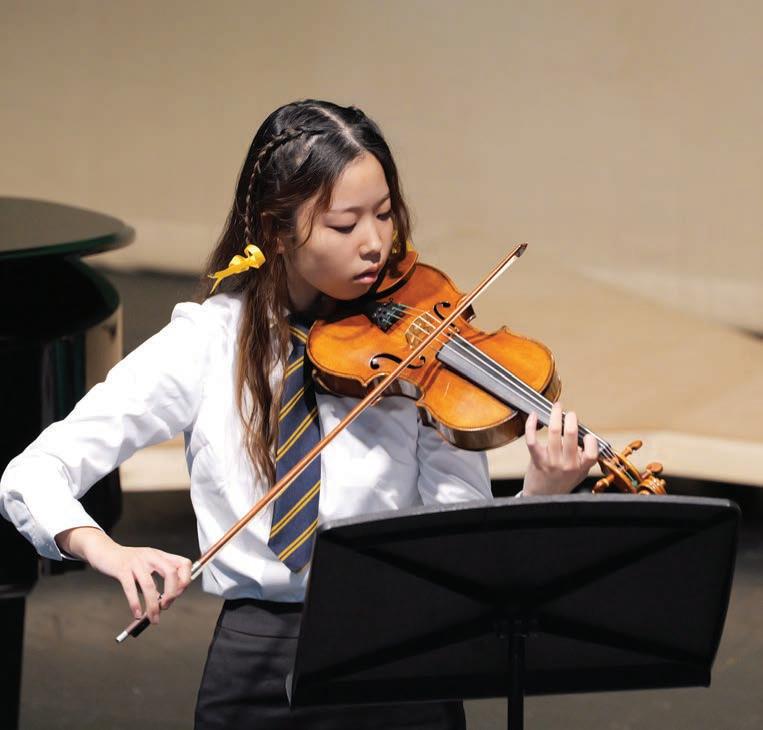
they are from the local area or from overseas. This inclusive environment nurtures confidence and ensures every pupil quickly feels at home.
You are an ‘all-rounder’ and with great results – notably in maths and sciences. What is the academic approach to ensure every pupil fulfils their potential?
Our academic philosophy balances high expectations with personalised support. Central to this is our system of grade reviews: five checkpoints each year where every pupil’s effort and attainment are assessed across all subjects.
Grade reviews inform tutorial sessions, where targets are set and progress discussed openly with pupils. Parents are kept updated, while tutors, Houseparents and academic staff collaborate to provide tailored interventions when needed. This joined-up approach ensures challenges are addressed quickly, and achievements are celebrated.
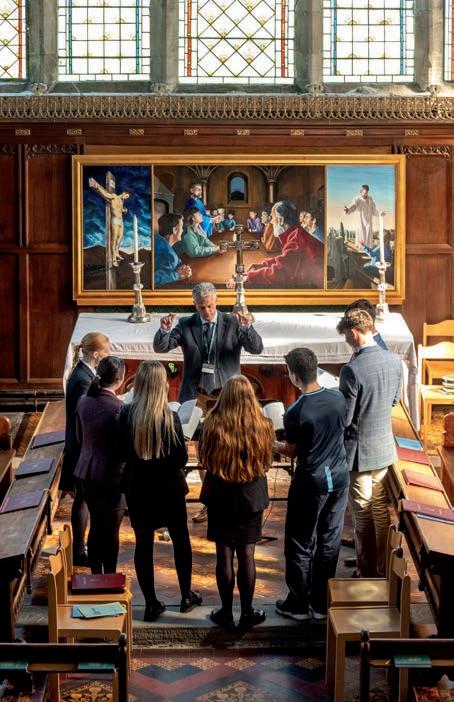
The result is an environment where pupils are motivated to work hard, while also developing the independence and resilience required for lifelong learning. Excellence in maths and sciences, alongside strong results across the curriculum, reflects the impact of this structured yet supportive framework.
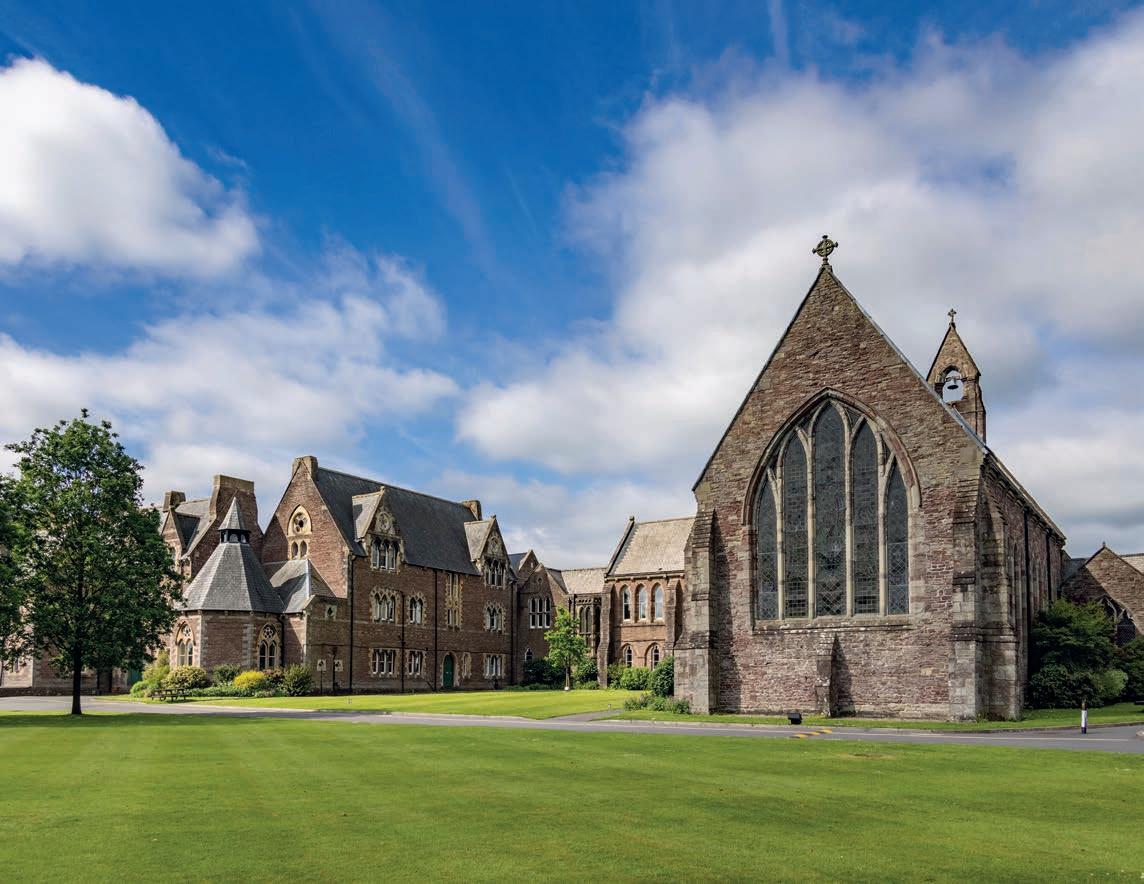
How is boarding designed and what how do social and cultural opportunities enrich life for Christ College Brecon boarders?
Boarding is at the heart of Christ College life. We have five boarding houses — two for girls, two for boys (ages 13–18) and a co-educational junior house (ages 10–12) — plus two hubs for day pupils. Each is led by a dedicated Houseparent who lives in the House with their family (and pets!), ensuring a nurturing, home-from-home environment.
Boarders enjoy a rich social programme: from movie nights, baking and games evenings to celebratory year-group dinners in the local town.
Saturday nights bring the houses together for shared activities; a game of rounders in the summer is a firm favourite, while Sundays combine relaxation with organised trips — shopping in Bristol or Cardiff, visiting castles and museums, or seasonal events like ice skating at Winter Wonderland.
This vibrant mix of house traditions, local excursions and whole-school gatherings creates lasting friendships across ages and backgrounds. Pupils develop independence in a safe, supportive community, with cultural opportunities that broaden horizons and deepen the sense of belonging that defines boarding at Christ College.
“Boarders enjoy a rich social programme: from movie nights, baking and games evenings to celebratory year-group dinners”
In the Heart of the Cotswolds — Just 90 minutes from London
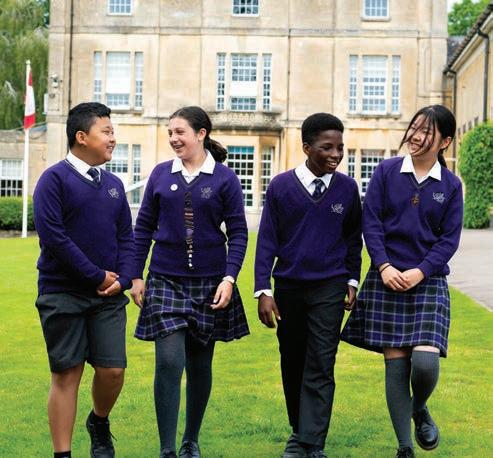
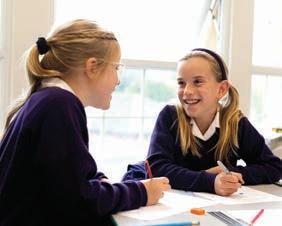
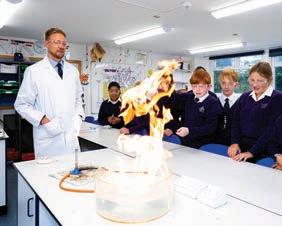
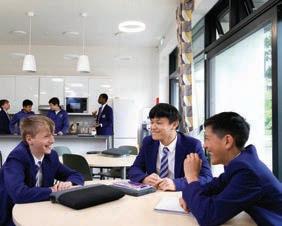
At Wycliffe College, we offer a dynamic all-through education for girls and boys aged 3 to 18. Nestled in the stunning Cotswolds, our school combines tradition with innovation, nurturing every pupil to thrive academically, socially, and personally.

The Wycliffe Way:
» Fostering academic excellence through rigour, challenge, and a spirit of curiosity.
» Inspiring confident humility , generosity, and mutual respect in every interaction.
» Promoting social and environmental awareness , preparing pupils to be thoughtful global citizens.
» Equipping students with resilience, self-knowledge, and essential life skills to embrace their future with confidence.
» Creating a safe, happy, and supportive environment where every pupil feels valued and secure.
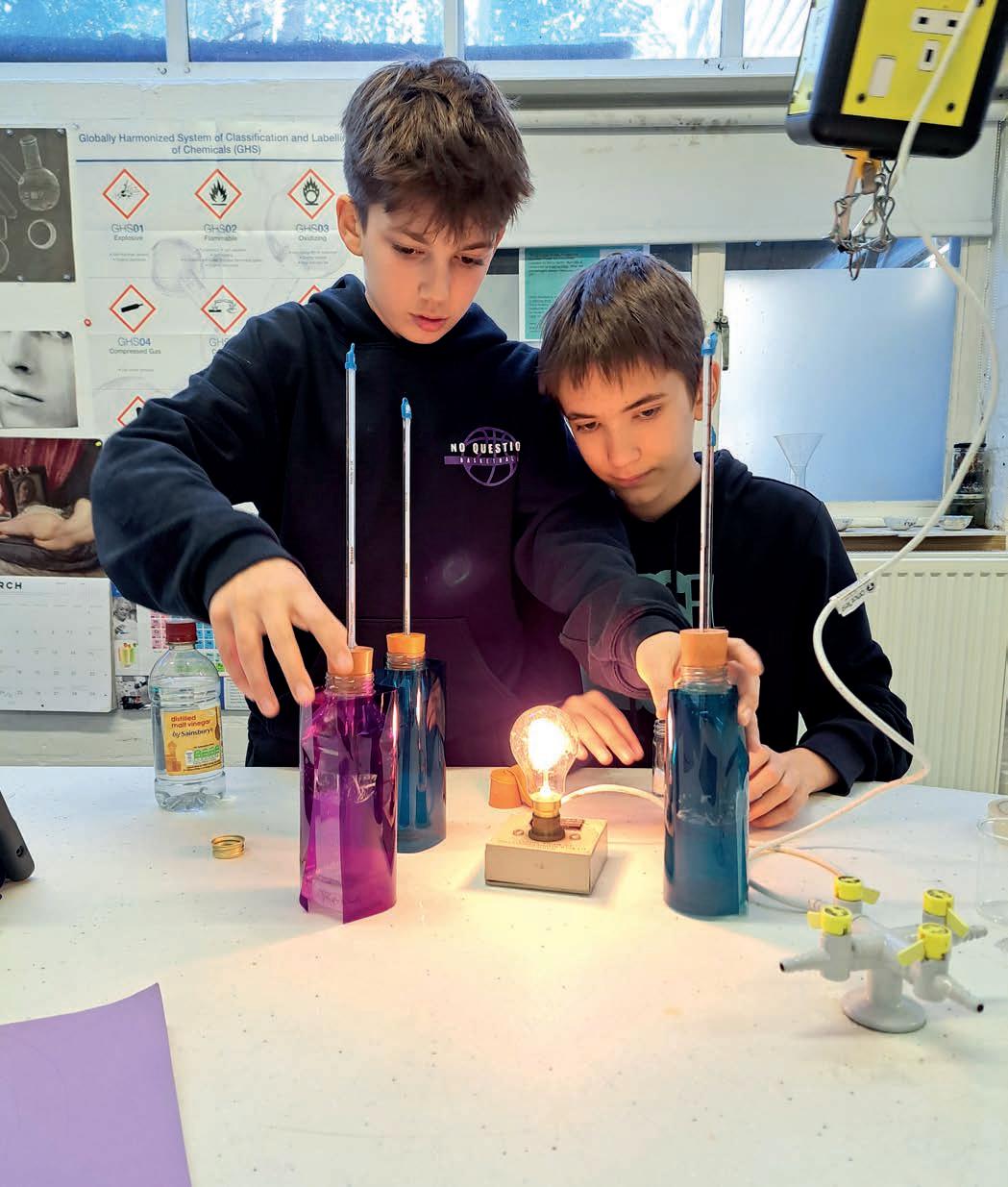
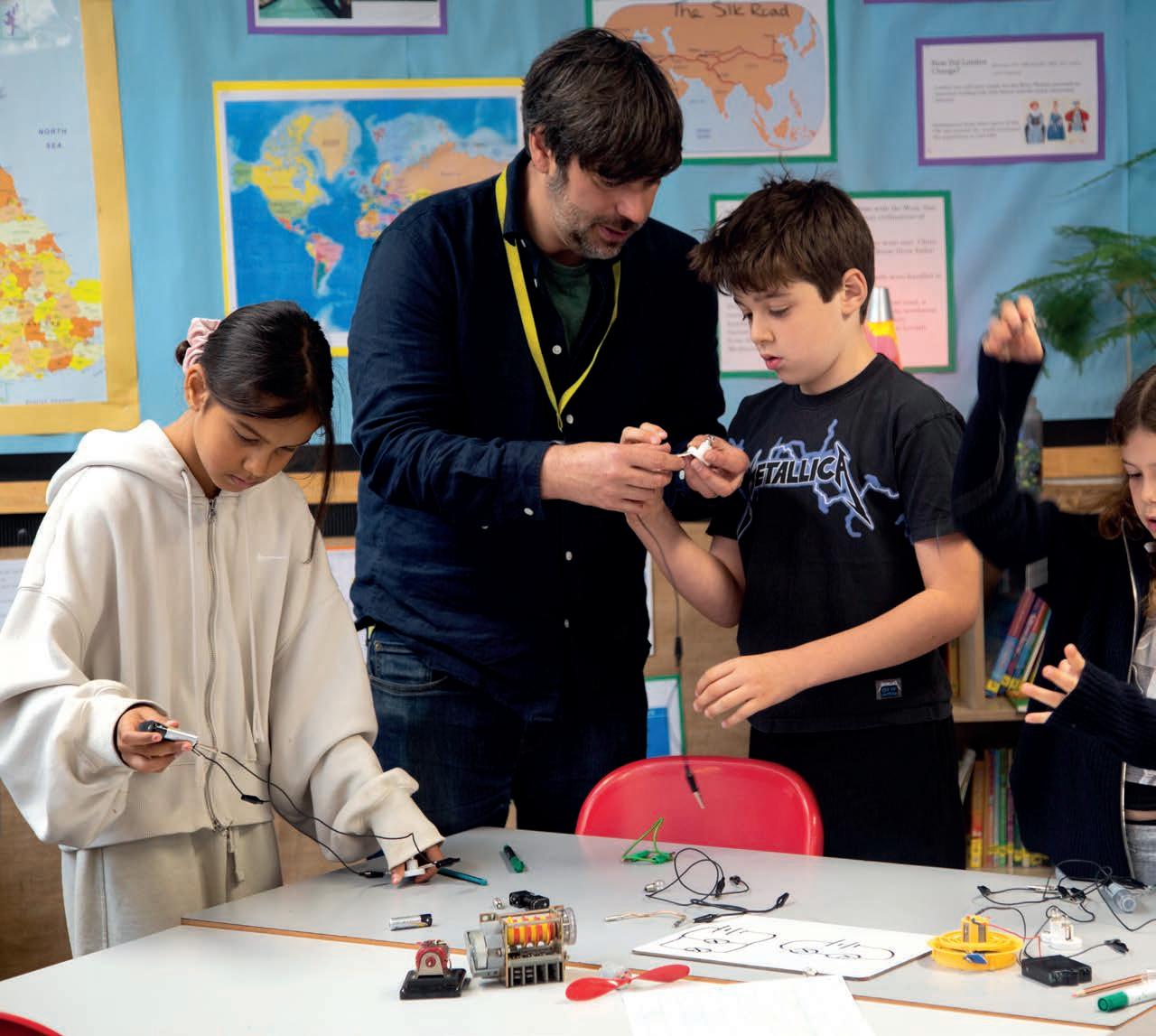
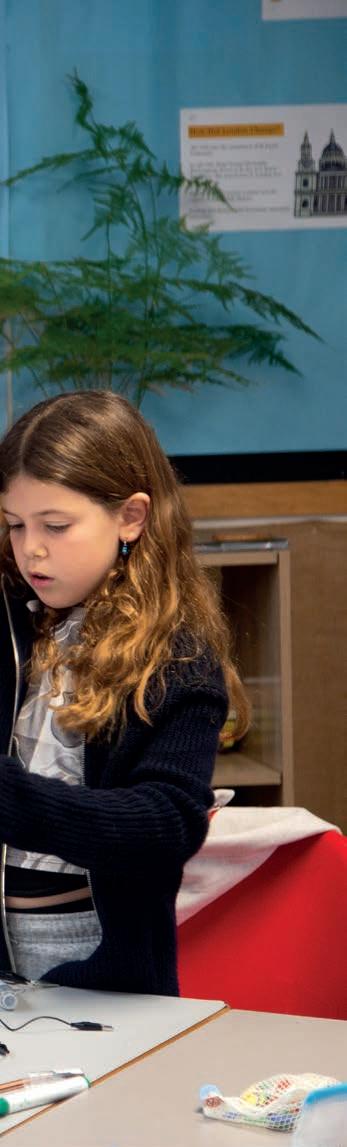
Scientific knowledge delivered early can become a thrilling journey for children, as they discover the world through practical experiments and hands-on investigation. We speak to four prep schools to find out how they develop young scientists
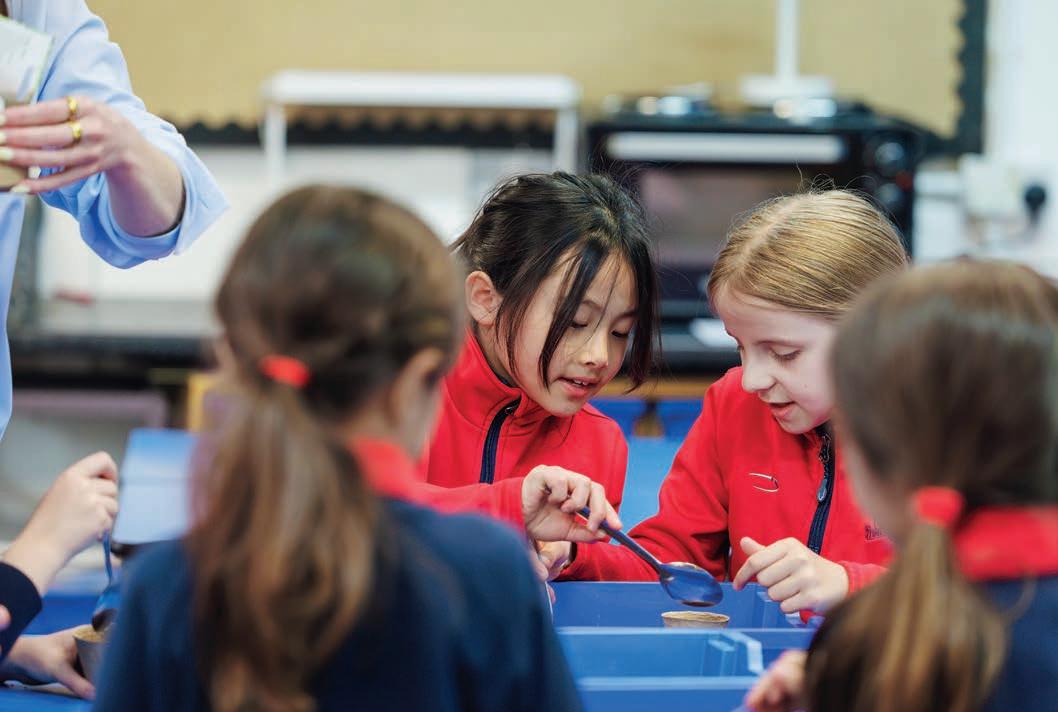
Our science programme is designed to nurture curiosity, develop critical thinking, and build strong foundations in scientific understanding from the earliest years," says Head of JAGS Junior School Victoria Goodson.
"Pupils learn to ask meaningful questions, test hypotheses, and communicate their findings clearly –essential skills for future study"
"We offer specialist science teaching from Year 3 onwards, with most lessons taking place in a fully equipped science classroom that allows pupils to engage in hands-on investigations using real scientific equipment." This specialist setting and practical approach not only sparks enthusiasm but also helps pupils develop knowledge and enquiry skills that grow in complexity as they progress through the school.
Science teaching in Years 3 to 6 focuses on delivering a varied curriculum to spark curiosity and get children involved in practical (sometimes messy) experiments. "A standout feature at JAGS is our Forest School programme," adds Victoria Goodson. "Our extensive grounds are a rare luxury so close to central London and
include the Botany Gardens and The Copse, providing a rich environment where science is brought vividly to life."
It’s a space where pupils investigate animal habitats, plant life cycles and see sustainability in action. Activities range from shelter building and knot tying to weaving with wool and twigs, helping children develop both scientific knowledge and essential life skills. Children explore biodiversity through bird and insect identification, investigate seasonal changes through tree and leaf studies, and examine plant life cycles by analysing seed pods. "Printmaking with leaves and organic matter from the forest floor adds a creative dimension, blending art with environmental science," says Victoria Goodson. JAGS chooses this immersive approach to help reinforce key scientific concepts but also nurture a lasting appreciation of the interconnectedness of living things. "Forest School continues to be a highlight of the Prep experience, where curiosity thrives and learning is rooted in the real world."
The school ensures that each year builds increasing depth and challenge. For example, in Year 3, pupils explore topics such as rocks,
"The home-based project 'Adaptation', tasked children to make a model and fact file about either an animal they love or one they have invented"
the human body, forces and magnets, and light, while developing skills such as making observations, recording data, and drawing conclusions. By Year 6, they are planning their own investigations, analysing results and using scientific evidence to support their ideas. They also tackle more advanced topics, such as chemical reactions, evolution and inheritance, and the circulatory system.
"The ‘Working Scientifically’ module is a constant throughout, anchoring the work we do and ensuring that pupils not only learn scientific facts but, crucially, also understand how science works. They learn to ask meaningful questions, test hypotheses, and communicate their findings clearly – essential skills for future study and for life beyond the classroom," says Victoria Goodson.
Science happens outside the curriculum, with a wide range of extracurricular opportunities – from eco and science clubs to national competitions and CREST Awards. There's a big focus on playing to individual strengths and learning needs to ensure all children feel inspired to take learning further. "Ultimately, our science programme is about more than simply recalling facts, it’s about genuinely nurturing inquisitive minds, building resilience, and empowering our young people to make sense of the world around them."
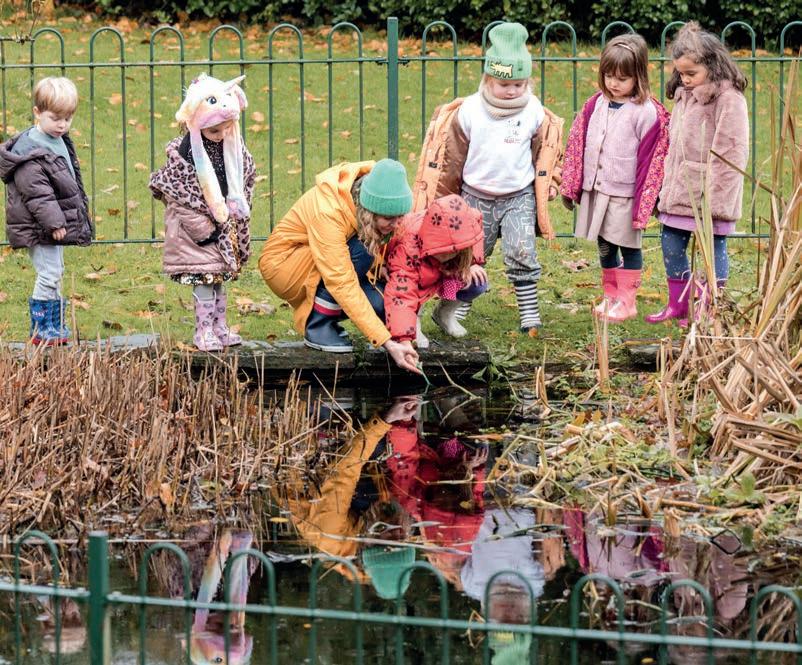
The science programme in Lower School is woven within and around our five curriculum lenses: Being Human, Continuity and Change, Living Planet, Culture and Community, and Communication," says The King Alfred School Head of Lower School Karen Thomas. "Enquiry-based learning is our dominant pedagogy and this lends itself perfectly to developing children’s scientific thinking."
There's a stepped approach here that helps children put down solid foundations with the right approaches and then build knowledge in increments. "First we gain the necessary knowledge about a particular area of science and then we help the children to play with
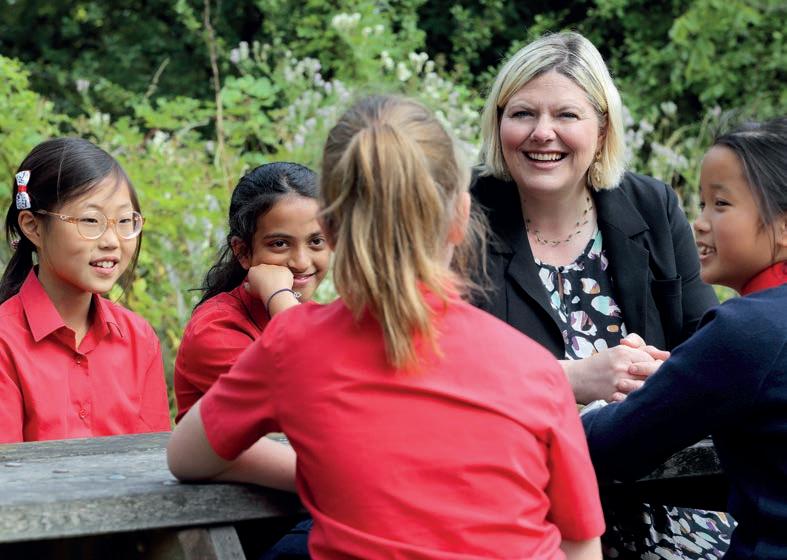
their new understandings to create and test the hypotheses they make," adds Karen Thomas. She says that since not too many people are inspired by worksheets, the aim is always to make early science explorations as hands-on and playful as possible to keep children engaged – and ensure they keep asking questions. ‘I wonder if’ and ‘show me how’ are often the starting points for science explorations at King Alfred. The school covers National Curriculum study areas – but is not limited by them. Karen Thomas says there's a focus on "our continuum of science skills". She adds that it's important to equip the Lower School's young scientists with the vocabulary, tools and methodology to take scientific exploration further and also think more deeply about where their discoveries could go next.
"We often draw from our community to bring another exciting dimension to our science offering, bringing in parents, friends, and teachers with a particular passion for science. We learn about scientists present and past, paying particular attention to challenge any existing stereotypes as we do so," she says. Children are also tasked to think about what makes a great scientist – a good way to consider transferable skillsets and identify what makes a good learner. There's an annual STEM week involving the whole community. Visiting speakers run workshops and children (and their families) also get involved in a home-based project. "When these are brought into school, we organise for the children to visit one another’s classes and share what has been made." Fun recent examples of this have included 'Adaptation', tasking children to make a model and fact file about either an animal
"Headline initiatives, including Enterprise Club, Eco Warriors and Sustainability Champions let pupils lead investigations into realworld issues"
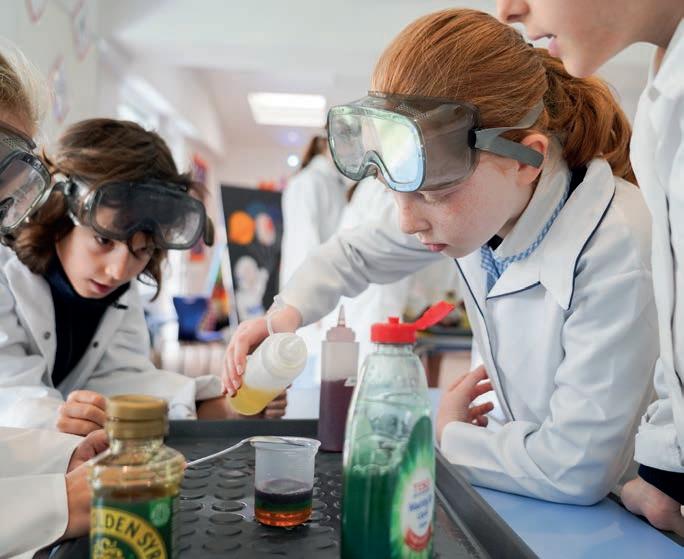
they love or one they have invented. Children have also designed arcade games based on 'Caine's Arcade' and been asked to come up with a whole new experiment and be prepared to share it with everyone. "These events create an extra buzz about science for children, teachers and parents alike," adds Karen Thomas.
The school's location, in leafy northwest London, also ensures science can head out of the classroom. As well as trips to the capital's major and more local museums, outside space becomes a learning lab – especially useful for environmental science. The aim is to help children recognise both the beauty of the earth and the positive and negative impacts human development can have. "We hope that, by doing this, our scientists of the future will have a respect for the environment and will make ethical and planet-friendly decisions when they enter the workforce."
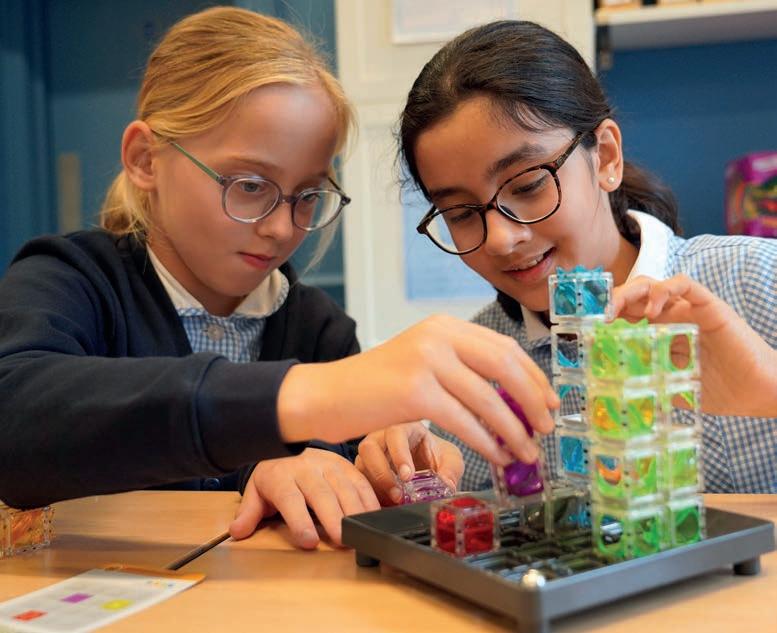
the curriculum becomes increasingly specialised, introducing key concepts in biology, chemistry and physics, while nurturing those same analytical thinking and investigative skills first sparked through play. "By Year 6, pupils are confidently engaging with complex ideas and applying their knowledge in meaningful contexts."
At Francis Holland Prep, science is far more than a subject; it is a journey of discovery that we harness from the Early Years, evolving into a rigorous, specialist curriculum by Year 6," says Deputy Head Andrew Hart. Over the course of the last academic year, the school has engaged in a comprehensive curriculum review, with a progressive approach to ensure clear pathways for deepening both understanding and skill in these formative years.
"From the outset, our pupils are immersed in hands-on science. In the Early Years, pupils explore through play, and we harness children’s natural capacity for experimentation, laying the foundations for deeper scientific thinking," adds Andrew Hart. As they move through the school,
Project-based learning and citizen science are central to the approach here. "Through headline initiatives, including Enterprise Club, Eco Warriors and Sustainability Champions, pupils lead investigations into real-world issues." These range from climate change to biodiversity, and Francis Holland Prep pupils get busy doing everything from designing eco-friendly inventions to promoting sustainable practices and analysing environmental data. "Our children take ownership of their learning and see the impact of their scientific achievements, both at school and out in the wider community," says Andrew Hart.
Practical science is the cornerstone and is designed to surprise and inspire. "Pupils create edible water pods, build solar ovens and make glow-in-the-dark slime. They test bioplastics, design magnetic mazes and monitor air quality, linking science with sustainability and innovation." He adds that these hands-on experiences help to embed scientific thinking – so that pupils see science as a subject they can achieve in and lead in. "Our STEAM Room (Science, Technology, Engineering, Arts and Maths) is alive with excitement. These immersive experiences not only reinforce key concepts but also create lasting memories that fuel a lifelong love of learning."
Francis Holland Prep's Chelsea location means a wealth of opportunities right on the doorstep for enrichment. Trips are an intrinsic element of the curriculum and, with the Science Museum, Natural History Museum and so many other national treasures so close, learning is brought to life
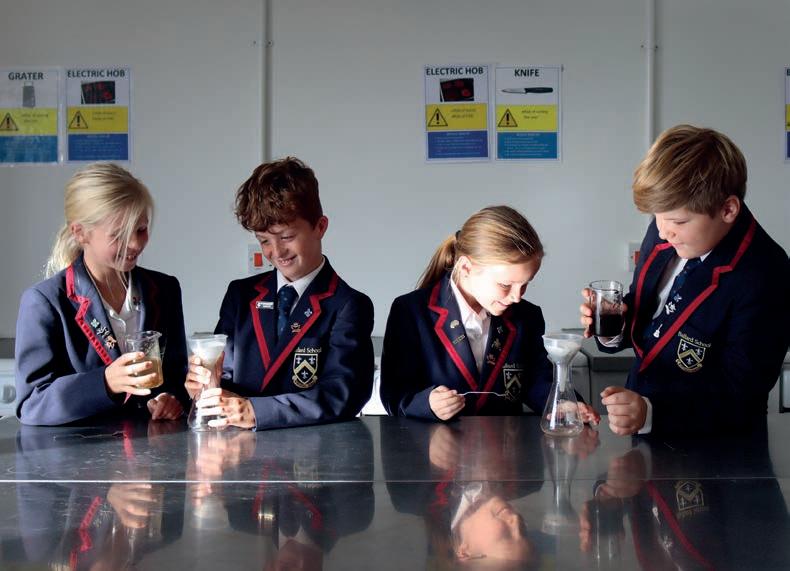
as part of the school day. There are regular visiting speakers from across the science and innovation sectors – many drawn from the school community – and this connects classroom learning to the wider world and helps pupils see themselves as future scientists and changemakers.
The co-curricular provision has expanded significantly recently, with dedicated coding and robotics clubs providing opportunities to explore the intersections of science and technology. The Inventors and Practical Science clubs develop creativity and problemsolving skills. All age groups are welcomed, giving valuable space for experimentation and collaboration on challenges. "Ultimately, our STEAM programmes provide pupils with the knowledge, curiosity and confidence to explore, innovate and never stop questioning." says Andrew Hart. "Our pupils are equipped with a lifelong passion for science and an appreciation of their power to change the world."
At Ballard, pupils think like scientists from the earliest years. “We start with the end in mind – we achieve exceptional outcomes in GCSE,” says Head of Science Aaron Markar. “However, it's not all about grades, pupils leave with a real-world understanding of science and its practical applications." This journey begins in Prep, with access to specialist science teaching. “We are about making science accessible for all children while retaining the challenge, excitement and inspiration. Early training to ‘think like a scientist’ is combined with very hands-on practical science – learning how to use the scientific process to test, investigate and experiment," adds Aaron Markar.
There's a strong emphasis on practical work. “Building on basic skills each year and using correct vocabulary from a young age ensures that science is always relevant
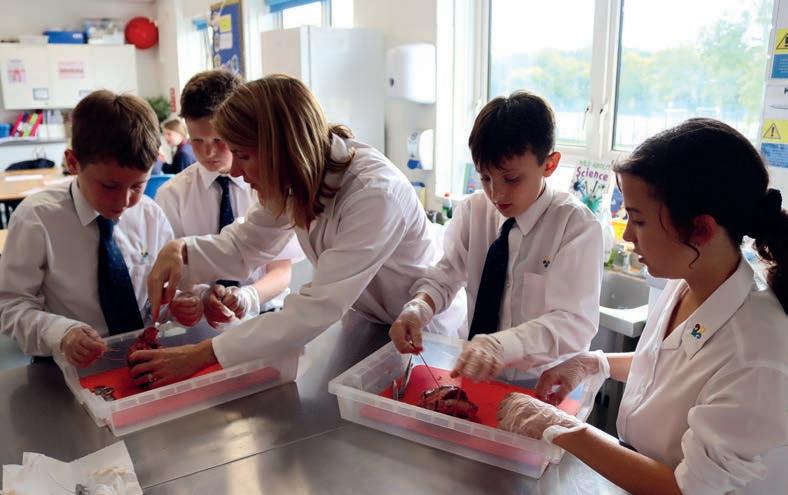
"Building on basic skills each year and using correct vocabulary from a young age ensures that science is always relevant and engaging”
and engaging,” says Ballard Prep Science Teacher Abigail Greaves. And this provision extends well beyond the classroom, with science clubs across both the Prep and Senior schools. “Pupils get to experiment, use equipment and participate in science activities far beyond our already broad curriculum. Science club favourites include copper plating nails, chromatography, and secret writing with invisible inks."
As you'd expect, given the school's glorious New Forest location, conservation and environmental stewardship are central elements of science teaching, with pupils regularly engaging in ecology initiatives.
“As an Eco School, we make full use of our site – grasslands, multiple Forest School areas, our stream and Ballard Pond – to bring ecology to life. Pupils can ‘pop’ outside and have lessons out of the labs, and we’ve noticed an increasing affinity for the outdoors and the ecological aspects of the curriculum,” says Aaron Markar.
Project-based learning is another key strand, using the CREST Award framework to help children develop knowledge and research skills. “In Year 7, pupils take on a ‘Why’ project – choosing a question to research and present at a mini science fair,” says Abigail Greaves. The Ballard science team relish creating memorable moments. “Pupils always love anything with flames, popping and fizzing.
"We often use food in experiments to bring complex ideas to life – jelly models of cells, Oreo biscuits for moon phases, fruit as planets to show size and distance in space. We measure crater size with marbles and sand, simulate digestion using tights, and create ‘alien soup’ to consolidate knowledge of separating mixtures.”
Plenty more real-world science is provided with trips to local museums and multiple Science Week events. Guest lectures – including from alumni working in the science and technology sectors – help pupils see future careers that could await them. “It’s often said that you have to 'see it to be it’ – and we take that seriously,” adds Aaron Markar
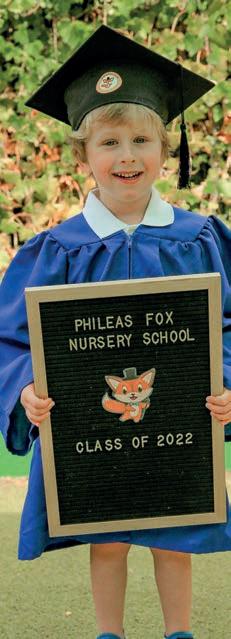







PhileasFoxNurserySchoolspecialisesinEarlyYearsmultilingualeducation, offeringchildrentheopportunitytolearnEnglish,French,Mandarin,and Russianlanguagesandcultures.
ThroughamodernEarlyYearscurriculum,wecreatetheperfectbalanceof holisticeducationandlinguisticimmersion.Ournurturing,stimulating,and play-focused environmentensureschildrenthrivewhiledevelopingalovefor learning,languagesandaglobalperspective.
London'soneofakindmultilingualnurserygiveschildrena headstartinmasteringlanguagesfromearlychildhood. www.phileasfoxnursery.com


Fiona Read, Head of Bedales Pre-prep, on delivering early education that ignites curiosity and sets children up for lifelong learning in an interconnected world
So often the all-important early years of education are sidelined by discussions of exam systems and transition to work. Having seen the ebb and flow of policies and initiatives over the last 25 years of teaching in the UK and internationally, I feel now is the time to ask fundamental questions about how we educate our youngest learners to foster a genuine love of learning.
Many of today’s classroom practices were shaped by the Industrial Revolution, when education was designed to prepare children for a hierarchical, conformist workforce. Rows of children seated passively, absorbing knowledge dictated by an authoritative figure at the front of the classroom, are relics of this era.
Today, the education pendulum has swung too far in favour of testing. A preoccupation with preparation for the next stage means young children face a plethora of standardised
“Even the youngest students are active participants in shaping a rounded education deeply connected with the world”
tests, such as SATs, throughout primary school, narrowing the curriculum by directing teaching towards preparing for assessments.
This rigid focus continues with a GCSE curriculum discredited by many educationalists, including the Rethinking Assessment group and former education secretaries across the political divide. Like SATs, GCSEs have become too restrictive and fail to nurture 21st-century skills increasingly valued by employers – notably flexibility, resilience and critical thinking.
The National Curriculum in England was last reformed in 2014, but its roots lie further back. Much of the content is outdated, failing
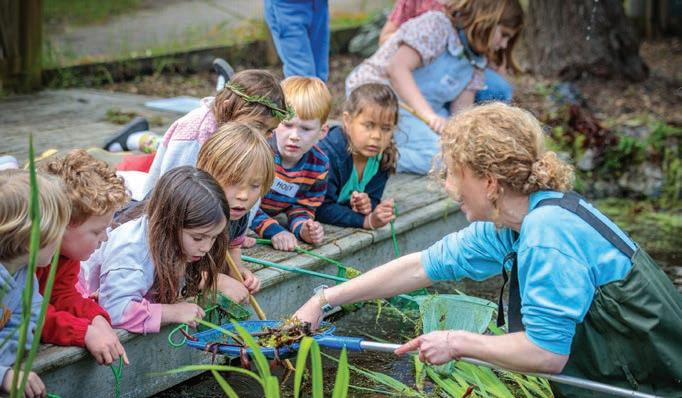
to reflect the latest developments in science and technology and stifling young people’s creativity. Too often, students are confined to traditional classrooms, with four walls and teacher-led instruction. Nature, imaginative play and hands-on exploration are relegated to the periphery of learning as occasional outdoor lessons or extracurricular activities.
There is much to learn from overseas, combining the best of the National Curriculum with global pedagogies to create a meaningful and engaging educational experience. We need a curriculum that focuses on concepts and skills that encourage independence, creative thinking and interdisciplinary connections. Embracing inquiry-based approaches would ensure that what we teach is not only academically rigorous, but also culturally responsive and globally minded, preparing our children to thrive in an interconnected world.
At Bedales, curiosity is nurtured at every stage of the learning journey. From the very youngest years, students are active participants in shaping a rounded education


that is personal, purposeful and deeply connected with the world. An inquiry-based approach enables children to explore topics in a hands-on, integrated way – extending understanding through questions and scenarios that lay the foundation for a lifetime of learning.
Unbound by the Common Entrance syllabus, Bedales Prep’s broad, balanced curriculum also gives children the space to think, ask questions and pursue ideas – encouraging them to take ownership of their learning without fear of failure and the pressure of unnecessary testing.
At the Senior School, many GCSEs are replaced by Bedales Assessed Courses (BACs), UCAS-recognised qualifications that prioritise broader assessment methods and focus on learning with real-world relevance.


Children aren’t passive vessels to fill with knowledge, but inquisitive, social beings who thrive on collaboration and discovery. To truly revolutionise education, we must move from decades of talk to decisive action – rethinking how we teach, the environments we create and the relationships we nurture.

Music is part of the creative landscape of our schools, but feeds into so much more – from academic skills to wellbeing, confidence and community spirit. We talk to two schools that passionately believe in its transformative power
At The Duke of York’s Royal Military School (DOYRMS) in Kent, music is a defining part of school life that grows with every student and supports their interests and ambitions. From their first day, students are encouraged to explore and express themselves through music, with a programme designed to evolve in a way that matches individual aspirations.
With exceptional facilities and a deep belief in the power of performance, the school says that music remains an intrinsic part of education, bringing academic, social, and creative benefits – a natural and everyday part of school life. Every Year 7 student receives free music lessons, offering a foundation for musical discovery and building confidence.
As students move through the school, the music programme becomes more specialised. Options range from tailored tuition and ensemble opportunities to performance pathways.
DOYRMS’ Performing Arts Centre stands at the heart of this creative journey. It provides a professional stage for concerts, recitals, and the school’s much anticipated annual musical. These events bring together students from across year groups, whether they study music formally
or simply wish to take part in a shared creative experience. While this supports a vibrant musical life, so does the school Chapel – home to whole-school weekly hymn practice and to the Chapel Choir. Opportunities extend beyond classroom and other formal spaces. Keyboards and instruments are available in every boarding house and also in the school’s coffee shop for impromptu
performances. This means that students can practise or perform at any time. A culture of informal music making reflects the school’s belief that creativity should be encouraged and be accessible to all.
One important aspect of life at DOYRMS is the tradition of a Military Marching Band, which remains a source of great pride. Performing regularly at school and community events – as well
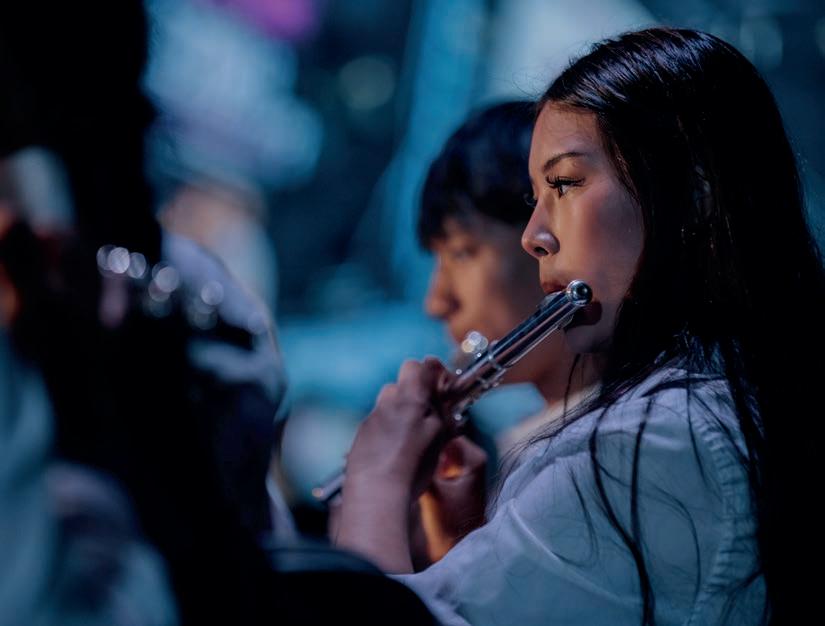


“DOYRMS’ tradition of a Military Marching Band remains a source of great pride – even performing at the King’s Coronation”

















as important national events such as the King’s Coronation – the band represents the discipline, teamwork, and heritage that underpin the school’s history and ethos. Through these performances, students not only develop musicianship but also a deep sense of service and connection to the wider community.
“Music enriches every aspect of life at DOYRMS. It builds confidence, fosters teamwork, and brings joy to our community,” says Principal Alex Foreman. “From the classroom to the stage, and everywhere in between, music truly matters here.”
At Malvern College in Worcestershire, the focus is on education beyond academics.
Malvern considers it vital to develop not only academic strength, but also EQ (emotional intelligence) and CQ (cultural intelligence). The team say that music is a perfect reflection of why this approach is important. Under the leadership of recently arrived Director of Music, James Ramm, it is making a big impact on students and the whole school community.
Malvern College says that learning music sharpens IQ. It also builds focus, discipline and creativity – whether mastering an instrument, composing, or experimenting with digital recording. But music also does something more profound in developing students’ emotional skills (EQ). Playing or singing together demands empathy, listening and respect. Director of Music James Ramm says is not about being the loudest voice but about finding balance and harmony within a group – life skills
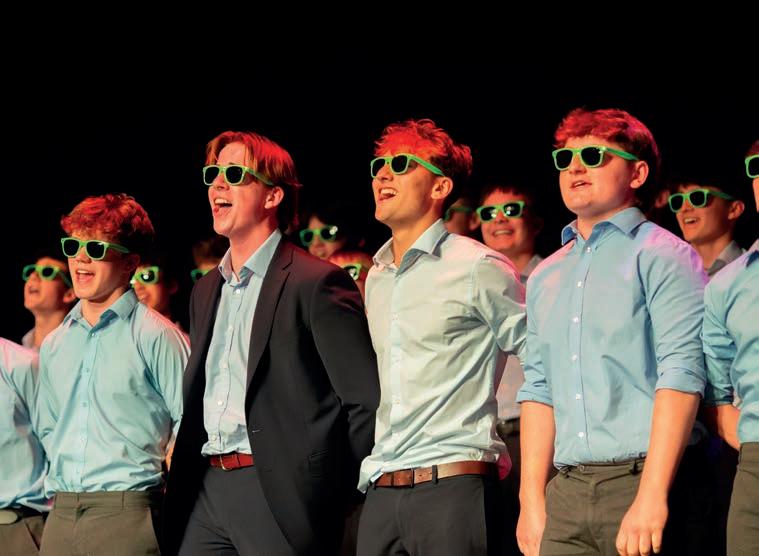
“From informal ‘Live Lounge’ sets to the Concerto Concert, the aim at Malvern College is to provide opportunities for every kind of musician”
every bit as valuable as the ability to solve an equation or compose an essay.
Cultural understanding (CQ) is also seen as a vital part of the mix. Malvern is a diverse, global boarding community, where pupils bring different backgrounds, cultures and perspectives. The team here believe music is one of the most powerful ways of bridging those cultural differences. A choir, jazz group or Live Lounge performance is not just a showcase of talent, but an expression of cultural exchange and shared experience. In a world that can sometimes feel divided, this is giving students something in common and something to celebrate.
While music education has been in decline across the UK, it remains a central part of school life here in the Malvern Hills. “We believe music is not an optional extra, but a vital thread in building confidence, wellbeing and community. Music helps young people find their voice and, just as importantly, to listen to others. At a time when the world feels increasingly polarised, those are lessons that extend far beyond the classroom,” says James Ramm.
This ethos is seen in action every day, he adds. From relaxed ‘Live Lounge’ sets at The Grub café, where pupils build confidence in a relaxed setting, to large-scale showcases such as the Concerto Concert, the aim is to provide rich opportunities for every kind of musician.
As an All-Steinway School, Malvern also ensures pupils who want to take their musical ambitions further have access to the very best instruments, matching their persistence and enthusiasm with
world-class resources and tuition. That commitment is now reflected in the transformation of the Music School into a vibrant new space, with specialist teaching and rehearsal rooms, a purposebuilt performance area, and a stateof-the-art digital recording studio.
Whether a pupil is picking up an instrument for the first time or preparing for conservatoire, this setting is designed to nurture talent. Initiatives like the Young Malvern Musician of the Year competition highlight the school’s commitment to both excellence and inclusion. The event inspires beginners and advanced performers alike to share their music, says James Ramm. This event also supports the school’s boarding ethos. When young people are living and learning together, community spirit is vitally important. Music at Malvern provides shared opportunities and a sense of connection – both of which help to support young people’s confidence, resilience and sense of belonging.

Day and Boarding for Boys aged 11-18 in Belfast, Northern Ireland

Conveniently located just 1 hour by plane from London and other regional airports
Fees from £8,690 per term
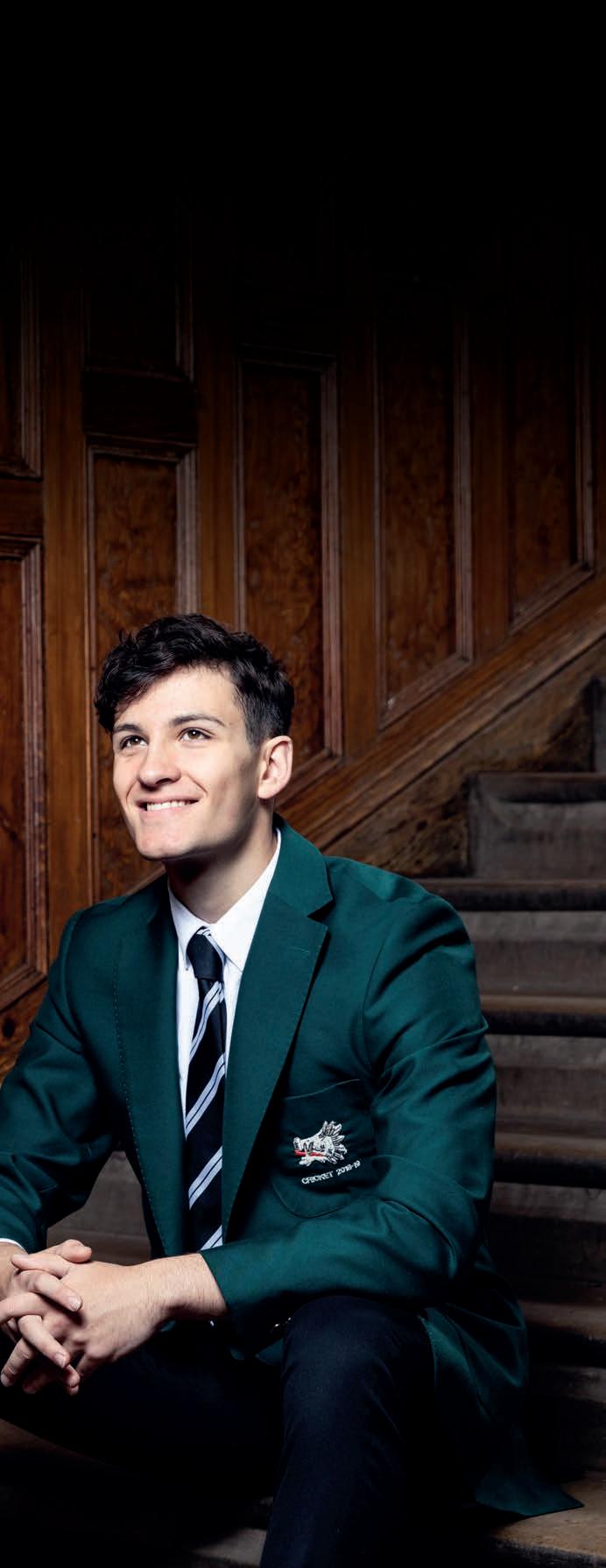
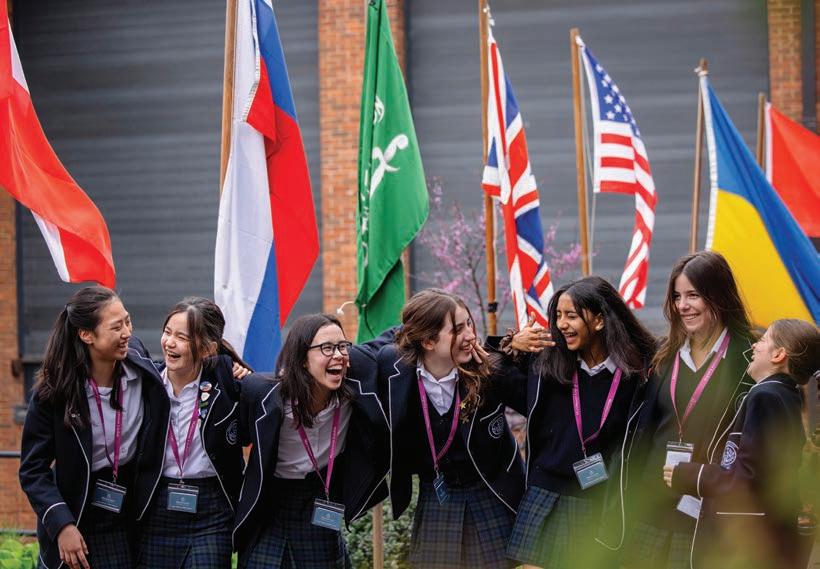
Marymount International School London gives pointers on what international families should look for in a great British independent school
For families considering a British education for their daughters, academic outcomes are understandably a priority. Alongside that, an equally important question arises: who will care for my child when she is far from home?
Pastoral care is one of the defining strengths of the British independent school system. But it’s essential for families to understand what good pastoral care looks like and recognise how it supports academic success and personal wellbeing.
In the best schools, pastoral is not a separate department but a culture that shapes daily life. It is embedded in classrooms, boarding houses, co-curricular activities and relationships between staff and students. The aim of this approach to pastoral care is simple but powerful – to ensure that every child feels known, supported and safe. For international students, this pastoral approach is especially important.
Adjusting to a new country, language nuances, academic expectations and social environments can be daunting – sometimes challenging. The schools you should consider recognise this and put the structures in place to support emotional wellbeing alongside intellectual growth.
One of the hallmarks of many British independent schools is their relatively small size, along with much smaller class sizes. This fosters supportive relationships and means teachers are in position to recognise changes in confidence, behaviour or wellbeing before smaller concerns become much larger issues.
Look for schools where each student has a clearly defined network of adults who know them well. This includes form tutors, heads of year, boarding staff and wellbeing teams who are in regular contact with students and work collaboratively across departments. For international parents, this network’s activities should include regular feedback and updates from the school, and a fast response to any questions, concerns or queries.
“Look for schools where each student has a clearly defined network of adults who know them well”
Where boarding is involved, as it invariably is for international students, pastoral care extends far beyond the school day. The best settings provide a family-style environment in boarding houses. This will include House staff who live on site and know each student personally. Also check for clear boarding routines that balance structure with independence and offer plenty of support for daily living – including building life skills and supporting wellbeing and time management.
You should look for a strong sense of belonging within the school’s boarding community. For younger or short-term boarders, gentle transition programmes, buddy systems and close supervision make all the difference in building confidence and resilience.
British schools are known not only for their academic strength but also their ability to develop confident, globally minded young people. Pastoral care as part of the community plays a central role in this. Schools that celebrate cultural diversity, encourage international perspectives and support students in maintaining connections to home cultures help young people develop a strong sense of identity. This, in turn, allows them to thrive socially and academically during and long after their senior school years.
An outstanding British education recognises that academic excellence and personal wellbeing are deeply connected. For international families looking to entrust their daughter to a school many miles from home, great pastoral care is the essential foundation upon which everything else is built.




































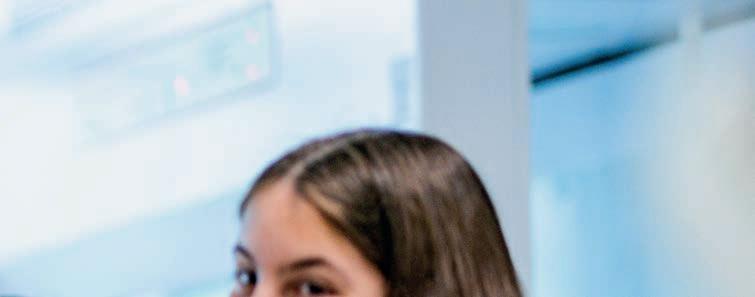














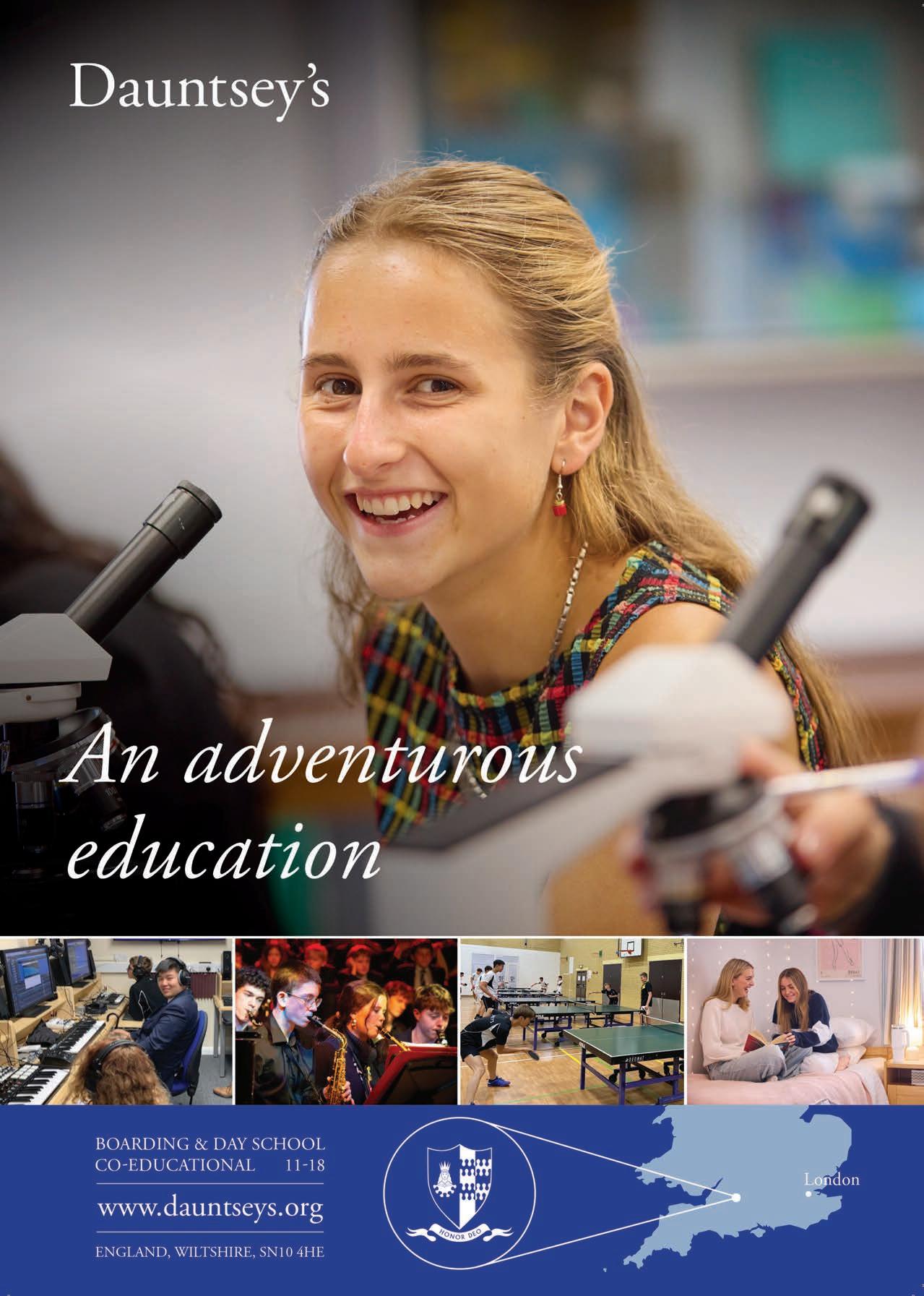
John Davies, Head Master of Dauntsey’s, reflects on how British boarding schools continue to set the standard in educational excellence
Not too far from Dauntsey's, visitors can stand before the world-famous Stonehenge, a prehistoric site made up of stones that have weathered thousands of years of British winters. The first structure there is estimated to be around 5,000 years old, while the rest of the stone circle is thought to have been established around 2,500 BC. In a constantly changing world, there is something grounding about an ancient monument such as this. It reminds us that some things do, in fact, last.
UK boarding schools are examples of institutions that have stood the test of time. Schools such as ours have been educating children for over 400 years. There is no substitute for such a history of excellence. For our international students,
“A great education fosters the development of character, physical confidence, social intelligence and community values”
the opportunity to not only experience life overseas, but also to add their name to such a rich history, is priceless. Our pupils have the opportunity to call themselves 'Dauntseians', joining a global network of alumni who understand the unique journey of international boarding and who support each other across generations and continents. Modern boarding in the UK remains the best in the world. While excellent British-style education now exists across Asia, there is no substitute for
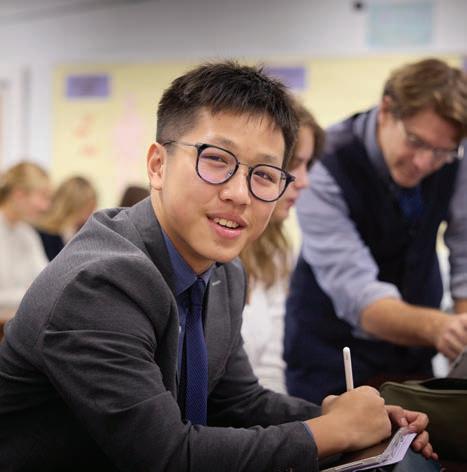
ABOVE Pupil at Dauntsey's
the long-established cultures of UK schools. Our approach to pupil safety is outstanding, our understanding of teenage wellbeing and happiness is profound, and our tradition of academic excellence continues to o er something distinctive. In fact, there has never been a sharper focus on quality of experience in our schools than now. Choosing UK boarding is a significant investment for any family, and we are more determined than ever to o er our young people an educational experience that will shape the rest of their lives.
Great education is more than qualifications and certificates. Excellent academic standards are vital so that young people are fully prepared to succeed in the best universities and apprenticeships all over


the world. However, UK boarding schools have always operated on the belief that education is much more than just classroom learning. A great education that prepares young people for a complex world is one that fosters the development of character, physical confidence, social intelligence and community values.
Today’s parents, who are witnessing AI transform their industries daily, understand that human skills matter more than ever. Our greatest strength and asset as human beings will surely continue to be the ways that we create, collaborate and care for one another. The most impactful and infl uential humans in the 21st Century will be those who understand what it truly means to be human, and that the future of the human race depends entirely on our capacity to draw the best out of our common humanity.


Like the ancient stones near our school, we o er something permanent in an impermanent world – an education built on centuries of understanding what helps young people flourish. It is my belief that UK boarding schools like Dauntsey's continue to set the standard for educational excellence. And for many children, we remain the best option for a truly rounded education – one that develops the heart as well as the mind in a way that is critical to their future success and happiness.
EdTech entrepreneur, IB advocate and Sevenoaks alumnus
Brian Ong on whether a British education still sets the benchmark

When I was growing up, British schools set the benchmark for the gold standard in education. Today, as a father of five and a mentor to families around the world, I’ve witnessed firsthand how British schools are grappling with unprecedented competition. With emerging education markets offering compelling alternatives, and the added pressures of VAT on school fees, British schools are working harder to stand out. When selecting a school, families previously prioritised the quality of faculty, teaching standards, extracurricular resources, school culture, and the presence of notable alumni. However, priorities have shifted significantly in the post-pandemic era. I’ve seen how families now look for more than just a ‘good academic education’. Schools are expected
to nurture entrepreneurial skills, personal growth, character development and global career opportunities. So, in a world where education is more competitive than ever, does British education still hold its value?
My education in the UK didn’t just teach me how to write essays or solve equations, it taught me how to think globally. The UK’s position at the heart of Western culture also offered me exposure to a rich history of literature, music, and art. I’ve developed critical thinking that is essential for my career in EdTech, as I work with teams from all over the world and constantly face changes within the market.
I often share with my teams that a global mindset transcends exposure to different cultures or languages. It is the ability to comprehend and address issues from diverse cultural, positional and perspectival standpoints. This fosters collaboration across boundaries. When I was at Sevenoaks School, through discussions of topics such as global trade, history and economics with my peers, I
realised the value of seeing the world through multiple lenses. This was a lesson that shaped my approach to investment and innovation.
When providing seed funding and mentorship to startups founded by recent graduates of top universities, I shared the same message – cultivating a global mindset is fundamental. Regardless of career path, the ability to engage in crosscultural collaboration, resolve conflicts and appreciate diverse viewpoints is crucial. When I arrived at Sevenoaks, it felt very different from the schools I had attended back home. I remember my teachers who took the time to discuss the intricacies of chemistry and physics. UK schools provide academic excellence, with smaller class sizes and with a wealth of holistic development opportunities. And they are increasingly accessible, with more scholarships and bursaries available.
As UK schools adapt to evolving expectations, they are finding new ways to offer a high-quality, relevant education that prepares students for the challenges of the 21st century. The traditional model – get into a top school, secure a good job – is less dependable. Families are not just asking about academic results. They want to know: ‘Will this school help my children think creatively – and will they learn to adapt to a fast-changing world?’ And honestly, those are the right questions to ask. In this regard, I strongly align with the philosophy of my alma mater, Sevenoaks, which views every experience – whether academic or extracurricular – as a learning opportunity.
Alex Wilson of She eld Girls' GDST – Sunday Times
Top Independent Secondary School in the North 2026 –on the power of all-girls education
For nearly 150 years, She eld Girls’ has championed the power of all-girls education. Today we educate over 700 pupils from age four to 18 and our mission remains as relevant as ever – to create an environment where girls are free to find their voice, take intellectual risks and grow into confident, compassionate young women.
At the heart of all-girls education is something simple but transformative: belief. In a single-sex environment, girls learn without the weight of comparison or expectation. They raise their hands more wreadily, take centre stage in debates, lead on the sports field and pursue subjects without questioning whether they 'belong'. Research continues to show that in many co-educational classrooms, boys dominate discussion while girls hold back. Remove that dynamic, and something remarkable
“When girls are given the space to lead without limits or labels, they do not just imagine the future, they shape it”
happens – girls step forward.
At She eld Girls’, leadership is not reserved for a select few. It is woven through everyday school life. From the youngest pupils taking their first leadership roles in Junior School to Sixth Form students shaping school culture through a wide range of ambassador and prefect roles, every girl is encouraged to see herself as a leader. This philosophy is brought to life through our Girls of Steel character education programme, which develops
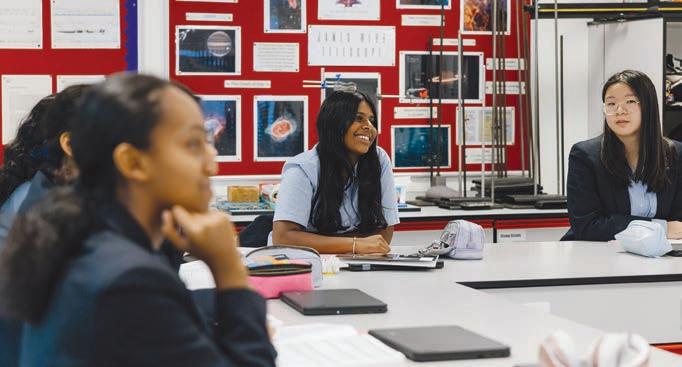
eight core character skills alongside academic learning. In a world where career paths are shifting rapidly and the future workplace is increasingly unpredictable, exam results alone are no longer enough. Resilience, adaptability, critical thinking, collaboration and empathy are now essential life skills. These are deliberately taught, practised and celebrated across our school.
Girls apply these skills in real, meaningful ways – leading assemblies, tackling complex problems in the science lab, running clubs, captaining sports teams and working on community and charity initiatives. They build portfolios that reflect not just what they achieve, but who they are becoming. Through this, leadership becomes less about title and more about mindset.
Crucially, all-girls education also nurtures confidence at a time when many adolescent girls experience a significant dip in self-belief. In a female-led learning environment, girls see role models everywhere: in the classroom, in leadership, in sport, in the arts. They grow up knowing that women lead,
innovate, create and succeed. Parents across the world are increasingly asking how schools prepare children not just for exams, but for life. The answer, I believe, lies in education that develops character alongside achievement, and confidence alongside curiosity. When girls are given the space to lead without limits or labels, they do not just imagine the future, they shape it. Our aim is to nurture young women of strength, empathy and purpose – leaders not just in title, but in character.

For Hong Kong families considering an overseas education at Sixth Form, the UK all-girls environment o ers a powerful blend of academic rigour, personal growth and cultural confidence. Studying A levels in a girls-only setting allows young women to focus fully on their ambitions. Alongside outstanding teaching, they gain independence, global perspective and the self-belief to thrive at leading universities worldwide. This is not just preparation for exams, but preparation for life beyond them.
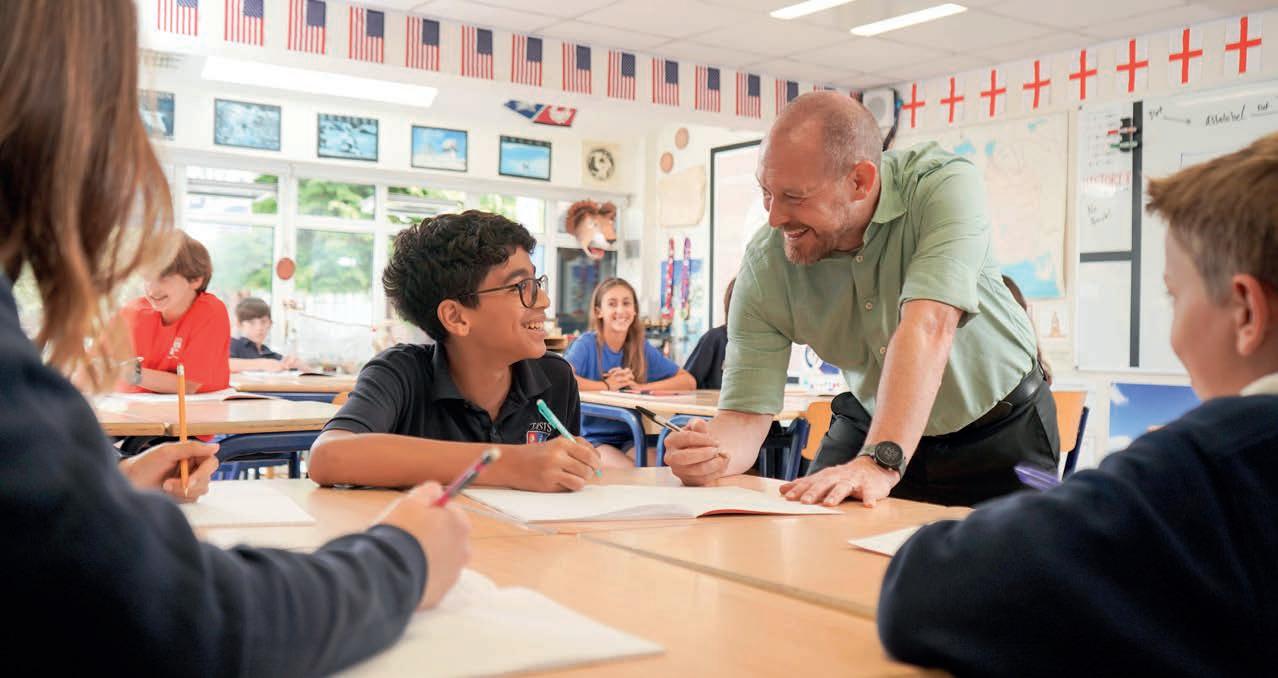
Founded 50 years ago, TASIS England has always been more than a school – it is a gateway to the wider world. Its doors were opened in 1976 by visionary educator Mary Crist Fleming. Her revolutionary approach to international education launched in Surrey, shaping generations of students into curious, confident and culturally-aware global citizens.
At TASIS England, country life meets city access. The peaceful 46-acre Surrey campus is set in the English countryside, offering London-based families easy access to international education.
Choosing the right school for your child is an important decision. Mary Crist Fleming knew this all too well and believed that education should inspire curiosity, foster global citizenship and nurture each student’s unique potential. Her vision laid the foundation for TASIS England, where, today, students from over 70 nationalities come together to
learn, grow and build life-long connections. Fleming’s emphasis on catering individual learning pathways to the student, small class sizes and holistic development remains central to the school’s ethos.
Over the decades, TASIS England has evolved into a leading international school for children aged 4 to 18. Students thrive in an environment that balances rigorous academics with arts, athletics and leadership opportunities, reflecting Fleming’s belief in educating the “whole child”. The curriculum offers the International Baccalaureate (IB) Diploma Programme, Advanced Placement courses and a broad American-based academic program.
The Surrey campus blends historic charm with modern learning facilities, providing a supportive home for day students (aged 4 to 18) and boarding students (aged 13 to 18). With more than 50 co-curricular activities – from Model United Nations and robotics to performing arts and competitive
sports – students explore passions, develop skills, and experience the benefits of an international school community. Boarding at TASIS England nurtures independence, resilience and life-long friendships.
As TASIS England celebrates its 50th anniversary in 2026, the school looks to the future while staying true to its founding values. New initiatives in global leadership, digital literacy and sustainability will continue to prepare students for an interconnected world. For London families seeking an exceptional international education just a short commute from the city, TASIS England remains a place where students are encouraged to dream, explore and flourish.
Join us on Saturday, March 7, 2026, to meet inspiring teachers and students, explore our beautiful campus, and experience a school where ambition, curiosity, and global perspectives come to life. Register now to be part of the day
tasisengland.org
Our experts answer your questions on US university applications and choosing between state and independent in prep years

CEO, IvyWise
QMy daughter, aged 13, already has her heart set on getting into a top US university. She’s been advised to start the groundwork now. Can you give pointers on how to begin preparing for an application that still seems a long way o ?
AAge 13 may feel early to be thinking about university, but it is actually an excellent age to begin preparing. While the UK university admissions process centres primarily on academic performance and exam results, the US process is more holistic. Admissions o cers evaluate both quantitative and qualitative factors, including transcripts and standardised test scores, extracurriculars, summer activities, recommendation letters and application essays.
US universities use admissions rubrics to evaluate applicant profiles, so understanding these frameworks is critical to long-term planning. IvyWise’s guidance is shaped by years of combined experience from former admissions deans and directors at some of the world’s most selective universities, including Harvard, Yale, Princeton, Stanford, MIT, UPenn, USC and NYU. We guide students

to build strong profiles throughout secondary school and, when the time comes, articulate them through clear, cohesive applications.
Your daughter’s focus should be on profile building. This is the ideal time to discover genuine interests before gradually building depth and sustained engagement. US universities place far more value on long-term commitment and growth than on a long list of disconnected courses and activities. Our team’s approach would be to help her identify her interests and develop a strategic and actionable plan for her four final years of secondary school. If she is interested in STEM, for instance, we would recommend a course load that gears up to
“US universities place far more value on longterm commitment and growth than on a long list of disconnected courses and activities”
advanced mathematics and science courses by Year 12/13, as well as meaningful engagement with research opportunities and purpose projects. Additionally, it is important to plan ahead for standardised testing. Many highly selective universities – including most Ivy League institutions, Stanford, and MIT –require SAT/ACT scores. Even at testoptional universities, strong scores are advantageous. IvyWise’s guidance and targeted test preparation help students prepare e ciently and go into these exams with confidence. Our team has hands-on experience in enrolment management, evaluating thousands of applications and making tough admissions decisions. This means we help families plan strategically from the very beginning. Once it’s time to prepare applications, our counsellors come together in our ‘Roundtable’ process to review students’ materials. This means students benefit from the collective expertise and multiple perspectives of former admissions o cers.
With early, strategic guidance, your daughter can develop her profile and be fully prepared to present a compelling application when the time comes. ivywise.com





Education Manager, Quintessentially Education
QWe’re weighing up options (and finances) and can’t decide if a state primary or prep is best for our daughter. We hope she will go to an independent senior school and want her to be prepared. Could you advise?
AFirst, I would like to reassure you that you are not alone in making what can feel like a momentous decision. With the introduction of VAT in January, fees have risen by 22% on average. The typical termly fee for a prep day school is now £5,572 according to ISC data, but this varies region by region.
However, if you want your child to go to an academically selective senior, a prep school can be an enormous advantage. In London, in particular, 11+ entrance is hugely competitive. Prep schools will be prepping your child (subtly) for up to three years in advance. Other advantages include the guidance the teaching sta provide around admissions and the links many have forged with senior schools, which can be very helpful.
If your child is heading to a boarding senior, a boarding prep can familiarise them with living away from home, instilling independence and confidence. Academically, prep schools are guided by, but not bound

“There is an argument that the prep system is better, especially for boys, as the extra two years many o er allow them to mature”
to, the National Curriculum and can therefore provide a more ambitious and richer learning experience, particularly as they have a higher teacher to pupil ratio. Many devise their own curriculum for Years 7 and 8 to provide further preparation.
There is also an argument that the prep system is better, especially for boys, as the extra two years in Years 7 and 8 many o er can really allow students to mature. This is particularly true for those who have done the ISEB and secured a place in their senior school of choice, as there is more room for personal growth before the transition. It is also worth noting that keeping your child in prep school for two extra years is typically cheaper than sending them to senior school in Year 7.
All that said, a state primary can be a great option – with advantages beyond saving money. Many are excellent academically and form a
focal point in the community, enabling your child to build a network of local friends. The shorter school day is usually mitigated with after-school clubs, while third-party providers o er additional extracurriculars. Just be aware that getting into the most popular primary schools may involve jumping through hoops – including a ording to live in the catchment area.
If you decide on a state primary, you might consider ‘topping up’ for tests such as the ISEB if an independent senior remains the goal. Some state schools, particularly in grammar school-rich areas such as Buckinghamshire and Kent, know something of the 11+ but others don’t understand the process very well. There are knowledgeable private tutors to help your family with these preparations.
quintessentially.com/education
Daniel Wilson of Concord College on the importance of encouraging staff and students to continue to grow and develop as learners
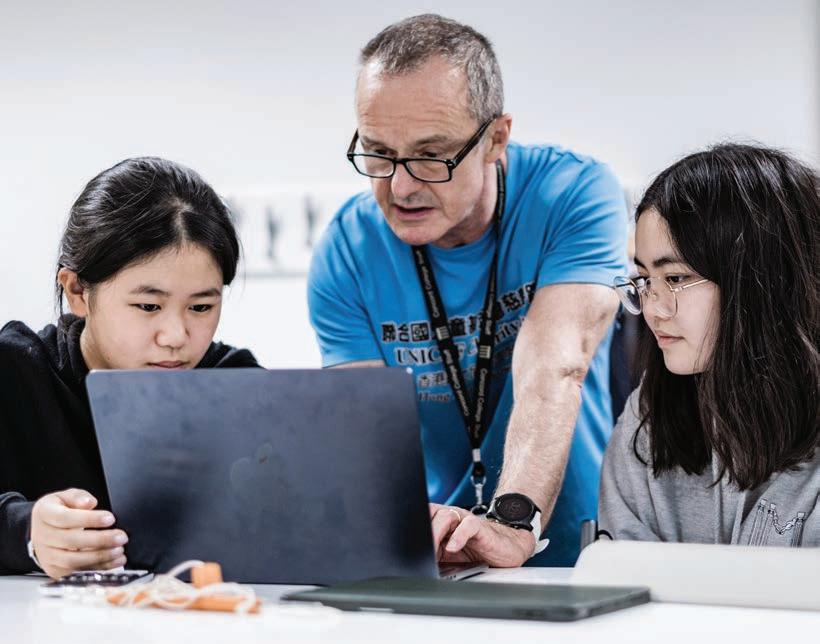
Albert Einstein said: ‘Intellectual growth should commence at birth and cease only at death’, a view that is central to the ethos of Concord College. We believe that both students and staff should be intellectually curious and seek to continuously challenge themselves.
Pupils here are encouraged to follow their passions and conduct their own research through courses such as the Extended Project Qualification (EPQ), as well as extracurricular activities and subject-specific discussion groups ranging from Medicine to Engineering to Economics. Similarly, our staff are supported in continuing to challenge themselves and remain curious, in both their teaching and their learning.
Students can’t help but be inspired by educators who are clearly enthusiastic and knowledgeable about the topics they teach. This desire and drive to continually learn, adapt and improve is what makes teaching such a distinctive and rewarding job.

The best teachers are those that seek out the current research and evidence – on both their subject knowledge and the methods that help students learn. At Concord, this is encouraged through whole-staff and departmental working groups as well as regular discussions about recent studies focusing on teaching and pastoral care.
This desire to explore and enrich is perhaps best exemplified by the Teaching and Learning Research Group, which meets throughout the school year to scrutinise
“Students can’t help but be inspired by educators who are clearly enthusiastic and knowledgeable about the topics they teach”
research on a key aspect of teaching. It has focused on a range of topics, from how best to assess students and the most effective ways to provide feedback that aids improvement, to scientific studies on how students learn and retain new information. This cross-curricular group encourages teachers to challenge their own thinking, share best practice and conduct their own research on methods that meet the needs of their students. The group uses research to define what good teaching looks like and inspires others to develop their teaching. Many of the most experienced teachers are also the most passionate about continuing to develop their own education – and I count myself among them. Almost 25 years after I left university, I returned to undertake a Master’s in Teaching and Learning at Oxford University. Walking into that first lecture was both daunting and exhilarating. I found myself in a room full of professionals who loved their subject and wanted to pass that passion on to their students. To have the time and space to study research, discuss evidence and network with teachers from across the world was rewarding and reinvigorating. Sharing my experience has helped inspire colleagues to continue their own studies through diplomas –including in boarding, pastoral care, teacher development and leadership. When I think of teaching, I am reminded of a quote often attributed to an ageing Michelangelo – ‘Ancora imparo’ – which translates as ‘I am still learning’. It is the ongoing pursuit of knowledge that enables teachers to best help students succeed.

DANIEL WILSON Assistant Principal (Professional Development and Learning) Concord College



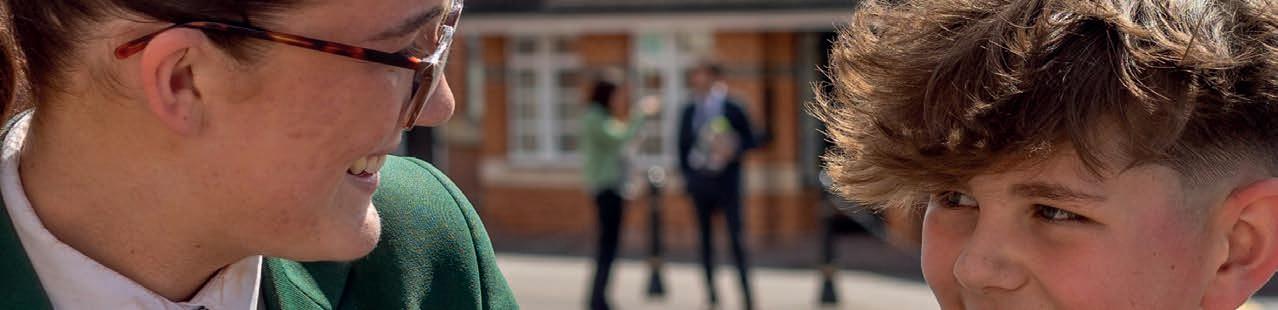








Caroline Jordan of Headington Rye Oxford on why a broad extracurricular programme provides much more than a healthy balance
It can be tempting to think that the most important thing you take away from your time at school is academic grades and subject knowledge. Clearly, this is important –universities and employers will use this information to assess whether you’re capable of the study or work you have applied for. However, I would argue that everything that happens outside the classroom is just as important.
This is not just in terms of healthy balance. What you do alongside your core studies can make you more employable and better able to tackle the di erent challenges you are likely to face in higher education and the workplace. This is why
“So many skills are developed and honed in the practice rooms, on stage, on expeditions and on sports pitches”
schools like Headington Rye Oxford place such high importance on broad and varied extracurricular programmes and encourage pupils to try out di erent activities.
So many skills are developed and honed in the practice rooms, on stage, on expeditions and on sports pitches. Let’s take sport as an example. Physical fitness is crucial for life, but everything that surrounds it brings huge benefits. Young people develop teamwork and leadership skills, and how to manage their time. In addition, they are often confronted with what it means to lose, and how to take disappointment and convert it into a better performance next time.
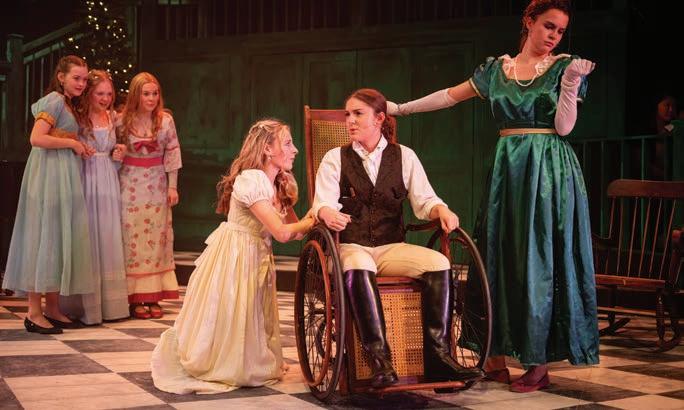
At Headington Rye, we have pupils competing in sport at all levels, from the ‘C’ teams to our elite rowers who compete against the very best boat clubs in the world – and win. Many of our rowers have capitalised on their exceptional experience to secure scholarships at prestigious Ivy League universities.
We have a thriving performing arts department, with hundreds of music lessons taking place each week, along with a programme of concerts, plays and dance shows. The opportunity to perform on stage is a fantastic way to develop self-confidence, articulacy and oracy. These are skills which help young people stand out at interview and beyond. Externally accredited exams in music, speech and drama and dance provide vital exam practice, while many of the higher grades also come with UCAS points.
There’s a big focus at Headington Rye on providing


opportunities to develop leadership skills. That could be by planning an expedition for the Duke of Edinburgh's Award (DofE), taking on a position of responsibility in our Combined Cadet Force contingent, or applying to become a form captain, Head of Year or prefect.


Pupils take charge of student clubs and societies and even create their own. In many – for example History Society and Classics Society – students take a leading role in planning, arranging and booking speakers and sessions. In academic clubs, older students cement and solidify their learning by sharing knowledge and skills with younger pupils. At each point, they are learning what it is to be a leader – how to get the best out of themselves and others.
A school should o er so much more than academic outcomes. Transferable skills developed outside the classroom are what help children discover who they are and what they can do.
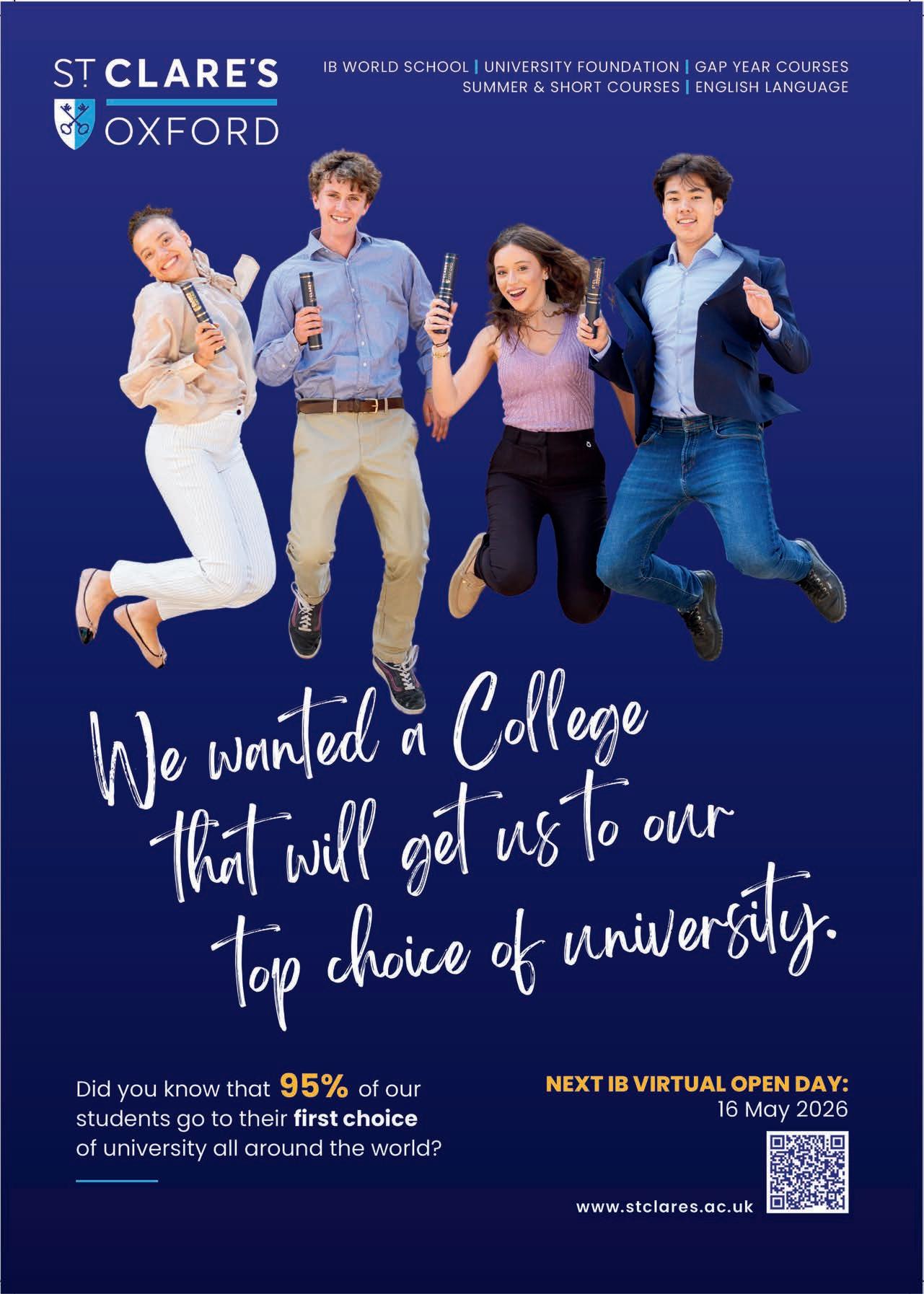
Louise North, Principal of Framlingham College in Su olk, on how the school is using AI’s power to enhance teaching and learning
Since the launch of ChatGPT in 2022, the misconception that Artificial Intelligence (AI) will replace teachers or write pupils’ essays for them has been set in the past. It is crucial that schools now embrace, adapt and balance the use of AI in their classrooms to avoid the risk of falling behind with modern schooling and depriving young people of innovative learning, vital technology awareness and life skills.
At Framlingham College, we are continuously adapting learning techniques and developing our educational approach to meet the needs of our pupils and ensure they thrive in an ever-changing world.
Our use of AI is expanding across our curriculum and beyond after numerous success stories during this last academic year. There are programmes to support pupils with dyslexia and enhance creativity with descriptive writing. We have movement tracking apps in sport that accurately analyse and finesse performance techniques, while other technology assists teachers with planning lessons. There are also translation apps for our UK and international pupils to help them communicate and forge friendships.
Talking about our use of AI in classrooms, our Assistant Head of Teaching and Learning, Lucy Manning says: “AI platforms like Sparx Maths and Spelling Shared allow us to tailor education for the needs of individual children. Text-to-talk
“There are programmes to support pupils with dyslexia, and movement tracking apps in sport that accurately analyse and finesse performance techniques”
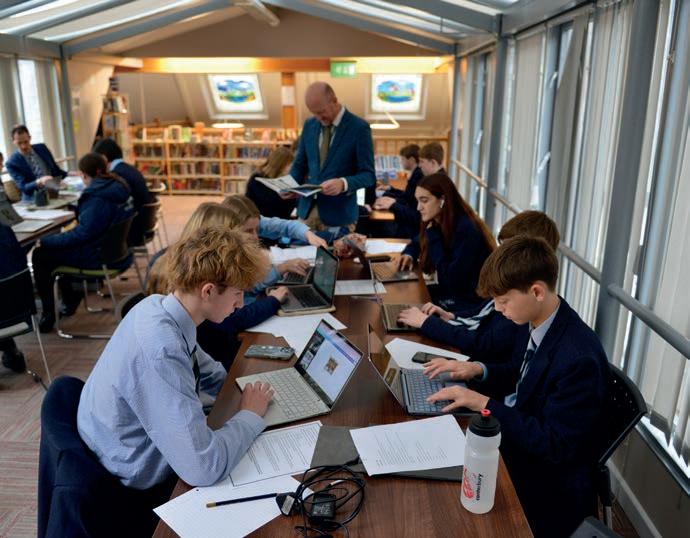
programmes are incredibly beneficial, particularly for our pupils with dyslexia.
“At the Prep School, we use creative art tools for pupils to practise using descriptive words, verbs and adjectives – for instance, writing descriptions of dragons and wizards and using AI to bring those images to life. At GCSE level, we use AI to create logos for the pupils’ projects, alongside teaching them the ethics of AI so that they can identify when AI is assisting in the process of learning and when it is just doing it all.”
Looking ahead to how we continue to adapt and balance our use of AI, it’s imperative that all our schools prepare young people for an AIinfused world. Whether we like it or not, we can’t deny its existence – it’s out there – but it’s not something to fear when used correctly and responsibly in the classroom.
Of course, we don’t want pupils to use ChatGPT to


write their essays because that takes away the opportunity to learn, and children relish in the chance to learn and research, but AI platforms like ChatGPT can certainly help pupils with planning projects, taking notes and structuring revision.
At Framlingham College, we are introducing AI steadily throughout our curriculum across both Prep and Senior schools. It is a bit like a garden –planting the seeds, watering them and gradually watching them flourish.


We are working closely with our teaching sta to see what works, what doesn’t and what areas we need to be wary of when it comes to the use of AI. We absolutely understand that there needs to be a careful balance in the use of this powerful technology. Our approach is that it’s not about replacing but rather enhancing the teaching and the learning experience for all our pupils.












































Reed’s School Head of Physical Education (PE), he studied a Sports & Exercise BSc at Cardiff Metropolitan and gained his PGCE at Canterbury Christ Church. He's a keen hockey player and cricketer and has trained young cricket talent in both Australia and Sri Lanka during his career.
Sport and PE study not just how athletes achieve, but the hard science behind performance, teamwork and good health. Two experts in the field give their elevator pitch on why this subject is worth studying – and where it can take you
Eltham College Head of Sports Science, Assistant Director of Sport, and Head of Rugby, he gained his Exercise and Sports Science degree from Exeter and his PGCE from Buckingham. Beyond teaching, he's an avid rugby fan, marathon runner, proud father and keen gardener.
What makes Sport so brilliant?
LS: Studying PE is fascinating because the subject explores the worlds of physical health, human performance and social development. It also promotes physical fitness within students’ own lives, which contributes to the prevention of many health issues now and in the future.
BK: Sports Science blends physical performance with academic rigour, unlocking insights into the human body, psychology, and biomechanics. It’s dynamic, relevant, and opens doors to exciting careers in health, sport, and beyond.
What made you choose it?
LS: Studying Sports Science meant I could combine playing Cricket and Hockey using world class facilities with academic work – exploring anatomy, physiology, psychology, and biomechanics.
BK: I’ve always been fascinated by how science enhances both performance and wellbeing – Sports Science brings that to life.

5 TOP SPOTS FOR DEGREES Loughborough, Bath, Glasgow, UEA, Birmingham
WHERE SPORT BRAINS HANG OUT
UK Sports Institute high-performance centres, The Sporting Club
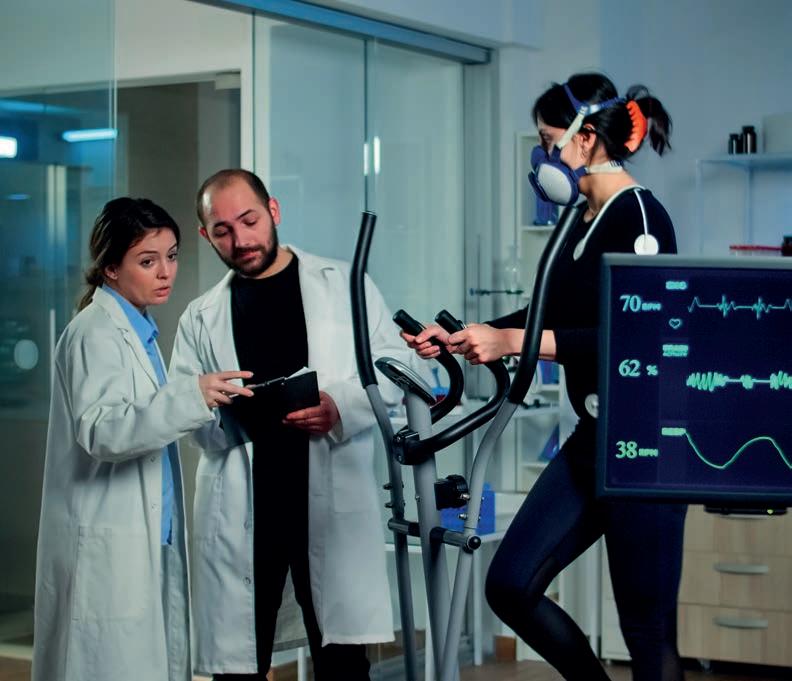
Transferable skills and knowledge acquired?
LS: Through physical sport, students learn teamwork, discipline, and leadership, which can all be applied in many different areas of life. Studying PE also requires you to think analytically.
BK: Students gain high-level analytical thinking, teamwork, leadership, data interpretation and communication skills. They also acquire a deep understanding of important issues around both physical and mental health.
What pathways does Sport open?
LS: Studying Sport opens up various pathways, such as sports science roles at professional clubs, physiotherapy, event management, fitness training, sports psychology, media and many business roles connected to the health and wellness industries.
BK: Sports Science leads to careers in physiotherapy, coaching, sports psychology, teaching, fitness, and rehabilitation. It’s also a strong foundation for medicine and health sciences training and careers.
Two things students may not realise studying Sport covers...
LS: There's an in-depth look into sports psychology and how ever-changing technology is used in professional sport and within the sports industry.
BK: Students look at the psychology behind elite performance, including how data drives decisions in sport. Plus, there's a deep dive into the sociocultural issues surrounding sport and exercise
“Studying PE is fascinating because it explores the worlds of physical health, human performance and social development – it also promotes physical fitness”

“There is a fundamental shift taking place in the hiring practices of many firms – more are open to hiring non-graduates”

With more firms hiring on a skills basis and the inexorable rise of AI, degrees are no longer the golden ticket, so graduates need to find their niche to stand out from the crowd
JESS HARRIS
Let’s spare a thought for the graduates of 2025. They are facing the toughest job market in the UK for nearly a decade. Shifting hiring trends appear, at first glance, to be devaluing the degrees they’ve worked so hard for in the first place.
The number of roles advertised for recent graduates is down 33% on last year, according to recent data released by jobs search site Indeed. There are many reasons for this – a sluggish UK economy, rising National Insurance contributions for employers, and more graduates than ever with similar credentials. But the biggest cloud on the horizon is the rise of AI, which is drastically reshaping the world of work.
“AI is dissolving the bottom rung of the corporate ladder, especially in economies and industries where information work dominates,” said Ignacio Palomera, CEO of Web3 professional networking and jobs platform Bondex, speaking to The Times recently.
“This is not a binary story of jobs lost vs jobs gained, but rather an asymmetrical transformation where tasks are being obliterated faster than the market can absorb or reskill the
displaced,” he added. “The first casualties are disproportionately early-career professionals and operational generalists.”
As if to illustrate this point, PWC UK, number one in ‘The Times Top 100 Graduate Employers’ list for nearly 30 years, announced in September it would be hiring 200 fewer graduates this year.
In addition, there is a fundamental shift taking place in the hiring practices of many firms. More are open to hiring nongraduates, sometimes prizing real-world skills and portfolios above grades and academic learning. Companies such as Accenture, Kellogg’s and Kurt Geiger have recently introduced new hiring rules where no degrees are necessary. Neil Clifford, CEO of Kurt Geiger has made no secret of the fact that he wants to rip apart the ‘paper ceiling’ – the longstanding requirement of recruiters for degrees over practical and real-world experience.
“On-the-job learning is often as good, or better than, uni,” says Clifford. “Taking away the paper ceiling is helping bright people get great jobs.”
This doesn’t mean a degree isn’t still worthwhile – it’s just that it is rarely enough on its own. Of course, the upper echelons – Oxbridge, Imperial and the Ivy League – still hold sway, as do vocational

pathways such as Medicine, Dentistry and Veterinary. University also remains a must for experiencing life away from home and expanding intellectual horizons. Independence, a chance to learn for learning’s sake, and a space to make new friends and have fun will remain a rite of passage for many, understandably. What has shifted is the landscape graduates enter.
This means securing a degree should be viewed more as the starting point for your career than a guaranteed door opener. What employers now want is students who can show they have a passion which they have actively pursued – experiences showing they have gone above and beyond.
First, specialise slightly more than your peers. You don’t need a PhD-level niche (unless you wish to continue studying), but when graduating at an undergraduate level, you should be able to evidence passion in something specific. For instance, ‘I’m a PPE graduate who builds data dashboards on elections’ or ‘I’m a soil scientist and
have completed a 10-week summer project with the Royal Horticultural Society’.
You need to show you have used your course as a springboard to convert academic learning into real experience. Choose a small, persistent problem in your field – data cleaning for a charity or cost overruns in student societies, for example – and become the person who solves that problem.
Evidence your passion with examples. Create a portfolio site or deck of slides to present the voluntary work or work experience undertaken. Create a case study of yourself – a problem, action, outcome (for example with the data cleaning for a charity) with numbers where possible as proof points. One excellent project with measurable results beats a dozen vague bullet points with no clear outcome.
Use clubs, competitions and communities as a shortcut to build your experience and network. If you are doing a Politics degree, join the debating society, volunteer with the local branch of a political party and go canvassing during an election. Get to know people in your field of interest and
“Choose a small, persistent problem in your field and become the person who solves that problem”
ask for their recommendations for your next step into work. If you impress them, don’t be afraid to ask for a testimonial. It should go without saying, but be sure to master the tools hiring managers expect along the way. There is no point applying for a job in a particular field and not being able to use the given technology. Gone are the days when you could expect to learn on the job.
Finally, get working. Too many graduates leave university having never interacted with a real client or consumer. Take roles at university and offer your time to a local SME, startup, charity or campus department. Do all this pro bono, if necessary, but make sure you keep a record of your work, summarising your professional contributions and gathering results and testimonials where you can. If there isn’t available work in your field, bar or restaurant work is proof of the ability to work – and nothing prepares you for the working world like starting in the service industry in an entry role.
Working with an education consultancy that supports students through choices and the rigours of the UCAS or Common App application, I firmly believe that university provides an excellent foundation for your personal life, and a degree is an excellent foundation for professional life. But there is a growing body of evidence that it will no longer differentiate you enough. That’s why you need to stand out by finding your niche and owning it.
And the good news is that there’s a real renaissance in demand for skills that you will have developed during your education and activities beyond the classroom. Employers are looking to hire problem-solvers with a can-do attitude and great communication skills.
So, if there’s a silver lining in the future landscape of work, it’s that AI may inspire us to reconsider, and value more highly, what makes us human.
* Jess Harris is Head of Quintessentially Education

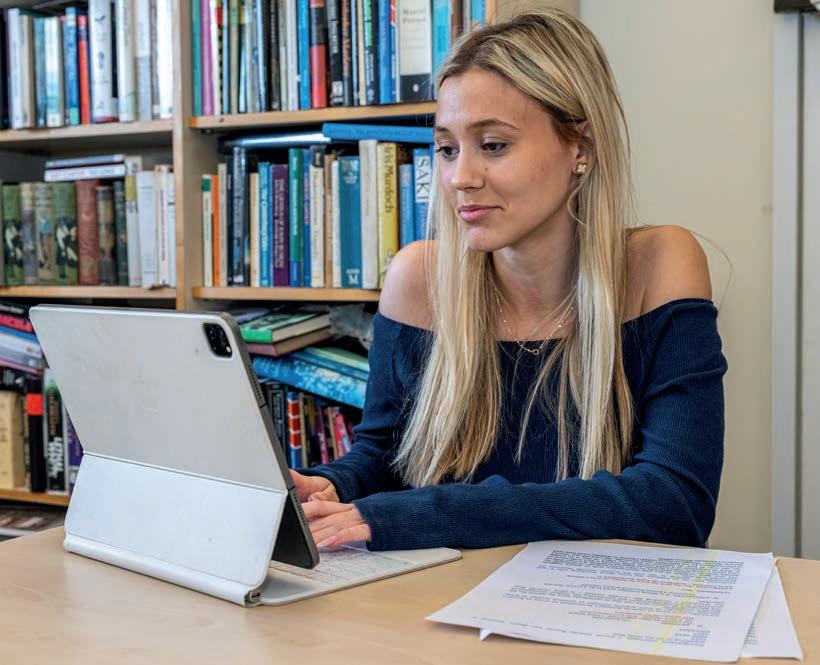
James Barton of MPW Group on why AI is a powerful and positive force in education, but always in a supporting role
Would Shakespeare have been more or less powerful with an AI copilot? Would his output have multiplied, or would the poetry have thinned? To prompt or not to prompt is not the point – the question is whether the tool serves learning or takes over.
From the Jacquard loom to Babbage and Lovelace, from Mary Shelley’s laboratory to Turing’s conversational test, we’ve seen radical technologies since before the Bard. In education it feels novel because the AI rollout is happening now. The present twist is scale. Large language models can draft, summarise and simulate at speed.
The parental voice of concern is justifiable. If a machine performs the heavy lifting, does our own intelligence slacken? Struggle is part of learning and the temptation to outsource that struggle is real. Institutions harbour their own fears. What if AI becomes so fluent that erroneous or inauthentic
submissions slip past detection, eroding trust in assessment? These risks are not imaginary but call for design, not drama.
Education is not the e cient production of tidy answers, but the formation of curiosity, integrity and judgement. Keep that in view and AI remains a tool, and even a co-pilot, but not the tutor. Ring-fence its use through transparent prompts, declared outputs and clear limits. Build assessments that prize process as well as end product – more in-class writing, viva-style orals, iterative portfolios and applied tasks that require students to show their working as well as their results. Good design makes misuse harder and learning stickier. Used well, AI is genuine value-added. In secondary schools, it can generate retrieval practice, adapt reading levels and o er immediate, low-stakes feedback. For pupils learning in another language, it can clarify instructions without lowering the bar. In universities, it can annotate articles, propose code comments, draft lab pre-work and produce alternative explanations for stubborn concepts. Think
“No model reads a room and spots the student who hides brilliance behind quietness or turns a near-miss into an ‘aha’ moment”
of AI as rehearsal room – a place to try an argument, hear it back and refine it before the performance that counts.
AI will certainly replace tasks. Marking routine quizzes, preparing di erentiated materials and providing first-pass feedback are jobs machines already handle well. But no model reads a room and spots the student who hides brilliance behind quietness or turns a near-miss into an ‘aha’ moment. This means the teacher role shifts from solo lecturer to conductor of attention and designer of practice – teacher-led, now tool-enabled. Prospero keeps command of the stage not because he owns the book but because he understands the play.
In the workplace, large firms now deploy secure, white-labelled models to cut drudgery and raise quality. Graduates will meet such systems on day one. Failing to teach AI literacy would leave them under-prepared. If Shakespeare had an AI co-pilot, the task would still be his – he would choose the question, test the line and own the judgement.
At MPW we learned during the pandemic that technology can preserve momentum, but teachers sustain learning. That lesson now shapes a clear approach. We use AI where it demonstrably adds value –personalising practice, widening timely feedback and supporting EAL learners –while keeping authorship, fairness and the teacher-student relationship at the centre. Tools extend us, teachers transform us. Keep the craft in charge and Shakespeare’s co-pilot earns a seat but not the quill.


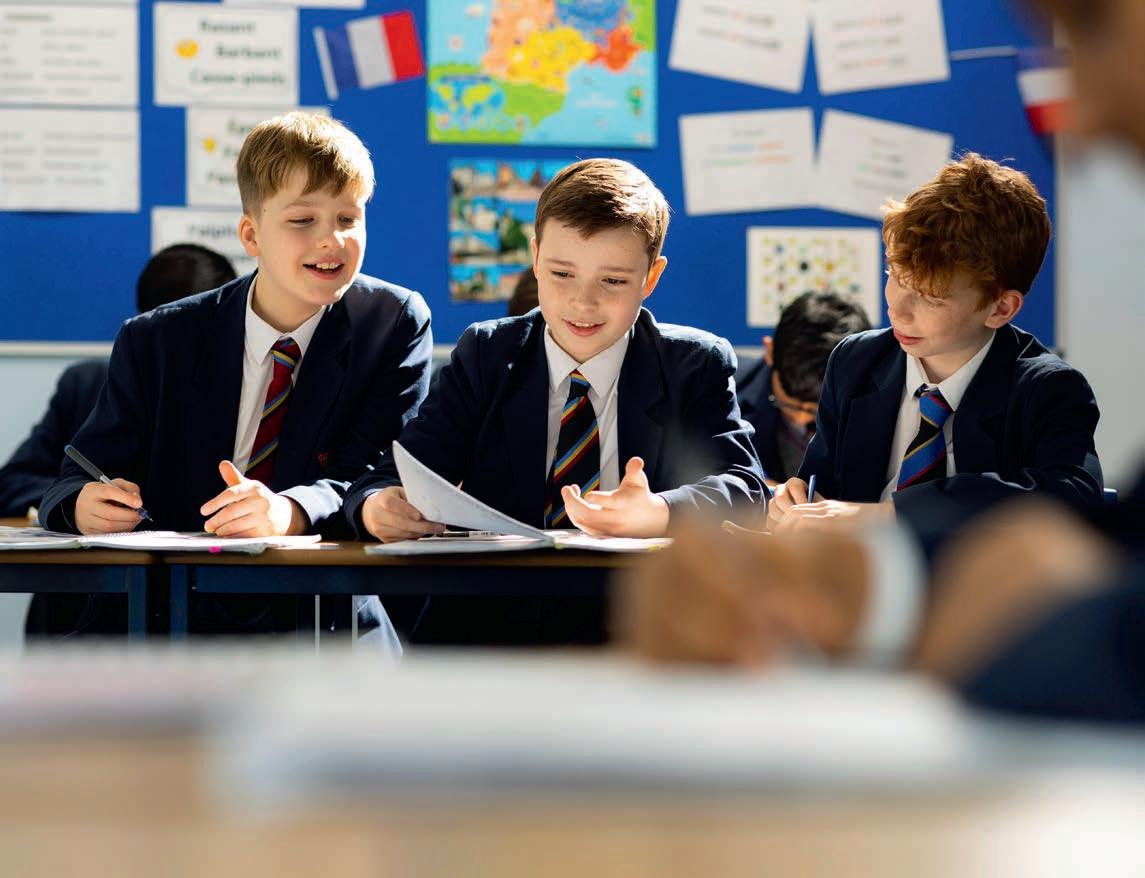
The Deputy Head of St Albans School on the vital importance of building strategies to enable human skills to develop in an increasingly digital world
As Artificial Intelligence (AI) becomes increasingly embedded in education and everyday life, a growing concern is emerging in some circles about the readiness of young people to enter the workforce. Do they possess the soft skills needed to succeed in a world beyond school? For parents and schools, this presents both a challenge and an opportunity to impact the lives of the young people within our community in a positive way.
The rise of AI has streamlined learning for young people, but this efficiency sometimes comes at the cost of human interaction. With more time spent engaging with devices than with peers, young people are at risk
of missing out on the informal, face-to-face experiences that teach them about empathy, communication and teamwork.
In classrooms that are increasingly reliant on technology, students may excel academically but struggle with collaboration, emotional regulation and taking on leadership roles – skills that are best developed through real-world social engagement.
There is no doubt that technology has also reshaped communication styles. Social media and messaging apps favour brevity and swift reactions over depth and considered dialogue.
This can hinder the development of active listening and nuanced expression, as well as the ability to disagree agreeably –all, of course, are core competencies in any workplace setting.
The instant gratification of the digital era has, in many cases, reduced resilience and patience. Some young adults are so unaccustomed to managing delayed outcomes, constructive criticism or working through interpersonal challenges that they enter the world of work with an inclination to quit before they have even attempted to grapple with any of the challenges that are commonplace in professional situations.
That is not to make a sweeping generalisation about the behavioural tendencies of a whole generation, but rather it is to acknowledge that the skills needed to succeed are, in some cases, lacking. This is because of the environment in which young people have grown up.
With this in mind, schools must work hard to support students’ emotional intelligence in
“Schools and parents must provide adequate opportunities for young people to take the initiative and to collaborate”
the real world beyond digital devices. They do this with a specific focus on soft skills and on supporting young people –helping to counterbalance the negatives of the digital landscape.
A good place for schools to start is to remove some of young people's devices. Storing phones in Yondr pouches (or similar) before registration begins and until the end of the day is particularly helpful for restoring an element of digital/real world balance.
Encouraging collaborative learning through group projects, debates and peer mentoring is also a great way to focus on those allimportant soft skills. This gives students opportunities to work in teams and develop as good listeners and communicators.
Like many other schools, we offer a rich co-curricular programme – from drama, music and sport to Model United Nations, debating, Warhammer Society and faith groups. All of these activities help to foster leadership and empathy, as well as building friendships through shared interests.
When teaching staff model emotional intelligence this helps students learn how to navigate relationships and challenges with maturity. Such an approach also means teachers build positive and supportive relationships with students in the classroom and within tutor groups. Modelling strategies set an example that supports students in developing the emotional and interpersonal skills that AI and digital

media simply cannot replicate.
Most importantly, schools need to nurture young leaders and to ensure that students leave school as confident and tolerant team players. Yet leadership and teamwork are not taught, they are experienced. Schools and parents must provide adequate opportunities for young people to take the initiative, to collaborate, and to work towards common goals.
For example, taking on leadership roles in student councils, clubs or on community projects enables young people to build both self-confidence and a sense of responsibility.
Public speaking and presentation opportunities encourage students to articulate ideas and develop poise, and it's important to celebrate and promote this method of working across teaching, learning and assessment. This is something that our school is embedding, adapting some of our assessments in the Lower School (Year 7 and 8) to include non-written, verbal assessments, such as speeches, debates or projects with a viva element.
Experimenting with mixed-age and diverse group activities is another excellent way to develop adaptability and inclusive thinking. Likewise, more formal mentorship programmes – whether with older pupils, teachers, alumni, or professionals – offer further guidance and inspiration to support young people's social development and ability to interact with different groups of people.
Our own Middle School Leaders are a brilliant example of the positive impact this
approach can have, with our Fifth Form (Year 11) students mentoring members of the school community in the Lower School (Years 7 and 8).
At home, parents have an important role to play in helping to reinforce these approaches. They do this by encouraging open communication and listening, by sharing out responsibilities and by participating in family and group activities.
While there's no doubt technology is transforming education and the workplace, soft skills remain irreplaceable. Young people need much more than technical proficiency to thrive. Emotional intelligence, resilience, and the ability to work well with others – including people with different backgrounds and perspectives – are critical.
By working together and championing human skills, parents and schools ensure that students leave education not only prepared for the future, but prepared to lead it.

Antoine Rogeon of Queen Anne’s School on why Mandarin is opening doors for its students, and the enriching experiences offered as part of learning
The British Council’s latest report has highlighted the gap between student demand and provision for Mandarin in the UK. While more than a third of young people say they would like the chance to study it, only a small proportion currently have the opportunity.
At Queen Anne’s School, we are proud to offer Mandarin as a core part of our curriculum. First introduced in September 2009, Mandarin has grown into a wellestablished subject here – we ensure that every student in Lower 4 (Year 7) begins their school journey with the language.
This early exposure allows pupils to build a strong foundation and then choose to continue through to GCSE, where many go on to achieve outstanding results. We are delighted that this year, Mandarin GCSE candidates at our school achieved 100% A*/A grades.
Mandarin at Queen Anne’s is about more than learning vocabulary and grammar. Students are encouraged to engage with the language in a cultural and creative context. Each year, our Chinese New Year assembly brings the whole school together to celebrate. We include performances from students and staff, featuring music, drama, singing, and dancing. These
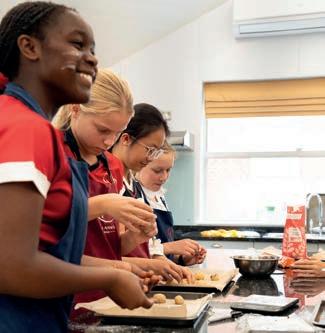
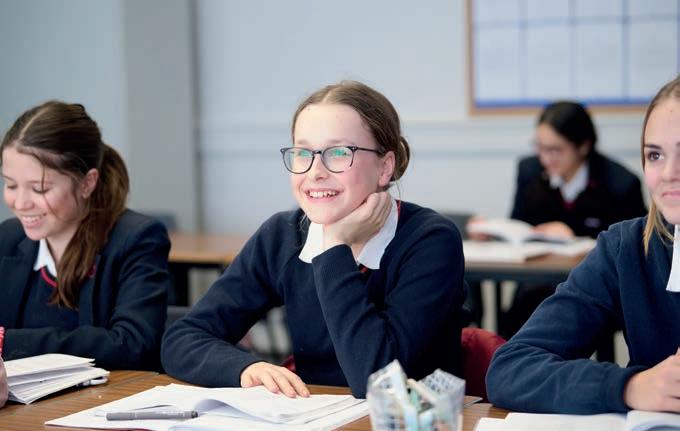
“Students at Queen Anne’s are encouraged to engage with the language in a cultural and creative context”
showcase not only the language but also the vibrancy of Chinese culture and traditions.
Learning Mandarin extends far beyond the classroom. Pupils take part in a rich programme of cultural activities that deepen their understanding of Chinese heritage.
Notable activities include cookery lessons each October, where our students learn how to make traditional mooncakes. Then, in June, we offer dragon boat activities – giving a taste of one of China’s most famous and exciting festivals. Learning goes further still as we host an end-of-year trip to a Chinese restaurant and the British Museum, connecting language to real-world cultural experiences.
MANDARIN GOALS
The opportunity to study Mandarin is there for all students, and those who choose to take it further consistently
excel in their academic studies. Year after year, our Mandarin learners demonstrate exceptional progress, reflecting both their commitment and the support of our specialist teaching provision.
We are looking ahead in offering this within our curriculum. By embedding Mandarin into the first year of secondary study and then providing a clear route through to GCSE, Queen Anne’s ensures that students have the chance to develop skills and also broader understanding of one of the world’s most valuable languages.
The skills they gain – from linguistic precision to cultural awareness – stay with them long after their exams.
Our goal is to equip them for the professional challenges and opportunities of a global future.






















































































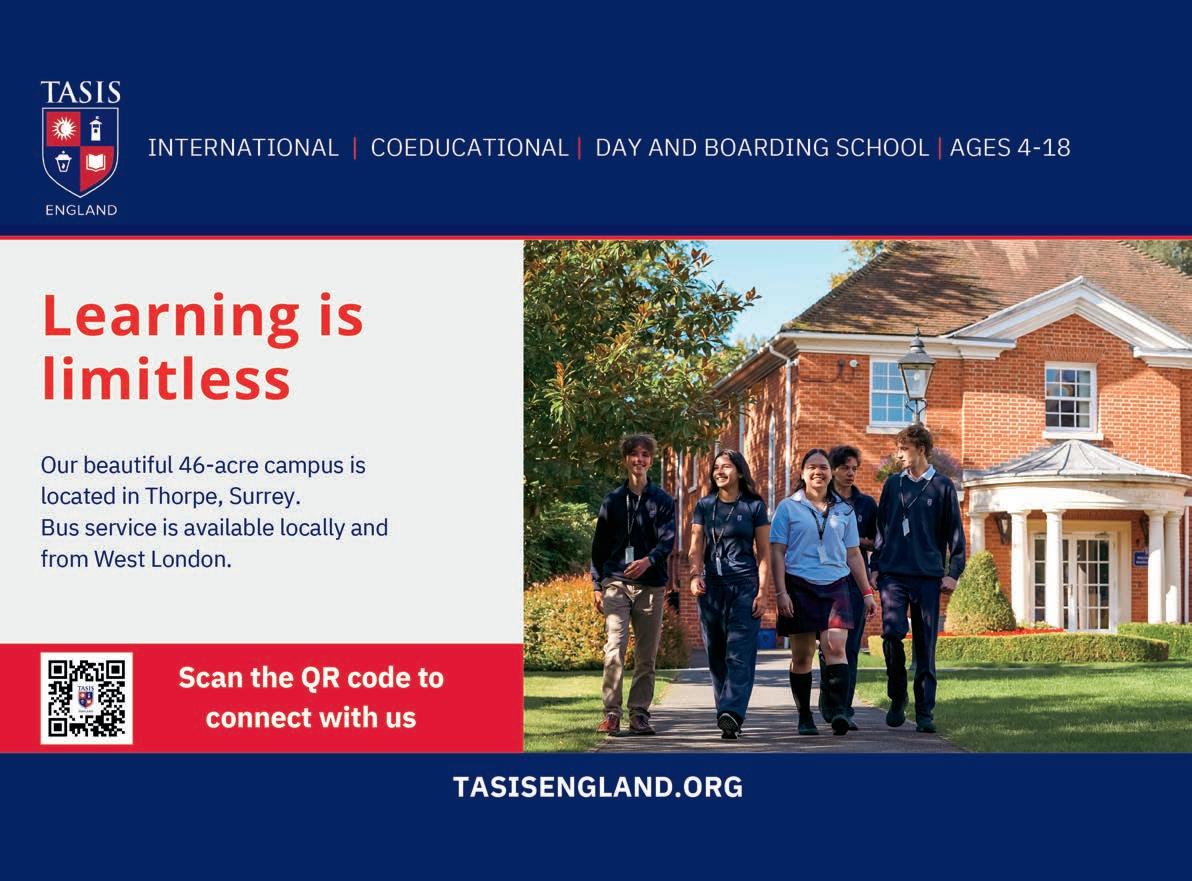
The Heads of Sherborne Girls and Sherborne Boys on delivering the right combination of skills and attitudes to prepare pupils for a changing world
Education is undergoing one of the most profound transformations in living memory. In a world being reshaped by technological disruption, climate challenges, and shifting cultural and geopolitical landscapes, schools face an urgent question. How do we prepare young people to thrive as resilient, ethical leaders who are empowered to create a positive future for themselves and the world around them?
For decades, academic attainment has been the dominant measure of school success. Grades, university places and league table positions have provided clear, if narrow, benchmarks. Yet employers, universities, and pupils themselves are increasingly signalling that this is not enough. Character, wellbeing, adaptability,
“Young people must be equipped not just with knowledge, but with the self-awareness, resilience, and ethical compass to thrive”
teamwork and the capacity to collaborate across disciplines are emerging as equally important currencies in the 21st century.
At Sherborne Schools Group, we believe these are not competing priorities but complementary ones. Academic rigour provides the intellectual foundations, but it must be balanced with intentional character development and the cultivation of wellbeing. If young people are to successfully navigate complexity and uncertainty,
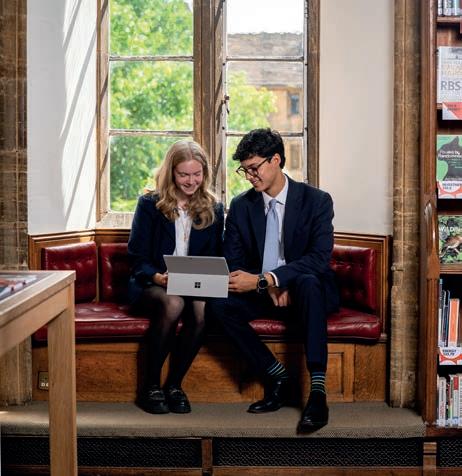
they must be equipped not just with knowledge, but with the self-awareness, resilience and ethical compass to thrive.
This integrated approach requires more than adding a wellbeing lesson to the timetable or running a leadership workshop. It involves embedding these values into the daily fabric of school life – through mentoring, pastoral systems, opportunities for reflection and leadership roles that allow pupils to learn by doing. It means we must ensure that success is defined not only by examination results but also by the capacity to act with integrity, to care for others and to make responsible decisions.
The challenge, of course, is how to achieve this balance while also respecting each pupil’s individuality. Learners are not a homogenous cohort.
This means schools must design flexible, personalised pathways that stretch the most able and inspire and support every learner, whatever their starting point. Interdisciplinary approaches, digital fluency and real-world projects all help to ensure that learning feels meaningful and remains relevant.
Crucially, this balance also positions pupils to become innovators and changemakers. By linking academic study with entrepreneurship, sustainability and community engagement, schools help young people see themselves as active contributors to society, not passive recipients of knowledge.

RUTH
SULLIVAN Head Sherborne Girls

SIMON HEARD Headmaster Sherborne Boys
It requires courage to move towards an integrated model of education. We also need evidence-based evaluation, so that schools can measure progress in character and wellbeing as rigorously as they measure exam performance. And it calls for a culture in which sta are supported to be innovators, modelling the adaptability and creativity we expect from pupils. Despite these challenges, the prize is great. By aligning academic excellence with character and wellbeing, schools prepare young people who are not only knowledgeable but also grounded, empathetic, and future ready. In a rapidly changing world, this is not a luxury – it is an imperative.
seconds with 60
The Headmaster of Royal Hospital School in Suffolk on his background and educational philosophy
What is your background?
I was educated at Emanuel School in London, where my passion for Chemistry was first ignited (pun very much intended!). I went on to study the subject at King’s College, London and began my career teaching Chemistry at The Haberdashers’ Aske’s School for Boys. Very quickly, I realised that education is about far more than the subjects we teach – it is about shaping lives. Since then, I have held senior roles in both day and boarding schools, including Senior Housemaster at Whitgift, Head of Science at St Benedict’s, Deputy Head (Academic) at Bedford School, and Headmaster at Sexey’s. Before joining the Royal Hospital School in September 2024, I spent several years leading DLD College London.
What is your school’s approach and what sets it apart?
The Royal Hospital School is unique in blending tradition with innovation. We have a proud naval heritage but we are also forward-looking, equipping pupils with the skills to thrive in the 21st century. Our pupils can be found excelling in the sciences, on stage, in the concert hall, at sea or even in e-sports. Our optional Saturday programme ensures that weekends are as enriching and exciting as the weekdays. Community is central at RHS: respect, honour and service are the values that bind us together.
What excites you most about your role at the Royal Hospital School?
No two days are ever the same. Whether I’m talking to a Year 7 on their first day, cheering from the touchline or debating strategy with senior staff, I am constantly inspired by the energy of our pupils and the dedication of our teachers. The best part is seeing young people surprise themselves with what they can achieve.
What is your academic philosophy?
Exams matter, of course, but education is about much more than grades. We want every pupil to leave us with intellectual curiosity, resilience,
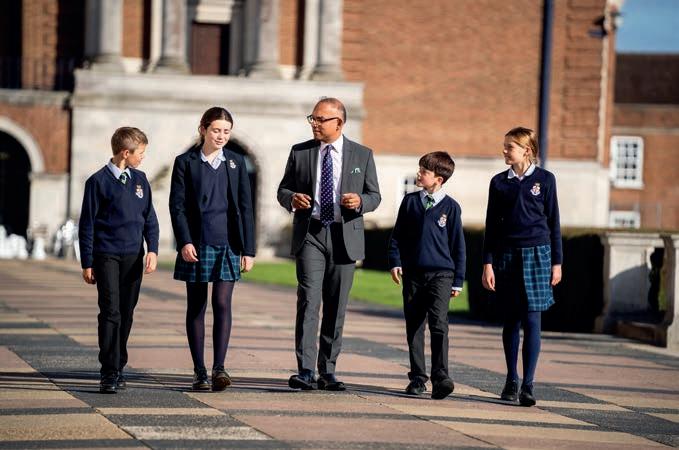
and empathy. Our aim is to nurture not only scholars but also musicians, sailors, athletes, artists, actors and, above all, good citizens. True education transforms the individual and, in turn, the communities they go on to serve.
Can you describe one pivotal moment in your career?
It was as Principal of DLD College London. Leading a school in the heart of a global city taught me the true importance of diversity, inclusion and innovation. I saw firsthand how transformative education can be when it embraces every kind of learner and celebrates difference. That belief continues to shape my leadership today.
What makes a great student?
Someone with curiosity, kindness, and
the courage to have a go – whether that’s answering a tough question in class, singing solo in Chapel, or trying a sport for the first time. Enthusiasm and openness will take a young person further than any single grade.
What makes a great school?
A great school knows its pupils as individuals. It challenges them, yes, but also supports them through the inevitable ups and downs of growing up. Culture is key. The very best schools create a sense of belonging where pupils feel seen, heard, and encouraged to take risks. It’s an atmosphere where ambition sits comfortably alongside warmth, humour and genuine care – helping young people to thrive academically and personally, while developing the confidence and integrity to guide them in life beyond school.
“I saw firsthand how transformative education can be when it embraces every kind of learner – that belief continues to shape my leadership today”
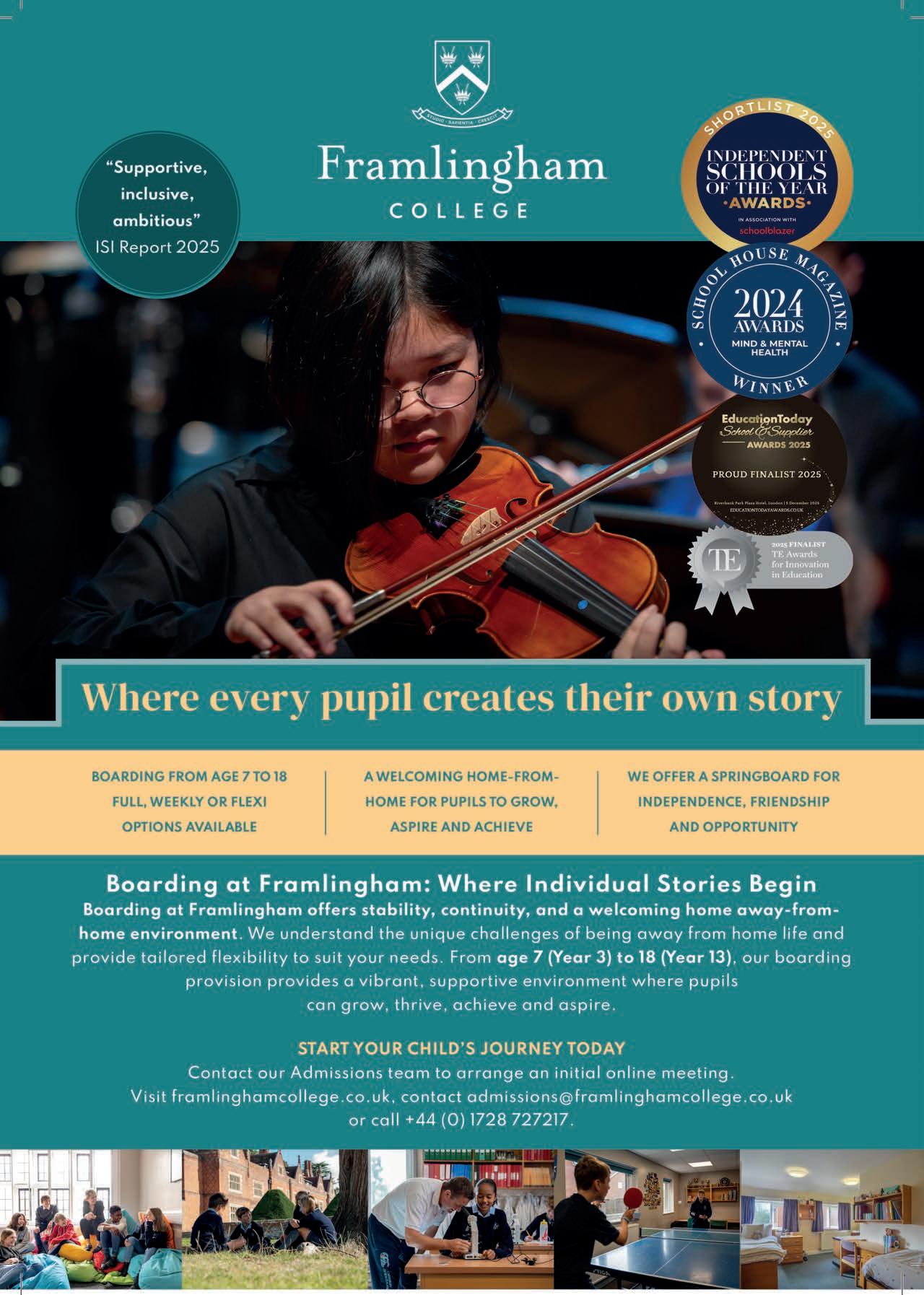
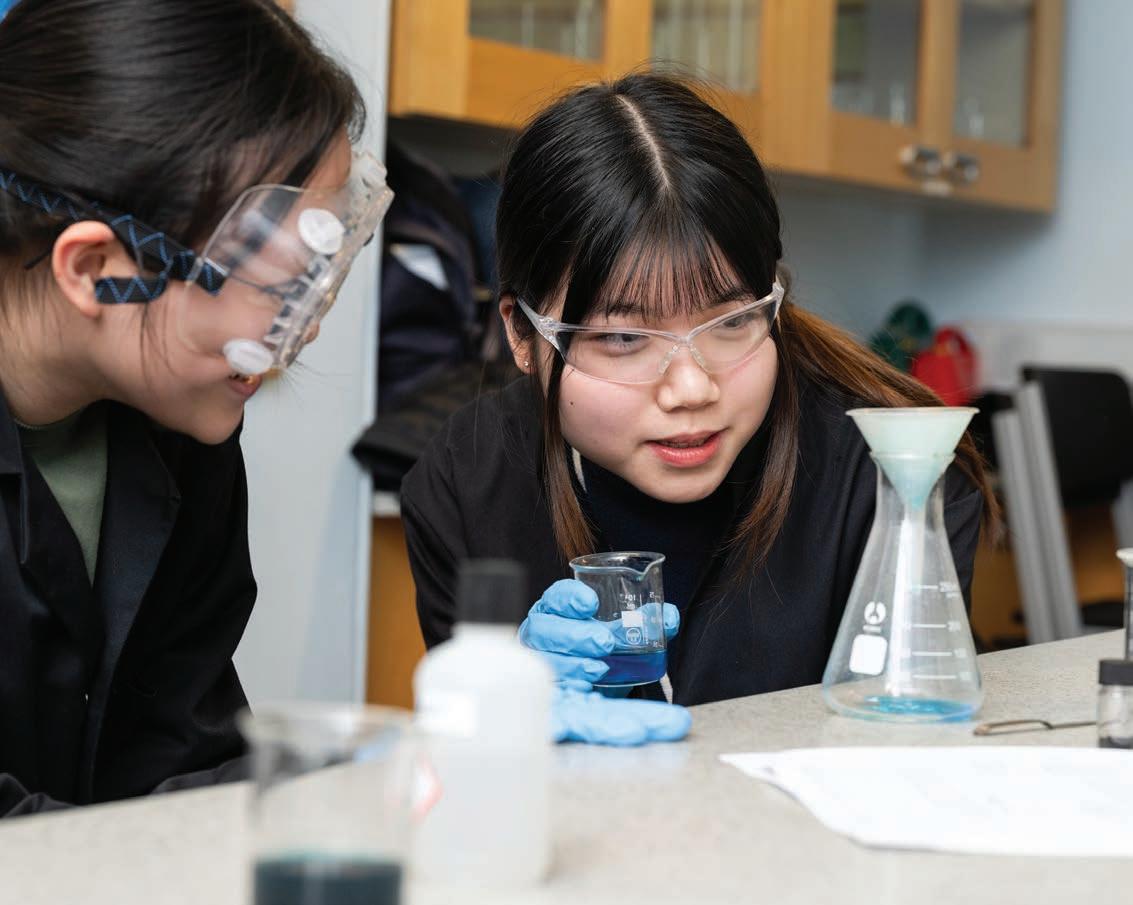
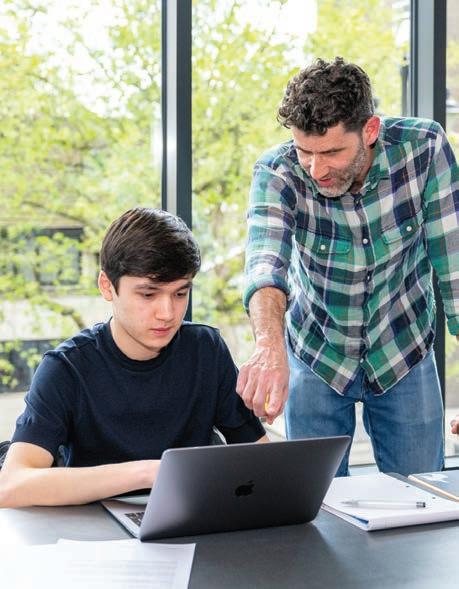
route to the
Colleges in London, Birmingham and Cambridge
A level, GCSE, University Foundation
Great university progression
1:1 support tuition
70% UK students / 30% International
Boarding facilities within walking distance
MPW was not just a school to me but also a home where I felt comfortable being myself. I can confidently say that MPW teachers are the most eminent life mentors. They would guide and support us academically and psychologically. It would not have been possible for me to achieve anything like being the Head of the Student Council or receiving good A level results without them.
Julia, from South Korea, achieved A*A*A*A* at A level and progressed to UCL to read Chemical Engineering.