South West
FEBRUARY 2026 / £3.95
PLUS
LIBERTY PRINTS
The women in design • ROMANTIC FRAGRANCE
Scents for your Valentine • EASY VIETNAMESE
Simple recipes to impress











News and views from the county's best schools SPECIAL




FEBRUARY 2026 / £3.95
The women in design • ROMANTIC FRAGRANCE
Scents for your Valentine • EASY VIETNAMESE
Simple recipes to impress
News and views from the county's best schools SPECIAL


LOOKS FOR COMFORT AND STYLE



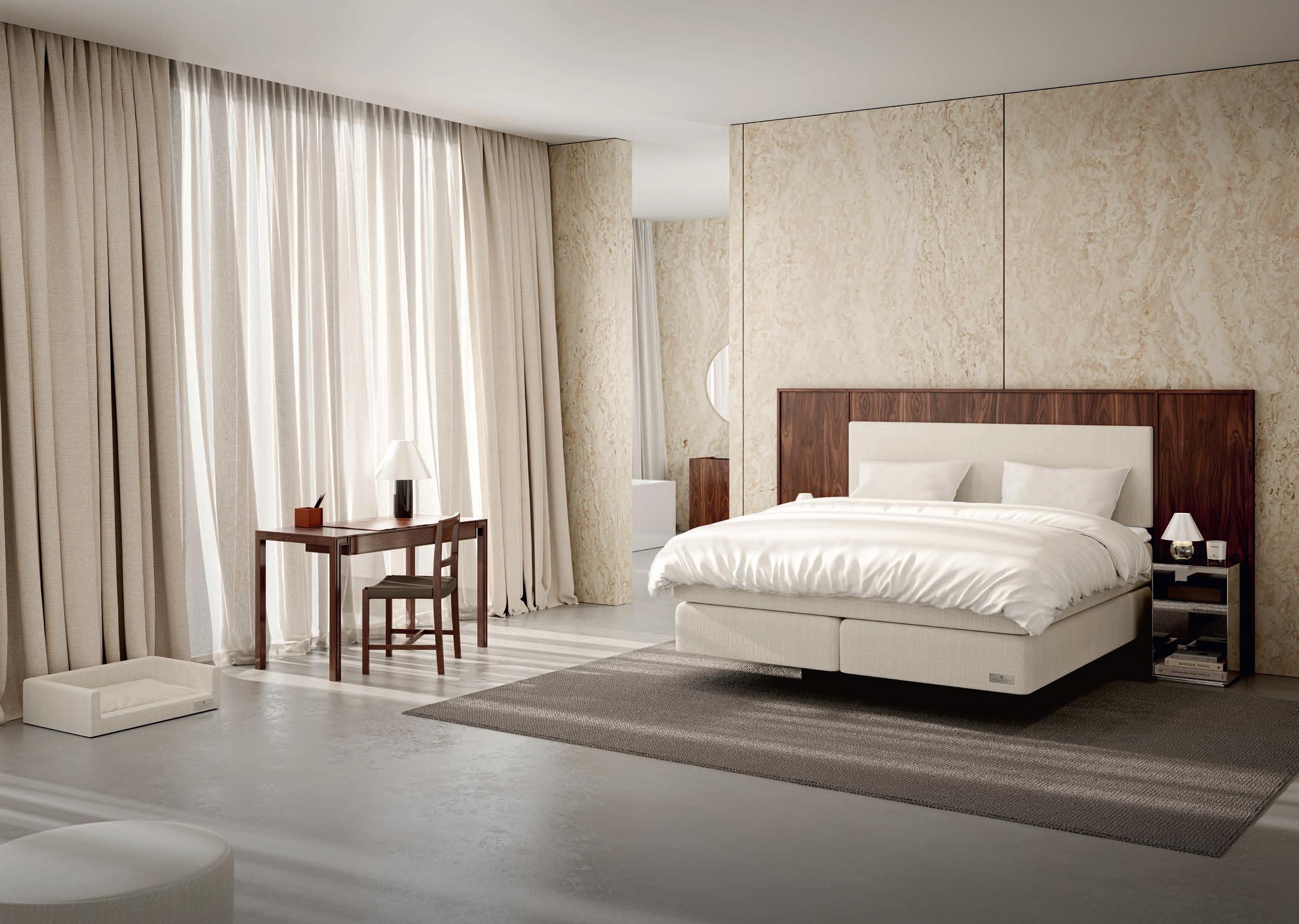
Inspired by our heritage, designed for the modern bedroom. The Iconic Collection features floating beds with unparalleled comfort and exclusive fabrics. Handmade in Sweden


• NIGHTWEAR • SWIMWEAR
LINGERIE • NIGHTWEAR • SWIMWEAR
BEACHWEAR • NURSING BRAS
BEACHWEAR • NURSING BRAS











































Abu Dhabi in 2026 feels effortlessly confident—warm, welcoming and quietly luxurious. It’s a place where sunrise over the desert still makes you pause, even as world-class art, design and dining pulse through the city. A destination evolving with grace, inviting you to experience its charm up close.













EDITOR IN CHIEF
PENDLE HARTE
MAMA EDITOR
CARLY GLENDINNING
ART DIRECTOR PAWEL KUBA
MAGAZINE DESIGNER MARIANA SUZUKI
DESIGNERS
BRUNA FACCIN, PAMELLA MORENO
PRODUCTION MANAGER
DANICA BRODIE
PORTFOLIO MANAGER GEMMA GRAY
SENIOR MEDIA CONSULTANT STELLA ADAMS
SENIOR MEDIA CONSULTANTS PAIGE COLE, CLAIRE CORNISH
FINANCIAL DIRECTOR
JERRIE KOLECI
CREDIT CONTROL MANAGER ALEXANDRA HVID
DIRECTORS
CRAIG DAVIES, JAMES FUSCHILLO, ABIGAIL GARDNER
MANAGING DIRECTOR SHERIF SHALTOUT
For editorial enquiries please email: pendle@zest-media.com
For advertising enquiries please call craig@zest-media.com





advertising 07818 690 386 or email: 020 7704 0588
124 City Road, London, EC1V 2NX, London N1 7EU; zest.london
Zest Media Publications Ltd. cannot accept responsibility for unsolicited submissions, manuscripts and photographs. While every care is taken, prices and details are subject to change and Zest Media Publications Ltd. take no responsibility for omissions or errors. We reserve the right to publish and edit any letters. All rights reserved.
Follow Us On Facebook @ABSOLUTELYMAGAZINES Twitter & Instagram @ABSOLUTELY_MAGS
Website absolutelymagazines.com
ABSOLUTELY’S February issue highlights


1
Bouquets of joy

Do you have enough vases?



2Pretty dishes Where to eat on Valentine's Day?
Not everyone feels the same way about Valentine's Day. Is it a daft commercial scam or a lovely opportunity to share some positive spirit? Whichever way you lean, there's no avoiding it. At Absolutely we are embracing the spirit of romance in all its pink glory. We're thinking candy pink frivolities, floral fancies and heart-shaped trinkets. We're stocking up on new vases for all the flowers incoming, upgrading our floral fragrances and booking restaurants for the 14th. But of course there's more to February than Valentine's Day, and this issue is also an Education special, in which we dedicate more than 50 pages to news and views from some of the UK's best schools. Whether you are just beginning to think about your child's education, or you're in the midst of it, we hope that you'll find some clarity here. And either way, enjoy February.



5
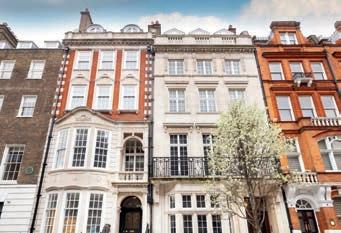
Entry level Is this London's most beautiful hallway?










4

3






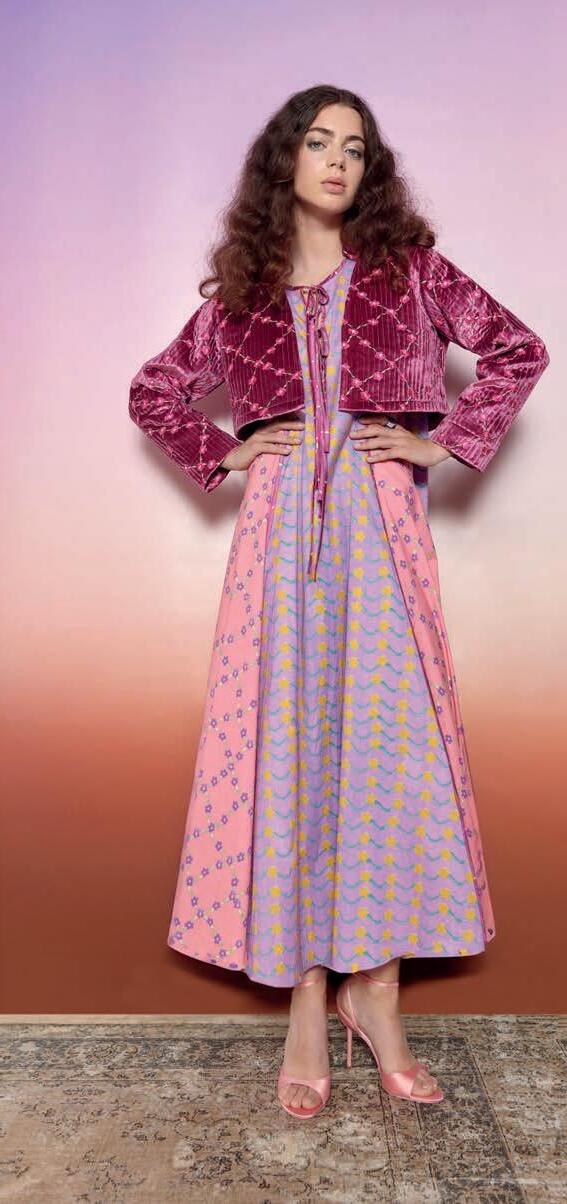
Celia B's Resort 26 collection is titled Stardust and Moonbeam –and it delivers the joyful, maximalist blend of colours, ruffles, embroidery and fun that we expect from the Spanish designer. celiab.com

A new formula for NARS' A erglow Lip Balm features a nourishing blend of ingredients to hydrate while helping to smooth and so en lips. This sheer tint can be worn alone or layered with other lip formulas. £28.50 narscosmetics.co.uk

EDITOR’S PICK
Après Youth is introducing a new gold-focused collection, expanding its jewellery offering with a warmer, elevated edge. The new pieces explore gold tones through bold forms and sculptural detailing, designed to feel expressive, modern and versatile. apresyouth.com
Kulfi is a make-up brand with a dual focus: fun and performance, plus a commitment to ethical practice. We love the Zari Eyes eyeshadow in Disco Dreams, £30. spacenk.com


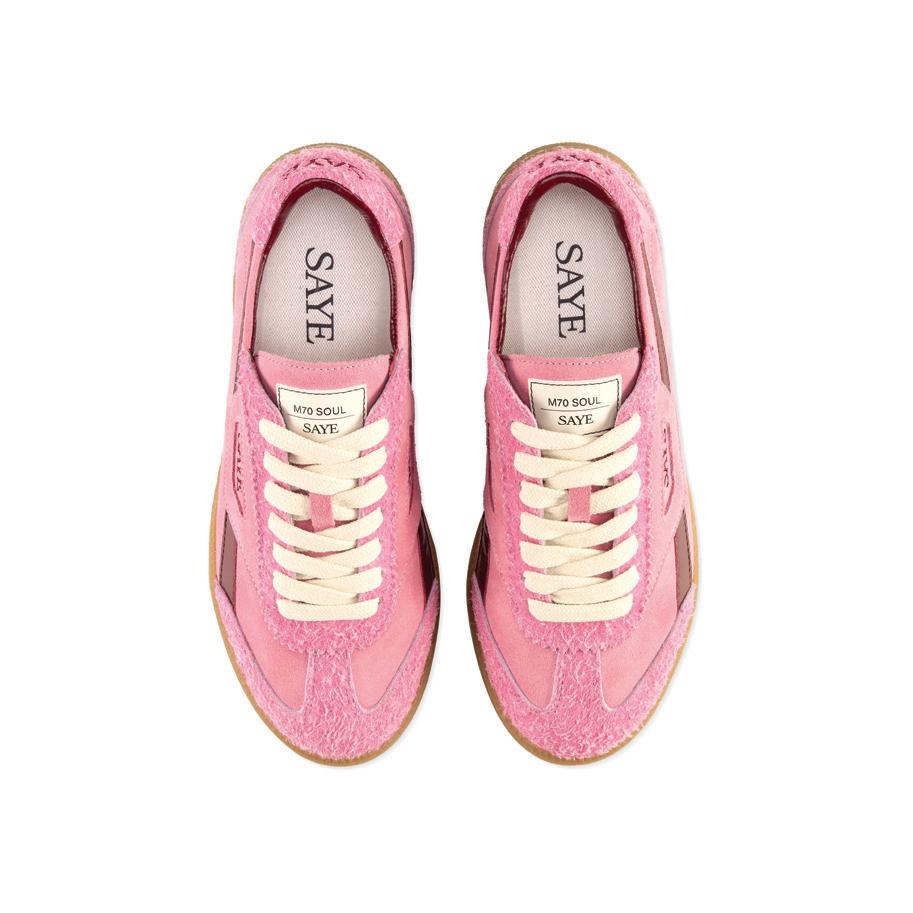
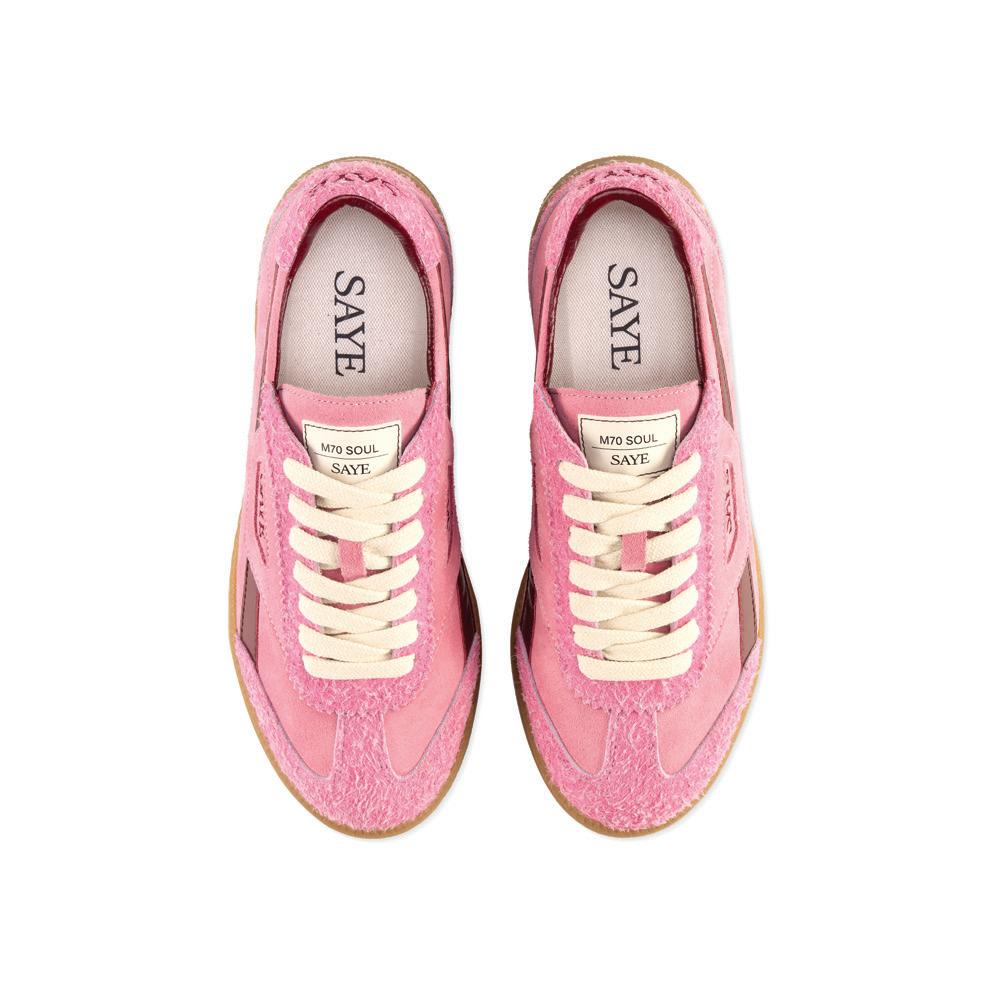
The new M70 Soul Collection from SAYE marks a renewed version of an iconic silhouette, now cra ed in premium certifi ed long-hair suede. We're cheering up these grey days with the Garnet and Gum colourway. sayebrand.com

Feeling peachy? Amelie's Follies in Battersea will have the perfect shade. Make an appointment and you'll come away with the best fitting underwear you've ever owned. ameliesfollies.co.uk


Ski socks might not be a huge part of the look, but we do want them to be pretty as well as warm –which Sealskinz's Northwold socks defi nitely are. Especially in this pink colourway. £35 sealskinz.com




The best scrunchies come courtesy of Good Squish, whose vast range of hair accesssories made from deadstock fabric are designed to suit all tastes and whims. goodsquish.com










Toast your loved one this Valentine’s Day with Nyetimber. Pioneers of exceptional English sparkling wines, Nyetimber offers a great range to celebrate with this year including Nyetimber Rosé Multi-Vintage and Nyetimber’s prestige cuvée, 1086 by Nyetimber Rosé 2016. nyetimber.com

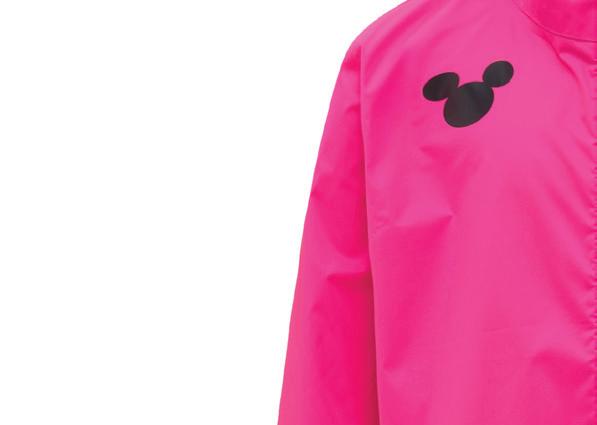

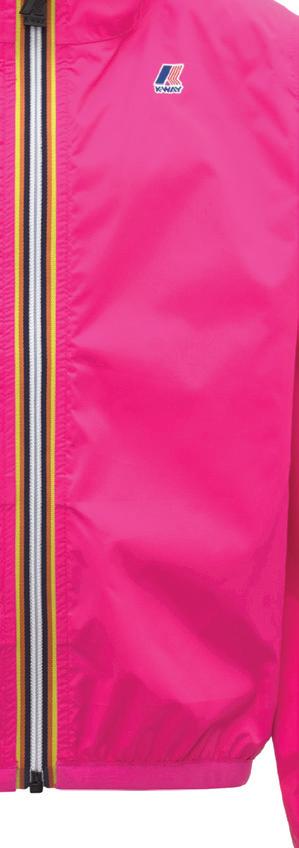


K-Way®, known for its colourful, practical, and playful designs, has teamed up with Disney for a ful collection of rainwear. We love this pink Mickey Mouse windbreaker. k-way.co.uk


















FROM 26 FEBRUARY, TATE MODERN
Spanning her extraordinary 40-year practice, from seminal installations made in the 1990s to recent paintings and bronzes going on display for the first time, A Second Life marks the most significant exhibition of Emin’s career, tracing the key life events that have shaped her journey and transformation.
tate.org.uk
Until 6 March
HAROLD PINTER THEATRE
This gripping new adaptation is based on the iconic, four-time Academy Award-winning 1952 film with a screenplay by Carl Foreman. Set in the American West of the 1800s, High Noon rides on themes as relevant now as they were then. Courage vs. Cowardice. Justice vs. Peace. Duty vs. Desire. Emmy and Tony Award-winner Billy Crudup as Will Kane and Olivier Award-winner Denise Gough as Amy Fowler. highnoontheplay.com


11-21 February
SOUTHBANK CENTRE
Imagine is the first festival of the Southbank Centre’s 75th anniversary, transforming the UK’s largest arts centre into a cultural playground for all to enjoy across the February half term. The festival aims to introduce children to the wonder of arts and creativity, o ering interactive and inspiring experiences for the Southbank Centre’s youngest visitors and their families. . aylesbury-theatre.co.uk




26-28 FEBRUARY, CORONET THEATRE
Following its UK premiere at Bristol Beacon in 2025, Neon Dance’s Last and First Men will be coming to Coronet Theatre for 3 performances. A cross-disciplinary performance combing contemporary dance, live music and film, it's based on and uses visuals from Last and First Men by Icelandic composer Jóhann Jóhannson. The dystopian film is in turn based on Olaf Stapledon’s visionary 1930s sci-fi novel. thecoronettheatre.com
Until 15 February
TATE BRITAIN
There's still time to see Tate Britain's retrospective of photographer Lee Miller, spanning the full breadth of Miller’s multifaceted practice. From her participation in French surrealism to her war reportage, the exhibition reveals how her innovative and fearless approach pushed the boundaries of photography, producing some of the most iconic images of the modern era. tate.org.uk

FROM 13 FEBRUARY, THE COURTAULD
his major, focused display will be the first devoted to French artist Georges Seurat (1859–1891) in the UK in almost 30 years. It will chart the evolution of his radical and distinctive style through the recurring motif of the sea. The artist is best known as the creator of the Neo-Impressionist technique, in which shapes and light are rendered by juxtaposing small dots of pure colours. courtauld.ac.uk

South Kensington becomes a destination for street art with two new exhibitions REBEL

South Kensington has transformed into a playground for street art lovers, with two major exhibitions now open at Sussex Mansions. Banksy Limitless London and Søren Solkær’s SURFACE invite visitors of all ages to explore vibrant works, discover the artists behind the murals, and enjoy an unforgettable day of creativity, colour, and interactive fun. Both Banksy Limitless and Søren Solkær’s SURFACE are now open, offering the perfect day out for families, friends, and art lovers alike. Banksy Limitless showcases 250 works by the elusive British artist, bringing the energy and creativity of the streets into a vibrant indoor space. Visitors can see large-scale installations, iconic prints like Flower Thrower and Kissing Coppers, immersive holographic displays, and the mesmerising “infinity room.” For visitors of all ages, an interactive T-shirt spray station allows everyone to get hands-on, creating their own street-style art to take home, with proceeds supporting the M.V. Louise Michel humanitarian project. There’s also a special section highlighting Banksy’s work in Ukraine, giving everyone a chance to engage with art that inspires and makes an impact. banksylimitless.com surfaceexhibition.com
“Hands down the best dog walking service we’ve used. Very professional, totally reliable, and lovely people! Our little Harry adores his walks with them.”
Dermot
“Hamish helped train and walk our young Labrador, Zebedee. His professionalism and skill are unmatched. I can’t recommend them highly enough.”
Gillian

WIMBLEDON’S PREMIER DOG WALKING & PET TRANSPORT SERVICE



More than dog walking — your partner in personalized pet care. Small group and solo walks to keep your dog happy, healthy and content
Drop-in home visits tailored to your dog’s needs Welfare-first care delivered with professionalism you can trust DEFRA-certified vehicles for highest standards of safety and comfort


A
Hold your nerve, we're told. This play is all about creating an environment of fear – something that isn't usually associated with theatre. For director Felix Barratt, founder of Punchdrunk, experimentation and engagement are key motivators. He's less interested in traditional staging than in creating a visceral experience – and without
dropping too many spoilers here, this production certainly creates that. Written by Levi Holloway, the play tells a chilling and original story about an American couple, James and Lou, who move from Chicago to London thinking a new start will free them from past horrors, but come to realise that haunting might follow them wherever they go. It's a clever set, almost like a dolls' house. We see into two floors of a house, and there's lots to look at: the detail is almost Punchdrunk-style realism (the loo even flushes!). The couple arrives home and we learn that they're from Chicago, new to London, leaving an unspecified problem behind. And soon things start to happen. Is the house haunted? Is one of them imagining things? What is it that they're escaping from? Some very clever e ects are created with lighting and sound, and we are soon left feeling uncertain about everything, and very jumpy. Clever staging and psychological tension makes the fear feel real. With four rooms to watch, we sometimes feel that we're missing something –was that a person in the bedroom? Who just came out of the bathroom? This is all about atmosphere, and it's a compelling watch.
Paranormal Activity continues at the Ambassadors Theatre until 28 March paranormalonstage.com


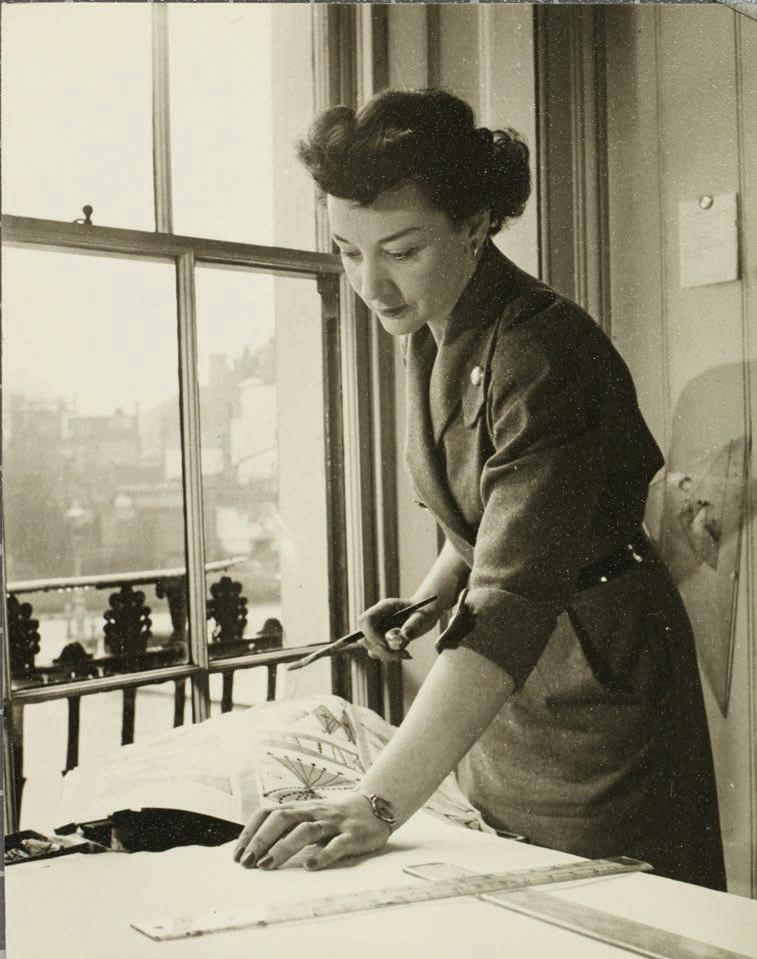
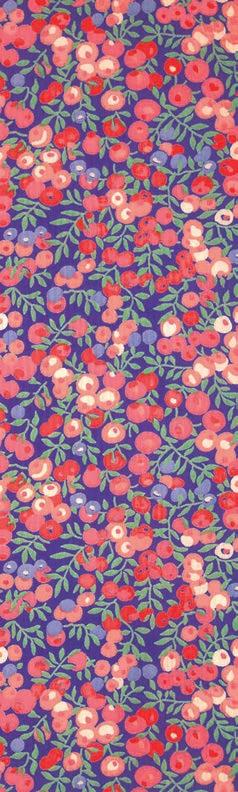
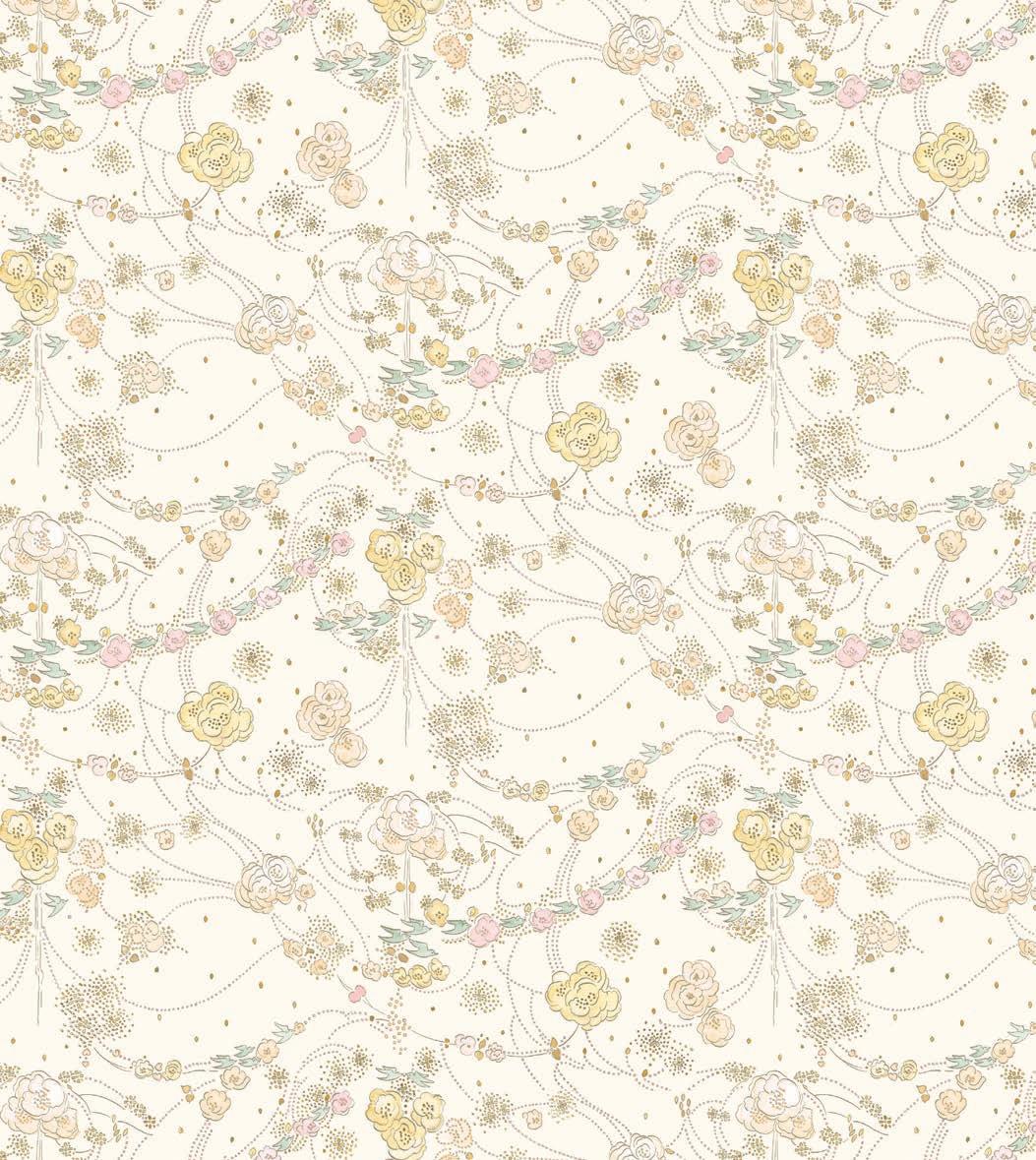
Women designers are a huge part of the Liberty print legacy, as an exhibition at the William Morris Gallery illustrates
Women in Print: 150 Years of Liberty Textiles marks both a milestone anniversary for Liberty Fabrics and a timely reappraisal of the women whose creative labour has shaped one of Britain’s most recognisable design legacies.
Conceived in partnership with Liberty to celebrate the design house’s 150th year, the exhibition places women firmly at the centre of the narrative. Across more than 100 objects — spanning garments, fabric lengths, original artworks, film and photography — Women in Print traces how women designers have driven Liberty’s evolution from a 19th-century purveyor of exotic imports to a global symbol of British creativity.
Founded in 1875, Liberty began as an emporium of textiles and objets d’art sourced from the Middle East and Asia. It was only later that the company began designing its own fabrics, developing the floral prints that would become synonymous with

the brand. The exhibition opens by examining how Liberty embedded itself into everyday life: from its distinctive Tudorbethan flagship building to its role in both high-street fashion and bespoke couture. A 1975 scarf design by Susan Collier and Sarah Campbell cleverly echoes the architecture of the store itself, underscoring how deeply brand, building and design are intertwined.
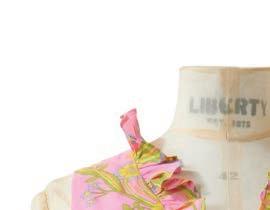
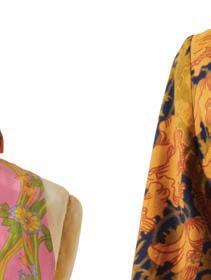
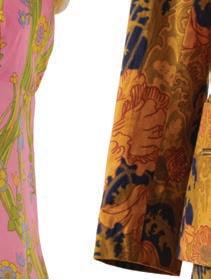
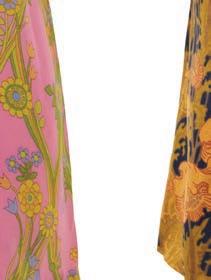
Elsewhere, garments reveal the extraordinary versatility of Liberty cloth. A BIBA trouser suit captures 1970s glamour, while a 1978 wedding dress — patchworked from 17 di erent Liberty prints — speaks to the fabric’s emotional resonance. A contemporary highlight, meanwhile, points to Liberty’s global reach: a traditional Emirati kandoora embellished with beadwork, featuring a design by current Head of Design Polly Mason.
The exhibition’s second section explores how women entered professional textile design at Liberty

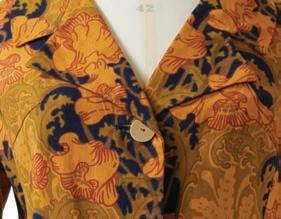
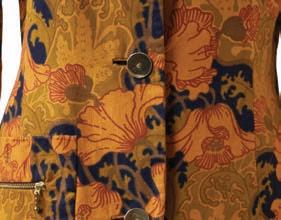
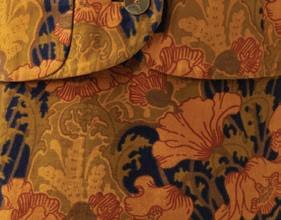
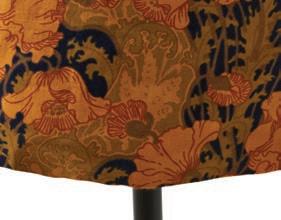


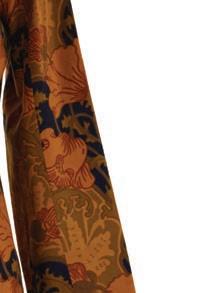
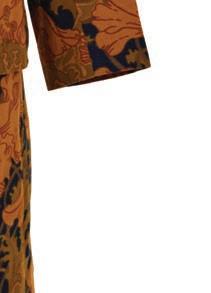
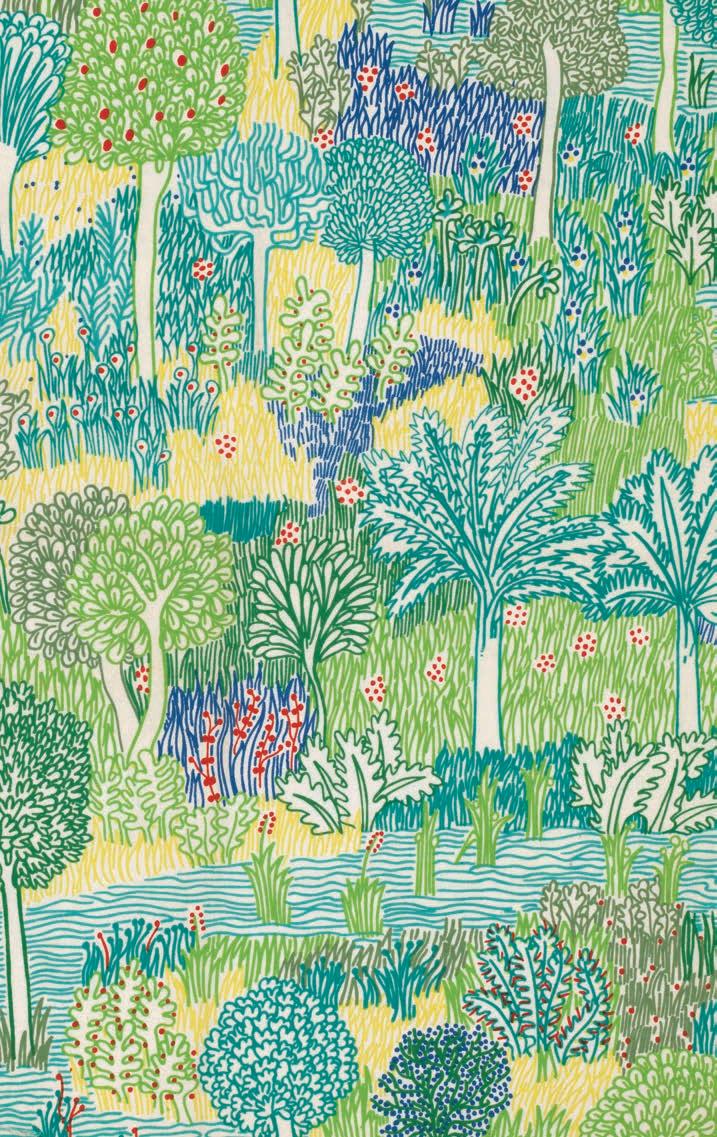

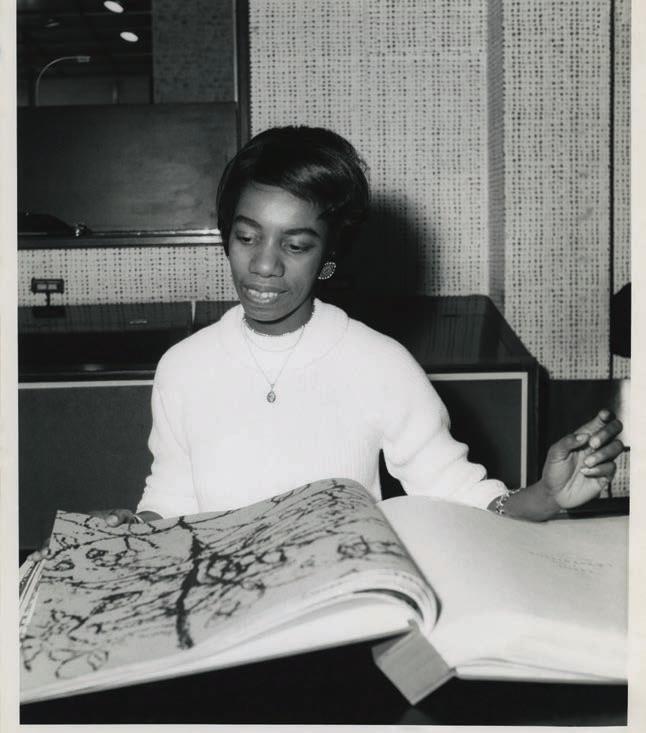

in the first place. In the late 19th century, the British Arts and Crafts Movement — with its reverence for nature and so-called “feminine” handicrafts — provided a rare pathway for women to transform domestic skills into paid creative work. Figures such as Ann Macbeth, who taught at the Glasgow School of Art, were employed by Liberty and helped modernise embroidery designs that would later be adapted for print. Rare archive material shows this pivotal shift from stitch to surface, including early embroidery catalogues and pattern books from the 1900s. By the interwar years, social change had widened the field. Educational reform and new employment opportunities meant that by the 1930s, almost half of Britain’s textile designers were women. Yet many remained anonymous, their work absorbed into company archives without credit. Women in Print seeks to restore these missing names, focusing on five designers whose contributions have often been overlooked. While figures such as Lucienne Day — celebrated for modernising post-war interiors — and
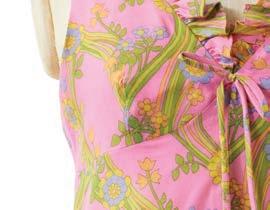
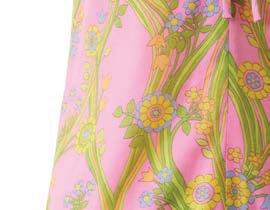
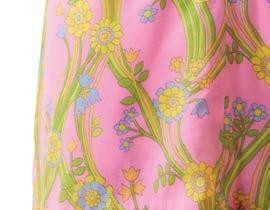
Althea McNish, renowned for her fearless use of colour, enjoy growing recognition, others remain elusive. The mysterious “Mrs Stonely”, whose designs are still printed by Liberty today, survives only through the initials “D.S” in the archive. Fashion takes centre stage in the main gallery, where garments from the 1930s to the present demonstrate how Liberty prints have continuously adapted to changing tastes. The 1960s revival — fuelled by nostalgia, eclecticism and youthful rebellion — proved pivotal. A Mary Quant “Ginger Group” floral suit and a psychedelic mini dress by Pat Albeck capture a moment when Liberty reimagined itself for a new generation. More recently, a look from Wales Bonner’s Spring/Summer 2025 collection pays homage to McNish, illustrating Liberty’s ongoing dialogue with contemporary fashion. Upstairs, the exhibition turns its attention to one of Liberty’s most enduring formats: the scarf. From a 1920s batik design by Jessie M. King to a bold 1978 drawing by Sonia Delaunay and















We’re excited to announce we are welcoming girls to our senior school in Ashford, Surrey and boys to our senior school in Kensington Olympia from September 2027: HAVE YOU HEARD?












a 1990s velvet scarf by Neisha Crosland, the scarf emerges as a site of experimentation — a portable canvas on which women designers have tested new ideas for over a century.
The final galleries chart Liberty’s post-war transformation and its embrace of international influence. Designers such as Jacqueline Groag and Marian Mahler brought bold colour and continental modernism to the studio, while the influential partnership of Collier and Campbell came to dominate the 1970s. Their expressive patterns, including Bauhaus (1972) and Kazak (1974), would define a new era of British interiors.
The exhibition concludes in the digital present. While Liberty remains rooted in hand-drawn artistry, computer-aided design has expanded its creative possibilities. A new film — combining archival footage with interviews from designers past and present — gives voice to the women behind the patterns, while a programme of mentoring and training asks a forward-looking question: what might the next 150 years hold for women in British textile design?
Running until 21 June 2026, Women in Print is both a celebration and a corrective — a richly textured reminder that Liberty’s story has always been, at heart, a story of women.
William Morris Gallery Forest Road London E17 4PP wmgallery.org.uk


















Few studios have shaped the imagination of children and adults quite like Aardman. For nearly 50 years, the Bristol-based animation house has transformed lumps of clay, felt, wire and rubber into some of the most beloved characters in screen history — from the cheese-loving Wallace and his long-su ering dog Gromit, to the rebellious chickens of Chicken Run and the gentle mischief-maker Shaun the Sheep. Now, a new exhibition invites audiences inside that
creative world, revealing how Aardman’s distinctive blend of humour, warmth and painstaking craft is brought to life. Opening on 12 February to coincide with the studio’s 50th anniversary year, Inside Aardman: Wallace & Gromit and Friends is designed primarily for children and families, though its appeal extends well beyond younger visitors. Hosted at Young V&A, the exhibition explores the storytelling, artistry and technical ingenuity behind Aardman’s films and series, charting the journey from sketchbook doodles to fully realised screen adventures.










Founded in 1976 by Peter Lord and David Sproxton, Aardman began life making short animated idents and experimental films, long before international success arrived. The studio’s breakthrough came with Wallace & Gromit: A Grand Day Out in 1989, a stop-motion short that introduced audiences to a quietly eccentric northern inventor and his wordless canine companion. Since then, Aardman has become synonymous with character-led storytelling, winning multiple Academy Awards® and BAFTAs® while remaining fiercely independent and employee-owned.
That sense of craft and independence is at the heart of Inside Aardman. The exhibition takes visitors behind the scenes of the animation process, unpacking every stage of production. From the first spark of an idea and early storyboarding, through model-making, set design and filming, to the intricate layers of post-production, the exhibition demystifies stop-motion while celebrating its labour-intensive beauty.
More than 150 objects are on display, drawn from Aardman’s extensive archive as well as the V&A’s own collection.
Visitors will encounter early character sketches, concept art, scripts, props, set models and puppets — tangible evidence of the studio’s hands-on approach.
FROM TOP
1. Film still from Robin Robin (2021) © Netflix/ Aardman Animations LTD.
2. Original artwork from Wallace & Gromit: A Grand Day Out (1989) © and TM Aardman Animations LTD/ Wallace & Gromit LTD.
3. Production still from Wallace & Gromit: Vengeance Most Fowl (2024). Photo by Richard Davies. © and TM Aardman Animations LTD/ Wallace & Gromit LTD.
4. Shaun the Sheep bike sketch © and TM Aardman Animations LTD.
Highlights include development sketches for Morph, one of Aardman’s earliest and most enduring characters, alongside early character ideas for Wallace & Gromit. A hand-drawn storyboard from the iconic train chase in The Wrong Trousers (1993) o ers a glimpse into how one of animation’s most memorable sequences was carefully planned frame by frame.
The exhibition also features neverbefore-displayed objects, including Wallace and Gromit’s motorbike and sidecar from Vengeance Most Fowl (2024), and Aardman’s final physical scheduling board — a reminder of how much of the studio’s work has traditionally relied on analogue tools in an increasingly digital industry. Set pieces from across Aardman’s filmography punctuate the exhibition, spanning Chicken Run: Dawn of the Nugget


7
Direct

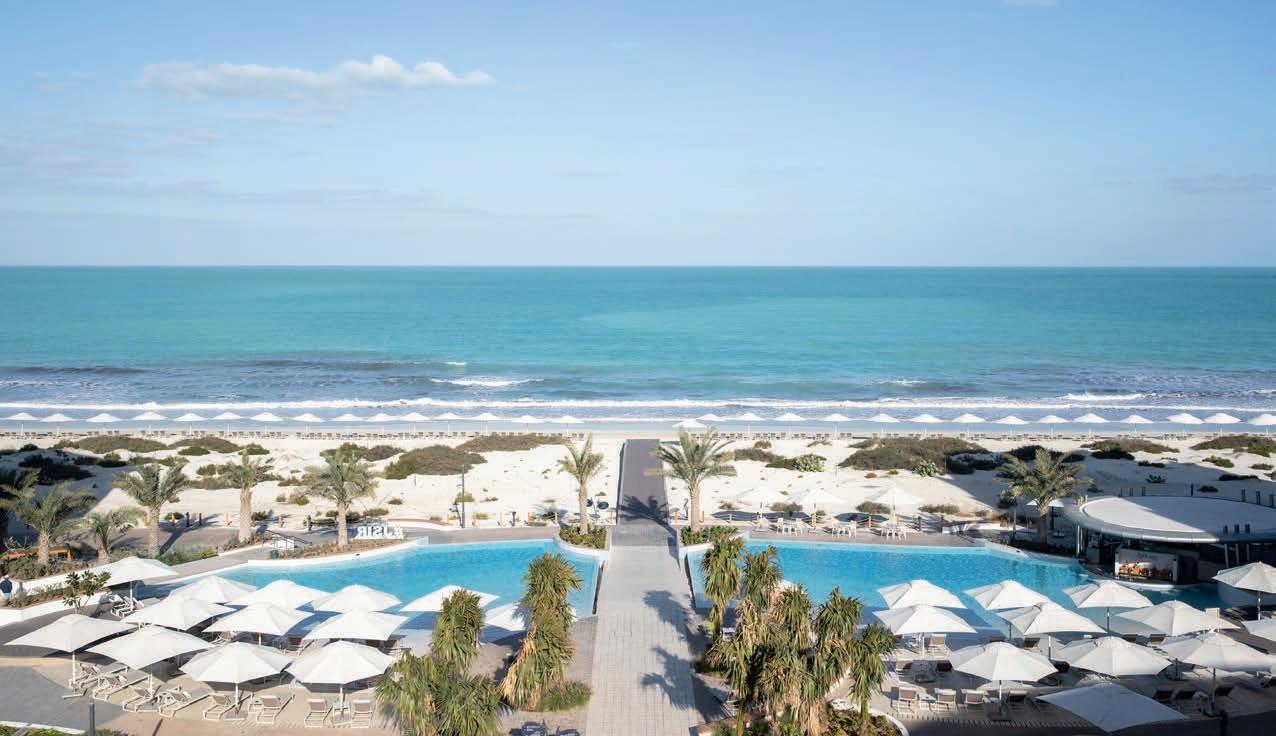


7 NIGHTS FROM £1,799
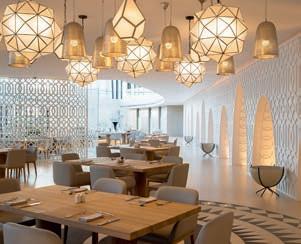
Direct flights, 5 beach resort incl breakfast and private transfers • 400m stretch of beach • 4 pools (including a kids’ pool and one adults only) • Non-motorised watersports (payable locally) • Extensive spa with grand Moroccan hammam • Gym • Tennis court • Kids’ and teens’ clubs




(2023), Robin Robin (2019), The Pirates! In an Adventure with Scientists! (2012), and the studio’s earliest Wallace & Gromit outings.
Crucially, Inside Aardman is not a passive experience. Young visitors are encouraged to try their hand at di erent aspects of stopmotion animation, with interactive stations that explore storyboarding, character design, lighting, and filming. Children can create live-action videos, touch samples of puppet materials, and watch animations made by other young people, reinforcing the idea that animation is something anyone can attempt at home using everyday materials.
Throughout the exhibition, a recurring theme is Aardman’s relationship with the real world. Whether sending characters to the moon, across the high seas, or escaping from a chicken coop, the studio has always grounded its stories in recognisable human behaviour and British eccentricity. That balance between the familiar and the fantastical is what gives Aardman’s work its enduring emotional pull.
FROM TOP
Feathers McGraw mugshot © and TM Aardman Animations LTD/ Wallace & Gromit LTD.
Original Timmy puppet from TV show, Timmy Time (2009) © and TM Aardman Animations LTD.



3. Wallace and Gromit in Wallace & Gromit: A Grand Day Out (1989) © and TM Aardman Animations LTD/Wallace & Gromit LTD.

As Aardman approaches its 50th anniversary in 2026, the exhibition arrives at a moment of reflection and celebration. A year-long programme of events will highlight the studio’s legacy and influence, alongside the release of a new feature film, Shaun the Sheep: The Beast of Mossy Bottom, due in autumn. Inside Aardman o ers both a tribute to five decades of creativity and an invitation to the next generation of animators — reminding visitors that behind every carefully animated smile is a pair of hands, a great deal of patience, and a love of storytelling.
Inside Aardman: Wallace & Gromit and Friends opens at Young V&A on 12 February and runs until 15 November vam.ac.uk


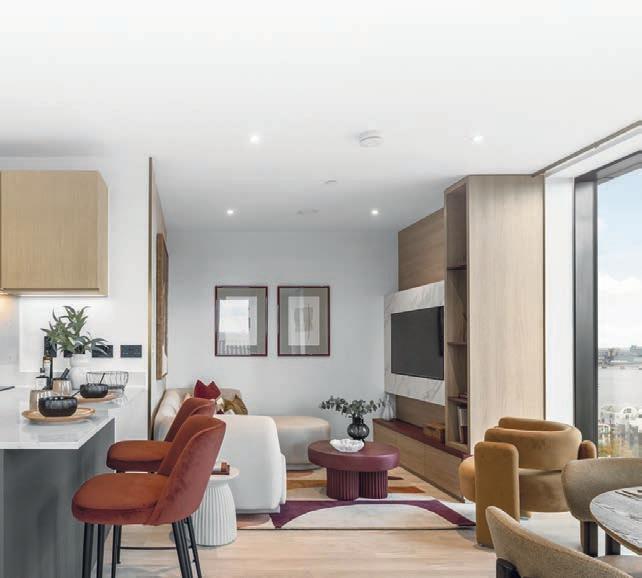










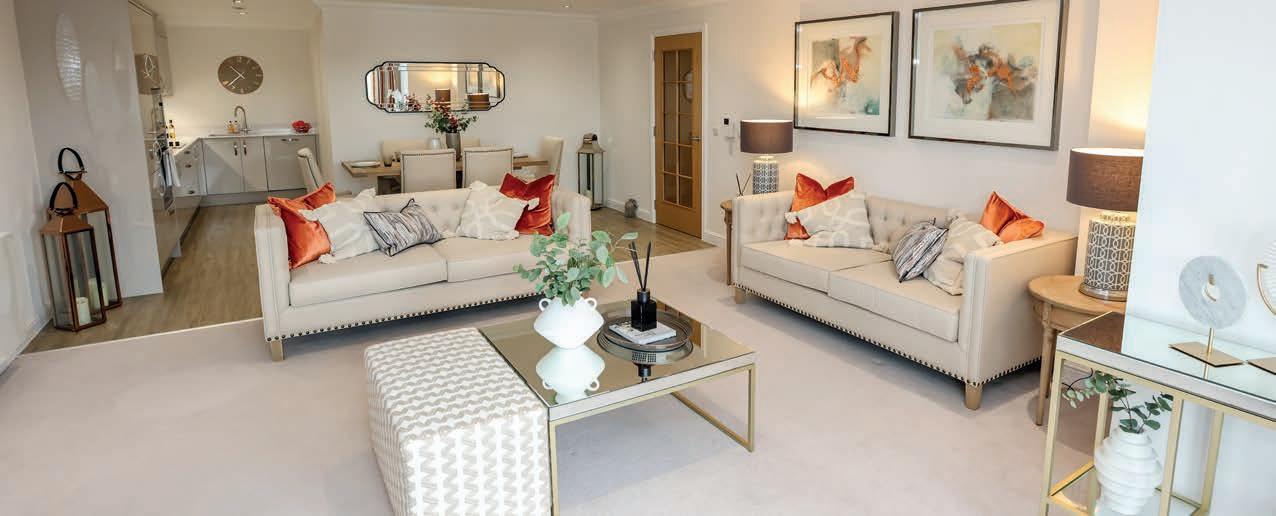
Our Retirement Apartments are some of the largest in the UK
Our 1 and 2-bedroom apartments offer up to 960sqft of living space, with separate additional storage and parking.
24/7 Service that’s always on hand, but never in the way
Our homeowners say “It’s like living on a boutique cruise ship moored at the edge of Windsor!”
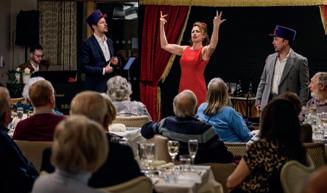
Offering complete privacy or lively social spaces
Enjoy panoramic views from our rooftop Sky Lounge, dine in our bistro or private dining room, relax in our library, coffee lounge or 1 of our 2 bars.
Rent from £2,663 per month or purchase from £350,000*



Scan the QR Code to discover more!
Alternatively call Nicky, our Later Living Advisor on 01753 378127, to discuss how your lifestyle can flourish at Castle View, Windsor. *Other purchase charges apply.


A
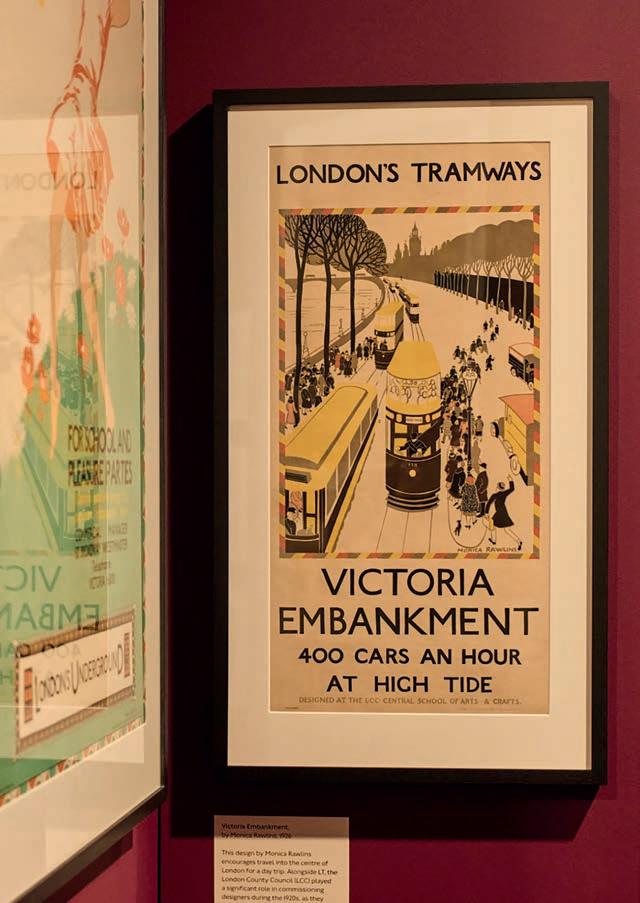
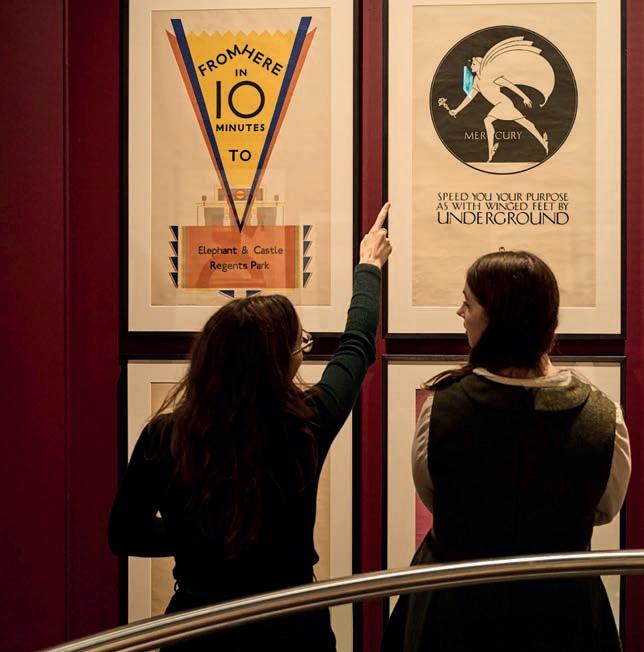
Visitors to London Transport Museum in Covent Garden can enjoy a new exhibition celebrating 100 years of Art Deco design. Housed in the Museum's Global Poster Gallery, Art Deco: the golden age of poster design explores how art deco, a revolutionary visual design style, influenced London and its transport.
2025 marked the centenary of Art Deco style, originally known as ‘Moderne’ or ‘Style Moderne’. Following in the wake of Art Nouveau and coinciding with the growth of modernism, this design style flourished in the 1920s and 1930s, following the pivotal Paris Exhibition of 1925.
In Britain, Frank Pick, the visionary Chief Executive of London Transport
(LT), was the individual most responsible for advancing this form of graphic style. Pick masterminded the publicity for the Underground and LT from 1908 onwards and had a passionate commitment to good design. His visionary approach brought modern art to a much wider public than would ever have visited a traditional gallery.
The new exhibition at London Transport Museum takes the visitor on a journey that starts with the origins of Art Deco, moves on to posters that capture the world of leisure and pleasure and then explores Deco architecture. This includes the work of architect Charles Holden, who helped change the face of London with his remarkable new Tube station commissions.
Design fans, history lovers and transport enthusiasts will be amazed by an array of beautiful vintage posters of gleaming ocean liners, stylish 1930s bathers, period
photographs, Clarice Cli pottery and loans from the Victoria and Albert Museum, which include a Japanese Government Railway poster by one of the masters of graphic design, Munetsugu Satomi. A number of posters that have never been on public display also feature in the exhibition. Georgia Morley, Senior Curator, London Transport Museum, said: ‘Visitors are able to see how art deco style influenced station design and the look of Tube trains of the period, as well as exploring the revival of this revolutionary artistic movement in the 1960s and beyond.’
Exhibition entry included with Museum admission. Adult tickets include free return entry for a whole year.
Book tickets: ltmuseum.co.uk

Ellen Kent’s Farewell Opera Tour, featuring Opera International Kyiv, Ukraine, comes to Richmond
Award-winning producer Ellen Kent returns to Richmond thisspring with Opera International Kyiv, Ukraine, presenting stunning classical productions of Verdi’s La Traviata, Bizet’s Carmen and Puccini’s Madama Butterfly This will be Ellen Kent's Farewell Opera Tour, as the opera company embarks on its last UK tour.
Ellen Kent’s Madama Butterfly, winner of the Best Opera Award by the Liverpool Daily Post Theatre Awards, returns in a new production with exquisite sets including a
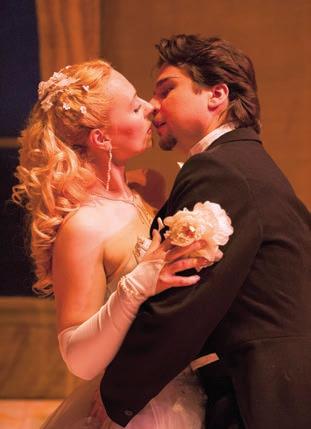
spectacular Japanese garden and fabulous costumes including antique wedding kimonos from Japan. One of the world’s most popular operas, Puccini’s Madama Butterfly tells the heartbreaking story of the beautiful young Japanese girl who falls in love with an American naval lieutenant, with dramatic results. Sung in Italian with English surtitles.
Bizet’s masterpiece, Carmen, is an evening of passion, sexual jealousy, death and unforgettable arias. Carmen is the story of the bewitching gypsy girl whose tantalising beauty lures a soldier to desertion and leads to her own murder. The opera includes some of the most evocative and best-loved melodies in opera –The Habanera, The Seguidilla, The Flower Song, The Chanson Bohème and perhaps the best-known baritone aria of all The Toreador’s Song. The stunning set reflects the magnificent architecture of Seville with its Roman and Moorish influences. Sung in French with English surtitles.
La Traviata, the tragic tale of searing passion and memorable music, is Verdi’s outstanding interpretation of one of the most popular love stories of the 19th century, La Dame aux Camelias. Based on a true story, it tells of the passionate loves and life of the consumptive courtesan, Violetta. There are many echoes of Verdi’s own life in Traviata

and he threw himself into the music.
Highlights include the Brindisi, the bestknown drinking song in opera, the duet Un Di Felice and Violetta’s haunting aria Addio Del Passato. This magnificent production boasts sumptuous sets and costumes. Sung in Italian with English surtitles.
Ellen Kent, a stalwart in the arts industry, has been touring opera and ballet for the past 33 years. Since 1992, Ellen has created a niche market for the best of traditional opera and ballet from Eastern Europe. She was the first producer to put out a major tour of foreign opera on the British theatre circuit and she dominated the ballet market in the UK for many years.
Tickets for La Traviata (Tue 21 April), Carmen (Wed 22 April) and Madama Butterfly (Thu 23 April) at RICHMOND are available from atgtickets.com/ richmond. For full tour listings please visit ellenkent.com/ senbla.com. Cast is subject to change



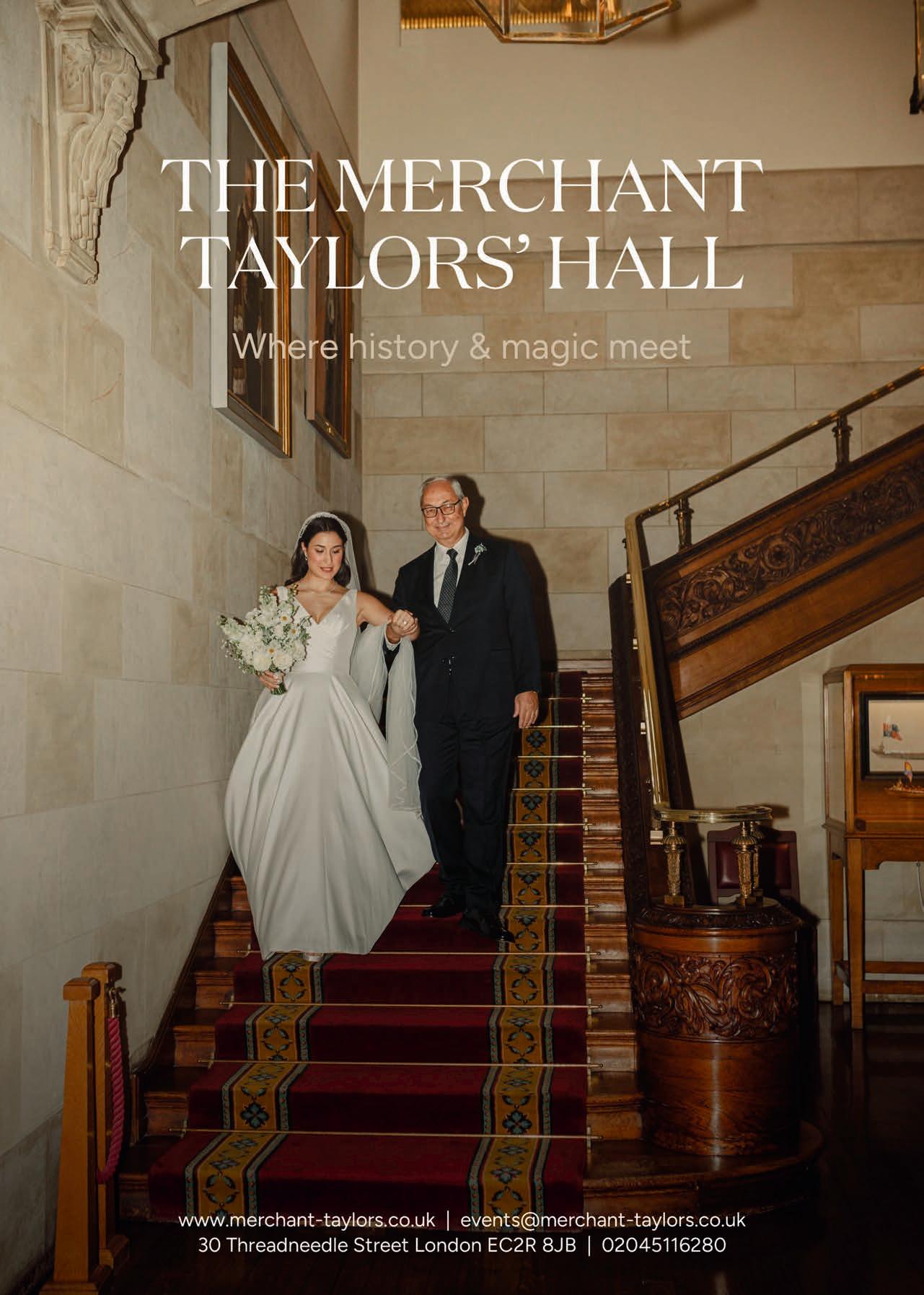
The moment we first stepped inside Merchant Taylors’ Hall, we knew it was something extraordinary

Tucked away in the heart of the City of London, this hidden gem is more than a venue – it’s a journey through time. With over 700 years of history woven into its walls, the Hall carries with it a regal air, echoing centuries of banquets, celebrations, and royal occasions. Our day began in grandeur, as I slipped away to the Drawing Room, where handpainted wallpaper and soft light created the perfect sanctuary to get ready. There was a quiet magic in that space, as though the centuries themselves had
“The room seemed to embrace us with its magnifi cence”
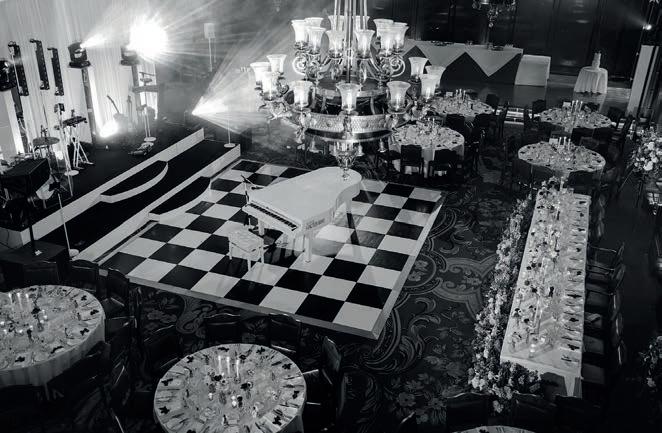
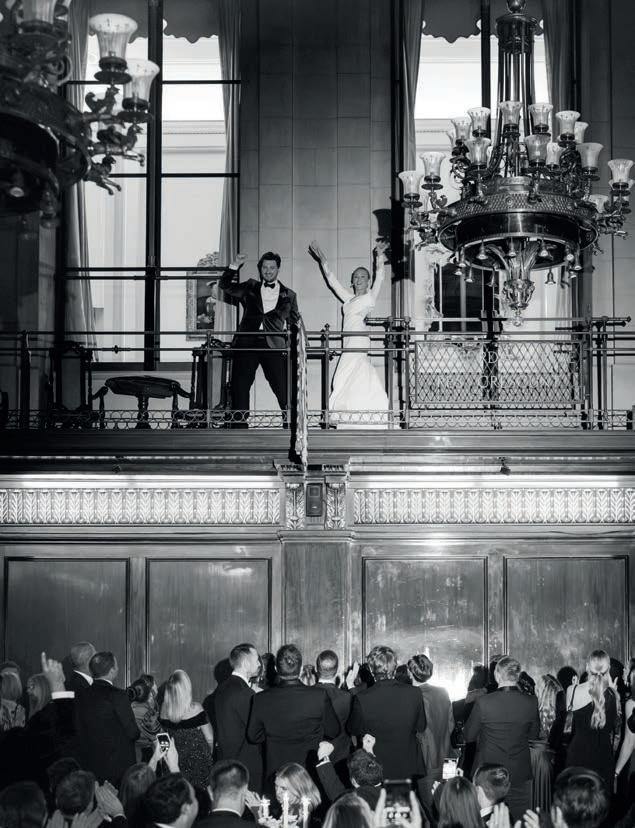
paused to make room for my day. Later, with a glass of champagne in hand, I stepped out into the King’s Gallery for photographs, I looked down over the Great Hall, watching as it was dressed for our celebration, and the anticipation grew.
Our story truly began as we walked the Great Staircase, seeing the faces of our loves ones smiling up at us framed by high ceilings, illuminated by the glowing chandeliers. And then – that moment. Turning into the Great Hall, we gasped. Before us unfolded soaring ceilings adorned with golden detailing, a room that seemed to embrace us with its magnificence. The space was not just impressive; it was breathtaking, a place where vows feel elevated by the weight of history itself.
The romance of the Hall lingers in its details – the grand oak walls and flooring, the oriel overflowing with centuries old gold and silver, the original Tudor stonework, leading us toward a sense of occasion few venues can match. As the sun beamed down on us, our guests spilled into The Courtyard Garden. Tucked behind high walls, this tranquil oasis became the backdrop to our most intimate moments, an escape into calm where laughter and champagne mingled beneath the open sky.
Merchant Taylors’ Hall is not only steeped in history, it is alive with it. For us, it was the perfect balance of majesty and intimacy – a place where heritage and romance entwine. Hidden in plain sight, at the very heart of London, it is a setting where every guest arrives curious, and every couple leaves with a story that feels like it has been centuries in the making.



































£1,400
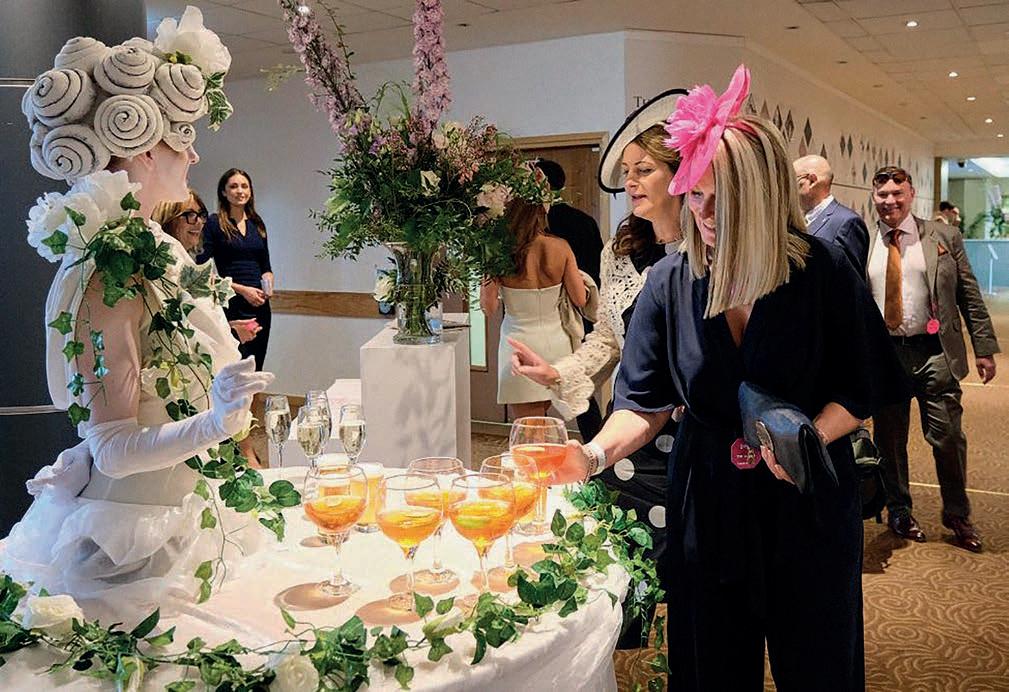
We’ve partnered with Keith Prowse to give one lucky winner the chance to win two tickets to The Views Experience at The Betfred Derby Festival on Friday 5 June 2026 at Epsom Downs Racecourse
This premium hospitality prize o ers a full day of racing in an elevated, social setting with exceptional views across the famous Epsom Downs. Guests will enjoy inclusive food and drinks throughout the day, featuring a relaxed, sharing-style dining experience alongside an open bar serving prosecco, wines, beers, spirits and soft drinks. From the thrill of live racing to the electric buzz of Derby Day, this is a truly special way to experience one of Britain’s most iconic sporting occasions. Known as the crown jewel of flat racing, The Betfred Derby at Epsom Downs is a highlight of the British
sporting calendar. Dating back to 1780, the historic event blends thrilling action on the Downs with a vibrant festival atmosphere, attracting racing fans and socialites alike for an unforgettable day. Keith Prowse creates unforgettable hospitality experiences at some of the UK’s most iconic sporting and cultural events. Renowned for combining prime views, exceptional food and drink, and e ortless service, the brand transforms world-class occasions into truly memorable days out, with every detail thoughtfully considered. From the glamour of Royal Ascot and the buzz of the Cheltenham Festival to major rugby, football, tennis and motorsport fixtures, each Keith Prowse experience is thoughtfully designed for guests who want more than just a ticket. With over
200 years of heritage and a reputation for excellence, Keith Prowse continues to set the standard for premium event hospitality, creating moments you’ll be talking about long after the final whistle or finish line.
One reader of Absolutely can enter to win their tickets to the Views Experience from Keith Prowse, worth £1,400 in total! To enter head to absolutelymagazines.com/win/







LONDON, CICCHETTI PICCADILLY BRINGS THE GLAMOUR OF ITALY’S GRAND CAFÉS & THE ENERGY OF MODERN DINING TOGETHER UNDER ONE ROOF.








BOLD FLAVOUR. ITALIAN SOUL. LONDON STYLE








Wine recommendations for the month
By THE WINE SOCIETY


A Fistful of Schist Chenin Blanc, Swartland 2025

This juicy stone-fruit and tropical-flavoured chenin blanc is a great value introduction to the Swartland. Riebeek produces a wide range of wines, often from older bush vines which deliver greater complexity at very modest prices.
Arbois Chardonnay, Fruitière Vinicole d'Arbois 2022
£14.50

London’s food news and most exciting openings this month
By PENDLE HARTE





This chardonnay from the Jura is the perfect balance of introducing lesser-known regions whilst playing it safe with a well-liked and wellknown international grape variety. Expect attractive stone fruits and white flowers, supported by citrus notes and a juicy core.
Quinta da Alorna ‘Lutra’ Tinto, Tejo 2024
£8.75
A supple and generous red hailing from the Tejo region of central Portugal, blending indigenous Portuguese grape varieties showcasing a medium-bodied profile with soft tannins and vibrant red-berry notes, making it approachable and enjoyable for anyday drinking.
Since it was founded back in 1874, The Wine Society has dared to do business a little differently. Bringing together a community united by a shared love of wine, The Society is a co-operative and owned by its members. This means there is no requirement to pump profit into annual dividends or bonuses for shareholders – all profits go back into the business.
The Wine Society welcomes all wine lovers. Become a member today and receive £20 off toward your first order. thewinesociety.com
CHINA TANG
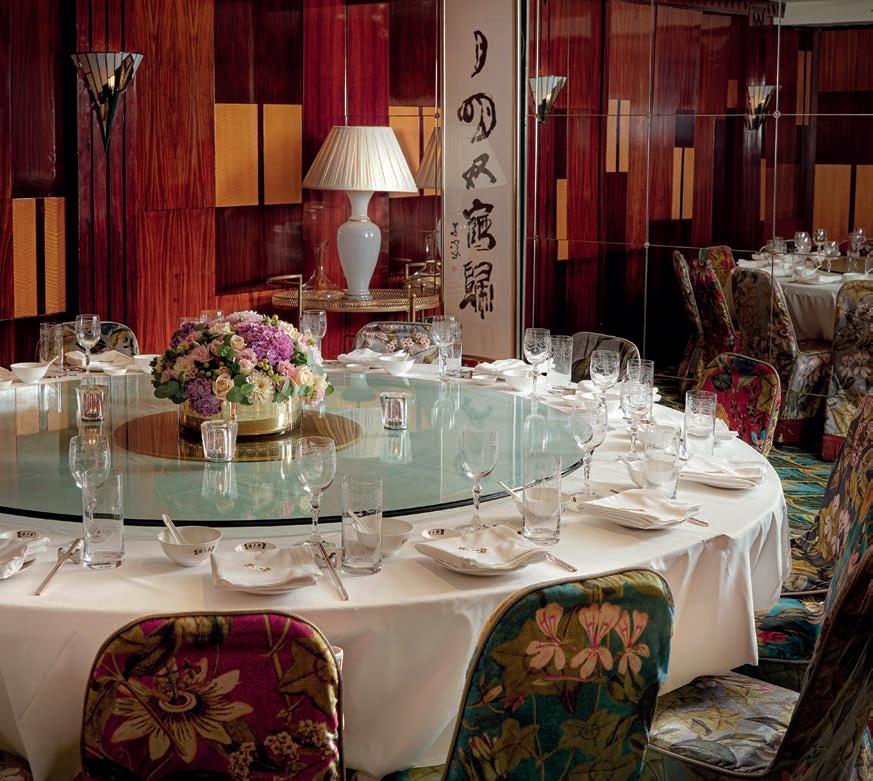
China Tang at The Dorchester’s will welcome the Lunar New Year and the Year of the Horse with symbolic décor, traditional performances and a series of Chinese New Year special dishes. A traditional Lion Dance will take place on the evenings of 17 and 18 February, with dishes rooted in Cantonese tradition and symbolism around prosperity, abundance and renewal.
chinatanglondon.co.uk

MAGGIE JONES
Maggie Jones’s is back. The Kensington restaurant that opened in 1964 and became Princess Margaret and Lord Snowdon’s favourite haunt has been closed for two years after a fire. Now it's open again, with its cosy rustic vibe unchanged. Rejoice! maggie-jones.co.uk
Three of the best... schnitzels

CAFE DECO
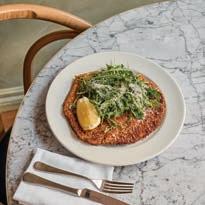
This chicken schnitzel reflects Anna Tobias’s quietly confident, Europeanled style of cooking. Fried until crisp and golden, the dish delivers pure comfort, while white cabbage and caraway salad provides a sharp, gently spiced contrast. cafe-deco.co.uk

MILDREDS
To explore the very best of plant-based dining, the Taste of Mildreds o ers a sharing-style feast for two from £26pp. Crowd-pleasing plates inspired by diverse global cuisines include dishes like pimento butterbean dip, with roasted red pepper, garlic and smoked almonds; arancini rossi with smoked chipotle ketchup; and Kiri Hodi, a Sri Lankan coconut curry. mildreds.com
CAFE MURANO
A signature dish from Angela Hartnett, Chicken Milanese has become a much-loved staple. Breaded and pan-fried until perfectly crisp, it’s finished with fresh rocket, plenty of parmesan and a sharp hit of lemon. cafemurano.co.uk

LABOMBE BY TRIVET
The thick-cut veal chop, breaded in panko and fried in clarified butter is served with quiet confidence. For Head Chef Jonny Lake, who trained under Gualtiero Marchesi, it is not about the crust, but the quality of the meat. labombe.co.uk
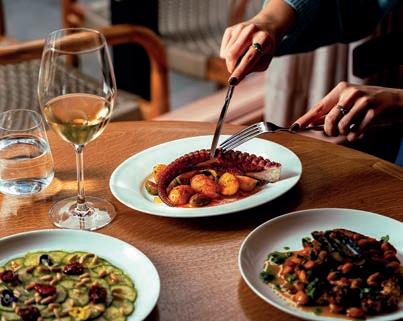
Lolo by José Pizarro brings together dishes inspired by José’s Spanish heritage, enriched with Mediterranean influences. The all-day menu features plates designed for sharing, with a selection of hearty dishes perfect for cold days.
josepizarro.com

Kokum in East Dulwich has just launched an Indian Roast Menu. Choose from four expertly crafted roasts all with an Indian twist, including Tandoori Roast Chicken, Roast Shank of Lamb, Roast Gobi and Roast Kingfish Steak, all served with roasted spiced potatoes.
kokumlondon.com








By PENDLE HARTE

Champagne Telmont has become the first Champagne House to receive Regenerative Organic Certification® (ROC™) status, a trailblazing achievement that opens a new chapter for sustainability in Champagne.
Guided by its ‘In the Name of Mother Nature initiative’, Telmont prioritises organic and regenerative practices to shape a more thoughtful approach to Champagne. champagne-telmont.com

The Reid Single Malt Vodka is distilled in New Zealand's Crown Range mountains using just three pure ingredients - malted barley, distiller’s yeast and alpine water from Mount Cardrona. It's unfiltered for an ultra-premium, character-rich flavour with delicate aromas of pear drops, lemon zest, to ee, and malt biscuits, with a luxurious texture and silky finish. £57


















Crafted from handpicked marula fruit and shaped by communities in Africa, Amarula cream liqueur is made from the delicious marula fruit of subEquatorial Africa, the marula spirit is distilled and aged in French oak for two years. It is then blended with velvety cream to create the smooth taste of Amarula. amarula.com
A Valentine's cocktail with Jo Vodka's 103 The Artist RECIPE
Bold and expressive, 103, The Artist is a distinctive vodka layered with complex florals, spice, pink peppercorn and orange. It makes an elevated Valentine’s Day gift for design lovers, scent enthusiasts, and anyone looking to refine their drinks cabinet, as well as a great choice for a Valentine’s Day tipple shared with someone special.
Created by Jo Malone CBE in collaboration with Master Distiller Joanne Moore, Jo Vodka is a trilogy inspired by Jo’s rare gift of synaesthesia and her revolutionary approach to scent, resulting in a vodka experience unlike any other.
SEPIA FORM
Ingredients:
• 50ml Jo Vodka 103, The Artist
• 7.5ml Apple, sencha & pink peppercorn syrup
• 4dash Angostura bitters
• Pink peppercorn dusted apple wheel (for garnish)
Method:
• Take a mixing glass and add all ingredients
• Fill with ice and stir
• Strain into a chilled glass with an ice block
• Garnish & Serve
jovodka.com














Takes 45 minutes
Serves 6 (makes 34–40)
What’s not to love about these tasty parcels, especially when served with a classic nu’ó’c châ’m dipping sauce? I love making them with friends and family as it turns meal prep into a social experience that’s both fun and productive, sparking plenty of conversation. These versatile dumplings work as a main course, appetizer, or when added to soups or noodles. You can easily switch up the filling or even make them vegetarian.
• 4 eggs, separated
• About 40 wonton wrappers
For the filling
• 100g (3½oz) minced (ground) chicken
• 400g (14oz) raw king prawns (jumbo shrimp), peeled and deveined
• 25g (1oz) chives, finely chopped
• 1 tbsp fish sauce
• 1 tbsp light soy sauce
• 1 tbsp sesame oil
• 1 chicken stock cube
• 2 tsp coarsely ground black pepper
• 1 tbsp garlic powder
To finish and serve
• 200ml (7fl oz) nu’ó’c châ’m
• 6 tsp ginger and chive oil
• 6 tsp chilli and lemongrass oil
• 20g (¾oz) crispy fried shallots
METHOD
1 In a food processor, pulse all the filling ingredients with the egg yolks until well combined, keeping the prawns slightly chunky for texture.
2 Place a wonton wrapper in your palm with a corner pointing towards you. Add a heaped teaspoon of the filling to the centre. Lightly brush the edges with egg white. Fold the bottom corner up to meet the top, forming a triangle.
3 Press around the filling to seal tightly. With the long edge of the triangle facing you, bring the two side corners together so they slightly overlap. Dab one corner with egg white, pinch the two ends together and press to seal. Repeat with remaining wrappers.
4 To cook, lower into a pan of boiling water and cook for 7–8 minutes, or steam for 10–12 minutes, until cooked through.
5 To serve, spoon over nu’ó’c châ’m, drizzle with ginger and chive oil and chilli and lemongrass oil, then finish with crispy fried shallots.






Takes 45 minutes
Serves 4
Vietnamese chicken curry is a comforting, aromatic dish with a rich, creamy sauce. Blending French colonial influence with traditional Vietnamese flavours, this dish features tender chicken simmered in coconut milk with a fragrant mix of spices. It’s utterly addictive – an instant family favourite! Traditionally served with rice or a crusty French baguette, it perfectly showcases the fusion of Vietnamese and French culinary traditions.
• 1kg (2lb 4oz) bone-in, skin-on chicken thighs
• ½ tbsp salt
• 3 tbsp ground turmeric
• 2 tbsp vegetable oil
• 250g (9oz) baby potatoes, halved For the curry sauce
• 800ml (1¾ pints) coconut cream (at least 70% coconut)
• 3 echalion shallots, chopped
• 4 garlic cloves, chopped
• 80g (3oz) ginger, peeled and chopped
• 1 tbsp curry powder
• 1 tbsp paprika
• 1 tbsp chilli powder
• 4 tbsp fish sauce
• 2 tbsp brown sugar
• 2 chicken stock cubes
• 8–10 fresh lime leaves
• 4 lemongrass stalks, halved and crushed
To garnish
• 4 tsp crispy fried shallots
• 4 pinches of coarsely ground black pepper
• Thai basil and coriander (cilantro)
METHOD
1 Rub the chicken thighs with the salt and turmeric, making sure the skin is well coated.
2 Heat the vegetable oil in a large sauté pan over a high heat. Add the potatoes and the chicken, skin-side down. Sear for 7–8 minutes until the chicken skin is crisp and the potatoes are slightly browned.
3 Flip the chicken skin-side up. Pour in the coconut cream, avoiding the chicken skin to keep it crispy. Add the remaining curry sauce ingredients. Reduce the heat to a gentle simmer and cook for 25 minutes, or until the chicken is tender and cooked through. Taste and adjust the balance of flavours if needed, adding more fish sauce or sugar if you like.
4 Garnish with the crispy fried shallots, black pepper and some Thai basil and coriander.
Cà ri gà is best enjoyed with a portion of flu y jasmine rice or a crusty French baguette.
Takes 30 minutes, plus marinating Serves 4
Gòi bò sô‘t chua ngot is a vibrant, refreshing Vietnamese beef salad which draws influence from Thai cuisine. It’s made with tender slices of beef, crunchy vegetables and fresh herbs, all tossed in a tangy dressing that adds a lovely zing. In Vietnam, salads like this are a staple at family meals, offering a light, zesty contrast to richer dishes. Not only is this salad delicious, it’s also incredibly versatile, perfect for a quick lunch, starter or light dinner. It’s an excellent introduction to the five key flavours that capture the essence of Vietnamesew cuisine while using ingredients readily available in the West.
• 400–500g (14oz–1lb 2oz) ribeye beef steak
• 100ml (3½fl oz) all-purpose marinade
• 1 green (unripe) mango, peeled
• 1 cucumber
• 1 green apple, cored
• 1 red onion
• 100g (3½oz) mangetout (sugar snap peas)
• 100g (3½oz) mixed colour cherry tomatoes
• 5g (1/5oz) coriander (cilantro), leaves picked
• 5g (1/5oz) mint, leaves picked
• 5g (1/5oz) Thai basil, leaves picked
• 1 tbsp vegetable oil
For the dressing
• 200ml (7fl oz) tamarind sauce
• Juice of 1 orange
• 2 tbsp sriracha sauce
• 2 lemongrass stalks, finely chopped
To garnish and serve
• 2 tbsp unsalted roasted peanuts, crushed
• 1 pack of ready-made prawn crackers

1 Place the steak in a bowl, coat in the all-purpose marinade and set aside to marinate, for up to 3 hours in the fridge if you have time, to let the meat fully absorb the flavours (removing from the fridge 30 minutes before cooking to bring to room temperature).
2 Julienne the mango and cucumber, then thinly slice the apple, red onion and mangetout. Halve the cherry tomatoes. Place it all in a large mixing bowl along with the herbs. Add the dressing ingredients and toss everything together until evenly coated. Set aside.
3 Heat the vegetable oil in a large frying pan (skillet) over a high heat. Sear the steak for about 1½ minutes on each side for rare, or longer according to your preference. Remove from the pan and let rest for 5 minutes, before slicing into strips and adding to the salad.
4 Transfer the salad to a large serving platter or divide between individual plates. Garnish with crushed peanuts for extra crunch, and serve with prawn crackers on the side, perfect for scooping up every bite.
Simple, fresh sides are the perfect complement to this zesty beef salad, balancing its bold flavours. As noted, dishes like this are often enjoyed as part of everyday family meals in Vietnam, providing a lighter counterpoint to richer mains. It’s typically paired with steamed jasmine rice, which serves as a neutral base, letting the salad’s complex flavours shine. It’s perfect as part of a shared meal, but it also works beautifully as a stand-alone salad if you’re keeping it light.
Takes 30 minutes Makes 1 litre (34fl oz/ generous 4 cups)
The sauce that works with everything! Fragrant, with the perfect amount of heat. Great for stir-fries, noodles, grilled (broiled) meats, baked potatoes or even a pasta bake. My personal favourite way to serve it is with a cheese board. I always have a big jar ready.
INGREDIENTS
• 2 tbsp vegetable oil
• 100g (3½oz) lemongrass, finely chopped
• 50g (1¾oz) shallots, finely chopped
• 50g (1¾oz) garlic, finely chopped
• 100g (3½oz) chilli flakes
• 50g (1¾oz) chilli powder
• 200g (7oz) cane sugar
• 200ml (7fl oz) light soy sauce
• 100ml (3½fl oz) fish sauce
• 500ml (17fl oz/generous 2 cups) sesame oil
METHOD
1 Heat the vegetable oil in a pan over a medium-high heat. Add the lemongrass and shallots and sauté for 3–4 minutes, until browned.
2 Stir in the garlic and cook for 1 minute. Add the chilli flakes, chilli powder, sugar, soy sauce and fish sauce, mixing well. Pour in the sesame oil and cook gently over a medium heat for 5 minutes, allowing the flavours to meld together perfectly.
3 Remove from heat and leave to cool. Once cooled completely, pour into an airtight container and store in the fridge for up to 3 months.
Takes 20 minutes Makes 500ml (17fl oz/ generous 2 cups)
This fragrant finishing oil enhances simple dishes with its aromatic richness. Drizzle over vegetables, fish, meat, noodles or rice for an instant flavour boost, but be sure to scoop up some of the chives at the bottom of the jar too!
INGREDIENTS
• 400ml (14fl oz/13/4 cups) vegetable oil

Takes 5 minutes Makes 1.6 Litres (3½ pints)
• 500g (1lb 2oz) oyster sauce
• 500ml (17fl oz/generous 2 cups) light soy sauce


• 200g (7oz) ginger, peeled and finely diced (see note)
• 100g (3½oz) chives, chopped
• 1 tsp salt
• 2 tbsp light soy sauce
METHOD
1 Heat the oil in a pan over a mediumhigh heat until it reaches 150°C (302°F).
To check if the oil is ready, dip a wooden chopstick into it. If bubbles form around the chopstick, it’s ready.
2 Remove from the heat, then stir in the ginger, chives, salt and soy sauce.
3 Leave the mixture to cool before transferring to an airtight container. Store in the fridge for up to 3 months.
• 200g (7oz) coarsely ground black pepper
• 300ml (10fl oz/1¼ cups) sesame oil
• 100g (3½oz) garlic powder
• 100g (3½oz) chilli powder
METHOD
1 In a large bowl, mix all the ingredients together until smooth.
2 Pour into an airtight container and store in the fridge for up to 3 weeks.
Takes 15 minutes Makes 1.3 Litres (2¾ pints)
The true staple of Vietnamese cuisine. Many dishes wouldn’t be complete without it. It’s so good that it works just as well with non-Vietnamese recipes. Once you’ve tasted it, this umami-rich, flavour-packed sauce will find its way onto everything you eat, from grilled (broiled) meats and fresh spring rolls to salad bowls.
• 900g (2lb) golden caster (superfine) sugar
• 600ml (20fl oz/2½ cups) warm water
• 300ml (10fl oz/1¼ cups) fish sauce
• 300ml (10fl oz/1¼ cups) lime juice
• 180g (6½oz) red chillies, finely chopped (or 50g/1¾oz bird’s eye chillies)
• 120g (4oz) garlic, finely chopped
METHOD
1 Add the sugar and warm water to a large bowl, stirring well until dissolved. Mix in the fish sauce and lime juice, then leave to cool.
2 Once completely cooled, stir in the chilli and garlic. Store in an airtight container in the fridge for up to a week.

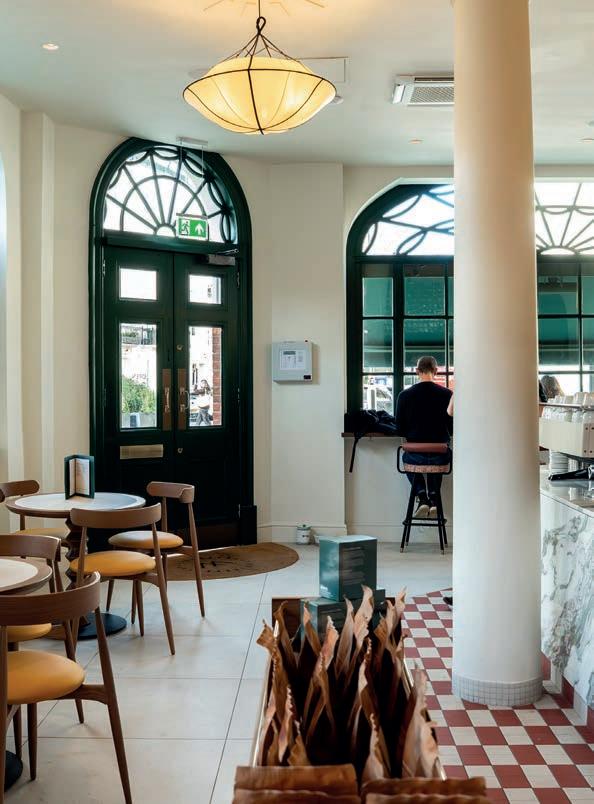
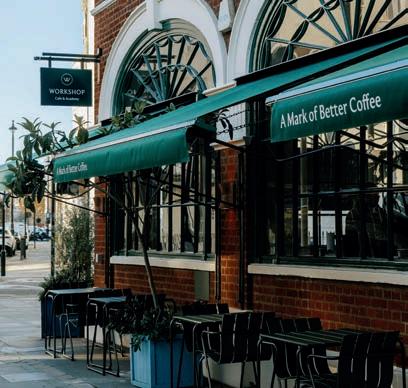
Absolutely chats to James Dickson of Workshop as he opens a new cafe and academy in Belgravia
fter 18 months in the making, Workshop has opened the doors to its most ambitious space yet: a new café and academy in the heart of Belgravia that brings together hospitality, education and design under one roof.
“A focus on co ee as a graded, agricultural product”
James Dickson founded Workshop in 2012, when London’s emerging specialty co ee scene was heavily influenced by Antipodean roasters. Dickson saw an opportunity for something di erent and founded what became one of the first modern British specialty co ee roasters, helping to shape what became known as the third wave movement: a focus on co ee as a graded, agricultural product, sourced with care and roasted to express origin and quality. From the outset, Workshop controlled the process end to end, sourcing and roasting its own beans.
That approach led the brand into the luxury hospitality world. Today, Workshop supplies many four- and five-star hotels, including Claridge’s, The Langham, Beaverbrook and Mandarin Oriental.
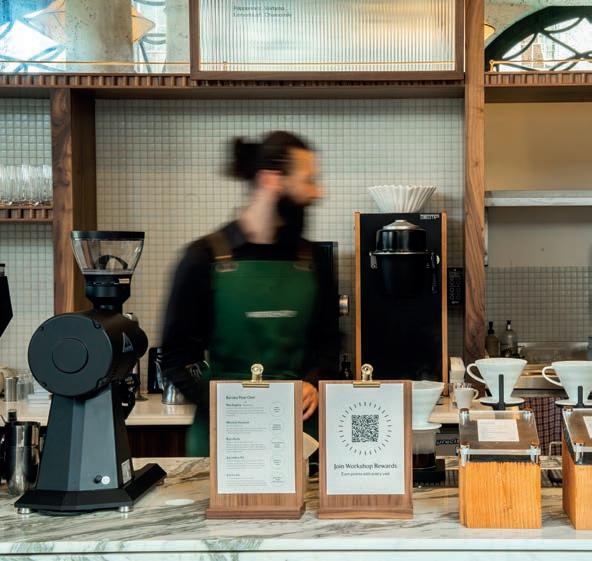
“Speciality co ee has ended up in luxury,” Dickson says. “Everybody wins in these wonderful outlets.” Now, around 70 per cent of his business is trade-focused, with the remainder serving consumers – a balance that is likely to shift with the opening of Workshop's first cafe. At the core of the new space is the academy, housed in the basement. This is where Workshop trains hotel sta and baristas – potentially 500 to 1,000 people serving co ee every day. “How can we train them better?” Dickson asks. The academy is about taking people out of their day-to-day environments and giving them the skills, confidence and understanding to elevate what they do. During the day
it operates as a B2B training space, while after 4pm it opens to consumers through masterclasses and tastings. Here you can buy a Sage, Lelit or a La Marzocco machine, optimised for Workshop co ee, and learn how to use it for professional results.
The ground floor café acts as a retail space, where co ee sits alongside wine and champagne. The design language mirrors the world Workshop inhabits: British, London-centric and quietly prestigious, with marble bars, bespoke lighting and Italian tiles.
The space also serves as a showcase for Workshop’s expanding product range. From beans and capsules – including new PHA bio-polymer capsules designed to decompose in water and soil – to instant co ee, cold brew cans, filter mugs and even co ee liqueur, it’s the fullest expression yet of the brand’s ambition.
For Dickson, who left a career in real estate finance after spotting the co ee wave arriving in London, the opening feels like a milestone. “This is the first shop window to the world of Workshop,” he says. “A place to experience it, to learn, and to understand what we’re really about.”
22 Eccleston Street SW1 workshopco ee.com















By EVE HERBERT

ANITA KO
Diamond oyster and pearl necklace, £7,263 anitako.com









REIS
Strawberry hoop earrings, £850 reisjewellery.co.uk


YVONNE LEON
Coeur Pailletee 9-karat gold diamond ring £1,930 nwt-a-porter.com


TISH LYON

Kira gold titanium tiger's eye flat back stud earrings, £30 tishlyon.com

JACQUIE AICHE
Pave horizontal oval opal ring, £10,800 jacquieaiche.com




Swirly 24Ct yellow gold-plated bronze hoop earrings, £215 selfridges.com

MARNI
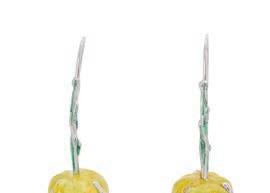
Tulip Enamelled Drop Earrings, £450 selfridges.com









ANITA KO


Pearl and diamond Lola huggies, £5,658 anitako.com









ASHLEY ZHANG JEWELRY
Double Bezel Diamond Baroque Pearl Pendant and Small Belcher Chain, £1,400 ashleyzhangjewelry.com
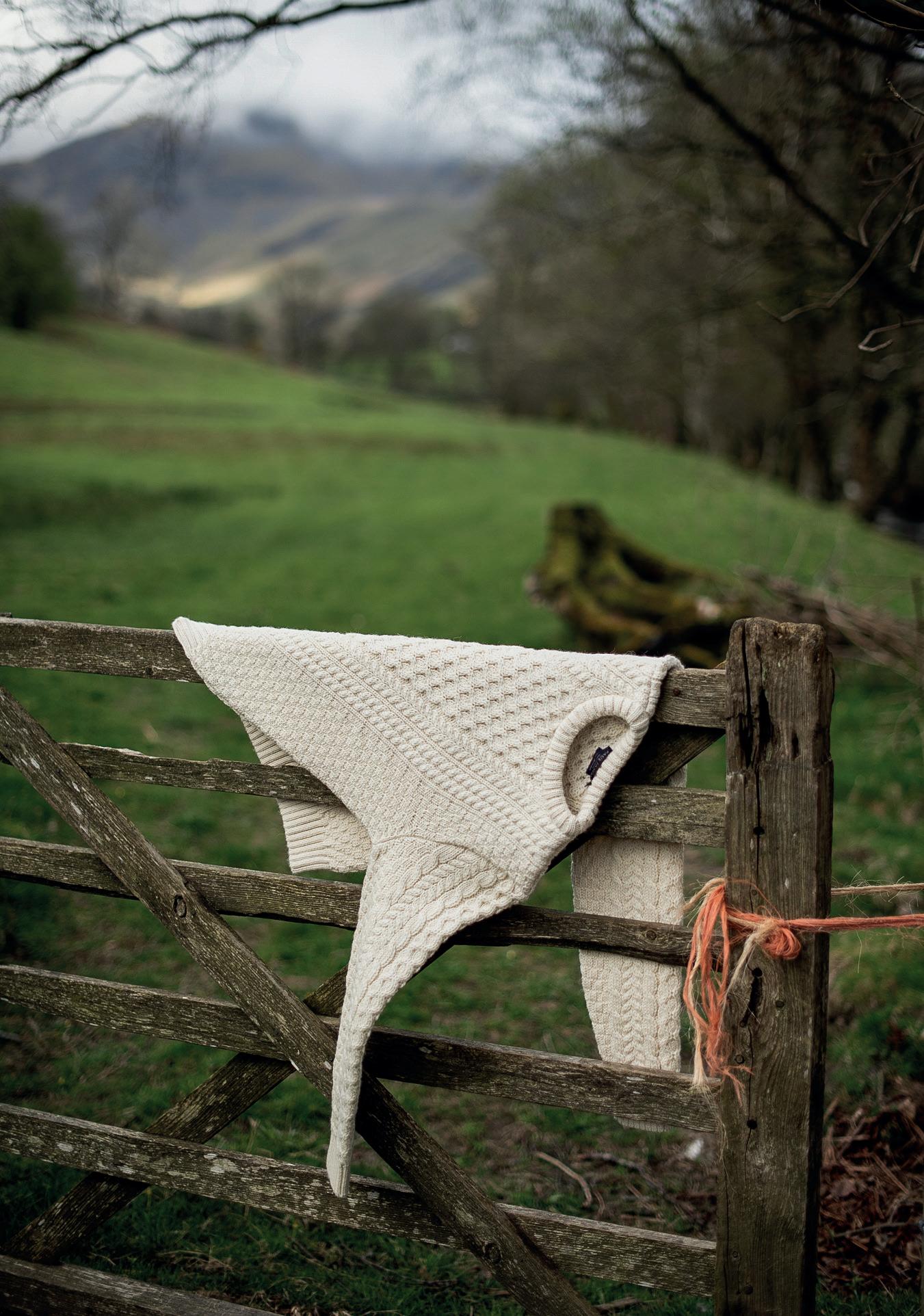

Inspired by heritage design, we intentionally craft staples you’ll love and wear for years to come. Discover our men’s and women’s natural knitwear collections.









NOTES
The latest in luxury makeup and skincare
By CARLY GLENDINNING


CHANEL
The new Rouge Noir collection is ark on the eyes and nude on the lips, featuring vibrant magentas, so pinks and grey, in a subtle nod to rock icons. chanel.com




















EDITOR’S PICK

WOW










Color Wow’s products are designed to deliver instant volume, squeaky-clean strands, and frizz-free perfection in just a few steps. The 100% clean, sulphate-free shampoo and weightless hydrating conditioner deliver silkiest, glossiest, healthiest results, even for fine, thin hair. colorwowhair.com



EMMA LEWISHAM
The Emma Lewisham Essenials set contains seven luxury minis designed to deliver transformative results. Each formulation harnesses up to 25 actives that work in intelligent synergy to offeri a complete ritual that hydrates, brightens, and renews. emmalewisham.co.uk



















AKT’s aluminium-salts free formula transforms from a luxurious, skinnourishing balm into a dry, invisible powder,actively protecting, and deodorising. £25 aktlondon.com



MAKE WAVES
Make Waves’ refi llable applicators contain a natural antiperspirant to keep you fresh and dry. And they smell great too. From £12 wearemakewaves.com






SALT AND STONE
VIA AMAZON
This natural deodorant is aluminiumfree with probiotics, seaweed extracts and shea butter in a lovely Bergamot & Hinoki scent, £20



























1 3 2 4 5





Iris Nebula is described as a love potion, a warm and velvety mix of luscious white pear and iris butter with intriguing notes of anise, caramel and cedar, plus a violet current. £135 nancymeiland.com
The Atelier des Fleurs collection is designed to be layered, though Magnolia Alba is lovely on its own too. A fl oral, green fragrance with subtly lemony notes of magnolia, this is feminine, light and full of romance. £231 selfridges.com
This Valentine's indulgence features rose blooms entwined with the juicy sweetness of wild currant, green ivy,and a hint of saff ron. Smouldering woods lend an enigmatic, carnal depth- creating a fl oral like no other. £225 libertylondon.com
Acqua di Parma’s special Lunar New Year collaboration with Shanghai-based artist Lea Woospotlights Magnolia Infi nita from the Signatures of the Sun collection reimagined through a contemporary visual narrative inspired by the Year of the Horse. harrods.com 1 3 4 5 2
This sophisticated rose combines absolute and extract of damascena and centifolia roses with essence of the fi rad rose, with its unexpected accents of chamomile and artichoke. £170 diptyqueparis.com












it preserves lean muscle mass, which helps maintain a higher metabolic rate.
That said, lighter resistance training has its place too. Using lighter weights with higher repetitions (around 12–20 reps) can improve muscular endurance, coordination, and movement confidence—particularly for beginners or those returning after injury. Light-to-moderate loads are also valuable for accessory exercises, rehabilitation work, and days when the nervous system needs a break from maximal e ort.


Walk into almost any gym and you’ll still see men clustered around the squat racks lifting heavy, while women gravitate toward lighter dumbbells and higher reps. The idea that women should train “light to tone” has lingered for decades— but is it actually true? Modern exercise science suggests the answer is far more nuanced, and far more empowering. First, let’s address the biggest myth: lifting heavy will make women “bulky.” Muscle growth is largely driven by testosterone, of which women have
significantly less than men. Even with heavy resistance training, most women will not develop large, bodybuilder-style muscles without years of highly specific training and nutrition. Instead, what heavy lifting will build is strength, bone density, and a firmer, more defined physique. Heavy resistance training—generally defined as lifting weights that allow for about 3–6 repetitions per set—has several proven benefits for women. It improves maximal strength, supports joint health, and is especially important for bone density, reducing the risk of osteoporosis later in life. Research also shows that heavier lifting can be highly e ective for fat loss because
So where does this leave women trying to decide between heavy or light? The short answer: they shouldn’t have to choose. The most e ective training programs include a mix of both.
Periodized resistance training—cycling between heavier and lighter loads over time—delivers the best results for strength, muscle tone, and overall health. A woman might deadlift or squat heavy once or twice a week, while also incorporating lighter, higher-rep movements for shoulders, glutes, or core. This approach builds strength without neglecting endurance, mobility, or recovery.
Goals matter, too. A woman training for powerlifting will prioritize heavy loads. Someone focused on general fitness or stress relief may prefer lighter weights and faster-paced sessions. Neither approach is “more feminine” or “more correct”—they’re simply tools.
Perhaps the most important factor is psychological. Many women discover that lifting heavier than they thought possible is profoundly empowering. It challenges outdated narratives about fragility and replaces them with a sense of capability and control. Confidence, after all, is one of the most underrated benefits of strength training.
In the end, the question isn’t whether women should go heavy or light—it’s whether they’re being given the freedom, education, and encouragement to do both. Strength, in all its forms, is not gendered. And the strongest programs are the ones that let women lift for their bodies, not against outdated rules.












The benefits of cervical screening: information and reassurance from Harley Women’s Health
Receiving an invitation for cervical screening is more than just another task—it’s a critical step in protecting your health. Yet, with the hustle and bustle of everyday life, it’s easy to set it aside, thinking you’ll get to it later. We get it—life is busy. Between work, family, and personal commitments, it might feel like there’s no time to squeeze in another appointment.
But before you push that letter aside, consider this: cervical screening is one of the most e ective ways to prevent cervical cancer. This simple test, often referred to as a smear test, can detect early changes in cervical cells that, if untreated, could develop into cancer. The sooner these changes are caught, the easier they are to manage, often preventing the onset of cancer altogether.
Maybe you’re worried about discomfort, or perhaps you’re unsure why the test
is so important. Rest assured, you’re not alone in these feelings. Many women share these concerns, but the peace of mind that comes from knowing you’re taking a proactive step to protect your health is worth the brief discomfort.
At Harley Woman’s Health we o er a wealth of information to enhance your understanding of cervical screening and colposcopy. Our goal is to provide you with clear, detailed insights into these crucial
“Cervical screening is one of the most e ective ways to prevent cervical cancer”
health procedures, empowering you to make informed decisions about your cervical health. Cervical Screening, commonly known as a Pap smear or Pap test, is vital for detecting early signs of cervical cancer and pre-cancerous conditions. Cervical screening benefits are immense, as this lifesaving programme has helped reduce the risk of cervical cancer since its introduction in the UK in 1988, aimed at reducing the risk of cervical cancer. This programme invites women aged 25 to 64 to undergo a routine tes which has played a crucial role in saving lives. The smear test is a simple and quick procedure typically performed by a nurse or doctor. During the test, a small sample of cells is gently collected from the cervix, which is the lower part of the womb, also known as the neck of the womb. There is nothing to fear, and so much to gain – so book the appointment now.
harleywomenshealth.com

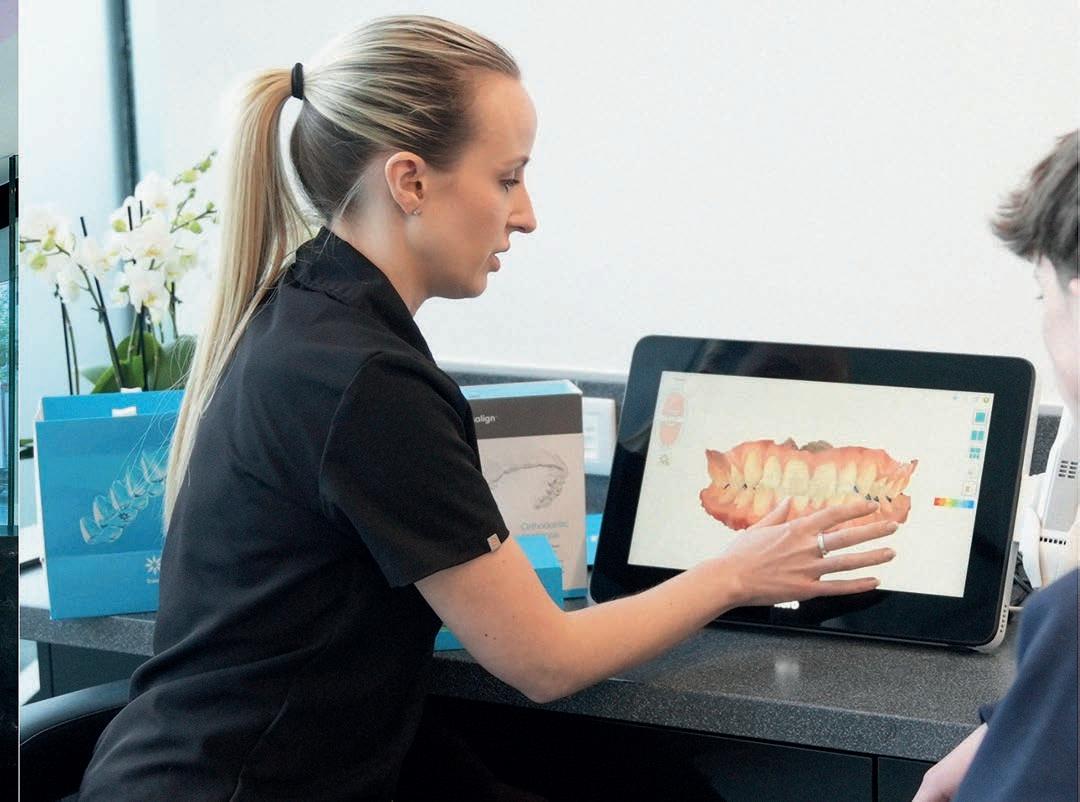
When teasing at school caused seven-year-old Rebecca to hide her smile, her parents turned to early orthodontic treatment. What followed transformed far more than her teeth
When seven-year-old Rebecca came home from school in tears, her mother Nadia was concerned.
A classmate had joked that she did not need a costume for the school party because she already looked like a bunny. Her two front teeth were protruding and sitting apart.
"She asked me: Mum, do I look like a bunny?" Nadia recalls. "While I reassured her that she didn’t, we realised we needed to do something as she began hiding her smile, and she was only seven." Children become self-conscious, teased or bullied long before NHS orthodontic treatment is available. For Nadia and her husband, waiting years while she endured the painful comments was not an option.
Rebecca's jaw had begun to shift forward, and her two front teeth were noticeably misaligned. After the incident at school, the family went straight to the NHS. The response was familiar. She was too young. Treatment could wait. "But she was clearly very unhappy," Nadia says. "This was not about looks. It was significantly a ecting her emotionally."
They were recommended to the London Orthodontic Clinic and at her
first appointment, Dr Alex Seijas asked questions which surprised them. Did Rebecca snore? Did she sleep with her mouth open? "We had noticed that," Nadia says. "But we never realised it could be connected to her jaw or her teeth."
Dr Seijas explained that without early intervention, Rebecca might require jaw surgery as a teenager. Acting while she was still growing could guide her jaw development and avoid more invasive treatment later.
Her phased treatment started with twin blocks, a functional appliance that gently guides the jaw. As her jaw position improved, fixed braces were added to align her two front teeth. The next step was Invisalign treatment, a system of clear removable aligners which gradually straighten teeth. "You take them out, wash them and put them back in. It is simple and so much cleaner for a child." Rebecca checked her progress assiduously through the Invisalign app.
The change in Rebecca has been tangible. "Treatment has been a real boost for her confidence," Nadia says. "Now when we take pictures she really smiles. She shows o her smile. Her sleep also improved - she now sleeps comfortably with her mouth closed.”
"If you can help your child now, why wait?" Nadia says. Early treatment at the London Orthodontic Clinic changed far more than her teeth. It gave a little girl her confidence back.
To arrange an initial assessment or explore treatment options, visit londonorthodonticclinic.com
BEFORE AFTER























































Battersea Place by LifeCare Residences




















































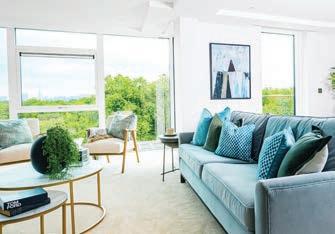

Discover luxury apartments, facilities, lifestyle and service. More community.Less Battersea Place by LifeCare Residences















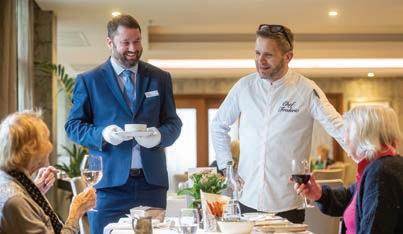
































Discover luxury apartments, facilities, lifestyle and service.












Battersea Place, London’s
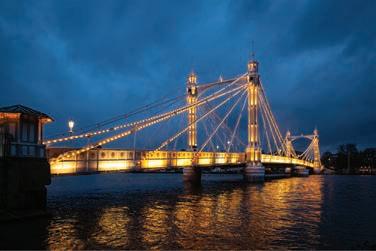
Battersea Place, London’s premier luxury retirement village, redefines independent living for those who seek an exceptional and vibrant lifestyle in the heart of our capital city. Situated in an enviable position directly opposite the verdant expanse of Battersea Park, our residents enjoy the serenity of this beautiful green space alongside the cultural richness and excitement of central London. The elegant streets of Chelsea and Knightsbridge are but a short, pleasant stroll across London’s most attractive bridge, offering a world of fine dining, high-end boutiques, and renowned galleries.

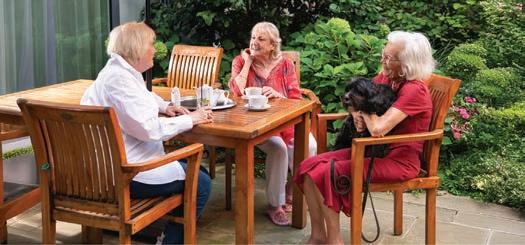
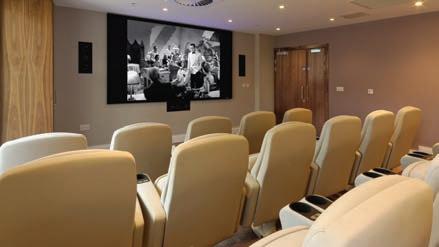



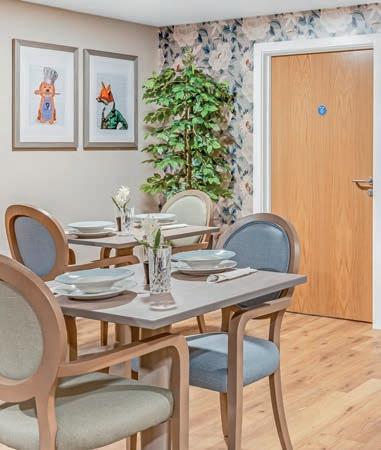
At CHD Living, care is never just a serviceit’s a relationship. It’s the morning cup of tea shared with a smile. The first steps taken after rehabilitation. The moment a family feels, for the first time in weeks, that their loved one is safe and truly seen.
For over 40 years, our familyowned group has supported people across Surrey, Hampshire and South London through every chapter of life’s journey. From residential care homes to pioneering neurorehabilitation centres and highly personalised home care services, we o er a complete spectrum of support tailored to individual needs.
But what truly sets us apart is our guiding philosophy: Creating Happiness Daily. It’s more than a motto. It’s our commitment to making every day brighter, warmer and more meaningful for those we care for.
Whether someone is recovering from a stroke, living with dementia, or simply needs a helping hand to stay independent at home, CHD Living provides specialist care that adapts as life changes. Our joined-up services are built around the individual, so no matter where someone starts their journey with us, we can walk with them every step of the way.
Our teams bring together medical knowledge and emotional intelligence in equal measure. At our rehabilitation centres, therapists help people rebuild strength, confidence and independence after life-changing injuries. In our care homes, teams go above and beyond to provide not only practical support but heartfelt companionship. And across our home care division, we empower people to continue
living where they feel happiest, surrounded by the memories and comforts of home.
Behind every care plan is a story. A son who sees his father smile again. A grandmother who takes part in a painting class for the first time in years. A couple who reunite for an anniversary lunch organised by the team. These moments are why we do what we do.
Over the coming months, we are proud to be growing our CHD Living family with the opening of two new care homes: Willow Grange Care Home, situated in Pyrford, Woking and Wey Meadows in Elstead. At CHD Living, we don’t just care for people - we care about them. Every day is a chance to bring comfort, spark a smile, and create lasting memories. That’s what Creating Happiness Daily means to us.
To find out more about our services, or to register interest in our new homes, visit chdliving.co.uk or call 01428 772 469.
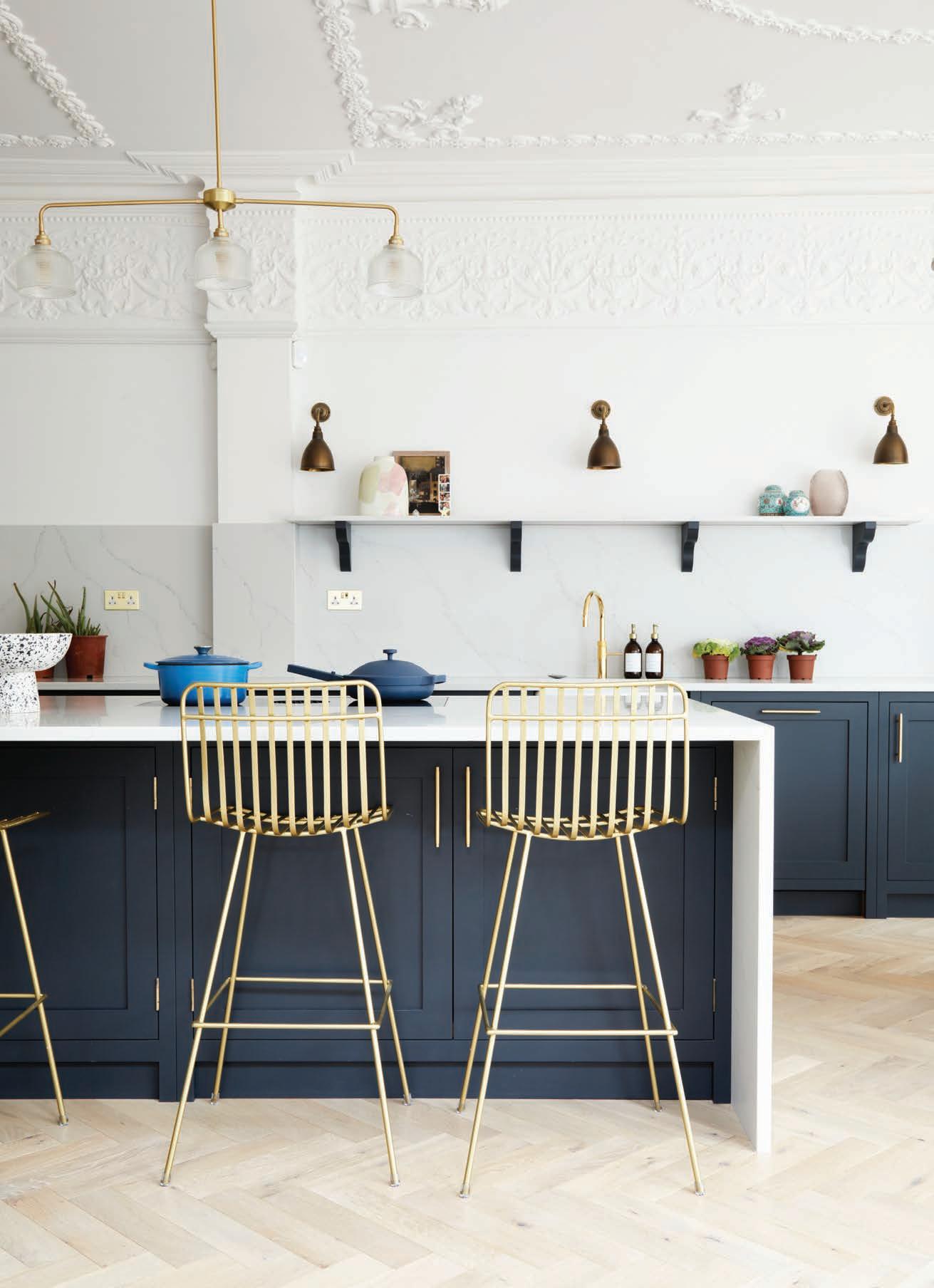
BY KASIA FISZER
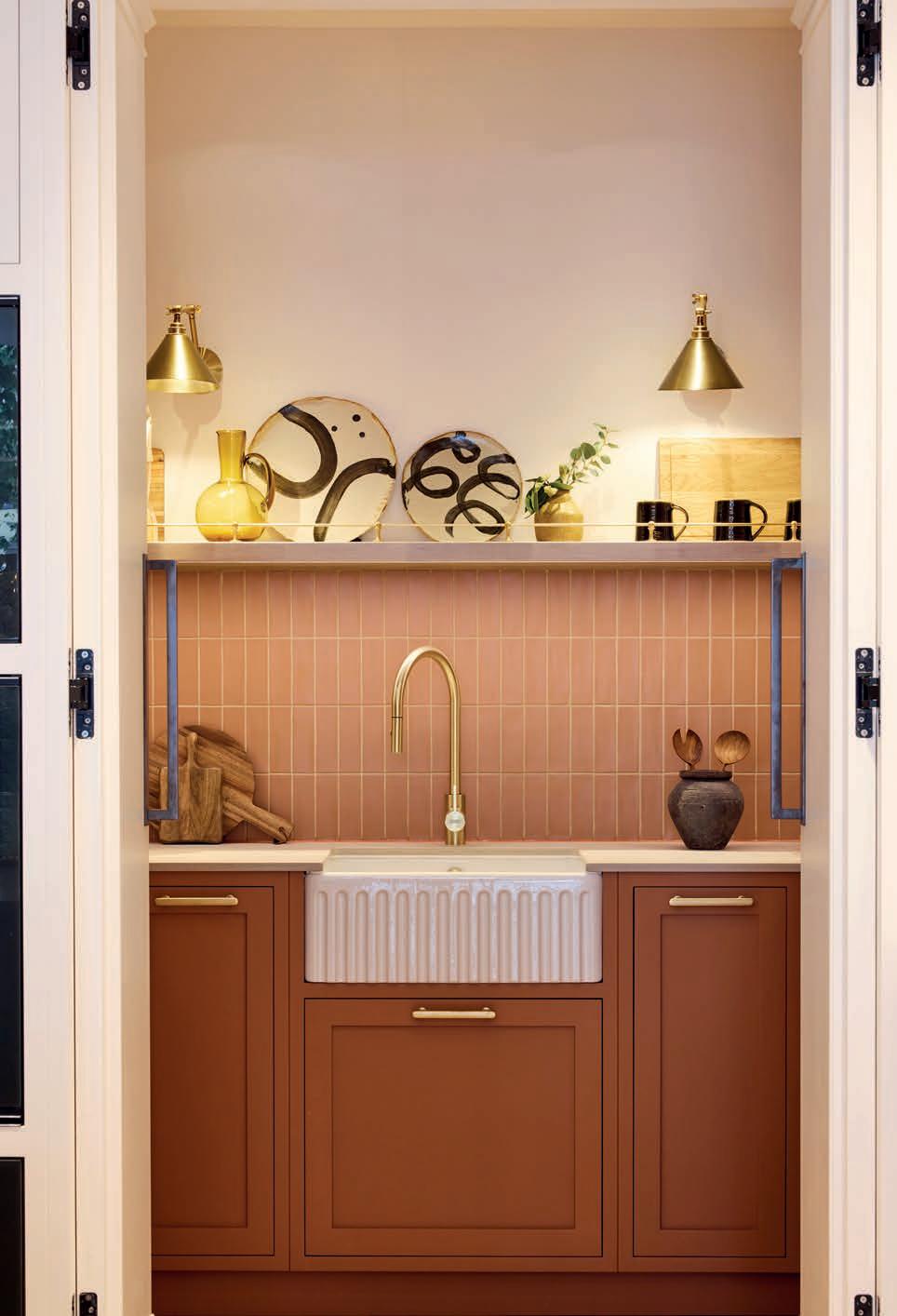
ESPRESSO DESIGN
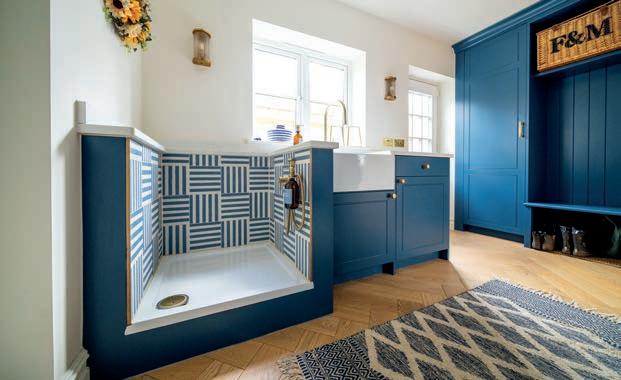
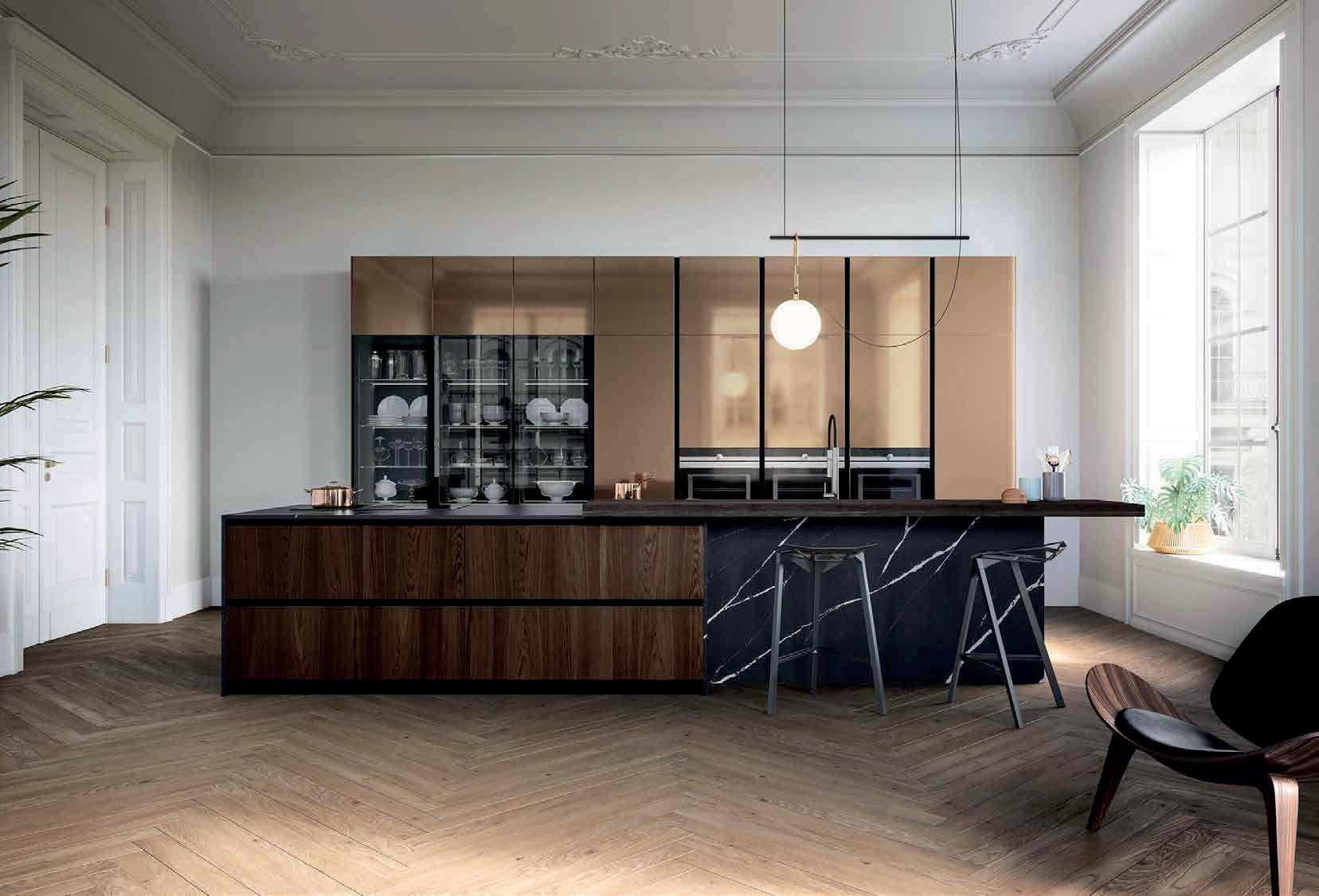
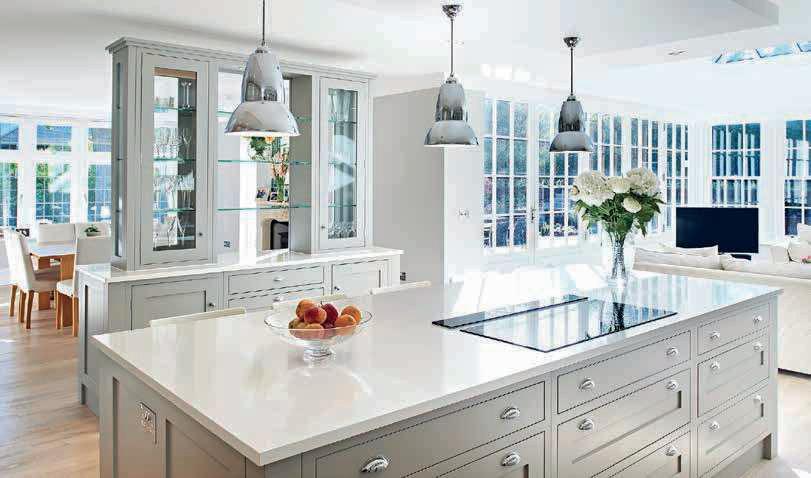
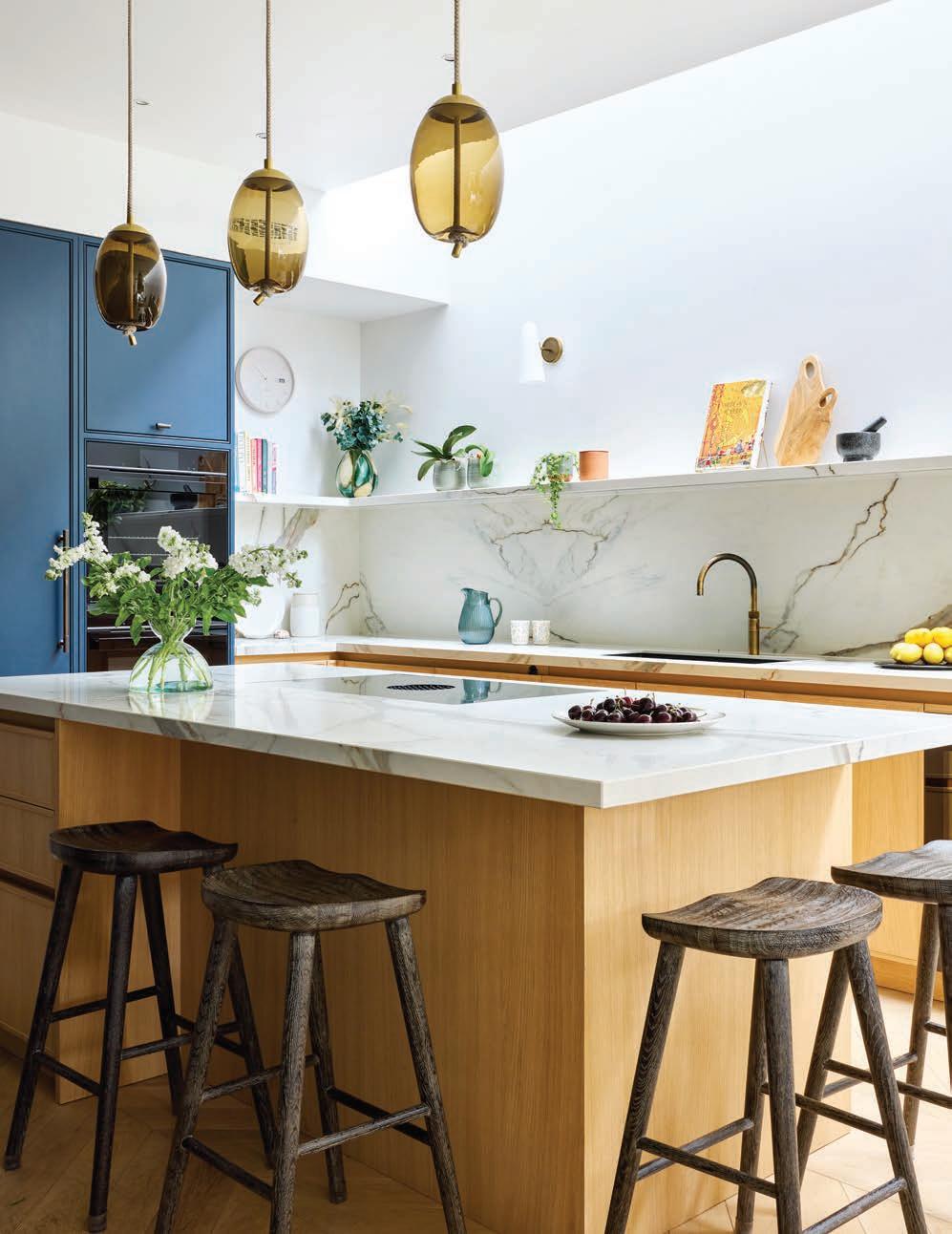
Once a hardworking staple, the pantry has returned to the heart of the modern home. Driven by a love of calm, organisation and thoughtful living, Espresso Design creates beautifully considered pantries that blend practicality with warmth, order and quiet luxury in contemporary kitchens. espressodesign.co.uk
By PENDLE HARTE
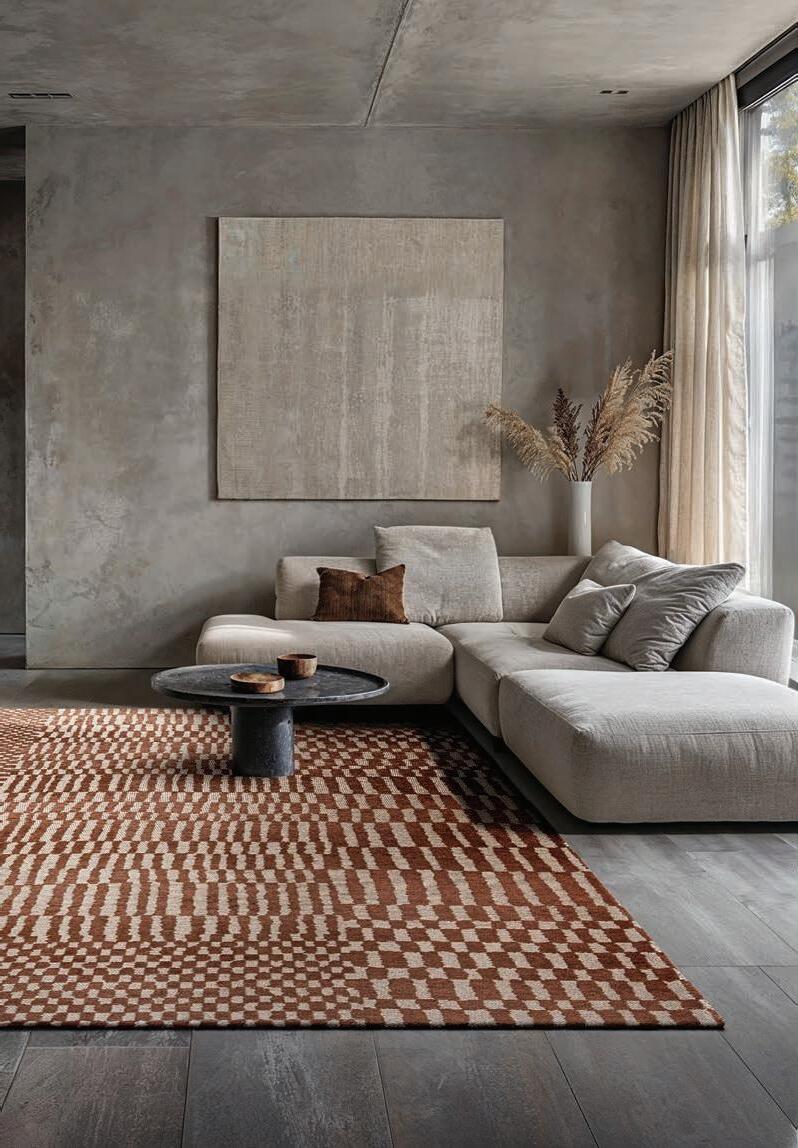
LOUIS DE POORTERE
The traditional designs of Morocco’s Beni Ouarain tribe are the inspiration behind Louis De Poortere's new Berber collection of Ecorugs. Reinterpretimg ancient tribal patterns in a vibrant, contemporary palette, Berber's bold, high-contrast colour combinations breathe new life into the rich heritage of the designs. louisdepoorterestore.com
BETTINA CERAMICA
Bespoke fabric studio Colours of Arley joins forces with Bettina Ceramica, the London-based label founded by Natalie Sytner, celebrated for its contemporary take on traditional Italian ceramics, to unveil a debut lighting design, a limited-edition lamp that fuses fluid form with graphic precision. bettinaceramica.com
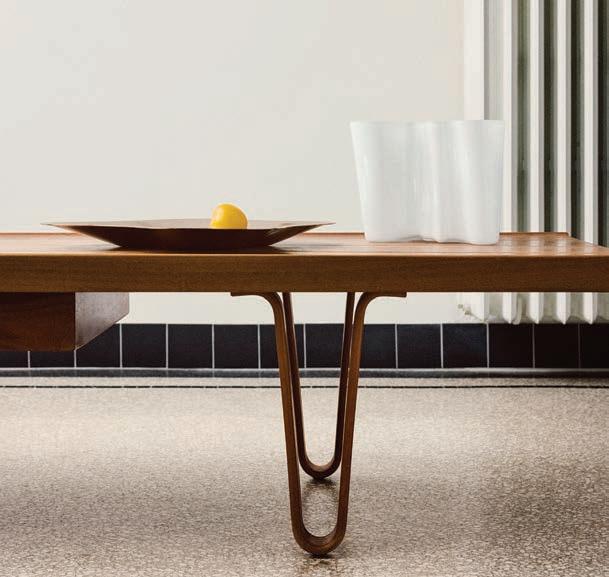
IITTALA
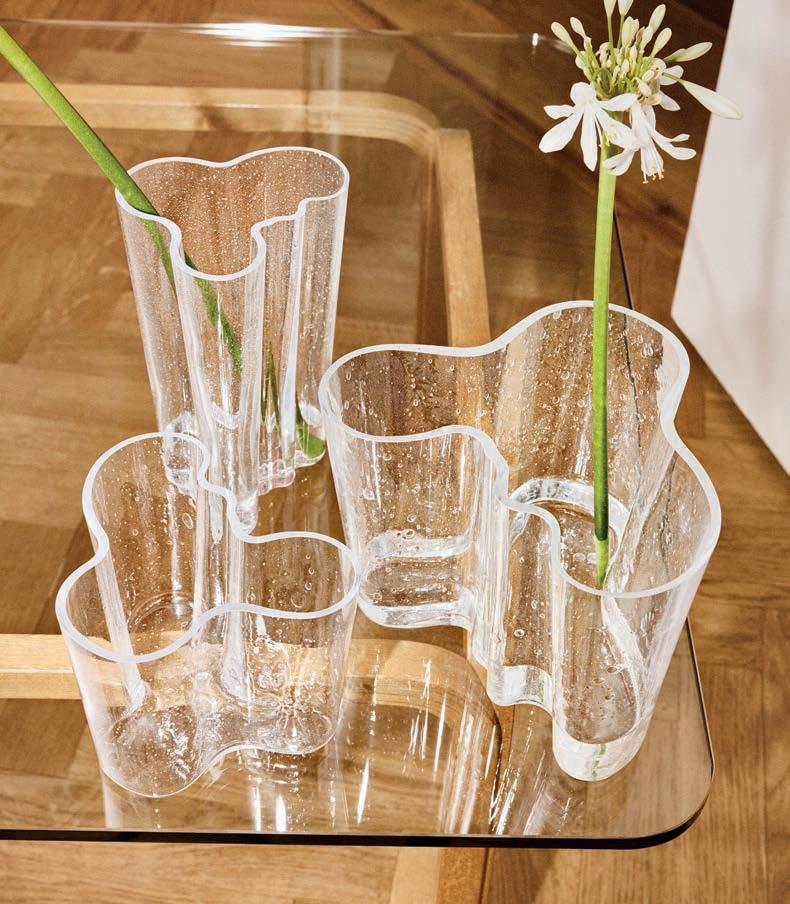
Iittala's new Aalto Bubble Vase is a new interpretation of the iconic silhouette. This anniversary edition features delicate bubbles suspended within the glass, created with a traditional glassblowing technique. iittala.com
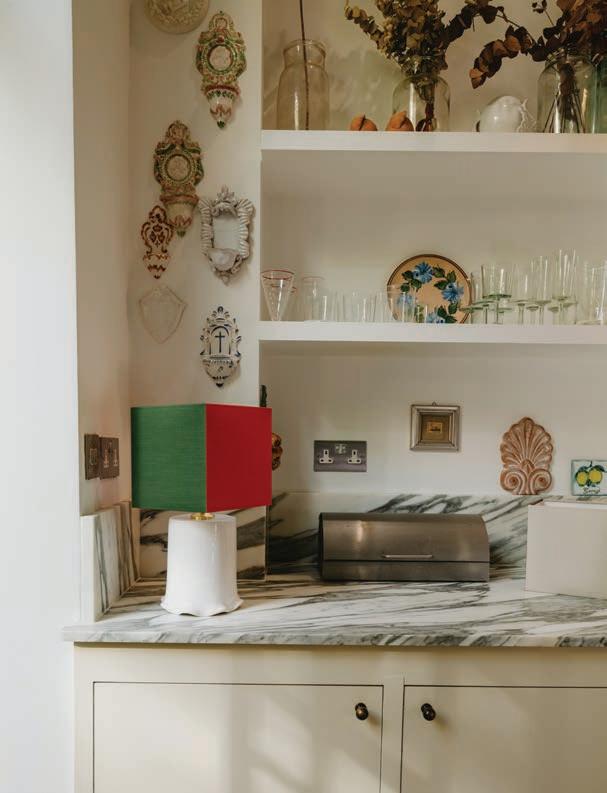

JUDY CAPLIN CERAMICS
Stone glaze teapot, £120 handmadeinbritain.co.uk


HK LIVING
70s Ceramics teapot, £49 folkinteriors.co.uk

HIROYUKI ONUKI Teapot, £150 vam.ac.uk






NKUKU Indigo drop teapot, £48 nkuku.com

OKA Kraak teapot, £90 oka.com

MAGNUS LONG AT SCP
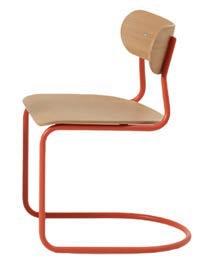
Magnus Long's Archer cantilever chair, made from tubular steel with a plywood seat and backrest, references the epoch-defining tubular steel chairs first produced a century ago, while featuring a number of details that make it resolutely modern. £429.25 scp.co.uk
SWYFT
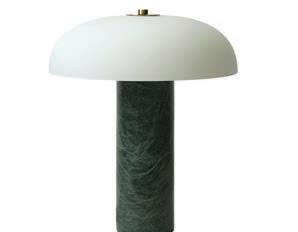
Swy 's debut lighting range features 13 table lamps and 7 floor lamps, with designs inspired by contemporary, mid-century, and 70s aesthetics, with glass, marble, chrome, wood, and fabric finishes - all elevated with subtle metal accents. swy home.com


EDITOR’S PICK
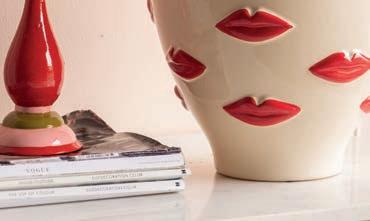
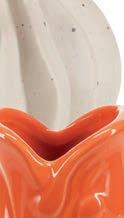
ROCKETT ST GEORGE Kiss Me Lips Flower Vase, £85 rockettstgeorge.co.uk






ROCKETT ST GEORGE Leopard print vase, £60 rockettstgeorge.co.uk
By PENDLE HARTE































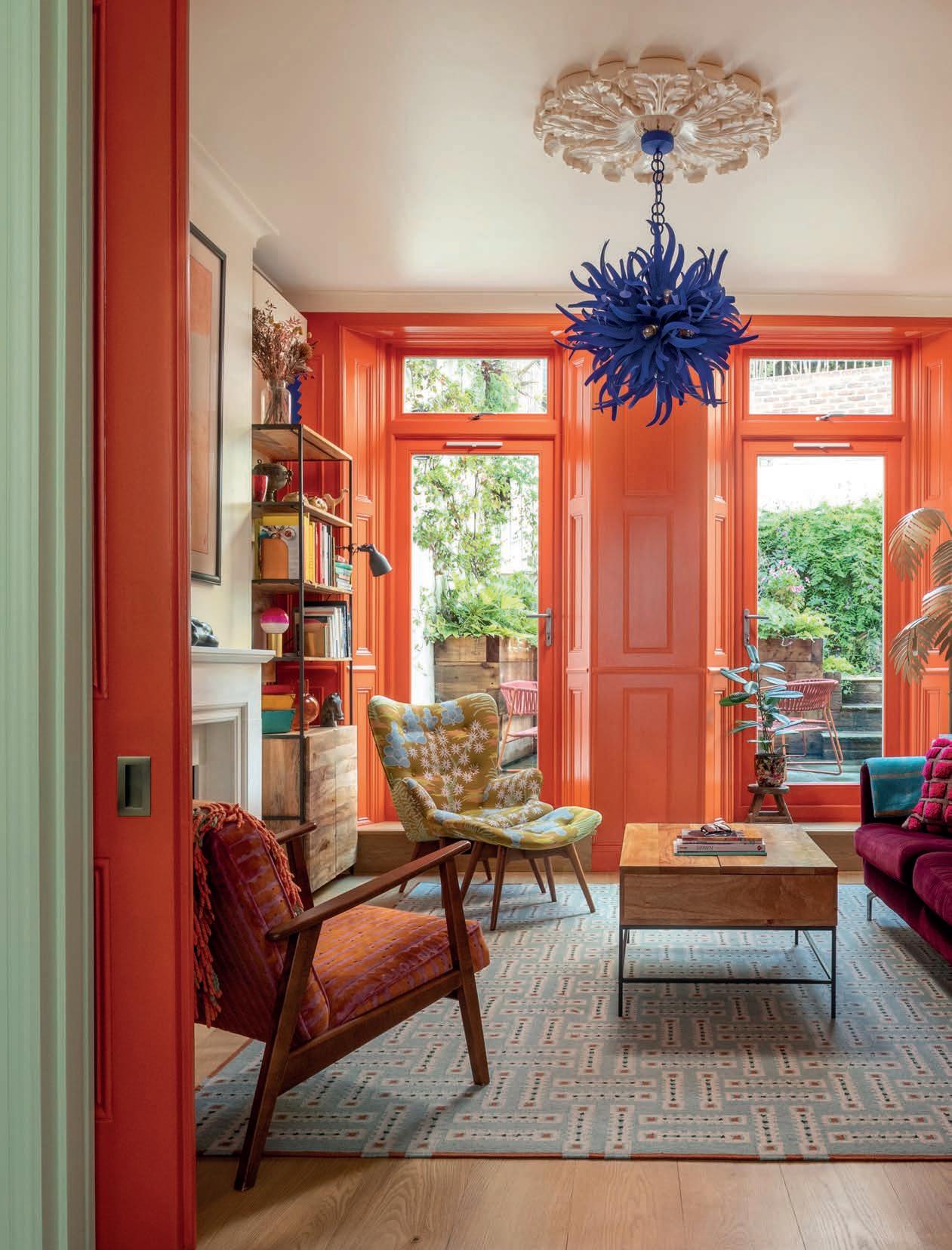
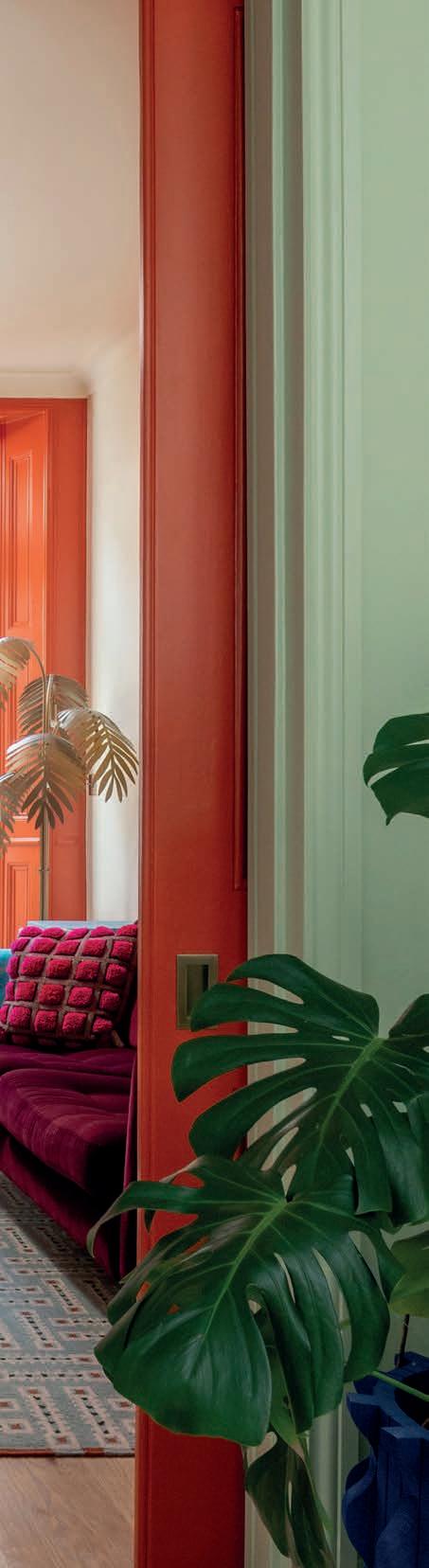
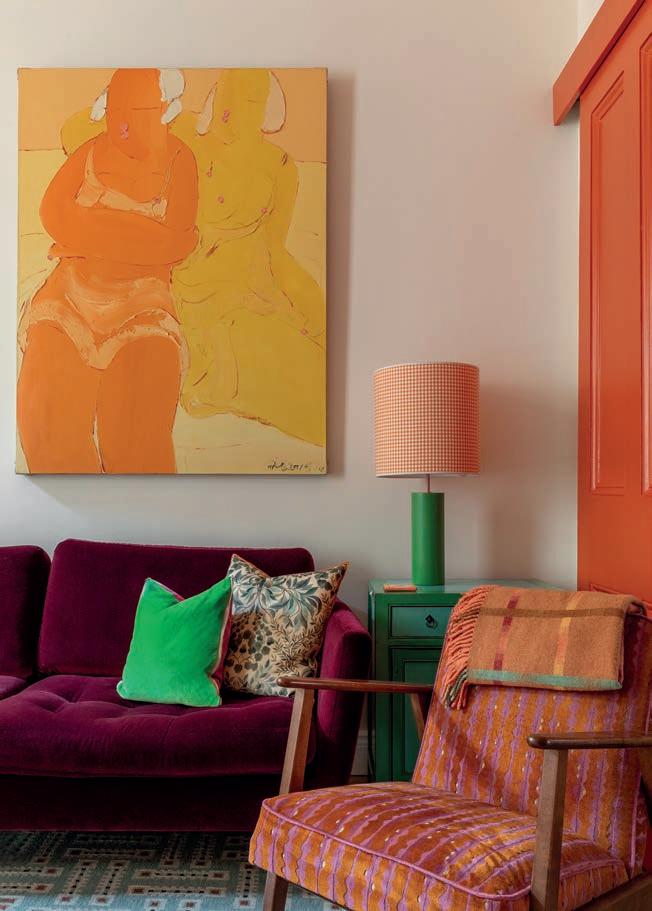
A Hampstead period home brought back to life with colour & bespoke joinery by Mia Karlsson Design
What began as a fairly simple brief quickly grew into a full-home refresh. Our clients in Hampstead asked for some help with their house and soon fell in love with the concepts as they discovered just how transformative the right design can be.
This house is home to a couple and their two teenage children. When we first stepped inside, we loved the bones of the home, but the neutral setting simply wasn’t a reflection of the family, who spent years living and working abroad, collecting incredible pieces along the way, particularly from Asia..
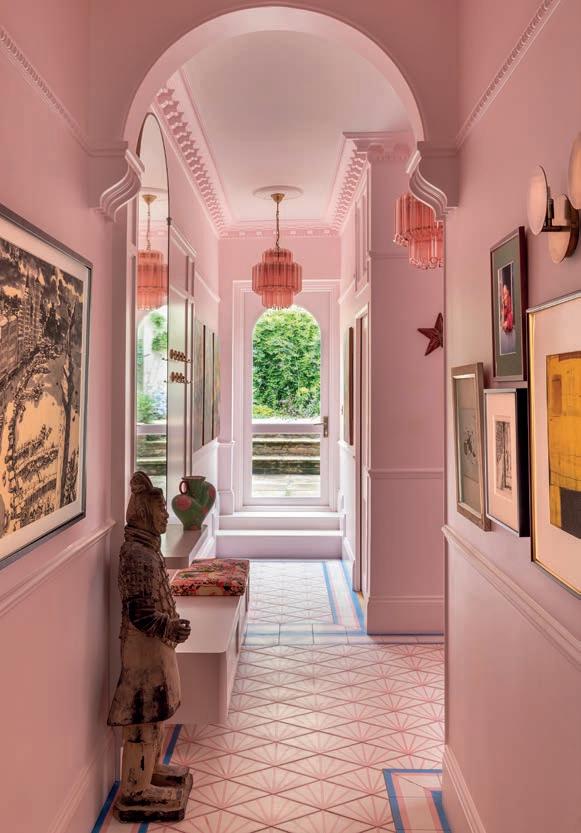
First o was the entrance: a long hallway stretching from the front to the back of the house with huge “wow” potential. What was once a white-and-grey corridor with small doors and lacklustre lighting became an unapologetic burst of pink colour and joy. We opened up the doorways either side to create two mirrored sets of double doors - one to the kitchen, one to the dining room - instantly improving flow and pulling natural light deeper into the home. The custom floor tiles blend a traditional shape with a contemporary pink-and-blue palette, while original architectural details (coving, dado rail, ceiling roses and architraves) were elevated with a delicate pink. Bespoke joinery provides coat and shoe storage, finished with a “Mind the Gap” cushion for that eclectic twist, plus additional storage on the half landing. To top it all o : 1970s-inspired pink chandeliers by Pure White Lines and a statement yellow radiator.
“To top it all o : 1970s-inspired pink chandeliers and a statement yellow radiator”
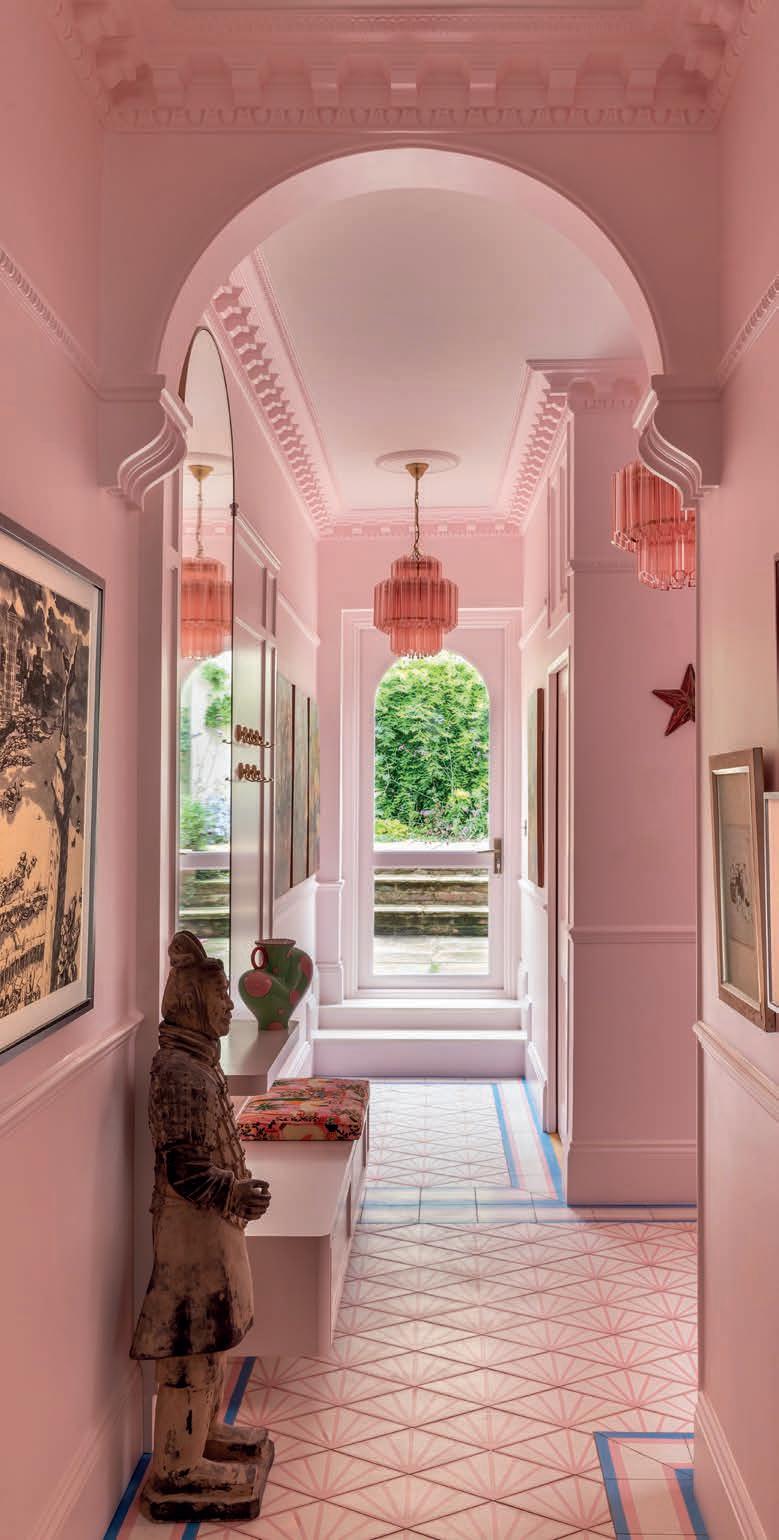
“We leaned into a darker, moodier palette to create a cosy, intimate space”
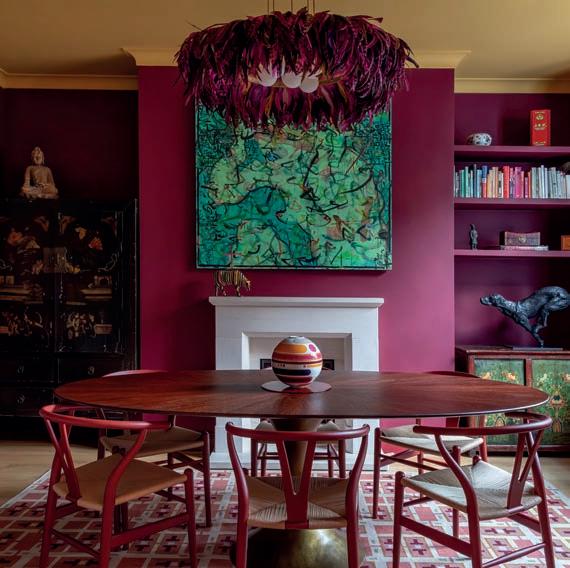
O the hall, the dining room sets the tone for entertaining. We leaned into a darker, moodier palette to create a cosy, intimate space centred around a timeless Julian Chichester table, Carl Hansen Wishbone chairs and a bespoke feather chandelier. Deep reds are punctuated with yellow accents in “Chinese Emperor” - historically associated with imperial China - as a nod to the room’s antiques. One very important client detail: Parker the dachshund likes to keep watch from the front window. To protect the new paintwork (and keep him comfortable), we designed a bespoke windowsill cushion in Blackpop velvet. A flatweave rug from A Rum Fellow in blush and yellow ties everything together, blending classic pieces with the unexpected.
Across the hallway, the family living room is high-impact and full of personality. The garden view is framed with orange woodwork, while the remaining walls are kept calmer to let the large-scale artwork shine. We mixed colours and textures from Mind the Gap, Nobilis and Élitis to create something totally unique to the family. The brave showstopper is the electric-blue Porta Romana Urchin chandelier: sculptural, punchy, and impossible to ignore.
In the study, the brief was calm and focused, with a garden view and journey designed to minimise clutter. The room is almost entirely bespoke joinery: a built-in desk, generous storage, and upper panelling with atmospheric lighting, softened with a simple chair, side table and wall light for comfort.
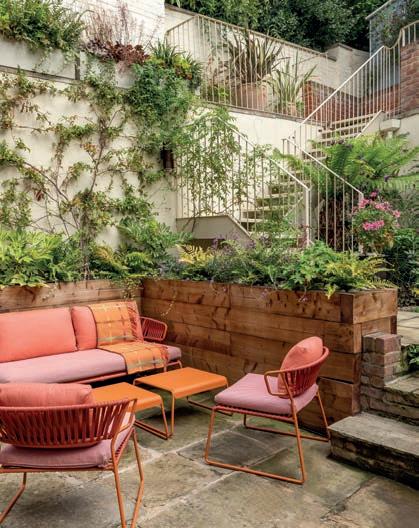
Beyond the corridor, the two-storey garden was reimagined as an evergreen sanctuary, complete with bespoke planters
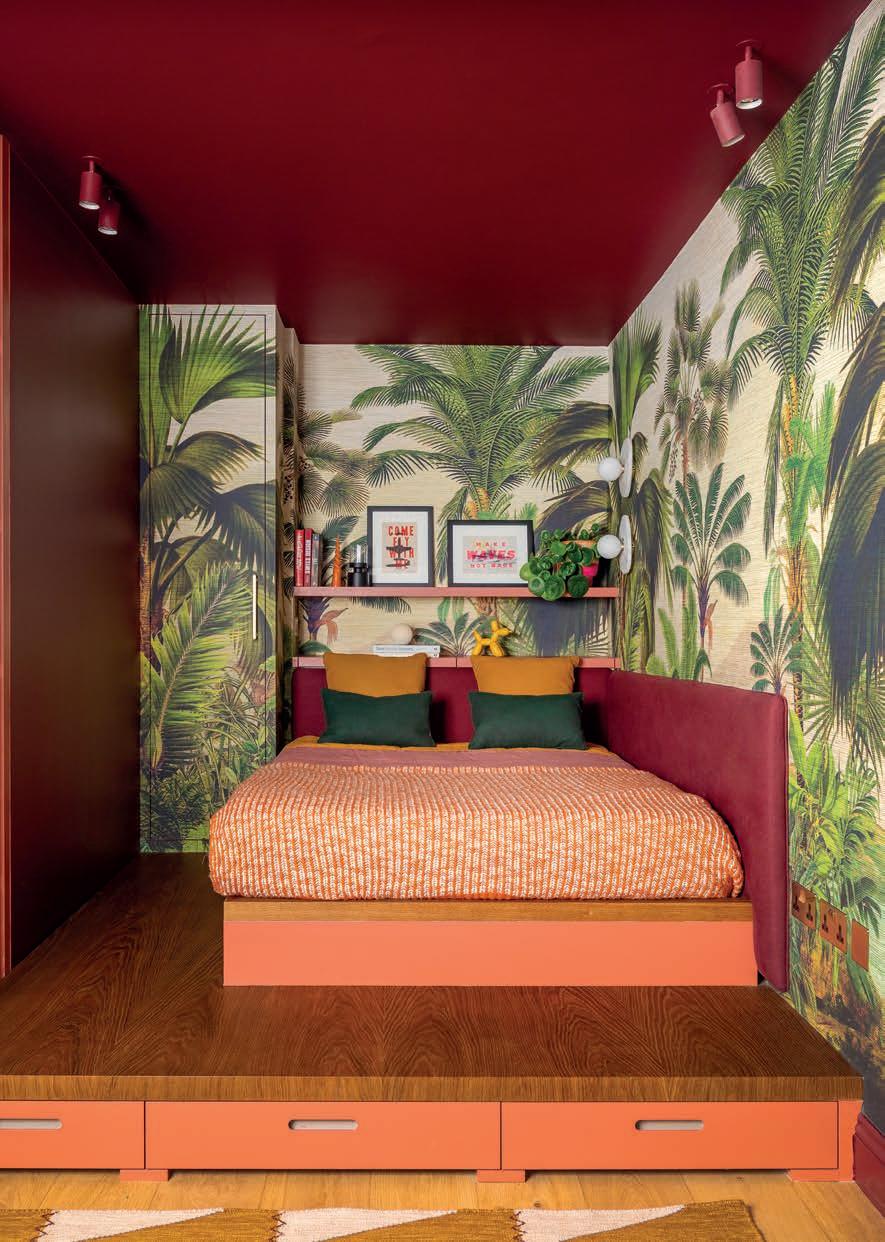
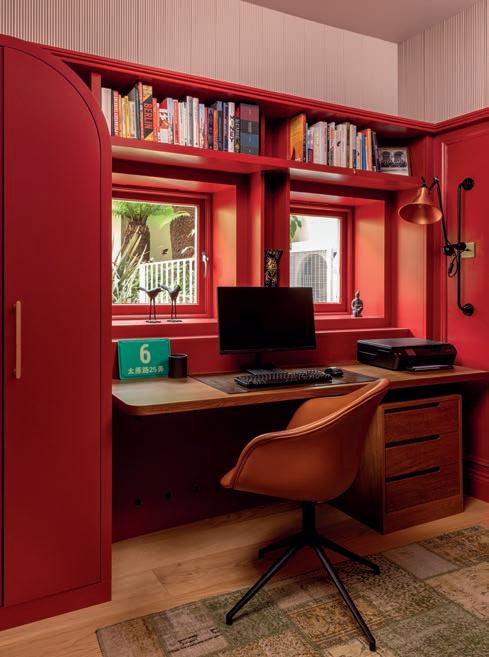
and trellises, plus a new suntrap terrace at the highest point.
A statement stair runner in orange and soft pink stripes leads upstairs, where the landing and bespoke linen cupboard are fully clad in an Andrew Martin mural wallpaper featuring folk-art illustrations on a plaster-pink ground.
The first bedroom pulls together many of the clients’ existing pieces into a cosy, eclectic scheme, leading into a brand-new, beachy ensuite in blue and yellow tones with Otto Tiles. In the second bedroom, dark wood panelling and plum-toned joinery create a rich, cocooning feel, layered with faux-fur rugs and a reupholstered headboard in Jim Thompson’s brilliantly named “Cat’s Pyjamas” fabric for extra softness and texture.
The lower ground floor saw the biggest transformation. The brief: a second family living space/ film room, plus a standalone guest suite that could later become a studio apartment for one of the children. The suite needed a bedroom, bathroom, kitchenette and plenty of storage, so bespoke joinery became the hero here too. We designed a platform bed with drawers and a padded headboard that wraps the corner, doubling as a sofa area. A full-height wardrobe was concealed with Arte wallpaper to create a cleaner, more expansive feel. With minimal natural light in the basement, lighting was carefully layered: subtle ceiling spots painted to blend in, soft organic wall lights where needed, and a simple pendant over the dining table that doesn’t compete with the showstopping wallpaper. The finishing touches - a flatweave rug, oversized mirror to bounce light around, new double Crittall-style doors to the living room, and blackout curtains - make it feel like a true retreat.
Finally, the once-sad, damp cellar - cold and unusablebecame a surprise favourite. With no major storage needs (beyond wine) and a wonderfully open-minded client, we transformed it into a 1970s-inspired wine bar snug and dj booth. A matching Crittall-style door separates it from the rest of the home, so it feels like stepping into a di erent world. Complete with geometric tiles, a built-in bench with playful upholstery, comfortable bar seating, and of course a lava lamp and record player, it’s now a warm, inviting space designed for years of memorable evenings. The clients love it.







“The vase has remained an enduring emblem of Finnish design”

As 2026 marks 90 years of Iittala’s iconic Aalto vase, Absolutely looks at its legacy
This year marks 90 years of Iittala's Aalto Vase, a fluid, organic form that transformed the language of modern glass design. First created by Alvar Aalto in 1936 for the Karhula–Iittala Glass Design Competition, the vase broke with the rigid geometries of its time,
introducing an expression of movement, nature and emotion rarely seen in glass. The original design concept, which was interpreted into 10 di erent shapes, gained international acclaim at the 1937 Paris World Fair, where it became a symbol of Finnish modernism and became known as the ‘Aalto Collection’. Soon after, Aalto
created custom vases for Helsinki’s Savoy Restaurant, whose interior was designed by Alvar and Aino Aalto in 1937. The vase, a ectionately known since as the Savoy Vase, has remained an enduring emblem of Finnish design and the couple’s shared belief in beauty through function. Alvar Aalto pioneered a human-centred design
philosophy that united architecture, interiors, and everyday objects, an approach shaped in part by his close collaboration with Aino Aalto. Together, their shared vision laid the foundation of Finnish functionalism, where form follows empathy and craftsmanship meets purpose. Today, the original design stands as a design icon — inspiring innovation, artistry and craftsmanship synonymous with Iittala.










At the heart of Iittala lies the Iittala Glass Factory, where every Aalto Vase is still handmade in Finland using traditional techniques refined over generations. Each vase begins with molten glass heated to over



















“It takes a small orchestra of craftspeople to create a single Aalto Vase”
















a small orchestra of craftspeople to create a single Aalto Vase, each person bringing their own rhythm to the glass,” says Master Glassblower Tero Välimaa. The undulating edge that defines the form is one of the the glass cools and settles. Each finished







most technically demanding aspects to produce, requiring instinctive timing as the glass cools and settles. Each finished piece carries the invisible signature of its maker, a subtle reflection of hand, heat, and human touch. It takes a team of seven skilled craftspeople to create a single piece, a testament to the exceptional artistry and collaboration behind every design.


Limited time only
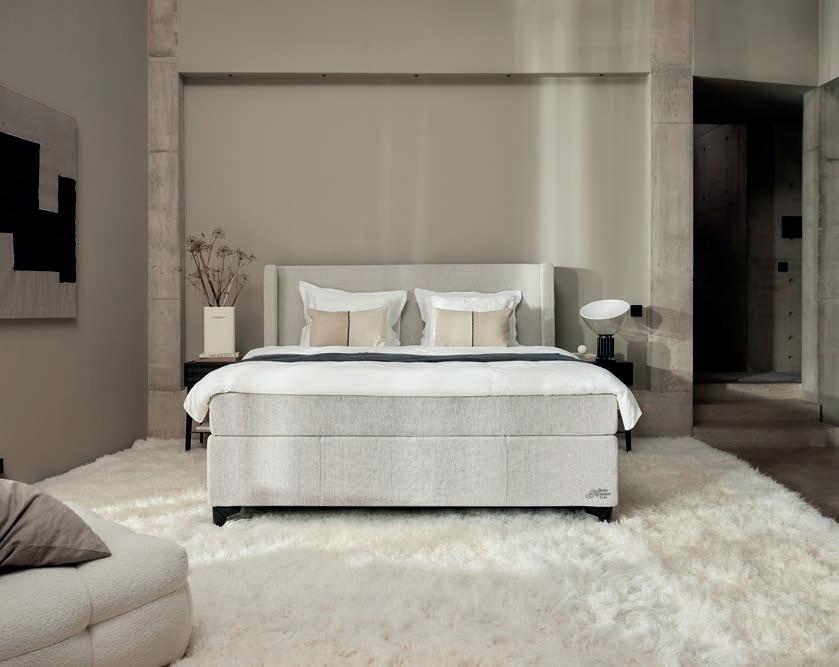
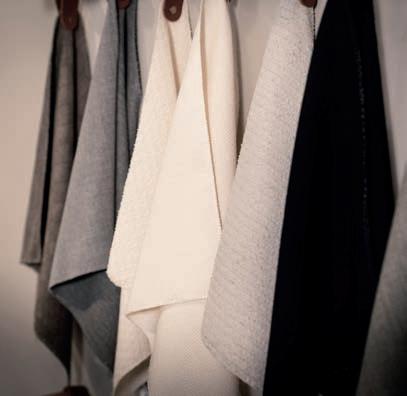

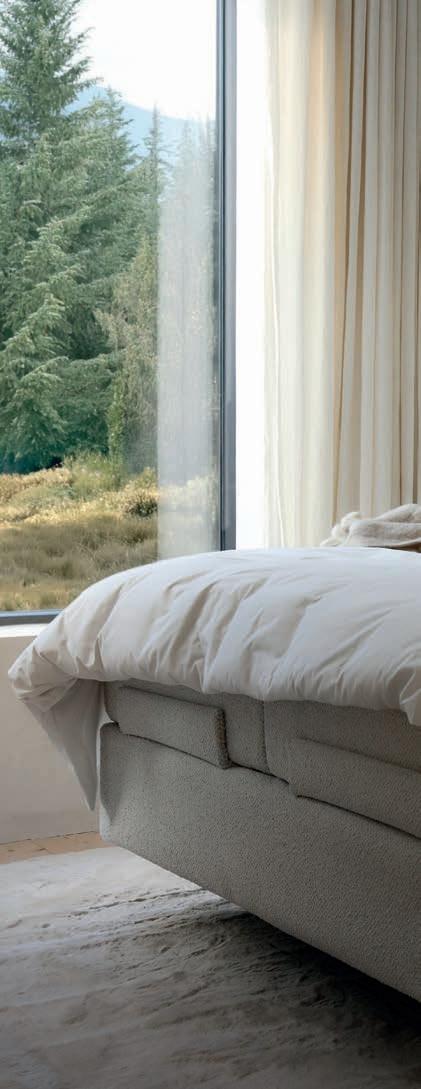
Jensen: Norwegian sleep pioneers since 1947
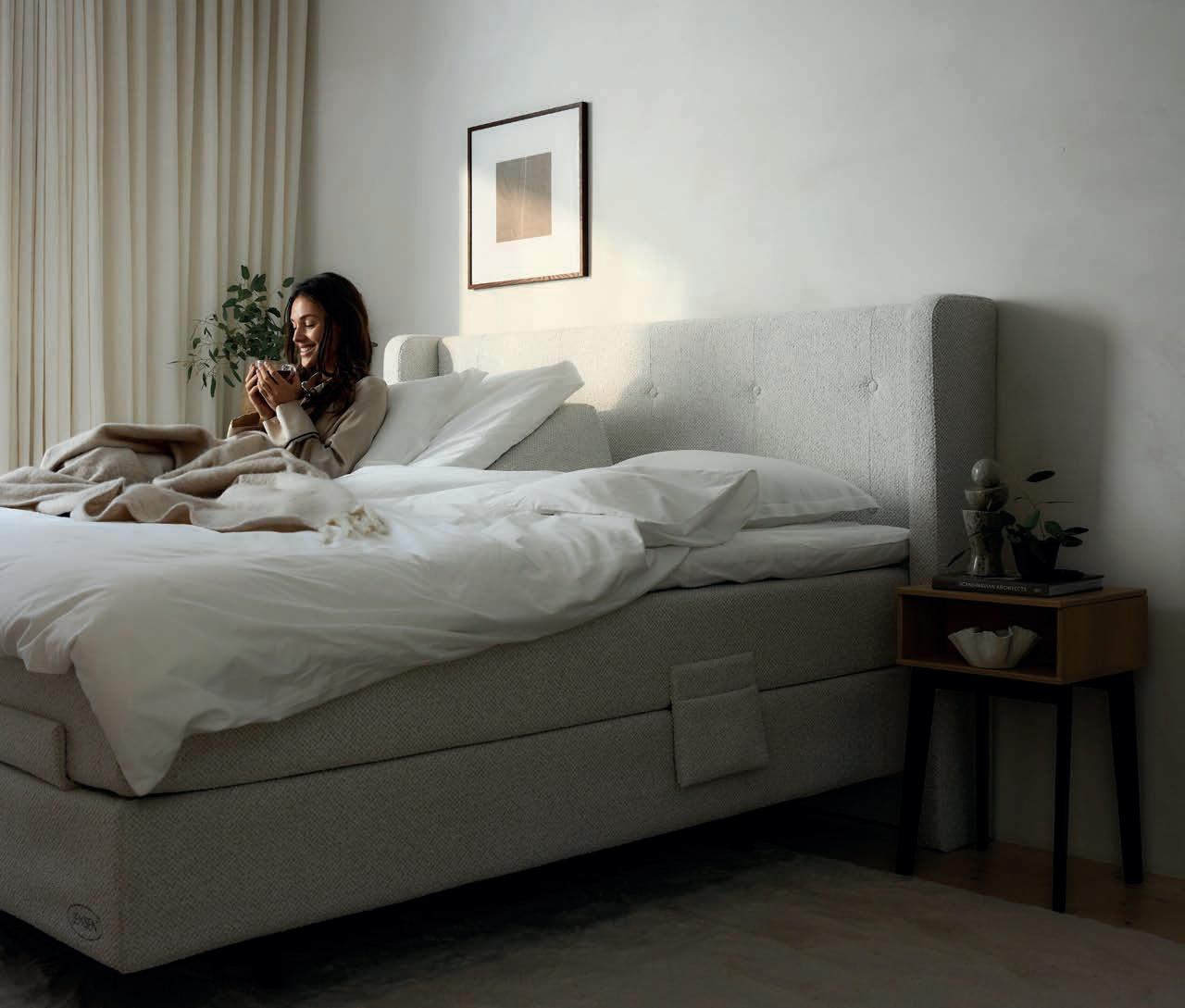
Every Jensen bed that leaves their factory today has a story that begins almost 80 years ago. A story of craftsmanship and innovation, but also responsibility. They still build their beds in Norway, with materials and methods that stand the test of time. To underline that, your new Jensen bed comes with a 25-year guarantee against frame or spring breakages.
What started as a small family business is today a premium brand with beds and accessories of the highest quality. And while they are proud of their heritage, they never let it stand in the way of new ideas. For example, they always apply the latest findings in sleep science and physiology to the development of new beds. They use all their expertise and curiosity to improve people’s rest – and thereby their performance. It’s a story of craftsmanship and innovation,
but also responsibility. They still build their beds in Norway, with materials and methods that stand the test of time.
While technology and the automation of their production have made it more e cient, it’s the people that make their beds what they are. Some of their employees are now the third generation of passionate bed-builders at their factory in Svelvik, just outside of Oslo. Together, they are dedicated to making a long-lasting contribution to sleep comfort.
At Jensen, they have made it their purpose to help you wake up fully rested. From design to choice of materials, every detail in their beds is carefully chosen to improve your sleep quality – and thereby your performance.
It’s not always easy to know what to look for in a product that is meant to be a longterm investment in your sleep and well-being.
A mattress should help the body relax, reduce pressure points, and provide the right level of support. Your sleeping position can give a useful indication of what type of bed may suit you best, but it should never be the only factor when making your final choice. Jensen understand how easy it is to feel overwhelmed when choosing a bed – there are many options to consider, from bed types and firmness levels to zoning systems. That’s exactly why they encourage you to ask for help in store. They recommend visiting their London showroom at Chelsea Harbour when you’re buying a bed. Their team consists of trained sleep specialists with in-depth knowledge of the di erent models. They will guide you in the right direction from the very beginning, so you don’t end up trying too many beds and leaving more confused than when you arrived.
Find out more by calling 020 3914 1262, emailing jensenbeds.chelseaharbour@ hildinganders.com, or visit jensen-beds.com
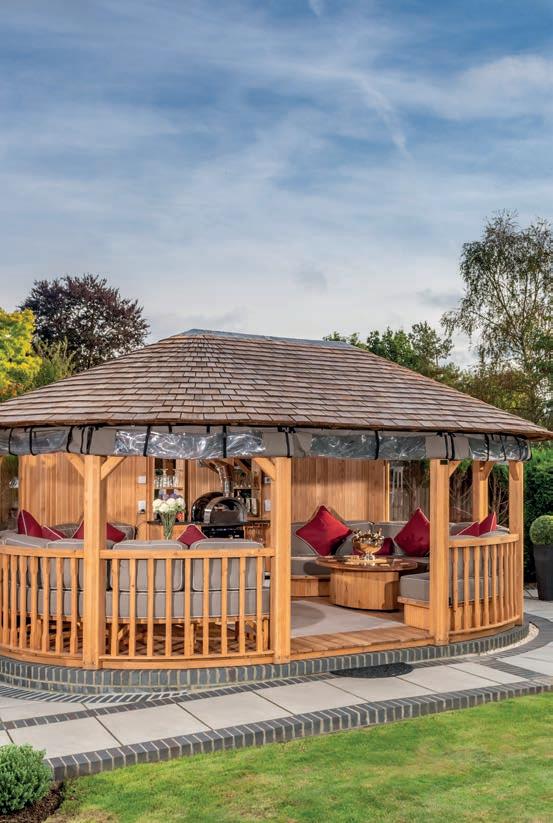
IThe gazebos o er open-air luxury, with the option to enclose the space
Crown Pavilions: luxury garden buildings for all seasons
n February, most gardens fall still.
The grass frosts over, furniture is packed away, and outdoor spaces retreat behind walls and windows. But for those who value year-round use of their garden, winter doesn’t have to mean switching o , it can simply mean using the space di erently.
At Crown Pavilions, they design and build garden buildings intended for use and enjoyment throughout the year. Their range includes insulated garden rooms, gazebos, summerhouses, garden shelters, equestrian buildings and fully bespoke outdoor structures, all handcrafted in Oxfordshire and tailored to individual lifestyles and settings.
Their insulated garden rooms are designed to provide a comfortable, enclosed space in all seasons. Built with high-quality insulation, double glazing and robust weatherproofing, they remain bright, warm and usable even during colder months.
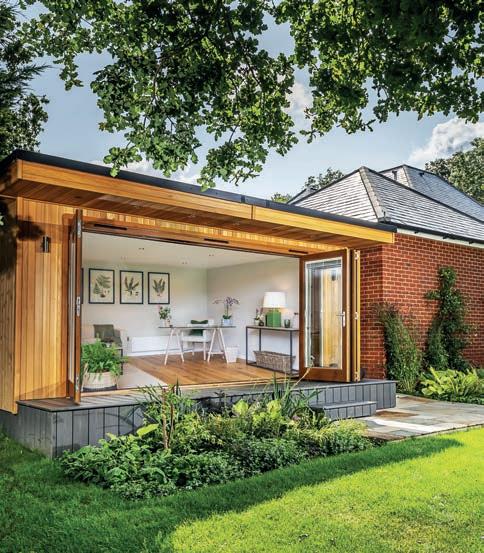
These spaces are commonly used as home o ces, gyms, studios or quiet retreats – carefully designed to balance practicality with understated design. Interior options such as air conditioning, ambient lighting and bespoke layouts allow the space to be adapted for di erent uses across the year. If you intend to use your garden room as a residential, dwelling or living space, additional upgrades and specifications may be required. Their team of experts would be delighted to guide you through the available options to suit your intended use.
Their gazebos o er open-air luxury, with the option to enclose the space using marine-grade canvas curtains and blinds. Crafted from European Redwood and finished with thatched or blue-label Western Red Cedar shingles – the highest quality available – they provide the perfect setting for alfresco dining, hot tub enclosures
or simply enjoying the garden, come rain or shine. With optional heating and integrated lighting, many clients enjoy their gazebo well into the cooler months. Each Crown Pavilion is carefully designed to suit its setting and purpose. As the seasons shift, your space adapts with you, welcoming spring mornings, summer soirées, autumn reflection and winter calm. Whether you’re seeking a practical space, a place to escape, or a structure that enhances your everyday, Crown Pavilions delivers luxury that lasts, garden buildings made for all seasons, and all lifestyles.
Visit a Crown Pavilions Show Site
To truly appreciate the quality, atmosphere and design of a Crown structure, nothing compares to stepping inside. Visit show sites at: Chessington Garden Centre, London Longacres Garden Centre, Bagshot, Surrey Van Hage Garden Centre, Ware, Hertfordshire Alton Garden Centre, Essex Frosts Garden Centre, Woburn Sands, Milton Keynes Bridgemere Garden Centre, Cheshire
Exclusive Reader Offer For a limited time, Absolutely readers will receive an exclusive 10% OFF, applicable to all installations completed before March 2026. To invest in Crown Pavilions is to invest in a lifestyle, one defined by elegance, excellence and enduring luxury.
Discover more crownpavilions.com / crown-equestrian.com Call: 01491 612 820
Email: sales@crownpavilions.com



















MINDTHEGAP
Suzani floral lampshade, £160 mindtheg.uk
HOUSE OF HACKNEY
Golden Lily Circus wallpaper, £195 per roll houseo ackney.com
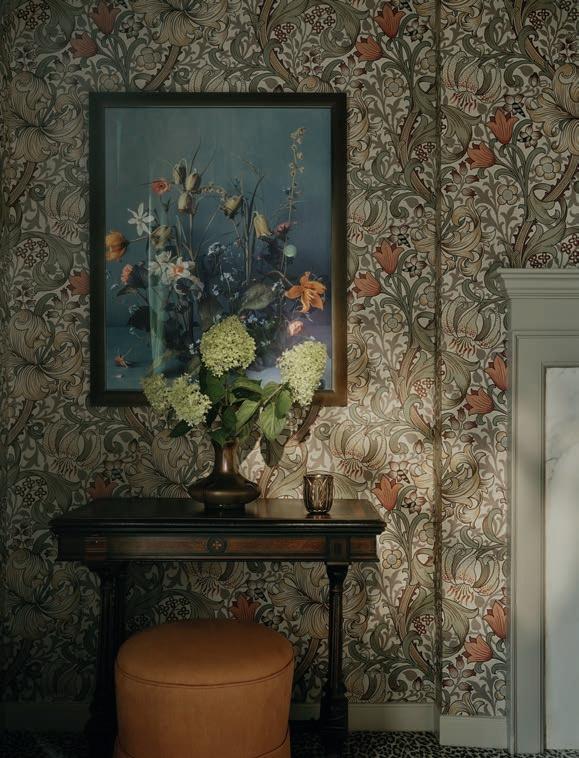

OKA
Zhenhua wall panels, £POA oka.com
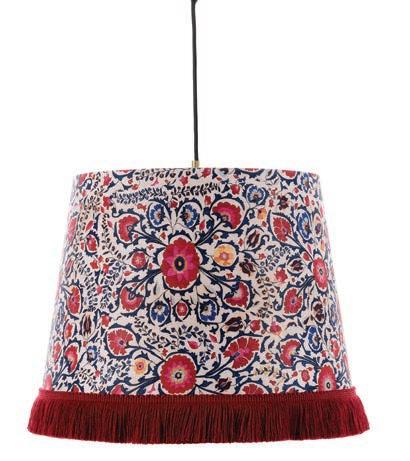
CASA BY JJ
Beatrice dinner plates, set of six, £80 casabyjj.com
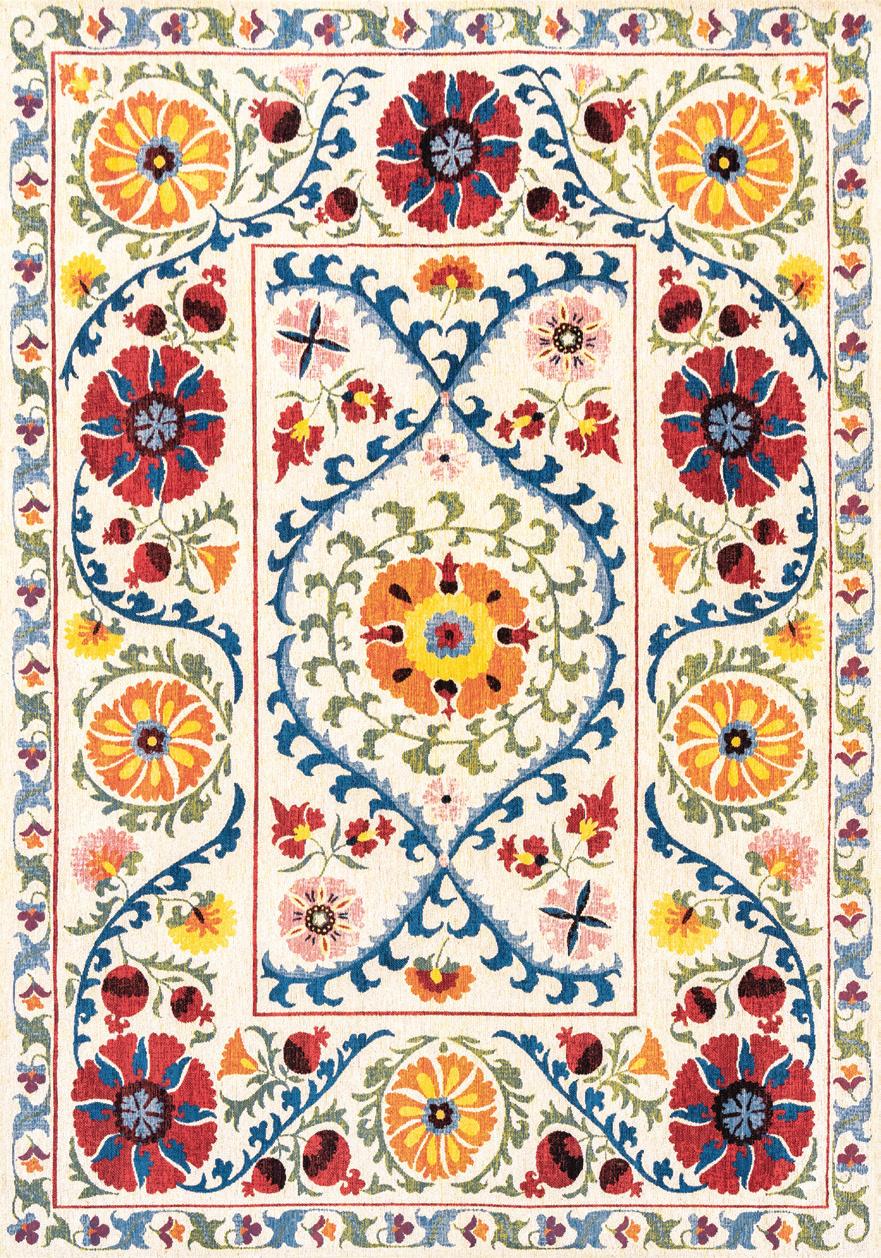
LOUIS DE POORTERE
Suzani rug, £399-£1,555 heugahinteriors.com
DIVINE SAVAGES
Drunken Monkey wallpaper, £159 divinesavages.com
Florals are set to be huge in 2026: here's how
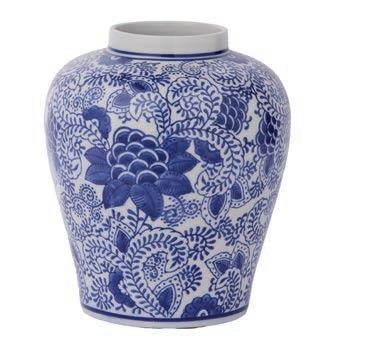
By PENDLE HARTE
LITTLE GREENE
Rhododendron wallpaper in Hicks Blue, £POA littlegreene.com
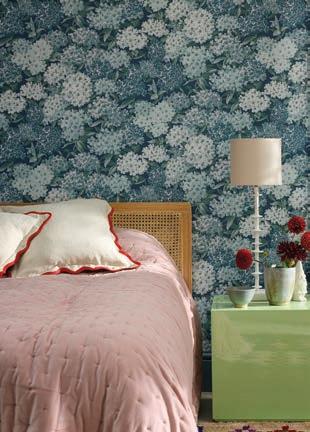
COX & COX
Floral ceramic vase, £45 coxandcox.co.uk
SANDERSON
Silver Lime Nymph wallpaper, £112 sanderson.design
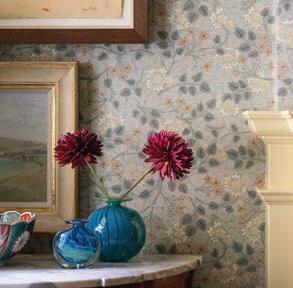

PRETTY TIFFIN
Mess plate set of four, £52.99 prettytiffin.co.uk

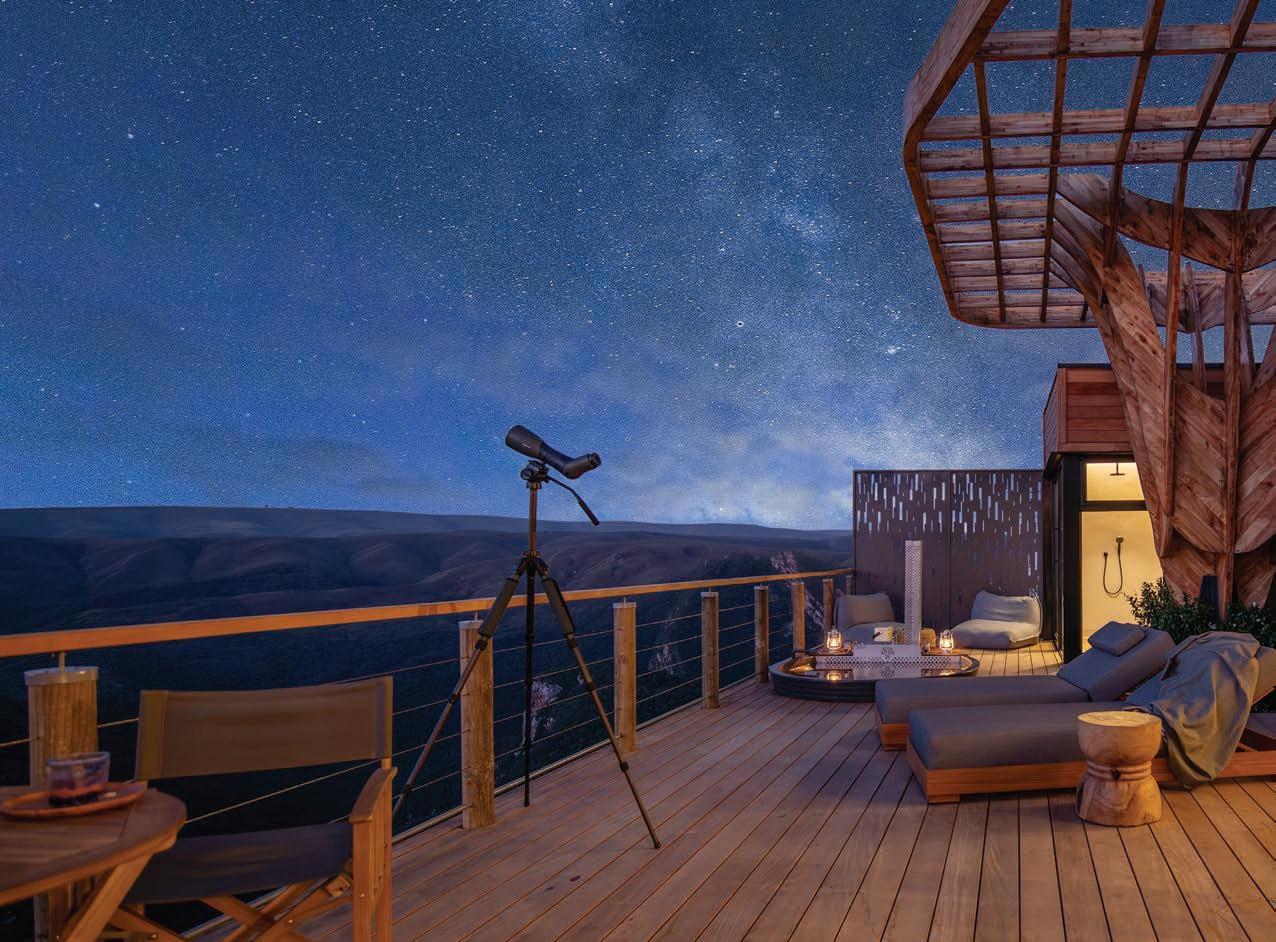
Set deep within the wild heart of Addo lies a secluded eco-lodge shaped by silence, space, and the rhythm of nature.
At Hiddn, the joy of discovery unfolds slowly. From guided safaris through ancient landscapes to thoughtful design grounded in place, every moment invites a deeper connection to the land. BE THE FIRST TO

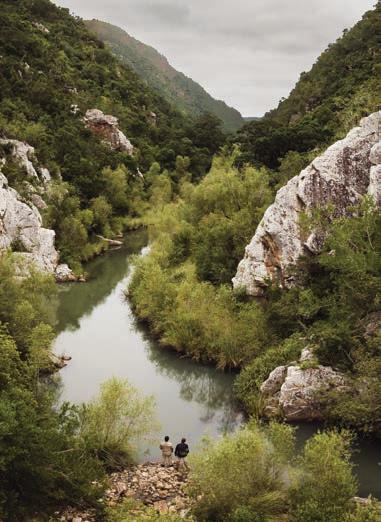
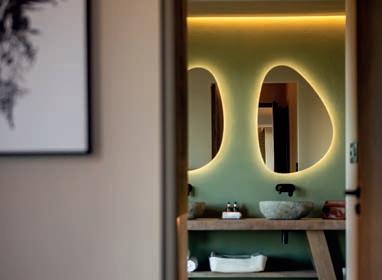



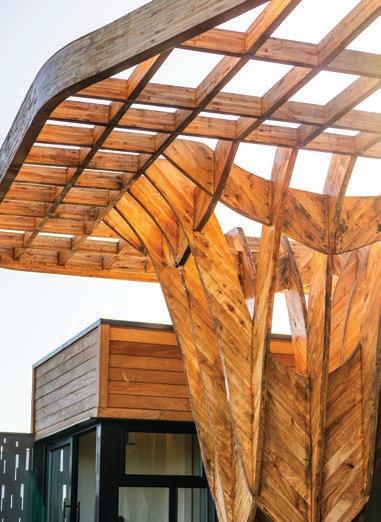

queen
With its year-round summer vibe, gorgeous beaches and balmy cerulean seas, Dominican Republic has earned its stripes as the perfect sundrenched retreat in the Caribbean, as Sandy Cadiz-Smith discovers.

One of the Dominican Republic's jewels, Eden Roc Cape Cana turns out to be worth those rave reviews – a total indulgence under the Caribbean sun
By SANDY CADIZ-SMITH

With its yearround summer vibe, gorgeous beaches and balmy cerulean seas, Dominican Republic has earned its stripes as the perfect sun-drenched retreat in the Caribbean. It's certainly an enticing thought, slipping away from London’s murky grey skies on a direct flight to the balmy embrace of the Dominican coast. Our destination is Eden Roc Cap Cana – a secluded, soul-soothing oasis just 15 minutes from the airport. It feels like we’ve landed in another world. From the moment we’re handed chilled drinks and led to dinner under a blanket of Caribbean stars, we know we’re somewhere special.
Eden Roc is the only Relais & Chateaux property on the island and was voted the No 1 Resort in the Caribbean in the 2024 Conde Nast Traveler Readers’ Choice Awards. Impressive accolades – and something
to live up to in a competitive field – so we're anticipating a very special time.
After a superb Asian-style dinner, our personal concierge awaits to drive us under moonlit skies to our Pool Junior Suite. It’s dreamy, with soaring ceilings, a plush four-poster bed and a huge bathroom with two showers (one alfresco). There's also a bathtub that makes us want to soak for hours. The grand cedarwood walk-in closet, accessible from two entrances is large enough to be a whole bedroom.
Outside, our private garden awaits. Verdant, secluded and surrounded by sheltering trees with a private pool glistening at its heart, it’s flanked by elegant sun loungers made for lingering to enjoy the peace. There's also a vinedraped pergola with table and chairs for shady relaxation. This is a suite so spacious, so fabulous, we’re thinking we would like to move in permanently.
Our concierge lets us know that she and her colleague remain at our disposal around the clock, before handing us the
keys to a golf cart for our exclusive use – we're overjoyed. We soon get into the swing of being in the driver's seat, and love navigating ourselves around the resort, which sprawls across acres of palm-studded, verdant land.
Days start early with a dip in our private pool with the sound of birdsong as our swimming soundtrack. We jump into our cart and head down the hill past manicured fairways with glimpses of the sea beyond. Our destination is the Blue Grill & Bar with its fabulous selection of breakfast treats. This is the life, and the best way to set us up for another glorious Dominican day.
Those days feel quite busy in a relaxed sort of way. We explore the beautiful surrounding area in a colourful open-top Moke (lots of photo opportunities there). We enjoy rum and cigar tasting, cocktail making and a Dominican Mofongo cooking lesson. We shake o the last of any tension with an incredibly relaxing sound healing session, followed by rejuvenating massages in the spa.
In between times, we make the very most of the idyllic white, sandy beach and balmy azure ocean – when we can drag ourselves away from our private pool with shady loungers. Lunch is always a leisurely a air. We love La Palapa, positioned at the water’s edge and with the rhythmic murmur of the sea providing a
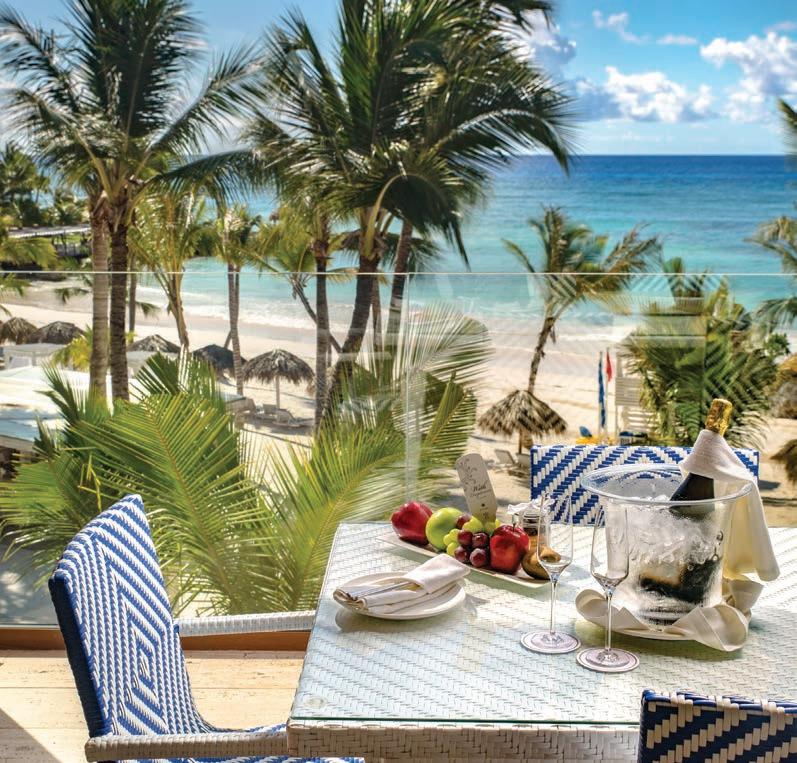

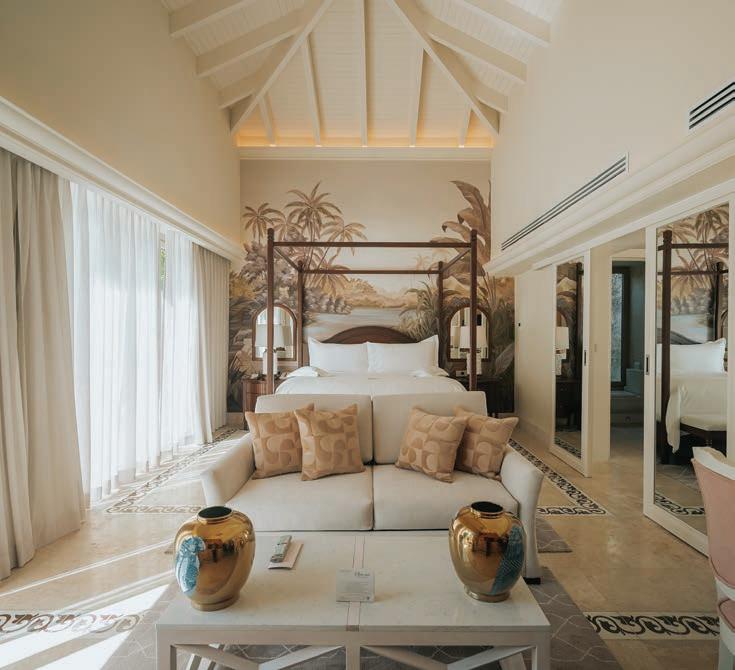
“Our personal concierge awaits to drive us under moonlit skies to our Pool Junior Suite”
soothing backdrop. There's a lovely poolside vibe at the chic Blue Grill & Bar. On occasion, we venture further afield, winding our way through the verdant fairways and greens of the Jack Nicklaus-designed Punta Espada Golf Course to dine at their restaurant. This o ers a panoramic tableau of emerald greens rolling gently toward the sapphire of the Caribbean beyond.
Eden Roc Cap Cana is like stepping into a dream you never want to wake up from. We're not at all surprised it is such a favourite among seasoned travellers, for it is a place where time slows down and every little detail feels just right. Sun-kissed mornings filled with birdsong, lazy afternoons on the beach or hunkered down by our private pool, and exquisite food in gorgeous restaurants – they all add up to a special holiday. But what makes it extra special goes way beyond. It is the feeling of being completely, deliciously spoiled. That, for us, is the most wonderfully indulgent feeling in the world and a recipe for a magical and memorable holiday.
edenroccapcana.com








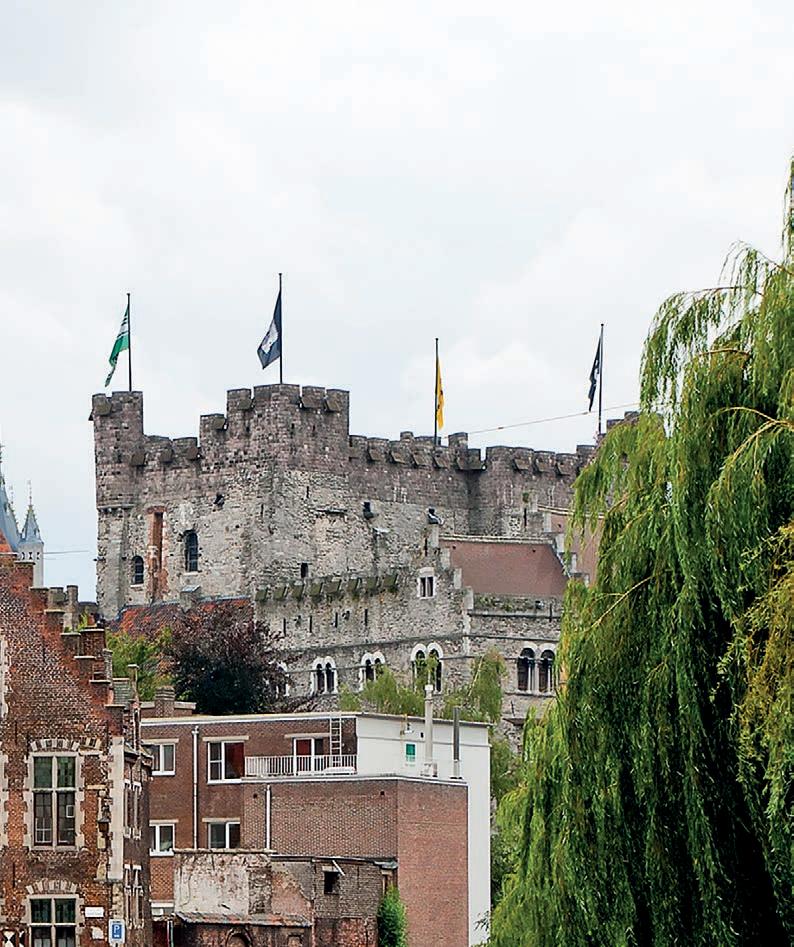







A barge journey through Belgian waterways is slow travel at its best, revealing painterly landscapes and Europe's rich regional history
By SANDY CADIZ-SMITH
Sailing any inland waterway is a uniquely tranquil way to experience countryside at a much slower pace. But on this rather special journey, we're heading through the heart of Europe by gliding gracefully along Belgium’s canal network. Belgium's canals – historic and important trading routes – traverse both Flanders and Wallonia, so the voyage o ers a refreshing departure from the usual frenetic pace of modern travel. Just like the trusty barge managing this journey, we are invited to decelerate and drink in life on the water.
Our journey starts at London’s King’s Cross, where we are whisked away on Eurostar to Brussels – a two-hour journey and no airport hassle. We transfer seamlessly to the MS Raymonde to start our CroisiEurope hotel barge trip. This journey takes us from Strépy to Ghent –uncharted water for us, but, as we soon discover, there’s a lot to see along the way.
We receive a hearty welcome from Hans, our multi-faceted Cruise Director, one of only six sta on board ready to take care of us. Hans turns out to be an excellent host. He's our source of information, storyteller, mixologist, and unexpectedly, a talented singer.
The MS Raymonde is little but lovely. There are 11 compact cabins with plenty of cleverly designed storage space and a surprisingly large ensuite with shower o our cabin. Onboard facilities include a restaurant, lounge bar, sun deck with loungers, and a relaxation area with – to our delight – a hot tub.
Barge life is all about serenity – you can't help but slow down. Most mornings are
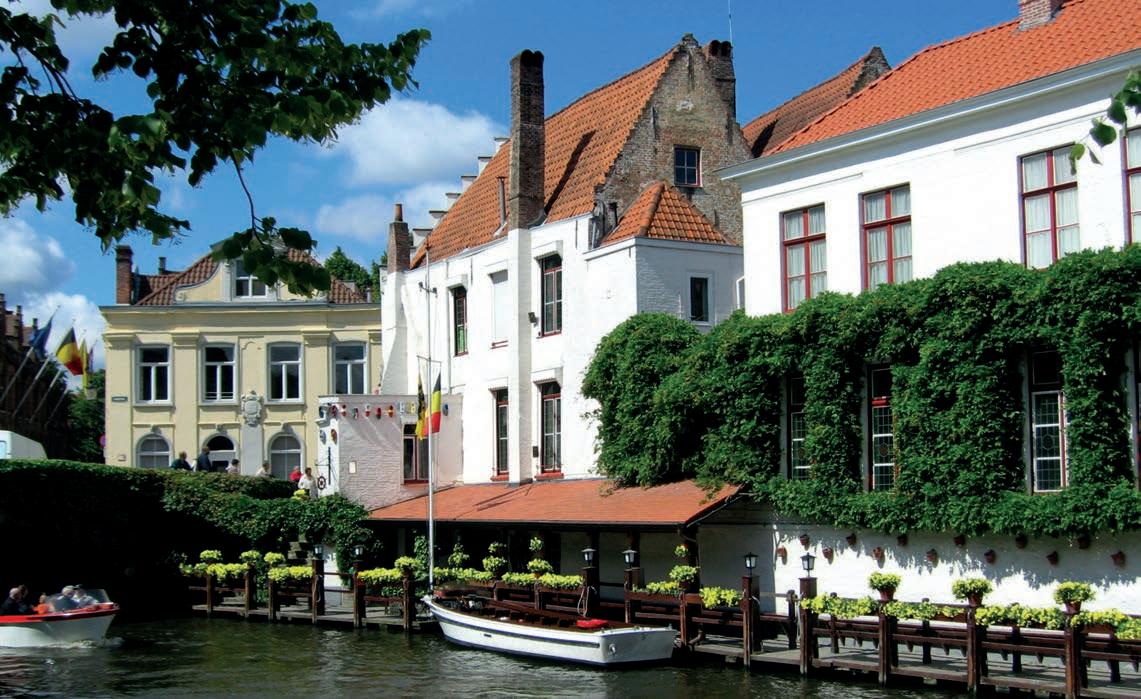
spent cruising to our next destination, with afternoons to explore and evenings spent relaxing on board. We travel 152 kilometres and, at this delightfully relaxed pace, can take tours of Brussels, Mons, Oudenaarde and the beautiful Flanders capital Bruges. Along the way, we visit Chateau de Beloeil, Chant d’Eole vineyard, and Braeckman Distillery. There's also ample opportunity to taste Belgium's local delicacies, including chocolate, sparkling wine, beer, jenever, and gin. All excursions (and food and drinks onboard) are included in the upfront price, and everything, but everything, is organised for us. This makes travel about as stress-free an experience as it gets.
Canal cruising turns out to be fascinating. One of the highlights is traversing the engineering marvel of the Strépy-Thieu boat lift – an extraordinary feat of design and the second largest funicular boat lift in the world. That's not the only engineering marvel, as we navigate a complex series of locks on our journey through towns and woodlands. The precise mechanics of it all remain something of a mystery to me – even after Hans' and team's explanations – but it all adds to the feeling of adventure and it's a joy to experience. As is life onboard. We wait with anticipation for Hans to ring the bell that signals the start of cocktail hour. Chef emerges from the galley before every meal

to announce the day’s menu. The cuisine is consistently superb – impeccably executed classic French sauces, regional specialities and, at every lunch, a most delicious cheese course that quickly becomes a much-anticipated culinary talking point. There are quizzes to keep us engaged, along with ample time for reading, and refreshments on tap. On such a smallscale shared adventure, it doesn’t take long for friendships to blossom – it's a convivial journey with fellow ‘bargers’. And seeing landscapes at this stately pace is a wonderfully restful way to absorb the sights and regional flavours of Belgium, with sights and landscapes that feel as unchanged as this delightfully slow lane travel.
* CroisiEurope journeys aboard MS Raymonde for 2026 from £2,783. The sevenday barge trip starts at Halle and stops at Strépy-Thieu, Mons, Péronnes-lez-Antoing, Oudenaarde and Ghent. croisieurope.co.uk
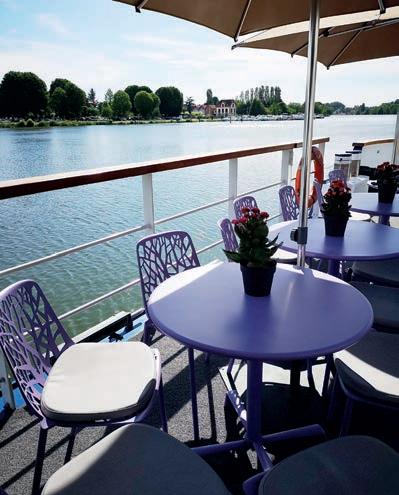
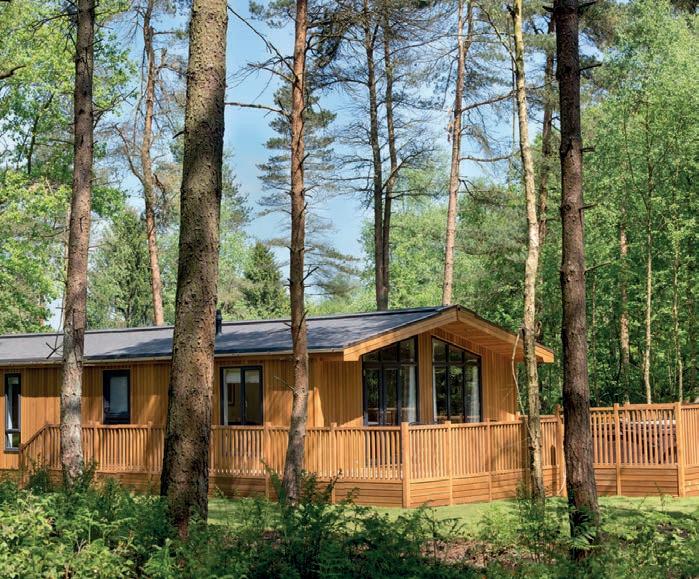
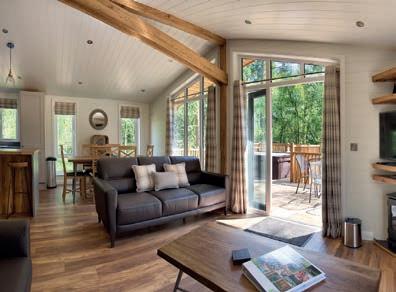
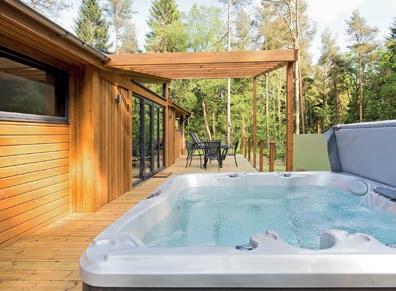
w Lodges sleep 2 - 8 people
w Perfect for couples, families & celebrations
w Hot tubs available
w Pet friendly


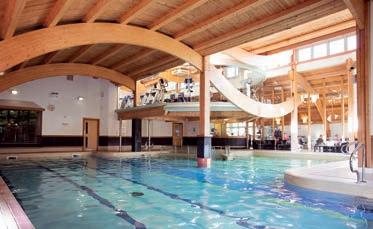
w Health & fitness centre
w Restaurant & bar
w Woodland location
w Visit the Peak District
w Activities for all ages
w Soft play centre
w Mini golf, tennis & games room
w Cycle hire & nature trails


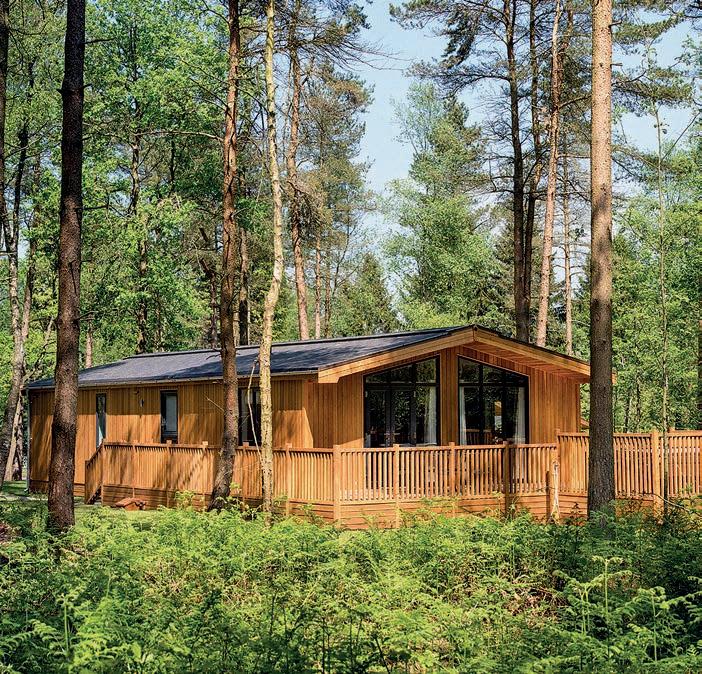
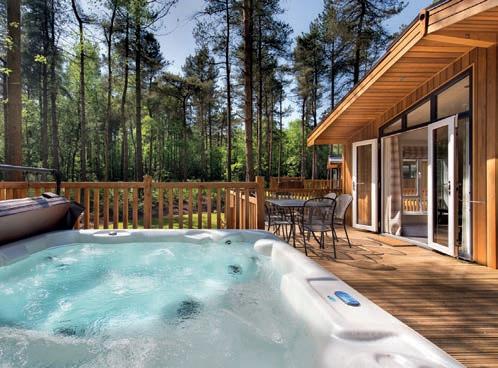
There is no better place than the Derbyshire Peak District to enjoy a short break or a family holiday. The Peak District is bursting with majestic landscapes, stunning views, stately homes and family attractions.
Darwin Forest is situated between Matlock and Bakewell and combines luxury self-catering holiday accommodation with fantastic onsite facilities. The lodges are nestled within a woodland paradise that creates a peaceful location from which to fully relax and get closer to nature.
Darwin Forest is the perfect destination to enjoy a family holiday. The fantastic onsite facilities include Evolution Health & Fitness, which has a swimming pool, spa area and gymnasium. There is also a beauty therapy and massage suite o ering a full range of relaxing treatments for you to indulge and pamper yourself.
For the younger members of your family, Little Monkeys indoor play centre will

provide hours of fun and entertainment. The Activity Den is perfect for older children with pool tables and a games room to keep them entertained. It also includes a complimentary soft play area for under 5’s and is adjacent to the outdoor playground. They also o er a range of fun activities onsite that are suitable for children and adults. Let their qualified instructors train you in archery, axe throwing, mini jet skis or waterwalkerz!
For all the family to enjoy, they have a tennis court, mini golf and an abundance of footpaths and cycling trails. The Trim Trak obstacle course is very popular with families, as is the orienteering course and woodland walk.
The luxury accommodation lets you relax and enjoy your holiday whatever the time of year. Sleeping from two to eight people, each lodge has a woodland or parkland view and a veranda with outdoor furniture for
dining alfresco. Many lodges also include a hot tub and sauna; dogs are welcome in their pet-friendly accommodation.
The family-friendly park provides an ideal base from which to explore the Peak District and its wonderful attractions. With facilities and attractions for all ages, many families take the opportunity to book a multi-generational holiday, enabling grandparents to spend precious time with their grandchildren.
Escape to the Derbyshire countryside for a romantic getaway. Relax and enjoy strolling through the area’s picturesque landscapes, perhaps stopping o for a delicious pub lunch or afternoon tea. For a luxury treat, choose a Spa lodge which has a hot tub on your lodge’s veranda and spend a romantic evening under the star-filled night sky.
Find out more at darwinforest.co.uk

















ST CHRISTOPHER'S THE HALL




St Christopher’s The Hall is a thriving independent preparatory school in Beckenham, educating children aged 3 to 11 in a warm and ambitious environment. In its most recent ISI inspection the school was recognised for its exceptional leadership, inspiring curriculum and outstanding pupil development. Often described as “the best kept secret in Beckenham,” St Christopher’s blends academic rigour with creativity, pastoral care and opportunity, ensuring pupils develop confidence, curiosity and independence as they move on to leading senior schools.



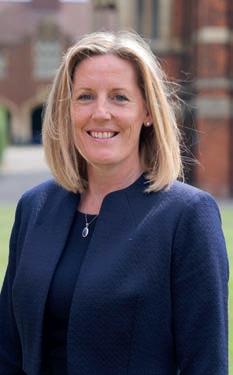
Clare Ives is the new Head of The Leys in Cambridge, joining in its 150th-anniversary year. She was previously Senior Deputy at Sevenoaks School and held senior roles at Canford. Dr Ives studied History at University of St Andrews, also completing a PhD, and moved into education from the Civil Service.
“WorldSkills’ Team UK have reached a training milestone in preparing for next year’s major event in Shanghai”








Old Buckenham Hall School, Suff olk joins Rugby School Group from January 2026.
The two schools have always enjoyed a strong relationship, with many of the co-ed prep’s pupils joining Rugby for their senior years.
“We are delighted by the opportunities the merger represents for our children,” says OBH Headmaster James Large.
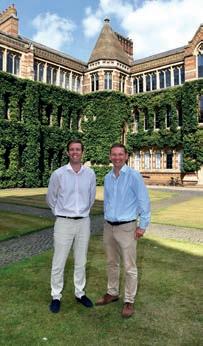

St Albans School has enhanced its scholarships programme, adding Creative and Technical to its existing options – Academic, Music, Choral, Sport, Drama – from September 2026. At 11+ and 13+, students can apply for a scholarship in Art, Creative Writing, Computer Science or Design & Technology. The school also welcomes Year 7 girls from next September.
The Big Bang Research Project is a seven-year exploration of the benefi ts of off ering woodwork in education settings to children aged from three to eight. Over 30 countries are gathering data. Peter Moorhouse, Honorary Research Fellow at University of Bristol, is UK contact and the survey is running until the end of December.



At EuroSkills Herning 2025, Team UK reached a milestone in its journey of skills development in preparation for next year’s ‘skills olympics’ in Shanghai. Trained by WorldSkills UK, in partnership with Pearson, Team UK received a Bronze medal and fi ve Medallions for Excellence in categories including engineering, restaurant services and hairdressing.
“Challenges that come up from time to time in life are our little learning tools, our little steppingstones. If we didn’t have those things in our life, how would we learn anything?”
GLADYS KNIGHT


Caolan Wukics is the new Head of Boarding at Holmewood House School, and he and his partner Isobel are also Houseparents. Together, their role is to create a home-from-home at the Kent prep. “Watching children fi nd their feet, their voice and their independence makes this the best job in the world,” he says.


In his keynote to the Downe House Conference in June, Michael Gove called upon schools to return to handwritten exams and more oral assessments to tackle AI-enabled cheating. The Spectator editor and former Education Secretary was speaking to an audience of 200 invited guests from independent and state schools at this annual summer meeting of education minds.
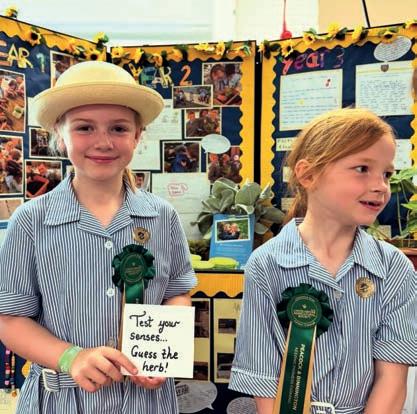
St Martin’s Prep in Grimsby has been named Independent School of the Year by SuperKind as part of its annual Social Impact Awards. Pupils earned 1,384 Social Action Badges through the initiative for volunteering, event organising and fundraising – the highest average number of registered social actions per student nationally among independent peers.




Frensham Heights is celebrating the approach that made the school so radical when it opened in 1925. Its female founders set out to educate the whole child in an atmosphere of mutual respect. Centenary celebrations started with 1925 Student Day and included 500+ students dancing the Charleston.
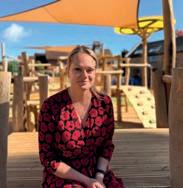
Haywards Heath Prep Cumnor House Sussex has not only unveiled an extensive playground redevelopment but has also welcomed Sarah Gibson, previously with Dulwich College, as Head of Pre-Prep & Nursery. “It is a privilege to be leading a setting where children feel confi dent, curious and happy,” she says.


“My idea is that there is music in the air, music all around us; the world is full of it, and you simply take as much as you require”
“The illiterate of the future will not be the person who cannot read. It will be the person who does not know how to learn”
ALVIN TOFFLER
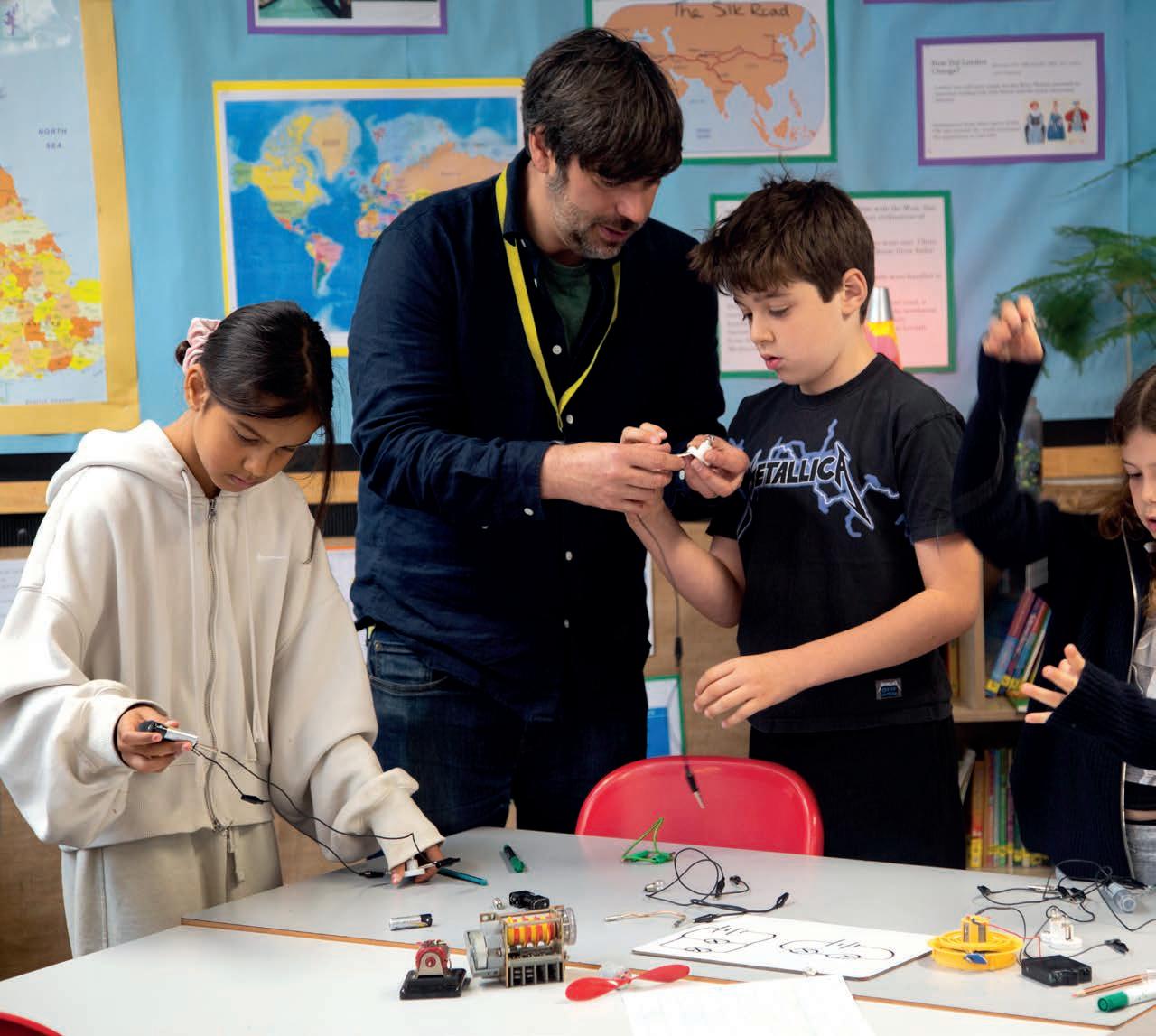
Scientific knowledge delivered early can become a thrilling journey for children, as they discover the world through practical experiments and hands-on investigation. We speak to four prep schools to find out how they develop young scientists

Our science programme is designed to nurture curiosity, develop critical thinking, and build strong foundations in scientific understanding from the earliest years," says Head of JAGS Junior School Victoria Goodson.
“Pupils learn to ask meaningful questions, test hypotheses, and communicate their findings clearly –essential skills for future study”
"We o er specialist science teaching from Year 3 onwards, with most lessons taking place in a fully equipped science classroom that allows pupils to engage in hands-on investigations using real scientific equipment." This specialist setting and practical approach not only sparks enthusiasm but also helps pupils develop knowledge and enquiry skills that grow in complexity as they progress through the school.
Science teaching in Years 3 to 6 focuses on delivering a varied curriculum to spark curiosity and get children involved in practical (sometimes messy) experiments.
"A standout feature at JAGS is our Forest School programme," adds Victoria Goodson. "Our extensive grounds are a rare luxury so close to central London and
include the Botany Gardens and The Copse, providing a rich environment where science is brought vividly to life."
It’s a space where pupils investigate animal habitats, plant life cycles and see sustainability in action. Activities range from shelter building and knot tying to weaving with wool and twigs, helping children develop both scientific knowledge and essential life skills. Children explore biodiversity through bird and insect identification, investigate seasonal changes through tree and leaf studies, and examine plant life cycles by analysing seed pods. "Printmaking with leaves and organic matter from the forest floor adds a creative dimension, blending art with environmental science," says Victoria Goodson. JAGS chooses this immersive approach to help reinforce key scientific concepts but also nurture a lasting appreciation of the interconnectedness of living things. "Forest School continues to be a highlight of the Prep experience, where curiosity thrives and learning is rooted in the real world."
The school ensures that each year builds increasing depth and challenge. For example, in Year 3, pupils explore topics such as rocks,
the human body, forces and magnets, and light, while developing skills such as making observations, recording data, and drawing conclusions. By Year 6, they are planning their own investigations, analysing results and using scientific evidence to support their ideas. They also tackle more advanced topics, such as chemical reactions, evolution and inheritance, and the circulatory system.
"The ‘Working Scientifically’ module is a constant throughout, anchoring the work we do and ensuring that pupils not only learn scientific facts but, crucially, also understand how science works. They learn to ask meaningful questions, test hypotheses, and communicate their findings clearly – essential skills for future study and for life beyond the classroom," says Victoria Goodson.
Science happens outside the curriculum, with a wide range of extracurricular opportunities – from eco and science clubs to national competitions and CREST Awards. There's a big focus on playing to individual strengths and learning needs to ensure all children feel inspired to take learning further. "Ultimately, our science programme is about more than simply recalling facts, it’s about genuinely nurturing inquisitive minds, building resilience, and empowering our young people to make sense of the world around them."
The science programme in Lower School is woven within and around our five curriculum lenses: Being Human, Continuity and Change, Living Planet, Culture and Community, and Communication," says The King Alfred School Head of Lower School Karen Thomas. "Enquiry-based learning is our dominant pedagogy and this lends itself perfectly to developing children’s scientific thinking."
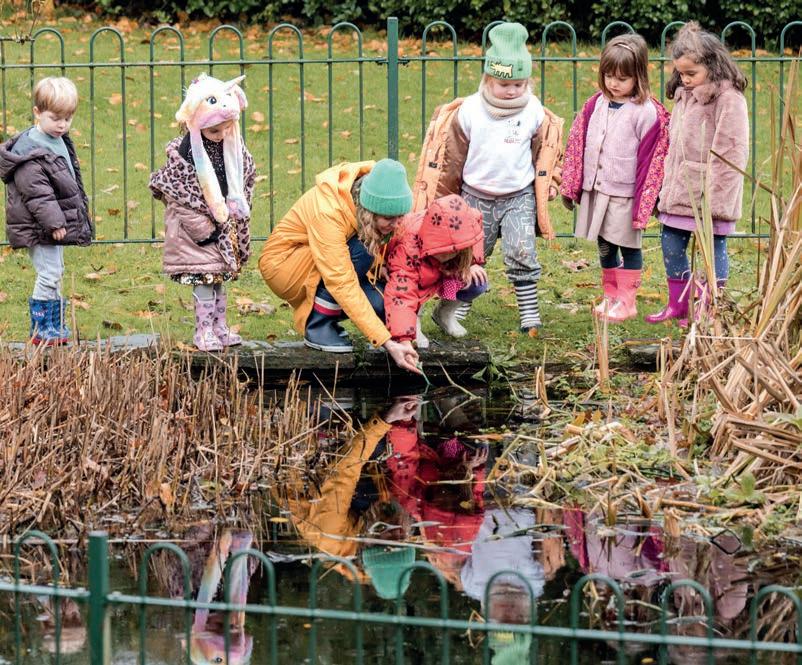
There's a stepped approach here that helps children put down solid foundations with the right approaches and then build knowledge in increments. "First we gain the necessary knowledge about a particular area of science
“The home-based project 'Adaptation', tasked children to make a model and fact file about either an animal they love or one they have invented”
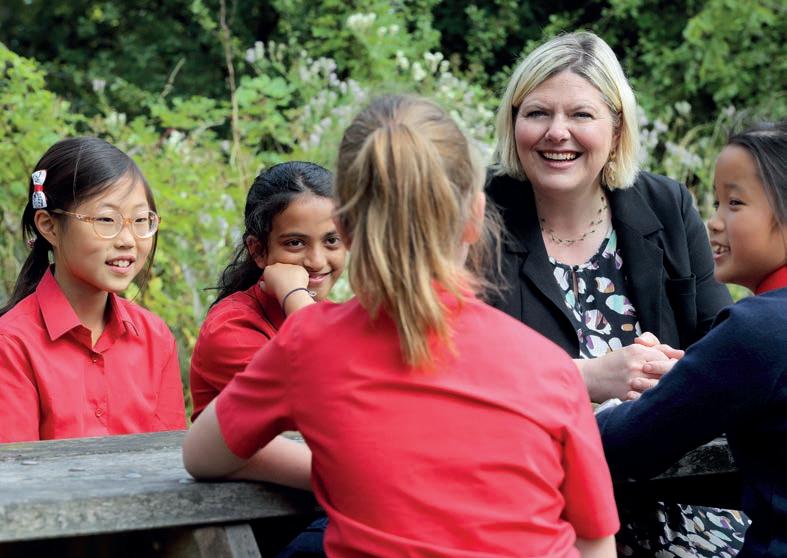
and then we help the children to play with their new understandings to create and test the hypotheses they make," adds Karen Thomas.
She says that since not too many people are inspired by worksheets, the aim is always to make early science explorations as hands-on and playful as possible to keep children engaged – and ensure they keep asking questions. ‘I wonder if’ and ‘show me how’ are often the starting points for science explorations at King Alfred. The school covers National Curriculum study areas – but is not limited by them.
Karen Thomas says there's a focus on "our continuum of science skills". She adds that it's important to equip the Lower School's young scientists with the vocabulary, tools and methodology to take scientific exploration further and also think more deeply about where their discoveries could go next.
"We often draw from our community to bring another exciting dimension to our science o ering, bringing in parents, friends, and teachers with a particular passion for science. We learn about scientists present and past, paying particular attention to challenge any existing stereotypes as we do so," she says. Children are also tasked to think about what makes a great scientist – a good way to consider transferable skillsets and identify what makes a good learner.
There's an annual STEM week involving the whole community. Visiting speakers run workshops and children (and their families) also get involved in a home-based project. "When these are brought into school, we organise for the children to visit one another’s classes and share what has been made." Fun recent examples of this have included 'Adaptation', tasking children to make a model and fact file
“Headline initiatives, including Enterprise Club, Eco Warriors and Sustainability Champions let pupils lead investigations into realworld issues”

about either an animal they love or one they have invented. Children have also designed arcade games based on 'Caine's Arcade' and been asked to come up with a whole new experiment and be prepared to share it with everyone. "These events create an extra buzz about science for children, teachers and parents alike," adds Karen Thomas.
The school's location, in leafy northwest London, also ensures science can head out of the classroom. As well as trips to the capital's major and more local museums, outside space becomes a learning lab – especially useful for environmental science. The aim is to help children recognise both the beauty of the earth and the positive and negative impacts human development can have. "We hope that, by doing this, our scientists of the future will have a respect for the environment and will make ethical and planet-friendly decisions when they enter the workforce."

the curriculum becomes increasingly specialised, introducing key concepts in biology, chemistry and physics, while nurturing those same analytical thinking and investigative skills first sparked through play. "By Year 6, pupils are confidently engaging with complex ideas and applying their knowledge in meaningful contexts."
At Francis Holland Prep, science is far more than a subject; it is a journey of discovery that we harness from the Early Years, evolving into a rigorous, specialist curriculum by Year 6," says Deputy Head Andrew Hart. Over the course of the last academic year, the school has engaged in a comprehensive curriculum review, with a progressive approach to ensure clear pathways for deepening both understanding and skill in these formative years.
"From the outset, our pupils are immersed in hands-on science. In the Early Years, pupils explore through play, and we harness children’s natural capacity for experimentation, laying the foundations for deeper scientific thinking," adds Andrew Hart. As they move through the school,
Project-based learning and citizen science are central to the approach here. "Through headline initiatives, including Enterprise Club, Eco Warriors and Sustainability Champions, pupils lead investigations into real-world issues." These range from climate change to biodiversity, and Francis Holland Prep pupils get busy doing everything from designing eco-friendly inventions to promoting sustainable practices and analysing environmental data. "Our children take ownership of their learning and see the impact of their scientific achievements, both at school and out in the wider community," says Andrew Hart.
Practical science is the cornerstone and is designed to surprise and inspire. "Pupils create edible water pods, build solar ovens and make glow-in-the-dark slime. They test bioplastics, design magnetic mazes and monitor air quality, linking science with sustainability and innovation." He adds that these hands-on experiences help to embed scientific thinking – so that pupils see science as a subject they can achieve in and lead in. "Our STEAM Room (Science, Technology, Engineering, Arts and Maths) is alive with excitement. These immersive experiences not only reinforce key concepts but also create lasting memories that fuel a lifelong love of learning."
Francis Holland Prep's Chelsea location means a wealth of opportunities right on the doorstep for enrichment. Trips are an intrinsic element of the curriculum and, with the Science Museum, Natural History Museum and so many other national treasures so close, learning is brought to life
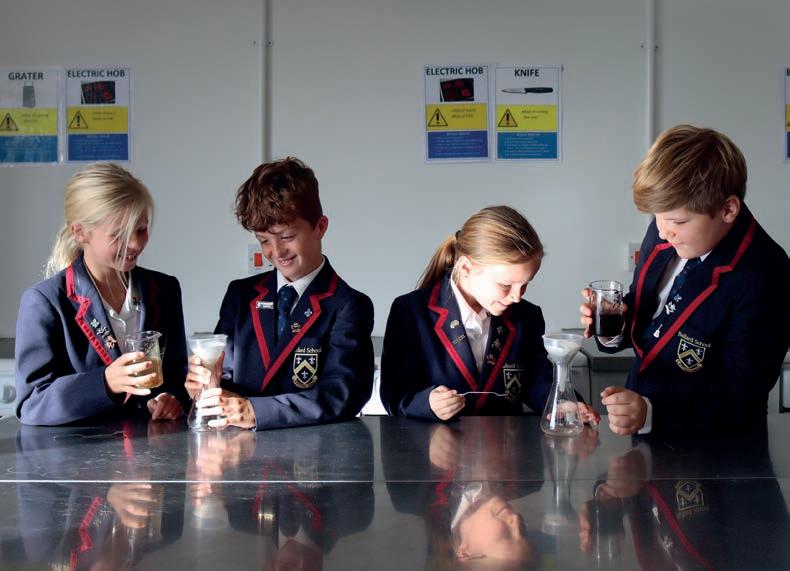
as part of the school day. There are regular visiting speakers from across the science and innovation sectors – many drawn from the school community – and this connects classroom learning to the wider world and helps pupils see themselves as future scientists and changemakers.
The co-curricular provision has expanded significantly recently, with dedicated coding and robotics clubs providing opportunities to explore the intersections of science and technology. The Inventors and Practical Science clubs develop creativity and problemsolving skills. All age groups are welcomed, giving valuable space for experimentation and collaboration on challenges. "Ultimately, our STEAM programmes provide pupils with the knowledge, curiosity and confidence to explore, innovate and never stop questioning." says Andrew Hart. "Our pupils are equipped with a lifelong passion for science and an appreciation of their power to change the world."
At Ballard, pupils think like scientists from the earliest years. “We start with the end in mind – we achieve exceptional outcomes in GCSE,” says Head of Science Aaron Markar. “However, it's not all about grades, pupils leave with a real-world understanding of science and its practical applications." This journey begins in Prep, with access to specialist science teaching. “We are about making science accessible for all children while retaining the challenge, excitement and inspiration. Early training to ‘think like a scientist’ is combined with very hands-on practical science – learning how to use the scientific process to test, investigate and experiment," adds Aaron Markar.
There's a strong emphasis on practical work. “Building on basic skills each year and using correct vocabulary from a young age ensures that science is always relevant

“Building on basic skills each year and using correct vocabulary from a young age ensures that science is always relevant and engaging”
and engaging,” says Ballard Prep Science Teacher Abigail Greaves. And this provision extends well beyond the classroom, with science clubs across both the Prep and Senior schools. “Pupils get to experiment, use equipment and participate in science activities far beyond our already broad curriculum. Science club favourites include copper plating nails, chromatography, and secret writing with invisible inks."
As you'd expect, given the school's glorious New Forest location, conservation and environmental stewardship are central elements of science teaching, with pupils regularly engaging in ecology initiatives.
“As an Eco School, we make full use of our site – grasslands, multiple Forest School areas, our stream and Ballard Pond – to bring ecology to life. Pupils can ‘pop’ outside and have lessons out of the labs, and we’ve noticed an increasing a nity for the outdoors and the ecological aspects of the curriculum,” says Aaron Markar.
Project-based learning is another key strand, using the CREST Award framework to help children develop knowledge and research skills.
“In Year 7, pupils take on a ‘Why’ project – choosing a question to research and present at a mini science fair,” says Abigail Greaves. The Ballard science team relish creating memorable moments. “Pupils always love anything with flames, popping and fizzing.
"We often use food in experiments to bring complex ideas to life – jelly models of cells, Oreo biscuits for moon phases, fruit as planets to show size and distance in space. We measure crater size with marbles and sand, simulate digestion using tights, and create ‘alien soup’ to consolidate knowledge of separating mixtures.”
Plenty more real-world science is provided with trips to local museums and multiple Science Week events.
Guest lectures – including from alumni working in the science and technology sectors – help pupils see future careers that could await them. “It’s often said that you have to 'see it to be it’ – and we take that seriously,” adds Aaron Markar





















Half
Founded 50 years ago, TASIS England has always been more than a school – it is a gateway to the wider world. Its doors were opened in 1976 by visionary educator Mary Crist Fleming. Her revolutionary approach to international education launched in Surrey, shaping generations of students into curious, confident and culturally-aware global citizens.
At TASIS England, country life meets city access. The peaceful 46-acre Surrey campus is set in the English countryside, o ering London-based families easy access to international education.
Choosing the right school for your child is an important decision. Mary Crist Fleming knew this all too well and believed that education should inspire curiosity, foster global citizenship and nurture each student’s unique potential. Her vision laid the foundation for TASIS England, where, today, students from
over 70 nationalities come together to learn, grow and build life-long connections. Fleming’s emphasis on catering individual learning pathways to the student, small class sizes and holistic development remains central to the school’s ethos.
Over the decades, TASIS England has evolved into a leading international school for children aged 4 to 18. Students thrive in an environment that balances rigorous academics with arts, athletics and leadership opportunities, reflecting Fleming’s belief in educating the “whole child”. The curriculum o ers the International Baccalaureate (IB) Diploma Programme, Advanced Placement courses and a broad American-based academic program.
The Surrey campus blends historic charm with modern learning facilities, providing a supportive home for day students (aged 4 to 18) and boarding students (aged 13 to 18). With more than 50 co-curricular activities – from Model United Nations and
robotics to performing arts and competitive sports – students explore passions, develop skills, and experience the benefits of an international school community. Boarding at TASIS England nurtures independence, resilience and life-long friendships.
As TASIS England celebrates its 50th anniversary in 2026, the school looks to the future while staying true to its founding values. New initiatives in global leadership, digital literacy and sustainability will continue to prepare students for an interconnected world. For London families seeking an exceptional international education just a short commute from the city, TASIS England remains a place where students are encouraged to dream, explore and flourish.
Join us on Saturday, March 7, 2026, to meet inspiring teachers and students, explore our beautiful campus, and experience a school where ambition, curiosity, and global perspectives come to life. Register now to be part of the day. tasisengland.org



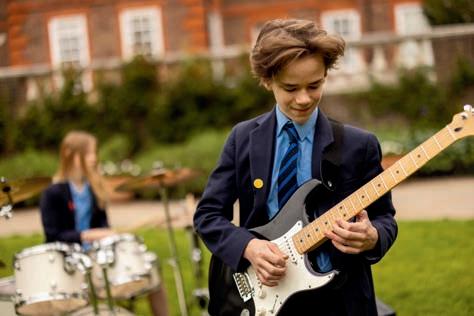
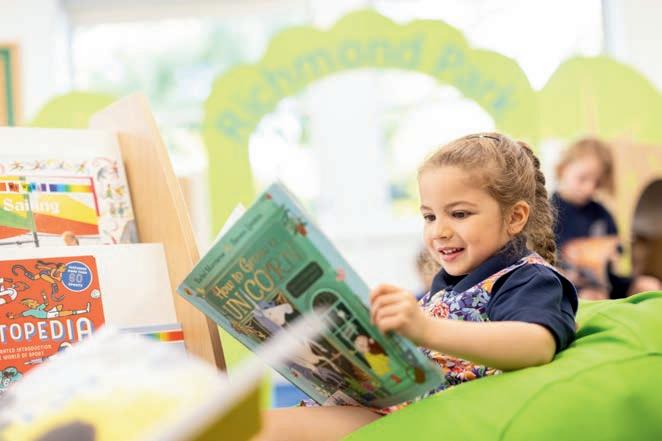

Tuesday 10 March 2026
Tuesday 10 March 2026

Tuesday 17 March 2026
Tuesday 17 March 2026
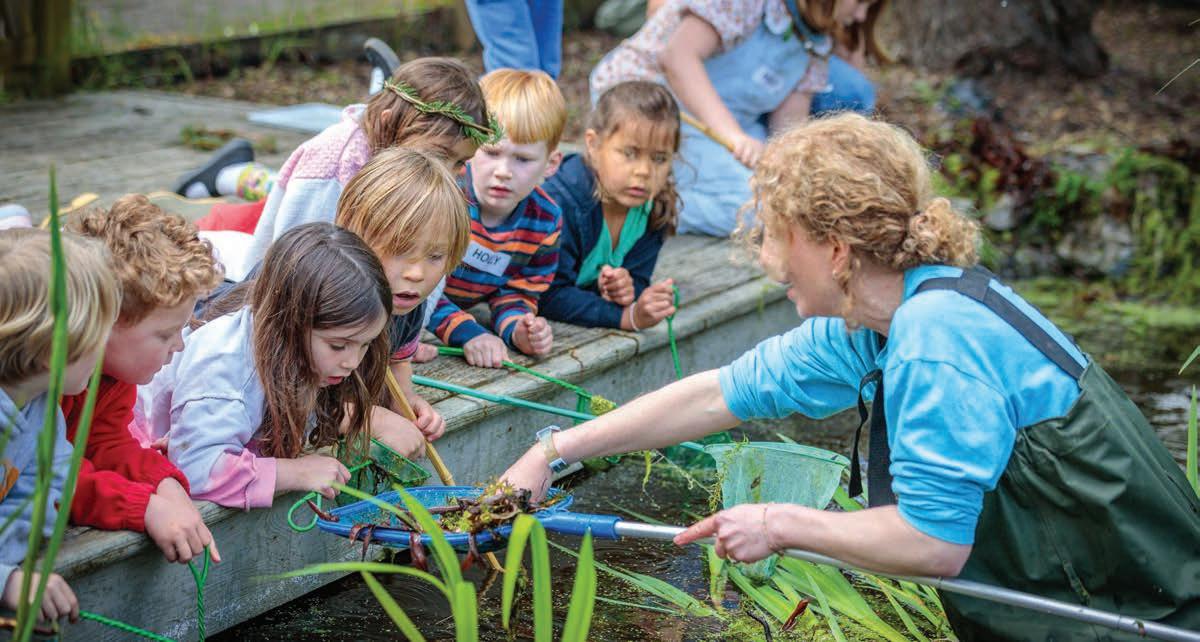
Fiona Read, Head of Bedales Pre-prep, on delivering early education that ignites curiosity and sets children up for lifelong learning in an interconnected world
So often the all-important early years of education are sidelined by discussions of exam systems and transition to work. Having seen the ebb and flow of policies and initiatives over the last 25 years of teaching in the UK and internationally, I feel now is the time to ask fundamental questions about how we educate our youngest learners to foster a genuine love of learning.
Many of today’s classroom practices were shaped by the Industrial Revolution, when education was designed to prepare children for a hierarchical, conformist workforce. Rows of children seated passively, absorbing knowledge dictated by an authoritative figure at the front of the classroom, are relics of this era. Today, the education pendulum has swung too far in favour of testing. A preoccupation with preparation for the next stage means young children face a plethora
of standardised tests, such as SATs, throughout primary school, narrowing the curriculum by directing teaching towards preparing for assessments.
This rigid focus continues with a GCSE curriculum discredited by many educationalists, including the Rethinking Assessment group and former education secretaries across the political divide. Like SATs, GCSEs have become too restrictive and fail to nurture 21st-century skills increasingly valued by employers – notably flexibility, resilience and critical thinking.
The National Curriculum in England was last reformed in 2014, but its roots lie further back. Much of the content is outdated, failing to reflect the latest developments in science and technology and stifling young people’s creativity. Too often, students are confined to traditional classrooms, with four walls and teacher-led instruction. Nature, imaginative play and hands-on exploration are relegated to the periphery of learning as occasional outdoor lessons or extracurricular activities. There is much to learn from overseas,
combining the best of the National Curriculum with global pedagogies to create a meaningful and engaging educational experience. We need a curriculum that focuses on concepts and skills that encourage independence, creative thinking and interdisciplinary connections. Embracing inquiry-based approaches would ensure that what we teach is not only academically rigorous, but also culturally responsive and globally minded, preparing our children to thrive in an interconnected world.
At Bedales, curiosity is nurtured at every stage of the learning journey. From the very youngest years, students are active participants in shaping a rounded education that is personal, purposeful and deeply connected with the world. An inquiry-based approach enables children to explore topics in a hands-on, integrated way – extending understanding through questions and scenarios that lay the foundation for a lifetime of learning.
Unbound by the Common Entrance syllabus, Bedales Prep’s broad, balanced curriculum also gives children the space to think, ask questions and pursue ideas – encouraging them to take ownership of their learning without fear of failure and the pressure of unnecessary testing.
At the Senior School, many GCSEs are replaced by Bedales Assessed Courses (BACs), UCAS-recognised qualifications that prioritise broader assessment methods and focus on learning with real-world relevance.
Children aren’t passive vessels to fill with knowledge, but inquisitive, social beings who thrive on collaboration and discovery. To truly revolutionise education, we must move from decades of talk to decisive action – rethinking how we teach, the environments we create and the relationships we nurture.


Music is part of the creative landscape of our schools, but feeds into so much more – from academic skills to wellbeing, confidence and community spirit. We talk to two schools that passionately believe in its transformative power
At The Duke of York’s Royal Military School (DOYRMS) in Kent, music is a defining part of school life that grows with every student and supports their interests and ambitions. From their first day, students are encouraged to explore and express themselves through music, with a programme designed to evolve in a way that matches individual aspirations.
With exceptional facilities and a deep belief in the power of performance, the school says that music remains an intrinsic part of education, bringing academic, social, and creative benefits – a natural and everyday part of school life. Every Year 7 student receives free music lessons, o ering a foundation for musical discovery and building confidence.
As students move through the school, the music programme becomes more specialised. Options range from tailored tuition and ensemble opportunities to performance pathways.
DOYRMS’ Performing Arts Centre stands at the heart of this creative journey. It provides a professional stage for concerts, recitals, and the school’s much anticipated annual musical. These events bring together students from across year groups, whether they study music formally or simply wish to take part in a shared creative experience. While this supports
a vibrant musical life, so does the school Chapel – home to whole-school weekly hymn practice and to the Chapel Choir. Opportunities extend beyond classroom and other formal spaces. Keyboards and instruments are available in every boarding house and also in the school’s co ee shop for impromptu performances. This means that students can practise or perform at
any time. A culture of informal music making reflects the school’s belief that creativity should be encouraged and be accessible to all. One important aspect of life at DOYRMS is the tradition of a Military Marching Band, which remains a source of great pride. Performing regularly at school and community events – as well as important national events such as the King’s Coronation – the band




represents the discipline, teamwork, and heritage that underpin the school’s history and ethos. Through these performances, students not only develop musicianship but also a deep sense of service and connection to the wider community.
“Music enriches every aspect of life at DOYRMS. It builds confidence, fosters teamwork, and brings joy to our community,” says Principal Alex Foreman. “From the classroom to the stage, and everywhere in between, music truly matters here.”
At Malvern College in Worcestershire, the focus is on education beyond academics. Malvern considers it vital to develop not only academic strength, but also EQ (emotional intelligence) and CQ (cultural intelligence). The team say that music is a perfect reflection of why this approach is important. Under the leadership of recently arrived Director of Music, James Ramm, it is making a big impact on students and the whole school community.
Malvern College says that learning music sharpens IQ. It also builds focus, discipline and creativity – whether mastering an instrument, composing, or experimenting with digital recording. But music also does something more profound in developing students’ emotional skills (EQ). Playing or singing together demands empathy, listening and respect. Director of Music James Ramm says is not about being the loudest voice but about finding balance and harmony within a group – life skills every bit as valuable as the ability to

“DOYRMS’ TRADITION OF A MILITARY MARCHING BAND REMAINS A SOURCE OF GREAT PRIDE – EVEN PERFORMING AT THE KING’S CORONATION”
solve an equation or compose an essay.
Cultural understanding (CQ) is also seen as a vital part of the mix. Malvern is a diverse, global boarding community, where pupils bring di erent backgrounds, cultures and perspectives. The team here believe music is one of the most powerful ways of bridging those cultural di erences. A choir, jazz group or Live Lounge performance is not just a showcase of talent, but an expression of cultural exchange and shared experience. In a world that can sometimes feel divided, this is giving students something in common and something to celebrate.
While music education has been in decline across the UK, it remains a central part of school life here in the Malvern Hills. “We believe music is not an optional extra, but a vital thread in building confidence, wellbeing and community. Music helps young people find their voice and, just as importantly, to listen to others. At a time when the world feels increasingly polarised, those are lessons that extend far beyond the classroom,” says James Ramm.
This ethos is seen in action every day, he adds. From relaxed ‘Live Lounge’ sets at The Grub café, where pupils build confidence in a relaxed setting, to largescale showcases such as the Concerto Concert, the aim is to provide rich opportunities for every kind of musician.
As an All-Steinway School, Malvern also ensures pupils who want to take their musical ambitions further have access to the very best instruments, matching their persistence and enthusiasm with world-class resources and tuition. That commitment is now reflected in the transformation of the
Music School into a vibrant new space, with specialist teaching and rehearsal rooms, a purpose-built performance area, and a state-of-the-art digital recording studio. Whether a pupil is picking up an instrument for the first time or preparing for conservatoire, this setting is designed to nurture talent. Initiatives like the Young Malvern Musician of the Year competition highlight the school’s commitment to both excellence and inclusion. The event inspires beginners and advanced performers alike to share their music, says James Ramm. This event also supports the school’s boarding ethos. When young people are living and learning together, community spirit is vitally important. Music at Malvern provides shared opportunities and a sense of connection – both of which help to support young people’s confidence, resilience and sense of belonging.
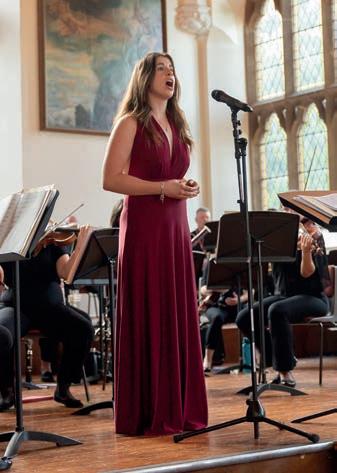
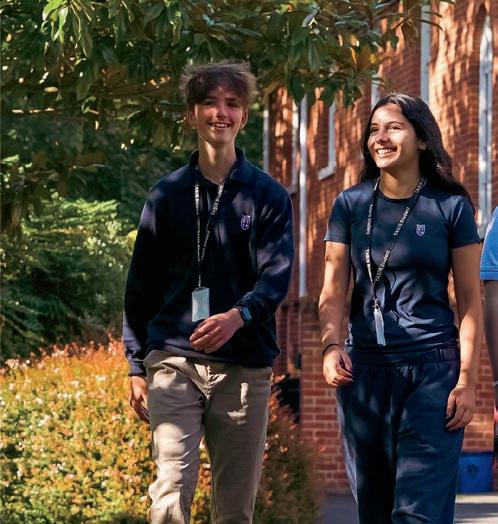






















Sport and PE study not just how athletes achieve, but the hard science behind performance, teamwork and good health. Two experts in the fi eld give their elevator pitch on why this subject is worth studying – and where it can take you





























LUKESAMARASINGHE
REED’S SCHOOL
Head of Physical Education (PE), he studied a Sports & Exercise BSc at Cardi Metropolitan and gained his PGCE at Canterbury Christ Church. He's a keen hockey player and cricketer and has trained young cricket talent in both Australia and Sri Lanka during his career.
BEN KING
ELTHAM COLLEGE
Head of Sports Science, Assistant Director of Sport, and Head of Rugby, he gained his Exercise and Sports Science degree from Exeter and his PGCE from Buckingham. Beyond teaching, he's an avid rugby fan, marathon runner, proud father and keen gardener.

Q What makes Sport so brilliant?
A LS: Studying PE is fascinating because the subject explores the worlds of physical health, human performance and social development. It also promotes physical fitness within students’ own lives, which contributes to the prevention of many health issues now and in the future.
ABK: Sports Science blends physical performance with academic rigour, unlocking insights into the human body, psychology, and biomechanics. It’s dynamic, relevant, and opens doors to exciting careers in health, sport, and beyond.

5 TOP SPOTS FOR DEGREES Loughborough, Bath, Glasgow, UEA, Birmingham
WHERE SPORT BRAINS HANG OUT
UK Sports Institute high-performance centres, The Sporting Club
Q What made you choose it?
A LS: Studying Sports Science meant I could combine playing Cricket and Hockey using world class facilities with academic work – exploring anatomy, physiology, psychology, and biomechanics.
A BK: I’ve always been fascinated by how science enhances both performance and wellbeing – Sports Science brings that to life.
Q Transferable skills and knowledge acquired?
A LS: Through physical sport, students learn teamwork, discipline, and leadership, which can all be applied in many di erent areas of life. Studying PE also requires you to think analytically.
A BK: Students gain high-level analytical thinking, teamwork, leadership, data interpretation and communication skills. They also acquire a deep understanding of important issues around both physical and mental health.
Q What pathways does Sport open?
A LS: Studying Sport opens up various pathways, such as sports science roles at professional clubs, physiotherapy, event management, fitness training, sports psychology, media and many business roles connected to the health and wellness industries.


“Studying PE is fascinating as it explores physical health, human performance and social development, while promoting fitness.”
A BK: Sports Science leads to careers in physiotherapy, coaching, sports psychology, teaching, fitness, and rehabilitation. It’s also a strong foundation for medicine and health sciences training and careers.
Q Two things students may not realise studying Sport covers...
A LS: There's an in-depth look into sports psychology and how ever-changing technology is used in professional sport and within the sports industry.
A BK: Students look at the psychology behind elite performance, including how data drives decisions in sport. Plus, there's a deep dive into the sociocultural issues surrounding sport and exercise.








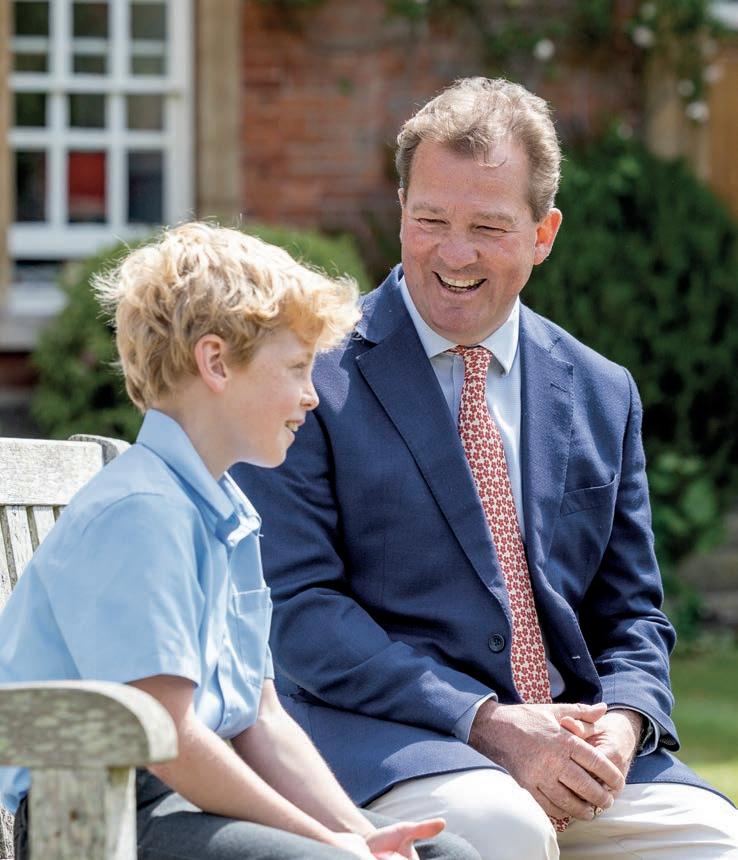
Q What was your first Headship role and what would you say you learnt from it?
A My first Headship role was as Joint Headmaster at Ludgrove. I learned to work well within a small leadership team, adapt to change, support sta , and balance daily tasks while ensuring the best outcomes for pupils. I also learnt how important it is to keep laughing. Sharing the headship at this stage of my career was particularly enjoyable.
Q How long have you been at your current school and what attracted you to working there?
A I have been Headmaster at Elstree for 12 years. I was immediately drawn to the warm, family atmosphere of the school, as well as the beautiful setting. I knew Elstree well having visited it for matches; it was one of very few schools that I would have moved to from Ludgrove.
Q How would you describe your leadership style?
A I like to stay very visible to pupils, parents and sta , keeping a close eye on the overall temperature of the School. I aim to listen well, give people time, and
respond thoughtfully to day-today challenges and opportunities. An eternal optimist, I try to adopt a positive mindset and focus on solutions, believing that great things happen when we work together. Elstree’s happy, purposeful atmosphere is thanks to a wonderful team of sta .
Q What is your vision for the future of your school?
AWe balance strong academic aspiration with a nurturing, personalised approach to pastoral care. We want to hold on to the traditions for which Elstree is well-known, but also prepare the children for life in an everchanging world. I am passionate about staying true to our warm, welcoming community spirit.
Q What excites you about the remaining months of the academic year?
A Each term brings plenty of fun and enriching opportunities for the whole Elstree community, from Declamations and House Music to Dads’ Curry Night, well-being walks, Burns Night, trips, lectures, and sports. I’m continually excited to lead a thriving school.
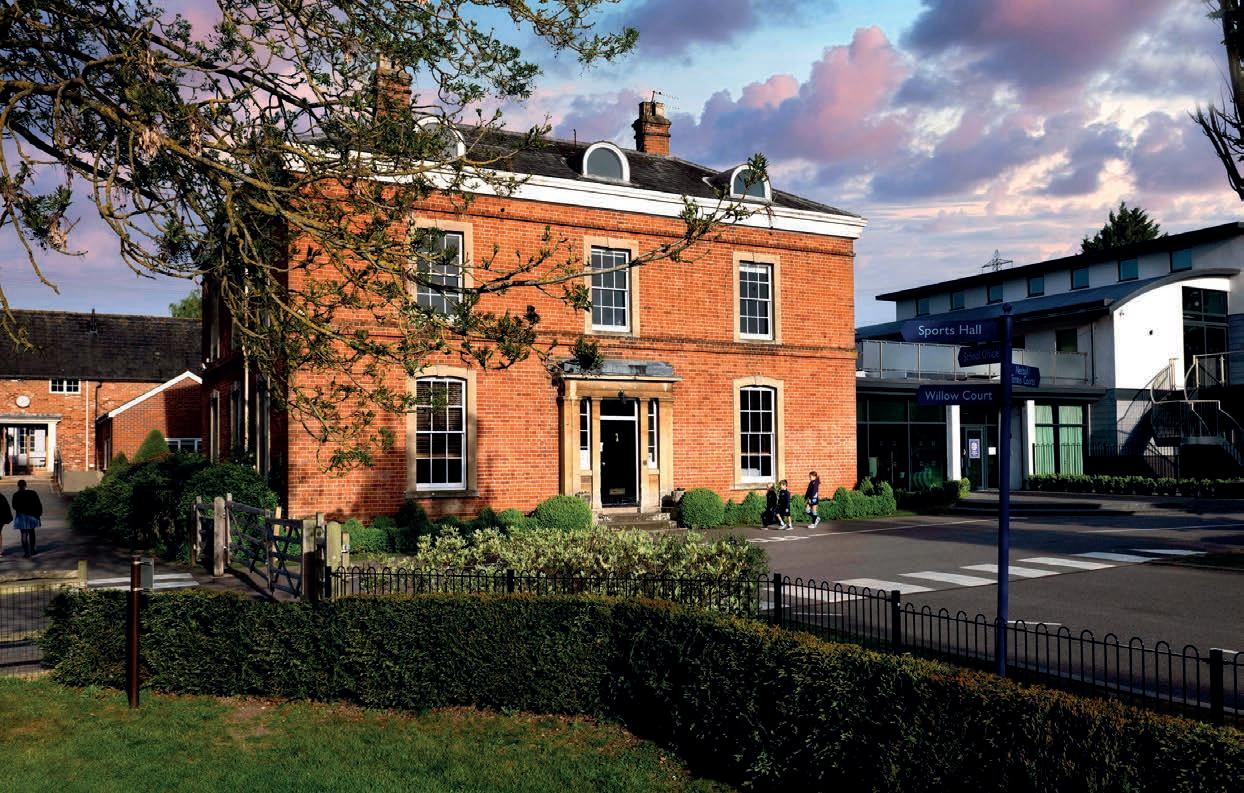
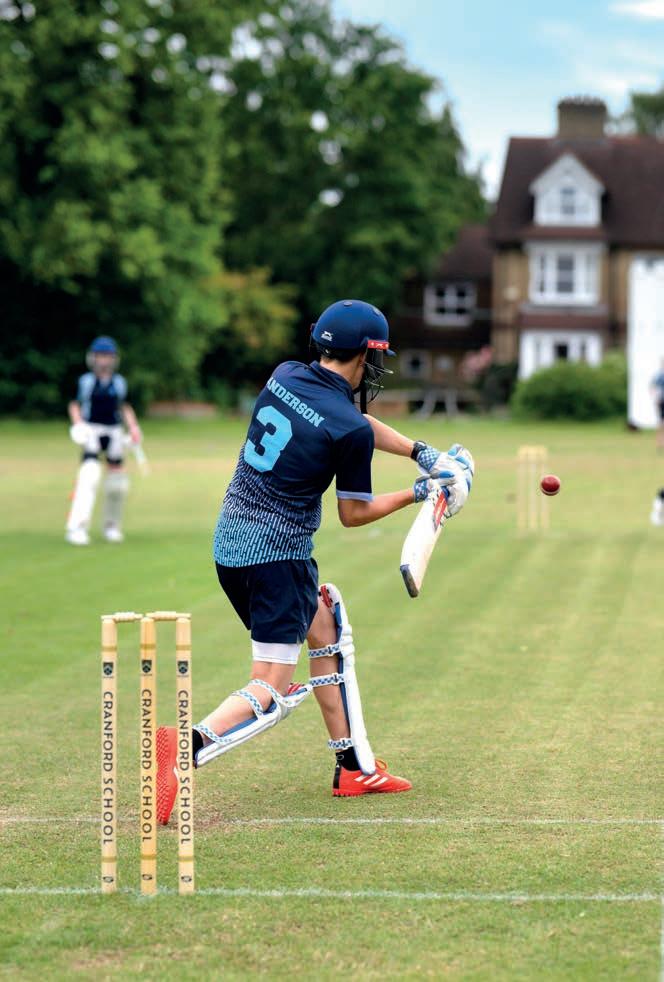

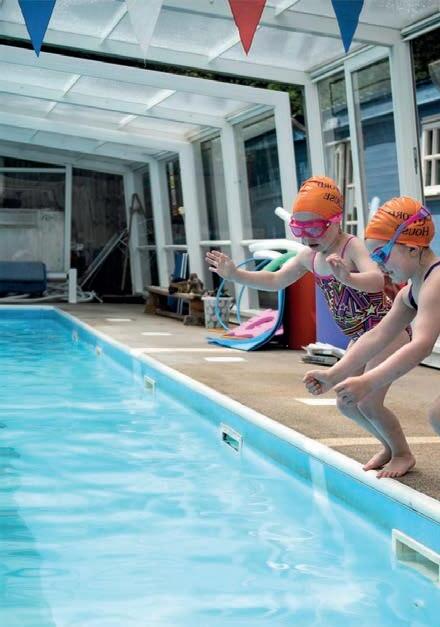
Helping ensure pupils are happy, confident, and motivated, with the self-belief to dare to dream.

James Barton of MPW Group on why AI is a powerful and positive force in education, but always in a supporting role
Would Shakespeare have been more or less powerful with an AI copilot? Would his output have multiplied, or would the poetry have thinned? To prompt or not to prompt is not the point – the question is whether the tool serves learning or takes over.
From the Jacquard loom to Babbage and Lovelace, from Mary Shelley’s laboratory to Turing’s conversational test, we’ve seen radical technologies since before the Bard. In education it feels novel because the AI rollout is happening now. The present twist is scale. Large language models can draft, summarise and simulate at speed.
The parental voice of concern is justifiable. If a machine performs the
heavy lifting, does our own intelligence slacken? Struggle is part of learning and the temptation to outsource that struggle is real. Institutions harbour their own fears. What if AI becomes so fluent that erroneous or inauthentic submissions slip past detection, eroding trust in assessment? These risks are not imaginary but call for design, not drama. Education is not the e cient production of tidy answers, but the formation of curiosity, integrity and judgement. Keep that in view and AI remains a tool, and even a co-pilot, but not the tutor. Ring-fence its use through transparent prompts, declared outputs and clear limits. Build assessments that prize process as well as end product – more in-class writing, viva-style orals, iterative portfolios and applied tasks that require students to show their working as well as their results. Good design makes
misuse harder and learning stickier. Used well, AI is genuine value-added. In secondary schools, it can generate retrieval practice, adapt reading levels and o er immediate, low-stakes feedback. For pupils learning in another language, it can clarify instructions without lowering the bar. In universities, it can annotate articles, propose code comments, draft lab pre-work and produce alternative explanations for stubborn concepts. Think of AI as rehearsal room – a place to try an argument, hear it back and refine it before the performance that counts.
AI will certainly replace tasks. Marking routine quizzes, preparing di erentiated materials and providing first-pass feedback are jobs machines already handle well. But no model reads a room and spots the student who hides brilliance behind quietness or turns a near-miss into an ‘aha’ moment. This means the teacher role shifts from solo lecturer to conductor of attention and designer of practice – teacher-led, now tool-enabled. Prospero keeps command of the stage not because he owns the book but because he understands the play.
In the workplace, large firms now deploy secure, white-labelled models to cut drudgery and raise quality. Graduates will meet such systems on day one. Failing to teach AI literacy would leave them under-prepared. If Shakespeare had an AI co-pilot, the task would still be his – he would choose the question, test the line and own the judgement.
At MPW we learned during the pandemic that technology can preserve momentum, but teachers sustain learning. That lesson now shapes a clear approach. We use AI where it demonstrably adds value –personalising practice, widening timely feedback and supporting EAL learners –while keeping authorship, fairness and the teacher-student relationship at the centre. Tools extend us, teachers transform us. Keep the craft in charge and Shakespeare’s co-pilot earns a seat but not the quill.
With more firms hiring on a skills basis and the inexorable rise of AI, degrees are no longer the golden ticket, so graduates need to find their niche to stand out from the crowd
Let’s spare a thought for the graduates of 2025. They are facing the toughest job market in the UK for nearly a decade. Shifting hiring trends appear, at first glance, to be devaluing the degrees they’ve worked so hard for in the first place.
The number of roles advertised for recent graduates is down 33% on last year, according to recent data released by jobs search site Indeed. There are many reasons for this – a sluggish UK economy, rising National Insurance contributions for employers, and more graduates than ever with similar credentials. But the biggest cloud on the horizon is the rise of AI, which is drastically reshaping the world of work.
“AI is dissolving the bottom rung of the corporate ladder, especially in economies and industries where information work dominates,” said Ignacio Palomera, CEO of Web3 professional networking and jobs platform Bondex, speaking to The Times recently.
“This is not a binary story of jobs lost vs jobs gained, but rather an asymmetrical transformation where tasks are being obliterated faster than the market can absorb or reskill the displaced,” he added. “The first casualties are disproportionately early-career professionals and operational generalists.”
As if to illustrate this point, PWC UK, number one in ‘The Times Top 100 Graduate Employers’ list for nearly 30 years, announced in September it would be hiring 200 fewer graduates this year.
In addition, there is a fundamental shift taking place in the hiring practices of many firms. More are open to hiring nongraduates, sometimes prizing real-world skills and portfolios above grades and academic learning. Companies such as Accenture, Kellogg’s and Kurt Geiger have recently introduced new hiring rules where no degrees are necessary.
Neil Cli ord, CEO of Kurt Geiger has made no secret of the fact that he wants to rip apart the ‘paper ceiling’ – the longstanding requirement of recruiters for degrees over practical and real-world experience.
“On-the-job learning is often as good, or better than, uni,” says Cli ord. “Taking away the paper ceiling is helping bright people get great jobs.”
This doesn’t mean a degree isn’t still worthwhile – it’s just that it is rarely enough on its own. Of course, the upper echelons – Oxbridge, Imperial and the Ivy
League – still hold sway, as do vocational pathways such as Medicine, Dentistry and Veterinary. University also remains a must for experiencing life away from home and expanding intellectual horizons. Independence, a chance to learn for learning’s sake, and a space to make new friends and have fun will remain a rite of passage for many, understandably. What has shifted is the landscape graduates enter.
This means securing a degree should be viewed more as the starting point for your career than a guaranteed door opener. What employers now want is students who can show they have a passion which they have actively pursued – experiences showing they have gone above and beyond.
First, specialiseslightlymore than your peers. You don’t need a PhD-level niche (unless you wish to continue studying), but when graduating at an undergraduate level, you should be able to evidence passion in something specific. For instance, ‘I’m a PPE graduate who builds data dashboards on elections’ or ‘I’m a soil scientist and
“There is a fundamental shift taking place in the hiring practices of many firms –more are open to hiring non-graduates”

have completed a 10-week summer project with the Royal Horticultural Society’.
You need to show you have used your course as a springboard to convert academic learning into real experience. Choose a small, persistent problem in your field –data cleaning for a charity or cost overruns in student societies, for example – and become the person who solvesthatproblem. Evidence your passion with examples. Create a portfolio site or deck of slides to present the voluntary work or work experience undertaken. Create a case study of yourself – a problem, action, outcome (for example with the data cleaning for a charity) with numbers where possible as proof points. One excellent project with measurable results beats a dozen vague bullet points with no clear outcome. Use clubs, competitions and communities as a shortcut to build your experience and network. If you are doing a Politics degree, join the debating society, volunteer with the local branch of a political party and go canvassing during an election. Get to
know people in your field of interest and ask for their recommendations for your next step into work. If you impress them, don’t be afraid to ask for a testimonial. It should go without saying, but be sure to master the tools hiring managers expect along the way. There is no point applying for a job in a particular field and not being able to use the given technology. Gone are the days when you could expect to learn on the job. Finally, get working. Too many graduates leave university having never interacted with a real client or consumer. Take roles at university and o er your time to a local SME, startup, charity or campus department. Do all this pro bono, if necessary, but make sure you keep a record of your work, summarising your professional contributions and gathering results and testimonials where you can. If there isn’t available work in your field, bar or restaurant work is proof of the ability to work – and nothing prepares you for the working world like starting in the service industry in an entry role.
Working with an education consultancy that supports students through choices and the rigours of the UCAS or Common App application, I firmly believe that university provides an excellent foundation for your personal life, and a degree is an excellent foundation for professional life. But there is a growing body of evidence that it will no longer di erentiate you enough. That’s why you need to stand out by finding your niche and owning it. And the good news is that there’s a real renaissance in demand for skills that you will have developed during your education and activities beyond the classroom. Employers are looking to hire problem-solvers with a can-do attitude and great communication skills. So, if there’s a silver lining in the future landscape of work, it’s that AI may inspire us to reconsider, and value more highly, what makes us human.
* Jess Harris is Head of Quintessentially Education
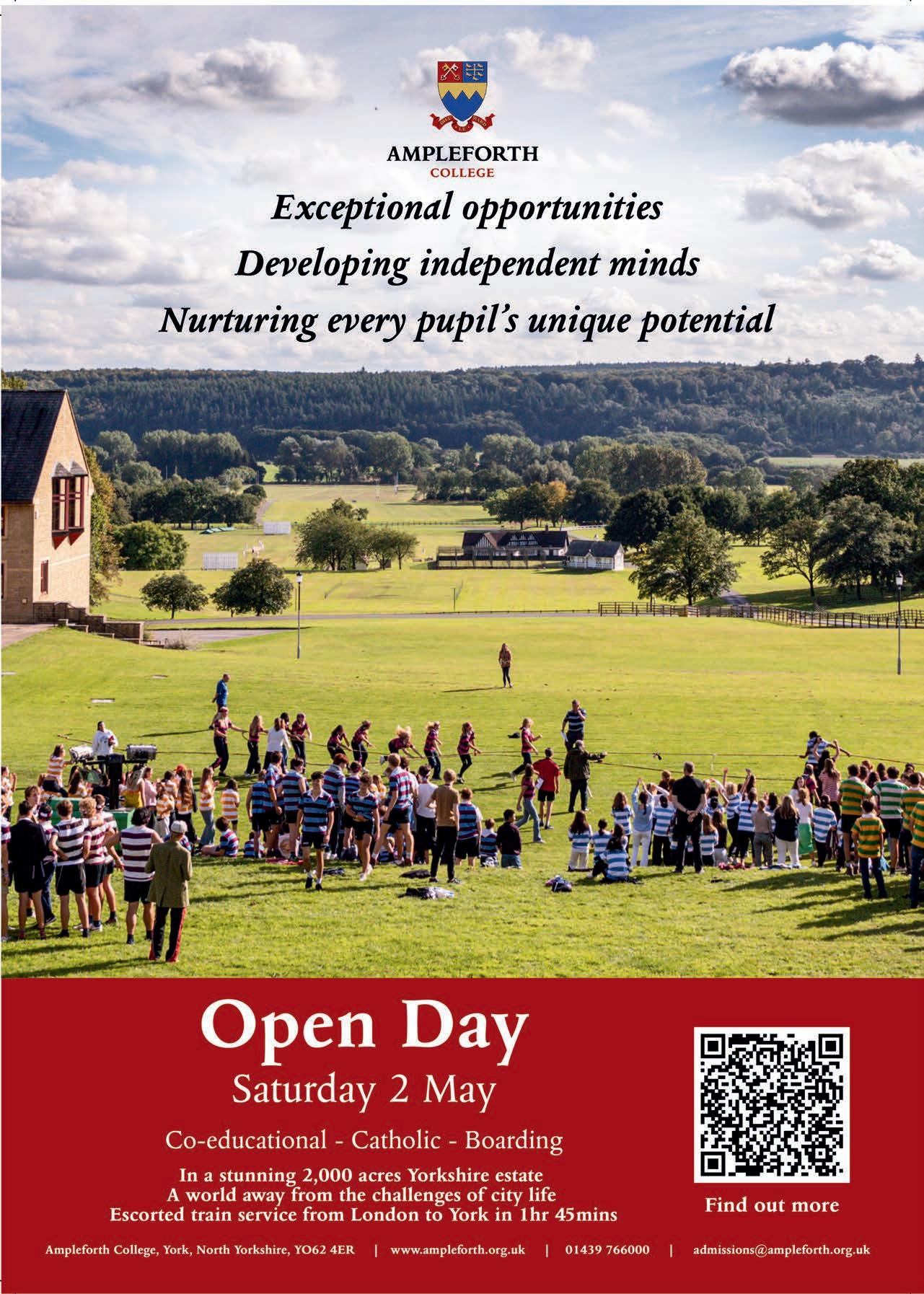

Faye Messinger, Head of Surrey's Rydes Hill Nursery and Pre-Prep, on the school's exciting plans for the years ahead
“Every child is known, nurtured, and celebrated as an individual”
ydes Hill Pre-Prep and Nursery is a nurturing, home-from-home school where children are carefully guided through each stage of their early development, and supported to flourish both academically and personally.
From September 2026, Rydes Hill will be expanding its provision with the introduction of two new classrooms, Pips and Seeds, allowing the school to welcome children from the age of six months. This marks the beginning of a phased growth plan that will also see the Prep Department expand with the addition of Year 3 in 2027, followed by Year 4 in 2028. By 2030, Rydes Hill will proudly o er an outstanding education for boys and girls aged six months to 11 years, providing continuity, stability, and excellence throughout their childhood.

carefully planned and ambitious academic curriculum delivered by class teachers.
What truly sets Rydes Hill apart is its strong sense of family and care. Every child is known, nurtured, and celebrated as an individual. Small class sizes allow teachers to build meaningful relationships with pupils, ensuring that each child receives the encouragement and challenge they need to thrive. While the environment is warm and supportive, the school is academically ambitious for every pupil, preparing children for progression to some of the most sought-after senior schools in the area.
Rydes Hill is proud to be part of the Tormead School family, giving pupils access to specialist teaching from Nursery onwards. Children benefit from expertled lessons in music, art, P.E., games, drama, and forest school, alongside a
At the heart of learning at Rydes Hill are the Five Cs: courage, collaboration, communication, creativity, and curiosity. These values are embedded in every lesson, equipping children with essential life skills that extend far beyond the classroom and into adulthood. Teachers carefully capture children’s interests and imagination, fostering confidence, independence, and a lifelong love of learning.
For families seeking a school that combines academic excellence with genuine warmth, outstanding pastoral care, and a strong sense of community, Rydes Hill Pre-Prep and Nursery o ers an exceptional start to your child’s educational journey.
rydeshill.com



St Dunstan’s College, Catford, south-east London, has been named Most Progressive Independent School in south-east England at the most recent LUXLife Magazine’s Private Education Awards, marking the third consecutive year the College has received this prestigious accolade. This distinguished awards programme is dedicated to celebrating excellence in the private education sector, recognising the institutions, educators, and organisations that are shaping the future of learning with innovation, dedication, and outstanding achievements.
Head of Senior School, Jade McLellan, said: ‘Being named the Most Progressive Independent School in south-east England for the third consecutive year is
a powerful endorsement of who we are and what we stand for as a community. At St Dunstan’s we are unapologetically ambitious for our young people, not only in their academic outcomes, but in the kind of individuals they become.
St Dunstan’s become one of the first schools in the country to receive two significant strengths as part of its most recent ISI inspection. The report praised the broad and varied curriculums on o er to students at St Dunstan’s, explaining: ‘Leaders have put in place an ambitious, timetabled curriculum which provides extensive opportunities for pupils to acquire the broadest of learning experiences.
‘There are four separate strands; together these provide the full range of curriculum subjects, an extensive o ering of broader learning experiences, a programme of teaching skills for the future and one that focuses on building pupils’ wellbeing and self-awareness. The breadth and relevance of this curriculum and leaders’ decision that all pupils participate in these opportunities, is a significant strength.’
The second ‘significant strength’ applauded the school’s dedication to celebrating diversity within the school. ‘The school’s ethos supports leaders in creating a strong community where diversity is celebrated,’ the report found. ‘This works through many facets of school life: through the curriculum, through the varied groups in school, led by pupils which celebrate diversity, and through producing events such as the annual St Dunstan’s festival. All these promote respect and understanding among the pupils for everyone in their own school and in the wider local community. This is a significant strength of the school.’
St Dunstan’s won Independent Senior School of the Year at the Tes Schools Awards in 2022. The College's sport department was also praised for its Diversity and Inclusion e orts at the Education Choices Awards 2024 and 2025. Most recently, St Dunstan’s was rated ‘Very Good’ by The Telegraph in its newly published analysis of the UK’s best value-for-money independent schools. The review highlights schools that deliver exceptional educational outcomes and pupil experiences while representing strong overall value for families.
Learn more about St Dunstan’s College at one of their upcoming open events early in 2026. Visit stdunstans.org.uk to book.
Saturday and holiday jobs used to be a rite of passage for teenagers, so what has happened? Absolutely investigates
By LIBBY NORMAN
Rather like Monty Python’s ‘Four Yorkshiremen’ sketch, get adults of a certain age together and they wax lyrical about the hardships of their Saturday and holiday jobs. There was the permafrost of early morning paper rounds, that long hot summer in the bowels of a factory, and the travails of working a till that didn’t even tell you how much change to hand back.
And, in another parallel with the famous sketch, that first foray into employment – however menial – made teenagers feel lucky. Earning cash meant a measure of independence, a sense of making their own way. Parents, meanwhile, saw jobs as a useful way to encourage self-discipline (getting up, turning up, taking orders). Also, perhaps, a salutary reminder to slacking teens of the
importance of studying to open up career opportunities beyond shop or factory floor.
But something has happened to the teenage jobs market – the statistics are dramatic, especially in recent times. The number of teenagers with Saturday jobs halved between 2010 and 2020, according to data from the Resolution Foundation, with only a quarter of young people having some paid employment. Look back to the turn of the Millennium and almost half (48%) of young people aged 16 and 17 had some form of conventional paid work. It’s a similar story for holiday jobs. Last December, a report in the Daily Telegraph highlighted that only a little over 20% of 16- and 17-year-olds in education had held down a summer job.
The article pointed to a potential shift in attitudes among many young people. One employer suggested they are far less motivated by money and see such employment as something to help them earn the cash they want for a specific goal, not a routine to stick with. This, the article
suggested, has reduced the supply of suitable jobs, as employers have looked elsewhere to fill roles that used to be filled by teenagers. Statistics don’t tell the whole story. Paper rounds and retail work are less abundant now that so many people get their news and their shopping online. And summer factory jobs for older teens have dwindled in line with our shrinking manufacturing base. There is also more legislation, and issues such as insurance have made employing teenagers harder (see What’s the law?).
Many young people – especially boarders and those who have Saturday school or weekend sports fixtures – are written out of the employment market on a Saturday. Their parents may also consider a holiday job to be a bad idea because, after a full-on academic year packed with extracurricular activities, time o to recharge with family is top priority. Parents can reasonably argue that there are opportunities to pick up job experience later – borne out by the fact that well over half of university undergraduates





“The number of young teenagers with Saturday jobs halved between 2010 and 2020, with only a quarter having some paid employment”


work alongside their studies, according to NUS (National Union of Students) surveys. Still, among some parents, there’s a niggling worry about the fact children don’t have the same opportunity to earn. Even the lowliest role teaches a lot about the value of money accrued through your own labour. It also gives early lessons about employer expectations – especially on attitude and diligence – helping to avoid career fails down the line.
For teenagers who are keen and available for jobs, there are still opportunities out there. Some retail chains, including supermarkets and clothing stores, accept students for seasonal work or Saturday shifts. Competition tends to be fierce for these roles, which may come with perks such as sta discount. Hospitality roles in the restaurant and pub trade may be easier to find, as sta are often employed less formally on a ‘needs must’ basis during busy times. Working as a pot washer, porter or cleaner is hard, but it’s often an entry point to securing regular seasonal work, perhaps moving up to a front-of-house role once you’ve shown your worth. This is a good ‘banker’ for the longer term for students keen to earn cash if they return home during long university holidays. When applying for Saturday and holiday roles, a face-to-face approach nearly


always gets better results. Taking in a CV, however short on job experience, is important. Being available if a job o er comes in at short notice and accepting conditions such as a trial shift show willing. For more informal roles in, say, dog walking, babysitting or gardening, it’s definitely worth asking around among neighbours and friends as local networks can prove more fruitful than formal applications. If a paid Saturday or seasonal job is impractical, for whatever reason, it’s still possible to start building work experience. Periods volunteering in a local animal rescue or stables or helping out at a foodbank or charity shop are all valuable ways to add something beyond school to the CV. Informal and unpaid assistance at really local level can also evidence ability to ‘muck in’. From volunteering for a local event to fundraising for charity or becoming a care home visitor, it all adds to the skillset. Taking pay out of the equation opens up opportunities that show as much, if not more, of the mindset and people skills that future employers will respect.

• Children can work part-time for up to 12 hours a week from age 14, rising to 25 hours in school holidays.
• There are specific restrictions on certain types, hours and places of employment for children.
• At age 15 and 16, children can work up to 35 hours a week in school holidays.
• At 16, employers may have to pay PAYE and at 18 adult employment rights apply.

• Go to gov.uk/child-employment for detailed advice – plus guidance on accessing your local council regulations on child employment.

































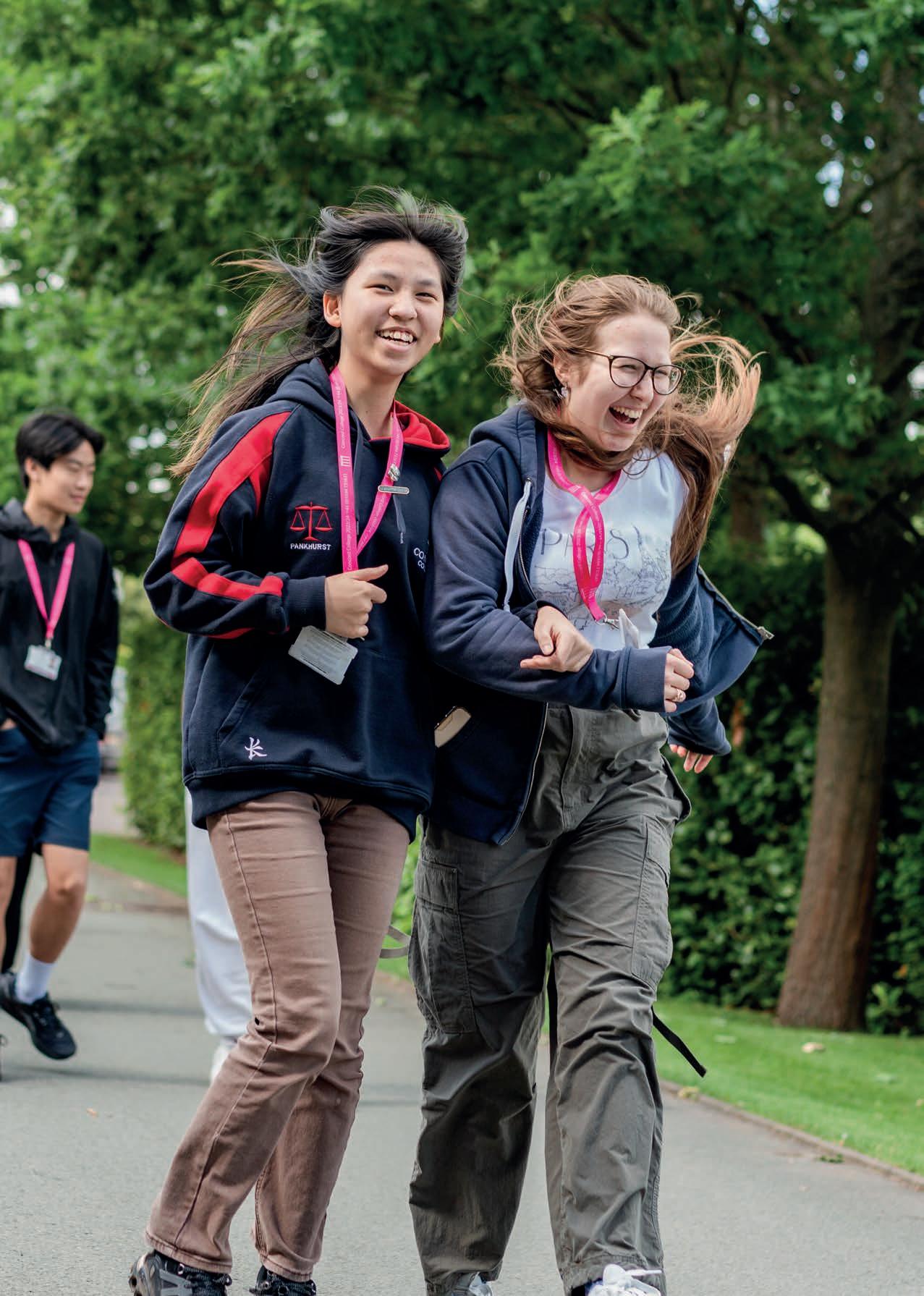













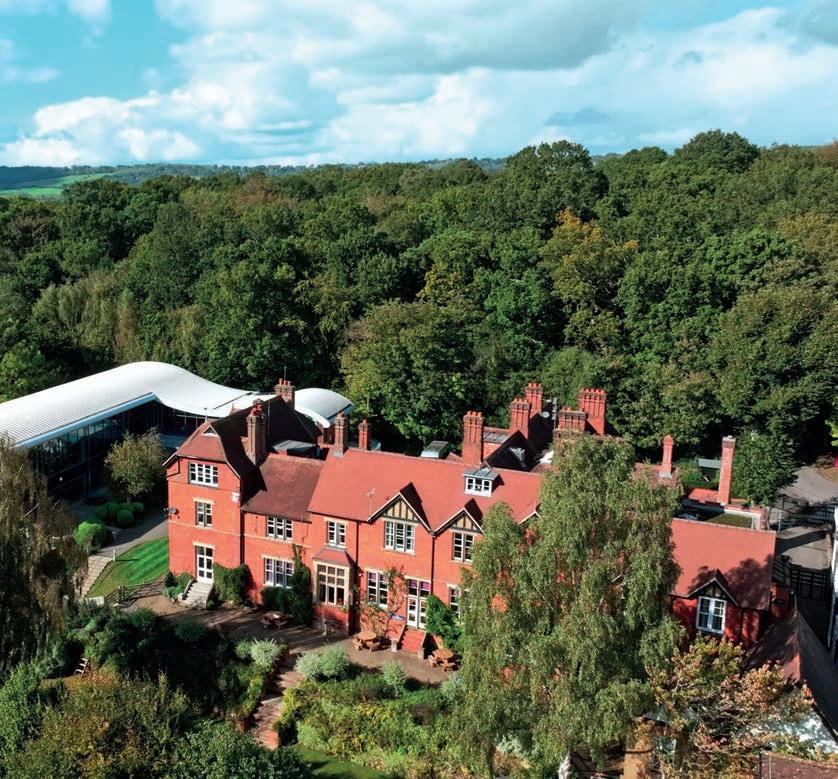
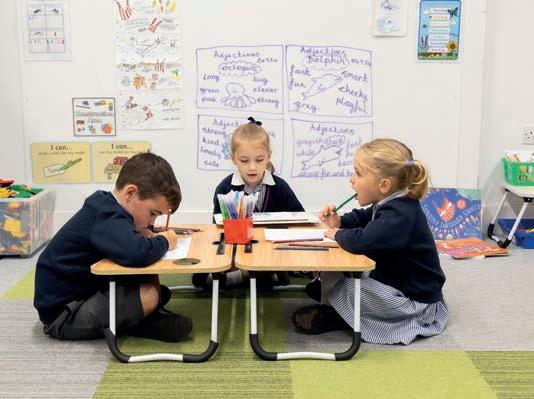
workspace than a traditional classroom. It’s inspiring to see our senior pupils engage confidently in this innovative environment.
As Head of Hazelwood School, I’m deeply committed to the formative years of education. These early years not only shape what children know, but who they become. At Hazelwood, our mission goes beyond academic excellence; we focus on developing empathetic, adaptable, collaborative, and curious young people. In an ever-changing world, children must be equipped with both knowledge and essential human skills—such as the ability to listen, problem-solve, and apply their learning creatively to real-world situations.
Hazelwood is a coeducational Nursery and Prep School for children aged 9 months to 13 years, set in 25 acres of woodland on the Surrey-Kent border. We pride ourselves on o ering a dynamic curriculum, outstanding facilities, and a
forward-thinking approach to teaching.
A recent innovation at Hazelwood is our Flexible Classroom scheme
Initially a small trial, this has transformed the learning environment school-wide. Children now choose how they learn best— whether on comfy seating, floor seating, standing desks, or in quiet zones. There are designated areas for independent study, focused one-to-one support, or collaborative brainstorming at circular tables. This flexibility has fostered greater engagement, curiosity, and ownership over their learning. We’ve seen children thrive, whether sitting on wobble stools, working at standing desks, or sitting on the floor with a lap desk. The environment encourages exploration, fostering both personal and academic growth.
We’ve also recently opened our Upper School Learning Centre for Years 7&8. Designed for collaboration and independent thinking, it feels more like a creative
Additionally, the relocation of our Reception classes to the main campus has been a game-changer. Our youngest children are now fully integrated into the school community, enjoying new spaces for play, including a large all-weather awning for year-round outdoor play, a sandpit and a dedicated Forest School development area. It’s already proving to be a magical space where our 4- and 5-year-olds are thriving—learning, playing, and growing with joy and confidence.
Wellbeing is central to our school philosophy. Our Wellbeing Hub, launched last year, provides a safe space for children needing calm, support, or extra help with learning. We know that happy children learn best, and we are dedicated to nurturing the whole child.
Hazelwood remains committed to innovation, academic excellence, and empowering children to grow, explore, and flourish. I’m truly privileged to lead such a forward-thinking school.
To arrange a visit or tour, please contact admissions@hazelwoodschool.com or visit hazelwoodschool.co.uk.
LINDIE LOUW








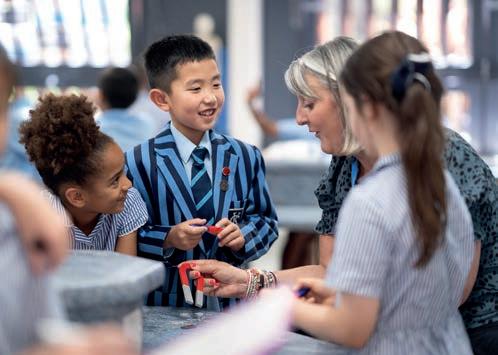
For many families, the 11+ represents a significant milestone in a child’s educational journey. What may begin as a distant consideration can soon feel like a defining moment in a child’s young life. It is a time filled with hope, anticipation and a degree of anxiety. Yet the most important aspect of this milestone is not simply the outcome, but how children are guided through the process and supported, whatever the result may be.
Preparation for the 11+ is as much about emotional readiness as academic attainment. As part of the process, children are introduced to new challenges such as reasoning papers, timed exams and unfamiliar question styles, which, without the right encouragement, can feel daunting. The most e ective preparation builds gradually, strengthening foundations in English and maths while nurturing confidence, curiosity and resilience. When learning is approached with positivity rather than pressure, children are far more likely to feel secure and capable. Time for sport, creativity, friendships

Confidence, perspective and the bigger picture during the 11+ exams
By JULIET TOVEY, Director of Studies, Kew College Prep
and rest is vital in helping children remain motivated and emotionally well. A calm, structured approach that allows space for mistakes helps pupils view the 11+ as one step along a broader educational journey, rather than a single defining test.
Independent and selective schools seek more than strong scores alone. They value pupils who are engaged, thoughtful, articulate and kind. Schools that prepare children with this wider perspective often see not only excellent outcomes, but also confident and grounded young people.
At Kew College Prep, preparation for the 11+ is carefully woven into everyday learning, with their unique 11+ programme, focussing on careful preparation and the children’s wellbeing. Small class sizes allow highly qualified, experienced teachers to tailor support, identify strengths and address gaps early, ensuring each child feels known and supported. High expectations sit alongside warmth, encouragement and genuine care. Families at Kew College Prep are supported by the Head who gives advice on a range of schools to suit each child’s current and potential abilities, ensuring that children
are applying to senior schools that will be the best fit for them. The school speaks positively about all senior schools and reminds children that the one that they go to eventually is the one best suited to them.
Year after year, Kew College Prep pupils achieve outstanding results, gaining places at a wide range of leading senior schools. Just as importantly, they leave with confidence, self-belief and a love of learning. Families are supported in navigating results with perspective, celebrating success while helping children recognise opportunity in every outcome. Ultimately, the most valuable lessons of the 11+ extend far beyond the exam room. When preparation is thoughtful and child-centred, it becomes a positive stepping stone, equipping young people with resilience, confidence and optimism for the next stage of their journey.
Kew College Prep is a co-ed prep school and nursery for children aged 3-11. Personal tours run daily; book at kewcollegeprep.com/ admissions/open-mornings/


As London families navigate an increasingly pressured educational landscape, many are looking beyond the city for a schooling experience that o ers both aspiration and balance. The quiet resurgence of the Country Prep School reflects a growing belief that childhood should be expansive as well as excellent.
Set in 150 acres of countryside, schools like Elstree demonstrate how space and setting shape young lives. Here, academic ambition sits comfortably alongside adventure, imagination, and fresh air. Children are encouraged to remain children for as long as possible, learning through challenge and curiosity rather than haste. The landscape itself becomes part of the education: woodland, lakes, parkland and playing fields providing daily opportunities for discovery, teamwork and joy.
Academic standards are uncompromising. Small class sizes and expert teaching allow pupils to be both challenged and supported, developing independence and confidence in their learning. Success is measured not only through outstanding Common Entrance results and Scholarship places secured at top Senior Schools, but also in the way pupils approach di culty – with resilience, critical thinking and pride in e ort.
Beyond the classroom, a strong culture of participation prevails. Sport, creative arts, design technology and outdoor pursuits are not seen as additions to learning, but as essential components of it. First-rate facilities and e ective timetabling ensure that children have the time and space to explore individual talents, whether on the stage, the sports field or in quieter creative disciplines. Perhaps most striking is the character such environments foster. Elstree places
great emphasis on kindness, responsibility and good humour. Pupils learn to support one another, take ownership of their actions and engage fully with the life around them -without taking themselves too seriously. These qualities, increasingly rare and deeply valued, prepare children for life at Senior School and beyond with humility and assurance. For many London families, boarding - whether flexi or weekly - provides children with independence and structure, while remaining carefully balanced alongside family life. Living and learning within a supportive community helps children develop organisation, decisionmaking skills and self-confidence well before the next educational step.
Elstree School o ers a rare combination in today’s world: a proudly independent Prep School that thoughtfully adapts to the demands of the modern world. The enduring appeal of the Country Prep School lies not in nostalgia, but in its ability to o er something quietly radical: an education that prizes excellence without pressure, ambition without anxiety, and childhood without compromise.
elstreeschool.org.uk


























































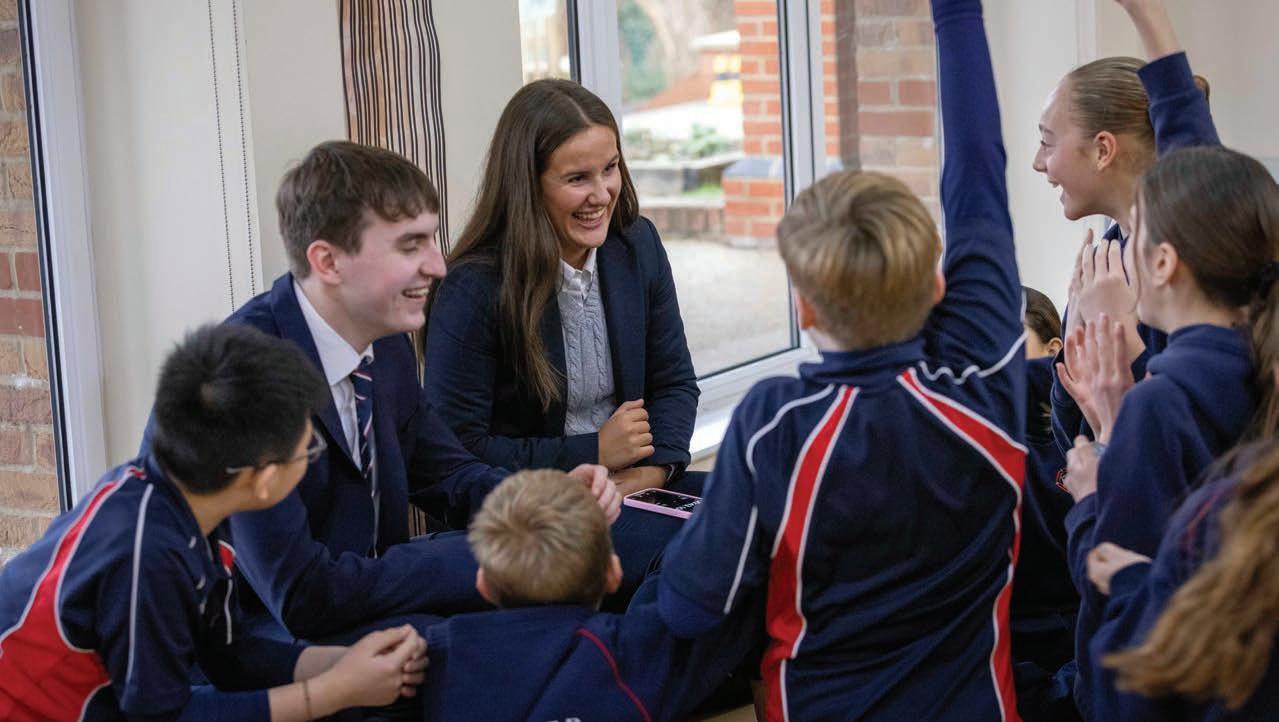
Recent government research states that the quality of a child’s education at age 3 can impact their GCSE and A-level grades. That means investing in a child’s early years education is key, and that every year in education counts.
At Berkhamsted Schools Group, children are seen not only for who they are in Nursery, but for who they could be by the time they reach Sixth Form. By o ering a sustained schooling journey from ages 3 all the way to 18, every child is given the opportunity to develop into a truly remarkable person. By remaining with one school, Berkhamsted can bring consistency to a child’s educational journey and help to improve their attainment potential. Transitions across schools can lead to omissions or inconsistencies in the curriculum, with children finding themselves either behind or further ahead. At Berkhamsted, pupils moving
across di erent sites are already known and supported: this allows them to thrive in their studies from the moment they arrive. A sustained schooling experience allows pupils to feel both comfortable in class and continually stretched.
Curriculum success is also underpinned by a consistent support network. At Berkhamsted, the continuity of a child’s journey allows sta to share knowledge and insights over time, ensuring that every pupil is continually stretched to support their development. With a foundational set of values adhered to each stage of the journey and driven by a consistent leadership team, the familiarity with Berkhamsted’s culture and ethos helps children feel confident and secure in their environment. This then empowers children to take on new challenges, building adventurous, self-assured learners for life.
An education journey at Berkhamsted also promises community. With Sixth Form students often visiting early years, relationships grow naturally, sharing advice and connections. The community builds role models: aspirational and familiar
faces for younger pupils to look up to. The power of a friendly wave in your first week of Senior School cannot be understated. It is true that changing schools can bring valuable challenges, as adjusting to new curricula, people and social settings can help children to grow. At Berkhamsted, the benefits of these transitions are not lost. Each school is located on a di erent site, with two choices for Prep at either co-ed Berkhamsted or all-girls Heatherton. Girls and boys are split between Years 7 to 11 before being brought back together at Sixth, creating varied social structures while also benefitting from environments designed exclusively to help them thrive. Between the rolling fields of the PrePrep and the boardroom-style design of the Sixth Form block, pupils never feel that they outgrow Berkhamsted: rather that it grows with them.
To find out more about Berkhamsted Schools Group, book a place at one of their open events. Pre-Prep and Prep: 7th March, Senior Girls, Boys: 24th April, and Sixth Form: TBC September. See more at berkhamsted.com


David Boyd, Head at Surrey's Tormead School on the school’s ethos and state-of-the-art facilities

P“Building resilience in the girls is vital”

given the chance to 'sell’ their manifesto at a full school assembly. Last year’s Head Girl Team successfully pitched to the governing board for investment to enhance the school’s outdoor space for pupils to enjoy during breaktimes.
The school’s location in Guildford town centre is a draw for parents and pupils. Just a short walk from Guildford’s London Road station, the school has excellent road and rail links, and the older girls enjoy being able to walk into town in their breaks.
astoral care at Tormead is driven by the school’s core values of respect and dignity. Mr Boyd explains: “Our primary school value is not academic results but to be kind, to respect each other, and to treat others in the way you would want to be treated. That is really at the heart of our ethos here at Tormead.”
One of Tormead’s key values is its all-girls ethos which instils confidence and self-belief in its pupils from the very earliest stage in Pre-Prep. Mr Boyd explains: “Building resilience in the girls is vital and Tormead encourages students to speak and debate, both in lessons and in extra-curriculars such as Model UN and Debating Club.”
The Head Girl team is just one example of student voice at the school. Girls put themselves forward for election and are
The school has recently invested in its STEM and art facilities, including a 3D printing design lab, upgraded chemistry laboratories and a new textiles studio. In September 2025, Tormead opened its new Urnfield Sports Ground, boasting stateof-the-art facilities for athletics, hockey, football, and cricket. Mr Boyd said: “This has been a significant investment for Tormead and will allow girls to reach their full potential in sport and to stay in sport longer than they might at co-educational schools.”
Tormead’s students have excellent prospects upon leaving school, including a 100% success rate for Cambridge applicants in last year’s cohort. The school’s excellent careers programme, run by a full-time career advisor, encourages students to focus on their passions and interests foremost. Mr Boyd adds: “We spend a lot of time thinking about the right course and university for each student. It might not be Oxford or Cambridge. Over the last few years, we have seen a real increase in degree apprenticeships with Tormead students joining apprenticeship schemes at PwC, Ernst & Young, and Grant Thornton.”
tormeadschool.org.uk



A leading independent day school for girls and boys 3 - 18




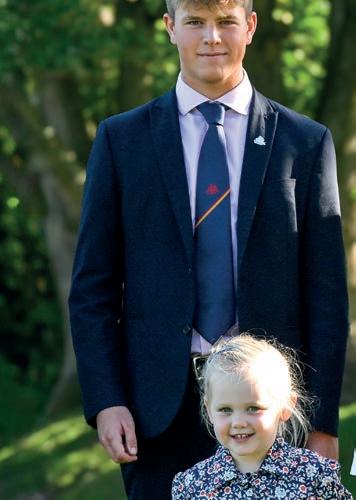














Top 10% Nationally for Value Added Cambridge University 2025
(Source: Cambridge Insight Assessments)







A discreet London prep school in Beckenham, where academic ambition meets a close-knit community.
There is something special about discovering a place that feels as though it has been designed just for you. Not shouted about. Not showy. Just quietly excellent. That is how many families come to see St Christopher’s The Hall: Beckenham’s best-kept secret. Nestled in the heart of Beckenham, we do not always announce ourselves as a London prep school, yet in ambition, outlook and opportunity, that is exactly what we are.
Our pupils benefit from the academic rigour, cultural breadth and high expectations associated with a London education, alongside something increasingly rare: the warmth, familiarity and genuine connection of a close local community. This balance
sits at the heart of everything we do. We are proudly small, and deliberately so. It allows every child to be known, understood and championed. Education here is bespoke and responsive, rooted in the belief that excellence is not achieved by forcing children into a single mould, but by recognising who they are, how they learn and what they might become.
As a London prep school, we set the bar high. Our pupils are encouraged to think independently, communicate confidently and engage deeply with their learning. Recent inspection outcomes reflect this clearly: children achieve highly because they are supported thoughtfully, challenged appropriately and taught exceptionally well. Character, curiosity and confidence are nurtured alongside academic success. Our curriculum is intentionally forward-
“We are outwardlooking in ambition, but grounded in community”
thinking. Strong foundations in literacy, numeracy and subject knowledge sit alongside a clear focus on the skills children will need in a rapidly changing world. Central to this is The Horizon Project, our distinctive weekly programme dedicated to leadership, collaboration, sustainability, problem-solving, creativity and self-awareness. These are not treated as optional extras, but as essential components of a modern education. Technology is embraced, but not allowed to eclipse childhood. Children learn to engage thoughtfully with the digital world while developing the human skills that matter just as much: resilience, empathy, independence, imagination and the ability to think deeply rather than react quickly. Childhood here is still tangible, energetic and connected to people, ideas and experiences beyond a device.
Our close relationship with St Dunstan’s Educational Group strengthens this further, providing continuity and aspiration as pupils prepare for senior school. It means families can enjoy the intimacy of a small, caring prep school, while knowing their children are part of a wider, ambitious educational journey. Yet for all of this strategy and structure, what defines St Christopher’s most powerfully is its atmosphere. This is a school where families know one another. Where sta go the extra mile because they genuinely care. Where children feel safe enough to take risks, try new things and grow into themselves. We are outward-looking in ambition, but grounded in community. From the earliest years, children embark on a carefully designed journey through to Year 6. Learning is imaginative, purposeful and joyful, whether in the classroom, on the stage, on the sports field or through the many enrichment opportunities that broaden horizons and build confidence.
St Christopher’s The Hall may be Beckenham’s best-kept secret, but for those who discover it, it quickly becomes a community, a partnership, and a foundation for the future.
Find out more at an upcoming open morning. Book at stchristophersthehall.org.uk



Nadia Carella of Abingdon House Senior –part of the Cavendish Group – on the huge therapeutic value of supporting students using co-regulation approaches
Abingdon House is a specialist school o ering an integrated therapeutic approach to education for students with learning di erences. We support pupils who may struggle to fulfil their potential in mainstream environments by helping them overcome barriers to learning, build confidence, and thrive both academically and personally. Our central priority is preparing students to face challenges with resilience, equipping them with the skills they need for life beyond school. At the heart of this lies regulation – the ability to manage emotions and levels of alertness in order to engage fully with learning and daily life. Yet regulation is not always easy to
achieve independently. Many young people benefit from the guidance, presence and consistency of trusted adults. This is where co-regulation becomes essential. When students can expect calm responses, clear guidance and steady support from the adults around them, they develop trust and a sense of security. A predictable foundation allows them to focus on learning, manage challenges with greater confidence, and gradually build the capacity for self-regulation. Co-regulation is, at its core, one individual helping another to navigate stress and emotion through connection, modelling and guidance. It provides children with the support needed to move from a heightened emotional state into a calmer, more balanced one.
Regulation itself can be understood across three areas: high alertness, low alertness and
what we call the 'wonder zone' – that optimal state where students are calm, focused and ready to learn. For some, high alertness means their threshold for sensory input is low, making everyday events feel overwhelming. This might look like restlessness, fast movements, fidgeting, talking o -topic or struggling to maintain focus. Others may experience low alertness, where the brain is slow to register sensory input. These students may appear lethargic or zoned out, sometimes missing instructions altogether.
Recognising and responding to these states with the right strategies is key. High alertness can be supported through calming activities such as wall push exercises, bubble blowing or gentle rolling on a peanut ball, reducing intensity and restoring balance.
Low alertness, on the other hand, benefits from alerting strategies that boost energy and focus, including star jumps, hopping, short sprints or rhythmic movement games. By tailoring responses in this way, sta help students return to the 'wonder zone', where meaningful learning and growth can take place.
At Abingdon House School, a traumainformed approach to behaviour places co-regulation at its core. Guided by the principles of Protect, Relate, Regulate and Reflect, it ensures students feel safe and connected while developing the resilience needed to manage challenges e ectively.
Regulation is not only reactive – it is about sustaining the 'wonder zone' throughout the day. Regular movement, learning breaks, environmental adaptations and other proactive strategies help students stay engaged and ready to learn, reducing dysregulation and enabling more meaningful reflection when needed.
Emotional resilience is a cornerstone of lifelong success. It enables young people to recover from setbacks, adapt to new situations and face challenges with confidence. Co-regulation plays a vital role in building this resilience. Before students can manage di culties independently, they first need to experience safety and connection with adults. Through consistent co-regulation, students gradually develop the capacity for self-regulation – an essential skill that underpins not just academic achievement but also the ability to build strong relationships, succeed in employment and flourish in life beyond school.
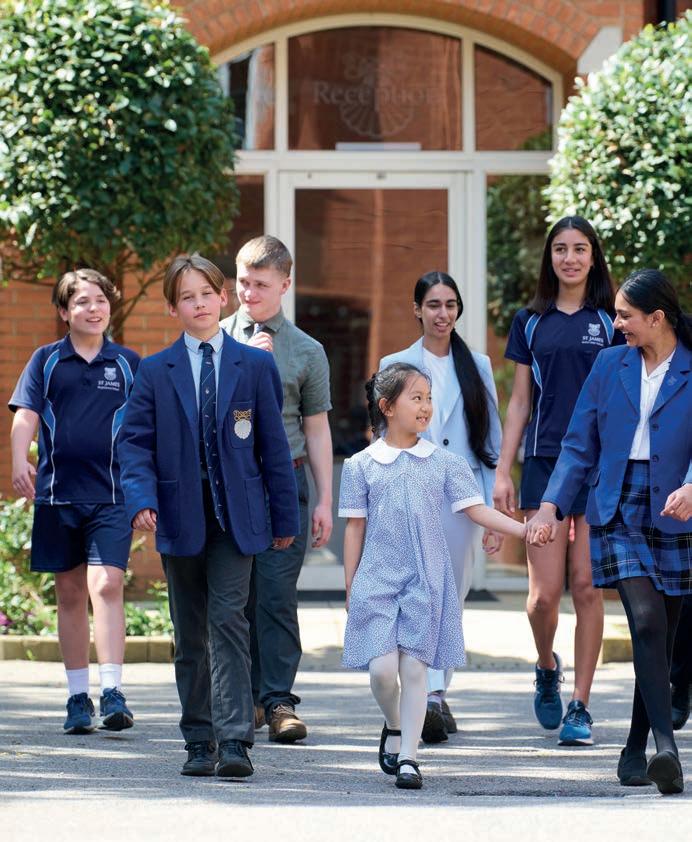
ASt James Schools pupil leaves with strong results, a calm mind, a kind heart and a lively curiosityprepared not only for exams, but for life. That founding promise remains at the heart of St James as it embarks on a significant new chapter: the transition to co-education at senior school level.
From September 2027, St James will welcome both boys and girls into Year 7 and Year 12 at both its Ashford, Surrey and Kensington Olympia sites. The move reflects evolving educational expectations and growing parental demand for a school environment that mirrors the collaborative and diverse world pupils will one day enter.
While classrooms and cohorts will change, the schools’ distinctive ethos will not. St James has long been recognised for combining academic ambition with a philosophical approach to education - nurturing mindfulness, respect and self-awareness alongside intellectual rigour. Throughout the transition, the schools remain committed to supporting every pupil to thrive academically, socially and spiritually, in a community where each individual is genuinely known and valued.
Jeremy Sinclair CBE, Chair of Trustees, describes the decision as both purposeful and forward-looking:
“This marks an important and exciting moment in the schools’ history. The decision is grounded in strong parental
A
new chapter for St James School: transitioning to co-educational at senior level
interest and a shared belief that coeducation will open new opportunities for pupils academically, socially and in preparing them for life beyond school.
At the same time, what makes the schools distinctive will remain unchanged: an ethos of academic ambition, mindfulness, stillness and respect, which generations of pupils have experienced and cherished. Whatever changes come, the commitment is that the schools will remain recognisably the places families know, while embracing the next chapter in their evolution.”
The transition will follow a carefully phased plan to ensure stability and continuity for current and future pupils. This approach builds on the successful move to co-education in the Prep School in 2022, providing valuable experience and insight as the Senior Schools evolve.
Subject to Department for Education approval, entry will be introduced gradually from September 2027, with full co-educational provision planned by
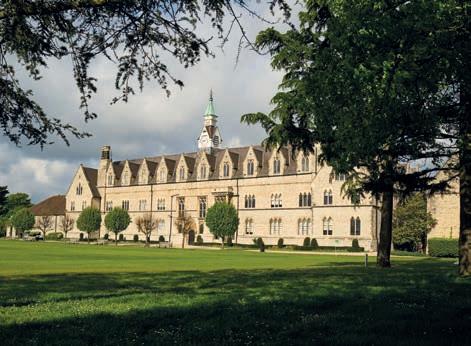
2031/32. This measured progression allows the schools to expand opportunity while preserving the calm, focused environment that defines a St James education.
As St James opens its doors to a broader community, their purpose remains unchanged: to develop young people who are academically capable, emotionally grounded and ready to contribute meaningfully to the world.
For families considering joining this new era, the Senior School admissions teams would be delighted to share more about what lies ahead.
St James Senior School in Ashford, Surrey: Ms Rebecca Tocknell admissions@ stjamesboys.co.uk or 01784 266 933
St James Senior School in Kensington Olympia: Mrs Patricia Snowdon admissions@ stjamesgirls.co.uk or 020 7348 1748

































Set



Saturday 7th March
Saturday7thMarch
NestledinthebeautifulSurreycountryside,just30milesfrom London,LingfieldCollegePrepismorethanjustaschool-itisan inspiringplacetobeginachild’seducationaljourney.
From6monthsto11years,welaythefoundationsforeverychildtothrive, rovidingahappy,nurturingenvironmentthatsparkscuriosityandcreativity.

From 6 months to 11 years, we lay the foundations for every child to thrive, providing a happy,
Setinanenvironmentthatinspiresgrowthandlearning,weempower childrentodevelopaloveforknowledge,preparingthemforexciting futuresfullofpossibilities.Discoveraschoolwhereeducationgoesbeyond theclassroom–whereeverychildisencouragedtodreambigandachieve Forfurtherinformation,to ookaspaceonourPrep


www.lingfieldcollege.co.uk 1342838153







the
Rosemead Preparatory School and Nursery in Dulwich has unveiled plans for its new Pre-School and Reception classrooms, set to open in September 2026. These purpose-designed environments will o er children an inspiring, contemporary, and nurturing start to their educational journey, supporting the school’s commitment to shaping brilliant futures.
The project represents a significant investment in early childhood education, creating spaces that are immersive, flexible and designed to ignite curiosity from the very start of school life.
The Pre-School and Reception development represents the beginning of a wider vision for Rosemead Preparatory School. Over the next several years, the school will embark on a phased programme of redevelopment designed to modernise and enhance the entire site. This long-term plan will focus on creating contemporary, flexible and future-ready spaces.
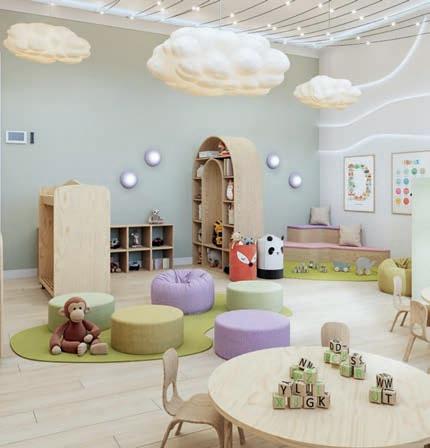

The new Pre-School space has been thoughtfully designed around a calming, organic aesthetic using a soft palette of pale lilac and earthy greens. Each aspect of the environment has been crafted to support young children’s wellbeing, focus and imagination. Distinct areas will be defined through bold interactive features and gentle flooring transitions will encourage exploration and independent learning, while soft seating features introduce warmth and personality. The result is a space that feels modern and and deeply child-centred.
The Reception classrooms build on the Pre-School's ethos with a scheme that pairs a neutral base and soft green palette with uplifting, purple-toned accents. This creates a fresh, nature-inspired atmosphere that supports cognitive development and play-based learning. Purposefully designed activity and work areas will promote collaboration, creativity and early social skills. Flexibility and adaptability are central to the scheme, ensuring the
space meets the needs of all learners.
Speaking about the plans, Nick Hewlett, CEO of St Dunstan’s Education Group, said: ‘These exceptional new spaces at Rosemead reflect our belief in educational excellence delivered di erently where innovation, wellbeing and individuality come together to give every child the very best possible start.’ This development comes at an especially exciting moment for Rosemead Preparatory School. Last year, the school was named Independent Prep School of the Year at the Tes Schools Awards 2025, widely regarded as the Oscars of education. The recognition celebrates Rosemead’s exceptional pastoral care, innovative approach to learning, and the strong sense of community that defines the school. In December, Rosemead also announced Christopher Woodward will join as Head from September 2026.
Prospective families will be able to learn more about the exciting developments at Rosemead’s open morning on Wednesday 11 February 2026.
Football is cool for girls and can make an enormous di erence to their engagement with sport. We speak to two schools reaping the rewards of championing the female game
At Royal Russell School in Croydon, football has been part of the mix for many years. The 110-acre campus lends itself to the full range of sports in both school and social time. But in the past decade the 'beautiful game' has become a cornerstone of the sports o er, says Head of Girls' Football, Aimee Watson. "The game fi rst gained momentum here because of its inclusivity, as it appealed to pupils across all age groups and abilities."
The school runs a comprehensive programme for boys and girls, competing nationally in ISFA and ESFA competitions, and also o ers memorable experiences such as tours of St George’s Park (the English Football Association's national centre) and Spain. "The growth of football has been remarkable, and it reflects both pupil demand and our commitment to
giving them the very best opportunities."
While boys' love of playing football has long been evident, it's the rise of girls' football that is so exciting right now. "Our programme has expanded significantly and is now one of the most vibrant parts of school life," says Aimee Watson. "We’ve invested in specialist coaching, competitive fixtures, and development resources to ensure girls at every level can thrive."
And this is more than knockabout stu , with girls aiming for the top. "Today’s generation of girls want to play football because it is exciting, dynamic, and aspirational – they see it as a sport where they can express themselves, work as a team and compete seriously," adds Aimee Watson. She sees the rise of clear pathways as key to growth at school level. Royal Russell works to support high ambitions by o ering a structured programme supported by UEFA A coaches, GPS tracking, VEO video analysis, and strength and conditioning training. Aimee Watson says there's no





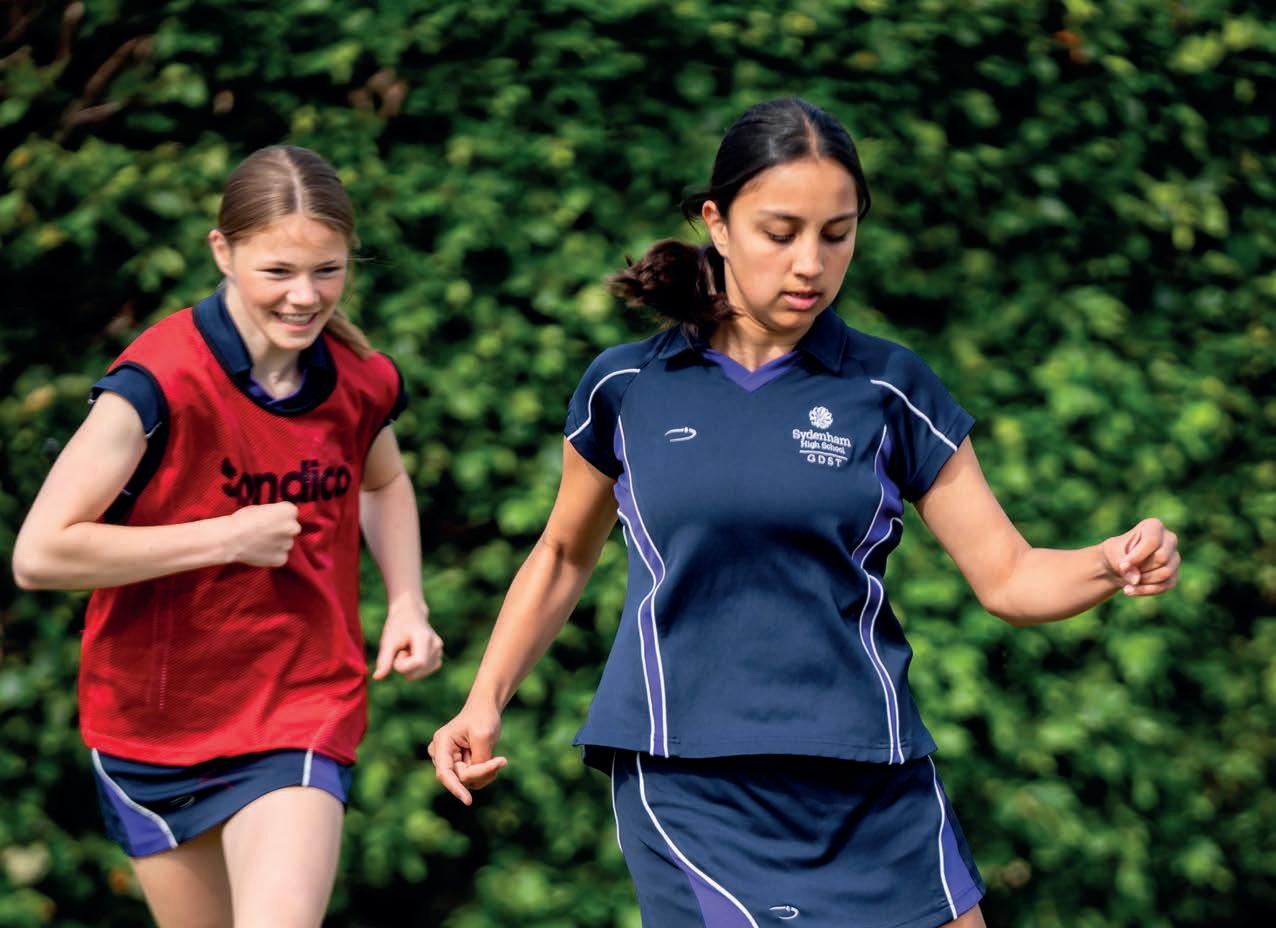












"It is now seen as completely 'normal' to play as well as watch the game – pupils view it as a women's sport"





At Sarum Hall School we believe that the spirit of every child should be nurtured; that happiness gets results; and that success is ensuring every pupil achieves their personal best.
We are a modern, independent girls prep school in London’s Belsize Park. We focus on each pupil as an individual, and inspire them to fulfil their potential and encourage them to achieve excellence.
Individual talents are nurtured, and we instil a strong sense of purpose to every pupil, allowing them to explore our wonderful world with confidence. The foundations set at Sarum Hall School will last a lifetime.





doubt that the recent successes of the Lionesses have made a huge di erence. "The professional women’s game has shown that football is a space where girls can thrive."
The school caters to everything from recreational players to elite performers, focusing on passing football. "Everyone is involved in the play. It mirrors the modern professional game, builds technical skill and decision-making, and fosters a shared sense of achievement."
Royal Russell o ers scholarships and bursaries for the most talented, and scholars receive additional support through personalised development plans, mentoring and access to specialist resources, also benefiting from the school's strong links to professional clubs. Football tours, elite fixtures, and tailored training are designed to ensure that gifted players are continually stretched.
Parents are very supportive of Royal Russell's commitment to the sport, and the school is seen as a hub for football development locally. Alongside the success of school teams in local and national fixtures, there are some starry alumni to add team pride. These include Reanna Blades, playing for Sunderland AFC and Jamaica, and Rosie Rowe, now playing with Crystal Palace U21. And in the men's camp, there's Newcastle
"We’ve invested in specialist coaching and development resources to ensure girls at every level can thrive"
United and England's Tino Livramento, while Rhys Norrington-Davies dons a shirt for QPR and for Wales. "We are especially proud of our alumni," says Aimee Watson. "They embody the legacy of football at Royal Russell and inspire the next generation of pupils to follow in their footsteps."
At Sydenham High School, sport in all its forms is celebrated. But football is coming into its own among the girls, say the Sports Department. It grew exponentially following the Lionesses’ success in 2022. Now, Sydenham runs a full fixture programme, including cups and tournaments, with over 100 girls regularly competing for the school in di erent teams.
The teaching team at Sydenham say the strengthening profile of women's football continues to be a massive motivator. From international success and media exposure
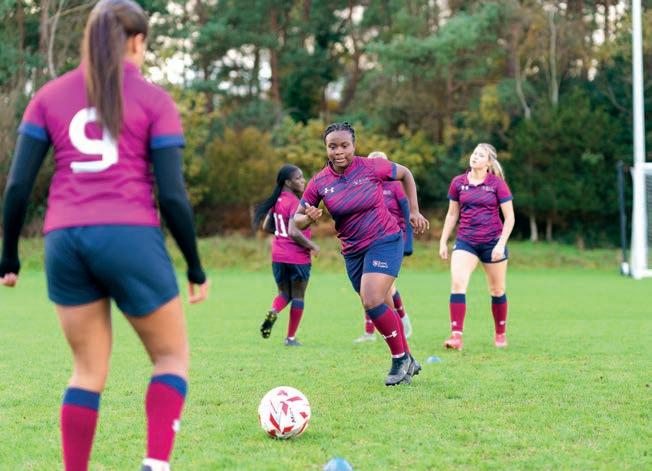
down to grass roots – many more girls' teams are appearing locally – it's proof of the 'see it to be it' theory. Sydenham High add that it is now seen as completely 'normal' to play as well as watch the game – pupils view it as a women's sport. Girls are excited about opportunities to play and train, and many of their role models are female footballers.
Sydenham o ers a year-round programme of after-school fixtures, as well as team training before school. There are inclusive lunchtime clubs to encourage all girls to have a go, whatever their experience level. It's now a core sport on the curriculum and is supported by Girls United Football Club coaches and specialist sta .
Sports Scholars at Sydenham include girls who were chosen for their footballing ability, and other scholars have taken up football since joining the school. MAT & High-Performance Programmes support girls playing at Academy and Club level through access to physiotherapy, nutrition and sports psychology. And girls who show real potential are able to play among older year groups to bring on their talent.
While Sydenham High School hasn't carried home any major school football trophies yet, the Sports Department are proud that they won over half of all football fixtures played last year. Capitalising on these results, and the enormous enthusiasm here for the game, there are further investments in the sports ground and in providing even more specialist training. Sydenham High say they are doing the groundwork and enjoying the development path towards that bulging football trophy cabinet!