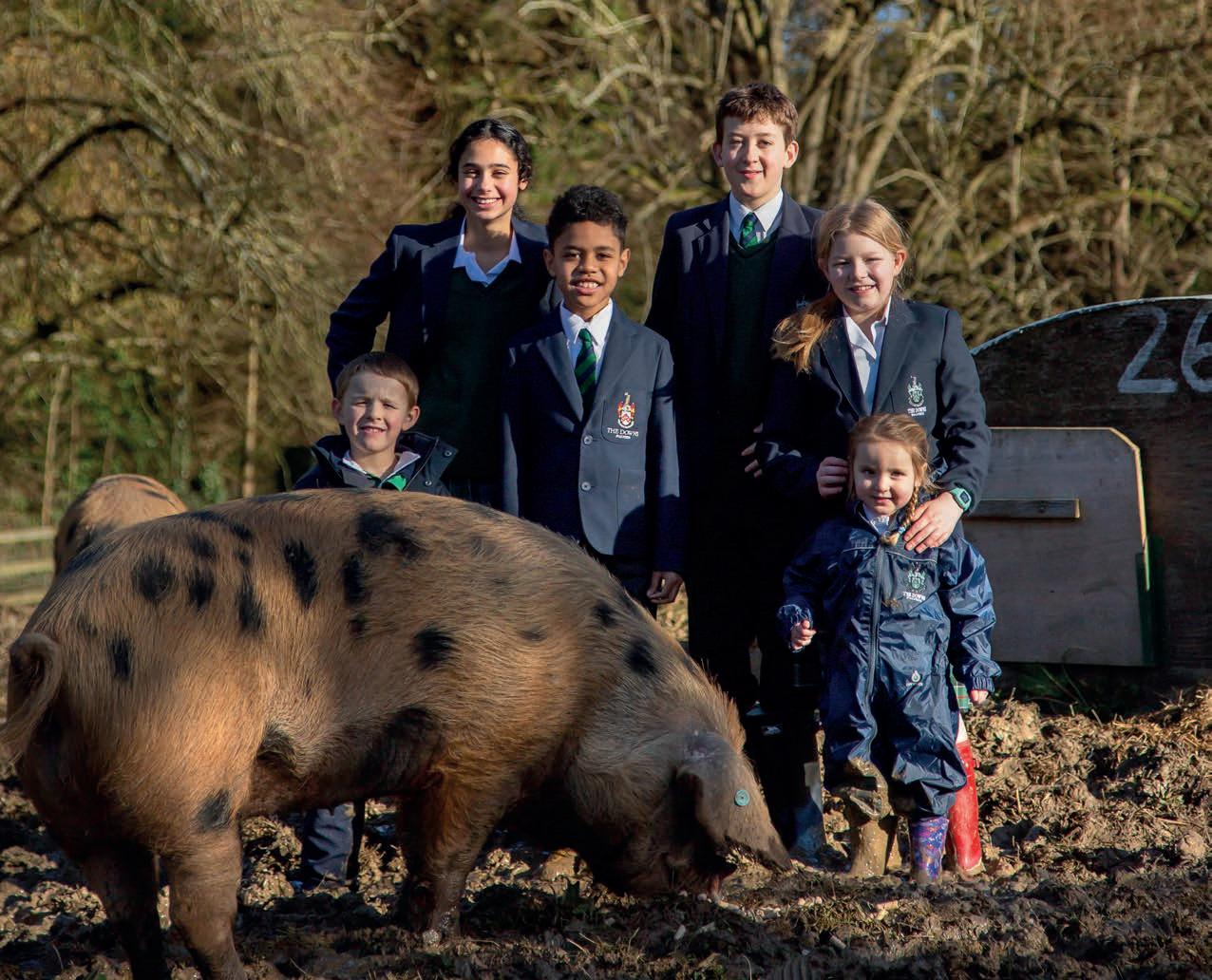













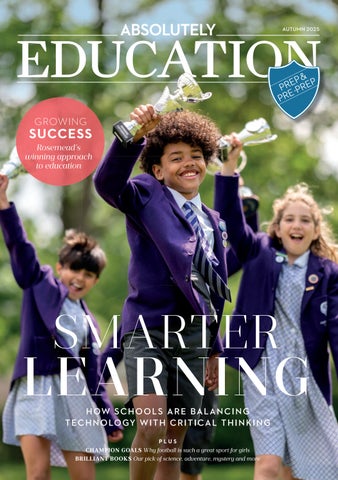
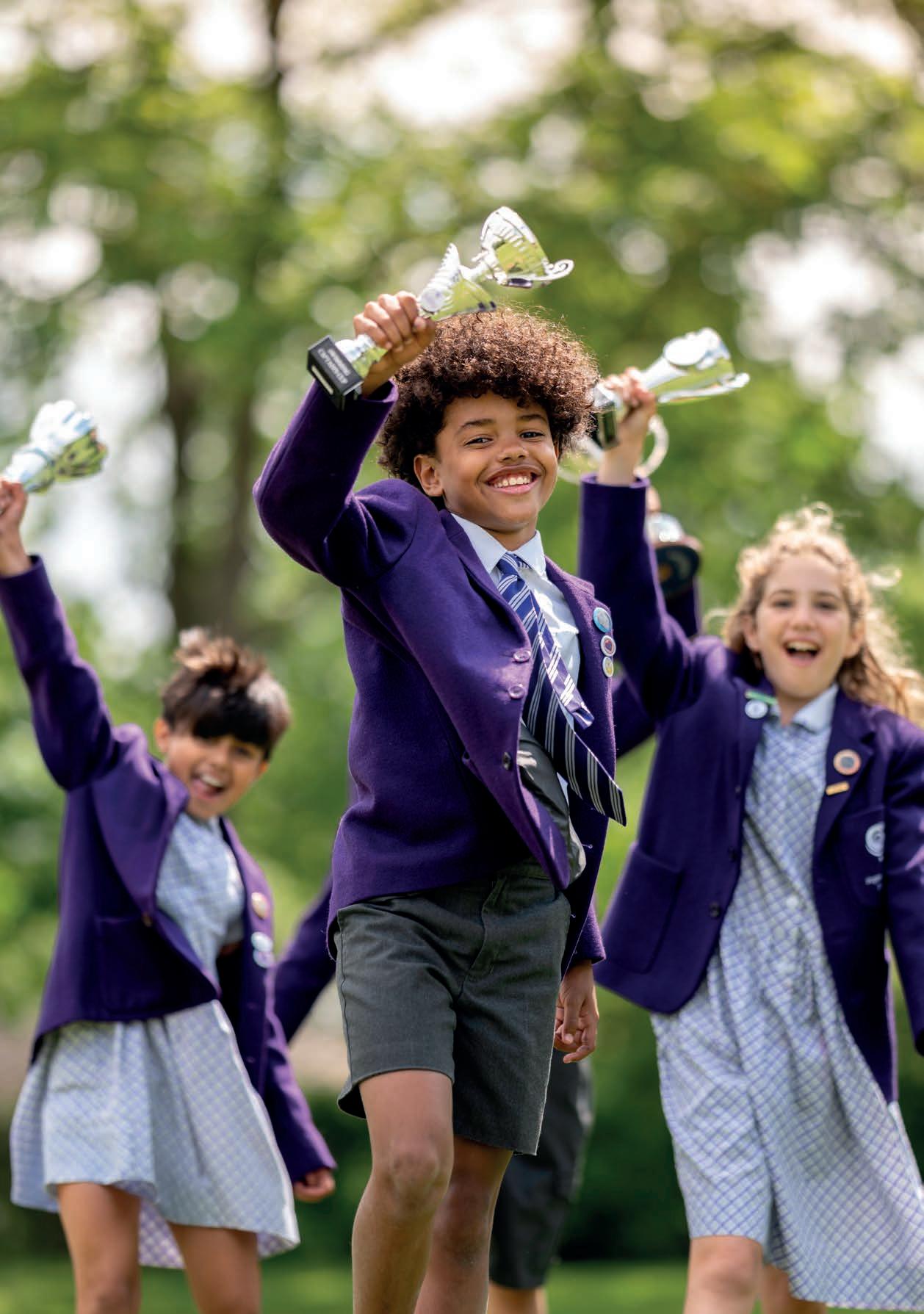
Rosemead’s winning approach to education GROWING SUCCESS
















Rosemead’s winning approach to education GROWING SUCCESS













‘Very Satisfied’ or ‘Satisfied’
See website for July 2025 parent survey results
See website for July 2025 parent survey results
We attach great importance to the views of our parents. They are close to all we do and witness first-hand how their children progress, and to what extent we deliver against our ambitious stated aims.


We attach great importance to the views of our parents. They are close to all we do and witness first-hand how their children progress, and to what extent we deliver against our ambitious stated aims.
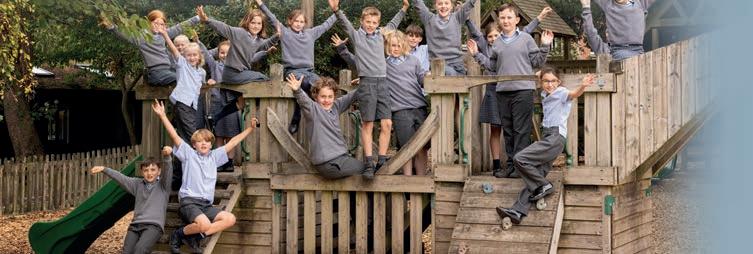
Asked in our most recent (July 2025) confidential survey about their overall satisfaction with their child’s experience at Herne Hill School over the past academic year, 99% responded that they were either ‘very satisfied’ or ‘satisfied’, with the vast majority being ‘very satisfied’ (91%)
The school’s great strengths are the care and attention they pay to every child, and their overall philosophy based on scientific research.
The school’s great strengths are the care and attention they pay to every child, and their overall philosophy based on scientific research.
Kindergarten parent
Kindergarten parent
Asked in our most recent (July 2025) confidential survey about their overall satisfaction with their child’s experience at Herne Hill School over the past academic year, 99% responded that they were either ‘very satisfied’ or ‘satisfied’, with the vast majority being ‘very satisfied’ (91%)
In the light of our parents’ understandably high expectations, we are proud of their strong endorsement of our provision and of their many complimentary comments.
In the light of our parents’ understandably high expectations, we are proud of their strong endorsement of our provision and of their many complimentary comments.

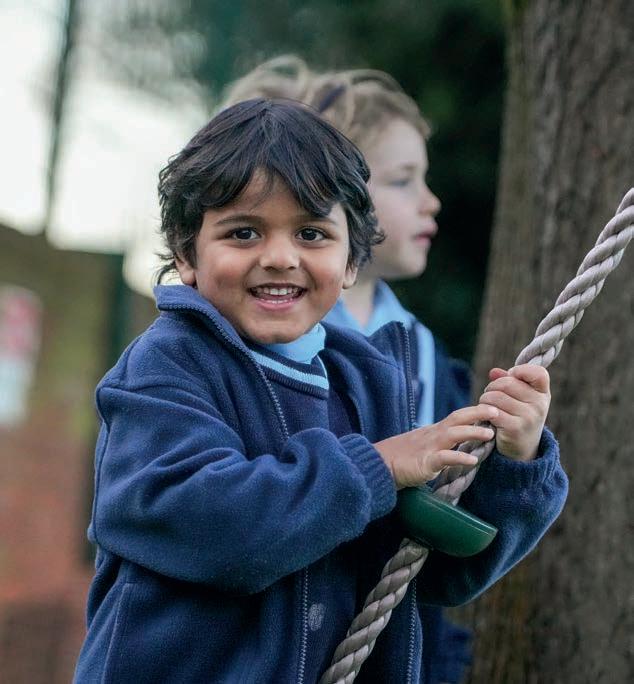
Our son has been so happy at the school since day one. It feels nurturing and rounded, and the outdoor space is incredible.
Our son has been so happy at the school since day one. It feels nurturing and rounded, and the outdoor space is incredible.
Pre-Reception parent
Pre-Reception parent
Herne Hill School has a wonderful atmosphere. We always describe it as a village School feel in the middle of London.
Herne Hill School has a wonderful atmosphere. We always describe it as a village School feel in the middle of London.
Reception parent
Reception parent
Exclusive focus on cutting-edge Early Childhood Education (age 2+ to 7+), the most crucial period in a child’s life
} Exclusive focus on cutting-edge Early Childhood Education (age 2+ to 7+), the most crucial period in a child’s life

Seamless transition from play-based to more structured learning, preparing the children to move on at 7+ to an appropriate
} Seamless transition from play-based to more structured learning, preparing the children to move on at 7+ to an appropriate independent or state school
Embedding key values and developing ‘the whole child’ through a unique, continuous
} Embedding key values and developing ‘the whole child’ through a unique, continuous five-year curriculum
Expert staff operating under the ethos of Love · Care · Excellence in which children excel and learn with fun and enthusiasm

} Expert staff operating under the ethos of Love · Care · Excellence in which children excel and learn with fun and enthusiasm
The teachers and teaching assistants take time to know every child to provide for individual learning, encouraging excellence and achievement.
The teachers and teaching assistants take time to know every child to provide for individual learning, encouraging excellence and achievement.
Year 1 parent
Year 1 parent
Herne Hill School is a very special place! They have the ability to make learning fun at every step of our son’s time at the school.
Herne Hill School is a very special place! They have the ability to make learning fun at every step of our son’s time at the school.
Extensive wrap-around care from
} Extensive wrap-around care from 7.45am to 6pm
High-quality holiday provision for
} High-quality holiday provision for children aged 2–4

Year 2 parent
Year 2 parent
into Kindergarten, Pre-Reception and Reception
and Reception



Writer, broadcaster and journalist
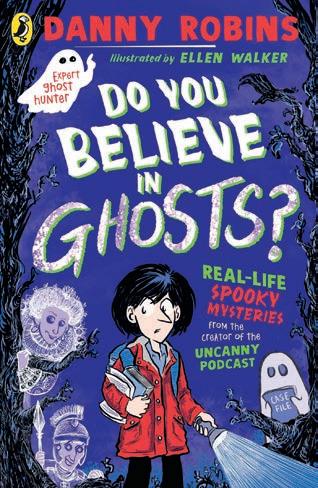
Danny Robins began his career doing stand-up in Newcastle and, at Bristol University, he was part of comedy trio Club Seals, with Marcus Brigstocke and Dan Tetsell. His writing credits include Ruby's Rare Records and The Cold Swedish Winter for Radio
4. He has been labelled 'go-to spook guy', with the spectacular radio, TV and stage success of Uncanny, as well as his gripping podcasts. In this issue, he talks about the fun of becoming a ghost detective.
Author and podcaster
As host of the podcast Everything Under the Sun , Molly Oldfield answers questions from children everywhere. A fortuitous meeting with John Lloyd while she was still a student at Oxford led on to her role as the original QI Elf – and that's where she cut her teeth as a fact finder extraordinaire. She writes a weekly Guardian column and is author of several children's books. In this issue, she talks about her latest, answering 366 questions from around the world.

Director of Student Recruitment and Admissions, TASIS England
Joshua Clark grew up in Arizona and, a er studying Political Science and Philosophy at Purdue and a Master's of Education at USC, he returned to home turf to work at an Arizona boarding school. From there he moved on to schools in Maine and Hawaii before relocating to the UK to join TASIS England. In this issue, he explores how technology can be a valuable tool to support personal learning journeys.
DDark nights are upon us, and the academic year is in full swing, but this is also the season where we gear up for family get-togethers. For children, there are so many pleasures in this season – not least preparing for celebrations and shows that mark the end of a busy and productive term. Busy was certainly a word that came to mind visiting the inspiring Dulwich prep and nursery Rosemead (from page
(from page 42) four independents share their inspired approach to delivering solid foundations. All the schools talk about the wider benefits of inspiring curiosity, as children explore the world for themselves In which regard, we meet fact-finder extraordinaire Molly Oldfield (page 78) and sit down with the UK’s brilliant ‘spook guy’ Danny Robins (page 82). He talks about his own school-library investigations into ghostly goings on –proof, if it were needed, that there’s no telling where children’s curiosity may lead.
“SCHOOLS TALK ABOUT THE WIDER BENEFITS OF INSPIRING CURIOSITY AS CHILDREN EXPLORE THE WORLD FOR THEMSELVES”
16). While it may have a whole host of awards – including the top trophy of TES Independent Prep School of the Year – this is certainly not a place resting on its laurels. Sport, art, drama and music are all prized, along with an academic approach that emphasises connections and independent thinking. Connections are critical to e ective learning, and in Making sense of science
But we do know where any pantomime will go – that’s half of the joy of it. So we were delighted to talk to two panto greats about this peculiar homegrown entertainment (page 86). Whatever traditions you cherish, enjoy them – and a very happy ending to your year.
Libby Norman EDITOR
Out and about in the world of
Rosemead's award-winning approach delivers inspiring education 21 ENHANCED LEARNING
Framlingham College uses AI's power to enhance teaching and learning 23 REDEFINING 11+
St Benedict's, Ealing has revised its assessment to ease stress and ensure better outcomes
25
QE on the importance of speech and language support in early education
Give your child a head start at nursery or pre-school 31
Phileas Fox on how a bilingual nursery setting delivers communication skills and human connections 38
Sarah Crossan's new picture book brings reassurance about the anxieties that can take over young lives
Four schools on why embedding scientific principles and research skills early builds good learners
Mill on the Brue on the profound impact of its outdoor education on visitors and landscape 55
TASIS England on creating personalised learning journeys with technology's help 58
Two schools tell us why football is such a fantastic sport for girls
63
Streatham & Clapham High School on navigating the assessment journey
Libby Norman
Nicola Owens
MEDIA
Anna Clarke
Steve Playfoot
ART DIRECTOR
Pawel Kuba
SENIOR DESIGNER
Suzette Scoble
MIDWEIGHT DESIGNER
Carmen Graham
MAGAZINE DESIGNERS
Mariana Suzuki
Pamella Moreno
PRODUCTION MANAGER
Danica Brodie
FINANCE DIRECTOR
Jerrie Koleci
CREDIT CONTROL MANAGER
Alexandra Hvid
DIRECTORS
Craig Davies, James Fuschillo
MANAGING DIRECTOR
Sherif Shaltout

School’s Out
72 TOP AUTUMN BOOKS
From
78 QUESTION TIME
Fact finder extraordinaire
Molly Oldfield answers questions from children everywhere
82 SPIRIT GUIDE
Danny Robins believes today's children are every bit as keen on ghost stories as he was
86 WHAT A PANTOMIME
Oh yes, the panto tradition is real drama – as two legendary dames explain
98 POCKET MONEY
How much cash do you splash – if at all?

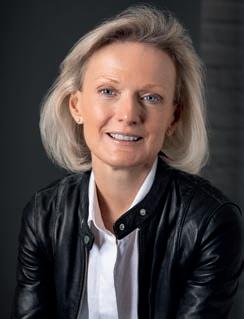
Simply Learning Tuition has appointed Alison Melrose as Director of Client Services, taking up the role in January. She has three decades of experience in leadership roles across independent schools. “I look forward to working with the team to ensure families receive the very highest level of personalised support,” she says.

St Edmund’s College & Prep in Ware, Hertfordshire welcomed Cardinal Vincent Nichols, Archbishop of Westminster, to celebrate Mass on the Feast of Saint John Henry Newman. The Archbishop’s visit marked the Prep’s 150th anniversary and the rededication of its Chapel, St Hugh’s, celebrating faith, learning, and community.
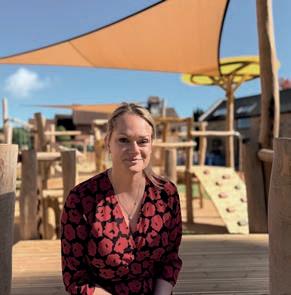
Cumnor House Sussex has not only unveiled an extensive playground redevelopment but also welcomed Sarah Gibson. Previously with Dulwich College (DUCKS), she joins the Haywards Heath prep as Head of Pre-Prep & Nursery. “It is a privilege to be leading a setting where children feel confident, curious and happy – this experience determines true character,” she says.

Schools with swimming pools are being called on to help support swimming. By providing scheduled access as community pool partner with local Turtle Tots franchisees, they can address the chronic shortage of facilities and earn extra revenue. Turtle Tots classes currently get over 15,000 babies and preschoolers swimming each week.
St Martin’s Prep in Grimsby has been named Independent School of the Year by SuperKind in its Social Impact Awards. Pupils earned 1,384 Social Action Badges for volunteering, event organising and fundraising –the highest average number of registered social actions per student nationally among independent peers.
Eltham College has announced an exciting partnership with Super League netball franchise (and reigning champions) London Pulse, giving students across its family of schools access to top-flight training and coaching. Eltham also becomes a Pulse ‘hub’, opening up opportunities for talented netball players across the local community.


WWF’s Happy by Nature initiative aims to tackle ‘green space inequality’ in primary schools. It highlights the absence of natural features such as grass and trees in many playgrounds, replaced by hard surfaces and fixed play equipment. WWF will provide funding, expertise and free toolkits to help schools improve nature-based play.
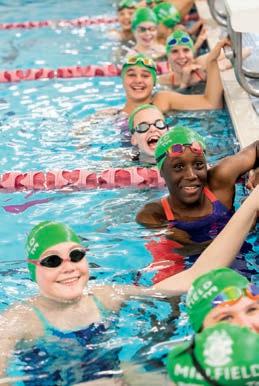
Millfield Prep School has been named the UK’s Best Sports School for 11 years. Recently, Millfield Swimmers were crowned IAPS National Champions for a record 37th (girls) and 23rd (boys) consecutive year, while U12 boys’ cricket were named county champions and pupils made the podium at an IAPS Tennis Tournament
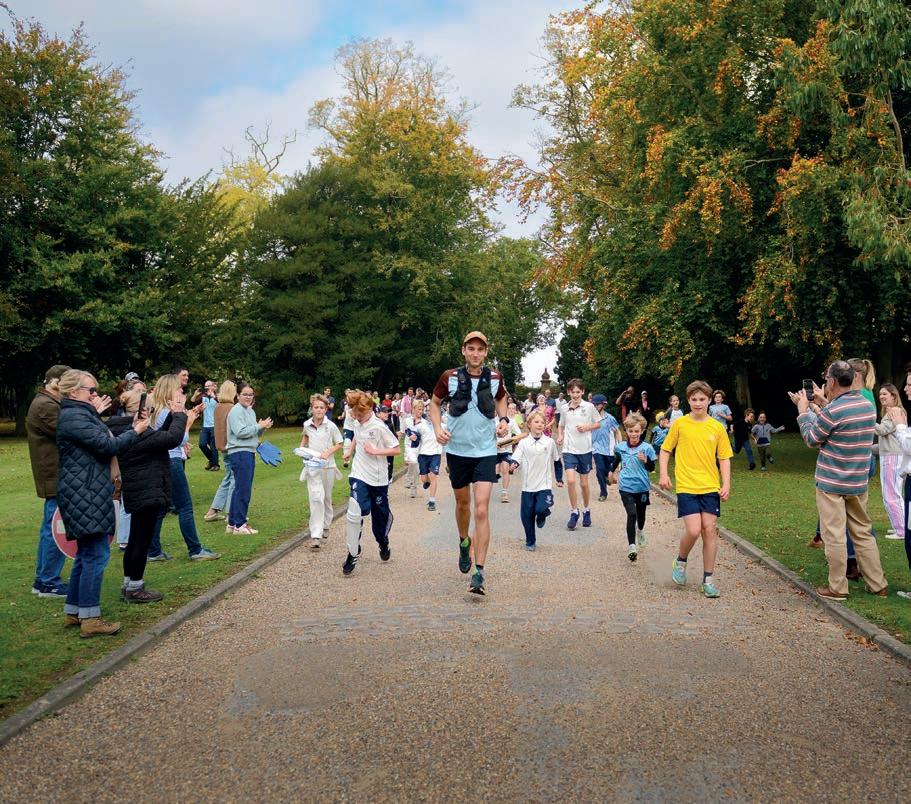
Prep Simon Roche made a 24hour run from Lord’s back to the school to help raise money for a new cricket pavilion. His ultramarathon took him through Camden, Essex countryside and back home to Suffolk. Many pupils and parents joined him on the last 10km, 3.5km, and victory lap.
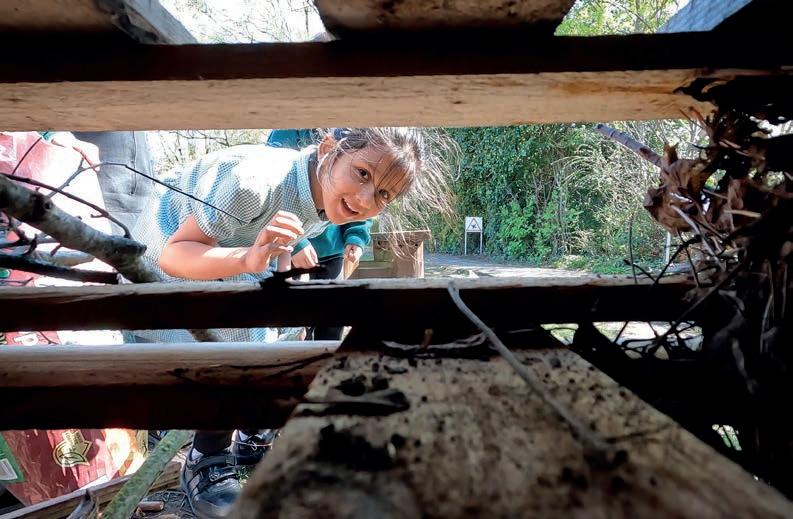

St Albans School has enhanced its 11+ and 13+ scholarships programme, adding Creative and Technical to its existing options – Academic, Music, Choral, Sport, Drama – from September 2026. The school also welcomes Year 7 girls from next September.

The Big Bang Research Project is a seven-year exploration of the benefits of offering woodwork in education settings to children aged from three to eight. Over 30 countries are gathering data. Peter Moorhouse, Honorary Research Fellow at University of Bristol, is UK contact and the survey is running until the end of December.

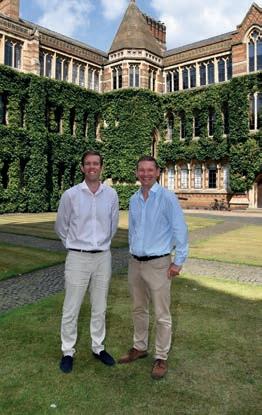
Old Buckenham Hall School, Suffolk joins Rugby School Group from January 2026. The two schools have always enjoyed a strong relationship, with many of the co-ed prep’s pupils joining Rugby for their senior years. “We are delighted by the opportunities the merger represents for our children,” says OBH Headmaster James Large.
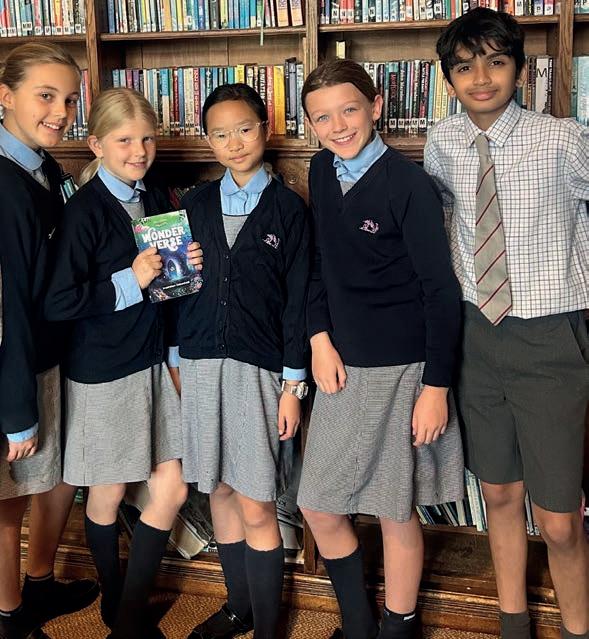
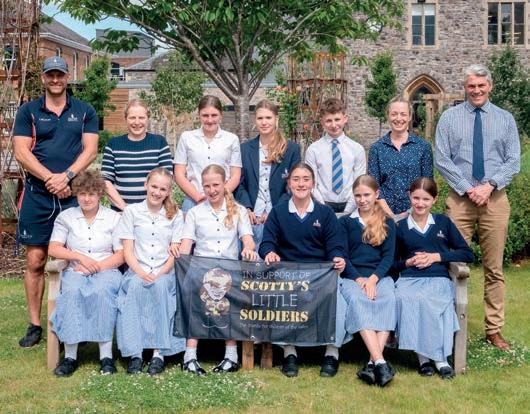
Nine 13-year-old pupils and four staff from Taunton School swam the English Channel recently, raising almost £8,000 for military charity Scotty’s Little Soldiers. This was the culmination of two years’ training – some pupils couldn’t swim at all at the outset. They are Taunton’s ninth team to achieve this feat.

No less than 22 students from Cottesmore School have become published authors. Chosen from pupils nationwide, the budding young poets and writers from the West Sussex prep earned a place in Wonder Verse, a recently released poetry anthology that celebrates creativity, imagination, and literary talent among children.
Caolan Wukics is the new Head of Boarding at Holmewood House, and he and his partner Isobel are also Houseparents. Together, their role is to create a home-from-home at the Kent prep. “Watching children find their feet, their voice and their independence makes this the best job in the world,” he says.





















Inspiring education at Rosemead Prep Page 16
Rosemead’s inspired approach to nursery and prep education is
not
only growing successful learners but also winning top awards
LIBBY NORMAN
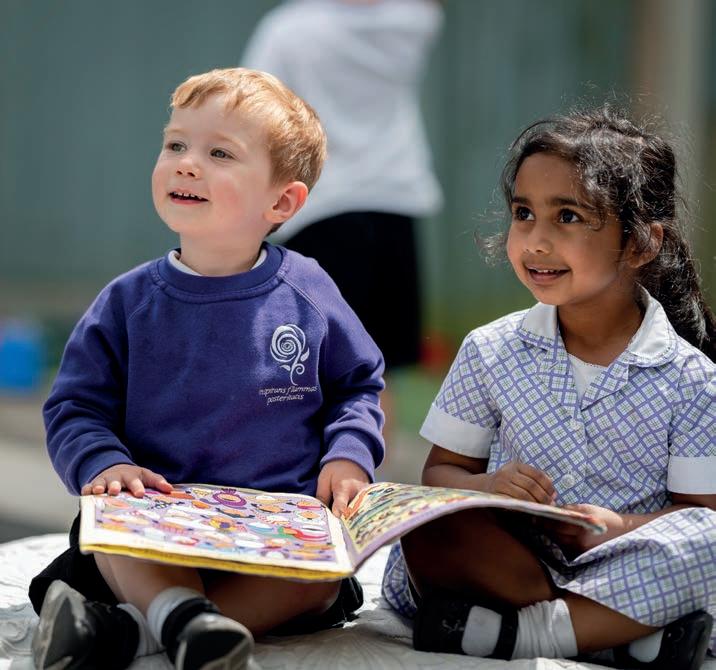
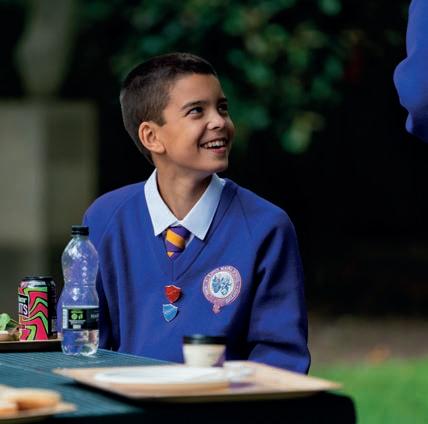
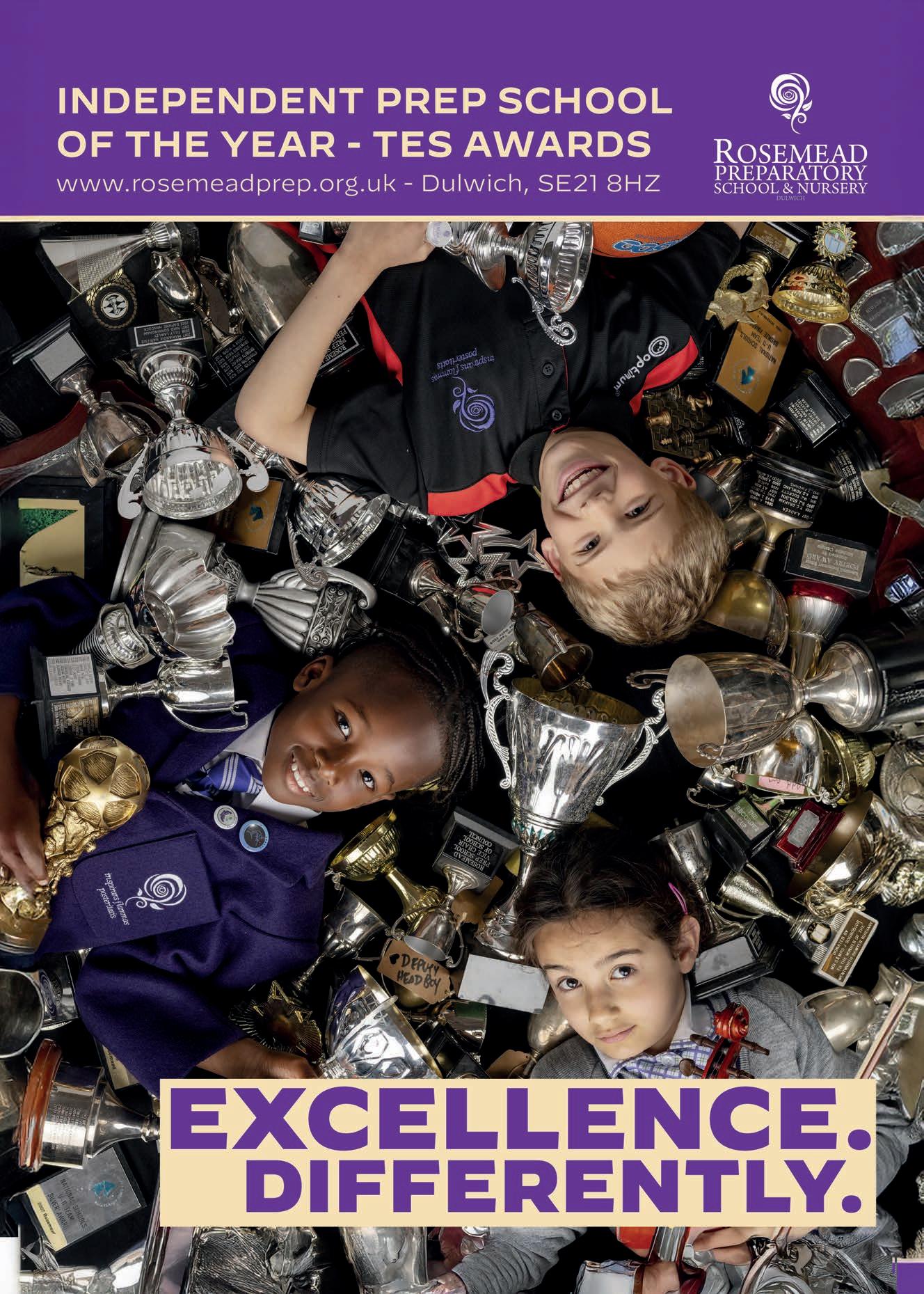
Visit Rosemead Preparatory School and Nursery in Dulwich and you know instantly that this is a place that inspires young minds. There’s a buzz of activity, with children learning and creating all around the building. Now its success in that regard is earning wider acclaim. It picked up Independent Prep School of the Year at the TES Schools Awards 2025 – acknowledged as the ‘oscars’ of school awards and encompassing state and independent sectors.
While that is certainly a prize to shout about, it comes on the back of other prestigious awards in 2024 – for Excellence and Innovation in Equality, Diversity and Inclusion at the Independent Schools Association (ISA) Awards, and also Best EDIB (Equality, Diversity, Inclusion and Belonging) at the Education Choices Awards.
Rosemead was also among the first UK preps to receive a Significant Strength in its most recent Independent Schools’
Inspectorate (ISI) inspection. It was praised for its ‘highly customised approach to every pupil’s academic progress’. Personalised learning is a central tenet here, with both stretch and support for the most gifted and targeted sessions for learners who need a boost. That’s in addition to SEN support for children with dyslexia and dyscalculia, who receive one-to-one specialist sessions to build skills and confidence.
Long established in this family-friendly quarter of south-east London, Rosemead joined the St Dunstan’s Education Group fold in February 2023. This move cemented the long association between the schools, which share cultural connections and deep roots in this diverse and vibrant community. This brings strength in numbers – St Dunstan’s Education Group now educates some 1,800 young people across this part of the capital, from nursery to sixth form – as well as giving parents the reassurance of even greater learning opportunities and strengths, via access to Group facilities, resources and expertise. And, of course, Rosemead pupils have the option of a well-established pathway to St Dunstan’s College for Senior years.

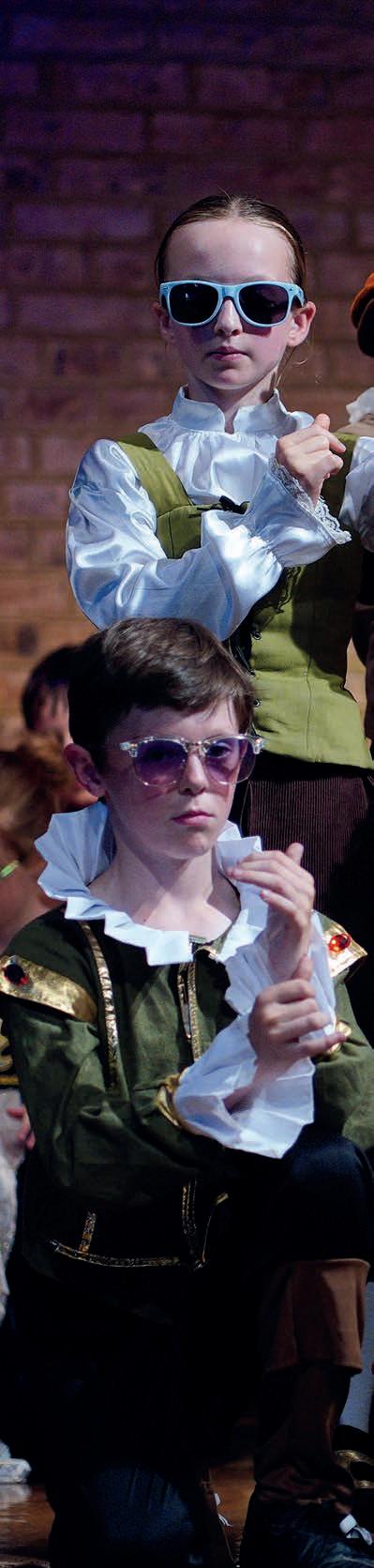
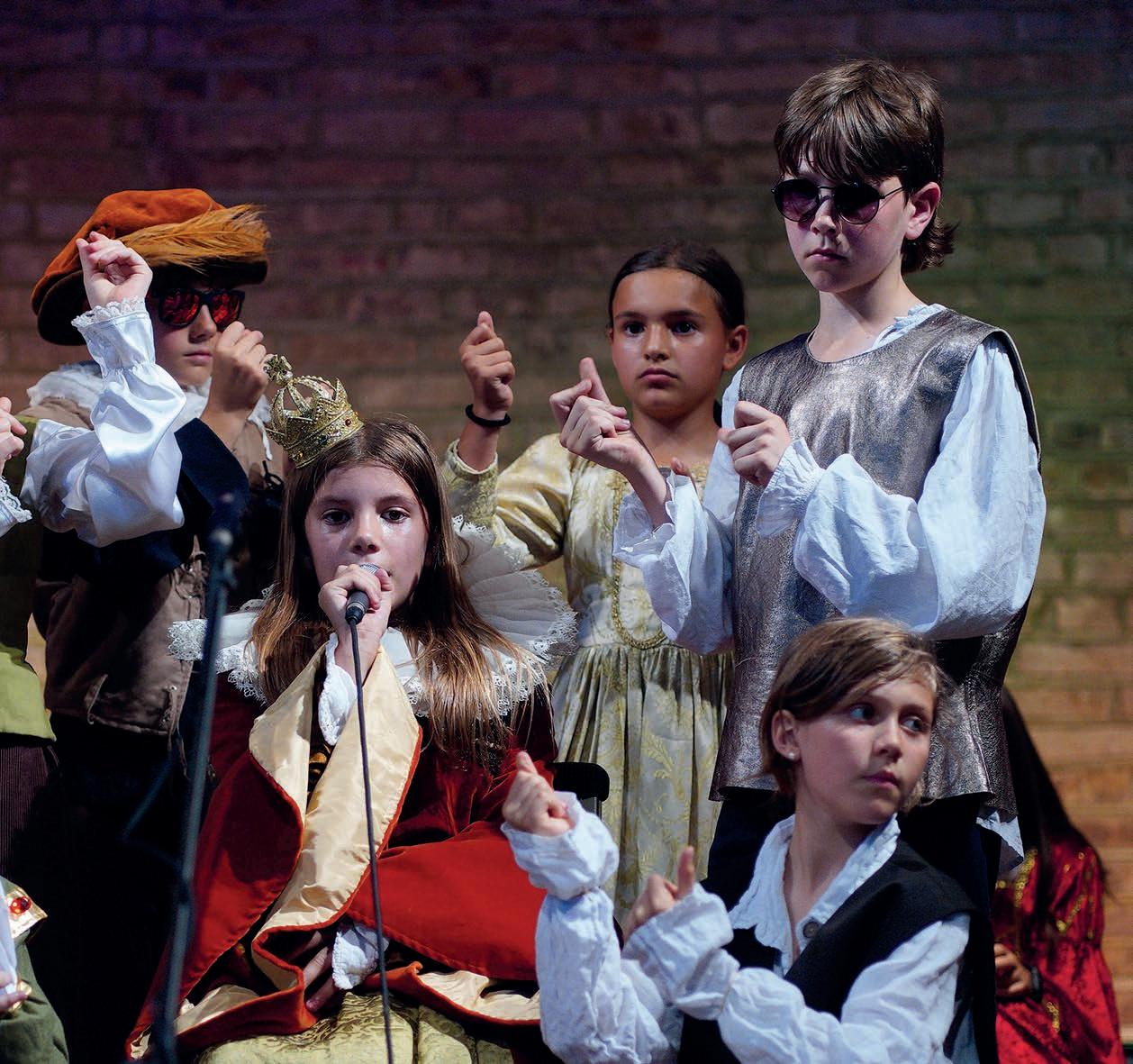
“There’s a fantastic selection of clubs – and trips, and residentials broaden experience and foster independence”


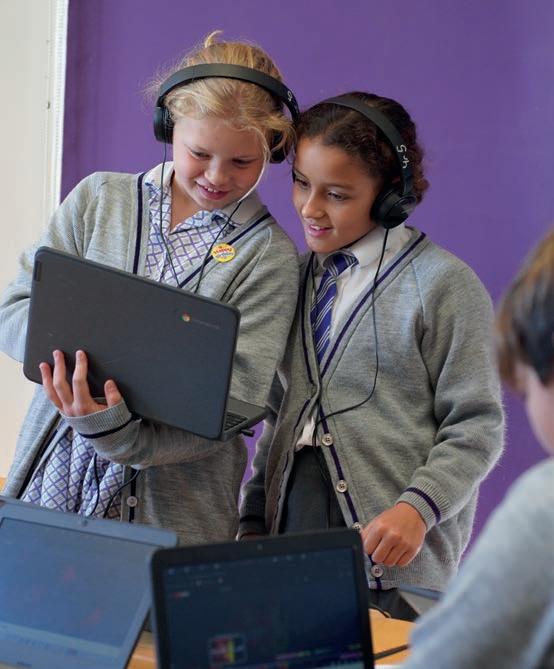
“You’ll find exciting STEAM and robotics activities on the menu to keep learning in step with our technology-led world”
“This is a lovely, lovely school,” says St Dunstan’s Education Group CEO Nick Hewlett, who also took on the role of Head of Rosemead this academic year. Like St Dunstan’s, Rosemead champions individuality and personality – but firmly underpinned by academic rigour. It is deeply committed to building children’s knowledge and ability to make connections for themselves. Indeed, it uses the school’s rose emblem to explain this approach. It starts with putting down ‘roots’ by giving children buddy and House systems to build community and develop empathy, positive behaviour and communication skills.
The core curriculum (stalk) is critical to school life, but Maths, English, Science and PSHE are not siloed but approached via themes – helping children to make links between subjects and explore ideas independently. The curriculum is expanded (the branches) through a lively diet of creative subjects plus modern foreign
languages and lots of sport and outdoor learning, including Forest School. Rosemead has access to wonderful outdoor space at Rosendale Fields, just a short walk away. Also, unusually, this is a prep that teaches Theology, Philosophy and Ethics (TPE) –supporting age-appropriate awareness of big picture themes and helping children to consider their own place in the world.
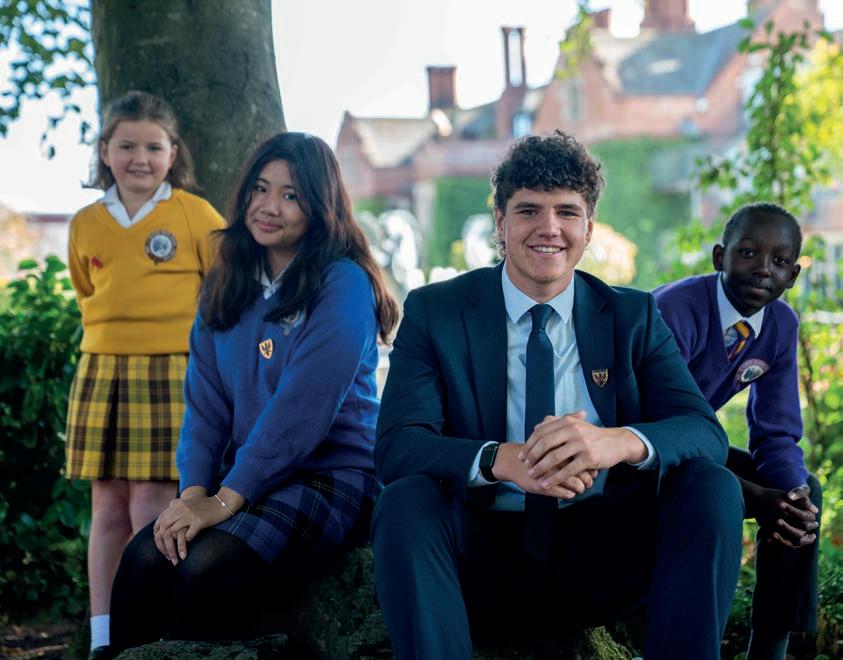
The co-curriculum (the bloom) is a defining part of the Rosemead experience. There’s a fantastic selection of clubs, before, after and during school, while trips and residentials broaden experience and foster independence. Residentials are really good fun, say the delightful team of House Captains who come to share their perspectives on school life. They are particularly enthusiastic about the fact there’s loads to do here. And they like their school’s spirit of fairness and the fact that everyone in Year 6 takes on responsibility for something. One of their favourite aspects

of their role, they tell me, is getting chairs in the school’s Grand Hall ready for assemblies – and they are working together to sort out a sysem that ensures the hymn books are positioned perfectly.
Rosemead’s cohort is quite local, as you’d expect with most London preps –drawing in families in the neighbourhood, but also across areas such as Crystal Palace, Norwood and Forest Hill. Parents’ pride in recent awards is just as palpable as that of the sta . “People recognise that it’s a really big thing – it has been a

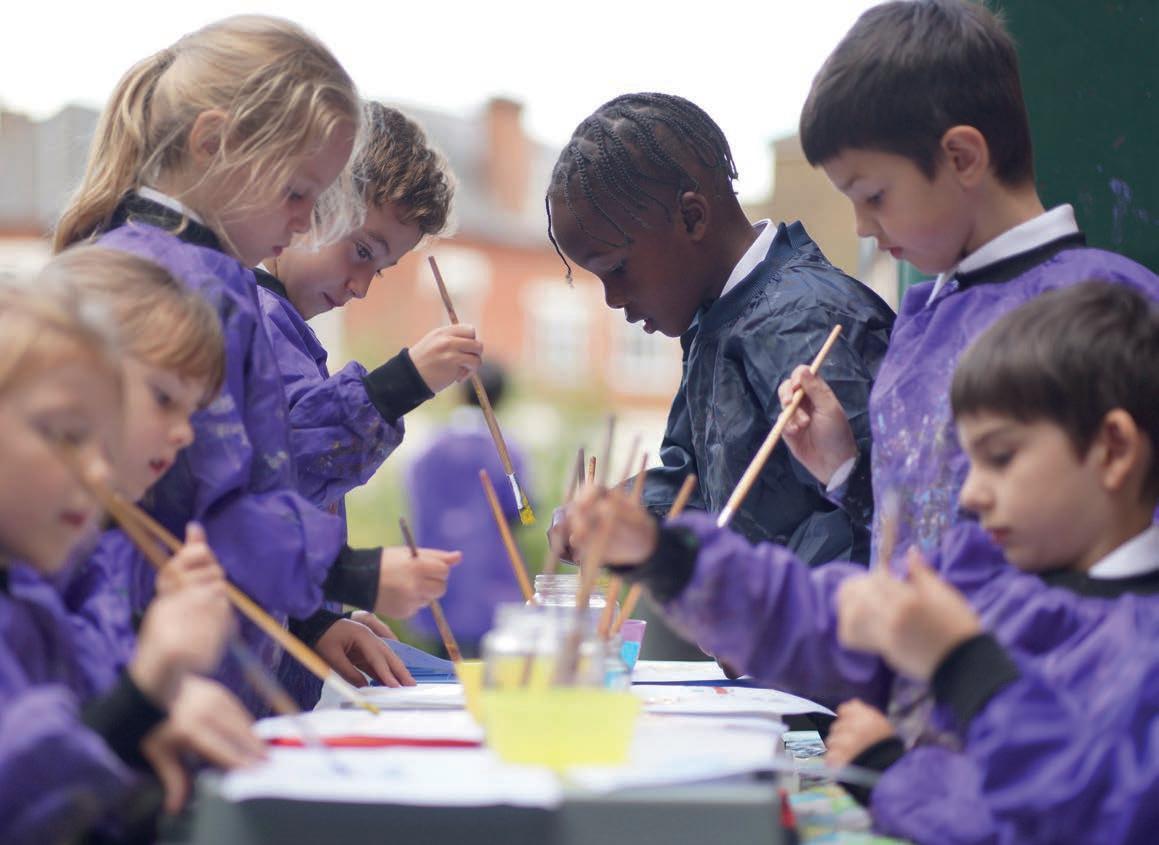
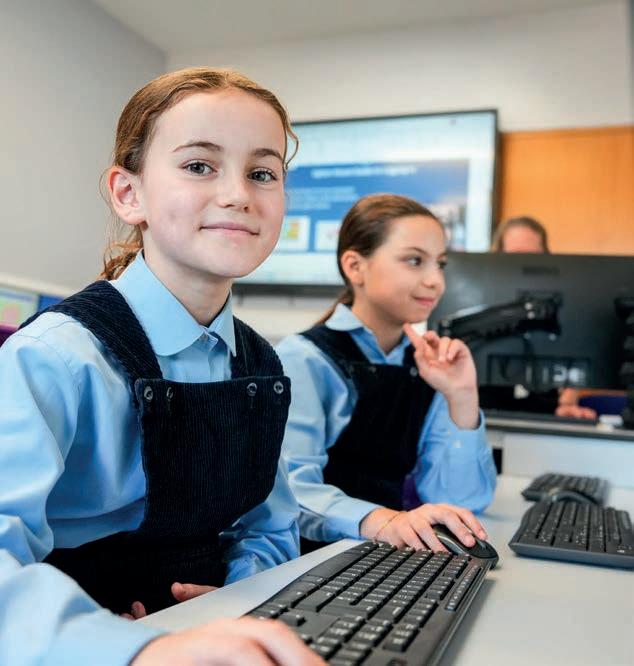
whole-school project,” says Acting Deputy Head Academic and SENCO Kate Tyrrell. The school is well aware of parents’ busy lives, and the sacrifices they make to give their children a Rosemead head start. Two parents working is absolutely typical. “We’re all in the same situation as they are,” notes Deputy Head Pastoral and DSL Katie Simmons. Wraparound care out of school hours and ensuring easy access to information online are both priorities when it comes to supporting Rosemead families. There’s a forward-looking approach to learning, too, with House Captains describing the fun of challenges and school leagues as they work with Century, EdShed and other super smart edtech programmes that refine skills in spelling, maths, MFL, and the rest using games and quizzes. Online time is carefully balanced with traditional prep mainstays – from learning essential library research skills to hands-on art and fun drama productions. But you’ll also find exciting STEAM and robotics activities on the menu to keep learning in step with our technology-led world.
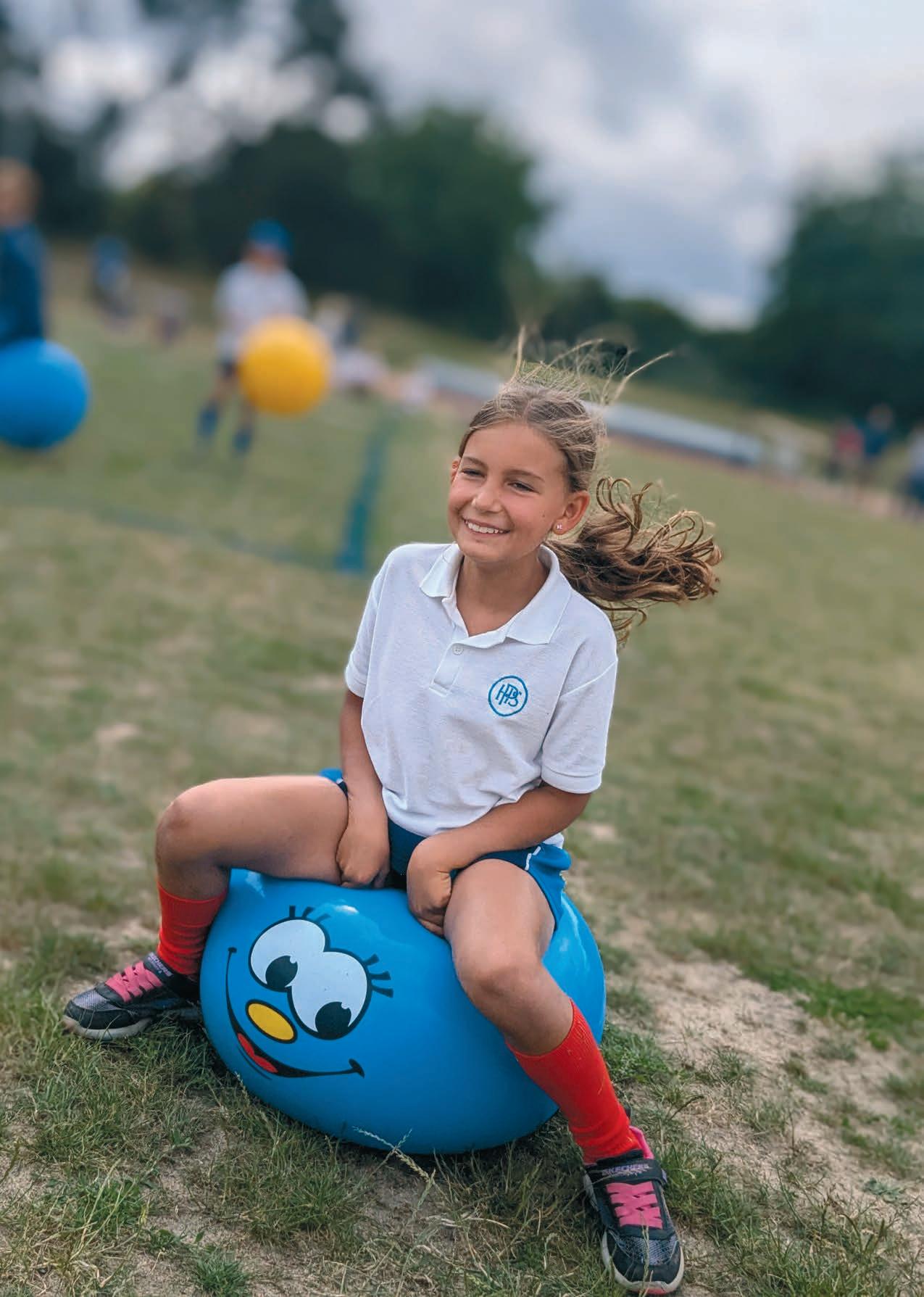
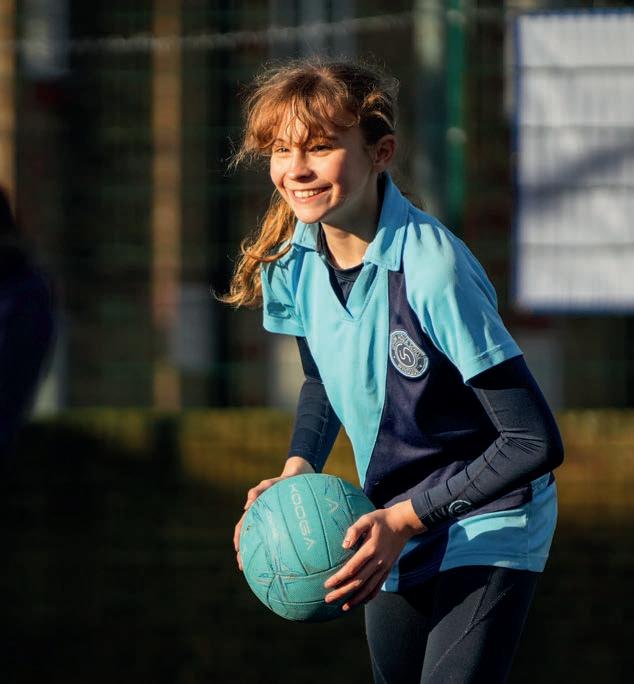
The House Captains share that everyone here loves the games opportunities – with up to 15 di erent sports o ered over the course of the year. The school is strong in athletics, with lots of triumphs at ISA meets. The annual sports day is described as “the best day of the year” by one House Captain. Hockey, netball and football also see strong team performances – and with St Dunstan’s partnership with Chelsea FC Foundation going from strength to strength, pupils here have further opportunities to develop skills and talent down the line. Achievements are celebrated every Friday at Celebration Assembly – successes in sport and academics are cheered on, but so are children who have demonstrated the school values. Those values (Respect, Responsibility, Resilience, Relationships) are also embodied in the buddy system –pairing Year 6s with Year 3s and ensuring any joiner in any year will have a helping hand to show them the ropes. The School Council enables pupil voice – and inspires children to be active school citizens, championing everything from playtime
activities to green transport initiatives. Mindfulness Assembly every Wednesday helps children keep life in balance – and there’s also an excellent mental health support programme here.
It all adds up to the full preparatory experience – but designed to be forward looking and truly family friendly. This winning combination ensures pupils move up at 11 with the academic foundations, creative thinking and emotional and social strengths to thrive. Helping with that process of navigating senior school admissions is, of course, a particular challenge for all London parents. And that’s where the school’s tried and tested approach stands out. Building pupils’ skillset through a personalised approach to learning, plus a demonstrably rounded and grounded approach to character development, is what a Rosemead education does so brilliantly.
Rosemead Preparatory School and Nursery, Thurlow Park Road, Dulwich SE21 8HZ. rosemeadprep.org.uk






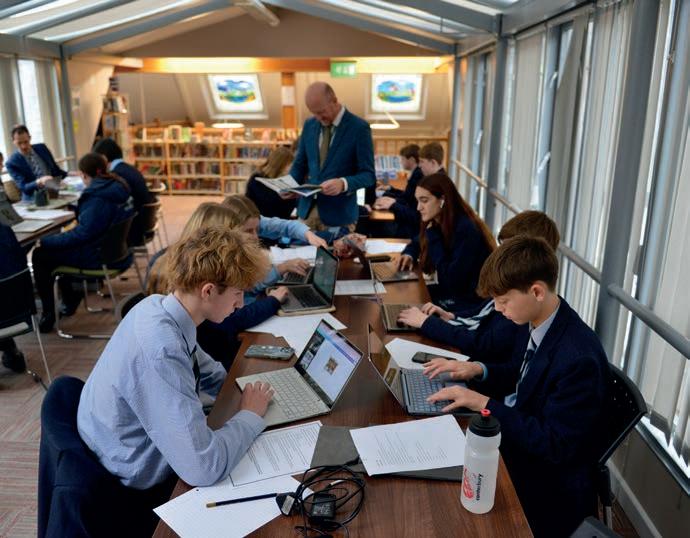
Since the launch of ChatGPT in 2022, the misconception that Artificial Intelligence (AI) will replace teachers or write pupils’ essays for them has been set in the past. It is crucial that schools now embrace, adapt and balance the use of AI in their classrooms to avoid the risk of falling behind with modern schooling and depriving young people of innovative learning, vital technology awareness and life skills.
At Framlingham College, we are continuously adapting learning techniques and developing our educational approach to meet the needs of our pupils and ensure they thrive in an ever-changing world.
Our use of AI is expanding across our curriculum and beyond after numerous success stories during this last academic year. There are programmes to support pupils with dyslexia and enhance creativity with descriptive writing. We have movement tracking apps in sport that accurately analyse and finesse performance techniques, while other technology assists teachers with planning lessons. There are also translation apps for our UK and international pupils to help them communicate and forge friendships.
Talking about our use of AI in classrooms, our Assistant Head of Teaching and Learning, Lucy Manning says: “AI platforms like Sparx Maths and Spelling Shared allow us to tailor education for the needs of individual children. Text-to-talk
“There are programmes to support pupils with dyslexia, and movement tracking apps in sport that accurately analyse and finesse performance techniques”
programmes are incredibly beneficial, particularly for our pupils with dyslexia.
“At the Prep School, we use creative art tools for pupils to practise using descriptive words, verbs and adjectives – for instance, writing descriptions of dragons and wizards and using AI to bring those images to life. At GCSE level, we use AI to create logos for the pupils’ projects, alongside teaching them the ethics of AI so that they can identify when AI is assisting in the process of learning and when it is just doing it all.”
Looking ahead to how we continue to adapt and balance our use of AI, it’s imperative that all our schools prepare young people for an AIinfused world. Whether we like it or not, we can’t deny its existence – it’s out there – but it’s not something to fear when used correctly and responsibly in the classroom.
Of course, we don’t want pupils to use ChatGPT to


write their essays because that takes away the opportunity to learn, and children relish in the chance to learn and research, but AI platforms like ChatGPT can certainly help pupils with planning projects, taking notes and structuring revision.
At Framlingham College, we are introducing AI steadily throughout our curriculum across both Prep and Senior schools. It is a bit like a garden –planting the seeds, watering them and gradually watching them flourish.


We are working closely with our teaching sta to see what works, what doesn’t and what areas we need to be wary of when it comes to the use of AI. We absolutely understand that there needs to be a careful balance in the use of this powerful technology. Our approach is that it’s not about replacing but rather enhancing the teaching and the learning experience for all our pupils.

your child the best chance of success for the 4 Plus Assessments
Avoid the 7 plus or 11 plus stress by getting your child an all through offer to schools like Highgate, Alleyn’s or Westminster with the 4 Plus assessment. At Mentor Education, we 4 Plus experts and have helped hundreds of families over the past three years.
We offer:
• A proven 4 Plus programme created around your child
• 1-2-1 and group classes dependent on need
• Behavioural and academic sessions
• Experienced teachers from 4 Plus Schools
• Sites in Hampstead, Westminster and Dulwich
• Standardised maths and literacy testing with Cambridge University
• Standardised language testing with Oxford University
• 60—70% success rate vs a normal 10-20% success rate
• Capped student numbers
hello@mentoreducation.co.uk or 0208 883 2519 Find out more at www.mentoreducation.co.uk

St Benedict’s School in Ealing on why it has overhauled its 11+ entry process to reduce stress and ensure a more authentic and useful assessment
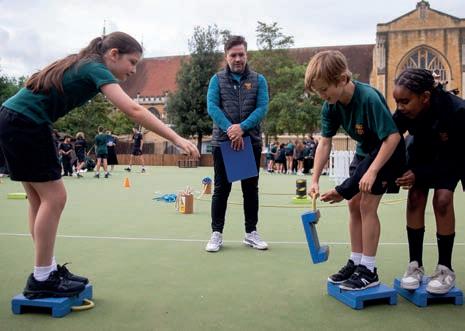
At St Benedict’s, we have taken a long, hard look at the 11+ entry process and made big changes to improve the experience for students, parents and the school. We wanted to strip away the parts that added stress without adding value and focus on what really matters – selecting those students who will thrive in our community.
One of the biggest shifts has been scrapping the verbal and non-verbal reasoning papers. For years, these were included alongside English and Maths, supposedly to test logical thinking and problem-solving. In reality, they had become just as coachable as the other papers, with well-prepared candidates scoring just as highly across the board.
"This new system is much more natural, relaxed and enjoyable – also a more useful indicator as to how an individual might fit in"
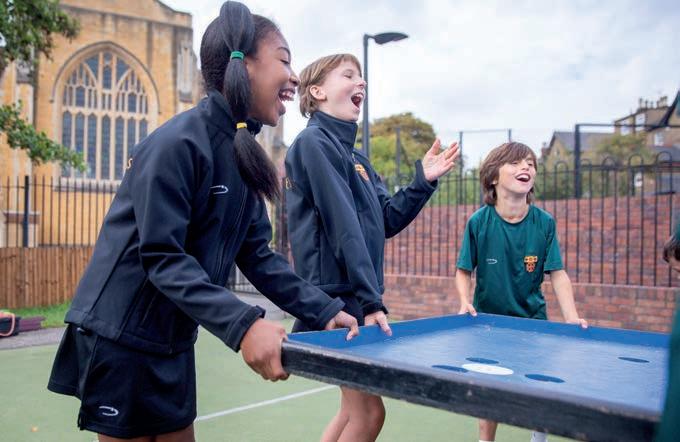
ABOVE & BELOW
Year after year, the results showed that performance in English and Maths was almost identical to performance in verbal and non-verbal reasoning. So, rather than making students sit two extra exams for the sake of it, we now focus solely on English and Maths – subjects that actually matter for academic success and give a clearer picture of academic ability.
The second major change is how we assess beyond written exams. Traditionally, we held one-on-one interviews, but these had turned into an exercise in how well a child had been coached. So, we replaced the interview with a group activity.
Upon arrival, pupils were divided into small groups and given a survival challenge. With a teacher observing, they were asked to decide what nine items out of a list of twenty they would take with them to a desert island to ensure survival. Once they had agreed, each small group was combined with another, making a larger group of five or six pupils. Then, answers were compared and a final, mutually agreed nine items were ‘locked in’. At this point the teacher asked the pupils why they had chosen the items and what the benefit of each might be.
Pupils were taken out of an artificial
situation and were instead encouraged to have organic conversations about a situation they had no prior knowledge of and with a group of people they didn’t know. It was interesting (and lovely, in equal measure) to see how they responded. The children almost immediately became engrossed by the task. Teamwork, communication skills, reasoning, the ability to see others’ viewpoints and argue in a respectful way were all shown and observed.
This new system is much more natural, relaxed and enjoyable – also a more useful indicator as to how an individual might fit in. All this ties into our ethos –that wellbeing and happiness are at the heart of success. We are not looking for students who can jump through hoops, but those who will contribute to the life of the school, who will enjoy their time here, and who will leave as well-rounded, confident young people. That starts with getting the admissions process right.
LUKE
RAMSDEN & MÍCHEÁL FOLEY
Senior Deputy Head, Director of Safeguarding & Assistant Head Pastoral St Benedict’s School
The Head of Chapter House Prep at Queen Ethelburga’s explains the importance of speech and language support in early education
The area of speech and language is at the forefront of many of our parents’ and prospective parents’ minds. With current NHS waiting lists for a Speech and Language Therapist (SaLT) up to 24 months, and with over 64,000 on the waiting list, intervention isn’t coming as quickly as needed in many areas.
Aware of the rising need for speech and language support in schools, QE appointed its own Speech and Language Therapist. Being on site means she can work face-toface with our children in both one-to-one and small-group sessions. She has been gladly welcomed by our parents and works seamlessly with our specialist Learning Development Coordinator.
For us, it was an easy decision to add a SaLT to our Learning Development (SEND) team because we want our pupils and prospective pupils to be o ered the support they require as soon as the need is identified, so that any potential impact to their confidence, social interactions or ability to perform well at school is minimised.
Describing her first year working with Chapter House, Sarah Semple said: “It is so lovely to be working in a role where I can identify needs early and see support throughout a child’s education at QE. Being in school means I can work closely with teachers and parents – and those relationships are so important for children to meet their full potential”.
“We want our pupils and prospective students to be o ered the support they require as soon as the need is identified”
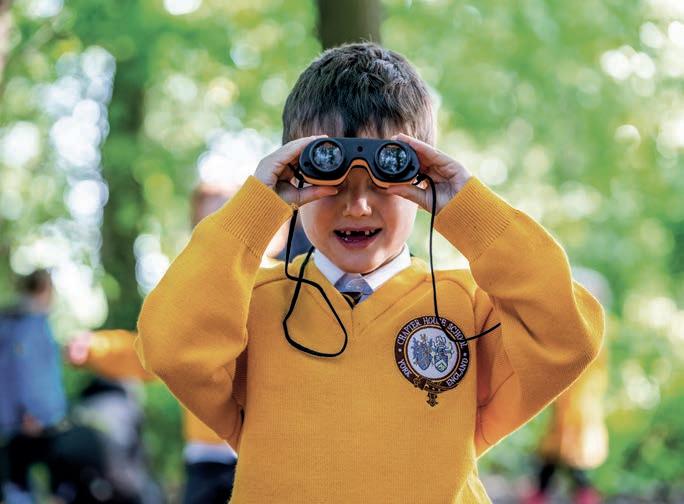
This additional assistance with speech and language sits within a framework of supporting every child’s needs. When a child joins Chapter House, they are assessed. If they are identified as having a specific learning need, we create an Individual Learning Plan (ILP) for them to tailor the support they receive. This support encompasses individual lessons or small group booster sessions, by learning support specialists, and also adaptive teaching within the classroom.
Gifted and Talented children are identified and challenged through accelerated learning clubs or talent-focused enrichment clubs.
Chapter House is a familyfeel school that aims to keep its class sizes small so that children have much more teacher contact time than if they were in larger classes.
We also pride ourselves on parent communication through a mixture of parent


meetings, visits to classrooms and reports throughout the term. All of this is in addition to daily updates on Tapestry for the EYFS children.
Sitting within the 220-acre campus of Queen Ethelburga’s College, Chapter House supports children all the way through these important early years, welcoming them aged from three months to Year 5. With plenty of space to roam, children can take on the role of explorers. They learn through imaginative play, outdoor learning and varied classroom lessons.


The ability to receive extra support with speech and language as part of an exciting and busy school day normalises an issue that many children may experience. It also removes the pressure from parents of waiting to get support. In providing expert SaLT support within QE, we help to ensure that children can make the very most of their school journey.



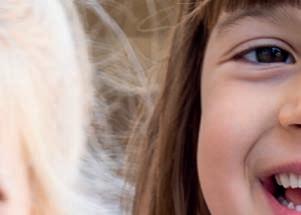

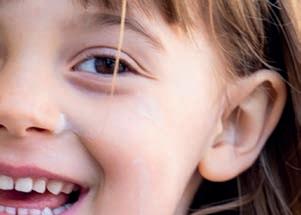


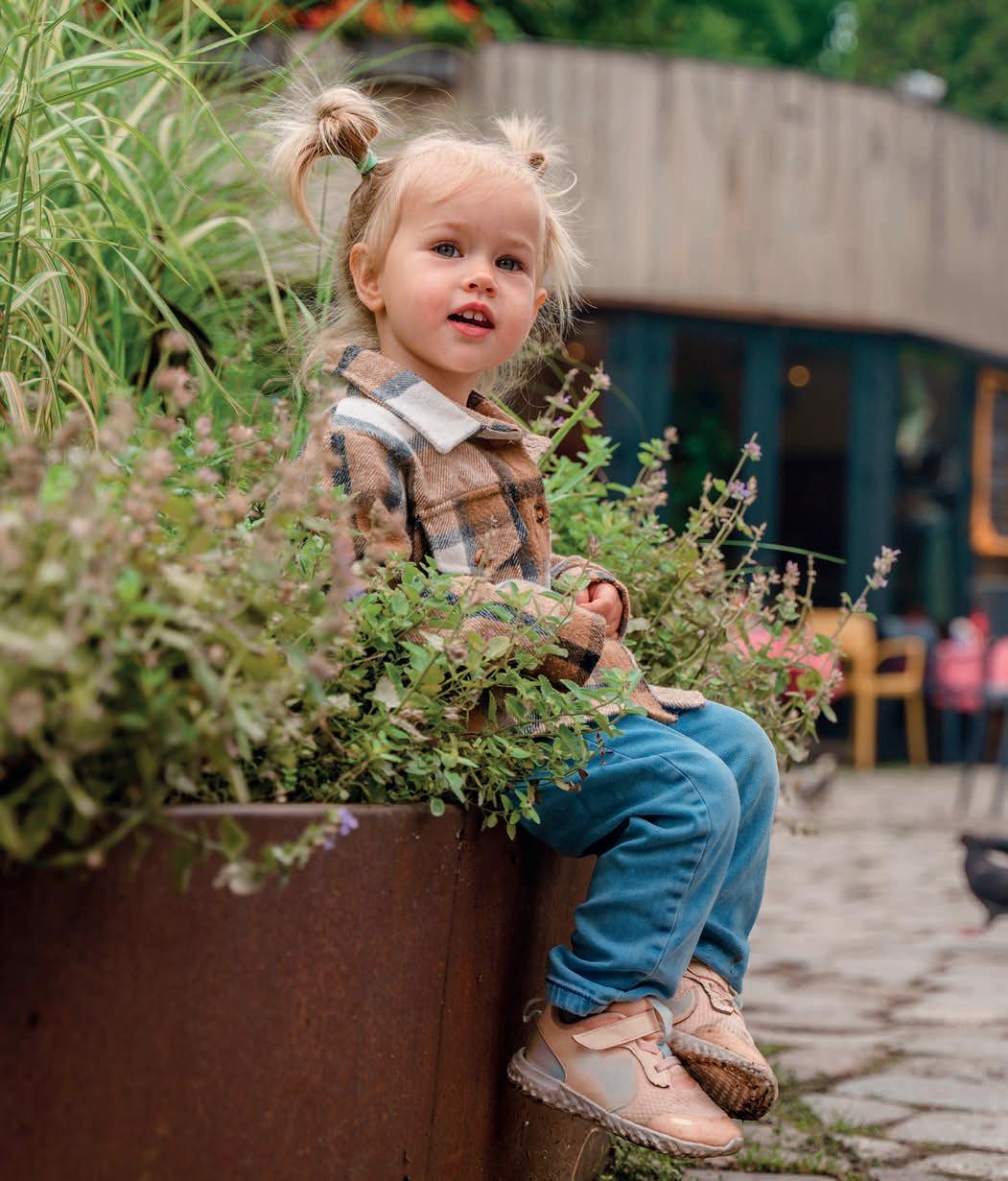
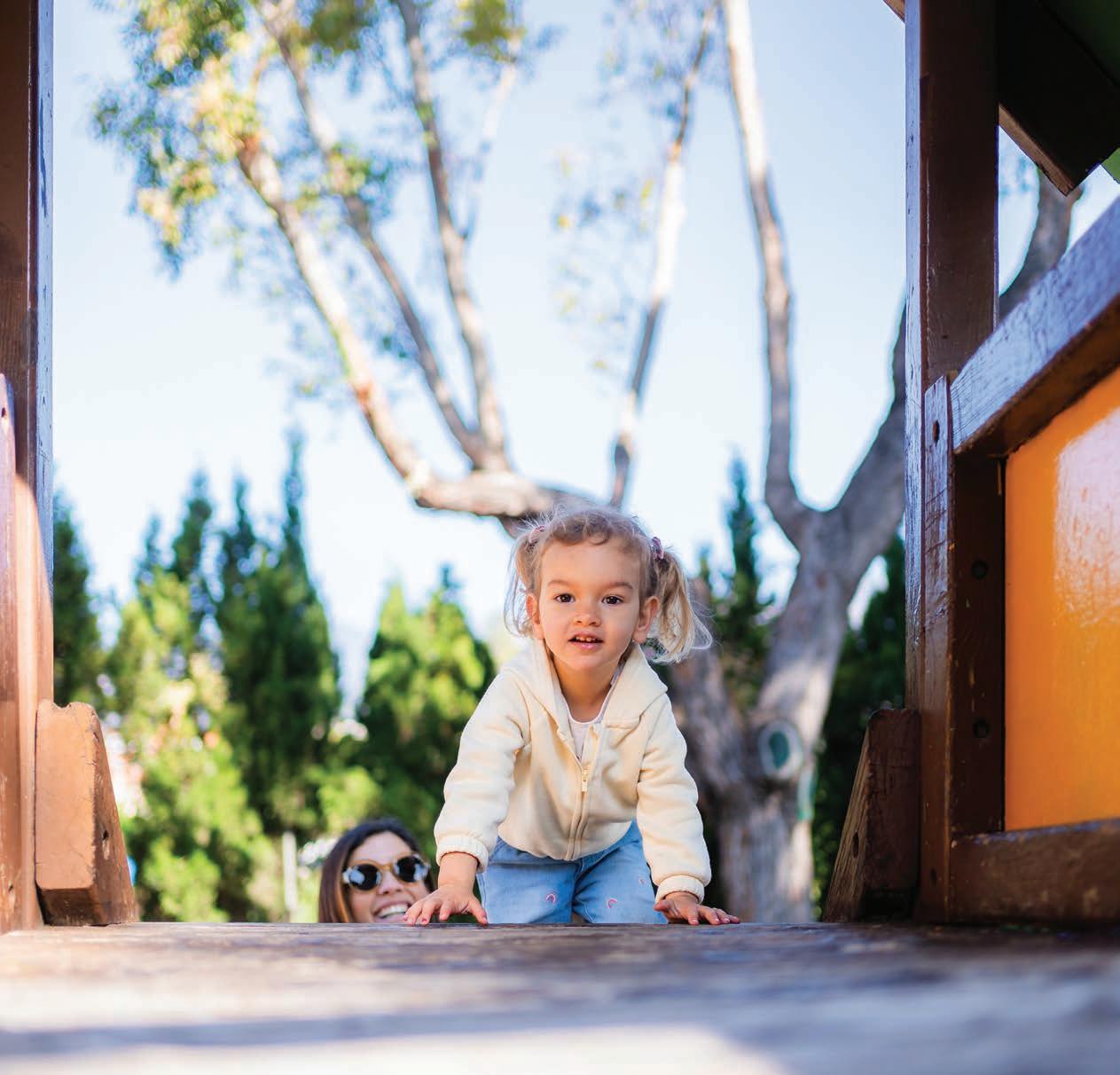
It can seem a big leap up from home to a school setting, but here are four easy ways to prepare your child for the exciting next step into learning
One of the big talking points in education is the number of children now unprepared for that first step into education – be it nursery, pre-school or Reception. Beyond the obvious preparations, such as helping to teach children how to put on their own coat and shoes, there’s so much that parents can do to introduce skills that set them up to thrive. These are small additions to home routine –and won’t make it feel like a school day.
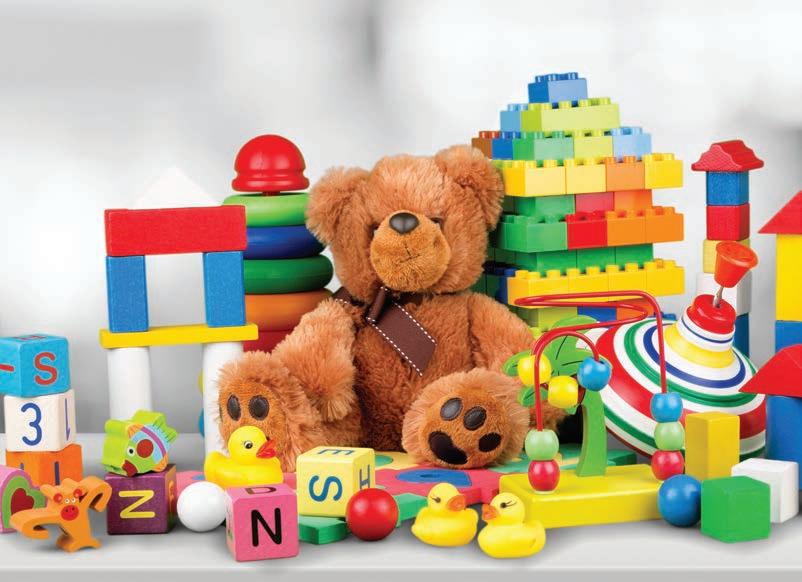
Play is never wasted, building motor skills, creativity and organisation. While selfdirected and open-ended games are really important for children’s development, they love sharing playtime with you. Interactive games are a great way to introduce numbers, letters, colours and sounds. Be it helping a child to spell out their name, count using colourful shapes or come up with animal names beginning with D, they learn while they have fun.
Small pockets of time work best. Early Years specialist Sophie David noted, in an interview for the summer issue of Prep & Pre-Prep, that children don’t just magically sit down and focus – they need to build up the ability gradually. Parents can be an important part of that process. She adds that, typically, a child’s attention span is two minutes for every year of their life – so around six minutes is a good length to aim for in a game with a threeyear-old. She has loads of brilliant play-based ideas over on her website. Many incorporate simple household items and others involve burning o energy, which is useful if sitting still is not your child’s forte right now. littlehappylearners.co.uk
“FREQUENT SOCIAL ENCOUNTERS ARE THE ONLY WAY TO TEACH THE RULES OF ENGAGEMENT WITH OTHERS – RATHER SIMILAR TO PUPPY TRAINING CLASSES”
One of the biggest tasks for children when they get to nursery or pre-school is getting on with others. A falling out over a toy or game can escalate into fisticu s (to the mortal embarrassment of parents), but these spats are life lessons every assertive toddler has to learn. Frequent social encounters are the only way to teach the rules of engagement with others – rather similar to puppy training classes.
Mother and baby group, local playground and informal co ee-bar meet ups are the easiest way to build social skills without awkwardness. Other parents get it. And the more pre-schoolers can be exposed to children (younger and older) the less likely it is they will be intimidated when they get to nursery or school or morph into class thug. Beyond local social media groups, council, library and museum websites are a fantastic source of fun (and often free) events aimed at families with very young children. Also check out the Hoop app, which details events by age, type and locality. hoop.co.uk
Every parent worries about screen time and its impact. Clearly, TV, tablets and the rest are no substitute for interaction with
you, but they also entertain children and provide you with a break. They can kickstart learning, too, and, from resources such as Khan Academy to CBeebies, there are great places that both engage and educate. Obviously, parental control of content and screen time is vital – find guidance on how to set that up via YouTube.
Make whatever they watch become edutainment by turning on subtitles. There is overwhelming evidence of their power to boost literacy – children ‘absorb’ a vast number of words without even realising it. Get information on this from the international Turn on the Subtitles (TOTS) campaign if you need evidence on just how powerful subtitling is for developing literacy. The website also has a useful guide to turning on subtitles on major TV stations and streaming channels. turnonthesubtitles.org
Getting a child to sit down at table is one battle, while getting them to eat anything beyond beige can start a full-on war. It’s not easy to navigate if you have a picky child but mealtimes are an important ritual, helping to expand horizons and inspire children to explore food and learn social skills. Eating together is a big focus of the day at nursery and school, so getting them used to the idea is an important early lesson.
When it comes to increasing their intake of good calories, presenting the same unfamiliar food is one key technique recommended by specialists. They say it can take 15 to 20 goes before a child accepts an unfamiliar flavour or texture – just remember how sensitive your tastebuds were when you were a child.
Familiarisation with new foods through shopping and cooking helps, as does watching you enjoy your greens. You’ll find useful tips on the website Healthy Eating Research. Take comfort from the fact that when they get to that first learning environment, they may well switch from refuser to enthusiastic eater. That, of course, is one of the great positives of school. Children are usually more influenced by what their peers are doing than by anything you can do or say. healthyeatingresearch.org













The Founder of Phileas Fox Nursery School on why bilingual early education delivers both communication skills and vital human connections
As real-time translation technology becomes commonplace, one might question whether investing in bilingual education for our children remains worthwhile. At Phileas Fox Nursery School, we witness daily why the answer is a definite yes. In fact, the rise of artificial intelligence makes authentic bilingual competence more valuable.
The critical distinction lies in deeper understanding. While AI can convert words from one language to another with impressive accuracy, it cannot replicate the native cultural fluency and emotional intelligence acquired while learning languages during formative years. When a three-year-old switches between English and French to comfort a crying friend, they are not just translating –they are demonstrating cognitive empathy that transcends linguistic boundaries.
Research consistently shows that bilingual children develop enhanced executive function, improved problem-solving skills, and greater cognitive flexibility. These advantages stem from constantly navigating between linguistic systems, strengthening the brain’s ability to switch between di erent concepts and perspectives. In our increasingly complex world, these metacognitive skills prove invaluable and go far beyond language learning.
Perhaps most importantly, early bilingual exposure cultivates genuine cultural immersion. Children who learn languages in associated contexts develop authentic understanding that no technology can
“Children who learn languages in associated contexts develop authentic understanding that no technology can replicate”
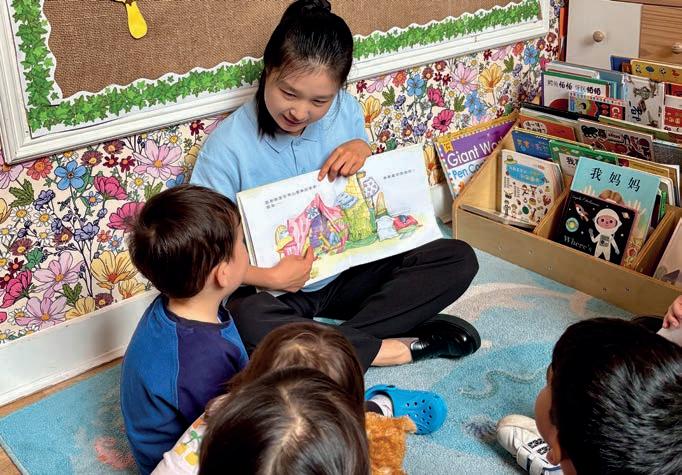
replicate. They adapt di erent ways of thinking, relating and being in the world. This cultural fluency becomes increasingly precious at a time when our global society grapples with polarisation and misunderstanding.
The neurological advantages of early bilingual education are equally compelling. Young children’s brains possess remarkable plasticity, allowing them to acquire multiple languages with native-like proficiency when exposure begins early enough. This window of optimal language acquisition narrows progressively as children grow, making early years learning so beneficial.
Another great benefit in our experience, working with families across London’s diverse backgrounds, is the enhanced family connection. Children strengthen relationships with extended family members who speak heritage languages, maintaining cultural ties across generations. This linguistic bridge preserves family narratives and cultural wealth, enriching children’s identity formation.


The collaborative nature of multilingual learning fosters exceptional social skills. Children often act as interpreters, building empathy and leadership capabilities. They learn that communication extends beyond words to include gesture, tone, humour and the subtle emotional cues that native speakers navigate instinctively. We always recommend extending language learning outside of the classroom through books, media, food, family and friends and, of course, travelling.


The question facing parents and educators isn’t whether technology will continue advancing – it undoubtedly will. Rather, we must consider what uniquely human capabilities we want to cultivate in our children. Bilingualism in early years develops cultural empathy, cognitive flexibility, and authentic human connection that no algorithm can replicate. Investing in this is more than just a desirable enrichment, it is preparing children for a future where our human skills will remain superior to AI.




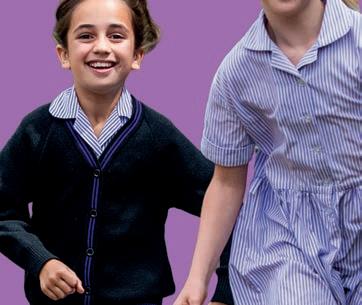
Find out more about the inspiring, enlightened and intellectually rigorous education offered by Streatham & Clapham Prep School for girls.

Register for one of our Open Events: AN ALL-THROUGH SCHOOL FOR GIRLS FROM 3-18











The Head of Early Years at Kew College Prep on why excellent education at the outset is a springboard for lifelong learning
When it comes to a child’s future success in education, the early years are more than just a beginning, they are the foundation. Designed well, early years education doesn’t just prepare children for school but cultivates the critical skills, confidence, and curiosity that fuel lifelong learning.
Decades of research, including the Best Start in Life report by Ofsted, confirm that children who hit key developmental milestones in the early years are far more likely to thrive academically later on. From developing early language and communication skills to mastering basic numeracy and social-emotional awareness, formative experiences shape how children think, learn and engage with the world.
High quality early years provision is often talked about, but what does it entail, and what should parents look for?
The factors that di erentiate adequate from exceptional lie in three core pillars.
The first is experienced teachers who understand child development. Second is a nurturing and stimulating environment to foster individual growth. And finally, the setting should provide play-based, outdoor and experiential learning opportunities.
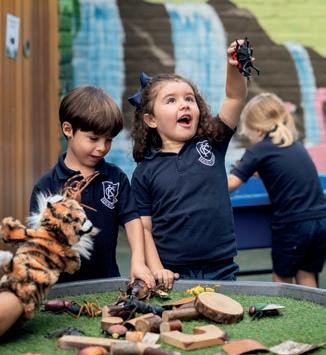
The approach taken at Kew College Prep Nursery is all based around providing children with a springboard. We achieve this by laying strong academic and emotional foundations through play and outdoor learning. Led by teachers and supported by teaching assistants, our
“Muddy knees and wide smiles are a daily occurrence here because we believe learning doesn’t stop at the classroom door”
team have expert knowledge of the EYFS framework and ensure that each day is carefully planned. Learning opportunities are provided through both indoor and outdoor play. This includes twice weekly visits to the local Priory Park, where a full afternoon of outdoor learning takes place.
The high sta to child ratio mean every child is known and their strengths and areas for development are understood and supported. Children benefit from regular lessons in Music, Sport, Dance and French – all led by subject specialists who tailor material to this age group.
Our outdoor spaces become dynamic classrooms where children investigate nature, develop gross motor skills and engage in imaginative play. Muddy knees and wide smiles are a daily occurrence here because we believe learning doesn’t stop at the classroom door.
While academic readiness is important, resilience, social skills and independence are of equal importance. Through a carefully designed mix of structured learning and child-led exploration, children leave us not only ready for Reception but excited about the journey ahead. Since the vast majority move up through Kew College Prep together, this creates a wonderful community until it’s time to move on to senior schools – and our 11+ results speak for themselves.
With a deep commitment to joyful, purposeful learning, our Nursery is designed to show what high-quality early years education provides.
And we know that this first chapter in every child’s educational story holds the power to influence everything that follows.


LEE-ANNE

With the forthcoming opening of its Pre-School, Kimbolton Prep Head Claire Petrie reflects on why education is as much about character as knowledge
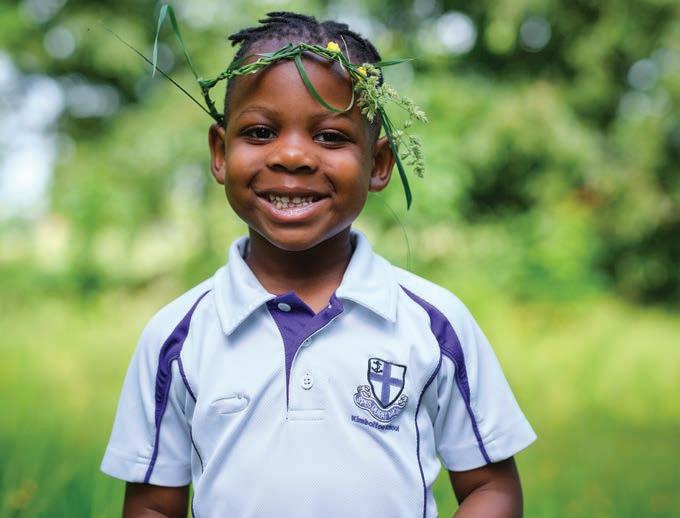
When parents talk about what they most want for their children, they often speak about kindness, confidence and resilience – the qualities that help children thrive long after they have left school. At Kimbolton Prep, we believe that developing character is as important as developing knowledge. This begins the moment a child steps through the school gate. And soon, that will include our very youngest pupils when our new Pre-School opens next January.
In the earliest years, children are natural imitators. They watch closely how adults react to challenges, how friends take turns and how teachers encourage e ort. Every small interaction becomes a lesson in empathy and integrity.
That’s why we see character education not as an ‘add-on’, but as something woven into daily life. It’s evident in the way we greet each other in the morning, solve a playground disagreement or celebrate a moment of courage in assembly.
Formal curriculum will always matter, but a purely academic focus can overlook the subtle learning that happens through play, teamwork and conversation. In our Pre-School, play will form the foundation for character development. When a building block tower topples, it isn’t a failure but an introduction to perseverance. A disagreement over paint colours becomes a lesson in negotiation.
These early experiences give children the emotional language to manage frustration, take responsibility and keep trying – the very qualities that underpin both wellbeing and later academic success.
As children move up through our Prep School, those early lessons deepen. Our pupils are encouraged to reflect on what our five school values –Curiosity, Kindness, Integrity, Courage, Endeavour – mean in practice. These are not just words on a wall, but reference
“Character education is evident in the way we greet each other, solve a playground disagreement or celebrate a moment of courage”
points for everyday decisions. Whether on the sports field, in the choir or during outdoor learning, pupils learn that courage can mean trying something new as much as standing up for a friend, and that kindness often involves quiet acts of inclusion rather than grand gestures.
Educators and parents sometimes ask how character can be measured. The truth is that character reveals itself in small, consistent ways – in the child who stays behind to help tidy, the one who admits a mistake or the one who perseveres when a project feels impossible. These are the moments that tell us education is working.
At a time when young people face increasing pressure to perform, schools have a duty to safeguard childhood and promote moral as well as intellectual growth. Teaching values explicitly – and modelling them daily –equips pupils to make wise choices and build strong relationships. It also lays a foundation for citizenship: for understanding others’ perspectives, showing compassion and leading with integrity.

Character cannot be taught in isolation. It grows through community and through feeling seen, trusted and valued. That is why the culture we create here in our Prep School, and soon in our new Pre-School, matters so much. When children learn that who they are is as important as what they know, they develop not only confidence but purpose. And that, ultimately, is what education should be about.

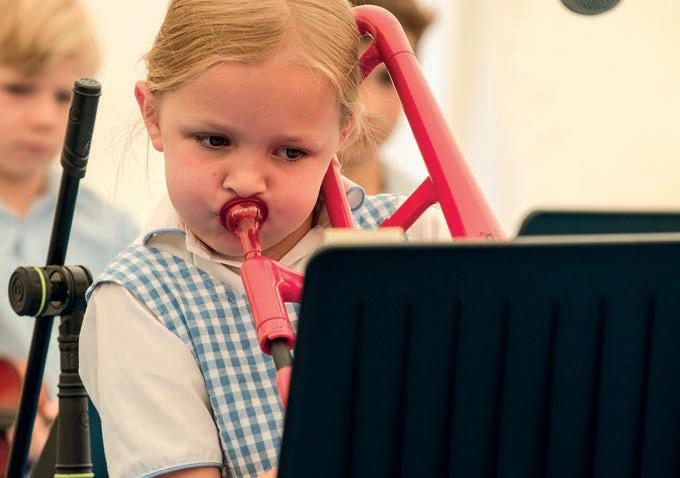
Annette Dobson, Head of Thomas’s Fulham, on the academic value and wider enrichment provided by music education in our schools
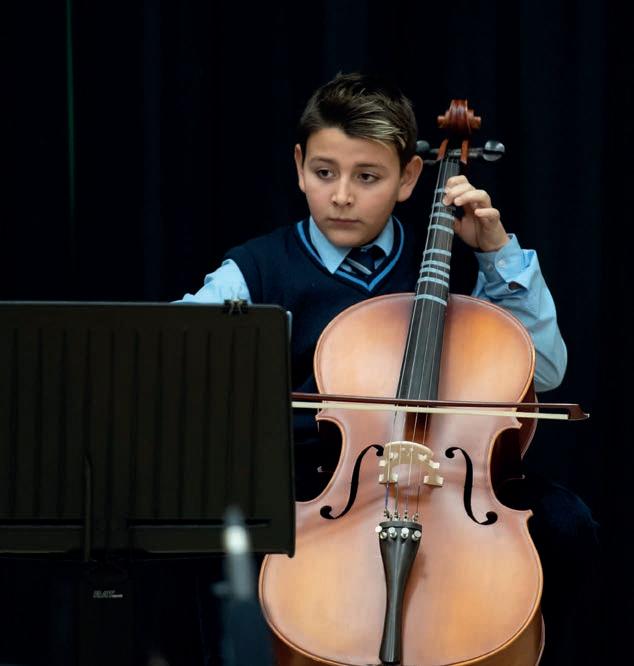
The power of music in schools hit me more than ever at a recent event. We brought our academic year to a close in July with a joyous summer concert, the Big Chill. At the end, the entire school – over 400 pupils, sta and families – joined in with a rendition of Earth, Wind and Fire’s ‘September’, complete with a spontaneous conga line. Celebrating Thomas’s Fulham’s 20th anniversary, the sense of community was palpable.
The opportunity to collaborate, to sing and share musicianship with peers and a broader audience, brings about a sense of satisfaction – often at the end of a period of rehearsals and practice. We see this time and again in our school communities and when collaborating and performing externally. We should hold dear the joyful moments of belonging that music provides.
“We must be broadminded about the styles of music we introduce to our pupils – music serves as a key to the door of cultural and societal awareness”
The benefits of music, alongside other arts, extend far beyond the ability to play an instrument or read sheet music. Research consistently demonstrates music’s profound e ects on brain development and academic performance. It has been linked to enhanced neuroplasticity –positively impacting cognitive, emotional, physical and social wellbeing.
The intricate processes involved in music acquisition – such as pattern recognition, memory recall, and fine motor skills – lay a strong foundation for learning across all
subjects. Music o ers proof of the value of specialist teaching from the earliest days.
A comprehensive music curriculum, which promotes performance, composition, and production, is a powerful tool. It can help us to tackle and transcend many of the social and cultural barriers prevalent in our society. To maximise this impact, we must be broad-minded about the styles of music we introduce to our pupils. Music serves as a key to the door of cultural and societal awareness – meticulously harnessed within the music curriculum at Thomas’s Fulham by our longstanding Director of Music Françoise Ogier, her colleague Hilarie Gordine, and their team.
Beginning units of work with a ‘big’ question enables pupils to think deeply, and build links in learning. One example of this is ‘who was the greater Mozart?’, during which our Year 4 pupils discover the legacy of female composers against a backdrop of societal expectations


and their determination to have their music heard. These include Maria Anna, sister of Wolfgang Amadeus.
Similarly, ‘where did the Blues come from?’ is answered by Year 5, as they explore the profound impact of spirituals among enslaved people. Pupils learn the musical and historical connections between African American spirituals and Blues music, and the backdrop they created for contemporary musical styles.


Music is at the heart of our school – and not simply because it’s usually the first thing you hear when you arrive due to the location of some of our music rooms. It is a facilitator of the metacognition pillar of our full curriculum. It is the focus of our celebratory moments, also what we turn to in more challenging times.
As Stevie Wonder sang in ‘Sir Duke’, Music is a world within itself, with a language we all understand. The sense of joy and community which music fosters should be to the fore in all our schools.

Former Irish Children’s Laureate Sarah Crossan brings reassurance – and humour – to managing anxieties that can take over young lives
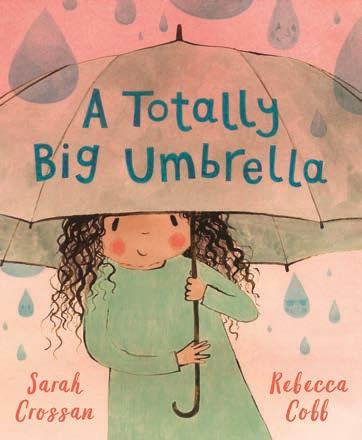
Sarah Crossan is an old hand at writing, but A Totally Big Umbrella is her very first picture book. Read it and you will wonder what took her so long, for this touching and funny story deftly describes in reassuring language how small worries can mushroom into huge ones that stop us enjoying life.
It’s in the Young Adult (YA) market where Crossan made her literary name. Her first novel, The Weight of Water, has been adapted for the stage four times and she picked up multiple awards and award nominations for One, a novel about conjoined twins. She’s also a former Irish Children’s Laureate and has been translated into some 25 languages. Her novels in verse made her a natural fit for this very young market, said the editorial team at Walker Books when they persuaded her to turn her talents to writing for a much younger audience.
To be fair, she’d had the idea of writing a picture book for many years, really since she was reading fantastic picture books to her own daughter (now a teenager).“Everyone thinks they’ve got a picture book in them because it’s only 500 words. But when I did decide to do this, it was because I had an image of an umbrella in my head, which I wanted repeated in the book. Also, I wanted to write about anxiety.
“The thing about anxiety is that it can start small and just get bigger and bigger,” she says. “I think that’s how fear works, and not just for children.”
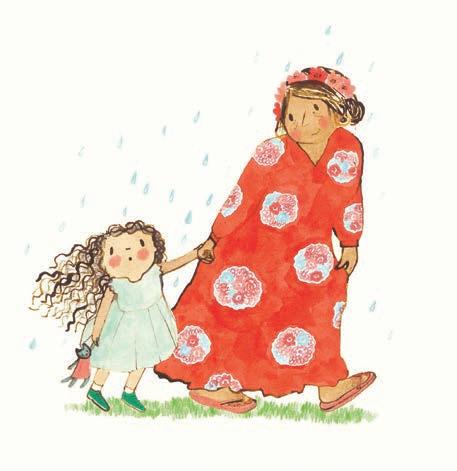
Our protagonist, Tallulah, decides she hates the rain for ruining her lovely dress and turning her favourite biscuits soggy. When Grandma gives her an umbrella to keep her dry she feels better, until she starts to think about how one umbrella will never be enough if the rain really comes down. Will she be swept away?
All the way through writing the book Sarah Crossan had imagined characters and settings drawn by Rebecca Cobb – the two had connected at some point on social media – so when she suggested her as illustrator and it was all confirmed, she was, she says,
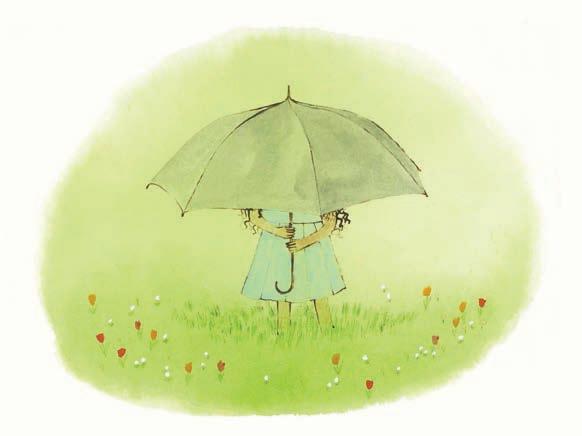
“I loved this idea of an umbrella getting bigger. I think that’s how fear works, and not just for children”
over the moon. “She draws children so well,” adds Crossan. “She shows Tallulah as a very strong girl.” This felt important, because anxiety can a ect anyone.
“I wanted the book to be a journey for the child, and also the character was afraid of something that other people might think was quite silly,” she says. “We always think other people’s fear is silly but ours is rational.” By the end of the story, Tallulah has managed to play in the rain, but she still sleeps with an umbrella tucked under her bed, just in case. It was important to show that anxiety doesn’t magically disappear – very often it is about managing our fears to move forward.
She still has vivid memories of the huge impact books had on her own childhood.
“Books, when I found them, were a place where I was able to understand things.” Now, she comes at writing from multiple perspectives. “I have so many people in mind. It’s really a dangerous thing when you’re a writer to have so many audience members in mind.
“I’m thinking of the child, I’m thinking of the parent and I’m thinking of the teacher when I write any book. Like, would I teach it, would I give it to my child and, as a child, would I want to read it?”
It was Crossan’s experience as a teacher that inspired her first steps as a writer. After she completed The Weight of Water, she had a hunch that the advice she’d been given about verse novels being a really hard sell was wrong. “I was living in America when I wrote it,” she says. “I knew, because I was teaching a verse novel there called Out of the Dust by Karen Hesse, and the kids really loved it.”
She recalls how the UK teen response to poetry in those days tended to be a groan, whereas in US high schools it was, “OK, cool”. She suspects this may
be to do with the way poetry was framed either side of the Pond. “In the UK, it was either Michael Rosen or Shakespeare,” she says. “But in America there was a huge tradition of slam poetry and rap.” Now, 13 years on, there’s no doubt of the verse novel’s reach and popularity. The good news for Sarah Crossan’s YA fans is there are more novels in the pipeline. And now, very young readers get to join them, enjoying this uplifting tale about how we can move through anxiety and learn to have fun again. As brave Tallulah says, looking out on the world from the safety of her giant umbrella, fear is: “very, very boring and also a bit lonely”.
A Totally Big Umbrella, written by Sarah Crossan and illustrated by Rebecca Cobb, is published by Walker Books (£12.99).
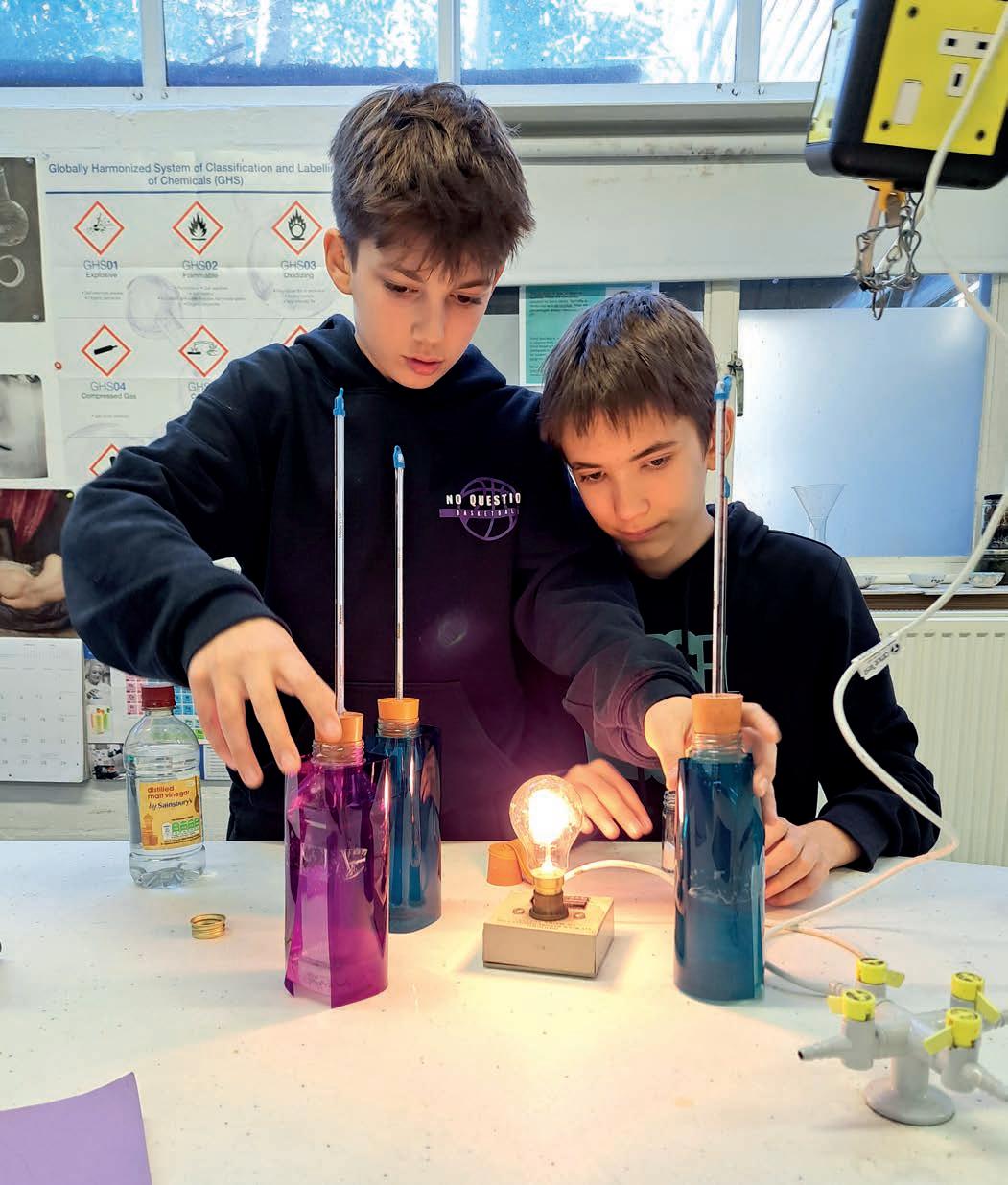
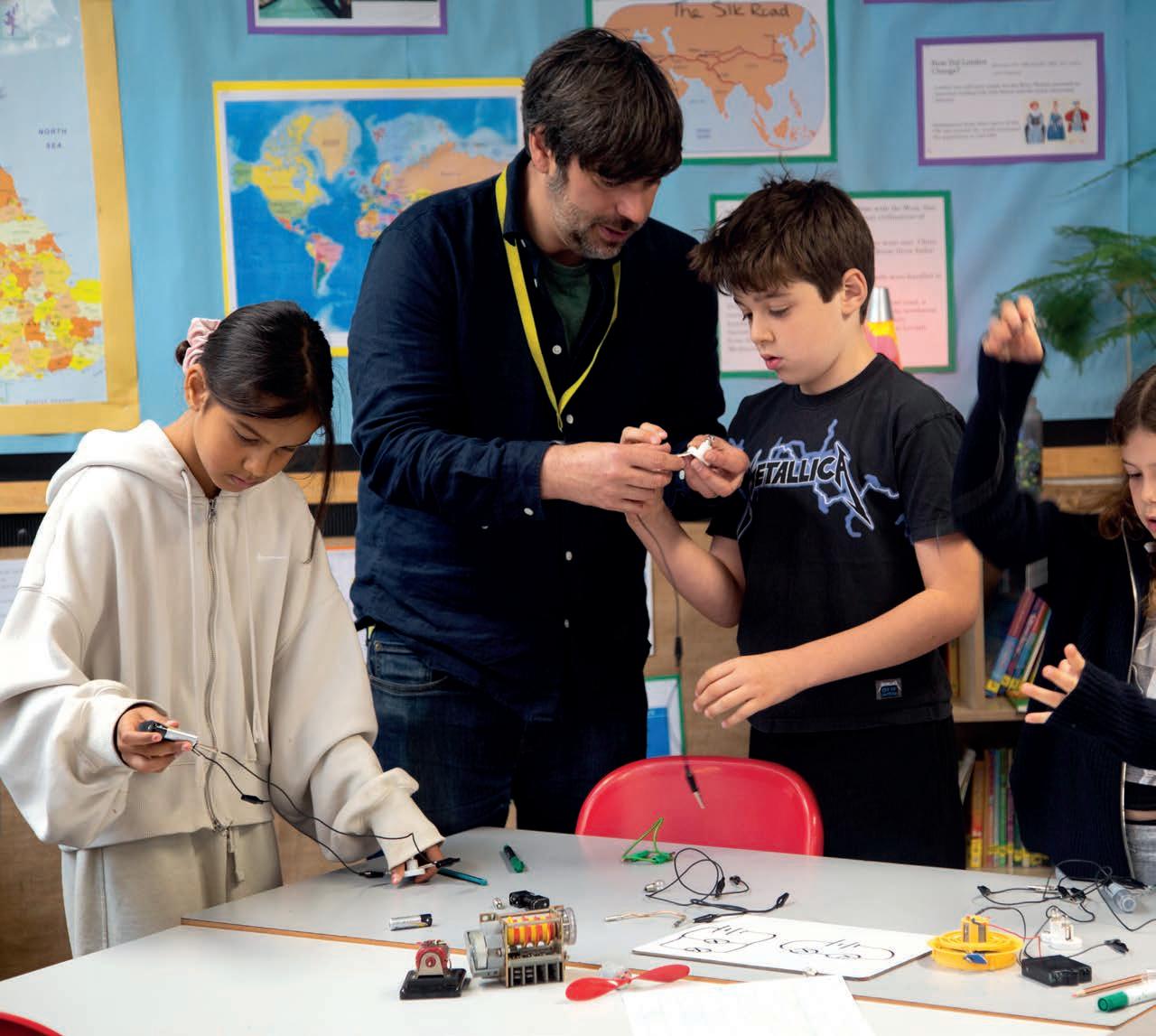
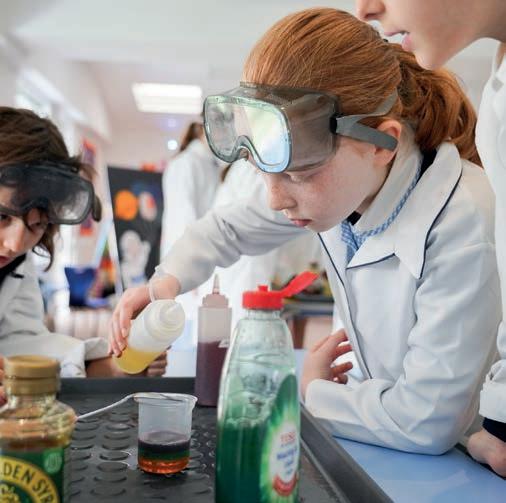
Scientific knowledge delivered early can become a thrilling journey for children, as they discover the world through practical experiments and hands-on investigation. We speak to four prep schools to find out how they develop young scientists
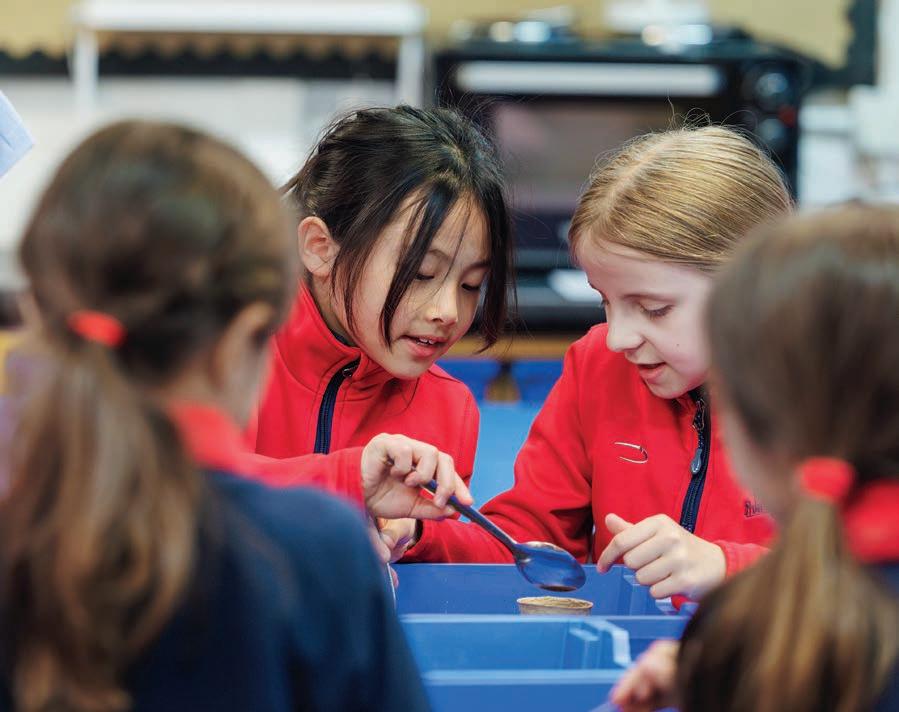
Our science programme is designed to nurture curiosity, develop critical thinking, and build strong foundations in scientific understanding from the earliest years," says Head of JAGS Junior School Victoria Goodson.
"Pupils learn to ask meaningful questions, test hypotheses, and communicate their findings clearly –essential skills for future study"
"We o er specialist science teaching from Year 3 onwards, with most lessons taking place in a fully equipped science classroom that allows pupils to engage in hands-on investigations using real scientific equipment." This specialist setting and practical approach not only sparks enthusiasm but also helps pupils develop knowledge and enquiry skills that grow in complexity as they progress through the school.
Science teaching in Years 3 to 6 focuses on delivering a varied curriculum to spark curiosity and get children involved in practical (sometimes messy) experiments. "A standout feature at JAGS is our Forest School programme," adds Victoria Goodson. "Our extensive grounds are a rare luxury so close to central London and
include the Botany Gardens and The Copse, providing a rich environment where science is brought vividly to life."
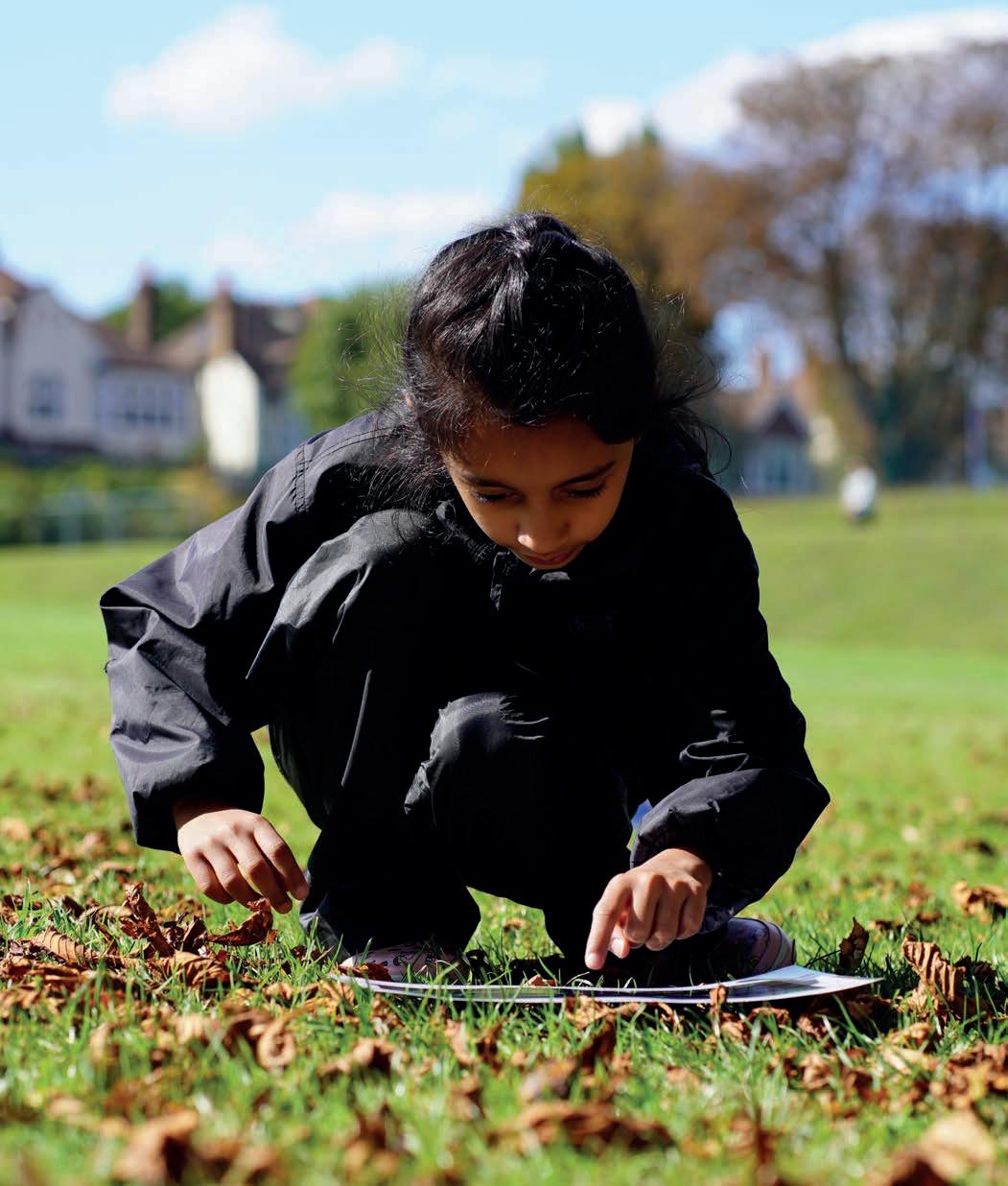
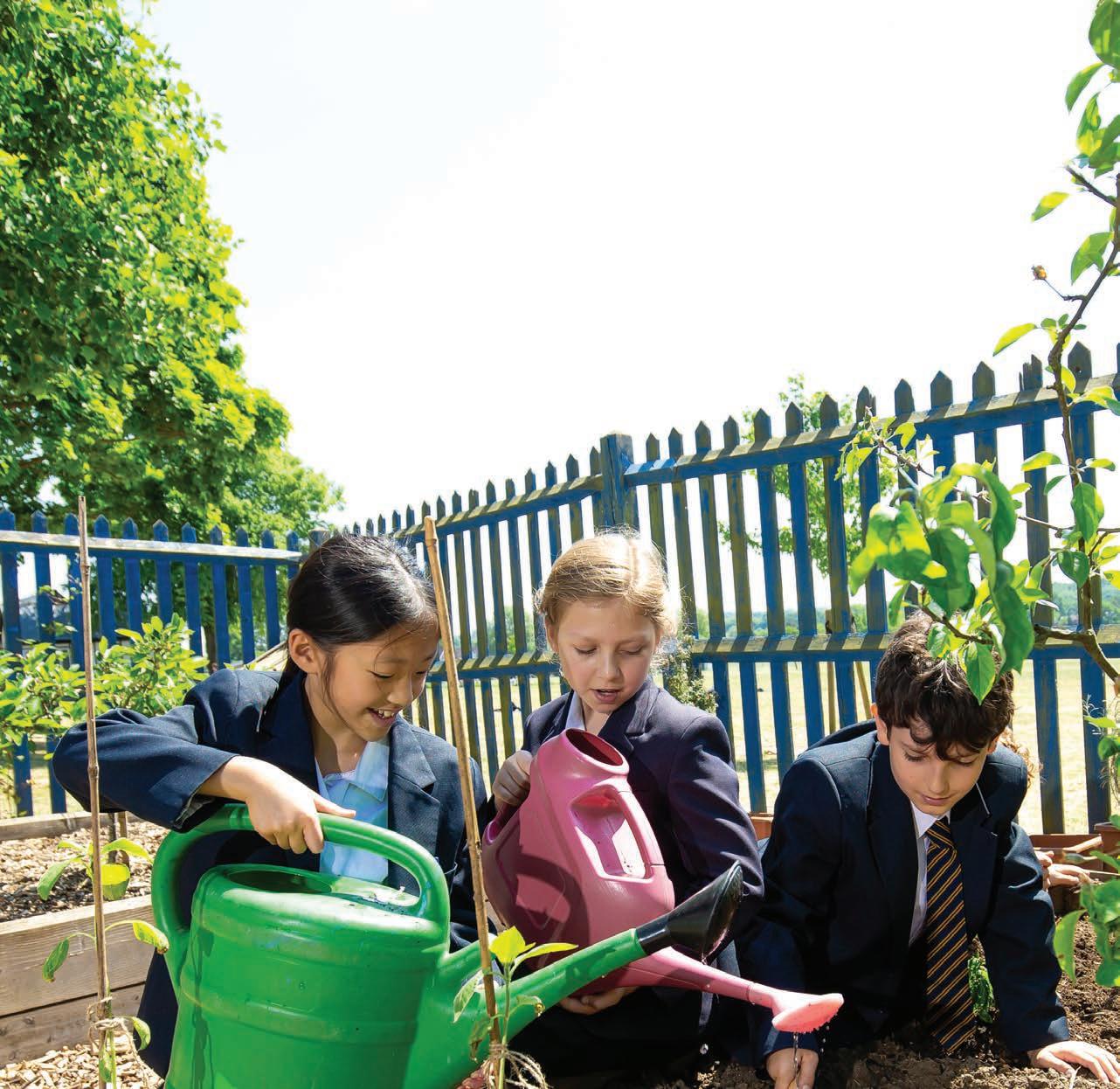
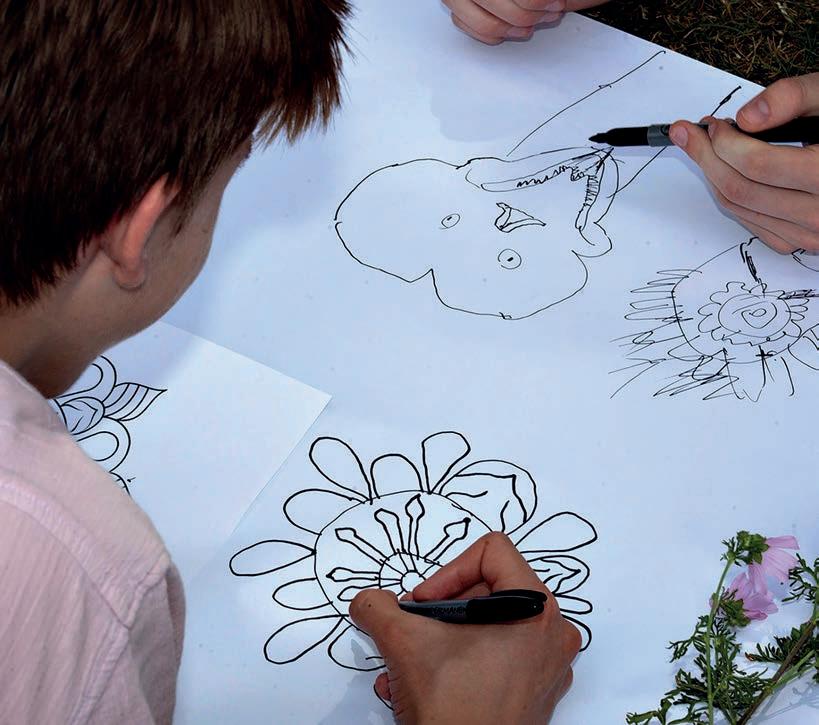
It’s a space where pupils investigate animal habitats, plant life cycles and see sustainability in action. Activities range from shelter building and knot tying to weaving with wool and twigs, helping children develop both scientific knowledge and essential life skills. Children explore biodiversity through bird and insect identification, investigate seasonal changes through tree and leaf studies, and examine plant life cycles by analysing seed pods. "Printmaking with leaves and organic matter from the forest floor adds a creative dimension, blending art with environmental science," says Victoria Goodson. JAGS chooses this immersive approach to help reinforce key scientific concepts but also nurture a lasting appreciation of the interconnectedness of living things. "Forest School continues to be a highlight of the Prep experience, where curiosity thrives and learning is rooted in the real world."
The school ensures that each year builds increasing depth and challenge. For example, in Year 3, pupils explore topics such as rocks,
"The home-based project 'Adaptation', tasked children to make a model and fact file about either an animal they love or one they have invented"
the human body, forces and magnets, and light, while developing skills such as making observations, recording data, and drawing conclusions. By Year 6, they are planning their own investigations, analysing results and using scientific evidence to support their ideas. They also tackle more advanced topics, such as chemical reactions, evolution and inheritance, and the circulatory system.
"The ‘Working Scientifically’ module is a constant throughout, anchoring the work we do and ensuring that pupils not only learn scientific facts but, crucially, also understand how science works. They learn to ask meaningful questions, test hypotheses, and communicate their findings clearly – essential skills for future study and for life beyond the classroom," says Victoria Goodson.
Science happens outside the curriculum, with a wide range of extracurricular opportunities – from eco and science clubs to national competitions and CREST Awards. There's a big focus on playing to individual strengths and learning needs to ensure all children feel inspired to take learning further. "Ultimately, our science programme is about more than simply recalling facts, it’s about genuinely nurturing inquisitive minds, building resilience, and empowering our young people to make sense of the world around them."
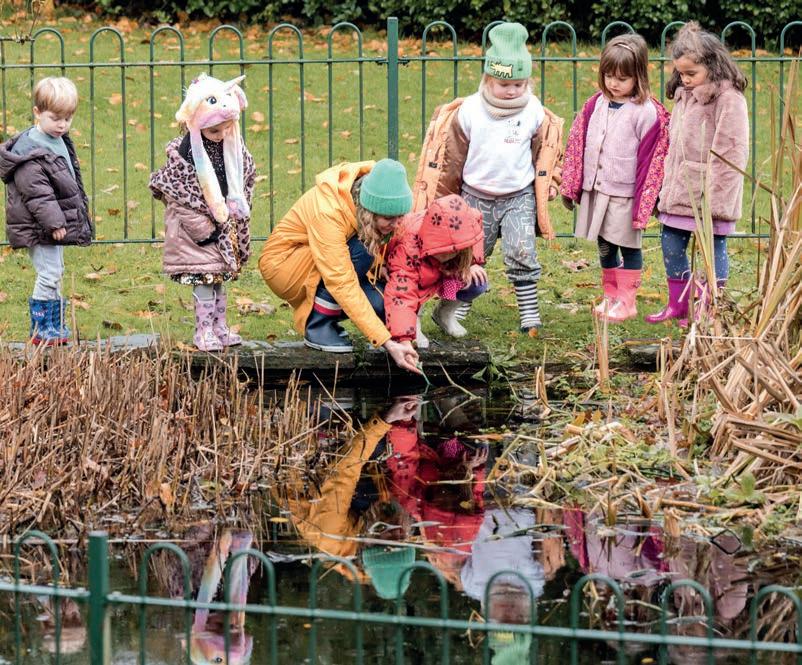
The science programme in Lower School is woven within and around our five curriculum lenses: Being Human, Continuity and Change, Living Planet, Culture and Community, and Communication," says The King Alfred School Head of Lower School Karen Thomas. "Enquiry-based learning is our dominant pedagogy and this lends itself perfectly to developing children’s scientific thinking."
There's a stepped approach here that helps children put down solid foundations with the right approaches and then build knowledge in increments. "First we gain the necessary knowledge about a particular area of science and then we help the children to play
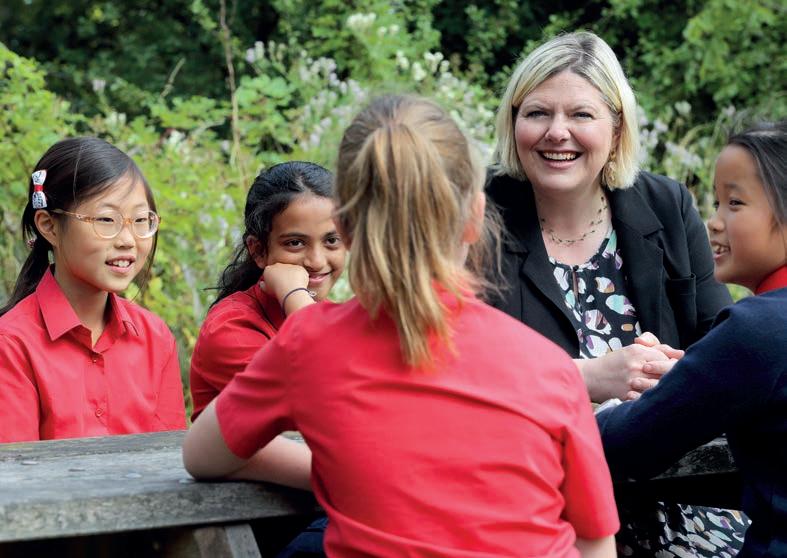
with their new understandings to create and test the hypotheses they make," adds Karen Thomas. She says that since not too many people are inspired by worksheets, the aim is always to make early science explorations as hands-on and playful as possible to keep children engaged – and ensure they keep asking questions. ‘I wonder if’ and ‘show me how’ are often the starting points for science explorations at King Alfred. The school covers National Curriculum study areas – but is not limited by them. Karen Thomas says there's a focus on "our continuum of science skills". She adds that it's important to equip the Lower School's young scientists with the vocabulary, tools and methodology to take scientific exploration further and also think more deeply about where their discoveries could go next.
"We often draw from our community to bring another exciting dimension to our science o ering, bringing in parents, friends, and teachers with a particular passion for science. We learn about scientists present and past, paying particular attention to challenge any existing stereotypes as we do so," she says. Children are also tasked to think about what makes a great scientist – a good way to consider transferable skillsets and identify what makes a good learner. There's an annual STEM week involving the whole community. Visiting speakers run workshops and children (and their families) also get involved in a home-based project. "When these are brought into school, we organise for the children to visit one another’s classes and share what has been made." Fun recent examples of this have included 'Adaptation', tasking children to make a model and fact file about either an animal they love or one
"Headline initiatives, including Enterprise Club, Eco Warriors and Sustainability Champions, let pupils lead investigations into real-world issues"

they have invented. Children have also designed arcade games based on 'Caine's Arcade' and been asked to come up with a whole new experiment and be prepared to share it with everyone. "These events create an extra buzz about science for children, teachers and parents alike," adds Karen Thomas.
The school's location, in leafy northwest London, also ensures science can head out of the classroom. As well as trips to the capital's major and more local museums, outside space becomes a learning lab – especially useful for environmental science. The aim is to help children recognise both the beauty of the earth and the positive and negative impacts human development can have. "We hope that, by doing this, our scientists of the future will have a respect for the environment and will make ethical and planet-friendly decisions when they enter the workforce."
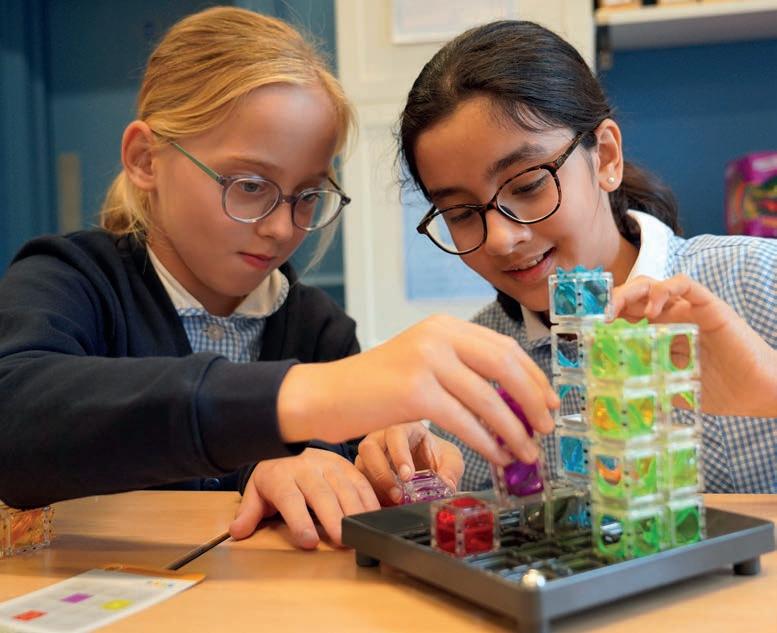
the curriculum becomes increasingly specialised, introducing key concepts in biology, chemistry and physics, while nurturing those same analytical thinking and investigative skills first sparked through play. "By Year 6, pupils are confidently engaging with complex ideas and applying their knowledge in meaningful contexts."
At Francis Holland Prep, science is far more than a subject; it is a journey of discovery that we harness from the Early Years, evolving into a rigorous, specialist curriculum by Year 6," says Deputy Head Andrew Hart. Over the course of the last academic year, the school has engaged in a comprehensive curriculum review, with a progressive approach to ensure clear pathways for deepening both understanding and skill in these formative years.
"From the outset, our pupils are immersed in hands-on science. In the Early Years, pupils explore through play, and we harness children’s natural capacity for experimentation, laying the foundations for deeper scientific thinking," adds Andrew Hart. As they move through the school,
Project-based learning and citizen science are central to the approach here. "Through headline initiatives, including Enterprise Club, Eco Warriors and Sustainability Champions, pupils lead investigations into real-world issues." These range from climate change to biodiversity, and Francis Holland Prep pupils get busy doing everything from designing eco-friendly inventions to promoting sustainable practices and analysing environmental data. "Our children take ownership of their learning and see the impact of their scientific achievements, both at school and out in the wider community," says Andrew Hart.
Practical science is the cornerstone and is designed to surprise and inspire. "Pupils create edible water pods, build solar ovens and make glow-in-the-dark slime. They test bioplastics, design magnetic mazes and monitor air quality, linking science with sustainability and innovation." He adds that these hands-on experiences help to embed scientific thinking – so that pupils see science as a subject they can achieve in and lead in. "Our STEAM Room (Science, Technology, Engineering, Arts and Maths) is alive with excitement. These immersive experiences not only reinforce key concepts but also create lasting memories that fuel a lifelong love of learning."
Francis Holland Prep's Chelsea location means a wealth of opportunities right on the doorstep for enrichment. Trips are an intrinsic element of the curriculum and, with the Science Museum, Natural History Museum and so many other national treasures so close, learning is brought to life
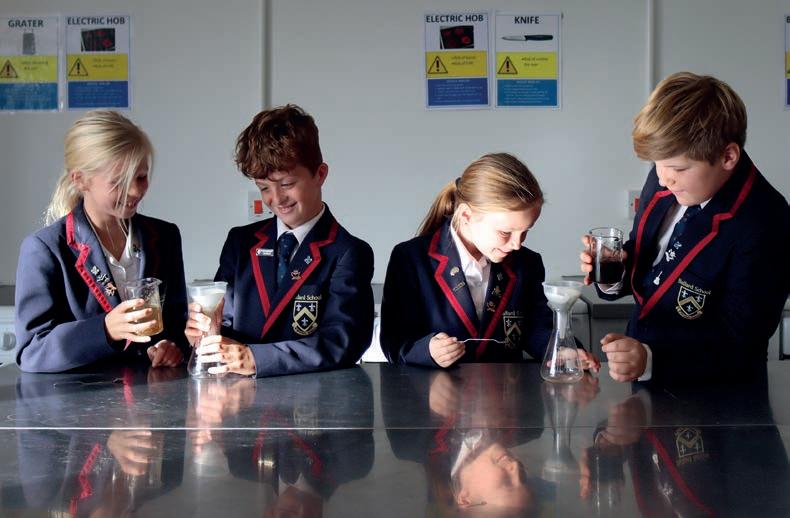
as part of the school day. There are regular visiting speakers from across the science and innovation sectors – many drawn from the school community – and this connects classroom learning to the wider world and helps pupils see themselves as future scientists and changemakers.
The co-curricular provision has expanded significantly recently, with dedicated coding and robotics clubs providing opportunities to explore the intersections of science and technology. The Inventors and Practical Science clubs develop creativity and problemsolving skills. All age groups are welcomed, giving valuable space for experimentation and collaboration on challenges. "Ultimately, our STEAM programmes provide pupils with the knowledge, curiosity and confidence to explore, innovate and never stop questioning." says Andrew Hart. "Our pupils are equipped with a lifelong passion for science and an appreciation of their power to change the world."
At Ballard, pupils think like scientists from the earliest years. “We start with the end in mind – we achieve exceptional outcomes in GCSE,” says Head of Science Aaron Markar. “However, it's not all about grades, pupils leave with a real-world understanding of science and its practical applications." This journey begins in Prep, with access to specialist science teaching. “We are about making science accessible for all children while retaining the challenge, excitement and inspiration. Early training to ‘think like a scientist’ is combined with very hands-on practical science – learning how to use the scientific process to test, investigate and experiment," adds Aaron Markar.
There's a strong emphasis on practical work. “Building on basic skills each year and using correct vocabulary from a young age ensures that science is always relevant
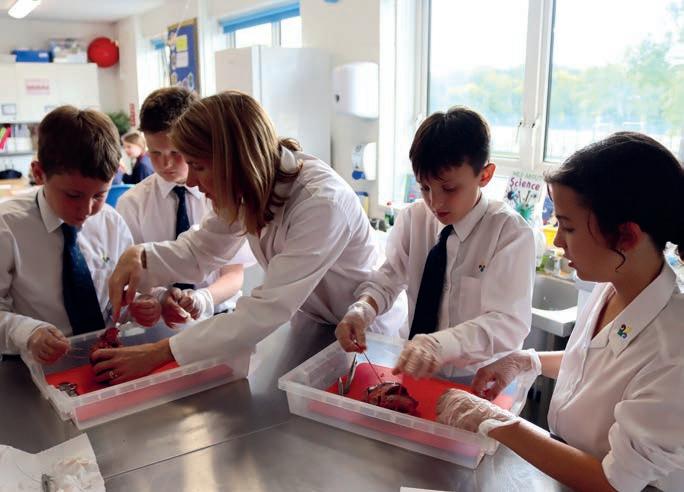
"Building on basic skills each year and using correct vocabulary from a young age ensures that science is always relevant and engaging”
and engaging,” says Ballard Prep Science Teacher Abigail Greaves. And this provision extends well beyond the classroom, with science clubs across both the Prep and Senior schools. “Pupils get to experiment, use equipment and participate in science activities far beyond our already broad curriculum. Science club favourites include copper plating nails, chromatography, and secret writing with invisible inks."
As you'd expect, given the school's glorious New Forest location, conservation and environmental stewardship are central elements of science teaching, with pupils regularly engaging in ecology initiatives.
“As an Eco School, we make full use of our site – grasslands, multiple Forest School areas, our stream and Ballard Pond – to bring ecology to life. Pupils can ‘pop’ outside and have lessons out of the labs, and we’ve noticed an increasing a nity for the outdoors and the ecological aspects of the curriculum,” says Aaron Markar.
Project-based learning is another key strand, using the CREST Award framework to help children develop knowledge and research skills. “In Year 7, pupils take on a ‘Why’ project – choosing a question to research and present at a mini science fair,” says Abigail Greaves. The Ballard science team relish creating memorable moments. “Pupils always love anything with flames, popping and fizzing.
"We often use food in experiments to bring complex ideas to life – jelly models of cells, Oreo biscuits for moon phases, fruit as planets to show size and distance in space. We measure crater size with marbles and sand, simulate digestion using tights, and create ‘alien soup’ to consolidate knowledge of separating mixtures.”
Plenty more real-world science is provided with trips to local museums and multiple Science Week events. Guest lectures – including from alumni working in the science and technology sectors – help pupils see future careers that could await them. “It’s often said that you have to 'see it to be it’ – and we take that seriously,” adds Aaron Markar



Tom Neilson of The Grange School in Cheshire on how to inspire even the most reluctant child to read for pleasure
Reading starts as an academic skill taught from the earliest years of education, but it is far more than that. It is a gateway to imagination, inspiration, empathy and lifelong learning. Yet, as any teacher, parent or librarian knows, getting young people – particularly boys – truly engaged with books can be a challenge. The good news is that, when the right conditions are created, even the most reluctant child can be transformed into an enthusiastic reader.
I still remember one Year 9 boy who stomped into the library, clearly under orders. ‘My Mum says I need to borrow a book’, he muttered, reluctance radiating from every word. After a few monosyllabic exchanges, I recommended Rook by Anthony McGowan, a short, sharp and deeply engaging novel that respects older readers while remaining accessible. He left with little enthusiasm, admitting he would only read it because his mum insisted. Two weeks later he returned and said: ‘I actually really enjoyed that’. It made my day. Moments like this show the potential power of the right book at the right time. So how do we grow more young readers like him? At The Grange, we see three key ingredients –expectation, knowledge, access.
In a world of quick-release dopamine –scrolling feeds, gaming levels and bingewatching – it’s easy for young people to overlook the slower but richer rewards of sustained reading. Unlike digital media, books require patience before they give back, yet the payo is deeper, with improved focus, imagination and emotional
“Once we made reading an everyday expectation during form time, borrowing numbers soared”
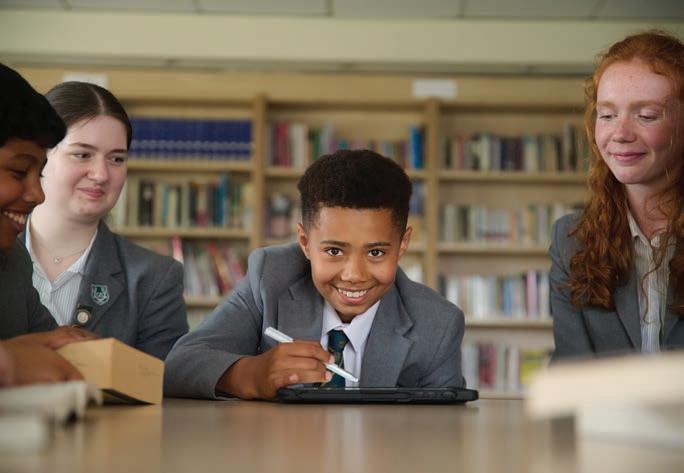
insight. Once we made reading an everyday expectation during form time here at The Grange, borrowing numbers soared. Children still enjoy stories; they sometimes just need encouragement to persist long enough to find the magic.
For parents, the greatest advantage lies in knowing your child. Do they follow football or Marvel films? Do they prefer building models or tinkering with tech? Personal interests are gateways that will hook them in. Boys, in particular, often thrive when reading aligns with their passions – whether it’s a sports biography, a fast-paced graphic novel or a survival story. By listening, observing, and drawing on what excites them, we can steer them toward stories that feel relevant and rewarding.
The children’s and young adult book world is wonderfully diverse and goes far beyond the familiar shelves of Harry Potter or Diary of a Wimpy Kid. Sites such as Love Reading 4 Kids or Books for Keeps showcase hidden gems that can captivate the most hesitant child. And, of course, one of the best resources is right
here in school. Our librarians live and breathe children’s literature and delight in matching students with books that make them want to turn the page.
Ultimately, growing young readers is not about forcing children into someone else’s idea of what counts as ‘proper’ literature. It’s about opening doors and making reading an adventure rather than a chore. When even reluctant boys see something connected to their interests, when they encounter role models who read, and when they are given permission to choose books that excite them, they often surprise us with their enthusiasm.
At The Grange, we are proud to nurture not only strong learners but also passionate readers because we know that every story started in youth can echo for a lifetime.


Mill on the Brue on the evolution of its outdoor education centre and the profound impact on both visitors and natural landscape
Over 40 years ago, a Victorian house and barn with 13 acres of fields and river valley were purchased with the intention of turning it into an outdoor activity centre. At the time, it was advertised as a nine-hole golf course but presented as chemically sprayed land – a green ‘desert’ with little wildlife, few trees and no hedgerows.
Now, all these years on, and with more land increasing the acreage to 25, Mill on the Brue Outdoor Activity Centre has been transformed into a beautiful and flourishing haven. With over 7,500 trees, hundreds of metres of hedgerows, organically grown flower gardens and large vegetable beds, the wildlife has returned.
We have deer, badgers, foxes, squirrels, bats, slow worms, grass snakes and many
species of birds – including buzzards and woodpeckers, house martins and swallows. There are insects such as solitary bees, the rugged oil beetle, plus many wildflowers and plants.
Our aim has always been for children and adults alike to experience nature which they can appreciate and learn from. Any building work undertaken has the environment very much in mind. This is reflected in materials used for insulation and heating – and with rainwater harvesting, a 49kw solar array and solar and thermal on all buildings.
Additionally, we have a food composter for any leftovers. This is eventually used as compost on the vegetables and fruit which are organically grown for our customers. This environmental ethos is a way of life, and we share Mill on the Brue with resident chickens, goats, pigs, sheep, a donkey and Shetland pony, bees – and our centre’s two cats.
Our major customers are school groups, usually primary in Years 5 and 6, who stay for either residential or day trips. We also welcome adult apprentices who come with their companies.
There has been much research to prove that experiencing nature in the outdoors has huge benefits in terms of mental health. Our many fun and challenging activities can also contribute to feelings of achievement, self-worth and satisfaction. They also build students’ understanding of how teams work, and the vital importance of communication.
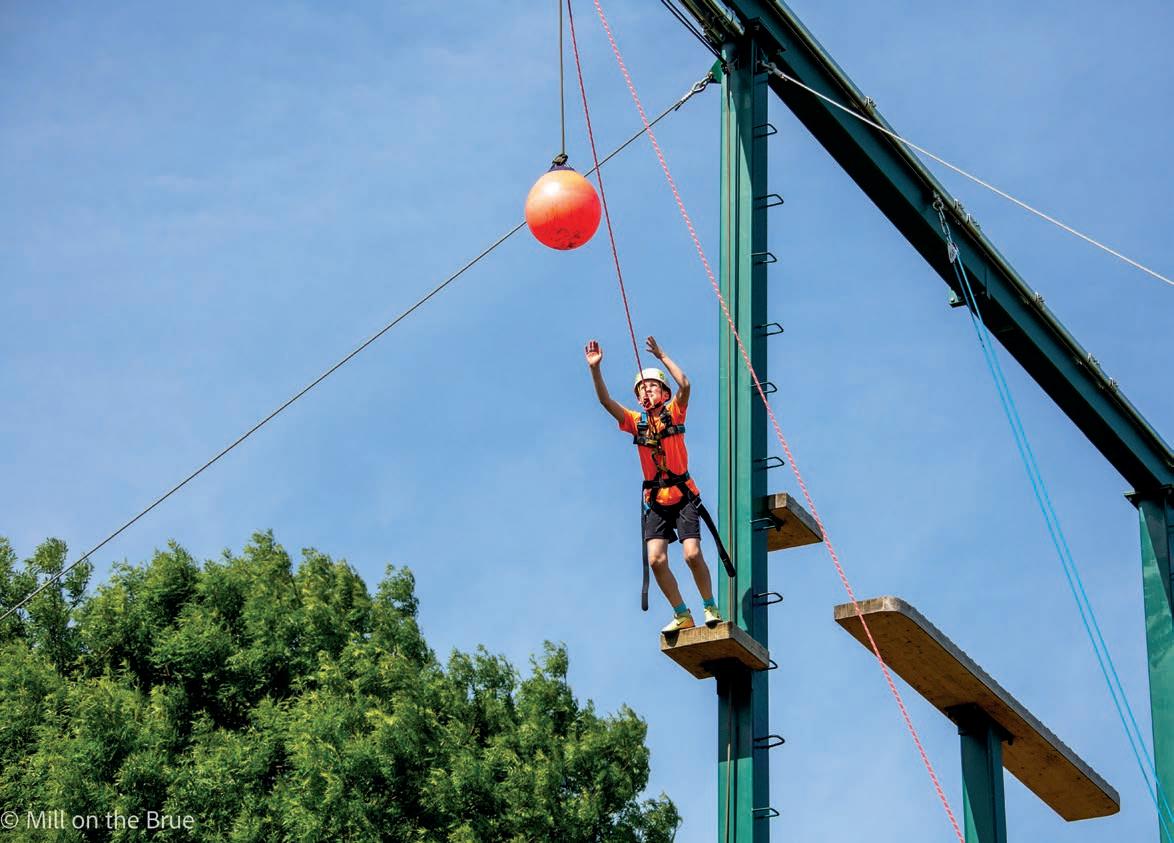
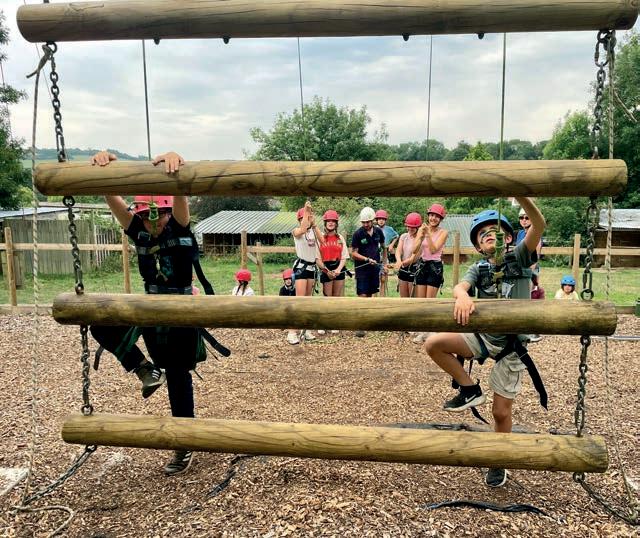
For our young visitors, this is experiential learning at its best – whether this is being encouraged by your team mates to go that metre further on the high ropes, learning how vegetables are grown, abseiling down a tower, lighting a fire, or solving a problem which at first seemed overwhelming. We believe reviewing by
“Children are able to do so much more than we adults often expect – unexpected leaders emerge and teams begin to work together”
the group at the completion of a task is vital because so many learning points are revealed. And sometimes participants experience failure, which again furthers their learning and understanding of themselves and others.
Children are able to do so much more than we adults often expect – as long as they are given the opportunity. They show determination and resilience, whatever the weather. Unexpected leaders emerge and, after a while, the teams begin to work together. The experience they have here at our centre becomes a lifelong lesson.
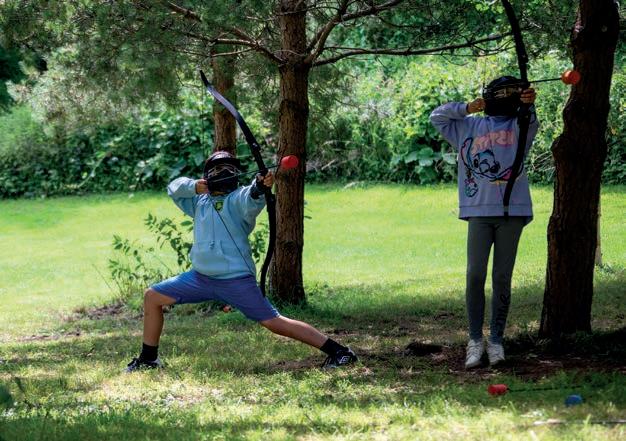
Many children who visit us from more deprived areas have never been in the countryside before. They have never stroked a sheep, sat by an open fire or contributed to solving a task as a valued member of a team.
The activities o ered here are exciting and varied – from high ropes and abseiling to canoeing and archery. But it is what the children experience in themselves which can be life changing.
Many who come to us have little confidence. They may find school di cult, have few social skills and no real understanding of nature. If you
have never achieved, there is no feeling of self-worth.
And the results? The children change over their stay with us. They become more responsive, resilient and enthusiastic. They gain understanding of the environmental aspects of our work and what they can do themselves to change attitudes. They leave as our ambassadors, returning home ready to educate family and friends.
TRICIA RAWLINGSON PLANT
Founding Director Mill on the Brue Outdoor Activity Centre
St Dunstan's College
Director
Assistant
Head and
of Teaching & Learning Helen Riddle on the huge value of teaching wellbeing skills
At St Dunstan’s College, we believe that wellbeing should be taught, understood and embedded, not left to chance.
Wellbeing is a skill that can be practised and strengthened, much like any other aspect of learning. Ours is a community that values reflection as much as ambition – one where young people are encouraged to understand the science behind how they learn, grow and flourish.
Each Monday morning, students across the school participate in our Usherwood pastoral curriculum, including our in-house Ways to Wellbeing series. They explore what it means to thrive, how focus is trained, how mindset shapes progress, and how the brain responds to challenge.
Rooted in neuroscience and psychology, students learn the science of attention, memory and gratitude. And they also learn that intelligence and ability are not fixed, but develop through e ort, curiosity and reflection. Through journalling, breathwork and
mindfulness, students learn practical ways to manage stress, stay focused, and recover from setbacks. These are vital skills for the classroom and also for life. This approach deepens in our Stuart additional curriculum.
Our Connected Lives strand invites students to explore relationships, identity, and purpose, how to live well alongside others and be kind to themselves. Together, these programmes ensure that wellbeing is part of the rhythm of school life.
Our sta are all trained in techniques such as box breathing to help students find composure and clarity when life feels busy. Our Science and Practice of Motivation series explores how small, researchinformed actions, can boost energy,
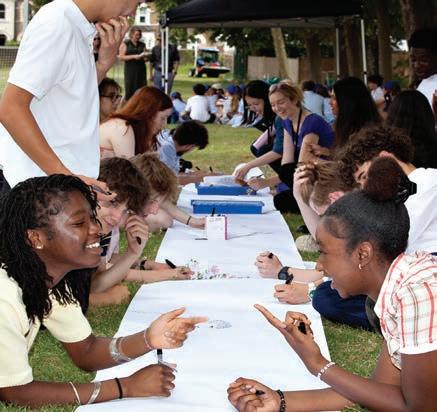
concentration, and self-belief. Students connect gratitude practices to academic psychology via Maslow’s 'Hierarchy of Needs', dive into Dweck’s research on growth mindset and the power of 'yet', and explore the awe-inspiring, restorative impact of fractals in nature.
Last summer, our celebration of International Yoga Day brought the science of wellbeing vividly to life. Led by our qualified yoga teachers and other specialist sta , students chose from a carousel of workshops: yoga for mindful movement, meditation for focus, structured journalling, mindful art, and reading for escapism. Each was introduced with the research that underpins it. At a time when people read less and less, that final session reminded us of the restorative power of story – time to slow down, imagine and breathe. The day encouraged students to find what works for them – perhaps a moment of calm, a breath before a challenge – a practice that supports them long after they leave the classroom.
At St Dunstan’s, we believe that academic excellence and wellbeing are not separate pursuits but two parts of the same journey. Teaching students the why, as well as the how, of wellbeing prepares them to succeed, and also to thrive – so they are curious, calm, and ready for whatever comes next.
stdunstans.org.uk
“Students learn ways to manage stress and recover from setbacks, vital skills for the classroom and also for life”
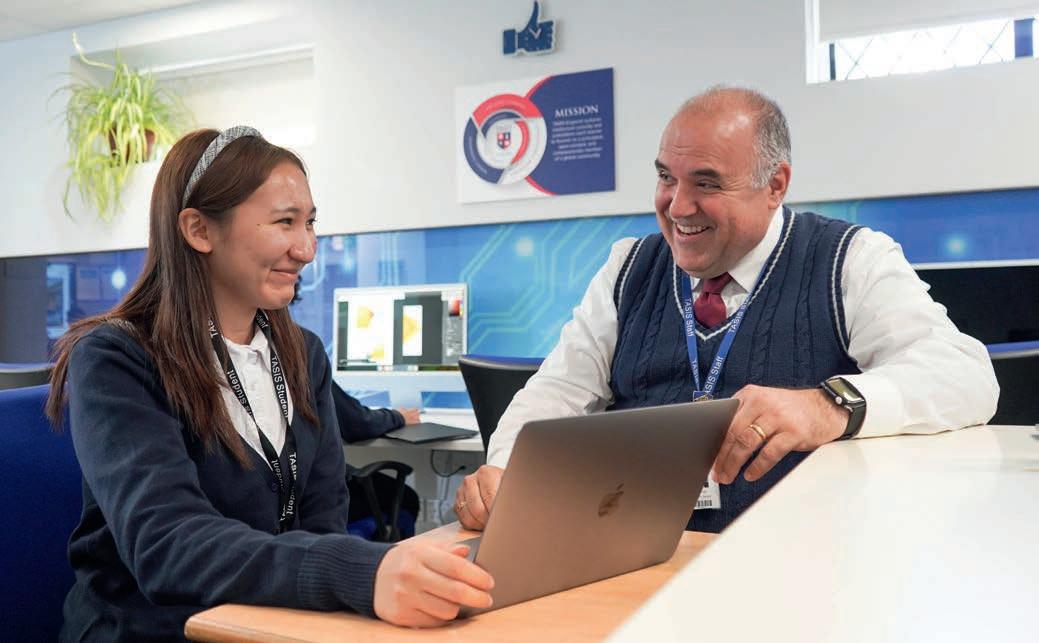
Joshua Clark of TASIS England on how schools can use technology to turn learning into a personal journey for every student
Education has always evolved with technology – from the humble abacus and chalkboard to the rise of artificial intelligence (AI) and virtual reality (VR). Today, schools are focusing on how to provide personalised learning while still maintaining rigorous academic standards. For international schools, technology supports learning for students from diverse cultural, linguistic and academic backgrounds. Schools with students from all over the world must consider di erent levels of academic preparation, cultural perspectives and language proficiency. In these settings, personalisation becomes a critical focus to ensure every learner is both challenged and supported. One student may arrive excelling in mathematics but still developing confidence in English. Another could come with strong language skills but limited experience in inquiry-based science. Technology allows teachers to adapt accordingly. It also creates opportunities for students to work at their maximum level of interest, ability and pace. Personalised learning gives more ownership, as students shape their education through
“Technology creates opportunities for students to work at their maximum level of interest, ability and pace”
elective choices, interdisciplinary projects and inquiry-driven coursework. Technology also provides pathways to adapt pace or explore interests. Adaptive platforms adjust tasks to suit each learner’s level, while STEM labs, maker spaces and robotics programs encourage students to test ideas, design solutions, and express creativity in ways that align with their personal strengths. As personalisation increases, the role of the teacher becomes more critical. Teachers curate resources and delivery methods to ensure learning standards are met while considering how to di erentiate based on the learning opportunities and needs in the classroom. They guide students in using
resources and o er feedback instantaneously as well as over time. Most importantly, teachers help students discern when technology should be used and when more traditional methods – discussion, reflection or hands-on activities – are more e ective. When technology is implemented thoughtfully, it can unlock opportunities. Adaptive software provides tailored modules and exams can triangulate the edge of a student’s understanding. Robotics, coding and 3D printing allow students to be curious and develop essential problemsolving skills, while interactive displays make abstract concepts more concrete. Technology is not a panacea and overreliance on devices risks limiting human interaction. Students may have di ering levels of prior exposure to technology, creating inequities in skill and confidence. Data privacy and ethical questions around AI demand careful consideration, too.
Every learning community must consider its own goals, resources and needs. Clear guidelines around device use and a common understanding of the role of technology ensure that it enhances rather than overwhelms the learning process. Ultimately, personalisation works best when innovation is balanced with the human connections – it is in that balance that the most meaningful teaching and learning takes place.

JOSHUA CLARK Director of Student Recruitment and Admissions
TASIS England
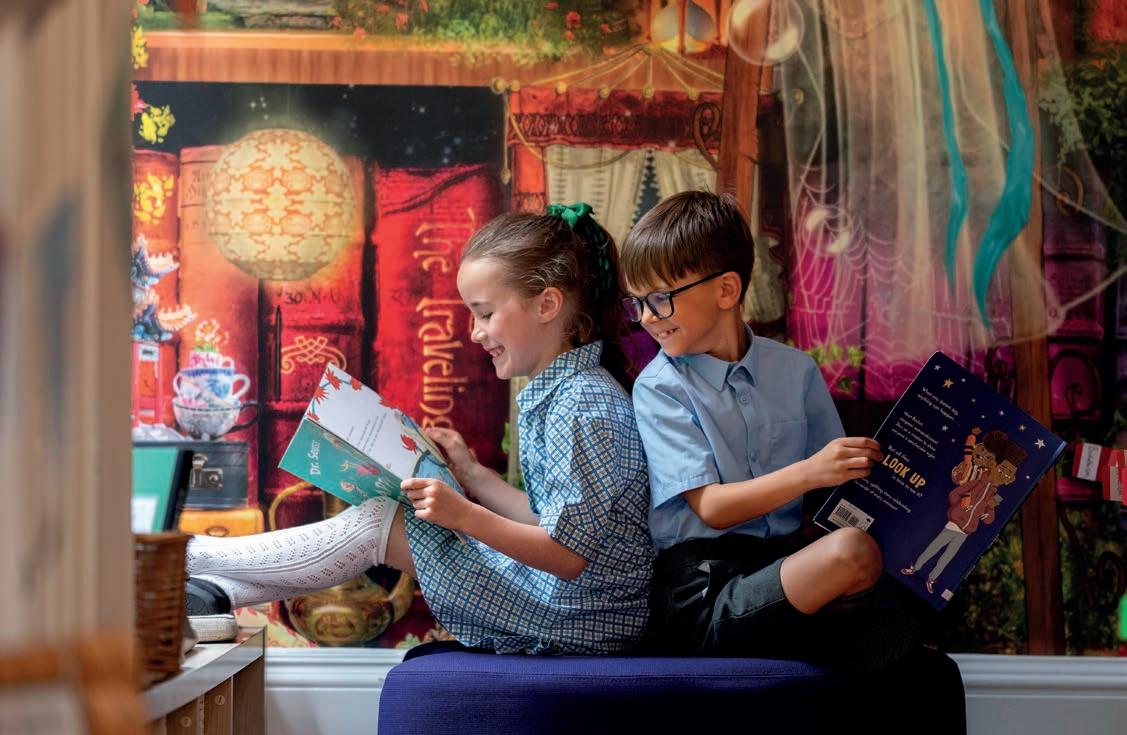
teaching to the heart to build character and academic

While exam results and league tables remain a measure of success, education should be so much more than a race to the finish line.
At St Christopher’s The Hall in Beckenham, we believe that schools are uniquely placed to shape both minds and hearts.
Our pupils spend much of their formative years with us, and it is our responsibility to equip them with the emotional intelligence and the self-awareness to navigate life’s ups and downs.
When children are supported in developing social and emotional skills such as empathy, resilience and self-regulation, they not only achieve more but also enjoy richer and more fulfilling lives.
Since becoming Head, my vision for St Christopher’s has been to create a school with genuine individuality, one
that combines academic ambition with a deep commitment to personal growth. We want our pupils to believe in themselves, to persevere and to care for others.
To that end, we have developed a whole-school approach to character education. Our pupils are encouraged to demonstrate key traits, including honesty, teamwork, ambition, common sense and resilience, and are recognised and rewarded when they do so.
These values are not confined to a single lesson or assembly but woven throughout school life on a daily basis. True character education must be lived, not laminated. Teachers here model the behaviours we wish to see, embedding compassion and integrity into every interaction. Whether it is demonstrating resilience during a tricky maths problem, reflecting thoughtfully in English or showing teamwork in Music, our pupils learn that character is built in every moment.
Importantly, we do not see character as a checklist to be completed. Each child’s journey is unique and every strength – whether it is kindness, determination or creativity – deserves to be celebrated. Our aim is to nurture well-rounded individuals who are not only prepared for exams but for life itself.
At St Christopher’s The Hall, we take great pride in being a school that teaches to the heart as well as the head. By fostering intelligence and character side by side, we ensure our pupils leave us ready to thrive academically, socially and emotionally in an ever-changing world.
stchristophersthehall.org.uk
Football is cool for girls and can make an enormous di erence to their engagement with sport. We speak to two schools reaping the rewards of championing the female game
At Royal Russell School in Croydon, football has been part of the mix for many years. The 110-acre campus lends itself to the full range of sports in both school and social time. But in the past decade the 'beautiful game' has become a cornerstone of the sports o er, says Head of Girls' Football, Aimee Watson. "The game first gained momentum here because of its inclusivity, as it appealed to pupils across all age groups and abilities."
The school runs a comprehensive programme for boys and girls, competing nationally in ISFA and ESFA competitions, and also o ers memorable experiences such as tours of St George’s Park (the English Football Association's national centre) and Spain. "The growth of football has been remarkable, and it reflects both pupil demand and our commitment to
giving them the very best opportunities."
While boys' love of playing football has long been evident, it's the rise of girls' football that is so exciting right now. "Our programme has expanded significantly and is now one of the most vibrant parts of school life," says Aimee Watson. "We’ve invested in specialist coaching, competitive fixtures, and development resources to ensure girls at every level can thrive."
And this is more than knockabout stu , with girls aiming for the top. "Today’s generation of girls want to play football because it is exciting, dynamic, and aspirational – they see it as a sport where they can express themselves, work as a team and compete seriously," adds Aimee Watson. She sees the rise of clear pathways as key to growth at school level. Royal Russell works to support high ambitions by o ering a structured programme supported by UEFA A coaches, GPS tracking, VEO video analysis, and strength and conditioning training. Aimee Watson says there's no

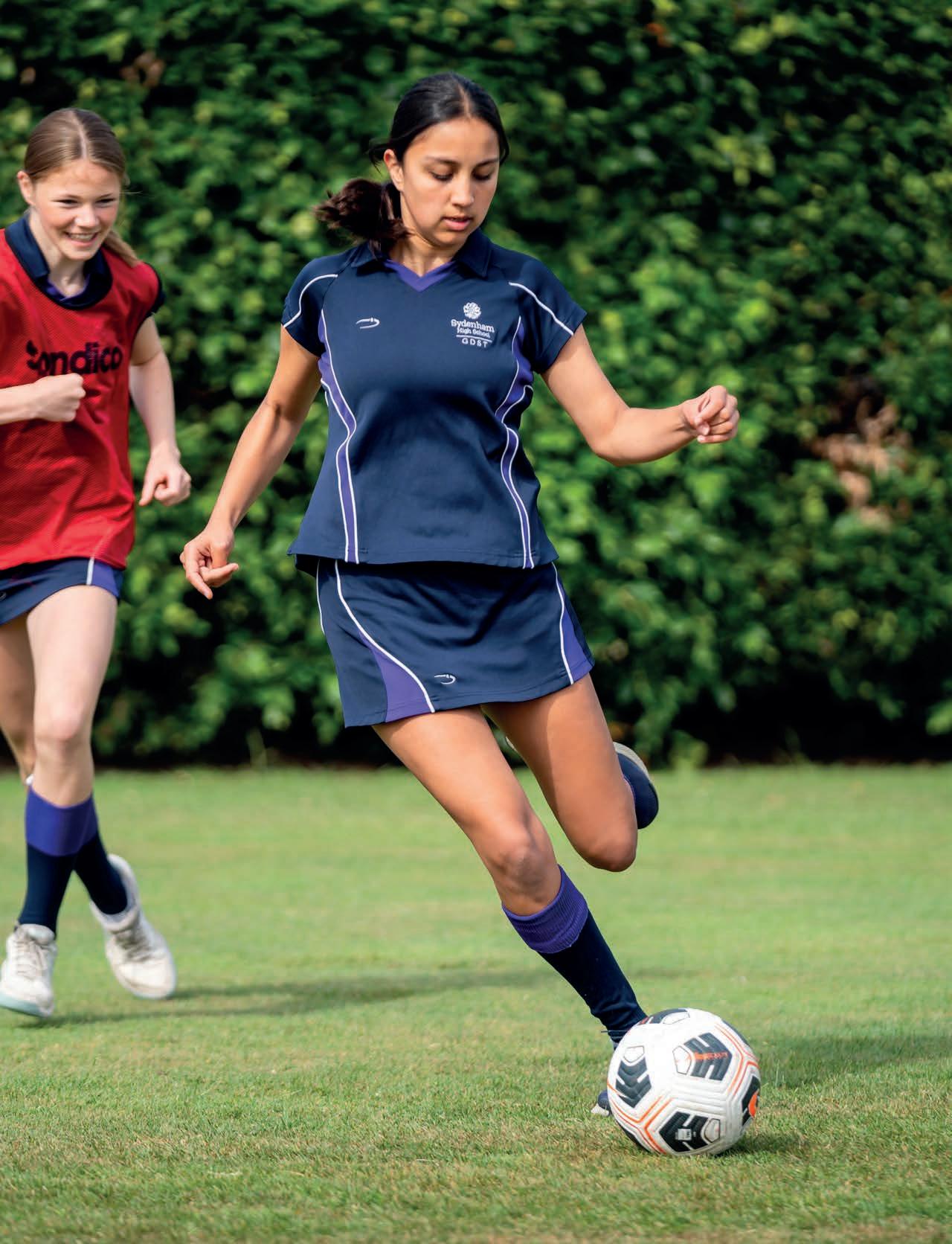
"It is now seen as completely 'normal' to play as well as watch the game – pupils view it as a women's sport"


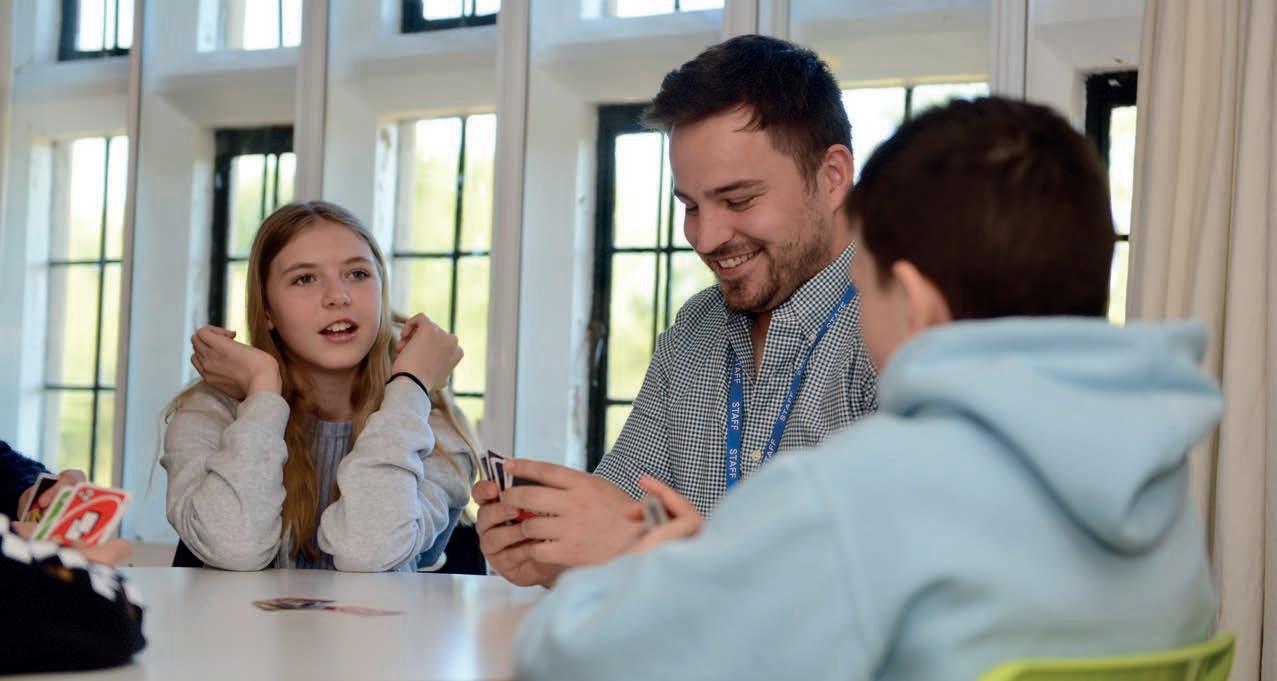

BOARDING FROM AGE 7 TO 18
FLEXI, WEEKLY OR FULL OPTIONS AVAILABLE
A WELCOMING HOME-FROMHOME FOR PUPILS TO GROW, ASPIRE AND ACHIEVE
A SPRINGBOARD FOR INDEPENDENCE, FRIENDSHIP AND OPPORTUNITY
Boarding at Framlingham offers stability and continuity in a welcoming home-away-from-home environment. Our Flexi, Weekly and Full boarding options are tailored to suit the needs of the modern family. From age 7 (Year 3) at our Prep School to 18 (Year 13) at our Senior School, our boarding provision provides a vibrant, supportive environment where every pupil can grow, thrive, aspire and achieve.
START YOUR CHILD’S JOURNEY TODAY
Discover Framlingham College on one of our Open Days or book a private visit today. Open Morning bookings now available for February 2026. Visit framlinghamcollege.co.uk/openmornings, contact admissions@framlinghamcollege.co.uk or call +44 (0) 1728 685331.
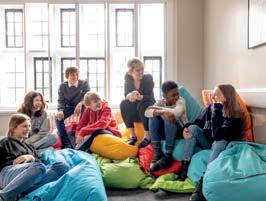
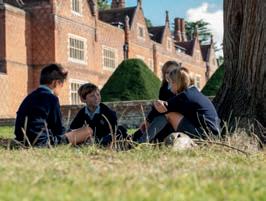
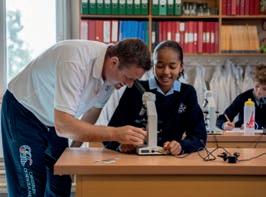
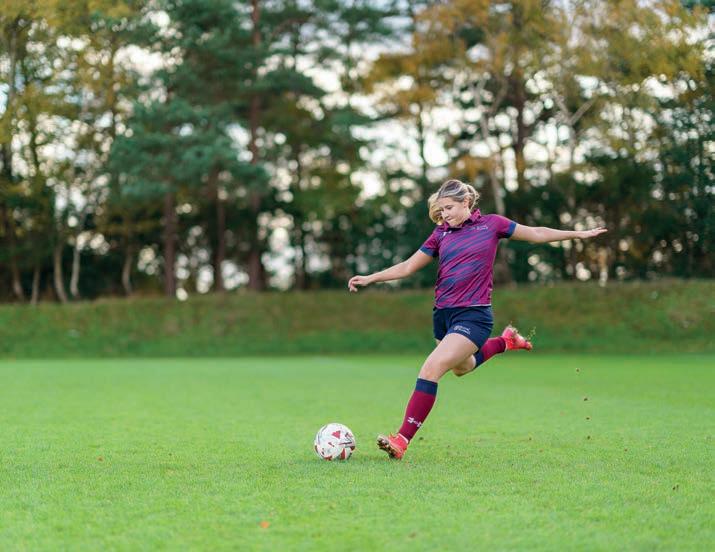
doubt that the recent successes of the Lionesses have made a huge di erence. "The professional women’s game has shown that football is a space where girls can thrive."
The school caters to everything from recreational players to elite performers, focusing on passing football. "Everyone is involved in the play. It mirrors the modern professional game, builds technical skill and decision-making, and fosters a shared sense of achievement."
Royal Russell o ers scholarships and bursaries for the most talented, and scholars receive additional support through personalised development plans, mentoring and access to specialist resources, also benefiting from the school's strong links to professional clubs. Football tours, elite fixtures, and tailored training are designed to ensure that gifted players are continually stretched.
Parents are very supportive of Royal Russell's commitment to the sport, and the school is seen as a hub for football development locally. Alongside the success of school teams in local and national fixtures, there are some starry alumni to add team pride. These include Reanna Blades, playing for Sunderland AFC and Jamaica, and Rosie Rowe, now playing with Crystal Palace U21.
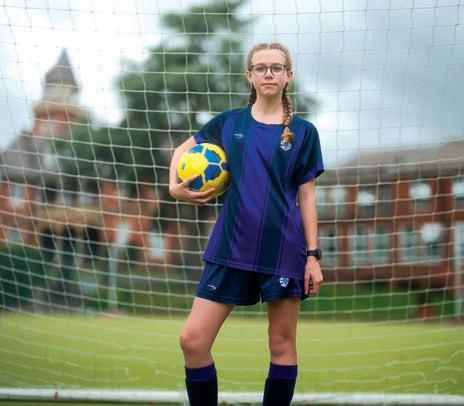
"We’ve invested in specialist coaching and development resources to ensure girls at every level can thrive"
And in the men's camp, there's Newcastle United and England's Tino Livramento, while Rhys Norrington-Davies dons a shirt for QPR and for Wales. "We are especially proud of our alumni," says Aimee Watson. "They embody the legacy of football at Royal Russell and inspire the next generation of pupils to follow in their footsteps."
At Sydenham High School, sport in all its forms is celebrated. But football is coming into its own among the girls, say the Sports Department. It grew exponentially following the Lionesses’ success in 2022. Now, Sydenham runs a full fixture programme, including cups and tournaments, with over 100 girls regularly competing for the school in di erent teams.
The teaching team at Sydenham say the strengthening profile of women's football continues to be a massive motivator. From international success
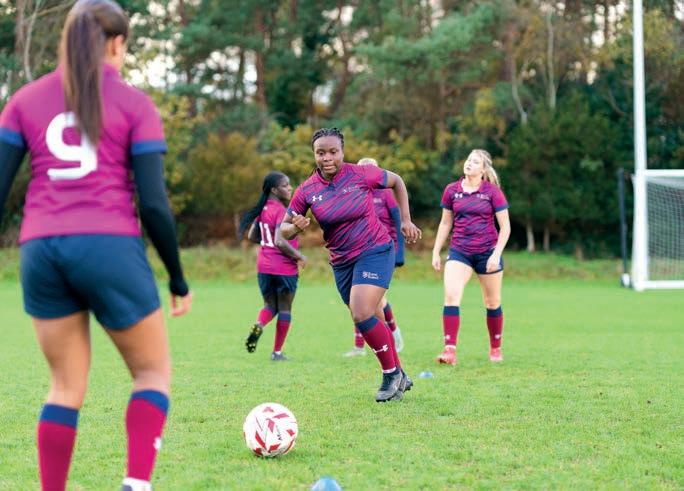
and media exposure down to grass roots – many more girls' teams are appearing locally – it's proof of the 'see it to be it' theory. Sydenham High add that it is now seen as completely 'normal' to play as well as watch the game – pupils view it as a women's sport. Girls are excited about opportunities to play and train, and many of their role models are female footballers. Sydenham o ers a year-round programme of after-school fixtures, as well as team training before school. There are inclusive lunchtime clubs to encourage all girls to have a go, whatever their experience level. It's now a core sport on the curriculum and is supported by Girls United Football Club coaches and specialist sta . Sports Scholars at Sydenham include girls who were chosen for their footballing ability, and other scholars have taken up football since joining the school. MAT & High-Performance Programmes support girls playing at Academy and Club level through access to physiotherapy, nutrition and sports psychology. And girls who show real potential are able to play among older year groups to bring on their talent. While Sydenham High School hasn't carried home any major school football trophies yet, the Sports Department are proud that they won over half of all football fixtures played last year. Capitalising on these results, and the enormous enthusiasm here for the game, there are further investments in the sports ground and in providing even more specialist training. Sydenham High say they are doing the groundwork, and enjoying the development path towards that bulging football trophy cabinet...



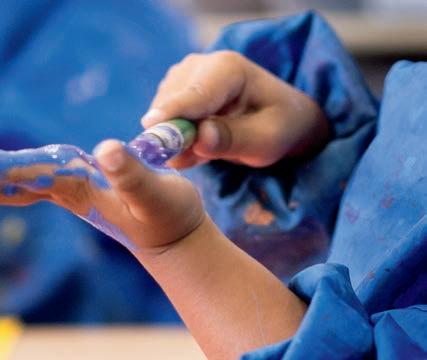




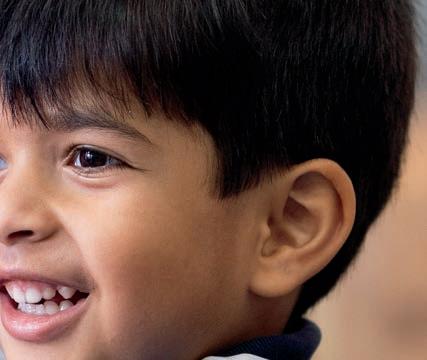






The Head of Admissions at Streatham & Clapham High School on how to approach the 11+ and assessment-day journey
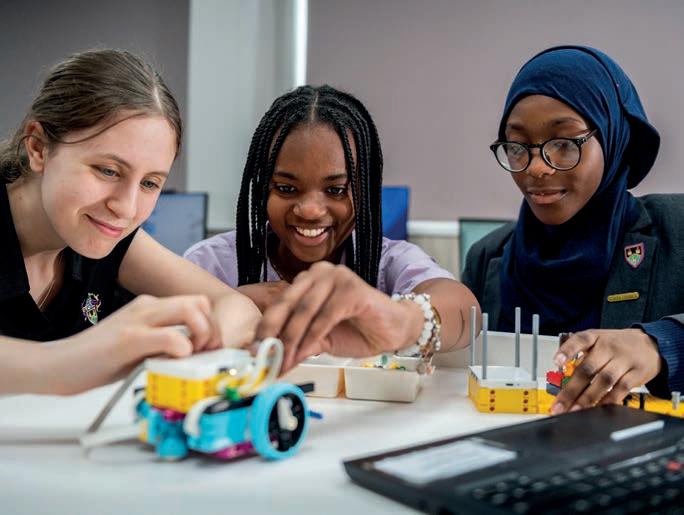
It’s an early February morning and families across London are waking up to decision letters from senior schools. For parents, it’s been a long journey – printing past papers at midnight, Googling ‘net of a cuboid’, waiting in co ee shops during assessments, and decoding their child’s post-test ‘I think it went OK’ feedback. Some even manage to squeeze in a reasoning test over breakfast the next day. At the centre of all this is a child quietly carrying the weight of expectation. How the child feels – confident, anxious, motivated or discouraged – can shape not only their academic performance but also their sense of self as they step into secondary life. This is where pupil wellbeing must take centre stage. The 11+ is often framed around academic preparation, but it’s easy to forget what it feels like to be ten years old in the middle of this process. Nurturing confidence, balance and perspective is just as crucial as any revision schedule. Schools have a responsibility to champion candidates and bring out the best in
“The admissions experience o ers families insights into whether a school is the right environment for their child”
each child. A school’s admissions process should reflect its core values – kindness in how children are welcomed, compassion in listening to their stories, integrity in ensuring fairness, and respect in treating each child as an individual. Even before results arrive, the admissions experience o ers families insights into whether a school is the right environment for their child. Beyond asking pupil tour guides about their lived experiences, the nature of the admissions process and interactions with sta are powerful indicators of school
culture. Before applying, it’s worth asking yourself: ‘does this process allow my child to feel seen and supported, not just assessed?’.
Parents often ask how best to prepare their child for assessment days. My advice is simple: ensure they are well rested and have had a nourishing breakfast and, most importantly, reassure them that the day is about curiosity and enjoyment and not perfection. The goal is for pupils to feel confident that the assessment is not a test, but an opportunity to explore, collaborate, and express themselves in an environment rooted in kindness and respect. When assessments are framed in this way, they become less about pressure and more about giving every child the chance to be themselves. This supports a diverse community and reflects the values that underpin education.
Our aim is for every pupil to leave the day feeling proud of who they are, valued for their individuality and excited about the next chapter, whatever the outcome. Small acts of encouragement, like a handwritten note from the Head commenting on a child’s creative writing, can make a lasting impact. These gestures matter because at the heart of this process is a young person beginning a life-changing journey of navigating friendships, discovering passions, and developing a sense of self.
So, instead of asking your child how the test went on the journey home, try asking if the sta were kind, they made any friends and whether someone was there to help when they got stuck. The answers to those questions tell you more than a test score and o er the clearest sense of whether your child will thrive in that school.

ANATOLY REEVES Head of Admissions















































































































Merchant Taylors’ Prep is renowned for its outstanding academic education. Our mission is to truly know each pupil. We support them to develop their unique talents, grow in confidence, and ensure they leave well-prepared for life at our senior school. Handmade, for you.











Register for entry at 3+, 4+ and now additional places available at 7+

















The Deputy Head of Walhampton School on how well-designed exams in prep years build solid foundations for independent learning and resilience
Ask anyone outside of education what school is for, and the word 'exams' is never far from the answer. It makes sense – exam results are quantifiable. They catch the headlines, are easy to digest and serve as tangible milestones. But to reduce education to exam results is to misunderstand its deeper purpose.
Exams condense an entire year’s learning into a single percentage, and these numbers or grades can significantly influence future paths and opportunities. But in a prep school, their purpose is di erent. At Walhampton, we believe that school is about developing curiosity, confidence and a meaningful understanding of each subject.
A good prep school approach has the opportunity to lay solid foundations before the pressures of senior school set in. The GCSE conveyor belt begins early, and prep schools have the privilege of insulating children from this pressure. We can take the time to build children’s exam craft, ensuring they plan revision that suits their needs, adapt techniques to di erent subjects or learning preferences, and apply knowledge under timed conditions as their adrenaline rises and papers are opened. We have a responsibility to prepare children – not just academically, but emotionally and strategically, for what’s ahead.
There is good reason to think more broadly about how children approach exams. Research into learning suggests that gradually increasing independence and challenge helps build confidence, resilience and long-term memory. These qualities go beyond exams – they are vital life skills. When children are supported in taking ownership of their learning, they become more reflective, adaptable and better prepared for the unexpected.
With this in mind, our strategy across year groups reflects a progression in responsibility and experience. In Year 5, assessments are introduced gently. The focus is less on scores and more on understanding what it feels like to sit an
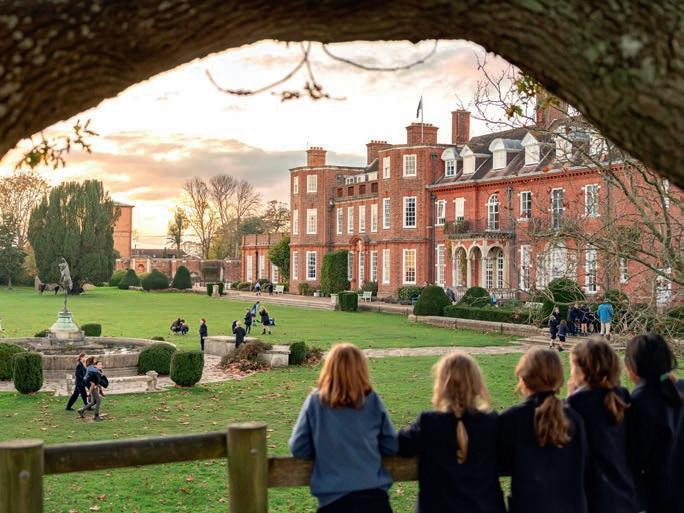
exam – working in silence, organising resources, arriving prepared, managing your time. Lessons include consolidation of topic learning to help children feel prepared without pressure.
By Year 6, revision becomes part of the expectation. Pupils receive guidance on managing their preparation. Parents are also given advice on how to support their child from home. As children move into Year 7, more independence is encouraged. They are given choices in how to revise and reflect on what works best for them. Sample questions from Common Entrance or scholarship papers familiarise them with more formal exam types.
In Year 8, pupils take on greater autonomy. Through mock exams and ongoing conversations with teachers, they develop a clearer understanding of their strengths and areas to develop. Our Pre-Senior Baccalaureate (PSB) model includes extended geography and history projects that build research, writing and presentation skills, providing valuable preparation for future coursework.
The key takeaway? Exams, while important, are a small part of the overall picture of a child’s knowledge or passion for a subject. They are tools – opportunities to demonstrate learning and develop skills like organisation, reflection and perseverance. A healthy, well-sequenced introduction to the exam process helps prevent anxiety and supports deeper, long-term understanding.
As a teacher, every so often you get that magical moment: a Year 8 child coming out of an exam, beaming with pride, saying, 'I think I smashed it'. That’s when you know the process is working.

MICHAEL HAMILTON-FOYN Deputy Head Walhampton School
Our experts answer your questions on mindfulness and choosing between state and independent in prep years

QMy son, aged four, is usually happy, but gets quite anxious when things go wrong. A friend has suggested mindfulness. How does this work for young children and what are the benefits?
AMindfulness is a gentle, practical way of supporting children to notice their feelings, and to find calm and confidence when things feel tricky. With young children, it works in two ways – by teaching them tools they can use, and by adults modelling those same skills in everyday life.
The first part is teaching children practical, playful techniques. When

children learn these early, it gives them something that stays with them for life: an ability to understand and manage their feelings, and approach challenges with more kindness, both for themselves and others.
cuddly toy meditation. Placing a soft toy on their tummy and watching it rise and fall with each breath can be really settling, especially at bedtime.
“Because language is still quite abstract, it helps to use pictures and colours to talk about feelings”
Something as simple as ‘rock stars’ – clenching fists tightly and then releasing into open, star-shaped hands – helps children release tension and that calms anxious thoughts. A calming jar is another favourite. When children shake the glitter inside, it’s like their swirling thoughts and feelings, and then they watch it settle as they take slow breaths in through the nose and out through the mouth. It’s a really visual way of showing them how their own minds can settle too. Because language is still quite abstract for young children, it helps to use pictures and colours to talk about feelings. For example, they might say they feel ‘red’ when they’re angry and want to turn ‘green’ to feel calmer. This makes emotions more concrete, also building emotional literacy.
There are also lovely ways to build positive self-talk. Repeating simple phrases like, ‘I am brave, strong, kind, and full of love’, with some fun actions, helps children practise talking to themselves kindly instead of critically. Another gentle tool is
The second part of mindfulness is about what children see in adults. They copy us more than we realise. If, as a parent or carer, we can take a breath, slow down, and show calm during a stressful moment, children learn from that. Even saying out loud, ‘I’m taking a deep breath to help me feel calm’, before responding to a tricky situation can be so powerful. It shows children that these tools actually work.
Mindfulness benefits for children are wide-ranging. They gradually become more able to notice and manage their emotions, bounce back more easily from stressful situations, and feel more confident. They also develop more compassion, towards themselves and others.
At Kalmer Kids, our camps and events focus on teaching children these tools in a playful, engaging way. Alongside that, we support parents through workshops with our KALM framework, so they can use the approaches at home. Mindfulness becomes something children carry with them, helping them feel secure, calm, and confident in who they are.
kalmerkids.com


Education Manager, Quintessentially Education
QWe’re weighing up options (and finances) and can’t decide if a state primary or prep is best for our daughter. We hope she will go to an independent senior school and want her to be prepared. Could you advise?
AFirst, I would like to reassure you that you are not alone in making what can feel like a momentous decision. With the introduction of VAT in January, fees have risen by 22% on average. The typical termly fee for a prep day school is now £5,572 according to ISC data, but this varies region by region.
However, if you want your child to go to an academically selective senior, a prep school can be an enormous advantage. In London, in particular, 11+ entrance is hugely competitive. Prep schools will be prepping your child (subtly) for up to three years in advance. Other advantages include the guidance the teaching sta provide around admissions and the links many have forged with senior schools, which can be very helpful.
If your child is heading to a boarding senior, a boarding prep can familiarise them with living away from home, instilling independence and confidence. Academically, prep schools are guided by, but not bound

“There is an argument that the prep system is better, especially for boys, as the extra two years many o er allow them to mature”
to, the National Curriculum and can therefore provide a more ambitious and richer learning experience, particularly as they have a higher teacher to pupil ratio. Many devise their own curriculum for Years 7 and 8 to provide further preparation.
There is also an argument that the prep system is better, especially for boys, as the extra two years in Years 7 and 8 many o er can really allow students to mature. This is particularly true for those who have done the ISEB and secured a place in their senior school of choice, as there is more room for personal growth before the transition. It is also worth noting that keeping your child in prep school for two extra years is typically cheaper than sending them to senior school in Year 7.
All that said, a state primary can be a great option – with advantages beyond saving money. Many are excellent academically and form a
focal point in the community, enabling your child to build a network of local friends. The shorter school day is usually mitigated with after-school clubs, while third-party providers o er additional extracurriculars. Just be aware that getting into the most popular primary schools may involve jumping through hoops – including a ording to live in the catchment area.
If you decide on a state primary, you might consider ‘topping up’ for tests such as the ISEB if an independent senior remains the goal. Some state schools, particularly in grammar school-rich areas such as Buckinghamshire and Kent, know something of the 11+ but others don’t understand the process very well. There are knowledgeable private tutors to help your family with these preparations
quintessentially.com/education







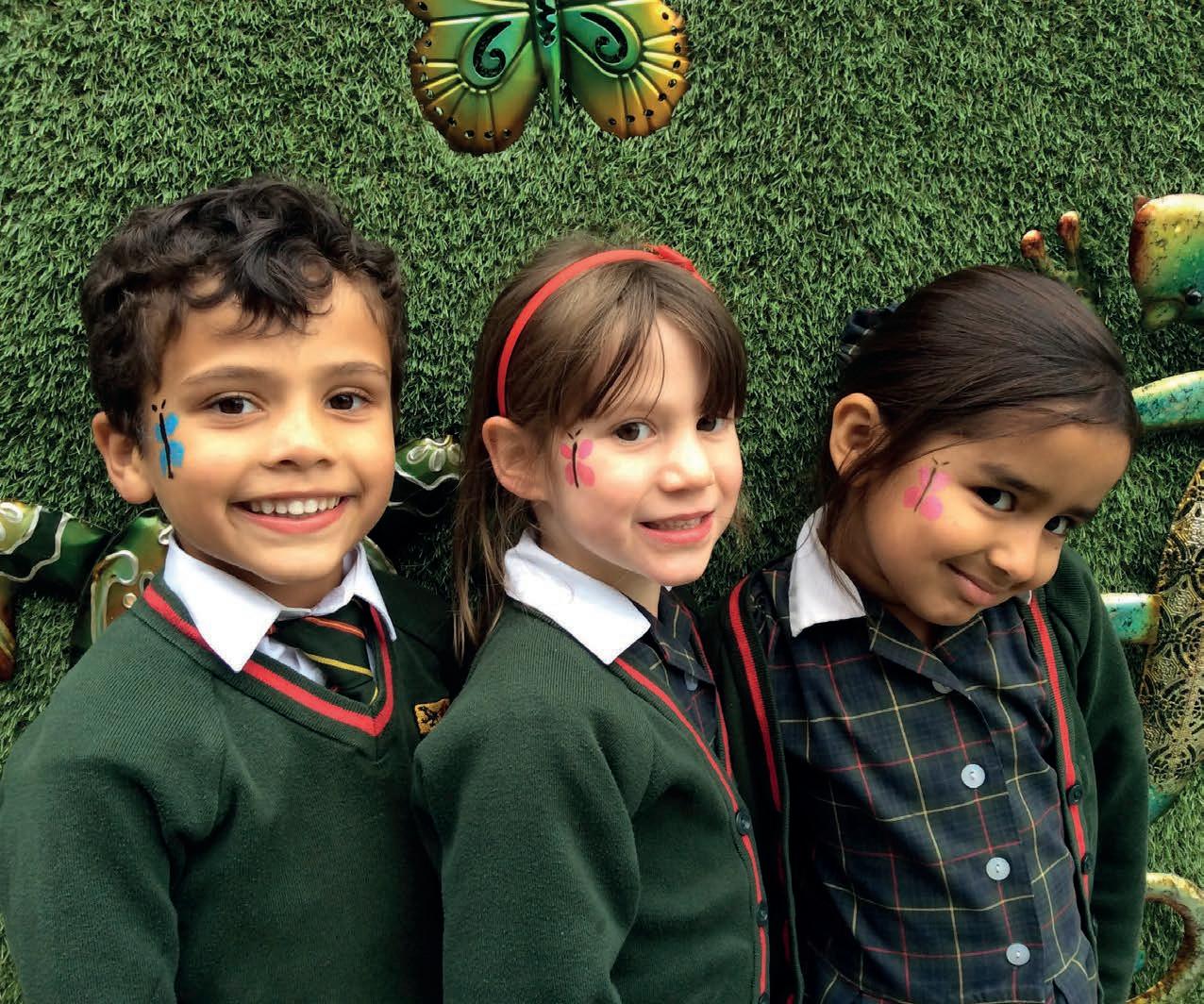
Discover a nurturing and inspiring start to your child’s educational journey at St Benedict’s Nursery and Early Years.
Nursery & Junior School
Open Morning
Wednesday 25 February 2026

“Excellent pastoral care, solid academics, outstanding sport, and a hugely rich extracurricular offering.”

- The Good Schools Guide 2025 Co-educational school for girls and boys aged 3-18



Cruschiform illustration from Seeds: Nature's Intrepid Miracles Page 72
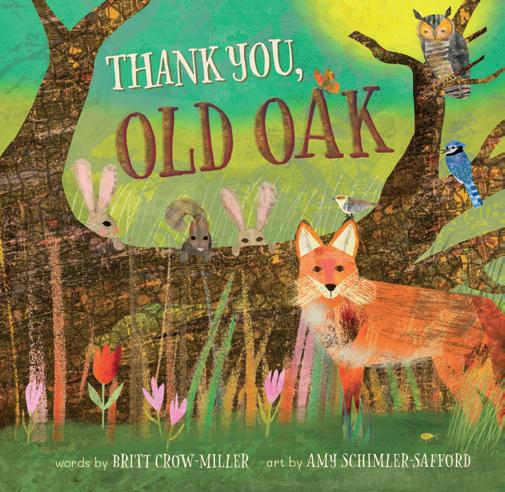
Thank You, Old Oak
This lovely book by professor of environmental geography and tree advocate
Brit Crow-Miller tells the story of Old Oak, who falls down after 400 years. When news spreads, creatures gather to remember the wonderful ways she served her forest community. Crowds of birds sing out their gratitude, squirrels give thanks for her acorns, leaf buds and catkins, while the rabbits remember those cosy burrows her roots provided. She has fallen, but new life is already in motion, with her seedlings growing steadily in the sunny clearing she created when she fell.
From the wonders of seed distribution and fascinating football facts to bug life and a very special animal rescue agency, our pick of new books
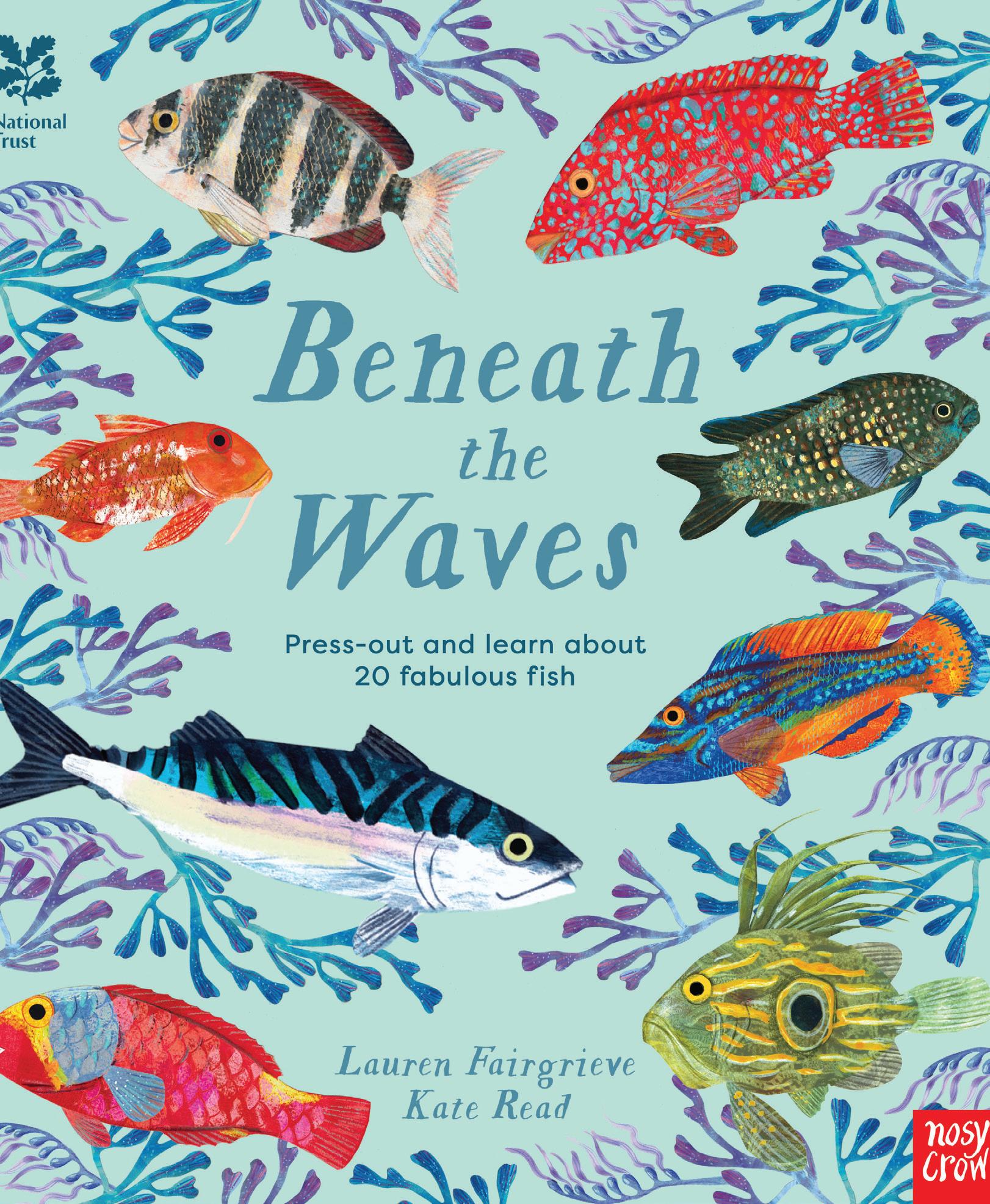
Part of Nosy Crow's 'Press Out and Learn' series in partnership with the National Trust, this interactive book lets you remove and construct 3D fish. There are 20 in all – enough for a colourful shoal – ranging from bluefin tuna and cuckoo wrasse to pollock, John Dory and red mullet. The fish are delightfully detailed and colourful and can be pressed back to refer to again or used to create hanging decorations. The back of the book contains more lovely marine illustrations, plus descriptions of their habitats and fishy habits.
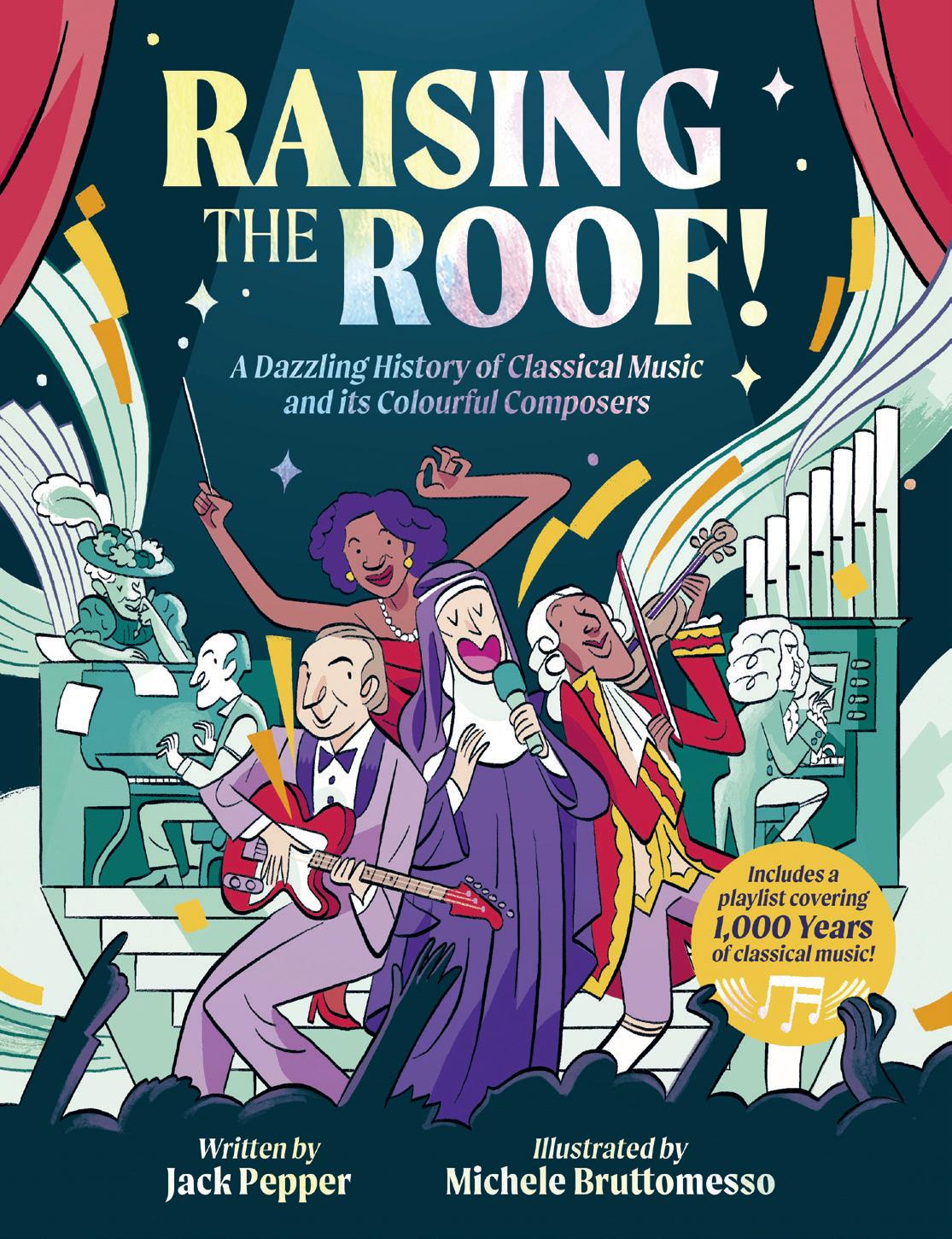
by Louise Pentland PICCADILLY PRESS,
£7.99
Louise Pentland's debut children's novel centres on Lyla, who is fed up after a summer of splitting time between her parents after their divorce. And so she retreats to Lylaland – her dream world where anything is possible. There's a national schools' competition where finalists get to take their families on a weekend away – perfect way to get Mum and Dad back together. But an inspiring and inventive entry eludes her, and even Lylaland stops being her dream place. How can she get it back, and make things go right in real life, too?
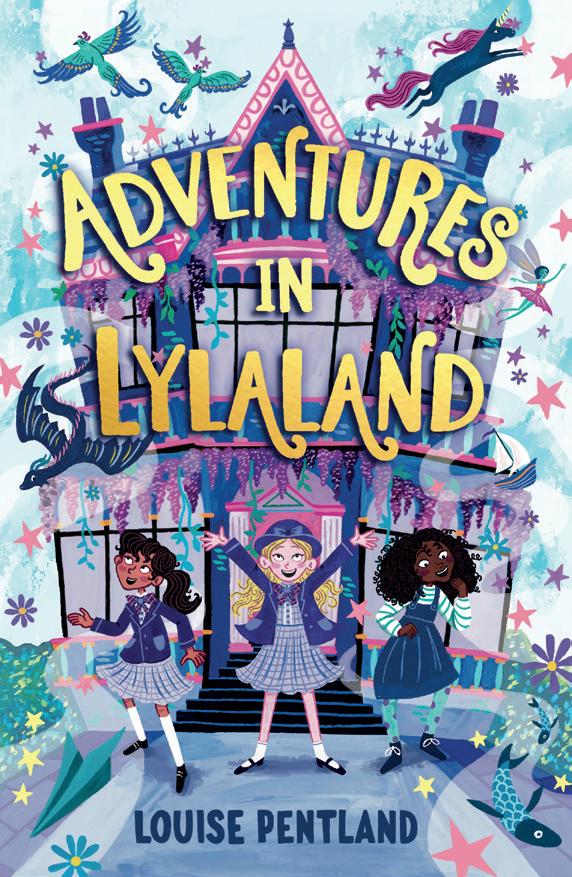
by Jack Pepper
Illustrated by Michele Bruttomesso TEMPLAR BOOKS, £10.99
The composer Jack Pepper's introduction to classical music is now available in paperback and makes a great immersion into the colourful characters who have delivered hits and touchpoints in the great history of sound. There are 20 characters, including rockstars of their day such as Bach, Beethoven and Mozart. But you'll also encounter George Gershwin, Shirley Thompson and Hans Zimmer. To bring the music to life, you can listen as you read with the book's playlist. Key forms – including symphony, opera and concerto – are explained, and with a group of 'honourable mentions' in music.

by Tracy Curran Illustrated by Steve Wood UCLAN PUBLISHING, £7.99
This is the second in this fun series following the Air and Mountain Rescue Team. Yan Yeti has a bad case of the sneezes up in the Mystical Mountains and this causes huge snowstorms. One 'Atishoo' triggers an avalanche, after which young Yo-Yo Yeti can't be found. Rescue unicorn Sunny and his unicopter Bee are on the case, setting out on an urgent mission to find Yo-Yo and bring her back to safety. Colourful pictures and reader-friendly large text make this a great choice for young readers who love an adventure.
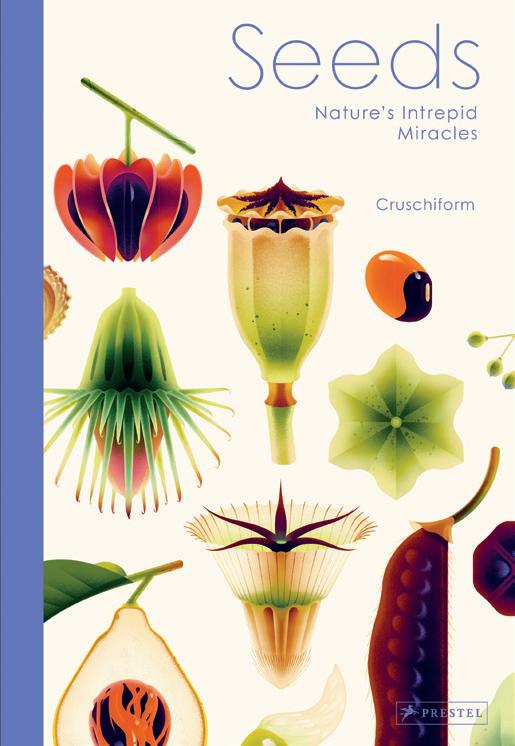
by Cruschiform PRESTEL, £22.50
This book created by the French creative studio of Cruschiform is a real labour of love and fascinating to children and adults. It tells the story of how plants of all types – from alfalfa to giant redwood – send their seeds out into the world. There are 150 seeds covered in depth, with spare text and detailed illustrations, and the book covers dispersal by wind, water and human and animal interaction. We love the painterly illustrations that introduce each chapter in a book to study, return to and treasure.
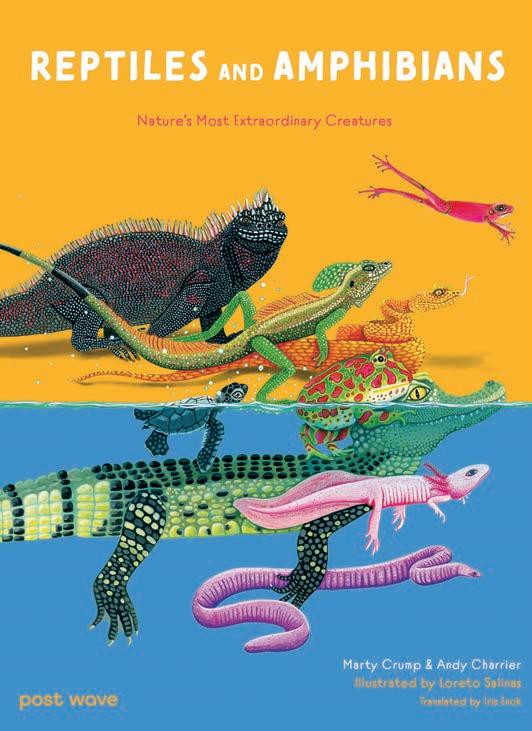
by Alex Bellos and Ben Lyttleton Illustrated
by Spike Gerrell WALKER BOOKS, £14.99
This latest addition in the bestselling Football School series is a bumper special edition for fans of the game, containing a fact for every single day of the year. Each of the 12 months is introduced by a birthday list of illustrious players. It's then followed up by essential football trivia amassed by the footie-mad Bellos and Lyttleton dream team – all illustrated with fun cartoons from Spike Gerrell of TES and Guardian fame. There are quizzes every month, plus an end-of-year super challenge to test even the most ardent fan.
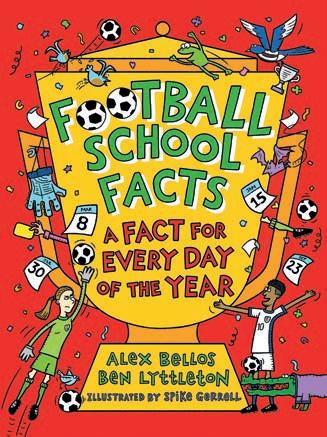
by Marty Crump & Andy Charrier
Illustrated by Loreto Salinas POST WAVE, £14.99
Subtitled 'Nature's Most Extraordinary Creatures', this book is a great introduction to a diverse and ancient group of tetrapods. There's plenty of scientific information packed in, all described in a clear and compelling way, and with superb illustrations by Loreto Salinas. Alongside an evolutionary tree and 'what is' descriptions of the di erent classifications, you'll find information on everything from skin, diet, lifecycle and communication to self-defence and conservation. There's a useful glossary at the back, plus links to further reading and resources, making this a great choice for budding zoologists.
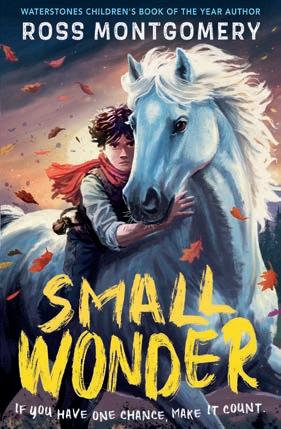
9+
by Ross Montgomery WALKER BOOKS, £7.99
The author of I Am Rebel, returns with this adventure about a boy and his horse. Tick lives in a peaceful village with his younger brother Leaf and his white horse Pebble. But peace is shattered by a deadly assassin. Tick has very little time to get to Kings' Keep and warn of the impending invasion. He and Pebble set o across forests and mountains, encountering bandits and rogue knights along the way, and with only his grandfather's last words 'The rest is up to you. Make it count.' to steady him.
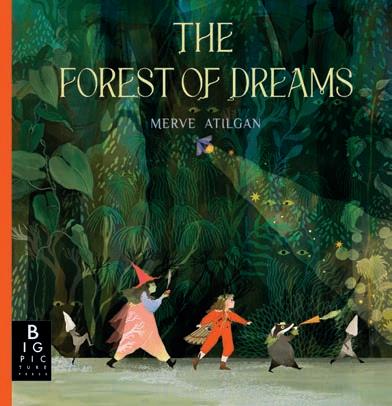
by Merve Atilgan
Istanbul-based authorillustrator Merve Atilgan was inspired by her own childhood to create this enchanting tale. At the end of a long day, a little girl escapes to her magical forest. On some journeys she wanders down new paths and encounters strangers – shy mushrooms or a group of welcoming witches. And on others she meets old friends, including the big brown bear, the anxious white rabbit, the mischievous twin toads and the elusive red fox. There is wonder, dancing and celebration of nature in every whimsical journey she makes in this beautifully drawn bedtime story.
by Carly Gledhill POST WAVE, £12.99
Carly Gledhill's riotous read turns storytelling on its head. Pencil is writing his best ever, starring his friends Peanut and Jelly. But Peanut is less than keen to enter The Super Spooky Forest to meet Jelly. When he does, they are chased by a grizzly bear. Pencil's rewrites happen thick and fast when his hapless friends object to being eaten by the bear or finished o by a crocodile or giant snowball. All's well in the end, although Peanut and Jelly make it clear they aren't keen to appear in the sequel.
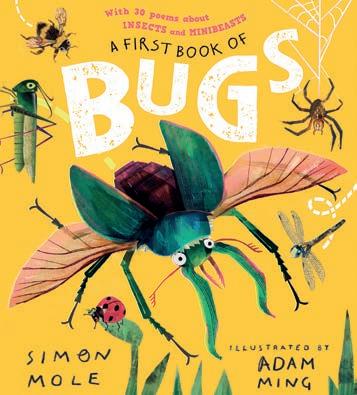
3+
by Simon Mole
Illustrated by Adam Ming WALKER BOOKS,
£16.99
National Poetry Day ambassador, children's writer and performer Simon Mole gets right behind bug life with this celebration designed for young readers. This is a feast of poetry, memorable facts and wild illustrations by Adam Ming. An array of mighty mini beasts are described, from the mayfly and goliath tarantula to African driver ants and monarch butterflies. The four themed sections include one on how small creatures work together. It's an immersive large format read and, if they love this, do check out the sister in the series about dinosaurs.
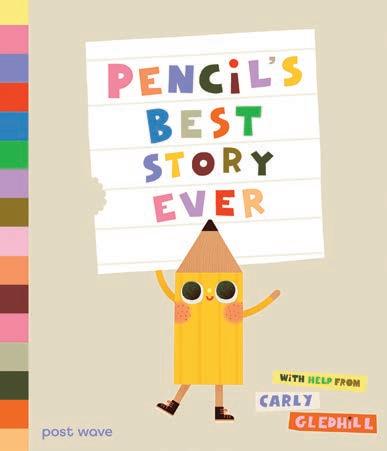
by Katya Balen Illustrated by Gill Smith WALKER BOOKS, £6.99
The second in Katya Balen's series for animal lovers sees Mattie, Zoe and Casper running Appletree Animal Agency – finding homes for animals in need and helping out the village vet Dr Polly. There's a lively three-legged collie called Nimbus who needs loads of training, but his owner just wants cuddles, so he keeps escaping. The team have to follow a three-paw trail through the snow when he disappears again. Thankfully, there are humans in need of animal companionship and so our agency team are ready for a spot of matchmaking.
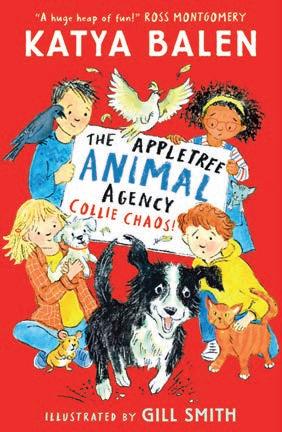
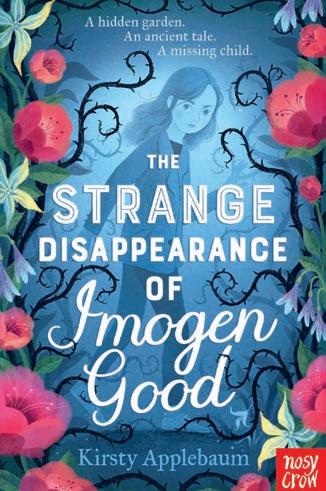
by Kirsty Applebaum NOSY CROW, £7.99
Fran doesn't want to go and stay with her aunt and uncle, and she particularly doesn't want to be around her rude cousin Imogen. But Imogen is missing when she arrives and, creepier still, no one knows where she is or even remembers who she is. Fran feels duty bound to investigate, enlisting Imogen's friend Bex, who has also lost her memory. Fran has no idea what has happened here, but she's certain it has something to do with Stillness Hall, its hidden garden and the 12 statues that belong there.
As the wildly popular podcaster of Everything Under the Sun, Molly Oldfield is on a mission
to help children find answers to questions big and small
LIBBY NORMAN
How do frogs jump, why do pandas love bamboo, and why do we work to make money?
These and other burning questions are answered in Molly Oldfield’s latest book Everything Under the Sun: All Around the World. There are 366 queries answered, one for every day of a leap year, and with insights from experts in their field as well as star names. These are genuine questions, and what makes the book rather special is the fact that they come from children from all corners of the world. Molly Oldfield, as factfinder extraordinaire, fields hundreds every year for her weekly podcast Everything Under the Sun She takes this role extremely seriously and every day wakes up to fresh voice messages from young people. “I love hearing their voices coming from all over the world – ‘I’m in Uruguay’, ‘I’m in New Zealand’,” she says. “It’s such a lovely start to the day.”
Molly Oldfield has a distinguished ‘pedigree’, having been one of the original QI elves. She met John Lloyd – bringer on of
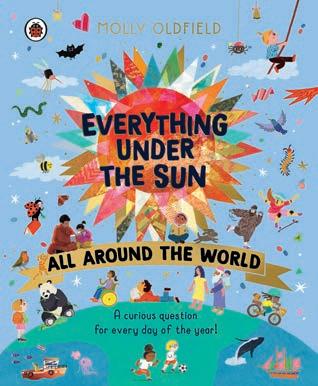


so much talent – just as she was finishing at Oxford and got in at the start of both a show and a whole genre, delving for questions and answers throughout the Stephen Fry years. During that time, she also started writing children’s books. The first was The Secret Museum, and it was a question from a friend’s young daughter who was enjoying that book (‘Can blue whales talk to killer whales?’)
that led on to an answer, and that led on to the podcast. Molly Oldfield now has a raft of books under her belt and her weekly quiz, with questions set by children, also challenges adult minds in the Guardian
While most of her time is spent working in her garden-shed o ce in Oxfordshire, for the past year and a half she has had a complete change of scene, living in Bali so her sons (aged two and five) could experience life at Green School – an amazing jungle setting and immersion into nature. “We just went there for an adventure, pretty much.”
Even in this faraway environment, Molly Oldfield didn’t forget the burning questions waiting for answers. Not only did she host workshops for the Green School’s Year 4s on how to make podcasts and give talks but she also fielded all her usual questions, plus loads from the Green School’s students and children in the neighbourhood.
So, another question – are there variations in the things children ask related to location? Yes, there are regional flavours and preoccupations, is her answer, but that’s often down to the things children see and encounter around them.
“I found in Bali their questions are even more nature based than they are here
“The more you nurture children’s curiosity and answer their questions, the more they will keep on asking questions”




“William Sieghart ponders who wrote the first poem, and Marcus du Sautoy tackles what the biggest number is”
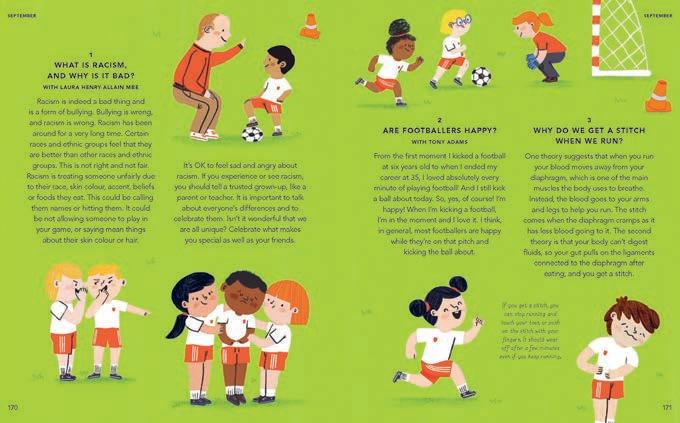

because they are so connected to nature – so they ask about plants and trees, and banyan trees.” Indeed, the banyan is so revered in Bali that a whole raft of fascinating questions came in about that one stately tree.
Similar localism is reflected in other queries she gets from around the world – for instance, children in coastal communities often ask about oceans and waves. But some things are universal, and Molly Oldfield is well used to deeply out-there questions that no one adult can provide a satisfying answer to. “Like who invented the world, and who is god, and who was the first mummy if my mummy had a mummy?” she says. That said, Everything Under the Sun: All Around the World tackles testing themes head on. The book begins with ‘Where’s the happiest place in the world?’ and ends with ‘What is the meaning of life?’. In between, there are scientific and cosmic headscratchers and – as with the podcast – she has called in distinguished help. For instance, Sophie Dahl talks about how magic is made, William Sieghart ponders who wrote the first ever poem, Grayson Perry discusses why clay gets hard and Marcus du Sautoy tackles, rather deftly, what the biggest number is. Expert and insider voices add weight. Even so, Molly Oldfield has made the sensible decision to issue a gentle disclaimer at the front explaining how all answers are the
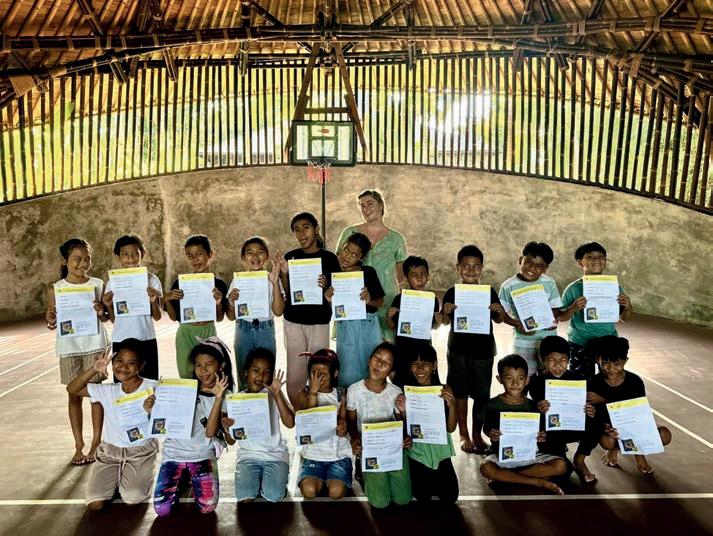



knowledge we have right now, and facts can change. She thinks this clarifying statement is important. And, of course, it’s always good to remind children that one day they may uncover the truth no one before them ever spotted. “The more you nurture children’s curiosity and answer their questions, the more they will keep on asking,” she says.
She was a deeply curious child. “I was one of those kids who kept on asking questions. I remember getting an edition of the Encyclopaedia Britannica as a child and being so excited – and that so limited the amount of knowledge you could get compared to now.”
a shared information exchange endeavour. “I think one thing they really like is hearing other children’s voices on the podcast,” she says. And they also love using their expertise, even if it’s sometimes at the expense of adults in the room. “At Cheltenham Literary Festival I was asked what sound gira es make and this little kid at the back said, ‘they hum’. And I said, ‘how do you know that?’. And his dad said, ‘because he listens to your podcast’.”
This book has plenty of other nature facts – scatological ones among them, naturally –also complex ideas that will make even the wisest among us pause. How can you store so many things in your mind, and will you ever run out of space? is one. Also, How many ants could you fit in a plane and still take o ? Then there are life’s true mysteries, such as, Why is vanilla ice cream so yummy?
Molly Oldfield is already busy on the next instalment of the Everything Under the Sun book series – it will have more of a bedtime theme. She continues to wake up to those delightful messages from her podcast listeners. And, with such a brilliant band of curious listeners across the world, there’s never going to be a shortage of great questions that need her earnest attention.
included in this book. “My two-year-old world. My five-year-old is really into this called FunMasterMike, and so I asked him
Her own boys have caught the same curiosity bug and both have a question included in this book. “My two-year-old asked about the biggest digger in the world. My five-year-old is really into chess – he plays this app on my phone ChessKid, and there’s this coach on there called FunMasterMike, and so I asked him to answer my son’s question. My son was so delighted he took FunMasterMike’s answer to his school chess club.”
Molly Oldfield believes children have always loved being the one in possession of a really obscure fact, but her podcast has also brought them together, wherever they may live, in


Molly Oldfield believes children at


Everything Under the Sun: All Around the World is published by Ladybird Books, £25. Children can submit questions for Molly Oldfield’s podcast and books mollyoldfield.co.uk


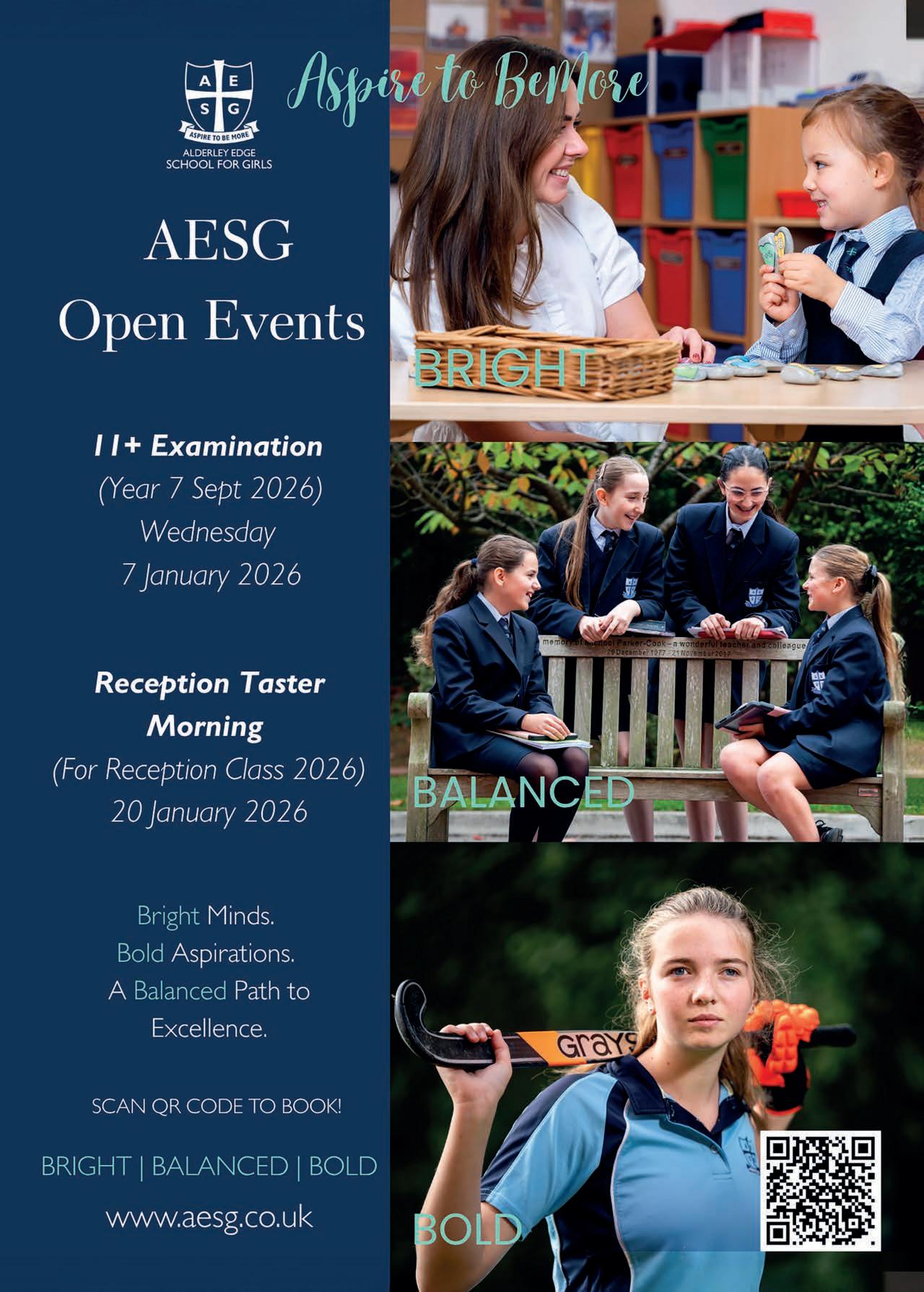
With a new book and hit stage show, writer Danny Robins believes today's children are every bit as keen on ghost stories as he was
LIBBY NORMAN
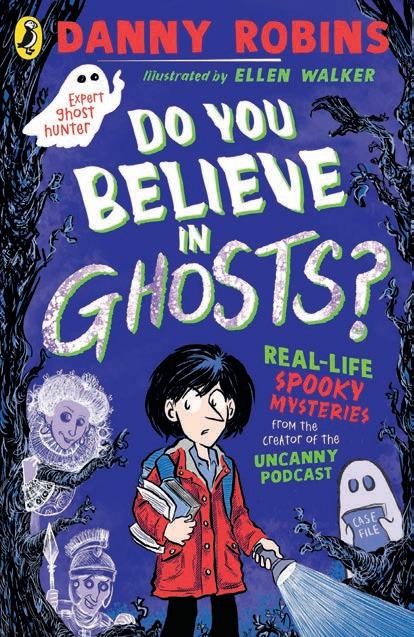
He’s been compared to Hitchcock and Van Helsing and called the UK’s ‘go-to spook guy’, but Danny Robins wears his o cial badge lightly. And there’s not a hint of mystic aura about him. He never expected The Battersea Poltergeist and Uncanny to cause such a stir.
“It happened in that strange, alien landscape of lockdown. I think it was a point where a lot of people were cooped up in their houses feeling slightly haunted by their houses,” he says. “I sometimes think I was the paranormal Joe Wicks. I was the beneficiary of that era, in that there were a lot of people who wanted to be entertained.”
The ripple spread way wider than he could have conceived. “I couldn’t in a million years have anticipated The Battersea Poltergeist being talked about on Australian breakfast television and fielding calls from Hollywood producers asking about film rights.” Looking back now, Danny Robins wonders if he had stumbled across a collective desire to explore the out-of-body world. “Those strange, chaotic, uncertain times spawned an interest in the paranormal.”
The Battersea Poltergeist – a podcast first aired in 2021 – retold the tale of the 1956 alleged haunting of 63 Wycli e Road in an utterly riveting way, while Uncanny, beginning later that year, delivered a rich brew of paranormal and haunting true-life tales examined in forensic depth through a believer’s and a sceptic’s lens. Uncanny passed to the other side, with a BBC Two series beginning in 2023 (we’re now two series in) and has also become a hit touring show. Somewhere in there, Robins also found time to write 2:22 A Ghost Story, which was one of the first plays to open on the London stage after lockdown. It picked up three Olivier nominations and won three WhatsOnStage Awards, including Best New Play.
It’s worth noting that Robins’ interest in the paranormal is not recent – among his many writing credits is Young Dracula, the comedy that ran for five seasons on CBBC from 2006.
“This is the subject that keeps on giving. You can go anywhere in the world and ask that question, ‘do you think ghosts exist?’ and come up with a really exciting, colourful debate.”
This, then, is the backdrop for Do You Believe in Ghosts?, his new book aimed squarely at curious young minds keen to find out more about the supernatural. In designing

the book, Danny Robins has drawn on his own childhood passion. He was, he says, that kid in the school library reading everything he could find on a subject that gripped him. He still recalls the Usborne World of the Unknown, the Collins Gem Ghosts and even a Hamlyn guide. “There was an era of real fascination with this subject that spawned quite a lot of lurid books full of pictures of ghosts and monsters and demon dogs,” he says.
“Combined with the fact I was brought up as an atheist, and I didn’t have belief in my life, I think I was just really interested in the idea of what made people believe.” Or not, for in the introduction to Do You Believe in Ghosts? Robins nails his colours to the mast as ‘a sceptic who really wants to believe’. In



“I sometimes think I was the paranormal Joe Wicks – there were a lot of people who wanted to be entertained”



similar vein, he invites readers to align themselves with either #TeamBeliever or #TeamSceptic, also voting on each of the accounts they read in the book to see if they’ve been swayed one way or the other.



It’s an approach that gives children agency and also encourages them to get thinking behind the stories and listening to di erent theories. “If you are from #TeamSceptic you can look at it from a psychological, environmental, scientific perspective, and if you are #TeamBeliever you are digging into the history of the house, who might have lived there and who might be the ghost,” he says. “All the kids I meet, they are little

listening to di erent theories. “If you are from a psychological, environmental,




















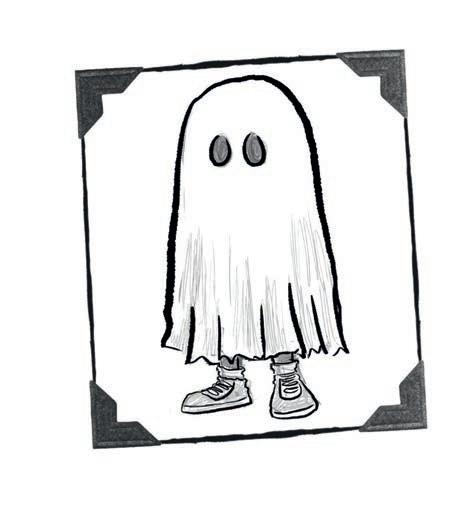


“There's something important for a kid about being scared within very safe boundaries”
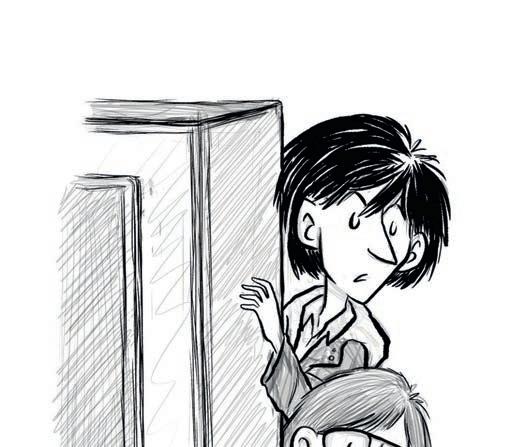
and cognitive bias – also, impressively, an evolutionary psychology explanation for why we humans are pre-programmed to be scared of the dark. “Explaining them in a kid-friendly way opens up this amazing debate they can have,” says Robins.
He hopes that these explanations serve a useful purpose in helping children rationalise other fears. “Once you understand that, you can start to feel, ‘well maybe some of the other things I feel scared about I don’t need to feel scared about’, I think there’s quite an empowering message behind all of this – that the world isn’t quite as scary a place as it might sometimes seem.”
detectives. They love exploring stu . They love trying to make sense of science and history –this is a subject that allows you to do that.”
Of course, ghost stories give children a thrill, a frisson, but this is as old as storytelling itself. “There’s something important for a kid – which is when you first come across this idea of ghosts – about being scared within very safe boundaries. It’s why we watch Dr Who or enjoy doing something like Go Ape. It’s us testing our world, testing the parameters of our world.”
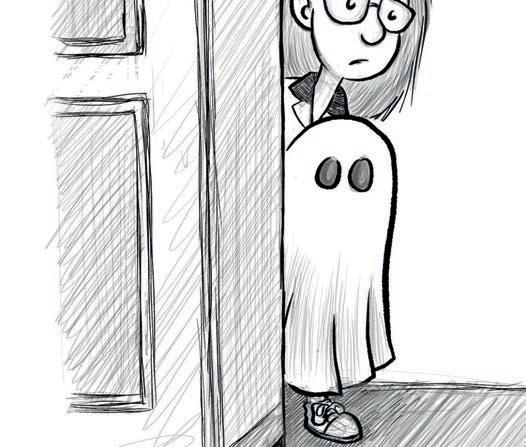
Do You Believe in Ghosts? tests parameters but sits firmly on the side of spooky, rather than scary, with jokes and asides, and plenty of comic illustrations. In fact, illustrator Ellen Walker wrote to him first as an Uncanny fan and plays a key role here as a part of the ghost-hunting team. The tales cover familiar spooky ground to many adults. We read about the disturbances at 284 Green Street (aka The Enfield Poltergeist), the thrilling haunting of RAF Lossiemouth, a cellar in York where Roman Legionnaires were spotted by a hapless boiler fitter and even head back to 19thcentury New York State to meet the famous spiritualist Fox sisters.
There’s plenty of history in the mix, but also clear and age-appropriate explanations of concepts such as Stone Tape Theory, telekinesis


Adults reading along with their children may expect more questions than they can answer. “I definitely think any sort of fear within a ghost story has in equal measures that dose of optimism. It suddenly opens up the possibility that those that we’ve loved and lost still might be out there,” he says. “That potential optimism is a really powerful thing in terms of processing those moments – whether it’s a pet that you’ve lost or a grandparent.”
One of the things that has struck Danny Robins is that the audience for ghosts spans all ages. “What I’ve noticed a lot on my tour, and just generally meeting people who listen to the show or watch the show, is that there are loads of kids who are Uncanny fans,” he says. “It feels like a family-safe subject. You can approach it in di erent ways. You have the adult level where you’re consuming stu that might make you feel a bit scared, or you can have the kids’ stu where you’re loving the fact that it’s a detective hunt and that you’re learning a bit about science and history and having a bit of fun.”
With the book, plus a season of stage shows, Danny Robins is looking forward to hearing from many more fans who share his enthusiasm for considering mysteries beyond our rational world. “Detective stories normally stop when you find out whodunnit, but ghost stories just keep on unfolding,” he says. “I really like the idea that we haven’t discovered everything there is to discover about our world. What’s not to love about the idea of hunting for that?”
Do You Believe in Ghosts? by Danny Robins, illustrated by Ellen Walker, is published by Pu n Books (£8.99). The ‘Uncanny: Fear of the Dark’ stage show is on tour until March 2026. For dates and venues, visit uncannylive.com




























Corny jokes, fairytale favourites and a wall of noise from the audience – pantomime plays for belly laughs, and don't say it isn't drama

LIBBY NORMAN


PHOTO: CHARLIE FLINT
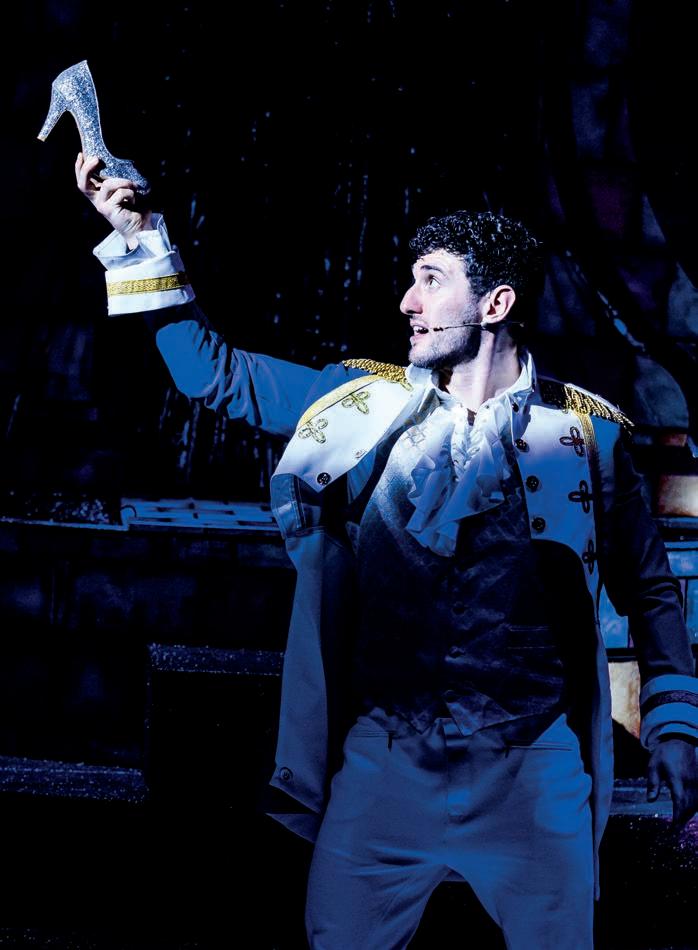
Up and down the country, wigs are being sculpted, giant sateen skirts stitched, crowns and wands polished, while scripts are written and refined. Panto season is approaching – mainstay for regional theatres, still a hot ticket in London, and treasured by audiences who return year after year.
But try and explain pantomime to anyone not familiar with its traditions and you'll struggle. The cross-dressing, the jokes on repeat, the line-up of fairytale characters mixing old plots with topical jokes. I mention this to Clive Rowe, Olivier Award winner, and a panto legend (greatest of all modern dames, many say). I suggest that panto is a bit weird. He thinks weird is a strong word – the wrong word.
"It may be a little bit peculiar to the UK," he concedes. He's right there, for panto is a largely homegrown tradition. The roots, most histories tell you, are in Italy's commedia dell'arte, although you don't have to be a theatre historian to spot echoes in Shakespeare's comedies – or go further back to the Lord of Misrule, mummers and even mystery
“It's as difficult to do pantomime as it is doing other forms of theatre – and if people say it isn't, they're not doing it properly”
plays. Clive Rowe sees that historical mash-up, but says panto has its own distinct identity.
"The vital components are comedy, good music, good dancing – entertainment for families, from the youngest to the oldest." Rowe is returning to Hackney Empire – one of the capital's biggest hitters in panto productions. A familiar lead character there over many years, this time he's in the director's chair for Cinderella, featuring well-known talent and up-and-comers supported by the theatre's creative development programmes. It's already selling out.
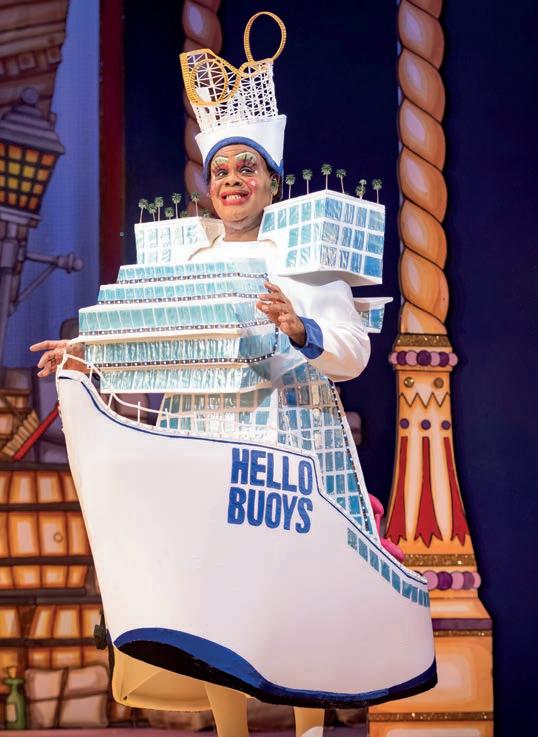
north to be Dame Madeline Marzipan in the Victoria Theatre, Halifax production of Beauty and the Beast. For that show, he has just a week's rehearsal time.
Andrew Pollard is another celebrated pantomime dame, and also an in-demand writer and director – hugely experienced in panto creation. He presided over the well-loved pantomime at Greenwich Theatre for 15 years. Now he's back for his second year as writer and director of the King's Head Theatre panto up in Islington, after his smash hit last year. Second time around, he's delivering Jack and the Beanstalk. Once he's steered that to the stage, he will don his wig and head
Like Clive Rowe, he is a huge believer in panto power – its ability to entertain everyone. "I think it's a combination of the fairy stories, which kind of live in our DNA," he says. "But the appeal of the panto is that we do this in its most simplistic form." In other words, with pantomime you know where you are – goodies meet baddies, and good always overcomes evil.
"Not only are the stories in our DNA, but nowadays panto is too. Grandparents will take their grandchildren or parents will take their children because they were taken to panto, too. For some people it's a Christmas ritual." Such was the importance of that ritual at Greenwich that some families returned each year, not





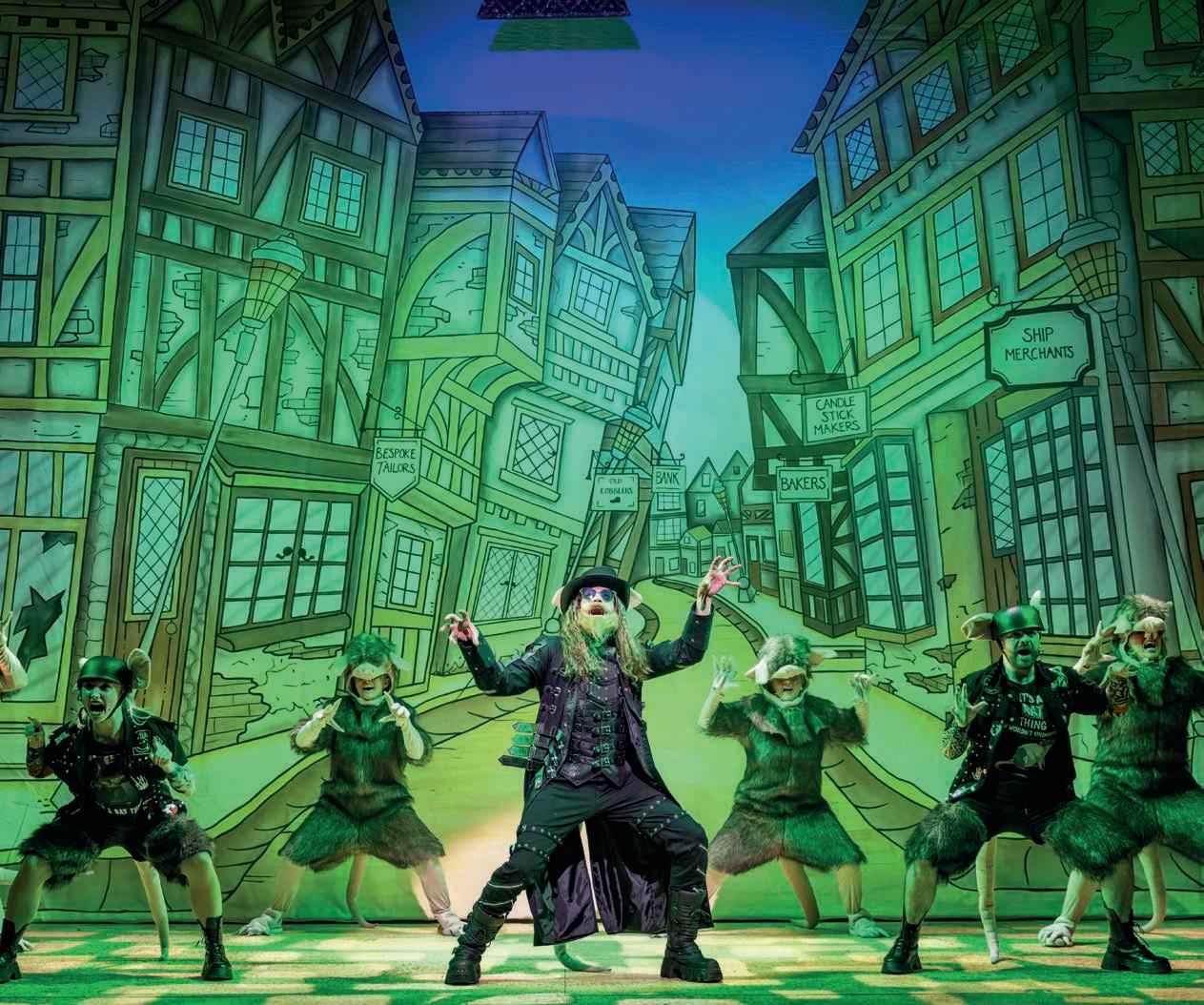
only on the same date but also booking the same seats. "By the time I'd finished there, those children were adults. And it was a great pressure to be better every year."
Clive Rowe also feels that responsibility to exceed expectations. He says it's all about staying true to the storyline and ensuring everyone in that audience gets included. "I do pantomimes that appeal to the whole family, to all the generations, so the kids have as much fun as the adults." He and his team of creatives, including writer Will Brenton, refine and sharpen constantly during the intensive rehearsal period. "When you are in the rehearsal room you just try and make it as funny as possible, have as much fun as you possibly can," he says. "The best comedy routines are rehearsed again and again and again. Great comedy is well rehearsed."
Most of the time, Will Brenton gets the jokes spot on, adds Rowe, but you can never be sure until show time. "I don't know what the formula is, I just know that sometimes they make me laugh out loud, and sometimes I know that even if I don't get them the kids will get them or the adults
will get them," he says. "The audience is the last 25% – and the cast work o the audience." That is the thing about panto – it is so interactive and so dependent on the night (or day, for it's a punishing schedule) that cast and creatives always think on their feet and bounce o the audience response. "It's a skill, and it's as di cult to do pantomime as it is doing other forms of theatre," says Clive Rowe. "And if people say it isn't, they're not doing it properly."
Events can change dynamics, even scripts. Andrew Pollard says a new earworm hit song that comes out shortly before the show may get swapped in to please younger members of the audience. Scripts get adapted when that clever word play you spent ages working on doesn't get close to the same roar of laughter as the throwaway line about, say, an errant politician. "That's always the joy of panto," he adds. "It is live as well, and unlike being in a straight play you can play on it if something goes wrong. You can share it with the audience. I love that."
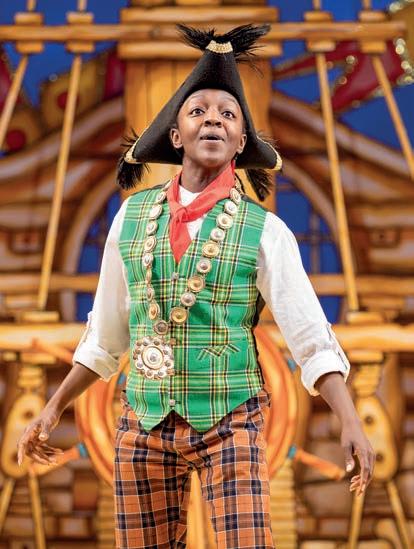
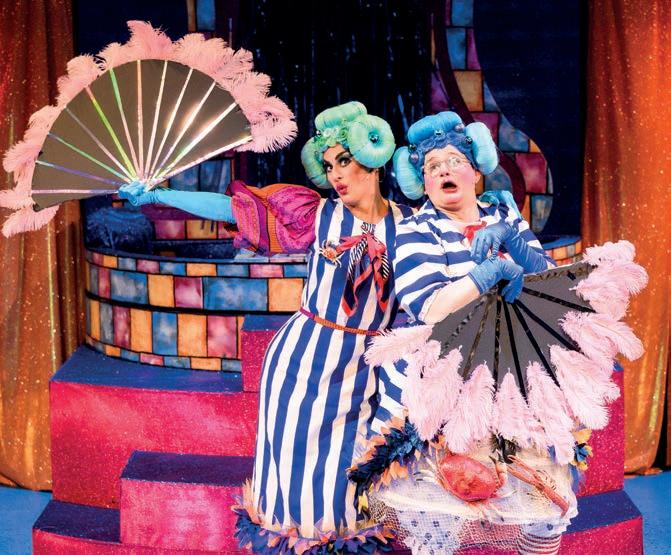
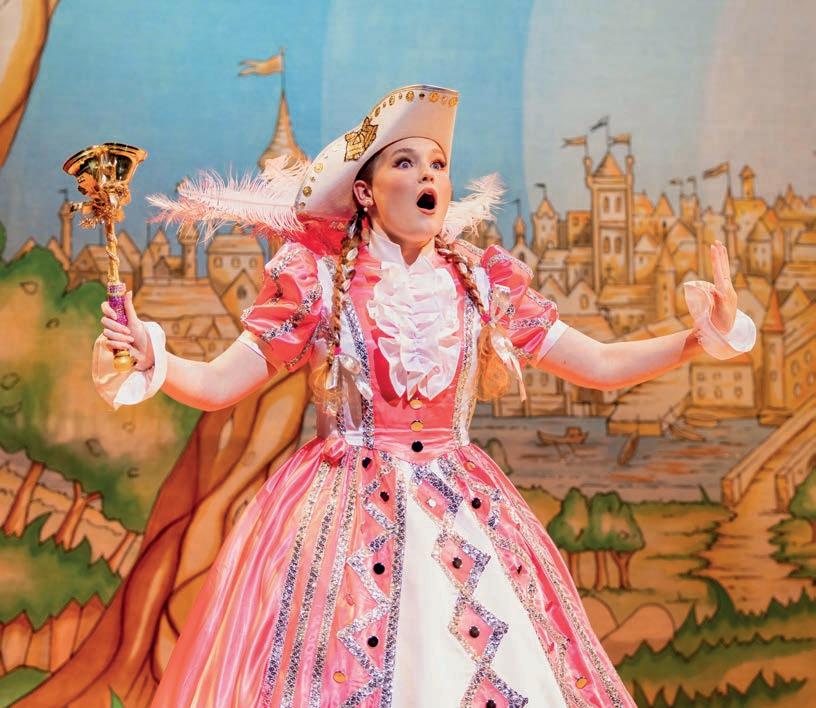
“You get letters if you don't put in terrible, corny old jokes – like the 'behind you' routine”
Audiences have strong expectations around familiarity, though. Over all those years writing the panto for Greenwich Theatre, Andrew Pollard used to try and lose some classic lines, thinking new audiences might be tired of the old faithfuls. "But you get letters if you don't put in terrible, corny old jokes. Like the 'behind you' routine – at Greenwich I'd try and do it once every other year and people would say, 'oh, where was the ghost gag?'."
Familiar stories, old jokes and lavish costumes are woven through the DNA, but pantomime must also have children in the mix. They are the best audience. Andrew Pollard recalls, still with glee, a matinee where a particularly fierce teacher stood up, just before curtain-up, and ordered her excited class to: 'sit down, be quiet and say nothing'. This was too much. "When I came on as Dame I said: 'So what your teacher just said, ignore all that – I want you to shout out and have a good time'," he says. "That's what the kids want. They can let o steam. They participate in the telling of the story."
Clive Rowe agrees that nothing beats the atmosphere of stepping out in front of a very young crowd. "It's fantastic, it's absolutely wonderful. It's like a wall of sound." So, whatever we adults think pantomime is, children definitely get it. Long may that wall of sound continue.
Cinderella ,directed by Clive Rowe, is at Hackney Empire from 22 November-31 December. From £10. hackneyempire.co.uk
Jack and the Beanstalk , written and directed by Andrew Pollard, is at King's Head Theatre from 23 November-4 January. From £10. kingsheadtheatre.com
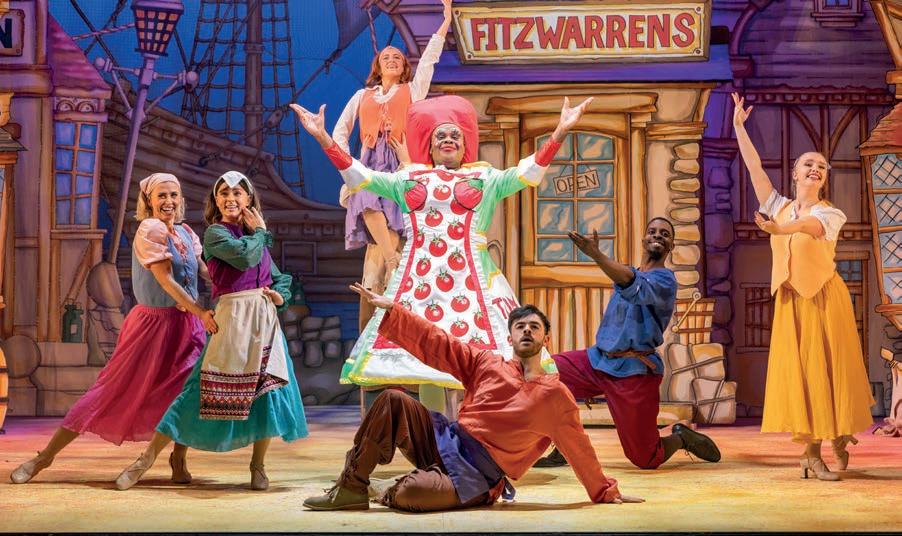
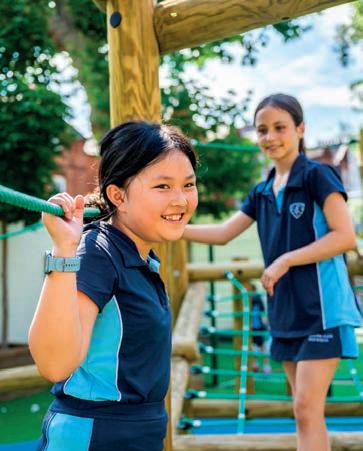
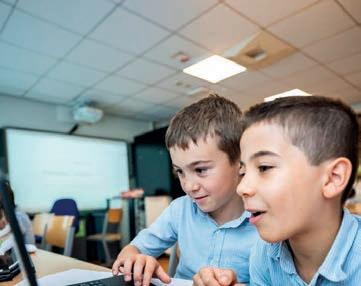



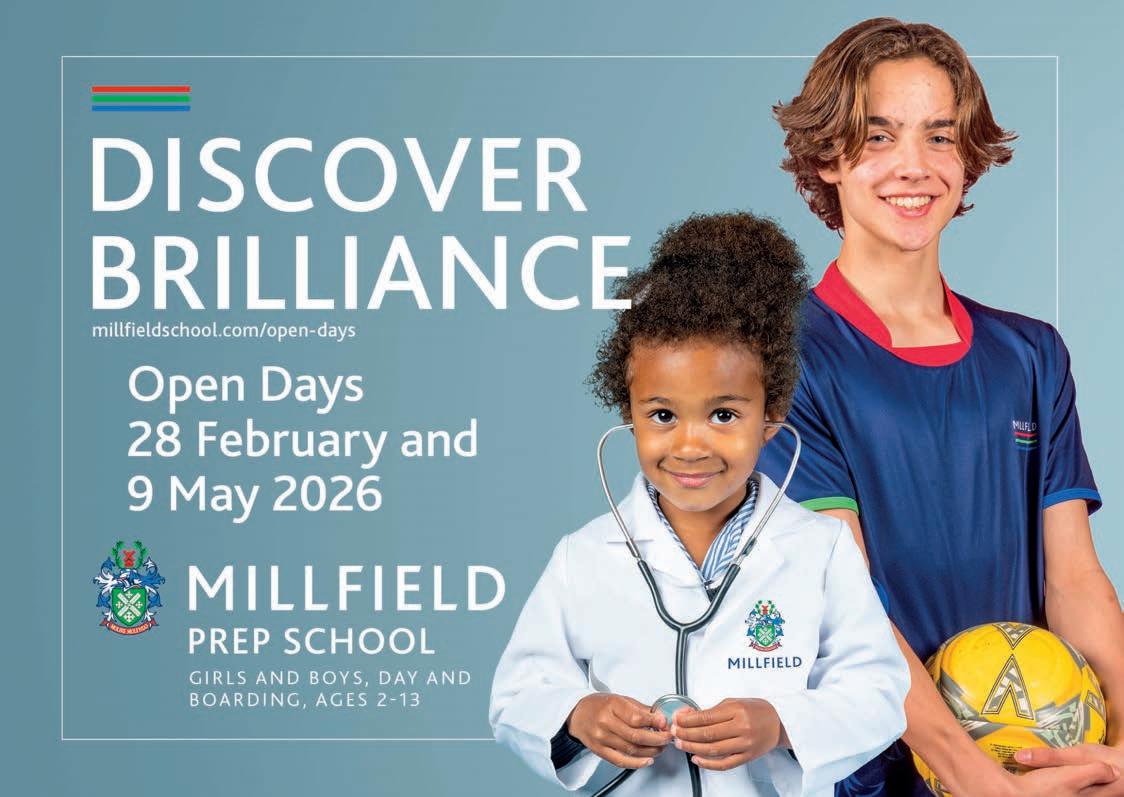
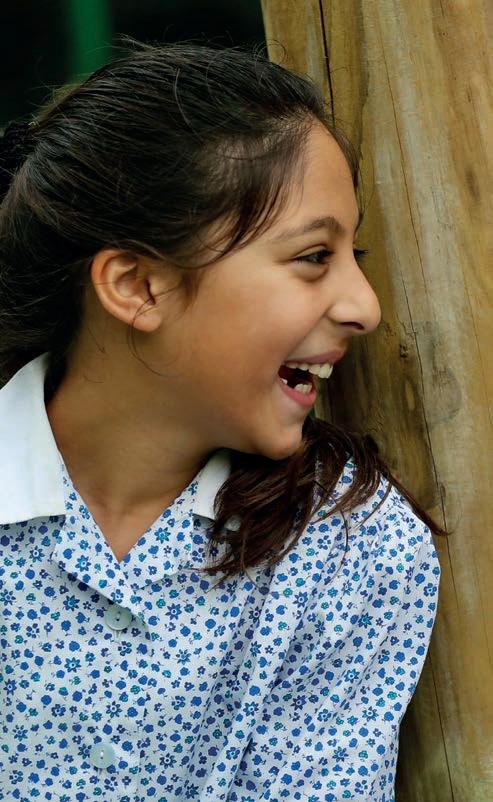
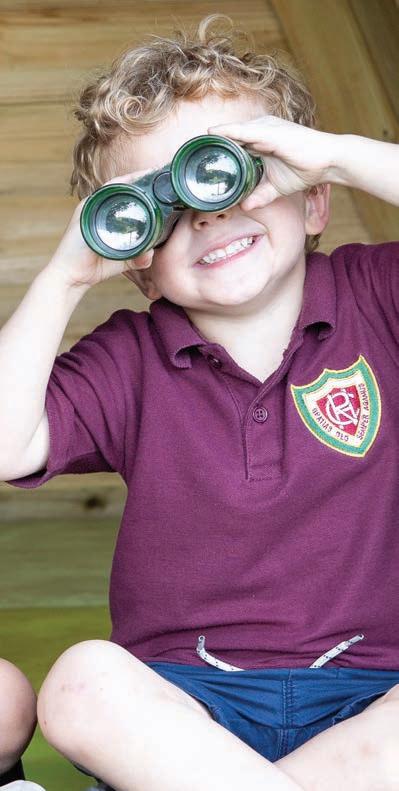

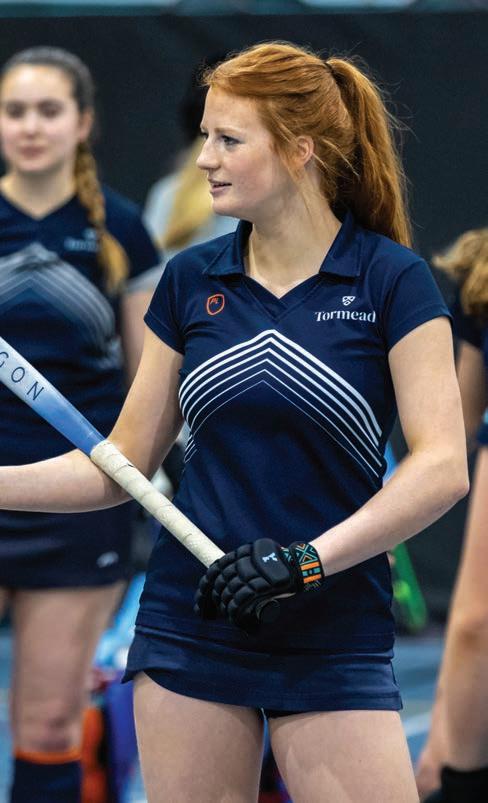



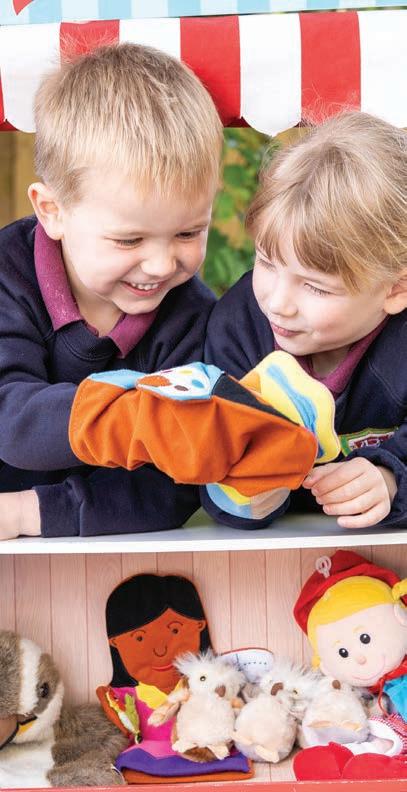


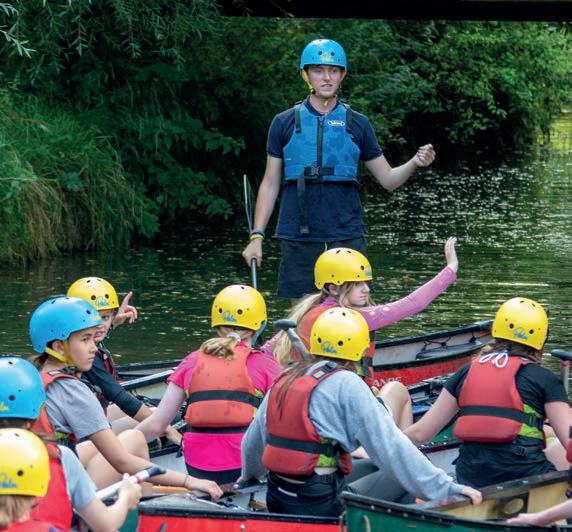






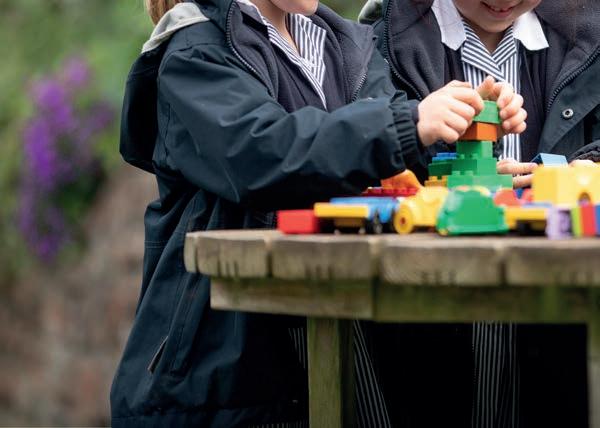
Queen’s Pre-School
Opening January 2026
For a happy, confident, and curious start, girls can now begin their Queen’s journey from the age of three, benefiting from expert early-years support alongside a vibrant curriculum. Contact us today to book your play-based assessment.



From Mon 12 January 2026
Our assessments are gentle, engaging and child-centred. In a relaxed, small-group setting, your daughter will enjoy fun and games with our specialist teachers, who get to know each girl and understand how she learns best.
Our school community is close-knit and personal, with the breadth of opportunity to help every girl thrive. Here, each girl is known, supported and inspired as we ignite her potential. Contact us today - 01244 312078 | admissions@thequeensschool.co.uk | www.thequeensschool.co.uk
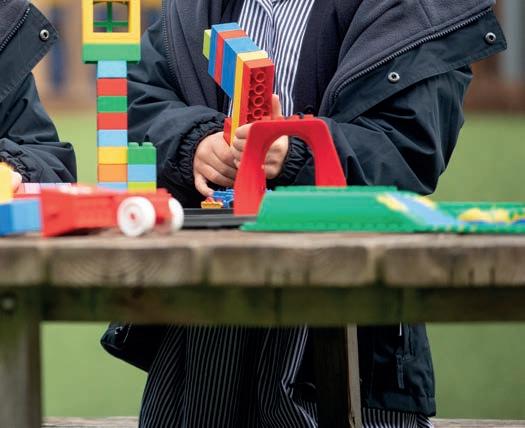
Is pocket money still a thing, and if so, how much should you give your child to get by? Here’s what you need to know
By RACHEL WEBB

Saving for a rainy day and stowing shiny coins in a piggy bank have a delightfully retro flavour in a digital and tap-to-pay era. Not every parent is a fan of doling out money for nothing and the dilemma, if you do decide to pay up, is the right age to start, what to pay and how to deliver it. Consider the arguments before you dig deep.
These days, less than a third of parents give pocket money on a regular basis, according to the 2023/4 NatWest Kids’ Economy survey. It explored the financial goings on of over 300,000 children via its Rooster Money Pocket Money Index. The survey also found that pocket money had gone down to an average £3.78 a week (a reduction of 10 pence).
That said, there are parents who are firmly in favour – not least since pocket money teaches a lot about the cost of things and the importance of saving. The hive mind of Mumsnet suggests pocket money from around age six, and there’s a popular formula of paying double their age per
month (so that would be £12 a month for a six-year-old and £24 for a child aged 12).
While pocket money is still around, an increasing cohort of parents are less inclined to hand it out as a routine. Instead, they favour paying funds over as rewards – good behaviour and achievements, helping out with chores or engaging in entrepreneurial activities.
For children, there’s a specific value beyond the money in such rewards because they link bonuses to e ort. While rewarding children for being good, reaching a goal or trying hard can definitely work, so too can encouraging them to contribute to household life. Most lucrative chores are mowing the lawn, cleaning windows and cleaning the car, according to Rooster Money. And, for older children, the highest earning ‘side hustles’ are paper rounds, selling their stu and babysitting.
Many parents have switched from coins and notes to cards and apps, such as Rooster, Revolut, GoHenry and HyperJar. It’s important to compare the fees,
“WHILE POCKET MONEY IS STILL AROUND, AN INCREASING COHORT OF PARENTS FAVOUR PAYING FUNDS OVER AS REWARDS”
commitments (and parental oversight) of the many options, but get the right one and you can streamline your child’s finances and give useful them insights into saving, spending and financial management.
On the downside, many people feel this generation are losing contact with ‘real’ money. So, for some parents, it’s about finding a sensible balance. Lest we forget, that crisp tenner handed over by a generous elderly relative who doesn’t do apps feels far weightier than a sum paid in remotely. And no online balance is as alive with possibilities as the rattle of a full-tobursting piggybank. As the old saying goes, cash is king.