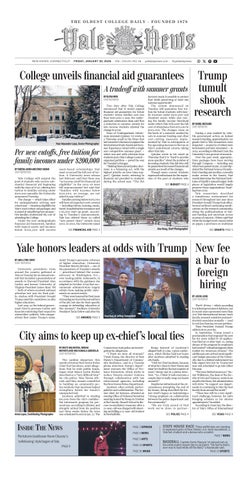

College unveils financial aid guarantees
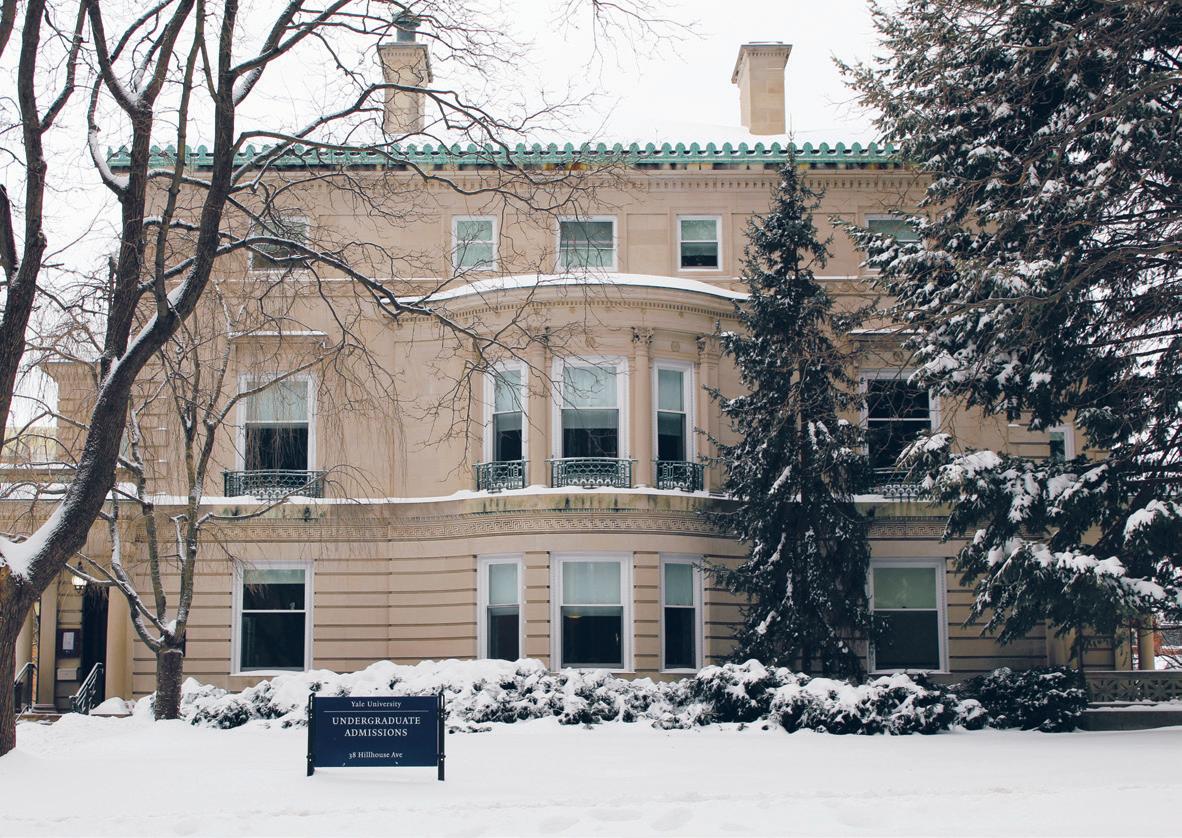
Per new cutoffs, free tuition for family incomes under $200,000
BY FABEHA JAHRA AND EMILY AKBAR STAFF REPORTERS
Yale College will expand the pool of students who receive substantial financial aid beginning with the class of 2030, offering free tuition to families earning under $200,000 annually, the University announced Tuesday.
The change — which takes effect for undergraduates arriving next school year — broadens eligibility for Yale’s most robust aid packages and is aimed at simplifying how prospective families understand the cost of attending the College.
Under the new undergraduate financial aid framework, families with typical assets and incomes below $200,000 will receive
need-based scholarships that meet or exceed the full cost of tuition. A University news release last February said that there was “no income cutoff for financial aid eligibility” in the 2025-26 term bill announcement but said that “families with incomes below $150,000, on average, are not asked to pay tuition.” Families earning below $100,000 will have all expected costs covered — including tuition, housing, meals, travel, hospitalization insurance and a $2,000 start-up grant. According to Tuesday’s announcement, Yale has offered those so-called “zero parent share” awards since 2010. In 2020, the University raised
A tradeoff with summer grants
BY OLIVIA WOO STAFF REPORTER
Two days after Yale College announced that it would expand financial aid guarantees for future students whose families earn less than $200,000 a year, the undergraduate admissions dean said that a reduction in summer awards for low-income students allowed the change to occur.
Dean of Undergraduate Admissions Jeremiah Quinlan ’03 wrote in a Thursday email to the News that last semester’s decision to replace the International Study Award and Summer Experience Award with a single non-competitive summer grant — which was met with criticism from students and a Yale College Council–organized petition — paved the way for Tuesday’s changes.
“Making financial aid policy decisions is a balancing act, with the highest priority on term-time support,” Quinlan wrote, referring to financial aid provided to students during the school year. “The ISA
decision made it possible to protect that while preserving at least one summer opportunity.”
The system announced on Tuesday will guarantee free tuition for future students with family incomes under $200,000 and standard assets while also raising the family income threshold under which Yale will cover the full cost of attendance from $75,000 to $100,000. The changes come on the heels of a semester marked by cuts to summer funding and other cost-cutting measures implemented by Yale in anticipation of the upcoming increase in the tax on Yale’s endowment returns taking effect this July.
Quinlan wrote in his email on Thursday that it is “hard to provide more specifics” about the number of incoming students this fall who will be guaranteed increased financial aid awards as a result of the changes.
Though many current students expressed enthusiasm for the expansion of the pool of students who
SEE BUDGET PAGE 4

Yale honors leaders at odds with Trump Trump tumult shook research
BY ARIA LYNN-SKOV STAFF REPORTER
University presidents from around the country gathered at Yale on Tuesday for an annual summit that included a presentation of awards to Harvard President Alan Garber and former University of Virginia President James Ryan ’88 — both of whom received national attention last year for their public clashes with President Donald Trump amid his crackdown on elite higher education.
Last year, as the federal government tried to pressure Garber and Ryan into reforming their respective universities’ policies, Yale comparatively flew under Trump’s radar.
Amid Trump’s pervasive criticism of higher education, University President Maurie McInnis — one of the presenters of Tuesday’s awards — prioritized behind-the-scenes advocacy in Washington, D.C., over issuing public statements, in accordance with the guidance she adopted in October 2024 that recommends administrators largely refrain from making public statements on current events.
“They were honored for their years of amazing service in the normal form of the job, but also for their specific courage in defending education at this moment,” Fordham University President Tania Tetlow said after the
City aims to keep up ex-chief’s local ties
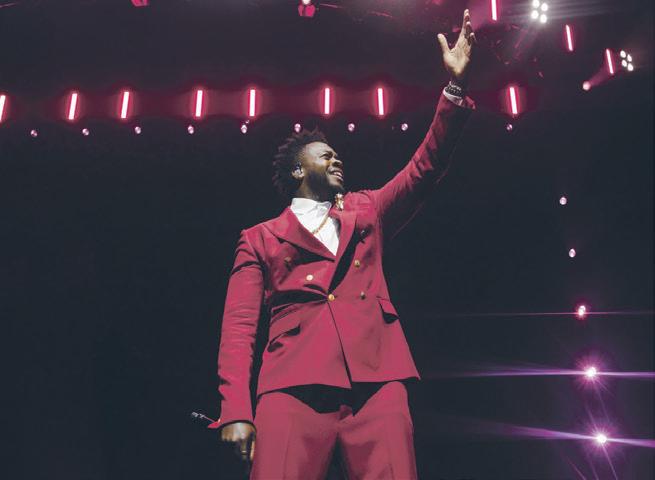
Pentatonix
BY REETI MALHOTRA, NORAH MCPARTLAND AND KAMALA GURURAJA STAFF REPORTERS
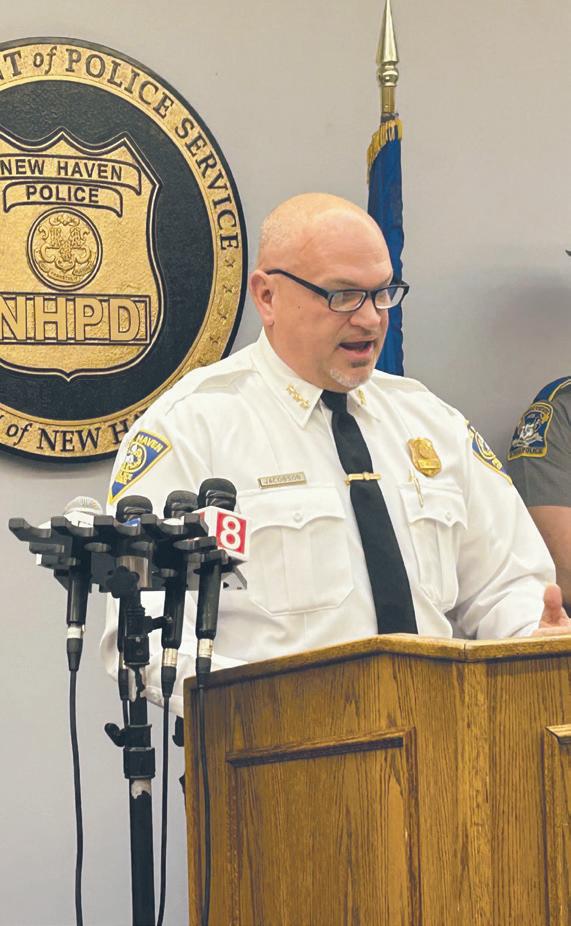
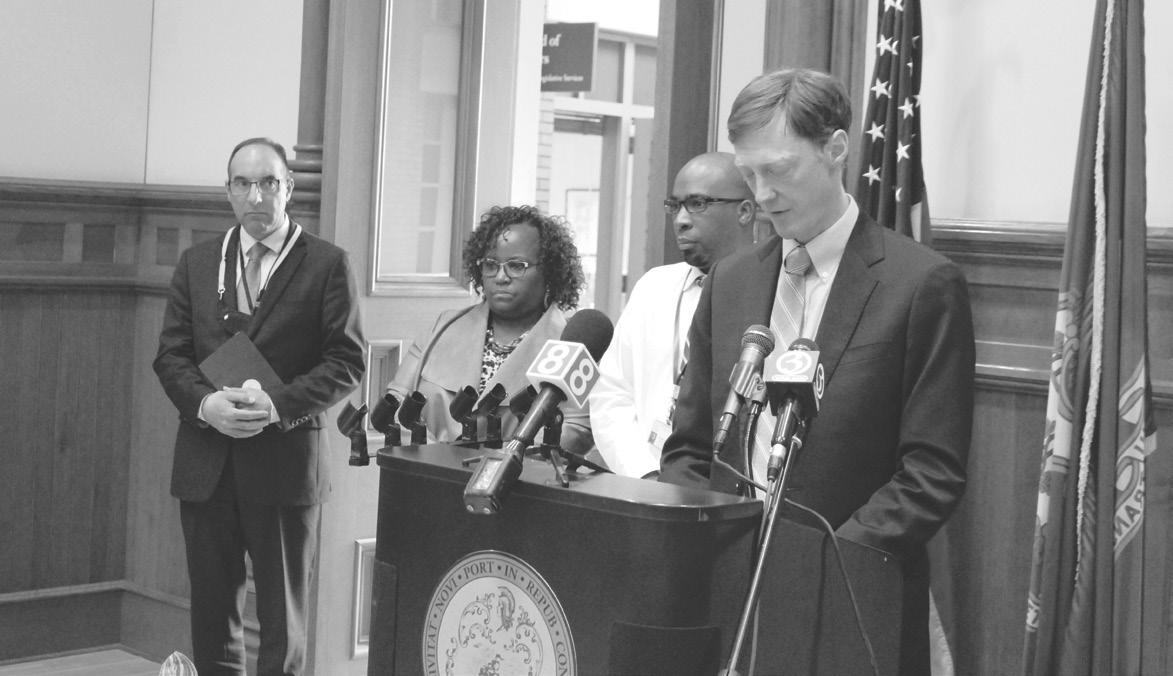
The sudden departure this month of former New Haven Police Chief Karl Jacobson, amid allegations that he stole public funds, began what Mayor Justin Elicker described as a “very difficult time” for city police. New Haven officials said they remain committed to building on community-police relations that Jacobson helped strengthen before his tenure’s unexpected end.
Jacobson admitted to stealing $10,000 from the city’s confidential informants program for personal use, according to Elicker, and abruptly retired from his position just three weeks before his term was scheduled to end on Jan. 31. The
Connecticut state police are investigating the allegations.
“I think we were all stunned,” Tirzah Kemp, the director of New Haven’s Department of Community Resilience, said in a Tuesday phone interview. Kemp’s department oversees the Office of Violence Prevention, which works to reduce firearm-related violence through collaboration with law enforcement agencies, including the New Haven Police Department. Jacobson often actively participated in such collaboration. The former chief, for instance, attended an evening Office of Violence Prevention meeting hosted by Kemp in October at the Lincoln-Bassett School to discuss reconciliatory measures after a 13-year-old was charged with shooting and killing a 15-year-old student in Newhallville.
Kemp learned of Jacobson’s alleged theft at a Jan. 5 press conference, which Elicker held just hours after Jacobson admitted to stealing city funds.
“I felt for Chief Jacobson, because of what he’s done in New Haven and what he’s built for the last number of years,” Kemp said in a phone interview. “So, I think it took everyone a couple days to really wrap our heads around it.”
Despite her initial shock at the circumstances prompting the end of his tenure, Kemp described the former chief’s legacy as maintaining a “strong emphasis on collaboration between the police department and the community.”
“We are truly proud of that work we’ve done in partner -
SEE POLICE PAGE 4
BY ISOBEL MCCLURE STAFF REPORTER
During a year marked by volatile government action on federal research funding, approximately 120 grants tied to Yale researchers were impacted — around 50 of which were terminated and later reinstated — in 2025, according to Michael Crair, the University’s vice provost of research. Over the past week, appropriations packages have been moving through Congress — including one which was passed on Jan. 22 and stipulated the National Science Foundation’s funding and another, currently under review in the Senate, that would determine the National Institutes of Health’s annual budget. Both pieces of legislation would largely preserve those organizations’ funding from 2025.
Yale researchers described a tumultuous environment for research throughout last year since President Donald Trump took office. Several outlined continuing ramifications on the research community, citing the politicalization of federal funding and uncertain access as areas of concern. Others said that while the budget levels stayed stable on paper, a provision on multiyear
BY JAEHA JANG STAFF REPORTER
The H-1B visa — which, according to a federal government database, has in recent years sponsored more than 200 Yale international tenure-track faculty, research scientists and postdoctoral associates annually — used to cost less than $4,000 per petition.
Then President Donald Trump added a $100,000 fee.
In September, Trump issued a proclamation that imposed the new fee for every initial H-1B application filed on or after Sept. 21, saying abuses of the program by employers had created “a disadvantageous labor market for American citizens.” The additional costs arrived amid significant budget pressures at the University due to a federal endowment tax hike signed into law by Trump last year and scheduled to go into effect this year.
“We have limited resources,” Steven Wilkinson, the dean of the Faculty of Arts and Sciences, wrote in an email to the News, but administrators will strive “to support our departments in continuing to hire the best faculty from around the world.”
“These fees will be a very significant challenge, however, for units bringing scholars in for shorter appointments,” he added.
According to Ozan Say, the director of Yale’s Office of International
Courtesy of Jeffrey Sonnenfeld
Paul-Alexander Lejas, Senior Photographer
Ariela Lopez, Contributing Photographer SEE
Alex Hong, Staff Photographer
This Day in Yale History, 1970
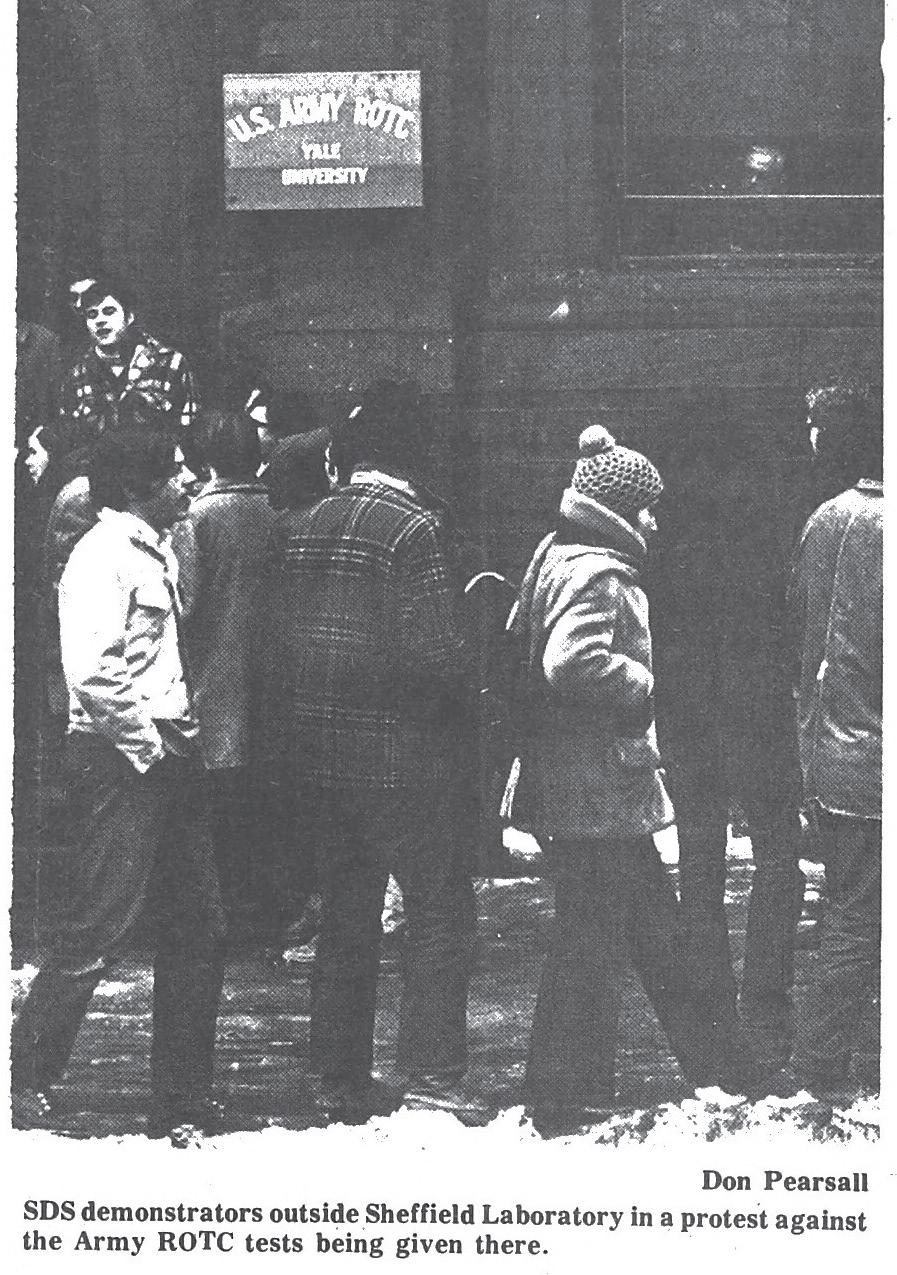
January 30, 1970 / ROTC Test Draws Sixty Demonstrators
By Jennifer Mirksy
More than sixty demonstrators and counter-demonstrators shouted and sand outside Sheffield Hall yesterday afternoon as Army ROTC conducted their annual aptitude tests.
Eight students took the test, according to Colonel Richard R. Irving, commander of the Army ROTC unit. The exam was administered for students interested in enrolling un a two-year accelerated military program.
Behind the Headline
By Aria Lynn-Skov
We knew that university presidents would be convening at Yale for a leadership summit, but we didn’t know when, and we weren’t exactly sure where. So, I went to the School of Management after my last class on Tuesday hoping to find some presidents. Luckily, the School of Management building is almost entirely made of glass. From where I was sitting in the ground floor cafe, I could see dozens of people leaving a second-floor conference room, and I was able to speak with several university presidents as they were leaving, although most were in a hurry to catch Ubers or shuttles.
After most had left, I went back to the cafe and realized I could see Yale President Maurie McInnis with former UVA president and event award recipient James Ryan through the glass upstairs. I tried to speak with them when they left, but McInnis had to rush to an afternoon meeting, and was giving Ryan a ride. Afterwards, I ran into event organizer Jeffrey Sonnenfeld — who was wearing a Harvard hoodie — and spoke to him for a few minutes before he also had to rush off to pick up his dog from the vet. It was a chaotic afternoon, but such a unique experience to speak with university presidents from across the country.
Read “Yale honors leaders at odds with Trump” on PAGE 1.
Corrections
Puzzles

- The photo accompanying an article about Yale Hospitality food sourcing, printed on Jan. 23, was misattributed. It was published courtesy of the Yale Student/Farmworker Alliance, not taken by Jerry Gao.
- A Dec. 5 article about Yale cultural centers’ handling of budget cuts misstated the AfroAmerican Cultural Center’s open hours. It is open seven days a week, not just Monday through Thursday; the hours have been extended to 10 p.m.
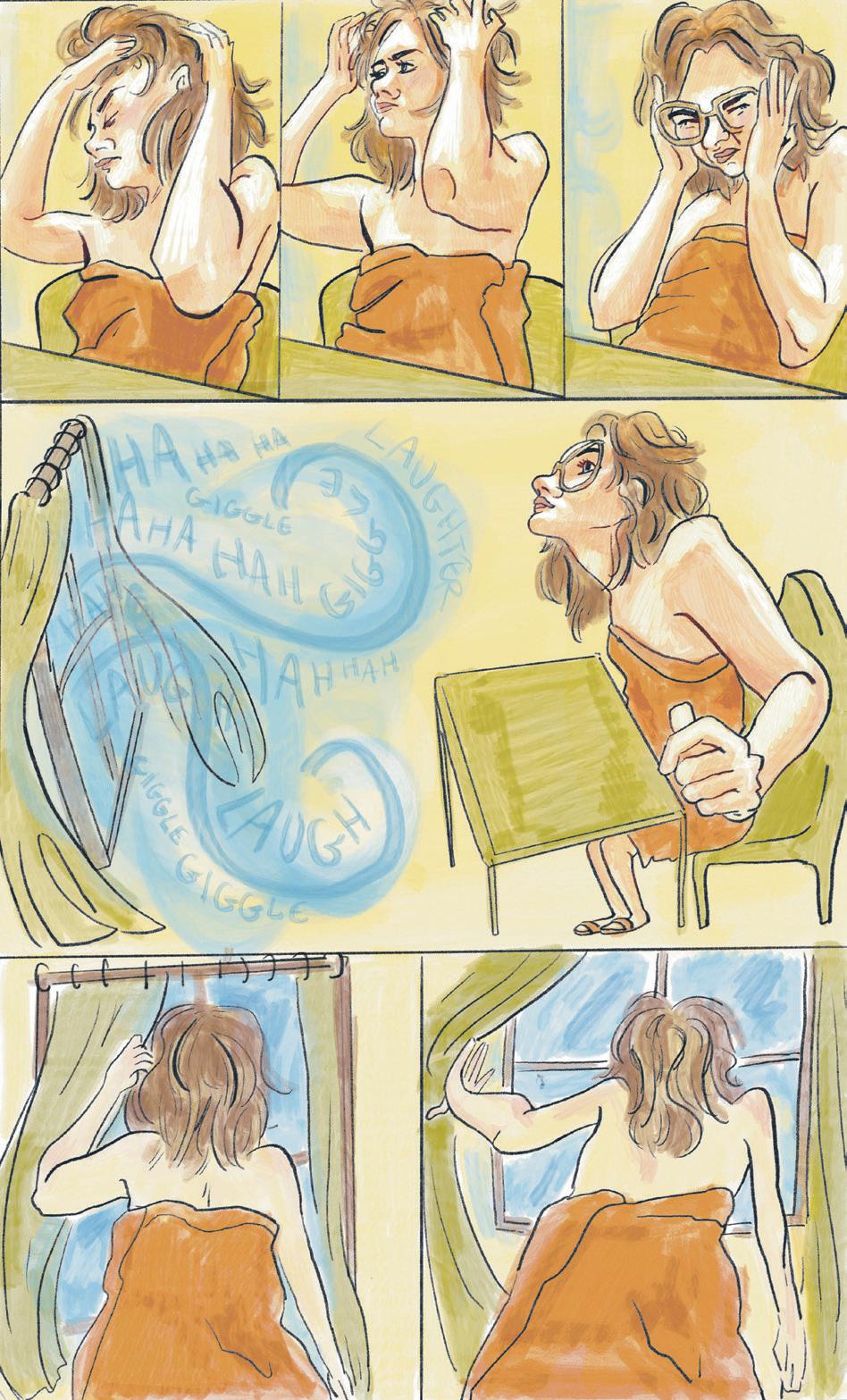
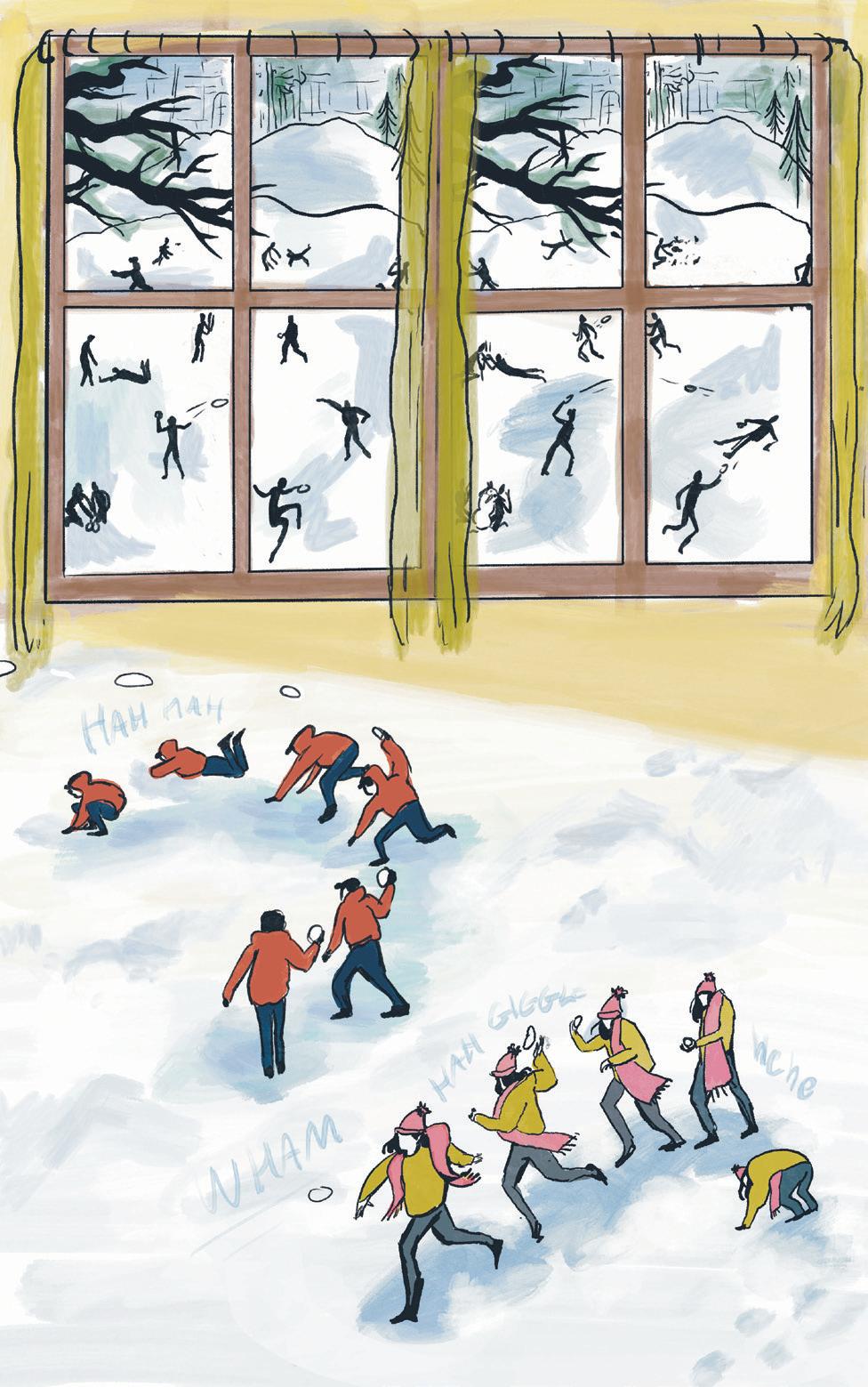
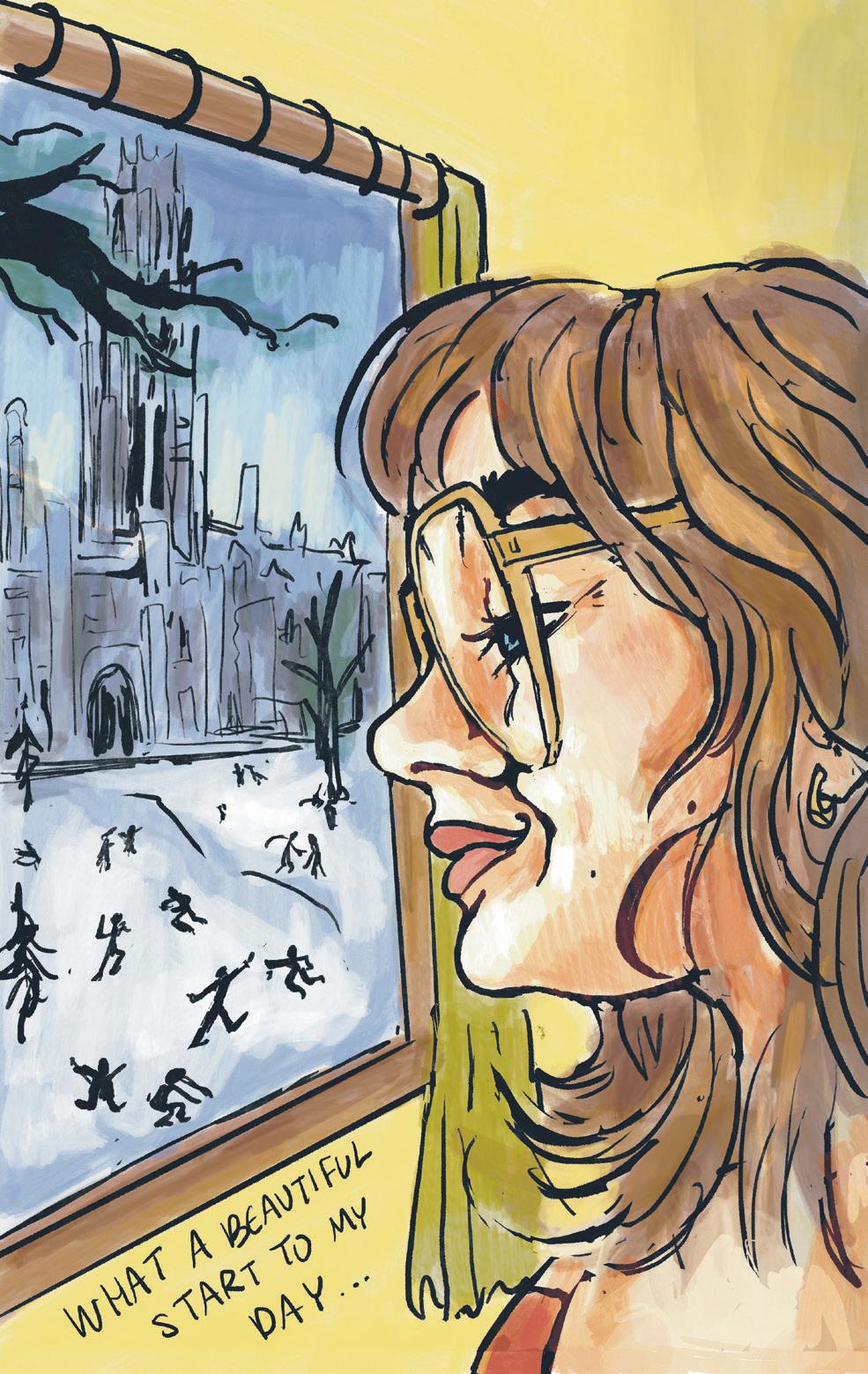
A Snowy Morning by Maia Wilson
STAFF COLUMNIST ARI SHTEIN
STAFF COLUMNIST ABBY NISSLEY
Long live the snow day Is Yale worth the money?
Merely waking up at Yale can be stressful work. A lot is expected of us over the course of a day — there are classes, for a few hours, and then problem sets, papers and projects to work on for a few more. And there are extracurricular activities too: time spent applying for summer jobs, meetings of preprofessional clubs and rush events, extending late into the night.
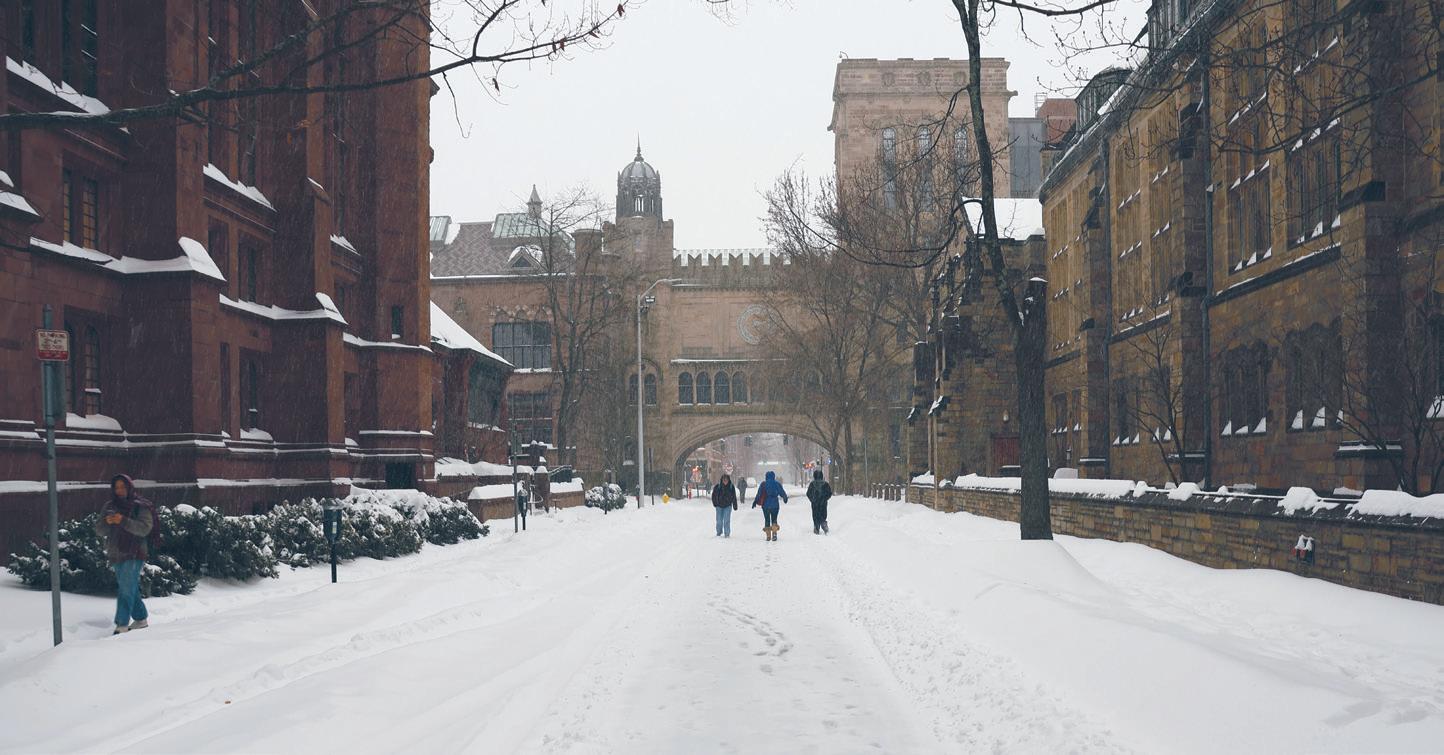
Staring all this down, from under a warm comforter, is hard enough. But staring it down while snow flurries around outside your window, blanketing the Gothic campus in a pristine and shining white layer — well, it’s enough to make a grown man cry.
It’s also enough to make him think back, longingly, to his grade school days. Those morning moments with eyes closed, head buried in a pillow, praying and praying that instead of shaking me awake to get ready and get in the car, my mom would just call out:
“Snow day!”
But here — here in this godforsaken, poorly-insulated dorm room — I know that no such announcement will be coming. Mostly residential campuses like ours just have less cause to cancel class: Few student commutes are threatened by icy roads. Now, Yale’s massive hospitality staff might be at some risk — but, goes the school’s logic, someone’s got to feed us!
“Yale must maintain critical operations,” read Sunday afternoon’s email from administrators. That category includes “dining services, police and security, lab research, patient care, power plant operations, and many other areas.”
Excluded, note, are our academic commitments.
BUT STARING IT DOWN WHILE SNOW FLURRIES AROUND OUTSIDE YOUR WINDOW, BLANKETING THE GOTHIC CAMPUS IN A PRISTINE AND SHINING WHITE LAYER — WELL,
IT’S ENOUGH TO MAKE A GROWN MAN CRY
There’s probably something critical and theoretical to be said about this dynamic — the demand for lower-wage staffers to make it onto campus and simultaneous recommendation that higher-paid professors stay home and move classes to an “online format.”
All I’ll say, though, is that it’s pretty bogus we’ve still got to go to school, in any format.
Some of our younger siblings — in blood and in spirit — across the
country are facing the very same iniquity. Somehow, the lesson that New York City and North Carolina and the Catholic Church in Philadelphia seem to have taken from the COVID pandemic is that Zoom school was a great idea which everyone loved and which helped students learn a lot. So instead of cancelling classes, they’re making kids log on for remote learning too.
My heart cannot but go out to every little New Yorker who Mayor Zohran Mamdani is cruelly dragging out of bed, and plopping before a computer screen for hours on end. The Big Apple truly has become a socialist hellscape. The state of Connecticut, to its infinite credit, is committed to the sanctity of the grade school snow day. “Kids should be kids on snow days,” Steven Madancy, superintendent of Southington schools, told CT Insider. I couldn’t agree more.
AND MAYBE US YOUNG ADULTS SHOULD BE KIDS ON SNOW
DAYS TOO.
And maybe us young adults should be kids on snow days too. College is tough. We’re all stressed out. One study in the Canadian Journal of Higher Education found that while an organized school break earned positive evaluations from interviewed students, “it did little to actually alleviate the school-related stressors reported by our focus group participants.”
The authors chalked it up to material concerns which a break couldn’t relieve: When you get back to campus, you’ve still got to study for exams.
But I think another part of the result comes down to predictability. When you see a break coming on the official 2025-26 academic calendar, and you know precisely when that break will end, it’s hard to enjoy it to its maximum. It doesn’t feel like a gift; it’s psychologically priced-in. You rot for a week, then come back about as unhappy as you were before. Snow days are wild cards. Their power is in their stochasticity — the way they blindside you, the way they can evade even snow day prediction websites. The free time gained from a cancelled snow day class is free in the deepest sense. Use it to gnaw on a problem set, and all of a sudden you’re ahead of schedule. Use it to build a snowman, or pee your name into a snowbank behind a bush, and you’ve brought something new and beautiful into the world — for free.
The time is simply yours — the time is simply ours — and Yale commits a grave injustice when it steals that time back away.
ARI SHTEIN is a first year in Saybrook College. He can be reached at ari.shtein@yale.edu.

I am trying to convince my younger brother to go to college. It’s not that my brother isn’t smart. He’s fluent in Latin, debates with me for hours about metaphysics and can rattle off the five-hundredyear history of Anabaptism from the top of his head. The problem is that I can’t seem to rebut his argument that dishing out almost half a million dollars for a degree just isn’t worth it.
At 18, he owns his own mechanic business, flies planes and can run a farm. We grew up on a 10-generation family dairy farm in Lancaster, Pennsylvania. On my father’s side, my family are all self-employed agricultural businessmen, and none are collegeeducated. My brother, therefore, like the generations before him, sees the opportunities in the world that exist outside of an extraordinarily expensive college education.
His main argument against going to college revolves around the steep cost. And he’s right: As tuition across the country grows by about 4 percent each year, higher education isn’t getting any cheaper. Starting in the 2024-2025 academic year, the Free Application for Federal Student Aid, the source of financial aid that makes college possible for many students, eliminated the “sibling benefit.” Before this year, the Expected Family Contribution was divided by the number of siblings in college, taking into account the large burden of financing college on growing families. Now, each student is evaluated for federal aid as an individual, ignoring the financial strain of educating large families. The birth rate is decreasing, but so are the incentives for raising more children and sending them to college. I have four siblings. My brother’s dilemma precisely highlights how such policies are a terrifying deterrent to higher education and financially disincentivize college even for brilliant students, like my brother. Often, financial aid for college education disproportionately helps low-income families or those on the other end who can afford the full tuition. Students who fall
in between these two categories are often left with sizable debt, even with the assistance of some financial aid.
This week, Yale released a statement announcing that it will now offer free tuition to all families making under $200,000 a year, thereby raising the ceiling for financial aid for tuition. While this decision is a hopeful step in the right direction, this promise for free tuition does not guarantee any financial aid for the substantial cost of housing, food and all other related expenses.
THE PROBLEM IS THAT I CAN’T SEEM TO REBUT HIS ARGUMENT THAT DISHING OUT ALMOST HALF A MILLION DOLLARS FOR A DEGREE JUST ISN’T WORTH IT.
Beyond the debt my brother wants to avoid, he has also challenged me to question the value of some of my college experiences. My brother laughs when I read some of Yale’s course offerings aloud. He sees no convincing reason to go into debt to learn about “Ichthyology” or “Family Narratives/Cultural Shifts.” He does not want to sit at a desk in an ivory tower for four years, even if I could convince him of the value of an elite education. He already possesses pointed interests, none of which explicitly require a college degree. Neither does he want to go to a less prestigious school and be forced to take required general education credits in basic math, modern essay writing or introduction to chemistry.
While I thrive on the freedom and flexibility of an elite liberal
arts education at Yale, his college skepticism has forced me to evaluate if I am taking full advantage of my time here. I now think more critically about my courses and activities, even as I embrace the loose structure of exploration at Yale. His input has shaken some of the apathy from my time spent at Yale. Out of curiosity, last week I scrolled through Yale College’s majors, and asked myself which ones are truly worth $94,825 a year. My brother’s sentiments are in many ways a reflection of my agricultural community’s views on college education at large. It’s important to emphasize that my community, while sometimes challenging the state of higher education as it stands today, is not composed of “backwards” rural people. They are thoughtful, hard-working, deeply religious and brilliant leaders and thinkers. I have found some of the people I most respect for their character and career paths outside of the Ivy League circles.
I take their critiques seriously. After listening to my brother’s sincere and negative response to my pitch for him to attend college, I no longer feel the same burning passion to force him to enroll. My brother will make his own way in life, and perhaps he is wiser than me. He can sense more acutely than I can the growing need in America for a technical workforce. While I am relishing my four years at Yale, I have a lot to learn from him, too.
I am excited for what he’ll teach me at the family dinner table in the years to come.
This piece is part of a new Opinion series, “Trust Issues.” Each week, a writer will erigh in on what “trust in higher education” means to them. Interested in contributing your perspective? Email opinion@ yaledailynews.com.
ABBY NISSLEY is a sophomore in Ezra Stiles College studying Global Affairs. She can be reached at abby.nissley@yale.edu.
APPLY TO BE A STAFF COLUMNIST!
Yale thrives on discourse, debate and respectful disagreement. This spring, become a part of the team that helps to shape campus dialogues. Applications are due by February 5.
Opinion columnists write biweekly (i.e., once every other week) op-eds and essays on a theme relevant to the Yale and New Haven communities.
Have a story that you’re hoping to find a place to tell? Want to explore a slice of campus? Convinced everyone is getting something wrong about Yale? The News is where your writing can find a home.


FROM THE FRONT
“People say ‘Bill, are you an optimist?’ And I say, ‘I hope so.’”
BILL BAILEY
Threshold for maximum financial aid raised to $100,000
the threshold for those awards from $65,000 to $75,000.
Dean of Undergraduate Admissions and Financial Aid Jeremiah Quinlan wrote in a statement that the expansion is designed to address misconceptions about affordability that deter some lower-income students from applying.
“We know that misperceptions about cost are the greatest barrier many high-achieving students face when considering schools like Yale,” he wrote. “My hope is that these new policies lower that barrier with a simpler message about our exceptional financial aid.”
The new financial aid policy comes as the University is facing an upcoming hike in the federal tax on its endowment investment returns — signed into law last year by President Donald Trump. Quinlan and University President Maurie McInnis have said that the endowment tax increase would not reduce financial aid pack-
ages despite initial warnings that aid could be affected. In light of the tax hike, the University has tightened its budget through a 5 percent reduction in non-salary expenses and a 90-day hiring freeze over the summer. The Graduate School of Arts and Sciences is cutting enrollment by 5 percent in STEM programs and 13 percent in humanities and social sciences over a threeyear period.
When asked about how the increased financial aid relates to budget cuts, Yale College Dean Pericles Lewis directed the News to the admissions office and declined to comment. Quinlan did not respond to the News’ inquiry on Tuesday afternoon about budget cuts and their relation to increased financial aid.
Director of Undergraduate Financial Aid Kari Difonzo stated the changes reflect an effort to make Yale’s need-based system easier to navigate, particularly for families who struggle to predict their costs before applying.
“Determining a family’s financial need can be very complicated, which makes it difficult for many families to get a clear idea of their expected costs before completing a full application,” DiFonzo wrote to the News. “Knowing that Yale’s financial aid will cover at least the cost of tuition for families under $200,000 will help students and parents keep a clear picture of expected costs in mind before, during and after applying.”
Student leaders in the Yale College Council welcomed the announcement, though some questioned how it fits into recent changes to other funding programs.
Micah Draper ’28, the YCC’s financial director, said student leaders had raised the issue of tuition-free policies for middle- and upper-middle-income families in meetings with administrators throughout the past year.
“With an institution that has an endowment of over $40 billion, I don’t see why we can’t have robust financial aid policies alongside full
ISA and SEA support,” he said, referring to two non-competitive summer grant programs for financial aid recipients that Lewis announced in November would be replaced with a one-time grant.
Brendan Kaminski ’28, a Saybrook College senator, said the aid expansion appeared to be part of a longer-term goal rather than a direct result of recent funding shifts.
“The University has been clear that protecting financial aid is a priority,” Kaminski said. “From what I understand, this change is more about how aid is calculated than a major increase in overall spending.”
University leaders framed the expansion as part of a broader push toward transparency. Quinlan pointed to tools like the MyinTuition Quick Cost Estimator and Yale’s newer Instant Net Price Estimator, which allow families to generate personalized cost estimates in minutes.
Provost Scott Strobel credited donor support for the financial aid expansion.
“I'm grateful to the many people who have made this expansion of our financial aid possible, particularly those who have donated endowment funds to the university for financial aid support.” Strobel said in a written statement to the News. “This strategic investment is central to our mission to educate exceptional students from all backgrounds.” With the new expansion to a $100,000 cutoff, nearly half of U.S. households with children ages 6 to 17 would qualify for a package requiring no parental contribution, according to University estimates.
More than 1,000 undergraduates currently receive “zero parent share” awards, according to the announcement, while more than half of Yale College students receive some needbased financial aid.
Contact FABEHA JAHRA at fabeha.jahra@yale.edu and EMILY AKBAR at emily.akbar@yale.edu.
Shifting aid policy leaves current students with concerns
BUDGET FROM PAGE 1
will receive full financial aid, some said they regretted that Tuesday’s changes will not benefit students returning this fall.
“I wish it would apply to current students, but overall, I'm happy with the decision to raise the threshold for students to be tuition-free,” Kyra Kaya ’26 said in an interview with the News. “I’ve noticed a trend amongst my friends that financial aid has been less supportive as their time at Yale has gone by, and so I think it's good to set automatic thresholds that guarantee that the financial aid office can't change your package.”
The last time the family income cutoff under which students could attend Yale at no cost through so-called “zero parent share” awards was increased — from $65,000 to
$75,000 — the policy change affected both returning students and new first years in the fall of 2020.
“I think any expansion of financial aid is overall a good thing,” Ahmed Abdellatif ’29 said in a Thursday interview with the News. “But I think where the trouble lies, especially in today's climate, is that it could be very easily interpreted as Yale focusing on how it looks on the outside.”
Abdellatif cited the administration’s decision in November to reduce guaranteed summer grant opportunities for financial aid recipients as a way in which the administration is “diminishing the experience of current Yale students at the cost of future ones.”
The combination of the two non-competitive summer awards would allow the College to maintain the financial aid level experienced
by enrolled undergraduates, Yale College Dean Pericles Lewis said when the changes were announced in November. He clarified that “the specific budget for financial aid for each year is approved in February, so there will be details still to be worked out.”
In an email to the News on Thursday, Lewis celebrated the decision to expand free cost of attendance and tuition guarantees for incoming students.
“During the term, we are now able to provide expanded support to future students from lower and middle-income families,” Lewis wrote. “We are very grateful to the generous donors who have made all these wonderful opportunities available for current and future students.”
Lewis told the News in November that the College’s financial aid budget is approximately $275 million
each year.
In November, Lewis said that “the ISA and the SEA are part of the financial aid budget” — distinct from Yale College’s operating budget — which was “under some pressure” as a result of the endowment tax hike. Lewis told the News that the tax hike, from 1.4 to 8 percent, will result in “12 percent less money coming to endowed units because of the way the formula works.” The savings resulting from the combination of the two summer grants, he added, would “help to ensure that we're able to pay for financial aid during the academic year.”
In devising a response to the decrease in endowed funds due to the tax hike, Lewis said at the time, the administration was deterred from reducing term-time financial aid because “some students
who were needy would either have to pay more or might choose to go to one of our peer institutions that was more generous.”
“If the policy doesn't affect its current students,” Yossra Nizam ’29 said in an interview about Tuesday's changes, “I feel like it's very much a PR move.”
Quinlan wrote in his email that the new policy “is designed to increase the amount of aid received by future students and their families and at the same time maintain the support for current students.”
For the 2026-27 school year, Yale College tuition will cost $72,500, and the total estimated cost of attendance will be $97,985.
Contact OLIVIA WOO at olivia.woo@yale.edu.
Trump’s $100,000 visa fee adds hurdle for departments
Students & Scholars, each department pays this fee.
Two departmental leaders told the News that the increased cost poses a challenge to sponsoring international scholars on the H-1B visa.
“Our department is not in the position to finance such applications,” Tamas Horvath, the chair of the Yale School of Medicine’s comparative medicine program, wrote in an email to the News.
David Vasseur, the chair of the ecology and evolutionary biology department, also wrote in an email to the News that he is “concerned about the additional cost this will add to recruiting international scholars in these already fiscally challenging times.” He added that his department has not directly experienced the impacts of the new fee yet.
‘Stunned’
ship with the New Haven Police Department to really strengthen community relationships, support violence prevention activities and align public safety efforts with the community needs,” she said. “That legacy of collaboration will continue.”
One New Havener expressed similar sentiments of initial disbelief.
“I’ve known him for years,” George Koutroumanis, the owner of Yorkside Pizza, said in an interview.
Say wrote in an email to the News that sponsorship requests for scholars, regardless of visa type, are “always initiated by hiring units (i.e., individual departments at Yale).”
When asked whether Yale plans to adjust departmental budgeting in response to the new fee, University Provost Scott Strobel wrote that administrators are still evaluating the fee’s impacts.
“Litigation is ongoing, and we are keeping track of developments,” he wrote in a statement provided to the News by a spokesperson.
Multiple states, including California and Washington, have sued the Trump administration over the legality of the $100,000 fee.
Strobel added that the University will keep supporting and advocating for its international students and faculty. He cited the University’s move this month to join an amicus brief in support of Harvard’s lawsuit against the
Department of Homeland Security over the revocation of its ability to host international students.
At an Oct. 1 town hall webinar on the September proclamation’s details, Say said that departments should “consider timing and alternatives when making hiring decisions” for international scholars and stay in communication with his office about possible hiring.
“How, when, and where Yale uses H-1B visas is determined by research and teaching priorities,” Say wrote in an email to the News this week.
Wilkinson wrote that the administration is waiting to assess the overall impact of the new fee on the Faculty of Arts and Sciences, because Yale is still recruiting faculty for the upcoming year.
“In the FAS, we remain committed to recruiting the best scholars from around the world, and to supporting the international faculty
who are currently part of our community,” he added.
In the October webinar, Say also emphasized the importance of Yale scholars on H-1B visas, including the “more than 90 percent” who are postdoctoral associates.
“These are scholars and faculty who are critical to the university’s mission of research and teaching, so the fact that we might be limited in our ability to sponsor for H-1B for some of these researchers and faculty has a very significant impact on the University,” he said.
Say also wrote in an email to the News this week that many U.S. Nobel Prize winners arrived in the U.S. as immigrants and that many physicians across the nation, including those in underserved rural areas, initially held H-1B visas.
The new $100,000 fee is not the only policy change that may complicate prospective H-1B visa applications.
The State Department announced last month that starting on Dec. 15, it would screen H-1B and H-4 applicants’ online presences, including social media accounts.
After the announcement, the Office of International Students & Scholars advised that H-1B visa applicants make their social media accounts public for smooth processing and that they “evaluate your risk regarding your social media presence and digital footprint.”
The elevation in social media screening for H-1B and H-4 visa applicants follows a similar policy from June that announced social media vetting for F, M and J visa applicants, which include international undergraduates and exchange students.
Isobel McClure contributed reporting. Contact JAEHA JANG at jaeha.jang@yale.edu.
by police chief’s exit, New Haven looks ahead
Though Jacobson’s theft has created “a very hard situation,” Koutroumanis said that “one bad apple or one apple led astray can’t be the total picture that we're looking at.”
“A lot of the officers are here, they’re all great guys, family people,” he added. “We’re all human and try our hardest to do the right things all the time.”
In a phone interview last Wednesday, Elicker said he has had “hundreds of conversations with people about what happened with Chief Jacobson, and overwhelmingly people are heartbroken about what happened and shocked by it.”
“I think there’s universal surprise by what happened,” Elicker added.
“But overwhelmingly, police officers in the New Haven Police Department
“He was a customer as well as, you know, just being downtown and part of the community. From what I understand, he was a good leader, and the police officers liked him,” Koutroumanis added. According to Koutroumanis, Yorkside staff were “shocked” and community members he spoke with expressed “general dismay” at the situation.
are doing the right thing and have strong integrity.”
New Haven officials, including the city’s alders, emphasized their commitment to rebuilding trust between the police department and the community.
“Our objective remains focused on strengthening community trust while supporting the work of the NHPD, which is vital to public safety and the department’s continued success,” Ward 27 Alder Richard Furlow, who represents neighborhoods in northwest New Haven and serves as the majority leader of the Board of Alders, wrote in an email. “We remain committed to moving forward. We will not go backwards.”
Board of Alders President Tyisha Walker-Myers, who represents Ward 23, stressed that the “real community relationships” built under Jacobson will remain long after his departure.
“Sometimes even good people make bad decisions,” she said. “I think that Acting Chief Zannelli can move us forward.”
Kemp shared that Acting Police Chief David Zannelli, who was appointed to his position after Jacobson’s retirement, has been in contact with her department and that she has “full faith in his leadership.”
Zannelli appeared alongside Elicker at a Jan. 23 swearing-in ceremony that welcomed 27 new recruits to the department. The city’s “largest recruit class” since 2018 began their formal training at the New Haven Police Academy this past Monday, according to a Jan. 22 department press release.
Reflecting on the “very difficult time” the department has faced at the ceremony, Elicker emphasized that “the work of the New Haven Police Department isn't just reflected by the chief; it's reflected by hundreds of individuals that work every day to keep our community safe.”
Jacobson’s departure on Jan. 5 coincided with the beginning of former Yale Police Chief Anthony Campbell’s ’95 DIV ’09 term as the chief of the Harvard University Police Department, leaving New Haven without permanent chiefs leading two police departments.
Elijah Hurewitz-Ravitch and Nellie Kenney contributed reporting.
Contact REETI MALHOTRA at reeti.malhotra@yale.edu, NORAH MCPARTLAND at norah.mcpartland@yale.edu and KAMALA GURUJARA at kamala.gurujara@yale.edu.
FROM THE FRONT
Yale researchers wary about access to federal funds
grants would reduce the number of grants actually administered.
“They may avert a catastrophic contraction, but they do not protect the purchasing power of labs,” Dr. Frederick Altice wrote in an email to the News, referring to the appropriations bills. He added that “they do not protect the number of awards, which is what determines whether early-stage investigators get launched, whether mid-career investigators remain stable, and whether entire subfields maintain momentum.”
Altice — a professor of medicine and epidemiology at the Yale School of Medicine who also holds a secondary appointment at the School of Public Health — wrote that his colleagues are currently “spending more time scenario-planning and less time doing science.” He added, “We are exhausted.”
The 120 impacted grants refer to projects where Yale researchers served as “principal investigators or subawardees from other institutions” and the grants “have been fully terminated, partially terminated, received stop-work orders, or are subject to future terminations that will end the project earlier than expected,” Crair wrote in an email to the News. He noted that Yale received over $950 million in federal grant funding in 2025.
“Nearly all federally funded research conducted at Yale and other universities across the country has been impacted by recent changes implemented by the federal government,” Crair wrote. He described “changes to processes for grant submission, grant review, and other policies affect researchers’ ability to apply for and receive federal funding,” resulting in delays, endangerment and terminations of research.
‘Not exactly a win’
Last week, the House of Representatives passed the Departments of Labor, Health and Human Services, Education and Related Agencies Appropriations Act 2026 — a bill which apportions funding for the NIH. The Senate has yet to pass the legislation. The NIH would receive $48.7 billion under the current version of the proposal — a $415 million increase from 2025, the American Council on Education reported.
“It’s not exactly a win,” Noam Ross, one of the creators of Grant Witness, a website tracking federal grant cancellations and pauses, said in a phone interview. He noted that although the most severe cuts were
avoided, this year’s allocated funding would have been considered a loss in past years, noting that the bills fail to “address or provide safeguards against everything that has happened in the past year that has been disastrous for science.”
The NSF received $8.75 billion for the 2026 fiscal year through a separate bill, which Trump signed into law on Jan. 23. The Trump administration previously recommended a nearly 40 percent decrease in NIH funding and an over 50 percent decrease in NSF, according to reporting by the publication Higher Ed Dive.
Richard Jacob, Yale’s associate vice president for federal and state relations, wrote in an email to the News that the White House’s proposed budgetary decreases could have cut up to “$200 million annually in funding for research at Yale.” Each of these appropriation bills appeared as targeted legislation on the University’s lobbying disclosures for the third and fourth quarters of 2025.
Jacob described the appropriations bills’ provisions that prevent the NIH and NSF — as well as the Department of Defense, Department of Energy, and other agencies — “from reducing reimbursement for the facilities and administrative expenses associated with research” as “encouraging.” However, Jacob wrote that the Trump administration could “seek to reduce these payments in the future.”
“The most impactful federal actions over the past year have been those that change the number of awards and the viability of research operations without necessarily showing up as a dramatic topline cut,” Altice wrote. He noted that after accounting for “inflation, rising personnel costs, higher core and compliance expenses” — and the increasing resource demands and complexity of research — the budgets amounted to a cut.
Multi-year funding and increased politicization
The White House pursued a policy of multiyear spending throughout 2025, Dr. Gregg Gonsalves, a professor at the Yale School of Public Health, wrote in an email to the News. He explained that this practice allows the Trump administration to satisfy its legal obligation in spending Congress’ appropriated budget to departments including the NIH, while reducing the number of grants that are distributed.
According to Altice, this multiyear spending “frontloads the obligation of the full multi-year cost.”
For example, he explained, a $10 million grant for a five-year period might be frontloaded with a cost of $6 million in the first year — preventing $4 million that otherwise could have been given to other grants from being allocated to them. This policy “is viewed as one of the most consequential and underappreciated levers for reducing access” within the research community, Altice wrote.
“That can be framed as cleaner accounting or reduced administrative burden, but the practical effect is that it shrinks the pool of dollars available for new awards in that fiscal year, which means fewer investigators funded and tighter paylines,” Altice wrote.
Gonsalves described the provision as an overlooked “‘poison pill’ provision” in the budgetary legislation, continuing a policy the Trump administration pursued at the NIH over the past year.
“Grantees won’t be paid out with all five years of funding either, the only impact will be on the number of grants the institutes are willing to support. This will affect every scientist who gets or seeks NIH funding, and it will have knock-on effects on students, post-docs and other trainees,” Gonsalves wrote.
Ross said the government shutdown and vacancies at the National Institutes of Health contributed to disruptions delaying grant distributions over recent months. He described a sense of “uncertainty” regarding the review process due to the increased involvement of political appointees.
Dr. Mark Histed, a researcher at the NIH who spoke to the News in a personal capacity, noted that the NIH has always possessed overarching priorities directed by Congress.
However, the “major” change throughout 2025 was the “massive politicization at NIH,” Histed said in a phone interview. He described the process as being “presidential-ized,” and this political involvement as “incompatible with successful science.”
John Dovidio, a professor in the Department of Psychology, told the News that his colleagues have experienced grant terminations regarding research including gender identity and HIV, describing the climate as “discouraging.” Dovidio said he accepts that the NIH must prioritize certain topics, however, noting that these decisions are driven not by science or social needs, but rather by politics.
Navigating unpredictable funding and future researchers
Dovidio told the News that the diminished number of grants would “change the nature of academia,” noting that universities frequently use grants as a “gauge” for decisions regarding tenure. He noted the impacts on “the number of new ideas that can be cultivated to research by researchers,” while describing decreased opportunities for graduate students, particularly with interests in areas targeted in grant cuts.
“It’s just a whole new ball game,” Dovidio said, “In the sense that for graduate students, particularly graduate students at Yale in psychology, they came with the promise that they will be able to explore new ideas.” He later described the “barriers” created surrounding graduate education, adding that he has seen graduate students wondering, “What do I do now?”
Ross outlined a situation “where you don’t know if any given day the government is going to break its promise and you’re not going to be supported in the future.”
He described the White House as “breaking from” past practice with “such speed and so little care,” indicating a lack of support for science.
Dr. Danya Keene, a professor at the School of Public Health, told the News in an email that she was “involved with a few projects” whose funding was withheld and then restored. However, she noted the “tremendous costs associated with these grant terminations,” even when restored. Keene described researchers whose recruitment and data collection was disrupted due to grant
cancellations, and others who hired new staff “to replace those let go during the terminated phase.”
“Research projects that involve human subjects and community partners can’t easily be turned on and off,” Keene wrote.
Crair, the University’s vice provost of research, also noted that among the around 50 Yale-affiliated grants that were reinstated, the “suspensions disrupted research timelines, impacted resources, and delayed projects in ways that researchers are still navigating.” He noted that federal agencies rarely “provide reasons for reinstatement,” making it hard to determine the influence of courts on these decisions.
Crair added that the University has established a Research Resilience Fund, which aims to “provide shortterm support to schools for bridge funding.” He told the News that Yale has established “bridge funding policies” — which, per a University website, can provide “short-term financial assistance” to researchers navigating funding gaps.
“It is impossible to overstate the devastation that has been done to American science by this administration,” Histed, the NIH researcher, said. He described almost a “war on expertise,” pursued by the Trump administration and allies, adding: “It’s blowing up American science and innovation. It’s devastating.”
Trump issued an executive order halting federal grants on Jan. 27, 2025. The sweeping directive was quickly rescinded.
Contact ISOBEL MCCLURE at isobel.mcclure@yale.edu.
University presidents convene at School of Management
award ceremony, referring to Garber and Ryan.
Tuesday’s summit at the School of Management brought together presidents, professors and administrators for a day of discussions and awards centered on the theme, “Rebounding from Surviving to Thriving: Higher Education Regaining its Footing.” The conference was entirely off the record to encourage the leaders to speak candidly, according to professor Jeffrey Sonnenfeld, who organized the gathering. Sonnenfeld added that 75 university presidents came to Yale for the event, and an additional 50 participated via Zoom.
Garber, who has led Harvard since August 2024, defied Trump’s demands in the face of threats to the university’s federal grants, resulting in the revocation of $2.2 billion in federal funds, according to the Harvard Crimson. Sonnenfeld described Garber as “higher education’s most consequential defender of academic freedom” and “most vital champion of institutional independence.”
Ryan, who was the president of the University of Virginia from August 2018 until his resignation in July 2025, departed in the face of pressure from the Justice Department to settle an investigation into the university’s diversity, equity and inclusion practices, the New York Times reported. In an announcement on the School of Management website, Sonnenfeld wrote about what he described as Ryan’s “principled decision to resign.”
“As U.S. Senator Tim Kaine (D-VA) observed, the circumstances represented an unacceptable level of federal overreach into Virginia’s higher education. President Ryan’s selfless leadership sparked a groundswell
of support, with faculty, students, and state leaders rallying behind his vision,” Sonnenfeld wrote.
McInnis wrote to the News on Sunday that her involvement with Tuesday’s event was “to speak briefly at the beginning, participate in the overall discussions, and offer a few words about the award winners.”
She declined to answer any questions when approached by a News reporter as she was leaving Tuesday’s event.
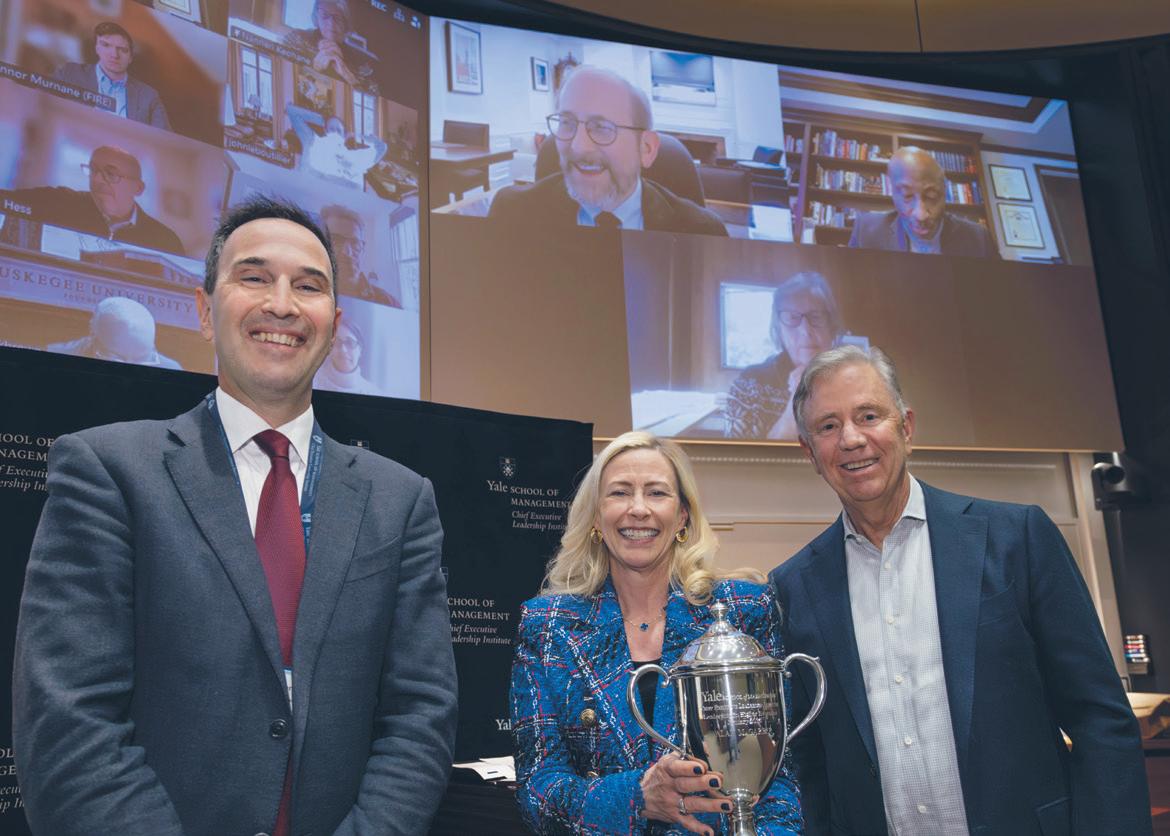
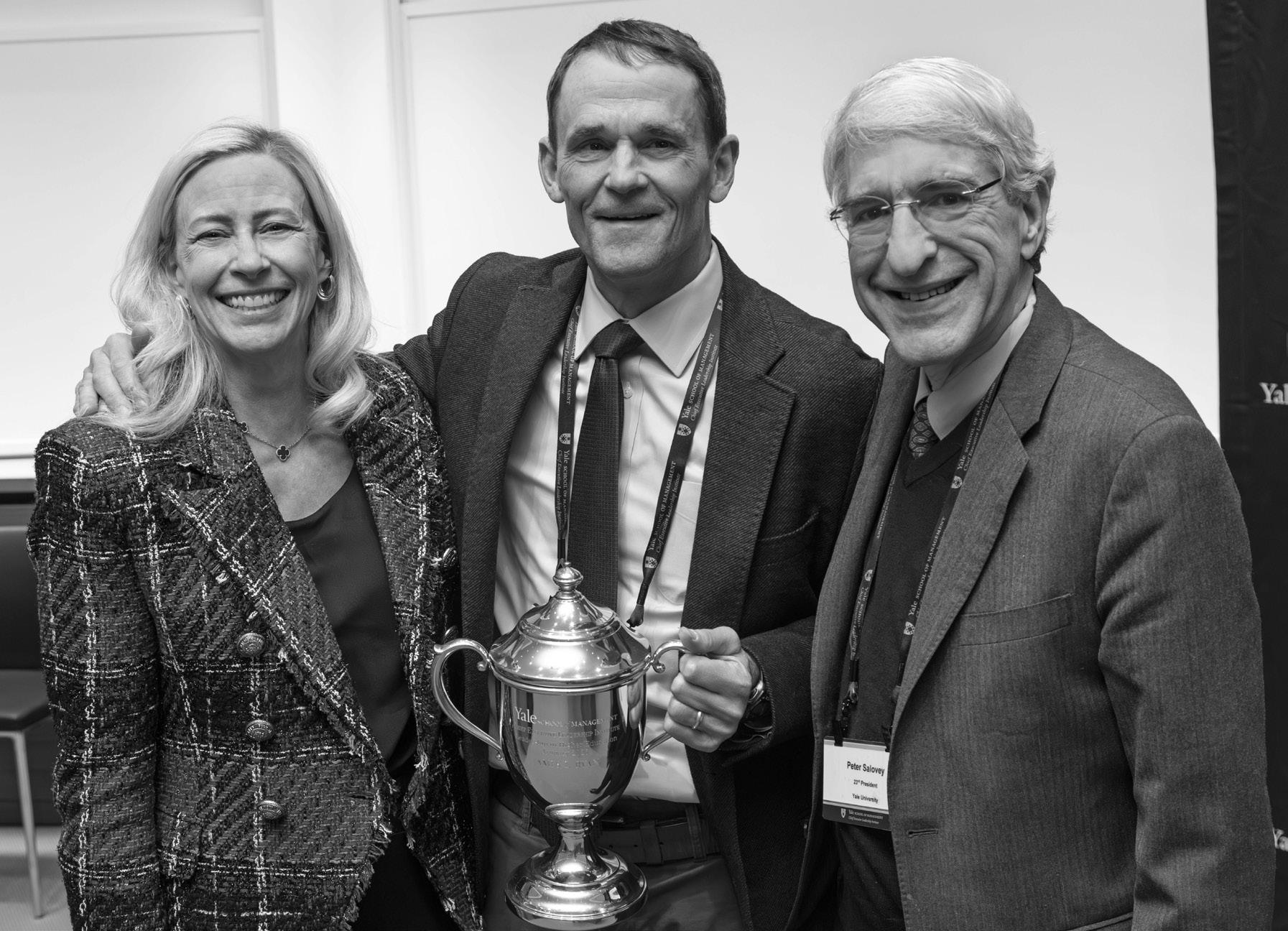
McInnis presented the awards alongside her predecessor, Peter Salovey, Connecticut Governor Ned Lamont SOM ’80 and other university leaders. According to a photo of the ceremony provided by Sonnenfeld, Garber received his award via Zoom.
Sonnenfeld said that “every kind of university” was represented at the summit, including community colleges, state universities, historically Black colleges and universities, and Ivy League institutions.
According to Sonnenfeld, at the conference, the attendees discussed their “successes and setbacks,” which included struggles with faculty, boards, governors and the Trump administration. He described the summit as a chance for presidents to “learn from each other” and to speak as individuals, rather than as the voices of their institutions.
“You have a lot of different schools confronting similar challenges in terms of the threats to higher education, the need to be responsive, but also recognize the shortcomings that we do have, and how do we evolve to be responsive,” Montclair State University President Jonathan Koppell said in an interview, referring to the discussions between university leaders.
Koppell emphasized the importance of recognizing Ryan and Garber, saying that it is “unusual for there to be an opportunity to recognize people in these positions who have made difficult, difficult decisions and had to stand behind them,” but that it’s important to “recognize those moments.”
Eastern Connecticut State University President Karim Ismaili was attending the summit for a second time, and he described it as “an opportunity really just to meet with
colleagues and peers to collectively think about higher education.”
“We know that higher education as an important engine for the United States is being challenged from a variety of quarters,” Ismaili said in an interview. “I think our goal here is to, you know, really share all the good things that we do for our students, for our community, for research and discovery.”
Koppell said he appreciated having “an opportunity to be part of an interesting conversation with a set of
presidents representing an incredibly diverse collection of universities,” adding that the “opportunity to hear different perspectives on what we’re all doing” made for “an interesting conversation.”
Last year’s Higher Education in Leadership Summit was themed “The Campus as an Oasis of Trust –Advancing Knowledge, Truth, Opinion, & Solvency.”
Contact ARIA LYNN-SKOV at aria.lynn-skov@yale.edu.
A Tuesday summit at the Yale School of Management honored two university leaders who have clashed with President Donald Trump publicly. From left: Yale President Maurie McInnis, former University of Virginia President James Ryan and former Yale President Peter Salovey / Courtesy of Jeffrey Sonnenfeld
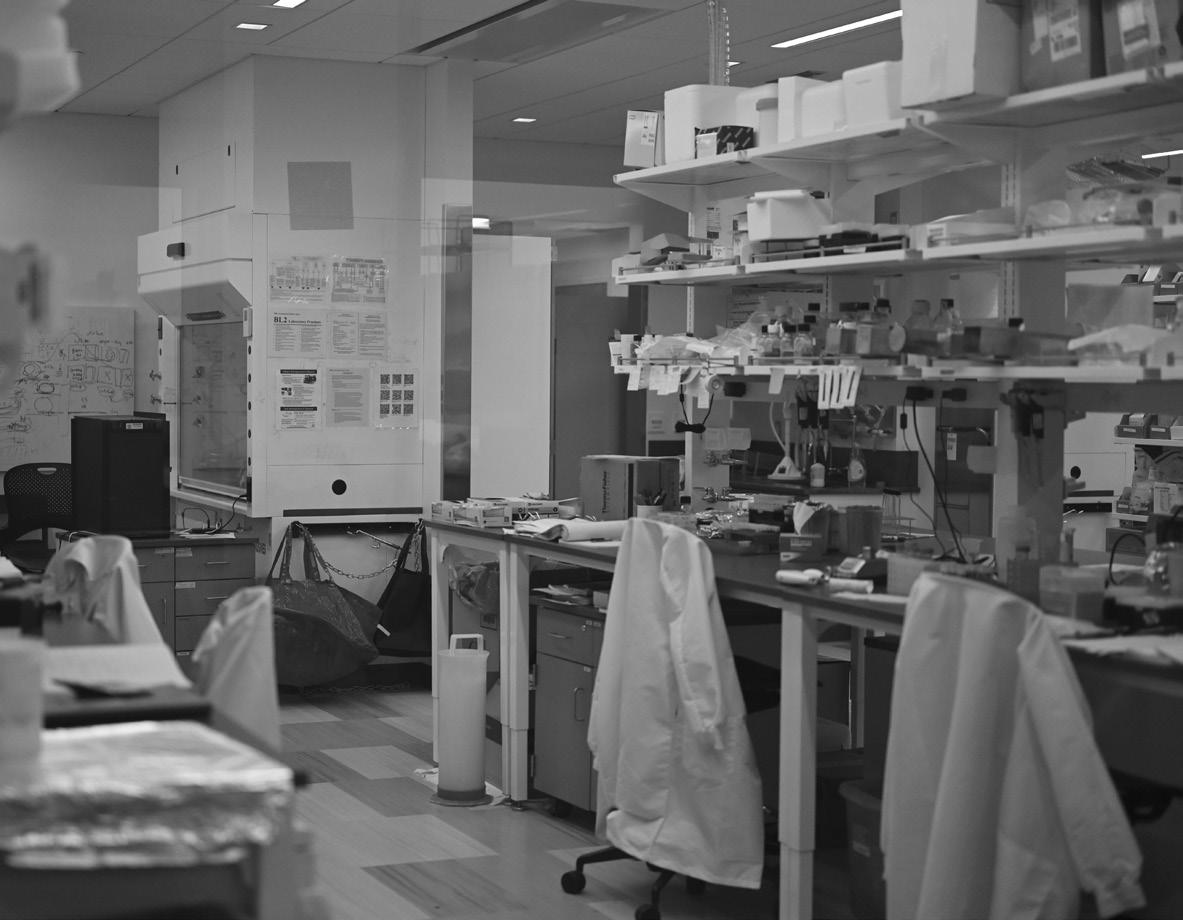
Around 120 federal grants tied to Yale researchers were impacted in 2025. / Linxi Cindy Zeng
“A spa hotel? It’s like a normal hotel, only in reception there’s a picture of a pebble.”
RHOD GIBERT
City backs Minnesota’s legal challenge to immigration crackdown
BY ELIJAH HUREWITZ-RAVITCH AND NELLIE KENNEY STAFF REPORTERS
New Haven on Friday signed onto an amicus brief alleging that the deployment of federal immigration officers in Minnesota’s Twin Cities violates the Constitution.
New Haven joined over 80 other local governments and officials in submitting the brief, which backs Minnesota in its lawsuit against Homeland Security Secretary Kristi Noem and other officials running President Donald Trump’s mass deportation campaign. The brief contends that Immigration and Customs Enforcement’s involvement in Minnesota is “extensive, aggressive, reckless, and chaotic,” and alleges that the deployment of over 3,000 federal agents to Minnesota is “the latest in a series of tactics designed to commandeer state and local governments for federal purposes.”
“By treating residents like enemy combatants and our neighborhoods like warzones, ICE is hurting the children and families who live in the cities targeted by these violent and coercive surge operations,” the brief says.
The brief asserted “solidarity” with the Twin Cities and called on the court to grant a temporary restraining order against the
Department of Homeland Security.
A federal judge declined to grant that restraining order on Monday.
In a letter to Minnesota Governor Tim Walz on Saturday, United States Attorney General Pamela Bondi defended the Department of Homeland Security’s policies, which she said targeted “criminal illegal aliens convicted of homicide, drug trafficking, sexual assault against a child, rape with a weapon, and other horrific crimes.” Bondi urged Walz to “restore the rule of law, support ICE officers, and bring an end to the chaos in Minnesota.”
The Department of Homeland Security did not immediately respond to the News’ request for a response to the brief.
On Jan. 12, five days after the fatal shooting of Renee Good, the cities of Minneapolis and St. Paul, as well as the state of Minnesota, sued the Trump administration to halt its immigration crackdown.
The amicus brief New Haven signed onto was filed amid growing ferment over ICE’s tactics in Minneapolis but before the fatal shooting of Alex Pretti, which has further fueled national unrest.
“ICE’s illegal, immoral and inhumane actions and the federal government’s unlawful deployment in Minnesota must end,” Mayor Justin Elicker wrote in a statement emailed by city spokesperson Lenny
Speiller. “New Haven stands with Minneapolis whose residents are standing up for all of us in fighting back against the Trump Administration’s attacks on our values, citizens and immigrant neighbors.”
Elicker has maintained an aggressive posture toward the Trump administration over the course of the president’s first year back in office. Last February, New Haven joined 44 other cities and local officials in filing an amicus brief backing lawsuits filed by 22 states and associations of medical schools, hospitals and universities that challenged cuts to federal research funding.
Over the course of 2025, New Haven joined four suits against the Trump administration. The first of them, which was filed last February, alleged that the federal government was illegally targeting sanctuary jurisdictions and forcing them to enforce federal immigration law. A federal court has since granted two preliminary injunctions in that case.
Friday’s brief was filed in part by the Public Rights Project, a progressive, California-based legal advocacy nonprofit that has previously provided free legal support to New Haven in its efforts against the Trump administration.
Just two weeks ago, Trump announced in a social media
post that the federal government would halt payments to states home to so-called sanctuary cities beginning next month — a threat that Elicker and Connecticut Attorney General William Tong both dismissed.
Elicker said in a phone interview last week that his administration was “watching carefully to try to learn from the experience in Minneapolis and understand how we can respond.”
“We’ve already done a lot to prepare for this type of situation, and that’s everything from educating residents to know their rights, to training and
retraining our employees on the Welcoming Cities Order, what to do if ICE arrives at a public building and how to respond to that,” Elicker added. “There’s a lot we’re doing and a lot we’re thinking about, should we become the kind of target that Minneapolis is.”
The case was filed in the Minnesota District Court.
Contact ELIJAH HUREWITZ-RAVITCH at elijah.hurewitz-ravitch@yale.edu and NELLIE KENNEY at nellie.kenney@yale.edu
Weather fits climate forecasts of more ‘freak storms,’ less total snow
BY DAVID LIU CONTRIBUTING REPORTER
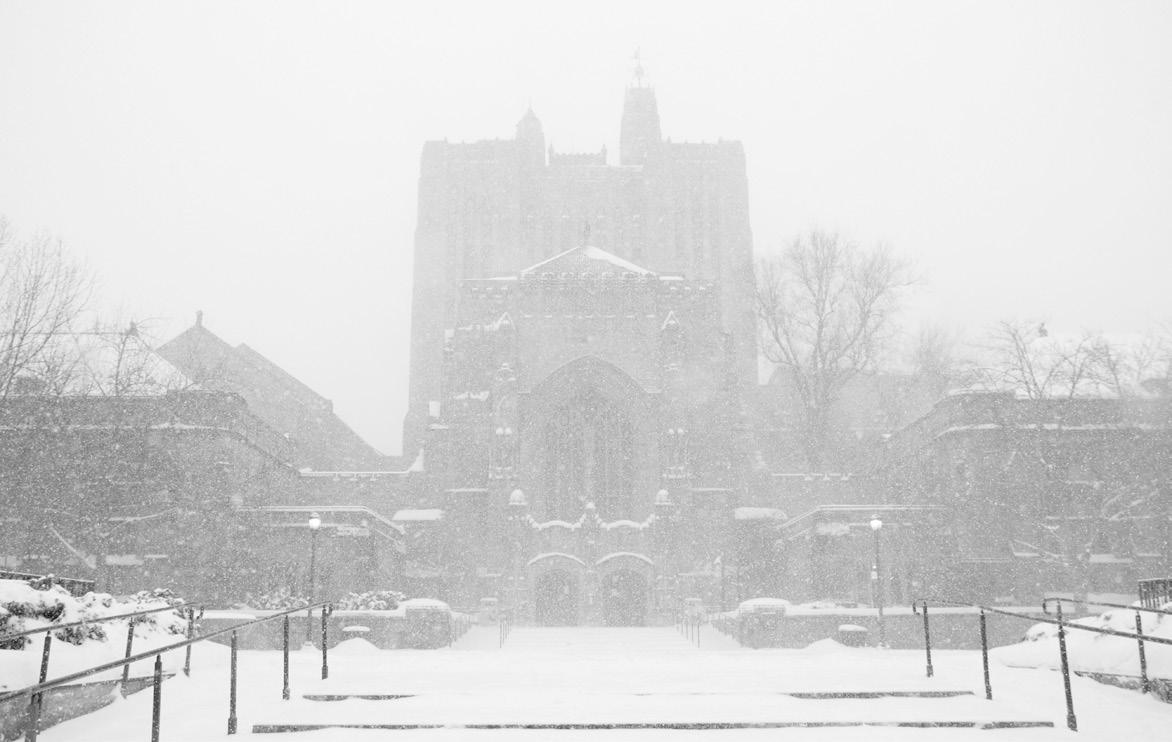
A powerful snowstorm swept through New Haven and much of the central and eastern United States on Sunday, dumping up to 17 inches of snow in parts of the surrounding county, according to WTNH.
The storm triggered nearly 11,900 flight cancellations and left about 900,000 customers without power nationwide, the Wall Street Journal reported. Scientists told the News that the storm was unusual in its size, but that increased precipitation is expected with climate change. Because of rising temperatures,
New Haven is likely to see less snow overall, but likely more instances of heavy snowfall.
“It was enormous,” Jennifer R. Marlon, a researcher at the Yale School of Environment and executive director of the Yale Center for Geospatial Solutions, said in a phone interview. “It was affecting almost the whole country, all at once. That is not typical for a winter snowstorm.” Still, determining whether climate change made this specific storm more severe would require detailed attribution studies, Marlon said. However, she emphasized that there is strong evidence that climate change is
increasing the intensity and frequency of certain types of extreme weather.
In particular, New Haven can expect increased precipitation in the coming years.
“Precipitation — heavy precipitation in some parts of the world, including New England, including Connecticut, including Yale campus — is increasing. It’s a very robust trend,” Marlon said.
As a result, Marlon said, climate change is likely to produce larger, more intense storms across different regions.
“We are likely to get bigger kind of freak storms,” she said. “We are likely to get heavier rainfall, and that can also mean heavier snowfall if the temperatures are low enough. So this pattern is very much consistent with climate change.”
Xuhui Lee, a professor of climate science at the Yale School of Environment, told the News that climate models generally project two broad changes: rising temperatures and increasing total precipitation in many regions. At the same time, Lee said, the number of individual precipitation events may decrease.
“The number of events go down,” he said. “But the total amount goes up.”
As average temperatures rise, more winter precipitation falls as rain rather than snow. Even when moisture is abundant, conditions in a warming global environment are often not cold enough for snow to
form, Marlon said.
New Haven and other parts of the Northeast have experienced snowstorms larger than Sunday’s.
“One year about 10 years ago, we got close to two feet of snow,” Lee recalled. “Yale had to close down completely. On my street we couldn’t get out. Even regular snowplow trucks could not get through.”
Lee was referring to Winter Storm Nemo — a historic blizzard that struck Connecticut and much of New England in early February 2013. During that event, parts of the state received up to about 40 inches of snow, burying towns under multiple feet of snow and leading to widespread closures and power outages according to the NewsTimes of Danbury.
Researchers stressed the importance of the distinction between weather and climate.
“We cannot predict weather seven days ahead,” Lee said. “So people ask, how can you say anything about climate 100 years from now? That’s a common misperception. Weather and climate are two different things.”
Weather forecasts depend heavily on precise initial conditions, Lee explained. Climate projections, by contrast, look at how long-term factors shape overall trends and probabilities.
While researchers cannot say whether a particular storm was “caused” by climate change, both Marlon and Lee agreed that climate
change is making the atmosphere more energetic and weather patterns more volatile.
Rising temperatures can alter winds, the jet stream and other circulation patterns, changes that contribute to more unpredictable weather.
“All of these aspects of climate are connected, and they can create unusual patterns of extreme conditions right near each other,” Marlon said.
Lee added that major winter storms often form when very cold Arctic air collides with warm, moist air from the south — a setup that can be highly unstable.
“You always have very cold Arctic air colliding with warm air coming from the south,” Lee said. “This kind of collision creates very unpredictable patterns.”
New Haven’s future is likely to involve less snow overall due to global warming, but greater variability — including the possibility of occasional intense winter storms.
In other words, New Haveners can expect to see less snow, not more. But when it comes, it will be in a climate system increasingly primed for extremes.
Sunday’s winter storm is officially named Winter Storm Fern.
Contact DAVID LIU at david.c.liu@yale.edu
State moves forward with plan for rapid transit buses in New Haven
BY TAJRIAN KHAN CONTRIBUTING REPORTER
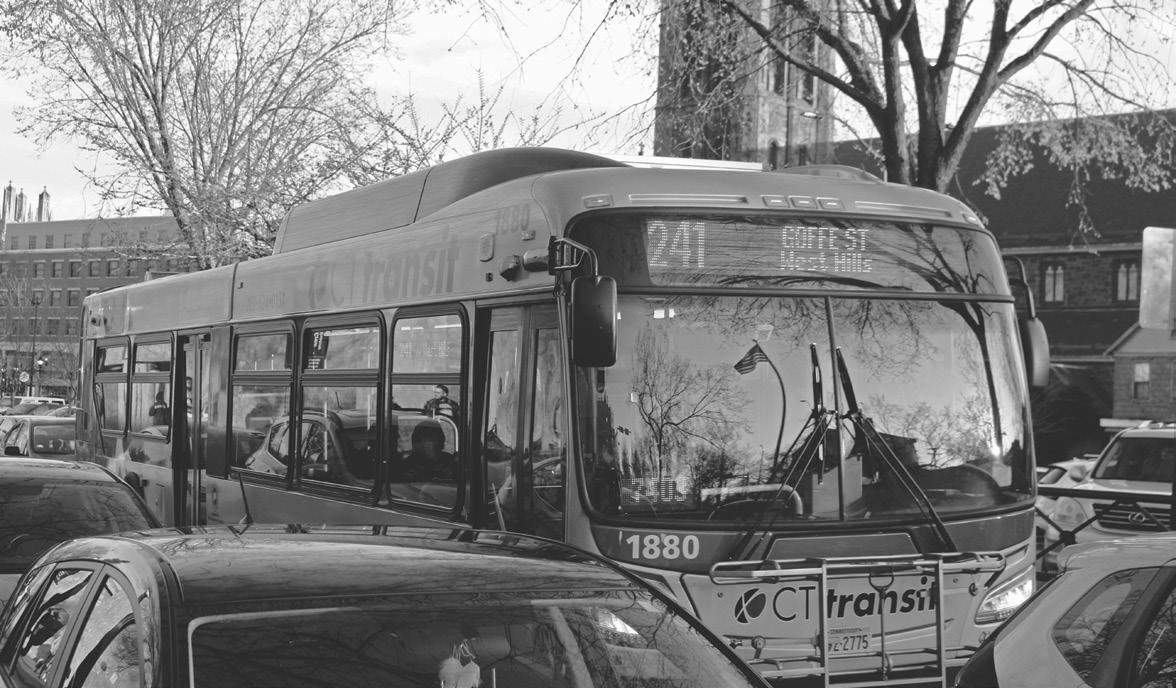
City and state officials announced their initial plans for the MOVE New Haven Bus Rapid Transit Project at a public meeting on Wednesday.
Bus rapid transit is a system of buses with dedicated bus lanes or other design features that allow buses to travel faster and carry more passengers as compared to a traditional bus network. Connecticut’s Department of Transportation announced the approximately $307 million plan at a public information meeting on Wednesday. City and state officials said they hope the project will greatly improve travel time for buses in New Haven and
improve safety for pedestrians and motor vehicles along key routes.
“The Bus Rapid Transit project is part of lots of different ongoing initiatives in New Haven in order to make transportation more affordable, sustainable and easier for residents,” Mayor Justin Elicker said in his opening remarks at Wednesday’s public meeting at the New Haven Hall of Records. “We are really grateful for this partnership, to New Haven residents and to the town of Hamden and city of West Haven.”
The state-funded project is estimated to cost around $307 million, according to the state transportation department’s website. This includes a $25 million federal grant, according to Kevin Fleming, a supervising planner at the department. In 2019, the state-funded MOVE New Haven Transit Mobility Study recommended bus rapid transit to improve service on four routes that carry the majority of riders.
“The project will improve travel time and safety for high-ridership routes and improve connections between high-ridership areas and important destinations in the region,”
Adam Cox, the principal designer at the transportation department, said during the presentation.
The project will involve building new rapid transit stops and mobility hubs to connect to local bus networks and other modes of transportation. There will be three mobility hubs in New Haven — at Union Station, Southern Connecticut State University and Foxon Boulevard — and another two in Hamden and West Haven.
According to Cox, construction for the project will begin in 2028, and the routes are expected to open in 2030. Dedicated bus lanes will only be built on Dixwell Avenue, Whalley Avenue, Elm Street, Church Street and Boston Post Road.
“These are the areas where buses experience the most congestion,” Maggie Maddox, an associate at VHB, the design consultant for the project, explained. These dedicated bus lanes will be open to the existing local bus services emergency vehicles such as ambulances, fire trucks and police vehicles.
At the end of the meeting, the
project team hosted an open house to display drawings for redesigned streets as part of the project and received questions and comments from the community.
“Is the fare going to go up?” asked one attendee.
“The fare is not going to be higher than the regular fare,” one representative answered. “However, we are working on a fare assessment statewide to see if fares across the state can be updated.”
Jhan Setthachayanon ’26, a Yale urban studies student who attended the meeting, said he is excited about the project.
“Questions of maintenance and equitable fares at a public meeting like this are extremely important,” Setthachayanon said. “I saw the project drawings for BRT in July and they look so much better. We’ve come a long way.
The transportation department already operates a similar system between New Britain and Hartford.
Contact DAVID LIU at david.c.liu@yale.edu
YASH ROY
The Connecticut Department of Transportation unveiled a $307 million plan for a rapid transit bus network in the New Haven area at a public meeting on Wednesday.
“Crime in
Challengers tee up fight in New Haven state House primary
BY ELIJAH HUREWITZ-RAVITCH STAFF REPORTER
Three politicians are running to represent parts of New Haven in the Connecticut House of Representatives: a 21-term incumbent, a Yale law student who got an early start in city politics and a democratic socialist. All say they are motivated, at least in part, by the actions of President Donald Trump.
The 92nd House district, which includes Westville, Amity and parts of Dwight and the Hill, is currently represented by Patricia Dillon SPH ’98. The deputy majority leader of the state House, Dillon was first elected to the body in 1984, when she unseated a Republican incumbent.
She is now facing two primary challengers — Eli Sabin ’22 LAW ’26, who earlier this month left his post as Ward 7 alder, and Justin Farmer, a progressive organizer and former Hamden town legislator.
The primary sets up a test of the state’s old guard. Neither Sabin nor Farmer was alive when Dillon first took office. Governor Ned Lamont SOM ’80, who is running for reelection to a third term, is 72 years old. Martin Looney, one of New Haven’s state senators and the senate president, has been in the state legislature since 1981.
Dillon said that the race is kicking off earlier than she expected. She added that she did not anticipate fielding a challenge from Sabin, who until earlier this year lived in a different district and resigned from his role as Ward 7 alder less than an hour before he was set to be sworn in for a third term on New Year’s Day.
Sabin, for his part, said he was not worried about the question of his residency and had been weighing a post–law school move to Westville “for a little while.” Sabin is no stranger to the neighborhood — he attended Hebrew school, played baseball and soccer and tutored at a middle school all in the area, he said.
Dillon’s own campaign is “just setting up,” she said. She is mainly focused on her legislative work in Hartford, where she said she has a “heavy workload.”
In a Friday phone interview, she framed her candidacy around experience.
“Structurally, it matters who you vote for,” she said, “They have
to know what they’re doing there. And in my case, my experience matters. When I see a problem, I have an idea about how to fix it, and if I don’t know what I’m doing, I know who to ask.”
Sabin was reluctant to criticize Dillon directly, instead emphasizing several times in a Sunday phone interview the “new vision” and “new energy” he hopes to bring to Hartford. In this “moment of incredible urgency,” he said, “we have an obligation to make sure our state officials and that our state is doing everything we can to protect our residents and fight back.”
Farmer described his candidacy as one informed by his activist bona fides.
“I’m not here to be a politician,” he said. “I’m an organizer. I’m here to build power.”
Discussing her recent work in the legislature, Dillon said she was most proud of her efforts in rallying the body to set aside $500 million to support social service programs imperiled by last year’s federal government shutdown.
She said she is especially concerned about access to food banks and to healthcare. Dillon said she has been “chasing the budget process in Washington to try to understand what the real numbers are” and coordinating with Mayor Justin Elicker’s administration to “find out what they’re doing to work with the dollars that the governor put on the table.”
Going forward, Dillon said that she wants to work to preserve jobs in science amid cuts to the National Institutes of Health and the federal government’s efforts to reshape higher education.
“There is an assault on higher ed, and that’s our major employer here, and that’s our economic future,” she said. Dillon said she sees the state government as a “firewall” against “terrible things happening in Washington.”
At a moment when the Democratic Party at large and in New Haven is debating whether it needs generational turnover, age is the obvious subtext in the 92nd district’s primary. Dillon, 77, said that “the press has kind of pitched it as an age thing.”
But she is adamant that efforts to push back against Trump require experienced politicians.
“That doesn’t mean there’s no
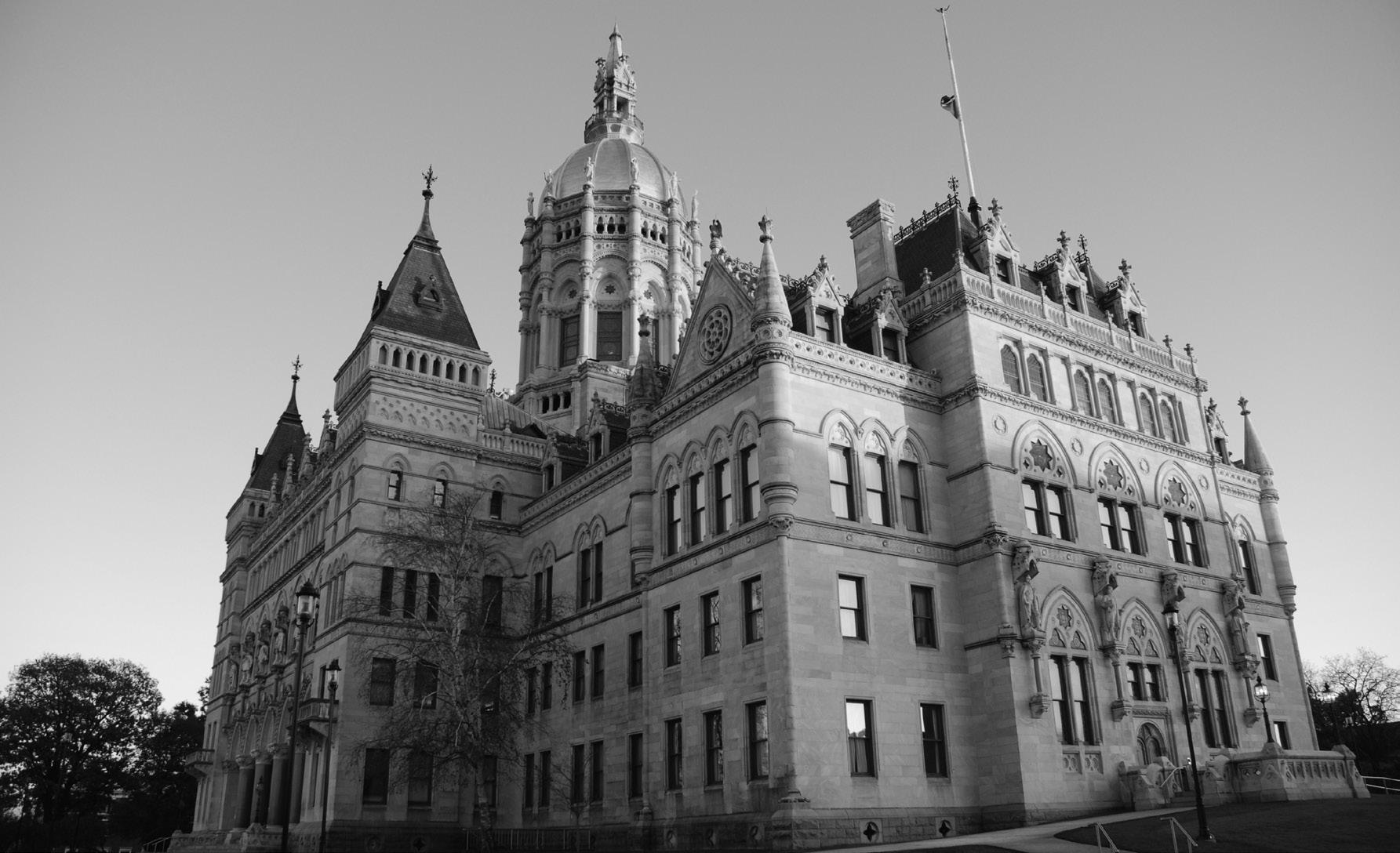
place for generational change,” she said. “At a time of crisis, though, who can help to fight back best, who has the knowledge and the experience — this is a time that experience really, really matters.”
Neither Farmer nor Sabin puts much emphasis on their relative youth.
Farmer, 31, said in a Saturday phone interview that “we’re in a generational change” — but “in terms of ideology and thinking,” not age. For him, progressive politics matter far more than youth.
Sabin, 26, seems to agree.
“I don’t think it matters how old anybody is,” he said. “I feel real urgency to be in that fight to bring down costs and make sure that people can really build a good life in our communities and stay here, and put down roots, and provide for their families.”
Farmer lived in East Rock until he was 4 and then moved to Hamden, just across the border from New Haven’s Newhallville.
In 2017, he helped found the Connecticut branch of the Democratic Socialists of America, he said. That year, he won election to Hamden’s Legislative Council, which he served on for six years. In 2020, Farmer mounted an unsuccessful bid for a seat in the state Senate.
In this race, Farmer is again running as a democratic socialist, and he is confident Connecticut has a taste for it. He pointed to Jasper McLevy, a socialist who was Bridgeport’s mayor from 1933 to 1957. He said he was frustrated that his beliefs — that “people should have food on their plates and teeth in their mouth,” that “billionaires shouldn’t exist,” that “people should not have ancestral wealth,” that “we need to pay more in taxes so that the road can be paved” — are seen as “radical.” If elected, Farmer said that he would push to increase funding for public education.
Like Farmer, Sabin said that his top priority if elected would be “fixing” Connecticut’s public education funding system. It places undue burden on cities and towns, he said, adding that in New Haven in particular, “we just have a really challenging deal where we have both high property taxes and also our schools are underfunded.”
Sabin hopes to “build coalitions” with rural and suburban municipalities, along with other urban centers, to push for increased funding and system-wide reform.
Both challengers named public safety as another core focus.
Farmer criticized what he sees as a misguided allocation of resources,
pointing in one breath to former New Haven Police Chief Karl Jacobson’s theft of $10,000 from a department fund and what he deemed excessive punishments of crimes committed by minors.
Sabin, meanwhile, aims to boost funding both to gun violence intervention programs and to the New Haven Police Department so that it “has the resources to fully investigate all the incidents of real violence in our community.”
In a telephone interview last week, Elicker praised both Dillon and Sabin and emphasized the value of a competitive primary.
“Oftentimes there’s a reluctance to have primaries when it comes to state office. But having a primary, while it’s work and difficult and can sometimes be intense, is a healthy thing for the city,” he said. “I admire people that are willing to throw their hat in the race and highlight some of the issues that they really care about.”
Dillon last squared off in a competitive primary in 2010, according to data from Connecticut’s secretary of state. In that race, she beat Sergio Rodriguez, then an alder, by more than 30 percentage points.
Contact ELIJAH HUREWTIZ-RAVITCH at elijah.hurewtiz-ravitch@yale.edu
Yale-city deal sets review process for Yale police complaints
BY ADELE HAEG STAFF REPORTER
A new one-year agreement between Yale and New Haven says a recently formed Yale advisory board will review civilian complaints against the Yale Police Department — a role which the board’s own initially released charter did not specify in the fall.
The New Haven Civilian Review Board, a police oversight committee, has long sought to establish an agreement with Yale over how to handle civilian complaints against the University’s police department.
The News on Tuesday obtained the three-page agreement — which had not previously been publicly available — from AnneMarie Rivera-Berrios, the Civilian Review Board’s chair.
The Civilian Review Board’s 2019 founding ordinance requires a memorandum of understanding with the Yale Police in order to ensure the “transparent civilian review” of complaints against any police officer in New Haven. Even so, the board has operated without a written legal agreement with the University since the ordinance’s passage.
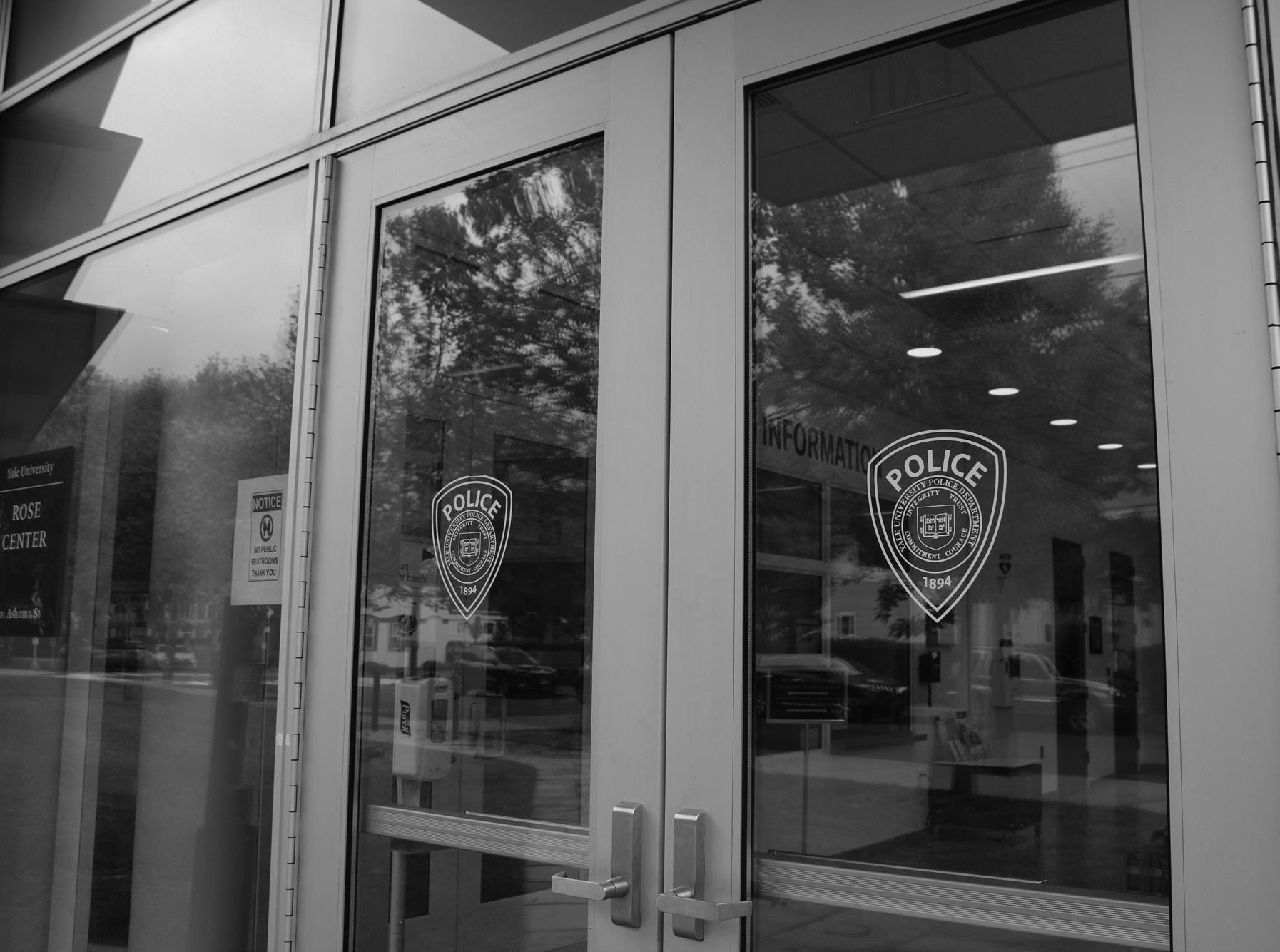
After a City Hall meeting last August about police accountability, which former Yale Police Chief Anthony Campbell and former New Haven Police Chief Karl Jacobson both attended, board members expressed hope that an agreement was near.
Now, with a Yale Public Safety Advisory Board revamped last September and both chiefs out of their jobs, the city and university finally have an agreement about civilian complaints, a first for both the New Haven and Yale boards. Campbell left Yale in early January to lead the Harvard University Police Department, and Jacobson resigned less than a week later after allegedly admitting to stealing $10,000 from a department fund for confidential informants.
The new “Cooperative Agreement” — which was signed in December and went into effect on Jan. 1 — authorizes Yale’s board to “monitor and review civilian complaints of police misconduct by YPD officers.”
The deal is scheduled to expire at the end of the year.
John Barden, Yale’s vice president for information technology and campus services, signed the agreement on Dec. 5.
Mayor Justin Elicker signed it on Dec. 18.
“This agreement not only formalizes mutual expectations but also symbolizes and strengthens our shared commitment to collaboration for the betterment of the Yale and New Haven communities,” Yale’s head of public safety, Duane Lovello, wrote in a statement provided by a spokesperson.
As part of the agreement, Yale will send quarterly reports regarding complaints to the city Civilian Review Board for review. Those reports will include case numbers, descriptions of complaints received and the status of each case reviewed in that quarter.
“The CRB is happy with Yale’s collaboration to create the MOU,” Rivera-Berrios wrote of the memorandum in a text message to the News. “We look forward to receiving their quarterly reports and continuing our collaboration for the best interest of the community.”
According to Lovello, the new agreement “will not impact the status of past complaints.”
A previous iteration of Yale’s board, the Police Advisory Board, was quietly discontinued in 2024 after a semester of proPalestinian campus protests and student arrests after an encampment on Beinecke Plaza. That board was specifically given oversight of civilian complaints against Yale Police officers, according to a 2022 police union document.
The Yale Public Safety Advisory Board, which gained its first appointed members in late November, will review Yale Police complaints and discuss them with the New Haven review board.
The New Haven board will continue to independently review complaints about the New Haven Police Department, its agreement with Yale says.
Contact ADELE HAEG at adele.haeg@yale.edu
ADAVY DVIA / WIKIMEDIA COMMONS
21-term incumbent Patricia Dillon is facing young two primary opponents for seat in the Connecticut House of Representatives.
KIMBERLY ANGELES / CONTRIBUTING PHOTOGRAPHER
Yale and New Haven officials last month signed a long-awaited agreement, obtained by the News on Tuesday, outlining how two civilian boards will monitor civilian complaints about the Yale Police Department.
“What does the word ‘meteorologist’ mean in English? It means liar.”
LEWIS BLACK
After year under Trump, faculty unsure if changes will last
BY YOUSSEF MAZOUZ AND LEO NYBERG STAFF REPORTERS
A year into President Donald Trump’s second term, Yale has avoided the targeted cuts he has imposed on other universities’ federal grants, but widespread cuts to federal research funding and an impending endowment tax hike have nonetheless led to budgetary woes at the University.
Scientists and researchers interviewed by the News were not certain whether funding cuts would be permanent, and all seemed unsure about whether the changes would have long-lasting effects on the University.
“Science research is a slow-moving enterprise,” Evan Morris, a professor at Yale Medical School, wrote in an email to the News. “I do not think that any damage that is done will disappear even if the orientation of a future administration toward higher education is drastically different from the present one.”
Several Yale professors told the News they have had grants cut or put on hold since Trump returned to office last January. At a November faculty panel, one professor said that more than 80 research projects lost federal funding last spring, resulting in a loss of more than $31 million, though some of those grants have been restored.
Dr. Harlan Krumholz ’80, a Yale cardiologist, said he doesn’t think Trump’s impact on Yale will be permanent.
“Funding is critical to the advancement of science,” Krumholz wrote to the News. “But an institution like Yale attracts the best scientists, and the knowledge they produce creates value.”
Steve Girvin, a Sterling professor of physics, wrote that both the endowment tax hike and widespread
research cuts threaten science at Yale.
“The funding cuts in the first year of the current administration may not have a permanent effect but they will certainly have very long-lasting effects because of the damage done to the agencies,” Girvin wrote to the News, citing layoffs at the National Science Foundation as an example.
John Wettlaufer, a physics professor at Yale, added that research cuts will have an inordinate impact on younger scientists, who may lose opportunities to undertake innovative, risky research early in their careers.
“For all the vitriol and nonsense exchanged on smart phones, I doubt the members of the present administration have ever thought about just where smart phones came from,” Wettlaufer wrote to the News.
A January report from the American Geophysical Union, a nonprofit group of Earth and space science researchers, maligned the government’s efforts to influence research but concluded that there is still time to reverse a permanent impact.
“Many of the administration’s policy changes and budget cuts have not yet been implemented, and its actions have not gone unchallenged,” the report reads.
Krumholz said research funding will go up and down, but Yale will continue producing high-quality research.
“I’m fully confident that the DNA of this place fosters strong science, and that will continue to be true,” Krumholz wrote.
The Trump administration’s higher education agenda was not isolated to research. The federal government also took an active role responding to campus protests and intellectual diversity at universities.
The administration sent a select group of universities a compact
that would secure federal funding in exchange for the termination of diversity programs, a freeze in tuition prices and an end to race-preferences in admissions, among other policies.
In March, the Department of Education launched an investigation into alleged antisemitism at Yale following pro-Palestinian protests on campus, which continued on campus the next month. In April, Trump’s antisemitism task force wrote in a statement that it was “cautiously encouraged” by Yale’s handling of a protest, which included revoking Yalies4Palestine’s status as a registered student group for its role promoting the demonstration.
“I think that there was a collective sense that the protests that engulfed campuses nationwide in 2024 just went too far,” Steven Smith, a political science professor, wrote in an email to the News. “Some of this has to do with the administration’s attacks on universities but I also think that there has been a kind of resetting of the moral compass.”
“One thing I’ve come to understand is that nothing is permanent,” Smith wrote. “We’ll have to wait and see just how long-lasting current policies will be.”
Morris wrote that he believed Trump has not made any progress on making Yale more intellectually diverse. He pointed to a recent Buckley Institute report, which revealed that many Yale departments have no Republican faculty. He added that the Buckley Institute — whose mission, according to its website, is “fostering intellectual diversity at Yale” — existed well before Trump or McInnis, and said that neither of them could take credit for the state of the University. In response to a question about whether Trump has made Yale more
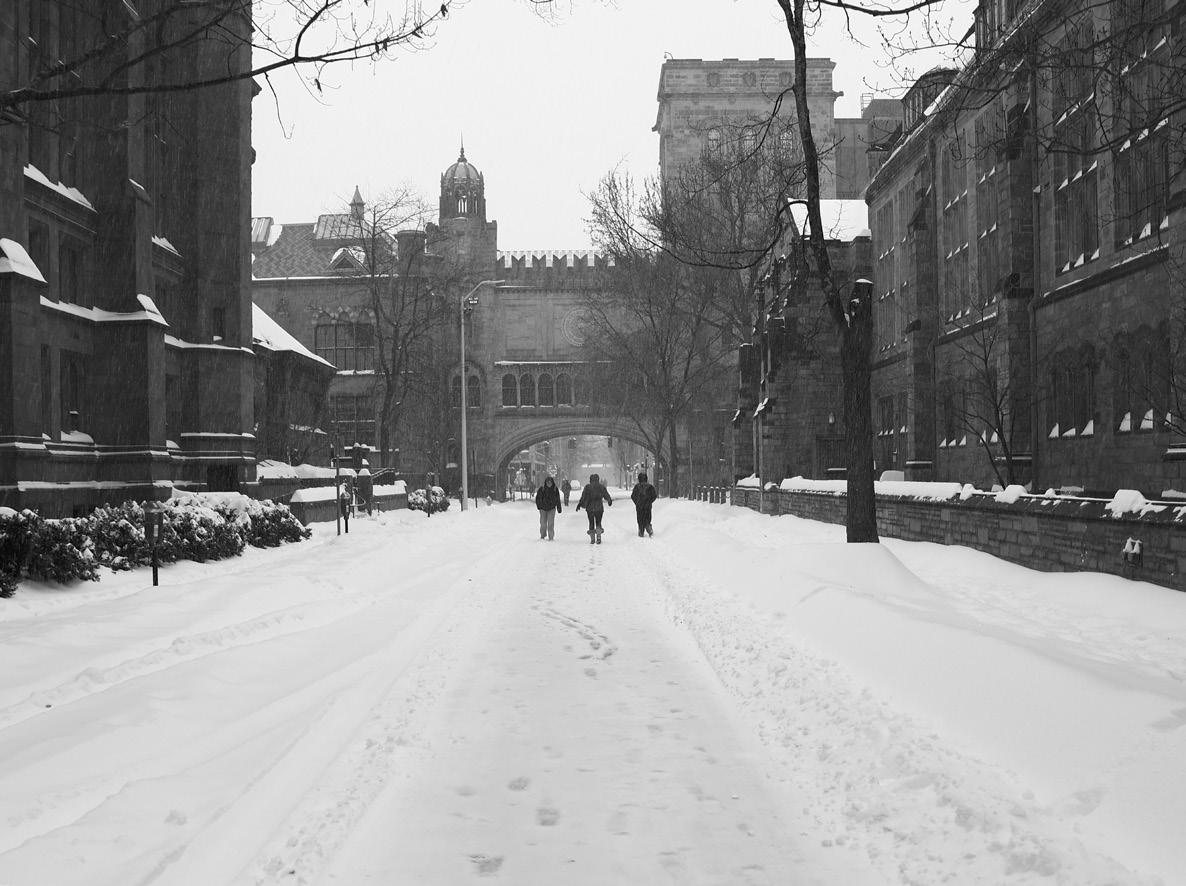
intellectually diverse, Lauren Noble ’11, the director of the Buckley Institute, said she thinks Yale has taken steps towards becoming more intellectually diverse “in recent years,” but believes the University has a long way to go.
In response to a question about whether Yale has changed since Trump took office for the second time, Lauren Noble ’11, the director of the Buckley Institute, said “Yale has taken some initial steps toward improving its intellectual climate in recent years,” but believes the University has a long way to go.
“I do hope that Yale’s move toward free speech will last regardless of who is president,” Noble wrote in a statement to the News. “It would be a mistake, for example, for Yale to abandon the new free speech training for incoming students or to weaken its institutional neutrality policy.”
Historians and political scientists contacted by the News said it is almost impossible to guess whether Trump’s effect on Yale will be permanent.
“There’s no going back,” former Yale historian Marci Shore, who left Yale last spring to teach at the University of Toronto, wrote in an email to the News. “History only moves forward. But that doesn’t mean that we can’t come out on the other side, so to speak. Nothing is preordained.”
“I have to believe that universities will hold out, but I am very, very worried,” Shore added.
Trump began his second term on Jan. 20, 2025.
Contact YOUSSEF MAZOUZ at youssef.mazouz@yale.edu and LEO NYBERG at leo.nyberg@yale.edu.
Yale Law School alumna named next Columbia president
BY LEO NYBERG STAFF REPORTER
Yale law school alumna and University of Wisconsin-Madison chancellor Jennifer Mnookin LAW ’95 was named on Sunday as the next president of Columbia University, which has had two presidents and two acting presidents in a turbulent period since 2023. Mnookin will leave Wisconsin at the end of the academic year and is set to become Columbia’s 21st president in July. She was chancellor while the entire University of Wisconsin system accepted a deal with Republican state lawmakers to curb hiring for diversity, equity and inclusion positions, according to The Daily Cardinal, the University of Wis-
consin’s student newspaper. Mnookin was a senior editor of the Yale Law Journal. After she becomes Columbia’s president, she and Yale University President Maurie McInnis will be the only two Yale-educated Ivy League presidents.
Columbia’s presidents in recent years have led the institution through repeated controversies, after Columbia became the epicenter of pro-Palestinian campus protests. Last year, Columbia reached a settlement with the Trump administration costing over $200 million to restore research funding that the government had withheld over allegations that the university tolerated antisemitism. Lee Bollinger stepped down from the Columbia presidency in 2023. Minouche Shafik resigned from
the position after just over a year after backlash over her handling of pro-Palestinian protests and encampments. She is now the chief economic adviser to United Kingdom Prime Minister Keir Starmer.
Columbia has had two acting presidents since Shafik: Katrina Armstrong ’86 — a Yale alumna — and Claire Shipman — a Yale parent.
Yale-educated university presidents have been taking it on the chin in recent years, with three alumni presidents resigning after political pressure from the Trump administration.
Former University of Virginia President James Ryan ’88 stepped down after direct pressure from President Donald Trump’s Justice Department, which told the university that Ryan needed to step down in order to resolve an inves-
tigation of its diversity, equity and inclusion programs, according to the New York Times. Ryan is set to receive an award at the Yale Higher Education Leadership Summit on Tuesday alongside Harvard President Alan Garber. Liz Magill ’88, the former president of the University of Pennsylvania, resigned under pressure after being accused of evading questions about campus antisemitism at a House of Representatives committee hearing.
Michael Schill LAW ’84 announced he would step down as Northwestern’s president in September. He faced criticism from House Republicans over his handling of pro-Palestinian protests, and the Trump administration froze $790 million in fund -
ing for the university, according to Forbes.
Yale Law School professor Harold Koh, who taught at the law school while Mnookin was studying, wrote in an email to the News that he didn’t know her very well but “she’s very nice.”
Columbia’s first and third presidents were also Yale graduates: Samuel Johnson, class of 1710, and William Samuel Johnson, who graduated from Yale College in 1744 and received a masters degree in 1747.
Samuel Johnson stepped down from Columbia, then called King’s College, due to financial instability related to the French and Indian War.
Contact LEO NYBERG at leo.nyberg@yale.edu.
Yale joins brief backing Harvard’s international students lawsuit
BY LEO NYBERG AND YOUSSEF MAZOUZ STAFF REPORTERS
Yale, alongside 47 other schools, filed an amicus brief backing Harvard’s ongoing lawsuit against the Department of Homeland Security, which Harvard filed after the agency revoked the university’s ability to host international students in May.
The amicus brief, which was filed last Monday, argues that the cancellation of student visa programs hinders the United States’ competitiveness in various scientific and technological fields and that the position of the United States as a global superpower has, in large part, been due to the country’s willingness to welcome international students and academics.
tribute to the United States,” the brief notes, citing various scientific and academic advancements brought about by foreign students.
“Cancelling student visas—even at one university—risks undermining the entire system, and with it, all the ways visa recipients con -
The new brief is the latest show of legal support by Yale for Harvard, following a brief filed in June that supported a Harvard lawsuit challenging the Department of Health and Human Services’ cuts to federal research funding.
In its lawsuit, Harvard alleged violations of the First Amendment, the due process clause and the Administrative Procedure Act, claiming that the withdrawal of its certification to host international students was done in “retaliation for Harvard exercising its First Amendment rights to reject the Government’s demands to control Harvard’s governance, curriculum and the ‘ideology’ of its faculty and students.”
The termination came after an order issued by Homeland Security Secretary Kristi Noem, which said that Harvard was being held accountable for “fostering violence, antisemitism, and coordinating with the Chinese Communist Party,” according to a press release by Noem in May.
A preliminary injunction issued by a federal judge prevented the agency’s order from going into effect and remains in place until the U.S. District Court for the District of Massachusetts issues a final
decision on the case. The First Circuit Court of Appeals is currently reviewing appeals by the Trump administration to the injunction granted by the federal judge.
Yale, as well as the other American universities that signed the amicus brief, encouraged the court to uphold the injunction issued by the district court.
Harold Hongju Koh, a Sterling professor of international law and the former dean of Yale Law School, wrote in a statement to the News on Sunday that the amicus brief is “clearly correct.”
“The First Circuit should reject this administration’s punitive, overboard claim that international students and their families pose national security threats,” Koh wrote.
Koh, who wrote that his parents taught at Yale Law School on immigrant visas, condemned the government’s attempts to limit international students. Through a Yale law clinic, he helped file a brief in August supporting Harvard in the same case on behalf of 21 former government officials.
“I am proud of Yale for taking this principled stand against this lawless policy,” Koh wrote.
The argument in the brief Yale most recently signed focuses on the impact that losing international talent would have on U.S. industry and academia.
“Institutions see the chilling effects of this cancellation in their own student bodies, as talented individuals from other countries choose to go elsewhere rather than face uncertainty about their visa status,” the brief says.
Citing a statistic published in the New York Times last year, the brief further notes that following the Department of Homeland Securities’ revocation of Harvard’s ability to host foreign students, the number of international students traveling to the United States dropped by about 20 percent in August 2025.
According to the brief’s argument, bipartisan support for qualified international students with necessary degrees to study in the United States has long been established, and “in return, those students have contributed to groundbreaking innovations, cutting-edge technology, and lifesaving research to the United States.” Currently, international students make up 28 percent of Yale’s graduate and undergraduate population, according to data from the Office of Institutional Research published on the University’s website.
Contact LEO NYBERG at leo.nyberg@yale.edu and YOUSSEF MAZOUZ at youssef.mazouz@yale.edu.
KAI NIP The amicus brief, which Yale signed alongside 47 other universities, supported a lawsuit filed by Harvard last year following the Department of Homeland Security’s revocation of the university’s ability to host international students.
ARTS
“The first time I met my wife, I knew she was a keeper. She was wearing massive gloves.” ALUN COCHRANE
For Pentatonix beatboxer, signature ‘celloboxing’ style began at Yale
BY GEMARD GUERY STAFF REPORTER
Kevin Olusola ’10, the Pentatonix beatboxer and cellist, was exposed to medicine and music at an early age.
Raised in Kentucky, to immigrant parents from Grenada and Nigeria who both worked in healthcare, he anticipated that medicine would be his path.
“I really respected what they did, and I loved watching them,” Olusola said in an interview with the News. “My dad used to write MD at the end of my signature when I was in his office. I know it stands for medical doctor, but to me, it meant my daddy.”
Olusola began taking music lessons at an early age, playing piano at 4, cello at 6 and saxophone at 10, he said, and while in Kentucky, he performed at the state level, participating in bands and choir, and tried to take advantage of as many musical opportunities as he could. He was especially fond of beatboxing, he said.
However, as Olusola got older, his parents began considering sending him to boarding school. During the spring break of his freshman year of high school, Olusola visited Phillips Academy in Andover, and he fell in love with the Massachusetts boarding school, he said.
“I remember it feeling like a college campus,” Olusola said. “I loved the music program, and it felt like a challenge. I didn’t know if I could do this, but I was really excited to try.”
Olusola applied to transfer to Andover for his junior year of high school and said he loved his time there. While rigorous, he credits Andover with preparing him for Yale and life.
“I didn’t realize how many weaknesses I had until I got to Andover, but I learned how to rise above them,” Olusola said.
After his junior year at Andover, Olusola said he toured colleges across the Northeast. He visited a few Ivy League schools but ultimately felt that Yale “was the one.”
Olusola entered Yale in the fall of 2006 as a prospective music major on the pre-med track with plans to eventually become a doctor, he said.
He was taking French during his first year when the former presi-
dent of China invited 100 Yale faculty and students to visit China that upcoming summer. Two students from each residential college were selected to attend alongside graduate students, professional students and professors — a group that came to be known as the “Yale 100,” according to the News at the time.
Olusola said he wasn’t interested in studying Chinese at the time but decided to apply for the chance to visit China for free. He was ultimately selected as one of the Morse students to attend.
According to Olusola, his time in China changed his life, and from then on, he decided that he would stop taking French. His sophomore fall, he began studying Chinese at Yale and participated in Yale’s joint program with Peking University during the spring semester of his sophomore year, he said.
“While I don’t recall how or when I first realized the extent of his talent, I do recall a conversation with him and our classmate Florence Kwo in the PKU-Yale common room during that Spring 2008 semester abroad,” Adedana Ashebir ’09, a friend Olusola met while in China, wrote to the News. “Kevin was sharing his dilemma, deciding between pursuing medical school or music. Florence and I encouraged him to pursue music. We told him that his talent was special and that medical school would always be there.”
During his time at Peking, Olusola took classes on chamber music and the Chinese economy while also fulfilling pre-med requirements. He ended up staying in China the summer after his sophomore year, as well, he said.
When he arrived back at Yale for his junior year, Olusola continued taking Chinese and pre-med classes. He also took a music history class, but realized he wasn’t a big fan of the history part and switched to East Asian Studies in the spring of his junior year. He also applied for the year-long Light Fellowship program and took a year off from Yale to go back to China.
“I started to fall in love with Chinese and everything concerning China,” Olusola said.
Ironically, despite now being in the Grammy award-winning and
world-renowned a cappella group Pentatonix, Olusola didn’t pursue a cappella at Yale.
“I did a cappella for a semester at Andover, then you get to Yale, and I’m like, I love you a cappella, but I am a cappellaed out,” Olusola said. “There was nothing in me that wanted to pursue a cappella.”
At Yale, Olusola did chamber music and was in the Yale Symphony Orchestra for a year and a half, he said. He said he was also involved with the Yale Christian Fellowship and the Afro-American Cultural Center, which is known among students as The House.
Olusola used to perform at The House’s “Classically Black” showcase, he said, in which Black students performed classical numbers ranging from opera to ballet.
“There were times when we were listening to music in Lighten Room and we’re playing the Wii and he just starts beatboxing to whatever is playing,” Timeica Bethel ’11, the director of Yale’s Afro-American Cultural Center who is friends with Olusola, said, referring to a room in The House. “The room would just be silent when he played because you knew you were experiencing something special.”
As Olusola was preparing to graduate from Yale, he had plans to attend the Berklee College of Music, he said, to test music out and see what would come from it before going to medical school.
During his senior spring, Olusola was nominated for the Louis Sudler Prize in the Performing and Creative Arts, and as part of his nomination, he needed to put together a portfolio, he said. A friend recorded a piece called “Julie-O,” which Olusola had been refining since his summer in Beijing. The arrangement was a mix of cello and beatboxing — a combination that has since become one of Olusola’s signature styles, known as “celloboxing.”
“He and I decided to record Julie-O one night, almost on a whim, as I remember it,” Jake Bruene ’09, a close friend of Olusola, wrote to the News. “I seem to recall him being, for the lack of a better word, almost nervous. It really mattered to him that he nail it. At the time, he hadn’t done a million shoots before, but of course whenever he would start playing he’d find that involuntary smooth chill that comes so naturally to him.”
Bruene encouraged Olusola to post the video online, but Olusola was skeptical, feeling like “nobody cared,” he said. Bruene, however, told him that he had nothing to lose by posting it, Olusola said.
Posting the video would change his life.
The next morning, the video was No. 4 on Reddit and continued to gain more traction. At the same time, Olusola said that the musician Scott Hoying, who is now also a member of Pentatonix, was looking to put together a group for NBC’s “The Sing-Off” show, on which a cappella groups competed for recording contracts.

According to Olusola, when Hoying’s group was struggling to find a beatboxer, the group’s vocal arranger showed Olusola’s video to the rest of the group. Hoying messaged Olusola in hopes that he’d try out to be the group’s last member. Olusola, who was working on his senior thesis at the time, ignored the message at first, but eventually responded and sent in a video, he said.
Olusola graduated from Yale in May of 2011 and, two weeks later, flew out to Los Angeles to practice with the ensemble for the first time. They then auditioned for “The Sing-Off” and — of hundreds of groups that auditioned — were one of sixteen groups selected to be on the show.
The group Olusola joined eventually won “The Sing-Off” in November of 2011. In 2012, the group moved to Los Angeles and became the Pentatonix the world knows today.
“I was back at Yale for grad school during his Sing Off season and I remember watching the finale with classmates and fellow alums in New Haven,” Ashebir wrote. “I was so stressed and I nearly lost my voice screaming. And yet I also wasn’t surprised when Pentatonix won. Kevin was diligent and disciplined in developing his talent.”
Since 2017, Pentatonix has done an annual Christmas tour, which has become very valuable to Olusola, he said.
This past tour, the Yale Club of Hartford held an event for members of the club to attend the concert and meet Olusola afterwards.
On stage was a colorful, vibrant scene with Pentatonix members dressed in colors associated with the holiday season. They performed a mix of their old music, such as their cover of “White Winter Hymnal” and some of their newer songs.
During the performance, members of the group did a musical genre challenge, which involved taking traditional
Christmas songs and changing the genre.
Accompanied by Matt Sallee, another member of the group, Olusola performed a Christmas medley on his cello during the concert.
“We get an opportunity to bring so much joy to families,” Olusola said. “It’s special because you feel like music is generational. There’s music that we can be a part of that spans generations and bring generations together and I don’t take that for granted.”
In 2025, Olusola released a solo album called “Dawn of a Misfit.”
The album tackles a lot of Olusola’s reflections on fitting in, concerns of not being enough in specific spaces and with his identities, he said.
“My first two EPs were me starting to understand what am I trying to say, what are the things I have in my arsenal” Olusola said. “This album is the perfect balance of everything that makes me, with classical music at the forefront. I finally realized misfits aren’t broken. They’re originals.”
This spring, Pentatonix will be touring in Europe and is working on original music that they are hoping to release this year, Olusola said. Olusola, personally, hopes to write more music for himself and will be going on tour with Black Violin, a hip-hop violin group, in February, he said.
Despite Olusola’s many successes, what stands out to a lot of people about him is his personality.
“Beyond his talent, what stands out most is who he is as a person and how he shows up for people,” Esteban Garza ’11, one of Olusola’s suitemates, wrote to the News. “His humility is real, not performative, and his encouragement has always been steady and sincere. Kevin leads with kindness and generosity because that’s genuinely who he is.” Olusola is married to Leigh Weissman and has two children.
Contact GERMARD GUERY at gemard.guery@yale.edu.
Fire, fury and sisterhood in drama school production ‘Is God Is’
REVIEW
BY CAMERON NYE STAFF CRITIC
What is the best way to kill someone? Lob them off a building? Stab them in the heart? Poison them with arsenic? The twin sisters Racine and Anaia don’t quite know the answer, although Racine does concede that poison is a “punk ass bitch ass way” to end a life. After all, what is the best way to kill the person responsible for your troubles?
Their solution is brutal in its symbolism rather than its ingenuity — a rock wrapped in a white sock. United, Racine and Anaia cast themselves as Davids against a world of Goliaths, intent on leaving proof of their reckoning as they move toward a vengeance that refuses to stay contained.
“Is God Is” — the David Geffen School of Drama’s latest production, which opened on Saturday and runs through this Saturday in the University Theatre— is a fiery dark comedy by Alesha Harris that fuses the aesthetics of spaghetti Westerns
with the defiant edge of Afropunk, under the direction of Jasmine Brooks DRA ’26. Racine and Anaia’s bodies bear the scars of a house fire set by their father nearly two decades earlier. Long believing their mother died in the blaze, the sisters are stunned to receive a letter summoning them to her deathbed. There, their mother delivers a final, uncompromising request: that they kill their father and anyone who gets in their way. Tyler Clarke-Williams DRA ’26 and Olamide Oladeji DRA ’27 deliver effective, grounded performances as the boisterous Racine and the more tender Anaia, respectively. Their bickering feels instantly recognizable to anyone with a sibling — sharp, affectionate squabbles that provide much of the show’s humor and momentum. Each actor is funny, but it is their chemistry that truly carries the production. Together, they capture the particular intimacy of sisterhood: the instinct to tease relentlessly and, just as fiercely, to defend one another when no one else will.
“Is God Is” never shies away from excess. It revels in heightened emotion, stylized violence and operatic declarations of pain. Its fullthrottle commitment to melodrama often works, with the actors meeting Harris’s work head-on. At times, however, the extremity veers into excess for its own sake, dulling the audience’s ability to fully connect with the characters beneath the spectacle. Even so, the production’s impact endures. Beneath the bravado and theatrical flair lies a genuine emotional core, one that continues to resonate even in the play’s most outrageous and comedic moments. Bella Orobaton DRA ’26 leans fully into the show’s heightened register as the twins’ mother, known only as “She.” Her guttural screams harken back to the night she was marred by the flames. Confined to her deathbed and consumed by vengeance, Orobaton delivers a blistering monologue so impassioned it feels capable of reigniting the very fire that haunts the play.
Elsewhere, Lolade Agunbiade DRA ’26 grounds the chaos as Angie, a beleaguered housewife whose exhaustion is both mundane and profound. From pleas to take in the groceries to lamenting her son’s arugula salad proclivities, Agunbiade deftly captures the twin frustrations of domestic stagnation and unmet ambition.
Technology in “Is God Is” is both a tool and a mood, shaping the production’s sense of menace and momentum as powerfully as any line of dialogue. Projected titles in a bulky, brutalist font function like cinematic title cards to announce shifts in time and place. Most striking are the pre-recorded projections that replay the house fire as the twins’ mother recounts what happened, transforming her monologue into a visual retelling that places the trauma front and center.
The flames flicker behind her words, insisting that the past be witnessed as well as heard. The production even finds space for levity, with a hitchhiking sequence punctuated by playful projections and a Doechii overture that briefly
cuts through the darkness without dulling its edge.
“Is God Is” flickers in its polish. Throughout the production, moments of stage combat feel under-rehearsed, with punches and slaps landing a beat before — or after — their accompanying sound effects. These are the kinds of details that might otherwise fade into the background, but in a show where violence is foundational, they become impossible to ignore. When brutality is the engine of the narrative, its execution needs to be precise, controlled and airtight. Nonetheless, “Is God Is” remains a powerful and uncompromising production. Its ambition and fury propel it forward, daring the audience to sit with discomfort rather than look away. Even when its edges burn a little too hot, the show’s conviction never wavers. By the time the final moments arrive, “Is God Is” has made its mark, going out in a blaze of glory worthy of its rage.
Contact CAMERON NYE at cameron.nye@yale.edu.
COURTESY OF MAGGIE FRIEDMAN
Grammy award-winning musician Kevin Olusola’s journey to stardom with the a cappella group Pentatonix began with an arrangement that he refined during his time at Yale that combined beatboxing and cello.
COURTESY OF KEVIN OLUSOLA
SPORTS
“I
have a lot of growing up to do. I realised that the other day inside my fort.”
ZACH GALIFIANAKIS
An ACL injury sidelined him for a season, and readied him to be captain
BASEBALL
BY JUSTIN LEAHY CONTRIBUTING REPORTER
When Davis Hanson ’26 watched the Yale baseball team open its season last spring, he did it from his phone, with his knee strapped into a brace, knowing he wouldn’t step onto the field once.
“I remember watching our first series against Queens in a locked brace on my phone and thinking that I would give anything to be out on the field with my team,” Hanson said.
A week before the team’s opening day last year, Hanson tore his ACL in practice. This non-contact injury erased his entire junior season before it even began. Through his first two years, Hanson has emerged as one of Yale’s most dangerous hitters, leading the Bulldogs in categories such as batting average, doubles, total bases, home runs, slugging percentage, on-base plus slugging and RBIs. His injury shocked the team.
“I watched it happen,” former captain Colton Shaw ’25 said. “Right when he went down, it kind of just felt like the whole practice stopped. Everyone was in shock.” While Hanson’s absence in the lineup was felt heavily, the team persevered. Yale went on to have one of the best seasons in program history, securing the Ivy League regular season title and winning 30 games. Many teammates and coaches say his presence, defined by intention and a relentless, team-first attitude, shaped the Bulldogs’ title run from the sidelines.
After a year spent rehabilitating, rather than playing, now Hanson is back on the diamond. He is returning not only as a cornerstone of Yale’s elite infield, but also as the captain of the 2026 Bulldogs.
“I would be a different captain if it weren’t for my injury,” Hanson said.
A season that ended before it began Hanson’s injury came late in a preseason practice, during a routine defensive drill.
“We were obviously disappointed for Davis,” head coach Brian Hamm said, “because like his teammates he had put in a tremendous amount of work during the offseason and was in a great place heading into opening day the following weekend.”
For the team, the timing couldn’t have been worse. Hanson had been a major part of Yale’s offseason the
prior year. He was hitting in the middle of the lineup and serving as a cornerstone at third base and across the infield. As a sophomore, he led the team in home runs, doubles and RBIs, going on to earn impressive Ivy League Honorable Mention honors. When the injury happened, his teammates immediately knew what it could mean for the group.
“There was a state of shock that day,” Kaiden Dossa ’27 said. “We knew we would have to make some big adjustments without him.”
The Bulldogs responded with what coach Hamm called a “next man up” mindset. Yale, having no backup third baseman on the roster, moved Jack Dauer ’28 from first to third. Hanson helped guide this transition.
“Davis’ mentorship played a significant role in helping Jack successfully make that transition,” Hamm said. Dauer went on to earn Ivy League Freshman of the Year honors.
While his own season disappeared, Hanson’s role in the Yale baseball program did not.
“Throughout the whole recovery process, Dave was always a great leader,” Shaw said.
“He was always still putting the team first.”
‘The recovery sucked’
For Hanson, the first days after his injury were filled with a lot of disappointment — not about his future, but instead about what he felt like he was losing with his teammates.
“My immediate reaction to tearing my ACL a week before the season was disappointment,” Hanson said. “I wasn’t scared about my career, I was scared that I was not going to be able to play with our seniors one last time before they graduated.”
Then, the physical reality of recovery hit.
“Physically, there is really no other way to put it: The recovery sucked,” Hanson said. “Having to relearn how to walk correctly and fighting through pain every day wasn’t easy.”
During his recovery process, Hanson leaned especially heavily on his parents and Yale’s athletic training staff, particularly team trainer Jordan Lockman. With an unusual family history of torn ACLs — his father with one and mother with two — Hanson said the recovery process felt much less overwhelming because of the people around him.
“With my parents’ and Jordan’s help, the recovery didn’t feel like this unobtainable task,” Hanson said. “It just felt like another goal
I could accomplish.”
Mentally, this challenge of coming back was just as steep.
“It was extremely tough,” Hanson said. “But, I was able to use the frustration to push through rough stretches of physical therapy.”
A new addition to the team, Nick West ’29, said Hanson rarely spoke about the injury at all.
“He never complained or used his injury as an excuse for anything,” West said. “Most guys that get injured are always complaining about it or feeling sorry for themselves. I never once saw that from Davis.”
Leading without playing Hanson’s absence from the field didn’t mean he was absent from the team. Teammates said he often remained a daily presence at practice and in the facilities, even when he could not travel consistently due to Ivy League restrictions and his rehabilitation schedules.
“Whenever he could be there, he was at practices,” Shaw said, “always bringing good vibes” and “helping out the younger guys who had to step up.”
Dossa, a fellow upperclassman, mentioned how Hanson’s recovery forced him to redefine his own definition of leadership.
“I do believe the injury, and specifically the rehab process, shifted his perspective on leadership,” Dossa said. “He had to find a new way to lead while off the field.”
Coach Hamm echoed that sentiment. He emphasized that Hanson never stepped away from the role, especially while on the sideline.
“He was present every day, supporting his teammates, sharing insight and helping keep our standards high,” Hamm said. “His attitude and presence had a big impact on team morale.”
Hanson described his presence as an intentional choice, even when doctors advised otherwise.
“Against my doctor’s wishes, I flew back up to school two weeks after surgery just so I could be back with the team,” Hanson said. “I really just wanted to help anyway I could.”
To Hanson, helping his team any way he could had a new meaning. Instead of hitting cleanup and defending the hot corner, this meant feeding pitching machines, setting up drills and hosting watch parties for teammates that were left off the capped travel rosters.
A stop in the press box
For a good chunk of the season,
Hanson’s recovery kept him out of the dugout with his teammates, forcing him to watch games from above, with fans and stadium personnel. What could have been isolating experiences instead became new ways for Hanson to connect with Yale baseball.
“Before every game, I would go around to everyone, say hi and give them a fist bump,” Hanson said. “It allowed me to get to know everyone, and it even turned into a tradition.”
Eventually, during one midweek game, Hanson was invited up to the press box to comment on the game.
“Of course I said yes,” he said. “It was a hilarious, chaotic, three hours of baseball analysis, barbeque opinions and bragging about my teammates.”
At one point, Hanson said, he even stood up on his broadcast booth chair to show off how much knee flexion he had regained. He immediately received a text from his mother telling him to get down. “I then apologized on air,” Hanson humorously recalled.
The lighthearted moment captured what Hanson’s year became: a season away from the field, but one never away from the people who made Yale baseball feel like home.
“Yale baseball really is a special group,” Hanson said. “I couldn’t be prouder to be a part of it.”
A transformed captain
Last spring, led by captain Colton Shaw ’25, Yale’s senior class set the standard of program success. Now, Hanson has been tasked with carrying that leadership, and that winning culture, forward.
Shaw believes Hanson is a natural fit for captain.
“He’s kind of a born leader,”
Shaw said. “That character kind of always shines through in the clubhouse.”
West agreed, emphasizing Hanson’s consistency and effort.
“His words carry weight because of how dedicated and hard-working he is every day,” West said. “If I was never told by someone else he was injured and missed the last season I would have never known.”
To Hanson, this year changed his understanding of what defines team success.
“One of the biggest things I learned during my recovery process, is that teams are most successful when everyone feels like they are contributing,” Hanson said. “Everyone on the roster. Everyone on the coaching staff. Everyone in the press box. The custodians. The equipment managers.”
As captain, Hanson sees it as his job to acknowledge that collective effort, what makes Yale baseball run, in order to push the Bulldogs towards even bigger goals.
Hanson has said his goal for the season “is to win the Ivy League regular season, win the Ivy League tournament, and maybe even win a regional.”
“It’s cliche,” Hanson said, “but I really didn’t appreciate everything I had until it was taken from me.”
After a year spent watching from the dugout and months of recovery behind him, Hanson is ready to take another step forward, now with the captain’s “C” on his chest.
The Yale baseball team will open its 2026 spring season on Feb. 20 at the Andre Dawson Classic in Daytona Beach, Florida.
Contact JUSTIN LEAHY at justin.leahy@yale.edu.
Sophomore reaches semifinals at women’s national individual tournament
SQUASH
BY RACHEL MAK STAFF REPORTER
Sophomore Heng Wai Wong ’28 reached the semifinals of competition for the top individual award in women’s collegiate squash on Monday after four days of phenomenal gameplay at the College Squash Association Individual Championships in New York City.
She fell in four to eventual Ramsay Cup runner-up Caroline Fouts, who plays for Harvard.
Fouts took the first game 11-6 and edged out Wong 14-12 in the second game to go up 2-0. Wong then went on a run in the third after being down 4-0 to win the game 11-6. However, Fouts did not let up and regrouped to win the final game 11-3.
On her path to the semifinals,
Wong defeated Anastasiia Krykun from Amherst 3-0 and Doyce Ye San Lee from Trinity 3-1. Wong got her revenge in a rematch against Penn’s Malak Khafagy 3-2, after losing to Khafagy in three games last weekend. Khafagy was ranked No. 2 overall going into the individual championships tournament.
Knowing there was a high chance of a rematch at the individual championships, Wong made sure she would be prepared physically and mentally.
Last year, she “wasn’t as keen on playing the same opponent again in the same season,” Wong said in a phone interview.
“But I think what set the difference for this season — for this week — is that I was ready to get revenge right after I lost to her on Sunday,” Wong said. In meetings with her mental skill
coach, Wong reflected on her thought process during deciding moments in close matches, such as the matchup against Khafagy, to prepare for the weekend’s competition, she said.
“There’s a split second of thought at like 10-8, or any game point that I have, that just makes me doubt myself,” Wong said about the close games she lost to Khafagy last weekend. “When I want to close the game, I sort of rush through to finish, but this time, I was thinking, there’s no difference between 10-9 and 5-4. I have the mentality going in that every point works the same.”
After her victory over Khafagy, Wong took down Thanusaa Uthrian from Trinity 3-1 to secure her spot as one of the top four players in collegiate women’s squash.
“It was a pleasure and great experience to play on the ToC court at Grand Central,” Wong said, referring to the Tournament of Champions glass squash court in New York City’s Grand Central Terminal. “It’s one of the biggest stages for this sport, and it’s such a privilege to have the opportunity to play there.”
Head coach Lynn Leong expressed pride about how Yale’s teams handled the demands of the tournament and how Wong exceeded expectations, considering that she entered the tournament as the No. 13 seed.
“She’s worked very methodically since early in the season, especially on the mental side, and it was great to see that work turn into a real breakthrough,” Leong wrote to the News. “It’s a reminder that with patience and smart work, progress comes.”
Wong’s teammates Spring Ma ’28, Meha Shah ’28, Elise Kang ’29 and Eedha Mehta ’29 also put on strong performances throughout the weekend.
Ma dropped to Princeton’s Caroline Eielson in the round of 64, 3-0. Shah lost 3-1 to Harvard’s Ocean Ma and ultimately fell to Drexel’s Emma Bartley 3-1 in the quarterfinals of her consolation bracket.
Freshman Kang won her first national tournament match by defeating Moa Bonnemark from Drexel 3-1. She then lost to Uthrian 3-1 in the round of 32 after a series of close games. In the quarterfinals of her consolation bracket, she fell to Eielson 3-1. Mehta lost in the round of 64 to Trinity’s Kara Lincou 3-0 but went on to win her consolation bracket.
On the quest for the Pool Trophy — the top individual honor in men’s collegiate squash — Tad Carney ’26 was ranked No.1. He had a dominant victory over Cornell’s Youssef Sarhan, 11-3, 11-7, 11-0, after a bye in the first round. In the round of 16, he was upset by Harvard’s Omar Azzam 3-0. In this matchup, Carney dropped the first game before coming back with a more characteristic performance in the second. However, he was unable to close it out, and Azzam took the game 12-10 before taking the third as well.
Lachlan Sutton ’27, Arav Bhagwati ’26 and Rohan Arya Gondi ’28 also played a series of hardfought matches. In the first round, Sutton defeated his opponent from the University of
Rochester, Dhirren Rajarathinam, 3-0. He had a back-and-forth battle with Harvard’s Christian Capella and came out on top, 3-2, before dropping to Trinity’s Muhammad Irfan 3-0. Irfan was ranked No. 4 overall going into the tournament.
Bhagwati defeated Roman Parisi from Amherst 3-2 before losing to Benedek Takacs from Trinity 3-1. He made it to the semifinals of his consolation bracket before losing to Princeton’s Avi Agarwal, 3-1.
Gondi defeated Dartmouth’s Wei Yan Tho 3-1 before losing against Penn’s Marwan Abdelsalam 3-2 after putting up a good fight. The two players traded games, but Abdelsalam came out on top and won the deciding game 11-7. Gondi then lost in the quarterfinals of his consolation bracket to Luhann Groenewald from Drexel in another very close match, 3-2.
“This event brings together the best players in the country, and going deep requires more than talent—it takes resilience, mental toughness, and the ability to manage long days of competition,” Leong wrote to the News. “And, like any individual tournament, a little bit of luck helps too.”
These Bulldogs will take the time to recover from the individual championship tournament before facing their next Ivy League opponents this weekend. Yale will take on Dartmouth on Friday in the Brady Squash Center.
Contact RACHEL MAK at rachel.mak@yale.edu.
YALE ATHLETICS
Sophomore Heng Wai Wong reached the semifinals at the College Squash Association Individual Championships, where eight other Yalies also competed.
YALE ATHLETICS
Captain Davis Hanson ’26 missed out on his entire junior season due to an injury.
“He had to find a new way to lead while off the field,” a teammate told the News.
“I think it’s wrong that only one company makes the game Monopoly.”
STEVEN WRIGHT
Curtis Sliwa draws eager crowd to Yale Political Union debate
BY ANAYAH ACCILIEN STAFF REPORTER
Attendees eagerly filed into Sheffield-Sterling-Strathcona Hall on Tuesday night to see Curtis Sliwa — the activist and radio host who was the most recent Republican nominee for New York City mayor — speak in favor of the resolution, “Act Before the State,” at a Yale Political Union debate.
In his speech, Sliwa argued for open discussion and debate among citizens and critiqued powerful billionaires and politicians. According to members of the union, Sliwa’s visit sparked unusually high levels of excitement among the student body.
“Are you going to be a selfless servant or a selfserving servant?” Sliwa asked the audience, while uplifting principles of free speech. “I trust you, the people. I don’t trust the politicians who, oftentimes, are the object of ideology.”
Last semester, the union hosted former New York City comptroller Brad Lander, who ran in the most recent Democratic primary for New York City mayor. When he came to Yale, he argued in favor of sanctuary cities, which typically refers to cities whose local law enforcement agents will not aid federal immigration agents.
Mór Szepesi ’27, the president of the union, said that although they have had “extraordinary speakers” in the last three years, “I can say, without a shred of
doubt, that I have never observed even close to as much excitement as I have this week.”
Chants of “Who do we want? Sliwa! When do we want him? Now!” filled the auditorium, and members of the Progressive Party wore green berets to support Sliwa, who is known for regularly donning a red beret.
“We admire Curtis Sliwa a lot for the work he has done,” head chair of the Progressive Party Zavian Valedon ’27 said. “Obviously, the red beret is a symbol of his dedication. In a way, we wanted to commemorate it, and at the same time, bring a special energy to the debate.”
During his speech, Sliwa discussed the importance of building a world that doesn’t only serve billionaires or the “Elon Musks of the world who say not to worry because AI is on the way.”
Shortly after opening his speech, Sliwa recounted when he was shot in the back of a cab in 1992. He said he was grateful that he survived because it led him to advocate against the “vitriol, the animus, the anger, all those things that divide and separate us and try to merge the different points of view.”
Sliwa also argued for the importance of checks and balances, mentioning James Madison — the fourth president of the United States — as an essential figure who wrote checks and balances into the United States Constitution.
“We ought to trust no man or no woman who considers themselves to be omnipotent,” Sliwa said, referring
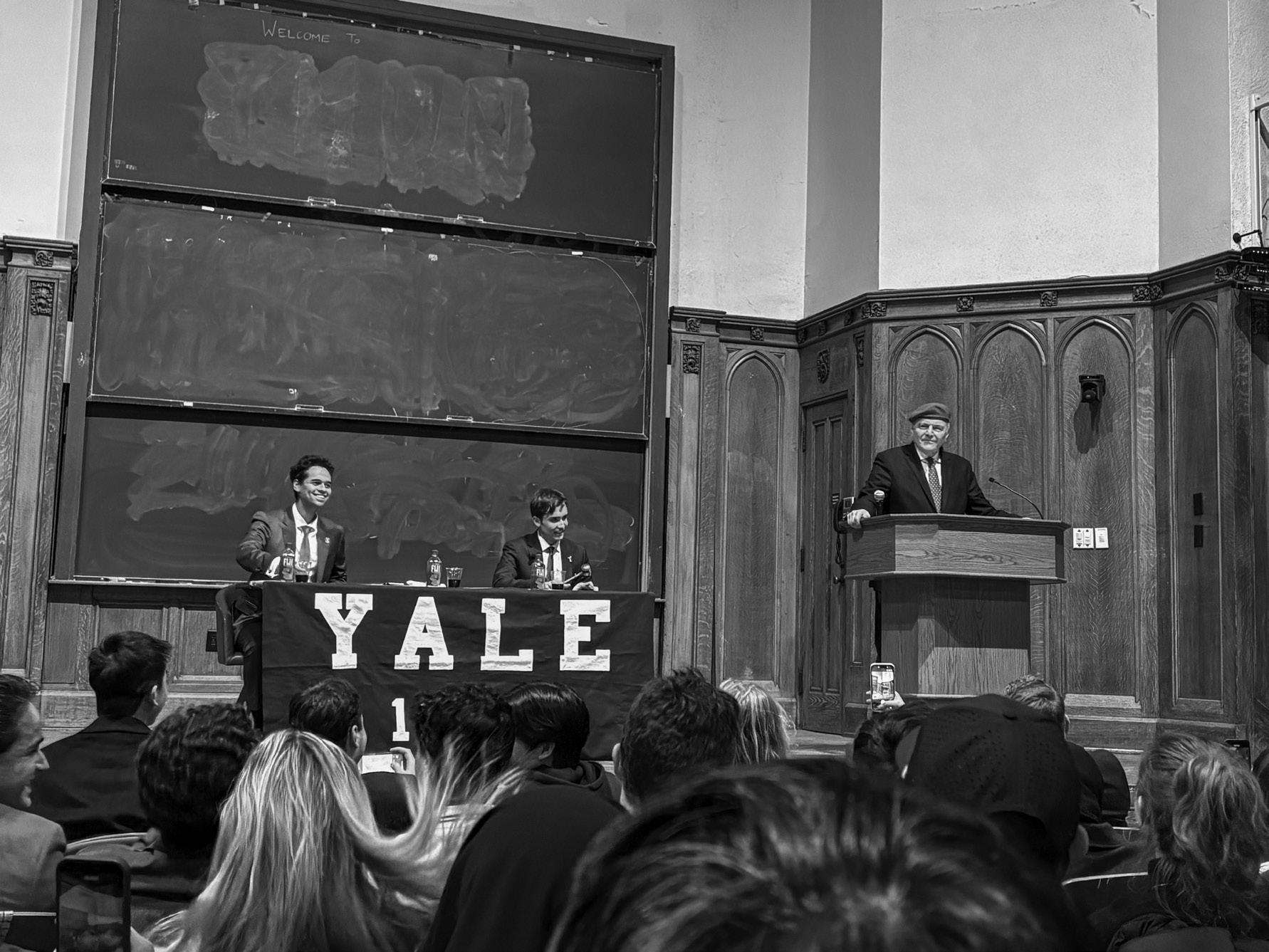
to President Donald Trump, recounting Trump’s statement to the New York Times that his only checks and balances are his own “morality” and his “own mind.” At the debate, students argued over reasons whether or not to support the resolution.
Sumaiya Bangura ’29, a member of the Progressive Party, said that
people should be aware that “acting against the state puts a target on one’s head” and “gets them killed.”
Blake Freeman ’29 said that people should not wait for the state to take over and should instead proactively act in favor of their own communities.
Freeman encouraged volunteers to support building
churches, suggesting, “One should grab their buddy and get to work.”
The resolution, “Act Before the State,” passed 82 to 30, and Sliwa received a standing ovation for his ending remarks.
Contact ANAYAH ACCILIEN at anayah.accilien@yale.edu.
Nerves and hugs as sororities reveal new members
BY OLIVIA CYRUS AND HAILEY YOUNG STAFF REPORTERS
About 100 undergraduate women flocked to the floor seats of Sheffield-Sterling-Strathcona Hall room 114 on Monday night for the Yale Panhellenic Council’s annual Bid Night.
This mass event concluded a five-day period of sorority rush festivities that began last Tuesday. The council oversaw the recruitment of 300 prospective members vying for a select number of spots in sororities Alpha Phi, Kappa Kappa Gamma and Kappa Alpha Theta. Aeris, another women’s social group that also held its rush process this past week, held its own bid night separately.
Miriam Garcia ’28, the council’s vice president of communications, did not immediately reply to a request for comment about the exact number of bids each sorority group gave out. Students at the Panhellenic event told the News that neither the intensity of rush nor the snowy weather hampered their ability to connect with new people and step out of their comfort zones.
A little after 7 p.m. in SSS, Kappa Alpha Theta members dressed in cheetah print, Alpha Phi members in country attire and Kappa Kappa Gamma members in blue clothes passed out envelopes with names on them to rushees on the floor. Electronic dance music pulsed through the lecture hall, and the words “Go Greek” were written in purple and blue on a chalkboard behind the podium.
Nervous chatter and excited laughter emanated from the floor as rushees collected their envelopes and waited for a member of the council to instruct them to open them. All envelopes contained a card with the name of the chapter from which the recipient received a bid.
Kate Choi ’29, a rushee, said that she was “excited” prior to Bid Night’s kickoff at 7:30 p.m. She said the rush process, especially a pilates workshop, let her build valuable relationships.
“This rush process has been a lot of work a lot of times, but people are excited to finally be at the end of it and meet their sisters,” Choi said. “I really wanted to meet people and I love the concept of meeting upperclassmen, which was my main motivation for rushing.”
Shannon Hong ’29 said that arriving at Bid Night felt like “opening your college results” and the culmination of a “long few days.” Hong aspired to join a
sisterhood with members whom she could connect with long-term, but said that while the experience was fruitful, she also experienced some challenges.
“I felt like some interactions might be more superficial, just given the short amount of time that we got talking to people. Also, given the snow and cold, I would have to go out to different locations and I know people who said they had to take Ubers from Science Hill to the Pierson and Davenport Theater,” Hong said, referring to the rush process’s philanthropy round in the Davenport Pierson Auditorium.
Sadie Schoenberger ’29 was enthused upon arriving at SSS, insisting that she “didn’t have one negative experience” during the rush process.
She rushed each sorority under the council, as well as Aeris. But she admitted that upon enrolling at Yale, its sorority culture didn’t immediately stand out to her.
“I think that at the end of the day, coming to Yale, sororities weren’t the first thing that I thought of,” Schoenberger said.
“At another school, this might not be a process I wanted to take part in, but I think the default kind of person at Yale is kind and open and authentic and passionate and I found that in every sister I’ve talked to over the past week.”
Demi Singleton ’29 shared a similar sentiment.
“I never imagined rushing in college, and I think the idea I had of rush was kind of an SEC school vibe, but it wasn’t like that at all,” she said, referring to an athletic conference of Southern universities.
At 7:30 on the dot, a member of the council instructed the room, “Open your bids now!”
With that, the audience erupted into a flurry of screams, hugs and cheers before new members rushed to their fellow members on the stage.
After seeing her bid, Ava Cummings ’29, now in Alpha Phi, was overjoyed by the prospect of having a “big female presence” to support her college experience. Coming from North Carolina, Cummings admitted that she was taken aback by how “friendly and not intimidating” the rush experience at Yale was in comparison to SEC schools’ sorority culture.
Kappa Kappa Gamma was founded in 1870.
Contact OLIVIA CYRUS at olivia.cyrus@yale.edu and HAILEY YOUNG at hailey.young@yale.edu.
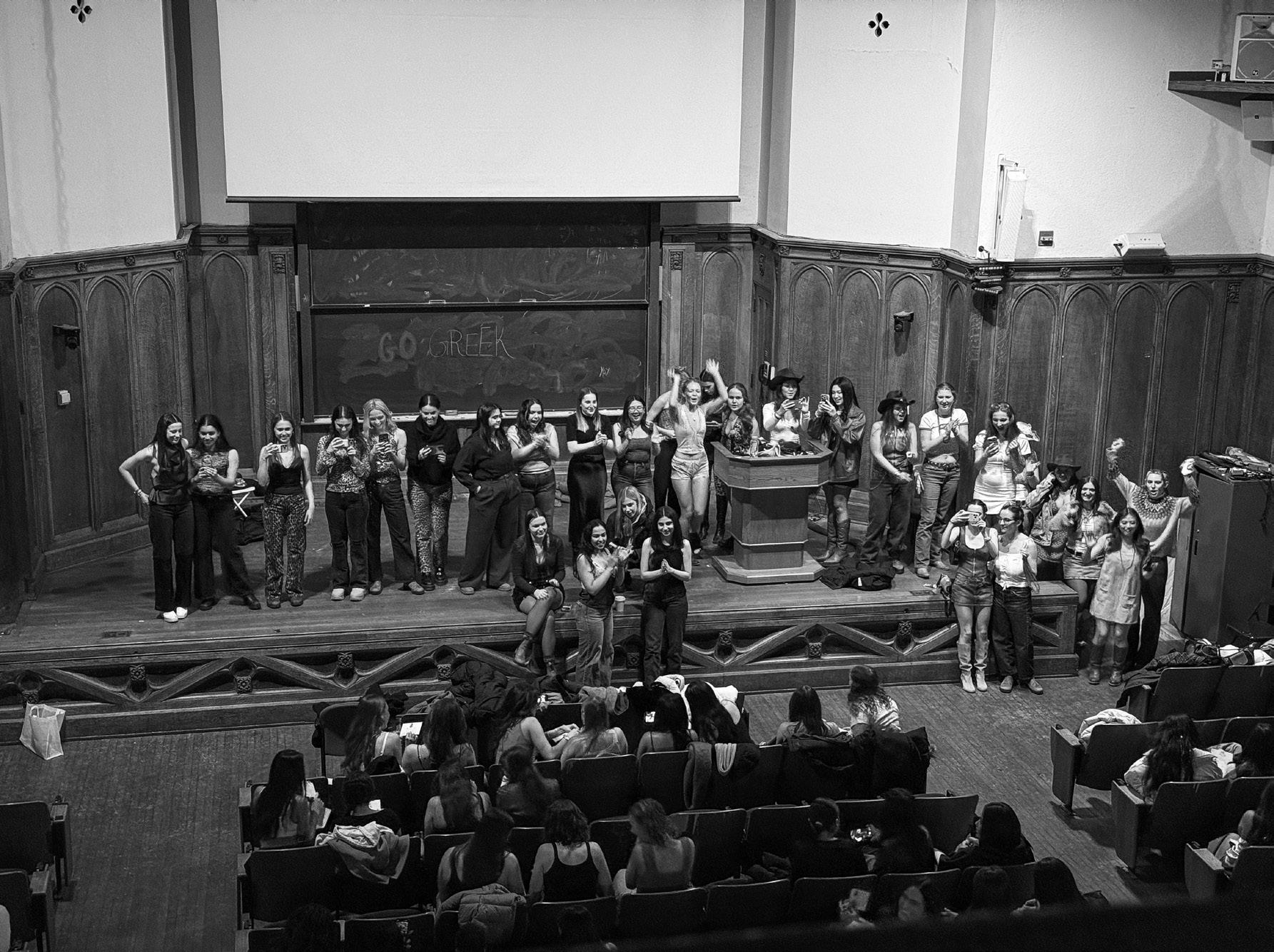

ANAYAH ACCILIEN / CONTRIBUTING PHOTOGRAPHER
The recent Republican nominee for New York City mayor spoke in front of the Yale Political Union in his signature red beret.
HAILEY YOUNG / CONTRIBUTING PHOTOGRAPHER
On Monday night, some 100 first years opened sorority bids at an event hosted by the Yale Panhellenic Council.
“Two fish in a tank. One says: ‘How do you drive this thing?’”
PETER KAY ENGLISH COMEDIAN
More English professors requiring printed copies of readings
BY JOLYNDA WANG STAFF REPORTER
This academic year, some English professors have increased their preference for physical copies of readings, citing concerns related to artificial intelligence.
Many English professors have identified the use of chatbots as harmful to critical thinking and writing. Now, professors who had previously allowed screens in class are tightening technology restrictions.
Professor Kim Shirkhani, who teaches “Reading and Writing the Modern Essay,” explained that for about a decade prior to this semester, she did not require printed readings. This semester, she is requiring all students to have printed options.
“Over the years I’ve found that when students read on paper they’re more likely to read carefully, and less likely in a pinch to read on their phones or rely on chatbot summaries,” Shirkhani wrote to the News. “This improves the quality of class time by orders of magnitude.”
As the course director for “Reading and Writing the Modern Essay,” Shirkhani leaves the decision of allowing technology in the classroom up to each individual instructor. Yet others have followed her practice.
Last semester, professor Pamela Newton, who also teaches the course, allowed students to bring readings either on tablets or in printed form. While laptops felt like a “wall” in class, Newton said, students could use iPads
to annotate readings and lie them flat on the table during discussions. However, Newton said she felt “paranoid” that students could be texting during class.
This semester, Newton has removed the option to bring iPads to class, except for accessibility needs, as a part of the general movement in the “Reading and Writing the Modern Essay” seminars to “swim against the tide of AI use,” reduce “the infiltration of tech,” and “go back to pen and paper,” she said.
Regarding the printing cost, Newton and Shirkhani both emphasized that Yale has programs to help students who need financial assistance paying for printing.
“I totally get that cost and the burden of that cost,” Newton said in an interview. “I kind of feel like there’s going to be a book in most classes that you have to buy, and the course package just sort of replaces a physics textbook.”
Spring semester courses offered a total of 34 TYCO packets this year, up from 20 at the same point last spring, according to archived versions of the TYCO Student Course Packet website. Fall semester courses increased from 30 packets in 2024 to 35 last semester.
TYCO Print is a printing service where professors can upload course files for TYCO to print out for students as they order. Shorter packets can cost around $20, while longer packets can cost upwards of $150 when ordered with the cheapest binding option.
Other English professors are maintaining preexisting
no-technology policies.
Professor Nancy Yousef, continuing from her approach at previous schools, has kept a requirement for printed readings.
“The English classroom is increasingly a kind of special place where it’s still possible to converse without the screen,” Yousef said in a phone interview. “AI only seems to make it more imperative to make sure that students are having a direct experience with the text.”
Yousef explained that literature courses are a “practice of attention and a practice of learning how to ask a good question.” Yousef said she hopes students come away from class with greater questions and increased engagement with the texts rather than “a set of bullet points that can go on a PowerPoint.”
Writing professor Anne Fadiman wrote to the News that she asks students either to buy the course packet or purchase physical copies of the books.
“When you read a book or a printed course packet, you turn real pages instead of scrolling, so you have a different, more direct, and (I think) more focused relationship with the words,” Fadiman wrote.
Professors who continue to allow technology in their classroom cite printing costs and concerns about paper usage.
Professor Stephanie Kelley does not require students to bring printed readings and allows technology “for accessibility, cost-related and environmental reasons.” While she
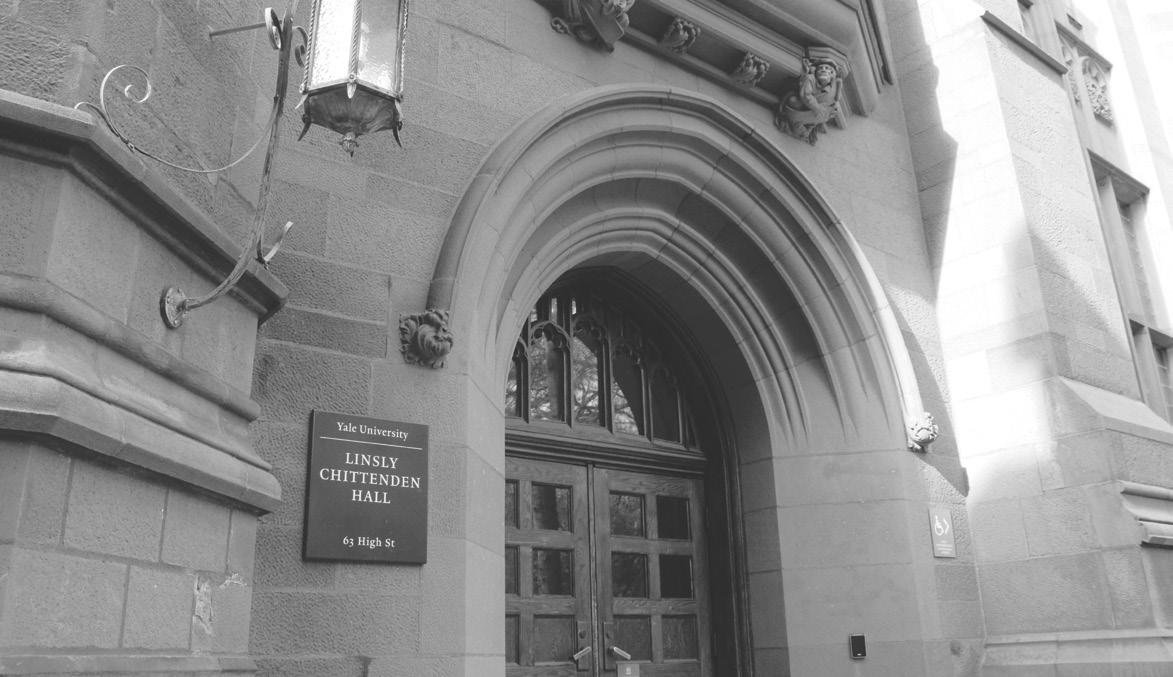
has noticed students being distracted during class, such as by online shopping, she wrote to the News that “it can be a lot of paper, most of it going straight in the bin once class is done.”
Kelley wrote that she wonders why the discussion of course material costs “more often falls on humanities classes rather than those with required textbooks that are often prohibitively expensive to rent or purchase.”
In the fall, Yale College Council
Senators Siena Valdivia ’28, Alex Chen ’28 and Alexander Medel ’27 — who is a staff writer for the News — sponsored a $3,500 stipend prioritizing firstgeneration, low-income students to receive financial aid for printing costs. Medel and Senator Aaron Lin ’28 also sponsored a $6,000 stipend to “alleviate the cost of course materials and textbooks for Yale College students.” These stipends come from the YCC budget.
“In an ideal world, printing would be subsumed into the fiscal responsibilities of the university. But under further priority reconfiguring in light of the endowment tax, any such changes face an uphill climb,” Chen wrote to the News, referring to the upcoming increase in the federal tax on Yale’s investment returns, which was enacted as part of President Donald Trump’s One Big Beautiful Bill Act last year. For Yale students, printing one double-sided black-and-white page on a University printer costs 12 cents.
Contact JOLYNDA WANG at jolynda.wang@yale.edu.
YCC approves second stipend fund for Adobe licenses
BY SASHA CABRAL STAFF REPORTER
The Yale College Council Senate approved a proposal for an Adobe Creative Cloud stipend on Sunday months after the September passage of a similar stipend proposal.
Like last semester, the senate
allocated $1,500 towards financing 42 full Adobe licenses for Yale students. According to Brendan Kaminski ’28, a Saybrook senator who sponsored both stipend proposals, the first Adobe stipend fund was “a pilot program,” the News reported at the time. Yale previously provided Adobe
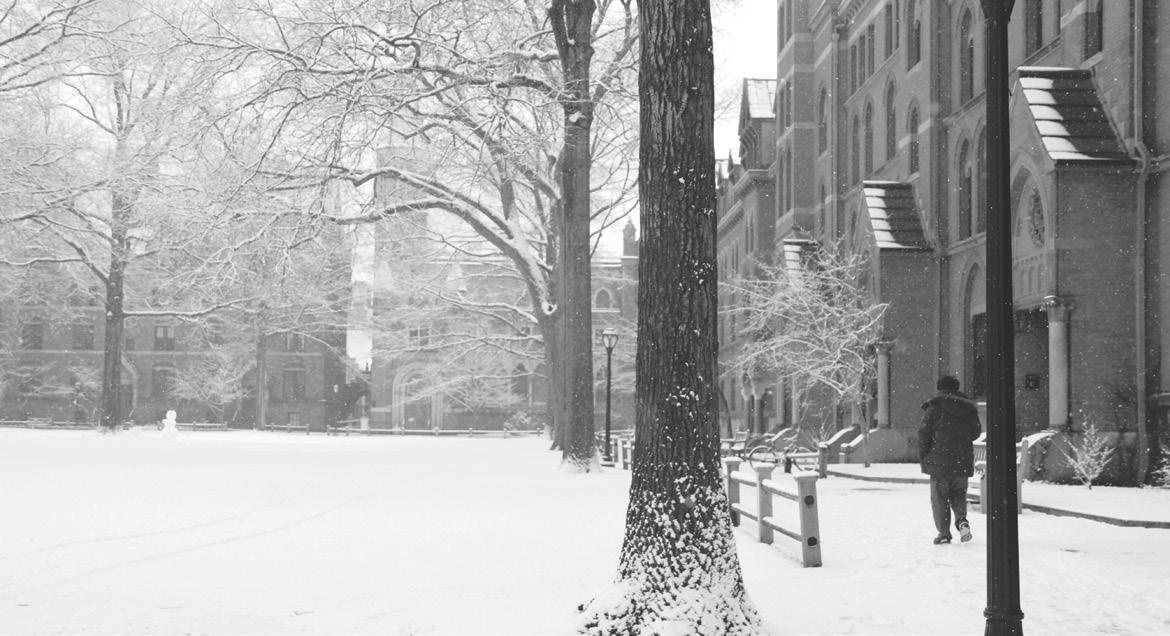
Creative Cloud licenses to all students and faculty but ended free access in July. The change came amid preliminary cost-cutting measures at Yale following the passage of a tax-and-spending bill with a provision to increase the tax on the University’s endowment investment income. Students and faculty must now pay $35.05 and $41.24, respectively, for a year-long license, according to the senate’s budget proposal document.
In his explanation of the most recent proposal, Kaminski addressed the “huge financial burden” that the cost of Adobe licenses may be for students in arts and design majors, creative clubs and campus publications. He also said that other clubs which might not seem immediately affected by Yale’s termination of free access to the software — such as the Yale International Relations Association — may also need Adobe for things like branding.
“This stipend program works a little differently than other ones
in that it’s not entirely first-come, first-served,” Kaminski said. “We successfully ran the first of this program in the first semester.”
According to the proposal document, the rubric the financial policy team will use to decide who gets stipends will grant preference to students who identify as firstgeneration, low-income, commonly referred to as FGLI, and who display “academic/extracurricular need.”
The rubric, which was also used for the first-semester stipend, states that if financial limitations occur and two applicants have been allotted the same preference in one category, “funding will be distributed based on the quality of blurbs submitted via the stipend application.”
According to the proposal document, the date of the application’s release will be communicated through a Yale College Council newsletter to the student body and through FGLI student newsletters. The application will open on a Monday and will close upon receiving 75 submissions or on
the following Friday, if fewer than 75 submissions are received.
In the meeting, Joseph Elsayyid ’26, a senator from Davenport College who supported the proposal, said he appreciated that the stipend demonstrates demand for Adobe products.
“The summary was that I think it’s a great idea for just framing it as encouraging the adoption of Adobe, as opposed for it being a financial aid tool,” Elsayyid said.
Kaminski added that the aim of the new stipend is to build upon the success of the first version.
“I think our intention with this is to kind of gather data for a full year so that we can then show there is this demand for reinstating Adobe from the administrative level,” Kaminski said.
The stipend proposal passed 27-0, with one yes by proxy. One senator was absent.
Contact SASHA CABRAL at sasha.cabral@yale.edu.
A senator, the governor and biotech leaders discuss industry issues
BY NICOLAS CIMINIELLO STAFF REPORTER
State leaders including Senator Richard Blumenthal LAW ’73 and Governor Ned Lamont SOM ’80 met over Zoom with executives from local biotech companies including Alexion, Arvinas and Bexorg on Monday morning.
The meeting’s agenda addressed tax credits, bipartisanship within the state legislature and external competition with Massachusetts and New York. Much of the discussion centered on the state’s response to the federal government’s cuts to research grants. The meeting was the latest discussion between state leaders about expanding Connecticut’s biotech industry, much of which is centered in New Haven around Yale and its medical campus.
“We are in the midst of the greatest assault on science and research scientific progress since maybe the Middle Ages,” Blumenthal said. “I view this gathering as a kind of call to action.”
The meeting began with some remarks from Dan O’Keefe, the commissioner of the Connecticut Department of Economic and Community Development.
O’Keefe touted the state’s recent economic growth and ability to respond to federal policy changes. He referred to several initiatives,
specifically in biotech, that have spurred growth, including a state grant of $50 million for the New Haven area and new programs focused on the revitalization of industrial land and the protection of strategic supply chains, which were threatened by federal tariffs.
“Believe it or not, I’m pretty sure we were the first state to announce a program specifically focused on an expected rise in protectionism,”
O’Keefe said, referring to the Strategic Supply Chain Initiative, which was launched before the second inauguration of President Donald Trump last January. “We didn’t know the president was going to go as aggressively as he did, but he was quite clear that a tariff regime was coming.”
During a panel discussion about the upcoming legislative session, the state legislature’s Bioscience Caucus co-chairs discussed fiscal actions to spur growth and investment in the sector.
State Senator Christine Cohen, a Democrat representing Guilford, mentioned several policies, including tax credits for investors as well as for research and development.
“We really want Connecticut to be a place not only where ideas and innovations happen, but where those innovations can really be incubated and commercialized,” Cohen said.
State Senator Tony Hwang, a
Republican who represents Fairfield, emphasized collaboration across political divides as he discussed workforce development initiatives.
“It’s incumbent for us as legislators to understand the critical economic impact and the multiplier that bioscience can create,” Hwang said.
The panel, “Ensuring a Competitive Fiscal and Policy Environment for Connecticut Life Sciences,” consisted of state representatives and biotech CEOs.
Zvonimir Vrselja, the CEO of neuroscience startup Bexorg, spoke about the intense competition Connecticut faces to become a national hub for biosciences innovation. Vrselja even mentioned that his own company had received compelling offers from nearby states, including New York and Massachusetts.
“I think we should not be asking how we can keep Bexorg here,” Vrselja said, “but how can we make Connecticut as a state a launchpad for national and global impact.”
Vrselja pointed out some of Connecticut’s disadvantages, including lower amounts of capital and workers. However, he felt that the state could still compete by continuing to invest in its entrepreneurial class.
“A group of companies here are generating data that does not exist
anywhere else in the world,” Vrselja said. “But I think we need to play to our advantages. We can’t beat Boston or New York or the West Coast through scale, but we can be smart and play on things that are already working.”
The event finished with remarks from Lamont, who spoke about the need to address the external issues that affect growth, including energy and housing costs. He specifically pointed to New Haven as an area for growth, mentioning his recent signing of a bill aimed at addressing the state’s housing shortage.
“I’m feeling pretty good about
certainly where New Haven is right now. We’ve added more new housing,” Lamont said. “People want to be in New Haven. It’s a city that was shrinking, now it’s a city that was growing.”
He also emphasized the need to support innovation, pointing to his own background as an entrepreneur. “I want to make sure we do nothing that slows down innovation,” Lamont said. “It’s the future of our economy and certainly the future of our state.” BioCT is located at 101 College St.
Contact NICOLAS CIMINIELLO at nicolas.ciminiello@yale.edu.
KIMBERLEY ANGELES / STAFF PHOTOGRAPHER Amid the rise of artificial intelligence and concerns about distraction, more English professors are turning to no-technology policies that prioritize physical books.
ALEX HONG / STAFF PHOTOGRAPHER
The Yale College Council Senate passed its second proposal to provide stipends to students looking to purchase Adobe Creative Cloud licenses.
MARISA PERYER / CONTRIBUTING PHOTOGRAPHER
The group BioCT convened politicians and biotech executives on Monday to discuss the biotech sector ahead of the state’s legislative session.
THROUGH THE LENS
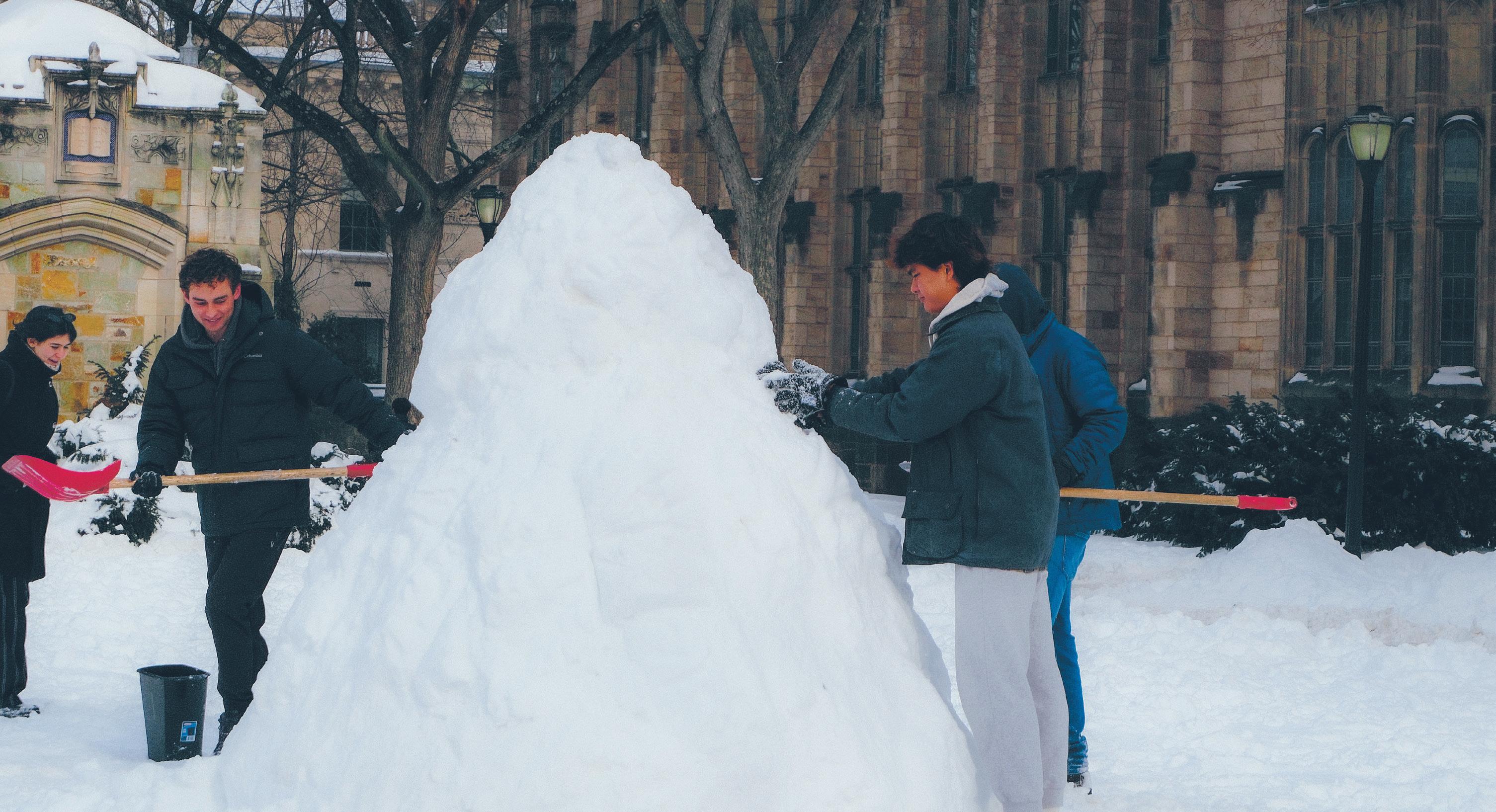
SNOW HAVEN
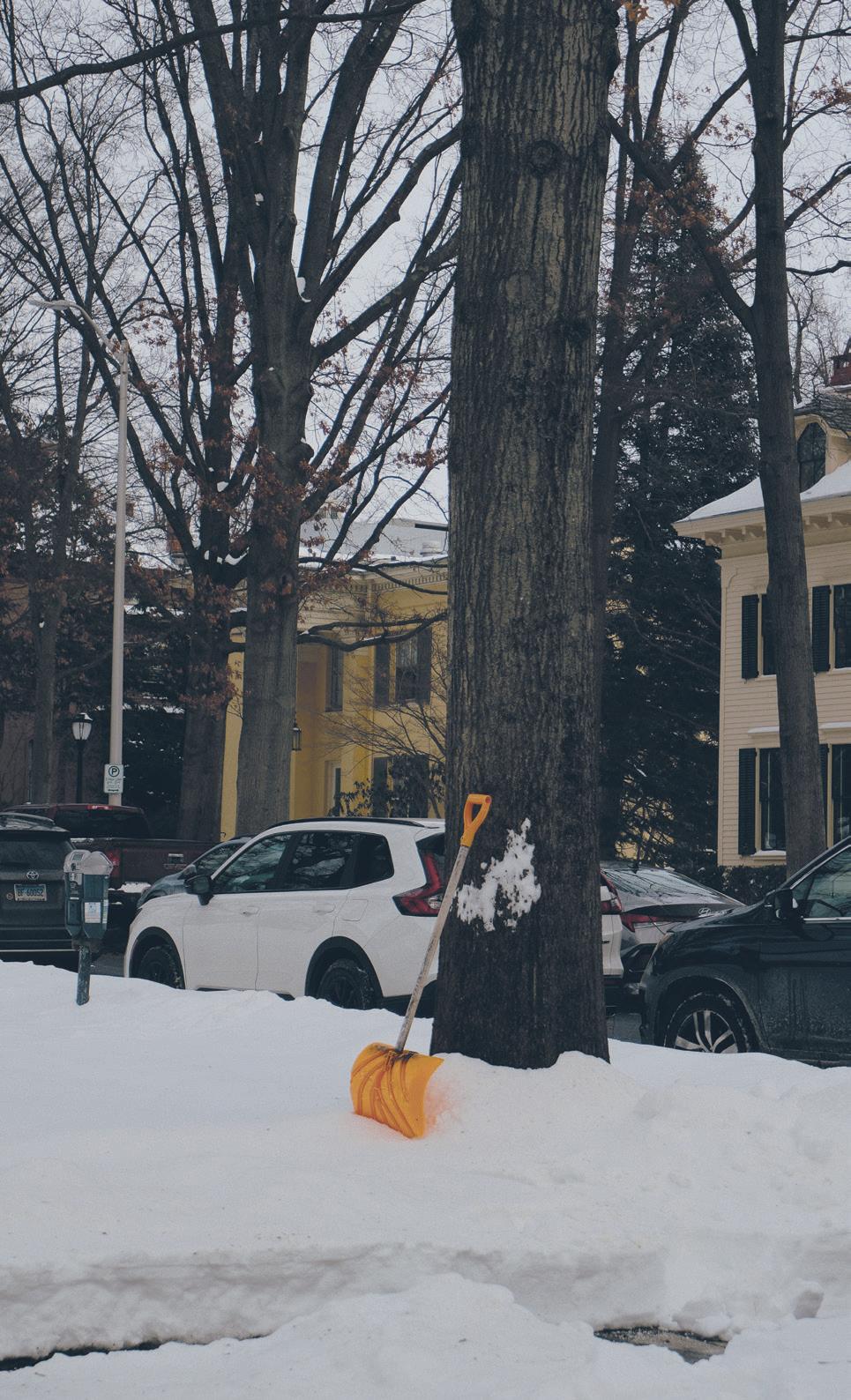
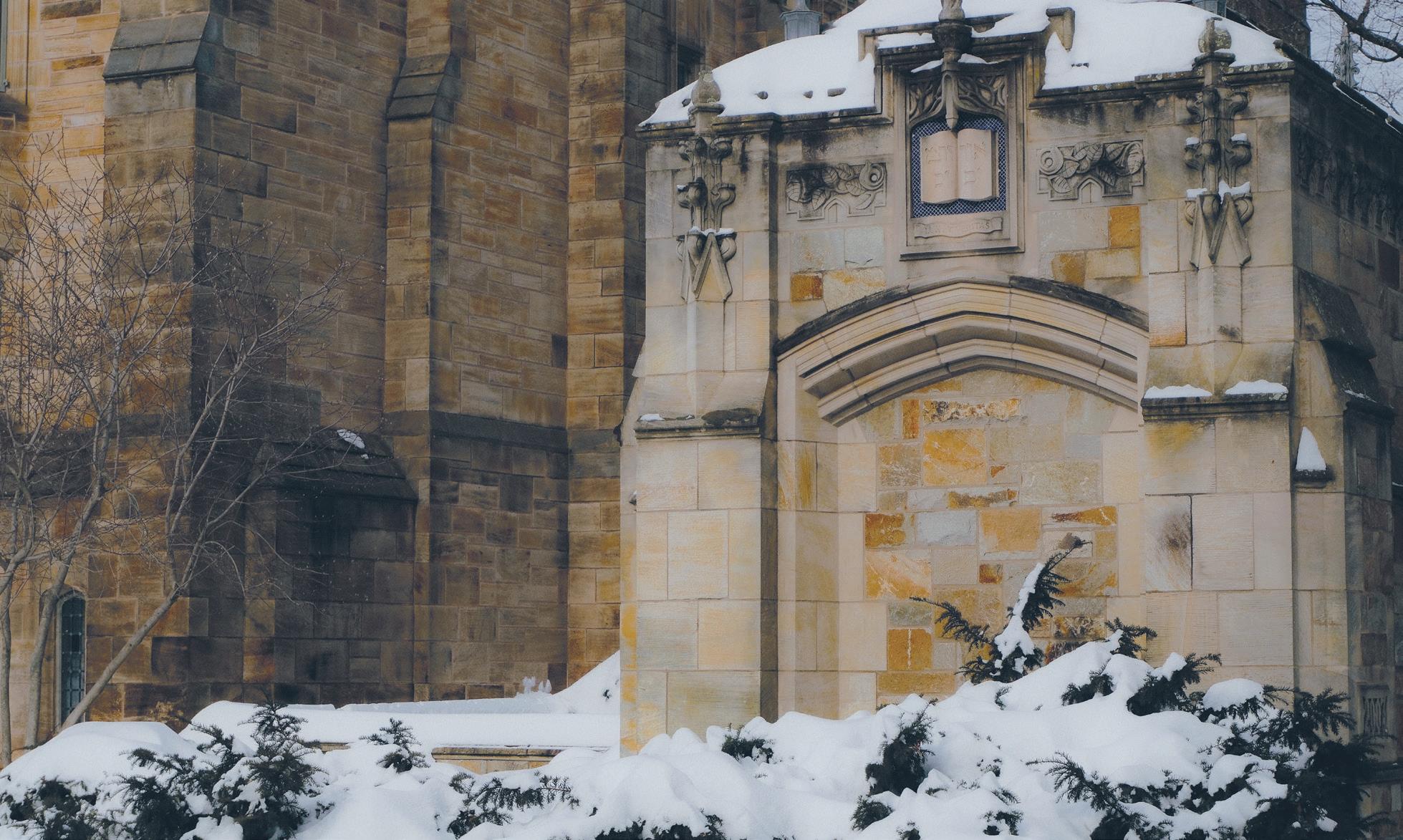
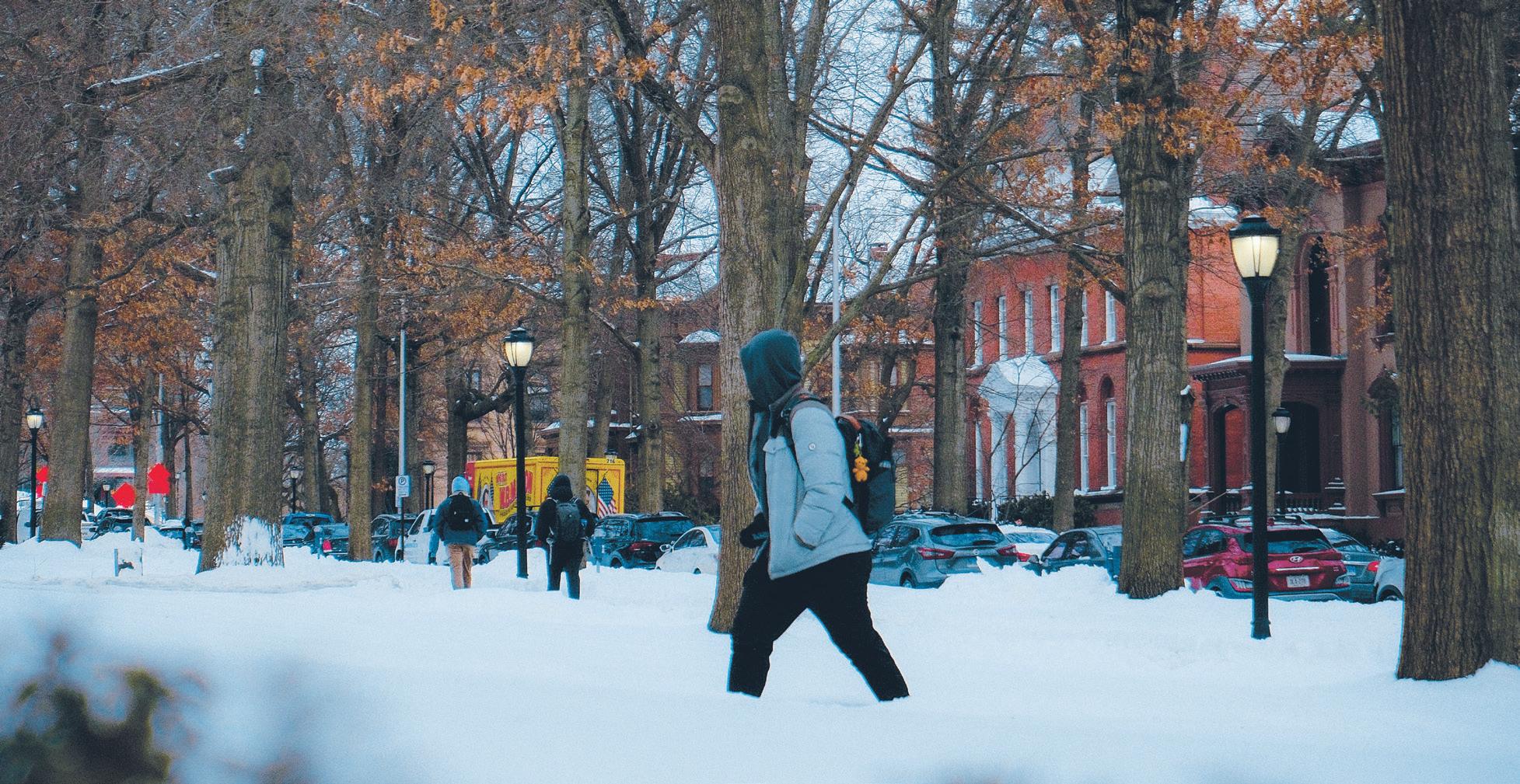

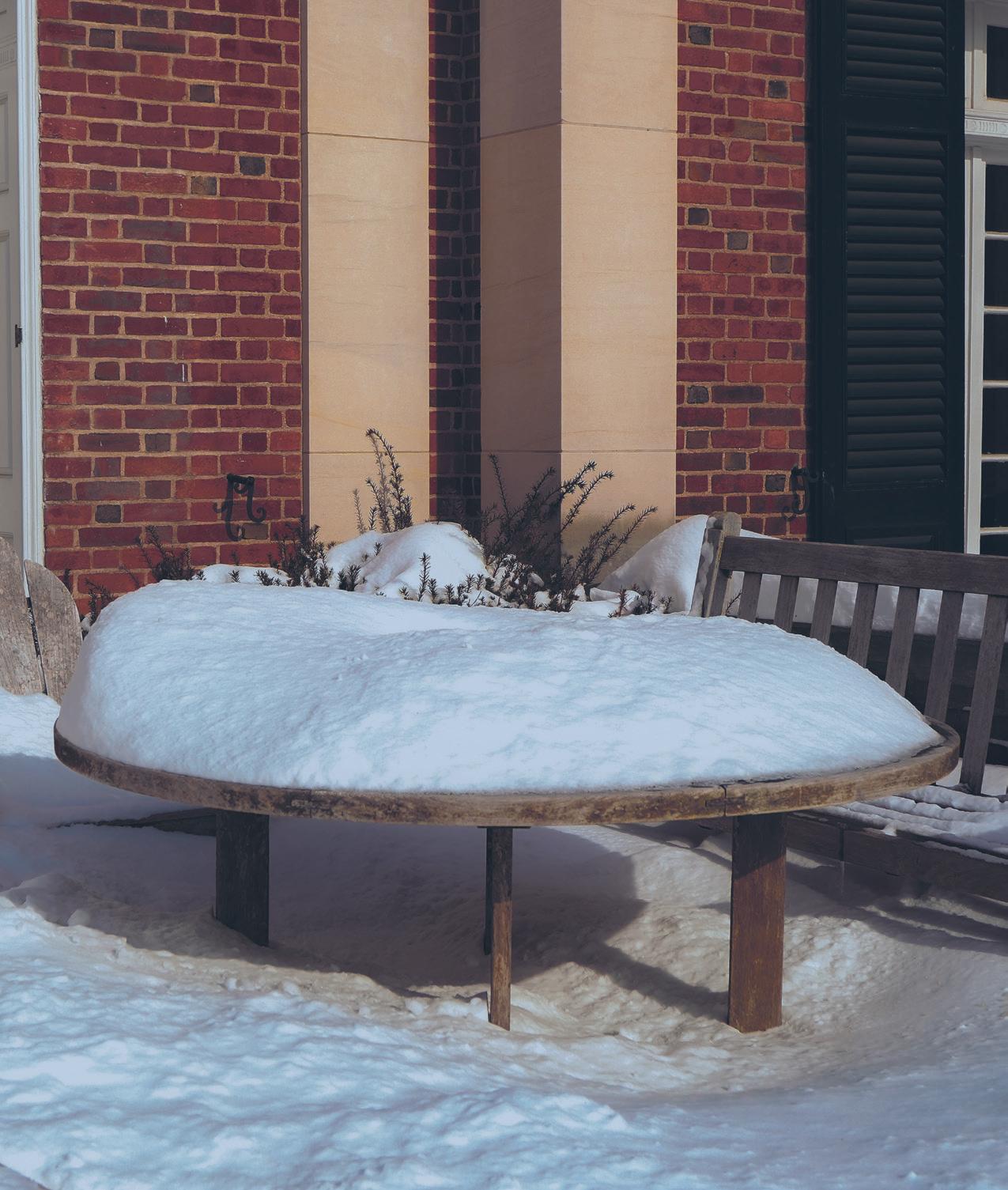
Photos by Ayman Naseer Staff Photogrpaher

Bulldogs look to extend nine-game winning streak in New York
WOMEN'SICEHOCKEY
BY AUDREY KIM STAFF REPORTER
The No. 10-ranked Yale Bulldogs (17–7, 11–5 ECAC) will travel to New York this weekend to face the Rensselaer Polytechnic Institute Engineers (6–22, 3–13 ECAC) on Friday and the Union College Garnet Chargers (9–15–3, 2–13–1 ECAC) on Saturday.
The Elis will be looking to keep their nine-game win streak alive, which has lasted almost two months since their win over Brown on Dec. 7.
Yale played both Rensselaer and Union earlier this month at Ingalls Rink and earned huge victories in both games. On Jan. 2, the Bulldogs beat the Garnet Chargers 6-3 and on Jan. 3, the Elis had an outstanding 7-2 victory over the Engineers.
“Coming back from an off-
MEN'SHOCKEY
BY LIZA KAUFMAN STAFF REPORTER
weekend the team is excited to get back to playing games,” Gracie Gilkyson ’26 wrote to the News. “I feel like we just played RPI and Union, and despite the high scoring games, neither were an easy match up.”
While the Bulldogs came up with two wins the last time they played these two teams, they expect this weekend’s games to be more challenging because they’ll be playing on their opponents’ home ice.
“We are expecting their best in their respective home barns but this is another big weekend for us to get some league points. The standings are really close coming down to the final couple regular season games so every point is that much more important,” Gilkyson wrote.
Yale is a member of the ECAC, a highly competitive conference of 12 teams that contains five teams currently ranked in the nation’s top 15.
The Bulldogs are currently ranked fourth in the ECAC behind Quinnipiac (21–5–2, 11–4–1 ECAC), Princeton (17–6, 12–4 ECAC), and Clarkson (18–7–3, 11–3–2 ECAC), respectively. Ending the season with a high conference ranking would give the Elis a significant advantage in the determination of playoff seeding. If ranked highly enough, a team can receive a first-round bye and home-rink advantage. Including the two games coming up this weekend, Yale has six games left in its regular season. All six are against conference opponents, meaning that each will have significant playoff implications.
The Bulldogs will face off against the Rensselaer Engineers at 6 p.m. Friday in Troy, New York.
Contact AUDREY KIM at audrey.kim.ajk234@yale.edu.
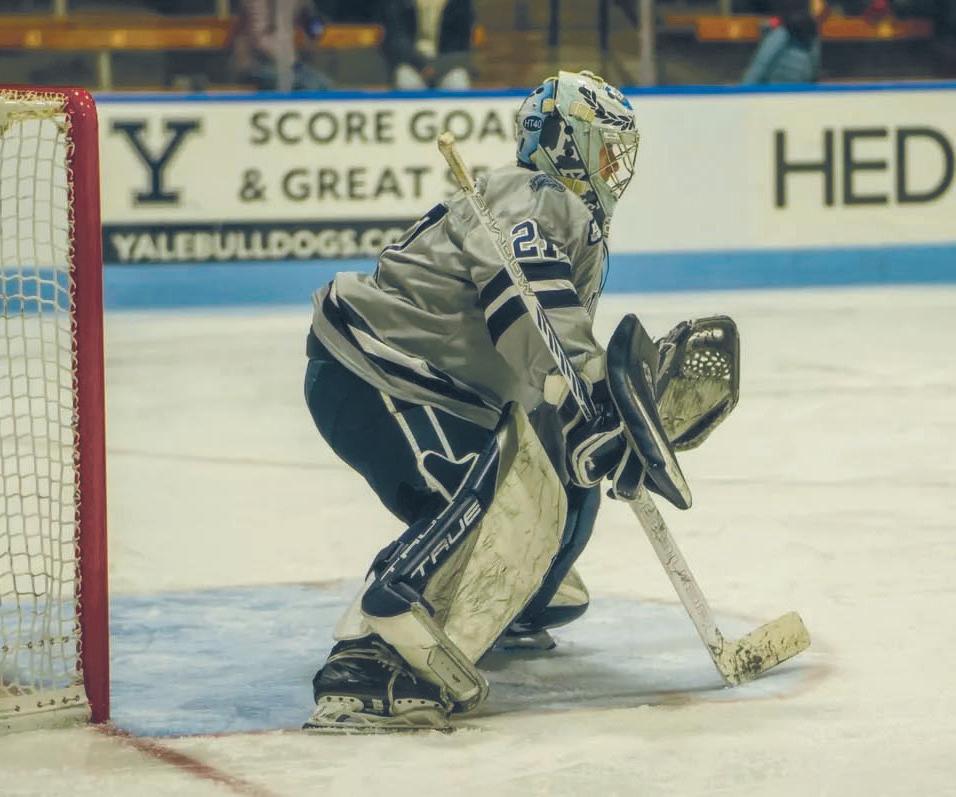
Bulldogs to host Cornell and Colgate at The Whale
The Yale men’s hockey team (7–13–0, 6–6–0 ECAC) will lace up their skates and return to con-
ference play this weekend when they welcome Cornell (14–5–0, 9–3–0 ECAC) and Colgate to Ingalls Rink. After hosting the Connecticut Ice Tournament last weekend, the Bulldogs will continue their homestand at The Whale on Friday and Saturday.
The Elis will face off against the No. 9 nationally-ranked Cornell on Friday night before taking on Colgate on Saturday night. This weekend will mark the second meeting of the teams this season. In November, the Bulldogs traveled to Upstate New York.
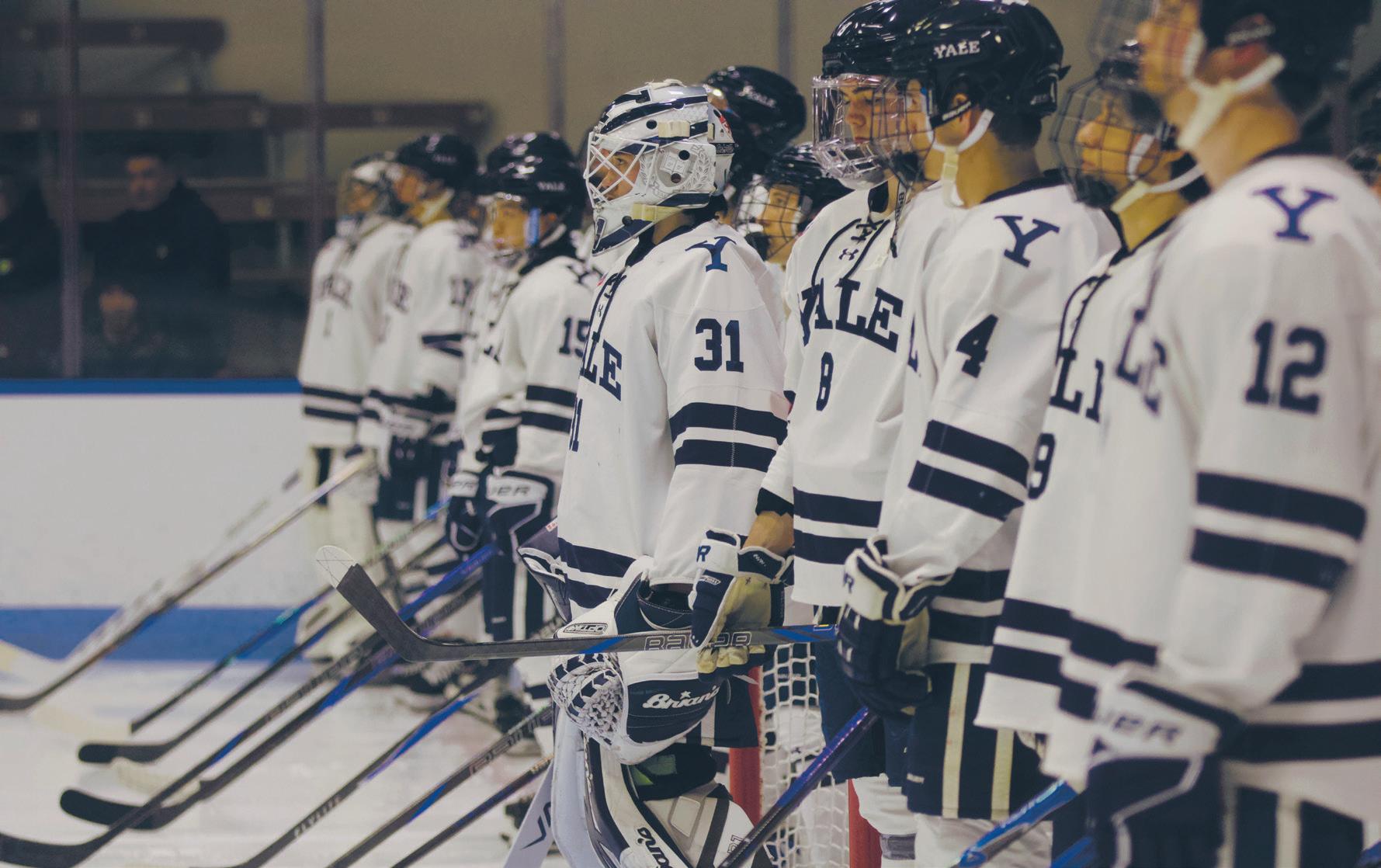
In an overtime nail-biter, Yale fell to Colgate 3-4 in Hamilton. With its victory, Colgate snapped its five-game losing streak. The following night, the Elis played Cornell in Ithaca, where the Big Red’s explosive offense resulted in Cornell’s 5-2 victory. With the home ice advantage this time around, the Bulldogs will seek a weekend sweep in the rematches. While Cornell has secured an impressive 11–1–0 record at home, its results on the road have been mixed. Early in the season, the Big Red fell to UMass Amherst (14–10–0, 7–7–0 HEA), No. 12 Dartmouth (14–6–1, 8–4–1 ECAC) and Clarkson (11–13–2, 5–7–2 ECAC). However, the Big Red have found success in 2026, losing only to Quinnipiac (19–5–2, 10–2–0 ECAC).
Cornell will enter Friday night’s game after a major weekend sweep during the Big Red’s Reunion Weekend last weekend. The team notched a 2-1 overtime victory in its rematch against the Big Green, and coasted to a 4-1 win against the Harvard Crimson (11–8–1, 9–5–0 ECAC). Meanwhile, Colgate has struggled to find consistency this season. The Raiders have fared better at home than away, with a 6–5–1 record there compared to a 3–8–1
record on the road. The team has shown improvement in the second half of the season. The Raiders picked up a 3-2 road victory in their first game of 2026 at the University of New Hampshire (11–12–0, 5–8–0 AEC) but then fell to the Wildcats the following night. Colgate then suffered a bitter 1-5 loss at home to No. 8 Quinnipiac before rebounding the next day when the squad earned a shutout victory over No. 30 Princeton (11–8–1, 7–5–0 ECAC).
The Raiders continued their homestand last weekend with games against Harvard and Dartmouth. While they fell to the Crimson 1-3, the Raiders picked up their most impressive victory of the season over Dartmouth, sending the Big Green back to Hanover with its second loss of the weekend in Upstate New York.
With both Cornell and Colgate coming in hot, the stakes are even higher for the Bulldogs. Yale, standing sixth in ECAC standings, will seek an upset over the Big Red, ranked fourth, and will also seek to ensure that the seventh-ranked Raiders stay below them. Puck drop is at 7 p.m. on both Friday and Saturday.
Contact LIZA KAUFMAN at liza.kaufman@yale.edu.
Yale, top-ranked Ivy team, to host Dartmouth and Harvard
MEN'SBASKETBALL
BY BRODY GILKISON STAFF REPORTER
The Yale men’s basketball team (15–3, 4–1 Ivy) will host both Dartmouth (9–9, 3–2 Ivy) and Harvard (10–9, 3–2 Ivy) this weekend as the Bulldogs look to strengthen their position atop the Ivy League standings.
The Bulldogs currently sit alone atop the conference standings, with the Big Green and Crimson both just one game back in Ivy League play, which is what the conference uses to determine seeding in the end-of-season Ivy Madness Tournament. The tournament, which first began in the 2017 season, pits the conference’s top four teams against each other in order to determine the Ivy League champion, and more importantly, who receives the coveted automatic qualifier bid to March Madness.
Yale head coach James Jones has led the Bulldogs to both a conference championship and automatic bid to March Madness for the last two years in a row, and four times total since the tournament’s inception eight years ago. Jones’ team this year appears to be on a similar trajectory because the Bulldogs hold advantages in the win column and nearly every other available metric.
Yale’s highly-touted offense has lived up to pre-season expectations. The Bulldogs currently rank as the 26th-best offensive team in the nation according to KenPom ratings, which use a holistic approach to evaluate teams by taking factors ranging form from opponent strength to shooting splits to adjusted efficiencies into account.
“When I’m on the court, there’s no doubt in my mind that any one of us can score at any given time,” shooting guard Riley Fox ’28 said
in an interview. “We’re all capable scorers and that makes it really hard on the other defenses.”
Yale’s two opponents this weekend both fall outside the top 175, with Harvard 150 spots behind Yale at 176th and Dartmouth coming in at a lackluster 214th. As far as the rest of the conference slate goes, Cornell, with the 54th-rated offense, is the only team left on Yale’s schedule whose offense ranks inside the top 150. However, the Big Red have struggled on the other end of the floor, ranking in the bottom 20 teams out of the 365 eligible Division I men’s basketball teams. As long as the Bulldogs can maintain something similar to their average offensive output for the rest of the season, other Ivy squads will struggle to keep up with Yale’s scoring prowess.
Yale has also improved its defensive play as the season has progressed. A year after losing
three-time Ivy Defensive Player of the Year Bez Mbeng ’25, Jones has still been able to coach his team to being the third-best scoring defense in the conference, holding their opponents to just 71.4 points per game.
Anchoring the defense and protecting the rim, Samson Aletan ’26 leads the Ivy League in blocks at just under two per game. With the lane considered a no-go zone, the rest of the defense has been able to settle down and play solid team defense as well. After surrendering 102 points on the road at Alabama, who has the third-best offense in collegiate basketball, the Bulldogs have allowed just 66.2 points per game on defense, which is the lowest total in conference play in the Ivy League this season.
“We all know what our jobs are and what we’re responsible for on the defensive end,” Aletan said in an interview. “It’s a credit to our
coaching staff. They do a great job all week preparing us and giving us every possible opportunity to succeed.”
Yale’s opponents this weekend both rank outside the top 200 in KenPom defensive ratings, which will likely cause problems for them as they take on the blazing hot Bulldog offense. Combining the on-paper gaps between the teams with what is shaping up to be a rowdy home crowd for Yale this weekend, the Bulldogs should have no problem handling either of these squads. Both Friday’s game against Dartmouth and Saturday’s contest against Harvard will tip off at 7 p.m. ET at John J. Lee Amphitheater. They will both be aired on ESPN+.
Contact BRODY GILKISON at brody.gilkison@yale.edu
LIZA KAUFMAN / PHOTOGRAPHY EDITOR
The Elis will attempt a weekend sweep after falling to the Big Red and the Raiders on the road earlier this season.

GO GREEK GO GREEK GO GREEK GO GREEK WEEKEND
GO GREEK
GO GREEK


The Many Social Clubs of Yale
// BY HANA TILKSEW
With the dawn of spring semester comes the dawn of Greek life-social club rush. So commence the weeks of registration, mixers, meals, and elimination rounds. Even though rush is all anyone can talk about this month, Yale isn’t USC or Bama. Having Greek letters in an Instagram bio isn’t the end-all-be-all of a social life. At a “smart people place” like Yale, people even talk about not rushing like it’s a badge of honor: “I would never audition to make people like me.” “Who wants to pay for friends?” “What do they even do besides partying three days a week?”
But if any Yalie thinks they’re above the performativity of auditioning for friends, let them ask themselves if any of the following apply:
• They’re in a performing arts group.
• They pretend to like sports/music/movies so they have something to talk about.
• They carefully curate their Instagram aesthetic to impress whoever might happen to look them up.
And anyone who thinks they would never pay for social experiences should ponder whether they fall into any of the following categories:
• They spent $70 to get into that one Harvard-Yale party.
• They’re going on a spring break trip they can’t actually afford.
• They buy new outfits for every event they intend on posting a picture from.
In reality, social clubs are everywhere on campus, even if they don’t come with an official banner. That seminar where half the people never do the reading, and the other half covers for them in class? Trust-based social club. That group of girls who all got played by the same guy, met up to rehash the details, and now get brunch every weekend? Trauma-bonded social club. That one insulated cultural group that gets oddly hostile if an outsider attends their publicly advertised events? Exclusionary social club.
Extrapolating further, the entire Yale machine is a social club. We all went through a multi-round process to get our “bid” when admissions decisions came out. And one day, many of us will pay membership dues to the Yale Clubs of New York, San Francisco, Los Angeles, or wherever we end up. Why judge the people who are honest enough to actually admit that they’re grouping themselves together to make sense of this messy, scary, awful world? We all are.
Contact HANA TILKSEW at hana.tilksew@yale.edu.
Being Seen
// BY FABEHA JAHRA
Rush week always makes campus feel slightly different — not louder, not busier, just more aware of itself. You can see it most clearly in the first years. The way they walk across campus with a little more intention. The way phones are checked a little too often, as if something important might happen at any moment. I don’t say this with judgment. I recognize it because I’ve felt it before — the sense that this week carries meaning beyond what’s actually happening. How you’re perceived might matter more than usual. That a handful of interactions could somehow shape your entire Yale experience.
From the outside, the pressure is obvious. Conversations feel loaded. Small moments get magnified. A casual interaction becomes something to analyze later with friends. There’s a sense that everyone is watching, even when no one really is. What strikes me is how quiet the pressure is. No one is forcing it. No one is explicitly saying this matters. It’s self-generated, built out of stories we tell ourselves about belonging, visibility and getting it right. Rush becomes a container for anxieties that were already there, about fitting in, being liked, finding your place.
But what rush really does — what really lasts — isn’t the outfits, the invites or the nerves. It’s the community that forms in and around it. The friendships that come from shared anticipation, shared disappointment, shared relief. The people you text afterward. The ones you walk home with. The ones who make the week feel survivable, even light.
That’s why the pressure can feel so heavy in the moment. It’s not about status or outcomes, it’s about wanting to land somewhere you feel held. Wanting to find people who feel like home. Rush becomes a stand-in for that desire, even though it’s only one of many paths to it. From a distance, it’s easier to see the truth: The week matters because of the connections it sparks, not because of how perfectly you navigate it. No one remembers the small missteps. What they remember — what you remember — are the friendships that carry you through the rest of the year.
So yes, rush can feel intense. The pressure feels real. But it’s never as serious as it feels. What matters isn’t how you’re seen in a single week — it’s the community you build and the friends you find, inside and outside of social club life, long after the week fades.
Contact FABEHA JAHRA at fabeha.jahra@yale.edu.
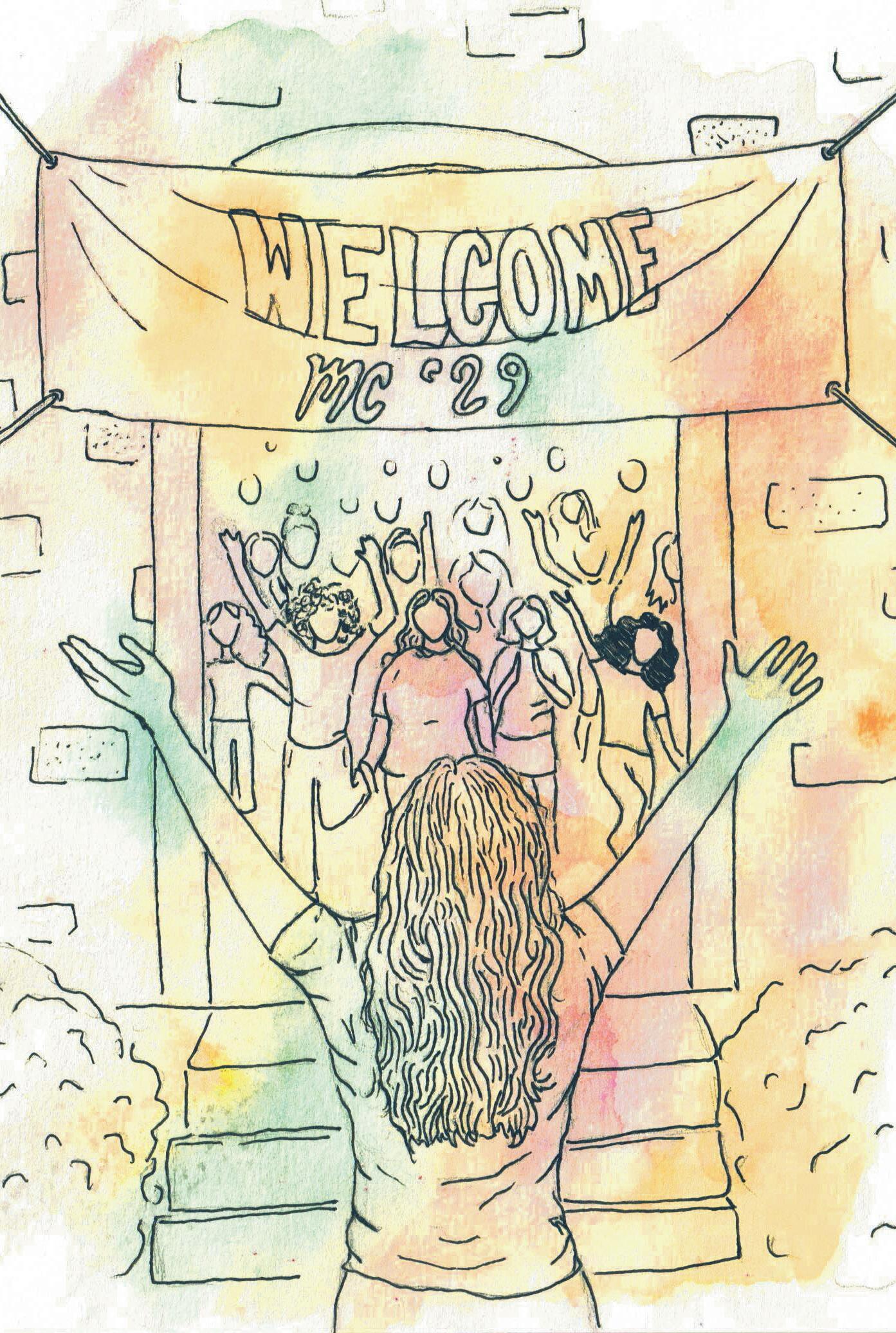
// BY REETI MALHOTRA
PERSONAL ESSAY
The Allure of Greek Life
It is a trite but true declaration that I had no intention of rushing a sorority when I arrived at Yale.
For much of my first-year fall semester, I was blissfully unaware of Greek life at this university. Fraternity names meant little to me, save for when my sophomore friends would send along a “just in case” email invite to get my friends and me through the door. They were places to party — the American answer to still being considered underage at 18 — rather than social organizations boasting brotherhood.
This same unfamiliarity extended to sororities, although it manifested differently. My image of American sorority life was informed exclusively by film and television. I pictured young women living together in a grand house, each of them primmed to perfection: neatly manicured pink nails, luscious Barbie hair, carefully curated outfit ensembles. Their sisterhood was enviable, unbreakable and declaratively lifelong, but their stereotypical concerns — men and marriage and future domesticity — were not my own. They were the epitome of “traditional” femininity — which I, knowingly, did not entirely fulfill.
Rather, I fell into the process of rushing. By which I mean my then-best friends and I, riding the high of the near-ending semester, fell off a table at a frat during its annual Christmas party and took out a row of girls I would later come to call my sisters.
For the next week, I was mortifyingly known as someone who took out a row of sorority girls.
My friends and I vowed to keep our nearcalamitous table break an embarrassing secret — an oath none of us, evidently, stuck to.
Soon after The Table Incident, sporadic conversation about the rush process began. I learned what social organization the girls we had collapsed on top of belonged to. I discovered what rushing was, what it would entail, and that nearly every single one of my girl friends was planning to throw themselves headlong into the process. I also realised that I knew very little about Yale’s social scene and its various entities, and that I would soon face a decision: to rush, or not to rush. That indeed was the question.
My answer, by now, may be obvious. Come January, I was shivering in my Panhellenic t-shirt as I walked from college to college into basement theaters full of of singing and screaming girls, where I spent four to five minutes in a frenetic, caffeine-fuelled daze forming connections that I hoped would yield a sense of belonging — and a bid.
I was euphoric. I love meeting new people and I love a challenge; rush offered both. The outcome, if I was successful, seemed worthwhile. Membership in a clearly defined community on campus. The ability to branch out and mix with hordes of new people. Merit scholarships and an extensive alumni network. A robust social calendar — which, for someone who had just entered the clubbing scene in Asia before becoming underage again and hated waiting on the steps to enter a townhouseturned-frat, was incredibly rewarding.
So, I spent a week in a stressed-outadrenaline-fuelled haze that culminated in a bid from the organization that I am now a part of. I had the time of my life at our annual bid night and proceeded to purchase several more cheetah print items for my closet. I now own two tops, a dress, two scarves, a coat, and a hat.
I met several women, including my beloved big, whom I hope to call my friends for life. I also met several women that I know I will not but admire nevertheless. I got to know people beyond my organization, who became familiar faces in extracurricular and social spaces — whether at the News or on a student film set or during study abroad — and dear friends. I was granted a merit scholarship. I rarely wait on fraternity steps, if ever.
Greek life was by no means the picturesque SEC stereotype I was once acquainted with, nor an easy social landscape to enter. I lay my personhood bare and left my self-esteem on the line as I vied for inclusion.
I’m a sorority girl at Yale and have been for a year, though I never would have thought that would be so. My family and friends back home remain surprised when I tell them. I don’t regret it.
Contact REETI MALHOTRA at reeti.malhotra@yale.edu.
LEND ME YOUR EARS : Pitchfork’s era of irrelevance
The decision to put the website’s album reviews behind a paywall gets a 0.0/10.
// BY CIELO GAZARD
To celebrate 30 years as the Internet’s “Most Trusted Voice in Music,” Pitchfork decided to ruin its website. Last week, the online music magazine launched a five-dollar-a-month subscription model, which restricts those who do not subscribe to being able to read only four album reviews per month. Those who wish to pay will have access to every single review on Pitchfork’s website, as well as the ability to comment under album reviews and rate albums themselves. The change comes after Pitchfork’s 2024 merger with the fashion magazine GQ, which resulted in massive layoffs and the permanent cancellation of its annual music festival in Chicago. Is this the final nail in the coffin for the once-independent music criticism website?
Five dollars a month doesn’t seem too bad a price for a subscription. For comparison, a digital subscription to Rolling Stone magazine costs $7.99 a month. But I do wonder how many people are actually willing to pay to read album reviews. As someone who gravitates toward older music, I do not engage with Pitchfork as a website to see the latest discourse on a new release. I formulate my own opinion on an album and then see what critics have to say about it. Some album reviews I’ve read are incredibly snarky and self-indulgent. But I have also found myself fawning over reviews rich with beautiful prose. I only found such reviews by scouring through Pitchfork’s immense archive, which is now closed off to those who are not willing to subscribe.
Pitchfork has found difficulty adapting to the social media age. Before being acquired by Condé Nast in 2015, Pitchfork was the place for indie and underground music lovers to read reviews written by one of their own. In the last 15 years, it has reviewed more mainstream pop and hip-hop acts, an important move for the website to reach a larger audience. However, as a result of some extremely obsessive fans
who have attacked writers online for criticizing their favorite artists, Pitchfork’s album review system has come under intense scrutiny.
Instead of a star system, Pitchfork uses a scale of 0.0 to 10 for its albums. In the press release following the announcement of the subscription model, Pitchfork released their “public guide to evaluating music using our 101-point scale.” This explanation, to me, is pointless. Not all scores are created equal. A six for a popular artist could be career-ending, but the same rating for a different musician would be well received. In the world of shortened attention spans, some people only engage with sites like Pitchfork to see the score and not read the rest of the review. These people, who have not actually engaged with the review, might simply be upset when their favorite artist receives what they perceive as a bad score.

This is why it is quite alarming that Pitchfork is now allowing subscribers to review albums themselves. There are plenty of websites where people can rate and review albums. Head of editorial content Mano Sundaresan stated that this change is supposed to reflect that “music and music criticism are inherently social.” This is what sites like Rate Your Music are for! Not everything needs to become a social media app.
If everyone is a critic, where does that leave those who want to write about music for a living? Pitchfork has long prided itself on employing freelance writers. The latest changes to its website seem like a dire warning of the website’s death. Although I’ve had my share of negative reactions to certain reviews and scores, places like Pitchfork are crucial for music discourse. Music lovers need music critics. Pitchfork’s increasing irrelevancy will not result in the death of music criticism, but rather the displacement of the music critic.
Contact CIELO GAZARD at cielo.gazard@yale.edu.
Snow envelops Cross Campus in white velvet. Frost glistens on the rooftops of Sterling Library. Icicles cling to — and then fall from — the edge of Beinecke, almost impaling passersby. Critters emerge from under the snow, searching for scraps to feed on, much like the people you’ve never seen before traversing through the basement with heaps of dining hall food to store in their dorms. Game of Thrones fans are speechless, because winter has already come. The stars and CNN foresee a potential Snowpocalypse part two this weekend. And the stars are never wrong.
Aries You haven’t given up your New Year’s resolution to get that hot summer bod. You’re in the gym every morning at 7 a.m., lifting tirelessly. Unfortunately, when it’s time for leg day, your knees will tremble and on your way home you’ll slip on the ice outside of your dorm. Ambition has its pitfalls — no pun intended.
Taurus You need to block Yale Date Drop from your email. Their spam messages are distracting you from meeting your deadlines. The only thing you should be shipped with is your Gcal, to whom you must be faithfully devoted to for the remainder of the semester.
Gemini You’re upset you didn’t get a bid from Aeris. You were caught up in the rush craze, but just as the snow eventually clears, so will your vision. You’ll realize that it’s not necessary to pay thousands of dollars in dues just to drink with your friends. As for “philanthropy” or whatever, you can donate the money that you’re saving to charity.
Cancer You’re debating whether to join Fence or Edon. As you complete your rush meals, ask yourself this question: would you rather be gay and artsy, or performatively gay and artsy? If you think you know which club is which, you’re probably wrong. They’re both pretending to be the same thing: cooler than they actually are.
Leo Just because your Zodiac sign is Leo does not mean you are destined to join Leo. The fact that you read this horoscope crap likely counts against you. They probably think believing in this space mumbo jumbo is gay (derogatory) and artsy (also derogatory).
Virgo You’ll hate your professor for the rest of the semester for making you trek to class through 12 feet of snow at 9 a.m. Don’t take it out on them during class, however. Wait until it’s time to evaluate them at the end of the
semester. Revenge is a dish best served cold, well after the snowpocalypse.
Libra Snow Darty (Snarty) tempted you to skip your Monday afternoon seminar — the same one you emailed the professor 10 times to get in to. The CourseTable gods are frowning upon you. To restore your karmic balance (and your GPA), you should forgo all parties for the foreseeable future, until you recover from your mysterious “sickness” and are able to go through a whole class without snoozing.
Scorpio Rush didn’t quite go as planned. You got into your top choice sorority, but your roommate did not. Be prepared for the upcoming weeks of unresolved tension, passive aggressive comments, and thinly veiled jealousy. She’s actually doing you a favor and preparing you for sorority life and sisterhood.
Sagittarius You prefer to spend the wintertime indoors, hibernating and avoiding the flurry of rush events. There’s bad news for your binging habits though. Your favorite television show will end eventually, even with its 11 seasons, 4 more seasons of spinoffs and 2 busted blockbusters. It’s good to get some sun once and a while — even though there is no sun in the darkness of winter. Or Bass Library.
Capricorn
You thought trekking through a blizzard was worth the dick appointment. Briefly, it was, warming you up on a cold winter night, but the illusion of comfort will shatter faster than snowballs. Is that itching from wearing too many layers? Or that unwashed wool sweater? You might not feel it yet but, it looks like you caught something — a cold, STI, or worse…feelings.
Aquarius
Stop posting on Fizz in favor of your social club and start balancing the books. Touse this. Bouse that. You’re worried about the wrong things. Let’s focus on the issue of nouse (no house) that is rampant amid Greek and non-Greek social life across campus. There are no parties to be had if there’s no backyard to throw them in.
Pisces You are debating whether or not to quit soccer because she said she doesn’t date athletes. Lucky for you, it’s only club soccer, and you absolutely should change your entire personality to fit someone else’s perception of you. That’s the entire point of rush season. Boola Boola.
Contact KIVA BANK at kiva.bank@yale.edu.
ILLUSTRATION BY JACINDA WEBBER
BANK
CULTURE
WHY WE RUSH
TherearegatewaysandboundariestocommunityatYale.
// BY INEZ CHUIDIAN
“I came to Yale to join a sorority” are the last words you would hear from any student on this campus. In a community of progressive intellectuals who are destined to be tomorrow’s changemakers, partaking in such a dated social practice seems absurd. Yet every spring, hundreds of freshmen trek through the New Haven winter to try their luck for a sorority or fraternity bid. Why?
Their answers vary: Some are looking for a network, some just want to party and some want another circle to ground themselves. All answers are fair, but my answer was the latter.
A year ago, I was a freshman, just one semester into college. While I felt settled, grounded by friendships and the comfort of being on the rugby team, I was still in awe of how vast Yale felt. In the sea of faces I walked past on the way to class, I was met by strangers. Coming from a small high school where everyone was a familiar face, I couldn’t shake the distance I felt from the student body. In an attempt to reconcile this distance, I rushed a sorority.
This was, without a doubt, a smart decision for me. After rushing Theta, I met girls that I never would have met otherwise. I found my place within the sea of unfamiliar faces, and my Yale became a little smaller. Although seemingly insignificant, the brief conversations I had throughout the rush process opened my eyes to corners of campus I had overlooked. Through rushing, I found family in my bigs and role models in my lineage.
Still, I can’t help but wonder how differently things might have unfolded had I started on the wrong foot. Rush — three rounds of short conversations that ultimately reduce people to rankings — is highly impressionbased, and I feel fortunate that I was caught at the right moment. I will admit that I’m a temperamental person. Under the weight of midterms or a packed week, I tend to retreat into an antisocial version of myself, functioning purely off my to-do list. I can’t say whether my rush experience, or the impressions I left, would have been the same if I hadn’t been floating through the lightness of syllabus week. Which makes me wonder, how many girls were caught at the wrong time, or gave a misleading first impression that closed their doors to a community that could transform their college experience? In a system that moves so quickly with such high traffic, how do we ensure that no one slips through the cracks of rush or pledging altogether? I can’t offer a solution or reform to these processes. Rather, I can offer some perspective that
might comfort those students who may have slipped through the cracks.
Greek life is flawed. As grateful as I am for the opportunities and relationships it bestowed upon me, there is no world where a system selecting individuals based on brief impressions can be fair. I didn’t realize this as a wide-eyed freshman. I believed that everyone would eventually find exactly where they were meant to be. That Yale, in all its abundance, would naturally sort us into the communities we deserved. But watching the rush process taught me otherwise. When belonging is filtered through brief conversations and mutual rankings, outcomes are shaped as much by timing and coincidence as by fit.
Freshman me also believed that social association was a prerequisite for a social life. I’ve come
SNOW BUCKET LIST
build a snow igloo makea sled jump
burysomeone in snow make snow cream
gosledding on a dining hall plate
eatthe yellow snow
build a snow version of your pet
COMIC BY LUCAS CASTILLO-WEST WEEKEND RECOMMENDS:
throw a snowball at your HOC faceplant in the snow
to see how untrue this is. While Greek life became one gateway to connection for me, it is far from the only one. Some of the most meaningful relationships I’ve formed at Yale exist entirely outside of social organizations. I entered the world of Greek life with the hopes of expanding my social circle, and it very well did. But in doing so, I also realised how niche this demographic of the student body was. Sororities and fraternities require shared values that allow members to find like-minded students – those who value sisterhood, socializing and a healthy work-life balance. However, these organizations come with prerequisites not every person can fill.
Yale is so much more than social clubs.
Surrounding yourself with people who fit a similar mold can only expand your
world so far. I am a firm believer that everyone we meet shapes us in some way, and when we engage with those whose positions differ from our own, that growth is magnified exponentially. I am so grateful to have rushed a Yale sorority. I’ve found lifelong relationships and broadened my horizon in a way I didn’t think possible without membership in a group like Theta. But social organizations aren’t the only way to do this. So to any student concerned for the extent of their social life, trust that your social horizons at Yale will broaden regardless of bid day results.
Contact INEZ CHUIDIAN at inezchristina.chuidian@yale.edu.
ILLUSTRATION BY SERINA YAN