

BY OLIVIA WOO AND SARA AGRAWAL STAFF REPORTERS
Nearly a decade ago, President Donald Trump’s victory over Hillary Clinton LAW ’73 in the 2016 presidential election sent shockwaves across campus. Students gave voice to their stunned disbelief in a “primal scream” outside Sterling Memorial Library that election night.
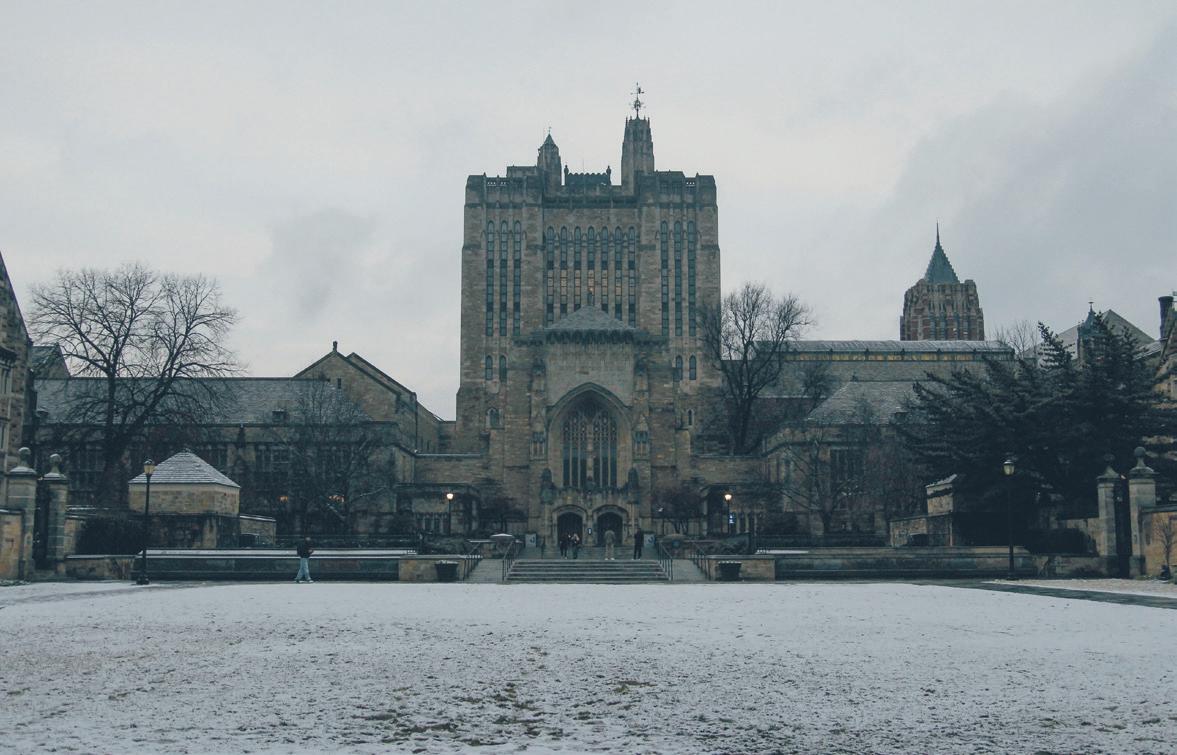
Yet students entering and exiting Sterling on Tuesday said they had few reflections on the oneyear anniversary of Trump’s second inauguration. Among students who did speak, some described feel-
ing insulated from the president’s aggressive actions, even as visa revocations and budgetary restrictions stemming from Trump’s policies have reverberated on campus. Since Yale faculty-led rallies gathered hundreds of demonstrators last April in protest of Trump’s attacks on research funding and international students, no large protests against the federal government have taken place on campus. The mood among the predominantly liberal undergraduate population since Trump’s victory in November 2024 has
SEE STUDENTS PAGE 4
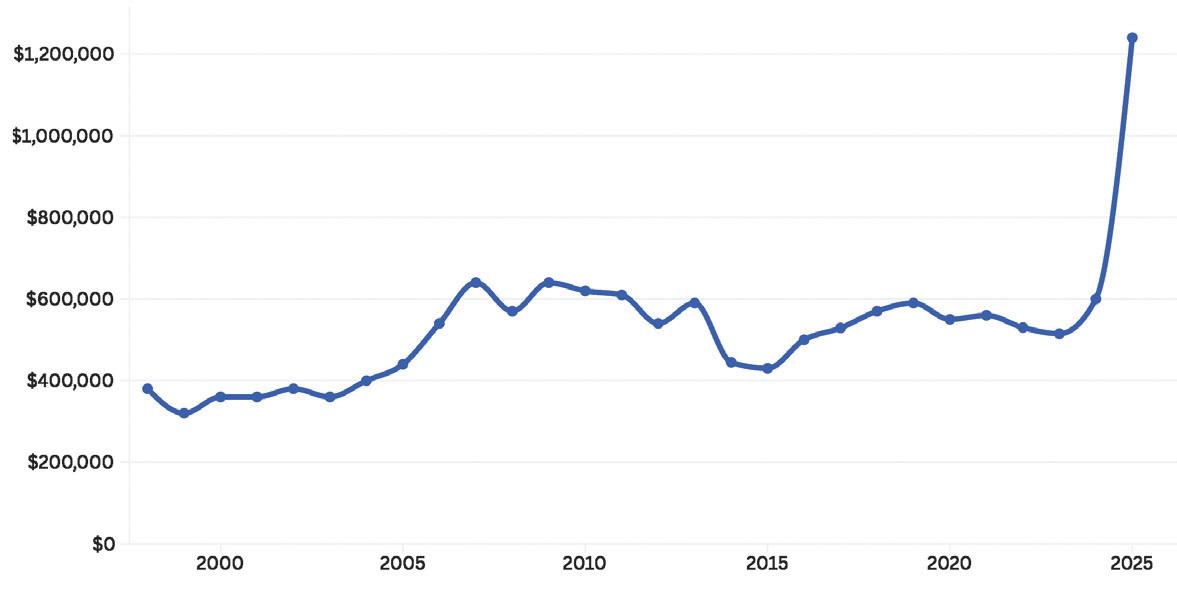
Yale's federal lobbying expenses, 1998-2025
Source: United States Senate Lobbying Disclosure, Open Secrets Graph: Adriana Petrizzo
BY JAEHA JANG AND GILLIAN PEIHE FENG STAFF REPORTERS
BY ISOBEL MCCLURE AND LEO NYBERG STAFF REPORTERS
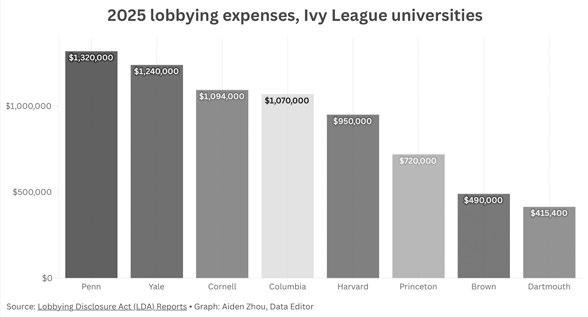
Yale spent more money lobbying the federal government last year than it had in any year since 1998. The University’s lobbying expenditures during 2025, largely coinciding with the first year of President Donald Trump’s second term, totaled $1.24 million — more than double the amount spent in 2024. Public disclosures first released on Tuesday and later amended on Wednesday reveal that Yale spent $300,000 on lobbying between October and December, a rate of spending that was comparable to the $320,000 and $370,000 spent in the second and third quarters of 2025,
respectively. Yale first disclosed its lobbying expenditures in 1998 to comply with legislation that currently requires the disclosure of lobbying-related incomes or expenses over $5,000.
The University’s record-breaking expenditure coincided with a year of consequential Congressional legislation and executive actions related to universities, including widespread cuts to federal research funding and a provision in a tax and spending bill that will increase the endowment tax rate applied to the wealthiest universities, including Yale, from 1.4 to 8 percent in July.
Before the fourth quarter of 2025, Yale was outspending its
Lydia Smith GRD ’26, who is completing her master’s program in European and Russian Studies and applying to doctoral programs this year, felt increasingly pessimistic as she heard of doctoral student enrollment cuts across the nation. Then she learned that Yale is following suit. Administrators recently revealed a three-year plan to reduce enrollment in the Graduate School of Arts and Sciences by about 13 percent in the humanities and social sciences and by about 5 percent in STEM programs. The measure came as the University tightens its budget in anticipation of an upcoming increase in its federal endowment tax under President Donald Trump’s signature legislative achievement.
BY ELIJAH HUREWITZ-RAVITCH STAFF REPORTER
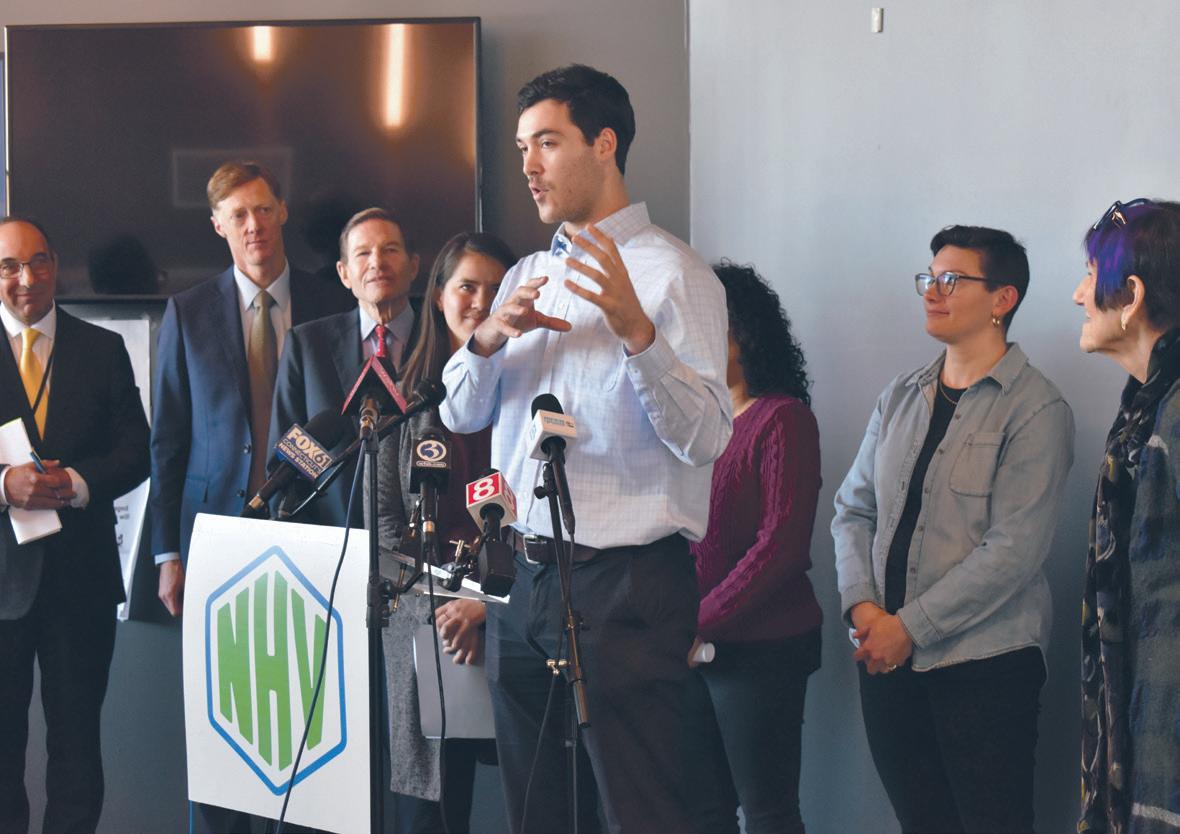
A Yale law student who began his political career representing downtown’s Ward 1 on the Board of Alders and then spent two terms representing a neighboring district launched his campaign for a seat in the Connecticut House of Representatives on Wednesday. Eli Sabin ’22 LAW ’26 wrote in a text message to the News on Tuesday that he would officially launch his campaign on Wednesday. Sabin, 26, is mounting a bid to unseat Patricia Dillon, 77, a fellow Democrat who has represented the state House district
SEE SABIN PAGE 5
BY ELIJAH HUREWITZ-RAVITCH AND NELLIE KENNEY STAFF REPORTERS
Less than a month after most of New Haven’s alders were sworn in for their terms, a neighborhood that includes parts of downtown and East Rock is already preparing to elect a new representative.
Nestled between Yale’s campus and I-91, New Haven’s Ward 7 — described by residents as “warm” and “neighborhoody” — contains streets of imposing federal-style houses and multi-family homes, a large apartment complex and at least nine law offices.
The ward is set to hold a special election for alder on Feb. 17 after Eli Sabin ’22 LAW ’26, who
represented the ward for four years, stepped down less than an hour before he was set to be sworn in for a third term. Sabin recently announced his candidacy for state representative. Many Ward 7 residents interviewed by the News said they were aware of the special election but would not consider themselves “informed.”
“The ward is a big mix,” former alder Abigail Roth ’90 LAW ’94 said in an interview. “It’s a great part of the city to live in because you’re very close, and people can easily get downtown where there’s a lot happening.”
Krista Schmidt, 31, who said she’s a two-year resident of Ward 7, answered the door on
Tuesday alongside her dog, Butch. She said in an interview that the ward is a “mixture” of “older people” whose families have lived in the ward for years and “professionals,” such as professors, teachers and nurses. Schmidt said she was very connected to the town she grew up in but has struggled to “access good information about local boards” since she moved to New Haven, she said.
Several other locals echoed the sentiment. Sahil Patel, the owner of the New Bottle Shop, a liquor store on Orange Street, said in an interview that he heard about Sabin’s resignation through a
SEE WARD 7 PAGE 4

BY ELIJAH HUREWITZ-RAVITCH AND EVELYN RONAN STAFF REPORTERS
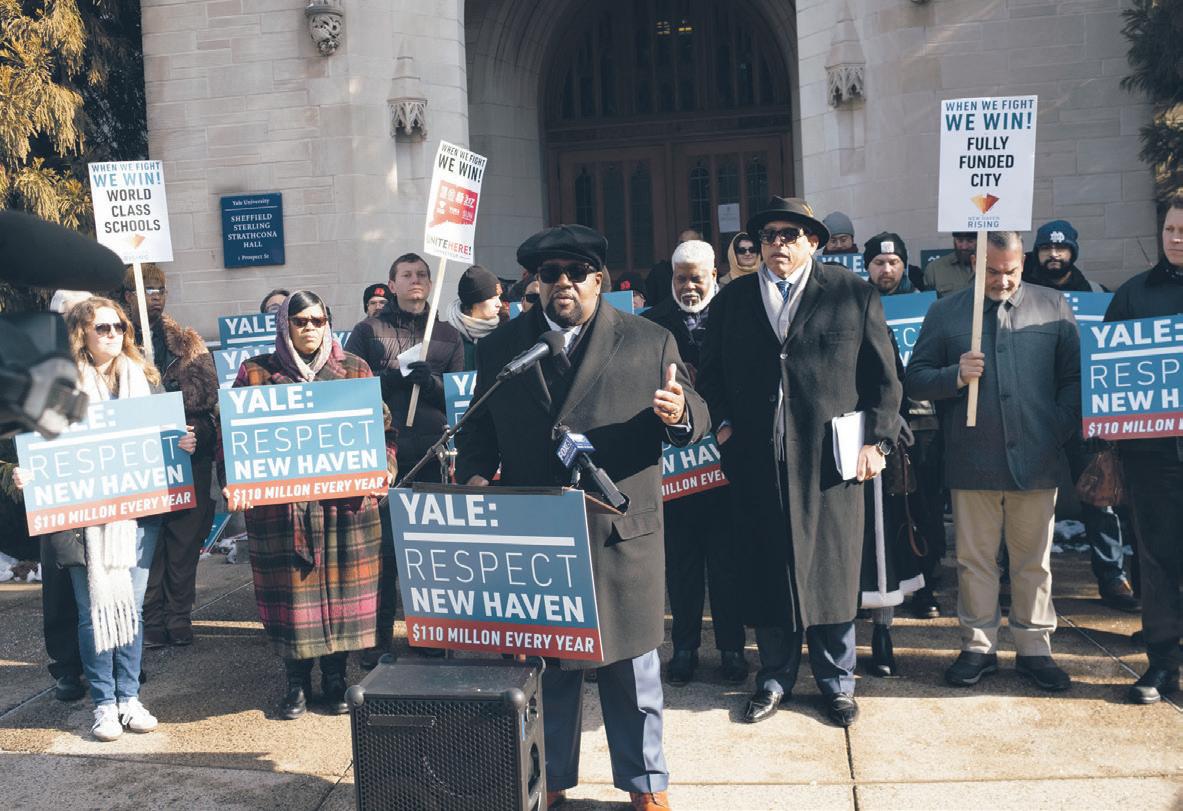
Yale’s unions are demanding that the university give $110 million to New Haven next year — some $94 million more than it is set to under a 2021 agreement.
On Monday, the leaders of the main unions of Yale employees — UNITE HERE Locals 33, 34 and 35 — joined clergy members, community organizers and city leaders including Board of Alders President Tyisha Walker-Myers to demand the university increase its planned annual voluntary contribution to New Haven more than sixfold for this coming fiscal year. They spoke in front of Sheffield-Sterling-Strathcona Hall, home to University President Maurie McInnis’ office.
Under the terms of a six-year deal reached in 2021, Yale has given New Haven sums of some $23 or $24 million each year. But in the final year of that deal — the 2026–2027 fiscal year, which begins on July 1 — Yale’s payment is slated to drop to $16 million. Negotiations between the city and the University for another next multi-year deal began in early October, Mayor Justin Elicker told the News last month. He said then that he hoped the next agreement would cover the 2026-27 fiscal year and head off the decrease in funds, even as Yale has tightened its belt in anticipation of an increase in the federal university endowment tax. Alexandra Daum, Yale’s associate vice president for New Haven affairs and University
January 23, 1979 / Organization instructs new, seasoned pilots
By Jennifer Mirksy
The Yale Aviation Agency offered flight training for Yale community members. While recognized as a campus organization, the agency operates as a legally separate corporation from the University and gains revenue from voluntary contributions and flying fees. Students are able to adjust program hours around their schedules, with 50 hours of private lessons costing around $2,300.

By Olivia Woo
On Jan. 20, 2026, reporter Sara Agrawal and I set out to gauge the mood among Yale students one year since President Donald Trump took office for the second time. As the real-feel temperature dipped into the teens on Tuesday night, Cross Campus was nearly deserted. Crunching through the remaining bits of snowy grass, we approached students flitting to and from libraries and dorm rooms, and were pleasantly surprised by the candor of many of our peers, even in below-freezing conditions. We were able to speak both to several international students who spoke honestly about their thoughts on the Trump administration and to student leaders who stressed their commitment to standing up for the student body amidst federal attacks. By the time we’d accumulated a critical mass of interviews, our fingers had barely had time to begin to turn numb.
Read
U.S.

TIMOTHY RIEMANN
As an active duty Marine Corps officer studying at the Jackson School, I never expected to have an opinion about campus safety. That changed over Christmas break.
My niece is an engineering major at Brown University. She was present in the Barus & Holley building, where two students were killed in a mass shooting, minutes before the shooter walked in. She sheltered in place in a nail salon just a block away before I arrived from New Haven to pick her up. Needless to say, campus safety has been on my mind since then.
Shortly after this awful incident, I received a Yale Alert notification. In my experience, these emails usually include details about where an incident occurred, a general description of what happened, and physical details about the alleged perpetrator — height, clothing, facial hair and whether a weapon was present. One detail, however, is consistently absent: race.
Yale’s omission of race from safety alerts at first makes sense. The Yale administration might be concerned about misidentification, racial profiling and the harm that can result if early reports that include race are later proven false. Those risks are real, and I do not intend to minimize them. Yet they must be weighed against another risk: that withholding factual information degrades the effectiveness of alerts intended to help Yale students protect themselves. While this omission may appear well intentioned, to me, it raises a question about how Yale defines safety, transparency and trust on campus. I approach this issue not as a theorist, but as someone whose professional life has involved risk assessment and decisionmaking. In military and emergency contexts, incomplete information is often more dangerous than uncomfortable information. Known information must be clear, concise and complete. When the Yale community is given deliberately incomplete information, they tend to fill the gaps with unfounded assumptions, rumors and speculation, none of which improves safety.
Race is an identifying characteristic, no different from height, clothing, gender, hair color or eye color. Law enforcement agencies, including the New Haven Police Department, routinely include race in “be on the lookout” alerts because it helps narrow the search and improve situational awareness.
There is also an equity concern embedded in this practice that needs to be reexamined. Yale leaders must contend with the reality that they are signaling, however unintentionally, that race is a uniquely dangerous piece of information and something the adults that make up this community cannot be trusted to handle responsibly. Transparency applied
unevenly is a value judgment about what information is deemed acceptable and what information is believed to cause more harm than good. To me, it signals that the University prioritizes the potential or theoretical harm caused by including race as an identifying characteristic over the very real safety of its own students, faculty and staff.
I recently reached out to Yale Public Safety and asked why information about race was not included in Yale Alerts. The department told me that “under the Clery Act, institutions are not required to include — and are generally discouraged from including — the race or ethnicity of a suspected offender in a Timely Warning.” The Clery Act, signed into law in 1990, requires colleges and universities receiving federal funding to disclose campus crime statistics and security policies, and to provide timely warning of threats to improve campus safety. I took the time to read all 39 pages of the Clery Act and did not find anywhere where colleges are “discouraged” from including race or ethnicity as a part of their reporting.
In fact, the Department of Education’s Clery Act Appendix to the Federal Student Aid Handbook states that, “in an emergency or a dangerous situation, an institution must, without delay and accounting for the safety of the community, determine the content of the notification and initiate the notification system.” Far from discouraging a particular piece of information, this guidance places the responsibility on the institution for determining which information to send via alerts. I need to be clear on this point: I’m not arguing for speculation. If race is unknown or victims are not certain, then information about race must be left out. When information is known and reliable, however, withholding it serves institutional interests, not community safety. Yale markets itself on intellectual rigor and trust in its community’s judgment. Its safety protocols should reflect those values rather than contradict them. Transparency is not a courtesy. In matters of student safety, it’s a baseline obligation. Yale can either trust its community with complete information or continue a policy that prioritizes optics over effectiveness.
The recent shooting at Brown reminds us that Ivy League campuses are not immune to serious violence, and when those moments arrive, the Yale students, faculty and staff deserve all available facts to make informed decisions about their safety.
TIMOTHY RIEMANN is a Lieutenant Colonel in the United States Marine Corps and the U.S. Marine Corps Visiting Fellow at Yale. He can be reached at timothy. riemann@yale.edu

The news that the U.S. government plans to dismantle the National Center for Atmospheric Research, abbreviated NCAR, should alarm every institution that claims to value science, truth and the future of the planet. On Dec. 17, 2025, Yale Climate Connections documented the Trump Administration’s announcement that NCAR — one of the world’s most important climatescience institutions — will be broken apart in 2026, with its climate research eliminated entirely.
Unless Yale steps up to save NCAR’s research in a move that would both cement Yale’s reputation as a global leader and ensure Yale’s preeminence in the vital field of climate science for decades to come.
Russell Vought, director of the United States Office of Management and Budget, justified this decision by claiming that NCAR strayed from its mission by studying climate change and is “one of the largest sources of climate alarmism in the country.” That is about as true as saying that we should shutter our fire departments because they have become hotbeds of “fire alarmism.”
For the scientific community, this is not just a policy shift. It is scientific vandalism.
A question now falls to the institutions that can act — those with the resources, the talent pipelines and the moral responsibility to protect scientific integrity. What will they do? Cower in shock? Or save the day?
At the top of that vanishingly short list of institutions sits Yale University. I say that not only as a Yale College and Law School alum who treasured my time as a “bulldog,” but with clear-eyed certainty.
For centuries, Yale has stood at the forefront of scientific inquiry, nurturing generations of scholars whose discoveries shaped the world. In recent years, the University deepened its commitment to climate research, investing in the Yale Program on Climate Change Communication, the Yale Climate Connections platform and much more. These embody the University’s resolve to confront the climate crisis with cutting-edge science and public engagement. Looking ahead, Yale aspires not only to safeguard science
but to lead it — positioning itself as a global star in advancing knowledge for a sustainable future. It will be hard to be a star in a collapsing black hole of a field, which is the risk for climate science if NCAR fails.
NCAR is not a fringe operation. It is a 65-year-old, globally respected research center funded by the National Science Foundation, the mothership of climate science and the birthplace of foundational tools like the Community Earth System Model — one of the world’s most widely used and rigorously tested climate-modeling systems. Scientists across the globe rely on NCAR’s data, modeling and training.
European climate institutions warn that dismantling NCAR will weaken the world’s ability to understand extreme weather, atmospheric dynamics and longterm climate risks. Closing NCAR endangers global security, given NCAR’s essential work on extreme weather, machine learning and forecasting.
Yale has the endowment, the influence and the global standing to intervene. Its endowment exceeds $40 billion. It has the capacity to hire displaced NCAR scientists, create emergency fellowships, fund climatemodeling labs and coordinate with peer institutions to ensure that the scientific community does not lose decades of expertise overnight.
Other universities with massive endowments — Harvard, Stanford, MIT, Princeton — face the same moral test, and Yale can collaborate with them to share some of the burden. But Yale, with its long history of climate scholarship and its stated commitment to planetary stewardship, has a particular obligation to lead.
If NCAR is dismantled, hundreds of scientists will lose their institutional home. Critical datasets, modeling systems and research programs could be scattered or lost. The United States’ contribution to global climate science — a contribution that the world depends on — will be weakened at the very moment when the planet is experiencing record-breaking heat, unprecedented storms and accelerating climate instability.
The Yale Daily News is pleased to announce a roster of critics joining the Arts desk to write about theater, music and visual arts.
The byline of our chief theater critic, Cameron Nye, should be familiar from his sharp reviews of plays and musicals over much of the past year. He and five new critics for the spring semester will write reviews and other critical pieces to guide you through art of all kinds coming out of Yale College, the graduate schools, Yale’s arts institutions and beyond campus in New Haven. We’re thrilled to welcome them to the News and to expand our arts coverage.
This week, the Yale Daily News began publishing our articles each morning on a new website, completely rebuilt and redesigned by a team of Yale student developers.
This effort to modernize the News’ digital presence traces back to the fall of 2022, when Josh Chang ’26, then a member of the News’ technology team, started working to build from scratch a new Yale Daily News website. In the fall of 2025, Seth Goldin ’26, who worked with Chang on an earlier version of the project, assembled a group of students to revamp and complete the project for Professor Timos Antonopoulos’s software engineering course.
Throughout the fall semester, Goldin, Midhun Sadanand ’27, Matt Neissen ’26, Bohan Shakes ’26, Ben Xu ’26 and Raymond Hou ’27, the News’ technology director, worked to build the site, migrate our database of articles and solicit feedback from News editors.
Aside from entirely rebuilding and modernizing our content management system, the team worked to implement a number of new features and design choices to
NCAR’s iconic Mesa Laboratory is a place where breakthroughs were made and the world’s understanding of the atmosphere was transformed. With unique supercomputers, ticked-out aircraft and 800 superb scientists, NCAR generates data that is on every single climate scientist’s computer at Yale, around the U.S. and even across the world. To allow this to be dismantled without a fight would be a betrayal of the scientific enterprise itself.
Universities cannot claim to champion truth while standing by as the country’s premier climatescience institution is taken apart. This is a moment for universities to act like the global leaders they say they are. It will not be an easy time to do the right thing, in the face of endowment cuts and funding cutbacks. But as Albert Einstein is thought to have said, “In the middle of difficulty lies opportunity.”
Yale and its peers should immediately create emergency hiring pathways for NCAR scientists; establish a multi-university climatescience consortium to preserve NCAR’s tools and datasets and fund independent climate-modeling infrastructure to ensure continuity of vital research.
These steps are not radical. They are the bare minimum required to safeguard climate science.
If universities with billion-dollar endowments do nothing, history will remember their silence. It is easy to disregard the immolation of climate science as inconsequential in the wake of the country’s kidnapping of foreign presidents, exiting the U.N. and threatening NATO. Apathy caused by overwhelm is all too common, but all too dangerous. This is an existentially important problem that requires resolution if we as humanity want to survive climate change. Yale has the power to act. The world is watching.
ETELLE HIGONNET graduated from Yale College in 2000 and from Yale Law School in 2005. She is the founder and director of Coffee Watch, an NGO fighting to end deforestation and slavery in coffee. She can be reached at etelle.higonnet@coffeewatch.org.

improve how our readers consume our coverage. New customizable layouts for our homepage and landing pages allow editors to better express news judgments and present stories to our readers. Editors have greater flexibility to determine the size and prominence of photos, videos and illustrations. The News’ multimedia staff now have their own author pages featuring their published contributions.
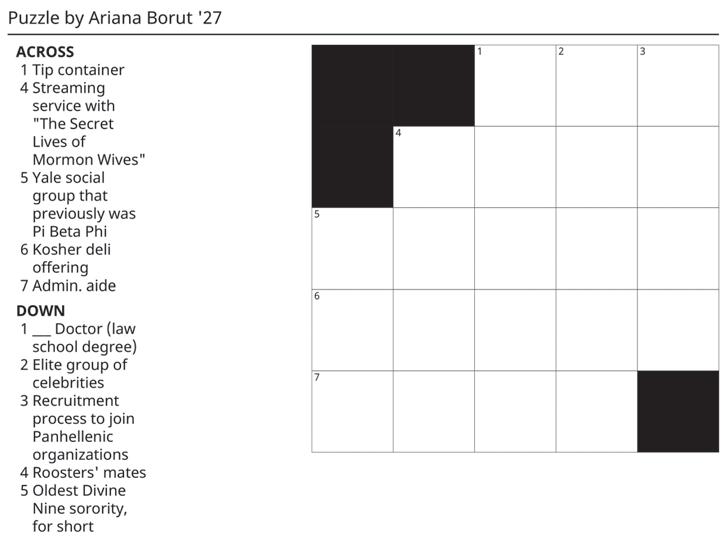
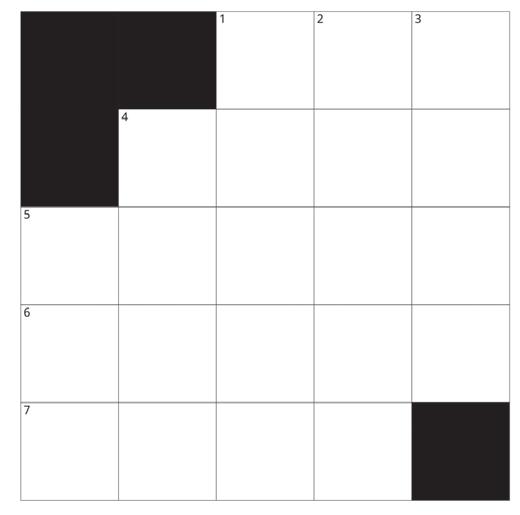
On the “Games” page, readers can play digitized crossword puzzles created by Ariana Borut ’27, first published in the weekly print edition. Readers can also try two new games, Meld and Yale Minefield, both built by Goldin. Among the most crucial improvements to our site is the ease
with which readers can now explore the archive of the News’ digitally published content, dating back a quarter of a century. Shakes and Neissen migrated and organized more than 25 years worth of news coverage, recovering photos and multimedia content not visible on the previous version of our site. All of our past online coverage can now be browsed easily with the search tool. We are pleased to invite you to explore the new website, where we publish articles each weekday morning. We hope the newly redesigned pages allow for a clearer and more immersive reading experience.
To explore the new website, visit yaledailynews.com .
“Game
we’re playing is life / love is a two-way dream”
Ivy League peers on lobbying, until the University of Pennsylvania dished out a record-high
$510,000 in the fourth quarter. By the end of the year, Penn became the only institution in the Ivy League to outspend Yale on lobbying, racking up $1.27 million in total expenses.
Last year marked a significant increase in lobbying expenditures from all Ivy League universities, with Yale, Cornell, Penn and Columbia each exceeding $1 million in total yearly costs, according to disclosures on the U.S. Senate website.
Yale’s expenses for the fourth quarter of 2025 included $ 80,000 and $60,000 payments to lobbying firms Akin Gump Strauss Hauer & Feld and Brownstein Hyatt Farber Schreck, respectively, with Yale retaining the groups from previous quarters. According to public disclosures, the University spent a total of $470,000 on the lobbying firms last year.
During its fourth quarter lobbying stretch, Yale concentrated on nine pieces of legislation and one executive order. Among them were four bills containing provisions related to research, as well as the Professional Student Degree Act, which has “provisions concerning loan caps for graduate and professional students,” according to public filings. Yale’s disclosure document did not provide information on the University’s position or lobbying aim
regarding the pieces of legislation that were listed.
The University also focused on two pieces of legislation related to student-athletes, as well as the Genesis Mission to Accelerate AI, a Trump administration initiative that bills itself as supporting artificial intelligence usage and development. Each of these bills appeared for the first time on the University’s most recent filing and was not listed on previous disclosures in 2025.
Yale also continued lobbying related to the National Defense Authorization Act, the Student Compensation and Opportunity Through Rights and Endorsements Act and National Quantum Initiative Reauthorization Act.
The bills on which the University lobbied government officials included funding for federal agencies such as the Department of Health and Human Services and the Department of Education — with Yale’s public filing denoting provisions related to “student aid, research funding, and facilities and administrative costs.”
Richard Jacob, Yale’s associate vice president for federal and state relations, did not immediately respond to the News’ requests for comment about the most recent disclosure.
Yale spent $600,000 on lobbying in 2024.
Contact ISOBEL MCCLURE at isobel.mcclure@yale.edu and LEO NYBERG at leo.nyberg@yale.edu.
been marked by quiet acceptance in the immediate wake of the election and criticisms of Trump’s first weeks in office.
Naiya Gardiner ’29, who is from Los Angeles and has family roots in Miami, told the News on Tuesday night that the current political situation was “distressing.” She said that the biggest impact Trump-era policy has had on her has been concern for the people she cares about, such as immigrant family members.
“At a school like Yale, it feels like what you're doing here in your classes and your research is the most important thing in the world. And then you turn on the news, or you go home, and it’s like, maybe it’s not,” Gardiner said.
Several students interviewed by the News were concerned about Trump’s mass deportation campaign, visible in increased Immigration and Customs Enforcement activity both in students’ hometowns and blocks away from Yale’s campus. The One Big Beautiful Bill Act passed by the Republican-controlled Congress and signed into law by Trump last summer tripled ICE’s annual budget, and in the year since Trump entered office, the number of officers and agents employed by the agency has doubled, according to the Department of Homeland Security.
Tarun Kota ’26, who is from Minneapolis, said that although increased ICE actions in his home city have made him “nervous” about the future of the country, his day-to-day life has been largely unaffected by federal policy. Minneapolis has seen a wave of protests since an ICE agent shot and killed Renee Good in her car on Jan 7.
“I have friends whose houses have gotten raided, which is really unfortunate,” Kota said. “My mom, who is also a U.S. citizen, she’s scared to go out.”
The same piece of legislation that tripled ICE’s annual budget also included a scheduled increase in the tax on Yale’s endowment returns from 1.4 percent to 8 percent, leading administrators to implement an immediate 90-day hiring pause and a 5 percent budget reduction across all units of the University.
The constraints have resulted in changes including the reduction of non-competitive summer funding
opportunities available to undergraduates on financial aid and a warning from administrators last month about potential layoffs.
Students have denounced the change to summer grants. Yale College Council leaders penned a petition against the cuts to summer funding that had amassed 1,699 signatures by Jan 19, the most recent update on the council’s website. International students have faced tightened visa restrictions under the Trump administration. The end of the 2024-25 school year was marked by the revocation of four undergraduate student visas.
“Just recently, I had a friend come up to me that’s trying to work around the way to get work authorization in the United States, ’cause he’s international, but it’s pretty difficult for the guy,” Cemre Keles ’28, a Yale College Council senator representing Silliman College, told the News.
Keles was tabling outside the Silliman dining hall on Tuesday to promote the YCC petition about the summer grants for financial aid recipients. He drew a direct connection between restrictions on the grants and federal government actions, saying that budget cuts have “proven difficult.”
Two first-year international students, who spoke to the News only on the condition of anonymity, expressed similar sentiments of uncertainty about their future status in the U.S. Both students mentioned slower visa processing times during Trump’s second term as a source of their concern.
A student from Canada said she was “kind of worried about whether or not” she will be permitted to stay in America after graduation, “especially with the visa trouble that was happening last year.”
The other international student said he did not hold strong opinions about Trump but felt that if he did, his status as an international student would deter him from expressing those beliefs. That sentiment is consistent with the chilling of international students’ speech described in an amicus brief signed by 44 college newspapers — including the News — in support of the Stanford Daily’s lawsuit against the Trump administration.
William Barbee ’26, however, said in an interview with the News that “free speech has really improved on campus” in
the last year, partially as a result of “increased pressure that's been placed on universities.”
“I don’t necessarily agree with the direct means that have been used, but the effects, especially here at Yale, I think, have been generally positive,” Barbee said. “I think the university has become a place where both conservatives and liberals are able to engage and discuss things and topics with one another without fear of serious harm or consequence.”
Last February, most students interviewed by the News about Trump’s first two weeks in office said they were not surprised by his executive orders and other actions, which they anticipated would have consequences for the University and student life. Now that many of those direct effects have been realized, students like Gardiner said that, even amid all the upheaval, Trump’s approach overall has been predictable.
“I don’t think I’m actually surprised by the policies that have been put in place, or the direction that this administration has gone,” Gardiner said.“A lot of people had very clear ideas of what was going to happen,” she said, citing warnings before Trump was elected. “We let it happen.”
Keles said that though he had anticipated that undergraduate leadership at Yale would look different under Trump when he stepped into the role of YCC senator, the unpredictability of federal actions meant that the changes “could have been anything. No one really knew what was coming.”
Barbee echoed Keles, saying that Trump’s political moves have included “plenty of surprises” over the past year.
“The bombings of Iran, the capture of Maduro, the Epstein situation, there's so many different things that I definitely could not have predicted given last year's election results,” Barbee said. “Everybody must be at least somewhat troubled by certain goings on today.”
Trump’s second term in office will terminate on Jan. 20, 2029.
The GSAS offers degrees in 73 departments and programs, per Yale’s website.
Contact OLIVIA WOO at olivia.woo@yale.edu and SARA AGRAWAL at sara.agrawal@yale.edu.
neighbor who is engaged with local politics because of concerns about sidewalk repair.
“There was no flyer or anything. Things spread through word of mouth,” he said.
Patel described the atmosphere in Ward 7 as “neighborhoody,” and said that “everyone kind of knows everyone” in the area.
Kevin McCarthy answered the door on Wednesday with his cat at his feet. McCarthy, who said he has lived in the ward for over 35 years, guessed that its large population of graduate students means residents are less informed about local politics.
“They’re focused on other things,” McCarthy said.
According to McCarthy, there used to be even more graduate students living in the ward than there are now.
“Historically, East Rock was known as the ‘grad ghetto,’ because grad students would live here. That’s less the case now because the rents have gone up,” he said, but the ward still has a “Yale element,” he added.
That “Yale element” includes graduate students, professors and other employees of the University and Yale New Haven Hospital. More than half of the 16 people interviewed by the News in Ward 7 said they or a family member are affiliated with Yale. Four of the ward’s past seven alders have been graduates of Yale.
Residents pointed to traffic safety, housing affordability and local infrastructure as major issues for the next alder to consider.
Daphne Geismar ART ’90, 64, who said she has lived in Ward 7 for 25 years, hopes that the new alder will have the “breadth of expertise to understand what’s going on in the bigger city gov-
ernment,” but will also be the “go-to person for small things that really make a difference in the neighborhood, like speed bumps,” she said.
Geismar said she had her first encounter with a Ward 7 alder 20 years ago when she called then-alder Roland Lemar, who is now a state representative, about broken-up sidewalks in the area.
“He came and walked the street with me, and I just thought it was remarkable that there was this person who worked for the city government, who would actually come and connect with a community person,” she said.
The candidates Christine Kim ’99, the Democrat running to fill Sabin’s seat, hopes to be just that kind of alder.
“I may have my passions and things I really care about,” Kim said in a phone interview. “But I think that this role, particularly, at least the way I see it, when I’ve heard from people, is to reflect their priorities.”
Kim, a community organizer, said that in conversations with Ward 7 residents, public safety and street safety have emerged as major concerns. Managing traffic concerns, she added, would be one of her priorities if elected alder. Kim hopes to make the bureaucracy of street improvement more transparent and let “residents know what the process is, so it’s not like their request goes into a blank box and nothing happens.”
For many residents of the ward, rising housing costs are another source of anxiety.
“After COVID, rents have just gone up astronomically, and it’s wonderful that New Haven is a very attractive place to live and move to, but we can’t price out our own residents,” Kim said.
“Even if we can’t find solutions, I think we owe it to our constituents and the residents of the city to explain the situation.”
For Kyle Ross, Kim’s Republican opponent, the key to lowering the cost of housing is simple: Build more of it. “You have to increase the supply,” he said in a telephone interview.
Ross, a financial advisor, said that he was supportive of the “Downtown for All” rezoning, an amendment aimed at boosting the neighborhood’s housing stock that was a crowning achievement of Sabin’s tenure on the Board of Alders.
“I’m totally up for the free market,” Ross said. “If a business wants to come in and they can buy a property and they can
expand the inventory, I’m totally for that. I know it’s extremely difficult with all the regulations and permits and everything, so I’m totally for taking those out.”
Ross also sees taxes as “directly correlated” with housing affordability. If elected, he said he would prioritize curbing tax increases — perhaps by looking for expenditures to cut from New Haven’s budget. He proposed a vesting schedule for property taxes on owner-occupied residences, in which the rate of the tax increase would slow the longer a resident lived in their home. That, he said, would “incentivize people sticking around and living in their house in New Haven, rather than renting it out, and it would make things a lot
more affordable.”
And, like Kim, Ross said he wants to promote increased transparency, especially around city services like street cleaning.
Ross will not appear on the ballot and is instead running as a write-in candidate because “there was some issue with the paperwork and we were not notified,” he wrote in a text message.
Just under 600 Ward 7 residents voted in November’s municipal election, according to data from New Haven’s registrar of voters.
Contact ELIJAH HUREWITZ-RAVITCH at elijah.hurewitz-ravitch@yale.edu and NELLIE KENNEY at nellie.kenney@yale.edu.
“We’re here and now / will we ever be again?”
SHIMMER FUEL
GRAD FROM PAGE 1
Among 13 graduate students who shared with the News their responses to the enrollment reduction, many said the cuts will damage graduate student culture, lab staffing and undergraduate learning. For some graduate students, the cuts — one of the most direct academic reverberations at Yale from Trump’s second presidency — represented a misprioritization of Yale’s expansive resources.
“Reducing the number of opportunities for the next generation of researchers to do this is a disservice to the academic community and, arguably, contradicts the motto (“Light and Truth”) and the very foundation on which Yale was established,” Alyssa Enny GRD ’26, a doctoral student in the Anthropology Department, wrote in an email to the News.
Graduate School of Arts and Sciences Dean Lynn Cooley wrote in a statement provided to the News by a Yale spokesperson that the “modest” enrollment reductions are a response to a smaller graduate school budget, 93 percent of which goes to student support. She added that administrators consulted with leaders of each department, as well as a faculty working group, about the reductions.
“Making these strategic and modest reductions in graduate student enrollment at this moment preserves Yale’s ability to continue to fund and invest in its excellent graduate education for the students currently at Yale and in the decades to come,” Cooley wrote.
“The effects of the endowment tax are detrimental to universities and to society at large, because it means fewer discoveries will emerge, and fewer curious, creative, motivated young people will have access to the education needed to carry out rigorous research that benefits lives across the region, country, and globe,” she added.
Charlotte Bednarski GRD ’29, also a doctoral student in the Anthropology Department, wrote in an email to the News that she was “surprised and disappointed” by the plan to admit fewer graduate students. Regularly exchanging feedback with other doctoral students in her cohort has been “invaluable” for her training as an aspiring academic, she wrote, adding that she wouldn’t be surprised if Yale began to see lower
graduate-level retention rates due to this decision.
Smith said that “now would be the time” for the University to use resources, including its $44 billion endowment, to ensure continued operations at “full capacity.”
She also said that higher education in the U.S. will be generally “hurt” by developments like this reduction. She cited the recently released Leiden Rankings of universities’ scholarly output, which showed American research universities slipping from the global leaderboard, adding that “this is going to even further impact that.”
“While I understand that cuts may be inevitable given the current circumstances, with Yale being one of the wealthiest universities in the country, I would’ve thought such drastic cuts could be mitigated or otherwise relegated to budget cuts that don’t jeopardize the progress and future of the academy,” Hailey Fiel GRD ’30, a doctoral student in the Molecular, Cellular and Developmental Biology Program, wrote in an email to the News.
University spokesperson Karen Peart wrote in an email to the News that administrators work with faculty members in the University’s Budget Advisory Group to ensure that the allocation of funds from the endowment aligns with the long-term preservation of its academic mission.
“These faculty members meet with each budgetary unit of the university, craft budget recommendations, and advise the provost on budgetary matters,” she wrote. “The work conducted in these meetings involves a tremendous number of hours and is an example of faculty self-governance.”
Justin Greenman GRD ’30, a doctoral student in Political Science, wrote in an email to the News that because graduate students “have little input or voice in these macro-level decisions being made by the university,” they are “broadly desensitized to the budget fight.”
“While this is a financial hardship for Yale (leaving aside the benefits and drawbacks of the tax), I find it hard to believe that it imposes a hardship to warrant such cuts,” he wrote. “I know from talking with faculty members that the administrative bloat at Yale is very real and broadly unaccountable and not transparent regarding its cost, size, etc. That, to me, seems to be a larger drain on the
university’s financial resources than graduate students.”
Peart wrote that Yale’s staff positions are “crucial to faculty work and to Yale’s ability to carry out its mission as a leading residential and research university that welcomes the best faculty and students in the world.”
Sympathy for Yale’s decision
A joint statement from the Graduate Student Assembly’s leadership struck a more optimistic tone.
“We are, above all else, appreciative that Yale has prioritized, and will continue to prioritize, current Yale students amidst tough financial constraints,” the statement reads. “We lament that the cuts, a direct result of the endowment tax, mean that students in our departments will not have the same opportunities to forge friendships and make new colleagues as they have previously had, and we hope that these cuts will be reversed in due course.”
The statement added that the assembly has raised concerns about the enrollment cut’s potential impact on both current and future students to the administration and that “we are grateful that they acknowledge our feedback as we know they are working hard to support graduate students.”
Kirsten Traudt GRD ’28, a doctoral student in the Classics Department, said in a phone interview that she is encouraged that the University is honoring all of its “existing commitments” to current doctoral students.
Max Steinberg GRD ’30, a doctoral student in the Mathematics Department, wrote in an email to the News that he was “pleasantly surprised” that the cuts weren’t worse. According to him, his friends in graduate programs at the University of California, Los Angeles, were hit harder by enrollment cuts.
“I wish this didn’t happen and I hate the administration's decision to do this but I feel very lucky that Yale wasn’t hit as hard,” Steinberg wrote.
Linghai Liu GRD ’29, a doctoral student in the Statistics and Data Science Department, said in an interview that he thinks Yale’s decision to decrease GSAS enrollment is “relatively fair,” as he does not have full information to evaluate the university’s other options to mitigate its financial difficulty.
“When you’re in a financial situation, you need to address this
issue. You have to do something, and this is just one option,” Liu said, “so I think it’s fair in that sense.”
A ‘grade of priorities’ Cooley wrote that the difference between enrollment cuts in STEM programs and those in the humanities and social sciences reflects the fields’ different sources of funding. While students in the humanities and social sciences receive funding drawn from the endowment investment returns, Cooley wrote, STEM students receive funds from both the endowment and external grants and fellowships.
She added that the goal of Yale’s budget-saving measures includes “investment in the exceptional strength of our programs in the humanities and social sciences.”
Carlos Flores Manzano GRD ’28, a doctoral student in the Anthropology Department, said in a Zoom interview that it is unsurprising that the humanities and social sciences are impacted more than STEM fields.
“If there’s a budget crisis, the first thing they cut is culture, and then the last thing is healthcare, you know?” he said. “So that’s the grade of priorities. I totally understand that.”
However, Audrey Tjahjadi GRD ’27, a doctoral student in the Anthropology Department, said in a phone interview that she’s disappointed by the administration’s decision to reduce enrollment to a larger extent in the humanities and social sciences. While output from her department “may not necessarily come with the creation of a new drug or something like that, it doesn’t mean that it’s not important work,” she said. Bednarski wrote that higher education’s increasing financial prioritization of STEM programs is “great for science, but not so great for society,” which needs people committed to studying areas like race, politics, religion, sexuality and democracy.
“I see the government’s new endowment tax as an effort to punish and prevent dissenting voices in higher education,” she added. “By slashing humanities and social science enrollment in response, Yale is doing Trump a favor.”
Labs, sections and language classrooms Fiel, a researcher at the Breslow Lab, expressed concern for the future of labs in the Biological and
Biomedical Sciences Program. She believes that since there are “so many labs to choose from in the BBS program,” a smaller incoming class will cause many of them to encounter difficulties in recruiting new students, leading to slower research progress and a heavier workload for current students.
“I think the saddest part of it, though, is that there are going to be so many potential great scientists, researchers, and academics that won't be here that would've otherwise had the potential to contribute greatly to the community,” Fiel wrote.
Five graduate students also pointed to a potential reduction in discussion sections and office hours availability as a result of a shortage in graduate teaching fellows.
According to the GSAS website, teaching fellows can currently lead at most two discussion sections per week, and each section is capped at 18 students.
Tjahjadi said that if there is a shortage of teaching fellows due to enrollment reductions, departments may have to cap lecture classes with discussion sections at a smaller size, which could result in “less one-on-one time with reading material.”
This problem will “either require bringing in more adjuncts or non-tenured faculty, limiting course offerings, or requiring graduate students to work more hours, all of which will cost the university in prestige or financially,” Greenman wrote.
Less teaching availability from graduate students may impact language departments in particular. Nicola Mazzotti GRD ’30, a doctoral student in the German Department, said undergraduate language classes in his department are entirely taught by graduate students, and having fewer graduate students to teach these classes could mean that each section would enroll more students.
“In language learning, that’s not ideal in any circumstance,” he said. “You don’t get the same level of attention from your instructor.”
The Graduate School of Arts and Sciences has more than 3,200 doctoral students, according to its website.
Contact JAEHA JANG at jaeha.jang@yale.edu and GILLIAN PEIHE FENG at peihe.feng@yale.edu.
CONTRIBUTION FROM PAGE 1
properties, and Jack Callahan ’80, Yale’s former senior vice president for operations, who oversaw talks in 2021 and was succeeded by Geoffrey Chatas in November, are leading negotiations on Yale’s side.
“ We value our close partnership with New Haven,” Daum wrote in a statement provided by Yale’s central communications office that matched one from Daum and Callahan in December.
“Our voluntary financial contribution to the city is the most significant commitment to a local community made by any higher education institution across the country. Looking ahead, while it is premature to discuss specifics aspects, we are optimistic that a mutually beneficial solution will be finalized in the coming months.”
Henry Fernandez LAW ’94, a CEO and nonprofit director who headed the New Haven’s negotiating team in 2021, is again representing the city in a volunteer capacity.
Fernandez said in a telephone interview Monday night that he appreciates “hearing from everyone in the community and what they care about, and I certainly share a belief in the importance of Yale’s contributions.”
Fernandez said he has not had “direct conversations” with union leaders about the voluntary contribution negotiations.
“My role is to work between the
University and the city and not — I don’t get involved in other pieces of it,” he added.
Fernandez wrote in a text message that Elicker tapped him over the summer to represent New Haven, and Fernandez began talking with Yale officials then. He said the city’s goal is to reach a deal that averts the $8 million drop — which he added was designed as a “trigger” to ensure town and gown alike “get to the table and get at the negotiations.”
The rally outside Sheffield-Sterling-Strathcona Hall brought together members of New Haven Rising — an advocacy group affiliated with the UNITE HERE unions — and representatives from the unions, as well as state Rep. Juan Candelaria and Board of Alders President Walker-Myers, who is the chief steward of Local 35, the union that includes Yale’s dining and facilities workers.
The Rev. Scott Marks of New Haven Rising opened the press conference on Martin Luther King Jr. Day by invoking King’s work to combat poverty.
“In spite of years of national progress, the plight of the poor is worsening. Jobs are declining as a result of technological change. Schools, both North and South, are increasingly inadequate in providing a quality education,” he said.
Marks emphasized the continued relevance of King's social observations, claiming that New Haven effectively lost $106 mil -
lion last year to real estate tax exemptions given to Yale University and Yale New Haven Hospital as nonprofits. Walker-Myers outlined the potential impact of an increase in Yale’s voluntary contribution to the city budget whose legislative approval she oversees. She emphasized the importance of the funds for improving local public education, expanding extracurricular programs and lowering the financial burden on parents. Walker-Myers also said that $110 million annually would still be short of what the coalition believes Yale owes the city as a tax-exempt institution.
Josh Stanley, the secretary-Treasurer of UNITE Local 217, a local hospitality workers union, emphasized the moral dimension of the contract negotiations.
“Make no mistake, transformational investment means an increase of a voluntary contribution to $110 million every year,” Stanley said. “Our universities must recognize that in this moment they have a moral obligation to building partnership with workers and their host communities by setting fair contracts and paying their fair share.”
Sheffield-Sterling-Strathcona Hall is located at 1 Prospect St.
Contact ELIJAH HUREWITZ-RAVITCH at elijah.hurewitz-ravitch@yale.edu and EVELYN RONAN at evelyn.ronan@yale.edu.
SABIN FROM PAGE 1
that covers much of western New Haven, including Westville, Amity and part of Dwight since 1985.
In the race for the state house seat, Sabin also faces Justin Farmer, 31, a former legislator on Hamden’s district council. Farmer ran unsuccessfully in the 2020 Democratic primary for a seat in Connecticut’s state senate. He told the New Haven Independent last week that he had officially launched his campaign, though as of Tuesday night, he had not yet filed a campaign finance form.
Sabin, who spent six years in total as a city legislator, resigned from the Board of Alders less than an hour before he was set to be sworn into office for a third term representing Ward 7. He said in an interview on Jan. 10 that he ran for reelection even as he prepared to leave the Board of Alders to make sure that the body passed the “Downtown for All” rezoning amendment, which he had championed for several years as an effort to increase New Haven’s housing stock and lower prices.
“I’m running because I know that with new leadership that listens, organizes, and delivers, we can protect our neighbors and build a state that’s more affordable, safer, and more fair,” Sabin wrote Wednesday in an Instagram post announcing his campaign. He also unveiled a campaign website that describes his background as a New Haven native and lists campaign priorities including public education, affordable housing and combating “the Trump administration’s cruel campaign to
terrorize our immigrant neighbors.”
A special election to fill the Ward 7 alder seat is scheduled for Feb. 17. Democrat Christine Kim ’99 and Republican Kyle Ross are vying to replace Sabin on the board.
Sabin wrote in a text message to the News that he decided to run for state legislature “over the last couple of weeks after talking with a lot of folks in the district.”
He considered other public service opportunities, he added, but “people I talked to kept encouraging me to run now, and I decided that in this moment, serving in the legislature is the best way to try to improve our city and state and fight back against Trump.”
The “Friends of Eli Sabin” committee filed a campaign-finance registration form with the State Elections Enforcement Commission on Friday and uploaded an updated form, which added a deputy treasurer, on Tuesday afternoon.
The campaign’s treasurer is Jennifer Quaye-Hudson, the advocacy director at the Connecticut-based, housing-focused civil rights organization Open Communities Alliance. The deputy treasurer is Ina L. Silverman ’80 SPH ’83, who represented Westville’s Ward 25 on the Board of Alders from 2004 to 2009. Connecticut’s major party conventions will take place in May, with primaries on Aug. 11. General elections will coincide with the Nov. 3 midterm elections.
Contact ELIJAH HUREWITZRAVITCH at elijah.hurewitzravitch@yale.edu.
BY KIVA BANK STAFF REPORTER
America is turning 250 this year, and New Haven is preparing to celebrate.
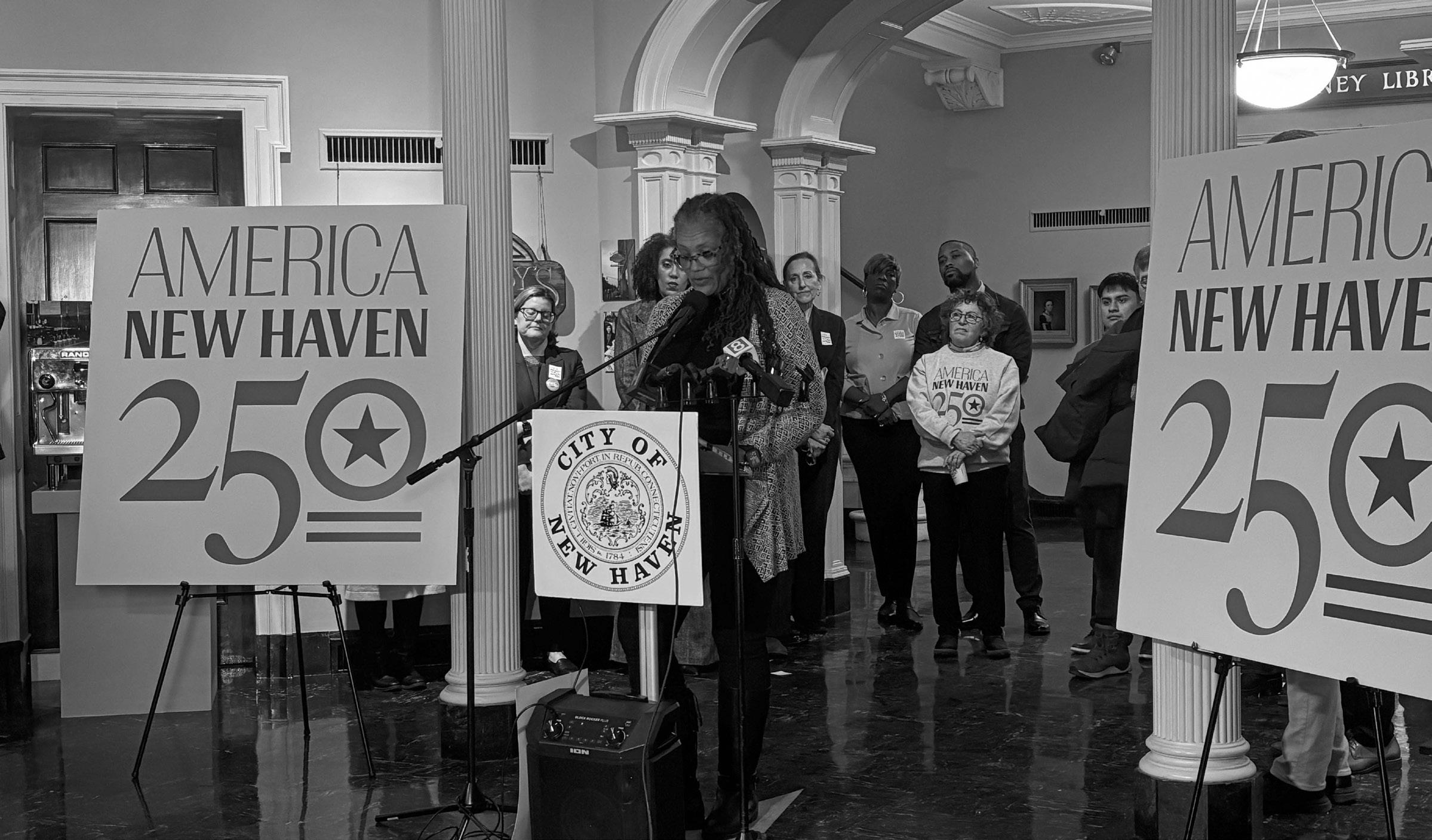
Mayor Justin Elicker, along with New Haven’s America 250 commission, gathered at the New Haven Museum on Wednesday to celebrate the launch of the city’s programming to commemorate the founding of the United States — as well as New Haven’s 242nd birthday.
The commission, which consists of local historians, community organizers and city officials, is preparing to celebrate the nation’s history, and New Haven’s place in it.
“These events that are happening to commemorate our nation’s 250th anniversary are particularly appropriate today to reflect on the importance of fostering democracy,” Elicker told the crowd.
The events, which have already begun and will run through September, focus on a wide range of historical eras, from the birth of the country to the present, and also involve various media, including museum exhibits, art displays and films. The list of programming was provided in a packet at the conference and is also available online at the city website.
Elicker also celebrated the history of New Haven in recognition of the anniversary of its charter being approved by the state on Jan. 21, 1784.
In his opening remarks, Michael Morand ’87 DIV ’93, the city historian and co-chair of the New Haven America 250 Commission, acknowledged the “wonderful assembly” of people gathered in the room, all of whom he deemed central to the America 250 programming.
“This is about everyone in our community, people from every neighborhood, from every background, from everywhere,” he said.
Morand also highlighted some of the more than 60 events and activities
that will occur throughout the year, a few of which will take place at Yale, including a keynote conversation on the indigenous origins of the American Revolution featuring PBS filmmakers Ken Burns and David Schmidt, as well as NYU professor Maggie Blackhawk and Dartmouth professor Colin Calloway. Morand said New Haven’s America 250 commission is putting the indigenous peoples of America “at the center of our commemorations.” He also noted that an exhibition will open at Beinecke Rare Book and Manuscript Library on
March 16, titled “Unfurling the Flag: Reflections on American Patriotism.” The exhibition will feature one of only 26 first printings of the Declaration of Independence.
“It’s important for us to reflect on this journey our country has been on. We’ve seen so much progress as a nation, but as folks can see, much work remains,” Elicker said. “The type of reflection and recommitment are the focus of the many events that have been identified and organized by New Haven’s American Commission, which center around themes of elevating local history, understanding
democracy and practicing civics.”
City librarian Maria Bernhey echoed Elicker’s sentiments, reminding residents that the right to vote is “central to democracy” and encouraging people to register to vote at the New Haven Free Public Library. Bernhey touted the 28 free events the library is hosting throughout the year in honor of the anniversary. Karen McIntosh ’93, Yale’s director of community affairs, said that Yale has partnered with the New Haven America 250 Commission, noting that the
Local activists ‘expect the worst’ from ICE after Renee
BY SABRINA THALER STAFF REPORTER
For Patricia Pintor, a volunteer with a New Haven Latino advocacy group, an Immigration and Customs Enforcement agent’s killing of a legal observer in Minneapolis on Jan. 7 was “worrying.”
Pintor, who said she is originally from Mexico, has lived in New Haven for 24 years and owns a cleaning company. She said she has been volunteering with the advocacy group Unidad Latina en Acción for five years.
“Personally, I think that they did intend to kill a person,” Pintor said in Spanish of the agent’s fatal shooting of Renee Good, 37, noting that Good was a white woman and U.S. citizen. “So what can we expect for the rest of the community and, most of all, the entire immigrant community? Now we have to expect the worst.”
Good’s killing — amid ongoing ICE detentions and arrests in New Haven and across the country — intensified fear among immigrants in New Haven and the activist organizations supporting them, volunteers and organizers said. In the past two weeks, anti-ICE protestors have spearheaded numerous demonstrations in Minneapolis and across the United States, including a national “ICE Out for Good” campaign that hundreds of New Haveners participated in last weekend.
On Friday, a coalition of Connecticut advocacy groups will host protests in New Haven, Hartford, Bridgeport and Willimantic in solidarity with a “statewide shutdown” event taking place the same day in Minnesota.
ICE has arrested 3,300 people it calls “illegal aliens” in Minnesota since Nov. 29, when it began its “Operation Metro
Surge” immigration enforcement crackdown in Minneapolis, according to a Department of Homeland Security press conference on Thursday.
Mayor Justin Elicker said he is “carefully” observing the events in Minneapolis to understand how to respond.
“We’ve already done a lot to prepare for this type of situation,” Elicker said in a phone interview. “That’s everything from educating residents to know their rights, to training and retraining our employees on the Welcoming Cities Order, what to do if ICE arrives at a public building and how to respond to that.”
Federal agents have detained New Haveners across the city over the past year — on sidewalks and on streets, outside of their homes, at their places of work and most recently inside a downtown courthouse.
Eric Cruz López, an organizing consultant for the statewide
advocacy group Connecticut Students for a Dream, said that ICE activity inside Connecticut had already sparked fear in members of his organization, and that Good’s killing exacerbated it.
“Our members understand the role of ICE, that they shouldn’t be collaborating with police,” Cruz López said in a phone interview, alluding to the state’s Trust Act, which seeks to prevent federal immigration agents from deputizing state and local law enforcement. “They know their rights. But in the situations that we’re faced with, with the killings by ICE agents, it leaves you in a place where you’re like, ‘Okay, I know my rights. I know the laws in Connecticut. Will that stop anybody?’”
Cruz López added that members’ “fear of dying” at the hands of federal immigration authorities has intensified in light of Good’s death, alongside reports of detainees dying in

University is donating $50,000 to help fund the programming.
“Real history comes from recovering stories of ordinary people, the everyday work of thousands who helped build our community,” McIntosh said.
“Often books have only been on certain narratives and ignored those contributions.”
The New Haven America 250 committee was formed in May 2025.
Contact KIVA BANK at kiva.bank@yale.edu
ICE custody. But the events have also prompted sharper organizing efforts.
“People are also feeling more wwready to go,” he said, referring to members of Connecticut’s many immigrant advocacy groups. “How do we make our immigrant protection programs better? How do we make our rapid response networks better? How do we make our political education better?”
Kica Matos, president of the National Immigration Law Center and former executive director of New Haven advocacy group Junta for Progressive Action, said she thinks that the Trump administration is using ICE as a tool to advance an authoritarian regime. Matos said in a phone interview that Good’s death was not only an “example of escalation in ICE’s use of deadly force” but also an indication that U.S. citizens and activists are vulnerable.
Matos said that although “ICE has no respect for the Constitution and seems to relish engaging in deeply violent activities,” community members should continue to engage in public protest. She said it was important that both immigrants and nonimmigrants are aware of their constitutional rights.
At the weekly meetings of Unidad Latina en Acción, volunteers like Ximena López Carrillo help community members secure accompaniment to court appointments and arrange documentation in the case they are detained.
“My reaction is fear,” López Carrillo, also an Ethnicity, Race and Migration professor at Yale, said in Spanish when asked how she felt when she learned of Good’s killing. “Fear for my neighbors, fear for my friends, fear for students — for all of the people that are at risk.”
Renee Good was a mother of three, according to the Associated Press.
Elijah Hurewitz-Ravitch contributed reporting.
Contact SABRINA THALER at sabrina.thaler@yale.edu
“I’m in love with the world / through the eyes of a girl” SAY YES ELLIOTT SMITH
BY SARAH RIVAS STAFF REPORTER
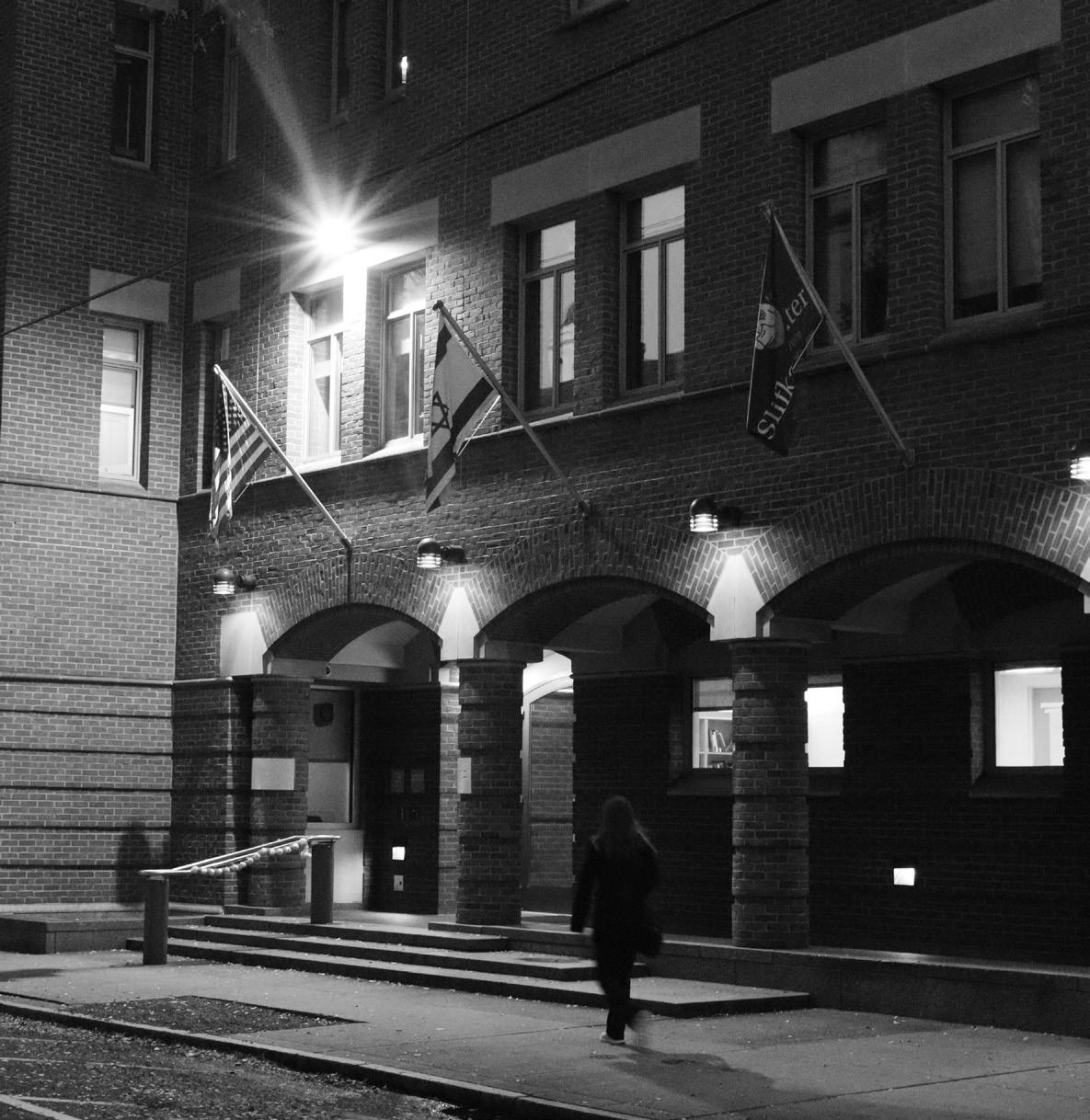
The campus rabbi at Yale’s Slifka Center for Jewish Life, Alex Ozar GRD ’22, will be stepping down from his position at the end of the semester.
Ozar, known as “Rav Alex” in the Slifka community, announced his upcoming departure on Wednesday in an email to the Slifka Center’s mailing list. Ozar wrote that he will be leaving Yale to serve as the director of academic programs for the Shalom Hartman Institute of North America, which is “a leading research and educational center serving Israel and world Jewry,” according to its website.
“This is one of the most extraordinary Jewish communities I have ever known, and it has been such an incredible blessing to be a part of it,” Ozar wrote of the Slifka Center.
Ozar and his wife, Lauren Steinberg, have worked at Slifka since 2018 as the co-directors of Orthodox Union Jewish Learning on Campus, or OU-JLIC. Ozar’s plans mark the second departure of the Slifka Center’s top rabbi in under
three years.
Ozar assumed the title of campus rabbi after Rabbi Jason Rubenstein left his position as the Howard M. Holtzmann Jewish chaplain in 2024, after months of intense proPalestinian activism that divided and alarmed some Jewish students. Rubenstein became the executive director of Harvard Hillel.
Ozar wrote on Wednesday that the “decision to leave was heavy in all kinds of ways” but believes that it’s the right time for the Slifka community to write its next chapter.
In a separate email to the Slifka community, Uriel Cohen, the executive director of the Slifka Center, wrote that Ozar “built meaningful relationships with hundreds of students,” making his house “a home away from home” for many of them.
Eytan Israel ’26, a leader of the Young Israel House at Yale, Yale’s Orthodox Jewish student organization, wrote to the News that Ozar was welcoming to him even before he started college.
“I still remember where I was, sitting on the wooden swing on my front porch, when I received a call
from Rav Alex a few weeks before the first day of school, introducing himself and telling me he was here to support me with anything, whether it be religious or other struggles, for my four years, and that he was so excited for me to join the community,” Israel wrote.
Israel added that Ozar “stood by his promise,” caring for the Slifka community “like family.”
Ozar connected with Jewish students in countless ways, such as hosting services and Shabbat activities at his house, according to Shlomi Helfgot ’25. He also helped deliver kosher food to individual students during the COVID-19 pandemic, Cohen wrote in his email.
In addition to his generosity, Ozar was known for his “extraordinary ability to marry his personal, Orthodox practice with a deep respect for the kaleidoscope of Jewish practices which Slifka plays host to,” Helfgot wrote.
The Slifka Center is located at 80 Wall St.
Contact SARAH RIVAS at sarah.rivas@yale.edu.
BY CORINNE COWAN STAFF REPORTER
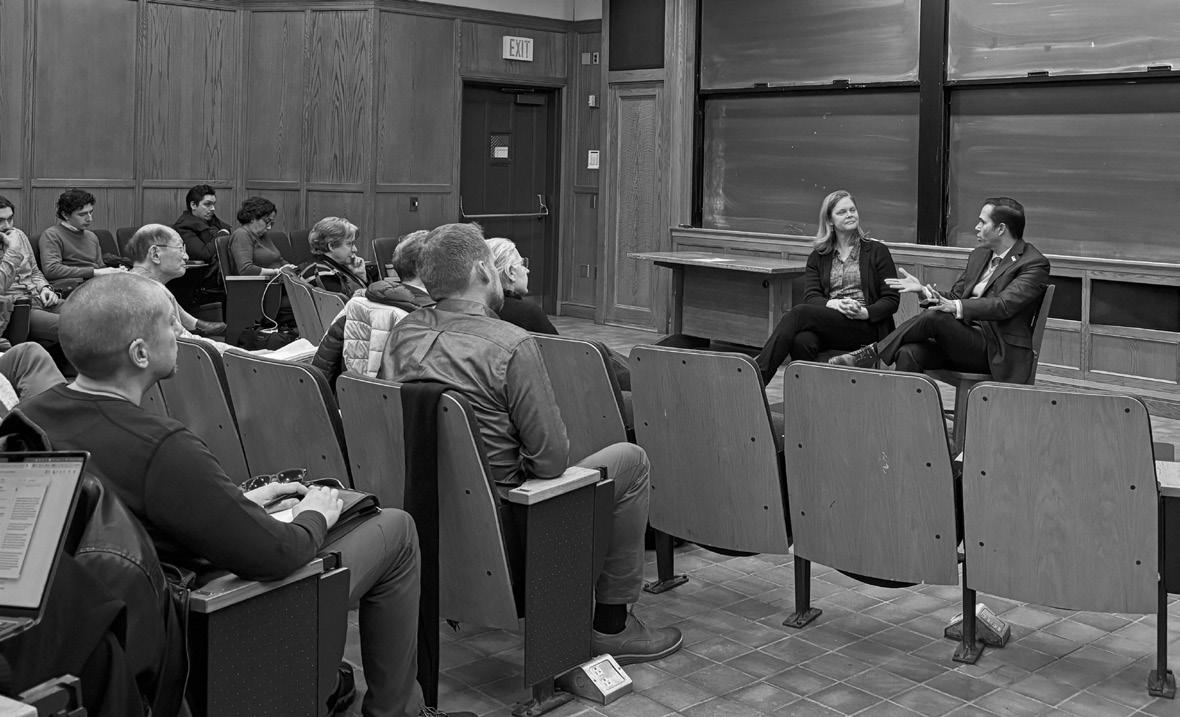
Carlos Carvalho, the president of the University of Austin, criticized the state of higher education at a Wednesday talk hosted by the committee formed by University President Maurie McInnis to examine widespread mistrust in universities.
During his talk, Carvalho drew on his experience running the school, called UATX, which was founded in 2021 to combat problems some see as common at other universities, such as a lack of ideological diversity and high costs.
“We’ve spent a lot of time trying to diagnose and talk about the problem of trust in higher education,” Beverly Gage ’94, a co-chair of the Committee on Trust in Higher Education and the moderator of the discussion, said. “But it’s rare to have the opportunity to sit down with someone who is actively involved in an actual experiment in creating a new university.” Currently, UATX has 150 students across two grades and describes itself as merit-based and tuition free. To some, it represents an “anti-Harvard” approach to higher education, but UATX has also received crit -
icism for right-wing bias.
A lack of free speech and political diversity has been a common talking point among Yale’s critics, though Yale recently jumped 97 places in a well-known ranking of colleges based on their free speech environments, from 155th to 58th place.
Composed entirely of Yale faculty, McInnis’ committee aims to discover the root causes of and solutions for public mistrust in universities. Over the course of this academic year, the committee has hosted prominent experts in law and psychology for public talks.
Carvalho said that he first got involved in UATX around the same time that he was promoting ideas that were in “short supply” when he was the executive director of the Salem Center for Policy at the University of Texas McCombs School of Business.
“That was the journey that got me to a point where I become now somebody that’s in the reform movement of the university,” Carvalho said.
For Carvalho, the practical issues surrounding higher education relate to university practices and educational rigor.
“There’s a part that has to do with cost, there’s a part that has to do with lowering standards, there’s a part that has to do with racial quotas for admissions,”
Carvalho said. When asked about Yale specifically, Carvalho suggested implementing those same reforms.
“You have the resources, you have the ability to tomorrow start admitting on merit alone. And not charge anybody,” Carvalho said in an interview.
The University did not immediately respond to the News’ request for comment about Carvalho’s suggestions.
Michael Strambler, an associate professor at the School of Medicine, countered Carvalho’s perspective on elite universities.
“There are definitely some things that need to be reformed, but I don’t agree with the characterization of them being these hot beds only of ideologues,” Strambler said in an interview.
Strambler also pointed toward universities’ contributions of leadership and research to society, which he called “valuable.”
Many attendees were quick to point out issues within UATX. A recent article by Politico detailed the apparent decline of UATX’s free speech environment into an endorsement of right-wing ideas. Carvalho sprang to his university’s defense, calling this a “mischaracterization.” He also described the difficulties of cultivating free speech while simultaneously valuing a classical liberal education.
UATX requires all students to complete a core curriculum on
western civilization, and Carvalho acknowledged that setting the curriculum and other logistical decisions naturally introduce “boundaries.”
“The idea that all ideas are equally validated in a university is no longer true because the boundary was established. And defining the boundary becomes very difficult,” Carvalho said.
Various attendees appreciated the dialogue between Carvalho and audience members, which included criticism about UATX’s donors’ and founders’ intellectual influence.
“It was provocative. He was very generous to come here,” Judy Chevalier ’89, a professor at the School of Management, said in an interview.
When asked about the committee’s progress on producing a report from their research, Julia Adams, the other co-chair of the committee, said that their work was not done yet.
“We’re still continuing to speak to Yale constituencies of all sorts, to outside experts, and to solicit views from anyone in the Yale community who would like to contribute,” Adams said in an interview.
The Committee on Trust in Higher Education was formed in April of 2025.
Contact CORINNE COWAN at corinne.cowan@yale.edu.
BY JOLYNDA WANG STAFF REPORTER
For the third year in a row, “Introductory Macroeconomics” is Yale’s most enrolled spring semester course, with an enrollment of 356 students.
The next two most popular courses this semester are “Renewable Energy” and “Bioethics and Law,” with enrollments of 325 and 285 students, respectively, according to Yale’s course demand statistics site as of Wednesday evening, after add/drop period ended. The
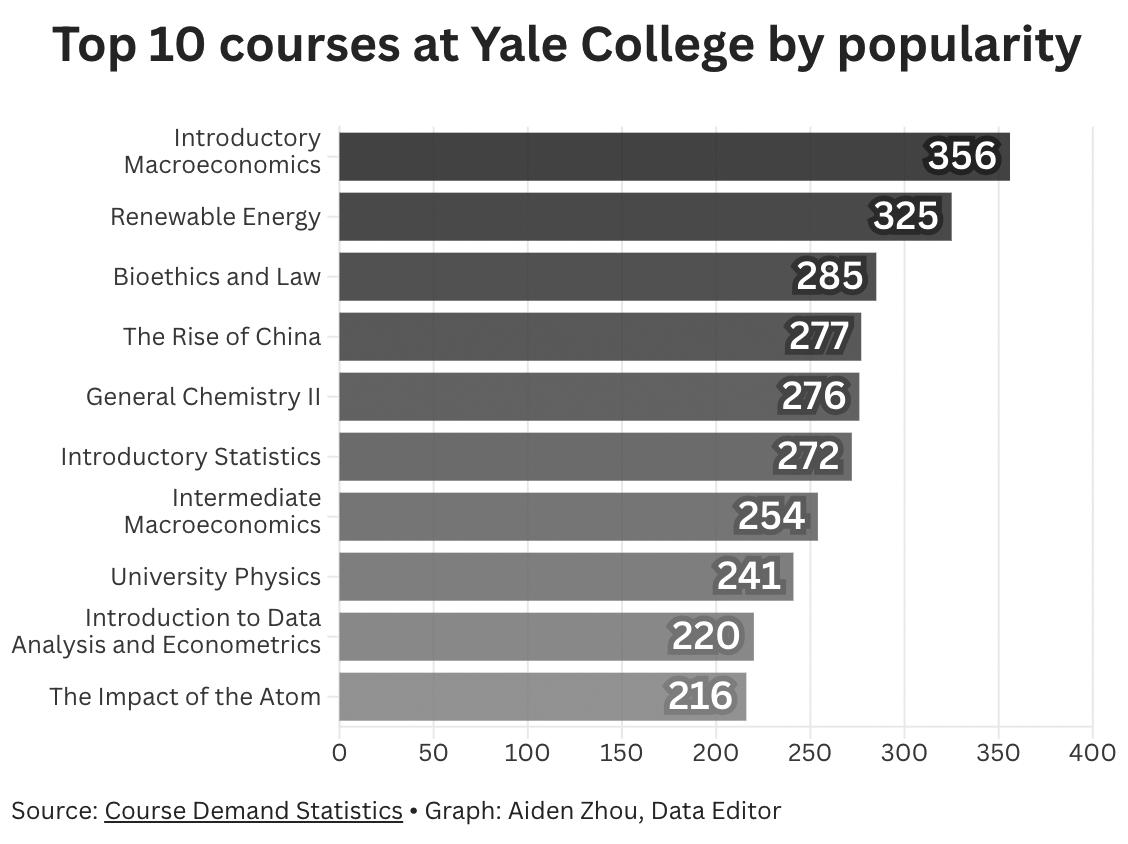
courses with the highest enrollments are mostly at the introductory level, excluding graduate and laboratory courses.
“Economics is a very (I believe, the most) popular major in Yale College, and this course is foundational to the whole field, so essentially all prospective majors take it,” professor Giuseppe Moscarini, who teaches the “Introductory Macroeconomics” lecture, wrote to the News.
According to the Office of Institutional Research, economics was the most popular major among junior and seniors in the fall of 2024.
Moscarini wrote that he suspects students not majoring in economics are drawn to the course “by a combination of intellectual curiosity about issues that affect our lives daily and a field that is quantitative in nature but studies social interactions.”
“Introductory Microeconomics” was also the most popular course in the fall.
Moscarini wrote that in such a large lecture, students are sometimes reluctant to ask questions during class, which he does not experience “when teaching other Undergraduate classes, even as
large as 100 students.”
Yunhan Liu ’29, who is enrolled in “Introductory Macroeconomics,” wrote to the News that she hopes “to gain a better understanding of real-life economic policies that are impacting people across the world” from the class. While she feels that large classes can be intimidating, Liu wrote that the professors make her experience “more welcoming and enjoyable.”
The fourth most popular course is “The Rise of China,” with a total of 277 students. Professor Daniel Mattingly last taught the course in the fall of 2024. Per its course description, the class offers an “analysis of Chinese domestic and foreign politics, with a focus on the country’s rise as a major political and economic power.”
While Mattingly said teaching a large course comes with logistical issues, such as coordinating teaching fellows and section enrollments, he enjoys creating a sense of community among a diverse cross-section of undergraduate students.
“Yale undergrads get sort of sucked in a million different directions with extracurriculars, sports, and a million other things,” he said
in an interview. “I think sometimes these large classes can be a way for people to come together.”
Regarding the large enrollment, Mattingly speculates that the topic of the course material and the “time that we are in the world” has drawn students to taking his course.
“China plays this central role on the world stage as one of the two, arguably, great powers in the world,” he said. “I just think there is a lot of inherent interest in the topic of understanding China, Chinese history, Chinese domestic politics and China’s relationship with the rest of the world.”
Eduardo Rodriguez ’29 said in an interview that he is taking “The Rise of China” in order to fulfill his requirements for the global affairs major, as well as to explore diverse regions of the world.
Mattingly said he uses activities outside of class, such as informal, sit-down lunches each week, to better know his students and combat “large class-itis.”
Yale teaches roughly 2,000 courses each year, according to an admissions webpage.
Contact JOLYNDA WANG at jolynda.wang@yale.edu.
“I
may be paranoid, but not an android.” PARANOID ANDROID, RADIOHEAD
BY EDIS MESIC STAFF REPORTER
Researchers at the School of Medicine recently published a systematic review that found evidence for a lack of research on the effects of antiobesity medications in older adults.
According to first author Alissa Chen, while many previous studies looking into the effects of antiobesity medications exist, they rarely involve older adults or specifically focus on their health outcomes. In turn, the purpose of this review was to find all possible studies that examine the effects of antiobesity medications on adults aged 65 or older.
“Given the paucity of studies, this review confirms that we’re not yet equipped, evidence-wise, to make firm conclusions about the effectiveness and safety of these agents, particularly the newer ones, for weight loss in older adults,” co-author and geriatric epidemiologist Alexandra Hajduk wrote to the News.
The team focused on studies involving newer agents, such as Ozempic, Wegovy and Zepbound, as well as older ones like bupropionnaltrexone and phenterminetopiramate, and pinpointed eight total studies that met their inclusion criteria.
All studies found a statistically significant weight reduction but provided limited information on adverse effects of the antiobesity medications in question. Chen also mentioned that the sample sizes of these studies for older adults, with the exception of a study of semaglutide, were also so minimal that they did not provide a lot of information on the effects of the medications.
Chen recounted finding inspiration for the project during her residency in internal medicine, during which semaglutide was approved for treatment of obesity. At the time, liraglutide, a similar acting weight-loss medication, was already on the market, but — according to Chen — semaglutide proved far better for two key reasons. First, unlike liraglutide,
which requires daily injections, semaglutide only requires one injection per week. Second, Chen reported that the amount of weight loss provided by semaglutide was much stronger.
After initial excitement for this new obesity treatment, Chen soon realized that while most of her patients in the clinic were older adults, the average age of adults tested in semaglutide studies was in their mid 40s. Motivated by the lack of understanding about the effects of these medications on older adults, Chen decided to focus on this issue in her research fellowship after residency, she said.
“I wanted to have clinicians say, ‘All right, we have these new meds, and because they were tested, or because we now have more data on older people, I know how to use it,’ because older people are just so different than younger people. They take more medicines, they have more illnesses, and we really need data specific to them to know how to treat them with these medications,” Chen said.
In response to the lack of information found by the systematic review, the team is now working on two studies looking at the effects of GLP-1 medications on U.S. veterans over the age of 65.
Kasia Lipska, senior author and associate professor of medicine in endocrinology at the School of Medicine, wrote that the team’s main goal is to understand how these medications actually affect older veterans — a population largely excluded from previous studies but commonly prescribed GLP-1s — outside controlled clinical trial settings.
“This work is meant to reset the research agenda, shifting future studies toward outcomes that matter most to older adults: safety, tolerability, and whether the benefits of weight loss outweigh the risks,” Lipska wrote in a statement to the News.
The first study utilizes electronic health record information from national Veterans Affairs data to understand the impact of GLP-1s on older veterans in terms of weight loss and adverse events. The team
is in the process of examining clinical data for veterans started on antiobesity medications to learn more about how much weight they have lost, how their diabetes numbers have changed, and whether they have had any adverse events, like falls or emergency room visits as a result of the medication.
Chen added that studying weight loss is “really just the tip of the iceberg.” For her, what’s more meaningful are the clinical outcomes: measuring whether GLP-1 medications are reducing heart attacks or strokes, for example.
The second study will follow older adults in Connecticut at the VA who are starting GLP-1 medications and survey them on their physical function, quality of life, pain and mood. The team will also be interviewing these patients to gain further information and better understand how GLP-1s change their personal functioning and experiences.
When asked about what needs to be done to close the knowledge gap about effects on older adults, Lipska reports that there is still uncertainty about who may benefit or be harmed by GLP-1s later in life. She highlights that questions about long-term safety, effects on muscle mass and frailty, interactions with other medications, monitoring and follow up and early termination of treatment still remain.
“Until these questions are answered, clinicians are forced to extrapolate from younger populations, which is risky. Closing this gap means designing studies that treat aging itself as a central variable, not an afterthought,” Lispka wrote.
Hajduk also emphasized that, while eight million older Americans use these medications today, if Centers for Medicare and Medicaid Services decides to actually cover their cost, there
may soon be a sizable uptick in the number of older adults on antiobesity medications. Hajduk believes that these drugs could be a “game changer” for all older adults with obesity, but much more research is needed to fully understand their complex effects. Future studies could look at the interactions between other medical conditions and the swift and dramatic weight loss induced by these medications, as well as the impact of these drugs on independence, physical and cognitive function, and freedom from pain.
“There is so much hope here, but the science really needs to catch up,” wrote Hajduk. Ozempic is manufactured by the pharmaceutical company Novo Nordisk.
Contact EDIS MESIC at edis.mesic@yale.edu.
BY KALINA BROOKFIELD STAFF REPORTER
This year’s flu season is particularly severe locally, nationally and internationally, Yale experts say.
The ongoing flu season has seen the highest percentage of people in clinics presenting with influenza-like illness in decades, in part due to a variant strain that decreased vaccine effectiveness.
Yale New Haven Hospital emergency departments are at capacity, and the campus health center has seen a surge in cases, though in the last week, numbers have begun to improve, according to Scott Roberts, an infectious diseases specialist at the School of Medicine.
“We’re still in the thick of it. Last year was pretty bad, and we usually don’t have two bad flu seasons in a row,” Roberts said in an interview. “This was by some metrics the worst flu season we’ve had in years, certainly since COVID. Fortunately, we’re starting to see signs that it’s getting better.”
According to Roberts, hospitals across the Yale New Haven Health System have seen an influx of patients and are operating at max capacity but have been able to manage the increased strain.
Daniel Weinberger, an epidemiology professor at the School of Public Health, explained that the flu is hitting young children harder than other age groups this year compared to past years, based on the number of emergency room visits and hospitalizations.
Fifteen pediatric deaths associated with influenza were reported this past week for a total of 32 deaths among children this flu season, according to the Centers for Disease Control and Prevention’s weekly influenza surveillance report. Ninety percent of reported pediatric deaths occurred in children who were not fully vaccinated. At this time last year, there had been only
16 influenza-associated deaths among children.
“We’ve seen levels in the last couple of weeks higher than they were during the last season. It seems like they might be starting to peak in some parts of the country, but it’s hard to say,”
Weinberger said.
The most recent weekly CDC surveillance report states that 18 percent of the samples tested for influenza were positive in the past week, a decrease from previous weeks. Roberts added that at Yale New Haven Hospital, numbers have started to improve.
A mismatch in vaccine predictions
The primary driver of this flu season’s intensity is a new variant of the virus called subclade K, according to Inci Yildirim, pediatric infectious disease specialist and epidemiologist at the School of Medicine. The subclade K variant differs from last year’s strains and the strain included in this year’s vaccine, which was chosen in February 2025 for the northern hemisphere, Yildirim explained. Yildirim added that more than 90 percent of influenza viruses collected this season belong to subclade K — the mismatch between the vaccine strain and the circulating strain of virus has caused decreased vaccine effectiveness.
The early estimates for vaccine effectiveness were 52 percent among those under 18 and 57 percent among those aged 18 to 64 years, according to the European Centre for Disease Prevention and Control.
“Vaccination coverage, especially among those with higher disease burden, as adults 65+, is lower than in previous years,” Yildirim wrote in an email to the News.
Flu treatment and prevention
Roberts emphasized the importance of getting vaccinated despite the decreased effectiveness
of this year’s vaccine. According to Roberts, different strains of flu often make waves in March or April, and the vaccine could offer protection from them. Additionally, the vaccine still offers a significant, if less than usual, level of protection from the current strain.
Roberts also stressed the importance of getting treated for the flu as soon as symptoms arise. He described encounters with many patients who were unaware that medications such as Tamiflu existed to treat the flu.
“The most common mistake I see is when somebody doesn’t test or they’re mild, they decide they’re going to wait it out to see how it
goes, and then five days later, they’re worse,” said Roberts. “All these antiviral flu medications, they work best when you’re there, given as soon as possible when the symptoms start.” Yale Health, the University’s healthcare organization, has seen an increase in visits related to influenza-like illness and an increase in phone calls to its nurse triage line regarding flu symptoms this season, according to spokesperson Tim Brown. Brown recommended that students stay up to date on vaccinations, including flu and COVID-19 boosters, practice good hand hygiene, mask in crowded indoor settings, stay home when sick and
reschedule non-urgent visits.
“While this year’s flu variant is contributing to the surge, vaccination remains the best defense—it not only helps prevent infection but also significantly reduces symptom severity if you do get sick,” Gordon Streeter, Chief of Student Health at Yale Health, wrote in an email to the News. Students can receive the flu vaccine for free at Yale Health by appointment or walk-in Monday through Friday from 8:30 a.m. to 12 p.m. and 1 p.m. to 5 p.m.
Contact KALINA BROOKFIELD at kalina.brookfield@yale.edu.

“And I wonder when i sing along with you / if anything could ever feel this real forever”
BY REETI MALHOTRA AND SABRINA THALER STAFF REPORTERS
Federal immigration agents arrested a man inside the New Haven County Courthouse on Elm Street early Tuesday morning, a spokesperson for the Connecticut Judicial Branch confirmed.
Video footage filmed by an eyewitness and posted on Facebook by On Scene Media New Haven County shows at least two agents arresting an unidentified man, who is lying on the floor.
New Haven Police Department
communications officer Christian Bruckhart confirmed that Immigrations and Customs Enforcement, or ICE, made an arrest “in that area” of the courthouse, but could not confirm if the arrest took place inside or outside the courthouse as displayed in the video.
In November, Governor Ned Lamont signed legislation that bans law enforcement officials, including federal agents, from making arrests on courthouse grounds for civil offenses without notifying a judicial marshal in the courthouse and providing documentation to justify the arrest. The arrest on Tuesday
appeared to be the first reported instance of an ICE arrest inside a courthouse in New Haven since the state law took effect.
ICE’s Office of Public Affairs did not immediately respond to emailed questions about the identity of the arrested individual and the reason for the arrest.
Rhonda Hebert, a spokesperson for the Connecticut Judicial Branch, wrote in an email that the court system did not receive prior notice of the arrest. City police also did not receive advance notice, Bruckhart said.
According to Bruckhart, city
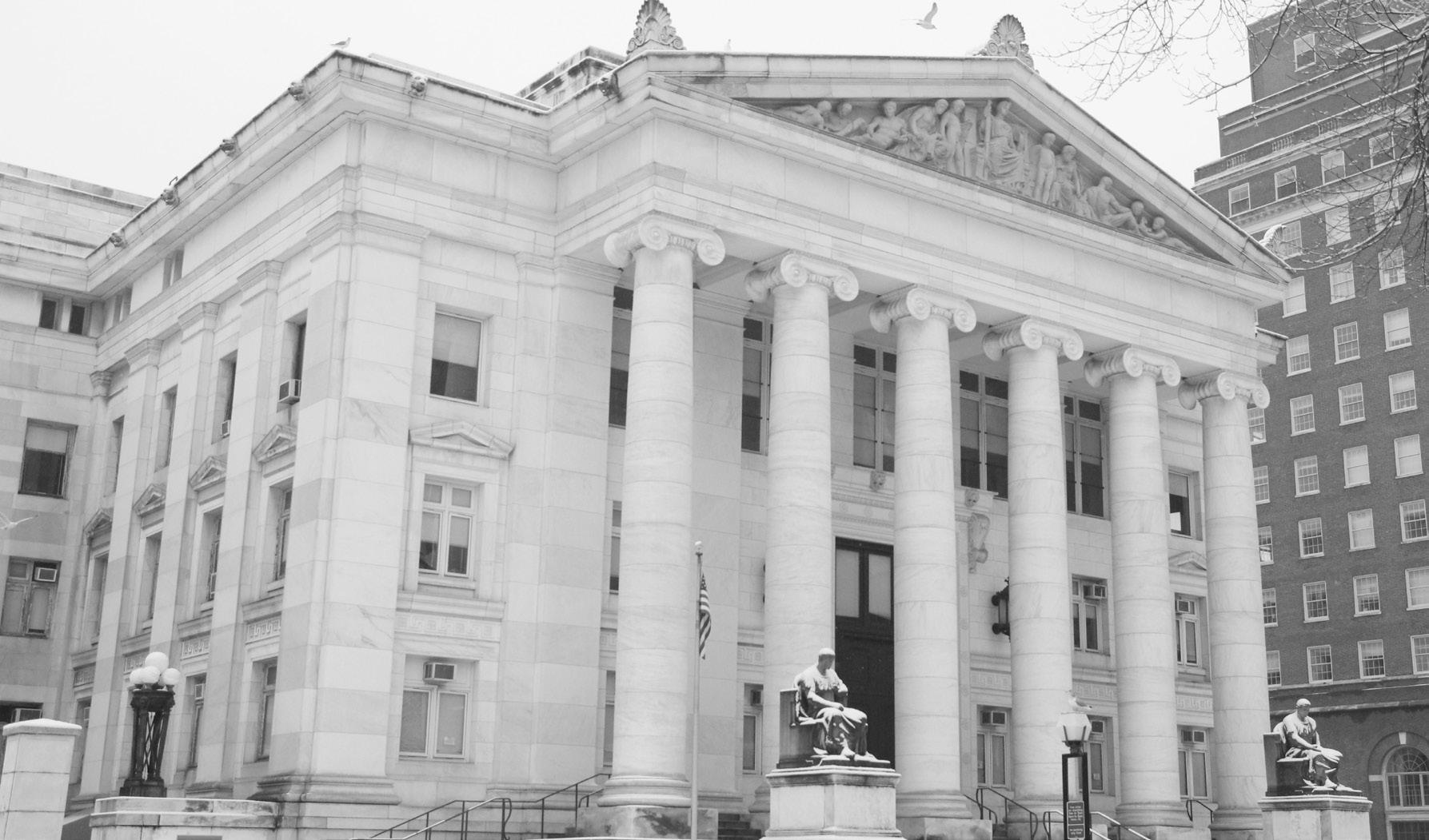
police responded to a motor vehicle crash outside the courthouse at Elm Street and Church Street at 8:54 a.m. on Tuesday morning. A man — who was later arrested by ICE — got out of his car without putting it in park, causing it to roll forward and hit another vehicle occupied by two people. No injuries were reported.
An eyewitness who spoke to the New Haven Independent said they witnessed a man running through the courthouse doors, closely followed by an armed, masked man wearing a vest that read “Police” and “Homeland Security Investigations.”
Homeland Security Investigations is the principal investigative body of the Department of Homeland Security and a branch of ICE.
Bruckhart did not confirm if ICE was in vehicular pursuit of the arrestee before the crash, but wrote in a text message that “it appears that way.”
Mayor Justin Elicker did not immediately respond to a request for comment through his spokesperson, Lenny Speiller.
Tabitha Sookdeo ENV ’26, the executive director of immigrant advocacy group Connecticut Students for a Dream, said there has “not been a formal rolling-out” of the guidelines in the November law protecting against law enforcement activity on courthouse property. She said that ICE agents “need to be given notice” about the state’s new law and their obligation to follow it while operating in Connecticut.
Sookdeo said that the specific circumstance in Tuesday’s case, in which a person appears to have entered the courthouse while being
followed by ICE, “might not have been considered” in the legislation.
Since October, federal agents have apprehended at least two other individuals near the Superior Court building, including one on the sidewalk outside the courthouse, according to reporting by the New Haven Independent.
Tuesday’s arrest also follows the Jan. 9 arrests of three individuals in New Haven, which an ICE spokesperson confirmed in an email last Tuesday. The statement referred to the Jan. 9 arrests as a “targeted enforcement operation.”
Elias Theodore ’27, the alder for downtown New Haven’s Ward 1 — where the courthouse is located — said in a phone interview on Tuesday evening that he was “completely horrified” to learn of the arrest, and that he was still learning more about the incident.
“We, as a state, have made intentional efforts to keep courthouses as they should be: this place where people feel protected and able to go,” Theodore said. “It is a fundamental part of our legal system, and no one should feel threatened when they enter a courthouse. This is incredibly upsetting, no matter what the circumstances were of this person being detained or ending up inside the courthouse.”
The New Haven County Courthouse is located at 121 Elm Street. Adele Haeg contributed reporting.
Contact REETI MALHOTRA at reeti.malhotra@yale.edu
SABRINA THALER at sabrina.thalerw@yale.edu.
BY NICOLAS CIMINIELLO STAFF REPORTER
The national biotech sector seems to be out of the wilderness following a turbulent stretch — a good sign for the growing regional industry that makes up a crucial part of New Haven’s economy.
A general rise in financial sentiment across the biotechnology sector has also resulted in real gains for regional firms like Halda Therapeutics and Veradermics Inc. Local industry leaders remain optimistic about the long-term prospects for biotech in New Haven.
“This is an exciting time for life sciences in CT,” Matt McCooe, CEO of the venture capital firm Connecticut Innovations, wrote in a statement to the News. “We are in the early stages still and see lots of momentum turning us into an important hub for biotech in the US.”
In recent years, smaller biotech firms have struggled to gain traction due to the volatile nature of the industry. High development costs often push firms to go public or get acquired by a larger pharmaceutical company, according to Josh Geballe,
managing director of Yale Ventures.
As those opportunities dried up, it became harder for those firms to get an innovation or a drug to the market.
“It often costs over $1 billion to bring a new drug to market,” Geballe wrote. “To fund the expensive clinical trials needed to prove safety and efficacy of new drugs, small biotechs either need to partner with or be acquired by a large pharmaceutical company or go public to be able to raise the necessary capital.”
However, more biotech companies are starting to succeed financially, either in the stock market or through “exits,” an industry term for acquisitions by larger companies.
In the fourth quarter of 2025, the sector sold more than $13 billion of shares, the most since 2021.
McCooe described the resurgence as a general shift across financial sectors, including venture capital, Wall Street and big pharmaceutical companies.
McCooe wrote that both initial public offerings, or IPOs, when a firm starts selling shares on the stock market, and acquisitions from big pharmaceutical companies
are gaining momentum. He also attributed part of the industry’s financial struggles to political instability surrounding federal research funding under President Donald Trump.
“Investors hate uncertainty. Too soon to call, but perhaps things are settling down a bit in Washington?” he wrote.
Local firms have capitalized on this shift. Geballe pointed to Yale spinout Halda Therapeutics, which was acquired for $3 billion by Johnson & Johnson in November.
The company — which was backed by Yale Ventures, Elm Street Ventures and Connecticut Innovations — specializes in anti-cancer technology.
Exits like this will “recycle capital back into the ecosystem and will lead to more investments in the future,” Geballe wrote.
Other firms are opting to go public. They include Veradermics Inc, which recently filed for an IPO on the New York Stock Exchange.
The company is planning to raise money to continue developing a hair-loss drug, after raising more than $150 million in a fundraising round late last year.
Manuel Mohr, the founder and CEO of the biotech start-up firm D2B3, sees the current state of the industry as a happy medium between the pre-pandemic highs and postpandemic lows of the sector.
“I actually think the industry is heading toward a healthier equilibrium. I don’t believe we’ll return to the pre-pandemic period, when capital was abundant and almost any idea could get funded. In retrospect, that wasn’t good for the sector. It diluted quality and weakened credibility,” Mohr wrote.
“At the same time, the last few years were arguably too harsh.”
Mohr described the last few years as a shift from uncertainty to some successes in 2024 and 2025, adding that investors generally continued to remain skeptical until very recently.
He explained his approach for D2B3, which calls itself “the future of treating brain diseases,” as not actively seeking either an exit or an IPO, but focused on building a strong foundation.
“Investors are leaning into companies with strong scientific foundations, clear differentiation and realistic development plans,”
Mohr wrote. “There is no one-size fits all but I believe the goal is to remain flexible - build something that has the potential to stand alone as a public company, but that could also be highly attractive to a strategic acquirer at the right moment.”
Mohr, Geballe and McCooe shared their optimism for the longterm future of the local industry, which remains a hub in part due to Yale’s presence and the state’s investments in science research.w
“Yale produces an extraordinary amount of high-quality science, yet historically only a small fraction of those ideas have been translated into companies,” Mohr wrote.
“With a more disciplined but functional funding environment, and growing translational support, I believe Yale is very well positioned to turn more of its science into impactful biotech companies.” Yale Ventures was launched by the University in 2022 to foster entrepreneurship among Yale students and faculty.
Contact NICOLAS CIMINIELLO at nicolas.ciminiello@yale.edu.
BY CORINNE COWAN STAFF REPORTER
Local faith leaders called for Yale to up its voluntary contribution to the city Monday afternoon at an annual ceremony recognizing the Rev. Martin Luther King Jr.
In a rousing ceremony, Bishop Charles H. Brewer III urged Yale to contribute $110 million to the city each year. Over 140 people attended the ceremony at Dixwell’s New Trinity Temple Church of God in Christ, where Brewer serves as senior pastor.
“We must ask ourselves, is it fair for a city as poor as New Haven to have to subsidize an institution as wealthy as Yale?” the Rev. Scott Marks, the director of local activist group New Haven Rising, said during the ceremony.
The calls for an increased voluntary contribution from the University to the city echoed an earlier rally held outside SheffieldSterling-Strathcona Hall, where Marks, Yale union leaders and elected officials announced their target of $110 million.
In a statement to the News, Alexandra Daum, Yale’s associate vice president for New Haven affairs and University properties, touted Yale’s current contribution to the city budget as “the most significant commitment to a local community made by any higher education institution across the country.”
Under an agreement with the city that the University reached in 2021, the University has contributed about $23 million annually. The contribution is scheduled to drop to $16 million, and the agreement is set to expire next year. Officials are currently in negotiations for another deal involving Yale’s voluntary contribution.
At the event in Dixwell, Imam Saladin Hasan led attendees in reading aloud a “Good Neighbor Statement” demanding financial support for a better New Haven.
Titled “Yale: Pay Your Fair Share,” the handout called for the University to increase its funding to the city’s public schools and affordable housing, as well as expanding its local hiring.
At the ceremony, speakers also
condemned actions by President Donald Trump’s administration that they characterized as antithetical to King’s values.
Marks roused the crowd to be “hearing Dr. King’s call that the evils of racism, economic exploitation and militarism are tied together.”
Hasan hearkened back to King’s legacy in the Civil Rights Movement.
“Our parents and ancestors fought through slavery and Jim Crow on our behalf,” Hasan said.
Marks and Hasan cited Christian and Muslim scriptures, arguing that they called for greater economic and racial equality. Hasan emphasized that in order to enact change, New Haven must be “united in one human formation, rooted in dignity, compassion and moral responsibility.”
Brewer criticized economic policy in the Trump administration.
“Billionaires have made extraordinary gains to their extraordinary power under this administration,” he said.
Pastor Josh Williams of Elm City Vineyard Church highlighted the honorary law degree King received
from Yale in 1964.
“I hope it was because he was against things like war, and militarism, and poverty, and racial inequality,” Williams said.
Eli Sabin ’22 LAW ’26, who recently stepped down as the Ward 7 alder representing parts of downtown and East Rock, said in an interview with the News that it was
“moving and impactful to be with so many folks from the community.” New Haven Rising was founded in 2011.
Elijah Hurewitz-Ravitch contributed reporting.
Contact CORINNE COWAN at corrine.cowan@yale.edu.
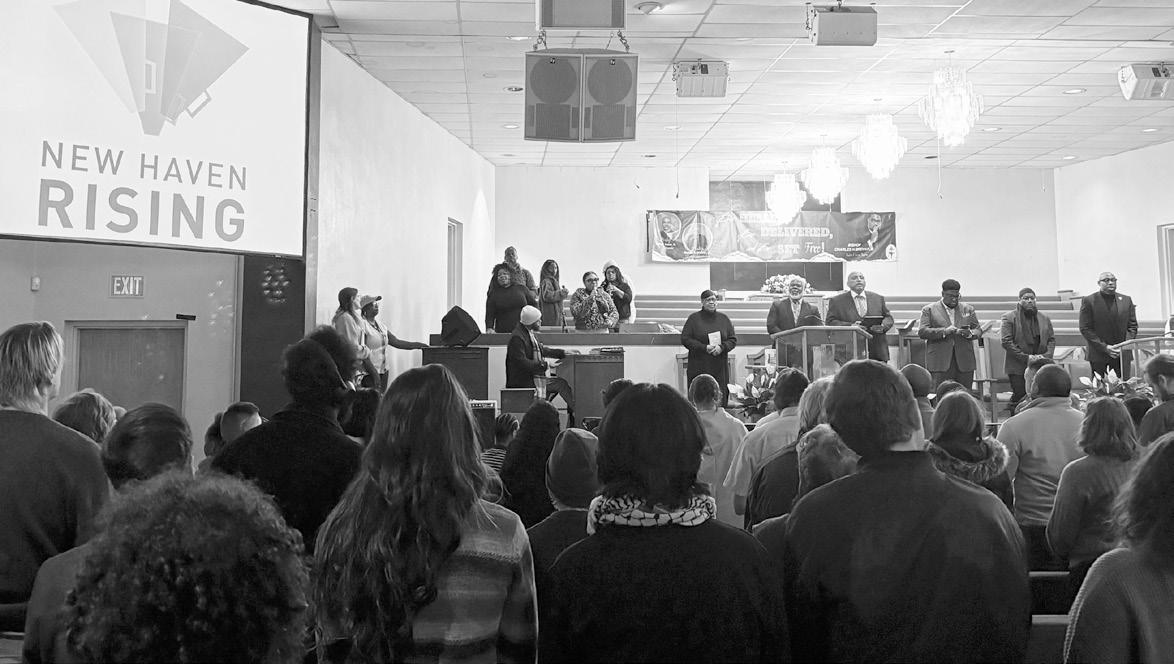
For ‘soft-spoken’ men’s hockey captain, leading the Elis was a long time coming
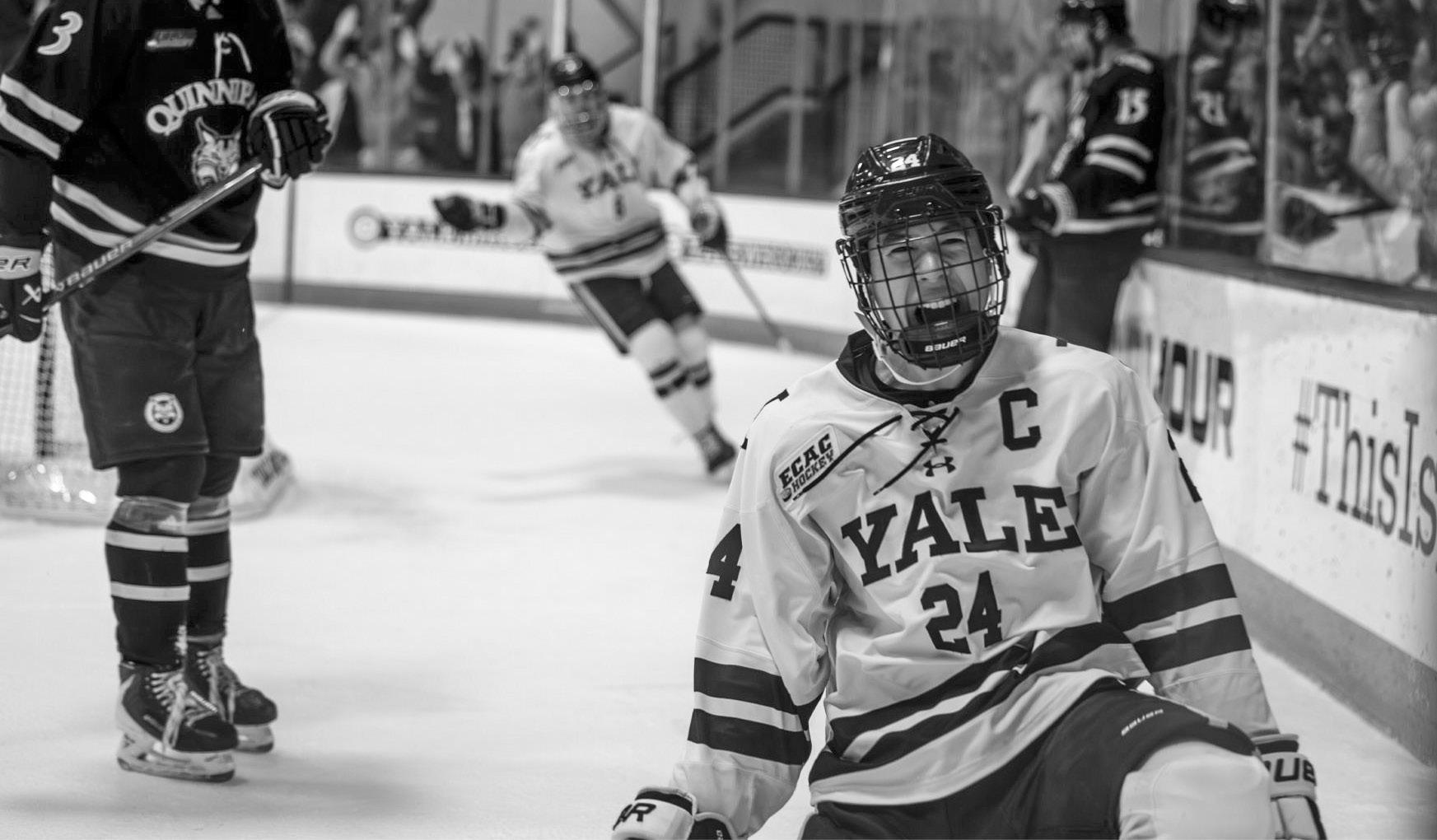
BY LIZA KAUFMAN STAFF REPORTER
When the men’s hockey coaching staff was tasked with choosing a new captain last spring, coaches and players agreed that David Chen ’26 was the clear choice to lead the Bulldogs.
“He earned his way to being chosen to lead our group this year with his work ethic, dedication to developing as a hockey player, and resilience through adversity,” assistant coach Robert O’Gara wrote in an email to the News.
Teammate Kalen Szeto ’26 echoed that sentiment.
“David embodies what it means to be a student-athlete at Yale and a Yale Men’s Ice Hockey player,” Szeto wrote in a text message to the News.
Indeed, both on and off of the ice, Chen has set a high bar for what it means to be a top performing student-athlete at Yale. Conversations with Chen and those who have seen him develop as a person and player painted a picture showing that the leader he is today has been a long time in the making.
A childhood on the ice
Chen first laced up his skates and stepped onto the ice in his hometown of Livingston, New Jersey, at four years old, he said in an interview. He grew up at the rink watching his older sister figure skate, prompting his parents to sign him up for youth hockey.
“Ever since then, I’ve just loved it,” Chen said. “I was naturally good at skating in the beginning, and I never stopped after that.”
Chen credits his parents with shaping his early development and fostering his love for the sport. He said his mom drove him to hockey camps in the summer five days a week and his dad drove him to weekend tournaments all year long. According to Chen, his parents arranged their work schedules around practices and games.
According to his father, Dennis Chen, even as a young child David Chen was known for his concentration and ability to pick up new skills quickly, traits that would later shape his approach to the sport at every level.
Chen approached the game with an uncommon level of discipline, his father said. According to Dennis Chen, David Chen had a mature understanding of his own game and was highly coachable, consistently sticking to the game plan. Regardless, Chen said he has always tried to hold onto the joy he felt when he first stepped onto the ice.
“David loved setting up his teammates and passing the puck,
even in situations where he could have easily finished the play himself,” Dennis Chen wrote in a text to the News.
As he grew older and expectations increased, David Chen embraced the pressure that came with being relied upon and stepped up to the task when the team needed him most.
“He never shied away from that pressure; he actually seemed to thrive on it,” Dennis Chen wrote.
In high school, building confidence and skill
Chen spent his freshman and sophomore years of high school at Montclair Kimberley Academy, a private school in Montclair, New Jersey. He earned division player of the year honors for his high school league while also competing on a travel team.
Chen’s hockey development accelerated during his time at the school, where his coach Tim Cook quickly recognized his hockey IQ.
“He processes the game at a higher speed, but is able to slow it down,” Cook said in a phone interview. “He’s able to create lanes where other people are just trying to get into those lanes quickly.
He’s able to create them and then exploit them. He was clearly a very special player with a lot of skills that you really can’t teach.”
His humility and coachability, Cook said, set him apart just as much as his talent, enabling him to take a leadership role even though he was new to the team and younger than all of his teammates.
“He brings calm to the situation. Even as a freshman, people gravitated towards him because obviously he was a good player, but also because of the way that he carried himself,” Cook said. “He’s very humble. He’s team first.”
Following his success at Montclair Kimberley Academy and seeking stronger competition, Chen transferred to Milton Academy, a prep school in Milton, Massachusetts, for his junior year.
“That was kind of a big jump, just living on my own, living on campus. Ultimately it was a really good decision because I grew as a person and also a hockey player,” Chen said.
Despite only spending one year in Massachusetts, Chen’s short time at Milton, as well as the guidance he received there, was foundational to his hockey development, he said.
“My coach at Milton was a big mentor for me,” Chen said, speaking about now-retired Milton Academy coach Paul Cannata.
“At that point I was definitely struggling in a way to see what my future really was in hockey. And he really built my confidence, and that
was a really big turning point for recruitment and having that belief in myself that I could continue to play hockey.”
The confidence that Cannata helped instill has helped define his game ever since, Chen said. His current Yale teammates noticed that right from their first skate with him at Ingalls Rink, they said.
“He plays with such confidence that you know when he has the puck, everything is under control,” Jojo TanakaCampbell ’26 wrote in a text message to the News.
With the cancellation of his senior year season at Milton due to the COVID-19 pandemic, Chen had planned to join the United States Hockey League’s Cedar Rapids RoughRiders, but a derecho destroyed the team’s rink. He pivoted and transferred to Salisbury School in Salisbury, where he completed his final year of high school.
It was during that senior year at Salisbury that Chen received his first Division I offer from now-retired Yale head coach Keith Allain.
With COVID preventing official visits, the recruiting process happened almost entirely over the phone, Chen said. Despite the unusual circumstances, committing to Allain’s program was a no-brainer for Chen and his family, he said.
“It’s always been a dream of mine to go to an Ivy League school. So when a school like Yale offers, it’s really hard to say no,” Chen said. “I was definitely very excited.”
Developing at Yale
Before Chen would don the Yale jersey, he took a gap year to play for the RoughRiders in the top American junior league for future Division I and National Hockey League players.
Chen’s move away from the East Coast marked another step up in the on-ice competition that he would face.
“Every player in that league is going to be playing Division I college hockey and it really did become a very professional scenario,” Chen said. “The coaches only asked for the best of you day in and day out, so you really had to find that consistency within practicing hard every day, every shift matters.”
Chen finally arrived in New Haven in the fall of 2022 at just 19 years old, younger than most incoming college hockey players.
But adapting to size and age disparities was nothing new for Chen. According to his father, he did not experience a major growth spurt until he was 16, which required him to compete for several high school seasons
against opponents who were bigger and stronger.
Despite being undersized early in his high school career, Chen learned how to absorb contact, create space and elevate those around him, according to Cook. Those skills enabled Chen to play smarter, and his lack of size meant that he needed to improve his positioning and decision-making abilities.
Those traits served him well when he laced up the skates at The Whale for his first ECAC games.
Chen quickly became one of Yale’s top scorers, finishing his rookie season with eight goals, secondmost on the team. He has remained one of Yale’s most consistent offensive players ever since.
In addition to his steady offensive contributions each season, Chen has also evolved into a complete two-way forward over the course of his four years at Yale. Playing three years under Allain’s guidance, Chen was able to round out his game and help the team win in a variety of ways.
“His defensive game is nearly unrecognizable from his first year when he got to Yale, a true testament to his work ethic and drive to return Yale Hockey to the national stage,” interim head coach Joe Howe wrote in an email to the News.
Howe added that Chen is not only one of Yale’s most skilled players on the ice, but he is also one of its most tenacious.
“It’s rare to have your most skilled player also be the hardest working player on your team, but it’s also what makes him a great leader,” Howe wrote.
Off the ice
Outside of the rink, Chen’s determination and diligence are similarly high when it comes to his academics. He was named to the ECAC hockey all-academic team the first three years he was at Yale for his high-level academic performance.
“I’ve always been very responsible with schoolwork,” Chen said. “If you do the stuff that might not be as fun for you first and get that done with, then you have more time to enjoy the parts of life that you truly enjoy.”
His teammates notice his work ethic in the classroom, and it inspires them to be the best version of themselves, as well, they said. Even older Yale teammates, such as former captain Will Dineen ’25 recognized this.
“He goes to every class, studies, does really well,” Dineen said in a phone interview. “He shows you can do both. You can be a really, really good player on the ice and also be a really good student. He’s a great role model for everyone, including myself.” Senior forwards Elan Bar-LevWise ’26 and Tanaka-Campbell similarly commented on Chen’s drive in the classroom. Not only focused
on his own performance, Chen also makes sure that his teammates are doing their best as well.
“He always takes them under his wing and helps them out whether it’s studying for an exam or completing a problem set,” TanakaCampbell wrote to the News.
Chen’s influence extends beyond the locker room and the classroom. Students outside of the hockey program describe him as someone whose leadership is felt across campus.
Getting to know him on a personal level has reinforced for many why Chen has found success on the ice. Zach Lipsher ’26 said that getting to know Chen through his senior society has only deepened his respect for him.
“I have always known him as a great hockey player and a great team leader, but now I also see him as the person that everyone gravitates towards, athletes and non-athletes,” Lipsher said. “He is the kind of person you hope your future kids will grow up to be.”
Leading by example
Following last season, Chen’s teammates elected him captain of this year’s squad.
“It’s not really surprising that he was named captain when you saw what he did around the rink every day,” Dineen said of Chen.
O’Gara said Chen’s leadership style — his quiet authority — reflects the kind of player every program hopes to have.
“He is soft spoken and leads by example with intensity and focus,” O’Gara wrote. “He doesn’t need to be a ‘rah-rah’ guy because he lets his actions do the talking, and his words carry even more significant meaning with our group as a result.”
For Chen, being elected captain was one of the biggest honors of his life, he said.
“Having that recognition from my friends, my teammates, is something that I’ve really pulled close to me, and I think that’s very important how your friends see you,” Chen said. “Knowing that they see me as a leader is really special, and I’ll never take that for granted.”
Chen’s teammates and coaches believe that the qualities that led him to be Yale’s captain will continue to define his future.
Howe noted that Chen’s development has already prepared him well for the professional level.
“He has developed a wellrounded game that will help him succeed in professional hockey,” Howe wrote. “David will be successful in whatever he pursues in life, and he will do it in a way that the Yale community and Yale Hockey will be proud of.” Chen is an economics major, according to his LinkedIn profile.
Contact LIZA KAUFMAN at liza.kaufman@yale.edu.
BY AZARA MASON STAFF REPORTER
Standing just under six feet
tall, Kiley Capstraw ’26 seems to be a leader in whatever room she walks into or court she steps onto. In addition to earning the role of captain this season, Capstraw serves as the president of Yale’s Student-Athlete Advisory Committee — leading well beyond her immediate team. A senior from West Orange, New Jersey, she has spent the past four years leaving her mark in New Haven through both her versatility and her steady leadership on and off the court.
Capstraw’s Yale career began with immediate responsibility.
As a first year, she emerged as the Bulldogs’ second-leading scorer and earned Ivy League Rookie of the Week honors five times throughout the season. At the time, Capstraw primarily played as a shooting guard, using her scoring ability to make an early impact in the conference.
Four years later, her role has evolved significantly.
Now in her senior season, Capstraw leads Yale in assists and rebounds, averaging 4.6 assists per game — also putting her first in the Ivy League — along with 6.0 rebounds per game.
Her transition from more of a shooter to facilitator and forward highlights her adaptability, a quality that has become central to both her on-court impact and her role as captain.
When asked about the roots of her exceptional playmaking ability, Capstraw pointed to her upbringing as a multi-sport athlete.
“Growing up, I played all different positions and different sports,” Capstraw wrote to the News. “I definitely attribute my court vision to the variety
of sports and positions that I’ve played throughout my athletic and basketball career.”
Capstraw’s influence, however, extends far beyond stats. Player Hannah Wasserman ’29 emphasized that much of Capstraw’s leadership is felt in moments that never appear in the box score.
“Kiley controls the entire team demeanor,” Wasserman wrote to the News. “She calms the team down when the other team goes on runs, picks teammates up after they miss a shot, keeps the bench hyped and engaged, and so much more. She is committed to excellence for herself as a player and also motivates everyone around her to be better everyday at practice and in games.”
That leadership has shaped how younger players approach the game. Wasserman noted that Capstraw consistently models teamwork, even in emotionally charged moments.
“She makes a point of high-fiving every single person every time she comes off the court, regardless of whether she’s frustrated or happy,” Wasserman added.
Former teammate Abigail Long ’28 said Capstraw’s election as captain came as no surprise.
“I was not shocked at all,” Long said. “Even as a junior, Kiley was a great leader. She was able to get everyone organized on the court and really made a point of welcoming all the freshmen.”
The captain has also taken on one of the heaviest workloads in the country. She currently ranks sixth nationally in minutes played per game, averaging 36.4 minutes — meaning she is rarely catching a break on the bench. When asked how she maintains her energy and focus while playing almost the entirety of the game, Capstraw credited both preparation and her mindset.
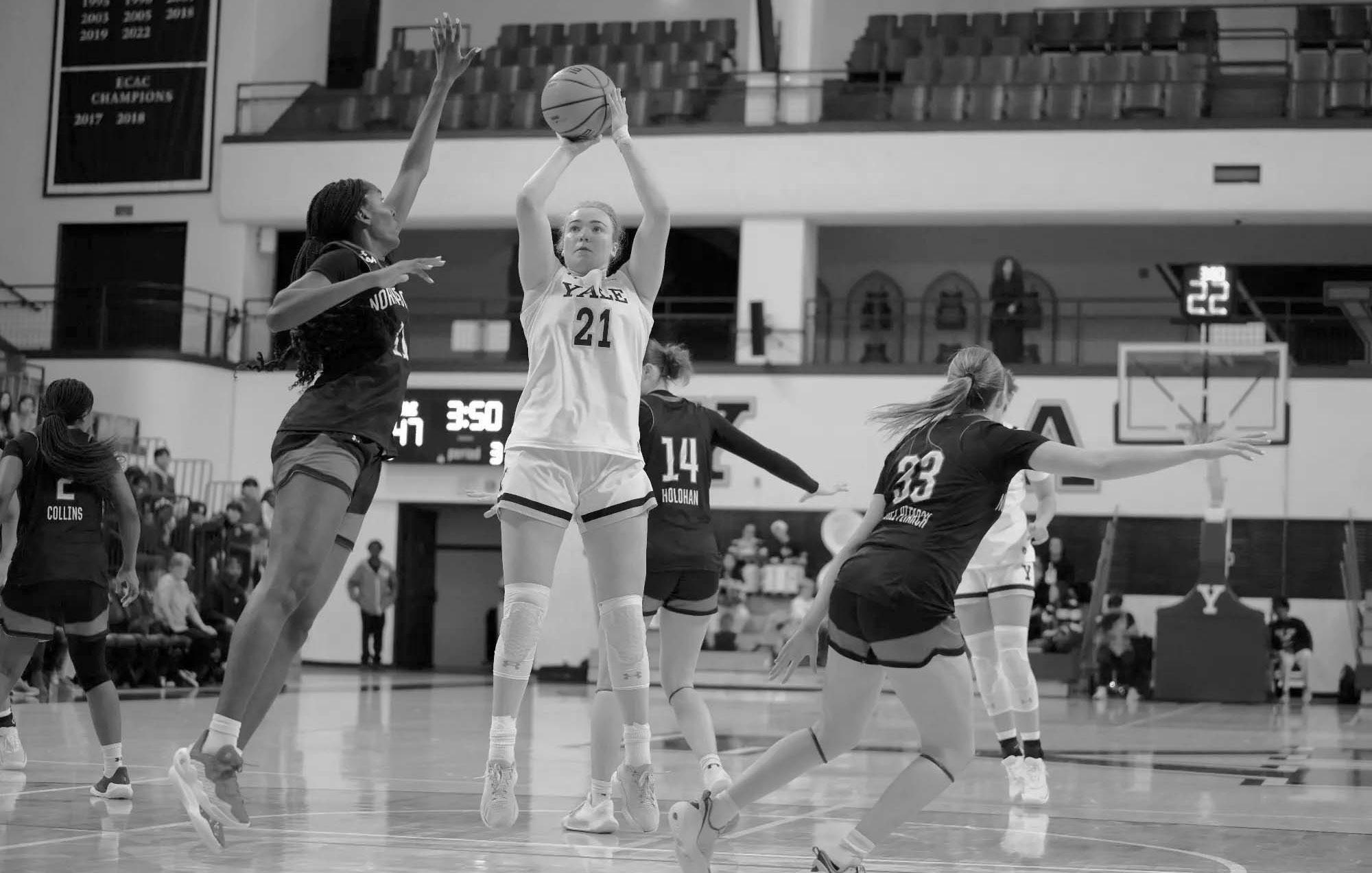
Over this past summer, Capstraw made a deliberate push to prioritize her conditioning, motivated, as she put it, by “being a competitor and a leader and doing what the team needs me to do.”
Head coach Dalila Eshe echoed that sentiment in a November interview with The IX Basketball.
“She has never cut a corner; she has never shortened a sprint,” Eshe said. “She’s just that type of kid.”
Those words align closely with how Wasserman described Capstraw’s daily approach.
“She’s committed to excellence for herself as a player and motivates everyone around her to be better every day at practice and in games,” Wasserman said.
When asked to look ahead five years, Capstraw’s answer reflected the same grounded perspective that has defined her leadership.
“I see myself being happy and healthy,” she said, adding that she would be “potentially still playing professionally or starting a new career.”
In May, Capstraw will graduate with a degree in psychology. Whether on the court or off it, her leadership is rooted in awareness of teammates’ emotions, of momentum, and of what each moment requires. That attentiveness is something her teammates feel daily. Magdalena Schmidt ’28 highlighted Capstraw’s unique ability to understand her teammates as individuals and respond accordingly.
“Kiley always knows the right thing to say to make each and every one of us better,” Schmidt wrote. “At practice when people are in their heads, she recognizes it immediately and says exactly what they need to hear to settle in, be themselves, and play the basketball they’re capable of playing.”
In Yale’s most recent win over Cornell, Capstraw finished with nine rebounds, eight assists, a steal and a block — reflecting her ability to read the game on both ends of the floor. Capstraw and the rest of the Bulldogs will face the University of Pennsylvania at home on Saturday at 2 p.m.
Contact AZARA MASON at azara.mason@yale.edu.
BY BRODY GILKISON STAFF REPORTER
The Yale men’s basketball team
(14–3, 3–1 Ivy) will travel to Penn
(9–8, 2–2 Ivy) on Saturday to take on the Quakers for both teams’ only game of the weekend.
The Bulldogs enter the matchup after taking down two conference foes, Princeton and Cornell, last weekend — both by sizable margins. That same weekend, the Quakers won their game against Dartmouth before leaving Cambridge with a loss against Harvard.
A week ago, the Bulldogs’ offense bounced back after some mediocre showings when they handily beat Cornell and Columbia. While averaging a 50 percent field goal percentage, 40 percent from the three and a 77 percent free throw percentage for the season, Yale
shot an astounding 56/48/78 split on a much higher volume, which helped contribute to the team’s +58 point positive differential over the two games. Already ranked the top offense in the Ivy League, the Bulldogs’ recent dominance
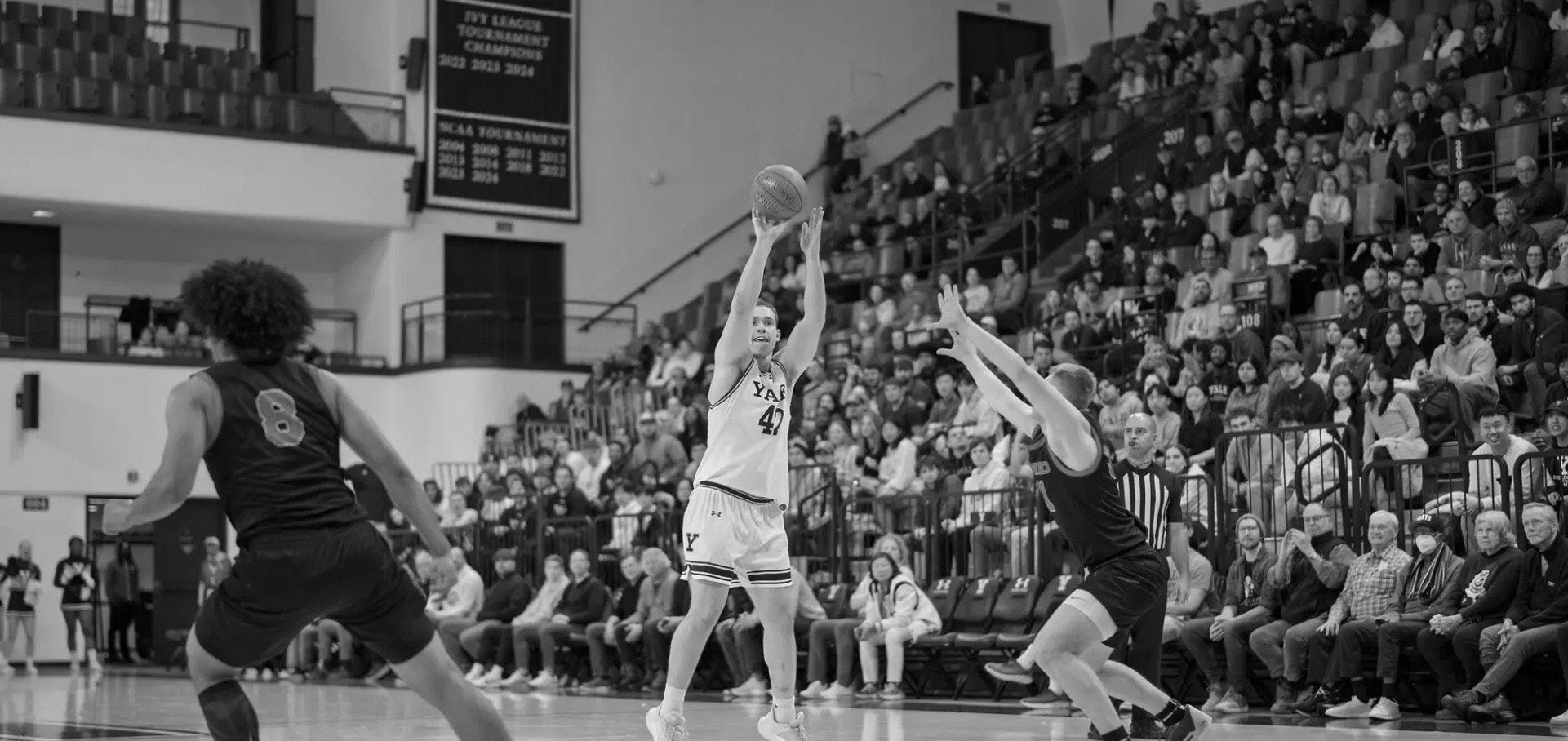
has also elevated them from the 38th-ranked offense in the nation to the 25th. Part of Yale’s sustained offensive success this season is due to its balanced scoring attack. With team captain Nick Townsend ’26 leading the way with an average 17 points per game, sophomores Riley Fox ’28 and Isaac Celiscar ’28 have contributed quite a bit by averaging 13.1 and 12.6 points per game, respectively.
On top of that, the Bulldogs have three more players averaging just short of the double-digit mark, which appears to be a byproduct of the team’s ability to spread the ball around and find the open guy. Offenses like this have become a hallmark of coach James Jones’ tenure at Yale and have played a key part in his reputation for repeatedly making strong postseason runs.
With Penn being ranked the second-worst defense in the conference, fans should look for the Bulldogs to continue their strong offensive output this weekend.
Saturday’s game will tip off at 2 p.m. at The Palestra in Philadelphia. The game will be aired on ESPNU.
Contact BRODY GILKISON at brody.gilkison@yale.edu.
BY INEZ CHUIDIAN STAFF REPORTER
The Yale track and field team will travel to the Armory Track and Field Center in New York on Friday for the annual Dr. Sander Scorcher meet.
This meet comes at a pivotal point in the indoor season, as the Bulldogs look to build momentum following a strong showing in their most recent competition.
Last weekend, Yale hosted the Yale-Dartmouth-Columbia meet, and the women’s team
tied for first, while the men’s team took third. The Columbia Lions, victors of both the men’s and women’s divisions last weekend, will be hosting the Dr. Sander Scorcher meet this weekend. After tight finishes at Yale’s Coxe Cage, the Bulldogs are looking to improve on their results to overcome the formidable Columbia squad.
To do that, some Bulldogs are even altering their training and performance regimens to further maximize competitive performance. Senior Nolan Recker
’26, who broke the school record in the weight throw last weekend, has implemented changes in his throwing technique.
“I’ve been working on doing four turns in the weight throw instead of three, which has been feeling good for me,” Recker wrote to the News. “This was my first meet doing a four turn and it is certainly paying off.”
Despite shattering his own school record with a throw extending 21.04 meters, Recker remains focused on hitting new personal bests.
“There is lots to improve in my throw and I feel like I have been making steady progress lately,” he wrote. On the track, Yale junior Daniella Henderson ’27 will be representing the Bulldogs for the first time as a newly named captain. Henderson was recently named as the upcoming cross country team captain, alongside Daegan Cutter ’27. After missing last weekend’s meet in New Haven, Henderson will be back in action for the first time since receiving the honor, and she highlighted
her enthusiasm to return to competition with her teammates.
“Last track season was only the tip of the iceberg in terms of what this team is capable of, so there’s a lot of enthusiasm and energy in the Cage!” she wrote to the News.
The Bulldogs will begin competing at the Dr. Sander Scorcher meet on Friday morning, and the meet will continue through to Saturday. Meet results will be available on the Armory Track website.
Contact INEZ CHUIDIAN at inez.chuidian@yale.edu.
BY JERRY GAO STAFF REPORTER
Yale Hospitality is facing renewed pressure from the Yale Student/ Farmworker Alliance, a student activist group, over its sourcing practices after the group alleged that a dining hall received a shipment of produce from a farm which has been sued for poor working conditions.
In a press release and a subsequent email to the News, the alliance wrote that it identified “Sunset Grown/ Mastronardi Mini Cucumbers” delivered to Trumbull College in November, attaching a photograph showing a palette of produce with at least one box which matches photographs of the brand’s mini cucumbers posted on social media.
The finding was the latest step in Yale Student/Farmworker Alliance’s campaign for Yale Hospitality to join the Fair Food Program — an initiative, adopted by companies such as McDonald’s and Walmart, that connects buyers to producers who abide by a code of conduct regarding farmworker working conditions.
Yale Hospitality does not participate in the program but has told the News that more than 64 percent of its tomatoes are sourced from farms partnered with the Fair Food Program, and that it hopes to exceed 90 percent by the end of the fiscal year.
Mastronardi, owner of the Sunset brand, was sued in 2022 by a group of migrant farmworkers who accused the company of exposing them
to pesticides and bleach without personal protective equipment.
“When Defendants directed Plaintiffs Lopez and Lopez Ramirez and the greenhouse workers to disinfect tools, trays and gloves in tubs of bleach, they were forced to reach into the bleach up to their elbows, wearing only latex gloves covering their hands,” the complaint states.
Two out of the three named plaintiffs said in the complaint that they worked with cucumbers for Mastronardi. The class action suit was settled in 2024 for $178,000 in total, with a maximum of $400 for eligible workers.
In an email to the News, a Yale Hospitality spokesperson wrote that “Sunset Grown/Mastronardi Farms is not part of our current purchasing program, though their products may occasionally be substituted.”
The spokesperson did not directly address each allegation in the student alliance’s press release but said Yale Hospitality is “transitioning to new suppliers” and will “support and prioritize purchasing from FFP-affiliated farms to the greatest extent feasible.”
The Fair Food Program, or FFP, is operated by the Coalition of Immokalee Workers, a farmworkers’ rights organization. Buyers that participate in the Fair Food Program buy produce — originally only tomatoes — from farms in the program that guarantee certain worker protections and abide by a code of conduct. Buyers also agree to pay a premium of 1 cent per pound
picked, which goes to farmworker wages.
The Student/Farmworker Alliance, which as of Tuesday had just over 350 followers on Instagram, started its campaign for Yale Hospitality to join the Fair Food Program with a film screening and interview with the Coalition of Immokalee Workers last September.
A petition started by the alliance, according to the press release, now has more than 250 signatures. It garnered 150 signatures within 24 hours, organizer Arjun Warrior ’26 told the News in November.
“Despite knowledge of Yale’s direct connection to a grower known for human rights violations and a growing petition campaign, Yale Hospitality told students it had no intention of joining the Fair Food Program,” the alliance’s press release stated, adding that Yale has refused to meet with representatives from the FFP directly.
The Yale Hospitality spokesperson wrote that the student alliance’s press release contained “inaccuracies.”
“Yale Hospitality met with representatives of the Student/ Farmworker Alliance (SFA) in midNovember to discuss the Fair Food Program (FFP) and student supply chain concerns and subsequently facilitated conversations with relevant supply chain partners. Follow-up meetings involving SFA, FFP, and purchasing partners were held in mid-December with Yale Hospitality participating,” the spokesperson wrote.

The 64 percent statistic — tomatoes that Yale Hospitality sources from partnered with the Fair Food Program — is now displayed on screens in dining halls, alongside the message “Yale Hospitality is committed to ethical sourcing practices that reflect our values and strengthen the integrity of our supply chain,” citing the University’s supplier code of conduct.
Organizers of the Student/ Farmworker Alliance have criticized Yale for counting on suppliers due to their volatility in terms of abiding to ethical sourcing rules.
The Fair Food Program also covers produce other than tomatoes. However, according to reporting done by ProPublica, non-tomato farms that participate in the program
are less common, partly due to many buyers limiting their participation to a small variety of crops.
“By bragging about their FFP produce, Hospitality is proving our point: they understand that the FFP protects human rights, and that Yale is capable of buying from FFPcertified growers. But actions speak louder than words, and Hospitality must join the FFP to truly protect the human rights of farmworkers in Yale’s supply chain,” Seung Min Baik Kang ’26, a Yale SFA organizer, wrote in the SFA press release. The Yale Student/Farmworker Alliance was founded in April 2025.
Contact JERRY GAO at jerry.gao.jg2988@yale.edu.
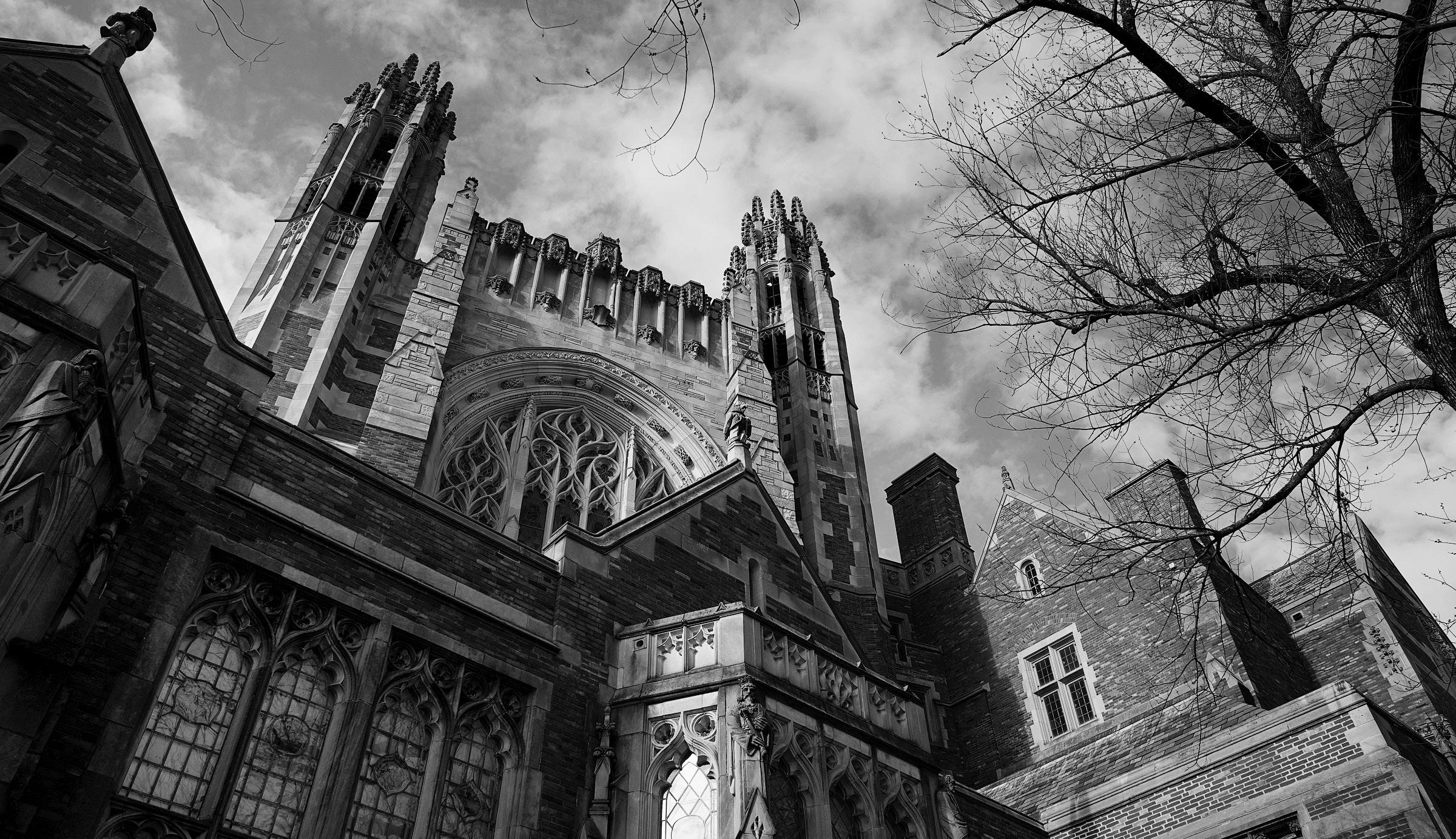
BY HENRY LIU STAFF REPORTER
Students from 18 law schools across the United States sent a letter to the American Bar Association on Jan. 1 expressing concerns about accelerated recruitment timelines for law firms.
The letter, which was organized by senators from the Yale Graduate and Professional Student Senate, listed several consequences of the accelerated timelines, which it claims have “begun to undermine legal education, student and staff well-
being, and the recruitment market.”
“Our concerns arise from a shared interest in ensuring that the recruitment process supports the long-term academic and professional success of our law students,” the letter reads. “Accordingly, we respectfully request a dialogue and opportunities to engage with the ABA on this issue of accelerating recruitment.”
Recruiting for large law firms is a highly competitive process for law students at Yale and across the country, because coveted summer associate positions frequently lead to full-time offers after graduation.
However, in recent years, the recruiting cycle for law students has crept earlier and earlier — partly because of the pandemic, which disrupted traditional recruiting methods like on-campus interviews.
The letter — addressed to the bar association’s Council of the Section of Legal Education and Admissions to the Bar — noted that some law firms are recruiting for second-year summer positions as early as Oct. 1 of a student’s first year. The accelerated cycle mirrors other industries such as consulting and investment banking, where companies have an incentive
to recruit earlier each year to attract the best students.
Jennifer Rosato Perea, the bar association’s managing director for accreditation and legal education, wrote in a statement provided by the group: “The Council has received the letter and intends to follow up with student representatives.”
Yale Law School Assistant Dean Kelly Voight, who advises Yale students on recruitment, acknowledged the significant challenges facing students due to an accelerated timeline.
“The accelerated law firm hiring timeline, in which firms are hiring 1Ls for 2L summer internships in January of 1L year, has created significant challenges for students, law schools, and firms,” Voight wrote in a statement, referring to first-year and second-year law students. “I applaud our students and all signatories of the ABA letter for speaking out about the impact this compression has had on their academics, career exploration, and well-being.”
Voight added that “regardless of the challenges” Yale Law students “continue to remain highly soughtafter candidates for law firm positions.”
For decades, the National Association for Law Placement issued voluntary recruiting and timing guidelines that helped coordinate when law schools hosted on-campus interviews and when firms could contact students.
But in 2018, amid concerns that such coordination among competing firms could raise antitrust issues, the association formally retired those guidelines and later stepped back from
its role in coordinating recruiting. In the absence of a shared framework, law schools and firms have increasingly moved recruiting earlier to remain competitive with students.
In an interview with the News, Sam Haddad LAW ’26, the president of the Graduate and Professional Student Senate, said first-year law students had consistently raised concerns “expressing deep consternation” over their careers, which “kickstarted” the initiative that was led by him and five other law student senators.
Otice Carder LAW ’28, who is currently going through recruitment in his first year, called the process a “confusing maze in and of itself,” since most first-year law students are trying to adjust while also taking intensive first-year law courses.
“You’re doing a lot of work and then you have this added stress now of trying to figure out what you’re going to do your 1L summer,” Carder said.
Caitlyn Lee LAW ’27, one of the senators who worked on the letter, emphasized the significance of the letter and said she was “pleasantly surprised” that student governments from so many different law schools were able to sign on.
“It’s sort of a baseline for a lot of dialogue at this point to go forth and see if we can find a solution or at least move things towards a place that’s more constructive with students and firms,” Lee said.
The American Bar Association was founded in 1878.
Contact HENRY LIU at henry.liu.hal52@yale.edu.
BY ANAYAH ACCILIEN STAFF REPORTER
Students gathered at the Women’s Table on Monday evening to mourn and commemorate the lost lives of Iranian protestors.
The event — which drew around 30 students — was held to recognize Iranians who have been killed since a wave of deadly mass protests first began in Iran in late December. The vigil was hosted by the Persian Students Association, a student-run club focused on Persian heritage and culture on campus.
“Unfortunately, we cannot be in a position to end the political violence in Iran right now — that’s not something we can do,” a Yale faculty member who grew up in Iran
and spoke under the condition of anonymity due to safety concerns said in an interview. “However, all we can do is bring our voices together. We need to let the people around us, and all around the world, know what is going on. It needs attention now.”
The faculty member said they fled Iran for the United States after an upbringing characterized by political violence.
The recent protests in Iran began in late December due to widespread economic complaints growing into calls for the government’s overthrow, according to the New York Times. On Jan. 8, Iranian authorities shut down internet and phone networks as security forces confronted large crowds.
The New York Times reported that
“thousands” have been killed in the protests, though exact numbers on the casualties from the protests and the Iranian government’s response have varied across news outlets.
“My family’s still living here and both of my parents live in Iran, so it’s almost two weeks that I haven’t been able to reach them,” said a leader of the Persian Students Association who requested anonymity due to safety concerns for their family.
“I’m scared when the internet comes back on. I don’t know if these people are alive or not,” the student added.
Ali Khamenei is the current supreme leader of Iran.
Contact ANAYAH ACCILIEN at anayah.accilien@yale.edu.
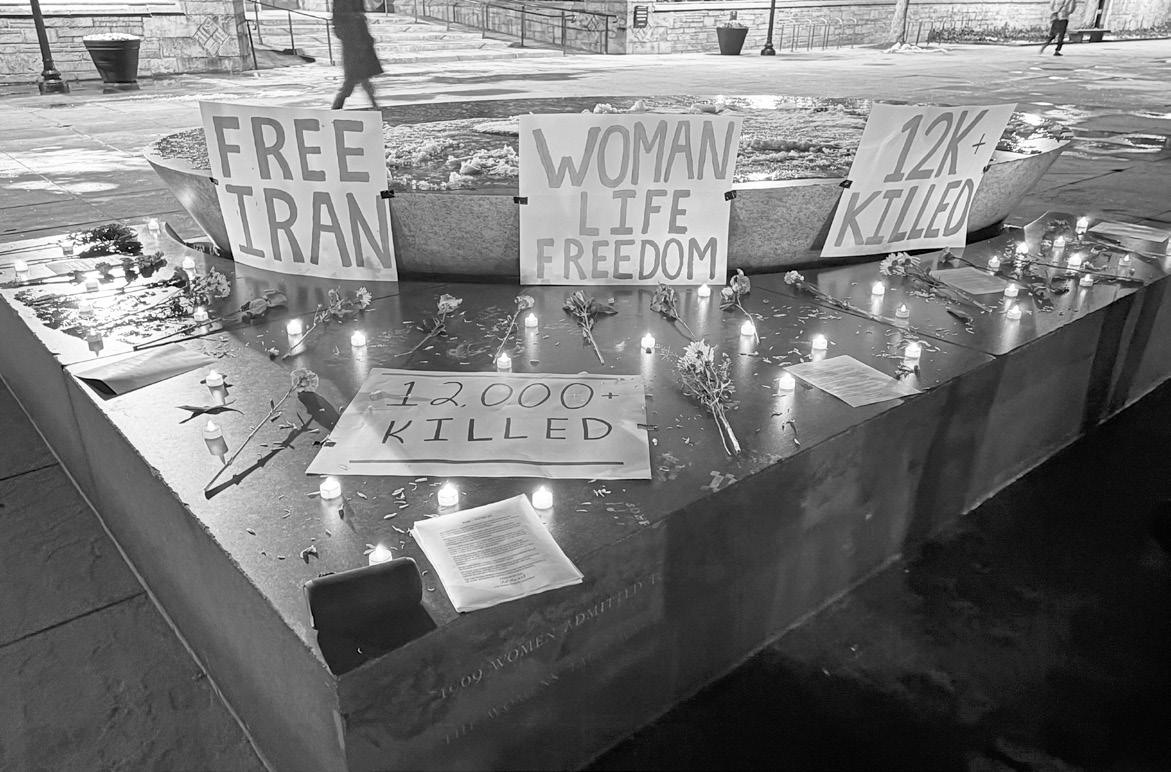
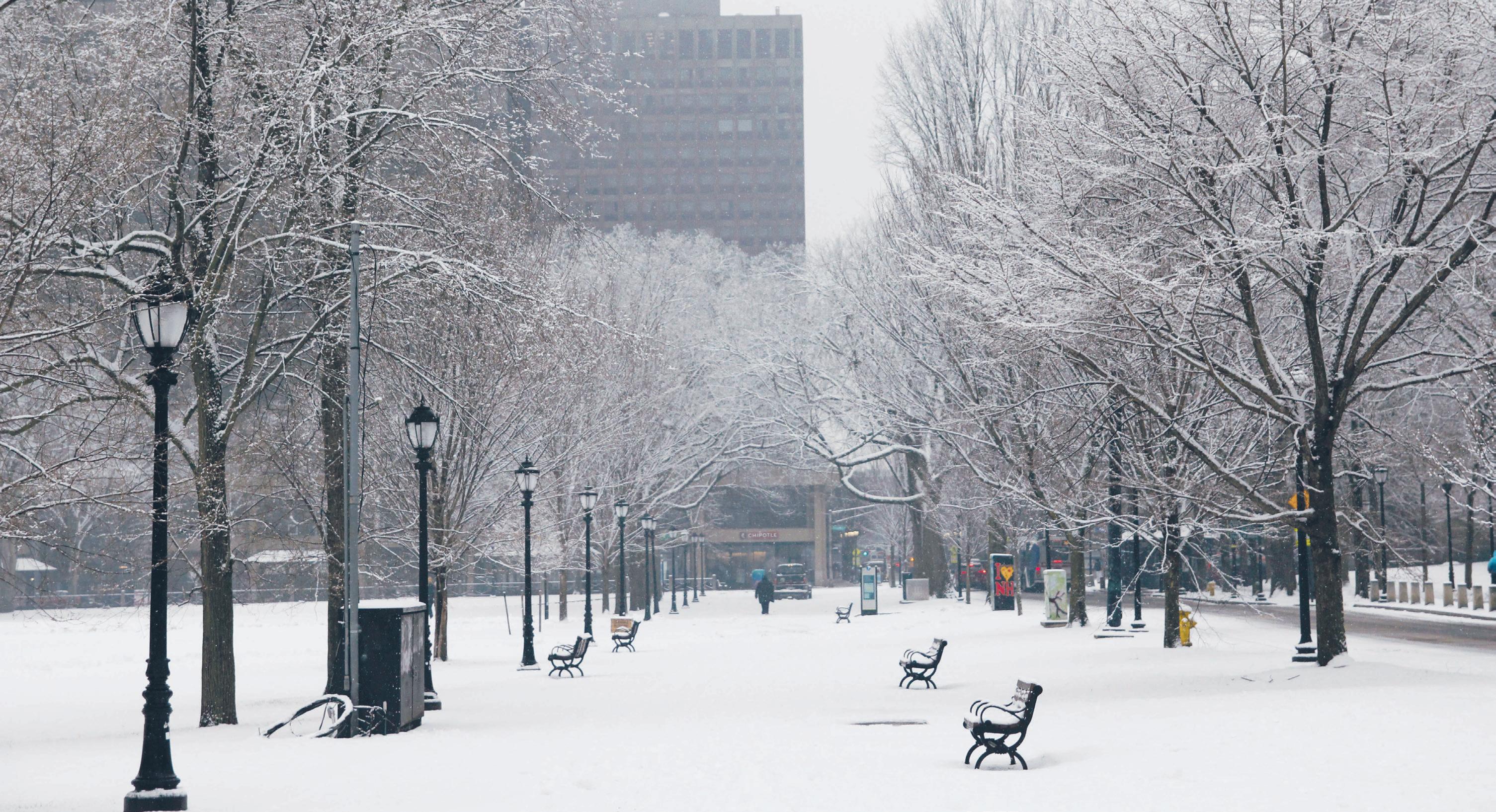
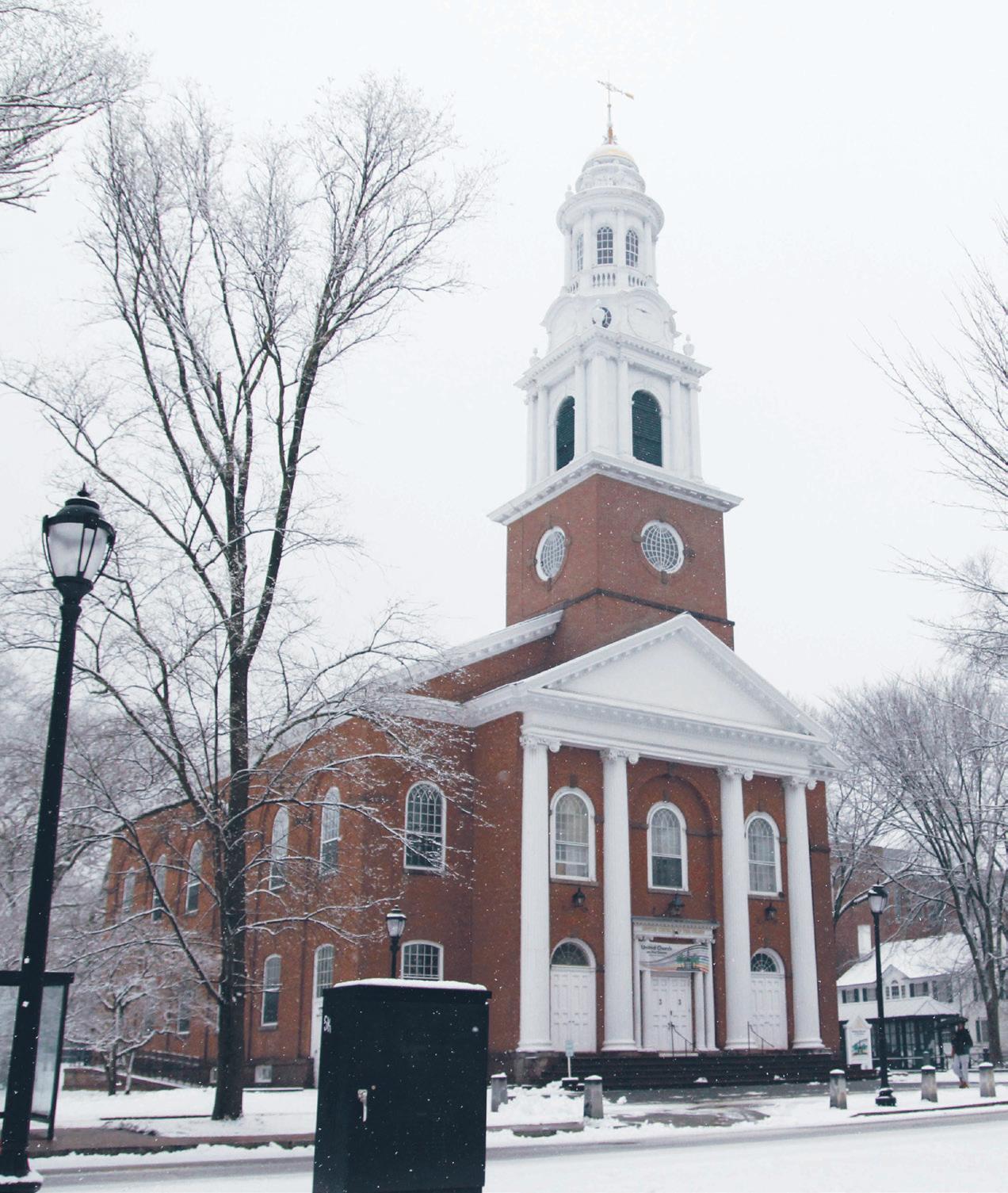
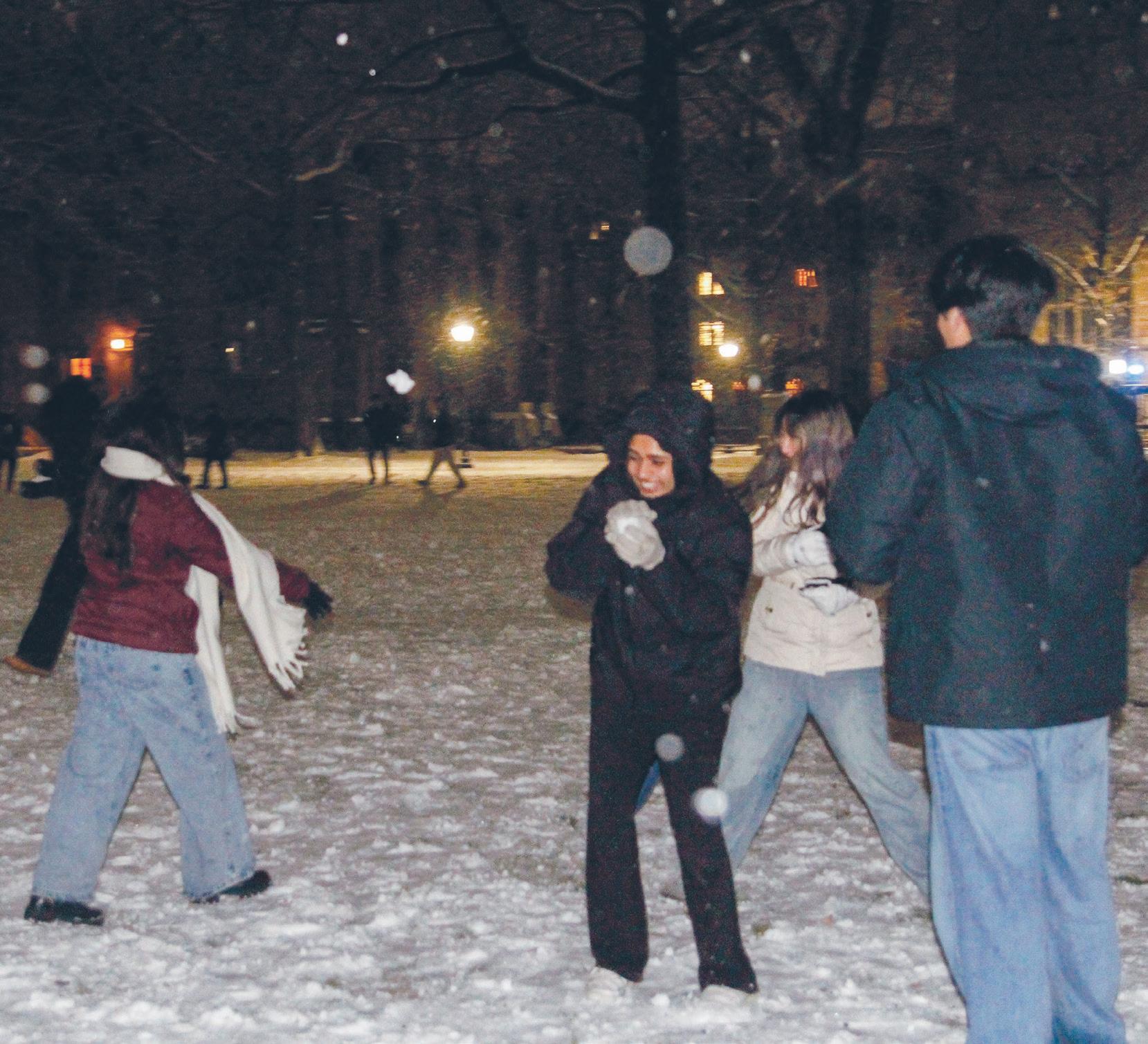
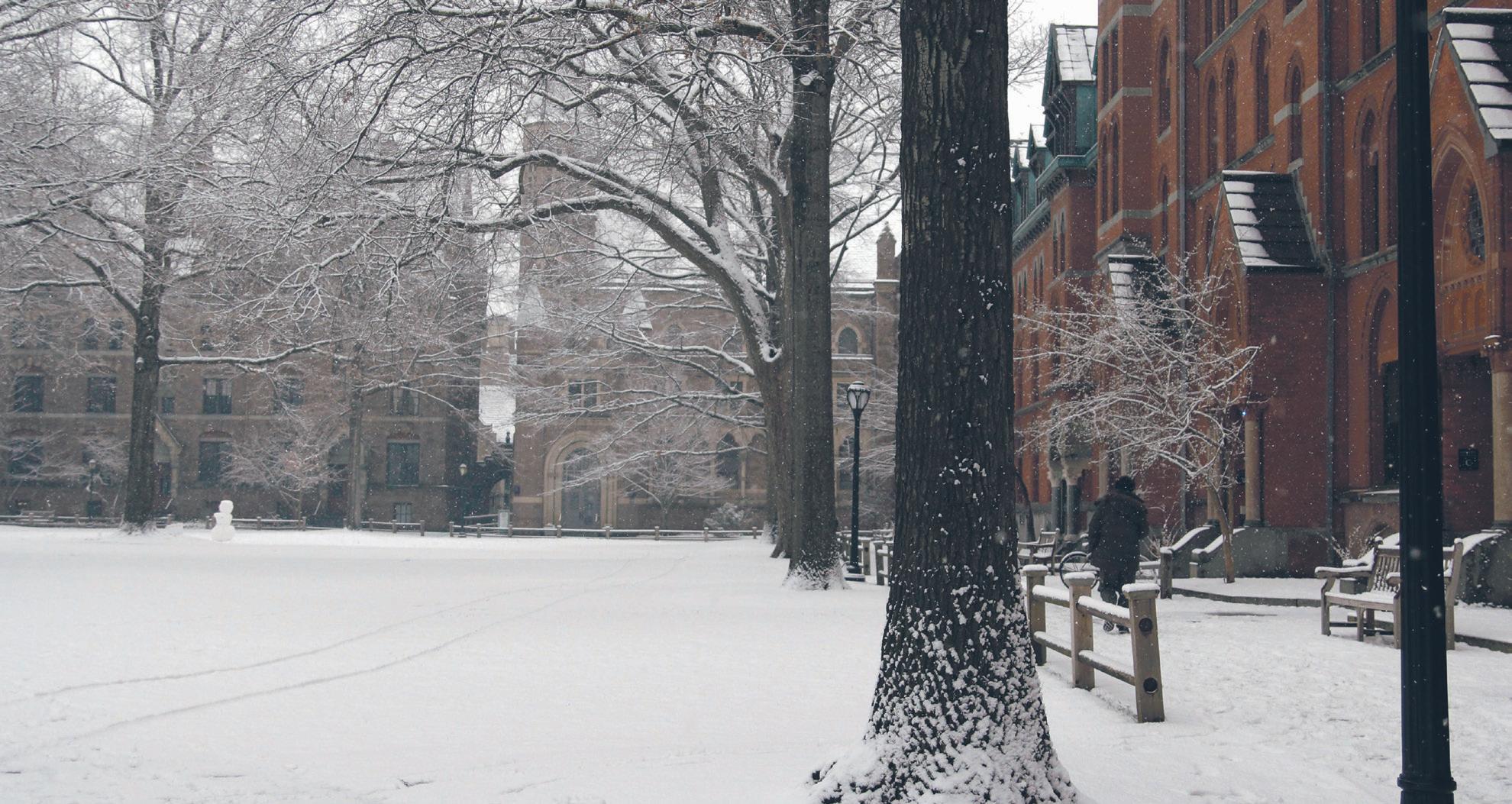
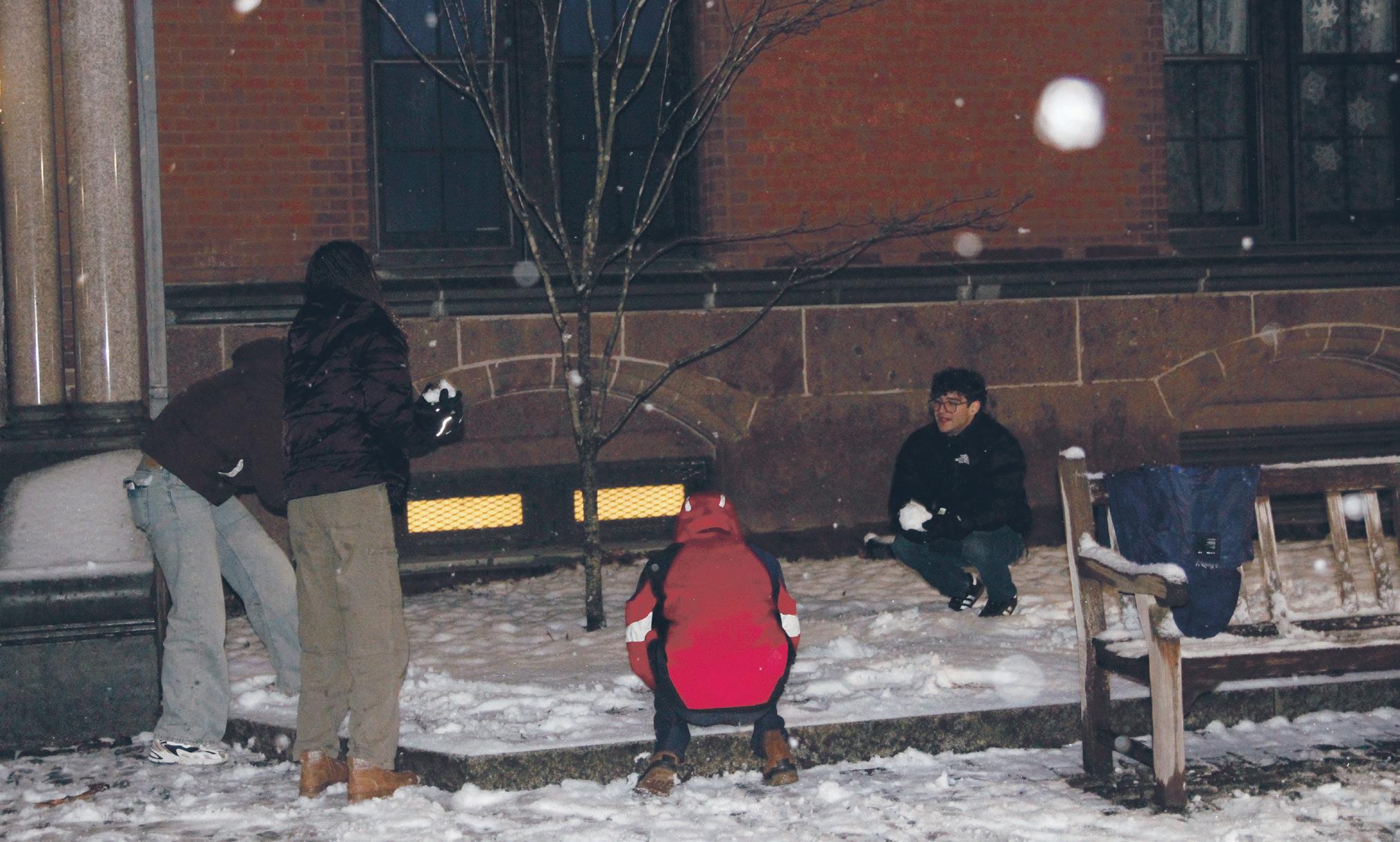




In the next 10 to 15 years, nearly all of my favorite musicians will die. Some are dead already. Others have been inactive or retired for some time. Regardless, the amount of obituaries and tribute concerts we will see in the next decade will be innumerable. But some mourning listeners are attending the funeral of artists that are still yet to die.
Can one age gracefully in rock ’n roll? Can a musician of yesteryear still create great art way after their “prime” has ended? I’d argue that quite a few older rock musicians have made their best material in their later years. David Bowie’s final record “Blackstar” rivals his output in the 1970s. Bowie was staring terminal cancer right in the face and delivered one of the most hauntingly beautiful releases of the last decade.
The album was released on Jan. 8, 2016, two days before his untimely death. I remember waking up to the news of his death and seeing people with blue and red lightning bolts painted on their faces and sobbing fans leaving flowers outside his New York apartment.
I wasn’t actively reading music and culture magazines at the time. I didn’t get to see the reviews of “Blackstar” shift from Bowie releasing a phenomenal album in his sixth decade in music to being a grand statement on mortality. In fact, I didn’t know he had a new album out and only knew of Bowie from his big hits from decades past. My image of David Bowie was of the orange haired, thin “plastic soul” conceptual artist, not the aged star on his deathbed with buttons sewn over his eyes in the “Lazarus” mu-
sic video. Bowie killed the former persona decades ago. There have been people mourning Ziggy Stardust since 1973. Even while knocking at death’s door, Bowie still had something to say. “Blackstar” is inspired by the works of contemporary musicians like Death Grips and Kendrick Lamar. He was not looking to make a sequel to “Let’s Dance.” A musical chameleon like Bowie did not shy away from changing his sound or aesthetic with each release. This is not the case for other artists from his era, or any era for that matter. It’s much easier to appeal to the masses, reinvent the wheel and do whatever makes the most money. AC/ DC released a new album in 2020 and it sounds virtually identical to their material from the 1980s. AC/DC still sells
BY CIELO GAZARD
out stadiums, but the vast majority of concertgoers are there to hear “Back in Black,” not something from the new record. The day Angus Young passes, he’ll be frozen in time as how he looked in 1980, not in 2026. Not every musician has the privilege of growing old and choosing reinvention or stagnency. The older musicians whose glory days have come and gone can rest on their laurels. Bowie didn’t have to release “Blackstar.” But it’s important that he did. Rockstars past their “prime” can choose to lay down in their coffins and accept it. Or they can choose to reinvent themselves one last time.
Contact CIELO GAZARD at cielo.gazard@yale.edu.

// BY LEONARDO CHUNG
Elena Miinea ’29 says she makes art for the same reason some people pace: because the motion steadies her.
Late at night, once Sterling has begun to feel like its own climate and the campus outside has thinned into footsteps and doorclicks, Elena is in the habit of going back to her room to create. She opens her laptop — and, instead of doomscrolling, she unwinds by building an image, one careful line at a time.
Elena told me that she doesn’t always have hours to disappear into an art studio. Yale does not afford most of us that kind of time. So Elena has learned to work in places that aren’t studios at all: on her bed after late-night studying, in hallways and on walks between classes. Digital art and photography fit in her life the way a pen fits in a pocket — available any time. Sometimes she’ll compose photographs while walking to class, and other times she’ll end up in one of the residential college art rooms for a painting swap with friends.
Her proudest piece, “Diatom Mandala,” started in an unconventional
space: Desmos. Desmos is a 2D and 3D graphing calculator, commonly used for help trudging through problem sets. But Elena used Desmos to generate shapes, not answers. She created graphs, collaged and overlaid them in Procreate and printed her digital world onto a linen canvas. Then, she stretched the canvas over her own frame — even the foundation was handmade.
Once she had completed the background, Elena pivoted to designing the mandala that would sit on top of her Desmos-built world. As one might expect from someone who is focused on the interdisciplinary and fundamental, she wasn’t inspired by a quick Google search. Instead, she went on the hunt for the oldest mandalas we have record of.
To design the mandala that would sit on top of her Desmos-built background, she researched designs from ancient Indian and Tibetan Buddhist cultures and noticed how they echoed the natural world, with symmetry borrowed from flowers, spirals borrowed from shells and repetition borrowed from weather. From there, her curiosity snapped into place around an artist named Klaus Kemp, one of the few remaining practitioners of diatom arrangement. Diatoms are microscopic algae with glasslike skeletons, which Kemp arranges into precise patterns.
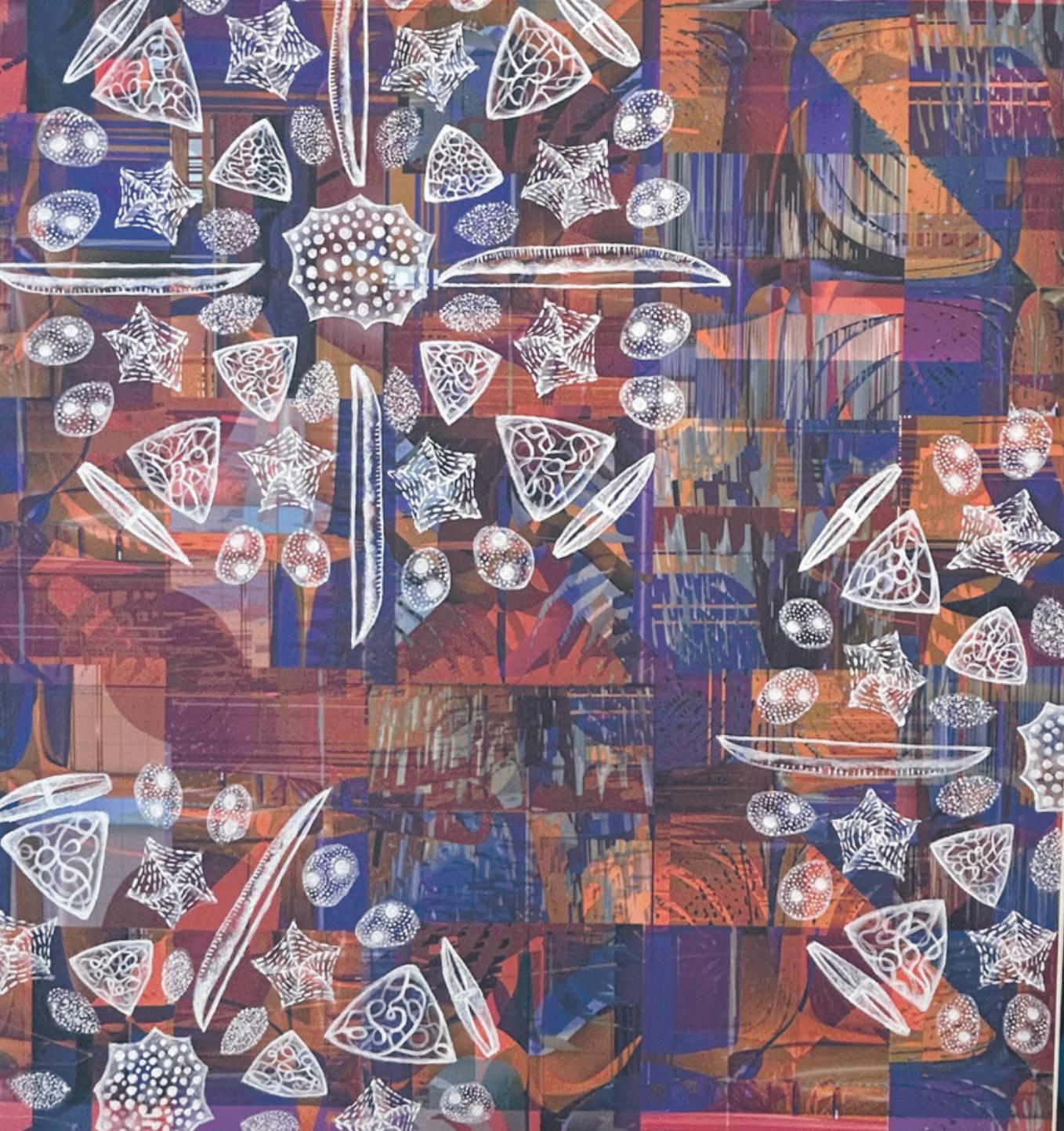
Elena decided to make her own diatom pattern and paint it in white acrylic. As an artist willing to trade speed for exactness, she used a toothpick instead of a paintbrush to create the intricate patterns.
Last year, after finalizing “Diatom Mandala,” Elena transitioned to her next work: “Evolving Gossamer.” Her process, she told me, often starts with two things: a prompt and a mentor artist. For “Evolving Gossamer,” she used a random word generator and got “adolescence” and “gossamer.” While adolescence suggested a theme of growth and evolution, gossamer gave her the texture of silky webbed strings. Once she settled on these details, she knew the piece was going to take up space. She searched for an artist who might have experience with such scale and landed on Tomás Saraceno, a creator of massive spiderwebinspired installations. But Elena didn’t have access to Saraceno-sized space — so she created one.
Elena built her artwork in virtual reality, spending
hours inside virtual reality experimenting with brushes that could create the exact texture she wanted and designing pattern variations until she created a growing spiderweb fractal you could enter virtually. A fractal, she reminded me, is an infinite pattern where every part repeats the characteristic of the whole, so when the viewer zooms in or out, the pattern always returns to the frame. Frames are perhaps a theme
of Elena’s work, in that it seems she is never content with them. The boundless fractal background of “Evolving Gossamer” shows an unwillingness to be contained, but even in her earlier work, she doesn’t restrict herself according to anyone else’s standards. If there is going to be a limit, she wants to design the framework.
Contact LEONARDO CHUNG at leonardo.chung@yale.edu.
// BY PETER BURNS
Alienation and disingenuity characterize how we communicate and express ourselves in the age of social media and digital technologies. We fear genuine expression online and cast it aside as silly, “bullshit” or a waste of time. We struggle to be genuine with one another and even with ourselves. Some might claim that we have lost all emotional maturity. These are the themes Iain S. Thomas aims to explore in his 2019 prose-poetry book “Every Word You Cannot Say.”
I was skeptical when I first picked up this book. Modern, free-form poetry has, for the most part, struck me as an unnecessary departure from traditional forms, a method of writing for people who lack the skills or experience to employ meter and rhyme — people like me.
“Every Word You Cannot Say” changed my perspective.
Thomas occasionally falls into melodramatic doting, and some of the language is clearly made for BookTok to gush over as deep and meaningful. But a closer look reveals something profound.
Thomas plays around with text font, formatting, typeface and color — textual elements we easily gloss over — and the result skillfully evokes the sense that the reader is viewing something inherently digital and modern. The reading experience itself differs from that of a traditional book; it’s more like reading a Google Doc or a Microsoft Word document.
Thomas’ use of space nods at the spirit of digital media, too, but in a way that enhances the meaningful text on the
page. Perhaps most striking are the two consecutive pages that read: “what have you lost between this page…and this one?” The first chunk of text, before the ellipses, appears on the left side of the open book, the second on the right. That is the only text on these two pages. That pause and transition across the physical length of the book forces the reader to reflect on something so clearly trivial: 3 inches of paper.
text as an illustration. In an honest and relatable reflection on the intrusive thoughts that plague our minds, the text itself is shaped like a hand.
The reader is forced to jump from finger to finger to complete the sentence — which has the same effect as jumping from page to
did,” spread across all five fingers. Each piece in the book, though it occupies its own page, is not independent of the others. They string together into a single, cohesive reflection on the feelings that we struggle to express in the digital age. The cohesiveness itself challenges how we treat genuine feelings online. We watch a short individual video and immediately scroll to another. Attention spans are dropping thanks to short-form content

“Every Word You Cannot Say” takes these tendencies and forces us to consider It is tough to console oneself. We repress true feelings out of fear of being called cringe or labeled as “doing too much.” This book puts into words those same hard-to-understand feelings and forces us to engage with them, even though we would not on social media. Once you get over it and realize that the book is relatable, you begin to see your emotions stare back at you from the page and you can finally begin to heal them.
PETER BURNS at peter.burns@yale.edu.
// BY ISABEL TIBURCIO
In the wake of the burgeoning and overcrowded indie pop scene, Del Water Gap has set himself apart. “Chasing the Chimera,” which was released last month, is perhaps the push he needed to leave behind his status as a small artist.
Del Water Gap is the solo project of singer-songwriter and producer Samuel Holden Jaffe, who is most known for the single “Ode to a Conversation Stuck in Your Throat” off of his selftitled album. The popularity of this song, in my opinion, plagued the artist’s subsequent album. “I Miss You Already + I Haven’t Left Yet” feels like 12 songs
attempting to recreate the magic of his hit single in an overly manufactured way. However, in his new album, Del Water Gap seems cured of this disease. The project sparkles with a complete sonic shift. With the spread of Jack Antonoff-ian production, pop music seems to have dulled, with only lyrics helping pull songs out of the mediocrity of his style. However, “Chasing the Chimera” is risky in its production. Tracks four and five, “Please Follow” and “Eastside Girls,” arguably exemplify this most clearly. “Please Follow” employs a horn
motif throughout the entire song, which blends with the pop-esque production to create a sonic landscape so unique that I struggle to even focus on the lyrics of the song. “Eastside Girls,” however, subdues the abrasive nature of the horns with soft, sparkly pop sounds, supplemented with strings. Together, the instrumentals skirt the line between jazz and pop to beautifully highlight Jaffe’s voice.
The first three songs of the album — “Marigolds,” “Small Town Joan of Arc” and “How to Live” — are reminiscent of Jaffe’s older work, but the rest
of the album takes on a softer, less electronic sound. While I appreciate a fun, poppy ballad, I think Jaffe’s voice is better suited for a slower and more somber style, which the majority of this album takes. But just when you think “Chasing the Chimera” is a beautifully melancholy, if largely monolithic, album, Jaffe sticks in a deceptively poppy song. Track nine truly stands out to me as the breakout song of this record.
“Ghost in the Uniform” starts like many of the other songs on the album: soft, slow pop. The chorus is where this song stands out. It has a catchiness that is hard to put into words and has

me continuously returning to this song. The lyricism, which is intrinsic to the artistry of the album, is perhaps strongest in “Ghost in the Uniform.” I’ve always been a sucker for poetic lyricism, and as the metaphoric title might suggest, Jaffe imbues his entire album with fresh and profound lines. Symbolic but cheeky, Jaffe’s word choice transcends not only the singer’s previous work but also, arguably, modern pop hegemons. The album is rife with figurative language and prose that is raw and vulnerable in a way Jaffe had yet to be before this LP. “Ghost in the Uniform” begins with the lines “A skullsized kingdom tonight / The rot of rain in my nose.” Jaffe is trapped in his mind and sullied by the sickness of remembering a love lost to time. In “New Personality,” a song about a fading love and a partner ready to leave, Jaffe grasps the vulnerability and quirks of a messy love: “The twist in your bones like a fish in the net / And pawning me off for a man with the courage.”
I find his closing track, “Eagle In My Nest,” to be the most fervent. The song is one of the slowest on the LP, but its delicate sound is unsettled by the emotionally poignant lyrics. The song reads as an ode to maternity, as Jaffe describes his desire for a daughter who would “look just like her mother.” She would provide a beacon in a life he views as so desolate: “No wonder everybody dies / Oh, it’s such a shame just getting by.” He leaves the entire album on a somber yet hopeful note, encapsulating the LP’s entire tone. With this album, Del Water Gap has cemented himself not only as an indie-pop star but also as a poet. This LP is a must-listen to, and if you enjoy it, I suggest you treat yourself to a start-ofthe-semester concert at College Street Music Hall on Jan. 26. Contact ISABEL TIBURCIO at isabel.tiburcio@yale.edu.
// BY ALEXANDER MEDEL
My mother tells me constantly that I remind her of her father. When I ask her how, she always offers some new quality or quirk: our gait, demeanor, mannerisms or shared preoccupation with styling our hair. There is a resemblance — that I admit. Like my grandfather, I have a penchant for humming standards as I move about the day, a curiosity for all things political and an obsession with tidiness. He loved milk, ordered his steak rare and wore glasses the same way I do. When I visited Monument Valley last summer, I fell in love with it. He would have, too.
Last May, over the course of several days, I traveled across southern Utah alongside my parents for a tour of Utah’s national parks. After visiting them all, we continued our journey south toward Arizona and Monument Valley.
I have longed to see Monument Valley since I was a little kid. It seemed to me on the day I visited that fate knew this and thought of being kind for once by making the day pleasant.
The sun sat majestically above me like a magnanimous king atop his throne. Sunbeams — pure, strong and free — danced on my face. The sky was a hearty azure that lent a spring to my step.
Among the many landmarks to see at Monument Valley is Goulding’s Lodge. Located in the shadow of a mesa, it was initially founded as a trading post by Harry Goulding in the 1920s. Years later, as the region grew in popularity, so too did the post. Today, the site is home to a complex, complete with a hotel, restaurant, store and museum. With time to spare before checking into our own hotel nearby, we stopped to visit the museum.

It was no fancy affair. The museum was humble, and I appreciated that. No entry fees were required, but donations were requested. I shuffled five dollars from my pocket, dropped it into a box and walked inside.
A primary focus of the museum, beyond the history of Monument Valley and its peoples, is the region’s relationship with Hollywood. The famed director John Ford took a liking to the area, so much so that he filmed several of his Western films — including his masterpieces “Stagecoach” and “The Searchers” — against the buttes, bluffs and mesas of Monument Valley. Outside of that genre, classics such as “Forrest Gump” have likewise been inspired
by the landscape’s beauty. The museum did its part to impress upon its visitors the region’s rich cinematic history, especially when it came to John Wayne.
In almost every room of the museum was a reference, exhibit or artifact about the actor. I was not surprised in the slightest. It was in Monument Valley where he catapulted into fame as Henry the Ringo Kid in “Stagecoach.” Besides, he enjoys a cult of personality in the Southwest, a fact of life in this part of America I have come to learn throughout my travels.


My grandfather loved John Wayne, and he would have loved this museum. I could imagine him bouncing around from room to room, quoting dialogue, murmuring, “Oh my” and having a glisten in his eye — the same luster his younger self used to have as he watched horses ride through the desert on the silver screen. My grandfather led a fascinating life. Growing up in the Philippines during World War II, he spent his nights ferrying messages for the Filipino resistance all while journeying through the jungle, fording rivers and evading Japanese patrols. After marrying my grandmother, he started a poultry feed and aquaculture business. At some point or another, my mother tells me that he moonlighted as a barber, joined a film crew and served as a shaman’s assistant. If he were on LinkedIn, he would have quite the resume. But to me, my grandfather was no courier, businessman or Renaissance man. To me, he was the man who let me stay up past my bedtime to watch Westerns well beyond my age or understanding. My mother told me he was a stickler for rules when she was growing up; to this day, I can never believe her. To me, he was the man who patiently watched me frolic at the local playground for hours on end. To me, he was the man.
“The sun sat majestically above me like a magnanimous king atop his throne. Sunbeams — pure, strong and free — danced on my face. The sky was a hearty azure that lent a spring to my step.”
a power greater than our own.
Shortly after dropping our bags at the hotel, my parents and I set out on a 17-mile auto trail through the valley. It offered visitors a closer look at several iconic rock formations. The road was unpaved and bumpy. You would not be able to rush the drive, and even if you could, why would you? Monument Valley is a place to be respected, appreciated and admired. And in my experience, it is hard to do all three while thinking the asphalt beneath you is the Autobahn. By the time we returned to the hotel, evening was approaching.
As my parents perused items at the gift shop, I went out on a landing to watch the sunset.
My grandfather would have loved to be where I stood. He would have loved to see with his imagination the visions and visages of his heroes on horseback darting through the desert. Shades of indigo and tangerine dancing softly in the twilight sky and the buttes donned in blazers of violet and martian orange would have delighted him. The sand glittering with the final sunbeams of day snuck into the valley and wished me good night the way he did. I closed my eyes and took a deep breath.
The moment I saw Monument Valley, I knew I could not blame Ford for falling in love with a place like this, for I did too. The air was clean and free. The duskcolored sand beneath my feet had a glisten of its own, unlike anything I have ever seen. The afternoon sky was painted in ever-boldening shades of blue as my eyes climbed from the horizon. The Navajo, who have lived on the land for centuries, consider Monument Valley a sacred place. Indeed, it was.
A place such as this — one of peace, beauty and serenity — can come only from the hand of
My grandfather was like many of his Western heroes. He eschewed pageantry and spectacle. He was economical with his words, but those he did say were weighty and wise. He did what needed to be done because it was necessary, and especially because it was the right thing to do. He knew how to love, and he loved deeply.
And like his heroes, the same he watched on the silver screen, he rode off into the sunset leaving behind a trail of courage and goodness for me to follow.
Contact ALEXANDER MEDEL at alexander.medel@yale.edu.