
Advanced Cinematic and Videogame Architecture II
BARC0199 60 Credits
Student Name: Xiyu Gao& Shuhan Wang
Project Title: Through the looking glass
Project Caption (40-50 words)
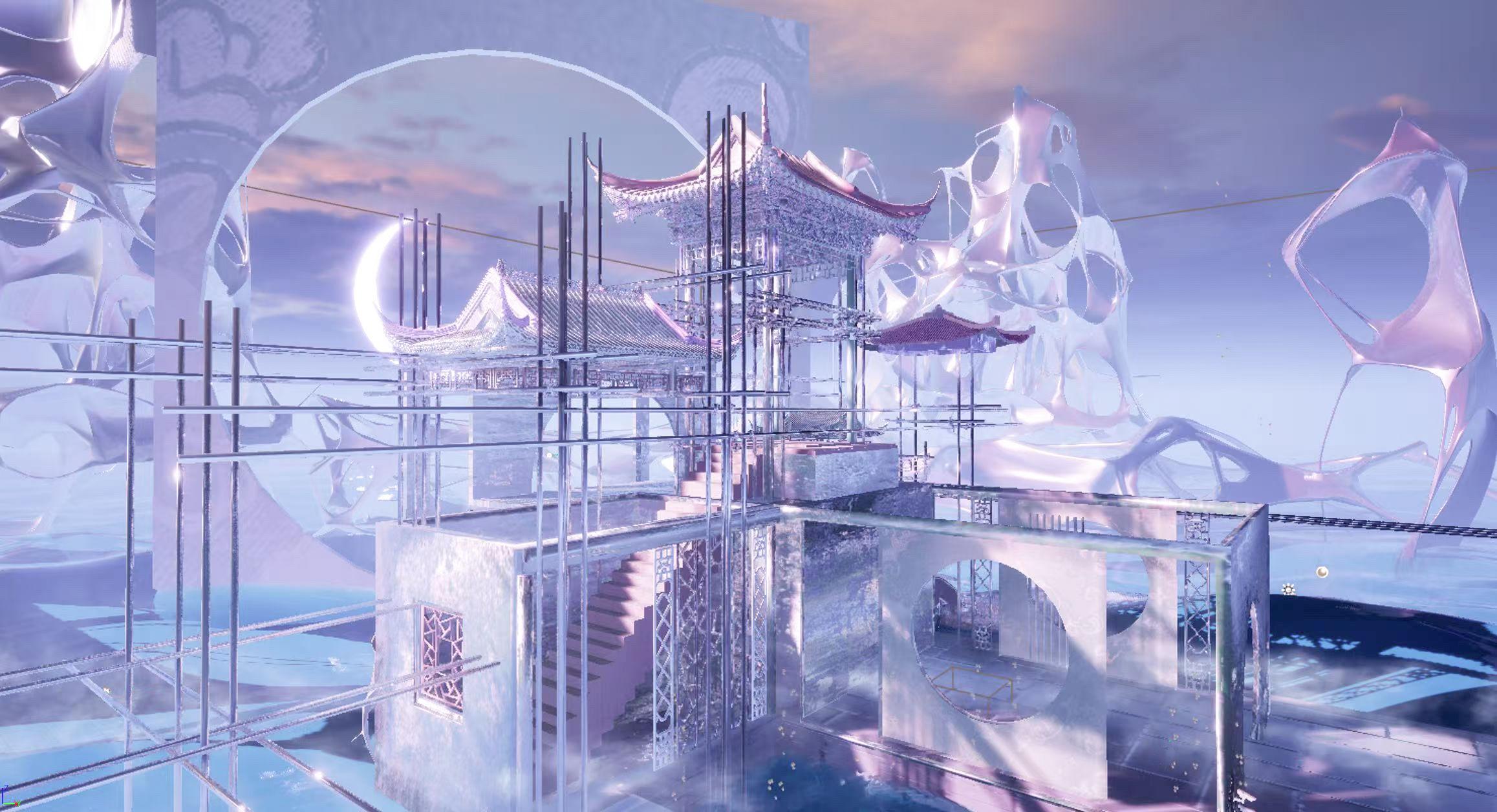
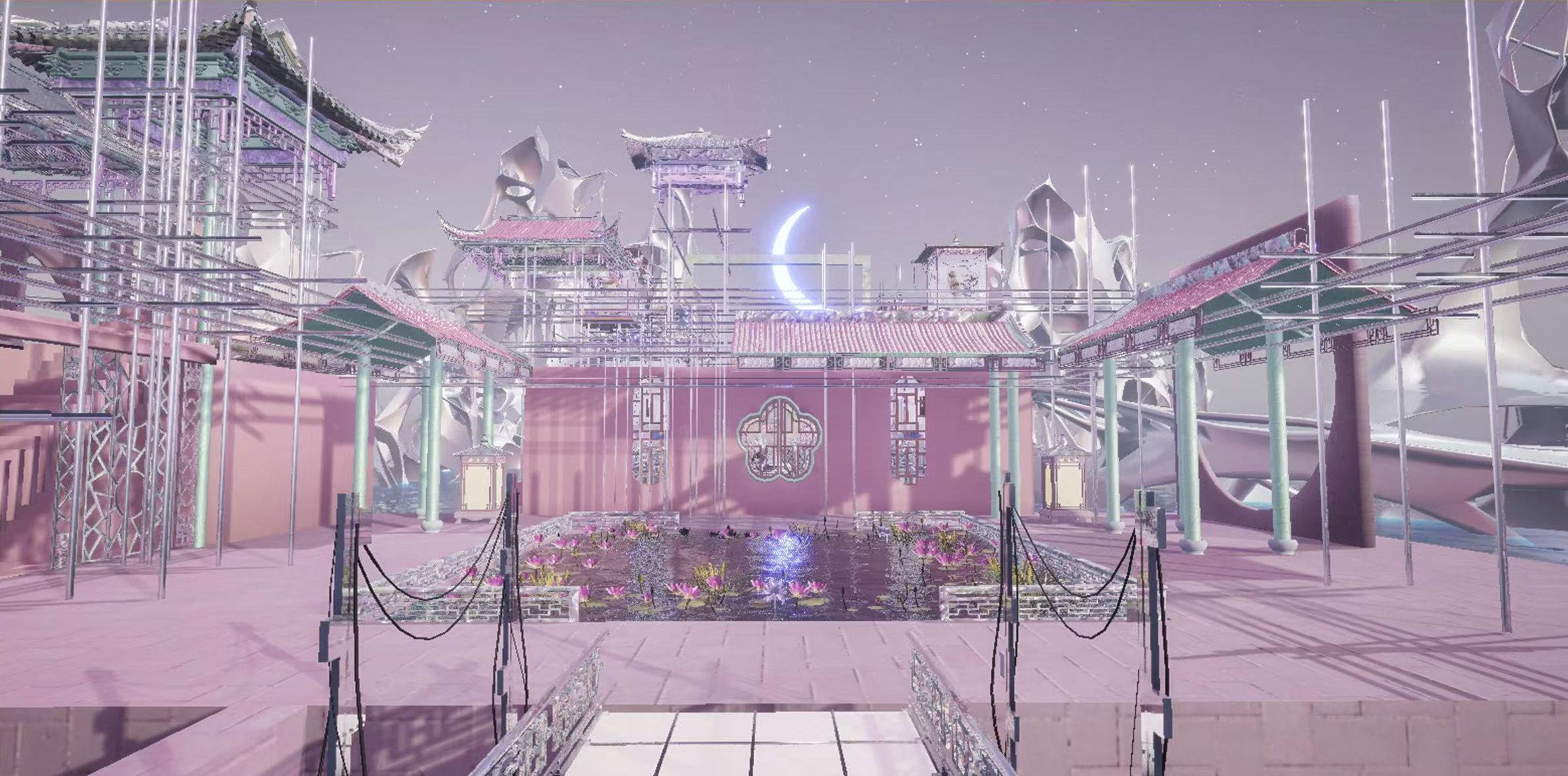
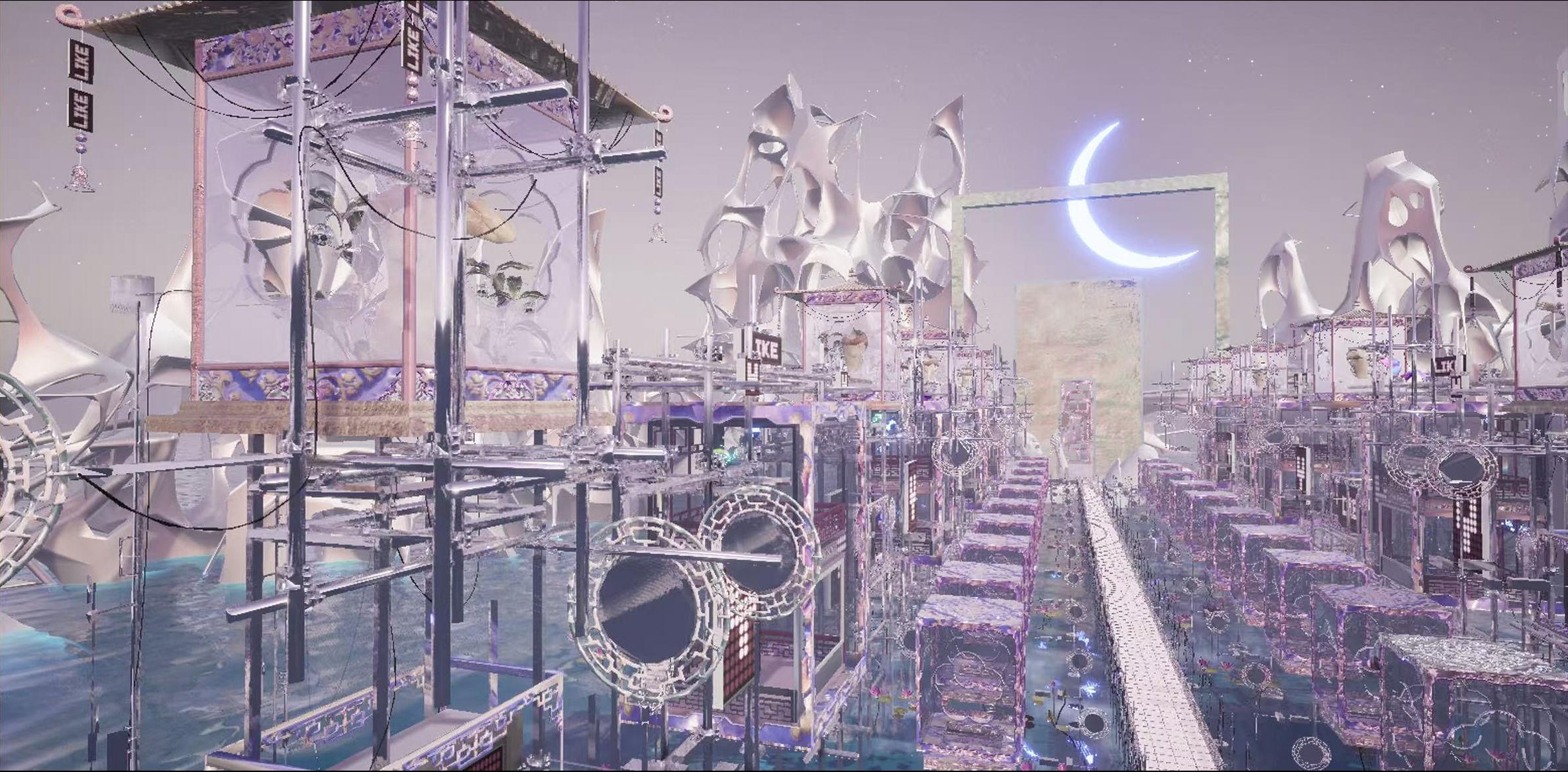
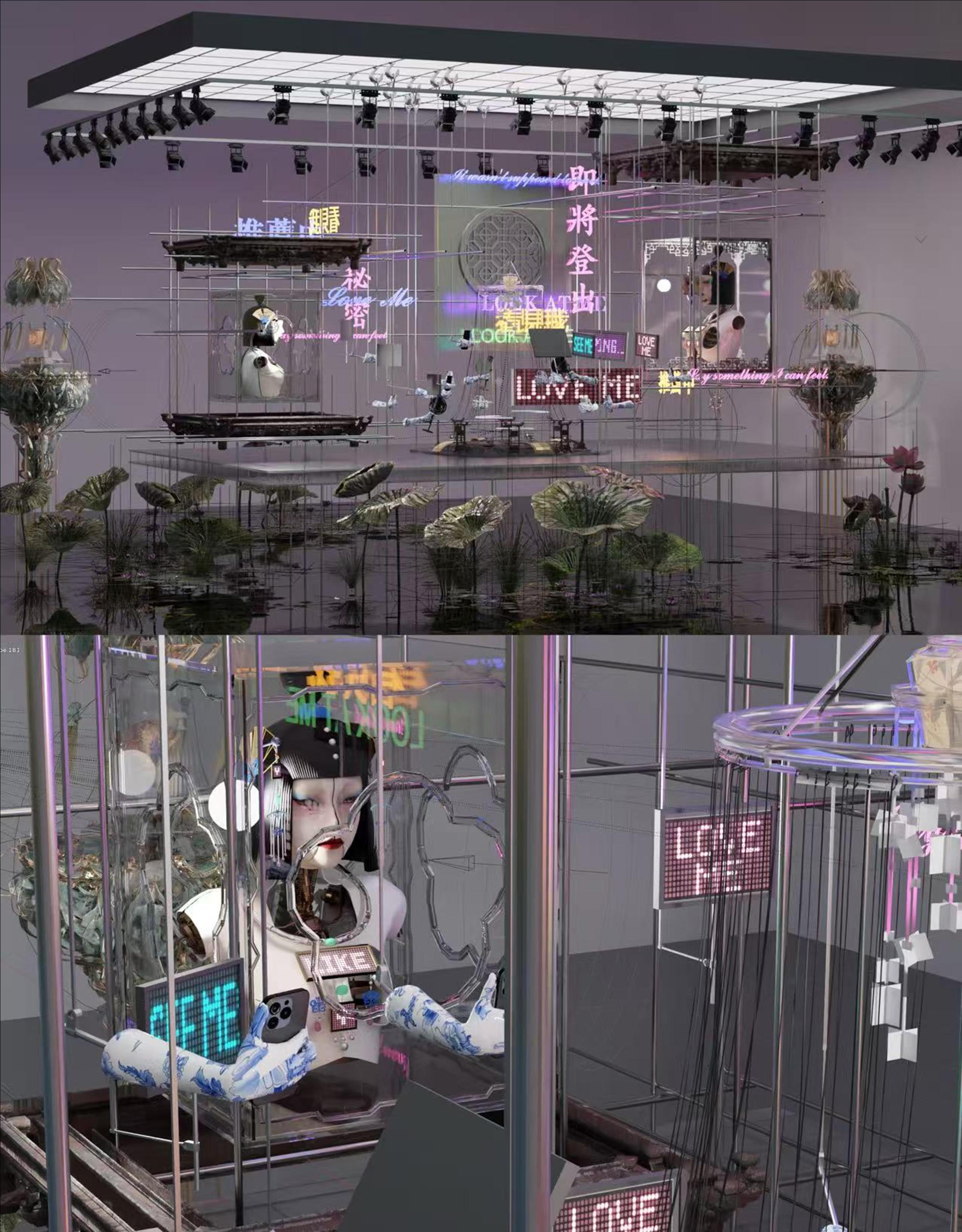
Through the Looking glass is a VR architectural game that explores how digital identity is constructed, disciplined, and destabilized through platform logics. By spatialising feedback loops, mirror mechanisms, and aesthetic control, the project reveals how architecture itself becomes a protocol of visibility both enforcing and disrupting identity labour
Project Summary (200-250 words)
Through the Looking Glass is a critical virtual reality game that investigates how social platforms transform identity into a form of continuous labour. In today’s media environment, existence no longer depends on expression but on visibility; such visibility is maintained through feedback loops, numerical systems, and aestheticised participation. The project does not treat architecture as a neutral backdrop, but as an active protocol of control where paths, rhythms, and interfaces guide behaviour while disguising compliance as freedom.
The game takes place on a heterotopic island, composed of four levels : Entry Dock, Hall of Mirror, Streaming Chamber, and Underwater World. Each level translates theoretical frameworks into spatial experiences: Scarpa’s path logic and Foucault’s heterotopia inform the Entry Dock; Lacan’s mirror stage constructs the Hall of Mirror; Norman’s emotional design and interface aesthetics drive the Streaming Chamber; while the Underwater World embodies counter-disciplinary strategies, producing ambiguity and uncertainty through the collapse of feedback
Player behaviour continuously affects two variables popularity and mood which trigger architectural responses: spatial cues, shifting comment overlays, UI prompts, and the expansion or contraction of environments. These mechanisms form a sensorial architecture in which identity is performed, judged, and continually destabilised. Yet failure is not the end: in ghost mode,players gain boundary-transcending freedom, experiencing new forms of perception born from rhythmic collapse.
Ultimately, Through the Looking Glass reveals platform logic as a spatial structure, raising the question: within systems of soft discipline, can architecture still design hesitation, delay, and resistance?